What to check on a Cargo Pump (Deepwell).
A deepwell cargo pump places the pumping element itself down in the tank, near the bottom, and drives it either through a long vertical shaft running up to a deck-mounted motor or, on hydraulic deepwell pumps, through a submerged hydraulic motor fed by hydraulic power lines from a deck-level power pack. Either way the impeller works close to the liquid it is moving instead of drawing it up through a suction line from a pump room, which is what a conventional centrifugal cargo pump does. That difference matters at the…
What Makes a Deepwell Pump Different
A deepwell cargo pump places the pumping element itself down in the tank, near the bottom, and drives it either through a long vertical shaft running up to a deck-mounted motor or, on hydraulic deepwell pumps, through a submerged hydraulic motor fed by hydraulic power lines from a deck-level power pack. Either way the impeller works close to the liquid it is moving instead of drawing it up through a suction line from a pump room, which is what a conventional centrifugal cargo pump does. That difference matters at the end of discharge: a deck-mounted pump loses suction once liquid level falls below what its NPSH (net positive suction head) allows, leaving cargo behind, while a deepwell pump keeps working down to a very low residual level, which is why deepwell pumps dominate on product and chemical tankers where stripping tanks close to dry matters for cargo purity and quantity.
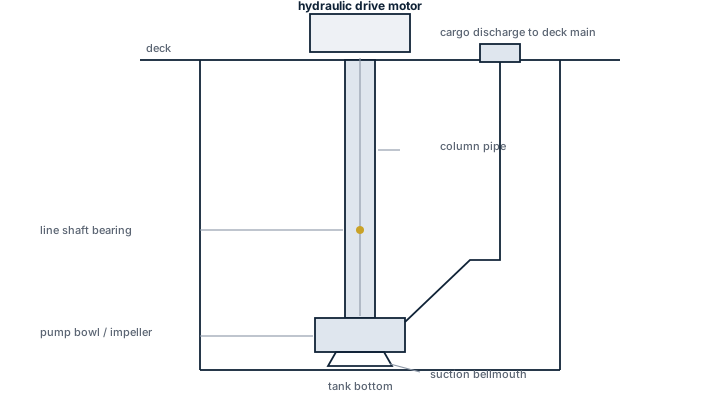
Main Components
Submerged pump unit
The impeller and pump casing sit at the tank bottom in a sump or well, positioned to draw cargo down to the lowest practical level.
Drive shaft or hydraulic motor
Mechanical deepwell pumps use a long line shaft in a shaft tube running from the submerged impeller up through the tank to a deck-mounted electric motor; hydraulic deepwell pumps instead use a submerged hydraulic motor supplied by high-pressure hydraulic oil piped down from deck.
Hydraulic power pack
On hydraulic units, the deck-mounted pumps, reservoir, filters and control valves that supply and regulate hydraulic oil flow, and therefore pump speed, to each submerged motor.
Stripping and eductor arrangement
Many deepwell installations include a stripping system, sometimes an eductor, to remove the final residual liquid the main pump cannot reach.
Tank cleaning and gas-freeing interfaces
The pump column and its penetration through the tank top are also the route for tank cleaning machine lines and gas-freeing arrangements on many designs, so the installation is not just a pump but a structural part of the tank fitting.
Selection and Sizing
- Capacity and discharge head matched to the manifold pressure and shore or ship-to-ship discharge rate required by the trade
- Cargo compatibility of wetted materials, stainless steel or duplex for aggressive chemical cargoes, different seal and gasket materials by cargo type
- Stripping capability and the residual quantity the trade or cargo specification allows to be left on board
- Hydraulic versus mechanical drive, weighed against the ship's existing hydraulic power infrastructure and maintenance access to a long line shaft
Regulations and Class
MARPOL Annex II governs the residual quantity of noxious liquid substances that may remain on board after discharge and stripping, which directly drives the performance requirement placed on the pump and its stripping system. Classification society rules cover the pump room and cargo tank penetration arrangements, including gas-tight sealing where the shaft or hydraulic lines pass through the tank top, and require periodic survey of the cargo pumping system as part of the tanker's class renewal.
Typical Faults
| Fault | Cause | Consequence |
|---|---|---|
| Loss of stripping performance | Worn impeller clearances, air ingress at low tank level | Cargo left on board above allowable residual, off-hire disputes |
| Shaft seal leakage at deck penetration | Worn mechanical seal, misalignment of a long line shaft | Cargo vapour escape at deck level, potential gas hazard |
| Hydraulic system contamination | Water or particulate ingress into hydraulic oil | Erratic pump speed, motor wear, filter clogging across multiple pumps sharing the power pack |
| Line shaft vibration or bearing wear | Misalignment or worn line-shaft bearings over a long vertical run | Increased noise and wear, risk of shaft failure if undetected |
What to Look for in a Supplier
- Wetted-parts material certification matching the cargo grades the ship is intended to carry, including chemical compatibility data
- Documented stripping performance and residual quantity figures, verifiable against MARPOL Annex II requirements
- Spares support for line-shaft bearings, seals and hydraulic components appropriate to the ship's trading pattern
- Proven track record on the specific cargo types the vessel will carry, since chemical and product tankers place very different demands on the same pump family
A deepwell pump's true test is not how fast it discharges a full tank but how little it leaves behind at the end; track stripping performance over time, since a slow decline is the first sign of impeller wear long before the pump alarms on anything.