What to check on a Cargo Tank Heating System.
Some cargoes - heavy fuel oil, bitumen, certain vegetable oils, and waxy crude fractions - become too viscous to pump at ambient sea temperature. A cargo tank heating system keeps the cargo warm enough to discharge within the time and pump-pressure limits of the vessel, without overheating it to the point of degrading quality or, on some cargoes, creating a fire or reaction risk. This is a separate function from tank cleaning heating and from cargo temperature control on gas carriers, though the coil hardware can look similar.
What a cargo tank heating system does
Some cargoes - heavy fuel oil, bitumen, certain vegetable oils, and waxy crude fractions - become too viscous to pump at ambient sea temperature. A cargo tank heating system keeps the cargo warm enough to discharge within the time and pump-pressure limits of the vessel, without overheating it to the point of degrading quality or, on some cargoes, creating a fire or reaction risk. This is a separate function from tank cleaning heating and from cargo temperature control on gas carriers, though the coil hardware can look similar.
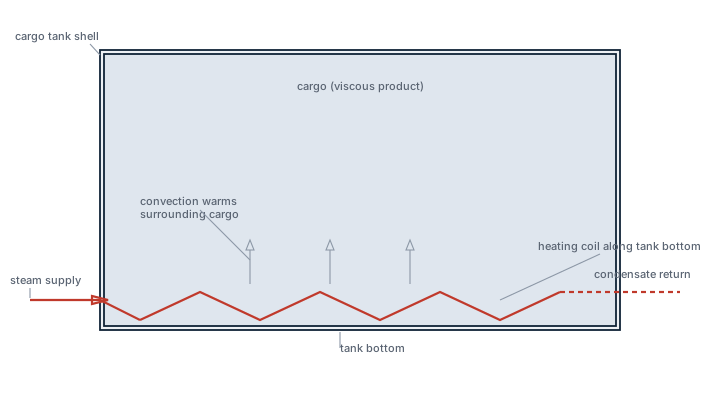
Main components
- Heating coils - steel or, on cargoes sensitive to contamination, stainless coils laid across the tank bottom, connected to the thermal fluid supply and return.
- Thermal fluid boiler or heater - typically a thermal oil heater rather than direct steam, giving higher temperatures at lower system pressure than a steam plant of comparable size.
- Circulation pumps - move the heating medium through the coil network; often duplicated so one tank's demand does not starve another.
- Temperature sensors and control valves - modulate flow to individual tank coils to hold a setpoint rather than run every coil at maximum continuously.
Selection and sizing
Coil area and thermal fluid flow are sized against the cargo's viscosity curve, the discharge temperature the cargo needs to reach, the ambient sea and air temperature on the trade route, and the discharge time window the charter requires. A system undersized for its trade will still show a rising tank temperature on the gauge while the cargo near the tank top, away from the coils, stays cold and slow to pump.
Regulations and class
MARPOL Annex I and Annex II set discharge and cargo handling requirements relevant to residues and slops that heating affects, and class rules cover the thermal fluid system's pressure vessel and piping certification the same as any other pressurised system on board. For cargoes with a flash point close to the required heating temperature, the tanker's cargo system operating manual sets a maximum heating temperature with a safety margin below flash point, and this figure is checked at survey against the actual coil setpoints in use.
Typical faults
- Coil leaks contaminating cargo - a cracked coil lets thermal fluid into the cargo or, worse, cargo into the thermal fluid system, showing up as an unexplained system pressure or level change.
- Localised overheating near coils - cargo directly against the coil surface can exceed the bulk setpoint significantly, degrading heat-sensitive cargoes even while the bulk reading looks correct.
- Fouled coils losing heat transfer efficiency - wax or sediment buildup on the coil surface over successive voyages, requiring longer heating times for the same result.
- Thermal fluid degradation - oxidation of the heating medium over years of service raises its viscosity and lowers heat transfer, often missed until a scheduled fluid analysis flags it.
What to look for in a supplier
- Coil design and material matched to the cargo range the vessel actually trades, not a generic heavy-fuel default.
- Thermal fluid heater capacity documented against the vessel's full tank heating load, not a single-tank test case.
- Support for thermal fluid condition monitoring and replacement scheduling.
- Clear coil leak-detection method built into the system design, since a slow coil leak is otherwise hard to catch early.
Read tank temperature from more than one point before trusting a coil-side sensor - the cargo furthest from the coils is the cargo that decides whether discharge finishes on time.