What to check on a Fire-Fighting Equipment.
A ship's fixed fire main and pumps deliver the bulk water supply, but someone still has to carry an extinguisher to a small fire before it spreads, drag a hose to a hydrant, or put on breathing apparatus to enter a smoke-filled space. This category covers that hand-carried and worn equipment: the response tools individual crew members use directly, as distinct from the fixed piping, pumps and fixed gas systems that make up the rest of the ship's firefighting installation.
What sets this type apart
A ship's fixed fire main and pumps deliver the bulk water supply, but someone still has to carry an extinguisher to a small fire before it spreads, drag a hose to a hydrant, or put on breathing apparatus to enter a smoke-filled space. This category covers that hand-carried and worn equipment: the response tools individual crew members use directly, as distinct from the fixed piping, pumps and fixed gas systems that make up the rest of the ship's firefighting installation.
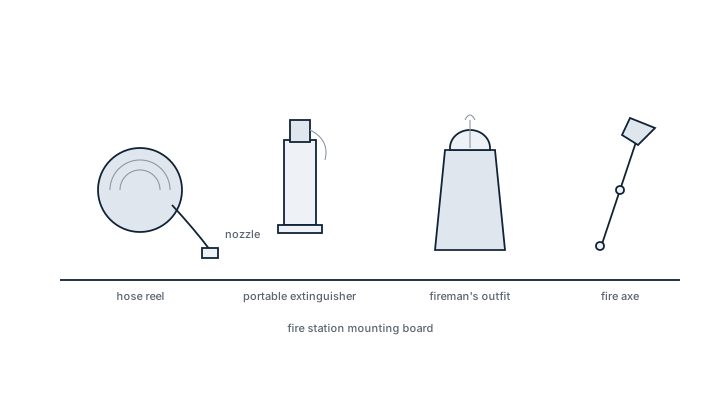
Main components
- Portable extinguishers - water, foam, CO2, dry powder and, increasingly, clean agent types, each suited to a different fire class and located according to the fire risk of the space (galley, engine room, accommodation).
- Fire hoses and nozzles - flaked or reeled hoses connected to hydrants, with dual-purpose (jet/spray) nozzles standard on most SOLAS ships.
- Fireman's outfit - protective clothing, boots, gloves and helmet, together with a self-contained breathing apparatus (SCBA) set and a safety lamp or torch, kept ready in dedicated lockers.
- Fire axes and other hand tools - for forcing entry or clearing debris during firefighting or rescue.
- International shore connection - a standardised coupling allowing shore fire brigades to connect their own hoses to the ship's fire main in port.
Selection and sizing
Extinguisher type and number per space follow the fire risk classification of that space rather than a single ship-wide standard - a galley needs wet chemical or foam extinguishers suited to cooking oil fires, an engine room needs types effective on flammable liquid fires, and accommodation spaces are covered mainly by water or foam types for ordinary combustibles. Hose length and hydrant spacing are set so that any part of the protected space can be reached by at least one hose stream, factoring in the ship's actual deck and accommodation layout rather than a generic distance rule alone.
Regulations and class
SOLAS chapter II-2 sets out the required scale of portable and personal firefighting equipment for each ship type, including the minimum number of fireman's outfits, fire extinguishers by space, and hose and nozzle provisions. Equipment must be maintained and tested according to manufacturer and class requirements: extinguishers require periodic weighing or pressure checks and servicing, hoses require pressure testing, and SCBA sets require cylinder testing and regular function checks. Fire drills required under SOLAS also serve as the practical check that crew can locate and use this equipment under time pressure, not only that it exists on the inventory.
Typical faults
- Extinguisher pressure gauge in the low or overpressure zone, left unserviced - reduced or unreliable discharge exactly when needed.
- Fire hose perished or cracked from UV and salt exposure, only found when pressurised during a drill - a burst hose loses pressure at the fire, not on the shelf.
- SCBA cylinder past its hydrostatic test date - taken out of service or, worse, still used, reducing confidence in the set under real conditions.
- Extinguisher of the wrong class placed in a space (for example a water extinguisher near electrical switchgear) - ineffective or actively dangerous if used on the wrong fire type.
What to look for in a supplier
- Extinguisher types matched to the specific fire risk of each intended space, not a single uniform type across the ship.
- Servicing and refill network reachable from the ship's normal trading ports, since equipment needs periodic maintenance wherever the ship happens to be.
- SCBA cylinders and fireman's outfits meeting the applicable flag and class approval standards, with test date marking clearly visible.
- Hose and nozzle compatibility with the ship's existing hydrant coupling standard to avoid adapters becoming a point of failure.
Check extinguisher service tags and SCBA cylinder test dates at every monthly inspection, not only at the annual survey - these are the items most likely to quietly lapse between formal checks.