What to check on a Foam System (Deck).
A fixed deck foam system exists for one job: putting out a pool fire of spilled liquid cargo on an open tanker deck before it spreads to the manifold, pump room vents or accommodation. Water alone cannot do this, because burning hydrocarbon floats on water and keeps burning while it spreads. Foam solution forms a blanket that excludes oxygen from the surface and cools it, and it keeps doing so after the jet has moved on, which is why foam is specified for cargo deck protection while CO2 flooding covers…
What Sets a Deck Foam System Apart
A fixed deck foam system exists for one job: putting out a pool fire of spilled liquid cargo on an open tanker deck before it spreads to the manifold, pump room vents or accommodation. Water alone cannot do this, because burning hydrocarbon floats on water and keeps burning while it spreads. Foam solution forms a blanket that excludes oxygen from the surface and cools it, and it keeps doing so after the jet has moved on, which is why foam is specified for cargo deck protection while CO2 flooding covers enclosed machinery spaces and sprinklers cover accommodation. The system is entirely separate from the ship's fire main, though it draws seawater from it, and from any inert gas system used to blanket the tanks themselves.
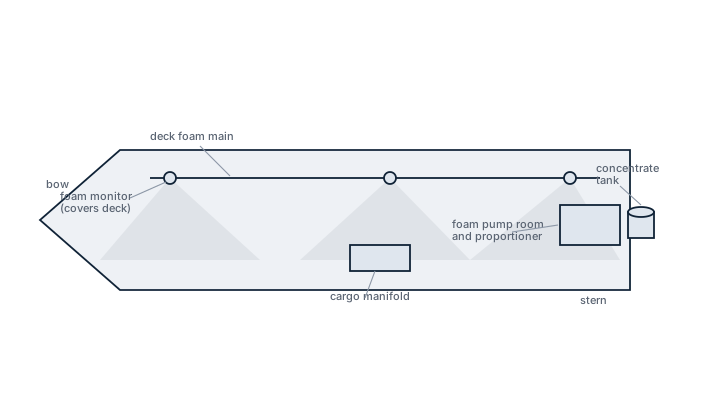
Main Components
Foam Concentrate Tank
A dedicated tank, usually mounted at deck level or in a pump room, holds enough concentrate for the required discharge duration. Tank material and internal coating must be compatible with the concentrate type, since fluoroprotein and synthetic concentrates behave differently in storage.
Proportioner
The proportioner meters concentrate into the seawater stream at a fixed ratio, typically 3% or 6% depending on the approved foam type. Balanced-pressure proportioners hold the ratio accurate across a wide flow range; simple in-line inductors are cheaper but drift off ratio if pump pressure varies, which is the single most common cause of weak foam on deck.
Deck Monitors and Hose Reels
Fixed monitors, some remotely operated from a safe position, throw foam across the deck without exposing crew to radiant heat. Hose reels with portable applicators cover areas monitors cannot reach, such as behind deck structures.
Ring Main
Piping runs the length of the cargo deck, cross-connected so a single damaged section does not take the whole system out of service, and drained or heat-traced on routes exposed to freezing spray.
Sizing and Selection
Deck foam systems are sized against deck area, not tank capacity. The design basis is usually the largest single cargo tank's deck area, or a defined share of the total cargo deck area, whichever governs, with an application rate expressed in litres of foam solution per square metre per minute and a minimum discharge duration. Chemical tankers carrying reactive cargoes tend to need a longer sustained duration than crude or product carriers. Concentrate choice also matters: protein and fluoroprotein foams give strong burn-back resistance but lower fluidity; synthetic and fluorine-free formulations spread faster and are increasingly specified as PFAS-based AFFF concentrates fall under tightening environmental restriction in several flag states and ports.
Regulations and Class
Fixed foam systems on tankers fall under SOLAS chapter II-2 and the technical detail in the IMO FSS Code, which sets application rates, minimum duration and monitor coverage. Class societies require the concentrate to carry IMO type approval matching the foam quality specified in the ship's fire safety plan, and periodic survey includes a foam quality test, checking expansion ratio and drainage time against the concentrate's original certificate, since foam degrades in storage even when the tank looks fine.
Typical Faults
- Aged or contaminated concentrate - foam breaks down before it forms a stable blanket, allowing re-ignition of an already-attacked spill.
- Proportioner drift - corroded metering orifices or a mis-set inductor deliver too little concentrate, producing a thin, short-lived foam that looks fine on a quick test but fails under sustained discharge.
- Blocked monitor nozzles - salt and debris buildup cuts throw distance, leaving the far end of the deck unprotected.
- Ring main corrosion - constant salt spray thins piping over years; a pinhole leak drops system pressure exactly when full flow is needed.
- Seized remote monitor drives - monitors that are never exercised between drills can jam in one position, defeating the point of remote operation.
What to Look For in a Supplier
- Proportioning accuracy demonstrated across the full flow range, not just at the rated design point.
- Concentrate with current IMO type approval matching the ship's fire safety plan, including fluorine-free options where port state or flag rules restrict PFAS.
- Test data and documentation formatted for class survey, not just a generic data sheet.
- Compatibility confirmed with the existing proportioner if only the concentrate is being replaced, since different foam families do not always mix or perform the same through the same hardware.
- A service network that can supply concentrate refills in the ports the vessel actually calls at.
Test foam quality on a schedule, not only when the system is due for survey - concentrate that sat through a hot engine room summer can fail a drainage-time test years before its labelled shelf life runs out.