What to check on a SCBA (Self-Contained Breathing Apparatus).
A self-contained breathing apparatus carries its own air supply in a compressed-air cylinder on the wearer's back, cut off from the surrounding atmosphere by a full-face mask and a demand valve. That is the essential difference from an emergency escape breathing device, which is built for getting out of a space rather than working in it, and from fixed airline systems, which tether the wearer to a compressor and cannot follow a hose team into a compartment. SCBA is the set a fire team dons before entering a smoke-logged engine…
What sets SCBA apart from other breathing protection
A self-contained breathing apparatus carries its own air supply in a compressed-air cylinder on the wearer's back, cut off from the surrounding atmosphere by a full-face mask and a demand valve. That is the essential difference from an emergency escape breathing device, which is built for getting out of a space rather than working in it, and from fixed airline systems, which tether the wearer to a compressor and cannot follow a hose team into a compartment. SCBA is the set a fire team dons before entering a smoke-logged engine room or a cargo hold where the atmosphere is unknown or already known to be irrespirable.
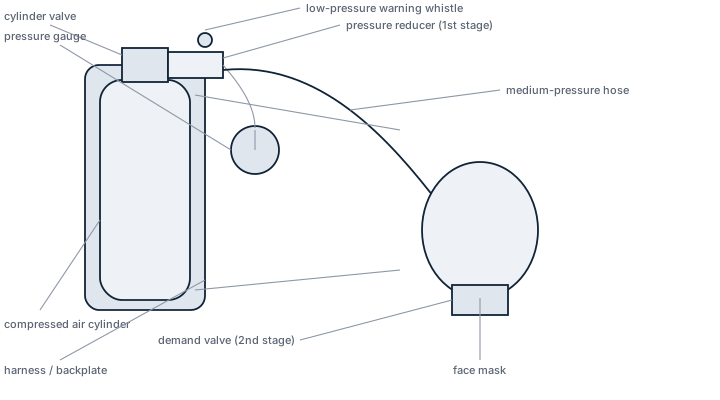
Main components
Cylinder
Steel or composite cylinder charged to around 200-300 bar, sized to give roughly 30 minutes of air at a moderate working rate. Composite cylinders are lighter and now standard on most fire teams' sets, but they carry a hydrostatic test date and a service-life limit stamped on the neck that the ship's fire locker log has to track.
Pressure reducer and demand valve
The reducer drops cylinder pressure to a low-pressure line feeding the demand valve on the mask, which only releases air when the wearer inhales. A positive-pressure demand valve keeps the mask interior slightly above ambient, so a poor seal leaks air out rather than letting smoke in.
Full-face mask
Seals against the face, carries the demand valve connection and an exhalation valve, and is fitted with a speech membrane or, on newer sets, an integrated radio pickup.
Harness and back plate
Carries the cylinder, distributes weight across shoulders and hips, and holds the low-pressure alarm whistle.
Low-pressure warning
A whistle or electronic alarm that trips at roughly 55 bar remaining, giving the wearer a fixed reserve to withdraw on.
Selection and duration
Sets are chosen on rated duration (30-, 45- or 60-minute nominal, always shorter in practice under hard work), cylinder pressure class, and mask compatibility with the crew's fire hood and communication gear. Ships with larger fire teams or spaces with long escape routes, such as deep cargo holds or long engine room ladders, tend toward 45- or 60-minute sets so the working margin after the alarm sounds is not eaten up by a long walk-out.
Regulations
SOLAS II-2/10.10 sets the minimum: at least two spare fully charged SCBA sets in addition to those required for the fire party, plus a means of recharging cylinders on board or spare charged cylinders equal to the total capacity of all sets. FSS Code Chapter 3 gives the detailed performance and testing requirements. Cylinders need periodic hydrostatic testing per their approval basis, and every set is due a functional test at intervals set by the manufacturer and the ship's planned maintenance system, typically annual.
Typical faults
- Cylinder valve left cracked open after a drill: a slow leak empties the cylinder before the next muster, found only when someone tries to use it.
- Face seal failure from a worn rubber skirt or a crew member with facial hair: the mask cannot hold positive pressure, letting smoke in during entry.
- Low-pressure alarm not tested: the whistle mechanism has seized, so the wearer gets no warning before air runs out.
- Composite cylinder past its stamped service life still in the rack: it passes a casual visual check but is not legally usable.
- Demand valve diaphragm perished: erratic air delivery, especially after long storage in a hot fire locker.
What to look for in a supplier
- Type approval certificate referencing FSS Code Chapter 3, valid for the flag and class in question.
- Local service and hydrostatic testing capability at the ports the ship actually calls, not just at the delivery port.
- Mask compatibility confirmed against the ship's existing fire hoods and any communication sets already on board.
- Spares availability for wear items such as face seals and demand valve diaphragms, not just complete replacement sets.
Test the low-pressure whistle on every set at every drill, not just the cylinder gauge - a silent alarm is the failure nobody notices until the air is already gone.
