What to check on a Portable Extinguishers (CO₂, Powder, Foam).
A portable extinguisher is not interchangeable stock; the agent inside decides where it may be stowed and what it can put out. CO2 displaces oxygen and cools by expansion, leaving no residue, which is why it is the standard choice next to switchboards and in the engine control room. Dry chemical powder interrupts the chemical chain reaction of the flame and works on class A, B and C fires, but it contaminates instruments and running machinery and cannot be used near open electrical contacts without a de-energised circuit. Foam extinguishers…
What sets the three extinguishing agents apart
A portable extinguisher is not interchangeable stock; the agent inside decides where it may be stowed and what it can put out. CO2 displaces oxygen and cools by expansion, leaving no residue, which is why it is the standard choice next to switchboards and in the engine control room. Dry chemical powder interrupts the chemical chain reaction of the flame and works on class A, B and C fires, but it contaminates instruments and running machinery and cannot be used near open electrical contacts without a de-energised circuit. Foam extinguishers, usually AFFF or a fluorine-free equivalent now, form a film over a flammable liquid surface that both smothers the fire and stops re-ignition, making them the choice for galleys, paint lockers and bunker stations.
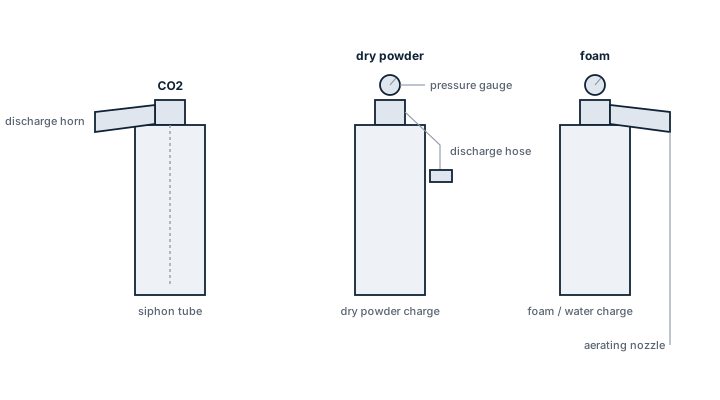
Main components
Cylinder and valve assembly
The pressure vessel is stamped with its test date, working pressure and tare weight. On CO2 units the agent is stored as a liquefied gas under its own vapour pressure; on powder and foam units a separate small CO2 or nitrogen cartridge, or a stored-pressure charge in the main body, drives the agent out.
Discharge hose and horn
CO2 units carry a wide plastic horn to prevent frostbite and static discharge; powder and foam units use a narrower rubber hose and nozzle. A cracked horn or perished hose is a common reason a unit fails inspection even when the charge is full.
Bracket and pressure gauge
Stored-pressure powder and foam units carry a gauge with a green band; a needle in the red zone means the seal has failed and the unit must be recharged, not just refilled with agent. CO2 units have no gauge and are checked by weighing.
Selection by location
Class, capacity and agent must match the space, not just the fire risk in general terms:
- Engine room and switchboard rooms: CO2, 5 kg class, positioned within reach of the escape route.
- Galley: foam or wet chemical for cooking oil fires, never powder as a first choice because it can reignite a hot oil fire once the powder settles.
- Deck and stores: dry powder, typically 9 kg or 12 kg units, for general class A/B risk.
- Paint and chemical lockers: foam, matched to the flashpoint of the stores kept there.
SOLAS and class requirements
SOLAS Chapter II-2 sets minimum numbers and types of portable extinguishers by space and ship type, and requires at least one spare charge or spare unit for every ten extinguishers of each type carried, with a minimum of two spares per type. Class societies require an annual inspection by a certified service agent and a hydrostatic pressure test at intervals set by the extinguisher standard the unit was built to, typically every ten years for the cylinder. Weight checks on CO2 units are usually carried out at each annual survey; a loss of more than ten percent of charge weight condemns the unit for recharge.
Typical faults
| Fault | Consequence |
|---|---|
| Corroded or dented cylinder | Fails hydrostatic test, unit condemned before its scheduled recharge date |
| Caked powder from moisture ingress | Agent will not discharge freely, extinguisher useless in an actual fire |
| Gauge needle in red zone, seal lost | Unit has lost pressure silently and will not throw agent when triggered |
| Missing or expired service tag | Port State Control deficiency, can lead to detention on a fire safety finding |
| Extinguisher stowed behind cargo or furniture | Crew cannot reach it inside the response time assumed in the fire plan |
What to look for in a supplier
- Approval to service the specific extinguisher type under the flag administration's recognised organisation scheme, not just a general fire equipment license.
- Traceable agent batch records, particularly for foam concentrate, since some older AFFF formulations are now restricted under environmental rules.
- Realistic lead time for hydrostatic testing, which takes the cylinder off the ship for several days unless the supplier holds a mobile test rig.
- A stock of the correct bracket hardware, since a replacement extinguisher that does not fit the existing bracket ends up loose in a locker.
Weigh CO2 extinguishers yourself at the same time every round instead of trusting the last service sticker; a slow leak past the valve seat shows up on the scale long before the gauge or a visual check would catch it.