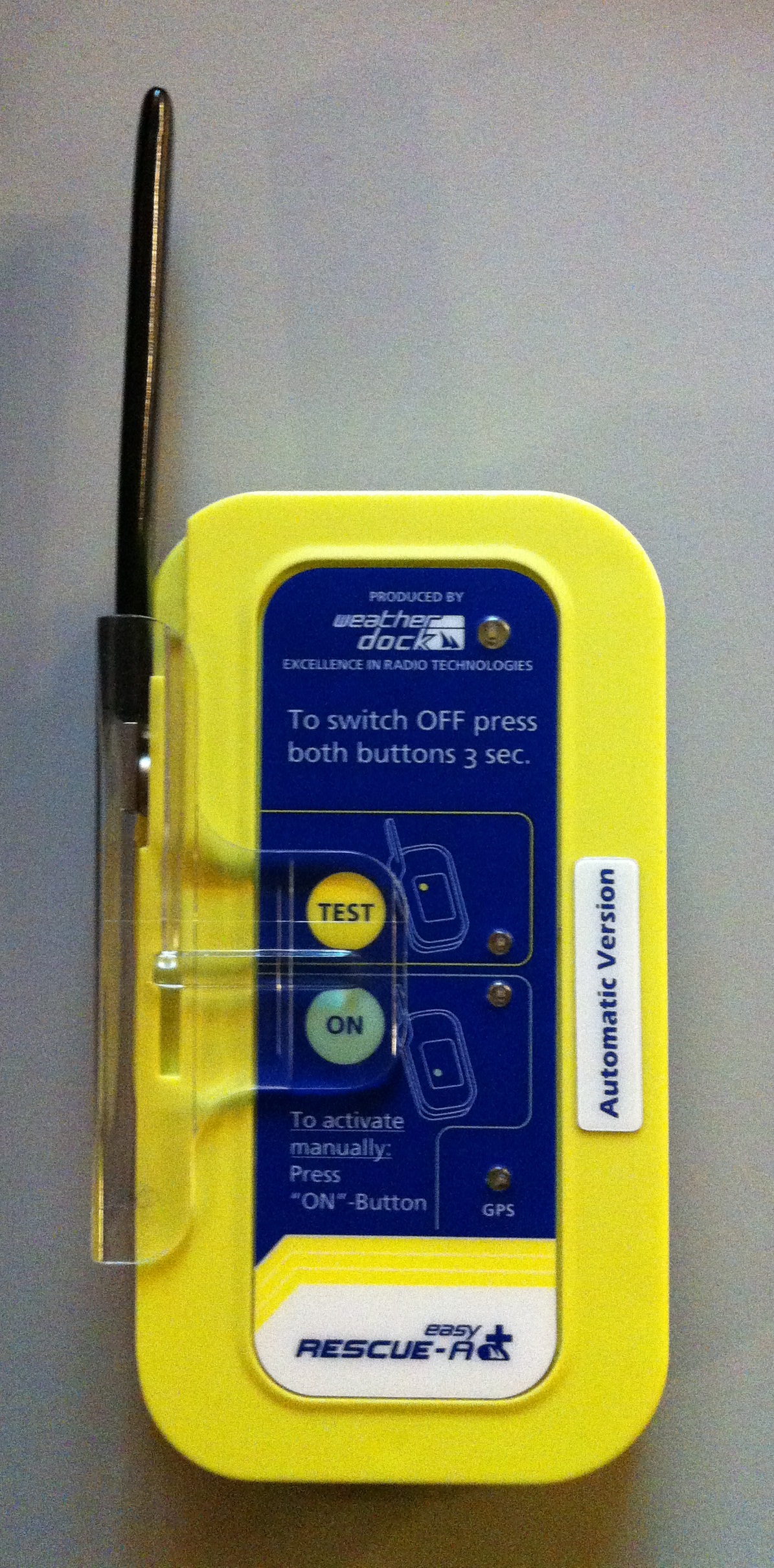
What to check on a AIS-SART.
An AIS-SART (Search and Rescue Transponder) transmits a Class A-format AIS position report on the marine AIS frequencies rather than responding to a 9 GHz radar interrogation the way a traditional radar SART does. A searching vessel sees the AIS-SART as a distinct icon with a unique identity on its AIS display or chart plotter, complete with position and a characteristic active-SART symbol, instead of the row of arcs a radar-based SART paints on a 3 cm radar screen. Range depends on the AIS receiver's own reception, generally comparable to…
What Makes This Type Different
An AIS-SART (Search and Rescue Transponder) transmits a Class A-format AIS position report on the marine AIS frequencies rather than responding to a 9 GHz radar interrogation the way a traditional radar SART does. A searching vessel sees the AIS-SART as a distinct icon with a unique identity on its AIS display or chart plotter, complete with position and a characteristic active-SART symbol, instead of the row of arcs a radar-based SART paints on a 3 cm radar screen. Range depends on the AIS receiver's own reception, generally comparable to standard AIS range at sea, and the two SART types are not interchangeable: a ship without an AIS receiver capable of decoding the distress-mode target will not see an AIS-SART at all, which is why SOLAS survival craft requirements still recognise both device types rather than one replacing the other outright.

Main Components
Transmitter and Antenna
Compact VHF transmitter broadcasting on the AIS frequencies with a built-in antenna, housed in a floating, buoyant casing.
GPS Receiver
Internal GPS gives the unit its own position fix, which is what gets broadcast in the AIS message — without a valid fix the unit typically still transmits but without a reliable position.
Battery
Sealed primary battery sized for a minimum operating duration once activated, typically rated for a minimum continuous transmission period measured in hours, with a separate standby shelf life measured in years before replacement is due.
Activation Switch and Float-Free Options
Manual activation on handheld units carried by the crew; some installations pair a unit with a float-free bracket similar in principle to an EPIRB bracket, though AIS-SARTs are more commonly carried as manually deployed survival craft equipment.
Selection and Sizing
- Certification: type-approved to the applicable marine AIS-SART standard and carrying the relevant wheelmark or equivalent flag approval.
- Battery life: checked against the vessel's typical worst-case time to rescue for its trading area, not just the certified minimum.
- Quantity per survival craft: set by the vessel's SOLAS equipment scale for the number and type of lifeboats and liferafts carried.
- Compatibility check: confirmed against the bridge AIS receiver's ability to display the distress-mode target distinctly from ordinary vessel traffic.
Regulations and Class
SOLAS Ch. III recognises AIS-SART as an accepted alternative to a radar SART for survival craft locating equipment on many vessel types, subject to flag administration acceptance and the equipment scale in the ship's safety equipment certificate. Battery expiry and the unit's self-test result are checked at each safety equipment survey, and the device is included in the planned maintenance and testing schedule the same as other GMDSS-adjacent survival equipment.
Typical Faults
- Battery past its expiry date — unit may activate but transmit for far less than the rated duration, or not at all.
- Self-test not performed at the required interval — a fault in the transmitter or GPS goes undetected until an actual distress situation.
- Stowage location not known to the crew — delay in getting the unit into the survival craft during an abandon-ship drill.
- Antenna or casing damaged by rough handling in storage — reduced transmission range exactly when it matters most.
What to Look for in a Supplier
- Current type approval and wheelmark or flag-recognised equivalent for the specific model.
- Battery expiry dated clearly and traceable, with replacement batteries genuinely available rather than requiring a full unit exchange.
- Self-test function that gives an unambiguous pass/fail indication crew can read without special training.
Brief the crew that an AIS-SART is only visible to ships with a compatible AIS receiver nearby — it is not a substitute for a radar SART where the expected rescue assets are radar-equipped aircraft or ships without AIS decoding for distress targets.