What to check on a SOLAS-A Inflatable Life Raft (Valise).
A SOLAS-A life raft rated for valise packing is functionally identical, once inflated, to the same raft packed in a rigid canister - same capacity, same equipment pack, same SOLAS-A survivability standard covering temperature range, sea-worthiness, and equipment for extended survival at sea. The difference is entirely in the container. A valise is a soft, water-resistant bag rather than a fibreglass canister, which means it cannot be stowed for hydrostatic release the way a canister raft on a cradle can - a valise raft is typically carried for a specific…
What defines a valise life raft
A SOLAS-A life raft rated for valise packing is functionally identical, once inflated, to the same raft packed in a rigid canister - same capacity, same equipment pack, same SOLAS-A survivability standard covering temperature range, sea-worthiness, and equipment for extended survival at sea. The difference is entirely in the container. A valise is a soft, water-resistant bag rather than a fibreglass canister, which means it cannot be stowed for hydrostatic release the way a canister raft on a cradle can - a valise raft is typically carried for a specific location such as a rescue boat, a tender, or a location where a hydrostatic release unit and cradle are impractical, and it must be manually thrown or carried to the water and manually inflated by pulling the painter line.
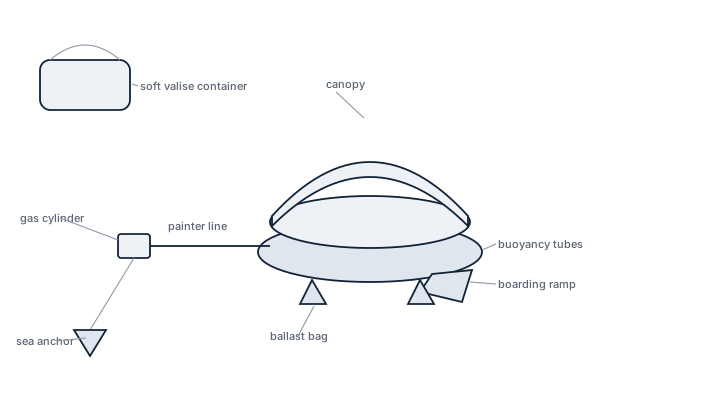
SOLAS-A rafts, valise or canister, are distinct from SOLAS-B rafts in equipment scope: SOLAS-B packs a reduced survival equipment set intended for coastal or short-range operation, while SOLAS-A carries the full offshore pack including a more extensive first aid kit, additional rations, and a larger water ration per person.
Main components
Buoyancy tubes
Dual, independently inflatable tubes so a puncture in one does not fully deflate the raft; inflation is by CO2/nitrogen gas cylinder triggered when the painter line is pulled to full extension.
Canopy
Self-erecting on inflation, providing shelter from exposure and, on SOLAS-A rafts, a rainwater collection arrangement built into the canopy design.
Painter line and hydrostatic release unit
The painter both triggers inflation and, on canister rafts, connects to a hydrostatic release unit that frees the raft automatically if the ship sinks before it can be manually launched; valise rafts rely on manual deployment instead since they are not typically fitted with an HRU.
Ballast bags
Water-filled bags under the raft floor that resist capsize in a seaway by adding weight low in the structure once the raft is waterborne.
Survival equipment pack
Sealed container inside the raft holding rations, drinking water, flares, a first aid kit, seasickness tablets, a bailer, sponge, repair kit, and signalling mirror, per the SOLAS-A equipment schedule.
Selection and sizing
- Certified capacity in persons, matched to the specific location aboard where it will be carried.
- Packing type - valise where a cradle and HRU cannot be fitted, canister where automatic float-free launch is required by the ship's survival craft arrangement.
- Servicing interval and the location of an approved service station the vessel can realistically reach.
- Temperature rating matching the vessel's trading area, since standard SOLAS-A rafts are rated to a defined low-temperature threshold and arctic-rated packs exist for colder trades.
Regulations and class
SOLAS Chapter III and the LSA Code set the construction, equipment, and servicing requirements for SOLAS-A rafts. Annual inspection at an approved service station is mandatory, including full inflation, equipment pack renewal of any expired items, and a check of the gas cylinder charge. Rafts must be re-packed and re-certified at that interval regardless of whether they were deployed. Valise rafts carried in locations without automatic float-free arrangements are accepted under LSA Code provisions where the ship's survival craft arrangement documents that location as manually launched.
Typical faults
| Fault | Cause | Consequence |
|---|---|---|
| Raft fails to inflate fully | Gas cylinder underweight or valve fault found only at annual service | Insufficient buoyancy or one chamber unusable |
| Valise fabric degradation | UV exposure and chafe from poor stowage location | Water ingress or failure of the outer container before deployment |
| Expired equipment pack contents | Missed annual service interval | Rations, water, or flares unusable when actually needed |
| Painter line fails to trigger inflation | Line not fully extended before the crew lets go, or a fouled line | Raft remains uninflated and unusable in the water |
What to look for in a supplier
- Approved service station network in the vessel's actual trading area, not just at the home port.
- Valid SOLAS-A type approval certificate matching the exact model and capacity ordered.
- Clear documentation of temperature rating suited to the trading area.
- Confirmed valise packing compatibility with the specific stowage location and launch method planned aboard.
Stow a valise raft where crew can actually carry or throw it clear of the ship's side in a real emergency - a valise stuffed into a locker two decks from the muster point is a raft that will not make it into the water in time.