Inflatable Life Raft (SOLAS-B)
A SOLAS-B life raft carries a reduced survival equipment pack compared with SOLAS-A, reflecting the shorter time to rescue expected on the voyages it is approved for — the same inflatable shelter and canopy, but with less on board while survivors wait.
Read more — Inflatable Life Raft (SOLAS-B) explained ▾
What sets a SOLAS-B raft apart from SOLAS-A
Both packs use the same style of inflatable raft — canopy, buoyancy tubes, boarding ramp, righting strap — and both must meet the same LSA Code performance requirements for inflation, capacity and stability in the water. The difference is entirely in what is packed inside. A SOLAS-A pack is built for voyages where rescue could take longer, so it carries a fuller equipment set, including a larger water and food ration, more pyrotechnics, and additional survival aids. A SOLAS-B pack strips this back to a reduced list, reflecting the shorter expected time to rescue on the voyages it is approved for. Choosing SOLAS-B is a decision about the ship's trading area, not a lower-quality raft.
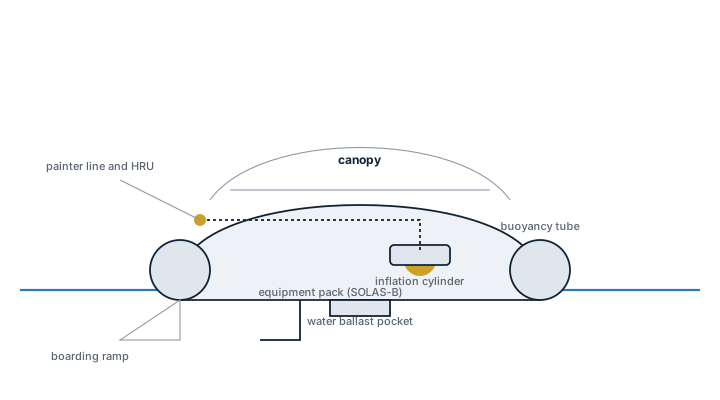
Main components
Buoyancy chamber and canopy
Dual, independently inflatable buoyancy tubes and an insulated canopy that inflates automatically with the raft, giving protection from wind, spray and sun once boarded.
Painter line and hydrostatic release unit
The painter triggers inflation when paid out and, together with a hydrostatic release unit on the cradle, allows the raft to float free and inflate automatically if the ship sinks before it is launched by hand.
Equipment pack (SOLAS-B specific)
A reduced pack against the SOLAS-A list: it still includes essentials such as a bailer, sponge, paddles, repair kit, first aid kit, seasickness tablets, and signalling equipment, but with lower quantities of items like water, food rations and pyrotechnic distress signals than a SOLAS-A pack for the same raft capacity.
Cradle and stowage
Holds the raft ready for launch, typically with a weak link and hydrostatic release arrangement so the raft is not dragged down with a sinking ship.
Selection and sizing
Selection is governed by the ship's certificated area of operation as much as by capacity:
- Whether the ship's trading pattern qualifies for SOLAS-B equipment under flag and class rules, typically tied to short international voyages or defined coastal areas
- Rated capacity against the ship's maximum complement, with enough rafts of the fitted capacity to cover the total persons on board plus any required margin
- Servicing interval and the location of an approved service station on the ship's normal trading route
- Deck stowage arrangement and launching method, davit-launched or throw-overboard, suited to freeboard and available deck space
Regulations and class
SOLAS Ch. III and the LSA Code set both the raft's performance standards and the exact contents lists for SOLAS-A and SOLAS-B equipment packs. Servicing is required at intervals set by the manufacturer's approval, generally not exceeding twelve months, at a station approved for that raft type, with hydrostatic release units and painter systems checked and renewed on their own separate schedules. Flag administrations decide which ships and voyages may carry SOLAS-B rather than SOLAS-A equipment.
Typical faults
| Fault | Consequence |
|---|---|
| Service overdue at the annual station visit | Raft certificate lapses, and the ship may not be permitted to sail without a valid raft |
| Hydrostatic release unit past its expiry date | Raft may not float free and inflate automatically if the ship sinks before manual launch |
| Cradle corrosion or lashing wrongly re-secured after servicing | Raft fails to release cleanly during an actual launch |
| SOLAS-B raft carried on a voyage that actually requires SOLAS-A equipment | Non-compliance found at port state control, and a genuine shortfall in survival equipment if the raft is ever used |
What to look for in a supplier
- Approval certificate confirming SOLAS-B contents match the current LSA Code list for the raft's capacity
- Service station network covering the ship's actual trading pattern, not just the home port
- Clear labelling distinguishing SOLAS-A and SOLAS-B stock where a ship's stores hold both types
- Documented history of hydrostatic release unit and cradle condition if buying a raft already in service
Confirm which pack, SOLAS-A or SOLAS-B, is actually loaded in each raft rather than assuming from the raft's outer case — the two are visually similar and mixing them up on a voyage that requires SOLAS-A is a real port state control finding.
15 manufacturers · 201 models
Grand Ocean Marine
13 ✓ 13 verified- Area: Annual servicing by approved service stations within 12 months (max 17 months in remote areas per SOLAS III/20.8.1)Check: Annual servicing by approved service stations within 12 months (max 17 months in remote areas per SOLAS III/20.8.1)
- Area: Inspection of seams, zippers, and inflatable supports for integrity and material degradationCheck: Inspection of seams, zippers, and inflatable supports for integrity and material degradation
- Area: Verification of Hydrostatic Release Unit (HRU) expiry date - must be replaced every 2 years independentlyCheck: Verification of Hydrostatic Release Unit (HRU) expiry date - must be replaced every 2 years independently
- Area: Testing of manual inflation pump for proper operation and valve functionCheck: Testing of manual inflation pump for proper operation and valve function
- Area: Checking and replacement of worn instruction labels and retroreflective marking/reflector tapeCheck: Checking and replacement of worn instruction labels and retroreflective marking/reflector tape
- Area: Examination of liferaft for correct markings, capacity certification, and approval certificatesCheck: Examination of liferaft for correct markings, capacity certification, and approval certificates
- Area: Inspection of container/canister for corrosion, damage, and proper securing mechanismsCheck: Inspection of container/canister for corrosion, damage, and proper securing mechanisms
- Area: Documentation review - maintenance records, servicing certificates, and repair logs must be current and signedCheck: Documentation review - maintenance records, servicing certificates, and repair logs must be current and signed
Typ-universelle Inspektionspunkte fuer Life Rafts (verifiziert, 2026-06).
- Area: Annual servicing by approved service stations within 12 months (max 17 months in remote areas per SOLAS III/20.8.1)Check: Annual servicing by approved service stations within 12 months (max 17 months in remote areas per SOLAS III/20.8.1)
- Area: Inspection of seams, zippers, and inflatable supports for integrity and material degradationCheck: Inspection of seams, zippers, and inflatable supports for integrity and material degradation
- Area: Verification of Hydrostatic Release Unit (HRU) expiry date - must be replaced every 2 years independentlyCheck: Verification of Hydrostatic Release Unit (HRU) expiry date - must be replaced every 2 years independently
- Area: Testing of manual inflation pump for proper operation and valve functionCheck: Testing of manual inflation pump for proper operation and valve function
- Area: Checking and replacement of worn instruction labels and retroreflective marking/reflector tapeCheck: Checking and replacement of worn instruction labels and retroreflective marking/reflector tape
- Area: Examination of liferaft for correct markings, capacity certification, and approval certificatesCheck: Examination of liferaft for correct markings, capacity certification, and approval certificates
- Area: Inspection of container/canister for corrosion, damage, and proper securing mechanismsCheck: Inspection of container/canister for corrosion, damage, and proper securing mechanisms
- Area: Documentation review - maintenance records, servicing certificates, and repair logs must be current and signedCheck: Documentation review - maintenance records, servicing certificates, and repair logs must be current and signed
Typ-universelle Inspektionspunkte fuer Life Rafts (verifiziert, 2026-06).
- Area: Annual servicing by approved service stations within 12 months (max 17 months in remote areas per SOLAS III/20.8.1)Check: Annual servicing by approved service stations within 12 months (max 17 months in remote areas per SOLAS III/20.8.1)
- Area: Inspection of seams, zippers, and inflatable supports for integrity and material degradationCheck: Inspection of seams, zippers, and inflatable supports for integrity and material degradation
- Area: Verification of Hydrostatic Release Unit (HRU) expiry date - must be replaced every 2 years independentlyCheck: Verification of Hydrostatic Release Unit (HRU) expiry date - must be replaced every 2 years independently
- Area: Testing of manual inflation pump for proper operation and valve functionCheck: Testing of manual inflation pump for proper operation and valve function
- Area: Checking and replacement of worn instruction labels and retroreflective marking/reflector tapeCheck: Checking and replacement of worn instruction labels and retroreflective marking/reflector tape
- Area: Examination of liferaft for correct markings, capacity certification, and approval certificatesCheck: Examination of liferaft for correct markings, capacity certification, and approval certificates
- Area: Inspection of container/canister for corrosion, damage, and proper securing mechanismsCheck: Inspection of container/canister for corrosion, damage, and proper securing mechanisms
- Area: Documentation review - maintenance records, servicing certificates, and repair logs must be current and signedCheck: Documentation review - maintenance records, servicing certificates, and repair logs must be current and signed
Typ-universelle Inspektionspunkte fuer Life Rafts (verifiziert, 2026-06).
- Area: Annual servicing by approved service stations within 12 months (max 17 months in remote areas per SOLAS III/20.8.1)Check: Annual servicing by approved service stations within 12 months (max 17 months in remote areas per SOLAS III/20.8.1)
- Area: Inspection of seams, zippers, and inflatable supports for integrity and material degradationCheck: Inspection of seams, zippers, and inflatable supports for integrity and material degradation
- Area: Verification of Hydrostatic Release Unit (HRU) expiry date - must be replaced every 2 years independentlyCheck: Verification of Hydrostatic Release Unit (HRU) expiry date - must be replaced every 2 years independently
- Area: Testing of manual inflation pump for proper operation and valve functionCheck: Testing of manual inflation pump for proper operation and valve function
- Area: Checking and replacement of worn instruction labels and retroreflective marking/reflector tapeCheck: Checking and replacement of worn instruction labels and retroreflective marking/reflector tape
- Area: Examination of liferaft for correct markings, capacity certification, and approval certificatesCheck: Examination of liferaft for correct markings, capacity certification, and approval certificates
- Area: Inspection of container/canister for corrosion, damage, and proper securing mechanismsCheck: Inspection of container/canister for corrosion, damage, and proper securing mechanisms
- Area: Documentation review - maintenance records, servicing certificates, and repair logs must be current and signedCheck: Documentation review - maintenance records, servicing certificates, and repair logs must be current and signed
Typ-universelle Inspektionspunkte fuer Life Rafts (verifiziert, 2026-06).
- Area: Annual servicing by approved service stations within 12 months (max 17 months in remote areas per SOLAS III/20.8.1)Check: Annual servicing by approved service stations within 12 months (max 17 months in remote areas per SOLAS III/20.8.1)
- Area: Inspection of seams, zippers, and inflatable supports for integrity and material degradationCheck: Inspection of seams, zippers, and inflatable supports for integrity and material degradation
- Area: Verification of Hydrostatic Release Unit (HRU) expiry date - must be replaced every 2 years independentlyCheck: Verification of Hydrostatic Release Unit (HRU) expiry date - must be replaced every 2 years independently
- Area: Testing of manual inflation pump for proper operation and valve functionCheck: Testing of manual inflation pump for proper operation and valve function
- Area: Checking and replacement of worn instruction labels and retroreflective marking/reflector tapeCheck: Checking and replacement of worn instruction labels and retroreflective marking/reflector tape
- Area: Examination of liferaft for correct markings, capacity certification, and approval certificatesCheck: Examination of liferaft for correct markings, capacity certification, and approval certificates
- Area: Inspection of container/canister for corrosion, damage, and proper securing mechanismsCheck: Inspection of container/canister for corrosion, damage, and proper securing mechanisms
- Area: Documentation review - maintenance records, servicing certificates, and repair logs must be current and signedCheck: Documentation review - maintenance records, servicing certificates, and repair logs must be current and signed
Typ-universelle Inspektionspunkte fuer Life Rafts (verifiziert, 2026-06).
- Area: Annual servicing by approved service stations within 12 months (max 17 months in remote areas per SOLAS III/20.8.1)Check: Annual servicing by approved service stations within 12 months (max 17 months in remote areas per SOLAS III/20.8.1)
- Area: Inspection of seams, zippers, and inflatable supports for integrity and material degradationCheck: Inspection of seams, zippers, and inflatable supports for integrity and material degradation
- Area: Verification of Hydrostatic Release Unit (HRU) expiry date - must be replaced every 2 years independentlyCheck: Verification of Hydrostatic Release Unit (HRU) expiry date - must be replaced every 2 years independently
- Area: Testing of manual inflation pump for proper operation and valve functionCheck: Testing of manual inflation pump for proper operation and valve function
- Area: Checking and replacement of worn instruction labels and retroreflective marking/reflector tapeCheck: Checking and replacement of worn instruction labels and retroreflective marking/reflector tape
- Area: Examination of liferaft for correct markings, capacity certification, and approval certificatesCheck: Examination of liferaft for correct markings, capacity certification, and approval certificates
- Area: Inspection of container/canister for corrosion, damage, and proper securing mechanismsCheck: Inspection of container/canister for corrosion, damage, and proper securing mechanisms
- Area: Documentation review - maintenance records, servicing certificates, and repair logs must be current and signedCheck: Documentation review - maintenance records, servicing certificates, and repair logs must be current and signed
Typ-universelle Inspektionspunkte fuer Life Rafts (verifiziert, 2026-06).
- Area: Annual servicing by approved service stations within 12 months (max 17 months in remote areas per SOLAS III/20.8.1)Check: Annual servicing by approved service stations within 12 months (max 17 months in remote areas per SOLAS III/20.8.1)
- Area: Inspection of seams, zippers, and inflatable supports for integrity and material degradationCheck: Inspection of seams, zippers, and inflatable supports for integrity and material degradation
- Area: Verification of Hydrostatic Release Unit (HRU) expiry date - must be replaced every 2 years independentlyCheck: Verification of Hydrostatic Release Unit (HRU) expiry date - must be replaced every 2 years independently
- Area: Testing of manual inflation pump for proper operation and valve functionCheck: Testing of manual inflation pump for proper operation and valve function
- Area: Checking and replacement of worn instruction labels and retroreflective marking/reflector tapeCheck: Checking and replacement of worn instruction labels and retroreflective marking/reflector tape
- Area: Examination of liferaft for correct markings, capacity certification, and approval certificatesCheck: Examination of liferaft for correct markings, capacity certification, and approval certificates
- Area: Inspection of container/canister for corrosion, damage, and proper securing mechanismsCheck: Inspection of container/canister for corrosion, damage, and proper securing mechanisms
- Area: Documentation review - maintenance records, servicing certificates, and repair logs must be current and signedCheck: Documentation review - maintenance records, servicing certificates, and repair logs must be current and signed
Typ-universelle Inspektionspunkte fuer Life Rafts (verifiziert, 2026-06).
- Area: Annual servicing by approved service stations within 12 months (max 17 months in remote areas per SOLAS III/20.8.1)Check: Annual servicing by approved service stations within 12 months (max 17 months in remote areas per SOLAS III/20.8.1)
- Area: Inspection of seams, zippers, and inflatable supports for integrity and material degradationCheck: Inspection of seams, zippers, and inflatable supports for integrity and material degradation
- Area: Verification of Hydrostatic Release Unit (HRU) expiry date - must be replaced every 2 years independentlyCheck: Verification of Hydrostatic Release Unit (HRU) expiry date - must be replaced every 2 years independently
- Area: Testing of manual inflation pump for proper operation and valve functionCheck: Testing of manual inflation pump for proper operation and valve function
- Area: Checking and replacement of worn instruction labels and retroreflective marking/reflector tapeCheck: Checking and replacement of worn instruction labels and retroreflective marking/reflector tape
- Area: Examination of liferaft for correct markings, capacity certification, and approval certificatesCheck: Examination of liferaft for correct markings, capacity certification, and approval certificates
- Area: Inspection of container/canister for corrosion, damage, and proper securing mechanismsCheck: Inspection of container/canister for corrosion, damage, and proper securing mechanisms
- Area: Documentation review - maintenance records, servicing certificates, and repair logs must be current and signedCheck: Documentation review - maintenance records, servicing certificates, and repair logs must be current and signed
Typ-universelle Inspektionspunkte fuer Life Rafts (verifiziert, 2026-06).
- Area: Annual servicing by approved service stations within 12 months (max 17 months in remote areas per SOLAS III/20.8.1)Check: Annual servicing by approved service stations within 12 months (max 17 months in remote areas per SOLAS III/20.8.1)
- Area: Inspection of seams, zippers, and inflatable supports for integrity and material degradationCheck: Inspection of seams, zippers, and inflatable supports for integrity and material degradation
- Area: Verification of Hydrostatic Release Unit (HRU) expiry date - must be replaced every 2 years independentlyCheck: Verification of Hydrostatic Release Unit (HRU) expiry date - must be replaced every 2 years independently
- Area: Testing of manual inflation pump for proper operation and valve functionCheck: Testing of manual inflation pump for proper operation and valve function
- Area: Checking and replacement of worn instruction labels and retroreflective marking/reflector tapeCheck: Checking and replacement of worn instruction labels and retroreflective marking/reflector tape
- Area: Examination of liferaft for correct markings, capacity certification, and approval certificatesCheck: Examination of liferaft for correct markings, capacity certification, and approval certificates
- Area: Inspection of container/canister for corrosion, damage, and proper securing mechanismsCheck: Inspection of container/canister for corrosion, damage, and proper securing mechanisms
- Area: Documentation review - maintenance records, servicing certificates, and repair logs must be current and signedCheck: Documentation review - maintenance records, servicing certificates, and repair logs must be current and signed
Typ-universelle Inspektionspunkte fuer Life Rafts (verifiziert, 2026-06).
- Area: Annual servicing by approved service stations within 12 months (max 17 months in remote areas per SOLAS III/20.8.1)Check: Annual servicing by approved service stations within 12 months (max 17 months in remote areas per SOLAS III/20.8.1)
- Area: Inspection of seams, zippers, and inflatable supports for integrity and material degradationCheck: Inspection of seams, zippers, and inflatable supports for integrity and material degradation
- Area: Verification of Hydrostatic Release Unit (HRU) expiry date - must be replaced every 2 years independentlyCheck: Verification of Hydrostatic Release Unit (HRU) expiry date - must be replaced every 2 years independently
- Area: Testing of manual inflation pump for proper operation and valve functionCheck: Testing of manual inflation pump for proper operation and valve function
- Area: Checking and replacement of worn instruction labels and retroreflective marking/reflector tapeCheck: Checking and replacement of worn instruction labels and retroreflective marking/reflector tape
- Area: Examination of liferaft for correct markings, capacity certification, and approval certificatesCheck: Examination of liferaft for correct markings, capacity certification, and approval certificates
- Area: Inspection of container/canister for corrosion, damage, and proper securing mechanismsCheck: Inspection of container/canister for corrosion, damage, and proper securing mechanisms
- Area: Documentation review - maintenance records, servicing certificates, and repair logs must be current and signedCheck: Documentation review - maintenance records, servicing certificates, and repair logs must be current and signed
Typ-universelle Inspektionspunkte fuer Life Rafts (verifiziert, 2026-06).
- Area: Annual servicing by approved service stations within 12 months (max 17 months in remote areas per SOLAS III/20.8.1)Check: Annual servicing by approved service stations within 12 months (max 17 months in remote areas per SOLAS III/20.8.1)
- Area: Inspection of seams, zippers, and inflatable supports for integrity and material degradationCheck: Inspection of seams, zippers, and inflatable supports for integrity and material degradation
- Area: Verification of Hydrostatic Release Unit (HRU) expiry date - must be replaced every 2 years independentlyCheck: Verification of Hydrostatic Release Unit (HRU) expiry date - must be replaced every 2 years independently
- Area: Testing of manual inflation pump for proper operation and valve functionCheck: Testing of manual inflation pump for proper operation and valve function
- Area: Checking and replacement of worn instruction labels and retroreflective marking/reflector tapeCheck: Checking and replacement of worn instruction labels and retroreflective marking/reflector tape
- Area: Examination of liferaft for correct markings, capacity certification, and approval certificatesCheck: Examination of liferaft for correct markings, capacity certification, and approval certificates
- Area: Inspection of container/canister for corrosion, damage, and proper securing mechanismsCheck: Inspection of container/canister for corrosion, damage, and proper securing mechanisms
- Area: Documentation review - maintenance records, servicing certificates, and repair logs must be current and signedCheck: Documentation review - maintenance records, servicing certificates, and repair logs must be current and signed
Typ-universelle Inspektionspunkte fuer Life Rafts (verifiziert, 2026-06).
- Area: Annual servicing by approved service stations within 12 months (max 17 months in remote areas per SOLAS III/20.8.1)Check: Annual servicing by approved service stations within 12 months (max 17 months in remote areas per SOLAS III/20.8.1)
- Area: Inspection of seams, zippers, and inflatable supports for integrity and material degradationCheck: Inspection of seams, zippers, and inflatable supports for integrity and material degradation
- Area: Verification of Hydrostatic Release Unit (HRU) expiry date - must be replaced every 2 years independentlyCheck: Verification of Hydrostatic Release Unit (HRU) expiry date - must be replaced every 2 years independently
- Area: Testing of manual inflation pump for proper operation and valve functionCheck: Testing of manual inflation pump for proper operation and valve function
- Area: Checking and replacement of worn instruction labels and retroreflective marking/reflector tapeCheck: Checking and replacement of worn instruction labels and retroreflective marking/reflector tape
- Area: Examination of liferaft for correct markings, capacity certification, and approval certificatesCheck: Examination of liferaft for correct markings, capacity certification, and approval certificates
- Area: Inspection of container/canister for corrosion, damage, and proper securing mechanismsCheck: Inspection of container/canister for corrosion, damage, and proper securing mechanisms
- Area: Documentation review - maintenance records, servicing certificates, and repair logs must be current and signedCheck: Documentation review - maintenance records, servicing certificates, and repair logs must be current and signed
Typ-universelle Inspektionspunkte fuer Life Rafts (verifiziert, 2026-06).
- Area: Annual servicing by approved service stations within 12 months (max 17 months in remote areas per SOLAS III/20.8.1)Check: Annual servicing by approved service stations within 12 months (max 17 months in remote areas per SOLAS III/20.8.1)
- Area: Inspection of seams, zippers, and inflatable supports for integrity and material degradationCheck: Inspection of seams, zippers, and inflatable supports for integrity and material degradation
- Area: Verification of Hydrostatic Release Unit (HRU) expiry date - must be replaced every 2 years independentlyCheck: Verification of Hydrostatic Release Unit (HRU) expiry date - must be replaced every 2 years independently
- Area: Testing of manual inflation pump for proper operation and valve functionCheck: Testing of manual inflation pump for proper operation and valve function
- Area: Checking and replacement of worn instruction labels and retroreflective marking/reflector tapeCheck: Checking and replacement of worn instruction labels and retroreflective marking/reflector tape
- Area: Examination of liferaft for correct markings, capacity certification, and approval certificatesCheck: Examination of liferaft for correct markings, capacity certification, and approval certificates
- Area: Inspection of container/canister for corrosion, damage, and proper securing mechanismsCheck: Inspection of container/canister for corrosion, damage, and proper securing mechanisms
- Area: Documentation review - maintenance records, servicing certificates, and repair logs must be current and signedCheck: Documentation review - maintenance records, servicing certificates, and repair logs must be current and signed
Typ-universelle Inspektionspunkte fuer Life Rafts (verifiziert, 2026-06).
Revere Survival Inc.
10 ✓ 10 verified- Area: Fiber structure and seam integrity - Complete inspection for damage, cracks, deformations at full inflationCheck: Fiber structure and seam integrity - Complete inspection for damage, cracks, deformations at full inflation
- Area: Buoyancy chamber functionality and pressure test - Check both air chambers for tightness and pressure lossCheck: Buoyancy chamber functionality and pressure test - Check both air chambers for tightness and pressure loss
- Area: Hydrostatic Release Unit (HRU) validity and function - Replacement every 2 years regardless of condition during every inspectionCheck: Hydrostatic Release Unit (HRU) validity and function - Replacement every 2 years regardless of condition during every inspection
- Area: Equipment inventory according to SOLAS-B packing list - Completeness of all required life-saving appliances and emergency equipmentCheck: Equipment inventory according to SOLAS-B packing list - Completeness of all required life-saving appliances and emergency equipment
- Area: Pyrotechnic devices - Check expiration date, replacement of all expired flares and signal rocketsCheck: Pyrotechnic devices - Check expiration date, replacement of all expired flares and signal rockets
- Area: Inflation system - Test manual hand pump and automatic inflation systemCheck: Inflation system - Test manual hand pump and automatic inflation system
- Area: Container and cradle inspection - Weekly visual check, weathering, fastening, hydrostatic-release deviceCheck: Container and cradle inspection - Weekly visual check, weathering, fastening, hydrostatic-release device
- Area: Drinking water and emergency provisions - Check expiration date and replace, check thermal protective equipmentCheck: Drinking water and emergency provisions - Check expiration date and replace, check thermal protective equipment
Typ-universelle Inspektionspunkte fuer Life Rafts (verifiziert, 2026-06).
- Area: Fiber structure and seam integrity - Complete inspection for damage, cracks, deformations at full inflationCheck: Fiber structure and seam integrity - Complete inspection for damage, cracks, deformations at full inflation
- Area: Buoyancy chamber functionality and pressure test - Check both air chambers for tightness and pressure lossCheck: Buoyancy chamber functionality and pressure test - Check both air chambers for tightness and pressure loss
- Area: Hydrostatic Release Unit (HRU) validity and function - Replacement every 2 years regardless of condition during every inspectionCheck: Hydrostatic Release Unit (HRU) validity and function - Replacement every 2 years regardless of condition during every inspection
- Area: Equipment inventory according to SOLAS-B packing list - Completeness of all required life-saving appliances and emergency equipmentCheck: Equipment inventory according to SOLAS-B packing list - Completeness of all required life-saving appliances and emergency equipment
- Area: Pyrotechnic devices - Check expiration date, replacement of all expired flares and signal rocketsCheck: Pyrotechnic devices - Check expiration date, replacement of all expired flares and signal rockets
- Area: Inflation system - Test manual hand pump and automatic inflation systemCheck: Inflation system - Test manual hand pump and automatic inflation system
- Area: Container and cradle inspection - Weekly visual check, weathering, fastening, hydrostatic-release deviceCheck: Container and cradle inspection - Weekly visual check, weathering, fastening, hydrostatic-release device
- Area: Drinking water and emergency provisions - Check expiration date and replace, check thermal protective equipmentCheck: Drinking water and emergency provisions - Check expiration date and replace, check thermal protective equipment
Typ-universelle Inspektionspunkte fuer Life Rafts (verifiziert, 2026-06).
- Area: Fiber structure and seam integrity - Complete inspection for damage, cracks, deformations at full inflationCheck: Fiber structure and seam integrity - Complete inspection for damage, cracks, deformations at full inflation
- Area: Buoyancy chamber functionality and pressure test - Check both air chambers for tightness and pressure lossCheck: Buoyancy chamber functionality and pressure test - Check both air chambers for tightness and pressure loss
- Area: Hydrostatic Release Unit (HRU) validity and function - Replacement every 2 years regardless of condition during every inspectionCheck: Hydrostatic Release Unit (HRU) validity and function - Replacement every 2 years regardless of condition during every inspection
- Area: Equipment inventory according to SOLAS-B packing list - Completeness of all required life-saving appliances and emergency equipmentCheck: Equipment inventory according to SOLAS-B packing list - Completeness of all required life-saving appliances and emergency equipment
- Area: Pyrotechnic devices - Check expiration date, replacement of all expired flares and signal rocketsCheck: Pyrotechnic devices - Check expiration date, replacement of all expired flares and signal rockets
- Area: Inflation system - Test manual hand pump and automatic inflation systemCheck: Inflation system - Test manual hand pump and automatic inflation system
- Area: Container and cradle inspection - Weekly visual check, weathering, fastening, hydrostatic-release deviceCheck: Container and cradle inspection - Weekly visual check, weathering, fastening, hydrostatic-release device
- Area: Drinking water and emergency provisions - Check expiration date and replace, check thermal protective equipmentCheck: Drinking water and emergency provisions - Check expiration date and replace, check thermal protective equipment
Typ-universelle Inspektionspunkte fuer Life Rafts (verifiziert, 2026-06).
- Area: Fiber structure and seam integrity - Complete inspection for damage, cracks, deformations at full inflationCheck: Fiber structure and seam integrity - Complete inspection for damage, cracks, deformations at full inflation
- Area: Buoyancy chamber functionality and pressure test - Check both air chambers for tightness and pressure lossCheck: Buoyancy chamber functionality and pressure test - Check both air chambers for tightness and pressure loss
- Area: Hydrostatic Release Unit (HRU) validity and function - Replacement every 2 years regardless of condition during every inspectionCheck: Hydrostatic Release Unit (HRU) validity and function - Replacement every 2 years regardless of condition during every inspection
- Area: Equipment inventory according to SOLAS-B packing list - Completeness of all required life-saving appliances and emergency equipmentCheck: Equipment inventory according to SOLAS-B packing list - Completeness of all required life-saving appliances and emergency equipment
- Area: Pyrotechnic devices - Check expiration date, replacement of all expired flares and signal rocketsCheck: Pyrotechnic devices - Check expiration date, replacement of all expired flares and signal rockets
- Area: Inflation system - Test manual hand pump and automatic inflation systemCheck: Inflation system - Test manual hand pump and automatic inflation system
- Area: Container and cradle inspection - Weekly visual check, weathering, fastening, hydrostatic-release deviceCheck: Container and cradle inspection - Weekly visual check, weathering, fastening, hydrostatic-release device
- Area: Drinking water and emergency provisions - Check expiration date and replace, check thermal protective equipmentCheck: Drinking water and emergency provisions - Check expiration date and replace, check thermal protective equipment
Typ-universelle Inspektionspunkte fuer Life Rafts (verifiziert, 2026-06).
- Area: Fiber structure and seam integrity - Complete inspection for damage, cracks, deformations at full inflationCheck: Fiber structure and seam integrity - Complete inspection for damage, cracks, deformations at full inflation
- Area: Buoyancy chamber functionality and pressure test - Check both air chambers for tightness and pressure lossCheck: Buoyancy chamber functionality and pressure test - Check both air chambers for tightness and pressure loss
- Area: Hydrostatic Release Unit (HRU) validity and function - Replacement every 2 years regardless of condition during every inspectionCheck: Hydrostatic Release Unit (HRU) validity and function - Replacement every 2 years regardless of condition during every inspection
- Area: Equipment inventory according to SOLAS-B packing list - Completeness of all required life-saving appliances and emergency equipmentCheck: Equipment inventory according to SOLAS-B packing list - Completeness of all required life-saving appliances and emergency equipment
- Area: Pyrotechnic devices - Check expiration date, replacement of all expired flares and signal rocketsCheck: Pyrotechnic devices - Check expiration date, replacement of all expired flares and signal rockets
- Area: Inflation system - Test manual hand pump and automatic inflation systemCheck: Inflation system - Test manual hand pump and automatic inflation system
- Area: Container and cradle inspection - Weekly visual check, weathering, fastening, hydrostatic-release deviceCheck: Container and cradle inspection - Weekly visual check, weathering, fastening, hydrostatic-release device
- Area: Drinking water and emergency provisions - Check expiration date and replace, check thermal protective equipmentCheck: Drinking water and emergency provisions - Check expiration date and replace, check thermal protective equipment
Typ-universelle Inspektionspunkte fuer Life Rafts (verifiziert, 2026-06).
- Area: Fiber structure and seam integrity - Complete inspection for damage, cracks, deformations at full inflationCheck: Fiber structure and seam integrity - Complete inspection for damage, cracks, deformations at full inflation
- Area: Buoyancy chamber functionality and pressure test - Check both air chambers for tightness and pressure lossCheck: Buoyancy chamber functionality and pressure test - Check both air chambers for tightness and pressure loss
- Area: Hydrostatic Release Unit (HRU) validity and function - Replacement every 2 years regardless of condition during every inspectionCheck: Hydrostatic Release Unit (HRU) validity and function - Replacement every 2 years regardless of condition during every inspection
- Area: Equipment inventory according to SOLAS-B packing list - Completeness of all required life-saving appliances and emergency equipmentCheck: Equipment inventory according to SOLAS-B packing list - Completeness of all required life-saving appliances and emergency equipment
- Area: Pyrotechnic devices - Check expiration date, replacement of all expired flares and signal rocketsCheck: Pyrotechnic devices - Check expiration date, replacement of all expired flares and signal rockets
- Area: Inflation system - Test manual hand pump and automatic inflation systemCheck: Inflation system - Test manual hand pump and automatic inflation system
- Area: Container and cradle inspection - Weekly visual check, weathering, fastening, hydrostatic-release deviceCheck: Container and cradle inspection - Weekly visual check, weathering, fastening, hydrostatic-release device
- Area: Drinking water and emergency provisions - Check expiration date and replace, check thermal protective equipmentCheck: Drinking water and emergency provisions - Check expiration date and replace, check thermal protective equipment
Typ-universelle Inspektionspunkte fuer Life Rafts (verifiziert, 2026-06).
- Area: Fiber structure and seam integrity - Complete inspection for damage, cracks, deformations at full inflationCheck: Fiber structure and seam integrity - Complete inspection for damage, cracks, deformations at full inflation
- Area: Buoyancy chamber functionality and pressure test - Check both air chambers for tightness and pressure lossCheck: Buoyancy chamber functionality and pressure test - Check both air chambers for tightness and pressure loss
- Area: Hydrostatic Release Unit (HRU) validity and function - Replacement every 2 years regardless of condition during every inspectionCheck: Hydrostatic Release Unit (HRU) validity and function - Replacement every 2 years regardless of condition during every inspection
- Area: Equipment inventory according to SOLAS-B packing list - Completeness of all required life-saving appliances and emergency equipmentCheck: Equipment inventory according to SOLAS-B packing list - Completeness of all required life-saving appliances and emergency equipment
- Area: Pyrotechnic devices - Check expiration date, replacement of all expired flares and signal rocketsCheck: Pyrotechnic devices - Check expiration date, replacement of all expired flares and signal rockets
- Area: Inflation system - Test manual hand pump and automatic inflation systemCheck: Inflation system - Test manual hand pump and automatic inflation system
- Area: Container and cradle inspection - Weekly visual check, weathering, fastening, hydrostatic-release deviceCheck: Container and cradle inspection - Weekly visual check, weathering, fastening, hydrostatic-release device
- Area: Drinking water and emergency provisions - Check expiration date and replace, check thermal protective equipmentCheck: Drinking water and emergency provisions - Check expiration date and replace, check thermal protective equipment
Typ-universelle Inspektionspunkte fuer Life Rafts (verifiziert, 2026-06).
- Area: Fiber structure and seam integrity - Complete inspection for damage, cracks, deformations at full inflationCheck: Fiber structure and seam integrity - Complete inspection for damage, cracks, deformations at full inflation
- Area: Buoyancy chamber functionality and pressure test - Check both air chambers for tightness and pressure lossCheck: Buoyancy chamber functionality and pressure test - Check both air chambers for tightness and pressure loss
- Area: Hydrostatic Release Unit (HRU) validity and function - Replacement every 2 years regardless of condition during every inspectionCheck: Hydrostatic Release Unit (HRU) validity and function - Replacement every 2 years regardless of condition during every inspection
- Area: Equipment inventory according to SOLAS-B packing list - Completeness of all required life-saving appliances and emergency equipmentCheck: Equipment inventory according to SOLAS-B packing list - Completeness of all required life-saving appliances and emergency equipment
- Area: Pyrotechnic devices - Check expiration date, replacement of all expired flares and signal rocketsCheck: Pyrotechnic devices - Check expiration date, replacement of all expired flares and signal rockets
- Area: Inflation system - Test manual hand pump and automatic inflation systemCheck: Inflation system - Test manual hand pump and automatic inflation system
- Area: Container and cradle inspection - Weekly visual check, weathering, fastening, hydrostatic-release deviceCheck: Container and cradle inspection - Weekly visual check, weathering, fastening, hydrostatic-release device
- Area: Drinking water and emergency provisions - Check expiration date and replace, check thermal protective equipmentCheck: Drinking water and emergency provisions - Check expiration date and replace, check thermal protective equipment
Typ-universelle Inspektionspunkte fuer Life Rafts (verifiziert, 2026-06).
- Area: Fiber structure and seam integrity - Complete inspection for damage, cracks, deformations at full inflationCheck: Fiber structure and seam integrity - Complete inspection for damage, cracks, deformations at full inflation
- Area: Buoyancy chamber functionality and pressure test - Check both air chambers for tightness and pressure lossCheck: Buoyancy chamber functionality and pressure test - Check both air chambers for tightness and pressure loss
- Area: Hydrostatic Release Unit (HRU) validity and function - Replacement every 2 years regardless of condition during every inspectionCheck: Hydrostatic Release Unit (HRU) validity and function - Replacement every 2 years regardless of condition during every inspection
- Area: Equipment inventory according to SOLAS-B packing list - Completeness of all required life-saving appliances and emergency equipmentCheck: Equipment inventory according to SOLAS-B packing list - Completeness of all required life-saving appliances and emergency equipment
- Area: Pyrotechnic devices - Check expiration date, replacement of all expired flares and signal rocketsCheck: Pyrotechnic devices - Check expiration date, replacement of all expired flares and signal rockets
- Area: Inflation system - Test manual hand pump and automatic inflation systemCheck: Inflation system - Test manual hand pump and automatic inflation system
- Area: Container and cradle inspection - Weekly visual check, weathering, fastening, hydrostatic-release deviceCheck: Container and cradle inspection - Weekly visual check, weathering, fastening, hydrostatic-release device
- Area: Drinking water and emergency provisions - Check expiration date and replace, check thermal protective equipmentCheck: Drinking water and emergency provisions - Check expiration date and replace, check thermal protective equipment
Typ-universelle Inspektionspunkte fuer Life Rafts (verifiziert, 2026-06).
- Area: Fiber structure and seam integrity - Complete inspection for damage, cracks, deformations at full inflationCheck: Fiber structure and seam integrity - Complete inspection for damage, cracks, deformations at full inflation
- Area: Buoyancy chamber functionality and pressure test - Check both air chambers for tightness and pressure lossCheck: Buoyancy chamber functionality and pressure test - Check both air chambers for tightness and pressure loss
- Area: Hydrostatic Release Unit (HRU) validity and function - Replacement every 2 years regardless of condition during every inspectionCheck: Hydrostatic Release Unit (HRU) validity and function - Replacement every 2 years regardless of condition during every inspection
- Area: Equipment inventory according to SOLAS-B packing list - Completeness of all required life-saving appliances and emergency equipmentCheck: Equipment inventory according to SOLAS-B packing list - Completeness of all required life-saving appliances and emergency equipment
- Area: Pyrotechnic devices - Check expiration date, replacement of all expired flares and signal rocketsCheck: Pyrotechnic devices - Check expiration date, replacement of all expired flares and signal rockets
- Area: Inflation system - Test manual hand pump and automatic inflation systemCheck: Inflation system - Test manual hand pump and automatic inflation system
- Area: Container and cradle inspection - Weekly visual check, weathering, fastening, hydrostatic-release deviceCheck: Container and cradle inspection - Weekly visual check, weathering, fastening, hydrostatic-release device
- Area: Drinking water and emergency provisions - Check expiration date and replace, check thermal protective equipmentCheck: Drinking water and emergency provisions - Check expiration date and replace, check thermal protective equipment
Typ-universelle Inspektionspunkte fuer Life Rafts (verifiziert, 2026-06).
Deyuan Marine Fitting Co., Ltd
9 ✓ 9 verified- Area: Visual inspection of hull and chambers for wear, cracks, damage and discolorationCheck: Visual inspection of hull and chambers for wear, cracks, damage and discoloration
- Area: Check all valves, reliefs and gauges for functionality and tightnessCheck: Check all valves, reliefs and gauges for functionality and tightness
- Area: Pruefung der Rettungsausruestung (Rettungsleinen, Messer, Angelausruestung, Signalbehoerde, Erste-Hilfe-Paket)Check: Pruefung der Rettungsausruestung (Rettungsleinen, Messer, Angelausruestung, Signalbehoerde, Erste-Hilfe-Paket)
- Area: Check harnesses and attachment points for wear and damageCheck: Check harnesses and attachment points for wear and damage
- Area: Check tightness by pressure and leak testsCheck: Check tightness by pressure and leak tests
- Area: Check safety system (bridle, anchor) for wear and corrosionCheck: Check safety system (bridle, anchor) for wear and corrosion
- Area: Inspection of canopy (awning) for stability, parts and fasteningCheck: Inspection of canopy (awning) for stability, parts and fastening
- Area: Check gas-inflation cylinders for firing, pressure and expiration dateCheck: Check gas-inflation cylinders for firing, pressure and expiration date
Typ-universelle Inspektionspunkte fuer Life Rafts (verifiziert, 2026-06).
- Area: Visual inspection of hull and chambers for wear, cracks, damage and discolorationCheck: Visual inspection of hull and chambers for wear, cracks, damage and discoloration
- Area: Check all valves, reliefs and gauges for functionality and tightnessCheck: Check all valves, reliefs and gauges for functionality and tightness
- Area: Pruefung der Rettungsausruestung (Rettungsleinen, Messer, Angelausruestung, Signalbehoerde, Erste-Hilfe-Paket)Check: Pruefung der Rettungsausruestung (Rettungsleinen, Messer, Angelausruestung, Signalbehoerde, Erste-Hilfe-Paket)
- Area: Check harnesses and attachment points for wear and damageCheck: Check harnesses and attachment points for wear and damage
- Area: Check tightness by pressure and leak testsCheck: Check tightness by pressure and leak tests
- Area: Check safety system (bridle, anchor) for wear and corrosionCheck: Check safety system (bridle, anchor) for wear and corrosion
- Area: Inspection of canopy (awning) for stability, parts and fasteningCheck: Inspection of canopy (awning) for stability, parts and fastening
- Area: Check gas-inflation cylinders for firing, pressure and expiration dateCheck: Check gas-inflation cylinders for firing, pressure and expiration date
Typ-universelle Inspektionspunkte fuer Life Rafts (verifiziert, 2026-06).
- Area: Visual inspection of hull and chambers for wear, cracks, damage and discolorationCheck: Visual inspection of hull and chambers for wear, cracks, damage and discoloration
- Area: Check all valves, reliefs and gauges for functionality and tightnessCheck: Check all valves, reliefs and gauges for functionality and tightness
- Area: Pruefung der Rettungsausruestung (Rettungsleinen, Messer, Angelausruestung, Signalbehoerde, Erste-Hilfe-Paket)Check: Pruefung der Rettungsausruestung (Rettungsleinen, Messer, Angelausruestung, Signalbehoerde, Erste-Hilfe-Paket)
- Area: Check harnesses and attachment points for wear and damageCheck: Check harnesses and attachment points for wear and damage
- Area: Check tightness by pressure and leak testsCheck: Check tightness by pressure and leak tests
- Area: Check safety system (bridle, anchor) for wear and corrosionCheck: Check safety system (bridle, anchor) for wear and corrosion
- Area: Inspection of canopy (awning) for stability, parts and fasteningCheck: Inspection of canopy (awning) for stability, parts and fastening
- Area: Check gas-inflation cylinders for firing, pressure and expiration dateCheck: Check gas-inflation cylinders for firing, pressure and expiration date
Typ-universelle Inspektionspunkte fuer Life Rafts (verifiziert, 2026-06).
- Area: Visual inspection of hull and chambers for wear, cracks, damage and discolorationCheck: Visual inspection of hull and chambers for wear, cracks, damage and discoloration
- Area: Check all valves, reliefs and gauges for functionality and tightnessCheck: Check all valves, reliefs and gauges for functionality and tightness
- Area: Pruefung der Rettungsausruestung (Rettungsleinen, Messer, Angelausruestung, Signalbehoerde, Erste-Hilfe-Paket)Check: Pruefung der Rettungsausruestung (Rettungsleinen, Messer, Angelausruestung, Signalbehoerde, Erste-Hilfe-Paket)
- Area: Check harnesses and attachment points for wear and damageCheck: Check harnesses and attachment points for wear and damage
- Area: Check tightness by pressure and leak testsCheck: Check tightness by pressure and leak tests
- Area: Check safety system (bridle, anchor) for wear and corrosionCheck: Check safety system (bridle, anchor) for wear and corrosion
- Area: Inspection of canopy (awning) for stability, parts and fasteningCheck: Inspection of canopy (awning) for stability, parts and fastening
- Area: Check gas-inflation cylinders for firing, pressure and expiration dateCheck: Check gas-inflation cylinders for firing, pressure and expiration date
Typ-universelle Inspektionspunkte fuer Life Rafts (verifiziert, 2026-06).
- Area: Visual inspection of hull and chambers for wear, cracks, damage and discolorationCheck: Visual inspection of hull and chambers for wear, cracks, damage and discoloration
- Area: Check all valves, reliefs and gauges for functionality and tightnessCheck: Check all valves, reliefs and gauges for functionality and tightness
- Area: Pruefung der Rettungsausruestung (Rettungsleinen, Messer, Angelausruestung, Signalbehoerde, Erste-Hilfe-Paket)Check: Pruefung der Rettungsausruestung (Rettungsleinen, Messer, Angelausruestung, Signalbehoerde, Erste-Hilfe-Paket)
- Area: Check harnesses and attachment points for wear and damageCheck: Check harnesses and attachment points for wear and damage
- Area: Check tightness by pressure and leak testsCheck: Check tightness by pressure and leak tests
- Area: Check safety system (bridle, anchor) for wear and corrosionCheck: Check safety system (bridle, anchor) for wear and corrosion
- Area: Inspection of canopy (awning) for stability, parts and fasteningCheck: Inspection of canopy (awning) for stability, parts and fastening
- Area: Check gas-inflation cylinders for firing, pressure and expiration dateCheck: Check gas-inflation cylinders for firing, pressure and expiration date
Typ-universelle Inspektionspunkte fuer Life Rafts (verifiziert, 2026-06).
- Area: Visual inspection of hull and chambers for wear, cracks, damage and discolorationCheck: Visual inspection of hull and chambers for wear, cracks, damage and discoloration
- Area: Check all valves, reliefs and gauges for functionality and tightnessCheck: Check all valves, reliefs and gauges for functionality and tightness
- Area: Pruefung der Rettungsausruestung (Rettungsleinen, Messer, Angelausruestung, Signalbehoerde, Erste-Hilfe-Paket)Check: Pruefung der Rettungsausruestung (Rettungsleinen, Messer, Angelausruestung, Signalbehoerde, Erste-Hilfe-Paket)
- Area: Check harnesses and attachment points for wear and damageCheck: Check harnesses and attachment points for wear and damage
- Area: Check tightness by pressure and leak testsCheck: Check tightness by pressure and leak tests
- Area: Check safety system (bridle, anchor) for wear and corrosionCheck: Check safety system (bridle, anchor) for wear and corrosion
- Area: Inspection of canopy (awning) for stability, parts and fasteningCheck: Inspection of canopy (awning) for stability, parts and fastening
- Area: Check gas-inflation cylinders for firing, pressure and expiration dateCheck: Check gas-inflation cylinders for firing, pressure and expiration date
Typ-universelle Inspektionspunkte fuer Life Rafts (verifiziert, 2026-06).
- Area: Visual inspection of hull and chambers for wear, cracks, damage and discolorationCheck: Visual inspection of hull and chambers for wear, cracks, damage and discoloration
- Area: Check all valves, reliefs and gauges for functionality and tightnessCheck: Check all valves, reliefs and gauges for functionality and tightness
- Area: Pruefung der Rettungsausruestung (Rettungsleinen, Messer, Angelausruestung, Signalbehoerde, Erste-Hilfe-Paket)Check: Pruefung der Rettungsausruestung (Rettungsleinen, Messer, Angelausruestung, Signalbehoerde, Erste-Hilfe-Paket)
- Area: Check harnesses and attachment points for wear and damageCheck: Check harnesses and attachment points for wear and damage
- Area: Check tightness by pressure and leak testsCheck: Check tightness by pressure and leak tests
- Area: Check safety system (bridle, anchor) for wear and corrosionCheck: Check safety system (bridle, anchor) for wear and corrosion
- Area: Inspection of canopy (awning) for stability, parts and fasteningCheck: Inspection of canopy (awning) for stability, parts and fastening
- Area: Check gas-inflation cylinders for firing, pressure and expiration dateCheck: Check gas-inflation cylinders for firing, pressure and expiration date
Typ-universelle Inspektionspunkte fuer Life Rafts (verifiziert, 2026-06).
- Area: Visual inspection of hull and chambers for wear, cracks, damage and discolorationCheck: Visual inspection of hull and chambers for wear, cracks, damage and discoloration
- Area: Check all valves, reliefs and gauges for functionality and tightnessCheck: Check all valves, reliefs and gauges for functionality and tightness
- Area: Pruefung der Rettungsausruestung (Rettungsleinen, Messer, Angelausruestung, Signalbehoerde, Erste-Hilfe-Paket)Check: Pruefung der Rettungsausruestung (Rettungsleinen, Messer, Angelausruestung, Signalbehoerde, Erste-Hilfe-Paket)
- Area: Check harnesses and attachment points for wear and damageCheck: Check harnesses and attachment points for wear and damage
- Area: Check tightness by pressure and leak testsCheck: Check tightness by pressure and leak tests
- Area: Check safety system (bridle, anchor) for wear and corrosionCheck: Check safety system (bridle, anchor) for wear and corrosion
- Area: Inspection of canopy (awning) for stability, parts and fasteningCheck: Inspection of canopy (awning) for stability, parts and fastening
- Area: Check gas-inflation cylinders for firing, pressure and expiration dateCheck: Check gas-inflation cylinders for firing, pressure and expiration date
Typ-universelle Inspektionspunkte fuer Life Rafts (verifiziert, 2026-06).
- Area: Visual inspection of hull and chambers for wear, cracks, damage and discolorationCheck: Visual inspection of hull and chambers for wear, cracks, damage and discoloration
- Area: Check all valves, reliefs and gauges for functionality and tightnessCheck: Check all valves, reliefs and gauges for functionality and tightness
- Area: Pruefung der Rettungsausruestung (Rettungsleinen, Messer, Angelausruestung, Signalbehoerde, Erste-Hilfe-Paket)Check: Pruefung der Rettungsausruestung (Rettungsleinen, Messer, Angelausruestung, Signalbehoerde, Erste-Hilfe-Paket)
- Area: Check harnesses and attachment points for wear and damageCheck: Check harnesses and attachment points for wear and damage
- Area: Check tightness by pressure and leak testsCheck: Check tightness by pressure and leak tests
- Area: Check safety system (bridle, anchor) for wear and corrosionCheck: Check safety system (bridle, anchor) for wear and corrosion
- Area: Inspection of canopy (awning) for stability, parts and fasteningCheck: Inspection of canopy (awning) for stability, parts and fastening
- Area: Check gas-inflation cylinders for firing, pressure and expiration dateCheck: Check gas-inflation cylinders for firing, pressure and expiration date
Typ-universelle Inspektionspunkte fuer Life Rafts (verifiziert, 2026-06).
Matchau
8 ✓ 8 verified- Area: Visual hull and seam integrity inspection for damage, punctures, or delaminationCheck: Visual hull and seam integrity inspection for damage, punctures, or delamination
- Area: Air pressure testing and inflation system valve functionality verificationCheck: Air pressure testing and inflation system valve functionality verification
- Area: Emergency equipment pack contents shelf-life and completeness inspection (first aid kit, signaling flares, sea anchors, fishing kits)Check: Emergency equipment pack contents shelf-life and completeness inspection (first aid kit, signaling flares, sea anchors, fishing kits)
- Area: Canopy and tarpaulin condition, UV damage assessment, and securing system functionalityCheck: Canopy and tarpaulin condition, UV damage assessment, and securing system functionality
- Area: Sea anchors, painter lines, and boarding ladders structural integrity and attachment pointsCheck: Sea anchors, painter lines, and boarding ladders structural integrity and attachment points
- Area: Annual hydrostatic release unit (HRU) inspection and certification verificationCheck: Annual hydrostatic release unit (HRU) inspection and certification verification
- Area: Five-year certified maintenance and recertification compliance documentation reviewCheck: Five-year certified maintenance and recertification compliance documentation review
- Area: Container or cradle condition and securing mechanisms for deployment readinessCheck: Container or cradle condition and securing mechanisms for deployment readiness
Typ-universelle Inspektionspunkte fuer Life Rafts (verifiziert, 2026-06).
- Area: Visual hull and seam integrity inspection for damage, punctures, or delaminationCheck: Visual hull and seam integrity inspection for damage, punctures, or delamination
- Area: Air pressure testing and inflation system valve functionality verificationCheck: Air pressure testing and inflation system valve functionality verification
- Area: Emergency equipment pack contents shelf-life and completeness inspection (first aid kit, signaling flares, sea anchors, fishing kits)Check: Emergency equipment pack contents shelf-life and completeness inspection (first aid kit, signaling flares, sea anchors, fishing kits)
- Area: Canopy and tarpaulin condition, UV damage assessment, and securing system functionalityCheck: Canopy and tarpaulin condition, UV damage assessment, and securing system functionality
- Area: Sea anchors, painter lines, and boarding ladders structural integrity and attachment pointsCheck: Sea anchors, painter lines, and boarding ladders structural integrity and attachment points
- Area: Annual hydrostatic release unit (HRU) inspection and certification verificationCheck: Annual hydrostatic release unit (HRU) inspection and certification verification
- Area: Five-year certified maintenance and recertification compliance documentation reviewCheck: Five-year certified maintenance and recertification compliance documentation review
- Area: Container or cradle condition and securing mechanisms for deployment readinessCheck: Container or cradle condition and securing mechanisms for deployment readiness
Typ-universelle Inspektionspunkte fuer Life Rafts (verifiziert, 2026-06).
- Area: Visual hull and seam integrity inspection for damage, punctures, or delaminationCheck: Visual hull and seam integrity inspection for damage, punctures, or delamination
- Area: Air pressure testing and inflation system valve functionality verificationCheck: Air pressure testing and inflation system valve functionality verification
- Area: Emergency equipment pack contents shelf-life and completeness inspection (first aid kit, signaling flares, sea anchors, fishing kits)Check: Emergency equipment pack contents shelf-life and completeness inspection (first aid kit, signaling flares, sea anchors, fishing kits)
- Area: Canopy and tarpaulin condition, UV damage assessment, and securing system functionalityCheck: Canopy and tarpaulin condition, UV damage assessment, and securing system functionality
- Area: Sea anchors, painter lines, and boarding ladders structural integrity and attachment pointsCheck: Sea anchors, painter lines, and boarding ladders structural integrity and attachment points
- Area: Annual hydrostatic release unit (HRU) inspection and certification verificationCheck: Annual hydrostatic release unit (HRU) inspection and certification verification
- Area: Five-year certified maintenance and recertification compliance documentation reviewCheck: Five-year certified maintenance and recertification compliance documentation review
- Area: Container or cradle condition and securing mechanisms for deployment readinessCheck: Container or cradle condition and securing mechanisms for deployment readiness
Typ-universelle Inspektionspunkte fuer Life Rafts (verifiziert, 2026-06).
- Area: Visual hull and seam integrity inspection for damage, punctures, or delaminationCheck: Visual hull and seam integrity inspection for damage, punctures, or delamination
- Area: Air pressure testing and inflation system valve functionality verificationCheck: Air pressure testing and inflation system valve functionality verification
- Area: Emergency equipment pack contents shelf-life and completeness inspection (first aid kit, signaling flares, sea anchors, fishing kits)Check: Emergency equipment pack contents shelf-life and completeness inspection (first aid kit, signaling flares, sea anchors, fishing kits)
- Area: Canopy and tarpaulin condition, UV damage assessment, and securing system functionalityCheck: Canopy and tarpaulin condition, UV damage assessment, and securing system functionality
- Area: Sea anchors, painter lines, and boarding ladders structural integrity and attachment pointsCheck: Sea anchors, painter lines, and boarding ladders structural integrity and attachment points
- Area: Annual hydrostatic release unit (HRU) inspection and certification verificationCheck: Annual hydrostatic release unit (HRU) inspection and certification verification
- Area: Five-year certified maintenance and recertification compliance documentation reviewCheck: Five-year certified maintenance and recertification compliance documentation review
- Area: Container or cradle condition and securing mechanisms for deployment readinessCheck: Container or cradle condition and securing mechanisms for deployment readiness
Typ-universelle Inspektionspunkte fuer Life Rafts (verifiziert, 2026-06).
- Area: Visual hull and seam integrity inspection for damage, punctures, or delaminationCheck: Visual hull and seam integrity inspection for damage, punctures, or delamination
- Area: Air pressure testing and inflation system valve functionality verificationCheck: Air pressure testing and inflation system valve functionality verification
- Area: Emergency equipment pack contents shelf-life and completeness inspection (first aid kit, signaling flares, sea anchors, fishing kits)Check: Emergency equipment pack contents shelf-life and completeness inspection (first aid kit, signaling flares, sea anchors, fishing kits)
- Area: Canopy and tarpaulin condition, UV damage assessment, and securing system functionalityCheck: Canopy and tarpaulin condition, UV damage assessment, and securing system functionality
- Area: Sea anchors, painter lines, and boarding ladders structural integrity and attachment pointsCheck: Sea anchors, painter lines, and boarding ladders structural integrity and attachment points
- Area: Annual hydrostatic release unit (HRU) inspection and certification verificationCheck: Annual hydrostatic release unit (HRU) inspection and certification verification
- Area: Five-year certified maintenance and recertification compliance documentation reviewCheck: Five-year certified maintenance and recertification compliance documentation review
- Area: Container or cradle condition and securing mechanisms for deployment readinessCheck: Container or cradle condition and securing mechanisms for deployment readiness
Typ-universelle Inspektionspunkte fuer Life Rafts (verifiziert, 2026-06).
- Area: Visual hull and seam integrity inspection for damage, punctures, or delaminationCheck: Visual hull and seam integrity inspection for damage, punctures, or delamination
- Area: Air pressure testing and inflation system valve functionality verificationCheck: Air pressure testing and inflation system valve functionality verification
- Area: Emergency equipment pack contents shelf-life and completeness inspection (first aid kit, signaling flares, sea anchors, fishing kits)Check: Emergency equipment pack contents shelf-life and completeness inspection (first aid kit, signaling flares, sea anchors, fishing kits)
- Area: Canopy and tarpaulin condition, UV damage assessment, and securing system functionalityCheck: Canopy and tarpaulin condition, UV damage assessment, and securing system functionality
- Area: Sea anchors, painter lines, and boarding ladders structural integrity and attachment pointsCheck: Sea anchors, painter lines, and boarding ladders structural integrity and attachment points
- Area: Annual hydrostatic release unit (HRU) inspection and certification verificationCheck: Annual hydrostatic release unit (HRU) inspection and certification verification
- Area: Five-year certified maintenance and recertification compliance documentation reviewCheck: Five-year certified maintenance and recertification compliance documentation review
- Area: Container or cradle condition and securing mechanisms for deployment readinessCheck: Container or cradle condition and securing mechanisms for deployment readiness
Typ-universelle Inspektionspunkte fuer Life Rafts (verifiziert, 2026-06).
- Area: Visual hull and seam integrity inspection for damage, punctures, or delaminationCheck: Visual hull and seam integrity inspection for damage, punctures, or delamination
- Area: Air pressure testing and inflation system valve functionality verificationCheck: Air pressure testing and inflation system valve functionality verification
- Area: Emergency equipment pack contents shelf-life and completeness inspection (first aid kit, signaling flares, sea anchors, fishing kits)Check: Emergency equipment pack contents shelf-life and completeness inspection (first aid kit, signaling flares, sea anchors, fishing kits)
- Area: Canopy and tarpaulin condition, UV damage assessment, and securing system functionalityCheck: Canopy and tarpaulin condition, UV damage assessment, and securing system functionality
- Area: Sea anchors, painter lines, and boarding ladders structural integrity and attachment pointsCheck: Sea anchors, painter lines, and boarding ladders structural integrity and attachment points
- Area: Annual hydrostatic release unit (HRU) inspection and certification verificationCheck: Annual hydrostatic release unit (HRU) inspection and certification verification
- Area: Five-year certified maintenance and recertification compliance documentation reviewCheck: Five-year certified maintenance and recertification compliance documentation review
- Area: Container or cradle condition and securing mechanisms for deployment readinessCheck: Container or cradle condition and securing mechanisms for deployment readiness
Typ-universelle Inspektionspunkte fuer Life Rafts (verifiziert, 2026-06).
- Area: Visual hull and seam integrity inspection for damage, punctures, or delaminationCheck: Visual hull and seam integrity inspection for damage, punctures, or delamination
- Area: Air pressure testing and inflation system valve functionality verificationCheck: Air pressure testing and inflation system valve functionality verification
- Area: Emergency equipment pack contents shelf-life and completeness inspection (first aid kit, signaling flares, sea anchors, fishing kits)Check: Emergency equipment pack contents shelf-life and completeness inspection (first aid kit, signaling flares, sea anchors, fishing kits)
- Area: Canopy and tarpaulin condition, UV damage assessment, and securing system functionalityCheck: Canopy and tarpaulin condition, UV damage assessment, and securing system functionality
- Area: Sea anchors, painter lines, and boarding ladders structural integrity and attachment pointsCheck: Sea anchors, painter lines, and boarding ladders structural integrity and attachment points
- Area: Annual hydrostatic release unit (HRU) inspection and certification verificationCheck: Annual hydrostatic release unit (HRU) inspection and certification verification
- Area: Five-year certified maintenance and recertification compliance documentation reviewCheck: Five-year certified maintenance and recertification compliance documentation review
- Area: Container or cradle condition and securing mechanisms for deployment readinessCheck: Container or cradle condition and securing mechanisms for deployment readiness
Typ-universelle Inspektionspunkte fuer Life Rafts (verifiziert, 2026-06).
Seago Ltd
7 ✓ 7 verified- Area: Annual servicing by approved service stations at intervals not exceeding 12 months (per SOLAS III/20.8.1)Check: Annual servicing by approved service stations at intervals not exceeding 12 months (per SOLAS III/20.8.1)
- Area: Visual inspection of canopy, grab lines, buoyancy chambers, and all seams for integrity and fabric damageCheck: Visual inspection of canopy, grab lines, buoyancy chambers, and all seams for integrity and fabric damage
- Area: Examination of seam connections (floor-to-buoyancy tube) for slippage, rupture, and lifting of edgesCheck: Examination of seam connections (floor-to-buoyancy tube) for slippage, rupture, and lifting of edges
- Area: Verification and replacement of expired pyrotechnics, water rations, and emergency food suppliesCheck: Verification and replacement of expired pyrotechnics, water rations, and emergency food supplies
- Area: Functional testing of mechanical components: inflation/deflation cylinders, pressure relief valves, boarding rampsCheck: Functional testing of mechanical components: inflation/deflation cylinders, pressure relief valves, boarding ramps
- Area: Inspection and verification of retro-reflective tape condition and adhesion (canopy perimeter and floor cross pattern)Check: Inspection and verification of retro-reflective tape condition and adhesion (canopy perimeter and floor cross pattern)
- Area: Pressure-retention test on buoyancy chambers: minimum 5% pressure loss tolerance over 5 minutes after inflationCheck: Pressure-retention test on buoyancy chambers: minimum 5% pressure loss tolerance over 5 minutes after inflation
- Area: Inspection of inflation cylinder condition, hydrostatic testing, and cylinder weight verification (recharge if >5% weight loss)Check: Inspection of inflation cylinder condition, hydrostatic testing, and cylinder weight verification (recharge if >5% weight loss)
Typ-universelle Inspektionspunkte fuer Life Rafts (verifiziert, 2026-06).
- Area: Annual servicing by approved service stations at intervals not exceeding 12 months (per SOLAS III/20.8.1)Check: Annual servicing by approved service stations at intervals not exceeding 12 months (per SOLAS III/20.8.1)
- Area: Visual inspection of canopy, grab lines, buoyancy chambers, and all seams for integrity and fabric damageCheck: Visual inspection of canopy, grab lines, buoyancy chambers, and all seams for integrity and fabric damage
- Area: Examination of seam connections (floor-to-buoyancy tube) for slippage, rupture, and lifting of edgesCheck: Examination of seam connections (floor-to-buoyancy tube) for slippage, rupture, and lifting of edges
- Area: Verification and replacement of expired pyrotechnics, water rations, and emergency food suppliesCheck: Verification and replacement of expired pyrotechnics, water rations, and emergency food supplies
- Area: Functional testing of mechanical components: inflation/deflation cylinders, pressure relief valves, boarding rampsCheck: Functional testing of mechanical components: inflation/deflation cylinders, pressure relief valves, boarding ramps
- Area: Inspection and verification of retro-reflective tape condition and adhesion (canopy perimeter and floor cross pattern)Check: Inspection and verification of retro-reflective tape condition and adhesion (canopy perimeter and floor cross pattern)
- Area: Pressure-retention test on buoyancy chambers: minimum 5% pressure loss tolerance over 5 minutes after inflationCheck: Pressure-retention test on buoyancy chambers: minimum 5% pressure loss tolerance over 5 minutes after inflation
- Area: Inspection of inflation cylinder condition, hydrostatic testing, and cylinder weight verification (recharge if >5% weight loss)Check: Inspection of inflation cylinder condition, hydrostatic testing, and cylinder weight verification (recharge if >5% weight loss)
Typ-universelle Inspektionspunkte fuer Life Rafts (verifiziert, 2026-06).
- Area: Annual servicing by approved service stations at intervals not exceeding 12 months (per SOLAS III/20.8.1)Check: Annual servicing by approved service stations at intervals not exceeding 12 months (per SOLAS III/20.8.1)
- Area: Visual inspection of canopy, grab lines, buoyancy chambers, and all seams for integrity and fabric damageCheck: Visual inspection of canopy, grab lines, buoyancy chambers, and all seams for integrity and fabric damage
- Area: Examination of seam connections (floor-to-buoyancy tube) for slippage, rupture, and lifting of edgesCheck: Examination of seam connections (floor-to-buoyancy tube) for slippage, rupture, and lifting of edges
- Area: Verification and replacement of expired pyrotechnics, water rations, and emergency food suppliesCheck: Verification and replacement of expired pyrotechnics, water rations, and emergency food supplies
- Area: Functional testing of mechanical components: inflation/deflation cylinders, pressure relief valves, boarding rampsCheck: Functional testing of mechanical components: inflation/deflation cylinders, pressure relief valves, boarding ramps
- Area: Inspection and verification of retro-reflective tape condition and adhesion (canopy perimeter and floor cross pattern)Check: Inspection and verification of retro-reflective tape condition and adhesion (canopy perimeter and floor cross pattern)
- Area: Pressure-retention test on buoyancy chambers: minimum 5% pressure loss tolerance over 5 minutes after inflationCheck: Pressure-retention test on buoyancy chambers: minimum 5% pressure loss tolerance over 5 minutes after inflation
- Area: Inspection of inflation cylinder condition, hydrostatic testing, and cylinder weight verification (recharge if >5% weight loss)Check: Inspection of inflation cylinder condition, hydrostatic testing, and cylinder weight verification (recharge if >5% weight loss)
Typ-universelle Inspektionspunkte fuer Life Rafts (verifiziert, 2026-06).
- Area: Annual servicing by approved service stations at intervals not exceeding 12 months (per SOLAS III/20.8.1)Check: Annual servicing by approved service stations at intervals not exceeding 12 months (per SOLAS III/20.8.1)
- Area: Visual inspection of canopy, grab lines, buoyancy chambers, and all seams for integrity and fabric damageCheck: Visual inspection of canopy, grab lines, buoyancy chambers, and all seams for integrity and fabric damage
- Area: Examination of seam connections (floor-to-buoyancy tube) for slippage, rupture, and lifting of edgesCheck: Examination of seam connections (floor-to-buoyancy tube) for slippage, rupture, and lifting of edges
- Area: Verification and replacement of expired pyrotechnics, water rations, and emergency food suppliesCheck: Verification and replacement of expired pyrotechnics, water rations, and emergency food supplies
- Area: Functional testing of mechanical components: inflation/deflation cylinders, pressure relief valves, boarding rampsCheck: Functional testing of mechanical components: inflation/deflation cylinders, pressure relief valves, boarding ramps
- Area: Inspection and verification of retro-reflective tape condition and adhesion (canopy perimeter and floor cross pattern)Check: Inspection and verification of retro-reflective tape condition and adhesion (canopy perimeter and floor cross pattern)
- Area: Pressure-retention test on buoyancy chambers: minimum 5% pressure loss tolerance over 5 minutes after inflationCheck: Pressure-retention test on buoyancy chambers: minimum 5% pressure loss tolerance over 5 minutes after inflation
- Area: Inspection of inflation cylinder condition, hydrostatic testing, and cylinder weight verification (recharge if >5% weight loss)Check: Inspection of inflation cylinder condition, hydrostatic testing, and cylinder weight verification (recharge if >5% weight loss)
Typ-universelle Inspektionspunkte fuer Life Rafts (verifiziert, 2026-06).
- Area: Annual servicing by approved service stations at intervals not exceeding 12 months (per SOLAS III/20.8.1)Check: Annual servicing by approved service stations at intervals not exceeding 12 months (per SOLAS III/20.8.1)
- Area: Visual inspection of canopy, grab lines, buoyancy chambers, and all seams for integrity and fabric damageCheck: Visual inspection of canopy, grab lines, buoyancy chambers, and all seams for integrity and fabric damage
- Area: Examination of seam connections (floor-to-buoyancy tube) for slippage, rupture, and lifting of edgesCheck: Examination of seam connections (floor-to-buoyancy tube) for slippage, rupture, and lifting of edges
- Area: Verification and replacement of expired pyrotechnics, water rations, and emergency food suppliesCheck: Verification and replacement of expired pyrotechnics, water rations, and emergency food supplies
- Area: Functional testing of mechanical components: inflation/deflation cylinders, pressure relief valves, boarding rampsCheck: Functional testing of mechanical components: inflation/deflation cylinders, pressure relief valves, boarding ramps
- Area: Inspection and verification of retro-reflective tape condition and adhesion (canopy perimeter and floor cross pattern)Check: Inspection and verification of retro-reflective tape condition and adhesion (canopy perimeter and floor cross pattern)
- Area: Pressure-retention test on buoyancy chambers: minimum 5% pressure loss tolerance over 5 minutes after inflationCheck: Pressure-retention test on buoyancy chambers: minimum 5% pressure loss tolerance over 5 minutes after inflation
- Area: Inspection of inflation cylinder condition, hydrostatic testing, and cylinder weight verification (recharge if >5% weight loss)Check: Inspection of inflation cylinder condition, hydrostatic testing, and cylinder weight verification (recharge if >5% weight loss)
Typ-universelle Inspektionspunkte fuer Life Rafts (verifiziert, 2026-06).
- Area: Annual servicing by approved service stations at intervals not exceeding 12 months (per SOLAS III/20.8.1)Check: Annual servicing by approved service stations at intervals not exceeding 12 months (per SOLAS III/20.8.1)
- Area: Visual inspection of canopy, grab lines, buoyancy chambers, and all seams for integrity and fabric damageCheck: Visual inspection of canopy, grab lines, buoyancy chambers, and all seams for integrity and fabric damage
- Area: Examination of seam connections (floor-to-buoyancy tube) for slippage, rupture, and lifting of edgesCheck: Examination of seam connections (floor-to-buoyancy tube) for slippage, rupture, and lifting of edges
- Area: Verification and replacement of expired pyrotechnics, water rations, and emergency food suppliesCheck: Verification and replacement of expired pyrotechnics, water rations, and emergency food supplies
- Area: Functional testing of mechanical components: inflation/deflation cylinders, pressure relief valves, boarding rampsCheck: Functional testing of mechanical components: inflation/deflation cylinders, pressure relief valves, boarding ramps
- Area: Inspection and verification of retro-reflective tape condition and adhesion (canopy perimeter and floor cross pattern)Check: Inspection and verification of retro-reflective tape condition and adhesion (canopy perimeter and floor cross pattern)
- Area: Pressure-retention test on buoyancy chambers: minimum 5% pressure loss tolerance over 5 minutes after inflationCheck: Pressure-retention test on buoyancy chambers: minimum 5% pressure loss tolerance over 5 minutes after inflation
- Area: Inspection of inflation cylinder condition, hydrostatic testing, and cylinder weight verification (recharge if >5% weight loss)Check: Inspection of inflation cylinder condition, hydrostatic testing, and cylinder weight verification (recharge if >5% weight loss)
Typ-universelle Inspektionspunkte fuer Life Rafts (verifiziert, 2026-06).
- Area: Annual servicing by approved service stations at intervals not exceeding 12 months (per SOLAS III/20.8.1)Check: Annual servicing by approved service stations at intervals not exceeding 12 months (per SOLAS III/20.8.1)
- Area: Visual inspection of canopy, grab lines, buoyancy chambers, and all seams for integrity and fabric damageCheck: Visual inspection of canopy, grab lines, buoyancy chambers, and all seams for integrity and fabric damage
- Area: Examination of seam connections (floor-to-buoyancy tube) for slippage, rupture, and lifting of edgesCheck: Examination of seam connections (floor-to-buoyancy tube) for slippage, rupture, and lifting of edges
- Area: Verification and replacement of expired pyrotechnics, water rations, and emergency food suppliesCheck: Verification and replacement of expired pyrotechnics, water rations, and emergency food supplies
- Area: Functional testing of mechanical components: inflation/deflation cylinders, pressure relief valves, boarding rampsCheck: Functional testing of mechanical components: inflation/deflation cylinders, pressure relief valves, boarding ramps
- Area: Inspection and verification of retro-reflective tape condition and adhesion (canopy perimeter and floor cross pattern)Check: Inspection and verification of retro-reflective tape condition and adhesion (canopy perimeter and floor cross pattern)
- Area: Pressure-retention test on buoyancy chambers: minimum 5% pressure loss tolerance over 5 minutes after inflationCheck: Pressure-retention test on buoyancy chambers: minimum 5% pressure loss tolerance over 5 minutes after inflation
- Area: Inspection of inflation cylinder condition, hydrostatic testing, and cylinder weight verification (recharge if >5% weight loss)Check: Inspection of inflation cylinder condition, hydrostatic testing, and cylinder weight verification (recharge if >5% weight loss)
Typ-universelle Inspektionspunkte fuer Life Rafts (verifiziert, 2026-06).
Ocean Safety
6 ✓ 6 verified- Area: Annual servicing at approved station within 12-month intervals (17 months with extension)Check: Annual servicing at approved station within 12-month intervals (17 months with extension)
- Area: Full inflation inspection of fabric, seams, and all structural components for damage or deteriorationCheck: Full inflation inspection of fabric, seams, and all structural components for damage or deterioration
- Area: Verify all SOLAS equipment against manufacturer packing list (flares, mirrors, whistles, sea anchors, paddles, thermal protective aids)Check: Verify all SOLAS equipment against manufacturer packing list (flares, mirrors, whistles, sea anchors, paddles, thermal protective aids)
- Area: Test and replace expired pyrotechnics, water rations, and food suppliesCheck: Test and replace expired pyrotechnics, water rations, and food supplies
- Area: Inspect and test mechanical components: CO2 inflation cylinders, relief valves, boarding ramps, laddersCheck: Inspect and test mechanical components: CO2 inflation cylinders, relief valves, boarding ramps, ladders
- Area: Inspect retroreflective material marking to IMO revised recommendation standardsCheck: Inspect retroreflective material marking to IMO revised recommendation standards
- Area: Hydrostatic Release Unit (HRU) replacement at maximum 2-year intervals regardless of conditionCheck: Hydrostatic Release Unit (HRU) replacement at maximum 2-year intervals regardless of condition
- Area: Manual inflation pump functional testing and verificationCheck: Manual inflation pump functional testing and verification
- Area: Check all instruction labels, lighting systems (internal/external), and signaling equipment functionalityCheck: Check all instruction labels, lighting systems (internal/external), and signaling equipment functionality
Typ-universelle Inspektionspunkte fuer Life Rafts (verifiziert, 2026-06).
- Area: Annual servicing at approved station within 12-month intervals (17 months with extension)Check: Annual servicing at approved station within 12-month intervals (17 months with extension)
- Area: Full inflation inspection of fabric, seams, and all structural components for damage or deteriorationCheck: Full inflation inspection of fabric, seams, and all structural components for damage or deterioration
- Area: Verify all SOLAS equipment against manufacturer packing list (flares, mirrors, whistles, sea anchors, paddles, thermal protective aids)Check: Verify all SOLAS equipment against manufacturer packing list (flares, mirrors, whistles, sea anchors, paddles, thermal protective aids)
- Area: Test and replace expired pyrotechnics, water rations, and food suppliesCheck: Test and replace expired pyrotechnics, water rations, and food supplies
- Area: Inspect and test mechanical components: CO2 inflation cylinders, relief valves, boarding ramps, laddersCheck: Inspect and test mechanical components: CO2 inflation cylinders, relief valves, boarding ramps, ladders
- Area: Inspect retroreflective material marking to IMO revised recommendation standardsCheck: Inspect retroreflective material marking to IMO revised recommendation standards
- Area: Hydrostatic Release Unit (HRU) replacement at maximum 2-year intervals regardless of conditionCheck: Hydrostatic Release Unit (HRU) replacement at maximum 2-year intervals regardless of condition
- Area: Manual inflation pump functional testing and verificationCheck: Manual inflation pump functional testing and verification
- Area: Check all instruction labels, lighting systems (internal/external), and signaling equipment functionalityCheck: Check all instruction labels, lighting systems (internal/external), and signaling equipment functionality
Typ-universelle Inspektionspunkte fuer Life Rafts (verifiziert, 2026-06).
- Area: Annual servicing at approved station within 12-month intervals (17 months with extension)Check: Annual servicing at approved station within 12-month intervals (17 months with extension)
- Area: Full inflation inspection of fabric, seams, and all structural components for damage or deteriorationCheck: Full inflation inspection of fabric, seams, and all structural components for damage or deterioration
- Area: Verify all SOLAS equipment against manufacturer packing list (flares, mirrors, whistles, sea anchors, paddles, thermal protective aids)Check: Verify all SOLAS equipment against manufacturer packing list (flares, mirrors, whistles, sea anchors, paddles, thermal protective aids)
- Area: Test and replace expired pyrotechnics, water rations, and food suppliesCheck: Test and replace expired pyrotechnics, water rations, and food supplies
- Area: Inspect and test mechanical components: CO2 inflation cylinders, relief valves, boarding ramps, laddersCheck: Inspect and test mechanical components: CO2 inflation cylinders, relief valves, boarding ramps, ladders
- Area: Inspect retroreflective material marking to IMO revised recommendation standardsCheck: Inspect retroreflective material marking to IMO revised recommendation standards
- Area: Hydrostatic Release Unit (HRU) replacement at maximum 2-year intervals regardless of conditionCheck: Hydrostatic Release Unit (HRU) replacement at maximum 2-year intervals regardless of condition
- Area: Manual inflation pump functional testing and verificationCheck: Manual inflation pump functional testing and verification
- Area: Check all instruction labels, lighting systems (internal/external), and signaling equipment functionalityCheck: Check all instruction labels, lighting systems (internal/external), and signaling equipment functionality
Typ-universelle Inspektionspunkte fuer Life Rafts (verifiziert, 2026-06).
- Area: Annual servicing at approved station within 12-month intervals (17 months with extension)Check: Annual servicing at approved station within 12-month intervals (17 months with extension)
- Area: Full inflation inspection of fabric, seams, and all structural components for damage or deteriorationCheck: Full inflation inspection of fabric, seams, and all structural components for damage or deterioration
- Area: Verify all SOLAS equipment against manufacturer packing list (flares, mirrors, whistles, sea anchors, paddles, thermal protective aids)Check: Verify all SOLAS equipment against manufacturer packing list (flares, mirrors, whistles, sea anchors, paddles, thermal protective aids)
- Area: Test and replace expired pyrotechnics, water rations, and food suppliesCheck: Test and replace expired pyrotechnics, water rations, and food supplies
- Area: Inspect and test mechanical components: CO2 inflation cylinders, relief valves, boarding ramps, laddersCheck: Inspect and test mechanical components: CO2 inflation cylinders, relief valves, boarding ramps, ladders
- Area: Inspect retroreflective material marking to IMO revised recommendation standardsCheck: Inspect retroreflective material marking to IMO revised recommendation standards
- Area: Hydrostatic Release Unit (HRU) replacement at maximum 2-year intervals regardless of conditionCheck: Hydrostatic Release Unit (HRU) replacement at maximum 2-year intervals regardless of condition
- Area: Manual inflation pump functional testing and verificationCheck: Manual inflation pump functional testing and verification
- Area: Check all instruction labels, lighting systems (internal/external), and signaling equipment functionalityCheck: Check all instruction labels, lighting systems (internal/external), and signaling equipment functionality
Typ-universelle Inspektionspunkte fuer Life Rafts (verifiziert, 2026-06).
- Area: Annual servicing at approved station within 12-month intervals (17 months with extension)Check: Annual servicing at approved station within 12-month intervals (17 months with extension)
- Area: Full inflation inspection of fabric, seams, and all structural components for damage or deteriorationCheck: Full inflation inspection of fabric, seams, and all structural components for damage or deterioration
- Area: Verify all SOLAS equipment against manufacturer packing list (flares, mirrors, whistles, sea anchors, paddles, thermal protective aids)Check: Verify all SOLAS equipment against manufacturer packing list (flares, mirrors, whistles, sea anchors, paddles, thermal protective aids)
- Area: Test and replace expired pyrotechnics, water rations, and food suppliesCheck: Test and replace expired pyrotechnics, water rations, and food supplies
- Area: Inspect and test mechanical components: CO2 inflation cylinders, relief valves, boarding ramps, laddersCheck: Inspect and test mechanical components: CO2 inflation cylinders, relief valves, boarding ramps, ladders
- Area: Inspect retroreflective material marking to IMO revised recommendation standardsCheck: Inspect retroreflective material marking to IMO revised recommendation standards
- Area: Hydrostatic Release Unit (HRU) replacement at maximum 2-year intervals regardless of conditionCheck: Hydrostatic Release Unit (HRU) replacement at maximum 2-year intervals regardless of condition
- Area: Manual inflation pump functional testing and verificationCheck: Manual inflation pump functional testing and verification
- Area: Check all instruction labels, lighting systems (internal/external), and signaling equipment functionalityCheck: Check all instruction labels, lighting systems (internal/external), and signaling equipment functionality
Typ-universelle Inspektionspunkte fuer Life Rafts (verifiziert, 2026-06).
- Area: Annual servicing at approved station within 12-month intervals (17 months with extension)Check: Annual servicing at approved station within 12-month intervals (17 months with extension)
- Area: Full inflation inspection of fabric, seams, and all structural components for damage or deteriorationCheck: Full inflation inspection of fabric, seams, and all structural components for damage or deterioration
- Area: Verify all SOLAS equipment against manufacturer packing list (flares, mirrors, whistles, sea anchors, paddles, thermal protective aids)Check: Verify all SOLAS equipment against manufacturer packing list (flares, mirrors, whistles, sea anchors, paddles, thermal protective aids)
- Area: Test and replace expired pyrotechnics, water rations, and food suppliesCheck: Test and replace expired pyrotechnics, water rations, and food supplies
- Area: Inspect and test mechanical components: CO2 inflation cylinders, relief valves, boarding ramps, laddersCheck: Inspect and test mechanical components: CO2 inflation cylinders, relief valves, boarding ramps, ladders
- Area: Inspect retroreflective material marking to IMO revised recommendation standardsCheck: Inspect retroreflective material marking to IMO revised recommendation standards
- Area: Hydrostatic Release Unit (HRU) replacement at maximum 2-year intervals regardless of conditionCheck: Hydrostatic Release Unit (HRU) replacement at maximum 2-year intervals regardless of condition
- Area: Manual inflation pump functional testing and verificationCheck: Manual inflation pump functional testing and verification
- Area: Check all instruction labels, lighting systems (internal/external), and signaling equipment functionalityCheck: Check all instruction labels, lighting systems (internal/external), and signaling equipment functionality
Typ-universelle Inspektionspunkte fuer Life Rafts (verifiziert, 2026-06).
Survitec Group
6 ✓ 6 verified
- Area: Visual inspection of buoyancy chambers for deterioration, cracks, or abrasion damage to the fabric and seamsCheck: Visual inspection of buoyancy chambers for deterioration, cracks, or abrasion damage to the fabric and seams
- Area: Examination of inflatable canopy for tears, corrosion of retro-reflective materials, and structural integrityCheck: Examination of inflatable canopy for tears, corrosion of retro-reflective materials, and structural integrity
- Area: Functional testing of manual inflation pump and CO2 inflation system for proper operationCheck: Functional testing of manual inflation pump and CO2 inflation system for proper operation
- Area: Verification and replacement of expired emergency supplies (pyrotechnics, food rations, fresh water bottles, first aid kit contents)Check: Verification and replacement of expired emergency supplies (pyrotechnics, food rations, fresh water bottles, first aid kit contents)
- Area: Testing of hydrostatic release unit (HRU) within validity period and functionality verificationCheck: Testing of hydrostatic release unit (HRU) within validity period and functionality verification
- Area: Inspection and functionality test of boarding ramps, grab lines, and emergency equipment securing mechanismsCheck: Inspection and functionality test of boarding ramps, grab lines, and emergency equipment securing mechanisms
- Area: Verification of all SOLAS-B emergency equipment pack contents against packing list and certification documentationCheck: Verification of all SOLAS-B emergency equipment pack contents against packing list and certification documentation
- Area: Annual servicing compliance verification and certification maintenance by approved service station within 12-month intervalsCheck: Annual servicing compliance verification and certification maintenance by approved service station within 12-month intervals
Typ-universelle Inspektionspunkte fuer Life Rafts (verifiziert, 2026-06).
- Area: Visual inspection of buoyancy chambers for deterioration, cracks, or abrasion damage to the fabric and seamsCheck: Visual inspection of buoyancy chambers for deterioration, cracks, or abrasion damage to the fabric and seams
- Area: Examination of inflatable canopy for tears, corrosion of retro-reflective materials, and structural integrityCheck: Examination of inflatable canopy for tears, corrosion of retro-reflective materials, and structural integrity
- Area: Functional testing of manual inflation pump and CO2 inflation system for proper operationCheck: Functional testing of manual inflation pump and CO2 inflation system for proper operation
- Area: Verification and replacement of expired emergency supplies (pyrotechnics, food rations, fresh water bottles, first aid kit contents)Check: Verification and replacement of expired emergency supplies (pyrotechnics, food rations, fresh water bottles, first aid kit contents)
- Area: Testing of hydrostatic release unit (HRU) within validity period and functionality verificationCheck: Testing of hydrostatic release unit (HRU) within validity period and functionality verification
- Area: Inspection and functionality test of boarding ramps, grab lines, and emergency equipment securing mechanismsCheck: Inspection and functionality test of boarding ramps, grab lines, and emergency equipment securing mechanisms
- Area: Verification of all SOLAS-B emergency equipment pack contents against packing list and certification documentationCheck: Verification of all SOLAS-B emergency equipment pack contents against packing list and certification documentation
- Area: Annual servicing compliance verification and certification maintenance by approved service station within 12-month intervalsCheck: Annual servicing compliance verification and certification maintenance by approved service station within 12-month intervals
Typ-universelle Inspektionspunkte fuer Life Rafts (verifiziert, 2026-06).
- Area: Visual inspection of buoyancy chambers for deterioration, cracks, or abrasion damage to the fabric and seamsCheck: Visual inspection of buoyancy chambers for deterioration, cracks, or abrasion damage to the fabric and seams
- Area: Examination of inflatable canopy for tears, corrosion of retro-reflective materials, and structural integrityCheck: Examination of inflatable canopy for tears, corrosion of retro-reflective materials, and structural integrity
- Area: Functional testing of manual inflation pump and CO2 inflation system for proper operationCheck: Functional testing of manual inflation pump and CO2 inflation system for proper operation
- Area: Verification and replacement of expired emergency supplies (pyrotechnics, food rations, fresh water bottles, first aid kit contents)Check: Verification and replacement of expired emergency supplies (pyrotechnics, food rations, fresh water bottles, first aid kit contents)
- Area: Testing of hydrostatic release unit (HRU) within validity period and functionality verificationCheck: Testing of hydrostatic release unit (HRU) within validity period and functionality verification
- Area: Inspection and functionality test of boarding ramps, grab lines, and emergency equipment securing mechanismsCheck: Inspection and functionality test of boarding ramps, grab lines, and emergency equipment securing mechanisms
- Area: Verification of all SOLAS-B emergency equipment pack contents against packing list and certification documentationCheck: Verification of all SOLAS-B emergency equipment pack contents against packing list and certification documentation
- Area: Annual servicing compliance verification and certification maintenance by approved service station within 12-month intervalsCheck: Annual servicing compliance verification and certification maintenance by approved service station within 12-month intervals
Typ-universelle Inspektionspunkte fuer Life Rafts (verifiziert, 2026-06).
- Area: Visual inspection of buoyancy chambers for deterioration, cracks, or abrasion damage to the fabric and seamsCheck: Visual inspection of buoyancy chambers for deterioration, cracks, or abrasion damage to the fabric and seams
- Area: Examination of inflatable canopy for tears, corrosion of retro-reflective materials, and structural integrityCheck: Examination of inflatable canopy for tears, corrosion of retro-reflective materials, and structural integrity
- Area: Functional testing of manual inflation pump and CO2 inflation system for proper operationCheck: Functional testing of manual inflation pump and CO2 inflation system for proper operation
- Area: Verification and replacement of expired emergency supplies (pyrotechnics, food rations, fresh water bottles, first aid kit contents)Check: Verification and replacement of expired emergency supplies (pyrotechnics, food rations, fresh water bottles, first aid kit contents)
- Area: Testing of hydrostatic release unit (HRU) within validity period and functionality verificationCheck: Testing of hydrostatic release unit (HRU) within validity period and functionality verification
- Area: Inspection and functionality test of boarding ramps, grab lines, and emergency equipment securing mechanismsCheck: Inspection and functionality test of boarding ramps, grab lines, and emergency equipment securing mechanisms
- Area: Verification of all SOLAS-B emergency equipment pack contents against packing list and certification documentationCheck: Verification of all SOLAS-B emergency equipment pack contents against packing list and certification documentation
- Area: Annual servicing compliance verification and certification maintenance by approved service station within 12-month intervalsCheck: Annual servicing compliance verification and certification maintenance by approved service station within 12-month intervals
Typ-universelle Inspektionspunkte fuer Life Rafts (verifiziert, 2026-06).
- Area: Visual inspection of buoyancy chambers for deterioration, cracks, or abrasion damage to the fabric and seamsCheck: Visual inspection of buoyancy chambers for deterioration, cracks, or abrasion damage to the fabric and seams
- Area: Examination of inflatable canopy for tears, corrosion of retro-reflective materials, and structural integrityCheck: Examination of inflatable canopy for tears, corrosion of retro-reflective materials, and structural integrity
- Area: Functional testing of manual inflation pump and CO2 inflation system for proper operationCheck: Functional testing of manual inflation pump and CO2 inflation system for proper operation
- Area: Verification and replacement of expired emergency supplies (pyrotechnics, food rations, fresh water bottles, first aid kit contents)Check: Verification and replacement of expired emergency supplies (pyrotechnics, food rations, fresh water bottles, first aid kit contents)
- Area: Testing of hydrostatic release unit (HRU) within validity period and functionality verificationCheck: Testing of hydrostatic release unit (HRU) within validity period and functionality verification
- Area: Inspection and functionality test of boarding ramps, grab lines, and emergency equipment securing mechanismsCheck: Inspection and functionality test of boarding ramps, grab lines, and emergency equipment securing mechanisms
- Area: Verification of all SOLAS-B emergency equipment pack contents against packing list and certification documentationCheck: Verification of all SOLAS-B emergency equipment pack contents against packing list and certification documentation
- Area: Annual servicing compliance verification and certification maintenance by approved service station within 12-month intervalsCheck: Annual servicing compliance verification and certification maintenance by approved service station within 12-month intervals
Typ-universelle Inspektionspunkte fuer Life Rafts (verifiziert, 2026-06).
- Area: Visual inspection of buoyancy chambers for deterioration, cracks, or abrasion damage to the fabric and seamsCheck: Visual inspection of buoyancy chambers for deterioration, cracks, or abrasion damage to the fabric and seams
- Area: Examination of inflatable canopy for tears, corrosion of retro-reflective materials, and structural integrityCheck: Examination of inflatable canopy for tears, corrosion of retro-reflective materials, and structural integrity
- Area: Functional testing of manual inflation pump and CO2 inflation system for proper operationCheck: Functional testing of manual inflation pump and CO2 inflation system for proper operation
- Area: Verification and replacement of expired emergency supplies (pyrotechnics, food rations, fresh water bottles, first aid kit contents)Check: Verification and replacement of expired emergency supplies (pyrotechnics, food rations, fresh water bottles, first aid kit contents)
- Area: Testing of hydrostatic release unit (HRU) within validity period and functionality verificationCheck: Testing of hydrostatic release unit (HRU) within validity period and functionality verification
- Area: Inspection and functionality test of boarding ramps, grab lines, and emergency equipment securing mechanismsCheck: Inspection and functionality test of boarding ramps, grab lines, and emergency equipment securing mechanisms
- Area: Verification of all SOLAS-B emergency equipment pack contents against packing list and certification documentationCheck: Verification of all SOLAS-B emergency equipment pack contents against packing list and certification documentation
- Area: Annual servicing compliance verification and certification maintenance by approved service station within 12-month intervalsCheck: Annual servicing compliance verification and certification maintenance by approved service station within 12-month intervals
Typ-universelle Inspektionspunkte fuer Life Rafts (verifiziert, 2026-06).
Winslow LifeRaft Company
3 ✓ 3 verified- Area: Visual exterior inspection of raft container and retroreflective material for damage or deterioration; replace if damaged or fadedCheck: Visual exterior inspection of raft container and retroreflective material for damage or deterioration; replace if damaged or faded
- Area: Internal full inflation and structural integrity check: inspect fabric, seams, and all buoyancy tubes for tears, punctures, cracks, or seam slippageCheck: Internal full inflation and structural integrity check: inspect fabric, seams, and all buoyancy tubes for tears, punctures, cracks, or seam slippage
- Area: Pressurized seam test (NAP - Necessary Additional Pressure): pressurize to specified level, monitor for 5-minute hold with maximum 5% pressure drop allowedCheck: Pressurized seam test (NAP - Necessary Additional Pressure): pressurize to specified level, monitor for 5-minute hold with maximum 5% pressure drop allowed
- Area: Inflation system functionality: test CO2/N2 inflation cylinders for proper pressure and deploy mechanisms; inspect relief and topping-up valvesCheck: Inflation system functionality: test CO2/N2 inflation cylinders for proper pressure and deploy mechanisms; inspect relief and topping-up valves
- Area: Seawater activation and manual inflation pump testing for proper operation and responseCheck: Seawater activation and manual inflation pump testing for proper operation and response
- Area: Survival equipment inventory verification against SOLAS packing list: expired pyrotechnics, food rations, water packets, first aid kits must be currentCheck: Survival equipment inventory verification against SOLAS packing list: expired pyrotechnics, food rations, water packets, first aid kits must be current
- Area: Hydrostatic Release Unit (HRU) replacement: must be replaced at maximum 2-year intervals regardless of condition; expired HRU renders entire assembly non-compliCheck: Hydrostatic Release Unit (HRU) replacement: must be replaced at maximum 2-year intervals regardless of condition; expired HRU renders entire assembly non-compliant
- Area: Floor seam integrity testing (from 10th year service onward): full pressurization test on floor compartments with soapy water leak detection at seamsCheck: Floor seam integrity testing (from 10th year service onward): full pressurization test on floor compartments with soapy water leak detection at seams
Typ-universelle Inspektionspunkte fuer Life Rafts (verifiziert, 2026-06).
- Area: Visual exterior inspection of raft container and retroreflective material for damage or deterioration; replace if damaged or fadedCheck: Visual exterior inspection of raft container and retroreflective material for damage or deterioration; replace if damaged or faded
- Area: Internal full inflation and structural integrity check: inspect fabric, seams, and all buoyancy tubes for tears, punctures, cracks, or seam slippageCheck: Internal full inflation and structural integrity check: inspect fabric, seams, and all buoyancy tubes for tears, punctures, cracks, or seam slippage
- Area: Pressurized seam test (NAP - Necessary Additional Pressure): pressurize to specified level, monitor for 5-minute hold with maximum 5% pressure drop allowedCheck: Pressurized seam test (NAP - Necessary Additional Pressure): pressurize to specified level, monitor for 5-minute hold with maximum 5% pressure drop allowed
- Area: Inflation system functionality: test CO2/N2 inflation cylinders for proper pressure and deploy mechanisms; inspect relief and topping-up valvesCheck: Inflation system functionality: test CO2/N2 inflation cylinders for proper pressure and deploy mechanisms; inspect relief and topping-up valves
- Area: Seawater activation and manual inflation pump testing for proper operation and responseCheck: Seawater activation and manual inflation pump testing for proper operation and response
- Area: Survival equipment inventory verification against SOLAS packing list: expired pyrotechnics, food rations, water packets, first aid kits must be currentCheck: Survival equipment inventory verification against SOLAS packing list: expired pyrotechnics, food rations, water packets, first aid kits must be current
- Area: Hydrostatic Release Unit (HRU) replacement: must be replaced at maximum 2-year intervals regardless of condition; expired HRU renders entire assembly non-compliCheck: Hydrostatic Release Unit (HRU) replacement: must be replaced at maximum 2-year intervals regardless of condition; expired HRU renders entire assembly non-compliant
- Area: Floor seam integrity testing (from 10th year service onward): full pressurization test on floor compartments with soapy water leak detection at seamsCheck: Floor seam integrity testing (from 10th year service onward): full pressurization test on floor compartments with soapy water leak detection at seams
Typ-universelle Inspektionspunkte fuer Life Rafts (verifiziert, 2026-06).
- Area: Visual exterior inspection of raft container and retroreflective material for damage or deterioration; replace if damaged or fadedCheck: Visual exterior inspection of raft container and retroreflective material for damage or deterioration; replace if damaged or faded
- Area: Internal full inflation and structural integrity check: inspect fabric, seams, and all buoyancy tubes for tears, punctures, cracks, or seam slippageCheck: Internal full inflation and structural integrity check: inspect fabric, seams, and all buoyancy tubes for tears, punctures, cracks, or seam slippage
- Area: Pressurized seam test (NAP - Necessary Additional Pressure): pressurize to specified level, monitor for 5-minute hold with maximum 5% pressure drop allowedCheck: Pressurized seam test (NAP - Necessary Additional Pressure): pressurize to specified level, monitor for 5-minute hold with maximum 5% pressure drop allowed
- Area: Inflation system functionality: test CO2/N2 inflation cylinders for proper pressure and deploy mechanisms; inspect relief and topping-up valvesCheck: Inflation system functionality: test CO2/N2 inflation cylinders for proper pressure and deploy mechanisms; inspect relief and topping-up valves
- Area: Seawater activation and manual inflation pump testing for proper operation and responseCheck: Seawater activation and manual inflation pump testing for proper operation and response
- Area: Survival equipment inventory verification against SOLAS packing list: expired pyrotechnics, food rations, water packets, first aid kits must be currentCheck: Survival equipment inventory verification against SOLAS packing list: expired pyrotechnics, food rations, water packets, first aid kits must be current
- Area: Hydrostatic Release Unit (HRU) replacement: must be replaced at maximum 2-year intervals regardless of condition; expired HRU renders entire assembly non-compliCheck: Hydrostatic Release Unit (HRU) replacement: must be replaced at maximum 2-year intervals regardless of condition; expired HRU renders entire assembly non-compliant
- Area: Floor seam integrity testing (from 10th year service onward): full pressurization test on floor compartments with soapy water leak detection at seamsCheck: Floor seam integrity testing (from 10th year service onward): full pressurization test on floor compartments with soapy water leak detection at seams
Typ-universelle Inspektionspunkte fuer Life Rafts (verifiziert, 2026-06).
Survitec / RFD
36
- Container, fabric, hull or protective-cover damage caused by weather exposure, impact or poor stowage can compromise readiness and may be visible during inspection
- Release, lashing or securing faults caused by corrosion, incorrect rigging or maintenance errors can prevent normal deployment or allow insecure stowage
- Inflation, starting or propulsion-system faults where applicable caused by depleted cylinders, battery issues, fuel problems or mechanical defects can prevent successful deployment or operation
- Missing, damaged or expired survival equipment caused by poor inventory control can be identified during statutory service or onboard checks
- Drainage blockage, corrosion or water ingress around the stowage location can deteriorate equipment and create seized fasteners or damaged containers
- Container, fabric, hull or protective-cover damage caused by weather exposure, impact or poor stowage can compromise readiness and may be visible during inspection
- Release, lashing or securing faults caused by corrosion, incorrect rigging or maintenance errors can prevent normal deployment or allow insecure stowage
- Inflation, starting or propulsion-system faults where applicable caused by depleted cylinders, battery issues, fuel problems or mechanical defects can prevent successful deployment or operation
- Missing, damaged or expired survival equipment caused by poor inventory control can be identified during statutory service or onboard checks
- Drainage blockage, corrosion or water ingress around the stowage location can deteriorate equipment and create seized fasteners or damaged containers
- Container, fabric, hull or protective-cover damage caused by weather exposure, impact or poor stowage can compromise readiness and may be visible during inspection
- Release, lashing or securing faults caused by corrosion, incorrect rigging or maintenance errors can prevent normal deployment or allow insecure stowage
- Inflation, starting or propulsion-system faults where applicable caused by depleted cylinders, battery issues, fuel problems or mechanical defects can prevent successful deployment or operation
- Missing, damaged or expired survival equipment caused by poor inventory control can be identified during statutory service or onboard checks
- Drainage blockage, corrosion or water ingress around the stowage location can deteriorate equipment and create seized fasteners or damaged containers
- Container, fabric, hull or protective-cover damage caused by weather exposure, impact or poor stowage can compromise readiness and may be visible during inspection
- Release, lashing or securing faults caused by corrosion, incorrect rigging or maintenance errors can prevent normal deployment or allow insecure stowage
- Inflation, starting or propulsion-system faults where applicable caused by depleted cylinders, battery issues, fuel problems or mechanical defects can prevent successful deployment or operation
- Missing, damaged or expired survival equipment caused by poor inventory control can be identified during statutory service or onboard checks
- Drainage blockage, corrosion or water ingress around the stowage location can deteriorate equipment and create seized fasteners or damaged containers
- Container, fabric, hull or protective-cover damage caused by weather exposure, impact or poor stowage can compromise readiness and may be visible during inspection
- Release, lashing or securing faults caused by corrosion, incorrect rigging or maintenance errors can prevent normal deployment or allow insecure stowage
- Inflation, starting or propulsion-system faults where applicable caused by depleted cylinders, battery issues, fuel problems or mechanical defects can prevent successful deployment or operation
- Missing, damaged or expired survival equipment caused by poor inventory control can be identified during statutory service or onboard checks
- Drainage blockage, corrosion or water ingress around the stowage location can deteriorate equipment and create seized fasteners or damaged containers
- Container, fabric, hull or protective-cover damage caused by weather exposure, impact or poor stowage can compromise readiness and may be visible during inspection
- Release, lashing or securing faults caused by corrosion, incorrect rigging or maintenance errors can prevent normal deployment or allow insecure stowage
- Inflation, starting or propulsion-system faults where applicable caused by depleted cylinders, battery issues, fuel problems or mechanical defects can prevent successful deployment or operation
- Missing, damaged or expired survival equipment caused by poor inventory control can be identified during statutory service or onboard checks
- Drainage blockage, corrosion or water ingress around the stowage location can deteriorate equipment and create seized fasteners or damaged containers
- Container, fabric, hull or protective-cover damage caused by weather exposure, impact or poor stowage can compromise readiness and may be visible during inspection
- Release, lashing or securing faults caused by corrosion, incorrect rigging or maintenance errors can prevent normal deployment or allow insecure stowage
- Inflation, starting or propulsion-system faults where applicable caused by depleted cylinders, battery issues, fuel problems or mechanical defects can prevent successful deployment or operation
- Missing, damaged or expired survival equipment caused by poor inventory control can be identified during statutory service or onboard checks
- Drainage blockage, corrosion or water ingress around the stowage location can deteriorate equipment and create seized fasteners or damaged containers
- Container, fabric, hull or protective-cover damage caused by weather exposure, impact or poor stowage can compromise readiness and may be visible during inspection
- Release, lashing or securing faults caused by corrosion, incorrect rigging or maintenance errors can prevent normal deployment or allow insecure stowage
- Inflation, starting or propulsion-system faults where applicable caused by depleted cylinders, battery issues, fuel problems or mechanical defects can prevent successful deployment or operation
- Missing, damaged or expired survival equipment caused by poor inventory control can be identified during statutory service or onboard checks
- Drainage blockage, corrosion or water ingress around the stowage location can deteriorate equipment and create seized fasteners or damaged containers
- Container, fabric, hull or protective-cover damage caused by weather exposure, impact or poor stowage can compromise readiness and may be visible during inspection
- Release, lashing or securing faults caused by corrosion, incorrect rigging or maintenance errors can prevent normal deployment or allow insecure stowage
- Inflation, starting or propulsion-system faults where applicable caused by depleted cylinders, battery issues, fuel problems or mechanical defects can prevent successful deployment or operation
- Missing, damaged or expired survival equipment caused by poor inventory control can be identified during statutory service or onboard checks
- Drainage blockage, corrosion or water ingress around the stowage location can deteriorate equipment and create seized fasteners or damaged containers
- Container, fabric, hull or protective-cover damage caused by weather exposure, impact or poor stowage can compromise readiness and may be visible during inspection
- Release, lashing or securing faults caused by corrosion, incorrect rigging or maintenance errors can prevent normal deployment or allow insecure stowage
- Inflation, starting or propulsion-system faults where applicable caused by depleted cylinders, battery issues, fuel problems or mechanical defects can prevent successful deployment or operation
- Missing, damaged or expired survival equipment caused by poor inventory control can be identified during statutory service or onboard checks
- Drainage blockage, corrosion or water ingress around the stowage location can deteriorate equipment and create seized fasteners or damaged containers
- Container, valise or securing damage from weather, impact or poor stowage, typically indicated by visible deterioration or inability to release the raft correctly
- Hydrostatic release or weak-link deterioration, typically indicated by expired or damaged release equipment or failed inspection
- Inflation-system leakage or cylinder/valve defect, typically indicated by failed or incomplete inflation during service test
- Fabric, seam or valve deterioration from age, moisture or contamination, typically indicated by leakage or pressure loss during approved service testing
- Missing or degraded survival-pack contents, typically indicated by incomplete service inventory or expired items
- Container, valise or securing damage from weather, impact or poor stowage, typically indicated by visible deterioration or inability to release the raft correctly
- Hydrostatic release or weak-link deterioration, typically indicated by expired or damaged release equipment or failed inspection
- Inflation-system leakage or cylinder/valve defect, typically indicated by failed or incomplete inflation during service test
- Fabric, seam or valve deterioration from age, moisture or contamination, typically indicated by leakage or pressure loss during approved service testing
- Missing or degraded survival-pack contents, typically indicated by incomplete service inventory or expired items
- Container, valise or securing damage from weather, impact or poor stowage, typically indicated by visible deterioration or inability to release the raft correctly
- Hydrostatic release or weak-link deterioration, typically indicated by expired or damaged release equipment or failed inspection
- Inflation-system leakage or cylinder/valve defect, typically indicated by failed or incomplete inflation during service test
- Fabric, seam or valve deterioration from age, moisture or contamination, typically indicated by leakage or pressure loss during approved service testing
- Missing or degraded survival-pack contents, typically indicated by incomplete service inventory or expired items
- Container, valise or securing damage from weather, impact or poor stowage, typically indicated by visible deterioration or inability to release the raft correctly
- Hydrostatic release or weak-link deterioration, typically indicated by expired or damaged release equipment or failed inspection
- Inflation-system leakage or cylinder/valve defect, typically indicated by failed or incomplete inflation during service test
- Fabric, seam or valve deterioration from age, moisture or contamination, typically indicated by leakage or pressure loss during approved service testing
- Missing or degraded survival-pack contents, typically indicated by incomplete service inventory or expired items
- Container, valise or securing damage from weather, impact or poor stowage, typically indicated by visible deterioration or inability to release the raft correctly
- Hydrostatic release or weak-link deterioration, typically indicated by expired or damaged release equipment or failed inspection
- Inflation-system leakage or cylinder/valve defect, typically indicated by failed or incomplete inflation during service test
- Fabric, seam or valve deterioration from age, moisture or contamination, typically indicated by leakage or pressure loss during approved service testing
- Missing or degraded survival-pack contents, typically indicated by incomplete service inventory or expired items
- Container, valise or securing damage from weather, impact or poor stowage, typically indicated by visible deterioration or inability to release the raft correctly
- Hydrostatic release or weak-link deterioration, typically indicated by expired or damaged release equipment or failed inspection
- Inflation-system leakage or cylinder/valve defect, typically indicated by failed or incomplete inflation during service test
- Fabric, seam or valve deterioration from age, moisture or contamination, typically indicated by leakage or pressure loss during approved service testing
- Missing or degraded survival-pack contents, typically indicated by incomplete service inventory or expired items
- Container, valise or securing damage from weather, impact or poor stowage, typically indicated by visible deterioration or inability to release the raft correctly
- Hydrostatic release or weak-link deterioration, typically indicated by expired or damaged release equipment or failed inspection
- Inflation-system leakage or cylinder/valve defect, typically indicated by failed or incomplete inflation during service test
- Fabric, seam or valve deterioration from age, moisture or contamination, typically indicated by leakage or pressure loss during approved service testing
- Missing or degraded survival-pack contents, typically indicated by incomplete service inventory or expired items
- Container, valise or securing damage from weather, impact or poor stowage, typically indicated by visible deterioration or inability to release the raft correctly
- Hydrostatic release or weak-link deterioration, typically indicated by expired or damaged release equipment or failed inspection
- Inflation-system leakage or cylinder/valve defect, typically indicated by failed or incomplete inflation during service test
- Fabric, seam or valve deterioration from age, moisture or contamination, typically indicated by leakage or pressure loss during approved service testing
- Missing or degraded survival-pack contents, typically indicated by incomplete service inventory or expired items
- Canister, securing arrangement, painter, or release-system deterioration from weather exposure can prevent correct deployment
- Hydrostatic release or weak-link problems from expiry, incorrect rigging, or damage can prevent automatic release where fitted
- Fabric, seam, valve, or inflation-system deterioration can cause loss of pressure or incomplete inflation
- Moisture ingress or damaged packaging can degrade survival equipment and raft components before use
- Incorrect servicing, missing equipment, or expired consumables may only become evident during inspection or deployment and reduce emergency readiness
- Canister, securing arrangement, painter, or release-system deterioration from weather exposure can prevent correct deployment
- Hydrostatic release or weak-link problems from expiry, incorrect rigging, or damage can prevent automatic release where fitted
- Fabric, seam, valve, or inflation-system deterioration can cause loss of pressure or incomplete inflation
- Moisture ingress or damaged packaging can degrade survival equipment and raft components before use
- Incorrect servicing, missing equipment, or expired consumables may only become evident during inspection or deployment and reduce emergency readiness
- Canister, securing arrangement, painter, or release-system deterioration from weather exposure can prevent correct deployment
- Hydrostatic release or weak-link problems from expiry, incorrect rigging, or damage can prevent automatic release where fitted
- Fabric, seam, valve, or inflation-system deterioration can cause loss of pressure or incomplete inflation
- Moisture ingress or damaged packaging can degrade survival equipment and raft components before use
- Incorrect servicing, missing equipment, or expired consumables may only become evident during inspection or deployment and reduce emergency readiness
- Canister, securing arrangement, painter, or release-system deterioration from weather exposure can prevent correct deployment
- Hydrostatic release or weak-link problems from expiry, incorrect rigging, or damage can prevent automatic release where fitted
- Fabric, seam, valve, or inflation-system deterioration can cause loss of pressure or incomplete inflation
- Moisture ingress or damaged packaging can degrade survival equipment and raft components before use
- Incorrect servicing, missing equipment, or expired consumables may only become evident during inspection or deployment and reduce emergency readiness
- Canister, securing arrangement, painter, or release-system deterioration from weather exposure can prevent correct deployment
- Hydrostatic release or weak-link problems from expiry, incorrect rigging, or damage can prevent automatic release where fitted
- Fabric, seam, valve, or inflation-system deterioration can cause loss of pressure or incomplete inflation
- Moisture ingress or damaged packaging can degrade survival equipment and raft components before use
- Incorrect servicing, missing equipment, or expired consumables may only become evident during inspection or deployment and reduce emergency readiness
- Canister, securing arrangement, painter, or release-system deterioration from weather exposure can prevent correct deployment
- Hydrostatic release or weak-link problems from expiry, incorrect rigging, or damage can prevent automatic release where fitted
- Fabric, seam, valve, or inflation-system deterioration can cause loss of pressure or incomplete inflation
- Moisture ingress or damaged packaging can degrade survival equipment and raft components before use
- Incorrect servicing, missing equipment, or expired consumables may only become evident during inspection or deployment and reduce emergency readiness
- Canister, securing arrangement, painter, or release-system deterioration from weather exposure can prevent correct deployment
- Hydrostatic release or weak-link problems from expiry, incorrect rigging, or damage can prevent automatic release where fitted
- Fabric, seam, valve, or inflation-system deterioration can cause loss of pressure or incomplete inflation
- Moisture ingress or damaged packaging can degrade survival equipment and raft components before use
- Incorrect servicing, missing equipment, or expired consumables may only become evident during inspection or deployment and reduce emergency readiness
- Canister, securing arrangement, painter, or release-system deterioration from weather exposure can prevent correct deployment
- Hydrostatic release or weak-link problems from expiry, incorrect rigging, or damage can prevent automatic release where fitted
- Fabric, seam, valve, or inflation-system deterioration can cause loss of pressure or incomplete inflation
- Moisture ingress or damaged packaging can degrade survival equipment and raft components before use
- Incorrect servicing, missing equipment, or expired consumables may only become evident during inspection or deployment and reduce emergency readiness
- Container, securing or hydrostatic-release deterioration prevents correct automatic or manual deployment
- Inflation-system leakage or cylinder problems prevent full inflation and are identified during certified servicing
- Fabric, seam or valve deterioration causes pressure loss or water ingress
- Painter-line, boarding arrangement or canopy damage delays boarding or reduces survival functionality
- Expired or missing emergency-pack contents are detected during service or inspection
- Container, securing or hydrostatic-release deterioration prevents correct automatic or manual deployment
- Inflation-system leakage or cylinder problems prevent full inflation and are identified during certified servicing
- Fabric, seam or valve deterioration causes pressure loss or water ingress
- Painter-line, boarding arrangement or canopy damage delays boarding or reduces survival functionality
- Expired or missing emergency-pack contents are detected during service or inspection
- Container, securing or hydrostatic-release deterioration prevents correct automatic or manual deployment
- Inflation-system leakage or cylinder problems prevent full inflation and are identified during certified servicing
- Fabric, seam or valve deterioration causes pressure loss or water ingress
- Painter-line, boarding arrangement or canopy damage delays boarding or reduces survival functionality
- Expired or missing emergency-pack contents are detected during service or inspection
- Container, securing or hydrostatic-release deterioration prevents correct automatic or manual deployment
- Inflation-system leakage or cylinder problems prevent full inflation and are identified during certified servicing
- Fabric, seam or valve deterioration causes pressure loss or water ingress
- Painter-line, boarding arrangement or canopy damage delays boarding or reduces survival functionality
- Expired or missing emergency-pack contents are detected during service or inspection
- Container, securing or hydrostatic-release deterioration prevents correct automatic or manual deployment
- Inflation-system leakage or cylinder problems prevent full inflation and are identified during certified servicing
- Fabric, seam or valve deterioration causes pressure loss or water ingress
- Painter-line, boarding arrangement or canopy damage delays boarding or reduces survival functionality
- Expired or missing emergency-pack contents are detected during service or inspection
- Container, valise or securing damage caused by weather, impact or poor stowage, resulting in visible deterioration or compromised deployment readiness
- Inflation-system leakage or cylinder problems caused by corrosion, seal deterioration or servicing defects, resulting in failed or incomplete inflation
- Fabric, seam or valve deterioration caused by age, ultraviolet exposure or contamination, resulting in leakage or loss of buoyancy
- Hydrostatic-release or weak-link problems where fitted caused by expiry, incorrect installation or corrosion, resulting in unreliable float-free release
- Davit or launching-attachment defects where applicable caused by corrosion, wear or incorrect rigging, resulting in difficulty launching the raft safely
- Container, valise or securing damage caused by weather, impact or poor stowage, resulting in visible deterioration or compromised deployment readiness
- Inflation-system leakage or cylinder problems caused by corrosion, seal deterioration or servicing defects, resulting in failed or incomplete inflation
- Fabric, seam or valve deterioration caused by age, ultraviolet exposure or contamination, resulting in leakage or loss of buoyancy
- Hydrostatic-release or weak-link problems where fitted caused by expiry, incorrect installation or corrosion, resulting in unreliable float-free release
- Davit or launching-attachment defects where applicable caused by corrosion, wear or incorrect rigging, resulting in difficulty launching the raft safely
- Container, valise or securing damage caused by weather, impact or poor stowage, resulting in visible deterioration or compromised deployment readiness
- Inflation-system leakage or cylinder problems caused by corrosion, seal deterioration or servicing defects, resulting in failed or incomplete inflation
- Fabric, seam or valve deterioration caused by age, ultraviolet exposure or contamination, resulting in leakage or loss of buoyancy
- Hydrostatic-release or weak-link problems where fitted caused by expiry, incorrect installation or corrosion, resulting in unreliable float-free release
- Davit or launching-attachment defects where applicable caused by corrosion, wear or incorrect rigging, resulting in difficulty launching the raft safely
- Container, valise or securing damage caused by weather, impact or poor stowage, resulting in visible deterioration or compromised deployment readiness
- Inflation-system leakage or cylinder problems caused by corrosion, seal deterioration or servicing defects, resulting in failed or incomplete inflation
- Fabric, seam or valve deterioration caused by age, ultraviolet exposure or contamination, resulting in leakage or loss of buoyancy
- Hydrostatic-release or weak-link problems where fitted caused by expiry, incorrect installation or corrosion, resulting in unreliable float-free release
- Davit or launching-attachment defects where applicable caused by corrosion, wear or incorrect rigging, resulting in difficulty launching the raft safely
- Container, valise or securing damage caused by weather, impact or poor stowage, resulting in visible deterioration or compromised deployment readiness
- Inflation-system leakage or cylinder problems caused by corrosion, seal deterioration or servicing defects, resulting in failed or incomplete inflation
- Fabric, seam or valve deterioration caused by age, ultraviolet exposure or contamination, resulting in leakage or loss of buoyancy
- Hydrostatic-release or weak-link problems where fitted caused by expiry, incorrect installation or corrosion, resulting in unreliable float-free release
- Davit or launching-attachment defects where applicable caused by corrosion, wear or incorrect rigging, resulting in difficulty launching the raft safely
Zodiac Marine
26- Container, valise or securing damage caused by weather, impact or poor stowage, resulting in visible deterioration or compromised deployment readiness
- Inflation-system leakage or cylinder problems caused by corrosion, seal deterioration or servicing defects, resulting in failed or incomplete inflation
- Fabric, seam or valve deterioration caused by age, UV exposure or contamination, resulting in leakage or loss of buoyancy
- Hydrostatic-release or weak-link problems where fitted caused by expiry, incorrect installation or corrosion, resulting in unreliable float-free release
- Davit or launching-attachment defects where applicable caused by corrosion, wear or incorrect rigging, resulting in difficulty launching the raft safely
- Container, valise or securing damage caused by weather, impact or poor stowage, resulting in visible deterioration or compromised deployment readiness
- Inflation-system leakage or cylinder problems caused by corrosion, seal deterioration or servicing defects, resulting in failed or incomplete inflation
- Fabric, seam or valve deterioration caused by age, UV exposure or contamination, resulting in leakage or loss of buoyancy
- Hydrostatic-release or weak-link problems where fitted caused by expiry, incorrect installation or corrosion, resulting in unreliable float-free release
- Davit or launching-attachment defects where applicable caused by corrosion, wear or incorrect rigging, resulting in difficulty launching the raft safely
- Container, valise or securing damage caused by weather, impact or poor stowage, resulting in visible deterioration or compromised deployment readiness
- Inflation-system leakage or cylinder problems caused by corrosion, seal deterioration or servicing defects, resulting in failed or incomplete inflation
- Fabric, seam or valve deterioration caused by age, UV exposure or contamination, resulting in leakage or loss of buoyancy
- Hydrostatic-release or weak-link problems where fitted caused by expiry, incorrect installation or corrosion, resulting in unreliable float-free release
- Davit or launching-attachment defects where applicable caused by corrosion, wear or incorrect rigging, resulting in difficulty launching the raft safely
- Engine, battery, inflation or release-system deterioration causes failed drills or unreliable deployment depending on the appliance
- Hook, release, painter, securing or interlock faults cause stiff operation, incorrect indication or unsafe deployment
- Hull, fabric, canopy, seal or container damage causes water ingress, pressure loss or reduced protection
- Propulsion, steering, fall or davit faults cause poor manoeuvrability or failed launching and recovery
- Missing, expired or damaged emergency inventory is detected during drills or statutory inspection
- Engine, battery, inflation or release-system deterioration causes failed drills or unreliable deployment depending on the appliance
- Hook, release, painter, securing or interlock faults cause stiff operation, incorrect indication or unsafe deployment
- Hull, fabric, canopy, seal or container damage causes water ingress, pressure loss or reduced protection
- Propulsion, steering, fall or davit faults cause poor manoeuvrability or failed launching and recovery
- Missing, expired or damaged emergency inventory is detected during drills or statutory inspection
- Engine, battery, inflation or release-system deterioration causes failed drills or unreliable deployment depending on the appliance
- Hook, release, painter, securing or interlock faults cause stiff operation, incorrect indication or unsafe deployment
- Hull, fabric, canopy, seal or container damage causes water ingress, pressure loss or reduced protection
- Propulsion, steering, fall or davit faults cause poor manoeuvrability or failed launching and recovery
- Missing, expired or damaged emergency inventory is detected during drills or statutory inspection
- Engine, battery, inflation or release-system deterioration causes failed drills or unreliable deployment depending on the appliance
- Hook, release, painter, securing or interlock faults cause stiff operation, incorrect indication or unsafe deployment
- Hull, fabric, canopy, seal or container damage causes water ingress, pressure loss or reduced protection
- Propulsion, steering, fall or davit faults cause poor manoeuvrability or failed launching and recovery
- Missing, expired or damaged emergency inventory is detected during drills or statutory inspection
- Engine, battery, inflation or release-system deterioration causes failed drills or unreliable deployment depending on the appliance
- Hook, release, painter, securing or interlock faults cause stiff operation, incorrect indication or unsafe deployment
- Hull, fabric, canopy, seal or container damage causes water ingress, pressure loss or reduced protection
- Propulsion, steering, fall or davit faults cause poor manoeuvrability or failed launching and recovery
- Missing, expired or damaged emergency inventory is detected during drills or statutory inspection
- Engine, battery, inflation or release-system deterioration causes failed drills or unreliable deployment depending on the appliance
- Hook, release, painter, securing or interlock faults cause stiff operation, incorrect indication or unsafe deployment
- Hull, fabric, canopy, seal or container damage causes water ingress, pressure loss or reduced protection
- Propulsion, steering, fall or davit faults cause poor manoeuvrability or failed launching and recovery
- Missing, expired or damaged emergency inventory is detected during drills or statutory inspection
- Engine, battery, inflation or release-system deterioration causes failed drills or unreliable deployment depending on the appliance
- Hook, release, painter, securing or interlock faults cause stiff operation, incorrect indication or unsafe deployment
- Hull, fabric, canopy, seal or container damage causes water ingress, pressure loss or reduced protection
- Propulsion, steering, fall or davit faults cause poor manoeuvrability or failed launching and recovery
- Missing, expired or damaged emergency inventory is detected during drills or statutory inspection
- Engine, battery, inflation or release-system deterioration causes failed drills or unreliable deployment depending on the appliance
- Hook, release, painter, securing or interlock faults cause stiff operation, incorrect indication or unsafe deployment
- Hull, fabric, canopy, seal or container damage causes water ingress, pressure loss or reduced protection
- Propulsion, steering, fall or davit faults cause poor manoeuvrability or failed launching and recovery
- Missing, expired or damaged emergency inventory is detected during drills or statutory inspection
- Canister, securing arrangement, painter, or release-system deterioration from weather exposure can prevent correct deployment
- Hydrostatic release or weak-link problems caused by expiry, incorrect rigging, or damage can prevent automatic release where such release is fitted
- Fabric, seam, valve, or inflation-system deterioration can cause loss of pressure or incomplete inflation
- Moisture ingress or damaged packaging can degrade survival equipment and raft components before use
- Incorrect servicing, missing equipment, or expired consumables may only become evident during inspection or deployment and can reduce emergency readiness
- Canister, securing arrangement, painter, or release-system deterioration from weather exposure can prevent correct deployment
- Hydrostatic release or weak-link problems caused by expiry, incorrect rigging, or damage can prevent automatic release where such release is fitted
- Fabric, seam, valve, or inflation-system deterioration can cause loss of pressure or incomplete inflation
- Moisture ingress or damaged packaging can degrade survival equipment and raft components before use
- Incorrect servicing, missing equipment, or expired consumables may only become evident during inspection or deployment and can reduce emergency readiness
- Canister, securing arrangement, painter, or release-system deterioration from weather exposure can prevent correct deployment
- Hydrostatic release or weak-link problems caused by expiry, incorrect rigging, or damage can prevent automatic release where such release is fitted
- Fabric, seam, valve, or inflation-system deterioration can cause loss of pressure or incomplete inflation
- Moisture ingress or damaged packaging can degrade survival equipment and raft components before use
- Incorrect servicing, missing equipment, or expired consumables may only become evident during inspection or deployment and can reduce emergency readiness
- Canister, securing arrangement, painter, or release-system deterioration from weather exposure can prevent correct deployment
- Hydrostatic release or weak-link problems caused by expiry, incorrect rigging, or damage can prevent automatic release where such release is fitted
- Fabric, seam, valve, or inflation-system deterioration can cause loss of pressure or incomplete inflation
- Moisture ingress or damaged packaging can degrade survival equipment and raft components before use
- Incorrect servicing, missing equipment, or expired consumables may only become evident during inspection or deployment and can reduce emergency readiness
- Canister, securing arrangement, painter, or release-system deterioration from weather exposure can prevent correct deployment
- Hydrostatic release or weak-link problems caused by expiry, incorrect rigging, or damage can prevent automatic release where such release is fitted
- Fabric, seam, valve, or inflation-system deterioration can cause loss of pressure or incomplete inflation
- Moisture ingress or damaged packaging can degrade survival equipment and raft components before use
- Incorrect servicing, missing equipment, or expired consumables may only become evident during inspection or deployment and can reduce emergency readiness
- Container, valise or securing damage caused by weather, impact or poor stowage, resulting in visible deterioration or compromised deployment readiness
- Inflation-system leakage or cylinder problems caused by corrosion, seal deterioration or servicing defects, resulting in failed or incomplete inflation
- Fabric, seam or valve deterioration caused by age, ultraviolet exposure or contamination, resulting in leakage or loss of buoyancy
- Hydrostatic-release or weak-link problems where fitted caused by expiry, incorrect installation or corrosion, resulting in unreliable float-free release
- Davit or launching-attachment defects where applicable caused by corrosion, wear or incorrect rigging, resulting in difficulty launching the raft safely
- Container, valise or securing damage caused by weather, impact or poor stowage, resulting in visible deterioration or compromised deployment readiness
- Inflation-system leakage or cylinder problems caused by corrosion, seal deterioration or servicing defects, resulting in failed or incomplete inflation
- Fabric, seam or valve deterioration caused by age, ultraviolet exposure or contamination, resulting in leakage or loss of buoyancy
- Hydrostatic-release or weak-link problems where fitted caused by expiry, incorrect installation or corrosion, resulting in unreliable float-free release
- Davit or launching-attachment defects where applicable caused by corrosion, wear or incorrect rigging, resulting in difficulty launching the raft safely
- Container, valise or securing damage caused by weather, impact or poor stowage, resulting in visible deterioration or compromised deployment readiness
- Inflation-system leakage or cylinder problems caused by corrosion, seal deterioration or servicing defects, resulting in failed or incomplete inflation
- Fabric, seam or valve deterioration caused by age, ultraviolet exposure or contamination, resulting in leakage or loss of buoyancy
- Hydrostatic-release or weak-link problems where fitted caused by expiry, incorrect installation or corrosion, resulting in unreliable float-free release
- Davit or launching-attachment defects where applicable caused by corrosion, wear or incorrect rigging, resulting in difficulty launching the raft safely
- Container, valise or securing damage caused by weather, impact or poor stowage, resulting in visible deterioration or compromised deployment readiness
- Inflation-system leakage or cylinder problems caused by corrosion, seal deterioration or servicing defects, resulting in failed or incomplete inflation
- Fabric, seam or valve deterioration caused by age, ultraviolet exposure or contamination, resulting in leakage or loss of buoyancy
- Hydrostatic-release or weak-link problems where fitted caused by expiry, incorrect installation or corrosion, resulting in unreliable float-free release
- Davit or launching-attachment defects where applicable caused by corrosion, wear or incorrect rigging, resulting in difficulty launching the raft safely
- Container, valise or securing damage caused by weather, impact or poor stowage, resulting in visible deterioration or compromised deployment readiness
- Inflation-system leakage or cylinder problems caused by corrosion, seal deterioration or servicing defects, resulting in failed or incomplete inflation
- Fabric, seam or valve deterioration caused by age, ultraviolet exposure or contamination, resulting in leakage or loss of buoyancy
- Hydrostatic-release or weak-link problems where fitted caused by expiry, incorrect installation or corrosion, resulting in unreliable float-free release
- Davit or launching-attachment defects where applicable caused by corrosion, wear or incorrect rigging, resulting in difficulty launching the raft safely
- Material, hull or container deterioration caused by weather, ultraviolet exposure, impact or aging, resulting in cracks, tears, corrosion or visible deformation
- Release, securing or launching-component wear caused by drills, corrosion or misalignment, resulting in stiff operation, abnormal play or failed readiness checks
- Battery, light or communication-equipment failure caused by aging, charging faults or water ingress, resulting in failed self-test or missing emergency indication
- Engine, steering or inflation-system failure where applicable caused by fuel, mechanical, pneumatic or seal problems, resulting in inability to maneuver or deploy the appliance
- Incorrect stowage, identification or service status caused by inventory or maintenance errors, resulting in delayed use or an appliance that is not ready
- Material, hull or container deterioration caused by weather, ultraviolet exposure, impact or aging, resulting in cracks, tears, corrosion or visible deformation
- Release, securing or launching-component wear caused by drills, corrosion or misalignment, resulting in stiff operation, abnormal play or failed readiness checks
- Battery, light or communication-equipment failure caused by aging, charging faults or water ingress, resulting in failed self-test or missing emergency indication
- Engine, steering or inflation-system failure where applicable caused by fuel, mechanical, pneumatic or seal problems, resulting in inability to maneuver or deploy the appliance
- Incorrect stowage, identification or service status caused by inventory or maintenance errors, resulting in delayed use or an appliance that is not ready
- Material, hull or container deterioration caused by weather, ultraviolet exposure, impact or aging, resulting in cracks, tears, corrosion or visible deformation
- Release, securing or launching-component wear caused by drills, corrosion or misalignment, resulting in stiff operation, abnormal play or failed readiness checks
- Battery, light or communication-equipment failure caused by aging, charging faults or water ingress, resulting in failed self-test or missing emergency indication
- Engine, steering or inflation-system failure where applicable caused by fuel, mechanical, pneumatic or seal problems, resulting in inability to maneuver or deploy the appliance
- Incorrect stowage, identification or service status caused by inventory or maintenance errors, resulting in delayed use or an appliance that is not ready
- Material, hull or container deterioration caused by weather, ultraviolet exposure, impact or aging, resulting in cracks, tears, corrosion or visible deformation
- Release, securing or launching-component wear caused by drills, corrosion or misalignment, resulting in stiff operation, abnormal play or failed readiness checks
- Battery, light or communication-equipment failure caused by aging, charging faults or water ingress, resulting in failed self-test or missing emergency indication
- Engine, steering or inflation-system failure where applicable caused by fuel, mechanical, pneumatic or seal problems, resulting in inability to maneuver or deploy the appliance
- Incorrect stowage, identification or service status caused by inventory or maintenance errors, resulting in delayed use or an appliance that is not ready
- Material, hull or container deterioration caused by weather, ultraviolet exposure, impact or aging, resulting in cracks, tears, corrosion or visible deformation
- Release, securing or launching-component wear caused by drills, corrosion or misalignment, resulting in stiff operation, abnormal play or failed readiness checks
- Battery, light or communication-equipment failure caused by aging, charging faults or water ingress, resulting in failed self-test or missing emergency indication
- Engine, steering or inflation-system failure where applicable caused by fuel, mechanical, pneumatic or seal problems, resulting in inability to maneuver or deploy the appliance
- Incorrect stowage, identification or service status caused by inventory or maintenance errors, resulting in delayed use or an appliance that is not ready
Plastimo
20- Container, securing or hydrostatic-release deterioration can prevent correct automatic or manual deployment
- Inflation-system leakage or cylinder problems prevent full inflation and are identified during certified servicing
- Fabric, seam or valve deterioration causes pressure loss or water ingress
- Painter-line, boarding-ladder or canopy damage delays boarding or reduces survival functionality
- Expired or missing emergency-pack contents are detected during service or inspection
- Container, securing or hydrostatic-release deterioration can prevent correct automatic or manual deployment
- Inflation-system leakage or cylinder problems prevent full inflation and are identified during certified servicing
- Fabric, seam or valve deterioration causes pressure loss or water ingress
- Painter-line, boarding-ladder or canopy damage delays boarding or reduces survival functionality
- Expired or missing emergency-pack contents are detected during service or inspection
- Container, securing or hydrostatic-release deterioration can prevent correct automatic or manual deployment
- Inflation-system leakage or cylinder problems prevent full inflation and are identified during certified servicing
- Fabric, seam or valve deterioration causes pressure loss or water ingress
- Painter-line, boarding-ladder or canopy damage delays boarding or reduces survival functionality
- Expired or missing emergency-pack contents are detected during service or inspection
- Container, hull or fabric damage from weathering or impact compromises readiness and is visible during inspection
- Release, hook or securing defects can prevent correct launching or create unsafe premature release
- Expired, missing or damaged emergency equipment is identified during service or inventory checks
- Inflation or pressure loss in inflatable craft may result from valve, cylinder or fabric defects and is found during certified servicing
- Corrosion or seizure of fittings and moving parts can hinder launching, steering or recovery
- Container, hull or fabric damage from weathering or impact compromises readiness and is visible during inspection
- Release, hook or securing defects can prevent correct launching or create unsafe premature release
- Expired, missing or damaged emergency equipment is identified during service or inventory checks
- Inflation or pressure loss in inflatable craft may result from valve, cylinder or fabric defects and is found during certified servicing
- Corrosion or seizure of fittings and moving parts can hinder launching, steering or recovery
- Container, valise or securing damage caused by weather, impact or poor stowage, resulting in visible deterioration or compromised deployment readiness
- Inflation-system leakage or cylinder problems caused by corrosion, seal deterioration or servicing defects, resulting in failed or incomplete inflation
- Fabric, seam or valve deterioration caused by age, UV exposure or contamination, resulting in leakage or loss of buoyancy
- Hydrostatic-release or weak-link problems where fitted caused by expiry, incorrect installation or corrosion, resulting in unreliable float-free release
- Davit or launching-attachment defects where applicable caused by corrosion, wear or incorrect rigging, resulting in difficulty launching the raft safely
- Container, valise or securing damage caused by weather, impact or poor stowage, resulting in visible deterioration or compromised deployment readiness
- Inflation-system leakage or cylinder problems caused by corrosion, seal deterioration or servicing defects, resulting in failed or incomplete inflation
- Fabric, seam or valve deterioration caused by age, UV exposure or contamination, resulting in leakage or loss of buoyancy
- Hydrostatic-release or weak-link problems where fitted caused by expiry, incorrect installation or corrosion, resulting in unreliable float-free release
- Davit or launching-attachment defects where applicable caused by corrosion, wear or incorrect rigging, resulting in difficulty launching the raft safely
- Container, valise or securing damage caused by weather, impact or poor stowage, resulting in visible deterioration or compromised deployment readiness
- Inflation-system leakage or cylinder problems caused by corrosion, seal deterioration or servicing defects, resulting in failed or incomplete inflation
- Fabric, seam or valve deterioration caused by age, UV exposure or contamination, resulting in leakage or loss of buoyancy
- Hydrostatic-release or weak-link problems where fitted caused by expiry, incorrect installation or corrosion, resulting in unreliable float-free release
- Davit or launching-attachment defects where applicable caused by corrosion, wear or incorrect rigging, resulting in difficulty launching the raft safely
- Engine, battery, inflation or release-system deterioration causes failed drills or unreliable deployment depending on the appliance
- Hook, release, painter, securing or interlock faults cause stiff operation, incorrect indication or unsafe deployment
- Hull, fabric, canopy, seal or container damage causes water ingress, pressure loss or reduced protection
- Propulsion, steering, fall or davit faults cause poor manoeuvrability or failed launching and recovery
- Missing, expired or damaged emergency inventory is detected during drills or statutory inspection
- Engine, battery, inflation or release-system deterioration causes failed drills or unreliable deployment depending on the appliance
- Hook, release, painter, securing or interlock faults cause stiff operation, incorrect indication or unsafe deployment
- Hull, fabric, canopy, seal or container damage causes water ingress, pressure loss or reduced protection
- Propulsion, steering, fall or davit faults cause poor manoeuvrability or failed launching and recovery
- Missing, expired or damaged emergency inventory is detected during drills or statutory inspection
- Canister, securing arrangement, painter, or release-system deterioration from weather exposure can prevent correct deployment
- Hydrostatic release or weak-link problems from expiry, incorrect rigging, or damage can prevent automatic release where fitted
- Fabric, seam, valve, or inflation-system deterioration can cause loss of pressure or incomplete inflation
- Moisture ingress or damaged packaging can degrade survival equipment and raft components before use
- Incorrect servicing, missing equipment, or expired consumables may only become evident during inspection or deployment and reduce emergency readiness
- Canister, securing arrangement, painter, or release-system deterioration from weather exposure can prevent correct deployment
- Hydrostatic release or weak-link problems from expiry, incorrect rigging, or damage can prevent automatic release where fitted
- Fabric, seam, valve, or inflation-system deterioration can cause loss of pressure or incomplete inflation
- Moisture ingress or damaged packaging can degrade survival equipment and raft components before use
- Incorrect servicing, missing equipment, or expired consumables may only become evident during inspection or deployment and reduce emergency readiness
- Canister, securing arrangement, painter, or release-system deterioration from weather exposure can prevent correct deployment
- Hydrostatic release or weak-link problems from expiry, incorrect rigging, or damage can prevent automatic release where fitted
- Fabric, seam, valve, or inflation-system deterioration can cause loss of pressure or incomplete inflation
- Moisture ingress or damaged packaging can degrade survival equipment and raft components before use
- Incorrect servicing, missing equipment, or expired consumables may only become evident during inspection or deployment and reduce emergency readiness
- Canister, securing arrangement, painter, or release-system deterioration from weather exposure can prevent correct deployment
- Hydrostatic release or weak-link problems from expiry, incorrect rigging, or damage can prevent automatic release where fitted
- Fabric, seam, valve, or inflation-system deterioration can cause loss of pressure or incomplete inflation
- Moisture ingress or damaged packaging can degrade survival equipment and raft components before use
- Incorrect servicing, missing equipment, or expired consumables may only become evident during inspection or deployment and reduce emergency readiness
- Canister, securing arrangement, painter, or release-system deterioration from weather exposure can prevent correct deployment
- Hydrostatic release or weak-link problems from expiry, incorrect rigging, or damage can prevent automatic release where fitted
- Fabric, seam, valve, or inflation-system deterioration can cause loss of pressure or incomplete inflation
- Moisture ingress or damaged packaging can degrade survival equipment and raft components before use
- Incorrect servicing, missing equipment, or expired consumables may only become evident during inspection or deployment and reduce emergency readiness
- Container, valise or securing damage from weather, impact or poor stowage, typically indicated by visible deterioration or inability to release the raft correctly
- Hydrostatic release or weak-link deterioration, typically indicated by expired or damaged release equipment or failed inspection
- Inflation-system leakage or cylinder/valve defect, typically indicated by failed or incomplete inflation during service test
- Fabric, seam or valve deterioration from age, moisture or contamination, typically indicated by leakage or pressure loss during approved service testing
- Missing or degraded survival-pack contents, typically indicated by incomplete service inventory or expired items
- Container, valise or securing damage from weather, impact or poor stowage, typically indicated by visible deterioration or inability to release the raft correctly
- Hydrostatic release or weak-link deterioration, typically indicated by expired or damaged release equipment or failed inspection
- Inflation-system leakage or cylinder/valve defect, typically indicated by failed or incomplete inflation during service test
- Fabric, seam or valve deterioration from age, moisture or contamination, typically indicated by leakage or pressure loss during approved service testing
- Missing or degraded survival-pack contents, typically indicated by incomplete service inventory or expired items
- Container, valise or securing damage from weather, impact or poor stowage, typically indicated by visible deterioration or inability to release the raft correctly
- Hydrostatic release or weak-link deterioration, typically indicated by expired or damaged release equipment or failed inspection
- Inflation-system leakage or cylinder/valve defect, typically indicated by failed or incomplete inflation during service test
- Fabric, seam or valve deterioration from age, moisture or contamination, typically indicated by leakage or pressure loss during approved service testing
- Missing or degraded survival-pack contents, typically indicated by incomplete service inventory or expired items
- Container, securing or hydrostatic-release deterioration prevents correct automatic or manual deployment
- Inflation-system leakage or cylinder problems prevent full inflation and are identified during certified servicing
- Fabric, seam or valve deterioration causes pressure loss or water ingress
- Painter-line, boarding arrangement or canopy damage delays boarding or reduces survival functionality
- Expired or missing emergency-pack contents are detected during service or inspection
- Container, securing or hydrostatic-release deterioration prevents correct automatic or manual deployment
- Inflation-system leakage or cylinder problems prevent full inflation and are identified during certified servicing
- Fabric, seam or valve deterioration causes pressure loss or water ingress
- Painter-line, boarding arrangement or canopy damage delays boarding or reduces survival functionality
- Expired or missing emergency-pack contents are detected during service or inspection
VIKING Life-Saving
20
- Kapazitätsbereich
- 4 bis 35 Personen (DK+ & DKF+ Serien)
- Behältertypen
- Rund, Quadratisch, Low-Profile (Fiberglas)
- Funktionstemperatur
- -30°C bis +65°C (Standard); -50°C für Polar-Versionen
- Inflation
- Automatic via painter line or CO2 cylinder; inflation within 1 minute (throw-overboard)
- Notfall-packungen
- SOLAS A (Standard) or SOLAS B
- Behälter-Material
- Starrer Fiberglas-Container mit Schaumstoff-Polsterung
- Stabilität
- Two independent buoyancy chambers; remains stable even with one deflated chamber
- DK+ Throw-overboard (4-35 Personen)
- DKF+ Davit-launched (12-35 Personen)
- S30 Extended Service Interval (all capacities)
- RescYou Recreational Series (Yachting)
- Area: Jährliches Service-Intervall (SOLAS)Check: Inspector checks for service label date (not older than 12 months); Standard SOLAS requires complete inspection, inflation test, cylinder control, equipment inventory (pyrotechnics, water, rations)
- Area: HRU (Hydrostatic Release Unit) - replacement maximum every 24 monthsCheck: Inspector verifies HRU expiration date independent of raft service date; PSC checks both dates separately; must be compatible with raft model; use Hammar H20 or similar certified models
- Area: Painter line and weak-link systemCheck: Inspector checks: Painter permanently connected to ship; weak-link correctly attached to HRU; weak-link breaking strength 1.6-2.0 kN; red color and 30 ft (approx. 10 m) length for throw-overboard; fastening must withstand hoisting force and break under raft weight during ship sinking
- Area: Container integrity and lashing strapsCheck: Inspector controls: Container for cracks, deformations, water damage; lashing straps tight and undamaged; cradle securely fastened; container stored horizontally stable; seals intact
- Area: Davit-System Prüfung (nur DKF+-Modelle)Check: Inspector checks: Davit connected with cables/ropes; raft attachment straps intact; lateral impact test: raft must withstand impact 3.5 m/s against ship hull; water immersion test from 3 m height without loss of function; document launching procedure
- Area: S30 Extended Service Interval - Jährliche Bordsinspektion (30-Monate-Option)Check: Inspector (crew) performs 3-step onboard inspection: test panel for environment in aluminum pouch; visual inspection container; no electrical equipment required; complete service every 30 months at certified Viking station (instead of 12 months standard); no interval extensions possible for S30
Type-universal inspection/service points for Life Rafts (Viking Life-Saving Equipment, Mega-Fleet 2026-06). Per-model specs not auto-populated.
- Kapazitätsbereich
- 4 bis 35 Personen (DK+ & DKF+ Serien)
- Behältertypen
- Rund, Quadratisch, Low-Profile (Fiberglas)
- Funktionstemperatur
- -30°C bis +65°C (Standard); -50°C für Polar-Versionen
- Inflation
- Automatic via painter line or CO2 cylinder; inflation within 1 minute (throw-overboard)
- Notfall-packungen
- SOLAS A (Standard) or SOLAS B
- Behälter-Material
- Starrer Fiberglas-Container mit Schaumstoff-Polsterung
- Stabilität
- Two independent buoyancy chambers; remains stable even with one deflated chamber
- DK+ Throw-overboard (4-35 Personen)
- DKF+ Davit-launched (12-35 Personen)
- S30 Extended Service Interval (all capacities)
- RescYou Recreational Series (Yachting)
- Area: Jährliches Service-Intervall (SOLAS)Check: Inspector checks for service label date (not older than 12 months); Standard SOLAS requires complete inspection, inflation test, cylinder control, equipment inventory (pyrotechnics, water, rations)
- Area: HRU (Hydrostatic Release Unit) - replacement maximum every 24 monthsCheck: Inspector verifies HRU expiration date independent of raft service date; PSC checks both dates separately; must be compatible with raft model; use Hammar H20 or similar certified models
- Area: Painter line and weak-link systemCheck: Inspector checks: Painter permanently connected to ship; weak-link correctly attached to HRU; weak-link breaking strength 1.6-2.0 kN; red color and 30 ft (approx. 10 m) length for throw-overboard; fastening must withstand hoisting force and break under raft weight during ship sinking
- Area: Container integrity and lashing strapsCheck: Inspector controls: Container for cracks, deformations, water damage; lashing straps tight and undamaged; cradle securely fastened; container stored horizontally stable; seals intact
- Area: Davit-System Prüfung (nur DKF+-Modelle)Check: Inspector checks: Davit connected with cables/ropes; raft attachment straps intact; lateral impact test: raft must withstand impact 3.5 m/s against ship hull; water immersion test from 3 m height without loss of function; document launching procedure
- Area: S30 Extended Service Interval - Jährliche Bordsinspektion (30-Monate-Option)Check: Inspector (crew) performs 3-step onboard inspection: test panel for environment in aluminum pouch; visual inspection container; no electrical equipment required; complete service every 30 months at certified Viking station (instead of 12 months standard); no interval extensions possible for S30
Type-universal inspection/service points for Life Rafts (Viking Life-Saving Equipment, Mega-Fleet 2026-06). Per-model specs not auto-populated.
- Kapazitätsbereich
- 4 bis 35 Personen (DK+ & DKF+ Serien)
- Behältertypen
- Rund, Quadratisch, Low-Profile (Fiberglas)
- Funktionstemperatur
- -30°C bis +65°C (Standard); -50°C für Polar-Versionen
- Inflation
- Automatic via painter line or CO2 cylinder; inflation within 1 minute (throw-overboard)
- Notfall-packungen
- SOLAS A (Standard) or SOLAS B
- Behälter-Material
- Starrer Fiberglas-Container mit Schaumstoff-Polsterung
- Stabilität
- Two independent buoyancy chambers; remains stable even with one deflated chamber
- DK+ Throw-overboard (4-35 Personen)
- DKF+ Davit-launched (12-35 Personen)
- S30 Extended Service Interval (all capacities)
- RescYou Recreational Series (Yachting)
- Area: Jährliches Service-Intervall (SOLAS)Check: Inspector checks for service label date (not older than 12 months); Standard SOLAS requires complete inspection, inflation test, cylinder control, equipment inventory (pyrotechnics, water, rations)
- Area: HRU (Hydrostatic Release Unit) - replacement maximum every 24 monthsCheck: Inspector verifies HRU expiration date independent of raft service date; PSC checks both dates separately; must be compatible with raft model; use Hammar H20 or similar certified models
- Area: Painter line and weak-link systemCheck: Inspector checks: Painter permanently connected to ship; weak-link correctly attached to HRU; weak-link breaking strength 1.6-2.0 kN; red color and 30 ft (approx. 10 m) length for throw-overboard; fastening must withstand hoisting force and break under raft weight during ship sinking
- Area: Container integrity and lashing strapsCheck: Inspector controls: Container for cracks, deformations, water damage; lashing straps tight and undamaged; cradle securely fastened; container stored horizontally stable; seals intact
- Area: Davit-System Prüfung (nur DKF+-Modelle)Check: Inspector checks: Davit connected with cables/ropes; raft attachment straps intact; lateral impact test: raft must withstand impact 3.5 m/s against ship hull; water immersion test from 3 m height without loss of function; document launching procedure
- Area: S30 Extended Service Interval - Jährliche Bordsinspektion (30-Monate-Option)Check: Inspector (crew) performs 3-step onboard inspection: test panel for environment in aluminum pouch; visual inspection container; no electrical equipment required; complete service every 30 months at certified Viking station (instead of 12 months standard); no interval extensions possible for S30
Type-universal inspection/service points for Life Rafts (Viking Life-Saving Equipment, Mega-Fleet 2026-06). Per-model specs not auto-populated.
- Kapazitätsbereich
- 4 bis 35 Personen (DK+ & DKF+ Serien)
- Behältertypen
- Rund, Quadratisch, Low-Profile (Fiberglas)
- Funktionstemperatur
- -30°C bis +65°C (Standard); -50°C für Polar-Versionen
- Inflation
- Automatic via painter line or CO2 cylinder; inflation within 1 minute (throw-overboard)
- Notfall-packungen
- SOLAS A (Standard) or SOLAS B
- Behälter-Material
- Starrer Fiberglas-Container mit Schaumstoff-Polsterung
- Stabilität
- Two independent buoyancy chambers; remains stable even with one deflated chamber
- DK+ Throw-overboard (4-35 Personen)
- DKF+ Davit-launched (12-35 Personen)
- S30 Extended Service Interval (all capacities)
- RescYou Recreational Series (Yachting)
- Area: Jährliches Service-Intervall (SOLAS)Check: Inspector checks for service label date (not older than 12 months); Standard SOLAS requires complete inspection, inflation test, cylinder control, equipment inventory (pyrotechnics, water, rations)
- Area: HRU (Hydrostatic Release Unit) - replacement maximum every 24 monthsCheck: Inspector verifies HRU expiration date independent of raft service date; PSC checks both dates separately; must be compatible with raft model; use Hammar H20 or similar certified models
- Area: Painter line and weak-link systemCheck: Inspector checks: Painter permanently connected to ship; weak-link correctly attached to HRU; weak-link breaking strength 1.6-2.0 kN; red color and 30 ft (approx. 10 m) length for throw-overboard; fastening must withstand hoisting force and break under raft weight during ship sinking
- Area: Container integrity and lashing strapsCheck: Inspector controls: Container for cracks, deformations, water damage; lashing straps tight and undamaged; cradle securely fastened; container stored horizontally stable; seals intact
- Area: Davit-System Prüfung (nur DKF+-Modelle)Check: Inspector checks: Davit connected with cables/ropes; raft attachment straps intact; lateral impact test: raft must withstand impact 3.5 m/s against ship hull; water immersion test from 3 m height without loss of function; document launching procedure
- Area: S30 Extended Service Interval - Jährliche Bordsinspektion (30-Monate-Option)Check: Inspector (crew) performs 3-step onboard inspection: test panel for environment in aluminum pouch; visual inspection container; no electrical equipment required; complete service every 30 months at certified Viking station (instead of 12 months standard); no interval extensions possible for S30
Type-universal inspection/service points for Life Rafts (Viking Life-Saving Equipment, Mega-Fleet 2026-06). Per-model specs not auto-populated.
- Kapazitätsbereich
- 4 bis 35 Personen (DK+ & DKF+ Serien)
- Behältertypen
- Rund, Quadratisch, Low-Profile (Fiberglas)
- Funktionstemperatur
- -30°C bis +65°C (Standard); -50°C für Polar-Versionen
- Inflation
- Automatic via painter line or CO2 cylinder; inflation within 1 minute (throw-overboard)
- Notfall-packungen
- SOLAS A (Standard) or SOLAS B
- Behälter-Material
- Starrer Fiberglas-Container mit Schaumstoff-Polsterung
- Stabilität
- Two independent buoyancy chambers; remains stable even with one deflated chamber
- DK+ Throw-overboard (4-35 Personen)
- DKF+ Davit-launched (12-35 Personen)
- S30 Extended Service Interval (all capacities)
- RescYou Recreational Series (Yachting)
- Area: Jährliches Service-Intervall (SOLAS)Check: Inspector checks for service label date (not older than 12 months); Standard SOLAS requires complete inspection, inflation test, cylinder control, equipment inventory (pyrotechnics, water, rations)
- Area: HRU (Hydrostatic Release Unit) - replacement maximum every 24 monthsCheck: Inspector verifies HRU expiration date independent of raft service date; PSC checks both dates separately; must be compatible with raft model; use Hammar H20 or similar certified models
- Area: Painter line and weak-link systemCheck: Inspector checks: Painter permanently connected to ship; weak-link correctly attached to HRU; weak-link breaking strength 1.6-2.0 kN; red color and 30 ft (approx. 10 m) length for throw-overboard; fastening must withstand hoisting force and break under raft weight during ship sinking
- Area: Container integrity and lashing strapsCheck: Inspector controls: Container for cracks, deformations, water damage; lashing straps tight and undamaged; cradle securely fastened; container stored horizontally stable; seals intact
- Area: Davit-System Prüfung (nur DKF+-Modelle)Check: Inspector checks: Davit connected with cables/ropes; raft attachment straps intact; lateral impact test: raft must withstand impact 3.5 m/s against ship hull; water immersion test from 3 m height without loss of function; document launching procedure
- Area: S30 Extended Service Interval - Jährliche Bordsinspektion (30-Monate-Option)Check: Inspector (crew) performs 3-step onboard inspection: test panel for environment in aluminum pouch; visual inspection container; no electrical equipment required; complete service every 30 months at certified Viking station (instead of 12 months standard); no interval extensions possible for S30
Type-universal inspection/service points for Life Rafts (Viking Life-Saving Equipment, Mega-Fleet 2026-06). Per-model specs not auto-populated.
- Kapazitätsbereich
- 4 bis 35 Personen (DK+ & DKF+ Serien)
- Behältertypen
- Rund, Quadratisch, Low-Profile (Fiberglas)
- Funktionstemperatur
- -30°C bis +65°C (Standard); -50°C für Polar-Versionen
- Inflation
- Automatic via painter line or CO2 cylinder; inflation within 1 minute (throw-overboard)
- Notfall-packungen
- SOLAS A (Standard) or SOLAS B
- Behälter-Material
- Starrer Fiberglas-Container mit Schaumstoff-Polsterung
- Stabilität
- Two independent buoyancy chambers; remains stable even with one deflated chamber
- DK+ Throw-overboard (4-35 Personen)
- DKF+ Davit-launched (12-35 Personen)
- S30 Extended Service Interval (all capacities)
- RescYou Recreational Series (Yachting)
- Area: Jährliches Service-Intervall (SOLAS)Check: Inspector checks for service label date (not older than 12 months); Standard SOLAS requires complete inspection, inflation test, cylinder control, equipment inventory (pyrotechnics, water, rations)
- Area: HRU (Hydrostatic Release Unit) - replacement maximum every 24 monthsCheck: Inspector verifies HRU expiration date independent of raft service date; PSC checks both dates separately; must be compatible with raft model; use Hammar H20 or similar certified models
- Area: Painter line and weak-link systemCheck: Inspector checks: Painter permanently connected to ship; weak-link correctly attached to HRU; weak-link breaking strength 1.6-2.0 kN; red color and 30 ft (approx. 10 m) length for throw-overboard; fastening must withstand hoisting force and break under raft weight during ship sinking
- Area: Container integrity and lashing strapsCheck: Inspector controls: Container for cracks, deformations, water damage; lashing straps tight and undamaged; cradle securely fastened; container stored horizontally stable; seals intact
- Area: Davit-System Prüfung (nur DKF+-Modelle)Check: Inspector checks: Davit connected with cables/ropes; raft attachment straps intact; lateral impact test: raft must withstand impact 3.5 m/s against ship hull; water immersion test from 3 m height without loss of function; document launching procedure
- Area: S30 Extended Service Interval - Jährliche Bordsinspektion (30-Monate-Option)Check: Inspector (crew) performs 3-step onboard inspection: test panel for environment in aluminum pouch; visual inspection container; no electrical equipment required; complete service every 30 months at certified Viking station (instead of 12 months standard); no interval extensions possible for S30
Type-universal inspection/service points for Life Rafts (Viking Life-Saving Equipment, Mega-Fleet 2026-06). Per-model specs not auto-populated.
- Kapazitätsbereich
- 4 bis 35 Personen (DK+ & DKF+ Serien)
- Behältertypen
- Rund, Quadratisch, Low-Profile (Fiberglas)
- Funktionstemperatur
- -30°C bis +65°C (Standard); -50°C für Polar-Versionen
- Inflation
- Automatic via painter line or CO2 cylinder; inflation within 1 minute (throw-overboard)
- Notfall-packungen
- SOLAS A (Standard) or SOLAS B
- Behälter-Material
- Starrer Fiberglas-Container mit Schaumstoff-Polsterung
- Stabilität
- Two independent buoyancy chambers; remains stable even with one deflated chamber
- DK+ Throw-overboard (4-35 Personen)
- DKF+ Davit-launched (12-35 Personen)
- S30 Extended Service Interval (all capacities)
- RescYou Recreational Series (Yachting)
- Area: Jährliches Service-Intervall (SOLAS)Check: Inspector checks for service label date (not older than 12 months); Standard SOLAS requires complete inspection, inflation test, cylinder control, equipment inventory (pyrotechnics, water, rations)
- Area: HRU (Hydrostatic Release Unit) - replacement maximum every 24 monthsCheck: Inspector verifies HRU expiration date independent of raft service date; PSC checks both dates separately; must be compatible with raft model; use Hammar H20 or similar certified models
- Area: Painter line and weak-link systemCheck: Inspector checks: Painter permanently connected to ship; weak-link correctly attached to HRU; weak-link breaking strength 1.6-2.0 kN; red color and 30 ft (approx. 10 m) length for throw-overboard; fastening must withstand hoisting force and break under raft weight during ship sinking
- Area: Container integrity and lashing strapsCheck: Inspector controls: Container for cracks, deformations, water damage; lashing straps tight and undamaged; cradle securely fastened; container stored horizontally stable; seals intact
- Area: Davit-System Prüfung (nur DKF+-Modelle)Check: Inspector checks: Davit connected with cables/ropes; raft attachment straps intact; lateral impact test: raft must withstand impact 3.5 m/s against ship hull; water immersion test from 3 m height without loss of function; document launching procedure
- Area: S30 Extended Service Interval - Jährliche Bordsinspektion (30-Monate-Option)Check: Inspector (crew) performs 3-step onboard inspection: test panel for environment in aluminum pouch; visual inspection container; no electrical equipment required; complete service every 30 months at certified Viking station (instead of 12 months standard); no interval extensions possible for S30
Type-universal inspection/service points for Life Rafts (Viking Life-Saving Equipment, Mega-Fleet 2026-06). Per-model specs not auto-populated.
- Kapazitätsbereich
- 4 bis 35 Personen (DK+ & DKF+ Serien)
- Behältertypen
- Rund, Quadratisch, Low-Profile (Fiberglas)
- Funktionstemperatur
- -30°C bis +65°C (Standard); -50°C für Polar-Versionen
- Inflation
- Automatic via painter line or CO2 cylinder; inflation within 1 minute (throw-overboard)
- Notfall-packungen
- SOLAS A (Standard) or SOLAS B
- Behälter-Material
- Starrer Fiberglas-Container mit Schaumstoff-Polsterung
- Stabilität
- Two independent buoyancy chambers; remains stable even with one deflated chamber
- DK+ Throw-overboard (4-35 Personen)
- DKF+ Davit-launched (12-35 Personen)
- S30 Extended Service Interval (all capacities)
- RescYou Recreational Series (Yachting)
- Area: Jährliches Service-Intervall (SOLAS)Check: Inspector checks for service label date (not older than 12 months); Standard SOLAS requires complete inspection, inflation test, cylinder control, equipment inventory (pyrotechnics, water, rations)
- Area: HRU (Hydrostatic Release Unit) - replacement maximum every 24 monthsCheck: Inspector verifies HRU expiration date independent of raft service date; PSC checks both dates separately; must be compatible with raft model; use Hammar H20 or similar certified models
- Area: Painter line and weak-link systemCheck: Inspector checks: Painter permanently connected to ship; weak-link correctly attached to HRU; weak-link breaking strength 1.6-2.0 kN; red color and 30 ft (approx. 10 m) length for throw-overboard; fastening must withstand hoisting force and break under raft weight during ship sinking
- Area: Container integrity and lashing strapsCheck: Inspector controls: Container for cracks, deformations, water damage; lashing straps tight and undamaged; cradle securely fastened; container stored horizontally stable; seals intact
- Area: Davit-System Prüfung (nur DKF+-Modelle)Check: Inspector checks: Davit connected with cables/ropes; raft attachment straps intact; lateral impact test: raft must withstand impact 3.5 m/s against ship hull; water immersion test from 3 m height without loss of function; document launching procedure
- Area: S30 Extended Service Interval - Jährliche Bordsinspektion (30-Monate-Option)Check: Inspector (crew) performs 3-step onboard inspection: test panel for environment in aluminum pouch; visual inspection container; no electrical equipment required; complete service every 30 months at certified Viking station (instead of 12 months standard); no interval extensions possible for S30
Type-universal inspection/service points for Life Rafts (Viking Life-Saving Equipment, Mega-Fleet 2026-06). Per-model specs not auto-populated.
- Kapazitätsbereich
- 4 bis 35 Personen (DK+ & DKF+ Serien)
- Behältertypen
- Rund, Quadratisch, Low-Profile (Fiberglas)
- Funktionstemperatur
- -30°C bis +65°C (Standard); -50°C für Polar-Versionen
- Inflation
- Automatic via painter line or CO2 cylinder; inflation within 1 minute (throw-overboard)
- Notfall-packungen
- SOLAS A (Standard) or SOLAS B
- Behälter-Material
- Starrer Fiberglas-Container mit Schaumstoff-Polsterung
- Stabilität
- Two independent buoyancy chambers; remains stable even with one deflated chamber
- DK+ Throw-overboard (4-35 Personen)
- DKF+ Davit-launched (12-35 Personen)
- S30 Extended Service Interval (all capacities)
- RescYou Recreational Series (Yachting)
- Area: Jährliches Service-Intervall (SOLAS)Check: Inspector checks for service label date (not older than 12 months); Standard SOLAS requires complete inspection, inflation test, cylinder control, equipment inventory (pyrotechnics, water, rations)
- Area: HRU (Hydrostatic Release Unit) - replacement maximum every 24 monthsCheck: Inspector verifies HRU expiration date independent of raft service date; PSC checks both dates separately; must be compatible with raft model; use Hammar H20 or similar certified models
- Area: Painter line and weak-link systemCheck: Inspector checks: Painter permanently connected to ship; weak-link correctly attached to HRU; weak-link breaking strength 1.6-2.0 kN; red color and 30 ft (approx. 10 m) length for throw-overboard; fastening must withstand hoisting force and break under raft weight during ship sinking
- Area: Container integrity and lashing strapsCheck: Inspector controls: Container for cracks, deformations, water damage; lashing straps tight and undamaged; cradle securely fastened; container stored horizontally stable; seals intact
- Area: Davit-System Prüfung (nur DKF+-Modelle)Check: Inspector checks: Davit connected with cables/ropes; raft attachment straps intact; lateral impact test: raft must withstand impact 3.5 m/s against ship hull; water immersion test from 3 m height without loss of function; document launching procedure
- Area: S30 Extended Service Interval - Jährliche Bordsinspektion (30-Monate-Option)Check: Inspector (crew) performs 3-step onboard inspection: test panel for environment in aluminum pouch; visual inspection container; no electrical equipment required; complete service every 30 months at certified Viking station (instead of 12 months standard); no interval extensions possible for S30
Type-universal inspection/service points for Life Rafts (Viking Life-Saving Equipment, Mega-Fleet 2026-06). Per-model specs not auto-populated.
- Kapazitätsbereich
- 4 bis 35 Personen (DK+ & DKF+ Serien)
- Behältertypen
- Rund, Quadratisch, Low-Profile (Fiberglas)
- Funktionstemperatur
- -30°C bis +65°C (Standard); -50°C für Polar-Versionen
- Inflation
- Automatic via painter line or CO2 cylinder; inflation within 1 minute (throw-overboard)
- Notfall-packungen
- SOLAS A (Standard) or SOLAS B
- Behälter-Material
- Starrer Fiberglas-Container mit Schaumstoff-Polsterung
- Stabilität
- Two independent buoyancy chambers; remains stable even with one deflated chamber
- DK+ Throw-overboard (4-35 Personen)
- DKF+ Davit-launched (12-35 Personen)
- S30 Extended Service Interval (all capacities)
- RescYou Recreational Series (Yachting)
- Area: Jährliches Service-Intervall (SOLAS)Check: Inspector checks for service label date (not older than 12 months); Standard SOLAS requires complete inspection, inflation test, cylinder control, equipment inventory (pyrotechnics, water, rations)
- Area: HRU (Hydrostatic Release Unit) - replacement maximum every 24 monthsCheck: Inspector verifies HRU expiration date independent of raft service date; PSC checks both dates separately; must be compatible with raft model; use Hammar H20 or similar certified models
- Area: Painter line and weak-link systemCheck: Inspector checks: Painter permanently connected to ship; weak-link correctly attached to HRU; weak-link breaking strength 1.6-2.0 kN; red color and 30 ft (approx. 10 m) length for throw-overboard; fastening must withstand hoisting force and break under raft weight during ship sinking
- Area: Container integrity and lashing strapsCheck: Inspector controls: Container for cracks, deformations, water damage; lashing straps tight and undamaged; cradle securely fastened; container stored horizontally stable; seals intact
- Area: Davit-System Prüfung (nur DKF+-Modelle)Check: Inspector checks: Davit connected with cables/ropes; raft attachment straps intact; lateral impact test: raft must withstand impact 3.5 m/s against ship hull; water immersion test from 3 m height without loss of function; document launching procedure
- Area: S30 Extended Service Interval - Jährliche Bordsinspektion (30-Monate-Option)Check: Inspector (crew) performs 3-step onboard inspection: test panel for environment in aluminum pouch; visual inspection container; no electrical equipment required; complete service every 30 months at certified Viking station (instead of 12 months standard); no interval extensions possible for S30
Type-universal inspection/service points for Life Rafts (Viking Life-Saving Equipment, Mega-Fleet 2026-06). Per-model specs not auto-populated.
- Kapazitätsbereich
- 4 bis 35 Personen (DK+ & DKF+ Serien)
- Behältertypen
- Rund, Quadratisch, Low-Profile (Fiberglas)
- Funktionstemperatur
- -30°C bis +65°C (Standard); -50°C für Polar-Versionen
- Inflation
- Automatic via painter line or CO2 cylinder; inflation within 1 minute (throw-overboard)
- Notfall-packungen
- SOLAS A (Standard) or SOLAS B
- Behälter-Material
- Starrer Fiberglas-Container mit Schaumstoff-Polsterung
- Stabilität
- Two independent buoyancy chambers; remains stable even with one deflated chamber
- DK+ Throw-overboard (4-35 Personen)
- DKF+ Davit-launched (12-35 Personen)
- S30 Extended Service Interval (all capacities)
- RescYou Recreational Series (Yachting)
- Area: Jährliches Service-Intervall (SOLAS)Check: Inspector checks for service label date (not older than 12 months); Standard SOLAS requires complete inspection, inflation test, cylinder control, equipment inventory (pyrotechnics, water, rations)
- Area: HRU (Hydrostatic Release Unit) - replacement maximum every 24 monthsCheck: Inspector verifies HRU expiration date independent of raft service date; PSC checks both dates separately; must be compatible with raft model; use Hammar H20 or similar certified models
- Area: Painter line and weak-link systemCheck: Inspector checks: Painter permanently connected to ship; weak-link correctly attached to HRU; weak-link breaking strength 1.6-2.0 kN; red color and 30 ft (approx. 10 m) length for throw-overboard; fastening must withstand hoisting force and break under raft weight during ship sinking
- Area: Container integrity and lashing strapsCheck: Inspector controls: Container for cracks, deformations, water damage; lashing straps tight and undamaged; cradle securely fastened; container stored horizontally stable; seals intact
- Area: Davit-System Prüfung (nur DKF+-Modelle)Check: Inspector checks: Davit connected with cables/ropes; raft attachment straps intact; lateral impact test: raft must withstand impact 3.5 m/s against ship hull; water immersion test from 3 m height without loss of function; document launching procedure
- Area: S30 Extended Service Interval - Jährliche Bordsinspektion (30-Monate-Option)Check: Inspector (crew) performs 3-step onboard inspection: test panel for environment in aluminum pouch; visual inspection container; no electrical equipment required; complete service every 30 months at certified Viking station (instead of 12 months standard); no interval extensions possible for S30
Type-universal inspection/service points for Life Rafts (Viking Life-Saving Equipment, Mega-Fleet 2026-06). Per-model specs not auto-populated.
- Kapazitätsbereich
- 4 bis 35 Personen (DK+ & DKF+ Serien)
- Behältertypen
- Rund, Quadratisch, Low-Profile (Fiberglas)
- Funktionstemperatur
- -30°C bis +65°C (Standard); -50°C für Polar-Versionen
- Inflation
- Automatic via painter line or CO2 cylinder; inflation within 1 minute (throw-overboard)
- Notfall-packungen
- SOLAS A (Standard) or SOLAS B
- Behälter-Material
- Starrer Fiberglas-Container mit Schaumstoff-Polsterung
- Stabilität
- Two independent buoyancy chambers; remains stable even with one deflated chamber
- DK+ Throw-overboard (4-35 Personen)
- DKF+ Davit-launched (12-35 Personen)
- S30 Extended Service Interval (all capacities)
- RescYou Recreational Series (Yachting)
- Area: Jährliches Service-Intervall (SOLAS)Check: Inspector checks for service label date (not older than 12 months); Standard SOLAS requires complete inspection, inflation test, cylinder control, equipment inventory (pyrotechnics, water, rations)
- Area: HRU (Hydrostatic Release Unit) - replacement maximum every 24 monthsCheck: Inspector verifies HRU expiration date independent of raft service date; PSC checks both dates separately; must be compatible with raft model; use Hammar H20 or similar certified models
- Area: Painter line and weak-link systemCheck: Inspector checks: Painter permanently connected to ship; weak-link correctly attached to HRU; weak-link breaking strength 1.6-2.0 kN; red color and 30 ft (approx. 10 m) length for throw-overboard; fastening must withstand hoisting force and break under raft weight during ship sinking
- Area: Container integrity and lashing strapsCheck: Inspector controls: Container for cracks, deformations, water damage; lashing straps tight and undamaged; cradle securely fastened; container stored horizontally stable; seals intact
- Area: Davit-System Prüfung (nur DKF+-Modelle)Check: Inspector checks: Davit connected with cables/ropes; raft attachment straps intact; lateral impact test: raft must withstand impact 3.5 m/s against ship hull; water immersion test from 3 m height without loss of function; document launching procedure
- Area: S30 Extended Service Interval - Jährliche Bordsinspektion (30-Monate-Option)Check: Inspector (crew) performs 3-step onboard inspection: test panel for environment in aluminum pouch; visual inspection container; no electrical equipment required; complete service every 30 months at certified Viking station (instead of 12 months standard); no interval extensions possible for S30
Type-universal inspection/service points for Life Rafts (Viking Life-Saving Equipment, Mega-Fleet 2026-06). Per-model specs not auto-populated.
- Kapazitätsbereich
- 4 bis 35 Personen (DK+ & DKF+ Serien)
- Behältertypen
- Rund, Quadratisch, Low-Profile (Fiberglas)
- Funktionstemperatur
- -30°C bis +65°C (Standard); -50°C für Polar-Versionen
- Inflation
- Automatic via painter line or CO2 cylinder; inflation within 1 minute (throw-overboard)
- Notfall-packungen
- SOLAS A (Standard) or SOLAS B
- Behälter-Material
- Starrer Fiberglas-Container mit Schaumstoff-Polsterung
- Stabilität
- Two independent buoyancy chambers; remains stable even with one deflated chamber
- DK+ Throw-overboard (4-35 Personen)
- DKF+ Davit-launched (12-35 Personen)
- S30 Extended Service Interval (all capacities)
- RescYou Recreational Series (Yachting)
- Area: Jährliches Service-Intervall (SOLAS)Check: Inspector checks for service label date (not older than 12 months); Standard SOLAS requires complete inspection, inflation test, cylinder control, equipment inventory (pyrotechnics, water, rations)
- Area: HRU (Hydrostatic Release Unit) - replacement maximum every 24 monthsCheck: Inspector verifies HRU expiration date independent of raft service date; PSC checks both dates separately; must be compatible with raft model; use Hammar H20 or similar certified models
- Area: Painter line and weak-link systemCheck: Inspector checks: Painter permanently connected to ship; weak-link correctly attached to HRU; weak-link breaking strength 1.6-2.0 kN; red color and 30 ft (approx. 10 m) length for throw-overboard; fastening must withstand hoisting force and break under raft weight during ship sinking
- Area: Container integrity and lashing strapsCheck: Inspector controls: Container for cracks, deformations, water damage; lashing straps tight and undamaged; cradle securely fastened; container stored horizontally stable; seals intact
- Area: Davit-System Prüfung (nur DKF+-Modelle)Check: Inspector checks: Davit connected with cables/ropes; raft attachment straps intact; lateral impact test: raft must withstand impact 3.5 m/s against ship hull; water immersion test from 3 m height without loss of function; document launching procedure
- Area: S30 Extended Service Interval - Jährliche Bordsinspektion (30-Monate-Option)Check: Inspector (crew) performs 3-step onboard inspection: test panel for environment in aluminum pouch; visual inspection container; no electrical equipment required; complete service every 30 months at certified Viking station (instead of 12 months standard); no interval extensions possible for S30
Type-universal inspection/service points for Life Rafts (Viking Life-Saving Equipment, Mega-Fleet 2026-06). Per-model specs not auto-populated.
- Kapazitätsbereich
- 4 bis 35 Personen (DK+ & DKF+ Serien)
- Behältertypen
- Rund, Quadratisch, Low-Profile (Fiberglas)
- Funktionstemperatur
- -30°C bis +65°C (Standard); -50°C für Polar-Versionen
- Inflation
- Automatic via painter line or CO2 cylinder; inflation within 1 minute (throw-overboard)
- Notfall-packungen
- SOLAS A (Standard) or SOLAS B
- Behälter-Material
- Starrer Fiberglas-Container mit Schaumstoff-Polsterung
- Stabilität
- Two independent buoyancy chambers; remains stable even with one deflated chamber
- DK+ Throw-overboard (4-35 Personen)
- DKF+ Davit-launched (12-35 Personen)
- S30 Extended Service Interval (all capacities)
- RescYou Recreational Series (Yachting)
- Area: Jährliches Service-Intervall (SOLAS)Check: Inspector checks for service label date (not older than 12 months); Standard SOLAS requires complete inspection, inflation test, cylinder control, equipment inventory (pyrotechnics, water, rations)
- Area: HRU (Hydrostatic Release Unit) - replacement maximum every 24 monthsCheck: Inspector verifies HRU expiration date independent of raft service date; PSC checks both dates separately; must be compatible with raft model; use Hammar H20 or similar certified models
- Area: Painter line and weak-link systemCheck: Inspector checks: Painter permanently connected to ship; weak-link correctly attached to HRU; weak-link breaking strength 1.6-2.0 kN; red color and 30 ft (approx. 10 m) length for throw-overboard; fastening must withstand hoisting force and break under raft weight during ship sinking
- Area: Container integrity and lashing strapsCheck: Inspector controls: Container for cracks, deformations, water damage; lashing straps tight and undamaged; cradle securely fastened; container stored horizontally stable; seals intact
- Area: Davit-System Prüfung (nur DKF+-Modelle)Check: Inspector checks: Davit connected with cables/ropes; raft attachment straps intact; lateral impact test: raft must withstand impact 3.5 m/s against ship hull; water immersion test from 3 m height without loss of function; document launching procedure
- Area: S30 Extended Service Interval - Jährliche Bordsinspektion (30-Monate-Option)Check: Inspector (crew) performs 3-step onboard inspection: test panel for environment in aluminum pouch; visual inspection container; no electrical equipment required; complete service every 30 months at certified Viking station (instead of 12 months standard); no interval extensions possible for S30
Type-universal inspection/service points for Life Rafts (Viking Life-Saving Equipment, Mega-Fleet 2026-06). Per-model specs not auto-populated.
- Kapazitätsbereich
- 4 bis 35 Personen (DK+ & DKF+ Serien)
- Behältertypen
- Rund, Quadratisch, Low-Profile (Fiberglas)
- Funktionstemperatur
- -30°C bis +65°C (Standard); -50°C für Polar-Versionen
- Inflation
- Automatic via painter line or CO2 cylinder; inflation within 1 minute (throw-overboard)
- Notfall-packungen
- SOLAS A (Standard) or SOLAS B
- Behälter-Material
- Starrer Fiberglas-Container mit Schaumstoff-Polsterung
- Stabilität
- Two independent buoyancy chambers; remains stable even with one deflated chamber
- DK+ Throw-overboard (4-35 Personen)
- DKF+ Davit-launched (12-35 Personen)
- S30 Extended Service Interval (all capacities)
- RescYou Recreational Series (Yachting)
- Area: Jährliches Service-Intervall (SOLAS)Check: Inspector checks for service label date (not older than 12 months); Standard SOLAS requires complete inspection, inflation test, cylinder control, equipment inventory (pyrotechnics, water, rations)
- Area: HRU (Hydrostatic Release Unit) - replacement maximum every 24 monthsCheck: Inspector verifies HRU expiration date independent of raft service date; PSC checks both dates separately; must be compatible with raft model; use Hammar H20 or similar certified models
- Area: Painter line and weak-link systemCheck: Inspector checks: Painter permanently connected to ship; weak-link correctly attached to HRU; weak-link breaking strength 1.6-2.0 kN; red color and 30 ft (approx. 10 m) length for throw-overboard; fastening must withstand hoisting force and break under raft weight during ship sinking
- Area: Container integrity and lashing strapsCheck: Inspector controls: Container for cracks, deformations, water damage; lashing straps tight and undamaged; cradle securely fastened; container stored horizontally stable; seals intact
- Area: Davit-System Prüfung (nur DKF+-Modelle)Check: Inspector checks: Davit connected with cables/ropes; raft attachment straps intact; lateral impact test: raft must withstand impact 3.5 m/s against ship hull; water immersion test from 3 m height without loss of function; document launching procedure
- Area: S30 Extended Service Interval - Jährliche Bordsinspektion (30-Monate-Option)Check: Inspector (crew) performs 3-step onboard inspection: test panel for environment in aluminum pouch; visual inspection container; no electrical equipment required; complete service every 30 months at certified Viking station (instead of 12 months standard); no interval extensions possible for S30
Type-universal inspection/service points for Life Rafts (Viking Life-Saving Equipment, Mega-Fleet 2026-06). Per-model specs not auto-populated.
- Kapazitätsbereich
- 4 bis 35 Personen (DK+ & DKF+ Serien)
- Behältertypen
- Rund, Quadratisch, Low-Profile (Fiberglas)
- Funktionstemperatur
- -30°C bis +65°C (Standard); -50°C für Polar-Versionen
- Inflation
- Automatic via painter line or CO2 cylinder; inflation within 1 minute (throw-overboard)
- Notfall-packungen
- SOLAS A (Standard) or SOLAS B
- Behälter-Material
- Starrer Fiberglas-Container mit Schaumstoff-Polsterung
- Stabilität
- Two independent buoyancy chambers; remains stable even with one deflated chamber
- DK+ Throw-overboard (4-35 Personen)
- DKF+ Davit-launched (12-35 Personen)
- S30 Extended Service Interval (all capacities)
- RescYou Recreational Series (Yachting)
- Area: Jährliches Service-Intervall (SOLAS)Check: Inspector checks for service label date (not older than 12 months); Standard SOLAS requires complete inspection, inflation test, cylinder control, equipment inventory (pyrotechnics, water, rations)
- Area: HRU (Hydrostatic Release Unit) - replacement maximum every 24 monthsCheck: Inspector verifies HRU expiration date independent of raft service date; PSC checks both dates separately; must be compatible with raft model; use Hammar H20 or similar certified models
- Area: Painter line and weak-link systemCheck: Inspector checks: Painter permanently connected to ship; weak-link correctly attached to HRU; weak-link breaking strength 1.6-2.0 kN; red color and 30 ft (approx. 10 m) length for throw-overboard; fastening must withstand hoisting force and break under raft weight during ship sinking
- Area: Container integrity and lashing strapsCheck: Inspector controls: Container for cracks, deformations, water damage; lashing straps tight and undamaged; cradle securely fastened; container stored horizontally stable; seals intact
- Area: Davit-System Prüfung (nur DKF+-Modelle)Check: Inspector checks: Davit connected with cables/ropes; raft attachment straps intact; lateral impact test: raft must withstand impact 3.5 m/s against ship hull; water immersion test from 3 m height without loss of function; document launching procedure
- Area: S30 Extended Service Interval - Jährliche Bordsinspektion (30-Monate-Option)Check: Inspector (crew) performs 3-step onboard inspection: test panel for environment in aluminum pouch; visual inspection container; no electrical equipment required; complete service every 30 months at certified Viking station (instead of 12 months standard); no interval extensions possible for S30
Type-universal inspection/service points for Life Rafts (Viking Life-Saving Equipment, Mega-Fleet 2026-06). Per-model specs not auto-populated.
- Kapazitätsbereich
- 4 bis 35 Personen (DK+ & DKF+ Serien)
- Behältertypen
- Rund, Quadratisch, Low-Profile (Fiberglas)
- Funktionstemperatur
- -30°C bis +65°C (Standard); -50°C für Polar-Versionen
- Inflation
- Automatic via painter line or CO2 cylinder; inflation within 1 minute (throw-overboard)
- Notfall-packungen
- SOLAS A (Standard) or SOLAS B
- Behälter-Material
- Starrer Fiberglas-Container mit Schaumstoff-Polsterung
- Stabilität
- Two independent buoyancy chambers; remains stable even with one deflated chamber
- DK+ Throw-overboard (4-35 Personen)
- DKF+ Davit-launched (12-35 Personen)
- S30 Extended Service Interval (all capacities)
- RescYou Recreational Series (Yachting)
- Area: Jährliches Service-Intervall (SOLAS)Check: Inspector checks for service label date (not older than 12 months); Standard SOLAS requires complete inspection, inflation test, cylinder control, equipment inventory (pyrotechnics, water, rations)
- Area: HRU (Hydrostatic Release Unit) - replacement maximum every 24 monthsCheck: Inspector verifies HRU expiration date independent of raft service date; PSC checks both dates separately; must be compatible with raft model; use Hammar H20 or similar certified models
- Area: Painter line and weak-link systemCheck: Inspector checks: Painter permanently connected to ship; weak-link correctly attached to HRU; weak-link breaking strength 1.6-2.0 kN; red color and 30 ft (approx. 10 m) length for throw-overboard; fastening must withstand hoisting force and break under raft weight during ship sinking
- Area: Container integrity and lashing strapsCheck: Inspector controls: Container for cracks, deformations, water damage; lashing straps tight and undamaged; cradle securely fastened; container stored horizontally stable; seals intact
- Area: Davit-System Prüfung (nur DKF+-Modelle)Check: Inspector checks: Davit connected with cables/ropes; raft attachment straps intact; lateral impact test: raft must withstand impact 3.5 m/s against ship hull; water immersion test from 3 m height without loss of function; document launching procedure
- Area: S30 Extended Service Interval - Jährliche Bordsinspektion (30-Monate-Option)Check: Inspector (crew) performs 3-step onboard inspection: test panel for environment in aluminum pouch; visual inspection container; no electrical equipment required; complete service every 30 months at certified Viking station (instead of 12 months standard); no interval extensions possible for S30
Type-universal inspection/service points for Life Rafts (Viking Life-Saving Equipment, Mega-Fleet 2026-06). Per-model specs not auto-populated.
- Kapazitätsbereich
- 4 bis 35 Personen (DK+ & DKF+ Serien)
- Behältertypen
- Rund, Quadratisch, Low-Profile (Fiberglas)
- Funktionstemperatur
- -30°C bis +65°C (Standard); -50°C für Polar-Versionen
- Inflation
- Automatic via painter line or CO2 cylinder; inflation within 1 minute (throw-overboard)
- Notfall-packungen
- SOLAS A (Standard) or SOLAS B
- Behälter-Material
- Starrer Fiberglas-Container mit Schaumstoff-Polsterung
- Stabilität
- Two independent buoyancy chambers; remains stable even with one deflated chamber
- DK+ Throw-overboard (4-35 Personen)
- DKF+ Davit-launched (12-35 Personen)
- S30 Extended Service Interval (all capacities)
- RescYou Recreational Series (Yachting)
- Area: Jährliches Service-Intervall (SOLAS)Check: Inspector checks for service label date (not older than 12 months); Standard SOLAS requires complete inspection, inflation test, cylinder control, equipment inventory (pyrotechnics, water, rations)
- Area: HRU (Hydrostatic Release Unit) - replacement maximum every 24 monthsCheck: Inspector verifies HRU expiration date independent of raft service date; PSC checks both dates separately; must be compatible with raft model; use Hammar H20 or similar certified models
- Area: Painter line and weak-link systemCheck: Inspector checks: Painter permanently connected to ship; weak-link correctly attached to HRU; weak-link breaking strength 1.6-2.0 kN; red color and 30 ft (approx. 10 m) length for throw-overboard; fastening must withstand hoisting force and break under raft weight during ship sinking
- Area: Container integrity and lashing strapsCheck: Inspector controls: Container for cracks, deformations, water damage; lashing straps tight and undamaged; cradle securely fastened; container stored horizontally stable; seals intact
- Area: Davit-System Prüfung (nur DKF+-Modelle)Check: Inspector checks: Davit connected with cables/ropes; raft attachment straps intact; lateral impact test: raft must withstand impact 3.5 m/s against ship hull; water immersion test from 3 m height without loss of function; document launching procedure
- Area: S30 Extended Service Interval - Jährliche Bordsinspektion (30-Monate-Option)Check: Inspector (crew) performs 3-step onboard inspection: test panel for environment in aluminum pouch; visual inspection container; no electrical equipment required; complete service every 30 months at certified Viking station (instead of 12 months standard); no interval extensions possible for S30
Type-universal inspection/service points for Life Rafts (Viking Life-Saving Equipment, Mega-Fleet 2026-06). Per-model specs not auto-populated.
- Kapazitätsbereich
- 4 bis 35 Personen (DK+ & DKF+ Serien)
- Behältertypen
- Rund, Quadratisch, Low-Profile (Fiberglas)
- Funktionstemperatur
- -30°C bis +65°C (Standard); -50°C für Polar-Versionen
- Inflation
- Automatic via painter line or CO2 cylinder; inflation within 1 minute (throw-overboard)
- Notfall-packungen
- SOLAS A (Standard) or SOLAS B
- Behälter-Material
- Starrer Fiberglas-Container mit Schaumstoff-Polsterung
- Stabilität
- Two independent buoyancy chambers; remains stable even with one deflated chamber
- DK+ Throw-overboard (4-35 Personen)
- DKF+ Davit-launched (12-35 Personen)
- S30 Extended Service Interval (all capacities)
- RescYou Recreational Series (Yachting)
- Area: Jährliches Service-Intervall (SOLAS)Check: Inspector checks for service label date (not older than 12 months); Standard SOLAS requires complete inspection, inflation test, cylinder control, equipment inventory (pyrotechnics, water, rations)
- Area: HRU (Hydrostatic Release Unit) - replacement maximum every 24 monthsCheck: Inspector verifies HRU expiration date independent of raft service date; PSC checks both dates separately; must be compatible with raft model; use Hammar H20 or similar certified models
- Area: Painter line and weak-link systemCheck: Inspector checks: Painter permanently connected to ship; weak-link correctly attached to HRU; weak-link breaking strength 1.6-2.0 kN; red color and 30 ft (approx. 10 m) length for throw-overboard; fastening must withstand hoisting force and break under raft weight during ship sinking
- Area: Container integrity and lashing strapsCheck: Inspector controls: Container for cracks, deformations, water damage; lashing straps tight and undamaged; cradle securely fastened; container stored horizontally stable; seals intact
- Area: Davit-System Prüfung (nur DKF+-Modelle)Check: Inspector checks: Davit connected with cables/ropes; raft attachment straps intact; lateral impact test: raft must withstand impact 3.5 m/s against ship hull; water immersion test from 3 m height without loss of function; document launching procedure
- Area: S30 Extended Service Interval - Jährliche Bordsinspektion (30-Monate-Option)Check: Inspector (crew) performs 3-step onboard inspection: test panel for environment in aluminum pouch; visual inspection container; no electrical equipment required; complete service every 30 months at certified Viking station (instead of 12 months standard); no interval extensions possible for S30
Type-universal inspection/service points for Life Rafts (Viking Life-Saving Equipment, Mega-Fleet 2026-06). Per-model specs not auto-populated.
- Kapazitätsbereich
- 4 bis 35 Personen (DK+ & DKF+ Serien)
- Behältertypen
- Rund, Quadratisch, Low-Profile (Fiberglas)
- Funktionstemperatur
- -30°C bis +65°C (Standard); -50°C für Polar-Versionen
- Inflation
- Automatic via painter line or CO2 cylinder; inflation within 1 minute (throw-overboard)
- Notfall-packungen
- SOLAS A (Standard) or SOLAS B
- Behälter-Material
- Starrer Fiberglas-Container mit Schaumstoff-Polsterung
- Stabilität
- Two independent buoyancy chambers; remains stable even with one deflated chamber
- DK+ Throw-overboard (4-35 Personen)
- DKF+ Davit-launched (12-35 Personen)
- S30 Extended Service Interval (all capacities)
- RescYou Recreational Series (Yachting)
- Area: Jährliches Service-Intervall (SOLAS)Check: Inspector checks for service label date (not older than 12 months); Standard SOLAS requires complete inspection, inflation test, cylinder control, equipment inventory (pyrotechnics, water, rations)
- Area: HRU (Hydrostatic Release Unit) - replacement maximum every 24 monthsCheck: Inspector verifies HRU expiration date independent of raft service date; PSC checks both dates separately; must be compatible with raft model; use Hammar H20 or similar certified models
- Area: Painter line and weak-link systemCheck: Inspector checks: Painter permanently connected to ship; weak-link correctly attached to HRU; weak-link breaking strength 1.6-2.0 kN; red color and 30 ft (approx. 10 m) length for throw-overboard; fastening must withstand hoisting force and break under raft weight during ship sinking
- Area: Container integrity and lashing strapsCheck: Inspector controls: Container for cracks, deformations, water damage; lashing straps tight and undamaged; cradle securely fastened; container stored horizontally stable; seals intact
- Area: Davit-System Prüfung (nur DKF+-Modelle)Check: Inspector checks: Davit connected with cables/ropes; raft attachment straps intact; lateral impact test: raft must withstand impact 3.5 m/s against ship hull; water immersion test from 3 m height without loss of function; document launching procedure
- Area: S30 Extended Service Interval - Jährliche Bordsinspektion (30-Monate-Option)Check: Inspector (crew) performs 3-step onboard inspection: test panel for environment in aluminum pouch; visual inspection container; no electrical equipment required; complete service every 30 months at certified Viking station (instead of 12 months standard); no interval extensions possible for S30
Type-universal inspection/service points for Life Rafts (Viking Life-Saving Equipment, Mega-Fleet 2026-06). Per-model specs not auto-populated.
Crewsaver / Survitec
15- Canister, securing arrangement, painter, or release-system deterioration from weather exposure can prevent correct deployment
- Hydrostatic release or weak-link problems caused by expiry, incorrect rigging, or damage can prevent automatic release where such release is fitted
- Fabric, seam, valve, or inflation-system deterioration can cause loss of pressure or incomplete inflation
- Moisture ingress or damaged packaging can degrade survival equipment and raft components before use
- Incorrect servicing, missing equipment, or expired consumables may only become evident during inspection or deployment and can reduce emergency readiness
- Canister, securing arrangement, painter, or release-system deterioration from weather exposure can prevent correct deployment
- Hydrostatic release or weak-link problems caused by expiry, incorrect rigging, or damage can prevent automatic release where such release is fitted
- Fabric, seam, valve, or inflation-system deterioration can cause loss of pressure or incomplete inflation
- Moisture ingress or damaged packaging can degrade survival equipment and raft components before use
- Incorrect servicing, missing equipment, or expired consumables may only become evident during inspection or deployment and can reduce emergency readiness
- Canister, securing arrangement, painter, or release-system deterioration from weather exposure can prevent correct deployment
- Hydrostatic release or weak-link problems caused by expiry, incorrect rigging, or damage can prevent automatic release where such release is fitted
- Fabric, seam, valve, or inflation-system deterioration can cause loss of pressure or incomplete inflation
- Moisture ingress or damaged packaging can degrade survival equipment and raft components before use
- Incorrect servicing, missing equipment, or expired consumables may only become evident during inspection or deployment and can reduce emergency readiness
- Container, fabric, hull or protective-cover damage caused by weather exposure, impact or poor stowage can compromise readiness and may be visible during inspection
- Release, lashing or securing faults caused by corrosion, incorrect rigging or maintenance errors can prevent normal deployment or allow insecure stowage
- Inflation, starting or propulsion-system faults where applicable caused by depleted cylinders, battery issues, fuel problems or mechanical defects can prevent successful deployment or operation
- Missing, damaged or expired survival equipment caused by poor inventory control can be identified during statutory service or onboard checks
- Drainage blockage, corrosion or water ingress around the stowage location can deteriorate equipment and create seized fasteners or damaged containers
- Container, fabric, hull or protective-cover damage caused by weather exposure, impact or poor stowage can compromise readiness and may be visible during inspection
- Release, lashing or securing faults caused by corrosion, incorrect rigging or maintenance errors can prevent normal deployment or allow insecure stowage
- Inflation, starting or propulsion-system faults where applicable caused by depleted cylinders, battery issues, fuel problems or mechanical defects can prevent successful deployment or operation
- Missing, damaged or expired survival equipment caused by poor inventory control can be identified during statutory service or onboard checks
- Drainage blockage, corrosion or water ingress around the stowage location can deteriorate equipment and create seized fasteners or damaged containers
- Material, hull or container deterioration caused by weather, ultraviolet exposure, impact or aging, resulting in cracks, tears, corrosion or visible deformation
- Release, securing or launching-component wear caused by drills, corrosion or misalignment, resulting in stiff operation, abnormal play or failed readiness checks
- Battery, light or communication-equipment failure caused by aging, charging faults or water ingress, resulting in failed self-test or missing emergency indication
- Engine, steering or inflation-system failure where applicable caused by fuel, mechanical, pneumatic or seal problems, resulting in inability to maneuver or deploy the appliance
- Incorrect stowage, identification or service status caused by inventory or maintenance errors, resulting in delayed use or an appliance that is not ready
- Material, hull or container deterioration caused by weather, ultraviolet exposure, impact or aging, resulting in cracks, tears, corrosion or visible deformation
- Release, securing or launching-component wear caused by drills, corrosion or misalignment, resulting in stiff operation, abnormal play or failed readiness checks
- Battery, light or communication-equipment failure caused by aging, charging faults or water ingress, resulting in failed self-test or missing emergency indication
- Engine, steering or inflation-system failure where applicable caused by fuel, mechanical, pneumatic or seal problems, resulting in inability to maneuver or deploy the appliance
- Incorrect stowage, identification or service status caused by inventory or maintenance errors, resulting in delayed use or an appliance that is not ready
- Material, hull or container deterioration caused by weather, ultraviolet exposure, impact or aging, resulting in cracks, tears, corrosion or visible deformation
- Release, securing or launching-component wear caused by drills, corrosion or misalignment, resulting in stiff operation, abnormal play or failed readiness checks
- Battery, light or communication-equipment failure caused by aging, charging faults or water ingress, resulting in failed self-test or missing emergency indication
- Engine, steering or inflation-system failure where applicable caused by fuel, mechanical, pneumatic or seal problems, resulting in inability to maneuver or deploy the appliance
- Incorrect stowage, identification or service status caused by inventory or maintenance errors, resulting in delayed use or an appliance that is not ready
- Material, hull or container deterioration caused by weather, ultraviolet exposure, impact or aging, resulting in cracks, tears, corrosion or visible deformation
- Release, securing or launching-component wear caused by drills, corrosion or misalignment, resulting in stiff operation, abnormal play or failed readiness checks
- Battery, light or communication-equipment failure caused by aging, charging faults or water ingress, resulting in failed self-test or missing emergency indication
- Engine, steering or inflation-system failure where applicable caused by fuel, mechanical, pneumatic or seal problems, resulting in inability to maneuver or deploy the appliance
- Incorrect stowage, identification or service status caused by inventory or maintenance errors, resulting in delayed use or an appliance that is not ready
- Material, hull or container deterioration caused by weather, ultraviolet exposure, impact or aging, resulting in cracks, tears, corrosion or visible deformation
- Release, securing or launching-component wear caused by drills, corrosion or misalignment, resulting in stiff operation, abnormal play or failed readiness checks
- Battery, light or communication-equipment failure caused by aging, charging faults or water ingress, resulting in failed self-test or missing emergency indication
- Engine, steering or inflation-system failure where applicable caused by fuel, mechanical, pneumatic or seal problems, resulting in inability to maneuver or deploy the appliance
- Incorrect stowage, identification or service status caused by inventory or maintenance errors, resulting in delayed use or an appliance that is not ready
- Material, hull or container deterioration caused by weather, ultraviolet exposure, impact or aging, resulting in cracks, tears, corrosion or visible deformation
- Release, securing or launching-component wear caused by drills, corrosion or misalignment, resulting in stiff operation, abnormal play or failed readiness checks
- Battery, light or communication-equipment failure caused by aging, charging faults or water ingress, resulting in failed self-test or missing emergency indication
- Engine, steering or inflation-system failure where applicable caused by fuel, mechanical, pneumatic or seal problems, resulting in inability to maneuver or deploy the appliance
- Incorrect stowage, identification or service status caused by inventory or maintenance errors, resulting in delayed use or an appliance that is not ready
- Material, hull or container deterioration caused by weather, ultraviolet exposure, impact or aging, resulting in cracks, tears, corrosion or visible deformation
- Release, securing or launching-component wear caused by drills, corrosion or misalignment, resulting in stiff operation, abnormal play or failed readiness checks
- Battery, light or communication-equipment failure caused by aging, charging faults or water ingress, resulting in failed self-test or missing emergency indication
- Engine, steering or inflation-system failure where applicable caused by fuel, mechanical, pneumatic or seal problems, resulting in inability to maneuver or deploy the appliance
- Incorrect stowage, identification or service status caused by inventory or maintenance errors, resulting in delayed use or an appliance that is not ready
- Material, hull or container deterioration caused by weather, ultraviolet exposure, impact or aging, resulting in cracks, tears, corrosion or visible deformation
- Release, securing or launching-component wear caused by drills, corrosion or misalignment, resulting in stiff operation, abnormal play or failed readiness checks
- Battery, light or communication-equipment failure caused by aging, charging faults or water ingress, resulting in failed self-test or missing emergency indication
- Engine, steering or inflation-system failure where applicable caused by fuel, mechanical, pneumatic or seal problems, resulting in inability to maneuver or deploy the appliance
- Incorrect stowage, identification or service status caused by inventory or maintenance errors, resulting in delayed use or an appliance that is not ready
- Material, hull or container deterioration caused by weather, ultraviolet exposure, impact or aging, resulting in cracks, tears, corrosion or visible deformation
- Release, securing or launching-component wear caused by drills, corrosion or misalignment, resulting in stiff operation, abnormal play or failed readiness checks
- Battery, light or communication-equipment failure caused by aging, charging faults or water ingress, resulting in failed self-test or missing emergency indication
- Engine, steering or inflation-system failure where applicable caused by fuel, mechanical, pneumatic or seal problems, resulting in inability to maneuver or deploy the appliance
- Incorrect stowage, identification or service status caused by inventory or maintenance errors, resulting in delayed use or an appliance that is not ready
- Material, hull or container deterioration caused by weather, ultraviolet exposure, impact or aging, resulting in cracks, tears, corrosion or visible deformation
- Release, securing or launching-component wear caused by drills, corrosion or misalignment, resulting in stiff operation, abnormal play or failed readiness checks
- Battery, light or communication-equipment failure caused by aging, charging faults or water ingress, resulting in failed self-test or missing emergency indication
- Engine, steering or inflation-system failure where applicable caused by fuel, mechanical, pneumatic or seal problems, resulting in inability to maneuver or deploy the appliance
- Incorrect stowage, identification or service status caused by inventory or maintenance errors, resulting in delayed use or an appliance that is not ready
Lalizas
15- Engine or propulsion failure where fitted caused by battery, fuel or mechanical faults, noticed during drills
- Release, hook or launching-interface fault caused by corrosion, wear or incorrect adjustment, noticed as stiff operation or failed approved test
- Hull, enclosure or raft-pack damage caused by weather, impact or poor stowage, noticed as cracks, leakage, deformation or damaged container
- Steering, restraint or securing fault caused by wear/damage, noticed during drill or inspection
- Missing, expired or overdue survival equipment/service caused by maintenance-control failure, noticed from inventory or service labels
- Engine or propulsion failure where fitted caused by battery, fuel or mechanical faults, noticed during drills
- Release, hook or launching-interface fault caused by corrosion, wear or incorrect adjustment, noticed as stiff operation or failed approved test
- Hull, enclosure or raft-pack damage caused by weather, impact or poor stowage, noticed as cracks, leakage, deformation or damaged container
- Steering, restraint or securing fault caused by wear/damage, noticed during drill or inspection
- Missing, expired or overdue survival equipment/service caused by maintenance-control failure, noticed from inventory or service labels
- Engine or propulsion failure where fitted caused by battery, fuel or mechanical faults, noticed during drills
- Release, hook or launching-interface fault caused by corrosion, wear or incorrect adjustment, noticed as stiff operation or failed approved test
- Hull, enclosure or raft-pack damage caused by weather, impact or poor stowage, noticed as cracks, leakage, deformation or damaged container
- Steering, restraint or securing fault caused by wear/damage, noticed during drill or inspection
- Missing, expired or overdue survival equipment/service caused by maintenance-control failure, noticed from inventory or service labels
- Canister, securing arrangement, painter, or release-system deterioration from weather exposure can prevent correct deployment
- Hydrostatic release or weak-link problems caused by expiry, incorrect rigging, or damage can prevent automatic release where such release is fitted
- Fabric, seam, valve, or inflation-system deterioration can cause loss of pressure or incomplete inflation
- Moisture ingress or damaged packaging can degrade survival equipment and raft components before use
- Incorrect servicing, missing equipment, or expired consumables may only become evident during inspection or deployment and can reduce emergency readiness
- Canister, securing arrangement, painter, or release-system deterioration from weather exposure can prevent correct deployment
- Hydrostatic release or weak-link problems caused by expiry, incorrect rigging, or damage can prevent automatic release where such release is fitted
- Fabric, seam, valve, or inflation-system deterioration can cause loss of pressure or incomplete inflation
- Moisture ingress or damaged packaging can degrade survival equipment and raft components before use
- Incorrect servicing, missing equipment, or expired consumables may only become evident during inspection or deployment and can reduce emergency readiness
- Container, fabric, hull or protective-cover damage caused by weather exposure, impact or poor stowage can compromise readiness and may be visible during inspection
- Release, lashing or securing faults caused by corrosion, incorrect rigging or maintenance errors can prevent normal deployment or allow insecure stowage
- Inflation, starting or propulsion-system faults where applicable caused by depleted cylinders, battery issues, fuel problems or mechanical defects can prevent successful deployment or operation
- Missing, damaged or expired survival equipment caused by poor inventory control can be identified during statutory service or onboard checks
- Drainage blockage, corrosion or water ingress around the stowage location can deteriorate equipment and create seized fasteners or damaged containers
- Container, fabric, hull or protective-cover damage caused by weather exposure, impact or poor stowage can compromise readiness and may be visible during inspection
- Release, lashing or securing faults caused by corrosion, incorrect rigging or maintenance errors can prevent normal deployment or allow insecure stowage
- Inflation, starting or propulsion-system faults where applicable caused by depleted cylinders, battery issues, fuel problems or mechanical defects can prevent successful deployment or operation
- Missing, damaged or expired survival equipment caused by poor inventory control can be identified during statutory service or onboard checks
- Drainage blockage, corrosion or water ingress around the stowage location can deteriorate equipment and create seized fasteners or damaged containers
- Container, fabric, hull or protective-cover damage caused by weather exposure, impact or poor stowage can compromise readiness and may be visible during inspection
- Release, lashing or securing faults caused by corrosion, incorrect rigging or maintenance errors can prevent normal deployment or allow insecure stowage
- Inflation, starting or propulsion-system faults where applicable caused by depleted cylinders, battery issues, fuel problems or mechanical defects can prevent successful deployment or operation
- Missing, damaged or expired survival equipment caused by poor inventory control can be identified during statutory service or onboard checks
- Drainage blockage, corrosion or water ingress around the stowage location can deteriorate equipment and create seized fasteners or damaged containers
- Canister, securing arrangement, painter, or release-system deterioration from weather exposure can prevent correct deployment
- Hydrostatic release or weak-link problems from expiry, incorrect rigging, or damage can prevent automatic release where fitted
- Fabric, seam, valve, or inflation-system deterioration can cause loss of pressure or incomplete inflation
- Moisture ingress or damaged packaging can degrade survival equipment and raft components before use
- Incorrect servicing, missing equipment, or expired consumables may only become evident during inspection or deployment and reduce emergency readiness
- Canister, securing arrangement, painter, or release-system deterioration from weather exposure can prevent correct deployment
- Hydrostatic release or weak-link problems from expiry, incorrect rigging, or damage can prevent automatic release where fitted
- Fabric, seam, valve, or inflation-system deterioration can cause loss of pressure or incomplete inflation
- Moisture ingress or damaged packaging can degrade survival equipment and raft components before use
- Incorrect servicing, missing equipment, or expired consumables may only become evident during inspection or deployment and reduce emergency readiness
- Container, valise or securing damage from weather, impact or poor stowage, typically indicated by visible deterioration or inability to release the raft correctly
- Hydrostatic release or weak-link deterioration, typically indicated by expired or damaged release equipment or failed inspection
- Inflation-system leakage or cylinder/valve defect, typically indicated by failed or incomplete inflation during service test
- Fabric, seam or valve deterioration from age, moisture or contamination, typically indicated by leakage or pressure loss during approved service testing
- Missing or degraded survival-pack contents, typically indicated by incomplete service inventory or expired items
- Container, valise or securing damage from weather, impact or poor stowage, typically indicated by visible deterioration or inability to release the raft correctly
- Hydrostatic release or weak-link deterioration, typically indicated by expired or damaged release equipment or failed inspection
- Inflation-system leakage or cylinder/valve defect, typically indicated by failed or incomplete inflation during service test
- Fabric, seam or valve deterioration from age, moisture or contamination, typically indicated by leakage or pressure loss during approved service testing
- Missing or degraded survival-pack contents, typically indicated by incomplete service inventory or expired items
- Container, valise or securing damage from weather, impact or poor stowage, typically indicated by visible deterioration or inability to release the raft correctly
- Hydrostatic release or weak-link deterioration, typically indicated by expired or damaged release equipment or failed inspection
- Inflation-system leakage or cylinder/valve defect, typically indicated by failed or incomplete inflation during service test
- Fabric, seam or valve deterioration from age, moisture or contamination, typically indicated by leakage or pressure loss during approved service testing
- Missing or degraded survival-pack contents, typically indicated by incomplete service inventory or expired items
- Container, valise or securing damage from weather, impact or poor stowage, typically indicated by visible deterioration or inability to release the raft correctly
- Hydrostatic release or weak-link deterioration, typically indicated by expired or damaged release equipment or failed inspection
- Inflation-system leakage or cylinder/valve defect, typically indicated by failed or incomplete inflation during service test
- Fabric, seam or valve deterioration from age, moisture or contamination, typically indicated by leakage or pressure loss during approved service testing
- Missing or degraded survival-pack contents, typically indicated by incomplete service inventory or expired items
- Container, valise or securing damage from weather, impact or poor stowage, typically indicated by visible deterioration or inability to release the raft correctly
- Hydrostatic release or weak-link deterioration, typically indicated by expired or damaged release equipment or failed inspection
- Inflation-system leakage or cylinder/valve defect, typically indicated by failed or incomplete inflation during service test
- Fabric, seam or valve deterioration from age, moisture or contamination, typically indicated by leakage or pressure loss during approved service testing
- Missing or degraded survival-pack contents, typically indicated by incomplete service inventory or expired items
DSB Marine
7
- Container, valise or securing damage caused by weather, impact or poor stowage, resulting in visible deterioration or compromised deployment readiness
- Inflation-system leakage or cylinder problems caused by corrosion, seal deterioration or servicing defects, resulting in failed or incomplete inflation
- Fabric, seam or valve deterioration caused by age, UV exposure or contamination, resulting in leakage or loss of buoyancy
- Hydrostatic-release or weak-link problems where fitted caused by expiry, incorrect installation or corrosion, resulting in unreliable float-free release
- Davit or launching-attachment defects where applicable caused by corrosion, wear or incorrect rigging, resulting in difficulty launching the raft safely
- Container, valise or securing damage caused by weather, impact or poor stowage, resulting in visible deterioration or compromised deployment readiness
- Inflation-system leakage or cylinder problems caused by corrosion, seal deterioration or servicing defects, resulting in failed or incomplete inflation
- Fabric, seam or valve deterioration caused by age, UV exposure or contamination, resulting in leakage or loss of buoyancy
- Hydrostatic-release or weak-link problems where fitted caused by expiry, incorrect installation or corrosion, resulting in unreliable float-free release
- Davit or launching-attachment defects where applicable caused by corrosion, wear or incorrect rigging, resulting in difficulty launching the raft safely
- Container, valise or securing damage caused by weather, impact or poor stowage, resulting in visible deterioration or compromised deployment readiness
- Inflation-system leakage or cylinder problems caused by corrosion, seal deterioration or servicing defects, resulting in failed or incomplete inflation
- Fabric, seam or valve deterioration caused by age, UV exposure or contamination, resulting in leakage or loss of buoyancy
- Hydrostatic-release or weak-link problems where fitted caused by expiry, incorrect installation or corrosion, resulting in unreliable float-free release
- Davit or launching-attachment defects where applicable caused by corrosion, wear or incorrect rigging, resulting in difficulty launching the raft safely
- Container, valise or securing damage caused by weather, impact or poor stowage, resulting in visible deterioration or compromised deployment readiness
- Inflation-system leakage or cylinder problems caused by corrosion, seal deterioration or servicing defects, resulting in failed or incomplete inflation
- Fabric, seam or valve deterioration caused by age, UV exposure or contamination, resulting in leakage or loss of buoyancy
- Hydrostatic-release or weak-link problems where fitted caused by expiry, incorrect installation or corrosion, resulting in unreliable float-free release
- Davit or launching-attachment defects where applicable caused by corrosion, wear or incorrect rigging, resulting in difficulty launching the raft safely
- Container, valise or securing damage caused by weather, impact or poor stowage, resulting in visible deterioration or compromised deployment readiness
- Inflation-system leakage or cylinder problems caused by corrosion, seal deterioration or servicing defects, resulting in failed or incomplete inflation
- Fabric, seam or valve deterioration caused by age, UV exposure or contamination, resulting in leakage or loss of buoyancy
- Hydrostatic-release or weak-link problems where fitted caused by expiry, incorrect installation or corrosion, resulting in unreliable float-free release
- Davit or launching-attachment defects where applicable caused by corrosion, wear or incorrect rigging, resulting in difficulty launching the raft safely
- Container, valise or securing damage caused by weather, impact or poor stowage, resulting in visible deterioration or compromised deployment readiness
- Inflation-system leakage or cylinder problems caused by corrosion, seal deterioration or servicing defects, resulting in failed or incomplete inflation
- Fabric, seam or valve deterioration caused by age, UV exposure or contamination, resulting in leakage or loss of buoyancy
- Hydrostatic-release or weak-link problems where fitted caused by expiry, incorrect installation or corrosion, resulting in unreliable float-free release
- Davit or launching-attachment defects where applicable caused by corrosion, wear or incorrect rigging, resulting in difficulty launching the raft safely
- Container, valise or securing damage caused by weather, impact or poor stowage, resulting in visible deterioration or compromised deployment readiness
- Inflation-system leakage or cylinder problems caused by corrosion, seal deterioration or servicing defects, resulting in failed or incomplete inflation
- Fabric, seam or valve deterioration caused by age, UV exposure or contamination, resulting in leakage or loss of buoyancy
- Hydrostatic-release or weak-link problems where fitted caused by expiry, incorrect installation or corrosion, resulting in unreliable float-free release
- Davit or launching-attachment defects where applicable caused by corrosion, wear or incorrect rigging, resulting in difficulty launching the raft safely