What to check on a SOLAS A Life Raft.
A SOLAS-approved inflatable life raft is built to the same hull, canopy and buoyancy tube standard regardless of pack, but the A pack and the lighter B pack differ in the survival equipment sealed inside the container. The A pack is the mandatory fit for ships on unlimited voyages and carries a fuller inventory of rations, water, pyrotechnics and medical supplies intended to keep survivors alive for an extended, unpredictable period before rescue. The B pack, permitted on vessels restricted to short international voyages, carries a reduced inventory on the…
What Sets the SOLAS A Pack Apart
A SOLAS-approved inflatable life raft is built to the same hull, canopy and buoyancy tube standard regardless of pack, but the A pack and the lighter B pack differ in the survival equipment sealed inside the container. The A pack is the mandatory fit for ships on unlimited voyages and carries a fuller inventory of rations, water, pyrotechnics and medical supplies intended to keep survivors alive for an extended, unpredictable period before rescue. The B pack, permitted on vessels restricted to short international voyages, carries a reduced inventory on the assumption that rescue will arrive sooner. Choosing between them is not a raft design decision, it follows directly from the vessel's certified trading area; a ship reclassified onto a longer trade must re-equip with A-pack rafts.
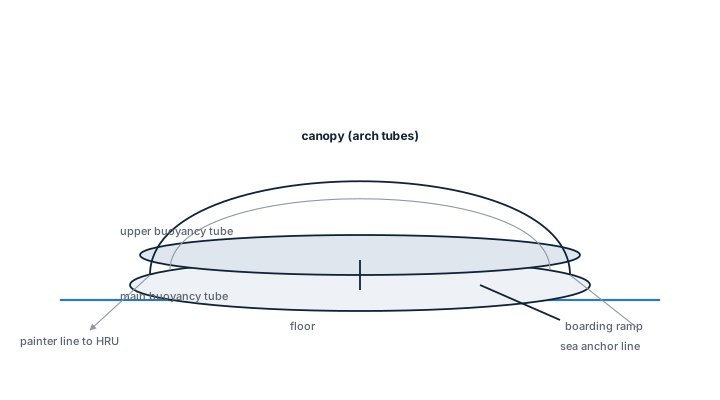
Main Components
Buoyancy chamber and canopy
Two independent, separately inflatable buoyancy tubes support the raft even if one is holed; an insulated double-skin floor and a canopy with reflective tape and a rainwater catchment reduce exposure once survivors are aboard.
Hydrostatic release unit (HRU)
Where the raft is stowed for float-free launch, the HRU releases it automatically at a shallow depth if the ship sinks before the raft can be launched manually, without needing anyone to act.
Painter line and inflation system
A CO2/N2 gas bottle inflates the raft when the painter line is pulled to full extension; the same line keeps the raft tethered to the ship, or is designed to part at a set load, so it does not drift away before boarding.
SOLAS A survival pack
Contents typically include rations and fresh water per person, seasickness tablets, a first-aid kit, hand flares, rocket parachute flares, buoyant smoke signals, a radar reflector, a torch, a repair kit for the buoyancy tubes, a bailer, a sea anchor and fishing tackle.
Selection and Sizing
Selection is governed almost entirely by certified capacity and trading area rather than by design choice:
- Rated capacity in persons, matched against the vessel's maximum complement plus the required margin
- Container type: rigid GRP canister for davit or float-free stowage, or valise for smaller craft where weight matters
- Launch method: throw-overboard, davit-launched, or free-fall in combination with the HRU
- Cold-water or thermal protection option for vessels trading in high-latitude or winter waters
Regulations and Class
Life rafts are governed by SOLAS Chapter III and the LSA (Life-Saving Appliances) Code, which set the pack contents, buoyancy, canopy and self-righting requirements. Every raft must be serviced ashore at an approved service station at intervals set by the manufacturer's certificate, commonly annually, with the HRU replaced or tested on its own separate expiry cycle, typically every two years. Class and flag surveys check the service due date stencilled on the container, the hydrostatic release expiry, and correct securing arrangements at each periodic survey; an overdue raft is a detainable deficiency under port state control.
Typical Faults
| Fault | Cause | Consequence |
|---|---|---|
| Overdue service | Poor tracking of service dates across a fleet, missed port call at a service station | Detention under port state control, invalid safety equipment certificate |
| Expired HRU | HRU expiry cycle not aligned with raft service cycle | Raft fails to float free if the ship sinks before manual launch |
| Corroded or seized cradle/lashing | Salt exposure, lack of maintenance on the stowage arrangement | Delayed or failed launch in an emergency |
| Painter line fouled or wrongly secured | Incorrect re-stowage after inspection, deck clutter near the cradle | Raft drifts away unmanned, or fails to inflate |
What to Look for in a Supplier
- Approval certificate matching the flag state and the vessel's LSA Code requirements, not just a generic SOLAS marking
- Network of approved service stations along the vessel's actual trading routes, since a raft cannot legally continue past its service due date
- Correct capacity and cold-water pack option for the trade, agreed before ordering rather than assumed
- Documented HRU compatibility and replacement interval matched to the raft's own service schedule
Log the HRU expiry separately from the raft's own service due date in the planned maintenance system — the two run on different clocks, and a raft with a fresh service stamp can still be sitting on an expired hydrostatic release.