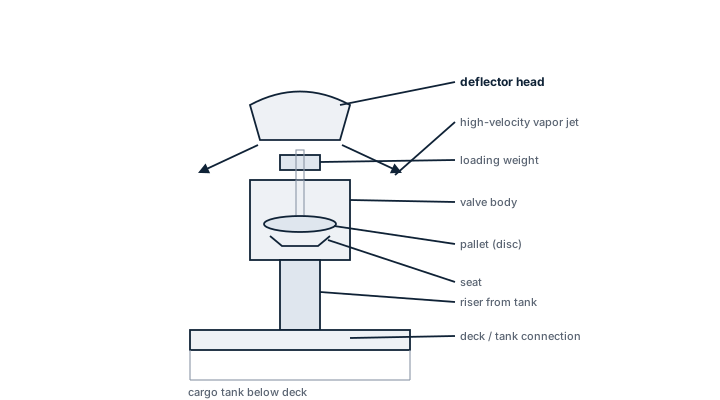
High Velocity Vent Valve
7 manufacturers · 112 models
PROTEGO
38 ✓ 38 verified- Area: Valve Seat Erosion and CorrosionCheck: Visually inspect stainless steel valve seats for signs of erosion, corrosion, pitting, or chemical attack. Check sealing surfaces under magnification (20x) for any visible damage, scratches, or grooves that could compromise the seal.
- Area: Valve Pallet or Diaphragm ConditionCheck: Examine weight-loaded or spring-loaded valve pallets for cracks, permanent deformation, wear patterns, or loss of sealing integrity. For diaphragm-type valves (UB-SF series), check for tears, holes, or loss of elasticity in the FEP diaphragm material.
- Area: Flame Arrester Element Clogging or BlockageCheck: For flame arrester-equipped models (VD-SV-EB, PV-EB, UB-SF series), inspect the FLAMEFILTER® element for deposits, corrosion, or particulate clogging. Pressure drop testing or visual inspection of element surfaces is required; recommend cleaning or replacement if >25% blockage detected.
- Area: Spring Tension Loss (Spring-Loaded Variants)Check: For -F model variants (DZ/T-F, DZ/E-F, DZ/EA-F, DV/ZT-F) with spring loading, verify spring force using calibrated testing equipment. Springs should return to original height without permanent set. Check for corrosion, stress cracks, or fatigue damage on spring surfaces.
- Area: Condensate Drainage System ObstructionCheck: Verify automatic condensate drainage is functioning on all models. Inspect drain holes and pathways for ice blockage, mineral deposits, or organic fouling. Ensure drain tubes are clear and properly positioned; test drainage with small water injection at operating temperature.
Typ-universelle Inspektionspunkte fuer PV Valves & Vent Systems (verifiziert, 2026-06).
- Area: Valve Seat Erosion and CorrosionCheck: Visually inspect stainless steel valve seats for signs of erosion, corrosion, pitting, or chemical attack. Check sealing surfaces under magnification (20x) for any visible damage, scratches, or grooves that could compromise the seal.
- Area: Valve Pallet or Diaphragm ConditionCheck: Examine weight-loaded or spring-loaded valve pallets for cracks, permanent deformation, wear patterns, or loss of sealing integrity. For diaphragm-type valves (UB-SF series), check for tears, holes, or loss of elasticity in the FEP diaphragm material.
- Area: Flame Arrester Element Clogging or BlockageCheck: For flame arrester-equipped models (VD-SV-EB, PV-EB, UB-SF series), inspect the FLAMEFILTER® element for deposits, corrosion, or particulate clogging. Pressure drop testing or visual inspection of element surfaces is required; recommend cleaning or replacement if >25% blockage detected.
- Area: Spring Tension Loss (Spring-Loaded Variants)Check: For -F model variants (DZ/T-F, DZ/E-F, DZ/EA-F, DV/ZT-F) with spring loading, verify spring force using calibrated testing equipment. Springs should return to original height without permanent set. Check for corrosion, stress cracks, or fatigue damage on spring surfaces.
- Area: Condensate Drainage System ObstructionCheck: Verify automatic condensate drainage is functioning on all models. Inspect drain holes and pathways for ice blockage, mineral deposits, or organic fouling. Ensure drain tubes are clear and properly positioned; test drainage with small water injection at operating temperature.
Typ-universelle Inspektionspunkte fuer PV Valves & Vent Systems (verifiziert, 2026-06).
- Area: Valve Seat Erosion and CorrosionCheck: Visually inspect stainless steel valve seats for signs of erosion, corrosion, pitting, or chemical attack. Check sealing surfaces under magnification (20x) for any visible damage, scratches, or grooves that could compromise the seal.
- Area: Valve Pallet or Diaphragm ConditionCheck: Examine weight-loaded or spring-loaded valve pallets for cracks, permanent deformation, wear patterns, or loss of sealing integrity. For diaphragm-type valves (UB-SF series), check for tears, holes, or loss of elasticity in the FEP diaphragm material.
- Area: Flame Arrester Element Clogging or BlockageCheck: For flame arrester-equipped models (VD-SV-EB, PV-EB, UB-SF series), inspect the FLAMEFILTER® element for deposits, corrosion, or particulate clogging. Pressure drop testing or visual inspection of element surfaces is required; recommend cleaning or replacement if >25% blockage detected.
- Area: Spring Tension Loss (Spring-Loaded Variants)Check: For -F model variants (DZ/T-F, DZ/E-F, DZ/EA-F, DV/ZT-F) with spring loading, verify spring force using calibrated testing equipment. Springs should return to original height without permanent set. Check for corrosion, stress cracks, or fatigue damage on spring surfaces.
- Area: Condensate Drainage System ObstructionCheck: Verify automatic condensate drainage is functioning on all models. Inspect drain holes and pathways for ice blockage, mineral deposits, or organic fouling. Ensure drain tubes are clear and properly positioned; test drainage with small water injection at operating temperature.
Typ-universelle Inspektionspunkte fuer PV Valves & Vent Systems (verifiziert, 2026-06).
- Area: Valve Seat Erosion and CorrosionCheck: Visually inspect stainless steel valve seats for signs of erosion, corrosion, pitting, or chemical attack. Check sealing surfaces under magnification (20x) for any visible damage, scratches, or grooves that could compromise the seal.
- Area: Valve Pallet or Diaphragm ConditionCheck: Examine weight-loaded or spring-loaded valve pallets for cracks, permanent deformation, wear patterns, or loss of sealing integrity. For diaphragm-type valves (UB-SF series), check for tears, holes, or loss of elasticity in the FEP diaphragm material.
- Area: Flame Arrester Element Clogging or BlockageCheck: For flame arrester-equipped models (VD-SV-EB, PV-EB, UB-SF series), inspect the FLAMEFILTER® element for deposits, corrosion, or particulate clogging. Pressure drop testing or visual inspection of element surfaces is required; recommend cleaning or replacement if >25% blockage detected.
- Area: Spring Tension Loss (Spring-Loaded Variants)Check: For -F model variants (DZ/T-F, DZ/E-F, DZ/EA-F, DV/ZT-F) with spring loading, verify spring force using calibrated testing equipment. Springs should return to original height without permanent set. Check for corrosion, stress cracks, or fatigue damage on spring surfaces.
- Area: Condensate Drainage System ObstructionCheck: Verify automatic condensate drainage is functioning on all models. Inspect drain holes and pathways for ice blockage, mineral deposits, or organic fouling. Ensure drain tubes are clear and properly positioned; test drainage with small water injection at operating temperature.
Typ-universelle Inspektionspunkte fuer PV Valves & Vent Systems (verifiziert, 2026-06).
- Area: Valve Seat Erosion and CorrosionCheck: Visually inspect stainless steel valve seats for signs of erosion, corrosion, pitting, or chemical attack. Check sealing surfaces under magnification (20x) for any visible damage, scratches, or grooves that could compromise the seal.
- Area: Valve Pallet or Diaphragm ConditionCheck: Examine weight-loaded or spring-loaded valve pallets for cracks, permanent deformation, wear patterns, or loss of sealing integrity. For diaphragm-type valves (UB-SF series), check for tears, holes, or loss of elasticity in the FEP diaphragm material.
- Area: Flame Arrester Element Clogging or BlockageCheck: For flame arrester-equipped models (VD-SV-EB, PV-EB, UB-SF series), inspect the FLAMEFILTER® element for deposits, corrosion, or particulate clogging. Pressure drop testing or visual inspection of element surfaces is required; recommend cleaning or replacement if >25% blockage detected.
- Area: Spring Tension Loss (Spring-Loaded Variants)Check: For -F model variants (DZ/T-F, DZ/E-F, DZ/EA-F, DV/ZT-F) with spring loading, verify spring force using calibrated testing equipment. Springs should return to original height without permanent set. Check for corrosion, stress cracks, or fatigue damage on spring surfaces.
- Area: Condensate Drainage System ObstructionCheck: Verify automatic condensate drainage is functioning on all models. Inspect drain holes and pathways for ice blockage, mineral deposits, or organic fouling. Ensure drain tubes are clear and properly positioned; test drainage with small water injection at operating temperature.
Typ-universelle Inspektionspunkte fuer PV Valves & Vent Systems (verifiziert, 2026-06).
- Area: Valve Seat Erosion and CorrosionCheck: Visually inspect stainless steel valve seats for signs of erosion, corrosion, pitting, or chemical attack. Check sealing surfaces under magnification (20x) for any visible damage, scratches, or grooves that could compromise the seal.
- Area: Valve Pallet or Diaphragm ConditionCheck: Examine weight-loaded or spring-loaded valve pallets for cracks, permanent deformation, wear patterns, or loss of sealing integrity. For diaphragm-type valves (UB-SF series), check for tears, holes, or loss of elasticity in the FEP diaphragm material.
- Area: Flame Arrester Element Clogging or BlockageCheck: For flame arrester-equipped models (VD-SV-EB, PV-EB, UB-SF series), inspect the FLAMEFILTER® element for deposits, corrosion, or particulate clogging. Pressure drop testing or visual inspection of element surfaces is required; recommend cleaning or replacement if >25% blockage detected.
- Area: Spring Tension Loss (Spring-Loaded Variants)Check: For -F model variants (DZ/T-F, DZ/E-F, DZ/EA-F, DV/ZT-F) with spring loading, verify spring force using calibrated testing equipment. Springs should return to original height without permanent set. Check for corrosion, stress cracks, or fatigue damage on spring surfaces.
- Area: Condensate Drainage System ObstructionCheck: Verify automatic condensate drainage is functioning on all models. Inspect drain holes and pathways for ice blockage, mineral deposits, or organic fouling. Ensure drain tubes are clear and properly positioned; test drainage with small water injection at operating temperature.
Typ-universelle Inspektionspunkte fuer PV Valves & Vent Systems (verifiziert, 2026-06).
- Area: Valve Seat Erosion and CorrosionCheck: Visually inspect stainless steel valve seats for signs of erosion, corrosion, pitting, or chemical attack. Check sealing surfaces under magnification (20x) for any visible damage, scratches, or grooves that could compromise the seal.
- Area: Valve Pallet or Diaphragm ConditionCheck: Examine weight-loaded or spring-loaded valve pallets for cracks, permanent deformation, wear patterns, or loss of sealing integrity. For diaphragm-type valves (UB-SF series), check for tears, holes, or loss of elasticity in the FEP diaphragm material.
- Area: Flame Arrester Element Clogging or BlockageCheck: For flame arrester-equipped models (VD-SV-EB, PV-EB, UB-SF series), inspect the FLAMEFILTER® element for deposits, corrosion, or particulate clogging. Pressure drop testing or visual inspection of element surfaces is required; recommend cleaning or replacement if >25% blockage detected.
- Area: Spring Tension Loss (Spring-Loaded Variants)Check: For -F model variants (DZ/T-F, DZ/E-F, DZ/EA-F, DV/ZT-F) with spring loading, verify spring force using calibrated testing equipment. Springs should return to original height without permanent set. Check for corrosion, stress cracks, or fatigue damage on spring surfaces.
- Area: Condensate Drainage System ObstructionCheck: Verify automatic condensate drainage is functioning on all models. Inspect drain holes and pathways for ice blockage, mineral deposits, or organic fouling. Ensure drain tubes are clear and properly positioned; test drainage with small water injection at operating temperature.
Typ-universelle Inspektionspunkte fuer PV Valves & Vent Systems (verifiziert, 2026-06).
- Area: Valve Seat Erosion and CorrosionCheck: Visually inspect stainless steel valve seats for signs of erosion, corrosion, pitting, or chemical attack. Check sealing surfaces under magnification (20x) for any visible damage, scratches, or grooves that could compromise the seal.
- Area: Valve Pallet or Diaphragm ConditionCheck: Examine weight-loaded or spring-loaded valve pallets for cracks, permanent deformation, wear patterns, or loss of sealing integrity. For diaphragm-type valves (UB-SF series), check for tears, holes, or loss of elasticity in the FEP diaphragm material.
- Area: Flame Arrester Element Clogging or BlockageCheck: For flame arrester-equipped models (VD-SV-EB, PV-EB, UB-SF series), inspect the FLAMEFILTER® element for deposits, corrosion, or particulate clogging. Pressure drop testing or visual inspection of element surfaces is required; recommend cleaning or replacement if >25% blockage detected.
- Area: Spring Tension Loss (Spring-Loaded Variants)Check: For -F model variants (DZ/T-F, DZ/E-F, DZ/EA-F, DV/ZT-F) with spring loading, verify spring force using calibrated testing equipment. Springs should return to original height without permanent set. Check for corrosion, stress cracks, or fatigue damage on spring surfaces.
- Area: Condensate Drainage System ObstructionCheck: Verify automatic condensate drainage is functioning on all models. Inspect drain holes and pathways for ice blockage, mineral deposits, or organic fouling. Ensure drain tubes are clear and properly positioned; test drainage with small water injection at operating temperature.
Typ-universelle Inspektionspunkte fuer PV Valves & Vent Systems (verifiziert, 2026-06).
- Area: Valve Seat Erosion and CorrosionCheck: Visually inspect stainless steel valve seats for signs of erosion, corrosion, pitting, or chemical attack. Check sealing surfaces under magnification (20x) for any visible damage, scratches, or grooves that could compromise the seal.
- Area: Valve Pallet or Diaphragm ConditionCheck: Examine weight-loaded or spring-loaded valve pallets for cracks, permanent deformation, wear patterns, or loss of sealing integrity. For diaphragm-type valves (UB-SF series), check for tears, holes, or loss of elasticity in the FEP diaphragm material.
- Area: Flame Arrester Element Clogging or BlockageCheck: For flame arrester-equipped models (VD-SV-EB, PV-EB, UB-SF series), inspect the FLAMEFILTER® element for deposits, corrosion, or particulate clogging. Pressure drop testing or visual inspection of element surfaces is required; recommend cleaning or replacement if >25% blockage detected.
- Area: Spring Tension Loss (Spring-Loaded Variants)Check: For -F model variants (DZ/T-F, DZ/E-F, DZ/EA-F, DV/ZT-F) with spring loading, verify spring force using calibrated testing equipment. Springs should return to original height without permanent set. Check for corrosion, stress cracks, or fatigue damage on spring surfaces.
- Area: Condensate Drainage System ObstructionCheck: Verify automatic condensate drainage is functioning on all models. Inspect drain holes and pathways for ice blockage, mineral deposits, or organic fouling. Ensure drain tubes are clear and properly positioned; test drainage with small water injection at operating temperature.
Typ-universelle Inspektionspunkte fuer PV Valves & Vent Systems (verifiziert, 2026-06).
- Area: Valve Seat Erosion and CorrosionCheck: Visually inspect stainless steel valve seats for signs of erosion, corrosion, pitting, or chemical attack. Check sealing surfaces under magnification (20x) for any visible damage, scratches, or grooves that could compromise the seal.
- Area: Valve Pallet or Diaphragm ConditionCheck: Examine weight-loaded or spring-loaded valve pallets for cracks, permanent deformation, wear patterns, or loss of sealing integrity. For diaphragm-type valves (UB-SF series), check for tears, holes, or loss of elasticity in the FEP diaphragm material.
- Area: Flame Arrester Element Clogging or BlockageCheck: For flame arrester-equipped models (VD-SV-EB, PV-EB, UB-SF series), inspect the FLAMEFILTER® element for deposits, corrosion, or particulate clogging. Pressure drop testing or visual inspection of element surfaces is required; recommend cleaning or replacement if >25% blockage detected.
- Area: Spring Tension Loss (Spring-Loaded Variants)Check: For -F model variants (DZ/T-F, DZ/E-F, DZ/EA-F, DV/ZT-F) with spring loading, verify spring force using calibrated testing equipment. Springs should return to original height without permanent set. Check for corrosion, stress cracks, or fatigue damage on spring surfaces.
- Area: Condensate Drainage System ObstructionCheck: Verify automatic condensate drainage is functioning on all models. Inspect drain holes and pathways for ice blockage, mineral deposits, or organic fouling. Ensure drain tubes are clear and properly positioned; test drainage with small water injection at operating temperature.
Typ-universelle Inspektionspunkte fuer PV Valves & Vent Systems (verifiziert, 2026-06).
- Area: Valve Seat Erosion and CorrosionCheck: Visually inspect stainless steel valve seats for signs of erosion, corrosion, pitting, or chemical attack. Check sealing surfaces under magnification (20x) for any visible damage, scratches, or grooves that could compromise the seal.
- Area: Valve Pallet or Diaphragm ConditionCheck: Examine weight-loaded or spring-loaded valve pallets for cracks, permanent deformation, wear patterns, or loss of sealing integrity. For diaphragm-type valves (UB-SF series), check for tears, holes, or loss of elasticity in the FEP diaphragm material.
- Area: Flame Arrester Element Clogging or BlockageCheck: For flame arrester-equipped models (VD-SV-EB, PV-EB, UB-SF series), inspect the FLAMEFILTER® element for deposits, corrosion, or particulate clogging. Pressure drop testing or visual inspection of element surfaces is required; recommend cleaning or replacement if >25% blockage detected.
- Area: Spring Tension Loss (Spring-Loaded Variants)Check: For -F model variants (DZ/T-F, DZ/E-F, DZ/EA-F, DV/ZT-F) with spring loading, verify spring force using calibrated testing equipment. Springs should return to original height without permanent set. Check for corrosion, stress cracks, or fatigue damage on spring surfaces.
- Area: Condensate Drainage System ObstructionCheck: Verify automatic condensate drainage is functioning on all models. Inspect drain holes and pathways for ice blockage, mineral deposits, or organic fouling. Ensure drain tubes are clear and properly positioned; test drainage with small water injection at operating temperature.
Typ-universelle Inspektionspunkte fuer PV Valves & Vent Systems (verifiziert, 2026-06).
- Area: Valve Seat Erosion and CorrosionCheck: Visually inspect stainless steel valve seats for signs of erosion, corrosion, pitting, or chemical attack. Check sealing surfaces under magnification (20x) for any visible damage, scratches, or grooves that could compromise the seal.
- Area: Valve Pallet or Diaphragm ConditionCheck: Examine weight-loaded or spring-loaded valve pallets for cracks, permanent deformation, wear patterns, or loss of sealing integrity. For diaphragm-type valves (UB-SF series), check for tears, holes, or loss of elasticity in the FEP diaphragm material.
- Area: Flame Arrester Element Clogging or BlockageCheck: For flame arrester-equipped models (VD-SV-EB, PV-EB, UB-SF series), inspect the FLAMEFILTER® element for deposits, corrosion, or particulate clogging. Pressure drop testing or visual inspection of element surfaces is required; recommend cleaning or replacement if >25% blockage detected.
- Area: Spring Tension Loss (Spring-Loaded Variants)Check: For -F model variants (DZ/T-F, DZ/E-F, DZ/EA-F, DV/ZT-F) with spring loading, verify spring force using calibrated testing equipment. Springs should return to original height without permanent set. Check for corrosion, stress cracks, or fatigue damage on spring surfaces.
- Area: Condensate Drainage System ObstructionCheck: Verify automatic condensate drainage is functioning on all models. Inspect drain holes and pathways for ice blockage, mineral deposits, or organic fouling. Ensure drain tubes are clear and properly positioned; test drainage with small water injection at operating temperature.
Typ-universelle Inspektionspunkte fuer PV Valves & Vent Systems (verifiziert, 2026-06).
- Area: Valve Seat Erosion and CorrosionCheck: Visually inspect stainless steel valve seats for signs of erosion, corrosion, pitting, or chemical attack. Check sealing surfaces under magnification (20x) for any visible damage, scratches, or grooves that could compromise the seal.
- Area: Valve Pallet or Diaphragm ConditionCheck: Examine weight-loaded or spring-loaded valve pallets for cracks, permanent deformation, wear patterns, or loss of sealing integrity. For diaphragm-type valves (UB-SF series), check for tears, holes, or loss of elasticity in the FEP diaphragm material.
- Area: Flame Arrester Element Clogging or BlockageCheck: For flame arrester-equipped models (VD-SV-EB, PV-EB, UB-SF series), inspect the FLAMEFILTER® element for deposits, corrosion, or particulate clogging. Pressure drop testing or visual inspection of element surfaces is required; recommend cleaning or replacement if >25% blockage detected.
- Area: Spring Tension Loss (Spring-Loaded Variants)Check: For -F model variants (DZ/T-F, DZ/E-F, DZ/EA-F, DV/ZT-F) with spring loading, verify spring force using calibrated testing equipment. Springs should return to original height without permanent set. Check for corrosion, stress cracks, or fatigue damage on spring surfaces.
- Area: Condensate Drainage System ObstructionCheck: Verify automatic condensate drainage is functioning on all models. Inspect drain holes and pathways for ice blockage, mineral deposits, or organic fouling. Ensure drain tubes are clear and properly positioned; test drainage with small water injection at operating temperature.
Typ-universelle Inspektionspunkte fuer PV Valves & Vent Systems (verifiziert, 2026-06).
- Area: Valve Seat Erosion and CorrosionCheck: Visually inspect stainless steel valve seats for signs of erosion, corrosion, pitting, or chemical attack. Check sealing surfaces under magnification (20x) for any visible damage, scratches, or grooves that could compromise the seal.
- Area: Valve Pallet or Diaphragm ConditionCheck: Examine weight-loaded or spring-loaded valve pallets for cracks, permanent deformation, wear patterns, or loss of sealing integrity. For diaphragm-type valves (UB-SF series), check for tears, holes, or loss of elasticity in the FEP diaphragm material.
- Area: Flame Arrester Element Clogging or BlockageCheck: For flame arrester-equipped models (VD-SV-EB, PV-EB, UB-SF series), inspect the FLAMEFILTER® element for deposits, corrosion, or particulate clogging. Pressure drop testing or visual inspection of element surfaces is required; recommend cleaning or replacement if >25% blockage detected.
- Area: Spring Tension Loss (Spring-Loaded Variants)Check: For -F model variants (DZ/T-F, DZ/E-F, DZ/EA-F, DV/ZT-F) with spring loading, verify spring force using calibrated testing equipment. Springs should return to original height without permanent set. Check for corrosion, stress cracks, or fatigue damage on spring surfaces.
- Area: Condensate Drainage System ObstructionCheck: Verify automatic condensate drainage is functioning on all models. Inspect drain holes and pathways for ice blockage, mineral deposits, or organic fouling. Ensure drain tubes are clear and properly positioned; test drainage with small water injection at operating temperature.
Typ-universelle Inspektionspunkte fuer PV Valves & Vent Systems (verifiziert, 2026-06).
- Area: Valve Seat Erosion and CorrosionCheck: Visually inspect stainless steel valve seats for signs of erosion, corrosion, pitting, or chemical attack. Check sealing surfaces under magnification (20x) for any visible damage, scratches, or grooves that could compromise the seal.
- Area: Valve Pallet or Diaphragm ConditionCheck: Examine weight-loaded or spring-loaded valve pallets for cracks, permanent deformation, wear patterns, or loss of sealing integrity. For diaphragm-type valves (UB-SF series), check for tears, holes, or loss of elasticity in the FEP diaphragm material.
- Area: Flame Arrester Element Clogging or BlockageCheck: For flame arrester-equipped models (VD-SV-EB, PV-EB, UB-SF series), inspect the FLAMEFILTER® element for deposits, corrosion, or particulate clogging. Pressure drop testing or visual inspection of element surfaces is required; recommend cleaning or replacement if >25% blockage detected.
- Area: Spring Tension Loss (Spring-Loaded Variants)Check: For -F model variants (DZ/T-F, DZ/E-F, DZ/EA-F, DV/ZT-F) with spring loading, verify spring force using calibrated testing equipment. Springs should return to original height without permanent set. Check for corrosion, stress cracks, or fatigue damage on spring surfaces.
- Area: Condensate Drainage System ObstructionCheck: Verify automatic condensate drainage is functioning on all models. Inspect drain holes and pathways for ice blockage, mineral deposits, or organic fouling. Ensure drain tubes are clear and properly positioned; test drainage with small water injection at operating temperature.
Typ-universelle Inspektionspunkte fuer PV Valves & Vent Systems (verifiziert, 2026-06).
- Area: Valve Seat Erosion and CorrosionCheck: Visually inspect stainless steel valve seats for signs of erosion, corrosion, pitting, or chemical attack. Check sealing surfaces under magnification (20x) for any visible damage, scratches, or grooves that could compromise the seal.
- Area: Valve Pallet or Diaphragm ConditionCheck: Examine weight-loaded or spring-loaded valve pallets for cracks, permanent deformation, wear patterns, or loss of sealing integrity. For diaphragm-type valves (UB-SF series), check for tears, holes, or loss of elasticity in the FEP diaphragm material.
- Area: Flame Arrester Element Clogging or BlockageCheck: For flame arrester-equipped models (VD-SV-EB, PV-EB, UB-SF series), inspect the FLAMEFILTER® element for deposits, corrosion, or particulate clogging. Pressure drop testing or visual inspection of element surfaces is required; recommend cleaning or replacement if >25% blockage detected.
- Area: Spring Tension Loss (Spring-Loaded Variants)Check: For -F model variants (DZ/T-F, DZ/E-F, DZ/EA-F, DV/ZT-F) with spring loading, verify spring force using calibrated testing equipment. Springs should return to original height without permanent set. Check for corrosion, stress cracks, or fatigue damage on spring surfaces.
- Area: Condensate Drainage System ObstructionCheck: Verify automatic condensate drainage is functioning on all models. Inspect drain holes and pathways for ice blockage, mineral deposits, or organic fouling. Ensure drain tubes are clear and properly positioned; test drainage with small water injection at operating temperature.
Typ-universelle Inspektionspunkte fuer PV Valves & Vent Systems (verifiziert, 2026-06).
- Area: Valve Seat Erosion and CorrosionCheck: Visually inspect stainless steel valve seats for signs of erosion, corrosion, pitting, or chemical attack. Check sealing surfaces under magnification (20x) for any visible damage, scratches, or grooves that could compromise the seal.
- Area: Valve Pallet or Diaphragm ConditionCheck: Examine weight-loaded or spring-loaded valve pallets for cracks, permanent deformation, wear patterns, or loss of sealing integrity. For diaphragm-type valves (UB-SF series), check for tears, holes, or loss of elasticity in the FEP diaphragm material.
- Area: Flame Arrester Element Clogging or BlockageCheck: For flame arrester-equipped models (VD-SV-EB, PV-EB, UB-SF series), inspect the FLAMEFILTER® element for deposits, corrosion, or particulate clogging. Pressure drop testing or visual inspection of element surfaces is required; recommend cleaning or replacement if >25% blockage detected.
- Area: Spring Tension Loss (Spring-Loaded Variants)Check: For -F model variants (DZ/T-F, DZ/E-F, DZ/EA-F, DV/ZT-F) with spring loading, verify spring force using calibrated testing equipment. Springs should return to original height without permanent set. Check for corrosion, stress cracks, or fatigue damage on spring surfaces.
- Area: Condensate Drainage System ObstructionCheck: Verify automatic condensate drainage is functioning on all models. Inspect drain holes and pathways for ice blockage, mineral deposits, or organic fouling. Ensure drain tubes are clear and properly positioned; test drainage with small water injection at operating temperature.
Typ-universelle Inspektionspunkte fuer PV Valves & Vent Systems (verifiziert, 2026-06).
- Area: Valve Seat Erosion and CorrosionCheck: Visually inspect stainless steel valve seats for signs of erosion, corrosion, pitting, or chemical attack. Check sealing surfaces under magnification (20x) for any visible damage, scratches, or grooves that could compromise the seal.
- Area: Valve Pallet or Diaphragm ConditionCheck: Examine weight-loaded or spring-loaded valve pallets for cracks, permanent deformation, wear patterns, or loss of sealing integrity. For diaphragm-type valves (UB-SF series), check for tears, holes, or loss of elasticity in the FEP diaphragm material.
- Area: Flame Arrester Element Clogging or BlockageCheck: For flame arrester-equipped models (VD-SV-EB, PV-EB, UB-SF series), inspect the FLAMEFILTER® element for deposits, corrosion, or particulate clogging. Pressure drop testing or visual inspection of element surfaces is required; recommend cleaning or replacement if >25% blockage detected.
- Area: Spring Tension Loss (Spring-Loaded Variants)Check: For -F model variants (DZ/T-F, DZ/E-F, DZ/EA-F, DV/ZT-F) with spring loading, verify spring force using calibrated testing equipment. Springs should return to original height without permanent set. Check for corrosion, stress cracks, or fatigue damage on spring surfaces.
- Area: Condensate Drainage System ObstructionCheck: Verify automatic condensate drainage is functioning on all models. Inspect drain holes and pathways for ice blockage, mineral deposits, or organic fouling. Ensure drain tubes are clear and properly positioned; test drainage with small water injection at operating temperature.
Typ-universelle Inspektionspunkte fuer PV Valves & Vent Systems (verifiziert, 2026-06).
- Area: Valve Seat Erosion and CorrosionCheck: Visually inspect stainless steel valve seats for signs of erosion, corrosion, pitting, or chemical attack. Check sealing surfaces under magnification (20x) for any visible damage, scratches, or grooves that could compromise the seal.
- Area: Valve Pallet or Diaphragm ConditionCheck: Examine weight-loaded or spring-loaded valve pallets for cracks, permanent deformation, wear patterns, or loss of sealing integrity. For diaphragm-type valves (UB-SF series), check for tears, holes, or loss of elasticity in the FEP diaphragm material.
- Area: Flame Arrester Element Clogging or BlockageCheck: For flame arrester-equipped models (VD-SV-EB, PV-EB, UB-SF series), inspect the FLAMEFILTER® element for deposits, corrosion, or particulate clogging. Pressure drop testing or visual inspection of element surfaces is required; recommend cleaning or replacement if >25% blockage detected.
- Area: Spring Tension Loss (Spring-Loaded Variants)Check: For -F model variants (DZ/T-F, DZ/E-F, DZ/EA-F, DV/ZT-F) with spring loading, verify spring force using calibrated testing equipment. Springs should return to original height without permanent set. Check for corrosion, stress cracks, or fatigue damage on spring surfaces.
- Area: Condensate Drainage System ObstructionCheck: Verify automatic condensate drainage is functioning on all models. Inspect drain holes and pathways for ice blockage, mineral deposits, or organic fouling. Ensure drain tubes are clear and properly positioned; test drainage with small water injection at operating temperature.
Typ-universelle Inspektionspunkte fuer PV Valves & Vent Systems (verifiziert, 2026-06).
- Area: Valve Seat Erosion and CorrosionCheck: Visually inspect stainless steel valve seats for signs of erosion, corrosion, pitting, or chemical attack. Check sealing surfaces under magnification (20x) for any visible damage, scratches, or grooves that could compromise the seal.
- Area: Valve Pallet or Diaphragm ConditionCheck: Examine weight-loaded or spring-loaded valve pallets for cracks, permanent deformation, wear patterns, or loss of sealing integrity. For diaphragm-type valves (UB-SF series), check for tears, holes, or loss of elasticity in the FEP diaphragm material.
- Area: Flame Arrester Element Clogging or BlockageCheck: For flame arrester-equipped models (VD-SV-EB, PV-EB, UB-SF series), inspect the FLAMEFILTER® element for deposits, corrosion, or particulate clogging. Pressure drop testing or visual inspection of element surfaces is required; recommend cleaning or replacement if >25% blockage detected.
- Area: Spring Tension Loss (Spring-Loaded Variants)Check: For -F model variants (DZ/T-F, DZ/E-F, DZ/EA-F, DV/ZT-F) with spring loading, verify spring force using calibrated testing equipment. Springs should return to original height without permanent set. Check for corrosion, stress cracks, or fatigue damage on spring surfaces.
- Area: Condensate Drainage System ObstructionCheck: Verify automatic condensate drainage is functioning on all models. Inspect drain holes and pathways for ice blockage, mineral deposits, or organic fouling. Ensure drain tubes are clear and properly positioned; test drainage with small water injection at operating temperature.
Typ-universelle Inspektionspunkte fuer PV Valves & Vent Systems (verifiziert, 2026-06).
- Area: Valve Seat Erosion and CorrosionCheck: Visually inspect stainless steel valve seats for signs of erosion, corrosion, pitting, or chemical attack. Check sealing surfaces under magnification (20x) for any visible damage, scratches, or grooves that could compromise the seal.
- Area: Valve Pallet or Diaphragm ConditionCheck: Examine weight-loaded or spring-loaded valve pallets for cracks, permanent deformation, wear patterns, or loss of sealing integrity. For diaphragm-type valves (UB-SF series), check for tears, holes, or loss of elasticity in the FEP diaphragm material.
- Area: Flame Arrester Element Clogging or BlockageCheck: For flame arrester-equipped models (VD-SV-EB, PV-EB, UB-SF series), inspect the FLAMEFILTER® element for deposits, corrosion, or particulate clogging. Pressure drop testing or visual inspection of element surfaces is required; recommend cleaning or replacement if >25% blockage detected.
- Area: Spring Tension Loss (Spring-Loaded Variants)Check: For -F model variants (DZ/T-F, DZ/E-F, DZ/EA-F, DV/ZT-F) with spring loading, verify spring force using calibrated testing equipment. Springs should return to original height without permanent set. Check for corrosion, stress cracks, or fatigue damage on spring surfaces.
- Area: Condensate Drainage System ObstructionCheck: Verify automatic condensate drainage is functioning on all models. Inspect drain holes and pathways for ice blockage, mineral deposits, or organic fouling. Ensure drain tubes are clear and properly positioned; test drainage with small water injection at operating temperature.
Typ-universelle Inspektionspunkte fuer PV Valves & Vent Systems (verifiziert, 2026-06).
- Area: Valve Seat Erosion and CorrosionCheck: Visually inspect stainless steel valve seats for signs of erosion, corrosion, pitting, or chemical attack. Check sealing surfaces under magnification (20x) for any visible damage, scratches, or grooves that could compromise the seal.
- Area: Valve Pallet or Diaphragm ConditionCheck: Examine weight-loaded or spring-loaded valve pallets for cracks, permanent deformation, wear patterns, or loss of sealing integrity. For diaphragm-type valves (UB-SF series), check for tears, holes, or loss of elasticity in the FEP diaphragm material.
- Area: Flame Arrester Element Clogging or BlockageCheck: For flame arrester-equipped models (VD-SV-EB, PV-EB, UB-SF series), inspect the FLAMEFILTER® element for deposits, corrosion, or particulate clogging. Pressure drop testing or visual inspection of element surfaces is required; recommend cleaning or replacement if >25% blockage detected.
- Area: Spring Tension Loss (Spring-Loaded Variants)Check: For -F model variants (DZ/T-F, DZ/E-F, DZ/EA-F, DV/ZT-F) with spring loading, verify spring force using calibrated testing equipment. Springs should return to original height without permanent set. Check for corrosion, stress cracks, or fatigue damage on spring surfaces.
- Area: Condensate Drainage System ObstructionCheck: Verify automatic condensate drainage is functioning on all models. Inspect drain holes and pathways for ice blockage, mineral deposits, or organic fouling. Ensure drain tubes are clear and properly positioned; test drainage with small water injection at operating temperature.
Typ-universelle Inspektionspunkte fuer PV Valves & Vent Systems (verifiziert, 2026-06).
- Area: Valve Seat Erosion and CorrosionCheck: Visually inspect stainless steel valve seats for signs of erosion, corrosion, pitting, or chemical attack. Check sealing surfaces under magnification (20x) for any visible damage, scratches, or grooves that could compromise the seal.
- Area: Valve Pallet or Diaphragm ConditionCheck: Examine weight-loaded or spring-loaded valve pallets for cracks, permanent deformation, wear patterns, or loss of sealing integrity. For diaphragm-type valves (UB-SF series), check for tears, holes, or loss of elasticity in the FEP diaphragm material.
- Area: Flame Arrester Element Clogging or BlockageCheck: For flame arrester-equipped models (VD-SV-EB, PV-EB, UB-SF series), inspect the FLAMEFILTER® element for deposits, corrosion, or particulate clogging. Pressure drop testing or visual inspection of element surfaces is required; recommend cleaning or replacement if >25% blockage detected.
- Area: Spring Tension Loss (Spring-Loaded Variants)Check: For -F model variants (DZ/T-F, DZ/E-F, DZ/EA-F, DV/ZT-F) with spring loading, verify spring force using calibrated testing equipment. Springs should return to original height without permanent set. Check for corrosion, stress cracks, or fatigue damage on spring surfaces.
- Area: Condensate Drainage System ObstructionCheck: Verify automatic condensate drainage is functioning on all models. Inspect drain holes and pathways for ice blockage, mineral deposits, or organic fouling. Ensure drain tubes are clear and properly positioned; test drainage with small water injection at operating temperature.
Typ-universelle Inspektionspunkte fuer PV Valves & Vent Systems (verifiziert, 2026-06).
- Area: Valve Seat Erosion and CorrosionCheck: Visually inspect stainless steel valve seats for signs of erosion, corrosion, pitting, or chemical attack. Check sealing surfaces under magnification (20x) for any visible damage, scratches, or grooves that could compromise the seal.
- Area: Valve Pallet or Diaphragm ConditionCheck: Examine weight-loaded or spring-loaded valve pallets for cracks, permanent deformation, wear patterns, or loss of sealing integrity. For diaphragm-type valves (UB-SF series), check for tears, holes, or loss of elasticity in the FEP diaphragm material.
- Area: Flame Arrester Element Clogging or BlockageCheck: For flame arrester-equipped models (VD-SV-EB, PV-EB, UB-SF series), inspect the FLAMEFILTER® element for deposits, corrosion, or particulate clogging. Pressure drop testing or visual inspection of element surfaces is required; recommend cleaning or replacement if >25% blockage detected.
- Area: Spring Tension Loss (Spring-Loaded Variants)Check: For -F model variants (DZ/T-F, DZ/E-F, DZ/EA-F, DV/ZT-F) with spring loading, verify spring force using calibrated testing equipment. Springs should return to original height without permanent set. Check for corrosion, stress cracks, or fatigue damage on spring surfaces.
- Area: Condensate Drainage System ObstructionCheck: Verify automatic condensate drainage is functioning on all models. Inspect drain holes and pathways for ice blockage, mineral deposits, or organic fouling. Ensure drain tubes are clear and properly positioned; test drainage with small water injection at operating temperature.
Typ-universelle Inspektionspunkte fuer PV Valves & Vent Systems (verifiziert, 2026-06).
- Area: Valve Seat Erosion and CorrosionCheck: Visually inspect stainless steel valve seats for signs of erosion, corrosion, pitting, or chemical attack. Check sealing surfaces under magnification (20x) for any visible damage, scratches, or grooves that could compromise the seal.
- Area: Valve Pallet or Diaphragm ConditionCheck: Examine weight-loaded or spring-loaded valve pallets for cracks, permanent deformation, wear patterns, or loss of sealing integrity. For diaphragm-type valves (UB-SF series), check for tears, holes, or loss of elasticity in the FEP diaphragm material.
- Area: Flame Arrester Element Clogging or BlockageCheck: For flame arrester-equipped models (VD-SV-EB, PV-EB, UB-SF series), inspect the FLAMEFILTER® element for deposits, corrosion, or particulate clogging. Pressure drop testing or visual inspection of element surfaces is required; recommend cleaning or replacement if >25% blockage detected.
- Area: Spring Tension Loss (Spring-Loaded Variants)Check: For -F model variants (DZ/T-F, DZ/E-F, DZ/EA-F, DV/ZT-F) with spring loading, verify spring force using calibrated testing equipment. Springs should return to original height without permanent set. Check for corrosion, stress cracks, or fatigue damage on spring surfaces.
- Area: Condensate Drainage System ObstructionCheck: Verify automatic condensate drainage is functioning on all models. Inspect drain holes and pathways for ice blockage, mineral deposits, or organic fouling. Ensure drain tubes are clear and properly positioned; test drainage with small water injection at operating temperature.
Typ-universelle Inspektionspunkte fuer PV Valves & Vent Systems (verifiziert, 2026-06).
- Area: Valve Seat Erosion and CorrosionCheck: Visually inspect stainless steel valve seats for signs of erosion, corrosion, pitting, or chemical attack. Check sealing surfaces under magnification (20x) for any visible damage, scratches, or grooves that could compromise the seal.
- Area: Valve Pallet or Diaphragm ConditionCheck: Examine weight-loaded or spring-loaded valve pallets for cracks, permanent deformation, wear patterns, or loss of sealing integrity. For diaphragm-type valves (UB-SF series), check for tears, holes, or loss of elasticity in the FEP diaphragm material.
- Area: Flame Arrester Element Clogging or BlockageCheck: For flame arrester-equipped models (VD-SV-EB, PV-EB, UB-SF series), inspect the FLAMEFILTER® element for deposits, corrosion, or particulate clogging. Pressure drop testing or visual inspection of element surfaces is required; recommend cleaning or replacement if >25% blockage detected.
- Area: Spring Tension Loss (Spring-Loaded Variants)Check: For -F model variants (DZ/T-F, DZ/E-F, DZ/EA-F, DV/ZT-F) with spring loading, verify spring force using calibrated testing equipment. Springs should return to original height without permanent set. Check for corrosion, stress cracks, or fatigue damage on spring surfaces.
- Area: Condensate Drainage System ObstructionCheck: Verify automatic condensate drainage is functioning on all models. Inspect drain holes and pathways for ice blockage, mineral deposits, or organic fouling. Ensure drain tubes are clear and properly positioned; test drainage with small water injection at operating temperature.
Typ-universelle Inspektionspunkte fuer PV Valves & Vent Systems (verifiziert, 2026-06).
- Area: Valve Seat Erosion and CorrosionCheck: Visually inspect stainless steel valve seats for signs of erosion, corrosion, pitting, or chemical attack. Check sealing surfaces under magnification (20x) for any visible damage, scratches, or grooves that could compromise the seal.
- Area: Valve Pallet or Diaphragm ConditionCheck: Examine weight-loaded or spring-loaded valve pallets for cracks, permanent deformation, wear patterns, or loss of sealing integrity. For diaphragm-type valves (UB-SF series), check for tears, holes, or loss of elasticity in the FEP diaphragm material.
- Area: Flame Arrester Element Clogging or BlockageCheck: For flame arrester-equipped models (VD-SV-EB, PV-EB, UB-SF series), inspect the FLAMEFILTER® element for deposits, corrosion, or particulate clogging. Pressure drop testing or visual inspection of element surfaces is required; recommend cleaning or replacement if >25% blockage detected.
- Area: Spring Tension Loss (Spring-Loaded Variants)Check: For -F model variants (DZ/T-F, DZ/E-F, DZ/EA-F, DV/ZT-F) with spring loading, verify spring force using calibrated testing equipment. Springs should return to original height without permanent set. Check for corrosion, stress cracks, or fatigue damage on spring surfaces.
- Area: Condensate Drainage System ObstructionCheck: Verify automatic condensate drainage is functioning on all models. Inspect drain holes and pathways for ice blockage, mineral deposits, or organic fouling. Ensure drain tubes are clear and properly positioned; test drainage with small water injection at operating temperature.
Typ-universelle Inspektionspunkte fuer PV Valves & Vent Systems (verifiziert, 2026-06).
- Area: Valve Seat Erosion and CorrosionCheck: Visually inspect stainless steel valve seats for signs of erosion, corrosion, pitting, or chemical attack. Check sealing surfaces under magnification (20x) for any visible damage, scratches, or grooves that could compromise the seal.
- Area: Valve Pallet or Diaphragm ConditionCheck: Examine weight-loaded or spring-loaded valve pallets for cracks, permanent deformation, wear patterns, or loss of sealing integrity. For diaphragm-type valves (UB-SF series), check for tears, holes, or loss of elasticity in the FEP diaphragm material.
- Area: Flame Arrester Element Clogging or BlockageCheck: For flame arrester-equipped models (VD-SV-EB, PV-EB, UB-SF series), inspect the FLAMEFILTER® element for deposits, corrosion, or particulate clogging. Pressure drop testing or visual inspection of element surfaces is required; recommend cleaning or replacement if >25% blockage detected.
- Area: Spring Tension Loss (Spring-Loaded Variants)Check: For -F model variants (DZ/T-F, DZ/E-F, DZ/EA-F, DV/ZT-F) with spring loading, verify spring force using calibrated testing equipment. Springs should return to original height without permanent set. Check for corrosion, stress cracks, or fatigue damage on spring surfaces.
- Area: Condensate Drainage System ObstructionCheck: Verify automatic condensate drainage is functioning on all models. Inspect drain holes and pathways for ice blockage, mineral deposits, or organic fouling. Ensure drain tubes are clear and properly positioned; test drainage with small water injection at operating temperature.
Typ-universelle Inspektionspunkte fuer PV Valves & Vent Systems (verifiziert, 2026-06).
- Area: Valve Seat Erosion and CorrosionCheck: Visually inspect stainless steel valve seats for signs of erosion, corrosion, pitting, or chemical attack. Check sealing surfaces under magnification (20x) for any visible damage, scratches, or grooves that could compromise the seal.
- Area: Valve Pallet or Diaphragm ConditionCheck: Examine weight-loaded or spring-loaded valve pallets for cracks, permanent deformation, wear patterns, or loss of sealing integrity. For diaphragm-type valves (UB-SF series), check for tears, holes, or loss of elasticity in the FEP diaphragm material.
- Area: Flame Arrester Element Clogging or BlockageCheck: For flame arrester-equipped models (VD-SV-EB, PV-EB, UB-SF series), inspect the FLAMEFILTER® element for deposits, corrosion, or particulate clogging. Pressure drop testing or visual inspection of element surfaces is required; recommend cleaning or replacement if >25% blockage detected.
- Area: Spring Tension Loss (Spring-Loaded Variants)Check: For -F model variants (DZ/T-F, DZ/E-F, DZ/EA-F, DV/ZT-F) with spring loading, verify spring force using calibrated testing equipment. Springs should return to original height without permanent set. Check for corrosion, stress cracks, or fatigue damage on spring surfaces.
- Area: Condensate Drainage System ObstructionCheck: Verify automatic condensate drainage is functioning on all models. Inspect drain holes and pathways for ice blockage, mineral deposits, or organic fouling. Ensure drain tubes are clear and properly positioned; test drainage with small water injection at operating temperature.
Typ-universelle Inspektionspunkte fuer PV Valves & Vent Systems (verifiziert, 2026-06).
- Area: Valve Seat Erosion and CorrosionCheck: Visually inspect stainless steel valve seats for signs of erosion, corrosion, pitting, or chemical attack. Check sealing surfaces under magnification (20x) for any visible damage, scratches, or grooves that could compromise the seal.
- Area: Valve Pallet or Diaphragm ConditionCheck: Examine weight-loaded or spring-loaded valve pallets for cracks, permanent deformation, wear patterns, or loss of sealing integrity. For diaphragm-type valves (UB-SF series), check for tears, holes, or loss of elasticity in the FEP diaphragm material.
- Area: Flame Arrester Element Clogging or BlockageCheck: For flame arrester-equipped models (VD-SV-EB, PV-EB, UB-SF series), inspect the FLAMEFILTER® element for deposits, corrosion, or particulate clogging. Pressure drop testing or visual inspection of element surfaces is required; recommend cleaning or replacement if >25% blockage detected.
- Area: Spring Tension Loss (Spring-Loaded Variants)Check: For -F model variants (DZ/T-F, DZ/E-F, DZ/EA-F, DV/ZT-F) with spring loading, verify spring force using calibrated testing equipment. Springs should return to original height without permanent set. Check for corrosion, stress cracks, or fatigue damage on spring surfaces.
- Area: Condensate Drainage System ObstructionCheck: Verify automatic condensate drainage is functioning on all models. Inspect drain holes and pathways for ice blockage, mineral deposits, or organic fouling. Ensure drain tubes are clear and properly positioned; test drainage with small water injection at operating temperature.
Typ-universelle Inspektionspunkte fuer PV Valves & Vent Systems (verifiziert, 2026-06).
- Area: Valve Seat Erosion and CorrosionCheck: Visually inspect stainless steel valve seats for signs of erosion, corrosion, pitting, or chemical attack. Check sealing surfaces under magnification (20x) for any visible damage, scratches, or grooves that could compromise the seal.
- Area: Valve Pallet or Diaphragm ConditionCheck: Examine weight-loaded or spring-loaded valve pallets for cracks, permanent deformation, wear patterns, or loss of sealing integrity. For diaphragm-type valves (UB-SF series), check for tears, holes, or loss of elasticity in the FEP diaphragm material.
- Area: Flame Arrester Element Clogging or BlockageCheck: For flame arrester-equipped models (VD-SV-EB, PV-EB, UB-SF series), inspect the FLAMEFILTER® element for deposits, corrosion, or particulate clogging. Pressure drop testing or visual inspection of element surfaces is required; recommend cleaning or replacement if >25% blockage detected.
- Area: Spring Tension Loss (Spring-Loaded Variants)Check: For -F model variants (DZ/T-F, DZ/E-F, DZ/EA-F, DV/ZT-F) with spring loading, verify spring force using calibrated testing equipment. Springs should return to original height without permanent set. Check for corrosion, stress cracks, or fatigue damage on spring surfaces.
- Area: Condensate Drainage System ObstructionCheck: Verify automatic condensate drainage is functioning on all models. Inspect drain holes and pathways for ice blockage, mineral deposits, or organic fouling. Ensure drain tubes are clear and properly positioned; test drainage with small water injection at operating temperature.
Typ-universelle Inspektionspunkte fuer PV Valves & Vent Systems (verifiziert, 2026-06).
- Area: Valve Seat Erosion and CorrosionCheck: Visually inspect stainless steel valve seats for signs of erosion, corrosion, pitting, or chemical attack. Check sealing surfaces under magnification (20x) for any visible damage, scratches, or grooves that could compromise the seal.
- Area: Valve Pallet or Diaphragm ConditionCheck: Examine weight-loaded or spring-loaded valve pallets for cracks, permanent deformation, wear patterns, or loss of sealing integrity. For diaphragm-type valves (UB-SF series), check for tears, holes, or loss of elasticity in the FEP diaphragm material.
- Area: Flame Arrester Element Clogging or BlockageCheck: For flame arrester-equipped models (VD-SV-EB, PV-EB, UB-SF series), inspect the FLAMEFILTER® element for deposits, corrosion, or particulate clogging. Pressure drop testing or visual inspection of element surfaces is required; recommend cleaning or replacement if >25% blockage detected.
- Area: Spring Tension Loss (Spring-Loaded Variants)Check: For -F model variants (DZ/T-F, DZ/E-F, DZ/EA-F, DV/ZT-F) with spring loading, verify spring force using calibrated testing equipment. Springs should return to original height without permanent set. Check for corrosion, stress cracks, or fatigue damage on spring surfaces.
- Area: Condensate Drainage System ObstructionCheck: Verify automatic condensate drainage is functioning on all models. Inspect drain holes and pathways for ice blockage, mineral deposits, or organic fouling. Ensure drain tubes are clear and properly positioned; test drainage with small water injection at operating temperature.
Typ-universelle Inspektionspunkte fuer PV Valves & Vent Systems (verifiziert, 2026-06).
- Area: Valve Seat Erosion and CorrosionCheck: Visually inspect stainless steel valve seats for signs of erosion, corrosion, pitting, or chemical attack. Check sealing surfaces under magnification (20x) for any visible damage, scratches, or grooves that could compromise the seal.
- Area: Valve Pallet or Diaphragm ConditionCheck: Examine weight-loaded or spring-loaded valve pallets for cracks, permanent deformation, wear patterns, or loss of sealing integrity. For diaphragm-type valves (UB-SF series), check for tears, holes, or loss of elasticity in the FEP diaphragm material.
- Area: Flame Arrester Element Clogging or BlockageCheck: For flame arrester-equipped models (VD-SV-EB, PV-EB, UB-SF series), inspect the FLAMEFILTER® element for deposits, corrosion, or particulate clogging. Pressure drop testing or visual inspection of element surfaces is required; recommend cleaning or replacement if >25% blockage detected.
- Area: Spring Tension Loss (Spring-Loaded Variants)Check: For -F model variants (DZ/T-F, DZ/E-F, DZ/EA-F, DV/ZT-F) with spring loading, verify spring force using calibrated testing equipment. Springs should return to original height without permanent set. Check for corrosion, stress cracks, or fatigue damage on spring surfaces.
- Area: Condensate Drainage System ObstructionCheck: Verify automatic condensate drainage is functioning on all models. Inspect drain holes and pathways for ice blockage, mineral deposits, or organic fouling. Ensure drain tubes are clear and properly positioned; test drainage with small water injection at operating temperature.
Typ-universelle Inspektionspunkte fuer PV Valves & Vent Systems (verifiziert, 2026-06).
- Area: Valve Seat Erosion and CorrosionCheck: Visually inspect stainless steel valve seats for signs of erosion, corrosion, pitting, or chemical attack. Check sealing surfaces under magnification (20x) for any visible damage, scratches, or grooves that could compromise the seal.
- Area: Valve Pallet or Diaphragm ConditionCheck: Examine weight-loaded or spring-loaded valve pallets for cracks, permanent deformation, wear patterns, or loss of sealing integrity. For diaphragm-type valves (UB-SF series), check for tears, holes, or loss of elasticity in the FEP diaphragm material.
- Area: Flame Arrester Element Clogging or BlockageCheck: For flame arrester-equipped models (VD-SV-EB, PV-EB, UB-SF series), inspect the FLAMEFILTER® element for deposits, corrosion, or particulate clogging. Pressure drop testing or visual inspection of element surfaces is required; recommend cleaning or replacement if >25% blockage detected.
- Area: Spring Tension Loss (Spring-Loaded Variants)Check: For -F model variants (DZ/T-F, DZ/E-F, DZ/EA-F, DV/ZT-F) with spring loading, verify spring force using calibrated testing equipment. Springs should return to original height without permanent set. Check for corrosion, stress cracks, or fatigue damage on spring surfaces.
- Area: Condensate Drainage System ObstructionCheck: Verify automatic condensate drainage is functioning on all models. Inspect drain holes and pathways for ice blockage, mineral deposits, or organic fouling. Ensure drain tubes are clear and properly positioned; test drainage with small water injection at operating temperature.
Typ-universelle Inspektionspunkte fuer PV Valves & Vent Systems (verifiziert, 2026-06).
- Area: Valve Seat Erosion and CorrosionCheck: Visually inspect stainless steel valve seats for signs of erosion, corrosion, pitting, or chemical attack. Check sealing surfaces under magnification (20x) for any visible damage, scratches, or grooves that could compromise the seal.
- Area: Valve Pallet or Diaphragm ConditionCheck: Examine weight-loaded or spring-loaded valve pallets for cracks, permanent deformation, wear patterns, or loss of sealing integrity. For diaphragm-type valves (UB-SF series), check for tears, holes, or loss of elasticity in the FEP diaphragm material.
- Area: Flame Arrester Element Clogging or BlockageCheck: For flame arrester-equipped models (VD-SV-EB, PV-EB, UB-SF series), inspect the FLAMEFILTER® element for deposits, corrosion, or particulate clogging. Pressure drop testing or visual inspection of element surfaces is required; recommend cleaning or replacement if >25% blockage detected.
- Area: Spring Tension Loss (Spring-Loaded Variants)Check: For -F model variants (DZ/T-F, DZ/E-F, DZ/EA-F, DV/ZT-F) with spring loading, verify spring force using calibrated testing equipment. Springs should return to original height without permanent set. Check for corrosion, stress cracks, or fatigue damage on spring surfaces.
- Area: Condensate Drainage System ObstructionCheck: Verify automatic condensate drainage is functioning on all models. Inspect drain holes and pathways for ice blockage, mineral deposits, or organic fouling. Ensure drain tubes are clear and properly positioned; test drainage with small water injection at operating temperature.
Typ-universelle Inspektionspunkte fuer PV Valves & Vent Systems (verifiziert, 2026-06).
- Area: Valve Seat Erosion and CorrosionCheck: Visually inspect stainless steel valve seats for signs of erosion, corrosion, pitting, or chemical attack. Check sealing surfaces under magnification (20x) for any visible damage, scratches, or grooves that could compromise the seal.
- Area: Valve Pallet or Diaphragm ConditionCheck: Examine weight-loaded or spring-loaded valve pallets for cracks, permanent deformation, wear patterns, or loss of sealing integrity. For diaphragm-type valves (UB-SF series), check for tears, holes, or loss of elasticity in the FEP diaphragm material.
- Area: Flame Arrester Element Clogging or BlockageCheck: For flame arrester-equipped models (VD-SV-EB, PV-EB, UB-SF series), inspect the FLAMEFILTER® element for deposits, corrosion, or particulate clogging. Pressure drop testing or visual inspection of element surfaces is required; recommend cleaning or replacement if >25% blockage detected.
- Area: Spring Tension Loss (Spring-Loaded Variants)Check: For -F model variants (DZ/T-F, DZ/E-F, DZ/EA-F, DV/ZT-F) with spring loading, verify spring force using calibrated testing equipment. Springs should return to original height without permanent set. Check for corrosion, stress cracks, or fatigue damage on spring surfaces.
- Area: Condensate Drainage System ObstructionCheck: Verify automatic condensate drainage is functioning on all models. Inspect drain holes and pathways for ice blockage, mineral deposits, or organic fouling. Ensure drain tubes are clear and properly positioned; test drainage with small water injection at operating temperature.
Typ-universelle Inspektionspunkte fuer PV Valves & Vent Systems (verifiziert, 2026-06).
- Area: Valve Seat Erosion and CorrosionCheck: Visually inspect stainless steel valve seats for signs of erosion, corrosion, pitting, or chemical attack. Check sealing surfaces under magnification (20x) for any visible damage, scratches, or grooves that could compromise the seal.
- Area: Valve Pallet or Diaphragm ConditionCheck: Examine weight-loaded or spring-loaded valve pallets for cracks, permanent deformation, wear patterns, or loss of sealing integrity. For diaphragm-type valves (UB-SF series), check for tears, holes, or loss of elasticity in the FEP diaphragm material.
- Area: Flame Arrester Element Clogging or BlockageCheck: For flame arrester-equipped models (VD-SV-EB, PV-EB, UB-SF series), inspect the FLAMEFILTER® element for deposits, corrosion, or particulate clogging. Pressure drop testing or visual inspection of element surfaces is required; recommend cleaning or replacement if >25% blockage detected.
- Area: Spring Tension Loss (Spring-Loaded Variants)Check: For -F model variants (DZ/T-F, DZ/E-F, DZ/EA-F, DV/ZT-F) with spring loading, verify spring force using calibrated testing equipment. Springs should return to original height without permanent set. Check for corrosion, stress cracks, or fatigue damage on spring surfaces.
- Area: Condensate Drainage System ObstructionCheck: Verify automatic condensate drainage is functioning on all models. Inspect drain holes and pathways for ice blockage, mineral deposits, or organic fouling. Ensure drain tubes are clear and properly positioned; test drainage with small water injection at operating temperature.
Typ-universelle Inspektionspunkte fuer PV Valves & Vent Systems (verifiziert, 2026-06).
- Area: Valve Seat Erosion and CorrosionCheck: Visually inspect stainless steel valve seats for signs of erosion, corrosion, pitting, or chemical attack. Check sealing surfaces under magnification (20x) for any visible damage, scratches, or grooves that could compromise the seal.
- Area: Valve Pallet or Diaphragm ConditionCheck: Examine weight-loaded or spring-loaded valve pallets for cracks, permanent deformation, wear patterns, or loss of sealing integrity. For diaphragm-type valves (UB-SF series), check for tears, holes, or loss of elasticity in the FEP diaphragm material.
- Area: Flame Arrester Element Clogging or BlockageCheck: For flame arrester-equipped models (VD-SV-EB, PV-EB, UB-SF series), inspect the FLAMEFILTER® element for deposits, corrosion, or particulate clogging. Pressure drop testing or visual inspection of element surfaces is required; recommend cleaning or replacement if >25% blockage detected.
- Area: Spring Tension Loss (Spring-Loaded Variants)Check: For -F model variants (DZ/T-F, DZ/E-F, DZ/EA-F, DV/ZT-F) with spring loading, verify spring force using calibrated testing equipment. Springs should return to original height without permanent set. Check for corrosion, stress cracks, or fatigue damage on spring surfaces.
- Area: Condensate Drainage System ObstructionCheck: Verify automatic condensate drainage is functioning on all models. Inspect drain holes and pathways for ice blockage, mineral deposits, or organic fouling. Ensure drain tubes are clear and properly positioned; test drainage with small water injection at operating temperature.
Typ-universelle Inspektionspunkte fuer PV Valves & Vent Systems (verifiziert, 2026-06).
Pres-Vac Engineering
23 ✓ 23 verified- Area: Pressure disc wear and deformation from repeated opening/closing cyclesCheck: Visual inspection of disc surface for pitting, cracks, scoring, and deformation; measure disc thickness and compare to original specifications; test disc opening pressure with calibrated pressure gauge
- Area: Seal degradation and leakage due to cargo contact and pressure cyclingCheck: Check neoprene or resilient seals for cracking, compression set, extrusion, or color change; perform soap bubble test for external leakage; measure leakage rate if equipped with test ports; inspect seat surface for erosion
- Area: Flame screen clogging and oil/sludge accumulation blocking gas flowCheck: Visually inspect flame screen for oil mist, sludge, or particulate blockage; measure pressure drop across screen with manometer; remove screen element if accessible and clean or replace AISI 316L stainless steel screen; verify minimum clearance
- Area: Valve spring relaxation and loss of set pressure over timeCheck: Test pressure settings with calibrated relief valve test rig; compare opening and closing pressures to documented set points; inspect spring for corrosion, fatigue marks, or permanent deformation; replace spring assembly if pressure drift exceeds ±5% tolerance
- Area: Magnetic control circuit failure in Vacuum-M and DHM valves causing loss of valve responseCheck: Test magnetic actuation with hall effect sensor or magnetic flux meter; verify smooth valve movement through manual lift tests; check for debris or ferrous particle accumulation near magnet assembly; test electrical continuity if electromagnetically actuated variant
Typ-universelle Inspektionspunkte fuer PV Valves & Vent Systems (verifiziert, 2026-06).
- Area: Pressure disc wear and deformation from repeated opening/closing cyclesCheck: Visual inspection of disc surface for pitting, cracks, scoring, and deformation; measure disc thickness and compare to original specifications; test disc opening pressure with calibrated pressure gauge
- Area: Seal degradation and leakage due to cargo contact and pressure cyclingCheck: Check neoprene or resilient seals for cracking, compression set, extrusion, or color change; perform soap bubble test for external leakage; measure leakage rate if equipped with test ports; inspect seat surface for erosion
- Area: Flame screen clogging and oil/sludge accumulation blocking gas flowCheck: Visually inspect flame screen for oil mist, sludge, or particulate blockage; measure pressure drop across screen with manometer; remove screen element if accessible and clean or replace AISI 316L stainless steel screen; verify minimum clearance
- Area: Valve spring relaxation and loss of set pressure over timeCheck: Test pressure settings with calibrated relief valve test rig; compare opening and closing pressures to documented set points; inspect spring for corrosion, fatigue marks, or permanent deformation; replace spring assembly if pressure drift exceeds ±5% tolerance
- Area: Magnetic control circuit failure in Vacuum-M and DHM valves causing loss of valve responseCheck: Test magnetic actuation with hall effect sensor or magnetic flux meter; verify smooth valve movement through manual lift tests; check for debris or ferrous particle accumulation near magnet assembly; test electrical continuity if electromagnetically actuated variant
Typ-universelle Inspektionspunkte fuer PV Valves & Vent Systems (verifiziert, 2026-06).
- Area: Pressure disc wear and deformation from repeated opening/closing cyclesCheck: Visual inspection of disc surface for pitting, cracks, scoring, and deformation; measure disc thickness and compare to original specifications; test disc opening pressure with calibrated pressure gauge
- Area: Seal degradation and leakage due to cargo contact and pressure cyclingCheck: Check neoprene or resilient seals for cracking, compression set, extrusion, or color change; perform soap bubble test for external leakage; measure leakage rate if equipped with test ports; inspect seat surface for erosion
- Area: Flame screen clogging and oil/sludge accumulation blocking gas flowCheck: Visually inspect flame screen for oil mist, sludge, or particulate blockage; measure pressure drop across screen with manometer; remove screen element if accessible and clean or replace AISI 316L stainless steel screen; verify minimum clearance
- Area: Valve spring relaxation and loss of set pressure over timeCheck: Test pressure settings with calibrated relief valve test rig; compare opening and closing pressures to documented set points; inspect spring for corrosion, fatigue marks, or permanent deformation; replace spring assembly if pressure drift exceeds ±5% tolerance
- Area: Magnetic control circuit failure in Vacuum-M and DHM valves causing loss of valve responseCheck: Test magnetic actuation with hall effect sensor or magnetic flux meter; verify smooth valve movement through manual lift tests; check for debris or ferrous particle accumulation near magnet assembly; test electrical continuity if electromagnetically actuated variant
Typ-universelle Inspektionspunkte fuer PV Valves & Vent Systems (verifiziert, 2026-06).
- Area: Pressure disc wear and deformation from repeated opening/closing cyclesCheck: Visual inspection of disc surface for pitting, cracks, scoring, and deformation; measure disc thickness and compare to original specifications; test disc opening pressure with calibrated pressure gauge
- Area: Seal degradation and leakage due to cargo contact and pressure cyclingCheck: Check neoprene or resilient seals for cracking, compression set, extrusion, or color change; perform soap bubble test for external leakage; measure leakage rate if equipped with test ports; inspect seat surface for erosion
- Area: Flame screen clogging and oil/sludge accumulation blocking gas flowCheck: Visually inspect flame screen for oil mist, sludge, or particulate blockage; measure pressure drop across screen with manometer; remove screen element if accessible and clean or replace AISI 316L stainless steel screen; verify minimum clearance
- Area: Valve spring relaxation and loss of set pressure over timeCheck: Test pressure settings with calibrated relief valve test rig; compare opening and closing pressures to documented set points; inspect spring for corrosion, fatigue marks, or permanent deformation; replace spring assembly if pressure drift exceeds ±5% tolerance
- Area: Magnetic control circuit failure in Vacuum-M and DHM valves causing loss of valve responseCheck: Test magnetic actuation with hall effect sensor or magnetic flux meter; verify smooth valve movement through manual lift tests; check for debris or ferrous particle accumulation near magnet assembly; test electrical continuity if electromagnetically actuated variant
Typ-universelle Inspektionspunkte fuer PV Valves & Vent Systems (verifiziert, 2026-06).
- Area: Pressure disc wear and deformation from repeated opening/closing cyclesCheck: Visual inspection of disc surface for pitting, cracks, scoring, and deformation; measure disc thickness and compare to original specifications; test disc opening pressure with calibrated pressure gauge
- Area: Seal degradation and leakage due to cargo contact and pressure cyclingCheck: Check neoprene or resilient seals for cracking, compression set, extrusion, or color change; perform soap bubble test for external leakage; measure leakage rate if equipped with test ports; inspect seat surface for erosion
- Area: Flame screen clogging and oil/sludge accumulation blocking gas flowCheck: Visually inspect flame screen for oil mist, sludge, or particulate blockage; measure pressure drop across screen with manometer; remove screen element if accessible and clean or replace AISI 316L stainless steel screen; verify minimum clearance
- Area: Valve spring relaxation and loss of set pressure over timeCheck: Test pressure settings with calibrated relief valve test rig; compare opening and closing pressures to documented set points; inspect spring for corrosion, fatigue marks, or permanent deformation; replace spring assembly if pressure drift exceeds ±5% tolerance
- Area: Magnetic control circuit failure in Vacuum-M and DHM valves causing loss of valve responseCheck: Test magnetic actuation with hall effect sensor or magnetic flux meter; verify smooth valve movement through manual lift tests; check for debris or ferrous particle accumulation near magnet assembly; test electrical continuity if electromagnetically actuated variant
Typ-universelle Inspektionspunkte fuer PV Valves & Vent Systems (verifiziert, 2026-06).
- Area: Pressure disc wear and deformation from repeated opening/closing cyclesCheck: Visual inspection of disc surface for pitting, cracks, scoring, and deformation; measure disc thickness and compare to original specifications; test disc opening pressure with calibrated pressure gauge
- Area: Seal degradation and leakage due to cargo contact and pressure cyclingCheck: Check neoprene or resilient seals for cracking, compression set, extrusion, or color change; perform soap bubble test for external leakage; measure leakage rate if equipped with test ports; inspect seat surface for erosion
- Area: Flame screen clogging and oil/sludge accumulation blocking gas flowCheck: Visually inspect flame screen for oil mist, sludge, or particulate blockage; measure pressure drop across screen with manometer; remove screen element if accessible and clean or replace AISI 316L stainless steel screen; verify minimum clearance
- Area: Valve spring relaxation and loss of set pressure over timeCheck: Test pressure settings with calibrated relief valve test rig; compare opening and closing pressures to documented set points; inspect spring for corrosion, fatigue marks, or permanent deformation; replace spring assembly if pressure drift exceeds ±5% tolerance
- Area: Magnetic control circuit failure in Vacuum-M and DHM valves causing loss of valve responseCheck: Test magnetic actuation with hall effect sensor or magnetic flux meter; verify smooth valve movement through manual lift tests; check for debris or ferrous particle accumulation near magnet assembly; test electrical continuity if electromagnetically actuated variant
Typ-universelle Inspektionspunkte fuer PV Valves & Vent Systems (verifiziert, 2026-06).
- Area: Pressure disc wear and deformation from repeated opening/closing cyclesCheck: Visual inspection of disc surface for pitting, cracks, scoring, and deformation; measure disc thickness and compare to original specifications; test disc opening pressure with calibrated pressure gauge
- Area: Seal degradation and leakage due to cargo contact and pressure cyclingCheck: Check neoprene or resilient seals for cracking, compression set, extrusion, or color change; perform soap bubble test for external leakage; measure leakage rate if equipped with test ports; inspect seat surface for erosion
- Area: Flame screen clogging and oil/sludge accumulation blocking gas flowCheck: Visually inspect flame screen for oil mist, sludge, or particulate blockage; measure pressure drop across screen with manometer; remove screen element if accessible and clean or replace AISI 316L stainless steel screen; verify minimum clearance
- Area: Valve spring relaxation and loss of set pressure over timeCheck: Test pressure settings with calibrated relief valve test rig; compare opening and closing pressures to documented set points; inspect spring for corrosion, fatigue marks, or permanent deformation; replace spring assembly if pressure drift exceeds ±5% tolerance
- Area: Magnetic control circuit failure in Vacuum-M and DHM valves causing loss of valve responseCheck: Test magnetic actuation with hall effect sensor or magnetic flux meter; verify smooth valve movement through manual lift tests; check for debris or ferrous particle accumulation near magnet assembly; test electrical continuity if electromagnetically actuated variant
Typ-universelle Inspektionspunkte fuer PV Valves & Vent Systems (verifiziert, 2026-06).
- Area: Pressure disc wear and deformation from repeated opening/closing cyclesCheck: Visual inspection of disc surface for pitting, cracks, scoring, and deformation; measure disc thickness and compare to original specifications; test disc opening pressure with calibrated pressure gauge
- Area: Seal degradation and leakage due to cargo contact and pressure cyclingCheck: Check neoprene or resilient seals for cracking, compression set, extrusion, or color change; perform soap bubble test for external leakage; measure leakage rate if equipped with test ports; inspect seat surface for erosion
- Area: Flame screen clogging and oil/sludge accumulation blocking gas flowCheck: Visually inspect flame screen for oil mist, sludge, or particulate blockage; measure pressure drop across screen with manometer; remove screen element if accessible and clean or replace AISI 316L stainless steel screen; verify minimum clearance
- Area: Valve spring relaxation and loss of set pressure over timeCheck: Test pressure settings with calibrated relief valve test rig; compare opening and closing pressures to documented set points; inspect spring for corrosion, fatigue marks, or permanent deformation; replace spring assembly if pressure drift exceeds ±5% tolerance
- Area: Magnetic control circuit failure in Vacuum-M and DHM valves causing loss of valve responseCheck: Test magnetic actuation with hall effect sensor or magnetic flux meter; verify smooth valve movement through manual lift tests; check for debris or ferrous particle accumulation near magnet assembly; test electrical continuity if electromagnetically actuated variant
Typ-universelle Inspektionspunkte fuer PV Valves & Vent Systems (verifiziert, 2026-06).
- Area: Pressure disc wear and deformation from repeated opening/closing cyclesCheck: Visual inspection of disc surface for pitting, cracks, scoring, and deformation; measure disc thickness and compare to original specifications; test disc opening pressure with calibrated pressure gauge
- Area: Seal degradation and leakage due to cargo contact and pressure cyclingCheck: Check neoprene or resilient seals for cracking, compression set, extrusion, or color change; perform soap bubble test for external leakage; measure leakage rate if equipped with test ports; inspect seat surface for erosion
- Area: Flame screen clogging and oil/sludge accumulation blocking gas flowCheck: Visually inspect flame screen for oil mist, sludge, or particulate blockage; measure pressure drop across screen with manometer; remove screen element if accessible and clean or replace AISI 316L stainless steel screen; verify minimum clearance
- Area: Valve spring relaxation and loss of set pressure over timeCheck: Test pressure settings with calibrated relief valve test rig; compare opening and closing pressures to documented set points; inspect spring for corrosion, fatigue marks, or permanent deformation; replace spring assembly if pressure drift exceeds ±5% tolerance
- Area: Magnetic control circuit failure in Vacuum-M and DHM valves causing loss of valve responseCheck: Test magnetic actuation with hall effect sensor or magnetic flux meter; verify smooth valve movement through manual lift tests; check for debris or ferrous particle accumulation near magnet assembly; test electrical continuity if electromagnetically actuated variant
Typ-universelle Inspektionspunkte fuer PV Valves & Vent Systems (verifiziert, 2026-06).
- Area: Pressure disc wear and deformation from repeated opening/closing cyclesCheck: Visual inspection of disc surface for pitting, cracks, scoring, and deformation; measure disc thickness and compare to original specifications; test disc opening pressure with calibrated pressure gauge
- Area: Seal degradation and leakage due to cargo contact and pressure cyclingCheck: Check neoprene or resilient seals for cracking, compression set, extrusion, or color change; perform soap bubble test for external leakage; measure leakage rate if equipped with test ports; inspect seat surface for erosion
- Area: Flame screen clogging and oil/sludge accumulation blocking gas flowCheck: Visually inspect flame screen for oil mist, sludge, or particulate blockage; measure pressure drop across screen with manometer; remove screen element if accessible and clean or replace AISI 316L stainless steel screen; verify minimum clearance
- Area: Valve spring relaxation and loss of set pressure over timeCheck: Test pressure settings with calibrated relief valve test rig; compare opening and closing pressures to documented set points; inspect spring for corrosion, fatigue marks, or permanent deformation; replace spring assembly if pressure drift exceeds ±5% tolerance
- Area: Magnetic control circuit failure in Vacuum-M and DHM valves causing loss of valve responseCheck: Test magnetic actuation with hall effect sensor or magnetic flux meter; verify smooth valve movement through manual lift tests; check for debris or ferrous particle accumulation near magnet assembly; test electrical continuity if electromagnetically actuated variant
Typ-universelle Inspektionspunkte fuer PV Valves & Vent Systems (verifiziert, 2026-06).
- Area: Pressure disc wear and deformation from repeated opening/closing cyclesCheck: Visual inspection of disc surface for pitting, cracks, scoring, and deformation; measure disc thickness and compare to original specifications; test disc opening pressure with calibrated pressure gauge
- Area: Seal degradation and leakage due to cargo contact and pressure cyclingCheck: Check neoprene or resilient seals for cracking, compression set, extrusion, or color change; perform soap bubble test for external leakage; measure leakage rate if equipped with test ports; inspect seat surface for erosion
- Area: Flame screen clogging and oil/sludge accumulation blocking gas flowCheck: Visually inspect flame screen for oil mist, sludge, or particulate blockage; measure pressure drop across screen with manometer; remove screen element if accessible and clean or replace AISI 316L stainless steel screen; verify minimum clearance
- Area: Valve spring relaxation and loss of set pressure over timeCheck: Test pressure settings with calibrated relief valve test rig; compare opening and closing pressures to documented set points; inspect spring for corrosion, fatigue marks, or permanent deformation; replace spring assembly if pressure drift exceeds ±5% tolerance
- Area: Magnetic control circuit failure in Vacuum-M and DHM valves causing loss of valve responseCheck: Test magnetic actuation with hall effect sensor or magnetic flux meter; verify smooth valve movement through manual lift tests; check for debris or ferrous particle accumulation near magnet assembly; test electrical continuity if electromagnetically actuated variant
Typ-universelle Inspektionspunkte fuer PV Valves & Vent Systems (verifiziert, 2026-06).
- Area: Pressure disc wear and deformation from repeated opening/closing cyclesCheck: Visual inspection of disc surface for pitting, cracks, scoring, and deformation; measure disc thickness and compare to original specifications; test disc opening pressure with calibrated pressure gauge
- Area: Seal degradation and leakage due to cargo contact and pressure cyclingCheck: Check neoprene or resilient seals for cracking, compression set, extrusion, or color change; perform soap bubble test for external leakage; measure leakage rate if equipped with test ports; inspect seat surface for erosion
- Area: Flame screen clogging and oil/sludge accumulation blocking gas flowCheck: Visually inspect flame screen for oil mist, sludge, or particulate blockage; measure pressure drop across screen with manometer; remove screen element if accessible and clean or replace AISI 316L stainless steel screen; verify minimum clearance
- Area: Valve spring relaxation and loss of set pressure over timeCheck: Test pressure settings with calibrated relief valve test rig; compare opening and closing pressures to documented set points; inspect spring for corrosion, fatigue marks, or permanent deformation; replace spring assembly if pressure drift exceeds ±5% tolerance
- Area: Magnetic control circuit failure in Vacuum-M and DHM valves causing loss of valve responseCheck: Test magnetic actuation with hall effect sensor or magnetic flux meter; verify smooth valve movement through manual lift tests; check for debris or ferrous particle accumulation near magnet assembly; test electrical continuity if electromagnetically actuated variant
Typ-universelle Inspektionspunkte fuer PV Valves & Vent Systems (verifiziert, 2026-06).
- Area: Pressure disc wear and deformation from repeated opening/closing cyclesCheck: Visual inspection of disc surface for pitting, cracks, scoring, and deformation; measure disc thickness and compare to original specifications; test disc opening pressure with calibrated pressure gauge
- Area: Seal degradation and leakage due to cargo contact and pressure cyclingCheck: Check neoprene or resilient seals for cracking, compression set, extrusion, or color change; perform soap bubble test for external leakage; measure leakage rate if equipped with test ports; inspect seat surface for erosion
- Area: Flame screen clogging and oil/sludge accumulation blocking gas flowCheck: Visually inspect flame screen for oil mist, sludge, or particulate blockage; measure pressure drop across screen with manometer; remove screen element if accessible and clean or replace AISI 316L stainless steel screen; verify minimum clearance
- Area: Valve spring relaxation and loss of set pressure over timeCheck: Test pressure settings with calibrated relief valve test rig; compare opening and closing pressures to documented set points; inspect spring for corrosion, fatigue marks, or permanent deformation; replace spring assembly if pressure drift exceeds ±5% tolerance
- Area: Magnetic control circuit failure in Vacuum-M and DHM valves causing loss of valve responseCheck: Test magnetic actuation with hall effect sensor or magnetic flux meter; verify smooth valve movement through manual lift tests; check for debris or ferrous particle accumulation near magnet assembly; test electrical continuity if electromagnetically actuated variant
Typ-universelle Inspektionspunkte fuer PV Valves & Vent Systems (verifiziert, 2026-06).
- Area: Pressure disc wear and deformation from repeated opening/closing cyclesCheck: Visual inspection of disc surface for pitting, cracks, scoring, and deformation; measure disc thickness and compare to original specifications; test disc opening pressure with calibrated pressure gauge
- Area: Seal degradation and leakage due to cargo contact and pressure cyclingCheck: Check neoprene or resilient seals for cracking, compression set, extrusion, or color change; perform soap bubble test for external leakage; measure leakage rate if equipped with test ports; inspect seat surface for erosion
- Area: Flame screen clogging and oil/sludge accumulation blocking gas flowCheck: Visually inspect flame screen for oil mist, sludge, or particulate blockage; measure pressure drop across screen with manometer; remove screen element if accessible and clean or replace AISI 316L stainless steel screen; verify minimum clearance
- Area: Valve spring relaxation and loss of set pressure over timeCheck: Test pressure settings with calibrated relief valve test rig; compare opening and closing pressures to documented set points; inspect spring for corrosion, fatigue marks, or permanent deformation; replace spring assembly if pressure drift exceeds ±5% tolerance
- Area: Magnetic control circuit failure in Vacuum-M and DHM valves causing loss of valve responseCheck: Test magnetic actuation with hall effect sensor or magnetic flux meter; verify smooth valve movement through manual lift tests; check for debris or ferrous particle accumulation near magnet assembly; test electrical continuity if electromagnetically actuated variant
Typ-universelle Inspektionspunkte fuer PV Valves & Vent Systems (verifiziert, 2026-06).
- Area: Pressure disc wear and deformation from repeated opening/closing cyclesCheck: Visual inspection of disc surface for pitting, cracks, scoring, and deformation; measure disc thickness and compare to original specifications; test disc opening pressure with calibrated pressure gauge
- Area: Seal degradation and leakage due to cargo contact and pressure cyclingCheck: Check neoprene or resilient seals for cracking, compression set, extrusion, or color change; perform soap bubble test for external leakage; measure leakage rate if equipped with test ports; inspect seat surface for erosion
- Area: Flame screen clogging and oil/sludge accumulation blocking gas flowCheck: Visually inspect flame screen for oil mist, sludge, or particulate blockage; measure pressure drop across screen with manometer; remove screen element if accessible and clean or replace AISI 316L stainless steel screen; verify minimum clearance
- Area: Valve spring relaxation and loss of set pressure over timeCheck: Test pressure settings with calibrated relief valve test rig; compare opening and closing pressures to documented set points; inspect spring for corrosion, fatigue marks, or permanent deformation; replace spring assembly if pressure drift exceeds ±5% tolerance
- Area: Magnetic control circuit failure in Vacuum-M and DHM valves causing loss of valve responseCheck: Test magnetic actuation with hall effect sensor or magnetic flux meter; verify smooth valve movement through manual lift tests; check for debris or ferrous particle accumulation near magnet assembly; test electrical continuity if electromagnetically actuated variant
Typ-universelle Inspektionspunkte fuer PV Valves & Vent Systems (verifiziert, 2026-06).
- Area: Pressure disc wear and deformation from repeated opening/closing cyclesCheck: Visual inspection of disc surface for pitting, cracks, scoring, and deformation; measure disc thickness and compare to original specifications; test disc opening pressure with calibrated pressure gauge
- Area: Seal degradation and leakage due to cargo contact and pressure cyclingCheck: Check neoprene or resilient seals for cracking, compression set, extrusion, or color change; perform soap bubble test for external leakage; measure leakage rate if equipped with test ports; inspect seat surface for erosion
- Area: Flame screen clogging and oil/sludge accumulation blocking gas flowCheck: Visually inspect flame screen for oil mist, sludge, or particulate blockage; measure pressure drop across screen with manometer; remove screen element if accessible and clean or replace AISI 316L stainless steel screen; verify minimum clearance
- Area: Valve spring relaxation and loss of set pressure over timeCheck: Test pressure settings with calibrated relief valve test rig; compare opening and closing pressures to documented set points; inspect spring for corrosion, fatigue marks, or permanent deformation; replace spring assembly if pressure drift exceeds ±5% tolerance
- Area: Magnetic control circuit failure in Vacuum-M and DHM valves causing loss of valve responseCheck: Test magnetic actuation with hall effect sensor or magnetic flux meter; verify smooth valve movement through manual lift tests; check for debris or ferrous particle accumulation near magnet assembly; test electrical continuity if electromagnetically actuated variant
Typ-universelle Inspektionspunkte fuer PV Valves & Vent Systems (verifiziert, 2026-06).
- Area: Pressure disc wear and deformation from repeated opening/closing cyclesCheck: Visual inspection of disc surface for pitting, cracks, scoring, and deformation; measure disc thickness and compare to original specifications; test disc opening pressure with calibrated pressure gauge
- Area: Seal degradation and leakage due to cargo contact and pressure cyclingCheck: Check neoprene or resilient seals for cracking, compression set, extrusion, or color change; perform soap bubble test for external leakage; measure leakage rate if equipped with test ports; inspect seat surface for erosion
- Area: Flame screen clogging and oil/sludge accumulation blocking gas flowCheck: Visually inspect flame screen for oil mist, sludge, or particulate blockage; measure pressure drop across screen with manometer; remove screen element if accessible and clean or replace AISI 316L stainless steel screen; verify minimum clearance
- Area: Valve spring relaxation and loss of set pressure over timeCheck: Test pressure settings with calibrated relief valve test rig; compare opening and closing pressures to documented set points; inspect spring for corrosion, fatigue marks, or permanent deformation; replace spring assembly if pressure drift exceeds ±5% tolerance
- Area: Magnetic control circuit failure in Vacuum-M and DHM valves causing loss of valve responseCheck: Test magnetic actuation with hall effect sensor or magnetic flux meter; verify smooth valve movement through manual lift tests; check for debris or ferrous particle accumulation near magnet assembly; test electrical continuity if electromagnetically actuated variant
Typ-universelle Inspektionspunkte fuer PV Valves & Vent Systems (verifiziert, 2026-06).
- Area: Pressure disc wear and deformation from repeated opening/closing cyclesCheck: Visual inspection of disc surface for pitting, cracks, scoring, and deformation; measure disc thickness and compare to original specifications; test disc opening pressure with calibrated pressure gauge
- Area: Seal degradation and leakage due to cargo contact and pressure cyclingCheck: Check neoprene or resilient seals for cracking, compression set, extrusion, or color change; perform soap bubble test for external leakage; measure leakage rate if equipped with test ports; inspect seat surface for erosion
- Area: Flame screen clogging and oil/sludge accumulation blocking gas flowCheck: Visually inspect flame screen for oil mist, sludge, or particulate blockage; measure pressure drop across screen with manometer; remove screen element if accessible and clean or replace AISI 316L stainless steel screen; verify minimum clearance
- Area: Valve spring relaxation and loss of set pressure over timeCheck: Test pressure settings with calibrated relief valve test rig; compare opening and closing pressures to documented set points; inspect spring for corrosion, fatigue marks, or permanent deformation; replace spring assembly if pressure drift exceeds ±5% tolerance
- Area: Magnetic control circuit failure in Vacuum-M and DHM valves causing loss of valve responseCheck: Test magnetic actuation with hall effect sensor or magnetic flux meter; verify smooth valve movement through manual lift tests; check for debris or ferrous particle accumulation near magnet assembly; test electrical continuity if electromagnetically actuated variant
Typ-universelle Inspektionspunkte fuer PV Valves & Vent Systems (verifiziert, 2026-06).
- Area: Pressure disc wear and deformation from repeated opening/closing cyclesCheck: Visual inspection of disc surface for pitting, cracks, scoring, and deformation; measure disc thickness and compare to original specifications; test disc opening pressure with calibrated pressure gauge
- Area: Seal degradation and leakage due to cargo contact and pressure cyclingCheck: Check neoprene or resilient seals for cracking, compression set, extrusion, or color change; perform soap bubble test for external leakage; measure leakage rate if equipped with test ports; inspect seat surface for erosion
- Area: Flame screen clogging and oil/sludge accumulation blocking gas flowCheck: Visually inspect flame screen for oil mist, sludge, or particulate blockage; measure pressure drop across screen with manometer; remove screen element if accessible and clean or replace AISI 316L stainless steel screen; verify minimum clearance
- Area: Valve spring relaxation and loss of set pressure over timeCheck: Test pressure settings with calibrated relief valve test rig; compare opening and closing pressures to documented set points; inspect spring for corrosion, fatigue marks, or permanent deformation; replace spring assembly if pressure drift exceeds ±5% tolerance
- Area: Magnetic control circuit failure in Vacuum-M and DHM valves causing loss of valve responseCheck: Test magnetic actuation with hall effect sensor or magnetic flux meter; verify smooth valve movement through manual lift tests; check for debris or ferrous particle accumulation near magnet assembly; test electrical continuity if electromagnetically actuated variant
Typ-universelle Inspektionspunkte fuer PV Valves & Vent Systems (verifiziert, 2026-06).
- Area: Pressure disc wear and deformation from repeated opening/closing cyclesCheck: Visual inspection of disc surface for pitting, cracks, scoring, and deformation; measure disc thickness and compare to original specifications; test disc opening pressure with calibrated pressure gauge
- Area: Seal degradation and leakage due to cargo contact and pressure cyclingCheck: Check neoprene or resilient seals for cracking, compression set, extrusion, or color change; perform soap bubble test for external leakage; measure leakage rate if equipped with test ports; inspect seat surface for erosion
- Area: Flame screen clogging and oil/sludge accumulation blocking gas flowCheck: Visually inspect flame screen for oil mist, sludge, or particulate blockage; measure pressure drop across screen with manometer; remove screen element if accessible and clean or replace AISI 316L stainless steel screen; verify minimum clearance
- Area: Valve spring relaxation and loss of set pressure over timeCheck: Test pressure settings with calibrated relief valve test rig; compare opening and closing pressures to documented set points; inspect spring for corrosion, fatigue marks, or permanent deformation; replace spring assembly if pressure drift exceeds ±5% tolerance
- Area: Magnetic control circuit failure in Vacuum-M and DHM valves causing loss of valve responseCheck: Test magnetic actuation with hall effect sensor or magnetic flux meter; verify smooth valve movement through manual lift tests; check for debris or ferrous particle accumulation near magnet assembly; test electrical continuity if electromagnetically actuated variant
Typ-universelle Inspektionspunkte fuer PV Valves & Vent Systems (verifiziert, 2026-06).
- Area: Pressure disc wear and deformation from repeated opening/closing cyclesCheck: Visual inspection of disc surface for pitting, cracks, scoring, and deformation; measure disc thickness and compare to original specifications; test disc opening pressure with calibrated pressure gauge
- Area: Seal degradation and leakage due to cargo contact and pressure cyclingCheck: Check neoprene or resilient seals for cracking, compression set, extrusion, or color change; perform soap bubble test for external leakage; measure leakage rate if equipped with test ports; inspect seat surface for erosion
- Area: Flame screen clogging and oil/sludge accumulation blocking gas flowCheck: Visually inspect flame screen for oil mist, sludge, or particulate blockage; measure pressure drop across screen with manometer; remove screen element if accessible and clean or replace AISI 316L stainless steel screen; verify minimum clearance
- Area: Valve spring relaxation and loss of set pressure over timeCheck: Test pressure settings with calibrated relief valve test rig; compare opening and closing pressures to documented set points; inspect spring for corrosion, fatigue marks, or permanent deformation; replace spring assembly if pressure drift exceeds ±5% tolerance
- Area: Magnetic control circuit failure in Vacuum-M and DHM valves causing loss of valve responseCheck: Test magnetic actuation with hall effect sensor or magnetic flux meter; verify smooth valve movement through manual lift tests; check for debris or ferrous particle accumulation near magnet assembly; test electrical continuity if electromagnetically actuated variant
Typ-universelle Inspektionspunkte fuer PV Valves & Vent Systems (verifiziert, 2026-06).
- Area: Pressure disc wear and deformation from repeated opening/closing cyclesCheck: Visual inspection of disc surface for pitting, cracks, scoring, and deformation; measure disc thickness and compare to original specifications; test disc opening pressure with calibrated pressure gauge
- Area: Seal degradation and leakage due to cargo contact and pressure cyclingCheck: Check neoprene or resilient seals for cracking, compression set, extrusion, or color change; perform soap bubble test for external leakage; measure leakage rate if equipped with test ports; inspect seat surface for erosion
- Area: Flame screen clogging and oil/sludge accumulation blocking gas flowCheck: Visually inspect flame screen for oil mist, sludge, or particulate blockage; measure pressure drop across screen with manometer; remove screen element if accessible and clean or replace AISI 316L stainless steel screen; verify minimum clearance
- Area: Valve spring relaxation and loss of set pressure over timeCheck: Test pressure settings with calibrated relief valve test rig; compare opening and closing pressures to documented set points; inspect spring for corrosion, fatigue marks, or permanent deformation; replace spring assembly if pressure drift exceeds ±5% tolerance
- Area: Magnetic control circuit failure in Vacuum-M and DHM valves causing loss of valve responseCheck: Test magnetic actuation with hall effect sensor or magnetic flux meter; verify smooth valve movement through manual lift tests; check for debris or ferrous particle accumulation near magnet assembly; test electrical continuity if electromagnetically actuated variant
Typ-universelle Inspektionspunkte fuer PV Valves & Vent Systems (verifiziert, 2026-06).
- Area: Pressure disc wear and deformation from repeated opening/closing cyclesCheck: Visual inspection of disc surface for pitting, cracks, scoring, and deformation; measure disc thickness and compare to original specifications; test disc opening pressure with calibrated pressure gauge
- Area: Seal degradation and leakage due to cargo contact and pressure cyclingCheck: Check neoprene or resilient seals for cracking, compression set, extrusion, or color change; perform soap bubble test for external leakage; measure leakage rate if equipped with test ports; inspect seat surface for erosion
- Area: Flame screen clogging and oil/sludge accumulation blocking gas flowCheck: Visually inspect flame screen for oil mist, sludge, or particulate blockage; measure pressure drop across screen with manometer; remove screen element if accessible and clean or replace AISI 316L stainless steel screen; verify minimum clearance
- Area: Valve spring relaxation and loss of set pressure over timeCheck: Test pressure settings with calibrated relief valve test rig; compare opening and closing pressures to documented set points; inspect spring for corrosion, fatigue marks, or permanent deformation; replace spring assembly if pressure drift exceeds ±5% tolerance
- Area: Magnetic control circuit failure in Vacuum-M and DHM valves causing loss of valve responseCheck: Test magnetic actuation with hall effect sensor or magnetic flux meter; verify smooth valve movement through manual lift tests; check for debris or ferrous particle accumulation near magnet assembly; test electrical continuity if electromagnetically actuated variant
Typ-universelle Inspektionspunkte fuer PV Valves & Vent Systems (verifiziert, 2026-06).
Fort Vale
15 ✓ 15 verified- Area: Unauthorized modifications or welded attachments to valve capCheck: Visual inspection for welded nuts, brackets, or tools attached to valve cap; Verify no third-party modifications have been made to facilitate servicing
- Area: Corrosion, pitting, cracks, or visible surface damage on valve bodyCheck: Visual inspection of body condition for corrosion, external damage, leaks; Check for discoloration or deformation indicating stress or age degradation
- Area: Seal integrity and weeping/leaking from bonnet flange or seamsCheck: Inspect seal condition for wear, cracking, deterioration; Check bonnet flange and valve body seams for minor seepage indicating seal degradation; Verify seals are properly seated and aligned
- Area: Manual lift lever malfunction or failure to operate properlyCheck: Perform manual lift test to verify lever operates freely and valve responds to manual pressure activation; Check for stiffness, resistance, or complete non-response
- Area: Set pressure or vacuum drift due to corrosion or internal component degradationCheck: Conduct pressure test rig testing to verify set pressure/vacuum settings match documentation; Use Fort Vale Pressure/Vacuum Test Rig for calibration verification (6-monthly basis recommended)
Typ-universelle Inspektionspunkte fuer PV Valves & Vent Systems (verifiziert, 2026-06).
- Area: Unauthorized modifications or welded attachments to valve capCheck: Visual inspection for welded nuts, brackets, or tools attached to valve cap; Verify no third-party modifications have been made to facilitate servicing
- Area: Corrosion, pitting, cracks, or visible surface damage on valve bodyCheck: Visual inspection of body condition for corrosion, external damage, leaks; Check for discoloration or deformation indicating stress or age degradation
- Area: Seal integrity and weeping/leaking from bonnet flange or seamsCheck: Inspect seal condition for wear, cracking, deterioration; Check bonnet flange and valve body seams for minor seepage indicating seal degradation; Verify seals are properly seated and aligned
- Area: Manual lift lever malfunction or failure to operate properlyCheck: Perform manual lift test to verify lever operates freely and valve responds to manual pressure activation; Check for stiffness, resistance, or complete non-response
- Area: Set pressure or vacuum drift due to corrosion or internal component degradationCheck: Conduct pressure test rig testing to verify set pressure/vacuum settings match documentation; Use Fort Vale Pressure/Vacuum Test Rig for calibration verification (6-monthly basis recommended)
Typ-universelle Inspektionspunkte fuer PV Valves & Vent Systems (verifiziert, 2026-06).
- Area: Unauthorized modifications or welded attachments to valve capCheck: Visual inspection for welded nuts, brackets, or tools attached to valve cap; Verify no third-party modifications have been made to facilitate servicing
- Area: Corrosion, pitting, cracks, or visible surface damage on valve bodyCheck: Visual inspection of body condition for corrosion, external damage, leaks; Check for discoloration or deformation indicating stress or age degradation
- Area: Seal integrity and weeping/leaking from bonnet flange or seamsCheck: Inspect seal condition for wear, cracking, deterioration; Check bonnet flange and valve body seams for minor seepage indicating seal degradation; Verify seals are properly seated and aligned
- Area: Manual lift lever malfunction or failure to operate properlyCheck: Perform manual lift test to verify lever operates freely and valve responds to manual pressure activation; Check for stiffness, resistance, or complete non-response
- Area: Set pressure or vacuum drift due to corrosion or internal component degradationCheck: Conduct pressure test rig testing to verify set pressure/vacuum settings match documentation; Use Fort Vale Pressure/Vacuum Test Rig for calibration verification (6-monthly basis recommended)
Typ-universelle Inspektionspunkte fuer PV Valves & Vent Systems (verifiziert, 2026-06).
- Area: Unauthorized modifications or welded attachments to valve capCheck: Visual inspection for welded nuts, brackets, or tools attached to valve cap; Verify no third-party modifications have been made to facilitate servicing
- Area: Corrosion, pitting, cracks, or visible surface damage on valve bodyCheck: Visual inspection of body condition for corrosion, external damage, leaks; Check for discoloration or deformation indicating stress or age degradation
- Area: Seal integrity and weeping/leaking from bonnet flange or seamsCheck: Inspect seal condition for wear, cracking, deterioration; Check bonnet flange and valve body seams for minor seepage indicating seal degradation; Verify seals are properly seated and aligned
- Area: Manual lift lever malfunction or failure to operate properlyCheck: Perform manual lift test to verify lever operates freely and valve responds to manual pressure activation; Check for stiffness, resistance, or complete non-response
- Area: Set pressure or vacuum drift due to corrosion or internal component degradationCheck: Conduct pressure test rig testing to verify set pressure/vacuum settings match documentation; Use Fort Vale Pressure/Vacuum Test Rig for calibration verification (6-monthly basis recommended)
Typ-universelle Inspektionspunkte fuer PV Valves & Vent Systems (verifiziert, 2026-06).
- Area: Unauthorized modifications or welded attachments to valve capCheck: Visual inspection for welded nuts, brackets, or tools attached to valve cap; Verify no third-party modifications have been made to facilitate servicing
- Area: Corrosion, pitting, cracks, or visible surface damage on valve bodyCheck: Visual inspection of body condition for corrosion, external damage, leaks; Check for discoloration or deformation indicating stress or age degradation
- Area: Seal integrity and weeping/leaking from bonnet flange or seamsCheck: Inspect seal condition for wear, cracking, deterioration; Check bonnet flange and valve body seams for minor seepage indicating seal degradation; Verify seals are properly seated and aligned
- Area: Manual lift lever malfunction or failure to operate properlyCheck: Perform manual lift test to verify lever operates freely and valve responds to manual pressure activation; Check for stiffness, resistance, or complete non-response
- Area: Set pressure or vacuum drift due to corrosion or internal component degradationCheck: Conduct pressure test rig testing to verify set pressure/vacuum settings match documentation; Use Fort Vale Pressure/Vacuum Test Rig for calibration verification (6-monthly basis recommended)
Typ-universelle Inspektionspunkte fuer PV Valves & Vent Systems (verifiziert, 2026-06).
- Area: Unauthorized modifications or welded attachments to valve capCheck: Visual inspection for welded nuts, brackets, or tools attached to valve cap; Verify no third-party modifications have been made to facilitate servicing
- Area: Corrosion, pitting, cracks, or visible surface damage on valve bodyCheck: Visual inspection of body condition for corrosion, external damage, leaks; Check for discoloration or deformation indicating stress or age degradation
- Area: Seal integrity and weeping/leaking from bonnet flange or seamsCheck: Inspect seal condition for wear, cracking, deterioration; Check bonnet flange and valve body seams for minor seepage indicating seal degradation; Verify seals are properly seated and aligned
- Area: Manual lift lever malfunction or failure to operate properlyCheck: Perform manual lift test to verify lever operates freely and valve responds to manual pressure activation; Check for stiffness, resistance, or complete non-response
- Area: Set pressure or vacuum drift due to corrosion or internal component degradationCheck: Conduct pressure test rig testing to verify set pressure/vacuum settings match documentation; Use Fort Vale Pressure/Vacuum Test Rig for calibration verification (6-monthly basis recommended)
Typ-universelle Inspektionspunkte fuer PV Valves & Vent Systems (verifiziert, 2026-06).
- Area: Unauthorized modifications or welded attachments to valve capCheck: Visual inspection for welded nuts, brackets, or tools attached to valve cap; Verify no third-party modifications have been made to facilitate servicing
- Area: Corrosion, pitting, cracks, or visible surface damage on valve bodyCheck: Visual inspection of body condition for corrosion, external damage, leaks; Check for discoloration or deformation indicating stress or age degradation
- Area: Seal integrity and weeping/leaking from bonnet flange or seamsCheck: Inspect seal condition for wear, cracking, deterioration; Check bonnet flange and valve body seams for minor seepage indicating seal degradation; Verify seals are properly seated and aligned
- Area: Manual lift lever malfunction or failure to operate properlyCheck: Perform manual lift test to verify lever operates freely and valve responds to manual pressure activation; Check for stiffness, resistance, or complete non-response
- Area: Set pressure or vacuum drift due to corrosion or internal component degradationCheck: Conduct pressure test rig testing to verify set pressure/vacuum settings match documentation; Use Fort Vale Pressure/Vacuum Test Rig for calibration verification (6-monthly basis recommended)
Typ-universelle Inspektionspunkte fuer PV Valves & Vent Systems (verifiziert, 2026-06).
- Area: Unauthorized modifications or welded attachments to valve capCheck: Visual inspection for welded nuts, brackets, or tools attached to valve cap; Verify no third-party modifications have been made to facilitate servicing
- Area: Corrosion, pitting, cracks, or visible surface damage on valve bodyCheck: Visual inspection of body condition for corrosion, external damage, leaks; Check for discoloration or deformation indicating stress or age degradation
- Area: Seal integrity and weeping/leaking from bonnet flange or seamsCheck: Inspect seal condition for wear, cracking, deterioration; Check bonnet flange and valve body seams for minor seepage indicating seal degradation; Verify seals are properly seated and aligned
- Area: Manual lift lever malfunction or failure to operate properlyCheck: Perform manual lift test to verify lever operates freely and valve responds to manual pressure activation; Check for stiffness, resistance, or complete non-response
- Area: Set pressure or vacuum drift due to corrosion or internal component degradationCheck: Conduct pressure test rig testing to verify set pressure/vacuum settings match documentation; Use Fort Vale Pressure/Vacuum Test Rig for calibration verification (6-monthly basis recommended)
Typ-universelle Inspektionspunkte fuer PV Valves & Vent Systems (verifiziert, 2026-06).
- Area: Unauthorized modifications or welded attachments to valve capCheck: Visual inspection for welded nuts, brackets, or tools attached to valve cap; Verify no third-party modifications have been made to facilitate servicing
- Area: Corrosion, pitting, cracks, or visible surface damage on valve bodyCheck: Visual inspection of body condition for corrosion, external damage, leaks; Check for discoloration or deformation indicating stress or age degradation
- Area: Seal integrity and weeping/leaking from bonnet flange or seamsCheck: Inspect seal condition for wear, cracking, deterioration; Check bonnet flange and valve body seams for minor seepage indicating seal degradation; Verify seals are properly seated and aligned
- Area: Manual lift lever malfunction or failure to operate properlyCheck: Perform manual lift test to verify lever operates freely and valve responds to manual pressure activation; Check for stiffness, resistance, or complete non-response
- Area: Set pressure or vacuum drift due to corrosion or internal component degradationCheck: Conduct pressure test rig testing to verify set pressure/vacuum settings match documentation; Use Fort Vale Pressure/Vacuum Test Rig for calibration verification (6-monthly basis recommended)
Typ-universelle Inspektionspunkte fuer PV Valves & Vent Systems (verifiziert, 2026-06).
- Area: Unauthorized modifications or welded attachments to valve capCheck: Visual inspection for welded nuts, brackets, or tools attached to valve cap; Verify no third-party modifications have been made to facilitate servicing
- Area: Corrosion, pitting, cracks, or visible surface damage on valve bodyCheck: Visual inspection of body condition for corrosion, external damage, leaks; Check for discoloration or deformation indicating stress or age degradation
- Area: Seal integrity and weeping/leaking from bonnet flange or seamsCheck: Inspect seal condition for wear, cracking, deterioration; Check bonnet flange and valve body seams for minor seepage indicating seal degradation; Verify seals are properly seated and aligned
- Area: Manual lift lever malfunction or failure to operate properlyCheck: Perform manual lift test to verify lever operates freely and valve responds to manual pressure activation; Check for stiffness, resistance, or complete non-response
- Area: Set pressure or vacuum drift due to corrosion or internal component degradationCheck: Conduct pressure test rig testing to verify set pressure/vacuum settings match documentation; Use Fort Vale Pressure/Vacuum Test Rig for calibration verification (6-monthly basis recommended)
Typ-universelle Inspektionspunkte fuer PV Valves & Vent Systems (verifiziert, 2026-06).
- Area: Unauthorized modifications or welded attachments to valve capCheck: Visual inspection for welded nuts, brackets, or tools attached to valve cap; Verify no third-party modifications have been made to facilitate servicing
- Area: Corrosion, pitting, cracks, or visible surface damage on valve bodyCheck: Visual inspection of body condition for corrosion, external damage, leaks; Check for discoloration or deformation indicating stress or age degradation
- Area: Seal integrity and weeping/leaking from bonnet flange or seamsCheck: Inspect seal condition for wear, cracking, deterioration; Check bonnet flange and valve body seams for minor seepage indicating seal degradation; Verify seals are properly seated and aligned
- Area: Manual lift lever malfunction or failure to operate properlyCheck: Perform manual lift test to verify lever operates freely and valve responds to manual pressure activation; Check for stiffness, resistance, or complete non-response
- Area: Set pressure or vacuum drift due to corrosion or internal component degradationCheck: Conduct pressure test rig testing to verify set pressure/vacuum settings match documentation; Use Fort Vale Pressure/Vacuum Test Rig for calibration verification (6-monthly basis recommended)
Typ-universelle Inspektionspunkte fuer PV Valves & Vent Systems (verifiziert, 2026-06).
- Area: Unauthorized modifications or welded attachments to valve capCheck: Visual inspection for welded nuts, brackets, or tools attached to valve cap; Verify no third-party modifications have been made to facilitate servicing
- Area: Corrosion, pitting, cracks, or visible surface damage on valve bodyCheck: Visual inspection of body condition for corrosion, external damage, leaks; Check for discoloration or deformation indicating stress or age degradation
- Area: Seal integrity and weeping/leaking from bonnet flange or seamsCheck: Inspect seal condition for wear, cracking, deterioration; Check bonnet flange and valve body seams for minor seepage indicating seal degradation; Verify seals are properly seated and aligned
- Area: Manual lift lever malfunction or failure to operate properlyCheck: Perform manual lift test to verify lever operates freely and valve responds to manual pressure activation; Check for stiffness, resistance, or complete non-response
- Area: Set pressure or vacuum drift due to corrosion or internal component degradationCheck: Conduct pressure test rig testing to verify set pressure/vacuum settings match documentation; Use Fort Vale Pressure/Vacuum Test Rig for calibration verification (6-monthly basis recommended)
Typ-universelle Inspektionspunkte fuer PV Valves & Vent Systems (verifiziert, 2026-06).
- Area: Unauthorized modifications or welded attachments to valve capCheck: Visual inspection for welded nuts, brackets, or tools attached to valve cap; Verify no third-party modifications have been made to facilitate servicing
- Area: Corrosion, pitting, cracks, or visible surface damage on valve bodyCheck: Visual inspection of body condition for corrosion, external damage, leaks; Check for discoloration or deformation indicating stress or age degradation
- Area: Seal integrity and weeping/leaking from bonnet flange or seamsCheck: Inspect seal condition for wear, cracking, deterioration; Check bonnet flange and valve body seams for minor seepage indicating seal degradation; Verify seals are properly seated and aligned
- Area: Manual lift lever malfunction or failure to operate properlyCheck: Perform manual lift test to verify lever operates freely and valve responds to manual pressure activation; Check for stiffness, resistance, or complete non-response
- Area: Set pressure or vacuum drift due to corrosion or internal component degradationCheck: Conduct pressure test rig testing to verify set pressure/vacuum settings match documentation; Use Fort Vale Pressure/Vacuum Test Rig for calibration verification (6-monthly basis recommended)
Typ-universelle Inspektionspunkte fuer PV Valves & Vent Systems (verifiziert, 2026-06).
- Area: Unauthorized modifications or welded attachments to valve capCheck: Visual inspection for welded nuts, brackets, or tools attached to valve cap; Verify no third-party modifications have been made to facilitate servicing
- Area: Corrosion, pitting, cracks, or visible surface damage on valve bodyCheck: Visual inspection of body condition for corrosion, external damage, leaks; Check for discoloration or deformation indicating stress or age degradation
- Area: Seal integrity and weeping/leaking from bonnet flange or seamsCheck: Inspect seal condition for wear, cracking, deterioration; Check bonnet flange and valve body seams for minor seepage indicating seal degradation; Verify seals are properly seated and aligned
- Area: Manual lift lever malfunction or failure to operate properlyCheck: Perform manual lift test to verify lever operates freely and valve responds to manual pressure activation; Check for stiffness, resistance, or complete non-response
- Area: Set pressure or vacuum drift due to corrosion or internal component degradationCheck: Conduct pressure test rig testing to verify set pressure/vacuum settings match documentation; Use Fort Vale Pressure/Vacuum Test Rig for calibration verification (6-monthly basis recommended)
Typ-universelle Inspektionspunkte fuer PV Valves & Vent Systems (verifiziert, 2026-06).
- Area: Unauthorized modifications or welded attachments to valve capCheck: Visual inspection for welded nuts, brackets, or tools attached to valve cap; Verify no third-party modifications have been made to facilitate servicing
- Area: Corrosion, pitting, cracks, or visible surface damage on valve bodyCheck: Visual inspection of body condition for corrosion, external damage, leaks; Check for discoloration or deformation indicating stress or age degradation
- Area: Seal integrity and weeping/leaking from bonnet flange or seamsCheck: Inspect seal condition for wear, cracking, deterioration; Check bonnet flange and valve body seams for minor seepage indicating seal degradation; Verify seals are properly seated and aligned
- Area: Manual lift lever malfunction or failure to operate properlyCheck: Perform manual lift test to verify lever operates freely and valve responds to manual pressure activation; Check for stiffness, resistance, or complete non-response
- Area: Set pressure or vacuum drift due to corrosion or internal component degradationCheck: Conduct pressure test rig testing to verify set pressure/vacuum settings match documentation; Use Fort Vale Pressure/Vacuum Test Rig for calibration verification (6-monthly basis recommended)
Typ-universelle Inspektionspunkte fuer PV Valves & Vent Systems (verifiziert, 2026-06).
TANKTECH
15 ✓ 15 verified- Area: Pressure and Vacuum Setting VerificationCheck: Verify that the valve's set pressure does not exceed the tank rating (standard range: 1400-2100 mmAq for pressure, -350 to -700 mmAq for vacuum). Use pressure testing equipment to gradually increase system pressure and record the exact pressure at which the valve begins to open. Similarly, test vacuum side by slowly decreasing pressure and recording vacuum opening point. Both measurements must be documented and compared against manufacturer specifications.
- Area: Seal Integrity and LeakageCheck: Visually inspect all gaskets, O-rings, and seals for signs of wear, corrosion, cracks, or degradation. Check for any visible oil, gas, or liquid seepage around the valve body, disc interface, and connection points. For TANKTECH rupture pin models, verify zero leakage in normal state. Perform leak rate testing if necessary - acceptable leakage should not exceed valve specifications (typically <1 mL/min for cargo tank applications).
- Area: Flame Arrester and Mesh IntegrityCheck: Inspect the flame screen/fire-blocking mesh (particularly critical for NEW-ISO-HV series with integrated fire-blocking technology) for physical damage, holes, corrosion, or blockages. Verify that mesh openings are not clogged with salt deposits, scale, or organic growth. For TANKTECH valves compliant with IMO MSC/Circ.677/1009, ensure flame passage prevention is intact. Clean with appropriate solvents if contaminated.
- Area: Body and Connection IntegrityCheck: Conduct visual and dimensional inspection of the valve body for cracks, erosion, corrosion pitting, or structural deformation. Check all connection points (flange bolts, threads) for proper torque, missing fasteners, or corrosion. For stainless steel variants (SUS316/SUS316L), verify no surface degradation. For cast iron variants (FCD450), check for stress fractures. Measure flange PCD if applicable (e.g., ND300: 390mm with M16 bolts) and verify bolt integrity.
- Area: Operational Position and Disc MovementCheck: Verify that the visible disc operating position indicator (if present in U-ISO-H/V/G series) shows correct state (pressure and vacuum discs should move freely when hand-activated for testing). Check for any signs of disc sticking, jamming, or restricted movement. For NEW-ISO-HV rapid breathing models, ensure response time is within specifications during dynamic testing. Document any hesitation or sluggish behavior requiring maintenance.
Typ-universelle Inspektionspunkte fuer PV Valves & Vent Systems (verifiziert, 2026-06).
- Area: Pressure and Vacuum Setting VerificationCheck: Verify that the valve's set pressure does not exceed the tank rating (standard range: 1400-2100 mmAq for pressure, -350 to -700 mmAq for vacuum). Use pressure testing equipment to gradually increase system pressure and record the exact pressure at which the valve begins to open. Similarly, test vacuum side by slowly decreasing pressure and recording vacuum opening point. Both measurements must be documented and compared against manufacturer specifications.
- Area: Seal Integrity and LeakageCheck: Visually inspect all gaskets, O-rings, and seals for signs of wear, corrosion, cracks, or degradation. Check for any visible oil, gas, or liquid seepage around the valve body, disc interface, and connection points. For TANKTECH rupture pin models, verify zero leakage in normal state. Perform leak rate testing if necessary - acceptable leakage should not exceed valve specifications (typically <1 mL/min for cargo tank applications).
- Area: Flame Arrester and Mesh IntegrityCheck: Inspect the flame screen/fire-blocking mesh (particularly critical for NEW-ISO-HV series with integrated fire-blocking technology) for physical damage, holes, corrosion, or blockages. Verify that mesh openings are not clogged with salt deposits, scale, or organic growth. For TANKTECH valves compliant with IMO MSC/Circ.677/1009, ensure flame passage prevention is intact. Clean with appropriate solvents if contaminated.
- Area: Body and Connection IntegrityCheck: Conduct visual and dimensional inspection of the valve body for cracks, erosion, corrosion pitting, or structural deformation. Check all connection points (flange bolts, threads) for proper torque, missing fasteners, or corrosion. For stainless steel variants (SUS316/SUS316L), verify no surface degradation. For cast iron variants (FCD450), check for stress fractures. Measure flange PCD if applicable (e.g., ND300: 390mm with M16 bolts) and verify bolt integrity.
- Area: Operational Position and Disc MovementCheck: Verify that the visible disc operating position indicator (if present in U-ISO-H/V/G series) shows correct state (pressure and vacuum discs should move freely when hand-activated for testing). Check for any signs of disc sticking, jamming, or restricted movement. For NEW-ISO-HV rapid breathing models, ensure response time is within specifications during dynamic testing. Document any hesitation or sluggish behavior requiring maintenance.
Typ-universelle Inspektionspunkte fuer PV Valves & Vent Systems (verifiziert, 2026-06).
- Area: Pressure and Vacuum Setting VerificationCheck: Verify that the valve's set pressure does not exceed the tank rating (standard range: 1400-2100 mmAq for pressure, -350 to -700 mmAq for vacuum). Use pressure testing equipment to gradually increase system pressure and record the exact pressure at which the valve begins to open. Similarly, test vacuum side by slowly decreasing pressure and recording vacuum opening point. Both measurements must be documented and compared against manufacturer specifications.
- Area: Seal Integrity and LeakageCheck: Visually inspect all gaskets, O-rings, and seals for signs of wear, corrosion, cracks, or degradation. Check for any visible oil, gas, or liquid seepage around the valve body, disc interface, and connection points. For TANKTECH rupture pin models, verify zero leakage in normal state. Perform leak rate testing if necessary - acceptable leakage should not exceed valve specifications (typically <1 mL/min for cargo tank applications).
- Area: Flame Arrester and Mesh IntegrityCheck: Inspect the flame screen/fire-blocking mesh (particularly critical for NEW-ISO-HV series with integrated fire-blocking technology) for physical damage, holes, corrosion, or blockages. Verify that mesh openings are not clogged with salt deposits, scale, or organic growth. For TANKTECH valves compliant with IMO MSC/Circ.677/1009, ensure flame passage prevention is intact. Clean with appropriate solvents if contaminated.
- Area: Body and Connection IntegrityCheck: Conduct visual and dimensional inspection of the valve body for cracks, erosion, corrosion pitting, or structural deformation. Check all connection points (flange bolts, threads) for proper torque, missing fasteners, or corrosion. For stainless steel variants (SUS316/SUS316L), verify no surface degradation. For cast iron variants (FCD450), check for stress fractures. Measure flange PCD if applicable (e.g., ND300: 390mm with M16 bolts) and verify bolt integrity.
- Area: Operational Position and Disc MovementCheck: Verify that the visible disc operating position indicator (if present in U-ISO-H/V/G series) shows correct state (pressure and vacuum discs should move freely when hand-activated for testing). Check for any signs of disc sticking, jamming, or restricted movement. For NEW-ISO-HV rapid breathing models, ensure response time is within specifications during dynamic testing. Document any hesitation or sluggish behavior requiring maintenance.
Typ-universelle Inspektionspunkte fuer PV Valves & Vent Systems (verifiziert, 2026-06).
- Area: Pressure and Vacuum Setting VerificationCheck: Verify that the valve's set pressure does not exceed the tank rating (standard range: 1400-2100 mmAq for pressure, -350 to -700 mmAq for vacuum). Use pressure testing equipment to gradually increase system pressure and record the exact pressure at which the valve begins to open. Similarly, test vacuum side by slowly decreasing pressure and recording vacuum opening point. Both measurements must be documented and compared against manufacturer specifications.
- Area: Seal Integrity and LeakageCheck: Visually inspect all gaskets, O-rings, and seals for signs of wear, corrosion, cracks, or degradation. Check for any visible oil, gas, or liquid seepage around the valve body, disc interface, and connection points. For TANKTECH rupture pin models, verify zero leakage in normal state. Perform leak rate testing if necessary - acceptable leakage should not exceed valve specifications (typically <1 mL/min for cargo tank applications).
- Area: Flame Arrester and Mesh IntegrityCheck: Inspect the flame screen/fire-blocking mesh (particularly critical for NEW-ISO-HV series with integrated fire-blocking technology) for physical damage, holes, corrosion, or blockages. Verify that mesh openings are not clogged with salt deposits, scale, or organic growth. For TANKTECH valves compliant with IMO MSC/Circ.677/1009, ensure flame passage prevention is intact. Clean with appropriate solvents if contaminated.
- Area: Body and Connection IntegrityCheck: Conduct visual and dimensional inspection of the valve body for cracks, erosion, corrosion pitting, or structural deformation. Check all connection points (flange bolts, threads) for proper torque, missing fasteners, or corrosion. For stainless steel variants (SUS316/SUS316L), verify no surface degradation. For cast iron variants (FCD450), check for stress fractures. Measure flange PCD if applicable (e.g., ND300: 390mm with M16 bolts) and verify bolt integrity.
- Area: Operational Position and Disc MovementCheck: Verify that the visible disc operating position indicator (if present in U-ISO-H/V/G series) shows correct state (pressure and vacuum discs should move freely when hand-activated for testing). Check for any signs of disc sticking, jamming, or restricted movement. For NEW-ISO-HV rapid breathing models, ensure response time is within specifications during dynamic testing. Document any hesitation or sluggish behavior requiring maintenance.
Typ-universelle Inspektionspunkte fuer PV Valves & Vent Systems (verifiziert, 2026-06).
- Area: Pressure and Vacuum Setting VerificationCheck: Verify that the valve's set pressure does not exceed the tank rating (standard range: 1400-2100 mmAq for pressure, -350 to -700 mmAq for vacuum). Use pressure testing equipment to gradually increase system pressure and record the exact pressure at which the valve begins to open. Similarly, test vacuum side by slowly decreasing pressure and recording vacuum opening point. Both measurements must be documented and compared against manufacturer specifications.
- Area: Seal Integrity and LeakageCheck: Visually inspect all gaskets, O-rings, and seals for signs of wear, corrosion, cracks, or degradation. Check for any visible oil, gas, or liquid seepage around the valve body, disc interface, and connection points. For TANKTECH rupture pin models, verify zero leakage in normal state. Perform leak rate testing if necessary - acceptable leakage should not exceed valve specifications (typically <1 mL/min for cargo tank applications).
- Area: Flame Arrester and Mesh IntegrityCheck: Inspect the flame screen/fire-blocking mesh (particularly critical for NEW-ISO-HV series with integrated fire-blocking technology) for physical damage, holes, corrosion, or blockages. Verify that mesh openings are not clogged with salt deposits, scale, or organic growth. For TANKTECH valves compliant with IMO MSC/Circ.677/1009, ensure flame passage prevention is intact. Clean with appropriate solvents if contaminated.
- Area: Body and Connection IntegrityCheck: Conduct visual and dimensional inspection of the valve body for cracks, erosion, corrosion pitting, or structural deformation. Check all connection points (flange bolts, threads) for proper torque, missing fasteners, or corrosion. For stainless steel variants (SUS316/SUS316L), verify no surface degradation. For cast iron variants (FCD450), check for stress fractures. Measure flange PCD if applicable (e.g., ND300: 390mm with M16 bolts) and verify bolt integrity.
- Area: Operational Position and Disc MovementCheck: Verify that the visible disc operating position indicator (if present in U-ISO-H/V/G series) shows correct state (pressure and vacuum discs should move freely when hand-activated for testing). Check for any signs of disc sticking, jamming, or restricted movement. For NEW-ISO-HV rapid breathing models, ensure response time is within specifications during dynamic testing. Document any hesitation or sluggish behavior requiring maintenance.
Typ-universelle Inspektionspunkte fuer PV Valves & Vent Systems (verifiziert, 2026-06).
- Area: Pressure and Vacuum Setting VerificationCheck: Verify that the valve's set pressure does not exceed the tank rating (standard range: 1400-2100 mmAq for pressure, -350 to -700 mmAq for vacuum). Use pressure testing equipment to gradually increase system pressure and record the exact pressure at which the valve begins to open. Similarly, test vacuum side by slowly decreasing pressure and recording vacuum opening point. Both measurements must be documented and compared against manufacturer specifications.
- Area: Seal Integrity and LeakageCheck: Visually inspect all gaskets, O-rings, and seals for signs of wear, corrosion, cracks, or degradation. Check for any visible oil, gas, or liquid seepage around the valve body, disc interface, and connection points. For TANKTECH rupture pin models, verify zero leakage in normal state. Perform leak rate testing if necessary - acceptable leakage should not exceed valve specifications (typically <1 mL/min for cargo tank applications).
- Area: Flame Arrester and Mesh IntegrityCheck: Inspect the flame screen/fire-blocking mesh (particularly critical for NEW-ISO-HV series with integrated fire-blocking technology) for physical damage, holes, corrosion, or blockages. Verify that mesh openings are not clogged with salt deposits, scale, or organic growth. For TANKTECH valves compliant with IMO MSC/Circ.677/1009, ensure flame passage prevention is intact. Clean with appropriate solvents if contaminated.
- Area: Body and Connection IntegrityCheck: Conduct visual and dimensional inspection of the valve body for cracks, erosion, corrosion pitting, or structural deformation. Check all connection points (flange bolts, threads) for proper torque, missing fasteners, or corrosion. For stainless steel variants (SUS316/SUS316L), verify no surface degradation. For cast iron variants (FCD450), check for stress fractures. Measure flange PCD if applicable (e.g., ND300: 390mm with M16 bolts) and verify bolt integrity.
- Area: Operational Position and Disc MovementCheck: Verify that the visible disc operating position indicator (if present in U-ISO-H/V/G series) shows correct state (pressure and vacuum discs should move freely when hand-activated for testing). Check for any signs of disc sticking, jamming, or restricted movement. For NEW-ISO-HV rapid breathing models, ensure response time is within specifications during dynamic testing. Document any hesitation or sluggish behavior requiring maintenance.
Typ-universelle Inspektionspunkte fuer PV Valves & Vent Systems (verifiziert, 2026-06).
- Area: Pressure and Vacuum Setting VerificationCheck: Verify that the valve's set pressure does not exceed the tank rating (standard range: 1400-2100 mmAq for pressure, -350 to -700 mmAq for vacuum). Use pressure testing equipment to gradually increase system pressure and record the exact pressure at which the valve begins to open. Similarly, test vacuum side by slowly decreasing pressure and recording vacuum opening point. Both measurements must be documented and compared against manufacturer specifications.
- Area: Seal Integrity and LeakageCheck: Visually inspect all gaskets, O-rings, and seals for signs of wear, corrosion, cracks, or degradation. Check for any visible oil, gas, or liquid seepage around the valve body, disc interface, and connection points. For TANKTECH rupture pin models, verify zero leakage in normal state. Perform leak rate testing if necessary - acceptable leakage should not exceed valve specifications (typically <1 mL/min for cargo tank applications).
- Area: Flame Arrester and Mesh IntegrityCheck: Inspect the flame screen/fire-blocking mesh (particularly critical for NEW-ISO-HV series with integrated fire-blocking technology) for physical damage, holes, corrosion, or blockages. Verify that mesh openings are not clogged with salt deposits, scale, or organic growth. For TANKTECH valves compliant with IMO MSC/Circ.677/1009, ensure flame passage prevention is intact. Clean with appropriate solvents if contaminated.
- Area: Body and Connection IntegrityCheck: Conduct visual and dimensional inspection of the valve body for cracks, erosion, corrosion pitting, or structural deformation. Check all connection points (flange bolts, threads) for proper torque, missing fasteners, or corrosion. For stainless steel variants (SUS316/SUS316L), verify no surface degradation. For cast iron variants (FCD450), check for stress fractures. Measure flange PCD if applicable (e.g., ND300: 390mm with M16 bolts) and verify bolt integrity.
- Area: Operational Position and Disc MovementCheck: Verify that the visible disc operating position indicator (if present in U-ISO-H/V/G series) shows correct state (pressure and vacuum discs should move freely when hand-activated for testing). Check for any signs of disc sticking, jamming, or restricted movement. For NEW-ISO-HV rapid breathing models, ensure response time is within specifications during dynamic testing. Document any hesitation or sluggish behavior requiring maintenance.
Typ-universelle Inspektionspunkte fuer PV Valves & Vent Systems (verifiziert, 2026-06).
- Area: Pressure and Vacuum Setting VerificationCheck: Verify that the valve's set pressure does not exceed the tank rating (standard range: 1400-2100 mmAq for pressure, -350 to -700 mmAq for vacuum). Use pressure testing equipment to gradually increase system pressure and record the exact pressure at which the valve begins to open. Similarly, test vacuum side by slowly decreasing pressure and recording vacuum opening point. Both measurements must be documented and compared against manufacturer specifications.
- Area: Seal Integrity and LeakageCheck: Visually inspect all gaskets, O-rings, and seals for signs of wear, corrosion, cracks, or degradation. Check for any visible oil, gas, or liquid seepage around the valve body, disc interface, and connection points. For TANKTECH rupture pin models, verify zero leakage in normal state. Perform leak rate testing if necessary - acceptable leakage should not exceed valve specifications (typically <1 mL/min for cargo tank applications).
- Area: Flame Arrester and Mesh IntegrityCheck: Inspect the flame screen/fire-blocking mesh (particularly critical for NEW-ISO-HV series with integrated fire-blocking technology) for physical damage, holes, corrosion, or blockages. Verify that mesh openings are not clogged with salt deposits, scale, or organic growth. For TANKTECH valves compliant with IMO MSC/Circ.677/1009, ensure flame passage prevention is intact. Clean with appropriate solvents if contaminated.
- Area: Body and Connection IntegrityCheck: Conduct visual and dimensional inspection of the valve body for cracks, erosion, corrosion pitting, or structural deformation. Check all connection points (flange bolts, threads) for proper torque, missing fasteners, or corrosion. For stainless steel variants (SUS316/SUS316L), verify no surface degradation. For cast iron variants (FCD450), check for stress fractures. Measure flange PCD if applicable (e.g., ND300: 390mm with M16 bolts) and verify bolt integrity.
- Area: Operational Position and Disc MovementCheck: Verify that the visible disc operating position indicator (if present in U-ISO-H/V/G series) shows correct state (pressure and vacuum discs should move freely when hand-activated for testing). Check for any signs of disc sticking, jamming, or restricted movement. For NEW-ISO-HV rapid breathing models, ensure response time is within specifications during dynamic testing. Document any hesitation or sluggish behavior requiring maintenance.
Typ-universelle Inspektionspunkte fuer PV Valves & Vent Systems (verifiziert, 2026-06).
- Area: Pressure and Vacuum Setting VerificationCheck: Verify that the valve's set pressure does not exceed the tank rating (standard range: 1400-2100 mmAq for pressure, -350 to -700 mmAq for vacuum). Use pressure testing equipment to gradually increase system pressure and record the exact pressure at which the valve begins to open. Similarly, test vacuum side by slowly decreasing pressure and recording vacuum opening point. Both measurements must be documented and compared against manufacturer specifications.
- Area: Seal Integrity and LeakageCheck: Visually inspect all gaskets, O-rings, and seals for signs of wear, corrosion, cracks, or degradation. Check for any visible oil, gas, or liquid seepage around the valve body, disc interface, and connection points. For TANKTECH rupture pin models, verify zero leakage in normal state. Perform leak rate testing if necessary - acceptable leakage should not exceed valve specifications (typically <1 mL/min for cargo tank applications).
- Area: Flame Arrester and Mesh IntegrityCheck: Inspect the flame screen/fire-blocking mesh (particularly critical for NEW-ISO-HV series with integrated fire-blocking technology) for physical damage, holes, corrosion, or blockages. Verify that mesh openings are not clogged with salt deposits, scale, or organic growth. For TANKTECH valves compliant with IMO MSC/Circ.677/1009, ensure flame passage prevention is intact. Clean with appropriate solvents if contaminated.
- Area: Body and Connection IntegrityCheck: Conduct visual and dimensional inspection of the valve body for cracks, erosion, corrosion pitting, or structural deformation. Check all connection points (flange bolts, threads) for proper torque, missing fasteners, or corrosion. For stainless steel variants (SUS316/SUS316L), verify no surface degradation. For cast iron variants (FCD450), check for stress fractures. Measure flange PCD if applicable (e.g., ND300: 390mm with M16 bolts) and verify bolt integrity.
- Area: Operational Position and Disc MovementCheck: Verify that the visible disc operating position indicator (if present in U-ISO-H/V/G series) shows correct state (pressure and vacuum discs should move freely when hand-activated for testing). Check for any signs of disc sticking, jamming, or restricted movement. For NEW-ISO-HV rapid breathing models, ensure response time is within specifications during dynamic testing. Document any hesitation or sluggish behavior requiring maintenance.
Typ-universelle Inspektionspunkte fuer PV Valves & Vent Systems (verifiziert, 2026-06).
- Area: Pressure and Vacuum Setting VerificationCheck: Verify that the valve's set pressure does not exceed the tank rating (standard range: 1400-2100 mmAq for pressure, -350 to -700 mmAq for vacuum). Use pressure testing equipment to gradually increase system pressure and record the exact pressure at which the valve begins to open. Similarly, test vacuum side by slowly decreasing pressure and recording vacuum opening point. Both measurements must be documented and compared against manufacturer specifications.
- Area: Seal Integrity and LeakageCheck: Visually inspect all gaskets, O-rings, and seals for signs of wear, corrosion, cracks, or degradation. Check for any visible oil, gas, or liquid seepage around the valve body, disc interface, and connection points. For TANKTECH rupture pin models, verify zero leakage in normal state. Perform leak rate testing if necessary - acceptable leakage should not exceed valve specifications (typically <1 mL/min for cargo tank applications).
- Area: Flame Arrester and Mesh IntegrityCheck: Inspect the flame screen/fire-blocking mesh (particularly critical for NEW-ISO-HV series with integrated fire-blocking technology) for physical damage, holes, corrosion, or blockages. Verify that mesh openings are not clogged with salt deposits, scale, or organic growth. For TANKTECH valves compliant with IMO MSC/Circ.677/1009, ensure flame passage prevention is intact. Clean with appropriate solvents if contaminated.
- Area: Body and Connection IntegrityCheck: Conduct visual and dimensional inspection of the valve body for cracks, erosion, corrosion pitting, or structural deformation. Check all connection points (flange bolts, threads) for proper torque, missing fasteners, or corrosion. For stainless steel variants (SUS316/SUS316L), verify no surface degradation. For cast iron variants (FCD450), check for stress fractures. Measure flange PCD if applicable (e.g., ND300: 390mm with M16 bolts) and verify bolt integrity.
- Area: Operational Position and Disc MovementCheck: Verify that the visible disc operating position indicator (if present in U-ISO-H/V/G series) shows correct state (pressure and vacuum discs should move freely when hand-activated for testing). Check for any signs of disc sticking, jamming, or restricted movement. For NEW-ISO-HV rapid breathing models, ensure response time is within specifications during dynamic testing. Document any hesitation or sluggish behavior requiring maintenance.
Typ-universelle Inspektionspunkte fuer PV Valves & Vent Systems (verifiziert, 2026-06).
- Area: Pressure and Vacuum Setting VerificationCheck: Verify that the valve's set pressure does not exceed the tank rating (standard range: 1400-2100 mmAq for pressure, -350 to -700 mmAq for vacuum). Use pressure testing equipment to gradually increase system pressure and record the exact pressure at which the valve begins to open. Similarly, test vacuum side by slowly decreasing pressure and recording vacuum opening point. Both measurements must be documented and compared against manufacturer specifications.
- Area: Seal Integrity and LeakageCheck: Visually inspect all gaskets, O-rings, and seals for signs of wear, corrosion, cracks, or degradation. Check for any visible oil, gas, or liquid seepage around the valve body, disc interface, and connection points. For TANKTECH rupture pin models, verify zero leakage in normal state. Perform leak rate testing if necessary - acceptable leakage should not exceed valve specifications (typically <1 mL/min for cargo tank applications).
- Area: Flame Arrester and Mesh IntegrityCheck: Inspect the flame screen/fire-blocking mesh (particularly critical for NEW-ISO-HV series with integrated fire-blocking technology) for physical damage, holes, corrosion, or blockages. Verify that mesh openings are not clogged with salt deposits, scale, or organic growth. For TANKTECH valves compliant with IMO MSC/Circ.677/1009, ensure flame passage prevention is intact. Clean with appropriate solvents if contaminated.
- Area: Body and Connection IntegrityCheck: Conduct visual and dimensional inspection of the valve body for cracks, erosion, corrosion pitting, or structural deformation. Check all connection points (flange bolts, threads) for proper torque, missing fasteners, or corrosion. For stainless steel variants (SUS316/SUS316L), verify no surface degradation. For cast iron variants (FCD450), check for stress fractures. Measure flange PCD if applicable (e.g., ND300: 390mm with M16 bolts) and verify bolt integrity.
- Area: Operational Position and Disc MovementCheck: Verify that the visible disc operating position indicator (if present in U-ISO-H/V/G series) shows correct state (pressure and vacuum discs should move freely when hand-activated for testing). Check for any signs of disc sticking, jamming, or restricted movement. For NEW-ISO-HV rapid breathing models, ensure response time is within specifications during dynamic testing. Document any hesitation or sluggish behavior requiring maintenance.
Typ-universelle Inspektionspunkte fuer PV Valves & Vent Systems (verifiziert, 2026-06).
- Area: Pressure and Vacuum Setting VerificationCheck: Verify that the valve's set pressure does not exceed the tank rating (standard range: 1400-2100 mmAq for pressure, -350 to -700 mmAq for vacuum). Use pressure testing equipment to gradually increase system pressure and record the exact pressure at which the valve begins to open. Similarly, test vacuum side by slowly decreasing pressure and recording vacuum opening point. Both measurements must be documented and compared against manufacturer specifications.
- Area: Seal Integrity and LeakageCheck: Visually inspect all gaskets, O-rings, and seals for signs of wear, corrosion, cracks, or degradation. Check for any visible oil, gas, or liquid seepage around the valve body, disc interface, and connection points. For TANKTECH rupture pin models, verify zero leakage in normal state. Perform leak rate testing if necessary - acceptable leakage should not exceed valve specifications (typically <1 mL/min for cargo tank applications).
- Area: Flame Arrester and Mesh IntegrityCheck: Inspect the flame screen/fire-blocking mesh (particularly critical for NEW-ISO-HV series with integrated fire-blocking technology) for physical damage, holes, corrosion, or blockages. Verify that mesh openings are not clogged with salt deposits, scale, or organic growth. For TANKTECH valves compliant with IMO MSC/Circ.677/1009, ensure flame passage prevention is intact. Clean with appropriate solvents if contaminated.
- Area: Body and Connection IntegrityCheck: Conduct visual and dimensional inspection of the valve body for cracks, erosion, corrosion pitting, or structural deformation. Check all connection points (flange bolts, threads) for proper torque, missing fasteners, or corrosion. For stainless steel variants (SUS316/SUS316L), verify no surface degradation. For cast iron variants (FCD450), check for stress fractures. Measure flange PCD if applicable (e.g., ND300: 390mm with M16 bolts) and verify bolt integrity.
- Area: Operational Position and Disc MovementCheck: Verify that the visible disc operating position indicator (if present in U-ISO-H/V/G series) shows correct state (pressure and vacuum discs should move freely when hand-activated for testing). Check for any signs of disc sticking, jamming, or restricted movement. For NEW-ISO-HV rapid breathing models, ensure response time is within specifications during dynamic testing. Document any hesitation or sluggish behavior requiring maintenance.
Typ-universelle Inspektionspunkte fuer PV Valves & Vent Systems (verifiziert, 2026-06).
- Area: Pressure and Vacuum Setting VerificationCheck: Verify that the valve's set pressure does not exceed the tank rating (standard range: 1400-2100 mmAq for pressure, -350 to -700 mmAq for vacuum). Use pressure testing equipment to gradually increase system pressure and record the exact pressure at which the valve begins to open. Similarly, test vacuum side by slowly decreasing pressure and recording vacuum opening point. Both measurements must be documented and compared against manufacturer specifications.
- Area: Seal Integrity and LeakageCheck: Visually inspect all gaskets, O-rings, and seals for signs of wear, corrosion, cracks, or degradation. Check for any visible oil, gas, or liquid seepage around the valve body, disc interface, and connection points. For TANKTECH rupture pin models, verify zero leakage in normal state. Perform leak rate testing if necessary - acceptable leakage should not exceed valve specifications (typically <1 mL/min for cargo tank applications).
- Area: Flame Arrester and Mesh IntegrityCheck: Inspect the flame screen/fire-blocking mesh (particularly critical for NEW-ISO-HV series with integrated fire-blocking technology) for physical damage, holes, corrosion, or blockages. Verify that mesh openings are not clogged with salt deposits, scale, or organic growth. For TANKTECH valves compliant with IMO MSC/Circ.677/1009, ensure flame passage prevention is intact. Clean with appropriate solvents if contaminated.
- Area: Body and Connection IntegrityCheck: Conduct visual and dimensional inspection of the valve body for cracks, erosion, corrosion pitting, or structural deformation. Check all connection points (flange bolts, threads) for proper torque, missing fasteners, or corrosion. For stainless steel variants (SUS316/SUS316L), verify no surface degradation. For cast iron variants (FCD450), check for stress fractures. Measure flange PCD if applicable (e.g., ND300: 390mm with M16 bolts) and verify bolt integrity.
- Area: Operational Position and Disc MovementCheck: Verify that the visible disc operating position indicator (if present in U-ISO-H/V/G series) shows correct state (pressure and vacuum discs should move freely when hand-activated for testing). Check for any signs of disc sticking, jamming, or restricted movement. For NEW-ISO-HV rapid breathing models, ensure response time is within specifications during dynamic testing. Document any hesitation or sluggish behavior requiring maintenance.
Typ-universelle Inspektionspunkte fuer PV Valves & Vent Systems (verifiziert, 2026-06).
- Area: Pressure and Vacuum Setting VerificationCheck: Verify that the valve's set pressure does not exceed the tank rating (standard range: 1400-2100 mmAq for pressure, -350 to -700 mmAq for vacuum). Use pressure testing equipment to gradually increase system pressure and record the exact pressure at which the valve begins to open. Similarly, test vacuum side by slowly decreasing pressure and recording vacuum opening point. Both measurements must be documented and compared against manufacturer specifications.
- Area: Seal Integrity and LeakageCheck: Visually inspect all gaskets, O-rings, and seals for signs of wear, corrosion, cracks, or degradation. Check for any visible oil, gas, or liquid seepage around the valve body, disc interface, and connection points. For TANKTECH rupture pin models, verify zero leakage in normal state. Perform leak rate testing if necessary - acceptable leakage should not exceed valve specifications (typically <1 mL/min for cargo tank applications).
- Area: Flame Arrester and Mesh IntegrityCheck: Inspect the flame screen/fire-blocking mesh (particularly critical for NEW-ISO-HV series with integrated fire-blocking technology) for physical damage, holes, corrosion, or blockages. Verify that mesh openings are not clogged with salt deposits, scale, or organic growth. For TANKTECH valves compliant with IMO MSC/Circ.677/1009, ensure flame passage prevention is intact. Clean with appropriate solvents if contaminated.
- Area: Body and Connection IntegrityCheck: Conduct visual and dimensional inspection of the valve body for cracks, erosion, corrosion pitting, or structural deformation. Check all connection points (flange bolts, threads) for proper torque, missing fasteners, or corrosion. For stainless steel variants (SUS316/SUS316L), verify no surface degradation. For cast iron variants (FCD450), check for stress fractures. Measure flange PCD if applicable (e.g., ND300: 390mm with M16 bolts) and verify bolt integrity.
- Area: Operational Position and Disc MovementCheck: Verify that the visible disc operating position indicator (if present in U-ISO-H/V/G series) shows correct state (pressure and vacuum discs should move freely when hand-activated for testing). Check for any signs of disc sticking, jamming, or restricted movement. For NEW-ISO-HV rapid breathing models, ensure response time is within specifications during dynamic testing. Document any hesitation or sluggish behavior requiring maintenance.
Typ-universelle Inspektionspunkte fuer PV Valves & Vent Systems (verifiziert, 2026-06).
- Area: Pressure and Vacuum Setting VerificationCheck: Verify that the valve's set pressure does not exceed the tank rating (standard range: 1400-2100 mmAq for pressure, -350 to -700 mmAq for vacuum). Use pressure testing equipment to gradually increase system pressure and record the exact pressure at which the valve begins to open. Similarly, test vacuum side by slowly decreasing pressure and recording vacuum opening point. Both measurements must be documented and compared against manufacturer specifications.
- Area: Seal Integrity and LeakageCheck: Visually inspect all gaskets, O-rings, and seals for signs of wear, corrosion, cracks, or degradation. Check for any visible oil, gas, or liquid seepage around the valve body, disc interface, and connection points. For TANKTECH rupture pin models, verify zero leakage in normal state. Perform leak rate testing if necessary - acceptable leakage should not exceed valve specifications (typically <1 mL/min for cargo tank applications).
- Area: Flame Arrester and Mesh IntegrityCheck: Inspect the flame screen/fire-blocking mesh (particularly critical for NEW-ISO-HV series with integrated fire-blocking technology) for physical damage, holes, corrosion, or blockages. Verify that mesh openings are not clogged with salt deposits, scale, or organic growth. For TANKTECH valves compliant with IMO MSC/Circ.677/1009, ensure flame passage prevention is intact. Clean with appropriate solvents if contaminated.
- Area: Body and Connection IntegrityCheck: Conduct visual and dimensional inspection of the valve body for cracks, erosion, corrosion pitting, or structural deformation. Check all connection points (flange bolts, threads) for proper torque, missing fasteners, or corrosion. For stainless steel variants (SUS316/SUS316L), verify no surface degradation. For cast iron variants (FCD450), check for stress fractures. Measure flange PCD if applicable (e.g., ND300: 390mm with M16 bolts) and verify bolt integrity.
- Area: Operational Position and Disc MovementCheck: Verify that the visible disc operating position indicator (if present in U-ISO-H/V/G series) shows correct state (pressure and vacuum discs should move freely when hand-activated for testing). Check for any signs of disc sticking, jamming, or restricted movement. For NEW-ISO-HV rapid breathing models, ensure response time is within specifications during dynamic testing. Document any hesitation or sluggish behavior requiring maintenance.
Typ-universelle Inspektionspunkte fuer PV Valves & Vent Systems (verifiziert, 2026-06).