What to check on a PV Valve.
A PV valve is not one relief valve but two built into a single body: a pressure pallet that lifts when tank pressure rises above a set point, typically in the range of 1400–2100 mmWG on a tanker's inert gas system, and a vacuum pallet that lifts when pressure falls below a set point on the other side, commonly around 350 mmWG negative. Both pallets must reseat to a gas-tight closure once the pressure returns within the design band, because the valve is guarding a cargo tank that is meant…
What makes a PV valve different from a simple relief valve
A PV valve is not one relief valve but two built into a single body: a pressure pallet that lifts when tank pressure rises above a set point, typically in the range of 1400–2100 mmWG on a tanker's inert gas system, and a vacuum pallet that lifts when pressure falls below a set point on the other side, commonly around 350 mmWG negative. Both pallets must reseat to a gas-tight closure once the pressure returns within the design band, because the valve is guarding a cargo tank that is meant to run under a slight positive inert gas pressure at all times, not an open vent. A weighted pallet type gives a fixed, mechanical set point that is simple to inspect visually; a pilot-operated type uses a small sensing valve to control a larger main valve and holds a tighter set-pressure accuracy, which matters more as tank pressure limits get closer to the vessel's approved operating envelope.
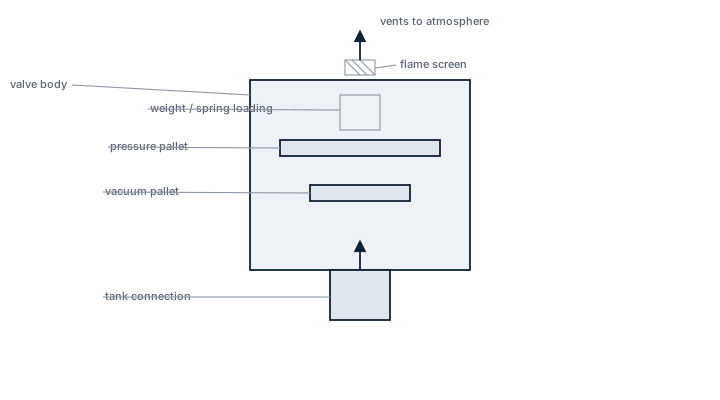
Main components
- Pressure and vacuum pallets — the sealing discs, usually stainless steel or coated to resist cargo vapour corrosion, seated on machined faces that must stay flat and clean
- Weight or spring loading — sets the lift pressure; weighted types are common on smaller tankers, spring or pilot-operated types on larger and gas carriers
- Flame screen — a wire mesh across the outlet that stops external ignition sources reaching the tank vapour space, required wherever the valve vents flammable cargo vapour to atmosphere
- Body and flange — sized to the tank venting main, in corrosion-resistant material matched to the cargo carried
- Test connection or lifting gear — allows manual lifting for function testing without dismantling the valve
Selecting and sizing
Sizing a PV valve is a flow calculation, not a matter of picking a pipe-diameter match. The relevant figures are the tank's maximum permitted loading and ballasting rates, the valve's rated flow capacity in cubic metres of vapour per hour at the design pressure and vacuum settings, and the number of valves fitted per tank group, since undersized venting capacity during fast loading is what causes tank overpressure in the first place. Material selection follows the cargo: stainless steel or Monel internals for corrosive or high-purity cargoes, epoxy-coated carbon steel bodies for general trade. Set pressures are fixed by the tank's design pressure as stated in the ship's stability and loading manual, not chosen independently by the yard or owner.
Regulations and class
SOLAS Chapter II-2 and the applicable IBC/IGC Code provisions for chemical and gas carriers require cargo tanks to be protected against over- and under-pressure, and PV valves are the standard means of meeting that requirement on tankers carrying flammable or toxic cargo. Class rules require the valves to be proven by set-pressure testing at survey, typically annually or at intervals set by the vessel's planned maintenance and survey regime, with results recorded and available to Port State Control. A stuck or fouled valve found at survey is grounds for a deficiency and, in a serious case, detention.
Typical faults
| Fault | Cause | Consequence |
|---|---|---|
| Pallet sticking shut | Wax, polymer or salt deposit build-up on the sealing face from the cargo vapour | Tank overpressure during loading, risk of structural deformation or rupture |
| Pallet sticking open | Corrosion, debris under the seat, or a bent guide pin | Continuous loss of inert gas atmosphere, cargo vapour venting, potential flammable atmosphere on deck |
| Flame screen blockage | Ice formation in cold trades, or accumulated dust and salt | Reduced venting capacity, false high-pressure readings |
| Set point drift | Weight tampering, spring fatigue, or wear on pilot-operated internals | Valve lifts too early or too late relative to the tank's approved pressure envelope |
What to look for in a supplier
- Flow capacity certified against the actual set pressures required, not a generic datasheet figure
- Material compatibility confirmed for the specific cargo range the tank trades in
- Set-pressure test certificate issued with the valve, traceable for the next survey
- Spare pallet and seat kits available separately, since full valve replacement is rarely necessary
A PV valve that has never been lifted for test between surveys is not a valve that is working well — it is often one nobody has dared touch because it is suspected to be stuck, which is exactly the condition a function test is meant to catch.