What to check on a Pressure/Vacuum Relief Valve (PV Valve).
A PV valve is a dual-direction relief device: a pressure pallet lifts to vent tank vapour when internal pressure rises above a set point, and a separate vacuum pallet lifts to admit air when pressure falls below a set point, as happens when cargo is discharged or cools after a hot loading. This distinguishes it from a plain open vent, which offers no overpressure or vacuum protection at all, and from a full vapour recovery valve, which routes vapour to a collection system rather than venting to atmosphere.
What sets a PV valve apart
A PV valve is a dual-direction relief device: a pressure pallet lifts to vent tank vapour when internal pressure rises above a set point, and a separate vacuum pallet lifts to admit air when pressure falls below a set point, as happens when cargo is discharged or cools after a hot loading. This distinguishes it from a plain open vent, which offers no overpressure or vacuum protection at all, and from a full vapour recovery valve, which routes vapour to a collection system rather than venting to atmosphere.
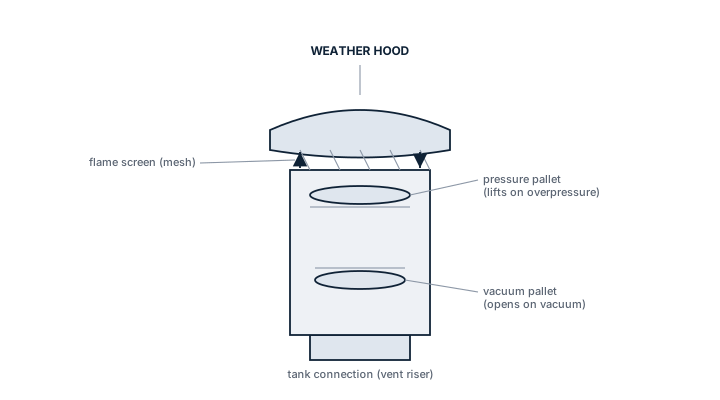
Main components
Pressure and vacuum pallets
Two weighted or spring-loaded discs seat against separate orifices. The pressure pallet is set higher than normal tank operating pressure but well below the tank's design pressure; the vacuum pallet is set to open before the tank can pull a structurally damaging negative pressure.
Body and flame screen
The cast body mounts on the tank's vent riser. Many designs incorporate a flame screen or detonation arrester downstream, particularly on cargoes with a flammable vapour, to stop a flame front from tracking back into the tank.
Weight loading or spring adjustment
Older designs use loose weights on a pallet stem; most current valves use an enclosed, tamper-resistant spring set at the factory or during calibration, reducing the risk of a weight being removed or altered by crew.
Selection and sizing
Sizing is driven by the maximum loading and discharge rate of the cargo system, the tank's design pressure and vacuum rating, and the vapour density of the cargoes carried. An undersized valve cannot vent fast enough during a full-rate loading and the tank pressure runs past the set point before the pallet can pass the flow; an oversized valve chatters at low flow and wears its seat prematurely.
Regulations and class requirements
Tank venting arrangements fall under MARPOL Annex I and Annex II requirements for cargo tank venting on tankers, and under class rules for tank structural protection generally. Set pressures must be certified against the tank's approved design pressure, and valves are function-tested and recalibrated at survey intervals set by the classification society, commonly at each intermediate or special survey, with popping pressure and reseat checks recorded.
Typical faults
| Fault | Consequence |
|---|---|
| Pallet seized by cargo residue or wax | Valve fails to open; tank overpressure or vacuum during cargo operations |
| Corroded or pitted seat | Valve leaks below set pressure, losing cargo vapour and inert gas continuously |
| Flame screen blocked by residue or ice | Restricted flow area even when the pallet lifts correctly |
| Spring or weight tampered with | Set pressure drifts from certified value, defeating the tank's protection |
| Missing or damaged gasket at the body flange | Vapour leak path that bypasses the pallet entirely |
What to look for in a supplier
- Certified set pressures matching the tank's approved design pressure and vacuum rating
- Materials compatible with the specific cargo range the vessel trades, including low-temperature service if relevant
- Flame screen or arrester rated for the vapour group being carried
- Documented calibration and popping-pressure test certificates traceable to the class-approved test bench
- Spare pallet, seat and gasket kits held for the exact valve model fitted
Never chock or wire a PV valve open to speed up gas-freeing; it removes the tank's only automatic protection against vacuum collapse during the very operation it was meant to guard.