Gas Detection System
A fixed gas detection system samples cargo, interbarrier and motor room atmospheres on a continuous cycle and can trip ventilation shutdown automatically, so its calibration record tells you more about real protection than its alarm log ever will.
What to check on a Gas Detection System.
122 models from RKI Instruments in Gas Detection System. Below: the full model list.
What Sets a Fixed Gas Detection System Apart
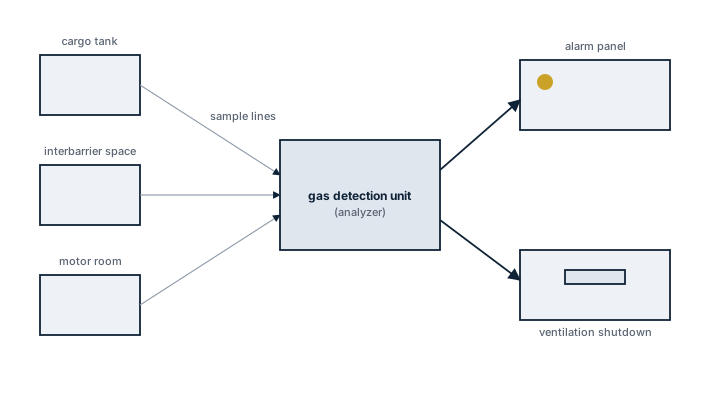
A fixed gas detection system continuously samples the atmosphere in spaces where a gas carrier's cargo could accumulate if a seal, valve gland or pipe joint failed: cargo compartments, interbarrier and insulation spaces, motor rooms for cargo pumps and compressors, and cofferdams adjacent to cargo tanks. Unlike a portable multi-gas meter carried by the duty engineer, it runs unattended, around the clock, and reports directly to the cargo control room and bridge. The distinction that matters against a portable instrument is coverage and response time: a fixed system is already sampling the space before anyone suspects a leak, and it can trigger ventilation shutdown or alarms automatically rather than waiting for a crew round.
Main Components
Sample points and sniffing lines
Small-bore stainless steel or synthetic tubing runs from each monitored space back to a central sampling unit, drawing air continuously through a pump. Sample points sit low in spaces where the cargo is heavier than air (most LPG cargoes) and high where it is lighter (LNG, ammonia under some conditions), with point placement fixed by the ship's approved gas detection plan rather than by convenience.
Sensor and analyser unit
The analyser cycles through sample points sequentially, drawing each stream past a sensor calibrated for the specific cargo range carried. Catalytic sensors oxidise flammable gas on a heated bead and measure the resulting resistance change; infrared sensors measure absorption at a wavelength specific to hydrocarbon or ammonia molecules and tolerate oxygen-depleted atmospheres that would starve a catalytic bead.
Read the full guide
Control and alarm panel
The panel logs readings against each sample point, drives audible and visual alarms at two thresholds, typically a pre-alarm near 20% of the lower flammable limit and a high alarm near 60%, and interfaces with the ventilation and cargo control systems so a confirmed high reading can trip fans or close dampers automatically.
Selection and Sizing
The controlling figures are the number of sample points needed to cover the approved spaces, the cycle time for a full round of sampling (commonly under 30 minutes, faster on newer installations), the sensor technology matched to the cargo range, and whether oxygen deficiency monitoring is bundled in for interbarrier and void spaces where nitrogen purging is used.
Regulations and Class
Fixed gas detection on gas carriers is required under the IGC Code, which specifies which spaces must be monitored, alarm set points, and response actions. Class societies survey the system at each annual and renewal survey, and calibration gas checks are typically required at intervals set by the manufacturer and accepted by class, commonly every six to twelve months.
Typical Faults
- Blocked or crushed sample tubing gives a falsely stable low reading and can mask a real leak.
- Sensor drift or poisoning, for example silicone vapours disabling catalytic beads, causes under-reading that only shows up at the next calibration check.
- Sample pump wear slows the sampling cycle, so an alarm arrives later than the design cycle time promises.
- Condensation in sample lines on temperature-swing routes blocks flow intermittently, producing erratic readings.
What to Look for in a Supplier
- Sensor technology proven for the specific cargo range the vessel trades in, not a generic hydrocarbon sensor repurposed for ammonia or ethylene service.
- Spare sensor and calibration gas availability in the ports the vessel actually calls at.
- Documented calibration and response-time test procedures that match what class will ask for at survey.
- Integration compatibility with the existing cargo control and alarm system rather than a standalone add-on.
Treat a gas detection system's calibration record as seriously as its alarm log: a system that has never triggered a real alarm but also has not been calibration-checked on schedule tells you nothing about whether it would actually catch a leak.
Models in this type.
The best-documented model of each manufacturer first, then the next — 100 of 122 models in Gas Detection System. Every row links to full specifications, documents and service notes.
Manufacturers.
All 17 manufacturers with models of Gas Detection System. Names with a manufacturer page open it; the others open a search across the full library.
All manufacturersAlso in Gas Carrier Systems.
The other equipment types in this category.
One request. A person reads it and replies by e-mail.
Tell us the manufacturer, the model and what you need — a part, a service call, a second opinion. A person reads every request and replies by e-mail.
No details at hand? A photo of the rating plate or the part is enough — simply attach it to the request.
Three things people ask first.
Is Gas Detection System data free?
Yes. Every model page, every guide and every datasheet for this type is readable without an account. An account adds saved searches and requests, nothing is taken away.
My model is missing — what now?
Send us the nameplate. We identify it by hand, add it to the library, and if you need a part or a service, the request is already on our desk.
Can you source a Gas Detection System part?
Yes. Tell us the manufacturer, the model and what you need — a person reads every request and replies by e-mail.