What to check on a Cargo Compressor (Reliquefaction).
On a semi- or fully-refrigerated gas carrier, boil-off vapour and vapour displaced during loading has to go somewhere. Instead of flaring it or venting it to atmosphere, a reciprocating cargo compressor pulls the vapour off the tank dome, raises its pressure through one or two stages, and pushes it through a cargo condenser where it is cooled back into liquid and returned to the tank. The compressor itself does no cooling; it only supplies the pressure rise that lets the condenser's seawater or refrigerant-cooled coils do the phase change. This…
What sets a reliquefaction compressor apart
On a semi- or fully-refrigerated gas carrier, boil-off vapour and vapour displaced during loading has to go somewhere. Instead of flaring it or venting it to atmosphere, a reciprocating cargo compressor pulls the vapour off the tank dome, raises its pressure through one or two stages, and pushes it through a cargo condenser where it is cooled back into liquid and returned to the tank. The compressor itself does no cooling; it only supplies the pressure rise that lets the condenser's seawater or refrigerant-cooled coils do the phase change. This distinguishes it from a deck-mounted export blower, which only moves vapour at near-atmospheric pressure during cargo transfer and never sees the discharge pressures a reliquefaction train works at.
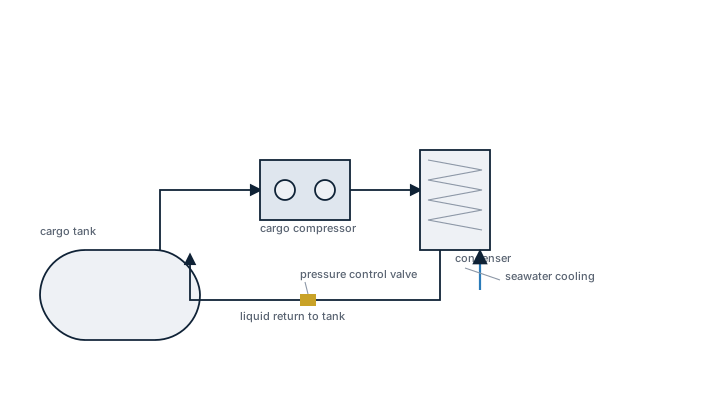
Main components
Crankcase and cylinders
Oil-lubricated crankcase driving two or more cylinders arranged in-line or in a V, sized for the specific cargo's molecular weight and compression ratio. Cylinder liners and pistons are chosen for compatibility with the cargo gas; ammonia and some LPG grades require different seal and valve materials than propylene or butane.
Suction and discharge valves
Plate or ring valves per cylinder, the components most exposed to wear from any liquid carryover or polymer build-up in the gas stream.
Distance piece and shaft seals
A vented, often purged distance piece separates the crankcase lubricating oil from the cargo gas side, preventing oil contamination of the cargo and gas migration into the crankcase.
Capacity control
Step control through cylinder unloaders or clearance pockets, sometimes combined with speed control on the driving motor, to match compressor throughput to the boil-off rate rather than running full capacity against a throttled discharge.
Selection and sizing
Sizing runs off the boil-off rate the containment system is rated for, expressed in m3/h of vapour at a reference condition, the required suction and discharge pressures for the cargo grades the ship is built to carry, and the number of compression stages needed to reach condenser inlet pressure without exceeding a safe discharge temperature. Multi-gas carriers typically fit two or three compressors so that one can be down for maintenance while the others hold tank pressure, and so different cargo grades in segregated tanks can be handled without cross-contamination through a shared compressor.
Regulations and class
Design, materials and testing sit under the IGC Code for gas carriers, which sets requirements for cargo machinery gas-tightness, remote shutdown, and segregation from other machinery spaces. Class surveys typically include periodic function tests of the emergency shutdown and gas detection interlocks tied to the compressor room, alongside the vessel's normal machinery survey cycle.
Typical faults
- Valve plate fatigue failure - caused by liquid slugging on the suction side; loose valve fragments then damage the cylinder bore and force an unscheduled overhaul.
- Oil carryover into the cargo - worn piston rings or a failed distance-piece purge lets lubricating oil migrate into the cargo stream, contaminating the product and fouling the condenser.
- High discharge temperature trip - usually a symptom of a leaking suction valve recirculating hot gas, or a cooling water fault on the cylinder jackets.
- Gas migration through the shaft seal - a degraded seal lets cargo gas leak into the crankcase or engine room, tripping gas detection and forcing a shutdown.
What to look for in a supplier
- Documented cargo compatibility list covering every gas grade the vessel is certified to carry, not just the common ones.
- Spare parts and valve kits genuinely stocked for the specific model, not a promise to manufacture on order.
- Class-approved type test certificates matching the IGC Code cargo machinery requirements.
- Service history and support base reachable in the ports the vessel actually trades to.
A reliquefaction compressor that trips on high discharge temperature is rarely a compressor problem first - check condenser cooling water flow and suction valve tightness before opening the cylinder.