OceanSphere
Engines

Portable Multi-Gas Detector

medium 179 models total

A portable multi-gas detector is carried into the space rather than mounted in it, giving a real-time, four- or five-gas reading (oxygen, combustible gas, and typically H2S and CO) at the point a person is actually about to breathe, which is what makes it the mandatory instrument for enclosed space entry, not the fixed detection system.

Read more — Portable Multi-Gas Detector explained

What makes a portable multi-gas detector different

Fixed gas detection systems monitor set points in machinery spaces and cargo areas continuously, but a portable multi-gas detector goes wherever a person goes: lowered into a tank ahead of the entrant, carried at chest height while walking through a void, or clipped to a harness during the entry itself. It typically reads four or five gases simultaneously from separate sensors in one housing, most commonly oxygen, a combustible gas (lower explosive limit, LEL), hydrogen sulphide, and carbon monoxide, because these four cover the great majority of enclosed space hazards found aboard: oxygen depletion, flammable atmosphere, and the two most common toxic gases.
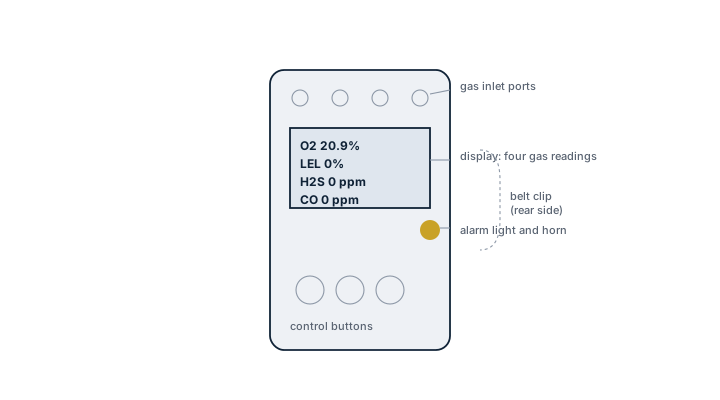
Portable multi-gas detector layout
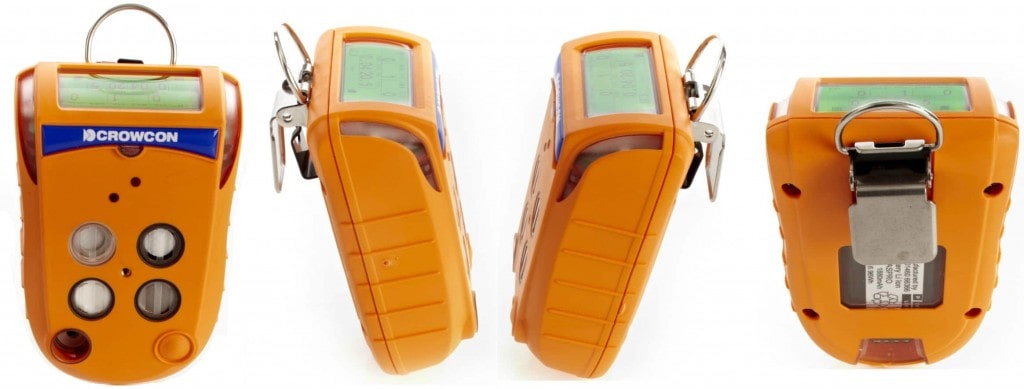
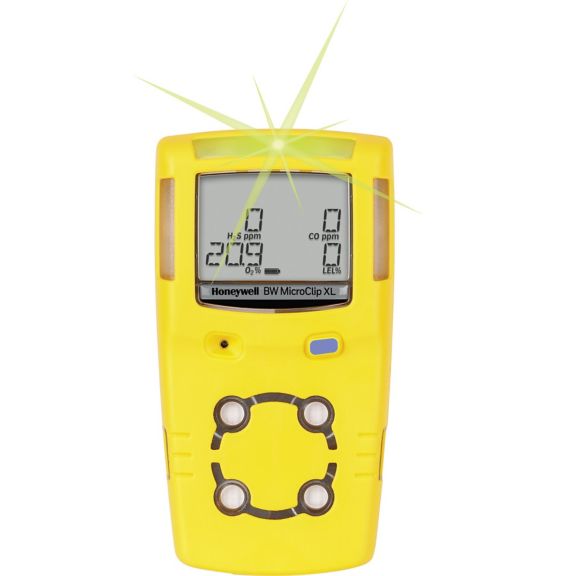
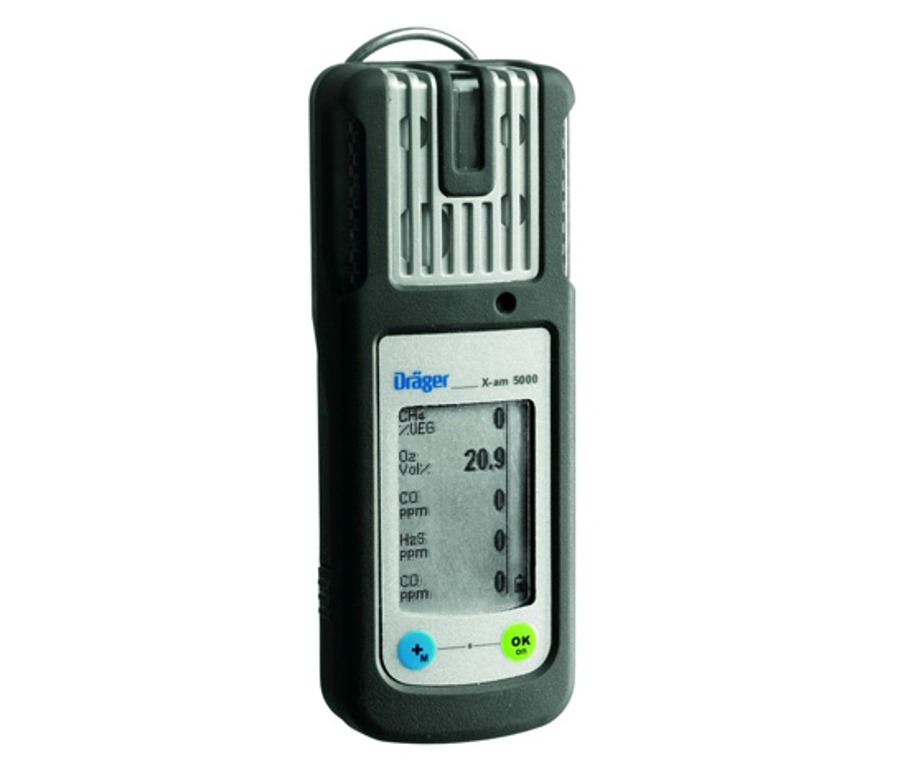
Front view of a handheld multi-gas detector showing the gas inlet, the display reading four gases, the alarm light and horn, the control buttons and the belt clip on the rear.

Main components

Oxygen sensor

An electrochemical cell reading percentage by volume, normally alarming low around 19.5 percent and high around 23.5 percent, since both depletion and enrichment are hazardous.

Combustible gas (LEL) sensor

Usually a catalytic bead or, increasingly, an infrared sensor reading percentage of the lower explosive limit; infrared types do not need oxygen present to read correctly and survive oxygen-deficient atmospheres better than catalytic bead sensors, which is why they are now common on marine instruments.

Toxic gas sensors (H2S, CO)

Electrochemical cells specific to each gas, with alarm set points typically well below the level that causes immediate harm, since these gases are dangerous at concentrations far lower than a combustible or oxygen reading would ever flag.

Sampling pump (where fitted)

A motorised pump draws gas up a hose from a remote point, essential for pre-entry checks of a tank from the deck before anyone climbs down, as opposed to diffusion-only instruments that only read the air right at the sensor.

Selection and sizing

The sensor combination must match the actual hazards of the spaces the vessel operates: a tanker needs H2S coverage for crude and some product cargoes, a reefer or fishing vessel needs an ammonia or refrigerant-specific sensor added, and any vessel with a sampling pump needs the hose length rated for the deepest tank aboard. Battery runtime under continuous pump operation, not just diffusion mode, is the figure to check for long confined space jobs.

Regulations and class

  • SOLAS Ch. XI-1 Regulation 7 requires ships to carry portable atmosphere testing instruments for enclosed space entry, specifying at minimum oxygen and flammable gas capability, with toxic gas measurement where the risk assessment calls for it.
  • IMO's revised recommendations for entering enclosed spaces (resolution A.1050(27)) set out the testing sequence: oxygen first, then flammability, then toxicity, before entry is authorised.
  • Class and flag state both check that calibration records and bump-test logs are maintained and that the instrument count matches the number of enclosed spaces requiring simultaneous monitoring.

Typical faults

FaultConsequence
Sensor past its calibration due date or bump-tested but never fully calibratedReading may drift without the crew knowing, giving false confidence in a hazardous space
Catalytic bead LEL sensor poisoned by silicone vapour or exposed to an oxygen-deficient atmosphereCombustible reading understates the real hazard, sometimes reading zero in a dangerous atmosphere
Sampling hose left kinked or with a split intake filterPre-entry test draws a false sample, missing stratified gas pockets lower in the tank
Battery allowed to run flat mid-entryLoss of continuous monitoring for personnel already inside the space, a serious safety failure

What to look for in a supplier

  • Sensor set matched to the actual cargoes and spaces aboard, not a generic four-gas default.
  • Documented bump-test and full calibration intervals with traceable calibration gas and regulator supply reachable at the ship's usual ports.
  • Infrared LEL sensor option where oxygen-deficient atmospheres are a realistic risk, given the known limitation of catalytic bead sensors in low oxygen.
  • Data-logging models where the vessel's safety management system requires a retrievable record of pre-entry readings.

A bump test before every entry is not optional paperwork; it is the only check that confirms the sensors actually respond to gas on the day, which a calibration certificate from weeks earlier cannot guarantee.

26 manufacturers · 179 models

Dräger

42
X-am 8000
up to 7 gases simultaneously · Hazardous Gas Detection · portable active‑sampling multi‑gas detector
Type
portable
Gases
7
Pump
ja
Solas
ja
Common Failures & Inspection Points
  • Sensor ageing, poisoning, contamination or dirt causes drift, slow response, false alarms or failed tests
  • Power, battery, wiring or communication faults cause device-failure alarms or loss of indication
  • Water ingress, corrosion or impact damage causes intermittent operation or failed controls
  • Blocked sampling paths or obstructed detector exposure delays response or prevents correct detection
  • Incorrect calibration, configuration or detector type causes misleading readings or nuisance alarms
Service: Inspect sensors, sample paths or detector openings, wiring, power, mounting and alarm interfaces. Perform bump tests, functional tests or calibration using the approved method for the device type. Review alarm history and confirm remote indications or shutdown interfaces. Refer to the manufacturer documentation for the exact figure for calibration and alarm criteria.
Spare Parts: Carry detector heads or sensor cartridges, filters, sampling parts, batteries or chargers, fuses, calibration accessories and approved test consumables.
Strengths
  • Monitors up to 7 gases (O₂, CO, H₂S, LEL, SO₂, NO, etc.) with a single handheld unit
  • Integrated pump provides reliable sampling in confined spaces and low‑flow environments
  • SOLAS‑approved and USCG type‑approved for maritime safety applications
  • Robust housing, splash‑proof design and long battery life suitable for shipboard conditions
  • Built‑in data logging and Bluetooth interface for easy export of test results
Weaknesses
  • Sensor replacement costs can be high, especially for catalytic bead sensors
  • Pump diaphragm may fail after extensive use, requiring periodic maintenance
  • Battery performance degrades over time; regular checks and eventual replacement are needed
  • Calibration drift requires full calibration every six months even if bump‑tested before each use
  • Limited to portable, point‑of‑use monitoring – not a substitute for fixed continuous gas detection systems
Typical Vessels: TankerBulk CarrierContainer ShipOffshore Supply VesselPassenger FerryCruise ShipWorkboat
Certifications: SOLAS (Chapter II‑1) approvedUSCG Type Approval
Decision Guide: Choose if you need a rugged, portable detector that can sample actively in confined spaces and must meet SOLAS compliance for multi‑gas monitoring. Avoid if continuous fixed‑point monitoring is required or budget constraints limit sensor replacement costs.
Use Cases: Machinery, cargo, accommodation, enclosed-space and personal safety monitoring.
X-am 5600
up to 6 gases · Hazardous Gas Detection · intrinsically safe portable multi‑gas detection
Type
portable
Gases
6
Pump
nein
Common Failures & Inspection Points
  • Sensor ageing, poisoning, contamination or dirt causes drift, slow response, false alarms or failed tests
  • Power, battery, wiring or communication faults cause device-failure alarms or loss of indication
  • Water ingress, corrosion or impact damage causes intermittent operation or failed controls
  • Blocked sampling paths or obstructed detector exposure delays response or prevents correct detection
  • Incorrect calibration, configuration or detector type causes misleading readings or nuisance alarms
Service: Inspect sensors, sample paths or detector openings, wiring, power, mounting and alarm interfaces. Perform bump tests, functional tests or calibration using the approved method for the device type. Review alarm history and confirm remote indications or shutdown interfaces. Refer to the manufacturer documentation for the exact figure for calibration and alarm criteria.
Spare Parts: Carry detector heads or sensor cartridges, filters, sampling parts, batteries or chargers, fuses, calibration accessories and approved test consumables.
Strengths
  • Detects up to six gases in one unit, reducing the need for multiple detectors
  • ATEX/IECEx certified for use in hazardous zones (Zone 1 & 2)
  • Built‑in data logger and Bluetooth interface for easy download of exposure records
  • Long battery life with quick‑swap rechargeable pack
  • Intuitive colour‑coded LCD display with audible alarms
Weaknesses
  • Diffusion sampling only – slower response in low‑flow or stagnant air
  • Sensor drift requires daily bump tests and semi‑annual calibration
  • IR sensor can become contaminated when exposed to high concentrations of certain gases (e.g., CO₂)
  • Display readability may suffer under strong sunlight
  • Limited to six gas channels; cannot expand beyond that
Typical Vessels: TankerBulk CarrierContainer ShipOffshore Support VesselPassenger FerryWorkboat / Towage
Certifications: ATEX Zone 1/2IECExIMO MSC.1/Circ.1403 (gas detection equipment)
Decision Guide: Choose if: you need a portable, intrinsically safe detector that can monitor up to six gases simultaneously, with data‑logging and Bluetooth connectivity for compliance reporting on tankers, offshore vessels or any ship where confined‑space entry is routine. Avoid if: continuous fixed‑point monitoring is required, a pump‑type sampler is needed for rapid response, or more than six gas channels must be measured.
Use Cases: Machinery, cargo, accommodation, enclosed-space and personal safety monitoring.
Dräger X-am 2500
X-am 2500
2 gases · Hazardous Gas Detection · electrochemical and catalytic sensor technology
Type
portable
Gases
2
Common Failures & Inspection Points
  • Sensor ageing, poisoning, contamination or dirt causes drift, slow response, false alarms or failed tests
  • Power, battery, wiring or communication faults cause device-failure alarms or loss of indication
  • Water ingress, corrosion or impact damage causes intermittent operation or failed controls
  • Blocked sampling paths or obstructed detector exposure delays response or prevents correct detection
  • Incorrect calibration, configuration or detector type causes misleading readings or nuisance alarms
Service: Inspect sensors, sample paths or detector openings, wiring, power, mounting and alarm interfaces. Perform bump tests, functional tests or calibration using the approved method for the device type. Review alarm history and confirm remote indications or shutdown interfaces. Refer to the manufacturer documentation for the exact figure for calibration and alarm criteria.
Spare Parts: Carry detector heads or sensor cartridges, filters, sampling parts, batteries or chargers, fuses, calibration accessories and approved test consumables.
Strengths
  • Compact, rugged housing (IP66) suitable for shipboard environments
  • Integrated bump‑test function reduces preparation time before each use
  • Data‑logging with USB export for post‑entry analysis and compliance records
  • Long battery life (up to 24 h continuous operation) and quick recharge
  • User‑friendly interface with clear LCD display and multi‑tone alarms
Weaknesses
  • Limited to two gases; cannot monitor additional toxic gases without a separate unit
  • Catalytic sensor can be poisoned by silicones, oil vapours or high humidity
  • Battery is not hot‑swappable – the detector must be taken out of service for charging
  • No built‑in wireless connectivity (e.g., Bluetooth) for real‑time fleet monitoring
  • Higher upfront cost compared with basic single‑gas detectors
Typical Vessels: TankerContainer shipBulk carrierOffshore supply vesselFerry
Certifications: IMO D-2IECEx
Decision Guide: Choose if you need a reliable, rugged dual‑gas detector for confined‑space entry with built‑in bump testing and data logging on tankers, bulk carriers or offshore vessels. Avoid if your operation requires monitoring more than two gases simultaneously, continuous area monitoring, or wireless integration with central safety systems.
Use Cases: Machinery, cargo, accommodation, enclosed-space and personal safety monitoring.
Dräger X-am 2500 unverified
Equipment Type
portable_gas_detector
Series
X-am
Model code
X-am 2500
Common Failures & Inspection Points
  • Sensor poisoning, depletion or aging caused by contaminant exposure or normal service, resulting in slow response, failed calibration or incorrect readings
  • Blocked sample path or dirty optical surface caused by dust, water, salt or deposits, resulting in weak response or fault indication
  • Calibration drift caused by sensor aging or unsuitable calibration practice, resulting in readings that do not match the applied test gas
  • Power, battery or communication failure caused by electrical faults, depleted cells or damaged cabling, resulting in loss of indication or system fault alarms
  • Alarm or relay malfunction caused by control faults or configuration errors, resulting in missing, delayed or persistent alarms
Service: Perform bump tests, calibration checks and functional testing according to the approved maintenance procedure for the installed detector type. Inspect sensor heads, optical paths, sample tubing, filters, batteries, cabling and junction boxes as applicable. Use only the correct certified test gas and accessories for the configured sensors. Check alarm annunciation and output relays or communication to the vessel's monitoring system. Replace life-limited sensing elements according to manufacturer guidance and record the work. Refer to the approved documentation for exact calibration intervals, alarm settings and environmental limits.
Spare Parts: Keep model-correct sensor cartridges or cells, filters, batteries where applicable, calibration accessories, sample tubing and selected electronic or relay components recommended by the manufacturer. Test-gas cylinders and regulators must match the gases and concentrations specified for the installed system. Preserve certification and compatibility when replacing components.
Use Cases: Atmosphere monitoring for machinery spaces, cargo areas, enclosed-space entry, offshore process areas and other locations where combustible, toxic or oxygen conditions must be detected.
Portable gas detector — 2-gas portable
Dräger X-am 5600 unverified
Equipment Type
portable_gas_detector
Series
X-am
Model code
X-am 5600
Common Failures & Inspection Points
  • Sensor poisoning, depletion or aging caused by contaminant exposure or normal service, resulting in slow response, failed calibration or incorrect readings
  • Blocked sample path or dirty optical surface caused by dust, water, salt or deposits, resulting in weak response or fault indication
  • Calibration drift caused by sensor aging or unsuitable calibration practice, resulting in readings that do not match the applied test gas
  • Power, battery or communication failure caused by electrical faults, depleted cells or damaged cabling, resulting in loss of indication or system fault alarms
  • Alarm or relay malfunction caused by control faults or configuration errors, resulting in missing, delayed or persistent alarms
Service: Perform bump tests, calibration checks and functional testing according to the approved maintenance procedure for the installed detector type. Inspect sensor heads, optical paths, sample tubing, filters, batteries, cabling and junction boxes as applicable. Use only the correct certified test gas and accessories for the configured sensors. Check alarm annunciation and output relays or communication to the vessel's monitoring system. Replace life-limited sensing elements according to manufacturer guidance and record the work. Refer to the approved documentation for exact calibration intervals, alarm settings and environmental limits.
Spare Parts: Keep model-correct sensor cartridges or cells, filters, batteries where applicable, calibration accessories, sample tubing and selected electronic or relay components recommended by the manufacturer. Test-gas cylinders and regulators must match the gases and concentrations specified for the installed system. Preserve certification and compatibility when replacing components.
Use Cases: Atmosphere monitoring for machinery spaces, cargo areas, enclosed-space entry, offshore process areas and other locations where combustible, toxic or oxygen conditions must be detected.
Portable gas detector — 5-gas portable
Dräger X-am 8000 unverified
Equipment Type
portable_gas_detector
Series
X-am
Model code
X-am 8000
Common Failures & Inspection Points
  • Sensor poisoning, depletion or aging caused by contaminant exposure or normal service, resulting in slow response, failed calibration or incorrect readings
  • Blocked sample path or dirty optical surface caused by dust, water, salt or deposits, resulting in weak response or fault indication
  • Calibration drift caused by sensor aging or unsuitable calibration practice, resulting in readings that do not match the applied test gas
  • Power, battery or communication failure caused by electrical faults, depleted cells or damaged cabling, resulting in loss of indication or system fault alarms
  • Alarm or relay malfunction caused by control faults or configuration errors, resulting in missing, delayed or persistent alarms
Service: Perform bump tests, calibration checks and functional testing according to the approved maintenance procedure for the installed detector type. Inspect sensor heads, optical paths, sample tubing, filters, batteries, cabling and junction boxes as applicable. Use only the correct certified test gas and accessories for the configured sensors. Check alarm annunciation and output relays or communication to the vessel's monitoring system. Replace life-limited sensing elements according to manufacturer guidance and record the work. Refer to the approved documentation for exact calibration intervals, alarm settings and environmental limits.
Spare Parts: Keep model-correct sensor cartridges or cells, filters, batteries where applicable, calibration accessories, sample tubing and selected electronic or relay components recommended by the manufacturer. Test-gas cylinders and regulators must match the gases and concentrations specified for the installed system. Preserve certification and compatibility when replacing components.
Use Cases: Atmosphere monitoring for machinery spaces, cargo areas, enclosed-space entry, offshore process areas and other locations where combustible, toxic or oxygen conditions must be detected.
Portable gas detector — 5-gas with PID
Dräger Pac 8500 unverified
Equipment Type
portable_gas_detector
Series
Pac
Model code
Pac 8500
Common Failures & Inspection Points
  • Sensor poisoning, ageing, contamination, or end-of-life degradation causes slow response, failed calibration, or readings that drift from known test gas
  • Blocked sample line, filter, pump, or diffusion path prevents representative gas reaching the sensor and causes low or delayed readings
  • Battery, supply, charger, or internal power faults cause shutdown, short operating time, or power alarms
  • Water ingress, condensation, corrosion, or damaged connectors produces intermittent channels, false alarms, or failed communication
  • Calibration, configuration, relay, or control faults can cause nuisance alarms, missing alarms, or incorrect display of the monitored point
Service: Inspect sensor condition, sampling paths and filters, pump operation where fitted, battery or power supply, alarms, relays, display, identification of sampling points, and calibration records. Perform bump tests and calibration only with approved gas and according to the manufacturer and vessel safety procedure.
Spare Parts: Keep approved sensors or sensor cartridges, filters, pump or tubing service items, batteries or charging accessories, calibration fittings, and critical fuses or interface parts recommended for the system.
Use Cases: Used on tankers, gas carriers, offshore vessels, enclosed-space operations, engine rooms, battery rooms, refrigeration spaces, cargo areas, and other locations where hazardous atmospheres may occur.
Portable gas detector — single-gas H2S/CO
Drager X-am 2500 LEL/O2 unverified
Gases
LEL/O2
Atex certified
ja
Common Failures & Inspection Points
  • Sensor poisoning, ageing, contamination, or end-of-life degradation causes slow response, failed calibration, or readings that drift from known test gas
  • Blocked sample line, filter, pump, or diffusion path prevents representative gas reaching the sensor and causes low or delayed readings
  • Battery, supply, charger, or internal power faults cause shutdown, short operating time, or power alarms
  • Water ingress, condensation, corrosion, or damaged connectors produces intermittent channels, false alarms, or failed communication
  • Calibration, configuration, relay, or control faults can cause nuisance alarms, missing alarms, or incorrect display of the monitored point
Service: Inspect sensor condition, sampling paths and filters, pump operation where fitted, battery or power supply, alarms, relays, display, identification of sampling points, and calibration records. Perform bump tests and calibration only with approved gas and according to the manufacturer and vessel safety procedure.
Spare Parts: Keep approved sensors or sensor cartridges, filters, pump or tubing service items, batteries or charging accessories, calibration fittings, and critical fuses or interface parts recommended for the system.
Use Cases: Used on tankers, gas carriers, offshore vessels, enclosed-space operations, engine rooms, battery rooms, refrigeration spaces, cargo areas, and other locations where hazardous atmospheres may occur.
Drager X-am 2500 LEL/O2/CO/H2S unverified
Gases
LEL/O2/CO/H2S
Atex certified
ja
Common Failures & Inspection Points
  • Detector or sensing-element contamination, poisoning or ageing can cause false alarms, slow response or failed functional tests
  • Battery, power-supply or control-circuit faults caused by ageing, loose wiring or blown protection can lead to trouble alarms or unavailable safety functions
  • Cylinder pressure loss, leakage or damaged valves where stored media is used can leave the equipment outside ready condition and may be found during inspection or weighing checks
  • Blocked, corroded or mechanically damaged nozzles, piping, hoses or masks can restrict discharge or breathing flow and show as poor functional test results
  • Incorrect isolation, expired service status or disturbed release interlocks after maintenance can prevent normal arming and create panel faults or failed readiness checks
Service: Check physical condition, accessibility, labels and service status, then verify approved tests of detectors, alarms, release circuits or breathing components as applicable. Inspect cylinders, hoses, nozzles, masks, wiring and interlocks without discharging or altering safety systems outside the approved procedure. Use maker, class and statutory documentation for exact inspection and acceptance criteria.
Spare Parts: Hold only approved safety-system spares such as detector heads, filters or sensor caps, fuses, batteries where user-replaceable, seals, hoses, masks, nozzles and control modules according to the vessel's certified arrangement.
Use Cases: Machinery spaces, accommodation, cargo areas, enclosed spaces and emergency-response stations on merchant, passenger, tanker and offshore vessels.
Drager X-am 2500 LEL/O2/CO unverified
Gases
LEL/O2/CO
Atex certified
ja
Common Failures & Inspection Points
  • Sensor poisoning, ageing, contamination, or end-of-life degradation causes slow response, failed calibration, or readings that drift from known test gas
  • Blocked sample line, filter, pump, or diffusion path prevents representative gas reaching the sensor and causes low or delayed readings
  • Battery, supply, charger, or internal power faults cause shutdown, short operating time, or power alarms
  • Water ingress, condensation, corrosion, or damaged connectors produces intermittent channels, false alarms, or failed communication
  • Calibration, configuration, relay, or control faults can cause nuisance alarms, missing alarms, or incorrect display of the monitored point
Service: Inspect sensor condition, sampling paths and filters, pump operation where fitted, battery or power supply, alarms, relays, display, identification of sampling points, and calibration records. Perform bump tests and calibration only with approved gas and according to the manufacturer and vessel safety procedure.
Spare Parts: Keep approved sensors or sensor cartridges, filters, pump or tubing service items, batteries or charging accessories, calibration fittings, and critical fuses or interface parts recommended for the system.
Use Cases: Used on tankers, gas carriers, offshore vessels, enclosed-space operations, engine rooms, battery rooms, refrigeration spaces, cargo areas, and other locations where hazardous atmospheres may occur.
Drager X-am 2500 LEL/O2/H2S/SO2 unverified
Gases
LEL/O2/H2S/SO2
Atex certified
ja
Common Failures & Inspection Points
  • Sensor poisoning, ageing, contamination, or end-of-life degradation causes slow response, failed calibration, or drifting readings
  • Blocked sample line, filter, pump, or diffusion path prevents representative gas reaching the sensor and causes low or delayed readings
  • Battery, supply, charger, or internal power faults cause shutdown, short operating time, or power alarms
  • Water ingress, condensation, corrosion, or damaged connectors produce intermittent channels, false alarms, or failed communication
  • Calibration, configuration, relay, or control faults can cause nuisance alarms, missing alarms, or incorrect identification of the monitored point
Service: Inspect sensor condition, sampling paths and filters, pump operation where fitted, battery or power supply, alarms, relays, display, sampling-point identification, and calibration records. Perform bump tests and calibration only with approved gas and according to manufacturer and vessel safety procedures.
Spare Parts: Keep approved sensors or sensor cartridges, filters, pump or tubing service items, batteries or charging accessories, calibration fittings, and critical fuses or interface parts.
Use Cases: Used on tankers, gas carriers, offshore vessels, enclosed-space operations, engine rooms, battery rooms, refrigeration spaces, cargo areas, and other locations where hazardous atmospheres may occur.
Drager X-am 2500 VOC/O2 unverified
Gases
VOC/O2
Atex certified
ja
Common Failures & Inspection Points
  • Sensor poisoning, ageing, contamination, or end-of-life degradation causes slow response, failed calibration, or readings that drift from known test gas
  • Blocked sample line, filter, pump, or diffusion path prevents representative gas reaching the sensor and causes low or delayed readings
  • Battery, supply, charger, or internal power faults cause shutdown, short operating time, or power alarms
  • Water ingress, condensation, corrosion, or damaged connectors produces intermittent channels, false alarms, or failed communication
  • Calibration, configuration, relay, or control faults can cause nuisance alarms, missing alarms, or incorrect display of the monitored point
Service: Inspect sensor condition, sampling paths and filters, pump operation where fitted, battery or power supply, alarms, relays, display, identification of sampling points, and calibration records. Perform bump tests and calibration only with approved gas and according to the manufacturer and vessel safety procedure.
Spare Parts: Keep approved sensors or sensor cartridges, filters, pump or tubing service items, batteries or charging accessories, calibration fittings, and critical fuses or interface parts recommended for the system.
Use Cases: Used on tankers, gas carriers, offshore vessels, enclosed-space operations, engine rooms, battery rooms, refrigeration spaces, cargo areas, and other locations where hazardous atmospheres may occur.
Drager X-am 2500 LEL/O2/CO/H2S/SO2 unverified
Gases
LEL/O2/CO/H2S/SO2
Atex certified
ja
Common Failures & Inspection Points
  • Sensor poisoning, depletion or ageing, typically indicated by slow response, failed bump test or calibration drift
  • Sampling pump/filter blockage in pumped units, typically indicated by low-flow alarm or no gas response
  • Battery/power-supply failure, typically indicated by instrument shutdown or low-power alarm
  • Water/dirt ingress into sensor or sample path, typically indicated by erratic readings or sensor fault
  • Calibration or configuration error, typically indicated by incorrect zero/span, nuisance alarms or missed response
Service: Inspect sensor condition, filters/sample paths, power/battery, alarm functions and calibration status; perform bump and calibration tests using approved gas and procedures, with exact alarm points taken from vessel/manufacturer documentation.
Spare Parts: Keep approved sensors, filters, sampling tubing, batteries/chargers, pump service parts and calibration accessories/gas as allowed by the vessel's safety system.
Use Cases: Used on tankers, gas carriers, chemical carriers, offshore units, enclosed-space entry teams and machinery spaces where hazardous atmospheres may occur. This entry applies specifically to the Portable Multi-Gas Detector variant identified as Dräger Drager X-am 2500 LEL/O2/CO/H2S/SO2.
Drager X-am 5000 LEL/O2 unverified
Gases
LEL/O2
Atex certified
ja
Common Failures & Inspection Points
  • Sensor poisoning, ageing, contamination, or end-of-life degradation causes slow response, failed calibration, or readings that drift from known test gas
  • Blocked sample line, filter, pump, or diffusion path prevents representative gas reaching the sensor and causes low or delayed readings
  • Battery, supply, charger, or internal power faults cause shutdown, short operating time, or power alarms
  • Water ingress, condensation, corrosion, or damaged connectors produces intermittent channels, false alarms, or failed communication
  • Calibration, configuration, relay, or control faults can cause nuisance alarms, missing alarms, or incorrect display of the monitored point
Service: Inspect sensor condition, sampling paths and filters, pump operation where fitted, battery or power supply, alarms, relays, display, identification of sampling points, and calibration records. Perform bump tests and calibration only with approved gas and according to the manufacturer and vessel safety procedure.
Spare Parts: Keep approved sensors or sensor cartridges, filters, pump or tubing service items, batteries or charging accessories, calibration fittings, and critical fuses or interface parts recommended for the system.
Use Cases: Used on tankers, gas carriers, offshore vessels, enclosed-space operations, engine rooms, battery rooms, refrigeration spaces, cargo areas, and other locations where hazardous atmospheres may occur.
Dräger Drager X-am 5000 LEL/O2/CO/H2S
Drager X-am 5000 LEL/O2/CO/H2S unverified
Gases
LEL/O2/CO/H2S
Atex certified
ja
Common Failures & Inspection Points
  • Detector or sensing-element contamination, poisoning or ageing can cause false alarms, slow response or failed functional tests
  • Battery, power-supply or control-circuit faults caused by ageing, loose wiring or blown protection can lead to trouble alarms or unavailable safety functions
  • Cylinder pressure loss, leakage or damaged valves where stored media is used can leave the equipment outside ready condition and may be found during inspection or weighing checks
  • Blocked, corroded or mechanically damaged nozzles, piping, hoses or masks can restrict discharge or breathing flow and show as poor functional test results
  • Incorrect isolation, expired service status or disturbed release interlocks after maintenance can prevent normal arming and create panel faults or failed readiness checks
Service: Check physical condition, accessibility, labels and service status, then verify approved tests of detectors, alarms, release circuits or breathing components as applicable. Inspect cylinders, hoses, nozzles, masks, wiring and interlocks without discharging or altering safety systems outside the approved procedure. Use maker, class and statutory documentation for exact inspection and acceptance criteria.
Spare Parts: Hold only approved safety-system spares such as detector heads, filters or sensor caps, fuses, batteries where user-replaceable, seals, hoses, masks, nozzles and control modules according to the vessel's certified arrangement.
Use Cases: Machinery spaces, accommodation, cargo areas, enclosed spaces and emergency-response stations on merchant, passenger, tanker and offshore vessels.
Drager X-am 5000 LEL/O2/CO unverified
Gases
LEL/O2/CO
Atex certified
ja
Common Failures & Inspection Points
  • Sensor poisoning, ageing, contamination, or end-of-life degradation causes slow response, failed calibration, or readings that drift from known test gas
  • Blocked sample line, filter, pump, or diffusion path prevents representative gas reaching the sensor and causes low or delayed readings
  • Battery, supply, charger, or internal power faults cause shutdown, short operating time, or power alarms
  • Water ingress, condensation, corrosion, or damaged connectors produces intermittent channels, false alarms, or failed communication
  • Calibration, configuration, relay, or control faults can cause nuisance alarms, missing alarms, or incorrect display of the monitored point
Service: Inspect sensor condition, sampling paths and filters, pump operation where fitted, battery or power supply, alarms, relays, display, identification of sampling points, and calibration records. Perform bump tests and calibration only with approved gas and according to the manufacturer and vessel safety procedure.
Spare Parts: Keep approved sensors or sensor cartridges, filters, pump or tubing service items, batteries or charging accessories, calibration fittings, and critical fuses or interface parts recommended for the system.
Use Cases: Used on tankers, gas carriers, offshore vessels, enclosed-space operations, engine rooms, battery rooms, refrigeration spaces, cargo areas, and other locations where hazardous atmospheres may occur.
Drager X-am 5000 LEL/O2/H2S/SO2 unverified
Gases
LEL/O2/H2S/SO2
Atex certified
ja
Common Failures & Inspection Points
  • Sensor poisoning, ageing, contamination, or end-of-life degradation causes slow response, failed calibration, or drifting readings
  • Blocked sample line, filter, pump, or diffusion path prevents representative gas reaching the sensor and causes low or delayed readings
  • Battery, supply, charger, or internal power faults cause shutdown, short operating time, or power alarms
  • Water ingress, condensation, corrosion, or damaged connectors produce intermittent channels, false alarms, or failed communication
  • Calibration, configuration, relay, or control faults can cause nuisance alarms, missing alarms, or incorrect identification of the monitored point
Service: Inspect sensor condition, sampling paths and filters, pump operation where fitted, battery or power supply, alarms, relays, display, sampling-point identification, and calibration records. Perform bump tests and calibration only with approved gas and according to manufacturer and vessel safety procedures.
Spare Parts: Keep approved sensors or sensor cartridges, filters, pump or tubing service items, batteries or charging accessories, calibration fittings, and critical fuses or interface parts.
Use Cases: Used on tankers, gas carriers, offshore vessels, enclosed-space operations, engine rooms, battery rooms, refrigeration spaces, cargo areas, and other locations where hazardous atmospheres may occur.
Drager X-am 5000 VOC/O2 unverified
Gases
VOC/O2
Atex certified
ja
Common Failures & Inspection Points
  • Sensor poisoning, ageing, contamination, or end-of-life degradation causes slow response, failed calibration, or readings that drift from known test gas
  • Blocked sample line, filter, pump, or diffusion path prevents representative gas reaching the sensor and causes low or delayed readings
  • Battery, supply, charger, or internal power faults cause shutdown, short operating time, or power alarms
  • Water ingress, condensation, corrosion, or damaged connectors produces intermittent channels, false alarms, or failed communication
  • Calibration, configuration, relay, or control faults can cause nuisance alarms, missing alarms, or incorrect display of the monitored point
Service: Inspect sensor condition, sampling paths and filters, pump operation where fitted, battery or power supply, alarms, relays, display, identification of sampling points, and calibration records. Perform bump tests and calibration only with approved gas and according to the manufacturer and vessel safety procedure.
Spare Parts: Keep approved sensors or sensor cartridges, filters, pump or tubing service items, batteries or charging accessories, calibration fittings, and critical fuses or interface parts recommended for the system.
Use Cases: Used on tankers, gas carriers, offshore vessels, enclosed-space operations, engine rooms, battery rooms, refrigeration spaces, cargo areas, and other locations where hazardous atmospheres may occur.
Drager X-am 5000 LEL/O2/CO/H2S/SO2 unverified
Gases
LEL/O2/CO/H2S/SO2
Atex certified
ja
Common Failures & Inspection Points
  • Sensor poisoning, depletion or ageing, typically indicated by slow response, failed bump test or calibration drift
  • Sampling pump/filter blockage in pumped units, typically indicated by low-flow alarm or no gas response
  • Battery/power-supply failure, typically indicated by instrument shutdown or low-power alarm
  • Water/dirt ingress into sensor or sample path, typically indicated by erratic readings or sensor fault
  • Calibration or configuration error, typically indicated by incorrect zero/span, nuisance alarms or missed response
Service: Inspect sensor condition, filters/sample paths, power/battery, alarm functions and calibration status; perform bump and calibration tests using approved gas and procedures, with exact alarm points taken from vessel/manufacturer documentation.
Spare Parts: Keep approved sensors, filters, sampling tubing, batteries/chargers, pump service parts and calibration accessories/gas as allowed by the vessel's safety system.
Use Cases: Used on tankers, gas carriers, chemical carriers, offshore units, enclosed-space entry teams and machinery spaces where hazardous atmospheres may occur. This entry applies specifically to the Portable Multi-Gas Detector variant identified as Dräger Drager X-am 5000 LEL/O2/CO/H2S/SO2.
Drager X-am 5600 LEL/O2 unverified
Gases
LEL/O2
Atex certified
ja
Common Failures & Inspection Points
  • Sensor poisoning, ageing, contamination, or end-of-life degradation causes slow response, failed calibration, or readings that drift from known test gas
  • Blocked sample line, filter, pump, or diffusion path prevents representative gas reaching the sensor and causes low or delayed readings
  • Battery, supply, charger, or internal power faults cause shutdown, short operating time, or power alarms
  • Water ingress, condensation, corrosion, or damaged connectors produces intermittent channels, false alarms, or failed communication
  • Calibration, configuration, relay, or control faults can cause nuisance alarms, missing alarms, or incorrect display of the monitored point
Service: Inspect sensor condition, sampling paths and filters, pump operation where fitted, battery or power supply, alarms, relays, display, identification of sampling points, and calibration records. Perform bump tests and calibration only with approved gas and according to the manufacturer and vessel safety procedure.
Spare Parts: Keep approved sensors or sensor cartridges, filters, pump or tubing service items, batteries or charging accessories, calibration fittings, and critical fuses or interface parts recommended for the system.
Use Cases: Used on tankers, gas carriers, offshore vessels, enclosed-space operations, engine rooms, battery rooms, refrigeration spaces, cargo areas, and other locations where hazardous atmospheres may occur.
Drager X-am 5600 LEL/O2/CO/H2S unverified
Gases
LEL/O2/CO/H2S
Atex certified
ja
Common Failures & Inspection Points
  • Detector or sensing-element contamination, poisoning or ageing can cause false alarms, slow response or failed functional tests
  • Battery, power-supply or control-circuit faults caused by ageing, loose wiring or blown protection can lead to trouble alarms or unavailable safety functions
  • Cylinder pressure loss, leakage or damaged valves where stored media is used can leave the equipment outside ready condition and may be found during inspection or weighing checks
  • Blocked, corroded or mechanically damaged nozzles, piping, hoses or masks can restrict discharge or breathing flow and show as poor functional test results
  • Incorrect isolation, expired service status or disturbed release interlocks after maintenance can prevent normal arming and create panel faults or failed readiness checks
Service: Check physical condition, accessibility, labels and service status, then verify approved tests of detectors, alarms, release circuits or breathing components as applicable. Inspect cylinders, hoses, nozzles, masks, wiring and interlocks without discharging or altering safety systems outside the approved procedure. Use maker, class and statutory documentation for exact inspection and acceptance criteria.
Spare Parts: Hold only approved safety-system spares such as detector heads, filters or sensor caps, fuses, batteries where user-replaceable, seals, hoses, masks, nozzles and control modules according to the vessel's certified arrangement.
Use Cases: Machinery spaces, accommodation, cargo areas, enclosed spaces and emergency-response stations on merchant, passenger, tanker and offshore vessels.
Drager X-am 5600 LEL/O2/CO unverified
Gases
LEL/O2/CO
Atex certified
ja
Common Failures & Inspection Points
  • Sensor poisoning, ageing, contamination, or end-of-life degradation causes slow response, failed calibration, or readings that drift from known test gas
  • Blocked sample line, filter, pump, or diffusion path prevents representative gas reaching the sensor and causes low or delayed readings
  • Battery, supply, charger, or internal power faults cause shutdown, short operating time, or power alarms
  • Water ingress, condensation, corrosion, or damaged connectors produces intermittent channels, false alarms, or failed communication
  • Calibration, configuration, relay, or control faults can cause nuisance alarms, missing alarms, or incorrect display of the monitored point
Service: Inspect sensor condition, sampling paths and filters, pump operation where fitted, battery or power supply, alarms, relays, display, identification of sampling points, and calibration records. Perform bump tests and calibration only with approved gas and according to the manufacturer and vessel safety procedure.
Spare Parts: Keep approved sensors or sensor cartridges, filters, pump or tubing service items, batteries or charging accessories, calibration fittings, and critical fuses or interface parts recommended for the system.
Use Cases: Used on tankers, gas carriers, offshore vessels, enclosed-space operations, engine rooms, battery rooms, refrigeration spaces, cargo areas, and other locations where hazardous atmospheres may occur.
Drager X-am 5600 LEL/O2/H2S/SO2 unverified
Gases
LEL/O2/H2S/SO2
Atex certified
ja
Common Failures & Inspection Points
  • Sensor poisoning, ageing, contamination, or end-of-life degradation causes slow response, failed calibration, or drifting readings
  • Blocked sample line, filter, pump, or diffusion path prevents representative gas reaching the sensor and causes low or delayed readings
  • Battery, supply, charger, or internal power faults cause shutdown, short operating time, or power alarms
  • Water ingress, condensation, corrosion, or damaged connectors produce intermittent channels, false alarms, or failed communication
  • Calibration, configuration, relay, or control faults can cause nuisance alarms, missing alarms, or incorrect identification of the monitored point
Service: Inspect sensor condition, sampling paths and filters, pump operation where fitted, battery or power supply, alarms, relays, display, sampling-point identification, and calibration records. Perform bump tests and calibration only with approved gas and according to manufacturer and vessel safety procedures.
Spare Parts: Keep approved sensors or sensor cartridges, filters, pump or tubing service items, batteries or charging accessories, calibration fittings, and critical fuses or interface parts.
Use Cases: Used on tankers, gas carriers, offshore vessels, enclosed-space operations, engine rooms, battery rooms, refrigeration spaces, cargo areas, and other locations where hazardous atmospheres may occur.
Drager X-am 5600 VOC/O2 unverified
Gases
VOC/O2
Atex certified
ja
Common Failures & Inspection Points
  • Sensor poisoning, ageing, contamination, or end-of-life degradation causes slow response, failed calibration, or readings that drift from known test gas
  • Blocked sample line, filter, pump, or diffusion path prevents representative gas reaching the sensor and causes low or delayed readings
  • Battery, supply, charger, or internal power faults cause shutdown, short operating time, or power alarms
  • Water ingress, condensation, corrosion, or damaged connectors produces intermittent channels, false alarms, or failed communication
  • Calibration, configuration, relay, or control faults can cause nuisance alarms, missing alarms, or incorrect display of the monitored point
Service: Inspect sensor condition, sampling paths and filters, pump operation where fitted, battery or power supply, alarms, relays, display, identification of sampling points, and calibration records. Perform bump tests and calibration only with approved gas and according to the manufacturer and vessel safety procedure.
Spare Parts: Keep approved sensors or sensor cartridges, filters, pump or tubing service items, batteries or charging accessories, calibration fittings, and critical fuses or interface parts recommended for the system.
Use Cases: Used on tankers, gas carriers, offshore vessels, enclosed-space operations, engine rooms, battery rooms, refrigeration spaces, cargo areas, and other locations where hazardous atmospheres may occur.
Drager X-am 5600 LEL/O2/CO/H2S/SO2 unverified
Gases
LEL/O2/CO/H2S/SO2
Atex certified
ja
Common Failures & Inspection Points
  • Sensor poisoning, depletion or ageing, typically indicated by slow response, failed bump test or calibration drift
  • Sampling pump/filter blockage in pumped units, typically indicated by low-flow alarm or no gas response
  • Battery/power-supply failure, typically indicated by instrument shutdown or low-power alarm
  • Water/dirt ingress into sensor or sample path, typically indicated by erratic readings or sensor fault
  • Calibration or configuration error, typically indicated by incorrect zero/span, nuisance alarms or missed response
Service: Inspect sensor condition, filters/sample paths, power/battery, alarm functions and calibration status; perform bump and calibration tests using approved gas and procedures, with exact alarm points taken from vessel/manufacturer documentation.
Spare Parts: Keep approved sensors, filters, sampling tubing, batteries/chargers, pump service parts and calibration accessories/gas as allowed by the vessel's safety system.
Use Cases: Used on tankers, gas carriers, chemical carriers, offshore units, enclosed-space entry teams and machinery spaces where hazardous atmospheres may occur. This entry applies specifically to the Portable Multi-Gas Detector variant identified as Dräger Drager X-am 5600 LEL/O2/CO/H2S/SO2.
Drager X-am 8000 LEL/O2 unverified
Gases
LEL/O2
Atex certified
ja
Common Failures & Inspection Points
  • Sensor poisoning, ageing, contamination, or end-of-life degradation causes slow response, failed calibration, or readings that drift from known test gas
  • Blocked sample line, filter, pump, or diffusion path prevents representative gas reaching the sensor and causes low or delayed readings
  • Battery, supply, charger, or internal power faults cause shutdown, short operating time, or power alarms
  • Water ingress, condensation, corrosion, or damaged connectors produces intermittent channels, false alarms, or failed communication
  • Calibration, configuration, relay, or control faults can cause nuisance alarms, missing alarms, or incorrect display of the monitored point
Service: Inspect sensor condition, sampling paths and filters, pump operation where fitted, battery or power supply, alarms, relays, display, identification of sampling points, and calibration records. Perform bump tests and calibration only with approved gas and according to the manufacturer and vessel safety procedure.
Spare Parts: Keep approved sensors or sensor cartridges, filters, pump or tubing service items, batteries or charging accessories, calibration fittings, and critical fuses or interface parts recommended for the system.
Use Cases: Used on tankers, gas carriers, offshore vessels, enclosed-space operations, engine rooms, battery rooms, refrigeration spaces, cargo areas, and other locations where hazardous atmospheres may occur.
Drager X-am 8000 LEL/O2/CO/H2S unverified
Gases
LEL/O2/CO/H2S
Atex certified
ja
Common Failures & Inspection Points
  • Detector or sensing-element contamination, poisoning or ageing can cause false alarms, slow response or failed functional tests
  • Battery, power-supply or control-circuit faults caused by ageing, loose wiring or blown protection can lead to trouble alarms or unavailable safety functions
  • Cylinder pressure loss, leakage or damaged valves where stored media is used can leave the equipment outside ready condition and may be found during inspection or weighing checks
  • Blocked, corroded or mechanically damaged nozzles, piping, hoses or masks can restrict discharge or breathing flow and show as poor functional test results
  • Incorrect isolation, expired service status or disturbed release interlocks after maintenance can prevent normal arming and create panel faults or failed readiness checks
Service: Check physical condition, accessibility, labels and service status, then verify approved tests of detectors, alarms, release circuits or breathing components as applicable. Inspect cylinders, hoses, nozzles, masks, wiring and interlocks without discharging or altering safety systems outside the approved procedure. Use maker, class and statutory documentation for exact inspection and acceptance criteria.
Spare Parts: Hold only approved safety-system spares such as detector heads, filters or sensor caps, fuses, batteries where user-replaceable, seals, hoses, masks, nozzles and control modules according to the vessel's certified arrangement.
Use Cases: Machinery spaces, accommodation, cargo areas, enclosed spaces and emergency-response stations on merchant, passenger, tanker and offshore vessels.
Drager X-am 8000 LEL/O2/CO unverified
Gases
LEL/O2/CO
Atex certified
ja
Common Failures & Inspection Points
  • Sensor poisoning, ageing, contamination, or end-of-life degradation causes slow response, failed calibration, or readings that drift from known test gas
  • Blocked sample line, filter, pump, or diffusion path prevents representative gas reaching the sensor and causes low or delayed readings
  • Battery, supply, charger, or internal power faults cause shutdown, short operating time, or power alarms
  • Water ingress, condensation, corrosion, or damaged connectors produces intermittent channels, false alarms, or failed communication
  • Calibration, configuration, relay, or control faults can cause nuisance alarms, missing alarms, or incorrect display of the monitored point
Service: Inspect sensor condition, sampling paths and filters, pump operation where fitted, battery or power supply, alarms, relays, display, identification of sampling points, and calibration records. Perform bump tests and calibration only with approved gas and according to the manufacturer and vessel safety procedure.
Spare Parts: Keep approved sensors or sensor cartridges, filters, pump or tubing service items, batteries or charging accessories, calibration fittings, and critical fuses or interface parts recommended for the system.
Use Cases: Used on tankers, gas carriers, offshore vessels, enclosed-space operations, engine rooms, battery rooms, refrigeration spaces, cargo areas, and other locations where hazardous atmospheres may occur.
Drager X-am 8000 LEL/O2/H2S/SO2 unverified
Gases
LEL/O2/H2S/SO2
Atex certified
ja
Common Failures & Inspection Points
  • Sensor poisoning, ageing, contamination, or end-of-life degradation causes slow response, failed calibration, or drifting readings
  • Blocked sample line, filter, pump, or diffusion path prevents representative gas reaching the sensor and causes low or delayed readings
  • Battery, supply, charger, or internal power faults cause shutdown, short operating time, or power alarms
  • Water ingress, condensation, corrosion, or damaged connectors produce intermittent channels, false alarms, or failed communication
  • Calibration, configuration, relay, or control faults can cause nuisance alarms, missing alarms, or incorrect identification of the monitored point
Service: Inspect sensor condition, sampling paths and filters, pump operation where fitted, battery or power supply, alarms, relays, display, sampling-point identification, and calibration records. Perform bump tests and calibration only with approved gas and according to manufacturer and vessel safety procedures.
Spare Parts: Keep approved sensors or sensor cartridges, filters, pump or tubing service items, batteries or charging accessories, calibration fittings, and critical fuses or interface parts.
Use Cases: Used on tankers, gas carriers, offshore vessels, enclosed-space operations, engine rooms, battery rooms, refrigeration spaces, cargo areas, and other locations where hazardous atmospheres may occur.
Drager X-am 8000 VOC/O2 unverified
Gases
VOC/O2
Atex certified
ja
Common Failures & Inspection Points
  • Sensor poisoning, ageing, contamination, or end-of-life degradation causes slow response, failed calibration, or readings that drift from known test gas
  • Blocked sample line, filter, pump, or diffusion path prevents representative gas reaching the sensor and causes low or delayed readings
  • Battery, supply, charger, or internal power faults cause shutdown, short operating time, or power alarms
  • Water ingress, condensation, corrosion, or damaged connectors produces intermittent channels, false alarms, or failed communication
  • Calibration, configuration, relay, or control faults can cause nuisance alarms, missing alarms, or incorrect display of the monitored point
Service: Inspect sensor condition, sampling paths and filters, pump operation where fitted, battery or power supply, alarms, relays, display, identification of sampling points, and calibration records. Perform bump tests and calibration only with approved gas and according to the manufacturer and vessel safety procedure.
Spare Parts: Keep approved sensors or sensor cartridges, filters, pump or tubing service items, batteries or charging accessories, calibration fittings, and critical fuses or interface parts recommended for the system.
Use Cases: Used on tankers, gas carriers, offshore vessels, enclosed-space operations, engine rooms, battery rooms, refrigeration spaces, cargo areas, and other locations where hazardous atmospheres may occur.
Drager X-am 8000 LEL/O2/CO/H2S/SO2 unverified
Gases
LEL/O2/CO/H2S/SO2
Atex certified
ja
Common Failures & Inspection Points
  • Sensor poisoning, depletion or ageing, typically indicated by slow response, failed bump test or calibration drift
  • Sampling pump/filter blockage in pumped units, typically indicated by low-flow alarm or no gas response
  • Battery/power-supply failure, typically indicated by instrument shutdown or low-power alarm
  • Water/dirt ingress into sensor or sample path, typically indicated by erratic readings or sensor fault
  • Calibration or configuration error, typically indicated by incorrect zero/span, nuisance alarms or missed response
Service: Inspect sensor condition, filters/sample paths, power/battery, alarm functions and calibration status; perform bump and calibration tests using approved gas and procedures, with exact alarm points taken from vessel/manufacturer documentation.
Spare Parts: Keep approved sensors, filters, sampling tubing, batteries/chargers, pump service parts and calibration accessories/gas as allowed by the vessel's safety system.
Use Cases: Used on tankers, gas carriers, chemical carriers, offshore units, enclosed-space entry teams and machinery spaces where hazardous atmospheres may occur. This entry applies specifically to the Portable Multi-Gas Detector variant identified as Dräger Drager X-am 8000 LEL/O2/CO/H2S/SO2.
X-am 8000 LEL/O2/CO/H2S-B unverified
Gases
LEL/O2/CO/H2S
Common Failures & Inspection Points
  • Sensor poisoning, ageing, contamination, or end-of-life degradation causes slow response, failed calibration, or readings that drift from known test gas
  • Blocked sample line, filter, pump, or diffusion path prevents representative gas reaching the sensor and causes low or delayed readings
  • Battery, supply, charger, or internal power faults cause shutdown, short operating time, or power alarms
  • Water ingress, condensation, corrosion, or damaged connectors produces intermittent channels, false alarms, or failed communication
  • Calibration, configuration, relay, or control faults can cause nuisance alarms, missing alarms, or incorrect display of the monitored point
Service: Inspect sensor condition, sampling paths and filters, pump operation where fitted, battery or power supply, alarms, relays, display, identification of sampling points, and calibration records. Perform bump tests and calibration only with approved gas and according to the manufacturer and vessel safety procedure.
Spare Parts: Keep approved sensors or sensor cartridges, filters, pump or tubing service items, batteries or charging accessories, calibration fittings, and critical fuses or interface parts recommended for the system.
Use Cases: Used on tankers, gas carriers, offshore vessels, enclosed-space operations, engine rooms, battery rooms, refrigeration spaces, cargo areas, and other locations where hazardous atmospheres may occur.
X-am 8000 LEL/O2/CO/H2S/VOC-B unverified
Gases
LEL/O2/CO/H2S/VOC
Common Failures & Inspection Points
  • Detector or sensing-element contamination, poisoning or ageing can cause false alarms, slow response or failed functional tests
  • Battery, power-supply or control-circuit faults caused by ageing, loose wiring or blown protection can lead to trouble alarms or unavailable safety functions
  • Cylinder pressure loss, leakage or damaged valves where stored media is used can leave the equipment outside ready condition and may be found during inspection or weighing checks
  • Blocked, corroded or mechanically damaged nozzles, piping, hoses or masks can restrict discharge or breathing flow and show as poor functional test results
  • Incorrect isolation, expired service status or disturbed release interlocks after maintenance can prevent normal arming and create panel faults or failed readiness checks
Service: Check physical condition, accessibility, labels and service status, then verify approved tests of detectors, alarms, release circuits or breathing components as applicable. Inspect cylinders, hoses, nozzles, masks, wiring and interlocks without discharging or altering safety systems outside the approved procedure. Use maker, class and statutory documentation for exact inspection and acceptance criteria.
Spare Parts: Hold only approved safety-system spares such as detector heads, filters or sensor caps, fuses, batteries where user-replaceable, seals, hoses, masks, nozzles and control modules according to the vessel's certified arrangement.
Use Cases: Machinery spaces, accommodation, cargo areas, enclosed spaces and emergency-response stations on merchant, passenger, tanker and offshore vessels.
X-am 8000 LEL/O2/CO/H2S/SO2-B unverified
Gases
LEL/O2/CO/H2S/SO2
Common Failures & Inspection Points
  • Detector or sensing-element contamination, poisoning or ageing can cause false alarms, slow response or failed functional tests
  • Battery, power-supply or control-circuit faults caused by ageing, loose wiring or blown protection can lead to trouble alarms or unavailable safety functions
  • Cylinder pressure loss, leakage or damaged valves where stored media is used can leave the equipment outside ready condition and may be found during inspection or weighing checks
  • Blocked, corroded or mechanically damaged nozzles, piping, hoses or masks can restrict discharge or breathing flow and show as poor functional test results
  • Incorrect isolation, expired service status or disturbed release interlocks after maintenance can prevent normal arming and create panel faults or failed readiness checks
Service: Check physical condition, accessibility, labels and service status, then verify approved tests of detectors, alarms, release circuits or breathing components as applicable. Inspect cylinders, hoses, nozzles, masks, wiring and interlocks without discharging or altering safety systems outside the approved procedure. Use maker, class and statutory documentation for exact inspection and acceptance criteria.
Spare Parts: Hold only approved safety-system spares such as detector heads, filters or sensor caps, fuses, batteries where user-replaceable, seals, hoses, masks, nozzles and control modules according to the vessel's certified arrangement.
Use Cases: Machinery spaces, accommodation, cargo areas, enclosed spaces and emergency-response stations on merchant, passenger, tanker and offshore vessels.
X-am 8000 LEL/O2/CO/H2S/NH3-B unverified
Gases
LEL/O2/CO/H2S/NH3
Common Failures & Inspection Points
  • Detector or sensing-element contamination, poisoning or ageing can cause false alarms, slow response or failed functional tests
  • Battery, power-supply or control-circuit faults caused by ageing, loose wiring or blown protection can lead to trouble alarms or unavailable safety functions
  • Cylinder pressure loss, leakage or damaged valves where stored media is used can leave the equipment outside ready condition and may be found during inspection or weighing checks
  • Blocked, corroded or mechanically damaged nozzles, piping, hoses or masks can restrict discharge or breathing flow and show as poor functional test results
  • Incorrect isolation, expired service status or disturbed release interlocks after maintenance can prevent normal arming and create panel faults or failed readiness checks
Service: Check physical condition, accessibility, labels and service status, then verify approved tests of detectors, alarms, release circuits or breathing components as applicable. Inspect cylinders, hoses, nozzles, masks, wiring and interlocks without discharging or altering safety systems outside the approved procedure. Use maker, class and statutory documentation for exact inspection and acceptance criteria.
Spare Parts: Hold only approved safety-system spares such as detector heads, filters or sensor caps, fuses, batteries where user-replaceable, seals, hoses, masks, nozzles and control modules according to the vessel's certified arrangement.
Use Cases: Machinery spaces, accommodation, cargo areas, enclosed spaces and emergency-response stations on merchant, passenger, tanker and offshore vessels.
X-am 8000 LEL/O2-B unverified
Gases
LEL/O2
Common Failures & Inspection Points
  • Sensor ageing, poisoning or contamination causes drift, slow response or calibration failure
  • Low battery or charging faults cause unexpected shutdown or inability to complete a work period
  • Blocked pump, filter or sampling hose on pumped units causes low-flow alarms or delayed response
  • Water, dirt or impact damage causes intermittent readings, damaged display or failed controls
  • Incorrect calibration or sensor configuration produces misleading readings or repeated alarms
Service: Perform the approved pre-use check, bump test and calibration and inspect sensor inlets, pump, hose, battery, display and casing. Confirm the detector is suitable for the gases expected in the task. Review alarm and calibration status before enclosed-space use. Exact alarm settings and calibration gas values require approved documentation.
Spare Parts: Carry filters, sampling hoses, pump parts where fitted, charging equipment, sensor cartridges where user-replaceable and approved calibration accessories.
Use Cases: Enclosed-space entry, cargo operations, machinery maintenance and emergency response.
X-am 8000 O2/CO-B unverified
Gases
O2/CO
Common Failures & Inspection Points
  • Sensor ageing, poisoning or contamination causes drift, slow response or calibration failure
  • Low battery or charging faults cause unexpected shutdown or inability to complete a work period
  • Blocked pump, filter or sampling hose on pumped units causes low-flow alarms or delayed response
  • Water, dirt or impact damage causes intermittent readings, damaged display or failed controls
  • Incorrect calibration or sensor configuration produces misleading readings or repeated alarms
Service: Perform the approved pre-use check, bump test and calibration and inspect sensor inlets, pump, hose, battery, display and casing. Confirm the detector is suitable for the gases expected in the task. Review alarm and calibration status before enclosed-space use. Exact alarm settings and calibration gas values require approved documentation.
Spare Parts: Carry filters, sampling hoses, pump parts where fitted, charging equipment, sensor cartridges where user-replaceable and approved calibration accessories.
Use Cases: Enclosed-space entry, cargo operations, machinery maintenance and emergency response.
X-am 8000 O2/H2S-B unverified
Gases
O2/H2S
Common Failures & Inspection Points
  • Sensor ageing, poisoning or contamination causes drift, slow response or calibration failure
  • Low battery or charging faults cause unexpected shutdown or inability to complete a work period
  • Blocked pump, filter or sampling hose on pumped units causes low-flow alarms or delayed response
  • Water, dirt or impact damage causes intermittent readings, damaged display or failed controls
  • Incorrect calibration or sensor configuration produces misleading readings or repeated alarms
Service: Perform the approved pre-use check, bump test and calibration and inspect sensor inlets, pump, hose, battery, display and casing. Confirm the detector is suitable for the gases expected in the task. Review alarm and calibration status before enclosed-space use. Exact alarm settings and calibration gas values require approved documentation.
Spare Parts: Carry filters, sampling hoses, pump parts where fitted, charging equipment, sensor cartridges where user-replaceable and approved calibration accessories.
Use Cases: Enclosed-space entry, cargo operations, machinery maintenance and emergency response.
X-am 5600 Pump-C unverified
Sampling method
Pump
Common Failures & Inspection Points
  • Sensor poisoning, depletion or aging caused by contaminant exposure or normal service, resulting in slow response, failed calibration or incorrect readings
  • Blocked sample path or dirty optical surface caused by dust, water, salt or deposits, resulting in weak response or fault indication
  • Calibration drift caused by sensor aging or unsuitable calibration practice, resulting in readings that do not match the applied test gas
  • Power, battery or communication failure caused by electrical faults, depleted cells or damaged cabling, resulting in loss of indication or system fault alarms
  • Alarm or relay malfunction caused by control faults or configuration errors, resulting in missing, delayed or persistent alarms
Service: Perform bump tests, calibration checks and functional testing according to the approved maintenance procedure for the installed detector type. Inspect sensor heads, optical paths, sample tubing, filters, batteries, cabling and junction boxes as applicable. Use only the correct certified test gas and accessories for the configured sensors. Check alarm annunciation and output relays or communication to the vessel's monitoring system. Replace life-limited sensing elements according to manufacturer guidance and record the work. Refer to the approved documentation for exact calibration intervals, alarm settings and environmental limits.
Spare Parts: Keep model-correct sensor cartridges or cells, filters, batteries where applicable, calibration accessories, sample tubing and selected electronic or relay components recommended by the manufacturer. Test-gas cylinders and regulators must match the gases and concentrations specified for the installed system. Preserve certification and compatibility when replacing components.
Use Cases: Atmosphere monitoring for machinery spaces, cargo areas, enclosed-space entry, offshore process areas and other locations where combustible, toxic or oxygen conditions must be detected.
X-am 8000 Pump-C unverified
Sampling method
Pump
Common Failures & Inspection Points
  • Sensor poisoning, depletion or aging caused by contaminant exposure or normal service, resulting in slow response, failed calibration or incorrect readings
  • Blocked sample path or dirty optical surface caused by dust, water, salt or deposits, resulting in weak response or fault indication
  • Calibration drift caused by sensor aging or unsuitable calibration practice, resulting in readings that do not match the applied test gas
  • Power, battery or communication failure caused by electrical faults, depleted cells or damaged cabling, resulting in loss of indication or system fault alarms
  • Alarm or relay malfunction caused by control faults or configuration errors, resulting in missing, delayed or persistent alarms
Service: Perform bump tests, calibration checks and functional testing according to the approved maintenance procedure for the installed detector type. Inspect sensor heads, optical paths, sample tubing, filters, batteries, cabling and junction boxes as applicable. Use only the correct certified test gas and accessories for the configured sensors. Check alarm annunciation and output relays or communication to the vessel's monitoring system. Replace life-limited sensing elements according to manufacturer guidance and record the work. Refer to the approved documentation for exact calibration intervals, alarm settings and environmental limits.
Spare Parts: Keep model-correct sensor cartridges or cells, filters, batteries where applicable, calibration accessories, sample tubing and selected electronic or relay components recommended by the manufacturer. Test-gas cylinders and regulators must match the gases and concentrations specified for the installed system. Preserve certification and compatibility when replacing components.
Use Cases: Atmosphere monitoring for machinery spaces, cargo areas, enclosed-space entry, offshore process areas and other locations where combustible, toxic or oxygen conditions must be detected.
X-am 5600 Diffusion-C unverified
Sampling method
Diffusion
Common Failures & Inspection Points
  • Sensor poisoning, depletion or aging caused by contaminant exposure or normal service, resulting in slow response, failed calibration or incorrect readings
  • Blocked sample path or contaminated sensing surface caused by dust, salt, oil or water, resulting in weak response or a fault indication
  • Calibration drift caused by sensor aging or unsuitable calibration practice, resulting in readings that do not correspond with the applied test gas
  • Power, battery or communication failure caused by electrical faults, depleted cells or damaged cabling, resulting in loss of indication or system fault alarms
  • Alarm, relay or pump malfunction where fitted caused by control or mechanical faults, resulting in missing alarms, poor sample flow or persistent fault indications
Service: Perform bump tests, calibration checks and functional testing in accordance with the approved procedure for the installed detector type. Inspect sensor heads, sample paths, filters, batteries, cabling, pumps and junction boxes as applicable. Use only the correct certified test gas and accessories for the configured sensors. Verify local alarms and any outputs to the vessel's alarm or shutdown system. Replace life-limited sensing elements according to manufacturer guidance and record the work. Refer to the approved documentation for exact calibration intervals, alarm settings and environmental limits.
Spare Parts: Keep model-correct sensor cartridges or cells, filters, batteries where applicable, pump consumables, calibration accessories and selected electronic or relay components recommended by the manufacturer. Test-gas cylinders and regulators must match the configured sensors. Replacement components must preserve the approved certification.
Use Cases: Atmosphere monitoring for enclosed-space entry, machinery spaces, cargo areas, offshore process areas and other locations where combustible, toxic or oxygen conditions must be detected.
X-am 8000 Diffusion-C unverified
Sampling method
Diffusion
Common Failures & Inspection Points
  • Sensor poisoning, depletion or aging caused by contaminant exposure or normal service, resulting in slow response, failed calibration or incorrect readings
  • Blocked sample path or contaminated sensing surface caused by dust, salt, oil or water, resulting in weak response or a fault indication
  • Calibration drift caused by sensor aging or unsuitable calibration practice, resulting in readings that do not correspond with the applied test gas
  • Power, battery or communication failure caused by electrical faults, depleted cells or damaged cabling, resulting in loss of indication or system fault alarms
  • Alarm, relay or pump malfunction where fitted caused by control or mechanical faults, resulting in missing alarms, poor sample flow or persistent fault indications
Service: Perform bump tests, calibration checks and functional testing in accordance with the approved procedure for the installed detector type. Inspect sensor heads, sample paths, filters, batteries, cabling, pumps and junction boxes as applicable. Use only the correct certified test gas and accessories for the configured sensors. Verify local alarms and any outputs to the vessel's alarm or shutdown system. Replace life-limited sensing elements according to manufacturer guidance and record the work. Refer to the approved documentation for exact calibration intervals, alarm settings and environmental limits.
Spare Parts: Keep model-correct sensor cartridges or cells, filters, batteries where applicable, pump consumables, calibration accessories and selected electronic or relay components recommended by the manufacturer. Test-gas cylinders and regulators must match the configured sensors. Replacement components must preserve the approved certification.
Use Cases: Atmosphere monitoring for enclosed-space entry, machinery spaces, cargo areas, offshore process areas and other locations where combustible, toxic or oxygen conditions must be detected.

Industrial Scientific

24
Industrial Scientific Ventis MX4
Ventis MX4
4 gases · Hazardous Gas Detection · wireless multi‑gas detection
Type
portable
Gases
4
Connected
ja
Common Failures & Inspection Points
  • Sensor poisoning
  • Battery aging
  • Alarm speaker failure
Service: iNet-connected for fleet management. Monthly calibration.
Spare Parts: Industrial Scientific: Spezialteile per Hersteller. Lead time: 4-8 Wochen. Gasdetektions-Sensoren an Bord.
Strengths
  • Detects four gases concurrently with interchangeable sensor modules
  • iNet Wi‑Fi/Bluetooth connectivity enables remote monitoring and automatic calibration logging
  • IP66‑rated housing suitable for harsh marine environments
  • Long‑life rechargeable Li‑ion battery (≈24 h continuous operation)
  • Customizable audible, visual and vibration alarms for confined‑space safety
Weaknesses
  • Higher upfront cost compared with single‑gas handheld detectors
  • Sensor modules require periodic replacement to avoid poisoning or drift
  • Reliance on wireless network; signal loss can occur in metal‑rich ship structures
  • Battery performance degrades after ~2 years, necessitating scheduled replacement
  • Limited to four simultaneous gases – additional hazards need separate devices
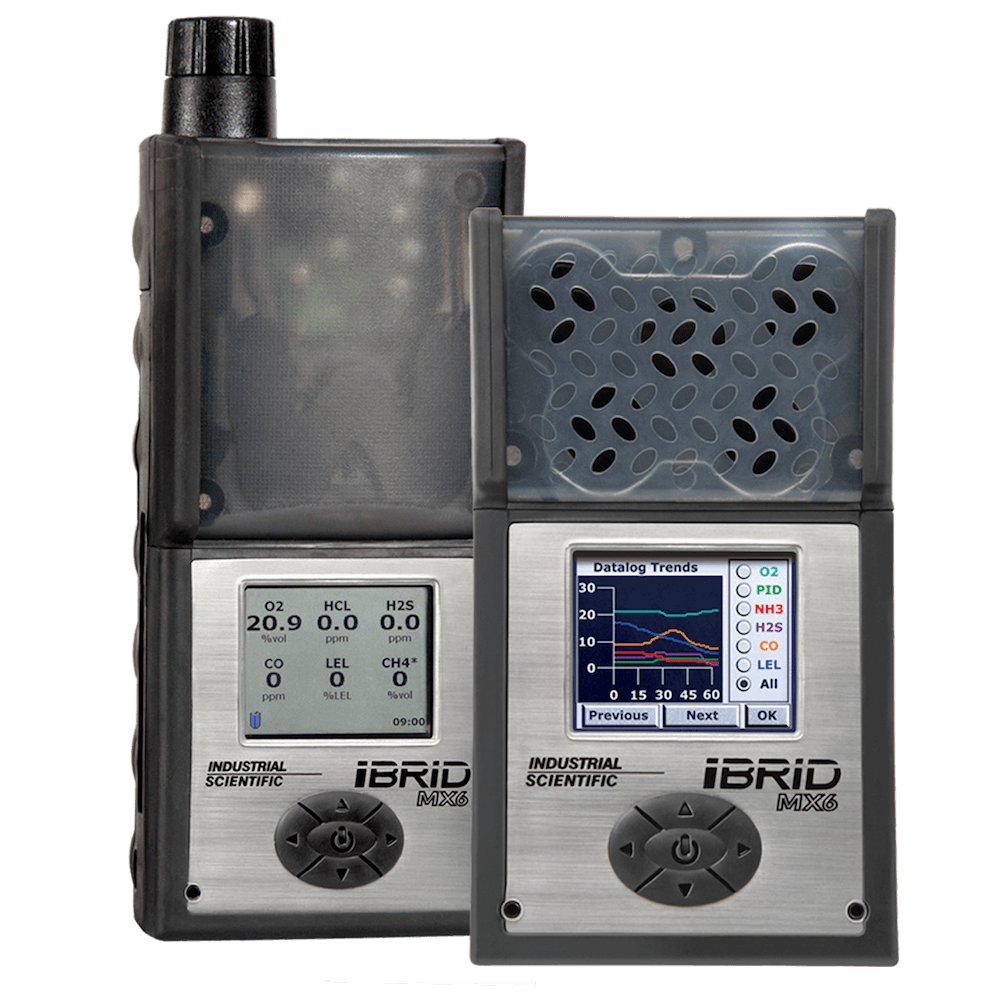
Typical Vessels: TankerChemical carrierOffshore support vesselContainer ship (engine room & cargo holds)Bulk carrierFerry
Certifications: ATEX Category III, Zone 0/1/2IECExUSCG Type Approval
Decision Guide: Choose if you need real‑time multi‑gas monitoring across a fleet, operate in ATEX‑rated zones, and require rugged, wireless reporting for confined‑space entry. Avoid if budget constraints limit multi‑sensor purchases, only a single gas is of concern, or reliable shipboard Wi‑Fi cannot be guaranteed.
Use Cases: The MX4 is commonly deployed for confined‑space entry monitoring on tankers during cargo operations, engine‑room and boiler‑room safety checks on bulk carriers, offshore platform support vessels during drilling mud handling, and routine gas surveys in chemical carrier cargo holds where multiple hazardous gases may be present.
Industrial Scientific MX6 iBrid
MX6 iBrid
6 gases + PID · Hazardous Gas Detection · Portable multi‑gas detector with PID
Type
portable
Gases
6
Pid
ja
Pump
ja
Common Failures & Inspection Points
  • Sensor ageing, poisoning, contamination or dirt causes drift, slow response, false alarms or failed tests
  • Power, battery, wiring or communication faults cause device-failure alarms or loss of indication
  • Water ingress, corrosion or impact damage causes intermittent operation or failed controls
  • Blocked sampling paths or obstructed detector exposure delays response or prevents correct detection
  • Incorrect calibration, configuration or detector type causes misleading readings or nuisance alarms
Service: Inspect sensors, sample paths or detector openings, wiring, power, mounting and alarm interfaces. Perform bump tests, functional tests or calibration using the approved method for the device type. Review alarm history and confirm remote indications or shutdown interfaces. Refer to the manufacturer documentation for the exact figure for calibration and alarm criteria.
Spare Parts: Carry detector heads or sensor cartridges, filters, sampling parts, batteries or chargers, fuses, calibration accessories and approved test consumables.
Strengths
  • Monitors up to six gases in one unit, reducing equipment load
  • Integrated PID provides real‑time VOC detection
  • Built‑in pump enables active sampling for confined‑space work
  • Wireless iBridge connectivity for live data upload and trend logging
  • ATEX Zone 1 / IECEx certified for hazardous‑area use
Weaknesses
  • PID lamp has a finite life and can burn out, requiring scheduled replacement
  • Pump mechanism adds complexity and may fail under heavy use
  • Higher purchase price than single‑gas handhelds
  • Limited to six configurable gases; some competitors support more channels
  • Battery runtime reduced when both pump and PID are active
Typical Vessels: Tanker (oil, chemical)LNG carrierContainer shipBulk carrierOffshore supply vesselWorkboat / ferry
Certifications: ATEX Zone 1IECExUSCG Type Approval
Decision Guide: Choose if you need a single portable unit that can simultaneously detect multiple gases, including VOCs, with active sampling and real‑time wireless reporting for confined‑space entry or cargo tank monitoring. Avoid if budget constraints limit you to basic single‑gas detectors or if you require more than six gas channels.
Use Cases: Machinery, cargo, accommodation, enclosed-space and personal safety monitoring.
ISC MX6 iBrid LEL/O2/CO/H2S unverified
Gases
LEL/O2/CO/H2S
Common Failures & Inspection Points
  • Sensor poisoning, depletion or aging caused by contaminant exposure or normal service, resulting in slow response, failed calibration or incorrect readings
  • Blocked sample path or dirty sensor opening caused by dust, salt, oil or water, resulting in weak response or a fault indication
  • Calibration drift caused by sensor aging or unsuitable calibration practice, resulting in readings that do not correspond with the applied test gas
  • Power, battery or communication failure caused by electrical faults, depleted cells or damaged cabling, resulting in loss of indication or system fault alarms
  • Alarm, relay or sampling-pump malfunction where fitted caused by control or mechanical faults, resulting in missing alarms, poor sample flow or persistent fault indications
Service: Perform bump tests, calibration checks and functional testing in accordance with the approved procedure for the installed detector type. Inspect sensor heads, sample paths, filters, batteries, cabling, pumps and junction boxes as applicable. Use only the correct certified test gas and accessories for the configured sensors. Verify local alarms and any outputs to the vessel's alarm or shutdown system. Replace life-limited sensing elements according to manufacturer guidance and record the work. Refer to the manufacturer documentation for the exact figure for calibration intervals, alarm settings and environmental limits.
Spare Parts: Keep model-correct sensor cartridges or cells, filters, batteries where applicable, pump consumables, calibration accessories and selected electronic or relay components. Test-gas cylinders and regulators must match the configured sensors. Replacement components must preserve the approved certification.
Use Cases: Atmosphere monitoring for enclosed-space entry, machinery spaces, cargo areas, offshore process areas and other locations where combustible, toxic or oxygen conditions must be detected.
ISC MX6 iBrid LEL/O2/CO/H2S/PID unverified
Gases
LEL/O2/CO/H2S/PID
Common Failures & Inspection Points
  • Sensor poisoning, depletion or aging caused by contaminant exposure or normal service, resulting in slow response, failed calibration or incorrect readings
  • Blocked sample path or dirty sensor opening caused by dust, salt, oil or water, resulting in weak response or a fault indication
  • Calibration drift caused by sensor aging or unsuitable calibration practice, resulting in readings that do not correspond with the applied test gas
  • Power, battery or communication failure caused by electrical faults, depleted cells or damaged cabling, resulting in loss of indication or system fault alarms
  • Alarm, relay or sampling-pump malfunction where fitted caused by control or mechanical faults, resulting in missing alarms, poor sample flow or persistent fault indications
Service: Perform bump tests, calibration checks and functional testing in accordance with the approved procedure for the installed detector type. Inspect sensor heads, sample paths, filters, batteries, cabling, pumps and junction boxes as applicable. Use only the correct certified test gas and accessories for the configured sensors. Verify local alarms and any outputs to the vessel's alarm or shutdown system. Replace life-limited sensing elements according to manufacturer guidance and record the work. Refer to the manufacturer documentation for the exact figure for calibration intervals, alarm settings and environmental limits.
Spare Parts: Keep model-correct sensor cartridges or cells, filters, batteries where applicable, pump consumables, calibration accessories and selected electronic or relay components. Test-gas cylinders and regulators must match the configured sensors.
Use Cases: It is used for hazardous-atmosphere monitoring on merchant ships, passenger vessels, offshore units or other vessel types where this equipment category is fitted.
ISC MX6 iBrid LEL/O2 unverified
Gases
LEL/O2
Common Failures & Inspection Points
  • Sensor poisoning, depletion or ageing, typically indicated by slow response, failed bump test or calibration drift
  • Sampling pump/filter blockage in pumped units, typically indicated by low-flow alarm or no gas response
  • Battery/power-supply failure, typically indicated by instrument shutdown or low-power alarm
  • Water/dirt ingress into sensor or sample path, typically indicated by erratic readings or sensor fault
  • Calibration or configuration error, typically indicated by incorrect zero/span, nuisance alarms or missed response
Service: Inspect sensor condition, filters/sample paths, power/battery, alarm functions and calibration status; perform bump and calibration tests using approved gas and procedures, with exact alarm points taken from vessel/manufacturer documentation.
Spare Parts: Keep approved sensors, filters, sampling tubing, batteries/chargers, pump service parts and calibration accessories/gas as allowed by the vessel's safety system.
Use Cases: Used on tankers, gas carriers, chemical carriers, offshore units, enclosed-space entry teams and machinery spaces where hazardous atmospheres may occur. This entry applies specifically to the Portable Multi-Gas Detector variant identified as Industrial Scientific ISC MX6 iBrid LEL/O2.
ISC Ventis Pro5 LEL/O2/CO/H2S unverified
Gases
LEL/O2/CO/H2S
Common Failures & Inspection Points
  • Sensor poisoning, depletion or aging caused by contaminant exposure or normal service, resulting in slow response, failed calibration or incorrect readings
  • Blocked sample path or dirty sensor opening caused by dust, salt, oil or water, resulting in weak response or a fault indication
  • Calibration drift caused by sensor aging or unsuitable calibration practice, resulting in readings that do not correspond with the applied test gas
  • Power, battery or communication failure caused by electrical faults, depleted cells or damaged cabling, resulting in loss of indication or system fault alarms
  • Alarm, relay or sampling-pump malfunction where fitted caused by control or mechanical faults, resulting in missing alarms, poor sample flow or persistent fault indications
Service: Perform bump tests, calibration checks and functional testing in accordance with the approved procedure for the installed detector type. Inspect sensor heads, sample paths, filters, batteries, cabling, pumps and junction boxes as applicable. Use only the correct certified test gas and accessories for the configured sensors. Verify local alarms and any outputs to the vessel's alarm or shutdown system. Replace life-limited sensing elements according to manufacturer guidance and record the work. Refer to the manufacturer documentation for the exact figure for calibration intervals, alarm settings and environmental limits.
Spare Parts: Keep model-correct sensor cartridges or cells, filters, batteries where applicable, pump consumables, calibration accessories and selected electronic or relay components. Test-gas cylinders and regulators must match the configured sensors.
Use Cases: It is used for hazardous-atmosphere monitoring on merchant ships, passenger vessels, offshore units or other vessel types where this equipment category is fitted.
ISC Ventis Pro5 LEL/O2/CO/H2S/PID unverified
Gases
LEL/O2/CO/H2S/PID
Common Failures & Inspection Points
  • Sensor poisoning, depletion or aging caused by contaminant exposure or normal service, resulting in slow response, failed calibration or incorrect readings
  • Blocked sample path or dirty sensor opening caused by dust, salt, oil or water, resulting in weak response or a fault indication
  • Calibration drift caused by sensor aging or unsuitable calibration practice, resulting in readings that do not correspond with the applied test gas
  • Power, battery or communication failure caused by electrical faults, depleted cells or damaged cabling, resulting in loss of indication or system fault alarms
  • Alarm, relay or sampling-pump malfunction where fitted caused by control or mechanical faults, resulting in missing alarms, poor sample flow or persistent fault indications
Service: Perform bump tests, calibration checks and functional testing in accordance with the approved procedure for the installed detector type. Inspect sensor heads, sample paths, filters, batteries, cabling, pumps and junction boxes as applicable. Use only the correct certified test gas and accessories for the configured sensors. Verify local alarms and any outputs to the vessel's alarm or shutdown system. Replace life-limited sensing elements according to manufacturer guidance and record the work. Refer to the manufacturer documentation for the exact figure for calibration intervals, alarm settings and environmental limits.
Spare Parts: Keep model-correct sensor cartridges or cells, filters, batteries where applicable, pump consumables, calibration accessories and selected electronic or relay components. Test-gas cylinders and regulators must match the configured sensors.
Use Cases: It is used for hazardous-atmosphere monitoring on merchant ships, passenger vessels, offshore units or other vessel types where this equipment category is fitted.
ISC Ventis Pro5 LEL/O2 unverified
Gases
LEL/O2
Common Failures & Inspection Points
  • Sensor ageing, poisoning or contamination causes drift, slow response or calibration failure
  • Low battery, power-supply or communication faults cause unexpected shutdown or detector-failure alarms
  • Blocked pump, filter, sample line or optical path causes low-flow, beam or delayed-response alarms
  • Water, dirt, corrosion or impact damage causes intermittent readings or failed controls
  • Incorrect calibration gas, sensor type or configuration produces misleading readings or repeated nuisance alarms
Service: Inspect sensor inlets or optics, sample paths, filters, power, mounting and alarm interfaces. Perform bump tests and calibration using the approved gas and procedure for the detector type. Review alarm and calibration status before safety-critical use. Refer to the manufacturer documentation for the exact figure for alarm settings and calibration values.
Spare Parts: Carry filters, sampling hoses or optical cleaning items as applicable, sensor cartridges where user-replaceable, batteries or chargers, fuses and approved calibration accessories.
Use Cases: Enclosed-space entry, cargo operations, machinery monitoring and hazardous-area safety.
ISC Ventis MX4 LEL/O2/CO/H2S unverified
Gases
LEL/O2/CO/H2S
Common Failures & Inspection Points
  • Sensor poisoning, depletion or aging caused by contaminant exposure or normal service, resulting in slow response, failed calibration or incorrect readings
  • Blocked sample path or dirty sensor opening caused by dust, salt, oil or water, resulting in weak response or a fault indication
  • Calibration drift caused by sensor aging or unsuitable calibration practice, resulting in readings that do not correspond with the applied test gas
  • Power, battery or communication failure caused by electrical faults, depleted cells or damaged cabling, resulting in loss of indication or system fault alarms
  • Alarm, relay or sampling-pump malfunction where fitted caused by control or mechanical faults, resulting in missing alarms, poor sample flow or persistent fault indications
Service: Perform bump tests, calibration checks and functional testing in accordance with the approved procedure for the installed detector type. Inspect sensor heads, sample paths, filters, batteries, cabling, pumps and junction boxes as applicable. Use only the correct certified test gas and accessories for the configured sensors. Verify local alarms and any outputs to the vessel's alarm or shutdown system. Replace life-limited sensing elements according to manufacturer guidance and record the work. Refer to the manufacturer documentation for the exact figure for calibration intervals, alarm settings and environmental limits.
Spare Parts: Keep model-correct sensor cartridges or cells, filters, batteries where applicable, pump consumables, calibration accessories and selected electronic or relay components. Test-gas cylinders and regulators must match the configured sensors. Replacement components must preserve the approved certification.
Use Cases: Atmosphere monitoring for enclosed-space entry, machinery spaces, cargo areas, offshore process areas and other locations where combustible, toxic or oxygen conditions must be detected.
ISC Ventis MX4 LEL/O2/CO/H2S/PID unverified
Gases
LEL/O2/CO/H2S/PID
Common Failures & Inspection Points
  • Sensor poisoning, depletion or aging caused by contaminant exposure or normal service, resulting in slow response, failed calibration or incorrect readings
  • Blocked sample path or dirty sensor opening caused by dust, salt, oil or water, resulting in weak response or a fault indication
  • Calibration drift caused by sensor aging or unsuitable calibration practice, resulting in readings that do not correspond with the applied test gas
  • Power, battery or communication failure caused by electrical faults, depleted cells or damaged cabling, resulting in loss of indication or system fault alarms
  • Alarm, relay or sampling-pump malfunction where fitted caused by control or mechanical faults, resulting in missing alarms, poor sample flow or persistent fault indications
Service: Perform bump tests, calibration checks and functional testing in accordance with the approved procedure for the installed detector type. Inspect sensor heads, sample paths, filters, batteries, cabling, pumps and junction boxes as applicable. Use only the correct certified test gas and accessories for the configured sensors. Verify local alarms and any outputs to the vessel's alarm or shutdown system. Replace life-limited sensing elements according to manufacturer guidance and record the work. Refer to the manufacturer documentation for the exact figure for calibration intervals, alarm settings and environmental limits.
Spare Parts: Keep model-correct sensor cartridges or cells, filters, batteries where applicable, pump consumables, calibration accessories and selected electronic or relay components. Test-gas cylinders and regulators must match the configured sensors.
Use Cases: It is used for hazardous-atmosphere monitoring on merchant ships, passenger vessels, offshore units or other vessel types where this equipment category is fitted.
ISC Ventis MX4 LEL/O2 unverified
Gases
LEL/O2
Common Failures & Inspection Points
  • Sensor poisoning, depletion or ageing, typically indicated by slow response, failed bump test or calibration drift
  • Sampling pump/filter blockage in pumped units, typically indicated by low-flow alarm or no gas response
  • Battery/power-supply failure, typically indicated by instrument shutdown or low-power alarm
  • Water/dirt ingress into sensor or sample path, typically indicated by erratic readings or sensor fault
  • Calibration or configuration error, typically indicated by incorrect zero/span, nuisance alarms or missed response
Service: Inspect sensor condition, filters/sample paths, power/battery, alarm functions and calibration status; perform bump and calibration tests using approved gas and procedures, with exact alarm points taken from vessel/manufacturer documentation.
Spare Parts: Keep approved sensors, filters, sampling tubing, batteries/chargers, pump service parts and calibration accessories/gas as allowed by the vessel's safety system.
Use Cases: Used on tankers, gas carriers, chemical carriers, offshore units, enclosed-space entry teams and machinery spaces where hazardous atmospheres may occur. This entry applies specifically to the Portable Multi-Gas Detector variant identified as Industrial Scientific ISC Ventis MX4 LEL/O2.
ISC Radius BZ1 unverified
Type
Area Monitor
Wireless
ja
Common Failures & Inspection Points
  • Detector or sensing-element contamination, poisoning or ageing can cause false alarms, slow response or failed functional tests
  • Battery, power-supply or control-circuit faults caused by ageing, loose wiring or blown protection can lead to trouble alarms or unavailable safety functions
  • Cylinder pressure loss, leakage or damaged valves where stored media is used can leave the equipment outside ready condition and may be found during inspection or weighing checks
  • Blocked, corroded or mechanically damaged nozzles, piping, hoses or masks can restrict discharge or breathing flow and show as poor functional test results
  • Incorrect isolation, expired service status or disturbed release interlocks after maintenance can prevent normal arming and create panel faults or failed readiness checks
Service: Check physical condition, accessibility, labels and service status, then verify approved tests of detectors, alarms, release circuits or breathing components as applicable. Inspect cylinders, hoses, nozzles, masks, wiring and interlocks without discharging or altering safety systems outside the approved procedure. Use maker, class and statutory documentation for exact inspection and acceptance criteria.
Spare Parts: Hold only approved safety-system spares such as detector heads, filters or sensor caps, fuses, batteries where user-replaceable, seals, hoses, masks, nozzles and control modules according to the vessel's certified arrangement.
Use Cases: Machinery spaces, accommodation, cargo areas, enclosed spaces and emergency-response stations on merchant, passenger, tanker and offshore vessels.
ISC Radius BZ1 Area unverified
Type
Area Monitor
Wireless
ja
Common Failures & Inspection Points
  • Sensor poisoning, depletion or ageing, typically indicated by slow response, failed bump test or calibration drift
  • Sampling pump/filter blockage in pumped units, typically indicated by low-flow alarm or no gas response
  • Battery/power-supply failure, typically indicated by instrument shutdown or low-power alarm
  • Water/dirt ingress into sensor or sample path, typically indicated by erratic readings or sensor fault
  • Calibration or configuration error, typically indicated by incorrect zero/span, nuisance alarms or missed response
Service: Inspect sensor condition, filters/sample paths, power/battery, alarm functions and calibration status; perform bump and calibration tests using approved gas and procedures, with exact alarm points taken from vessel/manufacturer documentation.
Spare Parts: Keep approved sensors, filters, sampling tubing, batteries/chargers, pump service parts and calibration accessories/gas as allowed by the vessel's safety system.
Use Cases: Used on tankers, gas carriers, chemical carriers, offshore units, enclosed-space entry teams and machinery spaces where hazardous atmospheres may occur. This entry applies specifically to the Portable Multi-Gas Detector variant identified as Industrial Scientific ISC Radius BZ1 Area.
Ventis Pro5 LEL/O2/CO/H2S-B unverified
Gases
LEL/O2/CO/H2S
Common Failures & Inspection Points
  • Sensor poisoning, depletion or aging caused by contaminant exposure or normal service, resulting in slow response, failed calibration or incorrect readings
  • Blocked sample path or dirty sensor opening caused by dust, salt, oil or water, resulting in weak response or a fault indication
  • Calibration drift caused by sensor aging or unsuitable calibration practice, resulting in readings that do not correspond with the applied test gas
  • Power, battery or communication failure caused by electrical faults, depleted cells or damaged cabling, resulting in loss of indication or system fault alarms
  • Alarm, relay or sampling-pump malfunction where fitted caused by control or mechanical faults, resulting in missing alarms, poor sample flow or persistent fault indications
Service: Perform bump tests, calibration checks and functional testing in accordance with the approved procedure for the installed detector type. Inspect sensor heads, sample paths, filters, batteries, cabling, pumps and junction boxes as applicable. Use only the correct certified test gas and accessories for the configured sensors. Verify local alarms and any outputs to the vessel's alarm or shutdown system. Replace life-limited sensing elements according to manufacturer guidance and record the work. Refer to the manufacturer documentation for the exact figure for calibration intervals, alarm settings and environmental limits.
Spare Parts: Keep model-correct sensor cartridges or cells, filters, batteries where applicable, pump consumables, calibration accessories and selected electronic or relay components. Test-gas cylinders and regulators must match the configured sensors. Replacement components must preserve the approved certification.
Use Cases: Atmosphere monitoring for enclosed-space entry, machinery spaces, cargo areas, offshore process areas and other locations where combustible, toxic or oxygen conditions must be detected.
Ventis Pro5 LEL/O2/CO/H2S/VOC-B unverified
Gases
LEL/O2/CO/H2S/VOC
Common Failures & Inspection Points
  • Sensor poisoning, depletion or aging caused by contaminant exposure or normal service, resulting in slow response, failed calibration or incorrect readings
  • Blocked sample path or dirty sensor opening caused by dust, salt, oil or water, resulting in weak response or a fault indication
  • Calibration drift caused by sensor aging or unsuitable calibration practice, resulting in readings that do not correspond with the applied test gas
  • Power, battery or communication failure caused by electrical faults, depleted cells or damaged cabling, resulting in loss of indication or system fault alarms
  • Alarm, relay or sampling-pump malfunction where fitted caused by control or mechanical faults, resulting in missing alarms, poor sample flow or persistent fault indications
Service: Perform bump tests, calibration checks and functional testing in accordance with the approved procedure for the installed detector type. Inspect sensor heads, sample paths, filters, batteries, cabling, pumps and junction boxes as applicable. Use only the correct certified test gas and accessories for the configured sensors. Verify local alarms and any outputs to the vessel's alarm or shutdown system. Replace life-limited sensing elements according to manufacturer guidance and record the work. Refer to the manufacturer documentation for the exact figure for calibration intervals, alarm settings and environmental limits.
Spare Parts: Keep model-correct sensor cartridges or cells, filters, batteries where applicable, pump consumables, calibration accessories and selected electronic or relay components. Test-gas cylinders and regulators must match the configured sensors.
Use Cases: It is used for hazardous-atmosphere monitoring on merchant ships, passenger vessels, offshore units or other vessel types where this equipment category is fitted.
Ventis Pro5 LEL/O2/CO/H2S/SO2-B unverified
Gases
LEL/O2/CO/H2S/SO2
Common Failures & Inspection Points
  • Sensor poisoning, depletion or aging caused by contaminant exposure or normal service, resulting in slow response, failed calibration or incorrect readings
  • Blocked sample path or dirty sensor opening caused by dust, salt, oil or water, resulting in weak response or a fault indication
  • Calibration drift caused by sensor aging or unsuitable calibration practice, resulting in readings that do not correspond with the applied test gas
  • Power, battery or communication failure caused by electrical faults, depleted cells or damaged cabling, resulting in loss of indication or system fault alarms
  • Alarm, relay or sampling-pump malfunction where fitted caused by control or mechanical faults, resulting in missing alarms, poor sample flow or persistent fault indications
Service: Perform bump tests, calibration checks and functional testing in accordance with the approved procedure for the installed detector type. Inspect sensor heads, sample paths, filters, batteries, cabling, pumps and junction boxes as applicable. Use only the correct certified test gas and accessories for the configured sensors. Verify local alarms and any outputs to the vessel's alarm or shutdown system. Replace life-limited sensing elements according to manufacturer guidance and record the work. Refer to the manufacturer documentation for the exact figure for calibration intervals, alarm settings and environmental limits.
Spare Parts: Keep model-correct sensor cartridges or cells, filters, batteries where applicable, pump consumables, calibration accessories and selected electronic or relay components. Test-gas cylinders and regulators must match the configured sensors.
Use Cases: It is used for hazardous-atmosphere monitoring on merchant ships, passenger vessels, offshore units or other vessel types where this equipment category is fitted.
Ventis Pro5 LEL/O2/CO/H2S/NH3-B unverified
Gases
LEL/O2/CO/H2S/NH3
Common Failures & Inspection Points
  • Sensor poisoning, depletion or aging caused by contaminant exposure or normal service, resulting in slow response, failed calibration or incorrect readings
  • Blocked sample path or dirty sensor opening caused by dust, salt, oil or water, resulting in weak response or a fault indication
  • Calibration drift caused by sensor aging or unsuitable calibration practice, resulting in readings that do not correspond with the applied test gas
  • Power, battery or communication failure caused by electrical faults, depleted cells or damaged cabling, resulting in loss of indication or system fault alarms
  • Alarm, relay or sampling-pump malfunction where fitted caused by control or mechanical faults, resulting in missing alarms, poor sample flow or persistent fault indications
Service: Perform bump tests, calibration checks and functional testing in accordance with the approved procedure for the installed detector type. Inspect sensor heads, sample paths, filters, batteries, cabling, pumps and junction boxes as applicable. Use only the correct certified test gas and accessories for the configured sensors. Verify local alarms and any outputs to the vessel's alarm or shutdown system. Replace life-limited sensing elements according to manufacturer guidance and record the work. Refer to the manufacturer documentation for the exact figure for calibration intervals, alarm settings and environmental limits.
Spare Parts: Keep model-correct sensor cartridges or cells, filters, batteries where applicable, pump consumables, calibration accessories and selected electronic or relay components. Test-gas cylinders and regulators must match the configured sensors.
Use Cases: It is used for hazardous-atmosphere monitoring on merchant ships, passenger vessels, offshore units or other vessel types where this equipment category is fitted.
Ventis Pro5 LEL/O2-B unverified
Gases
LEL/O2
Common Failures & Inspection Points
  • Sensor poisoning, depletion or ageing, typically indicated by slow response, failed bump test or calibration drift
  • Sampling pump/filter blockage in pumped units, typically indicated by low-flow alarm or no gas response
  • Battery/power-supply failure, typically indicated by instrument shutdown or low-power alarm
  • Water/dirt ingress into sensor or sample path, typically indicated by erratic readings or sensor fault
  • Calibration or configuration error, typically indicated by incorrect zero/span, nuisance alarms or missed response
Service: Inspect sensor condition, filters/sample paths, power/battery, alarm functions and calibration status; perform bump and calibration tests using approved gas and procedures, with exact alarm points taken from vessel/manufacturer documentation.
Spare Parts: Keep approved sensors, filters, sampling tubing, batteries/chargers, pump service parts and calibration accessories/gas as allowed by the vessel's safety system.
Use Cases: Used on tankers, gas carriers, chemical carriers, offshore units, enclosed-space entry teams and machinery spaces where hazardous atmospheres may occur. This entry applies specifically to the Portable Multi-Gas Detector variant identified as Industrial Scientific Ventis Pro5 LEL/O2-B.
Ventis Pro5 O2/CO-B unverified
Gases
O2/CO
Common Failures & Inspection Points
  • Sensor poisoning, depletion or ageing, typically indicated by slow response, failed bump test or calibration drift
  • Sampling pump/filter blockage in pumped units, typically indicated by low-flow alarm or no gas response
  • Battery/power-supply failure, typically indicated by instrument shutdown or low-power alarm
  • Water/dirt ingress into sensor or sample path, typically indicated by erratic readings or sensor fault
  • Calibration or configuration error, typically indicated by incorrect zero/span, nuisance alarms or missed response
Service: Inspect sensor condition, filters/sample paths, power/battery, alarm functions and calibration status; perform bump and calibration tests using approved gas and procedures, with exact alarm points taken from vessel/manufacturer documentation.
Spare Parts: Keep approved sensors, filters, sampling tubing, batteries/chargers, pump service parts and calibration accessories/gas as allowed by the vessel's safety system.
Use Cases: Used on tankers, gas carriers, chemical carriers, offshore units, enclosed-space entry teams and machinery spaces where hazardous atmospheres may occur. This entry applies specifically to the Portable Multi-Gas Detector variant identified as Industrial Scientific Ventis Pro5 O2/CO-B.
Ventis Pro5 O2/H2S-B unverified
Gases
O2/H2S
Common Failures & Inspection Points
  • Sensor poisoning, depletion or ageing, typically indicated by slow response, failed bump test or calibration drift
  • Sampling pump/filter blockage in pumped units, typically indicated by low-flow alarm or no gas response
  • Battery/power-supply failure, typically indicated by instrument shutdown or low-power alarm
  • Water/dirt ingress into sensor or sample path, typically indicated by erratic readings or sensor fault
  • Calibration or configuration error, typically indicated by incorrect zero/span, nuisance alarms or missed response
Service: Inspect sensor condition, filters/sample paths, power/battery, alarm functions and calibration status; perform bump and calibration tests using approved gas and procedures, with exact alarm points taken from vessel/manufacturer documentation.
Spare Parts: Keep approved sensors, filters, sampling tubing, batteries/chargers, pump service parts and calibration accessories/gas as allowed by the vessel's safety system.
Use Cases: Used on tankers, gas carriers, chemical carriers, offshore units, enclosed-space entry teams and machinery spaces where hazardous atmospheres may occur. This entry applies specifically to the Portable Multi-Gas Detector variant identified as Industrial Scientific Ventis Pro5 O2/H2S-B.
MX6 iBrid Pump-C unverified
Sampling method
Pump
Common Failures & Inspection Points
  • Sensor poisoning, ageing, contamination, or end-of-life degradation causes slow response, failed calibration, or drifting readings
  • Blocked sample line, filter, pump, or diffusion path prevents representative gas reaching the sensor and causes low or delayed readings
  • Battery, supply, charger, or internal power faults cause shutdown, short operating time, or power alarms
  • Water ingress, condensation, corrosion, or damaged connectors produce intermittent channels, false alarms, or failed communication
  • Calibration, configuration, relay, or control faults can cause nuisance alarms, missing alarms, or incorrect identification of the monitored point
Service: Inspect sensor condition, sampling paths and filters, pump operation where fitted, battery or power supply, alarms, relays, display, sampling-point identification, and calibration records. Perform bump tests and calibration only with approved gas and according to manufacturer and vessel safety procedures.
Spare Parts: Keep approved sensors or sensor cartridges, filters, pump or tubing service items, batteries or charging accessories, calibration fittings, and critical fuses or interface parts.
Use Cases: Used on tankers, gas carriers, offshore vessels, enclosed-space operations, engine rooms, battery rooms, refrigeration spaces, cargo areas, and other locations where hazardous atmospheres may occur.
Ventis Pro5 Pump-C unverified
Sampling method
Pump
Common Failures & Inspection Points
  • Sensor poisoning, ageing, contamination, or end-of-life degradation causes slow response, failed calibration, or drifting readings
  • Blocked sample line, filter, pump, or diffusion path prevents representative gas reaching the sensor and causes low or delayed readings
  • Battery, supply, charger, or internal power faults cause shutdown, short operating time, or power alarms
  • Water ingress, condensation, corrosion, or damaged connectors produce intermittent channels, false alarms, or failed communication
  • Calibration, configuration, relay, or control faults can cause nuisance alarms, missing alarms, or incorrect identification of the monitored point
Service: Inspect sensor condition, sampling paths and filters, pump operation where fitted, battery or power supply, alarms, relays, display, sampling-point identification, and calibration records. Perform bump tests and calibration only with approved gas and according to manufacturer and vessel safety procedures.
Spare Parts: Keep approved sensors or sensor cartridges, filters, pump or tubing service items, batteries or charging accessories, calibration fittings, and critical fuses or interface parts.
Use Cases: Used on tankers, gas carriers, offshore vessels, enclosed-space operations, engine rooms, battery rooms, refrigeration spaces, cargo areas, and other locations where hazardous atmospheres may occur.
MX6 iBrid Diffusion-C unverified
Sampling method
Diffusion
Common Failures & Inspection Points
  • Sensor poisoning, depletion or ageing, typically indicated by slow response, failed bump test or calibration drift
  • Sampling pump/filter blockage in pumped units, typically indicated by low-flow alarm or no gas response
  • Battery/power-supply failure, typically indicated by instrument shutdown or low-power alarm
  • Water/dirt ingress into sensor or sample path, typically indicated by erratic readings or sensor fault
  • Calibration or configuration error, typically indicated by incorrect zero/span, nuisance alarms or missed response
Service: Inspect sensor condition, filters/sample paths, power/battery, alarm functions and calibration status; perform bump and calibration tests using approved gas and procedures, with exact alarm points taken from vessel/manufacturer documentation.
Spare Parts: Keep approved sensors, filters, sampling tubing, batteries/chargers, pump service parts and calibration accessories/gas as allowed by the vessel's safety system.
Use Cases: Used on tankers, gas carriers, chemical carriers, offshore units, enclosed-space entry teams and machinery spaces where hazardous atmospheres may occur. This entry applies specifically to the Portable Multi-Gas Detector variant identified as Industrial Scientific MX6 iBrid Diffusion-C.
Ventis Pro5 Diffusion-C unverified
Sampling method
Diffusion
Common Failures & Inspection Points
  • Sensor ageing, poisoning or contamination causes drift, slow response or calibration failure
  • Low battery, power-supply or communication faults cause unexpected shutdown or detector-failure alarms
  • Blocked pump, filter, sample line or optical path causes low-flow, beam or delayed-response alarms
  • Water, dirt, corrosion or impact damage causes intermittent readings or failed controls
  • Incorrect calibration gas, sensor type or configuration produces misleading readings or repeated nuisance alarms
Service: Inspect sensor inlets or optics, sample paths, filters, power, mounting and alarm interfaces. Perform bump tests and calibration using the approved gas and procedure for the detector type. Review alarm and calibration status before safety-critical use. Refer to the manufacturer documentation for the exact figure for alarm settings and calibration values.
Spare Parts: Carry filters, sampling hoses or optical cleaning items as applicable, sensor cartridges where user-replaceable, batteries or chargers, fuses and approved calibration accessories.
Use Cases: Enclosed-space entry, cargo operations, machinery monitoring and hazardous-area safety.

Riken Keiki

18
Riken GX-2009 LEL/O2/CO/H2S unverified
Gases
LEL/O2/CO/H2S
Common Failures & Inspection Points
  • Sensor poisoning, ageing, contamination, or end-of-life degradation causes slow response, failed calibration, or drifting readings
  • Blocked sample line, filter, pump, or diffusion path prevents representative gas reaching the sensor and causes low or delayed readings
  • Battery, supply, charger, or internal power faults cause shutdown, short operating time, or power alarms
  • Water ingress, condensation, corrosion, or damaged connectors produce intermittent channels, false alarms, or failed communication
  • Calibration, configuration, relay, or control faults can cause nuisance alarms, missing alarms, or incorrect identification of the monitored point
Service: Inspect sensor condition, sampling paths and filters, pump operation where fitted, battery or power supply, alarms, relays, display, sampling-point identification, and calibration records. Perform bump tests and calibration only with approved gas and according to manufacturer and vessel safety procedures.
Spare Parts: Keep approved sensors or sensor cartridges, filters, pump or tubing service items, batteries or charging accessories, calibration fittings, and critical fuses or interface parts.
Use Cases: Used on tankers, gas carriers, offshore vessels, enclosed-space operations, engine rooms, battery rooms, refrigeration spaces, cargo areas, and other locations where hazardous atmospheres may occur.
Riken GX-2009 LEL/O2 unverified
Gases
LEL/O2
Common Failures & Inspection Points
  • Sensor poisoning, ageing, contamination, or end-of-life degradation causes slow response, failed calibration, or readings that drift from known test gas
  • Blocked sample line, filter, pump, or diffusion path prevents representative gas reaching the sensor and causes low or delayed readings
  • Battery, supply, charger, or internal power faults cause shutdown, short operating time, or power alarms
  • Water ingress, condensation, corrosion, or damaged connectors produces intermittent channels, false alarms, or failed communication
  • Calibration, configuration, relay, or control faults can cause nuisance alarms, missing alarms, or incorrect display of the monitored point
Service: Inspect sensor condition, sampling paths and filters, pump operation where fitted, battery or power supply, alarms, relays, display, identification of sampling points, and calibration records. Perform bump tests and calibration only with approved gas and according to the manufacturer and vessel safety procedure.
Spare Parts: Keep approved sensors or sensor cartridges, filters, pump or tubing service items, batteries or charging accessories, calibration fittings, and critical fuses or interface parts recommended for the system.
Use Cases: Used on tankers, gas carriers, offshore vessels, enclosed-space operations, engine rooms, battery rooms, refrigeration spaces, cargo areas, and other locations where hazardous atmospheres may occur.
Riken GX-2009 LEL/O2/CO unverified
Gases
LEL/O2/CO
Common Failures & Inspection Points
  • Detector or sensing-element contamination, poisoning or ageing can cause false alarms, slow response or failed functional tests
  • Battery, power-supply or control-circuit faults caused by ageing, loose wiring or blown protection can lead to trouble alarms or unavailable safety functions
  • Cylinder pressure loss, leakage or damaged valves where stored media is used can leave the equipment outside ready condition and may be found during inspection or weighing checks
  • Blocked, corroded or mechanically damaged nozzles, piping, hoses or masks can restrict discharge or breathing flow and show as poor functional test results
  • Incorrect isolation, expired service status or disturbed release interlocks after maintenance can prevent normal arming and create panel faults or failed readiness checks
Service: Check physical condition, accessibility, labels and service status, then verify approved tests of detectors, alarms, release circuits or breathing components as applicable. Inspect cylinders, hoses, nozzles, masks, wiring and interlocks without discharging or altering safety systems outside the approved procedure. Use maker, class and statutory documentation for exact inspection and acceptance criteria.
Spare Parts: Hold only approved safety-system spares such as detector heads, filters or sensor caps, fuses, batteries where user-replaceable, seals, hoses, masks, nozzles and control modules according to the vessel's certified arrangement.
Use Cases: Machinery spaces, accommodation, cargo areas, enclosed spaces and emergency-response stations on merchant, passenger, tanker and offshore vessels.
Riken GX-2012 LEL/O2/CO/H2S unverified
Gases
LEL/O2/CO/H2S
Common Failures & Inspection Points
  • Sensor poisoning, ageing, contamination, or end-of-life degradation causes slow response, failed calibration, or drifting readings
  • Blocked sample line, filter, pump, or diffusion path prevents representative gas reaching the sensor and causes low or delayed readings
  • Battery, supply, charger, or internal power faults cause shutdown, short operating time, or power alarms
  • Water ingress, condensation, corrosion, or damaged connectors produce intermittent channels, false alarms, or failed communication
  • Calibration, configuration, relay, or control faults can cause nuisance alarms, missing alarms, or incorrect identification of the monitored point
Service: Inspect sensor condition, sampling paths and filters, pump operation where fitted, battery or power supply, alarms, relays, display, sampling-point identification, and calibration records. Perform bump tests and calibration only with approved gas and according to manufacturer and vessel safety procedures.
Spare Parts: Keep approved sensors or sensor cartridges, filters, pump or tubing service items, batteries or charging accessories, calibration fittings, and critical fuses or interface parts.
Use Cases: Used on tankers, gas carriers, offshore vessels, enclosed-space operations, engine rooms, battery rooms, refrigeration spaces, cargo areas, and other locations where hazardous atmospheres may occur.
Riken GX-2012 LEL/O2 unverified
Gases
LEL/O2
Common Failures & Inspection Points
  • Sensor poisoning, ageing, contamination, or end-of-life degradation causes slow response, failed calibration, or readings that drift from known test gas
  • Blocked sample line, filter, pump, or diffusion path prevents representative gas reaching the sensor and causes low or delayed readings
  • Battery, supply, charger, or internal power faults cause shutdown, short operating time, or power alarms
  • Water ingress, condensation, corrosion, or damaged connectors produces intermittent channels, false alarms, or failed communication
  • Calibration, configuration, relay, or control faults can cause nuisance alarms, missing alarms, or incorrect display of the monitored point
Service: Inspect sensor condition, sampling paths and filters, pump operation where fitted, battery or power supply, alarms, relays, display, identification of sampling points, and calibration records. Perform bump tests and calibration only with approved gas and according to the manufacturer and vessel safety procedure.
Spare Parts: Keep approved sensors or sensor cartridges, filters, pump or tubing service items, batteries or charging accessories, calibration fittings, and critical fuses or interface parts recommended for the system.
Use Cases: Used on tankers, gas carriers, offshore vessels, enclosed-space operations, engine rooms, battery rooms, refrigeration spaces, cargo areas, and other locations where hazardous atmospheres may occur.
Riken GX-2012 LEL/O2/CO unverified
Gases
LEL/O2/CO
Common Failures & Inspection Points
  • Detector or sensing-element contamination, poisoning or ageing can cause false alarms, slow response or failed functional tests
  • Battery, power-supply or control-circuit faults caused by ageing, loose wiring or blown protection can lead to trouble alarms or unavailable safety functions
  • Cylinder pressure loss, leakage or damaged valves where stored media is used can leave the equipment outside ready condition and may be found during inspection or weighing checks
  • Blocked, corroded or mechanically damaged nozzles, piping, hoses or masks can restrict discharge or breathing flow and show as poor functional test results
  • Incorrect isolation, expired service status or disturbed release interlocks after maintenance can prevent normal arming and create panel faults or failed readiness checks
Service: Check physical condition, accessibility, labels and service status, then verify approved tests of detectors, alarms, release circuits or breathing components as applicable. Inspect cylinders, hoses, nozzles, masks, wiring and interlocks without discharging or altering safety systems outside the approved procedure. Use maker, class and statutory documentation for exact inspection and acceptance criteria.
Spare Parts: Hold only approved safety-system spares such as detector heads, filters or sensor caps, fuses, batteries where user-replaceable, seals, hoses, masks, nozzles and control modules according to the vessel's certified arrangement.
Use Cases: Machinery spaces, accommodation, cargo areas, enclosed spaces and emergency-response stations on merchant, passenger, tanker and offshore vessels.
Riken GX-3R Pro LEL/O2/CO/H2S unverified
Gases
LEL/O2/CO/H2S
Common Failures & Inspection Points
  • Sensor poisoning, depletion or ageing, typically indicated by slow response, failed bump test or calibration drift
  • Sampling pump/filter blockage in pumped units, typically indicated by low-flow alarm or no gas response
  • Battery/power-supply failure, typically indicated by instrument shutdown or low-power alarm
  • Water/dirt ingress into sensor or sample path, typically indicated by erratic readings or sensor fault
  • Calibration or configuration error, typically indicated by incorrect zero/span, nuisance alarms or missed response
Service: Inspect sensor condition, filters/sample paths, power/battery, alarm functions and calibration status; perform bump and calibration tests using approved gas and procedures, with exact alarm points taken from vessel/manufacturer documentation.
Spare Parts: Keep approved sensors, filters, sampling tubing, batteries/chargers, pump service parts and calibration accessories/gas as allowed by the vessel's safety system.
Use Cases: Used on tankers, gas carriers, chemical carriers, offshore units, enclosed-space entry teams and machinery spaces where hazardous atmospheres may occur. This entry applies specifically to the Portable Multi-Gas Detector variant identified as Riken Keiki Riken GX-3R Pro LEL/O2/CO/H2S.
Riken GX-3R Pro LEL/O2 unverified
Gases
LEL/O2
Common Failures & Inspection Points
  • Sensor poisoning, ageing, contamination, or end-of-life degradation causes slow response, failed calibration, or readings that drift from known test gas
  • Blocked sample line, filter, pump, or diffusion path prevents representative gas reaching the sensor and causes low or delayed readings
  • Battery, supply, charger, or internal power faults cause shutdown, short operating time, or power alarms
  • Water ingress, condensation, corrosion, or damaged connectors produces intermittent channels, false alarms, or failed communication
  • Calibration, configuration, relay, or control faults can cause nuisance alarms, missing alarms, or incorrect display of the monitored point
Service: Inspect sensor condition, sampling paths and filters, pump operation where fitted, battery or power supply, alarms, relays, display, identification of sampling points, and calibration records. Perform bump tests and calibration only with approved gas and according to the manufacturer and vessel safety procedure.
Spare Parts: Keep approved sensors or sensor cartridges, filters, pump or tubing service items, batteries or charging accessories, calibration fittings, and critical fuses or interface parts recommended for the system.
Use Cases: Used on tankers, gas carriers, offshore vessels, enclosed-space operations, engine rooms, battery rooms, refrigeration spaces, cargo areas, and other locations where hazardous atmospheres may occur.
Riken GX-3R Pro LEL/O2/CO unverified
Gases
LEL/O2/CO
Common Failures & Inspection Points
  • Detector or sensing-element contamination, poisoning or ageing can cause false alarms, slow response or failed functional tests
  • Battery, power-supply or control-circuit faults caused by ageing, loose wiring or blown protection can lead to trouble alarms or unavailable safety functions
  • Cylinder pressure loss, leakage or damaged valves where stored media is used can leave the equipment outside ready condition and may be found during inspection or weighing checks
  • Blocked, corroded or mechanically damaged nozzles, piping, hoses or masks can restrict discharge or breathing flow and show as poor functional test results
  • Incorrect isolation, expired service status or disturbed release interlocks after maintenance can prevent normal arming and create panel faults or failed readiness checks
Service: Check physical condition, accessibility, labels and service status, then verify approved tests of detectors, alarms, release circuits or breathing components as applicable. Inspect cylinders, hoses, nozzles, masks, wiring and interlocks without discharging or altering safety systems outside the approved procedure. Use maker, class and statutory documentation for exact inspection and acceptance criteria.
Spare Parts: Hold only approved safety-system spares such as detector heads, filters or sensor caps, fuses, batteries where user-replaceable, seals, hoses, masks, nozzles and control modules according to the vessel's certified arrangement.
Use Cases: Machinery spaces, accommodation, cargo areas, enclosed spaces and emergency-response stations on merchant, passenger, tanker and offshore vessels.
GX-3R Pro LEL/O2/CO/H2S-B unverified
Gases
LEL/O2/CO/H2S
Common Failures & Inspection Points
  • Sensor ageing, poisoning, contamination or dirt causes drift, slow response, false alarms or failed tests
  • Power, battery, wiring or communication faults cause device-failure alarms or loss of indication
  • Water ingress, corrosion or impact damage causes intermittent operation or failed controls
  • Blocked sampling paths or obstructed detector exposure delays response or prevents correct detection
  • Incorrect calibration, configuration or detector type causes misleading readings or nuisance alarms
Service: Inspect sensors, sample paths or detector openings, wiring, power, mounting and alarm interfaces. Perform bump tests, functional tests or calibration using the approved method for the device type. Review alarm history and confirm remote indications or shutdown interfaces. Refer to the manufacturer documentation for the exact figure for calibration and alarm criteria.
Spare Parts: Carry detector heads or sensor cartridges, filters, sampling parts, batteries or chargers, fuses, calibration accessories and approved test consumables.
Use Cases: Machinery, cargo, accommodation, enclosed-space and personal safety monitoring.
GX-3R Pro LEL/O2/CO/H2S/VOC-B unverified
Gases
LEL/O2/CO/H2S/VOC
Common Failures & Inspection Points
  • Sensor poisoning, depletion or ageing, typically indicated by slow response, failed bump test or calibration drift
  • Sampling pump/filter blockage in pumped units, typically indicated by low-flow alarm or no gas response
  • Battery/power-supply failure, typically indicated by instrument shutdown or low-power alarm
  • Water/dirt ingress into sensor or sample path, typically indicated by erratic readings or sensor fault
  • Calibration or configuration error, typically indicated by incorrect zero/span, nuisance alarms or missed response
Service: Inspect sensor condition, filters/sample paths, power/battery, alarm functions and calibration status; perform bump and calibration tests using approved gas and procedures, with exact alarm points taken from vessel/manufacturer documentation.
Spare Parts: Keep approved sensors, filters, sampling tubing, batteries/chargers, pump service parts and calibration accessories/gas as allowed by the vessel's safety system.
Use Cases: Used on tankers, gas carriers, chemical carriers, offshore units, enclosed-space entry teams and machinery spaces where hazardous atmospheres may occur. This entry applies specifically to the Portable Multi-Gas Detector variant identified as Riken Keiki GX-3R Pro LEL/O2/CO/H2S/VOC-B.
GX-3R Pro LEL/O2/CO/H2S/SO2-B unverified
Gases
LEL/O2/CO/H2S/SO2
Common Failures & Inspection Points
  • Sensor poisoning, depletion or ageing, typically indicated by slow response, failed bump test or calibration drift
  • Sampling pump/filter blockage in pumped units, typically indicated by low-flow alarm or no gas response
  • Battery/power-supply failure, typically indicated by instrument shutdown or low-power alarm
  • Water/dirt ingress into sensor or sample path, typically indicated by erratic readings or sensor fault
  • Calibration or configuration error, typically indicated by incorrect zero/span, nuisance alarms or missed response
Service: Inspect sensor condition, filters/sample paths, power/battery, alarm functions and calibration status; perform bump and calibration tests using approved gas and procedures, with exact alarm points taken from vessel/manufacturer documentation.
Spare Parts: Keep approved sensors, filters, sampling tubing, batteries/chargers, pump service parts and calibration accessories/gas as allowed by the vessel's safety system.
Use Cases: Used on tankers, gas carriers, chemical carriers, offshore units, enclosed-space entry teams and machinery spaces where hazardous atmospheres may occur. This entry applies specifically to the Portable Multi-Gas Detector variant identified as Riken Keiki GX-3R Pro LEL/O2/CO/H2S/SO2-B.
GX-3R Pro LEL/O2/CO/H2S/NH3-B unverified
Gases
LEL/O2/CO/H2S/NH3
Common Failures & Inspection Points
  • Sensor poisoning, depletion or ageing, typically indicated by slow response, failed bump test or calibration drift
  • Sampling pump/filter blockage in pumped units, typically indicated by low-flow alarm or no gas response
  • Battery/power-supply failure, typically indicated by instrument shutdown or low-power alarm
  • Water/dirt ingress into sensor or sample path, typically indicated by erratic readings or sensor fault
  • Calibration or configuration error, typically indicated by incorrect zero/span, nuisance alarms or missed response
Service: Inspect sensor condition, filters/sample paths, power/battery, alarm functions and calibration status; perform bump and calibration tests using approved gas and procedures, with exact alarm points taken from vessel/manufacturer documentation.
Spare Parts: Keep approved sensors, filters, sampling tubing, batteries/chargers, pump service parts and calibration accessories/gas as allowed by the vessel's safety system.
Use Cases: Used on tankers, gas carriers, chemical carriers, offshore units, enclosed-space entry teams and machinery spaces where hazardous atmospheres may occur. This entry applies specifically to the Portable Multi-Gas Detector variant identified as Riken Keiki GX-3R Pro LEL/O2/CO/H2S/NH3-B.
GX-3R Pro LEL/O2-B unverified
Gases
LEL/O2
Common Failures & Inspection Points
  • Sensor poisoning, ageing, contamination, or end-of-life degradation causes slow response, failed calibration, or readings that drift from known test gas
  • Blocked sample line, filter, pump, or diffusion path prevents representative gas reaching the sensor and causes low or delayed readings
  • Battery, supply, charger, or internal power faults cause shutdown, short operating time, or power alarms
  • Water ingress, condensation, corrosion, or damaged connectors produces intermittent channels, false alarms, or failed communication
  • Calibration, configuration, relay, or control faults can cause nuisance alarms, missing alarms, or incorrect display of the monitored point
Service: Inspect sensor condition, sampling paths and filters, pump operation where fitted, battery or power supply, alarms, relays, display, identification of sampling points, and calibration records. Perform bump tests and calibration only with approved gas and according to the manufacturer and vessel safety procedure.
Spare Parts: Keep approved sensors or sensor cartridges, filters, pump or tubing service items, batteries or charging accessories, calibration fittings, and critical fuses or interface parts recommended for the system.
Use Cases: Used on tankers, gas carriers, offshore vessels, enclosed-space operations, engine rooms, battery rooms, refrigeration spaces, cargo areas, and other locations where hazardous atmospheres may occur.
GX-3R Pro O2/CO-B unverified
Gases
O2/CO
Common Failures & Inspection Points
  • Sensor ageing, poisoning, contamination or dirt causes drift, slow response, false alarms or failed tests
  • Power, battery, wiring or communication faults cause device-failure alarms or loss of indication
  • Water ingress, corrosion or impact damage causes intermittent operation or failed controls
  • Blocked sampling paths or obstructed detector exposure delays response or prevents correct detection
  • Incorrect calibration, configuration or detector type causes misleading readings or nuisance alarms
Service: Inspect sensors, sample paths or detector openings, wiring, power, mounting and alarm interfaces. Perform bump tests, functional tests or calibration using the approved method for the device type. Review alarm history and confirm remote indications. Refer to the manufacturer documentation for the exact figure for calibration and alarm criteria.
Spare Parts: Carry detector heads or sensor cartridges, filters, sampling parts, batteries or chargers, fuses, calibration accessories and approved test consumables.
Use Cases: Machinery, cargo, accommodation, enclosed-space and personal safety monitoring.
GX-3R Pro O2/H2S-B unverified
Gases
O2/H2S
Common Failures & Inspection Points
  • Sensor poisoning, ageing, contamination, or end-of-life degradation causes slow response, failed calibration, or readings that drift from known test gas
  • Blocked sample line, filter, pump, or diffusion path prevents representative gas reaching the sensor and causes low or delayed readings
  • Battery, supply, charger, or internal power faults cause shutdown, short operating time, or power alarms
  • Water ingress, condensation, corrosion, or damaged connectors produces intermittent channels, false alarms, or failed communication
  • Calibration, configuration, relay, or control faults can cause nuisance alarms, missing alarms, or incorrect display of the monitored point
Service: Inspect sensor condition, sampling paths and filters, pump operation where fitted, battery or power supply, alarms, relays, display, identification of sampling points, and calibration records. Perform bump tests and calibration only with approved gas and according to the manufacturer and vessel safety procedure.
Spare Parts: Keep approved sensors or sensor cartridges, filters, pump or tubing service items, batteries or charging accessories, calibration fittings, and critical fuses or interface parts recommended for the system.
Use Cases: Used on tankers, gas carriers, offshore vessels, enclosed-space operations, engine rooms, battery rooms, refrigeration spaces, cargo areas, and other locations where hazardous atmospheres may occur.
GX-3R Pro Pump-C unverified
Sampling method
Pump
Common Failures & Inspection Points
  • Sensor poisoning, depletion or aging caused by contaminant exposure or normal service, resulting in slow response, failed calibration or incorrect readings
  • Blocked sample path or contaminated sensing surface caused by dust, salt, oil or water, resulting in weak response or a fault indication
  • Calibration drift caused by sensor aging or unsuitable calibration practice, resulting in readings that do not correspond with the applied test gas
  • Power, battery or communication failure caused by electrical faults, depleted cells or damaged cabling, resulting in loss of indication or system fault alarms
  • Alarm, relay or pump malfunction where fitted caused by control or mechanical faults, resulting in missing alarms, poor sample flow or persistent fault indications
Service: Perform bump tests, calibration checks and functional testing in accordance with the approved procedure for the installed detector type. Inspect sensor heads, sample paths, filters, batteries, cabling, pumps and junction boxes as applicable. Use only the correct certified test gas and accessories for the configured sensors. Verify local alarms and any outputs to the vessel's alarm or shutdown system. Replace life-limited sensing elements according to manufacturer guidance and record the work. Refer to the approved documentation for exact calibration intervals, alarm settings and environmental limits.
Spare Parts: Keep model-correct sensor cartridges or cells, filters, batteries where applicable, pump consumables, calibration accessories and selected electronic or relay components recommended by the manufacturer. Test-gas cylinders and regulators must match the configured sensors. Replacement components must preserve the approved certification.
Use Cases: Atmosphere monitoring for enclosed-space entry, machinery spaces, cargo areas, offshore process areas and other locations where combustible, toxic or oxygen conditions must be detected.
GX-3R Pro Diffusion-C unverified
Sampling method
Diffusion
Common Failures & Inspection Points
  • Sensor poisoning, ageing, contamination, or end-of-life degradation causes slow response, failed calibration, or readings that drift from known test gas
  • Blocked sample line, filter, pump, or diffusion path prevents representative gas reaching the sensor and causes low or delayed readings
  • Battery, supply, charger, or internal power faults cause shutdown, short operating time, or power alarms
  • Water ingress, condensation, corrosion, or damaged connectors produces intermittent channels, false alarms, or failed communication
  • Calibration, configuration, relay, or control faults can cause nuisance alarms, missing alarms, or incorrect display of the monitored point
Service: Inspect sensor condition, sampling paths and filters, pump operation where fitted, battery or power supply, alarms, relays, display, identification of sampling points, and calibration records. Perform bump tests and calibration only with approved gas and according to the manufacturer and vessel safety procedure.
Spare Parts: Keep approved sensors or sensor cartridges, filters, pump or tubing service items, batteries or charging accessories, calibration fittings, and critical fuses or interface parts recommended for the system.
Use Cases: Used on tankers, gas carriers, offshore vessels, enclosed-space operations, engine rooms, battery rooms, refrigeration spaces, cargo areas, and other locations where hazardous atmospheres may occur.

Crowcon

17
Crowcon Gas-Pro Multi-Gas
Gas-Pro Multi-Gas
5 gases · Hazardous Gas Detection · Active sampling multi‑gas detector
Type
portable
Gases
5
Pump
ja
Origin
UK
Common Failures & Inspection Points
  • Sensor ageing, poisoning, contamination or dirt causes drift, slow response, false alarms or failed tests
  • Power, battery, wiring or communication faults cause device-failure alarms or loss of indication
  • Water ingress, corrosion or impact damage causes intermittent operation or failed controls
  • Blocked sampling paths or obstructed detector exposure delays response or prevents correct detection
  • Incorrect calibration, configuration or detector type causes misleading readings or nuisance alarms
Service: Inspect sensors, sample paths or detector openings, wiring, power, mounting and alarm interfaces. Perform bump tests, functional tests or calibration using the approved method for the device type. Review alarm history and confirm remote indications or shutdown interfaces. Refer to the manufacturer documentation for the exact figure for calibration and alarm criteria.
Spare Parts: Carry detector heads or sensor cartridges, filters, sampling parts, batteries or chargers, fuses, calibration accessories and approved test consumables.
Strengths
  • Simultaneous detection of up to five gases with interchangeable sensor cartridges
  • Built‑in pump provides reliable active sampling in confined spaces
  • Robust IP66 housing and ATEX/IECEx certification for hazardous areas
  • Long battery life (up to 24 h continuous use) and back‑lit LCD display
  • MED approval and built‑in data logging for maritime compliance
Weaknesses
  • Sensor cartridges can be prone to poisoning if exposed to high contaminant levels
  • Pump motor may fail after extensive field use, requiring replacement
  • LCD display brightness can fade over time, affecting readability
  • Limited to five gases; additional gases require a different model
  • Periodic bump‑test and calibration are mandatory to maintain accuracy
Typical Vessels: TankerContainer shipBulk carrierOffshore supply vesselFerry
Certifications: ATEXIECExMED
Decision Guide: Choose if you need a portable, actively pumped multi‑gas detector that is ATEX/IECEx certified and MED approved for confined‑space entry on tankers or offshore vessels. Avoid if you require monitoring of more than five gases simultaneously, fixed‑installation sensors, or have very tight budget constraints due to sensor replacement costs.
Use Cases: Machinery, cargo, accommodation, enclosed-space and personal safety monitoring.
Crowcon T4 Multi-Gas
T4 Multi-Gas
4 gases · Hazardous Gas Detection · Portable multi-gas detector
Type
portable
Gases
4
Common Failures & Inspection Points
  • Sensor ageing, poisoning, contamination or dirt causes drift, slow response, false alarms or failed tests
  • Power, battery, wiring or communication faults cause device-failure alarms or loss of indication
  • Water ingress, corrosion or impact damage causes intermittent operation or failed controls
  • Blocked sampling paths or obstructed detector exposure delays response or prevents correct detection
  • Incorrect calibration, configuration or detector type causes misleading readings or nuisance alarms
Service: Inspect sensors, sample paths or detector openings, wiring, power, mounting and alarm interfaces. Perform bump tests, functional tests or calibration using the approved method for the device type. Review alarm history and confirm remote indications or shutdown interfaces. Refer to the manufacturer documentation for the exact figure for calibration and alarm criteria.
Spare Parts: Carry detector heads or sensor cartridges, filters, sampling parts, batteries or chargers, fuses, calibration accessories and approved test consumables.
Strengths
  • Compact, lightweight design suitable for personal use on deck or in confined spaces
  • Interchangeable sensor heads allow detection of O₂, CO, H₂S, combustible gases, etc., up to four gases at once
  • Rechargeable battery provides up to 24 h continuous operation and quick USB charging
  • Data logging via USB enables easy download of exposure records for compliance reporting
  • ATEX/IECEx certified for use in hazardous atmospheres (Zone 0‑2, Category 3)
Weaknesses
  • Sensor lifespan limited to about two years, requiring periodic replacement
  • Battery capacity degrades over time and must be monitored for end‑of‑life performance
  • Device is not fully waterproof; water ingress can cause failure if exposed to heavy spray or immersion
  • Limited gas range compared with larger fixed monitoring systems; not a substitute for permanent plant monitors
  • No built‑in wireless (e.g., Bluetooth) connectivity in the base model
Typical Vessels: TankerChemical CarrierOffshore PlatformContainer ShipBulk CarrierPassenger Vessel
Certifications: ATEX Category 3, Zones 0‑2IECEx certifiedCE marked
Decision Guide: Choose if: you need a portable personal monitor that can detect up to four gases, works in hazardous (ATEX) areas, and provides quick data download for crew safety records. Avoid if: the operation requires continuous fixed‑point monitoring, exposure to heavy water spray or immersion, or longer sensor life without frequent replacement.
Use Cases: Machinery, cargo, accommodation, enclosed-space and personal safety monitoring.
Crowcon Gas-Pro unverified
Atex certified
ja
Common Failures & Inspection Points
  • Sensor poisoning, depletion or aging caused by contaminant exposure or normal service, resulting in slow response, failed calibration or incorrect readings
  • Blocked sample path or dirty optical surface caused by dust, water, salt or deposits, resulting in weak response or fault indication
  • Calibration drift caused by sensor aging or unsuitable calibration practice, resulting in readings that do not match the applied test gas
  • Power, battery or communication failure caused by electrical faults, depleted cells or damaged cabling, resulting in loss of indication or system fault alarms
  • Alarm or relay malfunction caused by control faults or configuration errors, resulting in missing, delayed or persistent alarms
Service: Perform bump tests, calibration checks and functional testing according to the approved maintenance procedure for the installed detector type. Inspect sensor heads, optical paths, sample tubing, filters, batteries, cabling and junction boxes as applicable. Use only the correct certified test gas and accessories for the configured sensors. Check alarm annunciation and output relays or communication to the vessel's monitoring system. Replace life-limited sensing elements according to manufacturer guidance and record the work. Refer to the approved documentation for exact calibration intervals, alarm settings and environmental limits.
Spare Parts: Keep model-correct sensor cartridges or cells, filters, batteries where applicable, calibration accessories, sample tubing and selected electronic or relay components recommended by the manufacturer. Test-gas cylinders and regulators must match the gases and concentrations specified for the installed system. Preserve certification and compatibility when replacing components.
Use Cases: Atmosphere monitoring for machinery spaces, cargo areas, enclosed-space entry, offshore process areas and other locations where combustible, toxic or oxygen conditions must be detected.
Crowcon Gas-Pro TK unverified
Atex certified
ja
Common Failures & Inspection Points
  • Sensor poisoning, ageing or contamination causes slow or inaccurate response, noticed during bump testing or calibration
  • Blocked sampling paths or dirty sensor openings prevent the atmosphere reaching the sensor, noticed as failed response tests
  • Battery or power-supply faults cause shutdown, low-battery alarms or unavailable channels
  • Calibration drift causes readings that do not agree with certified test gas
  • Water ingress, corrosion or damaged wiring can cause intermittent channels, fault alarms or loss of indication
Service: Carry out visual inspection, bump or response testing and calibration in accordance with the approved onboard procedure and manufacturer documentation. Check sensor age or condition, sample lines and filters where fitted, alarm sounders and beacons, batteries or power supply and alarm transmission to connected systems. A surveyor will normally look for valid calibration records, correct test gas and evidence that alarms and faults are acted upon.
Spare Parts: Keep the approved calibration or bump-test gas arrangements, filters, sampling accessories, batteries or charging parts and replacement sensor modules allowed for onboard exchange by the manufacturer.
Use Cases: Used for enclosed-space entry, cargo and machinery-space safety, leak detection and personnel protection on tankers, gas carriers, offshore vessels and conventional merchant ships.
Crowcon T4 unverified
Atex certified
ja
Common Failures & Inspection Points
  • Sensor drift, poisoning or end-of-life deterioration caused by age/contaminants, noticed as failed bump/calibration test or slow response
  • Sampling-path or optical obstruction caused by dirt, water, blocked filters or misalignment, noticed as flow/beam fault or reduced signal
  • Battery or power failure caused by age, charging or supply faults, noticed as shutdown or system fault
  • Alarm/output failure caused by sounder, relay, wiring or controller faults, noticed during functional testing
  • Housing, cable or environmental damage caused by impact, corrosion or water ingress, noticed as physical defects, intermittent signals or false alarms
Service: Perform manufacturer-approved bump, calibration or functional tests and verify the actual fitted gas/sensor configuration. Inspect sampling hoses/filters/pumps or optical paths as applicable, battery/power, alarms and controller interfaces. Confirm sensor locations remain suitable after vessel modifications and maintain valid calibration gas where required.
Spare Parts: Carry manufacturer-approved sensors where onboard replacement is permitted, filters, sampling hose, pump consumables, batteries/chargers, fuses and selected controller or relay modules. Maintain suitable in-date calibration gas and regulators for the installed sensor types.
Use Cases: Used for enclosed-space entry, tank checks, personal monitoring and continuous hazardous-area gas detection on merchant, tanker, offshore and specialist vessels.
Crowcon T4x unverified
Atex certified
ja
Common Failures & Inspection Points
  • Sensor drift, poisoning or end-of-life deterioration caused by age/contaminants, noticed as failed bump/calibration test or slow response
  • Sampling-path or optical obstruction caused by dirt, water, blocked filters or misalignment, noticed as flow/beam fault or reduced signal
  • Battery or power failure caused by age, charging or supply faults, noticed as shutdown or system fault
  • Alarm/output failure caused by sounder, relay, wiring or controller faults, noticed during functional testing
  • Housing, cable or environmental damage caused by impact, corrosion or water ingress, noticed as physical defects, intermittent signals or false alarms
Service: Perform manufacturer-approved bump, calibration or functional tests and verify the actual fitted gas/sensor configuration. Inspect sampling hoses/filters/pumps or optical paths as applicable, battery/power, alarms and controller interfaces. Confirm sensor locations remain suitable after vessel modifications and maintain valid calibration gas where required.
Spare Parts: Carry manufacturer-approved sensors where onboard replacement is permitted, filters, sampling hose, pump consumables, batteries/chargers, fuses and selected controller or relay modules. Maintain suitable in-date calibration gas and regulators for the installed sensor types.
Use Cases: Used for enclosed-space entry, tank checks, personal monitoring and continuous hazardous-area gas detection on merchant, tanker, offshore and specialist vessels.
Crowcon Detective+ unverified
Transportable
ja
Common Failures & Inspection Points
  • Sensor poisoning, ageing or contamination causes slow or inaccurate response, noticed during bump testing or calibration
  • Blocked sampling paths or dirty sensor openings prevent the atmosphere reaching the sensor, noticed as failed response tests
  • Battery or power-supply faults cause shutdown, low-battery alarms or unavailable channels
  • Calibration drift causes readings that do not agree with certified test gas
  • Water ingress, corrosion or damaged wiring can cause intermittent channels, fault alarms or loss of indication
Service: Carry out visual inspection, bump or response testing and calibration in accordance with the approved onboard procedure and manufacturer documentation. Check sensor age or condition, sample lines and filters where fitted, alarm sounders and beacons, batteries or power supply and alarm transmission to connected systems. A surveyor will normally look for valid calibration records, correct test gas and evidence that alarms and faults are acted upon.
Spare Parts: Keep the approved calibration or bump-test gas arrangements, filters, sampling accessories, batteries or charging parts and replacement sensor modules allowed for onboard exchange by the manufacturer.
Use Cases: Used for enclosed-space entry, cargo and machinery-space safety, leak detection and personnel protection on tankers, gas carriers, offshore vessels and conventional merchant ships.
Crowcon Crowcon Detective+ IR
Crowcon Detective+ IR unverified
Transportable
ja
Common Failures & Inspection Points
  • Sensor ageing, poisoning, contamination or dirt causes drift, slow response, false alarms or failed tests
  • Power, battery, wiring or communication faults cause device-failure alarms or loss of indication
  • Water ingress, corrosion or impact damage causes intermittent operation or failed controls
  • Blocked sampling paths or obstructed detector exposure delays response or prevents correct detection
  • Incorrect calibration, configuration or detector type causes misleading readings or nuisance alarms
Service: Inspect sensors, sample paths or detector openings, wiring, power, mounting and alarm interfaces. Perform bump tests, functional tests or calibration using the approved method for the device type. Review alarm history and confirm remote indications. Refer to the manufacturer documentation for the exact figure for calibration and alarm criteria.
Spare Parts: Carry detector heads or sensor cartridges, filters, sampling parts, batteries or chargers, fuses, calibration accessories and approved test consumables.
Use Cases: Machinery, cargo, accommodation, enclosed-space and personal safety monitoring.
Gas-Pro TK LEL/O2/CO/H2S-B unverified
Gases
LEL/O2/CO/H2S
Common Failures & Inspection Points
  • Detector or sensing-element contamination, poisoning or ageing can cause false alarms, slow response or failed functional tests
  • Battery, power-supply or control-circuit faults caused by ageing, loose wiring or blown protection can lead to trouble alarms or unavailable safety functions
  • Cylinder pressure loss, leakage or damaged valves where stored media is used can leave the equipment outside ready condition and may be found during inspection or weighing checks
  • Blocked, corroded or mechanically damaged nozzles, piping, hoses or masks can restrict discharge or breathing flow and show as poor functional test results
  • Incorrect isolation, expired service status or disturbed release interlocks after maintenance can prevent normal arming and create panel faults or failed readiness checks
Service: Check physical condition, accessibility, labels and service status, then verify approved tests of detectors, alarms, release circuits or breathing components as applicable. Inspect cylinders, hoses, nozzles, masks, wiring and interlocks without discharging or altering safety systems outside the approved procedure. Use maker, class and statutory documentation for exact inspection and acceptance criteria.
Spare Parts: Hold only approved safety-system spares such as detector heads, filters or sensor caps, fuses, batteries where user-replaceable, seals, hoses, masks, nozzles and control modules according to the vessel's certified arrangement.
Use Cases: Machinery spaces, accommodation, cargo areas, enclosed spaces and emergency-response stations on merchant, passenger, tanker and offshore vessels.
Gas-Pro TK LEL/O2/CO/H2S/VOC-B unverified
Gases
LEL/O2/CO/H2S/VOC
Common Failures & Inspection Points
  • Sensor poisoning, ageing, contamination, or end-of-life degradation causes slow response, failed calibration, or drifting readings
  • Blocked sample line, filter, pump, or diffusion path prevents representative gas reaching the sensor and causes low or delayed readings
  • Battery, supply, charger, or internal power faults cause shutdown, short operating time, or power alarms
  • Water ingress, condensation, corrosion, or damaged connectors produce intermittent channels, false alarms, or failed communication
  • Calibration, configuration, relay, or control faults can cause nuisance alarms, missing alarms, or incorrect identification of the monitored point
Service: Inspect sensor condition, sampling paths and filters, pump operation where fitted, battery or power supply, alarms, relays, display, sampling-point identification, and calibration records. Perform bump tests and calibration only with approved gas and according to manufacturer and vessel safety procedures.
Spare Parts: Keep approved sensors or sensor cartridges, filters, pump or tubing service items, batteries or charging accessories, calibration fittings, and critical fuses or interface parts.
Use Cases: Used on tankers, gas carriers, offshore vessels, enclosed-space operations, engine rooms, battery rooms, refrigeration spaces, cargo areas, and other locations where hazardous atmospheres may occur.
Gas-Pro TK LEL/O2/CO/H2S/SO2-B unverified
Gases
LEL/O2/CO/H2S/SO2
Common Failures & Inspection Points
  • Sensor poisoning, ageing, contamination, or end-of-life degradation causes slow response, failed calibration, or drifting readings
  • Blocked sample line, filter, pump, or diffusion path prevents representative gas reaching the sensor and causes low or delayed readings
  • Battery, supply, charger, or internal power faults cause shutdown, short operating time, or power alarms
  • Water ingress, condensation, corrosion, or damaged connectors produce intermittent channels, false alarms, or failed communication
  • Calibration, configuration, relay, or control faults can cause nuisance alarms, missing alarms, or incorrect identification of the monitored point
Service: Inspect sensor condition, sampling paths and filters, pump operation where fitted, battery or power supply, alarms, relays, display, sampling-point identification, and calibration records. Perform bump tests and calibration only with approved gas and according to manufacturer and vessel safety procedures.
Spare Parts: Keep approved sensors or sensor cartridges, filters, pump or tubing service items, batteries or charging accessories, calibration fittings, and critical fuses or interface parts.
Use Cases: Used on tankers, gas carriers, offshore vessels, enclosed-space operations, engine rooms, battery rooms, refrigeration spaces, cargo areas, and other locations where hazardous atmospheres may occur.
Gas-Pro TK LEL/O2/CO/H2S/NH3-B unverified
Gases
LEL/O2/CO/H2S/NH3
Common Failures & Inspection Points
  • Sensor poisoning, ageing, contamination, or end-of-life degradation causes slow response, failed calibration, or drifting readings
  • Blocked sample line, filter, pump, or diffusion path prevents representative gas reaching the sensor and causes low or delayed readings
  • Battery, supply, charger, or internal power faults cause shutdown, short operating time, or power alarms
  • Water ingress, condensation, corrosion, or damaged connectors produce intermittent channels, false alarms, or failed communication
  • Calibration, configuration, relay, or control faults can cause nuisance alarms, missing alarms, or incorrect identification of the monitored point
Service: Inspect sensor condition, sampling paths and filters, pump operation where fitted, battery or power supply, alarms, relays, display, sampling-point identification, and calibration records. Perform bump tests and calibration only with approved gas and according to manufacturer and vessel safety procedures.
Spare Parts: Keep approved sensors or sensor cartridges, filters, pump or tubing service items, batteries or charging accessories, calibration fittings, and critical fuses or interface parts.
Use Cases: Used on tankers, gas carriers, offshore vessels, enclosed-space operations, engine rooms, battery rooms, refrigeration spaces, cargo areas, and other locations where hazardous atmospheres may occur.
Gas-Pro TK LEL/O2-B unverified
Gases
LEL/O2
Common Failures & Inspection Points
  • Sensor poisoning, ageing or contamination causes slow or inaccurate response, noticed during bump testing or calibration
  • Blocked sampling paths or dirty sensor openings prevent the atmosphere reaching the sensor, noticed as failed response tests
  • Battery or power-supply faults cause shutdown, low-battery alarms or unavailable channels
  • Calibration drift causes readings that do not agree with certified test gas
  • Water ingress, corrosion or damaged wiring can cause intermittent channels, fault alarms or loss of indication
Service: Carry out visual inspection, bump or response testing and calibration in accordance with the approved onboard procedure and manufacturer documentation. Check sensor age or condition, sample lines and filters where fitted, alarm sounders and beacons, batteries or power supply and alarm transmission to connected systems. A surveyor will normally look for valid calibration records, correct test gas and evidence that alarms and faults are acted upon.
Spare Parts: Keep the approved calibration or bump-test gas arrangements, filters, sampling accessories, batteries or charging parts and replacement sensor modules allowed for onboard exchange by the manufacturer.
Use Cases: Used for enclosed-space entry, cargo and machinery-space safety, leak detection and personnel protection on tankers, gas carriers, offshore vessels and conventional merchant ships.
Gas-Pro TK O2/CO-B unverified
Gases
O2/CO
Common Failures & Inspection Points
  • Sensor poisoning, ageing or contamination causes slow or inaccurate response, noticed during bump testing or calibration
  • Blocked sampling paths or dirty sensor openings prevent the atmosphere reaching the sensor, noticed as failed response tests
  • Battery or power-supply faults cause shutdown, low-battery alarms or unavailable channels
  • Calibration drift causes readings that do not agree with certified test gas
  • Water ingress, corrosion or damaged wiring can cause intermittent channels, fault alarms or loss of indication
Service: Carry out visual inspection, bump or response testing and calibration in accordance with the approved onboard procedure and manufacturer documentation. Check sensor age or condition, sample lines and filters where fitted, alarm sounders and beacons, batteries or power supply and alarm transmission to connected systems. A surveyor will normally look for valid calibration records, correct test gas and evidence that alarms and faults are acted upon.
Spare Parts: Keep the approved calibration or bump-test gas arrangements, filters, sampling accessories, batteries or charging parts and replacement sensor modules allowed for onboard exchange by the manufacturer.
Use Cases: Used for enclosed-space entry, cargo and machinery-space safety, leak detection and personnel protection on tankers, gas carriers, offshore vessels and conventional merchant ships.
Gas-Pro TK O2/H2S-B unverified
Gases
O2/H2S
Common Failures & Inspection Points
  • Sensor poisoning, ageing or contamination causes slow or inaccurate response, noticed during bump testing or calibration
  • Blocked sampling paths or dirty sensor openings prevent the atmosphere reaching the sensor, noticed as failed response tests
  • Battery or power-supply faults cause shutdown, low-battery alarms or unavailable channels
  • Calibration drift causes readings that do not agree with certified test gas
  • Water ingress, corrosion or damaged wiring can cause intermittent channels, fault alarms or loss of indication
Service: Carry out visual inspection, bump or response testing and calibration in accordance with the approved onboard procedure and manufacturer documentation. Check sensor age or condition, sample lines and filters where fitted, alarm sounders and beacons, batteries or power supply and alarm transmission to connected systems. A surveyor will normally look for valid calibration records, correct test gas and evidence that alarms and faults are acted upon.
Spare Parts: Keep the approved calibration or bump-test gas arrangements, filters, sampling accessories, batteries or charging parts and replacement sensor modules allowed for onboard exchange by the manufacturer.
Use Cases: Used for enclosed-space entry, cargo and machinery-space safety, leak detection and personnel protection on tankers, gas carriers, offshore vessels and conventional merchant ships.
Gas-Pro TK Pump-C unverified
Sampling method
Pump
Common Failures & Inspection Points
  • Sensor ageing, poisoning or contamination causes drift, slow response or calibration failure
  • Low battery or charging faults cause unexpected shutdown or inability to complete a work period
  • Blocked pump, filter or sampling hose on pumped units causes low-flow alarms or delayed response
  • Water, dirt or impact damage causes intermittent readings, damaged display or failed controls
  • Incorrect calibration or sensor configuration produces misleading readings or repeated alarms
Service: Perform the approved pre-use check, bump test and calibration and inspect sensor inlets, pump, hose, battery, display and casing. Confirm the detector is suitable for the gases expected in the task. Review alarm and calibration status before enclosed-space use. Exact alarm settings and calibration gas values require approved documentation.
Spare Parts: Carry filters, sampling hoses, pump parts where fitted, charging equipment, sensor cartridges where user-replaceable and approved calibration accessories.
Use Cases: Enclosed-space entry, cargo operations, machinery maintenance and emergency response.
Gas-Pro TK Diffusion-C unverified
Sampling method
Diffusion
Common Failures & Inspection Points
  • Sensor poisoning, ageing, contamination, or end-of-life degradation causes slow response, failed calibration, or readings that drift from known test gas
  • Blocked sample line, filter, pump, or diffusion path prevents representative gas reaching the sensor and causes low or delayed readings
  • Battery, supply, charger, or internal power faults cause shutdown, short operating time, or power alarms
  • Water ingress, condensation, corrosion, or damaged connectors produces intermittent channels, false alarms, or failed communication
  • Calibration, configuration, relay, or control faults can cause nuisance alarms, missing alarms, or incorrect display of the monitored point
Service: Inspect sensor condition, sampling paths and filters, pump operation where fitted, battery or power supply, alarms, relays, display, identification of sampling points, and calibration records. Perform bump tests and calibration only with approved gas and according to the manufacturer and vessel safety procedure.
Spare Parts: Keep approved sensors or sensor cartridges, filters, pump or tubing service items, batteries or charging accessories, calibration fittings, and critical fuses or interface parts recommended for the system.
Use Cases: Used on tankers, gas carriers, offshore vessels, enclosed-space operations, engine rooms, battery rooms, refrigeration spaces, cargo areas, and other locations where hazardous atmospheres may occur.

Honeywell / BW Technologies

15
Honeywell (BW) GasAlertMicroClip XL
GasAlertMicroClip XL
4 gases (LEL/O2/CO/H2S) · Hazardous Gas Detection · Portable multi-gas detector
Type
portable
Gases
4
Common Failures & Inspection Points
  • Sensor ageing, poisoning, contamination or dirt causes drift, slow response, false alarms or failed tests
  • Power, battery, wiring or communication faults cause device-failure alarms or loss of indication
  • Water ingress, corrosion or impact damage causes intermittent operation or failed controls
  • Blocked sampling paths or obstructed detector exposure delays response or prevents correct detection
  • Incorrect calibration, configuration or detector type causes misleading readings or nuisance alarms
Service: Inspect sensors, sample paths or detector openings, wiring, power, mounting and alarm interfaces. Perform bump tests, functional tests or calibration using the approved method for the device type. Review alarm history and confirm remote indications or shutdown interfaces. Refer to the manufacturer documentation for the exact figure for calibration and alarm criteria.
Spare Parts: Carry detector heads or sensor cartridges, filters, sampling parts, batteries or chargers, fuses, calibration accessories and approved test consumables.
Strengths
  • IntelliFlash visual alarm meets IMO/USCG confined‑space entry requirements without additional hardware
  • Bluetooth connectivity enables automatic data upload to shipboard gas management software
  • Interchangeable sensor cartridges allow quick reconfiguration for different gas mixes
  • Rugged, water‑resistant housing (IP66) suitable for engine rooms and deck exposure
  • Battery life up to 24 hours of continuous monitoring
Weaknesses
  • Maximum of four simultaneous gases may be insufficient for complex cargoes
  • Sensors are prone to poisoning in high‑contaminant environments, requiring frequent replacement
  • Display brightness can degrade under prolonged UV exposure, affecting readability
  • Alarm buzzer has a known failure mode that may require periodic functional checks
  • Monthly calibration is mandatory to maintain accuracy, increasing maintenance workload
Typical Vessels: TankerBulk CarrierContainer ShipOffshore Supply VesselFerry
Certifications: IECExATEX
Decision Guide: Choose if you need a compact, handheld detector that can be quickly re‑configured for different gas mixes, offers visual IntelliFlash compliance verification and Bluetooth data logging, and will be used in confined‑space or deck inspections. Avoid if your operation requires monitoring more than four gases simultaneously, demands ultra‑long battery life without monthly calibration, or prefers a fixed‑mount system with integrated alarm panels.
Use Cases: Machinery, cargo, accommodation, enclosed-space and personal safety monitoring.
Honeywell (BW) GasAlert Extreme
GasAlert Extreme
1 gas · Hazardous Gas Detection · interchangeable sensor cartridge technology
Type
portable
Gases
1
Common Failures & Inspection Points
  • Sensor ageing, poisoning, contamination or dirt causes drift, slow response, false alarms or failed tests
  • Power, battery, wiring or communication faults cause device-failure alarms or loss of indication
  • Water ingress, corrosion or impact damage causes intermittent operation or failed controls
  • Blocked sampling paths or obstructed detector exposure delays response or prevents correct detection
  • Incorrect calibration, configuration or detector type causes misleading readings or nuisance alarms
Service: Inspect sensors, sample paths or detector openings, wiring, power, mounting and alarm interfaces. Perform bump tests, functional tests or calibration using the approved method for the device type. Review alarm history and confirm remote indications or shutdown interfaces. Refer to the manufacturer documentation for the exact figure for calibration and alarm criteria.
Spare Parts: Carry detector heads or sensor cartridges, filters, sampling parts, batteries or chargers, fuses, calibration accessories and approved test consumables.
Strengths
  • IP66‑rated housing withstands rain, splashes and harsh shipboard conditions
  • Modular sensor cartridges allow quick change to any supported gas type
  • Wireless data logging (Bluetooth/Wi‑Fi) can feed alarms directly into vessel safety systems
  • 2‑year sensor life reduces routine calibration and replacement workload
  • Multi‑modal alarm (audio, visual, vibration) ensures wearer awareness even in noisy areas
Weaknesses
  • Single‑gas configuration limits simultaneous detection of multiple hazards
  • Battery must be replaced or recharged annually for continuous operation
  • Sensor end‑of‑life replacement required after 2 years regardless of actual exposure
  • Waterproof seal failures have been reported if the unit is submerged beyond its IP rating
  • Higher upfront cost compared with basic analog personal monitors
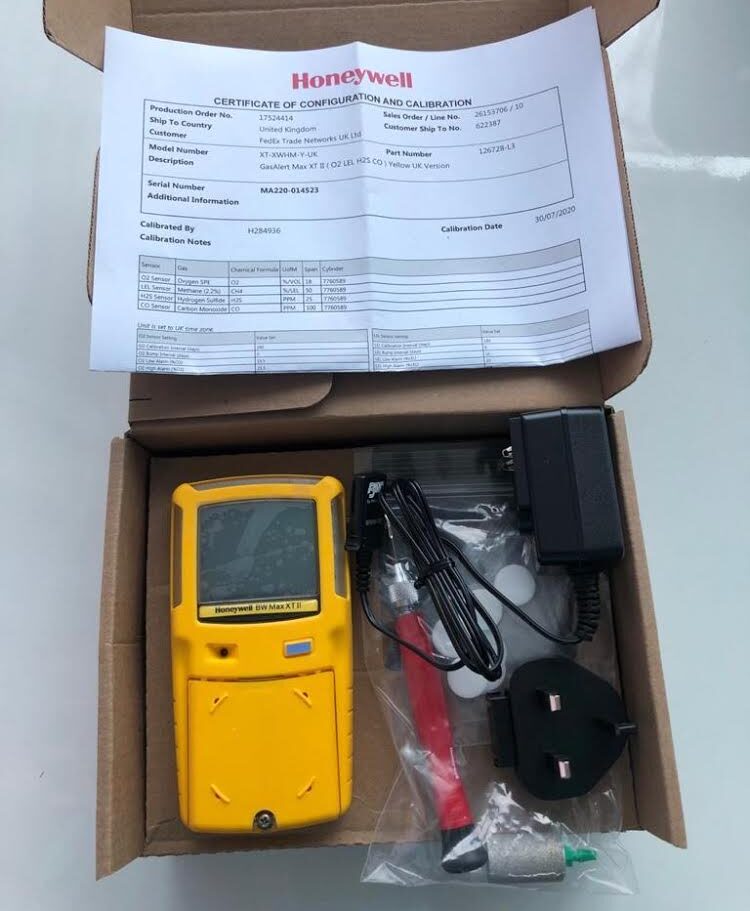
Typical Vessels: Chemical TankerLPG/LNG CarrierOffshore Supply Vessel (OSV)Platform Supply Vessel (PSV)Container Ship handling hazardous cargoCruise Ship confined‑space operations
Certifications: ATEX Zone 1/2 certificationIECEx certificationUSCG Type Approval
Decision Guide: Choose if you need a durable, single‑gas personal monitor with wireless integration for confined‑space entry or leak detection on vessels handling hazardous cargo. Avoid if your operation requires simultaneous multi‑gas monitoring, very long battery endurance, or a low‑cost basic alarm device.
Use Cases: Machinery, cargo, accommodation, enclosed-space and personal safety monitoring.
Honeywell (BW) GasAlertMax XT II
GasAlertMax XT II
4 gases · Hazardous Gas Detection · Portable multi-gas detector
Type
portable
Gases
4
Pump
optional
Common Failures & Inspection Points
  • Sensor ageing, poisoning, contamination or dirt causes drift, slow response, false alarms or failed tests
  • Power, battery, wiring or communication faults cause device-failure alarms or loss of indication
  • Water ingress, corrosion or impact damage causes intermittent operation or failed controls
  • Blocked sampling paths or obstructed detector exposure delays response or prevents correct detection
  • Incorrect calibration, configuration or detector type causes misleading readings or nuisance alarms
Service: Inspect sensors, sample paths or detector openings, wiring, power, mounting and alarm interfaces. Perform bump tests, functional tests or calibration using the approved method for the device type. Review alarm history and confirm remote indications or shutdown interfaces. Refer to the manufacturer documentation for the exact figure for calibration and alarm criteria.
Spare Parts: Carry detector heads or sensor cartridges, filters, sampling parts, batteries or chargers, fuses, calibration accessories and approved test consumables.
Strengths
  • Simultaneous detection of O₂, CO, H₂S and combustible gases on one unit
  • Optional integrated pump enables active air sampling for confined‑space entry
  • Rugged IP66 housing with ATEX and IECEx certification for hazardous areas
  • Long battery life (~24 h) with hot‑swap capability for continuous operation
  • IntelliFlash visual compliance indicator and Bluetooth data logging
Weaknesses
  • Limited to four gas channels; additional gases require separate equipment
  • Sensor cartridges have a finite lifespan (typically 12–18 months) and must be replaced
  • Optional pump adds weight and mechanical complexity
  • Higher initial purchase price compared with single‑gas handheld detectors
  • Battery must be recharged or swapped, which can interrupt short‑term operations
Typical Vessels: TankerLNG CarrierChemical TankerOffshore Supply VesselContainer ShipBulk Carrier
Certifications: IMO D-2ATEXIECEx
Decision Guide: Choose if you need a rugged, certified handheld detector that can monitor the four most common hazardous gases and require an optional pump for confined‑space sampling. Avoid if your application demands more than four gas channels, ultra‑low weight, or a lower‑cost single‑gas solution.
Use Cases: Machinery, cargo, accommodation, enclosed-space and personal safety monitoring.
Honeywell BW Ultra LEL/O2/CO/H2S unverified
Gases
LEL/O2/CO/H2S
Common Failures & Inspection Points
  • Sensor or cell ageing can cause drift or failed calibration, seen as unstable or inaccurate readings
  • Blocked sampling paths, filters or sensor inlets can slow response, noticed during bump or functional testing
  • Battery or power-supply failure can make portable or electronic equipment unavailable
  • Regulator, hose, mask or seal leakage on breathing equipment can reduce delivered air, noticed as pressure loss or poor face seal
  • Moisture, contamination or corrosion can damage connectors and alarms, causing intermittent faults or failed self-tests
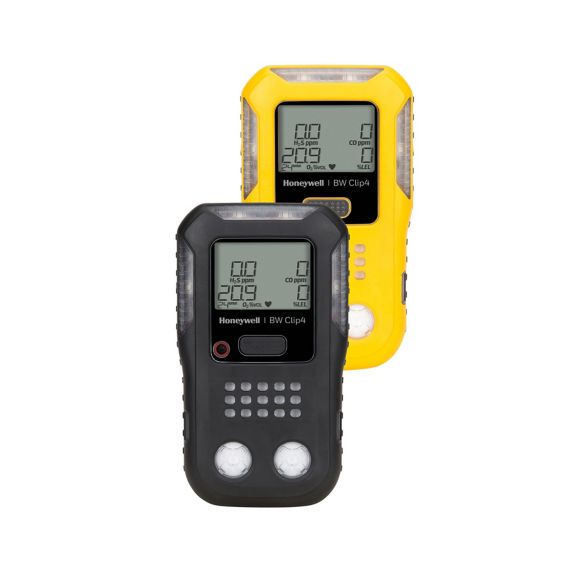
Service: Perform the maker-specified functional, leak, alarm and calibration checks appropriate to the equipment. Inspect sensors, hoses, masks, cylinders, regulators, batteries and charging arrangements as applicable. Calibration gas values, cylinder test requirements and sensor-life limits must be taken from approved manufacturer and statutory documentation.
Spare Parts: Carry approved sensors or cells, filters, batteries, seals, mask or hose consumables and calibration/test accessories appropriate to the installed equipment.
Use Cases: Used across merchant, tanker, gas-carrier, offshore and passenger vessels for atmosphere monitoring, confined-space safety and firefighting support.
Honeywell BW Solo LEL/O2/CO/H2S unverified
Gases
LEL/O2/CO/H2S
Common Failures & Inspection Points
  • Sensor or cell ageing can cause drift or failed calibration, seen as unstable or inaccurate readings
  • Blocked sampling paths, filters or sensor inlets can slow response, noticed during bump or functional testing
  • Battery or power-supply failure can make portable or electronic equipment unavailable
  • Regulator, hose, mask or seal leakage on breathing equipment can reduce delivered air, noticed as pressure loss or poor face seal
  • Moisture, contamination or corrosion can damage connectors and alarms, causing intermittent faults or failed self-tests
Service: Perform the maker-specified functional, leak, alarm and calibration checks appropriate to the equipment. Inspect sensors, hoses, masks, cylinders, regulators, batteries and charging arrangements as applicable. Calibration gas values, cylinder test requirements and sensor-life limits must be taken from approved manufacturer and statutory documentation.
Spare Parts: Carry approved sensors or cells, filters, batteries, seals, mask or hose consumables and calibration/test accessories appropriate to the installed equipment.
Use Cases: Used across merchant, tanker, gas-carrier, offshore and passenger vessels for atmosphere monitoring, confined-space safety and firefighting support.
Honeywell / BW Technologies Honeywell BW Clip4 LEL/O2/CO/H2S
Honeywell BW Clip4 LEL/O2/CO/H2S unverified
Gases
LEL/O2/CO/H2S
Common Failures & Inspection Points
  • Sensor or cell ageing can cause drift or failed calibration, seen as unstable or inaccurate readings
  • Blocked sampling paths, filters or sensor inlets can slow response, noticed during bump or functional testing
  • Battery or power-supply failure can make portable or electronic equipment unavailable
  • Regulator, hose, mask or seal leakage on breathing equipment can reduce delivered air, noticed as pressure loss or poor face seal
  • Moisture, contamination or corrosion can damage connectors and alarms, causing intermittent faults or failed self-tests
Service: Perform the maker-specified functional, leak, alarm and calibration checks appropriate to the equipment. Inspect sensors, hoses, masks, cylinders, regulators, batteries and charging arrangements as applicable. Calibration gas values, cylinder test requirements and sensor-life limits must be taken from approved manufacturer and statutory documentation.
Spare Parts: Carry approved sensors or cells, filters, batteries, seals, mask or hose consumables and calibration/test accessories appropriate to the installed equipment.
Use Cases: Used across merchant, tanker, gas-carrier, offshore and passenger vessels for atmosphere monitoring, confined-space safety and firefighting support.
BW Ultra LEL/O2/CO/H2S-B unverified
Gases
LEL/O2/CO/H2S
Common Failures & Inspection Points
  • Sensor poisoning, depletion or aging caused by contaminant exposure or normal service, resulting in slow response, failed calibration or incorrect readings
  • Blocked sample path or dirty sensor opening caused by dust, salt, oil or water, resulting in weak response or a fault indication
  • Calibration drift caused by sensor aging or unsuitable calibration practice, resulting in readings that do not correspond with the applied test gas
  • Power, battery or communication failure caused by electrical faults, depleted cells or damaged cabling, resulting in loss of indication or system fault alarms
  • Alarm, relay or sampling-pump malfunction where fitted caused by control or mechanical faults, resulting in missing alarms, poor sample flow or persistent fault indications
Service: Perform bump tests, calibration checks and functional testing in accordance with the approved procedure for the installed detector type. Inspect sensor heads, sample paths, filters, batteries, cabling, pumps and junction boxes as applicable. Use only the correct certified test gas and accessories for the configured sensors. Verify local alarms and any outputs to the vessel's alarm or shutdown system. Replace life-limited sensing elements according to manufacturer guidance and record the work. Refer to the manufacturer documentation for the exact figure for calibration intervals, alarm settings and environmental limits.
Spare Parts: Keep model-correct sensor cartridges or cells, filters, batteries where applicable, pump consumables, calibration accessories and selected electronic or relay components. Test-gas cylinders and regulators must match the configured sensors.
Use Cases: It is used for hazardous-atmosphere monitoring on merchant ships, passenger vessels, offshore units or other vessel types where this equipment category is fitted.
BW Ultra LEL/O2/CO/H2S/VOC-B unverified
Gases
LEL/O2/CO/H2S/VOC
Common Failures & Inspection Points
  • Sensor poisoning, depletion or aging caused by contaminant exposure or normal service, resulting in slow response, failed calibration or incorrect readings
  • Blocked sample path or dirty sensor opening caused by dust, salt, oil or water, resulting in weak response or a fault indication
  • Calibration drift caused by sensor aging or unsuitable calibration practice, resulting in readings that do not correspond with the applied test gas
  • Power, battery or communication failure caused by electrical faults, depleted cells or damaged cabling, resulting in loss of indication or system fault alarms
  • Alarm, relay or sampling-pump malfunction where fitted caused by control or mechanical faults, resulting in missing alarms, poor sample flow or persistent fault indications
Service: Perform bump tests, calibration checks and functional testing in accordance with the approved procedure for the installed detector type. Inspect sensor heads, sample paths, filters, batteries, cabling, pumps and junction boxes as applicable. Use only the correct certified test gas and accessories for the configured sensors. Verify local alarms and any outputs to the vessel's alarm or shutdown system. Replace life-limited sensing elements according to manufacturer guidance and record the work. Refer to the manufacturer documentation for the exact figure for calibration intervals, alarm settings and environmental limits.
Spare Parts: Keep model-correct sensor cartridges or cells, filters, batteries where applicable, pump consumables, calibration accessories and selected electronic or relay components. Test-gas cylinders and regulators must match the configured sensors.
Use Cases: It is used for hazardous-atmosphere monitoring on merchant ships, passenger vessels, offshore units or other vessel types where this equipment category is fitted.
BW Ultra LEL/O2/CO/H2S/SO2-B unverified
Gases
LEL/O2/CO/H2S/SO2
Common Failures & Inspection Points
  • Sensor poisoning, depletion or aging caused by contaminant exposure or normal service, resulting in slow response, failed calibration or incorrect readings
  • Blocked sample path or dirty sensor opening caused by dust, salt, oil or water, resulting in weak response or a fault indication
  • Calibration drift caused by sensor aging or unsuitable calibration practice, resulting in readings that do not correspond with the applied test gas
  • Power, battery or communication failure caused by electrical faults, depleted cells or damaged cabling, resulting in loss of indication or system fault alarms
  • Alarm, relay or sampling-pump malfunction where fitted caused by control or mechanical faults, resulting in missing alarms, poor sample flow or persistent fault indications
Service: Perform bump tests, calibration checks and functional testing in accordance with the approved procedure for the installed detector type. Inspect sensor heads, sample paths, filters, batteries, cabling, pumps and junction boxes as applicable. Use only the correct certified test gas and accessories for the configured sensors. Verify local alarms and any outputs to the vessel's alarm or shutdown system. Replace life-limited sensing elements according to manufacturer guidance and record the work. Refer to the manufacturer documentation for the exact figure for calibration intervals, alarm settings and environmental limits.
Spare Parts: Keep model-correct sensor cartridges or cells, filters, batteries where applicable, pump consumables, calibration accessories and selected electronic or relay components. Test-gas cylinders and regulators must match the configured sensors.
Use Cases: It is used for hazardous-atmosphere monitoring on merchant ships, passenger vessels, offshore units or other vessel types where this equipment category is fitted.
BW Ultra LEL/O2/CO/H2S/NH3-B unverified
Gases
LEL/O2/CO/H2S/NH3
Common Failures & Inspection Points
  • Sensor poisoning, depletion or aging caused by contaminant exposure or normal service, resulting in slow response, failed calibration or incorrect readings
  • Blocked sample path or dirty sensor opening caused by dust, salt, oil or water, resulting in weak response or a fault indication
  • Calibration drift caused by sensor aging or unsuitable calibration practice, resulting in readings that do not correspond with the applied test gas
  • Power, battery or communication failure caused by electrical faults, depleted cells or damaged cabling, resulting in loss of indication or system fault alarms
  • Alarm, relay or sampling-pump malfunction where fitted caused by control or mechanical faults, resulting in missing alarms, poor sample flow or persistent fault indications
Service: Perform bump tests, calibration checks and functional testing in accordance with the approved procedure for the installed detector type. Inspect sensor heads, sample paths, filters, batteries, cabling, pumps and junction boxes as applicable. Use only the correct certified test gas and accessories for the configured sensors. Verify local alarms and any outputs to the vessel's alarm or shutdown system. Replace life-limited sensing elements according to manufacturer guidance and record the work. Refer to the manufacturer documentation for the exact figure for calibration intervals, alarm settings and environmental limits.
Spare Parts: Keep model-correct sensor cartridges or cells, filters, batteries where applicable, pump consumables, calibration accessories and selected electronic or relay components. Test-gas cylinders and regulators must match the configured sensors.
Use Cases: It is used for hazardous-atmosphere monitoring on merchant ships, passenger vessels, offshore units or other vessel types where this equipment category is fitted.
BW Ultra LEL/O2-B unverified
Gases
LEL/O2
Common Failures & Inspection Points
  • Sensor ageing, poisoning or contamination causes drift, slow response or calibration failure
  • Low battery, power-supply or communication faults cause unexpected shutdown or detector-failure alarms
  • Blocked pump, filter, sample line or optical path causes low-flow, beam or delayed-response alarms
  • Water, dirt, corrosion or impact damage causes intermittent readings or failed controls
  • Incorrect calibration gas, sensor type or configuration produces misleading readings or repeated nuisance alarms
Service: Inspect sensor inlets or optics, sample paths, filters, power, mounting and alarm interfaces. Perform bump tests and calibration using the approved gas and procedure for the detector type. Review alarm and calibration status before safety-critical use. Refer to the manufacturer documentation for the exact figure for alarm settings and calibration values.
Spare Parts: Carry filters, sampling hoses or optical cleaning items as applicable, sensor cartridges where user-replaceable, batteries or chargers, fuses and approved calibration accessories.
Use Cases: Enclosed-space entry, cargo operations, machinery monitoring and hazardous-area safety.
BW Ultra O2/CO-B unverified
Gases
O2/CO
Common Failures & Inspection Points
  • Sensor ageing, poisoning or contamination causes drift, slow response or calibration failure
  • Low battery, power-supply or communication faults cause unexpected shutdown or detector-failure alarms
  • Blocked pump, filter, sample line or optical path causes low-flow, beam or delayed-response alarms
  • Water, dirt, corrosion or impact damage causes intermittent readings or failed controls
  • Incorrect calibration gas, sensor type or configuration produces misleading readings or repeated nuisance alarms
Service: Inspect sensor inlets or optics, sample paths, filters, power, mounting and alarm interfaces. Perform bump tests and calibration using the approved gas and procedure for the detector type. Review alarm and calibration status before safety-critical use. Refer to the manufacturer documentation for the exact figure for alarm settings and calibration values.
Spare Parts: Carry filters, sampling hoses or optical cleaning items as applicable, sensor cartridges where user-replaceable, batteries or chargers, fuses and approved calibration accessories.
Use Cases: Enclosed-space entry, cargo operations, machinery monitoring and hazardous-area safety.
BW Ultra O2/H2S-B unverified
Gases
O2/H2S
Common Failures & Inspection Points
  • Sensor ageing, poisoning or contamination causes drift, slow response or calibration failure
  • Low battery, power-supply or communication faults cause unexpected shutdown or detector-failure alarms
  • Blocked pump, filter, sample line or optical path causes low-flow, beam or delayed-response alarms
  • Water, dirt, corrosion or impact damage causes intermittent readings or failed controls
  • Incorrect calibration gas, sensor type or configuration produces misleading readings or repeated nuisance alarms
Service: Inspect sensor inlets or optics, sample paths, filters, power, mounting and alarm interfaces. Perform bump tests and calibration using the approved gas and procedure for the detector type. Review alarm and calibration status before safety-critical use. Refer to the manufacturer documentation for the exact figure for alarm settings and calibration values.
Spare Parts: Carry filters, sampling hoses or optical cleaning items as applicable, sensor cartridges where user-replaceable, batteries or chargers, fuses and approved calibration accessories.
Use Cases: Enclosed-space entry, cargo operations, machinery monitoring and hazardous-area safety.
BW Ultra Pump-C unverified
Sampling method
Pump
Common Failures & Inspection Points
  • Sensor poisoning, depletion or ageing, typically indicated by slow response, failed bump test or calibration drift
  • Sampling pump/filter blockage in pumped units, typically indicated by low-flow alarm or no gas response
  • Battery/power-supply failure, typically indicated by instrument shutdown or low-power alarm
  • Water/dirt ingress into sensor or sample path, typically indicated by erratic readings or sensor fault
  • Calibration or configuration error, typically indicated by incorrect zero/span, nuisance alarms or missed response
Service: Inspect sensor condition, filters/sample paths, power/battery, alarm functions and calibration status; perform bump and calibration tests using approved gas and procedures, with exact alarm points taken from vessel/manufacturer documentation.
Spare Parts: Keep approved sensors, filters, sampling tubing, batteries/chargers, pump service parts and calibration accessories/gas as allowed by the vessel's safety system.
Use Cases: Used on tankers, gas carriers, chemical carriers, offshore units, enclosed-space entry teams and machinery spaces where hazardous atmospheres may occur. This entry applies specifically to the Portable Multi-Gas Detector variant identified as Honeywell / BW Technologies BW Ultra Pump-C.
BW Ultra Diffusion-C unverified
Sampling method
Diffusion
Common Failures & Inspection Points
  • Sensor poisoning, depletion or aging caused by contaminant exposure or normal service, resulting in slow response, failed calibration or incorrect readings
  • Blocked sample path or dirty sensor opening caused by dust, salt, oil or water, resulting in weak response or a fault indication
  • Calibration drift caused by sensor aging or unsuitable calibration practice, resulting in readings that do not correspond with the applied test gas
  • Power, battery or communication failure caused by electrical faults, depleted cells or damaged cabling, resulting in loss of indication or system fault alarms
  • Alarm, relay or sampling-pump malfunction where fitted caused by control or mechanical faults, resulting in missing alarms, poor sample flow or persistent fault indications
Service: Perform bump tests, calibration checks and functional testing in accordance with the approved procedure for the installed detector type. Inspect sensor heads, sample paths, filters, batteries, cabling, pumps and junction boxes as applicable. Use only the correct certified test gas and accessories for the configured sensors. Verify local alarms and any outputs to the vessel's alarm or shutdown system. Replace life-limited sensing elements according to manufacturer guidance and record the work. Refer to the manufacturer documentation for the exact figure for calibration intervals, alarm settings and environmental limits.
Spare Parts: Keep model-correct sensor cartridges or cells, filters, batteries where applicable, pump consumables, calibration accessories and selected electronic or relay components. Test-gas cylinders and regulators must match the configured sensors. Replacement components must preserve the approved certification.
Use Cases: Atmosphere monitoring for enclosed-space entry, machinery spaces, cargo areas, offshore process areas and other locations where combustible, toxic or oxygen conditions must be detected.

MSA Safety

15
MSA Safety MSA ALTAIR 2X LEL/O2
MSA ALTAIR 2X LEL/O2 unverified
Gases
LEL/O2
Common Failures & Inspection Points
  • Sensor poisoning, ageing, contamination, or end-of-life degradation causes slow response, failed calibration, or readings that drift from known test gas
  • Blocked sample line, filter, pump, or diffusion path prevents representative gas reaching the sensor and causes low or delayed readings
  • Battery, supply, charger, or internal power faults cause shutdown, short operating time, or power alarms
  • Water ingress, condensation, corrosion, or damaged connectors produces intermittent channels, false alarms, or failed communication
  • Calibration, configuration, relay, or control faults can cause nuisance alarms, missing alarms, or incorrect display of the monitored point
Service: Inspect sensor condition, sampling paths and filters, pump operation where fitted, battery or power supply, alarms, relays, display, identification of sampling points, and calibration records. Perform bump tests and calibration only with approved gas and according to the manufacturer and vessel safety procedure.
Spare Parts: Keep approved sensors or sensor cartridges, filters, pump or tubing service items, batteries or charging accessories, calibration fittings, and critical fuses or interface parts recommended for the system.
Use Cases: Used on tankers, gas carriers, offshore vessels, enclosed-space operations, engine rooms, battery rooms, refrigeration spaces, cargo areas, and other locations where hazardous atmospheres may occur.
MSA ALTAIR 2X LEL/O2/CO/H2S unverified
Gases
LEL/O2/CO/H2S
Common Failures & Inspection Points
  • Sensor poisoning, ageing, contamination, or end-of-life degradation causes slow response, failed calibration, or drifting readings
  • Blocked sample line, filter, pump, or diffusion path prevents representative gas reaching the sensor and causes low or delayed readings
  • Battery, supply, charger, or internal power faults cause shutdown, short operating time, or power alarms
  • Water ingress, condensation, corrosion, or damaged connectors produce intermittent channels, false alarms, or failed communication
  • Calibration, configuration, relay, or control faults can cause nuisance alarms, missing alarms, or incorrect identification of the monitored point
Service: Inspect sensor condition, sampling paths and filters, pump operation where fitted, battery or power supply, alarms, relays, display, sampling-point identification, and calibration records. Perform bump tests and calibration only with approved gas and according to manufacturer and vessel safety procedures.
Spare Parts: Keep approved sensors or sensor cartridges, filters, pump or tubing service items, batteries or charging accessories, calibration fittings, and critical fuses or interface parts.
Use Cases: Used on tankers, gas carriers, offshore vessels, enclosed-space operations, engine rooms, battery rooms, refrigeration spaces, cargo areas, and other locations where hazardous atmospheres may occur.
MSA ALTAIR 4X LEL/O2 unverified
Gases
LEL/O2
Common Failures & Inspection Points
  • Sensor poisoning, ageing, contamination, or end-of-life degradation causes slow response, failed calibration, or readings that drift from known test gas
  • Blocked sample line, filter, pump, or diffusion path prevents representative gas reaching the sensor and causes low or delayed readings
  • Battery, supply, charger, or internal power faults cause shutdown, short operating time, or power alarms
  • Water ingress, condensation, corrosion, or damaged connectors produces intermittent channels, false alarms, or failed communication
  • Calibration, configuration, relay, or control faults can cause nuisance alarms, missing alarms, or incorrect display of the monitored point
Service: Inspect sensor condition, sampling paths and filters, pump operation where fitted, battery or power supply, alarms, relays, display, identification of sampling points, and calibration records. Perform bump tests and calibration only with approved gas and according to the manufacturer and vessel safety procedure.
Spare Parts: Keep approved sensors or sensor cartridges, filters, pump or tubing service items, batteries or charging accessories, calibration fittings, and critical fuses or interface parts recommended for the system.
Use Cases: Used on tankers, gas carriers, offshore vessels, enclosed-space operations, engine rooms, battery rooms, refrigeration spaces, cargo areas, and other locations where hazardous atmospheres may occur.
MSA ALTAIR 4X LEL/O2/CO/H2S unverified
Gases
LEL/O2/CO/H2S
Common Failures & Inspection Points
  • Sensor poisoning, ageing, contamination, or end-of-life degradation causes slow response, failed calibration, or drifting readings
  • Blocked sample line, filter, pump, or diffusion path prevents representative gas reaching the sensor and causes low or delayed readings
  • Battery, supply, charger, or internal power faults cause shutdown, short operating time, or power alarms
  • Water ingress, condensation, corrosion, or damaged connectors produce intermittent channels, false alarms, or failed communication
  • Calibration, configuration, relay, or control faults can cause nuisance alarms, missing alarms, or incorrect identification of the monitored point
Service: Inspect sensor condition, sampling paths and filters, pump operation where fitted, battery or power supply, alarms, relays, display, sampling-point identification, and calibration records. Perform bump tests and calibration only with approved gas and according to manufacturer and vessel safety procedures.
Spare Parts: Keep approved sensors or sensor cartridges, filters, pump or tubing service items, batteries or charging accessories, calibration fittings, and critical fuses or interface parts.
Use Cases: Used on tankers, gas carriers, offshore vessels, enclosed-space operations, engine rooms, battery rooms, refrigeration spaces, cargo areas, and other locations where hazardous atmospheres may occur.
MSA ALTAIR 5X LEL/O2 unverified
Gases
LEL/O2
Common Failures & Inspection Points
  • Sensor poisoning, ageing, contamination, or end-of-life degradation causes slow response, failed calibration, or readings that drift from known test gas
  • Blocked sample line, filter, pump, or diffusion path prevents representative gas reaching the sensor and causes low or delayed readings
  • Battery, supply, charger, or internal power faults cause shutdown, short operating time, or power alarms
  • Water ingress, condensation, corrosion, or damaged connectors produces intermittent channels, false alarms, or failed communication
  • Calibration, configuration, relay, or control faults can cause nuisance alarms, missing alarms, or incorrect display of the monitored point
Service: Inspect sensor condition, sampling paths and filters, pump operation where fitted, battery or power supply, alarms, relays, display, identification of sampling points, and calibration records. Perform bump tests and calibration only with approved gas and according to the manufacturer and vessel safety procedure.
Spare Parts: Keep approved sensors or sensor cartridges, filters, pump or tubing service items, batteries or charging accessories, calibration fittings, and critical fuses or interface parts recommended for the system.
Use Cases: Used on tankers, gas carriers, offshore vessels, enclosed-space operations, engine rooms, battery rooms, refrigeration spaces, cargo areas, and other locations where hazardous atmospheres may occur.
MSA ALTAIR 5X LEL/O2/CO/H2S unverified
Gases
LEL/O2/CO/H2S
Common Failures & Inspection Points
  • Sensor poisoning, ageing, contamination, or end-of-life degradation causes slow response, failed calibration, or drifting readings
  • Blocked sample line, filter, pump, or diffusion path prevents representative gas reaching the sensor and causes low or delayed readings
  • Battery, supply, charger, or internal power faults cause shutdown, short operating time, or power alarms
  • Water ingress, condensation, corrosion, or damaged connectors produce intermittent channels, false alarms, or failed communication
  • Calibration, configuration, relay, or control faults can cause nuisance alarms, missing alarms, or incorrect identification of the monitored point
Service: Inspect sensor condition, sampling paths and filters, pump operation where fitted, battery or power supply, alarms, relays, display, sampling-point identification, and calibration records. Perform bump tests and calibration only with approved gas and according to manufacturer and vessel safety procedures.
Spare Parts: Keep approved sensors or sensor cartridges, filters, pump or tubing service items, batteries or charging accessories, calibration fittings, and critical fuses or interface parts.
Use Cases: Used on tankers, gas carriers, offshore vessels, enclosed-space operations, engine rooms, battery rooms, refrigeration spaces, cargo areas, and other locations where hazardous atmospheres may occur.
ALTAIR 5X LEL/O2/CO/H2S-B unverified
Gases
LEL/O2/CO/H2S
Common Failures & Inspection Points
  • Detector or sensing-element contamination, poisoning or ageing can cause false alarms, slow response or failed functional tests
  • Battery, power-supply or control-circuit faults caused by ageing, loose wiring or blown protection can lead to trouble alarms or unavailable safety functions
  • Cylinder pressure loss, leakage or damaged valves where stored media is used can leave the equipment outside ready condition and may be found during inspection or weighing checks
  • Blocked, corroded or mechanically damaged nozzles, piping, hoses or masks can restrict discharge or breathing flow and show as poor functional test results
  • Incorrect isolation, expired service status or disturbed release interlocks after maintenance can prevent normal arming and create panel faults or failed readiness checks
Service: Check physical condition, accessibility, labels and service status, then verify approved tests of detectors, alarms, release circuits or breathing components as applicable. Inspect cylinders, hoses, nozzles, masks, wiring and interlocks without discharging or altering safety systems outside the approved procedure. Use maker, class and statutory documentation for exact inspection and acceptance criteria.
Spare Parts: Hold only approved safety-system spares such as detector heads, filters or sensor caps, fuses, batteries where user-replaceable, seals, hoses, masks, nozzles and control modules according to the vessel's certified arrangement.
Use Cases: Machinery spaces, accommodation, cargo areas, enclosed spaces and emergency-response stations on merchant, passenger, tanker and offshore vessels.
ALTAIR 5X LEL/O2/CO/H2S/VOC-B unverified
Gases
LEL/O2/CO/H2S/VOC
Common Failures & Inspection Points
  • Sensor poisoning, ageing, contamination, or end-of-life degradation causes slow response, failed calibration, or drifting readings
  • Blocked sample line, filter, pump, or diffusion path prevents representative gas reaching the sensor and causes low or delayed readings
  • Battery, supply, charger, or internal power faults cause shutdown, short operating time, or power alarms
  • Water ingress, condensation, corrosion, or damaged connectors produce intermittent channels, false alarms, or failed communication
  • Calibration, configuration, relay, or control faults can cause nuisance alarms, missing alarms, or incorrect identification of the monitored point
Service: Inspect sensor condition, sampling paths and filters, pump operation where fitted, battery or power supply, alarms, relays, display, sampling-point identification, and calibration records. Perform bump tests and calibration only with approved gas and according to manufacturer and vessel safety procedures.
Spare Parts: Keep approved sensors or sensor cartridges, filters, pump or tubing service items, batteries or charging accessories, calibration fittings, and critical fuses or interface parts.
Use Cases: Used on tankers, gas carriers, offshore vessels, enclosed-space operations, engine rooms, battery rooms, refrigeration spaces, cargo areas, and other locations where hazardous atmospheres may occur.
ALTAIR 5X LEL/O2/CO/H2S/SO2-B unverified
Gases
LEL/O2/CO/H2S/SO2
Common Failures & Inspection Points
  • Sensor poisoning, ageing, contamination, or end-of-life degradation causes slow response, failed calibration, or drifting readings
  • Blocked sample line, filter, pump, or diffusion path prevents representative gas reaching the sensor and causes low or delayed readings
  • Battery, supply, charger, or internal power faults cause shutdown, short operating time, or power alarms
  • Water ingress, condensation, corrosion, or damaged connectors produce intermittent channels, false alarms, or failed communication
  • Calibration, configuration, relay, or control faults can cause nuisance alarms, missing alarms, or incorrect identification of the monitored point
Service: Inspect sensor condition, sampling paths and filters, pump operation where fitted, battery or power supply, alarms, relays, display, sampling-point identification, and calibration records. Perform bump tests and calibration only with approved gas and according to manufacturer and vessel safety procedures.
Spare Parts: Keep approved sensors or sensor cartridges, filters, pump or tubing service items, batteries or charging accessories, calibration fittings, and critical fuses or interface parts.
Use Cases: Used on tankers, gas carriers, offshore vessels, enclosed-space operations, engine rooms, battery rooms, refrigeration spaces, cargo areas, and other locations where hazardous atmospheres may occur.
ALTAIR 5X LEL/O2/CO/H2S/NH3-B unverified
Gases
LEL/O2/CO/H2S/NH3
Common Failures & Inspection Points
  • Sensor poisoning, ageing, contamination, or end-of-life degradation causes slow response, failed calibration, or drifting readings
  • Blocked sample line, filter, pump, or diffusion path prevents representative gas reaching the sensor and causes low or delayed readings
  • Battery, supply, charger, or internal power faults cause shutdown, short operating time, or power alarms
  • Water ingress, condensation, corrosion, or damaged connectors produce intermittent channels, false alarms, or failed communication
  • Calibration, configuration, relay, or control faults can cause nuisance alarms, missing alarms, or incorrect identification of the monitored point
Service: Inspect sensor condition, sampling paths and filters, pump operation where fitted, battery or power supply, alarms, relays, display, sampling-point identification, and calibration records. Perform bump tests and calibration only with approved gas and according to manufacturer and vessel safety procedures.
Spare Parts: Keep approved sensors or sensor cartridges, filters, pump or tubing service items, batteries or charging accessories, calibration fittings, and critical fuses or interface parts.
Use Cases: Used on tankers, gas carriers, offshore vessels, enclosed-space operations, engine rooms, battery rooms, refrigeration spaces, cargo areas, and other locations where hazardous atmospheres may occur.
ALTAIR 5X LEL/O2-B unverified
Gases
LEL/O2
Common Failures & Inspection Points
  • Sensor ageing, poisoning, contamination or dirt causes drift, slow response, false alarms or failed tests
  • Power, battery, wiring or communication faults cause device-failure alarms or loss of indication
  • Water ingress, corrosion or impact damage causes intermittent operation or failed controls
  • Blocked sampling paths or obstructed detector exposure delays response or prevents correct detection
  • Incorrect calibration, configuration or detector type causes misleading readings or nuisance alarms
Service: Inspect sensors, sample paths or detector openings, wiring, power, mounting and alarm interfaces. Perform bump tests, functional tests or calibration using the approved method for the device type. Review alarm history and confirm remote indications. Refer to the manufacturer documentation for the exact figure for calibration and alarm criteria.
Spare Parts: Carry detector heads or sensor cartridges, filters, sampling parts, batteries or chargers, fuses, calibration accessories and approved test consumables.
Use Cases: Machinery, cargo, accommodation, enclosed-space and personal safety monitoring.
ALTAIR 5X O2/CO-B unverified
Gases
O2/CO
Common Failures & Inspection Points
  • Sensor poisoning, depletion or aging caused by contaminant exposure or normal service, resulting in slow response, failed calibration or incorrect readings
  • Blocked sample path or contaminated sensing surface caused by dust, salt, oil or water, resulting in weak response or a fault indication
  • Calibration drift caused by sensor aging or unsuitable calibration practice, resulting in readings that do not correspond with the applied test gas
  • Power, battery or communication failure caused by electrical faults, depleted cells or damaged cabling, resulting in loss of indication or system fault alarms
  • Alarm, relay or pump malfunction where fitted caused by control or mechanical faults, resulting in missing alarms, poor sample flow or persistent fault indications
Service: Perform bump tests, calibration checks and functional testing in accordance with the approved procedure for the installed detector type. Inspect sensor heads, sample paths, filters, batteries, cabling, pumps and junction boxes as applicable. Use only the correct certified test gas and accessories for the configured sensors. Verify local alarms and any outputs to the vessel's alarm or shutdown system. Replace life-limited sensing elements according to manufacturer guidance and record the work. Refer to the approved documentation for exact calibration intervals, alarm settings and environmental limits.
Spare Parts: Keep model-correct sensor cartridges or cells, filters, batteries where applicable, pump consumables, calibration accessories and selected electronic or relay components recommended by the manufacturer. Test-gas cylinders and regulators must match the configured sensors. Replacement components must preserve the approved certification.
Use Cases: Atmosphere monitoring for enclosed-space entry, machinery spaces, cargo areas, offshore process areas and other locations where combustible, toxic or oxygen conditions must be detected.
ALTAIR 5X O2/H2S-B unverified
Gases
O2/H2S
Common Failures & Inspection Points
  • Sensor ageing, poisoning, contamination or dirt causes drift, slow response, false alarms or failed tests
  • Power, battery, wiring or communication faults cause device-failure alarms or loss of indication
  • Water ingress, corrosion or impact damage causes intermittent operation or failed controls
  • Blocked sampling paths or obstructed detector exposure delays response or prevents correct detection
  • Incorrect calibration, configuration or detector type causes misleading readings or nuisance alarms
Service: Inspect sensors, sample paths or detector openings, wiring, power, mounting and alarm interfaces. Perform bump tests, functional tests or calibration using the approved method for the device type. Review alarm history and confirm remote indications. Refer to the manufacturer documentation for the exact figure for calibration and alarm criteria.
Spare Parts: Carry detector heads or sensor cartridges, filters, sampling parts, batteries or chargers, fuses, calibration accessories and approved test consumables.
Use Cases: Machinery, cargo, accommodation, enclosed-space and personal safety monitoring.
ALTAIR 5X Pump-C unverified
Sampling method
Pump
Common Failures & Inspection Points
  • Sensor poisoning, depletion or aging caused by contaminant exposure or normal service, resulting in slow response, failed calibration or incorrect readings
  • Blocked sample path or contaminated sensing surface caused by dust, salt, oil or water, resulting in weak response or a fault indication
  • Calibration drift caused by sensor aging or unsuitable calibration practice, resulting in readings that do not correspond with the applied test gas
  • Power, battery or communication failure caused by electrical faults, depleted cells or damaged cabling, resulting in loss of indication or system fault alarms
  • Alarm, relay or pump malfunction where fitted caused by control or mechanical faults, resulting in missing alarms, poor sample flow or persistent fault indications
Service: Perform bump tests, calibration checks and functional testing in accordance with the approved procedure for the installed detector type. Inspect sensor heads, sample paths, filters, batteries, cabling, pumps and junction boxes as applicable. Use only the correct certified test gas and accessories for the configured sensors. Verify local alarms and any outputs to the vessel's alarm or shutdown system. Replace life-limited sensing elements according to manufacturer guidance and record the work. Refer to the approved documentation for exact calibration intervals, alarm settings and environmental limits.
Spare Parts: Keep model-correct sensor cartridges or cells, filters, batteries where applicable, pump consumables, calibration accessories and selected electronic or relay components recommended by the manufacturer. Test-gas cylinders and regulators must match the configured sensors. Replacement components must preserve the approved certification.
Use Cases: Atmosphere monitoring for enclosed-space entry, machinery spaces, cargo areas, offshore process areas and other locations where combustible, toxic or oxygen conditions must be detected.
ALTAIR 5X Diffusion-C unverified
Sampling method
Diffusion
Common Failures & Inspection Points
  • Sensor poisoning, ageing, contamination, or end-of-life degradation causes slow response, failed calibration, or readings that drift from known test gas
  • Blocked sample line, filter, pump, or diffusion path prevents representative gas reaching the sensor and causes low or delayed readings
  • Battery, supply, charger, or internal power faults cause shutdown, short operating time, or power alarms
  • Water ingress, condensation, corrosion, or damaged connectors produces intermittent channels, false alarms, or failed communication
  • Calibration, configuration, relay, or control faults can cause nuisance alarms, missing alarms, or incorrect display of the monitored point
Service: Inspect sensor condition, sampling paths and filters, pump operation where fitted, battery or power supply, alarms, relays, display, identification of sampling points, and calibration records. Perform bump tests and calibration only with approved gas and according to the manufacturer and vessel safety procedure.
Spare Parts: Keep approved sensors or sensor cartridges, filters, pump or tubing service items, batteries or charging accessories, calibration fittings, and critical fuses or interface parts recommended for the system.
Use Cases: Used on tankers, gas carriers, offshore vessels, enclosed-space operations, engine rooms, battery rooms, refrigeration spaces, cargo areas, and other locations where hazardous atmospheres may occur.

MSA

7
MSA Altair 5X
Altair 5X
up to 6 gases · Hazardous Gas Detection · pump-driven handheld multi-gas detector
Type
portable
Gases
6
Pump
ja
Common Failures & Inspection Points
  • Sensor ageing, poisoning, contamination or dirt causes drift, slow response, false alarms or failed tests
  • Power, battery, wiring or communication faults cause device-failure alarms or loss of indication
  • Water ingress, corrosion or impact damage causes intermittent operation or failed controls
  • Blocked sampling paths or obstructed detector exposure delays response or prevents correct detection
  • Incorrect calibration, configuration or detector type causes misleading readings or nuisance alarms
Service: Inspect sensors, sample paths or detector openings, wiring, power, mounting and alarm interfaces. Perform bump tests, functional tests or calibration using the approved method for the device type. Review alarm history and confirm remote indications or shutdown interfaces. Refer to the manufacturer documentation for the exact figure for calibration and alarm criteria.
Spare Parts: Carry detector heads or sensor cartridges, filters, sampling parts, batteries or chargers, fuses, calibration accessories and approved test consumables.
Strengths
  • Simultaneous detection of up to six gases (O₂, LEL, CO, H₂S, SO₂, VOCs)
  • Built‑in pump provides active sampling for faster response in confined spaces
  • MotionAlert feature warns of sudden movement or impact
  • Compatible with MSA Galaxy test stations for streamlined calibration and diagnostics
  • Rugged IP66 housing and up to 24 h battery life for shipboard use
Weaknesses
  • Sensors can drift, requiring monthly calibration to maintain accuracy
  • Pump may become blocked in dusty or oily environments, increasing maintenance
  • Heavier than passive detectors, which can affect handheld ergonomics on long shifts
  • VOC detection relies on a PID lamp that has limited lifespan and can burn out
  • Higher upfront cost compared with single‑gas portable detectors
Typical Vessels: TankerBulk CarrierContainer ShipOffshore Supply VesselFerryLNG Carrier
Decision Guide: Choose if you need a versatile, multi‑gas handheld that offers active sampling, vibration alert and integrates with existing MSA Galaxy test stations. Avoid if only single‑gas monitoring is required, budget constraints are tight, or the work environment is extremely dusty where pump blockage is likely.
Use Cases: Machinery, cargo, accommodation, enclosed-space and personal safety monitoring.
MSA Altair io 4
Altair io 4
4 gases · Hazardous Gas Detection · Portable multi-gas detector
Type
portable
Gases
4
Connected
ja
Common Failures & Inspection Points
  • Sensor ageing, poisoning, contamination or dirt causes drift, slow response, false alarms or failed tests
  • Power, battery, wiring or communication faults cause device-failure alarms or loss of indication
  • Water ingress, corrosion or impact damage causes intermittent operation or failed controls
  • Blocked sampling paths or obstructed detector exposure delays response or prevents correct detection
  • Incorrect calibration, configuration or detector type causes misleading readings or nuisance alarms
Service: Inspect sensors, sample paths or detector openings, wiring, power, mounting and alarm interfaces. Perform bump tests, functional tests or calibration using the approved method for the device type. Review alarm history and confirm remote indications or shutdown interfaces. Refer to the manufacturer documentation for the exact figure for calibration and alarm criteria.
Spare Parts: Carry detector heads or sensor cartridges, filters, sampling parts, batteries or chargers, fuses, calibration accessories and approved test consumables.
Strengths
  • Real‑time data upload to MSA’s cloud dashboard for centralized fleet management
  • Rugged IP66/ATEX‑certified housing suitable for harsh marine environments
  • Four configurable gas sensors cover the most common hazardous atmospheres on ships
  • Long‑life rechargeable Li‑ion battery (≈24 h continuous operation) and easy one‑button calibration
  • Audible, visual and vibratory alarms with user‑configurable thresholds
Weaknesses
  • Wireless/Bluetooth link can be intermittent in metal‑rich compartments or when shielded by bulkheads
  • Sensor lifespan limited to ~2 years; replacement adds ongoing cost
  • Higher upfront price compared with basic single‑gas handheld units
  • Cloud service requires a subscription and reliable ship‑to‑shore connectivity
  • Only four gas channels – cannot add additional sensors beyond the preset suite
Typical Vessels: TankerBulk CarrierContainer ShipOffshore Supply VesselCruise ShipFerry
Certifications: ATEX Zone 0/1/2IECExUSCG Type Approval
Decision Guide: Choose if you need continuous, cloud‑linked monitoring of the four most common hazardous gases on a vessel and value centralized data for safety audits. Avoid if your operation relies on more than four gas types, has limited satellite connectivity, or requires a low‑cost detector without cloud features.
Use Cases: Machinery, cargo, accommodation, enclosed-space and personal safety monitoring.
MSA Altair 4X unverified
Equipment Type
portable_gas_detector
Series
Altair
Model code
Altair 4X
Common Failures & Inspection Points
  • Sensor drift, poisoning or end-of-life deterioration caused by age/contaminants, noticed as failed bump/calibration test or slow response
  • Sampling-path or optical obstruction caused by dirt, water, blocked filters or misalignment, noticed as flow/beam fault or reduced signal
  • Battery or power failure caused by age, charging or supply faults, noticed as shutdown or system fault
  • Alarm/output failure caused by sounder, relay, wiring or controller faults, noticed during functional testing
  • Housing, cable or environmental damage caused by impact, corrosion or water ingress, noticed as physical defects, intermittent signals or false alarms
Service: Perform manufacturer-approved bump, calibration or functional tests and verify the actual fitted gas/sensor configuration. Inspect sampling hoses/filters/pumps or optical paths as applicable, battery/power, alarms and controller interfaces. Confirm sensor locations remain suitable after vessel modifications and maintain valid calibration gas where required.
Spare Parts: Carry manufacturer-approved sensors where onboard replacement is permitted, filters, sampling hose, pump consumables, batteries/chargers, fuses and selected controller or relay modules. Maintain suitable in-date calibration gas and regulators for the installed sensor types.
Use Cases: Used for enclosed-space entry, tank checks, personal monitoring and continuous hazardous-area gas detection on merchant, tanker, offshore and specialist vessels.
Portable gas detector — 4-gas portable
MSA Altair 4XR unverified
Equipment Type
portable_gas_detector
Series
Altair
Model code
Altair 4XR
Common Failures & Inspection Points
  • Sensor drift, poisoning or end-of-life deterioration caused by age/contaminants, noticed as failed bump/calibration test or slow response
  • Sampling-path or optical obstruction caused by dirt, water, blocked filters or misalignment, noticed as flow/beam fault or reduced signal
  • Battery or power failure caused by age, charging or supply faults, noticed as shutdown or system fault
  • Alarm/output failure caused by sounder, relay, wiring or controller faults, noticed during functional testing
  • Housing, cable or environmental damage caused by impact, corrosion or water ingress, noticed as physical defects, intermittent signals or false alarms
Service: Perform manufacturer-approved bump, calibration or functional tests and verify the actual fitted gas/sensor configuration. Inspect sampling hoses/filters/pumps or optical paths as applicable, battery/power, alarms and controller interfaces. Confirm sensor locations remain suitable after vessel modifications and maintain valid calibration gas where required.
Spare Parts: Carry manufacturer-approved sensors where onboard replacement is permitted, filters, sampling hose, pump consumables, batteries/chargers, fuses and selected controller or relay modules. Maintain suitable in-date calibration gas and regulators for the installed sensor types.
Use Cases: Used for enclosed-space entry, tank checks, personal monitoring and continuous hazardous-area gas detection on merchant, tanker, offshore and specialist vessels.
Portable gas detector — 4-gas with bluetooth
MSA Altair 5X unverified
Equipment Type
portable_gas_detector
Series
Altair
Model code
Altair 5X
Common Failures & Inspection Points
  • Sensor drift, poisoning or end-of-life deterioration caused by age/contaminants, noticed as failed bump/calibration test or slow response
  • Sampling-path or optical obstruction caused by dirt, water, blocked filters or misalignment, noticed as flow/beam fault or reduced signal
  • Battery or power failure caused by age, charging or supply faults, noticed as shutdown or system fault
  • Alarm/output failure caused by sounder, relay, wiring or controller faults, noticed during functional testing
  • Housing, cable or environmental damage caused by impact, corrosion or water ingress, noticed as physical defects, intermittent signals or false alarms
Service: Perform manufacturer-approved bump, calibration or functional tests and verify the actual fitted gas/sensor configuration. Inspect sampling hoses/filters/pumps or optical paths as applicable, battery/power, alarms and controller interfaces. Confirm sensor locations remain suitable after vessel modifications and maintain valid calibration gas where required.
Spare Parts: Carry manufacturer-approved sensors where onboard replacement is permitted, filters, sampling hose, pump consumables, batteries/chargers, fuses and selected controller or relay modules. Maintain suitable in-date calibration gas and regulators for the installed sensor types.
Use Cases: Used for enclosed-space entry, tank checks, personal monitoring and continuous hazardous-area gas detection on merchant, tanker, offshore and specialist vessels.
Portable gas detector — 5-gas PID capable
MSA Altair 2X unverified
Equipment Type
portable_gas_detector
Series
Altair
Model code
Altair 2X
Common Failures & Inspection Points
  • Sensor drift, poisoning or end-of-life deterioration caused by age/contaminants, noticed as failed bump/calibration test or slow response
  • Sampling-path or optical obstruction caused by dirt, water, blocked filters or misalignment, noticed as flow/beam fault or reduced signal
  • Battery or power failure caused by age, charging or supply faults, noticed as shutdown or system fault
  • Alarm/output failure caused by sounder, relay, wiring or controller faults, noticed during functional testing
  • Housing, cable or environmental damage caused by impact, corrosion or water ingress, noticed as physical defects, intermittent signals or false alarms
Service: Perform manufacturer-approved bump, calibration or functional tests and verify the actual fitted gas/sensor configuration. Inspect sampling hoses/filters/pumps or optical paths as applicable, battery/power, alarms and controller interfaces. Confirm sensor locations remain suitable after vessel modifications and maintain valid calibration gas where required.
Spare Parts: Carry manufacturer-approved sensors where onboard replacement is permitted, filters, sampling hose, pump consumables, batteries/chargers, fuses and selected controller or relay modules. Maintain suitable in-date calibration gas and regulators for the installed sensor types.
Use Cases: Used for enclosed-space entry, tank checks, personal monitoring and continuous hazardous-area gas detection on merchant, tanker, offshore and specialist vessels.
Portable gas detector — 2-gas basic
MSA Altair io360 unverified
Equipment Type
portable_gas_detector
Series
Altair
Model code
Altair io360
Common Failures & Inspection Points
  • Sensor drift, poisoning or end-of-life deterioration caused by age/contaminants, noticed as failed bump/calibration test or slow response
  • Sampling-path or optical obstruction caused by dirt, water, blocked filters or misalignment, noticed as flow/beam fault or reduced signal
  • Battery or power failure caused by age, charging or supply faults, noticed as shutdown or system fault
  • Alarm/output failure caused by sounder, relay, wiring or controller faults, noticed during functional testing
  • Housing, cable or environmental damage caused by impact, corrosion or water ingress, noticed as physical defects, intermittent signals or false alarms
Service: Perform manufacturer-approved bump, calibration or functional tests and verify the actual fitted gas/sensor configuration. Inspect sampling hoses/filters/pumps or optical paths as applicable, battery/power, alarms and controller interfaces. Confirm sensor locations remain suitable after vessel modifications and maintain valid calibration gas where required.
Spare Parts: Carry manufacturer-approved sensors where onboard replacement is permitted, filters, sampling hose, pump consumables, batteries/chargers, fuses and selected controller or relay modules. Maintain suitable in-date calibration gas and regulators for the installed sensor types.
Use Cases: Used for enclosed-space entry, tank checks, personal monitoring and continuous hazardous-area gas detection on merchant, tanker, offshore and specialist vessels.
Portable gas detector — area monitor

Dräger Safety AG & Co. KGaA

6
accuro
Model Number
TAA00002X5
X-am 2800, X-am 5800
Model Number
TAA00003RN
IDS 01x1 and IDS 01x2 PIR 7000 (flammable hydrocarbons), IDS 01x5 PIR 7200 (carbon dioxide)
Model Number
TAA00002S6
Dräger X-act® 7000, type MMG 0001
Model Number
TAA00002SM
Dräger Pulsar 7x00 Series (OTR 00**)
Model Number
TAA000022D
Alcotest 7000
Model Number
TAA000032W

Honeywell

6
Honeywell BW Clip4 unverified
Equipment Type
portable_gas_detector
Series
BW
Model code
BW Clip4
Common Failures & Inspection Points
  • Sensor poisoning, depletion or aging caused by contaminant exposure or normal service, resulting in slow response, failed calibration or incorrect readings
  • Blocked sample path or contaminated sensing surface caused by dust, salt, oil or water, resulting in weak response or a fault indication
  • Calibration drift caused by sensor aging or unsuitable calibration practice, resulting in readings that do not correspond with the applied test gas
  • Power, battery or communication failure caused by electrical faults, depleted cells or damaged cabling, resulting in loss of indication or system fault alarms
  • Alarm, relay or pump malfunction where fitted caused by control or mechanical faults, resulting in missing alarms, poor sample flow or persistent fault indications
Service: Perform bump tests, calibration checks and functional testing in accordance with the approved procedure for the installed detector type. Inspect sensor heads, sample paths, filters, batteries, cabling, pumps and junction boxes as applicable. Use only the correct certified test gas and accessories for the configured sensors. Verify local alarms and any outputs to the vessel's alarm or shutdown system. Replace life-limited sensing elements according to manufacturer guidance and record the work. Refer to the approved documentation for exact calibration intervals, alarm settings and environmental limits.
Spare Parts: Keep model-correct sensor cartridges or cells, filters, batteries where applicable, pump consumables, calibration accessories and selected electronic or relay components recommended by the manufacturer. Test-gas cylinders and regulators must match the configured sensors. Replacement components must preserve the approved certification.
Use Cases: Atmosphere monitoring for enclosed-space entry, machinery spaces, cargo areas, offshore process areas and other locations where combustible, toxic or oxygen conditions must be detected.
Portable gas detector — disposable 4-gas
Honeywell BW Clip Real Time unverified
Equipment Type
portable_gas_detector
Series
BW
Model code
BW Clip Real Time
Common Failures & Inspection Points
  • Detector or sensing-element contamination, poisoning or ageing can cause false alarms, slow response or failed functional tests
  • Battery, power-supply or control-circuit faults caused by ageing, loose wiring or blown protection can lead to trouble alarms or unavailable safety functions
  • Cylinder pressure loss, leakage or damaged valves where stored media is used can leave the equipment outside ready condition and may be found during inspection or weighing checks
  • Blocked, corroded or mechanically damaged nozzles, piping, hoses or masks can restrict discharge or breathing flow and show as poor functional test results
  • Incorrect isolation, expired service status or disturbed release interlocks after maintenance can prevent normal arming and create panel faults or failed readiness checks
Service: Check physical condition, accessibility, labels and service status, then verify approved tests of detectors, alarms, release circuits or breathing components as applicable. Inspect cylinders, hoses, nozzles, masks, wiring and interlocks without discharging or altering safety systems outside the approved procedure. Use maker, class and statutory documentation for exact inspection and acceptance criteria.
Spare Parts: Hold only approved safety-system spares such as detector heads, filters or sensor caps, fuses, batteries where user-replaceable, seals, hoses, masks, nozzles and control modules according to the vessel's certified arrangement.
Use Cases: Machinery spaces, accommodation, cargo areas, enclosed spaces and emergency-response stations on merchant, passenger, tanker and offshore vessels.
Portable gas detector — disposable single-gas
Honeywell GasAlertMax XT II unverified
Equipment Type
portable_gas_detector
Series
BW
Model code
GasAlertMax XT II
Common Failures & Inspection Points
  • Detector or sensing-element contamination, poisoning or ageing can cause false alarms, slow response or failed functional tests
  • Battery, power-supply or control-circuit faults caused by ageing, loose wiring or blown protection can lead to trouble alarms or unavailable safety functions
  • Cylinder pressure loss, leakage or damaged valves where stored media is used can leave the equipment outside ready condition and may be found during inspection or weighing checks
  • Blocked, corroded or mechanically damaged nozzles, piping, hoses or masks can restrict discharge or breathing flow and show as poor functional test results
  • Incorrect isolation, expired service status or disturbed release interlocks after maintenance can prevent normal arming and create panel faults or failed readiness checks
Service: Check physical condition, accessibility, labels and service status, then verify approved tests of detectors, alarms, release circuits or breathing components as applicable. Inspect cylinders, hoses, nozzles, masks, wiring and interlocks without discharging or altering safety systems outside the approved procedure. Use maker, class and statutory documentation for exact inspection and acceptance criteria.
Spare Parts: Hold only approved safety-system spares such as detector heads, filters or sensor caps, fuses, batteries where user-replaceable, seals, hoses, masks, nozzles and control modules according to the vessel's certified arrangement.
Use Cases: Machinery spaces, accommodation, cargo areas, enclosed spaces and emergency-response stations on merchant, passenger, tanker and offshore vessels.
Portable gas detector — 4-gas pump/diffusion
Honeywell GasAlertMicro 5 unverified
Equipment Type
portable_gas_detector
Series
BW
Model code
GasAlertMicro 5
Common Failures & Inspection Points
  • Detector or sensing-element contamination, poisoning or ageing can cause false alarms, slow response or failed functional tests
  • Battery, power-supply or control-circuit faults caused by ageing, loose wiring or blown protection can lead to trouble alarms or unavailable safety functions
  • Cylinder pressure loss, leakage or damaged valves where stored media is used can leave the equipment outside ready condition and may be found during inspection or weighing checks
  • Blocked, corroded or mechanically damaged nozzles, piping, hoses or masks can restrict discharge or breathing flow and show as poor functional test results
  • Incorrect isolation, expired service status or disturbed release interlocks after maintenance can prevent normal arming and create panel faults or failed readiness checks
Service: Check physical condition, accessibility, labels and service status, then verify approved tests of detectors, alarms, release circuits or breathing components as applicable. Inspect cylinders, hoses, nozzles, masks, wiring and interlocks without discharging or altering safety systems outside the approved procedure. Use maker, class and statutory documentation for exact inspection and acceptance criteria.
Spare Parts: Hold only approved safety-system spares such as detector heads, filters or sensor caps, fuses, batteries where user-replaceable, seals, hoses, masks, nozzles and control modules according to the vessel's certified arrangement.
Use Cases: Machinery spaces, accommodation, cargo areas, enclosed spaces and emergency-response stations on merchant, passenger, tanker and offshore vessels.
Portable gas detector — 5-gas portable
Honeywell GasAlertMicroClip XL unverified
Equipment Type
portable_gas_detector
Series
BW
Model code
GasAlertMicroClip XL
Common Failures & Inspection Points
  • Sensor poisoning, ageing, contamination, or end-of-life degradation causes slow response, failed calibration, or drifting readings
  • Blocked sample line, filter, pump, or diffusion path prevents representative gas reaching the sensor and causes low or delayed readings
  • Battery, supply, charger, or internal power faults cause shutdown, short operating time, or power alarms
  • Water ingress, condensation, corrosion, or damaged connectors produce intermittent channels, false alarms, or failed communication
  • Calibration, configuration, relay, or control faults can cause nuisance alarms, missing alarms, or incorrect identification of the monitored point
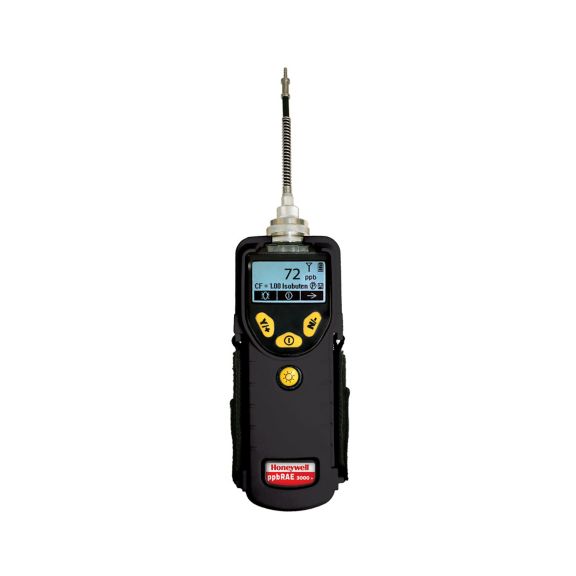
Service: Inspect sensor condition, sampling paths and filters, pump operation where fitted, battery or power supply, alarms, relays, display, sampling-point identification, and calibration records. Perform bump tests and calibration only with approved gas and according to manufacturer and vessel safety procedures.
Spare Parts: Keep approved sensors or sensor cartridges, filters, pump or tubing service items, batteries or charging accessories, calibration fittings, and critical fuses or interface parts.
Use Cases: Used on tankers, gas carriers, offshore vessels, enclosed-space operations, engine rooms, battery rooms, refrigeration spaces, cargo areas, and other locations where hazardous atmospheres may occur.
Portable gas detector — 4-gas compact
Honeywell BW Ultra unverified
Equipment Type
portable_gas_detector
Series
BW
Model code
BW Ultra
Common Failures & Inspection Points
  • Sensor poisoning, depletion or aging caused by contaminant exposure or normal service, resulting in slow response, failed calibration or incorrect readings
  • Blocked sample path or contaminated sensing surface caused by dust, salt, oil or water, resulting in weak response or a fault indication
  • Calibration drift caused by sensor aging or unsuitable calibration practice, resulting in readings that do not correspond with the applied test gas
  • Power, battery or communication failure caused by electrical faults, depleted cells or damaged cabling, resulting in loss of indication or system fault alarms
  • Alarm, relay or pump malfunction where fitted caused by control or mechanical faults, resulting in missing alarms, poor sample flow or persistent fault indications
Service: Perform bump tests, calibration checks and functional testing in accordance with the approved procedure for the installed detector type. Inspect sensor heads, sample paths, filters, batteries, cabling, pumps and junction boxes as applicable. Use only the correct certified test gas and accessories for the configured sensors. Verify local alarms and any outputs to the vessel's alarm or shutdown system. Replace life-limited sensing elements according to manufacturer guidance and record the work. Refer to the approved documentation for exact calibration intervals, alarm settings and environmental limits.
Spare Parts: Keep model-correct sensor cartridges or cells, filters, batteries where applicable, pump consumables, calibration accessories and selected electronic or relay components recommended by the manufacturer. Test-gas cylinders and regulators must match the configured sensors. Replacement components must preserve the approved certification.
Use Cases: Atmosphere monitoring for enclosed-space entry, machinery spaces, cargo areas, offshore process areas and other locations where combustible, toxic or oxygen conditions must be detected.
Portable gas detector — 5-gas with PID

Honeywell / RAE Systems

4
Honeywell / RAE Systems RAE MiniRAE 3000
RAE MiniRAE 3000 unverified
Voc detection
nein
Common Failures & Inspection Points
  • Sensor poisoning, ageing, contamination, or end-of-life degradation causes slow response, failed calibration, or drifting readings
  • Blocked sample line, filter, pump, or diffusion path prevents representative gas reaching the sensor and causes low or delayed readings
  • Battery, supply, charger, or internal power faults cause shutdown, short operating time, or power alarms
  • Water ingress, condensation, corrosion, or damaged connectors produce intermittent channels, false alarms, or failed communication
  • Calibration, configuration, relay, or control faults can cause nuisance alarms, missing alarms, or incorrect identification of the monitored point
Service: Inspect sensor condition, sampling paths and filters, pump operation where fitted, battery or power supply, alarms, relays, display, sampling-point identification, and calibration records. Perform bump tests and calibration only with approved gas and according to manufacturer and vessel safety procedures.
Spare Parts: Keep approved sensors or sensor cartridges, filters, pump or tubing service items, batteries or charging accessories, calibration fittings, and critical fuses or interface parts.
Use Cases: Used on tankers, gas carriers, offshore vessels, enclosed-space operations, engine rooms, battery rooms, refrigeration spaces, cargo areas, and other locations where hazardous atmospheres may occur.
Honeywell / RAE Systems RAE ppbRAE 3000
RAE ppbRAE 3000 unverified
Voc detection
ja
Common Failures & Inspection Points
  • Sensor poisoning, ageing, contamination, or end-of-life degradation causes slow response, failed calibration, or drifting readings
  • Blocked sample line, filter, pump, or diffusion path prevents representative gas reaching the sensor and causes low or delayed readings
  • Battery, supply, charger, or internal power faults cause shutdown, short operating time, or power alarms
  • Water ingress, condensation, corrosion, or damaged connectors produce intermittent channels, false alarms, or failed communication
  • Calibration, configuration, relay, or control faults can cause nuisance alarms, missing alarms, or incorrect identification of the monitored point
Service: Inspect sensor condition, sampling paths and filters, pump operation where fitted, battery or power supply, alarms, relays, display, sampling-point identification, and calibration records. Perform bump tests and calibration only with approved gas and according to manufacturer and vessel safety procedures.
Spare Parts: Keep approved sensors or sensor cartridges, filters, pump or tubing service items, batteries or charging accessories, calibration fittings, and critical fuses or interface parts.
Use Cases: Used on tankers, gas carriers, offshore vessels, enclosed-space operations, engine rooms, battery rooms, refrigeration spaces, cargo areas, and other locations where hazardous atmospheres may occur.
RAE MultiRAE Pro unverified
Voc detection
nein
Common Failures & Inspection Points
  • Sensor poisoning, ageing, contamination, or end-of-life degradation causes slow response, failed calibration, or drifting readings
  • Blocked sample line, filter, pump, or diffusion path prevents representative gas reaching the sensor and causes low or delayed readings
  • Battery, supply, charger, or internal power faults cause shutdown, short operating time, or power alarms
  • Water ingress, condensation, corrosion, or damaged connectors produce intermittent channels, false alarms, or failed communication
  • Calibration, configuration, relay, or control faults can cause nuisance alarms, missing alarms, or incorrect identification of the monitored point
Service: Inspect sensor condition, sampling paths and filters, pump operation where fitted, battery or power supply, alarms, relays, display, sampling-point identification, and calibration records. Perform bump tests and calibration only with approved gas and according to manufacturer and vessel safety procedures.
Spare Parts: Keep approved sensors or sensor cartridges, filters, pump or tubing service items, batteries or charging accessories, calibration fittings, and critical fuses or interface parts.
Use Cases: Used on tankers, gas carriers, offshore vessels, enclosed-space operations, engine rooms, battery rooms, refrigeration spaces, cargo areas, and other locations where hazardous atmospheres may occur.
RAE MultiRAE Lite unverified
Voc detection
nein
Common Failures & Inspection Points
  • Sensor poisoning, depletion or ageing, typically indicated by slow response, failed bump test or calibration drift
  • Sampling pump/filter blockage in pumped units, typically indicated by low-flow alarm or no gas response
  • Battery/power-supply failure, typically indicated by instrument shutdown or low-power alarm
  • Water/dirt ingress into sensor or sample path, typically indicated by erratic readings or sensor fault
  • Calibration or configuration error, typically indicated by incorrect zero/span, nuisance alarms or missed response
Service: Inspect sensor condition, filters/sample paths, power/battery, alarm functions and calibration status; perform bump and calibration tests using approved gas and procedures, with exact alarm points taken from vessel/manufacturer documentation.
Spare Parts: Keep approved sensors, filters, sampling tubing, batteries/chargers, pump service parts and calibration accessories/gas as allowed by the vessel's safety system.
Use Cases: Used on tankers, gas carriers, chemical carriers, offshore units, enclosed-space entry teams and machinery spaces where hazardous atmospheres may occur. This entry applies specifically to the Portable Multi-Gas Detector variant identified as Honeywell / RAE Systems RAE MultiRAE Lite.

Detector Electronics Corporation (Det-Tronics)

3
PIRECL/AutroPoint HC200, HC300 PL, PIRTB- Termination Box
Model Number
TAA00000HA
FlexSonic™ Acoustic Detector consisting of: AC100 (sensor), ATX10 (transmitter), STB (termination box)
Model Number
TAA000017F
Flexsight™ LS2000 Line-of-Sight Infrared Gas Detector /Model HC800 (Autronica)
Model Number
TAA000002M

Rosemount

3
GDU Incus Ultrasonic Pressurised Gas Leak Detector with mounting bracket GDU-02-412
Model Number
TAA000005E
Open path gas detector 935, Spectrex SafEye Quasar 900 Open Path Gas Detector
Model Number
TAA00001NA
Open path gas detector 935
Model Number
TAA00000N6

Consilium Safety Netherlands

2
ST350EX, ST650EX, ST850EX
Model Number
TAA00001SH
ST450EC, ST850EC and ST480xi
Model Number
TAA00001ZN

General Monitors

2
Open Path Combustible Gas Detector IR5500
Model Number
TAA00001EX
Acoustic Gas Leak detector Observer-i
Model Number
TAA00001G0

HONEYWELL

2
Salwico GD H2S
Model Number
TAA000025N
HONEYWELL CO.,LTD Sensepoint XCD H2S
Sensepoint XCD H2S
Model Number
TAA00001B9

Honeywell Analytics

2
Searchline Excel infrared open path gas detector
Model Number
TAA000014V
Honeywell Analytics Ltd. Searchpoint: Optima Plus with optional Hart, Optima X, Optima Z
Searchpoint: Optima Plus with optional Hart, Optima X, Optima Z
Model Number
TAA000011W

Oldham / 3M Gas & Flame

2
Oldham PS200 unverified
Common Failures & Inspection Points
  • Detector or sensing-element contamination, poisoning or ageing can cause false alarms, slow response or failed functional tests
  • Battery, power-supply or control-circuit faults caused by ageing, loose wiring or blown protection can lead to trouble alarms or unavailable safety functions
  • Cylinder pressure loss, leakage or damaged valves where stored media is used can leave the equipment outside ready condition and may be found during inspection or weighing checks
  • Blocked, corroded or mechanically damaged nozzles, piping, hoses or masks can restrict discharge or breathing flow and show as poor functional test results
  • Incorrect isolation, expired service status or disturbed release interlocks after maintenance can prevent normal arming and create panel faults or failed readiness checks
Service: Check physical condition, accessibility, labels and service status, then verify approved tests of detectors, alarms, release circuits or breathing components as applicable. Inspect cylinders, hoses, nozzles, masks, wiring and interlocks without discharging or altering safety systems outside the approved procedure. Use maker, class and statutory documentation for exact inspection and acceptance criteria.
Spare Parts: Hold only approved safety-system spares such as detector heads, filters or sensor caps, fuses, batteries where user-replaceable, seals, hoses, masks, nozzles and control modules according to the vessel's certified arrangement.
Use Cases: Machinery spaces, accommodation, cargo areas, enclosed spaces and emergency-response stations on merchant, passenger, tanker and offshore vessels.
Oldham PS500 unverified
Common Failures & Inspection Points
  • Detector or sensing-element contamination, poisoning or ageing can cause false alarms, slow response or failed functional tests
  • Battery, power-supply or control-circuit faults caused by ageing, loose wiring or blown protection can lead to trouble alarms or unavailable safety functions
  • Cylinder pressure loss, leakage or damaged valves where stored media is used can leave the equipment outside ready condition and may be found during inspection or weighing checks
  • Blocked, corroded or mechanically damaged nozzles, piping, hoses or masks can restrict discharge or breathing flow and show as poor functional test results
  • Incorrect isolation, expired service status or disturbed release interlocks after maintenance can prevent normal arming and create panel faults or failed readiness checks
Service: Check physical condition, accessibility, labels and service status, then verify approved tests of detectors, alarms, release circuits or breathing components as applicable. Inspect cylinders, hoses, nozzles, masks, wiring and interlocks without discharging or altering safety systems outside the approved procedure. Use maker, class and statutory documentation for exact inspection and acceptance criteria.
Spare Parts: Hold only approved safety-system spares such as detector heads, filters or sensor caps, fuses, batteries where user-replaceable, seals, hoses, masks, nozzles and control modules according to the vessel's certified arrangement.
Use Cases: Machinery spaces, accommodation, cargo areas, enclosed spaces and emergency-response stations on merchant, passenger, tanker and offshore vessels.

Ados

1
GTR 210 EX MED, GTR 210 MED
Model Number
TAA00002JG

Gastron

1
GIR-3000; GTD-2000Ex; GTD-2000Tx(O2); GTD-2000Tx(H2S); GTD-2000Tx(NH3)
Model Number
TAA00001KW

Green Instruments

1
Type G16 Smoke Density Monitor, Type G26 Ambient Oil Mist Detector, Type G16.1/G26.1 Opacity Transceiver, Type G16/G26 Ex Opacity Transceiver, Accessories*
Model Number
TAA00000Z4

Hanla IMS

1
HGD-200 Series
Model Number
TAA00003V1

HORIBA, Ltd. Head Office

1
NOx Analyzer for Ships MEXA-820NOx, Receiver set, Guide probe set and Sensor
Model Number
TAA0000181

Jiangsu Yuanwang Instrument Group

1
QBN-09F-C-B, QBN-09IR-C-B, QBN-09IR-C-E, QBN-09H-C-E
Model Number
TAA000036U

mPower Electronics (Shanghai)

1
MP820, MP840
Model Number
TAA00003GJ

RKI Instruments

1
GX-2012
4 gases · Hazardous Gas Detection · portable
Type
portable
Gases
4
Pump
ja
Common Failures & Inspection Points
  • Sensor ageing, poisoning, contamination or dirt causes drift, slow response, false alarms or failed tests
  • Power, battery, wiring or communication faults cause device-failure alarms or loss of indication
  • Water ingress, corrosion or impact damage causes intermittent operation or failed controls
  • Blocked sampling paths or obstructed detector exposure delays response or prevents correct detection
  • Incorrect calibration, configuration or detector type causes misleading readings or nuisance alarms
Service: Inspect sensors, sample paths or detector openings, wiring, power, mounting and alarm interfaces. Perform bump tests, functional tests or calibration using the approved method for the device type. Review alarm history and confirm remote indications or shutdown interfaces. Refer to the manufacturer documentation for the exact figure for calibration and alarm criteria.
Spare Parts: Carry detector heads or sensor cartridges, filters, sampling parts, batteries or chargers, fuses, calibration accessories and approved test consumables.
Strengths
  • Built‑in active pump enables sampling inside enclosed spaces without external equipment
  • Detects up to four hazardous gases (commonly O₂, H₂S, CO, combustible gases) with a single unit
  • Compact handheld design allows rapid deployment during confined‑space entry procedures
  • RKI brand reputation for rugged construction suited to marine environments
Weaknesses
  • Electrochemical sensors are prone to degradation and require periodic calibration
  • Pump tubing ages and may need replacement after limited use
  • Battery life can decline quickly when the pump is used frequently, limiting continuous operation time
  • Mandatory bump test before each use adds procedural overhead
Typical Vessels: TankerBulk CarrierContainer ShipOffshore Supply VesselPassenger Ferry
Decision Guide: Choose if you need a portable detector with an internal pump for active sampling and the ability to monitor up to four gases during confined‑space entry. Avoid if continuous long‑term monitoring, higher gas count, or a pump‑free solution is required.
Use Cases: Machinery, cargo, accommodation, enclosed-space and personal safety monitoring.

Siegrist

1
MECCOS TrGL, MECCOS TrGL NH3, MECCOS TRGL O2, Splitter Box
Model Number
TAA00002V8