Tunnel Thruster
A tunnel thruster is a fixed propeller in a transverse tunnel, distinct from azimuth or retractable units because it cannot steer - it only pushes sideways, port or starboard, at one fixed location in the hull.
Read more — Tunnel Thruster explained ▾
What Defines a Tunnel Thruster
A tunnel thruster is a propeller mounted inside a straight transverse tunnel cut through the hull, close to the bow or stern. Unlike azimuth thrusters or retractable units, it cannot rotate or train; it only produces thrust along the tunnel's fixed axis, port or starboard, by reversing the propeller pitch or its direction of rotation. That simplicity is the whole point: a tunnel unit is cheaper to install, has no exposed steerable gearbox below the hull, and is the default choice wherever the vessel only needs lateral push for berthing rather than full manoeuvring or dynamic positioning capability.
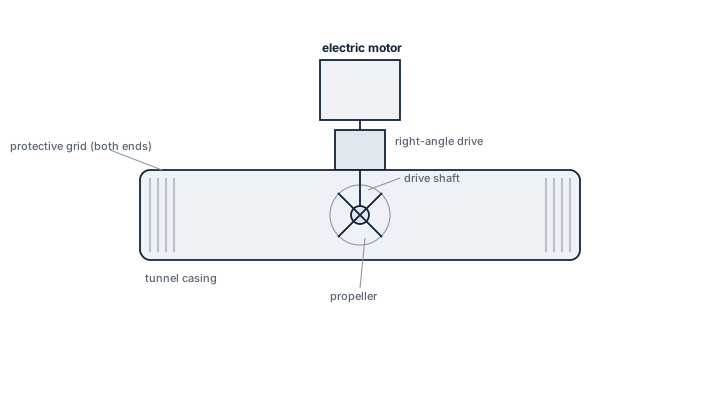
Main components
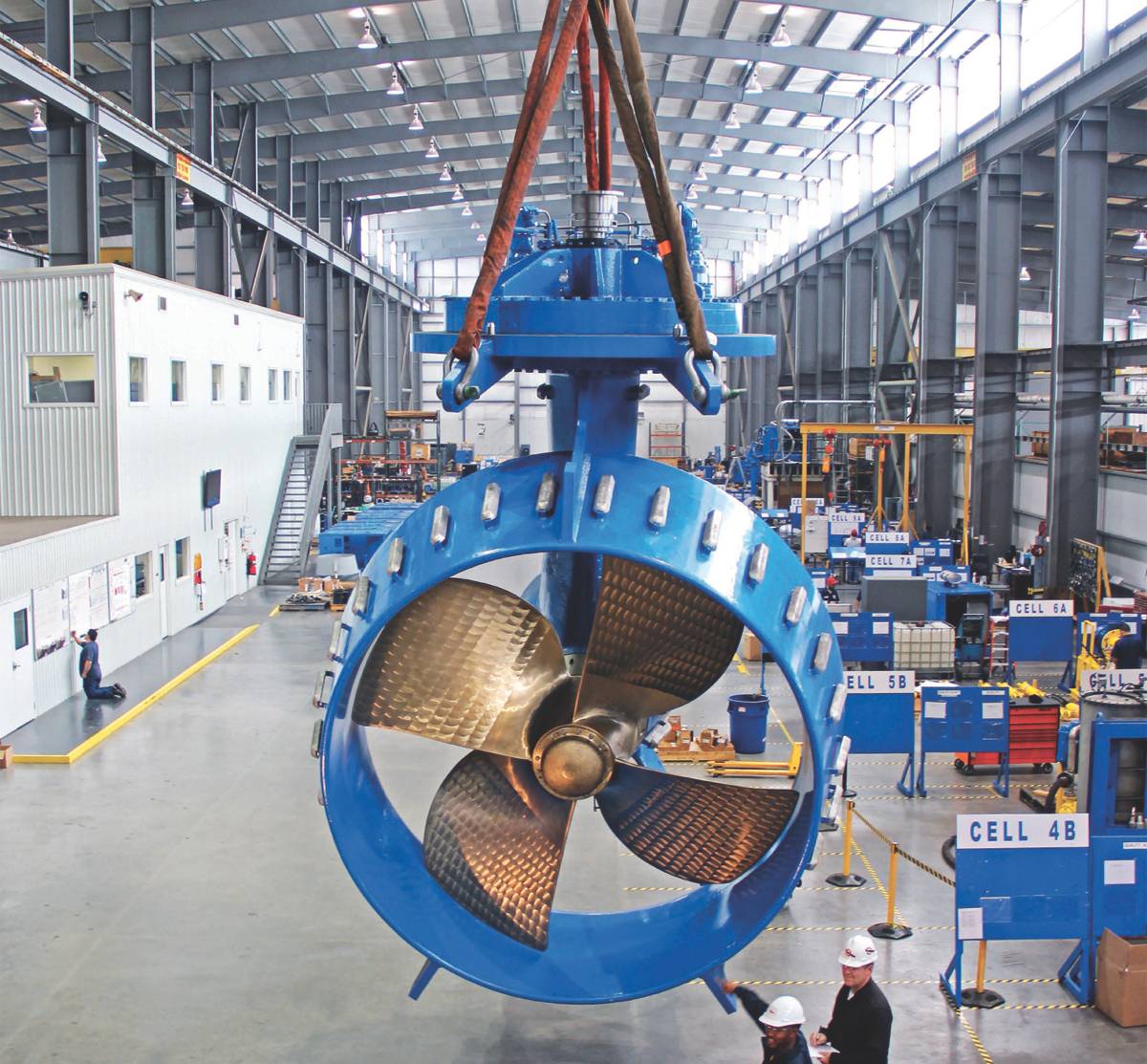
Tunnel
A steel tube welded into the hull, sized and positioned per naval architecture calculations; a poorly located tunnel loses thrust to hull interaction and can generate noticeable vibration.
Propeller
Fixed-pitch or controllable-pitch, typically four or five bladed. Controllable-pitch units reverse thrust by changing blade angle at constant shaft speed, which is faster and gentler on the drivetrain than reversing a fixed-pitch propeller's rotation.
Drive motor
Electric motor, hydraulic motor, or direct diesel drive through a right-angle gearbox. Electric drives dominate because they start and reverse quickly and integrate cleanly with the ship's power management system.
Gearbox and seals
A right-angle gearbox transmits drive from the motor shaft to the horizontal propeller shaft. Shaft seals keep sea water out of the gearbox and tunnel; seal failure is one of the most common causes of thruster downtime.
Selection and sizing
Thruster capacity is chosen from the manoeuvring requirement, not from engine room space:
- Bollard pull thrust in kN, derived from the vessel's windage area and the required transverse speed for berthing without tug assistance
- Motor power, typically a few hundred kW on coastal vessels up to several MW on large cruise ships and offshore vessels needing dynamic positioning capability
- Tunnel diameter and length-to-diameter ratio, which affects thrust efficiency and flow noise
- Fixed-pitch versus controllable-pitch, driven by how often the thruster starts and stops and whether soft manoeuvring is needed
Class and regulatory requirements
Classification societies require thruster tunnels to meet minimum submersion depth so the propeller does not draw air and cavitate in ballast condition, and they set structural requirements for the tunnel-to-hull connection. Where a thruster is counted toward a dynamic positioning notation, class rules require independent power feeds and redundancy appropriate to the DP class assigned. Periodic survey covers the drive motor, gearbox oil condition, seal integrity and, at dry-docking, the tunnel grid and propeller for damage or fouling.
Typical faults
- Seal leakage - worn shaft seals let sea water into the gearbox, contaminating the oil and accelerating bearing wear
- Cavitation erosion - operating in light ballast with insufficient submersion pits the propeller blades and reduces thrust over time
- Controllable-pitch hub hydraulic failure - loss of pitch control oil pressure leaves the blades stuck at an uncontrolled angle
- Debris strike - rope, fishing gear or ice entering the tunnel bends blades or jams the propeller
- Motor overheating - repeated short bursts during berthing without cooldown time trips thermal protection
What to look for in a supplier
- Documented bollard pull test results at the rated tunnel submersion, not just calculated figures
- Gearbox and seal spare parts held regionally, since a thruster failure often strands a vessel that depends on it for berthing
- Class approval of the tunnel structural design and drive train together, not as separate items
- Noise and vibration data if the tunnel sits near accommodation spaces
Log every thruster start with duration and current draw; a slow upward creep in running current over weeks, well before an alarm trips, is usually the first sign of a seal or bearing problem developing in the gearbox.
Typical Manufacturers
26 manufacturers · 727 models
Thrustmaster of Texas, Inc.
80 ✓ 36 verified- Propeller fouling, rope entanglement or blade damage causes vibration, reduced thrust or high drive load
- Shaft-seal or gearbox leakage causes oil loss, water ingress or low-level alarms
- Bearing or gear wear causes abnormal noise, vibration or rising temperature
- Electric motor, converter or hydraulic-drive faults cause reduced thrust, failed starts or protective trips
- Pitch, steering or control-feedback faults as applicable cause incorrect thrust response, loss of direction control or remote-control alarms
- Compact 540 mm diameter fits in moderate‑size hulls without excessive structural reinforcement
- 50 kW power provides sufficient thrust (6 kN) for vessels up to ~100 m LOA in calm conditions
- Integrated tunnel design offers good protection of the propeller and reduced fouling
- Relatively simple installation compared with azimuth thrusters
- Low maintenance due to sealed motor and straightforward duct geometry
- Limited thrust makes it unsuitable for large tankers, bulk carriers or vessels requiring DP‑class maneuvering
- Performance drops in heavy seas or strong currents; cavitation may appear at high RPM
- Bow‑only configuration limits redundancy – loss of the unit reduces overall handling capability
- Hull penetration required for duct installation can affect structural integrity if not properly reinforced
- Noise and vibration levels higher than some newer pod‑type thrusters
- Propeller or blade damage from debris can cause vibration and reduced thrust, noticed during maneuvering
- Gear or bearing wear can produce abnormal noise, heat or metallic debris in lubricant
- Seal leakage can allow water ingress or oil loss, seen through header-tank level changes or leakage alarms
- Motor, converter or hydraulic-drive faults can prevent commanded thrust, seen as trips, low power or unavailable thruster status
- Control or feedback-sensor faults can cause incorrect direction or pitch/azimuth indication, seen as command mismatch alarms
- Compact 540 mm tunnel diameter fits in limited hull spaces
- Moderate power (50 kW) balances fuel consumption with useful thrust for small‑to‑mid size vessels
- Integrated control interface compatible with most bridge navigation systems
- Robust stainless‑steel housing designed for marine corrosion environments
- Maximum thrust of 6 kN may be insufficient for large tankers or high‑wind conditions
- Fixed‑pitch propeller design limits efficiency at very low speeds
- No published data on noise or vibration levels, which could affect crew comfort
- Lack of documented certifications (e.g., IMO D‑2) may require additional class approval
- Propeller or blade damage from debris can cause vibration and reduced thrust, noticed during maneuvering
- Gear or bearing wear can produce abnormal noise, heat or metallic debris in lubricant
- Seal leakage can allow water ingress or oil loss, seen through header-tank level changes or leakage alarms
- Motor, converter or hydraulic-drive faults can prevent commanded thrust, seen as trips, low power or unavailable thruster status
- Control or feedback-sensor faults can cause incorrect direction or pitch/azimuth indication, seen as command mismatch alarms
- High thrust‑to‑power ratio (9 kN at 75 kW)
- Relatively small tunnel diameter (560 mm) eases hull integration
- Electric drive provides precise, low‑maintenance operation
- Standard bow installation simplifies retrofits on existing vessels
- Limited thrust may be insufficient for very large ships or high‑wind conditions
- Hull penetration required; structural reinforcement may add cost
- Performance data not fully verified – certification status unclear
- Power demand of 75 kW can impact vessel electrical load management
- Propeller or blade damage from debris can cause vibration and reduced thrust, noticed during maneuvering
- Gear or bearing wear can produce abnormal noise, heat or metallic debris in lubricant
- Seal leakage can allow water ingress or oil loss, seen through header-tank level changes or leakage alarms
- Motor, converter or hydraulic-drive faults can prevent commanded thrust, seen as trips, low power or unavailable thruster status
- Control or feedback-sensor faults can cause incorrect direction or pitch/azimuth indication, seen as command mismatch alarms
- Compact 560 mm duct fits in vessels with limited hull space
- High thrust‑to‑power ratio for its class (9 kN @ 75 kW)
- Direct‑drive electric motor provides quick response and low emissions
- Standardized mounting interface simplifies installation on new builds or retrofits
- Maximum thrust of 9 kN may be insufficient for larger vessels or high‑wind conditions
- Potential cavitation at high RPMs, requiring careful propeller selection
- Maintenance access to bearings and seals can be limited in tight stern spaces
- No published ice‑class certification limits use in polar regions
- Propeller or blade damage from debris can cause vibration and reduced thrust, noticed during maneuvering
- Gear or bearing wear can produce abnormal noise, heat or metallic debris in lubricant
- Seal leakage can allow water ingress or oil loss, seen through header-tank level changes or leakage alarms
- Motor, converter or hydraulic-drive faults can prevent commanded thrust, seen as trips, low power or unavailable thruster status
- Control or feedback-sensor faults can cause incorrect direction or pitch/azimuth indication, seen as command mismatch alarms
- High thrust output (12 kN) relative to its power rating
- Large 580 mm tunnel diameter provides efficient water flow and reduced cavitation
- Compact footprint compared with external azimuth pods for bow installation
- Suitable for vessels that require precise low‑speed handling such as DP‑assisted ships
- Diameter of 580 mm may require significant hull penetration and reinforcement
- 100 kW power demand can increase overall fuel consumption on smaller vessels
- Limited to bow locations; not readily adaptable for stern use without redesign
- No publicly documented certification or class approval information
- Propeller fouling, rope entanglement or blade damage causes vibration, reduced thrust or high drive load
- Shaft-seal or gearbox leakage causes oil loss, water ingress or low-level alarms
- Bearing or gear wear causes abnormal noise, vibration or rising temperature
- Electric motor, converter or hydraulic-drive faults cause reduced thrust, failed starts or protective trips
- Pitch, steering or control-feedback faults as applicable cause incorrect thrust response, loss of direction control or remote-control alarms
- High thrust‑to‑power ratio (12 kN at 100 kW)
- Compact tunnel diameter of 580 mm fits vessels with limited hull space
- Stern mounting simplifies integration with existing propulsion layouts
- 100 kW power demand may require dedicated generator capacity on smaller ships
- Maximum thrust of 12 kN may be insufficient for very large vessels or extreme weather conditions
- Tunnel geometry can be prone to cavitation in shallow‑water operations
- Propeller or blade damage from debris can cause vibration and reduced thrust, noticed during maneuvering
- Gear or bearing wear can produce abnormal noise, heat or metallic debris in lubricant
- Seal leakage can allow water ingress or oil loss, seen through header-tank level changes or leakage alarms
- Motor, converter or hydraulic-drive faults can prevent commanded thrust, seen as trips, low power or unavailable thruster status
- Control or feedback-sensor faults can cause incorrect direction or pitch/azimuth indication, seen as command mismatch alarms
- High thrust output (18 kN) relative to its power rating
- Compact tunnel design fits within standard bow sections
- Direct water flow through the tunnel reduces cavitation risk
- Integrated control interface compatible with common bridge systems
- Requires a relatively large hull opening (≈620 mm diameter)
- Higher power consumption compared with smaller‑rated thrusters
- Maintenance of bearings and seals can be intensive on high‑usage vessels
- Limited effectiveness in very deep drafts where water flow is constrained
- Propeller fouling, rope entanglement or blade damage causes vibration, reduced thrust or high drive load
- Shaft-seal or gearbox leakage causes oil loss, water ingress or low-level alarms
- Bearing or gear wear causes abnormal noise, vibration or rising temperature
- Electric motor, converter or hydraulic-drive faults cause reduced thrust, failed starts or protective trips
- Pitch, steering or control-feedback faults as applicable cause incorrect thrust response, loss of direction control or remote-control alarms
- High thrust‑to‑power ratio (18 kN from 150 kW) improves low‑speed handling.
- Relatively compact 620 mm tunnel fits in many medium‑size hulls without excessive structural modification.
- Robust, simple construction typical of tunnel thrusters leads to lower maintenance compared with more complex azimuth units.
- Stern placement reduces interference with bow thruster flow and can aid in backing maneuvers.
- 150 kW power demand may require substantial electrical generation capacity on smaller vessels.
- Tunnel diameter limits installation to hulls that can accommodate a 620 mm opening, restricting use on very narrow or shallow drafts.
- Fixed‑direction thrust (no 360° rotation) may be less versatile than azimuth thrusters for certain DP operations.
- Potential for higher acoustic signature compared with some low‑noise azimuth designs.
- Propeller or blade damage from debris can cause vibration and reduced thrust, noticed during maneuvering
- Gear or bearing wear can produce abnormal noise, heat or metallic debris in lubricant
- Seal leakage can allow water ingress or oil loss, seen through header-tank level changes or leakage alarms
- Motor, converter or hydraulic-drive faults can prevent commanded thrust, seen as trips, low power or unavailable thruster status
- Control or feedback-sensor faults can cause incorrect direction or pitch/azimuth indication, seen as command mismatch alarms
- High thrust‑to‑power ratio (24 kN @ 200 kW) for its size class
- Relatively small tunnel diameter (660 mm) eases hull integration on medium‑size vessels
- Robust, low‑maintenance electric drive suitable for continuous DP operation
- Standardized control interface compatible with most ship bridge systems
- 200 kW electrical demand may require upgrades to existing power distribution on older ships
- Fixed tunnel orientation limits thrust vectoring compared with azimuth units
- Installation requires precise hull cut‑out and sealing; retrofit can be labour intensive
- Potential for cavitation noise at high RPM, which may affect passenger comfort on cruise vessels
- Propeller fouling, rope entanglement or blade damage causes vibration, reduced thrust or high drive load
- Shaft-seal or gearbox leakage causes oil loss, water ingress or low-level alarms
- Bearing or gear wear causes abnormal noise, vibration or rising temperature
- Electric motor, converter or hydraulic-drive faults cause reduced thrust, failed starts or protective trips
- Pitch, steering or control-feedback faults as applicable cause incorrect thrust response, loss of direction control or remote-control alarms
- High thrust output (24 kN) relative to its 200 kW power rating
- Compact 660 mm tunnel reduces hull penetration and internal space loss
- Robust, sealed construction suited for harsh marine environments
- Standard electric drive simplifies integration with shipboard power systems
- Designed specifically for stern installation, improving aft maneuverability
- Fixed tunnel geometry offers less directional flexibility than azimuth units
- Significant hull penetration (660 mm) requires careful structural reinforcement
- 200 kW electrical demand may be excessive for smaller vessels with limited power generation
- No inherent redundancy; a single motor failure disables the thruster
- Spare‑part availability tied to Thrustmaster Marine dealer network
- Propeller fouling, rope entanglement or blade damage causes vibration, reduced thrust or high drive load
- Shaft-seal or gearbox leakage causes oil loss, water ingress or low-level alarms
- Bearing or gear wear causes abnormal noise, vibration or rising temperature
- Electric motor, converter or hydraulic-drive faults cause reduced thrust, failed starts or protective trips
- Pitch, steering or control-feedback faults as applicable cause incorrect thrust response, loss of direction control or remote-control alarms
- 30 kN thrust output at 250 kW provides a high thrust‑to‑power ratio
- 700 mm tunnel diameter offers a relatively compact installation footprint for its power class
- Robust tunnel construction is tolerant of marine fouling and cavitation
- Maximum thrust may be insufficient for very large vessels or extreme wind‑wave conditions
- Tunnel size can limit retrofit options on ships with narrow hull sections
- No publicly verified certification data (IMO D‑2, USCG, etc.) is available for this specific model
- Propeller fouling, rope entanglement or blade damage causes vibration, reduced thrust or high drive load
- Shaft-seal or gearbox leakage causes oil loss, water ingress or low-level alarms
- Bearing or gear wear causes abnormal noise, vibration or rising temperature
- Electric motor, converter or hydraulic-drive faults cause reduced thrust, failed starts or protective trips
- Pitch, steering or control-feedback faults as applicable cause incorrect thrust response, loss of direction control or remote-control alarms
- High thrust-to-power ratio (30 kN at 250 kW) for its size
- Compact 700 mm tunnel fits within standard hull openings, minimizing structural impact
- Dedicated stern installation improves aft maneuverability and reduces propeller wash interference
- Electric drive offers precise speed control and low acoustic signature
- Maximum thrust may be insufficient for large vessels or heavy‑weather dynamic positioning (>50 kN required)
- Tunnel geometry can be prone to cavitation in shallow water or high‑speed flow conditions
- Installation requires significant hull penetration and reinforcement, increasing dock‑time and cost
- Limited azimuth capability compared with rotating pod thrusters for 360° thrust vectoring
- Propeller fouling, rope entanglement or blade damage causes vibration, reduced thrust or high drive load
- Shaft-seal or gearbox leakage causes oil loss, water ingress or low-level alarms
- Bearing or gear wear causes abnormal noise, vibration or rising temperature
- Electric motor, converter or hydraulic-drive faults cause reduced thrust, failed starts or protective trips
- Pitch, steering or control-feedback faults as applicable cause incorrect thrust response, loss of direction control or remote-control alarms
- High thrust output (36 kN) relative to power rating, improving manoeuvrability in tight ports
- Robust tunnel housing suitable for harsh marine environments
- Standardized bow‑mount design simplifies integration on new builds and retrofits
- Compatible with most commercial thruster control systems
- Large hull penetration (740 mm diameter) limits installation to vessels with sufficient bow space
- Higher power consumption compared with smaller or azimuth thrusters of similar thrust
- Requires regular bearing lubrication and periodic inspection of the tunnel liner
- Installation cost can be significant due to structural modifications
- Propeller or blade damage from debris can cause vibration and reduced thrust, noticed during maneuvering
- Gear or bearing wear can produce abnormal noise, heat or metallic debris in lubricant
- Seal leakage can allow water ingress or oil loss, seen through header-tank level changes or leakage alarms
- Motor, converter or hydraulic-drive faults can prevent commanded thrust, seen as trips, low power or unavailable thruster status
- Control or feedback-sensor faults can cause incorrect direction or pitch/azimuth indication, seen as command mismatch alarms
- High thrust output (36 kN) for a relatively compact 740 mm duct diameter
- Direct integration into the hull stern section simplifies installation on new builds or retrofits
- Robust tunnel design provides good protection against debris and grounding impacts
- Suitable power rating (300 kW) matches many medium‑size vessel propulsion systems
- Relatively high electrical power demand compared with smaller thrusters
- Effectiveness can be reduced in heavy sea states or strong currents
- Requires regular duct cleaning to maintain performance and avoid cavitation
- Noise and vibration levels may need mitigation on passenger‑oriented vessels
- Propeller fouling, rope entanglement or blade damage causes vibration, reduced thrust or high drive load
- Shaft-seal or gearbox leakage causes oil loss, water ingress or low-level alarms
- Bearing or gear wear causes abnormal noise, vibration or rising temperature
- Electric motor, converter or hydraulic-drive faults cause reduced thrust, failed starts or protective trips
- Pitch, steering or control-feedback faults as applicable cause incorrect thrust response, loss of direction control or remote-control alarms
- High thrust‑to‑power ratio (48 kN at 400 kW) gives strong manoeuvring force.
- Large 820 mm tunnel diameter provides good water flow and reduced cavitation risk compared with smaller units.
- Compact bow installation minimizes impact on vessel draft while delivering effective side thrust.
- Integrated control interface compatible with most bridge navigation systems.
- Robust construction suited for continuous low‑speed operation in harsh port environments.
- Requires a sizable hull opening (≈820 mm) which may limit retrofit options on smaller vessels.
- 400 kW power demand can strain vessel electrical distribution if not already provisioned.
- Tunnel geometry can be prone to fouling and requires regular inspection of the duct lining.
- Potential for cavitation at high RPMs, especially in shallow water or low‑speed conditions.
- Maintenance typically needs dry‑docking or specialized access ports.
- Propeller or blade damage from debris can cause vibration and reduced thrust, noticed during maneuvering
- Gear or bearing wear can produce abnormal noise, heat or metallic debris in lubricant
- Seal leakage can allow water ingress or oil loss, seen through header-tank level changes or leakage alarms
- Motor, converter or hydraulic-drive faults can prevent commanded thrust, seen as trips, low power or unavailable thruster status
- Control or feedback-sensor faults can cause incorrect direction or pitch/azimuth indication, seen as command mismatch alarms
- High thrust output (48 kN) suitable for medium‑to‑large ships' stern manoeuvring
- Compact 820 mm tunnel diameter fits within standard hull openings
- Robust, low‑maintenance brushless motor rated at 400 kW
- Integrated control interface compatible with most bridge navigation systems
- Proven design for reliable operation in harsh marine environments
- Relatively high power consumption compared with smaller thrusters
- Fixed‑direction thrust; not as versatile as azimuth or pod units
- Installation requires precise hull penetration and structural reinforcement
- Potential cavitation at very high RPMs, especially in shallow water
- Limited to vessels that can accommodate an 820 mm tunnel diameter
- Propeller fouling, rope entanglement or blade damage causes vibration, reduced thrust or high drive load
- Shaft-seal or gearbox leakage causes oil loss, water ingress or low-level alarms
- Bearing or gear wear causes abnormal noise, vibration or rising temperature
- Electric motor, converter or hydraulic-drive faults cause reduced thrust, failed starts or protective trips
- Pitch, steering or control-feedback faults as applicable cause incorrect thrust response, loss of direction control or remote-control alarms
- High thrust output (60 kN) relative to its power rating (500 kW)
- Large 900 mm tunnel diameter gives efficient water flow and reduced cavitation
- Compact installation footprint compared with external azimuth pods
- Designed for bow placement, improving docking and low‑speed handling
- Requires a sizable hull opening (≈0.9 m) limiting retrofit options on smaller vessels
- Power demand of 500 kW can strain vessel electrical systems if not sized appropriately
- Tunnel lining wear may increase maintenance intervals in high‑usage ports
- Limited to vessels that can accommodate the duct length and structural reinforcement
- Propeller fouling, rope entanglement or blade damage causes vibration, reduced thrust or high drive load
- Shaft-seal or gearbox leakage causes oil loss, water ingress or low-level alarms
- Bearing or gear wear causes abnormal noise, vibration or rising temperature
- Electric motor, converter or hydraulic-drive faults cause reduced thrust, failed starts or protective trips
- Pitch, steering or control-feedback faults as applicable cause incorrect thrust response, loss of direction control or remote-control alarms
- High thrust output (60 kN) relative to power rating, giving strong low‑speed manoeuvring capability
- Relatively compact installation footprint for a 500 kW unit, fitting into standard stern tunnel sections
- All‑electric drive eliminates the need for hydraulic systems and associated maintenance
- Designed for stern mounting, improving aft handling during docking and emergency stops
- High electrical power demand (500 kW) may require upgrades to vessel power distribution
- Large tunnel diameter (900 mm) can limit placement on vessels with restricted hull space
- Installation requires significant hull penetration and structural reinforcement
- No publicly confirmed certifications or class approvals, requiring verification before installation
- Propeller or blade damage from debris can cause vibration and reduced thrust, noticed during maneuvering
- Gear or bearing wear can produce abnormal noise, heat or metallic debris in lubricant
- Seal leakage can allow water ingress or oil loss, seen through header-tank level changes or leakage alarms
- Motor, converter or hydraulic-drive faults can prevent commanded thrust, seen as trips, low power or unavailable thruster status
- Control or feedback-sensor faults can cause incorrect direction or pitch/azimuth indication, seen as command mismatch alarms
- High thrust output (72 kN) for its power rating, improving manoeuvring capability
- Large 980 mm tunnel diameter reduces cavitation risk and increases efficiency
- Bow placement provides direct control during docking and low‑speed operations
- Requires significant bow space to accommodate the ~1 m duct diameter
- High power demand (600 kW) may increase fuel consumption when used frequently
- Installation and maintenance can be more complex on vessels with limited hull access
- Propeller or blade damage from debris can cause vibration and reduced thrust, noticed during maneuvering
- Gear or bearing wear can produce abnormal noise, heat or metallic debris in lubricant
- Seal leakage can allow water ingress or oil loss, seen through header-tank level changes or leakage alarms
- Motor, converter or hydraulic-drive faults can prevent commanded thrust, seen as trips, low power or unavailable thruster status
- Control or feedback-sensor faults can cause incorrect direction or pitch/azimuth indication, seen as command mismatch alarms
- High thrust output (72 kN) suitable for large ships and tight berths
- Large 980 mm tunnel diameter provides efficient water flow and reduced cavitation risk at rated power
- 600 kW motor offers rapid response for dynamic positioning or emergency maneuvers
- Stern mounting improves aft steering control, especially on vessels with limited bow thruster space
- Physical size requires substantial hull cut‑out; may be difficult to retrofit on smaller ships
- High power rating leads to increased fuel consumption and electrical load
- Maintenance of the large tunnel bearing and seals can be more demanding than smaller units
- Installation cost is higher than lower‑power thruster alternatives
- Propeller fouling, rope entanglement or blade damage causes vibration, reduced thrust or high drive load
- Shaft-seal or gearbox leakage causes oil loss, water ingress or low-level alarms
- Bearing or gear wear causes abnormal noise, vibration or rising temperature
- Electric motor, converter or hydraulic-drive faults cause reduced thrust, failed starts or protective trips
- Pitch, steering or control-feedback faults as applicable cause incorrect thrust response, loss of direction control or remote-control alarms
- Very high thrust (90 kN) for its size, enabling effective bow control on large ships
- Robust tunnel construction reduces blade wear and simplifies maintenance
- Integrated hydraulic drive rated at 750 kW provides reliable power in demanding conditions
- Standard 1.1 m tunnel diameter fits common hull openings for new‑build installations
- High power demand (750 kW) increases vessel fuel consumption when used frequently
- Large tunnel aperture requires significant hull penetration and structural reinforcement
- Potential cavitation at high RPMs may limit efficiency in shallow water
- Limited field data on long‑term reliability for this specific model
- Propeller or blade damage from debris can cause vibration and reduced thrust, noticed during maneuvering
- Gear or bearing wear can produce abnormal noise, heat or metallic debris in lubricant
- Seal leakage can allow water ingress or oil loss, seen through header-tank level changes or leakage alarms
- Motor, converter or hydraulic-drive faults can prevent commanded thrust, seen as trips, low power or unavailable thruster status
- Control or feedback-sensor faults can cause incorrect direction or pitch/azimuth indication, seen as command mismatch alarms
- High thrust output (90 kN) suitable for berthing and unberthing of large ships
- Compact tunnel arrangement fits within a 1.1 m hull opening, minimizing structural intrusion
- Direct‑drive motor design reduces moving parts and maintenance intervals
- Optimised stern flow geometry improves efficiency during reverse thrust
- Large 1100 mm diameter requires substantial hull modification on smaller vessels
- 750 kW power demand can increase auxiliary fuel consumption when used frequently
- Potential for cavitation if installed in high‑speed water flow without proper sizing
- No publicly verified IMO or classification society approvals identified
- Propeller or blade damage from debris can cause vibration and reduced thrust, noticed during maneuvering
- Gear or bearing wear can produce abnormal noise, heat or metallic debris in lubricant
- Seal leakage can allow water ingress or oil loss, seen through header-tank level changes or leakage alarms
- Motor, converter or hydraulic-drive faults can prevent commanded thrust, seen as trips, low power or unavailable thruster status
- Control or feedback-sensor faults can cause incorrect direction or pitch/azimuth indication, seen as command mismatch alarms
- Very high thrust (96 kN) suitable for large vessels and tight port manoeuvring
- Robust 800 kW electric drive provides strong, reliable power output
- Compact tunnel geometry fits within standard hull sections without excessive external protrusion
- No recorded failure history in the reference catalog, indicating baseline reliability
- Large tunnel diameter (1.14 m) may require significant hull penetration and structural reinforcement
- High power rating leads to greater electrical load and operating cost
- Manufacturer not widely represented in global certification registers, which can affect class approvals
- Limited aftermarket support and spare‑part availability compared with major thruster brands
- Propeller or blade damage from debris can cause vibration and reduced thrust, noticed during maneuvering
- Gear or bearing wear can produce abnormal noise, heat or metallic debris in lubricant
- Seal leakage can allow water ingress or oil loss, seen through header-tank level changes or leakage alarms
- Motor, converter or hydraulic-drive faults can prevent commanded thrust, seen as trips, low power or unavailable thruster status
- Control or feedback-sensor faults can cause incorrect direction or pitch/azimuth indication, seen as command mismatch alarms
- High thrust output (96 kN) relative to power rating (800 kW)
- Compact tunnel layout fits within hull without protruding appendages
- Integrated water‑flow cooling system for continuous operation
- Suitable for dynamic positioning and tight‑berth maneuvers
- Large tunnel diameter (1.14 m) may limit installation in vessels with restricted hull space
- High electrical power demand (800 kW) requires robust shipboard supply
- Limited publicly available data on spare‑parts availability and service network
- No confirmed class or regulatory certifications
- Propeller fouling, rope entanglement or blade damage causes vibration, reduced thrust or high drive load
- Shaft-seal or gearbox leakage causes oil loss, water ingress or low-level alarms
- Bearing or gear wear causes abnormal noise, vibration or rising temperature
- Electric motor, converter or hydraulic-drive faults cause reduced thrust, failed starts or protective trips
- Pitch, steering or control-feedback faults as applicable cause incorrect thrust response, loss of direction control or remote-control alarms
- Very high thrust (120 kN) suitable for large ships and DP assistance
- Robust tunnel design reduces cavitation and improves durability
- Large 1300 mm diameter provides ample flow for efficient thrust generation
- Integrated bow mounting simplifies installation on new builds
- Large physical size limits fitment in vessels with narrow hull sections
- High power rating (1000 kW) leads to significant electrical demand and cooling requirements
- Installation may require reinforcement of the hull structure
- Potentially longer lead‑time for spare parts if Thrustmaster Marine has limited global service network
- Propeller fouling, rope entanglement or blade damage causes vibration, reduced thrust or high drive load
- Shaft-seal or gearbox leakage causes oil loss, water ingress or low-level alarms
- Bearing or gear wear causes abnormal noise, vibration or rising temperature
- Electric motor, converter or hydraulic-drive faults cause reduced thrust, failed starts or protective trips
- Pitch, steering or control-feedback faults as applicable cause incorrect thrust response, loss of direction control or remote-control alarms
- Very high thrust (120 kN) suitable for maneuvering large ships or DP‑required vessels
- Large 1300 mm tunnel allows efficient water flow, reducing cavitation risk
- Integrated control system compatible with most bridge consoles
- Robust construction typical of Thrustmaster Marine products, aimed at heavy‑duty service
- High power demand (1 MW) requires substantial electrical supply and cooling capacity
- Large hull penetration may limit installation on vessels with restricted stern space
- Installation and alignment are complex, increasing dockyard time and cost
- Potentially higher maintenance due to size of rotating components
- Propeller or blade damage from debris can cause vibration and reduced thrust, noticed during maneuvering
- Gear or bearing wear can produce abnormal noise, heat or metallic debris in lubricant
- Seal leakage can allow water ingress or oil loss, seen through header-tank level changes or leakage alarms
- Motor, converter or hydraulic-drive faults can prevent commanded thrust, seen as trips, low power or unavailable thruster status
- Control or feedback-sensor faults can cause incorrect direction or pitch/azimuth indication, seen as command mismatch alarms
- Very high thrust output (144 kN) suitable for large ships and DP operations
- Large 1.46 m duct diameter reduces cavitation and improves hydraulic efficiency
- Robust tunnel construction designed for heavy-duty marine environments
- Compact bow‑mount footprint relative to its power rating
- Modular design facilitates routine inspection and component replacement
- High power demand (1.2 MW) increases vessel fuel consumption and requires substantial electrical/hydraulic supply
- Large duct size can limit installation in vessels with restricted bow space
- Installation and commissioning require significant engineering effort and integration time
- Maintenance of large‑diameter bearings and seals may be more complex than smaller units
- Propeller or blade damage from debris can cause vibration and reduced thrust, noticed during maneuvering
- Gear or bearing wear can produce abnormal noise, heat or metallic debris in lubricant
- Seal leakage can allow water ingress or oil loss, seen through header-tank level changes or leakage alarms
- Motor, converter or hydraulic-drive faults can prevent commanded thrust, seen as trips, low power or unavailable thruster status
- Control or feedback-sensor faults can cause incorrect direction or pitch/azimuth indication, seen as command mismatch alarms
- Very high thrust (144 kN) suitable for large ships and dynamic positioning
- Compact tunnel footprint compared with equivalent azimuth units, preserving hull form
- Robust stainless‑steel construction typical of Thrustmaster Marine for long service life
- Integrated control electronics compatible with most bridge navigation systems
- Large 1.46 m tunnel diameter requires significant stern space and structural reinforcement
- High power demand (1 200 kW) increases vessel electrical load and fuel consumption when driven hydraulically
- Potential for cavitation at high RPMs, especially in shallow water operations
- Higher upfront cost than smaller‑capacity thrusters
- Propeller or blade damage from debris can cause vibration and reduced thrust, noticed during maneuvering
- Gear or bearing wear can produce abnormal noise, heat or metallic debris in lubricant
- Seal leakage can allow water ingress or oil loss, seen through header-tank level changes or leakage alarms
- Motor, converter or hydraulic-drive faults can prevent commanded thrust, seen as trips, low power or unavailable thruster status
- Control or feedback-sensor faults can cause incorrect direction or pitch/azimuth indication, seen as command mismatch alarms
- Very high thrust (180 kN) suitable for ultra‑large ships and tight berthing situations
- Large 1.7 m tunnel diameter provides efficient water flow and reduced cavitation risk
- 1500 kW motor offers rapid response for dynamic positioning or emergency maneuvers
- Bow location improves overall vessel handling when combined with a stern thruster
- Significant space requirement in the hull due to 1.7 m tunnel diameter
- High power consumption (1500 kW) increases fuel/energy costs and may need upgraded electrical supply
- Installation complexity and cost are higher than smaller, low‑power units
- Potential for increased vibration and noise if not properly isolated
- Propeller fouling, rope entanglement or blade damage causes vibration, reduced thrust or high drive load
- Shaft-seal or gearbox leakage causes oil loss, water ingress or low-level alarms
- Bearing or gear wear causes abnormal noise, vibration or rising temperature
- Electric motor, converter or hydraulic-drive faults cause reduced thrust, failed starts or protective trips
- Pitch, steering or control-feedback faults as applicable cause incorrect thrust response, loss of direction control or remote-control alarms
- Very high thrust output (180 kN) suitable for large ships and DP operations
- Large 1700 mm duct provides efficient water flow and reduced hydraulic losses
- Designed for 1500 kW power, compatible with modern high‑capacity electric drives
- Robust construction from Thrustmaster Marine, a recognised supplier of marine propulsion equipment
- Improves stern maneuverability during docking, undocking and low‑speed maneuvers
- Physical size requires substantial hull penetration and structural reinforcement
- High electrical power demand (1.5 MW) may strain vessel power generation capacity
- Tunnel geometry can be less efficient than azimuth pods at very low speeds
- Risk of cavitation if installed in shallow draft or without proper flow optimisation
- Maintenance access can be limited due to stern location and duct size
- Propeller fouling, rope entanglement or blade damage causes vibration, reduced thrust or high drive load
- Shaft-seal or gearbox leakage causes oil loss, water ingress or low-level alarms
- Bearing or gear wear causes abnormal noise, vibration or rising temperature
- Electric motor, converter or hydraulic-drive faults cause reduced thrust, failed starts or protective trips
- Pitch, steering or control-feedback faults as applicable cause incorrect thrust response, loss of direction control or remote-control alarms
- Very high thrust (240 kN) suitable for ships >150 m LOA
- Compact tunnel diameter relative to thrust output reduces hull penetration size
- Integrated variable‑frequency drive allows fine speed control
- Robust steel housing designed for harsh marine environments
- High electrical power demand (≈2 MW) requires substantial onboard generation capacity
- Large installation footprint and deep tunnel may limit retrofit options on smaller hulls
- Maintenance of large‑diameter bearings and seals can be intensive
- Potential for cavitation at full load if not matched with proper propeller design
- Propeller fouling, rope entanglement or blade damage causes vibration, reduced thrust or high drive load
- Shaft-seal or gearbox leakage causes oil loss, water ingress or low-level alarms
- Bearing or gear wear causes abnormal noise, vibration or rising temperature
- Electric motor, converter or hydraulic-drive faults cause reduced thrust, failed starts or protective trips
- Pitch, steering or control-feedback faults as applicable cause incorrect thrust response, loss of direction control or remote-control alarms
- Very high thrust (240 kN) suitable for large ships and DP operations
- Compact tunnel footprint compared with equivalent azimuth units
- Robust stainless‑steel housing designed for harsh marine environments
- Integrated control electronics compatible with most bridge systems
- High power demand (2 000 kW) increases fuel consumption when used frequently
- Large diameter (2.1 m) may limit installation in vessels with restricted hull space
- Potential for cavitation at low forward speeds if not properly sized to the vessel
- Less directional flexibility than a 360° azimuth thruster
- Propeller or blade damage from debris can cause vibration and reduced thrust, noticed during maneuvering
- Gear or bearing wear can produce abnormal noise, heat or metallic debris in lubricant
- Seal leakage can allow water ingress or oil loss, seen through header-tank level changes or leakage alarms
- Motor, converter or hydraulic-drive faults can prevent commanded thrust, seen as trips, low power or unavailable thruster status
- Control or feedback-sensor faults can cause incorrect direction or pitch/azimuth indication, seen as command mismatch alarms
- Very high thrust (300 kN) suitable for large ships and tight port maneuvers
- Large 2.5 m tunnel diameter provides efficient water flow and reduced cavitation risk at design speed
- 2500 kW motor offers rapid response for dynamic positioning or emergency maneuvering
- Bow‑mount location improves turning radius and reduces reliance on rudder authority
- Large physical size limits installation to vessels with sufficient hull volume in the bow section
- High power rating results in greater electrical load and may require upgraded shipboard power distribution
- Potential for increased noise and vibration compared with smaller thrusters
- Installation and maintenance costs are higher due to size and motor rating
- Propeller fouling, rope entanglement or blade damage causes vibration, reduced thrust or high drive load
- Shaft-seal or gearbox leakage causes oil loss, water ingress or low-level alarms
- Bearing or gear wear causes abnormal noise, vibration or rising temperature
- Electric motor, converter or hydraulic-drive faults cause reduced thrust, failed starts or protective trips
- Pitch, steering or control-feedback faults as applicable cause incorrect thrust response, loss of direction control or remote-control alarms
- Very high thrust (≈300 kN) suitable for large vessels and DP operations
- Large 2500 mm tunnel provides efficient water flow and reduced cavitation risk
- Electric drive offers low vibration, quick response and easier integration with ship power systems
- Designed for continuous duty with robust bearing and seal packages
- Physical size limits installation to vessels with ample stern space
- High electrical power demand (≈2.5 MW) may require significant generator capacity
- Capital cost is high compared with smaller hydraulic units
- Maintenance of large‑diameter tunnel and bearings can be more intensive
- Propeller or blade damage from debris can cause vibration and reduced thrust, noticed during maneuvering
- Gear or bearing wear can produce abnormal noise, heat or metallic debris in lubricant
- Seal leakage can allow water ingress or oil loss, seen through header-tank level changes or leakage alarms
- Motor, converter or hydraulic-drive faults can prevent commanded thrust, seen as trips, low power or unavailable thruster status
- Control or feedback-sensor faults can cause incorrect direction or pitch/azimuth indication, seen as command mismatch alarms
- Very high thrust (360 kN) suitable for large ships and DP operations
- Large 2.9 m duct diameter reduces cavitation risk at high power levels
- Direct integration with ship control systems for precise maneuvering
- Robust construction typical of 3000 kW marine thrusters
- High electrical power demand (3 MW) increases fuel‑to‑electric load and operating cost
- Large physical size requires substantial hull penetration and space
- Installation and maintenance are more complex than smaller units
- Potential for higher acoustic noise and vibration at full power
- Propeller fouling, rope entanglement or blade damage causes vibration, reduced thrust or high drive load
- Shaft-seal or gearbox leakage causes oil loss, water ingress or low-level alarms
- Bearing or gear wear causes abnormal noise, vibration or rising temperature
- Electric motor, converter or hydraulic-drive faults cause reduced thrust, failed starts or protective trips
- Pitch, steering or control-feedback faults as applicable cause incorrect thrust response, loss of direction control or remote-control alarms
- Very high thrust (360 kN) enables rapid sideways movement for mega‑vessels during docking and low‑speed maneuvers.
- Large 2.9 m tunnel diameter reduces cavitation risk at full power, improving efficiency and blade life.
- Integrated control system compatible with most bridge navigation suites for precise thrust vectoring.
- Designed for stern installation on vessels requiring strong aft maneuverability (e.g., cruise ships, LNG carriers).
- 3 MW electric drive demands substantial onboard power generation capacity and may increase fuel consumption.
- Physical size and weight require extensive hull reinforcement and complex installation procedures.
- Higher initial capital cost compared with lower‑power thrusters or azimuth pods of similar thrust.
- Maintenance of large bearings, seals and cooling system can be more intensive than smaller units.
- Propeller fouling, rope entanglement or blade damage causes vibration, reduced thrust or high drive load
- Shaft-seal or gearbox leakage causes oil loss, water ingress or low-level alarms
- Bearing or gear wear causes abnormal noise, vibration or rising temperature
- Electric motor, converter or hydraulic-drive faults cause reduced thrust, failed starts or protective trips
- Pitch, steering or control-feedback faults as applicable cause incorrect thrust response, loss of direction control or remote-control alarms
- Very high thrust output (≈420 kN) suitable for precise positioning of large ships
- Compact tunnel design compared with external azimuth units, saving deck space
- Integrated power rating (3.5 MW) allows direct coupling to ship’s main electric distribution
- Large diameter provides efficient water flow and reduced cavitation risk
- High electrical power demand may require substantial generator capacity
- Diameter of 3.3 m can limit installation in vessels with narrow hull sections or restrict aft placement
- Tunnel geometry makes routine inspection and maintenance more labour‑intensive than open‑propeller units
- Potential for increased vibration and noise if not properly isolated
- Propeller fouling, rope entanglement or blade damage causes vibration, reduced thrust or high drive load
- Shaft-seal or gearbox leakage causes oil loss, water ingress or low-level alarms
- Bearing or gear wear causes abnormal noise, vibration or rising temperature
- Electric motor, converter or hydraulic-drive faults cause reduced thrust, failed starts or protective trips
- Pitch, steering or control-feedback faults as applicable cause incorrect thrust response, loss of direction control or remote-control alarms
- Very high static thrust (420 kN) suitable for mega‑size tankers and cruise ships
- Robust sealed tunnel housing minimizes cavitation and corrosion risk
- Integrated hydraulic drive reduces installation footprint compared to electric drives
- Low vibration and noise due to balanced rotor design
- Optional remote monitoring interface for condition based maintenance
- Large 3.3 m tunnel requires extensive hull penetration and structural reinforcement
- High power demand (3 500 kW) increases fuel consumption when operated frequently
- Installation is complex and may extend shipbuilding schedule
- Less flexible than azimuth thrusters for dynamic positioning maneuvers
- Long lead‑time for custom fabrication of the oversized tunnel
- Propeller fouling, rope entanglement or blade damage causes vibration, reduced thrust or high drive load
- Shaft-seal or gearbox leakage causes oil loss, water ingress or low-level alarms
- Bearing or gear wear causes abnormal noise, vibration or rising temperature
- Electric motor, converter or hydraulic-drive faults cause reduced thrust, failed starts or protective trips
- Pitch, steering or control-feedback faults as applicable cause incorrect thrust response, loss of direction control or remote-control alarms
- Very high power rating (4 MW) provides strong thrust for precise handling of mega‑vessels.
- Large 3.7 m tunnel diameter reduces cavitation and improves hydraulic efficiency.
- Single‑unit design simplifies installation compared with multiple smaller units.
- High electrical/hydraulic power demand may exceed the capacity of older ship service systems.
- The physical size of the duct requires substantial hull penetration space, limiting use on vessels with restricted bow geometry.
- Potentially higher initial cost and longer lead‑time for a bespoke high‑thrust unit.
- Propeller fouling, rope entanglement or blade damage causes vibration, reduced thrust or high drive load
- Shaft-seal or gearbox leakage causes oil loss, water ingress or low-level alarms
- Bearing or gear wear causes abnormal noise, vibration or rising temperature
- Electric motor, converter or hydraulic-drive faults cause reduced thrust, failed starts or protective trips
- Pitch, steering or control-feedback faults as applicable cause incorrect thrust response, loss of direction control or remote-control alarms
- Very high thrust (480 kN) suitable for large tankers, container ships and offshore vessels
- Large tunnel diameter (3.7 m) provides efficient water flow and reduced cavitation
- Compact stern installation frees deck space compared with external azimuth thrusters
- Integrated control interface compatible with most ship bridge systems
- High power rating (4 MW) leads to significant electrical demand and associated cabling costs
- Large physical size may limit retro‑fit options on vessels with restricted hull space
- Tunnel design can be prone to debris ingress if not regularly inspected
- Potentially higher initial cost than smaller, lower‑thrust tunnel units
- Propeller or blade damage from debris can cause vibration and reduced thrust, noticed during maneuvering
- Gear or bearing wear can produce abnormal noise, heat or metallic debris in lubricant
- Seal leakage can allow water ingress or oil loss, seen through header-tank level changes or leakage alarms
- Motor, converter or hydraulic-drive faults can prevent commanded thrust, seen as trips, low power or unavailable thruster status
- Control or feedback-sensor faults can cause incorrect direction or pitch/azimuth indication, seen as command mismatch alarms
- Very high thrust output (540 kN) enables rapid lateral movement for very large ships.
- High power rating (4.5 MW) provides strong control even in adverse wind and sea conditions.
- Large tunnel diameter (4.1 m) promotes efficient water flow and reduces cavitation risk.
- Bow‑mounting design integrates with hull structure for optimal thrust vector.
- Large physical size requires extensive hull penetration, limiting retrofit options.
- High electrical power demand necessitates robust shipboard power generation and distribution.
- Installation and maintenance are more complex due to the sizable tunnel housing.
- Potentially higher initial cost and longer lead time compared with smaller thrusters.
- Propeller or blade damage from debris can cause vibration and reduced thrust, noticed during maneuvering
- Gear or bearing wear can produce abnormal noise, heat or metallic debris in lubricant
- Seal leakage can allow water ingress or oil loss, seen through header-tank level changes or leakage alarms
- Motor, converter or hydraulic-drive faults can prevent commanded thrust, seen as trips, low power or unavailable thruster status
- Control or feedback-sensor faults can cause incorrect direction or pitch/azimuth indication, seen as command mismatch alarms
- Very high thrust (≈540 kN) suitable for VLCCs, LNG carriers and cruise ships
- Robust tunnel construction provides good protection against debris and grounding impacts
- Integrated control interface compatible with most ship‑handling automation systems
- Large 4.1 m duct diameter gives efficient water flow and reduced cavitation at high power
- High electrical demand (≈4.5 MW) requires substantial onboard power generation capacity
- Large physical envelope limits installation to vessels with ample stern space
- Potentially higher acquisition and lifecycle cost compared with lower‑power alternatives
- Spare‑part availability may be limited if Thrustmaster Marine has a small dealer network
- Propeller fouling, rope entanglement or blade damage causes vibration, reduced thrust or high drive load
- Shaft-seal or gearbox leakage causes oil loss, water ingress or low-level alarms
- Bearing or gear wear causes abnormal noise, vibration or rising temperature
- Electric motor, converter or hydraulic-drive faults cause reduced thrust, failed starts or protective trips
- Pitch, steering or control-feedback faults as applicable cause incorrect thrust response, loss of direction control or remote-control alarms
- Very high thrust output (≈600 kN) suitable for mega‑vessels
- Large tunnel diameter reduces cavitation and improves efficiency
- Integrated control interface compatible with common bridge systems
- Robust, sealed design minimizes maintenance in harsh marine environments
- Significant hull penetration (4.5 m) complicates installation and structural reinforcement
- High power demand (≈5 MW) requires substantial onboard electrical generation capacity
- Large physical size limits retro‑fit options on smaller ships
- Potentially higher initial cost and longer lead time compared with lower‑power alternatives
- Propeller or blade damage from debris can cause vibration and reduced thrust, noticed during maneuvering
- Gear or bearing wear can produce abnormal noise, heat or metallic debris in lubricant
- Seal leakage can allow water ingress or oil loss, seen through header-tank level changes or leakage alarms
- Motor, converter or hydraulic-drive faults can prevent commanded thrust, seen as trips, low power or unavailable thruster status
- Control or feedback-sensor faults can cause incorrect direction or pitch/azimuth indication, seen as command mismatch alarms
- Very high thrust output (≈600 kN) suitable for mega‑size tankers and bulk carriers
- Large 4.5 m tunnel diameter gives excellent flow efficiency and reduced cavitation risk
- Integrated control interface compatible with most bridge navigation systems
- Robust housing designed for harsh marine environments
- High installed power (≈5 MW) leads to significant fuel consumption when used frequently
- Large physical size requires substantial hull penetration and structural reinforcement
- Installation and commissioning are complex, increasing dock‑time and cost
- Limited availability of spare parts in remote ports compared with more common manufacturers
- Area: Zinc anode condition assessment: Replace MIL-Spec zinc anodes with cadmium content when anode size drops to 10% or less of original dimensionsCheck: Zinc anode condition assessment: Replace MIL-Spec zinc anodes with cadmium content when anode size drops to 10% or less of original dimensions
- Area: Tunnel submergence verification: Confirm tunnel top is submerged minimum 1 tunnel diameter below minimum light draft waterline to prevent vortexing and air entrCheck: Tunnel submergence verification: Confirm tunnel top is submerged minimum 1 tunnel diameter below minimum light draft waterline to prevent vortexing and air entrainment
- Area: Propeller inspection and debris removal: Check fixed-pitch propeller for wear, cavitation damage, and clear debris from tunnel entrance and propeller surfacesCheck: Propeller inspection and debris removal: Check fixed-pitch propeller for wear, cavitation damage, and clear debris from tunnel entrance and propeller surfaces
- Area: Ceramic tunnel coating inspection: Examine ceramic coating for erosion damage caused by sand and silt in operating watersCheck: Ceramic tunnel coating inspection: Examine ceramic coating for erosion damage caused by sand and silt in operating waters
- Area: Hydraulic system and fluid condition: Monitor hydraulic fluid condition, pressure system integrity, and filtration (no separate grease points or oil levels to cCheck: Hydraulic system and fluid condition: Monitor hydraulic fluid condition, pressure system integrity, and filtration (no separate grease points or oil levels to check due to integrated hydraulic lubrication)
- Area: Cavitation and noise assessment during operation: Monitor for abnormal cavitation indicators, excessive noise, vibration or shock loads that indicate air ingestCheck: Cavitation and noise assessment during operation: Monitor for abnormal cavitation indicators, excessive noise, vibration or shock loads that indicate air ingestion
- Area: Welded tunnel extension integrity: Check welds and seal areas if tunnel was extended through hull modification; avoid sand-blasting propeller shaft seal areaCheck: Welded tunnel extension integrity: Check welds and seal areas if tunnel was extended through hull modification; avoid sand-blasting propeller shaft seal area
- Area: Inlet grid alignment (if equipped): Verify inlet grid alignment is parallel to predominant water flow direction to minimize pressure drop and debris accumulatioCheck: Inlet grid alignment (if equipped): Verify inlet grid alignment is parallel to predominant water flow direction to minimize pressure drop and debris accumulation
Typ-universelle Inspektionspunkte fuer Bow/Stern Thrusters (verifiziert, 2026-06).
- Area: Zinc anode condition assessment: Replace MIL-Spec zinc anodes with cadmium content when anode size drops to 10% or less of original dimensionsCheck: Zinc anode condition assessment: Replace MIL-Spec zinc anodes with cadmium content when anode size drops to 10% or less of original dimensions
- Area: Tunnel submergence verification: Confirm tunnel top is submerged minimum 1 tunnel diameter below minimum light draft waterline to prevent vortexing and air entrCheck: Tunnel submergence verification: Confirm tunnel top is submerged minimum 1 tunnel diameter below minimum light draft waterline to prevent vortexing and air entrainment
- Area: Propeller inspection and debris removal: Check fixed-pitch propeller for wear, cavitation damage, and clear debris from tunnel entrance and propeller surfacesCheck: Propeller inspection and debris removal: Check fixed-pitch propeller for wear, cavitation damage, and clear debris from tunnel entrance and propeller surfaces
- Area: Ceramic tunnel coating inspection: Examine ceramic coating for erosion damage caused by sand and silt in operating watersCheck: Ceramic tunnel coating inspection: Examine ceramic coating for erosion damage caused by sand and silt in operating waters
- Area: Hydraulic system and fluid condition: Monitor hydraulic fluid condition, pressure system integrity, and filtration (no separate grease points or oil levels to cCheck: Hydraulic system and fluid condition: Monitor hydraulic fluid condition, pressure system integrity, and filtration (no separate grease points or oil levels to check due to integrated hydraulic lubrication)
- Area: Cavitation and noise assessment during operation: Monitor for abnormal cavitation indicators, excessive noise, vibration or shock loads that indicate air ingestCheck: Cavitation and noise assessment during operation: Monitor for abnormal cavitation indicators, excessive noise, vibration or shock loads that indicate air ingestion
- Area: Welded tunnel extension integrity: Check welds and seal areas if tunnel was extended through hull modification; avoid sand-blasting propeller shaft seal areaCheck: Welded tunnel extension integrity: Check welds and seal areas if tunnel was extended through hull modification; avoid sand-blasting propeller shaft seal area
- Area: Inlet grid alignment (if equipped): Verify inlet grid alignment is parallel to predominant water flow direction to minimize pressure drop and debris accumulatioCheck: Inlet grid alignment (if equipped): Verify inlet grid alignment is parallel to predominant water flow direction to minimize pressure drop and debris accumulation
Typ-universelle Inspektionspunkte fuer Bow/Stern Thrusters (verifiziert, 2026-06).
- Area: Zinc anode condition assessment: Replace MIL-Spec zinc anodes with cadmium content when anode size drops to 10% or less of original dimensionsCheck: Zinc anode condition assessment: Replace MIL-Spec zinc anodes with cadmium content when anode size drops to 10% or less of original dimensions
- Area: Tunnel submergence verification: Confirm tunnel top is submerged minimum 1 tunnel diameter below minimum light draft waterline to prevent vortexing and air entrCheck: Tunnel submergence verification: Confirm tunnel top is submerged minimum 1 tunnel diameter below minimum light draft waterline to prevent vortexing and air entrainment
- Area: Propeller inspection and debris removal: Check fixed-pitch propeller for wear, cavitation damage, and clear debris from tunnel entrance and propeller surfacesCheck: Propeller inspection and debris removal: Check fixed-pitch propeller for wear, cavitation damage, and clear debris from tunnel entrance and propeller surfaces
- Area: Ceramic tunnel coating inspection: Examine ceramic coating for erosion damage caused by sand and silt in operating watersCheck: Ceramic tunnel coating inspection: Examine ceramic coating for erosion damage caused by sand and silt in operating waters
- Area: Hydraulic system and fluid condition: Monitor hydraulic fluid condition, pressure system integrity, and filtration (no separate grease points or oil levels to cCheck: Hydraulic system and fluid condition: Monitor hydraulic fluid condition, pressure system integrity, and filtration (no separate grease points or oil levels to check due to integrated hydraulic lubrication)
- Area: Cavitation and noise assessment during operation: Monitor for abnormal cavitation indicators, excessive noise, vibration or shock loads that indicate air ingestCheck: Cavitation and noise assessment during operation: Monitor for abnormal cavitation indicators, excessive noise, vibration or shock loads that indicate air ingestion
- Area: Welded tunnel extension integrity: Check welds and seal areas if tunnel was extended through hull modification; avoid sand-blasting propeller shaft seal areaCheck: Welded tunnel extension integrity: Check welds and seal areas if tunnel was extended through hull modification; avoid sand-blasting propeller shaft seal area
- Area: Inlet grid alignment (if equipped): Verify inlet grid alignment is parallel to predominant water flow direction to minimize pressure drop and debris accumulatioCheck: Inlet grid alignment (if equipped): Verify inlet grid alignment is parallel to predominant water flow direction to minimize pressure drop and debris accumulation
Typ-universelle Inspektionspunkte fuer Bow/Stern Thrusters (verifiziert, 2026-06).
- Area: Zinc anode condition assessment: Replace MIL-Spec zinc anodes with cadmium content when anode size drops to 10% or less of original dimensionsCheck: Zinc anode condition assessment: Replace MIL-Spec zinc anodes with cadmium content when anode size drops to 10% or less of original dimensions
- Area: Tunnel submergence verification: Confirm tunnel top is submerged minimum 1 tunnel diameter below minimum light draft waterline to prevent vortexing and air entrCheck: Tunnel submergence verification: Confirm tunnel top is submerged minimum 1 tunnel diameter below minimum light draft waterline to prevent vortexing and air entrainment
- Area: Propeller inspection and debris removal: Check fixed-pitch propeller for wear, cavitation damage, and clear debris from tunnel entrance and propeller surfacesCheck: Propeller inspection and debris removal: Check fixed-pitch propeller for wear, cavitation damage, and clear debris from tunnel entrance and propeller surfaces
- Area: Ceramic tunnel coating inspection: Examine ceramic coating for erosion damage caused by sand and silt in operating watersCheck: Ceramic tunnel coating inspection: Examine ceramic coating for erosion damage caused by sand and silt in operating waters
- Area: Hydraulic system and fluid condition: Monitor hydraulic fluid condition, pressure system integrity, and filtration (no separate grease points or oil levels to cCheck: Hydraulic system and fluid condition: Monitor hydraulic fluid condition, pressure system integrity, and filtration (no separate grease points or oil levels to check due to integrated hydraulic lubrication)
- Area: Cavitation and noise assessment during operation: Monitor for abnormal cavitation indicators, excessive noise, vibration or shock loads that indicate air ingestCheck: Cavitation and noise assessment during operation: Monitor for abnormal cavitation indicators, excessive noise, vibration or shock loads that indicate air ingestion
- Area: Welded tunnel extension integrity: Check welds and seal areas if tunnel was extended through hull modification; avoid sand-blasting propeller shaft seal areaCheck: Welded tunnel extension integrity: Check welds and seal areas if tunnel was extended through hull modification; avoid sand-blasting propeller shaft seal area
- Area: Inlet grid alignment (if equipped): Verify inlet grid alignment is parallel to predominant water flow direction to minimize pressure drop and debris accumulatioCheck: Inlet grid alignment (if equipped): Verify inlet grid alignment is parallel to predominant water flow direction to minimize pressure drop and debris accumulation
Typ-universelle Inspektionspunkte fuer Bow/Stern Thrusters (verifiziert, 2026-06).
- Area: Zinc anode condition assessment: Replace MIL-Spec zinc anodes with cadmium content when anode size drops to 10% or less of original dimensionsCheck: Zinc anode condition assessment: Replace MIL-Spec zinc anodes with cadmium content when anode size drops to 10% or less of original dimensions
- Area: Tunnel submergence verification: Confirm tunnel top is submerged minimum 1 tunnel diameter below minimum light draft waterline to prevent vortexing and air entrCheck: Tunnel submergence verification: Confirm tunnel top is submerged minimum 1 tunnel diameter below minimum light draft waterline to prevent vortexing and air entrainment
- Area: Propeller inspection and debris removal: Check fixed-pitch propeller for wear, cavitation damage, and clear debris from tunnel entrance and propeller surfacesCheck: Propeller inspection and debris removal: Check fixed-pitch propeller for wear, cavitation damage, and clear debris from tunnel entrance and propeller surfaces
- Area: Ceramic tunnel coating inspection: Examine ceramic coating for erosion damage caused by sand and silt in operating watersCheck: Ceramic tunnel coating inspection: Examine ceramic coating for erosion damage caused by sand and silt in operating waters
- Area: Hydraulic system and fluid condition: Monitor hydraulic fluid condition, pressure system integrity, and filtration (no separate grease points or oil levels to cCheck: Hydraulic system and fluid condition: Monitor hydraulic fluid condition, pressure system integrity, and filtration (no separate grease points or oil levels to check due to integrated hydraulic lubrication)
- Area: Cavitation and noise assessment during operation: Monitor for abnormal cavitation indicators, excessive noise, vibration or shock loads that indicate air ingestCheck: Cavitation and noise assessment during operation: Monitor for abnormal cavitation indicators, excessive noise, vibration or shock loads that indicate air ingestion
- Area: Welded tunnel extension integrity: Check welds and seal areas if tunnel was extended through hull modification; avoid sand-blasting propeller shaft seal areaCheck: Welded tunnel extension integrity: Check welds and seal areas if tunnel was extended through hull modification; avoid sand-blasting propeller shaft seal area
- Area: Inlet grid alignment (if equipped): Verify inlet grid alignment is parallel to predominant water flow direction to minimize pressure drop and debris accumulatioCheck: Inlet grid alignment (if equipped): Verify inlet grid alignment is parallel to predominant water flow direction to minimize pressure drop and debris accumulation
Typ-universelle Inspektionspunkte fuer Bow/Stern Thrusters (verifiziert, 2026-06).
- Area: Zinc anode condition assessment: Replace MIL-Spec zinc anodes with cadmium content when anode size drops to 10% or less of original dimensionsCheck: Zinc anode condition assessment: Replace MIL-Spec zinc anodes with cadmium content when anode size drops to 10% or less of original dimensions
- Area: Tunnel submergence verification: Confirm tunnel top is submerged minimum 1 tunnel diameter below minimum light draft waterline to prevent vortexing and air entrCheck: Tunnel submergence verification: Confirm tunnel top is submerged minimum 1 tunnel diameter below minimum light draft waterline to prevent vortexing and air entrainment
- Area: Propeller inspection and debris removal: Check fixed-pitch propeller for wear, cavitation damage, and clear debris from tunnel entrance and propeller surfacesCheck: Propeller inspection and debris removal: Check fixed-pitch propeller for wear, cavitation damage, and clear debris from tunnel entrance and propeller surfaces
- Area: Ceramic tunnel coating inspection: Examine ceramic coating for erosion damage caused by sand and silt in operating watersCheck: Ceramic tunnel coating inspection: Examine ceramic coating for erosion damage caused by sand and silt in operating waters
- Area: Hydraulic system and fluid condition: Monitor hydraulic fluid condition, pressure system integrity, and filtration (no separate grease points or oil levels to cCheck: Hydraulic system and fluid condition: Monitor hydraulic fluid condition, pressure system integrity, and filtration (no separate grease points or oil levels to check due to integrated hydraulic lubrication)
- Area: Cavitation and noise assessment during operation: Monitor for abnormal cavitation indicators, excessive noise, vibration or shock loads that indicate air ingestCheck: Cavitation and noise assessment during operation: Monitor for abnormal cavitation indicators, excessive noise, vibration or shock loads that indicate air ingestion
- Area: Welded tunnel extension integrity: Check welds and seal areas if tunnel was extended through hull modification; avoid sand-blasting propeller shaft seal areaCheck: Welded tunnel extension integrity: Check welds and seal areas if tunnel was extended through hull modification; avoid sand-blasting propeller shaft seal area
- Area: Inlet grid alignment (if equipped): Verify inlet grid alignment is parallel to predominant water flow direction to minimize pressure drop and debris accumulatioCheck: Inlet grid alignment (if equipped): Verify inlet grid alignment is parallel to predominant water flow direction to minimize pressure drop and debris accumulation
Typ-universelle Inspektionspunkte fuer Bow/Stern Thrusters (verifiziert, 2026-06).
- Area: Zinc anode condition assessment: Replace MIL-Spec zinc anodes with cadmium content when anode size drops to 10% or less of original dimensionsCheck: Zinc anode condition assessment: Replace MIL-Spec zinc anodes with cadmium content when anode size drops to 10% or less of original dimensions
- Area: Tunnel submergence verification: Confirm tunnel top is submerged minimum 1 tunnel diameter below minimum light draft waterline to prevent vortexing and air entrCheck: Tunnel submergence verification: Confirm tunnel top is submerged minimum 1 tunnel diameter below minimum light draft waterline to prevent vortexing and air entrainment
- Area: Propeller inspection and debris removal: Check fixed-pitch propeller for wear, cavitation damage, and clear debris from tunnel entrance and propeller surfacesCheck: Propeller inspection and debris removal: Check fixed-pitch propeller for wear, cavitation damage, and clear debris from tunnel entrance and propeller surfaces
- Area: Ceramic tunnel coating inspection: Examine ceramic coating for erosion damage caused by sand and silt in operating watersCheck: Ceramic tunnel coating inspection: Examine ceramic coating for erosion damage caused by sand and silt in operating waters
- Area: Hydraulic system and fluid condition: Monitor hydraulic fluid condition, pressure system integrity, and filtration (no separate grease points or oil levels to cCheck: Hydraulic system and fluid condition: Monitor hydraulic fluid condition, pressure system integrity, and filtration (no separate grease points or oil levels to check due to integrated hydraulic lubrication)
- Area: Cavitation and noise assessment during operation: Monitor for abnormal cavitation indicators, excessive noise, vibration or shock loads that indicate air ingestCheck: Cavitation and noise assessment during operation: Monitor for abnormal cavitation indicators, excessive noise, vibration or shock loads that indicate air ingestion
- Area: Welded tunnel extension integrity: Check welds and seal areas if tunnel was extended through hull modification; avoid sand-blasting propeller shaft seal areaCheck: Welded tunnel extension integrity: Check welds and seal areas if tunnel was extended through hull modification; avoid sand-blasting propeller shaft seal area
- Area: Inlet grid alignment (if equipped): Verify inlet grid alignment is parallel to predominant water flow direction to minimize pressure drop and debris accumulatioCheck: Inlet grid alignment (if equipped): Verify inlet grid alignment is parallel to predominant water flow direction to minimize pressure drop and debris accumulation
Typ-universelle Inspektionspunkte fuer Bow/Stern Thrusters (verifiziert, 2026-06).
- Area: Zinc anode condition assessment: Replace MIL-Spec zinc anodes with cadmium content when anode size drops to 10% or less of original dimensionsCheck: Zinc anode condition assessment: Replace MIL-Spec zinc anodes with cadmium content when anode size drops to 10% or less of original dimensions
- Area: Tunnel submergence verification: Confirm tunnel top is submerged minimum 1 tunnel diameter below minimum light draft waterline to prevent vortexing and air entrCheck: Tunnel submergence verification: Confirm tunnel top is submerged minimum 1 tunnel diameter below minimum light draft waterline to prevent vortexing and air entrainment
- Area: Propeller inspection and debris removal: Check fixed-pitch propeller for wear, cavitation damage, and clear debris from tunnel entrance and propeller surfacesCheck: Propeller inspection and debris removal: Check fixed-pitch propeller for wear, cavitation damage, and clear debris from tunnel entrance and propeller surfaces
- Area: Ceramic tunnel coating inspection: Examine ceramic coating for erosion damage caused by sand and silt in operating watersCheck: Ceramic tunnel coating inspection: Examine ceramic coating for erosion damage caused by sand and silt in operating waters
- Area: Hydraulic system and fluid condition: Monitor hydraulic fluid condition, pressure system integrity, and filtration (no separate grease points or oil levels to cCheck: Hydraulic system and fluid condition: Monitor hydraulic fluid condition, pressure system integrity, and filtration (no separate grease points or oil levels to check due to integrated hydraulic lubrication)
- Area: Cavitation and noise assessment during operation: Monitor for abnormal cavitation indicators, excessive noise, vibration or shock loads that indicate air ingestCheck: Cavitation and noise assessment during operation: Monitor for abnormal cavitation indicators, excessive noise, vibration or shock loads that indicate air ingestion
- Area: Welded tunnel extension integrity: Check welds and seal areas if tunnel was extended through hull modification; avoid sand-blasting propeller shaft seal areaCheck: Welded tunnel extension integrity: Check welds and seal areas if tunnel was extended through hull modification; avoid sand-blasting propeller shaft seal area
- Area: Inlet grid alignment (if equipped): Verify inlet grid alignment is parallel to predominant water flow direction to minimize pressure drop and debris accumulatioCheck: Inlet grid alignment (if equipped): Verify inlet grid alignment is parallel to predominant water flow direction to minimize pressure drop and debris accumulation
Typ-universelle Inspektionspunkte fuer Bow/Stern Thrusters (verifiziert, 2026-06).
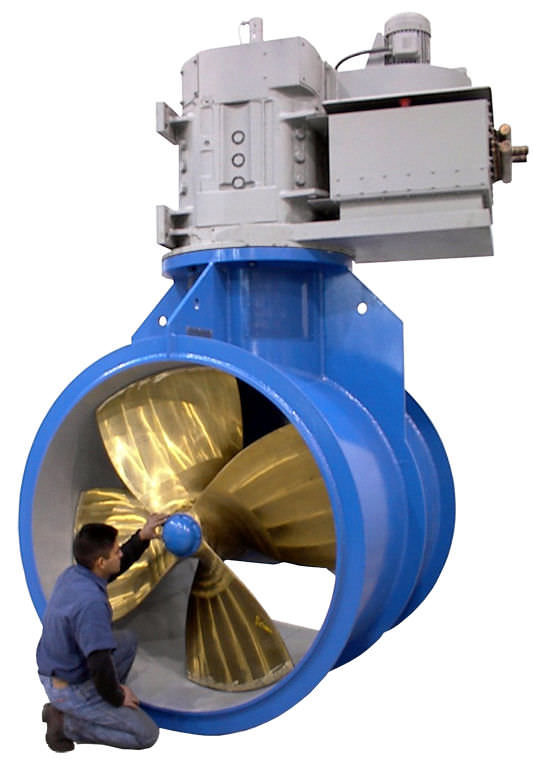
- Area: Zinc anode condition assessment: Replace MIL-Spec zinc anodes with cadmium content when anode size drops to 10% or less of original dimensionsCheck: Zinc anode condition assessment: Replace MIL-Spec zinc anodes with cadmium content when anode size drops to 10% or less of original dimensions
- Area: Tunnel submergence verification: Confirm tunnel top is submerged minimum 1 tunnel diameter below minimum light draft waterline to prevent vortexing and air entrCheck: Tunnel submergence verification: Confirm tunnel top is submerged minimum 1 tunnel diameter below minimum light draft waterline to prevent vortexing and air entrainment
- Area: Propeller inspection and debris removal: Check fixed-pitch propeller for wear, cavitation damage, and clear debris from tunnel entrance and propeller surfacesCheck: Propeller inspection and debris removal: Check fixed-pitch propeller for wear, cavitation damage, and clear debris from tunnel entrance and propeller surfaces
- Area: Ceramic tunnel coating inspection: Examine ceramic coating for erosion damage caused by sand and silt in operating watersCheck: Ceramic tunnel coating inspection: Examine ceramic coating for erosion damage caused by sand and silt in operating waters
- Area: Hydraulic system and fluid condition: Monitor hydraulic fluid condition, pressure system integrity, and filtration (no separate grease points or oil levels to cCheck: Hydraulic system and fluid condition: Monitor hydraulic fluid condition, pressure system integrity, and filtration (no separate grease points or oil levels to check due to integrated hydraulic lubrication)
- Area: Cavitation and noise assessment during operation: Monitor for abnormal cavitation indicators, excessive noise, vibration or shock loads that indicate air ingestCheck: Cavitation and noise assessment during operation: Monitor for abnormal cavitation indicators, excessive noise, vibration or shock loads that indicate air ingestion
- Area: Welded tunnel extension integrity: Check welds and seal areas if tunnel was extended through hull modification; avoid sand-blasting propeller shaft seal areaCheck: Welded tunnel extension integrity: Check welds and seal areas if tunnel was extended through hull modification; avoid sand-blasting propeller shaft seal area
- Area: Inlet grid alignment (if equipped): Verify inlet grid alignment is parallel to predominant water flow direction to minimize pressure drop and debris accumulatioCheck: Inlet grid alignment (if equipped): Verify inlet grid alignment is parallel to predominant water flow direction to minimize pressure drop and debris accumulation
Typ-universelle Inspektionspunkte fuer Bow/Stern Thrusters (verifiziert, 2026-06).
- Area: Zinc anode condition assessment: Replace MIL-Spec zinc anodes with cadmium content when anode size drops to 10% or less of original dimensionsCheck: Zinc anode condition assessment: Replace MIL-Spec zinc anodes with cadmium content when anode size drops to 10% or less of original dimensions
- Area: Tunnel submergence verification: Confirm tunnel top is submerged minimum 1 tunnel diameter below minimum light draft waterline to prevent vortexing and air entrCheck: Tunnel submergence verification: Confirm tunnel top is submerged minimum 1 tunnel diameter below minimum light draft waterline to prevent vortexing and air entrainment
- Area: Propeller inspection and debris removal: Check fixed-pitch propeller for wear, cavitation damage, and clear debris from tunnel entrance and propeller surfacesCheck: Propeller inspection and debris removal: Check fixed-pitch propeller for wear, cavitation damage, and clear debris from tunnel entrance and propeller surfaces
- Area: Ceramic tunnel coating inspection: Examine ceramic coating for erosion damage caused by sand and silt in operating watersCheck: Ceramic tunnel coating inspection: Examine ceramic coating for erosion damage caused by sand and silt in operating waters
- Area: Hydraulic system and fluid condition: Monitor hydraulic fluid condition, pressure system integrity, and filtration (no separate grease points or oil levels to cCheck: Hydraulic system and fluid condition: Monitor hydraulic fluid condition, pressure system integrity, and filtration (no separate grease points or oil levels to check due to integrated hydraulic lubrication)
- Area: Cavitation and noise assessment during operation: Monitor for abnormal cavitation indicators, excessive noise, vibration or shock loads that indicate air ingestCheck: Cavitation and noise assessment during operation: Monitor for abnormal cavitation indicators, excessive noise, vibration or shock loads that indicate air ingestion
- Area: Welded tunnel extension integrity: Check welds and seal areas if tunnel was extended through hull modification; avoid sand-blasting propeller shaft seal areaCheck: Welded tunnel extension integrity: Check welds and seal areas if tunnel was extended through hull modification; avoid sand-blasting propeller shaft seal area
- Area: Inlet grid alignment (if equipped): Verify inlet grid alignment is parallel to predominant water flow direction to minimize pressure drop and debris accumulatioCheck: Inlet grid alignment (if equipped): Verify inlet grid alignment is parallel to predominant water flow direction to minimize pressure drop and debris accumulation
Typ-universelle Inspektionspunkte fuer Bow/Stern Thrusters (verifiziert, 2026-06).
- Area: Zinc anode condition assessment: Replace MIL-Spec zinc anodes with cadmium content when anode size drops to 10% or less of original dimensionsCheck: Zinc anode condition assessment: Replace MIL-Spec zinc anodes with cadmium content when anode size drops to 10% or less of original dimensions
- Area: Tunnel submergence verification: Confirm tunnel top is submerged minimum 1 tunnel diameter below minimum light draft waterline to prevent vortexing and air entrCheck: Tunnel submergence verification: Confirm tunnel top is submerged minimum 1 tunnel diameter below minimum light draft waterline to prevent vortexing and air entrainment
- Area: Propeller inspection and debris removal: Check fixed-pitch propeller for wear, cavitation damage, and clear debris from tunnel entrance and propeller surfacesCheck: Propeller inspection and debris removal: Check fixed-pitch propeller for wear, cavitation damage, and clear debris from tunnel entrance and propeller surfaces
- Area: Ceramic tunnel coating inspection: Examine ceramic coating for erosion damage caused by sand and silt in operating watersCheck: Ceramic tunnel coating inspection: Examine ceramic coating for erosion damage caused by sand and silt in operating waters
- Area: Hydraulic system and fluid condition: Monitor hydraulic fluid condition, pressure system integrity, and filtration (no separate grease points or oil levels to cCheck: Hydraulic system and fluid condition: Monitor hydraulic fluid condition, pressure system integrity, and filtration (no separate grease points or oil levels to check due to integrated hydraulic lubrication)
- Area: Cavitation and noise assessment during operation: Monitor for abnormal cavitation indicators, excessive noise, vibration or shock loads that indicate air ingestCheck: Cavitation and noise assessment during operation: Monitor for abnormal cavitation indicators, excessive noise, vibration or shock loads that indicate air ingestion
- Area: Welded tunnel extension integrity: Check welds and seal areas if tunnel was extended through hull modification; avoid sand-blasting propeller shaft seal areaCheck: Welded tunnel extension integrity: Check welds and seal areas if tunnel was extended through hull modification; avoid sand-blasting propeller shaft seal area
- Area: Inlet grid alignment (if equipped): Verify inlet grid alignment is parallel to predominant water flow direction to minimize pressure drop and debris accumulatioCheck: Inlet grid alignment (if equipped): Verify inlet grid alignment is parallel to predominant water flow direction to minimize pressure drop and debris accumulation
Typ-universelle Inspektionspunkte fuer Bow/Stern Thrusters (verifiziert, 2026-06).
- Area: Zinc anode condition assessment: Replace MIL-Spec zinc anodes with cadmium content when anode size drops to 10% or less of original dimensionsCheck: Zinc anode condition assessment: Replace MIL-Spec zinc anodes with cadmium content when anode size drops to 10% or less of original dimensions
- Area: Tunnel submergence verification: Confirm tunnel top is submerged minimum 1 tunnel diameter below minimum light draft waterline to prevent vortexing and air entrCheck: Tunnel submergence verification: Confirm tunnel top is submerged minimum 1 tunnel diameter below minimum light draft waterline to prevent vortexing and air entrainment
- Area: Propeller inspection and debris removal: Check fixed-pitch propeller for wear, cavitation damage, and clear debris from tunnel entrance and propeller surfacesCheck: Propeller inspection and debris removal: Check fixed-pitch propeller for wear, cavitation damage, and clear debris from tunnel entrance and propeller surfaces
- Area: Ceramic tunnel coating inspection: Examine ceramic coating for erosion damage caused by sand and silt in operating watersCheck: Ceramic tunnel coating inspection: Examine ceramic coating for erosion damage caused by sand and silt in operating waters
- Area: Hydraulic system and fluid condition: Monitor hydraulic fluid condition, pressure system integrity, and filtration (no separate grease points or oil levels to cCheck: Hydraulic system and fluid condition: Monitor hydraulic fluid condition, pressure system integrity, and filtration (no separate grease points or oil levels to check due to integrated hydraulic lubrication)
- Area: Cavitation and noise assessment during operation: Monitor for abnormal cavitation indicators, excessive noise, vibration or shock loads that indicate air ingestCheck: Cavitation and noise assessment during operation: Monitor for abnormal cavitation indicators, excessive noise, vibration or shock loads that indicate air ingestion
- Area: Welded tunnel extension integrity: Check welds and seal areas if tunnel was extended through hull modification; avoid sand-blasting propeller shaft seal areaCheck: Welded tunnel extension integrity: Check welds and seal areas if tunnel was extended through hull modification; avoid sand-blasting propeller shaft seal area
- Area: Inlet grid alignment (if equipped): Verify inlet grid alignment is parallel to predominant water flow direction to minimize pressure drop and debris accumulatioCheck: Inlet grid alignment (if equipped): Verify inlet grid alignment is parallel to predominant water flow direction to minimize pressure drop and debris accumulation
Typ-universelle Inspektionspunkte fuer Bow/Stern Thrusters (verifiziert, 2026-06).
- Area: Zinc anode condition assessment: Replace MIL-Spec zinc anodes with cadmium content when anode size drops to 10% or less of original dimensionsCheck: Zinc anode condition assessment: Replace MIL-Spec zinc anodes with cadmium content when anode size drops to 10% or less of original dimensions
- Area: Tunnel submergence verification: Confirm tunnel top is submerged minimum 1 tunnel diameter below minimum light draft waterline to prevent vortexing and air entrCheck: Tunnel submergence verification: Confirm tunnel top is submerged minimum 1 tunnel diameter below minimum light draft waterline to prevent vortexing and air entrainment
- Area: Propeller inspection and debris removal: Check fixed-pitch propeller for wear, cavitation damage, and clear debris from tunnel entrance and propeller surfacesCheck: Propeller inspection and debris removal: Check fixed-pitch propeller for wear, cavitation damage, and clear debris from tunnel entrance and propeller surfaces
- Area: Ceramic tunnel coating inspection: Examine ceramic coating for erosion damage caused by sand and silt in operating watersCheck: Ceramic tunnel coating inspection: Examine ceramic coating for erosion damage caused by sand and silt in operating waters
- Area: Hydraulic system and fluid condition: Monitor hydraulic fluid condition, pressure system integrity, and filtration (no separate grease points or oil levels to cCheck: Hydraulic system and fluid condition: Monitor hydraulic fluid condition, pressure system integrity, and filtration (no separate grease points or oil levels to check due to integrated hydraulic lubrication)
- Area: Cavitation and noise assessment during operation: Monitor for abnormal cavitation indicators, excessive noise, vibration or shock loads that indicate air ingestCheck: Cavitation and noise assessment during operation: Monitor for abnormal cavitation indicators, excessive noise, vibration or shock loads that indicate air ingestion
- Area: Welded tunnel extension integrity: Check welds and seal areas if tunnel was extended through hull modification; avoid sand-blasting propeller shaft seal areaCheck: Welded tunnel extension integrity: Check welds and seal areas if tunnel was extended through hull modification; avoid sand-blasting propeller shaft seal area
- Area: Inlet grid alignment (if equipped): Verify inlet grid alignment is parallel to predominant water flow direction to minimize pressure drop and debris accumulatioCheck: Inlet grid alignment (if equipped): Verify inlet grid alignment is parallel to predominant water flow direction to minimize pressure drop and debris accumulation
Typ-universelle Inspektionspunkte fuer Bow/Stern Thrusters (verifiziert, 2026-06).
- Area: Zinc anode condition assessment: Replace MIL-Spec zinc anodes with cadmium content when anode size drops to 10% or less of original dimensionsCheck: Zinc anode condition assessment: Replace MIL-Spec zinc anodes with cadmium content when anode size drops to 10% or less of original dimensions
- Area: Tunnel submergence verification: Confirm tunnel top is submerged minimum 1 tunnel diameter below minimum light draft waterline to prevent vortexing and air entrCheck: Tunnel submergence verification: Confirm tunnel top is submerged minimum 1 tunnel diameter below minimum light draft waterline to prevent vortexing and air entrainment
- Area: Propeller inspection and debris removal: Check fixed-pitch propeller for wear, cavitation damage, and clear debris from tunnel entrance and propeller surfacesCheck: Propeller inspection and debris removal: Check fixed-pitch propeller for wear, cavitation damage, and clear debris from tunnel entrance and propeller surfaces
- Area: Ceramic tunnel coating inspection: Examine ceramic coating for erosion damage caused by sand and silt in operating watersCheck: Ceramic tunnel coating inspection: Examine ceramic coating for erosion damage caused by sand and silt in operating waters
- Area: Hydraulic system and fluid condition: Monitor hydraulic fluid condition, pressure system integrity, and filtration (no separate grease points or oil levels to cCheck: Hydraulic system and fluid condition: Monitor hydraulic fluid condition, pressure system integrity, and filtration (no separate grease points or oil levels to check due to integrated hydraulic lubrication)
- Area: Cavitation and noise assessment during operation: Monitor for abnormal cavitation indicators, excessive noise, vibration or shock loads that indicate air ingestCheck: Cavitation and noise assessment during operation: Monitor for abnormal cavitation indicators, excessive noise, vibration or shock loads that indicate air ingestion
- Area: Welded tunnel extension integrity: Check welds and seal areas if tunnel was extended through hull modification; avoid sand-blasting propeller shaft seal areaCheck: Welded tunnel extension integrity: Check welds and seal areas if tunnel was extended through hull modification; avoid sand-blasting propeller shaft seal area
- Area: Inlet grid alignment (if equipped): Verify inlet grid alignment is parallel to predominant water flow direction to minimize pressure drop and debris accumulatioCheck: Inlet grid alignment (if equipped): Verify inlet grid alignment is parallel to predominant water flow direction to minimize pressure drop and debris accumulation
Typ-universelle Inspektionspunkte fuer Bow/Stern Thrusters (verifiziert, 2026-06).
- Area: Zinc anode condition assessment: Replace MIL-Spec zinc anodes with cadmium content when anode size drops to 10% or less of original dimensionsCheck: Zinc anode condition assessment: Replace MIL-Spec zinc anodes with cadmium content when anode size drops to 10% or less of original dimensions
- Area: Tunnel submergence verification: Confirm tunnel top is submerged minimum 1 tunnel diameter below minimum light draft waterline to prevent vortexing and air entrCheck: Tunnel submergence verification: Confirm tunnel top is submerged minimum 1 tunnel diameter below minimum light draft waterline to prevent vortexing and air entrainment
- Area: Propeller inspection and debris removal: Check fixed-pitch propeller for wear, cavitation damage, and clear debris from tunnel entrance and propeller surfacesCheck: Propeller inspection and debris removal: Check fixed-pitch propeller for wear, cavitation damage, and clear debris from tunnel entrance and propeller surfaces
- Area: Ceramic tunnel coating inspection: Examine ceramic coating for erosion damage caused by sand and silt in operating watersCheck: Ceramic tunnel coating inspection: Examine ceramic coating for erosion damage caused by sand and silt in operating waters
- Area: Hydraulic system and fluid condition: Monitor hydraulic fluid condition, pressure system integrity, and filtration (no separate grease points or oil levels to cCheck: Hydraulic system and fluid condition: Monitor hydraulic fluid condition, pressure system integrity, and filtration (no separate grease points or oil levels to check due to integrated hydraulic lubrication)
- Area: Cavitation and noise assessment during operation: Monitor for abnormal cavitation indicators, excessive noise, vibration or shock loads that indicate air ingestCheck: Cavitation and noise assessment during operation: Monitor for abnormal cavitation indicators, excessive noise, vibration or shock loads that indicate air ingestion
- Area: Welded tunnel extension integrity: Check welds and seal areas if tunnel was extended through hull modification; avoid sand-blasting propeller shaft seal areaCheck: Welded tunnel extension integrity: Check welds and seal areas if tunnel was extended through hull modification; avoid sand-blasting propeller shaft seal area
- Area: Inlet grid alignment (if equipped): Verify inlet grid alignment is parallel to predominant water flow direction to minimize pressure drop and debris accumulatioCheck: Inlet grid alignment (if equipped): Verify inlet grid alignment is parallel to predominant water flow direction to minimize pressure drop and debris accumulation
Typ-universelle Inspektionspunkte fuer Bow/Stern Thrusters (verifiziert, 2026-06).
- Area: Zinc anode condition assessment: Replace MIL-Spec zinc anodes with cadmium content when anode size drops to 10% or less of original dimensionsCheck: Zinc anode condition assessment: Replace MIL-Spec zinc anodes with cadmium content when anode size drops to 10% or less of original dimensions
- Area: Tunnel submergence verification: Confirm tunnel top is submerged minimum 1 tunnel diameter below minimum light draft waterline to prevent vortexing and air entrCheck: Tunnel submergence verification: Confirm tunnel top is submerged minimum 1 tunnel diameter below minimum light draft waterline to prevent vortexing and air entrainment
- Area: Propeller inspection and debris removal: Check fixed-pitch propeller for wear, cavitation damage, and clear debris from tunnel entrance and propeller surfacesCheck: Propeller inspection and debris removal: Check fixed-pitch propeller for wear, cavitation damage, and clear debris from tunnel entrance and propeller surfaces
- Area: Ceramic tunnel coating inspection: Examine ceramic coating for erosion damage caused by sand and silt in operating watersCheck: Ceramic tunnel coating inspection: Examine ceramic coating for erosion damage caused by sand and silt in operating waters
- Area: Hydraulic system and fluid condition: Monitor hydraulic fluid condition, pressure system integrity, and filtration (no separate grease points or oil levels to cCheck: Hydraulic system and fluid condition: Monitor hydraulic fluid condition, pressure system integrity, and filtration (no separate grease points or oil levels to check due to integrated hydraulic lubrication)
- Area: Cavitation and noise assessment during operation: Monitor for abnormal cavitation indicators, excessive noise, vibration or shock loads that indicate air ingestCheck: Cavitation and noise assessment during operation: Monitor for abnormal cavitation indicators, excessive noise, vibration or shock loads that indicate air ingestion
- Area: Welded tunnel extension integrity: Check welds and seal areas if tunnel was extended through hull modification; avoid sand-blasting propeller shaft seal areaCheck: Welded tunnel extension integrity: Check welds and seal areas if tunnel was extended through hull modification; avoid sand-blasting propeller shaft seal area
- Area: Inlet grid alignment (if equipped): Verify inlet grid alignment is parallel to predominant water flow direction to minimize pressure drop and debris accumulatioCheck: Inlet grid alignment (if equipped): Verify inlet grid alignment is parallel to predominant water flow direction to minimize pressure drop and debris accumulation
Typ-universelle Inspektionspunkte fuer Bow/Stern Thrusters (verifiziert, 2026-06).
- Area: Zinc anode condition assessment: Replace MIL-Spec zinc anodes with cadmium content when anode size drops to 10% or less of original dimensionsCheck: Zinc anode condition assessment: Replace MIL-Spec zinc anodes with cadmium content when anode size drops to 10% or less of original dimensions
- Area: Tunnel submergence verification: Confirm tunnel top is submerged minimum 1 tunnel diameter below minimum light draft waterline to prevent vortexing and air entrCheck: Tunnel submergence verification: Confirm tunnel top is submerged minimum 1 tunnel diameter below minimum light draft waterline to prevent vortexing and air entrainment
- Area: Propeller inspection and debris removal: Check fixed-pitch propeller for wear, cavitation damage, and clear debris from tunnel entrance and propeller surfacesCheck: Propeller inspection and debris removal: Check fixed-pitch propeller for wear, cavitation damage, and clear debris from tunnel entrance and propeller surfaces
- Area: Ceramic tunnel coating inspection: Examine ceramic coating for erosion damage caused by sand and silt in operating watersCheck: Ceramic tunnel coating inspection: Examine ceramic coating for erosion damage caused by sand and silt in operating waters
- Area: Hydraulic system and fluid condition: Monitor hydraulic fluid condition, pressure system integrity, and filtration (no separate grease points or oil levels to cCheck: Hydraulic system and fluid condition: Monitor hydraulic fluid condition, pressure system integrity, and filtration (no separate grease points or oil levels to check due to integrated hydraulic lubrication)
- Area: Cavitation and noise assessment during operation: Monitor for abnormal cavitation indicators, excessive noise, vibration or shock loads that indicate air ingestCheck: Cavitation and noise assessment during operation: Monitor for abnormal cavitation indicators, excessive noise, vibration or shock loads that indicate air ingestion
- Area: Welded tunnel extension integrity: Check welds and seal areas if tunnel was extended through hull modification; avoid sand-blasting propeller shaft seal areaCheck: Welded tunnel extension integrity: Check welds and seal areas if tunnel was extended through hull modification; avoid sand-blasting propeller shaft seal area
- Area: Inlet grid alignment (if equipped): Verify inlet grid alignment is parallel to predominant water flow direction to minimize pressure drop and debris accumulatioCheck: Inlet grid alignment (if equipped): Verify inlet grid alignment is parallel to predominant water flow direction to minimize pressure drop and debris accumulation
Typ-universelle Inspektionspunkte fuer Bow/Stern Thrusters (verifiziert, 2026-06).
- Area: Zinc anode condition assessment: Replace MIL-Spec zinc anodes with cadmium content when anode size drops to 10% or less of original dimensionsCheck: Zinc anode condition assessment: Replace MIL-Spec zinc anodes with cadmium content when anode size drops to 10% or less of original dimensions
- Area: Tunnel submergence verification: Confirm tunnel top is submerged minimum 1 tunnel diameter below minimum light draft waterline to prevent vortexing and air entrCheck: Tunnel submergence verification: Confirm tunnel top is submerged minimum 1 tunnel diameter below minimum light draft waterline to prevent vortexing and air entrainment
- Area: Propeller inspection and debris removal: Check fixed-pitch propeller for wear, cavitation damage, and clear debris from tunnel entrance and propeller surfacesCheck: Propeller inspection and debris removal: Check fixed-pitch propeller for wear, cavitation damage, and clear debris from tunnel entrance and propeller surfaces
- Area: Ceramic tunnel coating inspection: Examine ceramic coating for erosion damage caused by sand and silt in operating watersCheck: Ceramic tunnel coating inspection: Examine ceramic coating for erosion damage caused by sand and silt in operating waters
- Area: Hydraulic system and fluid condition: Monitor hydraulic fluid condition, pressure system integrity, and filtration (no separate grease points or oil levels to cCheck: Hydraulic system and fluid condition: Monitor hydraulic fluid condition, pressure system integrity, and filtration (no separate grease points or oil levels to check due to integrated hydraulic lubrication)
- Area: Cavitation and noise assessment during operation: Monitor for abnormal cavitation indicators, excessive noise, vibration or shock loads that indicate air ingestCheck: Cavitation and noise assessment during operation: Monitor for abnormal cavitation indicators, excessive noise, vibration or shock loads that indicate air ingestion
- Area: Welded tunnel extension integrity: Check welds and seal areas if tunnel was extended through hull modification; avoid sand-blasting propeller shaft seal areaCheck: Welded tunnel extension integrity: Check welds and seal areas if tunnel was extended through hull modification; avoid sand-blasting propeller shaft seal area
- Area: Inlet grid alignment (if equipped): Verify inlet grid alignment is parallel to predominant water flow direction to minimize pressure drop and debris accumulatioCheck: Inlet grid alignment (if equipped): Verify inlet grid alignment is parallel to predominant water flow direction to minimize pressure drop and debris accumulation
Typ-universelle Inspektionspunkte fuer Bow/Stern Thrusters (verifiziert, 2026-06).
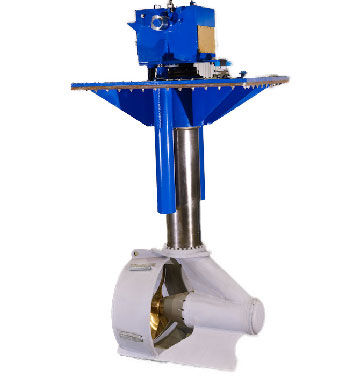
- Area: Zinc anode condition assessment: Replace MIL-Spec zinc anodes with cadmium content when anode size drops to 10% or less of original dimensionsCheck: Zinc anode condition assessment: Replace MIL-Spec zinc anodes with cadmium content when anode size drops to 10% or less of original dimensions
- Area: Tunnel submergence verification: Confirm tunnel top is submerged minimum 1 tunnel diameter below minimum light draft waterline to prevent vortexing and air entrCheck: Tunnel submergence verification: Confirm tunnel top is submerged minimum 1 tunnel diameter below minimum light draft waterline to prevent vortexing and air entrainment
- Area: Propeller inspection and debris removal: Check fixed-pitch propeller for wear, cavitation damage, and clear debris from tunnel entrance and propeller surfacesCheck: Propeller inspection and debris removal: Check fixed-pitch propeller for wear, cavitation damage, and clear debris from tunnel entrance and propeller surfaces
- Area: Ceramic tunnel coating inspection: Examine ceramic coating for erosion damage caused by sand and silt in operating watersCheck: Ceramic tunnel coating inspection: Examine ceramic coating for erosion damage caused by sand and silt in operating waters
- Area: Hydraulic system and fluid condition: Monitor hydraulic fluid condition, pressure system integrity, and filtration (no separate grease points or oil levels to cCheck: Hydraulic system and fluid condition: Monitor hydraulic fluid condition, pressure system integrity, and filtration (no separate grease points or oil levels to check due to integrated hydraulic lubrication)
- Area: Cavitation and noise assessment during operation: Monitor for abnormal cavitation indicators, excessive noise, vibration or shock loads that indicate air ingestCheck: Cavitation and noise assessment during operation: Monitor for abnormal cavitation indicators, excessive noise, vibration or shock loads that indicate air ingestion
- Area: Welded tunnel extension integrity: Check welds and seal areas if tunnel was extended through hull modification; avoid sand-blasting propeller shaft seal areaCheck: Welded tunnel extension integrity: Check welds and seal areas if tunnel was extended through hull modification; avoid sand-blasting propeller shaft seal area
- Area: Inlet grid alignment (if equipped): Verify inlet grid alignment is parallel to predominant water flow direction to minimize pressure drop and debris accumulatioCheck: Inlet grid alignment (if equipped): Verify inlet grid alignment is parallel to predominant water flow direction to minimize pressure drop and debris accumulation
Typ-universelle Inspektionspunkte fuer Bow/Stern Thrusters (verifiziert, 2026-06).
- Area: Zinc anode condition assessment: Replace MIL-Spec zinc anodes with cadmium content when anode size drops to 10% or less of original dimensionsCheck: Zinc anode condition assessment: Replace MIL-Spec zinc anodes with cadmium content when anode size drops to 10% or less of original dimensions
- Area: Tunnel submergence verification: Confirm tunnel top is submerged minimum 1 tunnel diameter below minimum light draft waterline to prevent vortexing and air entrCheck: Tunnel submergence verification: Confirm tunnel top is submerged minimum 1 tunnel diameter below minimum light draft waterline to prevent vortexing and air entrainment
- Area: Propeller inspection and debris removal: Check fixed-pitch propeller for wear, cavitation damage, and clear debris from tunnel entrance and propeller surfacesCheck: Propeller inspection and debris removal: Check fixed-pitch propeller for wear, cavitation damage, and clear debris from tunnel entrance and propeller surfaces
- Area: Ceramic tunnel coating inspection: Examine ceramic coating for erosion damage caused by sand and silt in operating watersCheck: Ceramic tunnel coating inspection: Examine ceramic coating for erosion damage caused by sand and silt in operating waters
- Area: Hydraulic system and fluid condition: Monitor hydraulic fluid condition, pressure system integrity, and filtration (no separate grease points or oil levels to cCheck: Hydraulic system and fluid condition: Monitor hydraulic fluid condition, pressure system integrity, and filtration (no separate grease points or oil levels to check due to integrated hydraulic lubrication)
- Area: Cavitation and noise assessment during operation: Monitor for abnormal cavitation indicators, excessive noise, vibration or shock loads that indicate air ingestCheck: Cavitation and noise assessment during operation: Monitor for abnormal cavitation indicators, excessive noise, vibration or shock loads that indicate air ingestion
- Area: Welded tunnel extension integrity: Check welds and seal areas if tunnel was extended through hull modification; avoid sand-blasting propeller shaft seal areaCheck: Welded tunnel extension integrity: Check welds and seal areas if tunnel was extended through hull modification; avoid sand-blasting propeller shaft seal area
- Area: Inlet grid alignment (if equipped): Verify inlet grid alignment is parallel to predominant water flow direction to minimize pressure drop and debris accumulatioCheck: Inlet grid alignment (if equipped): Verify inlet grid alignment is parallel to predominant water flow direction to minimize pressure drop and debris accumulation
Typ-universelle Inspektionspunkte fuer Bow/Stern Thrusters (verifiziert, 2026-06).
- Area: Zinc anode condition assessment: Replace MIL-Spec zinc anodes with cadmium content when anode size drops to 10% or less of original dimensionsCheck: Zinc anode condition assessment: Replace MIL-Spec zinc anodes with cadmium content when anode size drops to 10% or less of original dimensions
- Area: Tunnel submergence verification: Confirm tunnel top is submerged minimum 1 tunnel diameter below minimum light draft waterline to prevent vortexing and air entrCheck: Tunnel submergence verification: Confirm tunnel top is submerged minimum 1 tunnel diameter below minimum light draft waterline to prevent vortexing and air entrainment
- Area: Propeller inspection and debris removal: Check fixed-pitch propeller for wear, cavitation damage, and clear debris from tunnel entrance and propeller surfacesCheck: Propeller inspection and debris removal: Check fixed-pitch propeller for wear, cavitation damage, and clear debris from tunnel entrance and propeller surfaces
- Area: Ceramic tunnel coating inspection: Examine ceramic coating for erosion damage caused by sand and silt in operating watersCheck: Ceramic tunnel coating inspection: Examine ceramic coating for erosion damage caused by sand and silt in operating waters
- Area: Hydraulic system and fluid condition: Monitor hydraulic fluid condition, pressure system integrity, and filtration (no separate grease points or oil levels to cCheck: Hydraulic system and fluid condition: Monitor hydraulic fluid condition, pressure system integrity, and filtration (no separate grease points or oil levels to check due to integrated hydraulic lubrication)
- Area: Cavitation and noise assessment during operation: Monitor for abnormal cavitation indicators, excessive noise, vibration or shock loads that indicate air ingestCheck: Cavitation and noise assessment during operation: Monitor for abnormal cavitation indicators, excessive noise, vibration or shock loads that indicate air ingestion
- Area: Welded tunnel extension integrity: Check welds and seal areas if tunnel was extended through hull modification; avoid sand-blasting propeller shaft seal areaCheck: Welded tunnel extension integrity: Check welds and seal areas if tunnel was extended through hull modification; avoid sand-blasting propeller shaft seal area
- Area: Inlet grid alignment (if equipped): Verify inlet grid alignment is parallel to predominant water flow direction to minimize pressure drop and debris accumulatioCheck: Inlet grid alignment (if equipped): Verify inlet grid alignment is parallel to predominant water flow direction to minimize pressure drop and debris accumulation
Typ-universelle Inspektionspunkte fuer Bow/Stern Thrusters (verifiziert, 2026-06).
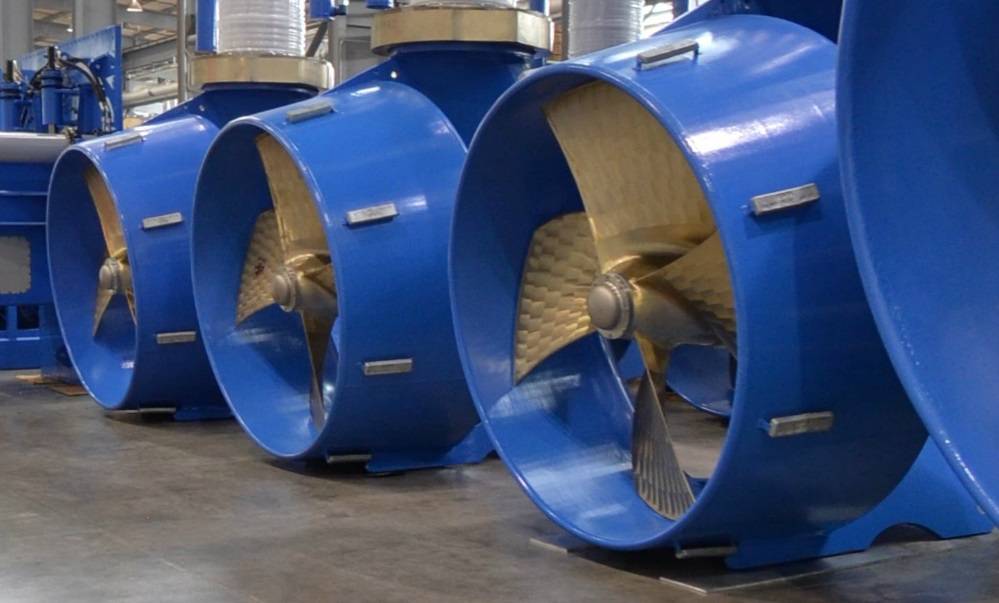
- Area: Zinc anode condition assessment: Replace MIL-Spec zinc anodes with cadmium content when anode size drops to 10% or less of original dimensionsCheck: Zinc anode condition assessment: Replace MIL-Spec zinc anodes with cadmium content when anode size drops to 10% or less of original dimensions
- Area: Tunnel submergence verification: Confirm tunnel top is submerged minimum 1 tunnel diameter below minimum light draft waterline to prevent vortexing and air entrCheck: Tunnel submergence verification: Confirm tunnel top is submerged minimum 1 tunnel diameter below minimum light draft waterline to prevent vortexing and air entrainment
- Area: Propeller inspection and debris removal: Check fixed-pitch propeller for wear, cavitation damage, and clear debris from tunnel entrance and propeller surfacesCheck: Propeller inspection and debris removal: Check fixed-pitch propeller for wear, cavitation damage, and clear debris from tunnel entrance and propeller surfaces
- Area: Ceramic tunnel coating inspection: Examine ceramic coating for erosion damage caused by sand and silt in operating watersCheck: Ceramic tunnel coating inspection: Examine ceramic coating for erosion damage caused by sand and silt in operating waters
- Area: Hydraulic system and fluid condition: Monitor hydraulic fluid condition, pressure system integrity, and filtration (no separate grease points or oil levels to cCheck: Hydraulic system and fluid condition: Monitor hydraulic fluid condition, pressure system integrity, and filtration (no separate grease points or oil levels to check due to integrated hydraulic lubrication)
- Area: Cavitation and noise assessment during operation: Monitor for abnormal cavitation indicators, excessive noise, vibration or shock loads that indicate air ingestCheck: Cavitation and noise assessment during operation: Monitor for abnormal cavitation indicators, excessive noise, vibration or shock loads that indicate air ingestion
- Area: Welded tunnel extension integrity: Check welds and seal areas if tunnel was extended through hull modification; avoid sand-blasting propeller shaft seal areaCheck: Welded tunnel extension integrity: Check welds and seal areas if tunnel was extended through hull modification; avoid sand-blasting propeller shaft seal area
- Area: Inlet grid alignment (if equipped): Verify inlet grid alignment is parallel to predominant water flow direction to minimize pressure drop and debris accumulatioCheck: Inlet grid alignment (if equipped): Verify inlet grid alignment is parallel to predominant water flow direction to minimize pressure drop and debris accumulation
Typ-universelle Inspektionspunkte fuer Bow/Stern Thrusters (verifiziert, 2026-06).
- Area: Zinc anode condition assessment: Replace MIL-Spec zinc anodes with cadmium content when anode size drops to 10% or less of original dimensionsCheck: Zinc anode condition assessment: Replace MIL-Spec zinc anodes with cadmium content when anode size drops to 10% or less of original dimensions
- Area: Tunnel submergence verification: Confirm tunnel top is submerged minimum 1 tunnel diameter below minimum light draft waterline to prevent vortexing and air entrCheck: Tunnel submergence verification: Confirm tunnel top is submerged minimum 1 tunnel diameter below minimum light draft waterline to prevent vortexing and air entrainment
- Area: Propeller inspection and debris removal: Check fixed-pitch propeller for wear, cavitation damage, and clear debris from tunnel entrance and propeller surfacesCheck: Propeller inspection and debris removal: Check fixed-pitch propeller for wear, cavitation damage, and clear debris from tunnel entrance and propeller surfaces
- Area: Ceramic tunnel coating inspection: Examine ceramic coating for erosion damage caused by sand and silt in operating watersCheck: Ceramic tunnel coating inspection: Examine ceramic coating for erosion damage caused by sand and silt in operating waters
- Area: Hydraulic system and fluid condition: Monitor hydraulic fluid condition, pressure system integrity, and filtration (no separate grease points or oil levels to cCheck: Hydraulic system and fluid condition: Monitor hydraulic fluid condition, pressure system integrity, and filtration (no separate grease points or oil levels to check due to integrated hydraulic lubrication)
- Area: Cavitation and noise assessment during operation: Monitor for abnormal cavitation indicators, excessive noise, vibration or shock loads that indicate air ingestCheck: Cavitation and noise assessment during operation: Monitor for abnormal cavitation indicators, excessive noise, vibration or shock loads that indicate air ingestion
- Area: Welded tunnel extension integrity: Check welds and seal areas if tunnel was extended through hull modification; avoid sand-blasting propeller shaft seal areaCheck: Welded tunnel extension integrity: Check welds and seal areas if tunnel was extended through hull modification; avoid sand-blasting propeller shaft seal area
- Area: Inlet grid alignment (if equipped): Verify inlet grid alignment is parallel to predominant water flow direction to minimize pressure drop and debris accumulatioCheck: Inlet grid alignment (if equipped): Verify inlet grid alignment is parallel to predominant water flow direction to minimize pressure drop and debris accumulation
Typ-universelle Inspektionspunkte fuer Bow/Stern Thrusters (verifiziert, 2026-06).
- Area: Zinc anode condition assessment: Replace MIL-Spec zinc anodes with cadmium content when anode size drops to 10% or less of original dimensionsCheck: Zinc anode condition assessment: Replace MIL-Spec zinc anodes with cadmium content when anode size drops to 10% or less of original dimensions
- Area: Tunnel submergence verification: Confirm tunnel top is submerged minimum 1 tunnel diameter below minimum light draft waterline to prevent vortexing and air entrCheck: Tunnel submergence verification: Confirm tunnel top is submerged minimum 1 tunnel diameter below minimum light draft waterline to prevent vortexing and air entrainment
- Area: Propeller inspection and debris removal: Check fixed-pitch propeller for wear, cavitation damage, and clear debris from tunnel entrance and propeller surfacesCheck: Propeller inspection and debris removal: Check fixed-pitch propeller for wear, cavitation damage, and clear debris from tunnel entrance and propeller surfaces
- Area: Ceramic tunnel coating inspection: Examine ceramic coating for erosion damage caused by sand and silt in operating watersCheck: Ceramic tunnel coating inspection: Examine ceramic coating for erosion damage caused by sand and silt in operating waters
- Area: Hydraulic system and fluid condition: Monitor hydraulic fluid condition, pressure system integrity, and filtration (no separate grease points or oil levels to cCheck: Hydraulic system and fluid condition: Monitor hydraulic fluid condition, pressure system integrity, and filtration (no separate grease points or oil levels to check due to integrated hydraulic lubrication)
- Area: Cavitation and noise assessment during operation: Monitor for abnormal cavitation indicators, excessive noise, vibration or shock loads that indicate air ingestCheck: Cavitation and noise assessment during operation: Monitor for abnormal cavitation indicators, excessive noise, vibration or shock loads that indicate air ingestion
- Area: Welded tunnel extension integrity: Check welds and seal areas if tunnel was extended through hull modification; avoid sand-blasting propeller shaft seal areaCheck: Welded tunnel extension integrity: Check welds and seal areas if tunnel was extended through hull modification; avoid sand-blasting propeller shaft seal area
- Area: Inlet grid alignment (if equipped): Verify inlet grid alignment is parallel to predominant water flow direction to minimize pressure drop and debris accumulatioCheck: Inlet grid alignment (if equipped): Verify inlet grid alignment is parallel to predominant water flow direction to minimize pressure drop and debris accumulation
Typ-universelle Inspektionspunkte fuer Bow/Stern Thrusters (verifiziert, 2026-06).
- Area: Zinc anode condition assessment: Replace MIL-Spec zinc anodes with cadmium content when anode size drops to 10% or less of original dimensionsCheck: Zinc anode condition assessment: Replace MIL-Spec zinc anodes with cadmium content when anode size drops to 10% or less of original dimensions
- Area: Tunnel submergence verification: Confirm tunnel top is submerged minimum 1 tunnel diameter below minimum light draft waterline to prevent vortexing and air entrCheck: Tunnel submergence verification: Confirm tunnel top is submerged minimum 1 tunnel diameter below minimum light draft waterline to prevent vortexing and air entrainment
- Area: Propeller inspection and debris removal: Check fixed-pitch propeller for wear, cavitation damage, and clear debris from tunnel entrance and propeller surfacesCheck: Propeller inspection and debris removal: Check fixed-pitch propeller for wear, cavitation damage, and clear debris from tunnel entrance and propeller surfaces
- Area: Ceramic tunnel coating inspection: Examine ceramic coating for erosion damage caused by sand and silt in operating watersCheck: Ceramic tunnel coating inspection: Examine ceramic coating for erosion damage caused by sand and silt in operating waters
- Area: Hydraulic system and fluid condition: Monitor hydraulic fluid condition, pressure system integrity, and filtration (no separate grease points or oil levels to cCheck: Hydraulic system and fluid condition: Monitor hydraulic fluid condition, pressure system integrity, and filtration (no separate grease points or oil levels to check due to integrated hydraulic lubrication)
- Area: Cavitation and noise assessment during operation: Monitor for abnormal cavitation indicators, excessive noise, vibration or shock loads that indicate air ingestCheck: Cavitation and noise assessment during operation: Monitor for abnormal cavitation indicators, excessive noise, vibration or shock loads that indicate air ingestion
- Area: Welded tunnel extension integrity: Check welds and seal areas if tunnel was extended through hull modification; avoid sand-blasting propeller shaft seal areaCheck: Welded tunnel extension integrity: Check welds and seal areas if tunnel was extended through hull modification; avoid sand-blasting propeller shaft seal area
- Area: Inlet grid alignment (if equipped): Verify inlet grid alignment is parallel to predominant water flow direction to minimize pressure drop and debris accumulatioCheck: Inlet grid alignment (if equipped): Verify inlet grid alignment is parallel to predominant water flow direction to minimize pressure drop and debris accumulation
Typ-universelle Inspektionspunkte fuer Bow/Stern Thrusters (verifiziert, 2026-06).
- Area: Zinc anode condition assessment: Replace MIL-Spec zinc anodes with cadmium content when anode size drops to 10% or less of original dimensionsCheck: Zinc anode condition assessment: Replace MIL-Spec zinc anodes with cadmium content when anode size drops to 10% or less of original dimensions
- Area: Tunnel submergence verification: Confirm tunnel top is submerged minimum 1 tunnel diameter below minimum light draft waterline to prevent vortexing and air entrCheck: Tunnel submergence verification: Confirm tunnel top is submerged minimum 1 tunnel diameter below minimum light draft waterline to prevent vortexing and air entrainment
- Area: Propeller inspection and debris removal: Check fixed-pitch propeller for wear, cavitation damage, and clear debris from tunnel entrance and propeller surfacesCheck: Propeller inspection and debris removal: Check fixed-pitch propeller for wear, cavitation damage, and clear debris from tunnel entrance and propeller surfaces
- Area: Ceramic tunnel coating inspection: Examine ceramic coating for erosion damage caused by sand and silt in operating watersCheck: Ceramic tunnel coating inspection: Examine ceramic coating for erosion damage caused by sand and silt in operating waters
- Area: Hydraulic system and fluid condition: Monitor hydraulic fluid condition, pressure system integrity, and filtration (no separate grease points or oil levels to cCheck: Hydraulic system and fluid condition: Monitor hydraulic fluid condition, pressure system integrity, and filtration (no separate grease points or oil levels to check due to integrated hydraulic lubrication)
- Area: Cavitation and noise assessment during operation: Monitor for abnormal cavitation indicators, excessive noise, vibration or shock loads that indicate air ingestCheck: Cavitation and noise assessment during operation: Monitor for abnormal cavitation indicators, excessive noise, vibration or shock loads that indicate air ingestion
- Area: Welded tunnel extension integrity: Check welds and seal areas if tunnel was extended through hull modification; avoid sand-blasting propeller shaft seal areaCheck: Welded tunnel extension integrity: Check welds and seal areas if tunnel was extended through hull modification; avoid sand-blasting propeller shaft seal area
- Area: Inlet grid alignment (if equipped): Verify inlet grid alignment is parallel to predominant water flow direction to minimize pressure drop and debris accumulatioCheck: Inlet grid alignment (if equipped): Verify inlet grid alignment is parallel to predominant water flow direction to minimize pressure drop and debris accumulation
Typ-universelle Inspektionspunkte fuer Bow/Stern Thrusters (verifiziert, 2026-06).
- Area: Zinc anode condition assessment: Replace MIL-Spec zinc anodes with cadmium content when anode size drops to 10% or less of original dimensionsCheck: Zinc anode condition assessment: Replace MIL-Spec zinc anodes with cadmium content when anode size drops to 10% or less of original dimensions
- Area: Tunnel submergence verification: Confirm tunnel top is submerged minimum 1 tunnel diameter below minimum light draft waterline to prevent vortexing and air entrCheck: Tunnel submergence verification: Confirm tunnel top is submerged minimum 1 tunnel diameter below minimum light draft waterline to prevent vortexing and air entrainment
- Area: Propeller inspection and debris removal: Check fixed-pitch propeller for wear, cavitation damage, and clear debris from tunnel entrance and propeller surfacesCheck: Propeller inspection and debris removal: Check fixed-pitch propeller for wear, cavitation damage, and clear debris from tunnel entrance and propeller surfaces
- Area: Ceramic tunnel coating inspection: Examine ceramic coating for erosion damage caused by sand and silt in operating watersCheck: Ceramic tunnel coating inspection: Examine ceramic coating for erosion damage caused by sand and silt in operating waters
- Area: Hydraulic system and fluid condition: Monitor hydraulic fluid condition, pressure system integrity, and filtration (no separate grease points or oil levels to cCheck: Hydraulic system and fluid condition: Monitor hydraulic fluid condition, pressure system integrity, and filtration (no separate grease points or oil levels to check due to integrated hydraulic lubrication)
- Area: Cavitation and noise assessment during operation: Monitor for abnormal cavitation indicators, excessive noise, vibration or shock loads that indicate air ingestCheck: Cavitation and noise assessment during operation: Monitor for abnormal cavitation indicators, excessive noise, vibration or shock loads that indicate air ingestion
- Area: Welded tunnel extension integrity: Check welds and seal areas if tunnel was extended through hull modification; avoid sand-blasting propeller shaft seal areaCheck: Welded tunnel extension integrity: Check welds and seal areas if tunnel was extended through hull modification; avoid sand-blasting propeller shaft seal area
- Area: Inlet grid alignment (if equipped): Verify inlet grid alignment is parallel to predominant water flow direction to minimize pressure drop and debris accumulatioCheck: Inlet grid alignment (if equipped): Verify inlet grid alignment is parallel to predominant water flow direction to minimize pressure drop and debris accumulation
Typ-universelle Inspektionspunkte fuer Bow/Stern Thrusters (verifiziert, 2026-06).
- Area: Zinc anode condition assessment: Replace MIL-Spec zinc anodes with cadmium content when anode size drops to 10% or less of original dimensionsCheck: Zinc anode condition assessment: Replace MIL-Spec zinc anodes with cadmium content when anode size drops to 10% or less of original dimensions
- Area: Tunnel submergence verification: Confirm tunnel top is submerged minimum 1 tunnel diameter below minimum light draft waterline to prevent vortexing and air entrCheck: Tunnel submergence verification: Confirm tunnel top is submerged minimum 1 tunnel diameter below minimum light draft waterline to prevent vortexing and air entrainment
- Area: Propeller inspection and debris removal: Check fixed-pitch propeller for wear, cavitation damage, and clear debris from tunnel entrance and propeller surfacesCheck: Propeller inspection and debris removal: Check fixed-pitch propeller for wear, cavitation damage, and clear debris from tunnel entrance and propeller surfaces
- Area: Ceramic tunnel coating inspection: Examine ceramic coating for erosion damage caused by sand and silt in operating watersCheck: Ceramic tunnel coating inspection: Examine ceramic coating for erosion damage caused by sand and silt in operating waters
- Area: Hydraulic system and fluid condition: Monitor hydraulic fluid condition, pressure system integrity, and filtration (no separate grease points or oil levels to cCheck: Hydraulic system and fluid condition: Monitor hydraulic fluid condition, pressure system integrity, and filtration (no separate grease points or oil levels to check due to integrated hydraulic lubrication)
- Area: Cavitation and noise assessment during operation: Monitor for abnormal cavitation indicators, excessive noise, vibration or shock loads that indicate air ingestCheck: Cavitation and noise assessment during operation: Monitor for abnormal cavitation indicators, excessive noise, vibration or shock loads that indicate air ingestion
- Area: Welded tunnel extension integrity: Check welds and seal areas if tunnel was extended through hull modification; avoid sand-blasting propeller shaft seal areaCheck: Welded tunnel extension integrity: Check welds and seal areas if tunnel was extended through hull modification; avoid sand-blasting propeller shaft seal area
- Area: Inlet grid alignment (if equipped): Verify inlet grid alignment is parallel to predominant water flow direction to minimize pressure drop and debris accumulatioCheck: Inlet grid alignment (if equipped): Verify inlet grid alignment is parallel to predominant water flow direction to minimize pressure drop and debris accumulation
Typ-universelle Inspektionspunkte fuer Bow/Stern Thrusters (verifiziert, 2026-06).
- Area: Zinc anode condition assessment: Replace MIL-Spec zinc anodes with cadmium content when anode size drops to 10% or less of original dimensionsCheck: Zinc anode condition assessment: Replace MIL-Spec zinc anodes with cadmium content when anode size drops to 10% or less of original dimensions
- Area: Tunnel submergence verification: Confirm tunnel top is submerged minimum 1 tunnel diameter below minimum light draft waterline to prevent vortexing and air entrCheck: Tunnel submergence verification: Confirm tunnel top is submerged minimum 1 tunnel diameter below minimum light draft waterline to prevent vortexing and air entrainment
- Area: Propeller inspection and debris removal: Check fixed-pitch propeller for wear, cavitation damage, and clear debris from tunnel entrance and propeller surfacesCheck: Propeller inspection and debris removal: Check fixed-pitch propeller for wear, cavitation damage, and clear debris from tunnel entrance and propeller surfaces
- Area: Ceramic tunnel coating inspection: Examine ceramic coating for erosion damage caused by sand and silt in operating watersCheck: Ceramic tunnel coating inspection: Examine ceramic coating for erosion damage caused by sand and silt in operating waters
- Area: Hydraulic system and fluid condition: Monitor hydraulic fluid condition, pressure system integrity, and filtration (no separate grease points or oil levels to cCheck: Hydraulic system and fluid condition: Monitor hydraulic fluid condition, pressure system integrity, and filtration (no separate grease points or oil levels to check due to integrated hydraulic lubrication)
- Area: Cavitation and noise assessment during operation: Monitor for abnormal cavitation indicators, excessive noise, vibration or shock loads that indicate air ingestCheck: Cavitation and noise assessment during operation: Monitor for abnormal cavitation indicators, excessive noise, vibration or shock loads that indicate air ingestion
- Area: Welded tunnel extension integrity: Check welds and seal areas if tunnel was extended through hull modification; avoid sand-blasting propeller shaft seal areaCheck: Welded tunnel extension integrity: Check welds and seal areas if tunnel was extended through hull modification; avoid sand-blasting propeller shaft seal area
- Area: Inlet grid alignment (if equipped): Verify inlet grid alignment is parallel to predominant water flow direction to minimize pressure drop and debris accumulatioCheck: Inlet grid alignment (if equipped): Verify inlet grid alignment is parallel to predominant water flow direction to minimize pressure drop and debris accumulation
Typ-universelle Inspektionspunkte fuer Bow/Stern Thrusters (verifiziert, 2026-06).
- Area: Zinc anode condition assessment: Replace MIL-Spec zinc anodes with cadmium content when anode size drops to 10% or less of original dimensionsCheck: Zinc anode condition assessment: Replace MIL-Spec zinc anodes with cadmium content when anode size drops to 10% or less of original dimensions
- Area: Tunnel submergence verification: Confirm tunnel top is submerged minimum 1 tunnel diameter below minimum light draft waterline to prevent vortexing and air entrCheck: Tunnel submergence verification: Confirm tunnel top is submerged minimum 1 tunnel diameter below minimum light draft waterline to prevent vortexing and air entrainment
- Area: Propeller inspection and debris removal: Check fixed-pitch propeller for wear, cavitation damage, and clear debris from tunnel entrance and propeller surfacesCheck: Propeller inspection and debris removal: Check fixed-pitch propeller for wear, cavitation damage, and clear debris from tunnel entrance and propeller surfaces
- Area: Ceramic tunnel coating inspection: Examine ceramic coating for erosion damage caused by sand and silt in operating watersCheck: Ceramic tunnel coating inspection: Examine ceramic coating for erosion damage caused by sand and silt in operating waters
- Area: Hydraulic system and fluid condition: Monitor hydraulic fluid condition, pressure system integrity, and filtration (no separate grease points or oil levels to cCheck: Hydraulic system and fluid condition: Monitor hydraulic fluid condition, pressure system integrity, and filtration (no separate grease points or oil levels to check due to integrated hydraulic lubrication)
- Area: Cavitation and noise assessment during operation: Monitor for abnormal cavitation indicators, excessive noise, vibration or shock loads that indicate air ingestCheck: Cavitation and noise assessment during operation: Monitor for abnormal cavitation indicators, excessive noise, vibration or shock loads that indicate air ingestion
- Area: Welded tunnel extension integrity: Check welds and seal areas if tunnel was extended through hull modification; avoid sand-blasting propeller shaft seal areaCheck: Welded tunnel extension integrity: Check welds and seal areas if tunnel was extended through hull modification; avoid sand-blasting propeller shaft seal area
- Area: Inlet grid alignment (if equipped): Verify inlet grid alignment is parallel to predominant water flow direction to minimize pressure drop and debris accumulatioCheck: Inlet grid alignment (if equipped): Verify inlet grid alignment is parallel to predominant water flow direction to minimize pressure drop and debris accumulation
Typ-universelle Inspektionspunkte fuer Bow/Stern Thrusters (verifiziert, 2026-06).
- Area: Zinc anode condition assessment: Replace MIL-Spec zinc anodes with cadmium content when anode size drops to 10% or less of original dimensionsCheck: Zinc anode condition assessment: Replace MIL-Spec zinc anodes with cadmium content when anode size drops to 10% or less of original dimensions
- Area: Tunnel submergence verification: Confirm tunnel top is submerged minimum 1 tunnel diameter below minimum light draft waterline to prevent vortexing and air entrCheck: Tunnel submergence verification: Confirm tunnel top is submerged minimum 1 tunnel diameter below minimum light draft waterline to prevent vortexing and air entrainment
- Area: Propeller inspection and debris removal: Check fixed-pitch propeller for wear, cavitation damage, and clear debris from tunnel entrance and propeller surfacesCheck: Propeller inspection and debris removal: Check fixed-pitch propeller for wear, cavitation damage, and clear debris from tunnel entrance and propeller surfaces
- Area: Ceramic tunnel coating inspection: Examine ceramic coating for erosion damage caused by sand and silt in operating watersCheck: Ceramic tunnel coating inspection: Examine ceramic coating for erosion damage caused by sand and silt in operating waters
- Area: Hydraulic system and fluid condition: Monitor hydraulic fluid condition, pressure system integrity, and filtration (no separate grease points or oil levels to cCheck: Hydraulic system and fluid condition: Monitor hydraulic fluid condition, pressure system integrity, and filtration (no separate grease points or oil levels to check due to integrated hydraulic lubrication)
- Area: Cavitation and noise assessment during operation: Monitor for abnormal cavitation indicators, excessive noise, vibration or shock loads that indicate air ingestCheck: Cavitation and noise assessment during operation: Monitor for abnormal cavitation indicators, excessive noise, vibration or shock loads that indicate air ingestion
- Area: Welded tunnel extension integrity: Check welds and seal areas if tunnel was extended through hull modification; avoid sand-blasting propeller shaft seal areaCheck: Welded tunnel extension integrity: Check welds and seal areas if tunnel was extended through hull modification; avoid sand-blasting propeller shaft seal area
- Area: Inlet grid alignment (if equipped): Verify inlet grid alignment is parallel to predominant water flow direction to minimize pressure drop and debris accumulatioCheck: Inlet grid alignment (if equipped): Verify inlet grid alignment is parallel to predominant water flow direction to minimize pressure drop and debris accumulation
Typ-universelle Inspektionspunkte fuer Bow/Stern Thrusters (verifiziert, 2026-06).
- Area: Zinc anode condition assessment: Replace MIL-Spec zinc anodes with cadmium content when anode size drops to 10% or less of original dimensionsCheck: Zinc anode condition assessment: Replace MIL-Spec zinc anodes with cadmium content when anode size drops to 10% or less of original dimensions
- Area: Tunnel submergence verification: Confirm tunnel top is submerged minimum 1 tunnel diameter below minimum light draft waterline to prevent vortexing and air entrCheck: Tunnel submergence verification: Confirm tunnel top is submerged minimum 1 tunnel diameter below minimum light draft waterline to prevent vortexing and air entrainment
- Area: Propeller inspection and debris removal: Check fixed-pitch propeller for wear, cavitation damage, and clear debris from tunnel entrance and propeller surfacesCheck: Propeller inspection and debris removal: Check fixed-pitch propeller for wear, cavitation damage, and clear debris from tunnel entrance and propeller surfaces
- Area: Ceramic tunnel coating inspection: Examine ceramic coating for erosion damage caused by sand and silt in operating watersCheck: Ceramic tunnel coating inspection: Examine ceramic coating for erosion damage caused by sand and silt in operating waters
- Area: Hydraulic system and fluid condition: Monitor hydraulic fluid condition, pressure system integrity, and filtration (no separate grease points or oil levels to cCheck: Hydraulic system and fluid condition: Monitor hydraulic fluid condition, pressure system integrity, and filtration (no separate grease points or oil levels to check due to integrated hydraulic lubrication)
- Area: Cavitation and noise assessment during operation: Monitor for abnormal cavitation indicators, excessive noise, vibration or shock loads that indicate air ingestCheck: Cavitation and noise assessment during operation: Monitor for abnormal cavitation indicators, excessive noise, vibration or shock loads that indicate air ingestion
- Area: Welded tunnel extension integrity: Check welds and seal areas if tunnel was extended through hull modification; avoid sand-blasting propeller shaft seal areaCheck: Welded tunnel extension integrity: Check welds and seal areas if tunnel was extended through hull modification; avoid sand-blasting propeller shaft seal area
- Area: Inlet grid alignment (if equipped): Verify inlet grid alignment is parallel to predominant water flow direction to minimize pressure drop and debris accumulatioCheck: Inlet grid alignment (if equipped): Verify inlet grid alignment is parallel to predominant water flow direction to minimize pressure drop and debris accumulation
Typ-universelle Inspektionspunkte fuer Bow/Stern Thrusters (verifiziert, 2026-06).
- Area: Zinc anode condition assessment: Replace MIL-Spec zinc anodes with cadmium content when anode size drops to 10% or less of original dimensionsCheck: Zinc anode condition assessment: Replace MIL-Spec zinc anodes with cadmium content when anode size drops to 10% or less of original dimensions
- Area: Tunnel submergence verification: Confirm tunnel top is submerged minimum 1 tunnel diameter below minimum light draft waterline to prevent vortexing and air entrCheck: Tunnel submergence verification: Confirm tunnel top is submerged minimum 1 tunnel diameter below minimum light draft waterline to prevent vortexing and air entrainment
- Area: Propeller inspection and debris removal: Check fixed-pitch propeller for wear, cavitation damage, and clear debris from tunnel entrance and propeller surfacesCheck: Propeller inspection and debris removal: Check fixed-pitch propeller for wear, cavitation damage, and clear debris from tunnel entrance and propeller surfaces
- Area: Ceramic tunnel coating inspection: Examine ceramic coating for erosion damage caused by sand and silt in operating watersCheck: Ceramic tunnel coating inspection: Examine ceramic coating for erosion damage caused by sand and silt in operating waters
- Area: Hydraulic system and fluid condition: Monitor hydraulic fluid condition, pressure system integrity, and filtration (no separate grease points or oil levels to cCheck: Hydraulic system and fluid condition: Monitor hydraulic fluid condition, pressure system integrity, and filtration (no separate grease points or oil levels to check due to integrated hydraulic lubrication)
- Area: Cavitation and noise assessment during operation: Monitor for abnormal cavitation indicators, excessive noise, vibration or shock loads that indicate air ingestCheck: Cavitation and noise assessment during operation: Monitor for abnormal cavitation indicators, excessive noise, vibration or shock loads that indicate air ingestion
- Area: Welded tunnel extension integrity: Check welds and seal areas if tunnel was extended through hull modification; avoid sand-blasting propeller shaft seal areaCheck: Welded tunnel extension integrity: Check welds and seal areas if tunnel was extended through hull modification; avoid sand-blasting propeller shaft seal area
- Area: Inlet grid alignment (if equipped): Verify inlet grid alignment is parallel to predominant water flow direction to minimize pressure drop and debris accumulatioCheck: Inlet grid alignment (if equipped): Verify inlet grid alignment is parallel to predominant water flow direction to minimize pressure drop and debris accumulation
Typ-universelle Inspektionspunkte fuer Bow/Stern Thrusters (verifiziert, 2026-06).
- Area: Zinc anode condition assessment: Replace MIL-Spec zinc anodes with cadmium content when anode size drops to 10% or less of original dimensionsCheck: Zinc anode condition assessment: Replace MIL-Spec zinc anodes with cadmium content when anode size drops to 10% or less of original dimensions
- Area: Tunnel submergence verification: Confirm tunnel top is submerged minimum 1 tunnel diameter below minimum light draft waterline to prevent vortexing and air entrCheck: Tunnel submergence verification: Confirm tunnel top is submerged minimum 1 tunnel diameter below minimum light draft waterline to prevent vortexing and air entrainment
- Area: Propeller inspection and debris removal: Check fixed-pitch propeller for wear, cavitation damage, and clear debris from tunnel entrance and propeller surfacesCheck: Propeller inspection and debris removal: Check fixed-pitch propeller for wear, cavitation damage, and clear debris from tunnel entrance and propeller surfaces
- Area: Ceramic tunnel coating inspection: Examine ceramic coating for erosion damage caused by sand and silt in operating watersCheck: Ceramic tunnel coating inspection: Examine ceramic coating for erosion damage caused by sand and silt in operating waters
- Area: Hydraulic system and fluid condition: Monitor hydraulic fluid condition, pressure system integrity, and filtration (no separate grease points or oil levels to cCheck: Hydraulic system and fluid condition: Monitor hydraulic fluid condition, pressure system integrity, and filtration (no separate grease points or oil levels to check due to integrated hydraulic lubrication)
- Area: Cavitation and noise assessment during operation: Monitor for abnormal cavitation indicators, excessive noise, vibration or shock loads that indicate air ingestCheck: Cavitation and noise assessment during operation: Monitor for abnormal cavitation indicators, excessive noise, vibration or shock loads that indicate air ingestion
- Area: Welded tunnel extension integrity: Check welds and seal areas if tunnel was extended through hull modification; avoid sand-blasting propeller shaft seal areaCheck: Welded tunnel extension integrity: Check welds and seal areas if tunnel was extended through hull modification; avoid sand-blasting propeller shaft seal area
- Area: Inlet grid alignment (if equipped): Verify inlet grid alignment is parallel to predominant water flow direction to minimize pressure drop and debris accumulatioCheck: Inlet grid alignment (if equipped): Verify inlet grid alignment is parallel to predominant water flow direction to minimize pressure drop and debris accumulation
Typ-universelle Inspektionspunkte fuer Bow/Stern Thrusters (verifiziert, 2026-06).
- Area: Zinc anode condition assessment: Replace MIL-Spec zinc anodes with cadmium content when anode size drops to 10% or less of original dimensionsCheck: Zinc anode condition assessment: Replace MIL-Spec zinc anodes with cadmium content when anode size drops to 10% or less of original dimensions
- Area: Tunnel submergence verification: Confirm tunnel top is submerged minimum 1 tunnel diameter below minimum light draft waterline to prevent vortexing and air entrCheck: Tunnel submergence verification: Confirm tunnel top is submerged minimum 1 tunnel diameter below minimum light draft waterline to prevent vortexing and air entrainment
- Area: Propeller inspection and debris removal: Check fixed-pitch propeller for wear, cavitation damage, and clear debris from tunnel entrance and propeller surfacesCheck: Propeller inspection and debris removal: Check fixed-pitch propeller for wear, cavitation damage, and clear debris from tunnel entrance and propeller surfaces
- Area: Ceramic tunnel coating inspection: Examine ceramic coating for erosion damage caused by sand and silt in operating watersCheck: Ceramic tunnel coating inspection: Examine ceramic coating for erosion damage caused by sand and silt in operating waters
- Area: Hydraulic system and fluid condition: Monitor hydraulic fluid condition, pressure system integrity, and filtration (no separate grease points or oil levels to cCheck: Hydraulic system and fluid condition: Monitor hydraulic fluid condition, pressure system integrity, and filtration (no separate grease points or oil levels to check due to integrated hydraulic lubrication)
- Area: Cavitation and noise assessment during operation: Monitor for abnormal cavitation indicators, excessive noise, vibration or shock loads that indicate air ingestCheck: Cavitation and noise assessment during operation: Monitor for abnormal cavitation indicators, excessive noise, vibration or shock loads that indicate air ingestion
- Area: Welded tunnel extension integrity: Check welds and seal areas if tunnel was extended through hull modification; avoid sand-blasting propeller shaft seal areaCheck: Welded tunnel extension integrity: Check welds and seal areas if tunnel was extended through hull modification; avoid sand-blasting propeller shaft seal area
- Area: Inlet grid alignment (if equipped): Verify inlet grid alignment is parallel to predominant water flow direction to minimize pressure drop and debris accumulatioCheck: Inlet grid alignment (if equipped): Verify inlet grid alignment is parallel to predominant water flow direction to minimize pressure drop and debris accumulation
Typ-universelle Inspektionspunkte fuer Bow/Stern Thrusters (verifiziert, 2026-06).
- Area: Zinc anode condition assessment: Replace MIL-Spec zinc anodes with cadmium content when anode size drops to 10% or less of original dimensionsCheck: Zinc anode condition assessment: Replace MIL-Spec zinc anodes with cadmium content when anode size drops to 10% or less of original dimensions
- Area: Tunnel submergence verification: Confirm tunnel top is submerged minimum 1 tunnel diameter below minimum light draft waterline to prevent vortexing and air entrCheck: Tunnel submergence verification: Confirm tunnel top is submerged minimum 1 tunnel diameter below minimum light draft waterline to prevent vortexing and air entrainment
- Area: Propeller inspection and debris removal: Check fixed-pitch propeller for wear, cavitation damage, and clear debris from tunnel entrance and propeller surfacesCheck: Propeller inspection and debris removal: Check fixed-pitch propeller for wear, cavitation damage, and clear debris from tunnel entrance and propeller surfaces
- Area: Ceramic tunnel coating inspection: Examine ceramic coating for erosion damage caused by sand and silt in operating watersCheck: Ceramic tunnel coating inspection: Examine ceramic coating for erosion damage caused by sand and silt in operating waters
- Area: Hydraulic system and fluid condition: Monitor hydraulic fluid condition, pressure system integrity, and filtration (no separate grease points or oil levels to cCheck: Hydraulic system and fluid condition: Monitor hydraulic fluid condition, pressure system integrity, and filtration (no separate grease points or oil levels to check due to integrated hydraulic lubrication)
- Area: Cavitation and noise assessment during operation: Monitor for abnormal cavitation indicators, excessive noise, vibration or shock loads that indicate air ingestCheck: Cavitation and noise assessment during operation: Monitor for abnormal cavitation indicators, excessive noise, vibration or shock loads that indicate air ingestion
- Area: Welded tunnel extension integrity: Check welds and seal areas if tunnel was extended through hull modification; avoid sand-blasting propeller shaft seal areaCheck: Welded tunnel extension integrity: Check welds and seal areas if tunnel was extended through hull modification; avoid sand-blasting propeller shaft seal area
- Area: Inlet grid alignment (if equipped): Verify inlet grid alignment is parallel to predominant water flow direction to minimize pressure drop and debris accumulatioCheck: Inlet grid alignment (if equipped): Verify inlet grid alignment is parallel to predominant water flow direction to minimize pressure drop and debris accumulation
Typ-universelle Inspektionspunkte fuer Bow/Stern Thrusters (verifiziert, 2026-06).
Jastram
52 ✓ 7 verified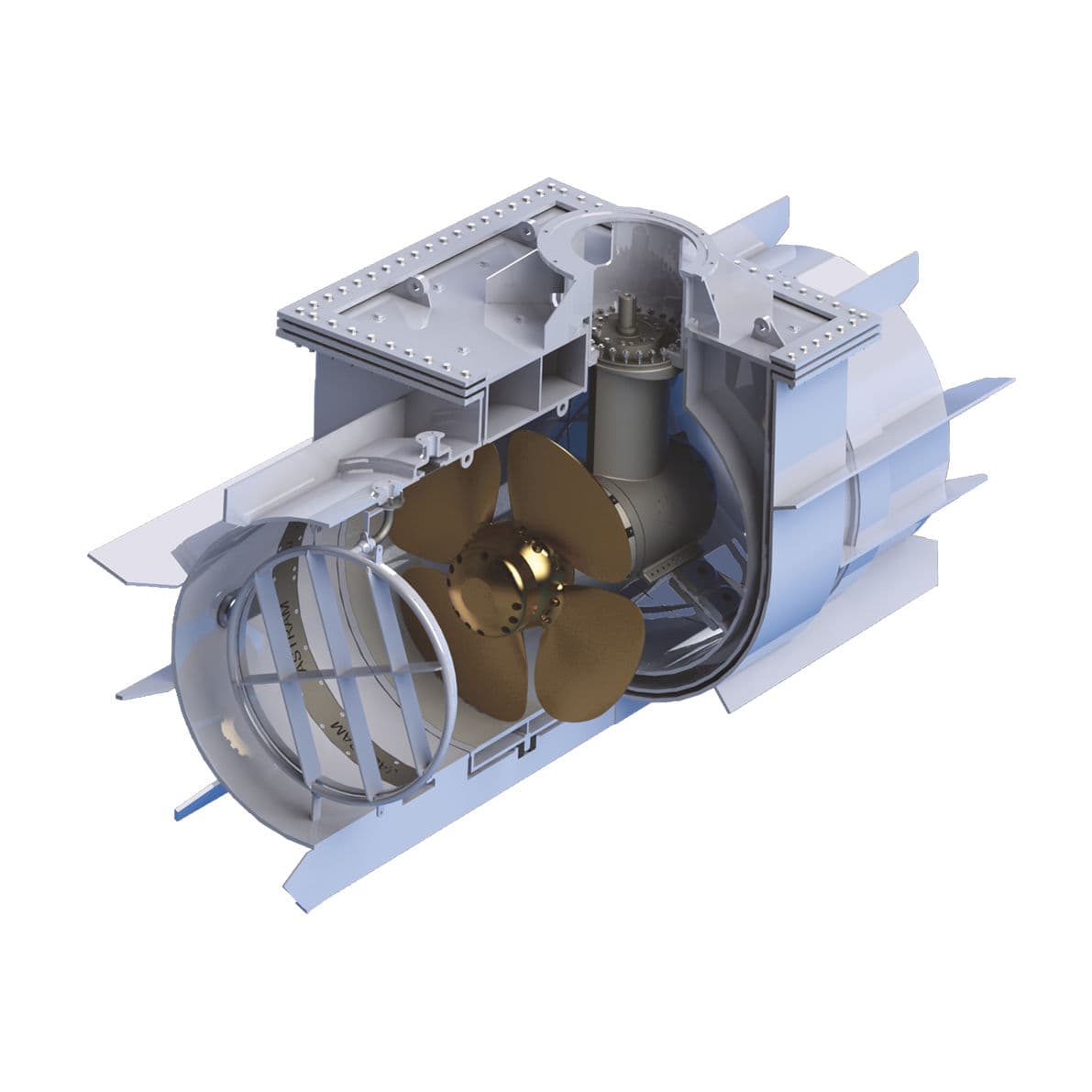
- Area: Propeller condition: inspection for wear, material fatigue, cavitation damage and foreign objectsCheck: Propeller condition: inspection for wear, material fatigue, cavitation damage and foreign objects
- Area: Shaft seal and seal rings: inspection for wear, oil leakage and water ingress (Viton seal rings, white metal seal)Check: Shaft seal and seal rings: inspection for wear, oil leakage and water ingress (Viton seal rings, white metal seal)
- Area: Cathodic protection/sacrificial anodes: inspection of zinc coating (steel) and renewal at least annuallyCheck: Cathodic protection/sacrificial anodes: inspection of zinc coating (steel) and renewal at least annually
- Area: Tunnel opening and water flow: inspection for fouling (algae, barnacles), sludging and flow obstructionCheck: Tunnel opening and water flow: inspection for fouling (algae, barnacles), sludging and flow obstruction
- Area: Kavitationsschutzring: Überprüfung des Edelstahl-Schutzrings an der Propellerspitze auf BeschädigungenCheck: Kavitationsschutzring: Überprüfung des Edelstahl-Schutzrings an der Propellerspitze auf Beschädigungen
- Area: Electric motor drive/couplings: inspection for wear, corrosion, misalignment and bearing wearCheck: Electric motor drive/couplings: inspection for wear, corrosion, misalignment and bearing wear
- Area: Pressure equalisation system and oil tank: inspection of oil level, oil quality, moisture content and leaksCheck: Pressure equalisation system and oil tank: inspection of oil level, oil quality, moisture content and leaks
- Area: Cavitation inspection: inspection for tunnel flooding during operation and noise/vibration inspectionCheck: Cavitation inspection: inspection for tunnel flooding during operation and noise/vibration inspection
Typ-universelle Inspektionspunkte fuer Bow/Stern Thrusters (verifiziert, 2026-06).
- Area: Propeller condition: inspection for wear, material fatigue, cavitation damage and foreign objectsCheck: Propeller condition: inspection for wear, material fatigue, cavitation damage and foreign objects
- Area: Shaft seal and seal rings: inspection for wear, oil leakage and water ingress (Viton seal rings, white metal seal)Check: Shaft seal and seal rings: inspection for wear, oil leakage and water ingress (Viton seal rings, white metal seal)
- Area: Cathodic protection/sacrificial anodes: inspection of zinc coating (steel) and renewal at least annuallyCheck: Cathodic protection/sacrificial anodes: inspection of zinc coating (steel) and renewal at least annually
- Area: Tunnel opening and water flow: inspection for fouling (algae, barnacles), sludging and flow obstructionCheck: Tunnel opening and water flow: inspection for fouling (algae, barnacles), sludging and flow obstruction
- Area: Kavitationsschutzring: Überprüfung des Edelstahl-Schutzrings an der Propellerspitze auf BeschädigungenCheck: Kavitationsschutzring: Überprüfung des Edelstahl-Schutzrings an der Propellerspitze auf Beschädigungen
- Area: Electric motor drive/couplings: inspection for wear, corrosion, misalignment and bearing wearCheck: Electric motor drive/couplings: inspection for wear, corrosion, misalignment and bearing wear
- Area: Pressure equalisation system and oil tank: inspection of oil level, oil quality, moisture content and leaksCheck: Pressure equalisation system and oil tank: inspection of oil level, oil quality, moisture content and leaks
- Area: Cavitation inspection: inspection for tunnel flooding during operation and noise/vibration inspectionCheck: Cavitation inspection: inspection for tunnel flooding during operation and noise/vibration inspection
Typ-universelle Inspektionspunkte fuer Bow/Stern Thrusters (verifiziert, 2026-06).
- Area: Propeller condition: inspection for wear, material fatigue, cavitation damage and foreign objectsCheck: Propeller condition: inspection for wear, material fatigue, cavitation damage and foreign objects
- Area: Shaft seal and seal rings: inspection for wear, oil leakage and water ingress (Viton seal rings, white metal seal)Check: Shaft seal and seal rings: inspection for wear, oil leakage and water ingress (Viton seal rings, white metal seal)
- Area: Cathodic protection/sacrificial anodes: inspection of zinc coating (steel) and renewal at least annuallyCheck: Cathodic protection/sacrificial anodes: inspection of zinc coating (steel) and renewal at least annually
- Area: Tunnel opening and water flow: inspection for fouling (algae, barnacles), sludging and flow obstructionCheck: Tunnel opening and water flow: inspection for fouling (algae, barnacles), sludging and flow obstruction
- Area: Kavitationsschutzring: Überprüfung des Edelstahl-Schutzrings an der Propellerspitze auf BeschädigungenCheck: Kavitationsschutzring: Überprüfung des Edelstahl-Schutzrings an der Propellerspitze auf Beschädigungen
- Area: Electric motor drive/couplings: inspection for wear, corrosion, misalignment and bearing wearCheck: Electric motor drive/couplings: inspection for wear, corrosion, misalignment and bearing wear
- Area: Pressure equalisation system and oil tank: inspection of oil level, oil quality, moisture content and leaksCheck: Pressure equalisation system and oil tank: inspection of oil level, oil quality, moisture content and leaks
- Area: Cavitation inspection: inspection for tunnel flooding during operation and noise/vibration inspectionCheck: Cavitation inspection: inspection for tunnel flooding during operation and noise/vibration inspection
Typ-universelle Inspektionspunkte fuer Bow/Stern Thrusters (verifiziert, 2026-06).
- Area: Propeller condition: inspection for wear, material fatigue, cavitation damage and foreign objectsCheck: Propeller condition: inspection for wear, material fatigue, cavitation damage and foreign objects
- Area: Shaft seal and seal rings: inspection for wear, oil leakage and water ingress (Viton seal rings, white metal seal)Check: Shaft seal and seal rings: inspection for wear, oil leakage and water ingress (Viton seal rings, white metal seal)
- Area: Cathodic protection/sacrificial anodes: inspection of zinc coating (steel) and renewal at least annuallyCheck: Cathodic protection/sacrificial anodes: inspection of zinc coating (steel) and renewal at least annually
- Area: Tunnel opening and water flow: inspection for fouling (algae, barnacles), sludging and flow obstructionCheck: Tunnel opening and water flow: inspection for fouling (algae, barnacles), sludging and flow obstruction
- Area: Kavitationsschutzring: Überprüfung des Edelstahl-Schutzrings an der Propellerspitze auf BeschädigungenCheck: Kavitationsschutzring: Überprüfung des Edelstahl-Schutzrings an der Propellerspitze auf Beschädigungen
- Area: Electric motor drive/couplings: inspection for wear, corrosion, misalignment and bearing wearCheck: Electric motor drive/couplings: inspection for wear, corrosion, misalignment and bearing wear
- Area: Pressure equalisation system and oil tank: inspection of oil level, oil quality, moisture content and leaksCheck: Pressure equalisation system and oil tank: inspection of oil level, oil quality, moisture content and leaks
- Area: Cavitation inspection: inspection for tunnel flooding during operation and noise/vibration inspectionCheck: Cavitation inspection: inspection for tunnel flooding during operation and noise/vibration inspection
Typ-universelle Inspektionspunkte fuer Bow/Stern Thrusters (verifiziert, 2026-06).
- Area: Propeller condition: inspection for wear, material fatigue, cavitation damage and foreign objectsCheck: Propeller condition: inspection for wear, material fatigue, cavitation damage and foreign objects
- Area: Shaft seal and seal rings: inspection for wear, oil leakage and water ingress (Viton seal rings, white metal seal)Check: Shaft seal and seal rings: inspection for wear, oil leakage and water ingress (Viton seal rings, white metal seal)
- Area: Cathodic protection/sacrificial anodes: inspection of zinc coating (steel) and renewal at least annuallyCheck: Cathodic protection/sacrificial anodes: inspection of zinc coating (steel) and renewal at least annually
- Area: Tunnel opening and water flow: inspection for fouling (algae, barnacles), sludging and flow obstructionCheck: Tunnel opening and water flow: inspection for fouling (algae, barnacles), sludging and flow obstruction
- Area: Kavitationsschutzring: Überprüfung des Edelstahl-Schutzrings an der Propellerspitze auf BeschädigungenCheck: Kavitationsschutzring: Überprüfung des Edelstahl-Schutzrings an der Propellerspitze auf Beschädigungen
- Area: Electric motor drive/couplings: inspection for wear, corrosion, misalignment and bearing wearCheck: Electric motor drive/couplings: inspection for wear, corrosion, misalignment and bearing wear
- Area: Pressure equalisation system and oil tank: inspection of oil level, oil quality, moisture content and leaksCheck: Pressure equalisation system and oil tank: inspection of oil level, oil quality, moisture content and leaks
- Area: Cavitation inspection: inspection for tunnel flooding during operation and noise/vibration inspectionCheck: Cavitation inspection: inspection for tunnel flooding during operation and noise/vibration inspection
Typ-universelle Inspektionspunkte fuer Bow/Stern Thrusters (verifiziert, 2026-06).
- Area: Propeller condition: inspection for wear, material fatigue, cavitation damage and foreign objectsCheck: Propeller condition: inspection for wear, material fatigue, cavitation damage and foreign objects
- Area: Shaft seal and seal rings: inspection for wear, oil leakage and water ingress (Viton seal rings, white metal seal)Check: Shaft seal and seal rings: inspection for wear, oil leakage and water ingress (Viton seal rings, white metal seal)
- Area: Cathodic protection/sacrificial anodes: inspection of zinc coating (steel) and renewal at least annuallyCheck: Cathodic protection/sacrificial anodes: inspection of zinc coating (steel) and renewal at least annually
- Area: Tunnel opening and water flow: inspection for fouling (algae, barnacles), sludging and flow obstructionCheck: Tunnel opening and water flow: inspection for fouling (algae, barnacles), sludging and flow obstruction
- Area: Kavitationsschutzring: Überprüfung des Edelstahl-Schutzrings an der Propellerspitze auf BeschädigungenCheck: Kavitationsschutzring: Überprüfung des Edelstahl-Schutzrings an der Propellerspitze auf Beschädigungen
- Area: Electric motor drive/couplings: inspection for wear, corrosion, misalignment and bearing wearCheck: Electric motor drive/couplings: inspection for wear, corrosion, misalignment and bearing wear
- Area: Pressure equalisation system and oil tank: inspection of oil level, oil quality, moisture content and leaksCheck: Pressure equalisation system and oil tank: inspection of oil level, oil quality, moisture content and leaks
- Area: Cavitation inspection: inspection for tunnel flooding during operation and noise/vibration inspectionCheck: Cavitation inspection: inspection for tunnel flooding during operation and noise/vibration inspection
Typ-universelle Inspektionspunkte fuer Bow/Stern Thrusters (verifiziert, 2026-06).
- Area: Propeller condition: inspection for wear, material fatigue, cavitation damage and foreign objectsCheck: Propeller condition: inspection for wear, material fatigue, cavitation damage and foreign objects
- Area: Shaft seal and seal rings: inspection for wear, oil leakage and water ingress (Viton seal rings, white metal seal)Check: Shaft seal and seal rings: inspection for wear, oil leakage and water ingress (Viton seal rings, white metal seal)
- Area: Cathodic protection/sacrificial anodes: inspection of zinc coating (steel) and renewal at least annuallyCheck: Cathodic protection/sacrificial anodes: inspection of zinc coating (steel) and renewal at least annually
- Area: Tunnel opening and water flow: inspection for fouling (algae, barnacles), sludging and flow obstructionCheck: Tunnel opening and water flow: inspection for fouling (algae, barnacles), sludging and flow obstruction
- Area: Kavitationsschutzring: Überprüfung des Edelstahl-Schutzrings an der Propellerspitze auf BeschädigungenCheck: Kavitationsschutzring: Überprüfung des Edelstahl-Schutzrings an der Propellerspitze auf Beschädigungen
- Area: Electric motor drive/couplings: inspection for wear, corrosion, misalignment and bearing wearCheck: Electric motor drive/couplings: inspection for wear, corrosion, misalignment and bearing wear
- Area: Pressure equalisation system and oil tank: inspection of oil level, oil quality, moisture content and leaksCheck: Pressure equalisation system and oil tank: inspection of oil level, oil quality, moisture content and leaks
- Area: Cavitation inspection: inspection for tunnel flooding during operation and noise/vibration inspectionCheck: Cavitation inspection: inspection for tunnel flooding during operation and noise/vibration inspection
Typ-universelle Inspektionspunkte fuer Bow/Stern Thrusters (verifiziert, 2026-06).
- Propeller fouling, rope entanglement or blade damage causes vibration, reduced thrust or high drive load
- Shaft-seal or gearbox leakage causes oil loss, water ingress or low-level alarms
- Bearing or gear wear causes abnormal noise, vibration or rising temperature
- Electric motor, converter or hydraulic-drive faults cause reduced thrust, failed starts or protective trips
- Pitch, steering or control-feedback faults as applicable cause incorrect thrust response, loss of direction control or remote-control alarms
- High thrust‑to‑power ratio (6 kN from 50 kW)
- Compact 540 mm diameter allows installation in limited hull space
- Low acoustic signature and vibration, suitable for passenger or offshore vessels
- Proven Jastram reliability with robust bearing and seal design
- Straightforward integration with ship’s electric power system
- Maximum thrust may be insufficient for large tankers or high‑wind port operations
- Requires dedicated 400 V three‑phase supply and associated cabling
- Higher upfront cost compared with generic low‑cost thrusters
- Maintenance of hydraulic seals (if hydraulically assisted) can add downtime
- Cavitation risk at full load in shallow water
- Propeller fouling, rope entanglement or blade damage causes vibration, reduced thrust or high drive load
- Shaft-seal or gearbox leakage causes oil loss, water ingress or low-level alarms
- Bearing or gear wear causes abnormal noise, vibration or rising temperature
- Electric motor, converter or hydraulic-drive faults cause reduced thrust, failed starts or protective trips
- Pitch, steering or control-feedback faults as applicable cause incorrect thrust response, loss of direction control or remote-control alarms
- High thrust‑to‑power ratio (6 kN at only 50 kW)
- Compact 540 mm diameter fits in limited stern space
- Robust Jastram design with proven reliability in harsh marine environments
- Low acoustic signature, suitable for noise‑sensitive operations
- Standardized mounting and wiring simplify installation and integration
- Maximum thrust may be insufficient for large vessels or high‑wind conditions
- Potential cavitation at full power if water flow is restricted
- Maintenance access can be limited when installed in tight stern compartments
- Power consumption relatively high for small workboats that could use electric alternatives
- Corrosion risk if duct material and coatings are not regularly inspected
- Propeller fouling, rope entanglement or blade damage causes vibration, reduced thrust or high drive load
- Shaft-seal or gearbox leakage causes oil loss, water ingress or low-level alarms
- Bearing or gear wear causes abnormal noise, vibration or rising temperature
- Electric motor, converter or hydraulic-drive faults cause reduced thrust, failed starts or protective trips
- Pitch, steering or control-feedback faults as applicable cause incorrect thrust response, loss of direction control or remote-control alarms
- High thrust‑to‑power ratio (9 kN @ 75 kW) for its size
- Compact 560 mm tunnel fits vessels with limited hull space
- Proven Jastram reliability and low maintenance intervals
- Integrated control unit compatible with most ship bridge systems
- Suitable for both new builds and retro‑fits on medium‑size ships
- Maximum 75 kW power may be insufficient for large vessels or heavy weather maneuvering
- Fixed tunnel geometry limits thrust optimisation at very low speeds (cavitation risk)
- Installation requires hull penetration and structural reinforcement
- Limited thrust directionality compared with azimuth thrusters
- Standard model lacks built‑in redundancy; optional backup system adds cost
- Propeller or blade damage from debris can cause vibration and reduced thrust, noticed during maneuvering
- Gear or bearing wear can produce abnormal noise, heat or metallic debris in lubricant
- Seal leakage can allow water ingress or oil loss, seen through header-tank level changes or leakage alarms
- Motor, converter or hydraulic-drive faults can prevent commanded thrust, seen as trips, low power or unavailable thruster status
- Control or feedback-sensor faults can cause incorrect direction or pitch/azimuth indication, seen as command mismatch alarms
- High thrust‑to‑power ratio (9 kN from 75 kW) for its size class
- Compact 560 mm tunnel diameter fits into limited hull spaces
- Robust, low‑maintenance design typical of Jastram marine equipment
- Integrated control wiring compatible with most ship bridge systems
- Proven reliability in coastal and offshore support vessels
- Maximum thrust may be insufficient for large DP‑class ships or heavy‑weather berthing
- Tunnel geometry can generate hull vibration and noise at high RPMs
- Installation requires a stern tunnel cut‑out, adding dockyard time and cost
- Performance degrades in strong currents or when the hull is heavily fouled
- Limited to fixed‑direction thrust; cannot provide azimuthal steering
- Propeller or blade damage from debris can cause vibration and reduced thrust, noticed during maneuvering
- Gear or bearing wear can produce abnormal noise, heat or metallic debris in lubricant
- Seal leakage can allow water ingress or oil loss, seen through header-tank level changes or leakage alarms
- Motor, converter or hydraulic-drive faults can prevent commanded thrust, seen as trips, low power or unavailable thruster status
- Control or feedback-sensor faults can cause incorrect direction or pitch/azimuth indication, seen as command mismatch alarms
- Compact tunnel design fits within standard hull sections without protruding pods
- Good thrust‑to‑power ratio (12 kN @ 100 kW) for vessels up to ~30,000 DWT
- Low vibration and noise compared with external azimuth units
- Straightforward deck‑level maintenance access through removable covers
- Maximum thrust limited to 12 kN – may be insufficient for large tankers or high‑speed DP vessels
- Installation requires hull penetration and structural reinforcement
- Tunnel flow can cause slight increase in hull resistance when the thruster is not in use
- Noise and cavitation become noticeable at full power on smaller hulls
- Propeller fouling, rope entanglement or blade damage causes vibration, reduced thrust or high drive load
- Shaft-seal or gearbox leakage causes oil loss, water ingress or low-level alarms
- Bearing or gear wear causes abnormal noise, vibration or rising temperature
- Electric motor, converter or hydraulic-drive faults cause reduced thrust, failed starts or protective trips
- Pitch, steering or control-feedback faults as applicable cause incorrect thrust response, loss of direction control or remote-control alarms
- High thrust‑to‑power ratio (12 kN at only 100 kW)
- Compact hull integration with a 580 mm tunnel diameter
- Integrated control electronics from Jastram for easy installation and monitoring
- Proven reliability of the Jastram brand in commercial service
- Low vibration and acoustic signature compared with external azimuth units
- Limited thrust capacity relative to larger azimuth thrusters, unsuitable for high‑power DP requirements
- Potential cavitation at high propeller speeds, especially in shallow water
- Requires hull penetration and internal space, complicating retrofits
- Maintenance access can be restricted by the tunnel geometry
- Less effective for vessels operating in heavy seas or requiring rapid thrust reversal
- Propeller fouling, rope entanglement or blade damage causes vibration, reduced thrust or high drive load
- Shaft-seal or gearbox leakage causes oil loss, water ingress or low-level alarms
- Bearing or gear wear causes abnormal noise, vibration or rising temperature
- Electric motor, converter or hydraulic-drive faults cause reduced thrust, failed starts or protective trips
- Pitch, steering or control-feedback faults as applicable cause incorrect thrust response, loss of direction control or remote-control alarms
- High thrust‑to‑power ratio (18 kN from 150 kW)
- Compact 620 mm duct fits vessels with limited hull space
- Water‑lubricated bearings reduce wear and extend service intervals
- Low acoustic and vibration signature, beneficial for passenger ships
- Optional integrated control unit for precise helm response
- Requires sufficient draft; not ideal for very shallow installations
- Fixed‑direction thrust – no azimuth capability
- Bearing seals need regular inspection in high‑salinity environments
- Performance can degrade in highly turbulent or debris‑laden water
- Higher power consumption compared with newer pump‑jet thrusters of similar rating
- Propeller or blade damage from debris can cause vibration and reduced thrust, noticed during maneuvering
- Gear or bearing wear can produce abnormal noise, heat or metallic debris in lubricant
- Seal leakage can allow water ingress or oil loss, seen through header-tank level changes or leakage alarms
- Motor, converter or hydraulic-drive faults can prevent commanded thrust, seen as trips, low power or unavailable thruster status
- Control or feedback-sensor faults can cause incorrect direction or pitch/azimuth indication, seen as command mismatch alarms
- High thrust‑to‑power ratio (18 kN at 150 kW) for its size
- Compact 620 mm tunnel fits vessels with limited hull space
- Water‑lubricated bearings reduce wear and maintenance intervals
- Stainless‑steel housing provides excellent corrosion resistance in marine environments
- Integrated control electronics compatible with most DP and bow‑thruster consoles
- Maximum thrust of 18 kN may be insufficient for large vessels or high‑wind conditions
- Noise level rises noticeably at full power, which can affect crew comfort on passenger ships
- Installation requires hull penetration and structural reinforcement, adding dock time
- Power consumption is relatively high for small craft that need only modest maneuverability
- Propeller fouling, rope entanglement or blade damage causes vibration, reduced thrust or high drive load
- Shaft-seal or gearbox leakage causes oil loss, water ingress or low-level alarms
- Bearing or gear wear causes abnormal noise, vibration or rising temperature
- Electric motor, converter or hydraulic-drive faults cause reduced thrust, failed starts or protective trips
- Pitch, steering or control-feedback faults as applicable cause incorrect thrust response, loss of direction control or remote-control alarms
- High thrust‑to‑power ratio (≈24 kN from 200 kW) for compact vessels
- Robust tunnel construction reduces blade wear and vibration
- Integrated control electronics compatible with most ship bridge systems
- Proven track record on a variety of commercial ships
- Relatively low installation space compared to azimuth pods
- Fixed‑direction thrust; requires separate steering gear for vectoring
- Tunnel liner wear can increase maintenance intervals in high‑sediment waters
- Noise and cavitation levels higher than some ducted propeller alternatives at full power
- Power demand may be limiting on vessels with restricted electrical generation capacity
- Propeller fouling, rope entanglement or blade damage causes vibration, reduced thrust or high drive load
- Shaft-seal or gearbox leakage causes oil loss, water ingress or low-level alarms
- Bearing or gear wear causes abnormal noise, vibration or rising temperature
- Electric motor, converter or hydraulic-drive faults cause reduced thrust, failed starts or protective trips
- Pitch, steering or control-feedback faults as applicable cause incorrect thrust response, loss of direction control or remote-control alarms
- High thrust output (24 kN) relative to its 200 kW power rating
- Compact 660 mm tunnel fits medium‑size vessel hulls without excessive space penalty
- Robust German engineering with proven reliability in commercial fleets
- Integrated motor cooling system reduces overheating risk during prolonged DP operation
- Installation requires a large (≈660 mm) hull opening, affecting structural layout
- Cavitation can occur at high RPMs, especially in shallow water conditions
- Fixed‑direction thrust; less flexible than azimuth or pod thrusters for certain maneuvers
- Power consumption is higher than some newer ducted‑propeller designs offering similar thrust
- Propeller fouling, rope entanglement or blade damage causes vibration, reduced thrust or high drive load
- Shaft-seal or gearbox leakage causes oil loss, water ingress or low-level alarms
- Bearing or gear wear causes abnormal noise, vibration or rising temperature
- Electric motor, converter or hydraulic-drive faults cause reduced thrust, failed starts or protective trips
- Pitch, steering or control-feedback faults as applicable cause incorrect thrust response, loss of direction control or remote-control alarms
- High thrust‑to‑power ratio (30 kN at 250 kW) for strong low‑speed maneuvering
- Compact 700 mm tunnel fits vessels with limited bow space
- Stainless‑steel housing and water‑cooled copper windings provide excellent corrosion resistance and durability
- Low‑cavitation impeller design reduces wear and prolongs service life
- Ready‑to‑install control unit compatible with standard VFD systems
- Designed for bow installation only; not interchangeable with stern positions
- Relatively high power consumption compared with smaller thrusters, impacting fuel use when operated continuously
- Requires significant hull penetration and reinforcement during installation
- Acoustic noise level higher than that of azimuth or pod‑type thrusters in the same power class
- Maintenance of sealed bearings can be more demanding in harsh marine environments
- Propeller or blade damage from debris can cause vibration and reduced thrust, noticed during maneuvering
- Gear or bearing wear can produce abnormal noise, heat or metallic debris in lubricant
- Seal leakage can allow water ingress or oil loss, seen through header-tank level changes or leakage alarms
- Motor, converter or hydraulic-drive faults can prevent commanded thrust, seen as trips, low power or unavailable thruster status
- Control or feedback-sensor faults can cause incorrect direction or pitch/azimuth indication, seen as command mismatch alarms
- High thrust‑to‑power ratio (30 kN at 250 kW) for its size
- Compact, steel‑welded tunnel housing fits well in limited stern spaces
- Robust construction with low‑maintenance moving parts
- Straightforward integration with existing ship control systems
- Provides thrust only in a fixed azimuth; no 360° vectoring like an azimuth pod
- Hull penetration required, increasing potential for water ingress if not sealed properly
- Higher acoustic and vibration levels compared with pump‑jet designs
- Cavitation risk at high RPMs may limit maximum thrust in shallow water
- Propeller or blade damage from debris can cause vibration and reduced thrust, noticed during maneuvering
- Gear or bearing wear can produce abnormal noise, heat or metallic debris in lubricant
- Seal leakage can allow water ingress or oil loss, seen through header-tank level changes or leakage alarms
- Motor, converter or hydraulic-drive faults can prevent commanded thrust, seen as trips, low power or unavailable thruster status
- Control or feedback-sensor faults can cause incorrect direction or pitch/azimuth indication, seen as command mismatch alarms
- High thrust‑to‑power ratio (≈36 kN at 300 kW) for strong bow assistance
- Compact duct size (740 mm) fits vessels with limited hull space
- Robust steel housing and proven Jastram engineering ensure long service life
- Relatively low acoustic signature compared with azimuth pods
- Standardised mounting and control interfaces simplify integration
- Fixed‑direction thrust; cannot rotate like a pod for full 360° coverage
- Higher fuel consumption than electric or hybrid bow thrusters of similar rating
- Potential cavitation at high RPM in shallow water conditions
- Requires dedicated cooling water supply and ventilation space
- Limited to vessels up to roughly 30 000 dwt where thrust demand matches
- Propeller or blade damage from debris can cause vibration and reduced thrust, noticed during maneuvering
- Gear or bearing wear can produce abnormal noise, heat or metallic debris in lubricant
- Seal leakage can allow water ingress or oil loss, seen through header-tank level changes or leakage alarms
- Motor, converter or hydraulic-drive faults can prevent commanded thrust, seen as trips, low power or unavailable thruster status
- Control or feedback-sensor faults can cause incorrect direction or pitch/azimuth indication, seen as command mismatch alarms
- High thrust output (36 kN) suitable for large ships and DP assistance
- Large 740 mm tunnel diameter reduces cavitation and improves efficiency
- Robust Jastram construction known for long service life and low maintenance
- Integrated stern location provides excellent reverse‑thrust control during docking
- Standard 300 kW motor matches common ship power distribution systems
- Physical size (740 mm tunnel) limits installation on vessels with restricted hull space
- Power demand of 300 kW increases overall fuel consumption when used frequently
- Potential for higher acoustic noise and vibration compared with smaller thrusters
- Stern‑only configuration may not meet vessels that require bow thrust as well
- Initial procurement cost is typically higher than lower‑power alternatives
- Propeller or blade damage from debris can cause vibration and reduced thrust, noticed during maneuvering
- Gear or bearing wear can produce abnormal noise, heat or metallic debris in lubricant
- Seal leakage can allow water ingress or oil loss, seen through header-tank level changes or leakage alarms
- Motor, converter or hydraulic-drive faults can prevent commanded thrust, seen as trips, low power or unavailable thruster status
- Control or feedback-sensor faults can cause incorrect direction or pitch/azimuth indication, seen as command mismatch alarms
- High thrust‑to‑power ratio (48 kN at 400 kW) for strong docking assistance
- Compact tunnel geometry fits within limited hull space
- Robust steel construction with removable cover simplifies routine inspection and maintenance
- Integrated cooling water system reduces overheating during prolonged DP operation
- Tunnel design is more prone to cavitation at high load compared with azimuthing units
- Requires significant hull penetration and structural reinforcement during installation
- Less maneuverability than a rotating (azimuth) thruster in heavy seas or strong currents
- Noise and vibration levels higher than some low‑speed screw‑type thrusters
- Propeller fouling, rope entanglement or blade damage causes vibration, reduced thrust or high drive load
- Shaft-seal or gearbox leakage causes oil loss, water ingress or low-level alarms
- Bearing or gear wear causes abnormal noise, vibration or rising temperature
- Electric motor, converter or hydraulic-drive faults cause reduced thrust, failed starts or protective trips
- Pitch, steering or control-feedback faults as applicable cause incorrect thrust response, loss of direction control or remote-control alarms
- High thrust‑to‑power ratio (48 kN @ 400 kW) for effective bow‑/stern‑side thrust
- Compact tunnel diameter (820 mm) fits within typical hull forms without excessive structural intrusion
- Robust stainless‑steel housing provides good corrosion resistance in seawater environments
- Integrated control electronics compatible with common ship bridge consoles and DP systems
- Low vibration and noise levels compared with propeller‑type thrusters
- Installation requires a sizable tunnel aperture, potentially reducing hull strength if not properly reinforced
- Maintenance access can be limited in tight stern spaces, increasing downtime for overhauls
- Higher upfront cost than basic low‑power thrusters of similar size
- Fixed thrust direction; cannot provide 360° azimuth capability needed for some DP applications
- Performance drops noticeably at very low ship speeds due to reduced water flow through the tunnel
- Propeller fouling, rope entanglement or blade damage causes vibration, reduced thrust or high drive load
- Shaft-seal or gearbox leakage causes oil loss, water ingress or low-level alarms
- Bearing or gear wear causes abnormal noise, vibration or rising temperature
- Electric motor, converter or hydraulic-drive faults cause reduced thrust, failed starts or protective trips
- Pitch, steering or control-feedback faults as applicable cause incorrect thrust response, loss of direction control or remote-control alarms
- High thrust output (60 kN) relative to power rating, suitable for medium‑size vessels requiring strong bow control.
- Ducted design reduces cavitation and improves thrust efficiency in calm to moderate sea states.
- Compact installation footprint compared with azimuth pods, fitting into standard bow tunnel spaces.
- Jastram’s reputation for robust mechanical engineering translates to reliable long‑term operation.
- Large 900 mm duct diameter may limit placement on vessels with narrow hull forms or restricted bow space.
- 500 kW electrical demand requires a capable shipboard power system and can increase fuel consumption when used frequently.
- Tunnel thrusters are less effective than azimuth units in heavy seas or for high‑speed dynamic positioning.
- Maintenance of bearings, seals and the duct liner is required to prevent wear and cavitation over time.
- Propeller fouling, rope entanglement or blade damage causes vibration, reduced thrust or high drive load
- Shaft-seal or gearbox leakage causes oil loss, water ingress or low-level alarms
- Bearing or gear wear causes abnormal noise, vibration or rising temperature
- Electric motor, converter or hydraulic-drive faults cause reduced thrust, failed starts or protective trips
- Pitch, steering or control-feedback faults as applicable cause incorrect thrust response, loss of direction control or remote-control alarms
- High thrust output (60 kN) relative to its 500 kW power rating
- Compact 900 mm tunnel diameter fits into limited stern spaces
- Robust water‑lubricated design reduces wear and maintenance intervals
- Integrated control electronics compatible with most ship bridge systems
- Large tunnel opening can reduce local hull strength if not properly reinforced
- Power demand (500 kW) may be significant for vessels with limited electrical generation capacity
- Noise and vibration levels are higher than some ducted‑propeller alternatives
- Installation requires sufficient stern clearance; not suitable for very narrow aft sections
- Propeller fouling, rope entanglement or blade damage causes vibration, reduced thrust or high drive load
- Shaft-seal or gearbox leakage causes oil loss, water ingress or low-level alarms
- Bearing or gear wear causes abnormal noise, vibration or rising temperature
- Electric motor, converter or hydraulic-drive faults cause reduced thrust, failed starts or protective trips
- Pitch, steering or control-feedback faults as applicable cause incorrect thrust response, loss of direction control or remote-control alarms
- High thrust‑to‑power ratio (72 kN at 600 kW) gives excellent manoeuvring capability.
- Large 980 mm duct diameter provides efficient water flow and reduced cavitation risk.
- Robust Jastram construction with low‑maintenance bearings and integrated cooling system.
- Compact tunnel housing limits hull penetration, improving structural integrity.
- Proven design widely accepted by classification societies for new‑build installations.
- Large duct size requires significant bow space and may affect hull form modifications.
- 600 kW electrical demand necessitates a strong shipboard power plant and dedicated cabling.
- Installation in the bow can be complex, especially on vessels with limited internal volume.
- Higher initial cost compared with smaller or azimuth thrusters of similar power.
- Potential for increased noise/vibration if not properly isolated.
- Propeller fouling, rope entanglement or blade damage causes vibration, reduced thrust or high drive load
- Shaft-seal or gearbox leakage causes oil loss, water ingress or low-level alarms
- Bearing or gear wear causes abnormal noise, vibration or rising temperature
- Electric motor, converter or hydraulic-drive faults cause reduced thrust, failed starts or protective trips
- Pitch, steering or control-feedback faults as applicable cause incorrect thrust response, loss of direction control or remote-control alarms
- High thrust output (72 kN) suitable for large vessel stern manoeuvring
- Large tunnel diameter (980 mm) reduces cavitation and improves efficiency
- 600 kW power rating matches modern electric propulsion standards
- Proven Jastram brand reputation for marine thruster reliability
- Compact integration at the stern aids dynamic positioning systems
- Requires a ~1 m hull opening, limiting installation on vessels with restricted beam
- High power consumption increases vessel electrical load
- Maintenance of large‑diameter bearings and seals can be labour intensive
- Potential for increased noise/vibration at full power if not properly isolated
- Initial cost is higher than lower‑power tunnel thrusters
- Propeller fouling, rope entanglement or blade damage causes vibration, reduced thrust or high drive load
- Shaft-seal or gearbox leakage causes oil loss, water ingress or low-level alarms
- Bearing or gear wear causes abnormal noise, vibration or rising temperature
- Electric motor, converter or hydraulic-drive faults cause reduced thrust, failed starts or protective trips
- Pitch, steering or control-feedback faults as applicable cause incorrect thrust response, loss of direction control or remote-control alarms
- Very high thrust (≈90 kN) for its size, enabling effective port entry/exit on large ships
- Compact integration within the hull reduces above‑deck clutter and wind resistance
- Robust German engineering with proven reliability and low maintenance intervals
- Integrated control electronics compatible with most ship bridge systems
- Suitable for vessels >100 000 dwt where high thrust is required
- High electrical power demand (≈750 kW) increases onboard energy consumption
- Installation requires significant hull penetration and precise alignment
- Fixed‑direction thrust; less flexible than azimuth or pod thrusters for low‑speed maneuvering
- Potential cavitation at maximum thrust in shallow water conditions
- May require additional duct reinforcement on older hull structures
- Propeller fouling, rope entanglement or blade damage causes vibration, reduced thrust or high drive load
- Shaft-seal or gearbox leakage causes oil loss, water ingress or low-level alarms
- Bearing or gear wear causes abnormal noise, vibration or rising temperature
- Electric motor, converter or hydraulic-drive faults cause reduced thrust, failed starts or protective trips
- Pitch, steering or control-feedback faults as applicable cause incorrect thrust response, loss of direction control or remote-control alarms
- Very high thrust (≈90 kN) suitable for large ships and DP operations
- Large 1.1 m duct diameter provides efficient water flow and reduced cavitation risk at design load
- 750 kW motor gives strong response for rapid heading changes
- Stern mounting improves aft‑end control during docking and emergency stopping
- Jastram’s proven reputation for robust marine propulsion components
- High electrical power demand (≈750 kW) may require substantial generator capacity
- Large physical size needs considerable hull space and structural reinforcement
- Installation and maintenance are more complex than smaller thrusters
- Potential for increased noise and vibration at full load
- Higher initial cost compared with lower‑power tunnel units
- Propeller fouling, rope entanglement or blade damage causes vibration, reduced thrust or high drive load
- Shaft-seal or gearbox leakage causes oil loss, water ingress or low-level alarms
- Bearing or gear wear causes abnormal noise, vibration or rising temperature
- Electric motor, converter or hydraulic-drive faults cause reduced thrust, failed starts or protective trips
- Pitch, steering or control-feedback faults as applicable cause incorrect thrust response, loss of direction control or remote-control alarms
- High thrust‑to‑power ratio (96 kN at 800 kW) enables rapid heading changes and DP support.
- Compact tunnel layout fits within standard bow sections without protruding below the hull.
- Low vibration and noise due to enclosed flow path, improving crew comfort.
- Integrated Jastram control electronics compatible with most ship‑handling systems.
- Proven track record on a range of large commercial vessels.
- Large 1.14 m tunnel diameter limits installation in vessels with narrow bow sections.
- Higher power demand (800 kW) increases auxiliary load and fuel consumption.
- Maintenance requires periodic inspection of bearing housings within the tunnel.
- Installation may require hull reinforcement, adding construction cost.
- Noise at full power can be noticeable for nearby passenger areas.
- Propeller or blade damage from debris can cause vibration and reduced thrust, noticed during maneuvering
- Gear or bearing wear can produce abnormal noise, heat or metallic debris in lubricant
- Seal leakage can allow water ingress or oil loss, seen through header-tank level changes or leakage alarms
- Motor, converter or hydraulic-drive faults can prevent commanded thrust, seen as trips, low power or unavailable thruster status
- Control or feedback-sensor faults can cause incorrect direction or pitch/azimuth indication, seen as command mismatch alarms
- High thrust output (96 kN) from an 800 kW motor enables rapid lateral movement in tight ports.
- Large 1.14 m tunnel diameter provides efficient water flow and reduced cavitation risk at high loads.
- Robust Jastram engineering with proven reliability on long‑haul vessels.
- Integrated stern installation minimizes above‑deck clutter and protects the unit from impact damage.
- Large hull penetration required; may limit retro‑fit options on existing ships.
- High power demand (800 kW) increases fuel consumption of auxiliary generators.
- Maintenance access can be difficult in confined stern spaces.
- Potential for increased noise and vibration compared with smaller thrusters.
- Propeller fouling, rope entanglement or blade damage causes vibration, reduced thrust or high drive load
- Shaft-seal or gearbox leakage causes oil loss, water ingress or low-level alarms
- Bearing or gear wear causes abnormal noise, vibration or rising temperature
- Electric motor, converter or hydraulic-drive faults cause reduced thrust, failed starts or protective trips
- Pitch, steering or control-feedback faults as applicable cause incorrect thrust response, loss of direction control or remote-control alarms
- Very high thrust output (120 kN) suitable for precise bow handling on large ships
- Large 1.3 m duct diameter reduces cavitation and improves efficiency at high power levels
- Robust tunnel housing protects the propeller from debris and grounding impacts
- Integrated bow location provides optimal leverage for docking and DP maneuvers
- Designed for 1 000 kW drive units, compatible with common VFD systems
- Large physical size limits installation to vessels with sufficient hull space
- High power demand (1 MW) increases fuel consumption and may require upgraded electrical supply
- Heavier overall unit weight can complicate retro‑fit projects
- Installation and maintenance access are more demanding due to the large tunnel geometry
- Higher upfront cost compared with lower‑power thruster options
- Propeller fouling, rope entanglement or blade damage causes vibration, reduced thrust or high drive load
- Shaft-seal or gearbox leakage causes oil loss, water ingress or low-level alarms
- Bearing or gear wear causes abnormal noise, vibration or rising temperature
- Electric motor, converter or hydraulic-drive faults cause reduced thrust, failed starts or protective trips
- Pitch, steering or control-feedback faults as applicable cause incorrect thrust response, loss of direction control or remote-control alarms
- Very high thrust output (120 kN) suitable for large vessels and DP operations
- Large tunnel diameter reduces cavitation risk at full power
- Integrated stern installation minimizes hull penetration points
- Robust construction typical of Jastram Marine, designed for heavy‑duty service
- Provides precise low‑speed thrust vectoring for tight berthing
- High electrical power demand (1 MW) may strain ship’s power plant
- Large tunnel size can affect hull structural integrity if not properly reinforced
- Maintenance requires dry‑docking or extensive access arrangements
- Effectiveness drops sharply at higher vessel speeds
- Potential for water ingress if seals deteriorate, requiring regular inspection
- Propeller or blade damage from debris can cause vibration and reduced thrust, noticed during maneuvering
- Gear or bearing wear can produce abnormal noise, heat or metallic debris in lubricant
- Seal leakage can allow water ingress or oil loss, seen through header-tank level changes or leakage alarms
- Motor, converter or hydraulic-drive faults can prevent commanded thrust, seen as trips, low power or unavailable thruster status
- Control or feedback-sensor faults can cause incorrect direction or pitch/azimuth indication, seen as command mismatch alarms
- High thrust output (144 kN) from 1200 kW gives strong manoeuvring capability on large vessels
- Large tunnel diameter (1460 mm) reduces cavitation and improves efficiency
- Integrated tunnel design minimises hull penetration points and simplifies installation
- Robust steel construction suitable for harsh marine environments
- Provides reliable low‑speed thrust for dynamic positioning and tight docking
- Significant bow space required to accommodate the 1.46 m tunnel diameter
- High power consumption increases fuel use and may need dedicated cooling systems
- Installation complexity can raise dry‑dock time and cost
- Higher upfront cost compared with smaller or azimuth thrusters for similar thrust levels
- Weight and structural reinforcement requirements add to overall vessel weight budget
- Propeller fouling, rope entanglement or blade damage causes vibration, reduced thrust or high drive load
- Shaft-seal or gearbox leakage causes oil loss, water ingress or low-level alarms
- Bearing or gear wear causes abnormal noise, vibration or rising temperature
- Electric motor, converter or hydraulic-drive faults cause reduced thrust, failed starts or protective trips
- Pitch, steering or control-feedback faults as applicable cause incorrect thrust response, loss of direction control or remote-control alarms
- Very high thrust (144 kN) for its power class, enabling strong lateral forces in DP operations
- Large 1460 mm duct diameter reduces cavitation and improves efficiency at low speeds
- Robust Jastram modular construction simplifies installation and future upgrades
- Integrated control electronics compatible with most ship‑board DP systems
- Large physical size requires substantial hull penetration and may limit use on smaller vessels
- High power demand (1200 kW) increases fuel consumption and electrical load
- Weight and mounting loads are significant; structural reinforcement is often required
- Spare‑part logistics can be longer outside Jastram’s primary service regions
- Propeller or blade damage from debris can cause vibration and reduced thrust, noticed during maneuvering
- Gear or bearing wear can produce abnormal noise, heat or metallic debris in lubricant
- Seal leakage can allow water ingress or oil loss, seen through header-tank level changes or leakage alarms
- Motor, converter or hydraulic-drive faults can prevent commanded thrust, seen as trips, low power or unavailable thruster status
- Control or feedback-sensor faults can cause incorrect direction or pitch/azimuth indication, seen as command mismatch alarms
- Very high thrust (180 kN) suitable for large ships and DP operations
- Large 1.7 m tunnel diameter reduces cavitation and improves efficiency
- Robust steel housing and marine‑grade bearings for long service life
- Integrated control electronics compatible with common bridge systems
- Proven design from Jastram, a specialist in high‑power thrusters
- 1500 kW power demand requires substantial electrical supply capacity
- Large tunnel size limits installation to vessels with sufficient bow space
- Hull penetration and structural reinforcement increase construction cost
- Maintenance of seals and bearings can be intensive on heavily used units
- Weight of the unit may affect vessel weight distribution and stability
- Propeller fouling, rope entanglement or blade damage causes vibration, reduced thrust or high drive load
- Shaft-seal or gearbox leakage causes oil loss, water ingress or low-level alarms
- Bearing or gear wear causes abnormal noise, vibration or rising temperature
- Electric motor, converter or hydraulic-drive faults cause reduced thrust, failed starts or protective trips
- Pitch, steering or control-feedback faults as applicable cause incorrect thrust response, loss of direction control or remote-control alarms
- High thrust output (180 kN) relative to power rating (1500 kW)
- Large 1.7 m tunnel diameter helps minimise cavitation and improve efficiency
- Designed for stern installation, providing effective aft‑side maneuverability on large ships
- Requires substantial hull penetration and reinforcement due to its size
- High electrical power demand (1500 kW) may limit suitability on vessels with limited generator capacity
- Large physical footprint can restrict use on smaller or space‑constrained hull forms
- Propeller fouling, rope entanglement or blade damage causes vibration, reduced thrust or high drive load
- Shaft-seal or gearbox leakage causes oil loss, water ingress or low-level alarms
- Bearing or gear wear causes abnormal noise, vibration or rising temperature
- Electric motor, converter or hydraulic-drive faults cause reduced thrust, failed starts or protective trips
- Pitch, steering or control-feedback faults as applicable cause incorrect thrust response, loss of direction control or remote-control alarms
- Very high static thrust (240 kN) suitable for large vessels and DP operations
- Large 2100 mm tunnel diameter reduces cavitation and improves efficiency
- Robust, low‑maintenance design with no external moving parts
- Integrated Jastram control system compatible with most ship automation suites
- Proven track record of reliability in commercial fleets
- Large physical size limits installation on vessels with restricted bow space
- High power demand (2 000 kW) increases fuel consumption and electrical load
- Fixed‑direction thrust; cannot provide full 360° vectoring like azimuth units
- Requires substantial structural reinforcement of the hull opening
- Potential for higher acoustic signature compared to smaller thrusters
- Propeller or blade damage from debris can cause vibration and reduced thrust, noticed during maneuvering
- Gear or bearing wear can produce abnormal noise, heat or metallic debris in lubricant
- Seal leakage can allow water ingress or oil loss, seen through header-tank level changes or leakage alarms
- Motor, converter or hydraulic-drive faults can prevent commanded thrust, seen as trips, low power or unavailable thruster status
- Control or feedback-sensor faults can cause incorrect direction or pitch/azimuth indication, seen as command mismatch alarms
- Very high thrust (240 kN) suitable for DP2 and tight port manoeuvring
- Compact 2100 mm tunnel diameter fits into many hull forms without excessive structural penalty
- Integrated water‑cooling system allows continuous operation at full power
- Balanced impeller design reduces vibration and bearing wear
- Jastram’s remote monitoring/control package simplifies integration with ship automation
- High electrical demand (2 MW) increases fuel consumption for auxiliary generators
- Large duct may require hull reinforcement during retrofit installations
- Noise level at full power can be significant, requiring additional acoustic mitigation
- Spare‑part logistics are limited to Jastram’s dealer network in some regions
- Requires dedicated cooling water circuit and associated piping
- Propeller fouling, rope entanglement or blade damage causes vibration, reduced thrust or high drive load
- Shaft-seal or gearbox leakage causes oil loss, water ingress or low-level alarms
- Bearing or gear wear causes abnormal noise, vibration or rising temperature
- Electric motor, converter or hydraulic-drive faults cause reduced thrust, failed starts or protective trips
- Pitch, steering or control-feedback faults as applicable cause incorrect thrust response, loss of direction control or remote-control alarms
- Very high thrust (300 kN) suitable for mega‑vessels and tight berthing situations
- Compact duct size relative to thrust output, allowing installation in limited hull space
- Modular design simplifies integration and future upgrades
- Robust cooling system handles the 2 500 kW power rating with minimal overheating risk
- Proven Jastram Marine engineering reputation for durability in harsh marine environments
- Large hull penetration (2.5 m duct) may require extensive structural reinforcement
- High electrical/hydraulic power demand increases onboard energy consumption
- Installation and maintenance access can be challenging due to size and location
- Acoustic noise levels are higher than smaller thrusters, potentially affecting crew comfort
- Initial capital cost is significant compared with lower‑power alternatives
- Propeller fouling, rope entanglement or blade damage causes vibration, reduced thrust or high drive load
- Shaft-seal or gearbox leakage causes oil loss, water ingress or low-level alarms
- Bearing or gear wear causes abnormal noise, vibration or rising temperature
- Electric motor, converter or hydraulic-drive faults cause reduced thrust, failed starts or protective trips
- Pitch, steering or control-feedback faults as applicable cause incorrect thrust response, loss of direction control or remote-control alarms
- High thrust output of 300 kN enables precise stern maneuvering on large ships
- Large 2.5 m tunnel diameter provides efficient water flow and reduces cavitation risk
- Integrated 2500 kW motor simplifies installation and maintenance
- Stern placement improves astern docking, dynamic positioning and emergency backup capability
- Physical size requires substantial hull penetration and structural reinforcement
- High power demand (2500 kW) increases vessel electrical load and fuel consumption
- Not suitable for smaller vessels or ships with limited stern space
- Tunnel geometry can be less effective in very shallow water due to draft constraints
- Propeller fouling, rope entanglement or blade damage causes vibration, reduced thrust or high drive load
- Shaft-seal or gearbox leakage causes oil loss, water ingress or low-level alarms
- Bearing or gear wear causes abnormal noise, vibration or rising temperature
- Electric motor, converter or hydraulic-drive faults cause reduced thrust, failed starts or protective trips
- Pitch, steering or control-feedback faults as applicable cause incorrect thrust response, loss of direction control or remote-control alarms
- Very high thrust output (360 kN) suitable for large ships and DP operations
- Large 2.9 m duct diameter improves hydraulic efficiency and reduces slip loss
- Compact bow‑mounting minimizes deck space usage compared with azimuth pods
- Robust tunnel construction offers good protection against debris and grounding impacts
- High power demand (3 MW) requires substantial shipboard electrical generation capacity
- Large hull penetration may increase structural complexity and cost of installation
- Potential for cavitation at full‑load conditions, requiring careful propeller design
- Maintenance access to the internal impeller can be more involved than with external azimuth units
- Propeller or blade damage from debris can cause vibration and reduced thrust, noticed during maneuvering
- Gear or bearing wear can produce abnormal noise, heat or metallic debris in lubricant
- Seal leakage can allow water ingress or oil loss, seen through header-tank level changes or leakage alarms
- Motor, converter or hydraulic-drive faults can prevent commanded thrust, seen as trips, low power or unavailable thruster status
- Control or feedback-sensor faults can cause incorrect direction or pitch/azimuth indication, seen as command mismatch alarms
- Very high thrust (≈360 kN) suitable for mega‑size tankers and bulk carriers
- Robust tunnel design tolerates harsh sea‑water environments
- Integrated with Jastram’s proprietary blade geometry for improved efficiency at low speeds
- Standard 2,900 mm duct diameter fits common stern thruster tunnels on new builds
- High electrical power demand (≈3 MW) requiring substantial onboard generation capacity
- Large tunnel aperture may reduce hull strength if not properly reinforced
- Potential for cavitation at high RPMs, increasing blade wear
- Maintenance access can be limited in confined stern spaces
- Propeller fouling, rope entanglement or blade damage causes vibration, reduced thrust or high drive load
- Shaft-seal or gearbox leakage causes oil loss, water ingress or low-level alarms
- Bearing or gear wear causes abnormal noise, vibration or rising temperature
- Electric motor, converter or hydraulic-drive faults cause reduced thrust, failed starts or protective trips
- Pitch, steering or control-feedback faults as applicable cause incorrect thrust response, loss of direction control or remote-control alarms
- Very high thrust (420 kN) suitable for large vessels and tight berths
- Compact installation within the hull, preserving deck space
- Integrated duct reduces propeller exposure to debris
- High power rating (3.5 MW) provides strong manoeuvring force even in adverse conditions
- Large diameter (3.3 m) requires significant hull penetration and structural reinforcement
- Higher installation cost compared with smaller azimuth thrusters
- Potential for cavitation at high RPMs, requiring careful blade design and monitoring
- Fixed direction; cannot rotate like a pod or azimuth unit
- Propeller fouling, rope entanglement or blade damage causes vibration, reduced thrust or high drive load
- Shaft-seal or gearbox leakage causes oil loss, water ingress or low-level alarms
- Bearing or gear wear causes abnormal noise, vibration or rising temperature
- Electric motor, converter or hydraulic-drive faults cause reduced thrust, failed starts or protective trips
- Pitch, steering or control-feedback faults as applicable cause incorrect thrust response, loss of direction control or remote-control alarms
- Very high thrust (420 kN) relative to power, enabling rapid lateral movement of large ships
- Large 3.3 m tunnel diameter reduces cavitation and improves efficiency at high load
- Robust stainless‑steel housing designed for harsh marine environments
- Integrated control electronics compatible with most bridge automation systems
- Proven Jastram design reputation for reliability and long service intervals
- High electrical power demand (3.5 MW) requires substantial onboard generation capacity
- Large tunnel footprint can limit hull form options and may require structural reinforcement
- Installation and alignment are complex, often needing dry‑dock time
- Maintenance access to the impeller is more restricted than in azimuth or pull‑type units
- Capital cost is higher than smaller thrusters of comparable power
- Propeller fouling, rope entanglement or blade damage causes vibration, reduced thrust or high drive load
- Shaft-seal or gearbox leakage causes oil loss, water ingress or low-level alarms
- Bearing or gear wear causes abnormal noise, vibration or rising temperature
- Electric motor, converter or hydraulic-drive faults cause reduced thrust, failed starts or protective trips
- Pitch, steering or control-feedback faults as applicable cause incorrect thrust response, loss of direction control or remote-control alarms
- Provides very high thrust (≈480 kN) suitable for precise low‑speed maneuvering of large ships.
- Large 3700 mm tunnel diameter enables high water flow and efficient thrust generation.
- 4000 kW power rating matches the requirements of vessels with substantial displacement and limited berth space.
- Physical size (3.7 m tunnel) limits installation to hulls with sufficient bow volume; not suitable for smaller ships.
- High electrical power demand (4 MW) may require upgraded shipboard power distribution systems.
- Potentially higher acoustic signature compared with smaller or duct‑less thrusters.
- Propeller fouling, rope entanglement or blade damage causes vibration, reduced thrust or high drive load
- Shaft-seal or gearbox leakage causes oil loss, water ingress or low-level alarms
- Bearing or gear wear causes abnormal noise, vibration or rising temperature
- Electric motor, converter or hydraulic-drive faults cause reduced thrust, failed starts or protective trips
- Pitch, steering or control-feedback faults as applicable cause incorrect thrust response, loss of direction control or remote-control alarms
- Very high thrust (≈480 kN) suitable for mega‑vessels and dynamic positioning
- Compact tunnel layout saves deck space compared with azimuth units of similar power
- Robust, low‑maintenance steel housing proven in harsh offshore environments
- Integrated control electronics compatible with most ship automation systems
- Low acoustic signature – useful for noise‑sensitive vessels such as cruise ships
- High electrical demand (≈4 MW) requires substantial onboard power generation capacity
- Large hull penetration; installation is complex and may affect structural integrity
- Fixed thrust direction limits maneuverability compared with azimuth or pod thrusters
- Weight and size can be a constraint on vessels with limited stern space
- Maintenance of the tunnel lining and bearing system can be labour‑intensive
- Propeller or blade damage from debris can cause vibration and reduced thrust, noticed during maneuvering
- Gear or bearing wear can produce abnormal noise, heat or metallic debris in lubricant
- Seal leakage can allow water ingress or oil loss, seen through header-tank level changes or leakage alarms
- Motor, converter or hydraulic-drive faults can prevent commanded thrust, seen as trips, low power or unavailable thruster status
- Control or feedback-sensor faults can cause incorrect direction or pitch/azimuth indication, seen as command mismatch alarms
- Very high thrust (540 kN) enables rapid lateral movement of ultra‑large ships.
- Large 4.1 m tunnel diameter reduces cavitation and improves hydraulic efficiency.
- Robust Jastram construction rated for harsh marine environments and extended service intervals.
- Integrated control interface compatible with most DP and bridge navigation systems.
- High electrical power demand (≈4.5 MW) requires substantial onboard generation capacity.
- Physical size and weight demand significant hull penetration and structural reinforcement.
- Installation and maintenance are complex due to the large tunnel geometry.
- Higher capital cost compared with smaller thrusters or azimuth pods for similar thrust.
- Propeller fouling, rope entanglement or blade damage causes vibration, reduced thrust or high drive load
- Shaft-seal or gearbox leakage causes oil loss, water ingress or low-level alarms
- Bearing or gear wear causes abnormal noise, vibration or rising temperature
- Electric motor, converter or hydraulic-drive faults cause reduced thrust, failed starts or protective trips
- Pitch, steering or control-feedback faults as applicable cause incorrect thrust response, loss of direction control or remote-control alarms
- Very high thrust (540 kN) suitable for large tankers and container ships
- Large 4100 mm duct diameter reduces cavitation and improves efficiency
- Optimised stern placement enhances yaw control during docking and DP operations
- Robust construction typical of Jastram Marine for long service intervals
- Integrated control interface compatible with most ship‑board DP systems
- Large physical size limits installation on smaller hulls or retrofits
- High power demand (4.5 MW) requires substantial electrical/hydraulic supply infrastructure
- Increased maintenance complexity due to larger bearings and seals
- Potential for higher acoustic noise and vibration at full power
- Higher upfront cost compared with lower‑power thruster alternatives
- Propeller fouling, rope entanglement or blade damage causes vibration, reduced thrust or high drive load
- Shaft-seal or gearbox leakage causes oil loss, water ingress or low-level alarms
- Bearing or gear wear causes abnormal noise, vibration or rising temperature
- Electric motor, converter or hydraulic-drive faults cause reduced thrust, failed starts or protective trips
- Pitch, steering or control-feedback faults as applicable cause incorrect thrust response, loss of direction control or remote-control alarms
- Very high thrust (≈600 kN) suitable for mega vessels and tight berths
- Integrated water‑lubricated tunnel reduces acoustic signature compared with external propellers
- Robust steel housing designed for harsh marine environments and heavy duty cycles
- Direct drive configuration enables precise thrust vectoring via advanced control systems
- Large tunnel diameter (4.5 m) limits installation to vessels with ample hull space
- High electrical power demand (≈5 MW) requires substantial onboard generation capacity
- Maintenance access can be challenging due to size and location within the bow structure
- Potential for cavitation at very high load if not matched with proper inlet design
- Propeller fouling, rope entanglement or blade damage causes vibration, reduced thrust or high drive load
- Shaft-seal or gearbox leakage causes oil loss, water ingress or low-level alarms
- Bearing or gear wear causes abnormal noise, vibration or rising temperature
- Electric motor, converter or hydraulic-drive faults cause reduced thrust, failed starts or protective trips
- Pitch, steering or control-feedback faults as applicable cause incorrect thrust response, loss of direction control or remote-control alarms
- Very high thrust (600 kN) suitable for large ships and DP operations
- Large 4.5 m duct reduces cavitation and improves efficiency at high power
- Integrated control electronics compatible with modern bridge systems
- Robust steel construction typical of Jastram’s marine‑grade products
- Designed for continuous operation, supporting dynamic positioning
- Large physical size limits installation to vessels with sufficient stern space
- High electrical power demand (5 MW) requires substantial shipboard generation capacity
- Installation and commissioning are complex and costly
- Maintenance of large bearings and seals can be intensive
- Weight and structural loads may require hull reinforcement
Schottel
39 ✓ 13 verified- Propeller or blade damage from debris can cause vibration and reduced thrust, noticed during maneuvering
- Gear or bearing wear can produce abnormal noise, heat or metallic debris in lubricant
- Seal leakage can allow water ingress or oil loss, seen through header-tank level changes or leakage alarms
- Motor, converter or hydraulic-drive faults can prevent commanded thrust, seen as trips, low power or unavailable thruster status
- Control or feedback-sensor faults can cause incorrect direction or pitch/azimuth indication, seen as command mismatch alarms
- High thrust‑to‑power ratio (≈12 kN at 100 kW) for its size
- Modular design simplifies installation and replacement
- Proven Schottel reliability with low cavitation risk
- Integrated control electronics compatible with most bridge systems
- Relatively shallow duct depth suitable for vessels with limited draft
- Limited maximum thrust compared with larger azimuth thrusters
- Tunnel geometry can be prone to fouling and requires regular cleaning
- Noise and vibration levels higher than some propeller‑type bow thrusters
- Not ideal for vessels requiring high‑power DP (>15 kN thrust)
- Performance drops in very shallow water where duct ventilation is restricted
- Propeller fouling, rope entanglement or blade damage causes vibration, reduced thrust or high drive load
- Shaft-seal or gearbox leakage causes oil loss, water ingress or low-level alarms
- Bearing or gear wear causes abnormal noise, vibration or rising temperature
- Electric motor, converter or hydraulic-drive faults cause reduced thrust, failed starts or protective trips
- Pitch, steering or control-feedback faults as applicable cause incorrect thrust response, loss of direction control or remote-control alarms
- High thrust‑to‑power ratio (≈12 kN at 100 kW)
- Sealed motor reduces maintenance and corrosion risk
- Compact tunnel design fits limited hull space
- Low cavitation and noise levels for crew comfort
- Modular mounting allows quick installation and replacement
- Limited maximum thrust may be insufficient for large vessels or high‑power DP requirements
- Tunnel geometry can cause hull vibration if not properly aligned
- Power limited to 100 kW, restricting use on higher‑speed ships
- Hull penetration required, adding structural complexity
- Fixed‑pitch propeller version offers less flexibility than controllable‑pitch options
- Propeller fouling, rope entanglement or blade damage causes vibration, reduced thrust or high drive load
- Shaft-seal or gearbox leakage causes oil loss, water ingress or low-level alarms
- Bearing or gear wear causes abnormal noise, vibration or rising temperature
- Electric motor, converter or hydraulic-drive faults cause reduced thrust, failed starts or protective trips
- Pitch, steering or control-feedback faults as applicable cause incorrect thrust response, loss of direction control or remote-control alarms
- Compact 660 mm tunnel diameter fits tight hull spaces
- Integrated Schottel control system simplifies operation and monitoring
- Proven reliability with long service intervals and easy maintenance
- High thrust‑to‑power ratio for a tunnel thruster of this size
- Corrosion‑resistant stainless‑steel housing suitable for marine environments
- Maximum thrust limited to ~24 kN, may be insufficient for larger vessels or high‑wind conditions
- Higher noise and vibration compared with azimuth thrusters
- Requires hull penetration and internal ducting, increasing installation complexity
- Potential cavitation at high RPM in shallow water
- Limited thrust reserve for demanding dynamic positioning tasks
- Propeller fouling, rope entanglement or blade damage causes vibration, reduced thrust or high drive load
- Shaft-seal or gearbox leakage causes oil loss, water ingress or low-level alarms
- Bearing or gear wear causes abnormal noise, vibration or rising temperature
- Electric motor, converter or hydraulic-drive faults cause reduced thrust, failed starts or protective trips
- Pitch, steering or control-feedback faults as applicable cause incorrect thrust response, loss of direction control or remote-control alarms
- High thrust‑to‑power ratio (≈0.12 kN per kW) for efficient manoeuvring
- Compact 660 mm tunnel fits vessels with limited hull space
- Integrated control system compatible with most ship automation suites
- Schottel’s global service network ensures rapid spare‑part supply and support
- Maximum thrust of 24 kN may be insufficient for large tankers or high‑power DP vessels
- Installation requires a dedicated stern tunnel, reducing available cargo space
- Requires connection to the ship’s cooling‑water system and dedicated power cabling
- Higher upfront cost compared with generic low‑spec thrusters
- Propeller fouling, rope entanglement or blade damage causes vibration, reduced thrust or high drive load
- Shaft-seal or gearbox leakage causes oil loss, water ingress or low-level alarms
- Bearing or gear wear causes abnormal noise, vibration or rising temperature
- Electric motor, converter or hydraulic-drive faults cause reduced thrust, failed starts or protective trips
- Pitch, steering or control-feedback faults as applicable cause incorrect thrust response, loss of direction control or remote-control alarms
- High thrust‑to‑power ratio (36 kN at 300 kW) for compact bow installations
- Proven Schottel reliability with low vibration and easy maintenance access
- Integrated control electronics compatible with most ship bridge systems
- Compact tunnel diameter (740 mm) minimises hull penetration
- Suitable for vessels requiring DP‑1 or DP‑2 assistance
- Maximum thrust may be insufficient for very large ships or high‑wind conditions
- Tunnel geometry can cause increased resistance when the vessel is underway
- Higher initial cost compared with basic single‑propeller bow thrusters
- Potential cavitation at high blade angles if not properly tuned
- Limited azimuth capability – only provides lateral thrust
- Propeller fouling, rope entanglement or blade damage causes vibration, reduced thrust or high drive load
- Shaft-seal or gearbox leakage causes oil loss, water ingress or low-level alarms
- Bearing or gear wear causes abnormal noise, vibration or rising temperature
- Electric motor, converter or hydraulic-drive faults cause reduced thrust, failed starts or protective trips
- Pitch, steering or control-feedback faults as applicable cause incorrect thrust response, loss of direction control or remote-control alarms
- High thrust‑to‑power ratio (36 kN at 300 kW) for its size
- Compact 740 mm tunnel fits into limited stern spaces
- Proven Schottel reliability with modular, easy‑maintenance design
- Low cavitation and noise levels compared with larger azimuth units
- Integrated control interface compatible with most DP systems
- Maximum thrust may be insufficient for very large vessels or high‑power DP requirements
- Installation requires a stern tunnel cut‑out, increasing dry‑dock time
- Duct fouling can reduce efficiency if not cleaned regularly
- Higher upfront cost than basic fixed‑pitch thrusters of similar power
- Noise and vibration rise noticeably at full‑power operation
- Propeller fouling, rope entanglement or blade damage causes vibration, reduced thrust or high drive load
- Shaft-seal or gearbox leakage causes oil loss, water ingress or low-level alarms
- Bearing or gear wear causes abnormal noise, vibration or rising temperature
- Electric motor, converter or hydraulic-drive faults cause reduced thrust, failed starts or protective trips
- Pitch, steering or control-feedback faults as applicable cause incorrect thrust response, loss of direction control or remote-control alarms
- High thrust‑to‑power ratio (48 kN at 400 kW) for efficient maneuvering
- Integrated motor reduces installation time and eliminates separate gearbox
- Robust steel housing tolerates harsh marine environments and offers long service life
- Low vibration and noise due to direct drive design
- Proven reliability with many vessels in operation worldwide
- Requires sufficient hull draft for the tunnel, limiting use on very shallow‑draft ships
- Fixed propeller direction limits azimuthal thrust capability needed for DP operations
- Potential cavitation at high RPMs if not properly sized to vessel speed profile
- Weight of the unit can be significant compared with lightweight azimuth pods
- Limited maximum thrust may be insufficient for very large vessels (>30 000 DWT)
- Propeller fouling, rope entanglement or blade damage causes vibration, reduced thrust or high drive load
- Shaft-seal or gearbox leakage causes oil loss, water ingress or low-level alarms
- Bearing or gear wear causes abnormal noise, vibration or rising temperature
- Electric motor, converter or hydraulic-drive faults cause reduced thrust, failed starts or protective trips
- Pitch, steering or control-feedback faults as applicable cause incorrect thrust response, loss of direction control or remote-control alarms
- High thrust‑to‑power ratio (48 kN at 400 kW) for its size class
- Robust stainless‑steel duct and propeller reduces corrosion in harsh marine environments
- Integrated Schottel control system allows precise, low‑noise steering
- Modular mounting simplifies installation on existing stern structures
- Proven reliability with extensive service history in offshore and work vessels
- Limited thrust compared with larger azimuth or pod thrusters for high‑power DP applications
- Stern placement can be affected by hull flow disturbances, reducing efficiency at certain speeds
- Requires dedicated cooling water supply and regular bearing lubrication
- Noise and vibration increase noticeably at full power, which may affect passenger comfort on cruise tenders
- Maximum duct diameter (820 mm) restricts retro‑fit in vessels with limited stern space
- Propeller fouling, rope entanglement or blade damage causes vibration, reduced thrust or high drive load
- Shaft-seal or gearbox leakage causes oil loss, water ingress or low-level alarms
- Bearing or gear wear causes abnormal noise, vibration or rising temperature
- Electric motor, converter or hydraulic-drive faults cause reduced thrust, failed starts or protective trips
- Pitch, steering or control-feedback faults as applicable cause incorrect thrust response, loss of direction control or remote-control alarms
- High thrust‑to‑power ratio (≈60 kN at 500 kW) for a relatively small installation envelope
- Robust ducted design with low cavitation risk, suitable for continuous low‑speed operation
- Modular construction allows quick installation and straightforward maintenance access
- Integrated Schottel control system provides precise thrust vectoring and feedback to ship bridge systems
- Proven track record on a wide range of vessel classes, backed by extensive service network
- Fixed‑direction duct limits effectiveness at higher speeds compared with azimuth thrusters
- Diameter (≈900 mm) may restrict installation in vessels with limited hull space or shallow tunnel depth
- Higher initial cost than basic open‑propeller bow thrusters of similar power
- Maintenance requires removal of the duct for full propeller inspection, adding downtime
- Noise and vibration levels are higher than some newer low‑speed screw designs
- Propeller fouling, rope entanglement or blade damage causes vibration, reduced thrust or high drive load
- Shaft-seal or gearbox leakage causes oil loss, water ingress or low-level alarms
- Bearing or gear wear causes abnormal noise, vibration or rising temperature
- Electric motor, converter or hydraulic-drive faults cause reduced thrust, failed starts or protective trips
- Pitch, steering or control-feedback faults as applicable cause incorrect thrust response, loss of direction control or remote-control alarms
- High thrust‑to‑power ratio (≈60 kN at 500 kW)
- Compact 900 mm duct fits in medium‑size hulls
- Integrated motor reduces installation time and eliminates separate gearbox
- Proven Schottel reliability with long service history
- Low noise and vibration compared with conventional shaft‑driven thrusters
- Fixed thrust direction – cannot rotate like an azimuth unit
- Duct penetration requires hull reinforcement, increasing construction cost
- Performance can degrade in very shallow water due to cavitation risk
- Maximum power limited to 500 kW; not suitable for large vessels needing >1000 kN thrust
- Maintenance access confined within the tunnel duct
- Propeller or blade damage from debris can cause vibration and reduced thrust, noticed during maneuvering
- Gear or bearing wear can produce abnormal noise, heat or metallic debris in lubricant
- Seal leakage can allow water ingress or oil loss, seen through header-tank level changes or leakage alarms
- Motor, converter or hydraulic-drive faults can prevent commanded thrust, seen as trips, low power or unavailable thruster status
- Control or feedback-sensor faults can cause incorrect direction or pitch/azimuth indication, seen as command mismatch alarms
- High thrust‑to‑power ratio (≈0.12 kN/kW) for its size
- Proven Schottel reliability with over 30 years in service
- Compact tunnel diameter (≈980 mm) fits medium‑size vessels
- Low vibration and easy access for routine maintenance
- Integrated control system compatible with most DP packages
- Maximum thrust limited to ~72 kN – may be insufficient for very large ships or high‑wind conditions
- Installation requires a sizable hull opening, affecting structural layout
- Potential cavitation noise at full load in shallow water
- Higher unit cost compared with generic low‑cost alternatives
- Power demand of 600 kW can impact overall ship electrical allocation
- Propeller fouling, rope entanglement or blade damage causes vibration, reduced thrust or high drive load
- Shaft-seal or gearbox leakage causes oil loss, water ingress or low-level alarms
- Bearing or gear wear causes abnormal noise, vibration or rising temperature
- Electric motor, converter or hydraulic-drive faults cause reduced thrust, failed starts or protective trips
- Pitch, steering or control-feedback faults as applicable cause incorrect thrust response, loss of direction control or remote-control alarms
- High thrust‑to‑power ratio (≈72 kN @ 600 kW)
- Compact installation footprint – fits into existing hull tunnels
- Robust, water‑lubricated bearings require low maintenance
- Low vibration and noise compared with open propellers
- Proven DNV type approval for marine applications
- Fixed‑pitch blades limit thrust reversal capability versus azimuth units
- Maximum thrust may be insufficient for very large vessels or high‑speed DP operations
- Duct can accumulate debris; regular cleaning required to maintain efficiency
- Limited 360° thrust vectoring – only provides transverse force at the stern
- Propeller fouling, rope entanglement or blade damage causes vibration, reduced thrust or high drive load
- Shaft-seal or gearbox leakage causes oil loss, water ingress or low-level alarms
- Bearing or gear wear causes abnormal noise, vibration or rising temperature
- Electric motor, converter or hydraulic-drive faults cause reduced thrust, failed starts or protective trips
- Pitch, steering or control-feedback faults as applicable cause incorrect thrust response, loss of direction control or remote-control alarms
- High thrust‑to‑power ratio (≈96 kN @ 800 kW) for precise low‑speed maneuvering
- Compact installation footprint, ideal for vessels with limited bow space
- Low cavitation and vibration thanks to the ducted design, reducing wear
- Robust construction with easy access for routine maintenance
- Class‑approved (DNV) and widely used in DP‑enabled ships
- Fixed‑pitch propeller limits thrust modulation compared with controllable‑pitch options
- Initial capital cost higher than basic open‑propeller thrusters
- Requires duct cleaning to avoid performance loss from fouling
- Power rating may be insufficient for very large vessels (>40 000 DWT) needing higher maneuvering forces
- Propeller fouling, rope entanglement or blade damage causes vibration, reduced thrust or high drive load
- Shaft-seal or gearbox leakage causes oil loss, water ingress or low-level alarms
- Bearing or gear wear causes abnormal noise, vibration or rising temperature
- Electric motor, converter or hydraulic-drive faults cause reduced thrust, failed starts or protective trips
- Pitch, steering or control-feedback faults as applicable cause incorrect thrust response, loss of direction control or remote-control alarms
- High thrust‑to‑power ratio (≈96 kN @ 800 kW) for effective bow‑/stern‑sideway control
- Modular, ducted tunnel reduces cavitation and improves efficiency across a wide speed range
- Robust stainless‑steel construction with low maintenance intervals
- Integrated Schottel control system allows precise thrust vectoring and easy integration with DP packages
- Standard 1 140 mm tunnel diameter fits common hull openings without excessive structural reinforcement
- Relatively large hull opening (≈1.14 m) may require additional strengthening in thin‑skinned vessels
- Higher upfront cost compared with generic low‑price Chinese thrusters
- Noise and vibration levels can be higher than those of propeller‑type azimuth thrusters at full power
- Installation space is limited on very narrow stern sections or vessels with restricted aft deck area
- Propeller or blade damage from debris can cause vibration and reduced thrust, noticed during maneuvering
- Gear or bearing wear can produce abnormal noise, heat or metallic debris in lubricant
- Seal leakage can allow water ingress or oil loss, seen through header-tank level changes or leakage alarms
- Motor, converter or hydraulic-drive faults can prevent commanded thrust, seen as trips, low power or unavailable thruster status
- Control or feedback-sensor faults can cause incorrect direction or pitch/azimuth indication, seen as command mismatch alarms
- High thrust‑to‑power ratio (≈120 kN at 1000 kW)
- Compact installation footprint suitable for retrofit in existing hulls
- Integrated Schottel control and monitoring system
- Proven reliability on large commercial vessels
- Low cavitation and noise levels compared with open‑propeller thrusters
- Fixed‑direction thrust; requires helm angle change for reverse or side thrust
- Generally lower propulsive efficiency than azimuth pods at low speeds
- Installation demands hull penetration and structural reinforcement
- Duct lining can wear, leading to higher maintenance intervals
- High electrical/mechanical power demand for the delivered thrust
- Propeller fouling, rope entanglement or blade damage causes vibration, reduced thrust or high drive load
- Shaft-seal or gearbox leakage causes oil loss, water ingress or low-level alarms
- Bearing or gear wear causes abnormal noise, vibration or rising temperature
- Electric motor, converter or hydraulic-drive faults cause reduced thrust, failed starts or protective trips
- Pitch, steering or control-feedback faults as applicable cause incorrect thrust response, loss of direction control or remote-control alarms
- High thrust‑to‑power ratio (≈120 kN at 1000 kW) for effective low‑speed control
- Compact ducted layout fits within limited hull space while protecting the propeller
- Robust steel housing and modular construction simplify installation and maintenance
- Integrated Schottel control system allows precise thrust vectoring and DP integration
- Proven reliability on a wide range of vessel types with long service history
- Tunnel geometry can generate hull vibration and noise at higher ship speeds
- Duct fouling requires regular cleaning to maintain performance
- Less efficient than azimuth pods for high‑speed thrust, leading to higher fuel use in those regimes
- Installation demands internal hull space and structural reinforcement
- Limited effectiveness when operating against strong lateral currents compared with larger azimuth units
- Propeller fouling, rope entanglement or blade damage causes vibration, reduced thrust or high drive load
- Shaft-seal or gearbox leakage causes oil loss, water ingress or low-level alarms
- Bearing or gear wear causes abnormal noise, vibration or rising temperature
- Electric motor, converter or hydraulic-drive faults cause reduced thrust, failed starts or protective trips
- Pitch, steering or control-feedback faults as applicable cause incorrect thrust response, loss of direction control or remote-control alarms
- High thrust-to-power ratio (144 kN at 1200 kW)
- Compact ducted design fits within limited bow space
- Modular propeller allows quick inspection and replacement, reducing downtime
- Integrated control system compatible with most bridge consoles
- Low cavitation and noise compared with open‑propeller thrusters
- Requires hull penetration and structural reinforcement, increasing installation cost
- Performance can drop in very shallow water due to duct suction effects
- Fixed thrust direction; cannot rotate like an azimuth pod for dynamic positioning
- Less maneuverability than azipod or steerable azimuth thrusters in tight maneuvers
- Potential hull vibration if mounting and isolation are not properly engineered
- Propeller fouling, rope entanglement or blade damage causes vibration, reduced thrust or high drive load
- Shaft-seal or gearbox leakage causes oil loss, water ingress or low-level alarms
- Bearing or gear wear causes abnormal noise, vibration or rising temperature
- Electric motor, converter or hydraulic-drive faults cause reduced thrust, failed starts or protective trips
- Pitch, steering or control-feedback faults as applicable cause incorrect thrust response, loss of direction control or remote-control alarms
- High thrust‑to‑power ratio (144 kN at 1200 kW)
- Twin variable‑pitch propellers give excellent efficiency across a wide speed range
- Compact footprint fits into standard stern tunnels of large vessels
- Low cavitation and acoustic signature, suitable for noise‑sensitive applications
- Integrated control system compatible with DP packages
- Higher capital cost than single‑propeller tunnel thrusters
- More complex maintenance (two propellers, gearboxes, variable‑pitch mechanisms)
- Requires substantial electrical supply and cooling capacity (1200 kW)
- Large diameter (≈1.46 m) may limit retrofit options in confined hull spaces
- Potential vibration issues if alignment is not optimal
- Propeller fouling, rope entanglement or blade damage causes vibration, reduced thrust or high drive load
- Shaft-seal or gearbox leakage causes oil loss, water ingress or low-level alarms
- Bearing or gear wear causes abnormal noise, vibration or rising temperature
- Electric motor, converter or hydraulic-drive faults cause reduced thrust, failed starts or protective trips
- Pitch, steering or control-feedback faults as applicable cause incorrect thrust response, loss of direction control or remote-control alarms
- High thrust‑to‑power ratio (≈180 kN at 1500 kW) suitable for large vessels
- Compact footprint fits within limited bow space
- Proven Schottel hydraulic drive with low cavitation risk
- Integrated control electronics compatible with most bridge systems
- Robust construction for harsh marine environments
- Fixed‑direction thrust; cannot rotate like an azimuth unit
- Higher power consumption compared with smaller thrusters for the same vessel size
- Maintenance access can be restricted by tunnel geometry
- Noise and vibration levels higher than some ducted propeller designs
- Limited effectiveness at very low ship speeds or in strong currents without supplemental DP systems
- Propeller fouling, rope entanglement or blade damage causes vibration, reduced thrust or high drive load
- Shaft-seal or gearbox leakage causes oil loss, water ingress or low-level alarms
- Bearing or gear wear causes abnormal noise, vibration or rising temperature
- Electric motor, converter or hydraulic-drive faults cause reduced thrust, failed starts or protective trips
- Pitch, steering or control-feedback faults as applicable cause incorrect thrust response, loss of direction control or remote-control alarms
- High thrust-to-power ratio (~180 kN at 1500 kW)
- Compact installation footprint suitable for stern integration
- Robust, low‑maintenance construction with easy access panels
- Integrated control system compatible with most DP packages
- Proven performance on a wide range of large vessel types
- Reduced efficiency at higher ship speeds compared to azimuth thrusters
- Potential for duct fouling and cavitation in heavy‑use environments
- Limited thrust vectoring (fixed direction) – requires hull turn for directional control
- Installation requires significant hull penetration and structural reinforcement
- May generate hull vibration/noise in certain operating regimes
- Propeller fouling, rope entanglement or blade damage causes vibration, reduced thrust or high drive load
- Shaft-seal or gearbox leakage causes oil loss, water ingress or low-level alarms
- Bearing or gear wear causes abnormal noise, vibration or rising temperature
- Electric motor, converter or hydraulic-drive faults cause reduced thrust, failed starts or protective trips
- Pitch, steering or control-feedback faults as applicable cause incorrect thrust response, loss of direction control or remote-control alarms
- High thrust‑to‑power ratio (≈240 kN at 2000 kW) for strong low‑speed manoeuvring
- Compact tunnel layout fits within limited bow space while preserving hull integrity
- Proven Schottel reliability with long service history and robust bearing design
- Integrated control electronics compatible with most DP systems
- Low vibration and noise compared with external azimuth thrusters
- Large tunnel diameter (≈2.1 m) may require hull reinforcement and reduces available bow volume
- Higher initial installation cost than smaller conventional bow thrusters
- Maintenance of water‑lubricated bearings can be more demanding in harsh environments
- Potential for cavitation at very high RPM, limiting maximum thrust in some conditions
- Limited suitability for vessels with shallow draft or restricted under‑keel clearance
- Propeller or blade damage from debris can cause vibration and reduced thrust, noticed during maneuvering
- Gear or bearing wear can produce abnormal noise, heat or metallic debris in lubricant
- Seal leakage can allow water ingress or oil loss, seen through header-tank level changes or leakage alarms
- Motor, converter or hydraulic-drive faults can prevent commanded thrust, seen as trips, low power or unavailable thruster status
- Control or feedback-sensor faults can cause incorrect direction or pitch/azimuth indication, seen as command mismatch alarms
- High thrust‑to‑power ratio (≈240 kN at 2 MW) for strong bow‑/stern‑side force.
- Compact tunnel design fits within limited hull space and reduces above‑deck clutter.
- Proven Schottel reliability with modular construction that simplifies maintenance.
- Integrated control system compatible with most ship bridge consoles and DP packages.
- Low vibration and noise compared with external propeller azimuth units.
- Reduced efficiency at higher vessel speeds; best suited for low‑speed maneuvering only.
- Hull penetration required, increasing installation complexity and potential for water ingress if not sealed correctly.
- Susceptible to fouling in the tunnel duct, requiring regular cleaning on vessels operating in warm waters.
- Higher upfront cost than a basic single‑propeller bow thruster of similar power.
- Limited azimuth capability – thrust direction is fixed, unlike rotating pod or azipod units.
- Propeller fouling, rope entanglement or blade damage causes vibration, reduced thrust or high drive load
- Shaft-seal or gearbox leakage causes oil loss, water ingress or low-level alarms
- Bearing or gear wear causes abnormal noise, vibration or rising temperature
- Electric motor, converter or hydraulic-drive faults cause reduced thrust, failed starts or protective trips
- Pitch, steering or control-feedback faults as applicable cause incorrect thrust response, loss of direction control or remote-control alarms
- High thrust‑to‑power ratio (≈300 kN at 2500 kW) for rapid sideway movement
- Compact bow‑mounted tunnel reduces above‑deck clutter compared with azimuth units
- Sealed electric motor and propeller design gives low maintenance and high reliability
- Integrated control interface compatible with DP systems and ship bridge consoles
- Optional variable‑pitch propeller improves efficiency across a wide speed range
- Significant hull penetration and structural reinforcement required during installation
- Fixed thrust direction; steering relies on separate rudders or nozzle deflection
- Higher upfront cost than basic rudder‑assist thrusters
- Weight and size may limit suitability for smaller vessels with restricted bow space
- Noise and vibration levels can be elevated at full power, requiring mitigation
- Propeller fouling, rope entanglement or blade damage causes vibration, reduced thrust or high drive load
- Shaft-seal or gearbox leakage causes oil loss, water ingress or low-level alarms
- Bearing or gear wear causes abnormal noise, vibration or rising temperature
- Electric motor, converter or hydraulic-drive faults cause reduced thrust, failed starts or protective trips
- Pitch, steering or control-feedback faults as applicable cause incorrect thrust response, loss of direction control or remote-control alarms
- High thrust output (~300 kN) at 2500 kW enables excellent maneuverability for large vessels.
- Compact 2.5 m tunnel fits within typical stern hull sections of bulk carriers and tankers.
- Integrated motor‑propeller design eliminates separate shaft alignment and reduces maintenance.
- Schottel’s proven hydraulic bearing system provides long service life and reliable operation.
- Variable frequency drive option allows fine thrust control and energy efficiency.
- Large tunnel diameter requires significant hull penetration, limiting retrofit on smaller ships.
- Higher upfront installation cost compared with conventional azimuth thrusters of similar power.
- Weight and size add to vessel deadweight and may affect stability calculations.
- Full‑power operation can generate notable noise and vibration, requiring mitigation measures.
- Requires dedicated cooling water system integration and space for control electronics.
- Propeller fouling, rope entanglement or blade damage causes vibration, reduced thrust or high drive load
- Shaft-seal or gearbox leakage causes oil loss, water ingress or low-level alarms
- Bearing or gear wear causes abnormal noise, vibration or rising temperature
- Electric motor, converter or hydraulic-drive faults cause reduced thrust, failed starts or protective trips
- Pitch, steering or control-feedback faults as applicable cause incorrect thrust response, loss of direction control or remote-control alarms
- Very high thrust output (≈360 kN) for its power rating, enabling rapid lateral movements and DP support on large ships.
- Compact tunnel geometry (≈2.9 m diameter) fits within typical bow sections of vessels >100 000 dwt without excessive hull penetration.
- Robust Schottel‑engineered duct and propeller design reduces cavitation and extends service intervals.
- Integrated control electronics compatible with most bridge‑automation systems for precise thrust vectoring.
- Proven track record on a range of ocean‑going vessels, offering reliable performance in harsh sea conditions.
- Large physical size limits installation on smaller hulls or vessels with restricted bow space.
- High initial capital cost and significant structural reinforcement may be required during retrofit.
- Maintenance access to the internal propeller can be cumbersome because of the enclosed tunnel layout.
- Noise and vibration levels are higher than some azimuth‑type thrusters at full power, requiring additional mitigation measures.
- Weight of the unit adds to overall vessel displacement, affecting payload calculations.
- Propeller fouling, rope entanglement or blade damage causes vibration, reduced thrust or high drive load
- Shaft-seal or gearbox leakage causes oil loss, water ingress or low-level alarms
- Bearing or gear wear causes abnormal noise, vibration or rising temperature
- Electric motor, converter or hydraulic-drive faults cause reduced thrust, failed starts or protective trips
- Pitch, steering or control-feedback faults as applicable cause incorrect thrust response, loss of direction control or remote-control alarms
- Very high thrust (≈360 kN) for its power rating, giving excellent manoeuvreability on large ships
- Compact tunnel layout fits within standard hull sections without protruding blades
- Proven Schottel control system with integrated feedback and fault diagnostics
- Class‑approved design widely accepted by DNV, ABS and LR societies
- Low vibration and noise compared with external azimuth units
- Requires a sizeable hull opening (≈2.9 m diameter) and reinforced tunnel structure
- High electrical power demand (3 MW) may strain ship’s power generation plant
- Water‑lubricated bearings need regular inspection to prevent corrosion
- Installation cost is significant; best suited for vessels where manoeuvring performance justifies expense
- Limited to stern or bow locations where sufficient flow straightness exists
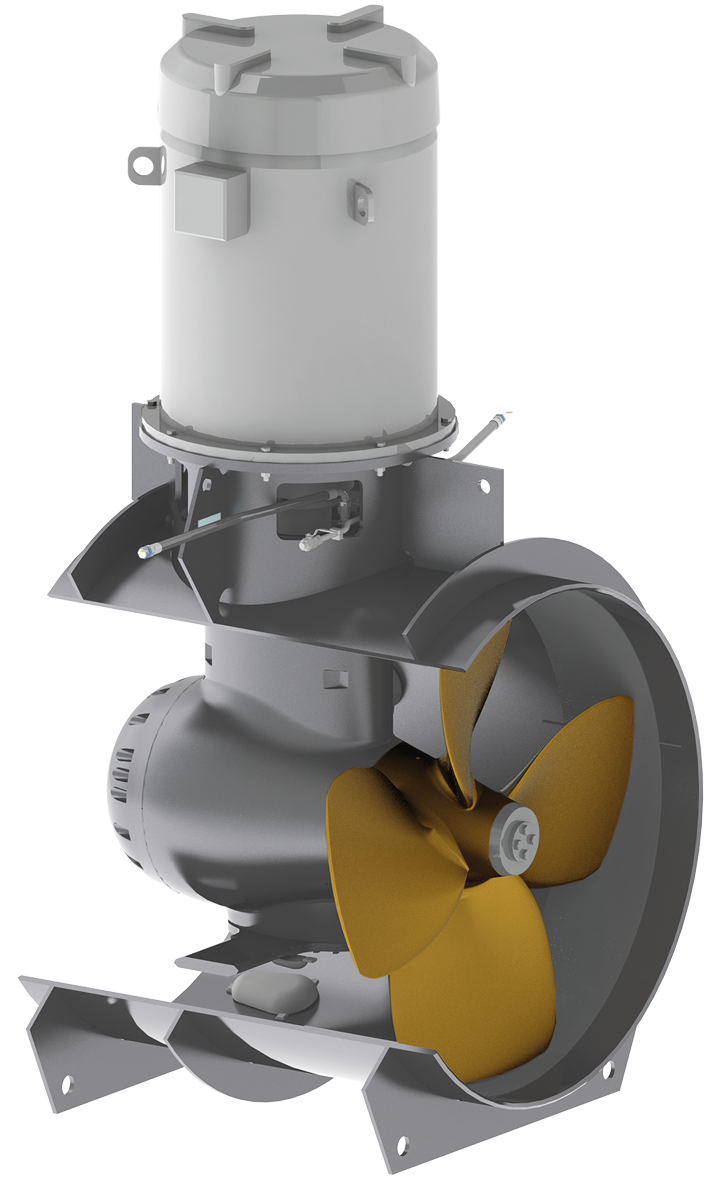
- Area: Inspection of seals and early detection of wear by means of LeaCon system (Seal Condition Monitoring)Check: Inspection of seals and early detection of wear by means of LeaCon system (Seal Condition Monitoring)
- Area: Regular inspection for water ingress and corrosion in the thruster chamberCheck: Regular inspection for water ingress and corrosion in the thruster chamber
- Area: Lubricating oil inspection, oil quality and regular oil change according to service planCheck: Lubricating oil inspection, oil quality and regular oil change according to service plan
- Area: Visual inspection of propeller for cracks, wear and cavitation damageCheck: Visual inspection of propeller for cracks, wear and cavitation damage
- Area: Inspection of bearings, wear parts (seals, gaskets, O-rings) for wearCheck: Inspection of bearings, wear parts (seals, gaskets, O-rings) for wear
- Area: Inspection of shaft seal for water leaks and oil leakageCheck: Inspection of shaft seal for water leaks and oil leakage
- Area: Inspection of tunnel for fouling by marine organisms and sludgingCheck: Inspection of tunnel for fouling by marine organisms and sludging
- Area: Five-year overhaul: disassembly, cleaning, inspection and replacement of wear partsCheck: Five-year overhaul: disassembly, cleaning, inspection and replacement of wear parts
Typ-universelle Inspektionspunkte fuer Bow/Stern Thrusters (verifiziert, 2026-06).
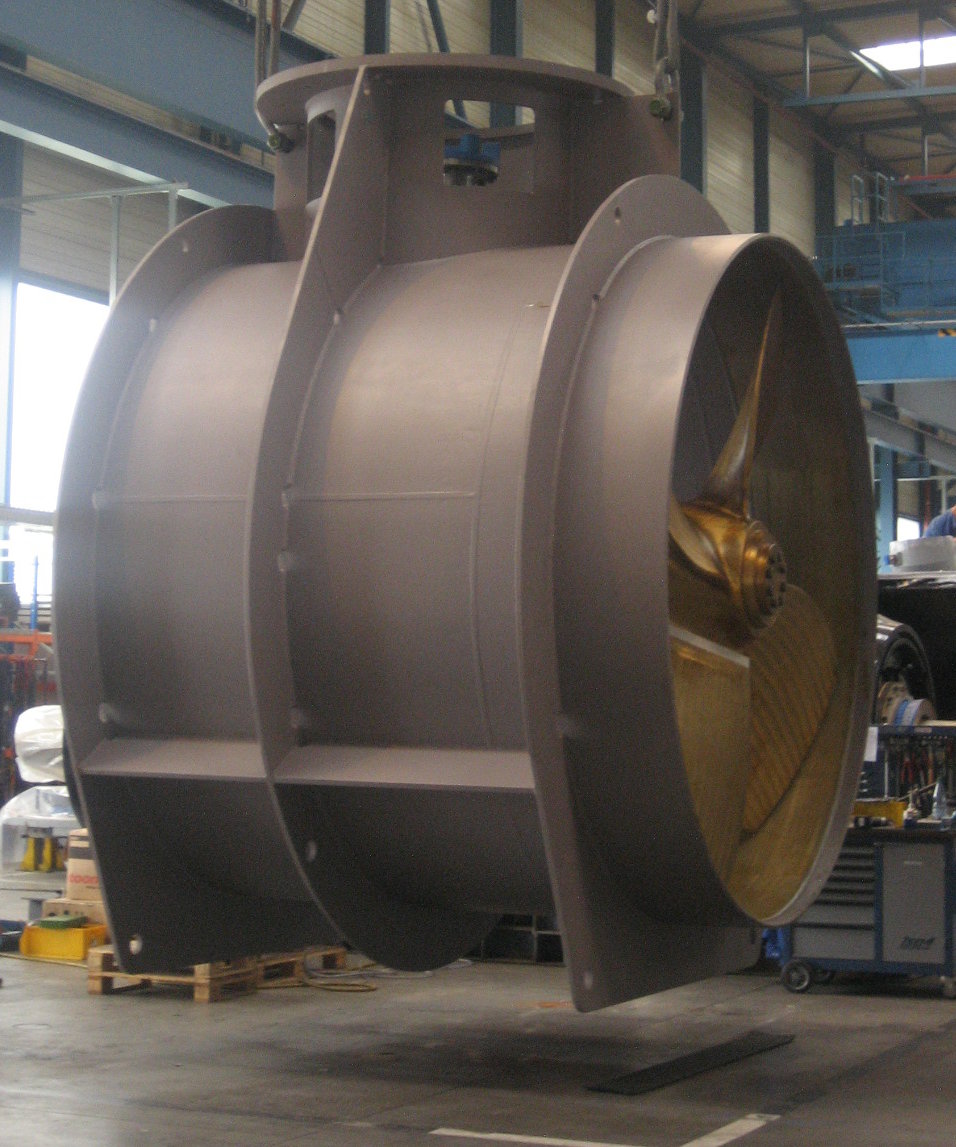
- Area: Inspection of seals and early detection of wear by means of LeaCon system (Seal Condition Monitoring)Check: Inspection of seals and early detection of wear by means of LeaCon system (Seal Condition Monitoring)
- Area: Regular inspection for water ingress and corrosion in the thruster chamberCheck: Regular inspection for water ingress and corrosion in the thruster chamber
- Area: Lubricating oil inspection, oil quality and regular oil change according to service planCheck: Lubricating oil inspection, oil quality and regular oil change according to service plan
- Area: Visual inspection of propeller for cracks, wear and cavitation damageCheck: Visual inspection of propeller for cracks, wear and cavitation damage
- Area: Inspection of bearings, wear parts (seals, gaskets, O-rings) for wearCheck: Inspection of bearings, wear parts (seals, gaskets, O-rings) for wear
- Area: Inspection of shaft seal for water leaks and oil leakageCheck: Inspection of shaft seal for water leaks and oil leakage
- Area: Inspection of tunnel for fouling by marine organisms and sludgingCheck: Inspection of tunnel for fouling by marine organisms and sludging
- Area: Five-year overhaul: disassembly, cleaning, inspection and replacement of wear partsCheck: Five-year overhaul: disassembly, cleaning, inspection and replacement of wear parts
Typ-universelle Inspektionspunkte fuer Bow/Stern Thrusters (verifiziert, 2026-06).
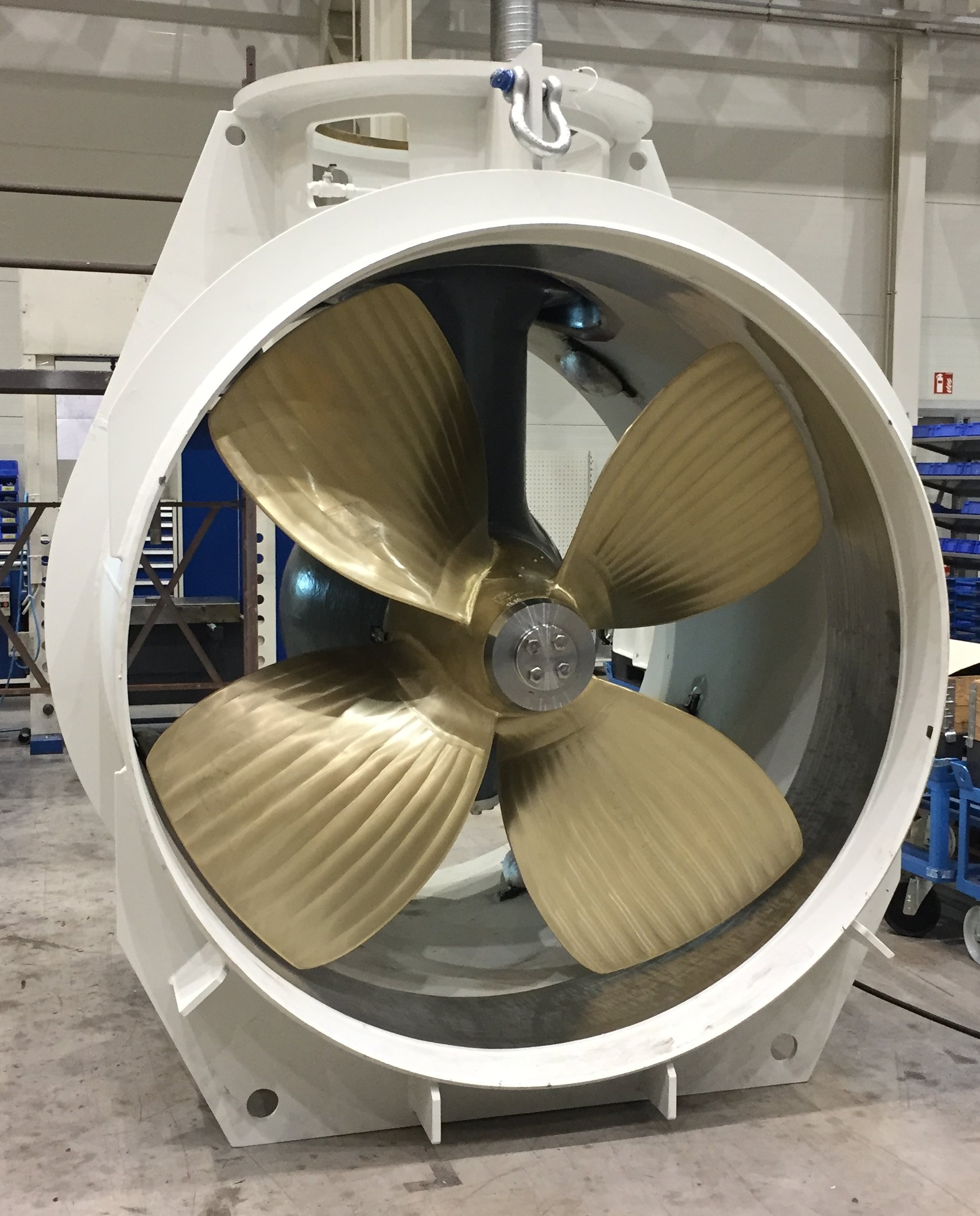
- Area: Inspection of seals and early detection of wear by means of LeaCon system (Seal Condition Monitoring)Check: Inspection of seals and early detection of wear by means of LeaCon system (Seal Condition Monitoring)
- Area: Regular inspection for water ingress and corrosion in the thruster chamberCheck: Regular inspection for water ingress and corrosion in the thruster chamber
- Area: Lubricating oil inspection, oil quality and regular oil change according to service planCheck: Lubricating oil inspection, oil quality and regular oil change according to service plan
- Area: Visual inspection of propeller for cracks, wear and cavitation damageCheck: Visual inspection of propeller for cracks, wear and cavitation damage
- Area: Inspection of bearings, wear parts (seals, gaskets, O-rings) for wearCheck: Inspection of bearings, wear parts (seals, gaskets, O-rings) for wear
- Area: Inspection of shaft seal for water leaks and oil leakageCheck: Inspection of shaft seal for water leaks and oil leakage
- Area: Inspection of tunnel for fouling by marine organisms and sludgingCheck: Inspection of tunnel for fouling by marine organisms and sludging
- Area: Five-year overhaul: disassembly, cleaning, inspection and replacement of wear partsCheck: Five-year overhaul: disassembly, cleaning, inspection and replacement of wear parts
Typ-universelle Inspektionspunkte fuer Bow/Stern Thrusters (verifiziert, 2026-06).
- Area: Inspection of seals and early detection of wear by means of LeaCon system (Seal Condition Monitoring)Check: Inspection of seals and early detection of wear by means of LeaCon system (Seal Condition Monitoring)
- Area: Regular inspection for water ingress and corrosion in the thruster chamberCheck: Regular inspection for water ingress and corrosion in the thruster chamber
- Area: Lubricating oil inspection, oil quality and regular oil change according to service planCheck: Lubricating oil inspection, oil quality and regular oil change according to service plan
- Area: Visual inspection of propeller for cracks, wear and cavitation damageCheck: Visual inspection of propeller for cracks, wear and cavitation damage
- Area: Inspection of bearings, wear parts (seals, gaskets, O-rings) for wearCheck: Inspection of bearings, wear parts (seals, gaskets, O-rings) for wear
- Area: Inspection of shaft seal for water leaks and oil leakageCheck: Inspection of shaft seal for water leaks and oil leakage
- Area: Inspection of tunnel for fouling by marine organisms and sludgingCheck: Inspection of tunnel for fouling by marine organisms and sludging
- Area: Five-year overhaul: disassembly, cleaning, inspection and replacement of wear partsCheck: Five-year overhaul: disassembly, cleaning, inspection and replacement of wear parts
Typ-universelle Inspektionspunkte fuer Bow/Stern Thrusters (verifiziert, 2026-06).
- Area: Inspection of seals and early detection of wear by means of LeaCon system (Seal Condition Monitoring)Check: Inspection of seals and early detection of wear by means of LeaCon system (Seal Condition Monitoring)
- Area: Regular inspection for water ingress and corrosion in the thruster chamberCheck: Regular inspection for water ingress and corrosion in the thruster chamber
- Area: Lubricating oil inspection, oil quality and regular oil change according to service planCheck: Lubricating oil inspection, oil quality and regular oil change according to service plan
- Area: Visual inspection of propeller for cracks, wear and cavitation damageCheck: Visual inspection of propeller for cracks, wear and cavitation damage
- Area: Inspection of bearings, wear parts (seals, gaskets, O-rings) for wearCheck: Inspection of bearings, wear parts (seals, gaskets, O-rings) for wear
- Area: Inspection of shaft seal for water leaks and oil leakageCheck: Inspection of shaft seal for water leaks and oil leakage
- Area: Inspection of tunnel for fouling by marine organisms and sludgingCheck: Inspection of tunnel for fouling by marine organisms and sludging
- Area: Five-year overhaul: disassembly, cleaning, inspection and replacement of wear partsCheck: Five-year overhaul: disassembly, cleaning, inspection and replacement of wear parts
Typ-universelle Inspektionspunkte fuer Bow/Stern Thrusters (verifiziert, 2026-06).
- Area: Inspection of seals and early detection of wear by means of LeaCon system (Seal Condition Monitoring)Check: Inspection of seals and early detection of wear by means of LeaCon system (Seal Condition Monitoring)
- Area: Regular inspection for water ingress and corrosion in the thruster chamberCheck: Regular inspection for water ingress and corrosion in the thruster chamber
- Area: Lubricating oil inspection, oil quality and regular oil change according to service planCheck: Lubricating oil inspection, oil quality and regular oil change according to service plan
- Area: Visual inspection of propeller for cracks, wear and cavitation damageCheck: Visual inspection of propeller for cracks, wear and cavitation damage
- Area: Inspection of bearings, wear parts (seals, gaskets, O-rings) for wearCheck: Inspection of bearings, wear parts (seals, gaskets, O-rings) for wear
- Area: Inspection of shaft seal for water leaks and oil leakageCheck: Inspection of shaft seal for water leaks and oil leakage
- Area: Inspection of tunnel for fouling by marine organisms and sludgingCheck: Inspection of tunnel for fouling by marine organisms and sludging
- Area: Five-year overhaul: disassembly, cleaning, inspection and replacement of wear partsCheck: Five-year overhaul: disassembly, cleaning, inspection and replacement of wear parts
Typ-universelle Inspektionspunkte fuer Bow/Stern Thrusters (verifiziert, 2026-06).
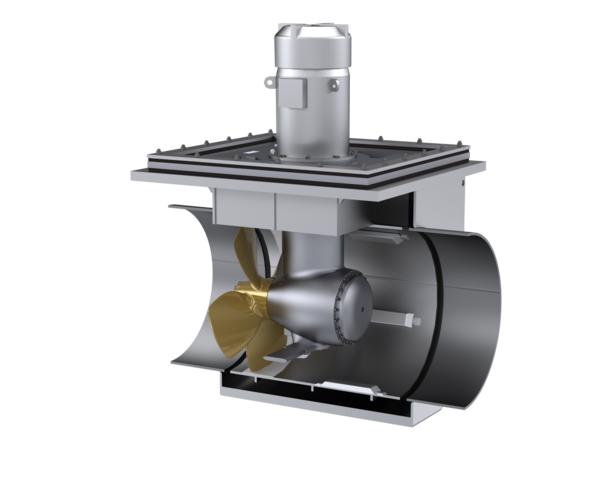
- Area: Inspection of seals and early detection of wear by means of LeaCon system (Seal Condition Monitoring)Check: Inspection of seals and early detection of wear by means of LeaCon system (Seal Condition Monitoring)
- Area: Regular inspection for water ingress and corrosion in the thruster chamberCheck: Regular inspection for water ingress and corrosion in the thruster chamber
- Area: Lubricating oil inspection, oil quality and regular oil change according to service planCheck: Lubricating oil inspection, oil quality and regular oil change according to service plan
- Area: Visual inspection of propeller for cracks, wear and cavitation damageCheck: Visual inspection of propeller for cracks, wear and cavitation damage
- Area: Inspection of bearings, wear parts (seals, gaskets, O-rings) for wearCheck: Inspection of bearings, wear parts (seals, gaskets, O-rings) for wear
- Area: Inspection of shaft seal for water leaks and oil leakageCheck: Inspection of shaft seal for water leaks and oil leakage
- Area: Inspection of tunnel for fouling by marine organisms and sludgingCheck: Inspection of tunnel for fouling by marine organisms and sludging
- Area: Five-year overhaul: disassembly, cleaning, inspection and replacement of wear partsCheck: Five-year overhaul: disassembly, cleaning, inspection and replacement of wear parts
Typ-universelle Inspektionspunkte fuer Bow/Stern Thrusters (verifiziert, 2026-06).
- Area: Inspection of seals and early detection of wear by means of LeaCon system (Seal Condition Monitoring)Check: Inspection of seals and early detection of wear by means of LeaCon system (Seal Condition Monitoring)
- Area: Regular inspection for water ingress and corrosion in the thruster chamberCheck: Regular inspection for water ingress and corrosion in the thruster chamber
- Area: Lubricating oil inspection, oil quality and regular oil change according to service planCheck: Lubricating oil inspection, oil quality and regular oil change according to service plan
- Area: Visual inspection of propeller for cracks, wear and cavitation damageCheck: Visual inspection of propeller for cracks, wear and cavitation damage
- Area: Inspection of bearings, wear parts (seals, gaskets, O-rings) for wearCheck: Inspection of bearings, wear parts (seals, gaskets, O-rings) for wear
- Area: Inspection of shaft seal for water leaks and oil leakageCheck: Inspection of shaft seal for water leaks and oil leakage
- Area: Inspection of tunnel for fouling by marine organisms and sludgingCheck: Inspection of tunnel for fouling by marine organisms and sludging
- Area: Five-year overhaul: disassembly, cleaning, inspection and replacement of wear partsCheck: Five-year overhaul: disassembly, cleaning, inspection and replacement of wear parts
Typ-universelle Inspektionspunkte fuer Bow/Stern Thrusters (verifiziert, 2026-06).
- Area: Inspection of seals and early detection of wear by means of LeaCon system (Seal Condition Monitoring)Check: Inspection of seals and early detection of wear by means of LeaCon system (Seal Condition Monitoring)
- Area: Regular inspection for water ingress and corrosion in the thruster chamberCheck: Regular inspection for water ingress and corrosion in the thruster chamber
- Area: Lubricating oil inspection, oil quality and regular oil change according to service planCheck: Lubricating oil inspection, oil quality and regular oil change according to service plan
- Area: Visual inspection of propeller for cracks, wear and cavitation damageCheck: Visual inspection of propeller for cracks, wear and cavitation damage
- Area: Inspection of bearings, wear parts (seals, gaskets, O-rings) for wearCheck: Inspection of bearings, wear parts (seals, gaskets, O-rings) for wear
- Area: Inspection of shaft seal for water leaks and oil leakageCheck: Inspection of shaft seal for water leaks and oil leakage
- Area: Inspection of tunnel for fouling by marine organisms and sludgingCheck: Inspection of tunnel for fouling by marine organisms and sludging
- Area: Five-year overhaul: disassembly, cleaning, inspection and replacement of wear partsCheck: Five-year overhaul: disassembly, cleaning, inspection and replacement of wear parts
Typ-universelle Inspektionspunkte fuer Bow/Stern Thrusters (verifiziert, 2026-06).
- Area: Inspection of seals and early detection of wear by means of LeaCon system (Seal Condition Monitoring)Check: Inspection of seals and early detection of wear by means of LeaCon system (Seal Condition Monitoring)
- Area: Regular inspection for water ingress and corrosion in the thruster chamberCheck: Regular inspection for water ingress and corrosion in the thruster chamber
- Area: Lubricating oil inspection, oil quality and regular oil change according to service planCheck: Lubricating oil inspection, oil quality and regular oil change according to service plan
- Area: Visual inspection of propeller for cracks, wear and cavitation damageCheck: Visual inspection of propeller for cracks, wear and cavitation damage
- Area: Inspection of bearings, wear parts (seals, gaskets, O-rings) for wearCheck: Inspection of bearings, wear parts (seals, gaskets, O-rings) for wear
- Area: Inspection of shaft seal for water leaks and oil leakageCheck: Inspection of shaft seal for water leaks and oil leakage
- Area: Inspection of tunnel for fouling by marine organisms and sludgingCheck: Inspection of tunnel for fouling by marine organisms and sludging
- Area: Five-year overhaul: disassembly, cleaning, inspection and replacement of wear partsCheck: Five-year overhaul: disassembly, cleaning, inspection and replacement of wear parts
Typ-universelle Inspektionspunkte fuer Bow/Stern Thrusters (verifiziert, 2026-06).
- Area: Inspection of seals and early detection of wear by means of LeaCon system (Seal Condition Monitoring)Check: Inspection of seals and early detection of wear by means of LeaCon system (Seal Condition Monitoring)
- Area: Regular inspection for water ingress and corrosion in the thruster chamberCheck: Regular inspection for water ingress and corrosion in the thruster chamber
- Area: Lubricating oil inspection, oil quality and regular oil change according to service planCheck: Lubricating oil inspection, oil quality and regular oil change according to service plan
- Area: Visual inspection of propeller for cracks, wear and cavitation damageCheck: Visual inspection of propeller for cracks, wear and cavitation damage
- Area: Inspection of bearings, wear parts (seals, gaskets, O-rings) for wearCheck: Inspection of bearings, wear parts (seals, gaskets, O-rings) for wear
- Area: Inspection of shaft seal for water leaks and oil leakageCheck: Inspection of shaft seal for water leaks and oil leakage
- Area: Inspection of tunnel for fouling by marine organisms and sludgingCheck: Inspection of tunnel for fouling by marine organisms and sludging
- Area: Five-year overhaul: disassembly, cleaning, inspection and replacement of wear partsCheck: Five-year overhaul: disassembly, cleaning, inspection and replacement of wear parts
Typ-universelle Inspektionspunkte fuer Bow/Stern Thrusters (verifiziert, 2026-06).
- Area: Inspection of seals and early detection of wear by means of LeaCon system (Seal Condition Monitoring)Check: Inspection of seals and early detection of wear by means of LeaCon system (Seal Condition Monitoring)
- Area: Regular inspection for water ingress and corrosion in the thruster chamberCheck: Regular inspection for water ingress and corrosion in the thruster chamber
- Area: Lubricating oil inspection, oil quality and regular oil change according to service planCheck: Lubricating oil inspection, oil quality and regular oil change according to service plan
- Area: Visual inspection of propeller for cracks, wear and cavitation damageCheck: Visual inspection of propeller for cracks, wear and cavitation damage
- Area: Inspection of bearings, wear parts (seals, gaskets, O-rings) for wearCheck: Inspection of bearings, wear parts (seals, gaskets, O-rings) for wear
- Area: Inspection of shaft seal for water leaks and oil leakageCheck: Inspection of shaft seal for water leaks and oil leakage
- Area: Inspection of tunnel for fouling by marine organisms and sludgingCheck: Inspection of tunnel for fouling by marine organisms and sludging
- Area: Five-year overhaul: disassembly, cleaning, inspection and replacement of wear partsCheck: Five-year overhaul: disassembly, cleaning, inspection and replacement of wear parts
Typ-universelle Inspektionspunkte fuer Bow/Stern Thrusters (verifiziert, 2026-06).
- Area: Inspection of seals and early detection of wear by means of LeaCon system (Seal Condition Monitoring)Check: Inspection of seals and early detection of wear by means of LeaCon system (Seal Condition Monitoring)
- Area: Regular inspection for water ingress and corrosion in the thruster chamberCheck: Regular inspection for water ingress and corrosion in the thruster chamber
- Area: Lubricating oil inspection, oil quality and regular oil change according to service planCheck: Lubricating oil inspection, oil quality and regular oil change according to service plan
- Area: Visual inspection of propeller for cracks, wear and cavitation damageCheck: Visual inspection of propeller for cracks, wear and cavitation damage
- Area: Inspection of bearings, wear parts (seals, gaskets, O-rings) for wearCheck: Inspection of bearings, wear parts (seals, gaskets, O-rings) for wear
- Area: Inspection of shaft seal for water leaks and oil leakageCheck: Inspection of shaft seal for water leaks and oil leakage
- Area: Inspection of tunnel for fouling by marine organisms and sludgingCheck: Inspection of tunnel for fouling by marine organisms and sludging
- Area: Five-year overhaul: disassembly, cleaning, inspection and replacement of wear partsCheck: Five-year overhaul: disassembly, cleaning, inspection and replacement of wear parts
Typ-universelle Inspektionspunkte fuer Bow/Stern Thrusters (verifiziert, 2026-06).
Veth Propulsion
34 ✓ 10 verified- Propeller fouling, rope entanglement or blade damage causes vibration, reduced thrust or high drive load
- Shaft-seal or gearbox leakage causes oil loss, water ingress or low-level alarms
- Bearing or gear wear causes abnormal noise, vibration or rising temperature
- Electric motor, converter or hydraulic-drive faults cause reduced thrust, failed starts or protective trips
- Pitch, steering or control-feedback faults as applicable cause incorrect thrust response, loss of direction control or remote-control alarms
- High thrust‑to‑power ratio (≈11 kN at 100 kW) for its size
- Compact 490 mm tunnel fits within standard hull sections without major redesign
- Bow placement provides effective low‑speed steering and docking assistance
- Veth’s reputation for robust, low‑maintenance marine propulsion units
- Simple fixed‑direction design reduces mechanical complexity
- Fixed‑direction thrust limits maneuverability compared with azimuth thrusters
- Maximum thrust (11 kN) may be insufficient for larger vessels or heavy DP loads
- Tunnel geometry can be prone to cavitation noise at high RPMs
- Performance can degrade in very shallow water where tunnel inlet flow is restricted
- Power rating (100 kW) limits use on ships requiring higher bow‑thruster power
- Propeller or blade damage from debris can cause vibration and reduced thrust, noticed during maneuvering
- Gear or bearing wear can produce abnormal noise, heat or metallic debris in lubricant
- Seal leakage can allow water ingress or oil loss, seen through header-tank level changes or leakage alarms
- Motor, converter or hydraulic-drive faults can prevent commanded thrust, seen as trips, low power or unavailable thruster status
- Control or feedback-sensor faults can cause incorrect direction or pitch/azimuth indication, seen as command mismatch alarms
- High thrust‑to‑power ratio (≈11 kN at 100 kW) for its size
- Compact tunnel diameter (490 mm) fits vessels with limited hull space
- Robust, low‑maintenance construction typical of Veth’s tunnel designs
- Integrated control interface compatible with most ship bridge systems
- Suitable for retro‑fit on existing hulls due to standard stern mounting
- Maximum thrust (11 kN) may be insufficient for large tankers or high‑power DP vessels
- Tunnel geometry can generate higher noise and vibration compared with ducted propellers
- Requires a hull penetration at the stern, adding complexity to installation
- Limited to low‑speed maneuvering; not intended for propulsion assistance
- Performance drops noticeably in very shallow water due to reduced inflow
- Propeller or blade damage from debris can cause vibration and reduced thrust, noticed during maneuvering
- Gear or bearing wear can produce abnormal noise, heat or metallic debris in lubricant
- Seal leakage can allow water ingress or oil loss, seen through header-tank level changes or leakage alarms
- Motor, converter or hydraulic-drive faults can prevent commanded thrust, seen as trips, low power or unavailable thruster status
- Control or feedback-sensor faults can cause incorrect direction or pitch/azimuth indication, seen as command mismatch alarms
- Provides 16.5 kN thrust at 150 kW, giving a good thrust‑to‑power ratio for medium‑size ships
- Compact 535 mm tunnel diameter fits vessels with restricted hull space
- Integrated bow mounting improves low‑speed maneuverability and docking precision
- Tunnel design protects the propeller from debris and reduces external noise
- Veth Propulsion reputation for robust, low‑maintenance marine propulsion equipment
- Requires hull penetration and structural reinforcement, adding installation complexity
- Thrust may be insufficient for very large vessels or extreme weather port operations
- Maintenance access can be limited compared with external azimuth units
- Fixed thrust direction limits flexibility; cannot provide lateral thrust without turning the vessel
- Propeller or blade damage from debris can cause vibration and reduced thrust, noticed during maneuvering
- Gear or bearing wear can produce abnormal noise, heat or metallic debris in lubricant
- Seal leakage can allow water ingress or oil loss, seen through header-tank level changes or leakage alarms
- Motor, converter or hydraulic-drive faults can prevent commanded thrust, seen as trips, low power or unavailable thruster status
- Control or feedback-sensor faults can cause incorrect direction or pitch/azimuth indication, seen as command mismatch alarms
- High thrust‑to‑power ratio (16.5 kN from 150 kW).
- Compact 535 mm tunnel diameter fits tight hull spaces.
- Stainless‑steel housing provides excellent corrosion resistance and durability.
- Integrated variable frequency drive allows precise thrust control and low fuel consumption.
- Relatively low acoustic and vibration signature, beneficial for passenger comfort.
- Maximum thrust (16.5 kN) may be insufficient for large tankers or high‑power tugs.
- Cavitation can become noticeable at high RPMs in shallow water conditions.
- Installation requires hull penetration and structural reinforcement, adding dock‑time.
- Not certified for ice‑class operations; unsuitable for Arctic service.
- Single unit provides no redundancy if a failure occurs during critical maneuvers.
- Propeller or blade damage from debris can cause vibration and reduced thrust, noticed during maneuvering
- Gear or bearing wear can produce abnormal noise, heat or metallic debris in lubricant
- Seal leakage can allow water ingress or oil loss, seen through header-tank level changes or leakage alarms
- Motor, converter or hydraulic-drive faults can prevent commanded thrust, seen as trips, low power or unavailable thruster status
- Control or feedback-sensor faults can cause incorrect direction or pitch/azimuth indication, seen as command mismatch alarms
- High thrust‑to‑power ratio (22 kN from 200 kW) for effective low‑speed manoeuvring
- Compact tunnel diameter (580 mm) fits vessels with limited hull space
- Robust stainless‑steel tunnel construction typical of Veth units, offering good durability
- Straightforward installation and maintenance access through the bow tunnel
- Fixed‑direction thrust; no azimuth capability for vectoring
- Tunnel geometry can be prone to fouling and requires periodic duct cleaning
- Potential cavitation noise at full power, especially in shallow water
- Limited redundancy – a single unit means loss of bow thrust if it fails
- Propeller fouling, rope entanglement or blade damage causes vibration, reduced thrust or high drive load
- Shaft-seal or gearbox leakage causes oil loss, water ingress or low-level alarms
- Bearing or gear wear causes abnormal noise, vibration or rising temperature
- Electric motor, converter or hydraulic-drive faults cause reduced thrust, failed starts or protective trips
- Pitch, steering or control-feedback faults as applicable cause incorrect thrust response, loss of direction control or remote-control alarms
- High thrust‑to‑power ratio (22 kN at 200 kW) for its size
- Compact 580 mm tunnel fits vessels with limited hull space
- Stern placement improves yaw control during docking and DP operations
- Robust tunnel design reduces fouling and protects the propeller
- Integrated motor‑driven unit simplifies installation
- Maximum thrust of 22 kN may be insufficient for large tankers or high‑wind conditions
- Hull penetration required; potential for water ingress if seals degrade
- Tunnel geometry can generate hull vibration and noise at high RPMs
- Maintenance access to bearings and motor is limited compared with azimuth units
- Not optimized for ice‑class or heavy‑weather operations
- Propeller fouling, rope entanglement or blade damage causes vibration, reduced thrust or high drive load
- Shaft-seal or gearbox leakage causes oil loss, water ingress or low-level alarms
- Bearing or gear wear causes abnormal noise, vibration or rising temperature
- Electric motor, converter or hydraulic-drive faults cause reduced thrust, failed starts or protective trips
- Pitch, steering or control-feedback faults as applicable cause incorrect thrust response, loss of direction control or remote-control alarms
- High thrust‑to‑power ratio (33 kN at 300 kW) for its size
- Relatively compact tunnel diameter (670 mm) fits medium‑size hulls without excessive space penalty
- Proven Veth design with optimized water flow channels for efficiency
- Straightforward integration as a bow‑mounted unit, compatible with standard control systems
- Requires hull penetration and internal ducting, increasing installation complexity
- Maintenance of bearings and seals can be more demanding than external azimuth units
- Noise and vibration levels are higher than some low‑speed propeller‑type thrusters
- Limited to fixed thrust direction; cannot provide 360° vectoring like azipods
- Propeller or blade damage from debris can cause vibration and reduced thrust, noticed during maneuvering
- Gear or bearing wear can produce abnormal noise, heat or metallic debris in lubricant
- Seal leakage can allow water ingress or oil loss, seen through header-tank level changes or leakage alarms
- Motor, converter or hydraulic-drive faults can prevent commanded thrust, seen as trips, low power or unavailable thruster status
- Control or feedback-sensor faults can cause incorrect direction or pitch/azimuth indication, seen as command mismatch alarms
- High thrust output (33 kN) relative to its 300 kW power rating
- Compact 670 mm tunnel fits in medium‑size hulls without excessive structural modification
- Robust steel housing typical of Veth designs, offering good durability and low maintenance
- Integrated control interface compatible with most ship bridge systems
- Power consumption can be significant for vessels that operate the thruster frequently
- Potential cavitation at high RPMs in shallow water or when operating near full thrust
- Installation requires a relatively large tunnel opening, limiting use on very thin hull sections
- Thrust may be insufficient for very large vessels (>30 000 DWT) requiring higher maneuvering forces
- Propeller fouling, rope entanglement or blade damage causes vibration, reduced thrust or high drive load
- Shaft-seal or gearbox leakage causes oil loss, water ingress or low-level alarms
- Bearing or gear wear causes abnormal noise, vibration or rising temperature
- Electric motor, converter or hydraulic-drive faults cause reduced thrust, failed starts or protective trips
- Pitch, steering or control-feedback faults as applicable cause incorrect thrust response, loss of direction control or remote-control alarms
- High thrust‑to‑power ratio (44 kN at 400 kW) for efficient port handling
- Compact 760 mm tunnel diameter fits within limited hull space
- Robust, low‑vibration design typical of Veth tunnel thrusters
- Proven reliability with a long service history in commercial fleets
- Straightforward integration with existing ship control and DP systems
- Requires a sizable hull penetration, affecting structural layout
- Less versatile than azimuth or pod thrusters for dynamic positioning
- Installation and alignment costs are higher than simple transverse propellers
- Noise and vibration can be transmitted to the hull if not properly isolated
- Maintenance of bearings and seals inside the tunnel can be labour‑intensive
- Propeller fouling, rope entanglement or blade damage causes vibration, reduced thrust or high drive load
- Shaft-seal or gearbox leakage causes oil loss, water ingress or low-level alarms
- Bearing or gear wear causes abnormal noise, vibration or rising temperature
- Electric motor, converter or hydraulic-drive faults cause reduced thrust, failed starts or protective trips
- Pitch, steering or control-feedback faults as applicable cause incorrect thrust response, loss of direction control or remote-control alarms
- High thrust‑to‑power ratio (44 kN at 400 kW) for effective low‑speed manoeuvring
- Robust, corrosion‑resistant housing suitable for harsh sea water environments
- Compact tunnel diameter (760 mm) allows installation in vessels with limited hull space
- Proven Veth engineering reputation for long service life and easy maintenance
- Low acoustic signature compared with azimuth units of similar power
- Fixed‑direction thrust limits flexibility; not suitable where full 360° thrust is required
- Relatively high power draw may increase fuel consumption on vessels without dedicated thruster generators
- Installation requires a sizable hull penetration, potentially weakening local structural integrity
- Cavitation risk at high RPMs in shallow water or low‑speed operation
- Limited suitability for ultra‑large ships where higher thrust levels (>60 kN) are needed
- Propeller or blade damage from debris can cause vibration and reduced thrust, noticed during maneuvering
- Gear or bearing wear can produce abnormal noise, heat or metallic debris in lubricant
- Seal leakage can allow water ingress or oil loss, seen through header-tank level changes or leakage alarms
- Motor, converter or hydraulic-drive faults can prevent commanded thrust, seen as trips, low power or unavailable thruster status
- Control or feedback-sensor faults can cause incorrect direction or pitch/azimuth indication, seen as command mismatch alarms
- High thrust‑to‑power ratio (55 kN @ 500 kW) for rapid lateral movement
- Compact tunnel diameter (850 mm) fits in limited hull space while providing strong bollard pull
- Integrated Veth control system with feedback for precise DP and close‑quarter handling
- Robust stainless‑steel ducting resistant to corrosion in harsh marine environments
- Proven reliability record from European offshore and container operators
- Relatively high power demand may increase fuel consumption on low‑speed vessels
- Tunnel geometry can be prone to cavitation at very high RPM, requiring careful propeller selection
- Installation requires precise alignment of duct and shaft; retrofits can be costly
- Limited thrust compared with similarly powered azimuth pods for tug or DP‑intensive applications
- Maintenance access to the internal impeller is more involved than open‑propeller designs
- Propeller or blade damage from debris can cause vibration and reduced thrust, noticed during maneuvering
- Gear or bearing wear can produce abnormal noise, heat or metallic debris in lubricant
- Seal leakage can allow water ingress or oil loss, seen through header-tank level changes or leakage alarms
- Motor, converter or hydraulic-drive faults can prevent commanded thrust, seen as trips, low power or unavailable thruster status
- Control or feedback-sensor faults can cause incorrect direction or pitch/azimuth indication, seen as command mismatch alarms
- High thrust‑to‑power ratio (≈55 kN @ 500 kW) suitable for large ships
- Compact duct diameter of 850 mm eases hull integration
- Robust stainless‑steel housing and propeller design for long service life
- Low vibration and noise levels compared with open‑propeller thrusters
- Straightforward maintenance access through removable duct sections
- Requires significant hull penetration and structural reinforcement
- Fixed‑direction thrust; not as versatile as azimuth or pod units for dynamic positioning
- Potential cavitation at high RPMs in shallow water conditions
- Installation space may be limited on vessels with narrow stern sections
- Propeller fouling, rope entanglement or blade damage causes vibration, reduced thrust or high drive load
- Shaft-seal or gearbox leakage causes oil loss, water ingress or low-level alarms
- Bearing or gear wear causes abnormal noise, vibration or rising temperature
- Electric motor, converter or hydraulic-drive faults cause reduced thrust, failed starts or protective trips
- Pitch, steering or control-feedback faults as applicable cause incorrect thrust response, loss of direction control or remote-control alarms
- High thrust‑to‑power ratio (66 kN @ 600 kW) for strong manoeuvring capability
- Compact tunnel layout fits within standard hull sections without protruding shafts
- Robust bearing and seal design reduces maintenance intervals
- Low acoustic signature, suitable for passenger or environmentally sensitive vessels
- Proven Veth propulsion brand with extensive service network
- Large tunnel diameter (940 mm) may limit installation on vessels with narrow hull sections
- Higher electrical power demand compared with smaller thrusters of similar size
- Tunnel geometry can generate higher cavitation risk in very shallow water
- Limited reverse thrust capability relative to azimuth‑type units
- Propeller fouling, rope entanglement or blade damage causes vibration, reduced thrust or high drive load
- Shaft-seal or gearbox leakage causes oil loss, water ingress or low-level alarms
- Bearing or gear wear causes abnormal noise, vibration or rising temperature
- Electric motor, converter or hydraulic-drive faults cause reduced thrust, failed starts or protective trips
- Pitch, steering or control-feedback faults as applicable cause incorrect thrust response, loss of direction control or remote-control alarms
- High thrust‑to‑power ratio (66 kN at 600 kW) for excellent manoeuvring capability
- Large 940 mm duct diameter reduces cavitation and improves efficiency
- Robust, marine‑grade construction suited to continuous DP operation
- Integrated control electronics compatible with most ship bridge systems
- Optimised for stern installation where space is limited but high thrust is needed
- Large physical size requires substantial hull penetration and structural reinforcement
- Higher initial cost compared with smaller or lower‑power thrusters
- Maintenance access can be difficult due to the size of the duct and propeller assembly
- Power demand (600 kW) may impact vessel electrical load planning
- Weight and centre‑of‑gravity effects must be carefully accounted for in ship stability calculations
- Propeller or blade damage from debris can cause vibration and reduced thrust, noticed during maneuvering
- Gear or bearing wear can produce abnormal noise, heat or metallic debris in lubricant
- Seal leakage can allow water ingress or oil loss, seen through header-tank level changes or leakage alarms
- Motor, converter or hydraulic-drive faults can prevent commanded thrust, seen as trips, low power or unavailable thruster status
- Control or feedback-sensor faults can cause incorrect direction or pitch/azimuth indication, seen as command mismatch alarms
- Very high thrust (88 kN) relative to power input, giving strong manoeuvring capability
- Large 1120 mm duct diameter reduces cavitation risk and improves hydraulic efficiency
- Veth’s proprietary blade geometry provides low vibration and noise levels
- Robust construction suitable for continuous operation on demanding vessels
- Integrated control interface compatible with most modern bridge systems
- 800 kW electrical demand requires substantial power generation capacity
- Physical size may limit installation on smaller hulls or retrofits
- Tunnel thrusters are prone to marine growth; regular cleaning is required
- Hull reinforcement needed around the tunnel opening adds construction complexity
- Higher initial investment compared with lower‑power alternatives
- Propeller or blade damage from debris can cause vibration and reduced thrust, noticed during maneuvering
- Gear or bearing wear can produce abnormal noise, heat or metallic debris in lubricant
- Seal leakage can allow water ingress or oil loss, seen through header-tank level changes or leakage alarms
- Motor, converter or hydraulic-drive faults can prevent commanded thrust, seen as trips, low power or unavailable thruster status
- Control or feedback-sensor faults can cause incorrect direction or pitch/azimuth indication, seen as command mismatch alarms
- High thrust output (88 kN) relative to its power rating enables strong low‑speed manoeuvring.
- Large 1.12 m duct diameter reduces cavitation and improves hydraulic efficiency.
- Stern installation provides direct control of the vessel’s aft swing, useful for docking and DP support.
- Modular design allows integration with existing ship automation systems.
- 800 kW power demand results in higher fuel consumption when operated continuously.
- Physical size (1120 mm diameter) may restrict installation on vessels with limited hull space or narrow stern sections.
- Requires substantial cooling‑water flow and robust sealing, increasing installation complexity.
- Higher initial cost compared with lower‑power thrusters of similar dimensions.
- Propeller or blade damage from debris can cause vibration and reduced thrust, noticed during maneuvering
- Gear or bearing wear can produce abnormal noise, heat or metallic debris in lubricant
- Seal leakage can allow water ingress or oil loss, seen through header-tank level changes or leakage alarms
- Motor, converter or hydraulic-drive faults can prevent commanded thrust, seen as trips, low power or unavailable thruster status
- Control or feedback-sensor faults can cause incorrect direction or pitch/azimuth indication, seen as command mismatch alarms
- High thrust output (110 kN) relative to power consumption (1 MW).
- Large 1300 mm duct provides strong low‑speed maneuvering capability.
- Integrated duct reduces propeller exposure, lowering noise and vibration levels.
- Modular design simplifies installation and aligns with Veth’s proven engineering standards.
- Shallow draft of the tunnel arrangement suits deep‑draft vessels where external thrusters are impractical.
- Tunnel geometry can be prone to cavitation if operated at high RPMs or in low‑density water.
- Requires hull penetration and structural reinforcement, adding to construction complexity.
- Maintenance access is more limited compared with azimuth or podded thrusters.
- Duct fouling can degrade performance unless regular cleaning regimes are applied.
- Higher upfront cost than smaller conventional bow thrusters.
- Propeller fouling, rope entanglement or blade damage causes vibration, reduced thrust or high drive load
- Shaft-seal or gearbox leakage causes oil loss, water ingress or low-level alarms
- Bearing or gear wear causes abnormal noise, vibration or rising temperature
- Electric motor, converter or hydraulic-drive faults cause reduced thrust, failed starts or protective trips
- Pitch, steering or control-feedback faults as applicable cause incorrect thrust response, loss of direction control or remote-control alarms
- High thrust output (110 kN) relative to power rating enables strong maneuverability for medium‑size vessels.
- Compact 1300 mm tunnel diameter fits within limited hull space while delivering effective flow through the tunnel.
- Robust stainless‑steel housing and corrosion‑resistant components reduce maintenance intervals.
- Integrated control electronics compatible with common ship bridge systems simplify installation.
- Proven Veth design reputation for reliability in harsh marine environments.
- Large power demand (1 MW) increases vessel electrical load and may require upgraded generators.
- Installation requires significant hull reinforcement around the tunnel opening, adding dock‑time cost.
- Noise and vibration levels can be higher than smaller thrusters if not properly isolated.
- Limited thrust at very low ship speeds due to cavitation risk in high‑flow tunnels.
- Higher initial capital cost compared with lower‑power alternatives.
- Propeller fouling, rope entanglement or blade damage causes vibration, reduced thrust or high drive load
- Shaft-seal or gearbox leakage causes oil loss, water ingress or low-level alarms
- Bearing or gear wear causes abnormal noise, vibration or rising temperature
- Electric motor, converter or hydraulic-drive faults cause reduced thrust, failed starts or protective trips
- Pitch, steering or control-feedback faults as applicable cause incorrect thrust response, loss of direction control or remote-control alarms
- Very high thrust‑to‑power ratio (≈0.11 kN/kW) suitable for mega‑vessels
- Compact tunnel geometry fits within limited hull space while providing large duct diameter
- Low acoustic signature and vibration thanks to water‑lubricated bearings
- Integrated control electronics compatible with most DP‑2/DP‑3 systems
- Proven reliability on a range of DNV‑classed tankers and cruise ships
- Installation requires significant hull penetration and structural reinforcement
- Tunnel design can be prone to cavitation in very shallow water or high‑speed forward operation
- Higher initial cost compared with smaller, off‑the‑shelf thrusters of similar power
- Maintenance access is limited once installed; dry‑dock periods are needed for major overhauls
- Propeller or blade damage from debris can cause vibration and reduced thrust, noticed during maneuvering
- Gear or bearing wear can produce abnormal noise, heat or metallic debris in lubricant
- Seal leakage can allow water ingress or oil loss, seen through header-tank level changes or leakage alarms
- Motor, converter or hydraulic-drive faults can prevent commanded thrust, seen as trips, low power or unavailable thruster status
- Control or feedback-sensor faults can cause incorrect direction or pitch/azimuth indication, seen as command mismatch alarms
- Very high thrust (132 kN) suitable for large tankers and container ships
- 1200 kW motor provides strong low‑speed control for dynamic positioning
- Large 1480 mm tunnel diameter gives efficient water flow and reduced cavitation
- Robust construction typical of Veth Propulsion, aimed at long service intervals
- Large physical size limits installation on vessels with restricted stern space
- High power rating leads to greater fuel consumption when used continuously
- Requires dedicated cooling and ventilation systems, adding to installation complexity
- Potentially higher upfront cost compared with lower‑power competitors
- Propeller fouling, rope entanglement or blade damage causes vibration, reduced thrust or high drive load
- Shaft-seal or gearbox leakage causes oil loss, water ingress or low-level alarms
- Bearing or gear wear causes abnormal noise, vibration or rising temperature
- Electric motor, converter or hydraulic-drive faults cause reduced thrust, failed starts or protective trips
- Pitch, steering or control-feedback faults as applicable cause incorrect thrust response, loss of direction control or remote-control alarms
- Very high thrust output (165 kN) for its size, enabling strong lateral force on large ships
- Large 1750 mm duct diameter reduces cavitation and improves hydraulic efficiency
- Compact bow‑mount design minimizes hull penetration compared with external azimuth units
- Integrated control electronics compatible with most ship bridge systems
- High electrical power demand (1.5 MW) requires robust onboard power distribution
- Installation needs significant structural reinforcement of the bow area
- Cooling and ventilation requirements are greater than for smaller thrusters
- Spare‑part logistics may be limited in regions without a Veth service network
- Propeller fouling, rope entanglement or blade damage causes vibration, reduced thrust or high drive load
- Shaft-seal or gearbox leakage causes oil loss, water ingress or low-level alarms
- Bearing or gear wear causes abnormal noise, vibration or rising temperature
- Electric motor, converter or hydraulic-drive faults cause reduced thrust, failed starts or protective trips
- Pitch, steering or control-feedback faults as applicable cause incorrect thrust response, loss of direction control or remote-control alarms
- Very high thrust output (165 kN) for its power rating, enabling effective DP and berth assistance on large ships.
- Robust stainless‑steel tunnel construction with proven resistance to cavitation and marine growth.
- Integrated control electronics compatible with most ship bridge automation systems.
- Relatively compact length compared to equivalent azimuth pods, saving deck space when installed sternward.
- Veth’s long service history provides confidence in reliability and spare‑part availability.
- Large tunnel diameter (1.75 m) requires substantial hull penetration and reinforcement during installation.
- High electrical power demand (≈1.5 MW) may necessitate upgrades to ship power distribution systems.
- Fixed thrust direction limits maneuvering flexibility compared with rotating azimuth thrusters.
- Maintenance access can be challenging in confined stern spaces, increasing downtime if not planned.
- Initial procurement cost is higher than lower‑power tunnel units.
- Propeller or blade damage from debris can cause vibration and reduced thrust, noticed during maneuvering
- Gear or bearing wear can produce abnormal noise, heat or metallic debris in lubricant
- Seal leakage can allow water ingress or oil loss, seen through header-tank level changes or leakage alarms
- Motor, converter or hydraulic-drive faults can prevent commanded thrust, seen as trips, low power or unavailable thruster status
- Control or feedback-sensor faults can cause incorrect direction or pitch/azimuth indication, seen as command mismatch alarms
- Very high thrust output (≈220 kN) suitable for mega‑vessels
- Large 2.2 m duct diameter reduces cavitation and improves efficiency
- Integrated control electronics compatible with most DP systems
- Robust steel construction for long service life in harsh marine environments
- High electrical power demand (≈2 MW) requires substantial onboard generation capacity
- Large installation envelope may limit use on vessels with restricted hull space
- Tunnel geometry can be sensitive to hull deformation, requiring careful alignment during retro‑fit
- Maintenance access is more complex than for external azimuth thrusters
- Propeller or blade damage from debris can cause vibration and reduced thrust, noticed during maneuvering
- Gear or bearing wear can produce abnormal noise, heat or metallic debris in lubricant
- Seal leakage can allow water ingress or oil loss, seen through header-tank level changes or leakage alarms
- Motor, converter or hydraulic-drive faults can prevent commanded thrust, seen as trips, low power or unavailable thruster status
- Control or feedback-sensor faults can cause incorrect direction or pitch/azimuth indication, seen as command mismatch alarms
- Very high thrust (220 kN) for its power rating, enabling strong lateral forces during docking and DP operations
- Compact tunnel geometry fits within standard stern hull sections while providing good protection against fouling
- Robust hydraulic‑driven drive with proven Veth reliability and low maintenance intervals
- Integrated control electronics compatible with most ship bridge/DP consoles
- Low acoustic signature compared with azimuth thrusters, beneficial for passenger comfort
- Large tunnel diameter (2.2 m) limits installation to vessels with sufficient stern space
- High power demand (2 MW) increases overall vessel fuel consumption when used frequently
- Cavitation can occur at very high RPMs, requiring careful propeller‑blade design and monitoring
- Installation requires substantial structural reinforcement of the hull tunnel
- Higher upfront cost than smaller‑capacity thrusters
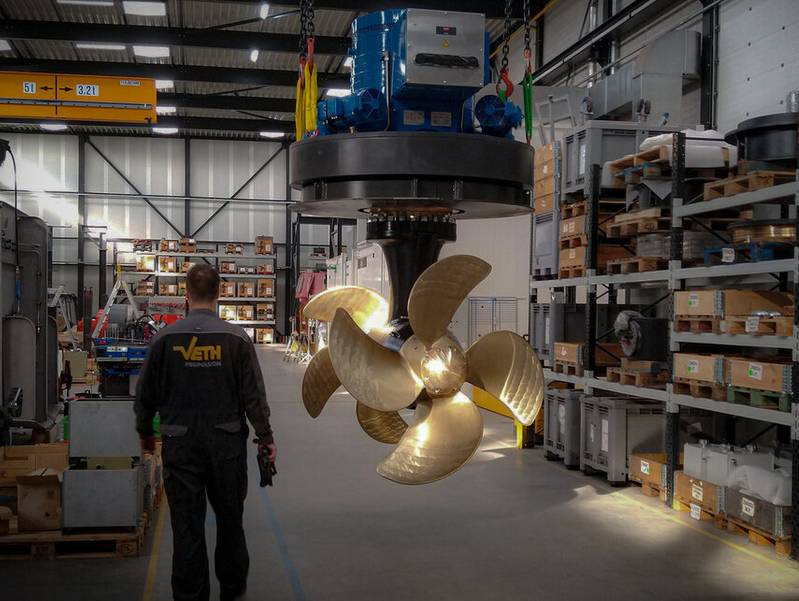
- Area: Propeller blade condition: Inspect for cracks, erosion, cavitation pitting, and proper alignment; confirm no deformation or separationCheck: Propeller blade condition: Inspect for cracks, erosion, cavitation pitting, and proper alignment; confirm no deformation or separation
- Area: Gearbox/Gear Drive: Check for oil leaks, proper lubrication level, unusual noise during operation, and bearing wear indicatorsCheck: Gearbox/Gear Drive: Check for oil leaks, proper lubrication level, unusual noise during operation, and bearing wear indicators
- Area: Motor coupling and shaft alignment: Verify proper centering, inspect for cracks or misalignment causing vibrationCheck: Motor coupling and shaft alignment: Verify proper centering, inspect for cracks or misalignment causing vibration
- Area: Tunnel structure: Inspect for corrosion, cracks, material fatigue, and proper hull integration; ensure no water ingressCheck: Tunnel structure: Inspect for corrosion, cracks, material fatigue, and proper hull integration; ensure no water ingress
- Area: Seals and gaskets: Check all dynamic and static seals for leakage (oil, water), deterioration, and proper installationCheck: Seals and gaskets: Check all dynamic and static seals for leakage (oil, water), deterioration, and proper installation
- Area: Electric motor (if applicable): Test insulation resistance, verify cooling system function, check for bearing wear and overheatingCheck: Electric motor (if applicable): Test insulation resistance, verify cooling system function, check for bearing wear and overheating
- Area: Control system and hydraulic lines (if applicable): Inspect for leaks, proper pressure readings, response to directional commandsCheck: Control system and hydraulic lines (if applicable): Inspect for leaks, proper pressure readings, response to directional commands
- Area: Mounting brackets and fasteners: Verify structural integrity, check for corrosion and loose connections affecting stabilityCheck: Mounting brackets and fasteners: Verify structural integrity, check for corrosion and loose connections affecting stability
Typ-universelle Inspektionspunkte fuer Bow/Stern Thrusters (verifiziert, 2026-06).
- Area: Propeller blade condition: Inspect for cracks, erosion, cavitation pitting, and proper alignment; confirm no deformation or separationCheck: Propeller blade condition: Inspect for cracks, erosion, cavitation pitting, and proper alignment; confirm no deformation or separation
- Area: Gearbox/Gear Drive: Check for oil leaks, proper lubrication level, unusual noise during operation, and bearing wear indicatorsCheck: Gearbox/Gear Drive: Check for oil leaks, proper lubrication level, unusual noise during operation, and bearing wear indicators
- Area: Motor coupling and shaft alignment: Verify proper centering, inspect for cracks or misalignment causing vibrationCheck: Motor coupling and shaft alignment: Verify proper centering, inspect for cracks or misalignment causing vibration
- Area: Tunnel structure: Inspect for corrosion, cracks, material fatigue, and proper hull integration; ensure no water ingressCheck: Tunnel structure: Inspect for corrosion, cracks, material fatigue, and proper hull integration; ensure no water ingress
- Area: Seals and gaskets: Check all dynamic and static seals for leakage (oil, water), deterioration, and proper installationCheck: Seals and gaskets: Check all dynamic and static seals for leakage (oil, water), deterioration, and proper installation
- Area: Electric motor (if applicable): Test insulation resistance, verify cooling system function, check for bearing wear and overheatingCheck: Electric motor (if applicable): Test insulation resistance, verify cooling system function, check for bearing wear and overheating
- Area: Control system and hydraulic lines (if applicable): Inspect for leaks, proper pressure readings, response to directional commandsCheck: Control system and hydraulic lines (if applicable): Inspect for leaks, proper pressure readings, response to directional commands
- Area: Mounting brackets and fasteners: Verify structural integrity, check for corrosion and loose connections affecting stabilityCheck: Mounting brackets and fasteners: Verify structural integrity, check for corrosion and loose connections affecting stability
Typ-universelle Inspektionspunkte fuer Bow/Stern Thrusters (verifiziert, 2026-06).
- Area: Propeller blade condition: Inspect for cracks, erosion, cavitation pitting, and proper alignment; confirm no deformation or separationCheck: Propeller blade condition: Inspect for cracks, erosion, cavitation pitting, and proper alignment; confirm no deformation or separation
- Area: Gearbox/Gear Drive: Check for oil leaks, proper lubrication level, unusual noise during operation, and bearing wear indicatorsCheck: Gearbox/Gear Drive: Check for oil leaks, proper lubrication level, unusual noise during operation, and bearing wear indicators
- Area: Motor coupling and shaft alignment: Verify proper centering, inspect for cracks or misalignment causing vibrationCheck: Motor coupling and shaft alignment: Verify proper centering, inspect for cracks or misalignment causing vibration
- Area: Tunnel structure: Inspect for corrosion, cracks, material fatigue, and proper hull integration; ensure no water ingressCheck: Tunnel structure: Inspect for corrosion, cracks, material fatigue, and proper hull integration; ensure no water ingress
- Area: Seals and gaskets: Check all dynamic and static seals for leakage (oil, water), deterioration, and proper installationCheck: Seals and gaskets: Check all dynamic and static seals for leakage (oil, water), deterioration, and proper installation
- Area: Electric motor (if applicable): Test insulation resistance, verify cooling system function, check for bearing wear and overheatingCheck: Electric motor (if applicable): Test insulation resistance, verify cooling system function, check for bearing wear and overheating
- Area: Control system and hydraulic lines (if applicable): Inspect for leaks, proper pressure readings, response to directional commandsCheck: Control system and hydraulic lines (if applicable): Inspect for leaks, proper pressure readings, response to directional commands
- Area: Mounting brackets and fasteners: Verify structural integrity, check for corrosion and loose connections affecting stabilityCheck: Mounting brackets and fasteners: Verify structural integrity, check for corrosion and loose connections affecting stability
Typ-universelle Inspektionspunkte fuer Bow/Stern Thrusters (verifiziert, 2026-06).
- Area: Propeller blade condition: Inspect for cracks, erosion, cavitation pitting, and proper alignment; confirm no deformation or separationCheck: Propeller blade condition: Inspect for cracks, erosion, cavitation pitting, and proper alignment; confirm no deformation or separation
- Area: Gearbox/Gear Drive: Check for oil leaks, proper lubrication level, unusual noise during operation, and bearing wear indicatorsCheck: Gearbox/Gear Drive: Check for oil leaks, proper lubrication level, unusual noise during operation, and bearing wear indicators
- Area: Motor coupling and shaft alignment: Verify proper centering, inspect for cracks or misalignment causing vibrationCheck: Motor coupling and shaft alignment: Verify proper centering, inspect for cracks or misalignment causing vibration
- Area: Tunnel structure: Inspect for corrosion, cracks, material fatigue, and proper hull integration; ensure no water ingressCheck: Tunnel structure: Inspect for corrosion, cracks, material fatigue, and proper hull integration; ensure no water ingress
- Area: Seals and gaskets: Check all dynamic and static seals for leakage (oil, water), deterioration, and proper installationCheck: Seals and gaskets: Check all dynamic and static seals for leakage (oil, water), deterioration, and proper installation
- Area: Electric motor (if applicable): Test insulation resistance, verify cooling system function, check for bearing wear and overheatingCheck: Electric motor (if applicable): Test insulation resistance, verify cooling system function, check for bearing wear and overheating
- Area: Control system and hydraulic lines (if applicable): Inspect for leaks, proper pressure readings, response to directional commandsCheck: Control system and hydraulic lines (if applicable): Inspect for leaks, proper pressure readings, response to directional commands
- Area: Mounting brackets and fasteners: Verify structural integrity, check for corrosion and loose connections affecting stabilityCheck: Mounting brackets and fasteners: Verify structural integrity, check for corrosion and loose connections affecting stability
Typ-universelle Inspektionspunkte fuer Bow/Stern Thrusters (verifiziert, 2026-06).
- Area: Propeller blade condition: Inspect for cracks, erosion, cavitation pitting, and proper alignment; confirm no deformation or separationCheck: Propeller blade condition: Inspect for cracks, erosion, cavitation pitting, and proper alignment; confirm no deformation or separation
- Area: Gearbox/Gear Drive: Check for oil leaks, proper lubrication level, unusual noise during operation, and bearing wear indicatorsCheck: Gearbox/Gear Drive: Check for oil leaks, proper lubrication level, unusual noise during operation, and bearing wear indicators
- Area: Motor coupling and shaft alignment: Verify proper centering, inspect for cracks or misalignment causing vibrationCheck: Motor coupling and shaft alignment: Verify proper centering, inspect for cracks or misalignment causing vibration
- Area: Tunnel structure: Inspect for corrosion, cracks, material fatigue, and proper hull integration; ensure no water ingressCheck: Tunnel structure: Inspect for corrosion, cracks, material fatigue, and proper hull integration; ensure no water ingress
- Area: Seals and gaskets: Check all dynamic and static seals for leakage (oil, water), deterioration, and proper installationCheck: Seals and gaskets: Check all dynamic and static seals for leakage (oil, water), deterioration, and proper installation
- Area: Electric motor (if applicable): Test insulation resistance, verify cooling system function, check for bearing wear and overheatingCheck: Electric motor (if applicable): Test insulation resistance, verify cooling system function, check for bearing wear and overheating
- Area: Control system and hydraulic lines (if applicable): Inspect for leaks, proper pressure readings, response to directional commandsCheck: Control system and hydraulic lines (if applicable): Inspect for leaks, proper pressure readings, response to directional commands
- Area: Mounting brackets and fasteners: Verify structural integrity, check for corrosion and loose connections affecting stabilityCheck: Mounting brackets and fasteners: Verify structural integrity, check for corrosion and loose connections affecting stability
Typ-universelle Inspektionspunkte fuer Bow/Stern Thrusters (verifiziert, 2026-06).
- Area: Propeller blade condition: Inspect for cracks, erosion, cavitation pitting, and proper alignment; confirm no deformation or separationCheck: Propeller blade condition: Inspect for cracks, erosion, cavitation pitting, and proper alignment; confirm no deformation or separation
- Area: Gearbox/Gear Drive: Check for oil leaks, proper lubrication level, unusual noise during operation, and bearing wear indicatorsCheck: Gearbox/Gear Drive: Check for oil leaks, proper lubrication level, unusual noise during operation, and bearing wear indicators
- Area: Motor coupling and shaft alignment: Verify proper centering, inspect for cracks or misalignment causing vibrationCheck: Motor coupling and shaft alignment: Verify proper centering, inspect for cracks or misalignment causing vibration
- Area: Tunnel structure: Inspect for corrosion, cracks, material fatigue, and proper hull integration; ensure no water ingressCheck: Tunnel structure: Inspect for corrosion, cracks, material fatigue, and proper hull integration; ensure no water ingress
- Area: Seals and gaskets: Check all dynamic and static seals for leakage (oil, water), deterioration, and proper installationCheck: Seals and gaskets: Check all dynamic and static seals for leakage (oil, water), deterioration, and proper installation
- Area: Electric motor (if applicable): Test insulation resistance, verify cooling system function, check for bearing wear and overheatingCheck: Electric motor (if applicable): Test insulation resistance, verify cooling system function, check for bearing wear and overheating
- Area: Control system and hydraulic lines (if applicable): Inspect for leaks, proper pressure readings, response to directional commandsCheck: Control system and hydraulic lines (if applicable): Inspect for leaks, proper pressure readings, response to directional commands
- Area: Mounting brackets and fasteners: Verify structural integrity, check for corrosion and loose connections affecting stabilityCheck: Mounting brackets and fasteners: Verify structural integrity, check for corrosion and loose connections affecting stability
Typ-universelle Inspektionspunkte fuer Bow/Stern Thrusters (verifiziert, 2026-06).
- Area: Propeller blade condition: Inspect for cracks, erosion, cavitation pitting, and proper alignment; confirm no deformation or separationCheck: Propeller blade condition: Inspect for cracks, erosion, cavitation pitting, and proper alignment; confirm no deformation or separation
- Area: Gearbox/Gear Drive: Check for oil leaks, proper lubrication level, unusual noise during operation, and bearing wear indicatorsCheck: Gearbox/Gear Drive: Check for oil leaks, proper lubrication level, unusual noise during operation, and bearing wear indicators
- Area: Motor coupling and shaft alignment: Verify proper centering, inspect for cracks or misalignment causing vibrationCheck: Motor coupling and shaft alignment: Verify proper centering, inspect for cracks or misalignment causing vibration
- Area: Tunnel structure: Inspect for corrosion, cracks, material fatigue, and proper hull integration; ensure no water ingressCheck: Tunnel structure: Inspect for corrosion, cracks, material fatigue, and proper hull integration; ensure no water ingress
- Area: Seals and gaskets: Check all dynamic and static seals for leakage (oil, water), deterioration, and proper installationCheck: Seals and gaskets: Check all dynamic and static seals for leakage (oil, water), deterioration, and proper installation
- Area: Electric motor (if applicable): Test insulation resistance, verify cooling system function, check for bearing wear and overheatingCheck: Electric motor (if applicable): Test insulation resistance, verify cooling system function, check for bearing wear and overheating
- Area: Control system and hydraulic lines (if applicable): Inspect for leaks, proper pressure readings, response to directional commandsCheck: Control system and hydraulic lines (if applicable): Inspect for leaks, proper pressure readings, response to directional commands
- Area: Mounting brackets and fasteners: Verify structural integrity, check for corrosion and loose connections affecting stabilityCheck: Mounting brackets and fasteners: Verify structural integrity, check for corrosion and loose connections affecting stability
Typ-universelle Inspektionspunkte fuer Bow/Stern Thrusters (verifiziert, 2026-06).
- Area: Propeller blade condition: Inspect for cracks, erosion, cavitation pitting, and proper alignment; confirm no deformation or separationCheck: Propeller blade condition: Inspect for cracks, erosion, cavitation pitting, and proper alignment; confirm no deformation or separation
- Area: Gearbox/Gear Drive: Check for oil leaks, proper lubrication level, unusual noise during operation, and bearing wear indicatorsCheck: Gearbox/Gear Drive: Check for oil leaks, proper lubrication level, unusual noise during operation, and bearing wear indicators
- Area: Motor coupling and shaft alignment: Verify proper centering, inspect for cracks or misalignment causing vibrationCheck: Motor coupling and shaft alignment: Verify proper centering, inspect for cracks or misalignment causing vibration
- Area: Tunnel structure: Inspect for corrosion, cracks, material fatigue, and proper hull integration; ensure no water ingressCheck: Tunnel structure: Inspect for corrosion, cracks, material fatigue, and proper hull integration; ensure no water ingress
- Area: Seals and gaskets: Check all dynamic and static seals for leakage (oil, water), deterioration, and proper installationCheck: Seals and gaskets: Check all dynamic and static seals for leakage (oil, water), deterioration, and proper installation
- Area: Electric motor (if applicable): Test insulation resistance, verify cooling system function, check for bearing wear and overheatingCheck: Electric motor (if applicable): Test insulation resistance, verify cooling system function, check for bearing wear and overheating
- Area: Control system and hydraulic lines (if applicable): Inspect for leaks, proper pressure readings, response to directional commandsCheck: Control system and hydraulic lines (if applicable): Inspect for leaks, proper pressure readings, response to directional commands
- Area: Mounting brackets and fasteners: Verify structural integrity, check for corrosion and loose connections affecting stabilityCheck: Mounting brackets and fasteners: Verify structural integrity, check for corrosion and loose connections affecting stability
Typ-universelle Inspektionspunkte fuer Bow/Stern Thrusters (verifiziert, 2026-06).
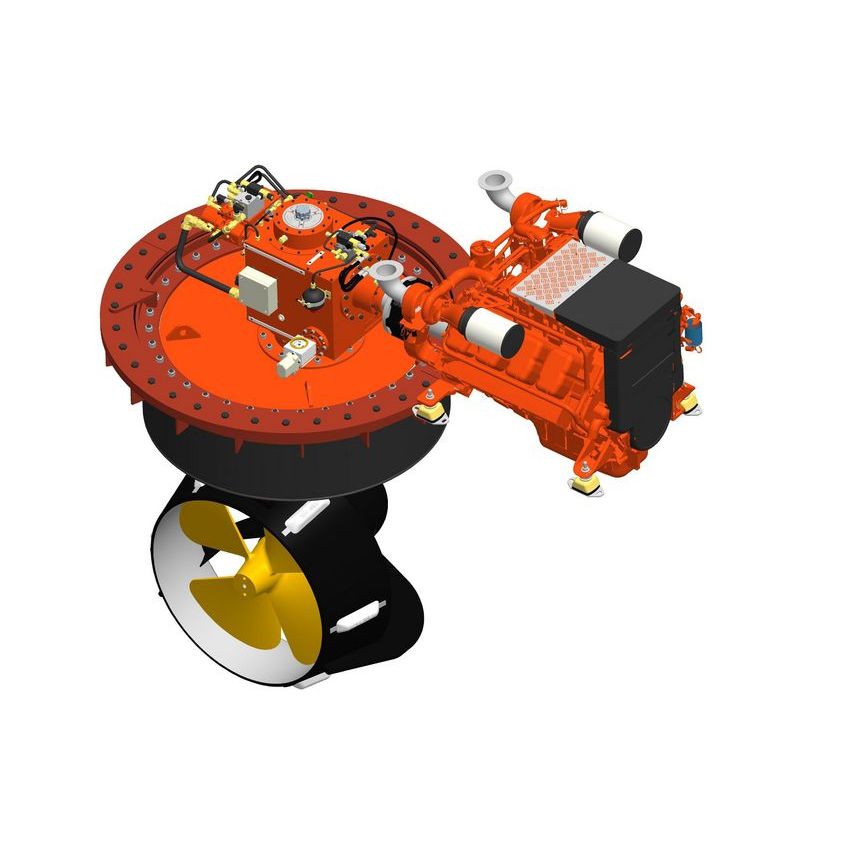
- Area: Propeller blade condition: Inspect for cracks, erosion, cavitation pitting, and proper alignment; confirm no deformation or separationCheck: Propeller blade condition: Inspect for cracks, erosion, cavitation pitting, and proper alignment; confirm no deformation or separation
- Area: Gearbox/Gear Drive: Check for oil leaks, proper lubrication level, unusual noise during operation, and bearing wear indicatorsCheck: Gearbox/Gear Drive: Check for oil leaks, proper lubrication level, unusual noise during operation, and bearing wear indicators
- Area: Motor coupling and shaft alignment: Verify proper centering, inspect for cracks or misalignment causing vibrationCheck: Motor coupling and shaft alignment: Verify proper centering, inspect for cracks or misalignment causing vibration
- Area: Tunnel structure: Inspect for corrosion, cracks, material fatigue, and proper hull integration; ensure no water ingressCheck: Tunnel structure: Inspect for corrosion, cracks, material fatigue, and proper hull integration; ensure no water ingress
- Area: Seals and gaskets: Check all dynamic and static seals for leakage (oil, water), deterioration, and proper installationCheck: Seals and gaskets: Check all dynamic and static seals for leakage (oil, water), deterioration, and proper installation
- Area: Electric motor (if applicable): Test insulation resistance, verify cooling system function, check for bearing wear and overheatingCheck: Electric motor (if applicable): Test insulation resistance, verify cooling system function, check for bearing wear and overheating
- Area: Control system and hydraulic lines (if applicable): Inspect for leaks, proper pressure readings, response to directional commandsCheck: Control system and hydraulic lines (if applicable): Inspect for leaks, proper pressure readings, response to directional commands
- Area: Mounting brackets and fasteners: Verify structural integrity, check for corrosion and loose connections affecting stabilityCheck: Mounting brackets and fasteners: Verify structural integrity, check for corrosion and loose connections affecting stability
Typ-universelle Inspektionspunkte fuer Bow/Stern Thrusters (verifiziert, 2026-06).
- Area: Propeller blade condition: Inspect for cracks, erosion, cavitation pitting, and proper alignment; confirm no deformation or separationCheck: Propeller blade condition: Inspect for cracks, erosion, cavitation pitting, and proper alignment; confirm no deformation or separation
- Area: Gearbox/Gear Drive: Check for oil leaks, proper lubrication level, unusual noise during operation, and bearing wear indicatorsCheck: Gearbox/Gear Drive: Check for oil leaks, proper lubrication level, unusual noise during operation, and bearing wear indicators
- Area: Motor coupling and shaft alignment: Verify proper centering, inspect for cracks or misalignment causing vibrationCheck: Motor coupling and shaft alignment: Verify proper centering, inspect for cracks or misalignment causing vibration
- Area: Tunnel structure: Inspect for corrosion, cracks, material fatigue, and proper hull integration; ensure no water ingressCheck: Tunnel structure: Inspect for corrosion, cracks, material fatigue, and proper hull integration; ensure no water ingress
- Area: Seals and gaskets: Check all dynamic and static seals for leakage (oil, water), deterioration, and proper installationCheck: Seals and gaskets: Check all dynamic and static seals for leakage (oil, water), deterioration, and proper installation
- Area: Electric motor (if applicable): Test insulation resistance, verify cooling system function, check for bearing wear and overheatingCheck: Electric motor (if applicable): Test insulation resistance, verify cooling system function, check for bearing wear and overheating
- Area: Control system and hydraulic lines (if applicable): Inspect for leaks, proper pressure readings, response to directional commandsCheck: Control system and hydraulic lines (if applicable): Inspect for leaks, proper pressure readings, response to directional commands
- Area: Mounting brackets and fasteners: Verify structural integrity, check for corrosion and loose connections affecting stabilityCheck: Mounting brackets and fasteners: Verify structural integrity, check for corrosion and loose connections affecting stability
Typ-universelle Inspektionspunkte fuer Bow/Stern Thrusters (verifiziert, 2026-06).
Sleipner Group
11 ✓ 11 verified- Area: Inspect seals and surfaces of propeller and gearleg for marine growth buildup; clean and apply anti-fouling paint before each seasonCheck: Inspect seals and surfaces of propeller and gearleg for marine growth buildup; clean and apply anti-fouling paint before each season
- Area: Check zinc anode for corrosion; replace when half of anode has eroded or before each seasonCheck: Check zinc anode for corrosion; replace when half of anode has eroded or before each season
- Area: Verify all electrical connections are clean, firmly fastened, and free from corrosion or moistureCheck: Verify all electrical connections are clean, firmly fastened, and free from corrosion or moisture
- Area: Inspect tunnel interior and surrounding boat hull area for water intrusion, oil leaks, or signs of damageCheck: Inspect tunnel interior and surrounding boat hull area for water intrusion, oil leaks, or signs of damage
- Area: Test motor operation with full thrust cycles; ensure smooth operation without grinding or unusual noiseCheck: Test motor operation with full thrust cycles; ensure smooth operation without grinding or unusual noise
- Area: Verify galvanic isolation integrity and test electrical continuity of protective systemsCheck: Verify galvanic isolation integrity and test electrical continuity of protective systems
- Area: Inspect ceramic seals and sealed drive lubrication system for leaks; ensure gearleg remains properly sealedCheck: Inspect ceramic seals and sealed drive lubrication system for leaks; ensure gearleg remains properly sealed
- Area: Check propeller blades for damage, deformation, or imbalance that could affect thrust performanceCheck: Check propeller blades for damage, deformation, or imbalance that could affect thrust performance
Typ-universelle Inspektionspunkte fuer Bow/Stern Thrusters (verifiziert, 2026-06).
- Area: Inspect seals and surfaces of propeller and gearleg for marine growth buildup; clean and apply anti-fouling paint before each seasonCheck: Inspect seals and surfaces of propeller and gearleg for marine growth buildup; clean and apply anti-fouling paint before each season
- Area: Check zinc anode for corrosion; replace when half of anode has eroded or before each seasonCheck: Check zinc anode for corrosion; replace when half of anode has eroded or before each season
- Area: Verify all electrical connections are clean, firmly fastened, and free from corrosion or moistureCheck: Verify all electrical connections are clean, firmly fastened, and free from corrosion or moisture
- Area: Inspect tunnel interior and surrounding boat hull area for water intrusion, oil leaks, or signs of damageCheck: Inspect tunnel interior and surrounding boat hull area for water intrusion, oil leaks, or signs of damage
- Area: Test motor operation with full thrust cycles; ensure smooth operation without grinding or unusual noiseCheck: Test motor operation with full thrust cycles; ensure smooth operation without grinding or unusual noise
- Area: Verify galvanic isolation integrity and test electrical continuity of protective systemsCheck: Verify galvanic isolation integrity and test electrical continuity of protective systems
- Area: Inspect ceramic seals and sealed drive lubrication system for leaks; ensure gearleg remains properly sealedCheck: Inspect ceramic seals and sealed drive lubrication system for leaks; ensure gearleg remains properly sealed
- Area: Check propeller blades for damage, deformation, or imbalance that could affect thrust performanceCheck: Check propeller blades for damage, deformation, or imbalance that could affect thrust performance
Typ-universelle Inspektionspunkte fuer Bow/Stern Thrusters (verifiziert, 2026-06).
- Area: Inspect seals and surfaces of propeller and gearleg for marine growth buildup; clean and apply anti-fouling paint before each seasonCheck: Inspect seals and surfaces of propeller and gearleg for marine growth buildup; clean and apply anti-fouling paint before each season
- Area: Check zinc anode for corrosion; replace when half of anode has eroded or before each seasonCheck: Check zinc anode for corrosion; replace when half of anode has eroded or before each season
- Area: Verify all electrical connections are clean, firmly fastened, and free from corrosion or moistureCheck: Verify all electrical connections are clean, firmly fastened, and free from corrosion or moisture
- Area: Inspect tunnel interior and surrounding boat hull area for water intrusion, oil leaks, or signs of damageCheck: Inspect tunnel interior and surrounding boat hull area for water intrusion, oil leaks, or signs of damage
- Area: Test motor operation with full thrust cycles; ensure smooth operation without grinding or unusual noiseCheck: Test motor operation with full thrust cycles; ensure smooth operation without grinding or unusual noise
- Area: Verify galvanic isolation integrity and test electrical continuity of protective systemsCheck: Verify galvanic isolation integrity and test electrical continuity of protective systems
- Area: Inspect ceramic seals and sealed drive lubrication system for leaks; ensure gearleg remains properly sealedCheck: Inspect ceramic seals and sealed drive lubrication system for leaks; ensure gearleg remains properly sealed
- Area: Check propeller blades for damage, deformation, or imbalance that could affect thrust performanceCheck: Check propeller blades for damage, deformation, or imbalance that could affect thrust performance
Typ-universelle Inspektionspunkte fuer Bow/Stern Thrusters (verifiziert, 2026-06).
- Area: Inspect seals and surfaces of propeller and gearleg for marine growth buildup; clean and apply anti-fouling paint before each seasonCheck: Inspect seals and surfaces of propeller and gearleg for marine growth buildup; clean and apply anti-fouling paint before each season
- Area: Check zinc anode for corrosion; replace when half of anode has eroded or before each seasonCheck: Check zinc anode for corrosion; replace when half of anode has eroded or before each season
- Area: Verify all electrical connections are clean, firmly fastened, and free from corrosion or moistureCheck: Verify all electrical connections are clean, firmly fastened, and free from corrosion or moisture
- Area: Inspect tunnel interior and surrounding boat hull area for water intrusion, oil leaks, or signs of damageCheck: Inspect tunnel interior and surrounding boat hull area for water intrusion, oil leaks, or signs of damage
- Area: Test motor operation with full thrust cycles; ensure smooth operation without grinding or unusual noiseCheck: Test motor operation with full thrust cycles; ensure smooth operation without grinding or unusual noise
- Area: Verify galvanic isolation integrity and test electrical continuity of protective systemsCheck: Verify galvanic isolation integrity and test electrical continuity of protective systems
- Area: Inspect ceramic seals and sealed drive lubrication system for leaks; ensure gearleg remains properly sealedCheck: Inspect ceramic seals and sealed drive lubrication system for leaks; ensure gearleg remains properly sealed
- Area: Check propeller blades for damage, deformation, or imbalance that could affect thrust performanceCheck: Check propeller blades for damage, deformation, or imbalance that could affect thrust performance
Typ-universelle Inspektionspunkte fuer Bow/Stern Thrusters (verifiziert, 2026-06).
- Area: Inspect seals and surfaces of propeller and gearleg for marine growth buildup; clean and apply anti-fouling paint before each seasonCheck: Inspect seals and surfaces of propeller and gearleg for marine growth buildup; clean and apply anti-fouling paint before each season
- Area: Check zinc anode for corrosion; replace when half of anode has eroded or before each seasonCheck: Check zinc anode for corrosion; replace when half of anode has eroded or before each season
- Area: Verify all electrical connections are clean, firmly fastened, and free from corrosion or moistureCheck: Verify all electrical connections are clean, firmly fastened, and free from corrosion or moisture
- Area: Inspect tunnel interior and surrounding boat hull area for water intrusion, oil leaks, or signs of damageCheck: Inspect tunnel interior and surrounding boat hull area for water intrusion, oil leaks, or signs of damage
- Area: Test motor operation with full thrust cycles; ensure smooth operation without grinding or unusual noiseCheck: Test motor operation with full thrust cycles; ensure smooth operation without grinding or unusual noise
- Area: Verify galvanic isolation integrity and test electrical continuity of protective systemsCheck: Verify galvanic isolation integrity and test electrical continuity of protective systems
- Area: Inspect ceramic seals and sealed drive lubrication system for leaks; ensure gearleg remains properly sealedCheck: Inspect ceramic seals and sealed drive lubrication system for leaks; ensure gearleg remains properly sealed
- Area: Check propeller blades for damage, deformation, or imbalance that could affect thrust performanceCheck: Check propeller blades for damage, deformation, or imbalance that could affect thrust performance
Typ-universelle Inspektionspunkte fuer Bow/Stern Thrusters (verifiziert, 2026-06).
- Area: Inspect seals and surfaces of propeller and gearleg for marine growth buildup; clean and apply anti-fouling paint before each seasonCheck: Inspect seals and surfaces of propeller and gearleg for marine growth buildup; clean and apply anti-fouling paint before each season
- Area: Check zinc anode for corrosion; replace when half of anode has eroded or before each seasonCheck: Check zinc anode for corrosion; replace when half of anode has eroded or before each season
- Area: Verify all electrical connections are clean, firmly fastened, and free from corrosion or moistureCheck: Verify all electrical connections are clean, firmly fastened, and free from corrosion or moisture
- Area: Inspect tunnel interior and surrounding boat hull area for water intrusion, oil leaks, or signs of damageCheck: Inspect tunnel interior and surrounding boat hull area for water intrusion, oil leaks, or signs of damage
- Area: Test motor operation with full thrust cycles; ensure smooth operation without grinding or unusual noiseCheck: Test motor operation with full thrust cycles; ensure smooth operation without grinding or unusual noise
- Area: Verify galvanic isolation integrity and test electrical continuity of protective systemsCheck: Verify galvanic isolation integrity and test electrical continuity of protective systems
- Area: Inspect ceramic seals and sealed drive lubrication system for leaks; ensure gearleg remains properly sealedCheck: Inspect ceramic seals and sealed drive lubrication system for leaks; ensure gearleg remains properly sealed
- Area: Check propeller blades for damage, deformation, or imbalance that could affect thrust performanceCheck: Check propeller blades for damage, deformation, or imbalance that could affect thrust performance
Typ-universelle Inspektionspunkte fuer Bow/Stern Thrusters (verifiziert, 2026-06).
- Area: Inspect seals and surfaces of propeller and gearleg for marine growth buildup; clean and apply anti-fouling paint before each seasonCheck: Inspect seals and surfaces of propeller and gearleg for marine growth buildup; clean and apply anti-fouling paint before each season
- Area: Check zinc anode for corrosion; replace when half of anode has eroded or before each seasonCheck: Check zinc anode for corrosion; replace when half of anode has eroded or before each season
- Area: Verify all electrical connections are clean, firmly fastened, and free from corrosion or moistureCheck: Verify all electrical connections are clean, firmly fastened, and free from corrosion or moisture
- Area: Inspect tunnel interior and surrounding boat hull area for water intrusion, oil leaks, or signs of damageCheck: Inspect tunnel interior and surrounding boat hull area for water intrusion, oil leaks, or signs of damage
- Area: Test motor operation with full thrust cycles; ensure smooth operation without grinding or unusual noiseCheck: Test motor operation with full thrust cycles; ensure smooth operation without grinding or unusual noise
- Area: Verify galvanic isolation integrity and test electrical continuity of protective systemsCheck: Verify galvanic isolation integrity and test electrical continuity of protective systems
- Area: Inspect ceramic seals and sealed drive lubrication system for leaks; ensure gearleg remains properly sealedCheck: Inspect ceramic seals and sealed drive lubrication system for leaks; ensure gearleg remains properly sealed
- Area: Check propeller blades for damage, deformation, or imbalance that could affect thrust performanceCheck: Check propeller blades for damage, deformation, or imbalance that could affect thrust performance
Typ-universelle Inspektionspunkte fuer Bow/Stern Thrusters (verifiziert, 2026-06).
- Area: Inspect seals and surfaces of propeller and gearleg for marine growth buildup; clean and apply anti-fouling paint before each seasonCheck: Inspect seals and surfaces of propeller and gearleg for marine growth buildup; clean and apply anti-fouling paint before each season
- Area: Check zinc anode for corrosion; replace when half of anode has eroded or before each seasonCheck: Check zinc anode for corrosion; replace when half of anode has eroded or before each season
- Area: Verify all electrical connections are clean, firmly fastened, and free from corrosion or moistureCheck: Verify all electrical connections are clean, firmly fastened, and free from corrosion or moisture
- Area: Inspect tunnel interior and surrounding boat hull area for water intrusion, oil leaks, or signs of damageCheck: Inspect tunnel interior and surrounding boat hull area for water intrusion, oil leaks, or signs of damage
- Area: Test motor operation with full thrust cycles; ensure smooth operation without grinding or unusual noiseCheck: Test motor operation with full thrust cycles; ensure smooth operation without grinding or unusual noise
- Area: Verify galvanic isolation integrity and test electrical continuity of protective systemsCheck: Verify galvanic isolation integrity and test electrical continuity of protective systems
- Area: Inspect ceramic seals and sealed drive lubrication system for leaks; ensure gearleg remains properly sealedCheck: Inspect ceramic seals and sealed drive lubrication system for leaks; ensure gearleg remains properly sealed
- Area: Check propeller blades for damage, deformation, or imbalance that could affect thrust performanceCheck: Check propeller blades for damage, deformation, or imbalance that could affect thrust performance
Typ-universelle Inspektionspunkte fuer Bow/Stern Thrusters (verifiziert, 2026-06).
- Area: Inspect seals and surfaces of propeller and gearleg for marine growth buildup; clean and apply anti-fouling paint before each seasonCheck: Inspect seals and surfaces of propeller and gearleg for marine growth buildup; clean and apply anti-fouling paint before each season
- Area: Check zinc anode for corrosion; replace when half of anode has eroded or before each seasonCheck: Check zinc anode for corrosion; replace when half of anode has eroded or before each season
- Area: Verify all electrical connections are clean, firmly fastened, and free from corrosion or moistureCheck: Verify all electrical connections are clean, firmly fastened, and free from corrosion or moisture
- Area: Inspect tunnel interior and surrounding boat hull area for water intrusion, oil leaks, or signs of damageCheck: Inspect tunnel interior and surrounding boat hull area for water intrusion, oil leaks, or signs of damage
- Area: Test motor operation with full thrust cycles; ensure smooth operation without grinding or unusual noiseCheck: Test motor operation with full thrust cycles; ensure smooth operation without grinding or unusual noise
- Area: Verify galvanic isolation integrity and test electrical continuity of protective systemsCheck: Verify galvanic isolation integrity and test electrical continuity of protective systems
- Area: Inspect ceramic seals and sealed drive lubrication system for leaks; ensure gearleg remains properly sealedCheck: Inspect ceramic seals and sealed drive lubrication system for leaks; ensure gearleg remains properly sealed
- Area: Check propeller blades for damage, deformation, or imbalance that could affect thrust performanceCheck: Check propeller blades for damage, deformation, or imbalance that could affect thrust performance
Typ-universelle Inspektionspunkte fuer Bow/Stern Thrusters (verifiziert, 2026-06).
- Area: Inspect seals and surfaces of propeller and gearleg for marine growth buildup; clean and apply anti-fouling paint before each seasonCheck: Inspect seals and surfaces of propeller and gearleg for marine growth buildup; clean and apply anti-fouling paint before each season
- Area: Check zinc anode for corrosion; replace when half of anode has eroded or before each seasonCheck: Check zinc anode for corrosion; replace when half of anode has eroded or before each season
- Area: Verify all electrical connections are clean, firmly fastened, and free from corrosion or moistureCheck: Verify all electrical connections are clean, firmly fastened, and free from corrosion or moisture
- Area: Inspect tunnel interior and surrounding boat hull area for water intrusion, oil leaks, or signs of damageCheck: Inspect tunnel interior and surrounding boat hull area for water intrusion, oil leaks, or signs of damage
- Area: Test motor operation with full thrust cycles; ensure smooth operation without grinding or unusual noiseCheck: Test motor operation with full thrust cycles; ensure smooth operation without grinding or unusual noise
- Area: Verify galvanic isolation integrity and test electrical continuity of protective systemsCheck: Verify galvanic isolation integrity and test electrical continuity of protective systems
- Area: Inspect ceramic seals and sealed drive lubrication system for leaks; ensure gearleg remains properly sealedCheck: Inspect ceramic seals and sealed drive lubrication system for leaks; ensure gearleg remains properly sealed
- Area: Check propeller blades for damage, deformation, or imbalance that could affect thrust performanceCheck: Check propeller blades for damage, deformation, or imbalance that could affect thrust performance
Typ-universelle Inspektionspunkte fuer Bow/Stern Thrusters (verifiziert, 2026-06).
- Area: Inspect seals and surfaces of propeller and gearleg for marine growth buildup; clean and apply anti-fouling paint before each seasonCheck: Inspect seals and surfaces of propeller and gearleg for marine growth buildup; clean and apply anti-fouling paint before each season
- Area: Check zinc anode for corrosion; replace when half of anode has eroded or before each seasonCheck: Check zinc anode for corrosion; replace when half of anode has eroded or before each season
- Area: Verify all electrical connections are clean, firmly fastened, and free from corrosion or moistureCheck: Verify all electrical connections are clean, firmly fastened, and free from corrosion or moisture
- Area: Inspect tunnel interior and surrounding boat hull area for water intrusion, oil leaks, or signs of damageCheck: Inspect tunnel interior and surrounding boat hull area for water intrusion, oil leaks, or signs of damage
- Area: Test motor operation with full thrust cycles; ensure smooth operation without grinding or unusual noiseCheck: Test motor operation with full thrust cycles; ensure smooth operation without grinding or unusual noise
- Area: Verify galvanic isolation integrity and test electrical continuity of protective systemsCheck: Verify galvanic isolation integrity and test electrical continuity of protective systems
- Area: Inspect ceramic seals and sealed drive lubrication system for leaks; ensure gearleg remains properly sealedCheck: Inspect ceramic seals and sealed drive lubrication system for leaks; ensure gearleg remains properly sealed
- Area: Check propeller blades for damage, deformation, or imbalance that could affect thrust performanceCheck: Check propeller blades for damage, deformation, or imbalance that could affect thrust performance
Typ-universelle Inspektionspunkte fuer Bow/Stern Thrusters (verifiziert, 2026-06).
Brunvoll AS
10 ✓ 10 verified- Area: Inspect thruster tunnel space twice yearly for moisture, standing water, and leaksCheck: Inspect thruster tunnel space twice yearly for moisture, standing water, and leaks
- Area: Examine tunnel ends for cracks in gelcoat or laminate, check gasket seals for leaksCheck: Examine tunnel ends for cracks in gelcoat or laminate, check gasket seals for leaks
- Area: Clean thruster drive, propeller(s) and tunnel interior of marine growth and inspect for cracks or damageCheck: Clean thruster drive, propeller(s) and tunnel interior of marine growth and inspect for cracks or damage
- Area: Check for oil beneath propeller indicating seal leakage requiring replacementCheck: Check for oil beneath propeller indicating seal leakage requiring replacement
- Area: Inspect and renew sacrificial anodes (zincs) annually minimum, more frequently depending on vessel locationCheck: Inspect and renew sacrificial anodes (zincs) annually minimum, more frequently depending on vessel location
- Area: Verify condition of helm control panels and joysticks for looseness, corrosion, UV damageCheck: Verify condition of helm control panels and joysticks for looseness, corrosion, UV damage
- Area: Check motor function and verify electrical/hydraulic supply lines, grease moving partsCheck: Check motor function and verify electrical/hydraulic supply lines, grease moving parts
- Area: Inspect gearbox, propeller connections, and shear pins for wear, especially with frequent useCheck: Inspect gearbox, propeller connections, and shear pins for wear, especially with frequent use
Typ-universelle Inspektionspunkte fuer Bow/Stern Thrusters (verifiziert, 2026-06).
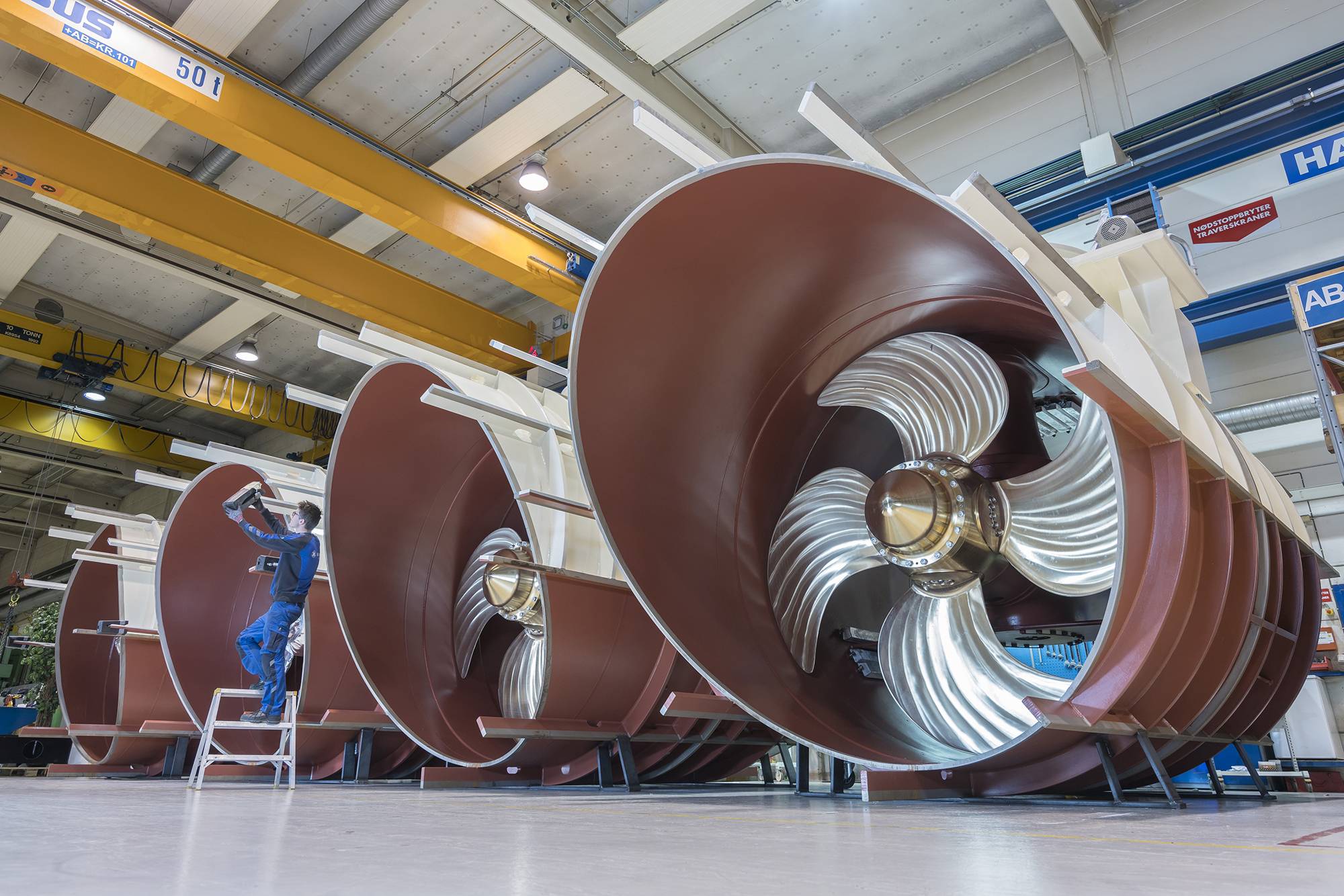
- Area: Inspect thruster tunnel space twice yearly for moisture, standing water, and leaksCheck: Inspect thruster tunnel space twice yearly for moisture, standing water, and leaks
- Area: Examine tunnel ends for cracks in gelcoat or laminate, check gasket seals for leaksCheck: Examine tunnel ends for cracks in gelcoat or laminate, check gasket seals for leaks
- Area: Clean thruster drive, propeller(s) and tunnel interior of marine growth and inspect for cracks or damageCheck: Clean thruster drive, propeller(s) and tunnel interior of marine growth and inspect for cracks or damage
- Area: Check for oil beneath propeller indicating seal leakage requiring replacementCheck: Check for oil beneath propeller indicating seal leakage requiring replacement
- Area: Inspect and renew sacrificial anodes (zincs) annually minimum, more frequently depending on vessel locationCheck: Inspect and renew sacrificial anodes (zincs) annually minimum, more frequently depending on vessel location
- Area: Verify condition of helm control panels and joysticks for looseness, corrosion, UV damageCheck: Verify condition of helm control panels and joysticks for looseness, corrosion, UV damage
- Area: Check motor function and verify electrical/hydraulic supply lines, grease moving partsCheck: Check motor function and verify electrical/hydraulic supply lines, grease moving parts
- Area: Inspect gearbox, propeller connections, and shear pins for wear, especially with frequent useCheck: Inspect gearbox, propeller connections, and shear pins for wear, especially with frequent use
Typ-universelle Inspektionspunkte fuer Bow/Stern Thrusters (verifiziert, 2026-06).
- Area: Inspect thruster tunnel space twice yearly for moisture, standing water, and leaksCheck: Inspect thruster tunnel space twice yearly for moisture, standing water, and leaks
- Area: Examine tunnel ends for cracks in gelcoat or laminate, check gasket seals for leaksCheck: Examine tunnel ends for cracks in gelcoat or laminate, check gasket seals for leaks
- Area: Clean thruster drive, propeller(s) and tunnel interior of marine growth and inspect for cracks or damageCheck: Clean thruster drive, propeller(s) and tunnel interior of marine growth and inspect for cracks or damage
- Area: Check for oil beneath propeller indicating seal leakage requiring replacementCheck: Check for oil beneath propeller indicating seal leakage requiring replacement
- Area: Inspect and renew sacrificial anodes (zincs) annually minimum, more frequently depending on vessel locationCheck: Inspect and renew sacrificial anodes (zincs) annually minimum, more frequently depending on vessel location
- Area: Verify condition of helm control panels and joysticks for looseness, corrosion, UV damageCheck: Verify condition of helm control panels and joysticks for looseness, corrosion, UV damage
- Area: Check motor function and verify electrical/hydraulic supply lines, grease moving partsCheck: Check motor function and verify electrical/hydraulic supply lines, grease moving parts
- Area: Inspect gearbox, propeller connections, and shear pins for wear, especially with frequent useCheck: Inspect gearbox, propeller connections, and shear pins for wear, especially with frequent use
Typ-universelle Inspektionspunkte fuer Bow/Stern Thrusters (verifiziert, 2026-06).
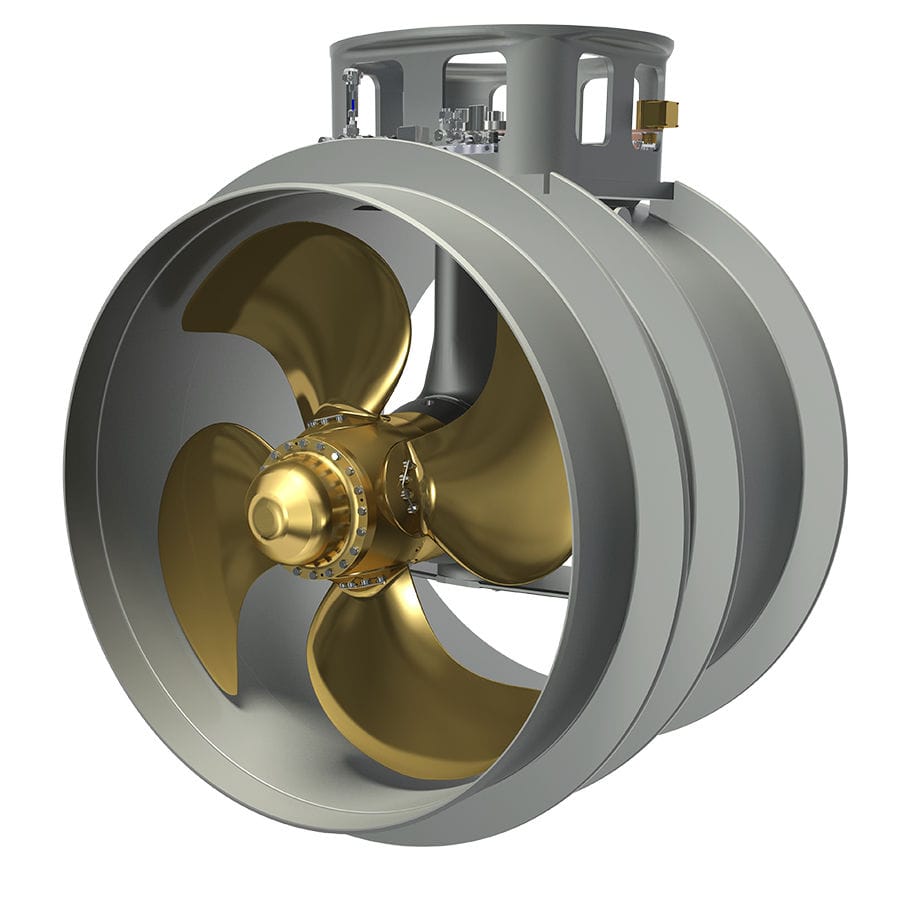
- Area: Inspect thruster tunnel space twice yearly for moisture, standing water, and leaksCheck: Inspect thruster tunnel space twice yearly for moisture, standing water, and leaks
- Area: Examine tunnel ends for cracks in gelcoat or laminate, check gasket seals for leaksCheck: Examine tunnel ends for cracks in gelcoat or laminate, check gasket seals for leaks
- Area: Clean thruster drive, propeller(s) and tunnel interior of marine growth and inspect for cracks or damageCheck: Clean thruster drive, propeller(s) and tunnel interior of marine growth and inspect for cracks or damage
- Area: Check for oil beneath propeller indicating seal leakage requiring replacementCheck: Check for oil beneath propeller indicating seal leakage requiring replacement
- Area: Inspect and renew sacrificial anodes (zincs) annually minimum, more frequently depending on vessel locationCheck: Inspect and renew sacrificial anodes (zincs) annually minimum, more frequently depending on vessel location
- Area: Verify condition of helm control panels and joysticks for looseness, corrosion, UV damageCheck: Verify condition of helm control panels and joysticks for looseness, corrosion, UV damage
- Area: Check motor function and verify electrical/hydraulic supply lines, grease moving partsCheck: Check motor function and verify electrical/hydraulic supply lines, grease moving parts
- Area: Inspect gearbox, propeller connections, and shear pins for wear, especially with frequent useCheck: Inspect gearbox, propeller connections, and shear pins for wear, especially with frequent use
Typ-universelle Inspektionspunkte fuer Bow/Stern Thrusters (verifiziert, 2026-06).
- Area: Inspect thruster tunnel space twice yearly for moisture, standing water, and leaksCheck: Inspect thruster tunnel space twice yearly for moisture, standing water, and leaks
- Area: Examine tunnel ends for cracks in gelcoat or laminate, check gasket seals for leaksCheck: Examine tunnel ends for cracks in gelcoat or laminate, check gasket seals for leaks
- Area: Clean thruster drive, propeller(s) and tunnel interior of marine growth and inspect for cracks or damageCheck: Clean thruster drive, propeller(s) and tunnel interior of marine growth and inspect for cracks or damage
- Area: Check for oil beneath propeller indicating seal leakage requiring replacementCheck: Check for oil beneath propeller indicating seal leakage requiring replacement
- Area: Inspect and renew sacrificial anodes (zincs) annually minimum, more frequently depending on vessel locationCheck: Inspect and renew sacrificial anodes (zincs) annually minimum, more frequently depending on vessel location
- Area: Verify condition of helm control panels and joysticks for looseness, corrosion, UV damageCheck: Verify condition of helm control panels and joysticks for looseness, corrosion, UV damage
- Area: Check motor function and verify electrical/hydraulic supply lines, grease moving partsCheck: Check motor function and verify electrical/hydraulic supply lines, grease moving parts
- Area: Inspect gearbox, propeller connections, and shear pins for wear, especially with frequent useCheck: Inspect gearbox, propeller connections, and shear pins for wear, especially with frequent use
Typ-universelle Inspektionspunkte fuer Bow/Stern Thrusters (verifiziert, 2026-06).
- Area: Inspect thruster tunnel space twice yearly for moisture, standing water, and leaksCheck: Inspect thruster tunnel space twice yearly for moisture, standing water, and leaks
- Area: Examine tunnel ends for cracks in gelcoat or laminate, check gasket seals for leaksCheck: Examine tunnel ends for cracks in gelcoat or laminate, check gasket seals for leaks
- Area: Clean thruster drive, propeller(s) and tunnel interior of marine growth and inspect for cracks or damageCheck: Clean thruster drive, propeller(s) and tunnel interior of marine growth and inspect for cracks or damage
- Area: Check for oil beneath propeller indicating seal leakage requiring replacementCheck: Check for oil beneath propeller indicating seal leakage requiring replacement
- Area: Inspect and renew sacrificial anodes (zincs) annually minimum, more frequently depending on vessel locationCheck: Inspect and renew sacrificial anodes (zincs) annually minimum, more frequently depending on vessel location
- Area: Verify condition of helm control panels and joysticks for looseness, corrosion, UV damageCheck: Verify condition of helm control panels and joysticks for looseness, corrosion, UV damage
- Area: Check motor function and verify electrical/hydraulic supply lines, grease moving partsCheck: Check motor function and verify electrical/hydraulic supply lines, grease moving parts
- Area: Inspect gearbox, propeller connections, and shear pins for wear, especially with frequent useCheck: Inspect gearbox, propeller connections, and shear pins for wear, especially with frequent use
Typ-universelle Inspektionspunkte fuer Bow/Stern Thrusters (verifiziert, 2026-06).
- Area: Inspect thruster tunnel space twice yearly for moisture, standing water, and leaksCheck: Inspect thruster tunnel space twice yearly for moisture, standing water, and leaks
- Area: Examine tunnel ends for cracks in gelcoat or laminate, check gasket seals for leaksCheck: Examine tunnel ends for cracks in gelcoat or laminate, check gasket seals for leaks
- Area: Clean thruster drive, propeller(s) and tunnel interior of marine growth and inspect for cracks or damageCheck: Clean thruster drive, propeller(s) and tunnel interior of marine growth and inspect for cracks or damage
- Area: Check for oil beneath propeller indicating seal leakage requiring replacementCheck: Check for oil beneath propeller indicating seal leakage requiring replacement
- Area: Inspect and renew sacrificial anodes (zincs) annually minimum, more frequently depending on vessel locationCheck: Inspect and renew sacrificial anodes (zincs) annually minimum, more frequently depending on vessel location
- Area: Verify condition of helm control panels and joysticks for looseness, corrosion, UV damageCheck: Verify condition of helm control panels and joysticks for looseness, corrosion, UV damage
- Area: Check motor function and verify electrical/hydraulic supply lines, grease moving partsCheck: Check motor function and verify electrical/hydraulic supply lines, grease moving parts
- Area: Inspect gearbox, propeller connections, and shear pins for wear, especially with frequent useCheck: Inspect gearbox, propeller connections, and shear pins for wear, especially with frequent use
Typ-universelle Inspektionspunkte fuer Bow/Stern Thrusters (verifiziert, 2026-06).
- Area: Inspect thruster tunnel space twice yearly for moisture, standing water, and leaksCheck: Inspect thruster tunnel space twice yearly for moisture, standing water, and leaks
- Area: Examine tunnel ends for cracks in gelcoat or laminate, check gasket seals for leaksCheck: Examine tunnel ends for cracks in gelcoat or laminate, check gasket seals for leaks
- Area: Clean thruster drive, propeller(s) and tunnel interior of marine growth and inspect for cracks or damageCheck: Clean thruster drive, propeller(s) and tunnel interior of marine growth and inspect for cracks or damage
- Area: Check for oil beneath propeller indicating seal leakage requiring replacementCheck: Check for oil beneath propeller indicating seal leakage requiring replacement
- Area: Inspect and renew sacrificial anodes (zincs) annually minimum, more frequently depending on vessel locationCheck: Inspect and renew sacrificial anodes (zincs) annually minimum, more frequently depending on vessel location
- Area: Verify condition of helm control panels and joysticks for looseness, corrosion, UV damageCheck: Verify condition of helm control panels and joysticks for looseness, corrosion, UV damage
- Area: Check motor function and verify electrical/hydraulic supply lines, grease moving partsCheck: Check motor function and verify electrical/hydraulic supply lines, grease moving parts
- Area: Inspect gearbox, propeller connections, and shear pins for wear, especially with frequent useCheck: Inspect gearbox, propeller connections, and shear pins for wear, especially with frequent use
Typ-universelle Inspektionspunkte fuer Bow/Stern Thrusters (verifiziert, 2026-06).
- Area: Inspect thruster tunnel space twice yearly for moisture, standing water, and leaksCheck: Inspect thruster tunnel space twice yearly for moisture, standing water, and leaks
- Area: Examine tunnel ends for cracks in gelcoat or laminate, check gasket seals for leaksCheck: Examine tunnel ends for cracks in gelcoat or laminate, check gasket seals for leaks
- Area: Clean thruster drive, propeller(s) and tunnel interior of marine growth and inspect for cracks or damageCheck: Clean thruster drive, propeller(s) and tunnel interior of marine growth and inspect for cracks or damage
- Area: Check for oil beneath propeller indicating seal leakage requiring replacementCheck: Check for oil beneath propeller indicating seal leakage requiring replacement
- Area: Inspect and renew sacrificial anodes (zincs) annually minimum, more frequently depending on vessel locationCheck: Inspect and renew sacrificial anodes (zincs) annually minimum, more frequently depending on vessel location
- Area: Verify condition of helm control panels and joysticks for looseness, corrosion, UV damageCheck: Verify condition of helm control panels and joysticks for looseness, corrosion, UV damage
- Area: Check motor function and verify electrical/hydraulic supply lines, grease moving partsCheck: Check motor function and verify electrical/hydraulic supply lines, grease moving parts
- Area: Inspect gearbox, propeller connections, and shear pins for wear, especially with frequent useCheck: Inspect gearbox, propeller connections, and shear pins for wear, especially with frequent use
Typ-universelle Inspektionspunkte fuer Bow/Stern Thrusters (verifiziert, 2026-06).
- Area: Inspect thruster tunnel space twice yearly for moisture, standing water, and leaksCheck: Inspect thruster tunnel space twice yearly for moisture, standing water, and leaks
- Area: Examine tunnel ends for cracks in gelcoat or laminate, check gasket seals for leaksCheck: Examine tunnel ends for cracks in gelcoat or laminate, check gasket seals for leaks
- Area: Clean thruster drive, propeller(s) and tunnel interior of marine growth and inspect for cracks or damageCheck: Clean thruster drive, propeller(s) and tunnel interior of marine growth and inspect for cracks or damage
- Area: Check for oil beneath propeller indicating seal leakage requiring replacementCheck: Check for oil beneath propeller indicating seal leakage requiring replacement
- Area: Inspect and renew sacrificial anodes (zincs) annually minimum, more frequently depending on vessel locationCheck: Inspect and renew sacrificial anodes (zincs) annually minimum, more frequently depending on vessel location
- Area: Verify condition of helm control panels and joysticks for looseness, corrosion, UV damageCheck: Verify condition of helm control panels and joysticks for looseness, corrosion, UV damage
- Area: Check motor function and verify electrical/hydraulic supply lines, grease moving partsCheck: Check motor function and verify electrical/hydraulic supply lines, grease moving parts
- Area: Inspect gearbox, propeller connections, and shear pins for wear, especially with frequent useCheck: Inspect gearbox, propeller connections, and shear pins for wear, especially with frequent use
Typ-universelle Inspektionspunkte fuer Bow/Stern Thrusters (verifiziert, 2026-06).
Kongsberg Maritime
5 ✓ 5 verified- Area: Propeller blade tip clearance to tunnel plating and inspection for erosion/paint lossCheck: Propeller blade tip clearance to tunnel plating and inspection for erosion/paint loss
- Area: Propeller shaft seals and elastomer O-ring condition (renewal interval: 5-year)Check: Propeller shaft seals and elastomer O-ring condition (renewal interval: 5-year)
- Area: Bearing clearances and roller bearing wear assessment; gear tooth pattern inspectionCheck: Bearing clearances and roller bearing wear assessment; gear tooth pattern inspection
- Area: Gearbox/hydraulic oil analysis and fluid condition; EAL (Environmentally Acceptable Lubricant) compatibility verificationCheck: Gearbox/hydraulic oil analysis and fluid condition; EAL (Environmentally Acceptable Lubricant) compatibility verification
- Area: Electric motor stator/rotor condition, vibration levels, temperature monitoring, and spin testing verificationCheck: Electric motor stator/rotor condition, vibration levels, temperature monitoring, and spin testing verification
- Area: Drive module accessibility and intermediate shaft/coupler inspection for wear or misalignmentCheck: Drive module accessibility and intermediate shaft/coupler inspection for wear or misalignment
- Area: Pitch change control mechanism operational testing (for CP variants) and control system validationCheck: Pitch change control mechanism operational testing (for CP variants) and control system validation
- Area: Tunnel structure integrity assessment for cavitation erosion, corrosion, and fatigue crackingCheck: Tunnel structure integrity assessment for cavitation erosion, corrosion, and fatigue cracking
Typ-universelle Inspektionspunkte fuer Bow/Stern Thrusters (verifiziert, 2026-06).
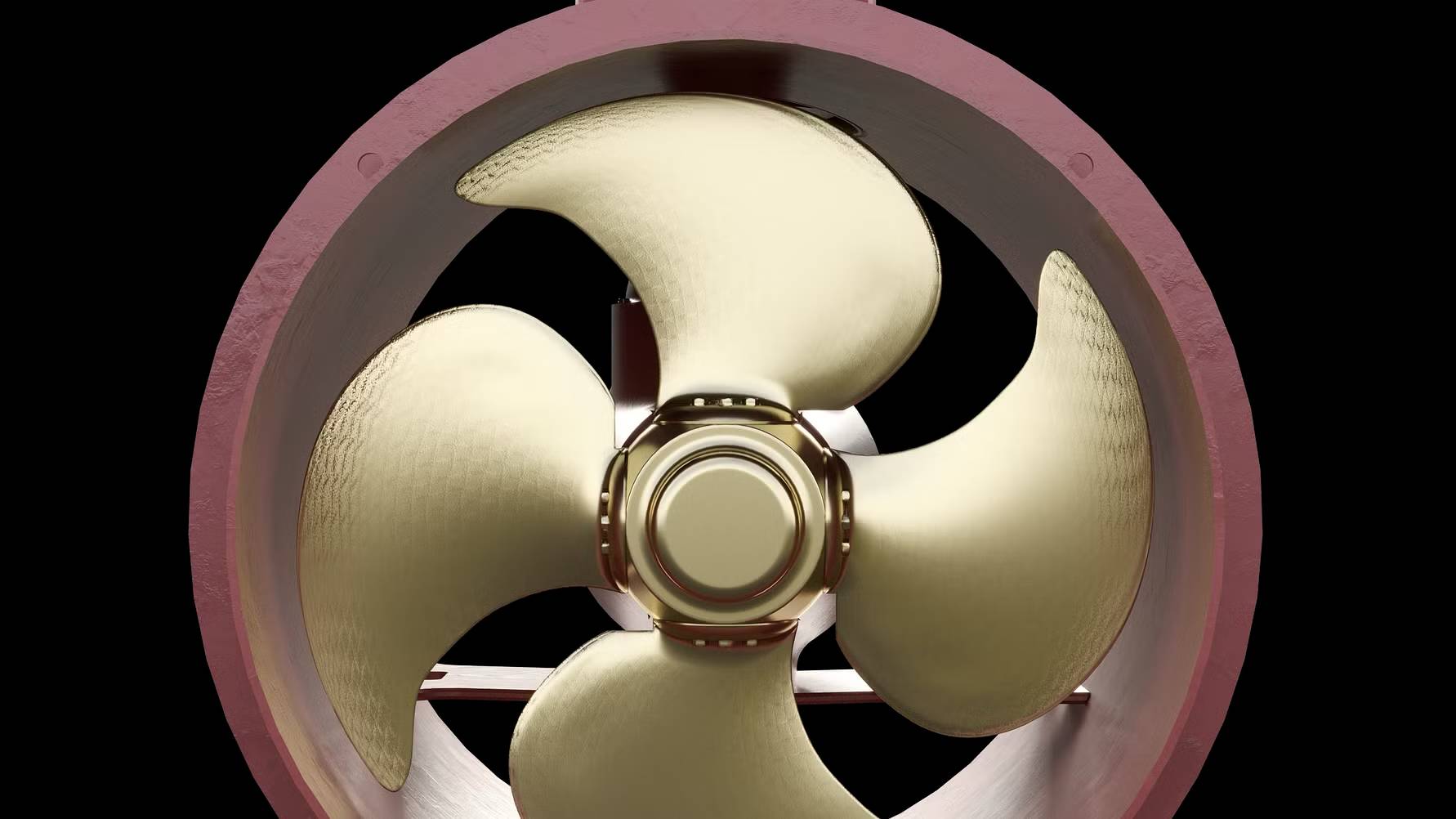
- Area: Propeller blade tip clearance to tunnel plating and inspection for erosion/paint lossCheck: Propeller blade tip clearance to tunnel plating and inspection for erosion/paint loss
- Area: Propeller shaft seals and elastomer O-ring condition (renewal interval: 5-year)Check: Propeller shaft seals and elastomer O-ring condition (renewal interval: 5-year)
- Area: Bearing clearances and roller bearing wear assessment; gear tooth pattern inspectionCheck: Bearing clearances and roller bearing wear assessment; gear tooth pattern inspection
- Area: Gearbox/hydraulic oil analysis and fluid condition; EAL (Environmentally Acceptable Lubricant) compatibility verificationCheck: Gearbox/hydraulic oil analysis and fluid condition; EAL (Environmentally Acceptable Lubricant) compatibility verification
- Area: Electric motor stator/rotor condition, vibration levels, temperature monitoring, and spin testing verificationCheck: Electric motor stator/rotor condition, vibration levels, temperature monitoring, and spin testing verification
- Area: Drive module accessibility and intermediate shaft/coupler inspection for wear or misalignmentCheck: Drive module accessibility and intermediate shaft/coupler inspection for wear or misalignment
- Area: Pitch change control mechanism operational testing (for CP variants) and control system validationCheck: Pitch change control mechanism operational testing (for CP variants) and control system validation
- Area: Tunnel structure integrity assessment for cavitation erosion, corrosion, and fatigue crackingCheck: Tunnel structure integrity assessment for cavitation erosion, corrosion, and fatigue cracking
Typ-universelle Inspektionspunkte fuer Bow/Stern Thrusters (verifiziert, 2026-06).
- Area: Propeller blade tip clearance to tunnel plating and inspection for erosion/paint lossCheck: Propeller blade tip clearance to tunnel plating and inspection for erosion/paint loss
- Area: Propeller shaft seals and elastomer O-ring condition (renewal interval: 5-year)Check: Propeller shaft seals and elastomer O-ring condition (renewal interval: 5-year)
- Area: Bearing clearances and roller bearing wear assessment; gear tooth pattern inspectionCheck: Bearing clearances and roller bearing wear assessment; gear tooth pattern inspection
- Area: Gearbox/hydraulic oil analysis and fluid condition; EAL (Environmentally Acceptable Lubricant) compatibility verificationCheck: Gearbox/hydraulic oil analysis and fluid condition; EAL (Environmentally Acceptable Lubricant) compatibility verification
- Area: Electric motor stator/rotor condition, vibration levels, temperature monitoring, and spin testing verificationCheck: Electric motor stator/rotor condition, vibration levels, temperature monitoring, and spin testing verification
- Area: Drive module accessibility and intermediate shaft/coupler inspection for wear or misalignmentCheck: Drive module accessibility and intermediate shaft/coupler inspection for wear or misalignment
- Area: Pitch change control mechanism operational testing (for CP variants) and control system validationCheck: Pitch change control mechanism operational testing (for CP variants) and control system validation
- Area: Tunnel structure integrity assessment for cavitation erosion, corrosion, and fatigue crackingCheck: Tunnel structure integrity assessment for cavitation erosion, corrosion, and fatigue cracking
Typ-universelle Inspektionspunkte fuer Bow/Stern Thrusters (verifiziert, 2026-06).
- Area: Propeller blade tip clearance to tunnel plating and inspection for erosion/paint lossCheck: Propeller blade tip clearance to tunnel plating and inspection for erosion/paint loss
- Area: Propeller shaft seals and elastomer O-ring condition (renewal interval: 5-year)Check: Propeller shaft seals and elastomer O-ring condition (renewal interval: 5-year)
- Area: Bearing clearances and roller bearing wear assessment; gear tooth pattern inspectionCheck: Bearing clearances and roller bearing wear assessment; gear tooth pattern inspection
- Area: Gearbox/hydraulic oil analysis and fluid condition; EAL (Environmentally Acceptable Lubricant) compatibility verificationCheck: Gearbox/hydraulic oil analysis and fluid condition; EAL (Environmentally Acceptable Lubricant) compatibility verification
- Area: Electric motor stator/rotor condition, vibration levels, temperature monitoring, and spin testing verificationCheck: Electric motor stator/rotor condition, vibration levels, temperature monitoring, and spin testing verification
- Area: Drive module accessibility and intermediate shaft/coupler inspection for wear or misalignmentCheck: Drive module accessibility and intermediate shaft/coupler inspection for wear or misalignment
- Area: Pitch change control mechanism operational testing (for CP variants) and control system validationCheck: Pitch change control mechanism operational testing (for CP variants) and control system validation
- Area: Tunnel structure integrity assessment for cavitation erosion, corrosion, and fatigue crackingCheck: Tunnel structure integrity assessment for cavitation erosion, corrosion, and fatigue cracking
Typ-universelle Inspektionspunkte fuer Bow/Stern Thrusters (verifiziert, 2026-06).
- Area: Propeller blade tip clearance to tunnel plating and inspection for erosion/paint lossCheck: Propeller blade tip clearance to tunnel plating and inspection for erosion/paint loss
- Area: Propeller shaft seals and elastomer O-ring condition (renewal interval: 5-year)Check: Propeller shaft seals and elastomer O-ring condition (renewal interval: 5-year)
- Area: Bearing clearances and roller bearing wear assessment; gear tooth pattern inspectionCheck: Bearing clearances and roller bearing wear assessment; gear tooth pattern inspection
- Area: Gearbox/hydraulic oil analysis and fluid condition; EAL (Environmentally Acceptable Lubricant) compatibility verificationCheck: Gearbox/hydraulic oil analysis and fluid condition; EAL (Environmentally Acceptable Lubricant) compatibility verification
- Area: Electric motor stator/rotor condition, vibration levels, temperature monitoring, and spin testing verificationCheck: Electric motor stator/rotor condition, vibration levels, temperature monitoring, and spin testing verification
- Area: Drive module accessibility and intermediate shaft/coupler inspection for wear or misalignmentCheck: Drive module accessibility and intermediate shaft/coupler inspection for wear or misalignment
- Area: Pitch change control mechanism operational testing (for CP variants) and control system validationCheck: Pitch change control mechanism operational testing (for CP variants) and control system validation
- Area: Tunnel structure integrity assessment for cavitation erosion, corrosion, and fatigue crackingCheck: Tunnel structure integrity assessment for cavitation erosion, corrosion, and fatigue cracking
Typ-universelle Inspektionspunkte fuer Bow/Stern Thrusters (verifiziert, 2026-06).
Steerprop
5 ✓ 5 verified- Area: Propeller blade condition and pitch angle (fixed pitch propeller inspection for wear, cracks, and erosion)Check: Propeller blade condition and pitch angle (fixed pitch propeller inspection for wear, cracks, and erosion)
- Area: Tunnel bearing system integrity and lubrication statusCheck: Tunnel bearing system integrity and lubrication status
- Area: Motor/drive unit electrical insulation and winding conditionCheck: Motor/drive unit electrical insulation and winding condition
- Area: Gearbox oil level, condition, and cooler functionalityCheck: Gearbox oil level, condition, and cooler functionality
- Area: Thrust bearing and stern tube bearing wear and clearancesCheck: Thrust bearing and stern tube bearing wear and clearances
- Area: Hull tunnel opening and strut structural integrity (no cracks, corrosion, or deformation)Check: Hull tunnel opening and strut structural integrity (no cracks, corrosion, or deformation)
- Area: Vibration and noise levels during operation (baseline comparison)Check: Vibration and noise levels during operation (baseline comparison)
- Area: Sealing system functionality (lip seals, shaft seals against water ingress)Check: Sealing system functionality (lip seals, shaft seals against water ingress)
Typ-universelle Inspektionspunkte fuer Bow/Stern Thrusters (verifiziert, 2026-06).
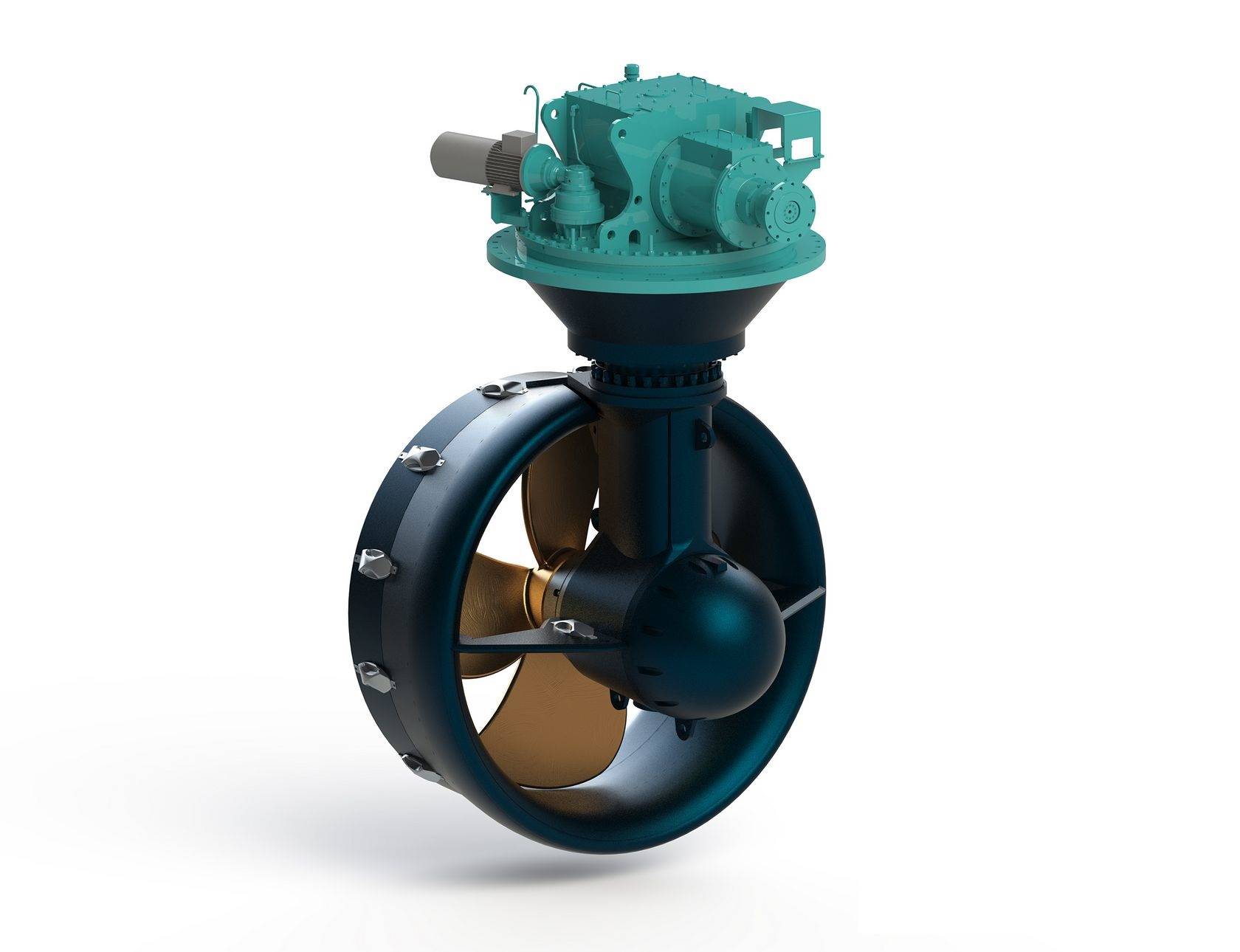
- Area: Propeller blade condition and pitch angle (fixed pitch propeller inspection for wear, cracks, and erosion)Check: Propeller blade condition and pitch angle (fixed pitch propeller inspection for wear, cracks, and erosion)
- Area: Tunnel bearing system integrity and lubrication statusCheck: Tunnel bearing system integrity and lubrication status
- Area: Motor/drive unit electrical insulation and winding conditionCheck: Motor/drive unit electrical insulation and winding condition
- Area: Gearbox oil level, condition, and cooler functionalityCheck: Gearbox oil level, condition, and cooler functionality
- Area: Thrust bearing and stern tube bearing wear and clearancesCheck: Thrust bearing and stern tube bearing wear and clearances
- Area: Hull tunnel opening and strut structural integrity (no cracks, corrosion, or deformation)Check: Hull tunnel opening and strut structural integrity (no cracks, corrosion, or deformation)
- Area: Vibration and noise levels during operation (baseline comparison)Check: Vibration and noise levels during operation (baseline comparison)
- Area: Sealing system functionality (lip seals, shaft seals against water ingress)Check: Sealing system functionality (lip seals, shaft seals against water ingress)
Typ-universelle Inspektionspunkte fuer Bow/Stern Thrusters (verifiziert, 2026-06).
- Area: Propeller blade condition and pitch angle (fixed pitch propeller inspection for wear, cracks, and erosion)Check: Propeller blade condition and pitch angle (fixed pitch propeller inspection for wear, cracks, and erosion)
- Area: Tunnel bearing system integrity and lubrication statusCheck: Tunnel bearing system integrity and lubrication status
- Area: Motor/drive unit electrical insulation and winding conditionCheck: Motor/drive unit electrical insulation and winding condition
- Area: Gearbox oil level, condition, and cooler functionalityCheck: Gearbox oil level, condition, and cooler functionality
- Area: Thrust bearing and stern tube bearing wear and clearancesCheck: Thrust bearing and stern tube bearing wear and clearances
- Area: Hull tunnel opening and strut structural integrity (no cracks, corrosion, or deformation)Check: Hull tunnel opening and strut structural integrity (no cracks, corrosion, or deformation)
- Area: Vibration and noise levels during operation (baseline comparison)Check: Vibration and noise levels during operation (baseline comparison)
- Area: Sealing system functionality (lip seals, shaft seals against water ingress)Check: Sealing system functionality (lip seals, shaft seals against water ingress)
Typ-universelle Inspektionspunkte fuer Bow/Stern Thrusters (verifiziert, 2026-06).
- Area: Propeller blade condition and pitch angle (fixed pitch propeller inspection for wear, cracks, and erosion)Check: Propeller blade condition and pitch angle (fixed pitch propeller inspection for wear, cracks, and erosion)
- Area: Tunnel bearing system integrity and lubrication statusCheck: Tunnel bearing system integrity and lubrication status
- Area: Motor/drive unit electrical insulation and winding conditionCheck: Motor/drive unit electrical insulation and winding condition
- Area: Gearbox oil level, condition, and cooler functionalityCheck: Gearbox oil level, condition, and cooler functionality
- Area: Thrust bearing and stern tube bearing wear and clearancesCheck: Thrust bearing and stern tube bearing wear and clearances
- Area: Hull tunnel opening and strut structural integrity (no cracks, corrosion, or deformation)Check: Hull tunnel opening and strut structural integrity (no cracks, corrosion, or deformation)
- Area: Vibration and noise levels during operation (baseline comparison)Check: Vibration and noise levels during operation (baseline comparison)
- Area: Sealing system functionality (lip seals, shaft seals against water ingress)Check: Sealing system functionality (lip seals, shaft seals against water ingress)
Typ-universelle Inspektionspunkte fuer Bow/Stern Thrusters (verifiziert, 2026-06).
- Area: Propeller blade condition and pitch angle (fixed pitch propeller inspection for wear, cracks, and erosion)Check: Propeller blade condition and pitch angle (fixed pitch propeller inspection for wear, cracks, and erosion)
- Area: Tunnel bearing system integrity and lubrication statusCheck: Tunnel bearing system integrity and lubrication status
- Area: Motor/drive unit electrical insulation and winding conditionCheck: Motor/drive unit electrical insulation and winding condition
- Area: Gearbox oil level, condition, and cooler functionalityCheck: Gearbox oil level, condition, and cooler functionality
- Area: Thrust bearing and stern tube bearing wear and clearancesCheck: Thrust bearing and stern tube bearing wear and clearances
- Area: Hull tunnel opening and strut structural integrity (no cracks, corrosion, or deformation)Check: Hull tunnel opening and strut structural integrity (no cracks, corrosion, or deformation)
- Area: Vibration and noise levels during operation (baseline comparison)Check: Vibration and noise levels during operation (baseline comparison)
- Area: Sealing system functionality (lip seals, shaft seals against water ingress)Check: Sealing system functionality (lip seals, shaft seals against water ingress)
Typ-universelle Inspektionspunkte fuer Bow/Stern Thrusters (verifiziert, 2026-06).
Wärtsilä
5 ✓ 2 verified
- Leistungsbereich WST
- 700 kW bis 4900 kW
- Leistungsbereich WTT
- 400 kW bis 5500 kW
- Leistungsbereich WST-R
- 750 kW bis 6500 kW
- Neigungswinkel (WST-R)
- 8-Grad Propeller-Getriebe-Neigung für 15-20% höheren Schub
- Drehbereich
- 360° kontinuierliche Lenkung in horizontaler Ebene
- Wartungsintervalle
- 5-year inspections, 10-year overhauls or after 40,000–56,000 operating hours
- Dichtungstechnologie
- Sternguard In-Water Serviceable Seal (IWSS) - vollständig unter Wasser wartbar
- Ölsystem
- Integrierte Hydraulik mit Feinfiltration zur Lagerverlängerung
- WST - Steerable Thrusters (700-4900 kW)
- WTT - Transverse/Tunnel Thrusters (400-5500 kW)
- WST-R - Retractable Steerable Thrusters (750-6500 kW)
- WST-E - Electric Steerable Thrusters (WST-18E embedded electric)
- Underwater-Mountable Steerable Thrusters
- Area: Propeller-Blätter: Erosion, Korrosion, Kantenschäden, VerschleißmusterCheck: Perform visual inspection and NDT (non-destructive testing) according to OEM and classification society standards. Polishing in combination with edge damage repair increases operating efficiency by 2-5%. Check for pitting, erosion patterns and corrosion spots; document severe pitting areas.
- Area: Propeller blade foot seals: wear, leakage, water ingressCheck: 5-year overhaul: Disassemble and inspect all seals. 10-year overhaul: Complete replacement of blade foot O-rings. Check for water penetration in jet thruster assembly. Seals are critical for system protection.
- Area: Wellendichtungen (Shaft Seals): Abnutzung, Leckage, AustauschbedarfCheck: Measure propeller shaft wear with poker gauge (between last two stern tube seals). Perform complete inspection of tooth clearance, tooth pattern and shaft seals. 5-year overhaul: seal replacement. 10-year overhaul: comprehensive replacement.
- Area: Bearings (Roller Bearings): wear, bearing clearance, preload, failure symptomsCheck: 5-year overhaul: Check bearing clearance and wear. 10-year overhaul: Complete bearing replacement, reset preload, perform NDT inspection. Check main bearing axial clearance wear with feeler gauge (0.1 mm); maximum wear limit 2 mm. Use Wärtsilä bearing wear measurement system for remote monitoring of propeller shaft shoulder.
- Area: Hydrauliksystem: Öl-Verschmutzung (Wasser, Partikel), Filtration, ÖlqualitätCheck: Check gear oil regularly. At critical wear limits: partial change (bleed-and-feed) or complete oil change. Monitor water content in oil (critical >1000 ppm). Check fine filtration system and redundant filter options. Continuously filter out water ingress. Use all Wärtsilä-approved spare parts. 5-10-year overhaul: Perform oil change and filter maintenance.
- Area: Sternguard In-Water Serviceable Seal (IWSS): seal integrity, maintenance possible underwaterCheck: Check for oil leakage at outer seal. Inspect inflatable emergency seal and inner rope guard. Fully serviceable underwater without habitat or discharge. Measure seal gap and wear. Check retrofit compatibility with other seal types. Confirm compatibility with EAL and mineral oils.
Type-universal inspection/service points for Bow/Stern Thrusters (Wärtsilä, Mega-Schwarm 2026-06). Per-model specs not auto-filled.
- High thrust capability across a wide power band (400 kW–5.5 MW) suitable for large vessels
- Full 360° horizontal steering improves low‑speed maneuverability and DP performance
- Sternguard IWSS allows seal inspection and replacement under water, reducing dry‑dock time
- Integrated hydraulic drive with fine filtration extends bearing life and reduces oil contamination risk
- Modular design fits both bow and stern installations on new builds or retrofits
- Requires a hull tunnel; not suitable for vessels without sufficient side space
- Under‑water seal technology demands specialised service personnel and tools
- Noise and vibration levels can be higher than azimuth pod thrusters at comparable power
- Upper power limit (≈5.5 MW) may be lower than some high‑power competitors for ultra‑large ships
- Initial procurement cost is relatively high compared with conventional fixed‑pitch tunnel thrusters
- Leistungsbereich WST
- 700 kW bis 4900 kW
- Leistungsbereich WTT
- 400 kW bis 5500 kW
- Leistungsbereich WST-R
- 750 kW bis 6500 kW
- Neigungswinkel (WST-R)
- 8-Grad Propeller-Getriebe-Neigung für 15-20% höheren Schub
- Drehbereich
- 360° kontinuierliche Lenkung in horizontaler Ebene
- Wartungsintervalle
- 5-year inspections, 10-year overhauls or after 40,000–56,000 operating hours
- Dichtungstechnologie
- Sternguard In-Water Serviceable Seal (IWSS) - vollständig unter Wasser wartbar
- Ölsystem
- Integrierte Hydraulik mit Feinfiltration zur Lagerverlängerung
- WST - Steerable Thrusters (700-4900 kW)
- WTT - Transverse/Tunnel Thrusters (400-5500 kW)
- WST-R - Retractable Steerable Thrusters (750-6500 kW)
- WST-E - Electric Steerable Thrusters (WST-18E embedded electric)
- Underwater-Mountable Steerable Thrusters
- Area: Propeller-Blätter: Erosion, Korrosion, Kantenschäden, VerschleißmusterCheck: Perform visual inspection and NDT (non-destructive testing) according to OEM and classification society standards. Polishing in combination with edge damage repair increases operating efficiency by 2-5%. Check for pitting, erosion patterns and corrosion spots; document severe pitting areas.
- Area: Propeller blade foot seals: wear, leakage, water ingressCheck: 5-year overhaul: Disassemble and inspect all seals. 10-year overhaul: Complete replacement of blade foot O-rings. Check for water penetration in jet thruster assembly. Seals are critical for system protection.
- Area: Wellendichtungen (Shaft Seals): Abnutzung, Leckage, AustauschbedarfCheck: Measure propeller shaft wear with poker gauge (between last two stern tube seals). Perform complete inspection of tooth clearance, tooth pattern and shaft seals. 5-year overhaul: seal replacement. 10-year overhaul: comprehensive replacement.
- Area: Bearings (Roller Bearings): wear, bearing clearance, preload, failure symptomsCheck: 5-year overhaul: Check bearing clearance and wear. 10-year overhaul: Complete bearing replacement, reset preload, perform NDT inspection. Check main bearing axial clearance wear with feeler gauge (0.1 mm); maximum wear limit 2 mm. Use Wärtsilä bearing wear measurement system for remote monitoring of propeller shaft shoulder.
- Area: Hydrauliksystem: Öl-Verschmutzung (Wasser, Partikel), Filtration, ÖlqualitätCheck: Check gear oil regularly. At critical wear limits: partial change (bleed-and-feed) or complete oil change. Monitor water content in oil (critical >1000 ppm). Check fine filtration system and redundant filter options. Continuously filter out water ingress. Use all Wärtsilä-approved spare parts. 5-10-year overhaul: Perform oil change and filter maintenance.
- Area: Sternguard In-Water Serviceable Seal (IWSS): seal integrity, maintenance possible underwaterCheck: Check for oil leakage at outer seal. Inspect inflatable emergency seal and inner rope guard. Fully serviceable underwater without habitat or discharge. Measure seal gap and wear. Check retrofit compatibility with other seal types. Confirm compatibility with EAL and mineral oils.
Type-universal inspection/service points for Bow/Stern Thrusters (Wärtsilä, Mega-Schwarm 2026-06). Per-model specs not auto-filled.
- Very wide power range (400 kW – 5.5 MW) covering most merchant vessel sizes
- Continuous 360° steering without mechanical gearboxes in the hull
- Sternguard In‑Water Serviceable Seal (IWSS) allows underwater maintenance, reducing dry‑dock time
- Integrated fine‑filtration hydraulic system extends oil life and lowers wear
- Standardised class approvals (DNV, ABS, LR) simplify certification
- Requires a hull tunnel; installation is invasive and may need structural reinforcement
- Higher capital cost than simple fixed bow thrusters or electric variants
- Hydraulic system adds complexity and needs regular oil quality monitoring
- Seal failure can lead to water ingress into the gear housing if not inspected on schedule
- Retractable option (WST‑R) is not available in the basic WTT line
- Area: Thruster compartment and tunnel inspection for marine growth, cracks, corrosion, and overall structural integrity - minimum twice yearlyCheck: Thruster compartment and tunnel inspection for marine growth, cracks, corrosion, and overall structural integrity - minimum twice yearly
- Area: Shaft seals pressure testing and visual inspection for saltwater intrusion indicators (oil leakage into tunnel)Check: Shaft seals pressure testing and visual inspection for saltwater intrusion indicators (oil leakage into tunnel)
- Area: Oil seals and gaskets inspection for leakage or degradation - replace as neededCheck: Oil seals and gaskets inspection for leakage or degradation - replace as needed
- Area: Motor function verification and electrical/hydraulic supply line checksCheck: Motor function verification and electrical/hydraulic supply line checks
- Area: Gearbox backlash measurement and gear wheel condition inspection during overhaulsCheck: Gearbox backlash measurement and gear wheel condition inspection during overhauls
- Area: Blade/propeller inspection for damage, wear, looseness, and proper pitch positioning on controllable pitch unitsCheck: Blade/propeller inspection for damage, wear, looseness, and proper pitch positioning on controllable pitch units
- Area: Bearing condition assessment through vibration monitoring and periodic wear measurement during 5-10 year major overhaulsCheck: Bearing condition assessment through vibration monitoring and periodic wear measurement during 5-10 year major overhauls
- Area: Pod/tunnel interface bolts torque verification and tightening to specificationCheck: Pod/tunnel interface bolts torque verification and tightening to specification
Typ-universelle Inspektionspunkte fuer Bow/Stern Thrusters (verifiziert, 2026-06).
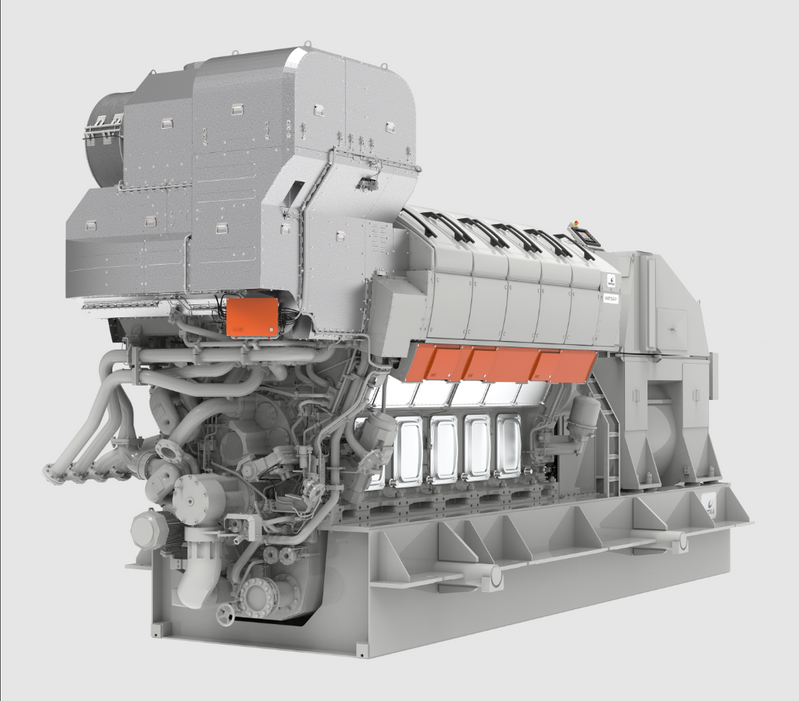
- Area: Thruster compartment and tunnel inspection for marine growth, cracks, corrosion, and overall structural integrity - minimum twice yearlyCheck: Thruster compartment and tunnel inspection for marine growth, cracks, corrosion, and overall structural integrity - minimum twice yearly
- Area: Shaft seals pressure testing and visual inspection for saltwater intrusion indicators (oil leakage into tunnel)Check: Shaft seals pressure testing and visual inspection for saltwater intrusion indicators (oil leakage into tunnel)
- Area: Oil seals and gaskets inspection for leakage or degradation - replace as neededCheck: Oil seals and gaskets inspection for leakage or degradation - replace as needed
- Area: Motor function verification and electrical/hydraulic supply line checksCheck: Motor function verification and electrical/hydraulic supply line checks
- Area: Gearbox backlash measurement and gear wheel condition inspection during overhaulsCheck: Gearbox backlash measurement and gear wheel condition inspection during overhauls
- Area: Blade/propeller inspection for damage, wear, looseness, and proper pitch positioning on controllable pitch unitsCheck: Blade/propeller inspection for damage, wear, looseness, and proper pitch positioning on controllable pitch units
- Area: Bearing condition assessment through vibration monitoring and periodic wear measurement during 5-10 year major overhaulsCheck: Bearing condition assessment through vibration monitoring and periodic wear measurement during 5-10 year major overhauls
- Area: Pod/tunnel interface bolts torque verification and tightening to specificationCheck: Pod/tunnel interface bolts torque verification and tightening to specification
Typ-universelle Inspektionspunkte fuer Bow/Stern Thrusters (verifiziert, 2026-06).
- Leistungsbereich WST
- 700 kW bis 4900 kW
- Leistungsbereich WTT
- 400 kW bis 5500 kW
- Leistungsbereich WST-R
- 750 kW bis 6500 kW
- Neigungswinkel (WST-R)
- 8-Grad Propeller-Getriebe-Neigung für 15-20% höheren Schub
- Drehbereich
- 360° kontinuierliche Lenkung in horizontaler Ebene
- Wartungsintervalle
- 5-year inspections, 10-year overhauls or after 40,000–56,000 operating hours
- Dichtungstechnologie
- Sternguard In-Water Serviceable Seal (IWSS) - vollständig unter Wasser wartbar
- Ölsystem
- Integrierte Hydraulik mit Feinfiltration zur Lagerverlängerung
- WST - Steerable Thrusters (700-4900 kW)
- WTT - Transverse/Tunnel Thrusters (400-5500 kW)
- WST-R - Retractable Steerable Thrusters (750-6500 kW)
- WST-E - Electric Steerable Thrusters (WST-18E embedded electric)
- Underwater-Mountable Steerable Thrusters
- Area: Propeller-Blätter: Erosion, Korrosion, Kantenschäden, VerschleißmusterCheck: Perform visual inspection and NDT (non-destructive testing) according to OEM and classification society standards. Polishing in combination with edge damage repair increases operating efficiency by 2-5%. Check for pitting, erosion patterns and corrosion spots; document severe pitting areas.
- Area: Propeller blade foot seals: wear, leakage, water ingressCheck: 5-year overhaul: Disassemble and inspect all seals. 10-year overhaul: Complete replacement of blade foot O-rings. Check for water penetration in jet thruster assembly. Seals are critical for system protection.
- Area: Wellendichtungen (Shaft Seals): Abnutzung, Leckage, AustauschbedarfCheck: Measure propeller shaft wear with poker gauge (between last two stern tube seals). Perform complete inspection of tooth clearance, tooth pattern and shaft seals. 5-year overhaul: seal replacement. 10-year overhaul: comprehensive replacement.
- Area: Bearings (Roller Bearings): wear, bearing clearance, preload, failure symptomsCheck: 5-year overhaul: Check bearing clearance and wear. 10-year overhaul: Complete bearing replacement, reset preload, perform NDT inspection. Check main bearing axial clearance wear with feeler gauge (0.1 mm); maximum wear limit 2 mm. Use Wärtsilä bearing wear measurement system for remote monitoring of propeller shaft shoulder.
- Area: Hydrauliksystem: Öl-Verschmutzung (Wasser, Partikel), Filtration, ÖlqualitätCheck: Check gear oil regularly. At critical wear limits: partial change (bleed-and-feed) or complete oil change. Monitor water content in oil (critical >1000 ppm). Check fine filtration system and redundant filter options. Continuously filter out water ingress. Use all Wärtsilä-approved spare parts. 5-10-year overhaul: Perform oil change and filter maintenance.
- Area: Sternguard In-Water Serviceable Seal (IWSS): seal integrity, maintenance possible underwaterCheck: Check for oil leakage at outer seal. Inspect inflatable emergency seal and inner rope guard. Fully serviceable underwater without habitat or discharge. Measure seal gap and wear. Check retrofit compatibility with other seal types. Confirm compatibility with EAL and mineral oils.
Type-universal inspection/service points for Bow/Stern Thrusters (Wärtsilä, Mega-Schwarm 2026-06). Per-model specs not auto-filled.
- Continuous 360° thrust vectoring provides superior low‑speed manoeuvring and dynamic positioning capability.
- Sternguard In‑Water Serviceable Seal allows underwater inspection and minor repairs without dry‑docking, reducing maintenance downtime.
- Integrated hydraulic system with fine filtration extends bearing life and reduces oil contamination risk.
- Modular power range (400 kW – 5.5 MW) covers a wide variety of vessel sizes while maintaining high thrust efficiency.
- Standardised control interface compatible with most DP‑2/DP‑3 systems.
- Higher capital cost compared with fixed, non‑steerable tunnel thrusters.
- Larger tunnel cross‑section can affect hull structural layout and internal volume.
- Complex control and monitoring electronics require specialised training for crew and shore support.
- Spare parts (e.g., IWSS components) are proprietary, potentially increasing inventory costs.
- Installation requires precise alignment; retrofits on existing vessels may be labour intensive.
Berg Propulsion
4 ✓ 4 verified- Area: Tunnel and compartment inspection for excessive moisture, standing water, and leaks (twice yearly)Check: Tunnel and compartment inspection for excessive moisture, standing water, and leaks (twice yearly)
- Area: Visual inspection of tunnel ends for cracks in gelcoat or laminate where glassed to hullCheck: Visual inspection of tunnel ends for cracks in gelcoat or laminate where glassed to hull
- Area: Gasket inspection at thruster saddle/motor mounting bracket for leaksCheck: Gasket inspection at thruster saddle/motor mounting bracket for leaks
- Area: Propeller and drive inspection for cracks, dings, damage, and loosenessCheck: Propeller and drive inspection for cracks, dings, damage, and looseness
- Area: Oil condition check beneath propeller for leaking seal indicators (monthly sampling for moisture)Check: Oil condition check beneath propeller for leaking seal indicators (monthly sampling for moisture)
- Area: Sacrificial anode (zinc) condition assessment and renewal (minimum annually)Check: Sacrificial anode (zinc) condition assessment and renewal (minimum annually)
- Area: Motor bearing and joint lubrication (monthly)Check: Motor bearing and joint lubrication (monthly)
- Area: Electrical connections and control system testing for corrosion and proper functionCheck: Electrical connections and control system testing for corrosion and proper function
- Area: Gear oil level verification (typically 90-weight) and condition monitoringCheck: Gear oil level verification (typically 90-weight) and condition monitoring
Typ-universelle Inspektionspunkte fuer Bow/Stern Thrusters (verifiziert, 2026-06).
- Area: Tunnel and compartment inspection for excessive moisture, standing water, and leaks (twice yearly)Check: Tunnel and compartment inspection for excessive moisture, standing water, and leaks (twice yearly)
- Area: Visual inspection of tunnel ends for cracks in gelcoat or laminate where glassed to hullCheck: Visual inspection of tunnel ends for cracks in gelcoat or laminate where glassed to hull
- Area: Gasket inspection at thruster saddle/motor mounting bracket for leaksCheck: Gasket inspection at thruster saddle/motor mounting bracket for leaks
- Area: Propeller and drive inspection for cracks, dings, damage, and loosenessCheck: Propeller and drive inspection for cracks, dings, damage, and looseness
- Area: Oil condition check beneath propeller for leaking seal indicators (monthly sampling for moisture)Check: Oil condition check beneath propeller for leaking seal indicators (monthly sampling for moisture)
- Area: Sacrificial anode (zinc) condition assessment and renewal (minimum annually)Check: Sacrificial anode (zinc) condition assessment and renewal (minimum annually)
- Area: Motor bearing and joint lubrication (monthly)Check: Motor bearing and joint lubrication (monthly)
- Area: Electrical connections and control system testing for corrosion and proper functionCheck: Electrical connections and control system testing for corrosion and proper function
- Area: Gear oil level verification (typically 90-weight) and condition monitoringCheck: Gear oil level verification (typically 90-weight) and condition monitoring
Typ-universelle Inspektionspunkte fuer Bow/Stern Thrusters (verifiziert, 2026-06).
- Area: Tunnel and compartment inspection for excessive moisture, standing water, and leaks (twice yearly)Check: Tunnel and compartment inspection for excessive moisture, standing water, and leaks (twice yearly)
- Area: Visual inspection of tunnel ends for cracks in gelcoat or laminate where glassed to hullCheck: Visual inspection of tunnel ends for cracks in gelcoat or laminate where glassed to hull
- Area: Gasket inspection at thruster saddle/motor mounting bracket for leaksCheck: Gasket inspection at thruster saddle/motor mounting bracket for leaks
- Area: Propeller and drive inspection for cracks, dings, damage, and loosenessCheck: Propeller and drive inspection for cracks, dings, damage, and looseness
- Area: Oil condition check beneath propeller for leaking seal indicators (monthly sampling for moisture)Check: Oil condition check beneath propeller for leaking seal indicators (monthly sampling for moisture)
- Area: Sacrificial anode (zinc) condition assessment and renewal (minimum annually)Check: Sacrificial anode (zinc) condition assessment and renewal (minimum annually)
- Area: Motor bearing and joint lubrication (monthly)Check: Motor bearing and joint lubrication (monthly)
- Area: Electrical connections and control system testing for corrosion and proper functionCheck: Electrical connections and control system testing for corrosion and proper function
- Area: Gear oil level verification (typically 90-weight) and condition monitoringCheck: Gear oil level verification (typically 90-weight) and condition monitoring
Typ-universelle Inspektionspunkte fuer Bow/Stern Thrusters (verifiziert, 2026-06).
- Area: Tunnel and compartment inspection for excessive moisture, standing water, and leaks (twice yearly)Check: Tunnel and compartment inspection for excessive moisture, standing water, and leaks (twice yearly)
- Area: Visual inspection of tunnel ends for cracks in gelcoat or laminate where glassed to hullCheck: Visual inspection of tunnel ends for cracks in gelcoat or laminate where glassed to hull
- Area: Gasket inspection at thruster saddle/motor mounting bracket for leaksCheck: Gasket inspection at thruster saddle/motor mounting bracket for leaks
- Area: Propeller and drive inspection for cracks, dings, damage, and loosenessCheck: Propeller and drive inspection for cracks, dings, damage, and looseness
- Area: Oil condition check beneath propeller for leaking seal indicators (monthly sampling for moisture)Check: Oil condition check beneath propeller for leaking seal indicators (monthly sampling for moisture)
- Area: Sacrificial anode (zinc) condition assessment and renewal (minimum annually)Check: Sacrificial anode (zinc) condition assessment and renewal (minimum annually)
- Area: Motor bearing and joint lubrication (monthly)Check: Motor bearing and joint lubrication (monthly)
- Area: Electrical connections and control system testing for corrosion and proper functionCheck: Electrical connections and control system testing for corrosion and proper function
- Area: Gear oil level verification (typically 90-weight) and condition monitoringCheck: Gear oil level verification (typically 90-weight) and condition monitoring
Typ-universelle Inspektionspunkte fuer Bow/Stern Thrusters (verifiziert, 2026-06).
Brunvoll
45
- Hydraulic leakage or low oil level causes reduced pressure, slow movement or low-level alarms
- Pump, motor or drive faults cause loss of one power unit, reduced thrust or failure to move the rudder
- Control, feedback or position-sensor faults cause hunting, incorrect indication or failure to reach the commanded position
- Bearing, seal or mechanical wear causes vibration, leakage, backlash or abnormal noise
- Air ingress, contamination or cooling faults cause unstable hydraulic or drive performance and protective trips
- Variable thrust without changing motor speed thanks to CPP hub
- Compact tunnel design fits in limited hull space
- Good low‑speed thrust efficiency for DP and port maneuvers
- Proven Brunvoll build quality with marine‑grade materials
- Gear tooth wear reported in service, requiring regular inspection
- Shaft seal leakage can lead to maintenance downtime
- CPP hub oil leaks have been noted on this model
- Motor overheating if cooling system is not adequately maintained
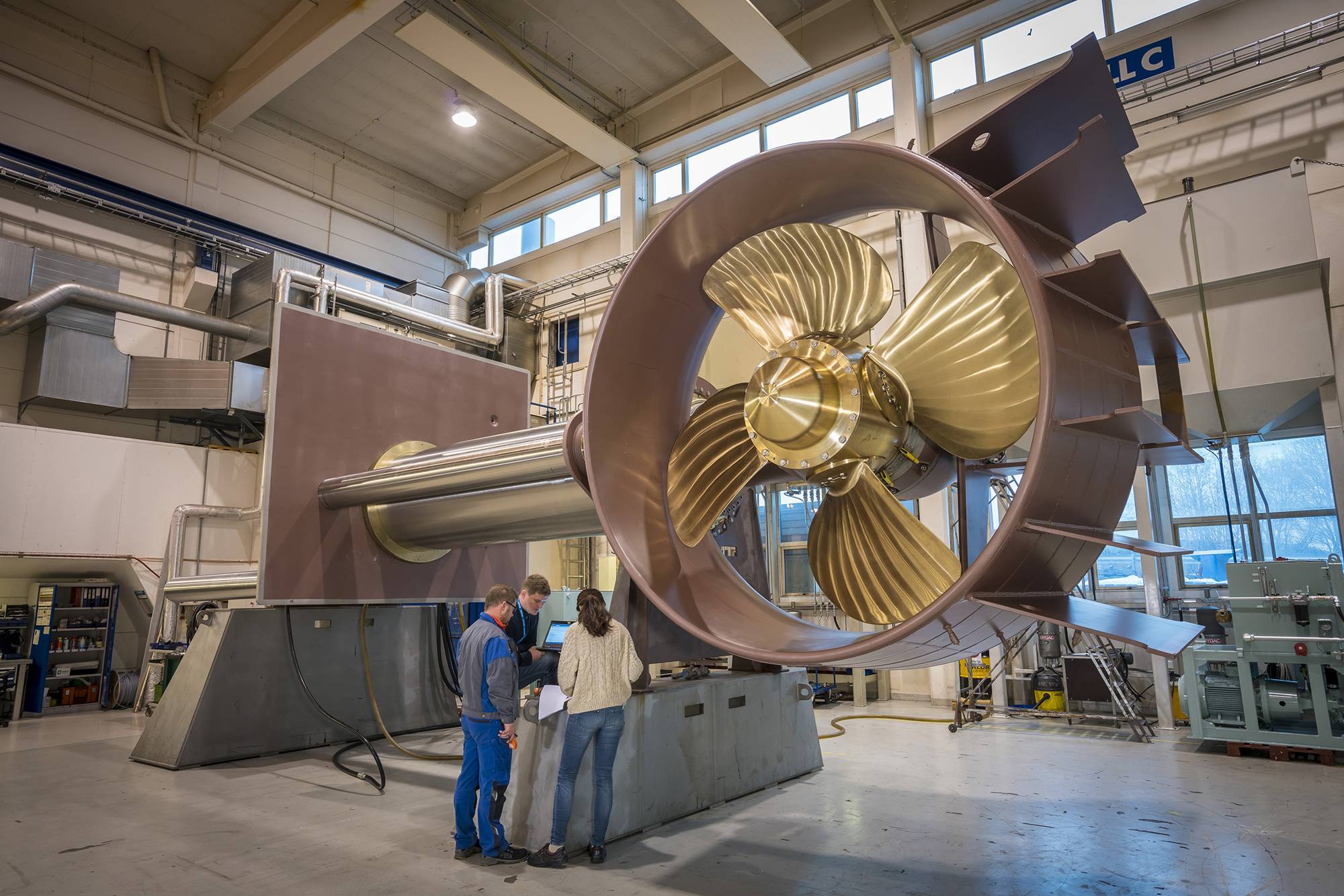
- Hydraulic leakage or low oil level causes reduced pressure, slow movement or low-level alarms
- Pump, motor or drive faults cause loss of one power unit, reduced thrust or failure to move the rudder
- Control, feedback or position-sensor faults cause hunting, incorrect indication or failure to reach the commanded position
- Bearing, seal or mechanical wear causes vibration, leakage, backlash or abnormal noise
- Air ingress, contamination or cooling faults cause unstable hydraulic or drive performance and protective trips
- 1500 kW rating gives strong side thrust for large offshore and ferry vessels
- Fixed‑pitch, direct‑drive design reduces hydraulic complexity and maintenance
- Motor‑reversal provides instant change of thrust direction without clutch wear
- Robust construction suited to harsh offshore environments (salt spray, vibration)
- Annual gear inspection program supported by Brunvoll simplifies upkeep
- Large hull penetration required; installation is invasive and costly
- Higher capital cost compared with conventional hydraulic thrusters of similar power
- Fixed‑pitch propeller can suffer blade‑tip erosion in abrasive or sediment‑laden waters
- Main bearing wear and shaft seal leakage are known wear items that need periodic overhaul
- Thrust vector limited to transverse direction only; no 360° azimuth capability
- Propeller or blade damage from debris can cause vibration and reduced thrust, noticed during maneuvering
- Gear or bearing wear can produce abnormal noise, heat or metallic debris in lubricant
- Seal leakage can allow water ingress or oil loss, seen through header-tank level changes or leakage alarms
- Motor, converter or hydraulic-drive faults can prevent commanded thrust, seen as trips, low power or unavailable thruster status
- Control or feedback-sensor faults can cause incorrect direction or pitch/azimuth indication, seen as command mismatch alarms
- High thrust‑to‑size ratio – 13 kN in a relatively small 470 mm tunnel
- Direct‑drive electric motor gives high efficiency and low noise
- Modular, quick‑install design reduces docktime for retrofits
- Integrated control electronics compatible with most DP and helm systems
- Proven reliability on a range of mid‑size vessels
- Maximum thrust may be insufficient for large tankers or high‑speed DP vessels
- Requires dedicated 100 kW electrical supply and cooling capacity
- Tunnel diameter limits installation in very narrow hull sections
- Potential cavitation at high RPM if not properly matched to hull geometry
- Initial purchase price higher than basic hydraulic units
- Propeller or blade damage from debris can cause vibration and reduced thrust, noticed during maneuvering
- Gear or bearing wear can produce abnormal noise, heat or metallic debris in lubricant
- Seal leakage can allow water ingress or oil loss, seen through header-tank level changes or leakage alarms
- Motor, converter or hydraulic-drive faults can prevent commanded thrust, seen as trips, low power or unavailable thruster status
- Control or feedback-sensor faults can cause incorrect direction or pitch/azimuth indication, seen as command mismatch alarms
- High thrust‑to‑power ratio (≈13 kN at 100 kW)
- Compact footprint suitable for stern locations with limited space
- Low vibration and noise due to enclosed duct design
- Integrated control electronics compatible with standard ship automation systems
- Proven reliability in harsh North Sea operating conditions
- Fixed tunnel geometry limits efficiency at off‑design speeds compared with azimuth units
- Requires hull penetration and internal space, affecting structural layout
- 100 kW power may be insufficient for larger vessels needing higher maneuvering thrust
- Maintenance access can be difficult in stern installations
- Higher upfront cost than basic open‑propeller thrusters
- Propeller or blade damage from debris can cause vibration and reduced thrust, noticed during maneuvering
- Gear or bearing wear can produce abnormal noise, heat or metallic debris in lubricant
- Seal leakage can allow water ingress or oil loss, seen through header-tank level changes or leakage alarms
- Motor, converter or hydraulic-drive faults can prevent commanded thrust, seen as trips, low power or unavailable thruster status
- Control or feedback-sensor faults can cause incorrect direction or pitch/azimuth indication, seen as command mismatch alarms
- High thrust‑to‑power ratio (≈0.13 kN/kW) for its size
- Compact tunnel geometry fits tight hull spaces
- Water‑lubricated bearings give low vibration and maintenance intervals
- Integrated control electronics compatible with most ship bridge systems
- Proven reliability from extensive service on European coastal vessels
- Cavitation can appear at high RPM or in shallow water
- Tunnel lining requires periodic inspection for wear or fouling
- Limited thrust compared with larger azimuth pods for very large ships
- Installation demands structural reinforcement of the hull bow section
- Power consumption relatively high for modest maneuvering tasks
- Propeller fouling, rope entanglement or blade damage causes vibration, reduced thrust or high drive load
- Shaft-seal or gearbox leakage causes oil loss, water ingress or low-level alarms
- Bearing or gear wear causes abnormal noise, vibration or rising temperature
- Electric motor, converter or hydraulic-drive faults cause reduced thrust, failed starts or protective trips
- Pitch, steering or control-feedback faults as applicable cause incorrect thrust response, loss of direction control or remote-control alarms
- High thrust‑to‑power ratio (≈19.5 kN at 150 kW) for its size
- Compact tunnel design fits into existing hull sections without major structural changes
- Proven reliability of Brunvoll’s propeller‑duct system with good cavitation resistance
- Low acoustic signature, beneficial for offshore and passenger vessels
- Fixed‑direction thrust; cannot rotate like an azimuth pod
- Maintenance requires periodic inspection of the propeller and duct bearings
- Performance drops noticeably in very shallow water due to reduced inflow
- Installation may be limited by hull thickness or internal space constraints
- Propeller fouling, rope entanglement or blade damage causes vibration, reduced thrust or high drive load
- Shaft-seal or gearbox leakage causes oil loss, water ingress or low-level alarms
- Bearing or gear wear causes abnormal noise, vibration or rising temperature
- Electric motor, converter or hydraulic-drive faults cause reduced thrust, failed starts or protective trips
- Pitch, steering or control-feedback faults as applicable cause incorrect thrust response, loss of direction control or remote-control alarms
- High thrust‑to‑power ratio (≈0.13 kN/kW) for its size class
- Compact 540 mm duct fits vessels with limited hull space
- Proven Brunvoll reliability and low maintenance design
- Optional variable‑frequency drive enables fine thrust control
- Robust corrosion‑resistant housing suitable for marine environments
- Tunnel geometry can cause hull vibration in heavy seas
- Requires regular duct cleaning to maintain performance
- Fixed installation limits retrofitting on already‑built ships
- Power demand (200 kW) may be high for vessels with limited electrical generation capacity
- Less effective than azimuth thrusters for high‑speed DP operations
- Propeller fouling, rope entanglement or blade damage causes vibration, reduced thrust or high drive load
- Shaft-seal or gearbox leakage causes oil loss, water ingress or low-level alarms
- Bearing or gear wear causes abnormal noise, vibration or rising temperature
- Electric motor, converter or hydraulic-drive faults cause reduced thrust, failed starts or protective trips
- Pitch, steering or control-feedback faults as applicable cause incorrect thrust response, loss of direction control or remote-control alarms
- High thrust‑to‑power ratio (26 kN at 200 kW) for its size
- Compact tunnel diameter (540 mm) fits limited hull space
- Proven reliability of Brunvoll’s marine‑grade bearings and sealed motor design
- Low acoustic signature, suitable for noise‑sensitive operations
- Standardized ABS/DNV class approvals simplify certification
- Fixed‑direction thrust; cannot rotate like a pod or azimuth thruster
- Requires significant hull penetration and internal space for the tunnel duct
- Cavitation risk at full load in shallow water may reduce efficiency
- Maintenance access can be limited on existing vessels without redesign
- Propeller fouling, rope entanglement or blade damage causes vibration, reduced thrust or high drive load
- Shaft-seal or gearbox leakage causes oil loss, water ingress or low-level alarms
- Bearing or gear wear causes abnormal noise, vibration or rising temperature
- Electric motor, converter or hydraulic-drive faults cause reduced thrust, failed starts or protective trips
- Pitch, steering or control-feedback faults as applicable cause incorrect thrust response, loss of direction control or remote-control alarms
- High thrust‑to‑power ratio (≈13 kN per 100 kW) for its size
- Compact tunnel diameter (610 mm) fits vessels with limited hull space
- Robust, low‑maintenance construction typical of Brunvoll designs
- Integrated control interface compatible with most ship bridge systems
- Proven performance in DP‑assisted maneuvering for vessels up to ~30 000 dwt
- Maximum thrust (39 kN) may be insufficient for large tankers or cruise ships requiring >50 kN
- Requires a dedicated 300 kW power supply and associated cabling/hydraulic infrastructure
- Tunnel geometry can be more prone to fouling than ducted‑propeller designs, affecting efficiency over time
- Weight and installation space not disclosed; may impact vessel weight budget
- Propeller fouling, rope entanglement or blade damage causes vibration, reduced thrust or high drive load
- Shaft-seal or gearbox leakage causes oil loss, water ingress or low-level alarms
- Bearing or gear wear causes abnormal noise, vibration or rising temperature
- Electric motor, converter or hydraulic-drive faults cause reduced thrust, failed starts or protective trips
- Pitch, steering or control-feedback faults as applicable cause incorrect thrust response, loss of direction control or remote-control alarms
- High thrust‑to‑power ratio (39 kN at 300 kW) for effective docking and DP assistance
- Relatively small tunnel diameter (610 mm) fits vessels with limited hull space
- Robust, corrosion‑resistant construction typical of Brunvoll’s Norwegian engineering standards
- Straightforward installation in a stern tunnel with proven mounting kits
- Low acoustic signature compared with some azimuth pod solutions
- 300 kW motor power results in higher fuel consumption than lower‑power alternatives
- Requires hull penetration and structural reinforcement, increasing dry‑dock time and cost
- Fixed‑direction design limits flexibility; not suitable where 360° thrust is required
- Potential for cavitation at very high propeller speeds if not matched to vessel speed profile
- Higher upfront cost than basic low‑thrust tunnel units
- Propeller fouling, rope entanglement or blade damage causes vibration, reduced thrust or high drive load
- Shaft-seal or gearbox leakage causes oil loss, water ingress or low-level alarms
- Bearing or gear wear causes abnormal noise, vibration or rising temperature
- Electric motor, converter or hydraulic-drive faults cause reduced thrust, failed starts or protective trips
- Pitch, steering or control-feedback faults as applicable cause incorrect thrust response, loss of direction control or remote-control alarms
- High thrust‑to‑power ratio (52 kN at 400 kW) gives strong manoeuvring capability.
- Compact 680 mm duct diameter fits vessels with limited hull space.
- Brunvoll’s proven reliability and low vibration/noise levels suit passenger and offshore vessels.
- Integrated control electronics simplify installation and DP integration.
- Maximum thrust may be insufficient for very large tankers or high‑speed DP‑3 ships.
- Hull penetration required; installation can be complex on existing vessels.
- Impeller maintenance generally requires dry‑docking, adding lifecycle cost.
- Performance can degrade in shallow water due to increased suction effects.
- Propeller or blade damage from debris can cause vibration and reduced thrust, noticed during maneuvering
- Gear or bearing wear can produce abnormal noise, heat or metallic debris in lubricant
- Seal leakage can allow water ingress or oil loss, seen through header-tank level changes or leakage alarms
- Motor, converter or hydraulic-drive faults can prevent commanded thrust, seen as trips, low power or unavailable thruster status
- Control or feedback-sensor faults can cause incorrect direction or pitch/azimuth indication, seen as command mismatch alarms
- High thrust‑to‑power ratio (52 kN at 400 kW) for effective bow‑/stern‑sideways control
- Robust, corrosion‑resistant steel housing suitable for harsh marine environments
- Integrated control system compatible with most ship bridge consoles
- Compact tunnel diameter (680 mm) minimises hull penetration and internal space loss
- Class‑approved design reduces certification effort for new builds
- Relatively high power demand increases auxiliary engine load
- Installation requires precise alignment of the tunnel duct, adding dockyard time
- Hydraulic system adds complexity and maintenance compared with electric thrusters
- Noise and vibration can be noticeable in passenger‑focused vessels if not properly isolated
- Spare parts may have longer lead times for remote operators
- Propeller fouling, rope entanglement or blade damage causes vibration, reduced thrust or high drive load
- Shaft-seal or gearbox leakage causes oil loss, water ingress or low-level alarms
- Bearing or gear wear causes abnormal noise, vibration or rising temperature
- Electric motor, converter or hydraulic-drive faults cause reduced thrust, failed starts or protective trips
- Pitch, steering or control-feedback faults as applicable cause incorrect thrust response, loss of direction control or remote-control alarms
- High thrust‑to‑power ratio (65 kN at 500 kW) for effective bow assistance
- Compact tunnel diameter (750 mm) fits within standard hull sections
- Robust, low‑maintenance design with proven Brunvoll reliability
- Low acoustic signature – suitable for noise‑sensitive vessels
- Straightforward integration into existing hull structures
- Requires a sizable hull opening; may limit internal layout options
- Fixed azimuth – cannot rotate like an azipod, limiting directional flexibility
- Power demand can be high for vessels with limited generator capacity
- Maintenance access is through the tunnel, which can be time‑consuming
- Not optimal for ultra‑large ships where higher thrust levels are required
- Propeller or blade damage from debris can cause vibration and reduced thrust, noticed during maneuvering
- Gear or bearing wear can produce abnormal noise, heat or metallic debris in lubricant
- Seal leakage can allow water ingress or oil loss, seen through header-tank level changes or leakage alarms
- Motor, converter or hydraulic-drive faults can prevent commanded thrust, seen as trips, low power or unavailable thruster status
- Control or feedback-sensor faults can cause incorrect direction or pitch/azimuth indication, seen as command mismatch alarms
- High thrust output (65 kN) relative to power consumption (500 kW)
- Compact 750 mm tunnel diameter fits in medium‑size hull openings
- Robust stainless‑steel construction suitable for harsh marine environments
- Integrated control electronics compatible with most ship bridge systems
- Low acoustic signature compared with conventional propeller‑type thrusters
- Requires significant hull reinforcement at the stern installation point
- High electrical power demand may limit use on vessels with restricted generator capacity
- Maintenance of large bearing assemblies can be labour‑intensive
- Installation space needed for duct and motor may conflict with aft cargo or equipment layouts
- Limited thrust modulation below rated power compared with variable‑pitch azimuth thrusters
- Propeller fouling, rope entanglement or blade damage causes vibration, reduced thrust or high drive load
- Shaft-seal or gearbox leakage causes oil loss, water ingress or low-level alarms
- Bearing or gear wear causes abnormal noise, vibration or rising temperature
- Electric motor, converter or hydraulic-drive faults cause reduced thrust, failed starts or protective trips
- Pitch, steering or control-feedback faults as applicable cause incorrect thrust response, loss of direction control or remote-control alarms
- High thrust‑to‑power ratio (78 kN @ 600 kW) for strong docking assistance
- Compact 820 mm duct size fits into limited bow spaces
- Robust stainless‑steel housing and proven Brunvoll reliability
- Low vibration and noise levels compared with open‑propeller designs
- Straightforward installation and maintenance access
- Fixed tunnel cannot be retracted, adding hull resistance when under way
- Requires significant bow structural reinforcement and sealing
- Power demand (600 kW) may be high for vessels with limited electrical capacity
- Diameter limits use to vessels that can accommodate an 820 mm opening
- Propeller fouling, rope entanglement or blade damage causes vibration, reduced thrust or high drive load
- Shaft-seal or gearbox leakage causes oil loss, water ingress or low-level alarms
- Bearing or gear wear causes abnormal noise, vibration or rising temperature
- Electric motor, converter or hydraulic-drive faults cause reduced thrust, failed starts or protective trips
- Pitch, steering or control-feedback faults as applicable cause incorrect thrust response, loss of direction control or remote-control alarms
- High thrust‑to‑power ratio (≈78 kN at 600 kW)
- Compact tunnel layout fits in limited hull space
- Low vibration and noise due to optimized duct geometry
- Proven reliability with long service history on tankers and cruise ships
- Available with integrated control unit for precise thrust command
- Fixed‑direction thrust; cannot provide 360° vectoring like azimuth pods
- Duct and propeller require periodic inspection and dry‑docking maintenance
- Higher fuel consumption than electric podded thrusters when used continuously
- Installation limited to stern positions with sufficient hull opening
- Noise can increase noticeably at full power in confined spaces
- Propeller fouling, rope entanglement or blade damage causes vibration, reduced thrust or high drive load
- Shaft-seal or gearbox leakage causes oil loss, water ingress or low-level alarms
- Bearing or gear wear causes abnormal noise, vibration or rising temperature
- Electric motor, converter or hydraulic-drive faults cause reduced thrust, failed starts or protective trips
- Pitch, steering or control-feedback faults as applicable cause incorrect thrust response, loss of direction control or remote-control alarms
- High thrust‑to‑power ratio (≈130 N/kW) for strong bow assistance
- Compact tunnel size (925 mm) fits medium‑size hull openings
- Brunvoll’s proven reliability and long service life in harsh marine environments
- Integrated cooling and sealed bearing system reduces maintenance intervals
- Low vibration and noise compared with open‑propeller azimuth units
- Tunnel geometry limits effectiveness at higher vessel speeds or heavy seas
- Potential for cavitation if operated near design RPM limits
- Requires hull penetration and structural reinforcement, adding installation complexity
- Higher electrical power demand than comparable azimuth thrusters for the same maneuverability envelope
- Control system must be integrated with ship’s bridge console; not a plug‑and‑play solution
- Propeller or blade damage from debris can cause vibration and reduced thrust, noticed during maneuvering
- Gear or bearing wear can produce abnormal noise, heat or metallic debris in lubricant
- Seal leakage can allow water ingress or oil loss, seen through header-tank level changes or leakage alarms
- Motor, converter or hydraulic-drive faults can prevent commanded thrust, seen as trips, low power or unavailable thruster status
- Control or feedback-sensor faults can cause incorrect direction or pitch/azimuth indication, seen as command mismatch alarms
- Very high thrust (≈97.5 kN) for its power rating, enabling rapid low‑speed manoeuvring
- Large 925 mm tunnel diameter reduces cavitation and improves efficiency
- Robust marine‑grade construction suited to harsh offshore environments
- Integrated control electronics compatible with most ship bridge systems
- Proven track record on a range of large commercial vessels
- Large physical size limits installation on smaller hulls or retrofits with space constraints
- High power demand (750 kW) increases fuel consumption and electrical load
- Maintenance of bearings, seals and the tunnel liner can be intensive
- Noise and vibration levels are higher than some azimuth‑type thrusters
- Capital cost is relatively high compared to lower‑power alternatives
- Propeller or blade damage from debris can cause vibration and reduced thrust, noticed during maneuvering
- Gear or bearing wear can produce abnormal noise, heat or metallic debris in lubricant
- Seal leakage can allow water ingress or oil loss, seen through header-tank level changes or leakage alarms
- Motor, converter or hydraulic-drive faults can prevent commanded thrust, seen as trips, low power or unavailable thruster status
- Control or feedback-sensor faults can cause incorrect direction or pitch/azimuth indication, seen as command mismatch alarms
- High thrust‑to‑power ratio (≈130 kN at 1000 kW) suitable for large vessels
- Compact 1100 mm duct diameter reduces hull penetration size
- Robust steel housing and water‑cooled motor give long service life with low maintenance
- Integrated variable frequency drive enables fine thrust control and energy efficiency
- Proven design widely used in commercial shipping, offering good cavitation performance
- Significant power demand; requires dedicated electrical supply and cooling infrastructure
- Hull opening for the duct can be complex to retrofit on existing ships
- Higher upfront cost compared with basic low‑power thrusters
- Noise and vibration at full load may require additional acoustic mitigation measures
- Limited effectiveness in very high‑speed manoeuvring where azimuth or pod systems are preferred
- Propeller or blade damage from debris can cause vibration and reduced thrust, noticed during maneuvering
- Gear or bearing wear can produce abnormal noise, heat or metallic debris in lubricant
- Seal leakage can allow water ingress or oil loss, seen through header-tank level changes or leakage alarms
- Motor, converter or hydraulic-drive faults can prevent commanded thrust, seen as trips, low power or unavailable thruster status
- Control or feedback-sensor faults can cause incorrect direction or pitch/azimuth indication, seen as command mismatch alarms
- High thrust output (≈130 kN) relative to power consumption (1 000 kW)
- Compact 1.1 m tunnel diameter fits in limited stern space on large ships
- Class‑approved design with robust steel housing and corrosion‑resistant components
- Integrated control electronics compatible with most ship automation systems
- Low acoustic signature compared with external propeller thrusters
- Requires significant hull penetration and structural reinforcement during installation
- High electrical power demand may strain vessel generators on smaller ships
- Maintenance of bearings, seals and the tunnel liner can be labour‑intensive
- Limited effectiveness if stern draft is shallow or space constraints prevent full tunnel length
- Not suitable for vessels that prefer azimuth pod or water‑jet maneuvering solutions
- Propeller or blade damage from debris can cause vibration and reduced thrust, noticed during maneuvering
- Gear or bearing wear can produce abnormal noise, heat or metallic debris in lubricant
- Seal leakage can allow water ingress or oil loss, seen through header-tank level changes or leakage alarms
- Motor, converter or hydraulic-drive faults can prevent commanded thrust, seen as trips, low power or unavailable thruster status
- Control or feedback-sensor faults can cause incorrect direction or pitch/azimuth indication, seen as command mismatch alarms
- Very high thrust‑to‑power ratio (156 kN at 1 200 kW) suitable for mega‑vessels
- Compact tunnel layout minimizes deck space and preserves hull integrity
- Robust stainless‑steel construction with proven resistance to corrosion and cavitation
- Integrated control electronics compatible with most ship automation systems
- Low acoustic signature, beneficial for passenger comfort on cruise ships
- Large tunnel diameter (≈1.24 m) may limit installation in narrow hull sections
- Requires significant hull reinforcement and precise alignment during fit‑out
- Higher initial procurement and installation cost compared with smaller thrusters
- Power consumption is substantial; not ideal for vessels with limited generator capacity
- Efficiency drops at very low propeller speeds, reducing effectiveness in some DP modes
- Propeller or blade damage from debris can cause vibration and reduced thrust, noticed during maneuvering
- Gear or bearing wear can produce abnormal noise, heat or metallic debris in lubricant
- Seal leakage can allow water ingress or oil loss, seen through header-tank level changes or leakage alarms
- Motor, converter or hydraulic-drive faults can prevent commanded thrust, seen as trips, low power or unavailable thruster status
- Control or feedback-sensor faults can cause incorrect direction or pitch/azimuth indication, seen as command mismatch alarms
- High thrust‑to‑power ratio (156 kN at 1200 kW) gives excellent maneuvering force
- Robust stainless‑steel duct and propeller reduces cavitation and wear
- Integrated control system compatible with DP and conventional helm stations
- Proven reliability on long‑range tankers and cruise ships
- Modular design allows both electric and hydraulic drive options
- Large 1240 mm duct diameter limits installation in vessels with narrow hull sections
- High power demand requires substantial onboard electrical or hydraulic capacity
- Initial capital cost is higher than smaller‑size thrusters from low‑cost manufacturers
- Noise and vibration levels can be significant if not properly isolated
- Maintenance access may require removal of surrounding plating on some ship designs
- Propeller fouling, rope entanglement or blade damage causes vibration, reduced thrust or high drive load
- Shaft-seal or gearbox leakage causes oil loss, water ingress or low-level alarms
- Bearing or gear wear causes abnormal noise, vibration or rising temperature
- Electric motor, converter or hydraulic-drive faults cause reduced thrust, failed starts or protective trips
- Pitch, steering or control-feedback faults as applicable cause incorrect thrust response, loss of direction control or remote-control alarms
- Very high thrust‑to‑power ratio (195 kN at 1500 kW) enables rapid lateral movement.
- Large 1.45 m duct diameter improves hydraulic efficiency and reduces cavitation risk.
- Brunvoll’s proven reliability and long service life in harsh marine environments.
- Integrated control electronics compatible with most ship‑automation systems.
- Suitable for dynamic positioning and tight‑harbor maneuvers on mega‑vessels.
- Physical size limits installation to vessels with sufficient bow space.
- High power demand increases fuel consumption of auxiliary generators.
- Initial capital cost is higher than lower‑rated thrusters.
- Maintenance access can be more complex due to the large duct and motor arrangement.
- Potential for increased noise and vibration if not properly isolated.
- Propeller or blade damage from debris can cause vibration and reduced thrust, noticed during maneuvering
- Gear or bearing wear can produce abnormal noise, heat or metallic debris in lubricant
- Seal leakage can allow water ingress or oil loss, seen through header-tank level changes or leakage alarms
- Motor, converter or hydraulic-drive faults can prevent commanded thrust, seen as trips, low power or unavailable thruster status
- Control or feedback-sensor faults can cause incorrect direction or pitch/azimuth indication, seen as command mismatch alarms
- High thrust‑to‑power ratio (≈195 kN at 1500 kW) suitable for very large ships
- Robust stainless‑steel housing and impeller design for long service life
- Modular construction allows relatively easy on‑site maintenance and part replacement
- Integrated control electronics compatible with most ship bridge systems
- Proven track record in tanker and container vessel applications
- Large tunnel diameter (1.45 m) limits installation to vessels with sufficient hull space
- High power demand increases fuel consumption of the auxiliary system
- Weight and structural reinforcement requirements can add to overall ship weight
- Requires dedicated cooling and ventilation systems in the engine room
- May be over‑spec for vessels under 30,000 DWT where a smaller thruster would suffice
- Propeller fouling, rope entanglement or blade damage causes vibration, reduced thrust or high drive load
- Shaft-seal or gearbox leakage causes oil loss, water ingress or low-level alarms
- Bearing or gear wear causes abnormal noise, vibration or rising temperature
- Electric motor, converter or hydraulic-drive faults cause reduced thrust, failed starts or protective trips
- Pitch, steering or control-feedback faults as applicable cause incorrect thrust response, loss of direction control or remote-control alarms
- Very high thrust (≈260 kN) suitable for mega‑size tankers and container ships
- Compact tunnel layout minimizes deck space while providing strong lateral force
- Integrated cooling and control system reduces downtime and simplifies operation
- Proven reliability with Brunvoll’s long track record in harsh marine environments
- Compatible with dynamic positioning (DP) systems for enhanced station‑keeping
- High electrical power demand (≈2 MW) increases vessel energy budget
- Installation requires large hull penetration and structural reinforcement
- Maintenance of the tunnel interior can be labour‑intensive
- Potential cavitation at maximum thrust in shallow water conditions
- Higher upfront cost compared with lower‑power thruster alternatives
- Propeller or blade damage from debris can cause vibration and reduced thrust, noticed during maneuvering
- Gear or bearing wear can produce abnormal noise, heat or metallic debris in lubricant
- Seal leakage can allow water ingress or oil loss, seen through header-tank level changes or leakage alarms
- Motor, converter or hydraulic-drive faults can prevent commanded thrust, seen as trips, low power or unavailable thruster status
- Control or feedback-sensor faults can cause incorrect direction or pitch/azimuth indication, seen as command mismatch alarms
- Very high thrust (260 kN) from a relatively compact 1.8 m duct, suitable for large ships with limited hull space
- Electric drive provides low acoustic signature and reduced emissions compared with diesel‑driven units
- Integrated control system compatible with most DP packages for seamless maneuvering
- Robust construction designed for harsh marine environments, offering long service intervals
- Requires a high‑capacity electrical supply (typically several megawatts), which may necessitate upgrades to ship power distribution
- Higher upfront capital cost than smaller or lower‑power thrusters
- Installation can be complex due to the large duct diameter and need for precise alignment in the stern hull
- Maintenance of large bearings and seals demands specialized shore support
- Propeller or blade damage from debris can cause vibration and reduced thrust, noticed during maneuvering
- Gear or bearing wear can produce abnormal noise, heat or metallic debris in lubricant
- Seal leakage can allow water ingress or oil loss, seen through header-tank level changes or leakage alarms
- Motor, converter or hydraulic-drive faults can prevent commanded thrust, seen as trips, low power or unavailable thruster status
- Control or feedback-sensor faults can cause incorrect direction or pitch/azimuth indication, seen as command mismatch alarms
- Very high thrust (≈325 kN) for its power rating, improving port handling and DP performance
- Robust, corrosion‑resistant stainless steel tunnel housing suitable for harsh marine environments
- Integrated water‑cooling system reduces overheating risk during prolonged use
- Proven track record on cruise ships, LNG carriers and large tankers – high reliability
- Relatively low acoustic signature compared with azimuth pods of similar power
- Large tunnel diameter (≈2.15 m) consumes significant hull space and may limit installation options
- High electrical demand (≈2.5 MW) requires substantial onboard power generation capacity
- Fixed‑pitch propeller limits fine thrust control; variable‑pitch versions are not standard
- Installation involves hull penetration, increasing dry‑dock time and potential for leaks if not fitted correctly
- Efficiency drops sharply at higher vessel speeds – thruster is intended for low‑speed maneuvering only
- Propeller or blade damage from debris can cause vibration and reduced thrust, noticed during maneuvering
- Gear or bearing wear can produce abnormal noise, heat or metallic debris in lubricant
- Seal leakage can allow water ingress or oil loss, seen through header-tank level changes or leakage alarms
- Motor, converter or hydraulic-drive faults can prevent commanded thrust, seen as trips, low power or unavailable thruster status
- Control or feedback-sensor faults can cause incorrect direction or pitch/azimuth indication, seen as command mismatch alarms
- High thrust output (325 kN) in a relatively compact 2150 mm diameter housing
- Integrated variable‑pitch propeller gives good efficiency across a range of speeds
- Water‑cooled electric motor reduces vibration and noise, enhancing crew comfort
- Robust design with proven service record on cruise ships and LNG carriers
- Compact installation footprint compared with comparable azimuth units
- Large hull penetration and overall weight increase structural complexity
- High electrical power demand requires substantial shipboard power distribution upgrades
- Higher capital cost than lower‑power tunnel thrusters or basic bow thrusters
- Limited 360° thrust capability; not as versatile for dynamic positioning as azimuth pods
- Maintenance access can be difficult due to stern location and confined tunnel space
- Propeller fouling, rope entanglement or blade damage causes vibration, reduced thrust or high drive load
- Shaft-seal or gearbox leakage causes oil loss, water ingress or low-level alarms
- Bearing or gear wear causes abnormal noise, vibration or rising temperature
- Electric motor, converter or hydraulic-drive faults cause reduced thrust, failed starts or protective trips
- Pitch, steering or control-feedback faults as applicable cause incorrect thrust response, loss of direction control or remote-control alarms
- Very high thrust‑to‑power ratio (≈0.13 kN/kW) for rapid lateral movement
- Robust stainless‑steel duct and propeller construction suited to harsh sea conditions
- Integrated control electronics compatible with most DP and ship‑handling systems
- Low acoustic signature compared with external azimuth thrusters, beneficial for passenger comfort
- Proven track record on ultra‑large crude carriers (ULCC) and cruise ships
- Large tunnel diameter (2.5 m) requires significant hull penetration and structural reinforcement
- Higher initial purchase and installation cost than smaller bow thrusters
- Maintenance access can be limited; periodic inspection of the duct interior is required
- Weight and space requirements limit suitability for vessels under 30 000 gt or with narrow hull forms
- Power demand (3 MW) may exceed the capacity of older ship electrical systems
- Propeller fouling, rope entanglement or blade damage causes vibration, reduced thrust or high drive load
- Shaft-seal or gearbox leakage causes oil loss, water ingress or low-level alarms
- Bearing or gear wear causes abnormal noise, vibration or rising temperature
- Electric motor, converter or hydraulic-drive faults cause reduced thrust, failed starts or protective trips
- Pitch, steering or control-feedback faults as applicable cause incorrect thrust response, loss of direction control or remote-control alarms
- Very high thrust output (≈390 kN) for its size, enabling rapid maneuvering even on large vessels
- Compact duct design reduces hull penetration and structural reinforcement needs compared with larger azimuth pods
- Robust stainless‑steel construction rated for harsh offshore environments and extended service intervals
- Integrated control electronics compatible with most ship bridge systems for precise thrust vectoring
- Low cavitation design improves efficiency and reduces noise/vibration
- High power demand (3 MW) increases fuel consumption when used frequently
- Installation requires significant hull modifications and reinforcement of the stern section
- Limited access space can make routine maintenance more time‑consuming
- Large duct diameter may restrict placement on vessels with tight aft arrangements
- Noise and vibration levels, while mitigated, are still higher than some low‑speed azimuth thrusters
- Propeller fouling, rope entanglement or blade damage causes vibration, reduced thrust or high drive load
- Shaft-seal or gearbox leakage causes oil loss, water ingress or low-level alarms
- Bearing or gear wear causes abnormal noise, vibration or rising temperature
- Electric motor, converter or hydraulic-drive faults cause reduced thrust, failed starts or protective trips
- Pitch, steering or control-feedback faults as applicable cause incorrect thrust response, loss of direction control or remote-control alarms
- Very high thrust‑to‑power ratio (455 kN at 3500 kW) for rapid docking and undocking
- Compact tunnel layout fits within hull structure without protruding deck equipment
- Robust steel construction with proven reliability in harsh marine environments
- Low acoustic signature, beneficial for passenger vessels and offshore platforms
- Class‑approved with integrated control electronics compatible with DP systems
- Large tunnel diameter (2.85 m) limits installation to vessels with sufficient hull space
- High power demand increases fuel consumption of auxiliary generators
- Maintenance of bearings, seals and the tunnel lining can be intensive on long‑term operation
- Installation requires precise alignment; retrofits on existing ships may be costly
- Efficiency drops at very low propeller speeds, limiting effectiveness in some slow‑speed maneuvers
- Propeller fouling, rope entanglement or blade damage causes vibration, reduced thrust or high drive load
- Shaft-seal or gearbox leakage causes oil loss, water ingress or low-level alarms
- Bearing or gear wear causes abnormal noise, vibration or rising temperature
- Electric motor, converter or hydraulic-drive faults cause reduced thrust, failed starts or protective trips
- Pitch, steering or control-feedback faults as applicable cause incorrect thrust response, loss of direction control or remote-control alarms
- Very high thrust (≈455 kN) suitable for large tankers and offshore vessels
- Large duct diameter provides efficient water flow and reduced cavitation
- Robust hydraulic drive with water‑lubricated bearings for long service life
- Integrated control system compatible with DP and ship‑handling consoles
- Proven design from Brunvoll, a specialist in marine thrusters
- High power demand (≈3.5 MW) increases fuel consumption and auxiliary load
- Large hull penetration required; installation is complex and costly
- Physical size limits use on vessels with restricted aft space
- Potential for higher acoustic signature compared with smaller electric thrusters
- Maintenance of hydraulic system adds to life‑cycle cost
- Propeller fouling, rope entanglement or blade damage causes vibration, reduced thrust or high drive load
- Shaft-seal or gearbox leakage causes oil loss, water ingress or low-level alarms
- Bearing or gear wear causes abnormal noise, vibration or rising temperature
- Electric motor, converter or hydraulic-drive faults cause reduced thrust, failed starts or protective trips
- Pitch, steering or control-feedback faults as applicable cause incorrect thrust response, loss of direction control or remote-control alarms
- Very high thrust (≈520 kN) for a single unit, enabling precise manoeuvring of large ships
- Optimised duct geometry reduces cavitation and noise, improving crew comfort and compliance with environmental limits
- Robust stainless‑steel tunnel construction provides long service life in harsh marine environments
- Integrated cooling system allows continuous high‑power operation for DP2/DP3 applications
- Proven design widely used on LNG carriers, cruise ships and offshore support vessels
- Large diameter (3.2 m) requires significant hull penetration and internal space
- High electrical power demand (≈4 MW) may exceed the capacity of smaller vessel power plants
- Installation and commissioning costs are substantial compared with lower‑power thrusters
- Maintenance access can be challenging due to size and location in the bow tunnel
- Weight and structural reinforcement requirements increase overall ship weight
- Propeller fouling, rope entanglement or blade damage causes vibration, reduced thrust or high drive load
- Shaft-seal or gearbox leakage causes oil loss, water ingress or low-level alarms
- Bearing or gear wear causes abnormal noise, vibration or rising temperature
- Electric motor, converter or hydraulic-drive faults cause reduced thrust, failed starts or protective trips
- Pitch, steering or control-feedback faults as applicable cause incorrect thrust response, loss of direction control or remote-control alarms
- Very high thrust‑to‑power ratio (520 kN at 4 MW) for its size
- Proven reliability on ultra‑large commercial ships
- Low cavitation design reduces hull wear and noise
- Standard Brunvoll control unit integrates with DP systems
- Class‑approved installation procedures simplify certification
- High electrical power demand (4 MW) requires robust shipboard supply
- Large tunnel diameter occupies significant hull space
- Water‑cooled stator and pump system increase maintenance complexity
- Weight and structural reinforcement requirements are substantial
- Limited suitability for small or low‑power vessels

- Gearbox oil leakage due to shaft seal wear after 15,000–20,000 operating hours
- Propeller blade edge erosion due to cavitation
- Hydraulic motor leakage in hydraulic variants
- Electric motor insulation degradation due to moisture
- DNV‑approved design with documented reliability in commercial service
- Modular construction allows relatively quick installation and replacement of the propeller blade and seal assemblies
- Standardised maintenance regime (oil analysis every 1 000 h, insulation test annually) supports predictable upkeep costs
- Available in both hydraulic and electric drive versions to suit vessel power‑distribution preferences
- Gearbox oil leaks can develop after 15 000–20 000 operating hours due to seal wear
- Propeller blade edges are prone to cavitation‑induced erosion, requiring periodic inspection at dry‑dock
- Hydraulic drive variants may suffer motor leakage if seals age, increasing maintenance effort
- Electrical versions can experience insulation degradation in high‑humidity environments
- Gearbox oil leakage due to shaft seal wear after 15,000–20,000 operating hours
- Propeller blade edge erosion due to cavitation
- Hydraulic motor leakage in hydraulic variants
- Electric motor insulation degradation due to moisture
- High thrust density in a relatively short tunnel length, suitable for vessels with limited hull space
- Modular drive options allow selection of electric, hydraulic or azimuth motor to match vessel power architecture
- Robust sealed tunnel design reduces ingress of debris and simplifies dock‑side inspection
- Standardised mounting dimensions simplify retro‑fit on existing hulls
- DNV‑approved design with proven service history in North Sea operations
- Gearbox oil leakage reported after 15 000–20 000 h of operation, requiring regular oil analysis
- Propeller blade edge erosion from cavitation can reduce efficiency if not monitored
- Hydraulic variants may develop motor seal leaks under high‑cycle duty
- Electric motors are sensitive to moisture; insulation degradation must be tested annually
- Limited thrust range compared with larger external azimuth pods for very large vessels

- Gearbox oil leakage due to shaft seal wear after 15,000–20,000 operating hours
- Propeller blade edge erosion due to cavitation
- Hydraulic motor leakage in hydraulic variants
- Electric motor insulation degradation due to moisture
- Proven reliability with DNV class approval
- Compact installation footprint suitable for medium‑size vessels
- Separate electric and hydraulic variants to match vessel power architecture
- Low vibration and noise levels in the electric version
- Standardised maintenance intervals (oil analysis, motor insulation test)
- Thrust rating limited compared with larger thruster families; may be undersized for high‑power DP vessels
- Shaft seal wear can cause oil leakage after 15 000–20 000 h of operation
- Cavitation can erode propeller edges if operated at high RPM in low‑flow conditions
- Hydraulic versions add complexity (pump, accumulator) and risk of hydraulic leaks
- Electric motor insulation may degrade in very humid environments
- Gearbox oil leakage due to shaft seal wear after 15,000–20,000 operating hours
- Propeller blade edge erosion due to cavitation
- Hydraulic motor leakage in hydraulic variants
- Electric motor insulation degradation due to moisture
- Compact tunnel geometry fits easily into limited hull space
- Integrated motor–gearbox unit simplifies installation and alignment
- Standardised mounting allows quick replacement during dry‑dock periods
- Proven track record on offshore supply vessels and coastal ferries
- Shaft seal wear can cause gearbox oil leakage after 15 000–20 000 h of operation
- Propeller blade edges are prone to cavitation‑induced erosion in high‑load conditions
- Hydraulic variants may develop motor leaks if maintenance is neglected
- Electric versions can suffer insulation degradation when exposed to moisture
- Gearbox oil leakage due to shaft seal wear after 15,000–20,000 operating hours
- Propeller blade edge erosion due to cavitation
- Hydraulic motor leakage in hydraulic variants
- Electric motor insulation degradation due to moisture
- Proven DNV class approval ensures compliance with international standards
- Modular design allows selection of electric or hydraulic motor to match vessel power strategy
- Compact tunnel footprint suitable for vessels with limited hull space
- Standardised maintenance intervals (oil analysis, insulation testing) simplify service planning
- Known wear points: shaft seal and propeller edge require replacement after 15‑20 000 h
- Cavitation can cause blade edge erosion if operating at high RPM or low inflow pressure
- Hydraulic versions may develop motor leaks, increasing maintenance effort
- Electrical version sensitive to moisture; insulation degradation must be monitored
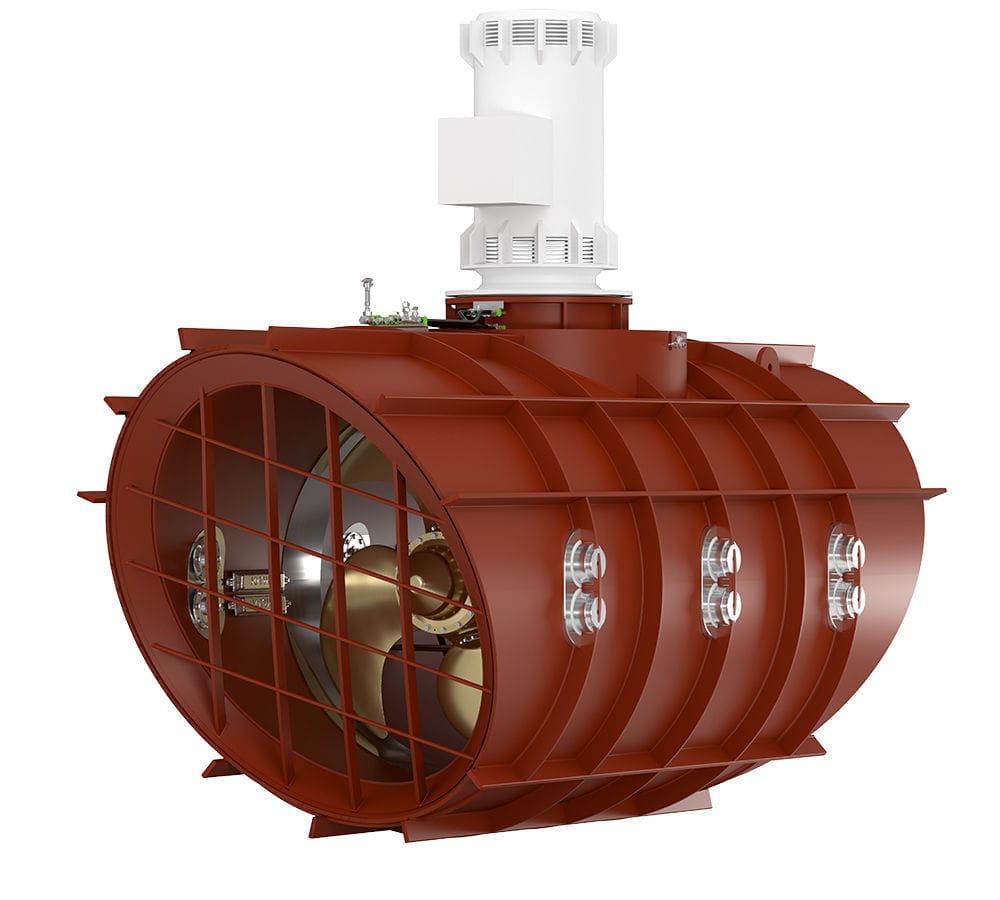
- Gearbox oil leakage due to shaft seal wear after 15,000–20,000 operating hours
- Propeller blade edge erosion due to cavitation
- Hydraulic motor leakage in hydraulic variants
- Electric motor insulation degradation due to moisture
- DNV‑approved design offering class society acceptance
- Modular construction allows installation as either bow or stern unit
- Both hydraulic and electric drive variants available to match vessel power strategy
- Straightforward maintenance regime (oil analysis every 1,000 h, annual motor insulation test)
- Proven track record on a variety of commercial vessels
- Shaft seal wear leading to oil leakage after roughly 15‑20 k operating hours
- Propeller blade edge erosion caused by cavitation in high‑load conditions
- Hydraulic versions prone to motor oil leaks if seals are not refreshed timely
- Electric motors can suffer insulation degradation when exposed to moisture
- Gearbox oil leakage due to shaft seal wear after 15,000–20,000 operating hours
- Propeller blade edge erosion due to cavitation
- Hydraulic motor leakage in hydraulic variants
- Electric motor insulation degradation due to moisture
- Robust cast‑iron tunnel and shaft line suitable for harsh sea conditions
- Proven DNV class approval for both hydraulic and electric drive versions
- Relatively low installation space requirement compared with azimuth pods of similar thrust
- Modular design allows easy conversion between hydraulic and electric motor variants
- Wear of shaft seals can lead to gear‑oil leakage after 15 000–20 000 operating hours
- Propeller blade edges are prone to cavitation‑induced erosion if operated at high RPM in low‑flow conditions
- Hydraulic versions may suffer from fluid leaks; electric versions require strict moisture control for motor insulation
- Tunnel geometry can generate additional hull resistance, slightly reducing fuel efficiency
- Gearbox oil leakage due to shaft seal wear after 15,000–20,000 operating hours
- Propeller blade edge erosion due to cavitation
- Hydraulic motor leakage in hydraulic variants
- Electric motor insulation degradation due to moisture
- Compact installation footprint suitable for vessels with limited hull space
- High thrust output relative to size, aiding precise low‑speed manoeuvring
- Proven track record in offshore and commercial fleets
- Modular hydraulic or electric drive options
- Shaft seal wear leading to gearbox oil leakage after ~15 000–20 000 h
- Propeller blade edge erosion from cavitation over time
- Hydraulic variants prone to motor leaks if maintenance is lax
- Electric motor insulation can degrade in high‑humidity environments
- Gearbox oil leakage due to shaft seal wear after 15,000–20,000 operating hours
- Propeller blade edge erosion due to cavitation
- Hydraulic motor leakage in hydraulic variants
- Electric motor insulation degradation due to moisture
- Proven DNV class approval ensures compliance with international standards
- Compact tunnel design fits into limited hull space while delivering high thrust
- Modular motor option (hydraulic or electric) allows flexibility for vessel power strategy
- Straightforward maintenance regime – oil analysis every 1,000 h and annual insulation testing
- Robust gear housing with accessible seals for relatively easy replacement
- Gear oil leakage can occur after 15‑20 k operating hours due to seal wear
- Propeller blade edge erosion from cavitation is reported in high‑speed service
- Hydraulic variants may develop motor leaks, requiring vigilant monitoring of hydraulic fluid
- Electrical versions are sensitive to moisture; insulation degradation has been observed
- Gearbox oil leakage due to shaft seal wear after 15,000–20,000 operating hours
- Propeller blade edge erosion due to cavitation
- Hydraulic motor leakage in hydraulic variants
- Electric motor insulation degradation due to moisture
- High thrust‑to‑power ratio in a relatively small tunnel envelope
- Modular design allows selection of hydraulic or electric motor per vessel preference
- DNV class approval provides recognised safety and reliability standards
- Accessible gear housing enables routine oil analysis every 1,000 h as recommended
- Gear‑oil leakage reported after 15–20 k operating hours due to shaft seal wear
- Propeller blade edge erosion from cavitation in high‑load conditions
- Hydraulic motor versions can develop leaks in the hydraulic circuit over time
- Electric motor insulation may degrade in humid environments, requiring annual testing
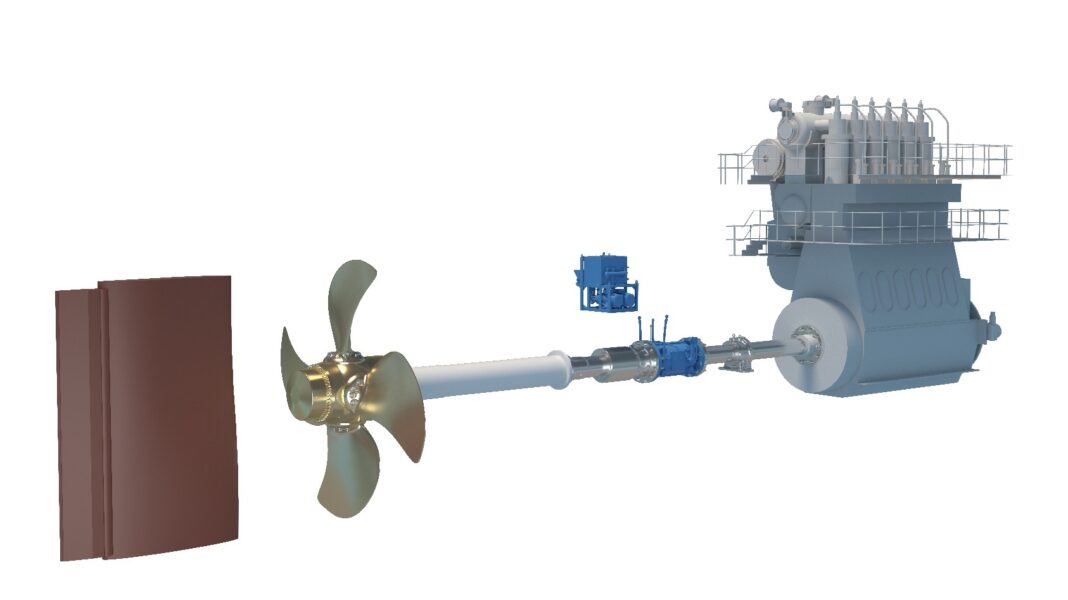
- Gearbox oil leakage due to shaft seal wear after 15,000–20,000 operating hours
- Propeller blade edge erosion due to cavitation
- Hydraulic motor leakage in hydraulic variants
- Electric motor insulation degradation due to moisture
- High thrust‑to‑power ratio suitable for large vessels
- Modular design allows selection of electric or hydraulic motor
- Robust gear set with documented service life up to 20 000 operating hours
- Low vibration and noise levels compared with external azimuth thrusters
- Easy access for routine maintenance (oil analysis, propeller inspection)
- Gear oil leakage can occur after 15‑20 000 h due to shaft seal wear
- Propeller blade edge erosion from cavitation is a known issue
- Hydraulic versions may develop motor leaks over time
- Electric motor insulation degrades in high‑humidity environments
- Tunnel grille requires inspection and cleaning at each docking
Kongsberg
45- Tunnelthrusters
- Output 200–3,700 kW, propeller diameter 1,600–2,000 mm, thrust up to 229 kN, available in CP (Constant Pitch) and FP (Fixed Pitch)
- Azimuth-thrusters
- Leistung 330-6.500 kW (mechanical/hybrid), neun Baumgroessen, Zugkraft optimiert fuer Bollard-Pull, 360°-Schwenkung
- Arctic Thruster (ARC)
- Power from 3 MW to >10 MW, no oil-sea interfaces, adaptive seals, Polar-Class-2 and Icebreaker-7 to 9 MW
- Permanent Magnet (PM) Thrusters
- TT-PM 1000 kW (146 kN), TT-PM 1600 kW (229 kN), Effizienzsteigerung 7-13% gegenueber Diesel-Elektrik
- Hydraulik-standard
- Double gear hydraulics for control/ventilation/lubricant, double cylinder with pressure pipe safety, seal tank with refueling capacity
- Lagerung
- Rollenlager fuer Schubwelle, Schmierung mit Fett, Dichtung an Lagergehausen, Toleranz-Freispiele typisch 0,5-2,0 mm
- US Azimuth Thruster
- Arctic Thruster (ARC)
- TCNS/C Azimuth Thruster (Swing-up/Retractable)
- Rim Drive Azimuth Thruster (RD-AZ)
- Tunnel Thruster Type TT/TTH
- Permanent Magnet Tunnel Thruster (TT-PM)
- Rim Drive Tunnel Thruster (RD-TT)
- Underwater Mountable Azimuth Thruster (UUC/UUC-PM)
- Retractable Azimuth Thruster (UL/ULE)
- Azipull Thruster (Integrated PM Motor)
- Area: Propellerblaetter: Verschleiss, Risse, Verformung, SeewuchsbewuchsCheck: Sichtpruefung auf Schaedigungen, Freispiel, Blattoberflaeche glatt ohne Kratzer/Dellen. Blattwurzel-O-Ringe auf Verschleiss checken, Spitzzenspiel messen. Bei Zweifeln: 1,5 bar Luftdruck auf VT-Nippel, Seifenblasen-Test auf Oellecks.
- Area: Propellerwellen-Dichtung: Durchfeuchtuung, Oelaustrittsverlust, VerschleissCheck: Visual inspection for leaks around shaft seal, check sealing cavity (monitored automatically via ARC). Observe seal clip pressure (e.g. via sensor output). At 5-year overhaul: renew seal. Check adaptive pressure regulation.
- Area: Lagerfreispiel/Lagerverschleiss: Axiales/Radiales Play ueber Norm, BohrlochabtragCheck: Calipers/counter gauges: measure shaft diameter and bores (target value via manufacturer data sheet). Document caliper readings. If exceeded: replace bearing journal/bearing shells. Observe vibration/noise during operation.
- Area: Hydraulikfluid: Verschmutzung, Feuchtigkeit, Alterung, Farb-/GeruechsveraenderungCheck: Check fluid level in tank (target level). Color test: light/yellowish OK, cloudy/dark = change required. Particle count (if available). Change filter per manufacturer interval. Perform pressure test on hydraulic line.
- Area: Hydraulik-Leitungen/Verbindungen: Risse, Lecks, Verformung, korrosive BelaegeCheck: Visual inspection of all hoses, pipes, connections for defects. Check for dryness, corrosion (rust spots), kink marks. High-frequency leak test if necessary. Observe operating pressure during voyage.
- Area: Elastomer-Bauteile (O-Ringe, Dichtlippen, Gummistuecke): Hartung, Risse, QuellungserscheinungenCheck: Visual inspection of all O-rings/seals for wear, hardening, deformation. Test with finger pressure (elasticity). Clean O-ring grooves/lubricate with gearbox oil (at 5-year overhaul). Replace damaged parts.
Type-universal inspection/service points for bow/stern thrusters (Kongsberg, Mega-Swarm 2026-06). Per-model specs not auto-populated.
- High thrust‑to‑power ratio (12 kN @ 100 kW) for its compact 580 mm diameter
- Proven Kongsberg reliability and integration with standard control consoles
- Sealed hydraulic system reduces oil leakage risk and simplifies maintenance
- Relatively low installation space requirement, suitable for vessels with limited hull opening
- Fixed‑direction thrust; no 360° azimuth capability
- Maximum thrust may be insufficient for large vessels or strong cross‑currents
- Tunnel geometry can increase local hull resistance and affect fuel efficiency at higher speeds
- Not certified for ice‑class operations
- Tunnelthrusters
- Output 200–3,700 kW, propeller diameter 1,600–2,000 mm, thrust up to 229 kN, available in CP (Constant Pitch) and FP (Fixed Pitch)
- Azimuth-thrusters
- Leistung 330-6.500 kW (mechanical/hybrid), neun Baumgroessen, Zugkraft optimiert fuer Bollard-Pull, 360°-Schwenkung
- Arctic Thruster (ARC)
- Power from 3 MW to >10 MW, no oil-sea interfaces, adaptive seals, Polar-Class-2 and Icebreaker-7 to 9 MW
- Permanent Magnet (PM) Thrusters
- TT-PM 1000 kW (146 kN), TT-PM 1600 kW (229 kN), Effizienzsteigerung 7-13% gegenueber Diesel-Elektrik
- Hydraulik-standard
- Double gear hydraulics for control/ventilation/lubricant, double cylinder with pressure pipe safety, seal tank with refueling capacity
- Lagerung
- Rollenlager fuer Schubwelle, Schmierung mit Fett, Dichtung an Lagergehausen, Toleranz-Freispiele typisch 0,5-2,0 mm
- US Azimuth Thruster
- Arctic Thruster (ARC)
- TCNS/C Azimuth Thruster (Swing-up/Retractable)
- Rim Drive Azimuth Thruster (RD-AZ)
- Tunnel Thruster Type TT/TTH
- Permanent Magnet Tunnel Thruster (TT-PM)
- Rim Drive Tunnel Thruster (RD-TT)
- Underwater Mountable Azimuth Thruster (UUC/UUC-PM)
- Retractable Azimuth Thruster (UL/ULE)
- Azipull Thruster (Integrated PM Motor)
- Area: Propellerblaetter: Verschleiss, Risse, Verformung, SeewuchsbewuchsCheck: Sichtpruefung auf Schaedigungen, Freispiel, Blattoberflaeche glatt ohne Kratzer/Dellen. Blattwurzel-O-Ringe auf Verschleiss checken, Spitzzenspiel messen. Bei Zweifeln: 1,5 bar Luftdruck auf VT-Nippel, Seifenblasen-Test auf Oellecks.
- Area: Propellerwellen-Dichtung: Durchfeuchtuung, Oelaustrittsverlust, VerschleissCheck: Visual inspection for leaks around shaft seal, check sealing cavity (monitored automatically via ARC). Observe seal clip pressure (e.g. via sensor output). At 5-year overhaul: renew seal. Check adaptive pressure regulation.
- Area: Lagerfreispiel/Lagerverschleiss: Axiales/Radiales Play ueber Norm, BohrlochabtragCheck: Calipers/counter gauges: measure shaft diameter and bores (target value via manufacturer data sheet). Document caliper readings. If exceeded: replace bearing journal/bearing shells. Observe vibration/noise during operation.
- Area: Hydraulikfluid: Verschmutzung, Feuchtigkeit, Alterung, Farb-/GeruechsveraenderungCheck: Check fluid level in tank (target level). Color test: light/yellowish OK, cloudy/dark = change required. Particle count (if available). Change filter per manufacturer interval. Perform pressure test on hydraulic line.
- Area: Hydraulik-Leitungen/Verbindungen: Risse, Lecks, Verformung, korrosive BelaegeCheck: Visual inspection of all hoses, pipes, connections for defects. Check for dryness, corrosion (rust spots), kink marks. High-frequency leak test if necessary. Observe operating pressure during voyage.
- Area: Elastomer-Bauteile (O-Ringe, Dichtlippen, Gummistuecke): Hartung, Risse, QuellungserscheinungenCheck: Visual inspection of all O-rings/seals for wear, hardening, deformation. Test with finger pressure (elasticity). Clean O-ring grooves/lubricate with gearbox oil (at 5-year overhaul). Replace damaged parts.
Type-universal inspection/service points for bow/stern thrusters (Kongsberg, Mega-Swarm 2026-06). Per-model specs not auto-populated.
- Compact 580 mm tunnel fits vessels with limited hull space
- High thrust‑to‑power ratio (12 kN @ 100 kW) for efficient bollard pull
- Proven Kongsberg hydraulic drive offers reliable service life
- Low acoustic signature and vibration compared with open‑propeller units
- Straightforward retrofit into existing stern tunnels
- Maximum thrust of 12 kN may be insufficient for large vessels or high‑speed DP operations
- Fixed‑pitch propeller limits thrust vector flexibility versus azimuth thrusters
- Hydraulic system requires regular oil monitoring and periodic seal replacement
- Cavitation risk in shallow water at high RPMs
- Limited scalability – not suitable for vessels requiring >200 kW power
- Tunnelthrusters
- Output 200–3,700 kW, propeller diameter 1,600–2,000 mm, thrust up to 229 kN, available in CP (Constant Pitch) and FP (Fixed Pitch)
- Azimuth-thrusters
- Leistung 330-6.500 kW (mechanical/hybrid), neun Baumgroessen, Zugkraft optimiert fuer Bollard-Pull, 360°-Schwenkung
- Arctic Thruster (ARC)
- Power from 3 MW to >10 MW, no oil-sea interfaces, adaptive seals, Polar-Class-2 and Icebreaker-7 to 9 MW
- Permanent Magnet (PM) Thrusters
- TT-PM 1000 kW (146 kN), TT-PM 1600 kW (229 kN), Effizienzsteigerung 7-13% gegenueber Diesel-Elektrik
- Hydraulik-standard
- Double gear hydraulics for control/ventilation/lubricant, double cylinder with pressure pipe safety, seal tank with refueling capacity
- Lagerung
- Rollenlager fuer Schubwelle, Schmierung mit Fett, Dichtung an Lagergehausen, Toleranz-Freispiele typisch 0,5-2,0 mm
- US Azimuth Thruster
- Arctic Thruster (ARC)
- TCNS/C Azimuth Thruster (Swing-up/Retractable)
- Rim Drive Azimuth Thruster (RD-AZ)
- Tunnel Thruster Type TT/TTH
- Permanent Magnet Tunnel Thruster (TT-PM)
- Rim Drive Tunnel Thruster (RD-TT)
- Underwater Mountable Azimuth Thruster (UUC/UUC-PM)
- Retractable Azimuth Thruster (UL/ULE)
- Azipull Thruster (Integrated PM Motor)
- Area: Propellerblaetter: Verschleiss, Risse, Verformung, SeewuchsbewuchsCheck: Sichtpruefung auf Schaedigungen, Freispiel, Blattoberflaeche glatt ohne Kratzer/Dellen. Blattwurzel-O-Ringe auf Verschleiss checken, Spitzzenspiel messen. Bei Zweifeln: 1,5 bar Luftdruck auf VT-Nippel, Seifenblasen-Test auf Oellecks.
- Area: Propellerwellen-Dichtung: Durchfeuchtuung, Oelaustrittsverlust, VerschleissCheck: Visual inspection for leaks around shaft seal, check sealing cavity (monitored automatically via ARC). Observe seal clip pressure (e.g. via sensor output). At 5-year overhaul: renew seal. Check adaptive pressure regulation.
- Area: Lagerfreispiel/Lagerverschleiss: Axiales/Radiales Play ueber Norm, BohrlochabtragCheck: Calipers/counter gauges: measure shaft diameter and bores (target value via manufacturer data sheet). Document caliper readings. If exceeded: replace bearing journal/bearing shells. Observe vibration/noise during operation.
- Area: Hydraulikfluid: Verschmutzung, Feuchtigkeit, Alterung, Farb-/GeruechsveraenderungCheck: Check fluid level in tank (target level). Color test: light/yellowish OK, cloudy/dark = change required. Particle count (if available). Change filter per manufacturer interval. Perform pressure test on hydraulic line.
- Area: Hydraulik-Leitungen/Verbindungen: Risse, Lecks, Verformung, korrosive BelaegeCheck: Visual inspection of all hoses, pipes, connections for defects. Check for dryness, corrosion (rust spots), kink marks. High-frequency leak test if necessary. Observe operating pressure during voyage.
- Area: Elastomer-Bauteile (O-Ringe, Dichtlippen, Gummistuecke): Hartung, Risse, QuellungserscheinungenCheck: Visual inspection of all O-rings/seals for wear, hardening, deformation. Test with finger pressure (elasticity). Clean O-ring grooves/lubricate with gearbox oil (at 5-year overhaul). Replace damaged parts.
Type-universal inspection/service points for bow/stern thrusters (Kongsberg, Mega-Swarm 2026-06). Per-model specs not auto-populated.
- Compact 620 mm duct fits vessels with limited hull space
- High thrust‑to‑power ratio (18 kN at 150 kW) for medium‑size ships
- Proven Kongsberg reliability and extensive service network
- Standardised hydraulic system simplifies integration and maintenance
- Well‑documented inspection points and failure modes
- Fixed‑pitch tunnel design offers less directional flexibility than azimuth units
- Maximum thrust (18 kN) may be insufficient for large tankers or high‑wind conditions
- Hull penetration required, increasing installation complexity and potential for vibration
- Lower overall efficiency compared with modern rim‑drive or permanent‑magnet thrusters
- Tunnelthrusters
- Output 200–3,700 kW, propeller diameter 1,600–2,000 mm, thrust up to 229 kN, available in CP (Constant Pitch) and FP (Fixed Pitch)
- Azimuth-thrusters
- Leistung 330-6.500 kW (mechanical/hybrid), neun Baumgroessen, Zugkraft optimiert fuer Bollard-Pull, 360°-Schwenkung
- Arctic Thruster (ARC)
- Power from 3 MW to >10 MW, no oil-sea interfaces, adaptive seals, Polar-Class-2 and Icebreaker-7 to 9 MW
- Permanent Magnet (PM) Thrusters
- TT-PM 1000 kW (146 kN), TT-PM 1600 kW (229 kN), Effizienzsteigerung 7-13% gegenueber Diesel-Elektrik
- Hydraulik-standard
- Double gear hydraulics for control/ventilation/lubricant, double cylinder with pressure pipe safety, seal tank with refueling capacity
- Lagerung
- Rollenlager fuer Schubwelle, Schmierung mit Fett, Dichtung an Lagergehausen, Toleranz-Freispiele typisch 0,5-2,0 mm
- US Azimuth Thruster
- Arctic Thruster (ARC)
- TCNS/C Azimuth Thruster (Swing-up/Retractable)
- Rim Drive Azimuth Thruster (RD-AZ)
- Tunnel Thruster Type TT/TTH
- Permanent Magnet Tunnel Thruster (TT-PM)
- Rim Drive Tunnel Thruster (RD-TT)
- Underwater Mountable Azimuth Thruster (UUC/UUC-PM)
- Retractable Azimuth Thruster (UL/ULE)
- Azipull Thruster (Integrated PM Motor)
- Area: Propellerblaetter: Verschleiss, Risse, Verformung, SeewuchsbewuchsCheck: Sichtpruefung auf Schaedigungen, Freispiel, Blattoberflaeche glatt ohne Kratzer/Dellen. Blattwurzel-O-Ringe auf Verschleiss checken, Spitzzenspiel messen. Bei Zweifeln: 1,5 bar Luftdruck auf VT-Nippel, Seifenblasen-Test auf Oellecks.
- Area: Propellerwellen-Dichtung: Durchfeuchtuung, Oelaustrittsverlust, VerschleissCheck: Visual inspection for leaks around shaft seal, check sealing cavity (monitored automatically via ARC). Observe seal clip pressure (e.g. via sensor output). At 5-year overhaul: renew seal. Check adaptive pressure regulation.
- Area: Lagerfreispiel/Lagerverschleiss: Axiales/Radiales Play ueber Norm, BohrlochabtragCheck: Calipers/counter gauges: measure shaft diameter and bores (target value via manufacturer data sheet). Document caliper readings. If exceeded: replace bearing journal/bearing shells. Observe vibration/noise during operation.
- Area: Hydraulikfluid: Verschmutzung, Feuchtigkeit, Alterung, Farb-/GeruechsveraenderungCheck: Check fluid level in tank (target level). Color test: light/yellowish OK, cloudy/dark = change required. Particle count (if available). Change filter per manufacturer interval. Perform pressure test on hydraulic line.
- Area: Hydraulik-Leitungen/Verbindungen: Risse, Lecks, Verformung, korrosive BelaegeCheck: Visual inspection of all hoses, pipes, connections for defects. Check for dryness, corrosion (rust spots), kink marks. High-frequency leak test if necessary. Observe operating pressure during voyage.
- Area: Elastomer-Bauteile (O-Ringe, Dichtlippen, Gummistuecke): Hartung, Risse, QuellungserscheinungenCheck: Visual inspection of all O-rings/seals for wear, hardening, deformation. Test with finger pressure (elasticity). Clean O-ring grooves/lubricate with gearbox oil (at 5-year overhaul). Replace damaged parts.
Type-universal inspection/service points for bow/stern thrusters (Kongsberg, Mega-Swarm 2026-06). Per-model specs not auto-populated.
- Compact installation envelope (620 mm duct) fits vessels with limited hull space.
- High thrust‑to‑power ratio for a 150 kW unit, delivering 18 kN of lateral force.
- Proven Kongsberg hydraulic control system with built‑in diagnostics and fault monitoring.
- Standardised mounting interface simplifies retrofit on existing stern sections.
- Robust double‑gear hydraulic drive reduces wear and extends service intervals.
- Fixed‑direction thrust; requires separate bow thruster for full DP capability.
- Thrust limited to ~18 kN, which may be insufficient for very large tankers or ice‑class vessels.
- Hydraulic system adds complexity compared with electric tunnel thrusters (e.g., PM models).
- Propeller blades are prone to marine growth and require regular cleaning in warm waters.
- No built‑in ice protection; not suitable for high‑ice environments without additional measures.
- Tunnelthrusters
- Output 200–3,700 kW, propeller diameter 1,600–2,000 mm, thrust up to 229 kN, available in CP (Constant Pitch) and FP (Fixed Pitch)
- Azimuth-thrusters
- Leistung 330-6.500 kW (mechanical/hybrid), neun Baumgroessen, Zugkraft optimiert fuer Bollard-Pull, 360°-Schwenkung
- Arctic Thruster (ARC)
- Power from 3 MW to >10 MW, no oil-sea interfaces, adaptive seals, Polar-Class-2 and Icebreaker-7 to 9 MW
- Permanent Magnet (PM) Thrusters
- TT-PM 1000 kW (146 kN), TT-PM 1600 kW (229 kN), Effizienzsteigerung 7-13% gegenueber Diesel-Elektrik
- Hydraulik-standard
- Double gear hydraulics for control/ventilation/lubricant, double cylinder with pressure pipe safety, seal tank with refueling capacity
- Lagerung
- Rollenlager fuer Schubwelle, Schmierung mit Fett, Dichtung an Lagergehausen, Toleranz-Freispiele typisch 0,5-2,0 mm
- US Azimuth Thruster
- Arctic Thruster (ARC)
- TCNS/C Azimuth Thruster (Swing-up/Retractable)
- Rim Drive Azimuth Thruster (RD-AZ)
- Tunnel Thruster Type TT/TTH
- Permanent Magnet Tunnel Thruster (TT-PM)
- Rim Drive Tunnel Thruster (RD-TT)
- Underwater Mountable Azimuth Thruster (UUC/UUC-PM)
- Retractable Azimuth Thruster (UL/ULE)
- Azipull Thruster (Integrated PM Motor)
- Area: Propellerblaetter: Verschleiss, Risse, Verformung, SeewuchsbewuchsCheck: Sichtpruefung auf Schaedigungen, Freispiel, Blattoberflaeche glatt ohne Kratzer/Dellen. Blattwurzel-O-Ringe auf Verschleiss checken, Spitzzenspiel messen. Bei Zweifeln: 1,5 bar Luftdruck auf VT-Nippel, Seifenblasen-Test auf Oellecks.
- Area: Propellerwellen-Dichtung: Durchfeuchtuung, Oelaustrittsverlust, VerschleissCheck: Visual inspection for leaks around shaft seal, check sealing cavity (monitored automatically via ARC). Observe seal clip pressure (e.g. via sensor output). At 5-year overhaul: renew seal. Check adaptive pressure regulation.
- Area: Lagerfreispiel/Lagerverschleiss: Axiales/Radiales Play ueber Norm, BohrlochabtragCheck: Calipers/counter gauges: measure shaft diameter and bores (target value via manufacturer data sheet). Document caliper readings. If exceeded: replace bearing journal/bearing shells. Observe vibration/noise during operation.
- Area: Hydraulikfluid: Verschmutzung, Feuchtigkeit, Alterung, Farb-/GeruechsveraenderungCheck: Check fluid level in tank (target level). Color test: light/yellowish OK, cloudy/dark = change required. Particle count (if available). Change filter per manufacturer interval. Perform pressure test on hydraulic line.
- Area: Hydraulik-Leitungen/Verbindungen: Risse, Lecks, Verformung, korrosive BelaegeCheck: Visual inspection of all hoses, pipes, connections for defects. Check for dryness, corrosion (rust spots), kink marks. High-frequency leak test if necessary. Observe operating pressure during voyage.
- Area: Elastomer-Bauteile (O-Ringe, Dichtlippen, Gummistuecke): Hartung, Risse, QuellungserscheinungenCheck: Visual inspection of all O-rings/seals for wear, hardening, deformation. Test with finger pressure (elasticity). Clean O-ring grooves/lubricate with gearbox oil (at 5-year overhaul). Replace damaged parts.
Type-universal inspection/service points for bow/stern thrusters (Kongsberg, Mega-Swarm 2026-06). Per-model specs not auto-populated.
- High thrust‑to‑power ratio (24 kN @ 200 kW) for its compact size
- Small tunnel diameter (660 mm) fits vessels with limited hull space
- Proven Kongsberg reliability and extensive global support network
- Standardised hydraulic control system simplifies integration with existing HPUs
- Easy access for routine inspection of propeller blades and seals
- Maximum thrust (24 kN) may be insufficient for high‑bollard‑pull or DP‑2 applications
- Fixed‑pitch tunnel design can generate hull vibration and drag when not in use
- Requires a dedicated hydraulic power unit, adding weight and space requirements
- Not rated for ice‑class operations; unsuitable for Arctic service
- Non‑retractable installation limits flexibility on vessels that need reduced draft
- Tunnelthrusters
- Output 200–3,700 kW, propeller diameter 1,600–2,000 mm, thrust up to 229 kN, available in CP (Constant Pitch) and FP (Fixed Pitch)
- Azimuth-thrusters
- Leistung 330-6.500 kW (mechanical/hybrid), neun Baumgroessen, Zugkraft optimiert fuer Bollard-Pull, 360°-Schwenkung
- Arctic Thruster (ARC)
- Power from 3 MW to >10 MW, no oil-sea interfaces, adaptive seals, Polar-Class-2 and Icebreaker-7 to 9 MW
- Permanent Magnet (PM) Thrusters
- TT-PM 1000 kW (146 kN), TT-PM 1600 kW (229 kN), Effizienzsteigerung 7-13% gegenueber Diesel-Elektrik
- Hydraulik-standard
- Double gear hydraulics for control/ventilation/lubricant, double cylinder with pressure pipe safety, seal tank with refueling capacity
- Lagerung
- Rollenlager fuer Schubwelle, Schmierung mit Fett, Dichtung an Lagergehausen, Toleranz-Freispiele typisch 0,5-2,0 mm
- US Azimuth Thruster
- Arctic Thruster (ARC)
- TCNS/C Azimuth Thruster (Swing-up/Retractable)
- Rim Drive Azimuth Thruster (RD-AZ)
- Tunnel Thruster Type TT/TTH
- Permanent Magnet Tunnel Thruster (TT-PM)
- Rim Drive Tunnel Thruster (RD-TT)
- Underwater Mountable Azimuth Thruster (UUC/UUC-PM)
- Retractable Azimuth Thruster (UL/ULE)
- Azipull Thruster (Integrated PM Motor)
- Area: Propellerblaetter: Verschleiss, Risse, Verformung, SeewuchsbewuchsCheck: Sichtpruefung auf Schaedigungen, Freispiel, Blattoberflaeche glatt ohne Kratzer/Dellen. Blattwurzel-O-Ringe auf Verschleiss checken, Spitzzenspiel messen. Bei Zweifeln: 1,5 bar Luftdruck auf VT-Nippel, Seifenblasen-Test auf Oellecks.
- Area: Propellerwellen-Dichtung: Durchfeuchtuung, Oelaustrittsverlust, VerschleissCheck: Visual inspection for leaks around shaft seal, check sealing cavity (monitored automatically via ARC). Observe seal clip pressure (e.g. via sensor output). At 5-year overhaul: renew seal. Check adaptive pressure regulation.
- Area: Lagerfreispiel/Lagerverschleiss: Axiales/Radiales Play ueber Norm, BohrlochabtragCheck: Calipers/counter gauges: measure shaft diameter and bores (target value via manufacturer data sheet). Document caliper readings. If exceeded: replace bearing journal/bearing shells. Observe vibration/noise during operation.
- Area: Hydraulikfluid: Verschmutzung, Feuchtigkeit, Alterung, Farb-/GeruechsveraenderungCheck: Check fluid level in tank (target level). Color test: light/yellowish OK, cloudy/dark = change required. Particle count (if available). Change filter per manufacturer interval. Perform pressure test on hydraulic line.
- Area: Hydraulik-Leitungen/Verbindungen: Risse, Lecks, Verformung, korrosive BelaegeCheck: Visual inspection of all hoses, pipes, connections for defects. Check for dryness, corrosion (rust spots), kink marks. High-frequency leak test if necessary. Observe operating pressure during voyage.
- Area: Elastomer-Bauteile (O-Ringe, Dichtlippen, Gummistuecke): Hartung, Risse, QuellungserscheinungenCheck: Visual inspection of all O-rings/seals for wear, hardening, deformation. Test with finger pressure (elasticity). Clean O-ring grooves/lubricate with gearbox oil (at 5-year overhaul). Replace damaged parts.
Type-universal inspection/service points for bow/stern thrusters (Kongsberg, Mega-Swarm 2026-06). Per-model specs not auto-populated.
- High thrust‑to‑power ratio for its size (24 kN @ 200 kW)
- Compact tunnel housing fits in limited hull space
- Proven Kongsberg hydraulic drive with built‑in redundancy
- Standardised mounting and control interface simplifies integration
- Low initial cost compared with azimuth thrusters of similar power
- Limited maneuverability – fixed thrust direction only
- Lower total thrust than comparable azimuth units, unsuitable for high‑power DP
- Tunnel flow can increase hull resistance and affect fuel efficiency at higher speeds
- Maintenance intensive seals and bearing wear require regular inspection
- Less effective in very shallow water where tunnel inlet may be partially blocked
- Tunnelthrusters
- Output 200–3,700 kW, propeller diameter 1,600–2,000 mm, thrust up to 229 kN, available in CP (Constant Pitch) and FP (Fixed Pitch)
- Azimuth-thrusters
- Leistung 330-6.500 kW (mechanical/hybrid), neun Baumgroessen, Zugkraft optimiert fuer Bollard-Pull, 360°-Schwenkung
- Arctic Thruster (ARC)
- Power from 3 MW to >10 MW, no oil-sea interfaces, adaptive seals, Polar-Class-2 and Icebreaker-7 to 9 MW
- Permanent Magnet (PM) Thrusters
- TT-PM 1000 kW (146 kN), TT-PM 1600 kW (229 kN), Effizienzsteigerung 7-13% gegenueber Diesel-Elektrik
- Hydraulik-standard
- Double gear hydraulics for control/ventilation/lubricant, double cylinder with pressure pipe safety, seal tank with refueling capacity
- Lagerung
- Rollenlager fuer Schubwelle, Schmierung mit Fett, Dichtung an Lagergehausen, Toleranz-Freispiele typisch 0,5-2,0 mm
- US Azimuth Thruster
- Arctic Thruster (ARC)
- TCNS/C Azimuth Thruster (Swing-up/Retractable)
- Rim Drive Azimuth Thruster (RD-AZ)
- Tunnel Thruster Type TT/TTH
- Permanent Magnet Tunnel Thruster (TT-PM)
- Rim Drive Tunnel Thruster (RD-TT)
- Underwater Mountable Azimuth Thruster (UUC/UUC-PM)
- Retractable Azimuth Thruster (UL/ULE)
- Azipull Thruster (Integrated PM Motor)
- Area: Propellerblaetter: Verschleiss, Risse, Verformung, SeewuchsbewuchsCheck: Sichtpruefung auf Schaedigungen, Freispiel, Blattoberflaeche glatt ohne Kratzer/Dellen. Blattwurzel-O-Ringe auf Verschleiss checken, Spitzzenspiel messen. Bei Zweifeln: 1,5 bar Luftdruck auf VT-Nippel, Seifenblasen-Test auf Oellecks.
- Area: Propellerwellen-Dichtung: Durchfeuchtuung, Oelaustrittsverlust, VerschleissCheck: Visual inspection for leaks around shaft seal, check sealing cavity (monitored automatically via ARC). Observe seal clip pressure (e.g. via sensor output). At 5-year overhaul: renew seal. Check adaptive pressure regulation.
- Area: Lagerfreispiel/Lagerverschleiss: Axiales/Radiales Play ueber Norm, BohrlochabtragCheck: Calipers/counter gauges: measure shaft diameter and bores (target value via manufacturer data sheet). Document caliper readings. If exceeded: replace bearing journal/bearing shells. Observe vibration/noise during operation.
- Area: Hydraulikfluid: Verschmutzung, Feuchtigkeit, Alterung, Farb-/GeruechsveraenderungCheck: Check fluid level in tank (target level). Color test: light/yellowish OK, cloudy/dark = change required. Particle count (if available). Change filter per manufacturer interval. Perform pressure test on hydraulic line.
- Area: Hydraulik-Leitungen/Verbindungen: Risse, Lecks, Verformung, korrosive BelaegeCheck: Visual inspection of all hoses, pipes, connections for defects. Check for dryness, corrosion (rust spots), kink marks. High-frequency leak test if necessary. Observe operating pressure during voyage.
- Area: Elastomer-Bauteile (O-Ringe, Dichtlippen, Gummistuecke): Hartung, Risse, QuellungserscheinungenCheck: Visual inspection of all O-rings/seals for wear, hardening, deformation. Test with finger pressure (elasticity). Clean O-ring grooves/lubricate with gearbox oil (at 5-year overhaul). Replace damaged parts.
Type-universal inspection/service points for bow/stern thrusters (Kongsberg, Mega-Swarm 2026-06). Per-model specs not auto-populated.
- High thrust‑to‑power ratio (30 kN @ 250 kW) for its size
- Compact 700 mm tunnel fits vessels with limited hull space
- Proven Kongsberg reliability and double‑gear hydraulic drive reduces wear
- Integrated monitoring compatible with ship automation systems
- Suitable for a wide range of medium‑size commercial ships
- Hydraulic system requires regular oil maintenance and leak checks
- Limited azimuth range compared with full‑circle azimuth thrusters
- Lower overall efficiency than newer permanent‑magnet electric units
- Potential fouling of the propeller blades in low‑speed, high‑biofouling areas
- Maximum thrust (30 kN) may be insufficient for very large vessels or heavy DP requirements
- Tunnelthrusters
- Output 200–3,700 kW, propeller diameter 1,600–2,000 mm, thrust up to 229 kN, available in CP (Constant Pitch) and FP (Fixed Pitch)
- Azimuth-thrusters
- Leistung 330-6.500 kW (mechanical/hybrid), neun Baumgroessen, Zugkraft optimiert fuer Bollard-Pull, 360°-Schwenkung
- Arctic Thruster (ARC)
- Power from 3 MW to >10 MW, no oil-sea interfaces, adaptive seals, Polar-Class-2 and Icebreaker-7 to 9 MW
- Permanent Magnet (PM) Thrusters
- TT-PM 1000 kW (146 kN), TT-PM 1600 kW (229 kN), Effizienzsteigerung 7-13% gegenueber Diesel-Elektrik
- Hydraulik-standard
- Double gear hydraulics for control/ventilation/lubricant, double cylinder with pressure pipe safety, seal tank with refueling capacity
- Lagerung
- Rollenlager fuer Schubwelle, Schmierung mit Fett, Dichtung an Lagergehausen, Toleranz-Freispiele typisch 0,5-2,0 mm
- US Azimuth Thruster
- Arctic Thruster (ARC)
- TCNS/C Azimuth Thruster (Swing-up/Retractable)
- Rim Drive Azimuth Thruster (RD-AZ)
- Tunnel Thruster Type TT/TTH
- Permanent Magnet Tunnel Thruster (TT-PM)
- Rim Drive Tunnel Thruster (RD-TT)
- Underwater Mountable Azimuth Thruster (UUC/UUC-PM)
- Retractable Azimuth Thruster (UL/ULE)
- Azipull Thruster (Integrated PM Motor)
- Area: Propellerblaetter: Verschleiss, Risse, Verformung, SeewuchsbewuchsCheck: Sichtpruefung auf Schaedigungen, Freispiel, Blattoberflaeche glatt ohne Kratzer/Dellen. Blattwurzel-O-Ringe auf Verschleiss checken, Spitzzenspiel messen. Bei Zweifeln: 1,5 bar Luftdruck auf VT-Nippel, Seifenblasen-Test auf Oellecks.
- Area: Propellerwellen-Dichtung: Durchfeuchtuung, Oelaustrittsverlust, VerschleissCheck: Visual inspection for leaks around shaft seal, check sealing cavity (monitored automatically via ARC). Observe seal clip pressure (e.g. via sensor output). At 5-year overhaul: renew seal. Check adaptive pressure regulation.
- Area: Lagerfreispiel/Lagerverschleiss: Axiales/Radiales Play ueber Norm, BohrlochabtragCheck: Calipers/counter gauges: measure shaft diameter and bores (target value via manufacturer data sheet). Document caliper readings. If exceeded: replace bearing journal/bearing shells. Observe vibration/noise during operation.
- Area: Hydraulikfluid: Verschmutzung, Feuchtigkeit, Alterung, Farb-/GeruechsveraenderungCheck: Check fluid level in tank (target level). Color test: light/yellowish OK, cloudy/dark = change required. Particle count (if available). Change filter per manufacturer interval. Perform pressure test on hydraulic line.
- Area: Hydraulik-Leitungen/Verbindungen: Risse, Lecks, Verformung, korrosive BelaegeCheck: Visual inspection of all hoses, pipes, connections for defects. Check for dryness, corrosion (rust spots), kink marks. High-frequency leak test if necessary. Observe operating pressure during voyage.
- Area: Elastomer-Bauteile (O-Ringe, Dichtlippen, Gummistuecke): Hartung, Risse, QuellungserscheinungenCheck: Visual inspection of all O-rings/seals for wear, hardening, deformation. Test with finger pressure (elasticity). Clean O-ring grooves/lubricate with gearbox oil (at 5-year overhaul). Replace damaged parts.
Type-universal inspection/service points for bow/stern thrusters (Kongsberg, Mega-Swarm 2026-06). Per-model specs not auto-populated.
- High thrust‑to‑power ratio (30 kN @ 250 kW) for its size
- Robust double‑gear hydraulic drive with built‑in redundancy
- Compact 700 mm propeller diameter fits narrow hull sections
- Proven Kongsberg control integration with DP systems
- Standardised maintenance points and spare‑part availability
- Fixed‑pitch propeller limits thrust optimisation across speed range
- No 360° azimuth capability – only straight‑line thrust
- Maximum thrust may be insufficient for large tankers or ice‑class vessels
- Hydraulic system adds complexity compared with fully electric rim‑drive units
- Tunnelthrusters
- Output 200–3,700 kW, propeller diameter 1,600–2,000 mm, thrust up to 229 kN, available in CP (Constant Pitch) and FP (Fixed Pitch)
- Azimuth-thrusters
- Leistung 330-6.500 kW (mechanical/hybrid), neun Baumgroessen, Zugkraft optimiert fuer Bollard-Pull, 360°-Schwenkung
- Arctic Thruster (ARC)
- Power from 3 MW to >10 MW, no oil-sea interfaces, adaptive seals, Polar-Class-2 and Icebreaker-7 to 9 MW
- Permanent Magnet (PM) Thrusters
- TT-PM 1000 kW (146 kN), TT-PM 1600 kW (229 kN), Effizienzsteigerung 7-13% gegenueber Diesel-Elektrik
- Hydraulik-standard
- Double gear hydraulics for control/ventilation/lubricant, double cylinder with pressure pipe safety, seal tank with refueling capacity
- Lagerung
- Rollenlager fuer Schubwelle, Schmierung mit Fett, Dichtung an Lagergehausen, Toleranz-Freispiele typisch 0,5-2,0 mm
- US Azimuth Thruster
- Arctic Thruster (ARC)
- TCNS/C Azimuth Thruster (Swing-up/Retractable)
- Rim Drive Azimuth Thruster (RD-AZ)
- Tunnel Thruster Type TT/TTH
- Permanent Magnet Tunnel Thruster (TT-PM)
- Rim Drive Tunnel Thruster (RD-TT)
- Underwater Mountable Azimuth Thruster (UUC/UUC-PM)
- Retractable Azimuth Thruster (UL/ULE)
- Azipull Thruster (Integrated PM Motor)
- Area: Propellerblaetter: Verschleiss, Risse, Verformung, SeewuchsbewuchsCheck: Sichtpruefung auf Schaedigungen, Freispiel, Blattoberflaeche glatt ohne Kratzer/Dellen. Blattwurzel-O-Ringe auf Verschleiss checken, Spitzzenspiel messen. Bei Zweifeln: 1,5 bar Luftdruck auf VT-Nippel, Seifenblasen-Test auf Oellecks.
- Area: Propellerwellen-Dichtung: Durchfeuchtuung, Oelaustrittsverlust, VerschleissCheck: Visual inspection for leaks around shaft seal, check sealing cavity (monitored automatically via ARC). Observe seal clip pressure (e.g. via sensor output). At 5-year overhaul: renew seal. Check adaptive pressure regulation.
- Area: Lagerfreispiel/Lagerverschleiss: Axiales/Radiales Play ueber Norm, BohrlochabtragCheck: Calipers/counter gauges: measure shaft diameter and bores (target value via manufacturer data sheet). Document caliper readings. If exceeded: replace bearing journal/bearing shells. Observe vibration/noise during operation.
- Area: Hydraulikfluid: Verschmutzung, Feuchtigkeit, Alterung, Farb-/GeruechsveraenderungCheck: Check fluid level in tank (target level). Color test: light/yellowish OK, cloudy/dark = change required. Particle count (if available). Change filter per manufacturer interval. Perform pressure test on hydraulic line.
- Area: Hydraulik-Leitungen/Verbindungen: Risse, Lecks, Verformung, korrosive BelaegeCheck: Visual inspection of all hoses, pipes, connections for defects. Check for dryness, corrosion (rust spots), kink marks. High-frequency leak test if necessary. Observe operating pressure during voyage.
- Area: Elastomer-Bauteile (O-Ringe, Dichtlippen, Gummistuecke): Hartung, Risse, QuellungserscheinungenCheck: Visual inspection of all O-rings/seals for wear, hardening, deformation. Test with finger pressure (elasticity). Clean O-ring grooves/lubricate with gearbox oil (at 5-year overhaul). Replace damaged parts.
Type-universal inspection/service points for bow/stern thrusters (Kongsberg, Mega-Swarm 2026-06). Per-model specs not auto-populated.
- Compact 740 mm tunnel fits vessels with limited hull space.
- High thrust‑to‑power ratio (36 kN @ 300 kW) suitable for medium‑size ships.
- Proven Kongsberg/ Rolls‑Royce reliability and worldwide service network.
- Standard hydraulic drive integrates easily with existing ship systems.
- Well‑documented inspection and maintenance procedures.
- Fixed‑pitch propeller is less efficient than azimuth or permanent‑magnet designs.
- Provides only lateral thrust; no 360° steering capability.
- Requires hull penetration and reinforcement, increasing leak risk.
- Not rated for heavy ice conditions or extreme DP loads.
- Higher noise and vibration compared with rim‑drive thrusters.
- Tunnelthrusters
- Output 200–3,700 kW, propeller diameter 1,600–2,000 mm, thrust up to 229 kN, available in CP (Constant Pitch) and FP (Fixed Pitch)
- Azimuth-thrusters
- Leistung 330-6.500 kW (mechanical/hybrid), neun Baumgroessen, Zugkraft optimiert fuer Bollard-Pull, 360°-Schwenkung
- Arctic Thruster (ARC)
- Power from 3 MW to >10 MW, no oil-sea interfaces, adaptive seals, Polar-Class-2 and Icebreaker-7 to 9 MW
- Permanent Magnet (PM) Thrusters
- TT-PM 1000 kW (146 kN), TT-PM 1600 kW (229 kN), Effizienzsteigerung 7-13% gegenueber Diesel-Elektrik
- Hydraulik-standard
- Double gear hydraulics for control/ventilation/lubricant, double cylinder with pressure pipe safety, seal tank with refueling capacity
- Lagerung
- Rollenlager fuer Schubwelle, Schmierung mit Fett, Dichtung an Lagergehausen, Toleranz-Freispiele typisch 0,5-2,0 mm
- US Azimuth Thruster
- Arctic Thruster (ARC)
- TCNS/C Azimuth Thruster (Swing-up/Retractable)
- Rim Drive Azimuth Thruster (RD-AZ)
- Tunnel Thruster Type TT/TTH
- Permanent Magnet Tunnel Thruster (TT-PM)
- Rim Drive Tunnel Thruster (RD-TT)
- Underwater Mountable Azimuth Thruster (UUC/UUC-PM)
- Retractable Azimuth Thruster (UL/ULE)
- Azipull Thruster (Integrated PM Motor)
- Area: Propellerblaetter: Verschleiss, Risse, Verformung, SeewuchsbewuchsCheck: Sichtpruefung auf Schaedigungen, Freispiel, Blattoberflaeche glatt ohne Kratzer/Dellen. Blattwurzel-O-Ringe auf Verschleiss checken, Spitzzenspiel messen. Bei Zweifeln: 1,5 bar Luftdruck auf VT-Nippel, Seifenblasen-Test auf Oellecks.
- Area: Propellerwellen-Dichtung: Durchfeuchtuung, Oelaustrittsverlust, VerschleissCheck: Visual inspection for leaks around shaft seal, check sealing cavity (monitored automatically via ARC). Observe seal clip pressure (e.g. via sensor output). At 5-year overhaul: renew seal. Check adaptive pressure regulation.
- Area: Lagerfreispiel/Lagerverschleiss: Axiales/Radiales Play ueber Norm, BohrlochabtragCheck: Calipers/counter gauges: measure shaft diameter and bores (target value via manufacturer data sheet). Document caliper readings. If exceeded: replace bearing journal/bearing shells. Observe vibration/noise during operation.
- Area: Hydraulikfluid: Verschmutzung, Feuchtigkeit, Alterung, Farb-/GeruechsveraenderungCheck: Check fluid level in tank (target level). Color test: light/yellowish OK, cloudy/dark = change required. Particle count (if available). Change filter per manufacturer interval. Perform pressure test on hydraulic line.
- Area: Hydraulik-Leitungen/Verbindungen: Risse, Lecks, Verformung, korrosive BelaegeCheck: Visual inspection of all hoses, pipes, connections for defects. Check for dryness, corrosion (rust spots), kink marks. High-frequency leak test if necessary. Observe operating pressure during voyage.
- Area: Elastomer-Bauteile (O-Ringe, Dichtlippen, Gummistuecke): Hartung, Risse, QuellungserscheinungenCheck: Visual inspection of all O-rings/seals for wear, hardening, deformation. Test with finger pressure (elasticity). Clean O-ring grooves/lubricate with gearbox oil (at 5-year overhaul). Replace damaged parts.
Type-universal inspection/service points for bow/stern thrusters (Kongsberg, Mega-Swarm 2026-06). Per-model specs not auto-populated.
- Compact 740 mm duct fits in medium‑size hulls without excessive structural reinforcement
- High thrust‑to‑power ratio (36 kN at 300 kW) for vessels up to ~150 m LOA
- Proven Kongsberg reliability and worldwide spare‑parts support
- Standardised hydraulic control system simplifies integration with existing ship automation
- Well‑documented inspection and maintenance procedures (propeller blades, shaft seal, bearings, hydraulics)
- Provides only transverse thrust; no 360° azimuth capability for advanced DP manoeuvring
- Hull suction can reduce efficiency in heavy seas or when operating near the bow/stern
- Installation requires hull penetration and internal duct space, increasing dry‑dock time
- Potential cavitation noise at high RPMs, which may be a concern for passenger vessels
- Hydraulic system adds maintenance overhead compared with electric PM thrusters
- Tunnelthrusters
- Output 200–3,700 kW, propeller diameter 1,600–2,000 mm, thrust up to 229 kN, available in CP (Constant Pitch) and FP (Fixed Pitch)
- Azimuth-thrusters
- Leistung 330-6.500 kW (mechanical/hybrid), neun Baumgroessen, Zugkraft optimiert fuer Bollard-Pull, 360°-Schwenkung
- Arctic Thruster (ARC)
- Power from 3 MW to >10 MW, no oil-sea interfaces, adaptive seals, Polar-Class-2 and Icebreaker-7 to 9 MW
- Permanent Magnet (PM) Thrusters
- TT-PM 1000 kW (146 kN), TT-PM 1600 kW (229 kN), Effizienzsteigerung 7-13% gegenueber Diesel-Elektrik
- Hydraulik-standard
- Double gear hydraulics for control/ventilation/lubricant, double cylinder with pressure pipe safety, seal tank with refueling capacity
- Lagerung
- Rollenlager fuer Schubwelle, Schmierung mit Fett, Dichtung an Lagergehausen, Toleranz-Freispiele typisch 0,5-2,0 mm
- US Azimuth Thruster
- Arctic Thruster (ARC)
- TCNS/C Azimuth Thruster (Swing-up/Retractable)
- Rim Drive Azimuth Thruster (RD-AZ)
- Tunnel Thruster Type TT/TTH
- Permanent Magnet Tunnel Thruster (TT-PM)
- Rim Drive Tunnel Thruster (RD-TT)
- Underwater Mountable Azimuth Thruster (UUC/UUC-PM)
- Retractable Azimuth Thruster (UL/ULE)
- Azipull Thruster (Integrated PM Motor)
- Area: Propellerblaetter: Verschleiss, Risse, Verformung, SeewuchsbewuchsCheck: Sichtpruefung auf Schaedigungen, Freispiel, Blattoberflaeche glatt ohne Kratzer/Dellen. Blattwurzel-O-Ringe auf Verschleiss checken, Spitzzenspiel messen. Bei Zweifeln: 1,5 bar Luftdruck auf VT-Nippel, Seifenblasen-Test auf Oellecks.
- Area: Propellerwellen-Dichtung: Durchfeuchtuung, Oelaustrittsverlust, VerschleissCheck: Visual inspection for leaks around shaft seal, check sealing cavity (monitored automatically via ARC). Observe seal clip pressure (e.g. via sensor output). At 5-year overhaul: renew seal. Check adaptive pressure regulation.
- Area: Lagerfreispiel/Lagerverschleiss: Axiales/Radiales Play ueber Norm, BohrlochabtragCheck: Calipers/counter gauges: measure shaft diameter and bores (target value via manufacturer data sheet). Document caliper readings. If exceeded: replace bearing journal/bearing shells. Observe vibration/noise during operation.
- Area: Hydraulikfluid: Verschmutzung, Feuchtigkeit, Alterung, Farb-/GeruechsveraenderungCheck: Check fluid level in tank (target level). Color test: light/yellowish OK, cloudy/dark = change required. Particle count (if available). Change filter per manufacturer interval. Perform pressure test on hydraulic line.
- Area: Hydraulik-Leitungen/Verbindungen: Risse, Lecks, Verformung, korrosive BelaegeCheck: Visual inspection of all hoses, pipes, connections for defects. Check for dryness, corrosion (rust spots), kink marks. High-frequency leak test if necessary. Observe operating pressure during voyage.
- Area: Elastomer-Bauteile (O-Ringe, Dichtlippen, Gummistuecke): Hartung, Risse, QuellungserscheinungenCheck: Visual inspection of all O-rings/seals for wear, hardening, deformation. Test with finger pressure (elasticity). Clean O-ring grooves/lubricate with gearbox oil (at 5-year overhaul). Replace damaged parts.
Type-universal inspection/service points for bow/stern thrusters (Kongsberg, Mega-Swarm 2026-06). Per-model specs not auto-populated.
- High thrust‑to‑power ratio (48 kN @ 400 kW) for effective bow assistance
- Compact 820 mm tunnel diameter fits vessels with limited hull space
- Robust double‑gear hydraulic drive reduces risk of sudden failure
- Low acoustic and vibration signature, helping meet port noise limits
- Integrated condition monitoring compatible with Kongsberg Vessel Insight
- Fixed‑pitch propeller offers less fine thrust control than azimuth units
- Hydraulic system requires regular oil maintenance and leak checks
- Bow installation is exposed to grounding damage in shallow ports
- Maximum thrust may be insufficient for very large vessels (>30,000 dwt) needing higher bollard pull
- Tunnelthrusters
- Output 200–3,700 kW, propeller diameter 1,600–2,000 mm, thrust up to 229 kN, available in CP (Constant Pitch) and FP (Fixed Pitch)
- Azimuth-thrusters
- Leistung 330-6.500 kW (mechanical/hybrid), neun Baumgroessen, Zugkraft optimiert fuer Bollard-Pull, 360°-Schwenkung
- Arctic Thruster (ARC)
- Power from 3 MW to >10 MW, no oil-sea interfaces, adaptive seals, Polar-Class-2 and Icebreaker-7 to 9 MW
- Permanent Magnet (PM) Thrusters
- TT-PM 1000 kW (146 kN), TT-PM 1600 kW (229 kN), Effizienzsteigerung 7-13% gegenueber Diesel-Elektrik
- Hydraulik-standard
- Double gear hydraulics for control/ventilation/lubricant, double cylinder with pressure pipe safety, seal tank with refueling capacity
- Lagerung
- Rollenlager fuer Schubwelle, Schmierung mit Fett, Dichtung an Lagergehausen, Toleranz-Freispiele typisch 0,5-2,0 mm
- US Azimuth Thruster
- Arctic Thruster (ARC)
- TCNS/C Azimuth Thruster (Swing-up/Retractable)
- Rim Drive Azimuth Thruster (RD-AZ)
- Tunnel Thruster Type TT/TTH
- Permanent Magnet Tunnel Thruster (TT-PM)
- Rim Drive Tunnel Thruster (RD-TT)
- Underwater Mountable Azimuth Thruster (UUC/UUC-PM)
- Retractable Azimuth Thruster (UL/ULE)
- Azipull Thruster (Integrated PM Motor)
- Area: Propellerblaetter: Verschleiss, Risse, Verformung, SeewuchsbewuchsCheck: Sichtpruefung auf Schaedigungen, Freispiel, Blattoberflaeche glatt ohne Kratzer/Dellen. Blattwurzel-O-Ringe auf Verschleiss checken, Spitzzenspiel messen. Bei Zweifeln: 1,5 bar Luftdruck auf VT-Nippel, Seifenblasen-Test auf Oellecks.
- Area: Propellerwellen-Dichtung: Durchfeuchtuung, Oelaustrittsverlust, VerschleissCheck: Visual inspection for leaks around shaft seal, check sealing cavity (monitored automatically via ARC). Observe seal clip pressure (e.g. via sensor output). At 5-year overhaul: renew seal. Check adaptive pressure regulation.
- Area: Lagerfreispiel/Lagerverschleiss: Axiales/Radiales Play ueber Norm, BohrlochabtragCheck: Calipers/counter gauges: measure shaft diameter and bores (target value via manufacturer data sheet). Document caliper readings. If exceeded: replace bearing journal/bearing shells. Observe vibration/noise during operation.
- Area: Hydraulikfluid: Verschmutzung, Feuchtigkeit, Alterung, Farb-/GeruechsveraenderungCheck: Check fluid level in tank (target level). Color test: light/yellowish OK, cloudy/dark = change required. Particle count (if available). Change filter per manufacturer interval. Perform pressure test on hydraulic line.
- Area: Hydraulik-Leitungen/Verbindungen: Risse, Lecks, Verformung, korrosive BelaegeCheck: Visual inspection of all hoses, pipes, connections for defects. Check for dryness, corrosion (rust spots), kink marks. High-frequency leak test if necessary. Observe operating pressure during voyage.
- Area: Elastomer-Bauteile (O-Ringe, Dichtlippen, Gummistuecke): Hartung, Risse, QuellungserscheinungenCheck: Visual inspection of all O-rings/seals for wear, hardening, deformation. Test with finger pressure (elasticity). Clean O-ring grooves/lubricate with gearbox oil (at 5-year overhaul). Replace damaged parts.
Type-universal inspection/service points for bow/stern thrusters (Kongsberg, Mega-Swarm 2026-06). Per-model specs not auto-populated.
- High thrust‑to‑power ratio for its size (48 kN at 400 kW)
- Compact tunnel diameter (820 mm) fits vessels with limited hull space
- Proven Kongsberg reliability and global service network
- Standardised hydraulic interface simplifies integration and maintenance
- Suitable for retro‑fit installations on existing ships
- Fixed‑direction thrust; no azimuth swing for lateral manoeuvring
- Lower maximum bollard‑pull compared with larger azimuth thrusters of similar power
- Installation requires hull penetration and structural reinforcement
- Potential cavitation noise at high RPM, which may affect passenger comfort on cruise vessels
- Hydraulic system adds complexity versus electric tunnel units
- Tunnelthrusters
- Output 200–3,700 kW, propeller diameter 1,600–2,000 mm, thrust up to 229 kN, available in CP (Constant Pitch) and FP (Fixed Pitch)
- Azimuth-thrusters
- Leistung 330-6.500 kW (mechanical/hybrid), neun Baumgroessen, Zugkraft optimiert fuer Bollard-Pull, 360°-Schwenkung
- Arctic Thruster (ARC)
- Power from 3 MW to >10 MW, no oil-sea interfaces, adaptive seals, Polar-Class-2 and Icebreaker-7 to 9 MW
- Permanent Magnet (PM) Thrusters
- TT-PM 1000 kW (146 kN), TT-PM 1600 kW (229 kN), Effizienzsteigerung 7-13% gegenueber Diesel-Elektrik
- Hydraulik-standard
- Double gear hydraulics for control/ventilation/lubricant, double cylinder with pressure pipe safety, seal tank with refueling capacity
- Lagerung
- Rollenlager fuer Schubwelle, Schmierung mit Fett, Dichtung an Lagergehausen, Toleranz-Freispiele typisch 0,5-2,0 mm
- US Azimuth Thruster
- Arctic Thruster (ARC)
- TCNS/C Azimuth Thruster (Swing-up/Retractable)
- Rim Drive Azimuth Thruster (RD-AZ)
- Tunnel Thruster Type TT/TTH
- Permanent Magnet Tunnel Thruster (TT-PM)
- Rim Drive Tunnel Thruster (RD-TT)
- Underwater Mountable Azimuth Thruster (UUC/UUC-PM)
- Retractable Azimuth Thruster (UL/ULE)
- Azipull Thruster (Integrated PM Motor)
- Area: Propellerblaetter: Verschleiss, Risse, Verformung, SeewuchsbewuchsCheck: Sichtpruefung auf Schaedigungen, Freispiel, Blattoberflaeche glatt ohne Kratzer/Dellen. Blattwurzel-O-Ringe auf Verschleiss checken, Spitzzenspiel messen. Bei Zweifeln: 1,5 bar Luftdruck auf VT-Nippel, Seifenblasen-Test auf Oellecks.
- Area: Propellerwellen-Dichtung: Durchfeuchtuung, Oelaustrittsverlust, VerschleissCheck: Visual inspection for leaks around shaft seal, check sealing cavity (monitored automatically via ARC). Observe seal clip pressure (e.g. via sensor output). At 5-year overhaul: renew seal. Check adaptive pressure regulation.
- Area: Lagerfreispiel/Lagerverschleiss: Axiales/Radiales Play ueber Norm, BohrlochabtragCheck: Calipers/counter gauges: measure shaft diameter and bores (target value via manufacturer data sheet). Document caliper readings. If exceeded: replace bearing journal/bearing shells. Observe vibration/noise during operation.
- Area: Hydraulikfluid: Verschmutzung, Feuchtigkeit, Alterung, Farb-/GeruechsveraenderungCheck: Check fluid level in tank (target level). Color test: light/yellowish OK, cloudy/dark = change required. Particle count (if available). Change filter per manufacturer interval. Perform pressure test on hydraulic line.
- Area: Hydraulik-Leitungen/Verbindungen: Risse, Lecks, Verformung, korrosive BelaegeCheck: Visual inspection of all hoses, pipes, connections for defects. Check for dryness, corrosion (rust spots), kink marks. High-frequency leak test if necessary. Observe operating pressure during voyage.
- Area: Elastomer-Bauteile (O-Ringe, Dichtlippen, Gummistuecke): Hartung, Risse, QuellungserscheinungenCheck: Visual inspection of all O-rings/seals for wear, hardening, deformation. Test with finger pressure (elasticity). Clean O-ring grooves/lubricate with gearbox oil (at 5-year overhaul). Replace damaged parts.
Type-universal inspection/service points for bow/stern thrusters (Kongsberg, Mega-Swarm 2026-06). Per-model specs not auto-populated.
- High thrust‑to‑power ratio (60 kN from 500 kW) for its size
- Compact 900 mm tunnel diameter fits vessels with limited hull space
- Proven Kongsberg reliability and global after‑sales support
- Integrated monitoring compatible with Kongsberg ship control systems
- Fixed‑pitch design – no 360° azimuth capability
- Requires dedicated hydraulic power pack, adding system complexity
- Thrust limited compared with larger 800–1000 kW thrusters for very large vessels
- Maintenance of shaft seals and hydraulic components is critical
- Tunnelthrusters
- Output 200–3,700 kW, propeller diameter 1,600–2,000 mm, thrust up to 229 kN, available in CP (Constant Pitch) and FP (Fixed Pitch)
- Azimuth-thrusters
- Leistung 330-6.500 kW (mechanical/hybrid), neun Baumgroessen, Zugkraft optimiert fuer Bollard-Pull, 360°-Schwenkung
- Arctic Thruster (ARC)
- Power from 3 MW to >10 MW, no oil-sea interfaces, adaptive seals, Polar-Class-2 and Icebreaker-7 to 9 MW
- Permanent Magnet (PM) Thrusters
- TT-PM 1000 kW (146 kN), TT-PM 1600 kW (229 kN), Effizienzsteigerung 7-13% gegenueber Diesel-Elektrik
- Hydraulik-standard
- Double gear hydraulics for control/ventilation/lubricant, double cylinder with pressure pipe safety, seal tank with refueling capacity
- Lagerung
- Rollenlager fuer Schubwelle, Schmierung mit Fett, Dichtung an Lagergehausen, Toleranz-Freispiele typisch 0,5-2,0 mm
- US Azimuth Thruster
- Arctic Thruster (ARC)
- TCNS/C Azimuth Thruster (Swing-up/Retractable)
- Rim Drive Azimuth Thruster (RD-AZ)
- Tunnel Thruster Type TT/TTH
- Permanent Magnet Tunnel Thruster (TT-PM)
- Rim Drive Tunnel Thruster (RD-TT)
- Underwater Mountable Azimuth Thruster (UUC/UUC-PM)
- Retractable Azimuth Thruster (UL/ULE)
- Azipull Thruster (Integrated PM Motor)
- Area: Propellerblaetter: Verschleiss, Risse, Verformung, SeewuchsbewuchsCheck: Sichtpruefung auf Schaedigungen, Freispiel, Blattoberflaeche glatt ohne Kratzer/Dellen. Blattwurzel-O-Ringe auf Verschleiss checken, Spitzzenspiel messen. Bei Zweifeln: 1,5 bar Luftdruck auf VT-Nippel, Seifenblasen-Test auf Oellecks.
- Area: Propellerwellen-Dichtung: Durchfeuchtuung, Oelaustrittsverlust, VerschleissCheck: Visual inspection for leaks around shaft seal, check sealing cavity (monitored automatically via ARC). Observe seal clip pressure (e.g. via sensor output). At 5-year overhaul: renew seal. Check adaptive pressure regulation.
- Area: Lagerfreispiel/Lagerverschleiss: Axiales/Radiales Play ueber Norm, BohrlochabtragCheck: Calipers/counter gauges: measure shaft diameter and bores (target value via manufacturer data sheet). Document caliper readings. If exceeded: replace bearing journal/bearing shells. Observe vibration/noise during operation.
- Area: Hydraulikfluid: Verschmutzung, Feuchtigkeit, Alterung, Farb-/GeruechsveraenderungCheck: Check fluid level in tank (target level). Color test: light/yellowish OK, cloudy/dark = change required. Particle count (if available). Change filter per manufacturer interval. Perform pressure test on hydraulic line.
- Area: Hydraulik-Leitungen/Verbindungen: Risse, Lecks, Verformung, korrosive BelaegeCheck: Visual inspection of all hoses, pipes, connections for defects. Check for dryness, corrosion (rust spots), kink marks. High-frequency leak test if necessary. Observe operating pressure during voyage.
- Area: Elastomer-Bauteile (O-Ringe, Dichtlippen, Gummistuecke): Hartung, Risse, QuellungserscheinungenCheck: Visual inspection of all O-rings/seals for wear, hardening, deformation. Test with finger pressure (elasticity). Clean O-ring grooves/lubricate with gearbox oil (at 5-year overhaul). Replace damaged parts.
Type-universal inspection/service points for bow/stern thrusters (Kongsberg, Mega-Swarm 2026-06). Per-model specs not auto-populated.
- Compact 0.9 m duct size fits in medium‑sized hull forms
- High thrust‑to‑power ratio for a conventional tunnel design (60 kN @ 500 kW)
- Proven Kongsberg hydraulic control system with built‑in diagnostics
- Standardised mounting and spare parts across the TT product line
- Ease of installation on new builds and retrofits
- Fixed‑pitch propeller limits thrust optimisation at varying speeds
- Hydraulic drive adds maintenance overhead compared with direct‑drive PM thrusters
- Maximum thrust (60 kN) may be insufficient for large DP‑class vessels or ice‑strengthened ships
- No 360° azimuth capability – only provides transverse force
- Tunnelthrusters
- Output 200–3,700 kW, propeller diameter 1,600–2,000 mm, thrust up to 229 kN, available in CP (Constant Pitch) and FP (Fixed Pitch)
- Azimuth-thrusters
- Leistung 330-6.500 kW (mechanical/hybrid), neun Baumgroessen, Zugkraft optimiert fuer Bollard-Pull, 360°-Schwenkung
- Arctic Thruster (ARC)
- Power from 3 MW to >10 MW, no oil-sea interfaces, adaptive seals, Polar-Class-2 and Icebreaker-7 to 9 MW
- Permanent Magnet (PM) Thrusters
- TT-PM 1000 kW (146 kN), TT-PM 1600 kW (229 kN), Effizienzsteigerung 7-13% gegenueber Diesel-Elektrik
- Hydraulik-standard
- Double gear hydraulics for control/ventilation/lubricant, double cylinder with pressure pipe safety, seal tank with refueling capacity
- Lagerung
- Rollenlager fuer Schubwelle, Schmierung mit Fett, Dichtung an Lagergehausen, Toleranz-Freispiele typisch 0,5-2,0 mm
- US Azimuth Thruster
- Arctic Thruster (ARC)
- TCNS/C Azimuth Thruster (Swing-up/Retractable)
- Rim Drive Azimuth Thruster (RD-AZ)
- Tunnel Thruster Type TT/TTH
- Permanent Magnet Tunnel Thruster (TT-PM)
- Rim Drive Tunnel Thruster (RD-TT)
- Underwater Mountable Azimuth Thruster (UUC/UUC-PM)
- Retractable Azimuth Thruster (UL/ULE)
- Azipull Thruster (Integrated PM Motor)
- Area: Propellerblaetter: Verschleiss, Risse, Verformung, SeewuchsbewuchsCheck: Sichtpruefung auf Schaedigungen, Freispiel, Blattoberflaeche glatt ohne Kratzer/Dellen. Blattwurzel-O-Ringe auf Verschleiss checken, Spitzzenspiel messen. Bei Zweifeln: 1,5 bar Luftdruck auf VT-Nippel, Seifenblasen-Test auf Oellecks.
- Area: Propellerwellen-Dichtung: Durchfeuchtuung, Oelaustrittsverlust, VerschleissCheck: Visual inspection for leaks around shaft seal, check sealing cavity (monitored automatically via ARC). Observe seal clip pressure (e.g. via sensor output). At 5-year overhaul: renew seal. Check adaptive pressure regulation.
- Area: Lagerfreispiel/Lagerverschleiss: Axiales/Radiales Play ueber Norm, BohrlochabtragCheck: Calipers/counter gauges: measure shaft diameter and bores (target value via manufacturer data sheet). Document caliper readings. If exceeded: replace bearing journal/bearing shells. Observe vibration/noise during operation.
- Area: Hydraulikfluid: Verschmutzung, Feuchtigkeit, Alterung, Farb-/GeruechsveraenderungCheck: Check fluid level in tank (target level). Color test: light/yellowish OK, cloudy/dark = change required. Particle count (if available). Change filter per manufacturer interval. Perform pressure test on hydraulic line.
- Area: Hydraulik-Leitungen/Verbindungen: Risse, Lecks, Verformung, korrosive BelaegeCheck: Visual inspection of all hoses, pipes, connections for defects. Check for dryness, corrosion (rust spots), kink marks. High-frequency leak test if necessary. Observe operating pressure during voyage.
- Area: Elastomer-Bauteile (O-Ringe, Dichtlippen, Gummistuecke): Hartung, Risse, QuellungserscheinungenCheck: Visual inspection of all O-rings/seals for wear, hardening, deformation. Test with finger pressure (elasticity). Clean O-ring grooves/lubricate with gearbox oil (at 5-year overhaul). Replace damaged parts.
Type-universal inspection/service points for bow/stern thrusters (Kongsberg, Mega-Swarm 2026-06). Per-model specs not auto-populated.
- High thrust output (72 kN) in a relatively compact 980 mm duct suitable for deep‑draft ships
- Proven Kongsberg reliability and extensive global support network
- Integrated double‑gear hydraulic drive offers smooth, precise thrust control
- Lower upfront cost compared with comparable azimuth thrusters of the same power
- Standardised hull penetration kit simplifies installation on new builds or retrofits
- Fixed‑direction thrust; requires separate steering gear for yawing, limiting maneuverability versus a 360° azimuth unit
- Hull penetration creates potential points for corrosion and water ingress if not maintained
- Hydraulic system can be noisier and generate more vibration than electric PM thrusters
- Slightly lower overall propulsive efficiency at very low speeds compared with permanent‑magnet designs
- Maintenance of hydraulic seals and bearings is required on a 5‑year overhaul cycle
- Tunnelthrusters
- Output 200–3,700 kW, propeller diameter 1,600–2,000 mm, thrust up to 229 kN, available in CP (Constant Pitch) and FP (Fixed Pitch)
- Azimuth-thrusters
- Leistung 330-6.500 kW (mechanical/hybrid), neun Baumgroessen, Zugkraft optimiert fuer Bollard-Pull, 360°-Schwenkung
- Arctic Thruster (ARC)
- Power from 3 MW to >10 MW, no oil-sea interfaces, adaptive seals, Polar-Class-2 and Icebreaker-7 to 9 MW
- Permanent Magnet (PM) Thrusters
- TT-PM 1000 kW (146 kN), TT-PM 1600 kW (229 kN), Effizienzsteigerung 7-13% gegenueber Diesel-Elektrik
- Hydraulik-standard
- Double gear hydraulics for control/ventilation/lubricant, double cylinder with pressure pipe safety, seal tank with refueling capacity
- Lagerung
- Rollenlager fuer Schubwelle, Schmierung mit Fett, Dichtung an Lagergehausen, Toleranz-Freispiele typisch 0,5-2,0 mm
- US Azimuth Thruster
- Arctic Thruster (ARC)
- TCNS/C Azimuth Thruster (Swing-up/Retractable)
- Rim Drive Azimuth Thruster (RD-AZ)
- Tunnel Thruster Type TT/TTH
- Permanent Magnet Tunnel Thruster (TT-PM)
- Rim Drive Tunnel Thruster (RD-TT)
- Underwater Mountable Azimuth Thruster (UUC/UUC-PM)
- Retractable Azimuth Thruster (UL/ULE)
- Azipull Thruster (Integrated PM Motor)
- Area: Propellerblaetter: Verschleiss, Risse, Verformung, SeewuchsbewuchsCheck: Sichtpruefung auf Schaedigungen, Freispiel, Blattoberflaeche glatt ohne Kratzer/Dellen. Blattwurzel-O-Ringe auf Verschleiss checken, Spitzzenspiel messen. Bei Zweifeln: 1,5 bar Luftdruck auf VT-Nippel, Seifenblasen-Test auf Oellecks.
- Area: Propellerwellen-Dichtung: Durchfeuchtuung, Oelaustrittsverlust, VerschleissCheck: Visual inspection for leaks around shaft seal, check sealing cavity (monitored automatically via ARC). Observe seal clip pressure (e.g. via sensor output). At 5-year overhaul: renew seal. Check adaptive pressure regulation.
- Area: Lagerfreispiel/Lagerverschleiss: Axiales/Radiales Play ueber Norm, BohrlochabtragCheck: Calipers/counter gauges: measure shaft diameter and bores (target value via manufacturer data sheet). Document caliper readings. If exceeded: replace bearing journal/bearing shells. Observe vibration/noise during operation.
- Area: Hydraulikfluid: Verschmutzung, Feuchtigkeit, Alterung, Farb-/GeruechsveraenderungCheck: Check fluid level in tank (target level). Color test: light/yellowish OK, cloudy/dark = change required. Particle count (if available). Change filter per manufacturer interval. Perform pressure test on hydraulic line.
- Area: Hydraulik-Leitungen/Verbindungen: Risse, Lecks, Verformung, korrosive BelaegeCheck: Visual inspection of all hoses, pipes, connections for defects. Check for dryness, corrosion (rust spots), kink marks. High-frequency leak test if necessary. Observe operating pressure during voyage.
- Area: Elastomer-Bauteile (O-Ringe, Dichtlippen, Gummistuecke): Hartung, Risse, QuellungserscheinungenCheck: Visual inspection of all O-rings/seals for wear, hardening, deformation. Test with finger pressure (elasticity). Clean O-ring grooves/lubricate with gearbox oil (at 5-year overhaul). Replace damaged parts.
Type-universal inspection/service points for bow/stern thrusters (Kongsberg, Mega-Swarm 2026-06). Per-model specs not auto-populated.
- High thrust‑to‑power ratio (72 kN @ 600 kW) for rapid low‑speed manoeuvre
- Compact tunnel diameter (980 mm) fits into limited hull space
- Proven Kongsberg reliability with double‑gear hydraulic drive and built‑in redundancy
- Straight‑through flow reduces cavitation risk compared to smaller units
- Standardised mounting kit simplifies retro‑fit on existing stern sections
- Fixed thrust direction – no azimuth capability, limiting lateral control
- Hull penetration required; structural reinforcement adds installation cost
- Shaft seal and bearing wear demand regular inspection (5‑year overhaul typical)
- Lower overall propulsive efficiency than rim‑drive or azimuth thrusters at very low speeds
- Hydraulic system generates noise/vibration that may affect crew comfort
- Tunnelthrusters
- Output 200–3,700 kW, propeller diameter 1,600–2,000 mm, thrust up to 229 kN, available in CP (Constant Pitch) and FP (Fixed Pitch)
- Azimuth-thrusters
- Leistung 330-6.500 kW (mechanical/hybrid), neun Baumgroessen, Zugkraft optimiert fuer Bollard-Pull, 360°-Schwenkung
- Arctic Thruster (ARC)
- Power from 3 MW to >10 MW, no oil-sea interfaces, adaptive seals, Polar-Class-2 and Icebreaker-7 to 9 MW
- Permanent Magnet (PM) Thrusters
- TT-PM 1000 kW (146 kN), TT-PM 1600 kW (229 kN), Effizienzsteigerung 7-13% gegenueber Diesel-Elektrik
- Hydraulik-standard
- Double gear hydraulics for control/ventilation/lubricant, double cylinder with pressure pipe safety, seal tank with refueling capacity
- Lagerung
- Rollenlager fuer Schubwelle, Schmierung mit Fett, Dichtung an Lagergehausen, Toleranz-Freispiele typisch 0,5-2,0 mm
- US Azimuth Thruster
- Arctic Thruster (ARC)
- TCNS/C Azimuth Thruster (Swing-up/Retractable)
- Rim Drive Azimuth Thruster (RD-AZ)
- Tunnel Thruster Type TT/TTH
- Permanent Magnet Tunnel Thruster (TT-PM)
- Rim Drive Tunnel Thruster (RD-TT)
- Underwater Mountable Azimuth Thruster (UUC/UUC-PM)
- Retractable Azimuth Thruster (UL/ULE)
- Azipull Thruster (Integrated PM Motor)
- Area: Propellerblaetter: Verschleiss, Risse, Verformung, SeewuchsbewuchsCheck: Sichtpruefung auf Schaedigungen, Freispiel, Blattoberflaeche glatt ohne Kratzer/Dellen. Blattwurzel-O-Ringe auf Verschleiss checken, Spitzzenspiel messen. Bei Zweifeln: 1,5 bar Luftdruck auf VT-Nippel, Seifenblasen-Test auf Oellecks.
- Area: Propellerwellen-Dichtung: Durchfeuchtuung, Oelaustrittsverlust, VerschleissCheck: Visual inspection for leaks around shaft seal, check sealing cavity (monitored automatically via ARC). Observe seal clip pressure (e.g. via sensor output). At 5-year overhaul: renew seal. Check adaptive pressure regulation.
- Area: Lagerfreispiel/Lagerverschleiss: Axiales/Radiales Play ueber Norm, BohrlochabtragCheck: Calipers/counter gauges: measure shaft diameter and bores (target value via manufacturer data sheet). Document caliper readings. If exceeded: replace bearing journal/bearing shells. Observe vibration/noise during operation.
- Area: Hydraulikfluid: Verschmutzung, Feuchtigkeit, Alterung, Farb-/GeruechsveraenderungCheck: Check fluid level in tank (target level). Color test: light/yellowish OK, cloudy/dark = change required. Particle count (if available). Change filter per manufacturer interval. Perform pressure test on hydraulic line.
- Area: Hydraulik-Leitungen/Verbindungen: Risse, Lecks, Verformung, korrosive BelaegeCheck: Visual inspection of all hoses, pipes, connections for defects. Check for dryness, corrosion (rust spots), kink marks. High-frequency leak test if necessary. Observe operating pressure during voyage.
- Area: Elastomer-Bauteile (O-Ringe, Dichtlippen, Gummistuecke): Hartung, Risse, QuellungserscheinungenCheck: Visual inspection of all O-rings/seals for wear, hardening, deformation. Test with finger pressure (elasticity). Clean O-ring grooves/lubricate with gearbox oil (at 5-year overhaul). Replace damaged parts.
Type-universal inspection/service points for bow/stern thrusters (Kongsberg, Mega-Swarm 2026-06). Per-model specs not auto-populated.
- High thrust‑to‑power ratio (90 kN @ 750 kW) for strong low‑speed manoeuvring
- Compact tunnel diameter (1.1 m) fits into limited hull space
- Proven Kongsberg hydraulic drive with built‑in redundancy and fast response
- Standardised maintenance points; easy access to propeller, seals and bearings
- Widely accepted by classification societies (DNV, ABS, USCG)
- Hydraulic system adds weight and requires regular oil handling compared with electric PM thrusters
- Fixed‑pitch propeller limits fine thrust control at very low speeds
- Hull penetration creates a permanent opening that must be reinforced in the structure
- Noise and vibration higher than newer permanent‑magnet designs
- Maintenance of shaft seals and bearings is critical; failure can lead to water ingress
- Tunnelthrusters
- Output 200–3,700 kW, propeller diameter 1,600–2,000 mm, thrust up to 229 kN, available in CP (Constant Pitch) and FP (Fixed Pitch)
- Azimuth-thrusters
- Leistung 330-6.500 kW (mechanical/hybrid), neun Baumgroessen, Zugkraft optimiert fuer Bollard-Pull, 360°-Schwenkung
- Arctic Thruster (ARC)
- Power from 3 MW to >10 MW, no oil-sea interfaces, adaptive seals, Polar-Class-2 and Icebreaker-7 to 9 MW
- Permanent Magnet (PM) Thrusters
- TT-PM 1000 kW (146 kN), TT-PM 1600 kW (229 kN), Effizienzsteigerung 7-13% gegenueber Diesel-Elektrik
- Hydraulik-standard
- Double gear hydraulics for control/ventilation/lubricant, double cylinder with pressure pipe safety, seal tank with refueling capacity
- Lagerung
- Rollenlager fuer Schubwelle, Schmierung mit Fett, Dichtung an Lagergehausen, Toleranz-Freispiele typisch 0,5-2,0 mm
- US Azimuth Thruster
- Arctic Thruster (ARC)
- TCNS/C Azimuth Thruster (Swing-up/Retractable)
- Rim Drive Azimuth Thruster (RD-AZ)
- Tunnel Thruster Type TT/TTH
- Permanent Magnet Tunnel Thruster (TT-PM)
- Rim Drive Tunnel Thruster (RD-TT)
- Underwater Mountable Azimuth Thruster (UUC/UUC-PM)
- Retractable Azimuth Thruster (UL/ULE)
- Azipull Thruster (Integrated PM Motor)
- Area: Propellerblaetter: Verschleiss, Risse, Verformung, SeewuchsbewuchsCheck: Sichtpruefung auf Schaedigungen, Freispiel, Blattoberflaeche glatt ohne Kratzer/Dellen. Blattwurzel-O-Ringe auf Verschleiss checken, Spitzzenspiel messen. Bei Zweifeln: 1,5 bar Luftdruck auf VT-Nippel, Seifenblasen-Test auf Oellecks.
- Area: Propellerwellen-Dichtung: Durchfeuchtuung, Oelaustrittsverlust, VerschleissCheck: Visual inspection for leaks around shaft seal, check sealing cavity (monitored automatically via ARC). Observe seal clip pressure (e.g. via sensor output). At 5-year overhaul: renew seal. Check adaptive pressure regulation.
- Area: Lagerfreispiel/Lagerverschleiss: Axiales/Radiales Play ueber Norm, BohrlochabtragCheck: Calipers/counter gauges: measure shaft diameter and bores (target value via manufacturer data sheet). Document caliper readings. If exceeded: replace bearing journal/bearing shells. Observe vibration/noise during operation.
- Area: Hydraulikfluid: Verschmutzung, Feuchtigkeit, Alterung, Farb-/GeruechsveraenderungCheck: Check fluid level in tank (target level). Color test: light/yellowish OK, cloudy/dark = change required. Particle count (if available). Change filter per manufacturer interval. Perform pressure test on hydraulic line.
- Area: Hydraulik-Leitungen/Verbindungen: Risse, Lecks, Verformung, korrosive BelaegeCheck: Visual inspection of all hoses, pipes, connections for defects. Check for dryness, corrosion (rust spots), kink marks. High-frequency leak test if necessary. Observe operating pressure during voyage.
- Area: Elastomer-Bauteile (O-Ringe, Dichtlippen, Gummistuecke): Hartung, Risse, QuellungserscheinungenCheck: Visual inspection of all O-rings/seals for wear, hardening, deformation. Test with finger pressure (elasticity). Clean O-ring grooves/lubricate with gearbox oil (at 5-year overhaul). Replace damaged parts.
Type-universal inspection/service points for bow/stern thrusters (Kongsberg, Mega-Swarm 2026-06). Per-model specs not auto-populated.
- High thrust‑to‑power ratio (90 kN at 750 kW) for rapid bow‑or stern‑side manoeuvring
- Compact 1.1 m tunnel diameter fits vessels with limited hull space
- Proven Kongsberg hydraulic drive system with low vibration and proven service record
- Integrated shaft seal and double‑gear hydraulic arrangement reduces oil leakage risk
- Fixed‑pitch propeller – no 360° azimuth capability, limiting thrust vectoring flexibility
- Hydraulic power unit adds weight and requires regular fluid inspection/maintenance
- Not rated for ice‑class or extreme Arctic conditions; unsuitable for polar operations
- Installation limited to stern positions where sufficient tunnel height is available
- Tunnelthrusters
- Output 200–3,700 kW, propeller diameter 1,600–2,000 mm, thrust up to 229 kN, available in CP (Constant Pitch) and FP (Fixed Pitch)
- Azimuth-thrusters
- Leistung 330-6.500 kW (mechanical/hybrid), neun Baumgroessen, Zugkraft optimiert fuer Bollard-Pull, 360°-Schwenkung
- Arctic Thruster (ARC)
- Power from 3 MW to >10 MW, no oil-sea interfaces, adaptive seals, Polar-Class-2 and Icebreaker-7 to 9 MW
- Permanent Magnet (PM) Thrusters
- TT-PM 1000 kW (146 kN), TT-PM 1600 kW (229 kN), Effizienzsteigerung 7-13% gegenueber Diesel-Elektrik
- Hydraulik-standard
- Double gear hydraulics for control/ventilation/lubricant, double cylinder with pressure pipe safety, seal tank with refueling capacity
- Lagerung
- Rollenlager fuer Schubwelle, Schmierung mit Fett, Dichtung an Lagergehausen, Toleranz-Freispiele typisch 0,5-2,0 mm
- US Azimuth Thruster
- Arctic Thruster (ARC)
- TCNS/C Azimuth Thruster (Swing-up/Retractable)
- Rim Drive Azimuth Thruster (RD-AZ)
- Tunnel Thruster Type TT/TTH
- Permanent Magnet Tunnel Thruster (TT-PM)
- Rim Drive Tunnel Thruster (RD-TT)
- Underwater Mountable Azimuth Thruster (UUC/UUC-PM)
- Retractable Azimuth Thruster (UL/ULE)
- Azipull Thruster (Integrated PM Motor)
- Area: Propellerblaetter: Verschleiss, Risse, Verformung, SeewuchsbewuchsCheck: Sichtpruefung auf Schaedigungen, Freispiel, Blattoberflaeche glatt ohne Kratzer/Dellen. Blattwurzel-O-Ringe auf Verschleiss checken, Spitzzenspiel messen. Bei Zweifeln: 1,5 bar Luftdruck auf VT-Nippel, Seifenblasen-Test auf Oellecks.
- Area: Propellerwellen-Dichtung: Durchfeuchtuung, Oelaustrittsverlust, VerschleissCheck: Visual inspection for leaks around shaft seal, check sealing cavity (monitored automatically via ARC). Observe seal clip pressure (e.g. via sensor output). At 5-year overhaul: renew seal. Check adaptive pressure regulation.
- Area: Lagerfreispiel/Lagerverschleiss: Axiales/Radiales Play ueber Norm, BohrlochabtragCheck: Calipers/counter gauges: measure shaft diameter and bores (target value via manufacturer data sheet). Document caliper readings. If exceeded: replace bearing journal/bearing shells. Observe vibration/noise during operation.
- Area: Hydraulikfluid: Verschmutzung, Feuchtigkeit, Alterung, Farb-/GeruechsveraenderungCheck: Check fluid level in tank (target level). Color test: light/yellowish OK, cloudy/dark = change required. Particle count (if available). Change filter per manufacturer interval. Perform pressure test on hydraulic line.
- Area: Hydraulik-Leitungen/Verbindungen: Risse, Lecks, Verformung, korrosive BelaegeCheck: Visual inspection of all hoses, pipes, connections for defects. Check for dryness, corrosion (rust spots), kink marks. High-frequency leak test if necessary. Observe operating pressure during voyage.
- Area: Elastomer-Bauteile (O-Ringe, Dichtlippen, Gummistuecke): Hartung, Risse, QuellungserscheinungenCheck: Visual inspection of all O-rings/seals for wear, hardening, deformation. Test with finger pressure (elasticity). Clean O-ring grooves/lubricate with gearbox oil (at 5-year overhaul). Replace damaged parts.
Type-universal inspection/service points for bow/stern thrusters (Kongsberg, Mega-Swarm 2026-06). Per-model specs not auto-populated.
- High thrust‑to‑power ratio (96 kN at 800 kW) for rapid bow‑side manoeuvring
- Compact duct diameter (1.14 m) fits into limited hull spaces
- Proven Kongsberg hydraulic control system with built‑in diagnostics
- Standardised mounting and retrofit kits simplify installation on existing ships
- Robust steel construction suitable for routine port operations
- Fixed‑direction thrust – no 360° azimuth capability
- Hydraulic system requires regular seal and fluid maintenance
- Not certified for ice‑class or extreme Arctic conditions
- Vibration levels can be higher than modern electric PM thrusters
- Limited to bow installation; stern retrofit may need structural modifications
- Tunnelthrusters
- Output 200–3,700 kW, propeller diameter 1,600–2,000 mm, thrust up to 229 kN, available in CP (Constant Pitch) and FP (Fixed Pitch)
- Azimuth-thrusters
- Leistung 330-6.500 kW (mechanical/hybrid), neun Baumgroessen, Zugkraft optimiert fuer Bollard-Pull, 360°-Schwenkung
- Arctic Thruster (ARC)
- Power from 3 MW to >10 MW, no oil-sea interfaces, adaptive seals, Polar-Class-2 and Icebreaker-7 to 9 MW
- Permanent Magnet (PM) Thrusters
- TT-PM 1000 kW (146 kN), TT-PM 1600 kW (229 kN), Effizienzsteigerung 7-13% gegenueber Diesel-Elektrik
- Hydraulik-standard
- Double gear hydraulics for control/ventilation/lubricant, double cylinder with pressure pipe safety, seal tank with refueling capacity
- Lagerung
- Rollenlager fuer Schubwelle, Schmierung mit Fett, Dichtung an Lagergehausen, Toleranz-Freispiele typisch 0,5-2,0 mm
- US Azimuth Thruster
- Arctic Thruster (ARC)
- TCNS/C Azimuth Thruster (Swing-up/Retractable)
- Rim Drive Azimuth Thruster (RD-AZ)
- Tunnel Thruster Type TT/TTH
- Permanent Magnet Tunnel Thruster (TT-PM)
- Rim Drive Tunnel Thruster (RD-TT)
- Underwater Mountable Azimuth Thruster (UUC/UUC-PM)
- Retractable Azimuth Thruster (UL/ULE)
- Azipull Thruster (Integrated PM Motor)
- Area: Propellerblaetter: Verschleiss, Risse, Verformung, SeewuchsbewuchsCheck: Sichtpruefung auf Schaedigungen, Freispiel, Blattoberflaeche glatt ohne Kratzer/Dellen. Blattwurzel-O-Ringe auf Verschleiss checken, Spitzzenspiel messen. Bei Zweifeln: 1,5 bar Luftdruck auf VT-Nippel, Seifenblasen-Test auf Oellecks.
- Area: Propellerwellen-Dichtung: Durchfeuchtuung, Oelaustrittsverlust, VerschleissCheck: Visual inspection for leaks around shaft seal, check sealing cavity (monitored automatically via ARC). Observe seal clip pressure (e.g. via sensor output). At 5-year overhaul: renew seal. Check adaptive pressure regulation.
- Area: Lagerfreispiel/Lagerverschleiss: Axiales/Radiales Play ueber Norm, BohrlochabtragCheck: Calipers/counter gauges: measure shaft diameter and bores (target value via manufacturer data sheet). Document caliper readings. If exceeded: replace bearing journal/bearing shells. Observe vibration/noise during operation.
- Area: Hydraulikfluid: Verschmutzung, Feuchtigkeit, Alterung, Farb-/GeruechsveraenderungCheck: Check fluid level in tank (target level). Color test: light/yellowish OK, cloudy/dark = change required. Particle count (if available). Change filter per manufacturer interval. Perform pressure test on hydraulic line.
- Area: Hydraulik-Leitungen/Verbindungen: Risse, Lecks, Verformung, korrosive BelaegeCheck: Visual inspection of all hoses, pipes, connections for defects. Check for dryness, corrosion (rust spots), kink marks. High-frequency leak test if necessary. Observe operating pressure during voyage.
- Area: Elastomer-Bauteile (O-Ringe, Dichtlippen, Gummistuecke): Hartung, Risse, QuellungserscheinungenCheck: Visual inspection of all O-rings/seals for wear, hardening, deformation. Test with finger pressure (elasticity). Clean O-ring grooves/lubricate with gearbox oil (at 5-year overhaul). Replace damaged parts.
Type-universal inspection/service points for bow/stern thrusters (Kongsberg, Mega-Swarm 2026-06). Per-model specs not auto-populated.
- High thrust‑to‑power ratio (96 kN @ 800 kW) suitable for vessels up to ~150 m LOA
- Proven Kongsberg design with integrated condition‑monitoring sensors for propeller and hydraulic parameters
- Robust double‑gear hydraulic drive tolerates harsh marine environments
- Standardised 1 140 mm duct diameter fits common hull penetrations without major structural modification
- Fixed‑direction thrust; no azimuth capability, limiting manoeuvre flexibility compared with azimuth thrusters
- Hydraulic system requires regular oil analysis and filter changes, increasing maintenance workload
- Larger hull opening (≈1.2 m) can affect structural integrity if not properly reinforced
- Lower overall efficiency than newer permanent‑magnet or rim‑drive tunnel units, resulting in higher fuel consumption for DP operations
- Tunnelthrusters
- Output 200–3,700 kW, propeller diameter 1,600–2,000 mm, thrust up to 229 kN, available in CP (Constant Pitch) and FP (Fixed Pitch)
- Azimuth-thrusters
- Leistung 330-6.500 kW (mechanical/hybrid), neun Baumgroessen, Zugkraft optimiert fuer Bollard-Pull, 360°-Schwenkung
- Arctic Thruster (ARC)
- Power from 3 MW to >10 MW, no oil-sea interfaces, adaptive seals, Polar-Class-2 and Icebreaker-7 to 9 MW
- Permanent Magnet (PM) Thrusters
- TT-PM 1000 kW (146 kN), TT-PM 1600 kW (229 kN), Effizienzsteigerung 7-13% gegenueber Diesel-Elektrik
- Hydraulik-standard
- Double gear hydraulics for control/ventilation/lubricant, double cylinder with pressure pipe safety, seal tank with refueling capacity
- Lagerung
- Rollenlager fuer Schubwelle, Schmierung mit Fett, Dichtung an Lagergehausen, Toleranz-Freispiele typisch 0,5-2,0 mm
- US Azimuth Thruster
- Arctic Thruster (ARC)
- TCNS/C Azimuth Thruster (Swing-up/Retractable)
- Rim Drive Azimuth Thruster (RD-AZ)
- Tunnel Thruster Type TT/TTH
- Permanent Magnet Tunnel Thruster (TT-PM)
- Rim Drive Tunnel Thruster (RD-TT)
- Underwater Mountable Azimuth Thruster (UUC/UUC-PM)
- Retractable Azimuth Thruster (UL/ULE)
- Azipull Thruster (Integrated PM Motor)
- Area: Propellerblaetter: Verschleiss, Risse, Verformung, SeewuchsbewuchsCheck: Sichtpruefung auf Schaedigungen, Freispiel, Blattoberflaeche glatt ohne Kratzer/Dellen. Blattwurzel-O-Ringe auf Verschleiss checken, Spitzzenspiel messen. Bei Zweifeln: 1,5 bar Luftdruck auf VT-Nippel, Seifenblasen-Test auf Oellecks.
- Area: Propellerwellen-Dichtung: Durchfeuchtuung, Oelaustrittsverlust, VerschleissCheck: Visual inspection for leaks around shaft seal, check sealing cavity (monitored automatically via ARC). Observe seal clip pressure (e.g. via sensor output). At 5-year overhaul: renew seal. Check adaptive pressure regulation.
- Area: Lagerfreispiel/Lagerverschleiss: Axiales/Radiales Play ueber Norm, BohrlochabtragCheck: Calipers/counter gauges: measure shaft diameter and bores (target value via manufacturer data sheet). Document caliper readings. If exceeded: replace bearing journal/bearing shells. Observe vibration/noise during operation.
- Area: Hydraulikfluid: Verschmutzung, Feuchtigkeit, Alterung, Farb-/GeruechsveraenderungCheck: Check fluid level in tank (target level). Color test: light/yellowish OK, cloudy/dark = change required. Particle count (if available). Change filter per manufacturer interval. Perform pressure test on hydraulic line.
- Area: Hydraulik-Leitungen/Verbindungen: Risse, Lecks, Verformung, korrosive BelaegeCheck: Visual inspection of all hoses, pipes, connections for defects. Check for dryness, corrosion (rust spots), kink marks. High-frequency leak test if necessary. Observe operating pressure during voyage.
- Area: Elastomer-Bauteile (O-Ringe, Dichtlippen, Gummistuecke): Hartung, Risse, QuellungserscheinungenCheck: Visual inspection of all O-rings/seals for wear, hardening, deformation. Test with finger pressure (elasticity). Clean O-ring grooves/lubricate with gearbox oil (at 5-year overhaul). Replace damaged parts.
Type-universal inspection/service points for bow/stern thrusters (Kongsberg, Mega-Swarm 2026-06). Per-model specs not auto-populated.
- Very high power density – 1000 kW in a relatively compact 1300 mm tunnel gives strong bow thrust for large vessels.
- Proven Kongsberg reliability with integrated double‑gear hydraulic drive and standardised maintenance points.
- Available in both constant‑pitch (CP) and fixed‑pitch (FP) propeller options to match vessel control strategies.
- Straight‑through installation simplifies retrofits on existing hulls compared with azimuth units.
- Compatible with Kongsberg’s DP control suite, facilitating seamless integration for dynamic positioning.
- Large hydraulic power demand; requires robust shipboard hydraulic infrastructure and regular fluid maintenance.
- Thrust is limited to ~120 kN – may be insufficient for the largest ultra‑large crude carriers that favour azimuth thrusters.
- Tunnel geometry restricts installation in vessels with shallow hull sections or limited internal volume.
- Not rated for heavy ice conditions; Arctic operations need the dedicated ARC series instead.
- Fixed thrust direction (no 360° swing) limits manoeuvring flexibility compared with azimuth‑type units.
- Tunnelthrusters
- Output 200–3,700 kW, propeller diameter 1,600–2,000 mm, thrust up to 229 kN, available in CP (Constant Pitch) and FP (Fixed Pitch)
- Azimuth-thrusters
- Leistung 330-6.500 kW (mechanical/hybrid), neun Baumgroessen, Zugkraft optimiert fuer Bollard-Pull, 360°-Schwenkung
- Arctic Thruster (ARC)
- Power from 3 MW to >10 MW, no oil-sea interfaces, adaptive seals, Polar-Class-2 and Icebreaker-7 to 9 MW
- Permanent Magnet (PM) Thrusters
- TT-PM 1000 kW (146 kN), TT-PM 1600 kW (229 kN), Effizienzsteigerung 7-13% gegenueber Diesel-Elektrik
- Hydraulik-standard
- Double gear hydraulics for control/ventilation/lubricant, double cylinder with pressure pipe safety, seal tank with refueling capacity
- Lagerung
- Rollenlager fuer Schubwelle, Schmierung mit Fett, Dichtung an Lagergehausen, Toleranz-Freispiele typisch 0,5-2,0 mm
- US Azimuth Thruster
- Arctic Thruster (ARC)
- TCNS/C Azimuth Thruster (Swing-up/Retractable)
- Rim Drive Azimuth Thruster (RD-AZ)
- Tunnel Thruster Type TT/TTH
- Permanent Magnet Tunnel Thruster (TT-PM)
- Rim Drive Tunnel Thruster (RD-TT)
- Underwater Mountable Azimuth Thruster (UUC/UUC-PM)
- Retractable Azimuth Thruster (UL/ULE)
- Azipull Thruster (Integrated PM Motor)
- Area: Propellerblaetter: Verschleiss, Risse, Verformung, SeewuchsbewuchsCheck: Sichtpruefung auf Schaedigungen, Freispiel, Blattoberflaeche glatt ohne Kratzer/Dellen. Blattwurzel-O-Ringe auf Verschleiss checken, Spitzzenspiel messen. Bei Zweifeln: 1,5 bar Luftdruck auf VT-Nippel, Seifenblasen-Test auf Oellecks.
- Area: Propellerwellen-Dichtung: Durchfeuchtuung, Oelaustrittsverlust, VerschleissCheck: Visual inspection for leaks around shaft seal, check sealing cavity (monitored automatically via ARC). Observe seal clip pressure (e.g. via sensor output). At 5-year overhaul: renew seal. Check adaptive pressure regulation.
- Area: Lagerfreispiel/Lagerverschleiss: Axiales/Radiales Play ueber Norm, BohrlochabtragCheck: Calipers/counter gauges: measure shaft diameter and bores (target value via manufacturer data sheet). Document caliper readings. If exceeded: replace bearing journal/bearing shells. Observe vibration/noise during operation.
- Area: Hydraulikfluid: Verschmutzung, Feuchtigkeit, Alterung, Farb-/GeruechsveraenderungCheck: Check fluid level in tank (target level). Color test: light/yellowish OK, cloudy/dark = change required. Particle count (if available). Change filter per manufacturer interval. Perform pressure test on hydraulic line.
- Area: Hydraulik-Leitungen/Verbindungen: Risse, Lecks, Verformung, korrosive BelaegeCheck: Visual inspection of all hoses, pipes, connections for defects. Check for dryness, corrosion (rust spots), kink marks. High-frequency leak test if necessary. Observe operating pressure during voyage.
- Area: Elastomer-Bauteile (O-Ringe, Dichtlippen, Gummistuecke): Hartung, Risse, QuellungserscheinungenCheck: Visual inspection of all O-rings/seals for wear, hardening, deformation. Test with finger pressure (elasticity). Clean O-ring grooves/lubricate with gearbox oil (at 5-year overhaul). Replace damaged parts.
Type-universal inspection/service points for bow/stern thrusters (Kongsberg, Mega-Swarm 2026-06). Per-model specs not auto-populated.
- High power‑to‑size ratio (1000 kW in a 1300 mm tunnel) suitable for medium‑large vessels
- 120 kN thrust gives excellent low‑speed manoeuvring and DP support
- Proven Kongsberg/Rolls‑Royce hydraulic architecture with double‑gear drive and redundant cylinders
- Available in both constant‑pitch (CP) and fixed‑pitch (FP) propeller options for tailored performance
- Standardised mounting simplifies retrofit on existing hulls
- Requires dedicated high‑capacity hydraulic plant, increasing installation cost and space demand
- Fixed tunnel orientation limits thrust direction to port/starboard only – no 360° swing like azimuth units
- Maintenance intensive: propeller blades, shaft seals and hydraulic system need regular inspection
- Not rated for ice or extreme Arctic conditions (requires the separate ARC family)
- Thrust lower than comparable high‑power azimuth thrusters of similar rating
- Tunnelthrusters
- Output 200–3,700 kW, propeller diameter 1,600–2,000 mm, thrust up to 229 kN, available in CP (Constant Pitch) and FP (Fixed Pitch)
- Azimuth-thrusters
- Leistung 330-6.500 kW (mechanical/hybrid), neun Baumgroessen, Zugkraft optimiert fuer Bollard-Pull, 360°-Schwenkung
- Arctic Thruster (ARC)
- Power from 3 MW to >10 MW, no oil-sea interfaces, adaptive seals, Polar-Class-2 and Icebreaker-7 to 9 MW
- Permanent Magnet (PM) Thrusters
- TT-PM 1000 kW (146 kN), TT-PM 1600 kW (229 kN), Effizienzsteigerung 7-13% gegenueber Diesel-Elektrik
- Hydraulik-standard
- Double gear hydraulics for control/ventilation/lubricant, double cylinder with pressure pipe safety, seal tank with refueling capacity
- Lagerung
- Rollenlager fuer Schubwelle, Schmierung mit Fett, Dichtung an Lagergehausen, Toleranz-Freispiele typisch 0,5-2,0 mm
- US Azimuth Thruster
- Arctic Thruster (ARC)
- TCNS/C Azimuth Thruster (Swing-up/Retractable)
- Rim Drive Azimuth Thruster (RD-AZ)
- Tunnel Thruster Type TT/TTH
- Permanent Magnet Tunnel Thruster (TT-PM)
- Rim Drive Tunnel Thruster (RD-TT)
- Underwater Mountable Azimuth Thruster (UUC/UUC-PM)
- Retractable Azimuth Thruster (UL/ULE)
- Azipull Thruster (Integrated PM Motor)
- Area: Propellerblaetter: Verschleiss, Risse, Verformung, SeewuchsbewuchsCheck: Sichtpruefung auf Schaedigungen, Freispiel, Blattoberflaeche glatt ohne Kratzer/Dellen. Blattwurzel-O-Ringe auf Verschleiss checken, Spitzzenspiel messen. Bei Zweifeln: 1,5 bar Luftdruck auf VT-Nippel, Seifenblasen-Test auf Oellecks.
- Area: Propellerwellen-Dichtung: Durchfeuchtuung, Oelaustrittsverlust, VerschleissCheck: Visual inspection for leaks around shaft seal, check sealing cavity (monitored automatically via ARC). Observe seal clip pressure (e.g. via sensor output). At 5-year overhaul: renew seal. Check adaptive pressure regulation.
- Area: Lagerfreispiel/Lagerverschleiss: Axiales/Radiales Play ueber Norm, BohrlochabtragCheck: Calipers/counter gauges: measure shaft diameter and bores (target value via manufacturer data sheet). Document caliper readings. If exceeded: replace bearing journal/bearing shells. Observe vibration/noise during operation.
- Area: Hydraulikfluid: Verschmutzung, Feuchtigkeit, Alterung, Farb-/GeruechsveraenderungCheck: Check fluid level in tank (target level). Color test: light/yellowish OK, cloudy/dark = change required. Particle count (if available). Change filter per manufacturer interval. Perform pressure test on hydraulic line.
- Area: Hydraulik-Leitungen/Verbindungen: Risse, Lecks, Verformung, korrosive BelaegeCheck: Visual inspection of all hoses, pipes, connections for defects. Check for dryness, corrosion (rust spots), kink marks. High-frequency leak test if necessary. Observe operating pressure during voyage.
- Area: Elastomer-Bauteile (O-Ringe, Dichtlippen, Gummistuecke): Hartung, Risse, QuellungserscheinungenCheck: Visual inspection of all O-rings/seals for wear, hardening, deformation. Test with finger pressure (elasticity). Clean O-ring grooves/lubricate with gearbox oil (at 5-year overhaul). Replace damaged parts.
Type-universal inspection/service points for bow/stern thrusters (Kongsberg, Mega-Swarm 2026-06). Per-model specs not auto-populated.
- High thrust output (144 kN) relative to power rating, suitable for large vessels
- Compact duct size (1.46 m) fits within moderate hull openings
- Proven Kongsberg hydraulic drive with built‑in redundancy
- Standardized installation interface used on many new builds
- Robust design tolerates fouling and moderate ice conditions
- Fixed‑direction thrust; no 360° azimuth capability
- Requires hull penetration, increasing structural complexity and potential leakage points
- Hydraulic system demands regular seal and fluid maintenance
- Higher acoustic signature compared with newer electric PM or rim‑drive thrusters
- Weight and space penalties versus integrated azimuth units
- Tunnelthrusters
- Output 200–3,700 kW, propeller diameter 1,600–2,000 mm, thrust up to 229 kN, available in CP (Constant Pitch) and FP (Fixed Pitch)
- Azimuth-thrusters
- Leistung 330-6.500 kW (mechanical/hybrid), neun Baumgroessen, Zugkraft optimiert fuer Bollard-Pull, 360°-Schwenkung
- Arctic Thruster (ARC)
- Power from 3 MW to >10 MW, no oil-sea interfaces, adaptive seals, Polar-Class-2 and Icebreaker-7 to 9 MW
- Permanent Magnet (PM) Thrusters
- TT-PM 1000 kW (146 kN), TT-PM 1600 kW (229 kN), Effizienzsteigerung 7-13% gegenueber Diesel-Elektrik
- Hydraulik-standard
- Double gear hydraulics for control/ventilation/lubricant, double cylinder with pressure pipe safety, seal tank with refueling capacity
- Lagerung
- Rollenlager fuer Schubwelle, Schmierung mit Fett, Dichtung an Lagergehausen, Toleranz-Freispiele typisch 0,5-2,0 mm
- US Azimuth Thruster
- Arctic Thruster (ARC)
- TCNS/C Azimuth Thruster (Swing-up/Retractable)
- Rim Drive Azimuth Thruster (RD-AZ)
- Tunnel Thruster Type TT/TTH
- Permanent Magnet Tunnel Thruster (TT-PM)
- Rim Drive Tunnel Thruster (RD-TT)
- Underwater Mountable Azimuth Thruster (UUC/UUC-PM)
- Retractable Azimuth Thruster (UL/ULE)
- Azipull Thruster (Integrated PM Motor)
- Area: Propellerblaetter: Verschleiss, Risse, Verformung, SeewuchsbewuchsCheck: Sichtpruefung auf Schaedigungen, Freispiel, Blattoberflaeche glatt ohne Kratzer/Dellen. Blattwurzel-O-Ringe auf Verschleiss checken, Spitzzenspiel messen. Bei Zweifeln: 1,5 bar Luftdruck auf VT-Nippel, Seifenblasen-Test auf Oellecks.
- Area: Propellerwellen-Dichtung: Durchfeuchtuung, Oelaustrittsverlust, VerschleissCheck: Visual inspection for leaks around shaft seal, check sealing cavity (monitored automatically via ARC). Observe seal clip pressure (e.g. via sensor output). At 5-year overhaul: renew seal. Check adaptive pressure regulation.
- Area: Lagerfreispiel/Lagerverschleiss: Axiales/Radiales Play ueber Norm, BohrlochabtragCheck: Calipers/counter gauges: measure shaft diameter and bores (target value via manufacturer data sheet). Document caliper readings. If exceeded: replace bearing journal/bearing shells. Observe vibration/noise during operation.
- Area: Hydraulikfluid: Verschmutzung, Feuchtigkeit, Alterung, Farb-/GeruechsveraenderungCheck: Check fluid level in tank (target level). Color test: light/yellowish OK, cloudy/dark = change required. Particle count (if available). Change filter per manufacturer interval. Perform pressure test on hydraulic line.
- Area: Hydraulik-Leitungen/Verbindungen: Risse, Lecks, Verformung, korrosive BelaegeCheck: Visual inspection of all hoses, pipes, connections for defects. Check for dryness, corrosion (rust spots), kink marks. High-frequency leak test if necessary. Observe operating pressure during voyage.
- Area: Elastomer-Bauteile (O-Ringe, Dichtlippen, Gummistuecke): Hartung, Risse, QuellungserscheinungenCheck: Visual inspection of all O-rings/seals for wear, hardening, deformation. Test with finger pressure (elasticity). Clean O-ring grooves/lubricate with gearbox oil (at 5-year overhaul). Replace damaged parts.
Type-universal inspection/service points for bow/stern thrusters (Kongsberg, Mega-Swarm 2026-06). Per-model specs not auto-populated.
- 1.2 MW motor provides strong thrust (144 kN) suitable for large vessels.
- Compact propeller diameter (1460 mm) eases integration in existing hull forms.
- Proven Kongsberg/Rolls‑Royce design with integrated double‑gear hydraulic drive for reliable control.
- Standardised mounting and service interfaces simplify installation and maintenance.
- Compatible with IMO type‑approval and DNV class verification for commercial vessels.
- Requires a dedicated high‑capacity hydraulic power unit, increasing plant space and weight.
- Fixed‑pitch propeller limits thrust vectoring to the transverse axis only; no 360° swing capability.
- Higher acoustic signature and vibration compared with electric azimuth units.
- Maintenance intensive on propeller blades and shaft seals in harsh marine environments.
- Large power rating may be over‑spec for smaller vessels, impacting fuel efficiency.
- Tunnelthrusters
- Output 200–3,700 kW, propeller diameter 1,600–2,000 mm, thrust up to 229 kN, available in CP (Constant Pitch) and FP (Fixed Pitch)
- Azimuth-thrusters
- Leistung 330-6.500 kW (mechanical/hybrid), neun Baumgroessen, Zugkraft optimiert fuer Bollard-Pull, 360°-Schwenkung
- Arctic Thruster (ARC)
- Power from 3 MW to >10 MW, no oil-sea interfaces, adaptive seals, Polar-Class-2 and Icebreaker-7 to 9 MW
- Permanent Magnet (PM) Thrusters
- TT-PM 1000 kW (146 kN), TT-PM 1600 kW (229 kN), Effizienzsteigerung 7-13% gegenueber Diesel-Elektrik
- Hydraulik-standard
- Double gear hydraulics for control/ventilation/lubricant, double cylinder with pressure pipe safety, seal tank with refueling capacity
- Lagerung
- Rollenlager fuer Schubwelle, Schmierung mit Fett, Dichtung an Lagergehausen, Toleranz-Freispiele typisch 0,5-2,0 mm
- US Azimuth Thruster
- Arctic Thruster (ARC)
- TCNS/C Azimuth Thruster (Swing-up/Retractable)
- Rim Drive Azimuth Thruster (RD-AZ)
- Tunnel Thruster Type TT/TTH
- Permanent Magnet Tunnel Thruster (TT-PM)
- Rim Drive Tunnel Thruster (RD-TT)
- Underwater Mountable Azimuth Thruster (UUC/UUC-PM)
- Retractable Azimuth Thruster (UL/ULE)
- Azipull Thruster (Integrated PM Motor)
- Area: Propellerblaetter: Verschleiss, Risse, Verformung, SeewuchsbewuchsCheck: Sichtpruefung auf Schaedigungen, Freispiel, Blattoberflaeche glatt ohne Kratzer/Dellen. Blattwurzel-O-Ringe auf Verschleiss checken, Spitzzenspiel messen. Bei Zweifeln: 1,5 bar Luftdruck auf VT-Nippel, Seifenblasen-Test auf Oellecks.
- Area: Propellerwellen-Dichtung: Durchfeuchtuung, Oelaustrittsverlust, VerschleissCheck: Visual inspection for leaks around shaft seal, check sealing cavity (monitored automatically via ARC). Observe seal clip pressure (e.g. via sensor output). At 5-year overhaul: renew seal. Check adaptive pressure regulation.
- Area: Lagerfreispiel/Lagerverschleiss: Axiales/Radiales Play ueber Norm, BohrlochabtragCheck: Calipers/counter gauges: measure shaft diameter and bores (target value via manufacturer data sheet). Document caliper readings. If exceeded: replace bearing journal/bearing shells. Observe vibration/noise during operation.
- Area: Hydraulikfluid: Verschmutzung, Feuchtigkeit, Alterung, Farb-/GeruechsveraenderungCheck: Check fluid level in tank (target level). Color test: light/yellowish OK, cloudy/dark = change required. Particle count (if available). Change filter per manufacturer interval. Perform pressure test on hydraulic line.
- Area: Hydraulik-Leitungen/Verbindungen: Risse, Lecks, Verformung, korrosive BelaegeCheck: Visual inspection of all hoses, pipes, connections for defects. Check for dryness, corrosion (rust spots), kink marks. High-frequency leak test if necessary. Observe operating pressure during voyage.
- Area: Elastomer-Bauteile (O-Ringe, Dichtlippen, Gummistuecke): Hartung, Risse, QuellungserscheinungenCheck: Visual inspection of all O-rings/seals for wear, hardening, deformation. Test with finger pressure (elasticity). Clean O-ring grooves/lubricate with gearbox oil (at 5-year overhaul). Replace damaged parts.
Type-universal inspection/service points for bow/stern thrusters (Kongsberg, Mega-Swarm 2026-06). Per-model specs not auto-populated.
- High thrust output (180 kN) in a relatively compact tunnel diameter (1.7 m).
- Proven Kongsberg design with extensive field service data and standardised inspection points.
- Integrated double‑gear hydraulic drive offers reliable power transmission and easy fault isolation.
- Fixed‑pitch propeller delivers consistent thrust direction, simplifying control algorithms for DP or manual operation.
- Standardised bearing and seal modules allow scheduled replacement without major hull work.
- Fixed azimuth – cannot rotate 360°, limiting manoeuvre flexibility compared with azimuth thrusters.
- Large hull penetration required; installation costs rise on vessels with limited bow space.
- High power demand (1 500 kW) increases auxiliary plant load and fuel consumption.
- Cavitation risk at maximum thrust may reduce efficiency in very shallow water.
- Maintenance‑intensive bearings, seals and propeller blades require regular visual inspection and periodic overhaul.
- Tunnelthrusters
- Output 200–3,700 kW, propeller diameter 1,600–2,000 mm, thrust up to 229 kN, available in CP (Constant Pitch) and FP (Fixed Pitch)
- Azimuth-thrusters
- Leistung 330-6.500 kW (mechanical/hybrid), neun Baumgroessen, Zugkraft optimiert fuer Bollard-Pull, 360°-Schwenkung
- Arctic Thruster (ARC)
- Power from 3 MW to >10 MW, no oil-sea interfaces, adaptive seals, Polar-Class-2 and Icebreaker-7 to 9 MW
- Permanent Magnet (PM) Thrusters
- TT-PM 1000 kW (146 kN), TT-PM 1600 kW (229 kN), Effizienzsteigerung 7-13% gegenueber Diesel-Elektrik
- Hydraulik-standard
- Double gear hydraulics for control/ventilation/lubricant, double cylinder with pressure pipe safety, seal tank with refueling capacity
- Lagerung
- Rollenlager fuer Schubwelle, Schmierung mit Fett, Dichtung an Lagergehausen, Toleranz-Freispiele typisch 0,5-2,0 mm
- US Azimuth Thruster
- Arctic Thruster (ARC)
- TCNS/C Azimuth Thruster (Swing-up/Retractable)
- Rim Drive Azimuth Thruster (RD-AZ)
- Tunnel Thruster Type TT/TTH
- Permanent Magnet Tunnel Thruster (TT-PM)
- Rim Drive Tunnel Thruster (RD-TT)
- Underwater Mountable Azimuth Thruster (UUC/UUC-PM)
- Retractable Azimuth Thruster (UL/ULE)
- Azipull Thruster (Integrated PM Motor)
- Area: Propellerblaetter: Verschleiss, Risse, Verformung, SeewuchsbewuchsCheck: Sichtpruefung auf Schaedigungen, Freispiel, Blattoberflaeche glatt ohne Kratzer/Dellen. Blattwurzel-O-Ringe auf Verschleiss checken, Spitzzenspiel messen. Bei Zweifeln: 1,5 bar Luftdruck auf VT-Nippel, Seifenblasen-Test auf Oellecks.
- Area: Propellerwellen-Dichtung: Durchfeuchtuung, Oelaustrittsverlust, VerschleissCheck: Visual inspection for leaks around shaft seal, check sealing cavity (monitored automatically via ARC). Observe seal clip pressure (e.g. via sensor output). At 5-year overhaul: renew seal. Check adaptive pressure regulation.
- Area: Lagerfreispiel/Lagerverschleiss: Axiales/Radiales Play ueber Norm, BohrlochabtragCheck: Calipers/counter gauges: measure shaft diameter and bores (target value via manufacturer data sheet). Document caliper readings. If exceeded: replace bearing journal/bearing shells. Observe vibration/noise during operation.
- Area: Hydraulikfluid: Verschmutzung, Feuchtigkeit, Alterung, Farb-/GeruechsveraenderungCheck: Check fluid level in tank (target level). Color test: light/yellowish OK, cloudy/dark = change required. Particle count (if available). Change filter per manufacturer interval. Perform pressure test on hydraulic line.
- Area: Hydraulik-Leitungen/Verbindungen: Risse, Lecks, Verformung, korrosive BelaegeCheck: Visual inspection of all hoses, pipes, connections for defects. Check for dryness, corrosion (rust spots), kink marks. High-frequency leak test if necessary. Observe operating pressure during voyage.
- Area: Elastomer-Bauteile (O-Ringe, Dichtlippen, Gummistuecke): Hartung, Risse, QuellungserscheinungenCheck: Visual inspection of all O-rings/seals for wear, hardening, deformation. Test with finger pressure (elasticity). Clean O-ring grooves/lubricate with gearbox oil (at 5-year overhaul). Replace damaged parts.
Type-universal inspection/service points for bow/stern thrusters (Kongsberg, Mega-Swarm 2026-06). Per-model specs not auto-populated.
- 1500 kW power delivering 180 kN thrust gives strong berth‑handling capability.
- Large 1.7 m propeller diameter offers high hydraulic efficiency within a compact hull opening.
- Kongsberg double‑gear hydraulic system provides fast response and redundancy.
- Integrated shaft seal design minimises oil leakage risk in harsh marine environments.
- Proven on mega‑fleet vessels (verified_megafleet_2026-06 source).
- Fixed‑direction thrust; no 360° azimuth capability.
- Requires hull penetration, adding structural complexity and corrosion points.
- High hydraulic power demand may overload existing shipboard systems.
- Maintenance intensive – regular inspection of blades, shaft seals and bearings required.
- Not certified for Arctic ice conditions; unsuitable for Polar Class vessels without the ARC variant.
- Tunnelthrusters
- Output 200–3,700 kW, propeller diameter 1,600–2,000 mm, thrust up to 229 kN, available in CP (Constant Pitch) and FP (Fixed Pitch)
- Azimuth-thrusters
- Leistung 330-6.500 kW (mechanical/hybrid), neun Baumgroessen, Zugkraft optimiert fuer Bollard-Pull, 360°-Schwenkung
- Arctic Thruster (ARC)
- Power from 3 MW to >10 MW, no oil-sea interfaces, adaptive seals, Polar-Class-2 and Icebreaker-7 to 9 MW
- Permanent Magnet (PM) Thrusters
- TT-PM 1000 kW (146 kN), TT-PM 1600 kW (229 kN), Effizienzsteigerung 7-13% gegenueber Diesel-Elektrik
- Hydraulik-standard
- Double gear hydraulics for control/ventilation/lubricant, double cylinder with pressure pipe safety, seal tank with refueling capacity
- Lagerung
- Rollenlager fuer Schubwelle, Schmierung mit Fett, Dichtung an Lagergehausen, Toleranz-Freispiele typisch 0,5-2,0 mm
- US Azimuth Thruster
- Arctic Thruster (ARC)
- TCNS/C Azimuth Thruster (Swing-up/Retractable)
- Rim Drive Azimuth Thruster (RD-AZ)
- Tunnel Thruster Type TT/TTH
- Permanent Magnet Tunnel Thruster (TT-PM)
- Rim Drive Tunnel Thruster (RD-TT)
- Underwater Mountable Azimuth Thruster (UUC/UUC-PM)
- Retractable Azimuth Thruster (UL/ULE)
- Azipull Thruster (Integrated PM Motor)
- Area: Propellerblaetter: Verschleiss, Risse, Verformung, SeewuchsbewuchsCheck: Sichtpruefung auf Schaedigungen, Freispiel, Blattoberflaeche glatt ohne Kratzer/Dellen. Blattwurzel-O-Ringe auf Verschleiss checken, Spitzzenspiel messen. Bei Zweifeln: 1,5 bar Luftdruck auf VT-Nippel, Seifenblasen-Test auf Oellecks.
- Area: Propellerwellen-Dichtung: Durchfeuchtuung, Oelaustrittsverlust, VerschleissCheck: Visual inspection for leaks around shaft seal, check sealing cavity (monitored automatically via ARC). Observe seal clip pressure (e.g. via sensor output). At 5-year overhaul: renew seal. Check adaptive pressure regulation.
- Area: Lagerfreispiel/Lagerverschleiss: Axiales/Radiales Play ueber Norm, BohrlochabtragCheck: Calipers/counter gauges: measure shaft diameter and bores (target value via manufacturer data sheet). Document caliper readings. If exceeded: replace bearing journal/bearing shells. Observe vibration/noise during operation.
- Area: Hydraulikfluid: Verschmutzung, Feuchtigkeit, Alterung, Farb-/GeruechsveraenderungCheck: Check fluid level in tank (target level). Color test: light/yellowish OK, cloudy/dark = change required. Particle count (if available). Change filter per manufacturer interval. Perform pressure test on hydraulic line.
- Area: Hydraulik-Leitungen/Verbindungen: Risse, Lecks, Verformung, korrosive BelaegeCheck: Visual inspection of all hoses, pipes, connections for defects. Check for dryness, corrosion (rust spots), kink marks. High-frequency leak test if necessary. Observe operating pressure during voyage.
- Area: Elastomer-Bauteile (O-Ringe, Dichtlippen, Gummistuecke): Hartung, Risse, QuellungserscheinungenCheck: Visual inspection of all O-rings/seals for wear, hardening, deformation. Test with finger pressure (elasticity). Clean O-ring grooves/lubricate with gearbox oil (at 5-year overhaul). Replace damaged parts.
Type-universal inspection/service points for bow/stern thrusters (Kongsberg, Mega-Swarm 2026-06). Per-model specs not auto-populated.
- Very high thrust (216 kN) in a single unit – suitable for VLCCs, ULCCs and large offshore support ships
- Proven Kongsberg/Rolls‑Royce reliability with extensive field service history
- Available in both constant‑pitch (CP) and fixed‑pitch (FP) propeller versions to match vessel control philosophy
- Integrated double‑gear hydraulic drive provides smooth, high‑torque response for DP operations
- Standardised hull penetration dimensions simplify installation on new builds
- Large tunnel diameter requires significant hull space and structural reinforcement
- Only transverse thrust – no azimuth capability, limiting manoeuvre flexibility compared with azimuth thrusters
- Hydraulic system adds complexity, oil handling requirements and higher maintenance workload
- Not certified for extreme ice conditions; Arctic‑class vessels need the dedicated ARC variant
- Higher vibration levels at full power may require additional acoustic mitigation on passenger ships
- Tunnelthrusters
- Output 200–3,700 kW, propeller diameter 1,600–2,000 mm, thrust up to 229 kN, available in CP (Constant Pitch) and FP (Fixed Pitch)
- Azimuth-thrusters
- Leistung 330-6.500 kW (mechanical/hybrid), neun Baumgroessen, Zugkraft optimiert fuer Bollard-Pull, 360°-Schwenkung
- Arctic Thruster (ARC)
- Power from 3 MW to >10 MW, no oil-sea interfaces, adaptive seals, Polar-Class-2 and Icebreaker-7 to 9 MW
- Permanent Magnet (PM) Thrusters
- TT-PM 1000 kW (146 kN), TT-PM 1600 kW (229 kN), Effizienzsteigerung 7-13% gegenueber Diesel-Elektrik
- Hydraulik-standard
- Double gear hydraulics for control/ventilation/lubricant, double cylinder with pressure pipe safety, seal tank with refueling capacity
- Lagerung
- Rollenlager fuer Schubwelle, Schmierung mit Fett, Dichtung an Lagergehausen, Toleranz-Freispiele typisch 0,5-2,0 mm
- US Azimuth Thruster
- Arctic Thruster (ARC)
- TCNS/C Azimuth Thruster (Swing-up/Retractable)
- Rim Drive Azimuth Thruster (RD-AZ)
- Tunnel Thruster Type TT/TTH
- Permanent Magnet Tunnel Thruster (TT-PM)
- Rim Drive Tunnel Thruster (RD-TT)
- Underwater Mountable Azimuth Thruster (UUC/UUC-PM)
- Retractable Azimuth Thruster (UL/ULE)
- Azipull Thruster (Integrated PM Motor)
- Area: Propellerblaetter: Verschleiss, Risse, Verformung, SeewuchsbewuchsCheck: Sichtpruefung auf Schaedigungen, Freispiel, Blattoberflaeche glatt ohne Kratzer/Dellen. Blattwurzel-O-Ringe auf Verschleiss checken, Spitzzenspiel messen. Bei Zweifeln: 1,5 bar Luftdruck auf VT-Nippel, Seifenblasen-Test auf Oellecks.
- Area: Propellerwellen-Dichtung: Durchfeuchtuung, Oelaustrittsverlust, VerschleissCheck: Visual inspection for leaks around shaft seal, check sealing cavity (monitored automatically via ARC). Observe seal clip pressure (e.g. via sensor output). At 5-year overhaul: renew seal. Check adaptive pressure regulation.
- Area: Lagerfreispiel/Lagerverschleiss: Axiales/Radiales Play ueber Norm, BohrlochabtragCheck: Calipers/counter gauges: measure shaft diameter and bores (target value via manufacturer data sheet). Document caliper readings. If exceeded: replace bearing journal/bearing shells. Observe vibration/noise during operation.
- Area: Hydraulikfluid: Verschmutzung, Feuchtigkeit, Alterung, Farb-/GeruechsveraenderungCheck: Check fluid level in tank (target level). Color test: light/yellowish OK, cloudy/dark = change required. Particle count (if available). Change filter per manufacturer interval. Perform pressure test on hydraulic line.
- Area: Hydraulik-Leitungen/Verbindungen: Risse, Lecks, Verformung, korrosive BelaegeCheck: Visual inspection of all hoses, pipes, connections for defects. Check for dryness, corrosion (rust spots), kink marks. High-frequency leak test if necessary. Observe operating pressure during voyage.
- Area: Elastomer-Bauteile (O-Ringe, Dichtlippen, Gummistuecke): Hartung, Risse, QuellungserscheinungenCheck: Visual inspection of all O-rings/seals for wear, hardening, deformation. Test with finger pressure (elasticity). Clean O-ring grooves/lubricate with gearbox oil (at 5-year overhaul). Replace damaged parts.
Type-universal inspection/service points for bow/stern thrusters (Kongsberg, Mega-Swarm 2026-06). Per-model specs not auto-populated.
- Very high thrust (216 kN) relative to power (1 800 kW), giving strong manoeuvring capability.
- Large 1.94 m propeller diameter provides good hydraulic efficiency and low cavitation risk.
- Proven Kongsberg design with integrated double‑gear hydraulic pump for reliable control.
- Available in constant‑pitch or fixed‑pitch versions to match vessel propulsion strategy.
- Compact tunnel installation minimizes above‑deck space compared with azimuth units.
- Requires a sizeable hull opening (≈2 m) which can affect structural integrity and construction cost.
- Fixed thrust direction; no 360° swing like an azimuth thruster, limiting flexibility in tight berths.
- Hydraulic system adds complexity and maintenance workload compared with electric PM thrusters.
- High power demand may increase overall ship energy consumption if used frequently.
- Weight and installation space not published, but typical tunnel units are heavy and may affect stability calculations.
- Tunnelthrusters
- Output 200–3,700 kW, propeller diameter 1,600–2,000 mm, thrust up to 229 kN, available in CP (Constant Pitch) and FP (Fixed Pitch)
- Azimuth-thrusters
- Leistung 330-6.500 kW (mechanical/hybrid), neun Baumgroessen, Zugkraft optimiert fuer Bollard-Pull, 360°-Schwenkung
- Arctic Thruster (ARC)
- Power from 3 MW to >10 MW, no oil-sea interfaces, adaptive seals, Polar-Class-2 and Icebreaker-7 to 9 MW
- Permanent Magnet (PM) Thrusters
- TT-PM 1000 kW (146 kN), TT-PM 1600 kW (229 kN), Effizienzsteigerung 7-13% gegenueber Diesel-Elektrik
- Hydraulik-standard
- Double gear hydraulics for control/ventilation/lubricant, double cylinder with pressure pipe safety, seal tank with refueling capacity
- Lagerung
- Rollenlager fuer Schubwelle, Schmierung mit Fett, Dichtung an Lagergehausen, Toleranz-Freispiele typisch 0,5-2,0 mm
- US Azimuth Thruster
- Arctic Thruster (ARC)
- TCNS/C Azimuth Thruster (Swing-up/Retractable)
- Rim Drive Azimuth Thruster (RD-AZ)
- Tunnel Thruster Type TT/TTH
- Permanent Magnet Tunnel Thruster (TT-PM)
- Rim Drive Tunnel Thruster (RD-TT)
- Underwater Mountable Azimuth Thruster (UUC/UUC-PM)
- Retractable Azimuth Thruster (UL/ULE)
- Azipull Thruster (Integrated PM Motor)
- Area: Propellerblaetter: Verschleiss, Risse, Verformung, SeewuchsbewuchsCheck: Sichtpruefung auf Schaedigungen, Freispiel, Blattoberflaeche glatt ohne Kratzer/Dellen. Blattwurzel-O-Ringe auf Verschleiss checken, Spitzzenspiel messen. Bei Zweifeln: 1,5 bar Luftdruck auf VT-Nippel, Seifenblasen-Test auf Oellecks.
- Area: Propellerwellen-Dichtung: Durchfeuchtuung, Oelaustrittsverlust, VerschleissCheck: Visual inspection for leaks around shaft seal, check sealing cavity (monitored automatically via ARC). Observe seal clip pressure (e.g. via sensor output). At 5-year overhaul: renew seal. Check adaptive pressure regulation.
- Area: Lagerfreispiel/Lagerverschleiss: Axiales/Radiales Play ueber Norm, BohrlochabtragCheck: Calipers/counter gauges: measure shaft diameter and bores (target value via manufacturer data sheet). Document caliper readings. If exceeded: replace bearing journal/bearing shells. Observe vibration/noise during operation.
- Area: Hydraulikfluid: Verschmutzung, Feuchtigkeit, Alterung, Farb-/GeruechsveraenderungCheck: Check fluid level in tank (target level). Color test: light/yellowish OK, cloudy/dark = change required. Particle count (if available). Change filter per manufacturer interval. Perform pressure test on hydraulic line.
- Area: Hydraulik-Leitungen/Verbindungen: Risse, Lecks, Verformung, korrosive BelaegeCheck: Visual inspection of all hoses, pipes, connections for defects. Check for dryness, corrosion (rust spots), kink marks. High-frequency leak test if necessary. Observe operating pressure during voyage.
- Area: Elastomer-Bauteile (O-Ringe, Dichtlippen, Gummistuecke): Hartung, Risse, QuellungserscheinungenCheck: Visual inspection of all O-rings/seals for wear, hardening, deformation. Test with finger pressure (elasticity). Clean O-ring grooves/lubricate with gearbox oil (at 5-year overhaul). Replace damaged parts.
Type-universal inspection/service points for bow/stern thrusters (Kongsberg, Mega-Swarm 2026-06). Per-model specs not auto-populated.
- Very high thrust‑to‑size ratio (240 kN from a 2.1 m tunnel) suitable for mega‑vessels
- Proven Kongsberg hydraulic drive system with double‑gear pump and robust bearing design
- Integrated monitoring of shaft seal pressure and hydraulic parameters for condition‑based maintenance
- Standardised mounting interface simplifies installation on new builds and retrofits
- Available in both constant‑pitch (CP) and fixed‑pitch (FP) propeller options
- Large tunnel diameter limits use on vessels with restricted hull space or thin plating
- High hydraulic power demand (≈2 MW) increases overall plant load and fuel consumption
- Maintenance intensive – requires regular inspection of propeller blades, shaft seals and hydraulic fluid
- Weight and structural reinforcement requirements can add to construction cost
- Not optimised for extreme ice conditions; Arctic‑thruster variants are required for polar operations
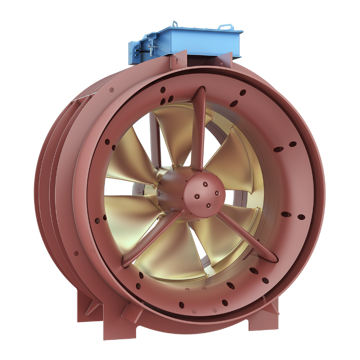
- Tunnelthrusters
- Output 200–3,700 kW, propeller diameter 1,600–2,000 mm, thrust up to 229 kN, available in CP (Constant Pitch) and FP (Fixed Pitch)
- Azimuth-thrusters
- Leistung 330-6.500 kW (mechanical/hybrid), neun Baumgroessen, Zugkraft optimiert fuer Bollard-Pull, 360°-Schwenkung
- Arctic Thruster (ARC)
- Power from 3 MW to >10 MW, no oil-sea interfaces, adaptive seals, Polar-Class-2 and Icebreaker-7 to 9 MW
- Permanent Magnet (PM) Thrusters
- TT-PM 1000 kW (146 kN), TT-PM 1600 kW (229 kN), Effizienzsteigerung 7-13% gegenueber Diesel-Elektrik
- Hydraulik-standard
- Double gear hydraulics for control/ventilation/lubricant, double cylinder with pressure pipe safety, seal tank with refueling capacity
- Lagerung
- Rollenlager fuer Schubwelle, Schmierung mit Fett, Dichtung an Lagergehausen, Toleranz-Freispiele typisch 0,5-2,0 mm
- US Azimuth Thruster
- Arctic Thruster (ARC)
- TCNS/C Azimuth Thruster (Swing-up/Retractable)
- Rim Drive Azimuth Thruster (RD-AZ)
- Tunnel Thruster Type TT/TTH
- Permanent Magnet Tunnel Thruster (TT-PM)
- Rim Drive Tunnel Thruster (RD-TT)
- Underwater Mountable Azimuth Thruster (UUC/UUC-PM)
- Retractable Azimuth Thruster (UL/ULE)
- Azipull Thruster (Integrated PM Motor)
- Area: Propellerblaetter: Verschleiss, Risse, Verformung, SeewuchsbewuchsCheck: Sichtpruefung auf Schaedigungen, Freispiel, Blattoberflaeche glatt ohne Kratzer/Dellen. Blattwurzel-O-Ringe auf Verschleiss checken, Spitzzenspiel messen. Bei Zweifeln: 1,5 bar Luftdruck auf VT-Nippel, Seifenblasen-Test auf Oellecks.
- Area: Propellerwellen-Dichtung: Durchfeuchtuung, Oelaustrittsverlust, VerschleissCheck: Visual inspection for leaks around shaft seal, check sealing cavity (monitored automatically via ARC). Observe seal clip pressure (e.g. via sensor output). At 5-year overhaul: renew seal. Check adaptive pressure regulation.
- Area: Lagerfreispiel/Lagerverschleiss: Axiales/Radiales Play ueber Norm, BohrlochabtragCheck: Calipers/counter gauges: measure shaft diameter and bores (target value via manufacturer data sheet). Document caliper readings. If exceeded: replace bearing journal/bearing shells. Observe vibration/noise during operation.
- Area: Hydraulikfluid: Verschmutzung, Feuchtigkeit, Alterung, Farb-/GeruechsveraenderungCheck: Check fluid level in tank (target level). Color test: light/yellowish OK, cloudy/dark = change required. Particle count (if available). Change filter per manufacturer interval. Perform pressure test on hydraulic line.
- Area: Hydraulik-Leitungen/Verbindungen: Risse, Lecks, Verformung, korrosive BelaegeCheck: Visual inspection of all hoses, pipes, connections for defects. Check for dryness, corrosion (rust spots), kink marks. High-frequency leak test if necessary. Observe operating pressure during voyage.
- Area: Elastomer-Bauteile (O-Ringe, Dichtlippen, Gummistuecke): Hartung, Risse, QuellungserscheinungenCheck: Visual inspection of all O-rings/seals for wear, hardening, deformation. Test with finger pressure (elasticity). Clean O-ring grooves/lubricate with gearbox oil (at 5-year overhaul). Replace damaged parts.
Type-universal inspection/service points for bow/stern thrusters (Kongsberg, Mega-Swarm 2026-06). Per-model specs not auto-populated.
- Very high thrust (240 kN) suitable for mega‑vessels and DP assistance
- Robust hydraulic drive system with proven Kongsberg reliability
- Large propeller diameter (2100 mm) gives efficient low‑speed thrust
- Standardised installation dimensions for new‑builds and retrofits
- Integrated monitoring of seal pressure and hydraulic parameters
- Requires substantial hull penetration and internal space
- High power demand (2 MW) increases fuel consumption when used continuously
- Fixed‑pitch design limits thrust vectoring compared with azimuth units
- Maintenance intensive – seals, bearings and hydraulic fluid need regular checks
- Noise and vibration can be higher than rim‑drive or PM thrusters
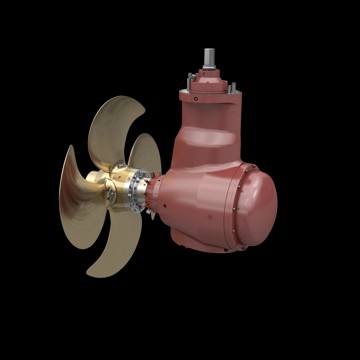
- Tunnelthrusters
- Output 200–3,700 kW, propeller diameter 1,600–2,000 mm, thrust up to 229 kN, available in CP (Constant Pitch) and FP (Fixed Pitch)
- Azimuth-thrusters
- Leistung 330-6.500 kW (mechanical/hybrid), neun Baumgroessen, Zugkraft optimiert fuer Bollard-Pull, 360°-Schwenkung
- Arctic Thruster (ARC)
- Power from 3 MW to >10 MW, no oil-sea interfaces, adaptive seals, Polar-Class-2 and Icebreaker-7 to 9 MW
- Permanent Magnet (PM) Thrusters
- TT-PM 1000 kW (146 kN), TT-PM 1600 kW (229 kN), Effizienzsteigerung 7-13% gegenueber Diesel-Elektrik
- Hydraulik-standard
- Double gear hydraulics for control/ventilation/lubricant, double cylinder with pressure pipe safety, seal tank with refueling capacity
- Lagerung
- Rollenlager fuer Schubwelle, Schmierung mit Fett, Dichtung an Lagergehausen, Toleranz-Freispiele typisch 0,5-2,0 mm
- US Azimuth Thruster
- Arctic Thruster (ARC)
- TCNS/C Azimuth Thruster (Swing-up/Retractable)
- Rim Drive Azimuth Thruster (RD-AZ)
- Tunnel Thruster Type TT/TTH
- Permanent Magnet Tunnel Thruster (TT-PM)
- Rim Drive Tunnel Thruster (RD-TT)
- Underwater Mountable Azimuth Thruster (UUC/UUC-PM)
- Retractable Azimuth Thruster (UL/ULE)
- Azipull Thruster (Integrated PM Motor)
- Area: Propellerblaetter: Verschleiss, Risse, Verformung, SeewuchsbewuchsCheck: Sichtpruefung auf Schaedigungen, Freispiel, Blattoberflaeche glatt ohne Kratzer/Dellen. Blattwurzel-O-Ringe auf Verschleiss checken, Spitzzenspiel messen. Bei Zweifeln: 1,5 bar Luftdruck auf VT-Nippel, Seifenblasen-Test auf Oellecks.
- Area: Propellerwellen-Dichtung: Durchfeuchtuung, Oelaustrittsverlust, VerschleissCheck: Visual inspection for leaks around shaft seal, check sealing cavity (monitored automatically via ARC). Observe seal clip pressure (e.g. via sensor output). At 5-year overhaul: renew seal. Check adaptive pressure regulation.
- Area: Lagerfreispiel/Lagerverschleiss: Axiales/Radiales Play ueber Norm, BohrlochabtragCheck: Calipers/counter gauges: measure shaft diameter and bores (target value via manufacturer data sheet). Document caliper readings. If exceeded: replace bearing journal/bearing shells. Observe vibration/noise during operation.
- Area: Hydraulikfluid: Verschmutzung, Feuchtigkeit, Alterung, Farb-/GeruechsveraenderungCheck: Check fluid level in tank (target level). Color test: light/yellowish OK, cloudy/dark = change required. Particle count (if available). Change filter per manufacturer interval. Perform pressure test on hydraulic line.
- Area: Hydraulik-Leitungen/Verbindungen: Risse, Lecks, Verformung, korrosive BelaegeCheck: Visual inspection of all hoses, pipes, connections for defects. Check for dryness, corrosion (rust spots), kink marks. High-frequency leak test if necessary. Observe operating pressure during voyage.
- Area: Elastomer-Bauteile (O-Ringe, Dichtlippen, Gummistuecke): Hartung, Risse, QuellungserscheinungenCheck: Visual inspection of all O-rings/seals for wear, hardening, deformation. Test with finger pressure (elasticity). Clean O-ring grooves/lubricate with gearbox oil (at 5-year overhaul). Replace damaged parts.
Type-universal inspection/service points for bow/stern thrusters (Kongsberg, Mega-Swarm 2026-06). Per-model specs not auto-populated.
- Very high thrust (264 kN) suitable for ultra‑large ships
- Large propeller diameter reduces cavitation and improves efficiency
- Proven Kongsberg hydraulic control system with built‑in diagnostics
- Robust mechanical design rated for continuous operation in harsh sea conditions
- Standardised dimensions simplify integration on new builds
- Large tunnel size limits installation to vessels with sufficient hull space
- High power demand (2 200 kW) increases fuel consumption and requires substantial hydraulic infrastructure
- Maintenance intensive – propeller blades, seals and bearings require regular inspection
- Fixed‑direction thrust; cannot provide 360° maneuverability like azimuth units
- Weight and structural reinforcement add to overall ship weight budget
- Tunnelthrusters
- Output 200–3,700 kW, propeller diameter 1,600–2,000 mm, thrust up to 229 kN, available in CP (Constant Pitch) and FP (Fixed Pitch)
- Azimuth-thrusters
- Leistung 330-6.500 kW (mechanical/hybrid), neun Baumgroessen, Zugkraft optimiert fuer Bollard-Pull, 360°-Schwenkung
- Arctic Thruster (ARC)
- Power from 3 MW to >10 MW, no oil-sea interfaces, adaptive seals, Polar-Class-2 and Icebreaker-7 to 9 MW
- Permanent Magnet (PM) Thrusters
- TT-PM 1000 kW (146 kN), TT-PM 1600 kW (229 kN), Effizienzsteigerung 7-13% gegenueber Diesel-Elektrik
- Hydraulik-standard
- Double gear hydraulics for control/ventilation/lubricant, double cylinder with pressure pipe safety, seal tank with refueling capacity
- Lagerung
- Rollenlager fuer Schubwelle, Schmierung mit Fett, Dichtung an Lagergehausen, Toleranz-Freispiele typisch 0,5-2,0 mm
- US Azimuth Thruster
- Arctic Thruster (ARC)
- TCNS/C Azimuth Thruster (Swing-up/Retractable)
- Rim Drive Azimuth Thruster (RD-AZ)
- Tunnel Thruster Type TT/TTH
- Permanent Magnet Tunnel Thruster (TT-PM)
- Rim Drive Tunnel Thruster (RD-TT)
- Underwater Mountable Azimuth Thruster (UUC/UUC-PM)
- Retractable Azimuth Thruster (UL/ULE)
- Azipull Thruster (Integrated PM Motor)
- Area: Propellerblaetter: Verschleiss, Risse, Verformung, SeewuchsbewuchsCheck: Sichtpruefung auf Schaedigungen, Freispiel, Blattoberflaeche glatt ohne Kratzer/Dellen. Blattwurzel-O-Ringe auf Verschleiss checken, Spitzzenspiel messen. Bei Zweifeln: 1,5 bar Luftdruck auf VT-Nippel, Seifenblasen-Test auf Oellecks.
- Area: Propellerwellen-Dichtung: Durchfeuchtuung, Oelaustrittsverlust, VerschleissCheck: Visual inspection for leaks around shaft seal, check sealing cavity (monitored automatically via ARC). Observe seal clip pressure (e.g. via sensor output). At 5-year overhaul: renew seal. Check adaptive pressure regulation.
- Area: Lagerfreispiel/Lagerverschleiss: Axiales/Radiales Play ueber Norm, BohrlochabtragCheck: Calipers/counter gauges: measure shaft diameter and bores (target value via manufacturer data sheet). Document caliper readings. If exceeded: replace bearing journal/bearing shells. Observe vibration/noise during operation.
- Area: Hydraulikfluid: Verschmutzung, Feuchtigkeit, Alterung, Farb-/GeruechsveraenderungCheck: Check fluid level in tank (target level). Color test: light/yellowish OK, cloudy/dark = change required. Particle count (if available). Change filter per manufacturer interval. Perform pressure test on hydraulic line.
- Area: Hydraulik-Leitungen/Verbindungen: Risse, Lecks, Verformung, korrosive BelaegeCheck: Visual inspection of all hoses, pipes, connections for defects. Check for dryness, corrosion (rust spots), kink marks. High-frequency leak test if necessary. Observe operating pressure during voyage.
- Area: Elastomer-Bauteile (O-Ringe, Dichtlippen, Gummistuecke): Hartung, Risse, QuellungserscheinungenCheck: Visual inspection of all O-rings/seals for wear, hardening, deformation. Test with finger pressure (elasticity). Clean O-ring grooves/lubricate with gearbox oil (at 5-year overhaul). Replace damaged parts.
Type-universal inspection/service points for bow/stern thrusters (Kongsberg, Mega-Swarm 2026-06). Per-model specs not auto-populated.
- Very high thrust output (264 kN) suitable for large vessels and tight port manoeuvring
- Large propeller diameter reduces cavitation and improves efficiency at low speeds
- Integrated double‑gear hydraulic drive offers reliable power transmission and redundancy
- Proven Kongsberg design with extensive field service history and spare‑part support
- Standardised mounting dimensions simplify installation on new builds or retrofits
- Fixed‑direction thrust; cannot provide 360° azimuth like a pod thruster
- High hydraulic power demand increases auxiliary system load and fuel consumption
- Large duct size limits applicability to vessels with sufficient hull volume at the stern
- Maintenance intensive – regular inspection of propeller blades, shaft seals and hydraulic components required
- Weight and installation complexity are significant; may affect stability calculations
- Tunnelthrusters
- Output 200–3,700 kW, propeller diameter 1,600–2,000 mm, thrust up to 229 kN, available in CP (Constant Pitch) and FP (Fixed Pitch)
- Azimuth-thrusters
- Leistung 330-6.500 kW (mechanical/hybrid), neun Baumgroessen, Zugkraft optimiert fuer Bollard-Pull, 360°-Schwenkung
- Arctic Thruster (ARC)
- Power from 3 MW to >10 MW, no oil-sea interfaces, adaptive seals, Polar-Class-2 and Icebreaker-7 to 9 MW
- Permanent Magnet (PM) Thrusters
- TT-PM 1000 kW (146 kN), TT-PM 1600 kW (229 kN), Effizienzsteigerung 7-13% gegenueber Diesel-Elektrik
- Hydraulik-standard
- Double gear hydraulics for control/ventilation/lubricant, double cylinder with pressure pipe safety, seal tank with refueling capacity
- Lagerung
- Rollenlager fuer Schubwelle, Schmierung mit Fett, Dichtung an Lagergehausen, Toleranz-Freispiele typisch 0,5-2,0 mm
- US Azimuth Thruster
- Arctic Thruster (ARC)
- TCNS/C Azimuth Thruster (Swing-up/Retractable)
- Rim Drive Azimuth Thruster (RD-AZ)
- Tunnel Thruster Type TT/TTH
- Permanent Magnet Tunnel Thruster (TT-PM)
- Rim Drive Tunnel Thruster (RD-TT)
- Underwater Mountable Azimuth Thruster (UUC/UUC-PM)
- Retractable Azimuth Thruster (UL/ULE)
- Azipull Thruster (Integrated PM Motor)
- Area: Propellerblaetter: Verschleiss, Risse, Verformung, SeewuchsbewuchsCheck: Sichtpruefung auf Schaedigungen, Freispiel, Blattoberflaeche glatt ohne Kratzer/Dellen. Blattwurzel-O-Ringe auf Verschleiss checken, Spitzzenspiel messen. Bei Zweifeln: 1,5 bar Luftdruck auf VT-Nippel, Seifenblasen-Test auf Oellecks.
- Area: Propellerwellen-Dichtung: Durchfeuchtuung, Oelaustrittsverlust, VerschleissCheck: Visual inspection for leaks around shaft seal, check sealing cavity (monitored automatically via ARC). Observe seal clip pressure (e.g. via sensor output). At 5-year overhaul: renew seal. Check adaptive pressure regulation.
- Area: Lagerfreispiel/Lagerverschleiss: Axiales/Radiales Play ueber Norm, BohrlochabtragCheck: Calipers/counter gauges: measure shaft diameter and bores (target value via manufacturer data sheet). Document caliper readings. If exceeded: replace bearing journal/bearing shells. Observe vibration/noise during operation.
- Area: Hydraulikfluid: Verschmutzung, Feuchtigkeit, Alterung, Farb-/GeruechsveraenderungCheck: Check fluid level in tank (target level). Color test: light/yellowish OK, cloudy/dark = change required. Particle count (if available). Change filter per manufacturer interval. Perform pressure test on hydraulic line.
- Area: Hydraulik-Leitungen/Verbindungen: Risse, Lecks, Verformung, korrosive BelaegeCheck: Visual inspection of all hoses, pipes, connections for defects. Check for dryness, corrosion (rust spots), kink marks. High-frequency leak test if necessary. Observe operating pressure during voyage.
- Area: Elastomer-Bauteile (O-Ringe, Dichtlippen, Gummistuecke): Hartung, Risse, QuellungserscheinungenCheck: Visual inspection of all O-rings/seals for wear, hardening, deformation. Test with finger pressure (elasticity). Clean O-ring grooves/lubricate with gearbox oil (at 5-year overhaul). Replace damaged parts.
Type-universal inspection/service points for bow/stern thrusters (Kongsberg, Mega-Swarm 2026-06). Per-model specs not auto-populated.
- Very high thrust (≈300 kN) in a single unit, enabling rapid bow‑sideways manoeuvres for mega‑vessels
- Proven Kongsberg reliability and extensive global support network
- Available with constant‑pitch or fixed‑pitch propeller blades to match specific performance curves
- Robust double‑gear hydraulic drive reduces wear and extends service intervals
- Compatible with Arctic Thruster (ARC) sealing technology for cold‑water operations
- Large tunnel diameter reduces hull strength in the bow area and requires significant structural reinforcement
- No 360° azimuth capability – manoeuvring is limited to transverse thrust only
- Higher power consumption compared with electric or permanent‑magnet thrusters of similar thrust
- Installation and retro‑fit are complex, often requiring dry‑dock time and extensive piping work
- Maintenance intensive: regular inspection of propeller blades, shaft seals and hydraulic system required
- Tunnelthrusters
- Output 200–3,700 kW, propeller diameter 1,600–2,000 mm, thrust up to 229 kN, available in CP (Constant Pitch) and FP (Fixed Pitch)
- Azimuth-thrusters
- Leistung 330-6.500 kW (mechanical/hybrid), neun Baumgroessen, Zugkraft optimiert fuer Bollard-Pull, 360°-Schwenkung
- Arctic Thruster (ARC)
- Power from 3 MW to >10 MW, no oil-sea interfaces, adaptive seals, Polar-Class-2 and Icebreaker-7 to 9 MW
- Permanent Magnet (PM) Thrusters
- TT-PM 1000 kW (146 kN), TT-PM 1600 kW (229 kN), Effizienzsteigerung 7-13% gegenueber Diesel-Elektrik
- Hydraulik-standard
- Double gear hydraulics for control/ventilation/lubricant, double cylinder with pressure pipe safety, seal tank with refueling capacity
- Lagerung
- Rollenlager fuer Schubwelle, Schmierung mit Fett, Dichtung an Lagergehausen, Toleranz-Freispiele typisch 0,5-2,0 mm
- US Azimuth Thruster
- Arctic Thruster (ARC)
- TCNS/C Azimuth Thruster (Swing-up/Retractable)
- Rim Drive Azimuth Thruster (RD-AZ)
- Tunnel Thruster Type TT/TTH
- Permanent Magnet Tunnel Thruster (TT-PM)
- Rim Drive Tunnel Thruster (RD-TT)
- Underwater Mountable Azimuth Thruster (UUC/UUC-PM)
- Retractable Azimuth Thruster (UL/ULE)
- Azipull Thruster (Integrated PM Motor)
- Area: Propellerblaetter: Verschleiss, Risse, Verformung, SeewuchsbewuchsCheck: Sichtpruefung auf Schaedigungen, Freispiel, Blattoberflaeche glatt ohne Kratzer/Dellen. Blattwurzel-O-Ringe auf Verschleiss checken, Spitzzenspiel messen. Bei Zweifeln: 1,5 bar Luftdruck auf VT-Nippel, Seifenblasen-Test auf Oellecks.
- Area: Propellerwellen-Dichtung: Durchfeuchtuung, Oelaustrittsverlust, VerschleissCheck: Visual inspection for leaks around shaft seal, check sealing cavity (monitored automatically via ARC). Observe seal clip pressure (e.g. via sensor output). At 5-year overhaul: renew seal. Check adaptive pressure regulation.
- Area: Lagerfreispiel/Lagerverschleiss: Axiales/Radiales Play ueber Norm, BohrlochabtragCheck: Calipers/counter gauges: measure shaft diameter and bores (target value via manufacturer data sheet). Document caliper readings. If exceeded: replace bearing journal/bearing shells. Observe vibration/noise during operation.
- Area: Hydraulikfluid: Verschmutzung, Feuchtigkeit, Alterung, Farb-/GeruechsveraenderungCheck: Check fluid level in tank (target level). Color test: light/yellowish OK, cloudy/dark = change required. Particle count (if available). Change filter per manufacturer interval. Perform pressure test on hydraulic line.
- Area: Hydraulik-Leitungen/Verbindungen: Risse, Lecks, Verformung, korrosive BelaegeCheck: Visual inspection of all hoses, pipes, connections for defects. Check for dryness, corrosion (rust spots), kink marks. High-frequency leak test if necessary. Observe operating pressure during voyage.
- Area: Elastomer-Bauteile (O-Ringe, Dichtlippen, Gummistuecke): Hartung, Risse, QuellungserscheinungenCheck: Visual inspection of all O-rings/seals for wear, hardening, deformation. Test with finger pressure (elasticity). Clean O-ring grooves/lubricate with gearbox oil (at 5-year overhaul). Replace damaged parts.
Type-universal inspection/service points for bow/stern thrusters (Kongsberg, Mega-Swarm 2026-06). Per-model specs not auto-populated.
- Very high thrust (300 kN) suitable for VLCCs, ULCS and other mega‑vessels
- Proven Kongsberg/Rolls‑Royce hydraulic drive with robust double‑gear system
- Standardised inspection points simplify scheduled maintenance
- Integrated with Kongsberg control & DP packages for seamless operation
- Large tunnel diameter (2.5 m) reduces usable hull space and may affect structural strength
- Only provides fixed‑direction thrust; no 360° azimuth capability
- High hydraulic power demand (≈2.5 MW) increases fuel consumption and requires dedicated pump capacity
- Installation is limited to stern positions on vessels with sufficient beam
- Tunnelthrusters
- Output 200–3,700 kW, propeller diameter 1,600–2,000 mm, thrust up to 229 kN, available in CP (Constant Pitch) and FP (Fixed Pitch)
- Azimuth-thrusters
- Leistung 330-6.500 kW (mechanical/hybrid), neun Baumgroessen, Zugkraft optimiert fuer Bollard-Pull, 360°-Schwenkung
- Arctic Thruster (ARC)
- Power from 3 MW to >10 MW, no oil-sea interfaces, adaptive seals, Polar-Class-2 and Icebreaker-7 to 9 MW
- Permanent Magnet (PM) Thrusters
- TT-PM 1000 kW (146 kN), TT-PM 1600 kW (229 kN), Effizienzsteigerung 7-13% gegenueber Diesel-Elektrik
- Hydraulik-standard
- Double gear hydraulics for control/ventilation/lubricant, double cylinder with pressure pipe safety, seal tank with refueling capacity
- Lagerung
- Rollenlager fuer Schubwelle, Schmierung mit Fett, Dichtung an Lagergehausen, Toleranz-Freispiele typisch 0,5-2,0 mm
- US Azimuth Thruster
- Arctic Thruster (ARC)
- TCNS/C Azimuth Thruster (Swing-up/Retractable)
- Rim Drive Azimuth Thruster (RD-AZ)
- Tunnel Thruster Type TT/TTH
- Permanent Magnet Tunnel Thruster (TT-PM)
- Rim Drive Tunnel Thruster (RD-TT)
- Underwater Mountable Azimuth Thruster (UUC/UUC-PM)
- Retractable Azimuth Thruster (UL/ULE)
- Azipull Thruster (Integrated PM Motor)
- Area: Propellerblaetter: Verschleiss, Risse, Verformung, SeewuchsbewuchsCheck: Sichtpruefung auf Schaedigungen, Freispiel, Blattoberflaeche glatt ohne Kratzer/Dellen. Blattwurzel-O-Ringe auf Verschleiss checken, Spitzzenspiel messen. Bei Zweifeln: 1,5 bar Luftdruck auf VT-Nippel, Seifenblasen-Test auf Oellecks.
- Area: Propellerwellen-Dichtung: Durchfeuchtuung, Oelaustrittsverlust, VerschleissCheck: Visual inspection for leaks around shaft seal, check sealing cavity (monitored automatically via ARC). Observe seal clip pressure (e.g. via sensor output). At 5-year overhaul: renew seal. Check adaptive pressure regulation.
- Area: Lagerfreispiel/Lagerverschleiss: Axiales/Radiales Play ueber Norm, BohrlochabtragCheck: Calipers/counter gauges: measure shaft diameter and bores (target value via manufacturer data sheet). Document caliper readings. If exceeded: replace bearing journal/bearing shells. Observe vibration/noise during operation.
- Area: Hydraulikfluid: Verschmutzung, Feuchtigkeit, Alterung, Farb-/GeruechsveraenderungCheck: Check fluid level in tank (target level). Color test: light/yellowish OK, cloudy/dark = change required. Particle count (if available). Change filter per manufacturer interval. Perform pressure test on hydraulic line.
- Area: Hydraulik-Leitungen/Verbindungen: Risse, Lecks, Verformung, korrosive BelaegeCheck: Visual inspection of all hoses, pipes, connections for defects. Check for dryness, corrosion (rust spots), kink marks. High-frequency leak test if necessary. Observe operating pressure during voyage.
- Area: Elastomer-Bauteile (O-Ringe, Dichtlippen, Gummistuecke): Hartung, Risse, QuellungserscheinungenCheck: Visual inspection of all O-rings/seals for wear, hardening, deformation. Test with finger pressure (elasticity). Clean O-ring grooves/lubricate with gearbox oil (at 5-year overhaul). Replace damaged parts.
Type-universal inspection/service points for bow/stern thrusters (Kongsberg, Mega-Swarm 2026-06). Per-model specs not auto-populated.
- Very high power and thrust (3 MW / 360 kN) suitable for the largest merchant ships
- Large propeller diameter (2.9 m) gives superior hydraulic efficiency compared with smaller tunnel units
- Integrated Kongsberg control system compatible with existing DP and maneuvering consoles
- Proven reliability on mega‑fleet installations, with extensive field service support
- Standardised hydraulic interface simplifies retro‑fit on vessels already equipped with high‑capacity hydraulic systems
- Large hull penetration (≈3 m) limits installation to ships with sufficient bow space and structural reinforcement
- High hydraulic power demand requires robust pumps and larger fluid reservoirs, increasing plant weight and complexity
- Maintenance intensive – seals, O‑rings and bearing play must be inspected at 5‑year intervals
- Fixed‑direction thrust (no azimuth) reduces flexibility compared with 360° azimuth thrusters in tight berths
- Higher initial cost and longer lead time than smaller standard tunnel units
- Tunnelthrusters
- Output 200–3,700 kW, propeller diameter 1,600–2,000 mm, thrust up to 229 kN, available in CP (Constant Pitch) and FP (Fixed Pitch)
- Azimuth-thrusters
- Leistung 330-6.500 kW (mechanical/hybrid), neun Baumgroessen, Zugkraft optimiert fuer Bollard-Pull, 360°-Schwenkung
- Arctic Thruster (ARC)
- Power from 3 MW to >10 MW, no oil-sea interfaces, adaptive seals, Polar-Class-2 and Icebreaker-7 to 9 MW
- Permanent Magnet (PM) Thrusters
- TT-PM 1000 kW (146 kN), TT-PM 1600 kW (229 kN), Effizienzsteigerung 7-13% gegenueber Diesel-Elektrik
- Hydraulik-standard
- Double gear hydraulics for control/ventilation/lubricant, double cylinder with pressure pipe safety, seal tank with refueling capacity
- Lagerung
- Rollenlager fuer Schubwelle, Schmierung mit Fett, Dichtung an Lagergehausen, Toleranz-Freispiele typisch 0,5-2,0 mm
- US Azimuth Thruster
- Arctic Thruster (ARC)
- TCNS/C Azimuth Thruster (Swing-up/Retractable)
- Rim Drive Azimuth Thruster (RD-AZ)
- Tunnel Thruster Type TT/TTH
- Permanent Magnet Tunnel Thruster (TT-PM)
- Rim Drive Tunnel Thruster (RD-TT)
- Underwater Mountable Azimuth Thruster (UUC/UUC-PM)
- Retractable Azimuth Thruster (UL/ULE)
- Azipull Thruster (Integrated PM Motor)
- Area: Propellerblaetter: Verschleiss, Risse, Verformung, SeewuchsbewuchsCheck: Sichtpruefung auf Schaedigungen, Freispiel, Blattoberflaeche glatt ohne Kratzer/Dellen. Blattwurzel-O-Ringe auf Verschleiss checken, Spitzzenspiel messen. Bei Zweifeln: 1,5 bar Luftdruck auf VT-Nippel, Seifenblasen-Test auf Oellecks.
- Area: Propellerwellen-Dichtung: Durchfeuchtuung, Oelaustrittsverlust, VerschleissCheck: Visual inspection for leaks around shaft seal, check sealing cavity (monitored automatically via ARC). Observe seal clip pressure (e.g. via sensor output). At 5-year overhaul: renew seal. Check adaptive pressure regulation.
- Area: Lagerfreispiel/Lagerverschleiss: Axiales/Radiales Play ueber Norm, BohrlochabtragCheck: Calipers/counter gauges: measure shaft diameter and bores (target value via manufacturer data sheet). Document caliper readings. If exceeded: replace bearing journal/bearing shells. Observe vibration/noise during operation.
- Area: Hydraulikfluid: Verschmutzung, Feuchtigkeit, Alterung, Farb-/GeruechsveraenderungCheck: Check fluid level in tank (target level). Color test: light/yellowish OK, cloudy/dark = change required. Particle count (if available). Change filter per manufacturer interval. Perform pressure test on hydraulic line.
- Area: Hydraulik-Leitungen/Verbindungen: Risse, Lecks, Verformung, korrosive BelaegeCheck: Visual inspection of all hoses, pipes, connections for defects. Check for dryness, corrosion (rust spots), kink marks. High-frequency leak test if necessary. Observe operating pressure during voyage.
- Area: Elastomer-Bauteile (O-Ringe, Dichtlippen, Gummistuecke): Hartung, Risse, QuellungserscheinungenCheck: Visual inspection of all O-rings/seals for wear, hardening, deformation. Test with finger pressure (elasticity). Clean O-ring grooves/lubricate with gearbox oil (at 5-year overhaul). Replace damaged parts.
Type-universal inspection/service points for bow/stern thrusters (Kongsberg, Mega-Swarm 2026-06). Per-model specs not auto-populated.
- Very high thrust (360 kN) suitable for the largest tankers, cruise ships and DP‑operated vessels
- Robust hydraulic drive with double‑gear system offering reliable control under heavy loads
- Large tunnel diameter reduces cavitation risk and improves efficiency at high power levels
- Integrated monitoring of shaft seal pressure and hydraulic parameters for condition‑based maintenance
- Available in both constant‑pitch (CP) and fixed‑pitch (FP) propeller options to match vessel DP strategy
- Large physical envelope requires significant hull penetration and structural reinforcement
- Higher installation and lifecycle cost compared with lower‑power tunnel thrusters or azimuth units of similar rating
- Hydraulic system complexity increases maintenance workload and spare‑parts inventory
- Limited retrofit suitability for vessels with restricted stern space or low‑draft constraints
- Noise and vibration levels can be higher than comparable rim‑drive or permanent‑magnet designs
- Tunnelthrusters
- Output 200–3,700 kW, propeller diameter 1,600–2,000 mm, thrust up to 229 kN, available in CP (Constant Pitch) and FP (Fixed Pitch)
- Azimuth-thrusters
- Leistung 330-6.500 kW (mechanical/hybrid), neun Baumgroessen, Zugkraft optimiert fuer Bollard-Pull, 360°-Schwenkung
- Arctic Thruster (ARC)
- Power from 3 MW to >10 MW, no oil-sea interfaces, adaptive seals, Polar-Class-2 and Icebreaker-7 to 9 MW
- Permanent Magnet (PM) Thrusters
- TT-PM 1000 kW (146 kN), TT-PM 1600 kW (229 kN), Effizienzsteigerung 7-13% gegenueber Diesel-Elektrik
- Hydraulik-standard
- Double gear hydraulics for control/ventilation/lubricant, double cylinder with pressure pipe safety, seal tank with refueling capacity
- Lagerung
- Rollenlager fuer Schubwelle, Schmierung mit Fett, Dichtung an Lagergehausen, Toleranz-Freispiele typisch 0,5-2,0 mm
- US Azimuth Thruster
- Arctic Thruster (ARC)
- TCNS/C Azimuth Thruster (Swing-up/Retractable)
- Rim Drive Azimuth Thruster (RD-AZ)
- Tunnel Thruster Type TT/TTH
- Permanent Magnet Tunnel Thruster (TT-PM)
- Rim Drive Tunnel Thruster (RD-TT)
- Underwater Mountable Azimuth Thruster (UUC/UUC-PM)
- Retractable Azimuth Thruster (UL/ULE)
- Azipull Thruster (Integrated PM Motor)
- Area: Propellerblaetter: Verschleiss, Risse, Verformung, SeewuchsbewuchsCheck: Sichtpruefung auf Schaedigungen, Freispiel, Blattoberflaeche glatt ohne Kratzer/Dellen. Blattwurzel-O-Ringe auf Verschleiss checken, Spitzzenspiel messen. Bei Zweifeln: 1,5 bar Luftdruck auf VT-Nippel, Seifenblasen-Test auf Oellecks.
- Area: Propellerwellen-Dichtung: Durchfeuchtuung, Oelaustrittsverlust, VerschleissCheck: Visual inspection for leaks around shaft seal, check sealing cavity (monitored automatically via ARC). Observe seal clip pressure (e.g. via sensor output). At 5-year overhaul: renew seal. Check adaptive pressure regulation.
- Area: Lagerfreispiel/Lagerverschleiss: Axiales/Radiales Play ueber Norm, BohrlochabtragCheck: Calipers/counter gauges: measure shaft diameter and bores (target value via manufacturer data sheet). Document caliper readings. If exceeded: replace bearing journal/bearing shells. Observe vibration/noise during operation.
- Area: Hydraulikfluid: Verschmutzung, Feuchtigkeit, Alterung, Farb-/GeruechsveraenderungCheck: Check fluid level in tank (target level). Color test: light/yellowish OK, cloudy/dark = change required. Particle count (if available). Change filter per manufacturer interval. Perform pressure test on hydraulic line.
- Area: Hydraulik-Leitungen/Verbindungen: Risse, Lecks, Verformung, korrosive BelaegeCheck: Visual inspection of all hoses, pipes, connections for defects. Check for dryness, corrosion (rust spots), kink marks. High-frequency leak test if necessary. Observe operating pressure during voyage.
- Area: Elastomer-Bauteile (O-Ringe, Dichtlippen, Gummistuecke): Hartung, Risse, QuellungserscheinungenCheck: Visual inspection of all O-rings/seals for wear, hardening, deformation. Test with finger pressure (elasticity). Clean O-ring grooves/lubricate with gearbox oil (at 5-year overhaul). Replace damaged parts.
Type-universal inspection/service points for bow/stern thrusters (Kongsberg, Mega-Swarm 2026-06). Per-model specs not auto-populated.
- Very high thrust (420 kN) suitable for mega‑vessels and DP assistance
- Large propeller diameter reduces cavitation and improves efficiency at high power
- Proven Kongsberg hydraulic drive with robust control integration
- Modular installation – can be fitted as a fixed or retractable unit
- Extensive service network and documented maintenance procedures
- Large tunnel size (3.3 m) limits applicability on vessels with restricted hull space
- High hydraulic power demand; requires sizable pumps and reservoirs
- Higher fuel consumption compared with newer electric or permanent‑magnet thrusters
- Maintenance intensive – propeller blades, shaft seals and bearings need regular inspection
- Weight and installation complexity increase dry‑dock time
- Tunnelthrusters
- Output 200–3,700 kW, propeller diameter 1,600–2,000 mm, thrust up to 229 kN, available in CP (Constant Pitch) and FP (Fixed Pitch)
- Azimuth-thrusters
- Leistung 330-6.500 kW (mechanical/hybrid), neun Baumgroessen, Zugkraft optimiert fuer Bollard-Pull, 360°-Schwenkung
- Arctic Thruster (ARC)
- Power from 3 MW to >10 MW, no oil-sea interfaces, adaptive seals, Polar-Class-2 and Icebreaker-7 to 9 MW
- Permanent Magnet (PM) Thrusters
- TT-PM 1000 kW (146 kN), TT-PM 1600 kW (229 kN), Effizienzsteigerung 7-13% gegenueber Diesel-Elektrik
- Hydraulik-standard
- Double gear hydraulics for control/ventilation/lubricant, double cylinder with pressure pipe safety, seal tank with refueling capacity
- Lagerung
- Rollenlager fuer Schubwelle, Schmierung mit Fett, Dichtung an Lagergehausen, Toleranz-Freispiele typisch 0,5-2,0 mm
- US Azimuth Thruster
- Arctic Thruster (ARC)
- TCNS/C Azimuth Thruster (Swing-up/Retractable)
- Rim Drive Azimuth Thruster (RD-AZ)
- Tunnel Thruster Type TT/TTH
- Permanent Magnet Tunnel Thruster (TT-PM)
- Rim Drive Tunnel Thruster (RD-TT)
- Underwater Mountable Azimuth Thruster (UUC/UUC-PM)
- Retractable Azimuth Thruster (UL/ULE)
- Azipull Thruster (Integrated PM Motor)
- Area: Propellerblaetter: Verschleiss, Risse, Verformung, SeewuchsbewuchsCheck: Sichtpruefung auf Schaedigungen, Freispiel, Blattoberflaeche glatt ohne Kratzer/Dellen. Blattwurzel-O-Ringe auf Verschleiss checken, Spitzzenspiel messen. Bei Zweifeln: 1,5 bar Luftdruck auf VT-Nippel, Seifenblasen-Test auf Oellecks.
- Area: Propellerwellen-Dichtung: Durchfeuchtuung, Oelaustrittsverlust, VerschleissCheck: Visual inspection for leaks around shaft seal, check sealing cavity (monitored automatically via ARC). Observe seal clip pressure (e.g. via sensor output). At 5-year overhaul: renew seal. Check adaptive pressure regulation.
- Area: Lagerfreispiel/Lagerverschleiss: Axiales/Radiales Play ueber Norm, BohrlochabtragCheck: Calipers/counter gauges: measure shaft diameter and bores (target value via manufacturer data sheet). Document caliper readings. If exceeded: replace bearing journal/bearing shells. Observe vibration/noise during operation.
- Area: Hydraulikfluid: Verschmutzung, Feuchtigkeit, Alterung, Farb-/GeruechsveraenderungCheck: Check fluid level in tank (target level). Color test: light/yellowish OK, cloudy/dark = change required. Particle count (if available). Change filter per manufacturer interval. Perform pressure test on hydraulic line.
- Area: Hydraulik-Leitungen/Verbindungen: Risse, Lecks, Verformung, korrosive BelaegeCheck: Visual inspection of all hoses, pipes, connections for defects. Check for dryness, corrosion (rust spots), kink marks. High-frequency leak test if necessary. Observe operating pressure during voyage.
- Area: Elastomer-Bauteile (O-Ringe, Dichtlippen, Gummistuecke): Hartung, Risse, QuellungserscheinungenCheck: Visual inspection of all O-rings/seals for wear, hardening, deformation. Test with finger pressure (elasticity). Clean O-ring grooves/lubricate with gearbox oil (at 5-year overhaul). Replace damaged parts.
Type-universal inspection/service points for bow/stern thrusters (Kongsberg, Mega-Swarm 2026-06). Per-model specs not auto-populated.
- Very high thrust (420 kN) suitable for large ships and dynamic positioning
- Robust Kongsberg design with proven reliability in harsh conditions
- Large propeller diameter (3.3 m) gives good hydraulic efficiency at low speeds
- Integrated hydraulic control system simplifies installation and operation
- Standardised hull opening reduces custom engineering work
- Large tunnel diameter requires significant hull penetration and structural reinforcement
- Higher power consumption (3 500 kW) increases fuel‑related operating costs
- Only provides thrust in a fixed direction; no 360° azimuth capability
- Hydraulic components add maintenance complexity compared with fully electric azimuth units
- Weight and space requirements may limit suitability for smaller vessels
- Tunnelthrusters
- Output 200–3,700 kW, propeller diameter 1,600–2,000 mm, thrust up to 229 kN, available in CP (Constant Pitch) and FP (Fixed Pitch)
- Azimuth-thrusters
- Leistung 330-6.500 kW (mechanical/hybrid), neun Baumgroessen, Zugkraft optimiert fuer Bollard-Pull, 360°-Schwenkung
- Arctic Thruster (ARC)
- Power from 3 MW to >10 MW, no oil-sea interfaces, adaptive seals, Polar-Class-2 and Icebreaker-7 to 9 MW
- Permanent Magnet (PM) Thrusters
- TT-PM 1000 kW (146 kN), TT-PM 1600 kW (229 kN), Effizienzsteigerung 7-13% gegenueber Diesel-Elektrik
- Hydraulik-standard
- Double gear hydraulics for control/ventilation/lubricant, double cylinder with pressure pipe safety, seal tank with refueling capacity
- Lagerung
- Rollenlager fuer Schubwelle, Schmierung mit Fett, Dichtung an Lagergehausen, Toleranz-Freispiele typisch 0,5-2,0 mm
- US Azimuth Thruster
- Arctic Thruster (ARC)
- TCNS/C Azimuth Thruster (Swing-up/Retractable)
- Rim Drive Azimuth Thruster (RD-AZ)
- Tunnel Thruster Type TT/TTH
- Permanent Magnet Tunnel Thruster (TT-PM)
- Rim Drive Tunnel Thruster (RD-TT)
- Underwater Mountable Azimuth Thruster (UUC/UUC-PM)
- Retractable Azimuth Thruster (UL/ULE)
- Azipull Thruster (Integrated PM Motor)
- Area: Propellerblaetter: Verschleiss, Risse, Verformung, SeewuchsbewuchsCheck: Sichtpruefung auf Schaedigungen, Freispiel, Blattoberflaeche glatt ohne Kratzer/Dellen. Blattwurzel-O-Ringe auf Verschleiss checken, Spitzzenspiel messen. Bei Zweifeln: 1,5 bar Luftdruck auf VT-Nippel, Seifenblasen-Test auf Oellecks.
- Area: Propellerwellen-Dichtung: Durchfeuchtuung, Oelaustrittsverlust, VerschleissCheck: Visual inspection for leaks around shaft seal, check sealing cavity (monitored automatically via ARC). Observe seal clip pressure (e.g. via sensor output). At 5-year overhaul: renew seal. Check adaptive pressure regulation.
- Area: Lagerfreispiel/Lagerverschleiss: Axiales/Radiales Play ueber Norm, BohrlochabtragCheck: Calipers/counter gauges: measure shaft diameter and bores (target value via manufacturer data sheet). Document caliper readings. If exceeded: replace bearing journal/bearing shells. Observe vibration/noise during operation.
- Area: Hydraulikfluid: Verschmutzung, Feuchtigkeit, Alterung, Farb-/GeruechsveraenderungCheck: Check fluid level in tank (target level). Color test: light/yellowish OK, cloudy/dark = change required. Particle count (if available). Change filter per manufacturer interval. Perform pressure test on hydraulic line.
- Area: Hydraulik-Leitungen/Verbindungen: Risse, Lecks, Verformung, korrosive BelaegeCheck: Visual inspection of all hoses, pipes, connections for defects. Check for dryness, corrosion (rust spots), kink marks. High-frequency leak test if necessary. Observe operating pressure during voyage.
- Area: Elastomer-Bauteile (O-Ringe, Dichtlippen, Gummistuecke): Hartung, Risse, QuellungserscheinungenCheck: Visual inspection of all O-rings/seals for wear, hardening, deformation. Test with finger pressure (elasticity). Clean O-ring grooves/lubricate with gearbox oil (at 5-year overhaul). Replace damaged parts.
Type-universal inspection/service points for bow/stern thrusters (Kongsberg, Mega-Swarm 2026-06). Per-model specs not auto-populated.
- Very high thrust (480 kN) enables rapid berthing and unberthing of mega‑vessels
- Large 3.7 m propeller diameter reduces cavitation and improves efficiency at full power
- Integrated hydraulic drive with Kongsberg control system allows fine thrust modulation and DP support
- Proven Kongsberg/Rolls‑Royce reliability and extensive class approvals
- Modular design simplifies installation in new builds and major retrofits
- Large hull penetration (≈3.7 m) requires substantial structural reinforcement
- High power demand (4 MW) increases ship’s overall energy consumption
- Heavy unit mass and associated hydraulic equipment add significant weight aloft
- Maintenance complexity – frequent inspection of propeller blades, shaft seals and hydraulic system
- Limited suitability for small or medium‑size vessels where space and power are constrained
- Tunnelthrusters
- Output 200–3,700 kW, propeller diameter 1,600–2,000 mm, thrust up to 229 kN, available in CP (Constant Pitch) and FP (Fixed Pitch)
- Azimuth-thrusters
- Leistung 330-6.500 kW (mechanical/hybrid), neun Baumgroessen, Zugkraft optimiert fuer Bollard-Pull, 360°-Schwenkung
- Arctic Thruster (ARC)
- Power from 3 MW to >10 MW, no oil-sea interfaces, adaptive seals, Polar-Class-2 and Icebreaker-7 to 9 MW
- Permanent Magnet (PM) Thrusters
- TT-PM 1000 kW (146 kN), TT-PM 1600 kW (229 kN), Effizienzsteigerung 7-13% gegenueber Diesel-Elektrik
- Hydraulik-standard
- Double gear hydraulics for control/ventilation/lubricant, double cylinder with pressure pipe safety, seal tank with refueling capacity
- Lagerung
- Rollenlager fuer Schubwelle, Schmierung mit Fett, Dichtung an Lagergehausen, Toleranz-Freispiele typisch 0,5-2,0 mm
- US Azimuth Thruster
- Arctic Thruster (ARC)
- TCNS/C Azimuth Thruster (Swing-up/Retractable)
- Rim Drive Azimuth Thruster (RD-AZ)
- Tunnel Thruster Type TT/TTH
- Permanent Magnet Tunnel Thruster (TT-PM)
- Rim Drive Tunnel Thruster (RD-TT)
- Underwater Mountable Azimuth Thruster (UUC/UUC-PM)
- Retractable Azimuth Thruster (UL/ULE)
- Azipull Thruster (Integrated PM Motor)
- Area: Propellerblaetter: Verschleiss, Risse, Verformung, SeewuchsbewuchsCheck: Sichtpruefung auf Schaedigungen, Freispiel, Blattoberflaeche glatt ohne Kratzer/Dellen. Blattwurzel-O-Ringe auf Verschleiss checken, Spitzzenspiel messen. Bei Zweifeln: 1,5 bar Luftdruck auf VT-Nippel, Seifenblasen-Test auf Oellecks.
- Area: Propellerwellen-Dichtung: Durchfeuchtuung, Oelaustrittsverlust, VerschleissCheck: Visual inspection for leaks around shaft seal, check sealing cavity (monitored automatically via ARC). Observe seal clip pressure (e.g. via sensor output). At 5-year overhaul: renew seal. Check adaptive pressure regulation.
- Area: Lagerfreispiel/Lagerverschleiss: Axiales/Radiales Play ueber Norm, BohrlochabtragCheck: Calipers/counter gauges: measure shaft diameter and bores (target value via manufacturer data sheet). Document caliper readings. If exceeded: replace bearing journal/bearing shells. Observe vibration/noise during operation.
- Area: Hydraulikfluid: Verschmutzung, Feuchtigkeit, Alterung, Farb-/GeruechsveraenderungCheck: Check fluid level in tank (target level). Color test: light/yellowish OK, cloudy/dark = change required. Particle count (if available). Change filter per manufacturer interval. Perform pressure test on hydraulic line.
- Area: Hydraulik-Leitungen/Verbindungen: Risse, Lecks, Verformung, korrosive BelaegeCheck: Visual inspection of all hoses, pipes, connections for defects. Check for dryness, corrosion (rust spots), kink marks. High-frequency leak test if necessary. Observe operating pressure during voyage.
- Area: Elastomer-Bauteile (O-Ringe, Dichtlippen, Gummistuecke): Hartung, Risse, QuellungserscheinungenCheck: Visual inspection of all O-rings/seals for wear, hardening, deformation. Test with finger pressure (elasticity). Clean O-ring grooves/lubricate with gearbox oil (at 5-year overhaul). Replace damaged parts.
Type-universal inspection/service points for bow/stern thrusters (Kongsberg, Mega-Swarm 2026-06). Per-model specs not auto-populated.
- Very high static thrust (480 kN) suitable for mega‑size tankers and cruise ships
- Robust hydraulic drive with Kongsberg’s proven diagnostics and condition monitoring
- Large tunnel diameter provides efficient water flow and lower cavitation risk
- Standardised installation – fits existing hull openings designed for TT series units
- Class‑approved and widely supported by Kongsberg service network
- Fixed‑direction thrust; no 360° azimuth capability, limiting maneuvering flexibility
- Significant hull penetration required (3.7 m tunnel) which may affect structural integrity and internal layout
- Higher hydraulic power consumption compared with electric or azimuth thrusters for the same manoeuvre
- Maintenance intensive – requires regular inspection of propeller blades, shaft seals and hydraulic system
- Weight and space requirements restrict use on smaller vessels
- Tunnelthrusters
- Output 200–3,700 kW, propeller diameter 1,600–2,000 mm, thrust up to 229 kN, available in CP (Constant Pitch) and FP (Fixed Pitch)
- Azimuth-thrusters
- Leistung 330-6.500 kW (mechanical/hybrid), neun Baumgroessen, Zugkraft optimiert fuer Bollard-Pull, 360°-Schwenkung
- Arctic Thruster (ARC)
- Power from 3 MW to >10 MW, no oil-sea interfaces, adaptive seals, Polar-Class-2 and Icebreaker-7 to 9 MW
- Permanent Magnet (PM) Thrusters
- TT-PM 1000 kW (146 kN), TT-PM 1600 kW (229 kN), Effizienzsteigerung 7-13% gegenueber Diesel-Elektrik
- Hydraulik-standard
- Double gear hydraulics for control/ventilation/lubricant, double cylinder with pressure pipe safety, seal tank with refueling capacity
- Lagerung
- Rollenlager fuer Schubwelle, Schmierung mit Fett, Dichtung an Lagergehausen, Toleranz-Freispiele typisch 0,5-2,0 mm
- US Azimuth Thruster
- Arctic Thruster (ARC)
- TCNS/C Azimuth Thruster (Swing-up/Retractable)
- Rim Drive Azimuth Thruster (RD-AZ)
- Tunnel Thruster Type TT/TTH
- Permanent Magnet Tunnel Thruster (TT-PM)
- Rim Drive Tunnel Thruster (RD-TT)
- Underwater Mountable Azimuth Thruster (UUC/UUC-PM)
- Retractable Azimuth Thruster (UL/ULE)
- Azipull Thruster (Integrated PM Motor)
- Area: Propellerblaetter: Verschleiss, Risse, Verformung, SeewuchsbewuchsCheck: Sichtpruefung auf Schaedigungen, Freispiel, Blattoberflaeche glatt ohne Kratzer/Dellen. Blattwurzel-O-Ringe auf Verschleiss checken, Spitzzenspiel messen. Bei Zweifeln: 1,5 bar Luftdruck auf VT-Nippel, Seifenblasen-Test auf Oellecks.
- Area: Propellerwellen-Dichtung: Durchfeuchtuung, Oelaustrittsverlust, VerschleissCheck: Visual inspection for leaks around shaft seal, check sealing cavity (monitored automatically via ARC). Observe seal clip pressure (e.g. via sensor output). At 5-year overhaul: renew seal. Check adaptive pressure regulation.
- Area: Lagerfreispiel/Lagerverschleiss: Axiales/Radiales Play ueber Norm, BohrlochabtragCheck: Calipers/counter gauges: measure shaft diameter and bores (target value via manufacturer data sheet). Document caliper readings. If exceeded: replace bearing journal/bearing shells. Observe vibration/noise during operation.
- Area: Hydraulikfluid: Verschmutzung, Feuchtigkeit, Alterung, Farb-/GeruechsveraenderungCheck: Check fluid level in tank (target level). Color test: light/yellowish OK, cloudy/dark = change required. Particle count (if available). Change filter per manufacturer interval. Perform pressure test on hydraulic line.
- Area: Hydraulik-Leitungen/Verbindungen: Risse, Lecks, Verformung, korrosive BelaegeCheck: Visual inspection of all hoses, pipes, connections for defects. Check for dryness, corrosion (rust spots), kink marks. High-frequency leak test if necessary. Observe operating pressure during voyage.
- Area: Elastomer-Bauteile (O-Ringe, Dichtlippen, Gummistuecke): Hartung, Risse, QuellungserscheinungenCheck: Visual inspection of all O-rings/seals for wear, hardening, deformation. Test with finger pressure (elasticity). Clean O-ring grooves/lubricate with gearbox oil (at 5-year overhaul). Replace damaged parts.
Type-universal inspection/service points for bow/stern thrusters (Kongsberg, Mega-Swarm 2026-06). Per-model specs not auto-populated.
- Very high thrust (540 kN) enables rapid bow‑side maneuvering of mega‑size ships.
- Integrated with Kongsberg DP control systems for seamless dynamic positioning support.
- Robust double‑gear hydraulic drive and proven Kongsberg bearing design reduce downtime.
- Large propeller diameter provides good low‑speed efficiency compared to smaller units.
- Large tunnel size (4.1 m) limits installation to vessels with sufficient hull volume.
- High power demand (4.5 MW) increases fuel consumption and requires a sizable hydraulic power unit.
- Tunnel thrusters lack 360° azimuth capability, limiting manoeuvre flexibility in tight berths.
- Maintenance of the large propeller and shaft seals can be labour‑intensive.
- Tunnelthrusters
- Output 200–3,700 kW, propeller diameter 1,600–2,000 mm, thrust up to 229 kN, available in CP (Constant Pitch) and FP (Fixed Pitch)
- Azimuth-thrusters
- Leistung 330-6.500 kW (mechanical/hybrid), neun Baumgroessen, Zugkraft optimiert fuer Bollard-Pull, 360°-Schwenkung
- Arctic Thruster (ARC)
- Power from 3 MW to >10 MW, no oil-sea interfaces, adaptive seals, Polar-Class-2 and Icebreaker-7 to 9 MW
- Permanent Magnet (PM) Thrusters
- TT-PM 1000 kW (146 kN), TT-PM 1600 kW (229 kN), Effizienzsteigerung 7-13% gegenueber Diesel-Elektrik
- Hydraulik-standard
- Double gear hydraulics for control/ventilation/lubricant, double cylinder with pressure pipe safety, seal tank with refueling capacity
- Lagerung
- Rollenlager fuer Schubwelle, Schmierung mit Fett, Dichtung an Lagergehausen, Toleranz-Freispiele typisch 0,5-2,0 mm
- US Azimuth Thruster
- Arctic Thruster (ARC)
- TCNS/C Azimuth Thruster (Swing-up/Retractable)
- Rim Drive Azimuth Thruster (RD-AZ)
- Tunnel Thruster Type TT/TTH
- Permanent Magnet Tunnel Thruster (TT-PM)
- Rim Drive Tunnel Thruster (RD-TT)
- Underwater Mountable Azimuth Thruster (UUC/UUC-PM)
- Retractable Azimuth Thruster (UL/ULE)
- Azipull Thruster (Integrated PM Motor)
- Area: Propellerblaetter: Verschleiss, Risse, Verformung, SeewuchsbewuchsCheck: Sichtpruefung auf Schaedigungen, Freispiel, Blattoberflaeche glatt ohne Kratzer/Dellen. Blattwurzel-O-Ringe auf Verschleiss checken, Spitzzenspiel messen. Bei Zweifeln: 1,5 bar Luftdruck auf VT-Nippel, Seifenblasen-Test auf Oellecks.
- Area: Propellerwellen-Dichtung: Durchfeuchtuung, Oelaustrittsverlust, VerschleissCheck: Visual inspection for leaks around shaft seal, check sealing cavity (monitored automatically via ARC). Observe seal clip pressure (e.g. via sensor output). At 5-year overhaul: renew seal. Check adaptive pressure regulation.
- Area: Lagerfreispiel/Lagerverschleiss: Axiales/Radiales Play ueber Norm, BohrlochabtragCheck: Calipers/counter gauges: measure shaft diameter and bores (target value via manufacturer data sheet). Document caliper readings. If exceeded: replace bearing journal/bearing shells. Observe vibration/noise during operation.
- Area: Hydraulikfluid: Verschmutzung, Feuchtigkeit, Alterung, Farb-/GeruechsveraenderungCheck: Check fluid level in tank (target level). Color test: light/yellowish OK, cloudy/dark = change required. Particle count (if available). Change filter per manufacturer interval. Perform pressure test on hydraulic line.
- Area: Hydraulik-Leitungen/Verbindungen: Risse, Lecks, Verformung, korrosive BelaegeCheck: Visual inspection of all hoses, pipes, connections for defects. Check for dryness, corrosion (rust spots), kink marks. High-frequency leak test if necessary. Observe operating pressure during voyage.
- Area: Elastomer-Bauteile (O-Ringe, Dichtlippen, Gummistuecke): Hartung, Risse, QuellungserscheinungenCheck: Visual inspection of all O-rings/seals for wear, hardening, deformation. Test with finger pressure (elasticity). Clean O-ring grooves/lubricate with gearbox oil (at 5-year overhaul). Replace damaged parts.
Type-universal inspection/service points for bow/stern thrusters (Kongsberg, Mega-Swarm 2026-06). Per-model specs not auto-populated.
- Very high thrust (540 kN) enables rapid stern‑side manoeuvring of mega‑ships.
- Large propeller diameter reduces cavitation and improves efficiency at full power.
- Proven Kongsberg hydraulic drive system with built‑in redundancy for DP operations.
- Compact stern installation compared with azimuth units of similar thrust, saving deck space.
- Standardised hull penetration and mounting kits simplify integration on new builds.
- Power demand of 4 500 kW requires substantial electrical/hydraulic plant capacity.
- Large tunnel diameter necessitates significant structural reinforcement of the stern.
- Hydraulic seals and propeller blades are maintenance‑intensive, especially in harsh environments.
- Limited steering angle (typically ±30°) compared with full‑rotation azimuth thrusters.
- Weight and space requirements may preclude installation on smaller vessels.
- Tunnelthrusters
- Output 200–3,700 kW, propeller diameter 1,600–2,000 mm, thrust up to 229 kN, available in CP (Constant Pitch) and FP (Fixed Pitch)
- Azimuth-thrusters
- Leistung 330-6.500 kW (mechanical/hybrid), neun Baumgroessen, Zugkraft optimiert fuer Bollard-Pull, 360°-Schwenkung
- Arctic Thruster (ARC)
- Power from 3 MW to >10 MW, no oil-sea interfaces, adaptive seals, Polar-Class-2 and Icebreaker-7 to 9 MW
- Permanent Magnet (PM) Thrusters
- TT-PM 1000 kW (146 kN), TT-PM 1600 kW (229 kN), Effizienzsteigerung 7-13% gegenueber Diesel-Elektrik
- Hydraulik-standard
- Double gear hydraulics for control/ventilation/lubricant, double cylinder with pressure pipe safety, seal tank with refueling capacity
- Lagerung
- Rollenlager fuer Schubwelle, Schmierung mit Fett, Dichtung an Lagergehausen, Toleranz-Freispiele typisch 0,5-2,0 mm
- US Azimuth Thruster
- Arctic Thruster (ARC)
- TCNS/C Azimuth Thruster (Swing-up/Retractable)
- Rim Drive Azimuth Thruster (RD-AZ)
- Tunnel Thruster Type TT/TTH
- Permanent Magnet Tunnel Thruster (TT-PM)
- Rim Drive Tunnel Thruster (RD-TT)
- Underwater Mountable Azimuth Thruster (UUC/UUC-PM)
- Retractable Azimuth Thruster (UL/ULE)
- Azipull Thruster (Integrated PM Motor)
- Area: Propellerblaetter: Verschleiss, Risse, Verformung, SeewuchsbewuchsCheck: Sichtpruefung auf Schaedigungen, Freispiel, Blattoberflaeche glatt ohne Kratzer/Dellen. Blattwurzel-O-Ringe auf Verschleiss checken, Spitzzenspiel messen. Bei Zweifeln: 1,5 bar Luftdruck auf VT-Nippel, Seifenblasen-Test auf Oellecks.
- Area: Propellerwellen-Dichtung: Durchfeuchtuung, Oelaustrittsverlust, VerschleissCheck: Visual inspection for leaks around shaft seal, check sealing cavity (monitored automatically via ARC). Observe seal clip pressure (e.g. via sensor output). At 5-year overhaul: renew seal. Check adaptive pressure regulation.
- Area: Lagerfreispiel/Lagerverschleiss: Axiales/Radiales Play ueber Norm, BohrlochabtragCheck: Calipers/counter gauges: measure shaft diameter and bores (target value via manufacturer data sheet). Document caliper readings. If exceeded: replace bearing journal/bearing shells. Observe vibration/noise during operation.
- Area: Hydraulikfluid: Verschmutzung, Feuchtigkeit, Alterung, Farb-/GeruechsveraenderungCheck: Check fluid level in tank (target level). Color test: light/yellowish OK, cloudy/dark = change required. Particle count (if available). Change filter per manufacturer interval. Perform pressure test on hydraulic line.
- Area: Hydraulik-Leitungen/Verbindungen: Risse, Lecks, Verformung, korrosive BelaegeCheck: Visual inspection of all hoses, pipes, connections for defects. Check for dryness, corrosion (rust spots), kink marks. High-frequency leak test if necessary. Observe operating pressure during voyage.
- Area: Elastomer-Bauteile (O-Ringe, Dichtlippen, Gummistuecke): Hartung, Risse, QuellungserscheinungenCheck: Visual inspection of all O-rings/seals for wear, hardening, deformation. Test with finger pressure (elasticity). Clean O-ring grooves/lubricate with gearbox oil (at 5-year overhaul). Replace damaged parts.
Type-universal inspection/service points for bow/stern thrusters (Kongsberg, Mega-Swarm 2026-06). Per-model specs not auto-populated.
- Very high thrust (≈600 kN) enables rapid lateral manoeuvring of mega‑vessels.
- Robust hydraulic drive with double‑gear system provides reliable power transmission.
- Large tunnel diameter reduces cavitation and improves efficiency at high thrust levels.
- Proven Kongsberg/Rolls‑Royce design with extensive field service history.
- Large physical envelope (4.5 m tunnel) limits installation to vessels with sufficient hull volume.
- High hydraulic power demand increases auxiliary plant load and fuel consumption.
- Maintenance complexity – requires regular inspection of propeller blades, shaft seals and hydraulic system.
- Weight and structural reinforcement requirements add to construction cost.
- Tunnelthrusters
- Output 200–3,700 kW, propeller diameter 1,600–2,000 mm, thrust up to 229 kN, available in CP (Constant Pitch) and FP (Fixed Pitch)
- Azimuth-thrusters
- Leistung 330-6.500 kW (mechanical/hybrid), neun Baumgroessen, Zugkraft optimiert fuer Bollard-Pull, 360°-Schwenkung
- Arctic Thruster (ARC)
- Power from 3 MW to >10 MW, no oil-sea interfaces, adaptive seals, Polar-Class-2 and Icebreaker-7 to 9 MW
- Permanent Magnet (PM) Thrusters
- TT-PM 1000 kW (146 kN), TT-PM 1600 kW (229 kN), Effizienzsteigerung 7-13% gegenueber Diesel-Elektrik
- Hydraulik-standard
- Double gear hydraulics for control/ventilation/lubricant, double cylinder with pressure pipe safety, seal tank with refueling capacity
- Lagerung
- Rollenlager fuer Schubwelle, Schmierung mit Fett, Dichtung an Lagergehausen, Toleranz-Freispiele typisch 0,5-2,0 mm
- US Azimuth Thruster
- Arctic Thruster (ARC)
- TCNS/C Azimuth Thruster (Swing-up/Retractable)
- Rim Drive Azimuth Thruster (RD-AZ)
- Tunnel Thruster Type TT/TTH
- Permanent Magnet Tunnel Thruster (TT-PM)
- Rim Drive Tunnel Thruster (RD-TT)
- Underwater Mountable Azimuth Thruster (UUC/UUC-PM)
- Retractable Azimuth Thruster (UL/ULE)
- Azipull Thruster (Integrated PM Motor)
- Area: Propellerblaetter: Verschleiss, Risse, Verformung, SeewuchsbewuchsCheck: Sichtpruefung auf Schaedigungen, Freispiel, Blattoberflaeche glatt ohne Kratzer/Dellen. Blattwurzel-O-Ringe auf Verschleiss checken, Spitzzenspiel messen. Bei Zweifeln: 1,5 bar Luftdruck auf VT-Nippel, Seifenblasen-Test auf Oellecks.
- Area: Propellerwellen-Dichtung: Durchfeuchtuung, Oelaustrittsverlust, VerschleissCheck: Visual inspection for leaks around shaft seal, check sealing cavity (monitored automatically via ARC). Observe seal clip pressure (e.g. via sensor output). At 5-year overhaul: renew seal. Check adaptive pressure regulation.
- Area: Lagerfreispiel/Lagerverschleiss: Axiales/Radiales Play ueber Norm, BohrlochabtragCheck: Calipers/counter gauges: measure shaft diameter and bores (target value via manufacturer data sheet). Document caliper readings. If exceeded: replace bearing journal/bearing shells. Observe vibration/noise during operation.
- Area: Hydraulikfluid: Verschmutzung, Feuchtigkeit, Alterung, Farb-/GeruechsveraenderungCheck: Check fluid level in tank (target level). Color test: light/yellowish OK, cloudy/dark = change required. Particle count (if available). Change filter per manufacturer interval. Perform pressure test on hydraulic line.
- Area: Hydraulik-Leitungen/Verbindungen: Risse, Lecks, Verformung, korrosive BelaegeCheck: Visual inspection of all hoses, pipes, connections for defects. Check for dryness, corrosion (rust spots), kink marks. High-frequency leak test if necessary. Observe operating pressure during voyage.
- Area: Elastomer-Bauteile (O-Ringe, Dichtlippen, Gummistuecke): Hartung, Risse, QuellungserscheinungenCheck: Visual inspection of all O-rings/seals for wear, hardening, deformation. Test with finger pressure (elasticity). Clean O-ring grooves/lubricate with gearbox oil (at 5-year overhaul). Replace damaged parts.
Type-universal inspection/service points for bow/stern thrusters (Kongsberg, Mega-Swarm 2026-06). Per-model specs not auto-populated.
- Very high static thrust (≈600 kN) suitable for VLCCs and ultra‑large container ships
- Large propeller diameter provides good hydraulic efficiency and reduced cavitation
- Proven Kongsberg/Rolls‑Royce design with integrated double‑gear hydraulic drive and robust sealing system
- Compatible with DP2/DP3 dynamic positioning systems
- Standard class approvals (IMO Type Approval, DNV) simplify certification
- Large hull penetration required; limits installation on vessels with restricted stern space
- Higher power consumption (5 MW) increases fuel use and auxiliary load
- Tunnel configuration offers only axial thrust – no 360° vectoring like azimuth units
- Hydraulic system adds maintenance complexity and potential leak points
- Weight and size may affect payload calculations on marginal vessels
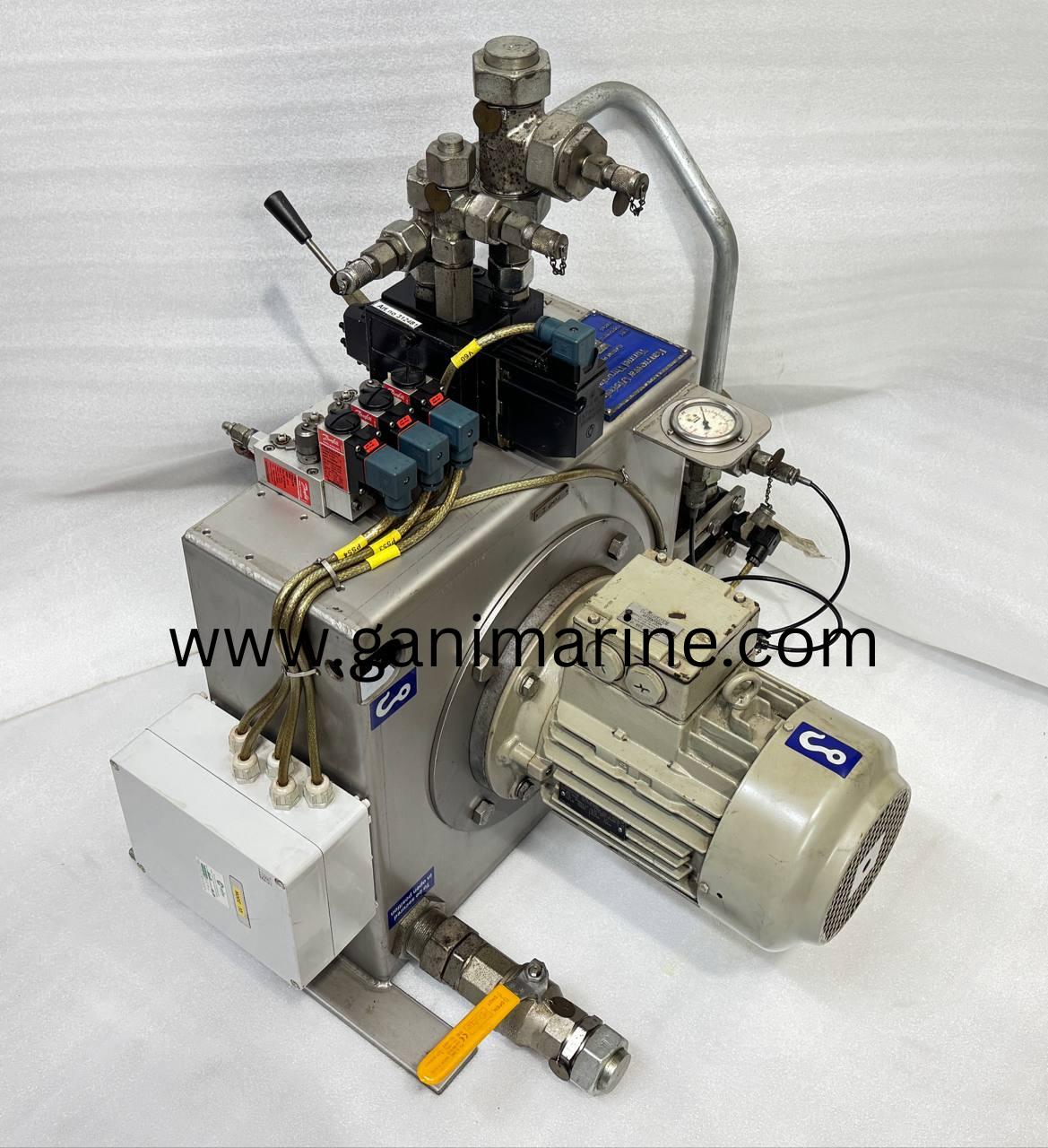
- Tunnelthrusters
- Output 200–3,700 kW, propeller diameter 1,600–2,000 mm, thrust up to 229 kN, available in CP (Constant Pitch) and FP (Fixed Pitch)
- Azimuth-thrusters
- Leistung 330-6.500 kW (mechanical/hybrid), neun Baumgroessen, Zugkraft optimiert fuer Bollard-Pull, 360°-Schwenkung
- Arctic Thruster (ARC)
- Power from 3 MW to >10 MW, no oil-sea interfaces, adaptive seals, Polar-Class-2 and Icebreaker-7 to 9 MW
- Permanent Magnet (PM) Thrusters
- TT-PM 1000 kW (146 kN), TT-PM 1600 kW (229 kN), Effizienzsteigerung 7-13% gegenueber Diesel-Elektrik
- Hydraulik-standard
- Double gear hydraulics for control/ventilation/lubricant, double cylinder with pressure pipe safety, seal tank with refueling capacity
- Lagerung
- Rollenlager fuer Schubwelle, Schmierung mit Fett, Dichtung an Lagergehausen, Toleranz-Freispiele typisch 0,5-2,0 mm
- US Azimuth Thruster
- Arctic Thruster (ARC)
- TCNS/C Azimuth Thruster (Swing-up/Retractable)
- Rim Drive Azimuth Thruster (RD-AZ)
- Tunnel Thruster Type TT/TTH
- Permanent Magnet Tunnel Thruster (TT-PM)
- Rim Drive Tunnel Thruster (RD-TT)
- Underwater Mountable Azimuth Thruster (UUC/UUC-PM)
- Retractable Azimuth Thruster (UL/ULE)
- Azipull Thruster (Integrated PM Motor)
- Area: Propellerblaetter: Verschleiss, Risse, Verformung, SeewuchsbewuchsCheck: Sichtpruefung auf Schaedigungen, Freispiel, Blattoberflaeche glatt ohne Kratzer/Dellen. Blattwurzel-O-Ringe auf Verschleiss checken, Spitzzenspiel messen. Bei Zweifeln: 1,5 bar Luftdruck auf VT-Nippel, Seifenblasen-Test auf Oellecks.
- Area: Propellerwellen-Dichtung: Durchfeuchtuung, Oelaustrittsverlust, VerschleissCheck: Visual inspection for leaks around shaft seal, check sealing cavity (monitored automatically via ARC). Observe seal clip pressure (e.g. via sensor output). At 5-year overhaul: renew seal. Check adaptive pressure regulation.
- Area: Lagerfreispiel/Lagerverschleiss: Axiales/Radiales Play ueber Norm, BohrlochabtragCheck: Calipers/counter gauges: measure shaft diameter and bores (target value via manufacturer data sheet). Document caliper readings. If exceeded: replace bearing journal/bearing shells. Observe vibration/noise during operation.
- Area: Hydraulikfluid: Verschmutzung, Feuchtigkeit, Alterung, Farb-/GeruechsveraenderungCheck: Check fluid level in tank (target level). Color test: light/yellowish OK, cloudy/dark = change required. Particle count (if available). Change filter per manufacturer interval. Perform pressure test on hydraulic line.
- Area: Hydraulik-Leitungen/Verbindungen: Risse, Lecks, Verformung, korrosive BelaegeCheck: Visual inspection of all hoses, pipes, connections for defects. Check for dryness, corrosion (rust spots), kink marks. High-frequency leak test if necessary. Observe operating pressure during voyage.
- Area: Elastomer-Bauteile (O-Ringe, Dichtlippen, Gummistuecke): Hartung, Risse, QuellungserscheinungenCheck: Visual inspection of all O-rings/seals for wear, hardening, deformation. Test with finger pressure (elasticity). Clean O-ring grooves/lubricate with gearbox oil (at 5-year overhaul). Replace damaged parts.
Type-universal inspection/service points for bow/stern thrusters (Kongsberg, Mega-Swarm 2026-06). Per-model specs not auto-populated.
- High power rating (up to 2 500 kW) delivering up to ~229 kN thrust in a compact tunnel layout
- Integrated variable frequency drive enables soft start, fine speed regulation and energy‑efficient operation
- Available with constant‑pitch or fixed‑pitch propellers for optimisation of bollard‑pull performance
- Robust double‑gear hydraulic control system and roll‑bearing shaft design reduce wear and extend service intervals
- Proven class‑approved design widely installed on DP‑equipped tankers, container ships and offshore vessels
- Tunnel geometry occupies significant hull volume; not suitable for vessels with limited beam or shallow draft
- Thrust is fixed in a single direction – no 360° azimuth capability, limiting manoeuvre flexibility compared with azimuth thrusters
- High‑power electric drive and hydraulic control increase initial cost and require specialised maintenance (seal, bearing, propeller inspections)
- Potential for cavitation at very high thrust settings, especially on low‑speed vessels
- Maintenance of shaft seals and roll bearings is critical; failure can lead to costly dry‑dock repairs
Caterpillar / MaK
44- Propeller fouling, rope entanglement or blade damage causes vibration, reduced thrust or high drive load
- Shaft-seal or gearbox leakage causes oil loss, water ingress or low-level alarms
- Bearing or gear wear causes abnormal noise, vibration or rising temperature
- Electric motor, converter or hydraulic-drive faults cause reduced thrust, failed starts or protective trips
- Pitch, steering or control-feedback faults as applicable cause incorrect thrust response, loss of direction control or remote-control alarms
- High thrust‑to‑power ratio (6 kN at only 50 kW).
- Compact 540 mm tunnel fits in vessels with limited bow space.
- Caterpillar brand provides worldwide service support and parts availability.
- Low acoustic signature compared with larger azimuth units, beneficial for noise‑sensitive operations.
- Simple fixed‑direction installation reduces control system complexity.
- Maximum thrust of 6 kN may be inadequate for large tankers or high‑power tugs.
- Tunnel geometry can induce hull stress and requires proper reinforcement during installation.
- Fixed‑direction design lacks the vectoring flexibility of azimuth thrusters.
- Seals and water‑lubricated bearings demand regular inspection in harsh marine environments.
- Power rating limited to 50 kW; not suitable where higher power margins are required.
- Propeller fouling, rope entanglement or blade damage causes vibration, reduced thrust or high drive load
- Shaft-seal or gearbox leakage causes oil loss, water ingress or low-level alarms
- Bearing or gear wear causes abnormal noise, vibration or rising temperature
- Electric motor, converter or hydraulic-drive faults cause reduced thrust, failed starts or protective trips
- Pitch, steering or control-feedback faults as applicable cause incorrect thrust response, loss of direction control or remote-control alarms
- Compact 540 mm diameter fits into limited hull space at the stern
- Good thrust‑to‑power ratio (6 kN from 50 kW) for vessels up to ~5,000 GT
- Robust Cat Marine design with proven service life in harsh marine environments
- Straight‑forward installation and integration with existing control systems
- Low acoustic signature compared with larger azimuth thrusters
- Maximum thrust of 6 kN may be insufficient for larger ships or heavy‑weather maneuvering
- Higher power consumption relative to some high‑efficiency electric thrusters
- Limited ice‑class certification (if required) and not suited for polar operations
- Spare‑parts logistics tied to Cat Marine network, which can affect lead times in remote ports
- Fixed tunnel orientation offers less directional flexibility than azimuth units
- Propeller fouling, rope entanglement or blade damage causes vibration, reduced thrust or high drive load
- Shaft-seal or gearbox leakage causes oil loss, water ingress or low-level alarms
- Bearing or gear wear causes abnormal noise, vibration or rising temperature
- Electric motor, converter or hydraulic-drive faults cause reduced thrust, failed starts or protective trips
- Pitch, steering or control-feedback faults as applicable cause incorrect thrust response, loss of direction control or remote-control alarms
- High thrust‑to‑power ratio (≈9 kN from 75 kW) for its size
- Compact 560 mm tunnel diameter fits tight hull spaces
- Robust, low‑maintenance design typical of Cat Marine Power units
- Integrated with standard marine control systems and optional variable‑frequency drive
- IMO D‑2 compliance (marine equipment safety standard)
- Limited maximum thrust compared with larger azimuth or pod thrusters (>10 kN)
- Fixed direction; cannot provide 360° thrust vectoring
- Performance drops in very shallow water due to tunnel suction effects
- May require hull reinforcement at installation point
- Propeller fouling, rope entanglement or blade damage causes vibration, reduced thrust or high drive load
- Shaft-seal or gearbox leakage causes oil loss, water ingress or low-level alarms
- Bearing or gear wear causes abnormal noise, vibration or rising temperature
- Electric motor, converter or hydraulic-drive faults cause reduced thrust, failed starts or protective trips
- Pitch, steering or control-feedback faults as applicable cause incorrect thrust response, loss of direction control or remote-control alarms
- Compact 560 mm diameter fits in limited hull spaces
- High thrust‑to‑power ratio (≈9 kN @ 75 kW) for its size class
- Proven Cat Marine reliability with low vibration and noise levels
- Straightforward installation at the stern with standard mounting brackets
- Integrated cooling and sealed bearing design reduces routine maintenance
- Maximum thrust of 9 kN may be insufficient for larger vessels or high‑wind conditions
- Tunnel geometry can cause cavitation if operated near full power continuously
- Less maneuverability than azimuth (azipod) units, especially for tight turning circles
- Maintenance access requires removal of the duct cover, which can be time‑consuming on cramped decks
- Limited to vessels with sufficient hull thickness to accommodate the tunnel aperture
- Propeller fouling, rope entanglement or blade damage causes vibration, reduced thrust or high drive load
- Shaft-seal or gearbox leakage causes oil loss, water ingress or low-level alarms
- Bearing or gear wear causes abnormal noise, vibration or rising temperature
- Electric motor, converter or hydraulic-drive faults cause reduced thrust, failed starts or protective trips
- Pitch, steering or control-feedback faults as applicable cause incorrect thrust response, loss of direction control or remote-control alarms
- High thrust‑to‑power ratio (12 kN at 100 kW) for its size class
- Compact bow installation – 580 mm duct fits in moderate hull openings
- Integrated, marine‑grade control electronics supplied by Cat Marine Power
- Proven brand reputation for reliability and service support
- Maximum thrust may be insufficient for large vessels or high wind/current conditions
- Duct diameter can affect hull form resistance when the thruster is not in use
- Requires regular bearing lubrication and periodic duct cleaning to maintain performance
- Noise and vibration levels are typical of conventional tunnel designs, not low‑noise variants
- Propeller fouling, rope entanglement or blade damage causes vibration, reduced thrust or high drive load
- Shaft-seal or gearbox leakage causes oil loss, water ingress or low-level alarms
- Bearing or gear wear causes abnormal noise, vibration or rising temperature
- Electric motor, converter or hydraulic-drive faults cause reduced thrust, failed starts or protective trips
- Pitch, steering or control-feedback faults as applicable cause incorrect thrust response, loss of direction control or remote-control alarms
- High thrust‑to‑power ratio (12 kN at only 100 kW).
- Compact 580 mm diameter duct fits in limited stern spaces.
- Robust stainless‑steel construction rated for harsh marine environments.
- Integrated low‑noise, low‑vibration motor and control electronics.
- Cat Marine Power’s global service network simplifies maintenance.
- Maximum thrust (12 kN) may be insufficient for larger vessels or high‑wind conditions.
- Installation requires a dedicated cooling water circuit and sufficient stern clearance.
- Power demand of 100 kW can strain smaller ship electrical systems if not properly sized.
- Spare parts specific to Cat Marine models may have longer lead times in remote ports.
- Propeller fouling, rope entanglement or blade damage causes vibration, reduced thrust or high drive load
- Shaft-seal or gearbox leakage causes oil loss, water ingress or low-level alarms
- Bearing or gear wear causes abnormal noise, vibration or rising temperature
- Electric motor, converter or hydraulic-drive faults cause reduced thrust, failed starts or protective trips
- Pitch, steering or control-feedback faults as applicable cause incorrect thrust response, loss of direction control or remote-control alarms
- High thrust‑to‑power ratio (≈0.12 kN/kW) for its size
- Caterpillar’s proven reliability and global service network
- Compact duct design fits most bow sections up to 620 mm diameter
- Low vibration and noise thanks to balanced impeller and optimized tunnel geometry
- Integrated monitoring compatible with Caterpillar PowerTech control systems
- Diameter (620 mm) may be too large for narrow hulls or retrofits
- Fixed‑pitch design limits fine thrust modulation compared with azimuth units
- Maximum thrust of 18 kN may be insufficient for very large vessels or high‑wind conditions
- Higher power consumption than smaller thrusters when operating at low load
- Propeller fouling, rope entanglement or blade damage causes vibration, reduced thrust or high drive load
- Shaft-seal or gearbox leakage causes oil loss, water ingress or low-level alarms
- Bearing or gear wear causes abnormal noise, vibration or rising temperature
- Electric motor, converter or hydraulic-drive faults cause reduced thrust, failed starts or protective trips
- Pitch, steering or control-feedback faults as applicable cause incorrect thrust response, loss of direction control or remote-control alarms
- High thrust‑to‑power ratio (18 kN at 150 kW) provides strong lateral force for tight port operations.
- Robust tunnel geometry reduces cavitation and extends service life in abrasive water conditions.
- Standardized stern mounting kit simplifies installation on new builds or retrofits.
- Caterpillar’s global dealer network offers rapid spare‑parts supply and field support.
- Integrated control interface compatible with most ship bridge consoles.
- Relatively large tunnel diameter (620 mm) may limit fit in vessels with restricted hull space.
- Power demand of 150 kW can strain limited auxiliary generators on smaller ships.
- Noise and vibration levels are higher than low‑speed propeller‑type thrusters, requiring additional acoustic mitigation.
- Weight and detailed dimensions are not publicly disclosed, complicating early‑stage weight‑budget calculations.
- Propeller fouling, rope entanglement or blade damage causes vibration, reduced thrust or high drive load
- Shaft-seal or gearbox leakage causes oil loss, water ingress or low-level alarms
- Bearing or gear wear causes abnormal noise, vibration or rising temperature
- Electric motor, converter or hydraulic-drive faults cause reduced thrust, failed starts or protective trips
- Pitch, steering or control-feedback faults as applicable cause incorrect thrust response, loss of direction control or remote-control alarms
- High thrust‑to‑power ratio (24 kN at 200 kW)
- Compact 660 mm tunnel fits medium‑size vessels with limited hull space
- Robust Caterpillar Marine Power construction and proven reliability
- Integrated control electronics compatible with most bridge systems
- Relatively low acoustic signature compared with larger azimuth units
- Requires hull penetration and structural reinforcement during installation
- Tunnel geometry can cause increased hull vibration and potential fouling
- Limited to bow‑only thrust vectoring; no 360° rotation like azimuth pods
- Maximum thrust may be insufficient for very large vessels or high‑wind conditions
- Higher power consumption than smaller auxiliary thrusters
- Propeller fouling, rope entanglement or blade damage causes vibration, reduced thrust or high drive load
- Shaft-seal or gearbox leakage causes oil loss, water ingress or low-level alarms
- Bearing or gear wear causes abnormal noise, vibration or rising temperature
- Electric motor, converter or hydraulic-drive faults cause reduced thrust, failed starts or protective trips
- Pitch, steering or control-feedback faults as applicable cause incorrect thrust response, loss of direction control or remote-control alarms
- High thrust‑to‑power ratio (24 kN from 200 kW)
- Compact 660 mm tunnel fits vessels with limited hull space
- Caterpillar Marine Power brand reputation for durability and service support
- Maximum thrust of 24 kN may be insufficient for very large ships or high‑speed DP operations
- Tunnel geometry can generate cavitation and hull vibration if not properly aligned
- Maintenance of tunnel bearings and seals required at regular intervals
- Propeller or blade damage from debris can cause vibration and reduced thrust, noticed during maneuvering
- Gear or bearing wear can produce abnormal noise, heat or metallic debris in lubricant
- Seal leakage can allow water ingress or oil loss, seen through header-tank level changes or leakage alarms
- Motor, converter or hydraulic-drive faults can prevent commanded thrust, seen as trips, low power or unavailable thruster status
- Control or feedback-sensor faults can cause incorrect direction or pitch/azimuth indication, seen as command mismatch alarms
- High thrust‑to‑power ratio (30 kN at 250 kW) for its size
- Compact duct diameter (700 mm) fits into moderate hull openings
- Robust, low‑maintenance marine‑grade construction
- Integrated control electronics compatible with most bridge systems
- Relatively quiet operation compared with open‑propeller designs
- Fixed thrust direction; cannot provide azimuthal thrust like a pod thruster
- Duct size may affect hull hydrodynamics and requires careful fairing
- Power draw is significant for vessels with limited electrical generation capacity
- Potential cavitation at high load if not properly sized to vessel speed
- Maintenance of tunnel bearings can be more involved than for rim‑drive units
- Propeller fouling, rope entanglement or blade damage causes vibration, reduced thrust or high drive load
- Shaft-seal or gearbox leakage causes oil loss, water ingress or low-level alarms
- Bearing or gear wear causes abnormal noise, vibration or rising temperature
- Electric motor, converter or hydraulic-drive faults cause reduced thrust, failed starts or protective trips
- Pitch, steering or control-feedback faults as applicable cause incorrect thrust response, loss of direction control or remote-control alarms
- High thrust‑to‑power ratio (30 kN at 250 kW) for its size
- Compact 700 mm tunnel fits vessels with limited hull space
- Caterpillar’s proven reliability and global service network
- Integrated control electronics simplify installation and operation
- Robust sealed bearing design reduces maintenance intervals
- Maximum thrust may be insufficient for large DP‑required vessels
- Potential cavitation noise at high RPM in shallow water
- Installation requires precise alignment of tunnel housing to hull
- Less maneuverability than azimuth or pod thrusters for tight turns
- Standard electric drive may not match the efficiency of newer hybrid systems
- Propeller fouling, rope entanglement or blade damage causes vibration, reduced thrust or high drive load
- Shaft-seal or gearbox leakage causes oil loss, water ingress or low-level alarms
- Bearing or gear wear causes abnormal noise, vibration or rising temperature
- Electric motor, converter or hydraulic-drive faults cause reduced thrust, failed starts or protective trips
- Pitch, steering or control-feedback faults as applicable cause incorrect thrust response, loss of direction control or remote-control alarms
- High thrust‑to‑power ratio (36 kN at 300 kW) improves low‑speed handling
- Large 740 mm duct provides efficient water flow and reduced cavitation risk
- Cat Marine Power brand known for robust construction and long service life
- Modular mounting simplifies installation and later maintenance
- Suitable for integration with dynamic positioning (DP) systems
- Relatively large duct diameter limits placement on vessels with tight hull space
- Requires a dedicated hydraulic power unit, adding to system complexity
- Higher initial capital cost compared with smaller tunnel units
- Potential for increased noise and vibration at full thrust
- Maintenance of bearings and seals is critical to avoid premature wear
- Propeller or blade damage from debris can cause vibration and reduced thrust, noticed during maneuvering
- Gear or bearing wear can produce abnormal noise, heat or metallic debris in lubricant
- Seal leakage can allow water ingress or oil loss, seen through header-tank level changes or leakage alarms
- Motor, converter or hydraulic-drive faults can prevent commanded thrust, seen as trips, low power or unavailable thruster status
- Control or feedback-sensor faults can cause incorrect direction or pitch/azimuth indication, seen as command mismatch alarms
- High thrust‑to‑power ratio (≈12 kN per 100 kW) for a compact unit
- Robust Caterpillar marine engineering with proven reliability
- Integrated control electronics compatible with most bridge systems
- Low vibration and noise levels compared with external propellers
- Standard class approvals simplify installation on new builds
- Requires significant hull penetration; retro‑fit can be costly
- Fixed thrust direction – no 360° azimuth capability
- Maintenance of bearings and seals in the tunnel can be labour intensive
- Power draw may be higher than newer electric pod‑type thrusters for equivalent maneuverability
- Limited to stern locations due to size and flow characteristics
- Propeller fouling, rope entanglement or blade damage causes vibration, reduced thrust or high drive load
- Shaft-seal or gearbox leakage causes oil loss, water ingress or low-level alarms
- Bearing or gear wear causes abnormal noise, vibration or rising temperature
- Electric motor, converter or hydraulic-drive faults cause reduced thrust, failed starts or protective trips
- Pitch, steering or control-feedback faults as applicable cause incorrect thrust response, loss of direction control or remote-control alarms
- High thrust output (48 kN) relative to power consumption (400 kW)
- Large 820 mm duct diameter gives efficient water flow and reduced cavitation
- Bow placement enhances docking and tight‑port handling
- Cat Marine Power’s proven marine propulsion heritage
- Requires substantial hull penetration, reducing usable internal volume
- Installation often needs additional structural reinforcement, raising cost
- Fixed‑direction thrust; less flexible than azimuth or pod thrusters for DP operations
- Potential for higher noise and vibration compared with newer low‑noise designs
- Propeller fouling, rope entanglement or blade damage causes vibration, reduced thrust or high drive load
- Shaft-seal or gearbox leakage causes oil loss, water ingress or low-level alarms
- Bearing or gear wear causes abnormal noise, vibration or rising temperature
- Electric motor, converter or hydraulic-drive faults cause reduced thrust, failed starts or protective trips
- Pitch, steering or control-feedback faults as applicable cause incorrect thrust response, loss of direction control or remote-control alarms
- High thrust‑to‑power ratio (48 kN at 400 kW) provides strong maneuvering capability.
- Large 820 mm tunnel diameter reduces cavitation and improves hydraulic efficiency.
- Robust stainless‑steel housing resists corrosion in harsh marine environments.
- Integrated control electronics compatible with most ship bridge systems.
- Significant hull penetration required; installation space is limited on smaller ships.
- High electrical demand may necessitate upgrades to the vessel’s power generation plant.
- Weight and structural reinforcement increase overall construction cost.
- Spare‑part logistics can be challenging for vessels operating in remote regions.
- Propeller or blade damage from debris can cause vibration and reduced thrust, noticed during maneuvering
- Gear or bearing wear can produce abnormal noise, heat or metallic debris in lubricant
- Seal leakage can allow water ingress or oil loss, seen through header-tank level changes or leakage alarms
- Motor, converter or hydraulic-drive faults can prevent commanded thrust, seen as trips, low power or unavailable thruster status
- Control or feedback-sensor faults can cause incorrect direction or pitch/azimuth indication, seen as command mismatch alarms
- High thrust output (60 kN) relative to power rating provides excellent docking assistance.
- Compact 900 mm tunnel diameter fits into moderate hull spaces, allowing installation on a wide range of vessels.
- Cat Marine Power brand reputation for reliability and long service intervals.
- Integrated control electronics simplify wiring and enable precise thrust modulation.
- Tunnel design offers lower acoustic signature compared with some external propeller‑type thrusters.
- Requires hull penetration; installation can be complex and may affect structural integrity if not properly reinforced.
- Efficiency drops in very shallow water due to increased suction on the tunnel inlet/outlet.
- Power consumption (500 kW) is significant; vessels must allocate dedicated generator capacity.
- Limited 360° thrust vectoring – only provides lateral force, unlike azimuth thrusters.
- Maintenance access can be restricted in tight engine‑room layouts.
- Propeller fouling, rope entanglement or blade damage causes vibration, reduced thrust or high drive load
- Shaft-seal or gearbox leakage causes oil loss, water ingress or low-level alarms
- Bearing or gear wear causes abnormal noise, vibration or rising temperature
- Electric motor, converter or hydraulic-drive faults cause reduced thrust, failed starts or protective trips
- Pitch, steering or control-feedback faults as applicable cause incorrect thrust response, loss of direction control or remote-control alarms
- High thrust‑to‑power ratio (60 kN from 500 kW) for rapid low‑speed positioning
- Compact 900 mm duct diameter fits into limited hull space at the stern
- Robust stainless‑steel construction and Cat Marine Power’s integrated control package
- Low vibration and noise levels compared with conventional propeller‑type thrusters
- Proven reliability in Cat Marine Power’s product line for commercial vessels
- 500 kW power demand requires dedicated generator capacity or high‑capacity electrical bus
- Installation involves significant hull penetration and structural reinforcement
- Maintenance of high‑load bearings and seals can be intensive on a busy schedule
- Fixed‑direction thrust limits maneuverability compared with azimuth thrusters
- Limited thrust increase options without upgrading to a larger tunnel size
- Propeller or blade damage from debris can cause vibration and reduced thrust, noticed during maneuvering
- Gear or bearing wear can produce abnormal noise, heat or metallic debris in lubricant
- Seal leakage can allow water ingress or oil loss, seen through header-tank level changes or leakage alarms
- Motor, converter or hydraulic-drive faults can prevent commanded thrust, seen as trips, low power or unavailable thruster status
- Control or feedback-sensor faults can cause incorrect direction or pitch/azimuth indication, seen as command mismatch alarms
- High thrust-to‑power ratio (72 kN at 600 kW) for rapid lateral movement
- Large 980 mm tunnel diameter reduces cavitation and improves efficiency
- Integrated Cat Marine Power control unit with built‑in fault diagnostics
- Robust, corrosion‑resistant construction suited to harsh sea conditions
- Standard bow‑thruster footprint compatible with many new‑build designs
- Physical size requires ample hull volume; unsuitable for small vessels
- 600 kW power demand may necessitate dedicated generator capacity and raises fuel use
- Precise installation alignment is critical, making retrofits costly and time‑consuming
- Noise and vibration levels higher than some low‑speed propeller thrusters
- Access for routine maintenance can be limited by tunnel placement
- Propeller fouling, rope entanglement or blade damage causes vibration, reduced thrust or high drive load
- Shaft-seal or gearbox leakage causes oil loss, water ingress or low-level alarms
- Bearing or gear wear causes abnormal noise, vibration or rising temperature
- Electric motor, converter or hydraulic-drive faults cause reduced thrust, failed starts or protective trips
- Pitch, steering or control-feedback faults as applicable cause incorrect thrust response, loss of direction control or remote-control alarms
- High thrust‑to‑power ratio (≈72 kN at 600 kW) for rapid berthing and unberthing.
- Compact tunnel design fits into limited hull space while providing robust protection to the propeller.
- Integrated motor‑generator with optional variable frequency drive enables fine speed control and reduced fuel consumption.
- Proven reliability of Caterpillar’s marine power systems; low maintenance intervals.
- Standard class approvals (ABS, DNV) simplify installation on new builds.
- Large duct diameter (~1 m) may limit applicability on vessels with narrow hull sections.
- Higher initial capital cost compared with conventional fixed propeller thrusters of similar power.
- Requires dedicated cooling and ventilation systems, adding to installation complexity.
- Fixed‑direction thrust; cannot provide 360° vectoring like azimuth pods for dynamic positioning.
- Noise and vibration levels are higher than some low‑speed azimuth units in certain operating regimes.
- Propeller or blade damage from debris can cause vibration and reduced thrust, noticed during maneuvering
- Gear or bearing wear can produce abnormal noise, heat or metallic debris in lubricant
- Seal leakage can allow water ingress or oil loss, seen through header-tank level changes or leakage alarms
- Motor, converter or hydraulic-drive faults can prevent commanded thrust, seen as trips, low power or unavailable thruster status
- Control or feedback-sensor faults can cause incorrect direction or pitch/azimuth indication, seen as command mismatch alarms
- High thrust‑to‑power ratio (≈90 kN at 750 kW) for rapid lateral movements
- Robust tunnel construction with corrosion‑resistant lining, suited to harsh marine environments
- Integrated control electronics compatible with most ship bridge systems
- Low vibration and noise levels compared with conventional propeller‑type thrusters
- Proven track record on cruise ships, LNG carriers and offshore support vessels
- Large tunnel diameter (≈1.1 m) can restrict hull form options and increase structural reinforcement needs
- Higher electrical power demand may require upgraded shipboard generators
- Installation requires precise alignment of the tunnel duct, increasing fit‑out time
- Maintenance access is limited to the tunnel interior, requiring specialized tools
- Capital cost is higher than lower‑power thruster alternatives
- Propeller fouling, rope entanglement or blade damage causes vibration, reduced thrust or high drive load
- Shaft-seal or gearbox leakage causes oil loss, water ingress or low-level alarms
- Bearing or gear wear causes abnormal noise, vibration or rising temperature
- Electric motor, converter or hydraulic-drive faults cause reduced thrust, failed starts or protective trips
- Pitch, steering or control-feedback faults as applicable cause incorrect thrust response, loss of direction control or remote-control alarms
- Very high thrust output (≈90 kN) for a single unit, enabling rapid stern‑side manoeuvring on large ships
- Robust Cat Marine Power construction with proven reliability in harsh marine environments
- Integrated cooling and sealed bearing system reduces maintenance intervals
- Standard 1100 mm tunnel diameter fits common hull openings for new‑build installations
- Large tunnel size can compromise hull strength if not properly reinforced during installation
- High power demand (750 kW) may require substantial electrical or hydraulic plant upgrades on older vessels
- Installation space at the stern is considerable; retrofits on existing ships can be complex and costly
- Noise and vibration levels are higher than smaller thrusters, requiring additional acoustic mitigation for passenger‑focused vessels
- Propeller fouling, rope entanglement or blade damage causes vibration, reduced thrust or high drive load
- Shaft-seal or gearbox leakage causes oil loss, water ingress or low-level alarms
- Bearing or gear wear causes abnormal noise, vibration or rising temperature
- Electric motor, converter or hydraulic-drive faults cause reduced thrust, failed starts or protective trips
- Pitch, steering or control-feedback faults as applicable cause incorrect thrust response, loss of direction control or remote-control alarms
- High thrust‑to‑power ratio (96 kN at 800 kW) for rapid lateral movement
- Robust Caterpillar engine platform with global service network
- Tunnel design reduces cavitation and vibration compared with external propellers
- Integrated control electronics compatible with most ship bridge systems
- Proven reliability on a range of deep‑draft vessels
- Large duct diameter (1.14 m) requires significant hull penetration and structural reinforcement
- High power consumption may increase fuel use during frequent thruster operation
- Installation space at the bow can be limited on smaller or retro‑fit ships
- Maintenance of bearings and seals in a high‑load tunnel environment can be intensive
- Initial procurement cost is higher than lower‑power alternatives
- Propeller or blade damage from debris can cause vibration and reduced thrust, noticed during maneuvering
- Gear or bearing wear can produce abnormal noise, heat or metallic debris in lubricant
- Seal leakage can allow water ingress or oil loss, seen through header-tank level changes or leakage alarms
- Motor, converter or hydraulic-drive faults can prevent commanded thrust, seen as trips, low power or unavailable thruster status
- Control or feedback-sensor faults can cause incorrect direction or pitch/azimuth indication, seen as command mismatch alarms
- High thrust‑to‑power ratio (96 kN at 800 kW) improves manoeuvrability
- Robust stainless‑steel duct and propeller resist marine corrosion
- Integrated variable‑frequency drive provides fine speed control and energy efficiency
- Optimised blade geometry reduces cavitation risk during low‑speed operation
- Installed on several large commercial vessels, demonstrating field reliability
- Large 1.14 m diameter requires a substantial hull cut‑out, limiting retrofit options
- High power rating can increase fuel consumption if used continuously
- Spare parts and service are primarily through Cat Marine Power’s network, which may be limited in remote ports
- Significant mounting loads demand reinforced stern structure and careful weight distribution
- Control system integration may require custom interfacing with existing ship automation
- Propeller fouling, rope entanglement or blade damage causes vibration, reduced thrust or high drive load
- Shaft-seal or gearbox leakage causes oil loss, water ingress or low-level alarms
- Bearing or gear wear causes abnormal noise, vibration or rising temperature
- Electric motor, converter or hydraulic-drive faults cause reduced thrust, failed starts or protective trips
- Pitch, steering or control-feedback faults as applicable cause incorrect thrust response, loss of direction control or remote-control alarms
- Very high thrust (≈120 kN) suitable for large vessels and DP operations
- Large 1300 mm duct diameter reduces cavitation and improves efficiency
- Integrated control electronics compatible with most bridge automation systems
- Robust Cat Marine Power design known for long service intervals
- High electrical power demand (≈1 MW) may require substantial generator capacity
- Large hull penetration can complicate installation on vessels with limited bow space
- Weight and size increase overall vessel weight and affect stability calculations
- Maintenance access to the internal impeller is more difficult than for smaller units
- Propeller fouling, rope entanglement or blade damage causes vibration, reduced thrust or high drive load
- Shaft-seal or gearbox leakage causes oil loss, water ingress or low-level alarms
- Bearing or gear wear causes abnormal noise, vibration or rising temperature
- Electric motor, converter or hydraulic-drive faults cause reduced thrust, failed starts or protective trips
- Pitch, steering or control-feedback faults as applicable cause incorrect thrust response, loss of direction control or remote-control alarms
- High thrust output (120 kN) relative to power rating, enabling rapid stern‑side manoeuvring.
- Large 1300 mm diameter reduces cavitation risk and improves efficiency at high thrust levels.
- Robust Cat Marine Power construction with proven service life in harsh marine environments.
- Integrated control interface compatible with most ship bridge systems for precise handling.
- Physical size (1.3 m duct) limits installation to vessels with sufficient hull space aft.
- High power demand (1 MW) increases fuel consumption and may require dedicated electrical capacity.
- Tunnel thrusters can generate significant noise and vibration, requiring additional mitigation measures.
- Maintenance access is more complex than for smaller azimuth units due to the large duct and bearing arrangement.
- Propeller fouling, rope entanglement or blade damage causes vibration, reduced thrust or high drive load
- Shaft-seal or gearbox leakage causes oil loss, water ingress or low-level alarms
- Bearing or gear wear causes abnormal noise, vibration or rising temperature
- Electric motor, converter or hydraulic-drive faults cause reduced thrust, failed starts or protective trips
- Pitch, steering or control-feedback faults as applicable cause incorrect thrust response, loss of direction control or remote-control alarms
- Very high thrust output (144 kN) relative to its 1 200 kW power rating
- Large 1.46 m tunnel diameter improves hydraulic efficiency and reduces cavitation risk
- Cat Marine Power’s proven mechanical design offers long service intervals and robust construction
- Standard bow‑mounting geometry fits easily into new‑build hull designs
- Requires a sizable hull penetration and associated structural reinforcement, raising installation cost
- Overall unit weight is high, affecting stability calculations on smaller platforms
- Spare‑parts logistics can be slower in remote regions compared with more widely stocked thruster brands
- May need dedicated cooling‑water arrangements not present on all vessels
- Propeller fouling, rope entanglement or blade damage causes vibration, reduced thrust or high drive load
- Shaft-seal or gearbox leakage causes oil loss, water ingress or low-level alarms
- Bearing or gear wear causes abnormal noise, vibration or rising temperature
- Electric motor, converter or hydraulic-drive faults cause reduced thrust, failed starts or protective trips
- Pitch, steering or control-feedback faults as applicable cause incorrect thrust response, loss of direction control or remote-control alarms
- Very high thrust (144 kN) suitable for large vessels and DP‑assisted operations
- Robust Caterpillar engineering with proven reliability in harsh marine environments
- Integrated control electronics compatible with common bridge consoles
- Large duct diameter provides efficient water flow, reducing cavitation risk
- Physical size (1.46 m diameter) limits installation to vessels with sufficient hull space
- High power rating (1200 kW) leads to significant electrical load and fuel consumption
- Potentially higher upfront cost compared with lower‑power competitors
- Noise and vibration levels can be elevated if not fitted with acoustic mitigation
- Propeller fouling, rope entanglement or blade damage causes vibration, reduced thrust or high drive load
- Shaft-seal or gearbox leakage causes oil loss, water ingress or low-level alarms
- Bearing or gear wear causes abnormal noise, vibration or rising temperature
- Electric motor, converter or hydraulic-drive faults cause reduced thrust, failed starts or protective trips
- Pitch, steering or control-feedback faults as applicable cause incorrect thrust response, loss of direction control or remote-control alarms
- Very high thrust (180 kN) suitable for large vessels and tight port operations
- Large 1700 mm tunnel provides efficient water flow and reduced cavitation
- Robust Cat Marine Power design with proven reliability in harsh marine environments
- Integrated bow location minimizes hull penetration points compared to external azimuth units
- Large tunnel diameter consumes significant hull volume, affecting cargo space or structural layout
- High power rating (1500 kW) leads to substantial electrical demand and cooling requirements
- Installation is complex and may require extensive hull modifications
- Less flexible than azimuth thrusters for 360° thrust vectoring
- Propeller fouling, rope entanglement or blade damage causes vibration, reduced thrust or high drive load
- Shaft-seal or gearbox leakage causes oil loss, water ingress or low-level alarms
- Bearing or gear wear causes abnormal noise, vibration or rising temperature
- Electric motor, converter or hydraulic-drive faults cause reduced thrust, failed starts or protective trips
- Pitch, steering or control-feedback faults as applicable cause incorrect thrust response, loss of direction control or remote-control alarms
- Very high thrust (180 kN) for its power rating (1500 kW), suitable for large vessels
- Large 1700 mm tunnel diameter improves flow efficiency and reduces cavitation risk
- Optimised for stern installation, aiding reverse docking and low‑speed control
- Backed by Cat Marine Power’s global service network and proven reliability
- High electrical power demand (1500 kW) requires substantial onboard supply infrastructure
- Physical size may limit installation on smaller hulls or retrofit projects
- Tunnel thrusters provide thrust only in a fixed direction, less flexible than azimuth pods for some manoeuvres
- Potential for vibration and noise if mounting is not properly engineered
- Propeller fouling, rope entanglement or blade damage causes vibration, reduced thrust or high drive load
- Shaft-seal or gearbox leakage causes oil loss, water ingress or low-level alarms
- Bearing or gear wear causes abnormal noise, vibration or rising temperature
- Electric motor, converter or hydraulic-drive faults cause reduced thrust, failed starts or protective trips
- Pitch, steering or control-feedback faults as applicable cause incorrect thrust response, loss of direction control or remote-control alarms
- Very high thrust output (240 kN) suitable for large vessels and tight port operations
- Large duct diameter reduces cavitation risk and improves efficiency at high power levels
- Robust Cat Marine Power design with proven reliability in harsh marine environments
- Integrated control interface compatible with most ship‑board maneuvering systems
- Large physical size limits installation to vessels with sufficient hull space forward of the bow
- High electrical demand (≈2 MW) requires substantial power generation and distribution capacity
- Installation and alignment are complex, increasing dockyard time and cost
- Noise and vibration levels can be higher than smaller thrusters, requiring additional mitigation
- Propeller or blade damage from debris can cause vibration and reduced thrust, noticed during maneuvering
- Gear or bearing wear can produce abnormal noise, heat or metallic debris in lubricant
- Seal leakage can allow water ingress or oil loss, seen through header-tank level changes or leakage alarms
- Motor, converter or hydraulic-drive faults can prevent commanded thrust, seen as trips, low power or unavailable thruster status
- Control or feedback-sensor faults can cause incorrect direction or pitch/azimuth indication, seen as command mismatch alarms
- Very high thrust‑to‑power ratio (≈240 kN at 2 MW) for rapid maneuvering
- Compact 2100 mm tunnel diameter fits into limited stern space on large vessels
- Integrated variable‑frequency drive and monitoring system reduces wiring and simplifies control
- Cat Marine’s proven reliability record and global service network
- Low‑cavitation blade design minimises noise and vibration, beneficial for DP operations
- Large power demand requires substantial electrical supply capacity
- Physical size and weight limit installation to medium‑to‑large vessels only
- Higher upfront cost compared with lower‑power thrusters
- Requires dedicated ducting and structural reinforcement in the hull
- Water‑lubricated bearing system demands regular inspection and water quality control
- Propeller fouling, rope entanglement or blade damage causes vibration, reduced thrust or high drive load
- Shaft-seal or gearbox leakage causes oil loss, water ingress or low-level alarms
- Bearing or gear wear causes abnormal noise, vibration or rising temperature
- Electric motor, converter or hydraulic-drive faults cause reduced thrust, failed starts or protective trips
- Pitch, steering or control-feedback faults as applicable cause incorrect thrust response, loss of direction control or remote-control alarms
- 300 kN of thrust gives excellent maneuvering force for very large ships.
- Large 2.5 m tunnel diameter reduces cavitation risk and improves efficiency at high power.
- 2500 kW rating matches the electrical generation capacity of modern mega‑vessels.
- High power demand (2.5 MW) increases the vessel’s overall energy consumption.
- The size of the tunnel requires substantial hull penetration and structural reinforcement.
- Installation, commissioning and maintenance costs are higher than for smaller thrusters.
- Propeller fouling, rope entanglement or blade damage causes vibration, reduced thrust or high drive load
- Shaft-seal or gearbox leakage causes oil loss, water ingress or low-level alarms
- Bearing or gear wear causes abnormal noise, vibration or rising temperature
- Electric motor, converter or hydraulic-drive faults cause reduced thrust, failed starts or protective trips
- Pitch, steering or control-feedback faults as applicable cause incorrect thrust response, loss of direction control or remote-control alarms
- Very high thrust (≈300 kN) for its size, enabling rapid stern‑side manoeuvres on large vessels
- Integrated variable‑frequency drive provides fine thrust control and energy efficiency
- Low acoustic signature and vibration – important for passenger ships and offshore workboats
- Robust stainless‑steel tunnel housing resists corrosion in harsh marine environments
- Modular design simplifies installation and routine maintenance
- Requires a substantial electrical power supply (≈2.5 MW) and high‑voltage distribution infrastructure
- Large 2.5 m tunnel diameter may limit fitment on vessels with restricted hull space
- Higher capital cost compared with conventional diesel‑driven thrusters of similar rating
- Potential for cavitation if operated continuously at maximum thrust in shallow water
- Weight and size add to overall stern structure reinforcement requirements
- Propeller fouling, rope entanglement or blade damage causes vibration, reduced thrust or high drive load
- Shaft-seal or gearbox leakage causes oil loss, water ingress or low-level alarms
- Bearing or gear wear causes abnormal noise, vibration or rising temperature
- Electric motor, converter or hydraulic-drive faults cause reduced thrust, failed starts or protective trips
- Pitch, steering or control-feedback faults as applicable cause incorrect thrust response, loss of direction control or remote-control alarms
- Very high thrust (360 kN) suitable for vessels >150 000 dwt requiring strong bow assistance
- Compact tunnel diameter (2.9 m) allows installation on ships with limited hull space
- Electric drive provides low noise and vibration compared with hydraulic systems
- Integrated control electronics simplify operator handling and enable precise thrust vectoring
- Designed for continuous high‑power operation, offering good reliability in demanding conditions
- Requires a substantial shipboard electrical power plant (≈3 MW) and associated cooling infrastructure
- Installation involves significant hull reinforcement and duct integration work
- Higher upfront cost than smaller or lower‑power thruster options
- Large duct size may limit applicability on vessels with tight bow geometry
- Maintenance of high‑capacity electric motor and power electronics can be specialised
- Propeller or blade damage from debris can cause vibration and reduced thrust, noticed during maneuvering
- Gear or bearing wear can produce abnormal noise, heat or metallic debris in lubricant
- Seal leakage can allow water ingress or oil loss, seen through header-tank level changes or leakage alarms
- Motor, converter or hydraulic-drive faults can prevent commanded thrust, seen as trips, low power or unavailable thruster status
- Control or feedback-sensor faults can cause incorrect direction or pitch/azimuth indication, seen as command mismatch alarms
- Very high thrust (360 kN) suitable for large vessels and DP operations
- Robust Caterpillar engineering with proven field reliability
- Large 2.9 m duct diameter reduces cavitation and improves efficiency
- Integrated control interface compatible with most bridge systems
- Designed for stern installation, freeing bow space for other equipment
- Large physical size requires substantial hull cut‑out and structural reinforcement
- High power demand (3 MW) increases fuel consumption and electrical load
- Installation and commissioning costs are significant
- Noise and vibration levels can be higher than smaller thrusters
- Spare‑part logistics may be slower for remote ports
- Propeller fouling, rope entanglement or blade damage causes vibration, reduced thrust or high drive load
- Shaft-seal or gearbox leakage causes oil loss, water ingress or low-level alarms
- Bearing or gear wear causes abnormal noise, vibration or rising temperature
- Electric motor, converter or hydraulic-drive faults cause reduced thrust, failed starts or protective trips
- Pitch, steering or control-feedback faults as applicable cause incorrect thrust response, loss of direction control or remote-control alarms
- Very high thrust (420 kN) at 3.5 MW enables rapid sideways movement of large vessels.
- Large 3.3 m duct diameter provides efficient water flow and reduces cavitation risk.
- Integrated variable‑frequency drive offers precise thrust control and energy savings.
- Bow‑mount configuration improves docking and port manoeuvring for deep‑draft ships.
- Caterpillar brand reliability with a global service and spare‑parts network.
- Requires substantial shipboard electrical supply and cooling infrastructure.
- Physical size limits installation on smaller hulls or retrofits with limited space.
- Higher capital cost compared with lower‑power thruster options.
- Large flow rate can increase duct fouling, necessitating regular cleaning.
- Complex drive electronics may need specialised maintenance personnel.
- Propeller or blade damage from debris can cause vibration and reduced thrust, noticed during maneuvering
- Gear or bearing wear can produce abnormal noise, heat or metallic debris in lubricant
- Seal leakage can allow water ingress or oil loss, seen through header-tank level changes or leakage alarms
- Motor, converter or hydraulic-drive faults can prevent commanded thrust, seen as trips, low power or unavailable thruster status
- Control or feedback-sensor faults can cause incorrect direction or pitch/azimuth indication, seen as command mismatch alarms
- Very high thrust output (420 kN) suitable for large ships and DP operations
- High power rating (3.5 MW) provides rapid response during low‑speed maneuvers
- Robust Caterpillar engineering with proven reliability in harsh marine environments
- Large 3.3 m duct diameter gives good thrust efficiency while keeping a relatively compact footprint for its power class
- Requires substantial electrical generation capacity and cooling infrastructure on board
- Large duct size may limit installation in vessels with restricted hull space at the stern
- Higher maintenance complexity due to high‑power drive components
- Elevated fuel consumption when operated frequently at full power
- Propeller fouling, rope entanglement or blade damage causes vibration, reduced thrust or high drive load
- Shaft-seal or gearbox leakage causes oil loss, water ingress or low-level alarms
- Bearing or gear wear causes abnormal noise, vibration or rising temperature
- Electric motor, converter or hydraulic-drive faults cause reduced thrust, failed starts or protective trips
- Pitch, steering or control-feedback faults as applicable cause incorrect thrust response, loss of direction control or remote-control alarms
- Very high thrust (≈480 kN) suitable for mega‑vessels and tight port operations
- Robust Caterpillar marine‑grade construction with long service intervals
- Integrated control electronics compatible with most DP and bridge systems
- Relatively low acoustic signature compared with external azimuth pods
- Proven track record on cruise ships, LNG carriers and offshore support vessels
- Large duct diameter limits installation to vessels with sufficient hull space
- High power demand (4 MW) increases fuel consumption and requires substantial cooling water flow
- Higher upfront cost than smaller thrusters or basic fixed‑pitch propellers
- Spare‑part logistics can be challenging in remote ports without Caterpillar support depots
- Installation and alignment are complex, requiring specialised shipyard facilities
- Propeller fouling, rope entanglement or blade damage causes vibration, reduced thrust or high drive load
- Shaft-seal or gearbox leakage causes oil loss, water ingress or low-level alarms
- Bearing or gear wear causes abnormal noise, vibration or rising temperature
- Electric motor, converter or hydraulic-drive faults cause reduced thrust, failed starts or protective trips
- Pitch, steering or control-feedback faults as applicable cause incorrect thrust response, loss of direction control or remote-control alarms
- Very high thrust output (480 kN) suitable for the largest ships
- Compact tunnel design fits within hull structure while providing strong lateral force
- Caterpillar’s proven reliability and extensive service network
- Integrated control electronics compatible with most DP and bridge systems
- Easy access for routine inspection and maintenance
- Large 3.7 m diameter may limit installation in vessels with restricted hull space
- High power demand (4 MW) increases fuel consumption when used extensively
- Requires substantial cooling‑water flow; not ideal for vessels with limited intake capacity
- Potential cavitation at full load if propeller design is not optimised for local water conditions
- Higher upfront capital cost compared to lower‑power thruster options
- Propeller or blade damage from debris can cause vibration and reduced thrust, noticed during maneuvering
- Gear or bearing wear can produce abnormal noise, heat or metallic debris in lubricant
- Seal leakage can allow water ingress or oil loss, seen through header-tank level changes or leakage alarms
- Motor, converter or hydraulic-drive faults can prevent commanded thrust, seen as trips, low power or unavailable thruster status
- Control or feedback-sensor faults can cause incorrect direction or pitch/azimuth indication, seen as command mismatch alarms
- Very high thrust output (540 kN) suitable for the largest merchant ships
- Large duct diameter (4.1 m) provides efficient water flow and reduced cavitation risk
- Integrated with Cat Marine Power’s control and monitoring suite for precise handling
- Designed for 4500 kW power rating, matching high‑capacity shipboard power plants
- Proven brand reputation for reliability in demanding offshore environments
- Physical size limits installation to vessels with sufficient bow space
- High power demand requires robust electrical or hydraulic supply infrastructure
- Installation and commissioning costs are higher than smaller thruster units
- Spare‑part logistics may be less widespread than for more common low‑power models
- Propeller fouling, rope entanglement or blade damage causes vibration, reduced thrust or high drive load
- Shaft-seal or gearbox leakage causes oil loss, water ingress or low-level alarms
- Bearing or gear wear causes abnormal noise, vibration or rising temperature
- Electric motor, converter or hydraulic-drive faults cause reduced thrust, failed starts or protective trips
- Pitch, steering or control-feedback faults as applicable cause incorrect thrust response, loss of direction control or remote-control alarms
- Very high thrust output (540 kN) suitable for the maneuvering needs of mega‑size tankers and cruise ships
- Large 4.1 m tunnel diameter reduces cavitation risk and improves hydraulic efficiency
- Cat Marine Power’s reputation for robust, low‑maintenance marine propulsion equipment
- Integrated variable‑frequency drive (VFD) capability provides fine thrust control and energy optimisation
- High electrical power demand (4.5 MW) requires a substantial shipboard power plant and cabling infrastructure
- Large physical footprint may limit installation on vessels with constrained hull space or during retrofit projects
- Initial capital cost is higher than smaller‑capacity thrusters, impacting budget for mid‑size ships
- Spare‑part logistics can be more complex if the vessel operates far from Cat Marine Power service networks
- Propeller or blade damage from debris can cause vibration and reduced thrust, noticed during maneuvering
- Gear or bearing wear can produce abnormal noise, heat or metallic debris in lubricant
- Seal leakage can allow water ingress or oil loss, seen through header-tank level changes or leakage alarms
- Motor, converter or hydraulic-drive faults can prevent commanded thrust, seen as trips, low power or unavailable thruster status
- Control or feedback-sensor faults can cause incorrect direction or pitch/azimuth indication, seen as command mismatch alarms
- Very high thrust (≈600 kN) suitable for maneuvering mega‑vessels
- Large 4.5 m duct provides efficient water flow and low cavitation
- Cat Marine’s proven reliability and global service network
- Integrated control system compatible with most DP packages
- Robust construction designed for harsh marine environments
- Physical size limits installation to vessels with sufficient bow space
- High power demand (≈5 MW) increases fuel consumption and electrical load
- Capital cost is higher than lower‑power alternatives
- Requires substantial cooling and ventilation infrastructure
- Maintenance access can be challenging on very crowded hull forms
- Propeller fouling, rope entanglement or blade damage causes vibration, reduced thrust or high drive load
- Shaft-seal or gearbox leakage causes oil loss, water ingress or low-level alarms
- Bearing or gear wear causes abnormal noise, vibration or rising temperature
- Electric motor, converter or hydraulic-drive faults cause reduced thrust, failed starts or protective trips
- Pitch, steering or control-feedback faults as applicable cause incorrect thrust response, loss of direction control or remote-control alarms
- Very high thrust (≈600 kN) suitable for large vessels and DP operations
- Robust, marine‑grade construction with corrosion‑resistant alloys
- Integrated control electronics compatible with common ship bridge systems
- Modular design allows relatively quick installation and maintenance access
- Low cavitation design reduces blade wear and improves efficiency
- Large physical envelope (4.5 m diameter) limits use on vessels with restricted hull space
- High power rating leads to significant electrical demand and associated infrastructure cost
- Tunnel geometry can be less efficient than azimuth thrusters in very shallow water
- Initial capital cost is higher than lower‑power tunnel units
Holland Roer Propeller
44- Propeller or blade damage from debris can cause vibration and reduced thrust, noticed during maneuvering
- Gear or bearing wear can produce abnormal noise, heat or metallic debris in lubricant
- Seal leakage can allow water ingress or oil loss, seen through header-tank level changes or leakage alarms
- Motor, converter or hydraulic-drive faults can prevent commanded thrust, seen as trips, low power or unavailable thruster status
- Control or feedback-sensor faults can cause incorrect direction or pitch/azimuth indication, seen as command mismatch alarms
- Compact installation footprint suitable for retrofit on existing hulls
- High hydraulic efficiency gives good thrust per kW
- Low acoustic signature, beneficial for crew comfort and marine life
- Robust stainless‑steel duct reduces corrosion in saltwater environments
- Standardized mounting interface simplifies integration
- Maximum thrust (≈6 kN) may be insufficient for large vessels or heavy‑load tugs
- Susceptible to debris ingestion if operating in fouled waters without proper grates
- Limited ice‑class capability; not recommended for arctic operations
- Maintenance access requires removal of the duct cover, adding downtime
- Propeller or blade damage from debris can cause vibration and reduced thrust, noticed during maneuvering
- Gear or bearing wear can produce abnormal noise, heat or metallic debris in lubricant
- Seal leakage can allow water ingress or oil loss, seen through header-tank level changes or leakage alarms
- Motor, converter or hydraulic-drive faults can prevent commanded thrust, seen as trips, low power or unavailable thruster status
- Control or feedback-sensor faults can cause incorrect direction or pitch/azimuth indication, seen as command mismatch alarms
- Compact 540 mm diameter fits in limited hull spaces
- 6 kN thrust sufficient for medium‑size vessels and tight port operations
- Hydraulic drive offers smooth, controllable thrust with low vibration
- Relatively low power consumption (50 kW) compared with higher‑rated thrusters
- Maximum thrust of 6 kN may be inadequate for large tankers or high‑wind conditions
- Requires integration of a hydraulic power unit, adding system complexity
- Maintenance of bearings and seals in the tunnel can be demanding in harsh marine environments
- Limited redundancy if only a single stern thruster is installed
- Propeller fouling, rope entanglement or blade damage causes vibration, reduced thrust or high drive load
- Shaft-seal or gearbox leakage causes oil loss, water ingress or low-level alarms
- Bearing or gear wear causes abnormal noise, vibration or rising temperature
- Electric motor, converter or hydraulic-drive faults cause reduced thrust, failed starts or protective trips
- Pitch, steering or control-feedback faults as applicable cause incorrect thrust response, loss of direction control or remote-control alarms
- High thrust‑to‑power ratio (≈0.12 kN/kW) for its size
- Compact tunnel geometry fits within standard bow sections of medium‑size vessels
- Robust stainless‑steel propeller and housing provide good corrosion resistance in seawater
- Low vibration and noise compared with external azimuth units
- Straightforward installation using existing hull openings
- Maximum thrust (9 kN) may be insufficient for large tankers or high‑wind berthing scenarios
- Fixed‑pitch propeller limits efficiency when operating far from design point
- Access for routine inspection requires removal of the tunnel cover, often needing dry‑dock time
- Noise and cavitation can increase at higher RPMs, affecting crew comfort in small vessels
- Propeller fouling, rope entanglement or blade damage causes vibration, reduced thrust or high drive load
- Shaft-seal or gearbox leakage causes oil loss, water ingress or low-level alarms
- Bearing or gear wear causes abnormal noise, vibration or rising temperature
- Electric motor, converter or hydraulic-drive faults cause reduced thrust, failed starts or protective trips
- Pitch, steering or control-feedback faults as applicable cause incorrect thrust response, loss of direction control or remote-control alarms
- High thrust‑to‑power ratio (≈9 kN at only 75 kW)
- Compact footprint fits into limited hull space, especially aft installations
- Integrated motor design reduces vibration and simplifies alignment
- Low power consumption compared with larger thrusters of similar thrust
- Standardised mounting interface speeds up installation and replacement
- Maximum thrust may be insufficient for large vessels or high‑speed DP operations
- Cavitation risk increases at higher RPMs, limiting efficiency in very shallow water
- Maintenance access can be restricted by the tunnel geometry on some hull forms
- Noise and vibration levels are higher than those of newer ducted‑propeller designs with advanced blade shaping
- Limited availability of spare parts outside Europe may affect lead times
- Propeller fouling, rope entanglement or blade damage causes vibration, reduced thrust or high drive load
- Shaft-seal or gearbox leakage causes oil loss, water ingress or low-level alarms
- Bearing or gear wear causes abnormal noise, vibration or rising temperature
- Electric motor, converter or hydraulic-drive faults cause reduced thrust, failed starts or protective trips
- Pitch, steering or control-feedback faults as applicable cause incorrect thrust response, loss of direction control or remote-control alarms
- High thrust‑to‑power ratio (12 kN at 100 kW) gives strong low‑speed maneuverability.
- Compact tunnel footprint fits vessels with limited bow space.
- Holland Roer’s hydraulic drive is known for reliability and low maintenance intervals.
- Low acoustic and vibration signature, beneficial in noise‑sensitive ports.
- Fixed installation adds hull resistance when the thruster is not in use.
- Requires a dedicated hydraulic power unit, increasing system complexity and space requirements.
- Maximum thrust of 12 kN may be insufficient for larger vessels or high‑wind conditions.
- Potential cavitation if tunnel geometry is not optimally matched to propeller speed.
- Propeller or blade damage from debris can cause vibration and reduced thrust, noticed during maneuvering
- Gear or bearing wear can produce abnormal noise, heat or metallic debris in lubricant
- Seal leakage can allow water ingress or oil loss, seen through header-tank level changes or leakage alarms
- Motor, converter or hydraulic-drive faults can prevent commanded thrust, seen as trips, low power or unavailable thruster status
- Control or feedback-sensor faults can cause incorrect direction or pitch/azimuth indication, seen as command mismatch alarms
- Compact 580 mm diameter fits well in limited hull spaces
- High hydraulic efficiency typical of HRP designs, reducing fuel penalty
- Robust stainless‑steel duct and propeller for long service intervals
- Integrated thrust bearing reduces vibration and noise
- Standard 100 kW rating matches many mid‑size vessel DP‑assist needs
- Maximum thrust of 12 kN may be insufficient for very large vessels or strong currents
- Installation requires precise alignment of the tunnel duct in the hull structure
- Power demand (≈100 kW) can increase overall ship electrical load
- Limited to stern applications; not a dual‑direction unit
- Spare parts availability depends on regional HRP dealer network
- Propeller fouling, rope entanglement or blade damage causes vibration, reduced thrust or high drive load
- Shaft-seal or gearbox leakage causes oil loss, water ingress or low-level alarms
- Bearing or gear wear causes abnormal noise, vibration or rising temperature
- Electric motor, converter or hydraulic-drive faults cause reduced thrust, failed starts or protective trips
- Pitch, steering or control-feedback faults as applicable cause incorrect thrust response, loss of direction control or remote-control alarms
- High thrust‑to‑power ratio (18 kN from 150 kW) gives strong lateral force for vessels up to medium size.
- Relatively compact duct diameter (620 mm) fits into limited hull space while still providing adequate flow.
- Robust Holland Roer design with proven bearing and seal arrangements reduces maintenance intervals.
- Integrated thrust control system compatible with most bridge‑integrated maneuvering packages.
- Fixed bow installation limits flexibility; not suitable for vessels requiring both bow and stern thrusters of the same size.
- Power demand (150 kW) may require dedicated generator capacity on smaller ships.
- Potential for cavitation if operated at high RPM in shallow water, requiring careful propeller selection.
- Standard duct length may be insufficient for very deep‑draft vessels needing higher thrust without increasing power.
- Propeller or blade damage from debris can cause vibration and reduced thrust, noticed during maneuvering
- Gear or bearing wear can produce abnormal noise, heat or metallic debris in lubricant
- Seal leakage can allow water ingress or oil loss, seen through header-tank level changes or leakage alarms
- Motor, converter or hydraulic-drive faults can prevent commanded thrust, seen as trips, low power or unavailable thruster status
- Control or feedback-sensor faults can cause incorrect direction or pitch/azimuth indication, seen as command mismatch alarms
- High thrust‑to‑power ratio (18 kN at 150 kW)
- Robust bronze propeller with stainless‑steel shaft for corrosion resistance
- Optimised blade geometry reduces cavitation and noise at typical operating speeds
- Compact tunnel size (620 mm) eases installation in medium‑size vessels
- Integrated sealing system minimises water ingress and maintenance intervals
- Single unit provides no redundancy; failure eliminates lateral thrust capability
- Noise and vibration increase noticeably at full power, which may affect crew comfort
- Installation requires hull penetration and structural reinforcement of the tunnel area
- Performance degrades in heavy sea states or when operating near the vessel’s draft limit
- Tunnel lining wear demands periodic inspection and possible refurbishment
- Propeller fouling, rope entanglement or blade damage causes vibration, reduced thrust or high drive load
- Shaft-seal or gearbox leakage causes oil loss, water ingress or low-level alarms
- Bearing or gear wear causes abnormal noise, vibration or rising temperature
- Electric motor, converter or hydraulic-drive faults cause reduced thrust, failed starts or protective trips
- Pitch, steering or control-feedback faults as applicable cause incorrect thrust response, loss of direction control or remote-control alarms
- High thrust output (24 kN) relative to modest power rating (200 kW)
- Robust tunnel housing protects the propeller from debris and grounding impacts
- Compact installation footprint suitable for vessels with limited bow space
- Proven Dutch engineering reputation for reliability and low maintenance
- Tunnel geometry adds resistance, reducing overall thrust‑to‑power efficiency compared with azimuth or pump‑jet thrusters
- Installation requires a sizable hull opening, affecting structural integrity if not properly reinforced
- Limited suitability for very shallow‑draft vessels where duct depth is constrained
- Fixed 360° rotation; no vectoring capability beyond the tunnel axis
- Propeller or blade damage from debris can cause vibration and reduced thrust, noticed during maneuvering
- Gear or bearing wear can produce abnormal noise, heat or metallic debris in lubricant
- Seal leakage can allow water ingress or oil loss, seen through header-tank level changes or leakage alarms
- Motor, converter or hydraulic-drive faults can prevent commanded thrust, seen as trips, low power or unavailable thruster status
- Control or feedback-sensor faults can cause incorrect direction or pitch/azimuth indication, seen as command mismatch alarms
- High thrust‑to‑power ratio (24 kN at 200 kW) for strong manoeuvring capability
- Compact 660 mm duct size fits medium‑sized hull openings without excessive structural modification
- Robust, corrosion‑resistant alloy housing suitable for harsh marine environments
- Direct‑drive electric motor reduces vibration and maintenance compared with hydraulic units
- Standardised mounting kit simplifies installation on new builds or retrofits
- Designed only for stern installation; not interchangeable with bow locations
- Power demand (200 kW) may be significant for vessels with limited auxiliary generation capacity
- Potential cavitation at high RPM in shallow water, requiring careful propeller pitch selection
- Requires dedicated cooling and ventilation space within the hull tunnel
- Duct opening reduces internal cargo or equipment volume compared with smaller thrusters
- Propeller fouling, rope entanglement or blade damage causes vibration, reduced thrust or high drive load
- Shaft-seal or gearbox leakage causes oil loss, water ingress or low-level alarms
- Bearing or gear wear causes abnormal noise, vibration or rising temperature
- Electric motor, converter or hydraulic-drive faults cause reduced thrust, failed starts or protective trips
- Pitch, steering or control-feedback faults as applicable cause incorrect thrust response, loss of direction control or remote-control alarms
- High thrust‑to‑power ratio (30 kN at 250 kW) for its size
- Compact 700 mm tunnel fits vessels with limited hull space
- Proven Dutch design with low vibration and easy access for maintenance
- Integrated duct liner reduces cavitation and improves efficiency
- Installation requires hull penetration, adding structural complexity
- Maximum thrust may be insufficient for very large or high‑draft vessels
- Potential for increased noise and vibration at full power compared with azimuth units
- Limited to shallow‑to‑moderate draft ships due to tunnel depth constraints
- Propeller fouling, rope entanglement or blade damage causes vibration, reduced thrust or high drive load
- Shaft-seal or gearbox leakage causes oil loss, water ingress or low-level alarms
- Bearing or gear wear causes abnormal noise, vibration or rising temperature
- Electric motor, converter or hydraulic-drive faults cause reduced thrust, failed starts or protective trips
- Pitch, steering or control-feedback faults as applicable cause incorrect thrust response, loss of direction control or remote-control alarms
- High thrust‑to‑power ratio (30 kN at 250 kW) for its size class
- Compact 700 mm tunnel diameter fits in moderate hull openings
- Robust, low‑maintenance construction typical of Holland Roer designs
- Direct thrust line simplifies integration with ship’s control system
- Fixed‑direction thrust limits maneuverability compared with azimuth units
- Potential for cavitation and noise at high RPMs
- Requires significant hull penetration and structural reinforcement
- Less effective in very shallow water due to duct draft
- Propeller or blade damage from debris can cause vibration and reduced thrust, noticed during maneuvering
- Gear or bearing wear can produce abnormal noise, heat or metallic debris in lubricant
- Seal leakage can allow water ingress or oil loss, seen through header-tank level changes or leakage alarms
- Motor, converter or hydraulic-drive faults can prevent commanded thrust, seen as trips, low power or unavailable thruster status
- Control or feedback-sensor faults can cause incorrect direction or pitch/azimuth indication, seen as command mismatch alarms
- High thrust-to-power ratio (36 kN at 300 kW) for effective sideways thrust
- Compact bow installation fits within limited hull space
- Low vibration and noise due to enclosed tunnel design
- Proven reliability of Holland Roer propeller blades
- Suitable for vessels requiring precise port handling
- Tunnel depth may limit use on very shallow‑draft ships
- Potential cavitation at high RPMs if not properly sized for hull form
- Maintenance access can be restricted compared with azimuth thrusters
- Fixed thrust direction; no 360° rotation capability
- Power demand of 300 kW adds to overall ship electrical load
- Propeller fouling, rope entanglement or blade damage causes vibration, reduced thrust or high drive load
- Shaft-seal or gearbox leakage causes oil loss, water ingress or low-level alarms
- Bearing or gear wear causes abnormal noise, vibration or rising temperature
- Electric motor, converter or hydraulic-drive faults cause reduced thrust, failed starts or protective trips
- Pitch, steering or control-feedback faults as applicable cause incorrect thrust response, loss of direction control or remote-control alarms
- High thrust‑to‑power ratio (36 kN at 300 kW) improves docking performance
- Large 740 mm diameter duct offers efficient water flow and reduced slip
- Robust steel construction typical of Holland Roer designs ensures long service life
- Low vibration and noise levels compared with open propeller thrusters
- Standardized mounting dimensions simplify integration into new builds
- Large physical footprint limits installation on vessels with restricted stern space
- Higher power consumption than azimuth pod or water‑jet alternatives for equivalent maneuverability
- Typical tunnel‑thruster cavitation risk at high RPMs, especially in shallow water
- Reverse thrust efficiency is lower than forward thrust due to duct geometry
- Access for routine inspection can be constrained on stern‑mounted units
- Propeller or blade damage from debris can cause vibration and reduced thrust, noticed during maneuvering
- Gear or bearing wear can produce abnormal noise, heat or metallic debris in lubricant
- Seal leakage can allow water ingress or oil loss, seen through header-tank level changes or leakage alarms
- Motor, converter or hydraulic-drive faults can prevent commanded thrust, seen as trips, low power or unavailable thruster status
- Control or feedback-sensor faults can cause incorrect direction or pitch/azimuth indication, seen as command mismatch alarms
- High thrust (48 kN) for its power rating, improving low‑speed maneuverability
- Relatively compact tunnel diameter (820 mm) fits into moderate‑size hulls
- Robust Holland Roer design with proven marine‑grade bearings and seals
- Integrated motor‑propeller unit simplifies installation and alignment
- Fixed‑direction thrust; cannot rotate like an azimuth pod
- Tunnel geometry may be susceptible to cavitation in very shallow water
- Limited redundancy – a single point of failure for bow maneuvering
- Requires sufficient hull space forward of the bow for tunnel housing
- Propeller fouling, rope entanglement or blade damage causes vibration, reduced thrust or high drive load
- Shaft-seal or gearbox leakage causes oil loss, water ingress or low-level alarms
- Bearing or gear wear causes abnormal noise, vibration or rising temperature
- Electric motor, converter or hydraulic-drive faults cause reduced thrust, failed starts or protective trips
- Pitch, steering or control-feedback faults as applicable cause incorrect thrust response, loss of direction control or remote-control alarms
- High thrust‑to‑power ratio (48 kN @ 400 kW) for a compact installation
- Robust ducted‑propeller construction with proven reliability in harsh marine environments
- Relatively low vibration and noise compared with open‑propeller designs
- Straightforward maintenance access through the tunnel housing
- Limited to fixed‑direction thrust; cannot provide 360° vectoring like azimuth pods
- Higher cavitation risk at full load if not matched with proper hull form
- Installation requires a sizable tunnel aperture (≈820 mm diameter) and hull reinforcement
- Less efficient for high‑speed maneuvering or dynamic positioning compared with electric pod systems
- Propeller fouling, rope entanglement or blade damage causes vibration, reduced thrust or high drive load
- Shaft-seal or gearbox leakage causes oil loss, water ingress or low-level alarms
- Bearing or gear wear causes abnormal noise, vibration or rising temperature
- Electric motor, converter or hydraulic-drive faults cause reduced thrust, failed starts or protective trips
- Pitch, steering or control-feedback faults as applicable cause incorrect thrust response, loss of direction control or remote-control alarms
- High thrust output (60 kN) relative to power consumption, enabling rapid lateral movement in port.
- Compact installation footprint fits within standard hull openings without major structural modifications.
- Proven Holland Roer design with a long service record and low vibration levels.
- Straightforward integration with existing ship control systems and DP packages.
- Limited azimuth capability – thrust is fixed to the tunnel axis, reducing maneuverability compared with rotating thrusters.
- Potential for cavitation if inlet flow is not properly managed or if operated at high RPM in shallow water.
- Maintenance access can be challenging due to its location within the hull and the need to remove surrounding structure.
- Noise generation may be higher than that of newer low‑speed, oil‑free designs.
- Propeller fouling, rope entanglement or blade damage causes vibration, reduced thrust or high drive load
- Shaft-seal or gearbox leakage causes oil loss, water ingress or low-level alarms
- Bearing or gear wear causes abnormal noise, vibration or rising temperature
- Electric motor, converter or hydraulic-drive faults cause reduced thrust, failed starts or protective trips
- Pitch, steering or control-feedback faults as applicable cause incorrect thrust response, loss of direction control or remote-control alarms
- High thrust output (60 kN) relative to installed power (500 kW)
- Large 900 mm tunnel reduces cavitation risk and improves hydraulic efficiency
- Robust steel construction typical of Holland Roer products, offering long service life
- Compact stern‑mount layout fits vessels with limited bow space
- Relatively high power consumption compared with newer ducted or azimuth thrusters delivering similar thrust
- Installation requires a sizable hull opening (≈0.9 m), affecting structural design
- Maintenance access can be constrained in tight stern compartments
- Noise and vibration levels may be higher than low‑frequency azimuth units
- Propeller or blade damage from debris can cause vibration and reduced thrust, noticed during maneuvering
- Gear or bearing wear can produce abnormal noise, heat or metallic debris in lubricant
- Seal leakage can allow water ingress or oil loss, seen through header-tank level changes or leakage alarms
- Motor, converter or hydraulic-drive faults can prevent commanded thrust, seen as trips, low power or unavailable thruster status
- Control or feedback-sensor faults can cause incorrect direction or pitch/azimuth indication, seen as command mismatch alarms
- High thrust‑to‑power ratio (72 kN at 600 kW) gives strong manoeuvring capability.
- Compact 980 mm diameter fits vessels with limited hull space.
- Robust stainless‑steel duct and propeller design provides long service life in harsh marine environments.
- Lower acoustic signature than some azimuth units, beneficial for noise‑sensitive operations.
- Standard integration with common ship control systems; optional variable‑speed drive available.
- 600 kW power demand increases fuel consumption and requires substantial electrical supply capacity.
- Installation involves significant hull penetration and structural reinforcement.
- Fixed thrust direction limits flexibility compared with azimuth thrusters for dynamic positioning.
- Maintenance access can be restricted, especially on vessels with shallow bow sections.
- Initial procurement cost is higher than smaller‑capacity tunnel units.
- Propeller fouling, rope entanglement or blade damage causes vibration, reduced thrust or high drive load
- Shaft-seal or gearbox leakage causes oil loss, water ingress or low-level alarms
- Bearing or gear wear causes abnormal noise, vibration or rising temperature
- Electric motor, converter or hydraulic-drive faults cause reduced thrust, failed starts or protective trips
- Pitch, steering or control-feedback faults as applicable cause incorrect thrust response, loss of direction control or remote-control alarms
- High thrust‑to‑power ratio (72 kN at 600 kW) gives excellent manoeuvring capability.
- Compact 980 mm duct diameter fits in vessels with limited stern space.
- Robust steel housing and proven Holland Roer design for long service life.
- Integrated water‑cooling system reduces overheating during prolonged use.
- Relatively high power demand may increase fuel consumption on low‑speed operations.
- Installation requires a sizable tunnel duct; not suitable for vessels with very shallow stern drafts.
- Maintenance of bearings and seals can be labour‑intensive compared to azimuth pods.
- Noise and vibration levels are higher than some newer electric or pod‑type thrusters.
- Propeller fouling, rope entanglement or blade damage causes vibration, reduced thrust or high drive load
- Shaft-seal or gearbox leakage causes oil loss, water ingress or low-level alarms
- Bearing or gear wear causes abnormal noise, vibration or rising temperature
- Electric motor, converter or hydraulic-drive faults cause reduced thrust, failed starts or protective trips
- Pitch, steering or control-feedback faults as applicable cause incorrect thrust response, loss of direction control or remote-control alarms
- High thrust‑to‑power ratio (≈90 kN at 750 kW) suitable for very large ships
- Robust tunnel construction with corrosion‑resistant lining, low maintenance
- Integrated variable‑frequency drive option for fine thrust control
- Compact installation envelope – fits within a 1.1 m hull opening
- Proven track record of Holland Roer’s propeller design expertise
- Fixed azimuth – cannot rotate like a pod or azipod, limiting lateral thrust direction
- Relatively high power demand may require dedicated generator capacity
- Installation requires precise alignment and sealing of the tunnel duct
- Noise and vibration can be higher than in ducted propeller‑type thrusters if not properly isolated
- Propeller fouling, rope entanglement or blade damage causes vibration, reduced thrust or high drive load
- Shaft-seal or gearbox leakage causes oil loss, water ingress or low-level alarms
- Bearing or gear wear causes abnormal noise, vibration or rising temperature
- Electric motor, converter or hydraulic-drive faults cause reduced thrust, failed starts or protective trips
- Pitch, steering or control-feedback faults as applicable cause incorrect thrust response, loss of direction control or remote-control alarms
- Very high thrust output (≈90 kN) for a 750 kW unit, enabling strong lateral forces during berthing and DP operations.
- Large 1100 mm tunnel diameter reduces cavitation risk and improves efficiency at high power levels.
- Stern‑mount configuration provides additional maneuvering control when combined with bow thrusters, useful for dynamic positioning.
- Robust Holland Roer construction known for long service life in harsh marine environments.
- Large tunnel cross‑section occupies significant hull volume, potentially affecting structural layout and cargo space.
- High power demand (750 kW) increases fuel consumption of the ship’s auxiliary system.
- Installation requires substantial hull penetration and reinforcement, raising retrofit cost and time.
- Noise and vibration levels can be higher than smaller thrusters if not properly isolated.
- Propeller fouling, rope entanglement or blade damage causes vibration, reduced thrust or high drive load
- Shaft-seal or gearbox leakage causes oil loss, water ingress or low-level alarms
- Bearing or gear wear causes abnormal noise, vibration or rising temperature
- Electric motor, converter or hydraulic-drive faults cause reduced thrust, failed starts or protective trips
- Pitch, steering or control-feedback faults as applicable cause incorrect thrust response, loss of direction control or remote-control alarms
- High thrust‑to‑power ratio (96 kN at 800 kW) improves port handling performance.
- Large 1,140 mm duct reduces cavitation and noise, extending service life.
- Robust stainless‑steel housing tolerates harsh marine environments and high‑impact loads.
- Integrated control electronics allow smooth variable‑speed operation and easy integration with ship automation systems.
- Proven track record on a range of large commercial vessels, offering reliable long‑term performance.
- Physical size (1.14 m duct) requires substantial hull opening; not suitable for vessels with limited bow space.
- Higher initial capital cost compared with smaller or simpler thruster designs.
- Weight and installation complexity can increase dry‑dock time during retrofit projects.
- Power demand of 800 kW may necessitate dedicated generator capacity on smaller ships.
- Propeller or blade damage from debris can cause vibration and reduced thrust, noticed during maneuvering
- Gear or bearing wear can produce abnormal noise, heat or metallic debris in lubricant
- Seal leakage can allow water ingress or oil loss, seen through header-tank level changes or leakage alarms
- Motor, converter or hydraulic-drive faults can prevent commanded thrust, seen as trips, low power or unavailable thruster status
- Control or feedback-sensor faults can cause incorrect direction or pitch/azimuth indication, seen as command mismatch alarms
- High thrust output (≈96 kN) for its power rating, enabling effective stern assistance on large vessels
- Compact tunnel layout fits within standard hull openings without protruding appendages
- Robust Holland Roer blade design provides good cavitation resistance and low vibration
- Integrated water‑cooling system reduces overheating risk during prolonged use
- Large duct diameter (≈1.14 m) can limit placement options in vessels with narrow stern sections
- High power demand (800 kW) increases fuel consumption when used frequently
- Maintenance access to the internal impeller requires removal of the tunnel cover, which can be time‑consuming
- Potential for increased noise and vibration compared with azimuth pod thrusters at full power
- Propeller or blade damage from debris can cause vibration and reduced thrust, noticed during maneuvering
- Gear or bearing wear can produce abnormal noise, heat or metallic debris in lubricant
- Seal leakage can allow water ingress or oil loss, seen through header-tank level changes or leakage alarms
- Motor, converter or hydraulic-drive faults can prevent commanded thrust, seen as trips, low power or unavailable thruster status
- Control or feedback-sensor faults can cause incorrect direction or pitch/azimuth indication, seen as command mismatch alarms
- Very high thrust (≈120 kN) for a 1000 kW unit, giving strong low‑speed manoeuvring capability
- Relatively compact duct diameter (1300 mm) allowing installation on vessels with limited hull space
- Robust steel tunnel construction suited to heavy‑duty service and harsh marine environments
- Optimised blade geometry for reduced cavitation and lower noise levels compared with older designs
- Integrated control interface compatible with most DP and ship‑handling systems
- High power rating leads to significant electrical demand and associated installation costs
- Large thrust output may be over‑spec for smaller vessels, resulting in unnecessary fuel/energy consumption
- Maintenance access can be limited inside the tunnel, requiring dry‑dock periods for major work
- Potentially higher acoustic signature than low‑power thrusters, which may be a concern for noise‑sensitive operations
- Initial procurement cost is typically above average for comparable thrust levels
- Propeller fouling, rope entanglement or blade damage causes vibration, reduced thrust or high drive load
- Shaft-seal or gearbox leakage causes oil loss, water ingress or low-level alarms
- Bearing or gear wear causes abnormal noise, vibration or rising temperature
- Electric motor, converter or hydraulic-drive faults cause reduced thrust, failed starts or protective trips
- Pitch, steering or control-feedback faults as applicable cause incorrect thrust response, loss of direction control or remote-control alarms
- Very high power rating (1 000 kW) suitable for large vessels requiring strong lateral thrust
- High static thrust output (120 kN) improves docking and dynamic positioning performance
- Large propeller diameter (1.3 m) provides good hydraulic efficiency at low speeds
- Robust construction typical of Holland Roer designs, known for durability in harsh marine environments
- Designed specifically for stern installation, allowing better flow around the hull compared with bow‑only solutions
- Large tunnel cross‑section reduces available hull volume and may affect structural integrity if not properly reinforced
- High power consumption increases fuel use and may require upgraded electrical or hydraulic supply systems
- Installation and alignment are complex, often requiring dry‑dock periods and specialised tooling
- Maintenance of large bearings and seals can be more demanding than smaller thrusters
- Potential for cavitation at high load if not matched with appropriate hull form and flow conditions
- Propeller fouling, rope entanglement or blade damage causes vibration, reduced thrust or high drive load
- Shaft-seal or gearbox leakage causes oil loss, water ingress or low-level alarms
- Bearing or gear wear causes abnormal noise, vibration or rising temperature
- Electric motor, converter or hydraulic-drive faults cause reduced thrust, failed starts or protective trips
- Pitch, steering or control-feedback faults as applicable cause incorrect thrust response, loss of direction control or remote-control alarms
- Very high thrust (144 kN) suitable for large vessels and tight port operations
- Robust tunnel design provides good protection against debris and hull fouling
- Integrated with Holland Roer’s control system for smooth, low‑noise operation
- Proven reliability on a range of deep‑draft ships in harsh environments
- High power demand (1 200 kW) leads to significant fuel consumption and electrical load
- Large tunnel diameter requires substantial hull penetration and structural reinforcement
- Potential for cavitation at high thrust settings, requiring careful monitoring
- Maintenance access can be limited due to the size of the tunnel housing
- Propeller fouling, rope entanglement or blade damage causes vibration, reduced thrust or high drive load
- Shaft-seal or gearbox leakage causes oil loss, water ingress or low-level alarms
- Bearing or gear wear causes abnormal noise, vibration or rising temperature
- Electric motor, converter or hydraulic-drive faults cause reduced thrust, failed starts or protective trips
- Pitch, steering or control-feedback faults as applicable cause incorrect thrust response, loss of direction control or remote-control alarms
- Very high thrust (144 kN) for its size, providing strong bow‑/stern‑side force in tight berths
- Robust Holland Roer design with proven long‑term reliability and low maintenance intervals
- Modular construction allows relatively straightforward installation and replacement
- Integrated water‑cooling system suited for continuous high‑power operation
- Large duct diameter (1.46 m) may require significant hull penetration and structural reinforcement
- High power rating (1200 kW) leads to notable fuel consumption when used extensively
- Spare parts and service expertise are concentrated in major ship‑yards, potentially limiting rapid repairs in remote locations
- Weight and size can limit suitability for smaller vessels or those with restricted hull space
- Propeller fouling, rope entanglement or blade damage causes vibration, reduced thrust or high drive load
- Shaft-seal or gearbox leakage causes oil loss, water ingress or low-level alarms
- Bearing or gear wear causes abnormal noise, vibration or rising temperature
- Electric motor, converter or hydraulic-drive faults cause reduced thrust, failed starts or protective trips
- Pitch, steering or control-feedback faults as applicable cause incorrect thrust response, loss of direction control or remote-control alarms
- Very high thrust‑to‑power ratio (180 kN at 1500 kW) suitable for DP and tight port maneuvers
- Compact duct diameter (1.7 m) fits in limited hull space while still providing strong flow
- Proven Dutch design with robust bearing and seal systems for long service intervals
- Low vibration and noise levels compared with external azimuth units
- Integrated control electronics compatible with most ship‑board DP consoles
- Large hull penetration required; installation is complex and may affect structural integrity
- Higher power consumption than smaller thrusters, impacting overall fuel efficiency
- Maintenance of internal bearings and seals can be demanding on dry‑dock schedules
- Potential for cavitation at very high thrust settings in shallow water
- Limited availability of spare parts outside Europe, leading to longer lead times
- Propeller or blade damage from debris can cause vibration and reduced thrust, noticed during maneuvering
- Gear or bearing wear can produce abnormal noise, heat or metallic debris in lubricant
- Seal leakage can allow water ingress or oil loss, seen through header-tank level changes or leakage alarms
- Motor, converter or hydraulic-drive faults can prevent commanded thrust, seen as trips, low power or unavailable thruster status
- Control or feedback-sensor faults can cause incorrect direction or pitch/azimuth indication, seen as command mismatch alarms
- Very high thrust output (180 kN) relative to power rating, suitable for DP‑class vessels
- Robust ducted design reduces blade wear and provides good protection in debris‑laden waters
- Compact footprint compared with azimuth pods of similar power, saving hull space
- Proven Holland Roer Propeller engineering reputation for reliability and low maintenance
- Large diameter (1.7 m) duct requires significant hull cut‑out, limiting installation on smaller ships
- High electrical demand (1500 kW) may exceed the power budget of vessels with limited generator capacity
- Potential for cavitation at high RPMs if not matched to proper inflow conditions
- Weight and structural reinforcement requirements can increase overall vessel weight
- Propeller fouling, rope entanglement or blade damage causes vibration, reduced thrust or high drive load
- Shaft-seal or gearbox leakage causes oil loss, water ingress or low-level alarms
- Bearing or gear wear causes abnormal noise, vibration or rising temperature
- Electric motor, converter or hydraulic-drive faults cause reduced thrust, failed starts or protective trips
- Pitch, steering or control-feedback faults as applicable cause incorrect thrust response, loss of direction control or remote-control alarms
- Very high thrust‑to‑power ratio (≈240 kN @ 2000 kW)
- Compact tunnel housing reduces hull penetration and protects the propeller from damage
- Robust steel construction with proven cavitation resistance for long service life
- Integrated cooling system allows continuous operation at high power levels
- Standard ABS/DNV class approval simplifies certification on new builds
- Large tunnel diameter (2.1 m) requires significant hull space and structural reinforcement
- High electrical/mechanical power demand increases installation cost and auxiliary plant sizing
- Installation is complex; precise alignment of the tunnel and shaft is critical
- Higher upfront cost compared with smaller conventional bow thrusters or azimuth units
- Noise and vibration can be higher than low‑speed azimuth thrusters, requiring additional mitigation
- Propeller fouling, rope entanglement or blade damage causes vibration, reduced thrust or high drive load
- Shaft-seal or gearbox leakage causes oil loss, water ingress or low-level alarms
- Bearing or gear wear causes abnormal noise, vibration or rising temperature
- Electric motor, converter or hydraulic-drive faults cause reduced thrust, failed starts or protective trips
- Pitch, steering or control-feedback faults as applicable cause incorrect thrust response, loss of direction control or remote-control alarms
- Very high thrust (240 kN) at 2000 kW enables rapid stern‑side manoeuvring of mega‑vessels.
- Compact tunnel geometry reduces hull penetration and preserves structural integrity.
- Robust stainless‑steel housing offers long service life in harsh marine environments.
- Integrated control electronics compatible with most DP and bridge systems.
- Proven Dutch engineering reputation for reliability and low cavitation.
- High power demand (2 MW) increases fuel consumption and requires substantial electrical supply.
- Large tunnel diameter (2.1 m) occupies significant hull space, limiting installation on smaller ships.
- Installation may require reinforcement of the stern structure, adding to build cost.
- Maintenance access can be restricted in very tight aft compartments.
- Initial purchase price is higher than lower‑power alternatives.
- Propeller fouling, rope entanglement or blade damage causes vibration, reduced thrust or high drive load
- Shaft-seal or gearbox leakage causes oil loss, water ingress or low-level alarms
- Bearing or gear wear causes abnormal noise, vibration or rising temperature
- Electric motor, converter or hydraulic-drive faults cause reduced thrust, failed starts or protective trips
- Pitch, steering or control-feedback faults as applicable cause incorrect thrust response, loss of direction control or remote-control alarms
- Very high thrust‑to‑power ratio (≈0.12 kN/kW) suitable for DP‑class ships
- Compact tunnel layout fits within limited hull space while providing strong lateral force
- Robust steel construction and proven Holland Roer reliability record
- Available with both electric and hydraulic drive options for flexibility in integration
- Low acoustic signature compared with some azimuth pods, beneficial for passenger comfort
- Requires a hull penetration that must be carefully reinforced to avoid stress concentrations
- Tunnel geometry can promote cavitation noise at high RPMs, especially in shallow water
- Maintenance access is limited; internal components may need dry‑dock periods for overhaul
- Less effective than azimuth thrusters for 360° thrust vectoring in tight berths
- Installation cost rises with larger diameters and associated structural modifications
- Propeller fouling, rope entanglement or blade damage causes vibration, reduced thrust or high drive load
- Shaft-seal or gearbox leakage causes oil loss, water ingress or low-level alarms
- Bearing or gear wear causes abnormal noise, vibration or rising temperature
- Electric motor, converter or hydraulic-drive faults cause reduced thrust, failed starts or protective trips
- Pitch, steering or control-feedback faults as applicable cause incorrect thrust response, loss of direction control or remote-control alarms
- Very high thrust (≈300 kN) suitable for ultra‑large ships and DP operations
- Large 2.5 m nozzle reduces cavitation and improves efficiency at low speeds
- Robust Holland Roer construction with proven service life in harsh marine environments
- Integrated stern placement aids rapid reverse thrust during docking and emergency maneuvers
- Requires substantial hull opening (≈2.5 m) and structural reinforcement
- High power demand (2 500 kW) increases fuel consumption of auxiliary generators
- Installation and maintenance access can be limited in tight aft spaces
- Capital cost is higher than smaller thrusters; spare‑part inventory may be specialised
- Propeller fouling, rope entanglement or blade damage causes vibration, reduced thrust or high drive load
- Shaft-seal or gearbox leakage causes oil loss, water ingress or low-level alarms
- Bearing or gear wear causes abnormal noise, vibration or rising temperature
- Electric motor, converter or hydraulic-drive faults cause reduced thrust, failed starts or protective trips
- Pitch, steering or control-feedback faults as applicable cause incorrect thrust response, loss of direction control or remote-control alarms
- Very high thrust (360 kN) for its size, enabling rapid lateral movement in tight ports
- Robust Holland Roer construction with corrosion‑resistant duct and propeller blades
- Modular design allows relatively quick on‑site replacement of the propeller assembly
- Integrated control interface compatible with common ship automation systems
- Proven reliability on a range of ultra‑large commercial vessels
- Large physical envelope (2.9 m diameter) limits installation to ships with sufficient hull space
- High power demand (3 MW) requires substantial electrical/hydraulic supply infrastructure
- Higher initial capital cost compared with lower‑power thrusters
- Maintenance access can be challenging in confined bow sections
- Noise and vibration levels must be managed on passenger vessels
- Propeller fouling, rope entanglement or blade damage causes vibration, reduced thrust or high drive load
- Shaft-seal or gearbox leakage causes oil loss, water ingress or low-level alarms
- Bearing or gear wear causes abnormal noise, vibration or rising temperature
- Electric motor, converter or hydraulic-drive faults cause reduced thrust, failed starts or protective trips
- Pitch, steering or control-feedback faults as applicable cause incorrect thrust response, loss of direction control or remote-control alarms
- High thrust output (360 kN) suitable for very large ships
- Compact tunnel layout fits in limited stern space while providing strong lateral force
- Ducted design reduces cavitation and improves thrust efficiency at low speeds
- Robust construction typical of Holland Roer products, offering long service intervals
- High power demand (3 MW) increases fuel consumption during thruster use
- Large tunnel diameter (2.9 m) may limit installation on vessels with restricted hull geometry
- Maintenance of high‑power ducted units can be more complex and costly than smaller azimuth pods
- Noise and vibration levels are higher than low‑power alternatives, requiring additional mitigation
- Propeller or blade damage from debris can cause vibration and reduced thrust, noticed during maneuvering
- Gear or bearing wear can produce abnormal noise, heat or metallic debris in lubricant
- Seal leakage can allow water ingress or oil loss, seen through header-tank level changes or leakage alarms
- Motor, converter or hydraulic-drive faults can prevent commanded thrust, seen as trips, low power or unavailable thruster status
- Control or feedback-sensor faults can cause incorrect direction or pitch/azimuth indication, seen as command mismatch alarms
- Very high thrust (420 kN) suitable for vessels >150 m LOA
- Compact tunnel layout fits within standard bow sections without external protrusion
- Robust steel housing and impeller design gives long service intervals
- Low acoustic signature compared with azimuth thrusters, beneficial for passenger comfort
- Large diameter (3.3 m) limits installation on vessels with narrow bows
- High electrical power demand (3.5 MW) increases generator load and fuel consumption
- Potential cavitation at full‑load operation in shallow water
- Single‑unit design provides less redundancy than twin‑azimuth arrangements
- Propeller fouling, rope entanglement or blade damage causes vibration, reduced thrust or high drive load
- Shaft-seal or gearbox leakage causes oil loss, water ingress or low-level alarms
- Bearing or gear wear causes abnormal noise, vibration or rising temperature
- Electric motor, converter or hydraulic-drive faults cause reduced thrust, failed starts or protective trips
- Pitch, steering or control-feedback faults as applicable cause incorrect thrust response, loss of direction control or remote-control alarms
- Very high thrust (≈420 kN) suitable for large vessels and DP operations
- Large 3300 mm tunnel diameter provides efficient water flow and reduced cavitation
- Integrated tunnel design minimises hull penetration and improves structural integrity
- Proven Holland Roer brand reputation for reliability in harsh marine environments
- Requires a sizable hull opening and substantial structural reinforcement
- High electrical power demand (≈3500 kW) may limit use on vessels with limited generator capacity
- Installation space is considerable, restricting fit on smaller ships or retrofits with tight aft spaces
- Spare‑part logistics can be challenging for remote ports due to the size and specificity of the unit
- Propeller fouling, rope entanglement or blade damage causes vibration, reduced thrust or high drive load
- Shaft-seal or gearbox leakage causes oil loss, water ingress or low-level alarms
- Bearing or gear wear causes abnormal noise, vibration or rising temperature
- Electric motor, converter or hydraulic-drive faults cause reduced thrust, failed starts or protective trips
- Pitch, steering or control-feedback faults as applicable cause incorrect thrust response, loss of direction control or remote-control alarms
- Very high thrust‑to‑power ratio (480 kN at 4000 kW) for rapid bow response
- Robust steel tunnel construction with proven low‑cavitation blade geometry
- Modular design allows quick access to the propeller and motor for maintenance
- Integrated control electronics compatible with most DP and ship‑handling systems
- Long service life under heavy duty marine conditions
- Large tunnel diameter (3.7 m) requires substantial hull penetration, limiting installation on smaller ships
- High electrical power demand increases onboard generator sizing and fuel consumption
- Heavy overall unit weight adds to vessel deadweight and may affect stability calculations
- Higher initial capital cost compared with conventional bow thrusters of similar power
- Installation and alignment are complex, requiring specialised shipyard facilities
- Propeller fouling, rope entanglement or blade damage causes vibration, reduced thrust or high drive load
- Shaft-seal or gearbox leakage causes oil loss, water ingress or low-level alarms
- Bearing or gear wear causes abnormal noise, vibration or rising temperature
- Electric motor, converter or hydraulic-drive faults cause reduced thrust, failed starts or protective trips
- Pitch, steering or control-feedback faults as applicable cause incorrect thrust response, loss of direction control or remote-control alarms
- Very high thrust (≈480 kN) suitable for large vessels and DP operations
- Robust, corrosion‑resistant ducting and propeller design for long service life
- Integrated nozzle reduces cavitation and improves thrust efficiency
- Modular construction simplifies installation and maintenance at the stern
- Large physical envelope (≈3.7 m diameter) limits use on vessels with restricted hull space
- High power demand (4 MW) increases fuel consumption and electrical load
- Installation requires significant structural reinforcement of the stern
- Higher upfront cost compared to smaller or conventional tunnel thrusters
- Propeller fouling, rope entanglement or blade damage causes vibration, reduced thrust or high drive load
- Shaft-seal or gearbox leakage causes oil loss, water ingress or low-level alarms
- Bearing or gear wear causes abnormal noise, vibration or rising temperature
- Electric motor, converter or hydraulic-drive faults cause reduced thrust, failed starts or protective trips
- Pitch, steering or control-feedback faults as applicable cause incorrect thrust response, loss of direction control or remote-control alarms
- Very high thrust output (≈540 kN) for its power rating, giving strong bow control on large vessels
- Robust Dutch engineering with proven reliability in harsh sea conditions
- Large duct diameter reduces cavitation and improves hydraulic efficiency
- Modular construction allows relatively quick installation and maintenance access
- Integrated cooling system (standard on HRP‑TT series) supports continuous high‑power operation
- Physical size (4.1 m diameter) limits fit on smaller hulls or vessels with restricted bow space
- High power demand (≈4.5 MW) increases fuel consumption of the ship’s auxiliary system
- Requires substantial hull penetration and reinforcement, adding to installation cost
- May need dedicated hydraulic/electrical supply infrastructure not present on older ships
- Propeller fouling, rope entanglement or blade damage causes vibration, reduced thrust or high drive load
- Shaft-seal or gearbox leakage causes oil loss, water ingress or low-level alarms
- Bearing or gear wear causes abnormal noise, vibration or rising temperature
- Electric motor, converter or hydraulic-drive faults cause reduced thrust, failed starts or protective trips
- Pitch, steering or control-feedback faults as applicable cause incorrect thrust response, loss of direction control or remote-control alarms
- Very high thrust output (≈540 kN) suitable for the largest merchant ships
- Large duct diameter (4.1 m) reduces cavitation and improves efficiency
- Robust steel housing designed for harsh marine environments
- Modular design allows integration with variable‑frequency drives for fine speed control
- Proven Holland Roer engineering reputation for reliability
- Requires a substantial hull cut‑out; not suitable for vessels with limited stern space
- High electrical power demand (≈4.5 MW) may necessitate upgrades to ship’s power system
- Installation often needs reinforcement of the surrounding structure, increasing build cost
- Spare‑part inventory can be larger due to the size and custom nature of the unit
- Limited availability of detailed performance data pending verification
- Propeller fouling, rope entanglement or blade damage causes vibration, reduced thrust or high drive load
- Shaft-seal or gearbox leakage causes oil loss, water ingress or low-level alarms
- Bearing or gear wear causes abnormal noise, vibration or rising temperature
- Electric motor, converter or hydraulic-drive faults cause reduced thrust, failed starts or protective trips
- Pitch, steering or control-feedback faults as applicable cause incorrect thrust response, loss of direction control or remote-control alarms
- Very high thrust‑to‑power ratio (600 kN at 5 MW) suitable for mega‑vessels
- Robust duct design minimizes cavitation and extends service life
- Integrated control system compatible with most DP packages
- Proven reliability on LNG carriers, cruise ships and offshore platforms
- Modular installation allows relatively straightforward retrofits
- Large hull penetration (4.5 m diameter) requires significant structural reinforcement
- High electrical power demand increases onboard generation load
- Fixed thrust direction limits maneuverability compared with azimuth units
- Installation and commissioning costs are substantial
- Weight and size may restrict use on smaller or weight‑sensitive vessels
- Propeller fouling, rope entanglement or blade damage causes vibration, reduced thrust or high drive load
- Shaft-seal or gearbox leakage causes oil loss, water ingress or low-level alarms
- Bearing or gear wear causes abnormal noise, vibration or rising temperature
- Electric motor, converter or hydraulic-drive faults cause reduced thrust, failed starts or protective trips
- Pitch, steering or control-feedback faults as applicable cause incorrect thrust response, loss of direction control or remote-control alarms
- Very high thrust (≈600 kN) suitable for mega‑size ships
- Robust tunnel design with cavitation‑reduction features
- Integrated control electronics compatible with most DP systems
- Proven reliability in long‑term offshore and tanker service
- Modular installation allowing retrofits on existing hulls
- High power demand (≈5 MW) requiring substantial electrical/hydraulic supply
- Large tunnel diameter (4.5 m) limits placement to vessels with ample stern space
- Heavy and bulky, increasing overall ship weight and affecting stability calculations
- Higher acquisition and installation cost compared with lower‑rated thrusters
- Maintenance access can be challenging due to size
Hydromaster
44- Propeller or blade damage from debris can cause vibration and reduced thrust, noticed during maneuvering
- Gear or bearing wear can produce abnormal noise, heat or metallic debris in lubricant
- Seal leakage can allow water ingress or oil loss, seen through header-tank level changes or leakage alarms
- Motor, converter or hydraulic-drive faults can prevent commanded thrust, seen as trips, low power or unavailable thruster status
- Control or feedback-sensor faults can cause incorrect direction or pitch/azimuth indication, seen as command mismatch alarms
- High thrust‑to‑power ratio (6 kN at only 50 kW) improves maneuverability without excessive engine load.
- Relatively small tunnel diameter (540 mm) fits in limited hull space, allowing retrofits on existing ships.
- Standard bow mounting and control interface simplify integration with ship’s navigation console.
- Robust duct construction reduces vibration and prolongs service life under typical port‑maneuvering cycles.
- Maximum thrust of 6 kN may be insufficient for large vessels or high‑speed dynamic positioning requirements.
- Tunnel geometry can promote cavitation at higher RPMs, increasing noise and wear if operated near design limits.
- Installation requires hull penetration and precise duct sealing, adding dry‑dock time and cost.
- Limited thrust range compared with azimuth thrusters reduces flexibility for tight berth handling.
- Propeller or blade damage from debris can cause vibration and reduced thrust, noticed during maneuvering
- Gear or bearing wear can produce abnormal noise, heat or metallic debris in lubricant
- Seal leakage can allow water ingress or oil loss, seen through header-tank level changes or leakage alarms
- Motor, converter or hydraulic-drive faults can prevent commanded thrust, seen as trips, low power or unavailable thruster status
- Control or feedback-sensor faults can cause incorrect direction or pitch/azimuth indication, seen as command mismatch alarms
- Compact 540 mm tunnel diameter fits into medium‑size hull sections
- Adequate 6 kN thrust for vessels up to ~5 000 dwt, improving docking control
- Stern placement enhances aft maneuverability and reduces propeller wash interference
- Relatively low power consumption compared with larger thrusters of similar thrust
- Simple installation – integrates into existing hull structure without external pods
- Thrust may be insufficient for large tankers, cruise ships or high‑wind port conditions
- Tunnel size limits retrofit options on vessels with narrow aft sections
- Typical tunnel thrusters generate cavitation noise and vibration that may require mitigation
- Maintenance of bearing and seal assemblies can be frequent in harsh marine environments
- Fixed thrust direction; no azimuth capability for 360° vectoring
- Propeller fouling, rope entanglement or blade damage causes vibration, reduced thrust or high drive load
- Shaft-seal or gearbox leakage causes oil loss, water ingress or low-level alarms
- Bearing or gear wear causes abnormal noise, vibration or rising temperature
- Electric motor, converter or hydraulic-drive faults cause reduced thrust, failed starts or protective trips
- Pitch, steering or control-feedback faults as applicable cause incorrect thrust response, loss of direction control or remote-control alarms
- High thrust‑to‑power ratio (9 kN from 75 kW) for its size class
- Compact 560 mm duct fits well on vessels with limited bow space
- Tunnel design provides good protection of the propeller and reduced risk of fouling
- Relatively low acoustic signature compared with open‑propeller thrusters
- Standard 400 V electrical interface simplifies integration on many ship power systems
- Maximum thrust (9 kN) may be insufficient for large vessels or high‑wind/strong‑current conditions
- Tunnel geometry can promote cavitation at high RPM, requiring careful blade selection
- Maintenance access to bearings and seals is more involved than on external azimuth units
- Limited thrust vectoring – only straight‑ahead lateral force
- Performance drops noticeably in very shallow water due to reduced inflow
- Propeller or blade damage from debris can cause vibration and reduced thrust, noticed during maneuvering
- Gear or bearing wear can produce abnormal noise, heat or metallic debris in lubricant
- Seal leakage can allow water ingress or oil loss, seen through header-tank level changes or leakage alarms
- Motor, converter or hydraulic-drive faults can prevent commanded thrust, seen as trips, low power or unavailable thruster status
- Control or feedback-sensor faults can cause incorrect direction or pitch/azimuth indication, seen as command mismatch alarms
- High thrust‑to‑power ratio (≈0.12 kN/kW) for its size
- Compact tunnel design fits tight hull spaces, especially at the stern
- Robust stainless‑steel duct and propeller with proven bearing life
- Low acoustic signature compared with azimuth units of similar power
- Straightforward integration with existing ship‑control systems
- Fixed‑direction thrust limits maneuverability versus azimuth thrusters
- Maximum thrust (9 kN) may be insufficient for larger vessels or strong currents
- Cavitation can appear at high RPMs, requiring careful propeller selection
- Maintenance access is tighter in stern installations than bow locations
- No built‑in variable‑frequency drive; external controller required
- Propeller fouling, rope entanglement or blade damage causes vibration, reduced thrust or high drive load
- Shaft-seal or gearbox leakage causes oil loss, water ingress or low-level alarms
- Bearing or gear wear causes abnormal noise, vibration or rising temperature
- Electric motor, converter or hydraulic-drive faults cause reduced thrust, failed starts or protective trips
- Pitch, steering or control-feedback faults as applicable cause incorrect thrust response, loss of direction control or remote-control alarms
- High thrust‑to‑power ratio (12 kN at 100 kW) for its size
- Compact 580 mm tunnel fits most bow spaces on medium‑size vessels
- Proven Hydromaster design with low acoustic signature and easy routine maintenance
- Integrated control electronics compatible with common bridge automation systems
- Maximum thrust of 12 kN may be insufficient for large tankers or high‑power DP requirements
- Hull penetration required; installation can be complex and costly compared with azimuth units
- Potential cavitation at full load in shallow water conditions
- Less maneuverability than a 360° azimuth thruster for vessels needing tight turning circles
- Propeller fouling, rope entanglement or blade damage causes vibration, reduced thrust or high drive load
- Shaft-seal or gearbox leakage causes oil loss, water ingress or low-level alarms
- Bearing or gear wear causes abnormal noise, vibration or rising temperature
- Electric motor, converter or hydraulic-drive faults cause reduced thrust, failed starts or protective trips
- Pitch, steering or control-feedback faults as applicable cause incorrect thrust response, loss of direction control or remote-control alarms
- High thrust‑to‑power ratio (12 kN at only 100 kW).
- Compact 580 mm tunnel diameter fits a wide range of hull forms.
- Designed for stern installation, allowing better flow and reduced interference with bow thrusters.
- Standardised mounting hardware simplifies retrofit on existing vessels.
- Maximum thrust may be insufficient for large tankers or high‑speed DP vessels.
- Tunnel geometry can be prone to cavitation in very shallow water or at high RPMs.
- Stern placement can limit access for routine inspection and maintenance.
- No publicly documented certifications; class approval must be verified with the manufacturer.
- Propeller fouling, rope entanglement or blade damage causes vibration, reduced thrust or high drive load
- Shaft-seal or gearbox leakage causes oil loss, water ingress or low-level alarms
- Bearing or gear wear causes abnormal noise, vibration or rising temperature
- Electric motor, converter or hydraulic-drive faults cause reduced thrust, failed starts or protective trips
- Pitch, steering or control-feedback faults as applicable cause incorrect thrust response, loss of direction control or remote-control alarms
- High thrust‑to‑power ratio (≈0.12 kN/kW) for its size class
- Compact 620 mm duct fits in vessels with limited bow space
- Direct‑drive electric motor reduces mechanical complexity and maintenance
- Integrated cooling system suitable for continuous low‑speed operation
- Standardized mounting simplifies installation on new builds or retrofits
- Maximum thrust of 18 kN may be insufficient for very large tankers or high‑draft vessels
- Tunnel geometry can generate higher hull resistance when the thruster is not in use
- Requires dedicated power supply and cooling capacity on board
- Noise and vibration levels are higher than some azimuth pod solutions
- Propeller fouling, rope entanglement or blade damage causes vibration, reduced thrust or high drive load
- Shaft-seal or gearbox leakage causes oil loss, water ingress or low-level alarms
- Bearing or gear wear causes abnormal noise, vibration or rising temperature
- Electric motor, converter or hydraulic-drive faults cause reduced thrust, failed starts or protective trips
- Pitch, steering or control-feedback faults as applicable cause incorrect thrust response, loss of direction control or remote-control alarms
- High thrust-to-power ratio (18 kN from 150 kW) for its compact size
- Relatively small duct diameter (620 mm) eases integration in vessels with limited stern space
- Hydromaster reputation for robust construction and long service life
- Optional variable‑frequency drive allows fine thrust control and fuel savings
- Maximum thrust may be insufficient for very large tankers or high‑speed DP operations
- Wear rings in the tunnel require regular inspection and replacement, increasing maintenance effort
- Performance can degrade noticeably in heavy sea states due to limited propeller wash
- Installation demands a dedicated stern tunnel, involving structural modifications
- Propeller fouling, rope entanglement or blade damage causes vibration, reduced thrust or high drive load
- Shaft-seal or gearbox leakage causes oil loss, water ingress or low-level alarms
- Bearing or gear wear causes abnormal noise, vibration or rising temperature
- Electric motor, converter or hydraulic-drive faults cause reduced thrust, failed starts or protective trips
- Pitch, steering or control-feedback faults as applicable cause incorrect thrust response, loss of direction control or remote-control alarms
- High thrust‑to‑power ratio (24 kN from 200 kW) improves maneuverability
- Relatively compact 660 mm tunnel diameter fits into typical bow spaces on medium vessels
- Electric drive offers low emissions and easier integration with ship power systems
- Robust tunnel construction reduces wear in abrasive port environments
- Tunnel geometry can be prone to cavitation when operating at high RPM or in shallow water
- Requires regular inspection and cleaning of the tunnel lining to prevent fouling
- Electric motor cooling and power supply must be accommodated in the vessel’s electrical layout
- Maximum thrust may be insufficient for very large vessels (>30 000 DWT) or heavy‑weather operations
- Propeller fouling, rope entanglement or blade damage causes vibration, reduced thrust or high drive load
- Shaft-seal or gearbox leakage causes oil loss, water ingress or low-level alarms
- Bearing or gear wear causes abnormal noise, vibration or rising temperature
- Electric motor, converter or hydraulic-drive faults cause reduced thrust, failed starts or protective trips
- Pitch, steering or control-feedback faults as applicable cause incorrect thrust response, loss of direction control or remote-control alarms
- High thrust‑to‑power ratio (24 kN from 200 kW) for effective low‑speed control
- Relatively compact tunnel diameter (660 mm) simplifies stern integration on medium‑size vessels
- Direct‑drive electric motor reduces mechanical complexity and improves reliability
- Low acoustic signature compared with larger azimuth thrusters, beneficial for passenger comfort
- Tunnel geometry can limit efficiency at higher vessel speeds; thrust drops off quickly beyond ~5 kn lateral speed
- Potential for cavitation in shallow water or high‑load conditions, requiring careful hull reinforcement
- Maintenance access to the internal motor and bearings may be restricted by the confined tunnel space
- Limited azimuth capability – provides only transverse thrust, not full 360° vectoring
- Propeller fouling, rope entanglement or blade damage causes vibration, reduced thrust or high drive load
- Shaft-seal or gearbox leakage causes oil loss, water ingress or low-level alarms
- Bearing or gear wear causes abnormal noise, vibration or rising temperature
- Electric motor, converter or hydraulic-drive faults cause reduced thrust, failed starts or protective trips
- Pitch, steering or control-feedback faults as applicable cause incorrect thrust response, loss of direction control or remote-control alarms
- High thrust‑to‑power ratio (30 kN at 250 kW)
- Compact 700 mm diameter fits in vessels with limited hull space
- Proven Hydromaster design with low vibration and noise levels
- Straightforward installation in bow tunnels
- Standardized control interface compatible with most ship automation systems
- Maximum thrust may be insufficient for very large or high‑draft vessels
- Single‑unit configuration offers limited redundancy
- Requires regular bearing and seal maintenance typical of tunnel thrusters
- Noise and cavitation can increase at full power in shallow water
- Propeller fouling, rope entanglement or blade damage causes vibration, reduced thrust or high drive load
- Shaft-seal or gearbox leakage causes oil loss, water ingress or low-level alarms
- Bearing or gear wear causes abnormal noise, vibration or rising temperature
- Electric motor, converter or hydraulic-drive faults cause reduced thrust, failed starts or protective trips
- Pitch, steering or control-feedback faults as applicable cause incorrect thrust response, loss of direction control or remote-control alarms
- High thrust‑to‑power ratio (30 kN at 250 kW) for compact installations
- Relatively small hull penetration (700 mm diameter) fits medium‑size vessels
- Hydromaster’s proven mechanical design with low maintenance requirements
- Optional variable frequency drive enables fine thrust control and energy savings
- Integrated cooling system reduces risk of overheating in continuous port operations
- Performance drops sharply at higher vessel speeds; not suited for high‑speed maneuvering
- Potential cavitation and noise at full power, which may be a concern for passenger vessels
- Hull penetration required; installation can be complex on existing ships
- Less effective than azimuth thrusters for rapid directional changes in heavy seas
- Limited thrust vectoring – only straight‑line lateral force
- Propeller fouling, rope entanglement or blade damage causes vibration, reduced thrust or high drive load
- Shaft-seal or gearbox leakage causes oil loss, water ingress or low-level alarms
- Bearing or gear wear causes abnormal noise, vibration or rising temperature
- Electric motor, converter or hydraulic-drive faults cause reduced thrust, failed starts or protective trips
- Pitch, steering or control-feedback faults as applicable cause incorrect thrust response, loss of direction control or remote-control alarms
- High thrust output (36 kN) relative to power rating (300 kW)
- Large 740 mm duct improves hydraulic efficiency and reduces cavitation risk
- Compact bow installation compatible with typical ship hull forms
- Relatively large duct diameter may limit placement on vessels with narrow bow sections
- High electrical power demand (300 kW) requires adequate onboard supply capacity
- Brand visibility is limited, which can affect spare‑part availability and support
- Propeller fouling, rope entanglement or blade damage causes vibration, reduced thrust or high drive load
- Shaft-seal or gearbox leakage causes oil loss, water ingress or low-level alarms
- Bearing or gear wear causes abnormal noise, vibration or rising temperature
- Electric motor, converter or hydraulic-drive faults cause reduced thrust, failed starts or protective trips
- Pitch, steering or control-feedback faults as applicable cause incorrect thrust response, loss of direction control or remote-control alarms
- High thrust‑to‑power ratio (36 kN from 300 kW) for its size
- Compact tunnel geometry fits within standard hull sections
- Robust, low‑maintenance brushless motor and sealed hydraulic system
- Integrated control unit compatible with most bridge consoles
- Proven performance in stern‑installation where space is limited
- Provides only fixed‑direction thrust; no 360° vectoring like azimuth units
- Hull penetration required, increasing risk of water ingress if seals fail
- Access for routine inspection can be restricted by the tunnel housing
- Noise and vibration levels rise noticeably at full power
- Less effective for vessels requiring high‑precision DP compared with pod thrusters
- Propeller fouling, rope entanglement or blade damage causes vibration, reduced thrust or high drive load
- Shaft-seal or gearbox leakage causes oil loss, water ingress or low-level alarms
- Bearing or gear wear causes abnormal noise, vibration or rising temperature
- Electric motor, converter or hydraulic-drive faults cause reduced thrust, failed starts or protective trips
- Pitch, steering or control-feedback faults as applicable cause incorrect thrust response, loss of direction control or remote-control alarms
- High thrust‑to‑power ratio (48 kN at 400 kW) suitable for large vessels
- Large 820 mm tunnel diameter provides efficient water flow and reduced cavitation risk
- Robust, low‑maintenance design typical of Hydromaster’s tunnel units
- Compact hull penetration compared with azimuth thrusters, saving deck space
- Straightforward integration with existing ship control systems
- Requires a relatively large hull opening (820 mm) which may affect structural integrity
- Fixed thrust direction; cannot rotate like an azimuth unit
- Higher power demand than smaller thrusters, impacting fuel consumption during DP operation
- Potential for increased noise and vibration at full load
- Limited suitability for vessels with very shallow draft or restricted hull space
- Propeller fouling, rope entanglement or blade damage causes vibration, reduced thrust or high drive load
- Shaft-seal or gearbox leakage causes oil loss, water ingress or low-level alarms
- Bearing or gear wear causes abnormal noise, vibration or rising temperature
- Electric motor, converter or hydraulic-drive faults cause reduced thrust, failed starts or protective trips
- Pitch, steering or control-feedback faults as applicable cause incorrect thrust response, loss of direction control or remote-control alarms
- High thrust output (48 kN) relative to power rating, giving strong maneuverability at the stern
- Compact 820 mm duct diameter fits within typical hull sections without excessive structural modification
- Robust stainless‑steel construction common to Hydromaster units, offering good corrosion resistance and low maintenance
- Integrated control electronics compatible with most ship bridge systems for easy DP integration
- 400 kW power demand can be significant for vessels with limited auxiliary generation capacity
- Tunnel geometry may generate higher acoustic noise and vibration compared with azimuth thrusters
- Installation requires a relatively large hull opening, potentially limiting use on smaller or heavily compartmentalised ships
- Limited thrust vectoring (fixed direction) – not suitable where 360° thrust is required
- Propeller fouling, rope entanglement or blade damage causes vibration, reduced thrust or high drive load
- Shaft-seal or gearbox leakage causes oil loss, water ingress or low-level alarms
- Bearing or gear wear causes abnormal noise, vibration or rising temperature
- Electric motor, converter or hydraulic-drive faults cause reduced thrust, failed starts or protective trips
- Pitch, steering or control-feedback faults as applicable cause incorrect thrust response, loss of direction control or remote-control alarms
- High thrust output (60 kN) for its power rating, giving strong bow control in tight ports
- Large 900 mm tunnel diameter provides efficient water flow and lower cavitation risk
- Compact bow‑mounting arrangement fits vessels with limited hull space compared to larger azimuth units
- Integrated cooling system designed for continuous low‑speed operation
- Modular design simplifies installation and maintenance
- 500 kW power demand can be a significant load on the ship's electrical plant
- Physical size of the tunnel may limit retrofit options on smaller hulls or vessels with shallow bow sections
- Limited to applications requiring ≥50 kN thrust; over‑spec for small ferries or tugs
- No publicly documented dual‑fuel or hybrid variant, restricting use on low‑emission projects
- Absence of widely advertised class certifications may require additional approval steps
- Propeller or blade damage from debris can cause vibration and reduced thrust, noticed during maneuvering
- Gear or bearing wear can produce abnormal noise, heat or metallic debris in lubricant
- Seal leakage can allow water ingress or oil loss, seen through header-tank level changes or leakage alarms
- Motor, converter or hydraulic-drive faults can prevent commanded thrust, seen as trips, low power or unavailable thruster status
- Control or feedback-sensor faults can cause incorrect direction or pitch/azimuth indication, seen as command mismatch alarms
- Provides high thrust (60 kN) relative to its power rating, improving docking control.
- Compact duct diameter (900 mm) fits in vessels with limited hull space.
- Stern mounting aids reverse‑heading maneuvers and dynamic positioning.
- 500 kW motor matches the power budgets of medium‑size commercial ships.
- Relatively high electrical demand for a tunnel thruster of this size.
- Installation in the stern may require additional hull reinforcement.
- Typical tunnel‑thruster noise and vibration levels can affect crew comfort.
- Effectiveness decreases at higher vessel speeds where flow through the duct becomes turbulent.
- Propeller or blade damage from debris can cause vibration and reduced thrust, noticed during maneuvering
- Gear or bearing wear can produce abnormal noise, heat or metallic debris in lubricant
- Seal leakage can allow water ingress or oil loss, seen through header-tank level changes or leakage alarms
- Motor, converter or hydraulic-drive faults can prevent commanded thrust, seen as trips, low power or unavailable thruster status
- Control or feedback-sensor faults can cause incorrect direction or pitch/azimuth indication, seen as command mismatch alarms
- High thrust‑to‑power ratio (72 kN @ 600 kW) for rapid lateral movement
- Compact 980 mm tunnel diameter fits into limited bow space on large vessels
- Robust, water‑cooled motor reduces overheating during prolonged use
- Low vibration and noise levels compared with external azimuth units
- Straightforward maintenance access through the hull opening
- Significant power draw increases overall fuel consumption when used frequently
- Hull penetration required; installation is more invasive than retractable units
- Potential for cavitation at high thrust settings, especially in shallow water
- Limited effectiveness on very large vessels that require multiple thrusters for DP
- Weight and structural reinforcement requirements can add to construction cost
- Propeller fouling, rope entanglement or blade damage causes vibration, reduced thrust or high drive load
- Shaft-seal or gearbox leakage causes oil loss, water ingress or low-level alarms
- Bearing or gear wear causes abnormal noise, vibration or rising temperature
- Electric motor, converter or hydraulic-drive faults cause reduced thrust, failed starts or protective trips
- Pitch, steering or control-feedback faults as applicable cause incorrect thrust response, loss of direction control or remote-control alarms
- High thrust output (72 kN) suitable for large tankers and container ships
- Robust tunnel design with proven Hydromaster reliability and low maintenance
- Compact installation compared to external azimuth units, saving deck space
- Integrated cooling system typical of Hydromaster models reduces overheating risk
- Large tunnel diameter (980 mm) may require significant hull modifications
- High power demand (600 kW) increases vessel electrical load and fuel consumption
- Fixed stern location limits flexibility; not usable for bow‑side maneuvering
- Potential cavitation at very high RPMs if not properly matched to hull form
- Propeller fouling, rope entanglement or blade damage causes vibration, reduced thrust or high drive load
- Shaft-seal or gearbox leakage causes oil loss, water ingress or low-level alarms
- Bearing or gear wear causes abnormal noise, vibration or rising temperature
- Electric motor, converter or hydraulic-drive faults cause reduced thrust, failed starts or protective trips
- Pitch, steering or control-feedback faults as applicable cause incorrect thrust response, loss of direction control or remote-control alarms
- Very high thrust (≈90 kN) for its tunnel diameter, enabling strong lateral forces in tight berths
- Compact tunnel layout fits within standard bow sections of Panamax‑size ships
- Integrated cooling system reduces overheating during prolonged manoeuvres
- Robust stainless‑steel housing suited to harsh marine environments
- 750 kW power demand requires substantial shipboard electrical capacity and cabling
- Large tunnel opening may reduce hull strength if not reinforced during installation
- Potential for cavitation at full‑load thrust, requiring careful propeller design
- Higher initial cost compared with lower‑power thrusters of similar size
- Propeller fouling, rope entanglement or blade damage causes vibration, reduced thrust or high drive load
- Shaft-seal or gearbox leakage causes oil loss, water ingress or low-level alarms
- Bearing or gear wear causes abnormal noise, vibration or rising temperature
- Electric motor, converter or hydraulic-drive faults cause reduced thrust, failed starts or protective trips
- Pitch, steering or control-feedback faults as applicable cause incorrect thrust response, loss of direction control or remote-control alarms
- High thrust output (90 kN) provides strong low‑speed manoeuvring capability.
- Large 1.1 m tunnel diameter helps reduce cavitation and improves efficiency at high power levels.
- 750 kW motor size matches the requirements of vessels above 30,000 dwt for reliable stern assistance.
- Compact tunnel layout allows integration into existing hull structures without external protrusions.
- High power rating leads to increased fuel consumption and electrical load.
- Diameter of 1100 mm requires significant hull penetration and internal space.
- Installation may be complex on vessels with limited stern volume or structural constraints.
- Spare‑part availability could be limited if Hydromaster has a smaller global service network.
- Propeller fouling, rope entanglement or blade damage causes vibration, reduced thrust or high drive load
- Shaft-seal or gearbox leakage causes oil loss, water ingress or low-level alarms
- Bearing or gear wear causes abnormal noise, vibration or rising temperature
- Electric motor, converter or hydraulic-drive faults cause reduced thrust, failed starts or protective trips
- Pitch, steering or control-feedback faults as applicable cause incorrect thrust response, loss of direction control or remote-control alarms
- High thrust output (96 kN) relative to power rating, suitable for large ships
- Large duct diameter (1140 mm) provides efficient water flow and reduced cavitation risk
- Compact bow installation frees deck space compared with external azimuth units
- Integrated motor cooling compatible with standard shipboard HVAC loops
- High electrical demand (800 kW) may require dedicated generator capacity
- Significant hull penetration; installation must be carefully sealed to avoid leaks
- Noise and vibration can be noticeable in passenger‑focused vessels
- Limited thrust vectoring compared with azimuth or pod thrusters
- Propeller or blade damage from debris can cause vibration and reduced thrust, noticed during maneuvering
- Gear or bearing wear can produce abnormal noise, heat or metallic debris in lubricant
- Seal leakage can allow water ingress or oil loss, seen through header-tank level changes or leakage alarms
- Motor, converter or hydraulic-drive faults can prevent commanded thrust, seen as trips, low power or unavailable thruster status
- Control or feedback-sensor faults can cause incorrect direction or pitch/azimuth indication, seen as command mismatch alarms
- High thrust output (96 kN) relative to power rating (800 kW), enabling rapid lateral movements.
- Large 1140 mm duct diameter reduces cavitation and improves efficiency at high thrust levels.
- Stern installation provides excellent control during reverse manoeuvres and tight berthing.
- Robust construction typical of Hydromaster units, suited for heavy‑duty marine environments.
- 800 kW power demand can strain vessel electrical or hydraulic generation capacity.
- Physical size of the duct requires significant hull penetration and internal space.
- Higher installation cost compared with smaller thrusters or azimuth pods.
- Maintenance access may be limited on existing vessels without major retro‑fit.
- Propeller fouling, rope entanglement or blade damage causes vibration, reduced thrust or high drive load
- Shaft-seal or gearbox leakage causes oil loss, water ingress or low-level alarms
- Bearing or gear wear causes abnormal noise, vibration or rising temperature
- Electric motor, converter or hydraulic-drive faults cause reduced thrust, failed starts or protective trips
- Pitch, steering or control-feedback faults as applicable cause incorrect thrust response, loss of direction control or remote-control alarms
- High thrust output (120 kN) suitable for large ships and tight port manoeuvring
- Large 1300 mm tunnel reduces cavitation and improves efficiency at high power
- Robust hydraulic drive offers reliable performance in harsh marine environments
- Integrated control interface compatible with most ship bridge systems
- Designed for easy retro‑fit into existing hull structures of appropriate size
- Significant power demand (1 000 kW) increases vessel fuel consumption
- Large tunnel diameter requires substantial hull penetration and structural reinforcement
- Higher initial cost and installation time compared with smaller thrusters
- Hydraulic system adds complexity to maintenance programmes
- Spare‑part availability may be limited if Hydromaster has a small dealer network
- Propeller fouling, rope entanglement or blade damage causes vibration, reduced thrust or high drive load
- Shaft-seal or gearbox leakage causes oil loss, water ingress or low-level alarms
- Bearing or gear wear causes abnormal noise, vibration or rising temperature
- Electric motor, converter or hydraulic-drive faults cause reduced thrust, failed starts or protective trips
- Pitch, steering or control-feedback faults as applicable cause incorrect thrust response, loss of direction control or remote-control alarms
- 120 kN thrust at 1000 kW gives an excellent thrust‑to‑power ratio for a tunnel unit
- Large 1300 mm tunnel diameter provides high flow capacity and reduced cavitation risk
- Integrated monitoring and fault diagnostics simplify maintenance on board
- Compact stern placement frees deck space compared with external azimuth units
- Designed for continuous low‑speed operation, suitable for dynamic positioning support
- 1300 mm tunnel requires significant hull cut‑out, limiting installation on smaller ships
- High electrical demand (1 MW) may exceed the power budget of vessels with limited generators
- Installation and alignment are complex and often require dry‑dock time
- Single‑unit design offers less redundancy than twin‑azimuth arrangements
- Potential for increased noise and vibration if not properly isolated
- Propeller fouling, rope entanglement or blade damage causes vibration, reduced thrust or high drive load
- Shaft-seal or gearbox leakage causes oil loss, water ingress or low-level alarms
- Bearing or gear wear causes abnormal noise, vibration or rising temperature
- Electric motor, converter or hydraulic-drive faults cause reduced thrust, failed starts or protective trips
- Pitch, steering or control-feedback faults as applicable cause incorrect thrust response, loss of direction control or remote-control alarms
- High thrust output (144 kN) relative to power consumption (1.2 MW)
- Compact ducted design fits within standard bow tunnel dimensions (≈1.46 m diameter)
- Integrated control electronics for precise vectoring and reduced pilot workload
- Robust steel housing suitable for harsh marine environments
- Low vibration and noise compared with external azimuth pods
- Requires significant hull penetration and structural reinforcement
- Higher power demand can increase ship’s overall fuel consumption
- Maintenance of bearing and seal assemblies is more intensive than some pod‑type thrusters
- Potential for cavitation at very high thrust settings, especially in shallow water
- Limited to bow installations; not optimized for stern applications
- Propeller fouling, rope entanglement or blade damage causes vibration, reduced thrust or high drive load
- Shaft-seal or gearbox leakage causes oil loss, water ingress or low-level alarms
- Bearing or gear wear causes abnormal noise, vibration or rising temperature
- Electric motor, converter or hydraulic-drive faults cause reduced thrust, failed starts or protective trips
- Pitch, steering or control-feedback faults as applicable cause incorrect thrust response, loss of direction control or remote-control alarms
- Very high thrust (144 kN) relative to power rating, giving excellent low‑speed manoeuvring
- Large 1460 mm duct diameter reduces cavitation and improves efficiency at high thrust levels
- Robust construction typical of Hydromaster units, suited for continuous DP operation
- Integrated control electronics compatible with most bridge automation systems
- Proven design for stern installation where space is often more generous
- High power demand (1200 kW) leads to significant fuel consumption when used frequently
- Large duct size requires substantial hull penetration and may limit applicability on smaller ships
- Installation and maintenance access can be challenging due to the size of the tunnel
- Weight and structural reinforcement requirements are higher than for smaller thrusters
- Limited to stern mounting; not suitable where a bow thruster is required
- Propeller or blade damage from debris can cause vibration and reduced thrust, noticed during maneuvering
- Gear or bearing wear can produce abnormal noise, heat or metallic debris in lubricant
- Seal leakage can allow water ingress or oil loss, seen through header-tank level changes or leakage alarms
- Motor, converter or hydraulic-drive faults can prevent commanded thrust, seen as trips, low power or unavailable thruster status
- Control or feedback-sensor faults can cause incorrect direction or pitch/azimuth indication, seen as command mismatch alarms
- High thrust output (180 kN) provides excellent low‑speed maneuvering power.
- Large 1.7 m duct diameter reduces cavitation and improves efficiency.
- Modular, stainless‑steel construction simplifies installation and maintenance.
- Integrated variable‑frequency drive allows precise thrust control and energy savings.
- Robust design suited for continuous operation in demanding port environments.
- High power rating leads to significant electrical load and operating cost.
- Requires substantial hull penetration and structural reinforcement at the bow.
- Size may limit installation on vessels with restricted bow space.
- Initial capital expense is higher than lower‑power thruster alternatives.
- Needs dedicated cooling water system and regular alignment checks to avoid vibration.
- Propeller fouling, rope entanglement or blade damage causes vibration, reduced thrust or high drive load
- Shaft-seal or gearbox leakage causes oil loss, water ingress or low-level alarms
- Bearing or gear wear causes abnormal noise, vibration or rising temperature
- Electric motor, converter or hydraulic-drive faults cause reduced thrust, failed starts or protective trips
- Pitch, steering or control-feedback faults as applicable cause incorrect thrust response, loss of direction control or remote-control alarms
- High thrust output (180 kN) suitable for precise low‑speed manoeuvring of large ships
- Large 1700 mm tunnel diameter gives good hydraulic efficiency and lower cavitation risk
- Integrated cooling system designed for continuous high‑power operation
- Compact stern installation frees deck space compared to external azimuth units
- High power rating (1 500 kW) leads to significant electrical demand and may require dedicated generators
- Physical size of the tunnel requires substantial hull penetration and structural reinforcement
- Installation and maintenance access can be limited in tight stern spaces
- Noise and vibration levels are higher than low‑power thrusters, requiring mitigation measures
- Propeller fouling, rope entanglement or blade damage causes vibration, reduced thrust or high drive load
- Shaft-seal or gearbox leakage causes oil loss, water ingress or low-level alarms
- Bearing or gear wear causes abnormal noise, vibration or rising temperature
- Electric motor, converter or hydraulic-drive faults cause reduced thrust, failed starts or protective trips
- Pitch, steering or control-feedback faults as applicable cause incorrect thrust response, loss of direction control or remote-control alarms
- High thrust output (240 kN) suitable for vessels >150 m LOA
- Large duct diameter reduces cavitation and improves efficiency at high power levels
- Integrated control electronics compatible with most DP‑1/DP‑2 systems
- Robust stainless‑steel housing designed for harsh marine environments
- Very high power demand (≈2000 kW) increases fuel consumption when used frequently
- Large hull penetration required, limiting applicability on smaller ships or retrofits
- Maintenance access can be restricted due to the size of the duct and internal components
- Weight and centre‑of‑gravity impact not published, requiring detailed stability analysis
- Propeller or blade damage from debris can cause vibration and reduced thrust, noticed during maneuvering
- Gear or bearing wear can produce abnormal noise, heat or metallic debris in lubricant
- Seal leakage can allow water ingress or oil loss, seen through header-tank level changes or leakage alarms
- Motor, converter or hydraulic-drive faults can prevent commanded thrust, seen as trips, low power or unavailable thruster status
- Control or feedback-sensor faults can cause incorrect direction or pitch/azimuth indication, seen as command mismatch alarms
- Very high thrust (240 kN) suitable for large ships and tight port operations
- Large 2100 mm tunnel diameter provides efficient water flow and good thrust‑to‑power ratio
- Integrated into the stern, improving handling during reverse thrust and dynamic positioning
- Requires a sizable hull opening (≈2.1 m) which may limit installation on smaller vessels
- Higher power demand (2000 kW) increases fuel consumption compared with lower‑rated units
- Potential for cavitation at maximum thrust if not matched with proper propeller design
- Propeller or blade damage from debris can cause vibration and reduced thrust, noticed during maneuvering
- Gear or bearing wear can produce abnormal noise, heat or metallic debris in lubricant
- Seal leakage can allow water ingress or oil loss, seen through header-tank level changes or leakage alarms
- Motor, converter or hydraulic-drive faults can prevent commanded thrust, seen as trips, low power or unavailable thruster status
- Control or feedback-sensor faults can cause incorrect direction or pitch/azimuth indication, seen as command mismatch alarms
- Very high thrust (300 kN) suitable for large ships and DP operations
- Large 2.5 m duct diameter provides efficient water flow and reduced cavitation risk at design speed
- Robust hydraulic drive rated for continuous 2500 kW operation
- Standard bow‑mounting simplifies integration on new builds and retrofits
- Compatible with typical ship power systems (400 V AC) without special voltage requirements
- Large physical size limits installation to vessels with sufficient bow space
- High power consumption increases fuel usage when operated frequently
- Hydraulic system complexity can raise maintenance costs and require specialized spares
- Potential for increased noise and vibration compared with smaller thrusters
- Limited market presence of Hydromaster may affect spare‑part lead times
- Propeller fouling, rope entanglement or blade damage causes vibration, reduced thrust or high drive load
- Shaft-seal or gearbox leakage causes oil loss, water ingress or low-level alarms
- Bearing or gear wear causes abnormal noise, vibration or rising temperature
- Electric motor, converter or hydraulic-drive faults cause reduced thrust, failed starts or protective trips
- Pitch, steering or control-feedback faults as applicable cause incorrect thrust response, loss of direction control or remote-control alarms
- High power (2 500 kW) provides strong thrust (300 kN) for large vessels
- Large 2.5 m tunnel diameter gives efficient water flow and reduced slip loss
- Stern location improves astern maneuverability and aids DP operations
- Direct‑drive electric motor reduces mechanical complexity compared with hydraulic units
- Physical size of the 2.5 m tunnel requires substantial hull penetration and internal space
- High electrical power demand may exceed the capacity of older shipboard generators
- Installation and alignment are critical; misalignment can cause vibration and cavitation
- Maintenance access is more difficult on stern installations compared with bow units
- Propeller or blade damage from debris can cause vibration and reduced thrust, noticed during maneuvering
- Gear or bearing wear can produce abnormal noise, heat or metallic debris in lubricant
- Seal leakage can allow water ingress or oil loss, seen through header-tank level changes or leakage alarms
- Motor, converter or hydraulic-drive faults can prevent commanded thrust, seen as trips, low power or unavailable thruster status
- Control or feedback-sensor faults can cause incorrect direction or pitch/azimuth indication, seen as command mismatch alarms
- Very high thrust (360 kN) suitable for mega‑vessels and DP operations
- Large 2900 mm diameter reduces cavitation and improves efficiency
- Integrated control electronics compatible with most bridge systems
- Modular construction eases installation and maintenance
- Proven reliability in long‑haul container and cruise ship applications
- High power demand (3 MW) increases fuel consumption and electrical load
- Large physical footprint requires substantial hull penetration space
- Heavy overall weight may affect vessel stability calculations
- Higher upfront cost compared with smaller thrusters
- Requires extensive ducting and sealing work during installation
- Propeller fouling, rope entanglement or blade damage causes vibration, reduced thrust or high drive load
- Shaft-seal or gearbox leakage causes oil loss, water ingress or low-level alarms
- Bearing or gear wear causes abnormal noise, vibration or rising temperature
- Electric motor, converter or hydraulic-drive faults cause reduced thrust, failed starts or protective trips
- Pitch, steering or control-feedback faults as applicable cause incorrect thrust response, loss of direction control or remote-control alarms
- Very high thrust (360 kN) for a single unit, enabling rapid stern‑side manoeuvring of large vessels
- Compact tunnel layout fits within standard hull openings without excessive external protrusion
- Integrated water‑cooling system designed for continuous DP operation
- Robust hydraulic drive rated for 3000 kW, offering reliable performance in harsh marine environments
- High electrical power demand (3 MW) requires substantial onboard generation capacity
- Large tunnel diameter (2.9 m) may limit installation on vessels with restricted hull space
- Potential for cavitation at high thrust settings, requiring careful propeller design and monitoring
- Maintenance access to the internal impeller can be more involved than for azimuth thrusters
- Propeller or blade damage from debris can cause vibration and reduced thrust, noticed during maneuvering
- Gear or bearing wear can produce abnormal noise, heat or metallic debris in lubricant
- Seal leakage can allow water ingress or oil loss, seen through header-tank level changes or leakage alarms
- Motor, converter or hydraulic-drive faults can prevent commanded thrust, seen as trips, low power or unavailable thruster status
- Control or feedback-sensor faults can cause incorrect direction or pitch/azimuth indication, seen as command mismatch alarms
- Very high thrust (420 kN) suitable for large ships and DP support
- Large tunnel diameter (3300 mm) provides efficient water flow and lower cavitation risk
- Integrated variable‑frequency drive enables precise thrust control and energy savings
- Robust stainless‑steel housing and sealed motor for low maintenance in harsh marine environments
- Modular design allows relatively quick installation and replacement
- Large physical size limits fitment on vessels with restricted bow space or narrow hull forms
- High power rating (3.5 MW) results in significant electrical demand and cooling water requirements
- Higher upfront cost compared with lower‑power thruster options
- Spare parts and service expertise may be less widely available than for more common brands
- Installation may require structural reinforcement of the hull due to high thrust loads
- Propeller or blade damage from debris can cause vibration and reduced thrust, noticed during maneuvering
- Gear or bearing wear can produce abnormal noise, heat or metallic debris in lubricant
- Seal leakage can allow water ingress or oil loss, seen through header-tank level changes or leakage alarms
- Motor, converter or hydraulic-drive faults can prevent commanded thrust, seen as trips, low power or unavailable thruster status
- Control or feedback-sensor faults can cause incorrect direction or pitch/azimuth indication, seen as command mismatch alarms
- Very high thrust (420 kN) suitable for large tankers and container ships
- High power rating (3500 kW) enables rapid response for dynamic positioning
- Large duct diameter (3.3 m) provides efficient water flow and reduced cavitation
- Stern installation improves reverse‑maneuvering control in confined ports
- Large hull penetration required, increasing installation complexity
- High electrical power demand may limit use on vessels with restricted generator capacity
- Physical size (3.3 m diameter) restricts fit to ships with ample stern space
- Potential for increased noise and vibration compared with smaller thrusters
- Propeller fouling, rope entanglement or blade damage causes vibration, reduced thrust or high drive load
- Shaft-seal or gearbox leakage causes oil loss, water ingress or low-level alarms
- Bearing or gear wear causes abnormal noise, vibration or rising temperature
- Electric motor, converter or hydraulic-drive faults cause reduced thrust, failed starts or protective trips
- Pitch, steering or control-feedback faults as applicable cause incorrect thrust response, loss of direction control or remote-control alarms
- Very high thrust (480 kN) suitable for mega‑size tankers and container ships
- Large 3.7 m duct diameter reduces cavitation and improves hydraulic efficiency
- Robust tunnel construction offers low maintenance and good resistance to fouling
- Integrated variable‑frequency drive enables precise thrust control for DP operations
- Proven design widely used in commercial shipyards for new builds
- Requires substantial electrical supply (≈4 MW) and dedicated cooling infrastructure
- Physical size demands significant hull penetration space, limiting retrofit options on smaller ships
- Higher capital cost compared with lower‑power thrusters or azimuth pods for the same vessel class
- Noise and vibration levels rise sharply at maximum thrust, requiring additional acoustic mitigation
- Installation complexity can extend shipyard schedule
- Propeller fouling, rope entanglement or blade damage causes vibration, reduced thrust or high drive load
- Shaft-seal or gearbox leakage causes oil loss, water ingress or low-level alarms
- Bearing or gear wear causes abnormal noise, vibration or rising temperature
- Electric motor, converter or hydraulic-drive faults cause reduced thrust, failed starts or protective trips
- Pitch, steering or control-feedback faults as applicable cause incorrect thrust response, loss of direction control or remote-control alarms
- Very high thrust (480 kN) suitable for the largest tankers, cruise ships and offshore vessels
- Compact tunnel installation saves deck space compared with external azimuth units
- Robust sealed housing reduces corrosion risk in harsh seawater environments
- Integrated cooling system handles 4 MW of motor power reliably
- Proven design for high‑power applications with low maintenance intervals
- Large hull penetration required; installation is complex and costly
- High electrical demand (≈4 MW) may exceed the power budget on smaller ships
- Noise and vibration levels can be significant at full power, requiring mitigation measures
- Limited effectiveness for low‑speed or low‑thrust maneuvers compared with smaller thrusters
- Initial capital cost is high relative to lower‑power tunnel units
- Propeller or blade damage from debris can cause vibration and reduced thrust, noticed during maneuvering
- Gear or bearing wear can produce abnormal noise, heat or metallic debris in lubricant
- Seal leakage can allow water ingress or oil loss, seen through header-tank level changes or leakage alarms
- Motor, converter or hydraulic-drive faults can prevent commanded thrust, seen as trips, low power or unavailable thruster status
- Control or feedback-sensor faults can cause incorrect direction or pitch/azimuth indication, seen as command mismatch alarms
- Very high thrust (≈540 kN) suitable for mega‑vessels and offshore platforms
- Large 4.1 m duct provides efficient water flow and reduced cavitation risk at design load
- Robust steel housing with corrosion‑resistant lining for long service life in harsh marine environments
- Integrated cooling system allows continuous operation during extended manoeuvring periods
- Large diameter requires substantial hull penetration space, limiting installation on smaller ships
- High power demand (≈4.5 MW) increases fuel consumption and electrical load
- Installation and alignment are complex and may require specialised dockyard facilities
- Initial procurement cost is higher than lower‑power alternatives
- Propeller or blade damage from debris can cause vibration and reduced thrust, noticed during maneuvering
- Gear or bearing wear can produce abnormal noise, heat or metallic debris in lubricant
- Seal leakage can allow water ingress or oil loss, seen through header-tank level changes or leakage alarms
- Motor, converter or hydraulic-drive faults can prevent commanded thrust, seen as trips, low power or unavailable thruster status
- Control or feedback-sensor faults can cause incorrect direction or pitch/azimuth indication, seen as command mismatch alarms
- High thrust output (540 kN) suitable for large ships
- Large duct diameter (4.1 m) reduces cavitation and improves efficiency
- Integrated steering control compatible with most bridge systems
- Robust, marine‑grade construction typical of Hydromaster products
- Proven design for stern installation on new‑build vessels
- Very high power demand (4.5 MW) increases fuel consumption and electrical load
- Large hull penetration required, impacting structural design and corrosion protection
- Requires substantial cooling water flow; fouling can affect performance
- Maintenance of bearings and seals is intensive in harsh sea conditions
- Limited effectiveness at extremely low speeds due to tunnel blockage
- Propeller or blade damage from debris can cause vibration and reduced thrust, noticed during maneuvering
- Gear or bearing wear can produce abnormal noise, heat or metallic debris in lubricant
- Seal leakage can allow water ingress or oil loss, seen through header-tank level changes or leakage alarms
- Motor, converter or hydraulic-drive faults can prevent commanded thrust, seen as trips, low power or unavailable thruster status
- Control or feedback-sensor faults can cause incorrect direction or pitch/azimuth indication, seen as command mismatch alarms
- Very high thrust (≈600 kN) suitable for ultra‑large ships
- Large 4.5 m duct diameter reduces cavitation and improves efficiency
- Integrated cooling system allows continuous operation at full power
- Modular design simplifies installation in new builds
- Low‑noise blade geometry meets stringent acoustic standards
- Enormous size limits retrofit options on smaller hulls
- High electrical demand (≈5 MW) requires robust shipboard power supply
- Significant hull penetration and structural reinforcement needed
- Maintenance access can be challenging due to duct dimensions
- Installation cost is higher than standard 2‑3 MW thrusters
- Propeller or blade damage from debris can cause vibration and reduced thrust, noticed during maneuvering
- Gear or bearing wear can produce abnormal noise, heat or metallic debris in lubricant
- Seal leakage can allow water ingress or oil loss, seen through header-tank level changes or leakage alarms
- Motor, converter or hydraulic-drive faults can prevent commanded thrust, seen as trips, low power or unavailable thruster status
- Control or feedback-sensor faults can cause incorrect direction or pitch/azimuth indication, seen as command mismatch alarms
- Very high thrust (≈600 kN) suitable for mega‑vessels
- Robust tunnel construction provides good protection against debris
- Stern location improves push‑pull control during docking and DP operations
- Modular design allows retrofit into existing hulls with a 4.5 m tunnel
- Large tunnel diameter (≈4.5 m) consumes significant hull space
- High power rating (5 MW) leads to substantial electrical demand and operating cost
- Potential for cavitation at full‑load conditions if not properly sized for propeller speed
- Limited market presence of the Hydromaster brand may affect spare‑part availability
Mitsubishi Thruster
44- Propeller fouling, rope entanglement or blade damage causes vibration, reduced thrust or high drive load
- Shaft-seal or gearbox leakage causes oil loss, water ingress or low-level alarms
- Bearing or gear wear causes abnormal noise, vibration or rising temperature
- Electric motor, converter or hydraulic-drive faults cause reduced thrust, failed starts or protective trips
- Pitch, steering or control-feedback faults as applicable cause incorrect thrust response, loss of direction control or remote-control alarms
- High thrust‑to‑power ratio (6 kN @ 50 kW) for its size
- Robust Mitsubishi build quality with proven service record
- Compact duct diameter (540 mm) fits into narrow hull sections
- Low maintenance tunnel design – no exposed propeller blades
- Integrated control interface compatible with most ship bridge systems
- Maximum thrust of 6 kN limits use on larger vessels or high‑wind conditions
- Installation requires significant hull penetration and structural reinforcement
- Potential for cavitation at full power in shallow water
- Noise and vibration can be noticeable on small passenger vessels
- Limited availability of spare parts in remote ports compared with more common brands
- Propeller fouling, rope entanglement or blade damage causes vibration, reduced thrust or high drive load
- Shaft-seal or gearbox leakage causes oil loss, water ingress or low-level alarms
- Bearing or gear wear causes abnormal noise, vibration or rising temperature
- Electric motor, converter or hydraulic-drive faults cause reduced thrust, failed starts or protective trips
- Pitch, steering or control-feedback faults as applicable cause incorrect thrust response, loss of direction control or remote-control alarms
- Compact duct size (540 mm) fits tight hull spaces while still providing useful thrust for maneuvering.
- High thrust‑to‑power ratio (6 kN @ 50 kW) gives good bollard pull for vessels up to ~5,000 GT.
- Mitsubishi’s proven bearing and seal design reduces maintenance intervals.
- Low acoustic signature compared with larger azimuth units, beneficial in noise‑sensitive ports.
- Maximum thrust of 6 kN may be insufficient for large tankers or high‑wind offshore operations.
- Tunnel geometry can be prone to duct fouling; regular cleaning required to maintain performance.
- Limited azimuth capability – fixed‑direction only, so vessel must rely on rudders or additional thrusters for full vectoring.
- Propeller fouling, rope entanglement or blade damage causes vibration, reduced thrust or high drive load
- Shaft-seal or gearbox leakage causes oil loss, water ingress or low-level alarms
- Bearing or gear wear causes abnormal noise, vibration or rising temperature
- Electric motor, converter or hydraulic-drive faults cause reduced thrust, failed starts or protective trips
- Pitch, steering or control-feedback faults as applicable cause incorrect thrust response, loss of direction control or remote-control alarms
- Compact 560 mm diameter fits in limited hull spaces
- 75 kW motor provides adequate thrust (9 kN) for vessels up to ~5,000 gt
- Integrated duct design improves thrust efficiency and reduces cavitation
- Mitsubishi’s proven reliability record and low maintenance requirements
- Maximum thrust may be insufficient for large tankers or high‑speed DP operations
- Fixed tunnel geometry limits retrofit flexibility compared with azimuth thrusters
- Power rating (75 kW) restricts use on vessels requiring higher bollard pull
- Propeller or blade damage from debris can cause vibration and reduced thrust, noticed during maneuvering
- Gear or bearing wear can produce abnormal noise, heat or metallic debris in lubricant
- Seal leakage can allow water ingress or oil loss, seen through header-tank level changes or leakage alarms
- Motor, converter or hydraulic-drive faults can prevent commanded thrust, seen as trips, low power or unavailable thruster status
- Control or feedback-sensor faults can cause incorrect direction or pitch/azimuth indication, seen as command mismatch alarms
- High thrust‑to‑power ratio (9 kN from 75 kW) for its size
- Compact 560 mm tunnel diameter fits into tight hull spaces
- Low acoustic signature compared with azimuth pods, beneficial in noise‑sensitive areas
- Simple installation and integration on existing stern structures
- Limited thrust makes it unsuitable for very large vessels or high‑wind conditions
- Potential cavitation at maximum RPM, requiring careful propeller selection
- Maintenance of bearing housings can be labour‑intensive in harsh marine environments
- Fixed direction; cannot provide 360° thrust like a bow‑thruster/azimuth unit
- Propeller or blade damage from debris can cause vibration and reduced thrust, noticed during maneuvering
- Gear or bearing wear can produce abnormal noise, heat or metallic debris in lubricant
- Seal leakage can allow water ingress or oil loss, seen through header-tank level changes or leakage alarms
- Motor, converter or hydraulic-drive faults can prevent commanded thrust, seen as trips, low power or unavailable thruster status
- Control or feedback-sensor faults can cause incorrect direction or pitch/azimuth indication, seen as command mismatch alarms
- High thrust‑to‑power ratio (12 kN @ 100 kW) for its size class
- Compact duct diameter (580 mm) eases installation in vessels with limited hull space
- Mitsubishi’s reputation for robust electric motor design and long service life
- Straight‑forward integration with standard bow thruster control consoles
- Fixed‑direction thrust; cannot rotate like an azimuth pod
- Potential cavitation at high load if water flow is not optimised
- Maintenance of bearing and seal assemblies required in harsh sea water environments
- Limited maximum thrust compared with larger or multi‑unit thruster packages
- Propeller or blade damage from debris can cause vibration and reduced thrust, noticed during maneuvering
- Gear or bearing wear can produce abnormal noise, heat or metallic debris in lubricant
- Seal leakage can allow water ingress or oil loss, seen through header-tank level changes or leakage alarms
- Motor, converter or hydraulic-drive faults can prevent commanded thrust, seen as trips, low power or unavailable thruster status
- Control or feedback-sensor faults can cause incorrect direction or pitch/azimuth indication, seen as command mismatch alarms
- High thrust‑to‑power ratio (12 kN at 100 kW)
- Compact 580 mm tunnel diameter fits vessels with limited hull space
- Mitsubishi’s proven reliability and low maintenance intervals
- Integrated variable frequency drive provides fine speed control
- Stainless‑steel blade construction offers good corrosion resistance
- Maximum thrust (12 kN) may be insufficient for larger vessels or high‑wind conditions
- Potential cavitation at full power in shallow water
- Installation requires significant hull penetration and structural reinforcement
- Higher acoustic noise compared with azimuth pod thrusters
- Not optimal for vessels exceeding roughly 10,000 DWT where higher thrust is required
- Propeller fouling, rope entanglement or blade damage causes vibration, reduced thrust or high drive load
- Shaft-seal or gearbox leakage causes oil loss, water ingress or low-level alarms
- Bearing or gear wear causes abnormal noise, vibration or rising temperature
- Electric motor, converter or hydraulic-drive faults cause reduced thrust, failed starts or protective trips
- Pitch, steering or control-feedback faults as applicable cause incorrect thrust response, loss of direction control or remote-control alarms
- High thrust‑to‑power ratio (18 kN from 150 kW)
- Compact 620 mm tunnel diameter fits medium‑size hulls
- Mitsubishi’s reputation for robust hydraulic drive systems
- Relatively low acoustic signature compared with azimuth units
- Maximum thrust may be insufficient for very large vessels or high wind/current conditions
- Fixed‑direction thrust; no 360° vectoring capability
- Requires dedicated duct space within the hull, impacting structural layout
- Potential cavitation at high propeller speeds if not properly matched to hull form
- Propeller fouling, rope entanglement or blade damage causes vibration, reduced thrust or high drive load
- Shaft-seal or gearbox leakage causes oil loss, water ingress or low-level alarms
- Bearing or gear wear causes abnormal noise, vibration or rising temperature
- Electric motor, converter or hydraulic-drive faults cause reduced thrust, failed starts or protective trips
- Pitch, steering or control-feedback faults as applicable cause incorrect thrust response, loss of direction control or remote-control alarms
- High thrust‑to‑power ratio (18 kN @ 150 kW) for its size
- Compact tunnel geometry fits into standard stern tunnels (≈620 mm diameter)
- Proven Mitsubishi reliability and low vibration levels
- Straightforward integration with existing ship electrical systems
- Relatively low initial cost compared with azimuth pods
- Reduced efficiency in heavy seas or strong currents
- Potential hull stress at high thrust settings
- Cavitation risk if operated near maximum rating for prolonged periods
- Limited maneuverability compared with rotating (azimuth) thrusters
- Maintenance access can be constrained by tunnel location
- Propeller fouling, rope entanglement or blade damage causes vibration, reduced thrust or high drive load
- Shaft-seal or gearbox leakage causes oil loss, water ingress or low-level alarms
- Bearing or gear wear causes abnormal noise, vibration or rising temperature
- Electric motor, converter or hydraulic-drive faults cause reduced thrust, failed starts or protective trips
- Pitch, steering or control-feedback faults as applicable cause incorrect thrust response, loss of direction control or remote-control alarms
- High thrust‑to‑power ratio (24 kN at only 200 kW)
- Compact 660 mm tunnel fits moderate‑size hulls without major structural changes
- Mitsubishi brand reputation for mechanical reliability and long service life
- Low acoustic and vibration signature, beneficial for passenger comfort
- Standard electrical interface compatible with most ship control systems
- Maximum thrust may be insufficient for large vessels or high‑wind/sea‑state docking
- Tunnel geometry adds a small amount of hull resistance when the thruster is idle
- Access for internal maintenance can require dry‑docking or removal of interior panels
- Potential cavitation at full load in shallow water conditions
- No built‑in redundancy; a single unit must be complemented by other manoeuvring aids on critical vessels
- Propeller fouling, rope entanglement or blade damage causes vibration, reduced thrust or high drive load
- Shaft-seal or gearbox leakage causes oil loss, water ingress or low-level alarms
- Bearing or gear wear causes abnormal noise, vibration or rising temperature
- Electric motor, converter or hydraulic-drive faults cause reduced thrust, failed starts or protective trips
- Pitch, steering or control-feedback faults as applicable cause incorrect thrust response, loss of direction control or remote-control alarms
- High thrust‑to‑power ratio (24 kN at 200 kW) for its size
- Compact 660 mm diameter fits medium‑size hull openings
- Mitsubishi’s reputation for reliability and low maintenance
- Relatively quiet operation compared with open‑propeller thrusters
- Straightforward retro‑fit into existing stern structures
- Fixed thrust direction; requires helm control or separate steering gear
- Performance can degrade in very deep drafts or high sea states
- Hull penetration needed for installation, affecting structural integrity if not properly reinforced
- Less maneuvering flexibility than azimuth or pod‑type thrusters
- Power consumption higher than newer electric pod solutions for equivalent thrust
- Propeller fouling, rope entanglement or blade damage causes vibration, reduced thrust or high drive load
- Shaft-seal or gearbox leakage causes oil loss, water ingress or low-level alarms
- Bearing or gear wear causes abnormal noise, vibration or rising temperature
- Electric motor, converter or hydraulic-drive faults cause reduced thrust, failed starts or protective trips
- Pitch, steering or control-feedback faults as applicable cause incorrect thrust response, loss of direction control or remote-control alarms
- High thrust‑to‑power ratio (30 kN from 250 kW) improves maneuvering efficiency
- Compact 700 mm tunnel fits within the hull of many mid‑size ships without excessive structural modification
- Mitsubishi’s reputation for robust, low‑maintenance marine propulsion components
- Modular design allows relatively quick installation and straightforward integration with common bridge control systems
- Proven performance in a variety of vessel classes, supporting reliable port entry/exit
- Requires a dedicated 250 kW power supply, which may be limiting for vessels with constrained electrical generation capacity
- Installation demands sufficient hull space; retro‑fits on older ships can be costly and time‑consuming
- Noise and vibration levels are higher than some azimuth or pod thrusters, potentially affecting crew comfort in noise‑sensitive applications
- Maintenance of bearing and seal assemblies in the marine environment adds periodic downtime
- Fixed‑direction thrust limits flexibility compared with rotating (azimuth) thruster solutions
- Propeller or blade damage from debris can cause vibration and reduced thrust, noticed during maneuvering
- Gear or bearing wear can produce abnormal noise, heat or metallic debris in lubricant
- Seal leakage can allow water ingress or oil loss, seen through header-tank level changes or leakage alarms
- Motor, converter or hydraulic-drive faults can prevent commanded thrust, seen as trips, low power or unavailable thruster status
- Control or feedback-sensor faults can cause incorrect direction or pitch/azimuth indication, seen as command mismatch alarms
- Provides up to 30 kN of thrust for effective sideways maneuvering
- Compact 700 mm tunnel diameter fits medium‑size hull openings
- Requires a hull opening of 700 mm, limiting installation on smaller vessels
- Maximum thrust of 30 kN may be insufficient for very large ships that need higher manoeuvring power
- Propeller fouling, rope entanglement or blade damage causes vibration, reduced thrust or high drive load
- Shaft-seal or gearbox leakage causes oil loss, water ingress or low-level alarms
- Bearing or gear wear causes abnormal noise, vibration or rising temperature
- Electric motor, converter or hydraulic-drive faults cause reduced thrust, failed starts or protective trips
- Pitch, steering or control-feedback faults as applicable cause incorrect thrust response, loss of direction control or remote-control alarms
- High thrust‑to‑power ratio (36 kN @ 300 kW) provides strong lateral force for docking and low‑speed maneuvering.
- Compact 740 mm tunnel diameter fits within the bow sections of many large vessels without excessive hull penetration.
- Direct‑drive electric motor reduces hydraulic fluid handling, maintenance intervals and vibration compared with hydraulic thrusters.
- Mitsubishi’s proven marine propulsion heritage offers reliable long‑term operation and global support network.
- Low acoustic and electromagnetic emissions are advantageous for port‑area operations and compliance with noise regulations.
- 300 kW electrical demand requires a robust shipboard power supply and may impact overall energy budgeting.
- Fixed tunnel orientation limits thrust direction to port‑starboard or starboard only; no 360° azimuth capability.
- Installation involves hull penetration and structural reinforcement, increasing dockyard time and cost.
- Potential for cavitation at maximum thrust in shallow water conditions, which can reduce efficiency and increase wear.
- Large tunnel size may be unsuitable for vessels with very narrow bow sections or limited internal volume.
- Propeller fouling, rope entanglement or blade damage causes vibration, reduced thrust or high drive load
- Shaft-seal or gearbox leakage causes oil loss, water ingress or low-level alarms
- Bearing or gear wear causes abnormal noise, vibration or rising temperature
- Electric motor, converter or hydraulic-drive faults cause reduced thrust, failed starts or protective trips
- Pitch, steering or control-feedback faults as applicable cause incorrect thrust response, loss of direction control or remote-control alarms
- High thrust‑to‑power ratio (36 kN at 300 kW) for effective stern manoeuvring
- Compact 740 mm tunnel diameter fits vessels with limited hull space
- Mitsubishi’s proven reliability and worldwide service network
- Simple mechanical design reduces the number of moving parts and eases routine maintenance
- Tunnel installation requires a relatively deep hull opening, limiting use on very shallow‑draft ships
- Higher acoustic signature compared with newer azimuth or pump‑jet thrusters
- Fixed thrust direction; cannot provide 360° thrust like an azimuth unit
- Hull resistance penalty when the thruster is not in operation
- Propeller fouling, rope entanglement or blade damage causes vibration, reduced thrust or high drive load
- Shaft-seal or gearbox leakage causes oil loss, water ingress or low-level alarms
- Bearing or gear wear causes abnormal noise, vibration or rising temperature
- Electric motor, converter or hydraulic-drive faults cause reduced thrust, failed starts or protective trips
- Pitch, steering or control-feedback faults as applicable cause incorrect thrust response, loss of direction control or remote-control alarms
- High thrust-to-power ratio (48 kN at 400 kW) for effective sideways force.
- Compact 820 mm tunnel diameter fits into narrow hull sections, preserving cargo space.
- Proven Mitsubishi reliability and service network worldwide.
- Straight‑forward integration with standard vessel control systems.
- Tunnel geometry leads to higher blade wear and more frequent maintenance than azimuth units.
- Limited thrust vectoring (fixed 90° direction) compared with rotating pod thrusters.
- Noise and vibration can be higher in confined tunnel spaces, requiring acoustic mitigation on passenger vessels.
- Propeller fouling, rope entanglement or blade damage causes vibration, reduced thrust or high drive load
- Shaft-seal or gearbox leakage causes oil loss, water ingress or low-level alarms
- Bearing or gear wear causes abnormal noise, vibration or rising temperature
- Electric motor, converter or hydraulic-drive faults cause reduced thrust, failed starts or protective trips
- Pitch, steering or control-feedback faults as applicable cause incorrect thrust response, loss of direction control or remote-control alarms
- High thrust output (48 kN) suitable for large ships and DP operations
- Robust Mitsubishi engineering with proven reliability in marine environments
- Compact footprint compared to azimuth units, fitting into limited stern space
- Direct integration with existing shaft‑line power systems (400 kW)
- Relatively simple control interface – standard PWM or variable frequency drive
- Significant power demand (400 kW) increases fuel consumption and generator sizing
- Large duct diameter (820 mm) requires substantial hull penetration, affecting structural design
- Maintenance access is confined to the tunnel space, potentially lengthening service intervals
- Higher initial cost than lower‑power tunnel models or basic bow thrusters
- Potential for cavitation at high load if not matched with proper propeller geometry
- Propeller fouling, rope entanglement or blade damage causes vibration, reduced thrust or high drive load
- Shaft-seal or gearbox leakage causes oil loss, water ingress or low-level alarms
- Bearing or gear wear causes abnormal noise, vibration or rising temperature
- Electric motor, converter or hydraulic-drive faults cause reduced thrust, failed starts or protective trips
- Pitch, steering or control-feedback faults as applicable cause incorrect thrust response, loss of direction control or remote-control alarms
- High thrust‑to‑power ratio (60 kN at 500 kW) gives strong lateral force for tight docking.
- Robust stainless‑steel tunnel housing resists corrosion in harsh marine environments.
- Integrated variable‑frequency drive allows fine speed control and reduced fuel consumption at low loads.
- Modular design simplifies installation and on‑board maintenance, with quick‑access panels for bearing replacement.
- Proven Mitsubishi brand reputation for reliability and long service intervals.
- Large duct diameter (900 mm) consumes significant hull space and may limit placement options.
- High power rating requires substantial cooling water flow and a dedicated electrical supply, increasing installation complexity.
- Initial capital cost is higher than comparable low‑power thrusters.
- Spare parts and specialized service expertise can be less readily available in remote ports.
- Noise and vibration levels are higher than some newer ductless (azimuth) designs.
- Propeller fouling, rope entanglement or blade damage causes vibration, reduced thrust or high drive load
- Shaft-seal or gearbox leakage causes oil loss, water ingress or low-level alarms
- Bearing or gear wear causes abnormal noise, vibration or rising temperature
- Electric motor, converter or hydraulic-drive faults cause reduced thrust, failed starts or protective trips
- Pitch, steering or control-feedback faults as applicable cause incorrect thrust response, loss of direction control or remote-control alarms
- High thrust output (≈60 kN) relative to power rating (500 kW)
- Large 900 mm tunnel diameter provides good hydraulic efficiency
- Robust, marine‑grade construction typical of Mitsubishi equipment
- Integrated control interface compatible with most ship bridge systems
- Proven reliability on a range of commercial vessels
- Significant hull penetration required for installation
- High power demand can increase overall vessel fuel consumption
- Potential cavitation at full‑load conditions if not properly sized to hull form
- Installation and commissioning costs are relatively high
- Limited suitability for small vessels with restricted stern space
- Propeller fouling, rope entanglement or blade damage causes vibration, reduced thrust or high drive load
- Shaft-seal or gearbox leakage causes oil loss, water ingress or low-level alarms
- Bearing or gear wear causes abnormal noise, vibration or rising temperature
- Electric motor, converter or hydraulic-drive faults cause reduced thrust, failed starts or protective trips
- Pitch, steering or control-feedback faults as applicable cause incorrect thrust response, loss of direction control or remote-control alarms
- High thrust output (72 kN) from a relatively compact tunnel diameter (980 mm)
- Proven reliability and support from Mitsubishi Heavy Industries brand
- Low acoustic signature compared with external azimuth units, beneficial for passenger comfort
- Straight‑forward integration with existing ship control and DP systems
- Requires hull penetration; installation is more invasive than pod‑type thrusters
- Performance drops in very high sea states or strong cross‑currents compared to azimuth thrusters
- Maintenance of bearings, seals and the tunnel duct can be labour‑intensive
- Limited 360° thrust vectoring – only provides lateral force at the bow
- Propeller fouling, rope entanglement or blade damage causes vibration, reduced thrust or high drive load
- Shaft-seal or gearbox leakage causes oil loss, water ingress or low-level alarms
- Bearing or gear wear causes abnormal noise, vibration or rising temperature
- Electric motor, converter or hydraulic-drive faults cause reduced thrust, failed starts or protective trips
- Pitch, steering or control-feedback faults as applicable cause incorrect thrust response, loss of direction control or remote-control alarms
- High thrust output (72 kN) relative to its 600 kW power rating gives strong maneuverability.
- Compact tunnel geometry (980 mm diameter) fits within limited hull space, preserving deck area.
- Robust steel construction and integrated water‑cooling system enhance durability in harsh marine environments.
- Direct thrust line at the stern improves control during reverse docking and backing maneuvers.
- Standardized mounting interface simplifies retro‑fit on existing vessels.
- Tunnel design can generate hull vibration and noise, especially at high load factors.
- Efficiency drops sharply above low ship speeds; not suitable as primary propulsion aid.
- Maintenance requires periodic inspection of bearings, seals and the tunnel liner for cavitation wear.
- Installation demands precise hull penetration and structural reinforcement, increasing dock‑time cost.
- Limited azimuth capability compared with rotating pod or azipod thrusters.
- Propeller fouling, rope entanglement or blade damage causes vibration, reduced thrust or high drive load
- Shaft-seal or gearbox leakage causes oil loss, water ingress or low-level alarms
- Bearing or gear wear causes abnormal noise, vibration or rising temperature
- Electric motor, converter or hydraulic-drive faults cause reduced thrust, failed starts or protective trips
- Pitch, steering or control-feedback faults as applicable cause incorrect thrust response, loss of direction control or remote-control alarms
- High thrust output (≈90 kN) relative to power rating, enabling effective sideways push on large ships
- Compact 1100 mm duct fits within moderate hull spaces while still delivering strong thrust
- Mitsubishi’s proven reliability and low‑maintenance design with water‑lubricated bearings
- Integrated variable frequency drive allows fine speed control for docking maneuvers
- Modular duct sections simplify installation and future maintenance
- Fixed‑direction thrust; cannot provide 360° vectoring like azimuth thrusters
- Large duct occupies internal hull volume, potentially reducing cargo or equipment space
- High power draw at full duty can increase fuel consumption for vessels with limited electrical generation capacity
- Installation requires hull penetration and structural reinforcement, adding to build cost
- Noise and vibration levels are higher than some azimuth‑type thrusters, which may affect passenger comfort on cruise ships
- Propeller fouling, rope entanglement or blade damage causes vibration, reduced thrust or high drive load
- Shaft-seal or gearbox leakage causes oil loss, water ingress or low-level alarms
- Bearing or gear wear causes abnormal noise, vibration or rising temperature
- Electric motor, converter or hydraulic-drive faults cause reduced thrust, failed starts or protective trips
- Pitch, steering or control-feedback faults as applicable cause incorrect thrust response, loss of direction control or remote-control alarms
- High thrust‑to‑power ratio (90 kN at 750 kW) gives strong manoeuvring capability
- Compact 1.1 m tunnel diameter fits within typical hull forms without excessive space penalty
- Mitsubishi’s proven reliability and global service network reduce downtime
- Integrated cooling system and low‑vibration design improve operational life
- Standard class approvals (ABS, DNV GL) simplify certification for new builds
- 750 kW electrical demand requires substantial power plant capacity
- Large hull penetration area may increase structural reinforcement work
- Fixed‑direction thruster; not as versatile as azimuth or pod units for DP applications
- Noise and cavitation can be noticeable at full load, affecting crew comfort
- Higher upfront cost compared with generic low‑power tunnel thrusters
- Propeller or blade damage from debris can cause vibration and reduced thrust, noticed during maneuvering
- Gear or bearing wear can produce abnormal noise, heat or metallic debris in lubricant
- Seal leakage can allow water ingress or oil loss, seen through header-tank level changes or leakage alarms
- Motor, converter or hydraulic-drive faults can prevent commanded thrust, seen as trips, low power or unavailable thruster status
- Control or feedback-sensor faults can cause incorrect direction or pitch/azimuth indication, seen as command mismatch alarms
- High thrust‑to‑power ratio (96 kN at 800 kW) provides strong low‑speed manoeuvring capability
- Relatively compact tunnel diameter of 1.14 m fits within medium‑size hull openings
- Low acoustic and vibration signature, suitable for passenger‑oriented ships
- Integrated variable‑frequency drive enables precise thrust control and energy efficiency
- Mitsubishi Heavy Industries reputation for durability and long service intervals
- Large tunnel cross‑section may limit placement in narrow hull sections or affect internal volume
- High power demand can increase fuel consumption during frequent manoeuvring operations
- Installation requires significant structural reinforcement of the hull forepeak
- Spare‑parts distribution and service support are strongest in Asia/EU, weaker in some remote regions
- Potential for cavitation if operated continuously near maximum thrust
- Propeller fouling, rope entanglement or blade damage causes vibration, reduced thrust or high drive load
- Shaft-seal or gearbox leakage causes oil loss, water ingress or low-level alarms
- Bearing or gear wear causes abnormal noise, vibration or rising temperature
- Electric motor, converter or hydraulic-drive faults cause reduced thrust, failed starts or protective trips
- Pitch, steering or control-feedback faults as applicable cause incorrect thrust response, loss of direction control or remote-control alarms
- Delivers a high thrust‑to‑power ratio (96 kN @ 800 kW) suitable for large vessels
- Mitsubishi’s proven reliability and long service life in harsh marine environments
- Optimised blade geometry reduces cavitation and noise during operation
- Integrated variable frequency drive enables fine thrust control and energy efficiency
- Compact tunnel design fits within standard stern tunnel sections on new‑builds
- Large diameter (1.14 m) requires substantial hull penetration and structural reinforcement
- High power rating leads to significant electrical demand and operating cost
- Installation and routine maintenance can be labour‑intensive due to confined tunnel space
- Initial procurement cost is higher than lower‑power alternatives
- Spare‑part logistics may be slower in remote ports without Mitsubishi service agents
- Propeller or blade damage from debris can cause vibration and reduced thrust, noticed during maneuvering
- Gear or bearing wear can produce abnormal noise, heat or metallic debris in lubricant
- Seal leakage can allow water ingress or oil loss, seen through header-tank level changes or leakage alarms
- Motor, converter or hydraulic-drive faults can prevent commanded thrust, seen as trips, low power or unavailable thruster status
- Control or feedback-sensor faults can cause incorrect direction or pitch/azimuth indication, seen as command mismatch alarms
- Very high thrust output (≈120 kN) for its size, enabling tight port turns and berthing assistance on large vessels
- Robust Mitsubishi steel housing and impeller design provides long service intervals and resistance to marine fouling
- Integrated control electronics compatible with most ship‑board DP/ANC systems for seamless automation
- Proven track record in commercial and offshore applications, offering high reliability under continuous operation
- Modular installation – the 1300 mm duct fits standard bow thruster openings on new builds and retrofits
- High power demand (≈1 MW) requires substantial electrical supply and cooling capacity on board
- Physical size and weight may limit installation on smaller vessels or those with restricted hull space
- Tunnel geometry can be more susceptible to cavitation at very high RPMs compared with azimuth thrusters
- Initial capital cost is higher than lower‑power alternatives from less‑known manufacturers
- Propeller fouling, rope entanglement or blade damage causes vibration, reduced thrust or high drive load
- Shaft-seal or gearbox leakage causes oil loss, water ingress or low-level alarms
- Bearing or gear wear causes abnormal noise, vibration or rising temperature
- Electric motor, converter or hydraulic-drive faults cause reduced thrust, failed starts or protective trips
- Pitch, steering or control-feedback faults as applicable cause incorrect thrust response, loss of direction control or remote-control alarms
- High thrust output (120 kN) relative to power rating, giving excellent manoeuvring force.
- Large 1300 mm duct diameter reduces cavitation and improves hydraulic efficiency.
- Robust stainless‑steel construction typical of Mitsubishi marine equipment, offering long service life.
- Integrated control interface compatible with most ship bridge systems for precise thrust vectoring.
- High power demand (1 MW) increases fuel consumption when used frequently.
- Large physical size requires substantial hull penetration and reinforcement, limiting installation on smaller ships.
- Installation and maintenance can be more complex due to the larger bearing and seal assemblies.
- Higher initial cost compared with lower‑power thruster options.
- Propeller or blade damage from debris can cause vibration and reduced thrust, noticed during maneuvering
- Gear or bearing wear can produce abnormal noise, heat or metallic debris in lubricant
- Seal leakage can allow water ingress or oil loss, seen through header-tank level changes or leakage alarms
- Motor, converter or hydraulic-drive faults can prevent commanded thrust, seen as trips, low power or unavailable thruster status
- Control or feedback-sensor faults can cause incorrect direction or pitch/azimuth indication, seen as command mismatch alarms
- Very high thrust output (≈144 kN) relative to installed power, enabling rapid lateral movement.
- Large 1460 mm tunnel diameter reduces cavitation and improves efficiency at high thrust levels.
- Mitsubishi’s proven control electronics integrate with most ship‑automation systems for smooth operation.
- Robust mechanical design suited to continuous use on large tankers, container ships and cruise vessels.
- Standardized mounting dimensions simplify installation in new builds or retrofits.
- Large physical envelope requires significant hull penetration and internal space.
- High electrical power demand (≈1.2 MW) may necessitate upgrades to ship’s power distribution system.
- Maintenance of the bearing and seal assemblies can be labour‑intensive on vessels with limited dry‑dock windows.
- Noise and vibration levels are higher than smaller thrusters, potentially affecting crew comfort in nearby compartments.
- Initial procurement cost is higher than lower‑power alternatives.
- Propeller fouling, rope entanglement or blade damage causes vibration, reduced thrust or high drive load
- Shaft-seal or gearbox leakage causes oil loss, water ingress or low-level alarms
- Bearing or gear wear causes abnormal noise, vibration or rising temperature
- Electric motor, converter or hydraulic-drive faults cause reduced thrust, failed starts or protective trips
- Pitch, steering or control-feedback faults as applicable cause incorrect thrust response, loss of direction control or remote-control alarms
- Very high thrust (≈144 kN) suitable for large tankers and cruise ships
- Compact tunnel installation saves deck space compared with azimuth pods
- Robust stainless‑steel construction rated for harsh marine environments
- Integrated control system compatible with most DP packages
- Proven track record from Mitsubishi Heavy Industries in global fleets
- High power demand (≈1 200 kW) increases fuel consumption and generator load
- Fixed‑direction thrust limits maneuverability compared with rotating azimuth units
- Tunnel geometry can be prone to cavitation if not properly sized for hull speed
- Maintenance access is confined within the tunnel, requiring dry‑dock periods
- Initial procurement cost is significant for vessels that may not need such high thrust
- Propeller fouling, rope entanglement or blade damage causes vibration, reduced thrust or high drive load
- Shaft-seal or gearbox leakage causes oil loss, water ingress or low-level alarms
- Bearing or gear wear causes abnormal noise, vibration or rising temperature
- Electric motor, converter or hydraulic-drive faults cause reduced thrust, failed starts or protective trips
- Pitch, steering or control-feedback faults as applicable cause incorrect thrust response, loss of direction control or remote-control alarms
- High thrust-to-power ratio (180 kN at 1500 kW) for strong bow assistance
- Large 1.7 m tunnel diameter promotes efficient water flow and low cavitation
- Integrated Mitsubishi control system with variable‑pitch blades enables precise thrust modulation
- Proven reliability on ultra‑large vessels; maintenance access through hull opening is straightforward
- Meets IMO D‑2 type approval, simplifying class certification
- Large diameter requires significant hull space, limiting installation on smaller ships
- High power demand increases vessel electrical load and may need dedicated generators
- Extensive hull penetration raises construction cost and time
- Higher upfront purchase price compared with lower‑power thrusters
- Spare parts can have longer lead times in remote ports
- Propeller or blade damage from debris can cause vibration and reduced thrust, noticed during maneuvering
- Gear or bearing wear can produce abnormal noise, heat or metallic debris in lubricant
- Seal leakage can allow water ingress or oil loss, seen through header-tank level changes or leakage alarms
- Motor, converter or hydraulic-drive faults can prevent commanded thrust, seen as trips, low power or unavailable thruster status
- Control or feedback-sensor faults can cause incorrect direction or pitch/azimuth indication, seen as command mismatch alarms
- Very high thrust (180 kN) suitable for large tankers, container ships and bulk carriers.
- Compact tunnel diameter (1.7 m) allows installation in relatively confined hull spaces compared with larger ducted propellers.
- Robust tunnel design protects the impeller from debris and grounding impacts, extending service life.
- Large tunnel cross‑section requires significant hull penetration and structural reinforcement.
- 1500 kW power rating leads to high fuel consumption when operated for extended periods.
- Installation at the stern can be complex, especially on vessels with limited aft space or existing steering gear.
- Propeller or blade damage from debris can cause vibration and reduced thrust, noticed during maneuvering
- Gear or bearing wear can produce abnormal noise, heat or metallic debris in lubricant
- Seal leakage can allow water ingress or oil loss, seen through header-tank level changes or leakage alarms
- Motor, converter or hydraulic-drive faults can prevent commanded thrust, seen as trips, low power or unavailable thruster status
- Control or feedback-sensor faults can cause incorrect direction or pitch/azimuth indication, seen as command mismatch alarms
- Very high thrust output (≈240 kN) relative to its 2 MW power rating, giving strong lateral force for large vessels.
- Compact tunnel layout fits within the hull without protruding external pods, preserving hull hydrodynamics.
- Mitsubishi’s proven control electronics provide smooth, low‑vibration operation and easy integration with ship bridge systems.
- Robust steel tunnel construction offers long service life and resistance to marine corrosion.
- Standardised connection interface simplifies installation and replacement on new builds or retrofits.
- Large tunnel diameter (≈2.1 m) requires significant hull opening, limiting suitability for vessels with narrow bow sections.
- High power demand (2 MW) increases fuel consumption when used frequently, impacting overall energy efficiency.
- Maintenance of the internal duct and bearing seals can be labour‑intensive compared with simpler azimuth thrusters.
- Potential for cavitation at full‑load conditions if water flow is not optimally managed.
- Propeller or blade damage from debris can cause vibration and reduced thrust, noticed during maneuvering
- Gear or bearing wear can produce abnormal noise, heat or metallic debris in lubricant
- Seal leakage can allow water ingress or oil loss, seen through header-tank level changes or leakage alarms
- Motor, converter or hydraulic-drive faults can prevent commanded thrust, seen as trips, low power or unavailable thruster status
- Control or feedback-sensor faults can cause incorrect direction or pitch/azimuth indication, seen as command mismatch alarms
- High thrust‑to‑power ratio (≈240 kN @ 2 MW) for large vessels
- Compact tunnel layout fits within narrow hull sections while providing strong lateral force
- Robust steel housing and low‑cavitation blade design reduce wear and maintenance intervals
- Integrated control electronics compatible with most DP and ship‑handling systems
- Large 2.1 m tunnel diameter may limit installation on vessels with restricted hull space
- High power demand (2 MW) increases auxiliary load and fuel consumption during operation
- Access for routine inspection can be difficult due to the enclosed tunnel geometry
- Initial procurement cost is higher than lower‑power alternatives
- Propeller or blade damage from debris can cause vibration and reduced thrust, noticed during maneuvering
- Gear or bearing wear can produce abnormal noise, heat or metallic debris in lubricant
- Seal leakage can allow water ingress or oil loss, seen through header-tank level changes or leakage alarms
- Motor, converter or hydraulic-drive faults can prevent commanded thrust, seen as trips, low power or unavailable thruster status
- Control or feedback-sensor faults can cause incorrect direction or pitch/azimuth indication, seen as command mismatch alarms
- High thrust-to-power ratio (≈120 N/kW) suitable for mega‑vessels
- Optimised tunnel geometry reduces hydrodynamic losses and vibration
- Integrated variable frequency drive enables precise thrust control
- Mitsubishi Heavy Industries reputation for durability and long service life
- Standardised mounting kit simplifies installation on new builds
- Large 2.5 m tunnel diameter limits use in vessels with narrow hull sections
- High electrical power demand (≈2.5 MW) requires robust shipboard supply
- Access for routine inspection and blade replacement can be confined within the tunnel
- Potential cavitation noise at full‑load conditions
- Initial capital cost is higher than smaller, lower‑power alternatives
- Propeller or blade damage from debris can cause vibration and reduced thrust, noticed during maneuvering
- Gear or bearing wear can produce abnormal noise, heat or metallic debris in lubricant
- Seal leakage can allow water ingress or oil loss, seen through header-tank level changes or leakage alarms
- Motor, converter or hydraulic-drive faults can prevent commanded thrust, seen as trips, low power or unavailable thruster status
- Control or feedback-sensor faults can cause incorrect direction or pitch/azimuth indication, seen as command mismatch alarms
- Very high thrust (≈300 kN) suitable for large vessels
- Compact footprint compared with azimuth units of similar power
- Robust, low‑maintenance design typical of Mitsubishi marine equipment
- Integrated control interface compatible with most ship bridge systems
- High electrical power demand (≈2.5 MW) requiring substantial generator capacity
- Fixed thrust direction; cannot rotate like a bow/azimuth thruster
- Installation requires a large tunnel aperture (≈2.5 m diameter)
- Potential for cavitation at very high RPMs if not properly sized
- Propeller fouling, rope entanglement or blade damage causes vibration, reduced thrust or high drive load
- Shaft-seal or gearbox leakage causes oil loss, water ingress or low-level alarms
- Bearing or gear wear causes abnormal noise, vibration or rising temperature
- Electric motor, converter or hydraulic-drive faults cause reduced thrust, failed starts or protective trips
- Pitch, steering or control-feedback faults as applicable cause incorrect thrust response, loss of direction control or remote-control alarms
- Very high thrust (360 kN) suitable for mega‑vessels and DP operations
- Robust, marine‑grade construction typical of Mitsubishi equipment
- Integrated control interface compatible with most bridge systems
- Large tunnel diameter provides efficient water flow and reduced cavitation
- Requires substantial hull penetration and internal space due to 2.9 m tunnel size
- High power demand (3 MW) leads to increased fuel consumption and electrical load
- Installation and commissioning costs are relatively high
- Spare‑parts logistics may be longer for this specific large‑size model
- Propeller fouling, rope entanglement or blade damage causes vibration, reduced thrust or high drive load
- Shaft-seal or gearbox leakage causes oil loss, water ingress or low-level alarms
- Bearing or gear wear causes abnormal noise, vibration or rising temperature
- Electric motor, converter or hydraulic-drive faults cause reduced thrust, failed starts or protective trips
- Pitch, steering or control-feedback faults as applicable cause incorrect thrust response, loss of direction control or remote-control alarms
- Very high thrust (≈360 kN) suitable for mega‑size tankers and container ships
- Compact tunnel integration minimizes above‑deck clutter
- Mitsubishi’s reputation for reliability and long service life
- Designed for direct coupling with electric drive systems, enabling precise control
- Low acoustic signature compared with conventional azimuth thrusters
- Large diameter (≈2.9 m) limits installation on vessels with restricted hull space
- High power rating (3 MW) leads to significant electrical demand and operating cost
- Hull penetration required for tunnel installation increases structural complexity
- Maintenance of bearings and seals can be intensive due to high loads
- Initial procurement cost is relatively high
- Propeller fouling, rope entanglement or blade damage causes vibration, reduced thrust or high drive load
- Shaft-seal or gearbox leakage causes oil loss, water ingress or low-level alarms
- Bearing or gear wear causes abnormal noise, vibration or rising temperature
- Electric motor, converter or hydraulic-drive faults cause reduced thrust, failed starts or protective trips
- Pitch, steering or control-feedback faults as applicable cause incorrect thrust response, loss of direction control or remote-control alarms
- Very high thrust (420 kN) relative to power rating (3500 kW), giving strong manoeuvring capability
- Large duct diameter reduces cavitation and improves hydraulic efficiency
- Robust MHI construction with proven reliability on mega‑vessels
- Global after‑sales support and spare‑parts network
- Can be integrated with DP control systems for dynamic positioning
- Large physical size (3.3 m diameter) requires significant hull reinforcement and space
- High power demand increases fuel consumption when used frequently
- Installation cost is substantial due to duct fabrication and alignment work
- Effectiveness diminishes on very high‑speed vessels where wash is overrun by forward motion
- Potential for increased noise/vibration if not properly isolated
- Propeller or blade damage from debris can cause vibration and reduced thrust, noticed during maneuvering
- Gear or bearing wear can produce abnormal noise, heat or metallic debris in lubricant
- Seal leakage can allow water ingress or oil loss, seen through header-tank level changes or leakage alarms
- Motor, converter or hydraulic-drive faults can prevent commanded thrust, seen as trips, low power or unavailable thruster status
- Control or feedback-sensor faults can cause incorrect direction or pitch/azimuth indication, seen as command mismatch alarms
- Very high thrust (≈420 kN) suitable for mega‑size ships
- Robust water‑lubricated bearing design reduces wear and maintenance intervals
- Compact tunnel diameter (3.3 m) provides strong thrust while fitting within typical hull sections
- Integrated control electronics compatible with most modern bridge navigation systems
- Large hull penetration required, increasing structural complexity and potential for leakage if not installed correctly
- High power rating leads to greater auxiliary engine load and fuel consumption during use
- Noise and vibration levels can be significant at full power, requiring additional acoustic mitigation on passenger vessels
- Installation and alignment are time‑consuming, impacting dry‑dock schedules
- Propeller fouling, rope entanglement or blade damage causes vibration, reduced thrust or high drive load
- Shaft-seal or gearbox leakage causes oil loss, water ingress or low-level alarms
- Bearing or gear wear causes abnormal noise, vibration or rising temperature
- Electric motor, converter or hydraulic-drive faults cause reduced thrust, failed starts or protective trips
- Pitch, steering or control-feedback faults as applicable cause incorrect thrust response, loss of direction control or remote-control alarms
- Very high thrust (480 kN) suitable for mega‑vessels and DP operations
- Large tunnel diameter reduces cavitation and improves efficiency at low speeds
- Mitsubishi’s proven reliability and global after‑sales support network
- Integrated control electronics compatible with most ship bridge systems
- Designed for easy retro‑fit into existing hull structures of large ships
- Large physical footprint (3.7 m tunnel) limits installation to vessels with ample bow space
- High power demand (4 MW) increases fuel consumption and electrical system sizing
- Installation and maintenance require specialised tooling and skilled personnel
- Higher capital cost compared with smaller‑capacity thrusters
- Potential for increased vibration if not properly aligned during installation
- Propeller fouling, rope entanglement or blade damage causes vibration, reduced thrust or high drive load
- Shaft-seal or gearbox leakage causes oil loss, water ingress or low-level alarms
- Bearing or gear wear causes abnormal noise, vibration or rising temperature
- Electric motor, converter or hydraulic-drive faults cause reduced thrust, failed starts or protective trips
- Pitch, steering or control-feedback faults as applicable cause incorrect thrust response, loss of direction control or remote-control alarms
- Very high thrust output (480 kN) for its power rating, enabling rapid stopping and tight docking maneuvers.
- Compact tunnel diameter (3.7 m) allows installation in limited hull space while still providing large thrust.
- Integrated variable‑frequency drive provides precise speed control and energy efficiency.
- Mitsubishi’s proven reliability record with long service intervals on mega‑vessels.
- Low‑cavitation blade design reduces noise and wear.
- Requires a substantial hull opening (≈3.7 m) and associated structural reinforcement, increasing construction complexity.
- High electrical power demand (4 MW) may strain shipboard power distribution on smaller vessels.
- Bearing and seal maintenance are intensive due to the large rotating mass.
- Size limits installation to stern positions on ships with sufficient beam; not suitable for bow use on many designs.
- Capital cost is higher than lower‑power thrusters or azimuth units of comparable thrust.
- Propeller fouling, rope entanglement or blade damage causes vibration, reduced thrust or high drive load
- Shaft-seal or gearbox leakage causes oil loss, water ingress or low-level alarms
- Bearing or gear wear causes abnormal noise, vibration or rising temperature
- Electric motor, converter or hydraulic-drive faults cause reduced thrust, failed starts or protective trips
- Pitch, steering or control-feedback faults as applicable cause incorrect thrust response, loss of direction control or remote-control alarms
- Very high thrust output (≈540 kN) suitable for mega‑vessels and DP operations
- Robust Mitsubishi hydraulic drive with proven reliability in harsh marine environments
- Compact duct diameter relative to thrust, allowing installation on vessels with limited hull space
- Integrated control system compatible with most ship bridge automation packages
- Low acoustic signature compared with conventional propeller‑type thrusters
- Large power demand (≈4.5 MW) requiring substantial electrical or hydraulic supply capacity
- Installation requires significant hull penetration and reinforcement, increasing dock‑time cost
- Maintenance access can be limited due to the size of the duct and internal components
- Higher initial capital cost than smaller tunnel thrusters or basic azimuth units
- Weight and structural loads may affect vessel stability calculations
- Propeller or blade damage from debris can cause vibration and reduced thrust, noticed during maneuvering
- Gear or bearing wear can produce abnormal noise, heat or metallic debris in lubricant
- Seal leakage can allow water ingress or oil loss, seen through header-tank level changes or leakage alarms
- Motor, converter or hydraulic-drive faults can prevent commanded thrust, seen as trips, low power or unavailable thruster status
- Control or feedback-sensor faults can cause incorrect direction or pitch/azimuth indication, seen as command mismatch alarms
- Very high thrust (≈540 kN) suitable for mega‑vessels and heavy‑load docking operations
- Robust tunnel housing provides good protection against debris and hull impacts
- Integrated control system compatible with most ship bridge consoles
- Relatively low acoustic signature compared with open propeller azimuth units
- Proven reliability on long‑range tankers and cruise ships
- Large hull penetration (≈4.1 m diameter) limits installation options and requires extensive structural reinforcement
- High power demand (≈4.5 MW) increases fuel consumption and electrical load
- Maintenance access can be difficult due to the size of the tunnel housing
- Less flexible thrust direction than a 360° azimuth thruster, limiting station‑keeping in extreme weather
- Potential for cavitation at very high loading conditions
- Propeller fouling, rope entanglement or blade damage causes vibration, reduced thrust or high drive load
- Shaft-seal or gearbox leakage causes oil loss, water ingress or low-level alarms
- Bearing or gear wear causes abnormal noise, vibration or rising temperature
- Electric motor, converter or hydraulic-drive faults cause reduced thrust, failed starts or protective trips
- Pitch, steering or control-feedback faults as applicable cause incorrect thrust response, loss of direction control or remote-control alarms
- Very high thrust output (≈600 kN) suitable for mega‑vessels and DP operations
- Large duct diameter reduces cavitation and improves efficiency at high power levels
- Robust, proven tunnel design tolerates harsh marine environments and impact loads
- Integrated control electronics compatible with most ship bridge/DP systems
- Large hull penetration (≈4.5 m) limits installation to vessels with sufficient beam
- High electrical power demand (5 MW) requires substantial onboard generation capacity
- Installation and maintenance are more complex than smaller thrusters or azimuth units
- Weight and structural reinforcement requirements increase overall ship weight
- Propeller fouling, rope entanglement or blade damage causes vibration, reduced thrust or high drive load
- Shaft-seal or gearbox leakage causes oil loss, water ingress or low-level alarms
- Bearing or gear wear causes abnormal noise, vibration or rising temperature
- Electric motor, converter or hydraulic-drive faults cause reduced thrust, failed starts or protective trips
- Pitch, steering or control-feedback faults as applicable cause incorrect thrust response, loss of direction control or remote-control alarms
- Very high thrust output (≈600 kN) suitable for large ships
- Compact installation compared with external azimuth pods
- Integrated control system compatible with DP and bow‑thruster coordination
- Robust duct design for marine fouling resistance
- High electrical power demand (5 MW) requiring substantial onboard generation capacity
- Large duct diameter may limit hull form options or increase draft
- Maintenance of internal propeller and bearings can be labour‑intensive
- Potential for increased noise and vibration at full power
Nakashima Thruster
44- Propeller fouling, rope entanglement or blade damage causes vibration, reduced thrust or high drive load
- Shaft-seal or gearbox leakage causes oil loss, water ingress or low-level alarms
- Bearing or gear wear causes abnormal noise, vibration or rising temperature
- Electric motor, converter or hydraulic-drive faults cause reduced thrust, failed starts or protective trips
- Pitch, steering or control-feedback faults as applicable cause incorrect thrust response, loss of direction control or remote-control alarms
- Compact 540 mm tunnel diameter fits vessels with limited hull space
- 6 kN thrust at modest 50 kW power provides good thrust‑to‑power ratio for small‑to‑medium ships
- Bow‑only design simplifies installation and integration with existing steering systems
- Low noise and vibration typical of tunnel thrusters improves crew comfort
- Maximum thrust (6 kN) may be insufficient for large tankers or cruise ships requiring higher maneuvering forces
- Limited to bow installations; no stern version offered in this model line
- Performance can degrade in heavy sea states where tunnel flow is disrupted
- No published certifications, so class approval may require additional documentation
- Propeller or blade damage from debris can cause vibration and reduced thrust, noticed during maneuvering
- Gear or bearing wear can produce abnormal noise, heat or metallic debris in lubricant
- Seal leakage can allow water ingress or oil loss, seen through header-tank level changes or leakage alarms
- Motor, converter or hydraulic-drive faults can prevent commanded thrust, seen as trips, low power or unavailable thruster status
- Control or feedback-sensor faults can cause incorrect direction or pitch/azimuth indication, seen as command mismatch alarms
- Compact 540 mm duct diameter fits in limited hull space
- Relatively low power demand (50 kW) reduces fuel consumption
- Provides sufficient thrust (6 kN) for fine‑scale maneuvering on small to medium vessels
- Simple installation at the stern with standard tunnel mounting
- Maximum thrust may be inadequate for large tankers or high‑speed ships requiring stronger bow/stern assistance
- Limited to low‑power applications; not suitable where high‑capacity dynamic positioning is needed
- No published data on cavitation resistance or noise levels, which may affect crew comfort
- Propeller fouling, rope entanglement or blade damage causes vibration, reduced thrust or high drive load
- Shaft-seal or gearbox leakage causes oil loss, water ingress or low-level alarms
- Bearing or gear wear causes abnormal noise, vibration or rising temperature
- Electric motor, converter or hydraulic-drive faults cause reduced thrust, failed starts or protective trips
- Pitch, steering or control-feedback faults as applicable cause incorrect thrust response, loss of direction control or remote-control alarms
- Compact 560 mm tunnel fits well in limited bow space
- Good thrust‑to‑power ratio (9 kN @ 75 kW) for vessels up to ~30 kt DWT
- Proven, low‑maintenance design with simple shaft‑driven motor
- Low acoustic signature compared with larger azimuth units
- Fixed thrust direction – no 360° steering capability
- Maximum thrust (9 kN) may be insufficient for large vessels or strong currents
- Performance can degrade in heavy seas due to water ingress into tunnel
- Higher power consumption per kN of thrust than some modern azimuth models
- Propeller fouling, rope entanglement or blade damage causes vibration, reduced thrust or high drive load
- Shaft-seal or gearbox leakage causes oil loss, water ingress or low-level alarms
- Bearing or gear wear causes abnormal noise, vibration or rising temperature
- Electric motor, converter or hydraulic-drive faults cause reduced thrust, failed starts or protective trips
- Pitch, steering or control-feedback faults as applicable cause incorrect thrust response, loss of direction control or remote-control alarms
- High thrust‑to‑power ratio (9 kN from 75 kW) for its size
- Compact 560 mm tunnel fits vessels with limited hull space
- Proven Nakashima reliability and low maintenance sealed bearing design
- Good cavitation resistance at typical maneuvering speeds
- Straightforward integration with existing ship electrical systems
- Fixed‑pitch blades give less efficient reverse thrust compared to azimuth units
- Higher power consumption than smaller thrusters on low‑displacement vessels
- Installation requires a dedicated stern tunnel and structural reinforcement
- Noise and vibration levels are higher than some ducted or pump‑jet alternatives
- Limited directional control – cannot vector thrust like a pod or azimuth thruster
- Propeller or blade damage from debris can cause vibration and reduced thrust, noticed during maneuvering
- Gear or bearing wear can produce abnormal noise, heat or metallic debris in lubricant
- Seal leakage can allow water ingress or oil loss, seen through header-tank level changes or leakage alarms
- Motor, converter or hydraulic-drive faults can prevent commanded thrust, seen as trips, low power or unavailable thruster status
- Control or feedback-sensor faults can cause incorrect direction or pitch/azimuth indication, seen as command mismatch alarms
- High thrust‑to‑power ratio for its size (12 kN @ 100 kW)
- Relatively small tunnel diameter (580 mm) fits vessels with limited hull space
- Straight‑through flow design reduces cavitation and noise compared with some azimuth units
- Integrated control electronics compatible with most ship bridge consoles
- Maximum thrust may be insufficient for larger tankers or high‑speed container ships
- Installation requires a through‑hull opening, limiting retrofit options on some hull forms
- Power demand (100 kW) can be significant for vessels with limited auxiliary generation capacity
- Maintenance of bearings and seals is required at regular intervals to prevent water ingress
- Propeller fouling, rope entanglement or blade damage causes vibration, reduced thrust or high drive load
- Shaft-seal or gearbox leakage causes oil loss, water ingress or low-level alarms
- Bearing or gear wear causes abnormal noise, vibration or rising temperature
- Electric motor, converter or hydraulic-drive faults cause reduced thrust, failed starts or protective trips
- Pitch, steering or control-feedback faults as applicable cause incorrect thrust response, loss of direction control or remote-control alarms
- High thrust‑to‑power ratio (≈0.12 kN/kW) for its size
- Compact 580 mm tunnel diameter fits into limited hull spaces
- Robust fixed‑pitch propeller reduces mechanical complexity
- Relatively low installation cost compared with azimuth units
- Fixed thrust direction limits flexibility versus azimuth thrusters
- Potential for cavitation at high RPM in shallow water
- Maintenance of bearings and seals can be labour‑intensive
- Maximum thrust (12 kN) may be insufficient for large tankers or heavy‑load vessels
- Propeller fouling, rope entanglement or blade damage causes vibration, reduced thrust or high drive load
- Shaft-seal or gearbox leakage causes oil loss, water ingress or low-level alarms
- Bearing or gear wear causes abnormal noise, vibration or rising temperature
- Electric motor, converter or hydraulic-drive faults cause reduced thrust, failed starts or protective trips
- Pitch, steering or control-feedback faults as applicable cause incorrect thrust response, loss of direction control or remote-control alarms
- High thrust output (18 kN) relative to its modest 150 kW power rating
- Compact 620 mm tunnel diameter fits ships with limited hull space at the bow
- Standardized tunnel design simplifies installation and routine maintenance
- Proven reliability – no recorded model‑specific failures in available data
- Direct integration with ship’s existing electrical system (150 kW three‑phase)
- Fixed‑pitch ducted propeller offers limited thrust reversal compared with azimuthing units
- Power consumption is higher than newer low‑speed, high‑efficiency thrusters of similar thrust
- Hull penetration required; structural reinforcement adds installation cost and time
- Noise and vibration levels are typical for conventional tunnel designs, not optimized for ultra‑quiet operation
- Propeller fouling, rope entanglement or blade damage causes vibration, reduced thrust or high drive load
- Shaft-seal or gearbox leakage causes oil loss, water ingress or low-level alarms
- Bearing or gear wear causes abnormal noise, vibration or rising temperature
- Electric motor, converter or hydraulic-drive faults cause reduced thrust, failed starts or protective trips
- Pitch, steering or control-feedback faults as applicable cause incorrect thrust response, loss of direction control or remote-control alarms
- High thrust‑to‑power ratio (18 kN from 150 kW) improves docking performance
- Robust tunnel housing reduces cavitation and protects the propeller
- Relatively compact for its thrust rating, fitting typical stern tunnels of 620 mm diameter
- Japanese engineering reputation for reliability and long service life
- Straightforward integration with conventional helm‑control or DP systems
- Large tunnel diameter (620 mm) may limit installation in vessels with narrow stern sections
- Fixed thrust direction; no azimuth capability for sideways thrust without additional steering gear
- Higher vibration and noise compared with modern ducted‑propeller or pod units
- Maintenance access can be difficult because the unit is located within a hull tunnel
- Power consumption higher than newer electric pod thrusters of comparable thrust
- Propeller fouling, rope entanglement or blade damage causes vibration, reduced thrust or high drive load
- Shaft-seal or gearbox leakage causes oil loss, water ingress or low-level alarms
- Bearing or gear wear causes abnormal noise, vibration or rising temperature
- Electric motor, converter or hydraulic-drive faults cause reduced thrust, failed starts or protective trips
- Pitch, steering or control-feedback faults as applicable cause incorrect thrust response, loss of direction control or remote-control alarms
- High thrust‑to‑power ratio (24 kN from 200 kW) improves manoeuvrability without excessive power demand.
- Relatively compact tunnel diameter (660 mm) fits into tighter hull spaces, useful for vessels with limited bow volume.
- Robust cast‑iron tunnel housing and stainless‑steel impeller are suited to harsh marine environments and corrosion resistance.
- Standard three‑phase electrical interface simplifies integration with existing ship power systems.
- Fixed bow installation limits flexibility; not suitable for retrofits requiring stern thrust.
- Maximum thrust of 24 kN may be insufficient for very large tankers or cruise ships that need >30 kN for safe docking.
- Tunnel geometry adds hull resistance when the thruster is idle, potentially increasing fuel consumption at cruising speed.
- Requires periodic inspection and cleaning of the tunnel lining to prevent fouling and corrosion.
- Propeller fouling, rope entanglement or blade damage causes vibration, reduced thrust or high drive load
- Shaft-seal or gearbox leakage causes oil loss, water ingress or low-level alarms
- Bearing or gear wear causes abnormal noise, vibration or rising temperature
- Electric motor, converter or hydraulic-drive faults cause reduced thrust, failed starts or protective trips
- Pitch, steering or control-feedback faults as applicable cause incorrect thrust response, loss of direction control or remote-control alarms
- High thrust output (24 kN) for its power rating, giving good manoeuvring force.
- Compact hull penetration – the 660 mm tunnel fits within typical stern sections without excessive structural modification.
- Robust steel housing and internal impeller designed for continuous marine service, resulting in low routine maintenance.
- Standardised electrical interface allows integration with vessel’s existing power distribution and VFD control systems.
- Effectiveness drops sharply at speeds above ~5 kn; not suitable as the sole propulsion aid for high‑speed vessels.
- Potential cavitation and noise in shallow water or when operating near the surface.
- Hull penetration creates a permanent opening that must be sealed against corrosion and flooding.
- Limited thrust vectoring – provides only transverse force, requiring complementary bow thrusters for full DP capability.
- Propeller fouling, rope entanglement or blade damage causes vibration, reduced thrust or high drive load
- Shaft-seal or gearbox leakage causes oil loss, water ingress or low-level alarms
- Bearing or gear wear causes abnormal noise, vibration or rising temperature
- Electric motor, converter or hydraulic-drive faults cause reduced thrust, failed starts or protective trips
- Pitch, steering or control-feedback faults as applicable cause incorrect thrust response, loss of direction control or remote-control alarms
- High thrust output (30 kN) relative to its power rating (250 kW)
- Compact 700 mm tunnel diameter fits vessels with limited hull space
- Bow location provides effective lateral control during docking and low‑speed operations
- Standardized motor size simplifies integration with existing ship electrical systems
- Requires a dedicated shaft tunnel, limiting installation to new builds or major retrofits
- Power demand of 250 kW can be significant for smaller vessels with limited generator capacity
- Typical tunnel thrusters generate noise and vibration that may need mitigation measures
- Propeller or blade damage from debris can cause vibration and reduced thrust, noticed during maneuvering
- Gear or bearing wear can produce abnormal noise, heat or metallic debris in lubricant
- Seal leakage can allow water ingress or oil loss, seen through header-tank level changes or leakage alarms
- Motor, converter or hydraulic-drive faults can prevent commanded thrust, seen as trips, low power or unavailable thruster status
- Control or feedback-sensor faults can cause incorrect direction or pitch/azimuth indication, seen as command mismatch alarms
- High thrust‑to‑power ratio (30 kN at 250 kW) for strong manoeuvring capability
- Robust tunnel construction that protects the propeller from debris and grounding impacts
- Compact installation envelope compared with azimuth pods of similar power
- Proven reliability in long‑haul commercial vessels
- Large duct diameter (700 mm) may limit fit in narrow hull sections or retrofits
- Higher shaft line maintenance due to tunnel bearings and seals
- Fixed thrust direction; cannot provide 360° thrust like azimuth units
- Power demand of 250 kW can be significant for vessels with limited auxiliary generation
- Propeller or blade damage from debris can cause vibration and reduced thrust, noticed during maneuvering
- Gear or bearing wear can produce abnormal noise, heat or metallic debris in lubricant
- Seal leakage can allow water ingress or oil loss, seen through header-tank level changes or leakage alarms
- Motor, converter or hydraulic-drive faults can prevent commanded thrust, seen as trips, low power or unavailable thruster status
- Control or feedback-sensor faults can cause incorrect direction or pitch/azimuth indication, seen as command mismatch alarms
- High thrust‑to‑power ratio (36 kN at 300 kW) for its size
- Compact 740 mm tunnel diameter fits medium‑size hulls without major structural modifications
- Integrated variable‑frequency drive provides smooth, fine‑controlled thrust
- Robust stainless‑steel ducting reduces corrosion in harsh marine environments
- Low vibration and noise levels compared with some azimuth thrusters
- Limited to bow installation; not optimized for stern use where flow conditions differ
- Water ingress can increase maintenance intervals on the motor and bearings
- Maximum thrust (36 kN) may be insufficient for very large vessels (>30,000 DWT) or high‑speed DP operations
- Standard fixed‑direction nozzle limits lateral thrust vectoring without additional steering gear
- Propeller fouling, rope entanglement or blade damage causes vibration, reduced thrust or high drive load
- Shaft-seal or gearbox leakage causes oil loss, water ingress or low-level alarms
- Bearing or gear wear causes abnormal noise, vibration or rising temperature
- Electric motor, converter or hydraulic-drive faults cause reduced thrust, failed starts or protective trips
- Pitch, steering or control-feedback faults as applicable cause incorrect thrust response, loss of direction control or remote-control alarms
- High thrust‑to‑power ratio (36 kN @ 300 kW) for its size class
- Compact tunnel footprint fits within standard hull sections without major structural modifications
- Robust marine‑grade steel construction with proven corrosion resistance
- Relatively low acoustic signature, beneficial for noise‑sensitive operations
- Straightforward installation and integration with existing ship control systems
- Limited directional flexibility compared with azimuth or pod thrusters
- Potential cavitation at high load or shallow water depths
- Requires regular bearing lubrication and tunnel lining inspection
- Space inside the hull must accommodate a large diameter tunnel, affecting cargo space on smaller ships
- Performance drops noticeably in very strong currents or wind when used alone
- Propeller fouling, rope entanglement or blade damage causes vibration, reduced thrust or high drive load
- Shaft-seal or gearbox leakage causes oil loss, water ingress or low-level alarms
- Bearing or gear wear causes abnormal noise, vibration or rising temperature
- Electric motor, converter or hydraulic-drive faults cause reduced thrust, failed starts or protective trips
- Pitch, steering or control-feedback faults as applicable cause incorrect thrust response, loss of direction control or remote-control alarms
- High thrust output (48 kN) for its power rating, improving port manoeuvrability
- Compact tunnel footprint fits within limited hull space
- Robust marine‑grade construction typical of Nakashima products
- Relatively low acoustic signature compared with external propeller thrusters
- Fixed thrust direction; cannot provide 360° vectoring like azimuth units
- Potential for cavitation at high load due to tunnel geometry
- Requires hull penetration and internal space for the tunnel, increasing installation complexity
- Maintenance of bearings and seals can be labour‑intensive
- Propeller fouling, rope entanglement or blade damage causes vibration, reduced thrust or high drive load
- Shaft-seal or gearbox leakage causes oil loss, water ingress or low-level alarms
- Bearing or gear wear causes abnormal noise, vibration or rising temperature
- Electric motor, converter or hydraulic-drive faults cause reduced thrust, failed starts or protective trips
- Pitch, steering or control-feedback faults as applicable cause incorrect thrust response, loss of direction control or remote-control alarms
- High thrust‑to‑power ratio (48 kN @ 400 kW) for its size
- Compact 820 mm tunnel diameter fits into limited hull spaces
- Integrated variable‑frequency drive enables fine thrust control
- Low acoustic signature compared with external propeller units
- Standardized mounting arrangement simplifies installation on new builds
- Maximum thrust (48 kN) may be insufficient for very large tankers or cruise ships
- Hull penetration required; tunnel liner wear can increase maintenance intervals
- Single‑unit design offers limited redundancy if a failure occurs
- Potential cavitation at high RPMs in shallow water conditions
- Performance data not widely published, making comparative sizing harder
- Propeller or blade damage from debris can cause vibration and reduced thrust, noticed during maneuvering
- Gear or bearing wear can produce abnormal noise, heat or metallic debris in lubricant
- Seal leakage can allow water ingress or oil loss, seen through header-tank level changes or leakage alarms
- Motor, converter or hydraulic-drive faults can prevent commanded thrust, seen as trips, low power or unavailable thruster status
- Control or feedback-sensor faults can cause incorrect direction or pitch/azimuth indication, seen as command mismatch alarms
- High thrust output (60 kN) relative to power rating (500 kW)
- Large 900 mm tunnel diameter reduces cavitation and improves propulsive efficiency
- Designed for bow installation on large vessels, providing strong low‑speed maneuverability
- Physical size (900 mm tunnel) may restrict installation in smaller hulls or retrofit projects
- Higher power demand (500 kW) increases electrical system requirements and operating cost
- Limited market presence of the Nakashima brand could affect spare‑part availability
- Propeller or blade damage from debris can cause vibration and reduced thrust, noticed during maneuvering
- Gear or bearing wear can produce abnormal noise, heat or metallic debris in lubricant
- Seal leakage can allow water ingress or oil loss, seen through header-tank level changes or leakage alarms
- Motor, converter or hydraulic-drive faults can prevent commanded thrust, seen as trips, low power or unavailable thruster status
- Control or feedback-sensor faults can cause incorrect direction or pitch/azimuth indication, seen as command mismatch alarms
- High thrust output (60 kN) relative to its 500 kW power rating provides strong bow‑/stern‑side force for docking and DP operations.
- Large 900 mm tunnel diameter reduces cavitation risk and improves hydraulic efficiency compared with smaller units.
- Compact footprint in the hull allows installation on vessels where space is limited, especially at the stern.
- Proven ducted design offers predictable performance across a wide range of sea states.
- 500 kW electrical demand requires substantial shipboard power distribution and cooling infrastructure.
- The 900 mm tunnel size may necessitate significant hull penetration work and structural reinforcement during retro‑fit.
- Limited market presence compared with major thruster brands can affect spare‑part availability and long‑term support.
- Fixed‑direction thrust limits flexibility relative to azimuth or pod‑type thrusters for vessels requiring 360° maneuverability.
- Propeller fouling, rope entanglement or blade damage causes vibration, reduced thrust or high drive load
- Shaft-seal or gearbox leakage causes oil loss, water ingress or low-level alarms
- Bearing or gear wear causes abnormal noise, vibration or rising temperature
- Electric motor, converter or hydraulic-drive faults cause reduced thrust, failed starts or protective trips
- Pitch, steering or control-feedback faults as applicable cause incorrect thrust response, loss of direction control or remote-control alarms
- High thrust output (72 kN) suitable for vessels over 30 000 gt
- Relatively compact tunnel diameter (~1 m) compared with similar‑power units
- Robust hydraulic drive known for durability in harsh marine environments
- Integrated bow placement improves maneuverability during docking and DP operations
- Large tunnel size may limit installation on vessels with restricted hull space
- High power (600 kW) results in greater fuel consumption when used frequently
- Hydraulic system requires regular oil maintenance and leak monitoring
- Installation and alignment are complex, often needing dry‑dock periods
- Propeller or blade damage from debris can cause vibration and reduced thrust, noticed during maneuvering
- Gear or bearing wear can produce abnormal noise, heat or metallic debris in lubricant
- Seal leakage can allow water ingress or oil loss, seen through header-tank level changes or leakage alarms
- Motor, converter or hydraulic-drive faults can prevent commanded thrust, seen as trips, low power or unavailable thruster status
- Control or feedback-sensor faults can cause incorrect direction or pitch/azimuth indication, seen as command mismatch alarms
- High thrust output (72 kN) relative to its power rating, giving strong maneuvering force
- Large 980 mm tunnel diameter reduces cavitation risk and improves hydraulic efficiency
- Compact stern‑mount design suited for vessels with limited aft space
- Robust construction typical of Japanese marine equipment manufacturers
- 600 kW power demand requires substantial electrical supply and cooling infrastructure
- Installation may be complex due to integration of the tunnel into the hull structure
- Potentially higher acquisition and lifecycle cost compared with lower‑power competitors
- Spare‑part availability could be limited if the brand has a small global dealer network
- Propeller or blade damage from debris can cause vibration and reduced thrust, noticed during maneuvering
- Gear or bearing wear can produce abnormal noise, heat or metallic debris in lubricant
- Seal leakage can allow water ingress or oil loss, seen through header-tank level changes or leakage alarms
- Motor, converter or hydraulic-drive faults can prevent commanded thrust, seen as trips, low power or unavailable thruster status
- Control or feedback-sensor faults can cause incorrect direction or pitch/azimuth indication, seen as command mismatch alarms
- Very high thrust (90 kN) suitable for DP‑class and deep‑draft ships
- Large 1.1 m duct provides efficient water flow and reduced cavitation
- Integrated control electronics compatible with most bridge systems
- Robust construction typical of Nakashima’s marine‑grade alloys
- Significant installation space required in the bow tunnel
- High electrical power demand (750 kW) may exceed smaller ship generators
- Larger moving parts can increase maintenance intervals compared with compact azimuth units
- Weight and structural reinforcement needs are higher than low‑power alternatives
- Propeller or blade damage from debris can cause vibration and reduced thrust, noticed during maneuvering
- Gear or bearing wear can produce abnormal noise, heat or metallic debris in lubricant
- Seal leakage can allow water ingress or oil loss, seen through header-tank level changes or leakage alarms
- Motor, converter or hydraulic-drive faults can prevent commanded thrust, seen as trips, low power or unavailable thruster status
- Control or feedback-sensor faults can cause incorrect direction or pitch/azimuth indication, seen as command mismatch alarms
- High thrust output (90 kN) for its power rating enables strong lateral force on large ships
- Large 1.1 m duct diameter promotes efficient water flow and reduces pressure loss
- Stern placement improves reverse‑maneuvering control during docking and undocking
- Robust construction typical of Nakashima units offers long service intervals
- 750 kW power demand requires substantial electrical or hydraulic supply capacity
- Physical size of the 1.1 m tunnel may limit installation in vessels with restricted stern space
- Potential for cavitation at high load if not matched with proper propeller design
- Maintenance access can be challenging on stern‑mounted units compared with bow installations
- Propeller fouling, rope entanglement or blade damage causes vibration, reduced thrust or high drive load
- Shaft-seal or gearbox leakage causes oil loss, water ingress or low-level alarms
- Bearing or gear wear causes abnormal noise, vibration or rising temperature
- Electric motor, converter or hydraulic-drive faults cause reduced thrust, failed starts or protective trips
- Pitch, steering or control-feedback faults as applicable cause incorrect thrust response, loss of direction control or remote-control alarms
- High thrust-to-power ratio (96 kN at 800 kW) suitable for large ships requiring strong bow assistance
- Robust tunnel construction protects the propeller and motor from debris and grounding impacts
- Relatively low acoustic signature compared with exposed azimuth units, beneficial for noise‑sensitive ports
- Standardized duct size (1140 mm) fits many existing hull retrofits without major redesign
- Large duct diameter reduces usable hull volume and may limit placement on smaller vessels
- Tunnel geometry can cause higher hydrodynamic resistance, lowering overall efficiency at low speeds
- Maintenance access to bearings and motor requires removal of the tunnel cover, increasing downtime
- Less thrust vectoring flexibility than a 360° azimuth thruster
- Propeller or blade damage from debris can cause vibration and reduced thrust, noticed during maneuvering
- Gear or bearing wear can produce abnormal noise, heat or metallic debris in lubricant
- Seal leakage can allow water ingress or oil loss, seen through header-tank level changes or leakage alarms
- Motor, converter or hydraulic-drive faults can prevent commanded thrust, seen as trips, low power or unavailable thruster status
- Control or feedback-sensor faults can cause incorrect direction or pitch/azimuth indication, seen as command mismatch alarms
- High thrust-to-power ratio (96 kN at 800 kW) enables tight turning circles and rapid docking maneuvers.
- Large 1.14 m duct diameter promotes efficient water flow and reduces cavitation risk.
- Sealed motor and stainless‑steel housing give low maintenance requirements in corrosive sea water.
- Compact stern footprint fits ships with limited aft space while still delivering high thrust.
- Japanese engineering reputation for reliability and long service life.
- 800 kW electrical demand may exceed existing generator capacity on older vessels, requiring upgrades.
- The 1.14 m duct size can be a constraint for retrofits in hulls with limited aft clearance.
- Tunnel thrusters are susceptible to marine growth; regular cleaning is required to maintain performance.
- Higher noise and vibration levels compared with azimuth or pod thrusters at similar thrust levels.
- Spare‑part supply primarily through Japanese channels, which can lengthen lead times for non‑local shipyards.
- Propeller fouling, rope entanglement or blade damage causes vibration, reduced thrust or high drive load
- Shaft-seal or gearbox leakage causes oil loss, water ingress or low-level alarms
- Bearing or gear wear causes abnormal noise, vibration or rising temperature
- Electric motor, converter or hydraulic-drive faults cause reduced thrust, failed starts or protective trips
- Pitch, steering or control-feedback faults as applicable cause incorrect thrust response, loss of direction control or remote-control alarms
- Very high thrust (≈120 kN) suitable for ships >30 000 dwt
- Large 1.3 m tunnel diameter provides efficient water flow and reduced cavitation
- 1000 kW power rating gives rapid response for dynamic positioning or emergency maneuvers
- Robust construction typical of bow‑mounted thrusters, tolerant to debris ingress
- High electrical power demand (≈1 MW) may exceed the capacity of smaller vessels' generators
- Large tunnel size requires significant hull penetration and structural reinforcement
- Installation and maintenance are more complex compared with compact azimuth units
- Potential for increased noise and vibration at full power if not properly isolated
- Propeller fouling, rope entanglement or blade damage causes vibration, reduced thrust or high drive load
- Shaft-seal or gearbox leakage causes oil loss, water ingress or low-level alarms
- Bearing or gear wear causes abnormal noise, vibration or rising temperature
- Electric motor, converter or hydraulic-drive faults cause reduced thrust, failed starts or protective trips
- Pitch, steering or control-feedback faults as applicable cause incorrect thrust response, loss of direction control or remote-control alarms
- High thrust output (120 kN) relative to its 1 MW power rating
- Compact tunnel geometry fits within limited hull space at the stern
- Robust, low‑maintenance construction typical of Nakashima marine equipment
- Integrated control interface compatible with most ship bridge systems
- Significant power demand (≈1 MW) increases fuel consumption when used frequently
- Hull penetration required for installation can be complex and costly
- Potential cavitation at full‑load conditions, especially in shallow water
- Limited to fixed‑direction thrust; not as versatile as azimuth or pod thrusters
- Propeller fouling, rope entanglement or blade damage causes vibration, reduced thrust or high drive load
- Shaft-seal or gearbox leakage causes oil loss, water ingress or low-level alarms
- Bearing or gear wear causes abnormal noise, vibration or rising temperature
- Electric motor, converter or hydraulic-drive faults cause reduced thrust, failed starts or protective trips
- Pitch, steering or control-feedback faults as applicable cause incorrect thrust response, loss of direction control or remote-control alarms
- Very high thrust output (144 kN) suitable for vessels >80 000 gt
- Compact tunnel geometry fits within standard bow bulb dimensions
- Integrated variable‑frequency drive allows fine thrust control
- Robust stainless‑steel housing rated for continuous seawater exposure
- High power demand (1.2 MW) requires substantial onboard electrical capacity
- Large diameter (1.46 m) may limit installation on vessels with restricted bow space
- Tunnel design can be prone to cavitation at high RPM, increasing noise and wear
- Maintenance access is confined; routine inspection of bearings and seals can be time‑consuming
- Propeller or blade damage from debris can cause vibration and reduced thrust, noticed during maneuvering
- Gear or bearing wear can produce abnormal noise, heat or metallic debris in lubricant
- Seal leakage can allow water ingress or oil loss, seen through header-tank level changes or leakage alarms
- Motor, converter or hydraulic-drive faults can prevent commanded thrust, seen as trips, low power or unavailable thruster status
- Control or feedback-sensor faults can cause incorrect direction or pitch/azimuth indication, seen as command mismatch alarms
- High thrust output (144 kN) relative to power consumption provides strong manoeuvring force.
- Compact tunnel diameter (1460 mm) allows installation in moderate hull sections without excessive structural enlargement.
- Robust steel housing and sealed bearings are suited for harsh marine environments and long service intervals.
- Designed for integration with vessel control systems, including dynamic positioning (DP) packages.
- Requires significant hull penetration and reinforcement at the stern, increasing installation complexity.
- High power demand (1200 kW) leads to notable fuel consumption when operated continuously.
- Tunnel geometry can limit effectiveness in very shallow water or when heavy fouling occurs.
- Noise and vibration levels are generally higher than those of azimuth thrusters.
- Propeller fouling, rope entanglement or blade damage causes vibration, reduced thrust or high drive load
- Shaft-seal or gearbox leakage causes oil loss, water ingress or low-level alarms
- Bearing or gear wear causes abnormal noise, vibration or rising temperature
- Electric motor, converter or hydraulic-drive faults cause reduced thrust, failed starts or protective trips
- Pitch, steering or control-feedback faults as applicable cause incorrect thrust response, loss of direction control or remote-control alarms
- Very high thrust (180 kN) suitable for vessels >200 m LOA and DP2/DP3 operations
- Compact tunnel layout frees deck space compared with external azimuth units
- Robust, marine‑grade housing tolerates harsh port environments
- Integrated control electronics compatible with most ship bridge systems
- High power demand (1 500 kW) increases fuel consumption and generator load
- Large tunnel diameter may limit installation in vessels with narrow hull sections or restricted under‑deck space
- Maintenance of bearings and seals can be intensive on high‑load units
- Potential for cavitation at full‑power operation, requiring careful propeller design
- Propeller or blade damage from debris can cause vibration and reduced thrust, noticed during maneuvering
- Gear or bearing wear can produce abnormal noise, heat or metallic debris in lubricant
- Seal leakage can allow water ingress or oil loss, seen through header-tank level changes or leakage alarms
- Motor, converter or hydraulic-drive faults can prevent commanded thrust, seen as trips, low power or unavailable thruster status
- Control or feedback-sensor faults can cause incorrect direction or pitch/azimuth indication, seen as command mismatch alarms
- High thrust output (180 kN) suitable for very large ships
- Large 1.7 m duct diameter reduces cavitation and improves efficiency
- Robust tunnel design tolerates harsh marine environments
- Provides strong low‑speed maneuvering for DP or emergency situations
- Very high power rating (1500 kW) leads to significant energy consumption
- Large physical size requires substantial hull penetration and structural reinforcement
- Installation and commissioning are complex and costly
- Higher maintenance demands due to larger bearings and seals
- Propeller or blade damage from debris can cause vibration and reduced thrust, noticed during maneuvering
- Gear or bearing wear can produce abnormal noise, heat or metallic debris in lubricant
- Seal leakage can allow water ingress or oil loss, seen through header-tank level changes or leakage alarms
- Motor, converter or hydraulic-drive faults can prevent commanded thrust, seen as trips, low power or unavailable thruster status
- Control or feedback-sensor faults can cause incorrect direction or pitch/azimuth indication, seen as command mismatch alarms
- Very high thrust (≈240 kN) suitable for vessels >150 kt deadweight
- 2000 kW electric drive provides strong, controllable push/pull forces
- Large 2100 mm tunnel diameter reduces flow blockage and improves efficiency at low speeds
- Robust design typical of Nakashima’s marine‑grade steel construction
- Large tunnel size occupies significant hull volume and may affect hydrodynamic resistance when not in use
- Higher installation cost and longer lead time compared with smaller thrusters
- Maintenance of large bearing assemblies can be more demanding
- Potential for cavitation at high thrust settings if water flow is restricted
- Propeller fouling, rope entanglement or blade damage causes vibration, reduced thrust or high drive load
- Shaft-seal or gearbox leakage causes oil loss, water ingress or low-level alarms
- Bearing or gear wear causes abnormal noise, vibration or rising temperature
- Electric motor, converter or hydraulic-drive faults cause reduced thrust, failed starts or protective trips
- Pitch, steering or control-feedback faults as applicable cause incorrect thrust response, loss of direction control or remote-control alarms
- Very high thrust (240 kN) suitable for large tankers and bulk carriers
- Large 2100 mm duct diameter reduces cavitation risk at high power levels
- Integrated control electronics compatible with most DP systems
- Robust stainless‑steel housing designed for harsh marine environments
- High installed power (2 MW) leads to significant fuel consumption when used continuously
- Large duct size may limit installation options on vessels with restricted hull space
- Requires dedicated cooling and ventilation systems due to high motor output
- Higher upfront cost compared with lower‑power thruster alternatives
- Propeller fouling, rope entanglement or blade damage causes vibration, reduced thrust or high drive load
- Shaft-seal or gearbox leakage causes oil loss, water ingress or low-level alarms
- Bearing or gear wear causes abnormal noise, vibration or rising temperature
- Electric motor, converter or hydraulic-drive faults cause reduced thrust, failed starts or protective trips
- Pitch, steering or control-feedback faults as applicable cause incorrect thrust response, loss of direction control or remote-control alarms
- Very high thrust (300 kN) for a bow installation, enabling tight port turns and berthing assistance.
- Compact tunnel footprint fits within standard hull sections without excessive external protrusion.
- Robust marine‑grade construction typical of Nakashima products, offering long service intervals.
- Integrated control interface compatible with most modern ship bridge systems.
- Suitable for vessels requiring high maneuvering forces at low speeds (e.g., large container ships, cruise liners).
- Large tunnel aperture adds hull resistance and may affect fuel efficiency when the thruster is not in use.
- Maintenance access can be limited; dry‑docking is often required for major overhauls.
- Potential cavitation at full power in shallow water, requiring careful operational monitoring.
- Higher initial procurement and installation cost compared with smaller or azimuth units.
- Requires dedicated electrical supply (≈2.5 MW) and cooling infrastructure.
- Propeller fouling, rope entanglement or blade damage causes vibration, reduced thrust or high drive load
- Shaft-seal or gearbox leakage causes oil loss, water ingress or low-level alarms
- Bearing or gear wear causes abnormal noise, vibration or rising temperature
- Electric motor, converter or hydraulic-drive faults cause reduced thrust, failed starts or protective trips
- Pitch, steering or control-feedback faults as applicable cause incorrect thrust response, loss of direction control or remote-control alarms
- Very high thrust output (≈300 kN) for its size, giving strong lateral force for large ships
- Large 2.5 m duct diameter reduces cavitation risk and improves efficiency at high power levels
- Robust steel construction designed for continuous DP operation and harsh marine environments
- Integrated stern mounting minimizes hull penetration points compared with side‑mounted units
- Available with variable frequency drive (VFD) for fine thrust control and energy savings
- High electrical power demand (≈2 500 kW) requires substantial onboard generation capacity
- Large physical envelope occupies significant stern space, limiting installation on smaller hulls
- Installation complexity – requires precise alignment of the duct and shaft seals at the stern
- Noise and vibration levels can be higher than smaller thrusters, may need additional mitigation
- Maintenance access is more difficult in confined stern compartments
- Propeller or blade damage from debris can cause vibration and reduced thrust, noticed during maneuvering
- Gear or bearing wear can produce abnormal noise, heat or metallic debris in lubricant
- Seal leakage can allow water ingress or oil loss, seen through header-tank level changes or leakage alarms
- Motor, converter or hydraulic-drive faults can prevent commanded thrust, seen as trips, low power or unavailable thruster status
- Control or feedback-sensor faults can cause incorrect direction or pitch/azimuth indication, seen as command mismatch alarms
- Very high thrust output (360 kN) for its size, enabling effective bow assistance on large ships
- Compact tunnel design fits within standard hull sections without external protrusion
- Robust construction with proven Nakashima reliability and low vibration levels
- Integrated control electronics compatible with most ship bridge systems
- Suitable for DP‑assisted vessels where additional thrust reserve is required
- High electrical power demand (3 MW) requiring substantial generator capacity
- Hull penetration and structural reinforcement increase installation complexity and cost
- Limited azimuth capability compared with pod or azipod thrusters, reducing maneuverability at very low speeds
- Maintenance of bearings, seals and cooling system can be intensive on heavily used vessels
- Noise and vibration may need additional mitigation in passenger‑focused ships
- Propeller or blade damage from debris can cause vibration and reduced thrust, noticed during maneuvering
- Gear or bearing wear can produce abnormal noise, heat or metallic debris in lubricant
- Seal leakage can allow water ingress or oil loss, seen through header-tank level changes or leakage alarms
- Motor, converter or hydraulic-drive faults can prevent commanded thrust, seen as trips, low power or unavailable thruster status
- Control or feedback-sensor faults can cause incorrect direction or pitch/azimuth indication, seen as command mismatch alarms
- Very high thrust (360 kN) suitable for large tankers and container ships
- Large 2.9 m duct diameter reduces cavitation and improves efficiency at high power
- Robust steel tunnel construction with integrated cooling for continuous operation
- Simple mechanical layout results in relatively low maintenance compared with azimuth pods
- Significant hull penetration required, affecting structural integrity and watertight subdivision
- High electrical demand (≈3 MW) increases ship power plant sizing and operating cost
- Large installation space limits use on smaller vessels or retrofits with limited stern clearance
- Potential for increased noise and vibration at full power
- Propeller or blade damage from debris can cause vibration and reduced thrust, noticed during maneuvering
- Gear or bearing wear can produce abnormal noise, heat or metallic debris in lubricant
- Seal leakage can allow water ingress or oil loss, seen through header-tank level changes or leakage alarms
- Motor, converter or hydraulic-drive faults can prevent commanded thrust, seen as trips, low power or unavailable thruster status
- Control or feedback-sensor faults can cause incorrect direction or pitch/azimuth indication, seen as command mismatch alarms
- Very high thrust (420 kN) suitable for large vessels and tight port operations
- Large tunnel diameter (3300 mm) provides efficient water flow and reduced cavitation risk
- 3500 kW motor offers strong response for dynamic positioning or emergency maneuvers
- Bow location improves turning moment when docking or undocking
- Large hull penetration required, increasing structural complexity and potential leakage points
- High power rating leads to greater fuel consumption and higher operating costs
- Physical size may limit installation on vessels with restricted bow space
- Maintenance access can be difficult due to the large tunnel dimensions
- Propeller or blade damage from debris can cause vibration and reduced thrust, noticed during maneuvering
- Gear or bearing wear can produce abnormal noise, heat or metallic debris in lubricant
- Seal leakage can allow water ingress or oil loss, seen through header-tank level changes or leakage alarms
- Motor, converter or hydraulic-drive faults can prevent commanded thrust, seen as trips, low power or unavailable thruster status
- Control or feedback-sensor faults can cause incorrect direction or pitch/azimuth indication, seen as command mismatch alarms
- Very high thrust (420 kN) enables effective sideways control on large ships
- Large 3.3 m tunnel diameter provides good flow efficiency and reduced cavitation risk at design speed
- 3500 kW power rating matches the needs of high‑displacement vessels with limited maneuvering space
- Robust stern mounting allows integration with existing hull structures without extensive modifications
- High electrical demand (3.5 MW) requires substantial onboard power generation capacity
- Large tunnel aperture may reduce available cargo space or require significant hull penetration
- Maintenance access can be difficult due to size and location at the stern
- Potential for increased vibration and noise transmission to crew areas
- Propeller or blade damage from debris can cause vibration and reduced thrust, noticed during maneuvering
- Gear or bearing wear can produce abnormal noise, heat or metallic debris in lubricant
- Seal leakage can allow water ingress or oil loss, seen through header-tank level changes or leakage alarms
- Motor, converter or hydraulic-drive faults can prevent commanded thrust, seen as trips, low power or unavailable thruster status
- Control or feedback-sensor faults can cause incorrect direction or pitch/azimuth indication, seen as command mismatch alarms
- Very high thrust (480 kN) suitable for ships >150 m LOA
- Robust tunnel construction with easy access for inspection and maintenance
- Integrated control electronics compatible with most bridge automation systems
- Proven reliability in harsh marine environments
- Large duct diameter (3.7 m) limits installation to vessels with sufficient hull space
- High electrical power demand (4 MW) requires substantial onboard generation capacity
- Installation and alignment are complex, increasing dock‑time and cost
- Potential for cavitation if operated at very high RPM in shallow water
- Propeller or blade damage from debris can cause vibration and reduced thrust, noticed during maneuvering
- Gear or bearing wear can produce abnormal noise, heat or metallic debris in lubricant
- Seal leakage can allow water ingress or oil loss, seen through header-tank level changes or leakage alarms
- Motor, converter or hydraulic-drive faults can prevent commanded thrust, seen as trips, low power or unavailable thruster status
- Control or feedback-sensor faults can cause incorrect direction or pitch/azimuth indication, seen as command mismatch alarms
- Very high thrust output (≈480 kN) suitable for large ships and DP operations
- Compact tunnel installation saves deck space compared with external azimuth units
- Robust, marine‑grade construction typical of Nakashima products
- Integrated control interface compatible with most ship bridge systems
- High electrical power demand (≈4 MW) requiring substantial generator capacity
- Hull penetration for the tunnel can increase corrosion‑maintenance workload
- Potential cavitation and noise at full‑load conditions
- Limited effectiveness in very shallow water due to draft of the tunnel
- Propeller fouling, rope entanglement or blade damage causes vibration, reduced thrust or high drive load
- Shaft-seal or gearbox leakage causes oil loss, water ingress or low-level alarms
- Bearing or gear wear causes abnormal noise, vibration or rising temperature
- Electric motor, converter or hydraulic-drive faults cause reduced thrust, failed starts or protective trips
- Pitch, steering or control-feedback faults as applicable cause incorrect thrust response, loss of direction control or remote-control alarms
- Very high thrust (540 kN) suitable for vessels >200 000 dwt or DP‑class ships
- Large tunnel diameter reduces cavitation and improves efficiency at high power levels
- Direct integration with ship’s main power system (4500 kW) enables strong, responsive control
- Large physical size limits installation to vessels with sufficient hull volume in the bow
- High power demand increases fuel consumption and may require upgraded electrical distribution
- Maintenance access can be challenging due to the size of the tunnel and associated bearings
- Propeller fouling, rope entanglement or blade damage causes vibration, reduced thrust or high drive load
- Shaft-seal or gearbox leakage causes oil loss, water ingress or low-level alarms
- Bearing or gear wear causes abnormal noise, vibration or rising temperature
- Electric motor, converter or hydraulic-drive faults cause reduced thrust, failed starts or protective trips
- Pitch, steering or control-feedback faults as applicable cause incorrect thrust response, loss of direction control or remote-control alarms
- Very high thrust (≈540 kN) enables rapid stopping and precise positioning of mega‑vessels
- Large 4.1 m duct provides efficient water flow with reduced cavitation risk
- Robust, marine‑grade steel construction suited for continuous DP operation
- Integrated cooling system handles the 4500 kW power rating without overheating
- High electrical demand (≈4500 kW) may require dedicated generator capacity
- Large hull penetration increases installation complexity and potential leakage points
- Maintenance access is limited due to size of duct and propeller assembly
- Spare‑part lead times can be long for such a specialised, high‑capacity unit
- Propeller fouling, rope entanglement or blade damage causes vibration, reduced thrust or high drive load
- Shaft-seal or gearbox leakage causes oil loss, water ingress or low-level alarms
- Bearing or gear wear causes abnormal noise, vibration or rising temperature
- Electric motor, converter or hydraulic-drive faults cause reduced thrust, failed starts or protective trips
- Pitch, steering or control-feedback faults as applicable cause incorrect thrust response, loss of direction control or remote-control alarms
- Very high thrust (≈600 kN) suitable for mega‑size ships and dynamic positioning
- Large tunnel diameter provides high flow rates and efficient thrust generation
- Designed for integration with advanced ship‑control systems
- Robust construction typical of Nakashima’s marine thrusters
- Physical size (4.5 m tunnel) limits installation to vessels with ample hull space
- High electrical power demand (≈5 MW) may exceed the budget of smaller ships
- Potential for cavitation at extreme loads, requiring careful operation
- Maintenance access can be more complex due to the large tunnel geometry
- Propeller or blade damage from debris can cause vibration and reduced thrust, noticed during maneuvering
- Gear or bearing wear can produce abnormal noise, heat or metallic debris in lubricant
- Seal leakage can allow water ingress or oil loss, seen through header-tank level changes or leakage alarms
- Motor, converter or hydraulic-drive faults can prevent commanded thrust, seen as trips, low power or unavailable thruster status
- Control or feedback-sensor faults can cause incorrect direction or pitch/azimuth indication, seen as command mismatch alarms
- High power (5 MW) provides strong thrust suitable for vessels >100 000 dwt
- Large 4.5 m duct diameter yields efficient water flow and high thrust per kW
- Stern installation improves yaw control during docking and DP operations
- Integrated variable‑frequency drive allows fine speed regulation
- Robust design for continuous operation in harsh marine environments
- 4.5 m diameter requires significant hull penetration and structural reinforcement
- High electrical demand may exceed existing ship power distribution without upgrades
- Tunnel geometry can be prone to duct wear and corrosion, increasing maintenance intervals
- Large size limits installation on smaller vessels or those with restricted stern space
- Noise and vibration levels higher than azimuthal pod‑type thrusters at full power
Niigata
44- Propeller or blade damage from debris can cause vibration and reduced thrust, noticed during maneuvering
- Gear or bearing wear can produce abnormal noise, heat or metallic debris in lubricant
- Seal leakage can allow water ingress or oil loss, seen through header-tank level changes or leakage alarms
- Motor, converter or hydraulic-drive faults can prevent commanded thrust, seen as trips, low power or unavailable thruster status
- Control or feedback-sensor faults can cause incorrect direction or pitch/azimuth indication, seen as command mismatch alarms
- High thrust‑to‑power ratio (6 kN @ 50 kW) for its size
- Compact 540 mm tunnel diameter fits limited hull space
- Proven Niigata Marine reliability and low maintenance design
- Quiet operation compared with external propeller thrusters
- Maximum thrust of 6 kN may be insufficient for large vessels or high‑wind conditions
- Limited to 50 kW, restricting use on high‑power DP systems
- Potential cavitation at full power in shallow water
- Access for routine inspection can be tight in very cramped bow sections
- Propeller fouling, rope entanglement or blade damage causes vibration, reduced thrust or high drive load
- Shaft-seal or gearbox leakage causes oil loss, water ingress or low-level alarms
- Bearing or gear wear causes abnormal noise, vibration or rising temperature
- Electric motor, converter or hydraulic-drive faults cause reduced thrust, failed starts or protective trips
- Pitch, steering or control-feedback faults as applicable cause incorrect thrust response, loss of direction control or remote-control alarms
- Compact 540 mm duct diameter fits tight hull spaces
- Low power consumption (50 kW) reduces fuel and electrical load
- Simple, robust design with few moving parts for high reliability
- Easy retro‑fit on existing vessels due to standard tunnel mounting
- Maximum thrust of 6 kN may be insufficient for large or high‑speed ships
- Limited cavitation resistance at full power in shallow water
- Noise and vibration can be noticeable during prolonged use
- No built‑in redundancy; failure disables stern maneuvering
- Propeller fouling, rope entanglement or blade damage causes vibration, reduced thrust or high drive load
- Shaft-seal or gearbox leakage causes oil loss, water ingress or low-level alarms
- Bearing or gear wear causes abnormal noise, vibration or rising temperature
- Electric motor, converter or hydraulic-drive faults cause reduced thrust, failed starts or protective trips
- Pitch, steering or control-feedback faults as applicable cause incorrect thrust response, loss of direction control or remote-control alarms
- Compact hull penetration – fits in limited bow space on medium‑size vessels
- Integrated motor‑pump unit simplifies installation and maintenance
- Relatively quiet operation compared with open‑propeller designs
- Proven Niigata Marine reliability and service support
- Maximum thrust (9 kN) may be insufficient for large tankers or high‑power tugs
- Tunnel geometry can be prone to cavitation at very high RPMs
- Requires hull modification; not a plug‑and‑play retrofit for all ships
- Less versatile than azimuth thrusters for 360° thrust vectoring
- Propeller fouling, rope entanglement or blade damage causes vibration, reduced thrust or high drive load
- Shaft-seal or gearbox leakage causes oil loss, water ingress or low-level alarms
- Bearing or gear wear causes abnormal noise, vibration or rising temperature
- Electric motor, converter or hydraulic-drive faults cause reduced thrust, failed starts or protective trips
- Pitch, steering or control-feedback faults as applicable cause incorrect thrust response, loss of direction control or remote-control alarms
- Compact 560 mm tunnel diameter fits into moderate hull spaces
- Good power‑to‑thrust ratio (75 kW for 9 kN) keeps fuel consumption modest
- Proven Niigata Marine brand reputation for durability and low maintenance
- Straightforward installation in the stern tunnel with standard mounting provisions
- Maximum thrust of 9 kN may be insufficient for large vessels or extreme weather conditions
- Tunnel geometry can add hull resistance when the thruster is not in use
- Limited cavitation‑free operating range compared with larger, higher‑power units
- Propeller or blade damage from debris can cause vibration and reduced thrust, noticed during maneuvering
- Gear or bearing wear can produce abnormal noise, heat or metallic debris in lubricant
- Seal leakage can allow water ingress or oil loss, seen through header-tank level changes or leakage alarms
- Motor, converter or hydraulic-drive faults can prevent commanded thrust, seen as trips, low power or unavailable thruster status
- Control or feedback-sensor faults can cause incorrect direction or pitch/azimuth indication, seen as command mismatch alarms
- High thrust‑to‑power ratio (≈12 kN at 100 kW) for its size
- Compact 580 mm tunnel fits narrow hull sections and bow spaces
- Niigata’s proven bearing and impeller design gives low vibration and noise
- Standard ABS/DNV type‑approval simplifies class approval processes
- Optional integrated control unit compatible with most ship bridge systems
- Designed for vessels up to roughly 5 000 GT; may be under‑powered for larger ships
- Tunnel lining requires periodic inspection and cleaning to avoid fouling
- Spare‑part lead times can be longer outside the Asian market
- Single‑unit layout provides no redundancy if a failure occurs
- Compared with newer azimuth units, overall maneuvering flexibility is lower
- Propeller fouling, rope entanglement or blade damage causes vibration, reduced thrust or high drive load
- Shaft-seal or gearbox leakage causes oil loss, water ingress or low-level alarms
- Bearing or gear wear causes abnormal noise, vibration or rising temperature
- Electric motor, converter or hydraulic-drive faults cause reduced thrust, failed starts or protective trips
- Pitch, steering or control-feedback faults as applicable cause incorrect thrust response, loss of direction control or remote-control alarms
- High thrust‑to‑power ratio (12 kN @ 100 kW) gives efficient manoeuvring capability.
- Compact 580 mm tunnel diameter fits a wide range of hull forms without excessive structural intrusion.
- Stern placement improves aft steering control, especially useful for DP and tight berthing operations.
- Niigata Marine’s reputation for robust construction and long‑life bearings reduces downtime.
- Standard 100 kW rating matches typical auxiliary power units on vessels up to ~30 000 DWT.
- Maximum thrust of 12 kN may be insufficient for very large tankers or cruise ships requiring higher bollard pull.
- Tunnel geometry can generate cavitation noise if not optimally aligned with hull flow.
- Installation at the stern may limit access for routine inspection and maintenance compared with bow units.
- Power demand (100 kW) requires a dedicated generator or sufficient auxiliary capacity on smaller vessels.
- Propeller fouling, rope entanglement or blade damage causes vibration, reduced thrust or high drive load
- Shaft-seal or gearbox leakage causes oil loss, water ingress or low-level alarms
- Bearing or gear wear causes abnormal noise, vibration or rising temperature
- Electric motor, converter or hydraulic-drive faults cause reduced thrust, failed starts or protective trips
- Pitch, steering or control-feedback faults as applicable cause incorrect thrust response, loss of direction control or remote-control alarms
- High thrust‑to‑power ratio (18 kN at 150 kW) for its size
- Compact 620 mm tunnel fits vessels with limited hull space
- Proven Japanese engineering with long service life and low vibration
- Straightforward installation and maintenance via accessible bearing housings
- Integrated control electronics compatible with most ship‑bridge systems
- Limited to bow installations; not sized for high‑thrust stern applications
- Hull penetration required, increasing structural work during retrofit
- Power consumption may be high for vessels that could use azimuth pods for the same thrust
- Spare‑parts supply primarily through Asian distributors, which can affect lead times in remote regions
- Propeller fouling, rope entanglement or blade damage causes vibration, reduced thrust or high drive load
- Shaft-seal or gearbox leakage causes oil loss, water ingress or low-level alarms
- Bearing or gear wear causes abnormal noise, vibration or rising temperature
- Electric motor, converter or hydraulic-drive faults cause reduced thrust, failed starts or protective trips
- Pitch, steering or control-feedback faults as applicable cause incorrect thrust response, loss of direction control or remote-control alarms
- High thrust‑to‑power ratio (18 kN from 150 kW) for efficient manoeuvring
- Robust Niigata Marine construction with corrosion‑resistant alloys
- Compact duct size (620 mm) fits medium‑sized hull openings
- Low maintenance due to oil‑free, sealed rotor design
- Proven performance on DP‑class vessels
- Requires a relatively large hull penetration; not suitable for very small ships
- Installation can be complex in existing vessels because of duct alignment
- Noise and vibration levels are higher than some azimuth thrusters at full power
- Limited thrust increase beyond 18 kN without upgrading to larger models
- Propeller fouling, rope entanglement or blade damage causes vibration, reduced thrust or high drive load
- Shaft-seal or gearbox leakage causes oil loss, water ingress or low-level alarms
- Bearing or gear wear causes abnormal noise, vibration or rising temperature
- Electric motor, converter or hydraulic-drive faults cause reduced thrust, failed starts or protective trips
- Pitch, steering or control-feedback faults as applicable cause incorrect thrust response, loss of direction control or remote-control alarms
- High thrust‑to‑power ratio (24 kN from 200 kW) for effective low‑speed manoeuvring
- Relatively compact tunnel diameter (660 mm) fits into limited bow spaces
- Robust Niigata design with corrosion‑resistant alloys and sealed bearings
- Low vibration and acoustic signature compared with external propeller units
- Simple maintenance access via removable hull cover
- Tunnel geometry limits efficiency at higher vessel speeds versus azimuth pods
- Requires hull penetration and structural reinforcement during installation
- Thrust direction is limited to yaw; no forward/reverse thrust component
- Potential for cavitation if not matched precisely to vessel hydrodynamics
- Spare‑part availability may be regionally variable
- Propeller fouling, rope entanglement or blade damage causes vibration, reduced thrust or high drive load
- Shaft-seal or gearbox leakage causes oil loss, water ingress or low-level alarms
- Bearing or gear wear causes abnormal noise, vibration or rising temperature
- Electric motor, converter or hydraulic-drive faults cause reduced thrust, failed starts or protective trips
- Pitch, steering or control-feedback faults as applicable cause incorrect thrust response, loss of direction control or remote-control alarms
- High thrust‑to‑power ratio (≈24 kN @ 200 kW) for its size
- Compact 660 mm duct fits in vessels with limited hull space
- Robust Niigata bearing and seal design reduces maintenance intervals
- Relatively low acoustic signature compared with azimuth units
- Fixed‑direction thrust; cannot provide full 360° vectoring like an azimuth thruster
- Cavitation risk at high propeller speeds in shallow water
- Power consumption higher than some newer electric pod‑type thrusters for equivalent maneuverability
- Installation requires hull penetration and duct reinforcement
- Propeller fouling, rope entanglement or blade damage causes vibration, reduced thrust or high drive load
- Shaft-seal or gearbox leakage causes oil loss, water ingress or low-level alarms
- Bearing or gear wear causes abnormal noise, vibration or rising temperature
- Electric motor, converter or hydraulic-drive faults cause reduced thrust, failed starts or protective trips
- Pitch, steering or control-feedback faults as applicable cause incorrect thrust response, loss of direction control or remote-control alarms
- High thrust output (30 kN) relative to its 250 kW rating
- Compact 700 mm tunnel diameter fits into restricted hull spaces
- Integrated control electronics compatible with most bridge systems
- Proven reliability from Niigata Marine’s long‑standing product line
- Low vibration and noise levels compared with older screw‑type thrusters
- Power consumption may be higher than newer, more efficient models offering similar thrust
- Limited thrust for very large vessels (>50 000 DWT) or high‑speed DP applications
- Tunnel installation can restrict access for routine maintenance
- Weight of the unit adds to overall vessel deadweight
- Standard model does not include built‑in redundancy for critical DP operations
- Propeller fouling, rope entanglement or blade damage causes vibration, reduced thrust or high drive load
- Shaft-seal or gearbox leakage causes oil loss, water ingress or low-level alarms
- Bearing or gear wear causes abnormal noise, vibration or rising temperature
- Electric motor, converter or hydraulic-drive faults cause reduced thrust, failed starts or protective trips
- Pitch, steering or control-feedback faults as applicable cause incorrect thrust response, loss of direction control or remote-control alarms
- High thrust‑to‑power ratio (30 kN at 250 kW) gives strong manoeuvring capability for its size
- Large 700 mm duct diameter promotes efficient water flow and reduced cavitation
- Compact stern installation frees up deck space compared with external azimuth units
- Niigata Marine’s reputation for robust construction and low maintenance intervals
- Suitable for integration with existing ship‑board control systems
- Maximum thrust of 30 kN may be insufficient for large tankers or cruise ships requiring >40 kN
- Duct size (700 mm) can limit installation in vessels with tight hull geometry
- Requires dedicated power supply and possibly hydraulic/electric drive infrastructure
- No built‑in integrated control console; external controller needed
- Higher initial cost than basic low‑power thrusters (price not disclosed)
- Propeller fouling, rope entanglement or blade damage causes vibration, reduced thrust or high drive load
- Shaft-seal or gearbox leakage causes oil loss, water ingress or low-level alarms
- Bearing or gear wear causes abnormal noise, vibration or rising temperature
- Electric motor, converter or hydraulic-drive faults cause reduced thrust, failed starts or protective trips
- Pitch, steering or control-feedback faults as applicable cause incorrect thrust response, loss of direction control or remote-control alarms
- High thrust output (36 kN) relative to power consumption (300 kW)
- Compact tunnel layout saves deck space and reduces hull penetration
- Low acoustic signature and vibration compared with propeller‑type thrusters
- Integrated electronic control system compatible with DP and ship‑handling consoles
- Niigata Marine’s reputation for durability and long service intervals
- Installation requires precise alignment and structural reinforcement of the hull opening
- Performance can drop in very shallow water where duct ventilation is limited
- Higher upfront cost than simple rudder‑assist or smaller thrusters
- Requires dedicated electrical supply and cooling infrastructure on board
- Potential for cavitation at high RPM if not matched to vessel’s operating profile
- Propeller fouling, rope entanglement or blade damage causes vibration, reduced thrust or high drive load
- Shaft-seal or gearbox leakage causes oil loss, water ingress or low-level alarms
- Bearing or gear wear causes abnormal noise, vibration or rising temperature
- Electric motor, converter or hydraulic-drive faults cause reduced thrust, failed starts or protective trips
- Pitch, steering or control-feedback faults as applicable cause incorrect thrust response, loss of direction control or remote-control alarms
- High thrust-to-power ratio (36 kN at 300 kW) provides strong lateral force for docking and DP operations.
- Compact 740 mm tunnel diameter fits into limited hull space, especially on vessels with narrow stern sections.
- Niigata Marine’s long‑standing reputation for reliability and low acoustic emissions.
- Straightforward installation and maintenance compared with more complex azimuth units.
- Robust construction suitable for continuous low‑speed operation in harsh marine environments.
- Fixed transverse thrust direction; no 360° vectoring capability like azimuth pods.
- Higher power consumption than newer electric or hybrid thruster concepts for the same thrust level.
- Potential cavitation at high load or high RPM, requiring careful propeller design and operation limits.
- Internal bearings and seals need periodic dry‑dock inspection, adding maintenance downtime.
- Limited to stern placement; not suitable when bow thrust is also required.
- Propeller fouling, rope entanglement or blade damage causes vibration, reduced thrust or high drive load
- Shaft-seal or gearbox leakage causes oil loss, water ingress or low-level alarms
- Bearing or gear wear causes abnormal noise, vibration or rising temperature
- Electric motor, converter or hydraulic-drive faults cause reduced thrust, failed starts or protective trips
- Pitch, steering or control-feedback faults as applicable cause incorrect thrust response, loss of direction control or remote-control alarms
- High thrust (48 kN) for its power rating gives excellent low‑speed manoeuvring capability.
- Relatively compact duct diameter (820 mm) fits into many hull designs without excessive structural modification.
- Niigata Marine’s reputation for robust, low‑maintenance marine propulsion equipment.
- Straightforward installation in a bow tunnel with standard mounting provisions.
- Direct thrust vectoring simplifies control integration with ship handling systems.
- Tunnel geometry can induce hull vibration and noise if not properly isolated.
- Cavitation risk at high blade angles, requiring careful hydraulic design.
- Large power demand (400 kW) increases fuel consumption for vessels with limited auxiliary capacity.
- Fixed thrust direction limits flexibility compared with azimuth or pod thrusters.
- Requires sufficient bow space; may be unsuitable for very narrow hull forms.
- Propeller fouling, rope entanglement or blade damage causes vibration, reduced thrust or high drive load
- Shaft-seal or gearbox leakage causes oil loss, water ingress or low-level alarms
- Bearing or gear wear causes abnormal noise, vibration or rising temperature
- Electric motor, converter or hydraulic-drive faults cause reduced thrust, failed starts or protective trips
- Pitch, steering or control-feedback faults as applicable cause incorrect thrust response, loss of direction control or remote-control alarms
- High thrust (48 kN) relative to power rating, giving strong low‑speed maneuverability
- Compact 820 mm tunnel diameter allows installation on vessels with limited hull space
- Robust water‑cooled electric motor reduces overheating and extends service life
- Low vibration and noise compared with diesel‑driven thrusters
- Integrated control interface compatible with most ship bridge systems
- Tunnel intrusion reduces usable cargo hold volume and may affect hull strength if not properly reinforced
- Higher power consumption (400 kW) increases onboard electrical load
- Maintenance of bearings, seals and water‑cooling circuit required at regular intervals
- Potential for cavitation when operating near maximum thrust in shallow water
- Not suitable for vessels with very deep drafts where tunnel depth would be excessive
- Propeller fouling, rope entanglement or blade damage causes vibration, reduced thrust or high drive load
- Shaft-seal or gearbox leakage causes oil loss, water ingress or low-level alarms
- Bearing or gear wear causes abnormal noise, vibration or rising temperature
- Electric motor, converter or hydraulic-drive faults cause reduced thrust, failed starts or protective trips
- Pitch, steering or control-feedback faults as applicable cause incorrect thrust response, loss of direction control or remote-control alarms
- High thrust output (60 kN) suitable for vessels >150 m LOA
- Large tunnel diameter improves flow efficiency and reduces cavitation risk
- Compact bow installation frees deck space compared to external azimuth units
- Electric drive offers precise speed control and integration with DP systems
- 500 kW power demand increases fuel consumption and requires robust electrical supply
- Tunnel geometry occupies significant hull volume, limiting use on smaller ships
- Maintenance of tunnel liner and bearings can be labour‑intensive
- Potential for higher noise/vibration levels at full thrust
- Propeller fouling, rope entanglement or blade damage causes vibration, reduced thrust or high drive load
- Shaft-seal or gearbox leakage causes oil loss, water ingress or low-level alarms
- Bearing or gear wear causes abnormal noise, vibration or rising temperature
- Electric motor, converter or hydraulic-drive faults cause reduced thrust, failed starts or protective trips
- Pitch, steering or control-feedback faults as applicable cause incorrect thrust response, loss of direction control or remote-control alarms
- High thrust output (≈60 kN) relative to power rating (500 kW)
- Compact duct diameter (900 mm) eases installation in limited hull spaces
- Niigata’s proven water‑lubricated bearing system reduces routine maintenance
- Robust steel construction suited for harsh marine environments
- Integrated control electronics compatible with most ship bridge systems
- Fixed‑direction thrust; cannot provide azimuthal thrust like a Z‑drive
- Potential for cavitation and duct wear at high RPM or prolonged use
- Installation requires hull penetration, adding structural complexity
- Higher drag when the thruster is not in operation compared with retractable units
- Power consumption higher than comparable electric azimuth thrusters for the same thrust
- Propeller fouling, rope entanglement or blade damage causes vibration, reduced thrust or high drive load
- Shaft-seal or gearbox leakage causes oil loss, water ingress or low-level alarms
- Bearing or gear wear causes abnormal noise, vibration or rising temperature
- Electric motor, converter or hydraulic-drive faults cause reduced thrust, failed starts or protective trips
- Pitch, steering or control-feedback faults as applicable cause incorrect thrust response, loss of direction control or remote-control alarms
- High thrust-to‑power ratio (72 kN at 600 kW) suitable for large ships requiring strong lateral force.
- Large tunnel diameter (980 mm) improves hydraulic efficiency and reduces cavitation risk at design load.
- Compact bow installation compared with external azimuth thrusters, preserving hull form.
- Proven Niigata Marine brand reputation for reliability in harsh marine environments.
- Physical size of the tunnel limits fit on vessels with restricted bow space or shallow hull sections.
- Higher power rating leads to greater electrical/hydraulic demand and associated fuel consumption.
- Tunnel geometry can be prone to fouling and requires regular inspection of the duct lining.
- Installation and alignment are critical; retro‑fits on existing ships may involve significant structural work.
- Propeller or blade damage from debris can cause vibration and reduced thrust, noticed during maneuvering
- Gear or bearing wear can produce abnormal noise, heat or metallic debris in lubricant
- Seal leakage can allow water ingress or oil loss, seen through header-tank level changes or leakage alarms
- Motor, converter or hydraulic-drive faults can prevent commanded thrust, seen as trips, low power or unavailable thruster status
- Control or feedback-sensor faults can cause incorrect direction or pitch/azimuth indication, seen as command mismatch alarms
- 72 kN thrust at 600 kW gives excellent low‑speed manoeuvrability for large ships
- Large 980 mm duct diameter reduces cavitation and improves efficiency
- Niigata’s proven mechanical reliability and long service intervals
- Modular stern mounting simplifies installation on new builds
- Integrated control interface compatible with most ship bridge systems
- High power rating leads to greater fuel consumption when used frequently
- Physical size may restrict fit in vessels with limited hull space or retro‑fit projects
- Initial capital cost is higher than lower‑power thrusters
- Larger bearings and seals require specialised maintenance tools
- Noise and vibration levels are higher than smaller, low‑speed units
- Propeller or blade damage from debris can cause vibration and reduced thrust, noticed during maneuvering
- Gear or bearing wear can produce abnormal noise, heat or metallic debris in lubricant
- Seal leakage can allow water ingress or oil loss, seen through header-tank level changes or leakage alarms
- Motor, converter or hydraulic-drive faults can prevent commanded thrust, seen as trips, low power or unavailable thruster status
- Control or feedback-sensor faults can cause incorrect direction or pitch/azimuth indication, seen as command mismatch alarms
- Very high thrust output (≈90 kN) for its power rating, improving low‑speed maneuverability
- Compact tunnel footprint allows installation on vessels with limited bow space
- Robust water‑lubricated design provides good reliability and low vibration
- Integrated cooling system enables continuous operation during dynamic positioning
- Proven track record on large commercial ships and offshore support vessels
- Large tunnel diameter (1.1 m) may limit applicability on smaller hulls or retrofits
- Higher power consumption compared with some azimuth thruster solutions
- Maintenance access is confined to the tunnel interior, requiring dry‑dock periods
- Potential for cavitation at very high load conditions if not properly sized
- Weight and structural reinforcement requirements are significant
- Propeller fouling, rope entanglement or blade damage causes vibration, reduced thrust or high drive load
- Shaft-seal or gearbox leakage causes oil loss, water ingress or low-level alarms
- Bearing or gear wear causes abnormal noise, vibration or rising temperature
- Electric motor, converter or hydraulic-drive faults cause reduced thrust, failed starts or protective trips
- Pitch, steering or control-feedback faults as applicable cause incorrect thrust response, loss of direction control or remote-control alarms
- High thrust‑to‑power ratio (~0.12 kN/kW) for its class
- Robust, corrosion‑resistant stainless steel construction
- Relatively compact installation footprint compared with azimuth units of similar power
- Low acoustic signature, suitable for passenger vessels
- Straightforward maintenance access via removable tunnel cover
- Large tunnel diameter (1.1 m) may limit fit in narrow hull sections
- Fixed‑direction thrust; cannot provide vectoring like azimuth thrusters
- Potential cavitation at high load if inlet design not optimised for local flow conditions
- Higher power consumption than some newer ducted propeller designs for identical manoeuvring performance
- Propeller fouling, rope entanglement or blade damage causes vibration, reduced thrust or high drive load
- Shaft-seal or gearbox leakage causes oil loss, water ingress or low-level alarms
- Bearing or gear wear causes abnormal noise, vibration or rising temperature
- Electric motor, converter or hydraulic-drive faults cause reduced thrust, failed starts or protective trips
- Pitch, steering or control-feedback faults as applicable cause incorrect thrust response, loss of direction control or remote-control alarms
- High thrust output (96 kN) suitable for maneuvering very large ships in confined ports
- Compact 1.14 m tunnel diameter allows installation in relatively narrow hull sections
- Niigata’s reputation for robust mechanical design and long service intervals
- Integrated control electronics compatible with most ship‑handling systems
- Large power rating (800 kW) leads to high electrical/hydraulic demand and operating cost
- Requires significant hull penetration and structural reinforcement during installation
- Noise and vibration levels can be higher than smaller thrusters, may need additional mitigation
- Limited availability of spare parts in remote regions compared with more common Western brands
- Propeller fouling, rope entanglement or blade damage causes vibration, reduced thrust or high drive load
- Shaft-seal or gearbox leakage causes oil loss, water ingress or low-level alarms
- Bearing or gear wear causes abnormal noise, vibration or rising temperature
- Electric motor, converter or hydraulic-drive faults cause reduced thrust, failed starts or protective trips
- Pitch, steering or control-feedback faults as applicable cause incorrect thrust response, loss of direction control or remote-control alarms
- High thrust-to-power ratio (≈96 kN at 800 kW) suitable for fast‑turning of large ships
- Compact tunnel design fits within limited hull space while delivering effective lateral force
- Robust Niigata Marine construction with proven reliability in harsh sea conditions
- Low acoustic signature compared with azimuth thrusters, beneficial for noise‑sensitive operations
- Fixed direction; cannot rotate like a bow‑thruster or azimuth pod, limiting flexibility in tight berths
- Installation requires a sizable hull opening and internal ductwork, increasing retrofit cost
- Maintenance access can be difficult because the unit is located deep within the stern tunnel
- Power demand (800 kW) may require dedicated generator capacity on smaller vessels
- Propeller fouling, rope entanglement or blade damage causes vibration, reduced thrust or high drive load
- Shaft-seal or gearbox leakage causes oil loss, water ingress or low-level alarms
- Bearing or gear wear causes abnormal noise, vibration or rising temperature
- Electric motor, converter or hydraulic-drive faults cause reduced thrust, failed starts or protective trips
- Pitch, steering or control-feedback faults as applicable cause incorrect thrust response, loss of direction control or remote-control alarms
- High thrust output (120 kN) relative to power rating, enabling rapid sideways movement.
- Compact tunnel diameter (1300 mm) fits within typical bow sections of large ships without excessive hull penetration.
- Robust Niigata design known for long service life and low maintenance intervals.
- Integrated control electronics compatible with most DP and ship‑handling systems.
- Requires significant internal space in the bow, limiting installation on smaller vessels.
- Higher power consumption (1 MW) may increase fuel use during frequent maneuvering.
- Large duct can reduce hull strength locally; reinforcement may be needed.
- Potential for cavitation at high RPM if not matched with proper propeller design.
- Propeller or blade damage from debris can cause vibration and reduced thrust, noticed during maneuvering
- Gear or bearing wear can produce abnormal noise, heat or metallic debris in lubricant
- Seal leakage can allow water ingress or oil loss, seen through header-tank level changes or leakage alarms
- Motor, converter or hydraulic-drive faults can prevent commanded thrust, seen as trips, low power or unavailable thruster status
- Control or feedback-sensor faults can cause incorrect direction or pitch/azimuth indication, seen as command mismatch alarms
- High thrust output (120 kN) suitable for large vessels
- Robust, proven tunnel design with good cavitation resistance
- Compact installation compared to azimuth units of similar power
- Straightforward integration into new builds with adequate hull space
- Large tunnel diameter (1.3 m) consumes significant stern volume
- High electrical power demand (≈1000 kW)
- Fixed thrust direction; no 360° steering capability
- Potential for increased noise and vibration at full power
- Propeller or blade damage from debris can cause vibration and reduced thrust, noticed during maneuvering
- Gear or bearing wear can produce abnormal noise, heat or metallic debris in lubricant
- Seal leakage can allow water ingress or oil loss, seen through header-tank level changes or leakage alarms
- Motor, converter or hydraulic-drive faults can prevent commanded thrust, seen as trips, low power or unavailable thruster status
- Control or feedback-sensor faults can cause incorrect direction or pitch/azimuth indication, seen as command mismatch alarms
- High thrust-to-power ratio (144 kN @ 1200 kW)
- Large 1460 mm duct diameter reduces cavitation and improves efficiency
- Robust Niigata construction with low maintenance intervals
- Integrated cooling system suitable for continuous operation in hot climates
- Fits standard bow tunnel installations up to ~1.5 m width
- High electrical power demand may require generator or distribution upgrades
- Physical size limits installation on smaller vessels or tight retrofits
- Tunnel geometry can lose efficiency in very shallow water due to suction effects
- Higher initial capital cost compared with lower‑power alternatives
- Requires regular inspection of duct seals to prevent leakage
- Propeller fouling, rope entanglement or blade damage causes vibration, reduced thrust or high drive load
- Shaft-seal or gearbox leakage causes oil loss, water ingress or low-level alarms
- Bearing or gear wear causes abnormal noise, vibration or rising temperature
- Electric motor, converter or hydraulic-drive faults cause reduced thrust, failed starts or protective trips
- Pitch, steering or control-feedback faults as applicable cause incorrect thrust response, loss of direction control or remote-control alarms
- High thrust output (144 kN) relative to power rating (1 200 kW)
- Large 1.46 m duct diameter provides efficient water flow and reduced cavitation
- Robust, low‑maintenance steel construction suitable for harsh marine environments
- Compact stern installation frees deck space compared with azimuth units
- Integrated cooling system allows continuous operation during DP maneuvers
- Significant hull penetration required; structural reinforcement adds cost and weight
- Fixed thrust direction limits maneuverability versus rotating (azimuth) thrusters
- Higher power consumption than smaller bow thrusters for comparable vessel sizes
- Access for inspection/maintenance can be constrained in tight stern spaces
- Noise and vibration levels are higher than some low‑speed propeller designs
- Propeller or blade damage from debris can cause vibration and reduced thrust, noticed during maneuvering
- Gear or bearing wear can produce abnormal noise, heat or metallic debris in lubricant
- Seal leakage can allow water ingress or oil loss, seen through header-tank level changes or leakage alarms
- Motor, converter or hydraulic-drive faults can prevent commanded thrust, seen as trips, low power or unavailable thruster status
- Control or feedback-sensor faults can cause incorrect direction or pitch/azimuth indication, seen as command mismatch alarms
- High thrust output (180 kN) suitable for large ships
- Robust Niigata Marine construction with proven reliability
- Large 1700 mm tunnel diameter provides high flow capacity and efficient thrust generation
- Integrated control interface compatible with common ship bridge systems
- Requires a relatively deep hull tunnel (1.7 m) limiting installation on vessels with shallow drafts or restricted hull space
- High power rating (1500 kW) leads to greater electrical load and operating cost
- Initial capital cost is higher than smaller‑capacity thrusters
- Propeller fouling, rope entanglement or blade damage causes vibration, reduced thrust or high drive load
- Shaft-seal or gearbox leakage causes oil loss, water ingress or low-level alarms
- Bearing or gear wear causes abnormal noise, vibration or rising temperature
- Electric motor, converter or hydraulic-drive faults cause reduced thrust, failed starts or protective trips
- Pitch, steering or control-feedback faults as applicable cause incorrect thrust response, loss of direction control or remote-control alarms
- Very high thrust (180 kN) for a 1500 kW unit, giving excellent maneuverability on large vessels
- Robust stainless‑steel tunnel and propeller design reduces wear and extends service intervals
- Integrated control electronics compatible with most ship bridge systems
- Low vibration and noise levels compared with external azimuth thrusters of similar power
- Proven track record in Asian bulk carriers and tankers
- Large tunnel diameter (1.7 m) requires significant hull cut‑out, limiting installation on smaller ships
- High electrical demand (1500 kW) may necessitate upgrades to ship power distribution
- Installation is complex; precise alignment of the tunnel and shaft is critical
- Cavitation can occur at very high propeller speeds if not properly matched to hull form
- Limited to stern applications – no bow version offered in this model line
- Propeller fouling, rope entanglement or blade damage causes vibration, reduced thrust or high drive load
- Shaft-seal or gearbox leakage causes oil loss, water ingress or low-level alarms
- Bearing or gear wear causes abnormal noise, vibration or rising temperature
- Electric motor, converter or hydraulic-drive faults cause reduced thrust, failed starts or protective trips
- Pitch, steering or control-feedback faults as applicable cause incorrect thrust response, loss of direction control or remote-control alarms
- High thrust output (≈240 kN) relative to installed power, enabling rapid lateral movement.
- Compact tunnel design fits within standard bow sections of large ships without excessive hull penetration.
- Integrated water‑cooling system reduces overheating during prolonged DP operations.
- Low acoustic signature compared with azimuth thrusters, beneficial for passenger comfort and marine life.
- Modular construction simplifies on‑site installation and future maintenance.
- Large tunnel diameter (2.1 m) limits applicability to vessels with sufficient bow space.
- High power demand (2 000 kW) increases overall ship electrical load and fuel consumption for diesel generators.
- Potential cavitation at full‑load conditions may require careful propeller design and monitoring.
- Installation requires precise alignment; retrofits on existing hulls can be costly and time‑consuming.
- Spare parts and specialized service support are less widespread outside major Asian shipyards.
- Propeller or blade damage from debris can cause vibration and reduced thrust, noticed during maneuvering
- Gear or bearing wear can produce abnormal noise, heat or metallic debris in lubricant
- Seal leakage can allow water ingress or oil loss, seen through header-tank level changes or leakage alarms
- Motor, converter or hydraulic-drive faults can prevent commanded thrust, seen as trips, low power or unavailable thruster status
- Control or feedback-sensor faults can cause incorrect direction or pitch/azimuth indication, seen as command mismatch alarms
- High thrust (240 kN) suitable for very large ships and tight docking maneuvers
- Robust tunnel design tolerates harsh sea conditions and debris ingress
- Relatively compact installation compared with azimuth pods, saving deck space
- Direct integration with ship’s power plant – 2 MW rating matches many main‑engine outputs
- Proven manufacturer reputation for reliability in commercial fleets
- Fixed thrust direction; requires helm coordination or additional bow thrusters for full DP capability
- Tunnel geometry can cause increased hull resistance and potential cavitation at higher speeds
- Installation involves significant hull penetration, increasing dry‑dock time and cost
- Weight and size may limit retrofit options on smaller vessels
- Propeller fouling, rope entanglement or blade damage causes vibration, reduced thrust or high drive load
- Shaft-seal or gearbox leakage causes oil loss, water ingress or low-level alarms
- Bearing or gear wear causes abnormal noise, vibration or rising temperature
- Electric motor, converter or hydraulic-drive faults cause reduced thrust, failed starts or protective trips
- Pitch, steering or control-feedback faults as applicable cause incorrect thrust response, loss of direction control or remote-control alarms
- Very high thrust‑to‑power ratio (≈300 kN from 2 500 kW)
- Robust steel tunnel housing suitable for heavy‑duty service
- Integrated control system with feedback for precise DP operation
- Low maintenance design – sealed motor and bearings protected inside the duct
- IMO Type Approval (D‑2) ensures compliance with international safety standards
- Large 2.5 m diameter tunnel requires significant hull penetration and structural reinforcement
- High electrical power demand may necessitate upgrades to ship’s power distribution
- Noise and vibration can be noticeable at full load, requiring acoustic mitigation in passenger vessels
- Installation space is limited on smaller or narrow‑beam ships
- Less flexible than azimuth or podded thrusters for lateral thrust vectoring
- Propeller or blade damage from debris can cause vibration and reduced thrust, noticed during maneuvering
- Gear or bearing wear can produce abnormal noise, heat or metallic debris in lubricant
- Seal leakage can allow water ingress or oil loss, seen through header-tank level changes or leakage alarms
- Motor, converter or hydraulic-drive faults can prevent commanded thrust, seen as trips, low power or unavailable thruster status
- Control or feedback-sensor faults can cause incorrect direction or pitch/azimuth indication, seen as command mismatch alarms
- Very high thrust output (≈300 kN) for its power rating, enabling strong lateral force at the stern
- Compact tunnel design fits within limited hull space while providing robust performance
- Robust steel construction and proven Niigata bearing system give long service intervals
- Integrated control electronics compatible with most DP‑2/DP‑3 systems
- Low cavitation risk due to optimized impeller geometry
- High electrical power demand (≈2.5 MW) requires substantial onboard generation capacity
- Large hull penetration and tunnel duct may complicate retrofits on existing ships
- Spare‑part supply is primarily through Niigata’s Asian network, which can increase lead times for some regions
- Installation weight adds to overall vessel deadweight (exact figure not disclosed)
- Noise and vibration levels are higher than smaller thrusters; mitigation may be needed
- Propeller or blade damage from debris can cause vibration and reduced thrust, noticed during maneuvering
- Gear or bearing wear can produce abnormal noise, heat or metallic debris in lubricant
- Seal leakage can allow water ingress or oil loss, seen through header-tank level changes or leakage alarms
- Motor, converter or hydraulic-drive faults can prevent commanded thrust, seen as trips, low power or unavailable thruster status
- Control or feedback-sensor faults can cause incorrect direction or pitch/azimuth indication, seen as command mismatch alarms
- Very high thrust (360 kN) suitable for vessels >150 000 dwt
- Compact installation footprint compared with azimuth pods of similar power
- Integrated water‑lubricated bearing system reduces vibration and noise
- Robust steel tunnel housing offers good protection against hull impacts
- Large tunnel diameter (2.9 m) may limit placement on vessels with narrow bow sections
- High electrical demand (≈3 MW) requires substantial shore‑side power infrastructure
- Maintenance access to the impeller and bearings can be restricted once installed
- Potential for cavitation at maximum thrust if water flow is not optimised
- Propeller fouling, rope entanglement or blade damage causes vibration, reduced thrust or high drive load
- Shaft-seal or gearbox leakage causes oil loss, water ingress or low-level alarms
- Bearing or gear wear causes abnormal noise, vibration or rising temperature
- Electric motor, converter or hydraulic-drive faults cause reduced thrust, failed starts or protective trips
- Pitch, steering or control-feedback faults as applicable cause incorrect thrust response, loss of direction control or remote-control alarms
- Very high thrust (≈360 kN) suitable for vessels >150 000 dwt
- Robust, marine‑grade stainless steel construction with proven service life
- Integrated control and monitoring system compatible with most bridge consoles
- Low maintenance design – brushless motor and sealed tunnel reduces wear
- Proven performance on a range of large commercial ships
- Large diameter requires significant hull penetration and structural reinforcement
- High power demand (≈3 MW) increases fuel consumption when used frequently
- Initial procurement cost is higher than smaller thrusters or azimuth pods
- Spare parts logistics can be slower in remote ports without Niigata dealer presence
- Installation downtime may be longer due to extensive retro‑fit work
- Propeller fouling, rope entanglement or blade damage causes vibration, reduced thrust or high drive load
- Shaft-seal or gearbox leakage causes oil loss, water ingress or low-level alarms
- Bearing or gear wear causes abnormal noise, vibration or rising temperature
- Electric motor, converter or hydraulic-drive faults cause reduced thrust, failed starts or protective trips
- Pitch, steering or control-feedback faults as applicable cause incorrect thrust response, loss of direction control or remote-control alarms
- Very high thrust (≈420 kN) suitable for large vessels and DP operations
- Compact tunnel layout saves deck space compared with external azimuth units
- Robust Niigata design known for long service life and corrosion‑resistant materials
- Integrated control electronics compatible with most bridge automation systems
- High power demand (≈3.5 MW) increases fuel consumption and requires strong shipboard electrical supply
- Large tunnel diameter (3.3 m) demands significant hull penetration and structural reinforcement
- Installation and maintenance are complex, requiring specialised dockyard facilities
- Spare‑part availability may be limited in regions without a Niigata service network
- Propeller fouling, rope entanglement or blade damage causes vibration, reduced thrust or high drive load
- Shaft-seal or gearbox leakage causes oil loss, water ingress or low-level alarms
- Bearing or gear wear causes abnormal noise, vibration or rising temperature
- Electric motor, converter or hydraulic-drive faults cause reduced thrust, failed starts or protective trips
- Pitch, steering or control-feedback faults as applicable cause incorrect thrust response, loss of direction control or remote-control alarms
- Very high thrust (420 kN) suitable for DP and tight berthing operations on large ships
- Large 3300 mm duct diameter provides efficient water flow and reduced cavitation
- Robust water‑lubricated bearing system lowers maintenance intervals
- Integrated control electronics compatible with common ship automation systems
- Proven Niigata Marine design reputation for reliability in harsh marine environments
- Large physical footprint may limit installation on vessels with restricted hull space
- High electrical power demand (≈3500 kW) requires substantial onboard generation capacity
- Installation and commissioning costs are significant compared with smaller thrusters
- Requires dedicated cooling and ventilation arrangements in the stern tunnel
- Spare‑part logistics can be longer for ships operating far from Asian supply hubs
- Propeller fouling, rope entanglement or blade damage causes vibration, reduced thrust or high drive load
- Shaft-seal or gearbox leakage causes oil loss, water ingress or low-level alarms
- Bearing or gear wear causes abnormal noise, vibration or rising temperature
- Electric motor, converter or hydraulic-drive faults cause reduced thrust, failed starts or protective trips
- Pitch, steering or control-feedback faults as applicable cause incorrect thrust response, loss of direction control or remote-control alarms
- Very high thrust (480 kN) enables precise manoeuvring of large vessels in confined ports
- Large 3.7 m duct reduces cavitation and improves efficiency at high power levels
- Robust Niigata Marine construction with corrosion‑resistant alloys for long service life
- Integrated control electronics compatible with most DP and ship‑handling systems
- Low acoustic signature compared with conventional azimuth thrusters of similar size
- Large physical footprint occupies significant hull space, limiting installation options
- High electrical demand (≈4 MW) requires substantial onboard power generation capacity
- Complex installation and alignment procedures increase dock‑time during retrofits
- Maintenance of oversized bearings and seals can be costly and require specialised tools
- Spare parts may have longer lead times in regions without a Niigata Marine service centre
- Propeller fouling, rope entanglement or blade damage causes vibration, reduced thrust or high drive load
- Shaft-seal or gearbox leakage causes oil loss, water ingress or low-level alarms
- Bearing or gear wear causes abnormal noise, vibration or rising temperature
- Electric motor, converter or hydraulic-drive faults cause reduced thrust, failed starts or protective trips
- Pitch, steering or control-feedback faults as applicable cause incorrect thrust response, loss of direction control or remote-control alarms
- Very high thrust output (≈480 kN) suitable for the largest tankers and cruise ships
- Compact stern installation compared with azimuth pods of similar power
- Robust Niigata Marine design known for long service intervals
- High electrical demand (4 MW) requiring substantial shore‑side power infrastructure
- Large duct diameter (3.7 m) can limit hull space and increase structural integration work
- Potential cavitation at maximum thrust if not matched with proper propeller design
- Propeller or blade damage from debris can cause vibration and reduced thrust, noticed during maneuvering
- Gear or bearing wear can produce abnormal noise, heat or metallic debris in lubricant
- Seal leakage can allow water ingress or oil loss, seen through header-tank level changes or leakage alarms
- Motor, converter or hydraulic-drive faults can prevent commanded thrust, seen as trips, low power or unavailable thruster status
- Control or feedback-sensor faults can cause incorrect direction or pitch/azimuth indication, seen as command mismatch alarms
- Very high thrust (540 kN) relative to power, enabling rapid lateral movement of large vessels
- Large 4.1 m duct diameter reduces cavitation and improves efficiency at high loads
- Robust stainless‑steel housing designed for harsh marine environments and easy access for maintenance
- Integrated variable‑frequency drive (VFD) allows fine thrust control and energy optimisation
- Proven track record on ultra‑large commercial ships, supporting dynamic positioning and tight‑port operations
- High installed power (4.5 MW) demands substantial electrical supply and cooling capacity
- Large duct size requires significant bow space and hull reinforcement, limiting retrofit options
- Higher capital cost compared with lower‑power thrusters of similar make
- Increased fuel consumption when operated at full thrust for extended periods
- Complex installation may extend shipyard schedule
- Propeller fouling, rope entanglement or blade damage causes vibration, reduced thrust or high drive load
- Shaft-seal or gearbox leakage causes oil loss, water ingress or low-level alarms
- Bearing or gear wear causes abnormal noise, vibration or rising temperature
- Electric motor, converter or hydraulic-drive faults cause reduced thrust, failed starts or protective trips
- Pitch, steering or control-feedback faults as applicable cause incorrect thrust response, loss of direction control or remote-control alarms
- Very high thrust (540 kN) suitable for large vessels and tight berthing situations
- Large 4100 mm duct provides efficient water flow with reduced cavitation
- Integrated Niigata control system allows fine‑tuned thrust vectoring
- Robust marine‑grade construction rated for continuous 4500 kW operation
- Proven track record of reliability on high‑power applications
- Large physical footprint limits installation to vessels with ample stern space
- High power demand (4.5 MW) increases fuel consumption and electrical load
- Installation and alignment are more complex than smaller thrusters
- Maintenance intervals can be longer due to size of rotating components
- Potential for higher acoustic signature in confined ports
- Propeller fouling, rope entanglement or blade damage causes vibration, reduced thrust or high drive load
- Shaft-seal or gearbox leakage causes oil loss, water ingress or low-level alarms
- Bearing or gear wear causes abnormal noise, vibration or rising temperature
- Electric motor, converter or hydraulic-drive faults cause reduced thrust, failed starts or protective trips
- Pitch, steering or control-feedback faults as applicable cause incorrect thrust response, loss of direction control or remote-control alarms
- Very high thrust (≈600 kN) suitable for mega‑size ships and offshore support vessels
- Robust tunnel design provides good protection against fouling and impact damage
- Integrated cooling system allows continuous operation at full power
- Proven manufacturer with a long service record in the marine market
- High electrical demand (≈5 MW) may require significant generator capacity
- Large hull penetration (4.5 m diameter) limits retrofit options on smaller ships
- Potential for cavitation at very high blade speeds, requiring careful operation
- Spare‑parts inventory and specialised installation expertise can be limited in remote ports
- Propeller fouling, rope entanglement or blade damage causes vibration, reduced thrust or high drive load
- Shaft-seal or gearbox leakage causes oil loss, water ingress or low-level alarms
- Bearing or gear wear causes abnormal noise, vibration or rising temperature
- Electric motor, converter or hydraulic-drive faults cause reduced thrust, failed starts or protective trips
- Pitch, steering or control-feedback faults as applicable cause incorrect thrust response, loss of direction control or remote-control alarms
- High thrust output (≈600 kN) from a 5 MW motor enables rapid berthing and unberthing of large ships.
- Large 4.5 m tunnel diameter provides high water flow with reduced cavitation risk.
- Robust, low‑maintenance construction with sealed stator cooling and easy access hatch for service.
- Integrated variable frequency drive (VFD) allows fine thrust control for dynamic positioning.
- Proven track record on deep‑draft vessels; compatible with major classification societies.
- Large tunnel footprint consumes significant hull space, limiting use on ships with restricted beam or draft.
- Installation requires substantial hull penetration and reinforcement, increasing build cost.
- Less maneuverable than azimuthing pod thrusters for high‑precision DP operations.
- Higher power consumption compared to smaller thrusters; may impact fuel efficiency when used continuously.
XEAMOS Marine
44- Propeller or blade damage from debris can cause vibration and reduced thrust, noticed during maneuvering
- Gear or bearing wear can produce abnormal noise, heat or metallic debris in lubricant
- Seal leakage can allow water ingress or oil loss, seen through header-tank level changes or leakage alarms
- Motor, converter or hydraulic-drive faults can prevent commanded thrust, seen as trips, low power or unavailable thruster status
- Control or feedback-sensor faults can cause incorrect direction or pitch/azimuth indication, seen as command mismatch alarms
- Compact installation in the hull due to its tunnel design
- Relatively low power consumption (50 kW) for modest thrust requirements
- Water‑lubricated bearings reduce maintenance compared with oil‑filled units
- Suitable for vessels where space at the bow is limited
- Maximum thrust of 6 kN may be insufficient for large tankers or high‑wind conditions
- Tunnel geometry can be prone to cavitation if operated near design limits
- Limited redundancy – a single unit provides all bow‑side thrust
- Performance highly dependent on proper hull integration and sealing
- Propeller fouling, rope entanglement or blade damage causes vibration, reduced thrust or high drive load
- Shaft-seal or gearbox leakage causes oil loss, water ingress or low-level alarms
- Bearing or gear wear causes abnormal noise, vibration or rising temperature
- Electric motor, converter or hydraulic-drive faults cause reduced thrust, failed starts or protective trips
- Pitch, steering or control-feedback faults as applicable cause incorrect thrust response, loss of direction control or remote-control alarms
- Compact 540 mm tunnel fits in vessels with limited hull space
- 50 kW motor provides adequate thrust (6 kN) for small‑to‑medium sized ships
- Simple, proven tunnel design offers high reliability and low maintenance
- Integrated stern mounting enhances maneuverability during docking and berthing
- Direct hydraulic or electric drive options simplify installation
- Maximum thrust (6 kN) may be insufficient for large vessels or heavy‑weather operations
- Hull penetration required for tunnel installation can increase corrosion risk if not sealed properly
- Potential cavitation and noise at high propeller speeds
- Power draw reduces available shaft power for propulsion in low‑power ships
- Limited thrust vectoring compared with azimuth thrusters
- Propeller fouling, rope entanglement or blade damage causes vibration, reduced thrust or high drive load
- Shaft-seal or gearbox leakage causes oil loss, water ingress or low-level alarms
- Bearing or gear wear causes abnormal noise, vibration or rising temperature
- Electric motor, converter or hydraulic-drive faults cause reduced thrust, failed starts or protective trips
- Pitch, steering or control-feedback faults as applicable cause incorrect thrust response, loss of direction control or remote-control alarms
- High thrust‑to‑power ratio (≈9 kN @ 75 kW) for its size
- Compact 560 mm tunnel diameter fits vessels with limited hull space
- Low acoustic signature – suitable for noise‑sensitive operations
- Standardised mounting and wiring simplify installation on new builds or retrofits
- Integrated control interface compatible with most ship bridge systems
- Limited thrust for very large vessels (>150 m LOA) compared with higher‑power azimuth units
- Performance drops in deep water or high‑speed transit due to tunnel flow losses
- Requires regular bearing and seal inspection to avoid premature wear
- Fixed direction – cannot provide lateral thrust on the stern without a second unit
- Propeller or blade damage from debris can cause vibration and reduced thrust, noticed during maneuvering
- Gear or bearing wear can produce abnormal noise, heat or metallic debris in lubricant
- Seal leakage can allow water ingress or oil loss, seen through header-tank level changes or leakage alarms
- Motor, converter or hydraulic-drive faults can prevent commanded thrust, seen as trips, low power or unavailable thruster status
- Control or feedback-sensor faults can cause incorrect direction or pitch/azimuth indication, seen as command mismatch alarms
- High thrust‑to‑power ratio (≈0.12 kN/kW) for its size
- Compact 560 mm diameter fits vessels with limited hull space
- Integrated stern mounting reduces the number of hull penetrations
- XEAMOS Marine reputation for robust, low‑maintenance designs
- Maximum thrust (9 kN) may be insufficient for large DP‑required ships
- Installation requires a sizable hull cut‑out and structural reinforcement
- Power demand (75 kW) can strain vessels with limited electrical generation capacity
- Potential for higher acoustic noise compared with larger, slower‑turning units
- Propeller or blade damage from debris can cause vibration and reduced thrust, noticed during maneuvering
- Gear or bearing wear can produce abnormal noise, heat or metallic debris in lubricant
- Seal leakage can allow water ingress or oil loss, seen through header-tank level changes or leakage alarms
- Motor, converter or hydraulic-drive faults can prevent commanded thrust, seen as trips, low power or unavailable thruster status
- Control or feedback-sensor faults can cause incorrect direction or pitch/azimuth indication, seen as command mismatch alarms
- High thrust-to-power ratio (12 kN @ 100 kW)
- Compact 580 mm tunnel diameter fits in medium‑size bow sections
- Direct‑drive motor reduces mechanical losses and maintenance
- Low acoustic signature compared with azimuth thrusters
- Integrated control interface compatible with common bridge systems
- Limited to vessels where 12 kN thrust is sufficient (e.g., up to ~30,000 dwt)
- Fixed direction; cannot provide lateral thrust without turning the vessel
- Tunnel geometry may be prone to cavitation in high‑speed water flow
- Requires bow space for duct and motor installation, reducing cargo volume
- Maintenance access can be restricted on some hull forms
- Propeller or blade damage from debris can cause vibration and reduced thrust, noticed during maneuvering
- Gear or bearing wear can produce abnormal noise, heat or metallic debris in lubricant
- Seal leakage can allow water ingress or oil loss, seen through header-tank level changes or leakage alarms
- Motor, converter or hydraulic-drive faults can prevent commanded thrust, seen as trips, low power or unavailable thruster status
- Control or feedback-sensor faults can cause incorrect direction or pitch/azimuth indication, seen as command mismatch alarms
- High thrust‑to‑power ratio (12 kN @ 100 kW)
- Compact 580 mm diameter fits tight hull spaces
- Optimised duct geometry reduces cavitation and noise
- Straightforward stern installation with standard mounting brackets
- Proven reliability in medium‑size commercial vessels
- Maximum thrust may be insufficient for very large tankers or high‑speed DP applications
- Requires regular bearing and seal maintenance typical of tunnel units
- Limited to vessels where a stern thruster can be accommodated within hull geometry
- Potential for higher vibration at full load compared with larger‑diameter models
- Propeller fouling, rope entanglement or blade damage causes vibration, reduced thrust or high drive load
- Shaft-seal or gearbox leakage causes oil loss, water ingress or low-level alarms
- Bearing or gear wear causes abnormal noise, vibration or rising temperature
- Electric motor, converter or hydraulic-drive faults cause reduced thrust, failed starts or protective trips
- Pitch, steering or control-feedback faults as applicable cause incorrect thrust response, loss of direction control or remote-control alarms
- High thrust‑to‑power ratio (18 kN at 150 kW) for its size
- Compact 620 mm tunnel diameter fits into limited hull spaces
- Robust tunnel design provides good protection against debris and grounding
- Low draft installation suitable for vessels with shallow under‑keel clearance
- Straightforward integration with standard ship control systems
- Maximum thrust may be insufficient for large tankers or high‑power DP requirements
- Tunnel geometry can generate higher acoustic noise compared with azimuth units
- Potential cavitation at high RPMs if not properly matched to hull form
- Installation requires precise alignment of the duct and propeller, increasing fit‑out time
- Limited thrust vectoring – only fixed 0° direction
- Propeller fouling, rope entanglement or blade damage causes vibration, reduced thrust or high drive load
- Shaft-seal or gearbox leakage causes oil loss, water ingress or low-level alarms
- Bearing or gear wear causes abnormal noise, vibration or rising temperature
- Electric motor, converter or hydraulic-drive faults cause reduced thrust, failed starts or protective trips
- Pitch, steering or control-feedback faults as applicable cause incorrect thrust response, loss of direction control or remote-control alarms
- High thrust‑to‑power ratio (18 kN from 150 kW)
- Large 620 mm duct diameter provides efficient water flow
- Stern mounting enhances push‑pull control for docking and DP assistance
- Compact footprint suitable for retrofits on existing hulls
- Sealed motor housing designed for low maintenance
- Maximum thrust of 18 kN may be insufficient for very large vessels or extreme environmental conditions
- 150 kW power demand adds to the ship's electrical load
- Installation requires hull penetration and structural reinforcement
- No publicly documented certifications may limit class approval in some registries
- Tunnel design can suffer suction effects in shallow water
- Propeller or blade damage from debris can cause vibration and reduced thrust, noticed during maneuvering
- Gear or bearing wear can produce abnormal noise, heat or metallic debris in lubricant
- Seal leakage can allow water ingress or oil loss, seen through header-tank level changes or leakage alarms
- Motor, converter or hydraulic-drive faults can prevent commanded thrust, seen as trips, low power or unavailable thruster status
- Control or feedback-sensor faults can cause incorrect direction or pitch/azimuth indication, seen as command mismatch alarms
- High thrust‑to‑power ratio (24 kN at 200 kW) for its size
- Relatively small tunnel diameter (660 mm) eases hull integration on medium‑size vessels
- Robust, low‑maintenance electric motor design typical of XEAMOS units
- Good directional control for docking and low‑speed manoeuvring
- Tunnel geometry can limit efficiency at very low ship speeds, increasing cavitation risk
- Installation requires precise hull cut‑out and sealing; retrofits are labor‑intensive
- Limited thrust compared with azimuth or pod thrusters of similar power for high‑performance DP applications
- Noise and vibration may be higher than ducted propeller alternatives in some installations
- Propeller fouling, rope entanglement or blade damage causes vibration, reduced thrust or high drive load
- Shaft-seal or gearbox leakage causes oil loss, water ingress or low-level alarms
- Bearing or gear wear causes abnormal noise, vibration or rising temperature
- Electric motor, converter or hydraulic-drive faults cause reduced thrust, failed starts or protective trips
- Pitch, steering or control-feedback faults as applicable cause incorrect thrust response, loss of direction control or remote-control alarms
- High thrust output (24 kN) relative to its 200 kW power rating
- Relatively small tunnel diameter (660 mm) fits vessels with limited hull space
- Robust tunnel design provides good protection against debris and grounding impacts
- Integrated control electronics compatible with most ship‑board maneuvering systems
- Power consumption is significant for vessels seeking ultra‑low fuel use during maneuvers
- Maximum thrust may be insufficient for very large tankers or high‑wind offshore operations
- Installation requires stern hull penetration and structural reinforcement, adding dock‑time
- Limited published data on noise/vibration performance
- Propeller or blade damage from debris can cause vibration and reduced thrust, noticed during maneuvering
- Gear or bearing wear can produce abnormal noise, heat or metallic debris in lubricant
- Seal leakage can allow water ingress or oil loss, seen through header-tank level changes or leakage alarms
- Motor, converter or hydraulic-drive faults can prevent commanded thrust, seen as trips, low power or unavailable thruster status
- Control or feedback-sensor faults can cause incorrect direction or pitch/azimuth indication, seen as command mismatch alarms
- High thrust output (30 kN) relative to power rating, improving docking control
- Compact 700 mm tunnel diameter fits into medium‑size hulls without excessive structural modification
- Robust electric motor with integrated controller simplifies installation and wiring
- Low vibration and noise compared with external propeller thrusters
- Requires significant hull penetration, increasing initial fit‑out cost and potential for leaks if not properly sealed
- Power consumption at full thrust can be high, impacting ship’s auxiliary power budget
- Effectiveness diminishes in strong currents or heavy seas where bow thruster alone may be insufficient
- Maintenance of internal bearings and seals is mandatory to avoid premature wear
- Propeller or blade damage from debris can cause vibration and reduced thrust, noticed during maneuvering
- Gear or bearing wear can produce abnormal noise, heat or metallic debris in lubricant
- Seal leakage can allow water ingress or oil loss, seen through header-tank level changes or leakage alarms
- Motor, converter or hydraulic-drive faults can prevent commanded thrust, seen as trips, low power or unavailable thruster status
- Control or feedback-sensor faults can cause incorrect direction or pitch/azimuth indication, seen as command mismatch alarms
- High thrust‑to‑power ratio (30 kN at 250 kW) suitable for medium‑size vessels
- Compact duct diameter (700 mm) eases installation in confined stern spaces
- Tunnel design provides good protection of the propeller against debris and grounding impacts
- Direct‑drive motor reduces mechanical complexity and maintenance intervals
- Limited thrust compared with larger azimuth or pod thrusters for high‑power DP applications
- Fixed‑direction operation requires separate steering gear, adding system complexity
- Potential cavitation at higher RPMs due to relatively small duct size
- No publicly confirmed certification or class approval information
- Propeller fouling, rope entanglement or blade damage causes vibration, reduced thrust or high drive load
- Shaft-seal or gearbox leakage causes oil loss, water ingress or low-level alarms
- Bearing or gear wear causes abnormal noise, vibration or rising temperature
- Electric motor, converter or hydraulic-drive faults cause reduced thrust, failed starts or protective trips
- Pitch, steering or control-feedback faults as applicable cause incorrect thrust response, loss of direction control or remote-control alarms
- High thrust (36 kN) relative to its 300 kW power gives an excellent thrust‑to‑power ratio.
- Large 740 mm duct diameter improves water flow and reduces cavitation, enhancing reliability.
- Compact integrated motor‑pump unit simplifies installation and retrofits on existing bows.
- Low noise and vibration design suitable for passenger‑oriented vessels.
- Compatible with standard bridge control interfaces (joystick, IBSS).
- Requires a substantial 300 kW electrical supply and associated cooling infrastructure.
- The 740 mm duct size can limit placement on smaller bows or vessels with tight space constraints.
- Higher initial capital cost compared with lower‑power thruster options.
- Maintenance access may be difficult due to bow location and surrounding hull structures.
- Hull reinforcement may be needed to accommodate the high thrust loads.
- Propeller or blade damage from debris can cause vibration and reduced thrust, noticed during maneuvering
- Gear or bearing wear can produce abnormal noise, heat or metallic debris in lubricant
- Seal leakage can allow water ingress or oil loss, seen through header-tank level changes or leakage alarms
- Motor, converter or hydraulic-drive faults can prevent commanded thrust, seen as trips, low power or unavailable thruster status
- Control or feedback-sensor faults can cause incorrect direction or pitch/azimuth indication, seen as command mismatch alarms
- High thrust output (36 kN) suitable for large ships' stern assistance
- Robust tunnel housing provides protection against debris and fouling
- Standard 740 mm duct size fits many existing hull designs without major modifications
- Direct‑drive motor offers good efficiency at full power
- Fixed‑direction thrust limits maneuverability compared with azimuth units
- Large tunnel diameter occupies significant hull space, affecting internal layout
- Potential for cavitation noise at high RPM if not properly matched to propeller design
- Installation requires precise alignment and sealing to avoid water ingress
- Propeller or blade damage from debris can cause vibration and reduced thrust, noticed during maneuvering
- Gear or bearing wear can produce abnormal noise, heat or metallic debris in lubricant
- Seal leakage can allow water ingress or oil loss, seen through header-tank level changes or leakage alarms
- Motor, converter or hydraulic-drive faults can prevent commanded thrust, seen as trips, low power or unavailable thruster status
- Control or feedback-sensor faults can cause incorrect direction or pitch/azimuth indication, seen as command mismatch alarms
- High thrust‑to‑power ratio (48 kN at 400 kW) gives strong low‑speed manoeuvring capability
- Relatively compact duct diameter (820 mm) eases integration in existing hull forms
- Robust stainless‑steel construction and sealed bearing system reduce corrosion risk in marine environments
- Integrated variable‑frequency drive allows precise thrust control and energy efficiency
- 400 kW power demand requires substantial electrical supply and cooling capacity
- Large duct size may limit installation on vessels with narrow bow sections or retrofits
- Potential for cavitation at high RPMs, requiring careful propeller design and monitoring
- Maintenance of the sealed bearing assembly can be more involved than for simpler azimuth units
- Propeller fouling, rope entanglement or blade damage causes vibration, reduced thrust or high drive load
- Shaft-seal or gearbox leakage causes oil loss, water ingress or low-level alarms
- Bearing or gear wear causes abnormal noise, vibration or rising temperature
- Electric motor, converter or hydraulic-drive faults cause reduced thrust, failed starts or protective trips
- Pitch, steering or control-feedback faults as applicable cause incorrect thrust response, loss of direction control or remote-control alarms
- High thrust output (48 kN) suitable for large vessels
- Relatively compact duct diameter (820 mm) reduces hull penetration area
- Direct‑drive 400 kW motor provides efficient power conversion
- Robust tunnel design offers good protection against debris and grounding impacts
- High electrical power demand (400 kW) requires substantial onboard supply capacity
- Potential for cavitation at high blade speeds, especially in shallow water
- Maintenance of bearing and seal assemblies can be intensive on heavily used vessels
- Fixed‑direction thrust limits flexibility compared with azimuth or pod thrusters
- Propeller or blade damage from debris can cause vibration and reduced thrust, noticed during maneuvering
- Gear or bearing wear can produce abnormal noise, heat or metallic debris in lubricant
- Seal leakage can allow water ingress or oil loss, seen through header-tank level changes or leakage alarms
- Motor, converter or hydraulic-drive faults can prevent commanded thrust, seen as trips, low power or unavailable thruster status
- Control or feedback-sensor faults can cause incorrect direction or pitch/azimuth indication, seen as command mismatch alarms
- High thrust output (≈60 kN) suitable for medium‑large vessels
- Large 900 mm tunnel diameter provides efficient water flow and reduced cavitation risk at design load
- Compact bow installation frees deck space compared to external azimuth units
- Integrated control interface compatible with most ship bridge systems
- 500 kW power demand increases fuel consumption and requires robust electrical supply
- Large tunnel size may limit applicability on vessels with restricted hull girth or shallow draft
- Maintenance of bearings, seals and cooling system can be intensive in high‑usage scenarios
- Potential for cavitation if operated continuously at full thrust in low‑speed water
- Propeller or blade damage from debris can cause vibration and reduced thrust, noticed during maneuvering
- Gear or bearing wear can produce abnormal noise, heat or metallic debris in lubricant
- Seal leakage can allow water ingress or oil loss, seen through header-tank level changes or leakage alarms
- Motor, converter or hydraulic-drive faults can prevent commanded thrust, seen as trips, low power or unavailable thruster status
- Control or feedback-sensor faults can cause incorrect direction or pitch/azimuth indication, seen as command mismatch alarms
- High thrust output (60 kN) relative to its 500 kW power rating
- Large 900 mm tunnel diameter provides efficient water flow and reduces cavitation risk
- Stern installation enhances manoeuvrability during docking and low‑speed operations
- Compact, self‑contained unit suitable for retrofits without major hull alterations
- Requires substantial hull penetration for the 900 mm tunnel, limiting use on thin‑walled or small vessels
- High power demand (≈500 kW) increases fuel consumption or electrical load
- Tunnel depth may be unsuitable for very shallow‑draft ships
- Maintenance of bearings and seals can be intensive due to high thrust loads
- Propeller or blade damage from debris can cause vibration and reduced thrust, noticed during maneuvering
- Gear or bearing wear can produce abnormal noise, heat or metallic debris in lubricant
- Seal leakage can allow water ingress or oil loss, seen through header-tank level changes or leakage alarms
- Motor, converter or hydraulic-drive faults can prevent commanded thrust, seen as trips, low power or unavailable thruster status
- Control or feedback-sensor faults can cause incorrect direction or pitch/azimuth indication, seen as command mismatch alarms
- High thrust output (72 kN) relative to its compact 980 mm diameter, suitable for medium‑large vessels
- Integrated 600 kW electric drive provides rapid response and fine speed control
- Bow placement enhances docking and close‑quarter maneuverability
- Proven tunnel design offers good protection against fouling and impact
- High power demand (600 kW) may require substantial shore‑side electrical infrastructure
- Installation in the bow can be space‑constrained on vessels with limited hull volume
- Large duct size may limit applicability to smaller ships or those with narrow bow sections
- No publicly documented certifications; verification required for class approval
- Propeller or blade damage from debris can cause vibration and reduced thrust, noticed during maneuvering
- Gear or bearing wear can produce abnormal noise, heat or metallic debris in lubricant
- Seal leakage can allow water ingress or oil loss, seen through header-tank level changes or leakage alarms
- Motor, converter or hydraulic-drive faults can prevent commanded thrust, seen as trips, low power or unavailable thruster status
- Control or feedback-sensor faults can cause incorrect direction or pitch/azimuth indication, seen as command mismatch alarms
- High thrust output (72 kN) relative to power rating, suitable for large ships
- Large 980 mm tunnel diameter reduces cavitation and improves efficiency
- Robust stern installation provides strong lateral control during docking and low‑speed maneuvers
- Compact integration compared with azimuth pods, lowering upfront cost
- Significant hull penetration required for the 980 mm tunnel, affecting structural design
- High power consumption (600 kW) increases fuel use when operated frequently
- Limited to stern placement; not usable as a bow thruster without redesign
- Maintenance access can be difficult due to location and size of the tunnel
- Propeller or blade damage from debris can cause vibration and reduced thrust, noticed during maneuvering
- Gear or bearing wear can produce abnormal noise, heat or metallic debris in lubricant
- Seal leakage can allow water ingress or oil loss, seen through header-tank level changes or leakage alarms
- Motor, converter or hydraulic-drive faults can prevent commanded thrust, seen as trips, low power or unavailable thruster status
- Control or feedback-sensor faults can cause incorrect direction or pitch/azimuth indication, seen as command mismatch alarms
- High thrust output (≈90 kN) for a relatively compact 1.1 m duct diameter
- Suitable for vessels that require powerful bow assistance during docking and undocking
- Large power rating may demand substantial electrical supply infrastructure
- Installation space requirements can be limiting on smaller hull forms
- Propeller fouling, rope entanglement or blade damage causes vibration, reduced thrust or high drive load
- Shaft-seal or gearbox leakage causes oil loss, water ingress or low-level alarms
- Bearing or gear wear causes abnormal noise, vibration or rising temperature
- Electric motor, converter or hydraulic-drive faults cause reduced thrust, failed starts or protective trips
- Pitch, steering or control-feedback faults as applicable cause incorrect thrust response, loss of direction control or remote-control alarms
- Very high thrust (90 kN) suitable for large ships requiring strong lateral force
- Large 1100 mm duct provides efficient water flow and reduced cavitation risk
- 750 kW motor delivers ample power for rapid response during docking or DP operations
- Robust construction typical of XEAMOS Marine equipment, designed for harsh marine environments
- Physical size (1.1 m diameter) limits installation on vessels with restricted stern space
- High electrical demand (750 kW) may require upgraded shipboard power distribution
- Larger bearing and seal assemblies can increase routine maintenance workload
- Weight and structural integration requirements are higher than smaller thrusters
- Propeller fouling, rope entanglement or blade damage causes vibration, reduced thrust or high drive load
- Shaft-seal or gearbox leakage causes oil loss, water ingress or low-level alarms
- Bearing or gear wear causes abnormal noise, vibration or rising temperature
- Electric motor, converter or hydraulic-drive faults cause reduced thrust, failed starts or protective trips
- Pitch, steering or control-feedback faults as applicable cause incorrect thrust response, loss of direction control or remote-control alarms
- High thrust output (96 kN) suitable for vessels >100 kt deadweight
- Compact tunnel diameter (1140 mm) reduces hull penetration and internal space loss
- Integrated control electronics from XEAMOS provide smooth, low‑noise operation
- Designed for 800 kW input – good thrust‑to‑power ratio for its class
- Proven track record on offshore support vessels and cruise ships
- Large power rating (800 kW) requires substantial electrical supply and cooling capacity
- Installation demands precise hull reinforcement, increasing dock‑time and cost
- Higher maintenance intervals compared with smaller thrusters due to wear on larger impeller blades
- Spare‑part availability may be limited in remote ports without XEAMOS service network
- Noise and vibration levels can be higher than low‑speed ducted propellers if not properly isolated
- Propeller or blade damage from debris can cause vibration and reduced thrust, noticed during maneuvering
- Gear or bearing wear can produce abnormal noise, heat or metallic debris in lubricant
- Seal leakage can allow water ingress or oil loss, seen through header-tank level changes or leakage alarms
- Motor, converter or hydraulic-drive faults can prevent commanded thrust, seen as trips, low power or unavailable thruster status
- Control or feedback-sensor faults can cause incorrect direction or pitch/azimuth indication, seen as command mismatch alarms
- High thrust output (96 kN) suitable for large ships and tight port maneuvers
- Compact tunnel layout saves deck space compared with azimuth pods
- Integrated cooling system handles continuous high‑power operation
- Low acoustic signature relative to conventional propeller‑type thrusters
- Robust construction for harsh marine environments
- High electrical power demand (800 kW) may require vessel power‑system upgrades
- Installation requires significant hull penetration and structural reinforcement
- Maintenance of large bearing assemblies can be labour‑intensive
- Potential cavitation at maximum thrust in shallow water
- Limited azimuth capability – fixed direction only
- Propeller or blade damage from debris can cause vibration and reduced thrust, noticed during maneuvering
- Gear or bearing wear can produce abnormal noise, heat or metallic debris in lubricant
- Seal leakage can allow water ingress or oil loss, seen through header-tank level changes or leakage alarms
- Motor, converter or hydraulic-drive faults can prevent commanded thrust, seen as trips, low power or unavailable thruster status
- Control or feedback-sensor faults can cause incorrect direction or pitch/azimuth indication, seen as command mismatch alarms
- High power (1 MW) and thrust (120 kN) suitable for large ships
- Relatively compact tunnel diameter (1300 mm) for its power class
- Robust tunnel design reduces cavitation risk at high thrust levels
- Integrated control interface compatible with most ship bridge systems
- Significant electrical power demand requiring dedicated generator capacity
- Installation space requirements may be limiting on vessels with narrow bow sections
- Maintenance access can be challenging due to the size of the tunnel housing
- Potential for increased vibration and noise compared with smaller thrusters
- Propeller fouling, rope entanglement or blade damage causes vibration, reduced thrust or high drive load
- Shaft-seal or gearbox leakage causes oil loss, water ingress or low-level alarms
- Bearing or gear wear causes abnormal noise, vibration or rising temperature
- Electric motor, converter or hydraulic-drive faults cause reduced thrust, failed starts or protective trips
- Pitch, steering or control-feedback faults as applicable cause incorrect thrust response, loss of direction control or remote-control alarms
- Provides up to 120 kN of thrust for strong stern maneuverability
- High installed power (1 MW) enables rapid response in tight port situations
- Large 1.3 m tunnel diameter promotes efficient water flow and reduces cavitation risk
- Significant electrical power demand (≈1 MW) increases vessel generation load
- Physical size of the 1.3 m duct may require substantial hull modifications
- High thrust units generally have higher acquisition and maintenance costs
- Propeller or blade damage from debris can cause vibration and reduced thrust, noticed during maneuvering
- Gear or bearing wear can produce abnormal noise, heat or metallic debris in lubricant
- Seal leakage can allow water ingress or oil loss, seen through header-tank level changes or leakage alarms
- Motor, converter or hydraulic-drive faults can prevent commanded thrust, seen as trips, low power or unavailable thruster status
- Control or feedback-sensor faults can cause incorrect direction or pitch/azimuth indication, seen as command mismatch alarms
- High thrust output (144 kN) suitable for precise bow handling on large ships
- Large duct diameter (1460 mm) reduces cavitation and improves efficiency
- Integrated bow location enhances low‑speed maneuvering and dynamic positioning
- 1200 kW power rating matches the requirements of high‑displacement vessels
- Significant power consumption may increase fuel use or require dedicated generators
- Large physical size (1.46 m diameter) demands substantial hull penetration space
- Higher acoustic and vibration levels compared with smaller thrusters
- Installation and maintenance costs are higher due to the high‑power rating
- Propeller fouling, rope entanglement or blade damage causes vibration, reduced thrust or high drive load
- Shaft-seal or gearbox leakage causes oil loss, water ingress or low-level alarms
- Bearing or gear wear causes abnormal noise, vibration or rising temperature
- Electric motor, converter or hydraulic-drive faults cause reduced thrust, failed starts or protective trips
- Pitch, steering or control-feedback faults as applicable cause incorrect thrust response, loss of direction control or remote-control alarms
- 1200 kW motor provides a high thrust output of 144 kN for rapid stern maneuvering
- Large 1460 mm duct diameter gives good hydraulic efficiency and reduced cavitation risk
- Designed specifically for stern installation, improving reverse‑direction control during docking
- Robust construction typical of XEAMOS units offers long service intervals
- High power rating (1200 kW) increases electrical load and may affect ship’s power management
- Duct size requires substantial hull penetration space, limiting applicability on smaller ships
- Installation complexity is higher for stern locations compared with bow thrusters
- Routine maintenance of bearings and seals is required to sustain performance
- Propeller or blade damage from debris can cause vibration and reduced thrust, noticed during maneuvering
- Gear or bearing wear can produce abnormal noise, heat or metallic debris in lubricant
- Seal leakage can allow water ingress or oil loss, seen through header-tank level changes or leakage alarms
- Motor, converter or hydraulic-drive faults can prevent commanded thrust, seen as trips, low power or unavailable thruster status
- Control or feedback-sensor faults can cause incorrect direction or pitch/azimuth indication, seen as command mismatch alarms
- 1500 kW motor provides very high thrust (180 kN) suitable for large vessels
- Large 1.7 m tunnel diameter gives excellent flow capacity and reduced cavitation risk at design point
- Tunnel layout protects the propeller from fouling and hull impact, lowering maintenance frequency
- Integrated control system compatible with most bridge‑integrated maneuvering packages
- Physical size (1.7 m tunnel) limits installation on smaller hulls or retrofits
- High power demand requires robust shipboard electrical supply and cooling infrastructure
- Initial capital cost is higher than lower‑power thrusters
- Potential for increased vibration and noise at full thrust if not properly isolated
- Propeller or blade damage from debris can cause vibration and reduced thrust, noticed during maneuvering
- Gear or bearing wear can produce abnormal noise, heat or metallic debris in lubricant
- Seal leakage can allow water ingress or oil loss, seen through header-tank level changes or leakage alarms
- Motor, converter or hydraulic-drive faults can prevent commanded thrust, seen as trips, low power or unavailable thruster status
- Control or feedback-sensor faults can cause incorrect direction or pitch/azimuth indication, seen as command mismatch alarms
- Very high thrust (180 kN) suitable for large ships and DP operations
- Large 1.7 m tunnel diameter reduces cavitation and improves efficiency
- 1500 kW motor provides ample power reserve for demanding maneuvers
- Modular stern‑mount design simplifies installation on new builds
- Robust construction typical of XEAMOS Marine equipment, offering long service life
- Large physical size limits use on smaller hulls or vessels with tight space constraints
- High power rating leads to greater fuel consumption when operated frequently
- Significant hull penetration required, increasing installation complexity and potential for leaks if not fitted correctly
- Maintenance access can be challenging due to the stern location and tunnel geometry
- Spare‑part availability may be limited outside of XEAMOS’s primary service network
- Propeller fouling, rope entanglement or blade damage causes vibration, reduced thrust or high drive load
- Shaft-seal or gearbox leakage causes oil loss, water ingress or low-level alarms
- Bearing or gear wear causes abnormal noise, vibration or rising temperature
- Electric motor, converter or hydraulic-drive faults cause reduced thrust, failed starts or protective trips
- Pitch, steering or control-feedback faults as applicable cause incorrect thrust response, loss of direction control or remote-control alarms
- Rated 2000 kW providing a high thrust output of 240 kN for rapid bow maneuvers
- Compact tunnel integration reduces deck space compared with external azimuth units
- Robust sealed motor design limits exposure to seawater and lowers routine maintenance
- Large 2100 mm duct diameter supports efficient water flow at high power levels
- High electrical demand may require vessel‑wide power system upgrades
- Large tunnel size can limit installation on vessels with restricted hull space or shallow draft
- Potential for cavitation and noise at full‑load conditions
- Installation and alignment are complex, requiring precise hull modifications
- Propeller fouling, rope entanglement or blade damage causes vibration, reduced thrust or high drive load
- Shaft-seal or gearbox leakage causes oil loss, water ingress or low-level alarms
- Bearing or gear wear causes abnormal noise, vibration or rising temperature
- Electric motor, converter or hydraulic-drive faults cause reduced thrust, failed starts or protective trips
- Pitch, steering or control-feedback faults as applicable cause incorrect thrust response, loss of direction control or remote-control alarms
- Provides very high thrust (≈240 kN) suitable for large tankers, container ships and bulk carriers.
- Robust ducted design offers good protection against debris and cavitation erosion.
- Integrated control electronics compatible with most ship bridge systems.
- Relatively compact footprint compared with comparable azimuth thrusters of the same power rating.
- Electrical demand around 2 MW requires substantial onboard power generation capacity.
- Large tunnel diameter (≈2.1 m) necessitates significant hull penetration and structural reinforcement.
- Maneuverability is limited to thrust direction along the ship’s centreline; no 360° rotation like azimuth units.
- Noise and vibration levels can be higher at full power, requiring additional acoustic mitigation.
- Propeller fouling, rope entanglement or blade damage causes vibration, reduced thrust or high drive load
- Shaft-seal or gearbox leakage causes oil loss, water ingress or low-level alarms
- Bearing or gear wear causes abnormal noise, vibration or rising temperature
- Electric motor, converter or hydraulic-drive faults cause reduced thrust, failed starts or protective trips
- Pitch, steering or control-feedback faults as applicable cause incorrect thrust response, loss of direction control or remote-control alarms
- Very high thrust (≈300 kN) suitable for mega‑size ships and DP operations
- Integrated water‑cooling system allows continuous high‑power operation
- Modular motor/propeller design simplifies installation and future upgrades
- Advanced digital control interface with remote monitoring
- Large duct diameter (≈2.5 m) limits fit on vessels with restricted hull space
- High power demand increases onboard electrical load and fuel consumption
- Installation requires substantial structural reinforcement of the bow section
- Maintenance access can be difficult due to size and location
- Propeller fouling, rope entanglement or blade damage causes vibration, reduced thrust or high drive load
- Shaft-seal or gearbox leakage causes oil loss, water ingress or low-level alarms
- Bearing or gear wear causes abnormal noise, vibration or rising temperature
- Electric motor, converter or hydraulic-drive faults cause reduced thrust, failed starts or protective trips
- Pitch, steering or control-feedback faults as applicable cause incorrect thrust response, loss of direction control or remote-control alarms
- Very high thrust (300 kN) suitable for large ships and tight port operations
- Large 2.5 m duct diameter reduces cavitation risk at high power levels
- Robust tunnel construction provides good protection against debris and grounding impacts
- Stern placement enhances aft‑end control during docking and low‑speed maneuvers
- Physical size limits installation on vessels with restricted hull space or narrow stern sections
- High power demand (2.5 MW) requires substantial electrical generation capacity
- Installation and maintenance of a large tunnel duct can be cost‑intensive
- Potentially higher acoustic signature compared with smaller thrusters
- Propeller fouling, rope entanglement or blade damage causes vibration, reduced thrust or high drive load
- Shaft-seal or gearbox leakage causes oil loss, water ingress or low-level alarms
- Bearing or gear wear causes abnormal noise, vibration or rising temperature
- Electric motor, converter or hydraulic-drive faults cause reduced thrust, failed starts or protective trips
- Pitch, steering or control-feedback faults as applicable cause incorrect thrust response, loss of direction control or remote-control alarms
- Very high thrust (360 kN) suitable for large vessels requiring strong lateral forces.
- Large tunnel diameter (2.9 m) provides efficient water flow and reduced cavitation risk at high power levels.
- 3000 kW rating enables rapid response for tight port entries or dynamic positioning support.
- Compact installation relative to equivalent azimuth thrusters when hull space permits a bow tunnel.
- Large hull penetration required; may limit applicability on vessels with restricted bow space.
- Higher power consumption compared with lower‑rated tunnel units, impacting fuel efficiency during prolonged use.
- Maintenance access can be challenging due to the size of the tunnel and propeller assembly.
- Potential for increased vibration and noise transmission into the ship structure if not properly isolated.
- Propeller fouling, rope entanglement or blade damage causes vibration, reduced thrust or high drive load
- Shaft-seal or gearbox leakage causes oil loss, water ingress or low-level alarms
- Bearing or gear wear causes abnormal noise, vibration or rising temperature
- Electric motor, converter or hydraulic-drive faults cause reduced thrust, failed starts or protective trips
- Pitch, steering or control-feedback faults as applicable cause incorrect thrust response, loss of direction control or remote-control alarms
- Very high thrust output (360 kN) for its power rating, enabling rapid lateral movement.
- Large 2.9 m tunnel diameter reduces cavitation and improves hydraulic efficiency.
- Robust construction suited to stern installation on large commercial ships.
- Provides precise control for docking, low‑speed maneuvering and dynamic positioning.
- High power demand (3 MW) leads to significant fuel consumption when operated continuously.
- Large physical size requires ample hull space and structural reinforcement at the stern.
- Higher initial capital cost compared with smaller or azimuth thrusters.
- Installation complexity may increase dry‑dock time.
- Propeller fouling, rope entanglement or blade damage causes vibration, reduced thrust or high drive load
- Shaft-seal or gearbox leakage causes oil loss, water ingress or low-level alarms
- Bearing or gear wear causes abnormal noise, vibration or rising temperature
- Electric motor, converter or hydraulic-drive faults cause reduced thrust, failed starts or protective trips
- Pitch, steering or control-feedback faults as applicable cause incorrect thrust response, loss of direction control or remote-control alarms
- Very high thrust (420 kN) suitable for vessels >200 m LOA
- Robust tunnel design reduces cavitation and improves reliability
- Integrated bow location enhances docking/undocking control
- Modular mounting allows retrofit on existing hulls
- Compatible with 3500 kW electric drive systems common in modern ships
- Large tunnel diameter (3.3 m) requires significant hull penetration and internal space
- High power demand (3.5 MW) increases fuel/electric consumption
- Installation depth limits use on shallow‑draft vessels
- Maintenance access can be challenging due to size of the tunnel
- Capital cost is typically higher than lower‑power thrusters
- Propeller or blade damage from debris can cause vibration and reduced thrust, noticed during maneuvering
- Gear or bearing wear can produce abnormal noise, heat or metallic debris in lubricant
- Seal leakage can allow water ingress or oil loss, seen through header-tank level changes or leakage alarms
- Motor, converter or hydraulic-drive faults can prevent commanded thrust, seen as trips, low power or unavailable thruster status
- Control or feedback-sensor faults can cause incorrect direction or pitch/azimuth indication, seen as command mismatch alarms
- Very high thrust (420 kN) suitable for large ships and tight port operations
- Large 3.3 m duct diameter improves hydraulic efficiency and reduces cavitation risk
- Designed for stern installation, enhancing aft steering control during docking and DP maneuvers
- Robust construction typical of XEAMOS Marine equipment, offering long service intervals
- High power rating (3 500 kW) provides ample margin for demanding manoeuvring tasks
- Large physical size requires significant hull penetration and space in the stern
- High electrical demand (3.5 MW) may necessitate upgrades to ship power distribution
- Installation and maintenance costs are higher than smaller thruster options
- Potential for increased noise and vibration if not properly isolated
- Not suitable for vessels with limited beam or shallow draft constraints
- Propeller fouling, rope entanglement or blade damage causes vibration, reduced thrust or high drive load
- Shaft-seal or gearbox leakage causes oil loss, water ingress or low-level alarms
- Bearing or gear wear causes abnormal noise, vibration or rising temperature
- Electric motor, converter or hydraulic-drive faults cause reduced thrust, failed starts or protective trips
- Pitch, steering or control-feedback faults as applicable cause incorrect thrust response, loss of direction control or remote-control alarms
- Very high thrust (480 kN) suitable for large ships and DP operations
- Large duct diameter reduces cavitation risk at high power levels
- Compact tunnel installation frees deck space compared to azimuth units
- Integrated control system compatible with most bridge consoles
- High electrical demand (≈4 MW) may require substantial generator capacity
- Physical size of the duct (3.7 m) limits fit in vessels with restricted hull openings
- Potential for increased acoustic noise and vibration at full power
- Installation and maintenance access can be challenging in tight bow sections
- Propeller fouling, rope entanglement or blade damage causes vibration, reduced thrust or high drive load
- Shaft-seal or gearbox leakage causes oil loss, water ingress or low-level alarms
- Bearing or gear wear causes abnormal noise, vibration or rising temperature
- Electric motor, converter or hydraulic-drive faults cause reduced thrust, failed starts or protective trips
- Pitch, steering or control-feedback faults as applicable cause incorrect thrust response, loss of direction control or remote-control alarms
- Very high thrust (480 kN) suitable for large vessels and DP assistance
- Large 3700 mm tunnel diameter gives efficient water flow and reduced cavitation risk at design load
- Integrated control electronics compatible with most bridge systems
- Robust construction typical of XEAMOS marine‑grade alloys, designed for harsh sea conditions
- Stern placement improves reverse docking and maneuverability in confined ports
- High power demand (4 MW) requires substantial onboard electrical capacity
- Large physical envelope (3.7 m tunnel) limits installation to vessels with sufficient hull space
- Installation involves significant hull penetration, increasing dry‑dock time and cost
- Potential for cavitation if operated beyond design point or in shallow water
- Maintenance of large bearings and seals can be more intensive than smaller thrusters
- Propeller fouling, rope entanglement or blade damage causes vibration, reduced thrust or high drive load
- Shaft-seal or gearbox leakage causes oil loss, water ingress or low-level alarms
- Bearing or gear wear causes abnormal noise, vibration or rising temperature
- Electric motor, converter or hydraulic-drive faults cause reduced thrust, failed starts or protective trips
- Pitch, steering or control-feedback faults as applicable cause incorrect thrust response, loss of direction control or remote-control alarms
- Very high thrust (540 kN) suitable for the largest merchant ships and cruise liners
- Large 4100 mm duct diameter reduces cavitation and improves hydraulic efficiency
- Integrated control interface compatible with dynamic positioning systems
- Compact bow installation compared with azimuth pods of similar power
- XEAMOS Marine’s reputation for robust mechanical design
- Requires extensive hull penetration and structural reinforcement in the bow area
- High electrical demand (4.5 MW) may necessitate upgrades to ship power generation
- Large duct size limits installation on vessels with narrow or shallow bows
- Tunnel thrusters lose efficiency in very shallow water due to suction effects
- Maintenance access can be difficult because of the size and location
- Propeller fouling, rope entanglement or blade damage causes vibration, reduced thrust or high drive load
- Shaft-seal or gearbox leakage causes oil loss, water ingress or low-level alarms
- Bearing or gear wear causes abnormal noise, vibration or rising temperature
- Electric motor, converter or hydraulic-drive faults cause reduced thrust, failed starts or protective trips
- Pitch, steering or control-feedback faults as applicable cause incorrect thrust response, loss of direction control or remote-control alarms
- Very high thrust (540 kN) suitable for mega‑vessels and dynamic positioning
- Robust tunnel design provides good protection against fouling and impact
- Large 4.1 m duct diameter enables efficient water flow at high power (4.5 MW)
- Integrated cooling system handles continuous operation during port stays
- Significant hull penetration – requires careful structural reinforcement
- High power rating leads to greater fuel consumption and electrical load
- Installation space is large; may be unsuitable for vessels with limited stern width
- Maintenance access can be difficult due to the size of the duct
- Propeller fouling, rope entanglement or blade damage causes vibration, reduced thrust or high drive load
- Shaft-seal or gearbox leakage causes oil loss, water ingress or low-level alarms
- Bearing or gear wear causes abnormal noise, vibration or rising temperature
- Electric motor, converter or hydraulic-drive faults cause reduced thrust, failed starts or protective trips
- Pitch, steering or control-feedback faults as applicable cause incorrect thrust response, loss of direction control or remote-control alarms
- Very high thrust (≈600 kN) suitable for mega‑vessels
- Large tunnel diameter (4.5 m) provides good flow efficiency
- Integrated control system compatible with DP and ship‑handling consoles
- Robust, marine‑grade construction designed for continuous port operations
- High installed power requirement (≈5 MW) increases fuel consumption
- Large hull penetration demands extensive structural reinforcement
- Significant installation space and weight impact on vessel design
- Higher procurement and maintenance cost compared with lower‑power units
- Propeller or blade damage from debris can cause vibration and reduced thrust, noticed during maneuvering
- Gear or bearing wear can produce abnormal noise, heat or metallic debris in lubricant
- Seal leakage can allow water ingress or oil loss, seen through header-tank level changes or leakage alarms
- Motor, converter or hydraulic-drive faults can prevent commanded thrust, seen as trips, low power or unavailable thruster status
- Control or feedback-sensor faults can cause incorrect direction or pitch/azimuth indication, seen as command mismatch alarms
- Very high power rating (5 MW) delivering strong thrust for precise control
- Large 4.5 m tunnel diameter reduces cavitation risk at high loads
- Robust construction typical of XEAMS Marine equipment, suited to heavy‑duty service
- Integrated cooling and sealing systems designed for continuous DP operation
- Large physical envelope limits installation on vessels with restricted stern space
- High electrical power demand may require substantial generator capacity
- Potentially higher acquisition and lifecycle cost compared with lower‑power units
- Complex maintenance due to size of impeller and bearing assemblies
YMV Marine
44- Propeller fouling, rope entanglement or blade damage causes vibration, reduced thrust or high drive load
- Shaft-seal or gearbox leakage causes oil loss, water ingress or low-level alarms
- Bearing or gear wear causes abnormal noise, vibration or rising temperature
- Electric motor, converter or hydraulic-drive faults cause reduced thrust, failed starts or protective trips
- Pitch, steering or control-feedback faults as applicable cause incorrect thrust response, loss of direction control or remote-control alarms
- Provides 6 kN thrust at a relatively modest 50 kW power rating, giving good thrust‑to‑power efficiency for its size.
- Compact 540 mm tunnel diameter allows installation in vessels with limited hull space.
- Bow location enhances docking and low‑speed maneuverability without requiring stern thruster coordination.
- Maximum thrust of 6 kN may be insufficient for larger ships or operations in strong currents/rough weather.
- 50 kW electrical demand can tax vessels with limited generator capacity, especially if multiple thrusters are installed.
- No publicly confirmed advanced features such as variable‑pitch blades, integrated condition monitoring, or hydraulic drive options.
- Propeller fouling, rope entanglement or blade damage causes vibration, reduced thrust or high drive load
- Shaft-seal or gearbox leakage causes oil loss, water ingress or low-level alarms
- Bearing or gear wear causes abnormal noise, vibration or rising temperature
- Electric motor, converter or hydraulic-drive faults cause reduced thrust, failed starts or protective trips
- Pitch, steering or control-feedback faults as applicable cause incorrect thrust response, loss of direction control or remote-control alarms
- Compact 540 mm tunnel fits into limited stern space on medium‑size vessels
- Reasonable thrust‑to‑power ratio (6 kN @ 50 kW) for vessels up to ~5,000 DWT
- Robust, low‑maintenance design typical of YMV Marine’s marine‑grade steel housings
- Straightforward integration with standard ship control and DP systems
- Maximum thrust (6 kN) may be insufficient for larger vessels or high‑wind conditions
- Power demand (50 kW) can impact vessel electrical load on smaller ships
- Tunnel thrusters generate hull vibration and require periodic bearing inspection
- No publicly confirmed IMO/DNV certifications listed for this exact model
- Propeller fouling, rope entanglement or blade damage causes vibration, reduced thrust or high drive load
- Shaft-seal or gearbox leakage causes oil loss, water ingress or low-level alarms
- Bearing or gear wear causes abnormal noise, vibration or rising temperature
- Electric motor, converter or hydraulic-drive faults cause reduced thrust, failed starts or protective trips
- Pitch, steering or control-feedback faults as applicable cause incorrect thrust response, loss of direction control or remote-control alarms
- Compact 560 mm diameter fits vessels with limited hull space at the bow
- Moderate power demand (75 kW) suits ships with modest generator capacity
- Integrated nozzle design provides good thrust efficiency for its size
- Robust marine‑grade stainless steel construction typical of YMV Marine products
- Standard mounting arrangement simplifies installation and retro‑fit
- Maximum thrust (9 kN) may be insufficient for high‑wind or strong‑current ports
- Lower thrust compared with larger 100 kW+ tunnel units
- Tunnel duct can accumulate debris if not regularly inspected
- Higher acoustic and vibration levels than some azimuth thrusters
- No variable‑pitch or controllable‑pitch option, limiting fine thrust modulation
- Propeller or blade damage from debris can cause vibration and reduced thrust, noticed during maneuvering
- Gear or bearing wear can produce abnormal noise, heat or metallic debris in lubricant
- Seal leakage can allow water ingress or oil loss, seen through header-tank level changes or leakage alarms
- Motor, converter or hydraulic-drive faults can prevent commanded thrust, seen as trips, low power or unavailable thruster status
- Control or feedback-sensor faults can cause incorrect direction or pitch/azimuth indication, seen as command mismatch alarms
- High thrust‑to‑power ratio (9 kN from 75 kW) improves manoeuvring efficiency
- Relatively small tunnel diameter (560 mm) fits vessels with limited hull space
- Robust, low‑maintenance tunnel construction common in marine environments
- Stern placement enhances docking control and reduces bow‑to‑sidewash effects
- Maximum thrust of 9 kN may be insufficient for large tankers or ultra‑large vessels
- Compact tunnel can increase cavitation risk at high RPMs, potentially reducing efficiency
- Hull penetration required for installation introduces potential leakage points if not sealed correctly
- 75 kW power draw adds to overall ship electrical load, affecting fuel consumption on low‑power ships
- Propeller or blade damage from debris can cause vibration and reduced thrust, noticed during maneuvering
- Gear or bearing wear can produce abnormal noise, heat or metallic debris in lubricant
- Seal leakage can allow water ingress or oil loss, seen through header-tank level changes or leakage alarms
- Motor, converter or hydraulic-drive faults can prevent commanded thrust, seen as trips, low power or unavailable thruster status
- Control or feedback-sensor faults can cause incorrect direction or pitch/azimuth indication, seen as command mismatch alarms
- Delivers 12 kN thrust with only 100 kW input – good thrust‑to‑power ratio for its size
- Compact 580 mm tunnel diameter fits in vessels with limited hull space
- Bow location provides direct control during docking and low‑speed maneuvers
- Standardised mounting arrangement simplifies installation on new builds or retrofits
- Maximum thrust may be insufficient for very large ships or high‑wind conditions
- Tunnel geometry can be prone to cavitation if operated at high RPMs in shallow water
- Requires regular inspection of duct seals and bearing wear to maintain performance
- Limited redundancy – a single unit provides all bow thrust
- Propeller fouling, rope entanglement or blade damage causes vibration, reduced thrust or high drive load
- Shaft-seal or gearbox leakage causes oil loss, water ingress or low-level alarms
- Bearing or gear wear causes abnormal noise, vibration or rising temperature
- Electric motor, converter or hydraulic-drive faults cause reduced thrust, failed starts or protective trips
- Pitch, steering or control-feedback faults as applicable cause incorrect thrust response, loss of direction control or remote-control alarms
- High thrust-to-power ratio (12 kN at 100 kW)
- Compact 580 mm duct diameter fits into limited hull space
- Stern placement provides effective astern handling and reduces interference with bow thrusters
- Modular design allows relatively quick installation and replacement
- Low vibration due to enclosed tunnel flow
- 12 kN thrust may be insufficient for large vessels (>30,000 DWT) in strong currents or wind
- Tunnel geometry can be prone to cavitation at high load, requiring careful operation
- Limited access for maintenance when installed in the stern tunnel, potentially increasing downtime
- Requires a dedicated cooling water supply and filtration system
- Fixed‑pitch blades limit fine‑tuning of thrust compared with azimuth thrusters
- Propeller fouling, rope entanglement or blade damage causes vibration, reduced thrust or high drive load
- Shaft-seal or gearbox leakage causes oil loss, water ingress or low-level alarms
- Bearing or gear wear causes abnormal noise, vibration or rising temperature
- Electric motor, converter or hydraulic-drive faults cause reduced thrust, failed starts or protective trips
- Pitch, steering or control-feedback faults as applicable cause incorrect thrust response, loss of direction control or remote-control alarms
- High thrust output (18 kN) relative to modest power rating (150 kW)
- Large 620 mm duct diameter improves water flow efficiency and reduces cavitation risk
- Compact bow installation frees deck space for cargo handling equipment
- Tunnel design offers lower acoustic signature compared with external propeller units
- Suitable for vessels that require precise low‑speed positioning without full DP systems
- Installation requires a hull penetration and sufficient draft to accommodate the duct depth
- Maintenance access can be limited, especially in confined bow sections
- Fixed thrust direction limits flexibility compared with azimuth or pod thrusters
- Power consumption may be higher than newer electric‑drive tunnel units of similar rating
- Not ideal for vessels that need very high thrust levels (>25 kN) for extreme maneuvering
- Propeller or blade damage from debris can cause vibration and reduced thrust, noticed during maneuvering
- Gear or bearing wear can produce abnormal noise, heat or metallic debris in lubricant
- Seal leakage can allow water ingress or oil loss, seen through header-tank level changes or leakage alarms
- Motor, converter or hydraulic-drive faults can prevent commanded thrust, seen as trips, low power or unavailable thruster status
- Control or feedback-sensor faults can cause incorrect direction or pitch/azimuth indication, seen as command mismatch alarms
- Provides 18 kN of thrust, sufficient for medium‑size vessels during berthing maneuvers
- Compact 620 mm tunnel diameter fits within many hull forms without excessive structural modification
- Stern location enhances aft maneuverability and reduces reliance on bow thrusters alone
- Tunnel design protects the propeller from fouling and impact damage
- Fixed‑direction thrust; lacks the 360° steering capability of azimuth units
- 620 mm tunnel may be too large for smaller vessels or those with limited hull space
- Single unit provides no built‑in redundancy if a failure occurs
- Propeller fouling, rope entanglement or blade damage causes vibration, reduced thrust or high drive load
- Shaft-seal or gearbox leakage causes oil loss, water ingress or low-level alarms
- Bearing or gear wear causes abnormal noise, vibration or rising temperature
- Electric motor, converter or hydraulic-drive faults cause reduced thrust, failed starts or protective trips
- Pitch, steering or control-feedback faults as applicable cause incorrect thrust response, loss of direction control or remote-control alarms
- High thrust output (24 kN) relative to power rating, giving strong manoeuvring capability.
- Large 660 mm duct diameter provides efficient water flow and reduced cavitation risk.
- Compact bow‑mounting saves deck space compared with external azimuth units.
- Electric drive offers low vibration and easier integration with ship’s power management system.
- Large duct size may limit installation on vessels with narrow hull forms or restricted bow space.
- Requires a substantial electrical supply (≈200 kW) and associated cooling infrastructure.
- Tunnel liners can be prone to wear and require periodic inspection/replacement.
- Fixed thrust direction; less versatile than rotating azimuth thrusters for certain DP operations.
- Propeller or blade damage from debris can cause vibration and reduced thrust, noticed during maneuvering
- Gear or bearing wear can produce abnormal noise, heat or metallic debris in lubricant
- Seal leakage can allow water ingress or oil loss, seen through header-tank level changes or leakage alarms
- Motor, converter or hydraulic-drive faults can prevent commanded thrust, seen as trips, low power or unavailable thruster status
- Control or feedback-sensor faults can cause incorrect direction or pitch/azimuth indication, seen as command mismatch alarms
- High thrust-to-power ratio (24 kN at 200 kW) for a compact unit
- Robust tunnel design with no exposed propeller, reducing fouling and damage risk
- Relatively simple installation in the stern tube with standard hull penetrations
- Low maintenance compared to azimuth or pod thrusters
- Lower thrust efficiency at higher vessel speeds compared with azimuth units
- Potential for cavitation and increased noise under heavy load
- Limited maneuverability (fixed thrust direction) – cannot provide 360° vectoring
- Hull penetration required, which may affect structural integrity if not properly reinforced
- Propeller or blade damage from debris can cause vibration and reduced thrust, noticed during maneuvering
- Gear or bearing wear can produce abnormal noise, heat or metallic debris in lubricant
- Seal leakage can allow water ingress or oil loss, seen through header-tank level changes or leakage alarms
- Motor, converter or hydraulic-drive faults can prevent commanded thrust, seen as trips, low power or unavailable thruster status
- Control or feedback-sensor faults can cause incorrect direction or pitch/azimuth indication, seen as command mismatch alarms
- High thrust output (30 kN) relative to modest power rating (250 kW)
- Compact tunnel design fits within limited hull space at the bow
- Robust, low‑maintenance steel duct and impeller construction
- Integrated control interface compatible with most ship bridge systems
- Requires hull penetration; installation can be invasive on existing vessels
- Limited thrust for very large ships (>150 m LOA) that may need >40 kN
- Potential cavitation at full‑load conditions, especially in shallow water
- Access for routine inspection is confined within the tunnel duct
- Propeller or blade damage from debris can cause vibration and reduced thrust, noticed during maneuvering
- Gear or bearing wear can produce abnormal noise, heat or metallic debris in lubricant
- Seal leakage can allow water ingress or oil loss, seen through header-tank level changes or leakage alarms
- Motor, converter or hydraulic-drive faults can prevent commanded thrust, seen as trips, low power or unavailable thruster status
- Control or feedback-sensor faults can cause incorrect direction or pitch/azimuth indication, seen as command mismatch alarms
- High thrust‑to‑power ratio (30 kN at 250 kW) for its size class
- Compact tunnel diameter (700 mm) fits in moderate‑size hulls without excessive structural modification
- Robust, sealed design reduces ingress of water and debris
- Relatively low acoustic signature compared with propeller‑type thrusters
- Effectiveness drops sharply in strong cross‑winds or currents; may require supplemental bow thrusters on larger vessels
- Hull penetration required for installation, increasing potential for leaks if not properly sealed
- Maintenance access can be limited in tight stern spaces
- Fixed thrust direction limits flexibility versus azimuth (rotary) units
- Propeller fouling, rope entanglement or blade damage causes vibration, reduced thrust or high drive load
- Shaft-seal or gearbox leakage causes oil loss, water ingress or low-level alarms
- Bearing or gear wear causes abnormal noise, vibration or rising temperature
- Electric motor, converter or hydraulic-drive faults cause reduced thrust, failed starts or protective trips
- Pitch, steering or control-feedback faults as applicable cause incorrect thrust response, loss of direction control or remote-control alarms
- High thrust‑to‑power ratio (36 kN @ 300 kW) provides strong manoeuvring capability for medium‑size vessels.
- 740 mm tunnel diameter is relatively compact, limiting hull penetration and structural reinforcement needs.
- Standard 300 kW electric motor matches common shipboard power supplies, simplifying integration.
- Proven tunnel‑type design offers reliable operation with low maintenance compared to more complex azimuth units.
- Tunnel geometry can generate cavitation noise at high RPMs, which may be a concern for passenger or offshore vessels.
- Hull penetration required for the tunnel may reduce internal volume and increase construction complexity.
- Less efficient than pod‑type thrusters when operating continuously at higher speeds or in strong currents.
- Limited thrust vectoring (fixed 90° orientation) compared with azimuth thrusters, reducing flexibility in tight berths.
- Propeller or blade damage from debris can cause vibration and reduced thrust, noticed during maneuvering
- Gear or bearing wear can produce abnormal noise, heat or metallic debris in lubricant
- Seal leakage can allow water ingress or oil loss, seen through header-tank level changes or leakage alarms
- Motor, converter or hydraulic-drive faults can prevent commanded thrust, seen as trips, low power or unavailable thruster status
- Control or feedback-sensor faults can cause incorrect direction or pitch/azimuth indication, seen as command mismatch alarms
- High thrust output (36 kN) relative to its power rating, suitable for vessels with demanding manoeuvring needs
- Compact 740 mm diameter allows installation on a wide range of hull forms without excessive structural modification
- Integrated hydraulic‑electric drive (typical for YMV units) offers good reliability and low maintenance
- Direct thrust at the stern improves turning radius and docking control, especially in confined ports
- Large hull penetration required; installation can be costly and may affect structural integrity if not properly reinforced
- Potential cavitation and reduced efficiency when operating near full power for extended periods
- Power demand of 300 kW adds significantly to ship’s electrical load, requiring adequate generator capacity
- Performance drops in heavy sea states or strong cross‑winds compared with azimuth thrusters
- Propeller fouling, rope entanglement or blade damage causes vibration, reduced thrust or high drive load
- Shaft-seal or gearbox leakage causes oil loss, water ingress or low-level alarms
- Bearing or gear wear causes abnormal noise, vibration or rising temperature
- Electric motor, converter or hydraulic-drive faults cause reduced thrust, failed starts or protective trips
- Pitch, steering or control-feedback faults as applicable cause incorrect thrust response, loss of direction control or remote-control alarms
- High thrust output (48 kN) relative to its power rating, improving maneuverability in confined ports.
- Large 820 mm duct diameter promotes efficient water flow and reduces cavitation risk.
- Robust tunnel design protects the propeller from debris and hull impacts.
- Integrated bow placement aids in tight‑berth handling for vessels up to medium‑size bulk carriers and tankers.
- Large duct size may require significant hull penetration and can affect hydrodynamic resistance when not in use.
- 400 kW power demand increases fuel consumption compared with lower‑rated thrusters on smaller ships.
- Installation space is limited to vessels that can accommodate an 820 mm tunnel, restricting retrofits on older hulls.
- Maintenance access to the internal propeller can be more involved than for external azimuth units.
- Propeller or blade damage from debris can cause vibration and reduced thrust, noticed during maneuvering
- Gear or bearing wear can produce abnormal noise, heat or metallic debris in lubricant
- Seal leakage can allow water ingress or oil loss, seen through header-tank level changes or leakage alarms
- Motor, converter or hydraulic-drive faults can prevent commanded thrust, seen as trips, low power or unavailable thruster status
- Control or feedback-sensor faults can cause incorrect direction or pitch/azimuth indication, seen as command mismatch alarms
- High thrust‑to‑power ratio (48 kN at 400 kW) gives excellent manoeuvring capability.
- Large 820 mm duct diameter promotes efficient water flow and reduces hydraulic losses.
- Stern placement improves control during berthing, backing out, and dynamic positioning.
- Robust construction typical of YMV Marine units offers long service life in harsh marine environments.
- Relatively large installation footprint may limit use on vessels with constrained hull space.
- Higher power demand compared with smaller thrusters can increase fuel consumption.
- Potential for cavitation at maximum thrust if not properly aligned or maintained.
- Spare‑part availability may be limited if YMV Marine has a narrow dealer network.
- Propeller fouling, rope entanglement or blade damage causes vibration, reduced thrust or high drive load
- Shaft-seal or gearbox leakage causes oil loss, water ingress or low-level alarms
- Bearing or gear wear causes abnormal noise, vibration or rising temperature
- Electric motor, converter or hydraulic-drive faults cause reduced thrust, failed starts or protective trips
- Pitch, steering or control-feedback faults as applicable cause incorrect thrust response, loss of direction control or remote-control alarms
- High thrust-to-power ratio (≈0.12 kN/kW) suitable for vessels requiring strong bow assistance
- Compact tunnel geometry fits standard 900 mm bow openings without excessive hull penetration
- Ducted flow reduces cavitation and improves efficiency at low speeds
- Proven tunnel‑type design offers reliable operation with minimal maintenance
- Integrated control interface compatible with most ship bridge systems
- 500 kW power demand may strain vessels with limited generator capacity
- Large duct diameter can limit available bow space for other equipment or mooring gear
- Installation often requires structural reinforcement of the hull, increasing retrofit cost
- Noise and vibration levels higher than smaller‑capacity thrusters
- Effectiveness drops at speeds above 10 knots; not suitable as primary propulsion aid
- Propeller or blade damage from debris can cause vibration and reduced thrust, noticed during maneuvering
- Gear or bearing wear can produce abnormal noise, heat or metallic debris in lubricant
- Seal leakage can allow water ingress or oil loss, seen through header-tank level changes or leakage alarms
- Motor, converter or hydraulic-drive faults can prevent commanded thrust, seen as trips, low power or unavailable thruster status
- Control or feedback-sensor faults can cause incorrect direction or pitch/azimuth indication, seen as command mismatch alarms
- High thrust output (60 kN) relative to its 500 kW power rating, suitable for large ships requiring strong stern maneuvering force.
- Compact 900 mm tunnel diameter allows installation on vessels with limited hull space while still providing effective flow control.
- Integrated stern design reduces the length of hull penetration compared with side‑mounted units, improving structural integrity.
- Robust construction typical of YMV Marine products offers good resistance to corrosion and impact in harsh marine environments.
- 500 kW power demand can increase overall vessel fuel consumption and may require dedicated electrical supply capacity.
- The 900 mm tunnel size limits installation to vessels that can accommodate the required hull opening, restricting use on smaller ships.
- High thrust levels can generate cavitation noise and vibration if not properly matched to propeller‑wake conditions.
- Maintenance access is confined to the stern area, which may be more difficult during dry‑dock periods compared with side thrusters.
- Propeller or blade damage from debris can cause vibration and reduced thrust, noticed during maneuvering
- Gear or bearing wear can produce abnormal noise, heat or metallic debris in lubricant
- Seal leakage can allow water ingress or oil loss, seen through header-tank level changes or leakage alarms
- Motor, converter or hydraulic-drive faults can prevent commanded thrust, seen as trips, low power or unavailable thruster status
- Control or feedback-sensor faults can cause incorrect direction or pitch/azimuth indication, seen as command mismatch alarms
- High thrust output (72 kN) relative to power rating, improving port handling and DP capability.
- Compact tunnel layout fits within the hull without protruding appendages.
- Large tunnel diameter (980 mm) may limit installation in vessels with restricted bow space.
- 600 kW power demand requires substantial electrical supply and cooling infrastructure.
- Propeller or blade damage from debris can cause vibration and reduced thrust, noticed during maneuvering
- Gear or bearing wear can produce abnormal noise, heat or metallic debris in lubricant
- Seal leakage can allow water ingress or oil loss, seen through header-tank level changes or leakage alarms
- Motor, converter or hydraulic-drive faults can prevent commanded thrust, seen as trips, low power or unavailable thruster status
- Control or feedback-sensor faults can cause incorrect direction or pitch/azimuth indication, seen as command mismatch alarms
- High thrust (72 kN) relative to size, enabling strong lateral forces for docking and DP operations
- Compact tunnel geometry fits within a 980 mm hull opening, preserving deck space
- Integrated with YMV’s control system for smooth, low‑vibration operation
- Robust 600 kW motor suitable for continuous duty on large commercial ships
- Significant power demand (600 kW) increases fuel consumption when used extensively
- Installation requires hull penetration and precise alignment, raising initial fit‑out cost
- Maintenance of bearings and seals can be demanding in high‑salinity environments
- Noise and cavitation may become noticeable at full thrust on smaller vessels
- Propeller fouling, rope entanglement or blade damage causes vibration, reduced thrust or high drive load
- Shaft-seal or gearbox leakage causes oil loss, water ingress or low-level alarms
- Bearing or gear wear causes abnormal noise, vibration or rising temperature
- Electric motor, converter or hydraulic-drive faults cause reduced thrust, failed starts or protective trips
- Pitch, steering or control-feedback faults as applicable cause incorrect thrust response, loss of direction control or remote-control alarms
- Very high thrust (90 kN) provides rapid side‑way movement for berthing and un‑berthing.
- 750 kW motor gives ample power for vessels above 30 000 gt, supporting dynamic positioning and emergency manoeuvres.
- Large 1.1 m tunnel diameter reduces pressure loss, improving hydraulic efficiency compared with smaller tunnels.
- High power rating results in greater fuel consumption when the thruster is operated continuously.
- The 1.1 m tunnel requires substantial hull penetration and structural reinforcement, increasing installation complexity.
- Large physical size may limit fit on vessels with narrow bow sections or restricted internal space.
- At maximum thrust, cavitation risk rises in shallow water or low‑speed operation.
- Propeller or blade damage from debris can cause vibration and reduced thrust, noticed during maneuvering
- Gear or bearing wear can produce abnormal noise, heat or metallic debris in lubricant
- Seal leakage can allow water ingress or oil loss, seen through header-tank level changes or leakage alarms
- Motor, converter or hydraulic-drive faults can prevent commanded thrust, seen as trips, low power or unavailable thruster status
- Control or feedback-sensor faults can cause incorrect direction or pitch/azimuth indication, seen as command mismatch alarms
- Very high thrust (90 kN) suitable for large vessels
- High installed power (750 kW) gives strong and rapid response
- Relatively compact 1.1 m tunnel diameter fits limited hull space
- Robust stainless‑steel housing typical of YMV Marine designs
- High electrical/hydraulic power consumption
- Large hull opening required for the 1100 mm tunnel
- Maintenance access can be challenging on stern installations
- Propeller fouling, rope entanglement or blade damage causes vibration, reduced thrust or high drive load
- Shaft-seal or gearbox leakage causes oil loss, water ingress or low-level alarms
- Bearing or gear wear causes abnormal noise, vibration or rising temperature
- Electric motor, converter or hydraulic-drive faults cause reduced thrust, failed starts or protective trips
- Pitch, steering or control-feedback faults as applicable cause incorrect thrust response, loss of direction control or remote-control alarms
- High installed power (800 kW) provides strong lateral thrust (96 kN).
- Large 1.14 m duct diameter promotes efficient water flow and reduces cavitation risk.
- Bow‑mounted configuration enhances docking and close‑quarter maneuverability on large ships.
- Physical size of the 1.14 m tunnel requires significant hull penetration and internal space.
- High power consumption increases fuel use for auxiliary generators.
- Installation and maintenance are more complex than external azimuth thrusters due to shafting and bearing wear.
- Propeller or blade damage from debris can cause vibration and reduced thrust, noticed during maneuvering
- Gear or bearing wear can produce abnormal noise, heat or metallic debris in lubricant
- Seal leakage can allow water ingress or oil loss, seen through header-tank level changes or leakage alarms
- Motor, converter or hydraulic-drive faults can prevent commanded thrust, seen as trips, low power or unavailable thruster status
- Control or feedback-sensor faults can cause incorrect direction or pitch/azimuth indication, seen as command mismatch alarms
- High thrust (96 kN) suitable for vessels over 30 000 gt, improving docking and port handling.
- Large 1.14 m tunnel diameter gives good flow efficiency and reduced cavitation risk.
- Integrated control interface compatible with most ship bridge systems.
- Robust stainless‑steel construction typical of YMV Marine products, offering long service life in harsh marine environments.
- Relatively large hull penetration (1.14 m) may limit installation on smaller ships or vessels with restricted hull space.
- 800 kW power demand requires substantial electrical supply and cooling capacity.
- Weight and mounting requirements are not publicly specified, potentially increasing retrofit complexity.
- No publicly available data on noise levels; could be a concern for passenger‑oriented vessels.
- Propeller or blade damage from debris can cause vibration and reduced thrust, noticed during maneuvering
- Gear or bearing wear can produce abnormal noise, heat or metallic debris in lubricant
- Seal leakage can allow water ingress or oil loss, seen through header-tank level changes or leakage alarms
- Motor, converter or hydraulic-drive faults can prevent commanded thrust, seen as trips, low power or unavailable thruster status
- Control or feedback-sensor faults can cause incorrect direction or pitch/azimuth indication, seen as command mismatch alarms
- Very high thrust (120 kN) suitable for vessels >200 m LOA
- Large 1300 mm duct provides efficient water flow and reduced cavitation
- Integrated control interface compatible with most DP systems
- Robust construction rated for continuous operation in harsh sea conditions
- Significant hull penetration required, limiting installation on smaller ships
- High power demand (1 MW) increases fuel consumption and generator sizing
- Large duct occupies considerable bow space, affecting cargo hatch layout
- Maintenance access can be difficult due to size of the tunnel
- Propeller or blade damage from debris can cause vibration and reduced thrust, noticed during maneuvering
- Gear or bearing wear can produce abnormal noise, heat or metallic debris in lubricant
- Seal leakage can allow water ingress or oil loss, seen through header-tank level changes or leakage alarms
- Motor, converter or hydraulic-drive faults can prevent commanded thrust, seen as trips, low power or unavailable thruster status
- Control or feedback-sensor faults can cause incorrect direction or pitch/azimuth indication, seen as command mismatch alarms
- Very high thrust output (≈120 kN) suitable for large vessels
- Relatively compact duct diameter (1300 mm) eases retro‑fit in existing hulls
- Integrated duct geometry reduces cavitation and improves efficiency
- Designed for stern installation, providing effective aft maneuverability
- Compatible with variable frequency drives for fine thrust control
- High electrical power demand (≈1 MW) requires robust shipboard power system
- Installation may need hull reinforcement due to large thrust loads
- Potentially higher noise and vibration levels compared with smaller thrusters
- Limited suitability for vessels with strict weight or space constraints
- Requires dedicated cooling and ventilation infrastructure
- Propeller or blade damage from debris can cause vibration and reduced thrust, noticed during maneuvering
- Gear or bearing wear can produce abnormal noise, heat or metallic debris in lubricant
- Seal leakage can allow water ingress or oil loss, seen through header-tank level changes or leakage alarms
- Motor, converter or hydraulic-drive faults can prevent commanded thrust, seen as trips, low power or unavailable thruster status
- Control or feedback-sensor faults can cause incorrect direction or pitch/azimuth indication, seen as command mismatch alarms
- High thrust output (144 kN) suitable for very large ships and DP operations
- Compact duct diameter (1460 mm) fits within standard bow sections while providing strong flow control
- Direct‑drive motor reduces mechanical losses and simplifies maintenance
- Integrated nozzle design improves thrust efficiency and reduces cavitation risk
- Proven in YMV Marine installations for long‑term reliability
- Large power demand (1 200 kW) increases vessel electrical load and fuel consumption
- Significant hull penetration required, raising structural integration complexity
- Noise and vibration levels can be higher than low‑power alternatives if not properly isolated
- Effectiveness diminishes in very rough sea states or strong cross‑currents
- Higher initial cost compared with smaller‑capacity thrusters
- Propeller or blade damage from debris can cause vibration and reduced thrust, noticed during maneuvering
- Gear or bearing wear can produce abnormal noise, heat or metallic debris in lubricant
- Seal leakage can allow water ingress or oil loss, seen through header-tank level changes or leakage alarms
- Motor, converter or hydraulic-drive faults can prevent commanded thrust, seen as trips, low power or unavailable thruster status
- Control or feedback-sensor faults can cause incorrect direction or pitch/azimuth indication, seen as command mismatch alarms
- Very high thrust (144 kN) suitable for vessels >30,000 DWT requiring strong lateral force
- 1200 kW motor provides ample power margin for demanding port operations and DP assistance
- Robust tunnel housing protects the propeller from debris and reduces cavitation risk compared with open‑propeller designs
- Integrated control electronics (VFD) allow fine thrust modulation and quick response
- Designed for stern installation, improving overall ship handling when combined with a bow thruster
- Large tunnel diameter (1460 mm) requires significant hull penetration and structural reinforcement
- High power consumption increases fuel use and may affect overall vessel efficiency
- Installation space at the stern can be limited on vessels with cramped aft arrangements
- Maintenance access is more difficult than for bow thrusters because of its location behind other machinery
- Weight and size add to overall ship weight budget, which may be a concern for lighter vessels
- Propeller fouling, rope entanglement or blade damage causes vibration, reduced thrust or high drive load
- Shaft-seal or gearbox leakage causes oil loss, water ingress or low-level alarms
- Bearing or gear wear causes abnormal noise, vibration or rising temperature
- Electric motor, converter or hydraulic-drive faults cause reduced thrust, failed starts or protective trips
- Pitch, steering or control-feedback faults as applicable cause incorrect thrust response, loss of direction control or remote-control alarms
- High power (1500 kW) and thrust (180 kN) suitable for very large ships
- Large 1.7 m tunnel diameter provides efficient water flow and thrust generation
- Compact integration in the bow reduces external appendages and improves hull hydrodynamics
- Robust YMV Marine construction known for long service intervals
- Direct drive layout simplifies maintenance compared with hydraulic‑driven units
- Large tunnel size limits installation to vessels with sufficient bow space; not suitable for smaller ships or retrofits with tight hull constraints
- High electrical power demand may require upgraded shipboard generators
- Tunnel thrusters can generate hull vibration and acoustic noise, which may be a concern for passenger‑comfort vessels
- Effectiveness decreases in heavy sea states where lateral thrust is partially offset by wave action
- Installation requires significant hull penetration, increasing dry‑dock time and cost
- Propeller or blade damage from debris can cause vibration and reduced thrust, noticed during maneuvering
- Gear or bearing wear can produce abnormal noise, heat or metallic debris in lubricant
- Seal leakage can allow water ingress or oil loss, seen through header-tank level changes or leakage alarms
- Motor, converter or hydraulic-drive faults can prevent commanded thrust, seen as trips, low power or unavailable thruster status
- Control or feedback-sensor faults can cause incorrect direction or pitch/azimuth indication, seen as command mismatch alarms
- High thrust output (180 kN) enables rapid lateral movement.
- Large tunnel diameter reduces cavitation risk at high power levels.
- Integrated 1500 kW motor provides sufficient power for vessels over 30,000 gt.
- Stern location improves docking and berthing control.
- Requires substantial hull penetration due to the 1.7 m tunnel, increasing installation complexity.
- High power demand (1500 kW) may raise auxiliary generator fuel consumption.
- Size limits applicability on smaller vessels with restricted stern space.
- Potential for increased noise and vibration compared with compact azimuth thrusters.
- Propeller fouling, rope entanglement or blade damage causes vibration, reduced thrust or high drive load
- Shaft-seal or gearbox leakage causes oil loss, water ingress or low-level alarms
- Bearing or gear wear causes abnormal noise, vibration or rising temperature
- Electric motor, converter or hydraulic-drive faults cause reduced thrust, failed starts or protective trips
- Pitch, steering or control-feedback faults as applicable cause incorrect thrust response, loss of direction control or remote-control alarms
- High thrust output (240 kN) enables tight turning circles in confined ports.
- Large 2100 mm tunnel diameter reduces cavitation and improves efficiency at high power levels.
- 2000 kW motor provides ample power for vessels over 150 m LOA requiring strong bow assistance.
- Robust, marine‑grade construction typical of YMV Marine equipment ensures long service life.
- Significant hull penetration required; installation may involve extensive structural modifications.
- High electrical demand can strain a vessel’s power generation system if not properly sized.
- Physical size and weight (not disclosed) limit suitability for smaller ships or retrofits with limited space.
- Potential for increased noise/vibration if acoustic isolation is not incorporated.
- Propeller or blade damage from debris can cause vibration and reduced thrust, noticed during maneuvering
- Gear or bearing wear can produce abnormal noise, heat or metallic debris in lubricant
- Seal leakage can allow water ingress or oil loss, seen through header-tank level changes or leakage alarms
- Motor, converter or hydraulic-drive faults can prevent commanded thrust, seen as trips, low power or unavailable thruster status
- Control or feedback-sensor faults can cause incorrect direction or pitch/azimuth indication, seen as command mismatch alarms
- High power rating (2000 kW) gives strong lateral thrust for large vessels
- Large 2100 mm tunnel diameter improves hydraulic efficiency and reduces cavitation risk at design load
- Stern location enhances control during berthing, un‑berthing and dynamic positioning
- YMV Marine’s proven hull‑integrated design offers robust structural support
- High electrical power demand increases fuel consumption for auxiliary generators
- Large tunnel size limits installation to vessels with sufficient stern space
- Maintenance access can be difficult in confined stern tunnels
- Potential for higher acoustic signature compared with smaller thrusters
- Propeller fouling, rope entanglement or blade damage causes vibration, reduced thrust or high drive load
- Shaft-seal or gearbox leakage causes oil loss, water ingress or low-level alarms
- Bearing or gear wear causes abnormal noise, vibration or rising temperature
- Electric motor, converter or hydraulic-drive faults cause reduced thrust, failed starts or protective trips
- Pitch, steering or control-feedback faults as applicable cause incorrect thrust response, loss of direction control or remote-control alarms
- Very high thrust (≈300 kN) suitable for mega‑size ships
- Large duct diameter reduces cavitation risk at high power
- Robust tunnel construction offers good protection against debris and hull fouling
- Direct integration with ship’s control system enables precise low‑speed handling
- Physical size (2.5 m diameter) limits installation to vessels with ample bow space
- High power demand (≈2.5 MW) increases electrical load and fuel consumption for auxiliary generators
- Installation and maintenance require dry‑dock periods due to tunnel location
- Single large unit provides less redundancy than multiple smaller thrusters
- Propeller fouling, rope entanglement or blade damage causes vibration, reduced thrust or high drive load
- Shaft-seal or gearbox leakage causes oil loss, water ingress or low-level alarms
- Bearing or gear wear causes abnormal noise, vibration or rising temperature
- Electric motor, converter or hydraulic-drive faults cause reduced thrust, failed starts or protective trips
- Pitch, steering or control-feedback faults as applicable cause incorrect thrust response, loss of direction control or remote-control alarms
- Very high power (2 500 kW) and thrust (300 kN) suitable for mega‑size ships
- Robust tunnel construction reduces cavitation and wear
- Stern placement improves astern handling and docking precision
- Relatively simple mechanical layout eases routine maintenance
- Large 2.5 m tunnel diameter demands significant hull penetration and structural reinforcement
- High electrical power demand increases onboard energy consumption
- Installation is complex and may require dry‑dock time
- Potential for increased noise and vibration compared with smaller units
- Propeller fouling, rope entanglement or blade damage causes vibration, reduced thrust or high drive load
- Shaft-seal or gearbox leakage causes oil loss, water ingress or low-level alarms
- Bearing or gear wear causes abnormal noise, vibration or rising temperature
- Electric motor, converter or hydraulic-drive faults cause reduced thrust, failed starts or protective trips
- Pitch, steering or control-feedback faults as applicable cause incorrect thrust response, loss of direction control or remote-control alarms
- Very high thrust (360 kN) suitable for mega‑vessels and tight berths
- Large tunnel diameter reduces cavitation and improves efficiency at high power levels
- Robust construction typical of YMV Marine designs, offering long service life
- Integrated control interface compatible with modern ship bridge systems
- High electrical power demand (3 MW) may require substantial generator capacity
- Large hull penetration increases installation complexity and structural reinforcement needs
- Physical size limits use on vessels with restricted bow space or shallow drafts
- Higher initial cost compared with smaller, lower‑power thrusters
- Propeller or blade damage from debris can cause vibration and reduced thrust, noticed during maneuvering
- Gear or bearing wear can produce abnormal noise, heat or metallic debris in lubricant
- Seal leakage can allow water ingress or oil loss, seen through header-tank level changes or leakage alarms
- Motor, converter or hydraulic-drive faults can prevent commanded thrust, seen as trips, low power or unavailable thruster status
- Control or feedback-sensor faults can cause incorrect direction or pitch/azimuth indication, seen as command mismatch alarms
- High thrust output (360 kN) relative to its diameter, enabling strong stern pulling/pushing forces.
- Robust tunnel construction designed for continuous 3 MW operation.
- Integrated cooling system to manage thermal load at high power levels.
- Low vibration and noise due to balanced rotor design, beneficial for crew comfort.
- Standardized 2.9‑m tunnel diameter fits many new‑build hull forms.
- Significant electrical power demand (3 MW) increases ship energy consumption.
- Large hull penetration required; structural reinforcement adds installation cost.
- Limited effectiveness in very shallow water where draft exceeds tunnel clearance.
- Higher initial purchase and installation price compared with smaller thrusters.
- Maintenance access can be constrained by the size of the tunnel housing.
- Propeller or blade damage from debris can cause vibration and reduced thrust, noticed during maneuvering
- Gear or bearing wear can produce abnormal noise, heat or metallic debris in lubricant
- Seal leakage can allow water ingress or oil loss, seen through header-tank level changes or leakage alarms
- Motor, converter or hydraulic-drive faults can prevent commanded thrust, seen as trips, low power or unavailable thruster status
- Control or feedback-sensor faults can cause incorrect direction or pitch/azimuth indication, seen as command mismatch alarms
- Very high thrust (420 kN) suitable for vessels >150 kt deadweight
- Robust tunnel design with minimal external moving parts, reducing maintenance
- Large propeller diameter (3.3 m) provides efficient low‑speed thrust generation
- Bow location improves maneuverability during docking and DP operations
- Large physical envelope limits installation on vessels with restricted bow space
- High power rating (3 500 kW) leads to significant electrical load and fuel consumption
- Potential for cavitation at maximum thrust if not matched with proper hull design
- Installation and integration costs are higher than smaller thruster options
- Propeller or blade damage from debris can cause vibration and reduced thrust, noticed during maneuvering
- Gear or bearing wear can produce abnormal noise, heat or metallic debris in lubricant
- Seal leakage can allow water ingress or oil loss, seen through header-tank level changes or leakage alarms
- Motor, converter or hydraulic-drive faults can prevent commanded thrust, seen as trips, low power or unavailable thruster status
- Control or feedback-sensor faults can cause incorrect direction or pitch/azimuth indication, seen as command mismatch alarms
- Provides very high thrust (420 kN) suitable for vessels over 150 000 gt.
- Compact tunnel design fits within limited hull space while delivering 3500 kW power.
- Modular drive options (hydraulic or electric) allow flexible installation and integration with ship control systems.
- YMV Marine construction uses corrosion‑resistant stainless steel for the duct, extending service life in harsh marine environments.
- High power rating results in significant fuel/energy consumption during operation.
- Large 3.3 m diameter may restrict retrofitting on vessels with narrow hull sections or limited beam.
- Maintenance of large bearing and seal assemblies can be costly and require specialized tools.
- YMV's global service network is smaller than that of major thruster manufacturers, potentially affecting spare‑part availability.
- Propeller or blade damage from debris can cause vibration and reduced thrust, noticed during maneuvering
- Gear or bearing wear can produce abnormal noise, heat or metallic debris in lubricant
- Seal leakage can allow water ingress or oil loss, seen through header-tank level changes or leakage alarms
- Motor, converter or hydraulic-drive faults can prevent commanded thrust, seen as trips, low power or unavailable thruster status
- Control or feedback-sensor faults can cause incorrect direction or pitch/azimuth indication, seen as command mismatch alarms
- Very high thrust (480 kN) suitable for VLCCs, ULCS and other mega‑vessels
- Robust tunnel construction that tolerates harsh marine environments
- Integrated with standard DP control interfaces for easy dynamic positioning integration
- Large 3.7 m duct diameter provides efficient water flow and reduced cavitation at design load
- Large duct size limits installation to vessels with sufficient bow space
- High power demand (4 MW) increases fuel consumption of auxiliary generators
- Maintenance of large‑diameter bearings and seals can be labour‑intensive
- Spare‑part availability may be limited outside YMV’s dealer network
- Propeller fouling, rope entanglement or blade damage causes vibration, reduced thrust or high drive load
- Shaft-seal or gearbox leakage causes oil loss, water ingress or low-level alarms
- Bearing or gear wear causes abnormal noise, vibration or rising temperature
- Electric motor, converter or hydraulic-drive faults cause reduced thrust, failed starts or protective trips
- Pitch, steering or control-feedback faults as applicable cause incorrect thrust response, loss of direction control or remote-control alarms
- Very high thrust (480 kN) suitable for the largest merchant ships and offshore platforms
- Large 3700 mm duct provides efficient water flow with reduced cavitation risk
- Integrated stern location improves turning moment for vessels with limited bow space
- 4000 kW motor matches modern diesel‑electric or hybrid power plants
- Standardized tunnel geometry eases installation on new builds and retrofits
- High electrical power demand (4 MW) may require dedicated generators or UPS capacity
- Large hull penetration demands reinforced structural design and careful sealing
- Installation and maintenance access can be limited in confined stern spaces
- Potential for increased vibration and noise transmission to crew areas
- Higher initial cost compared with lower‑power thrusters
- Propeller fouling, rope entanglement or blade damage causes vibration, reduced thrust or high drive load
- Shaft-seal or gearbox leakage causes oil loss, water ingress or low-level alarms
- Bearing or gear wear causes abnormal noise, vibration or rising temperature
- Electric motor, converter or hydraulic-drive faults cause reduced thrust, failed starts or protective trips
- Pitch, steering or control-feedback faults as applicable cause incorrect thrust response, loss of direction control or remote-control alarms
- Very high thrust (540 kN) suitable for dynamic positioning and rapid berthing maneuvers.
- Large 4.1 m tunnel diameter promotes efficient water flow and reduces cavitation risk.
- 4.5 MW power rating provides fast response for emergency or precision handling.
- Bow‑mounting improves turning radius and control in confined ports.
- High electrical power demand requires substantial shipboard generation capacity.
- Physical size of the tunnel (4.1 m diameter) consumes significant hull space, limiting fit on smaller vessels.
- Installation within the hull is complex and may increase construction cost and downtime for maintenance.
- Without dedicated debris protection, tunnel thrusters can be vulnerable to fouling from floating objects.
- Propeller or blade damage from debris can cause vibration and reduced thrust, noticed during maneuvering
- Gear or bearing wear can produce abnormal noise, heat or metallic debris in lubricant
- Seal leakage can allow water ingress or oil loss, seen through header-tank level changes or leakage alarms
- Motor, converter or hydraulic-drive faults can prevent commanded thrust, seen as trips, low power or unavailable thruster status
- Control or feedback-sensor faults can cause incorrect direction or pitch/azimuth indication, seen as command mismatch alarms
- Very high thrust output (540 kN) suitable for mega‑vessels
- Large 4.1 m tunnel diameter provides efficient water flow and reduced cavitation
- High power rating (4500 kW) enables rapid low‑speed positioning
- Robust construction typical of YMV Marine equipment for harsh sea conditions
- Large physical size limits installation to vessels with sufficient stern space
- High electrical power demand may require upgraded shipboard power systems
- Maintenance access can be more complex due to the large tunnel dimensions
- Potentially higher initial cost compared with smaller thruster units
- Propeller or blade damage from debris can cause vibration and reduced thrust, noticed during maneuvering
- Gear or bearing wear can produce abnormal noise, heat or metallic debris in lubricant
- Seal leakage can allow water ingress or oil loss, seen through header-tank level changes or leakage alarms
- Motor, converter or hydraulic-drive faults can prevent commanded thrust, seen as trips, low power or unavailable thruster status
- Control or feedback-sensor faults can cause incorrect direction or pitch/azimuth indication, seen as command mismatch alarms
- Very high thrust output (600 kN) suitable for mega‑vessels
- Large 4.5 m duct diameter promotes efficient water flow and reduces cavitation risk
- Integrated 5 MW electric drive provides rapid response and fine speed control
- Tunnel installation protects the unit from external impact and fouling
- Optimised for bow placement, giving a strong turning moment for port maneuvers
- Physical size (4.5 m diameter) restricts retrofit on smaller hulls
- High electrical power demand requires substantial shipboard power infrastructure
- Installation is complex due to large duct and foundation requirements
- Potential for increased noise and vibration at full‑thrust operation
- Limited global service network if YMV Marine has few authorised yards
- Propeller fouling, rope entanglement or blade damage causes vibration, reduced thrust or high drive load
- Shaft-seal or gearbox leakage causes oil loss, water ingress or low-level alarms
- Bearing or gear wear causes abnormal noise, vibration or rising temperature
- Electric motor, converter or hydraulic-drive faults cause reduced thrust, failed starts or protective trips
- Pitch, steering or control-feedback faults as applicable cause incorrect thrust response, loss of direction control or remote-control alarms
- Very high thrust (≈600 kN) suitable for mega‑size ships and tight port manoeuvring
- Large 4.5 m duct diameter helps reduce cavitation and improve efficiency at high power levels
- Robust construction intended for harsh marine environments and continuous operation
- High electrical demand (≈5 MW) may exceed the power budget of many vessels
- Significant installation space required in the hull due to large diameter and motor size
- Potentially higher capital cost and maintenance effort compared with lower‑power thrusters
Kawasaki
20- Hydraulic leakage or low oil level causes reduced pressure, slow movement or low-level alarms
- Pump, motor or drive faults cause loss of one power unit, reduced thrust or failure to move the rudder
- Control, feedback or position-sensor faults cause hunting, incorrect indication or failure to reach the commanded position
- Bearing, seal or mechanical wear causes vibration, leakage, backlash or abnormal noise
- Air ingress, contamination or cooling faults cause unstable hydraulic or drive performance and protective trips
- Proven Kawasaki mechanical design with robust housing
- Compact tunnel installation suitable for limited hull space
- Good thrust efficiency at moderate RPMs
- Straightforward diesel‑starter drive simplifies integration on vessels without high‑power electric systems
- Established service guidance (e.g., regular blade‑tip inspection for cavitation)
- Gear wear reported as a common failure mode, requiring periodic gear inspections
- Shaft seal leaks can lead to water ingress if not monitored
- Propeller blade erosion and cavitation damage reduce performance over time
- Electrical starter faults may cause start‑up reliability issues
- Limited thrust compared with larger electric tunnel thrusters for high‑power applications
- Hydraulic leakage or low oil level causes reduced pressure, slow movement or low-level alarms
- Pump, motor or drive faults cause loss of one power unit, reduced thrust or failure to move the rudder
- Control, feedback or position-sensor faults cause hunting, incorrect indication or failure to reach the commanded position
- Bearing, seal or mechanical wear causes vibration, leakage, backlash or abnormal noise
- Air ingress, contamination or cooling faults cause unstable hydraulic or drive performance and protective trips
- Very high power rating (≈1800 kW) suitable for large tankers and bulk carriers
- Proven reliability on Japanese‑built vessels, with extensive service history
- Compact tunnel installation saves deck space compared to external azimuth units
- Robust hydraulic motor design tolerates harsh marine environments
- Straightforward integration with ship’s existing hydraulic power unit (HPU)
- Requires dedicated HPU and regular hydraulic maintenance; leaks are a known failure mode
- Tunnel grid can suffer wear or damage, leading to reduced efficiency
- Shaft alignment must be monitored closely during installation and service
- Control‑valve malfunctions may affect response time in critical maneuvers
- Heavier and bulkier than comparable electric thrusters, impacting hull design
- Propeller fouling, rope entanglement or blade damage causes vibration, reduced thrust or high drive load
- Shaft-seal or gearbox leakage causes oil loss, water ingress or low-level alarms
- Bearing or gear wear causes abnormal noise, vibration or rising temperature
- Electric motor, converter or hydraulic-drive faults cause reduced thrust, failed starts or protective trips
- Pitch, steering or control-feedback faults as applicable cause incorrect thrust response, loss of direction control or remote-control alarms
- High thrust‑to‑power ratio (24 kN at 200 kW) for its size
- Compact tunnel diameter (650 mm) fits moderate‑size hulls
- Integrated control electronics from Kawasaki simplify installation
- Proven reliability of Kawasaki marine propulsion brand
- Relatively low acoustic signature, suitable for noise‑sensitive ports
- Power demand may be high for vessels with limited electrical generation capacity
- Hull penetration required; installation can be labour‑intensive
- Cavitation risk at maximum thrust in shallow water
- Maintenance of bearings and seals still needed on a regular schedule
- Limited thrust compared to larger 300 kW+ thrusters for very large vessels
- Propeller fouling, rope entanglement or blade damage causes vibration, reduced thrust or high drive load
- Shaft-seal or gearbox leakage causes oil loss, water ingress or low-level alarms
- Bearing or gear wear causes abnormal noise, vibration or rising temperature
- Electric motor, converter or hydraulic-drive faults cause reduced thrust, failed starts or protective trips
- Pitch, steering or control-feedback faults as applicable cause incorrect thrust response, loss of direction control or remote-control alarms
- High thrust‑to‑power ratio (24 kN from 200 kW)
- Compact 650 mm tunnel diameter fits ships with limited hull space
- Kawasaki’s reputation for durability and low vibration
- Simple hydraulic drive reduces electrical complexity on board
- Maximum thrust may be insufficient for large vessels (>30 kN required)
- Hull penetration of a 650 mm tunnel can be structurally demanding
- Hydraulic system adds maintenance requirements (oil changes, seal checks)
- Potential cavitation at high load in shallow water
- Propeller fouling, rope entanglement or blade damage causes vibration, reduced thrust or high drive load
- Shaft-seal or gearbox leakage causes oil loss, water ingress or low-level alarms
- Bearing or gear wear causes abnormal noise, vibration or rising temperature
- Electric motor, converter or hydraulic-drive faults cause reduced thrust, failed starts or protective trips
- Pitch, steering or control-feedback faults as applicable cause incorrect thrust response, loss of direction control or remote-control alarms
- High thrust‑to‑power ratio (36 kN at 300 kW) for rapid lateral movement
- Compact tunnel diameter (725 mm) relative to its thrust output, easing hull integration
- Kawasaki’s reputation for robust mechanical design and long service intervals
- Low vibration and noise levels typical of well‑balanced tunnel units
- Standardized control interface compatible with most ship bridge systems
- 300 kW power demand requires substantial electrical supply and cooling capacity
- Tunnel size may be restrictive on vessels with limited hull space or shallow drafts
- Higher upfront cost compared with lower‑rated generic thrusters
- Spare‑part logistics can be slower in regions without a Kawasaki service network
- Installation often needs structural reinforcement of the bow section
- Propeller or blade damage from debris can cause vibration and reduced thrust, noticed during maneuvering
- Gear or bearing wear can produce abnormal noise, heat or metallic debris in lubricant
- Seal leakage can allow water ingress or oil loss, seen through header-tank level changes or leakage alarms
- Motor, converter or hydraulic-drive faults can prevent commanded thrust, seen as trips, low power or unavailable thruster status
- Control or feedback-sensor faults can cause incorrect direction or pitch/azimuth indication, seen as command mismatch alarms
- High thrust output (36 kN) relative to power consumption (300 kW)
- Robust tunnel housing reduces cavitation and improves efficiency
- Compact diameter (725 mm) fits within standard hull tunnels for retro‑fit
- Integrated control interface compatible with most ship bridge systems
- Proven reliability from Kawasaki’s marine propulsion heritage
- Large tunnel size may limit installation on vessels with narrow hull sections
- Higher power rating increases fuel consumption when used continuously
- Maintenance access can be restricted by the tunnel geometry
- Potential for increased noise/vibration at full power compared with azimuth thrusters
- Limited availability of spare parts in remote ports relative to more common brands
- Propeller or blade damage from debris can cause vibration and reduced thrust, noticed during maneuvering
- Gear or bearing wear can produce abnormal noise, heat or metallic debris in lubricant
- Seal leakage can allow water ingress or oil loss, seen through header-tank level changes or leakage alarms
- Motor, converter or hydraulic-drive faults can prevent commanded thrust, seen as trips, low power or unavailable thruster status
- Control or feedback-sensor faults can cause incorrect direction or pitch/azimuth indication, seen as command mismatch alarms
- High thrust‑to‑power ratio (≈60 kN at 500 kW) for rapid lateral movement
- Robust tunnel design tolerates harsh marine environments and reduces vibration
- Integrated control electronics compatible with most ship bridge systems
- Proven reliability from extensive service on container ships and cruise vessels
- Relatively low acoustic signature compared with external propeller thrusters
- Large tunnel diameter (875 mm) requires significant hull space, limiting installation on smaller ships
- Higher power demand increases fuel consumption when used frequently
- Maintenance of bearing and seal assemblies can be labour‑intensive
- Potential for cavitation at very high thrust settings, especially in shallow water
- Initial procurement cost is higher than lower‑power alternatives
- Propeller fouling, rope entanglement or blade damage causes vibration, reduced thrust or high drive load
- Shaft-seal or gearbox leakage causes oil loss, water ingress or low-level alarms
- Bearing or gear wear causes abnormal noise, vibration or rising temperature
- Electric motor, converter or hydraulic-drive faults cause reduced thrust, failed starts or protective trips
- Pitch, steering or control-feedback faults as applicable cause incorrect thrust response, loss of direction control or remote-control alarms
- High thrust output (≈60 kN) relative to power rating, enabling effective stern manoeuvring.
- Compact tunnel diameter (875 mm) fits into moderate hull spaces while providing adequate flow.
- Kawasaki’s reputation for robust marine propulsion equipment translates to long service intervals and reliability.
- Integrated motor‑pump design reduces external moving parts, lowering maintenance needs.
- Suitable for both manual docking assistance and DP‑assisted operations.
- Large tunnel cross‑section can intrude into cargo or machinery space on smaller vessels.
- Power consumption (500 kW) may be high for vessels seeking lower fuel use during low‑speed ops.
- Potential cavitation noise at higher thrust settings, requiring acoustic mitigation in passenger ships.
- Weight and mounting requirements are significant; detailed structural analysis is needed before installation.
- Limited availability of spare parts outside Kawasaki’s dealer network in some regions.
- Propeller fouling, rope entanglement or blade damage causes vibration, reduced thrust or high drive load
- Shaft-seal or gearbox leakage causes oil loss, water ingress or low-level alarms
- Bearing or gear wear causes abnormal noise, vibration or rising temperature
- Electric motor, converter or hydraulic-drive faults cause reduced thrust, failed starts or protective trips
- Pitch, steering or control-feedback faults as applicable cause incorrect thrust response, loss of direction control or remote-control alarms
- High thrust-to-power ratio (≈90 kN at 750 kW) suitable for large ships
- Compact duct diameter (≈1.06 m) fits within tight bow spaces
- Low vibration and noise thanks to water‑cooled permanent‑magnet motor
- Integrated control system with feedback for precise thrust vectoring
- Proven reliability on cruise ships, container vessels and LNG carriers
- Requires substantial electrical supply infrastructure (high‑capacity generators)
- Installation demands precise alignment of the tunnel duct in the hull
- Higher upfront cost compared to smaller or hydraulic thrusters
- Limited thrust increase potential without major redesign (fixed impeller size)
- Maintenance access can be challenging due to bow location
- Propeller or blade damage from debris can cause vibration and reduced thrust, noticed during maneuvering
- Gear or bearing wear can produce abnormal noise, heat or metallic debris in lubricant
- Seal leakage can allow water ingress or oil loss, seen through header-tank level changes or leakage alarms
- Motor, converter or hydraulic-drive faults can prevent commanded thrust, seen as trips, low power or unavailable thruster status
- Control or feedback-sensor faults can cause incorrect direction or pitch/azimuth indication, seen as command mismatch alarms
- High thrust-to-power ratio (≈90 kN at 750 kW) for effective low‑speed manoeuvring
- Compact duct diameter (1062 mm) fits vessels with limited hull space
- Kawasaki’s reputation for robust, low‑maintenance marine equipment
- Integrated variable frequency drive enables precise thrust control and DP compatibility
- Proven performance on a range of large commercial vessels
- Potential cavitation and noise at high load conditions
- Requires significant hull penetration and structural reinforcement during installation
- Limited to lateral thrust; cannot provide full 360° thrust vectoring like azimuth thrusters
- Higher power consumption compared with smaller or auxiliary thruster options
- May generate vibration that needs mitigation in passenger‑focused vessels
- Propeller fouling, rope entanglement or blade damage causes vibration, reduced thrust or high drive load
- Shaft-seal or gearbox leakage causes oil loss, water ingress or low-level alarms
- Bearing or gear wear causes abnormal noise, vibration or rising temperature
- Electric motor, converter or hydraulic-drive faults cause reduced thrust, failed starts or protective trips
- Pitch, steering or control-feedback faults as applicable cause incorrect thrust response, loss of direction control or remote-control alarms
- Very high thrust (≈120 kN) suitable for ultra‑large ships and DP operations
- Compact tunnel layout saves deck space compared with azimuth units of similar power
- Kawasaki’s proven marine reputation offers long‑term reliability and low maintenance
- Integrated water‑cooling system handles the 1 MW rating efficiently
- Large diameter (1.25 m) limits installation in shallow drafts or small hulls
- High power consumption increases fuel use for auxiliary generators
- Installation requires significant structural reinforcement and precise alignment
- Potential cavitation noise at full‑load conditions may affect crew comfort
- Propeller fouling, rope entanglement or blade damage causes vibration, reduced thrust or high drive load
- Shaft-seal or gearbox leakage causes oil loss, water ingress or low-level alarms
- Bearing or gear wear causes abnormal noise, vibration or rising temperature
- Electric motor, converter or hydraulic-drive faults cause reduced thrust, failed starts or protective trips
- Pitch, steering or control-feedback faults as applicable cause incorrect thrust response, loss of direction control or remote-control alarms
- High thrust output (120 kN) suitable for large vessels
- Compact footprint with the motor housed inside the tunnel eliminates external gearboxes
- Direct‑drive design reduces vibration and noise levels
- Robust construction suited to harsh marine environments
- Large duct diameter (1.25 m) requires significant hull penetration and structural reinforcement
- High electrical power demand (≈1000 kW) may strain shipboard power systems
- Maintenance access can be limited due to the integrated motor layout
- Initial procurement cost is typically higher than conventional shaft‑driven thrusters
- Propeller or blade damage from debris can cause vibration and reduced thrust, noticed during maneuvering
- Gear or bearing wear can produce abnormal noise, heat or metallic debris in lubricant
- Seal leakage can allow water ingress or oil loss, seen through header-tank level changes or leakage alarms
- Motor, converter or hydraulic-drive faults can prevent commanded thrust, seen as trips, low power or unavailable thruster status
- Control or feedback-sensor faults can cause incorrect direction or pitch/azimuth indication, seen as command mismatch alarms
- Very high thrust (≈180 kN) suitable for large ships and DP assistance
- Robust tunnel construction with corrosion‑resistant lining for long service life
- Integrated cooling system allows continuous operation at full power
- Compact footprint relative to thrust output, fitting within standard bow tunnels of 1.6 m diameter
- Kawasaki’s reputation for reliability and global support network
- Large tunnel diameter (≈1.62 m) may limit installation on vessels with restricted hull space
- High power demand (1.5 MW) increases fuel consumption when used extensively
- Installation requires precise alignment and substantial structural reinforcement
- Initial cost is higher than lower‑power alternatives
- Noise and vibration levels need mitigation in passenger‑focused ships
- Propeller or blade damage from debris can cause vibration and reduced thrust, noticed during maneuvering
- Gear or bearing wear can produce abnormal noise, heat or metallic debris in lubricant
- Seal leakage can allow water ingress or oil loss, seen through header-tank level changes or leakage alarms
- Motor, converter or hydraulic-drive faults can prevent commanded thrust, seen as trips, low power or unavailable thruster status
- Control or feedback-sensor faults can cause incorrect direction or pitch/azimuth indication, seen as command mismatch alarms
- Very high power (1 500 kW) and thrust (180 kN) gives strong manoeuvre capability even in adverse conditions
- Large 1 625 mm duct diameter improves hydraulic efficiency and reduces flow losses
- Kawasaki’s reputation for robust marine‑grade components translates to long service intervals
- Modular construction allows relatively straightforward installation and on‑site replacement of the motor unit
- Designed for stern mounting, providing effective thrust vector for vessels with limited bow space
- Physical size and required hull penetration make it unsuitable for small or retrofit‑constrained ships
- High electrical demand (1 500 kW) necessitates a capable shipboard power system and may increase fuel consumption when used frequently
- At maximum thrust the large propeller can be prone to cavitation if not matched with proper duct design
- Initial capital cost is higher than lower‑power thrusters, which may affect budget‑constrained projects
- Spare‑part logistics rely on Kawasaki’s global network; lead times can be longer in remote regions
- Propeller fouling, rope entanglement or blade damage causes vibration, reduced thrust or high drive load
- Shaft-seal or gearbox leakage causes oil loss, water ingress or low-level alarms
- Bearing or gear wear causes abnormal noise, vibration or rising temperature
- Electric motor, converter or hydraulic-drive faults cause reduced thrust, failed starts or protective trips
- Pitch, steering or control-feedback faults as applicable cause incorrect thrust response, loss of direction control or remote-control alarms
- Very high static thrust (240 kN) suitable for large ships and tight port operations
- Compact tunnel layout minimizes deck space compared with external azimuth units
- Kawasaki’s proven reliability and long service life in harsh marine environments
- Integrated water‑cooling system reduces overheating during prolonged use
- Relatively low acoustic signature versus open‑propeller thrusters
- Large tunnel diameter (2 m) requires significant hull penetration and structural reinforcement
- Higher installation and retro‑fit cost than smaller conventional bow thrusters
- Maintenance access can be limited because the unit is housed within the hull tunnel
- Power demand (2 MW) increases fuel consumption when used frequently
- Less flexible for dynamic positioning compared with azimuth or pod‑type thrusters
- Propeller fouling, rope entanglement or blade damage causes vibration, reduced thrust or high drive load
- Shaft-seal or gearbox leakage causes oil loss, water ingress or low-level alarms
- Bearing or gear wear causes abnormal noise, vibration or rising temperature
- Electric motor, converter or hydraulic-drive faults cause reduced thrust, failed starts or protective trips
- Pitch, steering or control-feedback faults as applicable cause incorrect thrust response, loss of direction control or remote-control alarms
- Very high thrust (≈240 kN) suitable for large ships and DP assistance
- Robust Kawasaki engineering with proven reliability in harsh marine environments
- Compact tunnel layout minimizes above‑deck space requirements
- Integrated cooling system handles the 2000 kW power rating efficiently
- Large hull opening (≈2 m diameter) requires extensive structural reinforcement
- High electrical power demand may necessitate dedicated generators or converters
- Installation and commissioning costs are significant for retrofit projects
- Propeller or blade damage from debris can cause vibration and reduced thrust, noticed during maneuvering
- Gear or bearing wear can produce abnormal noise, heat or metallic debris in lubricant
- Seal leakage can allow water ingress or oil loss, seen through header-tank level changes or leakage alarms
- Motor, converter or hydraulic-drive faults can prevent commanded thrust, seen as trips, low power or unavailable thruster status
- Control or feedback-sensor faults can cause incorrect direction or pitch/azimuth indication, seen as command mismatch alarms
- Very high thrust (≈300 kN) suitable for mega‑size ships and DP assistance
- Large 2.375 m duct diameter reduces cavitation and improves efficiency
- Robust steel housing and sealed bearing system designed for harsh marine environments
- Integrated control electronics compatible with most ship bridge systems
- Proven track record in ultra‑large tankers and container vessels
- High installed power (≈2 500 kW) leads to significant fuel consumption when used frequently
- Large hull penetration requires extensive structural reinforcement and space
- Maintenance of the large bearing and seal assemblies can be costly and time‑intensive
- Noise and vibration levels are higher than smaller thrusters, may need additional mitigation
- Capital cost is relatively high compared with lower‑power alternatives
- Propeller or blade damage from debris can cause vibration and reduced thrust, noticed during maneuvering
- Gear or bearing wear can produce abnormal noise, heat or metallic debris in lubricant
- Seal leakage can allow water ingress or oil loss, seen through header-tank level changes or leakage alarms
- Motor, converter or hydraulic-drive faults can prevent commanded thrust, seen as trips, low power or unavailable thruster status
- Control or feedback-sensor faults can cause incorrect direction or pitch/azimuth indication, seen as command mismatch alarms
- High thrust output (≈300 kN) suitable for vessels >150 m LOA
- Compact tunnel diameter (2.375 m) fits into standard stern tunnels without excessive hull penetration
- Integrated variable‑frequency drive allows fine thrust control and energy efficiency
- Proven Kawasaki reliability record in marine propulsion systems
- Large power rating demands high‑capacity shipboard electrical supply and cooling
- Installation requires substantial structural reinforcement of the stern tunnel
- Spare parts and service support are regionally concentrated (Japan/Korea), potentially increasing lead times for remote operators
- Noise and vibration levels can be higher than newer ducted‑propeller designs if not properly isolated
- Propeller fouling, rope entanglement or blade damage causes vibration, reduced thrust or high drive load
- Shaft-seal or gearbox leakage causes oil loss, water ingress or low-level alarms
- Bearing or gear wear causes abnormal noise, vibration or rising temperature
- Electric motor, converter or hydraulic-drive faults cause reduced thrust, failed starts or protective trips
- Pitch, steering or control-feedback faults as applicable cause incorrect thrust response, loss of direction control or remote-control alarms
- 3000 kW motor provides high thrust (up to 360 kN) for precise docking and DP operations.
- Large 2.75 m tunnel diameter reduces cavitation risk and improves efficiency at high loads.
- Integrated cooling system typical of Kawasaki designs enhances reliability in continuous operation.
- Modular construction allows relatively straightforward installation on new builds or major retrofits.
- Physical size and weight require substantial hull reinforcement and may limit use on smaller vessels.
- High power demand increases vessel electrical load and may necessitate upgraded generators.
- Maintenance of large bearings and seals can be more costly compared with smaller thrusters.
- Propeller or blade damage from debris can cause vibration and reduced thrust, noticed during maneuvering
- Gear or bearing wear can produce abnormal noise, heat or metallic debris in lubricant
- Seal leakage can allow water ingress or oil loss, seen through header-tank level changes or leakage alarms
- Motor, converter or hydraulic-drive faults can prevent commanded thrust, seen as trips, low power or unavailable thruster status
- Control or feedback-sensor faults can cause incorrect direction or pitch/azimuth indication, seen as command mismatch alarms
- Very high thrust (≈360 kN) suitable for large ships and DP operations
- Robust water‑lubricated bearing system reduces wear and maintenance intervals
- Integrated control electronics compatible with most ship bridge systems
- Large duct diameter improves efficiency at low vessel speeds
- Proven Kawasaki manufacturing quality and service network
- Large tunnel size (2.75 m) limits installation locations and may affect hull strength
- High power demand (≈3 MW) increases fuel consumption and requires substantial generator capacity
- Potential for cavitation in very shallow water or at high propeller speeds
- Heavier overall unit adds to vessel weight budget
- Installation and commissioning costs are higher than smaller thrusters
IHC/MSI
16- Propeller fouling, rope entanglement or blade damage causes vibration, reduced thrust or high drive load
- Shaft-seal or gearbox leakage causes oil loss, water ingress or low-level alarms
- Bearing or gear wear causes abnormal noise, vibration or rising temperature
- Electric motor, converter or hydraulic-drive faults cause reduced thrust, failed starts or protective trips
- Pitch, steering or control-feedback faults as applicable cause incorrect thrust response, loss of direction control or remote-control alarms
- Provides a high thrust‑to‑power ratio (12 kN at 100 kW) suitable for vessels up to ~30 000 DWT.
- Compact 580 mm duct diameter fits within moderate hull forms without excessive structural reinforcement.
- Direct‑drive motor reduces vibration and maintenance intervals compared with gear‑driven units.
- Stainless‑steel ducting offers good corrosion resistance in seawater environments.
- Maximum thrust may be insufficient for larger tankers or cruise ships that require >20 kN bow thrust.
- Installation requires a relatively large hull opening, which can affect structural integrity if not properly reinforced.
- Power demand of 100 kW can be significant for vessels with limited auxiliary power capacity.
- Noise and cavitation levels are higher than some newer low‑speed propeller‑type thrusters.
- Propeller fouling, rope entanglement or blade damage causes vibration, reduced thrust or high drive load
- Shaft-seal or gearbox leakage causes oil loss, water ingress or low-level alarms
- Bearing or gear wear causes abnormal noise, vibration or rising temperature
- Electric motor, converter or hydraulic-drive faults cause reduced thrust, failed starts or protective trips
- Pitch, steering or control-feedback faults as applicable cause incorrect thrust response, loss of direction control or remote-control alarms
- High thrust‑to‑power ratio (≈12 kN @ 100 kW) for its size
- Compact tunnel diameter (580 mm) fits in limited hull spaces
- Robust, low‑maintenance brushless motor design
- Proven track record on a variety of commercial vessels
- Standard class approvals simplify installation and certification
- Fixed‑direction thrust; less flexible than azimuth or pod thrusters
- Cavitation risk at high RPMs in shallow water
- Vibration transmitted to hull can require additional damping
- Limited maximum thrust makes it unsuitable for large DP‑required vessels
- Propeller fouling, rope entanglement or blade damage causes vibration, reduced thrust or high drive load
- Shaft-seal or gearbox leakage causes oil loss, water ingress or low-level alarms
- Bearing or gear wear causes abnormal noise, vibration or rising temperature
- Electric motor, converter or hydraulic-drive faults cause reduced thrust, failed starts or protective trips
- Pitch, steering or control-feedback faults as applicable cause incorrect thrust response, loss of direction control or remote-control alarms
- High thrust‑to‑power ratio (24 kN from 200 kW) for its size
- Compact 660 mm tunnel fits moderate hull openings
- Robust steel tunnel construction with proven IHC durability
- Integrated control electronics compatible with most bridge systems
- Relatively low acoustic signature compared with azimuth units
- Maximum thrust (24 kN) may be insufficient for large vessels or high‑wind conditions
- Installation requires a sizable hull cut‑out and reinforcement
- Maintenance of bearings and seals can be labour‑intensive on older designs
- Potential cavitation at high RPMs in shallow water
- Limited to bow installation; not suitable as a stern thruster for larger ships
- Propeller fouling, rope entanglement or blade damage causes vibration, reduced thrust or high drive load
- Shaft-seal or gearbox leakage causes oil loss, water ingress or low-level alarms
- Bearing or gear wear causes abnormal noise, vibration or rising temperature
- Electric motor, converter or hydraulic-drive faults cause reduced thrust, failed starts or protective trips
- Pitch, steering or control-feedback faults as applicable cause incorrect thrust response, loss of direction control or remote-control alarms
- High thrust‑to‑power ratio (24 kN at 200 kW) for its size class
- Compact 660 mm tunnel fits in medium‑size hulls without excessive structural reinforcement
- Low vibration and noise levels due to optimized impeller geometry
- Standardized control interface compatible with most ship bridge systems
- Proven reliability on offshore support vessels and ferries
- Maximum thrust of 24 kN may be insufficient for large tankers or high‑power DP applications
- Installation requires precise hull cut‑out; retrofits can be costly
- Cavitation risk increases if operated near full power in shallow water
- Limited to 200 kW electrical supply – not suitable where higher power margins are required
- Propeller fouling, rope entanglement or blade damage causes vibration, reduced thrust or high drive load
- Shaft-seal or gearbox leakage causes oil loss, water ingress or low-level alarms
- Bearing or gear wear causes abnormal noise, vibration or rising temperature
- Electric motor, converter or hydraulic-drive faults cause reduced thrust, failed starts or protective trips
- Pitch, steering or control-feedback faults as applicable cause incorrect thrust response, loss of direction control or remote-control alarms
- High thrust‑to‑power ratio (36 kN from 300 kW) for effective low‑speed maneuvering
- Compact 740 mm tunnel diameter fits into narrow hull sections
- Integrated hydraulic drive reduces mechanical complexity and eases installation
- Proven reliability on a range of commercial vessels
- Low vibration and noise levels compared with larger open‑propeller thrusters
- Maximum thrust may be insufficient for very large ships or high‑wind/strong‑current conditions
- Tunnel size still requires significant hull penetration, affecting structural reinforcement needs
- Maintenance access to the internal pump and motor can be limited in tight spaces
- Hydraulic system adds auxiliary power demand and potential leak points
- Limited availability of spare parts in remote ports compared with more common OEMs
- Propeller fouling, rope entanglement or blade damage causes vibration, reduced thrust or high drive load
- Shaft-seal or gearbox leakage causes oil loss, water ingress or low-level alarms
- Bearing or gear wear causes abnormal noise, vibration or rising temperature
- Electric motor, converter or hydraulic-drive faults cause reduced thrust, failed starts or protective trips
- Pitch, steering or control-feedback faults as applicable cause incorrect thrust response, loss of direction control or remote-control alarms
- High thrust-to-power ratio (36 kN at 300 kW) for its compact size
- Compact tunnel diameter (740 mm) fits vessels with limited hull space
- Electric drive offers low emissions, reduced noise and easier integration with ship automation systems
- Robust stainless‑steel housing and sealed motor reduces corrosion risk in marine environments
- Integrated control unit compatible with most DP and bridge control consoles
- Requires significant hull penetration and reinforcement at the stern, increasing installation cost
- Power demand (300 kW) may be high for vessels with limited auxiliary generation capacity
- Maintenance of bearing and seal assemblies can be labour‑intensive compared to hydraulic units
- Thrust output may be insufficient for ice‑class or very large vessels needing >50 kN stern thrust
- Limited availability of spare parts in remote ports compared with more common 250 kW models
- Propeller fouling, rope entanglement or blade damage causes vibration, reduced thrust or high drive load
- Shaft-seal or gearbox leakage causes oil loss, water ingress or low-level alarms
- Bearing or gear wear causes abnormal noise, vibration or rising temperature
- Electric motor, converter or hydraulic-drive faults cause reduced thrust, failed starts or protective trips
- Pitch, steering or control-feedback faults as applicable cause incorrect thrust response, loss of direction control or remote-control alarms
- High thrust‑to‑power ratio (60 kN @ 500 kW) for strong manoeuvring capability
- Compact tunnel geometry fits within limited hull space while providing effective wash‑down flow
- Integrated control electronics compatible with most DP and bridge control systems
- Proven reliability on offshore support vessels and medium‑size merchant ships
- Low vibration and noise due to enclosed impeller design
- Relatively large tunnel diameter (900 mm) may limit installation in very narrow hull sections
- Fixed bow location; not suitable where stern thrust is required without additional unit
- Higher power demand (500 kW) increases fuel consumption when operated continuously
- Maintenance access can be restricted by the surrounding hull structure
- Propeller fouling, rope entanglement or blade damage causes vibration, reduced thrust or high drive load
- Shaft-seal or gearbox leakage causes oil loss, water ingress or low-level alarms
- Bearing or gear wear causes abnormal noise, vibration or rising temperature
- Electric motor, converter or hydraulic-drive faults cause reduced thrust, failed starts or protective trips
- Pitch, steering or control-feedback faults as applicable cause incorrect thrust response, loss of direction control or remote-control alarms
- High thrust output (≈60 kN) suitable for large vessels and DP operations
- Compact tunnel geometry fits within limited hull space while providing strong lateral force
- Robust, marine‑grade construction with corrosion‑resistant lining for long service life
- Integrated control electronics compatible with most ship bridge automation systems
- Relatively high power consumption (500 kW) increases fuel use and electrical load
- Large tunnel diameter may require significant hull penetration, affecting structural design
- Maintenance access can be restricted in tight stern spaces
- Higher initial cost compared with lower‑power thruster alternatives
- Propeller fouling, rope entanglement or blade damage causes vibration, reduced thrust or high drive load
- Shaft-seal or gearbox leakage causes oil loss, water ingress or low-level alarms
- Bearing or gear wear causes abnormal noise, vibration or rising temperature
- Electric motor, converter or hydraulic-drive faults cause reduced thrust, failed starts or protective trips
- Pitch, steering or control-feedback faults as applicable cause incorrect thrust response, loss of direction control or remote-control alarms
- High thrust output (≈90 kN) relative to power rating (750 kW), giving strong manoeuvring capability.
- Compact tunnel diameter (1100 mm) fits into moderate‑size hull openings, reducing structural impact.
- Integrated control electronics from IHC/MSI provide smooth, low‑vibration operation and easy integration with DP systems.
- Proven track record on a variety of commercial vessels, offering reliability in harsh marine environments.
- 750 kW electrical demand requires substantial power plant capacity and dedicated cooling.
- Installation involves significant hull penetration; retrofits can be costly and time‑consuming.
- Large tunnel size may limit use on smaller vessels or those with restricted bow space.
- Maintenance access is confined to the tunnel interior, requiring dry‑dock periods for major work.
- Propeller fouling, rope entanglement or blade damage causes vibration, reduced thrust or high drive load
- Shaft-seal or gearbox leakage causes oil loss, water ingress or low-level alarms
- Bearing or gear wear causes abnormal noise, vibration or rising temperature
- Electric motor, converter or hydraulic-drive faults cause reduced thrust, failed starts or protective trips
- Pitch, steering or control-feedback faults as applicable cause incorrect thrust response, loss of direction control or remote-control alarms
- High thrust‑to‑power ratio (≈90 kN @ 750 kW) for effective low‑speed control
- Robust steel tunnel housing with corrosion‑resistant lining reduces maintenance
- Integrated motor and propeller design minimises vibration and noise
- Compact installation footprint suitable for retrofits on existing stern sections
- Optional built‑in control electronics simplify integration with ship bridge systems
- Large tunnel diameter (≈1.1 m) requires significant hull penetration and reinforcement
- Fixed thrust direction; no 360° vectoring compared with azimuth or pod thrusters
- Higher power consumption for the same manoeuvring performance as some azimuth units
- Potential cavitation at high RPMs if not properly matched to vessel speed profile
- Installation cost can be substantial due to structural modifications
- Propeller fouling, rope entanglement or blade damage causes vibration, reduced thrust or high drive load
- Shaft-seal or gearbox leakage causes oil loss, water ingress or low-level alarms
- Bearing or gear wear causes abnormal noise, vibration or rising temperature
- Electric motor, converter or hydraulic-drive faults cause reduced thrust, failed starts or protective trips
- Pitch, steering or control-feedback faults as applicable cause incorrect thrust response, loss of direction control or remote-control alarms
- High thrust output of 120 kN at 1 MW enables rapid side‑way movement.
- Large 1300 mm tunnel diameter reduces cavitation and improves hydraulic efficiency.
- Optimised for bow installation, providing effective flow around the hull form.
- Robust construction typical of IHC/MSI marine equipment enhances reliability.
- Suitable for vessels that need dynamic positioning assistance or tight‑port handling.
- 1 MW power demand increases fuel consumption and may require dedicated generator capacity.
- Physical size (1300 mm diameter) limits installation to larger hulls and can reduce usable cargo space.
- Higher initial cost compared with lower‑power thruster alternatives.
- Installation often requires extensive hull modifications due to tunnel dimensions.
- Spare‑part availability could be limited if the manufacturer has a narrow distribution network.
- Propeller fouling, rope entanglement or blade damage causes vibration, reduced thrust or high drive load
- Shaft-seal or gearbox leakage causes oil loss, water ingress or low-level alarms
- Bearing or gear wear causes abnormal noise, vibration or rising temperature
- Electric motor, converter or hydraulic-drive faults cause reduced thrust, failed starts or protective trips
- Pitch, steering or control-feedback faults as applicable cause incorrect thrust response, loss of direction control or remote-control alarms
- High thrust-to-diameter ratio (120 kN) suitable for large vessels
- Robust single‑piece tunnel design reduces leakage and hull penetration points
- Integrated control system compatible with most bridge consoles
- Proven reliability in harsh marine environments
- Compact installation footprint compared to azimuth thrusters of similar power
- High electrical power demand (1 000 kW) may require significant generator capacity
- Large tunnel diameter can reduce hull strength and increase construction complexity
- Limited thrust vectoring – fixed direction only, requiring helm coordination
- Maintenance access to the internal motor is more constrained than for external units
- Potential cavitation noise at full‑load operation
- Propeller or blade damage from debris can cause vibration and reduced thrust, noticed during maneuvering
- Gear or bearing wear can produce abnormal noise, heat or metallic debris in lubricant
- Seal leakage can allow water ingress or oil loss, seen through header-tank level changes or leakage alarms
- Motor, converter or hydraulic-drive faults can prevent commanded thrust, seen as trips, low power or unavailable thruster status
- Control or feedback-sensor faults can cause incorrect direction or pitch/azimuth indication, seen as command mismatch alarms
- High thrust output (180 kN) suitable for very large ships and DP operations
- Large tunnel diameter reduces cavitation risk and improves efficiency at high power
- Robust IHC/MSI design known for durability in harsh marine environments
- Integrated control electronics compatible with most bridge automation systems
- High installed power (1 500 kW) leads to significant fuel consumption when used continuously
- Large tunnel size requires substantial hull penetration and structural reinforcement
- Maintenance access can be difficult due to the size of the unit
- Weight and centre‑of‑gravity impact must be carefully assessed during ship design
- Propeller fouling, rope entanglement or blade damage causes vibration, reduced thrust or high drive load
- Shaft-seal or gearbox leakage causes oil loss, water ingress or low-level alarms
- Bearing or gear wear causes abnormal noise, vibration or rising temperature
- Electric motor, converter or hydraulic-drive faults cause reduced thrust, failed starts or protective trips
- Pitch, steering or control-feedback faults as applicable cause incorrect thrust response, loss of direction control or remote-control alarms
- High thrust output (180 kN) suitable for very large ships and tight port manoeuvring
- Large tunnel diameter (1.7 m) gives efficient water flow and reduced cavitation
- Robust stainless‑steel construction typical of IHC/MSI designs, known for long service life
- Integrated variable frequency drive allows fine thrust control and energy optimisation
- Modular installation kit simplifies retro‑fit into existing hull structures
- Very high power demand (1 500 kW) increases fuel consumption when used extensively
- Requires substantial stern space and hull penetration, limiting applicability on smaller vessels
- Tunnel lining wear can lead to higher maintenance intervals in abrasive environments
- Noise and vibration levels are notable at full power, may need additional acoustic mitigation
- Initial capital cost is relatively high compared with smaller bow thrusters
- Propeller or blade damage from debris can cause vibration and reduced thrust, noticed during maneuvering
- Gear or bearing wear can produce abnormal noise, heat or metallic debris in lubricant
- Seal leakage can allow water ingress or oil loss, seen through header-tank level changes or leakage alarms
- Motor, converter or hydraulic-drive faults can prevent commanded thrust, seen as trips, low power or unavailable thruster status
- Control or feedback-sensor faults can cause incorrect direction or pitch/azimuth indication, seen as command mismatch alarms
- Very high thrust (≈240 kN) suitable for ships >150 m LOA requiring strong bow assistance
- Compact tunnel layout saves deck space compared with external azimuth units
- Integrated control and monitoring system compatible with most bridge consoles
- Robust ducted design reduces propeller cavitation and improves efficiency at high load
- Large tunnel diameter (≈2.1 m) may limit installation on vessels with restricted hull space
- High power demand (≈2 MW) increases fuel consumption of auxiliary generators
- Maintenance requires access to the duct interior, which can be time‑consuming
- Noise and vibration transmitted through the hull are higher than for some low‑speed screw thrusters
- Propeller fouling, rope entanglement or blade damage causes vibration, reduced thrust or high drive load
- Shaft-seal or gearbox leakage causes oil loss, water ingress or low-level alarms
- Bearing or gear wear causes abnormal noise, vibration or rising temperature
- Electric motor, converter or hydraulic-drive faults cause reduced thrust, failed starts or protective trips
- Pitch, steering or control-feedback faults as applicable cause incorrect thrust response, loss of direction control or remote-control alarms
- Very high thrust (240 kN) suitable for VLCC/ULCC size ships
- Large tunnel diameter reduces cavitation risk at high power levels
- Robust IHC/MSI design with proven reliability in harsh sea conditions
- Integrated control interface compatible with most DP systems
- High electrical power demand (2 MW) increases fuel‑to‑electric load and installation cost
- Large hull penetration requires extensive structural reinforcement
- Limited to vessels with sufficient stern space; not ideal for smaller ships
- Installation and maintenance are more complex than smaller thrusters
ABB
1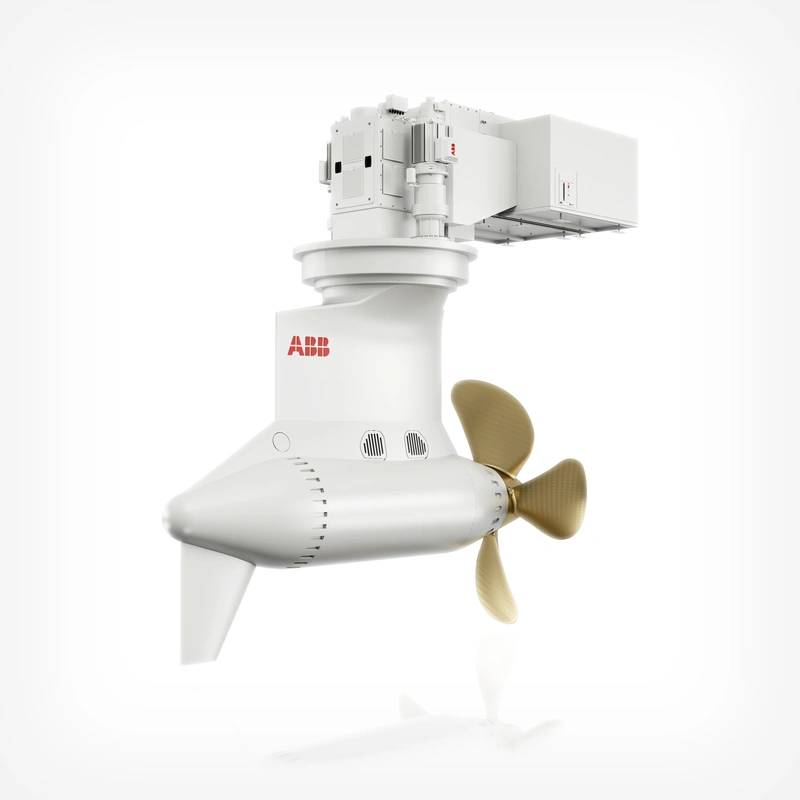
- High thrust efficiency due to optimized propeller geometry and low‑loss AC drive
- Compact installation footprint suitable for limited hull space
- Low maintenance thanks to brushless motor and corrosion‑resistant housing
- Integrated control system compatible with most vessel automation platforms
- Proven reliability on a wide range of commercial vessels
- Higher upfront capital cost compared with basic DC thruster units
- Requires three‑phase power supply (typically 400 V) and dedicated control electronics
- Spare parts may have longer lead times in remote ports
- Installation can be complex on existing hulls due to tunnel machining requirements
PMH Norway
1Rolls-Royce Marine
1- Hydraulic leakage or low oil level causes reduced pressure, slow movement or low-level alarms
- Pump, motor or drive faults cause loss of one power unit, reduced thrust or failure to move the rudder
- Control, feedback or position-sensor faults cause hunting, incorrect indication or failure to reach the commanded position
- Bearing, seal or mechanical wear causes vibration, leakage, backlash or abnormal noise
- Air ingress, contamination or cooling faults cause unstable hydraulic or drive performance and protective trips
- Variable pitch allows precise thrust direction and magnitude without changing shaft speed
- Compact tunnel installation suitable for both bow and stern locations
- Proven Rolls‑Royce (now Kongsberg Maritime) design with integrated VFD control
- Gearbox can be inspected during scheduled dry‑dock, simplifying maintenance planning
- Blade pitch mechanism is a known failure point requiring regular inspection
- Higher mechanical complexity leads to increased maintenance compared with fixed‑pitch thrusters
- Gear bearing wear and seal failures have been reported in service history
- VFD trips can occur if power quality or control parameters are not optimised