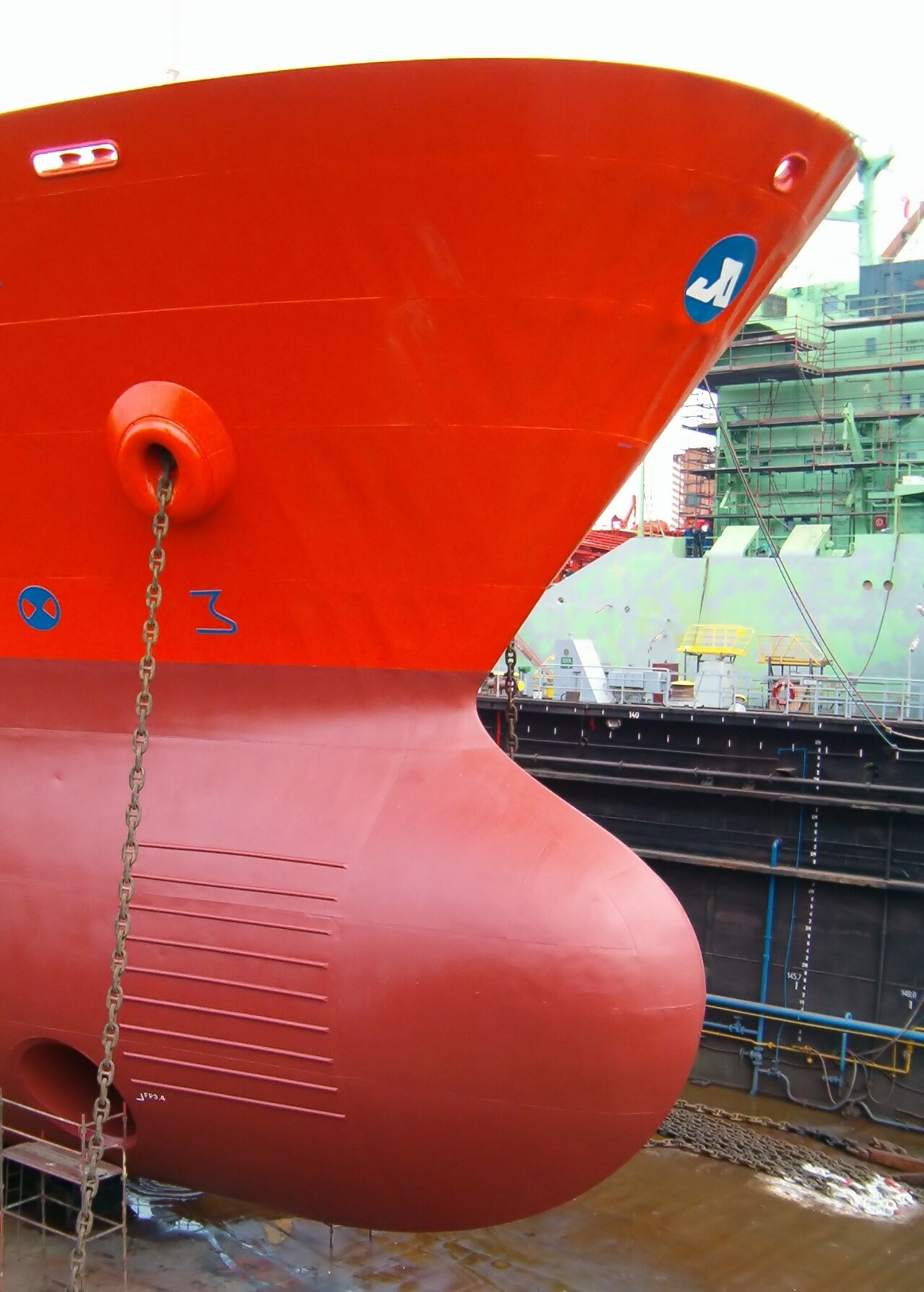
What to check on a Hawse Pipe.
Unlike a chain locker or windlass, which handle the chain once it is inboard, the hawse pipe is the single point where the anchor chain crosses the hull shell plating, so it has two conflicting jobs at once: let the chain run freely with minimal wear, and keep the hull watertight around that opening. There are two common configurations - the bell mouth type, flared outward at the outboard end to guide the chain smoothly regardless of angle, and the pipe type with a straighter bore that relies more on…
What sets a hawse pipe apart
Unlike a chain locker or windlass, which handle the chain once it is inboard, the hawse pipe is the single point where the anchor chain crosses the hull shell plating, so it has two conflicting jobs at once: let the chain run freely with minimal wear, and keep the hull watertight around that opening. There are two common configurations - the bell mouth type, flared outward at the outboard end to guide the chain smoothly regardless of angle, and the pipe type with a straighter bore that relies more on the anchor pocket shape to seat the anchor correctly. The choice depends mostly on hull form forward and the anchor type fitted, since a stockless anchor needs the shell plating recessed into an anchor pocket that the flukes pull up against when fully hove home.

Main components
- Outboard bell mouth or spigot - the flared or straight opening in the shell plating where the chain first enters, shaped to avoid sharp chain angles that cause wear.
- Pipe body - the cast or fabricated steel tube running from shell plating through to the chain locker flat, sized to the chain diameter with clearance for the chain to run without jamming.
- Anchor pocket / recess - a shaped recess in the shell plating, matched to the anchor's fluke profile, that the anchor seats into so it sits flush and does not project beyond the hull when stowed.
- Inboard flange / chain locker connection - where the pipe terminates at the chain locker, sometimes fitted with a spurling pipe cover to keep water and spray out of the locker.
- Wear liner - a replaceable liner in high-wear designs that takes the chain's abrasive contact instead of the pipe body itself.
Selection / Sizing
Bore diameter is set directly by the chain size fitted, per the classification society's anchor and chain tables based on the ship's equipment number, with enough clearance for the chain to run freely including when wet, iced or slightly distorted. The bend radius through the pipe has to stay within limits that avoid excessive chain-to-pipe wear and avoid the chain jamming when paying out or heaving in at an angle. Anchor pocket shape is matched to the specific anchor model and mass, since anchor manufacturers supply pocket templates - a generic pocket that does not match the anchor fitted will leave it sitting proud of the hull or jammed on stowing.
Regulations / Class
Class societies specify hawse pipe bore, wall thickness and material based on the ship's equipment number and the anchoring equipment fitted, as part of the anchoring and mooring equipment rules rather than a separate SOLAS requirement. The arrangement must keep the anchor properly housed to avoid damage to the shell plating and to avoid the anchor working loose in a seaway, which class surveyors check as part of periodic equipment surveys.
Typical faults
| Fault | Consequence |
|---|---|
| Wear grooving in the pipe bore from years of chain contact | Chain runs less smoothly, wear accelerates further, eventually the pipe wall thins |
| Corrosion of the pipe body, especially at the waterline splash zone | Wastage that can progress to holing if not caught at survey |
| Anchor pocket mismatch or deformation | Anchor does not seat flush, vibrates or works loose in a seaway, can damage shell plating |
| Cracked welds between pipe and shell plating | Potential leak path into the chain locker or forepeak |
What to look for in a supplier
- Bore and bend radius calculated against the actual chain size and grade fitted, not a nominal ship-size table.
- Anchor pocket profile confirmed against the specific anchor model's manufacturer template before fabrication.
- Material and thickness suited to the wear duty expected, particularly on vessels with frequent anchoring operations.
Check the anchor sits fully flush in its pocket every time it is hove home - a proud anchor is not just cosmetic, it takes green water impact directly and can start a shell plating leak that only shows up as unexplained forepeak wetness weeks later.