What to check on a Deck Scupper & Drain.
Most deck fittings resist a load; scuppers and drains manage a flow. A scupper is simply an opening in the bulwark or deck edge, often protected by a freeing port, that lets water that comes aboard leave again before it accumulates. A deck drain does the same job for enclosed or semi-enclosed spaces, routing washdown and rain water down through the deck to a drain main. The two are frequently discussed together because they share the same failure mode: a fitting that looks fine when dry and only reveals a…
What sets scuppers and drains apart from other deck fittings
Most deck fittings resist a load; scuppers and drains manage a flow. A scupper is simply an opening in the bulwark or deck edge, often protected by a freeing port, that lets water that comes aboard leave again before it accumulates. A deck drain does the same job for enclosed or semi-enclosed spaces, routing washdown and rain water down through the deck to a drain main. The two are frequently discussed together because they share the same failure mode: a fitting that looks fine when dry and only reveals a problem when the deck is actually awash.
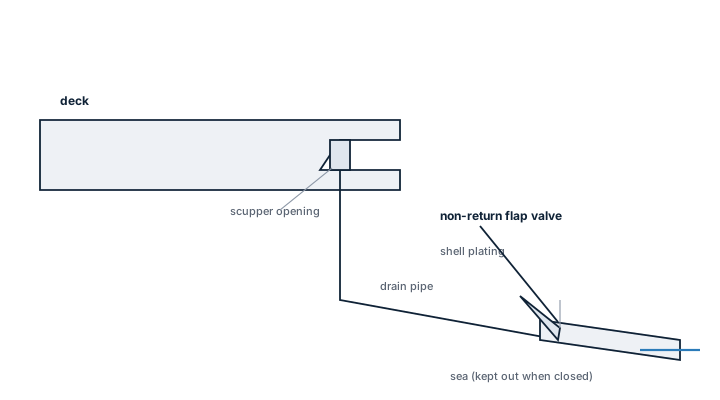
Main components
Freeing ports
Open slots cut into the bulwark at deck level, sized and spaced according to the enclosed deck area they serve. Some carry flap-type closures that swing open outward under water pressure and close under their own weight when the deck clears, stopping water from washing back aboard on the roll.
Scupper pipes and deck drains
Vertical pipes that carry water from a deck opening down through the ship to overboard discharge or a bilge/drain main, fitted with a strum box or grating at the deck opening to keep debris out of the pipe.
Non-return valves (screw-down non-return, swing check)
Fitted at or near the shell plating on scuppers that discharge below the freeboard deck, these let water flow out under gravity but close against outside sea pressure, and most also have a spindle to allow the crew to shut them by hand from above deck.
Selection and sizing
Freeing port area is calculated from the length and height of the bulwark section it serves, following the load line rules rather than a supplier catalogue figure - undersized freeing area is a stability and freeboard non-conformance, not just a drainage inconvenience. Scupper and drain pipe diameter follows the expected water volume from the deck area and rainfall/washdown rate, with a minimum size set to resist blockage from debris rather than pure flow calculation. Non-return valve material is selected for the discharge location: bronze or corrosion-resistant steel for shell-mounted valves exposed to seawater on both sides.
Regulations and class
Freeing port arrangements and minimum area are set by the International Convention on Load Lines, and class societies verify the arrangement against the ship's load line certificate at each periodic survey. Scuppers, discharges and sanitary pipes led through the shell below the freeboard or bulkhead deck must comply with SOLAS Ch. II-1 requirements for valves and their means of closing, including the requirement that valves be readily accessible for operation and, on many ships, remotely closable from above the bulkhead deck.
Typical faults
- Non-return valve seized open or shut by corrosion or paint overspray - a valve stuck open lets sea water flow back onto deck on a following sea; stuck shut, it turns the deck into a pool during heavy rain or green water.
- Freeing port flaps painted shut during deck maintenance - looks tidy in port, fails to open when the ship needs it at sea.
- Scupper strainer missing or blocked with debris, rag or marine growth - the pipe downstream stays clear but the deck opening itself cannot pass water, so the deck floods regardless of a working valve.
- Valve spindle extension broken or seized, so the remote closing arrangement no longer works from above deck - not caught until an emergency closure drill actually tries to use it.
What to look for in a supplier
- Valve body and trim material matched to the discharge location - seawater service, not a generic industrial valve
- Confirmed pressure and flow rating rather than a nominal size match alone
- Spindle and extension pieces compatible with the existing deck arrangement if replacing rather than fitting new
- Certification/documentation the class surveyor will accept as replacement-in-kind evidence
Freeing ports and non-return valves only prove themselves under load - exercise every valve spindle and check every flap swings freely at each planned maintenance round, not just when the annual survey is due.