What to check on a Ventilation Head (Deck).
A tank or void space needs to exchange air with the atmosphere as it is pumped, filled, or simply changes temperature, but an open pipe end on deck would let a boarding sea straight down into the space. A ventilation head is the shaped closure fitted to the top of the vent pipe that lets air pass freely while forcing water to take a path it cannot follow. The two common shapes, mushroom heads and gooseneck bends, do this differently: a mushroom head uses an overhanging cap and a self-closing…
What sets a ventilation head apart from an open pipe
A tank or void space needs to exchange air with the atmosphere as it is pumped, filled, or simply changes temperature, but an open pipe end on deck would let a boarding sea straight down into the space. A ventilation head is the shaped closure fitted to the top of the vent pipe that lets air pass freely while forcing water to take a path it cannot follow. The two common shapes, mushroom heads and gooseneck bends, do this differently: a mushroom head uses an overhanging cap and a self-closing float or weighted valve, while a gooseneck relies purely on a reversed bend high enough that water cannot climb back up into it. Choosing between them is a question of what the space is used for and where on deck the head sits, not a matter of preference.
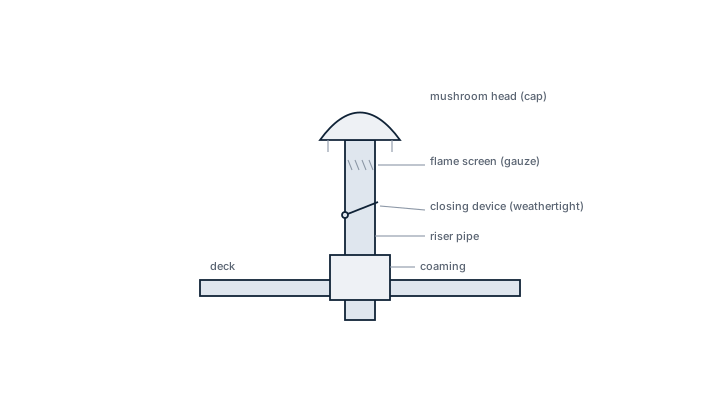
Main components
Mushroom head
A domed cap over the pipe opening, on ballast and fuel tank vents usually combined with an automatic closing float valve that shuts if the head is submerged, required on weather deck tank air pipes by SOLAS.
Gooseneck
A pipe bent through roughly 180 degrees so the opening faces down, used mainly for engine room and accommodation ventilation where a closing device is not fitted and the bend height alone provides the weathertight margin.
Wire mesh / flame screen
Fitted inside vents serving spaces with flammable vapour risk, stopping sparks or flame from travelling down the pipe into the tank.
Closing device / float valve
On automatic-closing mushroom heads, the internal float or spring-loaded disc that seats when green water rises around the head, then reopens once the water clears.
Sizing and selection
- Required free air flow area for the tank or space served, which sets the pipe and head diameter.
- Head height above deck, since freeboard and expected green water directly set the minimum height for adequate protection.
- Automatic closing requirement — mandatory on most tank air pipes, generally not fitted on accommodation or engine room ventilation heads.
- Material and coating, since these fittings sit permanently in the most corrosive position on the ship.
Regulations and class
SOLAS load line and stability provisions require air pipes to tanks on the weather deck to be fitted with automatic closing devices and to extend to a minimum height above the deck, tied to the ship's freeboard. Class societies check vent head height, closing device function, and general corrosion condition during hull surveys, since a failed closing valve on a ballast tank air pipe is a direct downflooding risk and features in incident investigations after heavy weather damage.
Typical faults
| Fault | Consequence |
|---|---|
| Float valve seized open with corrosion or paint | Head cannot close under green water, allowing progressive flooding of the tank |
| Float valve seized shut | Tank cannot vent during filling or discharge, risking structural damage from over or under-pressure |
| Flame screen missing or corroded away | Loses spark protection on vents serving flammable cargo or fuel tanks |
| Head heavily wasted at the deck connection | Fitting can shear off in heavy weather, leaving an open pipe straight into the tank |
What to look for in a supplier
- Automatic closing devices certified to the required test standard for tank air pipe heads, not a generic vent cap.
- Material and coating suited to the deck position, since forward-most heads take the worst of green water and spray.
- Correct sizing against the free air flow requirement for the specific tank, not a fixed diameter regardless of tank volume.
- Availability of spare float valves and flame screens as separate parts, since these wear faster than the head casting itself.
Work the float valve by hand at every survey, not just a visual check from deck — a valve that looks fine from outside can be rusted solid in the open position, which only shows up when the tank actually takes green water.