What to check on a Refrigeration Compressor.
21 models from Frascold in Refrigeration Compressor. Below: the full model list.
What makes this type
A refrigeration compressor draws low-pressure refrigerant vapour from the evaporator side of a cooling circuit and raises it to a higher pressure and temperature so it can give up heat at the condenser, completing the vapour-compression cycle that keeps provision stores and, on reefer or reefer-container vessels, cargo holds at their set temperature. It differs from an air compressor in the medium it handles: refrigerant rather than air, at pressures and with lubricants specific to the refrigerant in use, and it runs against a suction and discharge pressure set by the cooling load rather than a fixed working pressure.
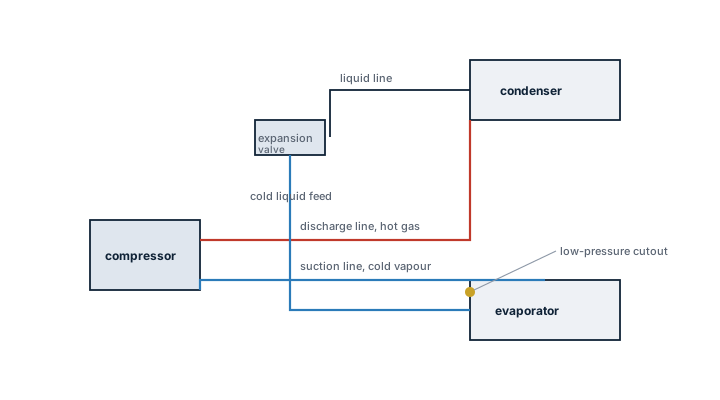
Legend
- liquid line
- condenser
- expansion valve
- cold liquid feed
- discharge line, hot gas
- compressor
- suction line, cold vapour
- low-pressure cutout
- evaporator
Read the full guide
Main components
Compressor body
Reciprocating compressors remain common for provision plants and smaller reefer systems, while larger cargo refrigeration plants often use screw compressors for their continuous duty and easier capacity control.
Suction and discharge valves
Spring-loaded reed or ring valves that open and close each cycle; on reciprocating units these are the component most exposed to wear and breakage.
Capacity control
Cylinder unloading on reciprocating machines, or a sliding valve on screw compressors, adjusts output to match the cooling load without cycling the whole unit on and off.
Lubrication and oil separator
Refrigerant oil circulates with the vapour and must be separated and returned to the compressor crankcase; oil carried over into the circuit reduces heat transfer at the evaporator and condenser.
Selection / Sizing
- Refrigeration capacity in kW matched to the cooling load of the stores or cargo spaces served.
- Refrigerant type, commonly R404A, R507 or increasingly CO2 and ammonia on newer tonnage, each with its own pressure range and oil compatibility.
- Suction and discharge pressure range the compressor is rated for, since this varies significantly by refrigerant.
- Number of compressors and standby arrangement, since cargo reefer plants typically run multiple units for redundancy.
Regulations / Class
MARPOL Annex VI and the Kigali Amendment to the Montreal Protocol govern which refrigerants may be used and how leaks and disposal are handled, phasing out high global-warming-potential refrigerants on newer installations. Class rules require periodic survey of refrigeration machinery serving cargo spaces, including pressure vessel and safety valve checks on the refrigerant circuit, and provision plant compressors are covered under general machinery survey requirements.
Typical faults
| Fault | Consequence |
|---|---|
| Refrigerant undercharge or leak | Low suction pressure, compressor short-cycling, inadequate cooling |
| Worn suction or discharge valves | Reduced capacity, higher discharge temperature, risk of valve failure |
| Oil carryover from a failed separator | Reduced heat transfer at evaporator, low oil level trips the compressor |
| Low-pressure cutout bypassed or set incorrectly | Compressor runs into a vacuum, drawing in moisture or air |
What to look for in a supplier
- Compatibility with the vessel's existing refrigerant and oil type before any replacement unit is ordered.
- Spare valve plates and gaskets available locally, since these are routine wear items on reciprocating units.
- Capacity control range matching the actual load profile rather than the peak design load alone.
Log suction and discharge pressures at every watch; a slow refrigerant leak shows up in the trend long before the compressor trips on low pressure.