What to check on a Emergency/Harbour Air Compressor.
A ship normally carries two main starting air compressors sized to refill the air receivers within a set time from empty. The emergency, or harbour, compressor is a third, smaller unit with its own independent drive and its own way of starting that does not depend on the ship already having compressed air or main power available. Its job is narrow: get enough air into the starting bottles to crank the auxiliary engine that then restores electrical power, or to give the main engine one start when the ship has…
What makes this compressor different from the main starting air compressors
A ship normally carries two main starting air compressors sized to refill the air receivers within a set time from empty. The emergency, or harbour, compressor is a third, smaller unit with its own independent drive and its own way of starting that does not depend on the ship already having compressed air or main power available. Its job is narrow: get enough air into the starting bottles to crank the auxiliary engine that then restores electrical power, or to give the main engine one start when the ship has been fully dead in the water. It is not sized for continuous duty and is not meant to refill the main air system on its own.
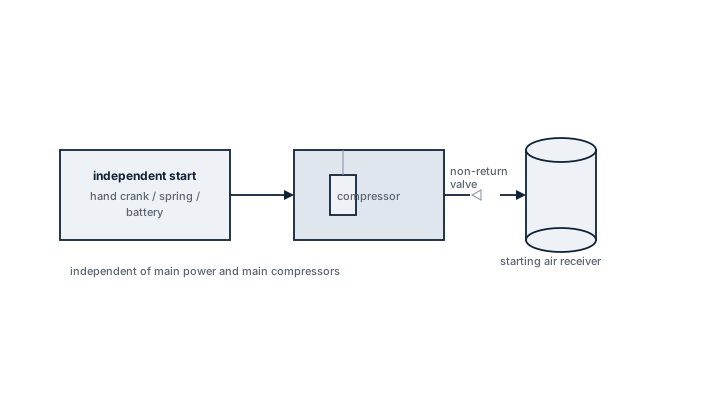
Main components
Drive
Diesel-driven units are common because they do not depend on the emergency switchboard being alive; electrically driven units are only acceptable where the supply is genuinely independent, typically fed from the emergency switchboard with its own starting arrangement that does not itself need compressed air.
Compression stages
Usually a two-stage reciprocating compressor, air-cooled or water-cooled, with an intercooler and aftercooler sized for intermittent, not continuous, running.
Starting arrangement
Hand cranking, a small battery-start diesel, or a spring-start mechanism, chosen specifically so the unit does not itself require a source of compressed air or main electrical power to get going.
Safety and unloading gear
Pressure relief valves at each stage, an automatic unloader for a clean unloaded start, and a moisture separator, since this compressor is often started cold after long idle periods when condensate has had time to collect.
Selection and sizing
Sizing is driven by the volume of the smallest starting air receiver that must be refilled and the number of engine starts that receiver is required to give, not by the main engine's full starting air demand. Delivery pressure matches the ship's starting air system, commonly in the range of 25 to 30 bar, but delivered flow is modest since the unit is expected to run for an extended period to bring one receiver up from empty, not to keep pace with continuous consumption. Duty cycle, not peak flow, is the number to check against the manufacturer's rating.
Regulations and class
SOLAS Chapter II-1 requires means of starting the emergency generator, and where an emergency air start is the chosen method, an independent air source separate from the main starting air system is mandatory. Class rules require this compressor to be tested during survey by an actual start from cold, not a running demonstration, since the point of the unit is its ability to start when nothing else on the ship is working.
Typical faults
- Battery or spring-start mechanism flat or seized from months without exercise, discovered only when a real blackout demands it
- Condensate accumulated in the receiver or cooler from long idle periods, causing a hydraulic lock or corrosion damage on the one occasion it is needed
- Unloader valve stuck, forcing the small drive motor or hand crank against full load and stalling before the unit reaches speed
- Relief valves seized shut from disuse, risking overpressure the one time the unit actually runs under load
What to look for in a supplier
- A genuinely independent start method, verified on paper and not just assumed from the drawing
- Documented duty cycle and receiver refill time for the specific receiver volume on board, not a generic compressor curve
- Class type approval covering emergency starting duty specifically, since some otherwise good compressors are only approved for continuous service
- Compact footprint and weight suited to the emergency generator room, where space is already tight
This is the one piece of machinery on the ship that is only ever needed on its worst day; run it under load on a fixed schedule, not just check the pressure gauge, because a compressor that starts easily but cannot hold pressure under real demand will fail exactly when it is called on.