"> Inert Gas Compressor (Tanker) - Equipment Database

Inert Gas Compressor (Tanker)

critical IMO Required 3 models total

An inert gas compressor moves scrubbed, oxygen-depleted flue gas or generator gas into the cargo tank main to keep tank atmosphere below the level that supports combustion; unlike a service air compressor, everything it touches is wet, sulphurous and corrosive by design.

Read more — Inert Gas Compressor (Tanker) explained

What sets the inert gas compressor apart

An inert gas compressor does not produce compressed air; it moves flue gas, or gas from a dedicated inert gas generator, from close to atmospheric pressure up to around 1 bar into the cargo tank distribution main. It runs on dirty, oxygen-depleted, sulphurous gas rather than clean air, which drives every design choice that separates it from a starting air or service air compressor: corrosion-resistant wetted parts, water-flushed casings and seals designed to tolerate soot and moisture instead of clean, filtered intake air.
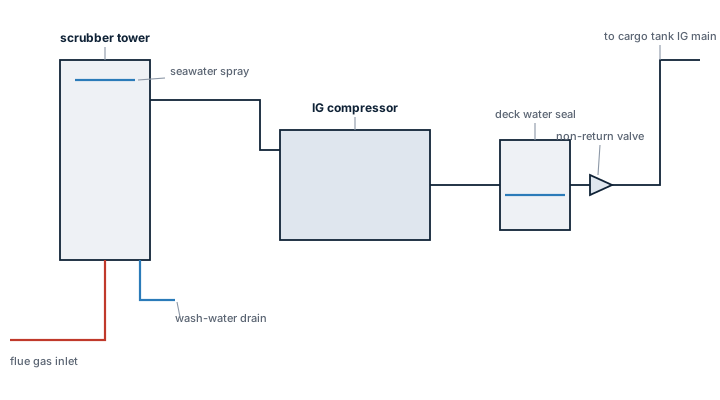
Inert gas compressor system
Flow of an inert gas system on a tanker: flue gas or generator gas is cooled and cleaned in a seawater scrubber tower, drawn on by the IG compressor, passed through a deck water seal and non-return valve, then sent along the main to the cargo tanks.

Main components

Compressor casing and impeller or rotors

Centrifugal single-stage machines are common on larger tankers; positive displacement rotary types appear on smaller ships. Wetted parts are typically bronze, stainless steel or coated to resist sulphuric acid condensation from the flue gas.

Water seal and scrubber tower

Gas is scrubbed and cooled by seawater spray before it reaches the compressor, removing soot and sulphur oxides and dropping gas temperature to protect downstream rubber-lined pipework. A water seal on the compressor discharge prevents any flammable cargo vapour from tracking back toward the boiler or generator.

Deck water seal

Positioned just before the gas enters the cargo tank main, this non-return water barrier is the last line of defence against a flashback reaching the machinery space if the inert gas plant trips or a tank overflows gas back down the line.

Oxygen and pressure monitoring

Continuous oxygen analysers and pressure transmitters at the compressor discharge and in the cargo tank main trigger automatic shutdown if oxygen content rises above the safe limit for the cargo being carried.

Selection and sizing

  • Capacity matched to the maximum simultaneous cargo discharge rate, since tanks must be topped up with inert gas at least as fast as cargo is pumped out
  • Discharge pressure sufficient to overcome deck main and tank valve losses while keeping tank pressure within the design range, commonly a few hundred millibar above atmospheric
  • Materials matched to the sulphur content of the fuel burned, since flue gas from high-sulphur fuel is more corrosive than gas from a dedicated inert gas generator
  • Standby capacity — most tankers carry either a second compressor or a generator-based backup, since loss of inert gas during cargo operations stops the operation

Regulations and class

SOLAS Chapter II-2 requires inert gas systems on crude oil tankers, product carriers above a certain size and most chemical tankers, maintaining tank atmosphere below the oxygen level that supports combustion, generally under 8% by volume, with a positive tank pressure at all times during cargo operations. Class rules require the deck water seal, oxygen analysers and pressure alarms to be tested at defined intervals, and the whole system is checked at each Enhanced Survey Programme special survey along with confirmation the compressor can reach and hold rated capacity.

Typical faults

  • Scrubber water flow interrupted — hot, wet, corrosive gas reaches the compressor bearings and seals, causing early corrosion failure
  • Deck water seal running dry through a blocked drain — the one safety barrier against flashback is lost without an obvious alarm
  • Oxygen analyser drift uncalibrated — false low readings let genuinely unsafe tank atmosphere pass unnoticed during discharge
  • Non-return valve on the compressor discharge sticking open — cargo vapour can migrate back toward the scrubber and compressor room

What to look for in a supplier

  • Wetted-part material specification matched to the fuel sulphur content the vessel actually burns, not a generic offering
  • Type approval covering the specific inert gas system configuration, flue gas or dedicated generator
  • Spare seal and bearing kits suited to service on corrosive, moisture-laden gas rather than standard air compressor spares
  • Documented capacity test at rated discharge pressure, since underrated compressors only reveal themselves during a fast discharge

Never accept a running compressor as proof the tanks are inert — trust the oxygen analyser and tank pressure reading, since a tripped scrubber water supply can leave the compressor turning while it delivers unscrubbed, oxygen-rich gas.

4000h
Service Interval
20 yr
Typical Lifetime

Typical Manufacturers

Atlas Copco Hamworthy Tanabe

3 manufacturers · 3 models

Atlas Copco Marine

1
Atlas Copco ZR 250
ZR 250
250 m3/h · 55.0 kW · Inert Gas (N2/CO2) · oil-free screw compressor
Common Failures & Inspection Points
  • Seal failure from corrosive gas
  • Intercooler corrosion
  • Bearing wear
Service: Oil-free type mandatory for IG service; corrosion-resistant materials.
Spare Parts: Atlas Copco: Keep valve sets and piston rings on board. Lead time: 2–6 weeks. Oil filters and gasket sets as standard ship's stores.
Strengths
  • Oil‑free operation eliminates risk of oil contamination in the inert gas stream
  • Stainless‑steel and corrosion‑resistant components withstand aggressive cargo gases
  • Compact modular design fits limited engine‑room spaces on tankers
  • Integrated intercooler improves efficiency and reduces discharge temperature
  • Meets IMO D‑2 type approval for marine inert‑gas systems
Weaknesses
  • Higher upfront capital cost compared with conventional oil‑lubricated compressors
  • Maximum flow capacity is limited to medium‑size tankers; larger vessels may need multiple units
  • Requires precise gas composition control; excessive moisture or contaminants can accelerate seal wear
  • Bearing life depends on strict maintenance of the oil‑free lubrication system
  • Electrical supply must match specific voltage/frequency ratings (typically 400 V 3‑phase)
Typical Vessels: Crude Oil TankerProduct TankerChemical Tanker
Certifications: IMO D-2DNV
Decision Guide: Choose if: you need a reliable, oil‑free inert gas source for medium‑size tankers with limited engine‑room space and must meet IMO D‑2 requirements. Avoid if: budget constraints dominate or the vessel requires higher gas flow rates than the ZR 250 can provide.
Use Cases: Commonly installed as part of a ship‑board inert gas system on crude and product oil tankers to supply clean, dry inert gas for cargo‑tank blanketing; also used in retrofits where oil contamination risk must be eliminated.

Tanabe

1
VLH-54 IG
180 m3/h · 37.0 kW · Inert Gas (N2/CO2) · Reciprocating inert gas compressor
Common Failures & Inspection Points
  • Valve corrosion
  • Piston ring wear from acidic condensate
  • Cooler tube pitting
Service: Reciprocating IG compressor; drain condensate after every use.
Spare Parts: Tanabe: Keep valve sets and piston rings on board. Lead time: 2–6 weeks. Oil filters and gasket sets as standard ship's stores.
Strengths
  • High discharge pressure suitable for large tanker inerting loops
  • Compact footprint compared with multi‑stage screw units
  • Proven track record on long‑haul oil tankers
  • Integrated condensate drain valve simplifies routine maintenance
Weaknesses
  • Valve seats prone to corrosion if moisture/acidic condensate is not removed promptly
  • Piston rings can wear rapidly when condensate acidity is high
  • Cooler tube pitting reported in harsh marine environments, requiring frequent inspection
  • Requires regular manual draining of condensate after each run
  • Higher vibration and maintenance load than oil‑free screw compressors
Typical Vessels: Oil TankerChemical TankerProduct Tanker
Decision Guide: Choose if: you need a compact, high‑pressure IG source for an oil or chemical tanker and have crew experienced with reciprocating compressors. Avoid if: low‑maintenance, oil‑free operation is a priority or the vessel operates in extremely corrosive atmospheres without robust condensate treatment.
Use Cases: Installed on crude and product tankers to provide nitrogen during cargo loading/unloading, tank cleaning and emergency inerting; also fitted on some chemical carriers where high‑purity inert gas is required for safety.

Wärtsilä

1
Hamworthy IG-55
IG-55
200 m3/h · 45.0 kW · Inert Gas (N2/CO2)
Common Failures & Inspection Points
  • Gas scrubber fouling
  • Deck seal water level loss
  • Compressor valve failure
Service: Part of IG plant; coordinate maintenance with scrubber and deck seal.
Spare Parts: Hamworthy: Keep valve sets and piston rings on board. Lead time: 2–6 weeks. Oil filters and gasket sets as standard ship's stores.
Strengths
  • Compact footprint suitable for space‑constrained tankers
  • Proven reliability with long mean‑time‑between‑failures on many vessels
  • Integrated control system that coordinates with scrubber and deck seal units
  • Oil‑free (or low‑oil) design reduces contamination risk in the gas stream
  • Standardised spare parts list simplifies logistics
Weaknesses
  • Higher upfront capital cost compared with some generic screw compressors
  • Requires strict inlet moisture control; scrubber fouling directly impacts performance
  • Maximum flow rating may be insufficient for very large crude carriers (>80,000 dwt)
  • Deck‑seal water level monitoring is critical – loss can cause rapid shutdown
  • Valve wear can occur if gas quality fluctuates, leading to occasional valve failures
Typical Vessels: Crude Oil TankerProduct TankerChemical Tanker
Certifications: IMO Type Approval (SOLAS Chapter II‑1 Reg.13)DNV GL Classification
Decision Guide: Choose if: you need a compact, high‑reliability inert gas source for medium‑size tankers (up to ~30,000 dwt) and want seamless integration with Hamworthy scrubbers and deck seals. Avoid if: the vessel requires very high gas flow rates typical of ultra‑large crude carriers or if budget constraints preclude the higher initial cost.
Use Cases: The IG-55 is typically installed as part of a complete inert gas plant on new‑build tankers, or retrofitted into existing vessels during dry‑dock to replace aging compressors. It operates continuously alongside the gas scrubber and deck seal, supplying inert gas to cargo tanks during loading, unloading, and ballast voyages.