What to check on a Sliding Hatch Cover.
Unlike folding covers that hinge upward or pontoon covers lifted clear by crane, sliding covers travel horizontally on wheeled bogies running in tracks along the hatch coaming. In a side-stacking arrangement each panel parks beside the opening; in a piggyback arrangement one panel rides up and over the neighbouring panel on ramped tracks, so the whole set stacks at one end without needing coaming-side parking space. Container ships favour sliding designs because the coaming top must stay clear for container stacks and lashing bridges, and because opening and closing needs…
What sets sliding hatch covers apart
Unlike folding covers that hinge upward or pontoon covers lifted clear by crane, sliding covers travel horizontally on wheeled bogies running in tracks along the hatch coaming. In a side-stacking arrangement each panel parks beside the opening; in a piggyback arrangement one panel rides up and over the neighbouring panel on ramped tracks, so the whole set stacks at one end without needing coaming-side parking space. Container ships favour sliding designs because the coaming top must stay clear for container stacks and lashing bridges, and because opening and closing needs to be fast between calls.
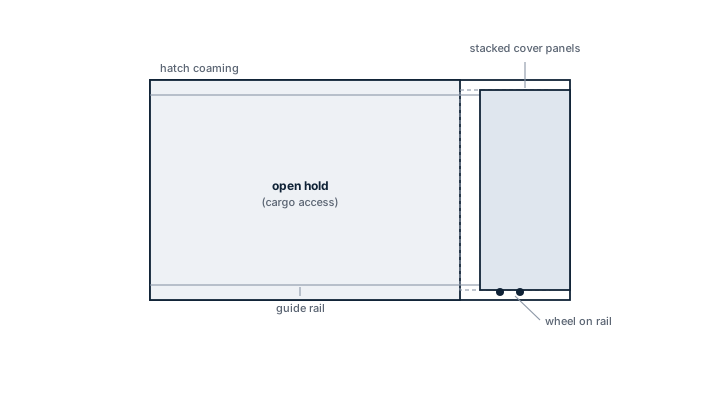
Main components
Panel structure
Steel panels stiffened for the deck cargo loads stacked on top, since container ships routinely stack lashed boxes directly on closed hatch covers.
Wheels and track
Bogie wheels running in a machined track set into the coaming, with ramped sections on piggyback designs to lift one panel clear of the next as it travels.
Cleating and compression system
Hydraulic or mechanical cleats pull the panel down onto a rubber gasket seated in the coaming, compressing it to the watertight standard the cover must meet.
Drive system
Hydraulic rams or a wire haulage system move the panels; larger covers on modern container ships are often driven hydraulically panel by panel from a local or remote control station.
Drainage channels
Coaming gutters and non-return drain valves carry away any water that gets past the primary seal before it can reach the hold.
Selection and sizing
| Parameter | Relevance |
|---|---|
| Deck cargo load rating | Container stacking loads on the closed cover can exceed the weight of the cover itself many times over |
| Side-stacking vs piggyback | Piggyback saves coaming-side deck width at the cost of a taller stack height when open |
| Panel weight and drive power | Larger beam hatches need more powerful hydraulics and heavier track structure |
| Weathertightness class | Sets gasket compression force and cleat spacing needed for the intended trading area |
Regulations and class
Hatch covers are certified against class weathertightness and structural rules that size plate thickness and stiffening for the wave loads and green sea pressures expected at the fitted position on deck, with higher requirements the further forward the hatch sits. The International Load Line Convention sets minimum coaming heights and requires covers to be weathertight to the standard appropriate for the ship's freeboard. Periodic class surveys include a hose or ultrasonic test of the seal and a check of the securing and drive gear, since a cover that looks closed can still leak if cleats are not fully engaged.
Typical faults
- Track wear and debris - cargo residue or corrosion in the coaming track binds the wheels and forces the drive system to work harder than designed, accelerating further wear.
- Gasket compression loss - a hardened or torn gasket, or cleats not fully engaged, lets water past even though the panel looks fully closed.
- Wheel or bogie failure - a seized wheel can derail the panel partway through opening or closing, jamming operations until it is freed.
- Drain valve fouling - a blocked non-return valve lets water that gets past the seal sit in the coaming gutter instead of draining away.
What to look for in a supplier
- Structural certification matching the actual deck cargo stacking loads the ship intends to carry, not a nominal figure
- Track and wheel material specified for the corrosion environment, since replacement mid-service life is disruptive on a working container ship
- Spare gasket profiles matched exactly to the coaming groove, as generic gasket stock rarely seals correctly
- Documented hose or ultrasonic test results from commissioning as a baseline for future surveys
Walk the coaming track and check gasket condition before every load line survey rather than relying on a single ultrasonic test - track debris and gasket wear are progressive and are far cheaper to catch early than after a hold has taken water.