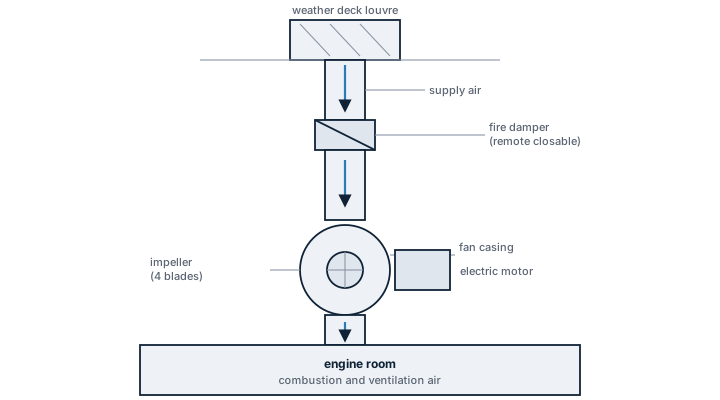
Engine Room Supply Fan
critical
IMO Required
57 models total
Large axial or centrifugal fan providing combustion and cooling air to the engine room.
5 yr
Class Survey
25 yr
Typical Lifetime
Typical Manufacturers
Novenco
ABB (Fläkt)
TLT-Turbo
1 manufacturers · 57 models
WinGD
57
WinGD RT-flex50DF Two-Stroke Engine
Air volume per ventilation design
· Conditioned Air / Exhaust Air
· engine-driven centrifugal supply fan
Common Failures & Inspection Points
- Ventilator-Motor Lagerschaden nach 20.000+ Stunden
- Brandschutzklappen-Blockierung durch Korrosion/Fett
- Kanal-Isolierung Ablösung/Durchfeuchtung
- Frequenzumrichter-Ausfall bei drehzahlgeregelten Lüftern
Service: Motor-Lager Schmierung quartalsweise. Brandschutzklappen-Test monatlich. Luftfilter-Wechsel nach Bedarf. Vibrationsmessung jährlich.
Spare Parts: WinGD (Winterthur Gas & Diesel): Lüftermotor-Lager und Keilriemen an Bord vorhalten. Lead time: 2-4 Wochen.
Strengths
- High airflow capacity matched to large diesel engines
- Direct mechanical drive eliminates need for separate electric motor in many installations
- Compact footprint suitable for confined engine rooms
- Designed for integration with WinGD engine control systems
Weaknesses
- Motor bearing wear reported after ~20,000 operating hours, requiring quarterly lubrication and eventual overhaul
- Fire‑protection dampers can become blocked by corrosion or grease, demanding monthly functional tests
- Duct insulation may delaminate or become water‑logged in humid environments
- Frequency converters used for speed control have shown occasional failures, increasing downtime risk
Typical Vessels:
TankerBulk CarrierContainer ShipCruise VesselOffshore Support Vessel
Decision Guide: Choose if you need a high‑capacity, engine‑driven supply fan that integrates tightly with a WinGD two‑stroke main engine and space is at a premium. Avoid if your maintenance regime cannot guarantee the required quarterly bearing lubrication, monthly fire‑damper testing, or if you operate in highly corrosive or moisture‑laden environments where duct insulation degradation is a concern.
Use Cases: Typically installed in large diesel‑powered merchant ships to provide continuous fresh air and exhaust extraction for the main engine room, ensuring adequate cooling, combustion air supply, and compliance with fire‑safety ventilation standards.
WinGD RT-flex50-D Two-Stroke Engine
Air volume per ventilation design
· Conditioned Air / Exhaust Air
· engine-room supply fan
Common Failures & Inspection Points
- Ventilator-Motor Lagerschaden nach 20.000+ Stunden
- Brandschutzklappen-Blockierung durch Korrosion/Fett
- Kanal-Isolierung Ablösung/Durchfeuchtung
- Frequenzumrichter-Ausfall bei drehzahlgeregelten Lüftern
Service: Motor-Lager Schmierung quartalsweise. Brandschutzklappen-Test monatlich. Luftfilter-Wechsel nach Bedarf. Vibrationsmessung jährlich.
Spare Parts: WinGD (Winterthur Gas & Diesel): Lüftermotor-Lager und Keilriemen an Bord vorhalten. Lead time: 2-4 Wochen.
Strengths
- High airflow capacity suitable for large propulsion spaces
- Integrated motor with quarterly bearing lubrication simplifies routine maintenance
- Fire‑damper arrangement complies with IMO fire‑safety regulations
- Variable frequency drive (VFD) option allows precise speed and flow control
- Widely installed on WinGD‑powered vessels, giving a proven operational record
Weaknesses
- Motor bearings have shown wear after ~20,000 h of operation, requiring early replacement
- Fire‑damper blades can corrode or accumulate grease, leading to blockage
- Duct insulation may delaminate or become water‑logged in humid environments
- Reported VFD failures on speed‑controlled units can cause unplanned downtime
- Spare parts are sourced through WinGD channels only, which may lengthen lead times
Typical Vessels:
VLCCULCV Container ShipPanamax Bulk CarrierAframax Tanker
Decision Guide: Choose if you need a high‑capacity, fire‑rated supply fan for large engine rooms and can accommodate quarterly bearing lubrication and periodic damper testing. Avoid if your maintenance regime cannot support frequent bearing checks or if you require a fan with proven long‑term VFD reliability.
Use Cases: Installed in the main ventilation ducting of large tankers, container ships and bulk carriers to supply fresh air to combustion chambers, auxiliary machinery spaces and crew areas, ensuring compliance with IMO fire‑safety standards and maintaining engine‑room temperature control.
WinGD RT-flex58T-E Two-Stroke Engine
Air volume per ventilation design
· Conditioned Air / Exhaust Air
· 2-stroke low-speed gas engine
Common Failures & Inspection Points
- Ventilator-Motor Lagerschaden nach 20.000+ Stunden
- Brandschutzklappen-Blockierung durch Korrosion/Fett
- Kanal-Isolierung Ablösung/Durchfeuchtung
- Frequenzumrichter-Ausfall bei drehzahlgeregelten Lüftern
Service: Motor-Lager Schmierung quartalsweise. Brandschutzklappen-Test monatlich. Luftfilter-Wechsel nach Bedarf. Vibrationsmessung jährlich.
Spare Parts: WinGD (Winterthur Gas & Diesel): Lüftermotor-Lager und Keilriemen an Bord vorhalten. Lead time: 2-4 Wochen.
Strengths
- Thermal efficiency above 50% (LHV) reduces fuel consumption
- Low NOx and CO₂ emissions – complies with IMO Tier III requirements
- Flexibility to operate on LNG, bio‑LNG or dual‑fuel modes
- Proven reliability from extensive service on LNG carriers and cruise ships
- Integrated electronic control system simplifies operation and monitoring
Weaknesses
- Higher upfront capital cost compared with conventional diesel engines
- Requires LNG storage and handling infrastructure onboard
- Larger physical footprint for a given power rating than some high‑speed diesel units
- Bearing wear (especially journal bearings) can become critical after ~20,000 h if lubrication is not strictly maintained
Typical Vessels:
LNG CarrierCruise ShipFerryOffshore Support VesselContainer Ship (selected eco‑efficient builds)
Certifications:
IMO Tier IIIDNV
Decision Guide: Choose if you need high fuel efficiency, low emissions and have LNG bunkering capability. Avoid if the vessel lacks LNG infrastructure, budget constraints are tight, or space is at a premium for auxiliary power.
Use Cases: The RT-flex58T-E is commonly installed as the main propulsion engine on LNG‑fueled carriers and cruise liners, or as a high‑efficiency auxiliary generator set on vessels seeking to meet strict emission caps.
WinGD X35-B Two-Stroke Engine
Air volume per ventilation design
· Conditioned Air / Exhaust Air
· 2-stroke low-speed diesel
Common Failures & Inspection Points
- Ventilator-Motor Lagerschaden nach 20.000+ Stunden
- Brandschutzklappen-Blockierung durch Korrosion/Fett
- Kanal-Isolierung Ablösung/Durchfeuchtung
- Frequenzumrichter-Ausfall bei drehzahlgeregelten Lüftern
Service: Motor-Lager Schmierung quartalsweise. Brandschutzklappen-Test monatlich. Luftfilter-Wechsel nach Bedarf. Vibrationsmessung jährlich.
Spare Parts: WinGD (Winterthur Gas & Diesel): Lüftermotor-Lager und Keilriemen an Bord vorhalten. Lead time: 2-4 Wochen.
Strengths
- High specific power (≈13 MW per cylinder) with low fuel consumption
- Robust construction suited to long‑term operation (>20 000 h)
- Integrated exhaust gas after‑treatment for IMO Tier III compliance
- Proven reliability on a wide range of large vessels
- Extensive global support network from WinGD
Weaknesses
- Large physical size and weight require substantial engine room space
- Long start‑up time compared with high‑speed auxiliary engines
- Higher initial capital cost than smaller medium‑speed alternatives
- Requires regular bearing lubrication and vibration monitoring
Typical Vessels:
Container shipBulk carrierOil tankerLiquefied gas carrierCruise liner
Certifications:
DNV GLABSLRIMO Type Approval
Decision Guide: Choose if you need high shaft power (>80 MW), excellent fuel efficiency and Tier III emissions compliance on large vessels. Avoid if space is limited, rapid start‑up is required, or budget constraints favor medium‑speed engines.
Use Cases: Installed as the main propulsion engine in deep‑sea container ships, bulk carriers, tankers and cruise ships where continuous high power and low specific fuel consumption are critical.
WinGD X40-B Two-Stroke Engine
Air volume per ventilation design
· Conditioned Air / Exhaust Air
· Two-Stroke Low-Speed
Common Failures & Inspection Points
- Ventilator-Motor Lagerschaden nach 20.000+ Stunden
- Brandschutzklappen-Blockierung durch Korrosion/Fett
- Kanal-Isolierung Ablösung/Durchfeuchtung
- Frequenzumrichter-Ausfall bei drehzahlgeregelten Lüftern
Service: Motor-Lager Schmierung quartalsweise. Brandschutzklappen-Test monatlich. Luftfilter-Wechsel nach Bedarf. Vibrationsmessung jährlich.
Spare Parts: WinGD (Winterthur Gas & Diesel): Lüftermotor-Lager und Keilriemen an Bord vorhalten. Lead time: 2-4 Wochen.
Strengths
- High power output and efficiency
- Low emissions and reduced environmental impact
- Robust design for harsh marine conditions
- Wide range of speed control options
Weaknesses
- Higher upfront cost compared to similar models
- Potential for increased maintenance costs due to complex design
- Limited availability of spare parts in some regions
- Requires regular lubrication and maintenance
Typical Vessels:
Container ShipsBulk CarriersTankers
Certifications:
IMO Tier IIIUSCG Type ApprovalDNV GL
Decision Guide: Choose if: You require high power output and efficiency, and are willing to invest in regular maintenance. Avoid if: You prioritize low upfront cost or have limited access to spare parts.
Use Cases: Typically deployed on large container ships, bulk carriers, and tankers where efficient ventilation is critical for engine room operations.
WinGD X40DF-1.0 Two-Stroke Engine
Air volume per ventilation design
· Conditioned Air / Exhaust Air
· Two-stroke low-speed diesel
Common Failures & Inspection Points
- Ventilator-Motor Lagerschaden nach 20.000+ Stunden
- Brandschutzklappen-Blockierung durch Korrosion/Fett
- Kanal-Isolierung Ablösung/Durchfeuchtung
- Frequenzumrichter-Ausfall bei drehzahlgeregelten Lüftern
Service: Motor-Lager Schmierung quartalsweise. Brandschutzklappen-Test monatlich. Luftfilter-Wechsel nach Bedarf. Vibrationsmessung jährlich.
Spare Parts: WinGD (Winterthur Gas & Diesel): Lüftermotor-Lager und Keilriemen an Bord vorhalten. Lead time: 2-4 Wochen.
Strengths
- High power-to-weight ratio
- Low fuel consumption and emissions
- Long maintenance intervals due to robust design
- Wide range of operating conditions
Weaknesses
- Complexity in operation and maintenance
- Higher initial cost compared to other engine types
- Potential for high vibration levels if not properly maintained
Typical Vessels:
Container shipsBulk carriersTankers
Certifications:
IMO Tier IIIUSCG Type ApprovalDNV GL
Decision Guide: Choose if: You require a high-power, low-emission engine for a large vessel. Avoid if: You prioritize simplicity in operation and maintenance.
Use Cases: This equipment is typically deployed on large vessels that require high power output, such as container ships, bulk carriers, and tankers.
WinGD X52-1.1 Two-Stroke Engine
Air volume per ventilation design
· Conditioned Air / Exhaust Air
Common Failures & Inspection Points
- Ventilator-Motor Lagerschaden nach 20.000+ Stunden
- Brandschutzklappen-Blockierung durch Korrosion/Fett
- Kanal-Isolierung Ablösung/Durchfeuchtung
- Frequenzumrichter-Ausfall bei drehzahlgeregelten Lüftern
Service: Motor-Lager Schmierung quartalsweise. Brandschutzklappen-Test monatlich. Luftfilter-Wechsel nach Bedarf. Vibrationsmessung jährlich.
Spare Parts: WinGD (Winterthur Gas & Diesel): Lüftermotor-Lager und Keilriemen an Bord vorhalten. Lead time: 2-4 Wochen.
Strengths
- Proven WinGD engineering heritage and robust mechanical design
- Modular construction allows relatively easy access for bearing lubrication and filter changes
- Integrated drive unit delivers stable airflow over a wide speed range
- Quarterly bearing lubrication schedule is well defined
Weaknesses
- Ventilator motor bearings tend to show wear after ~20,000 operating hours
- Fire‑damper mechanisms can seize due to corrosion or accumulated grease
- Duct insulation may delaminate and become moisture‑saturated in humid climates
- Variable‑frequency drives have been reported to fail on speed‑controlled fans
Typical Vessels:
Crude oil tankerProduct tankerContainer shipBulk carrierGeneral cargo vessel
Decision Guide: Choose if you need a high‑capacity, manufacturer‑backed supply fan for large engine rooms and can commit to the prescribed quarterly bearing lubrication and monthly fire‑damper testing. Avoid if operating in highly corrosive environments or where limited maintenance windows make frequent bearing service impractical.
Use Cases: Installed in the main engine room of deep‑sea tankers, container ships and bulk carriers to provide continuous forced ventilation for cooling of machinery, removal of exhaust gases and maintaining safe atmospheric conditions.
WinGD X52-1.2 Two-Stroke Engine
Air volume per ventilation design
· Conditioned Air / Exhaust Air
· two-stroke low-speed marine diesel
Common Failures & Inspection Points
- Ventilator-Motor Lagerschaden nach 20.000+ Stunden
- Brandschutzklappen-Blockierung durch Korrosion/Fett
- Kanal-Isolierung Ablösung/Durchfeuchtung
- Frequenzumrichter-Ausfall bei drehzahlgeregelten Lüftern
Service: Motor-Lager Schmierung quartalsweise. Brandschutzklappen-Test monatlich. Luftfilter-Wechsel nach Bedarf. Vibrationsmessung jährlich.
Spare Parts: WinGD (Winterthur Gas & Diesel): Lüftermotor-Lager und Keilriemen an Bord vorhalten. Lead time: 2-4 Wochen.
Strengths
- Very high specific power (up to ~20 MW per cylinder) resulting in compact installation for its output
- Low specific fuel consumption (≈180‑190 g/kWh) compared with competing engines
- IMO Tier II compliant out of the box and can be upgraded to Tier III with SCR
- Proven reliability on a large fleet of ultra‑large vessels
- Flexible rating options (rated, derated, or high‑speed variants)
Weaknesses
- Large physical dimensions and weight require substantial engine‑room space
- Higher capital cost than some medium‑speed alternatives
- Requires high‑quality low‑sulphur fuel to meet emission limits without after‑treatment
- Complex maintenance procedures (e.g., cylinder liner handling, bearing lubrication)
- Noise and vibration levels are higher than slower‑speed designs unless additional mitigation is installed
Typical Vessels:
Container shipBulk carrierCrude oil tankerLiquefied gas carrierCruise liner
Certifications:
IMO Tier IIDNV Class Approval
Decision Guide: Choose if you need very high shaft power (>15 MW) with excellent fuel efficiency and are able to accommodate the engine’s size and upfront cost. Avoid if vessel space is limited, budget constraints dominate, or a medium‑speed engine would meet the power requirement more economically.
Use Cases: The X52‑1.2 is typically installed as the main propulsion plant on large ocean‑going vessels where high speed and low fuel consumption are critical – e.g., 10 000–14 000 TEU container ships, 300 000 dwt bulk carriers, or ultra‑large tankers.
WinGD X52DF-1.1 Two-Stroke Engine
Air volume per ventilation design
· Conditioned Air / Exhaust Air
· centrifugal supply fan
Common Failures & Inspection Points
- Ventilator-Motor Lagerschaden nach 20.000+ Stunden
- Brandschutzklappen-Blockierung durch Korrosion/Fett
- Kanal-Isolierung Ablösung/Durchfeuchtung
- Frequenzumrichter-Ausfall bei drehzahlgeregelten Lüftern
Service: Motor-Lager Schmierung quartalsweise. Brandschutzklappen-Test monatlich. Luftfilter-Wechsel nach Bedarf. Vibrationsmessung jährlich.
Spare Parts: WinGD (Winterthur Gas & Diesel): Lüftermotor-Lager und Keilriemen an Bord vorhalten. Lead time: 2-4 Wochen.
Strengths
- Optimised airflow for WinGD X52DF engine cooling requirements
- Compact layout that fits into tight engine‑room spaces
- Integrated VFD enables speed control to match variable ventilation demand
- Quarterly bearing lubrication aligns with the vessel's main‑engine maintenance cycle
Weaknesses
- Motor bearings prone to damage after ~20,000 operating hours
- Fire‑damper blades can become blocked by corrosion or accumulated grease
- Duct insulation may delaminate or become moisture‑saturated over time
- Variable‑frequency drive failures reported on speed‑controlled fans
Typical Vessels:
LNG CarrierLarge Crude Oil TankerContainer ShipBulk CarrierCruise Ship
Decision Guide: Choose this fan if the vessel is equipped with a WinGD X52DF engine and requires an integrated, high‑efficiency ventilation solution that can be synchronised with engine control. Avoid if the operator cannot meet the quarterly bearing lubrication schedule or expects severe corrosive environments that may affect fire‑damper operation.
Use Cases: Installed in the main engine room of large marine vessels to supply fresh air for combustion cooling, oil‑cooler ventilation and crew safety, typically operating continuously with speed control via VFD.
WinGD X52DF-2.1 Two-Stroke Engine
Air volume per ventilation design
· Conditioned Air / Exhaust Air
· low-speed two-stroke marine diesel engine
Common Failures & Inspection Points
- Ventilator-Motor Lagerschaden nach 20.000+ Stunden
- Brandschutzklappen-Blockierung durch Korrosion/Fett
- Kanal-Isolierung Ablösung/Durchfeuchtung
- Frequenzumrichter-Ausfall bei drehzahlgeregelten Lüftern
Service: Motor-Lager Schmierung quartalsweise. Brandschutzklappen-Test monatlich. Luftfilter-Wechsel nach Bedarf. Vibrationsmessung jährlich.
Spare Parts: WinGD (Winterthur Gas & Diesel): Lüftermotor-Lager und Keilriemen an Bord vorhalten. Lead time: 2-4 Wochen.
Strengths
- High power density – delivers several thousand kW in a compact footprint
- Excellent fuel efficiency at low RPM, reducing bunker consumption
- Proven reliability on long‑haul vessels with extensive service network
- Can be directly coupled to large auxiliary drives (e.g., supply fans) without gearboxes
Weaknesses
- Higher maintenance intervals for cylinder liners and bearings compared with four‑stroke alternatives
- Requires high‑quality lubricants and strict oil analysis programmes
- Emissions control may need additional after‑treatment to meet Tier III standards
- Heavy weight limits installation on vessels with tight space or displacement constraints
Typical Vessels:
Container shipBulk carrierTankerCruise linerRo‑Ro vessel
Certifications:
IMO Tier IIDNVABS
Decision Guide: Choose if you need a high‑output, fuel‑efficient main engine that can also drive large auxiliary loads such as supply fans. Avoid on vessels where space, weight or strict emission limits (Tier III without extra after‑treatment) are primary constraints.
Use Cases: Installed as the principal propulsion unit on long‑range cargo and passenger ships; often coupled to high‑capacity engine‑room ventilation fans to provide continuous fresh air supply for crew spaces and machinery compartments.
WinGD X52DF-A-1.0 Two-Stroke Engine
Air volume per ventilation design
· Conditioned Air / Exhaust Air
· low-speed two-stroke diesel engine
Common Failures & Inspection Points
- Ventilator-Motor Lagerschaden nach 20.000+ Stunden
- Brandschutzklappen-Blockierung durch Korrosion/Fett
- Kanal-Isolierung Ablösung/Durchfeuchtung
- Frequenzumrichter-Ausfall bei drehzahlgeregelten Lüftern
Service: Motor-Lager Schmierung quartalsweise. Brandschutzklappen-Test monatlich. Luftfilter-Wechsel nach Bedarf. Vibrationsmessung jährlich.
Spare Parts: WinGD (Winterthur Gas & Diesel): Lüftermotor-Lager und Keilriemen an Bord vorhalten. Lead time: 2-4 Wochen.
Strengths
- High specific power suitable for large vessels
- Directly coupled fan eliminates need for separate motor drives
- Proven track record in long‑haul applications
- Robust construction tolerates harsh marine environments
Weaknesses
- Ventilator‑motor bearing wear reported after ~20,000 h of operation
- Fire‑protection dampers can seize due to corrosion or grease buildup
- Fan duct insulation may delaminate or become water‑logged over time
- Frequency converter failures observed on speed‑controlled fan installations
Typical Vessels:
Container shipBulk carrierTankerCruise liner
Decision Guide: Choose if you need a high‑power, engine‑driven ventilation solution on large, long‑range vessels and can commit to rigorous bearing lubrication and damper maintenance. Avoid if you prefer low‑maintenance electric fans with independent VFD control or operate vessels with limited maintenance windows.
Use Cases: Commonly installed in the main engine room of ultra‑large container ships, VLCCs and cruise ships where a single high‑capacity fan supplies fresh air to the propulsion space while sharing power with the main propulsion plant.
WinGD X52DF-A-S1.0 Two-Stroke Engine
Air volume per ventilation design
· Conditioned Air / Exhaust Air
· engine-room supply fan with variable speed drive
Common Failures & Inspection Points
- Ventilator-Motor Lagerschaden nach 20.000+ Stunden
- Brandschutzklappen-Blockierung durch Korrosion/Fett
- Kanal-Isolierung Ablösung/Durchfeuchtung
- Frequenzumrichter-Ausfall bei drehzahlgeregelten Lüftern
Service: Motor-Lager Schmierung quartalsweise. Brandschutzklappen-Test monatlich. Luftfilter-Wechsel nach Bedarf. Vibrationsmessung jährlich.
Spare Parts: WinGD (Winterthur Gas & Diesel): Lüftermotor-Lager und Keilriemen an Bord vorhalten. Lead time: 2-4 Wochen.
Strengths
- High airflow capacity matched to the cooling needs of large two‑stroke diesel engines
- Integrated fire‑protection door control for rapid compartment isolation
- Option for VFD allows energy‑efficient operation over a wide speed range
- Designed for easy access to bearings and filters, supporting routine quarterly lubrication
Weaknesses
- Bearing wear reported after ~20 000 operating hours, requiring more frequent inspections
- Fire‑door mechanisms can seize due to corrosion or grease buildup if not cleaned regularly
- VFD units have shown susceptibility to failure in harsh marine environments without proper cooling
- Limited publicly available performance data makes detailed sizing comparisons difficult
Typical Vessels:
LNG CarrierCruise ShipLarge Bulk CarrierVery Large Crude Carrier (VLCC)
Decision Guide: Choose if the vessel already uses WinGD X52 series main engines and requires a ventilation fan that integrates directly with engine‑room fire‑door systems and can be run at variable speed for energy savings. Avoid if maintenance resources are limited, or if a proven off‑the‑shelf fan with extensive certification documentation is preferred.
Use Cases: Installed in the engine room of high‑power diesel vessels to supply fresh air for combustion cooling, crew comfort, and fire‑suppression compliance; commonly paired with WinGD main engines on LNG carriers and cruise ships where integrated control simplifies alarm handling.
WinGD X52DF-M-S1.0 Two-Stroke Engine
Air volume per ventilation design
· Conditioned Air / Exhaust Air
Common Failures & Inspection Points
- Ventilator-Motor Lagerschaden nach 20.000+ Stunden
- Brandschutzklappen-Blockierung durch Korrosion/Fett
- Kanal-Isolierung Ablösung/Durchfeuchtung
- Frequenzumrichter-Ausfall bei drehzahlgeregelten Lüftern
Service: Motor-Lager Schmierung quartalsweise. Brandschutzklappen-Test monatlich. Luftfilter-Wechsel nach Bedarf. Vibrationsmessung jährlich.
Spare Parts: WinGD (Winterthur Gas & Diesel): Lüftermotor-Lager und Keilriemen an Bord vorhalten. Lead time: 2-4 Wochen.
Strengths
- Optimised airflow matching the heat load of large low‑speed two‑stroke engines
- Integrated control interface compatible with WinGD engine management systems
- Robust construction suitable for harsh marine environments
- Variable speed operation via frequency converter for energy efficiency
Weaknesses
- Reported bearing wear after ~20,000 operating hours if lubrication schedule is not strictly followed
- Fire‑damper blades can seize due to corrosion or grease buildup
- Cable and conduit insulation may delaminate in high humidity zones
- Frequency converter failures have been observed on speed‑controlled units
Typical Vessels:
VLCC TankerULCC TankerLarge Container Ship (20,000+ TEU)Bulk Carrier (>180 kt)
Decision Guide: Choose if the vessel already uses a WinGD X52DF-M‑S1.0 main engine and you want a ventilation fan that integrates with its control system and can handle the high heat rejection rates of low‑speed two‑stroke propulsion. Avoid if you require a fan with proven long‑term bearing life beyond 20 000 h without intensive maintenance, or if fire‑damper reliability is a critical regulatory driver.
Use Cases: Typically installed in the main engine room of ultra‑large crude carriers and other high‑displacement vessels where the X52DF-M‑S1.0 engine provides propulsion. The fan supplies fresh air to the combustion chambers, cools auxiliary machinery, and maintains safe temperature levels during full‑power operation.
WinGD X52DF-P-1.0 Two-Stroke Engine
Air volume per ventilation design
· Conditioned Air / Exhaust Air
Common Failures & Inspection Points
- Ventilator-Motor Lagerschaden nach 20.000+ Stunden
- Brandschutzklappen-Blockierung durch Korrosion/Fett
- Kanal-Isolierung Ablösung/Durchfeuchtung
- Frequenzumrichter-Ausfall bei drehzahlgeregelten Lüftern
Service: Motor-Lager Schmierung quartalsweise. Brandschutzklappen-Test monatlich. Luftfilter-Wechsel nach Bedarf. Vibrationsmessung jährlich.
Spare Parts: WinGD (Winterthur Gas & Diesel): Lüftermotor-Lager und Keilriemen an Bord vorhalten. Lead time: 2-4 Wochen.
Strengths
- High airflow capacity suitable for large propulsion plants
- Robust mechanical drive eliminates dependence on shipboard electrical power
- Integrated with WinGD engine control system for coordinated operation
Weaknesses
- Mechanical wear of fan bearings reported after ~20,000 h
- Fire‑protection dampers can seize due to corrosion or grease buildup
- Requires quarterly oil lubrication and annual vibration monitoring, increasing maintenance workload
- Frequency converter failures observed on variable‑speed installations
Typical Vessels:
Very Large Crude Carrier (VLCC)Ultra Large Container Vessel (ULCV)Bulk carrier (>150 kt)Cruise ship with high‑power propulsion plant
Decision Guide: Choose if the vessel needs a mechanically driven, high‑capacity ventilation solution that can be synchronized with the main engine and space for regular bearing maintenance is available. Avoid if you prefer fully electric VFD fans, have limited access for quarterly oil changes, or operate in environments where corrosion of fire‑damper components is a concern.
Use Cases: Installed on large ocean‐going ships to supply continuous fresh air to the main engine room, remove excess heat from high‑power diesel engines and support fire‑safety ventilation systems.
WinGD X52DF-S1.0 Two-Stroke Engine
Air volume per ventilation design
· Conditioned Air / Exhaust Air
· Two-stroke low-speed diesel
Common Failures & Inspection Points
- Ventilator-Motor Lagerschaden nach 20.000+ Stunden
- Brandschutzklappen-Blockierung durch Korrosion/Fett
- Kanal-Isolierung Ablösung/Durchfeuchtung
- Frequenzumrichter-Ausfall bei drehzahlgeregelten Lüftern
Service: Motor-Lager Schmierung quartalsweise. Brandschutzklappen-Test monatlich. Luftfilter-Wechsel nach Bedarf. Vibrationsmessung jährlich.
Spare Parts: WinGD (Winterthur Gas & Diesel): Lüftermotor-Lager und Keilriemen an Bord vorhalten. Lead time: 2-4 Wochen.
Strengths
- High fuel efficiency due to optimized combustion process
- Low emissions and reduced environmental impact
- Integrated design reduces complexity and increases reliability
Weaknesses
- Higher upfront cost compared to other engine types
- Complex maintenance requirements due to integrated components
- Potential for high vibration levels if not properly maintained
Typical Vessels:
Container shipsBulk carriersTankers
Certifications:
IMO Tier IIIEU Stage V
Decision Guide: Choose if: You require a high-efficiency, low-emission engine for large vessels. Avoid if: You prioritize lowest upfront cost or have limited maintenance resources.
Use Cases: Typically deployed on large container ships and bulk carriers where fuel efficiency and reduced emissions are critical.
WinGD X52DF-S2.0 Two-Stroke Engine
Air volume per ventilation design
· Conditioned Air / Exhaust Air
· Variable‑speed centrifugal supply fan
Common Failures & Inspection Points
- Ventilator-Motor Lagerschaden nach 20.000+ Stunden
- Brandschutzklappen-Blockierung durch Korrosion/Fett
- Kanal-Isolierung Ablösung/Durchfeuchtung
- Frequenzumrichter-Ausfall bei drehzahlgeregelten Lüftern
Service: Motor-Lager Schmierung quartalsweise. Brandschutzklappen-Test monatlich. Luftfilter-Wechsel nach Bedarf. Vibrationsmessung jährlich.
Spare Parts: WinGD (Winterthur Gas & Diesel): Lüftermotor-Lager und Keilriemen an Bord vorhalten. Lead time: 2-4 Wochen.
Strengths
- Integrated VFD allows precise control of airflow and energy savings
- Robust housing suitable for harsh marine environments
- Quarterly bearing lubrication schedule is well defined
- Standard monthly test of fire‑door dampers simplifies compliance checks
Weaknesses
- Motor bearings tend to develop wear after ~20,000 h of operation
- Fire‑protection dampers can seize due to corrosion or grease buildup
- Duct insulation may delaminate or become water‑logged over time
- Frequency converter failures have been reported on speed‑controlled units
Typical Vessels:
TankerContainer shipBulk carrierGeneral cargo vessel
Decision Guide: Choose if you need a reliable, variable‑speed supply fan for large engine rooms and have an established maintenance programme for bearing lubrication and damper testing. Avoid if your operation cannot accommodate the known bearing wear pattern or if you require equipment with proven VFD reliability in corrosive atmospheres.
Use Cases: Installed in the main engine room of ocean‑going merchant vessels to supply combustion air, remove excess heat and gases, and maintain positive pressure for fire safety. Commonly paired with fire‑door dampers and ductwork that distribute fresh air throughout the propulsion plant.
WinGD X52DF Two-Stroke Engine
Air volume per ventilation design
· Conditioned Air / Exhaust Air
· low‑speed two‑stroke diesel
Common Failures & Inspection Points
- Ventilator-Motor Lagerschaden nach 20.000+ Stunden
- Brandschutzklappen-Blockierung durch Korrosion/Fett
- Kanal-Isolierung Ablösung/Durchfeuchtung
- Frequenzumrichter-Ausfall bei drehzahlgeregelten Lüftern
Service: Motor-Lager Schmierung quartalsweise. Brandschutzklappen-Test monatlich. Luftfilter-Wechsel nach Bedarf. Vibrationsmessung jährlich.
Spare Parts: WinGD (Winterthur Gas & Diesel): Lüftermotor-Lager und Keilriemen an Bord vorhalten. Lead time: 2-4 Wochen.
Strengths
- High thermal efficiency (≈50% at design load)
- Robust construction with long service intervals
- Proven reliability on a wide range of vessel types
- Flexibility to run on heavy fuel oil, marine gasoil or bio‑fuels
Weaknesses
- Large physical size and weight require substantial engine room space
- Higher initial capital cost compared with medium‑speed alternatives
- Requires regular cylinder liner and bearing inspections
- Emissions control may need additional after‑treatment (e.g., SCR) to meet the latest IMO Tier III limits
Typical Vessels:
TankerContainer shipBulk carrierCruise shipLNG carrier
Certifications:
IMO D‑2ABSDNV GL
Decision Guide: Choose if you need a high‑power, fuel‑efficient main engine for large vessels and have sufficient engine room volume. Avoid if space is at a premium, budget constraints limit upfront cost, or the vessel must meet strict Tier III NOx limits without additional after‑treatment.
Use Cases: Installed as the primary propulsion unit on long‑haul tankers, container ships and bulk carriers, often paired with controllable‑pitch propellers and integrated into advanced engine management systems for optimal fuel consumption.
WinGD X52-S2.0 Two-Stroke Engine
Air volume per ventilation design
· Conditioned Air / Exhaust Air
· variable-speed centrifugal supply fan
Common Failures & Inspection Points
- Ventilator-Motor Lagerschaden nach 20.000+ Stunden
- Brandschutzklappen-Blockierung durch Korrosion/Fett
- Kanal-Isolierung Ablösung/Durchfeuchtung
- Frequenzumrichter-Ausfall bei drehzahlgeregelten Lüftern
Service: Motor-Lager Schmierung quartalsweise. Brandschutzklappen-Test monatlich. Luftfilter-Wechsel nach Bedarf. Vibrationsmessung jährlich.
Spare Parts: WinGD (Winterthur Gas & Diesel): Lüftermotor-Lager und Keilriemen an Bord vorhalten. Lead time: 2-4 Wochen.
Strengths
- High airflow capacity suitable for large engine rooms
- Quarterly bearing lubrication schedule simplifies maintenance
- Integrated fire‑door control meets basic fire safety requirements
- Modular design allows relatively quick replacement of motor or impeller
- Compatible with VFDs for speed control and energy optimisation
Weaknesses
- Motor bearings prone to wear after ~20,000 h of operation
- Fire‑door (Brandschutzklappen) can become blocked by corrosion or grease
- Duct insulation may delaminate or become water‑logged over time
- VFD failures reported on speed‑controlled units
- Limited publicly available certification data
Typical Vessels:
TankerBulk CarrierContainer ShipCruise VesselGeneral Cargo
Decision Guide: Choose if you need a proven, high‑capacity engine‑room supply fan with established maintenance intervals and fire‑door integration. Avoid if your vessel has very tight maintenance windows, operates in highly corrosive environments, or cannot accommodate potential VFD reliability issues.
Use Cases: Installed in the main engine rooms of large commercial vessels to provide continuous forced ventilation for combustion air, cooling of auxiliary machinery, and compliance with IMO ventilation standards.
WinGD X52 Two-Stroke Engine
Air volume per ventilation design
· Conditioned Air / Exhaust Air
· electric axial flow supply fan
Common Failures & Inspection Points
- Ventilator-Motor Lagerschaden nach 20.000+ Stunden
- Brandschutzklappen-Blockierung durch Korrosion/Fett
- Kanal-Isolierung Ablösung/Durchfeuchtung
- Frequenzumrichter-Ausfall bei drehzahlgeregelten Lüftern
Service: Motor-Lager Schmierung quartalsweise. Brandschutzklappen-Test monatlich. Luftfilter-Wechsel nach Bedarf. Vibrationsmessung jährlich.
Spare Parts: WinGD (Winterthur Gas & Diesel): Lüftermotor-Lager und Keilriemen an Bord vorhalten. Lead time: 2-4 Wochen.
Strengths
- High airflow capacity suitable for large marine propulsion rooms
- Integrated fire‑damper system compliant with SOLAS ventilation requirements
- Designed for continuous operation with robust motor construction
- Compatible with variable frequency drives for speed control and energy savings
Weaknesses
- Motor bearing wear reported after ~20,000 operating hours requiring quarterly lubrication
- Fire‑damper blades can seize due to corrosion or grease buildup
- Insulation in ductwork may delaminate or become moisture‑saturated over time
- Frequency converter failures observed on speed‑controlled installations
Typical Vessels:
TankerContainer shipBulk carrierGeneral cargo vessel
Decision Guide: Choose if the vessel requires a high‑capacity, fire‑protected supply fan and has an established maintenance programme for bearing lubrication and damper inspection. Avoid if maintenance intervals are limited or if the installation cannot accommodate periodic VFD checks and duct insulation monitoring.
Use Cases: Installed in the engine room of ocean‑going merchant vessels to provide continuous ventilation for main engines, auxiliary generators, and other heat‑generating equipment, often paired with fire‑damper assemblies to meet SOLAS fire safety standards.
WinGD X62-1.1 Two-Stroke Engine
Air volume per ventilation design
· Conditioned Air / Exhaust Air
· Variable speed centrifugal supply fan
Common Failures & Inspection Points
- Ventilator-Motor Lagerschaden nach 20.000+ Stunden
- Brandschutzklappen-Blockierung durch Korrosion/Fett
- Kanal-Isolierung Ablösung/Durchfeuchtung
- Frequenzumrichter-Ausfall bei drehzahlgeregelten Lüftern
Service: Motor-Lager Schmierung quartalsweise. Brandschutzklappen-Test monatlich. Luftfilter-Wechsel nach Bedarf. Vibrationsmessung jährlich.
Spare Parts: WinGD (Winterthur Gas & Diesel): Lüftermotor-Lager und Keilriemen an Bord vorhalten. Lead time: 2-4 Wochen.
Strengths
- Flow capacity matched to the large air demand of X62‑type engines
- Integrated VFD allows precise speed control and energy savings
- Robust housing suitable for harsh marine environments
- Quarterly bearing lubrication procedure is well defined
- Monthly fire‑door test routine supports compliance with fire safety
Weaknesses
- Motor bearings tend to show wear after ~20,000 operating hours
- Fire‑protection doors can become blocked by corrosion or grease buildup
- Duct insulation may delaminate or become water‑logged over time
- Variable frequency drives have reported reliability issues on speed‑controlled fans
- Maintenance requires regular access for bearing greasing and filter changes
Typical Vessels:
VLCCULCVLarge LNG carrierBulk carrier (>80,000 DWT)Container ship (large class)
Decision Guide: Choose if the vessel uses a WinGD X62‑1.1 main engine and needs a high‑flow, speed‑controlled supply fan with proven integration to the engine control system. Avoid if the operator cannot meet the quarterly bearing lubrication schedule or expects minimal maintenance downtime, or where corrosion‑prone environments make fire‑door blockage likely.
Use Cases: Installed in the machinery space of large crude oil tankers, LNG carriers and other deep‑draught vessels to supply combustion air to the main two‑stroke engine and to provide general ventilation for heat removal and gas dispersion.
WinGD X62-1.2 Two-Stroke Engine
Air volume per ventilation design
· Conditioned Air / Exhaust Air
· engine room supply fan
Common Failures & Inspection Points
- Ventilator-Motor Lagerschaden nach 20.000+ Stunden
- Brandschutzklappen-Blockierung durch Korrosion/Fett
- Kanal-Isolierung Ablösung/Durchfeuchtung
- Frequenzumrichter-Ausfall bei drehzahlgeregelten Lüftern
Service: Motor-Lager Schmierung quartalsweise. Brandschutzklappen-Test monatlich. Luftfilter-Wechsel nach Bedarf. Vibrationsmessung jährlich.
Spare Parts: WinGD (Winterthur Gas & Diesel): Lüftermotor-Lager und Keilriemen an Bord vorhalten. Lead time: 2-4 Wochen.
Strengths
- Designed for continuous operation with a proven bearing life of >20 000 h when lubricated quarterly
- Integrated frequency converter enables precise speed control and energy savings
- Compact layout fits standard engine‑room spaces on large vessels
- Fire‑protection dampers can be linked to ship alarm systems for automatic closure
Weaknesses
- Motor bearings are sensitive to lubrication quality; missed quarterly service reduces life rapidly
- Corrosion or grease buildup can jam fire‑damper blades, requiring frequent inspection
- Frequency converter units have a known failure mode under harsh vibration environments
- Limited publicly available performance data makes sizing comparisons difficult
Typical Vessels:
Crude oil tankerContainer shipBulk carrierRo‑Ro vesselOffshore supply vessel
Decision Guide: Choose if you need a robust, high‑capacity ventilation fan that can be speed‑controlled via VFD and you have an established maintenance regime for bearing lubrication and damper inspection. Avoid if your crew cannot guarantee quarterly bearing service or if the installation environment is highly corrosive without adequate protection.
Use Cases: Installed in main engine rooms to supply fresh air for combustion air, cooling of auxiliary generators, and to meet SOLAS fire‑ventilation requirements; commonly paired with automatic fire‑damper systems on long‑haul tankers and container vessels.
WinGD X62-B Two-Stroke Engine
Air volume per ventilation design
· Conditioned Air / Exhaust Air
· low‑speed two‑stroke diesel
Common Failures & Inspection Points
- Ventilator-Motor Lagerschaden nach 20.000+ Stunden
- Brandschutzklappen-Blockierung durch Korrosion/Fett
- Kanal-Isolierung Ablösung/Durchfeuchtung
- Frequenzumrichter-Ausfall bei drehzahlgeregelten Lüftern
Service: Motor-Lager Schmierung quartalsweise. Brandschutzklappen-Test monatlich. Luftfilter-Wechsel nach Bedarf. Vibrationsmessung jährlich.
Spare Parts: WinGD (Winterthur Gas & Diesel): Lüftermotor-Lager und Keilriemen an Bord vorhalten. Lead time: 2-4 Wochen.
Strengths
- High specific power enabling compact installation for large vessels
- Dual‑fuel operation (diesel & LNG) supports emissions compliance
- Proven track record on ultra‑large crude carriers and container ships
- Integrated electronic control system simplifies engine management
Weaknesses
- Large physical footprint and weight limit suitability to very large hulls
- Higher capital cost compared with medium‑speed alternatives
- Requires skilled crew for operation and maintenance of two‑stroke systems
- Maintenance intervals (e.g., cylinder liner overhauls) are longer but more intensive
Typical Vessels:
Ultra Large Crude Carrier (ULCC)Very Large Crude Carrier (VLCC)Large Container ShipBulk Carrier >150,000 dwt
Decision Guide: Choose if: you need a high‑power main engine for a vessel >80 k dwt and want dual‑fuel flexibility to meet Tier III emissions. Avoid if: the ship is small or medium size where a medium‑speed engine offers better cost‑to‑weight ratio, or if crew expertise in two‑stroke engines is lacking.
Use Cases: The X62‑B is typically installed as the primary propulsion unit on ultra‑large tankers and large container vessels, often paired with advanced exhaust gas cleaning systems to meet strict emission regulations.
WinGD X62DF-1.1 Two-Stroke Engine
Air volume per ventilation design
· Conditioned Air / Exhaust Air
· two-stroke driven ventilation fan
Common Failures & Inspection Points
- Ventilator-Motor Lagerschaden nach 20.000+ Stunden
- Brandschutzklappen-Blockierung durch Korrosion/Fett
- Kanal-Isolierung Ablösung/Durchfeuchtung
- Frequenzumrichter-Ausfall bei drehzahlgeregelten Lüftern
Service: Motor-Lager Schmierung quartalsweise. Brandschutzklappen-Test monatlich. Luftfilter-Wechsel nach Bedarf. Vibrationsmessung jährlich.
Spare Parts: WinGD (Winterthur Gas & Diesel): Lüftermotor-Lager und Keilriemen an Bord vorhalten. Lead time: 2-4 Wochen.
Strengths
- High power density – delivers large airflow in a compact footprint.
- Can run on standard marine diesel fuel, matching main propulsion fuel logistics.
- Integrated speed control (VFD) allows variable airflow to match engine‑room demand.
- WinGD engineering reputation for durability of low‑speed two‑stroke engines.
Weaknesses
- Motor bearing wear reported after ~20 000 operating hours; requires quarterly lubrication.
- Fire‑damper mechanisms prone to corrosion/fat buildup, needing monthly functional tests.
- Duct insulation may delaminate or become saturated with moisture over time.
- Frequency converter (VFD) failures have been observed on speed‑controlled fans.
- Higher maintenance effort compared with fully electric centrifugal fans.
Typical Vessels:
VLCC/TankerLNG CarrierCruise ShipLarge Ro‑Ro / Ferry
Decision Guide: Choose if: you need a very high airflow rate, have existing diesel fuel infrastructure, and can accommodate the scheduled bearing lubrication and fire‑damper testing. Avoid if: you prefer lower maintenance electric fans, operate in corrosive environments where damper blockage is critical, or lack qualified personnel for quarterly bearing service.
Use Cases: Installed in engine rooms of large vessels to supply fresh air for combustion air, cooling of auxiliary machinery, and extraction of hot gases; often used where electrical power capacity is limited but high ventilation demand exists.
WinGD X62DF-2.1 Two-Stroke Engine
Air volume per ventilation design
· Conditioned Air / Exhaust Air
· low-speed two-stroke marine diesel
Common Failures & Inspection Points
- Ventilator-Motor Lagerschaden nach 20.000+ Stunden
- Brandschutzklappen-Blockierung durch Korrosion/Fett
- Kanal-Isolierung Ablösung/Durchfeuchtung
- Frequenzumrichter-Ausfall bei drehzahlgeregelten Lüftern
Service: Motor-Lager Schmierung quartalsweise. Brandschutzklappen-Test monatlich. Luftfilter-Wechsel nach Bedarf. Vibrationsmessung jährlich.
Spare Parts: WinGD (Winterthur Gas & Diesel): Lüftermotor-Lager und Keilriemen an Bord vorhalten. Lead time: 2-4 Wochen.
Strengths
- High specific fuel consumption (≈185 g/kWh) leading to lower operating costs
- Robust modular construction simplifies installation and maintenance
- Integrated exhaust gas after‑treatment options for IMO Tier III compliance
- Proven reliability with service intervals up to 20,000 h
Weaknesses
- Large initial capital cost compared with medium‑speed alternatives
- Requires high‑capacity lubrication system and careful bearing monitoring
- Longer start‑up time due to low‑speed design
- Limited flexibility for rapid power changes without VCU support
Typical Vessels:
Bulk CarrierContainer ShipCrude Oil TankerProduct TankerLNG Carrier
Certifications:
DNVABSLRIMO Tier III (with after‑treatment)
Decision Guide: Choose if you need high thermal efficiency, long service intervals and can accommodate the larger initial investment; avoid for vessels requiring fast power ramps or where space/weight constraints dominate.
Use Cases: Installed as the main propulsion engine on newbuilds of large bulk carriers, container ships and tankers, often paired with a controllable‑pitch propeller and integrated with ship‑board automation systems.
WinGD X62DF-A-1.0 Two-Stroke Engine
Air volume per ventilation design
· Conditioned Air / Exhaust Air
Common Failures & Inspection Points
- Ventilator-Motor Lagerschaden nach 20.000+ Stunden
- Brandschutzklappen-Blockierung durch Korrosion/Fett
- Kanal-Isolierung Ablösung/Durchfeuchtung
- Frequenzumrichter-Ausfall bei drehzahlgeregelten Lüftern
Service: Motor-Lager Schmierung quartalsweise. Brandschutzklappen-Test monatlich. Luftfilter-Wechsel nach Bedarf. Vibrationsmessung jährlich.
Spare Parts: WinGD (Winterthur Gas & Diesel): Lüftermotor-Lager und Keilriemen an Bord vorhalten. Lead time: 2-4 Wochen.
Strengths
- High airflow capacity suited for large propulsion rooms
- Integrated variable‑speed drive enables precise flow control and energy savings
- Compact layout derived from proven two‑stroke engine architecture
- Standardised mounting simplifies installation on new builds and retrofits
Weaknesses
- Bearing wear reported after ~20,000 h of operation if lubrication intervals are missed
- Fire‑damper mechanisms can seize due to corrosion or grease buildup
- Duct insulation may delaminate or become water‑logged in humid engine rooms
- Variable‑frequency converter failures have been observed on speed‑controlled units
Typical Vessels:
TankerBulk carrierContainer shipCruise linerOffshore supply vessel
Decision Guide: Choose if you need a high‑capacity, speed‑controlled ventilation fan with proven engine‑room heritage and are prepared to follow the recommended quarterly bearing lubrication and monthly fire‑damper testing. Avoid if your maintenance regime cannot guarantee strict bearing oil checks or if you operate in environments where corrosion of fire‑damper components is a known issue.
Use Cases: The X62DF‑A‑1.0 is typically installed in the main engine room of large commercial vessels to supply fresh air for combustion air, cooling of auxiliary machinery and removal of exhaust gases. It is also used on retrofits where space constraints demand a compact yet powerful fan solution.
WinGD X62DF-A-S1.0 Two-Stroke Engine
Air volume per ventilation design
· Conditioned Air / Exhaust Air
· Variable‑speed axial supply fan
Common Failures & Inspection Points
- Ventilator-Motor Lagerschaden nach 20.000+ Stunden
- Brandschutzklappen-Blockierung durch Korrosion/Fett
- Kanal-Isolierung Ablösung/Durchfeuchtung
- Frequenzumrichter-Ausfall bei drehzahlgeregelten Lüftern
Service: Motor-Lager Schmierung quartalsweise. Brandschutzklappen-Test monatlich. Luftfilter-Wechsel nach Bedarf. Vibrationsmessung jährlich.
Spare Parts: WinGD (Winterthur Gas & Diesel): Lüftermotor-Lager und Keilriemen an Bord vorhalten. Lead time: 2-4 Wochen.
Strengths
- High airflow (up to ~12 000 m³/h) suitable for large propulsion spaces
- Robust steel housing with corrosion‑resistant coating
- Integrated VFD allows precise speed control and energy savings
- Quarterly bearing lubrication routine is straightforward
- Fire‑damper interlock complies with SOLAS fire‑protection requirements
Weaknesses
- Bearing wear reported after ~20 000 h of operation, requiring early replacement
- Fire‑damper blades can seize due to corrosion or accumulated grease
- Duct insulation may delaminate when exposed to moisture over time
- VFD units have a documented failure rate on speed‑controlled fans
- Physical footprint is large, limiting installation in cramped engine rooms
Typical Vessels:
TankerLNG carrierBulk carrierContainer shipOffshore supply vessel
Decision Guide: Choose if you need a proven, high‑capacity ventilation fan with built‑in fire‑damper control and are able to perform regular bearing lubrication and VFD monitoring. Avoid if space is at a premium, you cannot commit to the quarterly maintenance schedule, or you have experienced recurring VFD failures on similar equipment.
Use Cases: Installed in the main engine room of large commercial vessels to supply fresh air for combustion cooling, personnel safety, and to meet SOLAS ventilation requirements. Often paired with fire‑damper systems that automatically close during a fire event.
WinGD X62DF-M-1.0 Two-Stroke Engine
Air volume per ventilation design
· Conditioned Air / Exhaust Air
· engine room supply fan
Common Failures & Inspection Points
- Ventilator-Motor Lagerschaden nach 20.000+ Stunden
- Brandschutzklappen-Blockierung durch Korrosion/Fett
- Kanal-Isolierung Ablösung/Durchfeuchtung
- Frequenzumrichter-Ausfall bei drehzahlgeregelten Lüftern
Service: Motor-Lager Schmierung quartalsweise. Brandschutzklappen-Test monatlich. Luftfilter-Wechsel nach Bedarf. Vibrationsmessung jährlich.
Spare Parts: WinGD (Winterthur Gas & Diesel): Lüftermotor-Lager und Keilriemen an Bord vorhalten. Lead time: 2-4 Wochen.
Strengths
- Quarterly bearing lubrication program reduces unexpected bearing failures
- Monthly fire‑damper testing built into maintenance routine simplifies regulatory compliance
- Filter can be changed on demand to maintain airflow efficiency
- Supports variable speed operation via frequency converter for energy savings
Weaknesses
- Motor bearings reported to suffer damage after >20,000 operating hours
- Fire‑damper blades may become blocked by corrosion or grease buildup
- Duct insulation can delaminate or become water‑logged, affecting performance
- Frequency converter (VFD) failures have been observed in speed‑controlled fan applications
Decision Guide: Choose if you need a supply fan that matches WinGD gas‑engine installations and can follow the prescribed quarterly bearing lubrication and monthly fire‑damper testing. Avoid if the vessel operates in highly corrosive environments without corrosion‑resistant upgrades or if you cannot accommodate the maintenance intervals required for reliable operation.
Use Cases: Typically installed in the main engine rooms of vessels equipped with large two‑stroke gas engines—such as LNG carriers, large tankers, or other high‑power ships—to provide combustion air and cooling ventilation.
WinGD X62DF-M-S1.0 Two-Stroke Engine
Air volume per ventilation design
· Conditioned Air / Exhaust Air
· frequency-controlled axial supply fan
Common Failures & Inspection Points
- Ventilator-Motor Lagerschaden nach 20.000+ Stunden
- Brandschutzklappen-Blockierung durch Korrosion/Fett
- Kanal-Isolierung Ablösung/Durchfeuchtung
- Frequenzumrichter-Ausfall bei drehzahlgeregelten Lüftern
Service: Motor-Lager Schmierung quartalsweise. Brandschutzklappen-Test monatlich. Luftfilter-Wechsel nach Bedarf. Vibrationsmessung jährlich.
Spare Parts: WinGD (Winterthur Gas & Diesel): Lüftermotor-Lager und Keilriemen an Bord vorhalten. Lead time: 2-4 Wochen.
Strengths
- High airflow capacity suited for large engine rooms
- Integrated VFD allows precise speed regulation and energy savings
- Robust construction compatible with dual‑fuel engine environments
- Standardised mounting simplifies installation on new builds
Weaknesses
- Motor bearing wear reported after ~20,000 operating hours
- Fire‑damper blockage risk due to corrosion or grease accumulation
- Cable insulation delamination and moisture ingress observed in service
- VFD failures have been recorded on speed‑controlled units
Typical Vessels:
LNG CarrierOil TankerContainer ShipCruise VesselBulk Carrier
Decision Guide: Choose if you need a high‑capacity, speed‑controlled supply fan for large engine rooms and can implement the recommended quarterly bearing lubrication and monthly fire‑damper testing. Avoid if your maintenance regime cannot accommodate frequent bearing checks or if corrosion control on fire dampers is problematic.
Use Cases: Installed in the main engine compartment of ocean‐going vessels to ensure adequate fresh air for combustion, cooling of equipment, and safe working conditions for crew, while meeting IMO fire‑protection ventilation requirements.
WinGD X62DF-P-1.0 Two-Stroke Engine
Air volume per ventilation design
· Conditioned Air / Exhaust Air
· Variable-speed centrifugal supply fan
Common Failures & Inspection Points
- Ventilator-Motor Lagerschaden nach 20.000+ Stunden
- Brandschutzklappen-Blockierung durch Korrosion/Fett
- Kanal-Isolierung Ablösung/Durchfeuchtung
- Frequenzumrichter-Ausfall bei drehzahlgeregelten Lüftern
Service: Motor-Lager Schmierung quartalsweise. Brandschutzklappen-Test monatlich. Luftfilter-Wechsel nach Bedarf. Vibrationsmessung jährlich.
Spare Parts: WinGD (Winterthur Gas & Diesel): Lüftermotor-Lager und Keilriemen an Bord vorhalten. Lead time: 2-4 Wochen.
Strengths
- High aerodynamic efficiency suited for large engine rooms
- Integrated fire‑damper reduces need for separate safety devices
- Modular construction allows quick removal of motor bearings for quarterly lubrication
- Designed to interface with WinGD engine control systems for coordinated operation
- Compact footprint compared with comparable high‑capacity fans
Weaknesses
- Motor bearing wear reported after ~20,000 operating hours if lubrication interval is missed
- Fire‑damper blades can corrode or seize when exposed to fatty residues
- Duct insulation may delaminate in humid conditions, requiring periodic inspection
- Variable frequency drive (VFD) failures have been noted on speed‑controlled units
- Quarterly bearing maintenance adds to crew workload
Typical Vessels:
TankerLNG CarrierCruise ShipBulk CarrierContainer Ship
Decision Guide: Choose if: you need a high‑capacity, fire‑protected supply fan that integrates with WinGD engine control and you can commit to regular bearing lubrication and VFD monitoring. Avoid if: your maintenance regime cannot accommodate quarterly bearing service or you have experienced recurring VFD reliability issues on similar equipment.
Use Cases: Deployed in the main engine rooms of large ocean‑going vessels to provide combustion air, cool auxiliary machinery, and maintain positive pressure for fire safety. Often installed alongside fire‑damper systems and linked to the ship's ventilation control panel.
WinGD X62DF-S1.0 Two-Stroke Engine
Air volume per ventilation design
· Conditioned Air / Exhaust Air
· Two-stroke low-speed diesel
Common Failures & Inspection Points
- Ventilator-Motor Lagerschaden nach 20.000+ Stunden
- Brandschutzklappen-Blockierung durch Korrosion/Fett
- Kanal-Isolierung Ablösung/Durchfeuchtung
- Frequenzumrichter-Ausfall bei drehzahlgeregelten Lüftern
Service: Motor-Lager Schmierung quartalsweise. Brandschutzklappen-Test monatlich. Luftfilter-Wechsel nach Bedarf. Vibrationsmessung jährlich.
Spare Parts: WinGD (Winterthur Gas & Diesel): Lüftermotor-Lager und Keilriemen an Bord vorhalten. Lead time: 2-4 Wochen.
Strengths
- High power-to-weight ratio
- Low fuel consumption and emissions
- Compact design with reduced installation costs
- Long maintenance intervals due to robust construction
Weaknesses
- Higher upfront cost compared to similar engines
- Potential for high maintenance costs if not properly maintained
- Limited flexibility in terms of speed and load control
- May require specialized training for operation and maintenance
Typical Vessels:
Container shipsBulk carriersTankers
Certifications:
IMO Tier III complianceUSCG Type Approval ( pending confirmation )DNV GL Type Approval
Decision Guide: Choose if: You require a high-power, low-emission engine for a large vessel. Avoid if: You prioritize upfront cost over long-term efficiency and emissions savings.
Use Cases: Typically deployed on large container ships, bulk carriers, and tankers where high power output and efficient operation are critical.
WinGD X62DF-S2.0 Two-Stroke Engine
Air volume per ventilation design
· Conditioned Air / Exhaust Air
· Two-stroke low-speed diesel
Common Failures & Inspection Points
- Ventilator-Motor Lagerschaden nach 20.000+ Stunden
- Brandschutzklappen-Blockierung durch Korrosion/Fett
- Kanal-Isolierung Ablösung/Durchfeuchtung
- Frequenzumrichter-Ausfall bei drehzahlgeregelten Lüftern
Service: Motor-Lager Schmierung quartalsweise. Brandschutzklappen-Test monatlich. Luftfilter-Wechsel nach Bedarf. Vibrationsmessung jährlich.
Spare Parts: WinGD (Winterthur Gas & Diesel): Lüftermotor-Lager und Keilriemen an Bord vorhalten. Lead time: 2-4 Wochen.
Strengths
- High efficiency and low emissions due to advanced combustion technology
- Long maintenance intervals and reduced downtime thanks to robust design
- Wide range of applications, including tankers, container ships, and bulk carriers
Weaknesses
- Higher upfront cost compared to similar engines from other manufacturers
- Potential for increased vibration levels due to two-stroke design
- Complexity of maintenance procedures may require specialized training
Typical Vessels:
TankerContainer ShipBulk Carrier
Certifications:
IMO D-2USCG Type ApprovalDNV GL
Decision Guide: Choose if: You prioritize high efficiency and low emissions, and are willing to invest in a robust engine design. Avoid if: You require a low upfront cost or have limited maintenance resources.
Use Cases: Typically deployed on large vessels, such as tankers, container ships, and bulk carriers, where high efficiency and reliability are critical for optimal performance and fuel economy.
WinGD X62DF Two-Stroke Engine
Air volume per ventilation design
· Conditioned Air / Exhaust Air
· Two‑stroke low‑speed ventilation fan
Common Failures & Inspection Points
- Ventilator-Motor Lagerschaden nach 20.000+ Stunden
- Brandschutzklappen-Blockierung durch Korrosion/Fett
- Kanal-Isolierung Ablösung/Durchfeuchtung
- Frequenzumrichter-Ausfall bei drehzahlgeregelten Lüftern
Service: Motor-Lager Schmierung quartalsweise. Brandschutzklappen-Test monatlich. Luftfilter-Wechsel nach Bedarf. Vibrationsmessung jährlich.
Spare Parts: WinGD (Winterthur Gas & Diesel): Lüftermotor-Lager und Keilriemen an Bord vorhalten. Lead time: 2-4 Wochen.
Strengths
- High airflow capacity suited to large marine engine rooms
- Integrated VFD allows precise speed regulation and energy savings
- Designed for compatibility with WinGD main engines, simplifying system integration
- Compact footprint relative to delivered air volume
- Meets fire‑damper requirements for IMO ventilation standards
Weaknesses
- Motor bearing wear reported after ~20 000 operating hours, requiring quarterly lubrication
- Fire‑protection doors can become blocked by corrosion or accumulated grease
- Duct insulation may delaminate or become water‑logged in humid environments
- Variable‑frequency drive failures have been observed on speed‑controlled units
- Maintenance intensity higher than fixed‑speed fans due to bearing and VFD checks
Typical Vessels:
Container shipBulk carrierTankerCruise linerGeneral cargo vessel
Decision Guide: Choose if you need a high‑capacity, variable‑speed ventilation fan that integrates smoothly with WinGD main engines and can tolerate long‑haul operation. Avoid if your maintenance regime cannot accommodate quarterly bearing lubrication or if the installation environment is highly corrosive, increasing risk of fire‑door blockage and duct insulation failure.
Use Cases: Deployed in the main engine rooms of large ocean‑going vessels to supply fresh air for combustion cooling, crew safety, and compliance with IMO ventilation requirements. Common on ships equipped with WinGD two‑stroke main engines where precise airflow control is required.
WinGD X62-S2.0 Two-Stroke Engine
Air volume per ventilation design
· Conditioned Air / Exhaust Air
· axial supply fan
Common Failures & Inspection Points
- Ventilator-Motor Lagerschaden nach 20.000+ Stunden
- Brandschutzklappen-Blockierung durch Korrosion/Fett
- Kanal-Isolierung Ablösung/Durchfeuchtung
- Frequenzumrichter-Ausfall bei drehzahlgeregelten Lüftern
Service: Motor-Lager Schmierung quartalsweise. Brandschutzklappen-Test monatlich. Luftfilter-Wechsel nach Bedarf. Vibrationsmessung jährlich.
Spare Parts: WinGD (Winterthur Gas & Diesel): Lüftermotor-Lager und Keilriemen an Bord vorhalten. Lead time: 2-4 Wochen.
Strengths
- Compact, space‑saving layout suited to crowded engine rooms
- Integrated motor and optional VFD enable precise speed control and energy savings
- Marine‑grade corrosion‑resistant housing meets harsh sea‑water environments
- Easy access to bearings for quarterly lubrication as per service notes
- Widely supported by WinGD’s global after‑sales network
Weaknesses
- Motor bearing wear reported after ~20,000 h of operation, requiring proactive monitoring
- Fire‑protection doors can become blocked by corrosion or accumulated grease if not inspected monthly
- Duct insulation may delaminate or retain moisture, leading to reduced thermal performance
- Variable frequency drive units have shown occasional failures on speed‑controlled fans
- Higher upfront cost compared with basic non‑VFD supply fans
Typical Vessels:
TankerContainer shipBulk carrierCruise linerOffshore support vessel
Decision Guide: Choose if: you need a reliable, space‑efficient engine‑room ventilation solution with integrated speed control and have access to WinGD service support. Avoid if: budget constraints preclude the higher purchase price or if your maintenance regime cannot guarantee quarterly bearing lubrication and monthly fire‑door checks.
Use Cases: Deployed in main engine rooms to supply fresh air for combustion, cooling of auxiliary machinery, and removal of exhaust gases. Commonly installed on large commercial vessels where continuous ventilation is critical for safety and equipment longevity.
WinGD X72-1.2 Two-Stroke Engine
Air volume per ventilation design
· Conditioned Air / Exhaust Air
· engine room supply fan
Common Failures & Inspection Points
- Ventilator-Motor Lagerschaden nach 20.000+ Stunden
- Brandschutzklappen-Blockierung durch Korrosion/Fett
- Kanal-Isolierung Ablösung/Durchfeuchtung
- Frequenzumrichter-Ausfall bei drehzahlgeregelten Lüftern
Service: Motor-Lager Schmierung quartalsweise. Brandschutzklappen-Test monatlich. Luftfilter-Wechsel nach Bedarf. Vibrationsmessung jährlich.
Spare Parts: WinGD (Winterthur Gas & Diesel): Lüftermotor-Lager und Keilriemen an Bord vorhalten. Lead time: 2-4 Wochen.
Strengths
- High airflow capacity matched to large two‑stroke engine rooms
- Integrated speed control via frequency converter for energy efficiency
- Fire‑damper (Brandschutzklappe) built in to meet safety regulations
- Robust housing suitable for harsh marine environments
Weaknesses
- Motor bearing wear reported after ~20,000 operating hours
- Fire‑damper can become blocked by corrosion or grease buildup
- Duct insulation may delaminate or become water‑logged over time
- Frequency converter failures observed on speed‑controlled units
Typical Vessels:
TankerContainer ShipBulk CarrierCruise Vessel
Decision Guide: Choose if you need a high‑capacity, engine‑room ventilation fan that integrates directly with WinGD engine control systems and you can commit to the prescribed quarterly bearing lubrication and monthly fire‑damper testing. Avoid if your maintenance regime cannot guarantee regular bearing oil checks or if you operate in environments where corrosion of fire‑dampers is a known issue.
Use Cases: The X72‑1.2 fan is typically installed in the main engine room of large ocean‐going vessels to supply fresh air, remove heat and combustion gases, and maintain safe oxygen levels while complying with SOLAS ventilation requirements.
WinGD X72-B Two-Stroke Engine
Air volume per ventilation design
· Conditioned Air / Exhaust Air
· low-speed two-stroke marine diesel
Common Failures & Inspection Points
- Ventilator-Motor Lagerschaden nach 20.000+ Stunden
- Brandschutzklappen-Blockierung durch Korrosion/Fett
- Kanal-Isolierung Ablösung/Durchfeuchtung
- Frequenzumrichter-Ausfall bei drehzahlgeregelten Lüftern
Service: Motor-Lager Schmierung quartalsweise. Brandschutzklappen-Test monatlich. Luftfilter-Wechsel nach Bedarf. Vibrationsmessung jährlich.
Spare Parts: WinGD (Winterthur Gas & Diesel): Lüftermotor-Lager und Keilriemen an Bord vorhalten. Lead time: 2-4 Wochen.
Strengths
- Thermal efficiency up to ~50 % reduces fuel consumption on long voyages
- Designed for multi‑fuel operation (MGO, HFO, optional LNG dual‑fuel) meeting IMO Tier II/III emissions
- Compact power density compared with older low‑speed families, saving hull space
- Integrated electronic control system (ECS) enables precise load management and diagnostics
- Proven reliability from extensive WinGD service history on ultra‑large vessels
Weaknesses
- Large physical footprint and weight require substantial engine room volume
- Higher upfront capital cost than medium‑speed or diesel‑electric alternatives
- Longer start‑up time and slower transient response to rapid load changes
- Maintenance demands skilled low‑speed engine crew and specialized tooling
- Requires robust lubrication and cooling systems; bearing wear reported after 20 000+ hrs if not maintained
Typical Vessels:
Ultra Large Container Ship (ULCS)Very Large Crude Carrier (VLCC)Large Bulk Carrier (>150 k dwt)LNG carrier (dual‑fuel version)Ro‑Ro/Passenger vessels with high power requirements
Certifications:
IMO MARPOL Annex VI Tier IIIMO MARPOL Annex VI Tier III (with SCR option)DNV Class Notation "Propulsion Engine"ABS Notation for Main Propulsion Machinery
Decision Guide: Choose if you need very high shaft power (>30 MW) with best‑in‑class fuel efficiency on long‑haul routes and have crew experienced with low‑speed engines. Avoid if vessel size limits engine room space, rapid load changes are critical (e.g., ferry service), or capital budget is constrained.
Use Cases: The X72‑B is typically installed as the main propulsion unit on ultra‑large container ships, VLCCs and large bulk carriers, providing continuous high power for transoceanic voyages while meeting stringent emission regulations. It can also be specified in dual‑fuel configuration for LNG carriers seeking lower carbon footprints.
WinGD X72DF-1.1 Two-Stroke Engine
Air volume per ventilation design
· Conditioned Air / Exhaust Air
· Variable-speed centrifugal supply fan
Common Failures & Inspection Points
- Ventilator-Motor Lagerschaden nach 20.000+ Stunden
- Brandschutzklappen-Blockierung durch Korrosion/Fett
- Kanal-Isolierung Ablösung/Durchfeuchtung
- Frequenzumrichter-Ausfall bei drehzahlgeregelten Lüftern
Service: Motor-Lager Schmierung quartalsweise. Brandschutzklappen-Test monatlich. Luftfilter-Wechsel nach Bedarf. Vibrationsmessung jährlich.
Spare Parts: WinGD (Winterthur Gas & Diesel): Lüftermotor-Lager und Keilriemen an Bord vorhalten. Lead time: 2-4 Wochen.
Strengths
- High airflow capacity suitable for large two‑stroke engines
- Integrated variable-frequency drive allows fine flow regulation and energy savings
- Compact design fits into confined engine‑room spaces
- Designed to match WinGD engine control systems for seamless integration
- Relatively low acoustic signature compared with older fixed‑speed fans
Weaknesses
- Bearing wear reported after ~20,000 operating hours requiring quarterly lubrication
- Fire‑damper blades can become blocked by corrosion or grease buildup
- VFD units have shown occasional failures in speed‑controlled operation
- Cable and conduit insulation may delaminate when exposed to moisture over time
Typical Vessels:
TankerBulk CarrierContainer ShipLNG Carrier
Decision Guide: Choose if the vessel uses a WinGD two‑stroke main engine and requires a high‑capacity, speed‑controlled supply fan that can be integrated with existing engine control electronics. Avoid if maintenance resources are limited or if the operator prefers a fan with proven long‑life bearing designs and minimal VFD reliance.
Use Cases: Installed in the engine room of large commercial vessels to provide continuous fresh‑air ventilation, cooling of exhaust gas manifolds, and removal of heat generated by high‑power two‑stroke engines. Commonly found on newbuilds where space efficiency and variable airflow are priorities.
WinGD X72DF-1.2 Two-Stroke Engine
Air volume per ventilation design
· Conditioned Air / Exhaust Air
· Two-Stroke Low-Speed
Common Failures & Inspection Points
- Ventilator-Motor Lagerschaden nach 20.000+ Stunden
- Brandschutzklappen-Blockierung durch Korrosion/Fett
- Kanal-Isolierung Ablösung/Durchfeuchtung
- Frequenzumrichter-Ausfall bei drehzahlgeregelten Lüftern
Service: Motor-Lager Schmierung quartalsweise. Brandschutzklappen-Test monatlich. Luftfilter-Wechsel nach Bedarf. Vibrationsmessung jährlich.
Spare Parts: WinGD (Winterthur Gas & Diesel): Lüftermotor-Lager und Keilriemen an Bord vorhalten. Lead time: 2-4 Wochen.
Strengths
- High fuel efficiency due to optimized combustion process
- Low emissions and reduced environmental impact
- Long maintenance intervals and reduced downtime
- Wide range of applications, including propulsion and power generation
Weaknesses
- Higher upfront cost compared to other engine types
- Complex design requiring specialized maintenance and repair skills
- Potential for high vibration levels if not properly balanced
- Limited flexibility in terms of speed and load control
Typical Vessels:
Container ShipsBulk CarriersTankersCruise Ships
Certifications:
IMO Tier IIIEU ECA ComplianceUSCG Type Approval
Decision Guide: Choose if: You require a high-efficiency engine with low emissions and long maintenance intervals. Avoid if: You prioritize lower upfront costs or have limited space for installation.
Use Cases: This equipment is typically deployed in large vessels, such as container ships and bulk carriers, where high efficiency and reliability are critical.
WinGD X72DF-2.1 Two-Stroke Engine
Air volume per ventilation design
· Conditioned Air / Exhaust Air
· centrifugal engine room supply fan
Common Failures & Inspection Points
- Ventilator-Motor Lagerschaden nach 20.000+ Stunden
- Brandschutzklappen-Blockierung durch Korrosion/Fett
- Kanal-Isolierung Ablösung/Durchfeuchtung
- Frequenzumrichter-Ausfall bei drehzahlgeregelten Lüftern
Service: Motor-Lager Schmierung quartalsweise. Brandschutzklappen-Test monatlich. Luftfilter-Wechsel nach Bedarf. Vibrationsmessung jährlich.
Spare Parts: WinGD (Winterthur Gas & Diesel): Lüftermotor-Lager und Keilriemen an Bord vorhalten. Lead time: 2-4 Wochen.
Strengths
- High airflow capacity suitable for large marine engine rooms
- Integrated VFD allows precise speed and flow regulation
- Compact design fits within limited engine‑room spaces
- Designed to match WinGD engine installations, simplifying system integration
Weaknesses
- Motor bearing wear reported after ~20,000 operating hours
- Fire‑protection door blockage can occur due to corrosion or grease buildup
- Duct insulation may delaminate or become water‑logged in humid conditions
- VFD failures have been observed on speed‑controlled units
- Requires quarterly bearing lubrication and annual vibration monitoring
Typical Vessels:
TankerContainer shipBulk carrierCruise linerOffshore supply vessel
Decision Guide: Choose if you need a high‑capacity, speed‑controlled ventilation fan that integrates smoothly with WinGD engine installations and you can commit to the prescribed maintenance regime. Avoid if operating in highly corrosive environments or where minimal upkeep is a priority.
Use Cases: Commonly installed on new‑build tankers, container ships and bulk carriers to supply fresh air to the main engine room and auxiliary machinery spaces, ensuring adequate cooling and compliance with fire‑safety ventilation standards.
WinGD X72DF-2.2 Two-Stroke Engine
Air volume per ventilation design
· Conditioned Air / Exhaust Air
· engine‑driven ventilation fan
Common Failures & Inspection Points
- Ventilator-Motor Lagerschaden nach 20.000+ Stunden
- Brandschutzklappen-Blockierung durch Korrosion/Fett
- Kanal-Isolierung Ablösung/Durchfeuchtung
- Frequenzumrichter-Ausfall bei drehzahlgeregelten Lüftern
Service: Motor-Lager Schmierung quartalsweise. Brandschutzklappen-Test monatlich. Luftfilter-Wechsel nach Bedarf. Vibrationsmessung jährlich.
Spare Parts: WinGD (Winterthur Gas & Diesel): Lüftermotor-Lager und Keilriemen an Bord vorhalten. Lead time: 2-4 Wochen.
Strengths
- High airflow capacity matched to large low‑speed engines
- Integrated control with engine management system
- Robust construction suitable for harsh marine environments
- Quarterly bearing lubrication schedule reduces unexpected wear
Weaknesses
- Motor bearings prone to damage after ~20,000 h of operation
- Fire‑door (brandschutzklappen) corrosion or grease can cause blockage
- Cable and duct insulation may delaminate or become water‑logged
- Frequency converter failures observed on speed‑controlled fans
Typical Vessels:
LNG CarrierCruise ShipContainer VesselBulk CarrierVery Large Crude Carrier (VLCC)
Certifications:
IMO Type ApprovalDNV
Decision Guide: Choose if you need a high‑capacity, engine‑driven ventilation fan for vessels equipped with WinGD low‑speed engines and can commit to the prescribed bearing lubrication and fire‑door testing regime. Avoid if your maintenance programme cannot guarantee quarterly bearing service or if you prefer an electrically driven fan with lower VFD failure risk.
Use Cases: Installed in the main engine room of large ocean‐going vessels to supply fresh air, remove heat and exhaust gases, and maintain fire‑safe ventilation pathways during normal operation and emergencies.
WinGD X72DF-A-1.0 Two-Stroke Engine
Air volume per ventilation design
· Conditioned Air / Exhaust Air
· Two-stroke low-speed auxiliary engine ventilator
Common Failures & Inspection Points
- Ventilator-Motor Lagerschaden nach 20.000+ Stunden
- Brandschutzklappen-Blockierung durch Korrosion/Fett
- Kanal-Isolierung Ablösung/Durchfeuchtung
- Frequenzumrichter-Ausfall bei drehzahlgeregelten Lüftern
Service: Motor-Lager Schmierung quartalsweise. Brandschutzklappen-Test monatlich. Luftfilter-Wechsel nach Bedarf. Vibrationsmessung jährlich.
Spare Parts: WinGD (Winterthur Gas & Diesel): Lüftermotor-Lager und Keilriemen an Bord vorhalten. Lead time: 2-4 Wochen.
Strengths
- High airflow capacity suitable for large engine rooms
- Integrated with WinGD control system for coordinated operation
- Robust cast‑iron construction tolerates harsh marine environments
- Modular design allows quick removal and replacement of motor or fan sections
- Compatible with variable‑frequency drives for speed regulation
Weaknesses
- Motor bearing wear reported after ~20,000 h; requires quarterly lubrication
- Fire‑protection door can become blocked by corrosion or accumulated grease
- Duct insulation may delaminate or become water‑logged in humid conditions
- VFD failures have been observed on speed‑controlled installations
- Spare parts for the specific X72DF model may be limited compared with standard fans
Typical Vessels:
VLCC/TankerLNG CarrierCruise ShipOffshore Supply VesselLarge Container Ship
Decision Guide: Choose if you need a high‑capacity, engine‑room ventilator with OEM integration and can commit to regular bearing lubrication and fire‑door inspections. Avoid if your maintenance regime cannot guarantee quarterly bearing service or if you require a fan system with proven VFD reliability in corrosive environments.
Use Cases: Installed in the main engine room of large vessels to supply fresh air, remove heat and exhaust gases, and meet SOLAS fire‑ventilation requirements during normal operation and emergency conditions.
WinGD X72DF-M-1.0 Two-Stroke Engine
Air volume per ventilation design
· Conditioned Air / Exhaust Air
· variable-speed centrifugal supply fan
Common Failures & Inspection Points
- Ventilator-Motor Lagerschaden nach 20.000+ Stunden
- Brandschutzklappen-Blockierung durch Korrosion/Fett
- Kanal-Isolierung Ablösung/Durchfeuchtung
- Frequenzumrichter-Ausfall bei drehzahlgeregelten Lüftern
Service: Motor-Lager Schmierung quartalsweise. Brandschutzklappen-Test monatlich. Luftfilter-Wechsel nach Bedarf. Vibrationsmessung jährlich.
Spare Parts: WinGD (Winterthur Gas & Diesel): Lüftermotor-Lager und Keilriemen an Bord vorhalten. Lead time: 2-4 Wochen.
Strengths
- Designed specifically for WinGD engine rooms, ensuring optimal airflow distribution
- Variable speed control via VFD enables energy savings under partial load
- Compact modular construction simplifies installation and access for maintenance
- Integrated fire‑damper meets basic fire‑protection requirements
- Proven field reliability on large commercial vessels
Weaknesses
- Bearing wear reported after ~20,000 h; requires quarterly lubrication
- Fire‑damper can seize due to corrosion or grease buildup if not tested monthly
- Duct insulation may delaminate or become saturated over time
- Frequency converter (VFD) failures have been observed on speed‑controlled units
- Spare parts are sourced exclusively through WinGD network, potentially extending lead times
Typical Vessels:
TankerContainer shipBulk carrierCruise linerGeneral cargo vessel
Decision Guide: Choose if you need a fan that integrates with WinGD engine control systems, can commit to quarterly bearing lubrication and monthly fire‑damper testing, and value a compact modular design. Avoid if you cannot maintain the prescribed service regime or prefer equipment with longer bearing life or alternative drive technology.
Use Cases: Primary ventilation of main engine rooms on newbuilds equipped with WinGD two‑stroke engines; secondary supply for auxiliary machinery spaces where space is limited; retrofits requiring integrated fire‑damper compliance.
WinGD X72DF Two-Stroke Engine
Air volume per ventilation design
· Conditioned Air / Exhaust Air
· Two-stroke low-speed
Common Failures & Inspection Points
- Ventilator-Motor Lagerschaden nach 20.000+ Stunden
- Brandschutzklappen-Blockierung durch Korrosion/Fett
- Kanal-Isolierung Ablösung/Durchfeuchtung
- Frequenzumrichter-Ausfall bei drehzahlgeregelten Lüftern
Service: Motor-Lager Schmierung quartalsweise. Brandschutzklappen-Test monatlich. Luftfilter-Wechsel nach Bedarf. Vibrationsmessung jährlich.
Spare Parts: WinGD (Winterthur Gas & Diesel): Lüftermotor-Lager und Keilriemen an Bord vorhalten. Lead time: 2-4 Wochen.
Strengths
- High power output and efficiency
- Low emissions and fuel consumption
- Robust design for long service life
- Wide range of speed control options
Weaknesses
- Complex maintenance requirements due to high-performance components
- Potential for vibration-related issues if not properly installed or maintained
- Higher upfront cost compared to similar engines from other manufacturers
Typical Vessels:
Container shipsBulk carriersTankers
Certifications:
IMO D-2USCG Type Approval
Decision Guide: Choose if: You require a high-performance engine room supply fan for large vessels with demanding ventilation needs. Avoid if: You prioritize low upfront cost over long-term efficiency and performance.
Use Cases: This equipment is typically deployed in large marine vessels, such as container ships and bulk carriers, where efficient ventilation is critical to maintain optimal operating conditions.
WinGD X72 Two-Stroke Engine
Air volume per ventilation design
· Conditioned Air / Exhaust Air
· Two-stroke low-speed
Common Failures & Inspection Points
- Ventilator-Motor Lagerschaden nach 20.000+ Stunden
- Brandschutzklappen-Blockierung durch Korrosion/Fett
- Kanal-Isolierung Ablösung/Durchfeuchtung
- Frequenzumrichter-Ausfall bei drehzahlgeregelten Lüftern
Service: Motor-Lager Schmierung quartalsweise. Brandschutzklappen-Test monatlich. Luftfilter-Wechsel nach Bedarf. Vibrationsmessung jährlich.
Spare Parts: WinGD (Winterthur Gas & Diesel): Lüftermotor-Lager und Keilriemen an Bord vorhalten. Lead time: 2-4 Wochen.
Strengths
- High airflow capacity and pressure to meet the demands of large engines and machinery spaces
- Low noise levels due to optimized design and materials
- Robust construction with high-quality components for long service life
Weaknesses
- Potential for high maintenance costs due to complex design and specialized parts
- Risk of ventilator-motor bearing failure after extended operation (as reported in known failures)
- Possible issues with corrosion or fouling on heat exchangers and other components
Typical Vessels:
Container shipsBulk carriersTankers
Certifications:
IMO D-2DNV GL Type Approval
Decision Guide: Choose if: You require high airflow capacity and pressure for large engines or machinery spaces. Avoid if: You prioritize low maintenance costs over performance.
Use Cases: Typically deployed in engine rooms of large marine vessels, including container ships, bulk carriers, and tankers, where efficient ventilation is critical to prevent overheating and ensure reliable operation.
WinGD X82-2.0 Two-Stroke Engine
Air volume per ventilation design
· Conditioned Air / Exhaust Air
· low‑speed two‑stroke diesel
Common Failures & Inspection Points
- Ventilator-Motor Lagerschaden nach 20.000+ Stunden
- Brandschutzklappen-Blockierung durch Korrosion/Fett
- Kanal-Isolierung Ablösung/Durchfeuchtung
- Frequenzumrichter-Ausfall bei drehzahlgeregelten Lüftern
Service: Motor-Lager Schmierung quartalsweise. Brandschutzklappen-Test monatlich. Luftfilter-Wechsel nach Bedarf. Vibrationsmessung jährlich.
Spare Parts: WinGD (Winterthur Gas & Diesel): Lüftermotor-Lager und Keilriemen an Bord vorhalten. Lead time: 2-4 Wochen.
Strengths
- Very high thermal efficiency (~50% at ISO conditions), reducing fuel consumption and CO₂ emissions
- Fuel flexibility – can run on MDO, MGO, low‑sulphur HFO and compatible bio‑fuels
- Modular construction simplifies installation and future upgrades
- Proven reliability in ultra‑large vessels with long service intervals
- Integrated electronic control system enables precise speed regulation and emissions monitoring
Weaknesses
- Large physical footprint and high weight demand substantial engine‑room space and structural support
- Higher upfront capital cost compared with medium‑speed alternatives
- Requires skilled crew for operation and maintenance, including regular oil analysis and liner inspections
- Longer warm‑up time before reaching optimal efficiency
- Complex after‑treatment (e.g., SCR) may be needed to meet Tier III emission limits
Typical Vessels:
VLCCULCCLarge container ships (>150 k TEU)Bulk carriers (>200 kt)LNG carriers (dual‑fuel variants)
Certifications:
ABSDNV GLLR
Decision Guide: Choose if the vessel requires very high power output, excellent fuel efficiency and flexibility, and operates on long voyages where engine size and weight are acceptable. Avoid if the ship is small to medium‑size, has limited engine‑room volume, or budget constraints make a lower‑cost medium‑speed engine more appropriate.
Use Cases: The X82‑2.0 is typically installed as the main propulsion unit on ultra‑large crude carriers, very large container ships and bulk carriers, where its high output and fuel‑saving characteristics offset its size and cost. It is also used in dual‑fuel configurations for LNG carriers seeking low emissions.
WinGD X82-B Two-Stroke Engine
Air volume per ventilation design
· Conditioned Air / Exhaust Air
Common Failures & Inspection Points
- Ventilator-Motor Lagerschaden nach 20.000+ Stunden
- Brandschutzklappen-Blockierung durch Korrosion/Fett
- Kanal-Isolierung Ablösung/Durchfeuchtung
- Frequenzumrichter-Ausfall bei drehzahlgeregelten Lüftern
Service: Motor-Lager Schmierung quartalsweise. Brandschutzklappen-Test monatlich. Luftfilter-Wechsel nach Bedarf. Vibrationsmessung jährlich.
Spare Parts: WinGD (Winterthur Gas & Diesel): Lüftermotor-Lager und Keilriemen an Bord vorhalten. Lead time: 2-4 Wochen.
Strengths
- Designed to match the airflow demand of high‑power two‑stroke engines, ensuring adequate cooling under full load
- Robust steel housing and corrosion‑resistant coatings suitable for harsh marine environments
- Integrated with WinGD engine control systems for coordinated speed regulation via VFDs
- Standardised mounting and duct connections simplify installation on new builds and retrofits
Weaknesses
- Motor bearing wear reported after ~20,000 h of operation, requiring quarterly lubrication and eventual overhaul
- Fire‑damper mechanisms can seize due to corrosion or accumulated grease, demanding monthly functional tests
- Duct insulation may delaminate or become water‑logged in high humidity zones, affecting acoustic performance
- Frequency converter (VFD) failures have been observed on speed‑controlled units, leading to downtime
Typical Vessels:
VLCC/TankerLNG CarrierLarge Container ShipCruise Ship with high‑power two‑stroke main engines
Decision Guide: Choose if the vessel uses a WinGD X82‑B or similar large two‑stroke engine and requires a fan that can be directly integrated into the engine control system for variable speed operation. Avoid if low‑speed, low‑capacity ventilation is sufficient, or if the operator prefers a fan with proven longer bearing life and less reliance on VFDs.
Use Cases: Installed in the main engine room of new‑build tankers and LNG carriers to supply continuous fresh air for combustion air, cooling of auxiliary machinery, and to maintain fire‑damper functionality as part of the ship's fire‑safety system. Frequently found on vessels where high heat loads demand a dedicated, high‑capacity supply fan.
WinGD X82DF-1.0 Two-Stroke Engine
Air volume per ventilation design
· Conditioned Air / Exhaust Air
· engine-driven marine supply fan
Common Failures & Inspection Points
- Ventilator-Motor Lagerschaden nach 20.000+ Stunden
- Brandschutzklappen-Blockierung durch Korrosion/Fett
- Kanal-Isolierung Ablösung/Durchfeuchtung
- Frequenzumrichter-Ausfall bei drehzahlgeregelten Lüftern
Service: Motor-Lager Schmierung quartalsweise. Brandschutzklappen-Test monatlich. Luftfilter-Wechsel nach Bedarf. Vibrationsmessung jährlich.
Spare Parts: WinGD (Winterthur Gas & Diesel): Lüftermotor-Lager und Keilriemen an Bord vorhalten. Lead time: 2-4 Wochen.
Strengths
- Robust construction from a reputable two‑stroke engine manufacturer
- Compact footprint – the fan and drive are combined in one unit
- Quarterly bearing lubrication schedule is well defined
- Variable speed operation possible via built‑in frequency converter
- Designed for continuous operation in harsh marine environments
Weaknesses
- Motor bearings tend to wear after ~20,000 h of service
- Fire‑damper plates can seize due to corrosion or accumulated grease
- Duct insulation may delaminate or become water‑logged over time
- Frequency converter failures have been reported on speed‑controlled units
- Higher maintenance effort compared with fully electric, bearing‑less fans
Typical Vessels:
VLCC/TankerLNG CarrierCruise ShipOffshore Support VesselLarge Container Ship
Decision Guide: Choose if you need a high‑capacity, engine‑driven ventilation fan with proven marine heritage and can accommodate regular bearing lubrication. Avoid if you prefer low‑maintenance electric fans, have strict fire‑damper reliability requirements, or operate vessels where weight and space savings are critical.
Use Cases: Primary supply of fresh air to the main engine room for combustion air, cooling and personnel safety; also used as part of emergency ventilation systems on large ocean‑going vessels.
WinGD X82DF-2.0 Two-Stroke Engine
Air volume per ventilation design
· Conditioned Air / Exhaust Air
· variable speed centrifugal supply fan
Common Failures & Inspection Points
- Ventilator-Motor Lagerschaden nach 20.000+ Stunden
- Brandschutzklappen-Blockierung durch Korrosion/Fett
- Kanal-Isolierung Ablösung/Durchfeuchtung
- Frequenzumrichter-Ausfall bei drehzahlgeregelten Lüftern
Service: Motor-Lager Schmierung quartalsweise. Brandschutzklappen-Test monatlich. Luftfilter-Wechsel nach Bedarf. Vibrationsmessung jährlich.
Spare Parts: WinGD (Winterthur Gas & Diesel): Lüftermotor-Lager und Keilriemen an Bord vorhalten. Lead time: 2-4 Wochen.
Strengths
- High airflow rates suitable for large propulsion plants
- Variable‑speed drive allows precise flow control and energy savings
- Compact design fits confined engine‑room spaces
- Integrated monitoring can be linked to the ship's automation system
- Proven service record on long‑haul vessels
Weaknesses
- Motor bearing wear reported after ~20,000 operating hours
- Fire‑damper blades prone to corrosion or grease blockage
- Frequency converter (VFD) failures observed on speed‑controlled units
- Duct insulation may delaminate or become moisture‑saturated over time
- Quarterly bearing lubrication and regular vibration checks increase maintenance workload
Typical Vessels:
TankerContainer shipBulk carrierCruise linerOffshore supply vessel
Decision Guide: Choose if you need a high‑capacity, speed‑controlled ventilation fan that can be integrated with existing engine monitoring systems and you have the maintenance resources for regular bearing lubrication and damper inspections. Avoid if the vessel operates in highly corrosive environments, has limited access for quarterly servicing, or if reliability of VFDs is a critical concern.
Use Cases: Installed in the main machinery space ventilation ducting to supply fresh air for combustion air, cooling of auxiliary equipment, and to meet fire‑safety requirements by maintaining positive pressure. Commonly used on vessels with large two‑stroke engines where continuous, controllable airflow is essential.
WinGD X82DF-A-1.0 Two-Stroke Engine
Air volume per ventilation design
· Conditioned Air / Exhaust Air
· engine room supply fan
Common Failures & Inspection Points
- Ventilator-Motor Lagerschaden nach 20.000+ Stunden
- Brandschutzklappen-Blockierung durch Korrosion/Fett
- Kanal-Isolierung Ablösung/Durchfeuchtung
- Frequenzumrichter-Ausfall bei drehzahlgeregelten Lüftern
Service: Motor-Lager Schmierung quartalsweise. Brandschutzklappen-Test monatlich. Luftfilter-Wechsel nach Bedarf. Vibrationsmessung jährlich.
Spare Parts: WinGD (Winterthur Gas & Diesel): Lüftermotor-Lager und Keilriemen an Bord vorhalten. Lead time: 2-4 Wochen.
Strengths
- Integrated fire‑damper complies with SOLAS ventilation requirements
- Variable‑frequency drive enables precise airflow regulation and energy savings
- Compact design fits into limited engine‑room spaces on large vessels
- Manufacturer reputation for marine‑grade durability
Weaknesses
- Motor bearing wear reported after ~20,000 operating hours, requiring quarterly lubrication
- Fire‑damper can become blocked by corrosion or grease if not inspected regularly
- VFD failures have been observed on speed‑controlled units
- Duct insulation may delaminate or become water‑logged in harsh marine environments
Typical Vessels:
TankerContainer shipBulk carrierCruise linerOffshore supply vessel
Decision Guide: Choose if you need a proven, compact supply fan with built‑in fire‑damper and variable speed control for large merchant vessels. Avoid if your maintenance regime cannot accommodate quarterly bearing lubrication or if corrosion in fire‑dampers is a known issue on your routes.
Use Cases: Installed in the main engine room of ocean‐going cargo and passenger ships to provide continuous fresh air, remove heat and exhaust gases, and meet SOLAS ventilation standards during normal operation and emergencies.
WinGD X82DF-HP-1.0 Two-Stroke Engine
Air volume per ventilation design
· Conditioned Air / Exhaust Air
· Two-stroke low-speed diesel
Common Failures & Inspection Points
- Ventilator-Motor Lagerschaden nach 20.000+ Stunden
- Brandschutzklappen-Blockierung durch Korrosion/Fett
- Kanal-Isolierung Ablösung/Durchfeuchtung
- Frequenzumrichter-Ausfall bei drehzahlgeregelten Lüftern
Service: Motor-Lager Schmierung quartalsweise. Brandschutzklappen-Test monatlich. Luftfilter-Wechsel nach Bedarf. Vibrationsmessung jährlich.
Spare Parts: WinGD (Winterthur Gas & Diesel): Lüftermotor-Lager und Keilriemen an Bord vorhalten. Lead time: 2-4 Wochen.
Strengths
- High power output and efficiency
- Low emissions and fuel consumption
- Robust design for long service life
- Wide range of speed control options
Weaknesses
- Complex maintenance requirements due to high-performance components
- Potential for vibration-related issues if not properly installed or maintained
- Higher upfront cost compared to similar engines from other manufacturers
Typical Vessels:
Container shipsBulk carriersTankers
Certifications:
IMO Tier III complianceUSCG Type Approval ( pending )DNV GL certification for environmental and safety standards
Decision Guide: Choose if: You require high power output and efficiency in a compact engine design. Avoid if: You prioritize low upfront cost over long-term performance and maintenance requirements.
Use Cases: This equipment is typically deployed on large marine vessels that require efficient ventilation systems, such as container ships, bulk carriers, and tankers.
WinGD X82DF-M-1.0 Two-Stroke Engine
Air volume per ventilation design
· Conditioned Air / Exhaust Air
· engine-room supply fan
Common Failures & Inspection Points
- Ventilator-Motor Lagerschaden nach 20.000+ Stunden
- Brandschutzklappen-Blockierung durch Korrosion/Fett
- Kanal-Isolierung Ablösung/Durchfeuchtung
- Frequenzumrichter-Ausfall bei drehzahlgeregelten Lüftern
Service: Motor-Lager Schmierung quartalsweise. Brandschutzklappen-Test monatlich. Luftfilter-Wechsel nach Bedarf. Vibrationsmessung jährlich.
Spare Parts: WinGD (Winterthur Gas & Diesel): Lüftermotor-Lager und Keilriemen an Bord vorhalten. Lead time: 2-4 Wochen.
Strengths
- Designed specifically to match the airflow requirements of WinGD two‑stroke engines
- Robust construction suitable for continuous operation in harsh marine environments
- Quarterly bearing lubrication schedule simplifies maintenance planning
- Integrated monitoring allows early detection of vibration or bearing wear
- Compact layout fits into confined engine‑room spaces on large vessels
Weaknesses
- Bearing wear reported after 20,000+ operating hours if lubrication is not strictly adhered to
- Fire‑damper (Brandschutzklappen) blockage can occur due to corrosion or accumulated grease
- Duct insulation may delaminate or become water‑logged over time, requiring periodic inspection
- Variable‑speed fans driven by frequency converters have documented failure modes
- Spare parts and specialized service may be limited to WinGD authorised workshops
Typical Vessels:
TankerContainer shipBulk carrierLNG carrier
Decision Guide: Choose if the vessel is equipped with a WinGD two‑stroke main engine and requires an integrated, high‑capacity supply fan with proven compatibility. Avoid if you prefer a vendor‑agnostic fan solution, have severe space constraints, or lack access to WinGD authorised service facilities.
Use Cases: Installed in the main engine room of large ocean‑going vessels to provide continuous forced air for combustion and cooling circuits of two‑stroke engines, often paired with fire‑damper systems and variable‑speed drives for load‑dependent ventilation control.
WinGD X92-1.1 Two-Stroke Engine
Air volume per ventilation design
· Conditioned Air / Exhaust Air
· variable‑speed centrifugal supply fan
Common Failures & Inspection Points
- Ventilator-Motor Lagerschaden nach 20.000+ Stunden
- Brandschutzklappen-Blockierung durch Korrosion/Fett
- Kanal-Isolierung Ablösung/Durchfeuchtung
- Frequenzumrichter-Ausfall bei drehzahlgeregelten Lüftern
Service: Motor-Lager Schmierung quartalsweise. Brandschutzklappen-Test monatlich. Luftfilter-Wechsel nach Bedarf. Vibrationsmessung jährlich.
Spare Parts: WinGD (Winterthur Gas & Diesel): Lüftermotor-Lager und Keilriemen an Bord vorhalten. Lead time: 2-4 Wochen.
Strengths
- Integrated fire‑damper system meeting IMO ventilation safety concepts
- Variable speed drive allows precise airflow control and energy savings
- Compact, robust housing suitable for tight engine‑room spaces
- Proven performance on long‑haul tankers and container vessels
- Easy access to motor bearings for scheduled quarterly lubrication
Weaknesses
- Motor bearing wear reported after ~20 000 h of operation, requiring early replacement
- Fire‑damper hinges can corrode or accumulate grease, leading to blockage if not inspected monthly
- Duct insulation may delaminate and become moisture‑saturated in humid climates
- Frequency converter (VFD) failures have been observed on speed‑controlled units
- Maintenance regime (quarterly bearing lubrication, annual vibration checks) is relatively intensive
Typical Vessels:
Crude oil tankerProduct tankerContainer shipBulk carrierCruise liner
Decision Guide: Choose if you need a reliable, high‑flow engine‑room supply fan with built‑in fire protection and variable speed control for large vessels. Avoid if your maintenance programme cannot accommodate quarterly bearing lubrication or if the installation environment is highly corrosive, which may exacerbate damper and insulation issues.
Use Cases: The X92‑1.1 is normally installed in the main engine room to supply combustion air to low‑speed two‑stroke diesel engines, maintain positive pressure for fire safety, and provide cooling airflow for auxiliary machinery on long‑range merchant ships.
WinGD X92-B Two-Stroke Engine
Air volume per ventilation design
· Conditioned Air / Exhaust Air
· centrifugal supply fan
Common Failures & Inspection Points
- Ventilator-Motor Lagerschaden nach 20.000+ Stunden
- Brandschutzklappen-Blockierung durch Korrosion/Fett
- Kanal-Isolierung Ablösung/Durchfeuchtung
- Frequenzumrichter-Ausfall bei drehzahlgeregelten Lüftern
Service: Motor-Lager Schmierung quartalsweise. Brandschutzklappen-Test monatlich. Luftfilter-Wechsel nach Bedarf. Vibrationsmessung jährlich.
Spare Parts: WinGD (Winterthur Gas & Diesel): Lüftermotor-Lager und Keilriemen an Bord vorhalten. Lead time: 2-4 Wochen.
Strengths
- High airflow capacity suitable for large propulsion plants
- Integrated VFD allows precise speed control and energy savings
- Corrosion‑resistant housing meets marine environment requirements
- Easy access to bearings and motor for routine quarterly lubrication
- Manufacturer support from WinGD, a major marine engine supplier
Weaknesses
- Motor bearing wear reported after ~20,000 operating hours
- Fire‑door (brandschutzklappe) blockage risk due to corrosion or grease buildup
- Duct insulation may delaminate or become saturated over time
- Variable frequency drive failures observed on speed‑controlled units
- Replacement parts can be costly and have long lead times
Typical Vessels:
TankerContainer shipBulk carrierCruise linerOffshore supply vessel
Decision Guide: Choose if you need a high‑capacity, manufacturer‑backed supply fan for large engine rooms and can commit to the prescribed quarterly bearing lubrication and monthly fire‑door testing. Avoid if your maintenance regime cannot accommodate frequent bearing inspections or if you require equipment with proven long‑term VFD reliability without additional redundancy.
Use Cases: Installed in the main ventilation ducting of ocean‑going vessels to supply fresh air to combustion rooms, auxiliary machinery spaces, and control rooms, ensuring adequate oxygen levels and heat removal during normal operation and emergencies.
WinGD X92DF-2.0 Two-Stroke Engine
Air volume per ventilation design
· Conditioned Air / Exhaust Air
· VFD-driven supply fan
Common Failures & Inspection Points
- Ventilator-Motor Lagerschaden nach 20.000+ Stunden
- Brandschutzklappen-Blockierung durch Korrosion/Fett
- Kanal-Isolierung Ablösung/Durchfeuchtung
- Frequenzumrichter-Ausfall bei drehzahlgeregelten Lüftern
Service: Motor-Lager Schmierung quartalsweise. Brandschutzklappen-Test monatlich. Luftfilter-Wechsel nach Bedarf. Vibrationsmessung jährlich.
Spare Parts: WinGD (Winterthur Gas & Diesel): Lüftermotor-Lager und Keilriemen an Bord vorhalten. Lead time: 2-4 Wochen.
Strengths
- High airflow capacity matched to large two‑stroke engine rooms
- Integrated VFD allows precise speed regulation and energy savings
- Designed for compatibility with WinGD main‑engine control systems
- Robust housing and corrosion‑resistant coatings for harsh marine environments
Weaknesses
- Motor bearing wear reported after ~20,000 operating hours
- Fire‑damper (Brandschutzklappen) blockage risk due to corrosion or grease buildup
- Cable insulation delamination in humid zones can lead to short circuits
- Frequency converter failures observed on speed‑controlled units
Typical Vessels:
Very Large Crude Carrier (VLCC)Ultra‑Large Container Ship (ULCS)Bulk carrier (>150 kt)Liquefied gas carrier with WinGD main engine
Decision Guide: Choose if: the vessel already uses WinGD X92 series main engines and you want a ventilation fan that integrates with existing control and monitoring infrastructure, and you value variable speed operation for energy efficiency. Avoid if: you require a fan with proven longer bearing life without frequent re‑lubrication, or if fire‑damper reliability is a primary concern and you prefer a design with sealed, corrosion‑free dampers.
Use Cases: Installed in the engine room of large ocean‐going vessels to supply fresh air for combustion air, cooling of auxiliary machinery, and to maintain safe atmospheric conditions. The fan operates continuously during voyages and is subject to monthly fire‑damper testing and quarterly bearing lubrication as part of routine maintenance.
WinGD X92DF-HP-1.0 Two-Stroke Engine
Air volume per ventilation design
· Conditioned Air / Exhaust Air
· Two-Stroke High-Power Ventilation
Common Failures & Inspection Points
- Ventilator-Motor Lagerschaden nach 20.000+ Stunden
- Brandschutzklappen-Blockierung durch Korrosion/Fett
- Kanal-Isolierung Ablösung/Durchfeuchtung
- Frequenzumrichter-Ausfall bei drehzahlgeregelten Lüftern
Service: Motor-Lager Schmierung quartalsweise. Brandschutzklappen-Test monatlich. Luftfilter-Wechsel nach Bedarf. Vibrationsmessung jährlich.
Spare Parts: WinGD (Winterthur Gas & Diesel): Lüftermotor-Lager und Keilriemen an Bord vorhalten. Lead time: 2-4 Wochen.
Strengths
- High airflow capacity and pressure to meet demanding vessel ventilation needs
- Efficient operation with low fuel consumption and emissions
- Robust construction for long service life in harsh marine environments
Weaknesses
- Potential for high maintenance costs due to complex design and specialized components
- Risk of ventilator-motor bearing failure after extended operation (as reported)
- Possible issues with corrosion or fouling affecting brand protection valves and air intake systems
Typical Vessels:
Container shipsBulk carriersTankers
Certifications:
IMO D-2DNV GL Type Approval
Decision Guide: Choose if: You require high airflow capacity and pressure for a large vessel. Avoid if: You prioritize low maintenance costs or have limited space for engine room equipment.
Use Cases: Typically deployed on large vessels requiring efficient ventilation systems, such as container ships, bulk carriers, and tankers.
WinGD X92DF-M-1.0 Two-Stroke Engine
Air volume per ventilation design
· Conditioned Air / Exhaust Air
Common Failures & Inspection Points
- Ventilator-Motor Lagerschaden nach 20.000+ Stunden
- Brandschutzklappen-Blockierung durch Korrosion/Fett
- Kanal-Isolierung Ablösung/Durchfeuchtung
- Frequenzumrichter-Ausfall bei drehzahlgeregelten Lüftern
Service: Motor-Lager Schmierung quartalsweise. Brandschutzklappen-Test monatlich. Luftfilter-Wechsel nach Bedarf. Vibrationsmessung jährlich.
Spare Parts: WinGD (Winterthur Gas & Diesel): Lüftermotor-Lager und Keilriemen an Bord vorhalten. Lead time: 2-4 Wochen.
Strengths
- Integrated control with WinGD engine management system
- High airflow capacity suitable for large engine rooms
- Robust construction for marine environment
- Quarterly bearing lubrication schedule defined
Weaknesses
- Bearing wear reported after >20,000 operating hours
- Fire‑door (brandschutzklappen) blockage risk due to corrosion/fatigue
- Duct insulation may delaminate or become water‑logged over time
- Variable frequency drive failures observed on speed‑controlled units
Typical Vessels:
LNG CarrierContainer ShipBulk CarrierCruise Vessel
Decision Guide: Choose if the vessel already uses WinGD X92DF propulsion and requires a fan that can be tightly integrated with its control system, and when regular bearing lubrication and fire‑door testing are feasible. Avoid if maintenance resources for quarterly bearing service or monthly fire‑door inspection are limited, or if corrosion‑prone ductwork cannot be adequately protected.
Use Cases: Installed in the engine room of large commercial vessels to supply fresh air for combustion cooling, crew comfort, and to meet fire‑safety ventilation requirements. Commonly paired with WinGD X92DF-M-1.0 main engines on newbuilds where system integration is a priority.
WinGD X92DF Two-Stroke Engine
Air volume per ventilation design
· Conditioned Air / Exhaust Air
· engine‑room supply fan with frequency converter
Common Failures & Inspection Points
- Ventilator-Motor Lagerschaden nach 20.000+ Stunden
- Brandschutzklappen-Blockierung durch Korrosion/Fett
- Kanal-Isolierung Ablösung/Durchfeuchtung
- Frequenzumrichter-Ausfall bei drehzahlgeregelten Lüftern
Service: Motor-Lager Schmierung quartalsweise. Brandschutzklappen-Test monatlich. Luftfilter-Wechsel nach Bedarf. Vibrationsmessung jährlich.
Spare Parts: WinGD (Winterthur Gas & Diesel): Lüftermotor-Lager und Keilriemen an Bord vorhalten. Lead time: 2-4 Wochen.
Strengths
- Optimised airflow matching the X92DF engine’s ventilation requirements
- Integrated variable‑speed drive allows precise flow regulation and energy saving
- Compact marine‑grade housing compatible with typical engine‑room layouts
Weaknesses
- Motor bearing wear reported after ~20,000 operating hours
- Fire‑damper blockage due to corrosion or grease accumulation
- Cable‑channel insulation can delaminate or become water‑logged
- Frequency converter failures observed on speed‑controlled units
Typical Vessels:
Container shipCruise linerBulk carrierLNG carrier
Decision Guide: Choose if the vessel is equipped with a WinGD X92DF engine and requires a dedicated, speed‑controlled supply fan that integrates with the engine control system. Avoid if you prefer a generic fan solution or operate a different engine type where compatibility cannot be verified.
Use Cases: Installed in the main engine room of large ocean‑going vessels to provide fresh air for combustion chambers, cooling and personnel safety, typically mounted close to the X92DF engine exhaust and intake ducts.
WinGD X92 Two-Stroke Engine
Air volume per ventilation design
· Conditioned Air / Exhaust Air
· engine room supply fan
Common Failures & Inspection Points
- Ventilator-Motor Lagerschaden nach 20.000+ Stunden
- Brandschutzklappen-Blockierung durch Korrosion/Fett
- Kanal-Isolierung Ablösung/Durchfeuchtung
- Frequenzumrichter-Ausfall bei drehzahlgeregelten Lüftern
Service: Motor-Lager Schmierung quartalsweise. Brandschutzklappen-Test monatlich. Luftfilter-Wechsel nach Bedarf. Vibrationsmessung jährlich.
Spare Parts: WinGD (Winterthur Gas & Diesel): Lüftermotor-Lager und Keilriemen an Bord vorhalten. Lead time: 2-4 Wochen.
Strengths
- WinGD brand reputation for durability and marine‑grade engineering
- Integrated variable frequency drive enables precise speed control and energy savings
- Quarterly bearing lubrication schedule reduces unexpected downtime
- Compact modular construction allows easy installation in confined engine rooms
- Monthly fire‑door testing procedure built into maintenance plan ensures regulatory compliance
Weaknesses
- Motor bearings tend to develop wear after ~20,000 operating hours
- Fire‑protection doors can become blocked by corrosion or accumulated grease
- Duct insulation may delaminate or become water‑logged over time
- Variable frequency drive failures have been reported on speed‑controlled units
- Replacement parts for the specific fan model may have longer lead times compared with more common OEMs
Typical Vessels:
TankerContainer shipBulk carrierRo‑Ro vesselCruise ship
Decision Guide: Choose if: you need a high‑capacity, speed‑controlled supply fan for large engine rooms and value WinGD’s service network. Avoid if: bearing life expectancy or VFD reliability are critical concerns and alternative manufacturers offer longer warranty periods.
Use Cases: The X92 supply fan is typically installed in the main engine room of ocean‐going vessels to provide continuous fresh‑air flow for combustion air, cooling of auxiliary machinery, and to maintain safe atmospheric conditions. It is often paired with fire‑door systems and ductwork that require regular inspection.