"> Centrifugal Fan - Equipment Database

Centrifugal Fan

medium 637 models total

A centrifugal fan turns the airstream through about ninety degrees, using an impeller and volute to build static pressure that an axial fan cannot deliver — the default choice wherever air has to fight long ductwork, dampers or filters.

Read more — Centrifugal Fan explained

What sets a centrifugal fan apart

A centrifugal fan draws air in along the impeller's axis and throws it out radially into a volute casing shaped to slow the air down and convert velocity into static pressure. That geometry is what separates it from an axial fan, which simply pushes air straight through in the same direction it enters. The trade-off is size and airflow per swept area: a centrifugal fan is bulkier for the same volume flow, but it holds its pressure rise against resistance far better. On board that makes it the natural choice wherever air has to travel through long ductwork runs, fire dampers, grease filters or cargo hold trunking rather than straight out a bulkhead opening.
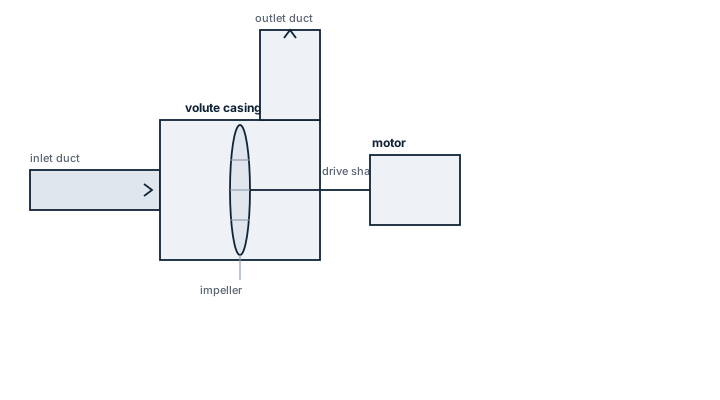
Centrifugal fan side section
Side section of a centrifugal fan showing the axial inlet duct, the impeller inside the volute casing, the tangential outlet duct and the drive shaft running out to the external motor.

Main components

Impeller

Forward-curved, backward-curved or radial blades welded or riveted to a hub. Blade shape decides the fan's pressure-flow curve and how it behaves if the system resistance changes unexpectedly.

Volute casing

A scroll-shaped housing that converts the impeller's kinetic energy into static pressure and directs discharge into the ductwork. Casing gauge and coating are chosen for the air being moved — clean supply air versus greasy galley exhaust versus salt-laden intake.

Drive arrangement

Direct-coupled fans run the impeller straight off the motor shaft; belt-driven fans isolate the motor from the airstream and allow speed changes by pulley swap, useful where the motor cannot be certified for the exhaust atmosphere.

Bearings and shaft seal

Grease-lubricated ball or roller bearings carry the impeller load; a shaft seal keeps contaminated air from tracking along the shaft into the bearing housing.

Selecting the right fan

  • Duty point: required volume flow in m³/h plotted against the system's total static pressure in Pa, not just the fan's free-air rating.
  • Blade type: backward-curved impellers are the most efficient and self-limit motor power as resistance rises; forward-curved units are compact for a given flow but draw more power if ductwork resistance drops; radial blades tolerate dust, grease and fume-laden air without fouling as quickly.
  • Casing material: galvanized or coated steel for general HVAC, stainless or heavily coated steel for galley exhaust and salt-laden intake air.
  • Speed control: fixed speed with balancing dampers, or a variable-frequency drive where the duty varies with occupancy or cargo hold ventilation demand.

Regulations / Class

SOLAS Ch. II-2 governs ventilation serving machinery spaces and galleys: fans must be capable of being stopped from a position outside the space they serve, and galley exhaust fans need accessible grease filters plus a fire damper at the boundary. Class societies require periodic functional testing of these remote stops and of fire dampers during survey, and cargo hold ventilation fans on certain cargo types are covered by class notations for hold atmosphere control.

Typical faults

FaultCauseConsequence
Vibration increaseGrease or salt build-up unbalancing the impellerBearing wear accelerates, mounting bolts work loose
Reduced airflowBelt slip or stretched belt on belt-driven unitsUnder-ventilated space, condensation or heat build-up
Motor overload tripDamper left closed or duct blockage downstreamFan runs against dead head, motor overheats and trips
Casing corrosionCoating breakdown in galley or salt-air exhaust dutyAir leakage past the casing and eventual structural failure

What to look for in a supplier

  • A factory test certificate showing the actual flow/pressure/power curve, not just a catalogue curve.
  • Vibration grade stated against a recognised shipboard rotating-machinery standard.
  • Coating or material specification matched to the intended duty, not a generic finish.
  • Standard bearing sizes that can be sourced from any marine bearing supplier, not a proprietary part.

A fan that has quietly lost ten percent of its flow to a partly fouled impeller rarely trips an alarm — it just lets the space it serves run a little warmer or a little damper until someone notices the real cause months later.

16 manufacturers · 637 models

Novenco Marine & Offshore

176 ✓ 4 verified
Novenco CMA-315 unverified
3000 m³/h · 2.2 kW
Fan Type
centrifugal
Airflow
3000 m³/h
Power (kW)
2.2
Application
marine ventilation
Common Failures & Inspection Points
  • Airflow loss caused by fouled blades, blocked dampers, dirty screens or duct restriction, resulting in poor space ventilation
  • Bearing or motor deterioration caused by wear, inadequate lubrication or overheating, resulting in noise, vibration or high current
  • Impeller imbalance caused by dirt, corrosion or physical damage, resulting in increased vibration and structural noise
  • Flexible-connection or mounting failure caused by vibration and age, resulting in air leakage, transmitted vibration or abnormal movement
  • Control, damper or starter fault caused by actuator, wiring or electrical problems, resulting in inability to start, stop or establish the required airflow direction
Service: Inspect fan blades, casing, bearings, motor, guards, flexible connections, dampers and foundations. Clean accumulated dust, grease or salt that can alter balance or restrict airflow. Trend vibration, motor current and bearing condition where practical and investigate changes from normal operation. Check rotation direction after electrical work and verify remote start, stop and fire-damper interlocks. Inspect weather louvers and ductwork for corrosion, obstruction and water ingress. Refer to the manufacturer documentation for the exact figure for bearing, belt, airflow and motor limits.
Spare Parts: Keep bearings, belts where fitted, flexible connectors, motor or fan components, damper actuators, filters or screens and manufacturer-recommended starter or control parts. Critical machinery-space ventilation may justify a spare motor or impeller assembly. Verify rotation and electrical rating before replacement.
Use Cases: Supply and exhaust ventilation for accommodation, machinery spaces, cargo holds, technical rooms and other shipboard spaces.
Novenco CMA-400 unverified
6000 m³/h · 5.5 kW
Fan Type
centrifugal
Airflow
6000 m³/h
Power (kW)
5.5
Application
marine ventilation
Common Failures & Inspection Points
  • Airflow loss caused by fouled blades, blocked dampers, dirty screens or duct restriction, resulting in poor space ventilation
  • Bearing or motor deterioration caused by wear, inadequate lubrication or overheating, resulting in noise, vibration or high current
  • Impeller imbalance caused by dirt, corrosion or physical damage, resulting in increased vibration and structural noise
  • Flexible-connection or mounting failure caused by vibration and age, resulting in air leakage, transmitted vibration or abnormal movement
  • Control, damper or starter fault caused by actuator, wiring or electrical problems, resulting in inability to start, stop or establish the required airflow direction
Service: Inspect fan blades, casing, bearings, motor, guards, flexible connections, dampers and foundations. Clean accumulated dust, grease or salt that can alter balance or restrict airflow. Trend vibration, motor current and bearing condition where practical and investigate changes from normal operation. Check rotation direction after electrical work and verify remote start, stop and fire-damper interlocks. Inspect weather louvers and ductwork for corrosion, obstruction and water ingress. Refer to the manufacturer documentation for the exact figure for bearing, belt, airflow and motor limits.
Spare Parts: Keep bearings, belts where fitted, flexible connectors, motor or fan components, damper actuators, filters or screens and manufacturer-recommended starter or control parts. Critical machinery-space ventilation may justify a spare motor or impeller assembly. Verify rotation and electrical rating before replacement.
Use Cases: Supply and exhaust ventilation for accommodation, machinery spaces, cargo holds, technical rooms and other shipboard spaces.
Novenco CMA-500 unverified
12000 m³/h · 11.0 kW
Fan Type
centrifugal
Airflow
12000 m³/h
Power (kW)
11
Application
marine ventilation
Common Failures & Inspection Points
  • Airflow loss caused by fouled blades, blocked dampers, dirty screens or duct restriction, resulting in poor space ventilation
  • Bearing or motor deterioration caused by wear, inadequate lubrication or overheating, resulting in noise, vibration or high current
  • Impeller imbalance caused by dirt, corrosion or physical damage, resulting in increased vibration and structural noise
  • Flexible-connection or mounting failure caused by vibration and age, resulting in air leakage, transmitted vibration or abnormal movement
  • Control, damper or starter fault caused by actuator, wiring or electrical problems, resulting in inability to start, stop or establish the required airflow direction
Service: Inspect fan blades, casing, bearings, motor, guards, flexible connections, dampers and foundations. Clean accumulated dust, grease or salt that can alter balance or restrict airflow. Trend vibration, motor current and bearing condition where practical and investigate changes from normal operation. Check rotation direction after electrical work and verify remote start, stop and fire-damper interlocks. Inspect weather louvers and ductwork for corrosion, obstruction and water ingress. Refer to the manufacturer documentation for the exact figure for bearing, belt, airflow and motor limits.
Spare Parts: Keep bearings, belts where fitted, flexible connectors, motor or fan components, damper actuators, filters or screens and manufacturer-recommended starter or control parts. Critical machinery-space ventilation may justify a spare motor or impeller assembly. Verify rotation and electrical rating before replacement.
Use Cases: Supply and exhaust ventilation for accommodation, machinery spaces, cargo holds, technical rooms and other shipboard spaces.
Novenco CMB-560 unverified
8000 m³/h · 7.5 kW
Fan Type
centrifugal
Airflow
8000 m³/h
Power (kW)
7.5
Application
marine ventilation
Common Failures & Inspection Points
  • Airflow loss caused by fouled blades, blocked dampers, dirty screens or duct restriction, resulting in poor space ventilation
  • Bearing or motor deterioration caused by wear, inadequate lubrication or overheating, resulting in noise, vibration or high current
  • Impeller imbalance caused by dirt, corrosion or physical damage, resulting in increased vibration and structural noise
  • Flexible-connection or mounting failure caused by vibration and age, resulting in air leakage, transmitted vibration or abnormal movement
  • Control, damper or starter fault caused by actuator, wiring or electrical problems, resulting in inability to start, stop or establish the required airflow direction
Service: Inspect fan blades, casing, bearings, motor, guards, flexible connections, dampers and foundations. Clean accumulated dust, grease or salt that can alter balance or restrict airflow. Trend vibration, motor current and bearing condition where practical and investigate changes from normal operation. Check rotation direction after electrical work and verify remote start, stop and fire-damper interlocks. Inspect weather louvers and ductwork for corrosion, obstruction and water ingress. Refer to the manufacturer documentation for the exact figure for bearing, belt, airflow and motor limits.
Spare Parts: Keep bearings, belts where fitted, flexible connectors, motor or fan components, damper actuators, filters or screens and manufacturer-recommended starter or control parts. Critical machinery-space ventilation may justify a spare motor or impeller assembly. Verify rotation and electrical rating before replacement.
Use Cases: Supply and exhaust ventilation for accommodation, machinery spaces, cargo holds, technical rooms and other shipboard spaces.
Novenco CMB-710 unverified
18000 m³/h · 15.0 kW
Fan Type
centrifugal
Airflow
18000 m³/h
Power (kW)
15
Application
marine ventilation
Common Failures & Inspection Points
  • Airflow loss caused by fouled blades, blocked dampers, dirty screens or duct restriction, resulting in poor space ventilation
  • Bearing or motor deterioration caused by wear, inadequate lubrication or overheating, resulting in noise, vibration or high current
  • Impeller imbalance caused by dirt, corrosion or physical damage, resulting in increased vibration and structural noise
  • Flexible-connection or mounting failure caused by vibration and age, resulting in air leakage, transmitted vibration or abnormal movement
  • Control, damper or starter fault caused by actuator, wiring or electrical problems, resulting in inability to start, stop or establish the required airflow direction
Service: Inspect fan blades, casing, bearings, motor, guards, flexible connections, dampers and foundations. Clean accumulated dust, grease or salt that can alter balance or restrict airflow. Trend vibration, motor current and bearing condition where practical and investigate changes from normal operation. Check rotation direction after electrical work and verify remote start, stop and fire-damper interlocks. Inspect weather louvers and ductwork for corrosion, obstruction and water ingress. Refer to the manufacturer documentation for the exact figure for bearing, belt, airflow and motor limits.
Spare Parts: Keep bearings, belts where fitted, flexible connectors, motor or fan components, damper actuators, filters or screens and manufacturer-recommended starter or control parts. Critical machinery-space ventilation may justify a spare motor or impeller assembly. Verify rotation and electrical rating before replacement.
Use Cases: Supply and exhaust ventilation for accommodation, machinery spaces, cargo holds, technical rooms and other shipboard spaces.
Novenco CMB-900 unverified
35000 m³/h · 30.0 kW
Fan Type
centrifugal
Airflow
35000 m³/h
Power (kW)
30
Application
marine ventilation
Common Failures & Inspection Points
  • Airflow loss caused by fouled blades, blocked dampers, dirty screens or duct restriction, resulting in poor space ventilation
  • Bearing or motor deterioration caused by wear, inadequate lubrication or overheating, resulting in noise, vibration or high current
  • Impeller imbalance caused by dirt, corrosion or physical damage, resulting in increased vibration and structural noise
  • Flexible-connection or mounting failure caused by vibration and age, resulting in air leakage, transmitted vibration or abnormal movement
  • Control, damper or starter fault caused by actuator, wiring or electrical problems, resulting in inability to start, stop or establish the required airflow direction
Service: Inspect fan blades, casing, bearings, motor, guards, flexible connections, dampers and foundations. Clean accumulated dust, grease or salt that can alter balance or restrict airflow. Trend vibration, motor current and bearing condition where practical and investigate changes from normal operation. Check rotation direction after electrical work and verify remote start, stop and fire-damper interlocks. Inspect weather louvers and ductwork for corrosion, obstruction and water ingress. Refer to the manufacturer documentation for the exact figure for bearing, belt, airflow and motor limits.
Spare Parts: Keep bearings, belts where fitted, flexible connectors, motor or fan components, damper actuators, filters or screens and manufacturer-recommended starter or control parts. Critical machinery-space ventilation may justify a spare motor or impeller assembly. Verify rotation and electrical rating before replacement.
Use Cases: Supply and exhaust ventilation for accommodation, machinery spaces, cargo holds, technical rooms and other shipboard spaces.
ZerAx Centrifugal 500m3h engine room unverified
· 0.2 kW
Air Flow (m³/h)
500
Static Pressure (Pa)
500
Power (kW)
0.2
Fan Type
centrifugal
Zone
engine room
Common Failures & Inspection Points
  • Blade fouling, duct restriction or blocked guards reduce airflow and cause poor ventilation, high motor load or abnormal pressure
  • Bearing wear or lubrication deterioration causes rising vibration, rumbling noise or elevated bearing temperature
  • Impeller imbalance, corrosion or mechanical damage causes vibration and can lead to repeated motor or vibration trips
  • Motor, contactor or power-supply faults cause failure to start, phase-related alarms or unexpected shutdown
  • Loose foundations, flexible connections or damper faults cause structural vibration, air leakage or incorrect airflow distribution
Service: Inspect fan blades or impeller, bearings, guards, flexible connections, foundations, motor, starter and nearby dampers. Check for corrosion, fouling, abnormal vibration and unobstructed intake and discharge paths. Test remote start/stop and emergency functions where the fan is part of a fire or smoke-control system. Refer to the manufacturer documentation for the exact figure for airflow, vibration, bearing and electrical limits.
Spare Parts: Carry bearings or bearing kits where serviceable, motor or starter spares, belts where fitted, flexible-connection material, vibration isolators, fuses and control relays.
Use Cases: Engine-room ventilation, cargo-hold ventilation, accommodation supply and exhaust, and emergency smoke or fire ventilation.
ZerAx Centrifugal 500m3h cargo hold unverified
· 0.2 kW
Air Flow (m³/h)
500
Static Pressure (Pa)
500
Power (kW)
0.2
Fan Type
centrifugal
Zone
cargo hold
Common Failures & Inspection Points
  • Bearing wear from contamination, inadequate lubrication or normal service, typically indicated by increased vibration, rumbling noise or motor overload
  • Impeller fouling, corrosion or imbalance from dirty or corrosive air, typically indicated by reduced airflow, vibration or uneven running
  • Motor or winding fault from overheating, moisture ingress or electrical defects, typically indicated by failure to start, high current or protective trip
  • Damper or inlet restriction from stuck fire dampers, blocked louvers or debris, typically indicated by low airflow, abnormal duct pressure or poor space ventilation
  • Flexible connection or mounting damage from vibration and ageing, typically indicated by air leakage, noise or movement at the fan foundation
Service: Inspect fan rotation, impeller condition, bearings, motor current trends, flexible connections, guards, foundations, dampers and air paths; confirm emergency fans start from the required control positions and that fire closures operate correctly.
Spare Parts: Carry bearings or approved bearing kits, belts where used, motor contactors or protection devices, vibration mounts, flexible connectors and critical actuator components.
Use Cases: Used throughout merchant ships, offshore units, passenger vessels, naval vessels and workboats for machinery, accommodation and emergency ventilation. This entry applies specifically to the Centrifugal Fan variant identified as Novenco Marine ZerAx Centrifugal 500m3h cargo hold.
ZerAx Centrifugal 500m3h accommodation unverified
· 0.2 kW
Air Flow (m³/h)
500
Static Pressure (Pa)
500
Power (kW)
0.2
Fan Type
centrifugal
Zone
accommodation
Common Failures & Inspection Points
  • Blade fouling, duct restriction or blocked guards reduce airflow and cause poor ventilation, high motor load or abnormal pressure
  • Bearing wear or lubrication deterioration causes rising vibration, rumbling noise or elevated bearing temperature
  • Impeller imbalance, corrosion or mechanical damage causes vibration and can lead to repeated motor or vibration trips
  • Motor, contactor or power-supply faults cause failure to start, phase-related alarms or unexpected shutdown
  • Loose foundations, flexible connections or damper faults cause structural vibration, air leakage or incorrect airflow distribution
Service: Inspect fan blades or impeller, bearings, guards, flexible connections, foundations, motor, starter and nearby dampers. Check for corrosion, fouling, abnormal vibration and unobstructed intake and discharge paths. Test remote start/stop and emergency functions where the fan is part of a fire or smoke-control system. Refer to the manufacturer documentation for the exact figure for airflow, vibration, bearing and electrical limits.
Spare Parts: Carry bearings or bearing kits where serviceable, motor or starter spares, belts where fitted, flexible-connection material, vibration isolators, fuses and control relays.
Use Cases: Engine-room ventilation, cargo-hold ventilation, accommodation supply and exhaust, and emergency smoke or fire ventilation.
ZerAx Centrifugal 1000m3h engine room unverified
· 0.5 kW
Air Flow (m³/h)
1000
Static Pressure (Pa)
500
Power (kW)
0.5
Fan Type
centrifugal
Zone
engine room
Common Failures & Inspection Points
  • Blade fouling, duct restriction or blocked guards reduce airflow and cause poor ventilation, high motor load or abnormal pressure
  • Bearing wear or lubrication deterioration causes rising vibration, rumbling noise or elevated bearing temperature
  • Impeller imbalance, corrosion or mechanical damage causes vibration and can lead to repeated motor or vibration trips
  • Motor, contactor or power-supply faults cause failure to start, phase-related alarms or unexpected shutdown
  • Loose foundations, flexible connections or damper faults cause structural vibration, air leakage or incorrect airflow distribution
Service: Inspect fan blades or impeller, bearings, guards, flexible connections, foundations, motor, starter and nearby dampers. Check for corrosion, fouling, abnormal vibration and unobstructed intake and discharge paths. Test remote start/stop and emergency functions where the fan is part of a fire or smoke-control system. Refer to the manufacturer documentation for the exact figure for airflow, vibration, bearing and electrical limits.
Spare Parts: Carry bearings or bearing kits where serviceable, motor or starter spares, belts where fitted, flexible-connection material, vibration isolators, fuses and control relays.
Use Cases: Engine-room ventilation, cargo-hold ventilation, accommodation supply and exhaust, and emergency smoke or fire ventilation.
ZerAx Centrifugal 1000m3h cargo hold unverified
· 0.5 kW
Air Flow (m³/h)
1000
Static Pressure (Pa)
500
Power (kW)
0.5
Fan Type
centrifugal
Zone
cargo hold
Common Failures & Inspection Points
  • Blade fouling, duct restriction or blocked guards reduce airflow and cause poor ventilation, high motor load or abnormal pressure
  • Bearing wear or lubrication deterioration causes rising vibration, rumbling noise or elevated bearing temperature
  • Impeller imbalance, corrosion or mechanical damage causes vibration and can lead to repeated motor or vibration trips
  • Motor, contactor or power-supply faults cause failure to start, phase-related alarms or unexpected shutdown
  • Loose foundations, flexible connections or damper faults cause structural vibration, air leakage or incorrect airflow distribution
Service: Inspect fan blades or impeller, bearings, guards, flexible connections, foundations, motor, starter and nearby dampers. Check for corrosion, fouling, abnormal vibration and unobstructed intake and discharge paths. Test remote start/stop and emergency functions where the fan is part of a fire or smoke-control system. Refer to the manufacturer documentation for the exact figure for airflow, vibration, bearing and electrical limits.
Spare Parts: Carry bearings or bearing kits where serviceable, motor or starter spares, belts where fitted, flexible-connection material, vibration isolators, fuses and control relays.
Use Cases: Engine-room ventilation, cargo-hold ventilation, accommodation supply and exhaust, and emergency smoke or fire ventilation.
ZerAx Centrifugal 1000m3h accommodation unverified
· 0.5 kW
Air Flow (m³/h)
1000
Static Pressure (Pa)
500
Power (kW)
0.5
Fan Type
centrifugal
Zone
accommodation
Common Failures & Inspection Points
  • Blade fouling, duct restriction or blocked guards reduce airflow and cause poor ventilation, high motor load or abnormal pressure
  • Bearing wear or lubrication deterioration causes rising vibration, rumbling noise or elevated bearing temperature
  • Impeller imbalance, corrosion or mechanical damage causes vibration and can lead to repeated motor or vibration trips
  • Motor, contactor or power-supply faults cause failure to start, phase-related alarms or unexpected shutdown
  • Loose foundations, flexible connections or damper faults cause structural vibration, air leakage or incorrect airflow distribution
Service: Inspect fan blades or impeller, bearings, guards, flexible connections, foundations, motor, starter and nearby dampers. Check for corrosion, fouling, abnormal vibration and unobstructed intake and discharge paths. Test remote start/stop and emergency functions where the fan is part of a fire or smoke-control system. Refer to the manufacturer documentation for the exact figure for airflow, vibration, bearing and electrical limits.
Spare Parts: Carry bearings or bearing kits where serviceable, motor or starter spares, belts where fitted, flexible-connection material, vibration isolators, fuses and control relays.
Use Cases: Engine-room ventilation, cargo-hold ventilation, accommodation supply and exhaust, and emergency smoke or fire ventilation.
ZerAx Centrifugal 2000m3h engine room unverified
· 1.0 kW
Air Flow (m³/h)
2000
Static Pressure (Pa)
500
Power (kW)
1.0
Fan Type
centrifugal
Zone
engine room
Common Failures & Inspection Points
  • Blade fouling, duct restriction or blocked guards reduce airflow and cause poor ventilation, high motor load or abnormal pressure
  • Bearing wear or lubrication deterioration causes rising vibration, rumbling noise or elevated bearing temperature
  • Impeller imbalance, corrosion or mechanical damage causes vibration and can lead to repeated motor or vibration trips
  • Motor, contactor or power-supply faults cause failure to start, phase-related alarms or unexpected shutdown
  • Loose foundations, flexible connections or damper faults cause structural vibration, air leakage or incorrect airflow distribution
Service: Inspect fan blades or impeller, bearings, guards, flexible connections, foundations, motor, starter and nearby dampers. Check for corrosion, fouling, abnormal vibration and unobstructed intake and discharge paths. Test remote start/stop and emergency functions where the fan is part of a fire or smoke-control system. Refer to the manufacturer documentation for the exact figure for airflow, vibration, bearing and electrical limits.
Spare Parts: Carry bearings or bearing kits where serviceable, motor or starter spares, belts where fitted, flexible-connection material, vibration isolators, fuses and control relays.
Use Cases: Engine-room ventilation, cargo-hold ventilation, accommodation supply and exhaust, and emergency smoke or fire ventilation.
ZerAx Centrifugal 2000m3h cargo hold unverified
· 1.0 kW
Air Flow (m³/h)
2000
Static Pressure (Pa)
500
Power (kW)
1.0
Fan Type
centrifugal
Zone
cargo hold
Common Failures & Inspection Points
  • Blade fouling, duct restriction or blocked guards reduce airflow and cause poor ventilation, high motor load or abnormal pressure
  • Bearing wear or lubrication deterioration causes rising vibration, rumbling noise or elevated bearing temperature
  • Impeller imbalance, corrosion or mechanical damage causes vibration and can lead to repeated motor or vibration trips
  • Motor, contactor or power-supply faults cause failure to start, phase-related alarms or unexpected shutdown
  • Loose foundations, flexible connections or damper faults cause structural vibration, air leakage or incorrect airflow distribution
Service: Inspect fan blades or impeller, bearings, guards, flexible connections, foundations, motor, starter and nearby dampers. Check for corrosion, fouling, abnormal vibration and unobstructed intake and discharge paths. Test remote start/stop and emergency functions where the fan is part of a fire or smoke-control system. Refer to the manufacturer documentation for the exact figure for airflow, vibration, bearing and electrical limits.
Spare Parts: Carry bearings or bearing kits where serviceable, motor or starter spares, belts where fitted, flexible-connection material, vibration isolators, fuses and control relays.
Use Cases: Engine-room ventilation, cargo-hold ventilation, accommodation supply and exhaust, and emergency smoke or fire ventilation.
ZerAx Centrifugal 2000m3h accommodation unverified
· 1.0 kW
Air Flow (m³/h)
2000
Static Pressure (Pa)
500
Power (kW)
1.0
Fan Type
centrifugal
Zone
accommodation
Common Failures & Inspection Points
  • Blade fouling, duct restriction or blocked guards reduce airflow and cause poor ventilation, high motor load or abnormal pressure
  • Bearing wear or lubrication deterioration causes rising vibration, rumbling noise or elevated bearing temperature
  • Impeller imbalance, corrosion or mechanical damage causes vibration and can lead to repeated motor or vibration trips
  • Motor, contactor or power-supply faults cause failure to start, phase-related alarms or unexpected shutdown
  • Loose foundations, flexible connections or damper faults cause structural vibration, air leakage or incorrect airflow distribution
Service: Inspect fan blades or impeller, bearings, guards, flexible connections, foundations, motor, starter and nearby dampers. Check for corrosion, fouling, abnormal vibration and unobstructed intake and discharge paths. Test remote start/stop and emergency functions where the fan is part of a fire or smoke-control system. Refer to the manufacturer documentation for the exact figure for airflow, vibration, bearing and electrical limits.
Spare Parts: Carry bearings or bearing kits where serviceable, motor or starter spares, belts where fitted, flexible-connection material, vibration isolators, fuses and control relays.
Use Cases: Engine-room ventilation, cargo-hold ventilation, accommodation supply and exhaust, and emergency smoke or fire ventilation.
ZerAx Centrifugal 3000m3h engine room unverified
· 1.5 kW
Air Flow (m³/h)
3000
Static Pressure (Pa)
500
Power (kW)
1.5
Fan Type
centrifugal
Zone
engine room
Common Failures & Inspection Points
  • Blade fouling, duct restriction or blocked guards reduce airflow and cause poor ventilation, high motor load or abnormal pressure
  • Bearing wear or lubrication deterioration causes rising vibration, rumbling noise or elevated bearing temperature
  • Impeller imbalance, corrosion or mechanical damage causes vibration and can lead to repeated motor or vibration trips
  • Motor, contactor or power-supply faults cause failure to start, phase-related alarms or unexpected shutdown
  • Loose foundations, flexible connections or damper faults cause structural vibration, air leakage or incorrect airflow distribution
Service: Inspect fan blades or impeller, bearings, guards, flexible connections, foundations, motor, starter and nearby dampers. Check for corrosion, fouling, abnormal vibration and unobstructed intake and discharge paths. Test remote start/stop and emergency functions where the fan is part of a fire or smoke-control system. Refer to the manufacturer documentation for the exact figure for airflow, vibration, bearing and electrical limits.
Spare Parts: Carry bearings or bearing kits where serviceable, motor or starter spares, belts where fitted, flexible-connection material, vibration isolators, fuses and control relays.
Use Cases: Engine-room ventilation, cargo-hold ventilation, accommodation supply and exhaust, and emergency smoke or fire ventilation.
ZerAx Centrifugal 3000m3h cargo hold unverified
· 1.5 kW
Air Flow (m³/h)
3000
Static Pressure (Pa)
500
Power (kW)
1.5
Fan Type
centrifugal
Zone
cargo hold
Common Failures & Inspection Points
  • Blade fouling, duct restriction or blocked guards reduce airflow and cause poor ventilation, high motor load or abnormal pressure
  • Bearing wear or lubrication deterioration causes rising vibration, rumbling noise or elevated bearing temperature
  • Impeller imbalance, corrosion or mechanical damage causes vibration and can lead to repeated motor or vibration trips
  • Motor, contactor or power-supply faults cause failure to start, phase-related alarms or unexpected shutdown
  • Loose foundations, flexible connections or damper faults cause structural vibration, air leakage or incorrect airflow distribution
Service: Inspect fan blades or impeller, bearings, guards, flexible connections, foundations, motor, starter and nearby dampers. Check for corrosion, fouling, abnormal vibration and unobstructed intake and discharge paths. Test remote start/stop and emergency functions where the fan is part of a fire or smoke-control system. Refer to the manufacturer documentation for the exact figure for airflow, vibration, bearing and electrical limits.
Spare Parts: Carry bearings or bearing kits where serviceable, motor or starter spares, belts where fitted, flexible-connection material, vibration isolators, fuses and control relays.
Use Cases: Engine-room ventilation, cargo-hold ventilation, accommodation supply and exhaust, and emergency smoke or fire ventilation.
ZerAx Centrifugal 3000m3h accommodation unverified
· 1.5 kW
Air Flow (m³/h)
3000
Static Pressure (Pa)
500
Power (kW)
1.5
Fan Type
centrifugal
Zone
accommodation
Common Failures & Inspection Points
  • Blade fouling, duct restriction or blocked guards reduce airflow and cause poor ventilation, high motor load or abnormal pressure
  • Bearing wear or lubrication deterioration causes rising vibration, rumbling noise or elevated bearing temperature
  • Impeller imbalance, corrosion or mechanical damage causes vibration and can lead to repeated motor or vibration trips
  • Motor, contactor or power-supply faults cause failure to start, phase-related alarms or unexpected shutdown
  • Loose foundations, flexible connections or damper faults cause structural vibration, air leakage or incorrect airflow distribution
Service: Inspect fan blades or impeller, bearings, guards, flexible connections, foundations, motor, starter and nearby dampers. Check for corrosion, fouling, abnormal vibration and unobstructed intake and discharge paths. Test remote start/stop and emergency functions where the fan is part of a fire or smoke-control system. Refer to the manufacturer documentation for the exact figure for airflow, vibration, bearing and electrical limits.
Spare Parts: Carry bearings or bearing kits where serviceable, motor or starter spares, belts where fitted, flexible-connection material, vibration isolators, fuses and control relays.
Use Cases: Engine-room ventilation, cargo-hold ventilation, accommodation supply and exhaust, and emergency smoke or fire ventilation.
ZerAx Centrifugal 5000m3h engine room unverified
· 2.5 kW
Air Flow (m³/h)
5000
Static Pressure (Pa)
500
Power (kW)
2.5
Fan Type
centrifugal
Zone
engine room
Common Failures & Inspection Points
  • Blade fouling, duct restriction or blocked guards reduce airflow and cause poor ventilation, high motor load or abnormal pressure
  • Bearing wear or lubrication deterioration causes rising vibration, rumbling noise or elevated bearing temperature
  • Impeller imbalance, corrosion or mechanical damage causes vibration and can lead to repeated motor or vibration trips
  • Motor, contactor or power-supply faults cause failure to start, phase-related alarms or unexpected shutdown
  • Loose foundations, flexible connections or damper faults cause structural vibration, air leakage or incorrect airflow distribution
Service: Inspect fan blades or impeller, bearings, guards, flexible connections, foundations, motor, starter and nearby dampers. Check for corrosion, fouling, abnormal vibration and unobstructed intake and discharge paths. Test remote start/stop and emergency functions where the fan is part of a fire or smoke-control system. Refer to the manufacturer documentation for the exact figure for airflow, vibration, bearing and electrical limits.
Spare Parts: Carry bearings or bearing kits where serviceable, motor or starter spares, belts where fitted, flexible-connection material, vibration isolators, fuses and control relays.
Use Cases: Engine-room ventilation, cargo-hold ventilation, accommodation supply and exhaust, and emergency smoke or fire ventilation.
ZerAx Centrifugal 5000m3h cargo hold unverified
· 2.5 kW
Air Flow (m³/h)
5000
Static Pressure (Pa)
500
Power (kW)
2.5
Fan Type
centrifugal
Zone
cargo hold
Common Failures & Inspection Points
  • Blade fouling, duct restriction or blocked guards reduce airflow and cause poor ventilation, high motor load or abnormal pressure
  • Bearing wear or lubrication deterioration causes rising vibration, rumbling noise or elevated bearing temperature
  • Impeller imbalance, corrosion or mechanical damage causes vibration and can lead to repeated motor or vibration trips
  • Motor, contactor or power-supply faults cause failure to start, phase-related alarms or unexpected shutdown
  • Loose foundations, flexible connections or damper faults cause structural vibration, air leakage or incorrect airflow distribution
Service: Inspect fan blades or impeller, bearings, guards, flexible connections, foundations, motor, starter and nearby dampers. Check for corrosion, fouling, abnormal vibration and unobstructed intake and discharge paths. Test remote start/stop and emergency functions where the fan is part of a fire or smoke-control system. Refer to the manufacturer documentation for the exact figure for airflow, vibration, bearing and electrical limits.
Spare Parts: Carry bearings or bearing kits where serviceable, motor or starter spares, belts where fitted, flexible-connection material, vibration isolators, fuses and control relays.
Use Cases: Engine-room ventilation, cargo-hold ventilation, accommodation supply and exhaust, and emergency smoke or fire ventilation.
ZerAx Centrifugal 5000m3h accommodation unverified
· 2.5 kW
Air Flow (m³/h)
5000
Static Pressure (Pa)
500
Power (kW)
2.5
Fan Type
centrifugal
Zone
accommodation
Common Failures & Inspection Points
  • Blade fouling, duct restriction or blocked guards reduce airflow and cause poor ventilation, high motor load or abnormal pressure
  • Bearing wear or lubrication deterioration causes rising vibration, rumbling noise or elevated bearing temperature
  • Impeller imbalance, corrosion or mechanical damage causes vibration and can lead to repeated motor or vibration trips
  • Motor, contactor or power-supply faults cause failure to start, phase-related alarms or unexpected shutdown
  • Loose foundations, flexible connections or damper faults cause structural vibration, air leakage or incorrect airflow distribution
Service: Inspect fan blades or impeller, bearings, guards, flexible connections, foundations, motor, starter and nearby dampers. Check for corrosion, fouling, abnormal vibration and unobstructed intake and discharge paths. Test remote start/stop and emergency functions where the fan is part of a fire or smoke-control system. Refer to the manufacturer documentation for the exact figure for airflow, vibration, bearing and electrical limits.
Spare Parts: Carry bearings or bearing kits where serviceable, motor or starter spares, belts where fitted, flexible-connection material, vibration isolators, fuses and control relays.
Use Cases: Engine-room ventilation, cargo-hold ventilation, accommodation supply and exhaust, and emergency smoke or fire ventilation.
ZerAx Centrifugal 8000m3h engine room unverified
· 4.0 kW
Air Flow (m³/h)
8000
Static Pressure (Pa)
500
Power (kW)
4.0
Fan Type
centrifugal
Zone
engine room
Common Failures & Inspection Points
  • Blade fouling, duct restriction or blocked guards reduce airflow and cause poor ventilation, high motor load or abnormal pressure
  • Bearing wear or lubrication deterioration causes rising vibration, rumbling noise or elevated bearing temperature
  • Impeller imbalance, corrosion or mechanical damage causes vibration and can lead to repeated motor or vibration trips
  • Motor, contactor or power-supply faults cause failure to start, phase-related alarms or unexpected shutdown
  • Loose foundations, flexible connections or damper faults cause structural vibration, air leakage or incorrect airflow distribution
Service: Inspect fan blades or impeller, bearings, guards, flexible connections, foundations, motor, starter and nearby dampers. Check for corrosion, fouling, abnormal vibration and unobstructed intake and discharge paths. Test remote start/stop and emergency functions where the fan is part of a fire or smoke-control system. Refer to the manufacturer documentation for the exact figure for airflow, vibration, bearing and electrical limits.
Spare Parts: Carry bearings or bearing kits where serviceable, motor or starter spares, belts where fitted, flexible-connection material, vibration isolators, fuses and control relays.
Use Cases: Engine-room ventilation, cargo-hold ventilation, accommodation supply and exhaust, and emergency smoke or fire ventilation.
ZerAx Centrifugal 8000m3h cargo hold unverified
· 4.0 kW
Air Flow (m³/h)
8000
Static Pressure (Pa)
500
Power (kW)
4.0
Fan Type
centrifugal
Zone
cargo hold
Common Failures & Inspection Points
  • Blade fouling, duct restriction or blocked guards reduce airflow and cause poor ventilation, high motor load or abnormal pressure
  • Bearing wear or lubrication deterioration causes rising vibration, rumbling noise or elevated bearing temperature
  • Impeller imbalance, corrosion or mechanical damage causes vibration and can lead to repeated motor or vibration trips
  • Motor, contactor or power-supply faults cause failure to start, phase-related alarms or unexpected shutdown
  • Loose foundations, flexible connections or damper faults cause structural vibration, air leakage or incorrect airflow distribution
Service: Inspect fan blades or impeller, bearings, guards, flexible connections, foundations, motor, starter and nearby dampers. Check for corrosion, fouling, abnormal vibration and unobstructed intake and discharge paths. Test remote start/stop and emergency functions where the fan is part of a fire or smoke-control system. Refer to the manufacturer documentation for the exact figure for airflow, vibration, bearing and electrical limits.
Spare Parts: Carry bearings or bearing kits where serviceable, motor or starter spares, belts where fitted, flexible-connection material, vibration isolators, fuses and control relays.
Use Cases: Engine-room ventilation, cargo-hold ventilation, accommodation supply and exhaust, and emergency smoke or fire ventilation.
ZerAx Centrifugal 8000m3h accommodation unverified
· 4.0 kW
Air Flow (m³/h)
8000
Static Pressure (Pa)
500
Power (kW)
4.0
Fan Type
centrifugal
Zone
accommodation
Common Failures & Inspection Points
  • Blade fouling, duct restriction or blocked guards reduce airflow and cause poor ventilation, high motor load or abnormal pressure
  • Bearing wear or lubrication deterioration causes rising vibration, rumbling noise or elevated bearing temperature
  • Impeller imbalance, corrosion or mechanical damage causes vibration and can lead to repeated motor or vibration trips
  • Motor, contactor or power-supply faults cause failure to start, phase-related alarms or unexpected shutdown
  • Loose foundations, flexible connections or damper faults cause structural vibration, air leakage or incorrect airflow distribution
Service: Inspect fan blades or impeller, bearings, guards, flexible connections, foundations, motor, starter and nearby dampers. Check for corrosion, fouling, abnormal vibration and unobstructed intake and discharge paths. Test remote start/stop and emergency functions where the fan is part of a fire or smoke-control system. Refer to the manufacturer documentation for the exact figure for airflow, vibration, bearing and electrical limits.
Spare Parts: Carry bearings or bearing kits where serviceable, motor or starter spares, belts where fitted, flexible-connection material, vibration isolators, fuses and control relays.
Use Cases: Engine-room ventilation, cargo-hold ventilation, accommodation supply and exhaust, and emergency smoke or fire ventilation.
ZerAx Centrifugal 10000m3h engine room unverified
· 3.0 kW
Air Flow (m³/h)
10000
Static Pressure (Pa)
500
Power (kW)
3.0
Fan Type
centrifugal
Zone
engine room
Common Failures & Inspection Points
  • Blade fouling, duct restriction or blocked guards reduce airflow and cause poor ventilation, high motor load or abnormal pressure
  • Bearing wear or lubrication deterioration causes rising vibration, rumbling noise or elevated bearing temperature
  • Impeller imbalance, corrosion or mechanical damage causes vibration and can lead to repeated motor or vibration trips
  • Motor, contactor or power-supply faults cause failure to start, phase-related alarms or unexpected shutdown
  • Loose foundations, flexible connections or damper faults cause structural vibration, air leakage or incorrect airflow distribution
Service: Inspect fan blades or impeller, bearings, guards, flexible connections, foundations, motor, starter and nearby dampers. Check for corrosion, fouling, abnormal vibration and unobstructed intake and discharge paths. Test remote start/stop and emergency functions where the fan is part of a fire or smoke-control system. Refer to the manufacturer documentation for the exact figure for airflow, vibration, bearing and electrical limits.
Spare Parts: Carry bearings or bearing kits where serviceable, motor or starter spares, belts where fitted, flexible-connection material, vibration isolators, fuses and control relays.
Use Cases: Engine-room ventilation, cargo-hold ventilation, accommodation supply and exhaust, and emergency smoke or fire ventilation.
ZerAx Centrifugal 10000m3h cargo hold unverified
· 3.0 kW
Air Flow (m³/h)
10000
Static Pressure (Pa)
500
Power (kW)
3.0
Fan Type
centrifugal
Zone
cargo hold
Common Failures & Inspection Points
  • Blade fouling, duct restriction or blocked guards reduce airflow and cause poor ventilation, high motor load or abnormal pressure
  • Bearing wear or lubrication deterioration causes rising vibration, rumbling noise or elevated bearing temperature
  • Impeller imbalance, corrosion or mechanical damage causes vibration and can lead to repeated motor or vibration trips
  • Motor, contactor or power-supply faults cause failure to start, phase-related alarms or unexpected shutdown
  • Loose foundations, flexible connections or damper faults cause structural vibration, air leakage or incorrect airflow distribution
Service: Inspect fan blades or impeller, bearings, guards, flexible connections, foundations, motor, starter and nearby dampers. Check for corrosion, fouling, abnormal vibration and unobstructed intake and discharge paths. Test remote start/stop and emergency functions where the fan is part of a fire or smoke-control system. Refer to the manufacturer documentation for the exact figure for airflow, vibration, bearing and electrical limits.
Spare Parts: Carry bearings or bearing kits where serviceable, motor or starter spares, belts where fitted, flexible-connection material, vibration isolators, fuses and control relays.
Use Cases: Engine-room ventilation, cargo-hold ventilation, accommodation supply and exhaust, and emergency smoke or fire ventilation.
ZerAx Centrifugal 10000m3h accommodation unverified
· 3.0 kW
Air Flow (m³/h)
10000
Static Pressure (Pa)
500
Power (kW)
3.0
Fan Type
centrifugal
Zone
accommodation
Common Failures & Inspection Points
  • Airflow loss caused by fouled blades, blocked dampers, dirty screens or duct restriction, resulting in poor space ventilation
  • Bearing or motor deterioration caused by wear, inadequate lubrication or overheating, resulting in noise, vibration or high current
  • Impeller imbalance caused by dirt, corrosion or physical damage, resulting in increased vibration and structural noise
  • Flexible-connection or mounting failure caused by vibration and age, resulting in air leakage, transmitted vibration or abnormal movement
  • Control, damper or starter fault caused by actuator, wiring or electrical problems, resulting in inability to start, stop or establish the required airflow direction
Service: Inspect fan blades, casing, bearings, motor, guards, flexible connections, dampers and foundations. Clean accumulated dust, grease or salt that can alter balance or restrict airflow. Trend vibration, motor current and bearing condition where practical and investigate changes from normal operation. Check rotation direction after electrical work and verify remote start, stop and fire-damper interlocks. Inspect weather louvers and ductwork for corrosion, obstruction and water ingress. Refer to the manufacturer documentation for the exact figure for bearing, belt, airflow and motor limits.
Spare Parts: Keep bearings, belts where fitted, flexible connectors, motor or fan components, damper actuators, filters or screens and manufacturer-recommended starter or control parts. Critical machinery-space ventilation may justify a spare motor or impeller assembly. Verify rotation and electrical rating before replacement.
Use Cases: Supply and exhaust ventilation for accommodation, machinery spaces, cargo holds, technical rooms and other shipboard spaces.
ZerAx Centrifugal 15000m3h engine room unverified
· 4.5 kW
Air Flow (m³/h)
15000
Static Pressure (Pa)
500
Power (kW)
4.5
Fan Type
centrifugal
Zone
engine room
Common Failures & Inspection Points
  • Blade fouling, duct restriction or blocked guards reduce airflow and cause poor ventilation, high motor load or abnormal pressure
  • Bearing wear or lubrication deterioration causes rising vibration, rumbling noise or elevated bearing temperature
  • Impeller imbalance, corrosion or mechanical damage causes vibration and can lead to repeated motor or vibration trips
  • Motor, contactor or power-supply faults cause failure to start, phase-related alarms or unexpected shutdown
  • Loose foundations, flexible connections or damper faults cause structural vibration, air leakage or incorrect airflow distribution
Service: Inspect fan blades or impeller, bearings, guards, flexible connections, foundations, motor, starter and nearby dampers. Check for corrosion, fouling, abnormal vibration and unobstructed intake and discharge paths. Test remote start/stop and emergency functions where the fan is part of a fire or smoke-control system. Refer to the manufacturer documentation for the exact figure for airflow, vibration, bearing and electrical limits.
Spare Parts: Carry bearings or bearing kits where serviceable, motor or starter spares, belts where fitted, flexible-connection material, vibration isolators, fuses and control relays.
Use Cases: Engine-room ventilation, cargo-hold ventilation, accommodation supply and exhaust, and emergency smoke or fire ventilation.
ZerAx Centrifugal 15000m3h cargo hold unverified
· 4.5 kW
Air Flow (m³/h)
15000
Static Pressure (Pa)
500
Power (kW)
4.5
Fan Type
centrifugal
Zone
cargo hold
Common Failures & Inspection Points
  • Blade fouling, duct restriction or blocked guards reduce airflow and cause poor ventilation, high motor load or abnormal pressure
  • Bearing wear or lubrication deterioration causes rising vibration, rumbling noise or elevated bearing temperature
  • Impeller imbalance, corrosion or mechanical damage causes vibration and can lead to repeated motor or vibration trips
  • Motor, contactor or power-supply faults cause failure to start, phase-related alarms or unexpected shutdown
  • Loose foundations, flexible connections or damper faults cause structural vibration, air leakage or incorrect airflow distribution
Service: Inspect fan blades or impeller, bearings, guards, flexible connections, foundations, motor, starter and nearby dampers. Check for corrosion, fouling, abnormal vibration and unobstructed intake and discharge paths. Test remote start/stop and emergency functions where the fan is part of a fire or smoke-control system. Refer to the manufacturer documentation for the exact figure for airflow, vibration, bearing and electrical limits.
Spare Parts: Carry bearings or bearing kits where serviceable, motor or starter spares, belts where fitted, flexible-connection material, vibration isolators, fuses and control relays.
Use Cases: Engine-room ventilation, cargo-hold ventilation, accommodation supply and exhaust, and emergency smoke or fire ventilation.
ZerAx Centrifugal 15000m3h accommodation unverified
· 4.5 kW
Air Flow (m³/h)
15000
Static Pressure (Pa)
500
Power (kW)
4.5
Fan Type
centrifugal
Zone
accommodation
Common Failures & Inspection Points
  • Airflow loss caused by fouled blades, blocked dampers, dirty screens or duct restriction, resulting in poor space ventilation
  • Bearing or motor deterioration caused by wear, inadequate lubrication or overheating, resulting in noise, vibration or high current
  • Impeller imbalance caused by dirt, corrosion or physical damage, resulting in increased vibration and structural noise
  • Flexible-connection or mounting failure caused by vibration and age, resulting in air leakage, transmitted vibration or abnormal movement
  • Control, damper or starter fault caused by actuator, wiring or electrical problems, resulting in inability to start, stop or establish the required airflow direction
Service: Inspect fan blades, casing, bearings, motor, guards, flexible connections, dampers and foundations. Clean accumulated dust, grease or salt that can alter balance or restrict airflow. Trend vibration, motor current and bearing condition where practical and investigate changes from normal operation. Check rotation direction after electrical work and verify remote start, stop and fire-damper interlocks. Inspect weather louvers and ductwork for corrosion, obstruction and water ingress. Refer to the manufacturer documentation for the exact figure for bearing, belt, airflow and motor limits.
Spare Parts: Keep bearings, belts where fitted, flexible connectors, motor or fan components, damper actuators, filters or screens and manufacturer-recommended starter or control parts. Critical machinery-space ventilation may justify a spare motor or impeller assembly. Verify rotation and electrical rating before replacement.
Use Cases: Supply and exhaust ventilation for accommodation, machinery spaces, cargo holds, technical rooms and other shipboard spaces.
ZerAx Centrifugal 20000m3h engine room unverified
· 6.0 kW
Air Flow (m³/h)
20000
Static Pressure (Pa)
500
Power (kW)
6.0
Fan Type
centrifugal
Zone
engine room
Common Failures & Inspection Points
  • Blade fouling, duct restriction or blocked guards reduce airflow and cause poor ventilation, high motor load or abnormal pressure
  • Bearing wear or lubrication deterioration causes rising vibration, rumbling noise or elevated bearing temperature
  • Impeller imbalance, corrosion or mechanical damage causes vibration and can lead to repeated motor or vibration trips
  • Motor, contactor or power-supply faults cause failure to start, phase-related alarms or unexpected shutdown
  • Loose foundations, flexible connections or damper faults cause structural vibration, air leakage or incorrect airflow distribution
Service: Inspect fan blades or impeller, bearings, guards, flexible connections, foundations, motor, starter and nearby dampers. Check for corrosion, fouling, abnormal vibration and unobstructed intake and discharge paths. Test remote start/stop and emergency functions where the fan is part of a fire or smoke-control system. Refer to the manufacturer documentation for the exact figure for airflow, vibration, bearing and electrical limits.
Spare Parts: Carry bearings or bearing kits where serviceable, motor or starter spares, belts where fitted, flexible-connection material, vibration isolators, fuses and control relays.
Use Cases: Engine-room ventilation, cargo-hold ventilation, accommodation supply and exhaust, and emergency smoke or fire ventilation.
ZerAx Centrifugal 20000m3h cargo hold unverified
· 6.0 kW
Air Flow (m³/h)
20000
Static Pressure (Pa)
500
Power (kW)
6.0
Fan Type
centrifugal
Zone
cargo hold
Common Failures & Inspection Points
  • Blade fouling, duct restriction or blocked guards reduce airflow and cause poor ventilation, high motor load or abnormal pressure
  • Bearing wear or lubrication deterioration causes rising vibration, rumbling noise or elevated bearing temperature
  • Impeller imbalance, corrosion or mechanical damage causes vibration and can lead to repeated motor or vibration trips
  • Motor, contactor or power-supply faults cause failure to start, phase-related alarms or unexpected shutdown
  • Loose foundations, flexible connections or damper faults cause structural vibration, air leakage or incorrect airflow distribution
Service: Inspect fan blades or impeller, bearings, guards, flexible connections, foundations, motor, starter and nearby dampers. Check for corrosion, fouling, abnormal vibration and unobstructed intake and discharge paths. Test remote start/stop and emergency functions where the fan is part of a fire or smoke-control system. Refer to the manufacturer documentation for the exact figure for airflow, vibration, bearing and electrical limits.
Spare Parts: Carry bearings or bearing kits where serviceable, motor or starter spares, belts where fitted, flexible-connection material, vibration isolators, fuses and control relays.
Use Cases: Engine-room ventilation, cargo-hold ventilation, accommodation supply and exhaust, and emergency smoke or fire ventilation.
ZerAx Centrifugal 20000m3h accommodation unverified
· 6.0 kW
Air Flow (m³/h)
20000
Static Pressure (Pa)
500
Power (kW)
6.0
Fan Type
centrifugal
Zone
accommodation
Common Failures & Inspection Points
  • Airflow loss caused by fouled blades, blocked dampers, dirty screens or duct restriction, resulting in poor space ventilation
  • Bearing or motor deterioration caused by wear, inadequate lubrication or overheating, resulting in noise, vibration or high current
  • Impeller imbalance caused by dirt, corrosion or physical damage, resulting in increased vibration and structural noise
  • Flexible-connection or mounting failure caused by vibration and age, resulting in air leakage, transmitted vibration or abnormal movement
  • Control, damper or starter fault caused by actuator, wiring or electrical problems, resulting in inability to start, stop or establish the required airflow direction
Service: Inspect fan blades, casing, bearings, motor, guards, flexible connections, dampers and foundations. Clean accumulated dust, grease or salt that can alter balance or restrict airflow. Trend vibration, motor current and bearing condition where practical and investigate changes from normal operation. Check rotation direction after electrical work and verify remote start, stop and fire-damper interlocks. Inspect weather louvers and ductwork for corrosion, obstruction and water ingress. Refer to the manufacturer documentation for the exact figure for bearing, belt, airflow and motor limits.
Spare Parts: Keep bearings, belts where fitted, flexible connectors, motor or fan components, damper actuators, filters or screens and manufacturer-recommended starter or control parts. Critical machinery-space ventilation may justify a spare motor or impeller assembly. Verify rotation and electrical rating before replacement.
Use Cases: Supply and exhaust ventilation for accommodation, machinery spaces, cargo holds, technical rooms and other shipboard spaces.
ZerAx Centrifugal 30000m3h engine room unverified
· 9.0 kW
Air Flow (m³/h)
30000
Static Pressure (Pa)
500
Power (kW)
9.0
Fan Type
centrifugal
Zone
engine room
Common Failures & Inspection Points
  • Blade fouling, duct restriction or blocked guards reduce airflow and cause poor ventilation, high motor load or abnormal pressure
  • Bearing wear or lubrication deterioration causes rising vibration, rumbling noise or elevated bearing temperature
  • Impeller imbalance, corrosion or mechanical damage causes vibration and can lead to repeated motor or vibration trips
  • Motor, contactor or power-supply faults cause failure to start, phase-related alarms or unexpected shutdown
  • Loose foundations, flexible connections or damper faults cause structural vibration, air leakage or incorrect airflow distribution
Service: Inspect fan blades or impeller, bearings, guards, flexible connections, foundations, motor, starter and nearby dampers. Check for corrosion, fouling, abnormal vibration and unobstructed intake and discharge paths. Test remote start/stop and emergency functions where the fan is part of a fire or smoke-control system. Refer to the manufacturer documentation for the exact figure for airflow, vibration, bearing and electrical limits.
Spare Parts: Carry bearings or bearing kits where serviceable, motor or starter spares, belts where fitted, flexible-connection material, vibration isolators, fuses and control relays.
Use Cases: Engine-room ventilation, cargo-hold ventilation, accommodation supply and exhaust, and emergency smoke or fire ventilation.
ZerAx Centrifugal 30000m3h cargo hold unverified
· 9.0 kW
Air Flow (m³/h)
30000
Static Pressure (Pa)
500
Power (kW)
9.0
Fan Type
centrifugal
Zone
cargo hold
Common Failures & Inspection Points
  • Blade fouling, duct restriction or blocked guards reduce airflow and cause poor ventilation, high motor load or abnormal pressure
  • Bearing wear or lubrication deterioration causes rising vibration, rumbling noise or elevated bearing temperature
  • Impeller imbalance, corrosion or mechanical damage causes vibration and can lead to repeated motor or vibration trips
  • Motor, contactor or power-supply faults cause failure to start, phase-related alarms or unexpected shutdown
  • Loose foundations, flexible connections or damper faults cause structural vibration, air leakage or incorrect airflow distribution
Service: Inspect fan blades or impeller, bearings, guards, flexible connections, foundations, motor, starter and nearby dampers. Check for corrosion, fouling, abnormal vibration and unobstructed intake and discharge paths. Test remote start/stop and emergency functions where the fan is part of a fire or smoke-control system. Refer to the manufacturer documentation for the exact figure for airflow, vibration, bearing and electrical limits.
Spare Parts: Carry bearings or bearing kits where serviceable, motor or starter spares, belts where fitted, flexible-connection material, vibration isolators, fuses and control relays.
Use Cases: Engine-room ventilation, cargo-hold ventilation, accommodation supply and exhaust, and emergency smoke or fire ventilation.
ZerAx Centrifugal 30000m3h accommodation unverified
· 9.0 kW
Air Flow (m³/h)
30000
Static Pressure (Pa)
500
Power (kW)
9.0
Fan Type
centrifugal
Zone
accommodation
Common Failures & Inspection Points
  • Airflow loss caused by fouled blades, blocked dampers, dirty screens or duct restriction, resulting in poor space ventilation
  • Bearing or motor deterioration caused by wear, inadequate lubrication or overheating, resulting in noise, vibration or high current
  • Impeller imbalance caused by dirt, corrosion or physical damage, resulting in increased vibration and structural noise
  • Flexible-connection or mounting failure caused by vibration and age, resulting in air leakage, transmitted vibration or abnormal movement
  • Control, damper or starter fault caused by actuator, wiring or electrical problems, resulting in inability to start, stop or establish the required airflow direction
Service: Inspect fan blades, casing, bearings, motor, guards, flexible connections, dampers and foundations. Clean accumulated dust, grease or salt that can alter balance or restrict airflow. Trend vibration, motor current and bearing condition where practical and investigate changes from normal operation. Check rotation direction after electrical work and verify remote start, stop and fire-damper interlocks. Inspect weather louvers and ductwork for corrosion, obstruction and water ingress. Refer to the manufacturer documentation for the exact figure for bearing, belt, airflow and motor limits.
Spare Parts: Keep bearings, belts where fitted, flexible connectors, motor or fan components, damper actuators, filters or screens and manufacturer-recommended starter or control parts. Critical machinery-space ventilation may justify a spare motor or impeller assembly. Verify rotation and electrical rating before replacement.
Use Cases: Supply and exhaust ventilation for accommodation, machinery spaces, cargo holds, technical rooms and other shipboard spaces.
ZerAx Centrifugal 50000m3h engine room unverified
· 15.0 kW
Air Flow (m³/h)
50000
Static Pressure (Pa)
500
Power (kW)
15.0
Fan Type
centrifugal
Zone
engine room
Common Failures & Inspection Points
  • Blade fouling, duct restriction or blocked guards reduce airflow and cause poor ventilation, high motor load or abnormal pressure
  • Bearing wear or lubrication deterioration causes rising vibration, rumbling noise or elevated bearing temperature
  • Impeller imbalance, corrosion or mechanical damage causes vibration and can lead to repeated motor or vibration trips
  • Motor, contactor or power-supply faults cause failure to start, phase-related alarms or unexpected shutdown
  • Loose foundations, flexible connections or damper faults cause structural vibration, air leakage or incorrect airflow distribution
Service: Inspect fan blades or impeller, bearings, guards, flexible connections, foundations, motor, starter and nearby dampers. Check for corrosion, fouling, abnormal vibration and unobstructed intake and discharge paths. Test remote start/stop and emergency functions where the fan is part of a fire or smoke-control system. Refer to the manufacturer documentation for the exact figure for airflow, vibration, bearing and electrical limits.
Spare Parts: Carry bearings or bearing kits where serviceable, motor or starter spares, belts where fitted, flexible-connection material, vibration isolators, fuses and control relays.
Use Cases: Engine-room ventilation, cargo-hold ventilation, accommodation supply and exhaust, and emergency smoke or fire ventilation.
ZerAx Centrifugal 50000m3h cargo hold unverified
· 15.0 kW
Air Flow (m³/h)
50000
Static Pressure (Pa)
500
Power (kW)
15.0
Fan Type
centrifugal
Zone
cargo hold
Common Failures & Inspection Points
  • Blade fouling, duct restriction or blocked guards reduce airflow and cause poor ventilation, high motor load or abnormal pressure
  • Bearing wear or lubrication deterioration causes rising vibration, rumbling noise or elevated bearing temperature
  • Impeller imbalance, corrosion or mechanical damage causes vibration and can lead to repeated motor or vibration trips
  • Motor, contactor or power-supply faults cause failure to start, phase-related alarms or unexpected shutdown
  • Loose foundations, flexible connections or damper faults cause structural vibration, air leakage or incorrect airflow distribution
Service: Inspect fan blades or impeller, bearings, guards, flexible connections, foundations, motor, starter and nearby dampers. Check for corrosion, fouling, abnormal vibration and unobstructed intake and discharge paths. Test remote start/stop and emergency functions where the fan is part of a fire or smoke-control system. Refer to the manufacturer documentation for the exact figure for airflow, vibration, bearing and electrical limits.
Spare Parts: Carry bearings or bearing kits where serviceable, motor or starter spares, belts where fitted, flexible-connection material, vibration isolators, fuses and control relays.
Use Cases: Engine-room ventilation, cargo-hold ventilation, accommodation supply and exhaust, and emergency smoke or fire ventilation.
ZerAx Centrifugal 50000m3h accommodation unverified
· 15.0 kW
Air Flow (m³/h)
50000
Static Pressure (Pa)
500
Power (kW)
15.0
Fan Type
centrifugal
Zone
accommodation
Common Failures & Inspection Points
  • Airflow loss caused by fouled blades, blocked dampers, dirty screens or duct restriction, resulting in poor space ventilation
  • Bearing or motor deterioration caused by wear, inadequate lubrication or overheating, resulting in noise, vibration or high current
  • Impeller imbalance caused by dirt, corrosion or physical damage, resulting in increased vibration and structural noise
  • Flexible-connection or mounting failure caused by vibration and age, resulting in air leakage, transmitted vibration or abnormal movement
  • Control, damper or starter fault caused by actuator, wiring or electrical problems, resulting in inability to start, stop or establish the required airflow direction
Service: Inspect fan blades, casing, bearings, motor, guards, flexible connections, dampers and foundations. Clean accumulated dust, grease or salt that can alter balance or restrict airflow. Trend vibration, motor current and bearing condition where practical and investigate changes from normal operation. Check rotation direction after electrical work and verify remote start, stop and fire-damper interlocks. Inspect weather louvers and ductwork for corrosion, obstruction and water ingress. Refer to the manufacturer documentation for the exact figure for bearing, belt, airflow and motor limits.
Spare Parts: Keep bearings, belts where fitted, flexible connectors, motor or fan components, damper actuators, filters or screens and manufacturer-recommended starter or control parts. Critical machinery-space ventilation may justify a spare motor or impeller assembly. Verify rotation and electrical rating before replacement.
Use Cases: Supply and exhaust ventilation for accommodation, machinery spaces, cargo holds, technical rooms and other shipboard spaces.
CAP Centrifugal 500m3h engine room unverified
· 0.2 kW
Air Flow (m³/h)
500
Static Pressure (Pa)
500
Power (kW)
0.2
Fan Type
centrifugal
Zone
engine room
Common Failures & Inspection Points
  • Bearing wear from contamination, inadequate lubrication or normal service, typically indicated by increased vibration, rumbling noise or motor overload
  • Impeller fouling, corrosion or imbalance from dirty or corrosive air, typically indicated by reduced airflow, vibration or uneven running
  • Motor or winding fault from overheating, moisture ingress or electrical defects, typically indicated by failure to start, high current or protective trip
  • Damper or inlet restriction from stuck fire dampers, blocked louvers or debris, typically indicated by low airflow, abnormal duct pressure or poor space ventilation
  • Flexible connection or mounting damage from vibration and ageing, typically indicated by air leakage, noise or movement at the fan foundation
Service: Inspect fan rotation, impeller condition, bearings, motor current trends, flexible connections, guards, foundations, dampers and air paths; confirm emergency fans start from the required control positions and that fire closures operate correctly.
Spare Parts: Carry bearings or approved bearing kits, belts where used, motor contactors or protection devices, vibration mounts, flexible connectors and critical actuator components.
Use Cases: Used throughout merchant ships, offshore units, passenger vessels, naval vessels and workboats for machinery, accommodation and emergency ventilation. This entry applies specifically to the Centrifugal Fan variant identified as Novenco Marine CAP Centrifugal 500m3h engine room.
CAP Centrifugal 500m3h cargo hold unverified
· 0.2 kW
Air Flow (m³/h)
500
Static Pressure (Pa)
500
Power (kW)
0.2
Fan Type
centrifugal
Zone
cargo hold
Common Failures & Inspection Points
  • Bearing wear from contamination, inadequate lubrication or normal service, typically indicated by increased vibration, rumbling noise or motor overload
  • Impeller fouling, corrosion or imbalance from dirty or corrosive air, typically indicated by reduced airflow, vibration or uneven running
  • Motor or winding fault from overheating, moisture ingress or electrical defects, typically indicated by failure to start, high current or protective trip
  • Damper or inlet restriction from stuck fire dampers, blocked louvers or debris, typically indicated by low airflow, abnormal duct pressure or poor space ventilation
  • Flexible connection or mounting damage from vibration and ageing, typically indicated by air leakage, noise or movement at the fan foundation
Service: Inspect fan rotation, impeller condition, bearings, motor current trends, flexible connections, guards, foundations, dampers and air paths; confirm emergency fans start from the required control positions and that fire closures operate correctly.
Spare Parts: Carry bearings or approved bearing kits, belts where used, motor contactors or protection devices, vibration mounts, flexible connectors and critical actuator components.
Use Cases: Used throughout merchant ships, offshore units, passenger vessels, naval vessels and workboats for machinery, accommodation and emergency ventilation. This entry applies specifically to the Centrifugal Fan variant identified as Novenco Marine CAP Centrifugal 500m3h cargo hold.
CAP Centrifugal 500m3h accommodation unverified
· 0.2 kW
Air Flow (m³/h)
500
Static Pressure (Pa)
500
Power (kW)
0.2
Fan Type
centrifugal
Zone
accommodation
Common Failures & Inspection Points
  • Blade fouling, duct restriction or blocked guards reduce airflow and cause poor ventilation, high motor load or abnormal pressure
  • Bearing wear or lubrication deterioration causes rising vibration, rumbling noise or elevated bearing temperature
  • Impeller imbalance, corrosion or mechanical damage causes vibration and can lead to repeated motor or vibration trips
  • Motor, contactor or power-supply faults cause failure to start, phase-related alarms or unexpected shutdown
  • Loose foundations, flexible connections or damper faults cause structural vibration, air leakage or incorrect airflow distribution
Service: Inspect fan blades or impeller, bearings, guards, flexible connections, foundations, motor, starter and nearby dampers. Check for corrosion, fouling, abnormal vibration and unobstructed intake and discharge paths. Test remote start/stop and emergency functions where the fan is part of a fire or smoke-control system. Refer to the manufacturer documentation for the exact figure for airflow, vibration, bearing and electrical limits.
Spare Parts: Carry bearings or bearing kits where serviceable, motor or starter spares, belts where fitted, flexible-connection material, vibration isolators, fuses and control relays.
Use Cases: Engine-room ventilation, cargo-hold ventilation, accommodation supply and exhaust, and emergency smoke or fire ventilation.
CAP Centrifugal 1000m3h engine room unverified
· 0.5 kW
Air Flow (m³/h)
1000
Static Pressure (Pa)
500
Power (kW)
0.5
Fan Type
centrifugal
Zone
engine room
Common Failures & Inspection Points
  • Bearing wear from contamination, inadequate lubrication or normal service, typically indicated by increased vibration, rumbling noise or motor overload
  • Impeller fouling, corrosion or imbalance from dirty or corrosive air, typically indicated by reduced airflow, vibration or uneven running
  • Motor or winding fault from overheating, moisture ingress or electrical defects, typically indicated by failure to start, high current or protective trip
  • Damper or inlet restriction from stuck fire dampers, blocked louvers or debris, typically indicated by low airflow, abnormal duct pressure or poor space ventilation
  • Flexible connection or mounting damage from vibration and ageing, typically indicated by air leakage, noise or movement at the fan foundation
Service: Inspect fan rotation, impeller condition, bearings, motor current trends, flexible connections, guards, foundations, dampers and air paths; confirm emergency fans start from the required control positions and that fire closures operate correctly.
Spare Parts: Carry bearings or approved bearing kits, belts where used, motor contactors or protection devices, vibration mounts, flexible connectors and critical actuator components.
Use Cases: Used throughout merchant ships, offshore units, passenger vessels, naval vessels and workboats for machinery, accommodation and emergency ventilation. This entry applies specifically to the Centrifugal Fan variant identified as Novenco Marine CAP Centrifugal 1000m3h engine room.
CAP Centrifugal 1000m3h cargo hold unverified
· 0.5 kW
Air Flow (m³/h)
1000
Static Pressure (Pa)
500
Power (kW)
0.5
Fan Type
centrifugal
Zone
cargo hold
Common Failures & Inspection Points
  • Bearing wear from contamination, inadequate lubrication or normal service, typically indicated by increased vibration, rumbling noise or motor overload
  • Impeller fouling, corrosion or imbalance from dirty or corrosive air, typically indicated by reduced airflow, vibration or uneven running
  • Motor or winding fault from overheating, moisture ingress or electrical defects, typically indicated by failure to start, high current or protective trip
  • Damper or inlet restriction from stuck fire dampers, blocked louvers or debris, typically indicated by low airflow, abnormal duct pressure or poor space ventilation
  • Flexible connection or mounting damage from vibration and ageing, typically indicated by air leakage, noise or movement at the fan foundation
Service: Inspect fan rotation, impeller condition, bearings, motor current trends, flexible connections, guards, foundations, dampers and air paths; confirm emergency fans start from the required control positions and that fire closures operate correctly.
Spare Parts: Carry bearings or approved bearing kits, belts where used, motor contactors or protection devices, vibration mounts, flexible connectors and critical actuator components.
Use Cases: Used throughout merchant ships, offshore units, passenger vessels, naval vessels and workboats for machinery, accommodation and emergency ventilation. This entry applies specifically to the Centrifugal Fan variant identified as Novenco Marine CAP Centrifugal 1000m3h cargo hold.
CAP Centrifugal 1000m3h accommodation unverified
· 0.5 kW
Air Flow (m³/h)
1000
Static Pressure (Pa)
500
Power (kW)
0.5
Fan Type
centrifugal
Zone
accommodation
Common Failures & Inspection Points
  • Blade fouling, duct restriction or blocked guards reduce airflow and cause poor ventilation, high motor load or abnormal pressure
  • Bearing wear or lubrication deterioration causes rising vibration, rumbling noise or elevated bearing temperature
  • Impeller imbalance, corrosion or mechanical damage causes vibration and can lead to repeated motor or vibration trips
  • Motor, contactor or power-supply faults cause failure to start, phase-related alarms or unexpected shutdown
  • Loose foundations, flexible connections or damper faults cause structural vibration, air leakage or incorrect airflow distribution
Service: Inspect fan blades or impeller, bearings, guards, flexible connections, foundations, motor, starter and nearby dampers. Check for corrosion, fouling, abnormal vibration and unobstructed intake and discharge paths. Test remote start/stop and emergency functions where the fan is part of a fire or smoke-control system. Refer to the manufacturer documentation for the exact figure for airflow, vibration, bearing and electrical limits.
Spare Parts: Carry bearings or bearing kits where serviceable, motor or starter spares, belts where fitted, flexible-connection material, vibration isolators, fuses and control relays.
Use Cases: Engine-room ventilation, cargo-hold ventilation, accommodation supply and exhaust, and emergency smoke or fire ventilation.
CAP Centrifugal 2000m3h engine room unverified
· 1.0 kW
Air Flow (m³/h)
2000
Static Pressure (Pa)
500
Power (kW)
1.0
Fan Type
centrifugal
Zone
engine room
Common Failures & Inspection Points
  • Bearing wear from contamination, inadequate lubrication or normal service, typically indicated by increased vibration, rumbling noise or motor overload
  • Impeller fouling, corrosion or imbalance from dirty or corrosive air, typically indicated by reduced airflow, vibration or uneven running
  • Motor or winding fault from overheating, moisture ingress or electrical defects, typically indicated by failure to start, high current or protective trip
  • Damper or inlet restriction from stuck fire dampers, blocked louvers or debris, typically indicated by low airflow, abnormal duct pressure or poor space ventilation
  • Flexible connection or mounting damage from vibration and ageing, typically indicated by air leakage, noise or movement at the fan foundation
Service: Inspect fan rotation, impeller condition, bearings, motor current trends, flexible connections, guards, foundations, dampers and air paths; confirm emergency fans start from the required control positions and that fire closures operate correctly.
Spare Parts: Carry bearings or approved bearing kits, belts where used, motor contactors or protection devices, vibration mounts, flexible connectors and critical actuator components.
Use Cases: Used throughout merchant ships, offshore units, passenger vessels, naval vessels and workboats for machinery, accommodation and emergency ventilation. This entry applies specifically to the Centrifugal Fan variant identified as Novenco Marine CAP Centrifugal 2000m3h engine room.
CAP Centrifugal 2000m3h cargo hold unverified
· 1.0 kW
Air Flow (m³/h)
2000
Static Pressure (Pa)
500
Power (kW)
1.0
Fan Type
centrifugal
Zone
cargo hold
Common Failures & Inspection Points
  • Bearing wear from contamination, inadequate lubrication or normal service, typically indicated by increased vibration, rumbling noise or motor overload
  • Impeller fouling, corrosion or imbalance from dirty or corrosive air, typically indicated by reduced airflow, vibration or uneven running
  • Motor or winding fault from overheating, moisture ingress or electrical defects, typically indicated by failure to start, high current or protective trip
  • Damper or inlet restriction from stuck fire dampers, blocked louvers or debris, typically indicated by low airflow, abnormal duct pressure or poor space ventilation
  • Flexible connection or mounting damage from vibration and ageing, typically indicated by air leakage, noise or movement at the fan foundation
Service: Inspect fan rotation, impeller condition, bearings, motor current trends, flexible connections, guards, foundations, dampers and air paths; confirm emergency fans start from the required control positions and that fire closures operate correctly.
Spare Parts: Carry bearings or approved bearing kits, belts where used, motor contactors or protection devices, vibration mounts, flexible connectors and critical actuator components.
Use Cases: Used throughout merchant ships, offshore units, passenger vessels, naval vessels and workboats for machinery, accommodation and emergency ventilation. This entry applies specifically to the Centrifugal Fan variant identified as Novenco Marine CAP Centrifugal 2000m3h cargo hold.
CAP Centrifugal 2000m3h accommodation unverified
· 1.0 kW
Air Flow (m³/h)
2000
Static Pressure (Pa)
500
Power (kW)
1.0
Fan Type
centrifugal
Zone
accommodation
Common Failures & Inspection Points
  • Blade fouling, duct restriction or blocked guards reduce airflow and cause poor ventilation, high motor load or abnormal pressure
  • Bearing wear or lubrication deterioration causes rising vibration, rumbling noise or elevated bearing temperature
  • Impeller imbalance, corrosion or mechanical damage causes vibration and can lead to repeated motor or vibration trips
  • Motor, contactor or power-supply faults cause failure to start, phase-related alarms or unexpected shutdown
  • Loose foundations, flexible connections or damper faults cause structural vibration, air leakage or incorrect airflow distribution
Service: Inspect fan blades or impeller, bearings, guards, flexible connections, foundations, motor, starter and nearby dampers. Check for corrosion, fouling, abnormal vibration and unobstructed intake and discharge paths. Test remote start/stop and emergency functions where the fan is part of a fire or smoke-control system. Refer to the manufacturer documentation for the exact figure for airflow, vibration, bearing and electrical limits.
Spare Parts: Carry bearings or bearing kits where serviceable, motor or starter spares, belts where fitted, flexible-connection material, vibration isolators, fuses and control relays.
Use Cases: Engine-room ventilation, cargo-hold ventilation, accommodation supply and exhaust, and emergency smoke or fire ventilation.
CAP Centrifugal 3000m3h engine room unverified
· 1.5 kW
Air Flow (m³/h)
3000
Static Pressure (Pa)
500
Power (kW)
1.5
Fan Type
centrifugal
Zone
engine room
Common Failures & Inspection Points
  • Bearing wear from contamination, inadequate lubrication or normal service, typically indicated by increased vibration, rumbling noise or motor overload
  • Impeller fouling, corrosion or imbalance from dirty or corrosive air, typically indicated by reduced airflow, vibration or uneven running
  • Motor or winding fault from overheating, moisture ingress or electrical defects, typically indicated by failure to start, high current or protective trip
  • Damper or inlet restriction from stuck fire dampers, blocked louvers or debris, typically indicated by low airflow, abnormal duct pressure or poor space ventilation
  • Flexible connection or mounting damage from vibration and ageing, typically indicated by air leakage, noise or movement at the fan foundation
Service: Inspect fan rotation, impeller condition, bearings, motor current trends, flexible connections, guards, foundations, dampers and air paths; confirm emergency fans start from the required control positions and that fire closures operate correctly.
Spare Parts: Carry bearings or approved bearing kits, belts where used, motor contactors or protection devices, vibration mounts, flexible connectors and critical actuator components.
Use Cases: Used throughout merchant ships, offshore units, passenger vessels, naval vessels and workboats for machinery, accommodation and emergency ventilation. This entry applies specifically to the Centrifugal Fan variant identified as Novenco Marine CAP Centrifugal 3000m3h engine room.
CAP Centrifugal 3000m3h cargo hold unverified
· 1.5 kW
Air Flow (m³/h)
3000
Static Pressure (Pa)
500
Power (kW)
1.5
Fan Type
centrifugal
Zone
cargo hold
Common Failures & Inspection Points
  • Bearing wear from contamination, inadequate lubrication or normal service, typically indicated by increased vibration, rumbling noise or motor overload
  • Impeller fouling, corrosion or imbalance from dirty or corrosive air, typically indicated by reduced airflow, vibration or uneven running
  • Motor or winding fault from overheating, moisture ingress or electrical defects, typically indicated by failure to start, high current or protective trip
  • Damper or inlet restriction from stuck fire dampers, blocked louvers or debris, typically indicated by low airflow, abnormal duct pressure or poor space ventilation
  • Flexible connection or mounting damage from vibration and ageing, typically indicated by air leakage, noise or movement at the fan foundation
Service: Inspect fan rotation, impeller condition, bearings, motor current trends, flexible connections, guards, foundations, dampers and air paths; confirm emergency fans start from the required control positions and that fire closures operate correctly.
Spare Parts: Carry bearings or approved bearing kits, belts where used, motor contactors or protection devices, vibration mounts, flexible connectors and critical actuator components.
Use Cases: Used throughout merchant ships, offshore units, passenger vessels, naval vessels and workboats for machinery, accommodation and emergency ventilation. This entry applies specifically to the Centrifugal Fan variant identified as Novenco Marine CAP Centrifugal 3000m3h cargo hold.
CAP Centrifugal 3000m3h accommodation unverified
· 1.5 kW
Air Flow (m³/h)
3000
Static Pressure (Pa)
500
Power (kW)
1.5
Fan Type
centrifugal
Zone
accommodation
Common Failures & Inspection Points
  • Blade fouling, duct restriction or blocked guards reduce airflow and cause poor ventilation, high motor load or abnormal pressure
  • Bearing wear or lubrication deterioration causes rising vibration, rumbling noise or elevated bearing temperature
  • Impeller imbalance, corrosion or mechanical damage causes vibration and can lead to repeated motor or vibration trips
  • Motor, contactor or power-supply faults cause failure to start, phase-related alarms or unexpected shutdown
  • Loose foundations, flexible connections or damper faults cause structural vibration, air leakage or incorrect airflow distribution
Service: Inspect fan blades or impeller, bearings, guards, flexible connections, foundations, motor, starter and nearby dampers. Check for corrosion, fouling, abnormal vibration and unobstructed intake and discharge paths. Test remote start/stop and emergency functions where the fan is part of a fire or smoke-control system. Refer to the manufacturer documentation for the exact figure for airflow, vibration, bearing and electrical limits.
Spare Parts: Carry bearings or bearing kits where serviceable, motor or starter spares, belts where fitted, flexible-connection material, vibration isolators, fuses and control relays.
Use Cases: Engine-room ventilation, cargo-hold ventilation, accommodation supply and exhaust, and emergency smoke or fire ventilation.
CAP Centrifugal 5000m3h engine room unverified
· 2.5 kW
Air Flow (m³/h)
5000
Static Pressure (Pa)
500
Power (kW)
2.5
Fan Type
centrifugal
Zone
engine room
Common Failures & Inspection Points
  • Bearing wear from contamination, inadequate lubrication or normal service, typically indicated by increased vibration, rumbling noise or motor overload
  • Impeller fouling, corrosion or imbalance from dirty or corrosive air, typically indicated by reduced airflow, vibration or uneven running
  • Motor or winding fault from overheating, moisture ingress or electrical defects, typically indicated by failure to start, high current or protective trip
  • Damper or inlet restriction from stuck fire dampers, blocked louvers or debris, typically indicated by low airflow, abnormal duct pressure or poor space ventilation
  • Flexible connection or mounting damage from vibration and ageing, typically indicated by air leakage, noise or movement at the fan foundation
Service: Inspect fan rotation, impeller condition, bearings, motor current trends, flexible connections, guards, foundations, dampers and air paths; confirm emergency fans start from the required control positions and that fire closures operate correctly.
Spare Parts: Carry bearings or approved bearing kits, belts where used, motor contactors or protection devices, vibration mounts, flexible connectors and critical actuator components.
Use Cases: Used throughout merchant ships, offshore units, passenger vessels, naval vessels and workboats for machinery, accommodation and emergency ventilation. This entry applies specifically to the Centrifugal Fan variant identified as Novenco Marine CAP Centrifugal 5000m3h engine room.
CAP Centrifugal 5000m3h cargo hold unverified
· 2.5 kW
Air Flow (m³/h)
5000
Static Pressure (Pa)
500
Power (kW)
2.5
Fan Type
centrifugal
Zone
cargo hold
Common Failures & Inspection Points
  • Bearing wear from contamination, inadequate lubrication or normal service, typically indicated by increased vibration, rumbling noise or motor overload
  • Impeller fouling, corrosion or imbalance from dirty or corrosive air, typically indicated by reduced airflow, vibration or uneven running
  • Motor or winding fault from overheating, moisture ingress or electrical defects, typically indicated by failure to start, high current or protective trip
  • Damper or inlet restriction from stuck fire dampers, blocked louvers or debris, typically indicated by low airflow, abnormal duct pressure or poor space ventilation
  • Flexible connection or mounting damage from vibration and ageing, typically indicated by air leakage, noise or movement at the fan foundation
Service: Inspect fan rotation, impeller condition, bearings, motor current trends, flexible connections, guards, foundations, dampers and air paths; confirm emergency fans start from the required control positions and that fire closures operate correctly.
Spare Parts: Carry bearings or approved bearing kits, belts where used, motor contactors or protection devices, vibration mounts, flexible connectors and critical actuator components.
Use Cases: Used throughout merchant ships, offshore units, passenger vessels, naval vessels and workboats for machinery, accommodation and emergency ventilation. This entry applies specifically to the Centrifugal Fan variant identified as Novenco Marine CAP Centrifugal 5000m3h cargo hold.
CAP Centrifugal 5000m3h accommodation unverified
· 2.5 kW
Air Flow (m³/h)
5000
Static Pressure (Pa)
500
Power (kW)
2.5
Fan Type
centrifugal
Zone
accommodation
Common Failures & Inspection Points
  • Blade fouling, duct restriction or blocked guards reduce airflow and cause poor ventilation, high motor load or abnormal pressure
  • Bearing wear or lubrication deterioration causes rising vibration, rumbling noise or elevated bearing temperature
  • Impeller imbalance, corrosion or mechanical damage causes vibration and can lead to repeated motor or vibration trips
  • Motor, contactor or power-supply faults cause failure to start, phase-related alarms or unexpected shutdown
  • Loose foundations, flexible connections or damper faults cause structural vibration, air leakage or incorrect airflow distribution
Service: Inspect fan blades or impeller, bearings, guards, flexible connections, foundations, motor, starter and nearby dampers. Check for corrosion, fouling, abnormal vibration and unobstructed intake and discharge paths. Test remote start/stop and emergency functions where the fan is part of a fire or smoke-control system. Refer to the manufacturer documentation for the exact figure for airflow, vibration, bearing and electrical limits.
Spare Parts: Carry bearings or bearing kits where serviceable, motor or starter spares, belts where fitted, flexible-connection material, vibration isolators, fuses and control relays.
Use Cases: Engine-room ventilation, cargo-hold ventilation, accommodation supply and exhaust, and emergency smoke or fire ventilation.
Novenco Marine CAP Centrifugal 8000m3h engine room
CAP Centrifugal 8000m3h engine room unverified
· 4.0 kW
Air Flow (m³/h)
8000
Static Pressure (Pa)
500
Power (kW)
4.0
Fan Type
centrifugal
Zone
engine room
Common Failures & Inspection Points
  • Bearing wear from contamination, inadequate lubrication or normal service, typically indicated by increased vibration, rumbling noise or motor overload
  • Impeller fouling, corrosion or imbalance from dirty or corrosive air, typically indicated by reduced airflow, vibration or uneven running
  • Motor or winding fault from overheating, moisture ingress or electrical defects, typically indicated by failure to start, high current or protective trip
  • Damper or inlet restriction from stuck fire dampers, blocked louvers or debris, typically indicated by low airflow, abnormal duct pressure or poor space ventilation
  • Flexible connection or mounting damage from vibration and ageing, typically indicated by air leakage, noise or movement at the fan foundation
Service: Inspect fan rotation, impeller condition, bearings, motor current trends, flexible connections, guards, foundations, dampers and air paths; confirm emergency fans start from the required control positions and that fire closures operate correctly.
Spare Parts: Carry bearings or approved bearing kits, belts where used, motor contactors or protection devices, vibration mounts, flexible connectors and critical actuator components.
Use Cases: Used throughout merchant ships, offshore units, passenger vessels, naval vessels and workboats for machinery, accommodation and emergency ventilation. This entry applies specifically to the Centrifugal Fan variant identified as Novenco Marine CAP Centrifugal 8000m3h engine room.
CAP Centrifugal 8000m3h cargo hold unverified
· 4.0 kW
Air Flow (m³/h)
8000
Static Pressure (Pa)
500
Power (kW)
4.0
Fan Type
centrifugal
Zone
cargo hold
Common Failures & Inspection Points
  • Bearing wear from contamination, inadequate lubrication or normal service, typically indicated by increased vibration, rumbling noise or motor overload
  • Impeller fouling, corrosion or imbalance from dirty or corrosive air, typically indicated by reduced airflow, vibration or uneven running
  • Motor or winding fault from overheating, moisture ingress or electrical defects, typically indicated by failure to start, high current or protective trip
  • Damper or inlet restriction from stuck fire dampers, blocked louvers or debris, typically indicated by low airflow, abnormal duct pressure or poor space ventilation
  • Flexible connection or mounting damage from vibration and ageing, typically indicated by air leakage, noise or movement at the fan foundation
Service: Inspect fan rotation, impeller condition, bearings, motor current trends, flexible connections, guards, foundations, dampers and air paths; confirm emergency fans start from the required control positions and that fire closures operate correctly.
Spare Parts: Carry bearings or approved bearing kits, belts where used, motor contactors or protection devices, vibration mounts, flexible connectors and critical actuator components.
Use Cases: Used throughout merchant ships, offshore units, passenger vessels, naval vessels and workboats for machinery, accommodation and emergency ventilation. This entry applies specifically to the Centrifugal Fan variant identified as Novenco Marine CAP Centrifugal 8000m3h cargo hold.
CAP Centrifugal 8000m3h accommodation unverified
· 4.0 kW
Air Flow (m³/h)
8000
Static Pressure (Pa)
500
Power (kW)
4.0
Fan Type
centrifugal
Zone
accommodation
Common Failures & Inspection Points
  • Blade fouling, duct restriction or blocked guards reduce airflow and cause poor ventilation, high motor load or abnormal pressure
  • Bearing wear or lubrication deterioration causes rising vibration, rumbling noise or elevated bearing temperature
  • Impeller imbalance, corrosion or mechanical damage causes vibration and can lead to repeated motor or vibration trips
  • Motor, contactor or power-supply faults cause failure to start, phase-related alarms or unexpected shutdown
  • Loose foundations, flexible connections or damper faults cause structural vibration, air leakage or incorrect airflow distribution
Service: Inspect fan blades or impeller, bearings, guards, flexible connections, foundations, motor, starter and nearby dampers. Check for corrosion, fouling, abnormal vibration and unobstructed intake and discharge paths. Test remote start/stop and emergency functions where the fan is part of a fire or smoke-control system. Refer to the manufacturer documentation for the exact figure for airflow, vibration, bearing and electrical limits.
Spare Parts: Carry bearings or bearing kits where serviceable, motor or starter spares, belts where fitted, flexible-connection material, vibration isolators, fuses and control relays.
Use Cases: Engine-room ventilation, cargo-hold ventilation, accommodation supply and exhaust, and emergency smoke or fire ventilation.
CAP Centrifugal 10000m3h engine room unverified
· 3.0 kW
Air Flow (m³/h)
10000
Static Pressure (Pa)
500
Power (kW)
3.0
Fan Type
centrifugal
Zone
engine room
Common Failures & Inspection Points
  • Blade fouling, duct restriction or blocked guards reduce airflow and cause poor ventilation, high motor load or abnormal pressure
  • Bearing wear or lubrication deterioration causes rising vibration, rumbling noise or elevated bearing temperature
  • Impeller imbalance, corrosion or mechanical damage causes vibration and can lead to repeated motor or vibration trips
  • Motor, contactor or power-supply faults cause failure to start, phase-related alarms or unexpected shutdown
  • Loose foundations, flexible connections or damper faults cause structural vibration, air leakage or incorrect airflow distribution
Service: Inspect fan blades or impeller, bearings, guards, flexible connections, foundations, motor, starter and nearby dampers. Check for corrosion, fouling, abnormal vibration and unobstructed intake and discharge paths. Test remote start/stop and emergency functions where the fan is part of a fire or smoke-control system. Refer to the manufacturer documentation for the exact figure for airflow, vibration, bearing and electrical limits.
Spare Parts: Carry bearings or bearing kits where serviceable, motor or starter spares, belts where fitted, flexible-connection material, vibration isolators, fuses and control relays.
Use Cases: Engine-room ventilation, cargo-hold ventilation, accommodation supply and exhaust, and emergency smoke or fire ventilation.
CAP Centrifugal 10000m3h cargo hold unverified
· 3.0 kW
Air Flow (m³/h)
10000
Static Pressure (Pa)
500
Power (kW)
3.0
Fan Type
centrifugal
Zone
cargo hold
Common Failures & Inspection Points
  • Bearing wear from contamination, inadequate lubrication or normal service, typically indicated by increased vibration, rumbling noise or motor overload
  • Impeller fouling, corrosion or imbalance from dirty or corrosive air, typically indicated by reduced airflow, vibration or uneven running
  • Motor or winding fault from overheating, moisture ingress or electrical defects, typically indicated by failure to start, high current or protective trip
  • Damper or inlet restriction from stuck fire dampers, blocked louvers or debris, typically indicated by low airflow, abnormal duct pressure or poor space ventilation
  • Flexible connection or mounting damage from vibration and ageing, typically indicated by air leakage, noise or movement at the fan foundation
Service: Inspect fan rotation, impeller condition, bearings, motor current trends, flexible connections, guards, foundations, dampers and air paths; confirm emergency fans start from the required control positions and that fire closures operate correctly.
Spare Parts: Carry bearings or approved bearing kits, belts where used, motor contactors or protection devices, vibration mounts, flexible connectors and critical actuator components.
Use Cases: Used throughout merchant ships, offshore units, passenger vessels, naval vessels and workboats for machinery, accommodation and emergency ventilation. This entry applies specifically to the Centrifugal Fan variant identified as Novenco Marine CAP Centrifugal 10000m3h cargo hold.
CAP Centrifugal 10000m3h accommodation unverified
· 3.0 kW
Air Flow (m³/h)
10000
Static Pressure (Pa)
500
Power (kW)
3.0
Fan Type
centrifugal
Zone
accommodation
Common Failures & Inspection Points
  • Blade fouling, duct restriction or blocked guards reduce airflow and cause poor ventilation, high motor load or abnormal pressure
  • Bearing wear or lubrication deterioration causes rising vibration, rumbling noise or elevated bearing temperature
  • Impeller imbalance, corrosion or mechanical damage causes vibration and can lead to repeated motor or vibration trips
  • Motor, contactor or power-supply faults cause failure to start, phase-related alarms or unexpected shutdown
  • Loose foundations, flexible connections or damper faults cause structural vibration, air leakage or incorrect airflow distribution
Service: Inspect fan blades or impeller, bearings, guards, flexible connections, foundations, motor, starter and nearby dampers. Check for corrosion, fouling, abnormal vibration and unobstructed intake and discharge paths. Test remote start/stop and emergency functions where the fan is part of a fire or smoke-control system. Refer to the manufacturer documentation for the exact figure for airflow, vibration, bearing and electrical limits.
Spare Parts: Carry bearings or bearing kits where serviceable, motor or starter spares, belts where fitted, flexible-connection material, vibration isolators, fuses and control relays.
Use Cases: Engine-room ventilation, cargo-hold ventilation, accommodation supply and exhaust, and emergency smoke or fire ventilation.
CAP Centrifugal 15000m3h engine room unverified
· 4.5 kW
Air Flow (m³/h)
15000
Static Pressure (Pa)
500
Power (kW)
4.5
Fan Type
centrifugal
Zone
engine room
Common Failures & Inspection Points
  • Blade fouling, duct restriction or blocked guards reduce airflow and cause poor ventilation, high motor load or abnormal pressure
  • Bearing wear or lubrication deterioration causes rising vibration, rumbling noise or elevated bearing temperature
  • Impeller imbalance, corrosion or mechanical damage causes vibration and can lead to repeated motor or vibration trips
  • Motor, contactor or power-supply faults cause failure to start, phase-related alarms or unexpected shutdown
  • Loose foundations, flexible connections or damper faults cause structural vibration, air leakage or incorrect airflow distribution
Service: Inspect fan blades or impeller, bearings, guards, flexible connections, foundations, motor, starter and nearby dampers. Check for corrosion, fouling, abnormal vibration and unobstructed intake and discharge paths. Test remote start/stop and emergency functions where the fan is part of a fire or smoke-control system. Refer to the manufacturer documentation for the exact figure for airflow, vibration, bearing and electrical limits.
Spare Parts: Carry bearings or bearing kits where serviceable, motor or starter spares, belts where fitted, flexible-connection material, vibration isolators, fuses and control relays.
Use Cases: Engine-room ventilation, cargo-hold ventilation, accommodation supply and exhaust, and emergency smoke or fire ventilation.
CAP Centrifugal 15000m3h cargo hold unverified
· 4.5 kW
Air Flow (m³/h)
15000
Static Pressure (Pa)
500
Power (kW)
4.5
Fan Type
centrifugal
Zone
cargo hold
Common Failures & Inspection Points
  • Bearing wear from contamination, inadequate lubrication or normal service, typically indicated by increased vibration, rumbling noise or motor overload
  • Impeller fouling, corrosion or imbalance from dirty or corrosive air, typically indicated by reduced airflow, vibration or uneven running
  • Motor or winding fault from overheating, moisture ingress or electrical defects, typically indicated by failure to start, high current or protective trip
  • Damper or inlet restriction from stuck fire dampers, blocked louvers or debris, typically indicated by low airflow, abnormal duct pressure or poor space ventilation
  • Flexible connection or mounting damage from vibration and ageing, typically indicated by air leakage, noise or movement at the fan foundation
Service: Inspect fan rotation, impeller condition, bearings, motor current trends, flexible connections, guards, foundations, dampers and air paths; confirm emergency fans start from the required control positions and that fire closures operate correctly.
Spare Parts: Carry bearings or approved bearing kits, belts where used, motor contactors or protection devices, vibration mounts, flexible connectors and critical actuator components.
Use Cases: Used throughout merchant ships, offshore units, passenger vessels, naval vessels and workboats for machinery, accommodation and emergency ventilation. This entry applies specifically to the Centrifugal Fan variant identified as Novenco Marine CAP Centrifugal 15000m3h cargo hold.
CAP Centrifugal 15000m3h accommodation unverified
· 4.5 kW
Air Flow (m³/h)
15000
Static Pressure (Pa)
500
Power (kW)
4.5
Fan Type
centrifugal
Zone
accommodation
Common Failures & Inspection Points
  • Blade fouling, duct restriction or blocked guards reduce airflow and cause poor ventilation, high motor load or abnormal pressure
  • Bearing wear or lubrication deterioration causes rising vibration, rumbling noise or elevated bearing temperature
  • Impeller imbalance, corrosion or mechanical damage causes vibration and can lead to repeated motor or vibration trips
  • Motor, contactor or power-supply faults cause failure to start, phase-related alarms or unexpected shutdown
  • Loose foundations, flexible connections or damper faults cause structural vibration, air leakage or incorrect airflow distribution
Service: Inspect fan blades or impeller, bearings, guards, flexible connections, foundations, motor, starter and nearby dampers. Check for corrosion, fouling, abnormal vibration and unobstructed intake and discharge paths. Test remote start/stop and emergency functions where the fan is part of a fire or smoke-control system. Refer to the manufacturer documentation for the exact figure for airflow, vibration, bearing and electrical limits.
Spare Parts: Carry bearings or bearing kits where serviceable, motor or starter spares, belts where fitted, flexible-connection material, vibration isolators, fuses and control relays.
Use Cases: Engine-room ventilation, cargo-hold ventilation, accommodation supply and exhaust, and emergency smoke or fire ventilation.
CAP Centrifugal 20000m3h engine room unverified
· 6.0 kW
Air Flow (m³/h)
20000
Static Pressure (Pa)
500
Power (kW)
6.0
Fan Type
centrifugal
Zone
engine room
Common Failures & Inspection Points
  • Blade fouling, duct restriction or blocked guards reduce airflow and cause poor ventilation, high motor load or abnormal pressure
  • Bearing wear or lubrication deterioration causes rising vibration, rumbling noise or elevated bearing temperature
  • Impeller imbalance, corrosion or mechanical damage causes vibration and can lead to repeated motor or vibration trips
  • Motor, contactor or power-supply faults cause failure to start, phase-related alarms or unexpected shutdown
  • Loose foundations, flexible connections or damper faults cause structural vibration, air leakage or incorrect airflow distribution
Service: Inspect fan blades or impeller, bearings, guards, flexible connections, foundations, motor, starter and nearby dampers. Check for corrosion, fouling, abnormal vibration and unobstructed intake and discharge paths. Test remote start/stop and emergency functions where the fan is part of a fire or smoke-control system. Refer to the manufacturer documentation for the exact figure for airflow, vibration, bearing and electrical limits.
Spare Parts: Carry bearings or bearing kits where serviceable, motor or starter spares, belts where fitted, flexible-connection material, vibration isolators, fuses and control relays.
Use Cases: Engine-room ventilation, cargo-hold ventilation, accommodation supply and exhaust, and emergency smoke or fire ventilation.
CAP Centrifugal 20000m3h cargo hold unverified
· 6.0 kW
Air Flow (m³/h)
20000
Static Pressure (Pa)
500
Power (kW)
6.0
Fan Type
centrifugal
Zone
cargo hold
Common Failures & Inspection Points
  • Bearing wear from contamination, inadequate lubrication or normal service, typically indicated by increased vibration, rumbling noise or motor overload
  • Impeller fouling, corrosion or imbalance from dirty or corrosive air, typically indicated by reduced airflow, vibration or uneven running
  • Motor or winding fault from overheating, moisture ingress or electrical defects, typically indicated by failure to start, high current or protective trip
  • Damper or inlet restriction from stuck fire dampers, blocked louvers or debris, typically indicated by low airflow, abnormal duct pressure or poor space ventilation
  • Flexible connection or mounting damage from vibration and ageing, typically indicated by air leakage, noise or movement at the fan foundation
Service: Inspect fan rotation, impeller condition, bearings, motor current trends, flexible connections, guards, foundations, dampers and air paths; confirm emergency fans start from the required control positions and that fire closures operate correctly.
Spare Parts: Carry bearings or approved bearing kits, belts where used, motor contactors or protection devices, vibration mounts, flexible connectors and critical actuator components.
Use Cases: Used throughout merchant ships, offshore units, passenger vessels, naval vessels and workboats for machinery, accommodation and emergency ventilation. This entry applies specifically to the Centrifugal Fan variant identified as Novenco Marine CAP Centrifugal 20000m3h cargo hold.
CAP Centrifugal 20000m3h accommodation unverified
· 6.0 kW
Air Flow (m³/h)
20000
Static Pressure (Pa)
500
Power (kW)
6.0
Fan Type
centrifugal
Zone
accommodation
Common Failures & Inspection Points
  • Blade fouling, duct restriction or blocked guards reduce airflow and cause poor ventilation, high motor load or abnormal pressure
  • Bearing wear or lubrication deterioration causes rising vibration, rumbling noise or elevated bearing temperature
  • Impeller imbalance, corrosion or mechanical damage causes vibration and can lead to repeated motor or vibration trips
  • Motor, contactor or power-supply faults cause failure to start, phase-related alarms or unexpected shutdown
  • Loose foundations, flexible connections or damper faults cause structural vibration, air leakage or incorrect airflow distribution
Service: Inspect fan blades or impeller, bearings, guards, flexible connections, foundations, motor, starter and nearby dampers. Check for corrosion, fouling, abnormal vibration and unobstructed intake and discharge paths. Test remote start/stop and emergency functions where the fan is part of a fire or smoke-control system. Refer to the manufacturer documentation for the exact figure for airflow, vibration, bearing and electrical limits.
Spare Parts: Carry bearings or bearing kits where serviceable, motor or starter spares, belts where fitted, flexible-connection material, vibration isolators, fuses and control relays.
Use Cases: Engine-room ventilation, cargo-hold ventilation, accommodation supply and exhaust, and emergency smoke or fire ventilation.
CAP Centrifugal 30000m3h engine room unverified
· 9.0 kW
Air Flow (m³/h)
30000
Static Pressure (Pa)
500
Power (kW)
9.0
Fan Type
centrifugal
Zone
engine room
Common Failures & Inspection Points
  • Blade fouling, duct restriction or blocked guards reduce airflow and cause poor ventilation, high motor load or abnormal pressure
  • Bearing wear or lubrication deterioration causes rising vibration, rumbling noise or elevated bearing temperature
  • Impeller imbalance, corrosion or mechanical damage causes vibration and can lead to repeated motor or vibration trips
  • Motor, contactor or power-supply faults cause failure to start, phase-related alarms or unexpected shutdown
  • Loose foundations, flexible connections or damper faults cause structural vibration, air leakage or incorrect airflow distribution
Service: Inspect fan blades or impeller, bearings, guards, flexible connections, foundations, motor, starter and nearby dampers. Check for corrosion, fouling, abnormal vibration and unobstructed intake and discharge paths. Test remote start/stop and emergency functions where the fan is part of a fire or smoke-control system. Refer to the manufacturer documentation for the exact figure for airflow, vibration, bearing and electrical limits.
Spare Parts: Carry bearings or bearing kits where serviceable, motor or starter spares, belts where fitted, flexible-connection material, vibration isolators, fuses and control relays.
Use Cases: Engine-room ventilation, cargo-hold ventilation, accommodation supply and exhaust, and emergency smoke or fire ventilation.
CAP Centrifugal 30000m3h cargo hold unverified
· 9.0 kW
Air Flow (m³/h)
30000
Static Pressure (Pa)
500
Power (kW)
9.0
Fan Type
centrifugal
Zone
cargo hold
Common Failures & Inspection Points
  • Bearing wear from contamination, inadequate lubrication or normal service, typically indicated by increased vibration, rumbling noise or motor overload
  • Impeller fouling, corrosion or imbalance from dirty or corrosive air, typically indicated by reduced airflow, vibration or uneven running
  • Motor or winding fault from overheating, moisture ingress or electrical defects, typically indicated by failure to start, high current or protective trip
  • Damper or inlet restriction from stuck fire dampers, blocked louvers or debris, typically indicated by low airflow, abnormal duct pressure or poor space ventilation
  • Flexible connection or mounting damage from vibration and ageing, typically indicated by air leakage, noise or movement at the fan foundation
Service: Inspect fan rotation, impeller condition, bearings, motor current trends, flexible connections, guards, foundations, dampers and air paths; confirm emergency fans start from the required control positions and that fire closures operate correctly.
Spare Parts: Carry bearings or approved bearing kits, belts where used, motor contactors or protection devices, vibration mounts, flexible connectors and critical actuator components.
Use Cases: Used throughout merchant ships, offshore units, passenger vessels, naval vessels and workboats for machinery, accommodation and emergency ventilation. This entry applies specifically to the Centrifugal Fan variant identified as Novenco Marine CAP Centrifugal 30000m3h cargo hold.
CAP Centrifugal 30000m3h accommodation unverified
· 9.0 kW
Air Flow (m³/h)
30000
Static Pressure (Pa)
500
Power (kW)
9.0
Fan Type
centrifugal
Zone
accommodation
Common Failures & Inspection Points
  • Blade fouling, duct restriction or blocked guards reduce airflow and cause poor ventilation, high motor load or abnormal pressure
  • Bearing wear or lubrication deterioration causes rising vibration, rumbling noise or elevated bearing temperature
  • Impeller imbalance, corrosion or mechanical damage causes vibration and can lead to repeated motor or vibration trips
  • Motor, contactor or power-supply faults cause failure to start, phase-related alarms or unexpected shutdown
  • Loose foundations, flexible connections or damper faults cause structural vibration, air leakage or incorrect airflow distribution
Service: Inspect fan blades or impeller, bearings, guards, flexible connections, foundations, motor, starter and nearby dampers. Check for corrosion, fouling, abnormal vibration and unobstructed intake and discharge paths. Test remote start/stop and emergency functions where the fan is part of a fire or smoke-control system. Refer to the manufacturer documentation for the exact figure for airflow, vibration, bearing and electrical limits.
Spare Parts: Carry bearings or bearing kits where serviceable, motor or starter spares, belts where fitted, flexible-connection material, vibration isolators, fuses and control relays.
Use Cases: Engine-room ventilation, cargo-hold ventilation, accommodation supply and exhaust, and emergency smoke or fire ventilation.
CAP Centrifugal 50000m3h engine room unverified
· 15.0 kW
Air Flow (m³/h)
50000
Static Pressure (Pa)
500
Power (kW)
15.0
Fan Type
centrifugal
Zone
engine room
Common Failures & Inspection Points
  • Blade fouling, duct restriction or blocked guards reduce airflow and cause poor ventilation, high motor load or abnormal pressure
  • Bearing wear or lubrication deterioration causes rising vibration, rumbling noise or elevated bearing temperature
  • Impeller imbalance, corrosion or mechanical damage causes vibration and can lead to repeated motor or vibration trips
  • Motor, contactor or power-supply faults cause failure to start, phase-related alarms or unexpected shutdown
  • Loose foundations, flexible connections or damper faults cause structural vibration, air leakage or incorrect airflow distribution
Service: Inspect fan blades or impeller, bearings, guards, flexible connections, foundations, motor, starter and nearby dampers. Check for corrosion, fouling, abnormal vibration and unobstructed intake and discharge paths. Test remote start/stop and emergency functions where the fan is part of a fire or smoke-control system. Refer to the manufacturer documentation for the exact figure for airflow, vibration, bearing and electrical limits.
Spare Parts: Carry bearings or bearing kits where serviceable, motor or starter spares, belts where fitted, flexible-connection material, vibration isolators, fuses and control relays.
Use Cases: Engine-room ventilation, cargo-hold ventilation, accommodation supply and exhaust, and emergency smoke or fire ventilation.
CAP Centrifugal 50000m3h cargo hold unverified
· 15.0 kW
Air Flow (m³/h)
50000
Static Pressure (Pa)
500
Power (kW)
15.0
Fan Type
centrifugal
Zone
cargo hold
Common Failures & Inspection Points
  • Blade fouling, duct restriction or blocked guards reduce airflow and cause poor ventilation, high motor load or abnormal pressure
  • Bearing wear or lubrication deterioration causes rising vibration, rumbling noise or elevated bearing temperature
  • Impeller imbalance, corrosion or mechanical damage causes vibration and can lead to repeated motor or vibration trips
  • Motor, contactor or power-supply faults cause failure to start, phase-related alarms or unexpected shutdown
  • Loose foundations, flexible connections or damper faults cause structural vibration, air leakage or incorrect airflow distribution
Service: Inspect fan blades or impeller, bearings, guards, flexible connections, foundations, motor, starter and nearby dampers. Check for corrosion, fouling, abnormal vibration and unobstructed intake and discharge paths. Test remote start/stop and emergency functions where the fan is part of a fire or smoke-control system. Refer to the manufacturer documentation for the exact figure for airflow, vibration, bearing and electrical limits.
Spare Parts: Carry bearings or bearing kits where serviceable, motor or starter spares, belts where fitted, flexible-connection material, vibration isolators, fuses and control relays.
Use Cases: Engine-room ventilation, cargo-hold ventilation, accommodation supply and exhaust, and emergency smoke or fire ventilation.
CAP Centrifugal 50000m3h accommodation unverified
· 15.0 kW
Air Flow (m³/h)
50000
Static Pressure (Pa)
500
Power (kW)
15.0
Fan Type
centrifugal
Zone
accommodation
Common Failures & Inspection Points
  • Blade fouling, duct restriction or blocked guards reduce airflow and cause poor ventilation, high motor load or abnormal pressure
  • Bearing wear or lubrication deterioration causes rising vibration, rumbling noise or elevated bearing temperature
  • Impeller imbalance, corrosion or mechanical damage causes vibration and can lead to repeated motor or vibration trips
  • Motor, contactor or power-supply faults cause failure to start, phase-related alarms or unexpected shutdown
  • Loose foundations, flexible connections or damper faults cause structural vibration, air leakage or incorrect airflow distribution
Service: Inspect fan blades or impeller, bearings, guards, flexible connections, foundations, motor, starter and nearby dampers. Check for corrosion, fouling, abnormal vibration and unobstructed intake and discharge paths. Test remote start/stop and emergency functions where the fan is part of a fire or smoke-control system. Refer to the manufacturer documentation for the exact figure for airflow, vibration, bearing and electrical limits.
Spare Parts: Carry bearings or bearing kits where serviceable, motor or starter spares, belts where fitted, flexible-connection material, vibration isolators, fuses and control relays.
Use Cases: Engine-room ventilation, cargo-hold ventilation, accommodation supply and exhaust, and emergency smoke or fire ventilation.
CMP Centrifugal 500m3h engine room unverified
· 0.2 kW
Air Flow (m³/h)
500
Static Pressure (Pa)
500
Power (kW)
0.2
Fan Type
centrifugal
Zone
engine room
Common Failures & Inspection Points
  • Bearing wear from contamination, inadequate lubrication or normal service, typically indicated by increased vibration, rumbling noise or motor overload
  • Impeller fouling, corrosion or imbalance from dirty or corrosive air, typically indicated by reduced airflow, vibration or uneven running
  • Motor or winding fault from overheating, moisture ingress or electrical defects, typically indicated by failure to start, high current or protective trip
  • Damper or inlet restriction from stuck fire dampers, blocked louvers or debris, typically indicated by low airflow, abnormal duct pressure or poor space ventilation
  • Flexible connection or mounting damage from vibration and ageing, typically indicated by air leakage, noise or movement at the fan foundation
Service: Inspect fan rotation, impeller condition, bearings, motor current trends, flexible connections, guards, foundations, dampers and air paths; confirm emergency fans start from the required control positions and that fire closures operate correctly.
Spare Parts: Carry bearings or approved bearing kits, belts where used, motor contactors or protection devices, vibration mounts, flexible connectors and critical actuator components.
Use Cases: Used throughout merchant ships, offshore units, passenger vessels, naval vessels and workboats for machinery, accommodation and emergency ventilation. This entry applies specifically to the Centrifugal Fan variant identified as Novenco Marine CMP Centrifugal 500m3h engine room.
CMP Centrifugal 500m3h cargo hold unverified
· 0.2 kW
Air Flow (m³/h)
500
Static Pressure (Pa)
500
Power (kW)
0.2
Fan Type
centrifugal
Zone
cargo hold
Common Failures & Inspection Points
  • Bearing wear from contamination, inadequate lubrication or normal service, typically indicated by increased vibration, rumbling noise or motor overload
  • Impeller fouling, corrosion or imbalance from dirty or corrosive air, typically indicated by reduced airflow, vibration or uneven running
  • Motor or winding fault from overheating, moisture ingress or electrical defects, typically indicated by failure to start, high current or protective trip
  • Damper or inlet restriction from stuck fire dampers, blocked louvers or debris, typically indicated by low airflow, abnormal duct pressure or poor space ventilation
  • Flexible connection or mounting damage from vibration and ageing, typically indicated by air leakage, noise or movement at the fan foundation
Service: Inspect fan rotation, impeller condition, bearings, motor current trends, flexible connections, guards, foundations, dampers and air paths; confirm emergency fans start from the required control positions and that fire closures operate correctly.
Spare Parts: Carry bearings or approved bearing kits, belts where used, motor contactors or protection devices, vibration mounts, flexible connectors and critical actuator components.
Use Cases: Used throughout merchant ships, offshore units, passenger vessels, naval vessels and workboats for machinery, accommodation and emergency ventilation. This entry applies specifically to the Centrifugal Fan variant identified as Novenco Marine CMP Centrifugal 500m3h cargo hold.
CMP Centrifugal 500m3h accommodation unverified
· 0.2 kW
Air Flow (m³/h)
500
Static Pressure (Pa)
500
Power (kW)
0.2
Fan Type
centrifugal
Zone
accommodation
Common Failures & Inspection Points
  • Blade fouling, duct restriction or blocked guards reduce airflow and cause poor ventilation, high motor load or abnormal pressure
  • Bearing wear or lubrication deterioration causes rising vibration, rumbling noise or elevated bearing temperature
  • Impeller imbalance, corrosion or mechanical damage causes vibration and can lead to repeated motor or vibration trips
  • Motor, contactor or power-supply faults cause failure to start, phase-related alarms or unexpected shutdown
  • Loose foundations, flexible connections or damper faults cause structural vibration, air leakage or incorrect airflow distribution
Service: Inspect fan blades or impeller, bearings, guards, flexible connections, foundations, motor, starter and nearby dampers. Check for corrosion, fouling, abnormal vibration and unobstructed intake and discharge paths. Test remote start/stop and emergency functions where the fan is part of a fire or smoke-control system. Refer to the manufacturer documentation for the exact figure for airflow, vibration, bearing and electrical limits.
Spare Parts: Carry bearings or bearing kits where serviceable, motor or starter spares, belts where fitted, flexible-connection material, vibration isolators, fuses and control relays.
Use Cases: Engine-room ventilation, cargo-hold ventilation, accommodation supply and exhaust, and emergency smoke or fire ventilation.
CMP Centrifugal 1000m3h engine room unverified
· 0.5 kW
Air Flow (m³/h)
1000
Static Pressure (Pa)
500
Power (kW)
0.5
Fan Type
centrifugal
Zone
engine room
Common Failures & Inspection Points
  • Bearing wear from contamination, inadequate lubrication or normal service, typically indicated by increased vibration, rumbling noise or motor overload
  • Impeller fouling, corrosion or imbalance from dirty or corrosive air, typically indicated by reduced airflow, vibration or uneven running
  • Motor or winding fault from overheating, moisture ingress or electrical defects, typically indicated by failure to start, high current or protective trip
  • Damper or inlet restriction from stuck fire dampers, blocked louvers or debris, typically indicated by low airflow, abnormal duct pressure or poor space ventilation
  • Flexible connection or mounting damage from vibration and ageing, typically indicated by air leakage, noise or movement at the fan foundation
Service: Inspect fan rotation, impeller condition, bearings, motor current trends, flexible connections, guards, foundations, dampers and air paths; confirm emergency fans start from the required control positions and that fire closures operate correctly.
Spare Parts: Carry bearings or approved bearing kits, belts where used, motor contactors or protection devices, vibration mounts, flexible connectors and critical actuator components.
Use Cases: Used throughout merchant ships, offshore units, passenger vessels, naval vessels and workboats for machinery, accommodation and emergency ventilation. This entry applies specifically to the Centrifugal Fan variant identified as Novenco Marine CMP Centrifugal 1000m3h engine room.
CMP Centrifugal 1000m3h cargo hold unverified
· 0.5 kW
Air Flow (m³/h)
1000
Static Pressure (Pa)
500
Power (kW)
0.5
Fan Type
centrifugal
Zone
cargo hold
Common Failures & Inspection Points
  • Bearing wear from contamination, inadequate lubrication or normal service, typically indicated by increased vibration, rumbling noise or motor overload
  • Impeller fouling, corrosion or imbalance from dirty or corrosive air, typically indicated by reduced airflow, vibration or uneven running
  • Motor or winding fault from overheating, moisture ingress or electrical defects, typically indicated by failure to start, high current or protective trip
  • Damper or inlet restriction from stuck fire dampers, blocked louvers or debris, typically indicated by low airflow, abnormal duct pressure or poor space ventilation
  • Flexible connection or mounting damage from vibration and ageing, typically indicated by air leakage, noise or movement at the fan foundation
Service: Inspect fan rotation, impeller condition, bearings, motor current trends, flexible connections, guards, foundations, dampers and air paths; confirm emergency fans start from the required control positions and that fire closures operate correctly.
Spare Parts: Carry bearings or approved bearing kits, belts where used, motor contactors or protection devices, vibration mounts, flexible connectors and critical actuator components.
Use Cases: Used throughout merchant ships, offshore units, passenger vessels, naval vessels and workboats for machinery, accommodation and emergency ventilation. This entry applies specifically to the Centrifugal Fan variant identified as Novenco Marine CMP Centrifugal 1000m3h cargo hold.
CMP Centrifugal 1000m3h accommodation unverified
· 0.5 kW
Air Flow (m³/h)
1000
Static Pressure (Pa)
500
Power (kW)
0.5
Fan Type
centrifugal
Zone
accommodation
Common Failures & Inspection Points
  • Blade fouling, duct restriction or blocked guards reduce airflow and cause poor ventilation, high motor load or abnormal pressure
  • Bearing wear or lubrication deterioration causes rising vibration, rumbling noise or elevated bearing temperature
  • Impeller imbalance, corrosion or mechanical damage causes vibration and can lead to repeated motor or vibration trips
  • Motor, contactor or power-supply faults cause failure to start, phase-related alarms or unexpected shutdown
  • Loose foundations, flexible connections or damper faults cause structural vibration, air leakage or incorrect airflow distribution
Service: Inspect fan blades or impeller, bearings, guards, flexible connections, foundations, motor, starter and nearby dampers. Check for corrosion, fouling, abnormal vibration and unobstructed intake and discharge paths. Test remote start/stop and emergency functions where the fan is part of a fire or smoke-control system. Refer to the manufacturer documentation for the exact figure for airflow, vibration, bearing and electrical limits.
Spare Parts: Carry bearings or bearing kits where serviceable, motor or starter spares, belts where fitted, flexible-connection material, vibration isolators, fuses and control relays.
Use Cases: Engine-room ventilation, cargo-hold ventilation, accommodation supply and exhaust, and emergency smoke or fire ventilation.
CMP Centrifugal 2000m3h engine room unverified
· 1.0 kW
Air Flow (m³/h)
2000
Static Pressure (Pa)
500
Power (kW)
1.0
Fan Type
centrifugal
Zone
engine room
Common Failures & Inspection Points
  • Bearing wear from contamination, inadequate lubrication or normal service, typically indicated by increased vibration, rumbling noise or motor overload
  • Impeller fouling, corrosion or imbalance from dirty or corrosive air, typically indicated by reduced airflow, vibration or uneven running
  • Motor or winding fault from overheating, moisture ingress or electrical defects, typically indicated by failure to start, high current or protective trip
  • Damper or inlet restriction from stuck fire dampers, blocked louvers or debris, typically indicated by low airflow, abnormal duct pressure or poor space ventilation
  • Flexible connection or mounting damage from vibration and ageing, typically indicated by air leakage, noise or movement at the fan foundation
Service: Inspect fan rotation, impeller condition, bearings, motor current trends, flexible connections, guards, foundations, dampers and air paths; confirm emergency fans start from the required control positions and that fire closures operate correctly.
Spare Parts: Carry bearings or approved bearing kits, belts where used, motor contactors or protection devices, vibration mounts, flexible connectors and critical actuator components.
Use Cases: Used throughout merchant ships, offshore units, passenger vessels, naval vessels and workboats for machinery, accommodation and emergency ventilation. This entry applies specifically to the Centrifugal Fan variant identified as Novenco Marine CMP Centrifugal 2000m3h engine room.
CMP Centrifugal 2000m3h cargo hold unverified
· 1.0 kW
Air Flow (m³/h)
2000
Static Pressure (Pa)
500
Power (kW)
1.0
Fan Type
centrifugal
Zone
cargo hold
Common Failures & Inspection Points
  • Bearing wear from contamination, inadequate lubrication or normal service, typically indicated by increased vibration, rumbling noise or motor overload
  • Impeller fouling, corrosion or imbalance from dirty or corrosive air, typically indicated by reduced airflow, vibration or uneven running
  • Motor or winding fault from overheating, moisture ingress or electrical defects, typically indicated by failure to start, high current or protective trip
  • Damper or inlet restriction from stuck fire dampers, blocked louvers or debris, typically indicated by low airflow, abnormal duct pressure or poor space ventilation
  • Flexible connection or mounting damage from vibration and ageing, typically indicated by air leakage, noise or movement at the fan foundation
Service: Inspect fan rotation, impeller condition, bearings, motor current trends, flexible connections, guards, foundations, dampers and air paths; confirm emergency fans start from the required control positions and that fire closures operate correctly.
Spare Parts: Carry bearings or approved bearing kits, belts where used, motor contactors or protection devices, vibration mounts, flexible connectors and critical actuator components.
Use Cases: Used throughout merchant ships, offshore units, passenger vessels, naval vessels and workboats for machinery, accommodation and emergency ventilation. This entry applies specifically to the Centrifugal Fan variant identified as Novenco Marine CMP Centrifugal 2000m3h cargo hold.
CMP Centrifugal 2000m3h accommodation unverified
· 1.0 kW
Air Flow (m³/h)
2000
Static Pressure (Pa)
500
Power (kW)
1.0
Fan Type
centrifugal
Zone
accommodation
Common Failures & Inspection Points
  • Blade fouling, duct restriction or blocked guards reduce airflow and cause poor ventilation, high motor load or abnormal pressure
  • Bearing wear or lubrication deterioration causes rising vibration, rumbling noise or elevated bearing temperature
  • Impeller imbalance, corrosion or mechanical damage causes vibration and can lead to repeated motor or vibration trips
  • Motor, contactor or power-supply faults cause failure to start, phase-related alarms or unexpected shutdown
  • Loose foundations, flexible connections or damper faults cause structural vibration, air leakage or incorrect airflow distribution
Service: Inspect fan blades or impeller, bearings, guards, flexible connections, foundations, motor, starter and nearby dampers. Check for corrosion, fouling, abnormal vibration and unobstructed intake and discharge paths. Test remote start/stop and emergency functions where the fan is part of a fire or smoke-control system. Refer to the manufacturer documentation for the exact figure for airflow, vibration, bearing and electrical limits.
Spare Parts: Carry bearings or bearing kits where serviceable, motor or starter spares, belts where fitted, flexible-connection material, vibration isolators, fuses and control relays.
Use Cases: Engine-room ventilation, cargo-hold ventilation, accommodation supply and exhaust, and emergency smoke or fire ventilation.
CMP Centrifugal 3000m3h engine room unverified
· 1.5 kW
Air Flow (m³/h)
3000
Static Pressure (Pa)
500
Power (kW)
1.5
Fan Type
centrifugal
Zone
engine room
Common Failures & Inspection Points
  • Bearing wear from contamination, inadequate lubrication or normal service, typically indicated by increased vibration, rumbling noise or motor overload
  • Impeller fouling, corrosion or imbalance from dirty or corrosive air, typically indicated by reduced airflow, vibration or uneven running
  • Motor or winding fault from overheating, moisture ingress or electrical defects, typically indicated by failure to start, high current or protective trip
  • Damper or inlet restriction from stuck fire dampers, blocked louvers or debris, typically indicated by low airflow, abnormal duct pressure or poor space ventilation
  • Flexible connection or mounting damage from vibration and ageing, typically indicated by air leakage, noise or movement at the fan foundation
Service: Inspect fan rotation, impeller condition, bearings, motor current trends, flexible connections, guards, foundations, dampers and air paths; confirm emergency fans start from the required control positions and that fire closures operate correctly.
Spare Parts: Carry bearings or approved bearing kits, belts where used, motor contactors or protection devices, vibration mounts, flexible connectors and critical actuator components.
Use Cases: Used throughout merchant ships, offshore units, passenger vessels, naval vessels and workboats for machinery, accommodation and emergency ventilation. This entry applies specifically to the Centrifugal Fan variant identified as Novenco Marine CMP Centrifugal 3000m3h engine room.
CMP Centrifugal 3000m3h cargo hold unverified
· 1.5 kW
Air Flow (m³/h)
3000
Static Pressure (Pa)
500
Power (kW)
1.5
Fan Type
centrifugal
Zone
cargo hold
Common Failures & Inspection Points
  • Bearing wear from contamination, inadequate lubrication or normal service, typically indicated by increased vibration, rumbling noise or motor overload
  • Impeller fouling, corrosion or imbalance from dirty or corrosive air, typically indicated by reduced airflow, vibration or uneven running
  • Motor or winding fault from overheating, moisture ingress or electrical defects, typically indicated by failure to start, high current or protective trip
  • Damper or inlet restriction from stuck fire dampers, blocked louvers or debris, typically indicated by low airflow, abnormal duct pressure or poor space ventilation
  • Flexible connection or mounting damage from vibration and ageing, typically indicated by air leakage, noise or movement at the fan foundation
Service: Inspect fan rotation, impeller condition, bearings, motor current trends, flexible connections, guards, foundations, dampers and air paths; confirm emergency fans start from the required control positions and that fire closures operate correctly.
Spare Parts: Carry bearings or approved bearing kits, belts where used, motor contactors or protection devices, vibration mounts, flexible connectors and critical actuator components.
Use Cases: Used throughout merchant ships, offshore units, passenger vessels, naval vessels and workboats for machinery, accommodation and emergency ventilation. This entry applies specifically to the Centrifugal Fan variant identified as Novenco Marine CMP Centrifugal 3000m3h cargo hold.
CMP Centrifugal 3000m3h accommodation unverified
· 1.5 kW
Air Flow (m³/h)
3000
Static Pressure (Pa)
500
Power (kW)
1.5
Fan Type
centrifugal
Zone
accommodation
Common Failures & Inspection Points
  • Blade fouling, duct restriction or blocked guards reduce airflow and cause poor ventilation, high motor load or abnormal pressure
  • Bearing wear or lubrication deterioration causes rising vibration, rumbling noise or elevated bearing temperature
  • Impeller imbalance, corrosion or mechanical damage causes vibration and can lead to repeated motor or vibration trips
  • Motor, contactor or power-supply faults cause failure to start, phase-related alarms or unexpected shutdown
  • Loose foundations, flexible connections or damper faults cause structural vibration, air leakage or incorrect airflow distribution
Service: Inspect fan blades or impeller, bearings, guards, flexible connections, foundations, motor, starter and nearby dampers. Check for corrosion, fouling, abnormal vibration and unobstructed intake and discharge paths. Test remote start/stop and emergency functions where the fan is part of a fire or smoke-control system. Refer to the manufacturer documentation for the exact figure for airflow, vibration, bearing and electrical limits.
Spare Parts: Carry bearings or bearing kits where serviceable, motor or starter spares, belts where fitted, flexible-connection material, vibration isolators, fuses and control relays.
Use Cases: Engine-room ventilation, cargo-hold ventilation, accommodation supply and exhaust, and emergency smoke or fire ventilation.
CMP Centrifugal 5000m3h engine room unverified
· 2.5 kW
Air Flow (m³/h)
5000
Static Pressure (Pa)
500
Power (kW)
2.5
Fan Type
centrifugal
Zone
engine room
Common Failures & Inspection Points
  • Bearing wear from contamination, inadequate lubrication or normal service, typically indicated by increased vibration, rumbling noise or motor overload
  • Impeller fouling, corrosion or imbalance from dirty or corrosive air, typically indicated by reduced airflow, vibration or uneven running
  • Motor or winding fault from overheating, moisture ingress or electrical defects, typically indicated by failure to start, high current or protective trip
  • Damper or inlet restriction from stuck fire dampers, blocked louvers or debris, typically indicated by low airflow, abnormal duct pressure or poor space ventilation
  • Flexible connection or mounting damage from vibration and ageing, typically indicated by air leakage, noise or movement at the fan foundation
Service: Inspect fan rotation, impeller condition, bearings, motor current trends, flexible connections, guards, foundations, dampers and air paths; confirm emergency fans start from the required control positions and that fire closures operate correctly.
Spare Parts: Carry bearings or approved bearing kits, belts where used, motor contactors or protection devices, vibration mounts, flexible connectors and critical actuator components.
Use Cases: Used throughout merchant ships, offshore units, passenger vessels, naval vessels and workboats for machinery, accommodation and emergency ventilation. This entry applies specifically to the Centrifugal Fan variant identified as Novenco Marine CMP Centrifugal 5000m3h engine room.
CMP Centrifugal 5000m3h cargo hold unverified
· 2.5 kW
Air Flow (m³/h)
5000
Static Pressure (Pa)
500
Power (kW)
2.5
Fan Type
centrifugal
Zone
cargo hold
Common Failures & Inspection Points
  • Bearing wear from contamination, inadequate lubrication or normal service, typically indicated by increased vibration, rumbling noise or motor overload
  • Impeller fouling, corrosion or imbalance from dirty or corrosive air, typically indicated by reduced airflow, vibration or uneven running
  • Motor or winding fault from overheating, moisture ingress or electrical defects, typically indicated by failure to start, high current or protective trip
  • Damper or inlet restriction from stuck fire dampers, blocked louvers or debris, typically indicated by low airflow, abnormal duct pressure or poor space ventilation
  • Flexible connection or mounting damage from vibration and ageing, typically indicated by air leakage, noise or movement at the fan foundation
Service: Inspect fan rotation, impeller condition, bearings, motor current trends, flexible connections, guards, foundations, dampers and air paths; confirm emergency fans start from the required control positions and that fire closures operate correctly.
Spare Parts: Carry bearings or approved bearing kits, belts where used, motor contactors or protection devices, vibration mounts, flexible connectors and critical actuator components.
Use Cases: Used throughout merchant ships, offshore units, passenger vessels, naval vessels and workboats for machinery, accommodation and emergency ventilation. This entry applies specifically to the Centrifugal Fan variant identified as Novenco Marine CMP Centrifugal 5000m3h cargo hold.
CMP Centrifugal 5000m3h accommodation unverified
· 2.5 kW
Air Flow (m³/h)
5000
Static Pressure (Pa)
500
Power (kW)
2.5
Fan Type
centrifugal
Zone
accommodation
Common Failures & Inspection Points
  • Blade fouling, duct restriction or blocked guards reduce airflow and cause poor ventilation, high motor load or abnormal pressure
  • Bearing wear or lubrication deterioration causes rising vibration, rumbling noise or elevated bearing temperature
  • Impeller imbalance, corrosion or mechanical damage causes vibration and can lead to repeated motor or vibration trips
  • Motor, contactor or power-supply faults cause failure to start, phase-related alarms or unexpected shutdown
  • Loose foundations, flexible connections or damper faults cause structural vibration, air leakage or incorrect airflow distribution
Service: Inspect fan blades or impeller, bearings, guards, flexible connections, foundations, motor, starter and nearby dampers. Check for corrosion, fouling, abnormal vibration and unobstructed intake and discharge paths. Test remote start/stop and emergency functions where the fan is part of a fire or smoke-control system. Refer to the manufacturer documentation for the exact figure for airflow, vibration, bearing and electrical limits.
Spare Parts: Carry bearings or bearing kits where serviceable, motor or starter spares, belts where fitted, flexible-connection material, vibration isolators, fuses and control relays.
Use Cases: Engine-room ventilation, cargo-hold ventilation, accommodation supply and exhaust, and emergency smoke or fire ventilation.
CMP Centrifugal 8000m3h engine room unverified
· 4.0 kW
Air Flow (m³/h)
8000
Static Pressure (Pa)
500
Power (kW)
4.0
Fan Type
centrifugal
Zone
engine room
Common Failures & Inspection Points
  • Bearing wear from contamination, inadequate lubrication or normal service, typically indicated by increased vibration, rumbling noise or motor overload
  • Impeller fouling, corrosion or imbalance from dirty or corrosive air, typically indicated by reduced airflow, vibration or uneven running
  • Motor or winding fault from overheating, moisture ingress or electrical defects, typically indicated by failure to start, high current or protective trip
  • Damper or inlet restriction from stuck fire dampers, blocked louvers or debris, typically indicated by low airflow, abnormal duct pressure or poor space ventilation
  • Flexible connection or mounting damage from vibration and ageing, typically indicated by air leakage, noise or movement at the fan foundation
Service: Inspect fan rotation, impeller condition, bearings, motor current trends, flexible connections, guards, foundations, dampers and air paths; confirm emergency fans start from the required control positions and that fire closures operate correctly.
Spare Parts: Carry bearings or approved bearing kits, belts where used, motor contactors or protection devices, vibration mounts, flexible connectors and critical actuator components.
Use Cases: Used throughout merchant ships, offshore units, passenger vessels, naval vessels and workboats for machinery, accommodation and emergency ventilation. This entry applies specifically to the Centrifugal Fan variant identified as Novenco Marine CMP Centrifugal 8000m3h engine room.
CMP Centrifugal 8000m3h cargo hold unverified
· 4.0 kW
Air Flow (m³/h)
8000
Static Pressure (Pa)
500
Power (kW)
4.0
Fan Type
centrifugal
Zone
cargo hold
Common Failures & Inspection Points
  • Bearing wear from contamination, inadequate lubrication or normal service, typically indicated by increased vibration, rumbling noise or motor overload
  • Impeller fouling, corrosion or imbalance from dirty or corrosive air, typically indicated by reduced airflow, vibration or uneven running
  • Motor or winding fault from overheating, moisture ingress or electrical defects, typically indicated by failure to start, high current or protective trip
  • Damper or inlet restriction from stuck fire dampers, blocked louvers or debris, typically indicated by low airflow, abnormal duct pressure or poor space ventilation
  • Flexible connection or mounting damage from vibration and ageing, typically indicated by air leakage, noise or movement at the fan foundation
Service: Inspect fan rotation, impeller condition, bearings, motor current trends, flexible connections, guards, foundations, dampers and air paths; confirm emergency fans start from the required control positions and that fire closures operate correctly.
Spare Parts: Carry bearings or approved bearing kits, belts where used, motor contactors or protection devices, vibration mounts, flexible connectors and critical actuator components.
Use Cases: Used throughout merchant ships, offshore units, passenger vessels, naval vessels and workboats for machinery, accommodation and emergency ventilation. This entry applies specifically to the Centrifugal Fan variant identified as Novenco Marine CMP Centrifugal 8000m3h cargo hold.
CMP Centrifugal 8000m3h accommodation unverified
· 4.0 kW
Air Flow (m³/h)
8000
Static Pressure (Pa)
500
Power (kW)
4.0
Fan Type
centrifugal
Zone
accommodation
Common Failures & Inspection Points
  • Blade fouling, duct restriction or blocked guards reduce airflow and cause poor ventilation, high motor load or abnormal pressure
  • Bearing wear or lubrication deterioration causes rising vibration, rumbling noise or elevated bearing temperature
  • Impeller imbalance, corrosion or mechanical damage causes vibration and can lead to repeated motor or vibration trips
  • Motor, contactor or power-supply faults cause failure to start, phase-related alarms or unexpected shutdown
  • Loose foundations, flexible connections or damper faults cause structural vibration, air leakage or incorrect airflow distribution
Service: Inspect fan blades or impeller, bearings, guards, flexible connections, foundations, motor, starter and nearby dampers. Check for corrosion, fouling, abnormal vibration and unobstructed intake and discharge paths. Test remote start/stop and emergency functions where the fan is part of a fire or smoke-control system. Refer to the manufacturer documentation for the exact figure for airflow, vibration, bearing and electrical limits.
Spare Parts: Carry bearings or bearing kits where serviceable, motor or starter spares, belts where fitted, flexible-connection material, vibration isolators, fuses and control relays.
Use Cases: Engine-room ventilation, cargo-hold ventilation, accommodation supply and exhaust, and emergency smoke or fire ventilation.
CMP Centrifugal 10000m3h engine room unverified
· 3.0 kW
Air Flow (m³/h)
10000
Static Pressure (Pa)
500
Power (kW)
3.0
Fan Type
centrifugal
Zone
engine room
Common Failures & Inspection Points
  • Blade fouling, duct restriction or blocked guards reduce airflow and cause poor ventilation, high motor load or abnormal pressure
  • Bearing wear or lubrication deterioration causes rising vibration, rumbling noise or elevated bearing temperature
  • Impeller imbalance, corrosion or mechanical damage causes vibration and can lead to repeated motor or vibration trips
  • Motor, contactor or power-supply faults cause failure to start, phase-related alarms or unexpected shutdown
  • Loose foundations, flexible connections or damper faults cause structural vibration, air leakage or incorrect airflow distribution
Service: Inspect fan blades or impeller, bearings, guards, flexible connections, foundations, motor, starter and nearby dampers. Check for corrosion, fouling, abnormal vibration and unobstructed intake and discharge paths. Test remote start/stop and emergency functions where the fan is part of a fire or smoke-control system. Refer to the manufacturer documentation for the exact figure for airflow, vibration, bearing and electrical limits.
Spare Parts: Carry bearings or bearing kits where serviceable, motor or starter spares, belts where fitted, flexible-connection material, vibration isolators, fuses and control relays.
Use Cases: Engine-room ventilation, cargo-hold ventilation, accommodation supply and exhaust, and emergency smoke or fire ventilation.
CMP Centrifugal 10000m3h cargo hold unverified
· 3.0 kW
Air Flow (m³/h)
10000
Static Pressure (Pa)
500
Power (kW)
3.0
Fan Type
centrifugal
Zone
cargo hold
Common Failures & Inspection Points
  • Bearing wear from contamination, inadequate lubrication or normal service, typically indicated by increased vibration, rumbling noise or motor overload
  • Impeller fouling, corrosion or imbalance from dirty or corrosive air, typically indicated by reduced airflow, vibration or uneven running
  • Motor or winding fault from overheating, moisture ingress or electrical defects, typically indicated by failure to start, high current or protective trip
  • Damper or inlet restriction from stuck fire dampers, blocked louvers or debris, typically indicated by low airflow, abnormal duct pressure or poor space ventilation
  • Flexible connection or mounting damage from vibration and ageing, typically indicated by air leakage, noise or movement at the fan foundation
Service: Inspect fan rotation, impeller condition, bearings, motor current trends, flexible connections, guards, foundations, dampers and air paths; confirm emergency fans start from the required control positions and that fire closures operate correctly.
Spare Parts: Carry bearings or approved bearing kits, belts where used, motor contactors or protection devices, vibration mounts, flexible connectors and critical actuator components.
Use Cases: Used throughout merchant ships, offshore units, passenger vessels, naval vessels and workboats for machinery, accommodation and emergency ventilation. This entry applies specifically to the Centrifugal Fan variant identified as Novenco Marine CMP Centrifugal 10000m3h cargo hold.
CMP Centrifugal 10000m3h accommodation unverified
· 3.0 kW
Air Flow (m³/h)
10000
Static Pressure (Pa)
500
Power (kW)
3.0
Fan Type
centrifugal
Zone
accommodation
Common Failures & Inspection Points
  • Blade fouling, duct restriction or blocked guards reduce airflow and cause poor ventilation, high motor load or abnormal pressure
  • Bearing wear or lubrication deterioration causes rising vibration, rumbling noise or elevated bearing temperature
  • Impeller imbalance, corrosion or mechanical damage causes vibration and can lead to repeated motor or vibration trips
  • Motor, contactor or power-supply faults cause failure to start, phase-related alarms or unexpected shutdown
  • Loose foundations, flexible connections or damper faults cause structural vibration, air leakage or incorrect airflow distribution
Service: Inspect fan blades or impeller, bearings, guards, flexible connections, foundations, motor, starter and nearby dampers. Check for corrosion, fouling, abnormal vibration and unobstructed intake and discharge paths. Test remote start/stop and emergency functions where the fan is part of a fire or smoke-control system. Refer to the manufacturer documentation for the exact figure for airflow, vibration, bearing and electrical limits.
Spare Parts: Carry bearings or bearing kits where serviceable, motor or starter spares, belts where fitted, flexible-connection material, vibration isolators, fuses and control relays.
Use Cases: Engine-room ventilation, cargo-hold ventilation, accommodation supply and exhaust, and emergency smoke or fire ventilation.
CMP Centrifugal 15000m3h engine room unverified
· 4.5 kW
Air Flow (m³/h)
15000
Static Pressure (Pa)
500
Power (kW)
4.5
Fan Type
centrifugal
Zone
engine room
Common Failures & Inspection Points
  • Blade fouling, duct restriction or blocked guards reduce airflow and cause poor ventilation, high motor load or abnormal pressure
  • Bearing wear or lubrication deterioration causes rising vibration, rumbling noise or elevated bearing temperature
  • Impeller imbalance, corrosion or mechanical damage causes vibration and can lead to repeated motor or vibration trips
  • Motor, contactor or power-supply faults cause failure to start, phase-related alarms or unexpected shutdown
  • Loose foundations, flexible connections or damper faults cause structural vibration, air leakage or incorrect airflow distribution
Service: Inspect fan blades or impeller, bearings, guards, flexible connections, foundations, motor, starter and nearby dampers. Check for corrosion, fouling, abnormal vibration and unobstructed intake and discharge paths. Test remote start/stop and emergency functions where the fan is part of a fire or smoke-control system. Refer to the manufacturer documentation for the exact figure for airflow, vibration, bearing and electrical limits.
Spare Parts: Carry bearings or bearing kits where serviceable, motor or starter spares, belts where fitted, flexible-connection material, vibration isolators, fuses and control relays.
Use Cases: Engine-room ventilation, cargo-hold ventilation, accommodation supply and exhaust, and emergency smoke or fire ventilation.
CMP Centrifugal 15000m3h cargo hold unverified
· 4.5 kW
Air Flow (m³/h)
15000
Static Pressure (Pa)
500
Power (kW)
4.5
Fan Type
centrifugal
Zone
cargo hold
Common Failures & Inspection Points
  • Bearing wear from contamination, inadequate lubrication or normal service, typically indicated by increased vibration, rumbling noise or motor overload
  • Impeller fouling, corrosion or imbalance from dirty or corrosive air, typically indicated by reduced airflow, vibration or uneven running
  • Motor or winding fault from overheating, moisture ingress or electrical defects, typically indicated by failure to start, high current or protective trip
  • Damper or inlet restriction from stuck fire dampers, blocked louvers or debris, typically indicated by low airflow, abnormal duct pressure or poor space ventilation
  • Flexible connection or mounting damage from vibration and ageing, typically indicated by air leakage, noise or movement at the fan foundation
Service: Inspect fan rotation, impeller condition, bearings, motor current trends, flexible connections, guards, foundations, dampers and air paths; confirm emergency fans start from the required control positions and that fire closures operate correctly.
Spare Parts: Carry bearings or approved bearing kits, belts where used, motor contactors or protection devices, vibration mounts, flexible connectors and critical actuator components.
Use Cases: Used throughout merchant ships, offshore units, passenger vessels, naval vessels and workboats for machinery, accommodation and emergency ventilation. This entry applies specifically to the Centrifugal Fan variant identified as Novenco Marine CMP Centrifugal 15000m3h cargo hold.
CMP Centrifugal 15000m3h accommodation unverified
· 4.5 kW
Air Flow (m³/h)
15000
Static Pressure (Pa)
500
Power (kW)
4.5
Fan Type
centrifugal
Zone
accommodation
Common Failures & Inspection Points
  • Blade fouling, duct restriction or blocked guards reduce airflow and cause poor ventilation, high motor load or abnormal pressure
  • Bearing wear or lubrication deterioration causes rising vibration, rumbling noise or elevated bearing temperature
  • Impeller imbalance, corrosion or mechanical damage causes vibration and can lead to repeated motor or vibration trips
  • Motor, contactor or power-supply faults cause failure to start, phase-related alarms or unexpected shutdown
  • Loose foundations, flexible connections or damper faults cause structural vibration, air leakage or incorrect airflow distribution
Service: Inspect fan blades or impeller, bearings, guards, flexible connections, foundations, motor, starter and nearby dampers. Check for corrosion, fouling, abnormal vibration and unobstructed intake and discharge paths. Test remote start/stop and emergency functions where the fan is part of a fire or smoke-control system. Refer to the manufacturer documentation for the exact figure for airflow, vibration, bearing and electrical limits.
Spare Parts: Carry bearings or bearing kits where serviceable, motor or starter spares, belts where fitted, flexible-connection material, vibration isolators, fuses and control relays.
Use Cases: Engine-room ventilation, cargo-hold ventilation, accommodation supply and exhaust, and emergency smoke or fire ventilation.
CMP Centrifugal 20000m3h engine room unverified
· 6.0 kW
Air Flow (m³/h)
20000
Static Pressure (Pa)
500
Power (kW)
6.0
Fan Type
centrifugal
Zone
engine room
Common Failures & Inspection Points
  • Blade fouling, duct restriction or blocked guards reduce airflow and cause poor ventilation, high motor load or abnormal pressure
  • Bearing wear or lubrication deterioration causes rising vibration, rumbling noise or elevated bearing temperature
  • Impeller imbalance, corrosion or mechanical damage causes vibration and can lead to repeated motor or vibration trips
  • Motor, contactor or power-supply faults cause failure to start, phase-related alarms or unexpected shutdown
  • Loose foundations, flexible connections or damper faults cause structural vibration, air leakage or incorrect airflow distribution
Service: Inspect fan blades or impeller, bearings, guards, flexible connections, foundations, motor, starter and nearby dampers. Check for corrosion, fouling, abnormal vibration and unobstructed intake and discharge paths. Test remote start/stop and emergency functions where the fan is part of a fire or smoke-control system. Refer to the manufacturer documentation for the exact figure for airflow, vibration, bearing and electrical limits.
Spare Parts: Carry bearings or bearing kits where serviceable, motor or starter spares, belts where fitted, flexible-connection material, vibration isolators, fuses and control relays.
Use Cases: Engine-room ventilation, cargo-hold ventilation, accommodation supply and exhaust, and emergency smoke or fire ventilation.
CMP Centrifugal 20000m3h cargo hold unverified
· 6.0 kW
Air Flow (m³/h)
20000
Static Pressure (Pa)
500
Power (kW)
6.0
Fan Type
centrifugal
Zone
cargo hold
Common Failures & Inspection Points
  • Bearing wear from contamination, inadequate lubrication or normal service, typically indicated by increased vibration, rumbling noise or motor overload
  • Impeller fouling, corrosion or imbalance from dirty or corrosive air, typically indicated by reduced airflow, vibration or uneven running
  • Motor or winding fault from overheating, moisture ingress or electrical defects, typically indicated by failure to start, high current or protective trip
  • Damper or inlet restriction from stuck fire dampers, blocked louvers or debris, typically indicated by low airflow, abnormal duct pressure or poor space ventilation
  • Flexible connection or mounting damage from vibration and ageing, typically indicated by air leakage, noise or movement at the fan foundation
Service: Inspect fan rotation, impeller condition, bearings, motor current trends, flexible connections, guards, foundations, dampers and air paths; confirm emergency fans start from the required control positions and that fire closures operate correctly.
Spare Parts: Carry bearings or approved bearing kits, belts where used, motor contactors or protection devices, vibration mounts, flexible connectors and critical actuator components.
Use Cases: Used throughout merchant ships, offshore units, passenger vessels, naval vessels and workboats for machinery, accommodation and emergency ventilation. This entry applies specifically to the Centrifugal Fan variant identified as Novenco Marine CMP Centrifugal 20000m3h cargo hold.
CMP Centrifugal 20000m3h accommodation unverified
· 6.0 kW
Air Flow (m³/h)
20000
Static Pressure (Pa)
500
Power (kW)
6.0
Fan Type
centrifugal
Zone
accommodation
Common Failures & Inspection Points
  • Blade fouling, duct restriction or blocked guards reduce airflow and cause poor ventilation, high motor load or abnormal pressure
  • Bearing wear or lubrication deterioration causes rising vibration, rumbling noise or elevated bearing temperature
  • Impeller imbalance, corrosion or mechanical damage causes vibration and can lead to repeated motor or vibration trips
  • Motor, contactor or power-supply faults cause failure to start, phase-related alarms or unexpected shutdown
  • Loose foundations, flexible connections or damper faults cause structural vibration, air leakage or incorrect airflow distribution
Service: Inspect fan blades or impeller, bearings, guards, flexible connections, foundations, motor, starter and nearby dampers. Check for corrosion, fouling, abnormal vibration and unobstructed intake and discharge paths. Test remote start/stop and emergency functions where the fan is part of a fire or smoke-control system. Refer to the manufacturer documentation for the exact figure for airflow, vibration, bearing and electrical limits.
Spare Parts: Carry bearings or bearing kits where serviceable, motor or starter spares, belts where fitted, flexible-connection material, vibration isolators, fuses and control relays.
Use Cases: Engine-room ventilation, cargo-hold ventilation, accommodation supply and exhaust, and emergency smoke or fire ventilation.
CMP Centrifugal 30000m3h engine room unverified
· 9.0 kW
Air Flow (m³/h)
30000
Static Pressure (Pa)
500
Power (kW)
9.0
Fan Type
centrifugal
Zone
engine room
Common Failures & Inspection Points
  • Blade fouling, duct restriction or blocked guards reduce airflow and cause poor ventilation, high motor load or abnormal pressure
  • Bearing wear or lubrication deterioration causes rising vibration, rumbling noise or elevated bearing temperature
  • Impeller imbalance, corrosion or mechanical damage causes vibration and can lead to repeated motor or vibration trips
  • Motor, contactor or power-supply faults cause failure to start, phase-related alarms or unexpected shutdown
  • Loose foundations, flexible connections or damper faults cause structural vibration, air leakage or incorrect airflow distribution
Service: Inspect fan blades or impeller, bearings, guards, flexible connections, foundations, motor, starter and nearby dampers. Check for corrosion, fouling, abnormal vibration and unobstructed intake and discharge paths. Test remote start/stop and emergency functions where the fan is part of a fire or smoke-control system. Refer to the manufacturer documentation for the exact figure for airflow, vibration, bearing and electrical limits.
Spare Parts: Carry bearings or bearing kits where serviceable, motor or starter spares, belts where fitted, flexible-connection material, vibration isolators, fuses and control relays.
Use Cases: Engine-room ventilation, cargo-hold ventilation, accommodation supply and exhaust, and emergency smoke or fire ventilation.
CMP Centrifugal 30000m3h cargo hold unverified
· 9.0 kW
Air Flow (m³/h)
30000
Static Pressure (Pa)
500
Power (kW)
9.0
Fan Type
centrifugal
Zone
cargo hold
Common Failures & Inspection Points
  • Bearing wear from contamination, inadequate lubrication or normal service, typically indicated by increased vibration, rumbling noise or motor overload
  • Impeller fouling, corrosion or imbalance from dirty or corrosive air, typically indicated by reduced airflow, vibration or uneven running
  • Motor or winding fault from overheating, moisture ingress or electrical defects, typically indicated by failure to start, high current or protective trip
  • Damper or inlet restriction from stuck fire dampers, blocked louvers or debris, typically indicated by low airflow, abnormal duct pressure or poor space ventilation
  • Flexible connection or mounting damage from vibration and ageing, typically indicated by air leakage, noise or movement at the fan foundation
Service: Inspect fan rotation, impeller condition, bearings, motor current trends, flexible connections, guards, foundations, dampers and air paths; confirm emergency fans start from the required control positions and that fire closures operate correctly.
Spare Parts: Carry bearings or approved bearing kits, belts where used, motor contactors or protection devices, vibration mounts, flexible connectors and critical actuator components.
Use Cases: Used throughout merchant ships, offshore units, passenger vessels, naval vessels and workboats for machinery, accommodation and emergency ventilation. This entry applies specifically to the Centrifugal Fan variant identified as Novenco Marine CMP Centrifugal 30000m3h cargo hold.
CMP Centrifugal 30000m3h accommodation unverified
· 9.0 kW
Air Flow (m³/h)
30000
Static Pressure (Pa)
500
Power (kW)
9.0
Fan Type
centrifugal
Zone
accommodation
Common Failures & Inspection Points
  • Blade fouling, duct restriction or blocked guards reduce airflow and cause poor ventilation, high motor load or abnormal pressure
  • Bearing wear or lubrication deterioration causes rising vibration, rumbling noise or elevated bearing temperature
  • Impeller imbalance, corrosion or mechanical damage causes vibration and can lead to repeated motor or vibration trips
  • Motor, contactor or power-supply faults cause failure to start, phase-related alarms or unexpected shutdown
  • Loose foundations, flexible connections or damper faults cause structural vibration, air leakage or incorrect airflow distribution
Service: Inspect fan blades or impeller, bearings, guards, flexible connections, foundations, motor, starter and nearby dampers. Check for corrosion, fouling, abnormal vibration and unobstructed intake and discharge paths. Test remote start/stop and emergency functions where the fan is part of a fire or smoke-control system. Refer to the manufacturer documentation for the exact figure for airflow, vibration, bearing and electrical limits.
Spare Parts: Carry bearings or bearing kits where serviceable, motor or starter spares, belts where fitted, flexible-connection material, vibration isolators, fuses and control relays.
Use Cases: Engine-room ventilation, cargo-hold ventilation, accommodation supply and exhaust, and emergency smoke or fire ventilation.
CMP Centrifugal 50000m3h engine room unverified
· 15.0 kW
Air Flow (m³/h)
50000
Static Pressure (Pa)
500
Power (kW)
15.0
Fan Type
centrifugal
Zone
engine room
Common Failures & Inspection Points
  • Blade fouling, duct restriction or blocked guards reduce airflow and cause poor ventilation, high motor load or abnormal pressure
  • Bearing wear or lubrication deterioration causes rising vibration, rumbling noise or elevated bearing temperature
  • Impeller imbalance, corrosion or mechanical damage causes vibration and can lead to repeated motor or vibration trips
  • Motor, contactor or power-supply faults cause failure to start, phase-related alarms or unexpected shutdown
  • Loose foundations, flexible connections or damper faults cause structural vibration, air leakage or incorrect airflow distribution
Service: Inspect fan blades or impeller, bearings, guards, flexible connections, foundations, motor, starter and nearby dampers. Check for corrosion, fouling, abnormal vibration and unobstructed intake and discharge paths. Test remote start/stop and emergency functions where the fan is part of a fire or smoke-control system. Refer to the manufacturer documentation for the exact figure for airflow, vibration, bearing and electrical limits.
Spare Parts: Carry bearings or bearing kits where serviceable, motor or starter spares, belts where fitted, flexible-connection material, vibration isolators, fuses and control relays.
Use Cases: Engine-room ventilation, cargo-hold ventilation, accommodation supply and exhaust, and emergency smoke or fire ventilation.
CMP Centrifugal 50000m3h cargo hold unverified
· 15.0 kW
Air Flow (m³/h)
50000
Static Pressure (Pa)
500
Power (kW)
15.0
Fan Type
centrifugal
Zone
cargo hold
Common Failures & Inspection Points
  • Blade fouling, duct restriction or blocked guards reduce airflow and cause poor ventilation, high motor load or abnormal pressure
  • Bearing wear or lubrication deterioration causes rising vibration, rumbling noise or elevated bearing temperature
  • Impeller imbalance, corrosion or mechanical damage causes vibration and can lead to repeated motor or vibration trips
  • Motor, contactor or power-supply faults cause failure to start, phase-related alarms or unexpected shutdown
  • Loose foundations, flexible connections or damper faults cause structural vibration, air leakage or incorrect airflow distribution
Service: Inspect fan blades or impeller, bearings, guards, flexible connections, foundations, motor, starter and nearby dampers. Check for corrosion, fouling, abnormal vibration and unobstructed intake and discharge paths. Test remote start/stop and emergency functions where the fan is part of a fire or smoke-control system. Refer to the manufacturer documentation for the exact figure for airflow, vibration, bearing and electrical limits.
Spare Parts: Carry bearings or bearing kits where serviceable, motor or starter spares, belts where fitted, flexible-connection material, vibration isolators, fuses and control relays.
Use Cases: Engine-room ventilation, cargo-hold ventilation, accommodation supply and exhaust, and emergency smoke or fire ventilation.
CMP Centrifugal 50000m3h accommodation unverified
· 15.0 kW
Air Flow (m³/h)
50000
Static Pressure (Pa)
500
Power (kW)
15.0
Fan Type
centrifugal
Zone
accommodation
Common Failures & Inspection Points
  • Blade fouling, duct restriction or blocked guards reduce airflow and cause poor ventilation, high motor load or abnormal pressure
  • Bearing wear or lubrication deterioration causes rising vibration, rumbling noise or elevated bearing temperature
  • Impeller imbalance, corrosion or mechanical damage causes vibration and can lead to repeated motor or vibration trips
  • Motor, contactor or power-supply faults cause failure to start, phase-related alarms or unexpected shutdown
  • Loose foundations, flexible connections or damper faults cause structural vibration, air leakage or incorrect airflow distribution
Service: Inspect fan blades or impeller, bearings, guards, flexible connections, foundations, motor, starter and nearby dampers. Check for corrosion, fouling, abnormal vibration and unobstructed intake and discharge paths. Test remote start/stop and emergency functions where the fan is part of a fire or smoke-control system. Refer to the manufacturer documentation for the exact figure for airflow, vibration, bearing and electrical limits.
Spare Parts: Carry bearings or bearing kits where serviceable, motor or starter spares, belts where fitted, flexible-connection material, vibration isolators, fuses and control relays.
Use Cases: Engine-room ventilation, cargo-hold ventilation, accommodation supply and exhaust, and emergency smoke or fire ventilation.
CFM Centrifugal 500m3h engine room unverified
· 0.2 kW
Air Flow (m³/h)
500
Static Pressure (Pa)
500
Power (kW)
0.2
Fan Type
centrifugal
Zone
engine room
Common Failures & Inspection Points
  • Bearing wear from contamination, inadequate lubrication or normal service, typically indicated by increased vibration, rumbling noise or motor overload
  • Impeller fouling, corrosion or imbalance from dirty or corrosive air, typically indicated by reduced airflow, vibration or uneven running
  • Motor or winding fault from overheating, moisture ingress or electrical defects, typically indicated by failure to start, high current or protective trip
  • Damper or inlet restriction from stuck fire dampers, blocked louvers or debris, typically indicated by low airflow, abnormal duct pressure or poor space ventilation
  • Flexible connection or mounting damage from vibration and ageing, typically indicated by air leakage, noise or movement at the fan foundation
Service: Inspect fan rotation, impeller condition, bearings, motor current trends, flexible connections, guards, foundations, dampers and air paths; confirm emergency fans start from the required control positions and that fire closures operate correctly.
Spare Parts: Carry bearings or approved bearing kits, belts where used, motor contactors or protection devices, vibration mounts, flexible connectors and critical actuator components.
Use Cases: Used throughout merchant ships, offshore units, passenger vessels, naval vessels and workboats for machinery, accommodation and emergency ventilation. This entry applies specifically to the Centrifugal Fan variant identified as Novenco Marine CFM Centrifugal 500m3h engine room.
CFM Centrifugal 500m3h cargo hold unverified
· 0.2 kW
Air Flow (m³/h)
500
Static Pressure (Pa)
500
Power (kW)
0.2
Fan Type
centrifugal
Zone
cargo hold
Common Failures & Inspection Points
  • Bearing wear from contamination, inadequate lubrication or normal service, typically indicated by increased vibration, rumbling noise or motor overload
  • Impeller fouling, corrosion or imbalance from dirty or corrosive air, typically indicated by reduced airflow, vibration or uneven running
  • Motor or winding fault from overheating, moisture ingress or electrical defects, typically indicated by failure to start, high current or protective trip
  • Damper or inlet restriction from stuck fire dampers, blocked louvers or debris, typically indicated by low airflow, abnormal duct pressure or poor space ventilation
  • Flexible connection or mounting damage from vibration and ageing, typically indicated by air leakage, noise or movement at the fan foundation
Service: Inspect fan rotation, impeller condition, bearings, motor current trends, flexible connections, guards, foundations, dampers and air paths; confirm emergency fans start from the required control positions and that fire closures operate correctly.
Spare Parts: Carry bearings or approved bearing kits, belts where used, motor contactors or protection devices, vibration mounts, flexible connectors and critical actuator components.
Use Cases: Used throughout merchant ships, offshore units, passenger vessels, naval vessels and workboats for machinery, accommodation and emergency ventilation. This entry applies specifically to the Centrifugal Fan variant identified as Novenco Marine CFM Centrifugal 500m3h cargo hold.
CFM Centrifugal 500m3h accommodation unverified
· 0.2 kW
Air Flow (m³/h)
500
Static Pressure (Pa)
500
Power (kW)
0.2
Fan Type
centrifugal
Zone
accommodation
Common Failures & Inspection Points
  • Blade fouling, duct restriction or blocked guards reduce airflow and cause poor ventilation, high motor load or abnormal pressure
  • Bearing wear or lubrication deterioration causes rising vibration, rumbling noise or elevated bearing temperature
  • Impeller imbalance, corrosion or mechanical damage causes vibration and can lead to repeated motor or vibration trips
  • Motor, contactor or power-supply faults cause failure to start, phase-related alarms or unexpected shutdown
  • Loose foundations, flexible connections or damper faults cause structural vibration, air leakage or incorrect airflow distribution
Service: Inspect fan blades or impeller, bearings, guards, flexible connections, foundations, motor, starter and nearby dampers. Check for corrosion, fouling, abnormal vibration and unobstructed intake and discharge paths. Test remote start/stop and emergency functions where the fan is part of a fire or smoke-control system. Refer to the manufacturer documentation for the exact figure for airflow, vibration, bearing and electrical limits.
Spare Parts: Carry bearings or bearing kits where serviceable, motor or starter spares, belts where fitted, flexible-connection material, vibration isolators, fuses and control relays.
Use Cases: Engine-room ventilation, cargo-hold ventilation, accommodation supply and exhaust, and emergency smoke or fire ventilation.
CFM Centrifugal 1000m3h engine room unverified
· 0.5 kW
Air Flow (m³/h)
1000
Static Pressure (Pa)
500
Power (kW)
0.5
Fan Type
centrifugal
Zone
engine room
Common Failures & Inspection Points
  • Bearing wear from contamination, inadequate lubrication or normal service, typically indicated by increased vibration, rumbling noise or motor overload
  • Impeller fouling, corrosion or imbalance from dirty or corrosive air, typically indicated by reduced airflow, vibration or uneven running
  • Motor or winding fault from overheating, moisture ingress or electrical defects, typically indicated by failure to start, high current or protective trip
  • Damper or inlet restriction from stuck fire dampers, blocked louvers or debris, typically indicated by low airflow, abnormal duct pressure or poor space ventilation
  • Flexible connection or mounting damage from vibration and ageing, typically indicated by air leakage, noise or movement at the fan foundation
Service: Inspect fan rotation, impeller condition, bearings, motor current trends, flexible connections, guards, foundations, dampers and air paths; confirm emergency fans start from the required control positions and that fire closures operate correctly.
Spare Parts: Carry bearings or approved bearing kits, belts where used, motor contactors or protection devices, vibration mounts, flexible connectors and critical actuator components.
Use Cases: Used throughout merchant ships, offshore units, passenger vessels, naval vessels and workboats for machinery, accommodation and emergency ventilation. This entry applies specifically to the Centrifugal Fan variant identified as Novenco Marine CFM Centrifugal 1000m3h engine room.
CFM Centrifugal 1000m3h cargo hold unverified
· 0.5 kW
Air Flow (m³/h)
1000
Static Pressure (Pa)
500
Power (kW)
0.5
Fan Type
centrifugal
Zone
cargo hold
Common Failures & Inspection Points
  • Bearing wear from contamination, inadequate lubrication or normal service, typically indicated by increased vibration, rumbling noise or motor overload
  • Impeller fouling, corrosion or imbalance from dirty or corrosive air, typically indicated by reduced airflow, vibration or uneven running
  • Motor or winding fault from overheating, moisture ingress or electrical defects, typically indicated by failure to start, high current or protective trip
  • Damper or inlet restriction from stuck fire dampers, blocked louvers or debris, typically indicated by low airflow, abnormal duct pressure or poor space ventilation
  • Flexible connection or mounting damage from vibration and ageing, typically indicated by air leakage, noise or movement at the fan foundation
Service: Inspect fan rotation, impeller condition, bearings, motor current trends, flexible connections, guards, foundations, dampers and air paths; confirm emergency fans start from the required control positions and that fire closures operate correctly.
Spare Parts: Carry bearings or approved bearing kits, belts where used, motor contactors or protection devices, vibration mounts, flexible connectors and critical actuator components.
Use Cases: Used throughout merchant ships, offshore units, passenger vessels, naval vessels and workboats for machinery, accommodation and emergency ventilation. This entry applies specifically to the Centrifugal Fan variant identified as Novenco Marine CFM Centrifugal 1000m3h cargo hold.
CFM Centrifugal 1000m3h accommodation unverified
· 0.5 kW
Air Flow (m³/h)
1000
Static Pressure (Pa)
500
Power (kW)
0.5
Fan Type
centrifugal
Zone
accommodation
Common Failures & Inspection Points
  • Blade fouling, duct restriction or blocked guards reduce airflow and cause poor ventilation, high motor load or abnormal pressure
  • Bearing wear or lubrication deterioration causes rising vibration, rumbling noise or elevated bearing temperature
  • Impeller imbalance, corrosion or mechanical damage causes vibration and can lead to repeated motor or vibration trips
  • Motor, contactor or power-supply faults cause failure to start, phase-related alarms or unexpected shutdown
  • Loose foundations, flexible connections or damper faults cause structural vibration, air leakage or incorrect airflow distribution
Service: Inspect fan blades or impeller, bearings, guards, flexible connections, foundations, motor, starter and nearby dampers. Check for corrosion, fouling, abnormal vibration and unobstructed intake and discharge paths. Test remote start/stop and emergency functions where the fan is part of a fire or smoke-control system. Refer to the manufacturer documentation for the exact figure for airflow, vibration, bearing and electrical limits.
Spare Parts: Carry bearings or bearing kits where serviceable, motor or starter spares, belts where fitted, flexible-connection material, vibration isolators, fuses and control relays.
Use Cases: Engine-room ventilation, cargo-hold ventilation, accommodation supply and exhaust, and emergency smoke or fire ventilation.
CFM Centrifugal 2000m3h engine room unverified
· 1.0 kW
Air Flow (m³/h)
2000
Static Pressure (Pa)
500
Power (kW)
1.0
Fan Type
centrifugal
Zone
engine room
Common Failures & Inspection Points
  • Bearing wear from contamination, inadequate lubrication or normal service, typically indicated by increased vibration, rumbling noise or motor overload
  • Impeller fouling, corrosion or imbalance from dirty or corrosive air, typically indicated by reduced airflow, vibration or uneven running
  • Motor or winding fault from overheating, moisture ingress or electrical defects, typically indicated by failure to start, high current or protective trip
  • Damper or inlet restriction from stuck fire dampers, blocked louvers or debris, typically indicated by low airflow, abnormal duct pressure or poor space ventilation
  • Flexible connection or mounting damage from vibration and ageing, typically indicated by air leakage, noise or movement at the fan foundation
Service: Inspect fan rotation, impeller condition, bearings, motor current trends, flexible connections, guards, foundations, dampers and air paths; confirm emergency fans start from the required control positions and that fire closures operate correctly.
Spare Parts: Carry bearings or approved bearing kits, belts where used, motor contactors or protection devices, vibration mounts, flexible connectors and critical actuator components.
Use Cases: Used throughout merchant ships, offshore units, passenger vessels, naval vessels and workboats for machinery, accommodation and emergency ventilation. This entry applies specifically to the Centrifugal Fan variant identified as Novenco Marine CFM Centrifugal 2000m3h engine room.
CFM Centrifugal 2000m3h cargo hold unverified
· 1.0 kW
Air Flow (m³/h)
2000
Static Pressure (Pa)
500
Power (kW)
1.0
Fan Type
centrifugal
Zone
cargo hold
Common Failures & Inspection Points
  • Bearing wear from contamination, inadequate lubrication or normal service, typically indicated by increased vibration, rumbling noise or motor overload
  • Impeller fouling, corrosion or imbalance from dirty or corrosive air, typically indicated by reduced airflow, vibration or uneven running
  • Motor or winding fault from overheating, moisture ingress or electrical defects, typically indicated by failure to start, high current or protective trip
  • Damper or inlet restriction from stuck fire dampers, blocked louvers or debris, typically indicated by low airflow, abnormal duct pressure or poor space ventilation
  • Flexible connection or mounting damage from vibration and ageing, typically indicated by air leakage, noise or movement at the fan foundation
Service: Inspect fan rotation, impeller condition, bearings, motor current trends, flexible connections, guards, foundations, dampers and air paths; confirm emergency fans start from the required control positions and that fire closures operate correctly.
Spare Parts: Carry bearings or approved bearing kits, belts where used, motor contactors or protection devices, vibration mounts, flexible connectors and critical actuator components.
Use Cases: Used throughout merchant ships, offshore units, passenger vessels, naval vessels and workboats for machinery, accommodation and emergency ventilation. This entry applies specifically to the Centrifugal Fan variant identified as Novenco Marine CFM Centrifugal 2000m3h cargo hold.
CFM Centrifugal 2000m3h accommodation unverified
· 1.0 kW
Air Flow (m³/h)
2000
Static Pressure (Pa)
500
Power (kW)
1.0
Fan Type
centrifugal
Zone
accommodation
Common Failures & Inspection Points
  • Blade fouling, duct restriction or blocked guards reduce airflow and cause poor ventilation, high motor load or abnormal pressure
  • Bearing wear or lubrication deterioration causes rising vibration, rumbling noise or elevated bearing temperature
  • Impeller imbalance, corrosion or mechanical damage causes vibration and can lead to repeated motor or vibration trips
  • Motor, contactor or power-supply faults cause failure to start, phase-related alarms or unexpected shutdown
  • Loose foundations, flexible connections or damper faults cause structural vibration, air leakage or incorrect airflow distribution
Service: Inspect fan blades or impeller, bearings, guards, flexible connections, foundations, motor, starter and nearby dampers. Check for corrosion, fouling, abnormal vibration and unobstructed intake and discharge paths. Test remote start/stop and emergency functions where the fan is part of a fire or smoke-control system. Refer to the manufacturer documentation for the exact figure for airflow, vibration, bearing and electrical limits.
Spare Parts: Carry bearings or bearing kits where serviceable, motor or starter spares, belts where fitted, flexible-connection material, vibration isolators, fuses and control relays.
Use Cases: Engine-room ventilation, cargo-hold ventilation, accommodation supply and exhaust, and emergency smoke or fire ventilation.
CFM Centrifugal 3000m3h engine room unverified
· 1.5 kW
Air Flow (m³/h)
3000
Static Pressure (Pa)
500
Power (kW)
1.5
Fan Type
centrifugal
Zone
engine room
Common Failures & Inspection Points
  • Bearing wear from contamination, inadequate lubrication or normal service, typically indicated by increased vibration, rumbling noise or motor overload
  • Impeller fouling, corrosion or imbalance from dirty or corrosive air, typically indicated by reduced airflow, vibration or uneven running
  • Motor or winding fault from overheating, moisture ingress or electrical defects, typically indicated by failure to start, high current or protective trip
  • Damper or inlet restriction from stuck fire dampers, blocked louvers or debris, typically indicated by low airflow, abnormal duct pressure or poor space ventilation
  • Flexible connection or mounting damage from vibration and ageing, typically indicated by air leakage, noise or movement at the fan foundation
Service: Inspect fan rotation, impeller condition, bearings, motor current trends, flexible connections, guards, foundations, dampers and air paths; confirm emergency fans start from the required control positions and that fire closures operate correctly.
Spare Parts: Carry bearings or approved bearing kits, belts where used, motor contactors or protection devices, vibration mounts, flexible connectors and critical actuator components.
Use Cases: Used throughout merchant ships, offshore units, passenger vessels, naval vessels and workboats for machinery, accommodation and emergency ventilation. This entry applies specifically to the Centrifugal Fan variant identified as Novenco Marine CFM Centrifugal 3000m3h engine room.
CFM Centrifugal 3000m3h cargo hold unverified
· 1.5 kW
Air Flow (m³/h)
3000
Static Pressure (Pa)
500
Power (kW)
1.5
Fan Type
centrifugal
Zone
cargo hold
Common Failures & Inspection Points
  • Bearing wear from contamination, inadequate lubrication or normal service, typically indicated by increased vibration, rumbling noise or motor overload
  • Impeller fouling, corrosion or imbalance from dirty or corrosive air, typically indicated by reduced airflow, vibration or uneven running
  • Motor or winding fault from overheating, moisture ingress or electrical defects, typically indicated by failure to start, high current or protective trip
  • Damper or inlet restriction from stuck fire dampers, blocked louvers or debris, typically indicated by low airflow, abnormal duct pressure or poor space ventilation
  • Flexible connection or mounting damage from vibration and ageing, typically indicated by air leakage, noise or movement at the fan foundation
Service: Inspect fan rotation, impeller condition, bearings, motor current trends, flexible connections, guards, foundations, dampers and air paths; confirm emergency fans start from the required control positions and that fire closures operate correctly.
Spare Parts: Carry bearings or approved bearing kits, belts where used, motor contactors or protection devices, vibration mounts, flexible connectors and critical actuator components.
Use Cases: Used throughout merchant ships, offshore units, passenger vessels, naval vessels and workboats for machinery, accommodation and emergency ventilation. This entry applies specifically to the Centrifugal Fan variant identified as Novenco Marine CFM Centrifugal 3000m3h cargo hold.
CFM Centrifugal 3000m3h accommodation unverified
· 1.5 kW
Air Flow (m³/h)
3000
Static Pressure (Pa)
500
Power (kW)
1.5
Fan Type
centrifugal
Zone
accommodation
Common Failures & Inspection Points
  • Blade fouling, duct restriction or blocked guards reduce airflow and cause poor ventilation, high motor load or abnormal pressure
  • Bearing wear or lubrication deterioration causes rising vibration, rumbling noise or elevated bearing temperature
  • Impeller imbalance, corrosion or mechanical damage causes vibration and can lead to repeated motor or vibration trips
  • Motor, contactor or power-supply faults cause failure to start, phase-related alarms or unexpected shutdown
  • Loose foundations, flexible connections or damper faults cause structural vibration, air leakage or incorrect airflow distribution
Service: Inspect fan blades or impeller, bearings, guards, flexible connections, foundations, motor, starter and nearby dampers. Check for corrosion, fouling, abnormal vibration and unobstructed intake and discharge paths. Test remote start/stop and emergency functions where the fan is part of a fire or smoke-control system. Refer to the manufacturer documentation for the exact figure for airflow, vibration, bearing and electrical limits.
Spare Parts: Carry bearings or bearing kits where serviceable, motor or starter spares, belts where fitted, flexible-connection material, vibration isolators, fuses and control relays.
Use Cases: Engine-room ventilation, cargo-hold ventilation, accommodation supply and exhaust, and emergency smoke or fire ventilation.
CFM Centrifugal 5000m3h engine room unverified
· 2.5 kW
Air Flow (m³/h)
5000
Static Pressure (Pa)
500
Power (kW)
2.5
Fan Type
centrifugal
Zone
engine room
Common Failures & Inspection Points
  • Bearing wear from contamination, inadequate lubrication or normal service, typically indicated by increased vibration, rumbling noise or motor overload
  • Impeller fouling, corrosion or imbalance from dirty or corrosive air, typically indicated by reduced airflow, vibration or uneven running
  • Motor or winding fault from overheating, moisture ingress or electrical defects, typically indicated by failure to start, high current or protective trip
  • Damper or inlet restriction from stuck fire dampers, blocked louvers or debris, typically indicated by low airflow, abnormal duct pressure or poor space ventilation
  • Flexible connection or mounting damage from vibration and ageing, typically indicated by air leakage, noise or movement at the fan foundation
Service: Inspect fan rotation, impeller condition, bearings, motor current trends, flexible connections, guards, foundations, dampers and air paths; confirm emergency fans start from the required control positions and that fire closures operate correctly.
Spare Parts: Carry bearings or approved bearing kits, belts where used, motor contactors or protection devices, vibration mounts, flexible connectors and critical actuator components.
Use Cases: Used throughout merchant ships, offshore units, passenger vessels, naval vessels and workboats for machinery, accommodation and emergency ventilation. This entry applies specifically to the Centrifugal Fan variant identified as Novenco Marine CFM Centrifugal 5000m3h engine room.
CFM Centrifugal 5000m3h cargo hold unverified
· 2.5 kW
Air Flow (m³/h)
5000
Static Pressure (Pa)
500
Power (kW)
2.5
Fan Type
centrifugal
Zone
cargo hold
Common Failures & Inspection Points
  • Bearing wear from contamination, inadequate lubrication or normal service, typically indicated by increased vibration, rumbling noise or motor overload
  • Impeller fouling, corrosion or imbalance from dirty or corrosive air, typically indicated by reduced airflow, vibration or uneven running
  • Motor or winding fault from overheating, moisture ingress or electrical defects, typically indicated by failure to start, high current or protective trip
  • Damper or inlet restriction from stuck fire dampers, blocked louvers or debris, typically indicated by low airflow, abnormal duct pressure or poor space ventilation
  • Flexible connection or mounting damage from vibration and ageing, typically indicated by air leakage, noise or movement at the fan foundation
Service: Inspect fan rotation, impeller condition, bearings, motor current trends, flexible connections, guards, foundations, dampers and air paths; confirm emergency fans start from the required control positions and that fire closures operate correctly.
Spare Parts: Carry bearings or approved bearing kits, belts where used, motor contactors or protection devices, vibration mounts, flexible connectors and critical actuator components.
Use Cases: Used throughout merchant ships, offshore units, passenger vessels, naval vessels and workboats for machinery, accommodation and emergency ventilation. This entry applies specifically to the Centrifugal Fan variant identified as Novenco Marine CFM Centrifugal 5000m3h cargo hold.
CFM Centrifugal 5000m3h accommodation unverified
· 2.5 kW
Air Flow (m³/h)
5000
Static Pressure (Pa)
500
Power (kW)
2.5
Fan Type
centrifugal
Zone
accommodation
Common Failures & Inspection Points
  • Blade fouling, duct restriction or blocked guards reduce airflow and cause poor ventilation, high motor load or abnormal pressure
  • Bearing wear or lubrication deterioration causes rising vibration, rumbling noise or elevated bearing temperature
  • Impeller imbalance, corrosion or mechanical damage causes vibration and can lead to repeated motor or vibration trips
  • Motor, contactor or power-supply faults cause failure to start, phase-related alarms or unexpected shutdown
  • Loose foundations, flexible connections or damper faults cause structural vibration, air leakage or incorrect airflow distribution
Service: Inspect fan blades or impeller, bearings, guards, flexible connections, foundations, motor, starter and nearby dampers. Check for corrosion, fouling, abnormal vibration and unobstructed intake and discharge paths. Test remote start/stop and emergency functions where the fan is part of a fire or smoke-control system. Refer to the manufacturer documentation for the exact figure for airflow, vibration, bearing and electrical limits.
Spare Parts: Carry bearings or bearing kits where serviceable, motor or starter spares, belts where fitted, flexible-connection material, vibration isolators, fuses and control relays.
Use Cases: Engine-room ventilation, cargo-hold ventilation, accommodation supply and exhaust, and emergency smoke or fire ventilation.
CFM Centrifugal 8000m3h engine room unverified
· 4.0 kW
Air Flow (m³/h)
8000
Static Pressure (Pa)
500
Power (kW)
4.0
Fan Type
centrifugal
Zone
engine room
Common Failures & Inspection Points
  • Bearing wear from contamination, inadequate lubrication or normal service, typically indicated by increased vibration, rumbling noise or motor overload
  • Impeller fouling, corrosion or imbalance from dirty or corrosive air, typically indicated by reduced airflow, vibration or uneven running
  • Motor or winding fault from overheating, moisture ingress or electrical defects, typically indicated by failure to start, high current or protective trip
  • Damper or inlet restriction from stuck fire dampers, blocked louvers or debris, typically indicated by low airflow, abnormal duct pressure or poor space ventilation
  • Flexible connection or mounting damage from vibration and ageing, typically indicated by air leakage, noise or movement at the fan foundation
Service: Inspect fan rotation, impeller condition, bearings, motor current trends, flexible connections, guards, foundations, dampers and air paths; confirm emergency fans start from the required control positions and that fire closures operate correctly.
Spare Parts: Carry bearings or approved bearing kits, belts where used, motor contactors or protection devices, vibration mounts, flexible connectors and critical actuator components.
Use Cases: Used throughout merchant ships, offshore units, passenger vessels, naval vessels and workboats for machinery, accommodation and emergency ventilation. This entry applies specifically to the Centrifugal Fan variant identified as Novenco Marine CFM Centrifugal 8000m3h engine room.
CFM Centrifugal 8000m3h cargo hold unverified
· 4.0 kW
Air Flow (m³/h)
8000
Static Pressure (Pa)
500
Power (kW)
4.0
Fan Type
centrifugal
Zone
cargo hold
Common Failures & Inspection Points
  • Bearing wear from contamination, inadequate lubrication or normal service, typically indicated by increased vibration, rumbling noise or motor overload
  • Impeller fouling, corrosion or imbalance from dirty or corrosive air, typically indicated by reduced airflow, vibration or uneven running
  • Motor or winding fault from overheating, moisture ingress or electrical defects, typically indicated by failure to start, high current or protective trip
  • Damper or inlet restriction from stuck fire dampers, blocked louvers or debris, typically indicated by low airflow, abnormal duct pressure or poor space ventilation
  • Flexible connection or mounting damage from vibration and ageing, typically indicated by air leakage, noise or movement at the fan foundation
Service: Inspect fan rotation, impeller condition, bearings, motor current trends, flexible connections, guards, foundations, dampers and air paths; confirm emergency fans start from the required control positions and that fire closures operate correctly.
Spare Parts: Carry bearings or approved bearing kits, belts where used, motor contactors or protection devices, vibration mounts, flexible connectors and critical actuator components.
Use Cases: Used throughout merchant ships, offshore units, passenger vessels, naval vessels and workboats for machinery, accommodation and emergency ventilation. This entry applies specifically to the Centrifugal Fan variant identified as Novenco Marine CFM Centrifugal 8000m3h cargo hold.
CFM Centrifugal 8000m3h accommodation unverified
· 4.0 kW
Air Flow (m³/h)
8000
Static Pressure (Pa)
500
Power (kW)
4.0
Fan Type
centrifugal
Zone
accommodation
Common Failures & Inspection Points
  • Blade fouling, duct restriction or blocked guards reduce airflow and cause poor ventilation, high motor load or abnormal pressure
  • Bearing wear or lubrication deterioration causes rising vibration, rumbling noise or elevated bearing temperature
  • Impeller imbalance, corrosion or mechanical damage causes vibration and can lead to repeated motor or vibration trips
  • Motor, contactor or power-supply faults cause failure to start, phase-related alarms or unexpected shutdown
  • Loose foundations, flexible connections or damper faults cause structural vibration, air leakage or incorrect airflow distribution
Service: Inspect fan blades or impeller, bearings, guards, flexible connections, foundations, motor, starter and nearby dampers. Check for corrosion, fouling, abnormal vibration and unobstructed intake and discharge paths. Test remote start/stop and emergency functions where the fan is part of a fire or smoke-control system. Refer to the manufacturer documentation for the exact figure for airflow, vibration, bearing and electrical limits.
Spare Parts: Carry bearings or bearing kits where serviceable, motor or starter spares, belts where fitted, flexible-connection material, vibration isolators, fuses and control relays.
Use Cases: Engine-room ventilation, cargo-hold ventilation, accommodation supply and exhaust, and emergency smoke or fire ventilation.
CFM Centrifugal 10000m3h engine room unverified
· 3.0 kW
Air Flow (m³/h)
10000
Static Pressure (Pa)
500
Power (kW)
3.0
Fan Type
centrifugal
Zone
engine room
Common Failures & Inspection Points
  • Blade fouling, duct restriction or blocked guards reduce airflow and cause poor ventilation, high motor load or abnormal pressure
  • Bearing wear or lubrication deterioration causes rising vibration, rumbling noise or elevated bearing temperature
  • Impeller imbalance, corrosion or mechanical damage causes vibration and can lead to repeated motor or vibration trips
  • Motor, contactor or power-supply faults cause failure to start, phase-related alarms or unexpected shutdown
  • Loose foundations, flexible connections or damper faults cause structural vibration, air leakage or incorrect airflow distribution
Service: Inspect fan blades or impeller, bearings, guards, flexible connections, foundations, motor, starter and nearby dampers. Check for corrosion, fouling, abnormal vibration and unobstructed intake and discharge paths. Test remote start/stop and emergency functions where the fan is part of a fire or smoke-control system. Refer to the manufacturer documentation for the exact figure for airflow, vibration, bearing and electrical limits.
Spare Parts: Carry bearings or bearing kits where serviceable, motor or starter spares, belts where fitted, flexible-connection material, vibration isolators, fuses and control relays.
Use Cases: Engine-room ventilation, cargo-hold ventilation, accommodation supply and exhaust, and emergency smoke or fire ventilation.
CFM Centrifugal 10000m3h cargo hold unverified
· 3.0 kW
Air Flow (m³/h)
10000
Static Pressure (Pa)
500
Power (kW)
3.0
Fan Type
centrifugal
Zone
cargo hold
Common Failures & Inspection Points
  • Bearing wear from contamination, inadequate lubrication or normal service, typically indicated by increased vibration, rumbling noise or motor overload
  • Impeller fouling, corrosion or imbalance from dirty or corrosive air, typically indicated by reduced airflow, vibration or uneven running
  • Motor or winding fault from overheating, moisture ingress or electrical defects, typically indicated by failure to start, high current or protective trip
  • Damper or inlet restriction from stuck fire dampers, blocked louvers or debris, typically indicated by low airflow, abnormal duct pressure or poor space ventilation
  • Flexible connection or mounting damage from vibration and ageing, typically indicated by air leakage, noise or movement at the fan foundation
Service: Inspect fan rotation, impeller condition, bearings, motor current trends, flexible connections, guards, foundations, dampers and air paths; confirm emergency fans start from the required control positions and that fire closures operate correctly.
Spare Parts: Carry bearings or approved bearing kits, belts where used, motor contactors or protection devices, vibration mounts, flexible connectors and critical actuator components.
Use Cases: Used throughout merchant ships, offshore units, passenger vessels, naval vessels and workboats for machinery, accommodation and emergency ventilation. This entry applies specifically to the Centrifugal Fan variant identified as Novenco Marine CFM Centrifugal 10000m3h cargo hold.
CFM Centrifugal 10000m3h accommodation unverified
· 3.0 kW
Air Flow (m³/h)
10000
Static Pressure (Pa)
500
Power (kW)
3.0
Fan Type
centrifugal
Zone
accommodation
Common Failures & Inspection Points
  • Blade fouling, duct restriction or blocked guards reduce airflow and cause poor ventilation, high motor load or abnormal pressure
  • Bearing wear or lubrication deterioration causes rising vibration, rumbling noise or elevated bearing temperature
  • Impeller imbalance, corrosion or mechanical damage causes vibration and can lead to repeated motor or vibration trips
  • Motor, contactor or power-supply faults cause failure to start, phase-related alarms or unexpected shutdown
  • Loose foundations, flexible connections or damper faults cause structural vibration, air leakage or incorrect airflow distribution
Service: Inspect fan blades or impeller, bearings, guards, flexible connections, foundations, motor, starter and nearby dampers. Check for corrosion, fouling, abnormal vibration and unobstructed intake and discharge paths. Test remote start/stop and emergency functions where the fan is part of a fire or smoke-control system. Refer to the manufacturer documentation for the exact figure for airflow, vibration, bearing and electrical limits.
Spare Parts: Carry bearings or bearing kits where serviceable, motor or starter spares, belts where fitted, flexible-connection material, vibration isolators, fuses and control relays.
Use Cases: Engine-room ventilation, cargo-hold ventilation, accommodation supply and exhaust, and emergency smoke or fire ventilation.
CFM Centrifugal 15000m3h engine room unverified
· 4.5 kW
Air Flow (m³/h)
15000
Static Pressure (Pa)
500
Power (kW)
4.5
Fan Type
centrifugal
Zone
engine room
Common Failures & Inspection Points
  • Blade fouling, duct restriction or blocked guards reduce airflow and cause poor ventilation, high motor load or abnormal pressure
  • Bearing wear or lubrication deterioration causes rising vibration, rumbling noise or elevated bearing temperature
  • Impeller imbalance, corrosion or mechanical damage causes vibration and can lead to repeated motor or vibration trips
  • Motor, contactor or power-supply faults cause failure to start, phase-related alarms or unexpected shutdown
  • Loose foundations, flexible connections or damper faults cause structural vibration, air leakage or incorrect airflow distribution
Service: Inspect fan blades or impeller, bearings, guards, flexible connections, foundations, motor, starter and nearby dampers. Check for corrosion, fouling, abnormal vibration and unobstructed intake and discharge paths. Test remote start/stop and emergency functions where the fan is part of a fire or smoke-control system. Refer to the manufacturer documentation for the exact figure for airflow, vibration, bearing and electrical limits.
Spare Parts: Carry bearings or bearing kits where serviceable, motor or starter spares, belts where fitted, flexible-connection material, vibration isolators, fuses and control relays.
Use Cases: Engine-room ventilation, cargo-hold ventilation, accommodation supply and exhaust, and emergency smoke or fire ventilation.
CFM Centrifugal 15000m3h cargo hold unverified
· 4.5 kW
Air Flow (m³/h)
15000
Static Pressure (Pa)
500
Power (kW)
4.5
Fan Type
centrifugal
Zone
cargo hold
Common Failures & Inspection Points
  • Bearing wear from contamination, inadequate lubrication or normal service, typically indicated by increased vibration, rumbling noise or motor overload
  • Impeller fouling, corrosion or imbalance from dirty or corrosive air, typically indicated by reduced airflow, vibration or uneven running
  • Motor or winding fault from overheating, moisture ingress or electrical defects, typically indicated by failure to start, high current or protective trip
  • Damper or inlet restriction from stuck fire dampers, blocked louvers or debris, typically indicated by low airflow, abnormal duct pressure or poor space ventilation
  • Flexible connection or mounting damage from vibration and ageing, typically indicated by air leakage, noise or movement at the fan foundation
Service: Inspect fan rotation, impeller condition, bearings, motor current trends, flexible connections, guards, foundations, dampers and air paths; confirm emergency fans start from the required control positions and that fire closures operate correctly.
Spare Parts: Carry bearings or approved bearing kits, belts where used, motor contactors or protection devices, vibration mounts, flexible connectors and critical actuator components.
Use Cases: Used throughout merchant ships, offshore units, passenger vessels, naval vessels and workboats for machinery, accommodation and emergency ventilation. This entry applies specifically to the Centrifugal Fan variant identified as Novenco Marine CFM Centrifugal 15000m3h cargo hold.
CFM Centrifugal 15000m3h accommodation unverified
· 4.5 kW
Air Flow (m³/h)
15000
Static Pressure (Pa)
500
Power (kW)
4.5
Fan Type
centrifugal
Zone
accommodation
Common Failures & Inspection Points
  • Blade fouling, duct restriction or blocked guards reduce airflow and cause poor ventilation, high motor load or abnormal pressure
  • Bearing wear or lubrication deterioration causes rising vibration, rumbling noise or elevated bearing temperature
  • Impeller imbalance, corrosion or mechanical damage causes vibration and can lead to repeated motor or vibration trips
  • Motor, contactor or power-supply faults cause failure to start, phase-related alarms or unexpected shutdown
  • Loose foundations, flexible connections or damper faults cause structural vibration, air leakage or incorrect airflow distribution
Service: Inspect fan blades or impeller, bearings, guards, flexible connections, foundations, motor, starter and nearby dampers. Check for corrosion, fouling, abnormal vibration and unobstructed intake and discharge paths. Test remote start/stop and emergency functions where the fan is part of a fire or smoke-control system. Refer to the manufacturer documentation for the exact figure for airflow, vibration, bearing and electrical limits.
Spare Parts: Carry bearings or bearing kits where serviceable, motor or starter spares, belts where fitted, flexible-connection material, vibration isolators, fuses and control relays.
Use Cases: Engine-room ventilation, cargo-hold ventilation, accommodation supply and exhaust, and emergency smoke or fire ventilation.
CFM Centrifugal 20000m3h engine room unverified
· 6.0 kW
Air Flow (m³/h)
20000
Static Pressure (Pa)
500
Power (kW)
6.0
Fan Type
centrifugal
Zone
engine room
Common Failures & Inspection Points
  • Blade fouling, duct restriction or blocked guards reduce airflow and cause poor ventilation, high motor load or abnormal pressure
  • Bearing wear or lubrication deterioration causes rising vibration, rumbling noise or elevated bearing temperature
  • Impeller imbalance, corrosion or mechanical damage causes vibration and can lead to repeated motor or vibration trips
  • Motor, contactor or power-supply faults cause failure to start, phase-related alarms or unexpected shutdown
  • Loose foundations, flexible connections or damper faults cause structural vibration, air leakage or incorrect airflow distribution
Service: Inspect fan blades or impeller, bearings, guards, flexible connections, foundations, motor, starter and nearby dampers. Check for corrosion, fouling, abnormal vibration and unobstructed intake and discharge paths. Test remote start/stop and emergency functions where the fan is part of a fire or smoke-control system. Refer to the manufacturer documentation for the exact figure for airflow, vibration, bearing and electrical limits.
Spare Parts: Carry bearings or bearing kits where serviceable, motor or starter spares, belts where fitted, flexible-connection material, vibration isolators, fuses and control relays.
Use Cases: Engine-room ventilation, cargo-hold ventilation, accommodation supply and exhaust, and emergency smoke or fire ventilation.
CFM Centrifugal 20000m3h cargo hold unverified
· 6.0 kW
Air Flow (m³/h)
20000
Static Pressure (Pa)
500
Power (kW)
6.0
Fan Type
centrifugal
Zone
cargo hold
Common Failures & Inspection Points
  • Bearing wear from contamination, inadequate lubrication or normal service, typically indicated by increased vibration, rumbling noise or motor overload
  • Impeller fouling, corrosion or imbalance from dirty or corrosive air, typically indicated by reduced airflow, vibration or uneven running
  • Motor or winding fault from overheating, moisture ingress or electrical defects, typically indicated by failure to start, high current or protective trip
  • Damper or inlet restriction from stuck fire dampers, blocked louvers or debris, typically indicated by low airflow, abnormal duct pressure or poor space ventilation
  • Flexible connection or mounting damage from vibration and ageing, typically indicated by air leakage, noise or movement at the fan foundation
Service: Inspect fan rotation, impeller condition, bearings, motor current trends, flexible connections, guards, foundations, dampers and air paths; confirm emergency fans start from the required control positions and that fire closures operate correctly.
Spare Parts: Carry bearings or approved bearing kits, belts where used, motor contactors or protection devices, vibration mounts, flexible connectors and critical actuator components.
Use Cases: Used throughout merchant ships, offshore units, passenger vessels, naval vessels and workboats for machinery, accommodation and emergency ventilation. This entry applies specifically to the Centrifugal Fan variant identified as Novenco Marine CFM Centrifugal 20000m3h cargo hold.
CFM Centrifugal 20000m3h accommodation unverified
· 6.0 kW
Air Flow (m³/h)
20000
Static Pressure (Pa)
500
Power (kW)
6.0
Fan Type
centrifugal
Zone
accommodation
Common Failures & Inspection Points
  • Blade fouling, duct restriction or blocked guards reduce airflow and cause poor ventilation, high motor load or abnormal pressure
  • Bearing wear or lubrication deterioration causes rising vibration, rumbling noise or elevated bearing temperature
  • Impeller imbalance, corrosion or mechanical damage causes vibration and can lead to repeated motor or vibration trips
  • Motor, contactor or power-supply faults cause failure to start, phase-related alarms or unexpected shutdown
  • Loose foundations, flexible connections or damper faults cause structural vibration, air leakage or incorrect airflow distribution
Service: Inspect fan blades or impeller, bearings, guards, flexible connections, foundations, motor, starter and nearby dampers. Check for corrosion, fouling, abnormal vibration and unobstructed intake and discharge paths. Test remote start/stop and emergency functions where the fan is part of a fire or smoke-control system. Refer to the manufacturer documentation for the exact figure for airflow, vibration, bearing and electrical limits.
Spare Parts: Carry bearings or bearing kits where serviceable, motor or starter spares, belts where fitted, flexible-connection material, vibration isolators, fuses and control relays.
Use Cases: Engine-room ventilation, cargo-hold ventilation, accommodation supply and exhaust, and emergency smoke or fire ventilation.
CFM Centrifugal 30000m3h engine room unverified
· 9.0 kW
Air Flow (m³/h)
30000
Static Pressure (Pa)
500
Power (kW)
9.0
Fan Type
centrifugal
Zone
engine room
Common Failures & Inspection Points
  • Blade fouling, duct restriction or blocked guards reduce airflow and cause poor ventilation, high motor load or abnormal pressure
  • Bearing wear or lubrication deterioration causes rising vibration, rumbling noise or elevated bearing temperature
  • Impeller imbalance, corrosion or mechanical damage causes vibration and can lead to repeated motor or vibration trips
  • Motor, contactor or power-supply faults cause failure to start, phase-related alarms or unexpected shutdown
  • Loose foundations, flexible connections or damper faults cause structural vibration, air leakage or incorrect airflow distribution
Service: Inspect fan blades or impeller, bearings, guards, flexible connections, foundations, motor, starter and nearby dampers. Check for corrosion, fouling, abnormal vibration and unobstructed intake and discharge paths. Test remote start/stop and emergency functions where the fan is part of a fire or smoke-control system. Refer to the manufacturer documentation for the exact figure for airflow, vibration, bearing and electrical limits.
Spare Parts: Carry bearings or bearing kits where serviceable, motor or starter spares, belts where fitted, flexible-connection material, vibration isolators, fuses and control relays.
Use Cases: Engine-room ventilation, cargo-hold ventilation, accommodation supply and exhaust, and emergency smoke or fire ventilation.
Novenco Marine CFM Centrifugal 30000m3h cargo hold
CFM Centrifugal 30000m3h cargo hold unverified
· 9.0 kW
Air Flow (m³/h)
30000
Static Pressure (Pa)
500
Power (kW)
9.0
Fan Type
centrifugal
Zone
cargo hold
Common Failures & Inspection Points
  • Bearing wear from contamination, inadequate lubrication or normal service, typically indicated by increased vibration, rumbling noise or motor overload
  • Impeller fouling, corrosion or imbalance from dirty or corrosive air, typically indicated by reduced airflow, vibration or uneven running
  • Motor or winding fault from overheating, moisture ingress or electrical defects, typically indicated by failure to start, high current or protective trip
  • Damper or inlet restriction from stuck fire dampers, blocked louvers or debris, typically indicated by low airflow, abnormal duct pressure or poor space ventilation
  • Flexible connection or mounting damage from vibration and ageing, typically indicated by air leakage, noise or movement at the fan foundation
Service: Inspect fan rotation, impeller condition, bearings, motor current trends, flexible connections, guards, foundations, dampers and air paths; confirm emergency fans start from the required control positions and that fire closures operate correctly.
Spare Parts: Carry bearings or approved bearing kits, belts where used, motor contactors or protection devices, vibration mounts, flexible connectors and critical actuator components.
Use Cases: Used throughout merchant ships, offshore units, passenger vessels, naval vessels and workboats for machinery, accommodation and emergency ventilation. This entry applies specifically to the Centrifugal Fan variant identified as Novenco Marine CFM Centrifugal 30000m3h cargo hold.
CFM Centrifugal 30000m3h accommodation unverified
· 9.0 kW
Air Flow (m³/h)
30000
Static Pressure (Pa)
500
Power (kW)
9.0
Fan Type
centrifugal
Zone
accommodation
Common Failures & Inspection Points
  • Blade fouling, duct restriction or blocked guards reduce airflow and cause poor ventilation, high motor load or abnormal pressure
  • Bearing wear or lubrication deterioration causes rising vibration, rumbling noise or elevated bearing temperature
  • Impeller imbalance, corrosion or mechanical damage causes vibration and can lead to repeated motor or vibration trips
  • Motor, contactor or power-supply faults cause failure to start, phase-related alarms or unexpected shutdown
  • Loose foundations, flexible connections or damper faults cause structural vibration, air leakage or incorrect airflow distribution
Service: Inspect fan blades or impeller, bearings, guards, flexible connections, foundations, motor, starter and nearby dampers. Check for corrosion, fouling, abnormal vibration and unobstructed intake and discharge paths. Test remote start/stop and emergency functions where the fan is part of a fire or smoke-control system. Refer to the manufacturer documentation for the exact figure for airflow, vibration, bearing and electrical limits.
Spare Parts: Carry bearings or bearing kits where serviceable, motor or starter spares, belts where fitted, flexible-connection material, vibration isolators, fuses and control relays.
Use Cases: Engine-room ventilation, cargo-hold ventilation, accommodation supply and exhaust, and emergency smoke or fire ventilation.
CFM Centrifugal 50000m3h engine room unverified
· 15.0 kW
Air Flow (m³/h)
50000
Static Pressure (Pa)
500
Power (kW)
15.0
Fan Type
centrifugal
Zone
engine room
Common Failures & Inspection Points
  • Blade fouling, duct restriction or blocked guards reduce airflow and cause poor ventilation, high motor load or abnormal pressure
  • Bearing wear or lubrication deterioration causes rising vibration, rumbling noise or elevated bearing temperature
  • Impeller imbalance, corrosion or mechanical damage causes vibration and can lead to repeated motor or vibration trips
  • Motor, contactor or power-supply faults cause failure to start, phase-related alarms or unexpected shutdown
  • Loose foundations, flexible connections or damper faults cause structural vibration, air leakage or incorrect airflow distribution
Service: Inspect fan blades or impeller, bearings, guards, flexible connections, foundations, motor, starter and nearby dampers. Check for corrosion, fouling, abnormal vibration and unobstructed intake and discharge paths. Test remote start/stop and emergency functions where the fan is part of a fire or smoke-control system. Refer to the manufacturer documentation for the exact figure for airflow, vibration, bearing and electrical limits.
Spare Parts: Carry bearings or bearing kits where serviceable, motor or starter spares, belts where fitted, flexible-connection material, vibration isolators, fuses and control relays.
Use Cases: Engine-room ventilation, cargo-hold ventilation, accommodation supply and exhaust, and emergency smoke or fire ventilation.
CFM Centrifugal 50000m3h cargo hold unverified
· 15.0 kW
Air Flow (m³/h)
50000
Static Pressure (Pa)
500
Power (kW)
15.0
Fan Type
centrifugal
Zone
cargo hold
Common Failures & Inspection Points
  • Blade fouling, duct restriction or blocked guards reduce airflow and cause poor ventilation, high motor load or abnormal pressure
  • Bearing wear or lubrication deterioration causes rising vibration, rumbling noise or elevated bearing temperature
  • Impeller imbalance, corrosion or mechanical damage causes vibration and can lead to repeated motor or vibration trips
  • Motor, contactor or power-supply faults cause failure to start, phase-related alarms or unexpected shutdown
  • Loose foundations, flexible connections or damper faults cause structural vibration, air leakage or incorrect airflow distribution
Service: Inspect fan blades or impeller, bearings, guards, flexible connections, foundations, motor, starter and nearby dampers. Check for corrosion, fouling, abnormal vibration and unobstructed intake and discharge paths. Test remote start/stop and emergency functions where the fan is part of a fire or smoke-control system. Refer to the manufacturer documentation for the exact figure for airflow, vibration, bearing and electrical limits.
Spare Parts: Carry bearings or bearing kits where serviceable, motor or starter spares, belts where fitted, flexible-connection material, vibration isolators, fuses and control relays.
Use Cases: Engine-room ventilation, cargo-hold ventilation, accommodation supply and exhaust, and emergency smoke or fire ventilation.
CFM Centrifugal 50000m3h accommodation unverified
· 15.0 kW
Air Flow (m³/h)
50000
Static Pressure (Pa)
500
Power (kW)
15.0
Fan Type
centrifugal
Zone
accommodation
Common Failures & Inspection Points
  • Blade fouling, duct restriction or blocked guards reduce airflow and cause poor ventilation, high motor load or abnormal pressure
  • Bearing wear or lubrication deterioration causes rising vibration, rumbling noise or elevated bearing temperature
  • Impeller imbalance, corrosion or mechanical damage causes vibration and can lead to repeated motor or vibration trips
  • Motor, contactor or power-supply faults cause failure to start, phase-related alarms or unexpected shutdown
  • Loose foundations, flexible connections or damper faults cause structural vibration, air leakage or incorrect airflow distribution
Service: Inspect fan blades or impeller, bearings, guards, flexible connections, foundations, motor, starter and nearby dampers. Check for corrosion, fouling, abnormal vibration and unobstructed intake and discharge paths. Test remote start/stop and emergency functions where the fan is part of a fire or smoke-control system. Refer to the manufacturer documentation for the exact figure for airflow, vibration, bearing and electrical limits.
Spare Parts: Carry bearings or bearing kits where serviceable, motor or starter spares, belts where fitted, flexible-connection material, vibration isolators, fuses and control relays.
Use Cases: Engine-room ventilation, cargo-hold ventilation, accommodation supply and exhaust, and emergency smoke or fire ventilation.
CSM Centrifugal 500m3h engine room unverified
· 0.2 kW
Air Flow (m³/h)
500
Static Pressure (Pa)
500
Power (kW)
0.2
Fan Type
centrifugal
Zone
engine room
Common Failures & Inspection Points
  • Bearing wear from contamination, inadequate lubrication or normal service, typically indicated by increased vibration, rumbling noise or motor overload
  • Impeller fouling, corrosion or imbalance from dirty or corrosive air, typically indicated by reduced airflow, vibration or uneven running
  • Motor or winding fault from overheating, moisture ingress or electrical defects, typically indicated by failure to start, high current or protective trip
  • Damper or inlet restriction from stuck fire dampers, blocked louvers or debris, typically indicated by low airflow, abnormal duct pressure or poor space ventilation
  • Flexible connection or mounting damage from vibration and ageing, typically indicated by air leakage, noise or movement at the fan foundation
Service: Inspect fan rotation, impeller condition, bearings, motor current trends, flexible connections, guards, foundations, dampers and air paths; confirm emergency fans start from the required control positions and that fire closures operate correctly.
Spare Parts: Carry bearings or approved bearing kits, belts where used, motor contactors or protection devices, vibration mounts, flexible connectors and critical actuator components.
Use Cases: Used throughout merchant ships, offshore units, passenger vessels, naval vessels and workboats for machinery, accommodation and emergency ventilation. This entry applies specifically to the Centrifugal Fan variant identified as Novenco Marine CSM Centrifugal 500m3h engine room.
CSM Centrifugal 500m3h cargo hold unverified
· 0.2 kW
Air Flow (m³/h)
500
Static Pressure (Pa)
500
Power (kW)
0.2
Fan Type
centrifugal
Zone
cargo hold
Common Failures & Inspection Points
  • Bearing wear from contamination, inadequate lubrication or normal service, typically indicated by increased vibration, rumbling noise or motor overload
  • Impeller fouling, corrosion or imbalance from dirty or corrosive air, typically indicated by reduced airflow, vibration or uneven running
  • Motor or winding fault from overheating, moisture ingress or electrical defects, typically indicated by failure to start, high current or protective trip
  • Damper or inlet restriction from stuck fire dampers, blocked louvers or debris, typically indicated by low airflow, abnormal duct pressure or poor space ventilation
  • Flexible connection or mounting damage from vibration and ageing, typically indicated by air leakage, noise or movement at the fan foundation
Service: Inspect fan rotation, impeller condition, bearings, motor current trends, flexible connections, guards, foundations, dampers and air paths; confirm emergency fans start from the required control positions and that fire closures operate correctly.
Spare Parts: Carry bearings or approved bearing kits, belts where used, motor contactors or protection devices, vibration mounts, flexible connectors and critical actuator components.
Use Cases: Used throughout merchant ships, offshore units, passenger vessels, naval vessels and workboats for machinery, accommodation and emergency ventilation. This entry applies specifically to the Centrifugal Fan variant identified as Novenco Marine CSM Centrifugal 500m3h cargo hold.
CSM Centrifugal 500m3h accommodation unverified
· 0.2 kW
Air Flow (m³/h)
500
Static Pressure (Pa)
500
Power (kW)
0.2
Fan Type
centrifugal
Zone
accommodation
Common Failures & Inspection Points
  • Blade fouling, duct restriction or blocked guards reduce airflow and cause poor ventilation, high motor load or abnormal pressure
  • Bearing wear or lubrication deterioration causes rising vibration, rumbling noise or elevated bearing temperature
  • Impeller imbalance, corrosion or mechanical damage causes vibration and can lead to repeated motor or vibration trips
  • Motor, contactor or power-supply faults cause failure to start, phase-related alarms or unexpected shutdown
  • Loose foundations, flexible connections or damper faults cause structural vibration, air leakage or incorrect airflow distribution
Service: Inspect fan blades or impeller, bearings, guards, flexible connections, foundations, motor, starter and nearby dampers. Check for corrosion, fouling, abnormal vibration and unobstructed intake and discharge paths. Test remote start/stop and emergency functions where the fan is part of a fire or smoke-control system. Refer to the manufacturer documentation for the exact figure for airflow, vibration, bearing and electrical limits.
Spare Parts: Carry bearings or bearing kits where serviceable, motor or starter spares, belts where fitted, flexible-connection material, vibration isolators, fuses and control relays.
Use Cases: Engine-room ventilation, cargo-hold ventilation, accommodation supply and exhaust, and emergency smoke or fire ventilation.
CSM Centrifugal 1000m3h engine room unverified
· 0.5 kW
Air Flow (m³/h)
1000
Static Pressure (Pa)
500
Power (kW)
0.5
Fan Type
centrifugal
Zone
engine room
Common Failures & Inspection Points
  • Bearing wear from contamination, inadequate lubrication or normal service, typically indicated by increased vibration, rumbling noise or motor overload
  • Impeller fouling, corrosion or imbalance from dirty or corrosive air, typically indicated by reduced airflow, vibration or uneven running
  • Motor or winding fault from overheating, moisture ingress or electrical defects, typically indicated by failure to start, high current or protective trip
  • Damper or inlet restriction from stuck fire dampers, blocked louvers or debris, typically indicated by low airflow, abnormal duct pressure or poor space ventilation
  • Flexible connection or mounting damage from vibration and ageing, typically indicated by air leakage, noise or movement at the fan foundation
Service: Inspect fan rotation, impeller condition, bearings, motor current trends, flexible connections, guards, foundations, dampers and air paths; confirm emergency fans start from the required control positions and that fire closures operate correctly.
Spare Parts: Carry bearings or approved bearing kits, belts where used, motor contactors or protection devices, vibration mounts, flexible connectors and critical actuator components.
Use Cases: Used throughout merchant ships, offshore units, passenger vessels, naval vessels and workboats for machinery, accommodation and emergency ventilation. This entry applies specifically to the Centrifugal Fan variant identified as Novenco Marine CSM Centrifugal 1000m3h engine room.
CSM Centrifugal 1000m3h cargo hold unverified
· 0.5 kW
Air Flow (m³/h)
1000
Static Pressure (Pa)
500
Power (kW)
0.5
Fan Type
centrifugal
Zone
cargo hold
Common Failures & Inspection Points
  • Bearing wear from contamination, inadequate lubrication or normal service, typically indicated by increased vibration, rumbling noise or motor overload
  • Impeller fouling, corrosion or imbalance from dirty or corrosive air, typically indicated by reduced airflow, vibration or uneven running
  • Motor or winding fault from overheating, moisture ingress or electrical defects, typically indicated by failure to start, high current or protective trip
  • Damper or inlet restriction from stuck fire dampers, blocked louvers or debris, typically indicated by low airflow, abnormal duct pressure or poor space ventilation
  • Flexible connection or mounting damage from vibration and ageing, typically indicated by air leakage, noise or movement at the fan foundation
Service: Inspect fan rotation, impeller condition, bearings, motor current trends, flexible connections, guards, foundations, dampers and air paths; confirm emergency fans start from the required control positions and that fire closures operate correctly.
Spare Parts: Carry bearings or approved bearing kits, belts where used, motor contactors or protection devices, vibration mounts, flexible connectors and critical actuator components.
Use Cases: Used throughout merchant ships, offshore units, passenger vessels, naval vessels and workboats for machinery, accommodation and emergency ventilation. This entry applies specifically to the Centrifugal Fan variant identified as Novenco Marine CSM Centrifugal 1000m3h cargo hold.
CSM Centrifugal 1000m3h accommodation unverified
· 0.5 kW
Air Flow (m³/h)
1000
Static Pressure (Pa)
500
Power (kW)
0.5
Fan Type
centrifugal
Zone
accommodation
Common Failures & Inspection Points
  • Blade fouling, duct restriction or blocked guards reduce airflow and cause poor ventilation, high motor load or abnormal pressure
  • Bearing wear or lubrication deterioration causes rising vibration, rumbling noise or elevated bearing temperature
  • Impeller imbalance, corrosion or mechanical damage causes vibration and can lead to repeated motor or vibration trips
  • Motor, contactor or power-supply faults cause failure to start, phase-related alarms or unexpected shutdown
  • Loose foundations, flexible connections or damper faults cause structural vibration, air leakage or incorrect airflow distribution
Service: Inspect fan blades or impeller, bearings, guards, flexible connections, foundations, motor, starter and nearby dampers. Check for corrosion, fouling, abnormal vibration and unobstructed intake and discharge paths. Test remote start/stop and emergency functions where the fan is part of a fire or smoke-control system. Refer to the manufacturer documentation for the exact figure for airflow, vibration, bearing and electrical limits.
Spare Parts: Carry bearings or bearing kits where serviceable, motor or starter spares, belts where fitted, flexible-connection material, vibration isolators, fuses and control relays.
Use Cases: Engine-room ventilation, cargo-hold ventilation, accommodation supply and exhaust, and emergency smoke or fire ventilation.
CSM Centrifugal 2000m3h engine room unverified
· 1.0 kW
Air Flow (m³/h)
2000
Static Pressure (Pa)
500
Power (kW)
1.0
Fan Type
centrifugal
Zone
engine room
Common Failures & Inspection Points
  • Bearing wear from contamination, inadequate lubrication or normal service, typically indicated by increased vibration, rumbling noise or motor overload
  • Impeller fouling, corrosion or imbalance from dirty or corrosive air, typically indicated by reduced airflow, vibration or uneven running
  • Motor or winding fault from overheating, moisture ingress or electrical defects, typically indicated by failure to start, high current or protective trip
  • Damper or inlet restriction from stuck fire dampers, blocked louvers or debris, typically indicated by low airflow, abnormal duct pressure or poor space ventilation
  • Flexible connection or mounting damage from vibration and ageing, typically indicated by air leakage, noise or movement at the fan foundation
Service: Inspect fan rotation, impeller condition, bearings, motor current trends, flexible connections, guards, foundations, dampers and air paths; confirm emergency fans start from the required control positions and that fire closures operate correctly.
Spare Parts: Carry bearings or approved bearing kits, belts where used, motor contactors or protection devices, vibration mounts, flexible connectors and critical actuator components.
Use Cases: Used throughout merchant ships, offshore units, passenger vessels, naval vessels and workboats for machinery, accommodation and emergency ventilation. This entry applies specifically to the Centrifugal Fan variant identified as Novenco Marine CSM Centrifugal 2000m3h engine room.
CSM Centrifugal 2000m3h cargo hold unverified
· 1.0 kW
Air Flow (m³/h)
2000
Static Pressure (Pa)
500
Power (kW)
1.0
Fan Type
centrifugal
Zone
cargo hold
Common Failures & Inspection Points
  • Bearing wear from contamination, inadequate lubrication or normal service, typically indicated by increased vibration, rumbling noise or motor overload
  • Impeller fouling, corrosion or imbalance from dirty or corrosive air, typically indicated by reduced airflow, vibration or uneven running
  • Motor or winding fault from overheating, moisture ingress or electrical defects, typically indicated by failure to start, high current or protective trip
  • Damper or inlet restriction from stuck fire dampers, blocked louvers or debris, typically indicated by low airflow, abnormal duct pressure or poor space ventilation
  • Flexible connection or mounting damage from vibration and ageing, typically indicated by air leakage, noise or movement at the fan foundation
Service: Inspect fan rotation, impeller condition, bearings, motor current trends, flexible connections, guards, foundations, dampers and air paths; confirm emergency fans start from the required control positions and that fire closures operate correctly.
Spare Parts: Carry bearings or approved bearing kits, belts where used, motor contactors or protection devices, vibration mounts, flexible connectors and critical actuator components.
Use Cases: Used throughout merchant ships, offshore units, passenger vessels, naval vessels and workboats for machinery, accommodation and emergency ventilation. This entry applies specifically to the Centrifugal Fan variant identified as Novenco Marine CSM Centrifugal 2000m3h cargo hold.
CSM Centrifugal 2000m3h accommodation unverified
· 1.0 kW
Air Flow (m³/h)
2000
Static Pressure (Pa)
500
Power (kW)
1.0
Fan Type
centrifugal
Zone
accommodation
Common Failures & Inspection Points
  • Blade fouling, duct restriction or blocked guards reduce airflow and cause poor ventilation, high motor load or abnormal pressure
  • Bearing wear or lubrication deterioration causes rising vibration, rumbling noise or elevated bearing temperature
  • Impeller imbalance, corrosion or mechanical damage causes vibration and can lead to repeated motor or vibration trips
  • Motor, contactor or power-supply faults cause failure to start, phase-related alarms or unexpected shutdown
  • Loose foundations, flexible connections or damper faults cause structural vibration, air leakage or incorrect airflow distribution
Service: Inspect fan blades or impeller, bearings, guards, flexible connections, foundations, motor, starter and nearby dampers. Check for corrosion, fouling, abnormal vibration and unobstructed intake and discharge paths. Test remote start/stop and emergency functions where the fan is part of a fire or smoke-control system. Refer to the manufacturer documentation for the exact figure for airflow, vibration, bearing and electrical limits.
Spare Parts: Carry bearings or bearing kits where serviceable, motor or starter spares, belts where fitted, flexible-connection material, vibration isolators, fuses and control relays.
Use Cases: Engine-room ventilation, cargo-hold ventilation, accommodation supply and exhaust, and emergency smoke or fire ventilation.
CSM Centrifugal 3000m3h engine room unverified
· 1.5 kW
Air Flow (m³/h)
3000
Static Pressure (Pa)
500
Power (kW)
1.5
Fan Type
centrifugal
Zone
engine room
Common Failures & Inspection Points
  • Bearing wear from contamination, inadequate lubrication or normal service, typically indicated by increased vibration, rumbling noise or motor overload
  • Impeller fouling, corrosion or imbalance from dirty or corrosive air, typically indicated by reduced airflow, vibration or uneven running
  • Motor or winding fault from overheating, moisture ingress or electrical defects, typically indicated by failure to start, high current or protective trip
  • Damper or inlet restriction from stuck fire dampers, blocked louvers or debris, typically indicated by low airflow, abnormal duct pressure or poor space ventilation
  • Flexible connection or mounting damage from vibration and ageing, typically indicated by air leakage, noise or movement at the fan foundation
Service: Inspect fan rotation, impeller condition, bearings, motor current trends, flexible connections, guards, foundations, dampers and air paths; confirm emergency fans start from the required control positions and that fire closures operate correctly.
Spare Parts: Carry bearings or approved bearing kits, belts where used, motor contactors or protection devices, vibration mounts, flexible connectors and critical actuator components.
Use Cases: Used throughout merchant ships, offshore units, passenger vessels, naval vessels and workboats for machinery, accommodation and emergency ventilation. This entry applies specifically to the Centrifugal Fan variant identified as Novenco Marine CSM Centrifugal 3000m3h engine room.
CSM Centrifugal 3000m3h cargo hold unverified
· 1.5 kW
Air Flow (m³/h)
3000
Static Pressure (Pa)
500
Power (kW)
1.5
Fan Type
centrifugal
Zone
cargo hold
Common Failures & Inspection Points
  • Bearing wear from contamination, inadequate lubrication or normal service, typically indicated by increased vibration, rumbling noise or motor overload
  • Impeller fouling, corrosion or imbalance from dirty or corrosive air, typically indicated by reduced airflow, vibration or uneven running
  • Motor or winding fault from overheating, moisture ingress or electrical defects, typically indicated by failure to start, high current or protective trip
  • Damper or inlet restriction from stuck fire dampers, blocked louvers or debris, typically indicated by low airflow, abnormal duct pressure or poor space ventilation
  • Flexible connection or mounting damage from vibration and ageing, typically indicated by air leakage, noise or movement at the fan foundation
Service: Inspect fan rotation, impeller condition, bearings, motor current trends, flexible connections, guards, foundations, dampers and air paths; confirm emergency fans start from the required control positions and that fire closures operate correctly.
Spare Parts: Carry bearings or approved bearing kits, belts where used, motor contactors or protection devices, vibration mounts, flexible connectors and critical actuator components.
Use Cases: Used throughout merchant ships, offshore units, passenger vessels, naval vessels and workboats for machinery, accommodation and emergency ventilation. This entry applies specifically to the Centrifugal Fan variant identified as Novenco Marine CSM Centrifugal 3000m3h cargo hold.
CSM Centrifugal 3000m3h accommodation unverified
· 1.5 kW
Air Flow (m³/h)
3000
Static Pressure (Pa)
500
Power (kW)
1.5
Fan Type
centrifugal
Zone
accommodation
Common Failures & Inspection Points
  • Blade fouling, duct restriction or blocked guards reduce airflow and cause poor ventilation, high motor load or abnormal pressure
  • Bearing wear or lubrication deterioration causes rising vibration, rumbling noise or elevated bearing temperature
  • Impeller imbalance, corrosion or mechanical damage causes vibration and can lead to repeated motor or vibration trips
  • Motor, contactor or power-supply faults cause failure to start, phase-related alarms or unexpected shutdown
  • Loose foundations, flexible connections or damper faults cause structural vibration, air leakage or incorrect airflow distribution
Service: Inspect fan blades or impeller, bearings, guards, flexible connections, foundations, motor, starter and nearby dampers. Check for corrosion, fouling, abnormal vibration and unobstructed intake and discharge paths. Test remote start/stop and emergency functions where the fan is part of a fire or smoke-control system. Refer to the manufacturer documentation for the exact figure for airflow, vibration, bearing and electrical limits.
Spare Parts: Carry bearings or bearing kits where serviceable, motor or starter spares, belts where fitted, flexible-connection material, vibration isolators, fuses and control relays.
Use Cases: Engine-room ventilation, cargo-hold ventilation, accommodation supply and exhaust, and emergency smoke or fire ventilation.
CSM Centrifugal 5000m3h engine room unverified
· 2.5 kW
Air Flow (m³/h)
5000
Static Pressure (Pa)
500
Power (kW)
2.5
Fan Type
centrifugal
Zone
engine room
Common Failures & Inspection Points
  • Bearing wear from contamination, inadequate lubrication or normal service, typically indicated by increased vibration, rumbling noise or motor overload
  • Impeller fouling, corrosion or imbalance from dirty or corrosive air, typically indicated by reduced airflow, vibration or uneven running
  • Motor or winding fault from overheating, moisture ingress or electrical defects, typically indicated by failure to start, high current or protective trip
  • Damper or inlet restriction from stuck fire dampers, blocked louvers or debris, typically indicated by low airflow, abnormal duct pressure or poor space ventilation
  • Flexible connection or mounting damage from vibration and ageing, typically indicated by air leakage, noise or movement at the fan foundation
Service: Inspect fan rotation, impeller condition, bearings, motor current trends, flexible connections, guards, foundations, dampers and air paths; confirm emergency fans start from the required control positions and that fire closures operate correctly.
Spare Parts: Carry bearings or approved bearing kits, belts where used, motor contactors or protection devices, vibration mounts, flexible connectors and critical actuator components.
Use Cases: Used throughout merchant ships, offshore units, passenger vessels, naval vessels and workboats for machinery, accommodation and emergency ventilation. This entry applies specifically to the Centrifugal Fan variant identified as Novenco Marine CSM Centrifugal 5000m3h engine room.
CSM Centrifugal 5000m3h cargo hold unverified
· 2.5 kW
Air Flow (m³/h)
5000
Static Pressure (Pa)
500
Power (kW)
2.5
Fan Type
centrifugal
Zone
cargo hold
Common Failures & Inspection Points
  • Bearing wear from contamination, inadequate lubrication or normal service, typically indicated by increased vibration, rumbling noise or motor overload
  • Impeller fouling, corrosion or imbalance from dirty or corrosive air, typically indicated by reduced airflow, vibration or uneven running
  • Motor or winding fault from overheating, moisture ingress or electrical defects, typically indicated by failure to start, high current or protective trip
  • Damper or inlet restriction from stuck fire dampers, blocked louvers or debris, typically indicated by low airflow, abnormal duct pressure or poor space ventilation
  • Flexible connection or mounting damage from vibration and ageing, typically indicated by air leakage, noise or movement at the fan foundation
Service: Inspect fan rotation, impeller condition, bearings, motor current trends, flexible connections, guards, foundations, dampers and air paths; confirm emergency fans start from the required control positions and that fire closures operate correctly.
Spare Parts: Carry bearings or approved bearing kits, belts where used, motor contactors or protection devices, vibration mounts, flexible connectors and critical actuator components.
Use Cases: Used throughout merchant ships, offshore units, passenger vessels, naval vessels and workboats for machinery, accommodation and emergency ventilation. This entry applies specifically to the Centrifugal Fan variant identified as Novenco Marine CSM Centrifugal 5000m3h cargo hold.
CSM Centrifugal 5000m3h accommodation unverified
· 2.5 kW
Air Flow (m³/h)
5000
Static Pressure (Pa)
500
Power (kW)
2.5
Fan Type
centrifugal
Zone
accommodation
Common Failures & Inspection Points
  • Blade fouling, duct restriction or blocked guards reduce airflow and cause poor ventilation, high motor load or abnormal pressure
  • Bearing wear or lubrication deterioration causes rising vibration, rumbling noise or elevated bearing temperature
  • Impeller imbalance, corrosion or mechanical damage causes vibration and can lead to repeated motor or vibration trips
  • Motor, contactor or power-supply faults cause failure to start, phase-related alarms or unexpected shutdown
  • Loose foundations, flexible connections or damper faults cause structural vibration, air leakage or incorrect airflow distribution
Service: Inspect fan blades or impeller, bearings, guards, flexible connections, foundations, motor, starter and nearby dampers. Check for corrosion, fouling, abnormal vibration and unobstructed intake and discharge paths. Test remote start/stop and emergency functions where the fan is part of a fire or smoke-control system. Refer to the manufacturer documentation for the exact figure for airflow, vibration, bearing and electrical limits.
Spare Parts: Carry bearings or bearing kits where serviceable, motor or starter spares, belts where fitted, flexible-connection material, vibration isolators, fuses and control relays.
Use Cases: Engine-room ventilation, cargo-hold ventilation, accommodation supply and exhaust, and emergency smoke or fire ventilation.
CSM Centrifugal 8000m3h engine room unverified
· 4.0 kW
Air Flow (m³/h)
8000
Static Pressure (Pa)
500
Power (kW)
4.0
Fan Type
centrifugal
Zone
engine room
Common Failures & Inspection Points
  • Bearing wear from contamination, inadequate lubrication or normal service, typically indicated by increased vibration, rumbling noise or motor overload
  • Impeller fouling, corrosion or imbalance from dirty or corrosive air, typically indicated by reduced airflow, vibration or uneven running
  • Motor or winding fault from overheating, moisture ingress or electrical defects, typically indicated by failure to start, high current or protective trip
  • Damper or inlet restriction from stuck fire dampers, blocked louvers or debris, typically indicated by low airflow, abnormal duct pressure or poor space ventilation
  • Flexible connection or mounting damage from vibration and ageing, typically indicated by air leakage, noise or movement at the fan foundation
Service: Inspect fan rotation, impeller condition, bearings, motor current trends, flexible connections, guards, foundations, dampers and air paths; confirm emergency fans start from the required control positions and that fire closures operate correctly.
Spare Parts: Carry bearings or approved bearing kits, belts where used, motor contactors or protection devices, vibration mounts, flexible connectors and critical actuator components.
Use Cases: Used throughout merchant ships, offshore units, passenger vessels, naval vessels and workboats for machinery, accommodation and emergency ventilation. This entry applies specifically to the Centrifugal Fan variant identified as Novenco Marine CSM Centrifugal 8000m3h engine room.
CSM Centrifugal 8000m3h cargo hold unverified
· 4.0 kW
Air Flow (m³/h)
8000
Static Pressure (Pa)
500
Power (kW)
4.0
Fan Type
centrifugal
Zone
cargo hold
Common Failures & Inspection Points
  • Bearing wear from contamination, inadequate lubrication or normal service, typically indicated by increased vibration, rumbling noise or motor overload
  • Impeller fouling, corrosion or imbalance from dirty or corrosive air, typically indicated by reduced airflow, vibration or uneven running
  • Motor or winding fault from overheating, moisture ingress or electrical defects, typically indicated by failure to start, high current or protective trip
  • Damper or inlet restriction from stuck fire dampers, blocked louvers or debris, typically indicated by low airflow, abnormal duct pressure or poor space ventilation
  • Flexible connection or mounting damage from vibration and ageing, typically indicated by air leakage, noise or movement at the fan foundation
Service: Inspect fan rotation, impeller condition, bearings, motor current trends, flexible connections, guards, foundations, dampers and air paths; confirm emergency fans start from the required control positions and that fire closures operate correctly.
Spare Parts: Carry bearings or approved bearing kits, belts where used, motor contactors or protection devices, vibration mounts, flexible connectors and critical actuator components.
Use Cases: Used throughout merchant ships, offshore units, passenger vessels, naval vessels and workboats for machinery, accommodation and emergency ventilation. This entry applies specifically to the Centrifugal Fan variant identified as Novenco Marine CSM Centrifugal 8000m3h cargo hold.
CSM Centrifugal 8000m3h accommodation unverified
· 4.0 kW
Air Flow (m³/h)
8000
Static Pressure (Pa)
500
Power (kW)
4.0
Fan Type
centrifugal
Zone
accommodation
Common Failures & Inspection Points
  • Blade fouling, duct restriction or blocked guards reduce airflow and cause poor ventilation, high motor load or abnormal pressure
  • Bearing wear or lubrication deterioration causes rising vibration, rumbling noise or elevated bearing temperature
  • Impeller imbalance, corrosion or mechanical damage causes vibration and can lead to repeated motor or vibration trips
  • Motor, contactor or power-supply faults cause failure to start, phase-related alarms or unexpected shutdown
  • Loose foundations, flexible connections or damper faults cause structural vibration, air leakage or incorrect airflow distribution
Service: Inspect fan blades or impeller, bearings, guards, flexible connections, foundations, motor, starter and nearby dampers. Check for corrosion, fouling, abnormal vibration and unobstructed intake and discharge paths. Test remote start/stop and emergency functions where the fan is part of a fire or smoke-control system. Refer to the manufacturer documentation for the exact figure for airflow, vibration, bearing and electrical limits.
Spare Parts: Carry bearings or bearing kits where serviceable, motor or starter spares, belts where fitted, flexible-connection material, vibration isolators, fuses and control relays.
Use Cases: Engine-room ventilation, cargo-hold ventilation, accommodation supply and exhaust, and emergency smoke or fire ventilation.
CSM Centrifugal 10000m3h engine room unverified
· 3.0 kW
Air Flow (m³/h)
10000
Static Pressure (Pa)
500
Power (kW)
3.0
Fan Type
centrifugal
Zone
engine room
Common Failures & Inspection Points
  • Blade fouling, duct restriction or blocked guards reduce airflow and cause poor ventilation, high motor load or abnormal pressure
  • Bearing wear or lubrication deterioration causes rising vibration, rumbling noise or elevated bearing temperature
  • Impeller imbalance, corrosion or mechanical damage causes vibration and can lead to repeated motor or vibration trips
  • Motor, contactor or power-supply faults cause failure to start, phase-related alarms or unexpected shutdown
  • Loose foundations, flexible connections or damper faults cause structural vibration, air leakage or incorrect airflow distribution
Service: Inspect fan blades or impeller, bearings, guards, flexible connections, foundations, motor, starter and nearby dampers. Check for corrosion, fouling, abnormal vibration and unobstructed intake and discharge paths. Test remote start/stop and emergency functions where the fan is part of a fire or smoke-control system. Refer to the manufacturer documentation for the exact figure for airflow, vibration, bearing and electrical limits.
Spare Parts: Carry bearings or bearing kits where serviceable, motor or starter spares, belts where fitted, flexible-connection material, vibration isolators, fuses and control relays.
Use Cases: Engine-room ventilation, cargo-hold ventilation, accommodation supply and exhaust, and emergency smoke or fire ventilation.
CSM Centrifugal 10000m3h cargo hold unverified
· 3.0 kW
Air Flow (m³/h)
10000
Static Pressure (Pa)
500
Power (kW)
3.0
Fan Type
centrifugal
Zone
cargo hold
Common Failures & Inspection Points
  • Bearing wear from contamination, inadequate lubrication or normal service, typically indicated by increased vibration, rumbling noise or motor overload
  • Impeller fouling, corrosion or imbalance from dirty or corrosive air, typically indicated by reduced airflow, vibration or uneven running
  • Motor or winding fault from overheating, moisture ingress or electrical defects, typically indicated by failure to start, high current or protective trip
  • Damper or inlet restriction from stuck fire dampers, blocked louvers or debris, typically indicated by low airflow, abnormal duct pressure or poor space ventilation
  • Flexible connection or mounting damage from vibration and ageing, typically indicated by air leakage, noise or movement at the fan foundation
Service: Inspect fan rotation, impeller condition, bearings, motor current trends, flexible connections, guards, foundations, dampers and air paths; confirm emergency fans start from the required control positions and that fire closures operate correctly.
Spare Parts: Carry bearings or approved bearing kits, belts where used, motor contactors or protection devices, vibration mounts, flexible connectors and critical actuator components.
Use Cases: Used throughout merchant ships, offshore units, passenger vessels, naval vessels and workboats for machinery, accommodation and emergency ventilation. This entry applies specifically to the Centrifugal Fan variant identified as Novenco Marine CSM Centrifugal 10000m3h cargo hold.
CSM Centrifugal 10000m3h accommodation unverified
· 3.0 kW
Air Flow (m³/h)
10000
Static Pressure (Pa)
500
Power (kW)
3.0
Fan Type
centrifugal
Zone
accommodation
Common Failures & Inspection Points
  • Blade fouling, duct restriction or blocked guards reduce airflow and cause poor ventilation, high motor load or abnormal pressure
  • Bearing wear or lubrication deterioration causes rising vibration, rumbling noise or elevated bearing temperature
  • Impeller imbalance, corrosion or mechanical damage causes vibration and can lead to repeated motor or vibration trips
  • Motor, contactor or power-supply faults cause failure to start, phase-related alarms or unexpected shutdown
  • Loose foundations, flexible connections or damper faults cause structural vibration, air leakage or incorrect airflow distribution
Service: Inspect fan blades or impeller, bearings, guards, flexible connections, foundations, motor, starter and nearby dampers. Check for corrosion, fouling, abnormal vibration and unobstructed intake and discharge paths. Test remote start/stop and emergency functions where the fan is part of a fire or smoke-control system. Refer to the manufacturer documentation for the exact figure for airflow, vibration, bearing and electrical limits.
Spare Parts: Carry bearings or bearing kits where serviceable, motor or starter spares, belts where fitted, flexible-connection material, vibration isolators, fuses and control relays.
Use Cases: Engine-room ventilation, cargo-hold ventilation, accommodation supply and exhaust, and emergency smoke or fire ventilation.
CSM Centrifugal 15000m3h engine room unverified
· 4.5 kW
Air Flow (m³/h)
15000
Static Pressure (Pa)
500
Power (kW)
4.5
Fan Type
centrifugal
Zone
engine room
Common Failures & Inspection Points
  • Blade fouling, duct restriction or blocked guards reduce airflow and cause poor ventilation, high motor load or abnormal pressure
  • Bearing wear or lubrication deterioration causes rising vibration, rumbling noise or elevated bearing temperature
  • Impeller imbalance, corrosion or mechanical damage causes vibration and can lead to repeated motor or vibration trips
  • Motor, contactor or power-supply faults cause failure to start, phase-related alarms or unexpected shutdown
  • Loose foundations, flexible connections or damper faults cause structural vibration, air leakage or incorrect airflow distribution
Service: Inspect fan blades or impeller, bearings, guards, flexible connections, foundations, motor, starter and nearby dampers. Check for corrosion, fouling, abnormal vibration and unobstructed intake and discharge paths. Test remote start/stop and emergency functions where the fan is part of a fire or smoke-control system. Refer to the manufacturer documentation for the exact figure for airflow, vibration, bearing and electrical limits.
Spare Parts: Carry bearings or bearing kits where serviceable, motor or starter spares, belts where fitted, flexible-connection material, vibration isolators, fuses and control relays.
Use Cases: Engine-room ventilation, cargo-hold ventilation, accommodation supply and exhaust, and emergency smoke or fire ventilation.
CSM Centrifugal 15000m3h cargo hold unverified
· 4.5 kW
Air Flow (m³/h)
15000
Static Pressure (Pa)
500
Power (kW)
4.5
Fan Type
centrifugal
Zone
cargo hold
Common Failures & Inspection Points
  • Bearing wear from contamination, inadequate lubrication or normal service, typically indicated by increased vibration, rumbling noise or motor overload
  • Impeller fouling, corrosion or imbalance from dirty or corrosive air, typically indicated by reduced airflow, vibration or uneven running
  • Motor or winding fault from overheating, moisture ingress or electrical defects, typically indicated by failure to start, high current or protective trip
  • Damper or inlet restriction from stuck fire dampers, blocked louvers or debris, typically indicated by low airflow, abnormal duct pressure or poor space ventilation
  • Flexible connection or mounting damage from vibration and ageing, typically indicated by air leakage, noise or movement at the fan foundation
Service: Inspect fan rotation, impeller condition, bearings, motor current trends, flexible connections, guards, foundations, dampers and air paths; confirm emergency fans start from the required control positions and that fire closures operate correctly.
Spare Parts: Carry bearings or approved bearing kits, belts where used, motor contactors or protection devices, vibration mounts, flexible connectors and critical actuator components.
Use Cases: Used throughout merchant ships, offshore units, passenger vessels, naval vessels and workboats for machinery, accommodation and emergency ventilation. This entry applies specifically to the Centrifugal Fan variant identified as Novenco Marine CSM Centrifugal 15000m3h cargo hold.
CSM Centrifugal 15000m3h accommodation unverified
· 4.5 kW
Air Flow (m³/h)
15000
Static Pressure (Pa)
500
Power (kW)
4.5
Fan Type
centrifugal
Zone
accommodation
Common Failures & Inspection Points
  • Blade fouling, duct restriction or blocked guards reduce airflow and cause poor ventilation, high motor load or abnormal pressure
  • Bearing wear or lubrication deterioration causes rising vibration, rumbling noise or elevated bearing temperature
  • Impeller imbalance, corrosion or mechanical damage causes vibration and can lead to repeated motor or vibration trips
  • Motor, contactor or power-supply faults cause failure to start, phase-related alarms or unexpected shutdown
  • Loose foundations, flexible connections or damper faults cause structural vibration, air leakage or incorrect airflow distribution
Service: Inspect fan blades or impeller, bearings, guards, flexible connections, foundations, motor, starter and nearby dampers. Check for corrosion, fouling, abnormal vibration and unobstructed intake and discharge paths. Test remote start/stop and emergency functions where the fan is part of a fire or smoke-control system. Refer to the manufacturer documentation for the exact figure for airflow, vibration, bearing and electrical limits.
Spare Parts: Carry bearings or bearing kits where serviceable, motor or starter spares, belts where fitted, flexible-connection material, vibration isolators, fuses and control relays.
Use Cases: Engine-room ventilation, cargo-hold ventilation, accommodation supply and exhaust, and emergency smoke or fire ventilation.
CSM Centrifugal 20000m3h engine room unverified
· 6.0 kW
Air Flow (m³/h)
20000
Static Pressure (Pa)
500
Power (kW)
6.0
Fan Type
centrifugal
Zone
engine room
Common Failures & Inspection Points
  • Blade fouling, duct restriction or blocked guards reduce airflow and cause poor ventilation, high motor load or abnormal pressure
  • Bearing wear or lubrication deterioration causes rising vibration, rumbling noise or elevated bearing temperature
  • Impeller imbalance, corrosion or mechanical damage causes vibration and can lead to repeated motor or vibration trips
  • Motor, contactor or power-supply faults cause failure to start, phase-related alarms or unexpected shutdown
  • Loose foundations, flexible connections or damper faults cause structural vibration, air leakage or incorrect airflow distribution
Service: Inspect fan blades or impeller, bearings, guards, flexible connections, foundations, motor, starter and nearby dampers. Check for corrosion, fouling, abnormal vibration and unobstructed intake and discharge paths. Test remote start/stop and emergency functions where the fan is part of a fire or smoke-control system. Refer to the manufacturer documentation for the exact figure for airflow, vibration, bearing and electrical limits.
Spare Parts: Carry bearings or bearing kits where serviceable, motor or starter spares, belts where fitted, flexible-connection material, vibration isolators, fuses and control relays.
Use Cases: Engine-room ventilation, cargo-hold ventilation, accommodation supply and exhaust, and emergency smoke or fire ventilation.
CSM Centrifugal 20000m3h cargo hold unverified
· 6.0 kW
Air Flow (m³/h)
20000
Static Pressure (Pa)
500
Power (kW)
6.0
Fan Type
centrifugal
Zone
cargo hold
Common Failures & Inspection Points
  • Bearing wear from contamination, inadequate lubrication or normal service, typically indicated by increased vibration, rumbling noise or motor overload
  • Impeller fouling, corrosion or imbalance from dirty or corrosive air, typically indicated by reduced airflow, vibration or uneven running
  • Motor or winding fault from overheating, moisture ingress or electrical defects, typically indicated by failure to start, high current or protective trip
  • Damper or inlet restriction from stuck fire dampers, blocked louvers or debris, typically indicated by low airflow, abnormal duct pressure or poor space ventilation
  • Flexible connection or mounting damage from vibration and ageing, typically indicated by air leakage, noise or movement at the fan foundation
Service: Inspect fan rotation, impeller condition, bearings, motor current trends, flexible connections, guards, foundations, dampers and air paths; confirm emergency fans start from the required control positions and that fire closures operate correctly.
Spare Parts: Carry bearings or approved bearing kits, belts where used, motor contactors or protection devices, vibration mounts, flexible connectors and critical actuator components.
Use Cases: Used throughout merchant ships, offshore units, passenger vessels, naval vessels and workboats for machinery, accommodation and emergency ventilation. This entry applies specifically to the Centrifugal Fan variant identified as Novenco Marine CSM Centrifugal 20000m3h cargo hold.
CSM Centrifugal 20000m3h accommodation unverified
· 6.0 kW
Air Flow (m³/h)
20000
Static Pressure (Pa)
500
Power (kW)
6.0
Fan Type
centrifugal
Zone
accommodation
Common Failures & Inspection Points
  • Blade fouling, duct restriction or blocked guards reduce airflow and cause poor ventilation, high motor load or abnormal pressure
  • Bearing wear or lubrication deterioration causes rising vibration, rumbling noise or elevated bearing temperature
  • Impeller imbalance, corrosion or mechanical damage causes vibration and can lead to repeated motor or vibration trips
  • Motor, contactor or power-supply faults cause failure to start, phase-related alarms or unexpected shutdown
  • Loose foundations, flexible connections or damper faults cause structural vibration, air leakage or incorrect airflow distribution
Service: Inspect fan blades or impeller, bearings, guards, flexible connections, foundations, motor, starter and nearby dampers. Check for corrosion, fouling, abnormal vibration and unobstructed intake and discharge paths. Test remote start/stop and emergency functions where the fan is part of a fire or smoke-control system. Refer to the manufacturer documentation for the exact figure for airflow, vibration, bearing and electrical limits.
Spare Parts: Carry bearings or bearing kits where serviceable, motor or starter spares, belts where fitted, flexible-connection material, vibration isolators, fuses and control relays.
Use Cases: Engine-room ventilation, cargo-hold ventilation, accommodation supply and exhaust, and emergency smoke or fire ventilation.
CSM Centrifugal 30000m3h engine room unverified
· 9.0 kW
Air Flow (m³/h)
30000
Static Pressure (Pa)
500
Power (kW)
9.0
Fan Type
centrifugal
Zone
engine room
Common Failures & Inspection Points
  • Blade fouling, duct restriction or blocked guards reduce airflow and cause poor ventilation, high motor load or abnormal pressure
  • Bearing wear or lubrication deterioration causes rising vibration, rumbling noise or elevated bearing temperature
  • Impeller imbalance, corrosion or mechanical damage causes vibration and can lead to repeated motor or vibration trips
  • Motor, contactor or power-supply faults cause failure to start, phase-related alarms or unexpected shutdown
  • Loose foundations, flexible connections or damper faults cause structural vibration, air leakage or incorrect airflow distribution
Service: Inspect fan blades or impeller, bearings, guards, flexible connections, foundations, motor, starter and nearby dampers. Check for corrosion, fouling, abnormal vibration and unobstructed intake and discharge paths. Test remote start/stop and emergency functions where the fan is part of a fire or smoke-control system. Refer to the manufacturer documentation for the exact figure for airflow, vibration, bearing and electrical limits.
Spare Parts: Carry bearings or bearing kits where serviceable, motor or starter spares, belts where fitted, flexible-connection material, vibration isolators, fuses and control relays.
Use Cases: Engine-room ventilation, cargo-hold ventilation, accommodation supply and exhaust, and emergency smoke or fire ventilation.
CSM Centrifugal 30000m3h cargo hold unverified
· 9.0 kW
Air Flow (m³/h)
30000
Static Pressure (Pa)
500
Power (kW)
9.0
Fan Type
centrifugal
Zone
cargo hold
Common Failures & Inspection Points
  • Bearing wear from contamination, inadequate lubrication or normal service, typically indicated by increased vibration, rumbling noise or motor overload
  • Impeller fouling, corrosion or imbalance from dirty or corrosive air, typically indicated by reduced airflow, vibration or uneven running
  • Motor or winding fault from overheating, moisture ingress or electrical defects, typically indicated by failure to start, high current or protective trip
  • Damper or inlet restriction from stuck fire dampers, blocked louvers or debris, typically indicated by low airflow, abnormal duct pressure or poor space ventilation
  • Flexible connection or mounting damage from vibration and ageing, typically indicated by air leakage, noise or movement at the fan foundation
Service: Inspect fan rotation, impeller condition, bearings, motor current trends, flexible connections, guards, foundations, dampers and air paths; confirm emergency fans start from the required control positions and that fire closures operate correctly.
Spare Parts: Carry bearings or approved bearing kits, belts where used, motor contactors or protection devices, vibration mounts, flexible connectors and critical actuator components.
Use Cases: Used throughout merchant ships, offshore units, passenger vessels, naval vessels and workboats for machinery, accommodation and emergency ventilation. This entry applies specifically to the Centrifugal Fan variant identified as Novenco Marine CSM Centrifugal 30000m3h cargo hold.
CSM Centrifugal 30000m3h accommodation unverified
· 9.0 kW
Air Flow (m³/h)
30000
Static Pressure (Pa)
500
Power (kW)
9.0
Fan Type
centrifugal
Zone
accommodation
Common Failures & Inspection Points
  • Blade fouling, duct restriction or blocked guards reduce airflow and cause poor ventilation, high motor load or abnormal pressure
  • Bearing wear or lubrication deterioration causes rising vibration, rumbling noise or elevated bearing temperature
  • Impeller imbalance, corrosion or mechanical damage causes vibration and can lead to repeated motor or vibration trips
  • Motor, contactor or power-supply faults cause failure to start, phase-related alarms or unexpected shutdown
  • Loose foundations, flexible connections or damper faults cause structural vibration, air leakage or incorrect airflow distribution
Service: Inspect fan blades or impeller, bearings, guards, flexible connections, foundations, motor, starter and nearby dampers. Check for corrosion, fouling, abnormal vibration and unobstructed intake and discharge paths. Test remote start/stop and emergency functions where the fan is part of a fire or smoke-control system. Refer to the manufacturer documentation for the exact figure for airflow, vibration, bearing and electrical limits.
Spare Parts: Carry bearings or bearing kits where serviceable, motor or starter spares, belts where fitted, flexible-connection material, vibration isolators, fuses and control relays.
Use Cases: Engine-room ventilation, cargo-hold ventilation, accommodation supply and exhaust, and emergency smoke or fire ventilation.
CSM Centrifugal 50000m3h engine room unverified
· 15.0 kW
Air Flow (m³/h)
50000
Static Pressure (Pa)
500
Power (kW)
15.0
Fan Type
centrifugal
Zone
engine room
Common Failures & Inspection Points
  • Blade fouling, duct restriction or blocked guards reduce airflow and cause poor ventilation, high motor load or abnormal pressure
  • Bearing wear or lubrication deterioration causes rising vibration, rumbling noise or elevated bearing temperature
  • Impeller imbalance, corrosion or mechanical damage causes vibration and can lead to repeated motor or vibration trips
  • Motor, contactor or power-supply faults cause failure to start, phase-related alarms or unexpected shutdown
  • Loose foundations, flexible connections or damper faults cause structural vibration, air leakage or incorrect airflow distribution
Service: Inspect fan blades or impeller, bearings, guards, flexible connections, foundations, motor, starter and nearby dampers. Check for corrosion, fouling, abnormal vibration and unobstructed intake and discharge paths. Test remote start/stop and emergency functions where the fan is part of a fire or smoke-control system. Refer to the manufacturer documentation for the exact figure for airflow, vibration, bearing and electrical limits.
Spare Parts: Carry bearings or bearing kits where serviceable, motor or starter spares, belts where fitted, flexible-connection material, vibration isolators, fuses and control relays.
Use Cases: Engine-room ventilation, cargo-hold ventilation, accommodation supply and exhaust, and emergency smoke or fire ventilation.
CSM Centrifugal 50000m3h cargo hold unverified
· 15.0 kW
Air Flow (m³/h)
50000
Static Pressure (Pa)
500
Power (kW)
15.0
Fan Type
centrifugal
Zone
cargo hold
Common Failures & Inspection Points
  • Blade fouling, duct restriction or blocked guards reduce airflow and cause poor ventilation, high motor load or abnormal pressure
  • Bearing wear or lubrication deterioration causes rising vibration, rumbling noise or elevated bearing temperature
  • Impeller imbalance, corrosion or mechanical damage causes vibration and can lead to repeated motor or vibration trips
  • Motor, contactor or power-supply faults cause failure to start, phase-related alarms or unexpected shutdown
  • Loose foundations, flexible connections or damper faults cause structural vibration, air leakage or incorrect airflow distribution
Service: Inspect fan blades or impeller, bearings, guards, flexible connections, foundations, motor, starter and nearby dampers. Check for corrosion, fouling, abnormal vibration and unobstructed intake and discharge paths. Test remote start/stop and emergency functions where the fan is part of a fire or smoke-control system. Refer to the manufacturer documentation for the exact figure for airflow, vibration, bearing and electrical limits.
Spare Parts: Carry bearings or bearing kits where serviceable, motor or starter spares, belts where fitted, flexible-connection material, vibration isolators, fuses and control relays.
Use Cases: Engine-room ventilation, cargo-hold ventilation, accommodation supply and exhaust, and emergency smoke or fire ventilation.
CSM Centrifugal 50000m3h accommodation unverified
· 15.0 kW
Air Flow (m³/h)
50000
Static Pressure (Pa)
500
Power (kW)
15.0
Fan Type
centrifugal
Zone
accommodation
Common Failures & Inspection Points
  • Blade fouling, duct restriction or blocked guards reduce airflow and cause poor ventilation, high motor load or abnormal pressure
  • Bearing wear or lubrication deterioration causes rising vibration, rumbling noise or elevated bearing temperature
  • Impeller imbalance, corrosion or mechanical damage causes vibration and can lead to repeated motor or vibration trips
  • Motor, contactor or power-supply faults cause failure to start, phase-related alarms or unexpected shutdown
  • Loose foundations, flexible connections or damper faults cause structural vibration, air leakage or incorrect airflow distribution
Service: Inspect fan blades or impeller, bearings, guards, flexible connections, foundations, motor, starter and nearby dampers. Check for corrosion, fouling, abnormal vibration and unobstructed intake and discharge paths. Test remote start/stop and emergency functions where the fan is part of a fire or smoke-control system. Refer to the manufacturer documentation for the exact figure for airflow, vibration, bearing and electrical limits.
Spare Parts: Carry bearings or bearing kits where serviceable, motor or starter spares, belts where fitted, flexible-connection material, vibration isolators, fuses and control relays.
Use Cases: Engine-room ventilation, cargo-hold ventilation, accommodation supply and exhaust, and emergency smoke or fire ventilation.
CMA
1000-30000 m³/h · 22.0 kW · Air · centrifugal HVAC fan
Medium
Air
Power (kW)
22
Type
Centrifugal Fan HVAC
Common Failures & Inspection Points
  • Fan bearing, blade, belt or motor wear causes vibration, abnormal noise or reduced airflow
  • Dirty guards, filters or duct restrictions reduce ventilation performance and increase motor load
  • Corrosion or loose mounting causes imbalance, structural vibration or damaged blades
  • Damper, actuator or limit-switch faults cause incomplete closure or incorrect position indication
  • Electrical, starter or control faults cause failure to start, nuisance trips or loss of remote operation
Service: Inspect fan blades, bearings, guards, motors, supports, dampers, actuators and duct condition. Check vibration, corrosion and airflow and test remote stop or fire-damper closure under the approved procedure. Confirm position indication and fail-safe behaviour where applicable. Refer to the manufacturer documentation for the exact figure for airflow, balance and adjustment criteria.
Spare Parts: Carry bearings, belts where fitted, fan motors, actuator parts, limit switches, fuses, contactors and approved damper seals.
Strengths
  • High airflow capacity in a relatively small footprint
  • Belt drive allows easy speed adjustment and field replacement
  • Scroll casing can be fabricated from corrosion‑resistant alloys
  • Straightforward maintenance schedule (belt tension check, annual impeller cleaning)
  • Widely used on a range of vessel types, so spare parts are generally available
Weaknesses
  • Belt wear or slip can cause loss of performance if not inspected regularly
  • Impeller imbalance may develop from dust/dirt buildup, requiring re‑balancing after cleaning
  • Bearing failure is a risk without proper lubrication and monitoring
  • Scroll casing corrosion in aggressive marine atmospheres can reduce lifespan
  • Noise level higher than some oil‑free screw or axial fans
Typical Vessels: TankerContainer ShipBulk CarrierOffshore PlatformCruise Vessel
Decision Guide: Choose if you need a robust, easily serviced fan with proven performance on medium‑size vessels and can accommodate regular belt and impeller maintenance. Avoid if you prefer low‑noise, oil‑free solutions or have limited access for frequent belt inspections.
Use Cases: Machinery ventilation, accommodation HVAC, cargo ventilation and fire/smoke isolation.
Centrifugal fan – CAL ✓ verified
Application
Medium pressure centrifugal fan for use in aggressive marine and offshore environments; bilge ventilation and demanding installations. Available in belt-driven and directly coupled versions.
Common Failures & Inspection Points
  • Area: Inspect impeller and blades for corrosion, erosion, fouling (salt, grease, dust), and mechanical damage; re-balance if needed
    Check: Inspect impeller and blades for corrosion, erosion, fouling (salt, grease, dust), and mechanical damage; re-balance if needed
  • Area: Check bearing condition and lubrication intervals; replace grease or oil per manufacturer schedule; monitor for abnormal noise or vibration
    Check: Check bearing condition and lubrication intervals; replace grease or oil per manufacturer schedule; monitor for abnormal noise or vibration
  • Area: Verify belt tension and belt/pulley wear on belt-driven variants (CAL); replace belts if frayed, cracked or elongated
    Check: Verify belt tension and belt/pulley wear on belt-driven variants (CAL); replace belts if frayed, cracked or elongated
  • Area: Inspect shaft seals and housing welds/flanges for air leakage and corrosion, especially in saline marine atmospheres
    Check: Inspect shaft seals and housing welds/flanges for air leakage and corrosion, especially in saline marine atmospheres
  • Area: Test motor insulation resistance (megger test) and check electrical connections, terminal boxes and cable glands for moisture ingress
    Check: Test motor insulation resistance (megger test) and check electrical connections, terminal boxes and cable glands for moisture ingress
  • Area: Confirm ATEX/EX integrity: check non-sparking tip clearance between impeller and housing; verify all certification labels remain legible and undamaged
    Check: Confirm ATEX/EX integrity: check non-sparking tip clearance between impeller and housing; verify all certification labels remain legible and undamaged
  • Area: Inspect vibration isolators, flexible inlet/outlet connections, and mounting bolts for fatigue, cracking or loosening
    Check: Inspect vibration isolators, flexible inlet/outlet connections, and mounting bolts for fatigue, cracking or loosening
  • Area: Verify airflow performance against commissioning baseline (measure flow and pressure) to detect fouling-related performance degradation
    Check: Verify airflow performance against commissioning baseline (measure flow and pressure) to detect fouling-related performance degradation

Typ-universelle Inspektionspunkte fuer Ventilation (verifiziert, 2026-06).

Centrifugal fan – CNA/CNB ✓ verified
Application
Low pressure centrifugal fans for Marine & Offshore applications. CNA for lighter duties; CNB for higher air volumes and pressures. Can be mounted in any position.
Common Failures & Inspection Points
  • Area: Inspect impeller and blades for corrosion, erosion, fouling (salt, grease, dust), and mechanical damage; re-balance if needed
    Check: Inspect impeller and blades for corrosion, erosion, fouling (salt, grease, dust), and mechanical damage; re-balance if needed
  • Area: Check bearing condition and lubrication intervals; replace grease or oil per manufacturer schedule; monitor for abnormal noise or vibration
    Check: Check bearing condition and lubrication intervals; replace grease or oil per manufacturer schedule; monitor for abnormal noise or vibration
  • Area: Verify belt tension and belt/pulley wear on belt-driven variants (CAL); replace belts if frayed, cracked or elongated
    Check: Verify belt tension and belt/pulley wear on belt-driven variants (CAL); replace belts if frayed, cracked or elongated
  • Area: Inspect shaft seals and housing welds/flanges for air leakage and corrosion, especially in saline marine atmospheres
    Check: Inspect shaft seals and housing welds/flanges for air leakage and corrosion, especially in saline marine atmospheres
  • Area: Test motor insulation resistance (megger test) and check electrical connections, terminal boxes and cable glands for moisture ingress
    Check: Test motor insulation resistance (megger test) and check electrical connections, terminal boxes and cable glands for moisture ingress
  • Area: Confirm ATEX/EX integrity: check non-sparking tip clearance between impeller and housing; verify all certification labels remain legible and undamaged
    Check: Confirm ATEX/EX integrity: check non-sparking tip clearance between impeller and housing; verify all certification labels remain legible and undamaged
  • Area: Inspect vibration isolators, flexible inlet/outlet connections, and mounting bolts for fatigue, cracking or loosening
    Check: Inspect vibration isolators, flexible inlet/outlet connections, and mounting bolts for fatigue, cracking or loosening
  • Area: Verify airflow performance against commissioning baseline (measure flow and pressure) to detect fouling-related performance degradation
    Check: Verify airflow performance against commissioning baseline (measure flow and pressure) to detect fouling-related performance degradation

Typ-universelle Inspektionspunkte fuer Ventilation (verifiziert, 2026-06).

Centrifugal fan – CND/CNF ✓ verified
Application
Low- and medium pressure centrifugal fan for Marine & Offshore applications. Light, compact design for universal installation; suitable for corrosive environments.
Common Failures & Inspection Points
  • Area: Inspect impeller and blades for corrosion, erosion, fouling (salt, grease, dust), and mechanical damage; re-balance if needed
    Check: Inspect impeller and blades for corrosion, erosion, fouling (salt, grease, dust), and mechanical damage; re-balance if needed
  • Area: Check bearing condition and lubrication intervals; replace grease or oil per manufacturer schedule; monitor for abnormal noise or vibration
    Check: Check bearing condition and lubrication intervals; replace grease or oil per manufacturer schedule; monitor for abnormal noise or vibration
  • Area: Verify belt tension and belt/pulley wear on belt-driven variants (CAL); replace belts if frayed, cracked or elongated
    Check: Verify belt tension and belt/pulley wear on belt-driven variants (CAL); replace belts if frayed, cracked or elongated
  • Area: Inspect shaft seals and housing welds/flanges for air leakage and corrosion, especially in saline marine atmospheres
    Check: Inspect shaft seals and housing welds/flanges for air leakage and corrosion, especially in saline marine atmospheres
  • Area: Test motor insulation resistance (megger test) and check electrical connections, terminal boxes and cable glands for moisture ingress
    Check: Test motor insulation resistance (megger test) and check electrical connections, terminal boxes and cable glands for moisture ingress
  • Area: Confirm ATEX/EX integrity: check non-sparking tip clearance between impeller and housing; verify all certification labels remain legible and undamaged
    Check: Confirm ATEX/EX integrity: check non-sparking tip clearance between impeller and housing; verify all certification labels remain legible and undamaged
  • Area: Inspect vibration isolators, flexible inlet/outlet connections, and mounting bolts for fatigue, cracking or loosening
    Check: Inspect vibration isolators, flexible inlet/outlet connections, and mounting bolts for fatigue, cracking or loosening
  • Area: Verify airflow performance against commissioning baseline (measure flow and pressure) to detect fouling-related performance degradation
    Check: Verify airflow performance against commissioning baseline (measure flow and pressure) to detect fouling-related performance degradation

Typ-universelle Inspektionspunkte fuer Ventilation (verifiziert, 2026-06).

Centrifugal fan – HCNA/HCNB ✓ verified
Application
Low/high pressure centrifugal fan for Marine & Offshore applications. Marine-hardened variant of the CNA/CNB series; suitable for bilge and shipboard ventilation duties.
Common Failures & Inspection Points
  • Area: Inspect impeller and blades for corrosion, erosion, fouling (salt, grease, dust), and mechanical damage; re-balance if needed
    Check: Inspect impeller and blades for corrosion, erosion, fouling (salt, grease, dust), and mechanical damage; re-balance if needed
  • Area: Check bearing condition and lubrication intervals; replace grease or oil per manufacturer schedule; monitor for abnormal noise or vibration
    Check: Check bearing condition and lubrication intervals; replace grease or oil per manufacturer schedule; monitor for abnormal noise or vibration
  • Area: Verify belt tension and belt/pulley wear on belt-driven variants (CAL); replace belts if frayed, cracked or elongated
    Check: Verify belt tension and belt/pulley wear on belt-driven variants (CAL); replace belts if frayed, cracked or elongated
  • Area: Inspect shaft seals and housing welds/flanges for air leakage and corrosion, especially in saline marine atmospheres
    Check: Inspect shaft seals and housing welds/flanges for air leakage and corrosion, especially in saline marine atmospheres
  • Area: Test motor insulation resistance (megger test) and check electrical connections, terminal boxes and cable glands for moisture ingress
    Check: Test motor insulation resistance (megger test) and check electrical connections, terminal boxes and cable glands for moisture ingress
  • Area: Confirm ATEX/EX integrity: check non-sparking tip clearance between impeller and housing; verify all certification labels remain legible and undamaged
    Check: Confirm ATEX/EX integrity: check non-sparking tip clearance between impeller and housing; verify all certification labels remain legible and undamaged
  • Area: Inspect vibration isolators, flexible inlet/outlet connections, and mounting bolts for fatigue, cracking or loosening
    Check: Inspect vibration isolators, flexible inlet/outlet connections, and mounting bolts for fatigue, cracking or loosening
  • Area: Verify airflow performance against commissioning baseline (measure flow and pressure) to detect fouling-related performance degradation
    Check: Verify airflow performance against commissioning baseline (measure flow and pressure) to detect fouling-related performance degradation

Typ-universelle Inspektionspunkte fuer Ventilation (verifiziert, 2026-06).

Ziehl-Abegg Marine

76 ✓ 10 verified
C model range (centrifugal fan) ✓ verified
Application
Ship ventilation for engine rooms, machine rooms, cargo holds, potentially explosive atmospheres (offshore); available DNV-GL certified for marine use; ATEX/IECEx approved versions for explosive environments
Common Failures & Inspection Points
  • Area: Corrosion check: Inspect impeller, housing, and shaft for salt water corrosion, pitting, and paint/coating damage — especially after voyages in high-humidity or
    Check: Corrosion check: Inspect impeller, housing, and shaft for salt water corrosion, pitting, and paint/coating damage — especially after voyages in high-humidity or salt-spray environments
  • Area: Bearing condition: Check for unusual noise, vibration, excessive temperature rise, and lubricant condition; re-grease or replace sealed bearings per manufacture
    Check: Bearing condition: Check for unusual noise, vibration, excessive temperature rise, and lubricant condition; re-grease or replace sealed bearings per manufacturer intervals
  • Area: Impeller balance and blade integrity: Inspect blades for fouling, erosion, cracks, or deposits; clean and re-balance if vibration levels exceed ISO 10816 limits
    Check: Impeller balance and blade integrity: Inspect blades for fouling, erosion, cracks, or deposits; clean and re-balance if vibration levels exceed ISO 10816 limits
  • Area: Motor insulation and electrical connections: Measure insulation resistance (Megger test) on motor windings; inspect terminal connections for moisture ingress, o
    Check: Motor insulation and electrical connections: Measure insulation resistance (Megger test) on motor windings; inspect terminal connections for moisture ingress, oxidation, or loose contacts
  • Area: Belt drive / coupling inspection (where applicable): Check belt tension, wear, and alignment on belt-driven units; inspect flexible couplings for rubber degrada
    Check: Belt drive / coupling inspection (where applicable): Check belt tension, wear, and alignment on belt-driven units; inspect flexible couplings for rubber degradation or misalignment
  • Area: Filter and inlet screen cleaning: Remove and clean inlet protective screens or filters; replace if permanently fouled to prevent restriction of airflow and over
    Check: Filter and inlet screen cleaning: Remove and clean inlet protective screens or filters; replace if permanently fouled to prevent restriction of airflow and overloading
  • Area: Housing and ductwork seal integrity: Check gaskets, bolted flanges, and flexible connections for air leaks, deformation, or loosened fasteners that reduce syste
    Check: Housing and ductwork seal integrity: Check gaskets, bolted flanges, and flexible connections for air leaks, deformation, or loosened fasteners that reduce system efficiency
  • Area: Vibration and mounting inspection: Verify anti-vibration mounts are intact and not hardened/cracked; check all hold-down bolts for tightness, particularly after
    Check: Vibration and mounting inspection: Verify anti-vibration mounts are intact and not hardened/cracked; check all hold-down bolts for tightness, particularly after heavy weather or shock loads

Typ-universelle Inspektionspunkte fuer Ventilation (verifiziert, 2026-06).

ZAbluefin (centrifugal fan) ✓ verified
Application
Ship HVAC, refrigeration, data centers, industrial cooling; marine-applicable per ZIEHL-ABEGG marine segment listing; biomimetic blade design for low noise and high efficiency
Common Failures & Inspection Points
  • Area: Corrosion check: Inspect impeller, housing, and shaft for salt water corrosion, pitting, and paint/coating damage — especially after voyages in high-humidity or
    Check: Corrosion check: Inspect impeller, housing, and shaft for salt water corrosion, pitting, and paint/coating damage — especially after voyages in high-humidity or salt-spray environments
  • Area: Bearing condition: Check for unusual noise, vibration, excessive temperature rise, and lubricant condition; re-grease or replace sealed bearings per manufacture
    Check: Bearing condition: Check for unusual noise, vibration, excessive temperature rise, and lubricant condition; re-grease or replace sealed bearings per manufacturer intervals
  • Area: Impeller balance and blade integrity: Inspect blades for fouling, erosion, cracks, or deposits; clean and re-balance if vibration levels exceed ISO 10816 limits
    Check: Impeller balance and blade integrity: Inspect blades for fouling, erosion, cracks, or deposits; clean and re-balance if vibration levels exceed ISO 10816 limits
  • Area: Motor insulation and electrical connections: Measure insulation resistance (Megger test) on motor windings; inspect terminal connections for moisture ingress, o
    Check: Motor insulation and electrical connections: Measure insulation resistance (Megger test) on motor windings; inspect terminal connections for moisture ingress, oxidation, or loose contacts
  • Area: Belt drive / coupling inspection (where applicable): Check belt tension, wear, and alignment on belt-driven units; inspect flexible couplings for rubber degrada
    Check: Belt drive / coupling inspection (where applicable): Check belt tension, wear, and alignment on belt-driven units; inspect flexible couplings for rubber degradation or misalignment
  • Area: Filter and inlet screen cleaning: Remove and clean inlet protective screens or filters; replace if permanently fouled to prevent restriction of airflow and over
    Check: Filter and inlet screen cleaning: Remove and clean inlet protective screens or filters; replace if permanently fouled to prevent restriction of airflow and overloading
  • Area: Housing and ductwork seal integrity: Check gaskets, bolted flanges, and flexible connections for air leaks, deformation, or loosened fasteners that reduce syste
    Check: Housing and ductwork seal integrity: Check gaskets, bolted flanges, and flexible connections for air leaks, deformation, or loosened fasteners that reduce system efficiency
  • Area: Vibration and mounting inspection: Verify anti-vibration mounts are intact and not hardened/cracked; check all hold-down bolts for tightness, particularly after
    Check: Vibration and mounting inspection: Verify anti-vibration mounts are intact and not hardened/cracked; check all hold-down bolts for tightness, particularly after heavy weather or shock loads

Typ-universelle Inspektionspunkte fuer Ventilation (verifiziert, 2026-06).

Cpro (ZAmid centrifugal fan) ✓ verified
Application
Ship ventilation, air handling, HVAC; marine-applicable per ZIEHL-ABEGG marine segment; high chemical resistance, wide temperature range for marine environments
Common Failures & Inspection Points
  • Area: Corrosion check: Inspect impeller, housing, and shaft for salt water corrosion, pitting, and paint/coating damage — especially after voyages in high-humidity or
    Check: Corrosion check: Inspect impeller, housing, and shaft for salt water corrosion, pitting, and paint/coating damage — especially after voyages in high-humidity or salt-spray environments
  • Area: Bearing condition: Check for unusual noise, vibration, excessive temperature rise, and lubricant condition; re-grease or replace sealed bearings per manufacture
    Check: Bearing condition: Check for unusual noise, vibration, excessive temperature rise, and lubricant condition; re-grease or replace sealed bearings per manufacturer intervals
  • Area: Impeller balance and blade integrity: Inspect blades for fouling, erosion, cracks, or deposits; clean and re-balance if vibration levels exceed ISO 10816 limits
    Check: Impeller balance and blade integrity: Inspect blades for fouling, erosion, cracks, or deposits; clean and re-balance if vibration levels exceed ISO 10816 limits
  • Area: Motor insulation and electrical connections: Measure insulation resistance (Megger test) on motor windings; inspect terminal connections for moisture ingress, o
    Check: Motor insulation and electrical connections: Measure insulation resistance (Megger test) on motor windings; inspect terminal connections for moisture ingress, oxidation, or loose contacts
  • Area: Belt drive / coupling inspection (where applicable): Check belt tension, wear, and alignment on belt-driven units; inspect flexible couplings for rubber degrada
    Check: Belt drive / coupling inspection (where applicable): Check belt tension, wear, and alignment on belt-driven units; inspect flexible couplings for rubber degradation or misalignment
  • Area: Filter and inlet screen cleaning: Remove and clean inlet protective screens or filters; replace if permanently fouled to prevent restriction of airflow and over
    Check: Filter and inlet screen cleaning: Remove and clean inlet protective screens or filters; replace if permanently fouled to prevent restriction of airflow and overloading
  • Area: Housing and ductwork seal integrity: Check gaskets, bolted flanges, and flexible connections for air leaks, deformation, or loosened fasteners that reduce syste
    Check: Housing and ductwork seal integrity: Check gaskets, bolted flanges, and flexible connections for air leaks, deformation, or loosened fasteners that reduce system efficiency
  • Area: Vibration and mounting inspection: Verify anti-vibration mounts are intact and not hardened/cracked; check all hold-down bolts for tightness, particularly after
    Check: Vibration and mounting inspection: Verify anti-vibration mounts are intact and not hardened/cracked; check all hold-down bolts for tightness, particularly after heavy weather or shock loads

Typ-universelle Inspektionspunkte fuer Ventilation (verifiziert, 2026-06).

R series (centrifugal housing fan, RG / RD) ✓ verified
Application
General ship ventilation (cabins, galleys, wheelhouse, auxiliary rooms); marine-applicable per ZIEHL-ABEGG marine segment; galvanised sheet metal spiral housing
Common Failures & Inspection Points
  • Area: Corrosion check: Inspect impeller, housing, and shaft for salt water corrosion, pitting, and paint/coating damage — especially after voyages in high-humidity or
    Check: Corrosion check: Inspect impeller, housing, and shaft for salt water corrosion, pitting, and paint/coating damage — especially after voyages in high-humidity or salt-spray environments
  • Area: Bearing condition: Check for unusual noise, vibration, excessive temperature rise, and lubricant condition; re-grease or replace sealed bearings per manufacture
    Check: Bearing condition: Check for unusual noise, vibration, excessive temperature rise, and lubricant condition; re-grease or replace sealed bearings per manufacturer intervals
  • Area: Impeller balance and blade integrity: Inspect blades for fouling, erosion, cracks, or deposits; clean and re-balance if vibration levels exceed ISO 10816 limits
    Check: Impeller balance and blade integrity: Inspect blades for fouling, erosion, cracks, or deposits; clean and re-balance if vibration levels exceed ISO 10816 limits
  • Area: Motor insulation and electrical connections: Measure insulation resistance (Megger test) on motor windings; inspect terminal connections for moisture ingress, o
    Check: Motor insulation and electrical connections: Measure insulation resistance (Megger test) on motor windings; inspect terminal connections for moisture ingress, oxidation, or loose contacts
  • Area: Belt drive / coupling inspection (where applicable): Check belt tension, wear, and alignment on belt-driven units; inspect flexible couplings for rubber degrada
    Check: Belt drive / coupling inspection (where applicable): Check belt tension, wear, and alignment on belt-driven units; inspect flexible couplings for rubber degradation or misalignment
  • Area: Filter and inlet screen cleaning: Remove and clean inlet protective screens or filters; replace if permanently fouled to prevent restriction of airflow and over
    Check: Filter and inlet screen cleaning: Remove and clean inlet protective screens or filters; replace if permanently fouled to prevent restriction of airflow and overloading
  • Area: Housing and ductwork seal integrity: Check gaskets, bolted flanges, and flexible connections for air leaks, deformation, or loosened fasteners that reduce syste
    Check: Housing and ductwork seal integrity: Check gaskets, bolted flanges, and flexible connections for air leaks, deformation, or loosened fasteners that reduce system efficiency
  • Area: Vibration and mounting inspection: Verify anti-vibration mounts are intact and not hardened/cracked; check all hold-down bolts for tightness, particularly after
    Check: Vibration and mounting inspection: Verify anti-vibration mounts are intact and not hardened/cracked; check all hold-down bolts for tightness, particularly after heavy weather or shock loads

Typ-universelle Inspektionspunkte fuer Ventilation (verifiziert, 2026-06).

S series (centrifugal housing fan, RG / RD) ✓ verified
Application
Ship ventilation for larger flow requirements (cabins, cargo, HVAC systems); marine-applicable per ZIEHL-ABEGG marine segment
Common Failures & Inspection Points
  • Area: Corrosion check: Inspect impeller, housing, and shaft for salt water corrosion, pitting, and paint/coating damage — especially after voyages in high-humidity or
    Check: Corrosion check: Inspect impeller, housing, and shaft for salt water corrosion, pitting, and paint/coating damage — especially after voyages in high-humidity or salt-spray environments
  • Area: Bearing condition: Check for unusual noise, vibration, excessive temperature rise, and lubricant condition; re-grease or replace sealed bearings per manufacture
    Check: Bearing condition: Check for unusual noise, vibration, excessive temperature rise, and lubricant condition; re-grease or replace sealed bearings per manufacturer intervals
  • Area: Impeller balance and blade integrity: Inspect blades for fouling, erosion, cracks, or deposits; clean and re-balance if vibration levels exceed ISO 10816 limits
    Check: Impeller balance and blade integrity: Inspect blades for fouling, erosion, cracks, or deposits; clean and re-balance if vibration levels exceed ISO 10816 limits
  • Area: Motor insulation and electrical connections: Measure insulation resistance (Megger test) on motor windings; inspect terminal connections for moisture ingress, o
    Check: Motor insulation and electrical connections: Measure insulation resistance (Megger test) on motor windings; inspect terminal connections for moisture ingress, oxidation, or loose contacts
  • Area: Belt drive / coupling inspection (where applicable): Check belt tension, wear, and alignment on belt-driven units; inspect flexible couplings for rubber degrada
    Check: Belt drive / coupling inspection (where applicable): Check belt tension, wear, and alignment on belt-driven units; inspect flexible couplings for rubber degradation or misalignment
  • Area: Filter and inlet screen cleaning: Remove and clean inlet protective screens or filters; replace if permanently fouled to prevent restriction of airflow and over
    Check: Filter and inlet screen cleaning: Remove and clean inlet protective screens or filters; replace if permanently fouled to prevent restriction of airflow and overloading
  • Area: Housing and ductwork seal integrity: Check gaskets, bolted flanges, and flexible connections for air leaks, deformation, or loosened fasteners that reduce syste
    Check: Housing and ductwork seal integrity: Check gaskets, bolted flanges, and flexible connections for air leaks, deformation, or loosened fasteners that reduce system efficiency
  • Area: Vibration and mounting inspection: Verify anti-vibration mounts are intact and not hardened/cracked; check all hold-down bolts for tightness, particularly after
    Check: Vibration and mounting inspection: Verify anti-vibration mounts are intact and not hardened/cracked; check all hold-down bolts for tightness, particularly after heavy weather or shock loads

Typ-universelle Inspektionspunkte fuer Ventilation (verifiziert, 2026-06).

ZIEHL-ABEGG SE M series (motor impeller, centrifugal)
M series (motor impeller, centrifugal) ✓ verified
Application
Ship ventilation in compact spaces, built-in applications; marine-applicable per ZIEHL-ABEGG marine segment
Common Failures & Inspection Points
  • Area: Corrosion check: Inspect impeller, housing, and shaft for salt water corrosion, pitting, and paint/coating damage — especially after voyages in high-humidity or
    Check: Corrosion check: Inspect impeller, housing, and shaft for salt water corrosion, pitting, and paint/coating damage — especially after voyages in high-humidity or salt-spray environments
  • Area: Bearing condition: Check for unusual noise, vibration, excessive temperature rise, and lubricant condition; re-grease or replace sealed bearings per manufacture
    Check: Bearing condition: Check for unusual noise, vibration, excessive temperature rise, and lubricant condition; re-grease or replace sealed bearings per manufacturer intervals
  • Area: Impeller balance and blade integrity: Inspect blades for fouling, erosion, cracks, or deposits; clean and re-balance if vibration levels exceed ISO 10816 limits
    Check: Impeller balance and blade integrity: Inspect blades for fouling, erosion, cracks, or deposits; clean and re-balance if vibration levels exceed ISO 10816 limits
  • Area: Motor insulation and electrical connections: Measure insulation resistance (Megger test) on motor windings; inspect terminal connections for moisture ingress, o
    Check: Motor insulation and electrical connections: Measure insulation resistance (Megger test) on motor windings; inspect terminal connections for moisture ingress, oxidation, or loose contacts
  • Area: Belt drive / coupling inspection (where applicable): Check belt tension, wear, and alignment on belt-driven units; inspect flexible couplings for rubber degrada
    Check: Belt drive / coupling inspection (where applicable): Check belt tension, wear, and alignment on belt-driven units; inspect flexible couplings for rubber degradation or misalignment
  • Area: Filter and inlet screen cleaning: Remove and clean inlet protective screens or filters; replace if permanently fouled to prevent restriction of airflow and over
    Check: Filter and inlet screen cleaning: Remove and clean inlet protective screens or filters; replace if permanently fouled to prevent restriction of airflow and overloading
  • Area: Housing and ductwork seal integrity: Check gaskets, bolted flanges, and flexible connections for air leaks, deformation, or loosened fasteners that reduce syste
    Check: Housing and ductwork seal integrity: Check gaskets, bolted flanges, and flexible connections for air leaks, deformation, or loosened fasteners that reduce system efficiency
  • Area: Vibration and mounting inspection: Verify anti-vibration mounts are intact and not hardened/cracked; check all hold-down bolts for tightness, particularly after
    Check: Vibration and mounting inspection: Verify anti-vibration mounts are intact and not hardened/cracked; check all hold-down bolts for tightness, particularly after heavy weather or shock loads

Typ-universelle Inspektionspunkte fuer Ventilation (verifiziert, 2026-06).

P series (centrifugal housing fan, RE variants) ✓ verified
Application
Ship ventilation, general purpose; marine-applicable per ZIEHL-ABEGG marine segment; forward-curved blades in spiral housing
Common Failures & Inspection Points
  • Area: Corrosion check: Inspect impeller, housing, and shaft for salt water corrosion, pitting, and paint/coating damage — especially after voyages in high-humidity or
    Check: Corrosion check: Inspect impeller, housing, and shaft for salt water corrosion, pitting, and paint/coating damage — especially after voyages in high-humidity or salt-spray environments
  • Area: Bearing condition: Check for unusual noise, vibration, excessive temperature rise, and lubricant condition; re-grease or replace sealed bearings per manufacture
    Check: Bearing condition: Check for unusual noise, vibration, excessive temperature rise, and lubricant condition; re-grease or replace sealed bearings per manufacturer intervals
  • Area: Impeller balance and blade integrity: Inspect blades for fouling, erosion, cracks, or deposits; clean and re-balance if vibration levels exceed ISO 10816 limits
    Check: Impeller balance and blade integrity: Inspect blades for fouling, erosion, cracks, or deposits; clean and re-balance if vibration levels exceed ISO 10816 limits
  • Area: Motor insulation and electrical connections: Measure insulation resistance (Megger test) on motor windings; inspect terminal connections for moisture ingress, o
    Check: Motor insulation and electrical connections: Measure insulation resistance (Megger test) on motor windings; inspect terminal connections for moisture ingress, oxidation, or loose contacts
  • Area: Belt drive / coupling inspection (where applicable): Check belt tension, wear, and alignment on belt-driven units; inspect flexible couplings for rubber degrada
    Check: Belt drive / coupling inspection (where applicable): Check belt tension, wear, and alignment on belt-driven units; inspect flexible couplings for rubber degradation or misalignment
  • Area: Filter and inlet screen cleaning: Remove and clean inlet protective screens or filters; replace if permanently fouled to prevent restriction of airflow and over
    Check: Filter and inlet screen cleaning: Remove and clean inlet protective screens or filters; replace if permanently fouled to prevent restriction of airflow and overloading
  • Area: Housing and ductwork seal integrity: Check gaskets, bolted flanges, and flexible connections for air leaks, deformation, or loosened fasteners that reduce syste
    Check: Housing and ductwork seal integrity: Check gaskets, bolted flanges, and flexible connections for air leaks, deformation, or loosened fasteners that reduce system efficiency
  • Area: Vibration and mounting inspection: Verify anti-vibration mounts are intact and not hardened/cracked; check all hold-down bolts for tightness, particularly after
    Check: Vibration and mounting inspection: Verify anti-vibration mounts are intact and not hardened/cracked; check all hold-down bolts for tightness, particularly after heavy weather or shock loads

Typ-universelle Inspektionspunkte fuer Ventilation (verifiziert, 2026-06).

ZIEHL-ABEGG SE PK 352 (housing/process centrifugal fan)
PK 352 (housing/process centrifugal fan) ✓ verified
Application
Process ventilation on ships and offshore; high-pressure, high-temperature applications; marine industrial use
Common Failures & Inspection Points
  • Area: Corrosion check: Inspect impeller, housing, and shaft for salt water corrosion, pitting, and paint/coating damage — especially after voyages in high-humidity or
    Check: Corrosion check: Inspect impeller, housing, and shaft for salt water corrosion, pitting, and paint/coating damage — especially after voyages in high-humidity or salt-spray environments
  • Area: Bearing condition: Check for unusual noise, vibration, excessive temperature rise, and lubricant condition; re-grease or replace sealed bearings per manufacture
    Check: Bearing condition: Check for unusual noise, vibration, excessive temperature rise, and lubricant condition; re-grease or replace sealed bearings per manufacturer intervals
  • Area: Impeller balance and blade integrity: Inspect blades for fouling, erosion, cracks, or deposits; clean and re-balance if vibration levels exceed ISO 10816 limits
    Check: Impeller balance and blade integrity: Inspect blades for fouling, erosion, cracks, or deposits; clean and re-balance if vibration levels exceed ISO 10816 limits
  • Area: Motor insulation and electrical connections: Measure insulation resistance (Megger test) on motor windings; inspect terminal connections for moisture ingress, o
    Check: Motor insulation and electrical connections: Measure insulation resistance (Megger test) on motor windings; inspect terminal connections for moisture ingress, oxidation, or loose contacts
  • Area: Belt drive / coupling inspection (where applicable): Check belt tension, wear, and alignment on belt-driven units; inspect flexible couplings for rubber degrada
    Check: Belt drive / coupling inspection (where applicable): Check belt tension, wear, and alignment on belt-driven units; inspect flexible couplings for rubber degradation or misalignment
  • Area: Filter and inlet screen cleaning: Remove and clean inlet protective screens or filters; replace if permanently fouled to prevent restriction of airflow and over
    Check: Filter and inlet screen cleaning: Remove and clean inlet protective screens or filters; replace if permanently fouled to prevent restriction of airflow and overloading
  • Area: Housing and ductwork seal integrity: Check gaskets, bolted flanges, and flexible connections for air leaks, deformation, or loosened fasteners that reduce syste
    Check: Housing and ductwork seal integrity: Check gaskets, bolted flanges, and flexible connections for air leaks, deformation, or loosened fasteners that reduce system efficiency
  • Area: Vibration and mounting inspection: Verify anti-vibration mounts are intact and not hardened/cracked; check all hold-down bolts for tightness, particularly after
    Check: Vibration and mounting inspection: Verify anti-vibration mounts are intact and not hardened/cracked; check all hold-down bolts for tightness, particularly after heavy weather or shock loads

Typ-universelle Inspektionspunkte fuer Ventilation (verifiziert, 2026-06).

ZIEHL-ABEGG SE ZAvblue (centrifugal impeller fan)
ZAvblue (centrifugal impeller fan) ✓ verified
Application
Ship ventilation for high volumetric flow requirements; marine-applicable per ZIEHL-ABEGG marine segment; composite material, corrosion-resistant
Common Failures & Inspection Points
  • Area: Corrosion check: Inspect impeller, housing, and shaft for salt water corrosion, pitting, and paint/coating damage — especially after voyages in high-humidity or
    Check: Corrosion check: Inspect impeller, housing, and shaft for salt water corrosion, pitting, and paint/coating damage — especially after voyages in high-humidity or salt-spray environments
  • Area: Bearing condition: Check for unusual noise, vibration, excessive temperature rise, and lubricant condition; re-grease or replace sealed bearings per manufacture
    Check: Bearing condition: Check for unusual noise, vibration, excessive temperature rise, and lubricant condition; re-grease or replace sealed bearings per manufacturer intervals
  • Area: Impeller balance and blade integrity: Inspect blades for fouling, erosion, cracks, or deposits; clean and re-balance if vibration levels exceed ISO 10816 limits
    Check: Impeller balance and blade integrity: Inspect blades for fouling, erosion, cracks, or deposits; clean and re-balance if vibration levels exceed ISO 10816 limits
  • Area: Motor insulation and electrical connections: Measure insulation resistance (Megger test) on motor windings; inspect terminal connections for moisture ingress, o
    Check: Motor insulation and electrical connections: Measure insulation resistance (Megger test) on motor windings; inspect terminal connections for moisture ingress, oxidation, or loose contacts
  • Area: Belt drive / coupling inspection (where applicable): Check belt tension, wear, and alignment on belt-driven units; inspect flexible couplings for rubber degrada
    Check: Belt drive / coupling inspection (where applicable): Check belt tension, wear, and alignment on belt-driven units; inspect flexible couplings for rubber degradation or misalignment
  • Area: Filter and inlet screen cleaning: Remove and clean inlet protective screens or filters; replace if permanently fouled to prevent restriction of airflow and over
    Check: Filter and inlet screen cleaning: Remove and clean inlet protective screens or filters; replace if permanently fouled to prevent restriction of airflow and overloading
  • Area: Housing and ductwork seal integrity: Check gaskets, bolted flanges, and flexible connections for air leaks, deformation, or loosened fasteners that reduce syste
    Check: Housing and ductwork seal integrity: Check gaskets, bolted flanges, and flexible connections for air leaks, deformation, or loosened fasteners that reduce system efficiency
  • Area: Vibration and mounting inspection: Verify anti-vibration mounts are intact and not hardened/cracked; check all hold-down bolts for tightness, particularly after
    Check: Vibration and mounting inspection: Verify anti-vibration mounts are intact and not hardened/cracked; check all hold-down bolts for tightness, particularly after heavy weather or shock loads

Typ-universelle Inspektionspunkte fuer Ventilation (verifiziert, 2026-06).

ZApilot (fan system with integrated guide blades) ✓ verified
Application
Compact ship HVAC units, air handling systems on vessels; marine-applicable per ZIEHL-ABEGG marine segment; integrated diffusor for pressure recovery
Common Failures & Inspection Points
  • Area: Corrosion check: Inspect impeller, housing, and shaft for salt water corrosion, pitting, and paint/coating damage — especially after voyages in high-humidity or
    Check: Corrosion check: Inspect impeller, housing, and shaft for salt water corrosion, pitting, and paint/coating damage — especially after voyages in high-humidity or salt-spray environments
  • Area: Bearing condition: Check for unusual noise, vibration, excessive temperature rise, and lubricant condition; re-grease or replace sealed bearings per manufacture
    Check: Bearing condition: Check for unusual noise, vibration, excessive temperature rise, and lubricant condition; re-grease or replace sealed bearings per manufacturer intervals
  • Area: Impeller balance and blade integrity: Inspect blades for fouling, erosion, cracks, or deposits; clean and re-balance if vibration levels exceed ISO 10816 limits
    Check: Impeller balance and blade integrity: Inspect blades for fouling, erosion, cracks, or deposits; clean and re-balance if vibration levels exceed ISO 10816 limits
  • Area: Motor insulation and electrical connections: Measure insulation resistance (Megger test) on motor windings; inspect terminal connections for moisture ingress, o
    Check: Motor insulation and electrical connections: Measure insulation resistance (Megger test) on motor windings; inspect terminal connections for moisture ingress, oxidation, or loose contacts
  • Area: Belt drive / coupling inspection (where applicable): Check belt tension, wear, and alignment on belt-driven units; inspect flexible couplings for rubber degrada
    Check: Belt drive / coupling inspection (where applicable): Check belt tension, wear, and alignment on belt-driven units; inspect flexible couplings for rubber degradation or misalignment
  • Area: Filter and inlet screen cleaning: Remove and clean inlet protective screens or filters; replace if permanently fouled to prevent restriction of airflow and over
    Check: Filter and inlet screen cleaning: Remove and clean inlet protective screens or filters; replace if permanently fouled to prevent restriction of airflow and overloading
  • Area: Housing and ductwork seal integrity: Check gaskets, bolted flanges, and flexible connections for air leaks, deformation, or loosened fasteners that reduce syste
    Check: Housing and ductwork seal integrity: Check gaskets, bolted flanges, and flexible connections for air leaks, deformation, or loosened fasteners that reduce system efficiency
  • Area: Vibration and mounting inspection: Verify anti-vibration mounts are intact and not hardened/cracked; check all hold-down bolts for tightness, particularly after
    Check: Vibration and mounting inspection: Verify anti-vibration mounts are intact and not hardened/cracked; check all hold-down bolts for tightness, particularly after heavy weather or shock loads

Typ-universelle Inspektionspunkte fuer Ventilation (verifiziert, 2026-06).

ZAmarine Centrifugal 500m3h engine room unverified
· 0.2 kW
Air Flow (m³/h)
500
Static Pressure (Pa)
500
Power (kW)
0.2
Fan Type
centrifugal
Zone
engine room
Common Failures & Inspection Points
  • Airflow loss caused by fouled blades, blocked dampers, dirty screens or duct restriction, resulting in poor space ventilation
  • Bearing or motor deterioration caused by wear, inadequate lubrication or overheating, resulting in noise, vibration or high current
  • Impeller imbalance caused by dirt, corrosion or physical damage, resulting in increased vibration and structural noise
  • Flexible-connection or mounting failure caused by vibration and age, resulting in air leakage, transmitted vibration or abnormal movement
  • Control, damper or starter fault caused by actuator, wiring or electrical problems, resulting in inability to start, stop or establish the required airflow direction
Service: Inspect fan blades, casing, bearings, motor, guards, flexible connections, dampers and foundations. Clean accumulated dust, grease or salt that can alter balance or restrict airflow. Trend vibration, motor current and bearing condition where practical and investigate changes from normal operation. Check rotation direction after electrical work and verify remote start, stop and fire-damper interlocks. Inspect weather louvers and ductwork for corrosion, obstruction and water ingress. Refer to the manufacturer documentation for the exact figure for bearing, belt, airflow and motor limits.
Spare Parts: Keep bearings, belts where fitted, flexible connectors, motor or fan components, damper actuators, filters or screens and manufacturer-recommended starter or control parts. Critical machinery-space ventilation may justify a spare motor or impeller assembly. Verify rotation and electrical rating before replacement.
Use Cases: Supply and exhaust ventilation for accommodation, machinery spaces, cargo holds, technical rooms and other shipboard spaces.
Ziehl-Abegg Marine ZAmarine Centrifugal 500m3h cargo hold
ZAmarine Centrifugal 500m3h cargo hold unverified
· 0.2 kW
Air Flow (m³/h)
500
Static Pressure (Pa)
500
Power (kW)
0.2
Fan Type
centrifugal
Zone
cargo hold
Common Failures & Inspection Points
  • Airflow loss caused by fouled blades, blocked dampers, dirty screens or duct restriction, resulting in poor space ventilation
  • Bearing or motor deterioration caused by wear, inadequate lubrication or overheating, resulting in noise, vibration or high current
  • Impeller imbalance caused by dirt, corrosion or physical damage, resulting in increased vibration and structural noise
  • Flexible-connection or mounting failure caused by vibration and age, resulting in air leakage, transmitted vibration or abnormal movement
  • Control, damper or starter fault caused by actuator, wiring or electrical problems, resulting in inability to start, stop or establish the required airflow direction
Service: Inspect fan blades, casing, bearings, motor, guards, flexible connections, dampers and foundations. Clean accumulated dust, grease or salt that can alter balance or restrict airflow. Trend vibration, motor current and bearing condition where practical and investigate changes from normal operation. Check rotation direction after electrical work and verify remote start, stop and fire-damper interlocks. Inspect weather louvers and ductwork for corrosion, obstruction and water ingress. Refer to the manufacturer documentation for the exact figure for bearing, belt, airflow and motor limits.
Spare Parts: Keep bearings, belts where fitted, flexible connectors, motor or fan components, damper actuators, filters or screens and manufacturer-recommended starter or control parts. Critical machinery-space ventilation may justify a spare motor or impeller assembly. Verify rotation and electrical rating before replacement.
Use Cases: Supply and exhaust ventilation for accommodation, machinery spaces, cargo holds, technical rooms and other shipboard spaces.
ZAmarine Centrifugal 500m3h accommodation unverified
· 0.2 kW
Air Flow (m³/h)
500
Static Pressure (Pa)
500
Power (kW)
0.2
Fan Type
centrifugal
Zone
accommodation
Common Failures & Inspection Points
  • Airflow loss caused by fouled blades, blocked dampers, dirty screens or duct restriction, resulting in poor space ventilation
  • Bearing or motor deterioration caused by wear, inadequate lubrication or overheating, resulting in noise, vibration or high current
  • Impeller imbalance caused by dirt, corrosion or physical damage, resulting in increased vibration and structural noise
  • Flexible-connection or mounting failure caused by vibration and age, resulting in air leakage, transmitted vibration or abnormal movement
  • Control, damper or starter fault caused by actuator, wiring or electrical problems, resulting in inability to start, stop or establish the required airflow direction
Service: Inspect fan blades, casing, bearings, motor, guards, flexible connections, dampers and foundations. Clean accumulated dust, grease or salt that can alter balance or restrict airflow. Trend vibration, motor current and bearing condition where practical and investigate changes from normal operation. Check rotation direction after electrical work and verify remote start, stop and fire-damper interlocks. Inspect weather louvers and ductwork for corrosion, obstruction and water ingress. Refer to the manufacturer documentation for the exact figure for bearing, belt, airflow and motor limits.
Spare Parts: Keep bearings, belts where fitted, flexible connectors, motor or fan components, damper actuators, filters or screens and manufacturer-recommended starter or control parts.
Use Cases: It is used for supply and exhaust ventilation on merchant ships, passenger vessels, offshore units or other vessel types where this equipment category is fitted.
ZAmarine Centrifugal 1000m3h engine room unverified
· 0.5 kW
Air Flow (m³/h)
1000
Static Pressure (Pa)
500
Power (kW)
0.5
Fan Type
centrifugal
Zone
engine room
Common Failures & Inspection Points
  • Airflow loss caused by fouled blades, blocked dampers, dirty screens or duct restriction, resulting in poor space ventilation
  • Bearing or motor deterioration caused by wear, inadequate lubrication or overheating, resulting in noise, vibration or high current
  • Impeller imbalance caused by dirt, corrosion or physical damage, resulting in increased vibration and structural noise
  • Flexible-connection or mounting failure caused by vibration and age, resulting in air leakage, transmitted vibration or abnormal movement
  • Control, damper or starter fault caused by actuator, wiring or electrical problems, resulting in inability to start, stop or establish the required airflow direction
Service: Inspect fan blades, casing, bearings, motor, guards, flexible connections, dampers and foundations. Clean accumulated dust, grease or salt that can alter balance or restrict airflow. Trend vibration, motor current and bearing condition where practical and investigate changes from normal operation. Check rotation direction after electrical work and verify remote start, stop and fire-damper interlocks. Inspect weather louvers and ductwork for corrosion, obstruction and water ingress. Refer to the manufacturer documentation for the exact figure for bearing, belt, airflow and motor limits.
Spare Parts: Keep bearings, belts where fitted, flexible connectors, motor or fan components, damper actuators, filters or screens and manufacturer-recommended starter or control parts.
Use Cases: It is used for supply and exhaust ventilation on merchant ships, passenger vessels, offshore units or other vessel types where this equipment category is fitted.
Ziehl-Abegg Marine ZAmarine Centrifugal 1000m3h cargo hold
ZAmarine Centrifugal 1000m3h cargo hold unverified
· 0.5 kW
Air Flow (m³/h)
1000
Static Pressure (Pa)
500
Power (kW)
0.5
Fan Type
centrifugal
Zone
cargo hold
Common Failures & Inspection Points
  • Airflow loss caused by fouled blades, blocked dampers, dirty screens or duct restriction, resulting in poor space ventilation
  • Bearing or motor deterioration caused by wear, inadequate lubrication or overheating, resulting in noise, vibration or high current
  • Impeller imbalance caused by dirt, corrosion or physical damage, resulting in increased vibration and structural noise
  • Flexible-connection or mounting failure caused by vibration and age, resulting in air leakage, transmitted vibration or abnormal movement
  • Control, damper or starter fault caused by actuator, wiring or electrical problems, resulting in inability to start, stop or establish the required airflow direction
Service: Inspect fan blades, casing, bearings, motor, guards, flexible connections, dampers and foundations. Clean accumulated dust, grease or salt that can alter balance or restrict airflow. Trend vibration, motor current and bearing condition where practical and investigate changes from normal operation. Check rotation direction after electrical work and verify remote start, stop and fire-damper interlocks. Inspect weather louvers and ductwork for corrosion, obstruction and water ingress. Refer to the manufacturer documentation for the exact figure for bearing, belt, airflow and motor limits.
Spare Parts: Keep bearings, belts where fitted, flexible connectors, motor or fan components, damper actuators, filters or screens and manufacturer-recommended starter or control parts. Critical machinery-space ventilation may justify a spare motor or impeller assembly. Verify rotation and electrical rating before replacement.
Use Cases: Supply and exhaust ventilation for accommodation, machinery spaces, cargo holds, technical rooms and other shipboard spaces.
ZAmarine Centrifugal 1000m3h accommodation unverified
· 0.5 kW
Air Flow (m³/h)
1000
Static Pressure (Pa)
500
Power (kW)
0.5
Fan Type
centrifugal
Zone
accommodation
Common Failures & Inspection Points
  • Airflow loss caused by fouled blades, blocked dampers, dirty screens or duct restriction, resulting in poor space ventilation
  • Bearing or motor deterioration caused by wear, inadequate lubrication or overheating, resulting in noise, vibration or high current
  • Impeller imbalance caused by dirt, corrosion or physical damage, resulting in increased vibration and structural noise
  • Flexible-connection or mounting failure caused by vibration and age, resulting in air leakage, transmitted vibration or abnormal movement
  • Control, damper or starter fault caused by actuator, wiring or electrical problems, resulting in inability to start, stop or establish the required airflow direction
Service: Inspect fan blades, casing, bearings, motor, guards, flexible connections, dampers and foundations. Clean accumulated dust, grease or salt that can alter balance or restrict airflow. Trend vibration, motor current and bearing condition where practical and investigate changes from normal operation. Check rotation direction after electrical work and verify remote start, stop and fire-damper interlocks. Inspect weather louvers and ductwork for corrosion, obstruction and water ingress. Refer to the manufacturer documentation for the exact figure for bearing, belt, airflow and motor limits.
Spare Parts: Keep bearings, belts where fitted, flexible connectors, motor or fan components, damper actuators, filters or screens and manufacturer-recommended starter or control parts.
Use Cases: It is used for supply and exhaust ventilation on merchant ships, passenger vessels, offshore units or other vessel types where this equipment category is fitted.
ZAmarine Centrifugal 2000m3h engine room unverified
· 1.0 kW
Air Flow (m³/h)
2000
Static Pressure (Pa)
500
Power (kW)
1.0
Fan Type
centrifugal
Zone
engine room
Common Failures & Inspection Points
  • Airflow loss caused by fouled blades, blocked dampers, dirty screens or duct restriction, resulting in poor space ventilation
  • Bearing or motor deterioration caused by wear, inadequate lubrication or overheating, resulting in noise, vibration or high current
  • Impeller imbalance caused by dirt, corrosion or physical damage, resulting in increased vibration and structural noise
  • Flexible-connection or mounting failure caused by vibration and age, resulting in air leakage, transmitted vibration or abnormal movement
  • Control, damper or starter fault caused by actuator, wiring or electrical problems, resulting in inability to start, stop or establish the required airflow direction
Service: Inspect fan blades, casing, bearings, motor, guards, flexible connections, dampers and foundations. Clean accumulated dust, grease or salt that can alter balance or restrict airflow. Trend vibration, motor current and bearing condition where practical and investigate changes from normal operation. Check rotation direction after electrical work and verify remote start, stop and fire-damper interlocks. Inspect weather louvers and ductwork for corrosion, obstruction and water ingress. Refer to the manufacturer documentation for the exact figure for bearing, belt, airflow and motor limits.
Spare Parts: Keep bearings, belts where fitted, flexible connectors, motor or fan components, damper actuators, filters or screens and manufacturer-recommended starter or control parts.
Use Cases: It is used for supply and exhaust ventilation on merchant ships, passenger vessels, offshore units or other vessel types where this equipment category is fitted.
ZAmarine Centrifugal 2000m3h cargo hold unverified
· 1.0 kW
Air Flow (m³/h)
2000
Static Pressure (Pa)
500
Power (kW)
1.0
Fan Type
centrifugal
Zone
cargo hold
Common Failures & Inspection Points
  • Airflow loss caused by fouled blades, blocked dampers, dirty screens or duct restriction, resulting in poor space ventilation
  • Bearing or motor deterioration caused by wear, inadequate lubrication or overheating, resulting in noise, vibration or high current
  • Impeller imbalance caused by dirt, corrosion or physical damage, resulting in increased vibration and structural noise
  • Flexible-connection or mounting failure caused by vibration and age, resulting in air leakage, transmitted vibration or abnormal movement
  • Control, damper or starter fault caused by actuator, wiring or electrical problems, resulting in inability to start, stop or establish the required airflow direction
Service: Inspect fan blades, casing, bearings, motor, guards, flexible connections, dampers and foundations. Clean accumulated dust, grease or salt that can alter balance or restrict airflow. Trend vibration, motor current and bearing condition where practical and investigate changes from normal operation. Check rotation direction after electrical work and verify remote start, stop and fire-damper interlocks. Inspect weather louvers and ductwork for corrosion, obstruction and water ingress. Refer to the manufacturer documentation for the exact figure for bearing, belt, airflow and motor limits.
Spare Parts: Keep bearings, belts where fitted, flexible connectors, motor or fan components, damper actuators, filters or screens and manufacturer-recommended starter or control parts. Critical machinery-space ventilation may justify a spare motor or impeller assembly. Verify rotation and electrical rating before replacement.
Use Cases: Supply and exhaust ventilation for accommodation, machinery spaces, cargo holds, technical rooms and other shipboard spaces.
ZAmarine Centrifugal 2000m3h accommodation unverified
· 1.0 kW
Air Flow (m³/h)
2000
Static Pressure (Pa)
500
Power (kW)
1.0
Fan Type
centrifugal
Zone
accommodation
Common Failures & Inspection Points
  • Airflow loss caused by fouled blades, blocked dampers, dirty screens or duct restriction, resulting in poor space ventilation
  • Bearing or motor deterioration caused by wear, inadequate lubrication or overheating, resulting in noise, vibration or high current
  • Impeller imbalance caused by dirt, corrosion or physical damage, resulting in increased vibration and structural noise
  • Flexible-connection or mounting failure caused by vibration and age, resulting in air leakage, transmitted vibration or abnormal movement
  • Control, damper or starter fault caused by actuator, wiring or electrical problems, resulting in inability to start, stop or establish the required airflow direction
Service: Inspect fan blades, casing, bearings, motor, guards, flexible connections, dampers and foundations. Clean accumulated dust, grease or salt that can alter balance or restrict airflow. Trend vibration, motor current and bearing condition where practical and investigate changes from normal operation. Check rotation direction after electrical work and verify remote start, stop and fire-damper interlocks. Inspect weather louvers and ductwork for corrosion, obstruction and water ingress. Refer to the manufacturer documentation for the exact figure for bearing, belt, airflow and motor limits.
Spare Parts: Keep bearings, belts where fitted, flexible connectors, motor or fan components, damper actuators, filters or screens and manufacturer-recommended starter or control parts.
Use Cases: It is used for supply and exhaust ventilation on merchant ships, passenger vessels, offshore units or other vessel types where this equipment category is fitted.
ZAmarine Centrifugal 3000m3h engine room unverified
· 1.5 kW
Air Flow (m³/h)
3000
Static Pressure (Pa)
500
Power (kW)
1.5
Fan Type
centrifugal
Zone
engine room
Common Failures & Inspection Points
  • Airflow loss caused by fouled blades, blocked dampers, dirty screens or duct restriction, resulting in poor space ventilation
  • Bearing or motor deterioration caused by wear, inadequate lubrication or overheating, resulting in noise, vibration or high current
  • Impeller imbalance caused by dirt, corrosion or physical damage, resulting in increased vibration and structural noise
  • Flexible-connection or mounting failure caused by vibration and age, resulting in air leakage, transmitted vibration or abnormal movement
  • Control, damper or starter fault caused by actuator, wiring or electrical problems, resulting in inability to start, stop or establish the required airflow direction
Service: Inspect fan blades, casing, bearings, motor, guards, flexible connections, dampers and foundations. Clean accumulated dust, grease or salt that can alter balance or restrict airflow. Trend vibration, motor current and bearing condition where practical and investigate changes from normal operation. Check rotation direction after electrical work and verify remote start, stop and fire-damper interlocks. Inspect weather louvers and ductwork for corrosion, obstruction and water ingress. Refer to the manufacturer documentation for the exact figure for bearing, belt, airflow and motor limits.
Spare Parts: Keep bearings, belts where fitted, flexible connectors, motor or fan components, damper actuators, filters or screens and manufacturer-recommended starter or control parts.
Use Cases: It is used for supply and exhaust ventilation on merchant ships, passenger vessels, offshore units or other vessel types where this equipment category is fitted.
ZAmarine Centrifugal 3000m3h cargo hold unverified
· 1.5 kW
Air Flow (m³/h)
3000
Static Pressure (Pa)
500
Power (kW)
1.5
Fan Type
centrifugal
Zone
cargo hold
Common Failures & Inspection Points
  • Airflow loss caused by fouled blades, blocked dampers, dirty screens or duct restriction, resulting in poor space ventilation
  • Bearing or motor deterioration caused by wear, inadequate lubrication or overheating, resulting in noise, vibration or high current
  • Impeller imbalance caused by dirt, corrosion or physical damage, resulting in increased vibration and structural noise
  • Flexible-connection or mounting failure caused by vibration and age, resulting in air leakage, transmitted vibration or abnormal movement
  • Control, damper or starter fault caused by actuator, wiring or electrical problems, resulting in inability to start, stop or establish the required airflow direction
Service: Inspect fan blades, casing, bearings, motor, guards, flexible connections, dampers and foundations. Clean accumulated dust, grease or salt that can alter balance or restrict airflow. Trend vibration, motor current and bearing condition where practical and investigate changes from normal operation. Check rotation direction after electrical work and verify remote start, stop and fire-damper interlocks. Inspect weather louvers and ductwork for corrosion, obstruction and water ingress. Refer to the manufacturer documentation for the exact figure for bearing, belt, airflow and motor limits.
Spare Parts: Keep bearings, belts where fitted, flexible connectors, motor or fan components, damper actuators, filters or screens and manufacturer-recommended starter or control parts. Critical machinery-space ventilation may justify a spare motor or impeller assembly. Verify rotation and electrical rating before replacement.
Use Cases: Supply and exhaust ventilation for accommodation, machinery spaces, cargo holds, technical rooms and other shipboard spaces.
ZAmarine Centrifugal 3000m3h accommodation unverified
· 1.5 kW
Air Flow (m³/h)
3000
Static Pressure (Pa)
500
Power (kW)
1.5
Fan Type
centrifugal
Zone
accommodation
Common Failures & Inspection Points
  • Airflow loss caused by fouled blades, blocked dampers, dirty screens or duct restriction, resulting in poor space ventilation
  • Bearing or motor deterioration caused by wear, inadequate lubrication or overheating, resulting in noise, vibration or high current
  • Impeller imbalance caused by dirt, corrosion or physical damage, resulting in increased vibration and structural noise
  • Flexible-connection or mounting failure caused by vibration and age, resulting in air leakage, transmitted vibration or abnormal movement
  • Control, damper or starter fault caused by actuator, wiring or electrical problems, resulting in inability to start, stop or establish the required airflow direction
Service: Inspect fan blades, casing, bearings, motor, guards, flexible connections, dampers and foundations. Clean accumulated dust, grease or salt that can alter balance or restrict airflow. Trend vibration, motor current and bearing condition where practical and investigate changes from normal operation. Check rotation direction after electrical work and verify remote start, stop and fire-damper interlocks. Inspect weather louvers and ductwork for corrosion, obstruction and water ingress. Refer to the manufacturer documentation for the exact figure for bearing, belt, airflow and motor limits.
Spare Parts: Keep bearings, belts where fitted, flexible connectors, motor or fan components, damper actuators, filters or screens and manufacturer-recommended starter or control parts.
Use Cases: It is used for supply and exhaust ventilation on merchant ships, passenger vessels, offshore units or other vessel types where this equipment category is fitted.
Ziehl-Abegg Marine ZAmarine Centrifugal 5000m3h engine room
ZAmarine Centrifugal 5000m3h engine room unverified
· 2.5 kW
Air Flow (m³/h)
5000
Static Pressure (Pa)
500
Power (kW)
2.5
Fan Type
centrifugal
Zone
engine room
Common Failures & Inspection Points
  • Airflow loss caused by fouled blades, blocked dampers, dirty screens or duct restriction, resulting in poor space ventilation
  • Bearing or motor deterioration caused by wear, inadequate lubrication or overheating, resulting in noise, vibration or high current
  • Impeller imbalance caused by dirt, corrosion or physical damage, resulting in increased vibration and structural noise
  • Flexible-connection or mounting failure caused by vibration and age, resulting in air leakage, transmitted vibration or abnormal movement
  • Control, damper or starter fault caused by actuator, wiring or electrical problems, resulting in inability to start, stop or establish the required airflow direction
Service: Inspect fan blades, casing, bearings, motor, guards, flexible connections, dampers and foundations. Clean accumulated dust, grease or salt that can alter balance or restrict airflow. Trend vibration, motor current and bearing condition where practical and investigate changes from normal operation. Check rotation direction after electrical work and verify remote start, stop and fire-damper interlocks. Inspect weather louvers and ductwork for corrosion, obstruction and water ingress. Refer to the manufacturer documentation for the exact figure for bearing, belt, airflow and motor limits.
Spare Parts: Keep bearings, belts where fitted, flexible connectors, motor or fan components, damper actuators, filters or screens and manufacturer-recommended starter or control parts.
Use Cases: It is used for supply and exhaust ventilation on merchant ships, passenger vessels, offshore units or other vessel types where this equipment category is fitted.
Ziehl-Abegg Marine ZAmarine Centrifugal 5000m3h cargo hold
ZAmarine Centrifugal 5000m3h cargo hold unverified
· 2.5 kW
Air Flow (m³/h)
5000
Static Pressure (Pa)
500
Power (kW)
2.5
Fan Type
centrifugal
Zone
cargo hold
Common Failures & Inspection Points
  • Airflow loss caused by fouled blades, blocked dampers, dirty screens or duct restriction, resulting in poor space ventilation
  • Bearing or motor deterioration caused by wear, inadequate lubrication or overheating, resulting in noise, vibration or high current
  • Impeller imbalance caused by dirt, corrosion or physical damage, resulting in increased vibration and structural noise
  • Flexible-connection or mounting failure caused by vibration and age, resulting in air leakage, transmitted vibration or abnormal movement
  • Control, damper or starter fault caused by actuator, wiring or electrical problems, resulting in inability to start, stop or establish the required airflow direction
Service: Inspect fan blades, casing, bearings, motor, guards, flexible connections, dampers and foundations. Clean accumulated dust, grease or salt that can alter balance or restrict airflow. Trend vibration, motor current and bearing condition where practical and investigate changes from normal operation. Check rotation direction after electrical work and verify remote start, stop and fire-damper interlocks. Inspect weather louvers and ductwork for corrosion, obstruction and water ingress. Refer to the manufacturer documentation for the exact figure for bearing, belt, airflow and motor limits.
Spare Parts: Keep bearings, belts where fitted, flexible connectors, motor or fan components, damper actuators, filters or screens and manufacturer-recommended starter or control parts. Critical machinery-space ventilation may justify a spare motor or impeller assembly. Verify rotation and electrical rating before replacement.
Use Cases: Supply and exhaust ventilation for accommodation, machinery spaces, cargo holds, technical rooms and other shipboard spaces.
ZAmarine Centrifugal 5000m3h accommodation unverified
· 2.5 kW
Air Flow (m³/h)
5000
Static Pressure (Pa)
500
Power (kW)
2.5
Fan Type
centrifugal
Zone
accommodation
Common Failures & Inspection Points
  • Airflow loss caused by fouled blades, blocked dampers, dirty screens or duct restriction, resulting in poor space ventilation
  • Bearing or motor deterioration caused by wear, inadequate lubrication or overheating, resulting in noise, vibration or high current
  • Impeller imbalance caused by dirt, corrosion or physical damage, resulting in increased vibration and structural noise
  • Flexible-connection or mounting failure caused by vibration and age, resulting in air leakage, transmitted vibration or abnormal movement
  • Control, damper or starter fault caused by actuator, wiring or electrical problems, resulting in inability to start, stop or establish the required airflow direction
Service: Inspect fan blades, casing, bearings, motor, guards, flexible connections, dampers and foundations. Clean accumulated dust, grease or salt that can alter balance or restrict airflow. Trend vibration, motor current and bearing condition where practical and investigate changes from normal operation. Check rotation direction after electrical work and verify remote start, stop and fire-damper interlocks. Inspect weather louvers and ductwork for corrosion, obstruction and water ingress. Refer to the manufacturer documentation for the exact figure for bearing, belt, airflow and motor limits.
Spare Parts: Keep bearings, belts where fitted, flexible connectors, motor or fan components, damper actuators, filters or screens and manufacturer-recommended starter or control parts.
Use Cases: It is used for supply and exhaust ventilation on merchant ships, passenger vessels, offshore units or other vessel types where this equipment category is fitted.
ZAmarine Centrifugal 8000m3h engine room unverified
· 4.0 kW
Air Flow (m³/h)
8000
Static Pressure (Pa)
500
Power (kW)
4.0
Fan Type
centrifugal
Zone
engine room
Common Failures & Inspection Points
  • Airflow loss caused by fouled blades, blocked dampers, dirty screens or duct restriction, resulting in poor space ventilation
  • Bearing or motor deterioration caused by wear, inadequate lubrication or overheating, resulting in noise, vibration or high current
  • Impeller imbalance caused by dirt, corrosion or physical damage, resulting in increased vibration and structural noise
  • Flexible-connection or mounting failure caused by vibration and age, resulting in air leakage, transmitted vibration or abnormal movement
  • Control, damper or starter fault caused by actuator, wiring or electrical problems, resulting in inability to start, stop or establish the required airflow direction
Service: Inspect fan blades, casing, bearings, motor, guards, flexible connections, dampers and foundations. Clean accumulated dust, grease or salt that can alter balance or restrict airflow. Trend vibration, motor current and bearing condition where practical and investigate changes from normal operation. Check rotation direction after electrical work and verify remote start, stop and fire-damper interlocks. Inspect weather louvers and ductwork for corrosion, obstruction and water ingress. Refer to the manufacturer documentation for the exact figure for bearing, belt, airflow and motor limits.
Spare Parts: Keep bearings, belts where fitted, flexible connectors, motor or fan components, damper actuators, filters or screens and manufacturer-recommended starter or control parts.
Use Cases: It is used for supply and exhaust ventilation on merchant ships, passenger vessels, offshore units or other vessel types where this equipment category is fitted.
Ziehl-Abegg Marine ZAmarine Centrifugal 8000m3h cargo hold
ZAmarine Centrifugal 8000m3h cargo hold unverified
· 4.0 kW
Air Flow (m³/h)
8000
Static Pressure (Pa)
500
Power (kW)
4.0
Fan Type
centrifugal
Zone
cargo hold
Common Failures & Inspection Points
  • Airflow loss caused by fouled blades, blocked dampers, dirty screens or duct restriction, resulting in poor space ventilation
  • Bearing or motor deterioration caused by wear, inadequate lubrication or overheating, resulting in noise, vibration or high current
  • Impeller imbalance caused by dirt, corrosion or physical damage, resulting in increased vibration and structural noise
  • Flexible-connection or mounting failure caused by vibration and age, resulting in air leakage, transmitted vibration or abnormal movement
  • Control, damper or starter fault caused by actuator, wiring or electrical problems, resulting in inability to start, stop or establish the required airflow direction
Service: Inspect fan blades, casing, bearings, motor, guards, flexible connections, dampers and foundations. Clean accumulated dust, grease or salt that can alter balance or restrict airflow. Trend vibration, motor current and bearing condition where practical and investigate changes from normal operation. Check rotation direction after electrical work and verify remote start, stop and fire-damper interlocks. Inspect weather louvers and ductwork for corrosion, obstruction and water ingress. Refer to the manufacturer documentation for the exact figure for bearing, belt, airflow and motor limits.
Spare Parts: Keep bearings, belts where fitted, flexible connectors, motor or fan components, damper actuators, filters or screens and manufacturer-recommended starter or control parts. Critical machinery-space ventilation may justify a spare motor or impeller assembly. Verify rotation and electrical rating before replacement.
Use Cases: Supply and exhaust ventilation for accommodation, machinery spaces, cargo holds, technical rooms and other shipboard spaces.
ZAmarine Centrifugal 8000m3h accommodation unverified
· 4.0 kW
Air Flow (m³/h)
8000
Static Pressure (Pa)
500
Power (kW)
4.0
Fan Type
centrifugal
Zone
accommodation
Common Failures & Inspection Points
  • Airflow loss caused by fouled blades, blocked dampers, dirty screens or duct restriction, resulting in poor space ventilation
  • Bearing or motor deterioration caused by wear, inadequate lubrication or overheating, resulting in noise, vibration or high current
  • Impeller imbalance caused by dirt, corrosion or physical damage, resulting in increased vibration and structural noise
  • Flexible-connection or mounting failure caused by vibration and age, resulting in air leakage, transmitted vibration or abnormal movement
  • Control, damper or starter fault caused by actuator, wiring or electrical problems, resulting in inability to start, stop or establish the required airflow direction
Service: Inspect fan blades, casing, bearings, motor, guards, flexible connections, dampers and foundations. Clean accumulated dust, grease or salt that can alter balance or restrict airflow. Trend vibration, motor current and bearing condition where practical and investigate changes from normal operation. Check rotation direction after electrical work and verify remote start, stop and fire-damper interlocks. Inspect weather louvers and ductwork for corrosion, obstruction and water ingress. Refer to the manufacturer documentation for the exact figure for bearing, belt, airflow and motor limits.
Spare Parts: Keep bearings, belts where fitted, flexible connectors, motor or fan components, damper actuators, filters or screens and manufacturer-recommended starter or control parts.
Use Cases: It is used for supply and exhaust ventilation on merchant ships, passenger vessels, offshore units or other vessel types where this equipment category is fitted.
ZAmarine Centrifugal 10000m3h engine room unverified
· 3.0 kW
Air Flow (m³/h)
10000
Static Pressure (Pa)
500
Power (kW)
3.0
Fan Type
centrifugal
Zone
engine room
Common Failures & Inspection Points
  • Airflow loss caused by fouled blades, blocked dampers, dirty screens or duct restriction, resulting in poor space ventilation
  • Bearing or motor deterioration caused by wear, inadequate lubrication or overheating, resulting in noise, vibration or high current
  • Impeller imbalance caused by dirt, corrosion or physical damage, resulting in increased vibration and structural noise
  • Flexible-connection or mounting failure caused by vibration and age, resulting in air leakage, transmitted vibration or abnormal movement
  • Control, damper or starter fault caused by actuator, wiring or electrical problems, resulting in inability to start, stop or establish the required airflow direction
Service: Inspect fan blades, casing, bearings, motor, guards, flexible connections, dampers and foundations. Clean accumulated dust, grease or salt that can alter balance or restrict airflow. Trend vibration, motor current and bearing condition where practical and investigate changes from normal operation. Check rotation direction after electrical work and verify remote start, stop and fire-damper interlocks. Inspect weather louvers and ductwork for corrosion, obstruction and water ingress. Refer to the manufacturer documentation for the exact figure for bearing, belt, airflow and motor limits.
Spare Parts: Keep bearings, belts where fitted, flexible connectors, motor or fan components, damper actuators, filters or screens and manufacturer-recommended starter or control parts.
Use Cases: It is used for supply and exhaust ventilation on merchant ships, passenger vessels, offshore units or other vessel types where this equipment category is fitted.
ZAmarine Centrifugal 10000m3h cargo hold unverified
· 3.0 kW
Air Flow (m³/h)
10000
Static Pressure (Pa)
500
Power (kW)
3.0
Fan Type
centrifugal
Zone
cargo hold
Common Failures & Inspection Points
  • Airflow loss caused by fouled blades, blocked dampers, dirty screens or duct restriction, resulting in poor space ventilation
  • Bearing or motor deterioration caused by wear, inadequate lubrication or overheating, resulting in noise, vibration or high current
  • Impeller imbalance caused by dirt, corrosion or physical damage, resulting in increased vibration and structural noise
  • Flexible-connection or mounting failure caused by vibration and age, resulting in air leakage, transmitted vibration or abnormal movement
  • Control, damper or starter fault caused by actuator, wiring or electrical problems, resulting in inability to start, stop or establish the required airflow direction
Service: Inspect fan blades, casing, bearings, motor, guards, flexible connections, dampers and foundations. Clean accumulated dust, grease or salt that can alter balance or restrict airflow. Trend vibration, motor current and bearing condition where practical and investigate changes from normal operation. Check rotation direction after electrical work and verify remote start, stop and fire-damper interlocks. Inspect weather louvers and ductwork for corrosion, obstruction and water ingress. Refer to the manufacturer documentation for the exact figure for bearing, belt, airflow and motor limits.
Spare Parts: Keep bearings, belts where fitted, flexible connectors, motor or fan components, damper actuators, filters or screens and manufacturer-recommended starter or control parts.
Use Cases: It is used for supply and exhaust ventilation on merchant ships, passenger vessels, offshore units or other vessel types where this equipment category is fitted.
ZAmarine Centrifugal 10000m3h accommodation unverified
· 3.0 kW
Air Flow (m³/h)
10000
Static Pressure (Pa)
500
Power (kW)
3.0
Fan Type
centrifugal
Zone
accommodation
Common Failures & Inspection Points
  • Airflow loss caused by fouled blades, blocked dampers, dirty screens or duct restriction, resulting in poor space ventilation
  • Bearing or motor deterioration caused by wear, inadequate lubrication or overheating, resulting in noise, vibration or high current
  • Impeller imbalance caused by dirt, corrosion or physical damage, resulting in increased vibration and structural noise
  • Flexible-connection or mounting failure caused by vibration and age, resulting in air leakage, transmitted vibration or abnormal movement
  • Control, damper or starter fault caused by actuator, wiring or electrical problems, resulting in inability to start, stop or establish the required airflow direction
Service: Inspect fan blades, casing, bearings, motor, guards, flexible connections, dampers and foundations. Clean accumulated dust, grease or salt that can alter balance or restrict airflow. Trend vibration, motor current and bearing condition where practical and investigate changes from normal operation. Check rotation direction after electrical work and verify remote start, stop and fire-damper interlocks. Inspect weather louvers and ductwork for corrosion, obstruction and water ingress. Refer to the manufacturer documentation for the exact figure for bearing, belt, airflow and motor limits.
Spare Parts: Keep bearings, belts where fitted, flexible connectors, motor or fan components, damper actuators, filters or screens and manufacturer-recommended starter or control parts.
Use Cases: It is used for supply and exhaust ventilation on merchant ships, passenger vessels, offshore units or other vessel types where this equipment category is fitted.
Ziehl-Abegg Marine ZAmarine Centrifugal 15000m3h engine room
ZAmarine Centrifugal 15000m3h engine room unverified
· 4.5 kW
Air Flow (m³/h)
15000
Static Pressure (Pa)
500
Power (kW)
4.5
Fan Type
centrifugal
Zone
engine room
Common Failures & Inspection Points
  • Airflow loss caused by fouled blades, blocked dampers, dirty screens or duct restriction, resulting in poor space ventilation
  • Bearing or motor deterioration caused by wear, inadequate lubrication or overheating, resulting in noise, vibration or high current
  • Impeller imbalance caused by dirt, corrosion or physical damage, resulting in increased vibration and structural noise
  • Flexible-connection or mounting failure caused by vibration and age, resulting in air leakage, transmitted vibration or abnormal movement
  • Control, damper or starter fault caused by actuator, wiring or electrical problems, resulting in inability to start, stop or establish the required airflow direction
Service: Inspect fan blades, casing, bearings, motor, guards, flexible connections, dampers and foundations. Clean accumulated dust, grease or salt that can alter balance or restrict airflow. Trend vibration, motor current and bearing condition where practical and investigate changes from normal operation. Check rotation direction after electrical work and verify remote start, stop and fire-damper interlocks. Inspect weather louvers and ductwork for corrosion, obstruction and water ingress. Refer to the manufacturer documentation for the exact figure for bearing, belt, airflow and motor limits.
Spare Parts: Keep bearings, belts where fitted, flexible connectors, motor or fan components, damper actuators, filters or screens and manufacturer-recommended starter or control parts.
Use Cases: It is used for supply and exhaust ventilation on merchant ships, passenger vessels, offshore units or other vessel types where this equipment category is fitted.
ZAmarine Centrifugal 15000m3h cargo hold unverified
· 4.5 kW
Air Flow (m³/h)
15000
Static Pressure (Pa)
500
Power (kW)
4.5
Fan Type
centrifugal
Zone
cargo hold
Common Failures & Inspection Points
  • Airflow loss caused by fouled blades, blocked dampers, dirty screens or duct restriction, resulting in poor space ventilation
  • Bearing or motor deterioration caused by wear, inadequate lubrication or overheating, resulting in noise, vibration or high current
  • Impeller imbalance caused by dirt, corrosion or physical damage, resulting in increased vibration and structural noise
  • Flexible-connection or mounting failure caused by vibration and age, resulting in air leakage, transmitted vibration or abnormal movement
  • Control, damper or starter fault caused by actuator, wiring or electrical problems, resulting in inability to start, stop or establish the required airflow direction
Service: Inspect fan blades, casing, bearings, motor, guards, flexible connections, dampers and foundations. Clean accumulated dust, grease or salt that can alter balance or restrict airflow. Trend vibration, motor current and bearing condition where practical and investigate changes from normal operation. Check rotation direction after electrical work and verify remote start, stop and fire-damper interlocks. Inspect weather louvers and ductwork for corrosion, obstruction and water ingress. Refer to the manufacturer documentation for the exact figure for bearing, belt, airflow and motor limits.
Spare Parts: Keep bearings, belts where fitted, flexible connectors, motor or fan components, damper actuators, filters or screens and manufacturer-recommended starter or control parts.
Use Cases: It is used for supply and exhaust ventilation on merchant ships, passenger vessels, offshore units or other vessel types where this equipment category is fitted.
ZAmarine Centrifugal 15000m3h accommodation unverified
· 4.5 kW
Air Flow (m³/h)
15000
Static Pressure (Pa)
500
Power (kW)
4.5
Fan Type
centrifugal
Zone
accommodation
Common Failures & Inspection Points
  • Airflow loss caused by fouled blades, blocked dampers, dirty screens or duct restriction, resulting in poor space ventilation
  • Bearing or motor deterioration caused by wear, inadequate lubrication or overheating, resulting in noise, vibration or high current
  • Impeller imbalance caused by dirt, corrosion or physical damage, resulting in increased vibration and structural noise
  • Flexible-connection or mounting failure caused by vibration and age, resulting in air leakage, transmitted vibration or abnormal movement
  • Control, damper or starter fault caused by actuator, wiring or electrical problems, resulting in inability to start, stop or establish the required airflow direction
Service: Inspect fan blades, casing, bearings, motor, guards, flexible connections, dampers and foundations. Clean accumulated dust, grease or salt that can alter balance or restrict airflow. Trend vibration, motor current and bearing condition where practical and investigate changes from normal operation. Check rotation direction after electrical work and verify remote start, stop and fire-damper interlocks. Inspect weather louvers and ductwork for corrosion, obstruction and water ingress. Refer to the manufacturer documentation for the exact figure for bearing, belt, airflow and motor limits.
Spare Parts: Keep bearings, belts where fitted, flexible connectors, motor or fan components, damper actuators, filters or screens and manufacturer-recommended starter or control parts.
Use Cases: It is used for supply and exhaust ventilation on merchant ships, passenger vessels, offshore units or other vessel types where this equipment category is fitted.
ZAmarine Centrifugal 20000m3h engine room unverified
· 6.0 kW
Air Flow (m³/h)
20000
Static Pressure (Pa)
500
Power (kW)
6.0
Fan Type
centrifugal
Zone
engine room
Common Failures & Inspection Points
  • Airflow loss caused by fouled blades, blocked dampers, dirty screens or duct restriction, resulting in poor space ventilation
  • Bearing or motor deterioration caused by wear, inadequate lubrication or overheating, resulting in noise, vibration or high current
  • Impeller imbalance caused by dirt, corrosion or physical damage, resulting in increased vibration and structural noise
  • Flexible-connection or mounting failure caused by vibration and age, resulting in air leakage, transmitted vibration or abnormal movement
  • Control, damper or starter fault caused by actuator, wiring or electrical problems, resulting in inability to start, stop or establish the required airflow direction
Service: Inspect fan blades, casing, bearings, motor, guards, flexible connections, dampers and foundations. Clean accumulated dust, grease or salt that can alter balance or restrict airflow. Trend vibration, motor current and bearing condition where practical and investigate changes from normal operation. Check rotation direction after electrical work and verify remote start, stop and fire-damper interlocks. Inspect weather louvers and ductwork for corrosion, obstruction and water ingress. Refer to the manufacturer documentation for the exact figure for bearing, belt, airflow and motor limits.
Spare Parts: Keep bearings, belts where fitted, flexible connectors, motor or fan components, damper actuators, filters or screens and manufacturer-recommended starter or control parts.
Use Cases: It is used for supply and exhaust ventilation on merchant ships, passenger vessels, offshore units or other vessel types where this equipment category is fitted.
ZAmarine Centrifugal 20000m3h cargo hold unverified
· 6.0 kW
Air Flow (m³/h)
20000
Static Pressure (Pa)
500
Power (kW)
6.0
Fan Type
centrifugal
Zone
cargo hold
Common Failures & Inspection Points
  • Airflow loss caused by fouled blades, blocked dampers, dirty screens or duct restriction, resulting in poor space ventilation
  • Bearing or motor deterioration caused by wear, inadequate lubrication or overheating, resulting in noise, vibration or high current
  • Impeller imbalance caused by dirt, corrosion or physical damage, resulting in increased vibration and structural noise
  • Flexible-connection or mounting failure caused by vibration and age, resulting in air leakage, transmitted vibration or abnormal movement
  • Control, damper or starter fault caused by actuator, wiring or electrical problems, resulting in inability to start, stop or establish the required airflow direction
Service: Inspect fan blades, casing, bearings, motor, guards, flexible connections, dampers and foundations. Clean accumulated dust, grease or salt that can alter balance or restrict airflow. Trend vibration, motor current and bearing condition where practical and investigate changes from normal operation. Check rotation direction after electrical work and verify remote start, stop and fire-damper interlocks. Inspect weather louvers and ductwork for corrosion, obstruction and water ingress. Refer to the manufacturer documentation for the exact figure for bearing, belt, airflow and motor limits.
Spare Parts: Keep bearings, belts where fitted, flexible connectors, motor or fan components, damper actuators, filters or screens and manufacturer-recommended starter or control parts.
Use Cases: It is used for supply and exhaust ventilation on merchant ships, passenger vessels, offshore units or other vessel types where this equipment category is fitted.
ZAmarine Centrifugal 20000m3h accommodation unverified
· 6.0 kW
Air Flow (m³/h)
20000
Static Pressure (Pa)
500
Power (kW)
6.0
Fan Type
centrifugal
Zone
accommodation
Common Failures & Inspection Points
  • Airflow loss caused by fouled blades, blocked dampers, dirty screens or duct restriction, resulting in poor space ventilation
  • Bearing or motor deterioration caused by wear, inadequate lubrication or overheating, resulting in noise, vibration or high current
  • Impeller imbalance caused by dirt, corrosion or physical damage, resulting in increased vibration and structural noise
  • Flexible-connection or mounting failure caused by vibration and age, resulting in air leakage, transmitted vibration or abnormal movement
  • Control, damper or starter fault caused by actuator, wiring or electrical problems, resulting in inability to start, stop or establish the required airflow direction
Service: Inspect fan blades, casing, bearings, motor, guards, flexible connections, dampers and foundations. Clean accumulated dust, grease or salt that can alter balance or restrict airflow. Trend vibration, motor current and bearing condition where practical and investigate changes from normal operation. Check rotation direction after electrical work and verify remote start, stop and fire-damper interlocks. Inspect weather louvers and ductwork for corrosion, obstruction and water ingress. Refer to the manufacturer documentation for the exact figure for bearing, belt, airflow and motor limits.
Spare Parts: Keep bearings, belts where fitted, flexible connectors, motor or fan components, damper actuators, filters or screens and manufacturer-recommended starter or control parts.
Use Cases: It is used for supply and exhaust ventilation on merchant ships, passenger vessels, offshore units or other vessel types where this equipment category is fitted.
ZAmarine Centrifugal 30000m3h engine room unverified
· 9.0 kW
Air Flow (m³/h)
30000
Static Pressure (Pa)
500
Power (kW)
9.0
Fan Type
centrifugal
Zone
engine room
Common Failures & Inspection Points
  • Airflow loss caused by fouled blades, blocked dampers, dirty screens or duct restriction, resulting in poor space ventilation
  • Bearing or motor deterioration caused by wear, inadequate lubrication or overheating, resulting in noise, vibration or high current
  • Impeller imbalance caused by dirt, corrosion or physical damage, resulting in increased vibration and structural noise
  • Flexible-connection or mounting failure caused by vibration and age, resulting in air leakage, transmitted vibration or abnormal movement
  • Control, damper or starter fault caused by actuator, wiring or electrical problems, resulting in inability to start, stop or establish the required airflow direction
Service: Inspect fan blades, casing, bearings, motor, guards, flexible connections, dampers and foundations. Clean accumulated dust, grease or salt that can alter balance or restrict airflow. Trend vibration, motor current and bearing condition where practical and investigate changes from normal operation. Check rotation direction after electrical work and verify remote start, stop and fire-damper interlocks. Inspect weather louvers and ductwork for corrosion, obstruction and water ingress. Refer to the manufacturer documentation for the exact figure for bearing, belt, airflow and motor limits.
Spare Parts: Keep bearings, belts where fitted, flexible connectors, motor or fan components, damper actuators, filters or screens and manufacturer-recommended starter or control parts.
Use Cases: It is used for supply and exhaust ventilation on merchant ships, passenger vessels, offshore units or other vessel types where this equipment category is fitted.
ZAmarine Centrifugal 30000m3h cargo hold unverified
· 9.0 kW
Air Flow (m³/h)
30000
Static Pressure (Pa)
500
Power (kW)
9.0
Fan Type
centrifugal
Zone
cargo hold
Common Failures & Inspection Points
  • Airflow loss caused by fouled blades, blocked dampers, dirty screens or duct restriction, resulting in poor space ventilation
  • Bearing or motor deterioration caused by wear, inadequate lubrication or overheating, resulting in noise, vibration or high current
  • Impeller imbalance caused by dirt, corrosion or physical damage, resulting in increased vibration and structural noise
  • Flexible-connection or mounting failure caused by vibration and age, resulting in air leakage, transmitted vibration or abnormal movement
  • Control, damper or starter fault caused by actuator, wiring or electrical problems, resulting in inability to start, stop or establish the required airflow direction
Service: Inspect fan blades, casing, bearings, motor, guards, flexible connections, dampers and foundations. Clean accumulated dust, grease or salt that can alter balance or restrict airflow. Trend vibration, motor current and bearing condition where practical and investigate changes from normal operation. Check rotation direction after electrical work and verify remote start, stop and fire-damper interlocks. Inspect weather louvers and ductwork for corrosion, obstruction and water ingress. Refer to the manufacturer documentation for the exact figure for bearing, belt, airflow and motor limits.
Spare Parts: Keep bearings, belts where fitted, flexible connectors, motor or fan components, damper actuators, filters or screens and manufacturer-recommended starter or control parts.
Use Cases: It is used for supply and exhaust ventilation on merchant ships, passenger vessels, offshore units or other vessel types where this equipment category is fitted.
ZAmarine Centrifugal 30000m3h accommodation unverified
· 9.0 kW
Air Flow (m³/h)
30000
Static Pressure (Pa)
500
Power (kW)
9.0
Fan Type
centrifugal
Zone
accommodation
Common Failures & Inspection Points
  • Airflow loss caused by fouled blades, blocked dampers, dirty screens or duct restriction, resulting in poor space ventilation
  • Bearing or motor deterioration caused by wear, inadequate lubrication or overheating, resulting in noise, vibration or high current
  • Impeller imbalance caused by dirt, corrosion or physical damage, resulting in increased vibration and structural noise
  • Flexible-connection or mounting failure caused by vibration and age, resulting in air leakage, transmitted vibration or abnormal movement
  • Control, damper or starter fault caused by actuator, wiring or electrical problems, resulting in inability to start, stop or establish the required airflow direction
Service: Inspect fan blades, casing, bearings, motor, guards, flexible connections, dampers and foundations. Clean accumulated dust, grease or salt that can alter balance or restrict airflow. Trend vibration, motor current and bearing condition where practical and investigate changes from normal operation. Check rotation direction after electrical work and verify remote start, stop and fire-damper interlocks. Inspect weather louvers and ductwork for corrosion, obstruction and water ingress. Refer to the manufacturer documentation for the exact figure for bearing, belt, airflow and motor limits.
Spare Parts: Keep bearings, belts where fitted, flexible connectors, motor or fan components, damper actuators, filters or screens and manufacturer-recommended starter or control parts.
Use Cases: It is used for supply and exhaust ventilation on merchant ships, passenger vessels, offshore units or other vessel types where this equipment category is fitted.
ZAmarine Centrifugal 50000m3h engine room unverified
· 15.0 kW
Air Flow (m³/h)
50000
Static Pressure (Pa)
500
Power (kW)
15.0
Fan Type
centrifugal
Zone
engine room
Common Failures & Inspection Points
  • Airflow loss caused by fouled blades, blocked dampers, dirty screens or duct restriction, resulting in poor space ventilation
  • Bearing or motor deterioration caused by wear, inadequate lubrication or overheating, resulting in noise, vibration or high current
  • Impeller imbalance caused by dirt, corrosion or physical damage, resulting in increased vibration and structural noise
  • Flexible-connection or mounting failure caused by vibration and age, resulting in air leakage, transmitted vibration or abnormal movement
  • Control, damper or starter fault caused by actuator, wiring or electrical problems, resulting in inability to start, stop or establish the required airflow direction
Service: Inspect fan blades, casing, bearings, motor, guards, flexible connections, dampers and foundations. Clean accumulated dust, grease or salt that can alter balance or restrict airflow. Trend vibration, motor current and bearing condition where practical and investigate changes from normal operation. Check rotation direction after electrical work and verify remote start, stop and fire-damper interlocks. Inspect weather louvers and ductwork for corrosion, obstruction and water ingress. Refer to the manufacturer documentation for the exact figure for bearing, belt, airflow and motor limits.
Spare Parts: Keep bearings, belts where fitted, flexible connectors, motor or fan components, damper actuators, filters or screens and manufacturer-recommended starter or control parts.
Use Cases: It is used for supply and exhaust ventilation on merchant ships, passenger vessels, offshore units or other vessel types where this equipment category is fitted.
ZAmarine Centrifugal 50000m3h cargo hold unverified
· 15.0 kW
Air Flow (m³/h)
50000
Static Pressure (Pa)
500
Power (kW)
15.0
Fan Type
centrifugal
Zone
cargo hold
Common Failures & Inspection Points
  • Airflow loss caused by fouled blades, blocked dampers, dirty screens or duct restriction, resulting in poor space ventilation
  • Bearing or motor deterioration caused by wear, inadequate lubrication or overheating, resulting in noise, vibration or high current
  • Impeller imbalance caused by dirt, corrosion or physical damage, resulting in increased vibration and structural noise
  • Flexible-connection or mounting failure caused by vibration and age, resulting in air leakage, transmitted vibration or abnormal movement
  • Control, damper or starter fault caused by actuator, wiring or electrical problems, resulting in inability to start, stop or establish the required airflow direction
Service: Inspect fan blades, casing, bearings, motor, guards, flexible connections, dampers and foundations. Clean accumulated dust, grease or salt that can alter balance or restrict airflow. Trend vibration, motor current and bearing condition where practical and investigate changes from normal operation. Check rotation direction after electrical work and verify remote start, stop and fire-damper interlocks. Inspect weather louvers and ductwork for corrosion, obstruction and water ingress. Refer to the manufacturer documentation for the exact figure for bearing, belt, airflow and motor limits.
Spare Parts: Keep bearings, belts where fitted, flexible connectors, motor or fan components, damper actuators, filters or screens and manufacturer-recommended starter or control parts.
Use Cases: It is used for supply and exhaust ventilation on merchant ships, passenger vessels, offshore units or other vessel types where this equipment category is fitted.
ZAmarine Centrifugal 50000m3h accommodation unverified
· 15.0 kW
Air Flow (m³/h)
50000
Static Pressure (Pa)
500
Power (kW)
15.0
Fan Type
centrifugal
Zone
accommodation
Common Failures & Inspection Points
  • Airflow loss caused by fouled blades, blocked dampers, dirty screens or duct restriction, resulting in poor space ventilation
  • Bearing or motor deterioration caused by wear, inadequate lubrication or overheating, resulting in noise, vibration or high current
  • Impeller imbalance caused by dirt, corrosion or physical damage, resulting in increased vibration and structural noise
  • Flexible-connection or mounting failure caused by vibration and age, resulting in air leakage, transmitted vibration or abnormal movement
  • Control, damper or starter fault caused by actuator, wiring or electrical problems, resulting in inability to start, stop or establish the required airflow direction
Service: Inspect fan blades, casing, bearings, motor, guards, flexible connections, dampers and foundations. Clean accumulated dust, grease or salt that can alter balance or restrict airflow. Trend vibration, motor current and bearing condition where practical and investigate changes from normal operation. Check rotation direction after electrical work and verify remote start, stop and fire-damper interlocks. Inspect weather louvers and ductwork for corrosion, obstruction and water ingress. Refer to the manufacturer documentation for the exact figure for bearing, belt, airflow and motor limits.
Spare Parts: Keep bearings, belts where fitted, flexible connectors, motor or fan components, damper actuators, filters or screens and manufacturer-recommended starter or control parts.
Use Cases: It is used for supply and exhaust ventilation on merchant ships, passenger vessels, offshore units or other vessel types where this equipment category is fitted.
FC Centrifugal 500m3h engine room unverified
· 0.2 kW
Air Flow (m³/h)
500
Static Pressure (Pa)
500
Power (kW)
0.2
Fan Type
centrifugal
Zone
engine room
Common Failures & Inspection Points
  • Blade fouling, duct restriction or blocked guards reduce airflow and cause poor ventilation, high motor load or abnormal pressure
  • Bearing wear or lubrication deterioration causes rising vibration, rumbling noise or elevated bearing temperature
  • Impeller imbalance, corrosion or mechanical damage causes vibration and can lead to repeated motor or vibration trips
  • Motor, contactor or power-supply faults cause failure to start, phase-related alarms or unexpected shutdown
  • Loose foundations, flexible connections or damper faults cause structural vibration, air leakage or incorrect airflow distribution
Service: Inspect fan blades or impeller, bearings, guards, flexible connections, foundations, motor, starter and nearby dampers. Check for corrosion, fouling, abnormal vibration and unobstructed intake and discharge paths. Test remote start/stop and emergency functions where the fan is part of a fire or smoke-control system. Refer to the manufacturer documentation for the exact figure for airflow, vibration, bearing and electrical limits.
Spare Parts: Carry bearings or bearing kits where serviceable, motor or starter spares, belts where fitted, flexible-connection material, vibration isolators, fuses and control relays.
Use Cases: Engine-room ventilation, cargo-hold ventilation, accommodation supply and exhaust, and emergency smoke or fire ventilation.
FC Centrifugal 500m3h cargo hold unverified
· 0.2 kW
Air Flow (m³/h)
500
Static Pressure (Pa)
500
Power (kW)
0.2
Fan Type
centrifugal
Zone
cargo hold
Common Failures & Inspection Points
  • Blade fouling, duct restriction or blocked guards reduce airflow and cause poor ventilation, high motor load or abnormal pressure
  • Bearing wear or lubrication deterioration causes rising vibration, rumbling noise or elevated bearing temperature
  • Impeller imbalance, corrosion or mechanical damage causes vibration and can lead to repeated motor or vibration trips
  • Motor, contactor or power-supply faults cause failure to start, phase-related alarms or unexpected shutdown
  • Loose foundations, flexible connections or damper faults cause structural vibration, air leakage or incorrect airflow distribution
Service: Inspect fan blades or impeller, bearings, guards, flexible connections, foundations, motor, starter and nearby dampers. Check for corrosion, fouling, abnormal vibration and unobstructed intake and discharge paths. Test remote start/stop and emergency functions where the fan is part of a fire or smoke-control system. Refer to the manufacturer documentation for the exact figure for airflow, vibration, bearing and electrical limits.
Spare Parts: Carry bearings or bearing kits where serviceable, motor or starter spares, belts where fitted, flexible-connection material, vibration isolators, fuses and control relays.
Use Cases: Engine-room ventilation, cargo-hold ventilation, accommodation supply and exhaust, and emergency smoke or fire ventilation.
FC Centrifugal 500m3h accommodation unverified
· 0.2 kW
Air Flow (m³/h)
500
Static Pressure (Pa)
500
Power (kW)
0.2
Fan Type
centrifugal
Zone
accommodation
Common Failures & Inspection Points
  • Blade fouling, duct restriction or blocked guards reduce airflow and cause poor ventilation, high motor load or abnormal pressure
  • Bearing wear or lubrication deterioration causes rising vibration, rumbling noise or elevated bearing temperature
  • Impeller imbalance, corrosion or mechanical damage causes vibration and can lead to repeated motor or vibration trips
  • Motor, contactor or power-supply faults cause failure to start, phase-related alarms or unexpected shutdown
  • Loose foundations, flexible connections or damper faults cause structural vibration, air leakage or incorrect airflow distribution
Service: Inspect fan blades or impeller, bearings, guards, flexible connections, foundations, motor, starter and nearby dampers. Check for corrosion, fouling, abnormal vibration and unobstructed intake and discharge paths. Test remote start/stop and emergency functions where the fan is part of a fire or smoke-control system. Refer to the manufacturer documentation for the exact figure for airflow, vibration, bearing and electrical limits.
Spare Parts: Carry bearings or bearing kits where serviceable, motor or starter spares, belts where fitted, flexible-connection material, vibration isolators, fuses and control relays.
Use Cases: Engine-room ventilation, cargo-hold ventilation, accommodation supply and exhaust, and emergency smoke or fire ventilation.
FC Centrifugal 1000m3h engine room unverified
· 0.5 kW
Air Flow (m³/h)
1000
Static Pressure (Pa)
500
Power (kW)
0.5
Fan Type
centrifugal
Zone
engine room
Common Failures & Inspection Points
  • Blade fouling, duct restriction or blocked guards reduce airflow and cause poor ventilation, high motor load or abnormal pressure
  • Bearing wear or lubrication deterioration causes rising vibration, rumbling noise or elevated bearing temperature
  • Impeller imbalance, corrosion or mechanical damage causes vibration and can lead to repeated motor or vibration trips
  • Motor, contactor or power-supply faults cause failure to start, phase-related alarms or unexpected shutdown
  • Loose foundations, flexible connections or damper faults cause structural vibration, air leakage or incorrect airflow distribution
Service: Inspect fan blades or impeller, bearings, guards, flexible connections, foundations, motor, starter and nearby dampers. Check for corrosion, fouling, abnormal vibration and unobstructed intake and discharge paths. Test remote start/stop and emergency functions where the fan is part of a fire or smoke-control system. Refer to the manufacturer documentation for the exact figure for airflow, vibration, bearing and electrical limits.
Spare Parts: Carry bearings or bearing kits where serviceable, motor or starter spares, belts where fitted, flexible-connection material, vibration isolators, fuses and control relays.
Use Cases: Engine-room ventilation, cargo-hold ventilation, accommodation supply and exhaust, and emergency smoke or fire ventilation.
FC Centrifugal 1000m3h cargo hold unverified
· 0.5 kW
Air Flow (m³/h)
1000
Static Pressure (Pa)
500
Power (kW)
0.5
Fan Type
centrifugal
Zone
cargo hold
Common Failures & Inspection Points
  • Blade fouling, duct restriction or blocked guards reduce airflow and cause poor ventilation, high motor load or abnormal pressure
  • Bearing wear or lubrication deterioration causes rising vibration, rumbling noise or elevated bearing temperature
  • Impeller imbalance, corrosion or mechanical damage causes vibration and can lead to repeated motor or vibration trips
  • Motor, contactor or power-supply faults cause failure to start, phase-related alarms or unexpected shutdown
  • Loose foundations, flexible connections or damper faults cause structural vibration, air leakage or incorrect airflow distribution
Service: Inspect fan blades or impeller, bearings, guards, flexible connections, foundations, motor, starter and nearby dampers. Check for corrosion, fouling, abnormal vibration and unobstructed intake and discharge paths. Test remote start/stop and emergency functions where the fan is part of a fire or smoke-control system. Refer to the manufacturer documentation for the exact figure for airflow, vibration, bearing and electrical limits.
Spare Parts: Carry bearings or bearing kits where serviceable, motor or starter spares, belts where fitted, flexible-connection material, vibration isolators, fuses and control relays.
Use Cases: Engine-room ventilation, cargo-hold ventilation, accommodation supply and exhaust, and emergency smoke or fire ventilation.
FC Centrifugal 1000m3h accommodation unverified
· 0.5 kW
Air Flow (m³/h)
1000
Static Pressure (Pa)
500
Power (kW)
0.5
Fan Type
centrifugal
Zone
accommodation
Common Failures & Inspection Points
  • Airflow loss caused by fouled blades, blocked dampers, dirty screens or duct restriction, resulting in poor space ventilation
  • Bearing or motor deterioration caused by wear, inadequate lubrication or overheating, resulting in noise, vibration or high current
  • Impeller imbalance caused by dirt, corrosion or physical damage, resulting in increased vibration and structural noise
  • Flexible-connection or mounting failure caused by vibration and age, resulting in air leakage, transmitted vibration or abnormal movement
  • Control, damper or starter fault caused by actuator, wiring or electrical problems, resulting in inability to start, stop or establish the required airflow direction
Service: Inspect fan blades, casing, bearings, motor, guards, flexible connections, dampers and foundations. Clean accumulated dust, grease or salt that can alter balance or restrict airflow. Trend vibration, motor current and bearing condition where practical and investigate changes from normal operation. Check rotation direction after electrical work and verify remote start, stop and fire-damper interlocks. Inspect weather louvers and ductwork for corrosion, obstruction and water ingress. Refer to the manufacturer documentation for the exact figure for bearing, belt, airflow and motor limits.
Spare Parts: Keep bearings, belts where fitted, flexible connectors, motor or fan components, damper actuators, filters or screens and manufacturer-recommended starter or control parts. Critical machinery-space ventilation may justify a spare motor or impeller assembly. Verify rotation and electrical rating before replacement.
Use Cases: Supply and exhaust ventilation for accommodation, machinery spaces, cargo holds, technical rooms and other shipboard spaces.
FC Centrifugal 2000m3h engine room unverified
· 1.0 kW
Air Flow (m³/h)
2000
Static Pressure (Pa)
500
Power (kW)
1.0
Fan Type
centrifugal
Zone
engine room
Common Failures & Inspection Points
  • Blade fouling, duct restriction or blocked guards reduce airflow and cause poor ventilation, high motor load or abnormal pressure
  • Bearing wear or lubrication deterioration causes rising vibration, rumbling noise or elevated bearing temperature
  • Impeller imbalance, corrosion or mechanical damage causes vibration and can lead to repeated motor or vibration trips
  • Motor, contactor or power-supply faults cause failure to start, phase-related alarms or unexpected shutdown
  • Loose foundations, flexible connections or damper faults cause structural vibration, air leakage or incorrect airflow distribution
Service: Inspect fan blades or impeller, bearings, guards, flexible connections, foundations, motor, starter and nearby dampers. Check for corrosion, fouling, abnormal vibration and unobstructed intake and discharge paths. Test remote start/stop and emergency functions where the fan is part of a fire or smoke-control system. Refer to the manufacturer documentation for the exact figure for airflow, vibration, bearing and electrical limits.
Spare Parts: Carry bearings or bearing kits where serviceable, motor or starter spares, belts where fitted, flexible-connection material, vibration isolators, fuses and control relays.
Use Cases: Engine-room ventilation, cargo-hold ventilation, accommodation supply and exhaust, and emergency smoke or fire ventilation.
FC Centrifugal 2000m3h cargo hold unverified
· 1.0 kW
Air Flow (m³/h)
2000
Static Pressure (Pa)
500
Power (kW)
1.0
Fan Type
centrifugal
Zone
cargo hold
Common Failures & Inspection Points
  • Blade fouling, duct restriction or blocked guards reduce airflow and cause poor ventilation, high motor load or abnormal pressure
  • Bearing wear or lubrication deterioration causes rising vibration, rumbling noise or elevated bearing temperature
  • Impeller imbalance, corrosion or mechanical damage causes vibration and can lead to repeated motor or vibration trips
  • Motor, contactor or power-supply faults cause failure to start, phase-related alarms or unexpected shutdown
  • Loose foundations, flexible connections or damper faults cause structural vibration, air leakage or incorrect airflow distribution
Service: Inspect fan blades or impeller, bearings, guards, flexible connections, foundations, motor, starter and nearby dampers. Check for corrosion, fouling, abnormal vibration and unobstructed intake and discharge paths. Test remote start/stop and emergency functions where the fan is part of a fire or smoke-control system. Refer to the manufacturer documentation for the exact figure for airflow, vibration, bearing and electrical limits.
Spare Parts: Carry bearings or bearing kits where serviceable, motor or starter spares, belts where fitted, flexible-connection material, vibration isolators, fuses and control relays.
Use Cases: Engine-room ventilation, cargo-hold ventilation, accommodation supply and exhaust, and emergency smoke or fire ventilation.
FC Centrifugal 2000m3h accommodation unverified
· 1.0 kW
Air Flow (m³/h)
2000
Static Pressure (Pa)
500
Power (kW)
1.0
Fan Type
centrifugal
Zone
accommodation
Common Failures & Inspection Points
  • Airflow loss caused by fouled blades, blocked dampers, dirty screens or duct restriction, resulting in poor space ventilation
  • Bearing or motor deterioration caused by wear, inadequate lubrication or overheating, resulting in noise, vibration or high current
  • Impeller imbalance caused by dirt, corrosion or physical damage, resulting in increased vibration and structural noise
  • Flexible-connection or mounting failure caused by vibration and age, resulting in air leakage, transmitted vibration or abnormal movement
  • Control, damper or starter fault caused by actuator, wiring or electrical problems, resulting in inability to start, stop or establish the required airflow direction
Service: Inspect fan blades, casing, bearings, motor, guards, flexible connections, dampers and foundations. Clean accumulated dust, grease or salt that can alter balance or restrict airflow. Trend vibration, motor current and bearing condition where practical and investigate changes from normal operation. Check rotation direction after electrical work and verify remote start, stop and fire-damper interlocks. Inspect weather louvers and ductwork for corrosion, obstruction and water ingress. Refer to the manufacturer documentation for the exact figure for bearing, belt, airflow and motor limits.
Spare Parts: Keep bearings, belts where fitted, flexible connectors, motor or fan components, damper actuators, filters or screens and manufacturer-recommended starter or control parts. Critical machinery-space ventilation may justify a spare motor or impeller assembly. Verify rotation and electrical rating before replacement.
Use Cases: Supply and exhaust ventilation for accommodation, machinery spaces, cargo holds, technical rooms and other shipboard spaces.
FC Centrifugal 3000m3h engine room unverified
· 1.5 kW
Air Flow (m³/h)
3000
Static Pressure (Pa)
500
Power (kW)
1.5
Fan Type
centrifugal
Zone
engine room
Common Failures & Inspection Points
  • Blade fouling, duct restriction or blocked guards reduce airflow and cause poor ventilation, high motor load or abnormal pressure
  • Bearing wear or lubrication deterioration causes rising vibration, rumbling noise or elevated bearing temperature
  • Impeller imbalance, corrosion or mechanical damage causes vibration and can lead to repeated motor or vibration trips
  • Motor, contactor or power-supply faults cause failure to start, phase-related alarms or unexpected shutdown
  • Loose foundations, flexible connections or damper faults cause structural vibration, air leakage or incorrect airflow distribution
Service: Inspect fan blades or impeller, bearings, guards, flexible connections, foundations, motor, starter and nearby dampers. Check for corrosion, fouling, abnormal vibration and unobstructed intake and discharge paths. Test remote start/stop and emergency functions where the fan is part of a fire or smoke-control system. Refer to the manufacturer documentation for the exact figure for airflow, vibration, bearing and electrical limits.
Spare Parts: Carry bearings or bearing kits where serviceable, motor or starter spares, belts where fitted, flexible-connection material, vibration isolators, fuses and control relays.
Use Cases: Engine-room ventilation, cargo-hold ventilation, accommodation supply and exhaust, and emergency smoke or fire ventilation.
FC Centrifugal 3000m3h cargo hold unverified
· 1.5 kW
Air Flow (m³/h)
3000
Static Pressure (Pa)
500
Power (kW)
1.5
Fan Type
centrifugal
Zone
cargo hold
Common Failures & Inspection Points
  • Blade fouling, duct restriction or blocked guards reduce airflow and cause poor ventilation, high motor load or abnormal pressure
  • Bearing wear or lubrication deterioration causes rising vibration, rumbling noise or elevated bearing temperature
  • Impeller imbalance, corrosion or mechanical damage causes vibration and can lead to repeated motor or vibration trips
  • Motor, contactor or power-supply faults cause failure to start, phase-related alarms or unexpected shutdown
  • Loose foundations, flexible connections or damper faults cause structural vibration, air leakage or incorrect airflow distribution
Service: Inspect fan blades or impeller, bearings, guards, flexible connections, foundations, motor, starter and nearby dampers. Check for corrosion, fouling, abnormal vibration and unobstructed intake and discharge paths. Test remote start/stop and emergency functions where the fan is part of a fire or smoke-control system. Refer to the manufacturer documentation for the exact figure for airflow, vibration, bearing and electrical limits.
Spare Parts: Carry bearings or bearing kits where serviceable, motor or starter spares, belts where fitted, flexible-connection material, vibration isolators, fuses and control relays.
Use Cases: Engine-room ventilation, cargo-hold ventilation, accommodation supply and exhaust, and emergency smoke or fire ventilation.
FC Centrifugal 3000m3h accommodation unverified
· 1.5 kW
Air Flow (m³/h)
3000
Static Pressure (Pa)
500
Power (kW)
1.5
Fan Type
centrifugal
Zone
accommodation
Common Failures & Inspection Points
  • Airflow loss caused by fouled blades, blocked dampers, dirty screens or duct restriction, resulting in poor space ventilation
  • Bearing or motor deterioration caused by wear, inadequate lubrication or overheating, resulting in noise, vibration or high current
  • Impeller imbalance caused by dirt, corrosion or physical damage, resulting in increased vibration and structural noise
  • Flexible-connection or mounting failure caused by vibration and age, resulting in air leakage, transmitted vibration or abnormal movement
  • Control, damper or starter fault caused by actuator, wiring or electrical problems, resulting in inability to start, stop or establish the required airflow direction
Service: Inspect fan blades, casing, bearings, motor, guards, flexible connections, dampers and foundations. Clean accumulated dust, grease or salt that can alter balance or restrict airflow. Trend vibration, motor current and bearing condition where practical and investigate changes from normal operation. Check rotation direction after electrical work and verify remote start, stop and fire-damper interlocks. Inspect weather louvers and ductwork for corrosion, obstruction and water ingress. Refer to the manufacturer documentation for the exact figure for bearing, belt, airflow and motor limits.
Spare Parts: Keep bearings, belts where fitted, flexible connectors, motor or fan components, damper actuators, filters or screens and manufacturer-recommended starter or control parts. Critical machinery-space ventilation may justify a spare motor or impeller assembly. Verify rotation and electrical rating before replacement.
Use Cases: Supply and exhaust ventilation for accommodation, machinery spaces, cargo holds, technical rooms and other shipboard spaces.
FC Centrifugal 5000m3h engine room unverified
· 2.5 kW
Air Flow (m³/h)
5000
Static Pressure (Pa)
500
Power (kW)
2.5
Fan Type
centrifugal
Zone
engine room
Common Failures & Inspection Points
  • Blade fouling, duct restriction or blocked guards reduce airflow and cause poor ventilation, high motor load or abnormal pressure
  • Bearing wear or lubrication deterioration causes rising vibration, rumbling noise or elevated bearing temperature
  • Impeller imbalance, corrosion or mechanical damage causes vibration and can lead to repeated motor or vibration trips
  • Motor, contactor or power-supply faults cause failure to start, phase-related alarms or unexpected shutdown
  • Loose foundations, flexible connections or damper faults cause structural vibration, air leakage or incorrect airflow distribution
Service: Inspect fan blades or impeller, bearings, guards, flexible connections, foundations, motor, starter and nearby dampers. Check for corrosion, fouling, abnormal vibration and unobstructed intake and discharge paths. Test remote start/stop and emergency functions where the fan is part of a fire or smoke-control system. Refer to the manufacturer documentation for the exact figure for airflow, vibration, bearing and electrical limits.
Spare Parts: Carry bearings or bearing kits where serviceable, motor or starter spares, belts where fitted, flexible-connection material, vibration isolators, fuses and control relays.
Use Cases: Engine-room ventilation, cargo-hold ventilation, accommodation supply and exhaust, and emergency smoke or fire ventilation.
FC Centrifugal 5000m3h cargo hold unverified
· 2.5 kW
Air Flow (m³/h)
5000
Static Pressure (Pa)
500
Power (kW)
2.5
Fan Type
centrifugal
Zone
cargo hold
Common Failures & Inspection Points
  • Blade fouling, duct restriction or blocked guards reduce airflow and cause poor ventilation, high motor load or abnormal pressure
  • Bearing wear or lubrication deterioration causes rising vibration, rumbling noise or elevated bearing temperature
  • Impeller imbalance, corrosion or mechanical damage causes vibration and can lead to repeated motor or vibration trips
  • Motor, contactor or power-supply faults cause failure to start, phase-related alarms or unexpected shutdown
  • Loose foundations, flexible connections or damper faults cause structural vibration, air leakage or incorrect airflow distribution
Service: Inspect fan blades or impeller, bearings, guards, flexible connections, foundations, motor, starter and nearby dampers. Check for corrosion, fouling, abnormal vibration and unobstructed intake and discharge paths. Test remote start/stop and emergency functions where the fan is part of a fire or smoke-control system. Refer to the manufacturer documentation for the exact figure for airflow, vibration, bearing and electrical limits.
Spare Parts: Carry bearings or bearing kits where serviceable, motor or starter spares, belts where fitted, flexible-connection material, vibration isolators, fuses and control relays.
Use Cases: Engine-room ventilation, cargo-hold ventilation, accommodation supply and exhaust, and emergency smoke or fire ventilation.
FC Centrifugal 5000m3h accommodation unverified
· 2.5 kW
Air Flow (m³/h)
5000
Static Pressure (Pa)
500
Power (kW)
2.5
Fan Type
centrifugal
Zone
accommodation
Common Failures & Inspection Points
  • Airflow loss caused by fouled blades, blocked dampers, dirty screens or duct restriction, resulting in poor space ventilation
  • Bearing or motor deterioration caused by wear, inadequate lubrication or overheating, resulting in noise, vibration or high current
  • Impeller imbalance caused by dirt, corrosion or physical damage, resulting in increased vibration and structural noise
  • Flexible-connection or mounting failure caused by vibration and age, resulting in air leakage, transmitted vibration or abnormal movement
  • Control, damper or starter fault caused by actuator, wiring or electrical problems, resulting in inability to start, stop or establish the required airflow direction
Service: Inspect fan blades, casing, bearings, motor, guards, flexible connections, dampers and foundations. Clean accumulated dust, grease or salt that can alter balance or restrict airflow. Trend vibration, motor current and bearing condition where practical and investigate changes from normal operation. Check rotation direction after electrical work and verify remote start, stop and fire-damper interlocks. Inspect weather louvers and ductwork for corrosion, obstruction and water ingress. Refer to the manufacturer documentation for the exact figure for bearing, belt, airflow and motor limits.
Spare Parts: Keep bearings, belts where fitted, flexible connectors, motor or fan components, damper actuators, filters or screens and manufacturer-recommended starter or control parts. Critical machinery-space ventilation may justify a spare motor or impeller assembly. Verify rotation and electrical rating before replacement.
Use Cases: Supply and exhaust ventilation for accommodation, machinery spaces, cargo holds, technical rooms and other shipboard spaces.
FC Centrifugal 8000m3h engine room unverified
· 4.0 kW
Air Flow (m³/h)
8000
Static Pressure (Pa)
500
Power (kW)
4.0
Fan Type
centrifugal
Zone
engine room
Common Failures & Inspection Points
  • Blade fouling, duct restriction or blocked guards reduce airflow and cause poor ventilation, high motor load or abnormal pressure
  • Bearing wear or lubrication deterioration causes rising vibration, rumbling noise or elevated bearing temperature
  • Impeller imbalance, corrosion or mechanical damage causes vibration and can lead to repeated motor or vibration trips
  • Motor, contactor or power-supply faults cause failure to start, phase-related alarms or unexpected shutdown
  • Loose foundations, flexible connections or damper faults cause structural vibration, air leakage or incorrect airflow distribution
Service: Inspect fan blades or impeller, bearings, guards, flexible connections, foundations, motor, starter and nearby dampers. Check for corrosion, fouling, abnormal vibration and unobstructed intake and discharge paths. Test remote start/stop and emergency functions where the fan is part of a fire or smoke-control system. Refer to the manufacturer documentation for the exact figure for airflow, vibration, bearing and electrical limits.
Spare Parts: Carry bearings or bearing kits where serviceable, motor or starter spares, belts where fitted, flexible-connection material, vibration isolators, fuses and control relays.
Use Cases: Engine-room ventilation, cargo-hold ventilation, accommodation supply and exhaust, and emergency smoke or fire ventilation.
FC Centrifugal 8000m3h cargo hold unverified
· 4.0 kW
Air Flow (m³/h)
8000
Static Pressure (Pa)
500
Power (kW)
4.0
Fan Type
centrifugal
Zone
cargo hold
Common Failures & Inspection Points
  • Blade fouling, duct restriction or blocked guards reduce airflow and cause poor ventilation, high motor load or abnormal pressure
  • Bearing wear or lubrication deterioration causes rising vibration, rumbling noise or elevated bearing temperature
  • Impeller imbalance, corrosion or mechanical damage causes vibration and can lead to repeated motor or vibration trips
  • Motor, contactor or power-supply faults cause failure to start, phase-related alarms or unexpected shutdown
  • Loose foundations, flexible connections or damper faults cause structural vibration, air leakage or incorrect airflow distribution
Service: Inspect fan blades or impeller, bearings, guards, flexible connections, foundations, motor, starter and nearby dampers. Check for corrosion, fouling, abnormal vibration and unobstructed intake and discharge paths. Test remote start/stop and emergency functions where the fan is part of a fire or smoke-control system. Refer to the manufacturer documentation for the exact figure for airflow, vibration, bearing and electrical limits.
Spare Parts: Carry bearings or bearing kits where serviceable, motor or starter spares, belts where fitted, flexible-connection material, vibration isolators, fuses and control relays.
Use Cases: Engine-room ventilation, cargo-hold ventilation, accommodation supply and exhaust, and emergency smoke or fire ventilation.
FC Centrifugal 8000m3h accommodation unverified
· 4.0 kW
Air Flow (m³/h)
8000
Static Pressure (Pa)
500
Power (kW)
4.0
Fan Type
centrifugal
Zone
accommodation
Common Failures & Inspection Points
  • Airflow loss caused by fouled blades, blocked dampers, dirty screens or duct restriction, resulting in poor space ventilation
  • Bearing or motor deterioration caused by wear, inadequate lubrication or overheating, resulting in noise, vibration or high current
  • Impeller imbalance caused by dirt, corrosion or physical damage, resulting in increased vibration and structural noise
  • Flexible-connection or mounting failure caused by vibration and age, resulting in air leakage, transmitted vibration or abnormal movement
  • Control, damper or starter fault caused by actuator, wiring or electrical problems, resulting in inability to start, stop or establish the required airflow direction
Service: Inspect fan blades, casing, bearings, motor, guards, flexible connections, dampers and foundations. Clean accumulated dust, grease or salt that can alter balance or restrict airflow. Trend vibration, motor current and bearing condition where practical and investigate changes from normal operation. Check rotation direction after electrical work and verify remote start, stop and fire-damper interlocks. Inspect weather louvers and ductwork for corrosion, obstruction and water ingress. Refer to the manufacturer documentation for the exact figure for bearing, belt, airflow and motor limits.
Spare Parts: Keep bearings, belts where fitted, flexible connectors, motor or fan components, damper actuators, filters or screens and manufacturer-recommended starter or control parts. Critical machinery-space ventilation may justify a spare motor or impeller assembly. Verify rotation and electrical rating before replacement.
Use Cases: Supply and exhaust ventilation for accommodation, machinery spaces, cargo holds, technical rooms and other shipboard spaces.
FC Centrifugal 10000m3h engine room unverified
· 3.0 kW
Air Flow (m³/h)
10000
Static Pressure (Pa)
500
Power (kW)
3.0
Fan Type
centrifugal
Zone
engine room
Common Failures & Inspection Points
  • Blade fouling, duct restriction or blocked guards reduce airflow and cause poor ventilation, high motor load or abnormal pressure
  • Bearing wear or lubrication deterioration causes rising vibration, rumbling noise or elevated bearing temperature
  • Impeller imbalance, corrosion or mechanical damage causes vibration and can lead to repeated motor or vibration trips
  • Motor, contactor or power-supply faults cause failure to start, phase-related alarms or unexpected shutdown
  • Loose foundations, flexible connections or damper faults cause structural vibration, air leakage or incorrect airflow distribution
Service: Inspect fan blades or impeller, bearings, guards, flexible connections, foundations, motor, starter and nearby dampers. Check for corrosion, fouling, abnormal vibration and unobstructed intake and discharge paths. Test remote start/stop and emergency functions where the fan is part of a fire or smoke-control system. Refer to the manufacturer documentation for the exact figure for airflow, vibration, bearing and electrical limits.
Spare Parts: Carry bearings or bearing kits where serviceable, motor or starter spares, belts where fitted, flexible-connection material, vibration isolators, fuses and control relays.
Use Cases: Engine-room ventilation, cargo-hold ventilation, accommodation supply and exhaust, and emergency smoke or fire ventilation.
FC Centrifugal 10000m3h cargo hold unverified
· 3.0 kW
Air Flow (m³/h)
10000
Static Pressure (Pa)
500
Power (kW)
3.0
Fan Type
centrifugal
Zone
cargo hold
Common Failures & Inspection Points
  • Blade fouling, duct restriction or blocked guards reduce airflow and cause poor ventilation, high motor load or abnormal pressure
  • Bearing wear or lubrication deterioration causes rising vibration, rumbling noise or elevated bearing temperature
  • Impeller imbalance, corrosion or mechanical damage causes vibration and can lead to repeated motor or vibration trips
  • Motor, contactor or power-supply faults cause failure to start, phase-related alarms or unexpected shutdown
  • Loose foundations, flexible connections or damper faults cause structural vibration, air leakage or incorrect airflow distribution
Service: Inspect fan blades or impeller, bearings, guards, flexible connections, foundations, motor, starter and nearby dampers. Check for corrosion, fouling, abnormal vibration and unobstructed intake and discharge paths. Test remote start/stop and emergency functions where the fan is part of a fire or smoke-control system. Refer to the manufacturer documentation for the exact figure for airflow, vibration, bearing and electrical limits.
Spare Parts: Carry bearings or bearing kits where serviceable, motor or starter spares, belts where fitted, flexible-connection material, vibration isolators, fuses and control relays.
Use Cases: Engine-room ventilation, cargo-hold ventilation, accommodation supply and exhaust, and emergency smoke or fire ventilation.
FC Centrifugal 10000m3h accommodation unverified
· 3.0 kW
Air Flow (m³/h)
10000
Static Pressure (Pa)
500
Power (kW)
3.0
Fan Type
centrifugal
Zone
accommodation
Common Failures & Inspection Points
  • Airflow loss caused by fouled blades, blocked dampers, dirty screens or duct restriction, resulting in poor space ventilation
  • Bearing or motor deterioration caused by wear, inadequate lubrication or overheating, resulting in noise, vibration or high current
  • Impeller imbalance caused by dirt, corrosion or physical damage, resulting in increased vibration and structural noise
  • Flexible-connection or mounting failure caused by vibration and age, resulting in air leakage, transmitted vibration or abnormal movement
  • Control, damper or starter fault caused by actuator, wiring or electrical problems, resulting in inability to start, stop or establish the required airflow direction
Service: Inspect fan blades, casing, bearings, motor, guards, flexible connections, dampers and foundations. Clean accumulated dust, grease or salt that can alter balance or restrict airflow. Trend vibration, motor current and bearing condition where practical and investigate changes from normal operation. Check rotation direction after electrical work and verify remote start, stop and fire-damper interlocks. Inspect weather louvers and ductwork for corrosion, obstruction and water ingress. Refer to the manufacturer documentation for the exact figure for bearing, belt, airflow and motor limits.
Spare Parts: Keep bearings, belts where fitted, flexible connectors, motor or fan components, damper actuators, filters or screens and manufacturer-recommended starter or control parts. Critical machinery-space ventilation may justify a spare motor or impeller assembly. Verify rotation and electrical rating before replacement.
Use Cases: Supply and exhaust ventilation for accommodation, machinery spaces, cargo holds, technical rooms and other shipboard spaces.
FC Centrifugal 15000m3h engine room unverified
· 4.5 kW
Air Flow (m³/h)
15000
Static Pressure (Pa)
500
Power (kW)
4.5
Fan Type
centrifugal
Zone
engine room
Common Failures & Inspection Points
  • Blade fouling, duct restriction or blocked guards reduce airflow and cause poor ventilation, high motor load or abnormal pressure
  • Bearing wear or lubrication deterioration causes rising vibration, rumbling noise or elevated bearing temperature
  • Impeller imbalance, corrosion or mechanical damage causes vibration and can lead to repeated motor or vibration trips
  • Motor, contactor or power-supply faults cause failure to start, phase-related alarms or unexpected shutdown
  • Loose foundations, flexible connections or damper faults cause structural vibration, air leakage or incorrect airflow distribution
Service: Inspect fan blades or impeller, bearings, guards, flexible connections, foundations, motor, starter and nearby dampers. Check for corrosion, fouling, abnormal vibration and unobstructed intake and discharge paths. Test remote start/stop and emergency functions where the fan is part of a fire or smoke-control system. Refer to the manufacturer documentation for the exact figure for airflow, vibration, bearing and electrical limits.
Spare Parts: Carry bearings or bearing kits where serviceable, motor or starter spares, belts where fitted, flexible-connection material, vibration isolators, fuses and control relays.
Use Cases: Engine-room ventilation, cargo-hold ventilation, accommodation supply and exhaust, and emergency smoke or fire ventilation.
FC Centrifugal 15000m3h cargo hold unverified
· 4.5 kW
Air Flow (m³/h)
15000
Static Pressure (Pa)
500
Power (kW)
4.5
Fan Type
centrifugal
Zone
cargo hold
Common Failures & Inspection Points
  • Blade fouling, duct restriction or blocked guards reduce airflow and cause poor ventilation, high motor load or abnormal pressure
  • Bearing wear or lubrication deterioration causes rising vibration, rumbling noise or elevated bearing temperature
  • Impeller imbalance, corrosion or mechanical damage causes vibration and can lead to repeated motor or vibration trips
  • Motor, contactor or power-supply faults cause failure to start, phase-related alarms or unexpected shutdown
  • Loose foundations, flexible connections or damper faults cause structural vibration, air leakage or incorrect airflow distribution
Service: Inspect fan blades or impeller, bearings, guards, flexible connections, foundations, motor, starter and nearby dampers. Check for corrosion, fouling, abnormal vibration and unobstructed intake and discharge paths. Test remote start/stop and emergency functions where the fan is part of a fire or smoke-control system. Refer to the manufacturer documentation for the exact figure for airflow, vibration, bearing and electrical limits.
Spare Parts: Carry bearings or bearing kits where serviceable, motor or starter spares, belts where fitted, flexible-connection material, vibration isolators, fuses and control relays.
Use Cases: Engine-room ventilation, cargo-hold ventilation, accommodation supply and exhaust, and emergency smoke or fire ventilation.
FC Centrifugal 15000m3h accommodation unverified
· 4.5 kW
Air Flow (m³/h)
15000
Static Pressure (Pa)
500
Power (kW)
4.5
Fan Type
centrifugal
Zone
accommodation
Common Failures & Inspection Points
  • Airflow loss caused by fouled blades, blocked dampers, dirty screens or duct restriction, resulting in poor space ventilation
  • Bearing or motor deterioration caused by wear, inadequate lubrication or overheating, resulting in noise, vibration or high current
  • Impeller imbalance caused by dirt, corrosion or physical damage, resulting in increased vibration and structural noise
  • Flexible-connection or mounting failure caused by vibration and age, resulting in air leakage, transmitted vibration or abnormal movement
  • Control, damper or starter fault caused by actuator, wiring or electrical problems, resulting in inability to start, stop or establish the required airflow direction
Service: Inspect fan blades, casing, bearings, motor, guards, flexible connections, dampers and foundations. Clean accumulated dust, grease or salt that can alter balance or restrict airflow. Trend vibration, motor current and bearing condition where practical and investigate changes from normal operation. Check rotation direction after electrical work and verify remote start, stop and fire-damper interlocks. Inspect weather louvers and ductwork for corrosion, obstruction and water ingress. Refer to the manufacturer documentation for the exact figure for bearing, belt, airflow and motor limits.
Spare Parts: Keep bearings, belts where fitted, flexible connectors, motor or fan components, damper actuators, filters or screens and manufacturer-recommended starter or control parts. Critical machinery-space ventilation may justify a spare motor or impeller assembly. Verify rotation and electrical rating before replacement.
Use Cases: Supply and exhaust ventilation for accommodation, machinery spaces, cargo holds, technical rooms and other shipboard spaces.
FC Centrifugal 20000m3h engine room unverified
· 6.0 kW
Air Flow (m³/h)
20000
Static Pressure (Pa)
500
Power (kW)
6.0
Fan Type
centrifugal
Zone
engine room
Common Failures & Inspection Points
  • Blade fouling, duct restriction or blocked guards reduce airflow and cause poor ventilation, high motor load or abnormal pressure
  • Bearing wear or lubrication deterioration causes rising vibration, rumbling noise or elevated bearing temperature
  • Impeller imbalance, corrosion or mechanical damage causes vibration and can lead to repeated motor or vibration trips
  • Motor, contactor or power-supply faults cause failure to start, phase-related alarms or unexpected shutdown
  • Loose foundations, flexible connections or damper faults cause structural vibration, air leakage or incorrect airflow distribution
Service: Inspect fan blades or impeller, bearings, guards, flexible connections, foundations, motor, starter and nearby dampers. Check for corrosion, fouling, abnormal vibration and unobstructed intake and discharge paths. Test remote start/stop and emergency functions where the fan is part of a fire or smoke-control system. Refer to the manufacturer documentation for the exact figure for airflow, vibration, bearing and electrical limits.
Spare Parts: Carry bearings or bearing kits where serviceable, motor or starter spares, belts where fitted, flexible-connection material, vibration isolators, fuses and control relays.
Use Cases: Engine-room ventilation, cargo-hold ventilation, accommodation supply and exhaust, and emergency smoke or fire ventilation.
FC Centrifugal 20000m3h cargo hold unverified
· 6.0 kW
Air Flow (m³/h)
20000
Static Pressure (Pa)
500
Power (kW)
6.0
Fan Type
centrifugal
Zone
cargo hold
Common Failures & Inspection Points
  • Blade fouling, duct restriction or blocked guards reduce airflow and cause poor ventilation, high motor load or abnormal pressure
  • Bearing wear or lubrication deterioration causes rising vibration, rumbling noise or elevated bearing temperature
  • Impeller imbalance, corrosion or mechanical damage causes vibration and can lead to repeated motor or vibration trips
  • Motor, contactor or power-supply faults cause failure to start, phase-related alarms or unexpected shutdown
  • Loose foundations, flexible connections or damper faults cause structural vibration, air leakage or incorrect airflow distribution
Service: Inspect fan blades or impeller, bearings, guards, flexible connections, foundations, motor, starter and nearby dampers. Check for corrosion, fouling, abnormal vibration and unobstructed intake and discharge paths. Test remote start/stop and emergency functions where the fan is part of a fire or smoke-control system. Refer to the manufacturer documentation for the exact figure for airflow, vibration, bearing and electrical limits.
Spare Parts: Carry bearings or bearing kits where serviceable, motor or starter spares, belts where fitted, flexible-connection material, vibration isolators, fuses and control relays.
Use Cases: Engine-room ventilation, cargo-hold ventilation, accommodation supply and exhaust, and emergency smoke or fire ventilation.
FC Centrifugal 20000m3h accommodation unverified
· 6.0 kW
Air Flow (m³/h)
20000
Static Pressure (Pa)
500
Power (kW)
6.0
Fan Type
centrifugal
Zone
accommodation
Common Failures & Inspection Points
  • Airflow loss caused by fouled blades, blocked dampers, dirty screens or duct restriction, resulting in poor space ventilation
  • Bearing or motor deterioration caused by wear, inadequate lubrication or overheating, resulting in noise, vibration or high current
  • Impeller imbalance caused by dirt, corrosion or physical damage, resulting in increased vibration and structural noise
  • Flexible-connection or mounting failure caused by vibration and age, resulting in air leakage, transmitted vibration or abnormal movement
  • Control, damper or starter fault caused by actuator, wiring or electrical problems, resulting in inability to start, stop or establish the required airflow direction
Service: Inspect fan blades, casing, bearings, motor, guards, flexible connections, dampers and foundations. Clean accumulated dust, grease or salt that can alter balance or restrict airflow. Trend vibration, motor current and bearing condition where practical and investigate changes from normal operation. Check rotation direction after electrical work and verify remote start, stop and fire-damper interlocks. Inspect weather louvers and ductwork for corrosion, obstruction and water ingress. Refer to the manufacturer documentation for the exact figure for bearing, belt, airflow and motor limits.
Spare Parts: Keep bearings, belts where fitted, flexible connectors, motor or fan components, damper actuators, filters or screens and manufacturer-recommended starter or control parts. Critical machinery-space ventilation may justify a spare motor or impeller assembly. Verify rotation and electrical rating before replacement.
Use Cases: Supply and exhaust ventilation for accommodation, machinery spaces, cargo holds, technical rooms and other shipboard spaces.
FC Centrifugal 30000m3h engine room unverified
· 9.0 kW
Air Flow (m³/h)
30000
Static Pressure (Pa)
500
Power (kW)
9.0
Fan Type
centrifugal
Zone
engine room
Common Failures & Inspection Points
  • Blade fouling, duct restriction or blocked guards reduce airflow and cause poor ventilation, high motor load or abnormal pressure
  • Bearing wear or lubrication deterioration causes rising vibration, rumbling noise or elevated bearing temperature
  • Impeller imbalance, corrosion or mechanical damage causes vibration and can lead to repeated motor or vibration trips
  • Motor, contactor or power-supply faults cause failure to start, phase-related alarms or unexpected shutdown
  • Loose foundations, flexible connections or damper faults cause structural vibration, air leakage or incorrect airflow distribution
Service: Inspect fan blades or impeller, bearings, guards, flexible connections, foundations, motor, starter and nearby dampers. Check for corrosion, fouling, abnormal vibration and unobstructed intake and discharge paths. Test remote start/stop and emergency functions where the fan is part of a fire or smoke-control system. Refer to the manufacturer documentation for the exact figure for airflow, vibration, bearing and electrical limits.
Spare Parts: Carry bearings or bearing kits where serviceable, motor or starter spares, belts where fitted, flexible-connection material, vibration isolators, fuses and control relays.
Use Cases: Engine-room ventilation, cargo-hold ventilation, accommodation supply and exhaust, and emergency smoke or fire ventilation.
FC Centrifugal 30000m3h cargo hold unverified
· 9.0 kW
Air Flow (m³/h)
30000
Static Pressure (Pa)
500
Power (kW)
9.0
Fan Type
centrifugal
Zone
cargo hold
Common Failures & Inspection Points
  • Blade fouling, duct restriction or blocked guards reduce airflow and cause poor ventilation, high motor load or abnormal pressure
  • Bearing wear or lubrication deterioration causes rising vibration, rumbling noise or elevated bearing temperature
  • Impeller imbalance, corrosion or mechanical damage causes vibration and can lead to repeated motor or vibration trips
  • Motor, contactor or power-supply faults cause failure to start, phase-related alarms or unexpected shutdown
  • Loose foundations, flexible connections or damper faults cause structural vibration, air leakage or incorrect airflow distribution
Service: Inspect fan blades or impeller, bearings, guards, flexible connections, foundations, motor, starter and nearby dampers. Check for corrosion, fouling, abnormal vibration and unobstructed intake and discharge paths. Test remote start/stop and emergency functions where the fan is part of a fire or smoke-control system. Refer to the manufacturer documentation for the exact figure for airflow, vibration, bearing and electrical limits.
Spare Parts: Carry bearings or bearing kits where serviceable, motor or starter spares, belts where fitted, flexible-connection material, vibration isolators, fuses and control relays.
Use Cases: Engine-room ventilation, cargo-hold ventilation, accommodation supply and exhaust, and emergency smoke or fire ventilation.
FC Centrifugal 30000m3h accommodation unverified
· 9.0 kW
Air Flow (m³/h)
30000
Static Pressure (Pa)
500
Power (kW)
9.0
Fan Type
centrifugal
Zone
accommodation
Common Failures & Inspection Points
  • Airflow loss caused by fouled blades, blocked dampers, dirty screens or duct restriction, resulting in poor space ventilation
  • Bearing or motor deterioration caused by wear, inadequate lubrication or overheating, resulting in noise, vibration or high current
  • Impeller imbalance caused by dirt, corrosion or physical damage, resulting in increased vibration and structural noise
  • Flexible-connection or mounting failure caused by vibration and age, resulting in air leakage, transmitted vibration or abnormal movement
  • Control, damper or starter fault caused by actuator, wiring or electrical problems, resulting in inability to start, stop or establish the required airflow direction
Service: Inspect fan blades, casing, bearings, motor, guards, flexible connections, dampers and foundations. Clean accumulated dust, grease or salt that can alter balance or restrict airflow. Trend vibration, motor current and bearing condition where practical and investigate changes from normal operation. Check rotation direction after electrical work and verify remote start, stop and fire-damper interlocks. Inspect weather louvers and ductwork for corrosion, obstruction and water ingress. Refer to the manufacturer documentation for the exact figure for bearing, belt, airflow and motor limits.
Spare Parts: Keep bearings, belts where fitted, flexible connectors, motor or fan components, damper actuators, filters or screens and manufacturer-recommended starter or control parts. Critical machinery-space ventilation may justify a spare motor or impeller assembly. Verify rotation and electrical rating before replacement.
Use Cases: Supply and exhaust ventilation for accommodation, machinery spaces, cargo holds, technical rooms and other shipboard spaces.
FC Centrifugal 50000m3h engine room unverified
· 15.0 kW
Air Flow (m³/h)
50000
Static Pressure (Pa)
500
Power (kW)
15.0
Fan Type
centrifugal
Zone
engine room
Common Failures & Inspection Points
  • Airflow loss caused by fouled blades, blocked dampers, dirty screens or duct restriction, resulting in poor space ventilation
  • Bearing or motor deterioration caused by wear, inadequate lubrication or overheating, resulting in noise, vibration or high current
  • Impeller imbalance caused by dirt, corrosion or physical damage, resulting in increased vibration and structural noise
  • Flexible-connection or mounting failure caused by vibration and age, resulting in air leakage, transmitted vibration or abnormal movement
  • Control, damper or starter fault caused by actuator, wiring or electrical problems, resulting in inability to start, stop or establish the required airflow direction
Service: Inspect fan blades, casing, bearings, motor, guards, flexible connections, dampers and foundations. Clean accumulated dust, grease or salt that can alter balance or restrict airflow. Trend vibration, motor current and bearing condition where practical and investigate changes from normal operation. Check rotation direction after electrical work and verify remote start, stop and fire-damper interlocks. Inspect weather louvers and ductwork for corrosion, obstruction and water ingress. Refer to the manufacturer documentation for the exact figure for bearing, belt, airflow and motor limits.
Spare Parts: Keep bearings, belts where fitted, flexible connectors, motor or fan components, damper actuators, filters or screens and manufacturer-recommended starter or control parts. Critical machinery-space ventilation may justify a spare motor or impeller assembly. Verify rotation and electrical rating before replacement.
Use Cases: Supply and exhaust ventilation for accommodation, machinery spaces, cargo holds, technical rooms and other shipboard spaces.
FC Centrifugal 50000m3h cargo hold unverified
· 15.0 kW
Air Flow (m³/h)
50000
Static Pressure (Pa)
500
Power (kW)
15.0
Fan Type
centrifugal
Zone
cargo hold
Common Failures & Inspection Points
  • Blade fouling, duct restriction or blocked guards reduce airflow and cause poor ventilation, high motor load or abnormal pressure
  • Bearing wear or lubrication deterioration causes rising vibration, rumbling noise or elevated bearing temperature
  • Impeller imbalance, corrosion or mechanical damage causes vibration and can lead to repeated motor or vibration trips
  • Motor, contactor or power-supply faults cause failure to start, phase-related alarms or unexpected shutdown
  • Loose foundations, flexible connections or damper faults cause structural vibration, air leakage or incorrect airflow distribution
Service: Inspect fan blades or impeller, bearings, guards, flexible connections, foundations, motor, starter and nearby dampers. Check for corrosion, fouling, abnormal vibration and unobstructed intake and discharge paths. Test remote start/stop and emergency functions where the fan is part of a fire or smoke-control system. Refer to the manufacturer documentation for the exact figure for airflow, vibration, bearing and electrical limits.
Spare Parts: Carry bearings or bearing kits where serviceable, motor or starter spares, belts where fitted, flexible-connection material, vibration isolators, fuses and control relays.
Use Cases: Engine-room ventilation, cargo-hold ventilation, accommodation supply and exhaust, and emergency smoke or fire ventilation.
FC Centrifugal 50000m3h accommodation unverified
· 15.0 kW
Air Flow (m³/h)
50000
Static Pressure (Pa)
500
Power (kW)
15.0
Fan Type
centrifugal
Zone
accommodation
Common Failures & Inspection Points
  • Airflow loss caused by fouled blades, blocked dampers, dirty screens or duct restriction, resulting in poor space ventilation
  • Bearing or motor deterioration caused by wear, inadequate lubrication or overheating, resulting in noise, vibration or high current
  • Impeller imbalance caused by dirt, corrosion or physical damage, resulting in increased vibration and structural noise
  • Flexible-connection or mounting failure caused by vibration and age, resulting in air leakage, transmitted vibration or abnormal movement
  • Control, damper or starter fault caused by actuator, wiring or electrical problems, resulting in inability to start, stop or establish the required airflow direction
Service: Inspect fan blades, casing, bearings, motor, guards, flexible connections, dampers and foundations. Clean accumulated dust, grease or salt that can alter balance or restrict airflow. Trend vibration, motor current and bearing condition where practical and investigate changes from normal operation. Check rotation direction after electrical work and verify remote start, stop and fire-damper interlocks. Inspect weather louvers and ductwork for corrosion, obstruction and water ingress. Refer to the manufacturer documentation for the exact figure for bearing, belt, airflow and motor limits.
Spare Parts: Keep bearings, belts where fitted, flexible connectors, motor or fan components, damper actuators, filters or screens and manufacturer-recommended starter or control parts. Critical machinery-space ventilation may justify a spare motor or impeller assembly. Verify rotation and electrical rating before replacement.
Use Cases: Supply and exhaust ventilation for accommodation, machinery spaces, cargo holds, technical rooms and other shipboard spaces.

FläktGroup Marine

73 ✓ 7 verified
Centrimaster GT-1 ✓ verified
Application
HVAC and ventilation in marine, offshore, and commercial buildings. Single-inlet, direct-driven centrifugal fan used in cruise ships, cargo vessels, offshore accommodation platforms, and industrial HVAC systems.
Common Failures & Inspection Points
  • Area: Impeller inspection: check for corrosion, erosion, fouling deposits, cracks, and dynamic balance; re-balance or replace if deviations exceed ISO 1940-1 toleranc
    Check: Impeller inspection: check for corrosion, erosion, fouling deposits, cracks, and dynamic balance; re-balance or replace if deviations exceed ISO 1940-1 tolerances
  • Area: Bearing inspection and lubrication: verify bearing temperature and vibration levels; replace grease in non-sealed bearings at intervals specified by manufacture
    Check: Bearing inspection and lubrication: verify bearing temperature and vibration levels; replace grease in non-sealed bearings at intervals specified by manufacturer; check for unusual noise indicating wear
  • Area: Belt drive inspection (GT-3/GT-5): check belt tension, alignment, and wear; inspect pulleys for grooves or cracks; replace belts in sets to maintain balanced lo
    Check: Belt drive inspection (GT-3/GT-5): check belt tension, alignment, and wear; inspect pulleys for grooves or cracks; replace belts in sets to maintain balanced loading
  • Area: Shaft seal and corrosion check: inspect shaft seals for leakage; verify anti-corrosion shaft coating integrity, especially in saltwater/humid marine environment
    Check: Shaft seal and corrosion check: inspect shaft seals for leakage; verify anti-corrosion shaft coating integrity, especially in saltwater/humid marine environments
  • Area: Motor and electrical connections: check motor insulation resistance (megohm test), terminal tightness, cable gland integrity, and IP55/ATEX certification compli
    Check: Motor and electrical connections: check motor insulation resistance (megohm test), terminal tightness, cable gland integrity, and IP55/ATEX certification compliance for explosion-proof variants
  • Area: Casing and access hatches: inspect casing for corrosion, especially weld seams and Pittsburgh folds; verify access hatch seals are intact and hatches secure ful
    Check: Casing and access hatches: inspect casing for corrosion, especially weld seams and Pittsburgh folds; verify access hatch seals are intact and hatches secure fully
  • Area: Vibration and noise analysis: measure and record vibration signature at each maintenance interval; compare to baseline to detect early bearing or impeller degra
    Check: Vibration and noise analysis: measure and record vibration signature at each maintenance interval; compare to baseline to detect early bearing or impeller degradation
  • Area: Inlet/outlet ductwork and dampers: inspect flexible connections for cracks; verify damper actuators operate freely; check for duct corrosion or blockage that co
    Check: Inlet/outlet ductwork and dampers: inspect flexible connections for cracks; verify damper actuators operate freely; check for duct corrosion or blockage that could cause pressure imbalance

Typ-universelle Inspektionspunkte fuer Ventilation (verifiziert, 2026-06).

Centrimaster GT-3 ✓ verified
Application
HVAC and ventilation in marine, offshore, and industrial applications. Single-inlet, belt-driven centrifugal fan for higher airflow demands on cruise ships, ferries, navy vessels, and offshore platforms.
Common Failures & Inspection Points
  • Area: Impeller inspection: check for corrosion, erosion, fouling deposits, cracks, and dynamic balance; re-balance or replace if deviations exceed ISO 1940-1 toleranc
    Check: Impeller inspection: check for corrosion, erosion, fouling deposits, cracks, and dynamic balance; re-balance or replace if deviations exceed ISO 1940-1 tolerances
  • Area: Bearing inspection and lubrication: verify bearing temperature and vibration levels; replace grease in non-sealed bearings at intervals specified by manufacture
    Check: Bearing inspection and lubrication: verify bearing temperature and vibration levels; replace grease in non-sealed bearings at intervals specified by manufacturer; check for unusual noise indicating wear
  • Area: Belt drive inspection (GT-3/GT-5): check belt tension, alignment, and wear; inspect pulleys for grooves or cracks; replace belts in sets to maintain balanced lo
    Check: Belt drive inspection (GT-3/GT-5): check belt tension, alignment, and wear; inspect pulleys for grooves or cracks; replace belts in sets to maintain balanced loading
  • Area: Shaft seal and corrosion check: inspect shaft seals for leakage; verify anti-corrosion shaft coating integrity, especially in saltwater/humid marine environment
    Check: Shaft seal and corrosion check: inspect shaft seals for leakage; verify anti-corrosion shaft coating integrity, especially in saltwater/humid marine environments
  • Area: Motor and electrical connections: check motor insulation resistance (megohm test), terminal tightness, cable gland integrity, and IP55/ATEX certification compli
    Check: Motor and electrical connections: check motor insulation resistance (megohm test), terminal tightness, cable gland integrity, and IP55/ATEX certification compliance for explosion-proof variants
  • Area: Casing and access hatches: inspect casing for corrosion, especially weld seams and Pittsburgh folds; verify access hatch seals are intact and hatches secure ful
    Check: Casing and access hatches: inspect casing for corrosion, especially weld seams and Pittsburgh folds; verify access hatch seals are intact and hatches secure fully
  • Area: Vibration and noise analysis: measure and record vibration signature at each maintenance interval; compare to baseline to detect early bearing or impeller degra
    Check: Vibration and noise analysis: measure and record vibration signature at each maintenance interval; compare to baseline to detect early bearing or impeller degradation
  • Area: Inlet/outlet ductwork and dampers: inspect flexible connections for cracks; verify damper actuators operate freely; check for duct corrosion or blockage that co
    Check: Inlet/outlet ductwork and dampers: inspect flexible connections for cracks; verify damper actuators operate freely; check for duct corrosion or blockage that could cause pressure imbalance

Typ-universelle Inspektionspunkte fuer Ventilation (verifiziert, 2026-06).

Centrimaster GT-5 ✓ verified
Application
Marine, offshore, and large-scale HVAC applications requiring high airflow. Belt-driven, double-inlet centrifugal fan for engine rooms, large accommodation spaces on ships and offshore installations.
Common Failures & Inspection Points
  • Area: Impeller inspection: check for corrosion, erosion, fouling deposits, cracks, and dynamic balance; re-balance or replace if deviations exceed ISO 1940-1 toleranc
    Check: Impeller inspection: check for corrosion, erosion, fouling deposits, cracks, and dynamic balance; re-balance or replace if deviations exceed ISO 1940-1 tolerances
  • Area: Bearing inspection and lubrication: verify bearing temperature and vibration levels; replace grease in non-sealed bearings at intervals specified by manufacture
    Check: Bearing inspection and lubrication: verify bearing temperature and vibration levels; replace grease in non-sealed bearings at intervals specified by manufacturer; check for unusual noise indicating wear
  • Area: Belt drive inspection (GT-3/GT-5): check belt tension, alignment, and wear; inspect pulleys for grooves or cracks; replace belts in sets to maintain balanced lo
    Check: Belt drive inspection (GT-3/GT-5): check belt tension, alignment, and wear; inspect pulleys for grooves or cracks; replace belts in sets to maintain balanced loading
  • Area: Shaft seal and corrosion check: inspect shaft seals for leakage; verify anti-corrosion shaft coating integrity, especially in saltwater/humid marine environment
    Check: Shaft seal and corrosion check: inspect shaft seals for leakage; verify anti-corrosion shaft coating integrity, especially in saltwater/humid marine environments
  • Area: Motor and electrical connections: check motor insulation resistance (megohm test), terminal tightness, cable gland integrity, and IP55/ATEX certification compli
    Check: Motor and electrical connections: check motor insulation resistance (megohm test), terminal tightness, cable gland integrity, and IP55/ATEX certification compliance for explosion-proof variants
  • Area: Casing and access hatches: inspect casing for corrosion, especially weld seams and Pittsburgh folds; verify access hatch seals are intact and hatches secure ful
    Check: Casing and access hatches: inspect casing for corrosion, especially weld seams and Pittsburgh folds; verify access hatch seals are intact and hatches secure fully
  • Area: Vibration and noise analysis: measure and record vibration signature at each maintenance interval; compare to baseline to detect early bearing or impeller degra
    Check: Vibration and noise analysis: measure and record vibration signature at each maintenance interval; compare to baseline to detect early bearing or impeller degradation
  • Area: Inlet/outlet ductwork and dampers: inspect flexible connections for cracks; verify damper actuators operate freely; check for duct corrosion or blockage that co
    Check: Inlet/outlet ductwork and dampers: inspect flexible connections for cracks; verify damper actuators operate freely; check for duct corrosion or blockage that could cause pressure imbalance

Typ-universelle Inspektionspunkte fuer Ventilation (verifiziert, 2026-06).

Centrimaster GX ✓ verified
Application
Marine and offshore HVAC air handling units. Double-inlet bare shaft fan designed for integration into AHUs (air handling units) on vessels, offshore platforms, and industrial installations.
Common Failures & Inspection Points
  • Area: Impeller inspection: check for corrosion, erosion, fouling deposits, cracks, and dynamic balance; re-balance or replace if deviations exceed ISO 1940-1 toleranc
    Check: Impeller inspection: check for corrosion, erosion, fouling deposits, cracks, and dynamic balance; re-balance or replace if deviations exceed ISO 1940-1 tolerances
  • Area: Bearing inspection and lubrication: verify bearing temperature and vibration levels; replace grease in non-sealed bearings at intervals specified by manufacture
    Check: Bearing inspection and lubrication: verify bearing temperature and vibration levels; replace grease in non-sealed bearings at intervals specified by manufacturer; check for unusual noise indicating wear
  • Area: Belt drive inspection (GT-3/GT-5): check belt tension, alignment, and wear; inspect pulleys for grooves or cracks; replace belts in sets to maintain balanced lo
    Check: Belt drive inspection (GT-3/GT-5): check belt tension, alignment, and wear; inspect pulleys for grooves or cracks; replace belts in sets to maintain balanced loading
  • Area: Shaft seal and corrosion check: inspect shaft seals for leakage; verify anti-corrosion shaft coating integrity, especially in saltwater/humid marine environment
    Check: Shaft seal and corrosion check: inspect shaft seals for leakage; verify anti-corrosion shaft coating integrity, especially in saltwater/humid marine environments
  • Area: Motor and electrical connections: check motor insulation resistance (megohm test), terminal tightness, cable gland integrity, and IP55/ATEX certification compli
    Check: Motor and electrical connections: check motor insulation resistance (megohm test), terminal tightness, cable gland integrity, and IP55/ATEX certification compliance for explosion-proof variants
  • Area: Casing and access hatches: inspect casing for corrosion, especially weld seams and Pittsburgh folds; verify access hatch seals are intact and hatches secure ful
    Check: Casing and access hatches: inspect casing for corrosion, especially weld seams and Pittsburgh folds; verify access hatch seals are intact and hatches secure fully
  • Area: Vibration and noise analysis: measure and record vibration signature at each maintenance interval; compare to baseline to detect early bearing or impeller degra
    Check: Vibration and noise analysis: measure and record vibration signature at each maintenance interval; compare to baseline to detect early bearing or impeller degradation
  • Area: Inlet/outlet ductwork and dampers: inspect flexible connections for cracks; verify damper actuators operate freely; check for duct corrosion or blockage that co
    Check: Inlet/outlet ductwork and dampers: inspect flexible connections for cracks; verify damper actuators operate freely; check for duct corrosion or blockage that could cause pressure imbalance

Typ-universelle Inspektionspunkte fuer Ventilation (verifiziert, 2026-06).

Centriflow Plus ✓ verified
Application
Marine, offshore, and commercial HVAC plug fan. Direct-driven free-running plug fan used in air handling units for vessels, offshore accommodation, and industrial ventilation systems. ATEX version available (sizes 022–100).
Common Failures & Inspection Points
  • Area: Impeller inspection: check for corrosion, erosion, fouling deposits, cracks, and dynamic balance; re-balance or replace if deviations exceed ISO 1940-1 toleranc
    Check: Impeller inspection: check for corrosion, erosion, fouling deposits, cracks, and dynamic balance; re-balance or replace if deviations exceed ISO 1940-1 tolerances
  • Area: Bearing inspection and lubrication: verify bearing temperature and vibration levels; replace grease in non-sealed bearings at intervals specified by manufacture
    Check: Bearing inspection and lubrication: verify bearing temperature and vibration levels; replace grease in non-sealed bearings at intervals specified by manufacturer; check for unusual noise indicating wear
  • Area: Belt drive inspection (GT-3/GT-5): check belt tension, alignment, and wear; inspect pulleys for grooves or cracks; replace belts in sets to maintain balanced lo
    Check: Belt drive inspection (GT-3/GT-5): check belt tension, alignment, and wear; inspect pulleys for grooves or cracks; replace belts in sets to maintain balanced loading
  • Area: Shaft seal and corrosion check: inspect shaft seals for leakage; verify anti-corrosion shaft coating integrity, especially in saltwater/humid marine environment
    Check: Shaft seal and corrosion check: inspect shaft seals for leakage; verify anti-corrosion shaft coating integrity, especially in saltwater/humid marine environments
  • Area: Motor and electrical connections: check motor insulation resistance (megohm test), terminal tightness, cable gland integrity, and IP55/ATEX certification compli
    Check: Motor and electrical connections: check motor insulation resistance (megohm test), terminal tightness, cable gland integrity, and IP55/ATEX certification compliance for explosion-proof variants
  • Area: Casing and access hatches: inspect casing for corrosion, especially weld seams and Pittsburgh folds; verify access hatch seals are intact and hatches secure ful
    Check: Casing and access hatches: inspect casing for corrosion, especially weld seams and Pittsburgh folds; verify access hatch seals are intact and hatches secure fully
  • Area: Vibration and noise analysis: measure and record vibration signature at each maintenance interval; compare to baseline to detect early bearing or impeller degra
    Check: Vibration and noise analysis: measure and record vibration signature at each maintenance interval; compare to baseline to detect early bearing or impeller degradation
  • Area: Inlet/outlet ductwork and dampers: inspect flexible connections for cracks; verify damper actuators operate freely; check for duct corrosion or blockage that co
    Check: Inlet/outlet ductwork and dampers: inspect flexible connections for cracks; verify damper actuators operate freely; check for duct corrosion or blockage that could cause pressure imbalance

Typ-universelle Inspektionspunkte fuer Ventilation (verifiziert, 2026-06).

FläktGroup Symes Range (direct-driven centrifugal fans)
Symes Range (direct-driven centrifugal fans) ✓ verified
Application
Naval/fighting vessels requiring extreme shock resistance. Direct-driven centrifugal and axial fans for warship ventilation systems, engine rooms, and accommodation spaces. Designed to withstand 70g shock.
Common Failures & Inspection Points
  • Area: Impeller inspection: check for corrosion, erosion, fouling deposits, cracks, and dynamic balance; re-balance or replace if deviations exceed ISO 1940-1 toleranc
    Check: Impeller inspection: check for corrosion, erosion, fouling deposits, cracks, and dynamic balance; re-balance or replace if deviations exceed ISO 1940-1 tolerances
  • Area: Bearing inspection and lubrication: verify bearing temperature and vibration levels; replace grease in non-sealed bearings at intervals specified by manufacture
    Check: Bearing inspection and lubrication: verify bearing temperature and vibration levels; replace grease in non-sealed bearings at intervals specified by manufacturer; check for unusual noise indicating wear
  • Area: Belt drive inspection (GT-3/GT-5): check belt tension, alignment, and wear; inspect pulleys for grooves or cracks; replace belts in sets to maintain balanced lo
    Check: Belt drive inspection (GT-3/GT-5): check belt tension, alignment, and wear; inspect pulleys for grooves or cracks; replace belts in sets to maintain balanced loading
  • Area: Shaft seal and corrosion check: inspect shaft seals for leakage; verify anti-corrosion shaft coating integrity, especially in saltwater/humid marine environment
    Check: Shaft seal and corrosion check: inspect shaft seals for leakage; verify anti-corrosion shaft coating integrity, especially in saltwater/humid marine environments
  • Area: Motor and electrical connections: check motor insulation resistance (megohm test), terminal tightness, cable gland integrity, and IP55/ATEX certification compli
    Check: Motor and electrical connections: check motor insulation resistance (megohm test), terminal tightness, cable gland integrity, and IP55/ATEX certification compliance for explosion-proof variants
  • Area: Casing and access hatches: inspect casing for corrosion, especially weld seams and Pittsburgh folds; verify access hatch seals are intact and hatches secure ful
    Check: Casing and access hatches: inspect casing for corrosion, especially weld seams and Pittsburgh folds; verify access hatch seals are intact and hatches secure fully
  • Area: Vibration and noise analysis: measure and record vibration signature at each maintenance interval; compare to baseline to detect early bearing or impeller degra
    Check: Vibration and noise analysis: measure and record vibration signature at each maintenance interval; compare to baseline to detect early bearing or impeller degradation
  • Area: Inlet/outlet ductwork and dampers: inspect flexible connections for cracks; verify damper actuators operate freely; check for duct corrosion or blockage that co
    Check: Inlet/outlet ductwork and dampers: inspect flexible connections for cracks; verify damper actuators operate freely; check for duct corrosion or blockage that could cause pressure imbalance

Typ-universelle Inspektionspunkte fuer Ventilation (verifiziert, 2026-06).

FläktGroup Mid-Symes Range (direct-driven centrifugal fans)
Mid-Symes Range (direct-driven centrifugal fans) ✓ verified
Application
Naval and military support vessels requiring elevated shock resistance. Direct-driven centrifugal and axial fans for ventilation on naval and paramilitary vessels. Designed to withstand 30g shock.
Common Failures & Inspection Points
  • Area: Impeller inspection: check for corrosion, erosion, fouling deposits, cracks, and dynamic balance; re-balance or replace if deviations exceed ISO 1940-1 toleranc
    Check: Impeller inspection: check for corrosion, erosion, fouling deposits, cracks, and dynamic balance; re-balance or replace if deviations exceed ISO 1940-1 tolerances
  • Area: Bearing inspection and lubrication: verify bearing temperature and vibration levels; replace grease in non-sealed bearings at intervals specified by manufacture
    Check: Bearing inspection and lubrication: verify bearing temperature and vibration levels; replace grease in non-sealed bearings at intervals specified by manufacturer; check for unusual noise indicating wear
  • Area: Belt drive inspection (GT-3/GT-5): check belt tension, alignment, and wear; inspect pulleys for grooves or cracks; replace belts in sets to maintain balanced lo
    Check: Belt drive inspection (GT-3/GT-5): check belt tension, alignment, and wear; inspect pulleys for grooves or cracks; replace belts in sets to maintain balanced loading
  • Area: Shaft seal and corrosion check: inspect shaft seals for leakage; verify anti-corrosion shaft coating integrity, especially in saltwater/humid marine environment
    Check: Shaft seal and corrosion check: inspect shaft seals for leakage; verify anti-corrosion shaft coating integrity, especially in saltwater/humid marine environments
  • Area: Motor and electrical connections: check motor insulation resistance (megohm test), terminal tightness, cable gland integrity, and IP55/ATEX certification compli
    Check: Motor and electrical connections: check motor insulation resistance (megohm test), terminal tightness, cable gland integrity, and IP55/ATEX certification compliance for explosion-proof variants
  • Area: Casing and access hatches: inspect casing for corrosion, especially weld seams and Pittsburgh folds; verify access hatch seals are intact and hatches secure ful
    Check: Casing and access hatches: inspect casing for corrosion, especially weld seams and Pittsburgh folds; verify access hatch seals are intact and hatches secure fully
  • Area: Vibration and noise analysis: measure and record vibration signature at each maintenance interval; compare to baseline to detect early bearing or impeller degra
    Check: Vibration and noise analysis: measure and record vibration signature at each maintenance interval; compare to baseline to detect early bearing or impeller degradation
  • Area: Inlet/outlet ductwork and dampers: inspect flexible connections for cracks; verify damper actuators operate freely; check for duct corrosion or blockage that co
    Check: Inlet/outlet ductwork and dampers: inspect flexible connections for cracks; verify damper actuators operate freely; check for duct corrosion or blockage that could cause pressure imbalance

Typ-universelle Inspektionspunkte fuer Ventilation (verifiziert, 2026-06).

JM Aerofoil Centrifugal 500m3h engine room unverified
· 0.2 kW
Air Flow (m³/h)
500
Static Pressure (Pa)
500
Power (kW)
0.2
Fan Type
centrifugal
Zone
engine room
Common Failures & Inspection Points
  • Airflow loss caused by fouled blades, blocked dampers, dirty screens or duct restriction, resulting in poor space ventilation
  • Bearing or motor deterioration caused by wear, inadequate lubrication or overheating, resulting in noise, vibration or high current
  • Impeller imbalance caused by dirt, corrosion or physical damage, resulting in increased vibration and structural noise
  • Flexible-connection or mounting failure caused by vibration and age, resulting in air leakage, transmitted vibration or abnormal movement
  • Control, damper or starter fault caused by actuator, wiring or electrical problems, resulting in inability to start, stop or establish the required airflow direction
Service: Inspect fan blades, casing, bearings, motor, guards, flexible connections, dampers and foundations. Clean accumulated dust, grease or salt that can alter balance or restrict airflow. Trend vibration, motor current and bearing condition where practical and investigate changes from normal operation. Check rotation direction after electrical work and verify remote start, stop and fire-damper interlocks. Inspect weather louvers and ductwork for corrosion, obstruction and water ingress. Refer to the manufacturer documentation for the exact figure for bearing, belt, airflow and motor limits.
Spare Parts: Keep bearings, belts where fitted, flexible connectors, motor or fan components, damper actuators, filters or screens and manufacturer-recommended starter or control parts.
Use Cases: It is used for supply and exhaust ventilation on merchant ships, passenger vessels, offshore units or other vessel types where this equipment category is fitted.
JM Aerofoil Centrifugal 500m3h cargo hold unverified
· 0.2 kW
Air Flow (m³/h)
500
Static Pressure (Pa)
500
Power (kW)
0.2
Fan Type
centrifugal
Zone
cargo hold
Common Failures & Inspection Points
  • Airflow loss caused by fouled blades, blocked dampers, dirty screens or duct restriction, resulting in poor space ventilation
  • Bearing or motor deterioration caused by wear, inadequate lubrication or overheating, resulting in noise, vibration or high current
  • Impeller imbalance caused by dirt, corrosion or physical damage, resulting in increased vibration and structural noise
  • Flexible-connection or mounting failure caused by vibration and age, resulting in air leakage, transmitted vibration or abnormal movement
  • Control, damper or starter fault caused by actuator, wiring or electrical problems, resulting in inability to start, stop or establish the required airflow direction
Service: Inspect fan blades, casing, bearings, motor, guards, flexible connections, dampers and foundations. Clean accumulated dust, grease or salt that can alter balance or restrict airflow. Trend vibration, motor current and bearing condition where practical and investigate changes from normal operation. Check rotation direction after electrical work and verify remote start, stop and fire-damper interlocks. Inspect weather louvers and ductwork for corrosion, obstruction and water ingress. Refer to the manufacturer documentation for the exact figure for bearing, belt, airflow and motor limits.
Spare Parts: Keep bearings, belts where fitted, flexible connectors, motor or fan components, damper actuators, filters or screens and manufacturer-recommended starter or control parts.
Use Cases: It is used for supply and exhaust ventilation on merchant ships, passenger vessels, offshore units or other vessel types where this equipment category is fitted.
JM Aerofoil Centrifugal 500m3h accommodation unverified
· 0.2 kW
Air Flow (m³/h)
500
Static Pressure (Pa)
500
Power (kW)
0.2
Fan Type
centrifugal
Zone
accommodation
Common Failures & Inspection Points
  • Airflow loss caused by fouled blades, blocked dampers, dirty screens or duct restriction, resulting in poor space ventilation
  • Bearing or motor deterioration caused by wear, inadequate lubrication or overheating, resulting in noise, vibration or high current
  • Impeller imbalance caused by dirt, corrosion or physical damage, resulting in increased vibration and structural noise
  • Flexible-connection or mounting failure caused by vibration and age, resulting in air leakage, transmitted vibration or abnormal movement
  • Control, damper or starter fault caused by actuator, wiring or electrical problems, resulting in inability to start, stop or establish the required airflow direction
Service: Inspect fan blades, casing, bearings, motor, guards, flexible connections, dampers and foundations. Clean accumulated dust, grease or salt that can alter balance or restrict airflow. Trend vibration, motor current and bearing condition where practical and investigate changes from normal operation. Check rotation direction after electrical work and verify remote start, stop and fire-damper interlocks. Inspect weather louvers and ductwork for corrosion, obstruction and water ingress. Refer to the manufacturer documentation for the exact figure for bearing, belt, airflow and motor limits.
Spare Parts: Keep bearings, belts where fitted, flexible connectors, motor or fan components, damper actuators, filters or screens and manufacturer-recommended starter or control parts.
Use Cases: It is used for supply and exhaust ventilation on merchant ships, passenger vessels, offshore units or other vessel types where this equipment category is fitted.
JM Aerofoil Centrifugal 1000m3h engine room unverified
· 0.5 kW
Air Flow (m³/h)
1000
Static Pressure (Pa)
500
Power (kW)
0.5
Fan Type
centrifugal
Zone
engine room
Common Failures & Inspection Points
  • Airflow loss caused by fouled blades, blocked dampers, dirty screens or duct restriction, resulting in poor space ventilation
  • Bearing or motor deterioration caused by wear, inadequate lubrication or overheating, resulting in noise, vibration or high current
  • Impeller imbalance caused by dirt, corrosion or physical damage, resulting in increased vibration and structural noise
  • Flexible-connection or mounting failure caused by vibration and age, resulting in air leakage, transmitted vibration or abnormal movement
  • Control, damper or starter fault caused by actuator, wiring or electrical problems, resulting in inability to start, stop or establish the required airflow direction
Service: Inspect fan blades, casing, bearings, motor, guards, flexible connections, dampers and foundations. Clean accumulated dust, grease or salt that can alter balance or restrict airflow. Trend vibration, motor current and bearing condition where practical and investigate changes from normal operation. Check rotation direction after electrical work and verify remote start, stop and fire-damper interlocks. Inspect weather louvers and ductwork for corrosion, obstruction and water ingress. Refer to the manufacturer documentation for the exact figure for bearing, belt, airflow and motor limits.
Spare Parts: Keep bearings, belts where fitted, flexible connectors, motor or fan components, damper actuators, filters or screens and manufacturer-recommended starter or control parts.
Use Cases: It is used for supply and exhaust ventilation on merchant ships, passenger vessels, offshore units or other vessel types where this equipment category is fitted.
JM Aerofoil Centrifugal 1000m3h cargo hold unverified
· 0.5 kW
Air Flow (m³/h)
1000
Static Pressure (Pa)
500
Power (kW)
0.5
Fan Type
centrifugal
Zone
cargo hold
Common Failures & Inspection Points
  • Airflow loss caused by fouled blades, blocked dampers, dirty screens or duct restriction, resulting in poor space ventilation
  • Bearing or motor deterioration caused by wear, inadequate lubrication or overheating, resulting in noise, vibration or high current
  • Impeller imbalance caused by dirt, corrosion or physical damage, resulting in increased vibration and structural noise
  • Flexible-connection or mounting failure caused by vibration and age, resulting in air leakage, transmitted vibration or abnormal movement
  • Control, damper or starter fault caused by actuator, wiring or electrical problems, resulting in inability to start, stop or establish the required airflow direction
Service: Inspect fan blades, casing, bearings, motor, guards, flexible connections, dampers and foundations. Clean accumulated dust, grease or salt that can alter balance or restrict airflow. Trend vibration, motor current and bearing condition where practical and investigate changes from normal operation. Check rotation direction after electrical work and verify remote start, stop and fire-damper interlocks. Inspect weather louvers and ductwork for corrosion, obstruction and water ingress. Refer to the manufacturer documentation for the exact figure for bearing, belt, airflow and motor limits.
Spare Parts: Keep bearings, belts where fitted, flexible connectors, motor or fan components, damper actuators, filters or screens and manufacturer-recommended starter or control parts.
Use Cases: It is used for supply and exhaust ventilation on merchant ships, passenger vessels, offshore units or other vessel types where this equipment category is fitted.
JM Aerofoil Centrifugal 1000m3h accommodation unverified
· 0.5 kW
Air Flow (m³/h)
1000
Static Pressure (Pa)
500
Power (kW)
0.5
Fan Type
centrifugal
Zone
accommodation
Common Failures & Inspection Points
  • Airflow loss caused by fouled blades, blocked dampers, dirty screens or duct restriction, resulting in poor space ventilation
  • Bearing or motor deterioration caused by wear, inadequate lubrication or overheating, resulting in noise, vibration or high current
  • Impeller imbalance caused by dirt, corrosion or physical damage, resulting in increased vibration and structural noise
  • Flexible-connection or mounting failure caused by vibration and age, resulting in air leakage, transmitted vibration or abnormal movement
  • Control, damper or starter fault caused by actuator, wiring or electrical problems, resulting in inability to start, stop or establish the required airflow direction
Service: Inspect fan blades, casing, bearings, motor, guards, flexible connections, dampers and foundations. Clean accumulated dust, grease or salt that can alter balance or restrict airflow. Trend vibration, motor current and bearing condition where practical and investigate changes from normal operation. Check rotation direction after electrical work and verify remote start, stop and fire-damper interlocks. Inspect weather louvers and ductwork for corrosion, obstruction and water ingress. Refer to the manufacturer documentation for the exact figure for bearing, belt, airflow and motor limits.
Spare Parts: Keep bearings, belts where fitted, flexible connectors, motor or fan components, damper actuators, filters or screens and manufacturer-recommended starter or control parts.
Use Cases: It is used for supply and exhaust ventilation on merchant ships, passenger vessels, offshore units or other vessel types where this equipment category is fitted.
JM Aerofoil Centrifugal 2000m3h engine room unverified
· 1.0 kW
Air Flow (m³/h)
2000
Static Pressure (Pa)
500
Power (kW)
1.0
Fan Type
centrifugal
Zone
engine room
Common Failures & Inspection Points
  • Airflow loss caused by fouled blades, blocked dampers, dirty screens or duct restriction, resulting in poor space ventilation
  • Bearing or motor deterioration caused by wear, inadequate lubrication or overheating, resulting in noise, vibration or high current
  • Impeller imbalance caused by dirt, corrosion or physical damage, resulting in increased vibration and structural noise
  • Flexible-connection or mounting failure caused by vibration and age, resulting in air leakage, transmitted vibration or abnormal movement
  • Control, damper or starter fault caused by actuator, wiring or electrical problems, resulting in inability to start, stop or establish the required airflow direction
Service: Inspect fan blades, casing, bearings, motor, guards, flexible connections, dampers and foundations. Clean accumulated dust, grease or salt that can alter balance or restrict airflow. Trend vibration, motor current and bearing condition where practical and investigate changes from normal operation. Check rotation direction after electrical work and verify remote start, stop and fire-damper interlocks. Inspect weather louvers and ductwork for corrosion, obstruction and water ingress. Refer to the manufacturer documentation for the exact figure for bearing, belt, airflow and motor limits.
Spare Parts: Keep bearings, belts where fitted, flexible connectors, motor or fan components, damper actuators, filters or screens and manufacturer-recommended starter or control parts.
Use Cases: It is used for supply and exhaust ventilation on merchant ships, passenger vessels, offshore units or other vessel types where this equipment category is fitted.
JM Aerofoil Centrifugal 2000m3h cargo hold unverified
· 1.0 kW
Air Flow (m³/h)
2000
Static Pressure (Pa)
500
Power (kW)
1.0
Fan Type
centrifugal
Zone
cargo hold
Common Failures & Inspection Points
  • Airflow loss caused by fouled blades, blocked dampers, dirty screens or duct restriction, resulting in poor space ventilation
  • Bearing or motor deterioration caused by wear, inadequate lubrication or overheating, resulting in noise, vibration or high current
  • Impeller imbalance caused by dirt, corrosion or physical damage, resulting in increased vibration and structural noise
  • Flexible-connection or mounting failure caused by vibration and age, resulting in air leakage, transmitted vibration or abnormal movement
  • Control, damper or starter fault caused by actuator, wiring or electrical problems, resulting in inability to start, stop or establish the required airflow direction
Service: Inspect fan blades, casing, bearings, motor, guards, flexible connections, dampers and foundations. Clean accumulated dust, grease or salt that can alter balance or restrict airflow. Trend vibration, motor current and bearing condition where practical and investigate changes from normal operation. Check rotation direction after electrical work and verify remote start, stop and fire-damper interlocks. Inspect weather louvers and ductwork for corrosion, obstruction and water ingress. Refer to the manufacturer documentation for the exact figure for bearing, belt, airflow and motor limits.
Spare Parts: Keep bearings, belts where fitted, flexible connectors, motor or fan components, damper actuators, filters or screens and manufacturer-recommended starter or control parts.
Use Cases: It is used for supply and exhaust ventilation on merchant ships, passenger vessels, offshore units or other vessel types where this equipment category is fitted.
JM Aerofoil Centrifugal 2000m3h accommodation unverified
· 1.0 kW
Air Flow (m³/h)
2000
Static Pressure (Pa)
500
Power (kW)
1.0
Fan Type
centrifugal
Zone
accommodation
Common Failures & Inspection Points
  • Airflow loss caused by fouled blades, blocked dampers, dirty screens or duct restriction, resulting in poor space ventilation
  • Bearing or motor deterioration caused by wear, inadequate lubrication or overheating, resulting in noise, vibration or high current
  • Impeller imbalance caused by dirt, corrosion or physical damage, resulting in increased vibration and structural noise
  • Flexible-connection or mounting failure caused by vibration and age, resulting in air leakage, transmitted vibration or abnormal movement
  • Control, damper or starter fault caused by actuator, wiring or electrical problems, resulting in inability to start, stop or establish the required airflow direction
Service: Inspect fan blades, casing, bearings, motor, guards, flexible connections, dampers and foundations. Clean accumulated dust, grease or salt that can alter balance or restrict airflow. Trend vibration, motor current and bearing condition where practical and investigate changes from normal operation. Check rotation direction after electrical work and verify remote start, stop and fire-damper interlocks. Inspect weather louvers and ductwork for corrosion, obstruction and water ingress. Refer to the manufacturer documentation for the exact figure for bearing, belt, airflow and motor limits.
Spare Parts: Keep bearings, belts where fitted, flexible connectors, motor or fan components, damper actuators, filters or screens and manufacturer-recommended starter or control parts.
Use Cases: It is used for supply and exhaust ventilation on merchant ships, passenger vessels, offshore units or other vessel types where this equipment category is fitted.
JM Aerofoil Centrifugal 3000m3h engine room unverified
· 1.5 kW
Air Flow (m³/h)
3000
Static Pressure (Pa)
500
Power (kW)
1.5
Fan Type
centrifugal
Zone
engine room
Common Failures & Inspection Points
  • Airflow loss caused by fouled blades, blocked dampers, dirty screens or duct restriction, resulting in poor space ventilation
  • Bearing or motor deterioration caused by wear, inadequate lubrication or overheating, resulting in noise, vibration or high current
  • Impeller imbalance caused by dirt, corrosion or physical damage, resulting in increased vibration and structural noise
  • Flexible-connection or mounting failure caused by vibration and age, resulting in air leakage, transmitted vibration or abnormal movement
  • Control, damper or starter fault caused by actuator, wiring or electrical problems, resulting in inability to start, stop or establish the required airflow direction
Service: Inspect fan blades, casing, bearings, motor, guards, flexible connections, dampers and foundations. Clean accumulated dust, grease or salt that can alter balance or restrict airflow. Trend vibration, motor current and bearing condition where practical and investigate changes from normal operation. Check rotation direction after electrical work and verify remote start, stop and fire-damper interlocks. Inspect weather louvers and ductwork for corrosion, obstruction and water ingress. Refer to the manufacturer documentation for the exact figure for bearing, belt, airflow and motor limits.
Spare Parts: Keep bearings, belts where fitted, flexible connectors, motor or fan components, damper actuators, filters or screens and manufacturer-recommended starter or control parts.
Use Cases: It is used for supply and exhaust ventilation on merchant ships, passenger vessels, offshore units or other vessel types where this equipment category is fitted.
JM Aerofoil Centrifugal 3000m3h cargo hold unverified
· 1.5 kW
Air Flow (m³/h)
3000
Static Pressure (Pa)
500
Power (kW)
1.5
Fan Type
centrifugal
Zone
cargo hold
Common Failures & Inspection Points
  • Airflow loss caused by fouled blades, blocked dampers, dirty screens or duct restriction, resulting in poor space ventilation
  • Bearing or motor deterioration caused by wear, inadequate lubrication or overheating, resulting in noise, vibration or high current
  • Impeller imbalance caused by dirt, corrosion or physical damage, resulting in increased vibration and structural noise
  • Flexible-connection or mounting failure caused by vibration and age, resulting in air leakage, transmitted vibration or abnormal movement
  • Control, damper or starter fault caused by actuator, wiring or electrical problems, resulting in inability to start, stop or establish the required airflow direction
Service: Inspect fan blades, casing, bearings, motor, guards, flexible connections, dampers and foundations. Clean accumulated dust, grease or salt that can alter balance or restrict airflow. Trend vibration, motor current and bearing condition where practical and investigate changes from normal operation. Check rotation direction after electrical work and verify remote start, stop and fire-damper interlocks. Inspect weather louvers and ductwork for corrosion, obstruction and water ingress. Refer to the manufacturer documentation for the exact figure for bearing, belt, airflow and motor limits.
Spare Parts: Keep bearings, belts where fitted, flexible connectors, motor or fan components, damper actuators, filters or screens and manufacturer-recommended starter or control parts.
Use Cases: It is used for supply and exhaust ventilation on merchant ships, passenger vessels, offshore units or other vessel types where this equipment category is fitted.
JM Aerofoil Centrifugal 3000m3h accommodation unverified
· 1.5 kW
Air Flow (m³/h)
3000
Static Pressure (Pa)
500
Power (kW)
1.5
Fan Type
centrifugal
Zone
accommodation
Common Failures & Inspection Points
  • Airflow loss caused by fouled blades, blocked dampers, dirty screens or duct restriction, resulting in poor space ventilation
  • Bearing or motor deterioration caused by wear, inadequate lubrication or overheating, resulting in noise, vibration or high current
  • Impeller imbalance caused by dirt, corrosion or physical damage, resulting in increased vibration and structural noise
  • Flexible-connection or mounting failure caused by vibration and age, resulting in air leakage, transmitted vibration or abnormal movement
  • Control, damper or starter fault caused by actuator, wiring or electrical problems, resulting in inability to start, stop or establish the required airflow direction
Service: Inspect fan blades, casing, bearings, motor, guards, flexible connections, dampers and foundations. Clean accumulated dust, grease or salt that can alter balance or restrict airflow. Trend vibration, motor current and bearing condition where practical and investigate changes from normal operation. Check rotation direction after electrical work and verify remote start, stop and fire-damper interlocks. Inspect weather louvers and ductwork for corrosion, obstruction and water ingress. Refer to the manufacturer documentation for the exact figure for bearing, belt, airflow and motor limits.
Spare Parts: Keep bearings, belts where fitted, flexible connectors, motor or fan components, damper actuators, filters or screens and manufacturer-recommended starter or control parts.
Use Cases: It is used for supply and exhaust ventilation on merchant ships, passenger vessels, offshore units or other vessel types where this equipment category is fitted.
JM Aerofoil Centrifugal 5000m3h engine room unverified
· 2.5 kW
Air Flow (m³/h)
5000
Static Pressure (Pa)
500
Power (kW)
2.5
Fan Type
centrifugal
Zone
engine room
Common Failures & Inspection Points
  • Airflow loss caused by fouled blades, blocked dampers, dirty screens or duct restriction, resulting in poor space ventilation
  • Bearing or motor deterioration caused by wear, inadequate lubrication or overheating, resulting in noise, vibration or high current
  • Impeller imbalance caused by dirt, corrosion or physical damage, resulting in increased vibration and structural noise
  • Flexible-connection or mounting failure caused by vibration and age, resulting in air leakage, transmitted vibration or abnormal movement
  • Control, damper or starter fault caused by actuator, wiring or electrical problems, resulting in inability to start, stop or establish the required airflow direction
Service: Inspect fan blades, casing, bearings, motor, guards, flexible connections, dampers and foundations. Clean accumulated dust, grease or salt that can alter balance or restrict airflow. Trend vibration, motor current and bearing condition where practical and investigate changes from normal operation. Check rotation direction after electrical work and verify remote start, stop and fire-damper interlocks. Inspect weather louvers and ductwork for corrosion, obstruction and water ingress. Refer to the manufacturer documentation for the exact figure for bearing, belt, airflow and motor limits.
Spare Parts: Keep bearings, belts where fitted, flexible connectors, motor or fan components, damper actuators, filters or screens and manufacturer-recommended starter or control parts.
Use Cases: It is used for supply and exhaust ventilation on merchant ships, passenger vessels, offshore units or other vessel types where this equipment category is fitted.
JM Aerofoil Centrifugal 5000m3h cargo hold unverified
· 2.5 kW
Air Flow (m³/h)
5000
Static Pressure (Pa)
500
Power (kW)
2.5
Fan Type
centrifugal
Zone
cargo hold
Common Failures & Inspection Points
  • Airflow loss caused by fouled blades, blocked dampers, dirty screens or duct restriction, resulting in poor space ventilation
  • Bearing or motor deterioration caused by wear, inadequate lubrication or overheating, resulting in noise, vibration or high current
  • Impeller imbalance caused by dirt, corrosion or physical damage, resulting in increased vibration and structural noise
  • Flexible-connection or mounting failure caused by vibration and age, resulting in air leakage, transmitted vibration or abnormal movement
  • Control, damper or starter fault caused by actuator, wiring or electrical problems, resulting in inability to start, stop or establish the required airflow direction
Service: Inspect fan blades, casing, bearings, motor, guards, flexible connections, dampers and foundations. Clean accumulated dust, grease or salt that can alter balance or restrict airflow. Trend vibration, motor current and bearing condition where practical and investigate changes from normal operation. Check rotation direction after electrical work and verify remote start, stop and fire-damper interlocks. Inspect weather louvers and ductwork for corrosion, obstruction and water ingress. Refer to the manufacturer documentation for the exact figure for bearing, belt, airflow and motor limits.
Spare Parts: Keep bearings, belts where fitted, flexible connectors, motor or fan components, damper actuators, filters or screens and manufacturer-recommended starter or control parts.
Use Cases: It is used for supply and exhaust ventilation on merchant ships, passenger vessels, offshore units or other vessel types where this equipment category is fitted.
JM Aerofoil Centrifugal 5000m3h accommodation unverified
· 2.5 kW
Air Flow (m³/h)
5000
Static Pressure (Pa)
500
Power (kW)
2.5
Fan Type
centrifugal
Zone
accommodation
Common Failures & Inspection Points
  • Airflow loss caused by fouled blades, blocked dampers, dirty screens or duct restriction, resulting in poor space ventilation
  • Bearing or motor deterioration caused by wear, inadequate lubrication or overheating, resulting in noise, vibration or high current
  • Impeller imbalance caused by dirt, corrosion or physical damage, resulting in increased vibration and structural noise
  • Flexible-connection or mounting failure caused by vibration and age, resulting in air leakage, transmitted vibration or abnormal movement
  • Control, damper or starter fault caused by actuator, wiring or electrical problems, resulting in inability to start, stop or establish the required airflow direction
Service: Inspect fan blades, casing, bearings, motor, guards, flexible connections, dampers and foundations. Clean accumulated dust, grease or salt that can alter balance or restrict airflow. Trend vibration, motor current and bearing condition where practical and investigate changes from normal operation. Check rotation direction after electrical work and verify remote start, stop and fire-damper interlocks. Inspect weather louvers and ductwork for corrosion, obstruction and water ingress. Refer to the manufacturer documentation for the exact figure for bearing, belt, airflow and motor limits.
Spare Parts: Keep bearings, belts where fitted, flexible connectors, motor or fan components, damper actuators, filters or screens and manufacturer-recommended starter or control parts.
Use Cases: It is used for supply and exhaust ventilation on merchant ships, passenger vessels, offshore units or other vessel types where this equipment category is fitted.
JM Aerofoil Centrifugal 8000m3h engine room unverified
· 4.0 kW
Air Flow (m³/h)
8000
Static Pressure (Pa)
500
Power (kW)
4.0
Fan Type
centrifugal
Zone
engine room
Common Failures & Inspection Points
  • Airflow loss caused by fouled blades, blocked dampers, dirty screens or duct restriction, resulting in poor space ventilation
  • Bearing or motor deterioration caused by wear, inadequate lubrication or overheating, resulting in noise, vibration or high current
  • Impeller imbalance caused by dirt, corrosion or physical damage, resulting in increased vibration and structural noise
  • Flexible-connection or mounting failure caused by vibration and age, resulting in air leakage, transmitted vibration or abnormal movement
  • Control, damper or starter fault caused by actuator, wiring or electrical problems, resulting in inability to start, stop or establish the required airflow direction
Service: Inspect fan blades, casing, bearings, motor, guards, flexible connections, dampers and foundations. Clean accumulated dust, grease or salt that can alter balance or restrict airflow. Trend vibration, motor current and bearing condition where practical and investigate changes from normal operation. Check rotation direction after electrical work and verify remote start, stop and fire-damper interlocks. Inspect weather louvers and ductwork for corrosion, obstruction and water ingress. Refer to the manufacturer documentation for the exact figure for bearing, belt, airflow and motor limits.
Spare Parts: Keep bearings, belts where fitted, flexible connectors, motor or fan components, damper actuators, filters or screens and manufacturer-recommended starter or control parts.
Use Cases: It is used for supply and exhaust ventilation on merchant ships, passenger vessels, offshore units or other vessel types where this equipment category is fitted.
JM Aerofoil Centrifugal 8000m3h cargo hold unverified
· 4.0 kW
Air Flow (m³/h)
8000
Static Pressure (Pa)
500
Power (kW)
4.0
Fan Type
centrifugal
Zone
cargo hold
Common Failures & Inspection Points
  • Airflow loss caused by fouled blades, blocked dampers, dirty screens or duct restriction, resulting in poor space ventilation
  • Bearing or motor deterioration caused by wear, inadequate lubrication or overheating, resulting in noise, vibration or high current
  • Impeller imbalance caused by dirt, corrosion or physical damage, resulting in increased vibration and structural noise
  • Flexible-connection or mounting failure caused by vibration and age, resulting in air leakage, transmitted vibration or abnormal movement
  • Control, damper or starter fault caused by actuator, wiring or electrical problems, resulting in inability to start, stop or establish the required airflow direction
Service: Inspect fan blades, casing, bearings, motor, guards, flexible connections, dampers and foundations. Clean accumulated dust, grease or salt that can alter balance or restrict airflow. Trend vibration, motor current and bearing condition where practical and investigate changes from normal operation. Check rotation direction after electrical work and verify remote start, stop and fire-damper interlocks. Inspect weather louvers and ductwork for corrosion, obstruction and water ingress. Refer to the manufacturer documentation for the exact figure for bearing, belt, airflow and motor limits.
Spare Parts: Keep bearings, belts where fitted, flexible connectors, motor or fan components, damper actuators, filters or screens and manufacturer-recommended starter or control parts.
Use Cases: It is used for supply and exhaust ventilation on merchant ships, passenger vessels, offshore units or other vessel types where this equipment category is fitted.
JM Aerofoil Centrifugal 8000m3h accommodation unverified
· 4.0 kW
Air Flow (m³/h)
8000
Static Pressure (Pa)
500
Power (kW)
4.0
Fan Type
centrifugal
Zone
accommodation
Common Failures & Inspection Points
  • Airflow loss caused by fouled blades, blocked dampers, dirty screens or duct restriction, resulting in poor space ventilation
  • Bearing or motor deterioration caused by wear, inadequate lubrication or overheating, resulting in noise, vibration or high current
  • Impeller imbalance caused by dirt, corrosion or physical damage, resulting in increased vibration and structural noise
  • Flexible-connection or mounting failure caused by vibration and age, resulting in air leakage, transmitted vibration or abnormal movement
  • Control, damper or starter fault caused by actuator, wiring or electrical problems, resulting in inability to start, stop or establish the required airflow direction
Service: Inspect fan blades, casing, bearings, motor, guards, flexible connections, dampers and foundations. Clean accumulated dust, grease or salt that can alter balance or restrict airflow. Trend vibration, motor current and bearing condition where practical and investigate changes from normal operation. Check rotation direction after electrical work and verify remote start, stop and fire-damper interlocks. Inspect weather louvers and ductwork for corrosion, obstruction and water ingress. Refer to the manufacturer documentation for the exact figure for bearing, belt, airflow and motor limits.
Spare Parts: Keep bearings, belts where fitted, flexible connectors, motor or fan components, damper actuators, filters or screens and manufacturer-recommended starter or control parts.
Use Cases: It is used for supply and exhaust ventilation on merchant ships, passenger vessels, offshore units or other vessel types where this equipment category is fitted.
JM Aerofoil Centrifugal 10000m3h engine room unverified
· 3.0 kW
Air Flow (m³/h)
10000
Static Pressure (Pa)
500
Power (kW)
3.0
Fan Type
centrifugal
Zone
engine room
Common Failures & Inspection Points
  • Airflow loss caused by fouled blades, blocked dampers, dirty screens or duct restriction, resulting in poor space ventilation
  • Bearing or motor deterioration caused by wear, inadequate lubrication or overheating, resulting in noise, vibration or high current
  • Impeller imbalance caused by dirt, corrosion or physical damage, resulting in increased vibration and structural noise
  • Flexible-connection or mounting failure caused by vibration and age, resulting in air leakage, transmitted vibration or abnormal movement
  • Control, damper or starter fault caused by actuator, wiring or electrical problems, resulting in inability to start, stop or establish the required airflow direction
Service: Inspect fan blades, casing, bearings, motor, guards, flexible connections, dampers and foundations. Clean accumulated dust, grease or salt that can alter balance or restrict airflow. Trend vibration, motor current and bearing condition where practical and investigate changes from normal operation. Check rotation direction after electrical work and verify remote start, stop and fire-damper interlocks. Inspect weather louvers and ductwork for corrosion, obstruction and water ingress. Refer to the manufacturer documentation for the exact figure for bearing, belt, airflow and motor limits.
Spare Parts: Keep bearings, belts where fitted, flexible connectors, motor or fan components, damper actuators, filters or screens and manufacturer-recommended starter or control parts.
Use Cases: It is used for supply and exhaust ventilation on merchant ships, passenger vessels, offshore units or other vessel types where this equipment category is fitted.
JM Aerofoil Centrifugal 10000m3h cargo hold unverified
· 3.0 kW
Air Flow (m³/h)
10000
Static Pressure (Pa)
500
Power (kW)
3.0
Fan Type
centrifugal
Zone
cargo hold
Common Failures & Inspection Points
  • Airflow loss caused by fouled blades, blocked dampers, dirty screens or duct restriction, resulting in poor space ventilation
  • Bearing or motor deterioration caused by wear, inadequate lubrication or overheating, resulting in noise, vibration or high current
  • Impeller imbalance caused by dirt, corrosion or physical damage, resulting in increased vibration and structural noise
  • Flexible-connection or mounting failure caused by vibration and age, resulting in air leakage, transmitted vibration or abnormal movement
  • Control, damper or starter fault caused by actuator, wiring or electrical problems, resulting in inability to start, stop or establish the required airflow direction
Service: Inspect fan blades, casing, bearings, motor, guards, flexible connections, dampers and foundations. Clean accumulated dust, grease or salt that can alter balance or restrict airflow. Trend vibration, motor current and bearing condition where practical and investigate changes from normal operation. Check rotation direction after electrical work and verify remote start, stop and fire-damper interlocks. Inspect weather louvers and ductwork for corrosion, obstruction and water ingress. Refer to the manufacturer documentation for the exact figure for bearing, belt, airflow and motor limits.
Spare Parts: Keep bearings, belts where fitted, flexible connectors, motor or fan components, damper actuators, filters or screens and manufacturer-recommended starter or control parts.
Use Cases: It is used for supply and exhaust ventilation on merchant ships, passenger vessels, offshore units or other vessel types where this equipment category is fitted.
JM Aerofoil Centrifugal 10000m3h accommodation unverified
· 3.0 kW
Air Flow (m³/h)
10000
Static Pressure (Pa)
500
Power (kW)
3.0
Fan Type
centrifugal
Zone
accommodation
Common Failures & Inspection Points
  • Airflow loss caused by fouled blades, blocked dampers, dirty screens or duct restriction, resulting in poor space ventilation
  • Bearing or motor deterioration caused by wear, inadequate lubrication or overheating, resulting in noise, vibration or high current
  • Impeller imbalance caused by dirt, corrosion or physical damage, resulting in increased vibration and structural noise
  • Flexible-connection or mounting failure caused by vibration and age, resulting in air leakage, transmitted vibration or abnormal movement
  • Control, damper or starter fault caused by actuator, wiring or electrical problems, resulting in inability to start, stop or establish the required airflow direction
Service: Inspect fan blades, casing, bearings, motor, guards, flexible connections, dampers and foundations. Clean accumulated dust, grease or salt that can alter balance or restrict airflow. Trend vibration, motor current and bearing condition where practical and investigate changes from normal operation. Check rotation direction after electrical work and verify remote start, stop and fire-damper interlocks. Inspect weather louvers and ductwork for corrosion, obstruction and water ingress. Refer to the manufacturer documentation for the exact figure for bearing, belt, airflow and motor limits.
Spare Parts: Keep bearings, belts where fitted, flexible connectors, motor or fan components, damper actuators, filters or screens and manufacturer-recommended starter or control parts.
Use Cases: It is used for supply and exhaust ventilation on merchant ships, passenger vessels, offshore units or other vessel types where this equipment category is fitted.
JM Aerofoil Centrifugal 15000m3h engine room unverified
· 4.5 kW
Air Flow (m³/h)
15000
Static Pressure (Pa)
500
Power (kW)
4.5
Fan Type
centrifugal
Zone
engine room
Common Failures & Inspection Points
  • Airflow loss caused by fouled blades, blocked dampers, dirty screens or duct restriction, resulting in poor space ventilation
  • Bearing or motor deterioration caused by wear, inadequate lubrication or overheating, resulting in noise, vibration or high current
  • Impeller imbalance caused by dirt, corrosion or physical damage, resulting in increased vibration and structural noise
  • Flexible-connection or mounting failure caused by vibration and age, resulting in air leakage, transmitted vibration or abnormal movement
  • Control, damper or starter fault caused by actuator, wiring or electrical problems, resulting in inability to start, stop or establish the required airflow direction
Service: Inspect fan blades, casing, bearings, motor, guards, flexible connections, dampers and foundations. Clean accumulated dust, grease or salt that can alter balance or restrict airflow. Trend vibration, motor current and bearing condition where practical and investigate changes from normal operation. Check rotation direction after electrical work and verify remote start, stop and fire-damper interlocks. Inspect weather louvers and ductwork for corrosion, obstruction and water ingress. Refer to the manufacturer documentation for the exact figure for bearing, belt, airflow and motor limits.
Spare Parts: Keep bearings, belts where fitted, flexible connectors, motor or fan components, damper actuators, filters or screens and manufacturer-recommended starter or control parts.
Use Cases: It is used for supply and exhaust ventilation on merchant ships, passenger vessels, offshore units or other vessel types where this equipment category is fitted.
JM Aerofoil Centrifugal 15000m3h cargo hold unverified
· 4.5 kW
Air Flow (m³/h)
15000
Static Pressure (Pa)
500
Power (kW)
4.5
Fan Type
centrifugal
Zone
cargo hold
Common Failures & Inspection Points
  • Airflow loss caused by fouled blades, blocked dampers, dirty screens or duct restriction, resulting in poor space ventilation
  • Bearing or motor deterioration caused by wear, inadequate lubrication or overheating, resulting in noise, vibration or high current
  • Impeller imbalance caused by dirt, corrosion or physical damage, resulting in increased vibration and structural noise
  • Flexible-connection or mounting failure caused by vibration and age, resulting in air leakage, transmitted vibration or abnormal movement
  • Control, damper or starter fault caused by actuator, wiring or electrical problems, resulting in inability to start, stop or establish the required airflow direction
Service: Inspect fan blades, casing, bearings, motor, guards, flexible connections, dampers and foundations. Clean accumulated dust, grease or salt that can alter balance or restrict airflow. Trend vibration, motor current and bearing condition where practical and investigate changes from normal operation. Check rotation direction after electrical work and verify remote start, stop and fire-damper interlocks. Inspect weather louvers and ductwork for corrosion, obstruction and water ingress. Refer to the manufacturer documentation for the exact figure for bearing, belt, airflow and motor limits.
Spare Parts: Keep bearings, belts where fitted, flexible connectors, motor or fan components, damper actuators, filters or screens and manufacturer-recommended starter or control parts.
Use Cases: It is used for supply and exhaust ventilation on merchant ships, passenger vessels, offshore units or other vessel types where this equipment category is fitted.
JM Aerofoil Centrifugal 15000m3h accommodation unverified
· 4.5 kW
Air Flow (m³/h)
15000
Static Pressure (Pa)
500
Power (kW)
4.5
Fan Type
centrifugal
Zone
accommodation
Common Failures & Inspection Points
  • Airflow loss caused by fouled blades, blocked dampers, dirty screens or duct restriction, resulting in poor space ventilation
  • Bearing or motor deterioration caused by wear, inadequate lubrication or overheating, resulting in noise, vibration or high current
  • Impeller imbalance caused by dirt, corrosion or physical damage, resulting in increased vibration and structural noise
  • Flexible-connection or mounting failure caused by vibration and age, resulting in air leakage, transmitted vibration or abnormal movement
  • Control, damper or starter fault caused by actuator, wiring or electrical problems, resulting in inability to start, stop or establish the required airflow direction
Service: Inspect fan blades, casing, bearings, motor, guards, flexible connections, dampers and foundations. Clean accumulated dust, grease or salt that can alter balance or restrict airflow. Trend vibration, motor current and bearing condition where practical and investigate changes from normal operation. Check rotation direction after electrical work and verify remote start, stop and fire-damper interlocks. Inspect weather louvers and ductwork for corrosion, obstruction and water ingress. Refer to the manufacturer documentation for the exact figure for bearing, belt, airflow and motor limits.
Spare Parts: Keep bearings, belts where fitted, flexible connectors, motor or fan components, damper actuators, filters or screens and manufacturer-recommended starter or control parts.
Use Cases: It is used for supply and exhaust ventilation on merchant ships, passenger vessels, offshore units or other vessel types where this equipment category is fitted.
JM Aerofoil Centrifugal 20000m3h engine room unverified
· 6.0 kW
Air Flow (m³/h)
20000
Static Pressure (Pa)
500
Power (kW)
6.0
Fan Type
centrifugal
Zone
engine room
Common Failures & Inspection Points
  • Airflow loss caused by fouled blades, blocked dampers, dirty screens or duct restriction, resulting in poor space ventilation
  • Bearing or motor deterioration caused by wear, inadequate lubrication or overheating, resulting in noise, vibration or high current
  • Impeller imbalance caused by dirt, corrosion or physical damage, resulting in increased vibration and structural noise
  • Flexible-connection or mounting failure caused by vibration and age, resulting in air leakage, transmitted vibration or abnormal movement
  • Control, damper or starter fault caused by actuator, wiring or electrical problems, resulting in inability to start, stop or establish the required airflow direction
Service: Inspect fan blades, casing, bearings, motor, guards, flexible connections, dampers and foundations. Clean accumulated dust, grease or salt that can alter balance or restrict airflow. Trend vibration, motor current and bearing condition where practical and investigate changes from normal operation. Check rotation direction after electrical work and verify remote start, stop and fire-damper interlocks. Inspect weather louvers and ductwork for corrosion, obstruction and water ingress. Refer to the manufacturer documentation for the exact figure for bearing, belt, airflow and motor limits.
Spare Parts: Keep bearings, belts where fitted, flexible connectors, motor or fan components, damper actuators, filters or screens and manufacturer-recommended starter or control parts.
Use Cases: It is used for supply and exhaust ventilation on merchant ships, passenger vessels, offshore units or other vessel types where this equipment category is fitted.
JM Aerofoil Centrifugal 20000m3h cargo hold unverified
· 6.0 kW
Air Flow (m³/h)
20000
Static Pressure (Pa)
500
Power (kW)
6.0
Fan Type
centrifugal
Zone
cargo hold
Common Failures & Inspection Points
  • Airflow loss caused by fouled blades, blocked dampers, dirty screens or duct restriction, resulting in poor space ventilation
  • Bearing or motor deterioration caused by wear, inadequate lubrication or overheating, resulting in noise, vibration or high current
  • Impeller imbalance caused by dirt, corrosion or physical damage, resulting in increased vibration and structural noise
  • Flexible-connection or mounting failure caused by vibration and age, resulting in air leakage, transmitted vibration or abnormal movement
  • Control, damper or starter fault caused by actuator, wiring or electrical problems, resulting in inability to start, stop or establish the required airflow direction
Service: Inspect fan blades, casing, bearings, motor, guards, flexible connections, dampers and foundations. Clean accumulated dust, grease or salt that can alter balance or restrict airflow. Trend vibration, motor current and bearing condition where practical and investigate changes from normal operation. Check rotation direction after electrical work and verify remote start, stop and fire-damper interlocks. Inspect weather louvers and ductwork for corrosion, obstruction and water ingress. Refer to the manufacturer documentation for the exact figure for bearing, belt, airflow and motor limits.
Spare Parts: Keep bearings, belts where fitted, flexible connectors, motor or fan components, damper actuators, filters or screens and manufacturer-recommended starter or control parts.
Use Cases: It is used for supply and exhaust ventilation on merchant ships, passenger vessels, offshore units or other vessel types where this equipment category is fitted.
JM Aerofoil Centrifugal 20000m3h accommodation unverified
· 6.0 kW
Air Flow (m³/h)
20000
Static Pressure (Pa)
500
Power (kW)
6.0
Fan Type
centrifugal
Zone
accommodation
Common Failures & Inspection Points
  • Airflow loss caused by fouled blades, blocked dampers, dirty screens or duct restriction, resulting in poor space ventilation
  • Bearing or motor deterioration caused by wear, inadequate lubrication or overheating, resulting in noise, vibration or high current
  • Impeller imbalance caused by dirt, corrosion or physical damage, resulting in increased vibration and structural noise
  • Flexible-connection or mounting failure caused by vibration and age, resulting in air leakage, transmitted vibration or abnormal movement
  • Control, damper or starter fault caused by actuator, wiring or electrical problems, resulting in inability to start, stop or establish the required airflow direction
Service: Inspect fan blades, casing, bearings, motor, guards, flexible connections, dampers and foundations. Clean accumulated dust, grease or salt that can alter balance or restrict airflow. Trend vibration, motor current and bearing condition where practical and investigate changes from normal operation. Check rotation direction after electrical work and verify remote start, stop and fire-damper interlocks. Inspect weather louvers and ductwork for corrosion, obstruction and water ingress. Refer to the manufacturer documentation for the exact figure for bearing, belt, airflow and motor limits.
Spare Parts: Keep bearings, belts where fitted, flexible connectors, motor or fan components, damper actuators, filters or screens and manufacturer-recommended starter or control parts.
Use Cases: It is used for supply and exhaust ventilation on merchant ships, passenger vessels, offshore units or other vessel types where this equipment category is fitted.
JM Aerofoil Centrifugal 30000m3h engine room unverified
· 9.0 kW
Air Flow (m³/h)
30000
Static Pressure (Pa)
500
Power (kW)
9.0
Fan Type
centrifugal
Zone
engine room
Common Failures & Inspection Points
  • Airflow loss caused by fouled blades, blocked dampers, dirty screens or duct restriction, resulting in poor space ventilation
  • Bearing or motor deterioration caused by wear, inadequate lubrication or overheating, resulting in noise, vibration or high current
  • Impeller imbalance caused by dirt, corrosion or physical damage, resulting in increased vibration and structural noise
  • Flexible-connection or mounting failure caused by vibration and age, resulting in air leakage, transmitted vibration or abnormal movement
  • Control, damper or starter fault caused by actuator, wiring or electrical problems, resulting in inability to start, stop or establish the required airflow direction
Service: Inspect fan blades, casing, bearings, motor, guards, flexible connections, dampers and foundations. Clean accumulated dust, grease or salt that can alter balance or restrict airflow. Trend vibration, motor current and bearing condition where practical and investigate changes from normal operation. Check rotation direction after electrical work and verify remote start, stop and fire-damper interlocks. Inspect weather louvers and ductwork for corrosion, obstruction and water ingress. Refer to the manufacturer documentation for the exact figure for bearing, belt, airflow and motor limits.
Spare Parts: Keep bearings, belts where fitted, flexible connectors, motor or fan components, damper actuators, filters or screens and manufacturer-recommended starter or control parts.
Use Cases: It is used for supply and exhaust ventilation on merchant ships, passenger vessels, offshore units or other vessel types where this equipment category is fitted.
JM Aerofoil Centrifugal 30000m3h cargo hold unverified
· 9.0 kW
Air Flow (m³/h)
30000
Static Pressure (Pa)
500
Power (kW)
9.0
Fan Type
centrifugal
Zone
cargo hold
Common Failures & Inspection Points
  • Airflow loss caused by fouled blades, blocked dampers, dirty screens or duct restriction, resulting in poor space ventilation
  • Bearing or motor deterioration caused by wear, inadequate lubrication or overheating, resulting in noise, vibration or high current
  • Impeller imbalance caused by dirt, corrosion or physical damage, resulting in increased vibration and structural noise
  • Flexible-connection or mounting failure caused by vibration and age, resulting in air leakage, transmitted vibration or abnormal movement
  • Control, damper or starter fault caused by actuator, wiring or electrical problems, resulting in inability to start, stop or establish the required airflow direction
Service: Inspect fan blades, casing, bearings, motor, guards, flexible connections, dampers and foundations. Clean accumulated dust, grease or salt that can alter balance or restrict airflow. Trend vibration, motor current and bearing condition where practical and investigate changes from normal operation. Check rotation direction after electrical work and verify remote start, stop and fire-damper interlocks. Inspect weather louvers and ductwork for corrosion, obstruction and water ingress. Refer to the manufacturer documentation for the exact figure for bearing, belt, airflow and motor limits.
Spare Parts: Keep bearings, belts where fitted, flexible connectors, motor or fan components, damper actuators, filters or screens and manufacturer-recommended starter or control parts.
Use Cases: It is used for supply and exhaust ventilation on merchant ships, passenger vessels, offshore units or other vessel types where this equipment category is fitted.
JM Aerofoil Centrifugal 30000m3h accommodation unverified
· 9.0 kW
Air Flow (m³/h)
30000
Static Pressure (Pa)
500
Power (kW)
9.0
Fan Type
centrifugal
Zone
accommodation
Common Failures & Inspection Points
  • Airflow loss caused by fouled blades, blocked dampers, dirty screens or duct restriction, resulting in poor space ventilation
  • Bearing or motor deterioration caused by wear, inadequate lubrication or overheating, resulting in noise, vibration or high current
  • Impeller imbalance caused by dirt, corrosion or physical damage, resulting in increased vibration and structural noise
  • Flexible-connection or mounting failure caused by vibration and age, resulting in air leakage, transmitted vibration or abnormal movement
  • Control, damper or starter fault caused by actuator, wiring or electrical problems, resulting in inability to start, stop or establish the required airflow direction
Service: Inspect fan blades, casing, bearings, motor, guards, flexible connections, dampers and foundations. Clean accumulated dust, grease or salt that can alter balance or restrict airflow. Trend vibration, motor current and bearing condition where practical and investigate changes from normal operation. Check rotation direction after electrical work and verify remote start, stop and fire-damper interlocks. Inspect weather louvers and ductwork for corrosion, obstruction and water ingress. Refer to the manufacturer documentation for the exact figure for bearing, belt, airflow and motor limits.
Spare Parts: Keep bearings, belts where fitted, flexible connectors, motor or fan components, damper actuators, filters or screens and manufacturer-recommended starter or control parts.
Use Cases: It is used for supply and exhaust ventilation on merchant ships, passenger vessels, offshore units or other vessel types where this equipment category is fitted.
JM Aerofoil Centrifugal 50000m3h engine room unverified
· 15.0 kW
Air Flow (m³/h)
50000
Static Pressure (Pa)
500
Power (kW)
15.0
Fan Type
centrifugal
Zone
engine room
Common Failures & Inspection Points
  • Airflow loss caused by fouled blades, blocked dampers, dirty screens or duct restriction, resulting in poor space ventilation
  • Bearing or motor deterioration caused by wear, inadequate lubrication or overheating, resulting in noise, vibration or high current
  • Impeller imbalance caused by dirt, corrosion or physical damage, resulting in increased vibration and structural noise
  • Flexible-connection or mounting failure caused by vibration and age, resulting in air leakage, transmitted vibration or abnormal movement
  • Control, damper or starter fault caused by actuator, wiring or electrical problems, resulting in inability to start, stop or establish the required airflow direction
Service: Inspect fan blades, casing, bearings, motor, guards, flexible connections, dampers and foundations. Clean accumulated dust, grease or salt that can alter balance or restrict airflow. Trend vibration, motor current and bearing condition where practical and investigate changes from normal operation. Check rotation direction after electrical work and verify remote start, stop and fire-damper interlocks. Inspect weather louvers and ductwork for corrosion, obstruction and water ingress. Refer to the manufacturer documentation for the exact figure for bearing, belt, airflow and motor limits.
Spare Parts: Keep bearings, belts where fitted, flexible connectors, motor or fan components, damper actuators, filters or screens and manufacturer-recommended starter or control parts.
Use Cases: It is used for supply and exhaust ventilation on merchant ships, passenger vessels, offshore units or other vessel types where this equipment category is fitted.
JM Aerofoil Centrifugal 50000m3h cargo hold unverified
· 15.0 kW
Air Flow (m³/h)
50000
Static Pressure (Pa)
500
Power (kW)
15.0
Fan Type
centrifugal
Zone
cargo hold
Common Failures & Inspection Points
  • Airflow loss caused by fouled blades, blocked dampers, dirty screens or duct restriction, resulting in poor space ventilation
  • Bearing or motor deterioration caused by wear, inadequate lubrication or overheating, resulting in noise, vibration or high current
  • Impeller imbalance caused by dirt, corrosion or physical damage, resulting in increased vibration and structural noise
  • Flexible-connection or mounting failure caused by vibration and age, resulting in air leakage, transmitted vibration or abnormal movement
  • Control, damper or starter fault caused by actuator, wiring or electrical problems, resulting in inability to start, stop or establish the required airflow direction
Service: Inspect fan blades, casing, bearings, motor, guards, flexible connections, dampers and foundations. Clean accumulated dust, grease or salt that can alter balance or restrict airflow. Trend vibration, motor current and bearing condition where practical and investigate changes from normal operation. Check rotation direction after electrical work and verify remote start, stop and fire-damper interlocks. Inspect weather louvers and ductwork for corrosion, obstruction and water ingress. Refer to the manufacturer documentation for the exact figure for bearing, belt, airflow and motor limits.
Spare Parts: Keep bearings, belts where fitted, flexible connectors, motor or fan components, damper actuators, filters or screens and manufacturer-recommended starter or control parts.
Use Cases: It is used for supply and exhaust ventilation on merchant ships, passenger vessels, offshore units or other vessel types where this equipment category is fitted.
JM Aerofoil Centrifugal 50000m3h accommodation unverified
· 15.0 kW
Air Flow (m³/h)
50000
Static Pressure (Pa)
500
Power (kW)
15.0
Fan Type
centrifugal
Zone
accommodation
Common Failures & Inspection Points
  • Airflow loss caused by fouled blades, blocked dampers, dirty screens or duct restriction, resulting in poor space ventilation
  • Bearing or motor deterioration caused by wear, inadequate lubrication or overheating, resulting in noise, vibration or high current
  • Impeller imbalance caused by dirt, corrosion or physical damage, resulting in increased vibration and structural noise
  • Flexible-connection or mounting failure caused by vibration and age, resulting in air leakage, transmitted vibration or abnormal movement
  • Control, damper or starter fault caused by actuator, wiring or electrical problems, resulting in inability to start, stop or establish the required airflow direction
Service: Inspect fan blades, casing, bearings, motor, guards, flexible connections, dampers and foundations. Clean accumulated dust, grease or salt that can alter balance or restrict airflow. Trend vibration, motor current and bearing condition where practical and investigate changes from normal operation. Check rotation direction after electrical work and verify remote start, stop and fire-damper interlocks. Inspect weather louvers and ductwork for corrosion, obstruction and water ingress. Refer to the manufacturer documentation for the exact figure for bearing, belt, airflow and motor limits.
Spare Parts: Keep bearings, belts where fitted, flexible connectors, motor or fan components, damper actuators, filters or screens and manufacturer-recommended starter or control parts.
Use Cases: It is used for supply and exhaust ventilation on merchant ships, passenger vessels, offshore units or other vessel types where this equipment category is fitted.
MAXXAIR Centrifugal 500m3h engine room unverified
· 0.2 kW
Air Flow (m³/h)
500
Static Pressure (Pa)
500
Power (kW)
0.2
Fan Type
centrifugal
Zone
engine room
Common Failures & Inspection Points
  • Airflow loss caused by fouled blades, blocked dampers, dirty screens or duct restriction, resulting in poor space ventilation
  • Bearing or motor deterioration caused by wear, inadequate lubrication or overheating, resulting in noise, vibration or high current
  • Impeller imbalance caused by dirt, corrosion or physical damage, resulting in increased vibration and structural noise
  • Flexible-connection or mounting failure caused by vibration and age, resulting in air leakage, transmitted vibration or abnormal movement
  • Control, damper or starter fault caused by actuator, wiring or electrical problems, resulting in inability to start, stop or establish the required airflow direction
Service: Inspect fan blades, casing, bearings, motor, guards, flexible connections, dampers and foundations. Clean accumulated dust, grease or salt that can alter balance or restrict airflow. Trend vibration, motor current and bearing condition where practical and investigate changes from normal operation. Check rotation direction after electrical work and verify remote start, stop and fire-damper interlocks. Inspect weather louvers and ductwork for corrosion, obstruction and water ingress. Refer to the manufacturer documentation for the exact figure for bearing, belt, airflow and motor limits.
Spare Parts: Keep bearings, belts where fitted, flexible connectors, motor or fan components, damper actuators, filters or screens and manufacturer-recommended starter or control parts. Critical machinery-space ventilation may justify a spare motor or impeller assembly. Verify rotation and electrical rating before replacement.
Use Cases: Supply and exhaust ventilation for accommodation, machinery spaces, cargo holds, technical rooms and other shipboard spaces.
MAXXAIR Centrifugal 500m3h cargo hold unverified
· 0.2 kW
Air Flow (m³/h)
500
Static Pressure (Pa)
500
Power (kW)
0.2
Fan Type
centrifugal
Zone
cargo hold
Common Failures & Inspection Points
  • Airflow loss caused by fouled blades, blocked dampers, dirty screens or duct restriction, resulting in poor space ventilation
  • Bearing or motor deterioration caused by wear, inadequate lubrication or overheating, resulting in noise, vibration or high current
  • Impeller imbalance caused by dirt, corrosion or physical damage, resulting in increased vibration and structural noise
  • Flexible-connection or mounting failure caused by vibration and age, resulting in air leakage, transmitted vibration or abnormal movement
  • Control, damper or starter fault caused by actuator, wiring or electrical problems, resulting in inability to start, stop or establish the required airflow direction
Service: Inspect fan blades, casing, bearings, motor, guards, flexible connections, dampers and foundations. Clean accumulated dust, grease or salt that can alter balance or restrict airflow. Trend vibration, motor current and bearing condition where practical and investigate changes from normal operation. Check rotation direction after electrical work and verify remote start, stop and fire-damper interlocks. Inspect weather louvers and ductwork for corrosion, obstruction and water ingress. Refer to the manufacturer documentation for the exact figure for bearing, belt, airflow and motor limits.
Spare Parts: Keep bearings, belts where fitted, flexible connectors, motor or fan components, damper actuators, filters or screens and manufacturer-recommended starter or control parts. Critical machinery-space ventilation may justify a spare motor or impeller assembly. Verify rotation and electrical rating before replacement.
Use Cases: Supply and exhaust ventilation for accommodation, machinery spaces, cargo holds, technical rooms and other shipboard spaces.
MAXXAIR Centrifugal 500m3h accommodation unverified
· 0.2 kW
Air Flow (m³/h)
500
Static Pressure (Pa)
500
Power (kW)
0.2
Fan Type
centrifugal
Zone
accommodation
Common Failures & Inspection Points
  • Airflow loss caused by fouled blades, blocked dampers, dirty screens or duct restriction, resulting in poor space ventilation
  • Bearing or motor deterioration caused by wear, inadequate lubrication or overheating, resulting in noise, vibration or high current
  • Impeller imbalance caused by dirt, corrosion or physical damage, resulting in increased vibration and structural noise
  • Flexible-connection or mounting failure caused by vibration and age, resulting in air leakage, transmitted vibration or abnormal movement
  • Control, damper or starter fault caused by actuator, wiring or electrical problems, resulting in inability to start, stop or establish the required airflow direction
Service: Inspect fan blades, casing, bearings, motor, guards, flexible connections, dampers and foundations. Clean accumulated dust, grease or salt that can alter balance or restrict airflow. Trend vibration, motor current and bearing condition where practical and investigate changes from normal operation. Check rotation direction after electrical work and verify remote start, stop and fire-damper interlocks. Inspect weather louvers and ductwork for corrosion, obstruction and water ingress. Refer to the manufacturer documentation for the exact figure for bearing, belt, airflow and motor limits.
Spare Parts: Keep bearings, belts where fitted, flexible connectors, motor or fan components, damper actuators, filters or screens and manufacturer-recommended starter or control parts. Critical machinery-space ventilation may justify a spare motor or impeller assembly. Verify rotation and electrical rating before replacement.
Use Cases: Supply and exhaust ventilation for accommodation, machinery spaces, cargo holds, technical rooms and other shipboard spaces.
MAXXAIR Centrifugal 1000m3h engine room unverified
· 0.5 kW
Air Flow (m³/h)
1000
Static Pressure (Pa)
500
Power (kW)
0.5
Fan Type
centrifugal
Zone
engine room
Common Failures & Inspection Points
  • Airflow loss caused by fouled blades, blocked dampers, dirty screens or duct restriction, resulting in poor space ventilation
  • Bearing or motor deterioration caused by wear, inadequate lubrication or overheating, resulting in noise, vibration or high current
  • Impeller imbalance caused by dirt, corrosion or physical damage, resulting in increased vibration and structural noise
  • Flexible-connection or mounting failure caused by vibration and age, resulting in air leakage, transmitted vibration or abnormal movement
  • Control, damper or starter fault caused by actuator, wiring or electrical problems, resulting in inability to start, stop or establish the required airflow direction
Service: Inspect fan blades, casing, bearings, motor, guards, flexible connections, dampers and foundations. Clean accumulated dust, grease or salt that can alter balance or restrict airflow. Trend vibration, motor current and bearing condition where practical and investigate changes from normal operation. Check rotation direction after electrical work and verify remote start, stop and fire-damper interlocks. Inspect weather louvers and ductwork for corrosion, obstruction and water ingress. Refer to the manufacturer documentation for the exact figure for bearing, belt, airflow and motor limits.
Spare Parts: Keep bearings, belts where fitted, flexible connectors, motor or fan components, damper actuators, filters or screens and manufacturer-recommended starter or control parts. Critical machinery-space ventilation may justify a spare motor or impeller assembly. Verify rotation and electrical rating before replacement.
Use Cases: Supply and exhaust ventilation for accommodation, machinery spaces, cargo holds, technical rooms and other shipboard spaces.
MAXXAIR Centrifugal 1000m3h cargo hold unverified
· 0.5 kW
Air Flow (m³/h)
1000
Static Pressure (Pa)
500
Power (kW)
0.5
Fan Type
centrifugal
Zone
cargo hold
Common Failures & Inspection Points
  • Airflow loss caused by fouled blades, blocked dampers, dirty screens or duct restriction, resulting in poor space ventilation
  • Bearing or motor deterioration caused by wear, inadequate lubrication or overheating, resulting in noise, vibration or high current
  • Impeller imbalance caused by dirt, corrosion or physical damage, resulting in increased vibration and structural noise
  • Flexible-connection or mounting failure caused by vibration and age, resulting in air leakage, transmitted vibration or abnormal movement
  • Control, damper or starter fault caused by actuator, wiring or electrical problems, resulting in inability to start, stop or establish the required airflow direction
Service: Inspect fan blades, casing, bearings, motor, guards, flexible connections, dampers and foundations. Clean accumulated dust, grease or salt that can alter balance or restrict airflow. Trend vibration, motor current and bearing condition where practical and investigate changes from normal operation. Check rotation direction after electrical work and verify remote start, stop and fire-damper interlocks. Inspect weather louvers and ductwork for corrosion, obstruction and water ingress. Refer to the manufacturer documentation for the exact figure for bearing, belt, airflow and motor limits.
Spare Parts: Keep bearings, belts where fitted, flexible connectors, motor or fan components, damper actuators, filters or screens and manufacturer-recommended starter or control parts. Critical machinery-space ventilation may justify a spare motor or impeller assembly. Verify rotation and electrical rating before replacement.
Use Cases: Supply and exhaust ventilation for accommodation, machinery spaces, cargo holds, technical rooms and other shipboard spaces.
MAXXAIR Centrifugal 1000m3h accommodation unverified
· 0.5 kW
Air Flow (m³/h)
1000
Static Pressure (Pa)
500
Power (kW)
0.5
Fan Type
centrifugal
Zone
accommodation
Common Failures & Inspection Points
  • Airflow loss caused by fouled blades, blocked dampers, dirty screens or duct restriction, resulting in poor space ventilation
  • Bearing or motor deterioration caused by wear, inadequate lubrication or overheating, resulting in noise, vibration or high current
  • Impeller imbalance caused by dirt, corrosion or physical damage, resulting in increased vibration and structural noise
  • Flexible-connection or mounting failure caused by vibration and age, resulting in air leakage, transmitted vibration or abnormal movement
  • Control, damper or starter fault caused by actuator, wiring or electrical problems, resulting in inability to start, stop or establish the required airflow direction
Service: Inspect fan blades, casing, bearings, motor, guards, flexible connections, dampers and foundations. Clean accumulated dust, grease or salt that can alter balance or restrict airflow. Trend vibration, motor current and bearing condition where practical and investigate changes from normal operation. Check rotation direction after electrical work and verify remote start, stop and fire-damper interlocks. Inspect weather louvers and ductwork for corrosion, obstruction and water ingress. Refer to the manufacturer documentation for the exact figure for bearing, belt, airflow and motor limits.
Spare Parts: Keep bearings, belts where fitted, flexible connectors, motor or fan components, damper actuators, filters or screens and manufacturer-recommended starter or control parts.
Use Cases: It is used for supply and exhaust ventilation on merchant ships, passenger vessels, offshore units or other vessel types where this equipment category is fitted.
MAXXAIR Centrifugal 2000m3h engine room unverified
· 1.0 kW
Air Flow (m³/h)
2000
Static Pressure (Pa)
500
Power (kW)
1.0
Fan Type
centrifugal
Zone
engine room
Common Failures & Inspection Points
  • Airflow loss caused by fouled blades, blocked dampers, dirty screens or duct restriction, resulting in poor space ventilation
  • Bearing or motor deterioration caused by wear, inadequate lubrication or overheating, resulting in noise, vibration or high current
  • Impeller imbalance caused by dirt, corrosion or physical damage, resulting in increased vibration and structural noise
  • Flexible-connection or mounting failure caused by vibration and age, resulting in air leakage, transmitted vibration or abnormal movement
  • Control, damper or starter fault caused by actuator, wiring or electrical problems, resulting in inability to start, stop or establish the required airflow direction
Service: Inspect fan blades, casing, bearings, motor, guards, flexible connections, dampers and foundations. Clean accumulated dust, grease or salt that can alter balance or restrict airflow. Trend vibration, motor current and bearing condition where practical and investigate changes from normal operation. Check rotation direction after electrical work and verify remote start, stop and fire-damper interlocks. Inspect weather louvers and ductwork for corrosion, obstruction and water ingress. Refer to the manufacturer documentation for the exact figure for bearing, belt, airflow and motor limits.
Spare Parts: Keep bearings, belts where fitted, flexible connectors, motor or fan components, damper actuators, filters or screens and manufacturer-recommended starter or control parts. Critical machinery-space ventilation may justify a spare motor or impeller assembly. Verify rotation and electrical rating before replacement.
Use Cases: Supply and exhaust ventilation for accommodation, machinery spaces, cargo holds, technical rooms and other shipboard spaces.
MAXXAIR Centrifugal 2000m3h cargo hold unverified
· 1.0 kW
Air Flow (m³/h)
2000
Static Pressure (Pa)
500
Power (kW)
1.0
Fan Type
centrifugal
Zone
cargo hold
Common Failures & Inspection Points
  • Airflow loss caused by fouled blades, blocked dampers, dirty screens or duct restriction, resulting in poor space ventilation
  • Bearing or motor deterioration caused by wear, inadequate lubrication or overheating, resulting in noise, vibration or high current
  • Impeller imbalance caused by dirt, corrosion or physical damage, resulting in increased vibration and structural noise
  • Flexible-connection or mounting failure caused by vibration and age, resulting in air leakage, transmitted vibration or abnormal movement
  • Control, damper or starter fault caused by actuator, wiring or electrical problems, resulting in inability to start, stop or establish the required airflow direction
Service: Inspect fan blades, casing, bearings, motor, guards, flexible connections, dampers and foundations. Clean accumulated dust, grease or salt that can alter balance or restrict airflow. Trend vibration, motor current and bearing condition where practical and investigate changes from normal operation. Check rotation direction after electrical work and verify remote start, stop and fire-damper interlocks. Inspect weather louvers and ductwork for corrosion, obstruction and water ingress. Refer to the manufacturer documentation for the exact figure for bearing, belt, airflow and motor limits.
Spare Parts: Keep bearings, belts where fitted, flexible connectors, motor or fan components, damper actuators, filters or screens and manufacturer-recommended starter or control parts. Critical machinery-space ventilation may justify a spare motor or impeller assembly. Verify rotation and electrical rating before replacement.
Use Cases: Supply and exhaust ventilation for accommodation, machinery spaces, cargo holds, technical rooms and other shipboard spaces.
MAXXAIR Centrifugal 2000m3h accommodation unverified
· 1.0 kW
Air Flow (m³/h)
2000
Static Pressure (Pa)
500
Power (kW)
1.0
Fan Type
centrifugal
Zone
accommodation
Common Failures & Inspection Points
  • Airflow loss caused by fouled blades, blocked dampers, dirty screens or duct restriction, resulting in poor space ventilation
  • Bearing or motor deterioration caused by wear, inadequate lubrication or overheating, resulting in noise, vibration or high current
  • Impeller imbalance caused by dirt, corrosion or physical damage, resulting in increased vibration and structural noise
  • Flexible-connection or mounting failure caused by vibration and age, resulting in air leakage, transmitted vibration or abnormal movement
  • Control, damper or starter fault caused by actuator, wiring or electrical problems, resulting in inability to start, stop or establish the required airflow direction
Service: Inspect fan blades, casing, bearings, motor, guards, flexible connections, dampers and foundations. Clean accumulated dust, grease or salt that can alter balance or restrict airflow. Trend vibration, motor current and bearing condition where practical and investigate changes from normal operation. Check rotation direction after electrical work and verify remote start, stop and fire-damper interlocks. Inspect weather louvers and ductwork for corrosion, obstruction and water ingress. Refer to the manufacturer documentation for the exact figure for bearing, belt, airflow and motor limits.
Spare Parts: Keep bearings, belts where fitted, flexible connectors, motor or fan components, damper actuators, filters or screens and manufacturer-recommended starter or control parts.
Use Cases: It is used for supply and exhaust ventilation on merchant ships, passenger vessels, offshore units or other vessel types where this equipment category is fitted.
MAXXAIR Centrifugal 3000m3h engine room unverified
· 1.5 kW
Air Flow (m³/h)
3000
Static Pressure (Pa)
500
Power (kW)
1.5
Fan Type
centrifugal
Zone
engine room
Common Failures & Inspection Points
  • Airflow loss caused by fouled blades, blocked dampers, dirty screens or duct restriction, resulting in poor space ventilation
  • Bearing or motor deterioration caused by wear, inadequate lubrication or overheating, resulting in noise, vibration or high current
  • Impeller imbalance caused by dirt, corrosion or physical damage, resulting in increased vibration and structural noise
  • Flexible-connection or mounting failure caused by vibration and age, resulting in air leakage, transmitted vibration or abnormal movement
  • Control, damper or starter fault caused by actuator, wiring or electrical problems, resulting in inability to start, stop or establish the required airflow direction
Service: Inspect fan blades, casing, bearings, motor, guards, flexible connections, dampers and foundations. Clean accumulated dust, grease or salt that can alter balance or restrict airflow. Trend vibration, motor current and bearing condition where practical and investigate changes from normal operation. Check rotation direction after electrical work and verify remote start, stop and fire-damper interlocks. Inspect weather louvers and ductwork for corrosion, obstruction and water ingress. Refer to the manufacturer documentation for the exact figure for bearing, belt, airflow and motor limits.
Spare Parts: Keep bearings, belts where fitted, flexible connectors, motor or fan components, damper actuators, filters or screens and manufacturer-recommended starter or control parts. Critical machinery-space ventilation may justify a spare motor or impeller assembly. Verify rotation and electrical rating before replacement.
Use Cases: Supply and exhaust ventilation for accommodation, machinery spaces, cargo holds, technical rooms and other shipboard spaces.
MAXXAIR Centrifugal 3000m3h cargo hold unverified
· 1.5 kW
Air Flow (m³/h)
3000
Static Pressure (Pa)
500
Power (kW)
1.5
Fan Type
centrifugal
Zone
cargo hold
Common Failures & Inspection Points
  • Airflow loss caused by fouled blades, blocked dampers, dirty screens or duct restriction, resulting in poor space ventilation
  • Bearing or motor deterioration caused by wear, inadequate lubrication or overheating, resulting in noise, vibration or high current
  • Impeller imbalance caused by dirt, corrosion or physical damage, resulting in increased vibration and structural noise
  • Flexible-connection or mounting failure caused by vibration and age, resulting in air leakage, transmitted vibration or abnormal movement
  • Control, damper or starter fault caused by actuator, wiring or electrical problems, resulting in inability to start, stop or establish the required airflow direction
Service: Inspect fan blades, casing, bearings, motor, guards, flexible connections, dampers and foundations. Clean accumulated dust, grease or salt that can alter balance or restrict airflow. Trend vibration, motor current and bearing condition where practical and investigate changes from normal operation. Check rotation direction after electrical work and verify remote start, stop and fire-damper interlocks. Inspect weather louvers and ductwork for corrosion, obstruction and water ingress. Refer to the manufacturer documentation for the exact figure for bearing, belt, airflow and motor limits.
Spare Parts: Keep bearings, belts where fitted, flexible connectors, motor or fan components, damper actuators, filters or screens and manufacturer-recommended starter or control parts. Critical machinery-space ventilation may justify a spare motor or impeller assembly. Verify rotation and electrical rating before replacement.
Use Cases: Supply and exhaust ventilation for accommodation, machinery spaces, cargo holds, technical rooms and other shipboard spaces.
MAXXAIR Centrifugal 3000m3h accommodation unverified
· 1.5 kW
Air Flow (m³/h)
3000
Static Pressure (Pa)
500
Power (kW)
1.5
Fan Type
centrifugal
Zone
accommodation
Common Failures & Inspection Points
  • Airflow loss caused by fouled blades, blocked dampers, dirty screens or duct restriction, resulting in poor space ventilation
  • Bearing or motor deterioration caused by wear, inadequate lubrication or overheating, resulting in noise, vibration or high current
  • Impeller imbalance caused by dirt, corrosion or physical damage, resulting in increased vibration and structural noise
  • Flexible-connection or mounting failure caused by vibration and age, resulting in air leakage, transmitted vibration or abnormal movement
  • Control, damper or starter fault caused by actuator, wiring or electrical problems, resulting in inability to start, stop or establish the required airflow direction
Service: Inspect fan blades, casing, bearings, motor, guards, flexible connections, dampers and foundations. Clean accumulated dust, grease or salt that can alter balance or restrict airflow. Trend vibration, motor current and bearing condition where practical and investigate changes from normal operation. Check rotation direction after electrical work and verify remote start, stop and fire-damper interlocks. Inspect weather louvers and ductwork for corrosion, obstruction and water ingress. Refer to the manufacturer documentation for the exact figure for bearing, belt, airflow and motor limits.
Spare Parts: Keep bearings, belts where fitted, flexible connectors, motor or fan components, damper actuators, filters or screens and manufacturer-recommended starter or control parts.
Use Cases: It is used for supply and exhaust ventilation on merchant ships, passenger vessels, offshore units or other vessel types where this equipment category is fitted.
MAXXAIR Centrifugal 5000m3h engine room unverified
· 2.5 kW
Air Flow (m³/h)
5000
Static Pressure (Pa)
500
Power (kW)
2.5
Fan Type
centrifugal
Zone
engine room
Common Failures & Inspection Points
  • Airflow loss caused by fouled blades, blocked dampers, dirty screens or duct restriction, resulting in poor space ventilation
  • Bearing or motor deterioration caused by wear, inadequate lubrication or overheating, resulting in noise, vibration or high current
  • Impeller imbalance caused by dirt, corrosion or physical damage, resulting in increased vibration and structural noise
  • Flexible-connection or mounting failure caused by vibration and age, resulting in air leakage, transmitted vibration or abnormal movement
  • Control, damper or starter fault caused by actuator, wiring or electrical problems, resulting in inability to start, stop or establish the required airflow direction
Service: Inspect fan blades, casing, bearings, motor, guards, flexible connections, dampers and foundations. Clean accumulated dust, grease or salt that can alter balance or restrict airflow. Trend vibration, motor current and bearing condition where practical and investigate changes from normal operation. Check rotation direction after electrical work and verify remote start, stop and fire-damper interlocks. Inspect weather louvers and ductwork for corrosion, obstruction and water ingress. Refer to the manufacturer documentation for the exact figure for bearing, belt, airflow and motor limits.
Spare Parts: Keep bearings, belts where fitted, flexible connectors, motor or fan components, damper actuators, filters or screens and manufacturer-recommended starter or control parts. Critical machinery-space ventilation may justify a spare motor or impeller assembly. Verify rotation and electrical rating before replacement.
Use Cases: Supply and exhaust ventilation for accommodation, machinery spaces, cargo holds, technical rooms and other shipboard spaces.
MAXXAIR Centrifugal 5000m3h cargo hold unverified
· 2.5 kW
Air Flow (m³/h)
5000
Static Pressure (Pa)
500
Power (kW)
2.5
Fan Type
centrifugal
Zone
cargo hold
Common Failures & Inspection Points
  • Airflow loss caused by fouled blades, blocked dampers, dirty screens or duct restriction, resulting in poor space ventilation
  • Bearing or motor deterioration caused by wear, inadequate lubrication or overheating, resulting in noise, vibration or high current
  • Impeller imbalance caused by dirt, corrosion or physical damage, resulting in increased vibration and structural noise
  • Flexible-connection or mounting failure caused by vibration and age, resulting in air leakage, transmitted vibration or abnormal movement
  • Control, damper or starter fault caused by actuator, wiring or electrical problems, resulting in inability to start, stop or establish the required airflow direction
Service: Inspect fan blades, casing, bearings, motor, guards, flexible connections, dampers and foundations. Clean accumulated dust, grease or salt that can alter balance or restrict airflow. Trend vibration, motor current and bearing condition where practical and investigate changes from normal operation. Check rotation direction after electrical work and verify remote start, stop and fire-damper interlocks. Inspect weather louvers and ductwork for corrosion, obstruction and water ingress. Refer to the manufacturer documentation for the exact figure for bearing, belt, airflow and motor limits.
Spare Parts: Keep bearings, belts where fitted, flexible connectors, motor or fan components, damper actuators, filters or screens and manufacturer-recommended starter or control parts. Critical machinery-space ventilation may justify a spare motor or impeller assembly. Verify rotation and electrical rating before replacement.
Use Cases: Supply and exhaust ventilation for accommodation, machinery spaces, cargo holds, technical rooms and other shipboard spaces.
MAXXAIR Centrifugal 5000m3h accommodation unverified
· 2.5 kW
Air Flow (m³/h)
5000
Static Pressure (Pa)
500
Power (kW)
2.5
Fan Type
centrifugal
Zone
accommodation
Common Failures & Inspection Points
  • Airflow loss caused by fouled blades, blocked dampers, dirty screens or duct restriction, resulting in poor space ventilation
  • Bearing or motor deterioration caused by wear, inadequate lubrication or overheating, resulting in noise, vibration or high current
  • Impeller imbalance caused by dirt, corrosion or physical damage, resulting in increased vibration and structural noise
  • Flexible-connection or mounting failure caused by vibration and age, resulting in air leakage, transmitted vibration or abnormal movement
  • Control, damper or starter fault caused by actuator, wiring or electrical problems, resulting in inability to start, stop or establish the required airflow direction
Service: Inspect fan blades, casing, bearings, motor, guards, flexible connections, dampers and foundations. Clean accumulated dust, grease or salt that can alter balance or restrict airflow. Trend vibration, motor current and bearing condition where practical and investigate changes from normal operation. Check rotation direction after electrical work and verify remote start, stop and fire-damper interlocks. Inspect weather louvers and ductwork for corrosion, obstruction and water ingress. Refer to the manufacturer documentation for the exact figure for bearing, belt, airflow and motor limits.
Spare Parts: Keep bearings, belts where fitted, flexible connectors, motor or fan components, damper actuators, filters or screens and manufacturer-recommended starter or control parts.
Use Cases: It is used for supply and exhaust ventilation on merchant ships, passenger vessels, offshore units or other vessel types where this equipment category is fitted.
MAXXAIR Centrifugal 8000m3h engine room unverified
· 4.0 kW
Air Flow (m³/h)
8000
Static Pressure (Pa)
500
Power (kW)
4.0
Fan Type
centrifugal
Zone
engine room
Common Failures & Inspection Points
  • Airflow loss caused by fouled blades, blocked dampers, dirty screens or duct restriction, resulting in poor space ventilation
  • Bearing or motor deterioration caused by wear, inadequate lubrication or overheating, resulting in noise, vibration or high current
  • Impeller imbalance caused by dirt, corrosion or physical damage, resulting in increased vibration and structural noise
  • Flexible-connection or mounting failure caused by vibration and age, resulting in air leakage, transmitted vibration or abnormal movement
  • Control, damper or starter fault caused by actuator, wiring or electrical problems, resulting in inability to start, stop or establish the required airflow direction
Service: Inspect fan blades, casing, bearings, motor, guards, flexible connections, dampers and foundations. Clean accumulated dust, grease or salt that can alter balance or restrict airflow. Trend vibration, motor current and bearing condition where practical and investigate changes from normal operation. Check rotation direction after electrical work and verify remote start, stop and fire-damper interlocks. Inspect weather louvers and ductwork for corrosion, obstruction and water ingress. Refer to the manufacturer documentation for the exact figure for bearing, belt, airflow and motor limits.
Spare Parts: Keep bearings, belts where fitted, flexible connectors, motor or fan components, damper actuators, filters or screens and manufacturer-recommended starter or control parts. Critical machinery-space ventilation may justify a spare motor or impeller assembly. Verify rotation and electrical rating before replacement.
Use Cases: Supply and exhaust ventilation for accommodation, machinery spaces, cargo holds, technical rooms and other shipboard spaces.
MAXXAIR Centrifugal 8000m3h cargo hold unverified
· 4.0 kW
Air Flow (m³/h)
8000
Static Pressure (Pa)
500
Power (kW)
4.0
Fan Type
centrifugal
Zone
cargo hold
Common Failures & Inspection Points
  • Airflow loss caused by fouled blades, blocked dampers, dirty screens or duct restriction, resulting in poor space ventilation
  • Bearing or motor deterioration caused by wear, inadequate lubrication or overheating, resulting in noise, vibration or high current
  • Impeller imbalance caused by dirt, corrosion or physical damage, resulting in increased vibration and structural noise
  • Flexible-connection or mounting failure caused by vibration and age, resulting in air leakage, transmitted vibration or abnormal movement
  • Control, damper or starter fault caused by actuator, wiring or electrical problems, resulting in inability to start, stop or establish the required airflow direction
Service: Inspect fan blades, casing, bearings, motor, guards, flexible connections, dampers and foundations. Clean accumulated dust, grease or salt that can alter balance or restrict airflow. Trend vibration, motor current and bearing condition where practical and investigate changes from normal operation. Check rotation direction after electrical work and verify remote start, stop and fire-damper interlocks. Inspect weather louvers and ductwork for corrosion, obstruction and water ingress. Refer to the manufacturer documentation for the exact figure for bearing, belt, airflow and motor limits.
Spare Parts: Keep bearings, belts where fitted, flexible connectors, motor or fan components, damper actuators, filters or screens and manufacturer-recommended starter or control parts. Critical machinery-space ventilation may justify a spare motor or impeller assembly. Verify rotation and electrical rating before replacement.
Use Cases: Supply and exhaust ventilation for accommodation, machinery spaces, cargo holds, technical rooms and other shipboard spaces.
MAXXAIR Centrifugal 8000m3h accommodation unverified
· 4.0 kW
Air Flow (m³/h)
8000
Static Pressure (Pa)
500
Power (kW)
4.0
Fan Type
centrifugal
Zone
accommodation
Common Failures & Inspection Points
  • Airflow loss caused by fouled blades, blocked dampers, dirty screens or duct restriction, resulting in poor space ventilation
  • Bearing or motor deterioration caused by wear, inadequate lubrication or overheating, resulting in noise, vibration or high current
  • Impeller imbalance caused by dirt, corrosion or physical damage, resulting in increased vibration and structural noise
  • Flexible-connection or mounting failure caused by vibration and age, resulting in air leakage, transmitted vibration or abnormal movement
  • Control, damper or starter fault caused by actuator, wiring or electrical problems, resulting in inability to start, stop or establish the required airflow direction
Service: Inspect fan blades, casing, bearings, motor, guards, flexible connections, dampers and foundations. Clean accumulated dust, grease or salt that can alter balance or restrict airflow. Trend vibration, motor current and bearing condition where practical and investigate changes from normal operation. Check rotation direction after electrical work and verify remote start, stop and fire-damper interlocks. Inspect weather louvers and ductwork for corrosion, obstruction and water ingress. Refer to the manufacturer documentation for the exact figure for bearing, belt, airflow and motor limits.
Spare Parts: Keep bearings, belts where fitted, flexible connectors, motor or fan components, damper actuators, filters or screens and manufacturer-recommended starter or control parts.
Use Cases: It is used for supply and exhaust ventilation on merchant ships, passenger vessels, offshore units or other vessel types where this equipment category is fitted.
MAXXAIR Centrifugal 10000m3h engine room unverified
· 3.0 kW
Air Flow (m³/h)
10000
Static Pressure (Pa)
500
Power (kW)
3.0
Fan Type
centrifugal
Zone
engine room
Common Failures & Inspection Points
  • Airflow loss caused by fouled blades, blocked dampers, dirty screens or duct restriction, resulting in poor space ventilation
  • Bearing or motor deterioration caused by wear, inadequate lubrication or overheating, resulting in noise, vibration or high current
  • Impeller imbalance caused by dirt, corrosion or physical damage, resulting in increased vibration and structural noise
  • Flexible-connection or mounting failure caused by vibration and age, resulting in air leakage, transmitted vibration or abnormal movement
  • Control, damper or starter fault caused by actuator, wiring or electrical problems, resulting in inability to start, stop or establish the required airflow direction
Service: Inspect fan blades, casing, bearings, motor, guards, flexible connections, dampers and foundations. Clean accumulated dust, grease or salt that can alter balance or restrict airflow. Trend vibration, motor current and bearing condition where practical and investigate changes from normal operation. Check rotation direction after electrical work and verify remote start, stop and fire-damper interlocks. Inspect weather louvers and ductwork for corrosion, obstruction and water ingress. Refer to the manufacturer documentation for the exact figure for bearing, belt, airflow and motor limits.
Spare Parts: Keep bearings, belts where fitted, flexible connectors, motor or fan components, damper actuators, filters or screens and manufacturer-recommended starter or control parts. Critical machinery-space ventilation may justify a spare motor or impeller assembly. Verify rotation and electrical rating before replacement.
Use Cases: Supply and exhaust ventilation for accommodation, machinery spaces, cargo holds, technical rooms and other shipboard spaces.
MAXXAIR Centrifugal 10000m3h cargo hold unverified
· 3.0 kW
Air Flow (m³/h)
10000
Static Pressure (Pa)
500
Power (kW)
3.0
Fan Type
centrifugal
Zone
cargo hold
Common Failures & Inspection Points
  • Airflow loss caused by fouled blades, blocked dampers, dirty screens or duct restriction, resulting in poor space ventilation
  • Bearing or motor deterioration caused by wear, inadequate lubrication or overheating, resulting in noise, vibration or high current
  • Impeller imbalance caused by dirt, corrosion or physical damage, resulting in increased vibration and structural noise
  • Flexible-connection or mounting failure caused by vibration and age, resulting in air leakage, transmitted vibration or abnormal movement
  • Control, damper or starter fault caused by actuator, wiring or electrical problems, resulting in inability to start, stop or establish the required airflow direction
Service: Inspect fan blades, casing, bearings, motor, guards, flexible connections, dampers and foundations. Clean accumulated dust, grease or salt that can alter balance or restrict airflow. Trend vibration, motor current and bearing condition where practical and investigate changes from normal operation. Check rotation direction after electrical work and verify remote start, stop and fire-damper interlocks. Inspect weather louvers and ductwork for corrosion, obstruction and water ingress. Refer to the manufacturer documentation for the exact figure for bearing, belt, airflow and motor limits.
Spare Parts: Keep bearings, belts where fitted, flexible connectors, motor or fan components, damper actuators, filters or screens and manufacturer-recommended starter or control parts. Critical machinery-space ventilation may justify a spare motor or impeller assembly. Verify rotation and electrical rating before replacement.
Use Cases: Supply and exhaust ventilation for accommodation, machinery spaces, cargo holds, technical rooms and other shipboard spaces.
MAXXAIR Centrifugal 10000m3h accommodation unverified
· 3.0 kW
Air Flow (m³/h)
10000
Static Pressure (Pa)
500
Power (kW)
3.0
Fan Type
centrifugal
Zone
accommodation
Common Failures & Inspection Points
  • Airflow loss caused by fouled blades, blocked dampers, dirty screens or duct restriction, resulting in poor space ventilation
  • Bearing or motor deterioration caused by wear, inadequate lubrication or overheating, resulting in noise, vibration or high current
  • Impeller imbalance caused by dirt, corrosion or physical damage, resulting in increased vibration and structural noise
  • Flexible-connection or mounting failure caused by vibration and age, resulting in air leakage, transmitted vibration or abnormal movement
  • Control, damper or starter fault caused by actuator, wiring or electrical problems, resulting in inability to start, stop or establish the required airflow direction
Service: Inspect fan blades, casing, bearings, motor, guards, flexible connections, dampers and foundations. Clean accumulated dust, grease or salt that can alter balance or restrict airflow. Trend vibration, motor current and bearing condition where practical and investigate changes from normal operation. Check rotation direction after electrical work and verify remote start, stop and fire-damper interlocks. Inspect weather louvers and ductwork for corrosion, obstruction and water ingress. Refer to the manufacturer documentation for the exact figure for bearing, belt, airflow and motor limits.
Spare Parts: Keep bearings, belts where fitted, flexible connectors, motor or fan components, damper actuators, filters or screens and manufacturer-recommended starter or control parts.
Use Cases: It is used for supply and exhaust ventilation on merchant ships, passenger vessels, offshore units or other vessel types where this equipment category is fitted.
MAXXAIR Centrifugal 15000m3h engine room unverified
· 4.5 kW
Air Flow (m³/h)
15000
Static Pressure (Pa)
500
Power (kW)
4.5
Fan Type
centrifugal
Zone
engine room
Common Failures & Inspection Points
  • Airflow loss caused by fouled blades, blocked dampers, dirty screens or duct restriction, resulting in poor space ventilation
  • Bearing or motor deterioration caused by wear, inadequate lubrication or overheating, resulting in noise, vibration or high current
  • Impeller imbalance caused by dirt, corrosion or physical damage, resulting in increased vibration and structural noise
  • Flexible-connection or mounting failure caused by vibration and age, resulting in air leakage, transmitted vibration or abnormal movement
  • Control, damper or starter fault caused by actuator, wiring or electrical problems, resulting in inability to start, stop or establish the required airflow direction
Service: Inspect fan blades, casing, bearings, motor, guards, flexible connections, dampers and foundations. Clean accumulated dust, grease or salt that can alter balance or restrict airflow. Trend vibration, motor current and bearing condition where practical and investigate changes from normal operation. Check rotation direction after electrical work and verify remote start, stop and fire-damper interlocks. Inspect weather louvers and ductwork for corrosion, obstruction and water ingress. Refer to the manufacturer documentation for the exact figure for bearing, belt, airflow and motor limits.
Spare Parts: Keep bearings, belts where fitted, flexible connectors, motor or fan components, damper actuators, filters or screens and manufacturer-recommended starter or control parts. Critical machinery-space ventilation may justify a spare motor or impeller assembly. Verify rotation and electrical rating before replacement.
Use Cases: Supply and exhaust ventilation for accommodation, machinery spaces, cargo holds, technical rooms and other shipboard spaces.
MAXXAIR Centrifugal 15000m3h cargo hold unverified
· 4.5 kW
Air Flow (m³/h)
15000
Static Pressure (Pa)
500
Power (kW)
4.5
Fan Type
centrifugal
Zone
cargo hold
Common Failures & Inspection Points
  • Airflow loss caused by fouled blades, blocked dampers, dirty screens or duct restriction, resulting in poor space ventilation
  • Bearing or motor deterioration caused by wear, inadequate lubrication or overheating, resulting in noise, vibration or high current
  • Impeller imbalance caused by dirt, corrosion or physical damage, resulting in increased vibration and structural noise
  • Flexible-connection or mounting failure caused by vibration and age, resulting in air leakage, transmitted vibration or abnormal movement
  • Control, damper or starter fault caused by actuator, wiring or electrical problems, resulting in inability to start, stop or establish the required airflow direction
Service: Inspect fan blades, casing, bearings, motor, guards, flexible connections, dampers and foundations. Clean accumulated dust, grease or salt that can alter balance or restrict airflow. Trend vibration, motor current and bearing condition where practical and investigate changes from normal operation. Check rotation direction after electrical work and verify remote start, stop and fire-damper interlocks. Inspect weather louvers and ductwork for corrosion, obstruction and water ingress. Refer to the manufacturer documentation for the exact figure for bearing, belt, airflow and motor limits.
Spare Parts: Keep bearings, belts where fitted, flexible connectors, motor or fan components, damper actuators, filters or screens and manufacturer-recommended starter or control parts. Critical machinery-space ventilation may justify a spare motor or impeller assembly. Verify rotation and electrical rating before replacement.
Use Cases: Supply and exhaust ventilation for accommodation, machinery spaces, cargo holds, technical rooms and other shipboard spaces.
MAXXAIR Centrifugal 15000m3h accommodation unverified
· 4.5 kW
Air Flow (m³/h)
15000
Static Pressure (Pa)
500
Power (kW)
4.5
Fan Type
centrifugal
Zone
accommodation
Common Failures & Inspection Points
  • Airflow loss caused by fouled blades, blocked dampers, dirty screens or duct restriction, resulting in poor space ventilation
  • Bearing or motor deterioration caused by wear, inadequate lubrication or overheating, resulting in noise, vibration or high current
  • Impeller imbalance caused by dirt, corrosion or physical damage, resulting in increased vibration and structural noise
  • Flexible-connection or mounting failure caused by vibration and age, resulting in air leakage, transmitted vibration or abnormal movement
  • Control, damper or starter fault caused by actuator, wiring or electrical problems, resulting in inability to start, stop or establish the required airflow direction
Service: Inspect fan blades, casing, bearings, motor, guards, flexible connections, dampers and foundations. Clean accumulated dust, grease or salt that can alter balance or restrict airflow. Trend vibration, motor current and bearing condition where practical and investigate changes from normal operation. Check rotation direction after electrical work and verify remote start, stop and fire-damper interlocks. Inspect weather louvers and ductwork for corrosion, obstruction and water ingress. Refer to the manufacturer documentation for the exact figure for bearing, belt, airflow and motor limits.
Spare Parts: Keep bearings, belts where fitted, flexible connectors, motor or fan components, damper actuators, filters or screens and manufacturer-recommended starter or control parts.
Use Cases: It is used for supply and exhaust ventilation on merchant ships, passenger vessels, offshore units or other vessel types where this equipment category is fitted.
MAXXAIR Centrifugal 20000m3h engine room unverified
· 6.0 kW
Air Flow (m³/h)
20000
Static Pressure (Pa)
500
Power (kW)
6.0
Fan Type
centrifugal
Zone
engine room
Common Failures & Inspection Points
  • Airflow loss caused by fouled blades, blocked dampers, dirty screens or duct restriction, resulting in poor space ventilation
  • Bearing or motor deterioration caused by wear, inadequate lubrication or overheating, resulting in noise, vibration or high current
  • Impeller imbalance caused by dirt, corrosion or physical damage, resulting in increased vibration and structural noise
  • Flexible-connection or mounting failure caused by vibration and age, resulting in air leakage, transmitted vibration or abnormal movement
  • Control, damper or starter fault caused by actuator, wiring or electrical problems, resulting in inability to start, stop or establish the required airflow direction
Service: Inspect fan blades, casing, bearings, motor, guards, flexible connections, dampers and foundations. Clean accumulated dust, grease or salt that can alter balance or restrict airflow. Trend vibration, motor current and bearing condition where practical and investigate changes from normal operation. Check rotation direction after electrical work and verify remote start, stop and fire-damper interlocks. Inspect weather louvers and ductwork for corrosion, obstruction and water ingress. Refer to the manufacturer documentation for the exact figure for bearing, belt, airflow and motor limits.
Spare Parts: Keep bearings, belts where fitted, flexible connectors, motor or fan components, damper actuators, filters or screens and manufacturer-recommended starter or control parts. Critical machinery-space ventilation may justify a spare motor or impeller assembly. Verify rotation and electrical rating before replacement.
Use Cases: Supply and exhaust ventilation for accommodation, machinery spaces, cargo holds, technical rooms and other shipboard spaces.
MAXXAIR Centrifugal 20000m3h cargo hold unverified
· 6.0 kW
Air Flow (m³/h)
20000
Static Pressure (Pa)
500
Power (kW)
6.0
Fan Type
centrifugal
Zone
cargo hold
Common Failures & Inspection Points
  • Airflow loss caused by fouled blades, blocked dampers, dirty screens or duct restriction, resulting in poor space ventilation
  • Bearing or motor deterioration caused by wear, inadequate lubrication or overheating, resulting in noise, vibration or high current
  • Impeller imbalance caused by dirt, corrosion or physical damage, resulting in increased vibration and structural noise
  • Flexible-connection or mounting failure caused by vibration and age, resulting in air leakage, transmitted vibration or abnormal movement
  • Control, damper or starter fault caused by actuator, wiring or electrical problems, resulting in inability to start, stop or establish the required airflow direction
Service: Inspect fan blades, casing, bearings, motor, guards, flexible connections, dampers and foundations. Clean accumulated dust, grease or salt that can alter balance or restrict airflow. Trend vibration, motor current and bearing condition where practical and investigate changes from normal operation. Check rotation direction after electrical work and verify remote start, stop and fire-damper interlocks. Inspect weather louvers and ductwork for corrosion, obstruction and water ingress. Refer to the manufacturer documentation for the exact figure for bearing, belt, airflow and motor limits.
Spare Parts: Keep bearings, belts where fitted, flexible connectors, motor or fan components, damper actuators, filters or screens and manufacturer-recommended starter or control parts. Critical machinery-space ventilation may justify a spare motor or impeller assembly. Verify rotation and electrical rating before replacement.
Use Cases: Supply and exhaust ventilation for accommodation, machinery spaces, cargo holds, technical rooms and other shipboard spaces.
MAXXAIR Centrifugal 20000m3h accommodation unverified
· 6.0 kW
Air Flow (m³/h)
20000
Static Pressure (Pa)
500
Power (kW)
6.0
Fan Type
centrifugal
Zone
accommodation
Common Failures & Inspection Points
  • Airflow loss caused by fouled blades, blocked dampers, dirty screens or duct restriction, resulting in poor space ventilation
  • Bearing or motor deterioration caused by wear, inadequate lubrication or overheating, resulting in noise, vibration or high current
  • Impeller imbalance caused by dirt, corrosion or physical damage, resulting in increased vibration and structural noise
  • Flexible-connection or mounting failure caused by vibration and age, resulting in air leakage, transmitted vibration or abnormal movement
  • Control, damper or starter fault caused by actuator, wiring or electrical problems, resulting in inability to start, stop or establish the required airflow direction
Service: Inspect fan blades, casing, bearings, motor, guards, flexible connections, dampers and foundations. Clean accumulated dust, grease or salt that can alter balance or restrict airflow. Trend vibration, motor current and bearing condition where practical and investigate changes from normal operation. Check rotation direction after electrical work and verify remote start, stop and fire-damper interlocks. Inspect weather louvers and ductwork for corrosion, obstruction and water ingress. Refer to the manufacturer documentation for the exact figure for bearing, belt, airflow and motor limits.
Spare Parts: Keep bearings, belts where fitted, flexible connectors, motor or fan components, damper actuators, filters or screens and manufacturer-recommended starter or control parts.
Use Cases: It is used for supply and exhaust ventilation on merchant ships, passenger vessels, offshore units or other vessel types where this equipment category is fitted.
MAXXAIR Centrifugal 30000m3h engine room unverified
· 9.0 kW
Air Flow (m³/h)
30000
Static Pressure (Pa)
500
Power (kW)
9.0
Fan Type
centrifugal
Zone
engine room
Common Failures & Inspection Points
  • Airflow loss caused by fouled blades, blocked dampers, dirty screens or duct restriction, resulting in poor space ventilation
  • Bearing or motor deterioration caused by wear, inadequate lubrication or overheating, resulting in noise, vibration or high current
  • Impeller imbalance caused by dirt, corrosion or physical damage, resulting in increased vibration and structural noise
  • Flexible-connection or mounting failure caused by vibration and age, resulting in air leakage, transmitted vibration or abnormal movement
  • Control, damper or starter fault caused by actuator, wiring or electrical problems, resulting in inability to start, stop or establish the required airflow direction
Service: Inspect fan blades, casing, bearings, motor, guards, flexible connections, dampers and foundations. Clean accumulated dust, grease or salt that can alter balance or restrict airflow. Trend vibration, motor current and bearing condition where practical and investigate changes from normal operation. Check rotation direction after electrical work and verify remote start, stop and fire-damper interlocks. Inspect weather louvers and ductwork for corrosion, obstruction and water ingress. Refer to the manufacturer documentation for the exact figure for bearing, belt, airflow and motor limits.
Spare Parts: Keep bearings, belts where fitted, flexible connectors, motor or fan components, damper actuators, filters or screens and manufacturer-recommended starter or control parts. Critical machinery-space ventilation may justify a spare motor or impeller assembly. Verify rotation and electrical rating before replacement.
Use Cases: Supply and exhaust ventilation for accommodation, machinery spaces, cargo holds, technical rooms and other shipboard spaces.
MAXXAIR Centrifugal 30000m3h cargo hold unverified
· 9.0 kW
Air Flow (m³/h)
30000
Static Pressure (Pa)
500
Power (kW)
9.0
Fan Type
centrifugal
Zone
cargo hold
Common Failures & Inspection Points
  • Airflow loss caused by fouled blades, blocked dampers, dirty screens or duct restriction, resulting in poor space ventilation
  • Bearing or motor deterioration caused by wear, inadequate lubrication or overheating, resulting in noise, vibration or high current
  • Impeller imbalance caused by dirt, corrosion or physical damage, resulting in increased vibration and structural noise
  • Flexible-connection or mounting failure caused by vibration and age, resulting in air leakage, transmitted vibration or abnormal movement
  • Control, damper or starter fault caused by actuator, wiring or electrical problems, resulting in inability to start, stop or establish the required airflow direction
Service: Inspect fan blades, casing, bearings, motor, guards, flexible connections, dampers and foundations. Clean accumulated dust, grease or salt that can alter balance or restrict airflow. Trend vibration, motor current and bearing condition where practical and investigate changes from normal operation. Check rotation direction after electrical work and verify remote start, stop and fire-damper interlocks. Inspect weather louvers and ductwork for corrosion, obstruction and water ingress. Refer to the manufacturer documentation for the exact figure for bearing, belt, airflow and motor limits.
Spare Parts: Keep bearings, belts where fitted, flexible connectors, motor or fan components, damper actuators, filters or screens and manufacturer-recommended starter or control parts. Critical machinery-space ventilation may justify a spare motor or impeller assembly. Verify rotation and electrical rating before replacement.
Use Cases: Supply and exhaust ventilation for accommodation, machinery spaces, cargo holds, technical rooms and other shipboard spaces.
MAXXAIR Centrifugal 30000m3h accommodation unverified
· 9.0 kW
Air Flow (m³/h)
30000
Static Pressure (Pa)
500
Power (kW)
9.0
Fan Type
centrifugal
Zone
accommodation
Common Failures & Inspection Points
  • Airflow loss caused by fouled blades, blocked dampers, dirty screens or duct restriction, resulting in poor space ventilation
  • Bearing or motor deterioration caused by wear, inadequate lubrication or overheating, resulting in noise, vibration or high current
  • Impeller imbalance caused by dirt, corrosion or physical damage, resulting in increased vibration and structural noise
  • Flexible-connection or mounting failure caused by vibration and age, resulting in air leakage, transmitted vibration or abnormal movement
  • Control, damper or starter fault caused by actuator, wiring or electrical problems, resulting in inability to start, stop or establish the required airflow direction
Service: Inspect fan blades, casing, bearings, motor, guards, flexible connections, dampers and foundations. Clean accumulated dust, grease or salt that can alter balance or restrict airflow. Trend vibration, motor current and bearing condition where practical and investigate changes from normal operation. Check rotation direction after electrical work and verify remote start, stop and fire-damper interlocks. Inspect weather louvers and ductwork for corrosion, obstruction and water ingress. Refer to the manufacturer documentation for the exact figure for bearing, belt, airflow and motor limits.
Spare Parts: Keep bearings, belts where fitted, flexible connectors, motor or fan components, damper actuators, filters or screens and manufacturer-recommended starter or control parts.
Use Cases: It is used for supply and exhaust ventilation on merchant ships, passenger vessels, offshore units or other vessel types where this equipment category is fitted.
MAXXAIR Centrifugal 50000m3h engine room unverified
· 15.0 kW
Air Flow (m³/h)
50000
Static Pressure (Pa)
500
Power (kW)
15.0
Fan Type
centrifugal
Zone
engine room
Common Failures & Inspection Points
  • Airflow loss caused by fouled blades, blocked dampers, dirty screens or duct restriction, resulting in poor space ventilation
  • Bearing or motor deterioration caused by wear, inadequate lubrication or overheating, resulting in noise, vibration or high current
  • Impeller imbalance caused by dirt, corrosion or physical damage, resulting in increased vibration and structural noise
  • Flexible-connection or mounting failure caused by vibration and age, resulting in air leakage, transmitted vibration or abnormal movement
  • Control, damper or starter fault caused by actuator, wiring or electrical problems, resulting in inability to start, stop or establish the required airflow direction
Service: Inspect fan blades, casing, bearings, motor, guards, flexible connections, dampers and foundations. Clean accumulated dust, grease or salt that can alter balance or restrict airflow. Trend vibration, motor current and bearing condition where practical and investigate changes from normal operation. Check rotation direction after electrical work and verify remote start, stop and fire-damper interlocks. Inspect weather louvers and ductwork for corrosion, obstruction and water ingress. Refer to the manufacturer documentation for the exact figure for bearing, belt, airflow and motor limits.
Spare Parts: Keep bearings, belts where fitted, flexible connectors, motor or fan components, damper actuators, filters or screens and manufacturer-recommended starter or control parts.
Use Cases: It is used for supply and exhaust ventilation on merchant ships, passenger vessels, offshore units or other vessel types where this equipment category is fitted.
MAXXAIR Centrifugal 50000m3h cargo hold unverified
· 15.0 kW
Air Flow (m³/h)
50000
Static Pressure (Pa)
500
Power (kW)
15.0
Fan Type
centrifugal
Zone
cargo hold
Common Failures & Inspection Points
  • Airflow loss caused by fouled blades, blocked dampers, dirty screens or duct restriction, resulting in poor space ventilation
  • Bearing or motor deterioration caused by wear, inadequate lubrication or overheating, resulting in noise, vibration or high current
  • Impeller imbalance caused by dirt, corrosion or physical damage, resulting in increased vibration and structural noise
  • Flexible-connection or mounting failure caused by vibration and age, resulting in air leakage, transmitted vibration or abnormal movement
  • Control, damper or starter fault caused by actuator, wiring or electrical problems, resulting in inability to start, stop or establish the required airflow direction
Service: Inspect fan blades, casing, bearings, motor, guards, flexible connections, dampers and foundations. Clean accumulated dust, grease or salt that can alter balance or restrict airflow. Trend vibration, motor current and bearing condition where practical and investigate changes from normal operation. Check rotation direction after electrical work and verify remote start, stop and fire-damper interlocks. Inspect weather louvers and ductwork for corrosion, obstruction and water ingress. Refer to the manufacturer documentation for the exact figure for bearing, belt, airflow and motor limits.
Spare Parts: Keep bearings, belts where fitted, flexible connectors, motor or fan components, damper actuators, filters or screens and manufacturer-recommended starter or control parts. Critical machinery-space ventilation may justify a spare motor or impeller assembly. Verify rotation and electrical rating before replacement.
Use Cases: Supply and exhaust ventilation for accommodation, machinery spaces, cargo holds, technical rooms and other shipboard spaces.
MAXXAIR Centrifugal 50000m3h accommodation unverified
· 15.0 kW
Air Flow (m³/h)
50000
Static Pressure (Pa)
500
Power (kW)
15.0
Fan Type
centrifugal
Zone
accommodation
Common Failures & Inspection Points
  • Airflow loss caused by fouled blades, blocked dampers, dirty screens or duct restriction, resulting in poor space ventilation
  • Bearing or motor deterioration caused by wear, inadequate lubrication or overheating, resulting in noise, vibration or high current
  • Impeller imbalance caused by dirt, corrosion or physical damage, resulting in increased vibration and structural noise
  • Flexible-connection or mounting failure caused by vibration and age, resulting in air leakage, transmitted vibration or abnormal movement
  • Control, damper or starter fault caused by actuator, wiring or electrical problems, resulting in inability to start, stop or establish the required airflow direction
Service: Inspect fan blades, casing, bearings, motor, guards, flexible connections, dampers and foundations. Clean accumulated dust, grease or salt that can alter balance or restrict airflow. Trend vibration, motor current and bearing condition where practical and investigate changes from normal operation. Check rotation direction after electrical work and verify remote start, stop and fire-damper interlocks. Inspect weather louvers and ductwork for corrosion, obstruction and water ingress. Refer to the manufacturer documentation for the exact figure for bearing, belt, airflow and motor limits.
Spare Parts: Keep bearings, belts where fitted, flexible connectors, motor or fan components, damper actuators, filters or screens and manufacturer-recommended starter or control parts.
Use Cases: It is used for supply and exhaust ventilation on merchant ships, passenger vessels, offshore units or other vessel types where this equipment category is fitted.

Comefri Group

15 ✓ 15 verified
MHZ ✓ verified
Application
Marine & Offshore: drilling rigs, production platforms, cruise ships, ferries, cargo ships. Double inlet heavy-duty fan with backward curved blades and fully welded single-piece housing. Sub-versions T1, T2L, T2; stainless steel and hot-dip galvanized versions available.
Common Failures & Inspection Points
  • Area: Impeller inspection: check for corrosion, erosion, salt deposits, and mechanical damage on blades and hub; re-balance if blade geometry is altered
    Check: Impeller inspection: check for corrosion, erosion, salt deposits, and mechanical damage on blades and hub; re-balance if blade geometry is altered
  • Area: Bearing inspection and lubrication: verify bearing temperatures, vibration levels, and lubrication intervals per manufacturer schedule; replace bearings showing
    Check: Bearing inspection and lubrication: verify bearing temperatures, vibration levels, and lubrication intervals per manufacturer schedule; replace bearings showing elevated noise or heat
  • Area: Housing and casing integrity: inspect welded seams and epoxy coating for corrosion, pitting, and paint blistering typical in salt-laden marine atmospheres
    Check: Housing and casing integrity: inspect welded seams and epoxy coating for corrosion, pitting, and paint blistering typical in salt-laden marine atmospheres
  • Area: Drive system check: inspect V-belts or direct couplings for wear, tension, and alignment; verify motor mounting bolts are torqued to spec
    Check: Drive system check: inspect V-belts or direct couplings for wear, tension, and alignment; verify motor mounting bolts are torqued to spec
  • Area: Motor and electrical inspection: check motor insulation resistance, terminal connections, water-tight cable entries, and ensure marine-grade motor ratings are i
    Check: Motor and electrical inspection: check motor insulation resistance, terminal connections, water-tight cable entries, and ensure marine-grade motor ratings are intact
  • Area: Air inlet and outlet clearance: inspect inlet cones, ForeFinger devices, and ductwork connections for obstructions, fouling, or deformation that degrade aerauli
    Check: Air inlet and outlet clearance: inspect inlet cones, ForeFinger devices, and ductwork connections for obstructions, fouling, or deformation that degrade aeraulic performance
  • Area: ATEX / spark-resistant execution: verify that earthing straps, non-sparking material coatings, and clearances between rotating and stationary parts comply with
    Check: ATEX / spark-resistant execution: verify that earthing straps, non-sparking material coatings, and clearances between rotating and stationary parts comply with ATEX or ABS/DNV requirements
  • Area: Vibration and noise baseline: measure and log fan vibration at defined operating points; compare against baseline to detect imbalance, bearing wear, or structur
    Check: Vibration and noise baseline: measure and log fan vibration at defined operating points; compare against baseline to detect imbalance, bearing wear, or structural resonance early

Typ-universelle Inspektionspunkte fuer Ventilation (verifiziert, 2026-06).

MAZ ✓ verified
Application
Marine & Offshore: drilling rigs, production platforms, cruise ships, ferries, cargo ships. Double inlet heavy-duty fan with airfoil backward curved blades and fully welded single-piece housing. Sub-versions T1, T2L, T2; stainless steel and hot-dip galvanized versions available.
Common Failures & Inspection Points
  • Area: Impeller inspection: check for corrosion, erosion, salt deposits, and mechanical damage on blades and hub; re-balance if blade geometry is altered
    Check: Impeller inspection: check for corrosion, erosion, salt deposits, and mechanical damage on blades and hub; re-balance if blade geometry is altered
  • Area: Bearing inspection and lubrication: verify bearing temperatures, vibration levels, and lubrication intervals per manufacturer schedule; replace bearings showing
    Check: Bearing inspection and lubrication: verify bearing temperatures, vibration levels, and lubrication intervals per manufacturer schedule; replace bearings showing elevated noise or heat
  • Area: Housing and casing integrity: inspect welded seams and epoxy coating for corrosion, pitting, and paint blistering typical in salt-laden marine atmospheres
    Check: Housing and casing integrity: inspect welded seams and epoxy coating for corrosion, pitting, and paint blistering typical in salt-laden marine atmospheres
  • Area: Drive system check: inspect V-belts or direct couplings for wear, tension, and alignment; verify motor mounting bolts are torqued to spec
    Check: Drive system check: inspect V-belts or direct couplings for wear, tension, and alignment; verify motor mounting bolts are torqued to spec
  • Area: Motor and electrical inspection: check motor insulation resistance, terminal connections, water-tight cable entries, and ensure marine-grade motor ratings are i
    Check: Motor and electrical inspection: check motor insulation resistance, terminal connections, water-tight cable entries, and ensure marine-grade motor ratings are intact
  • Area: Air inlet and outlet clearance: inspect inlet cones, ForeFinger devices, and ductwork connections for obstructions, fouling, or deformation that degrade aerauli
    Check: Air inlet and outlet clearance: inspect inlet cones, ForeFinger devices, and ductwork connections for obstructions, fouling, or deformation that degrade aeraulic performance
  • Area: ATEX / spark-resistant execution: verify that earthing straps, non-sparking material coatings, and clearances between rotating and stationary parts comply with
    Check: ATEX / spark-resistant execution: verify that earthing straps, non-sparking material coatings, and clearances between rotating and stationary parts comply with ATEX or ABS/DNV requirements
  • Area: Vibration and noise baseline: measure and log fan vibration at defined operating points; compare against baseline to detect imbalance, bearing wear, or structur
    Check: Vibration and noise baseline: measure and log fan vibration at defined operating points; compare against baseline to detect imbalance, bearing wear, or structural resonance early

Typ-universelle Inspektionspunkte fuer Ventilation (verifiziert, 2026-06).

TZAF-FF ✓ verified
Application
Marine & Offshore HVAC. Double inlet centrifugal fan with airfoil backward curved blades and patented ForeFinger device. AMCA certified, DIN 24166 Class 1, ERP 2015 compliant.
Common Failures & Inspection Points
  • Area: Impeller inspection: check for corrosion, erosion, salt deposits, and mechanical damage on blades and hub; re-balance if blade geometry is altered
    Check: Impeller inspection: check for corrosion, erosion, salt deposits, and mechanical damage on blades and hub; re-balance if blade geometry is altered
  • Area: Bearing inspection and lubrication: verify bearing temperatures, vibration levels, and lubrication intervals per manufacturer schedule; replace bearings showing
    Check: Bearing inspection and lubrication: verify bearing temperatures, vibration levels, and lubrication intervals per manufacturer schedule; replace bearings showing elevated noise or heat
  • Area: Housing and casing integrity: inspect welded seams and epoxy coating for corrosion, pitting, and paint blistering typical in salt-laden marine atmospheres
    Check: Housing and casing integrity: inspect welded seams and epoxy coating for corrosion, pitting, and paint blistering typical in salt-laden marine atmospheres
  • Area: Drive system check: inspect V-belts or direct couplings for wear, tension, and alignment; verify motor mounting bolts are torqued to spec
    Check: Drive system check: inspect V-belts or direct couplings for wear, tension, and alignment; verify motor mounting bolts are torqued to spec
  • Area: Motor and electrical inspection: check motor insulation resistance, terminal connections, water-tight cable entries, and ensure marine-grade motor ratings are i
    Check: Motor and electrical inspection: check motor insulation resistance, terminal connections, water-tight cable entries, and ensure marine-grade motor ratings are intact
  • Area: Air inlet and outlet clearance: inspect inlet cones, ForeFinger devices, and ductwork connections for obstructions, fouling, or deformation that degrade aerauli
    Check: Air inlet and outlet clearance: inspect inlet cones, ForeFinger devices, and ductwork connections for obstructions, fouling, or deformation that degrade aeraulic performance
  • Area: ATEX / spark-resistant execution: verify that earthing straps, non-sparking material coatings, and clearances between rotating and stationary parts comply with
    Check: ATEX / spark-resistant execution: verify that earthing straps, non-sparking material coatings, and clearances between rotating and stationary parts comply with ATEX or ABS/DNV requirements
  • Area: Vibration and noise baseline: measure and log fan vibration at defined operating points; compare against baseline to detect imbalance, bearing wear, or structur
    Check: Vibration and noise baseline: measure and log fan vibration at defined operating points; compare against baseline to detect imbalance, bearing wear, or structural resonance early

Typ-universelle Inspektionspunkte fuer Ventilation (verifiziert, 2026-06).

NTHZ ✓ verified
Application
Marine & Offshore HVAC. Double inlet centrifugal fan with backward curved blades and patented ForeFinger device. AMCA certified, DIN 24166 Class 1, ERP 2015 compliant.
Common Failures & Inspection Points
  • Area: Impeller inspection: check for corrosion, erosion, salt deposits, and mechanical damage on blades and hub; re-balance if blade geometry is altered
    Check: Impeller inspection: check for corrosion, erosion, salt deposits, and mechanical damage on blades and hub; re-balance if blade geometry is altered
  • Area: Bearing inspection and lubrication: verify bearing temperatures, vibration levels, and lubrication intervals per manufacturer schedule; replace bearings showing
    Check: Bearing inspection and lubrication: verify bearing temperatures, vibration levels, and lubrication intervals per manufacturer schedule; replace bearings showing elevated noise or heat
  • Area: Housing and casing integrity: inspect welded seams and epoxy coating for corrosion, pitting, and paint blistering typical in salt-laden marine atmospheres
    Check: Housing and casing integrity: inspect welded seams and epoxy coating for corrosion, pitting, and paint blistering typical in salt-laden marine atmospheres
  • Area: Drive system check: inspect V-belts or direct couplings for wear, tension, and alignment; verify motor mounting bolts are torqued to spec
    Check: Drive system check: inspect V-belts or direct couplings for wear, tension, and alignment; verify motor mounting bolts are torqued to spec
  • Area: Motor and electrical inspection: check motor insulation resistance, terminal connections, water-tight cable entries, and ensure marine-grade motor ratings are i
    Check: Motor and electrical inspection: check motor insulation resistance, terminal connections, water-tight cable entries, and ensure marine-grade motor ratings are intact
  • Area: Air inlet and outlet clearance: inspect inlet cones, ForeFinger devices, and ductwork connections for obstructions, fouling, or deformation that degrade aerauli
    Check: Air inlet and outlet clearance: inspect inlet cones, ForeFinger devices, and ductwork connections for obstructions, fouling, or deformation that degrade aeraulic performance
  • Area: ATEX / spark-resistant execution: verify that earthing straps, non-sparking material coatings, and clearances between rotating and stationary parts comply with
    Check: ATEX / spark-resistant execution: verify that earthing straps, non-sparking material coatings, and clearances between rotating and stationary parts comply with ATEX or ABS/DNV requirements
  • Area: Vibration and noise baseline: measure and log fan vibration at defined operating points; compare against baseline to detect imbalance, bearing wear, or structur
    Check: Vibration and noise baseline: measure and log fan vibration at defined operating points; compare against baseline to detect imbalance, bearing wear, or structural resonance early

Typ-universelle Inspektionspunkte fuer Ventilation (verifiziert, 2026-06).

VTZ ✓ verified
Application
Marine & Offshore HVAC. Double inlet centrifugal fan with backward curved blades and patented ForeFinger device. AMCA certified, DIN 24166 Class 1, ERP 2015 compliant.
Common Failures & Inspection Points
  • Area: Impeller inspection: check for corrosion, erosion, salt deposits, and mechanical damage on blades and hub; re-balance if blade geometry is altered
    Check: Impeller inspection: check for corrosion, erosion, salt deposits, and mechanical damage on blades and hub; re-balance if blade geometry is altered
  • Area: Bearing inspection and lubrication: verify bearing temperatures, vibration levels, and lubrication intervals per manufacturer schedule; replace bearings showing
    Check: Bearing inspection and lubrication: verify bearing temperatures, vibration levels, and lubrication intervals per manufacturer schedule; replace bearings showing elevated noise or heat
  • Area: Housing and casing integrity: inspect welded seams and epoxy coating for corrosion, pitting, and paint blistering typical in salt-laden marine atmospheres
    Check: Housing and casing integrity: inspect welded seams and epoxy coating for corrosion, pitting, and paint blistering typical in salt-laden marine atmospheres
  • Area: Drive system check: inspect V-belts or direct couplings for wear, tension, and alignment; verify motor mounting bolts are torqued to spec
    Check: Drive system check: inspect V-belts or direct couplings for wear, tension, and alignment; verify motor mounting bolts are torqued to spec
  • Area: Motor and electrical inspection: check motor insulation resistance, terminal connections, water-tight cable entries, and ensure marine-grade motor ratings are i
    Check: Motor and electrical inspection: check motor insulation resistance, terminal connections, water-tight cable entries, and ensure marine-grade motor ratings are intact
  • Area: Air inlet and outlet clearance: inspect inlet cones, ForeFinger devices, and ductwork connections for obstructions, fouling, or deformation that degrade aerauli
    Check: Air inlet and outlet clearance: inspect inlet cones, ForeFinger devices, and ductwork connections for obstructions, fouling, or deformation that degrade aeraulic performance
  • Area: ATEX / spark-resistant execution: verify that earthing straps, non-sparking material coatings, and clearances between rotating and stationary parts comply with
    Check: ATEX / spark-resistant execution: verify that earthing straps, non-sparking material coatings, and clearances between rotating and stationary parts comply with ATEX or ABS/DNV requirements
  • Area: Vibration and noise baseline: measure and log fan vibration at defined operating points; compare against baseline to detect imbalance, bearing wear, or structur
    Check: Vibration and noise baseline: measure and log fan vibration at defined operating points; compare against baseline to detect imbalance, bearing wear, or structural resonance early

Typ-universelle Inspektionspunkte fuer Ventilation (verifiziert, 2026-06).

THLZ-FF ✓ verified
Application
Marine & Offshore HVAC. Double inlet centrifugal fan with glass-reinforced polyamide wheel and patented ForeFinger device.
Common Failures & Inspection Points
  • Area: Impeller inspection: check for corrosion, erosion, salt deposits, and mechanical damage on blades and hub; re-balance if blade geometry is altered
    Check: Impeller inspection: check for corrosion, erosion, salt deposits, and mechanical damage on blades and hub; re-balance if blade geometry is altered
  • Area: Bearing inspection and lubrication: verify bearing temperatures, vibration levels, and lubrication intervals per manufacturer schedule; replace bearings showing
    Check: Bearing inspection and lubrication: verify bearing temperatures, vibration levels, and lubrication intervals per manufacturer schedule; replace bearings showing elevated noise or heat
  • Area: Housing and casing integrity: inspect welded seams and epoxy coating for corrosion, pitting, and paint blistering typical in salt-laden marine atmospheres
    Check: Housing and casing integrity: inspect welded seams and epoxy coating for corrosion, pitting, and paint blistering typical in salt-laden marine atmospheres
  • Area: Drive system check: inspect V-belts or direct couplings for wear, tension, and alignment; verify motor mounting bolts are torqued to spec
    Check: Drive system check: inspect V-belts or direct couplings for wear, tension, and alignment; verify motor mounting bolts are torqued to spec
  • Area: Motor and electrical inspection: check motor insulation resistance, terminal connections, water-tight cable entries, and ensure marine-grade motor ratings are i
    Check: Motor and electrical inspection: check motor insulation resistance, terminal connections, water-tight cable entries, and ensure marine-grade motor ratings are intact
  • Area: Air inlet and outlet clearance: inspect inlet cones, ForeFinger devices, and ductwork connections for obstructions, fouling, or deformation that degrade aerauli
    Check: Air inlet and outlet clearance: inspect inlet cones, ForeFinger devices, and ductwork connections for obstructions, fouling, or deformation that degrade aeraulic performance
  • Area: ATEX / spark-resistant execution: verify that earthing straps, non-sparking material coatings, and clearances between rotating and stationary parts comply with
    Check: ATEX / spark-resistant execution: verify that earthing straps, non-sparking material coatings, and clearances between rotating and stationary parts comply with ATEX or ABS/DNV requirements
  • Area: Vibration and noise baseline: measure and log fan vibration at defined operating points; compare against baseline to detect imbalance, bearing wear, or structur
    Check: Vibration and noise baseline: measure and log fan vibration at defined operating points; compare against baseline to detect imbalance, bearing wear, or structural resonance early

Typ-universelle Inspektionspunkte fuer Ventilation (verifiziert, 2026-06).

TLE ✓ verified
Application
Marine & Offshore. Single inlet centrifugal fan with forward curved blades, steel or glass-reinforced polyamide wheel.
Common Failures & Inspection Points
  • Area: Impeller inspection: check for corrosion, erosion, salt deposits, and mechanical damage on blades and hub; re-balance if blade geometry is altered
    Check: Impeller inspection: check for corrosion, erosion, salt deposits, and mechanical damage on blades and hub; re-balance if blade geometry is altered
  • Area: Bearing inspection and lubrication: verify bearing temperatures, vibration levels, and lubrication intervals per manufacturer schedule; replace bearings showing
    Check: Bearing inspection and lubrication: verify bearing temperatures, vibration levels, and lubrication intervals per manufacturer schedule; replace bearings showing elevated noise or heat
  • Area: Housing and casing integrity: inspect welded seams and epoxy coating for corrosion, pitting, and paint blistering typical in salt-laden marine atmospheres
    Check: Housing and casing integrity: inspect welded seams and epoxy coating for corrosion, pitting, and paint blistering typical in salt-laden marine atmospheres
  • Area: Drive system check: inspect V-belts or direct couplings for wear, tension, and alignment; verify motor mounting bolts are torqued to spec
    Check: Drive system check: inspect V-belts or direct couplings for wear, tension, and alignment; verify motor mounting bolts are torqued to spec
  • Area: Motor and electrical inspection: check motor insulation resistance, terminal connections, water-tight cable entries, and ensure marine-grade motor ratings are i
    Check: Motor and electrical inspection: check motor insulation resistance, terminal connections, water-tight cable entries, and ensure marine-grade motor ratings are intact
  • Area: Air inlet and outlet clearance: inspect inlet cones, ForeFinger devices, and ductwork connections for obstructions, fouling, or deformation that degrade aerauli
    Check: Air inlet and outlet clearance: inspect inlet cones, ForeFinger devices, and ductwork connections for obstructions, fouling, or deformation that degrade aeraulic performance
  • Area: ATEX / spark-resistant execution: verify that earthing straps, non-sparking material coatings, and clearances between rotating and stationary parts comply with
    Check: ATEX / spark-resistant execution: verify that earthing straps, non-sparking material coatings, and clearances between rotating and stationary parts comply with ATEX or ABS/DNV requirements
  • Area: Vibration and noise baseline: measure and log fan vibration at defined operating points; compare against baseline to detect imbalance, bearing wear, or structur
    Check: Vibration and noise baseline: measure and log fan vibration at defined operating points; compare against baseline to detect imbalance, bearing wear, or structural resonance early

Typ-universelle Inspektionspunkte fuer Ventilation (verifiziert, 2026-06).

THLE ✓ verified
Application
Marine & Offshore. Single inlet centrifugal fan with backward curved blades, steel or glass-reinforced polyamide wheel.
Common Failures & Inspection Points
  • Area: Impeller inspection: check for corrosion, erosion, salt deposits, and mechanical damage on blades and hub; re-balance if blade geometry is altered
    Check: Impeller inspection: check for corrosion, erosion, salt deposits, and mechanical damage on blades and hub; re-balance if blade geometry is altered
  • Area: Bearing inspection and lubrication: verify bearing temperatures, vibration levels, and lubrication intervals per manufacturer schedule; replace bearings showing
    Check: Bearing inspection and lubrication: verify bearing temperatures, vibration levels, and lubrication intervals per manufacturer schedule; replace bearings showing elevated noise or heat
  • Area: Housing and casing integrity: inspect welded seams and epoxy coating for corrosion, pitting, and paint blistering typical in salt-laden marine atmospheres
    Check: Housing and casing integrity: inspect welded seams and epoxy coating for corrosion, pitting, and paint blistering typical in salt-laden marine atmospheres
  • Area: Drive system check: inspect V-belts or direct couplings for wear, tension, and alignment; verify motor mounting bolts are torqued to spec
    Check: Drive system check: inspect V-belts or direct couplings for wear, tension, and alignment; verify motor mounting bolts are torqued to spec
  • Area: Motor and electrical inspection: check motor insulation resistance, terminal connections, water-tight cable entries, and ensure marine-grade motor ratings are i
    Check: Motor and electrical inspection: check motor insulation resistance, terminal connections, water-tight cable entries, and ensure marine-grade motor ratings are intact
  • Area: Air inlet and outlet clearance: inspect inlet cones, ForeFinger devices, and ductwork connections for obstructions, fouling, or deformation that degrade aerauli
    Check: Air inlet and outlet clearance: inspect inlet cones, ForeFinger devices, and ductwork connections for obstructions, fouling, or deformation that degrade aeraulic performance
  • Area: ATEX / spark-resistant execution: verify that earthing straps, non-sparking material coatings, and clearances between rotating and stationary parts comply with
    Check: ATEX / spark-resistant execution: verify that earthing straps, non-sparking material coatings, and clearances between rotating and stationary parts comply with ATEX or ABS/DNV requirements
  • Area: Vibration and noise baseline: measure and log fan vibration at defined operating points; compare against baseline to detect imbalance, bearing wear, or structur
    Check: Vibration and noise baseline: measure and log fan vibration at defined operating points; compare against baseline to detect imbalance, bearing wear, or structural resonance early

Typ-universelle Inspektionspunkte fuer Ventilation (verifiziert, 2026-06).

NTHE ✓ verified
Application
Marine & Offshore. Single inlet centrifugal fan with backward curved blades. Tested and certified per ISO, DIN, BS, UNI-EN and AMCA standards, DIN 24166 Class 1.
Common Failures & Inspection Points
  • Area: Impeller inspection: check for corrosion, erosion, salt deposits, and mechanical damage on blades and hub; re-balance if blade geometry is altered
    Check: Impeller inspection: check for corrosion, erosion, salt deposits, and mechanical damage on blades and hub; re-balance if blade geometry is altered
  • Area: Bearing inspection and lubrication: verify bearing temperatures, vibration levels, and lubrication intervals per manufacturer schedule; replace bearings showing
    Check: Bearing inspection and lubrication: verify bearing temperatures, vibration levels, and lubrication intervals per manufacturer schedule; replace bearings showing elevated noise or heat
  • Area: Housing and casing integrity: inspect welded seams and epoxy coating for corrosion, pitting, and paint blistering typical in salt-laden marine atmospheres
    Check: Housing and casing integrity: inspect welded seams and epoxy coating for corrosion, pitting, and paint blistering typical in salt-laden marine atmospheres
  • Area: Drive system check: inspect V-belts or direct couplings for wear, tension, and alignment; verify motor mounting bolts are torqued to spec
    Check: Drive system check: inspect V-belts or direct couplings for wear, tension, and alignment; verify motor mounting bolts are torqued to spec
  • Area: Motor and electrical inspection: check motor insulation resistance, terminal connections, water-tight cable entries, and ensure marine-grade motor ratings are i
    Check: Motor and electrical inspection: check motor insulation resistance, terminal connections, water-tight cable entries, and ensure marine-grade motor ratings are intact
  • Area: Air inlet and outlet clearance: inspect inlet cones, ForeFinger devices, and ductwork connections for obstructions, fouling, or deformation that degrade aerauli
    Check: Air inlet and outlet clearance: inspect inlet cones, ForeFinger devices, and ductwork connections for obstructions, fouling, or deformation that degrade aeraulic performance
  • Area: ATEX / spark-resistant execution: verify that earthing straps, non-sparking material coatings, and clearances between rotating and stationary parts comply with
    Check: ATEX / spark-resistant execution: verify that earthing straps, non-sparking material coatings, and clearances between rotating and stationary parts comply with ATEX or ABS/DNV requirements
  • Area: Vibration and noise baseline: measure and log fan vibration at defined operating points; compare against baseline to detect imbalance, bearing wear, or structur
    Check: Vibration and noise baseline: measure and log fan vibration at defined operating points; compare against baseline to detect imbalance, bearing wear, or structural resonance early

Typ-universelle Inspektionspunkte fuer Ventilation (verifiziert, 2026-06).

TEAF ✓ verified
Application
Marine & Offshore. Single inlet centrifugal fan with airfoil blades. Tested and certified per ISO, DIN, BS, UNI-EN and AMCA standards, DIN 24166 Class 1.
Common Failures & Inspection Points
  • Area: Impeller inspection: check for corrosion, erosion, salt deposits, and mechanical damage on blades and hub; re-balance if blade geometry is altered
    Check: Impeller inspection: check for corrosion, erosion, salt deposits, and mechanical damage on blades and hub; re-balance if blade geometry is altered
  • Area: Bearing inspection and lubrication: verify bearing temperatures, vibration levels, and lubrication intervals per manufacturer schedule; replace bearings showing
    Check: Bearing inspection and lubrication: verify bearing temperatures, vibration levels, and lubrication intervals per manufacturer schedule; replace bearings showing elevated noise or heat
  • Area: Housing and casing integrity: inspect welded seams and epoxy coating for corrosion, pitting, and paint blistering typical in salt-laden marine atmospheres
    Check: Housing and casing integrity: inspect welded seams and epoxy coating for corrosion, pitting, and paint blistering typical in salt-laden marine atmospheres
  • Area: Drive system check: inspect V-belts or direct couplings for wear, tension, and alignment; verify motor mounting bolts are torqued to spec
    Check: Drive system check: inspect V-belts or direct couplings for wear, tension, and alignment; verify motor mounting bolts are torqued to spec
  • Area: Motor and electrical inspection: check motor insulation resistance, terminal connections, water-tight cable entries, and ensure marine-grade motor ratings are i
    Check: Motor and electrical inspection: check motor insulation resistance, terminal connections, water-tight cable entries, and ensure marine-grade motor ratings are intact
  • Area: Air inlet and outlet clearance: inspect inlet cones, ForeFinger devices, and ductwork connections for obstructions, fouling, or deformation that degrade aerauli
    Check: Air inlet and outlet clearance: inspect inlet cones, ForeFinger devices, and ductwork connections for obstructions, fouling, or deformation that degrade aeraulic performance
  • Area: ATEX / spark-resistant execution: verify that earthing straps, non-sparking material coatings, and clearances between rotating and stationary parts comply with
    Check: ATEX / spark-resistant execution: verify that earthing straps, non-sparking material coatings, and clearances between rotating and stationary parts comply with ATEX or ABS/DNV requirements
  • Area: Vibration and noise baseline: measure and log fan vibration at defined operating points; compare against baseline to detect imbalance, bearing wear, or structur
    Check: Vibration and noise baseline: measure and log fan vibration at defined operating points; compare against baseline to detect imbalance, bearing wear, or structural resonance early

Typ-universelle Inspektionspunkte fuer Ventilation (verifiziert, 2026-06).

KHLE ✓ verified
Application
Marine & Offshore. Single inlet centrifugal fan with backward curved blades, heavy duty (between HVAC and industrial class).
Common Failures & Inspection Points
  • Area: Impeller inspection: check for corrosion, erosion, salt deposits, and mechanical damage on blades and hub; re-balance if blade geometry is altered
    Check: Impeller inspection: check for corrosion, erosion, salt deposits, and mechanical damage on blades and hub; re-balance if blade geometry is altered
  • Area: Bearing inspection and lubrication: verify bearing temperatures, vibration levels, and lubrication intervals per manufacturer schedule; replace bearings showing
    Check: Bearing inspection and lubrication: verify bearing temperatures, vibration levels, and lubrication intervals per manufacturer schedule; replace bearings showing elevated noise or heat
  • Area: Housing and casing integrity: inspect welded seams and epoxy coating for corrosion, pitting, and paint blistering typical in salt-laden marine atmospheres
    Check: Housing and casing integrity: inspect welded seams and epoxy coating for corrosion, pitting, and paint blistering typical in salt-laden marine atmospheres
  • Area: Drive system check: inspect V-belts or direct couplings for wear, tension, and alignment; verify motor mounting bolts are torqued to spec
    Check: Drive system check: inspect V-belts or direct couplings for wear, tension, and alignment; verify motor mounting bolts are torqued to spec
  • Area: Motor and electrical inspection: check motor insulation resistance, terminal connections, water-tight cable entries, and ensure marine-grade motor ratings are i
    Check: Motor and electrical inspection: check motor insulation resistance, terminal connections, water-tight cable entries, and ensure marine-grade motor ratings are intact
  • Area: Air inlet and outlet clearance: inspect inlet cones, ForeFinger devices, and ductwork connections for obstructions, fouling, or deformation that degrade aerauli
    Check: Air inlet and outlet clearance: inspect inlet cones, ForeFinger devices, and ductwork connections for obstructions, fouling, or deformation that degrade aeraulic performance
  • Area: ATEX / spark-resistant execution: verify that earthing straps, non-sparking material coatings, and clearances between rotating and stationary parts comply with
    Check: ATEX / spark-resistant execution: verify that earthing straps, non-sparking material coatings, and clearances between rotating and stationary parts comply with ATEX or ABS/DNV requirements
  • Area: Vibration and noise baseline: measure and log fan vibration at defined operating points; compare against baseline to detect imbalance, bearing wear, or structur
    Check: Vibration and noise baseline: measure and log fan vibration at defined operating points; compare against baseline to detect imbalance, bearing wear, or structural resonance early

Typ-universelle Inspektionspunkte fuer Ventilation (verifiziert, 2026-06).

BCE ✓ verified
Application
Marine & Offshore. Single inlet industrial radial fan with backward curved blades, rated 400°C/2H for high-temperature and emergency ventilation applications. Three blade variants: BCE 15, BCE 17, BCE 25.
Common Failures & Inspection Points
  • Area: Impeller inspection: check for corrosion, erosion, salt deposits, and mechanical damage on blades and hub; re-balance if blade geometry is altered
    Check: Impeller inspection: check for corrosion, erosion, salt deposits, and mechanical damage on blades and hub; re-balance if blade geometry is altered
  • Area: Bearing inspection and lubrication: verify bearing temperatures, vibration levels, and lubrication intervals per manufacturer schedule; replace bearings showing
    Check: Bearing inspection and lubrication: verify bearing temperatures, vibration levels, and lubrication intervals per manufacturer schedule; replace bearings showing elevated noise or heat
  • Area: Housing and casing integrity: inspect welded seams and epoxy coating for corrosion, pitting, and paint blistering typical in salt-laden marine atmospheres
    Check: Housing and casing integrity: inspect welded seams and epoxy coating for corrosion, pitting, and paint blistering typical in salt-laden marine atmospheres
  • Area: Drive system check: inspect V-belts or direct couplings for wear, tension, and alignment; verify motor mounting bolts are torqued to spec
    Check: Drive system check: inspect V-belts or direct couplings for wear, tension, and alignment; verify motor mounting bolts are torqued to spec
  • Area: Motor and electrical inspection: check motor insulation resistance, terminal connections, water-tight cable entries, and ensure marine-grade motor ratings are i
    Check: Motor and electrical inspection: check motor insulation resistance, terminal connections, water-tight cable entries, and ensure marine-grade motor ratings are intact
  • Area: Air inlet and outlet clearance: inspect inlet cones, ForeFinger devices, and ductwork connections for obstructions, fouling, or deformation that degrade aerauli
    Check: Air inlet and outlet clearance: inspect inlet cones, ForeFinger devices, and ductwork connections for obstructions, fouling, or deformation that degrade aeraulic performance
  • Area: ATEX / spark-resistant execution: verify that earthing straps, non-sparking material coatings, and clearances between rotating and stationary parts comply with
    Check: ATEX / spark-resistant execution: verify that earthing straps, non-sparking material coatings, and clearances between rotating and stationary parts comply with ATEX or ABS/DNV requirements
  • Area: Vibration and noise baseline: measure and log fan vibration at defined operating points; compare against baseline to detect imbalance, bearing wear, or structur
    Check: Vibration and noise baseline: measure and log fan vibration at defined operating points; compare against baseline to detect imbalance, bearing wear, or structural resonance early

Typ-universelle Inspektionspunkte fuer Ventilation (verifiziert, 2026-06).

BAFE ✓ verified
Application
Marine & Offshore. Single inlet industrial radial fan with airfoil blades, rated 400°C/2H for high-temperature and emergency ventilation applications.
Common Failures & Inspection Points
  • Area: Impeller inspection: check for corrosion, erosion, salt deposits, and mechanical damage on blades and hub; re-balance if blade geometry is altered
    Check: Impeller inspection: check for corrosion, erosion, salt deposits, and mechanical damage on blades and hub; re-balance if blade geometry is altered
  • Area: Bearing inspection and lubrication: verify bearing temperatures, vibration levels, and lubrication intervals per manufacturer schedule; replace bearings showing
    Check: Bearing inspection and lubrication: verify bearing temperatures, vibration levels, and lubrication intervals per manufacturer schedule; replace bearings showing elevated noise or heat
  • Area: Housing and casing integrity: inspect welded seams and epoxy coating for corrosion, pitting, and paint blistering typical in salt-laden marine atmospheres
    Check: Housing and casing integrity: inspect welded seams and epoxy coating for corrosion, pitting, and paint blistering typical in salt-laden marine atmospheres
  • Area: Drive system check: inspect V-belts or direct couplings for wear, tension, and alignment; verify motor mounting bolts are torqued to spec
    Check: Drive system check: inspect V-belts or direct couplings for wear, tension, and alignment; verify motor mounting bolts are torqued to spec
  • Area: Motor and electrical inspection: check motor insulation resistance, terminal connections, water-tight cable entries, and ensure marine-grade motor ratings are i
    Check: Motor and electrical inspection: check motor insulation resistance, terminal connections, water-tight cable entries, and ensure marine-grade motor ratings are intact
  • Area: Air inlet and outlet clearance: inspect inlet cones, ForeFinger devices, and ductwork connections for obstructions, fouling, or deformation that degrade aerauli
    Check: Air inlet and outlet clearance: inspect inlet cones, ForeFinger devices, and ductwork connections for obstructions, fouling, or deformation that degrade aeraulic performance
  • Area: ATEX / spark-resistant execution: verify that earthing straps, non-sparking material coatings, and clearances between rotating and stationary parts comply with
    Check: ATEX / spark-resistant execution: verify that earthing straps, non-sparking material coatings, and clearances between rotating and stationary parts comply with ATEX or ABS/DNV requirements
  • Area: Vibration and noise baseline: measure and log fan vibration at defined operating points; compare against baseline to detect imbalance, bearing wear, or structur
    Check: Vibration and noise baseline: measure and log fan vibration at defined operating points; compare against baseline to detect imbalance, bearing wear, or structural resonance early

Typ-universelle Inspektionspunkte fuer Ventilation (verifiziert, 2026-06).

NPA / NPA ALU ✓ verified
Application
Marine & Offshore. Plenum centrifugal fans with high-efficiency steel or aluminium wheels with airfoil blades.
Common Failures & Inspection Points
  • Area: Impeller inspection: check for corrosion, erosion, salt deposits, and mechanical damage on blades and hub; re-balance if blade geometry is altered
    Check: Impeller inspection: check for corrosion, erosion, salt deposits, and mechanical damage on blades and hub; re-balance if blade geometry is altered
  • Area: Bearing inspection and lubrication: verify bearing temperatures, vibration levels, and lubrication intervals per manufacturer schedule; replace bearings showing
    Check: Bearing inspection and lubrication: verify bearing temperatures, vibration levels, and lubrication intervals per manufacturer schedule; replace bearings showing elevated noise or heat
  • Area: Housing and casing integrity: inspect welded seams and epoxy coating for corrosion, pitting, and paint blistering typical in salt-laden marine atmospheres
    Check: Housing and casing integrity: inspect welded seams and epoxy coating for corrosion, pitting, and paint blistering typical in salt-laden marine atmospheres
  • Area: Drive system check: inspect V-belts or direct couplings for wear, tension, and alignment; verify motor mounting bolts are torqued to spec
    Check: Drive system check: inspect V-belts or direct couplings for wear, tension, and alignment; verify motor mounting bolts are torqued to spec
  • Area: Motor and electrical inspection: check motor insulation resistance, terminal connections, water-tight cable entries, and ensure marine-grade motor ratings are i
    Check: Motor and electrical inspection: check motor insulation resistance, terminal connections, water-tight cable entries, and ensure marine-grade motor ratings are intact
  • Area: Air inlet and outlet clearance: inspect inlet cones, ForeFinger devices, and ductwork connections for obstructions, fouling, or deformation that degrade aerauli
    Check: Air inlet and outlet clearance: inspect inlet cones, ForeFinger devices, and ductwork connections for obstructions, fouling, or deformation that degrade aeraulic performance
  • Area: ATEX / spark-resistant execution: verify that earthing straps, non-sparking material coatings, and clearances between rotating and stationary parts comply with
    Check: ATEX / spark-resistant execution: verify that earthing straps, non-sparking material coatings, and clearances between rotating and stationary parts comply with ATEX or ABS/DNV requirements
  • Area: Vibration and noise baseline: measure and log fan vibration at defined operating points; compare against baseline to detect imbalance, bearing wear, or structur
    Check: Vibration and noise baseline: measure and log fan vibration at defined operating points; compare against baseline to detect imbalance, bearing wear, or structural resonance early

Typ-universelle Inspektionspunkte fuer Ventilation (verifiziert, 2026-06).

NPL / NPL ALU ✓ verified
Application
Marine & Offshore. Plenum centrifugal fans with high-efficiency steel or aluminium wheels with backward curved blades.
Common Failures & Inspection Points
  • Area: Impeller inspection: check for corrosion, erosion, salt deposits, and mechanical damage on blades and hub; re-balance if blade geometry is altered
    Check: Impeller inspection: check for corrosion, erosion, salt deposits, and mechanical damage on blades and hub; re-balance if blade geometry is altered
  • Area: Bearing inspection and lubrication: verify bearing temperatures, vibration levels, and lubrication intervals per manufacturer schedule; replace bearings showing
    Check: Bearing inspection and lubrication: verify bearing temperatures, vibration levels, and lubrication intervals per manufacturer schedule; replace bearings showing elevated noise or heat
  • Area: Housing and casing integrity: inspect welded seams and epoxy coating for corrosion, pitting, and paint blistering typical in salt-laden marine atmospheres
    Check: Housing and casing integrity: inspect welded seams and epoxy coating for corrosion, pitting, and paint blistering typical in salt-laden marine atmospheres
  • Area: Drive system check: inspect V-belts or direct couplings for wear, tension, and alignment; verify motor mounting bolts are torqued to spec
    Check: Drive system check: inspect V-belts or direct couplings for wear, tension, and alignment; verify motor mounting bolts are torqued to spec
  • Area: Motor and electrical inspection: check motor insulation resistance, terminal connections, water-tight cable entries, and ensure marine-grade motor ratings are i
    Check: Motor and electrical inspection: check motor insulation resistance, terminal connections, water-tight cable entries, and ensure marine-grade motor ratings are intact
  • Area: Air inlet and outlet clearance: inspect inlet cones, ForeFinger devices, and ductwork connections for obstructions, fouling, or deformation that degrade aerauli
    Check: Air inlet and outlet clearance: inspect inlet cones, ForeFinger devices, and ductwork connections for obstructions, fouling, or deformation that degrade aeraulic performance
  • Area: ATEX / spark-resistant execution: verify that earthing straps, non-sparking material coatings, and clearances between rotating and stationary parts comply with
    Check: ATEX / spark-resistant execution: verify that earthing straps, non-sparking material coatings, and clearances between rotating and stationary parts comply with ATEX or ABS/DNV requirements
  • Area: Vibration and noise baseline: measure and log fan vibration at defined operating points; compare against baseline to detect imbalance, bearing wear, or structur
    Check: Vibration and noise baseline: measure and log fan vibration at defined operating points; compare against baseline to detect imbalance, bearing wear, or structural resonance early

Typ-universelle Inspektionspunkte fuer Ventilation (verifiziert, 2026-06).

SEIMI Équipements Marine

15 ✓ 15 verified
Centrifugal blower 12 V - 1700 m³/h (ZB22512) ✓ verified
Application
Marine engine compartment ventilation; conveyance of air and slightly dusty fumes up to 80°C
Common Failures & Inspection Points
  • Area: Impeller condition: inspect for corrosion, cracks, fouling, or imbalance on the non-sparking alloy or Noryl impeller at every maintenance interval
    Check: Impeller condition: inspect for corrosion, cracks, fouling, or imbalance on the non-sparking alloy or Noryl impeller at every maintenance interval
  • Area: Bearing lubrication and condition: check for abnormal noise, vibration, or heat; lubricate or replace sealed bearings per manufacturer schedule
    Check: Bearing lubrication and condition: check for abnormal noise, vibration, or heat; lubricate or replace sealed bearings per manufacturer schedule
  • Area: Motor insulation resistance: measure winding insulation with a megohmmeter to detect moisture ingress, particularly critical in marine environments
    Check: Motor insulation resistance: measure winding insulation with a megohmmeter to detect moisture ingress, particularly critical in marine environments
  • Area: IP55 enclosure integrity: inspect gaskets, cable glands, and housing seams for corrosion or damage that could compromise ingress protection rating
    Check: IP55 enclosure integrity: inspect gaskets, cable glands, and housing seams for corrosion or damage that could compromise ingress protection rating
  • Area: Airflow performance check: measure actual delivery against rated m³/h; significant reduction indicates fouled ducting, worn impeller, or motor degradation
    Check: Airflow performance check: measure actual delivery against rated m³/h; significant reduction indicates fouled ducting, worn impeller, or motor degradation
  • Area: Direction of rotation: verify correct rotation direction after any electrical work, as ZB/ZA series rotation must be specified at order and incorrect rotation s
    Check: Direction of rotation: verify correct rotation direction after any electrical work, as ZB/ZA series rotation must be specified at order and incorrect rotation severely reduces airflow
  • Area: Flexible duct connections and vibration mounts: inspect for cracking, loosening, or deterioration to prevent noise transmission and structural stress
    Check: Flexible duct connections and vibration mounts: inspect for cracking, loosening, or deterioration to prevent noise transmission and structural stress
  • Area: Electrical connections and motor terminals: check for corrosion, loose terminals, and correct current draw against rated amperage (DC models: compare to rated A
    Check: Electrical connections and motor terminals: check for corrosion, loose terminals, and correct current draw against rated amperage (DC models: compare to rated A at rated voltage)

Typ-universelle Inspektionspunkte fuer Ventilation (verifiziert, 2026-06).

Centrifugal fan 24 V - 1700 m³/h (ZB22524) ✓ verified
Application
Marine engine compartment ventilation; conveyance of air and slightly dusty fumes up to 80°C
Common Failures & Inspection Points
  • Area: Impeller condition: inspect for corrosion, cracks, fouling, or imbalance on the non-sparking alloy or Noryl impeller at every maintenance interval
    Check: Impeller condition: inspect for corrosion, cracks, fouling, or imbalance on the non-sparking alloy or Noryl impeller at every maintenance interval
  • Area: Bearing lubrication and condition: check for abnormal noise, vibration, or heat; lubricate or replace sealed bearings per manufacturer schedule
    Check: Bearing lubrication and condition: check for abnormal noise, vibration, or heat; lubricate or replace sealed bearings per manufacturer schedule
  • Area: Motor insulation resistance: measure winding insulation with a megohmmeter to detect moisture ingress, particularly critical in marine environments
    Check: Motor insulation resistance: measure winding insulation with a megohmmeter to detect moisture ingress, particularly critical in marine environments
  • Area: IP55 enclosure integrity: inspect gaskets, cable glands, and housing seams for corrosion or damage that could compromise ingress protection rating
    Check: IP55 enclosure integrity: inspect gaskets, cable glands, and housing seams for corrosion or damage that could compromise ingress protection rating
  • Area: Airflow performance check: measure actual delivery against rated m³/h; significant reduction indicates fouled ducting, worn impeller, or motor degradation
    Check: Airflow performance check: measure actual delivery against rated m³/h; significant reduction indicates fouled ducting, worn impeller, or motor degradation
  • Area: Direction of rotation: verify correct rotation direction after any electrical work, as ZB/ZA series rotation must be specified at order and incorrect rotation s
    Check: Direction of rotation: verify correct rotation direction after any electrical work, as ZB/ZA series rotation must be specified at order and incorrect rotation severely reduces airflow
  • Area: Flexible duct connections and vibration mounts: inspect for cracking, loosening, or deterioration to prevent noise transmission and structural stress
    Check: Flexible duct connections and vibration mounts: inspect for cracking, loosening, or deterioration to prevent noise transmission and structural stress
  • Area: Electrical connections and motor terminals: check for corrosion, loose terminals, and correct current draw against rated amperage (DC models: compare to rated A
    Check: Electrical connections and motor terminals: check for corrosion, loose terminals, and correct current draw against rated amperage (DC models: compare to rated A at rated voltage)

Typ-universelle Inspektionspunkte fuer Ventilation (verifiziert, 2026-06).

Centrifugal blower 230 V tri - 1700 m³/h (ZB225TRI) ✓ verified
Application
Marine engine compartment ventilation; conveyance of air and slightly dusty fumes up to 80°C
Common Failures & Inspection Points
  • Area: Impeller condition: inspect for corrosion, cracks, fouling, or imbalance on the non-sparking alloy or Noryl impeller at every maintenance interval
    Check: Impeller condition: inspect for corrosion, cracks, fouling, or imbalance on the non-sparking alloy or Noryl impeller at every maintenance interval
  • Area: Bearing lubrication and condition: check for abnormal noise, vibration, or heat; lubricate or replace sealed bearings per manufacturer schedule
    Check: Bearing lubrication and condition: check for abnormal noise, vibration, or heat; lubricate or replace sealed bearings per manufacturer schedule
  • Area: Motor insulation resistance: measure winding insulation with a megohmmeter to detect moisture ingress, particularly critical in marine environments
    Check: Motor insulation resistance: measure winding insulation with a megohmmeter to detect moisture ingress, particularly critical in marine environments
  • Area: IP55 enclosure integrity: inspect gaskets, cable glands, and housing seams for corrosion or damage that could compromise ingress protection rating
    Check: IP55 enclosure integrity: inspect gaskets, cable glands, and housing seams for corrosion or damage that could compromise ingress protection rating
  • Area: Airflow performance check: measure actual delivery against rated m³/h; significant reduction indicates fouled ducting, worn impeller, or motor degradation
    Check: Airflow performance check: measure actual delivery against rated m³/h; significant reduction indicates fouled ducting, worn impeller, or motor degradation
  • Area: Direction of rotation: verify correct rotation direction after any electrical work, as ZB/ZA series rotation must be specified at order and incorrect rotation s
    Check: Direction of rotation: verify correct rotation direction after any electrical work, as ZB/ZA series rotation must be specified at order and incorrect rotation severely reduces airflow
  • Area: Flexible duct connections and vibration mounts: inspect for cracking, loosening, or deterioration to prevent noise transmission and structural stress
    Check: Flexible duct connections and vibration mounts: inspect for cracking, loosening, or deterioration to prevent noise transmission and structural stress
  • Area: Electrical connections and motor terminals: check for corrosion, loose terminals, and correct current draw against rated amperage (DC models: compare to rated A
    Check: Electrical connections and motor terminals: check for corrosion, loose terminals, and correct current draw against rated amperage (DC models: compare to rated A at rated voltage)

Typ-universelle Inspektionspunkte fuer Ventilation (verifiziert, 2026-06).

Centrifugal blower 12 V - 2700 m³/h (ZB28412) ✓ verified
Application
Marine engine compartment ventilation; conveyance of air and slightly dusty fumes up to 80°C
Common Failures & Inspection Points
  • Area: Impeller condition: inspect for corrosion, cracks, fouling, or imbalance on the non-sparking alloy or Noryl impeller at every maintenance interval
    Check: Impeller condition: inspect for corrosion, cracks, fouling, or imbalance on the non-sparking alloy or Noryl impeller at every maintenance interval
  • Area: Bearing lubrication and condition: check for abnormal noise, vibration, or heat; lubricate or replace sealed bearings per manufacturer schedule
    Check: Bearing lubrication and condition: check for abnormal noise, vibration, or heat; lubricate or replace sealed bearings per manufacturer schedule
  • Area: Motor insulation resistance: measure winding insulation with a megohmmeter to detect moisture ingress, particularly critical in marine environments
    Check: Motor insulation resistance: measure winding insulation with a megohmmeter to detect moisture ingress, particularly critical in marine environments
  • Area: IP55 enclosure integrity: inspect gaskets, cable glands, and housing seams for corrosion or damage that could compromise ingress protection rating
    Check: IP55 enclosure integrity: inspect gaskets, cable glands, and housing seams for corrosion or damage that could compromise ingress protection rating
  • Area: Airflow performance check: measure actual delivery against rated m³/h; significant reduction indicates fouled ducting, worn impeller, or motor degradation
    Check: Airflow performance check: measure actual delivery against rated m³/h; significant reduction indicates fouled ducting, worn impeller, or motor degradation
  • Area: Direction of rotation: verify correct rotation direction after any electrical work, as ZB/ZA series rotation must be specified at order and incorrect rotation s
    Check: Direction of rotation: verify correct rotation direction after any electrical work, as ZB/ZA series rotation must be specified at order and incorrect rotation severely reduces airflow
  • Area: Flexible duct connections and vibration mounts: inspect for cracking, loosening, or deterioration to prevent noise transmission and structural stress
    Check: Flexible duct connections and vibration mounts: inspect for cracking, loosening, or deterioration to prevent noise transmission and structural stress
  • Area: Electrical connections and motor terminals: check for corrosion, loose terminals, and correct current draw against rated amperage (DC models: compare to rated A
    Check: Electrical connections and motor terminals: check for corrosion, loose terminals, and correct current draw against rated amperage (DC models: compare to rated A at rated voltage)

Typ-universelle Inspektionspunkte fuer Ventilation (verifiziert, 2026-06).

Centrifugal blower 24 V - 2700 m³/h (ZB28424) ✓ verified
Application
Marine engine compartment ventilation; conveyance of air and slightly dusty fumes up to 80°C
Common Failures & Inspection Points
  • Area: Impeller condition: inspect for corrosion, cracks, fouling, or imbalance on the non-sparking alloy or Noryl impeller at every maintenance interval
    Check: Impeller condition: inspect for corrosion, cracks, fouling, or imbalance on the non-sparking alloy or Noryl impeller at every maintenance interval
  • Area: Bearing lubrication and condition: check for abnormal noise, vibration, or heat; lubricate or replace sealed bearings per manufacturer schedule
    Check: Bearing lubrication and condition: check for abnormal noise, vibration, or heat; lubricate or replace sealed bearings per manufacturer schedule
  • Area: Motor insulation resistance: measure winding insulation with a megohmmeter to detect moisture ingress, particularly critical in marine environments
    Check: Motor insulation resistance: measure winding insulation with a megohmmeter to detect moisture ingress, particularly critical in marine environments
  • Area: IP55 enclosure integrity: inspect gaskets, cable glands, and housing seams for corrosion or damage that could compromise ingress protection rating
    Check: IP55 enclosure integrity: inspect gaskets, cable glands, and housing seams for corrosion or damage that could compromise ingress protection rating
  • Area: Airflow performance check: measure actual delivery against rated m³/h; significant reduction indicates fouled ducting, worn impeller, or motor degradation
    Check: Airflow performance check: measure actual delivery against rated m³/h; significant reduction indicates fouled ducting, worn impeller, or motor degradation
  • Area: Direction of rotation: verify correct rotation direction after any electrical work, as ZB/ZA series rotation must be specified at order and incorrect rotation s
    Check: Direction of rotation: verify correct rotation direction after any electrical work, as ZB/ZA series rotation must be specified at order and incorrect rotation severely reduces airflow
  • Area: Flexible duct connections and vibration mounts: inspect for cracking, loosening, or deterioration to prevent noise transmission and structural stress
    Check: Flexible duct connections and vibration mounts: inspect for cracking, loosening, or deterioration to prevent noise transmission and structural stress
  • Area: Electrical connections and motor terminals: check for corrosion, loose terminals, and correct current draw against rated amperage (DC models: compare to rated A
    Check: Electrical connections and motor terminals: check for corrosion, loose terminals, and correct current draw against rated amperage (DC models: compare to rated A at rated voltage)

Typ-universelle Inspektionspunkte fuer Ventilation (verifiziert, 2026-06).

Ventilateur centrifuge ZB284 220 V - 2700 m³/h (ZB284220M) ✓ verified
Application
Marine and industrial ventilation; conveyance of air and smoke up to 80°C
Common Failures & Inspection Points
  • Area: Impeller condition: inspect for corrosion, cracks, fouling, or imbalance on the non-sparking alloy or Noryl impeller at every maintenance interval
    Check: Impeller condition: inspect for corrosion, cracks, fouling, or imbalance on the non-sparking alloy or Noryl impeller at every maintenance interval
  • Area: Bearing lubrication and condition: check for abnormal noise, vibration, or heat; lubricate or replace sealed bearings per manufacturer schedule
    Check: Bearing lubrication and condition: check for abnormal noise, vibration, or heat; lubricate or replace sealed bearings per manufacturer schedule
  • Area: Motor insulation resistance: measure winding insulation with a megohmmeter to detect moisture ingress, particularly critical in marine environments
    Check: Motor insulation resistance: measure winding insulation with a megohmmeter to detect moisture ingress, particularly critical in marine environments
  • Area: IP55 enclosure integrity: inspect gaskets, cable glands, and housing seams for corrosion or damage that could compromise ingress protection rating
    Check: IP55 enclosure integrity: inspect gaskets, cable glands, and housing seams for corrosion or damage that could compromise ingress protection rating
  • Area: Airflow performance check: measure actual delivery against rated m³/h; significant reduction indicates fouled ducting, worn impeller, or motor degradation
    Check: Airflow performance check: measure actual delivery against rated m³/h; significant reduction indicates fouled ducting, worn impeller, or motor degradation
  • Area: Direction of rotation: verify correct rotation direction after any electrical work, as ZB/ZA series rotation must be specified at order and incorrect rotation s
    Check: Direction of rotation: verify correct rotation direction after any electrical work, as ZB/ZA series rotation must be specified at order and incorrect rotation severely reduces airflow
  • Area: Flexible duct connections and vibration mounts: inspect for cracking, loosening, or deterioration to prevent noise transmission and structural stress
    Check: Flexible duct connections and vibration mounts: inspect for cracking, loosening, or deterioration to prevent noise transmission and structural stress
  • Area: Electrical connections and motor terminals: check for corrosion, loose terminals, and correct current draw against rated amperage (DC models: compare to rated A
    Check: Electrical connections and motor terminals: check for corrosion, loose terminals, and correct current draw against rated amperage (DC models: compare to rated A at rated voltage)

Typ-universelle Inspektionspunkte fuer Ventilation (verifiziert, 2026-06).

Centrifugal blower 12 V - 4250 m³/h (ZB31512) ✓ verified
Application
Marine engine compartment ventilation; conveyance of air and slightly dusty fumes up to 80°C
Common Failures & Inspection Points
  • Area: Impeller condition: inspect for corrosion, cracks, fouling, or imbalance on the non-sparking alloy or Noryl impeller at every maintenance interval
    Check: Impeller condition: inspect for corrosion, cracks, fouling, or imbalance on the non-sparking alloy or Noryl impeller at every maintenance interval
  • Area: Bearing lubrication and condition: check for abnormal noise, vibration, or heat; lubricate or replace sealed bearings per manufacturer schedule
    Check: Bearing lubrication and condition: check for abnormal noise, vibration, or heat; lubricate or replace sealed bearings per manufacturer schedule
  • Area: Motor insulation resistance: measure winding insulation with a megohmmeter to detect moisture ingress, particularly critical in marine environments
    Check: Motor insulation resistance: measure winding insulation with a megohmmeter to detect moisture ingress, particularly critical in marine environments
  • Area: IP55 enclosure integrity: inspect gaskets, cable glands, and housing seams for corrosion or damage that could compromise ingress protection rating
    Check: IP55 enclosure integrity: inspect gaskets, cable glands, and housing seams for corrosion or damage that could compromise ingress protection rating
  • Area: Airflow performance check: measure actual delivery against rated m³/h; significant reduction indicates fouled ducting, worn impeller, or motor degradation
    Check: Airflow performance check: measure actual delivery against rated m³/h; significant reduction indicates fouled ducting, worn impeller, or motor degradation
  • Area: Direction of rotation: verify correct rotation direction after any electrical work, as ZB/ZA series rotation must be specified at order and incorrect rotation s
    Check: Direction of rotation: verify correct rotation direction after any electrical work, as ZB/ZA series rotation must be specified at order and incorrect rotation severely reduces airflow
  • Area: Flexible duct connections and vibration mounts: inspect for cracking, loosening, or deterioration to prevent noise transmission and structural stress
    Check: Flexible duct connections and vibration mounts: inspect for cracking, loosening, or deterioration to prevent noise transmission and structural stress
  • Area: Electrical connections and motor terminals: check for corrosion, loose terminals, and correct current draw against rated amperage (DC models: compare to rated A
    Check: Electrical connections and motor terminals: check for corrosion, loose terminals, and correct current draw against rated amperage (DC models: compare to rated A at rated voltage)

Typ-universelle Inspektionspunkte fuer Ventilation (verifiziert, 2026-06).

Centrifugal blower 24 V - 4250 m³/h (ZB31524) ✓ verified
Application
Marine engine compartment ventilation; conveyance of air and slightly dusty fumes up to 80°C
Common Failures & Inspection Points
  • Area: Impeller condition: inspect for corrosion, cracks, fouling, or imbalance on the non-sparking alloy or Noryl impeller at every maintenance interval
    Check: Impeller condition: inspect for corrosion, cracks, fouling, or imbalance on the non-sparking alloy or Noryl impeller at every maintenance interval
  • Area: Bearing lubrication and condition: check for abnormal noise, vibration, or heat; lubricate or replace sealed bearings per manufacturer schedule
    Check: Bearing lubrication and condition: check for abnormal noise, vibration, or heat; lubricate or replace sealed bearings per manufacturer schedule
  • Area: Motor insulation resistance: measure winding insulation with a megohmmeter to detect moisture ingress, particularly critical in marine environments
    Check: Motor insulation resistance: measure winding insulation with a megohmmeter to detect moisture ingress, particularly critical in marine environments
  • Area: IP55 enclosure integrity: inspect gaskets, cable glands, and housing seams for corrosion or damage that could compromise ingress protection rating
    Check: IP55 enclosure integrity: inspect gaskets, cable glands, and housing seams for corrosion or damage that could compromise ingress protection rating
  • Area: Airflow performance check: measure actual delivery against rated m³/h; significant reduction indicates fouled ducting, worn impeller, or motor degradation
    Check: Airflow performance check: measure actual delivery against rated m³/h; significant reduction indicates fouled ducting, worn impeller, or motor degradation
  • Area: Direction of rotation: verify correct rotation direction after any electrical work, as ZB/ZA series rotation must be specified at order and incorrect rotation s
    Check: Direction of rotation: verify correct rotation direction after any electrical work, as ZB/ZA series rotation must be specified at order and incorrect rotation severely reduces airflow
  • Area: Flexible duct connections and vibration mounts: inspect for cracking, loosening, or deterioration to prevent noise transmission and structural stress
    Check: Flexible duct connections and vibration mounts: inspect for cracking, loosening, or deterioration to prevent noise transmission and structural stress
  • Area: Electrical connections and motor terminals: check for corrosion, loose terminals, and correct current draw against rated amperage (DC models: compare to rated A
    Check: Electrical connections and motor terminals: check for corrosion, loose terminals, and correct current draw against rated amperage (DC models: compare to rated A at rated voltage)

Typ-universelle Inspektionspunkte fuer Ventilation (verifiziert, 2026-06).

Centrifugal blower 400 V tri - 4250 m³/h (ZB315TRI) ✓ verified
Application
Marine engine compartment ventilation; conveyance of air and slightly dusty fumes up to 80°C
Common Failures & Inspection Points
  • Area: Impeller condition: inspect for corrosion, cracks, fouling, or imbalance on the non-sparking alloy or Noryl impeller at every maintenance interval
    Check: Impeller condition: inspect for corrosion, cracks, fouling, or imbalance on the non-sparking alloy or Noryl impeller at every maintenance interval
  • Area: Bearing lubrication and condition: check for abnormal noise, vibration, or heat; lubricate or replace sealed bearings per manufacturer schedule
    Check: Bearing lubrication and condition: check for abnormal noise, vibration, or heat; lubricate or replace sealed bearings per manufacturer schedule
  • Area: Motor insulation resistance: measure winding insulation with a megohmmeter to detect moisture ingress, particularly critical in marine environments
    Check: Motor insulation resistance: measure winding insulation with a megohmmeter to detect moisture ingress, particularly critical in marine environments
  • Area: IP55 enclosure integrity: inspect gaskets, cable glands, and housing seams for corrosion or damage that could compromise ingress protection rating
    Check: IP55 enclosure integrity: inspect gaskets, cable glands, and housing seams for corrosion or damage that could compromise ingress protection rating
  • Area: Airflow performance check: measure actual delivery against rated m³/h; significant reduction indicates fouled ducting, worn impeller, or motor degradation
    Check: Airflow performance check: measure actual delivery against rated m³/h; significant reduction indicates fouled ducting, worn impeller, or motor degradation
  • Area: Direction of rotation: verify correct rotation direction after any electrical work, as ZB/ZA series rotation must be specified at order and incorrect rotation s
    Check: Direction of rotation: verify correct rotation direction after any electrical work, as ZB/ZA series rotation must be specified at order and incorrect rotation severely reduces airflow
  • Area: Flexible duct connections and vibration mounts: inspect for cracking, loosening, or deterioration to prevent noise transmission and structural stress
    Check: Flexible duct connections and vibration mounts: inspect for cracking, loosening, or deterioration to prevent noise transmission and structural stress
  • Area: Electrical connections and motor terminals: check for corrosion, loose terminals, and correct current draw against rated amperage (DC models: compare to rated A
    Check: Electrical connections and motor terminals: check for corrosion, loose terminals, and correct current draw against rated amperage (DC models: compare to rated A at rated voltage)

Typ-universelle Inspektionspunkte fuer Ventilation (verifiziert, 2026-06).

Centrifugal Blower ZA302 24V 0.18 kW (ZA30224) ✓ verified
Application
Marine and industrial ventilation requiring enhanced safety; continuous air circulation with non-sparking impeller
Common Failures & Inspection Points
  • Area: Impeller condition: inspect for corrosion, cracks, fouling, or imbalance on the non-sparking alloy or Noryl impeller at every maintenance interval
    Check: Impeller condition: inspect for corrosion, cracks, fouling, or imbalance on the non-sparking alloy or Noryl impeller at every maintenance interval
  • Area: Bearing lubrication and condition: check for abnormal noise, vibration, or heat; lubricate or replace sealed bearings per manufacturer schedule
    Check: Bearing lubrication and condition: check for abnormal noise, vibration, or heat; lubricate or replace sealed bearings per manufacturer schedule
  • Area: Motor insulation resistance: measure winding insulation with a megohmmeter to detect moisture ingress, particularly critical in marine environments
    Check: Motor insulation resistance: measure winding insulation with a megohmmeter to detect moisture ingress, particularly critical in marine environments
  • Area: IP55 enclosure integrity: inspect gaskets, cable glands, and housing seams for corrosion or damage that could compromise ingress protection rating
    Check: IP55 enclosure integrity: inspect gaskets, cable glands, and housing seams for corrosion or damage that could compromise ingress protection rating
  • Area: Airflow performance check: measure actual delivery against rated m³/h; significant reduction indicates fouled ducting, worn impeller, or motor degradation
    Check: Airflow performance check: measure actual delivery against rated m³/h; significant reduction indicates fouled ducting, worn impeller, or motor degradation
  • Area: Direction of rotation: verify correct rotation direction after any electrical work, as ZB/ZA series rotation must be specified at order and incorrect rotation s
    Check: Direction of rotation: verify correct rotation direction after any electrical work, as ZB/ZA series rotation must be specified at order and incorrect rotation severely reduces airflow
  • Area: Flexible duct connections and vibration mounts: inspect for cracking, loosening, or deterioration to prevent noise transmission and structural stress
    Check: Flexible duct connections and vibration mounts: inspect for cracking, loosening, or deterioration to prevent noise transmission and structural stress
  • Area: Electrical connections and motor terminals: check for corrosion, loose terminals, and correct current draw against rated amperage (DC models: compare to rated A
    Check: Electrical connections and motor terminals: check for corrosion, loose terminals, and correct current draw against rated amperage (DC models: compare to rated A at rated voltage)

Typ-universelle Inspektionspunkte fuer Ventilation (verifiziert, 2026-06).

Centrifugal Blower ZA402 24V 0.25 kW (ZA40224) ✓ verified
Application
Marine and industrial ventilation requiring enhanced safety; continuous air circulation with non-sparking impeller
Common Failures & Inspection Points
  • Area: Impeller condition: inspect for corrosion, cracks, fouling, or imbalance on the non-sparking alloy or Noryl impeller at every maintenance interval
    Check: Impeller condition: inspect for corrosion, cracks, fouling, or imbalance on the non-sparking alloy or Noryl impeller at every maintenance interval
  • Area: Bearing lubrication and condition: check for abnormal noise, vibration, or heat; lubricate or replace sealed bearings per manufacturer schedule
    Check: Bearing lubrication and condition: check for abnormal noise, vibration, or heat; lubricate or replace sealed bearings per manufacturer schedule
  • Area: Motor insulation resistance: measure winding insulation with a megohmmeter to detect moisture ingress, particularly critical in marine environments
    Check: Motor insulation resistance: measure winding insulation with a megohmmeter to detect moisture ingress, particularly critical in marine environments
  • Area: IP55 enclosure integrity: inspect gaskets, cable glands, and housing seams for corrosion or damage that could compromise ingress protection rating
    Check: IP55 enclosure integrity: inspect gaskets, cable glands, and housing seams for corrosion or damage that could compromise ingress protection rating
  • Area: Airflow performance check: measure actual delivery against rated m³/h; significant reduction indicates fouled ducting, worn impeller, or motor degradation
    Check: Airflow performance check: measure actual delivery against rated m³/h; significant reduction indicates fouled ducting, worn impeller, or motor degradation
  • Area: Direction of rotation: verify correct rotation direction after any electrical work, as ZB/ZA series rotation must be specified at order and incorrect rotation s
    Check: Direction of rotation: verify correct rotation direction after any electrical work, as ZB/ZA series rotation must be specified at order and incorrect rotation severely reduces airflow
  • Area: Flexible duct connections and vibration mounts: inspect for cracking, loosening, or deterioration to prevent noise transmission and structural stress
    Check: Flexible duct connections and vibration mounts: inspect for cracking, loosening, or deterioration to prevent noise transmission and structural stress
  • Area: Electrical connections and motor terminals: check for corrosion, loose terminals, and correct current draw against rated amperage (DC models: compare to rated A
    Check: Electrical connections and motor terminals: check for corrosion, loose terminals, and correct current draw against rated amperage (DC models: compare to rated A at rated voltage)

Typ-universelle Inspektionspunkte fuer Ventilation (verifiziert, 2026-06).

Centrifugal Blower ZA602 24V 1.1 kW (ZA60224) ✓ verified
Application
Marine and industrial ventilation requiring enhanced safety; continuous air circulation with non-sparking impeller
Common Failures & Inspection Points
  • Area: Impeller condition: inspect for corrosion, cracks, fouling, or imbalance on the non-sparking alloy or Noryl impeller at every maintenance interval
    Check: Impeller condition: inspect for corrosion, cracks, fouling, or imbalance on the non-sparking alloy or Noryl impeller at every maintenance interval
  • Area: Bearing lubrication and condition: check for abnormal noise, vibration, or heat; lubricate or replace sealed bearings per manufacturer schedule
    Check: Bearing lubrication and condition: check for abnormal noise, vibration, or heat; lubricate or replace sealed bearings per manufacturer schedule
  • Area: Motor insulation resistance: measure winding insulation with a megohmmeter to detect moisture ingress, particularly critical in marine environments
    Check: Motor insulation resistance: measure winding insulation with a megohmmeter to detect moisture ingress, particularly critical in marine environments
  • Area: IP55 enclosure integrity: inspect gaskets, cable glands, and housing seams for corrosion or damage that could compromise ingress protection rating
    Check: IP55 enclosure integrity: inspect gaskets, cable glands, and housing seams for corrosion or damage that could compromise ingress protection rating
  • Area: Airflow performance check: measure actual delivery against rated m³/h; significant reduction indicates fouled ducting, worn impeller, or motor degradation
    Check: Airflow performance check: measure actual delivery against rated m³/h; significant reduction indicates fouled ducting, worn impeller, or motor degradation
  • Area: Direction of rotation: verify correct rotation direction after any electrical work, as ZB/ZA series rotation must be specified at order and incorrect rotation s
    Check: Direction of rotation: verify correct rotation direction after any electrical work, as ZB/ZA series rotation must be specified at order and incorrect rotation severely reduces airflow
  • Area: Flexible duct connections and vibration mounts: inspect for cracking, loosening, or deterioration to prevent noise transmission and structural stress
    Check: Flexible duct connections and vibration mounts: inspect for cracking, loosening, or deterioration to prevent noise transmission and structural stress
  • Area: Electrical connections and motor terminals: check for corrosion, loose terminals, and correct current draw against rated amperage (DC models: compare to rated A
    Check: Electrical connections and motor terminals: check for corrosion, loose terminals, and correct current draw against rated amperage (DC models: compare to rated A at rated voltage)

Typ-universelle Inspektionspunkte fuer Ventilation (verifiziert, 2026-06).

Fan type VEX 36 - 12 V / 13 A (VEX3612) ✓ verified
Application
Marine engine compartment centrifugal ventilation; compact plastic-body fan for continuous DC operation
Common Failures & Inspection Points
  • Area: Impeller condition: inspect for corrosion, cracks, fouling, or imbalance on the non-sparking alloy or Noryl impeller at every maintenance interval
    Check: Impeller condition: inspect for corrosion, cracks, fouling, or imbalance on the non-sparking alloy or Noryl impeller at every maintenance interval
  • Area: Bearing lubrication and condition: check for abnormal noise, vibration, or heat; lubricate or replace sealed bearings per manufacturer schedule
    Check: Bearing lubrication and condition: check for abnormal noise, vibration, or heat; lubricate or replace sealed bearings per manufacturer schedule
  • Area: Motor insulation resistance: measure winding insulation with a megohmmeter to detect moisture ingress, particularly critical in marine environments
    Check: Motor insulation resistance: measure winding insulation with a megohmmeter to detect moisture ingress, particularly critical in marine environments
  • Area: IP55 enclosure integrity: inspect gaskets, cable glands, and housing seams for corrosion or damage that could compromise ingress protection rating
    Check: IP55 enclosure integrity: inspect gaskets, cable glands, and housing seams for corrosion or damage that could compromise ingress protection rating
  • Area: Airflow performance check: measure actual delivery against rated m³/h; significant reduction indicates fouled ducting, worn impeller, or motor degradation
    Check: Airflow performance check: measure actual delivery against rated m³/h; significant reduction indicates fouled ducting, worn impeller, or motor degradation
  • Area: Direction of rotation: verify correct rotation direction after any electrical work, as ZB/ZA series rotation must be specified at order and incorrect rotation s
    Check: Direction of rotation: verify correct rotation direction after any electrical work, as ZB/ZA series rotation must be specified at order and incorrect rotation severely reduces airflow
  • Area: Flexible duct connections and vibration mounts: inspect for cracking, loosening, or deterioration to prevent noise transmission and structural stress
    Check: Flexible duct connections and vibration mounts: inspect for cracking, loosening, or deterioration to prevent noise transmission and structural stress
  • Area: Electrical connections and motor terminals: check for corrosion, loose terminals, and correct current draw against rated amperage (DC models: compare to rated A
    Check: Electrical connections and motor terminals: check for corrosion, loose terminals, and correct current draw against rated amperage (DC models: compare to rated A at rated voltage)

Typ-universelle Inspektionspunkte fuer Ventilation (verifiziert, 2026-06).

Fan type VEX 36 24 V / 5 A (VEX3624) ✓ verified
Application
Marine engine compartment centrifugal ventilation; compact plastic-body fan for continuous DC operation
Common Failures & Inspection Points
  • Area: Impeller condition: inspect for corrosion, cracks, fouling, or imbalance on the non-sparking alloy or Noryl impeller at every maintenance interval
    Check: Impeller condition: inspect for corrosion, cracks, fouling, or imbalance on the non-sparking alloy or Noryl impeller at every maintenance interval
  • Area: Bearing lubrication and condition: check for abnormal noise, vibration, or heat; lubricate or replace sealed bearings per manufacturer schedule
    Check: Bearing lubrication and condition: check for abnormal noise, vibration, or heat; lubricate or replace sealed bearings per manufacturer schedule
  • Area: Motor insulation resistance: measure winding insulation with a megohmmeter to detect moisture ingress, particularly critical in marine environments
    Check: Motor insulation resistance: measure winding insulation with a megohmmeter to detect moisture ingress, particularly critical in marine environments
  • Area: IP55 enclosure integrity: inspect gaskets, cable glands, and housing seams for corrosion or damage that could compromise ingress protection rating
    Check: IP55 enclosure integrity: inspect gaskets, cable glands, and housing seams for corrosion or damage that could compromise ingress protection rating
  • Area: Airflow performance check: measure actual delivery against rated m³/h; significant reduction indicates fouled ducting, worn impeller, or motor degradation
    Check: Airflow performance check: measure actual delivery against rated m³/h; significant reduction indicates fouled ducting, worn impeller, or motor degradation
  • Area: Direction of rotation: verify correct rotation direction after any electrical work, as ZB/ZA series rotation must be specified at order and incorrect rotation s
    Check: Direction of rotation: verify correct rotation direction after any electrical work, as ZB/ZA series rotation must be specified at order and incorrect rotation severely reduces airflow
  • Area: Flexible duct connections and vibration mounts: inspect for cracking, loosening, or deterioration to prevent noise transmission and structural stress
    Check: Flexible duct connections and vibration mounts: inspect for cracking, loosening, or deterioration to prevent noise transmission and structural stress
  • Area: Electrical connections and motor terminals: check for corrosion, loose terminals, and correct current draw against rated amperage (DC models: compare to rated A
    Check: Electrical connections and motor terminals: check for corrosion, loose terminals, and correct current draw against rated amperage (DC models: compare to rated A at rated voltage)

Typ-universelle Inspektionspunkte fuer Ventilation (verifiziert, 2026-06).

Fan type VEX 75 - 12 V / 22.5 A (VEX7512) ✓ verified
Application
Marine engine compartment centrifugal ventilation; SPAL-brand blower for continuous DC operation
Common Failures & Inspection Points
  • Area: Impeller condition: inspect for corrosion, cracks, fouling, or imbalance on the non-sparking alloy or Noryl impeller at every maintenance interval
    Check: Impeller condition: inspect for corrosion, cracks, fouling, or imbalance on the non-sparking alloy or Noryl impeller at every maintenance interval
  • Area: Bearing lubrication and condition: check for abnormal noise, vibration, or heat; lubricate or replace sealed bearings per manufacturer schedule
    Check: Bearing lubrication and condition: check for abnormal noise, vibration, or heat; lubricate or replace sealed bearings per manufacturer schedule
  • Area: Motor insulation resistance: measure winding insulation with a megohmmeter to detect moisture ingress, particularly critical in marine environments
    Check: Motor insulation resistance: measure winding insulation with a megohmmeter to detect moisture ingress, particularly critical in marine environments
  • Area: IP55 enclosure integrity: inspect gaskets, cable glands, and housing seams for corrosion or damage that could compromise ingress protection rating
    Check: IP55 enclosure integrity: inspect gaskets, cable glands, and housing seams for corrosion or damage that could compromise ingress protection rating
  • Area: Airflow performance check: measure actual delivery against rated m³/h; significant reduction indicates fouled ducting, worn impeller, or motor degradation
    Check: Airflow performance check: measure actual delivery against rated m³/h; significant reduction indicates fouled ducting, worn impeller, or motor degradation
  • Area: Direction of rotation: verify correct rotation direction after any electrical work, as ZB/ZA series rotation must be specified at order and incorrect rotation s
    Check: Direction of rotation: verify correct rotation direction after any electrical work, as ZB/ZA series rotation must be specified at order and incorrect rotation severely reduces airflow
  • Area: Flexible duct connections and vibration mounts: inspect for cracking, loosening, or deterioration to prevent noise transmission and structural stress
    Check: Flexible duct connections and vibration mounts: inspect for cracking, loosening, or deterioration to prevent noise transmission and structural stress
  • Area: Electrical connections and motor terminals: check for corrosion, loose terminals, and correct current draw against rated amperage (DC models: compare to rated A
    Check: Electrical connections and motor terminals: check for corrosion, loose terminals, and correct current draw against rated amperage (DC models: compare to rated A at rated voltage)

Typ-universelle Inspektionspunkte fuer Ventilation (verifiziert, 2026-06).

Centek Marine

6 ✓ 6 verified
Delta T Systems 4" DC Centrifugal Blower (Lil' Champ) - 12V | Part # 500-304121IP ✓ verified
Application
Small vessel engine rooms, OEM applications, high-horsepower gas and diesel vessels; ignition-protected for fuel vapour environments
Common Failures & Inspection Points
  • Area: Impeller/wheel inspection: check for corrosion, fouling, cracks, erosion of blades, and rebalance if blade material loss is detected
    Check: Impeller/wheel inspection: check for corrosion, fouling, cracks, erosion of blades, and rebalance if blade material loss is detected
  • Area: Bearing condition: listen for abnormal noise (grinding, squealing), check for play in the shaft, and lubricate or replace sealed bearings per manufacturer inter
    Check: Bearing condition: listen for abnormal noise (grinding, squealing), check for play in the shaft, and lubricate or replace sealed bearings per manufacturer interval
  • Area: Housing and casing: inspect for cracks, corrosion pitting (especially weld seams on aluminium housings), and integrity of stainless-steel fasteners; re-apply pr
    Check: Housing and casing: inspect for cracks, corrosion pitting (especially weld seams on aluminium housings), and integrity of stainless-steel fasteners; re-apply protective coating as needed
  • Area: Motor and electrical: verify voltage and amperage draw against nameplate values, inspect wiring insulation for chafing or heat damage, check waterproof seals on
    Check: Motor and electrical: verify voltage and amperage draw against nameplate values, inspect wiring insulation for chafing or heat damage, check waterproof seals on junction boxes, and confirm ignition-protection compliance is intact (SAE J1171 / ISO 8846 where applicable)
  • Area: Duct connections and hose flanges: check for leaks, cracks, loose clamps, or flattening that would restrict airflow; ensure hose is free of kinks
    Check: Duct connections and hose flanges: check for leaks, cracks, loose clamps, or flattening that would restrict airflow; ensure hose is free of kinks
  • Area: Airflow performance check: measure static pressure and CFM output at commissioning reference points; significant deviation indicates fouling, wear, or duct obst
    Check: Airflow performance check: measure static pressure and CFM output at commissioning reference points; significant deviation indicates fouling, wear, or duct obstruction
  • Area: Vibration and mounting: inspect mounting brackets and isolation mounts for loosening, cracking, or corrosion; excessive vibration indicates imbalance or worn be
    Check: Vibration and mounting: inspect mounting brackets and isolation mounts for loosening, cracking, or corrosion; excessive vibration indicates imbalance or worn bearings
  • Area: Filter/screen (if fitted): clean inlet screens or filter elements of salt, grease, and debris to maintain rated airflow and prevent motor overload
    Check: Filter/screen (if fitted): clean inlet screens or filter elements of salt, grease, and debris to maintain rated airflow and prevent motor overload

Typ-universelle Inspektionspunkte fuer Ventilation (verifiziert, 2026-06).

Delta T Systems 4" DC Centrifugal Blower (Lil' Champ) - 24V | Part # 500-304242IP ✓ verified
Application
Small vessel engine rooms, OEM applications, high-horsepower gas and diesel vessels; ignition-protected for fuel vapour environments
Common Failures & Inspection Points
  • Area: Impeller/wheel inspection: check for corrosion, fouling, cracks, erosion of blades, and rebalance if blade material loss is detected
    Check: Impeller/wheel inspection: check for corrosion, fouling, cracks, erosion of blades, and rebalance if blade material loss is detected
  • Area: Bearing condition: listen for abnormal noise (grinding, squealing), check for play in the shaft, and lubricate or replace sealed bearings per manufacturer inter
    Check: Bearing condition: listen for abnormal noise (grinding, squealing), check for play in the shaft, and lubricate or replace sealed bearings per manufacturer interval
  • Area: Housing and casing: inspect for cracks, corrosion pitting (especially weld seams on aluminium housings), and integrity of stainless-steel fasteners; re-apply pr
    Check: Housing and casing: inspect for cracks, corrosion pitting (especially weld seams on aluminium housings), and integrity of stainless-steel fasteners; re-apply protective coating as needed
  • Area: Motor and electrical: verify voltage and amperage draw against nameplate values, inspect wiring insulation for chafing or heat damage, check waterproof seals on
    Check: Motor and electrical: verify voltage and amperage draw against nameplate values, inspect wiring insulation for chafing or heat damage, check waterproof seals on junction boxes, and confirm ignition-protection compliance is intact (SAE J1171 / ISO 8846 where applicable)
  • Area: Duct connections and hose flanges: check for leaks, cracks, loose clamps, or flattening that would restrict airflow; ensure hose is free of kinks
    Check: Duct connections and hose flanges: check for leaks, cracks, loose clamps, or flattening that would restrict airflow; ensure hose is free of kinks
  • Area: Airflow performance check: measure static pressure and CFM output at commissioning reference points; significant deviation indicates fouling, wear, or duct obst
    Check: Airflow performance check: measure static pressure and CFM output at commissioning reference points; significant deviation indicates fouling, wear, or duct obstruction
  • Area: Vibration and mounting: inspect mounting brackets and isolation mounts for loosening, cracking, or corrosion; excessive vibration indicates imbalance or worn be
    Check: Vibration and mounting: inspect mounting brackets and isolation mounts for loosening, cracking, or corrosion; excessive vibration indicates imbalance or worn bearings
  • Area: Filter/screen (if fitted): clean inlet screens or filter elements of salt, grease, and debris to maintain rated airflow and prevent motor overload
    Check: Filter/screen (if fitted): clean inlet screens or filter elements of salt, grease, and debris to maintain rated airflow and prevent motor overload

Typ-universelle Inspektionspunkte fuer Ventilation (verifiziert, 2026-06).

Centek Marine Delta T Systems 5000 Series Centrifugal Blower
Delta T Systems 5000 Series Centrifugal Blower ✓ verified
Application
Tank vent fume extraction, bilge air extraction, battery box ventilation, galley hoods, lazarette and engine room ventilation; OEM continuous-duty applications
Common Failures & Inspection Points
  • Area: Impeller/wheel inspection: check for corrosion, fouling, cracks, erosion of blades, and rebalance if blade material loss is detected
    Check: Impeller/wheel inspection: check for corrosion, fouling, cracks, erosion of blades, and rebalance if blade material loss is detected
  • Area: Bearing condition: listen for abnormal noise (grinding, squealing), check for play in the shaft, and lubricate or replace sealed bearings per manufacturer inter
    Check: Bearing condition: listen for abnormal noise (grinding, squealing), check for play in the shaft, and lubricate or replace sealed bearings per manufacturer interval
  • Area: Housing and casing: inspect for cracks, corrosion pitting (especially weld seams on aluminium housings), and integrity of stainless-steel fasteners; re-apply pr
    Check: Housing and casing: inspect for cracks, corrosion pitting (especially weld seams on aluminium housings), and integrity of stainless-steel fasteners; re-apply protective coating as needed
  • Area: Motor and electrical: verify voltage and amperage draw against nameplate values, inspect wiring insulation for chafing or heat damage, check waterproof seals on
    Check: Motor and electrical: verify voltage and amperage draw against nameplate values, inspect wiring insulation for chafing or heat damage, check waterproof seals on junction boxes, and confirm ignition-protection compliance is intact (SAE J1171 / ISO 8846 where applicable)
  • Area: Duct connections and hose flanges: check for leaks, cracks, loose clamps, or flattening that would restrict airflow; ensure hose is free of kinks
    Check: Duct connections and hose flanges: check for leaks, cracks, loose clamps, or flattening that would restrict airflow; ensure hose is free of kinks
  • Area: Airflow performance check: measure static pressure and CFM output at commissioning reference points; significant deviation indicates fouling, wear, or duct obst
    Check: Airflow performance check: measure static pressure and CFM output at commissioning reference points; significant deviation indicates fouling, wear, or duct obstruction
  • Area: Vibration and mounting: inspect mounting brackets and isolation mounts for loosening, cracking, or corrosion; excessive vibration indicates imbalance or worn be
    Check: Vibration and mounting: inspect mounting brackets and isolation mounts for loosening, cracking, or corrosion; excessive vibration indicates imbalance or worn bearings
  • Area: Filter/screen (if fitted): clean inlet screens or filter elements of salt, grease, and debris to maintain rated airflow and prevent motor overload
    Check: Filter/screen (if fitted): clean inlet screens or filter elements of salt, grease, and debris to maintain rated airflow and prevent motor overload

Typ-universelle Inspektionspunkte fuer Ventilation (verifiziert, 2026-06).

Delta T Systems SC600 - 6" AC Centrifugal Blower | Part # 500-SC600-36 ✓ verified
Application
Galley fume extraction, head air extraction, engine room ventilation, interior make-up air systems on commercial, naval and recreational vessels
Common Failures & Inspection Points
  • Area: Impeller/wheel inspection: check for corrosion, fouling, cracks, erosion of blades, and rebalance if blade material loss is detected
    Check: Impeller/wheel inspection: check for corrosion, fouling, cracks, erosion of blades, and rebalance if blade material loss is detected
  • Area: Bearing condition: listen for abnormal noise (grinding, squealing), check for play in the shaft, and lubricate or replace sealed bearings per manufacturer inter
    Check: Bearing condition: listen for abnormal noise (grinding, squealing), check for play in the shaft, and lubricate or replace sealed bearings per manufacturer interval
  • Area: Housing and casing: inspect for cracks, corrosion pitting (especially weld seams on aluminium housings), and integrity of stainless-steel fasteners; re-apply pr
    Check: Housing and casing: inspect for cracks, corrosion pitting (especially weld seams on aluminium housings), and integrity of stainless-steel fasteners; re-apply protective coating as needed
  • Area: Motor and electrical: verify voltage and amperage draw against nameplate values, inspect wiring insulation for chafing or heat damage, check waterproof seals on
    Check: Motor and electrical: verify voltage and amperage draw against nameplate values, inspect wiring insulation for chafing or heat damage, check waterproof seals on junction boxes, and confirm ignition-protection compliance is intact (SAE J1171 / ISO 8846 where applicable)
  • Area: Duct connections and hose flanges: check for leaks, cracks, loose clamps, or flattening that would restrict airflow; ensure hose is free of kinks
    Check: Duct connections and hose flanges: check for leaks, cracks, loose clamps, or flattening that would restrict airflow; ensure hose is free of kinks
  • Area: Airflow performance check: measure static pressure and CFM output at commissioning reference points; significant deviation indicates fouling, wear, or duct obst
    Check: Airflow performance check: measure static pressure and CFM output at commissioning reference points; significant deviation indicates fouling, wear, or duct obstruction
  • Area: Vibration and mounting: inspect mounting brackets and isolation mounts for loosening, cracking, or corrosion; excessive vibration indicates imbalance or worn be
    Check: Vibration and mounting: inspect mounting brackets and isolation mounts for loosening, cracking, or corrosion; excessive vibration indicates imbalance or worn bearings
  • Area: Filter/screen (if fitted): clean inlet screens or filter elements of salt, grease, and debris to maintain rated airflow and prevent motor overload
    Check: Filter/screen (if fitted): clean inlet screens or filter elements of salt, grease, and debris to maintain rated airflow and prevent motor overload

Typ-universelle Inspektionspunkte fuer Ventilation (verifiziert, 2026-06).

Centek Marine Delta T Systems SC800 - 8" AC Centrifugal Blower
Delta T Systems SC800 - 8" AC Centrifugal Blower ✓ verified
Application
High-volume engine room ventilation, galley fume extraction, interior make-up air; commercial and naval vessels
Common Failures & Inspection Points
  • Area: Impeller/wheel inspection: check for corrosion, fouling, cracks, erosion of blades, and rebalance if blade material loss is detected
    Check: Impeller/wheel inspection: check for corrosion, fouling, cracks, erosion of blades, and rebalance if blade material loss is detected
  • Area: Bearing condition: listen for abnormal noise (grinding, squealing), check for play in the shaft, and lubricate or replace sealed bearings per manufacturer inter
    Check: Bearing condition: listen for abnormal noise (grinding, squealing), check for play in the shaft, and lubricate or replace sealed bearings per manufacturer interval
  • Area: Housing and casing: inspect for cracks, corrosion pitting (especially weld seams on aluminium housings), and integrity of stainless-steel fasteners; re-apply pr
    Check: Housing and casing: inspect for cracks, corrosion pitting (especially weld seams on aluminium housings), and integrity of stainless-steel fasteners; re-apply protective coating as needed
  • Area: Motor and electrical: verify voltage and amperage draw against nameplate values, inspect wiring insulation for chafing or heat damage, check waterproof seals on
    Check: Motor and electrical: verify voltage and amperage draw against nameplate values, inspect wiring insulation for chafing or heat damage, check waterproof seals on junction boxes, and confirm ignition-protection compliance is intact (SAE J1171 / ISO 8846 where applicable)
  • Area: Duct connections and hose flanges: check for leaks, cracks, loose clamps, or flattening that would restrict airflow; ensure hose is free of kinks
    Check: Duct connections and hose flanges: check for leaks, cracks, loose clamps, or flattening that would restrict airflow; ensure hose is free of kinks
  • Area: Airflow performance check: measure static pressure and CFM output at commissioning reference points; significant deviation indicates fouling, wear, or duct obst
    Check: Airflow performance check: measure static pressure and CFM output at commissioning reference points; significant deviation indicates fouling, wear, or duct obstruction
  • Area: Vibration and mounting: inspect mounting brackets and isolation mounts for loosening, cracking, or corrosion; excessive vibration indicates imbalance or worn be
    Check: Vibration and mounting: inspect mounting brackets and isolation mounts for loosening, cracking, or corrosion; excessive vibration indicates imbalance or worn bearings
  • Area: Filter/screen (if fitted): clean inlet screens or filter elements of salt, grease, and debris to maintain rated airflow and prevent motor overload
    Check: Filter/screen (if fitted): clean inlet screens or filter elements of salt, grease, and debris to maintain rated airflow and prevent motor overload

Typ-universelle Inspektionspunkte fuer Ventilation (verifiziert, 2026-06).

Delta T Systems 500-8 Series AC Inline Duct Fan (Centrifugal) - 4" to 10" | Part #s 500-804XL / 500-806XL / 500-808XL / 500-810XL ✓ verified
Application
Multiple-point exhaust, dual-head exhaust, galley/head ventilation; wet-location marine inline duct installations
Common Failures & Inspection Points
  • Area: Impeller/wheel inspection: check for corrosion, fouling, cracks, erosion of blades, and rebalance if blade material loss is detected
    Check: Impeller/wheel inspection: check for corrosion, fouling, cracks, erosion of blades, and rebalance if blade material loss is detected
  • Area: Bearing condition: listen for abnormal noise (grinding, squealing), check for play in the shaft, and lubricate or replace sealed bearings per manufacturer inter
    Check: Bearing condition: listen for abnormal noise (grinding, squealing), check for play in the shaft, and lubricate or replace sealed bearings per manufacturer interval
  • Area: Housing and casing: inspect for cracks, corrosion pitting (especially weld seams on aluminium housings), and integrity of stainless-steel fasteners; re-apply pr
    Check: Housing and casing: inspect for cracks, corrosion pitting (especially weld seams on aluminium housings), and integrity of stainless-steel fasteners; re-apply protective coating as needed
  • Area: Motor and electrical: verify voltage and amperage draw against nameplate values, inspect wiring insulation for chafing or heat damage, check waterproof seals on
    Check: Motor and electrical: verify voltage and amperage draw against nameplate values, inspect wiring insulation for chafing or heat damage, check waterproof seals on junction boxes, and confirm ignition-protection compliance is intact (SAE J1171 / ISO 8846 where applicable)
  • Area: Duct connections and hose flanges: check for leaks, cracks, loose clamps, or flattening that would restrict airflow; ensure hose is free of kinks
    Check: Duct connections and hose flanges: check for leaks, cracks, loose clamps, or flattening that would restrict airflow; ensure hose is free of kinks
  • Area: Airflow performance check: measure static pressure and CFM output at commissioning reference points; significant deviation indicates fouling, wear, or duct obst
    Check: Airflow performance check: measure static pressure and CFM output at commissioning reference points; significant deviation indicates fouling, wear, or duct obstruction
  • Area: Vibration and mounting: inspect mounting brackets and isolation mounts for loosening, cracking, or corrosion; excessive vibration indicates imbalance or worn be
    Check: Vibration and mounting: inspect mounting brackets and isolation mounts for loosening, cracking, or corrosion; excessive vibration indicates imbalance or worn bearings
  • Area: Filter/screen (if fitted): clean inlet screens or filter elements of salt, grease, and debris to maintain rated airflow and prevent motor overload
    Check: Filter/screen (if fitted): clean inlet screens or filter elements of salt, grease, and debris to maintain rated airflow and prevent motor overload

Typ-universelle Inspektionspunkte fuer Ventilation (verifiziert, 2026-06).

Stiavelli Irio srl

3 ✓ 3 verified
Stiavelli Irio Srl YVV/N
YVV/N ✓ verified
Application
Marine ATEX centrifugal fan for engine rooms, ship holds, and potentially explosive atmospheres (Zone 2/22). Designed for suction of dusty air with suspended materials in naval environments.
Common Failures & Inspection Points
  • Area: Impeller condition check: inspect for corrosion, erosion, fouling, and blade deformation; re-balance if necessary per ISO 1940/1
    Check: Impeller condition check: inspect for corrosion, erosion, fouling, and blade deformation; re-balance if necessary per ISO 1940/1
  • Area: Bearing inspection and lubrication: check for play, vibration, and temperature; re-grease or replace rolling bearings per manufacturer intervals
    Check: Bearing inspection and lubrication: check for play, vibration, and temperature; re-grease or replace rolling bearings per manufacturer intervals
  • Area: Drive system check: inspect belt tension, belt wear, and pulley alignment (belt-drive units) or coupling condition and shaft alignment (direct-drive units)
    Check: Drive system check: inspect belt tension, belt wear, and pulley alignment (belt-drive units) or coupling condition and shaft alignment (direct-drive units)
  • Area: Housing and casing integrity: inspect for corrosion (especially weld seams and drain areas), coating degradation of hot-dip galvanizing or C5M marine paint cycl
    Check: Housing and casing integrity: inspect for corrosion (especially weld seams and drain areas), coating degradation of hot-dip galvanizing or C5M marine paint cycle
  • Area: Shaft seal and sealing system inspection: check mechanical seals, labyrinth seals, or grease chambers for leaks, wear, or contamination ingress
    Check: Shaft seal and sealing system inspection: check mechanical seals, labyrinth seals, or grease chambers for leaks, wear, or contamination ingress
  • Area: Motor inspection: verify IP rating integrity, insulation resistance (megger test), terminal box sealing, and correct earthing — especially for ATEX-rated units
    Check: Motor inspection: verify IP rating integrity, insulation resistance (megger test), terminal box sealing, and correct earthing — especially for ATEX-rated units
  • Area: Vibration and noise measurement: compare against baseline to detect imbalance, bearing failure, or structural resonance; check anti-vibration mounts
    Check: Vibration and noise measurement: compare against baseline to detect imbalance, bearing failure, or structural resonance; check anti-vibration mounts
  • Area: ATEX / explosion-proof integrity check: verify clearances on Ex d enclosures, condition of flame-proof joints, cable gland integrity, and validity of ATEX certi
    Check: ATEX / explosion-proof integrity check: verify clearances on Ex d enclosures, condition of flame-proof joints, cable gland integrity, and validity of ATEX certificates for Zone 2/22 compliance

Typ-universelle Inspektionspunkte fuer Ventilation (verifiziert, 2026-06).

YVR/N ✓ verified
Application
High-performance, low-pressure/high-volume marine centrifugal fan. Used for engine room ventilation and general ship ventilation systems. Published as example unit for naval high-efficiency application.
Common Failures & Inspection Points
  • Area: Impeller condition check: inspect for corrosion, erosion, fouling, and blade deformation; re-balance if necessary per ISO 1940/1
    Check: Impeller condition check: inspect for corrosion, erosion, fouling, and blade deformation; re-balance if necessary per ISO 1940/1
  • Area: Bearing inspection and lubrication: check for play, vibration, and temperature; re-grease or replace rolling bearings per manufacturer intervals
    Check: Bearing inspection and lubrication: check for play, vibration, and temperature; re-grease or replace rolling bearings per manufacturer intervals
  • Area: Drive system check: inspect belt tension, belt wear, and pulley alignment (belt-drive units) or coupling condition and shaft alignment (direct-drive units)
    Check: Drive system check: inspect belt tension, belt wear, and pulley alignment (belt-drive units) or coupling condition and shaft alignment (direct-drive units)
  • Area: Housing and casing integrity: inspect for corrosion (especially weld seams and drain areas), coating degradation of hot-dip galvanizing or C5M marine paint cycl
    Check: Housing and casing integrity: inspect for corrosion (especially weld seams and drain areas), coating degradation of hot-dip galvanizing or C5M marine paint cycle
  • Area: Shaft seal and sealing system inspection: check mechanical seals, labyrinth seals, or grease chambers for leaks, wear, or contamination ingress
    Check: Shaft seal and sealing system inspection: check mechanical seals, labyrinth seals, or grease chambers for leaks, wear, or contamination ingress
  • Area: Motor inspection: verify IP rating integrity, insulation resistance (megger test), terminal box sealing, and correct earthing — especially for ATEX-rated units
    Check: Motor inspection: verify IP rating integrity, insulation resistance (megger test), terminal box sealing, and correct earthing — especially for ATEX-rated units
  • Area: Vibration and noise measurement: compare against baseline to detect imbalance, bearing failure, or structural resonance; check anti-vibration mounts
    Check: Vibration and noise measurement: compare against baseline to detect imbalance, bearing failure, or structural resonance; check anti-vibration mounts
  • Area: ATEX / explosion-proof integrity check: verify clearances on Ex d enclosures, condition of flame-proof joints, cable gland integrity, and validity of ATEX certi
    Check: ATEX / explosion-proof integrity check: verify clearances on Ex d enclosures, condition of flame-proof joints, cable gland integrity, and validity of ATEX certificates for Zone 2/22 compliance

Typ-universelle Inspektionspunkte fuer Ventilation (verifiziert, 2026-06).

YVM/N ✓ verified
Application
Medium-pressure industrial/marine centrifugal fan. Applied in ship and marine ventilation systems; listed as part of the Stiavelli marine fan portfolio. ATEX variant available for hazardous areas.
Common Failures & Inspection Points
  • Area: Impeller condition check: inspect for corrosion, erosion, fouling, and blade deformation; re-balance if necessary per ISO 1940/1
    Check: Impeller condition check: inspect for corrosion, erosion, fouling, and blade deformation; re-balance if necessary per ISO 1940/1
  • Area: Bearing inspection and lubrication: check for play, vibration, and temperature; re-grease or replace rolling bearings per manufacturer intervals
    Check: Bearing inspection and lubrication: check for play, vibration, and temperature; re-grease or replace rolling bearings per manufacturer intervals
  • Area: Drive system check: inspect belt tension, belt wear, and pulley alignment (belt-drive units) or coupling condition and shaft alignment (direct-drive units)
    Check: Drive system check: inspect belt tension, belt wear, and pulley alignment (belt-drive units) or coupling condition and shaft alignment (direct-drive units)
  • Area: Housing and casing integrity: inspect for corrosion (especially weld seams and drain areas), coating degradation of hot-dip galvanizing or C5M marine paint cycl
    Check: Housing and casing integrity: inspect for corrosion (especially weld seams and drain areas), coating degradation of hot-dip galvanizing or C5M marine paint cycle
  • Area: Shaft seal and sealing system inspection: check mechanical seals, labyrinth seals, or grease chambers for leaks, wear, or contamination ingress
    Check: Shaft seal and sealing system inspection: check mechanical seals, labyrinth seals, or grease chambers for leaks, wear, or contamination ingress
  • Area: Motor inspection: verify IP rating integrity, insulation resistance (megger test), terminal box sealing, and correct earthing — especially for ATEX-rated units
    Check: Motor inspection: verify IP rating integrity, insulation resistance (megger test), terminal box sealing, and correct earthing — especially for ATEX-rated units
  • Area: Vibration and noise measurement: compare against baseline to detect imbalance, bearing failure, or structural resonance; check anti-vibration mounts
    Check: Vibration and noise measurement: compare against baseline to detect imbalance, bearing failure, or structural resonance; check anti-vibration mounts
  • Area: ATEX / explosion-proof integrity check: verify clearances on Ex d enclosures, condition of flame-proof joints, cable gland integrity, and validity of ATEX certi
    Check: ATEX / explosion-proof integrity check: verify clearances on Ex d enclosures, condition of flame-proof joints, cable gland integrity, and validity of ATEX certificates for Zone 2/22 compliance

Typ-universelle Inspektionspunkte fuer Ventilation (verifiziert, 2026-06).

Fairbanks Morse Defense

2 ✓ 2 verified
Navy Standard Centrifugal Fans CC1/4 thru CC10 ✓ verified
Application
Machinery room cooling and ventilation, general shipboard ventilation on U.S. Navy surface ships, Military Sealift Command, U.S. Coast Guard, and Army vessels. Available in shock and non-shock configurations. Shock and vibration qualified for Navy vessels.
Common Failures & Inspection Points
  • Area: Impeller and housing inspection: check for corrosion, erosion, fouling (marine growth, salt deposits), cracks, or imbalance; clean and re-balance as necessary
    Check: Impeller and housing inspection: check for corrosion, erosion, fouling (marine growth, salt deposits), cracks, or imbalance; clean and re-balance as necessary
  • Area: Bearings: inspect for wear, overheating, and lubrication condition; replace grease or oil per manufacturer intervals and listen/measure for abnormal vibration
    Check: Bearings: inspect for wear, overheating, and lubrication condition; replace grease or oil per manufacturer intervals and listen/measure for abnormal vibration
  • Area: Shaft seal and mechanical seal integrity: verify no water or oil ingress into the bearing housing, check shaft seal for wear or leakage
    Check: Shaft seal and mechanical seal integrity: verify no water or oil ingress into the bearing housing, check shaft seal for wear or leakage
  • Area: Motor inspection: check insulation resistance (megger test), winding temperature, terminal connections, and moisture intrusion; verify compliance with IEEE-45 o
    Check: Motor inspection: check insulation resistance (megger test), winding temperature, terminal connections, and moisture intrusion; verify compliance with IEEE-45 or MIL-M-17059/17060 ratings
  • Area: Drive coupling or direct-drive alignment: verify shaft alignment within tolerance; inspect flexible coupling elements for wear, cracking, or hardening
    Check: Drive coupling or direct-drive alignment: verify shaft alignment within tolerance; inspect flexible coupling elements for wear, cracking, or hardening
  • Area: Inlet and outlet ducting: inspect for obstructions, corrosion, and tight flange connections; verify that protective screens and fire dampers are undamaged and o
    Check: Inlet and outlet ducting: inspect for obstructions, corrosion, and tight flange connections; verify that protective screens and fire dampers are undamaged and operable
  • Area: Vibration and noise levels: measure and log vibration (velocity or acceleration) and airborne/structure-borne noise against baseline; elevated values indicate i
    Check: Vibration and noise levels: measure and log vibration (velocity or acceleration) and airborne/structure-borne noise against baseline; elevated values indicate imbalance, bearing failure, or loose fasteners
  • Area: Shock mounts and anti-vibration isolators: inspect rubber/elastomeric mounts for deterioration, compression set, and cracking, especially on shock-qualified Nav
    Check: Shock mounts and anti-vibration isolators: inspect rubber/elastomeric mounts for deterioration, compression set, and cracking, especially on shock-qualified Navy-spec units (MIL-F-19004)

Typ-universelle Inspektionspunkte fuer Ventilation (verifiziert, 2026-06).

Commercial Marine Centrifugal Fans AF-8 thru AF-15 ✓ verified
Application
Machinery room cooling and ventilation, general shipboard ventilation on commercial marine vessels. Non-shock design. Motors meet IEEE-45 specifications.
Common Failures & Inspection Points
  • Area: Impeller and housing inspection: check for corrosion, erosion, fouling (marine growth, salt deposits), cracks, or imbalance; clean and re-balance as necessary
    Check: Impeller and housing inspection: check for corrosion, erosion, fouling (marine growth, salt deposits), cracks, or imbalance; clean and re-balance as necessary
  • Area: Bearings: inspect for wear, overheating, and lubrication condition; replace grease or oil per manufacturer intervals and listen/measure for abnormal vibration
    Check: Bearings: inspect for wear, overheating, and lubrication condition; replace grease or oil per manufacturer intervals and listen/measure for abnormal vibration
  • Area: Shaft seal and mechanical seal integrity: verify no water or oil ingress into the bearing housing, check shaft seal for wear or leakage
    Check: Shaft seal and mechanical seal integrity: verify no water or oil ingress into the bearing housing, check shaft seal for wear or leakage
  • Area: Motor inspection: check insulation resistance (megger test), winding temperature, terminal connections, and moisture intrusion; verify compliance with IEEE-45 o
    Check: Motor inspection: check insulation resistance (megger test), winding temperature, terminal connections, and moisture intrusion; verify compliance with IEEE-45 or MIL-M-17059/17060 ratings
  • Area: Drive coupling or direct-drive alignment: verify shaft alignment within tolerance; inspect flexible coupling elements for wear, cracking, or hardening
    Check: Drive coupling or direct-drive alignment: verify shaft alignment within tolerance; inspect flexible coupling elements for wear, cracking, or hardening
  • Area: Inlet and outlet ducting: inspect for obstructions, corrosion, and tight flange connections; verify that protective screens and fire dampers are undamaged and o
    Check: Inlet and outlet ducting: inspect for obstructions, corrosion, and tight flange connections; verify that protective screens and fire dampers are undamaged and operable
  • Area: Vibration and noise levels: measure and log vibration (velocity or acceleration) and airborne/structure-borne noise against baseline; elevated values indicate i
    Check: Vibration and noise levels: measure and log vibration (velocity or acceleration) and airborne/structure-borne noise against baseline; elevated values indicate imbalance, bearing failure, or loose fasteners
  • Area: Shock mounts and anti-vibration isolators: inspect rubber/elastomeric mounts for deterioration, compression set, and cracking, especially on shock-qualified Nav
    Check: Shock mounts and anti-vibration isolators: inspect rubber/elastomeric mounts for deterioration, compression set, and cracking, especially on shock-qualified Navy-spec units (MIL-F-19004)

Typ-universelle Inspektionspunkte fuer Ventilation (verifiziert, 2026-06).

Hartzell Air Movement

2 ✓ 2 verified
Series 03M — Marine Duty Backward Curved Centrifugal Fan, Direct Drive ✓ verified
Application
Marine ventilation for galleys, crew quarters, high-pressure accommodation systems, engine rooms; vessels including USCG cutters, Navy ships, tugs, drill rigs, yachts, shipyards
Common Failures & Inspection Points
  • Area: Impeller/wheel inspection: check for corrosion, erosion, pitting, cracks, and blade fouling or buildup; re-balance if material loss detected
    Check: Impeller/wheel inspection: check for corrosion, erosion, pitting, cracks, and blade fouling or buildup; re-balance if material loss detected
  • Area: Bearing condition: inspect and re-lubricate (or replace) shaft bearings per manufacturer intervals; check for abnormal noise, vibration, or temperature rise
    Check: Bearing condition: inspect and re-lubricate (or replace) shaft bearings per manufacturer intervals; check for abnormal noise, vibration, or temperature rise
  • Area: Shaft seal integrity: inspect neoprene or equivalent shaft seals for wear, cracking, or leakage allowing moisture ingress into bearing housing
    Check: Shaft seal integrity: inspect neoprene or equivalent shaft seals for wear, cracking, or leakage allowing moisture ingress into bearing housing
  • Area: Housing and casing integrity: inspect for corrosion, weld cracks, coating breakdown (especially inorganic zinc and epoxy layers); recoat as required per marine
    Check: Housing and casing integrity: inspect for corrosion, weld cracks, coating breakdown (especially inorganic zinc and epoxy layers); recoat as required per marine maintenance schedule
  • Area: Motor inspection: verify insulation resistance (megger test), check terminal box for moisture ingress, confirm motor rating and cooling are suitable for ambient
    Check: Motor inspection: verify insulation resistance (megger test), check terminal box for moisture ingress, confirm motor rating and cooling are suitable for ambient below-deck temperature (≤50°C)
  • Area: Drive components: for belt-driven units, inspect V-belt tension, wear, and alignment; check sheave grooves and tighten set-screws; for direct-drive units, verif
    Check: Drive components: for belt-driven units, inspect V-belt tension, wear, and alignment; check sheave grooves and tighten set-screws; for direct-drive units, verify coupling alignment and fastener torque
  • Area: Inlet/discharge ductwork connections: inspect flexible connections, gaskets, and flanges for air leaks, corrosion, or mechanical damage; confirm no obstructions
    Check: Inlet/discharge ductwork connections: inspect flexible connections, gaskets, and flanges for air leaks, corrosion, or mechanical damage; confirm no obstructions in air path
  • Area: Vibration and noise monitoring: measure and record vibration levels (compare against AMCA/ISO baseline); investigate any increase in broadband noise or tonal co
    Check: Vibration and noise monitoring: measure and record vibration levels (compare against AMCA/ISO baseline); investigate any increase in broadband noise or tonal components as early indicator of impeller imbalance or bearing wear

Typ-universelle Inspektionspunkte fuer Ventilation (verifiziert, 2026-06).

Series 07M — Marine Duty Miniature Centrifugal Pressure Blower ✓ verified
Application
Marine pressure blower applications in confined or small spaces: lockers, toilets, stores, small compartments aboard vessels
Common Failures & Inspection Points
  • Area: Impeller/wheel inspection: check for corrosion, erosion, pitting, cracks, and blade fouling or buildup; re-balance if material loss detected
    Check: Impeller/wheel inspection: check for corrosion, erosion, pitting, cracks, and blade fouling or buildup; re-balance if material loss detected
  • Area: Bearing condition: inspect and re-lubricate (or replace) shaft bearings per manufacturer intervals; check for abnormal noise, vibration, or temperature rise
    Check: Bearing condition: inspect and re-lubricate (or replace) shaft bearings per manufacturer intervals; check for abnormal noise, vibration, or temperature rise
  • Area: Shaft seal integrity: inspect neoprene or equivalent shaft seals for wear, cracking, or leakage allowing moisture ingress into bearing housing
    Check: Shaft seal integrity: inspect neoprene or equivalent shaft seals for wear, cracking, or leakage allowing moisture ingress into bearing housing
  • Area: Housing and casing integrity: inspect for corrosion, weld cracks, coating breakdown (especially inorganic zinc and epoxy layers); recoat as required per marine
    Check: Housing and casing integrity: inspect for corrosion, weld cracks, coating breakdown (especially inorganic zinc and epoxy layers); recoat as required per marine maintenance schedule
  • Area: Motor inspection: verify insulation resistance (megger test), check terminal box for moisture ingress, confirm motor rating and cooling are suitable for ambient
    Check: Motor inspection: verify insulation resistance (megger test), check terminal box for moisture ingress, confirm motor rating and cooling are suitable for ambient below-deck temperature (≤50°C)
  • Area: Drive components: for belt-driven units, inspect V-belt tension, wear, and alignment; check sheave grooves and tighten set-screws; for direct-drive units, verif
    Check: Drive components: for belt-driven units, inspect V-belt tension, wear, and alignment; check sheave grooves and tighten set-screws; for direct-drive units, verify coupling alignment and fastener torque
  • Area: Inlet/discharge ductwork connections: inspect flexible connections, gaskets, and flanges for air leaks, corrosion, or mechanical damage; confirm no obstructions
    Check: Inlet/discharge ductwork connections: inspect flexible connections, gaskets, and flanges for air leaks, corrosion, or mechanical damage; confirm no obstructions in air path
  • Area: Vibration and noise monitoring: measure and record vibration levels (compare against AMCA/ISO baseline); investigate any increase in broadband noise or tonal co
    Check: Vibration and noise monitoring: measure and record vibration levels (compare against AMCA/ISO baseline); investigate any increase in broadband noise or tonal components as early indicator of impeller imbalance or bearing wear

Typ-universelle Inspektionspunkte fuer Ventilation (verifiziert, 2026-06).

ENAG

1 ✓ 1 verified
Axial and Centrifugal Fans AC and DC ✓ verified
Application
Marine ventilation — ventilation of living quarters and accommodation spaces aboard vessels; also offshore and defence markets. Certified to Bureau Veritas and DNV classification requirements. Offered in AC (230 V–690 V, 50/60 Hz, single- and three-phase) and DC (12–110 VDC) versions. Housing in steel, aluminium or stainless steel; impeller in steel, aluminium or plastic. Diameter range Ø165 mm – Ø1700 mm. Power range 0–50+ kW.
Common Failures & Inspection Points
  • Area: Check impeller and housing for corrosion, erosion, mechanical damage, and fouling buildup; clean and treat as required
    Check: Check impeller and housing for corrosion, erosion, mechanical damage, and fouling buildup; clean and treat as required
  • Area: Verify bearing condition — check for abnormal noise, vibration, and temperature rise; re-grease or replace per manufacturer interval
    Check: Verify bearing condition — check for abnormal noise, vibration, and temperature rise; re-grease or replace per manufacturer interval
  • Area: Inspect shaft seal and motor ingress-protection integrity (IP rating compliance, e.g. IP56/IP68); replace worn seals
    Check: Inspect shaft seal and motor ingress-protection integrity (IP rating compliance, e.g. IP56/IP68); replace worn seals
  • Area: Measure motor insulation resistance and winding resistance; verify values against baseline and classification society limits
    Check: Measure motor insulation resistance and winding resistance; verify values against baseline and classification society limits
  • Area: Check belt tension, alignment (direct-drive: coupling alignment), and flexible coupling elements for wear or cracking
    Check: Check belt tension, alignment (direct-drive: coupling alignment), and flexible coupling elements for wear or cracking
  • Area: Inspect all fasteners, anti-vibration mounts, and duct connections for looseness or deterioration from ship vibration
    Check: Inspect all fasteners, anti-vibration mounts, and duct connections for looseness or deterioration from ship vibration
  • Area: Test overload protection, thermal trip, and control-circuit functions (variable-speed drive, thermostat) for correct operation
    Check: Test overload protection, thermal trip, and control-circuit functions (variable-speed drive, thermostat) for correct operation
  • Area: Verify fire/smoke damper integration and interlocks are functional; confirm classification society survey records are up to date
    Check: Verify fire/smoke damper integration and interlocks are functional; confirm classification society survey records are up to date

Typ-universelle Inspektionspunkte fuer Ventilation (verifiziert, 2026-06).

Bronswerk Marine

66
BA Centrifugal 500m3h engine room unverified
· 0.2 kW
Air Flow (m³/h)
500
Static Pressure (Pa)
500
Power (kW)
0.2
Fan Type
centrifugal
Zone
engine room
Common Failures & Inspection Points
  • Bearing wear from contamination, inadequate lubrication or normal service, typically indicated by increased vibration, rumbling noise or motor overload
  • Impeller fouling, corrosion or imbalance from dirty or corrosive air, typically indicated by reduced airflow, vibration or uneven running
  • Motor or winding fault from overheating, moisture ingress or electrical defects, typically indicated by failure to start, high current or protective trip
  • Damper or inlet restriction from stuck fire dampers, blocked louvers or debris, typically indicated by low airflow, abnormal duct pressure or poor space ventilation
  • Flexible connection or mounting damage from vibration and ageing, typically indicated by air leakage, noise or movement at the fan foundation
Service: Inspect fan rotation, impeller condition, bearings, motor current trends, flexible connections, guards, foundations, dampers and air paths; confirm emergency fans start from the required control positions and that fire closures operate correctly.
Spare Parts: Carry bearings or approved bearing kits, belts where used, motor contactors or protection devices, vibration mounts, flexible connectors and critical actuator components.
Use Cases: Used throughout merchant ships, offshore units, passenger vessels, naval vessels and workboats for machinery, accommodation and emergency ventilation. This entry applies specifically to the Centrifugal Fan variant identified as Bronswerk Marine BA Centrifugal 500m3h engine room.
BA Centrifugal 500m3h cargo hold unverified
· 0.2 kW
Air Flow (m³/h)
500
Static Pressure (Pa)
500
Power (kW)
0.2
Fan Type
centrifugal
Zone
cargo hold
Common Failures & Inspection Points
  • Bearing wear from contamination, inadequate lubrication or normal service, typically indicated by increased vibration, rumbling noise or motor overload
  • Impeller fouling, corrosion or imbalance from dirty or corrosive air, typically indicated by reduced airflow, vibration or uneven running
  • Motor or winding fault from overheating, moisture ingress or electrical defects, typically indicated by failure to start, high current or protective trip
  • Damper or inlet restriction from stuck fire dampers, blocked louvers or debris, typically indicated by low airflow, abnormal duct pressure or poor space ventilation
  • Flexible connection or mounting damage from vibration and ageing, typically indicated by air leakage, noise or movement at the fan foundation
Service: Inspect fan rotation, impeller condition, bearings, motor current trends, flexible connections, guards, foundations, dampers and air paths; confirm emergency fans start from the required control positions and that fire closures operate correctly.
Spare Parts: Carry bearings or approved bearing kits, belts where used, motor contactors or protection devices, vibration mounts, flexible connectors and critical actuator components.
Use Cases: Used throughout merchant ships, offshore units, passenger vessels, naval vessels and workboats for machinery, accommodation and emergency ventilation. This entry applies specifically to the Centrifugal Fan variant identified as Bronswerk Marine BA Centrifugal 500m3h cargo hold.
BA Centrifugal 500m3h accommodation unverified
· 0.2 kW
Air Flow (m³/h)
500
Static Pressure (Pa)
500
Power (kW)
0.2
Fan Type
centrifugal
Zone
accommodation
Common Failures & Inspection Points
  • Blade fouling, duct restriction or blocked guards reduce airflow and cause poor ventilation, high motor load or abnormal pressure
  • Bearing wear or lubrication deterioration causes rising vibration, rumbling noise or elevated bearing temperature
  • Impeller imbalance, corrosion or mechanical damage causes vibration and can lead to repeated motor or vibration trips
  • Motor, contactor or power-supply faults cause failure to start, phase-related alarms or unexpected shutdown
  • Loose foundations, flexible connections or damper faults cause structural vibration, air leakage or incorrect airflow distribution
Service: Inspect fan blades or impeller, bearings, guards, flexible connections, foundations, motor, starter and nearby dampers. Check for corrosion, fouling, abnormal vibration and unobstructed intake and discharge paths. Test remote start/stop and emergency functions where the fan is part of a fire or smoke-control system. Refer to the manufacturer documentation for the exact figure for airflow, vibration, bearing and electrical limits.
Spare Parts: Carry bearings or bearing kits where serviceable, motor or starter spares, belts where fitted, flexible-connection material, vibration isolators, fuses and control relays.
Use Cases: Engine-room ventilation, cargo-hold ventilation, accommodation supply and exhaust, and emergency smoke or fire ventilation.
BA Centrifugal 1000m3h engine room unverified
· 0.5 kW
Air Flow (m³/h)
1000
Static Pressure (Pa)
500
Power (kW)
0.5
Fan Type
centrifugal
Zone
engine room
Common Failures & Inspection Points
  • Blade fouling, duct restriction or blocked guards reduce airflow and cause poor ventilation, high motor load or abnormal pressure
  • Bearing wear or lubrication deterioration causes rising vibration, rumbling noise or elevated bearing temperature
  • Impeller imbalance, corrosion or mechanical damage causes vibration and can lead to repeated motor or vibration trips
  • Motor, contactor or power-supply faults cause failure to start, phase-related alarms or unexpected shutdown
  • Loose foundations, flexible connections or damper faults cause structural vibration, air leakage or incorrect airflow distribution
Service: Inspect fan blades or impeller, bearings, guards, flexible connections, foundations, motor, starter and nearby dampers. Check for corrosion, fouling, abnormal vibration and unobstructed intake and discharge paths. Test remote start/stop and emergency functions where the fan is part of a fire or smoke-control system. Refer to the manufacturer documentation for the exact figure for airflow, vibration, bearing and electrical limits.
Spare Parts: Carry bearings or bearing kits where serviceable, motor or starter spares, belts where fitted, flexible-connection material, vibration isolators, fuses and control relays.
Use Cases: Engine-room ventilation, cargo-hold ventilation, accommodation supply and exhaust, and emergency smoke or fire ventilation.
BA Centrifugal 1000m3h cargo hold unverified
· 0.5 kW
Air Flow (m³/h)
1000
Static Pressure (Pa)
500
Power (kW)
0.5
Fan Type
centrifugal
Zone
cargo hold
Common Failures & Inspection Points
  • Bearing wear from contamination, inadequate lubrication or normal service, typically indicated by increased vibration, rumbling noise or motor overload
  • Impeller fouling, corrosion or imbalance from dirty or corrosive air, typically indicated by reduced airflow, vibration or uneven running
  • Motor or winding fault from overheating, moisture ingress or electrical defects, typically indicated by failure to start, high current or protective trip
  • Damper or inlet restriction from stuck fire dampers, blocked louvers or debris, typically indicated by low airflow, abnormal duct pressure or poor space ventilation
  • Flexible connection or mounting damage from vibration and ageing, typically indicated by air leakage, noise or movement at the fan foundation
Service: Inspect fan rotation, impeller condition, bearings, motor current trends, flexible connections, guards, foundations, dampers and air paths; confirm emergency fans start from the required control positions and that fire closures operate correctly.
Spare Parts: Carry bearings or approved bearing kits, belts where used, motor contactors or protection devices, vibration mounts, flexible connectors and critical actuator components.
Use Cases: Used throughout merchant ships, offshore units, passenger vessels, naval vessels and workboats for machinery, accommodation and emergency ventilation. This entry applies specifically to the Centrifugal Fan variant identified as Bronswerk Marine BA Centrifugal 1000m3h cargo hold.
BA Centrifugal 1000m3h accommodation unverified
· 0.5 kW
Air Flow (m³/h)
1000
Static Pressure (Pa)
500
Power (kW)
0.5
Fan Type
centrifugal
Zone
accommodation
Common Failures & Inspection Points
  • Blade fouling, duct restriction or blocked guards reduce airflow and cause poor ventilation, high motor load or abnormal pressure
  • Bearing wear or lubrication deterioration causes rising vibration, rumbling noise or elevated bearing temperature
  • Impeller imbalance, corrosion or mechanical damage causes vibration and can lead to repeated motor or vibration trips
  • Motor, contactor or power-supply faults cause failure to start, phase-related alarms or unexpected shutdown
  • Loose foundations, flexible connections or damper faults cause structural vibration, air leakage or incorrect airflow distribution
Service: Inspect fan blades or impeller, bearings, guards, flexible connections, foundations, motor, starter and nearby dampers. Check for corrosion, fouling, abnormal vibration and unobstructed intake and discharge paths. Test remote start/stop and emergency functions where the fan is part of a fire or smoke-control system. Refer to the manufacturer documentation for the exact figure for airflow, vibration, bearing and electrical limits.
Spare Parts: Carry bearings or bearing kits where serviceable, motor or starter spares, belts where fitted, flexible-connection material, vibration isolators, fuses and control relays.
Use Cases: Engine-room ventilation, cargo-hold ventilation, accommodation supply and exhaust, and emergency smoke or fire ventilation.
BA Centrifugal 2000m3h engine room unverified
· 1.0 kW
Air Flow (m³/h)
2000
Static Pressure (Pa)
500
Power (kW)
1.0
Fan Type
centrifugal
Zone
engine room
Common Failures & Inspection Points
  • Blade fouling, duct restriction or blocked guards reduce airflow and cause poor ventilation, high motor load or abnormal pressure
  • Bearing wear or lubrication deterioration causes rising vibration, rumbling noise or elevated bearing temperature
  • Impeller imbalance, corrosion or mechanical damage causes vibration and can lead to repeated motor or vibration trips
  • Motor, contactor or power-supply faults cause failure to start, phase-related alarms or unexpected shutdown
  • Loose foundations, flexible connections or damper faults cause structural vibration, air leakage or incorrect airflow distribution
Service: Inspect fan blades or impeller, bearings, guards, flexible connections, foundations, motor, starter and nearby dampers. Check for corrosion, fouling, abnormal vibration and unobstructed intake and discharge paths. Test remote start/stop and emergency functions where the fan is part of a fire or smoke-control system. Refer to the manufacturer documentation for the exact figure for airflow, vibration, bearing and electrical limits.
Spare Parts: Carry bearings or bearing kits where serviceable, motor or starter spares, belts where fitted, flexible-connection material, vibration isolators, fuses and control relays.
Use Cases: Engine-room ventilation, cargo-hold ventilation, accommodation supply and exhaust, and emergency smoke or fire ventilation.
BA Centrifugal 2000m3h cargo hold unverified
· 1.0 kW
Air Flow (m³/h)
2000
Static Pressure (Pa)
500
Power (kW)
1.0
Fan Type
centrifugal
Zone
cargo hold
Common Failures & Inspection Points
  • Bearing wear from contamination, inadequate lubrication or normal service, typically indicated by increased vibration, rumbling noise or motor overload
  • Impeller fouling, corrosion or imbalance from dirty or corrosive air, typically indicated by reduced airflow, vibration or uneven running
  • Motor or winding fault from overheating, moisture ingress or electrical defects, typically indicated by failure to start, high current or protective trip
  • Damper or inlet restriction from stuck fire dampers, blocked louvers or debris, typically indicated by low airflow, abnormal duct pressure or poor space ventilation
  • Flexible connection or mounting damage from vibration and ageing, typically indicated by air leakage, noise or movement at the fan foundation
Service: Inspect fan rotation, impeller condition, bearings, motor current trends, flexible connections, guards, foundations, dampers and air paths; confirm emergency fans start from the required control positions and that fire closures operate correctly.
Spare Parts: Carry bearings or approved bearing kits, belts where used, motor contactors or protection devices, vibration mounts, flexible connectors and critical actuator components.
Use Cases: Used throughout merchant ships, offshore units, passenger vessels, naval vessels and workboats for machinery, accommodation and emergency ventilation. This entry applies specifically to the Centrifugal Fan variant identified as Bronswerk Marine BA Centrifugal 2000m3h cargo hold.
BA Centrifugal 2000m3h accommodation unverified
· 1.0 kW
Air Flow (m³/h)
2000
Static Pressure (Pa)
500
Power (kW)
1.0
Fan Type
centrifugal
Zone
accommodation
Common Failures & Inspection Points
  • Blade fouling, duct restriction or blocked guards reduce airflow and cause poor ventilation, high motor load or abnormal pressure
  • Bearing wear or lubrication deterioration causes rising vibration, rumbling noise or elevated bearing temperature
  • Impeller imbalance, corrosion or mechanical damage causes vibration and can lead to repeated motor or vibration trips
  • Motor, contactor or power-supply faults cause failure to start, phase-related alarms or unexpected shutdown
  • Loose foundations, flexible connections or damper faults cause structural vibration, air leakage or incorrect airflow distribution
Service: Inspect fan blades or impeller, bearings, guards, flexible connections, foundations, motor, starter and nearby dampers. Check for corrosion, fouling, abnormal vibration and unobstructed intake and discharge paths. Test remote start/stop and emergency functions where the fan is part of a fire or smoke-control system. Refer to the manufacturer documentation for the exact figure for airflow, vibration, bearing and electrical limits.
Spare Parts: Carry bearings or bearing kits where serviceable, motor or starter spares, belts where fitted, flexible-connection material, vibration isolators, fuses and control relays.
Use Cases: Engine-room ventilation, cargo-hold ventilation, accommodation supply and exhaust, and emergency smoke or fire ventilation.
BA Centrifugal 3000m3h engine room unverified
· 1.5 kW
Air Flow (m³/h)
3000
Static Pressure (Pa)
500
Power (kW)
1.5
Fan Type
centrifugal
Zone
engine room
Common Failures & Inspection Points
  • Blade fouling, duct restriction or blocked guards reduce airflow and cause poor ventilation, high motor load or abnormal pressure
  • Bearing wear or lubrication deterioration causes rising vibration, rumbling noise or elevated bearing temperature
  • Impeller imbalance, corrosion or mechanical damage causes vibration and can lead to repeated motor or vibration trips
  • Motor, contactor or power-supply faults cause failure to start, phase-related alarms or unexpected shutdown
  • Loose foundations, flexible connections or damper faults cause structural vibration, air leakage or incorrect airflow distribution
Service: Inspect fan blades or impeller, bearings, guards, flexible connections, foundations, motor, starter and nearby dampers. Check for corrosion, fouling, abnormal vibration and unobstructed intake and discharge paths. Test remote start/stop and emergency functions where the fan is part of a fire or smoke-control system. Refer to the manufacturer documentation for the exact figure for airflow, vibration, bearing and electrical limits.
Spare Parts: Carry bearings or bearing kits where serviceable, motor or starter spares, belts where fitted, flexible-connection material, vibration isolators, fuses and control relays.
Use Cases: Engine-room ventilation, cargo-hold ventilation, accommodation supply and exhaust, and emergency smoke or fire ventilation.
BA Centrifugal 3000m3h cargo hold unverified
· 1.5 kW
Air Flow (m³/h)
3000
Static Pressure (Pa)
500
Power (kW)
1.5
Fan Type
centrifugal
Zone
cargo hold
Common Failures & Inspection Points
  • Bearing wear from contamination, inadequate lubrication or normal service, typically indicated by increased vibration, rumbling noise or motor overload
  • Impeller fouling, corrosion or imbalance from dirty or corrosive air, typically indicated by reduced airflow, vibration or uneven running
  • Motor or winding fault from overheating, moisture ingress or electrical defects, typically indicated by failure to start, high current or protective trip
  • Damper or inlet restriction from stuck fire dampers, blocked louvers or debris, typically indicated by low airflow, abnormal duct pressure or poor space ventilation
  • Flexible connection or mounting damage from vibration and ageing, typically indicated by air leakage, noise or movement at the fan foundation
Service: Inspect fan rotation, impeller condition, bearings, motor current trends, flexible connections, guards, foundations, dampers and air paths; confirm emergency fans start from the required control positions and that fire closures operate correctly.
Spare Parts: Carry bearings or approved bearing kits, belts where used, motor contactors or protection devices, vibration mounts, flexible connectors and critical actuator components.
Use Cases: Used throughout merchant ships, offshore units, passenger vessels, naval vessels and workboats for machinery, accommodation and emergency ventilation. This entry applies specifically to the Centrifugal Fan variant identified as Bronswerk Marine BA Centrifugal 3000m3h cargo hold.
BA Centrifugal 3000m3h accommodation unverified
· 1.5 kW
Air Flow (m³/h)
3000
Static Pressure (Pa)
500
Power (kW)
1.5
Fan Type
centrifugal
Zone
accommodation
Common Failures & Inspection Points
  • Blade fouling, duct restriction or blocked guards reduce airflow and cause poor ventilation, high motor load or abnormal pressure
  • Bearing wear or lubrication deterioration causes rising vibration, rumbling noise or elevated bearing temperature
  • Impeller imbalance, corrosion or mechanical damage causes vibration and can lead to repeated motor or vibration trips
  • Motor, contactor or power-supply faults cause failure to start, phase-related alarms or unexpected shutdown
  • Loose foundations, flexible connections or damper faults cause structural vibration, air leakage or incorrect airflow distribution
Service: Inspect fan blades or impeller, bearings, guards, flexible connections, foundations, motor, starter and nearby dampers. Check for corrosion, fouling, abnormal vibration and unobstructed intake and discharge paths. Test remote start/stop and emergency functions where the fan is part of a fire or smoke-control system. Refer to the manufacturer documentation for the exact figure for airflow, vibration, bearing and electrical limits.
Spare Parts: Carry bearings or bearing kits where serviceable, motor or starter spares, belts where fitted, flexible-connection material, vibration isolators, fuses and control relays.
Use Cases: Engine-room ventilation, cargo-hold ventilation, accommodation supply and exhaust, and emergency smoke or fire ventilation.
BA Centrifugal 5000m3h engine room unverified
· 2.5 kW
Air Flow (m³/h)
5000
Static Pressure (Pa)
500
Power (kW)
2.5
Fan Type
centrifugal
Zone
engine room
Common Failures & Inspection Points
  • Blade fouling, duct restriction or blocked guards reduce airflow and cause poor ventilation, high motor load or abnormal pressure
  • Bearing wear or lubrication deterioration causes rising vibration, rumbling noise or elevated bearing temperature
  • Impeller imbalance, corrosion or mechanical damage causes vibration and can lead to repeated motor or vibration trips
  • Motor, contactor or power-supply faults cause failure to start, phase-related alarms or unexpected shutdown
  • Loose foundations, flexible connections or damper faults cause structural vibration, air leakage or incorrect airflow distribution
Service: Inspect fan blades or impeller, bearings, guards, flexible connections, foundations, motor, starter and nearby dampers. Check for corrosion, fouling, abnormal vibration and unobstructed intake and discharge paths. Test remote start/stop and emergency functions where the fan is part of a fire or smoke-control system. Refer to the manufacturer documentation for the exact figure for airflow, vibration, bearing and electrical limits.
Spare Parts: Carry bearings or bearing kits where serviceable, motor or starter spares, belts where fitted, flexible-connection material, vibration isolators, fuses and control relays.
Use Cases: Engine-room ventilation, cargo-hold ventilation, accommodation supply and exhaust, and emergency smoke or fire ventilation.
BA Centrifugal 5000m3h cargo hold unverified
· 2.5 kW
Air Flow (m³/h)
5000
Static Pressure (Pa)
500
Power (kW)
2.5
Fan Type
centrifugal
Zone
cargo hold
Common Failures & Inspection Points
  • Bearing wear from contamination, inadequate lubrication or normal service, typically indicated by increased vibration, rumbling noise or motor overload
  • Impeller fouling, corrosion or imbalance from dirty or corrosive air, typically indicated by reduced airflow, vibration or uneven running
  • Motor or winding fault from overheating, moisture ingress or electrical defects, typically indicated by failure to start, high current or protective trip
  • Damper or inlet restriction from stuck fire dampers, blocked louvers or debris, typically indicated by low airflow, abnormal duct pressure or poor space ventilation
  • Flexible connection or mounting damage from vibration and ageing, typically indicated by air leakage, noise or movement at the fan foundation
Service: Inspect fan rotation, impeller condition, bearings, motor current trends, flexible connections, guards, foundations, dampers and air paths; confirm emergency fans start from the required control positions and that fire closures operate correctly.
Spare Parts: Carry bearings or approved bearing kits, belts where used, motor contactors or protection devices, vibration mounts, flexible connectors and critical actuator components.
Use Cases: Used throughout merchant ships, offshore units, passenger vessels, naval vessels and workboats for machinery, accommodation and emergency ventilation. This entry applies specifically to the Centrifugal Fan variant identified as Bronswerk Marine BA Centrifugal 5000m3h cargo hold.
BA Centrifugal 5000m3h accommodation unverified
· 2.5 kW
Air Flow (m³/h)
5000
Static Pressure (Pa)
500
Power (kW)
2.5
Fan Type
centrifugal
Zone
accommodation
Common Failures & Inspection Points
  • Blade fouling, duct restriction or blocked guards reduce airflow and cause poor ventilation, high motor load or abnormal pressure
  • Bearing wear or lubrication deterioration causes rising vibration, rumbling noise or elevated bearing temperature
  • Impeller imbalance, corrosion or mechanical damage causes vibration and can lead to repeated motor or vibration trips
  • Motor, contactor or power-supply faults cause failure to start, phase-related alarms or unexpected shutdown
  • Loose foundations, flexible connections or damper faults cause structural vibration, air leakage or incorrect airflow distribution
Service: Inspect fan blades or impeller, bearings, guards, flexible connections, foundations, motor, starter and nearby dampers. Check for corrosion, fouling, abnormal vibration and unobstructed intake and discharge paths. Test remote start/stop and emergency functions where the fan is part of a fire or smoke-control system. Refer to the manufacturer documentation for the exact figure for airflow, vibration, bearing and electrical limits.
Spare Parts: Carry bearings or bearing kits where serviceable, motor or starter spares, belts where fitted, flexible-connection material, vibration isolators, fuses and control relays.
Use Cases: Engine-room ventilation, cargo-hold ventilation, accommodation supply and exhaust, and emergency smoke or fire ventilation.
BA Centrifugal 8000m3h engine room unverified
· 4.0 kW
Air Flow (m³/h)
8000
Static Pressure (Pa)
500
Power (kW)
4.0
Fan Type
centrifugal
Zone
engine room
Common Failures & Inspection Points
  • Blade fouling, duct restriction or blocked guards reduce airflow and cause poor ventilation, high motor load or abnormal pressure
  • Bearing wear or lubrication deterioration causes rising vibration, rumbling noise or elevated bearing temperature
  • Impeller imbalance, corrosion or mechanical damage causes vibration and can lead to repeated motor or vibration trips
  • Motor, contactor or power-supply faults cause failure to start, phase-related alarms or unexpected shutdown
  • Loose foundations, flexible connections or damper faults cause structural vibration, air leakage or incorrect airflow distribution
Service: Inspect fan blades or impeller, bearings, guards, flexible connections, foundations, motor, starter and nearby dampers. Check for corrosion, fouling, abnormal vibration and unobstructed intake and discharge paths. Test remote start/stop and emergency functions where the fan is part of a fire or smoke-control system. Refer to the manufacturer documentation for the exact figure for airflow, vibration, bearing and electrical limits.
Spare Parts: Carry bearings or bearing kits where serviceable, motor or starter spares, belts where fitted, flexible-connection material, vibration isolators, fuses and control relays.
Use Cases: Engine-room ventilation, cargo-hold ventilation, accommodation supply and exhaust, and emergency smoke or fire ventilation.
BA Centrifugal 8000m3h cargo hold unverified
· 4.0 kW
Air Flow (m³/h)
8000
Static Pressure (Pa)
500
Power (kW)
4.0
Fan Type
centrifugal
Zone
cargo hold
Common Failures & Inspection Points
  • Bearing wear from contamination, inadequate lubrication or normal service, typically indicated by increased vibration, rumbling noise or motor overload
  • Impeller fouling, corrosion or imbalance from dirty or corrosive air, typically indicated by reduced airflow, vibration or uneven running
  • Motor or winding fault from overheating, moisture ingress or electrical defects, typically indicated by failure to start, high current or protective trip
  • Damper or inlet restriction from stuck fire dampers, blocked louvers or debris, typically indicated by low airflow, abnormal duct pressure or poor space ventilation
  • Flexible connection or mounting damage from vibration and ageing, typically indicated by air leakage, noise or movement at the fan foundation
Service: Inspect fan rotation, impeller condition, bearings, motor current trends, flexible connections, guards, foundations, dampers and air paths; confirm emergency fans start from the required control positions and that fire closures operate correctly.
Spare Parts: Carry bearings or approved bearing kits, belts where used, motor contactors or protection devices, vibration mounts, flexible connectors and critical actuator components.
Use Cases: Used throughout merchant ships, offshore units, passenger vessels, naval vessels and workboats for machinery, accommodation and emergency ventilation. This entry applies specifically to the Centrifugal Fan variant identified as Bronswerk Marine BA Centrifugal 8000m3h cargo hold.
BA Centrifugal 8000m3h accommodation unverified
· 4.0 kW
Air Flow (m³/h)
8000
Static Pressure (Pa)
500
Power (kW)
4.0
Fan Type
centrifugal
Zone
accommodation
Common Failures & Inspection Points
  • Blade fouling, duct restriction or blocked guards reduce airflow and cause poor ventilation, high motor load or abnormal pressure
  • Bearing wear or lubrication deterioration causes rising vibration, rumbling noise or elevated bearing temperature
  • Impeller imbalance, corrosion or mechanical damage causes vibration and can lead to repeated motor or vibration trips
  • Motor, contactor or power-supply faults cause failure to start, phase-related alarms or unexpected shutdown
  • Loose foundations, flexible connections or damper faults cause structural vibration, air leakage or incorrect airflow distribution
Service: Inspect fan blades or impeller, bearings, guards, flexible connections, foundations, motor, starter and nearby dampers. Check for corrosion, fouling, abnormal vibration and unobstructed intake and discharge paths. Test remote start/stop and emergency functions where the fan is part of a fire or smoke-control system. Refer to the manufacturer documentation for the exact figure for airflow, vibration, bearing and electrical limits.
Spare Parts: Carry bearings or bearing kits where serviceable, motor or starter spares, belts where fitted, flexible-connection material, vibration isolators, fuses and control relays.
Use Cases: Engine-room ventilation, cargo-hold ventilation, accommodation supply and exhaust, and emergency smoke or fire ventilation.
BA Centrifugal 10000m3h engine room unverified
· 3.0 kW
Air Flow (m³/h)
10000
Static Pressure (Pa)
500
Power (kW)
3.0
Fan Type
centrifugal
Zone
engine room
Common Failures & Inspection Points
  • Blade fouling, duct restriction or blocked guards reduce airflow and cause poor ventilation, high motor load or abnormal pressure
  • Bearing wear or lubrication deterioration causes rising vibration, rumbling noise or elevated bearing temperature
  • Impeller imbalance, corrosion or mechanical damage causes vibration and can lead to repeated motor or vibration trips
  • Motor, contactor or power-supply faults cause failure to start, phase-related alarms or unexpected shutdown
  • Loose foundations, flexible connections or damper faults cause structural vibration, air leakage or incorrect airflow distribution
Service: Inspect fan blades or impeller, bearings, guards, flexible connections, foundations, motor, starter and nearby dampers. Check for corrosion, fouling, abnormal vibration and unobstructed intake and discharge paths. Test remote start/stop and emergency functions where the fan is part of a fire or smoke-control system. Refer to the manufacturer documentation for the exact figure for airflow, vibration, bearing and electrical limits.
Spare Parts: Carry bearings or bearing kits where serviceable, motor or starter spares, belts where fitted, flexible-connection material, vibration isolators, fuses and control relays.
Use Cases: Engine-room ventilation, cargo-hold ventilation, accommodation supply and exhaust, and emergency smoke or fire ventilation.
BA Centrifugal 10000m3h cargo hold unverified
· 3.0 kW
Air Flow (m³/h)
10000
Static Pressure (Pa)
500
Power (kW)
3.0
Fan Type
centrifugal
Zone
cargo hold
Common Failures & Inspection Points
  • Blade fouling, duct restriction or blocked guards reduce airflow and cause poor ventilation, high motor load or abnormal pressure
  • Bearing wear or lubrication deterioration causes rising vibration, rumbling noise or elevated bearing temperature
  • Impeller imbalance, corrosion or mechanical damage causes vibration and can lead to repeated motor or vibration trips
  • Motor, contactor or power-supply faults cause failure to start, phase-related alarms or unexpected shutdown
  • Loose foundations, flexible connections or damper faults cause structural vibration, air leakage or incorrect airflow distribution
Service: Inspect fan blades or impeller, bearings, guards, flexible connections, foundations, motor, starter and nearby dampers. Check for corrosion, fouling, abnormal vibration and unobstructed intake and discharge paths. Test remote start/stop and emergency functions where the fan is part of a fire or smoke-control system. Refer to the manufacturer documentation for the exact figure for airflow, vibration, bearing and electrical limits.
Spare Parts: Carry bearings or bearing kits where serviceable, motor or starter spares, belts where fitted, flexible-connection material, vibration isolators, fuses and control relays.
Use Cases: Engine-room ventilation, cargo-hold ventilation, accommodation supply and exhaust, and emergency smoke or fire ventilation.
BA Centrifugal 10000m3h accommodation unverified
· 3.0 kW
Air Flow (m³/h)
10000
Static Pressure (Pa)
500
Power (kW)
3.0
Fan Type
centrifugal
Zone
accommodation
Common Failures & Inspection Points
  • Blade fouling, duct restriction or blocked guards reduce airflow and cause poor ventilation, high motor load or abnormal pressure
  • Bearing wear or lubrication deterioration causes rising vibration, rumbling noise or elevated bearing temperature
  • Impeller imbalance, corrosion or mechanical damage causes vibration and can lead to repeated motor or vibration trips
  • Motor, contactor or power-supply faults cause failure to start, phase-related alarms or unexpected shutdown
  • Loose foundations, flexible connections or damper faults cause structural vibration, air leakage or incorrect airflow distribution
Service: Inspect fan blades or impeller, bearings, guards, flexible connections, foundations, motor, starter and nearby dampers. Check for corrosion, fouling, abnormal vibration and unobstructed intake and discharge paths. Test remote start/stop and emergency functions where the fan is part of a fire or smoke-control system. Refer to the manufacturer documentation for the exact figure for airflow, vibration, bearing and electrical limits.
Spare Parts: Carry bearings or bearing kits where serviceable, motor or starter spares, belts where fitted, flexible-connection material, vibration isolators, fuses and control relays.
Use Cases: Engine-room ventilation, cargo-hold ventilation, accommodation supply and exhaust, and emergency smoke or fire ventilation.
BA Centrifugal 15000m3h engine room unverified
· 4.5 kW
Air Flow (m³/h)
15000
Static Pressure (Pa)
500
Power (kW)
4.5
Fan Type
centrifugal
Zone
engine room
Common Failures & Inspection Points
  • Blade fouling, duct restriction or blocked guards reduce airflow and cause poor ventilation, high motor load or abnormal pressure
  • Bearing wear or lubrication deterioration causes rising vibration, rumbling noise or elevated bearing temperature
  • Impeller imbalance, corrosion or mechanical damage causes vibration and can lead to repeated motor or vibration trips
  • Motor, contactor or power-supply faults cause failure to start, phase-related alarms or unexpected shutdown
  • Loose foundations, flexible connections or damper faults cause structural vibration, air leakage or incorrect airflow distribution
Service: Inspect fan blades or impeller, bearings, guards, flexible connections, foundations, motor, starter and nearby dampers. Check for corrosion, fouling, abnormal vibration and unobstructed intake and discharge paths. Test remote start/stop and emergency functions where the fan is part of a fire or smoke-control system. Refer to the manufacturer documentation for the exact figure for airflow, vibration, bearing and electrical limits.
Spare Parts: Carry bearings or bearing kits where serviceable, motor or starter spares, belts where fitted, flexible-connection material, vibration isolators, fuses and control relays.
Use Cases: Engine-room ventilation, cargo-hold ventilation, accommodation supply and exhaust, and emergency smoke or fire ventilation.
BA Centrifugal 15000m3h cargo hold unverified
· 4.5 kW
Air Flow (m³/h)
15000
Static Pressure (Pa)
500
Power (kW)
4.5
Fan Type
centrifugal
Zone
cargo hold
Common Failures & Inspection Points
  • Blade fouling, duct restriction or blocked guards reduce airflow and cause poor ventilation, high motor load or abnormal pressure
  • Bearing wear or lubrication deterioration causes rising vibration, rumbling noise or elevated bearing temperature
  • Impeller imbalance, corrosion or mechanical damage causes vibration and can lead to repeated motor or vibration trips
  • Motor, contactor or power-supply faults cause failure to start, phase-related alarms or unexpected shutdown
  • Loose foundations, flexible connections or damper faults cause structural vibration, air leakage or incorrect airflow distribution
Service: Inspect fan blades or impeller, bearings, guards, flexible connections, foundations, motor, starter and nearby dampers. Check for corrosion, fouling, abnormal vibration and unobstructed intake and discharge paths. Test remote start/stop and emergency functions where the fan is part of a fire or smoke-control system. Refer to the manufacturer documentation for the exact figure for airflow, vibration, bearing and electrical limits.
Spare Parts: Carry bearings or bearing kits where serviceable, motor or starter spares, belts where fitted, flexible-connection material, vibration isolators, fuses and control relays.
Use Cases: Engine-room ventilation, cargo-hold ventilation, accommodation supply and exhaust, and emergency smoke or fire ventilation.
BA Centrifugal 15000m3h accommodation unverified
· 4.5 kW
Air Flow (m³/h)
15000
Static Pressure (Pa)
500
Power (kW)
4.5
Fan Type
centrifugal
Zone
accommodation
Common Failures & Inspection Points
  • Blade fouling, duct restriction or blocked guards reduce airflow and cause poor ventilation, high motor load or abnormal pressure
  • Bearing wear or lubrication deterioration causes rising vibration, rumbling noise or elevated bearing temperature
  • Impeller imbalance, corrosion or mechanical damage causes vibration and can lead to repeated motor or vibration trips
  • Motor, contactor or power-supply faults cause failure to start, phase-related alarms or unexpected shutdown
  • Loose foundations, flexible connections or damper faults cause structural vibration, air leakage or incorrect airflow distribution
Service: Inspect fan blades or impeller, bearings, guards, flexible connections, foundations, motor, starter and nearby dampers. Check for corrosion, fouling, abnormal vibration and unobstructed intake and discharge paths. Test remote start/stop and emergency functions where the fan is part of a fire or smoke-control system. Refer to the manufacturer documentation for the exact figure for airflow, vibration, bearing and electrical limits.
Spare Parts: Carry bearings or bearing kits where serviceable, motor or starter spares, belts where fitted, flexible-connection material, vibration isolators, fuses and control relays.
Use Cases: Engine-room ventilation, cargo-hold ventilation, accommodation supply and exhaust, and emergency smoke or fire ventilation.
BA Centrifugal 20000m3h engine room unverified
· 6.0 kW
Air Flow (m³/h)
20000
Static Pressure (Pa)
500
Power (kW)
6.0
Fan Type
centrifugal
Zone
engine room
Common Failures & Inspection Points
  • Blade fouling, duct restriction or blocked guards reduce airflow and cause poor ventilation, high motor load or abnormal pressure
  • Bearing wear or lubrication deterioration causes rising vibration, rumbling noise or elevated bearing temperature
  • Impeller imbalance, corrosion or mechanical damage causes vibration and can lead to repeated motor or vibration trips
  • Motor, contactor or power-supply faults cause failure to start, phase-related alarms or unexpected shutdown
  • Loose foundations, flexible connections or damper faults cause structural vibration, air leakage or incorrect airflow distribution
Service: Inspect fan blades or impeller, bearings, guards, flexible connections, foundations, motor, starter and nearby dampers. Check for corrosion, fouling, abnormal vibration and unobstructed intake and discharge paths. Test remote start/stop and emergency functions where the fan is part of a fire or smoke-control system. Refer to the manufacturer documentation for the exact figure for airflow, vibration, bearing and electrical limits.
Spare Parts: Carry bearings or bearing kits where serviceable, motor or starter spares, belts where fitted, flexible-connection material, vibration isolators, fuses and control relays.
Use Cases: Engine-room ventilation, cargo-hold ventilation, accommodation supply and exhaust, and emergency smoke or fire ventilation.
BA Centrifugal 20000m3h cargo hold unverified
· 6.0 kW
Air Flow (m³/h)
20000
Static Pressure (Pa)
500
Power (kW)
6.0
Fan Type
centrifugal
Zone
cargo hold
Common Failures & Inspection Points
  • Blade fouling, duct restriction or blocked guards reduce airflow and cause poor ventilation, high motor load or abnormal pressure
  • Bearing wear or lubrication deterioration causes rising vibration, rumbling noise or elevated bearing temperature
  • Impeller imbalance, corrosion or mechanical damage causes vibration and can lead to repeated motor or vibration trips
  • Motor, contactor or power-supply faults cause failure to start, phase-related alarms or unexpected shutdown
  • Loose foundations, flexible connections or damper faults cause structural vibration, air leakage or incorrect airflow distribution
Service: Inspect fan blades or impeller, bearings, guards, flexible connections, foundations, motor, starter and nearby dampers. Check for corrosion, fouling, abnormal vibration and unobstructed intake and discharge paths. Test remote start/stop and emergency functions where the fan is part of a fire or smoke-control system. Refer to the manufacturer documentation for the exact figure for airflow, vibration, bearing and electrical limits.
Spare Parts: Carry bearings or bearing kits where serviceable, motor or starter spares, belts where fitted, flexible-connection material, vibration isolators, fuses and control relays.
Use Cases: Engine-room ventilation, cargo-hold ventilation, accommodation supply and exhaust, and emergency smoke or fire ventilation.
BA Centrifugal 20000m3h accommodation unverified
· 6.0 kW
Air Flow (m³/h)
20000
Static Pressure (Pa)
500
Power (kW)
6.0
Fan Type
centrifugal
Zone
accommodation
Common Failures & Inspection Points
  • Blade fouling, duct restriction or blocked guards reduce airflow and cause poor ventilation, high motor load or abnormal pressure
  • Bearing wear or lubrication deterioration causes rising vibration, rumbling noise or elevated bearing temperature
  • Impeller imbalance, corrosion or mechanical damage causes vibration and can lead to repeated motor or vibration trips
  • Motor, contactor or power-supply faults cause failure to start, phase-related alarms or unexpected shutdown
  • Loose foundations, flexible connections or damper faults cause structural vibration, air leakage or incorrect airflow distribution
Service: Inspect fan blades or impeller, bearings, guards, flexible connections, foundations, motor, starter and nearby dampers. Check for corrosion, fouling, abnormal vibration and unobstructed intake and discharge paths. Test remote start/stop and emergency functions where the fan is part of a fire or smoke-control system. Refer to the manufacturer documentation for the exact figure for airflow, vibration, bearing and electrical limits.
Spare Parts: Carry bearings or bearing kits where serviceable, motor or starter spares, belts where fitted, flexible-connection material, vibration isolators, fuses and control relays.
Use Cases: Engine-room ventilation, cargo-hold ventilation, accommodation supply and exhaust, and emergency smoke or fire ventilation.
BA Centrifugal 30000m3h engine room unverified
· 9.0 kW
Air Flow (m³/h)
30000
Static Pressure (Pa)
500
Power (kW)
9.0
Fan Type
centrifugal
Zone
engine room
Common Failures & Inspection Points
  • Blade fouling, duct restriction or blocked guards reduce airflow and cause poor ventilation, high motor load or abnormal pressure
  • Bearing wear or lubrication deterioration causes rising vibration, rumbling noise or elevated bearing temperature
  • Impeller imbalance, corrosion or mechanical damage causes vibration and can lead to repeated motor or vibration trips
  • Motor, contactor or power-supply faults cause failure to start, phase-related alarms or unexpected shutdown
  • Loose foundations, flexible connections or damper faults cause structural vibration, air leakage or incorrect airflow distribution
Service: Inspect fan blades or impeller, bearings, guards, flexible connections, foundations, motor, starter and nearby dampers. Check for corrosion, fouling, abnormal vibration and unobstructed intake and discharge paths. Test remote start/stop and emergency functions where the fan is part of a fire or smoke-control system. Refer to the manufacturer documentation for the exact figure for airflow, vibration, bearing and electrical limits.
Spare Parts: Carry bearings or bearing kits where serviceable, motor or starter spares, belts where fitted, flexible-connection material, vibration isolators, fuses and control relays.
Use Cases: Engine-room ventilation, cargo-hold ventilation, accommodation supply and exhaust, and emergency smoke or fire ventilation.
BA Centrifugal 30000m3h cargo hold unverified
· 9.0 kW
Air Flow (m³/h)
30000
Static Pressure (Pa)
500
Power (kW)
9.0
Fan Type
centrifugal
Zone
cargo hold
Common Failures & Inspection Points
  • Blade fouling, duct restriction or blocked guards reduce airflow and cause poor ventilation, high motor load or abnormal pressure
  • Bearing wear or lubrication deterioration causes rising vibration, rumbling noise or elevated bearing temperature
  • Impeller imbalance, corrosion or mechanical damage causes vibration and can lead to repeated motor or vibration trips
  • Motor, contactor or power-supply faults cause failure to start, phase-related alarms or unexpected shutdown
  • Loose foundations, flexible connections or damper faults cause structural vibration, air leakage or incorrect airflow distribution
Service: Inspect fan blades or impeller, bearings, guards, flexible connections, foundations, motor, starter and nearby dampers. Check for corrosion, fouling, abnormal vibration and unobstructed intake and discharge paths. Test remote start/stop and emergency functions where the fan is part of a fire or smoke-control system. Refer to the manufacturer documentation for the exact figure for airflow, vibration, bearing and electrical limits.
Spare Parts: Carry bearings or bearing kits where serviceable, motor or starter spares, belts where fitted, flexible-connection material, vibration isolators, fuses and control relays.
Use Cases: Engine-room ventilation, cargo-hold ventilation, accommodation supply and exhaust, and emergency smoke or fire ventilation.
BA Centrifugal 30000m3h accommodation unverified
· 9.0 kW
Air Flow (m³/h)
30000
Static Pressure (Pa)
500
Power (kW)
9.0
Fan Type
centrifugal
Zone
accommodation
Common Failures & Inspection Points
  • Blade fouling, duct restriction or blocked guards reduce airflow and cause poor ventilation, high motor load or abnormal pressure
  • Bearing wear or lubrication deterioration causes rising vibration, rumbling noise or elevated bearing temperature
  • Impeller imbalance, corrosion or mechanical damage causes vibration and can lead to repeated motor or vibration trips
  • Motor, contactor or power-supply faults cause failure to start, phase-related alarms or unexpected shutdown
  • Loose foundations, flexible connections or damper faults cause structural vibration, air leakage or incorrect airflow distribution
Service: Inspect fan blades or impeller, bearings, guards, flexible connections, foundations, motor, starter and nearby dampers. Check for corrosion, fouling, abnormal vibration and unobstructed intake and discharge paths. Test remote start/stop and emergency functions where the fan is part of a fire or smoke-control system. Refer to the manufacturer documentation for the exact figure for airflow, vibration, bearing and electrical limits.
Spare Parts: Carry bearings or bearing kits where serviceable, motor or starter spares, belts where fitted, flexible-connection material, vibration isolators, fuses and control relays.
Use Cases: Engine-room ventilation, cargo-hold ventilation, accommodation supply and exhaust, and emergency smoke or fire ventilation.
BA Centrifugal 50000m3h engine room unverified
· 15.0 kW
Air Flow (m³/h)
50000
Static Pressure (Pa)
500
Power (kW)
15.0
Fan Type
centrifugal
Zone
engine room
Common Failures & Inspection Points
  • Blade fouling, duct restriction or blocked guards reduce airflow and cause poor ventilation, high motor load or abnormal pressure
  • Bearing wear or lubrication deterioration causes rising vibration, rumbling noise or elevated bearing temperature
  • Impeller imbalance, corrosion or mechanical damage causes vibration and can lead to repeated motor or vibration trips
  • Motor, contactor or power-supply faults cause failure to start, phase-related alarms or unexpected shutdown
  • Loose foundations, flexible connections or damper faults cause structural vibration, air leakage or incorrect airflow distribution
Service: Inspect fan blades or impeller, bearings, guards, flexible connections, foundations, motor, starter and nearby dampers. Check for corrosion, fouling, abnormal vibration and unobstructed intake and discharge paths. Test remote start/stop and emergency functions where the fan is part of a fire or smoke-control system. Refer to the manufacturer documentation for the exact figure for airflow, vibration, bearing and electrical limits.
Spare Parts: Carry bearings or bearing kits where serviceable, motor or starter spares, belts where fitted, flexible-connection material, vibration isolators, fuses and control relays.
Use Cases: Engine-room ventilation, cargo-hold ventilation, accommodation supply and exhaust, and emergency smoke or fire ventilation.
BA Centrifugal 50000m3h cargo hold unverified
· 15.0 kW
Air Flow (m³/h)
50000
Static Pressure (Pa)
500
Power (kW)
15.0
Fan Type
centrifugal
Zone
cargo hold
Common Failures & Inspection Points
  • Blade fouling, duct restriction or blocked guards reduce airflow and cause poor ventilation, high motor load or abnormal pressure
  • Bearing wear or lubrication deterioration causes rising vibration, rumbling noise or elevated bearing temperature
  • Impeller imbalance, corrosion or mechanical damage causes vibration and can lead to repeated motor or vibration trips
  • Motor, contactor or power-supply faults cause failure to start, phase-related alarms or unexpected shutdown
  • Loose foundations, flexible connections or damper faults cause structural vibration, air leakage or incorrect airflow distribution
Service: Inspect fan blades or impeller, bearings, guards, flexible connections, foundations, motor, starter and nearby dampers. Check for corrosion, fouling, abnormal vibration and unobstructed intake and discharge paths. Test remote start/stop and emergency functions where the fan is part of a fire or smoke-control system. Refer to the manufacturer documentation for the exact figure for airflow, vibration, bearing and electrical limits.
Spare Parts: Carry bearings or bearing kits where serviceable, motor or starter spares, belts where fitted, flexible-connection material, vibration isolators, fuses and control relays.
Use Cases: Engine-room ventilation, cargo-hold ventilation, accommodation supply and exhaust, and emergency smoke or fire ventilation.
BA Centrifugal 50000m3h accommodation unverified
· 15.0 kW
Air Flow (m³/h)
50000
Static Pressure (Pa)
500
Power (kW)
15.0
Fan Type
centrifugal
Zone
accommodation
Common Failures & Inspection Points
  • Airflow loss caused by fouled blades, blocked dampers, dirty screens or duct restriction, resulting in poor space ventilation
  • Bearing or motor deterioration caused by wear, inadequate lubrication or overheating, resulting in noise, vibration or high current
  • Impeller imbalance caused by dirt, corrosion or physical damage, resulting in increased vibration and structural noise
  • Flexible-connection or mounting failure caused by vibration and age, resulting in air leakage, transmitted vibration or abnormal movement
  • Control, damper or starter fault caused by actuator, wiring or electrical problems, resulting in inability to start, stop or establish the required airflow direction
Service: Inspect fan blades, casing, bearings, motor, guards, flexible connections, dampers and foundations. Clean accumulated dust, grease or salt that can alter balance or restrict airflow. Trend vibration, motor current and bearing condition where practical and investigate changes from normal operation. Check rotation direction after electrical work and verify remote start, stop and fire-damper interlocks. Inspect weather louvers and ductwork for corrosion, obstruction and water ingress. Refer to the manufacturer documentation for the exact figure for bearing, belt, airflow and motor limits.
Spare Parts: Keep bearings, belts where fitted, flexible connectors, motor or fan components, damper actuators, filters or screens and manufacturer-recommended starter or control parts. Critical machinery-space ventilation may justify a spare motor or impeller assembly. Verify rotation and electrical rating before replacement.
Use Cases: Supply and exhaust ventilation for accommodation, machinery spaces, cargo holds, technical rooms and other shipboard spaces.
BC Centrifugal 500m3h engine room unverified
· 0.2 kW
Air Flow (m³/h)
500
Static Pressure (Pa)
500
Power (kW)
0.2
Fan Type
centrifugal
Zone
engine room
Common Failures & Inspection Points
  • Bearing wear from contamination, inadequate lubrication or normal service, typically indicated by increased vibration, rumbling noise or motor overload
  • Impeller fouling, corrosion or imbalance from dirty or corrosive air, typically indicated by reduced airflow, vibration or uneven running
  • Motor or winding fault from overheating, moisture ingress or electrical defects, typically indicated by failure to start, high current or protective trip
  • Damper or inlet restriction from stuck fire dampers, blocked louvers or debris, typically indicated by low airflow, abnormal duct pressure or poor space ventilation
  • Flexible connection or mounting damage from vibration and ageing, typically indicated by air leakage, noise or movement at the fan foundation
Service: Inspect fan rotation, impeller condition, bearings, motor current trends, flexible connections, guards, foundations, dampers and air paths; confirm emergency fans start from the required control positions and that fire closures operate correctly.
Spare Parts: Carry bearings or approved bearing kits, belts where used, motor contactors or protection devices, vibration mounts, flexible connectors and critical actuator components.
Use Cases: Used throughout merchant ships, offshore units, passenger vessels, naval vessels and workboats for machinery, accommodation and emergency ventilation. This entry applies specifically to the Centrifugal Fan variant identified as Bronswerk Marine BC Centrifugal 500m3h engine room.
BC Centrifugal 500m3h cargo hold unverified
· 0.2 kW
Air Flow (m³/h)
500
Static Pressure (Pa)
500
Power (kW)
0.2
Fan Type
centrifugal
Zone
cargo hold
Common Failures & Inspection Points
  • Bearing wear from contamination, inadequate lubrication or normal service, typically indicated by increased vibration, rumbling noise or motor overload
  • Impeller fouling, corrosion or imbalance from dirty or corrosive air, typically indicated by reduced airflow, vibration or uneven running
  • Motor or winding fault from overheating, moisture ingress or electrical defects, typically indicated by failure to start, high current or protective trip
  • Damper or inlet restriction from stuck fire dampers, blocked louvers or debris, typically indicated by low airflow, abnormal duct pressure or poor space ventilation
  • Flexible connection or mounting damage from vibration and ageing, typically indicated by air leakage, noise or movement at the fan foundation
Service: Inspect fan rotation, impeller condition, bearings, motor current trends, flexible connections, guards, foundations, dampers and air paths; confirm emergency fans start from the required control positions and that fire closures operate correctly.
Spare Parts: Carry bearings or approved bearing kits, belts where used, motor contactors or protection devices, vibration mounts, flexible connectors and critical actuator components.
Use Cases: Used throughout merchant ships, offshore units, passenger vessels, naval vessels and workboats for machinery, accommodation and emergency ventilation. This entry applies specifically to the Centrifugal Fan variant identified as Bronswerk Marine BC Centrifugal 500m3h cargo hold.
BC Centrifugal 500m3h accommodation unverified
· 0.2 kW
Air Flow (m³/h)
500
Static Pressure (Pa)
500
Power (kW)
0.2
Fan Type
centrifugal
Zone
accommodation
Common Failures & Inspection Points
  • Blade fouling, duct restriction or blocked guards reduce airflow and cause poor ventilation, high motor load or abnormal pressure
  • Bearing wear or lubrication deterioration causes rising vibration, rumbling noise or elevated bearing temperature
  • Impeller imbalance, corrosion or mechanical damage causes vibration and can lead to repeated motor or vibration trips
  • Motor, contactor or power-supply faults cause failure to start, phase-related alarms or unexpected shutdown
  • Loose foundations, flexible connections or damper faults cause structural vibration, air leakage or incorrect airflow distribution
Service: Inspect fan blades or impeller, bearings, guards, flexible connections, foundations, motor, starter and nearby dampers. Check for corrosion, fouling, abnormal vibration and unobstructed intake and discharge paths. Test remote start/stop and emergency functions where the fan is part of a fire or smoke-control system. Refer to the manufacturer documentation for the exact figure for airflow, vibration, bearing and electrical limits.
Spare Parts: Carry bearings or bearing kits where serviceable, motor or starter spares, belts where fitted, flexible-connection material, vibration isolators, fuses and control relays.
Use Cases: Engine-room ventilation, cargo-hold ventilation, accommodation supply and exhaust, and emergency smoke or fire ventilation.
BC Centrifugal 1000m3h engine room unverified
· 0.5 kW
Air Flow (m³/h)
1000
Static Pressure (Pa)
500
Power (kW)
0.5
Fan Type
centrifugal
Zone
engine room
Common Failures & Inspection Points
  • Blade fouling, duct restriction or blocked guards reduce airflow and cause poor ventilation, high motor load or abnormal pressure
  • Bearing wear or lubrication deterioration causes rising vibration, rumbling noise or elevated bearing temperature
  • Impeller imbalance, corrosion or mechanical damage causes vibration and can lead to repeated motor or vibration trips
  • Motor, contactor or power-supply faults cause failure to start, phase-related alarms or unexpected shutdown
  • Loose foundations, flexible connections or damper faults cause structural vibration, air leakage or incorrect airflow distribution
Service: Inspect fan blades or impeller, bearings, guards, flexible connections, foundations, motor, starter and nearby dampers. Check for corrosion, fouling, abnormal vibration and unobstructed intake and discharge paths. Test remote start/stop and emergency functions where the fan is part of a fire or smoke-control system. Refer to the manufacturer documentation for the exact figure for airflow, vibration, bearing and electrical limits.
Spare Parts: Carry bearings or bearing kits where serviceable, motor or starter spares, belts where fitted, flexible-connection material, vibration isolators, fuses and control relays.
Use Cases: Engine-room ventilation, cargo-hold ventilation, accommodation supply and exhaust, and emergency smoke or fire ventilation.
BC Centrifugal 1000m3h cargo hold unverified
· 0.5 kW
Air Flow (m³/h)
1000
Static Pressure (Pa)
500
Power (kW)
0.5
Fan Type
centrifugal
Zone
cargo hold
Common Failures & Inspection Points
  • Bearing wear from contamination, inadequate lubrication or normal service, typically indicated by increased vibration, rumbling noise or motor overload
  • Impeller fouling, corrosion or imbalance from dirty or corrosive air, typically indicated by reduced airflow, vibration or uneven running
  • Motor or winding fault from overheating, moisture ingress or electrical defects, typically indicated by failure to start, high current or protective trip
  • Damper or inlet restriction from stuck fire dampers, blocked louvers or debris, typically indicated by low airflow, abnormal duct pressure or poor space ventilation
  • Flexible connection or mounting damage from vibration and ageing, typically indicated by air leakage, noise or movement at the fan foundation
Service: Inspect fan rotation, impeller condition, bearings, motor current trends, flexible connections, guards, foundations, dampers and air paths; confirm emergency fans start from the required control positions and that fire closures operate correctly.
Spare Parts: Carry bearings or approved bearing kits, belts where used, motor contactors or protection devices, vibration mounts, flexible connectors and critical actuator components.
Use Cases: Used throughout merchant ships, offshore units, passenger vessels, naval vessels and workboats for machinery, accommodation and emergency ventilation. This entry applies specifically to the Centrifugal Fan variant identified as Bronswerk Marine BC Centrifugal 1000m3h cargo hold.
BC Centrifugal 1000m3h accommodation unverified
· 0.5 kW
Air Flow (m³/h)
1000
Static Pressure (Pa)
500
Power (kW)
0.5
Fan Type
centrifugal
Zone
accommodation
Common Failures & Inspection Points
  • Blade fouling, duct restriction or blocked guards reduce airflow and cause poor ventilation, high motor load or abnormal pressure
  • Bearing wear or lubrication deterioration causes rising vibration, rumbling noise or elevated bearing temperature
  • Impeller imbalance, corrosion or mechanical damage causes vibration and can lead to repeated motor or vibration trips
  • Motor, contactor or power-supply faults cause failure to start, phase-related alarms or unexpected shutdown
  • Loose foundations, flexible connections or damper faults cause structural vibration, air leakage or incorrect airflow distribution
Service: Inspect fan blades or impeller, bearings, guards, flexible connections, foundations, motor, starter and nearby dampers. Check for corrosion, fouling, abnormal vibration and unobstructed intake and discharge paths. Test remote start/stop and emergency functions where the fan is part of a fire or smoke-control system. Refer to the manufacturer documentation for the exact figure for airflow, vibration, bearing and electrical limits.
Spare Parts: Carry bearings or bearing kits where serviceable, motor or starter spares, belts where fitted, flexible-connection material, vibration isolators, fuses and control relays.
Use Cases: Engine-room ventilation, cargo-hold ventilation, accommodation supply and exhaust, and emergency smoke or fire ventilation.
BC Centrifugal 2000m3h engine room unverified
· 1.0 kW
Air Flow (m³/h)
2000
Static Pressure (Pa)
500
Power (kW)
1.0
Fan Type
centrifugal
Zone
engine room
Common Failures & Inspection Points
  • Blade fouling, duct restriction or blocked guards reduce airflow and cause poor ventilation, high motor load or abnormal pressure
  • Bearing wear or lubrication deterioration causes rising vibration, rumbling noise or elevated bearing temperature
  • Impeller imbalance, corrosion or mechanical damage causes vibration and can lead to repeated motor or vibration trips
  • Motor, contactor or power-supply faults cause failure to start, phase-related alarms or unexpected shutdown
  • Loose foundations, flexible connections or damper faults cause structural vibration, air leakage or incorrect airflow distribution
Service: Inspect fan blades or impeller, bearings, guards, flexible connections, foundations, motor, starter and nearby dampers. Check for corrosion, fouling, abnormal vibration and unobstructed intake and discharge paths. Test remote start/stop and emergency functions where the fan is part of a fire or smoke-control system. Refer to the manufacturer documentation for the exact figure for airflow, vibration, bearing and electrical limits.
Spare Parts: Carry bearings or bearing kits where serviceable, motor or starter spares, belts where fitted, flexible-connection material, vibration isolators, fuses and control relays.
Use Cases: Engine-room ventilation, cargo-hold ventilation, accommodation supply and exhaust, and emergency smoke or fire ventilation.
BC Centrifugal 2000m3h cargo hold unverified
· 1.0 kW
Air Flow (m³/h)
2000
Static Pressure (Pa)
500
Power (kW)
1.0
Fan Type
centrifugal
Zone
cargo hold
Common Failures & Inspection Points
  • Bearing wear from contamination, inadequate lubrication or normal service, typically indicated by increased vibration, rumbling noise or motor overload
  • Impeller fouling, corrosion or imbalance from dirty or corrosive air, typically indicated by reduced airflow, vibration or uneven running
  • Motor or winding fault from overheating, moisture ingress or electrical defects, typically indicated by failure to start, high current or protective trip
  • Damper or inlet restriction from stuck fire dampers, blocked louvers or debris, typically indicated by low airflow, abnormal duct pressure or poor space ventilation
  • Flexible connection or mounting damage from vibration and ageing, typically indicated by air leakage, noise or movement at the fan foundation
Service: Inspect fan rotation, impeller condition, bearings, motor current trends, flexible connections, guards, foundations, dampers and air paths; confirm emergency fans start from the required control positions and that fire closures operate correctly.
Spare Parts: Carry bearings or approved bearing kits, belts where used, motor contactors or protection devices, vibration mounts, flexible connectors and critical actuator components.
Use Cases: Used throughout merchant ships, offshore units, passenger vessels, naval vessels and workboats for machinery, accommodation and emergency ventilation. This entry applies specifically to the Centrifugal Fan variant identified as Bronswerk Marine BC Centrifugal 2000m3h cargo hold.
BC Centrifugal 2000m3h accommodation unverified
· 1.0 kW
Air Flow (m³/h)
2000
Static Pressure (Pa)
500
Power (kW)
1.0
Fan Type
centrifugal
Zone
accommodation
Common Failures & Inspection Points
  • Blade fouling, duct restriction or blocked guards reduce airflow and cause poor ventilation, high motor load or abnormal pressure
  • Bearing wear or lubrication deterioration causes rising vibration, rumbling noise or elevated bearing temperature
  • Impeller imbalance, corrosion or mechanical damage causes vibration and can lead to repeated motor or vibration trips
  • Motor, contactor or power-supply faults cause failure to start, phase-related alarms or unexpected shutdown
  • Loose foundations, flexible connections or damper faults cause structural vibration, air leakage or incorrect airflow distribution
Service: Inspect fan blades or impeller, bearings, guards, flexible connections, foundations, motor, starter and nearby dampers. Check for corrosion, fouling, abnormal vibration and unobstructed intake and discharge paths. Test remote start/stop and emergency functions where the fan is part of a fire or smoke-control system. Refer to the manufacturer documentation for the exact figure for airflow, vibration, bearing and electrical limits.
Spare Parts: Carry bearings or bearing kits where serviceable, motor or starter spares, belts where fitted, flexible-connection material, vibration isolators, fuses and control relays.
Use Cases: Engine-room ventilation, cargo-hold ventilation, accommodation supply and exhaust, and emergency smoke or fire ventilation.
BC Centrifugal 3000m3h engine room unverified
· 1.5 kW
Air Flow (m³/h)
3000
Static Pressure (Pa)
500
Power (kW)
1.5
Fan Type
centrifugal
Zone
engine room
Common Failures & Inspection Points
  • Blade fouling, duct restriction or blocked guards reduce airflow and cause poor ventilation, high motor load or abnormal pressure
  • Bearing wear or lubrication deterioration causes rising vibration, rumbling noise or elevated bearing temperature
  • Impeller imbalance, corrosion or mechanical damage causes vibration and can lead to repeated motor or vibration trips
  • Motor, contactor or power-supply faults cause failure to start, phase-related alarms or unexpected shutdown
  • Loose foundations, flexible connections or damper faults cause structural vibration, air leakage or incorrect airflow distribution
Service: Inspect fan blades or impeller, bearings, guards, flexible connections, foundations, motor, starter and nearby dampers. Check for corrosion, fouling, abnormal vibration and unobstructed intake and discharge paths. Test remote start/stop and emergency functions where the fan is part of a fire or smoke-control system. Refer to the manufacturer documentation for the exact figure for airflow, vibration, bearing and electrical limits.
Spare Parts: Carry bearings or bearing kits where serviceable, motor or starter spares, belts where fitted, flexible-connection material, vibration isolators, fuses and control relays.
Use Cases: Engine-room ventilation, cargo-hold ventilation, accommodation supply and exhaust, and emergency smoke or fire ventilation.
BC Centrifugal 3000m3h cargo hold unverified
· 1.5 kW
Air Flow (m³/h)
3000
Static Pressure (Pa)
500
Power (kW)
1.5
Fan Type
centrifugal
Zone
cargo hold
Common Failures & Inspection Points
  • Bearing wear from contamination, inadequate lubrication or normal service, typically indicated by increased vibration, rumbling noise or motor overload
  • Impeller fouling, corrosion or imbalance from dirty or corrosive air, typically indicated by reduced airflow, vibration or uneven running
  • Motor or winding fault from overheating, moisture ingress or electrical defects, typically indicated by failure to start, high current or protective trip
  • Damper or inlet restriction from stuck fire dampers, blocked louvers or debris, typically indicated by low airflow, abnormal duct pressure or poor space ventilation
  • Flexible connection or mounting damage from vibration and ageing, typically indicated by air leakage, noise or movement at the fan foundation
Service: Inspect fan rotation, impeller condition, bearings, motor current trends, flexible connections, guards, foundations, dampers and air paths; confirm emergency fans start from the required control positions and that fire closures operate correctly.
Spare Parts: Carry bearings or approved bearing kits, belts where used, motor contactors or protection devices, vibration mounts, flexible connectors and critical actuator components.
Use Cases: Used throughout merchant ships, offshore units, passenger vessels, naval vessels and workboats for machinery, accommodation and emergency ventilation. This entry applies specifically to the Centrifugal Fan variant identified as Bronswerk Marine BC Centrifugal 3000m3h cargo hold.
BC Centrifugal 3000m3h accommodation unverified
· 1.5 kW
Air Flow (m³/h)
3000
Static Pressure (Pa)
500
Power (kW)
1.5
Fan Type
centrifugal
Zone
accommodation
Common Failures & Inspection Points
  • Blade fouling, duct restriction or blocked guards reduce airflow and cause poor ventilation, high motor load or abnormal pressure
  • Bearing wear or lubrication deterioration causes rising vibration, rumbling noise or elevated bearing temperature
  • Impeller imbalance, corrosion or mechanical damage causes vibration and can lead to repeated motor or vibration trips
  • Motor, contactor or power-supply faults cause failure to start, phase-related alarms or unexpected shutdown
  • Loose foundations, flexible connections or damper faults cause structural vibration, air leakage or incorrect airflow distribution
Service: Inspect fan blades or impeller, bearings, guards, flexible connections, foundations, motor, starter and nearby dampers. Check for corrosion, fouling, abnormal vibration and unobstructed intake and discharge paths. Test remote start/stop and emergency functions where the fan is part of a fire or smoke-control system. Refer to the manufacturer documentation for the exact figure for airflow, vibration, bearing and electrical limits.
Spare Parts: Carry bearings or bearing kits where serviceable, motor or starter spares, belts where fitted, flexible-connection material, vibration isolators, fuses and control relays.
Use Cases: Engine-room ventilation, cargo-hold ventilation, accommodation supply and exhaust, and emergency smoke or fire ventilation.
BC Centrifugal 5000m3h engine room unverified
· 2.5 kW
Air Flow (m³/h)
5000
Static Pressure (Pa)
500
Power (kW)
2.5
Fan Type
centrifugal
Zone
engine room
Common Failures & Inspection Points
  • Blade fouling, duct restriction or blocked guards reduce airflow and cause poor ventilation, high motor load or abnormal pressure
  • Bearing wear or lubrication deterioration causes rising vibration, rumbling noise or elevated bearing temperature
  • Impeller imbalance, corrosion or mechanical damage causes vibration and can lead to repeated motor or vibration trips
  • Motor, contactor or power-supply faults cause failure to start, phase-related alarms or unexpected shutdown
  • Loose foundations, flexible connections or damper faults cause structural vibration, air leakage or incorrect airflow distribution
Service: Inspect fan blades or impeller, bearings, guards, flexible connections, foundations, motor, starter and nearby dampers. Check for corrosion, fouling, abnormal vibration and unobstructed intake and discharge paths. Test remote start/stop and emergency functions where the fan is part of a fire or smoke-control system. Refer to the manufacturer documentation for the exact figure for airflow, vibration, bearing and electrical limits.
Spare Parts: Carry bearings or bearing kits where serviceable, motor or starter spares, belts where fitted, flexible-connection material, vibration isolators, fuses and control relays.
Use Cases: Engine-room ventilation, cargo-hold ventilation, accommodation supply and exhaust, and emergency smoke or fire ventilation.
BC Centrifugal 5000m3h cargo hold unverified
· 2.5 kW
Air Flow (m³/h)
5000
Static Pressure (Pa)
500
Power (kW)
2.5
Fan Type
centrifugal
Zone
cargo hold
Common Failures & Inspection Points
  • Bearing wear from contamination, inadequate lubrication or normal service, typically indicated by increased vibration, rumbling noise or motor overload
  • Impeller fouling, corrosion or imbalance from dirty or corrosive air, typically indicated by reduced airflow, vibration or uneven running
  • Motor or winding fault from overheating, moisture ingress or electrical defects, typically indicated by failure to start, high current or protective trip
  • Damper or inlet restriction from stuck fire dampers, blocked louvers or debris, typically indicated by low airflow, abnormal duct pressure or poor space ventilation
  • Flexible connection or mounting damage from vibration and ageing, typically indicated by air leakage, noise or movement at the fan foundation
Service: Inspect fan rotation, impeller condition, bearings, motor current trends, flexible connections, guards, foundations, dampers and air paths; confirm emergency fans start from the required control positions and that fire closures operate correctly.
Spare Parts: Carry bearings or approved bearing kits, belts where used, motor contactors or protection devices, vibration mounts, flexible connectors and critical actuator components.
Use Cases: Used throughout merchant ships, offshore units, passenger vessels, naval vessels and workboats for machinery, accommodation and emergency ventilation. This entry applies specifically to the Centrifugal Fan variant identified as Bronswerk Marine BC Centrifugal 5000m3h cargo hold.
BC Centrifugal 5000m3h accommodation unverified
· 2.5 kW
Air Flow (m³/h)
5000
Static Pressure (Pa)
500
Power (kW)
2.5
Fan Type
centrifugal
Zone
accommodation
Common Failures & Inspection Points
  • Blade fouling, duct restriction or blocked guards reduce airflow and cause poor ventilation, high motor load or abnormal pressure
  • Bearing wear or lubrication deterioration causes rising vibration, rumbling noise or elevated bearing temperature
  • Impeller imbalance, corrosion or mechanical damage causes vibration and can lead to repeated motor or vibration trips
  • Motor, contactor or power-supply faults cause failure to start, phase-related alarms or unexpected shutdown
  • Loose foundations, flexible connections or damper faults cause structural vibration, air leakage or incorrect airflow distribution
Service: Inspect fan blades or impeller, bearings, guards, flexible connections, foundations, motor, starter and nearby dampers. Check for corrosion, fouling, abnormal vibration and unobstructed intake and discharge paths. Test remote start/stop and emergency functions where the fan is part of a fire or smoke-control system. Refer to the manufacturer documentation for the exact figure for airflow, vibration, bearing and electrical limits.
Spare Parts: Carry bearings or bearing kits where serviceable, motor or starter spares, belts where fitted, flexible-connection material, vibration isolators, fuses and control relays.
Use Cases: Engine-room ventilation, cargo-hold ventilation, accommodation supply and exhaust, and emergency smoke or fire ventilation.
BC Centrifugal 8000m3h engine room unverified
· 4.0 kW
Air Flow (m³/h)
8000
Static Pressure (Pa)
500
Power (kW)
4.0
Fan Type
centrifugal
Zone
engine room
Common Failures & Inspection Points
  • Blade fouling, duct restriction or blocked guards reduce airflow and cause poor ventilation, high motor load or abnormal pressure
  • Bearing wear or lubrication deterioration causes rising vibration, rumbling noise or elevated bearing temperature
  • Impeller imbalance, corrosion or mechanical damage causes vibration and can lead to repeated motor or vibration trips
  • Motor, contactor or power-supply faults cause failure to start, phase-related alarms or unexpected shutdown
  • Loose foundations, flexible connections or damper faults cause structural vibration, air leakage or incorrect airflow distribution
Service: Inspect fan blades or impeller, bearings, guards, flexible connections, foundations, motor, starter and nearby dampers. Check for corrosion, fouling, abnormal vibration and unobstructed intake and discharge paths. Test remote start/stop and emergency functions where the fan is part of a fire or smoke-control system. Refer to the manufacturer documentation for the exact figure for airflow, vibration, bearing and electrical limits.
Spare Parts: Carry bearings or bearing kits where serviceable, motor or starter spares, belts where fitted, flexible-connection material, vibration isolators, fuses and control relays.
Use Cases: Engine-room ventilation, cargo-hold ventilation, accommodation supply and exhaust, and emergency smoke or fire ventilation.
BC Centrifugal 8000m3h cargo hold unverified
· 4.0 kW
Air Flow (m³/h)
8000
Static Pressure (Pa)
500
Power (kW)
4.0
Fan Type
centrifugal
Zone
cargo hold
Common Failures & Inspection Points
  • Bearing wear from contamination, inadequate lubrication or normal service, typically indicated by increased vibration, rumbling noise or motor overload
  • Impeller fouling, corrosion or imbalance from dirty or corrosive air, typically indicated by reduced airflow, vibration or uneven running
  • Motor or winding fault from overheating, moisture ingress or electrical defects, typically indicated by failure to start, high current or protective trip
  • Damper or inlet restriction from stuck fire dampers, blocked louvers or debris, typically indicated by low airflow, abnormal duct pressure or poor space ventilation
  • Flexible connection or mounting damage from vibration and ageing, typically indicated by air leakage, noise or movement at the fan foundation
Service: Inspect fan rotation, impeller condition, bearings, motor current trends, flexible connections, guards, foundations, dampers and air paths; confirm emergency fans start from the required control positions and that fire closures operate correctly.
Spare Parts: Carry bearings or approved bearing kits, belts where used, motor contactors or protection devices, vibration mounts, flexible connectors and critical actuator components.
Use Cases: Used throughout merchant ships, offshore units, passenger vessels, naval vessels and workboats for machinery, accommodation and emergency ventilation. This entry applies specifically to the Centrifugal Fan variant identified as Bronswerk Marine BC Centrifugal 8000m3h cargo hold.
BC Centrifugal 8000m3h accommodation unverified
· 4.0 kW
Air Flow (m³/h)
8000
Static Pressure (Pa)
500
Power (kW)
4.0
Fan Type
centrifugal
Zone
accommodation
Common Failures & Inspection Points
  • Blade fouling, duct restriction or blocked guards reduce airflow and cause poor ventilation, high motor load or abnormal pressure
  • Bearing wear or lubrication deterioration causes rising vibration, rumbling noise or elevated bearing temperature
  • Impeller imbalance, corrosion or mechanical damage causes vibration and can lead to repeated motor or vibration trips
  • Motor, contactor or power-supply faults cause failure to start, phase-related alarms or unexpected shutdown
  • Loose foundations, flexible connections or damper faults cause structural vibration, air leakage or incorrect airflow distribution
Service: Inspect fan blades or impeller, bearings, guards, flexible connections, foundations, motor, starter and nearby dampers. Check for corrosion, fouling, abnormal vibration and unobstructed intake and discharge paths. Test remote start/stop and emergency functions where the fan is part of a fire or smoke-control system. Refer to the manufacturer documentation for the exact figure for airflow, vibration, bearing and electrical limits.
Spare Parts: Carry bearings or bearing kits where serviceable, motor or starter spares, belts where fitted, flexible-connection material, vibration isolators, fuses and control relays.
Use Cases: Engine-room ventilation, cargo-hold ventilation, accommodation supply and exhaust, and emergency smoke or fire ventilation.
BC Centrifugal 10000m3h engine room unverified
· 3.0 kW
Air Flow (m³/h)
10000
Static Pressure (Pa)
500
Power (kW)
3.0
Fan Type
centrifugal
Zone
engine room
Common Failures & Inspection Points
  • Blade fouling, duct restriction or blocked guards reduce airflow and cause poor ventilation, high motor load or abnormal pressure
  • Bearing wear or lubrication deterioration causes rising vibration, rumbling noise or elevated bearing temperature
  • Impeller imbalance, corrosion or mechanical damage causes vibration and can lead to repeated motor or vibration trips
  • Motor, contactor or power-supply faults cause failure to start, phase-related alarms or unexpected shutdown
  • Loose foundations, flexible connections or damper faults cause structural vibration, air leakage or incorrect airflow distribution
Service: Inspect fan blades or impeller, bearings, guards, flexible connections, foundations, motor, starter and nearby dampers. Check for corrosion, fouling, abnormal vibration and unobstructed intake and discharge paths. Test remote start/stop and emergency functions where the fan is part of a fire or smoke-control system. Refer to the manufacturer documentation for the exact figure for airflow, vibration, bearing and electrical limits.
Spare Parts: Carry bearings or bearing kits where serviceable, motor or starter spares, belts where fitted, flexible-connection material, vibration isolators, fuses and control relays.
Use Cases: Engine-room ventilation, cargo-hold ventilation, accommodation supply and exhaust, and emergency smoke or fire ventilation.
BC Centrifugal 10000m3h cargo hold unverified
· 3.0 kW
Air Flow (m³/h)
10000
Static Pressure (Pa)
500
Power (kW)
3.0
Fan Type
centrifugal
Zone
cargo hold
Common Failures & Inspection Points
  • Blade fouling, duct restriction or blocked guards reduce airflow and cause poor ventilation, high motor load or abnormal pressure
  • Bearing wear or lubrication deterioration causes rising vibration, rumbling noise or elevated bearing temperature
  • Impeller imbalance, corrosion or mechanical damage causes vibration and can lead to repeated motor or vibration trips
  • Motor, contactor or power-supply faults cause failure to start, phase-related alarms or unexpected shutdown
  • Loose foundations, flexible connections or damper faults cause structural vibration, air leakage or incorrect airflow distribution
Service: Inspect fan blades or impeller, bearings, guards, flexible connections, foundations, motor, starter and nearby dampers. Check for corrosion, fouling, abnormal vibration and unobstructed intake and discharge paths. Test remote start/stop and emergency functions where the fan is part of a fire or smoke-control system. Refer to the manufacturer documentation for the exact figure for airflow, vibration, bearing and electrical limits.
Spare Parts: Carry bearings or bearing kits where serviceable, motor or starter spares, belts where fitted, flexible-connection material, vibration isolators, fuses and control relays.
Use Cases: Engine-room ventilation, cargo-hold ventilation, accommodation supply and exhaust, and emergency smoke or fire ventilation.
BC Centrifugal 10000m3h accommodation unverified
· 3.0 kW
Air Flow (m³/h)
10000
Static Pressure (Pa)
500
Power (kW)
3.0
Fan Type
centrifugal
Zone
accommodation
Common Failures & Inspection Points
  • Blade fouling, duct restriction or blocked guards reduce airflow and cause poor ventilation, high motor load or abnormal pressure
  • Bearing wear or lubrication deterioration causes rising vibration, rumbling noise or elevated bearing temperature
  • Impeller imbalance, corrosion or mechanical damage causes vibration and can lead to repeated motor or vibration trips
  • Motor, contactor or power-supply faults cause failure to start, phase-related alarms or unexpected shutdown
  • Loose foundations, flexible connections or damper faults cause structural vibration, air leakage or incorrect airflow distribution
Service: Inspect fan blades or impeller, bearings, guards, flexible connections, foundations, motor, starter and nearby dampers. Check for corrosion, fouling, abnormal vibration and unobstructed intake and discharge paths. Test remote start/stop and emergency functions where the fan is part of a fire or smoke-control system. Refer to the manufacturer documentation for the exact figure for airflow, vibration, bearing and electrical limits.
Spare Parts: Carry bearings or bearing kits where serviceable, motor or starter spares, belts where fitted, flexible-connection material, vibration isolators, fuses and control relays.
Use Cases: Engine-room ventilation, cargo-hold ventilation, accommodation supply and exhaust, and emergency smoke or fire ventilation.
BC Centrifugal 15000m3h engine room unverified
· 4.5 kW
Air Flow (m³/h)
15000
Static Pressure (Pa)
500
Power (kW)
4.5
Fan Type
centrifugal
Zone
engine room
Common Failures & Inspection Points
  • Blade fouling, duct restriction or blocked guards reduce airflow and cause poor ventilation, high motor load or abnormal pressure
  • Bearing wear or lubrication deterioration causes rising vibration, rumbling noise or elevated bearing temperature
  • Impeller imbalance, corrosion or mechanical damage causes vibration and can lead to repeated motor or vibration trips
  • Motor, contactor or power-supply faults cause failure to start, phase-related alarms or unexpected shutdown
  • Loose foundations, flexible connections or damper faults cause structural vibration, air leakage or incorrect airflow distribution
Service: Inspect fan blades or impeller, bearings, guards, flexible connections, foundations, motor, starter and nearby dampers. Check for corrosion, fouling, abnormal vibration and unobstructed intake and discharge paths. Test remote start/stop and emergency functions where the fan is part of a fire or smoke-control system. Refer to the manufacturer documentation for the exact figure for airflow, vibration, bearing and electrical limits.
Spare Parts: Carry bearings or bearing kits where serviceable, motor or starter spares, belts where fitted, flexible-connection material, vibration isolators, fuses and control relays.
Use Cases: Engine-room ventilation, cargo-hold ventilation, accommodation supply and exhaust, and emergency smoke or fire ventilation.
BC Centrifugal 15000m3h cargo hold unverified
· 4.5 kW
Air Flow (m³/h)
15000
Static Pressure (Pa)
500
Power (kW)
4.5
Fan Type
centrifugal
Zone
cargo hold
Common Failures & Inspection Points
  • Blade fouling, duct restriction or blocked guards reduce airflow and cause poor ventilation, high motor load or abnormal pressure
  • Bearing wear or lubrication deterioration causes rising vibration, rumbling noise or elevated bearing temperature
  • Impeller imbalance, corrosion or mechanical damage causes vibration and can lead to repeated motor or vibration trips
  • Motor, contactor or power-supply faults cause failure to start, phase-related alarms or unexpected shutdown
  • Loose foundations, flexible connections or damper faults cause structural vibration, air leakage or incorrect airflow distribution
Service: Inspect fan blades or impeller, bearings, guards, flexible connections, foundations, motor, starter and nearby dampers. Check for corrosion, fouling, abnormal vibration and unobstructed intake and discharge paths. Test remote start/stop and emergency functions where the fan is part of a fire or smoke-control system. Refer to the manufacturer documentation for the exact figure for airflow, vibration, bearing and electrical limits.
Spare Parts: Carry bearings or bearing kits where serviceable, motor or starter spares, belts where fitted, flexible-connection material, vibration isolators, fuses and control relays.
Use Cases: Engine-room ventilation, cargo-hold ventilation, accommodation supply and exhaust, and emergency smoke or fire ventilation.
BC Centrifugal 15000m3h accommodation unverified
· 4.5 kW
Air Flow (m³/h)
15000
Static Pressure (Pa)
500
Power (kW)
4.5
Fan Type
centrifugal
Zone
accommodation
Common Failures & Inspection Points
  • Blade fouling, duct restriction or blocked guards reduce airflow and cause poor ventilation, high motor load or abnormal pressure
  • Bearing wear or lubrication deterioration causes rising vibration, rumbling noise or elevated bearing temperature
  • Impeller imbalance, corrosion or mechanical damage causes vibration and can lead to repeated motor or vibration trips
  • Motor, contactor or power-supply faults cause failure to start, phase-related alarms or unexpected shutdown
  • Loose foundations, flexible connections or damper faults cause structural vibration, air leakage or incorrect airflow distribution
Service: Inspect fan blades or impeller, bearings, guards, flexible connections, foundations, motor, starter and nearby dampers. Check for corrosion, fouling, abnormal vibration and unobstructed intake and discharge paths. Test remote start/stop and emergency functions where the fan is part of a fire or smoke-control system. Refer to the manufacturer documentation for the exact figure for airflow, vibration, bearing and electrical limits.
Spare Parts: Carry bearings or bearing kits where serviceable, motor or starter spares, belts where fitted, flexible-connection material, vibration isolators, fuses and control relays.
Use Cases: Engine-room ventilation, cargo-hold ventilation, accommodation supply and exhaust, and emergency smoke or fire ventilation.
BC Centrifugal 20000m3h engine room unverified
· 6.0 kW
Air Flow (m³/h)
20000
Static Pressure (Pa)
500
Power (kW)
6.0
Fan Type
centrifugal
Zone
engine room
Common Failures & Inspection Points
  • Blade fouling, duct restriction or blocked guards reduce airflow and cause poor ventilation, high motor load or abnormal pressure
  • Bearing wear or lubrication deterioration causes rising vibration, rumbling noise or elevated bearing temperature
  • Impeller imbalance, corrosion or mechanical damage causes vibration and can lead to repeated motor or vibration trips
  • Motor, contactor or power-supply faults cause failure to start, phase-related alarms or unexpected shutdown
  • Loose foundations, flexible connections or damper faults cause structural vibration, air leakage or incorrect airflow distribution
Service: Inspect fan blades or impeller, bearings, guards, flexible connections, foundations, motor, starter and nearby dampers. Check for corrosion, fouling, abnormal vibration and unobstructed intake and discharge paths. Test remote start/stop and emergency functions where the fan is part of a fire or smoke-control system. Refer to the manufacturer documentation for the exact figure for airflow, vibration, bearing and electrical limits.
Spare Parts: Carry bearings or bearing kits where serviceable, motor or starter spares, belts where fitted, flexible-connection material, vibration isolators, fuses and control relays.
Use Cases: Engine-room ventilation, cargo-hold ventilation, accommodation supply and exhaust, and emergency smoke or fire ventilation.
BC Centrifugal 20000m3h cargo hold unverified
· 6.0 kW
Air Flow (m³/h)
20000
Static Pressure (Pa)
500
Power (kW)
6.0
Fan Type
centrifugal
Zone
cargo hold
Common Failures & Inspection Points
  • Blade fouling, duct restriction or blocked guards reduce airflow and cause poor ventilation, high motor load or abnormal pressure
  • Bearing wear or lubrication deterioration causes rising vibration, rumbling noise or elevated bearing temperature
  • Impeller imbalance, corrosion or mechanical damage causes vibration and can lead to repeated motor or vibration trips
  • Motor, contactor or power-supply faults cause failure to start, phase-related alarms or unexpected shutdown
  • Loose foundations, flexible connections or damper faults cause structural vibration, air leakage or incorrect airflow distribution
Service: Inspect fan blades or impeller, bearings, guards, flexible connections, foundations, motor, starter and nearby dampers. Check for corrosion, fouling, abnormal vibration and unobstructed intake and discharge paths. Test remote start/stop and emergency functions where the fan is part of a fire or smoke-control system. Refer to the manufacturer documentation for the exact figure for airflow, vibration, bearing and electrical limits.
Spare Parts: Carry bearings or bearing kits where serviceable, motor or starter spares, belts where fitted, flexible-connection material, vibration isolators, fuses and control relays.
Use Cases: Engine-room ventilation, cargo-hold ventilation, accommodation supply and exhaust, and emergency smoke or fire ventilation.
BC Centrifugal 20000m3h accommodation unverified
· 6.0 kW
Air Flow (m³/h)
20000
Static Pressure (Pa)
500
Power (kW)
6.0
Fan Type
centrifugal
Zone
accommodation
Common Failures & Inspection Points
  • Blade fouling, duct restriction or blocked guards reduce airflow and cause poor ventilation, high motor load or abnormal pressure
  • Bearing wear or lubrication deterioration causes rising vibration, rumbling noise or elevated bearing temperature
  • Impeller imbalance, corrosion or mechanical damage causes vibration and can lead to repeated motor or vibration trips
  • Motor, contactor or power-supply faults cause failure to start, phase-related alarms or unexpected shutdown
  • Loose foundations, flexible connections or damper faults cause structural vibration, air leakage or incorrect airflow distribution
Service: Inspect fan blades or impeller, bearings, guards, flexible connections, foundations, motor, starter and nearby dampers. Check for corrosion, fouling, abnormal vibration and unobstructed intake and discharge paths. Test remote start/stop and emergency functions where the fan is part of a fire or smoke-control system. Refer to the manufacturer documentation for the exact figure for airflow, vibration, bearing and electrical limits.
Spare Parts: Carry bearings or bearing kits where serviceable, motor or starter spares, belts where fitted, flexible-connection material, vibration isolators, fuses and control relays.
Use Cases: Engine-room ventilation, cargo-hold ventilation, accommodation supply and exhaust, and emergency smoke or fire ventilation.
BC Centrifugal 30000m3h engine room unverified
· 9.0 kW
Air Flow (m³/h)
30000
Static Pressure (Pa)
500
Power (kW)
9.0
Fan Type
centrifugal
Zone
engine room
Common Failures & Inspection Points
  • Blade fouling, duct restriction or blocked guards reduce airflow and cause poor ventilation, high motor load or abnormal pressure
  • Bearing wear or lubrication deterioration causes rising vibration, rumbling noise or elevated bearing temperature
  • Impeller imbalance, corrosion or mechanical damage causes vibration and can lead to repeated motor or vibration trips
  • Motor, contactor or power-supply faults cause failure to start, phase-related alarms or unexpected shutdown
  • Loose foundations, flexible connections or damper faults cause structural vibration, air leakage or incorrect airflow distribution
Service: Inspect fan blades or impeller, bearings, guards, flexible connections, foundations, motor, starter and nearby dampers. Check for corrosion, fouling, abnormal vibration and unobstructed intake and discharge paths. Test remote start/stop and emergency functions where the fan is part of a fire or smoke-control system. Refer to the manufacturer documentation for the exact figure for airflow, vibration, bearing and electrical limits.
Spare Parts: Carry bearings or bearing kits where serviceable, motor or starter spares, belts where fitted, flexible-connection material, vibration isolators, fuses and control relays.
Use Cases: Engine-room ventilation, cargo-hold ventilation, accommodation supply and exhaust, and emergency smoke or fire ventilation.
BC Centrifugal 30000m3h cargo hold unverified
· 9.0 kW
Air Flow (m³/h)
30000
Static Pressure (Pa)
500
Power (kW)
9.0
Fan Type
centrifugal
Zone
cargo hold
Common Failures & Inspection Points
  • Blade fouling, duct restriction or blocked guards reduce airflow and cause poor ventilation, high motor load or abnormal pressure
  • Bearing wear or lubrication deterioration causes rising vibration, rumbling noise or elevated bearing temperature
  • Impeller imbalance, corrosion or mechanical damage causes vibration and can lead to repeated motor or vibration trips
  • Motor, contactor or power-supply faults cause failure to start, phase-related alarms or unexpected shutdown
  • Loose foundations, flexible connections or damper faults cause structural vibration, air leakage or incorrect airflow distribution
Service: Inspect fan blades or impeller, bearings, guards, flexible connections, foundations, motor, starter and nearby dampers. Check for corrosion, fouling, abnormal vibration and unobstructed intake and discharge paths. Test remote start/stop and emergency functions where the fan is part of a fire or smoke-control system. Refer to the manufacturer documentation for the exact figure for airflow, vibration, bearing and electrical limits.
Spare Parts: Carry bearings or bearing kits where serviceable, motor or starter spares, belts where fitted, flexible-connection material, vibration isolators, fuses and control relays.
Use Cases: Engine-room ventilation, cargo-hold ventilation, accommodation supply and exhaust, and emergency smoke or fire ventilation.
BC Centrifugal 30000m3h accommodation unverified
· 9.0 kW
Air Flow (m³/h)
30000
Static Pressure (Pa)
500
Power (kW)
9.0
Fan Type
centrifugal
Zone
accommodation
Common Failures & Inspection Points
  • Blade fouling, duct restriction or blocked guards reduce airflow and cause poor ventilation, high motor load or abnormal pressure
  • Bearing wear or lubrication deterioration causes rising vibration, rumbling noise or elevated bearing temperature
  • Impeller imbalance, corrosion or mechanical damage causes vibration and can lead to repeated motor or vibration trips
  • Motor, contactor or power-supply faults cause failure to start, phase-related alarms or unexpected shutdown
  • Loose foundations, flexible connections or damper faults cause structural vibration, air leakage or incorrect airflow distribution
Service: Inspect fan blades or impeller, bearings, guards, flexible connections, foundations, motor, starter and nearby dampers. Check for corrosion, fouling, abnormal vibration and unobstructed intake and discharge paths. Test remote start/stop and emergency functions where the fan is part of a fire or smoke-control system. Refer to the manufacturer documentation for the exact figure for airflow, vibration, bearing and electrical limits.
Spare Parts: Carry bearings or bearing kits where serviceable, motor or starter spares, belts where fitted, flexible-connection material, vibration isolators, fuses and control relays.
Use Cases: Engine-room ventilation, cargo-hold ventilation, accommodation supply and exhaust, and emergency smoke or fire ventilation.
BC Centrifugal 50000m3h engine room unverified
· 15.0 kW
Air Flow (m³/h)
50000
Static Pressure (Pa)
500
Power (kW)
15.0
Fan Type
centrifugal
Zone
engine room
Common Failures & Inspection Points
  • Blade fouling, duct restriction or blocked guards reduce airflow and cause poor ventilation, high motor load or abnormal pressure
  • Bearing wear or lubrication deterioration causes rising vibration, rumbling noise or elevated bearing temperature
  • Impeller imbalance, corrosion or mechanical damage causes vibration and can lead to repeated motor or vibration trips
  • Motor, contactor or power-supply faults cause failure to start, phase-related alarms or unexpected shutdown
  • Loose foundations, flexible connections or damper faults cause structural vibration, air leakage or incorrect airflow distribution
Service: Inspect fan blades or impeller, bearings, guards, flexible connections, foundations, motor, starter and nearby dampers. Check for corrosion, fouling, abnormal vibration and unobstructed intake and discharge paths. Test remote start/stop and emergency functions where the fan is part of a fire or smoke-control system. Refer to the manufacturer documentation for the exact figure for airflow, vibration, bearing and electrical limits.
Spare Parts: Carry bearings or bearing kits where serviceable, motor or starter spares, belts where fitted, flexible-connection material, vibration isolators, fuses and control relays.
Use Cases: Engine-room ventilation, cargo-hold ventilation, accommodation supply and exhaust, and emergency smoke or fire ventilation.
BC Centrifugal 50000m3h cargo hold unverified
· 15.0 kW
Air Flow (m³/h)
50000
Static Pressure (Pa)
500
Power (kW)
15.0
Fan Type
centrifugal
Zone
cargo hold
Common Failures & Inspection Points
  • Blade fouling, duct restriction or blocked guards reduce airflow and cause poor ventilation, high motor load or abnormal pressure
  • Bearing wear or lubrication deterioration causes rising vibration, rumbling noise or elevated bearing temperature
  • Impeller imbalance, corrosion or mechanical damage causes vibration and can lead to repeated motor or vibration trips
  • Motor, contactor or power-supply faults cause failure to start, phase-related alarms or unexpected shutdown
  • Loose foundations, flexible connections or damper faults cause structural vibration, air leakage or incorrect airflow distribution
Service: Inspect fan blades or impeller, bearings, guards, flexible connections, foundations, motor, starter and nearby dampers. Check for corrosion, fouling, abnormal vibration and unobstructed intake and discharge paths. Test remote start/stop and emergency functions where the fan is part of a fire or smoke-control system. Refer to the manufacturer documentation for the exact figure for airflow, vibration, bearing and electrical limits.
Spare Parts: Carry bearings or bearing kits where serviceable, motor or starter spares, belts where fitted, flexible-connection material, vibration isolators, fuses and control relays.
Use Cases: Engine-room ventilation, cargo-hold ventilation, accommodation supply and exhaust, and emergency smoke or fire ventilation.
BC Centrifugal 50000m3h accommodation unverified
· 15.0 kW
Air Flow (m³/h)
50000
Static Pressure (Pa)
500
Power (kW)
15.0
Fan Type
centrifugal
Zone
accommodation
Common Failures & Inspection Points
  • Airflow loss caused by fouled blades, blocked dampers, dirty screens or duct restriction, resulting in poor space ventilation
  • Bearing or motor deterioration caused by wear, inadequate lubrication or overheating, resulting in noise, vibration or high current
  • Impeller imbalance caused by dirt, corrosion or physical damage, resulting in increased vibration and structural noise
  • Flexible-connection or mounting failure caused by vibration and age, resulting in air leakage, transmitted vibration or abnormal movement
  • Control, damper or starter fault caused by actuator, wiring or electrical problems, resulting in inability to start, stop or establish the required airflow direction
Service: Inspect fan blades, casing, bearings, motor, guards, flexible connections, dampers and foundations. Clean accumulated dust, grease or salt that can alter balance or restrict airflow. Trend vibration, motor current and bearing condition where practical and investigate changes from normal operation. Check rotation direction after electrical work and verify remote start, stop and fire-damper interlocks. Inspect weather louvers and ductwork for corrosion, obstruction and water ingress. Refer to the manufacturer documentation for the exact figure for bearing, belt, airflow and motor limits.
Spare Parts: Keep bearings, belts where fitted, flexible connectors, motor or fan components, damper actuators, filters or screens and manufacturer-recommended starter or control parts. Critical machinery-space ventilation may justify a spare motor or impeller assembly. Verify rotation and electrical rating before replacement.
Use Cases: Supply and exhaust ventilation for accommodation, machinery spaces, cargo holds, technical rooms and other shipboard spaces.

Heinen & Hopman

66
HF-A Centrifugal 500m3h engine room unverified
· 0.2 kW
Air Flow (m³/h)
500
Static Pressure (Pa)
500
Power (kW)
0.2
Fan Type
centrifugal
Zone
engine room
Common Failures & Inspection Points
  • Blade fouling, duct restriction or blocked guards reduce airflow and cause poor ventilation, high motor load or abnormal pressure
  • Bearing wear or lubrication deterioration causes rising vibration, rumbling noise or elevated bearing temperature
  • Impeller imbalance, corrosion or mechanical damage causes vibration and can lead to repeated motor or vibration trips
  • Motor, contactor or power-supply faults cause failure to start, phase-related alarms or unexpected shutdown
  • Loose foundations, flexible connections or damper faults cause structural vibration, air leakage or incorrect airflow distribution
Service: Inspect fan blades or impeller, bearings, guards, flexible connections, foundations, motor, starter and nearby dampers. Check for corrosion, fouling, abnormal vibration and unobstructed intake and discharge paths. Test remote start/stop and emergency functions where the fan is part of a fire or smoke-control system. Refer to the manufacturer documentation for the exact figure for airflow, vibration, bearing and electrical limits.
Spare Parts: Carry bearings or bearing kits where serviceable, motor or starter spares, belts where fitted, flexible-connection material, vibration isolators, fuses and control relays.
Use Cases: Engine-room ventilation, cargo-hold ventilation, accommodation supply and exhaust, and emergency smoke or fire ventilation.
HF-A Centrifugal 500m3h cargo hold unverified
· 0.2 kW
Air Flow (m³/h)
500
Static Pressure (Pa)
500
Power (kW)
0.2
Fan Type
centrifugal
Zone
cargo hold
Common Failures & Inspection Points
  • Bearing wear from contamination, inadequate lubrication or normal service, typically indicated by increased vibration, rumbling noise or motor overload
  • Impeller fouling, corrosion or imbalance from dirty or corrosive air, typically indicated by reduced airflow, vibration or uneven running
  • Motor or winding fault from overheating, moisture ingress or electrical defects, typically indicated by failure to start, high current or protective trip
  • Damper or inlet restriction from stuck fire dampers, blocked louvers or debris, typically indicated by low airflow, abnormal duct pressure or poor space ventilation
  • Flexible connection or mounting damage from vibration and ageing, typically indicated by air leakage, noise or movement at the fan foundation
Service: Inspect fan rotation, impeller condition, bearings, motor current trends, flexible connections, guards, foundations, dampers and air paths; confirm emergency fans start from the required control positions and that fire closures operate correctly.
Spare Parts: Carry bearings or approved bearing kits, belts where used, motor contactors or protection devices, vibration mounts, flexible connectors and critical actuator components.
Use Cases: Used throughout merchant ships, offshore units, passenger vessels, naval vessels and workboats for machinery, accommodation and emergency ventilation. This entry applies specifically to the Centrifugal Fan variant identified as Heinen & Hopman HF-A Centrifugal 500m3h cargo hold.
HF-A Centrifugal 500m3h accommodation unverified
· 0.2 kW
Air Flow (m³/h)
500
Static Pressure (Pa)
500
Power (kW)
0.2
Fan Type
centrifugal
Zone
accommodation
Common Failures & Inspection Points
  • Blade fouling, duct restriction or blocked guards reduce airflow and cause poor ventilation, high motor load or abnormal pressure
  • Bearing wear or lubrication deterioration causes rising vibration, rumbling noise or elevated bearing temperature
  • Impeller imbalance, corrosion or mechanical damage causes vibration and can lead to repeated motor or vibration trips
  • Motor, contactor or power-supply faults cause failure to start, phase-related alarms or unexpected shutdown
  • Loose foundations, flexible connections or damper faults cause structural vibration, air leakage or incorrect airflow distribution
Service: Inspect fan blades or impeller, bearings, guards, flexible connections, foundations, motor, starter and nearby dampers. Check for corrosion, fouling, abnormal vibration and unobstructed intake and discharge paths. Test remote start/stop and emergency functions where the fan is part of a fire or smoke-control system. Refer to the manufacturer documentation for the exact figure for airflow, vibration, bearing and electrical limits.
Spare Parts: Carry bearings or bearing kits where serviceable, motor or starter spares, belts where fitted, flexible-connection material, vibration isolators, fuses and control relays.
Use Cases: Engine-room ventilation, cargo-hold ventilation, accommodation supply and exhaust, and emergency smoke or fire ventilation.
HF-A Centrifugal 1000m3h engine room unverified
· 0.5 kW
Air Flow (m³/h)
1000
Static Pressure (Pa)
500
Power (kW)
0.5
Fan Type
centrifugal
Zone
engine room
Common Failures & Inspection Points
  • Blade fouling, duct restriction or blocked guards reduce airflow and cause poor ventilation, high motor load or abnormal pressure
  • Bearing wear or lubrication deterioration causes rising vibration, rumbling noise or elevated bearing temperature
  • Impeller imbalance, corrosion or mechanical damage causes vibration and can lead to repeated motor or vibration trips
  • Motor, contactor or power-supply faults cause failure to start, phase-related alarms or unexpected shutdown
  • Loose foundations, flexible connections or damper faults cause structural vibration, air leakage or incorrect airflow distribution
Service: Inspect fan blades or impeller, bearings, guards, flexible connections, foundations, motor, starter and nearby dampers. Check for corrosion, fouling, abnormal vibration and unobstructed intake and discharge paths. Test remote start/stop and emergency functions where the fan is part of a fire or smoke-control system. Refer to the manufacturer documentation for the exact figure for airflow, vibration, bearing and electrical limits.
Spare Parts: Carry bearings or bearing kits where serviceable, motor or starter spares, belts where fitted, flexible-connection material, vibration isolators, fuses and control relays.
Use Cases: Engine-room ventilation, cargo-hold ventilation, accommodation supply and exhaust, and emergency smoke or fire ventilation.
HF-A Centrifugal 1000m3h cargo hold unverified
· 0.5 kW
Air Flow (m³/h)
1000
Static Pressure (Pa)
500
Power (kW)
0.5
Fan Type
centrifugal
Zone
cargo hold
Common Failures & Inspection Points
  • Blade fouling, duct restriction or blocked guards reduce airflow and cause poor ventilation, high motor load or abnormal pressure
  • Bearing wear or lubrication deterioration causes rising vibration, rumbling noise or elevated bearing temperature
  • Impeller imbalance, corrosion or mechanical damage causes vibration and can lead to repeated motor or vibration trips
  • Motor, contactor or power-supply faults cause failure to start, phase-related alarms or unexpected shutdown
  • Loose foundations, flexible connections or damper faults cause structural vibration, air leakage or incorrect airflow distribution
Service: Inspect fan blades or impeller, bearings, guards, flexible connections, foundations, motor, starter and nearby dampers. Check for corrosion, fouling, abnormal vibration and unobstructed intake and discharge paths. Test remote start/stop and emergency functions where the fan is part of a fire or smoke-control system. Refer to the manufacturer documentation for the exact figure for airflow, vibration, bearing and electrical limits.
Spare Parts: Carry bearings or bearing kits where serviceable, motor or starter spares, belts where fitted, flexible-connection material, vibration isolators, fuses and control relays.
Use Cases: Engine-room ventilation, cargo-hold ventilation, accommodation supply and exhaust, and emergency smoke or fire ventilation.
HF-A Centrifugal 1000m3h accommodation unverified
· 0.5 kW
Air Flow (m³/h)
1000
Static Pressure (Pa)
500
Power (kW)
0.5
Fan Type
centrifugal
Zone
accommodation
Common Failures & Inspection Points
  • Blade fouling, duct restriction or blocked guards reduce airflow and cause poor ventilation, high motor load or abnormal pressure
  • Bearing wear or lubrication deterioration causes rising vibration, rumbling noise or elevated bearing temperature
  • Impeller imbalance, corrosion or mechanical damage causes vibration and can lead to repeated motor or vibration trips
  • Motor, contactor or power-supply faults cause failure to start, phase-related alarms or unexpected shutdown
  • Loose foundations, flexible connections or damper faults cause structural vibration, air leakage or incorrect airflow distribution
Service: Inspect fan blades or impeller, bearings, guards, flexible connections, foundations, motor, starter and nearby dampers. Check for corrosion, fouling, abnormal vibration and unobstructed intake and discharge paths. Test remote start/stop and emergency functions where the fan is part of a fire or smoke-control system. Refer to the manufacturer documentation for the exact figure for airflow, vibration, bearing and electrical limits.
Spare Parts: Carry bearings or bearing kits where serviceable, motor or starter spares, belts where fitted, flexible-connection material, vibration isolators, fuses and control relays.
Use Cases: Engine-room ventilation, cargo-hold ventilation, accommodation supply and exhaust, and emergency smoke or fire ventilation.
HF-A Centrifugal 2000m3h engine room unverified
· 1.0 kW
Air Flow (m³/h)
2000
Static Pressure (Pa)
500
Power (kW)
1.0
Fan Type
centrifugal
Zone
engine room
Common Failures & Inspection Points
  • Blade fouling, duct restriction or blocked guards reduce airflow and cause poor ventilation, high motor load or abnormal pressure
  • Bearing wear or lubrication deterioration causes rising vibration, rumbling noise or elevated bearing temperature
  • Impeller imbalance, corrosion or mechanical damage causes vibration and can lead to repeated motor or vibration trips
  • Motor, contactor or power-supply faults cause failure to start, phase-related alarms or unexpected shutdown
  • Loose foundations, flexible connections or damper faults cause structural vibration, air leakage or incorrect airflow distribution
Service: Inspect fan blades or impeller, bearings, guards, flexible connections, foundations, motor, starter and nearby dampers. Check for corrosion, fouling, abnormal vibration and unobstructed intake and discharge paths. Test remote start/stop and emergency functions where the fan is part of a fire or smoke-control system. Refer to the manufacturer documentation for the exact figure for airflow, vibration, bearing and electrical limits.
Spare Parts: Carry bearings or bearing kits where serviceable, motor or starter spares, belts where fitted, flexible-connection material, vibration isolators, fuses and control relays.
Use Cases: Engine-room ventilation, cargo-hold ventilation, accommodation supply and exhaust, and emergency smoke or fire ventilation.
HF-A Centrifugal 2000m3h cargo hold unverified
· 1.0 kW
Air Flow (m³/h)
2000
Static Pressure (Pa)
500
Power (kW)
1.0
Fan Type
centrifugal
Zone
cargo hold
Common Failures & Inspection Points
  • Blade fouling, duct restriction or blocked guards reduce airflow and cause poor ventilation, high motor load or abnormal pressure
  • Bearing wear or lubrication deterioration causes rising vibration, rumbling noise or elevated bearing temperature
  • Impeller imbalance, corrosion or mechanical damage causes vibration and can lead to repeated motor or vibration trips
  • Motor, contactor or power-supply faults cause failure to start, phase-related alarms or unexpected shutdown
  • Loose foundations, flexible connections or damper faults cause structural vibration, air leakage or incorrect airflow distribution
Service: Inspect fan blades or impeller, bearings, guards, flexible connections, foundations, motor, starter and nearby dampers. Check for corrosion, fouling, abnormal vibration and unobstructed intake and discharge paths. Test remote start/stop and emergency functions where the fan is part of a fire or smoke-control system. Refer to the manufacturer documentation for the exact figure for airflow, vibration, bearing and electrical limits.
Spare Parts: Carry bearings or bearing kits where serviceable, motor or starter spares, belts where fitted, flexible-connection material, vibration isolators, fuses and control relays.
Use Cases: Engine-room ventilation, cargo-hold ventilation, accommodation supply and exhaust, and emergency smoke or fire ventilation.
HF-A Centrifugal 2000m3h accommodation unverified
· 1.0 kW
Air Flow (m³/h)
2000
Static Pressure (Pa)
500
Power (kW)
1.0
Fan Type
centrifugal
Zone
accommodation
Common Failures & Inspection Points
  • Blade fouling, duct restriction or blocked guards reduce airflow and cause poor ventilation, high motor load or abnormal pressure
  • Bearing wear or lubrication deterioration causes rising vibration, rumbling noise or elevated bearing temperature
  • Impeller imbalance, corrosion or mechanical damage causes vibration and can lead to repeated motor or vibration trips
  • Motor, contactor or power-supply faults cause failure to start, phase-related alarms or unexpected shutdown
  • Loose foundations, flexible connections or damper faults cause structural vibration, air leakage or incorrect airflow distribution
Service: Inspect fan blades or impeller, bearings, guards, flexible connections, foundations, motor, starter and nearby dampers. Check for corrosion, fouling, abnormal vibration and unobstructed intake and discharge paths. Test remote start/stop and emergency functions where the fan is part of a fire or smoke-control system. Refer to the manufacturer documentation for the exact figure for airflow, vibration, bearing and electrical limits.
Spare Parts: Carry bearings or bearing kits where serviceable, motor or starter spares, belts where fitted, flexible-connection material, vibration isolators, fuses and control relays.
Use Cases: Engine-room ventilation, cargo-hold ventilation, accommodation supply and exhaust, and emergency smoke or fire ventilation.
HF-A Centrifugal 3000m3h engine room unverified
· 1.5 kW
Air Flow (m³/h)
3000
Static Pressure (Pa)
500
Power (kW)
1.5
Fan Type
centrifugal
Zone
engine room
Common Failures & Inspection Points
  • Blade fouling, duct restriction or blocked guards reduce airflow and cause poor ventilation, high motor load or abnormal pressure
  • Bearing wear or lubrication deterioration causes rising vibration, rumbling noise or elevated bearing temperature
  • Impeller imbalance, corrosion or mechanical damage causes vibration and can lead to repeated motor or vibration trips
  • Motor, contactor or power-supply faults cause failure to start, phase-related alarms or unexpected shutdown
  • Loose foundations, flexible connections or damper faults cause structural vibration, air leakage or incorrect airflow distribution
Service: Inspect fan blades or impeller, bearings, guards, flexible connections, foundations, motor, starter and nearby dampers. Check for corrosion, fouling, abnormal vibration and unobstructed intake and discharge paths. Test remote start/stop and emergency functions where the fan is part of a fire or smoke-control system. Refer to the manufacturer documentation for the exact figure for airflow, vibration, bearing and electrical limits.
Spare Parts: Carry bearings or bearing kits where serviceable, motor or starter spares, belts where fitted, flexible-connection material, vibration isolators, fuses and control relays.
Use Cases: Engine-room ventilation, cargo-hold ventilation, accommodation supply and exhaust, and emergency smoke or fire ventilation.
HF-A Centrifugal 3000m3h cargo hold unverified
· 1.5 kW
Air Flow (m³/h)
3000
Static Pressure (Pa)
500
Power (kW)
1.5
Fan Type
centrifugal
Zone
cargo hold
Common Failures & Inspection Points
  • Blade fouling, duct restriction or blocked guards reduce airflow and cause poor ventilation, high motor load or abnormal pressure
  • Bearing wear or lubrication deterioration causes rising vibration, rumbling noise or elevated bearing temperature
  • Impeller imbalance, corrosion or mechanical damage causes vibration and can lead to repeated motor or vibration trips
  • Motor, contactor or power-supply faults cause failure to start, phase-related alarms or unexpected shutdown
  • Loose foundations, flexible connections or damper faults cause structural vibration, air leakage or incorrect airflow distribution
Service: Inspect fan blades or impeller, bearings, guards, flexible connections, foundations, motor, starter and nearby dampers. Check for corrosion, fouling, abnormal vibration and unobstructed intake and discharge paths. Test remote start/stop and emergency functions where the fan is part of a fire or smoke-control system. Refer to the manufacturer documentation for the exact figure for airflow, vibration, bearing and electrical limits.
Spare Parts: Carry bearings or bearing kits where serviceable, motor or starter spares, belts where fitted, flexible-connection material, vibration isolators, fuses and control relays.
Use Cases: Engine-room ventilation, cargo-hold ventilation, accommodation supply and exhaust, and emergency smoke or fire ventilation.
Heinen & Hopman HF-A Centrifugal 3000m3h accommodation
HF-A Centrifugal 3000m3h accommodation unverified
· 1.5 kW
Air Flow (m³/h)
3000
Static Pressure (Pa)
500
Power (kW)
1.5
Fan Type
centrifugal
Zone
accommodation
Common Failures & Inspection Points
  • Blade fouling, duct restriction or blocked guards reduce airflow and cause poor ventilation, high motor load or abnormal pressure
  • Bearing wear or lubrication deterioration causes rising vibration, rumbling noise or elevated bearing temperature
  • Impeller imbalance, corrosion or mechanical damage causes vibration and can lead to repeated motor or vibration trips
  • Motor, contactor or power-supply faults cause failure to start, phase-related alarms or unexpected shutdown
  • Loose foundations, flexible connections or damper faults cause structural vibration, air leakage or incorrect airflow distribution
Service: Inspect fan blades or impeller, bearings, guards, flexible connections, foundations, motor, starter and nearby dampers. Check for corrosion, fouling, abnormal vibration and unobstructed intake and discharge paths. Test remote start/stop and emergency functions where the fan is part of a fire or smoke-control system. Refer to the manufacturer documentation for the exact figure for airflow, vibration, bearing and electrical limits.
Spare Parts: Carry bearings or bearing kits where serviceable, motor or starter spares, belts where fitted, flexible-connection material, vibration isolators, fuses and control relays.
Use Cases: Engine-room ventilation, cargo-hold ventilation, accommodation supply and exhaust, and emergency smoke or fire ventilation.
HF-A Centrifugal 5000m3h engine room unverified
· 2.5 kW
Air Flow (m³/h)
5000
Static Pressure (Pa)
500
Power (kW)
2.5
Fan Type
centrifugal
Zone
engine room
Common Failures & Inspection Points
  • Blade fouling, duct restriction or blocked guards reduce airflow and cause poor ventilation, high motor load or abnormal pressure
  • Bearing wear or lubrication deterioration causes rising vibration, rumbling noise or elevated bearing temperature
  • Impeller imbalance, corrosion or mechanical damage causes vibration and can lead to repeated motor or vibration trips
  • Motor, contactor or power-supply faults cause failure to start, phase-related alarms or unexpected shutdown
  • Loose foundations, flexible connections or damper faults cause structural vibration, air leakage or incorrect airflow distribution
Service: Inspect fan blades or impeller, bearings, guards, flexible connections, foundations, motor, starter and nearby dampers. Check for corrosion, fouling, abnormal vibration and unobstructed intake and discharge paths. Test remote start/stop and emergency functions where the fan is part of a fire or smoke-control system. Refer to the manufacturer documentation for the exact figure for airflow, vibration, bearing and electrical limits.
Spare Parts: Carry bearings or bearing kits where serviceable, motor or starter spares, belts where fitted, flexible-connection material, vibration isolators, fuses and control relays.
Use Cases: Engine-room ventilation, cargo-hold ventilation, accommodation supply and exhaust, and emergency smoke or fire ventilation.
HF-A Centrifugal 5000m3h cargo hold unverified
· 2.5 kW
Air Flow (m³/h)
5000
Static Pressure (Pa)
500
Power (kW)
2.5
Fan Type
centrifugal
Zone
cargo hold
Common Failures & Inspection Points
  • Blade fouling, duct restriction or blocked guards reduce airflow and cause poor ventilation, high motor load or abnormal pressure
  • Bearing wear or lubrication deterioration causes rising vibration, rumbling noise or elevated bearing temperature
  • Impeller imbalance, corrosion or mechanical damage causes vibration and can lead to repeated motor or vibration trips
  • Motor, contactor or power-supply faults cause failure to start, phase-related alarms or unexpected shutdown
  • Loose foundations, flexible connections or damper faults cause structural vibration, air leakage or incorrect airflow distribution
Service: Inspect fan blades or impeller, bearings, guards, flexible connections, foundations, motor, starter and nearby dampers. Check for corrosion, fouling, abnormal vibration and unobstructed intake and discharge paths. Test remote start/stop and emergency functions where the fan is part of a fire or smoke-control system. Refer to the manufacturer documentation for the exact figure for airflow, vibration, bearing and electrical limits.
Spare Parts: Carry bearings or bearing kits where serviceable, motor or starter spares, belts where fitted, flexible-connection material, vibration isolators, fuses and control relays.
Use Cases: Engine-room ventilation, cargo-hold ventilation, accommodation supply and exhaust, and emergency smoke or fire ventilation.
HF-A Centrifugal 5000m3h accommodation unverified
· 2.5 kW
Air Flow (m³/h)
5000
Static Pressure (Pa)
500
Power (kW)
2.5
Fan Type
centrifugal
Zone
accommodation
Common Failures & Inspection Points
  • Blade fouling, duct restriction or blocked guards reduce airflow and cause poor ventilation, high motor load or abnormal pressure
  • Bearing wear or lubrication deterioration causes rising vibration, rumbling noise or elevated bearing temperature
  • Impeller imbalance, corrosion or mechanical damage causes vibration and can lead to repeated motor or vibration trips
  • Motor, contactor or power-supply faults cause failure to start, phase-related alarms or unexpected shutdown
  • Loose foundations, flexible connections or damper faults cause structural vibration, air leakage or incorrect airflow distribution
Service: Inspect fan blades or impeller, bearings, guards, flexible connections, foundations, motor, starter and nearby dampers. Check for corrosion, fouling, abnormal vibration and unobstructed intake and discharge paths. Test remote start/stop and emergency functions where the fan is part of a fire or smoke-control system. Refer to the manufacturer documentation for the exact figure for airflow, vibration, bearing and electrical limits.
Spare Parts: Carry bearings or bearing kits where serviceable, motor or starter spares, belts where fitted, flexible-connection material, vibration isolators, fuses and control relays.
Use Cases: Engine-room ventilation, cargo-hold ventilation, accommodation supply and exhaust, and emergency smoke or fire ventilation.
HF-A Centrifugal 8000m3h engine room unverified
· 4.0 kW
Air Flow (m³/h)
8000
Static Pressure (Pa)
500
Power (kW)
4.0
Fan Type
centrifugal
Zone
engine room
Common Failures & Inspection Points
  • Blade fouling, duct restriction or blocked guards reduce airflow and cause poor ventilation, high motor load or abnormal pressure
  • Bearing wear or lubrication deterioration causes rising vibration, rumbling noise or elevated bearing temperature
  • Impeller imbalance, corrosion or mechanical damage causes vibration and can lead to repeated motor or vibration trips
  • Motor, contactor or power-supply faults cause failure to start, phase-related alarms or unexpected shutdown
  • Loose foundations, flexible connections or damper faults cause structural vibration, air leakage or incorrect airflow distribution
Service: Inspect fan blades or impeller, bearings, guards, flexible connections, foundations, motor, starter and nearby dampers. Check for corrosion, fouling, abnormal vibration and unobstructed intake and discharge paths. Test remote start/stop and emergency functions where the fan is part of a fire or smoke-control system. Refer to the manufacturer documentation for the exact figure for airflow, vibration, bearing and electrical limits.
Spare Parts: Carry bearings or bearing kits where serviceable, motor or starter spares, belts where fitted, flexible-connection material, vibration isolators, fuses and control relays.
Use Cases: Engine-room ventilation, cargo-hold ventilation, accommodation supply and exhaust, and emergency smoke or fire ventilation.
HF-A Centrifugal 8000m3h cargo hold unverified
· 4.0 kW
Air Flow (m³/h)
8000
Static Pressure (Pa)
500
Power (kW)
4.0
Fan Type
centrifugal
Zone
cargo hold
Common Failures & Inspection Points
  • Blade fouling, duct restriction or blocked guards reduce airflow and cause poor ventilation, high motor load or abnormal pressure
  • Bearing wear or lubrication deterioration causes rising vibration, rumbling noise or elevated bearing temperature
  • Impeller imbalance, corrosion or mechanical damage causes vibration and can lead to repeated motor or vibration trips
  • Motor, contactor or power-supply faults cause failure to start, phase-related alarms or unexpected shutdown
  • Loose foundations, flexible connections or damper faults cause structural vibration, air leakage or incorrect airflow distribution
Service: Inspect fan blades or impeller, bearings, guards, flexible connections, foundations, motor, starter and nearby dampers. Check for corrosion, fouling, abnormal vibration and unobstructed intake and discharge paths. Test remote start/stop and emergency functions where the fan is part of a fire or smoke-control system. Refer to the manufacturer documentation for the exact figure for airflow, vibration, bearing and electrical limits.
Spare Parts: Carry bearings or bearing kits where serviceable, motor or starter spares, belts where fitted, flexible-connection material, vibration isolators, fuses and control relays.
Use Cases: Engine-room ventilation, cargo-hold ventilation, accommodation supply and exhaust, and emergency smoke or fire ventilation.
Heinen & Hopman HF-A Centrifugal 8000m3h accommodation
HF-A Centrifugal 8000m3h accommodation unverified
· 4.0 kW
Air Flow (m³/h)
8000
Static Pressure (Pa)
500
Power (kW)
4.0
Fan Type
centrifugal
Zone
accommodation
Common Failures & Inspection Points
  • Blade fouling, duct restriction or blocked guards reduce airflow and cause poor ventilation, high motor load or abnormal pressure
  • Bearing wear or lubrication deterioration causes rising vibration, rumbling noise or elevated bearing temperature
  • Impeller imbalance, corrosion or mechanical damage causes vibration and can lead to repeated motor or vibration trips
  • Motor, contactor or power-supply faults cause failure to start, phase-related alarms or unexpected shutdown
  • Loose foundations, flexible connections or damper faults cause structural vibration, air leakage or incorrect airflow distribution
Service: Inspect fan blades or impeller, bearings, guards, flexible connections, foundations, motor, starter and nearby dampers. Check for corrosion, fouling, abnormal vibration and unobstructed intake and discharge paths. Test remote start/stop and emergency functions where the fan is part of a fire or smoke-control system. Refer to the manufacturer documentation for the exact figure for airflow, vibration, bearing and electrical limits.
Spare Parts: Carry bearings or bearing kits where serviceable, motor or starter spares, belts where fitted, flexible-connection material, vibration isolators, fuses and control relays.
Use Cases: Engine-room ventilation, cargo-hold ventilation, accommodation supply and exhaust, and emergency smoke or fire ventilation.
HF-A Centrifugal 10000m3h engine room unverified
· 3.0 kW
Air Flow (m³/h)
10000
Static Pressure (Pa)
500
Power (kW)
3.0
Fan Type
centrifugal
Zone
engine room
Common Failures & Inspection Points
  • Blade fouling, duct restriction or blocked guards reduce airflow and cause poor ventilation, high motor load or abnormal pressure
  • Bearing wear or lubrication deterioration causes rising vibration, rumbling noise or elevated bearing temperature
  • Impeller imbalance, corrosion or mechanical damage causes vibration and can lead to repeated motor or vibration trips
  • Motor, contactor or power-supply faults cause failure to start, phase-related alarms or unexpected shutdown
  • Loose foundations, flexible connections or damper faults cause structural vibration, air leakage or incorrect airflow distribution
Service: Inspect fan blades or impeller, bearings, guards, flexible connections, foundations, motor, starter and nearby dampers. Check for corrosion, fouling, abnormal vibration and unobstructed intake and discharge paths. Test remote start/stop and emergency functions where the fan is part of a fire or smoke-control system. Refer to the manufacturer documentation for the exact figure for airflow, vibration, bearing and electrical limits.
Spare Parts: Carry bearings or bearing kits where serviceable, motor or starter spares, belts where fitted, flexible-connection material, vibration isolators, fuses and control relays.
Use Cases: Engine-room ventilation, cargo-hold ventilation, accommodation supply and exhaust, and emergency smoke or fire ventilation.
HF-A Centrifugal 10000m3h cargo hold unverified
· 3.0 kW
Air Flow (m³/h)
10000
Static Pressure (Pa)
500
Power (kW)
3.0
Fan Type
centrifugal
Zone
cargo hold
Common Failures & Inspection Points
  • Blade fouling, duct restriction or blocked guards reduce airflow and cause poor ventilation, high motor load or abnormal pressure
  • Bearing wear or lubrication deterioration causes rising vibration, rumbling noise or elevated bearing temperature
  • Impeller imbalance, corrosion or mechanical damage causes vibration and can lead to repeated motor or vibration trips
  • Motor, contactor or power-supply faults cause failure to start, phase-related alarms or unexpected shutdown
  • Loose foundations, flexible connections or damper faults cause structural vibration, air leakage or incorrect airflow distribution
Service: Inspect fan blades or impeller, bearings, guards, flexible connections, foundations, motor, starter and nearby dampers. Check for corrosion, fouling, abnormal vibration and unobstructed intake and discharge paths. Test remote start/stop and emergency functions where the fan is part of a fire or smoke-control system. Refer to the manufacturer documentation for the exact figure for airflow, vibration, bearing and electrical limits.
Spare Parts: Carry bearings or bearing kits where serviceable, motor or starter spares, belts where fitted, flexible-connection material, vibration isolators, fuses and control relays.
Use Cases: Engine-room ventilation, cargo-hold ventilation, accommodation supply and exhaust, and emergency smoke or fire ventilation.
Heinen & Hopman HF-A Centrifugal 10000m3h accommodation
HF-A Centrifugal 10000m3h accommodation unverified
· 3.0 kW
Air Flow (m³/h)
10000
Static Pressure (Pa)
500
Power (kW)
3.0
Fan Type
centrifugal
Zone
accommodation
Common Failures & Inspection Points
  • Airflow loss caused by fouled blades, blocked dampers, dirty screens or duct restriction, resulting in poor space ventilation
  • Bearing or motor deterioration caused by wear, inadequate lubrication or overheating, resulting in noise, vibration or high current
  • Impeller imbalance caused by dirt, corrosion or physical damage, resulting in increased vibration and structural noise
  • Flexible-connection or mounting failure caused by vibration and age, resulting in air leakage, transmitted vibration or abnormal movement
  • Control, damper or starter fault caused by actuator, wiring or electrical problems, resulting in inability to start, stop or establish the required airflow direction
Service: Inspect fan blades, casing, bearings, motor, guards, flexible connections, dampers and foundations. Clean accumulated dust, grease or salt that can alter balance or restrict airflow. Trend vibration, motor current and bearing condition where practical and investigate changes from normal operation. Check rotation direction after electrical work and verify remote start, stop and fire-damper interlocks. Inspect weather louvers and ductwork for corrosion, obstruction and water ingress. Refer to the manufacturer documentation for the exact figure for bearing, belt, airflow and motor limits.
Spare Parts: Keep bearings, belts where fitted, flexible connectors, motor or fan components, damper actuators, filters or screens and manufacturer-recommended starter or control parts. Critical machinery-space ventilation may justify a spare motor or impeller assembly. Verify rotation and electrical rating before replacement.
Use Cases: Supply and exhaust ventilation for accommodation, machinery spaces, cargo holds, technical rooms and other shipboard spaces.
HF-A Centrifugal 15000m3h engine room unverified
· 4.5 kW
Air Flow (m³/h)
15000
Static Pressure (Pa)
500
Power (kW)
4.5
Fan Type
centrifugal
Zone
engine room
Common Failures & Inspection Points
  • Blade fouling, duct restriction or blocked guards reduce airflow and cause poor ventilation, high motor load or abnormal pressure
  • Bearing wear or lubrication deterioration causes rising vibration, rumbling noise or elevated bearing temperature
  • Impeller imbalance, corrosion or mechanical damage causes vibration and can lead to repeated motor or vibration trips
  • Motor, contactor or power-supply faults cause failure to start, phase-related alarms or unexpected shutdown
  • Loose foundations, flexible connections or damper faults cause structural vibration, air leakage or incorrect airflow distribution
Service: Inspect fan blades or impeller, bearings, guards, flexible connections, foundations, motor, starter and nearby dampers. Check for corrosion, fouling, abnormal vibration and unobstructed intake and discharge paths. Test remote start/stop and emergency functions where the fan is part of a fire or smoke-control system. Refer to the manufacturer documentation for the exact figure for airflow, vibration, bearing and electrical limits.
Spare Parts: Carry bearings or bearing kits where serviceable, motor or starter spares, belts where fitted, flexible-connection material, vibration isolators, fuses and control relays.
Use Cases: Engine-room ventilation, cargo-hold ventilation, accommodation supply and exhaust, and emergency smoke or fire ventilation.
HF-A Centrifugal 15000m3h cargo hold unverified
· 4.5 kW
Air Flow (m³/h)
15000
Static Pressure (Pa)
500
Power (kW)
4.5
Fan Type
centrifugal
Zone
cargo hold
Common Failures & Inspection Points
  • Blade fouling, duct restriction or blocked guards reduce airflow and cause poor ventilation, high motor load or abnormal pressure
  • Bearing wear or lubrication deterioration causes rising vibration, rumbling noise or elevated bearing temperature
  • Impeller imbalance, corrosion or mechanical damage causes vibration and can lead to repeated motor or vibration trips
  • Motor, contactor or power-supply faults cause failure to start, phase-related alarms or unexpected shutdown
  • Loose foundations, flexible connections or damper faults cause structural vibration, air leakage or incorrect airflow distribution
Service: Inspect fan blades or impeller, bearings, guards, flexible connections, foundations, motor, starter and nearby dampers. Check for corrosion, fouling, abnormal vibration and unobstructed intake and discharge paths. Test remote start/stop and emergency functions where the fan is part of a fire or smoke-control system. Refer to the manufacturer documentation for the exact figure for airflow, vibration, bearing and electrical limits.
Spare Parts: Carry bearings or bearing kits where serviceable, motor or starter spares, belts where fitted, flexible-connection material, vibration isolators, fuses and control relays.
Use Cases: Engine-room ventilation, cargo-hold ventilation, accommodation supply and exhaust, and emergency smoke or fire ventilation.
Heinen & Hopman HF-A Centrifugal 15000m3h accommodation
HF-A Centrifugal 15000m3h accommodation unverified
· 4.5 kW
Air Flow (m³/h)
15000
Static Pressure (Pa)
500
Power (kW)
4.5
Fan Type
centrifugal
Zone
accommodation
Common Failures & Inspection Points
  • Airflow loss caused by fouled blades, blocked dampers, dirty screens or duct restriction, resulting in poor space ventilation
  • Bearing or motor deterioration caused by wear, inadequate lubrication or overheating, resulting in noise, vibration or high current
  • Impeller imbalance caused by dirt, corrosion or physical damage, resulting in increased vibration and structural noise
  • Flexible-connection or mounting failure caused by vibration and age, resulting in air leakage, transmitted vibration or abnormal movement
  • Control, damper or starter fault caused by actuator, wiring or electrical problems, resulting in inability to start, stop or establish the required airflow direction
Service: Inspect fan blades, casing, bearings, motor, guards, flexible connections, dampers and foundations. Clean accumulated dust, grease or salt that can alter balance or restrict airflow. Trend vibration, motor current and bearing condition where practical and investigate changes from normal operation. Check rotation direction after electrical work and verify remote start, stop and fire-damper interlocks. Inspect weather louvers and ductwork for corrosion, obstruction and water ingress. Refer to the manufacturer documentation for the exact figure for bearing, belt, airflow and motor limits.
Spare Parts: Keep bearings, belts where fitted, flexible connectors, motor or fan components, damper actuators, filters or screens and manufacturer-recommended starter or control parts. Critical machinery-space ventilation may justify a spare motor or impeller assembly. Verify rotation and electrical rating before replacement.
Use Cases: Supply and exhaust ventilation for accommodation, machinery spaces, cargo holds, technical rooms and other shipboard spaces.
HF-A Centrifugal 20000m3h engine room unverified
· 6.0 kW
Air Flow (m³/h)
20000
Static Pressure (Pa)
500
Power (kW)
6.0
Fan Type
centrifugal
Zone
engine room
Common Failures & Inspection Points
  • Blade fouling, duct restriction or blocked guards reduce airflow and cause poor ventilation, high motor load or abnormal pressure
  • Bearing wear or lubrication deterioration causes rising vibration, rumbling noise or elevated bearing temperature
  • Impeller imbalance, corrosion or mechanical damage causes vibration and can lead to repeated motor or vibration trips
  • Motor, contactor or power-supply faults cause failure to start, phase-related alarms or unexpected shutdown
  • Loose foundations, flexible connections or damper faults cause structural vibration, air leakage or incorrect airflow distribution
Service: Inspect fan blades or impeller, bearings, guards, flexible connections, foundations, motor, starter and nearby dampers. Check for corrosion, fouling, abnormal vibration and unobstructed intake and discharge paths. Test remote start/stop and emergency functions where the fan is part of a fire or smoke-control system. Refer to the manufacturer documentation for the exact figure for airflow, vibration, bearing and electrical limits.
Spare Parts: Carry bearings or bearing kits where serviceable, motor or starter spares, belts where fitted, flexible-connection material, vibration isolators, fuses and control relays.
Use Cases: Engine-room ventilation, cargo-hold ventilation, accommodation supply and exhaust, and emergency smoke or fire ventilation.
HF-A Centrifugal 20000m3h cargo hold unverified
· 6.0 kW
Air Flow (m³/h)
20000
Static Pressure (Pa)
500
Power (kW)
6.0
Fan Type
centrifugal
Zone
cargo hold
Common Failures & Inspection Points
  • Blade fouling, duct restriction or blocked guards reduce airflow and cause poor ventilation, high motor load or abnormal pressure
  • Bearing wear or lubrication deterioration causes rising vibration, rumbling noise or elevated bearing temperature
  • Impeller imbalance, corrosion or mechanical damage causes vibration and can lead to repeated motor or vibration trips
  • Motor, contactor or power-supply faults cause failure to start, phase-related alarms or unexpected shutdown
  • Loose foundations, flexible connections or damper faults cause structural vibration, air leakage or incorrect airflow distribution
Service: Inspect fan blades or impeller, bearings, guards, flexible connections, foundations, motor, starter and nearby dampers. Check for corrosion, fouling, abnormal vibration and unobstructed intake and discharge paths. Test remote start/stop and emergency functions where the fan is part of a fire or smoke-control system. Refer to the manufacturer documentation for the exact figure for airflow, vibration, bearing and electrical limits.
Spare Parts: Carry bearings or bearing kits where serviceable, motor or starter spares, belts where fitted, flexible-connection material, vibration isolators, fuses and control relays.
Use Cases: Engine-room ventilation, cargo-hold ventilation, accommodation supply and exhaust, and emergency smoke or fire ventilation.
HF-A Centrifugal 20000m3h accommodation unverified
· 6.0 kW
Air Flow (m³/h)
20000
Static Pressure (Pa)
500
Power (kW)
6.0
Fan Type
centrifugal
Zone
accommodation
Common Failures & Inspection Points
  • Airflow loss caused by fouled blades, blocked dampers, dirty screens or duct restriction, resulting in poor space ventilation
  • Bearing or motor deterioration caused by wear, inadequate lubrication or overheating, resulting in noise, vibration or high current
  • Impeller imbalance caused by dirt, corrosion or physical damage, resulting in increased vibration and structural noise
  • Flexible-connection or mounting failure caused by vibration and age, resulting in air leakage, transmitted vibration or abnormal movement
  • Control, damper or starter fault caused by actuator, wiring or electrical problems, resulting in inability to start, stop or establish the required airflow direction
Service: Inspect fan blades, casing, bearings, motor, guards, flexible connections, dampers and foundations. Clean accumulated dust, grease or salt that can alter balance or restrict airflow. Trend vibration, motor current and bearing condition where practical and investigate changes from normal operation. Check rotation direction after electrical work and verify remote start, stop and fire-damper interlocks. Inspect weather louvers and ductwork for corrosion, obstruction and water ingress. Refer to the manufacturer documentation for the exact figure for bearing, belt, airflow and motor limits.
Spare Parts: Keep bearings, belts where fitted, flexible connectors, motor or fan components, damper actuators, filters or screens and manufacturer-recommended starter or control parts. Critical machinery-space ventilation may justify a spare motor or impeller assembly. Verify rotation and electrical rating before replacement.
Use Cases: Supply and exhaust ventilation for accommodation, machinery spaces, cargo holds, technical rooms and other shipboard spaces.
HF-A Centrifugal 30000m3h engine room unverified
· 9.0 kW
Air Flow (m³/h)
30000
Static Pressure (Pa)
500
Power (kW)
9.0
Fan Type
centrifugal
Zone
engine room
Common Failures & Inspection Points
  • Blade fouling, duct restriction or blocked guards reduce airflow and cause poor ventilation, high motor load or abnormal pressure
  • Bearing wear or lubrication deterioration causes rising vibration, rumbling noise or elevated bearing temperature
  • Impeller imbalance, corrosion or mechanical damage causes vibration and can lead to repeated motor or vibration trips
  • Motor, contactor or power-supply faults cause failure to start, phase-related alarms or unexpected shutdown
  • Loose foundations, flexible connections or damper faults cause structural vibration, air leakage or incorrect airflow distribution
Service: Inspect fan blades or impeller, bearings, guards, flexible connections, foundations, motor, starter and nearby dampers. Check for corrosion, fouling, abnormal vibration and unobstructed intake and discharge paths. Test remote start/stop and emergency functions where the fan is part of a fire or smoke-control system. Refer to the manufacturer documentation for the exact figure for airflow, vibration, bearing and electrical limits.
Spare Parts: Carry bearings or bearing kits where serviceable, motor or starter spares, belts where fitted, flexible-connection material, vibration isolators, fuses and control relays.
Use Cases: Engine-room ventilation, cargo-hold ventilation, accommodation supply and exhaust, and emergency smoke or fire ventilation.
HF-A Centrifugal 30000m3h cargo hold unverified
· 9.0 kW
Air Flow (m³/h)
30000
Static Pressure (Pa)
500
Power (kW)
9.0
Fan Type
centrifugal
Zone
cargo hold
Common Failures & Inspection Points
  • Blade fouling, duct restriction or blocked guards reduce airflow and cause poor ventilation, high motor load or abnormal pressure
  • Bearing wear or lubrication deterioration causes rising vibration, rumbling noise or elevated bearing temperature
  • Impeller imbalance, corrosion or mechanical damage causes vibration and can lead to repeated motor or vibration trips
  • Motor, contactor or power-supply faults cause failure to start, phase-related alarms or unexpected shutdown
  • Loose foundations, flexible connections or damper faults cause structural vibration, air leakage or incorrect airflow distribution
Service: Inspect fan blades or impeller, bearings, guards, flexible connections, foundations, motor, starter and nearby dampers. Check for corrosion, fouling, abnormal vibration and unobstructed intake and discharge paths. Test remote start/stop and emergency functions where the fan is part of a fire or smoke-control system. Refer to the manufacturer documentation for the exact figure for airflow, vibration, bearing and electrical limits.
Spare Parts: Carry bearings or bearing kits where serviceable, motor or starter spares, belts where fitted, flexible-connection material, vibration isolators, fuses and control relays.
Use Cases: Engine-room ventilation, cargo-hold ventilation, accommodation supply and exhaust, and emergency smoke or fire ventilation.
HF-A Centrifugal 30000m3h accommodation unverified
· 9.0 kW
Air Flow (m³/h)
30000
Static Pressure (Pa)
500
Power (kW)
9.0
Fan Type
centrifugal
Zone
accommodation
Common Failures & Inspection Points
  • Airflow loss caused by fouled blades, blocked dampers, dirty screens or duct restriction, resulting in poor space ventilation
  • Bearing or motor deterioration caused by wear, inadequate lubrication or overheating, resulting in noise, vibration or high current
  • Impeller imbalance caused by dirt, corrosion or physical damage, resulting in increased vibration and structural noise
  • Flexible-connection or mounting failure caused by vibration and age, resulting in air leakage, transmitted vibration or abnormal movement
  • Control, damper or starter fault caused by actuator, wiring or electrical problems, resulting in inability to start, stop or establish the required airflow direction
Service: Inspect fan blades, casing, bearings, motor, guards, flexible connections, dampers and foundations. Clean accumulated dust, grease or salt that can alter balance or restrict airflow. Trend vibration, motor current and bearing condition where practical and investigate changes from normal operation. Check rotation direction after electrical work and verify remote start, stop and fire-damper interlocks. Inspect weather louvers and ductwork for corrosion, obstruction and water ingress. Refer to the manufacturer documentation for the exact figure for bearing, belt, airflow and motor limits.
Spare Parts: Keep bearings, belts where fitted, flexible connectors, motor or fan components, damper actuators, filters or screens and manufacturer-recommended starter or control parts. Critical machinery-space ventilation may justify a spare motor or impeller assembly. Verify rotation and electrical rating before replacement.
Use Cases: Supply and exhaust ventilation for accommodation, machinery spaces, cargo holds, technical rooms and other shipboard spaces.
HF-A Centrifugal 50000m3h engine room unverified
· 15.0 kW
Air Flow (m³/h)
50000
Static Pressure (Pa)
500
Power (kW)
15.0
Fan Type
centrifugal
Zone
engine room
Common Failures & Inspection Points
  • Blade fouling, duct restriction or blocked guards reduce airflow and cause poor ventilation, high motor load or abnormal pressure
  • Bearing wear or lubrication deterioration causes rising vibration, rumbling noise or elevated bearing temperature
  • Impeller imbalance, corrosion or mechanical damage causes vibration and can lead to repeated motor or vibration trips
  • Motor, contactor or power-supply faults cause failure to start, phase-related alarms or unexpected shutdown
  • Loose foundations, flexible connections or damper faults cause structural vibration, air leakage or incorrect airflow distribution
Service: Inspect fan blades or impeller, bearings, guards, flexible connections, foundations, motor, starter and nearby dampers. Check for corrosion, fouling, abnormal vibration and unobstructed intake and discharge paths. Test remote start/stop and emergency functions where the fan is part of a fire or smoke-control system. Refer to the manufacturer documentation for the exact figure for airflow, vibration, bearing and electrical limits.
Spare Parts: Carry bearings or bearing kits where serviceable, motor or starter spares, belts where fitted, flexible-connection material, vibration isolators, fuses and control relays.
Use Cases: Engine-room ventilation, cargo-hold ventilation, accommodation supply and exhaust, and emergency smoke or fire ventilation.
HF-A Centrifugal 50000m3h cargo hold unverified
· 15.0 kW
Air Flow (m³/h)
50000
Static Pressure (Pa)
500
Power (kW)
15.0
Fan Type
centrifugal
Zone
cargo hold
Common Failures & Inspection Points
  • Blade fouling, duct restriction or blocked guards reduce airflow and cause poor ventilation, high motor load or abnormal pressure
  • Bearing wear or lubrication deterioration causes rising vibration, rumbling noise or elevated bearing temperature
  • Impeller imbalance, corrosion or mechanical damage causes vibration and can lead to repeated motor or vibration trips
  • Motor, contactor or power-supply faults cause failure to start, phase-related alarms or unexpected shutdown
  • Loose foundations, flexible connections or damper faults cause structural vibration, air leakage or incorrect airflow distribution
Service: Inspect fan blades or impeller, bearings, guards, flexible connections, foundations, motor, starter and nearby dampers. Check for corrosion, fouling, abnormal vibration and unobstructed intake and discharge paths. Test remote start/stop and emergency functions where the fan is part of a fire or smoke-control system. Refer to the manufacturer documentation for the exact figure for airflow, vibration, bearing and electrical limits.
Spare Parts: Carry bearings or bearing kits where serviceable, motor or starter spares, belts where fitted, flexible-connection material, vibration isolators, fuses and control relays.
Use Cases: Engine-room ventilation, cargo-hold ventilation, accommodation supply and exhaust, and emergency smoke or fire ventilation.
HF-A Centrifugal 50000m3h accommodation unverified
· 15.0 kW
Air Flow (m³/h)
50000
Static Pressure (Pa)
500
Power (kW)
15.0
Fan Type
centrifugal
Zone
accommodation
Common Failures & Inspection Points
  • Airflow loss caused by fouled blades, blocked dampers, dirty screens or duct restriction, resulting in poor space ventilation
  • Bearing or motor deterioration caused by wear, inadequate lubrication or overheating, resulting in noise, vibration or high current
  • Impeller imbalance caused by dirt, corrosion or physical damage, resulting in increased vibration and structural noise
  • Flexible-connection or mounting failure caused by vibration and age, resulting in air leakage, transmitted vibration or abnormal movement
  • Control, damper or starter fault caused by actuator, wiring or electrical problems, resulting in inability to start, stop or establish the required airflow direction
Service: Inspect fan blades, casing, bearings, motor, guards, flexible connections, dampers and foundations. Clean accumulated dust, grease or salt that can alter balance or restrict airflow. Trend vibration, motor current and bearing condition where practical and investigate changes from normal operation. Check rotation direction after electrical work and verify remote start, stop and fire-damper interlocks. Inspect weather louvers and ductwork for corrosion, obstruction and water ingress. Refer to the manufacturer documentation for the exact figure for bearing, belt, airflow and motor limits.
Spare Parts: Keep bearings, belts where fitted, flexible connectors, motor or fan components, damper actuators, filters or screens and manufacturer-recommended starter or control parts. Critical machinery-space ventilation may justify a spare motor or impeller assembly. Verify rotation and electrical rating before replacement.
Use Cases: Supply and exhaust ventilation for accommodation, machinery spaces, cargo holds, technical rooms and other shipboard spaces.
HF-C Centrifugal 500m3h engine room unverified
· 0.2 kW
Air Flow (m³/h)
500
Static Pressure (Pa)
500
Power (kW)
0.2
Fan Type
centrifugal
Zone
engine room
Common Failures & Inspection Points
  • Blade fouling, duct restriction or blocked guards reduce airflow and cause poor ventilation, high motor load or abnormal pressure
  • Bearing wear or lubrication deterioration causes rising vibration, rumbling noise or elevated bearing temperature
  • Impeller imbalance, corrosion or mechanical damage causes vibration and can lead to repeated motor or vibration trips
  • Motor, contactor or power-supply faults cause failure to start, phase-related alarms or unexpected shutdown
  • Loose foundations, flexible connections or damper faults cause structural vibration, air leakage or incorrect airflow distribution
Service: Inspect fan blades or impeller, bearings, guards, flexible connections, foundations, motor, starter and nearby dampers. Check for corrosion, fouling, abnormal vibration and unobstructed intake and discharge paths. Test remote start/stop and emergency functions where the fan is part of a fire or smoke-control system. Refer to the manufacturer documentation for the exact figure for airflow, vibration, bearing and electrical limits.
Spare Parts: Carry bearings or bearing kits where serviceable, motor or starter spares, belts where fitted, flexible-connection material, vibration isolators, fuses and control relays.
Use Cases: Engine-room ventilation, cargo-hold ventilation, accommodation supply and exhaust, and emergency smoke or fire ventilation.
HF-C Centrifugal 500m3h cargo hold unverified
· 0.2 kW
Air Flow (m³/h)
500
Static Pressure (Pa)
500
Power (kW)
0.2
Fan Type
centrifugal
Zone
cargo hold
Common Failures & Inspection Points
  • Bearing wear from contamination, inadequate lubrication or normal service, typically indicated by increased vibration, rumbling noise or motor overload
  • Impeller fouling, corrosion or imbalance from dirty or corrosive air, typically indicated by reduced airflow, vibration or uneven running
  • Motor or winding fault from overheating, moisture ingress or electrical defects, typically indicated by failure to start, high current or protective trip
  • Damper or inlet restriction from stuck fire dampers, blocked louvers or debris, typically indicated by low airflow, abnormal duct pressure or poor space ventilation
  • Flexible connection or mounting damage from vibration and ageing, typically indicated by air leakage, noise or movement at the fan foundation
Service: Inspect fan rotation, impeller condition, bearings, motor current trends, flexible connections, guards, foundations, dampers and air paths; confirm emergency fans start from the required control positions and that fire closures operate correctly.
Spare Parts: Carry bearings or approved bearing kits, belts where used, motor contactors or protection devices, vibration mounts, flexible connectors and critical actuator components.
Use Cases: Used throughout merchant ships, offshore units, passenger vessels, naval vessels and workboats for machinery, accommodation and emergency ventilation. This entry applies specifically to the Centrifugal Fan variant identified as Heinen & Hopman HF-C Centrifugal 500m3h cargo hold.
HF-C Centrifugal 500m3h accommodation unverified
· 0.2 kW
Air Flow (m³/h)
500
Static Pressure (Pa)
500
Power (kW)
0.2
Fan Type
centrifugal
Zone
accommodation
Common Failures & Inspection Points
  • Blade fouling, duct restriction or blocked guards reduce airflow and cause poor ventilation, high motor load or abnormal pressure
  • Bearing wear or lubrication deterioration causes rising vibration, rumbling noise or elevated bearing temperature
  • Impeller imbalance, corrosion or mechanical damage causes vibration and can lead to repeated motor or vibration trips
  • Motor, contactor or power-supply faults cause failure to start, phase-related alarms or unexpected shutdown
  • Loose foundations, flexible connections or damper faults cause structural vibration, air leakage or incorrect airflow distribution
Service: Inspect fan blades or impeller, bearings, guards, flexible connections, foundations, motor, starter and nearby dampers. Check for corrosion, fouling, abnormal vibration and unobstructed intake and discharge paths. Test remote start/stop and emergency functions where the fan is part of a fire or smoke-control system. Refer to the manufacturer documentation for the exact figure for airflow, vibration, bearing and electrical limits.
Spare Parts: Carry bearings or bearing kits where serviceable, motor or starter spares, belts where fitted, flexible-connection material, vibration isolators, fuses and control relays.
Use Cases: Engine-room ventilation, cargo-hold ventilation, accommodation supply and exhaust, and emergency smoke or fire ventilation.
HF-C Centrifugal 1000m3h engine room unverified
· 0.5 kW
Air Flow (m³/h)
1000
Static Pressure (Pa)
500
Power (kW)
0.5
Fan Type
centrifugal
Zone
engine room
Common Failures & Inspection Points
  • Blade fouling, duct restriction or blocked guards reduce airflow and cause poor ventilation, high motor load or abnormal pressure
  • Bearing wear or lubrication deterioration causes rising vibration, rumbling noise or elevated bearing temperature
  • Impeller imbalance, corrosion or mechanical damage causes vibration and can lead to repeated motor or vibration trips
  • Motor, contactor or power-supply faults cause failure to start, phase-related alarms or unexpected shutdown
  • Loose foundations, flexible connections or damper faults cause structural vibration, air leakage or incorrect airflow distribution
Service: Inspect fan blades or impeller, bearings, guards, flexible connections, foundations, motor, starter and nearby dampers. Check for corrosion, fouling, abnormal vibration and unobstructed intake and discharge paths. Test remote start/stop and emergency functions where the fan is part of a fire or smoke-control system. Refer to the manufacturer documentation for the exact figure for airflow, vibration, bearing and electrical limits.
Spare Parts: Carry bearings or bearing kits where serviceable, motor or starter spares, belts where fitted, flexible-connection material, vibration isolators, fuses and control relays.
Use Cases: Engine-room ventilation, cargo-hold ventilation, accommodation supply and exhaust, and emergency smoke or fire ventilation.
HF-C Centrifugal 1000m3h cargo hold unverified
· 0.5 kW
Air Flow (m³/h)
1000
Static Pressure (Pa)
500
Power (kW)
0.5
Fan Type
centrifugal
Zone
cargo hold
Common Failures & Inspection Points
  • Blade fouling, duct restriction or blocked guards reduce airflow and cause poor ventilation, high motor load or abnormal pressure
  • Bearing wear or lubrication deterioration causes rising vibration, rumbling noise or elevated bearing temperature
  • Impeller imbalance, corrosion or mechanical damage causes vibration and can lead to repeated motor or vibration trips
  • Motor, contactor or power-supply faults cause failure to start, phase-related alarms or unexpected shutdown
  • Loose foundations, flexible connections or damper faults cause structural vibration, air leakage or incorrect airflow distribution
Service: Inspect fan blades or impeller, bearings, guards, flexible connections, foundations, motor, starter and nearby dampers. Check for corrosion, fouling, abnormal vibration and unobstructed intake and discharge paths. Test remote start/stop and emergency functions where the fan is part of a fire or smoke-control system. Refer to the manufacturer documentation for the exact figure for airflow, vibration, bearing and electrical limits.
Spare Parts: Carry bearings or bearing kits where serviceable, motor or starter spares, belts where fitted, flexible-connection material, vibration isolators, fuses and control relays.
Use Cases: Engine-room ventilation, cargo-hold ventilation, accommodation supply and exhaust, and emergency smoke or fire ventilation.
HF-C Centrifugal 1000m3h accommodation unverified
· 0.5 kW
Air Flow (m³/h)
1000
Static Pressure (Pa)
500
Power (kW)
0.5
Fan Type
centrifugal
Zone
accommodation
Common Failures & Inspection Points
  • Blade fouling, duct restriction or blocked guards reduce airflow and cause poor ventilation, high motor load or abnormal pressure
  • Bearing wear or lubrication deterioration causes rising vibration, rumbling noise or elevated bearing temperature
  • Impeller imbalance, corrosion or mechanical damage causes vibration and can lead to repeated motor or vibration trips
  • Motor, contactor or power-supply faults cause failure to start, phase-related alarms or unexpected shutdown
  • Loose foundations, flexible connections or damper faults cause structural vibration, air leakage or incorrect airflow distribution
Service: Inspect fan blades or impeller, bearings, guards, flexible connections, foundations, motor, starter and nearby dampers. Check for corrosion, fouling, abnormal vibration and unobstructed intake and discharge paths. Test remote start/stop and emergency functions where the fan is part of a fire or smoke-control system. Refer to the manufacturer documentation for the exact figure for airflow, vibration, bearing and electrical limits.
Spare Parts: Carry bearings or bearing kits where serviceable, motor or starter spares, belts where fitted, flexible-connection material, vibration isolators, fuses and control relays.
Use Cases: Engine-room ventilation, cargo-hold ventilation, accommodation supply and exhaust, and emergency smoke or fire ventilation.
HF-C Centrifugal 2000m3h engine room unverified
· 1.0 kW
Air Flow (m³/h)
2000
Static Pressure (Pa)
500
Power (kW)
1.0
Fan Type
centrifugal
Zone
engine room
Common Failures & Inspection Points
  • Blade fouling, duct restriction or blocked guards reduce airflow and cause poor ventilation, high motor load or abnormal pressure
  • Bearing wear or lubrication deterioration causes rising vibration, rumbling noise or elevated bearing temperature
  • Impeller imbalance, corrosion or mechanical damage causes vibration and can lead to repeated motor or vibration trips
  • Motor, contactor or power-supply faults cause failure to start, phase-related alarms or unexpected shutdown
  • Loose foundations, flexible connections or damper faults cause structural vibration, air leakage or incorrect airflow distribution
Service: Inspect fan blades or impeller, bearings, guards, flexible connections, foundations, motor, starter and nearby dampers. Check for corrosion, fouling, abnormal vibration and unobstructed intake and discharge paths. Test remote start/stop and emergency functions where the fan is part of a fire or smoke-control system. Refer to the manufacturer documentation for the exact figure for airflow, vibration, bearing and electrical limits.
Spare Parts: Carry bearings or bearing kits where serviceable, motor or starter spares, belts where fitted, flexible-connection material, vibration isolators, fuses and control relays.
Use Cases: Engine-room ventilation, cargo-hold ventilation, accommodation supply and exhaust, and emergency smoke or fire ventilation.
Heinen & Hopman HF-C Centrifugal 2000m3h cargo hold
HF-C Centrifugal 2000m3h cargo hold unverified
· 1.0 kW
Air Flow (m³/h)
2000
Static Pressure (Pa)
500
Power (kW)
1.0
Fan Type
centrifugal
Zone
cargo hold
Common Failures & Inspection Points
  • Blade fouling, duct restriction or blocked guards reduce airflow and cause poor ventilation, high motor load or abnormal pressure
  • Bearing wear or lubrication deterioration causes rising vibration, rumbling noise or elevated bearing temperature
  • Impeller imbalance, corrosion or mechanical damage causes vibration and can lead to repeated motor or vibration trips
  • Motor, contactor or power-supply faults cause failure to start, phase-related alarms or unexpected shutdown
  • Loose foundations, flexible connections or damper faults cause structural vibration, air leakage or incorrect airflow distribution
Service: Inspect fan blades or impeller, bearings, guards, flexible connections, foundations, motor, starter and nearby dampers. Check for corrosion, fouling, abnormal vibration and unobstructed intake and discharge paths. Test remote start/stop and emergency functions where the fan is part of a fire or smoke-control system. Refer to the manufacturer documentation for the exact figure for airflow, vibration, bearing and electrical limits.
Spare Parts: Carry bearings or bearing kits where serviceable, motor or starter spares, belts where fitted, flexible-connection material, vibration isolators, fuses and control relays.
Use Cases: Engine-room ventilation, cargo-hold ventilation, accommodation supply and exhaust, and emergency smoke or fire ventilation.
HF-C Centrifugal 2000m3h accommodation unverified
· 1.0 kW
Air Flow (m³/h)
2000
Static Pressure (Pa)
500
Power (kW)
1.0
Fan Type
centrifugal
Zone
accommodation
Common Failures & Inspection Points
  • Blade fouling, duct restriction or blocked guards reduce airflow and cause poor ventilation, high motor load or abnormal pressure
  • Bearing wear or lubrication deterioration causes rising vibration, rumbling noise or elevated bearing temperature
  • Impeller imbalance, corrosion or mechanical damage causes vibration and can lead to repeated motor or vibration trips
  • Motor, contactor or power-supply faults cause failure to start, phase-related alarms or unexpected shutdown
  • Loose foundations, flexible connections or damper faults cause structural vibration, air leakage or incorrect airflow distribution
Service: Inspect fan blades or impeller, bearings, guards, flexible connections, foundations, motor, starter and nearby dampers. Check for corrosion, fouling, abnormal vibration and unobstructed intake and discharge paths. Test remote start/stop and emergency functions where the fan is part of a fire or smoke-control system. Refer to the manufacturer documentation for the exact figure for airflow, vibration, bearing and electrical limits.
Spare Parts: Carry bearings or bearing kits where serviceable, motor or starter spares, belts where fitted, flexible-connection material, vibration isolators, fuses and control relays.
Use Cases: Engine-room ventilation, cargo-hold ventilation, accommodation supply and exhaust, and emergency smoke or fire ventilation.
HF-C Centrifugal 3000m3h engine room unverified
· 1.5 kW
Air Flow (m³/h)
3000
Static Pressure (Pa)
500
Power (kW)
1.5
Fan Type
centrifugal
Zone
engine room
Common Failures & Inspection Points
  • Blade fouling, duct restriction or blocked guards reduce airflow and cause poor ventilation, high motor load or abnormal pressure
  • Bearing wear or lubrication deterioration causes rising vibration, rumbling noise or elevated bearing temperature
  • Impeller imbalance, corrosion or mechanical damage causes vibration and can lead to repeated motor or vibration trips
  • Motor, contactor or power-supply faults cause failure to start, phase-related alarms or unexpected shutdown
  • Loose foundations, flexible connections or damper faults cause structural vibration, air leakage or incorrect airflow distribution
Service: Inspect fan blades or impeller, bearings, guards, flexible connections, foundations, motor, starter and nearby dampers. Check for corrosion, fouling, abnormal vibration and unobstructed intake and discharge paths. Test remote start/stop and emergency functions where the fan is part of a fire or smoke-control system. Refer to the manufacturer documentation for the exact figure for airflow, vibration, bearing and electrical limits.
Spare Parts: Carry bearings or bearing kits where serviceable, motor or starter spares, belts where fitted, flexible-connection material, vibration isolators, fuses and control relays.
Use Cases: Engine-room ventilation, cargo-hold ventilation, accommodation supply and exhaust, and emergency smoke or fire ventilation.
HF-C Centrifugal 3000m3h cargo hold unverified
· 1.5 kW
Air Flow (m³/h)
3000
Static Pressure (Pa)
500
Power (kW)
1.5
Fan Type
centrifugal
Zone
cargo hold
Common Failures & Inspection Points
  • Blade fouling, duct restriction or blocked guards reduce airflow and cause poor ventilation, high motor load or abnormal pressure
  • Bearing wear or lubrication deterioration causes rising vibration, rumbling noise or elevated bearing temperature
  • Impeller imbalance, corrosion or mechanical damage causes vibration and can lead to repeated motor or vibration trips
  • Motor, contactor or power-supply faults cause failure to start, phase-related alarms or unexpected shutdown
  • Loose foundations, flexible connections or damper faults cause structural vibration, air leakage or incorrect airflow distribution
Service: Inspect fan blades or impeller, bearings, guards, flexible connections, foundations, motor, starter and nearby dampers. Check for corrosion, fouling, abnormal vibration and unobstructed intake and discharge paths. Test remote start/stop and emergency functions where the fan is part of a fire or smoke-control system. Refer to the manufacturer documentation for the exact figure for airflow, vibration, bearing and electrical limits.
Spare Parts: Carry bearings or bearing kits where serviceable, motor or starter spares, belts where fitted, flexible-connection material, vibration isolators, fuses and control relays.
Use Cases: Engine-room ventilation, cargo-hold ventilation, accommodation supply and exhaust, and emergency smoke or fire ventilation.
Heinen & Hopman HF-C Centrifugal 3000m3h accommodation
HF-C Centrifugal 3000m3h accommodation unverified
· 1.5 kW
Air Flow (m³/h)
3000
Static Pressure (Pa)
500
Power (kW)
1.5
Fan Type
centrifugal
Zone
accommodation
Common Failures & Inspection Points
  • Blade fouling, duct restriction or blocked guards reduce airflow and cause poor ventilation, high motor load or abnormal pressure
  • Bearing wear or lubrication deterioration causes rising vibration, rumbling noise or elevated bearing temperature
  • Impeller imbalance, corrosion or mechanical damage causes vibration and can lead to repeated motor or vibration trips
  • Motor, contactor or power-supply faults cause failure to start, phase-related alarms or unexpected shutdown
  • Loose foundations, flexible connections or damper faults cause structural vibration, air leakage or incorrect airflow distribution
Service: Inspect fan blades or impeller, bearings, guards, flexible connections, foundations, motor, starter and nearby dampers. Check for corrosion, fouling, abnormal vibration and unobstructed intake and discharge paths. Test remote start/stop and emergency functions where the fan is part of a fire or smoke-control system. Refer to the manufacturer documentation for the exact figure for airflow, vibration, bearing and electrical limits.
Spare Parts: Carry bearings or bearing kits where serviceable, motor or starter spares, belts where fitted, flexible-connection material, vibration isolators, fuses and control relays.
Use Cases: Engine-room ventilation, cargo-hold ventilation, accommodation supply and exhaust, and emergency smoke or fire ventilation.
Heinen & Hopman HF-C Centrifugal 5000m3h engine room
HF-C Centrifugal 5000m3h engine room unverified
· 2.5 kW
Air Flow (m³/h)
5000
Static Pressure (Pa)
500
Power (kW)
2.5
Fan Type
centrifugal
Zone
engine room
Common Failures & Inspection Points
  • Blade fouling, duct restriction or blocked guards reduce airflow and cause poor ventilation, high motor load or abnormal pressure
  • Bearing wear or lubrication deterioration causes rising vibration, rumbling noise or elevated bearing temperature
  • Impeller imbalance, corrosion or mechanical damage causes vibration and can lead to repeated motor or vibration trips
  • Motor, contactor or power-supply faults cause failure to start, phase-related alarms or unexpected shutdown
  • Loose foundations, flexible connections or damper faults cause structural vibration, air leakage or incorrect airflow distribution
Service: Inspect fan blades or impeller, bearings, guards, flexible connections, foundations, motor, starter and nearby dampers. Check for corrosion, fouling, abnormal vibration and unobstructed intake and discharge paths. Test remote start/stop and emergency functions where the fan is part of a fire or smoke-control system. Refer to the manufacturer documentation for the exact figure for airflow, vibration, bearing and electrical limits.
Spare Parts: Carry bearings or bearing kits where serviceable, motor or starter spares, belts where fitted, flexible-connection material, vibration isolators, fuses and control relays.
Use Cases: Engine-room ventilation, cargo-hold ventilation, accommodation supply and exhaust, and emergency smoke or fire ventilation.
HF-C Centrifugal 5000m3h cargo hold unverified
· 2.5 kW
Air Flow (m³/h)
5000
Static Pressure (Pa)
500
Power (kW)
2.5
Fan Type
centrifugal
Zone
cargo hold
Common Failures & Inspection Points
  • Blade fouling, duct restriction or blocked guards reduce airflow and cause poor ventilation, high motor load or abnormal pressure
  • Bearing wear or lubrication deterioration causes rising vibration, rumbling noise or elevated bearing temperature
  • Impeller imbalance, corrosion or mechanical damage causes vibration and can lead to repeated motor or vibration trips
  • Motor, contactor or power-supply faults cause failure to start, phase-related alarms or unexpected shutdown
  • Loose foundations, flexible connections or damper faults cause structural vibration, air leakage or incorrect airflow distribution
Service: Inspect fan blades or impeller, bearings, guards, flexible connections, foundations, motor, starter and nearby dampers. Check for corrosion, fouling, abnormal vibration and unobstructed intake and discharge paths. Test remote start/stop and emergency functions where the fan is part of a fire or smoke-control system. Refer to the manufacturer documentation for the exact figure for airflow, vibration, bearing and electrical limits.
Spare Parts: Carry bearings or bearing kits where serviceable, motor or starter spares, belts where fitted, flexible-connection material, vibration isolators, fuses and control relays.
Use Cases: Engine-room ventilation, cargo-hold ventilation, accommodation supply and exhaust, and emergency smoke or fire ventilation.
Heinen & Hopman HF-C Centrifugal 5000m3h accommodation
HF-C Centrifugal 5000m3h accommodation unverified
· 2.5 kW
Air Flow (m³/h)
5000
Static Pressure (Pa)
500
Power (kW)
2.5
Fan Type
centrifugal
Zone
accommodation
Common Failures & Inspection Points
  • Blade fouling, duct restriction or blocked guards reduce airflow and cause poor ventilation, high motor load or abnormal pressure
  • Bearing wear or lubrication deterioration causes rising vibration, rumbling noise or elevated bearing temperature
  • Impeller imbalance, corrosion or mechanical damage causes vibration and can lead to repeated motor or vibration trips
  • Motor, contactor or power-supply faults cause failure to start, phase-related alarms or unexpected shutdown
  • Loose foundations, flexible connections or damper faults cause structural vibration, air leakage or incorrect airflow distribution
Service: Inspect fan blades or impeller, bearings, guards, flexible connections, foundations, motor, starter and nearby dampers. Check for corrosion, fouling, abnormal vibration and unobstructed intake and discharge paths. Test remote start/stop and emergency functions where the fan is part of a fire or smoke-control system. Refer to the manufacturer documentation for the exact figure for airflow, vibration, bearing and electrical limits.
Spare Parts: Carry bearings or bearing kits where serviceable, motor or starter spares, belts where fitted, flexible-connection material, vibration isolators, fuses and control relays.
Use Cases: Engine-room ventilation, cargo-hold ventilation, accommodation supply and exhaust, and emergency smoke or fire ventilation.
HF-C Centrifugal 8000m3h engine room unverified
· 4.0 kW
Air Flow (m³/h)
8000
Static Pressure (Pa)
500
Power (kW)
4.0
Fan Type
centrifugal
Zone
engine room
Common Failures & Inspection Points
  • Blade fouling, duct restriction or blocked guards reduce airflow and cause poor ventilation, high motor load or abnormal pressure
  • Bearing wear or lubrication deterioration causes rising vibration, rumbling noise or elevated bearing temperature
  • Impeller imbalance, corrosion or mechanical damage causes vibration and can lead to repeated motor or vibration trips
  • Motor, contactor or power-supply faults cause failure to start, phase-related alarms or unexpected shutdown
  • Loose foundations, flexible connections or damper faults cause structural vibration, air leakage or incorrect airflow distribution
Service: Inspect fan blades or impeller, bearings, guards, flexible connections, foundations, motor, starter and nearby dampers. Check for corrosion, fouling, abnormal vibration and unobstructed intake and discharge paths. Test remote start/stop and emergency functions where the fan is part of a fire or smoke-control system. Refer to the manufacturer documentation for the exact figure for airflow, vibration, bearing and electrical limits.
Spare Parts: Carry bearings or bearing kits where serviceable, motor or starter spares, belts where fitted, flexible-connection material, vibration isolators, fuses and control relays.
Use Cases: Engine-room ventilation, cargo-hold ventilation, accommodation supply and exhaust, and emergency smoke or fire ventilation.
Heinen & Hopman HF-C Centrifugal 8000m3h cargo hold
HF-C Centrifugal 8000m3h cargo hold unverified
· 4.0 kW
Air Flow (m³/h)
8000
Static Pressure (Pa)
500
Power (kW)
4.0
Fan Type
centrifugal
Zone
cargo hold
Common Failures & Inspection Points
  • Blade fouling, duct restriction or blocked guards reduce airflow and cause poor ventilation, high motor load or abnormal pressure
  • Bearing wear or lubrication deterioration causes rising vibration, rumbling noise or elevated bearing temperature
  • Impeller imbalance, corrosion or mechanical damage causes vibration and can lead to repeated motor or vibration trips
  • Motor, contactor or power-supply faults cause failure to start, phase-related alarms or unexpected shutdown
  • Loose foundations, flexible connections or damper faults cause structural vibration, air leakage or incorrect airflow distribution
Service: Inspect fan blades or impeller, bearings, guards, flexible connections, foundations, motor, starter and nearby dampers. Check for corrosion, fouling, abnormal vibration and unobstructed intake and discharge paths. Test remote start/stop and emergency functions where the fan is part of a fire or smoke-control system. Refer to the manufacturer documentation for the exact figure for airflow, vibration, bearing and electrical limits.
Spare Parts: Carry bearings or bearing kits where serviceable, motor or starter spares, belts where fitted, flexible-connection material, vibration isolators, fuses and control relays.
Use Cases: Engine-room ventilation, cargo-hold ventilation, accommodation supply and exhaust, and emergency smoke or fire ventilation.
Heinen & Hopman HF-C Centrifugal 8000m3h accommodation
HF-C Centrifugal 8000m3h accommodation unverified
· 4.0 kW
Air Flow (m³/h)
8000
Static Pressure (Pa)
500
Power (kW)
4.0
Fan Type
centrifugal
Zone
accommodation
Common Failures & Inspection Points
  • Blade fouling, duct restriction or blocked guards reduce airflow and cause poor ventilation, high motor load or abnormal pressure
  • Bearing wear or lubrication deterioration causes rising vibration, rumbling noise or elevated bearing temperature
  • Impeller imbalance, corrosion or mechanical damage causes vibration and can lead to repeated motor or vibration trips
  • Motor, contactor or power-supply faults cause failure to start, phase-related alarms or unexpected shutdown
  • Loose foundations, flexible connections or damper faults cause structural vibration, air leakage or incorrect airflow distribution
Service: Inspect fan blades or impeller, bearings, guards, flexible connections, foundations, motor, starter and nearby dampers. Check for corrosion, fouling, abnormal vibration and unobstructed intake and discharge paths. Test remote start/stop and emergency functions where the fan is part of a fire or smoke-control system. Refer to the manufacturer documentation for the exact figure for airflow, vibration, bearing and electrical limits.
Spare Parts: Carry bearings or bearing kits where serviceable, motor or starter spares, belts where fitted, flexible-connection material, vibration isolators, fuses and control relays.
Use Cases: Engine-room ventilation, cargo-hold ventilation, accommodation supply and exhaust, and emergency smoke or fire ventilation.
HF-C Centrifugal 10000m3h engine room unverified
· 3.0 kW
Air Flow (m³/h)
10000
Static Pressure (Pa)
500
Power (kW)
3.0
Fan Type
centrifugal
Zone
engine room
Common Failures & Inspection Points
  • Blade fouling, duct restriction or blocked guards reduce airflow and cause poor ventilation, high motor load or abnormal pressure
  • Bearing wear or lubrication deterioration causes rising vibration, rumbling noise or elevated bearing temperature
  • Impeller imbalance, corrosion or mechanical damage causes vibration and can lead to repeated motor or vibration trips
  • Motor, contactor or power-supply faults cause failure to start, phase-related alarms or unexpected shutdown
  • Loose foundations, flexible connections or damper faults cause structural vibration, air leakage or incorrect airflow distribution
Service: Inspect fan blades or impeller, bearings, guards, flexible connections, foundations, motor, starter and nearby dampers. Check for corrosion, fouling, abnormal vibration and unobstructed intake and discharge paths. Test remote start/stop and emergency functions where the fan is part of a fire or smoke-control system. Refer to the manufacturer documentation for the exact figure for airflow, vibration, bearing and electrical limits.
Spare Parts: Carry bearings or bearing kits where serviceable, motor or starter spares, belts where fitted, flexible-connection material, vibration isolators, fuses and control relays.
Use Cases: Engine-room ventilation, cargo-hold ventilation, accommodation supply and exhaust, and emergency smoke or fire ventilation.
Heinen & Hopman HF-C Centrifugal 10000m3h cargo hold
HF-C Centrifugal 10000m3h cargo hold unverified
· 3.0 kW
Air Flow (m³/h)
10000
Static Pressure (Pa)
500
Power (kW)
3.0
Fan Type
centrifugal
Zone
cargo hold
Common Failures & Inspection Points
  • Blade fouling, duct restriction or blocked guards reduce airflow and cause poor ventilation, high motor load or abnormal pressure
  • Bearing wear or lubrication deterioration causes rising vibration, rumbling noise or elevated bearing temperature
  • Impeller imbalance, corrosion or mechanical damage causes vibration and can lead to repeated motor or vibration trips
  • Motor, contactor or power-supply faults cause failure to start, phase-related alarms or unexpected shutdown
  • Loose foundations, flexible connections or damper faults cause structural vibration, air leakage or incorrect airflow distribution
Service: Inspect fan blades or impeller, bearings, guards, flexible connections, foundations, motor, starter and nearby dampers. Check for corrosion, fouling, abnormal vibration and unobstructed intake and discharge paths. Test remote start/stop and emergency functions where the fan is part of a fire or smoke-control system. Refer to the manufacturer documentation for the exact figure for airflow, vibration, bearing and electrical limits.
Spare Parts: Carry bearings or bearing kits where serviceable, motor or starter spares, belts where fitted, flexible-connection material, vibration isolators, fuses and control relays.
Use Cases: Engine-room ventilation, cargo-hold ventilation, accommodation supply and exhaust, and emergency smoke or fire ventilation.
HF-C Centrifugal 10000m3h accommodation unverified
· 3.0 kW
Air Flow (m³/h)
10000
Static Pressure (Pa)
500
Power (kW)
3.0
Fan Type
centrifugal
Zone
accommodation
Common Failures & Inspection Points
  • Airflow loss caused by fouled blades, blocked dampers, dirty screens or duct restriction, resulting in poor space ventilation
  • Bearing or motor deterioration caused by wear, inadequate lubrication or overheating, resulting in noise, vibration or high current
  • Impeller imbalance caused by dirt, corrosion or physical damage, resulting in increased vibration and structural noise
  • Flexible-connection or mounting failure caused by vibration and age, resulting in air leakage, transmitted vibration or abnormal movement
  • Control, damper or starter fault caused by actuator, wiring or electrical problems, resulting in inability to start, stop or establish the required airflow direction
Service: Inspect fan blades, casing, bearings, motor, guards, flexible connections, dampers and foundations. Clean accumulated dust, grease or salt that can alter balance or restrict airflow. Trend vibration, motor current and bearing condition where practical and investigate changes from normal operation. Check rotation direction after electrical work and verify remote start, stop and fire-damper interlocks. Inspect weather louvers and ductwork for corrosion, obstruction and water ingress. Refer to the manufacturer documentation for the exact figure for bearing, belt, airflow and motor limits.
Spare Parts: Keep bearings, belts where fitted, flexible connectors, motor or fan components, damper actuators, filters or screens and manufacturer-recommended starter or control parts. Critical machinery-space ventilation may justify a spare motor or impeller assembly. Verify rotation and electrical rating before replacement.
Use Cases: Supply and exhaust ventilation for accommodation, machinery spaces, cargo holds, technical rooms and other shipboard spaces.
HF-C Centrifugal 15000m3h engine room unverified
· 4.5 kW
Air Flow (m³/h)
15000
Static Pressure (Pa)
500
Power (kW)
4.5
Fan Type
centrifugal
Zone
engine room
Common Failures & Inspection Points
  • Blade fouling, duct restriction or blocked guards reduce airflow and cause poor ventilation, high motor load or abnormal pressure
  • Bearing wear or lubrication deterioration causes rising vibration, rumbling noise or elevated bearing temperature
  • Impeller imbalance, corrosion or mechanical damage causes vibration and can lead to repeated motor or vibration trips
  • Motor, contactor or power-supply faults cause failure to start, phase-related alarms or unexpected shutdown
  • Loose foundations, flexible connections or damper faults cause structural vibration, air leakage or incorrect airflow distribution
Service: Inspect fan blades or impeller, bearings, guards, flexible connections, foundations, motor, starter and nearby dampers. Check for corrosion, fouling, abnormal vibration and unobstructed intake and discharge paths. Test remote start/stop and emergency functions where the fan is part of a fire or smoke-control system. Refer to the manufacturer documentation for the exact figure for airflow, vibration, bearing and electrical limits.
Spare Parts: Carry bearings or bearing kits where serviceable, motor or starter spares, belts where fitted, flexible-connection material, vibration isolators, fuses and control relays.
Use Cases: Engine-room ventilation, cargo-hold ventilation, accommodation supply and exhaust, and emergency smoke or fire ventilation.
HF-C Centrifugal 15000m3h cargo hold unverified
· 4.5 kW
Air Flow (m³/h)
15000
Static Pressure (Pa)
500
Power (kW)
4.5
Fan Type
centrifugal
Zone
cargo hold
Common Failures & Inspection Points
  • Blade fouling, duct restriction or blocked guards reduce airflow and cause poor ventilation, high motor load or abnormal pressure
  • Bearing wear or lubrication deterioration causes rising vibration, rumbling noise or elevated bearing temperature
  • Impeller imbalance, corrosion or mechanical damage causes vibration and can lead to repeated motor or vibration trips
  • Motor, contactor or power-supply faults cause failure to start, phase-related alarms or unexpected shutdown
  • Loose foundations, flexible connections or damper faults cause structural vibration, air leakage or incorrect airflow distribution
Service: Inspect fan blades or impeller, bearings, guards, flexible connections, foundations, motor, starter and nearby dampers. Check for corrosion, fouling, abnormal vibration and unobstructed intake and discharge paths. Test remote start/stop and emergency functions where the fan is part of a fire or smoke-control system. Refer to the manufacturer documentation for the exact figure for airflow, vibration, bearing and electrical limits.
Spare Parts: Carry bearings or bearing kits where serviceable, motor or starter spares, belts where fitted, flexible-connection material, vibration isolators, fuses and control relays.
Use Cases: Engine-room ventilation, cargo-hold ventilation, accommodation supply and exhaust, and emergency smoke or fire ventilation.
HF-C Centrifugal 15000m3h accommodation unverified
· 4.5 kW
Air Flow (m³/h)
15000
Static Pressure (Pa)
500
Power (kW)
4.5
Fan Type
centrifugal
Zone
accommodation
Common Failures & Inspection Points
  • Airflow loss caused by fouled blades, blocked dampers, dirty screens or duct restriction, resulting in poor space ventilation
  • Bearing or motor deterioration caused by wear, inadequate lubrication or overheating, resulting in noise, vibration or high current
  • Impeller imbalance caused by dirt, corrosion or physical damage, resulting in increased vibration and structural noise
  • Flexible-connection or mounting failure caused by vibration and age, resulting in air leakage, transmitted vibration or abnormal movement
  • Control, damper or starter fault caused by actuator, wiring or electrical problems, resulting in inability to start, stop or establish the required airflow direction
Service: Inspect fan blades, casing, bearings, motor, guards, flexible connections, dampers and foundations. Clean accumulated dust, grease or salt that can alter balance or restrict airflow. Trend vibration, motor current and bearing condition where practical and investigate changes from normal operation. Check rotation direction after electrical work and verify remote start, stop and fire-damper interlocks. Inspect weather louvers and ductwork for corrosion, obstruction and water ingress. Refer to the manufacturer documentation for the exact figure for bearing, belt, airflow and motor limits.
Spare Parts: Keep bearings, belts where fitted, flexible connectors, motor or fan components, damper actuators, filters or screens and manufacturer-recommended starter or control parts. Critical machinery-space ventilation may justify a spare motor or impeller assembly. Verify rotation and electrical rating before replacement.
Use Cases: Supply and exhaust ventilation for accommodation, machinery spaces, cargo holds, technical rooms and other shipboard spaces.
HF-C Centrifugal 20000m3h engine room unverified
· 6.0 kW
Air Flow (m³/h)
20000
Static Pressure (Pa)
500
Power (kW)
6.0
Fan Type
centrifugal
Zone
engine room
Common Failures & Inspection Points
  • Blade fouling, duct restriction or blocked guards reduce airflow and cause poor ventilation, high motor load or abnormal pressure
  • Bearing wear or lubrication deterioration causes rising vibration, rumbling noise or elevated bearing temperature
  • Impeller imbalance, corrosion or mechanical damage causes vibration and can lead to repeated motor or vibration trips
  • Motor, contactor or power-supply faults cause failure to start, phase-related alarms or unexpected shutdown
  • Loose foundations, flexible connections or damper faults cause structural vibration, air leakage or incorrect airflow distribution
Service: Inspect fan blades or impeller, bearings, guards, flexible connections, foundations, motor, starter and nearby dampers. Check for corrosion, fouling, abnormal vibration and unobstructed intake and discharge paths. Test remote start/stop and emergency functions where the fan is part of a fire or smoke-control system. Refer to the manufacturer documentation for the exact figure for airflow, vibration, bearing and electrical limits.
Spare Parts: Carry bearings or bearing kits where serviceable, motor or starter spares, belts where fitted, flexible-connection material, vibration isolators, fuses and control relays.
Use Cases: Engine-room ventilation, cargo-hold ventilation, accommodation supply and exhaust, and emergency smoke or fire ventilation.
HF-C Centrifugal 20000m3h cargo hold unverified
· 6.0 kW
Air Flow (m³/h)
20000
Static Pressure (Pa)
500
Power (kW)
6.0
Fan Type
centrifugal
Zone
cargo hold
Common Failures & Inspection Points
  • Blade fouling, duct restriction or blocked guards reduce airflow and cause poor ventilation, high motor load or abnormal pressure
  • Bearing wear or lubrication deterioration causes rising vibration, rumbling noise or elevated bearing temperature
  • Impeller imbalance, corrosion or mechanical damage causes vibration and can lead to repeated motor or vibration trips
  • Motor, contactor or power-supply faults cause failure to start, phase-related alarms or unexpected shutdown
  • Loose foundations, flexible connections or damper faults cause structural vibration, air leakage or incorrect airflow distribution
Service: Inspect fan blades or impeller, bearings, guards, flexible connections, foundations, motor, starter and nearby dampers. Check for corrosion, fouling, abnormal vibration and unobstructed intake and discharge paths. Test remote start/stop and emergency functions where the fan is part of a fire or smoke-control system. Refer to the manufacturer documentation for the exact figure for airflow, vibration, bearing and electrical limits.
Spare Parts: Carry bearings or bearing kits where serviceable, motor or starter spares, belts where fitted, flexible-connection material, vibration isolators, fuses and control relays.
Use Cases: Engine-room ventilation, cargo-hold ventilation, accommodation supply and exhaust, and emergency smoke or fire ventilation.
HF-C Centrifugal 20000m3h accommodation unverified
· 6.0 kW
Air Flow (m³/h)
20000
Static Pressure (Pa)
500
Power (kW)
6.0
Fan Type
centrifugal
Zone
accommodation
Common Failures & Inspection Points
  • Airflow loss caused by fouled blades, blocked dampers, dirty screens or duct restriction, resulting in poor space ventilation
  • Bearing or motor deterioration caused by wear, inadequate lubrication or overheating, resulting in noise, vibration or high current
  • Impeller imbalance caused by dirt, corrosion or physical damage, resulting in increased vibration and structural noise
  • Flexible-connection or mounting failure caused by vibration and age, resulting in air leakage, transmitted vibration or abnormal movement
  • Control, damper or starter fault caused by actuator, wiring or electrical problems, resulting in inability to start, stop or establish the required airflow direction
Service: Inspect fan blades, casing, bearings, motor, guards, flexible connections, dampers and foundations. Clean accumulated dust, grease or salt that can alter balance or restrict airflow. Trend vibration, motor current and bearing condition where practical and investigate changes from normal operation. Check rotation direction after electrical work and verify remote start, stop and fire-damper interlocks. Inspect weather louvers and ductwork for corrosion, obstruction and water ingress. Refer to the manufacturer documentation for the exact figure for bearing, belt, airflow and motor limits.
Spare Parts: Keep bearings, belts where fitted, flexible connectors, motor or fan components, damper actuators, filters or screens and manufacturer-recommended starter or control parts. Critical machinery-space ventilation may justify a spare motor or impeller assembly. Verify rotation and electrical rating before replacement.
Use Cases: Supply and exhaust ventilation for accommodation, machinery spaces, cargo holds, technical rooms and other shipboard spaces.
HF-C Centrifugal 30000m3h engine room unverified
· 9.0 kW
Air Flow (m³/h)
30000
Static Pressure (Pa)
500
Power (kW)
9.0
Fan Type
centrifugal
Zone
engine room
Common Failures & Inspection Points
  • Blade fouling, duct restriction or blocked guards reduce airflow and cause poor ventilation, high motor load or abnormal pressure
  • Bearing wear or lubrication deterioration causes rising vibration, rumbling noise or elevated bearing temperature
  • Impeller imbalance, corrosion or mechanical damage causes vibration and can lead to repeated motor or vibration trips
  • Motor, contactor or power-supply faults cause failure to start, phase-related alarms or unexpected shutdown
  • Loose foundations, flexible connections or damper faults cause structural vibration, air leakage or incorrect airflow distribution
Service: Inspect fan blades or impeller, bearings, guards, flexible connections, foundations, motor, starter and nearby dampers. Check for corrosion, fouling, abnormal vibration and unobstructed intake and discharge paths. Test remote start/stop and emergency functions where the fan is part of a fire or smoke-control system. Refer to the manufacturer documentation for the exact figure for airflow, vibration, bearing and electrical limits.
Spare Parts: Carry bearings or bearing kits where serviceable, motor or starter spares, belts where fitted, flexible-connection material, vibration isolators, fuses and control relays.
Use Cases: Engine-room ventilation, cargo-hold ventilation, accommodation supply and exhaust, and emergency smoke or fire ventilation.
HF-C Centrifugal 30000m3h cargo hold unverified
· 9.0 kW
Air Flow (m³/h)
30000
Static Pressure (Pa)
500
Power (kW)
9.0
Fan Type
centrifugal
Zone
cargo hold
Common Failures & Inspection Points
  • Blade fouling, duct restriction or blocked guards reduce airflow and cause poor ventilation, high motor load or abnormal pressure
  • Bearing wear or lubrication deterioration causes rising vibration, rumbling noise or elevated bearing temperature
  • Impeller imbalance, corrosion or mechanical damage causes vibration and can lead to repeated motor or vibration trips
  • Motor, contactor or power-supply faults cause failure to start, phase-related alarms or unexpected shutdown
  • Loose foundations, flexible connections or damper faults cause structural vibration, air leakage or incorrect airflow distribution
Service: Inspect fan blades or impeller, bearings, guards, flexible connections, foundations, motor, starter and nearby dampers. Check for corrosion, fouling, abnormal vibration and unobstructed intake and discharge paths. Test remote start/stop and emergency functions where the fan is part of a fire or smoke-control system. Refer to the manufacturer documentation for the exact figure for airflow, vibration, bearing and electrical limits.
Spare Parts: Carry bearings or bearing kits where serviceable, motor or starter spares, belts where fitted, flexible-connection material, vibration isolators, fuses and control relays.
Use Cases: Engine-room ventilation, cargo-hold ventilation, accommodation supply and exhaust, and emergency smoke or fire ventilation.
HF-C Centrifugal 30000m3h accommodation unverified
· 9.0 kW
Air Flow (m³/h)
30000
Static Pressure (Pa)
500
Power (kW)
9.0
Fan Type
centrifugal
Zone
accommodation
Common Failures & Inspection Points
  • Airflow loss caused by fouled blades, blocked dampers, dirty screens or duct restriction, resulting in poor space ventilation
  • Bearing or motor deterioration caused by wear, inadequate lubrication or overheating, resulting in noise, vibration or high current
  • Impeller imbalance caused by dirt, corrosion or physical damage, resulting in increased vibration and structural noise
  • Flexible-connection or mounting failure caused by vibration and age, resulting in air leakage, transmitted vibration or abnormal movement
  • Control, damper or starter fault caused by actuator, wiring or electrical problems, resulting in inability to start, stop or establish the required airflow direction
Service: Inspect fan blades, casing, bearings, motor, guards, flexible connections, dampers and foundations. Clean accumulated dust, grease or salt that can alter balance or restrict airflow. Trend vibration, motor current and bearing condition where practical and investigate changes from normal operation. Check rotation direction after electrical work and verify remote start, stop and fire-damper interlocks. Inspect weather louvers and ductwork for corrosion, obstruction and water ingress. Refer to the manufacturer documentation for the exact figure for bearing, belt, airflow and motor limits.
Spare Parts: Keep bearings, belts where fitted, flexible connectors, motor or fan components, damper actuators, filters or screens and manufacturer-recommended starter or control parts. Critical machinery-space ventilation may justify a spare motor or impeller assembly. Verify rotation and electrical rating before replacement.
Use Cases: Supply and exhaust ventilation for accommodation, machinery spaces, cargo holds, technical rooms and other shipboard spaces.
Heinen & Hopman HF-C Centrifugal 50000m3h engine room
HF-C Centrifugal 50000m3h engine room unverified
· 15.0 kW
Air Flow (m³/h)
50000
Static Pressure (Pa)
500
Power (kW)
15.0
Fan Type
centrifugal
Zone
engine room
Common Failures & Inspection Points
  • Blade fouling, duct restriction or blocked guards reduce airflow and cause poor ventilation, high motor load or abnormal pressure
  • Bearing wear or lubrication deterioration causes rising vibration, rumbling noise or elevated bearing temperature
  • Impeller imbalance, corrosion or mechanical damage causes vibration and can lead to repeated motor or vibration trips
  • Motor, contactor or power-supply faults cause failure to start, phase-related alarms or unexpected shutdown
  • Loose foundations, flexible connections or damper faults cause structural vibration, air leakage or incorrect airflow distribution
Service: Inspect fan blades or impeller, bearings, guards, flexible connections, foundations, motor, starter and nearby dampers. Check for corrosion, fouling, abnormal vibration and unobstructed intake and discharge paths. Test remote start/stop and emergency functions where the fan is part of a fire or smoke-control system. Refer to the manufacturer documentation for the exact figure for airflow, vibration, bearing and electrical limits.
Spare Parts: Carry bearings or bearing kits where serviceable, motor or starter spares, belts where fitted, flexible-connection material, vibration isolators, fuses and control relays.
Use Cases: Engine-room ventilation, cargo-hold ventilation, accommodation supply and exhaust, and emergency smoke or fire ventilation.
Heinen & Hopman HF-C Centrifugal 50000m3h cargo hold
HF-C Centrifugal 50000m3h cargo hold unverified
· 15.0 kW
Air Flow (m³/h)
50000
Static Pressure (Pa)
500
Power (kW)
15.0
Fan Type
centrifugal
Zone
cargo hold
Common Failures & Inspection Points
  • Blade fouling, duct restriction or blocked guards reduce airflow and cause poor ventilation, high motor load or abnormal pressure
  • Bearing wear or lubrication deterioration causes rising vibration, rumbling noise or elevated bearing temperature
  • Impeller imbalance, corrosion or mechanical damage causes vibration and can lead to repeated motor or vibration trips
  • Motor, contactor or power-supply faults cause failure to start, phase-related alarms or unexpected shutdown
  • Loose foundations, flexible connections or damper faults cause structural vibration, air leakage or incorrect airflow distribution
Service: Inspect fan blades or impeller, bearings, guards, flexible connections, foundations, motor, starter and nearby dampers. Check for corrosion, fouling, abnormal vibration and unobstructed intake and discharge paths. Test remote start/stop and emergency functions where the fan is part of a fire or smoke-control system. Refer to the manufacturer documentation for the exact figure for airflow, vibration, bearing and electrical limits.
Spare Parts: Carry bearings or bearing kits where serviceable, motor or starter spares, belts where fitted, flexible-connection material, vibration isolators, fuses and control relays.
Use Cases: Engine-room ventilation, cargo-hold ventilation, accommodation supply and exhaust, and emergency smoke or fire ventilation.
HF-C Centrifugal 50000m3h accommodation unverified
· 15.0 kW
Air Flow (m³/h)
50000
Static Pressure (Pa)
500
Power (kW)
15.0
Fan Type
centrifugal
Zone
accommodation
Common Failures & Inspection Points
  • Airflow loss caused by fouled blades, blocked dampers, dirty screens or duct restriction, resulting in poor space ventilation
  • Bearing or motor deterioration caused by wear, inadequate lubrication or overheating, resulting in noise, vibration or high current
  • Impeller imbalance caused by dirt, corrosion or physical damage, resulting in increased vibration and structural noise
  • Flexible-connection or mounting failure caused by vibration and age, resulting in air leakage, transmitted vibration or abnormal movement
  • Control, damper or starter fault caused by actuator, wiring or electrical problems, resulting in inability to start, stop or establish the required airflow direction
Service: Inspect fan blades, casing, bearings, motor, guards, flexible connections, dampers and foundations. Clean accumulated dust, grease or salt that can alter balance or restrict airflow. Trend vibration, motor current and bearing condition where practical and investigate changes from normal operation. Check rotation direction after electrical work and verify remote start, stop and fire-damper interlocks. Inspect weather louvers and ductwork for corrosion, obstruction and water ingress. Refer to the manufacturer documentation for the exact figure for bearing, belt, airflow and motor limits.
Spare Parts: Keep bearings, belts where fitted, flexible connectors, motor or fan components, damper actuators, filters or screens and manufacturer-recommended starter or control parts. Critical machinery-space ventilation may justify a spare motor or impeller assembly. Verify rotation and electrical rating before replacement.
Use Cases: Supply and exhaust ventilation for accommodation, machinery spaces, cargo holds, technical rooms and other shipboard spaces.

Howden Marine

66
HAF Centrifugal 500m3h engine room unverified
· 0.2 kW
Air Flow (m³/h)
500
Static Pressure (Pa)
500
Power (kW)
0.2
Fan Type
centrifugal
Zone
engine room
Common Failures & Inspection Points
  • Bearing wear from contamination, inadequate lubrication or normal service, typically indicated by increased vibration, rumbling noise or motor overload
  • Impeller fouling, corrosion or imbalance from dirty or corrosive air, typically indicated by reduced airflow, vibration or uneven running
  • Motor or winding fault from overheating, moisture ingress or electrical defects, typically indicated by failure to start, high current or protective trip
  • Damper or inlet restriction from stuck fire dampers, blocked louvers or debris, typically indicated by low airflow, abnormal duct pressure or poor space ventilation
  • Flexible connection or mounting damage from vibration and ageing, typically indicated by air leakage, noise or movement at the fan foundation
Service: Inspect fan rotation, impeller condition, bearings, motor current trends, flexible connections, guards, foundations, dampers and air paths; confirm emergency fans start from the required control positions and that fire closures operate correctly.
Spare Parts: Carry bearings or approved bearing kits, belts where used, motor contactors or protection devices, vibration mounts, flexible connectors and critical actuator components.
Use Cases: Used throughout merchant ships, offshore units, passenger vessels, naval vessels and workboats for machinery, accommodation and emergency ventilation. This entry applies specifically to the Centrifugal Fan variant identified as Howden Marine HAF Centrifugal 500m3h engine room.
HAF Centrifugal 500m3h cargo hold unverified
· 0.2 kW
Air Flow (m³/h)
500
Static Pressure (Pa)
500
Power (kW)
0.2
Fan Type
centrifugal
Zone
cargo hold
Common Failures & Inspection Points
  • Impeller fouling, corrosion, or imbalance causes increased vibration, noise, and reduced airflow
  • Bearing wear or inadequate lubrication produces rising bearing temperature, rumbling noise, or excessive vibration
  • Motor, starter, protection, or cable faults cause failed starting, nuisance trips, or reduced speed
  • Blocked louvers, filters, dampers, or ducting increase system resistance and appear as low airflow or abnormal fan load
  • Loose foundations, flexible connections, guards, or duct joints cause vibration, air leakage, or mechanical noise
Service: Inspect the impeller, casing, guards, flexible connections, foundations, bearings, motor, terminals, dampers, louvers, filters, and duct condition. Check direction of rotation, abnormal noise, vibration, airflow indications, and local/remote controls; refer to the manufacturer documentation for exact bearing limits, clearances, and balancing criteria.
Spare Parts: Typical spares include bearings, seals, belts or coupling elements where fitted, motor or starter components, vibration isolators, flexible-connection material, and critical switches or sensors recommended by the manufacturer.
Use Cases: Used in engine rooms, cargo holds, accommodation, pump rooms, battery rooms, workshops, and other ventilated spaces on merchant, offshore, passenger, fishing, and workboat vessels.
HAF Centrifugal 500m3h accommodation unverified
· 0.2 kW
Air Flow (m³/h)
500
Static Pressure (Pa)
500
Power (kW)
0.2
Fan Type
centrifugal
Zone
accommodation
Common Failures & Inspection Points
  • Bearing wear from contamination, inadequate lubrication or normal service, typically indicated by increased vibration, rumbling noise or motor overload
  • Impeller fouling, corrosion or imbalance from dirty or corrosive air, typically indicated by reduced airflow, vibration or uneven running
  • Motor or winding fault from overheating, moisture ingress or electrical defects, typically indicated by failure to start, high current or protective trip
  • Damper or inlet restriction from stuck fire dampers, blocked louvers or debris, typically indicated by low airflow, abnormal duct pressure or poor space ventilation
  • Flexible connection or mounting damage from vibration and ageing, typically indicated by air leakage, noise or movement at the fan foundation
Service: Inspect fan rotation, impeller condition, bearings, motor current trends, flexible connections, guards, foundations, dampers and air paths; confirm emergency fans start from the required control positions and that fire closures operate correctly.
Spare Parts: Carry bearings or approved bearing kits, belts where used, motor contactors or protection devices, vibration mounts, flexible connectors and critical actuator components.
Use Cases: Used throughout merchant ships, offshore units, passenger vessels, naval vessels and workboats for machinery, accommodation and emergency ventilation. This entry applies specifically to the Centrifugal Fan variant identified as Howden Marine HAF Centrifugal 500m3h accommodation.
HAF Centrifugal 1000m3h engine room unverified
· 0.5 kW
Air Flow (m³/h)
1000
Static Pressure (Pa)
500
Power (kW)
0.5
Fan Type
centrifugal
Zone
engine room
Common Failures & Inspection Points
  • Bearing wear from contamination, inadequate lubrication or normal service, typically indicated by increased vibration, rumbling noise or motor overload
  • Impeller fouling, corrosion or imbalance from dirty or corrosive air, typically indicated by reduced airflow, vibration or uneven running
  • Motor or winding fault from overheating, moisture ingress or electrical defects, typically indicated by failure to start, high current or protective trip
  • Damper or inlet restriction from stuck fire dampers, blocked louvers or debris, typically indicated by low airflow, abnormal duct pressure or poor space ventilation
  • Flexible connection or mounting damage from vibration and ageing, typically indicated by air leakage, noise or movement at the fan foundation
Service: Inspect fan rotation, impeller condition, bearings, motor current trends, flexible connections, guards, foundations, dampers and air paths; confirm emergency fans start from the required control positions and that fire closures operate correctly.
Spare Parts: Carry bearings or approved bearing kits, belts where used, motor contactors or protection devices, vibration mounts, flexible connectors and critical actuator components.
Use Cases: Used throughout merchant ships, offshore units, passenger vessels, naval vessels and workboats for machinery, accommodation and emergency ventilation. This entry applies specifically to the Centrifugal Fan variant identified as Howden Marine HAF Centrifugal 1000m3h engine room.
HAF Centrifugal 1000m3h cargo hold unverified
· 0.5 kW
Air Flow (m³/h)
1000
Static Pressure (Pa)
500
Power (kW)
0.5
Fan Type
centrifugal
Zone
cargo hold
Common Failures & Inspection Points
  • Bearing wear from contamination, inadequate lubrication or normal service, typically indicated by increased vibration, rumbling noise or motor overload
  • Impeller fouling, corrosion or imbalance from dirty or corrosive air, typically indicated by reduced airflow, vibration or uneven running
  • Motor or winding fault from overheating, moisture ingress or electrical defects, typically indicated by failure to start, high current or protective trip
  • Damper or inlet restriction from stuck fire dampers, blocked louvers or debris, typically indicated by low airflow, abnormal duct pressure or poor space ventilation
  • Flexible connection or mounting damage from vibration and ageing, typically indicated by air leakage, noise or movement at the fan foundation
Service: Inspect fan rotation, impeller condition, bearings, motor current trends, flexible connections, guards, foundations, dampers and air paths; confirm emergency fans start from the required control positions and that fire closures operate correctly.
Spare Parts: Carry bearings or approved bearing kits, belts where used, motor contactors or protection devices, vibration mounts, flexible connectors and critical actuator components.
Use Cases: Used throughout merchant ships, offshore units, passenger vessels, naval vessels and workboats for machinery, accommodation and emergency ventilation. This entry applies specifically to the Centrifugal Fan variant identified as Howden Marine HAF Centrifugal 1000m3h cargo hold.
HAF Centrifugal 1000m3h accommodation unverified
· 0.5 kW
Air Flow (m³/h)
1000
Static Pressure (Pa)
500
Power (kW)
0.5
Fan Type
centrifugal
Zone
accommodation
Common Failures & Inspection Points
  • Blade fouling, duct restriction or blocked guards reduce airflow and cause poor ventilation, high motor load or abnormal pressure
  • Bearing wear or lubrication deterioration causes rising vibration, rumbling noise or elevated bearing temperature
  • Impeller imbalance, corrosion or mechanical damage causes vibration and can lead to repeated motor or vibration trips
  • Motor, contactor or power-supply faults cause failure to start, phase-related alarms or unexpected shutdown
  • Loose foundations, flexible connections or damper faults cause structural vibration, air leakage or incorrect airflow distribution
Service: Inspect fan blades or impeller, bearings, guards, flexible connections, foundations, motor, starter and nearby dampers. Check for corrosion, fouling, abnormal vibration and unobstructed intake and discharge paths. Test remote start/stop and emergency functions where the fan is part of a fire or smoke-control system. Refer to the manufacturer documentation for the exact figure for airflow, vibration, bearing and electrical limits.
Spare Parts: Carry bearings or bearing kits where serviceable, motor or starter spares, belts where fitted, flexible-connection material, vibration isolators, fuses and control relays.
Use Cases: Engine-room ventilation, cargo-hold ventilation, accommodation supply and exhaust, and emergency smoke or fire ventilation.
HAF Centrifugal 2000m3h engine room unverified
· 1.0 kW
Air Flow (m³/h)
2000
Static Pressure (Pa)
500
Power (kW)
1.0
Fan Type
centrifugal
Zone
engine room
Common Failures & Inspection Points
  • Bearing wear from contamination, inadequate lubrication or normal service, typically indicated by increased vibration, rumbling noise or motor overload
  • Impeller fouling, corrosion or imbalance from dirty or corrosive air, typically indicated by reduced airflow, vibration or uneven running
  • Motor or winding fault from overheating, moisture ingress or electrical defects, typically indicated by failure to start, high current or protective trip
  • Damper or inlet restriction from stuck fire dampers, blocked louvers or debris, typically indicated by low airflow, abnormal duct pressure or poor space ventilation
  • Flexible connection or mounting damage from vibration and ageing, typically indicated by air leakage, noise or movement at the fan foundation
Service: Inspect fan rotation, impeller condition, bearings, motor current trends, flexible connections, guards, foundations, dampers and air paths; confirm emergency fans start from the required control positions and that fire closures operate correctly.
Spare Parts: Carry bearings or approved bearing kits, belts where used, motor contactors or protection devices, vibration mounts, flexible connectors and critical actuator components.
Use Cases: Used throughout merchant ships, offshore units, passenger vessels, naval vessels and workboats for machinery, accommodation and emergency ventilation. This entry applies specifically to the Centrifugal Fan variant identified as Howden Marine HAF Centrifugal 2000m3h engine room.
HAF Centrifugal 2000m3h cargo hold unverified
· 1.0 kW
Air Flow (m³/h)
2000
Static Pressure (Pa)
500
Power (kW)
1.0
Fan Type
centrifugal
Zone
cargo hold
Common Failures & Inspection Points
  • Bearing wear from contamination, inadequate lubrication or normal service, typically indicated by increased vibration, rumbling noise or motor overload
  • Impeller fouling, corrosion or imbalance from dirty or corrosive air, typically indicated by reduced airflow, vibration or uneven running
  • Motor or winding fault from overheating, moisture ingress or electrical defects, typically indicated by failure to start, high current or protective trip
  • Damper or inlet restriction from stuck fire dampers, blocked louvers or debris, typically indicated by low airflow, abnormal duct pressure or poor space ventilation
  • Flexible connection or mounting damage from vibration and ageing, typically indicated by air leakage, noise or movement at the fan foundation
Service: Inspect fan rotation, impeller condition, bearings, motor current trends, flexible connections, guards, foundations, dampers and air paths; confirm emergency fans start from the required control positions and that fire closures operate correctly.
Spare Parts: Carry bearings or approved bearing kits, belts where used, motor contactors or protection devices, vibration mounts, flexible connectors and critical actuator components.
Use Cases: Used throughout merchant ships, offshore units, passenger vessels, naval vessels and workboats for machinery, accommodation and emergency ventilation. This entry applies specifically to the Centrifugal Fan variant identified as Howden Marine HAF Centrifugal 2000m3h cargo hold.
Howden Marine HAF Centrifugal 2000m3h accommodation
HAF Centrifugal 2000m3h accommodation unverified
· 1.0 kW
Air Flow (m³/h)
2000
Static Pressure (Pa)
500
Power (kW)
1.0
Fan Type
centrifugal
Zone
accommodation
Common Failures & Inspection Points
  • Blade fouling, duct restriction or blocked guards reduce airflow and cause poor ventilation, high motor load or abnormal pressure
  • Bearing wear or lubrication deterioration causes rising vibration, rumbling noise or elevated bearing temperature
  • Impeller imbalance, corrosion or mechanical damage causes vibration and can lead to repeated motor or vibration trips
  • Motor, contactor or power-supply faults cause failure to start, phase-related alarms or unexpected shutdown
  • Loose foundations, flexible connections or damper faults cause structural vibration, air leakage or incorrect airflow distribution
Service: Inspect fan blades or impeller, bearings, guards, flexible connections, foundations, motor, starter and nearby dampers. Check for corrosion, fouling, abnormal vibration and unobstructed intake and discharge paths. Test remote start/stop and emergency functions where the fan is part of a fire or smoke-control system. Refer to the manufacturer documentation for the exact figure for airflow, vibration, bearing and electrical limits.
Spare Parts: Carry bearings or bearing kits where serviceable, motor or starter spares, belts where fitted, flexible-connection material, vibration isolators, fuses and control relays.
Use Cases: Engine-room ventilation, cargo-hold ventilation, accommodation supply and exhaust, and emergency smoke or fire ventilation.
HAF Centrifugal 3000m3h engine room unverified
· 1.5 kW
Air Flow (m³/h)
3000
Static Pressure (Pa)
500
Power (kW)
1.5
Fan Type
centrifugal
Zone
engine room
Common Failures & Inspection Points
  • Bearing wear from contamination, inadequate lubrication or normal service, typically indicated by increased vibration, rumbling noise or motor overload
  • Impeller fouling, corrosion or imbalance from dirty or corrosive air, typically indicated by reduced airflow, vibration or uneven running
  • Motor or winding fault from overheating, moisture ingress or electrical defects, typically indicated by failure to start, high current or protective trip
  • Damper or inlet restriction from stuck fire dampers, blocked louvers or debris, typically indicated by low airflow, abnormal duct pressure or poor space ventilation
  • Flexible connection or mounting damage from vibration and ageing, typically indicated by air leakage, noise or movement at the fan foundation
Service: Inspect fan rotation, impeller condition, bearings, motor current trends, flexible connections, guards, foundations, dampers and air paths; confirm emergency fans start from the required control positions and that fire closures operate correctly.
Spare Parts: Carry bearings or approved bearing kits, belts where used, motor contactors or protection devices, vibration mounts, flexible connectors and critical actuator components.
Use Cases: Used throughout merchant ships, offshore units, passenger vessels, naval vessels and workboats for machinery, accommodation and emergency ventilation. This entry applies specifically to the Centrifugal Fan variant identified as Howden Marine HAF Centrifugal 3000m3h engine room.
HAF Centrifugal 3000m3h cargo hold unverified
· 1.5 kW
Air Flow (m³/h)
3000
Static Pressure (Pa)
500
Power (kW)
1.5
Fan Type
centrifugal
Zone
cargo hold
Common Failures & Inspection Points
  • Bearing wear from contamination, inadequate lubrication or normal service, typically indicated by increased vibration, rumbling noise or motor overload
  • Impeller fouling, corrosion or imbalance from dirty or corrosive air, typically indicated by reduced airflow, vibration or uneven running
  • Motor or winding fault from overheating, moisture ingress or electrical defects, typically indicated by failure to start, high current or protective trip
  • Damper or inlet restriction from stuck fire dampers, blocked louvers or debris, typically indicated by low airflow, abnormal duct pressure or poor space ventilation
  • Flexible connection or mounting damage from vibration and ageing, typically indicated by air leakage, noise or movement at the fan foundation
Service: Inspect fan rotation, impeller condition, bearings, motor current trends, flexible connections, guards, foundations, dampers and air paths; confirm emergency fans start from the required control positions and that fire closures operate correctly.
Spare Parts: Carry bearings or approved bearing kits, belts where used, motor contactors or protection devices, vibration mounts, flexible connectors and critical actuator components.
Use Cases: Used throughout merchant ships, offshore units, passenger vessels, naval vessels and workboats for machinery, accommodation and emergency ventilation. This entry applies specifically to the Centrifugal Fan variant identified as Howden Marine HAF Centrifugal 3000m3h cargo hold.
Howden Marine HAF Centrifugal 3000m3h accommodation
HAF Centrifugal 3000m3h accommodation unverified
· 1.5 kW
Air Flow (m³/h)
3000
Static Pressure (Pa)
500
Power (kW)
1.5
Fan Type
centrifugal
Zone
accommodation
Common Failures & Inspection Points
  • Blade fouling, duct restriction or blocked guards reduce airflow and cause poor ventilation, high motor load or abnormal pressure
  • Bearing wear or lubrication deterioration causes rising vibration, rumbling noise or elevated bearing temperature
  • Impeller imbalance, corrosion or mechanical damage causes vibration and can lead to repeated motor or vibration trips
  • Motor, contactor or power-supply faults cause failure to start, phase-related alarms or unexpected shutdown
  • Loose foundations, flexible connections or damper faults cause structural vibration, air leakage or incorrect airflow distribution
Service: Inspect fan blades or impeller, bearings, guards, flexible connections, foundations, motor, starter and nearby dampers. Check for corrosion, fouling, abnormal vibration and unobstructed intake and discharge paths. Test remote start/stop and emergency functions where the fan is part of a fire or smoke-control system. Refer to the manufacturer documentation for the exact figure for airflow, vibration, bearing and electrical limits.
Spare Parts: Carry bearings or bearing kits where serviceable, motor or starter spares, belts where fitted, flexible-connection material, vibration isolators, fuses and control relays.
Use Cases: Engine-room ventilation, cargo-hold ventilation, accommodation supply and exhaust, and emergency smoke or fire ventilation.
HAF Centrifugal 5000m3h engine room unverified
· 2.5 kW
Air Flow (m³/h)
5000
Static Pressure (Pa)
500
Power (kW)
2.5
Fan Type
centrifugal
Zone
engine room
Common Failures & Inspection Points
  • Bearing wear from contamination, inadequate lubrication or normal service, typically indicated by increased vibration, rumbling noise or motor overload
  • Impeller fouling, corrosion or imbalance from dirty or corrosive air, typically indicated by reduced airflow, vibration or uneven running
  • Motor or winding fault from overheating, moisture ingress or electrical defects, typically indicated by failure to start, high current or protective trip
  • Damper or inlet restriction from stuck fire dampers, blocked louvers or debris, typically indicated by low airflow, abnormal duct pressure or poor space ventilation
  • Flexible connection or mounting damage from vibration and ageing, typically indicated by air leakage, noise or movement at the fan foundation
Service: Inspect fan rotation, impeller condition, bearings, motor current trends, flexible connections, guards, foundations, dampers and air paths; confirm emergency fans start from the required control positions and that fire closures operate correctly.
Spare Parts: Carry bearings or approved bearing kits, belts where used, motor contactors or protection devices, vibration mounts, flexible connectors and critical actuator components.
Use Cases: Used throughout merchant ships, offshore units, passenger vessels, naval vessels and workboats for machinery, accommodation and emergency ventilation. This entry applies specifically to the Centrifugal Fan variant identified as Howden Marine HAF Centrifugal 5000m3h engine room.
HAF Centrifugal 5000m3h cargo hold unverified
· 2.5 kW
Air Flow (m³/h)
5000
Static Pressure (Pa)
500
Power (kW)
2.5
Fan Type
centrifugal
Zone
cargo hold
Common Failures & Inspection Points
  • Bearing wear from contamination, inadequate lubrication or normal service, typically indicated by increased vibration, rumbling noise or motor overload
  • Impeller fouling, corrosion or imbalance from dirty or corrosive air, typically indicated by reduced airflow, vibration or uneven running
  • Motor or winding fault from overheating, moisture ingress or electrical defects, typically indicated by failure to start, high current or protective trip
  • Damper or inlet restriction from stuck fire dampers, blocked louvers or debris, typically indicated by low airflow, abnormal duct pressure or poor space ventilation
  • Flexible connection or mounting damage from vibration and ageing, typically indicated by air leakage, noise or movement at the fan foundation
Service: Inspect fan rotation, impeller condition, bearings, motor current trends, flexible connections, guards, foundations, dampers and air paths; confirm emergency fans start from the required control positions and that fire closures operate correctly.
Spare Parts: Carry bearings or approved bearing kits, belts where used, motor contactors or protection devices, vibration mounts, flexible connectors and critical actuator components.
Use Cases: Used throughout merchant ships, offshore units, passenger vessels, naval vessels and workboats for machinery, accommodation and emergency ventilation. This entry applies specifically to the Centrifugal Fan variant identified as Howden Marine HAF Centrifugal 5000m3h cargo hold.
HAF Centrifugal 5000m3h accommodation unverified
· 2.5 kW
Air Flow (m³/h)
5000
Static Pressure (Pa)
500
Power (kW)
2.5
Fan Type
centrifugal
Zone
accommodation
Common Failures & Inspection Points
  • Blade fouling, duct restriction or blocked guards reduce airflow and cause poor ventilation, high motor load or abnormal pressure
  • Bearing wear or lubrication deterioration causes rising vibration, rumbling noise or elevated bearing temperature
  • Impeller imbalance, corrosion or mechanical damage causes vibration and can lead to repeated motor or vibration trips
  • Motor, contactor or power-supply faults cause failure to start, phase-related alarms or unexpected shutdown
  • Loose foundations, flexible connections or damper faults cause structural vibration, air leakage or incorrect airflow distribution
Service: Inspect fan blades or impeller, bearings, guards, flexible connections, foundations, motor, starter and nearby dampers. Check for corrosion, fouling, abnormal vibration and unobstructed intake and discharge paths. Test remote start/stop and emergency functions where the fan is part of a fire or smoke-control system. Refer to the manufacturer documentation for the exact figure for airflow, vibration, bearing and electrical limits.
Spare Parts: Carry bearings or bearing kits where serviceable, motor or starter spares, belts where fitted, flexible-connection material, vibration isolators, fuses and control relays.
Use Cases: Engine-room ventilation, cargo-hold ventilation, accommodation supply and exhaust, and emergency smoke or fire ventilation.
HAF Centrifugal 8000m3h engine room unverified
· 4.0 kW
Air Flow (m³/h)
8000
Static Pressure (Pa)
500
Power (kW)
4.0
Fan Type
centrifugal
Zone
engine room
Common Failures & Inspection Points
  • Bearing wear from contamination, inadequate lubrication or normal service, typically indicated by increased vibration, rumbling noise or motor overload
  • Impeller fouling, corrosion or imbalance from dirty or corrosive air, typically indicated by reduced airflow, vibration or uneven running
  • Motor or winding fault from overheating, moisture ingress or electrical defects, typically indicated by failure to start, high current or protective trip
  • Damper or inlet restriction from stuck fire dampers, blocked louvers or debris, typically indicated by low airflow, abnormal duct pressure or poor space ventilation
  • Flexible connection or mounting damage from vibration and ageing, typically indicated by air leakage, noise or movement at the fan foundation
Service: Inspect fan rotation, impeller condition, bearings, motor current trends, flexible connections, guards, foundations, dampers and air paths; confirm emergency fans start from the required control positions and that fire closures operate correctly.
Spare Parts: Carry bearings or approved bearing kits, belts where used, motor contactors or protection devices, vibration mounts, flexible connectors and critical actuator components.
Use Cases: Used throughout merchant ships, offshore units, passenger vessels, naval vessels and workboats for machinery, accommodation and emergency ventilation. This entry applies specifically to the Centrifugal Fan variant identified as Howden Marine HAF Centrifugal 8000m3h engine room.
HAF Centrifugal 8000m3h cargo hold unverified
· 4.0 kW
Air Flow (m³/h)
8000
Static Pressure (Pa)
500
Power (kW)
4.0
Fan Type
centrifugal
Zone
cargo hold
Common Failures & Inspection Points
  • Bearing wear from contamination, inadequate lubrication or normal service, typically indicated by increased vibration, rumbling noise or motor overload
  • Impeller fouling, corrosion or imbalance from dirty or corrosive air, typically indicated by reduced airflow, vibration or uneven running
  • Motor or winding fault from overheating, moisture ingress or electrical defects, typically indicated by failure to start, high current or protective trip
  • Damper or inlet restriction from stuck fire dampers, blocked louvers or debris, typically indicated by low airflow, abnormal duct pressure or poor space ventilation
  • Flexible connection or mounting damage from vibration and ageing, typically indicated by air leakage, noise or movement at the fan foundation
Service: Inspect fan rotation, impeller condition, bearings, motor current trends, flexible connections, guards, foundations, dampers and air paths; confirm emergency fans start from the required control positions and that fire closures operate correctly.
Spare Parts: Carry bearings or approved bearing kits, belts where used, motor contactors or protection devices, vibration mounts, flexible connectors and critical actuator components.
Use Cases: Used throughout merchant ships, offshore units, passenger vessels, naval vessels and workboats for machinery, accommodation and emergency ventilation. This entry applies specifically to the Centrifugal Fan variant identified as Howden Marine HAF Centrifugal 8000m3h cargo hold.
HAF Centrifugal 8000m3h accommodation unverified
· 4.0 kW
Air Flow (m³/h)
8000
Static Pressure (Pa)
500
Power (kW)
4.0
Fan Type
centrifugal
Zone
accommodation
Common Failures & Inspection Points
  • Blade fouling, duct restriction or blocked guards reduce airflow and cause poor ventilation, high motor load or abnormal pressure
  • Bearing wear or lubrication deterioration causes rising vibration, rumbling noise or elevated bearing temperature
  • Impeller imbalance, corrosion or mechanical damage causes vibration and can lead to repeated motor or vibration trips
  • Motor, contactor or power-supply faults cause failure to start, phase-related alarms or unexpected shutdown
  • Loose foundations, flexible connections or damper faults cause structural vibration, air leakage or incorrect airflow distribution
Service: Inspect fan blades or impeller, bearings, guards, flexible connections, foundations, motor, starter and nearby dampers. Check for corrosion, fouling, abnormal vibration and unobstructed intake and discharge paths. Test remote start/stop and emergency functions where the fan is part of a fire or smoke-control system. Refer to the manufacturer documentation for the exact figure for airflow, vibration, bearing and electrical limits.
Spare Parts: Carry bearings or bearing kits where serviceable, motor or starter spares, belts where fitted, flexible-connection material, vibration isolators, fuses and control relays.
Use Cases: Engine-room ventilation, cargo-hold ventilation, accommodation supply and exhaust, and emergency smoke or fire ventilation.
Howden Marine HAF Centrifugal 10000m3h engine room
HAF Centrifugal 10000m3h engine room unverified
· 3.0 kW
Air Flow (m³/h)
10000
Static Pressure (Pa)
500
Power (kW)
3.0
Fan Type
centrifugal
Zone
engine room
Common Failures & Inspection Points
  • Bearing wear from contamination, inadequate lubrication or normal service, typically indicated by increased vibration, rumbling noise or motor overload
  • Impeller fouling, corrosion or imbalance from dirty or corrosive air, typically indicated by reduced airflow, vibration or uneven running
  • Motor or winding fault from overheating, moisture ingress or electrical defects, typically indicated by failure to start, high current or protective trip
  • Damper or inlet restriction from stuck fire dampers, blocked louvers or debris, typically indicated by low airflow, abnormal duct pressure or poor space ventilation
  • Flexible connection or mounting damage from vibration and ageing, typically indicated by air leakage, noise or movement at the fan foundation
Service: Inspect fan rotation, impeller condition, bearings, motor current trends, flexible connections, guards, foundations, dampers and air paths; confirm emergency fans start from the required control positions and that fire closures operate correctly.
Spare Parts: Carry bearings or approved bearing kits, belts where used, motor contactors or protection devices, vibration mounts, flexible connectors and critical actuator components.
Use Cases: Used throughout merchant ships, offshore units, passenger vessels, naval vessels and workboats for machinery, accommodation and emergency ventilation. This entry applies specifically to the Centrifugal Fan variant identified as Howden Marine HAF Centrifugal 10000m3h engine room.
HAF Centrifugal 10000m3h cargo hold unverified
· 3.0 kW
Air Flow (m³/h)
10000
Static Pressure (Pa)
500
Power (kW)
3.0
Fan Type
centrifugal
Zone
cargo hold
Common Failures & Inspection Points
  • Bearing wear from contamination, inadequate lubrication or normal service, typically indicated by increased vibration, rumbling noise or motor overload
  • Impeller fouling, corrosion or imbalance from dirty or corrosive air, typically indicated by reduced airflow, vibration or uneven running
  • Motor or winding fault from overheating, moisture ingress or electrical defects, typically indicated by failure to start, high current or protective trip
  • Damper or inlet restriction from stuck fire dampers, blocked louvers or debris, typically indicated by low airflow, abnormal duct pressure or poor space ventilation
  • Flexible connection or mounting damage from vibration and ageing, typically indicated by air leakage, noise or movement at the fan foundation
Service: Inspect fan rotation, impeller condition, bearings, motor current trends, flexible connections, guards, foundations, dampers and air paths; confirm emergency fans start from the required control positions and that fire closures operate correctly.
Spare Parts: Carry bearings or approved bearing kits, belts where used, motor contactors or protection devices, vibration mounts, flexible connectors and critical actuator components.
Use Cases: Used throughout merchant ships, offshore units, passenger vessels, naval vessels and workboats for machinery, accommodation and emergency ventilation. This entry applies specifically to the Centrifugal Fan variant identified as Howden Marine HAF Centrifugal 10000m3h cargo hold.
HAF Centrifugal 10000m3h accommodation unverified
· 3.0 kW
Air Flow (m³/h)
10000
Static Pressure (Pa)
500
Power (kW)
3.0
Fan Type
centrifugal
Zone
accommodation
Common Failures & Inspection Points
  • Blade fouling, duct restriction or blocked guards reduce airflow and cause poor ventilation, high motor load or abnormal pressure
  • Bearing wear or lubrication deterioration causes rising vibration, rumbling noise or elevated bearing temperature
  • Impeller imbalance, corrosion or mechanical damage causes vibration and can lead to repeated motor or vibration trips
  • Motor, contactor or power-supply faults cause failure to start, phase-related alarms or unexpected shutdown
  • Loose foundations, flexible connections or damper faults cause structural vibration, air leakage or incorrect airflow distribution
Service: Inspect fan blades or impeller, bearings, guards, flexible connections, foundations, motor, starter and nearby dampers. Check for corrosion, fouling, abnormal vibration and unobstructed intake and discharge paths. Test remote start/stop and emergency functions where the fan is part of a fire or smoke-control system. Refer to the manufacturer documentation for the exact figure for airflow, vibration, bearing and electrical limits.
Spare Parts: Carry bearings or bearing kits where serviceable, motor or starter spares, belts where fitted, flexible-connection material, vibration isolators, fuses and control relays.
Use Cases: Engine-room ventilation, cargo-hold ventilation, accommodation supply and exhaust, and emergency smoke or fire ventilation.
HAF Centrifugal 15000m3h engine room unverified
· 4.5 kW
Air Flow (m³/h)
15000
Static Pressure (Pa)
500
Power (kW)
4.5
Fan Type
centrifugal
Zone
engine room
Common Failures & Inspection Points
  • Bearing wear from contamination, inadequate lubrication or normal service, typically indicated by increased vibration, rumbling noise or motor overload
  • Impeller fouling, corrosion or imbalance from dirty or corrosive air, typically indicated by reduced airflow, vibration or uneven running
  • Motor or winding fault from overheating, moisture ingress or electrical defects, typically indicated by failure to start, high current or protective trip
  • Damper or inlet restriction from stuck fire dampers, blocked louvers or debris, typically indicated by low airflow, abnormal duct pressure or poor space ventilation
  • Flexible connection or mounting damage from vibration and ageing, typically indicated by air leakage, noise or movement at the fan foundation
Service: Inspect fan rotation, impeller condition, bearings, motor current trends, flexible connections, guards, foundations, dampers and air paths; confirm emergency fans start from the required control positions and that fire closures operate correctly.
Spare Parts: Carry bearings or approved bearing kits, belts where used, motor contactors or protection devices, vibration mounts, flexible connectors and critical actuator components.
Use Cases: Used throughout merchant ships, offshore units, passenger vessels, naval vessels and workboats for machinery, accommodation and emergency ventilation. This entry applies specifically to the Centrifugal Fan variant identified as Howden Marine HAF Centrifugal 15000m3h engine room.
HAF Centrifugal 15000m3h cargo hold unverified
· 4.5 kW
Air Flow (m³/h)
15000
Static Pressure (Pa)
500
Power (kW)
4.5
Fan Type
centrifugal
Zone
cargo hold
Common Failures & Inspection Points
  • Bearing wear from contamination, inadequate lubrication or normal service, typically indicated by increased vibration, rumbling noise or motor overload
  • Impeller fouling, corrosion or imbalance from dirty or corrosive air, typically indicated by reduced airflow, vibration or uneven running
  • Motor or winding fault from overheating, moisture ingress or electrical defects, typically indicated by failure to start, high current or protective trip
  • Damper or inlet restriction from stuck fire dampers, blocked louvers or debris, typically indicated by low airflow, abnormal duct pressure or poor space ventilation
  • Flexible connection or mounting damage from vibration and ageing, typically indicated by air leakage, noise or movement at the fan foundation
Service: Inspect fan rotation, impeller condition, bearings, motor current trends, flexible connections, guards, foundations, dampers and air paths; confirm emergency fans start from the required control positions and that fire closures operate correctly.
Spare Parts: Carry bearings or approved bearing kits, belts where used, motor contactors or protection devices, vibration mounts, flexible connectors and critical actuator components.
Use Cases: Used throughout merchant ships, offshore units, passenger vessels, naval vessels and workboats for machinery, accommodation and emergency ventilation. This entry applies specifically to the Centrifugal Fan variant identified as Howden Marine HAF Centrifugal 15000m3h cargo hold.
HAF Centrifugal 15000m3h accommodation unverified
· 4.5 kW
Air Flow (m³/h)
15000
Static Pressure (Pa)
500
Power (kW)
4.5
Fan Type
centrifugal
Zone
accommodation
Common Failures & Inspection Points
  • Blade fouling, duct restriction or blocked guards reduce airflow and cause poor ventilation, high motor load or abnormal pressure
  • Bearing wear or lubrication deterioration causes rising vibration, rumbling noise or elevated bearing temperature
  • Impeller imbalance, corrosion or mechanical damage causes vibration and can lead to repeated motor or vibration trips
  • Motor, contactor or power-supply faults cause failure to start, phase-related alarms or unexpected shutdown
  • Loose foundations, flexible connections or damper faults cause structural vibration, air leakage or incorrect airflow distribution
Service: Inspect fan blades or impeller, bearings, guards, flexible connections, foundations, motor, starter and nearby dampers. Check for corrosion, fouling, abnormal vibration and unobstructed intake and discharge paths. Test remote start/stop and emergency functions where the fan is part of a fire or smoke-control system. Refer to the manufacturer documentation for the exact figure for airflow, vibration, bearing and electrical limits.
Spare Parts: Carry bearings or bearing kits where serviceable, motor or starter spares, belts where fitted, flexible-connection material, vibration isolators, fuses and control relays.
Use Cases: Engine-room ventilation, cargo-hold ventilation, accommodation supply and exhaust, and emergency smoke or fire ventilation.
Howden Marine HAF Centrifugal 20000m3h engine room
HAF Centrifugal 20000m3h engine room unverified
· 6.0 kW
Air Flow (m³/h)
20000
Static Pressure (Pa)
500
Power (kW)
6.0
Fan Type
centrifugal
Zone
engine room
Common Failures & Inspection Points
  • Bearing wear from contamination, inadequate lubrication or normal service, typically indicated by increased vibration, rumbling noise or motor overload
  • Impeller fouling, corrosion or imbalance from dirty or corrosive air, typically indicated by reduced airflow, vibration or uneven running
  • Motor or winding fault from overheating, moisture ingress or electrical defects, typically indicated by failure to start, high current or protective trip
  • Damper or inlet restriction from stuck fire dampers, blocked louvers or debris, typically indicated by low airflow, abnormal duct pressure or poor space ventilation
  • Flexible connection or mounting damage from vibration and ageing, typically indicated by air leakage, noise or movement at the fan foundation
Service: Inspect fan rotation, impeller condition, bearings, motor current trends, flexible connections, guards, foundations, dampers and air paths; confirm emergency fans start from the required control positions and that fire closures operate correctly.
Spare Parts: Carry bearings or approved bearing kits, belts where used, motor contactors or protection devices, vibration mounts, flexible connectors and critical actuator components.
Use Cases: Used throughout merchant ships, offshore units, passenger vessels, naval vessels and workboats for machinery, accommodation and emergency ventilation. This entry applies specifically to the Centrifugal Fan variant identified as Howden Marine HAF Centrifugal 20000m3h engine room.
HAF Centrifugal 20000m3h cargo hold unverified
· 6.0 kW
Air Flow (m³/h)
20000
Static Pressure (Pa)
500
Power (kW)
6.0
Fan Type
centrifugal
Zone
cargo hold
Common Failures & Inspection Points
  • Bearing wear from contamination, inadequate lubrication or normal service, typically indicated by increased vibration, rumbling noise or motor overload
  • Impeller fouling, corrosion or imbalance from dirty or corrosive air, typically indicated by reduced airflow, vibration or uneven running
  • Motor or winding fault from overheating, moisture ingress or electrical defects, typically indicated by failure to start, high current or protective trip
  • Damper or inlet restriction from stuck fire dampers, blocked louvers or debris, typically indicated by low airflow, abnormal duct pressure or poor space ventilation
  • Flexible connection or mounting damage from vibration and ageing, typically indicated by air leakage, noise or movement at the fan foundation
Service: Inspect fan rotation, impeller condition, bearings, motor current trends, flexible connections, guards, foundations, dampers and air paths; confirm emergency fans start from the required control positions and that fire closures operate correctly.
Spare Parts: Carry bearings or approved bearing kits, belts where used, motor contactors or protection devices, vibration mounts, flexible connectors and critical actuator components.
Use Cases: Used throughout merchant ships, offshore units, passenger vessels, naval vessels and workboats for machinery, accommodation and emergency ventilation. This entry applies specifically to the Centrifugal Fan variant identified as Howden Marine HAF Centrifugal 20000m3h cargo hold.
HAF Centrifugal 20000m3h accommodation unverified
· 6.0 kW
Air Flow (m³/h)
20000
Static Pressure (Pa)
500
Power (kW)
6.0
Fan Type
centrifugal
Zone
accommodation
Common Failures & Inspection Points
  • Blade fouling, duct restriction or blocked guards reduce airflow and cause poor ventilation, high motor load or abnormal pressure
  • Bearing wear or lubrication deterioration causes rising vibration, rumbling noise or elevated bearing temperature
  • Impeller imbalance, corrosion or mechanical damage causes vibration and can lead to repeated motor or vibration trips
  • Motor, contactor or power-supply faults cause failure to start, phase-related alarms or unexpected shutdown
  • Loose foundations, flexible connections or damper faults cause structural vibration, air leakage or incorrect airflow distribution
Service: Inspect fan blades or impeller, bearings, guards, flexible connections, foundations, motor, starter and nearby dampers. Check for corrosion, fouling, abnormal vibration and unobstructed intake and discharge paths. Test remote start/stop and emergency functions where the fan is part of a fire or smoke-control system. Refer to the manufacturer documentation for the exact figure for airflow, vibration, bearing and electrical limits.
Spare Parts: Carry bearings or bearing kits where serviceable, motor or starter spares, belts where fitted, flexible-connection material, vibration isolators, fuses and control relays.
Use Cases: Engine-room ventilation, cargo-hold ventilation, accommodation supply and exhaust, and emergency smoke or fire ventilation.
HAF Centrifugal 30000m3h engine room unverified
· 9.0 kW
Air Flow (m³/h)
30000
Static Pressure (Pa)
500
Power (kW)
9.0
Fan Type
centrifugal
Zone
engine room
Common Failures & Inspection Points
  • Bearing wear from contamination, inadequate lubrication or normal service, typically indicated by increased vibration, rumbling noise or motor overload
  • Impeller fouling, corrosion or imbalance from dirty or corrosive air, typically indicated by reduced airflow, vibration or uneven running
  • Motor or winding fault from overheating, moisture ingress or electrical defects, typically indicated by failure to start, high current or protective trip
  • Damper or inlet restriction from stuck fire dampers, blocked louvers or debris, typically indicated by low airflow, abnormal duct pressure or poor space ventilation
  • Flexible connection or mounting damage from vibration and ageing, typically indicated by air leakage, noise or movement at the fan foundation
Service: Inspect fan rotation, impeller condition, bearings, motor current trends, flexible connections, guards, foundations, dampers and air paths; confirm emergency fans start from the required control positions and that fire closures operate correctly.
Spare Parts: Carry bearings or approved bearing kits, belts where used, motor contactors or protection devices, vibration mounts, flexible connectors and critical actuator components.
Use Cases: Used throughout merchant ships, offshore units, passenger vessels, naval vessels and workboats for machinery, accommodation and emergency ventilation. This entry applies specifically to the Centrifugal Fan variant identified as Howden Marine HAF Centrifugal 30000m3h engine room.
HAF Centrifugal 30000m3h cargo hold unverified
· 9.0 kW
Air Flow (m³/h)
30000
Static Pressure (Pa)
500
Power (kW)
9.0
Fan Type
centrifugal
Zone
cargo hold
Common Failures & Inspection Points
  • Bearing wear from contamination, inadequate lubrication or normal service, typically indicated by increased vibration, rumbling noise or motor overload
  • Impeller fouling, corrosion or imbalance from dirty or corrosive air, typically indicated by reduced airflow, vibration or uneven running
  • Motor or winding fault from overheating, moisture ingress or electrical defects, typically indicated by failure to start, high current or protective trip
  • Damper or inlet restriction from stuck fire dampers, blocked louvers or debris, typically indicated by low airflow, abnormal duct pressure or poor space ventilation
  • Flexible connection or mounting damage from vibration and ageing, typically indicated by air leakage, noise or movement at the fan foundation
Service: Inspect fan rotation, impeller condition, bearings, motor current trends, flexible connections, guards, foundations, dampers and air paths; confirm emergency fans start from the required control positions and that fire closures operate correctly.
Spare Parts: Carry bearings or approved bearing kits, belts where used, motor contactors or protection devices, vibration mounts, flexible connectors and critical actuator components.
Use Cases: Used throughout merchant ships, offshore units, passenger vessels, naval vessels and workboats for machinery, accommodation and emergency ventilation. This entry applies specifically to the Centrifugal Fan variant identified as Howden Marine HAF Centrifugal 30000m3h cargo hold.
HAF Centrifugal 30000m3h accommodation unverified
· 9.0 kW
Air Flow (m³/h)
30000
Static Pressure (Pa)
500
Power (kW)
9.0
Fan Type
centrifugal
Zone
accommodation
Common Failures & Inspection Points
  • Blade fouling, duct restriction or blocked guards reduce airflow and cause poor ventilation, high motor load or abnormal pressure
  • Bearing wear or lubrication deterioration causes rising vibration, rumbling noise or elevated bearing temperature
  • Impeller imbalance, corrosion or mechanical damage causes vibration and can lead to repeated motor or vibration trips
  • Motor, contactor or power-supply faults cause failure to start, phase-related alarms or unexpected shutdown
  • Loose foundations, flexible connections or damper faults cause structural vibration, air leakage or incorrect airflow distribution
Service: Inspect fan blades or impeller, bearings, guards, flexible connections, foundations, motor, starter and nearby dampers. Check for corrosion, fouling, abnormal vibration and unobstructed intake and discharge paths. Test remote start/stop and emergency functions where the fan is part of a fire or smoke-control system. Refer to the manufacturer documentation for the exact figure for airflow, vibration, bearing and electrical limits.
Spare Parts: Carry bearings or bearing kits where serviceable, motor or starter spares, belts where fitted, flexible-connection material, vibration isolators, fuses and control relays.
Use Cases: Engine-room ventilation, cargo-hold ventilation, accommodation supply and exhaust, and emergency smoke or fire ventilation.
HAF Centrifugal 50000m3h engine room unverified
· 15.0 kW
Air Flow (m³/h)
50000
Static Pressure (Pa)
500
Power (kW)
15.0
Fan Type
centrifugal
Zone
engine room
Common Failures & Inspection Points
  • Blade fouling, duct restriction or blocked guards reduce airflow and cause poor ventilation, high motor load or abnormal pressure
  • Bearing wear or lubrication deterioration causes rising vibration, rumbling noise or elevated bearing temperature
  • Impeller imbalance, corrosion or mechanical damage causes vibration and can lead to repeated motor or vibration trips
  • Motor, contactor or power-supply faults cause failure to start, phase-related alarms or unexpected shutdown
  • Loose foundations, flexible connections or damper faults cause structural vibration, air leakage or incorrect airflow distribution
Service: Inspect fan blades or impeller, bearings, guards, flexible connections, foundations, motor, starter and nearby dampers. Check for corrosion, fouling, abnormal vibration and unobstructed intake and discharge paths. Test remote start/stop and emergency functions where the fan is part of a fire or smoke-control system. Refer to the manufacturer documentation for the exact figure for airflow, vibration, bearing and electrical limits.
Spare Parts: Carry bearings or bearing kits where serviceable, motor or starter spares, belts where fitted, flexible-connection material, vibration isolators, fuses and control relays.
Use Cases: Engine-room ventilation, cargo-hold ventilation, accommodation supply and exhaust, and emergency smoke or fire ventilation.
HAF Centrifugal 50000m3h cargo hold unverified
· 15.0 kW
Air Flow (m³/h)
50000
Static Pressure (Pa)
500
Power (kW)
15.0
Fan Type
centrifugal
Zone
cargo hold
Common Failures & Inspection Points
  • Bearing wear from contamination, inadequate lubrication or normal service, typically indicated by increased vibration, rumbling noise or motor overload
  • Impeller fouling, corrosion or imbalance from dirty or corrosive air, typically indicated by reduced airflow, vibration or uneven running
  • Motor or winding fault from overheating, moisture ingress or electrical defects, typically indicated by failure to start, high current or protective trip
  • Damper or inlet restriction from stuck fire dampers, blocked louvers or debris, typically indicated by low airflow, abnormal duct pressure or poor space ventilation
  • Flexible connection or mounting damage from vibration and ageing, typically indicated by air leakage, noise or movement at the fan foundation
Service: Inspect fan rotation, impeller condition, bearings, motor current trends, flexible connections, guards, foundations, dampers and air paths; confirm emergency fans start from the required control positions and that fire closures operate correctly.
Spare Parts: Carry bearings or approved bearing kits, belts where used, motor contactors or protection devices, vibration mounts, flexible connectors and critical actuator components.
Use Cases: Used throughout merchant ships, offshore units, passenger vessels, naval vessels and workboats for machinery, accommodation and emergency ventilation. This entry applies specifically to the Centrifugal Fan variant identified as Howden Marine HAF Centrifugal 50000m3h cargo hold.
HAF Centrifugal 50000m3h accommodation unverified
· 15.0 kW
Air Flow (m³/h)
50000
Static Pressure (Pa)
500
Power (kW)
15.0
Fan Type
centrifugal
Zone
accommodation
Common Failures & Inspection Points
  • Blade fouling, duct restriction or blocked guards reduce airflow and cause poor ventilation, high motor load or abnormal pressure
  • Bearing wear or lubrication deterioration causes rising vibration, rumbling noise or elevated bearing temperature
  • Impeller imbalance, corrosion or mechanical damage causes vibration and can lead to repeated motor or vibration trips
  • Motor, contactor or power-supply faults cause failure to start, phase-related alarms or unexpected shutdown
  • Loose foundations, flexible connections or damper faults cause structural vibration, air leakage or incorrect airflow distribution
Service: Inspect fan blades or impeller, bearings, guards, flexible connections, foundations, motor, starter and nearby dampers. Check for corrosion, fouling, abnormal vibration and unobstructed intake and discharge paths. Test remote start/stop and emergency functions where the fan is part of a fire or smoke-control system. Refer to the manufacturer documentation for the exact figure for airflow, vibration, bearing and electrical limits.
Spare Parts: Carry bearings or bearing kits where serviceable, motor or starter spares, belts where fitted, flexible-connection material, vibration isolators, fuses and control relays.
Use Cases: Engine-room ventilation, cargo-hold ventilation, accommodation supply and exhaust, and emergency smoke or fire ventilation.
HMF Centrifugal 500m3h engine room unverified
· 0.2 kW
Air Flow (m³/h)
500
Static Pressure (Pa)
500
Power (kW)
0.2
Fan Type
centrifugal
Zone
engine room
Common Failures & Inspection Points
  • Bearing wear from contamination, inadequate lubrication or normal service, typically indicated by increased vibration, rumbling noise or motor overload
  • Impeller fouling, corrosion or imbalance from dirty or corrosive air, typically indicated by reduced airflow, vibration or uneven running
  • Motor or winding fault from overheating, moisture ingress or electrical defects, typically indicated by failure to start, high current or protective trip
  • Damper or inlet restriction from stuck fire dampers, blocked louvers or debris, typically indicated by low airflow, abnormal duct pressure or poor space ventilation
  • Flexible connection or mounting damage from vibration and ageing, typically indicated by air leakage, noise or movement at the fan foundation
Service: Inspect fan rotation, impeller condition, bearings, motor current trends, flexible connections, guards, foundations, dampers and air paths; confirm emergency fans start from the required control positions and that fire closures operate correctly.
Spare Parts: Carry bearings or approved bearing kits, belts where used, motor contactors or protection devices, vibration mounts, flexible connectors and critical actuator components.
Use Cases: Used throughout merchant ships, offshore units, passenger vessels, naval vessels and workboats for machinery, accommodation and emergency ventilation. This entry applies specifically to the Centrifugal Fan variant identified as Howden Marine HMF Centrifugal 500m3h engine room.
HMF Centrifugal 500m3h cargo hold unverified
· 0.2 kW
Air Flow (m³/h)
500
Static Pressure (Pa)
500
Power (kW)
0.2
Fan Type
centrifugal
Zone
cargo hold
Common Failures & Inspection Points
  • Impeller fouling, corrosion, or imbalance causes increased vibration, noise, and reduced airflow
  • Bearing wear or inadequate lubrication produces rising bearing temperature, rumbling noise, or excessive vibration
  • Motor, starter, protection, or cable faults cause failed starting, nuisance trips, or reduced speed
  • Blocked louvers, filters, dampers, or ducting increase system resistance and appear as low airflow or abnormal fan load
  • Loose foundations, flexible connections, guards, or duct joints cause vibration, air leakage, or mechanical noise
Service: Inspect the impeller, casing, guards, flexible connections, foundations, bearings, motor, terminals, dampers, louvers, filters, and duct condition. Check direction of rotation, abnormal noise, vibration, airflow indications, and local/remote controls; refer to the manufacturer documentation for exact bearing limits, clearances, and balancing criteria.
Spare Parts: Typical spares include bearings, seals, belts or coupling elements where fitted, motor or starter components, vibration isolators, flexible-connection material, and critical switches or sensors recommended by the manufacturer.
Use Cases: Used in engine rooms, cargo holds, accommodation, pump rooms, battery rooms, workshops, and other ventilated spaces on merchant, offshore, passenger, fishing, and workboat vessels.
HMF Centrifugal 500m3h accommodation unverified
· 0.2 kW
Air Flow (m³/h)
500
Static Pressure (Pa)
500
Power (kW)
0.2
Fan Type
centrifugal
Zone
accommodation
Common Failures & Inspection Points
  • Bearing wear from contamination, inadequate lubrication or normal service, typically indicated by increased vibration, rumbling noise or motor overload
  • Impeller fouling, corrosion or imbalance from dirty or corrosive air, typically indicated by reduced airflow, vibration or uneven running
  • Motor or winding fault from overheating, moisture ingress or electrical defects, typically indicated by failure to start, high current or protective trip
  • Damper or inlet restriction from stuck fire dampers, blocked louvers or debris, typically indicated by low airflow, abnormal duct pressure or poor space ventilation
  • Flexible connection or mounting damage from vibration and ageing, typically indicated by air leakage, noise or movement at the fan foundation
Service: Inspect fan rotation, impeller condition, bearings, motor current trends, flexible connections, guards, foundations, dampers and air paths; confirm emergency fans start from the required control positions and that fire closures operate correctly.
Spare Parts: Carry bearings or approved bearing kits, belts where used, motor contactors or protection devices, vibration mounts, flexible connectors and critical actuator components.
Use Cases: Used throughout merchant ships, offshore units, passenger vessels, naval vessels and workboats for machinery, accommodation and emergency ventilation. This entry applies specifically to the Centrifugal Fan variant identified as Howden Marine HMF Centrifugal 500m3h accommodation.
HMF Centrifugal 1000m3h engine room unverified
· 0.5 kW
Air Flow (m³/h)
1000
Static Pressure (Pa)
500
Power (kW)
0.5
Fan Type
centrifugal
Zone
engine room
Common Failures & Inspection Points
  • Bearing wear from contamination, inadequate lubrication or normal service, typically indicated by increased vibration, rumbling noise or motor overload
  • Impeller fouling, corrosion or imbalance from dirty or corrosive air, typically indicated by reduced airflow, vibration or uneven running
  • Motor or winding fault from overheating, moisture ingress or electrical defects, typically indicated by failure to start, high current or protective trip
  • Damper or inlet restriction from stuck fire dampers, blocked louvers or debris, typically indicated by low airflow, abnormal duct pressure or poor space ventilation
  • Flexible connection or mounting damage from vibration and ageing, typically indicated by air leakage, noise or movement at the fan foundation
Service: Inspect fan rotation, impeller condition, bearings, motor current trends, flexible connections, guards, foundations, dampers and air paths; confirm emergency fans start from the required control positions and that fire closures operate correctly.
Spare Parts: Carry bearings or approved bearing kits, belts where used, motor contactors or protection devices, vibration mounts, flexible connectors and critical actuator components.
Use Cases: Used throughout merchant ships, offshore units, passenger vessels, naval vessels and workboats for machinery, accommodation and emergency ventilation. This entry applies specifically to the Centrifugal Fan variant identified as Howden Marine HMF Centrifugal 1000m3h engine room.
HMF Centrifugal 1000m3h cargo hold unverified
· 0.5 kW
Air Flow (m³/h)
1000
Static Pressure (Pa)
500
Power (kW)
0.5
Fan Type
centrifugal
Zone
cargo hold
Common Failures & Inspection Points
  • Bearing wear from contamination, inadequate lubrication or normal service, typically indicated by increased vibration, rumbling noise or motor overload
  • Impeller fouling, corrosion or imbalance from dirty or corrosive air, typically indicated by reduced airflow, vibration or uneven running
  • Motor or winding fault from overheating, moisture ingress or electrical defects, typically indicated by failure to start, high current or protective trip
  • Damper or inlet restriction from stuck fire dampers, blocked louvers or debris, typically indicated by low airflow, abnormal duct pressure or poor space ventilation
  • Flexible connection or mounting damage from vibration and ageing, typically indicated by air leakage, noise or movement at the fan foundation
Service: Inspect fan rotation, impeller condition, bearings, motor current trends, flexible connections, guards, foundations, dampers and air paths; confirm emergency fans start from the required control positions and that fire closures operate correctly.
Spare Parts: Carry bearings or approved bearing kits, belts where used, motor contactors or protection devices, vibration mounts, flexible connectors and critical actuator components.
Use Cases: Used throughout merchant ships, offshore units, passenger vessels, naval vessels and workboats for machinery, accommodation and emergency ventilation. This entry applies specifically to the Centrifugal Fan variant identified as Howden Marine HMF Centrifugal 1000m3h cargo hold.
HMF Centrifugal 1000m3h accommodation unverified
· 0.5 kW
Air Flow (m³/h)
1000
Static Pressure (Pa)
500
Power (kW)
0.5
Fan Type
centrifugal
Zone
accommodation
Common Failures & Inspection Points
  • Blade fouling, duct restriction or blocked guards reduce airflow and cause poor ventilation, high motor load or abnormal pressure
  • Bearing wear or lubrication deterioration causes rising vibration, rumbling noise or elevated bearing temperature
  • Impeller imbalance, corrosion or mechanical damage causes vibration and can lead to repeated motor or vibration trips
  • Motor, contactor or power-supply faults cause failure to start, phase-related alarms or unexpected shutdown
  • Loose foundations, flexible connections or damper faults cause structural vibration, air leakage or incorrect airflow distribution
Service: Inspect fan blades or impeller, bearings, guards, flexible connections, foundations, motor, starter and nearby dampers. Check for corrosion, fouling, abnormal vibration and unobstructed intake and discharge paths. Test remote start/stop and emergency functions where the fan is part of a fire or smoke-control system. Refer to the manufacturer documentation for the exact figure for airflow, vibration, bearing and electrical limits.
Spare Parts: Carry bearings or bearing kits where serviceable, motor or starter spares, belts where fitted, flexible-connection material, vibration isolators, fuses and control relays.
Use Cases: Engine-room ventilation, cargo-hold ventilation, accommodation supply and exhaust, and emergency smoke or fire ventilation.
HMF Centrifugal 2000m3h engine room unverified
· 1.0 kW
Air Flow (m³/h)
2000
Static Pressure (Pa)
500
Power (kW)
1.0
Fan Type
centrifugal
Zone
engine room
Common Failures & Inspection Points
  • Bearing wear from contamination, inadequate lubrication or normal service, typically indicated by increased vibration, rumbling noise or motor overload
  • Impeller fouling, corrosion or imbalance from dirty or corrosive air, typically indicated by reduced airflow, vibration or uneven running
  • Motor or winding fault from overheating, moisture ingress or electrical defects, typically indicated by failure to start, high current or protective trip
  • Damper or inlet restriction from stuck fire dampers, blocked louvers or debris, typically indicated by low airflow, abnormal duct pressure or poor space ventilation
  • Flexible connection or mounting damage from vibration and ageing, typically indicated by air leakage, noise or movement at the fan foundation
Service: Inspect fan rotation, impeller condition, bearings, motor current trends, flexible connections, guards, foundations, dampers and air paths; confirm emergency fans start from the required control positions and that fire closures operate correctly.
Spare Parts: Carry bearings or approved bearing kits, belts where used, motor contactors or protection devices, vibration mounts, flexible connectors and critical actuator components.
Use Cases: Used throughout merchant ships, offshore units, passenger vessels, naval vessels and workboats for machinery, accommodation and emergency ventilation. This entry applies specifically to the Centrifugal Fan variant identified as Howden Marine HMF Centrifugal 2000m3h engine room.
HMF Centrifugal 2000m3h cargo hold unverified
· 1.0 kW
Air Flow (m³/h)
2000
Static Pressure (Pa)
500
Power (kW)
1.0
Fan Type
centrifugal
Zone
cargo hold
Common Failures & Inspection Points
  • Bearing wear from contamination, inadequate lubrication or normal service, typically indicated by increased vibration, rumbling noise or motor overload
  • Impeller fouling, corrosion or imbalance from dirty or corrosive air, typically indicated by reduced airflow, vibration or uneven running
  • Motor or winding fault from overheating, moisture ingress or electrical defects, typically indicated by failure to start, high current or protective trip
  • Damper or inlet restriction from stuck fire dampers, blocked louvers or debris, typically indicated by low airflow, abnormal duct pressure or poor space ventilation
  • Flexible connection or mounting damage from vibration and ageing, typically indicated by air leakage, noise or movement at the fan foundation
Service: Inspect fan rotation, impeller condition, bearings, motor current trends, flexible connections, guards, foundations, dampers and air paths; confirm emergency fans start from the required control positions and that fire closures operate correctly.
Spare Parts: Carry bearings or approved bearing kits, belts where used, motor contactors or protection devices, vibration mounts, flexible connectors and critical actuator components.
Use Cases: Used throughout merchant ships, offshore units, passenger vessels, naval vessels and workboats for machinery, accommodation and emergency ventilation. This entry applies specifically to the Centrifugal Fan variant identified as Howden Marine HMF Centrifugal 2000m3h cargo hold.
HMF Centrifugal 2000m3h accommodation unverified
· 1.0 kW
Air Flow (m³/h)
2000
Static Pressure (Pa)
500
Power (kW)
1.0
Fan Type
centrifugal
Zone
accommodation
Common Failures & Inspection Points
  • Blade fouling, duct restriction or blocked guards reduce airflow and cause poor ventilation, high motor load or abnormal pressure
  • Bearing wear or lubrication deterioration causes rising vibration, rumbling noise or elevated bearing temperature
  • Impeller imbalance, corrosion or mechanical damage causes vibration and can lead to repeated motor or vibration trips
  • Motor, contactor or power-supply faults cause failure to start, phase-related alarms or unexpected shutdown
  • Loose foundations, flexible connections or damper faults cause structural vibration, air leakage or incorrect airflow distribution
Service: Inspect fan blades or impeller, bearings, guards, flexible connections, foundations, motor, starter and nearby dampers. Check for corrosion, fouling, abnormal vibration and unobstructed intake and discharge paths. Test remote start/stop and emergency functions where the fan is part of a fire or smoke-control system. Refer to the manufacturer documentation for the exact figure for airflow, vibration, bearing and electrical limits.
Spare Parts: Carry bearings or bearing kits where serviceable, motor or starter spares, belts where fitted, flexible-connection material, vibration isolators, fuses and control relays.
Use Cases: Engine-room ventilation, cargo-hold ventilation, accommodation supply and exhaust, and emergency smoke or fire ventilation.
HMF Centrifugal 3000m3h engine room unverified
· 1.5 kW
Air Flow (m³/h)
3000
Static Pressure (Pa)
500
Power (kW)
1.5
Fan Type
centrifugal
Zone
engine room
Common Failures & Inspection Points
  • Bearing wear from contamination, inadequate lubrication or normal service, typically indicated by increased vibration, rumbling noise or motor overload
  • Impeller fouling, corrosion or imbalance from dirty or corrosive air, typically indicated by reduced airflow, vibration or uneven running
  • Motor or winding fault from overheating, moisture ingress or electrical defects, typically indicated by failure to start, high current or protective trip
  • Damper or inlet restriction from stuck fire dampers, blocked louvers or debris, typically indicated by low airflow, abnormal duct pressure or poor space ventilation
  • Flexible connection or mounting damage from vibration and ageing, typically indicated by air leakage, noise or movement at the fan foundation
Service: Inspect fan rotation, impeller condition, bearings, motor current trends, flexible connections, guards, foundations, dampers and air paths; confirm emergency fans start from the required control positions and that fire closures operate correctly.
Spare Parts: Carry bearings or approved bearing kits, belts where used, motor contactors or protection devices, vibration mounts, flexible connectors and critical actuator components.
Use Cases: Used throughout merchant ships, offshore units, passenger vessels, naval vessels and workboats for machinery, accommodation and emergency ventilation. This entry applies specifically to the Centrifugal Fan variant identified as Howden Marine HMF Centrifugal 3000m3h engine room.
HMF Centrifugal 3000m3h cargo hold unverified
· 1.5 kW
Air Flow (m³/h)
3000
Static Pressure (Pa)
500
Power (kW)
1.5
Fan Type
centrifugal
Zone
cargo hold
Common Failures & Inspection Points
  • Bearing wear from contamination, inadequate lubrication or normal service, typically indicated by increased vibration, rumbling noise or motor overload
  • Impeller fouling, corrosion or imbalance from dirty or corrosive air, typically indicated by reduced airflow, vibration or uneven running
  • Motor or winding fault from overheating, moisture ingress or electrical defects, typically indicated by failure to start, high current or protective trip
  • Damper or inlet restriction from stuck fire dampers, blocked louvers or debris, typically indicated by low airflow, abnormal duct pressure or poor space ventilation
  • Flexible connection or mounting damage from vibration and ageing, typically indicated by air leakage, noise or movement at the fan foundation
Service: Inspect fan rotation, impeller condition, bearings, motor current trends, flexible connections, guards, foundations, dampers and air paths; confirm emergency fans start from the required control positions and that fire closures operate correctly.
Spare Parts: Carry bearings or approved bearing kits, belts where used, motor contactors or protection devices, vibration mounts, flexible connectors and critical actuator components.
Use Cases: Used throughout merchant ships, offshore units, passenger vessels, naval vessels and workboats for machinery, accommodation and emergency ventilation. This entry applies specifically to the Centrifugal Fan variant identified as Howden Marine HMF Centrifugal 3000m3h cargo hold.
HMF Centrifugal 3000m3h accommodation unverified
· 1.5 kW
Air Flow (m³/h)
3000
Static Pressure (Pa)
500
Power (kW)
1.5
Fan Type
centrifugal
Zone
accommodation
Common Failures & Inspection Points
  • Blade fouling, duct restriction or blocked guards reduce airflow and cause poor ventilation, high motor load or abnormal pressure
  • Bearing wear or lubrication deterioration causes rising vibration, rumbling noise or elevated bearing temperature
  • Impeller imbalance, corrosion or mechanical damage causes vibration and can lead to repeated motor or vibration trips
  • Motor, contactor or power-supply faults cause failure to start, phase-related alarms or unexpected shutdown
  • Loose foundations, flexible connections or damper faults cause structural vibration, air leakage or incorrect airflow distribution
Service: Inspect fan blades or impeller, bearings, guards, flexible connections, foundations, motor, starter and nearby dampers. Check for corrosion, fouling, abnormal vibration and unobstructed intake and discharge paths. Test remote start/stop and emergency functions where the fan is part of a fire or smoke-control system. Refer to the manufacturer documentation for the exact figure for airflow, vibration, bearing and electrical limits.
Spare Parts: Carry bearings or bearing kits where serviceable, motor or starter spares, belts where fitted, flexible-connection material, vibration isolators, fuses and control relays.
Use Cases: Engine-room ventilation, cargo-hold ventilation, accommodation supply and exhaust, and emergency smoke or fire ventilation.
HMF Centrifugal 5000m3h engine room unverified
· 2.5 kW
Air Flow (m³/h)
5000
Static Pressure (Pa)
500
Power (kW)
2.5
Fan Type
centrifugal
Zone
engine room
Common Failures & Inspection Points
  • Bearing wear from contamination, inadequate lubrication or normal service, typically indicated by increased vibration, rumbling noise or motor overload
  • Impeller fouling, corrosion or imbalance from dirty or corrosive air, typically indicated by reduced airflow, vibration or uneven running
  • Motor or winding fault from overheating, moisture ingress or electrical defects, typically indicated by failure to start, high current or protective trip
  • Damper or inlet restriction from stuck fire dampers, blocked louvers or debris, typically indicated by low airflow, abnormal duct pressure or poor space ventilation
  • Flexible connection or mounting damage from vibration and ageing, typically indicated by air leakage, noise or movement at the fan foundation
Service: Inspect fan rotation, impeller condition, bearings, motor current trends, flexible connections, guards, foundations, dampers and air paths; confirm emergency fans start from the required control positions and that fire closures operate correctly.
Spare Parts: Carry bearings or approved bearing kits, belts where used, motor contactors or protection devices, vibration mounts, flexible connectors and critical actuator components.
Use Cases: Used throughout merchant ships, offshore units, passenger vessels, naval vessels and workboats for machinery, accommodation and emergency ventilation. This entry applies specifically to the Centrifugal Fan variant identified as Howden Marine HMF Centrifugal 5000m3h engine room.
HMF Centrifugal 5000m3h cargo hold unverified
· 2.5 kW
Air Flow (m³/h)
5000
Static Pressure (Pa)
500
Power (kW)
2.5
Fan Type
centrifugal
Zone
cargo hold
Common Failures & Inspection Points
  • Bearing wear from contamination, inadequate lubrication or normal service, typically indicated by increased vibration, rumbling noise or motor overload
  • Impeller fouling, corrosion or imbalance from dirty or corrosive air, typically indicated by reduced airflow, vibration or uneven running
  • Motor or winding fault from overheating, moisture ingress or electrical defects, typically indicated by failure to start, high current or protective trip
  • Damper or inlet restriction from stuck fire dampers, blocked louvers or debris, typically indicated by low airflow, abnormal duct pressure or poor space ventilation
  • Flexible connection or mounting damage from vibration and ageing, typically indicated by air leakage, noise or movement at the fan foundation
Service: Inspect fan rotation, impeller condition, bearings, motor current trends, flexible connections, guards, foundations, dampers and air paths; confirm emergency fans start from the required control positions and that fire closures operate correctly.
Spare Parts: Carry bearings or approved bearing kits, belts where used, motor contactors or protection devices, vibration mounts, flexible connectors and critical actuator components.
Use Cases: Used throughout merchant ships, offshore units, passenger vessels, naval vessels and workboats for machinery, accommodation and emergency ventilation. This entry applies specifically to the Centrifugal Fan variant identified as Howden Marine HMF Centrifugal 5000m3h cargo hold.
HMF Centrifugal 5000m3h accommodation unverified
· 2.5 kW
Air Flow (m³/h)
5000
Static Pressure (Pa)
500
Power (kW)
2.5
Fan Type
centrifugal
Zone
accommodation
Common Failures & Inspection Points
  • Blade fouling, duct restriction or blocked guards reduce airflow and cause poor ventilation, high motor load or abnormal pressure
  • Bearing wear or lubrication deterioration causes rising vibration, rumbling noise or elevated bearing temperature
  • Impeller imbalance, corrosion or mechanical damage causes vibration and can lead to repeated motor or vibration trips
  • Motor, contactor or power-supply faults cause failure to start, phase-related alarms or unexpected shutdown
  • Loose foundations, flexible connections or damper faults cause structural vibration, air leakage or incorrect airflow distribution
Service: Inspect fan blades or impeller, bearings, guards, flexible connections, foundations, motor, starter and nearby dampers. Check for corrosion, fouling, abnormal vibration and unobstructed intake and discharge paths. Test remote start/stop and emergency functions where the fan is part of a fire or smoke-control system. Refer to the manufacturer documentation for the exact figure for airflow, vibration, bearing and electrical limits.
Spare Parts: Carry bearings or bearing kits where serviceable, motor or starter spares, belts where fitted, flexible-connection material, vibration isolators, fuses and control relays.
Use Cases: Engine-room ventilation, cargo-hold ventilation, accommodation supply and exhaust, and emergency smoke or fire ventilation.
HMF Centrifugal 8000m3h engine room unverified
· 4.0 kW
Air Flow (m³/h)
8000
Static Pressure (Pa)
500
Power (kW)
4.0
Fan Type
centrifugal
Zone
engine room
Common Failures & Inspection Points
  • Bearing wear from contamination, inadequate lubrication or normal service, typically indicated by increased vibration, rumbling noise or motor overload
  • Impeller fouling, corrosion or imbalance from dirty or corrosive air, typically indicated by reduced airflow, vibration or uneven running
  • Motor or winding fault from overheating, moisture ingress or electrical defects, typically indicated by failure to start, high current or protective trip
  • Damper or inlet restriction from stuck fire dampers, blocked louvers or debris, typically indicated by low airflow, abnormal duct pressure or poor space ventilation
  • Flexible connection or mounting damage from vibration and ageing, typically indicated by air leakage, noise or movement at the fan foundation
Service: Inspect fan rotation, impeller condition, bearings, motor current trends, flexible connections, guards, foundations, dampers and air paths; confirm emergency fans start from the required control positions and that fire closures operate correctly.
Spare Parts: Carry bearings or approved bearing kits, belts where used, motor contactors or protection devices, vibration mounts, flexible connectors and critical actuator components.
Use Cases: Used throughout merchant ships, offshore units, passenger vessels, naval vessels and workboats for machinery, accommodation and emergency ventilation. This entry applies specifically to the Centrifugal Fan variant identified as Howden Marine HMF Centrifugal 8000m3h engine room.
HMF Centrifugal 8000m3h cargo hold unverified
· 4.0 kW
Air Flow (m³/h)
8000
Static Pressure (Pa)
500
Power (kW)
4.0
Fan Type
centrifugal
Zone
cargo hold
Common Failures & Inspection Points
  • Bearing wear from contamination, inadequate lubrication or normal service, typically indicated by increased vibration, rumbling noise or motor overload
  • Impeller fouling, corrosion or imbalance from dirty or corrosive air, typically indicated by reduced airflow, vibration or uneven running
  • Motor or winding fault from overheating, moisture ingress or electrical defects, typically indicated by failure to start, high current or protective trip
  • Damper or inlet restriction from stuck fire dampers, blocked louvers or debris, typically indicated by low airflow, abnormal duct pressure or poor space ventilation
  • Flexible connection or mounting damage from vibration and ageing, typically indicated by air leakage, noise or movement at the fan foundation
Service: Inspect fan rotation, impeller condition, bearings, motor current trends, flexible connections, guards, foundations, dampers and air paths; confirm emergency fans start from the required control positions and that fire closures operate correctly.
Spare Parts: Carry bearings or approved bearing kits, belts where used, motor contactors or protection devices, vibration mounts, flexible connectors and critical actuator components.
Use Cases: Used throughout merchant ships, offshore units, passenger vessels, naval vessels and workboats for machinery, accommodation and emergency ventilation. This entry applies specifically to the Centrifugal Fan variant identified as Howden Marine HMF Centrifugal 8000m3h cargo hold.
HMF Centrifugal 8000m3h accommodation unverified
· 4.0 kW
Air Flow (m³/h)
8000
Static Pressure (Pa)
500
Power (kW)
4.0
Fan Type
centrifugal
Zone
accommodation
Common Failures & Inspection Points
  • Blade fouling, duct restriction or blocked guards reduce airflow and cause poor ventilation, high motor load or abnormal pressure
  • Bearing wear or lubrication deterioration causes rising vibration, rumbling noise or elevated bearing temperature
  • Impeller imbalance, corrosion or mechanical damage causes vibration and can lead to repeated motor or vibration trips
  • Motor, contactor or power-supply faults cause failure to start, phase-related alarms or unexpected shutdown
  • Loose foundations, flexible connections or damper faults cause structural vibration, air leakage or incorrect airflow distribution
Service: Inspect fan blades or impeller, bearings, guards, flexible connections, foundations, motor, starter and nearby dampers. Check for corrosion, fouling, abnormal vibration and unobstructed intake and discharge paths. Test remote start/stop and emergency functions where the fan is part of a fire or smoke-control system. Refer to the manufacturer documentation for the exact figure for airflow, vibration, bearing and electrical limits.
Spare Parts: Carry bearings or bearing kits where serviceable, motor or starter spares, belts where fitted, flexible-connection material, vibration isolators, fuses and control relays.
Use Cases: Engine-room ventilation, cargo-hold ventilation, accommodation supply and exhaust, and emergency smoke or fire ventilation.
HMF Centrifugal 10000m3h engine room unverified
· 3.0 kW
Air Flow (m³/h)
10000
Static Pressure (Pa)
500
Power (kW)
3.0
Fan Type
centrifugal
Zone
engine room
Common Failures & Inspection Points
  • Bearing wear from contamination, inadequate lubrication or normal service, typically indicated by increased vibration, rumbling noise or motor overload
  • Impeller fouling, corrosion or imbalance from dirty or corrosive air, typically indicated by reduced airflow, vibration or uneven running
  • Motor or winding fault from overheating, moisture ingress or electrical defects, typically indicated by failure to start, high current or protective trip
  • Damper or inlet restriction from stuck fire dampers, blocked louvers or debris, typically indicated by low airflow, abnormal duct pressure or poor space ventilation
  • Flexible connection or mounting damage from vibration and ageing, typically indicated by air leakage, noise or movement at the fan foundation
Service: Inspect fan rotation, impeller condition, bearings, motor current trends, flexible connections, guards, foundations, dampers and air paths; confirm emergency fans start from the required control positions and that fire closures operate correctly.
Spare Parts: Carry bearings or approved bearing kits, belts where used, motor contactors or protection devices, vibration mounts, flexible connectors and critical actuator components.
Use Cases: Used throughout merchant ships, offshore units, passenger vessels, naval vessels and workboats for machinery, accommodation and emergency ventilation. This entry applies specifically to the Centrifugal Fan variant identified as Howden Marine HMF Centrifugal 10000m3h engine room.
HMF Centrifugal 10000m3h cargo hold unverified
· 3.0 kW
Air Flow (m³/h)
10000
Static Pressure (Pa)
500
Power (kW)
3.0
Fan Type
centrifugal
Zone
cargo hold
Common Failures & Inspection Points
  • Bearing wear from contamination, inadequate lubrication or normal service, typically indicated by increased vibration, rumbling noise or motor overload
  • Impeller fouling, corrosion or imbalance from dirty or corrosive air, typically indicated by reduced airflow, vibration or uneven running
  • Motor or winding fault from overheating, moisture ingress or electrical defects, typically indicated by failure to start, high current or protective trip
  • Damper or inlet restriction from stuck fire dampers, blocked louvers or debris, typically indicated by low airflow, abnormal duct pressure or poor space ventilation
  • Flexible connection or mounting damage from vibration and ageing, typically indicated by air leakage, noise or movement at the fan foundation
Service: Inspect fan rotation, impeller condition, bearings, motor current trends, flexible connections, guards, foundations, dampers and air paths; confirm emergency fans start from the required control positions and that fire closures operate correctly.
Spare Parts: Carry bearings or approved bearing kits, belts where used, motor contactors or protection devices, vibration mounts, flexible connectors and critical actuator components.
Use Cases: Used throughout merchant ships, offshore units, passenger vessels, naval vessels and workboats for machinery, accommodation and emergency ventilation. This entry applies specifically to the Centrifugal Fan variant identified as Howden Marine HMF Centrifugal 10000m3h cargo hold.
HMF Centrifugal 10000m3h accommodation unverified
· 3.0 kW
Air Flow (m³/h)
10000
Static Pressure (Pa)
500
Power (kW)
3.0
Fan Type
centrifugal
Zone
accommodation
Common Failures & Inspection Points
  • Blade fouling, duct restriction or blocked guards reduce airflow and cause poor ventilation, high motor load or abnormal pressure
  • Bearing wear or lubrication deterioration causes rising vibration, rumbling noise or elevated bearing temperature
  • Impeller imbalance, corrosion or mechanical damage causes vibration and can lead to repeated motor or vibration trips
  • Motor, contactor or power-supply faults cause failure to start, phase-related alarms or unexpected shutdown
  • Loose foundations, flexible connections or damper faults cause structural vibration, air leakage or incorrect airflow distribution
Service: Inspect fan blades or impeller, bearings, guards, flexible connections, foundations, motor, starter and nearby dampers. Check for corrosion, fouling, abnormal vibration and unobstructed intake and discharge paths. Test remote start/stop and emergency functions where the fan is part of a fire or smoke-control system. Refer to the manufacturer documentation for the exact figure for airflow, vibration, bearing and electrical limits.
Spare Parts: Carry bearings or bearing kits where serviceable, motor or starter spares, belts where fitted, flexible-connection material, vibration isolators, fuses and control relays.
Use Cases: Engine-room ventilation, cargo-hold ventilation, accommodation supply and exhaust, and emergency smoke or fire ventilation.
HMF Centrifugal 15000m3h engine room unverified
· 4.5 kW
Air Flow (m³/h)
15000
Static Pressure (Pa)
500
Power (kW)
4.5
Fan Type
centrifugal
Zone
engine room
Common Failures & Inspection Points
  • Bearing wear from contamination, inadequate lubrication or normal service, typically indicated by increased vibration, rumbling noise or motor overload
  • Impeller fouling, corrosion or imbalance from dirty or corrosive air, typically indicated by reduced airflow, vibration or uneven running
  • Motor or winding fault from overheating, moisture ingress or electrical defects, typically indicated by failure to start, high current or protective trip
  • Damper or inlet restriction from stuck fire dampers, blocked louvers or debris, typically indicated by low airflow, abnormal duct pressure or poor space ventilation
  • Flexible connection or mounting damage from vibration and ageing, typically indicated by air leakage, noise or movement at the fan foundation
Service: Inspect fan rotation, impeller condition, bearings, motor current trends, flexible connections, guards, foundations, dampers and air paths; confirm emergency fans start from the required control positions and that fire closures operate correctly.
Spare Parts: Carry bearings or approved bearing kits, belts where used, motor contactors or protection devices, vibration mounts, flexible connectors and critical actuator components.
Use Cases: Used throughout merchant ships, offshore units, passenger vessels, naval vessels and workboats for machinery, accommodation and emergency ventilation. This entry applies specifically to the Centrifugal Fan variant identified as Howden Marine HMF Centrifugal 15000m3h engine room.
HMF Centrifugal 15000m3h cargo hold unverified
· 4.5 kW
Air Flow (m³/h)
15000
Static Pressure (Pa)
500
Power (kW)
4.5
Fan Type
centrifugal
Zone
cargo hold
Common Failures & Inspection Points
  • Bearing wear from contamination, inadequate lubrication or normal service, typically indicated by increased vibration, rumbling noise or motor overload
  • Impeller fouling, corrosion or imbalance from dirty or corrosive air, typically indicated by reduced airflow, vibration or uneven running
  • Motor or winding fault from overheating, moisture ingress or electrical defects, typically indicated by failure to start, high current or protective trip
  • Damper or inlet restriction from stuck fire dampers, blocked louvers or debris, typically indicated by low airflow, abnormal duct pressure or poor space ventilation
  • Flexible connection or mounting damage from vibration and ageing, typically indicated by air leakage, noise or movement at the fan foundation
Service: Inspect fan rotation, impeller condition, bearings, motor current trends, flexible connections, guards, foundations, dampers and air paths; confirm emergency fans start from the required control positions and that fire closures operate correctly.
Spare Parts: Carry bearings or approved bearing kits, belts where used, motor contactors or protection devices, vibration mounts, flexible connectors and critical actuator components.
Use Cases: Used throughout merchant ships, offshore units, passenger vessels, naval vessels and workboats for machinery, accommodation and emergency ventilation. This entry applies specifically to the Centrifugal Fan variant identified as Howden Marine HMF Centrifugal 15000m3h cargo hold.
Howden Marine HMF Centrifugal 15000m3h accommodation
HMF Centrifugal 15000m3h accommodation unverified
· 4.5 kW
Air Flow (m³/h)
15000
Static Pressure (Pa)
500
Power (kW)
4.5
Fan Type
centrifugal
Zone
accommodation
Common Failures & Inspection Points
  • Blade fouling, duct restriction or blocked guards reduce airflow and cause poor ventilation, high motor load or abnormal pressure
  • Bearing wear or lubrication deterioration causes rising vibration, rumbling noise or elevated bearing temperature
  • Impeller imbalance, corrosion or mechanical damage causes vibration and can lead to repeated motor or vibration trips
  • Motor, contactor or power-supply faults cause failure to start, phase-related alarms or unexpected shutdown
  • Loose foundations, flexible connections or damper faults cause structural vibration, air leakage or incorrect airflow distribution
Service: Inspect fan blades or impeller, bearings, guards, flexible connections, foundations, motor, starter and nearby dampers. Check for corrosion, fouling, abnormal vibration and unobstructed intake and discharge paths. Test remote start/stop and emergency functions where the fan is part of a fire or smoke-control system. Refer to the manufacturer documentation for the exact figure for airflow, vibration, bearing and electrical limits.
Spare Parts: Carry bearings or bearing kits where serviceable, motor or starter spares, belts where fitted, flexible-connection material, vibration isolators, fuses and control relays.
Use Cases: Engine-room ventilation, cargo-hold ventilation, accommodation supply and exhaust, and emergency smoke or fire ventilation.
HMF Centrifugal 20000m3h engine room unverified
· 6.0 kW
Air Flow (m³/h)
20000
Static Pressure (Pa)
500
Power (kW)
6.0
Fan Type
centrifugal
Zone
engine room
Common Failures & Inspection Points
  • Bearing wear from contamination, inadequate lubrication or normal service, typically indicated by increased vibration, rumbling noise or motor overload
  • Impeller fouling, corrosion or imbalance from dirty or corrosive air, typically indicated by reduced airflow, vibration or uneven running
  • Motor or winding fault from overheating, moisture ingress or electrical defects, typically indicated by failure to start, high current or protective trip
  • Damper or inlet restriction from stuck fire dampers, blocked louvers or debris, typically indicated by low airflow, abnormal duct pressure or poor space ventilation
  • Flexible connection or mounting damage from vibration and ageing, typically indicated by air leakage, noise or movement at the fan foundation
Service: Inspect fan rotation, impeller condition, bearings, motor current trends, flexible connections, guards, foundations, dampers and air paths; confirm emergency fans start from the required control positions and that fire closures operate correctly.
Spare Parts: Carry bearings or approved bearing kits, belts where used, motor contactors or protection devices, vibration mounts, flexible connectors and critical actuator components.
Use Cases: Used throughout merchant ships, offshore units, passenger vessels, naval vessels and workboats for machinery, accommodation and emergency ventilation. This entry applies specifically to the Centrifugal Fan variant identified as Howden Marine HMF Centrifugal 20000m3h engine room.
HMF Centrifugal 20000m3h cargo hold unverified
· 6.0 kW
Air Flow (m³/h)
20000
Static Pressure (Pa)
500
Power (kW)
6.0
Fan Type
centrifugal
Zone
cargo hold
Common Failures & Inspection Points
  • Bearing wear from contamination, inadequate lubrication or normal service, typically indicated by increased vibration, rumbling noise or motor overload
  • Impeller fouling, corrosion or imbalance from dirty or corrosive air, typically indicated by reduced airflow, vibration or uneven running
  • Motor or winding fault from overheating, moisture ingress or electrical defects, typically indicated by failure to start, high current or protective trip
  • Damper or inlet restriction from stuck fire dampers, blocked louvers or debris, typically indicated by low airflow, abnormal duct pressure or poor space ventilation
  • Flexible connection or mounting damage from vibration and ageing, typically indicated by air leakage, noise or movement at the fan foundation
Service: Inspect fan rotation, impeller condition, bearings, motor current trends, flexible connections, guards, foundations, dampers and air paths; confirm emergency fans start from the required control positions and that fire closures operate correctly.
Spare Parts: Carry bearings or approved bearing kits, belts where used, motor contactors or protection devices, vibration mounts, flexible connectors and critical actuator components.
Use Cases: Used throughout merchant ships, offshore units, passenger vessels, naval vessels and workboats for machinery, accommodation and emergency ventilation. This entry applies specifically to the Centrifugal Fan variant identified as Howden Marine HMF Centrifugal 20000m3h cargo hold.
Howden Marine HMF Centrifugal 20000m3h accommodation
HMF Centrifugal 20000m3h accommodation unverified
· 6.0 kW
Air Flow (m³/h)
20000
Static Pressure (Pa)
500
Power (kW)
6.0
Fan Type
centrifugal
Zone
accommodation
Common Failures & Inspection Points
  • Blade fouling, duct restriction or blocked guards reduce airflow and cause poor ventilation, high motor load or abnormal pressure
  • Bearing wear or lubrication deterioration causes rising vibration, rumbling noise or elevated bearing temperature
  • Impeller imbalance, corrosion or mechanical damage causes vibration and can lead to repeated motor or vibration trips
  • Motor, contactor or power-supply faults cause failure to start, phase-related alarms or unexpected shutdown
  • Loose foundations, flexible connections or damper faults cause structural vibration, air leakage or incorrect airflow distribution
Service: Inspect fan blades or impeller, bearings, guards, flexible connections, foundations, motor, starter and nearby dampers. Check for corrosion, fouling, abnormal vibration and unobstructed intake and discharge paths. Test remote start/stop and emergency functions where the fan is part of a fire or smoke-control system. Refer to the manufacturer documentation for the exact figure for airflow, vibration, bearing and electrical limits.
Spare Parts: Carry bearings or bearing kits where serviceable, motor or starter spares, belts where fitted, flexible-connection material, vibration isolators, fuses and control relays.
Use Cases: Engine-room ventilation, cargo-hold ventilation, accommodation supply and exhaust, and emergency smoke or fire ventilation.
HMF Centrifugal 30000m3h engine room unverified
· 9.0 kW
Air Flow (m³/h)
30000
Static Pressure (Pa)
500
Power (kW)
9.0
Fan Type
centrifugal
Zone
engine room
Common Failures & Inspection Points
  • Bearing wear from contamination, inadequate lubrication or normal service, typically indicated by increased vibration, rumbling noise or motor overload
  • Impeller fouling, corrosion or imbalance from dirty or corrosive air, typically indicated by reduced airflow, vibration or uneven running
  • Motor or winding fault from overheating, moisture ingress or electrical defects, typically indicated by failure to start, high current or protective trip
  • Damper or inlet restriction from stuck fire dampers, blocked louvers or debris, typically indicated by low airflow, abnormal duct pressure or poor space ventilation
  • Flexible connection or mounting damage from vibration and ageing, typically indicated by air leakage, noise or movement at the fan foundation
Service: Inspect fan rotation, impeller condition, bearings, motor current trends, flexible connections, guards, foundations, dampers and air paths; confirm emergency fans start from the required control positions and that fire closures operate correctly.
Spare Parts: Carry bearings or approved bearing kits, belts where used, motor contactors or protection devices, vibration mounts, flexible connectors and critical actuator components.
Use Cases: Used throughout merchant ships, offshore units, passenger vessels, naval vessels and workboats for machinery, accommodation and emergency ventilation. This entry applies specifically to the Centrifugal Fan variant identified as Howden Marine HMF Centrifugal 30000m3h engine room.
HMF Centrifugal 30000m3h cargo hold unverified
· 9.0 kW
Air Flow (m³/h)
30000
Static Pressure (Pa)
500
Power (kW)
9.0
Fan Type
centrifugal
Zone
cargo hold
Common Failures & Inspection Points
  • Bearing wear from contamination, inadequate lubrication or normal service, typically indicated by increased vibration, rumbling noise or motor overload
  • Impeller fouling, corrosion or imbalance from dirty or corrosive air, typically indicated by reduced airflow, vibration or uneven running
  • Motor or winding fault from overheating, moisture ingress or electrical defects, typically indicated by failure to start, high current or protective trip
  • Damper or inlet restriction from stuck fire dampers, blocked louvers or debris, typically indicated by low airflow, abnormal duct pressure or poor space ventilation
  • Flexible connection or mounting damage from vibration and ageing, typically indicated by air leakage, noise or movement at the fan foundation
Service: Inspect fan rotation, impeller condition, bearings, motor current trends, flexible connections, guards, foundations, dampers and air paths; confirm emergency fans start from the required control positions and that fire closures operate correctly.
Spare Parts: Carry bearings or approved bearing kits, belts where used, motor contactors or protection devices, vibration mounts, flexible connectors and critical actuator components.
Use Cases: Used throughout merchant ships, offshore units, passenger vessels, naval vessels and workboats for machinery, accommodation and emergency ventilation. This entry applies specifically to the Centrifugal Fan variant identified as Howden Marine HMF Centrifugal 30000m3h cargo hold.
HMF Centrifugal 30000m3h accommodation unverified
· 9.0 kW
Air Flow (m³/h)
30000
Static Pressure (Pa)
500
Power (kW)
9.0
Fan Type
centrifugal
Zone
accommodation
Common Failures & Inspection Points
  • Blade fouling, duct restriction or blocked guards reduce airflow and cause poor ventilation, high motor load or abnormal pressure
  • Bearing wear or lubrication deterioration causes rising vibration, rumbling noise or elevated bearing temperature
  • Impeller imbalance, corrosion or mechanical damage causes vibration and can lead to repeated motor or vibration trips
  • Motor, contactor or power-supply faults cause failure to start, phase-related alarms or unexpected shutdown
  • Loose foundations, flexible connections or damper faults cause structural vibration, air leakage or incorrect airflow distribution
Service: Inspect fan blades or impeller, bearings, guards, flexible connections, foundations, motor, starter and nearby dampers. Check for corrosion, fouling, abnormal vibration and unobstructed intake and discharge paths. Test remote start/stop and emergency functions where the fan is part of a fire or smoke-control system. Refer to the manufacturer documentation for the exact figure for airflow, vibration, bearing and electrical limits.
Spare Parts: Carry bearings or bearing kits where serviceable, motor or starter spares, belts where fitted, flexible-connection material, vibration isolators, fuses and control relays.
Use Cases: Engine-room ventilation, cargo-hold ventilation, accommodation supply and exhaust, and emergency smoke or fire ventilation.
HMF Centrifugal 50000m3h engine room unverified
· 15.0 kW
Air Flow (m³/h)
50000
Static Pressure (Pa)
500
Power (kW)
15.0
Fan Type
centrifugal
Zone
engine room
Common Failures & Inspection Points
  • Blade fouling, duct restriction or blocked guards reduce airflow and cause poor ventilation, high motor load or abnormal pressure
  • Bearing wear or lubrication deterioration causes rising vibration, rumbling noise or elevated bearing temperature
  • Impeller imbalance, corrosion or mechanical damage causes vibration and can lead to repeated motor or vibration trips
  • Motor, contactor or power-supply faults cause failure to start, phase-related alarms or unexpected shutdown
  • Loose foundations, flexible connections or damper faults cause structural vibration, air leakage or incorrect airflow distribution
Service: Inspect fan blades or impeller, bearings, guards, flexible connections, foundations, motor, starter and nearby dampers. Check for corrosion, fouling, abnormal vibration and unobstructed intake and discharge paths. Test remote start/stop and emergency functions where the fan is part of a fire or smoke-control system. Refer to the manufacturer documentation for the exact figure for airflow, vibration, bearing and electrical limits.
Spare Parts: Carry bearings or bearing kits where serviceable, motor or starter spares, belts where fitted, flexible-connection material, vibration isolators, fuses and control relays.
Use Cases: Engine-room ventilation, cargo-hold ventilation, accommodation supply and exhaust, and emergency smoke or fire ventilation.
HMF Centrifugal 50000m3h cargo hold unverified
· 15.0 kW
Air Flow (m³/h)
50000
Static Pressure (Pa)
500
Power (kW)
15.0
Fan Type
centrifugal
Zone
cargo hold
Common Failures & Inspection Points
  • Bearing wear from contamination, inadequate lubrication or normal service, typically indicated by increased vibration, rumbling noise or motor overload
  • Impeller fouling, corrosion or imbalance from dirty or corrosive air, typically indicated by reduced airflow, vibration or uneven running
  • Motor or winding fault from overheating, moisture ingress or electrical defects, typically indicated by failure to start, high current or protective trip
  • Damper or inlet restriction from stuck fire dampers, blocked louvers or debris, typically indicated by low airflow, abnormal duct pressure or poor space ventilation
  • Flexible connection or mounting damage from vibration and ageing, typically indicated by air leakage, noise or movement at the fan foundation
Service: Inspect fan rotation, impeller condition, bearings, motor current trends, flexible connections, guards, foundations, dampers and air paths; confirm emergency fans start from the required control positions and that fire closures operate correctly.
Spare Parts: Carry bearings or approved bearing kits, belts where used, motor contactors or protection devices, vibration mounts, flexible connectors and critical actuator components.
Use Cases: Used throughout merchant ships, offshore units, passenger vessels, naval vessels and workboats for machinery, accommodation and emergency ventilation. This entry applies specifically to the Centrifugal Fan variant identified as Howden Marine HMF Centrifugal 50000m3h cargo hold.
Howden Marine HMF Centrifugal 50000m3h accommodation
HMF Centrifugal 50000m3h accommodation unverified
· 15.0 kW
Air Flow (m³/h)
50000
Static Pressure (Pa)
500
Power (kW)
15.0
Fan Type
centrifugal
Zone
accommodation
Common Failures & Inspection Points
  • Blade fouling, duct restriction or blocked guards reduce airflow and cause poor ventilation, high motor load or abnormal pressure
  • Bearing wear or lubrication deterioration causes rising vibration, rumbling noise or elevated bearing temperature
  • Impeller imbalance, corrosion or mechanical damage causes vibration and can lead to repeated motor or vibration trips
  • Motor, contactor or power-supply faults cause failure to start, phase-related alarms or unexpected shutdown
  • Loose foundations, flexible connections or damper faults cause structural vibration, air leakage or incorrect airflow distribution
Service: Inspect fan blades or impeller, bearings, guards, flexible connections, foundations, motor, starter and nearby dampers. Check for corrosion, fouling, abnormal vibration and unobstructed intake and discharge paths. Test remote start/stop and emergency functions where the fan is part of a fire or smoke-control system. Refer to the manufacturer documentation for the exact figure for airflow, vibration, bearing and electrical limits.
Spare Parts: Carry bearings or bearing kits where serviceable, motor or starter spares, belts where fitted, flexible-connection material, vibration isolators, fuses and control relays.
Use Cases: Engine-room ventilation, cargo-hold ventilation, accommodation supply and exhaust, and emergency smoke or fire ventilation.

Vortice Marine

66
VM-A Centrifugal 500m3h engine room unverified
· 0.2 kW
Air Flow (m³/h)
500
Static Pressure (Pa)
500
Power (kW)
0.2
Fan Type
centrifugal
Zone
engine room
Common Failures & Inspection Points
  • Bearing wear from contamination, inadequate lubrication or normal service, typically indicated by increased vibration, rumbling noise or motor overload
  • Impeller fouling, corrosion or imbalance from dirty or corrosive air, typically indicated by reduced airflow, vibration or uneven running
  • Motor or winding fault from overheating, moisture ingress or electrical defects, typically indicated by failure to start, high current or protective trip
  • Damper or inlet restriction from stuck fire dampers, blocked louvers or debris, typically indicated by low airflow, abnormal duct pressure or poor space ventilation
  • Flexible connection or mounting damage from vibration and ageing, typically indicated by air leakage, noise or movement at the fan foundation
Service: Inspect fan rotation, impeller condition, bearings, motor current trends, flexible connections, guards, foundations, dampers and air paths; confirm emergency fans start from the required control positions and that fire closures operate correctly.
Spare Parts: Carry bearings or approved bearing kits, belts where used, motor contactors or protection devices, vibration mounts, flexible connectors and critical actuator components.
Use Cases: Used throughout merchant ships, offshore units, passenger vessels, naval vessels and workboats for machinery, accommodation and emergency ventilation. This entry applies specifically to the Centrifugal Fan variant identified as Vortice Marine VM-A Centrifugal 500m3h engine room.
VM-A Centrifugal 500m3h cargo hold unverified
· 0.2 kW
Air Flow (m³/h)
500
Static Pressure (Pa)
500
Power (kW)
0.2
Fan Type
centrifugal
Zone
cargo hold
Common Failures & Inspection Points
  • Bearing wear from contamination, inadequate lubrication or normal service, typically indicated by increased vibration, rumbling noise or motor overload
  • Impeller fouling, corrosion or imbalance from dirty or corrosive air, typically indicated by reduced airflow, vibration or uneven running
  • Motor or winding fault from overheating, moisture ingress or electrical defects, typically indicated by failure to start, high current or protective trip
  • Damper or inlet restriction from stuck fire dampers, blocked louvers or debris, typically indicated by low airflow, abnormal duct pressure or poor space ventilation
  • Flexible connection or mounting damage from vibration and ageing, typically indicated by air leakage, noise or movement at the fan foundation
Service: Inspect fan rotation, impeller condition, bearings, motor current trends, flexible connections, guards, foundations, dampers and air paths; confirm emergency fans start from the required control positions and that fire closures operate correctly.
Spare Parts: Carry bearings or approved bearing kits, belts where used, motor contactors or protection devices, vibration mounts, flexible connectors and critical actuator components.
Use Cases: Used throughout merchant ships, offshore units, passenger vessels, naval vessels and workboats for machinery, accommodation and emergency ventilation. This entry applies specifically to the Centrifugal Fan variant identified as Vortice Marine VM-A Centrifugal 500m3h cargo hold.
VM-A Centrifugal 500m3h accommodation unverified
· 0.2 kW
Air Flow (m³/h)
500
Static Pressure (Pa)
500
Power (kW)
0.2
Fan Type
centrifugal
Zone
accommodation
Common Failures & Inspection Points
  • Blade fouling, duct restriction or blocked guards reduce airflow and cause poor ventilation, high motor load or abnormal pressure
  • Bearing wear or lubrication deterioration causes rising vibration, rumbling noise or elevated bearing temperature
  • Impeller imbalance, corrosion or mechanical damage causes vibration and can lead to repeated motor or vibration trips
  • Motor, contactor or power-supply faults cause failure to start, phase-related alarms or unexpected shutdown
  • Loose foundations, flexible connections or damper faults cause structural vibration, air leakage or incorrect airflow distribution
Service: Inspect fan blades or impeller, bearings, guards, flexible connections, foundations, motor, starter and nearby dampers. Check for corrosion, fouling, abnormal vibration and unobstructed intake and discharge paths. Test remote start/stop and emergency functions where the fan is part of a fire or smoke-control system. Refer to the manufacturer documentation for the exact figure for airflow, vibration, bearing and electrical limits.
Spare Parts: Carry bearings or bearing kits where serviceable, motor or starter spares, belts where fitted, flexible-connection material, vibration isolators, fuses and control relays.
Use Cases: Engine-room ventilation, cargo-hold ventilation, accommodation supply and exhaust, and emergency smoke or fire ventilation.
VM-A Centrifugal 1000m3h engine room unverified
· 0.5 kW
Air Flow (m³/h)
1000
Static Pressure (Pa)
500
Power (kW)
0.5
Fan Type
centrifugal
Zone
engine room
Common Failures & Inspection Points
  • Blade fouling, duct restriction or blocked guards reduce airflow and cause poor ventilation, high motor load or abnormal pressure
  • Bearing wear or lubrication deterioration causes rising vibration, rumbling noise or elevated bearing temperature
  • Impeller imbalance, corrosion or mechanical damage causes vibration and can lead to repeated motor or vibration trips
  • Motor, contactor or power-supply faults cause failure to start, phase-related alarms or unexpected shutdown
  • Loose foundations, flexible connections or damper faults cause structural vibration, air leakage or incorrect airflow distribution
Service: Inspect fan blades or impeller, bearings, guards, flexible connections, foundations, motor, starter and nearby dampers. Check for corrosion, fouling, abnormal vibration and unobstructed intake and discharge paths. Test remote start/stop and emergency functions where the fan is part of a fire or smoke-control system. Refer to the manufacturer documentation for the exact figure for airflow, vibration, bearing and electrical limits.
Spare Parts: Carry bearings or bearing kits where serviceable, motor or starter spares, belts where fitted, flexible-connection material, vibration isolators, fuses and control relays.
Use Cases: Engine-room ventilation, cargo-hold ventilation, accommodation supply and exhaust, and emergency smoke or fire ventilation.
VM-A Centrifugal 1000m3h cargo hold unverified
· 0.5 kW
Air Flow (m³/h)
1000
Static Pressure (Pa)
500
Power (kW)
0.5
Fan Type
centrifugal
Zone
cargo hold
Common Failures & Inspection Points
  • Bearing wear from contamination, inadequate lubrication or normal service, typically indicated by increased vibration, rumbling noise or motor overload
  • Impeller fouling, corrosion or imbalance from dirty or corrosive air, typically indicated by reduced airflow, vibration or uneven running
  • Motor or winding fault from overheating, moisture ingress or electrical defects, typically indicated by failure to start, high current or protective trip
  • Damper or inlet restriction from stuck fire dampers, blocked louvers or debris, typically indicated by low airflow, abnormal duct pressure or poor space ventilation
  • Flexible connection or mounting damage from vibration and ageing, typically indicated by air leakage, noise or movement at the fan foundation
Service: Inspect fan rotation, impeller condition, bearings, motor current trends, flexible connections, guards, foundations, dampers and air paths; confirm emergency fans start from the required control positions and that fire closures operate correctly.
Spare Parts: Carry bearings or approved bearing kits, belts where used, motor contactors or protection devices, vibration mounts, flexible connectors and critical actuator components.
Use Cases: Used throughout merchant ships, offshore units, passenger vessels, naval vessels and workboats for machinery, accommodation and emergency ventilation. This entry applies specifically to the Centrifugal Fan variant identified as Vortice Marine VM-A Centrifugal 1000m3h cargo hold.
VM-A Centrifugal 1000m3h accommodation unverified
· 0.5 kW
Air Flow (m³/h)
1000
Static Pressure (Pa)
500
Power (kW)
0.5
Fan Type
centrifugal
Zone
accommodation
Common Failures & Inspection Points
  • Blade fouling, duct restriction or blocked guards reduce airflow and cause poor ventilation, high motor load or abnormal pressure
  • Bearing wear or lubrication deterioration causes rising vibration, rumbling noise or elevated bearing temperature
  • Impeller imbalance, corrosion or mechanical damage causes vibration and can lead to repeated motor or vibration trips
  • Motor, contactor or power-supply faults cause failure to start, phase-related alarms or unexpected shutdown
  • Loose foundations, flexible connections or damper faults cause structural vibration, air leakage or incorrect airflow distribution
Service: Inspect fan blades or impeller, bearings, guards, flexible connections, foundations, motor, starter and nearby dampers. Check for corrosion, fouling, abnormal vibration and unobstructed intake and discharge paths. Test remote start/stop and emergency functions where the fan is part of a fire or smoke-control system. Refer to the manufacturer documentation for the exact figure for airflow, vibration, bearing and electrical limits.
Spare Parts: Carry bearings or bearing kits where serviceable, motor or starter spares, belts where fitted, flexible-connection material, vibration isolators, fuses and control relays.
Use Cases: Engine-room ventilation, cargo-hold ventilation, accommodation supply and exhaust, and emergency smoke or fire ventilation.
VM-A Centrifugal 2000m3h engine room unverified
· 1.0 kW
Air Flow (m³/h)
2000
Static Pressure (Pa)
500
Power (kW)
1.0
Fan Type
centrifugal
Zone
engine room
Common Failures & Inspection Points
  • Blade fouling, duct restriction or blocked guards reduce airflow and cause poor ventilation, high motor load or abnormal pressure
  • Bearing wear or lubrication deterioration causes rising vibration, rumbling noise or elevated bearing temperature
  • Impeller imbalance, corrosion or mechanical damage causes vibration and can lead to repeated motor or vibration trips
  • Motor, contactor or power-supply faults cause failure to start, phase-related alarms or unexpected shutdown
  • Loose foundations, flexible connections or damper faults cause structural vibration, air leakage or incorrect airflow distribution
Service: Inspect fan blades or impeller, bearings, guards, flexible connections, foundations, motor, starter and nearby dampers. Check for corrosion, fouling, abnormal vibration and unobstructed intake and discharge paths. Test remote start/stop and emergency functions where the fan is part of a fire or smoke-control system. Refer to the manufacturer documentation for the exact figure for airflow, vibration, bearing and electrical limits.
Spare Parts: Carry bearings or bearing kits where serviceable, motor or starter spares, belts where fitted, flexible-connection material, vibration isolators, fuses and control relays.
Use Cases: Engine-room ventilation, cargo-hold ventilation, accommodation supply and exhaust, and emergency smoke or fire ventilation.
VM-A Centrifugal 2000m3h cargo hold unverified
· 1.0 kW
Air Flow (m³/h)
2000
Static Pressure (Pa)
500
Power (kW)
1.0
Fan Type
centrifugal
Zone
cargo hold
Common Failures & Inspection Points
  • Bearing wear from contamination, inadequate lubrication or normal service, typically indicated by increased vibration, rumbling noise or motor overload
  • Impeller fouling, corrosion or imbalance from dirty or corrosive air, typically indicated by reduced airflow, vibration or uneven running
  • Motor or winding fault from overheating, moisture ingress or electrical defects, typically indicated by failure to start, high current or protective trip
  • Damper or inlet restriction from stuck fire dampers, blocked louvers or debris, typically indicated by low airflow, abnormal duct pressure or poor space ventilation
  • Flexible connection or mounting damage from vibration and ageing, typically indicated by air leakage, noise or movement at the fan foundation
Service: Inspect fan rotation, impeller condition, bearings, motor current trends, flexible connections, guards, foundations, dampers and air paths; confirm emergency fans start from the required control positions and that fire closures operate correctly.
Spare Parts: Carry bearings or approved bearing kits, belts where used, motor contactors or protection devices, vibration mounts, flexible connectors and critical actuator components.
Use Cases: Used throughout merchant ships, offshore units, passenger vessels, naval vessels and workboats for machinery, accommodation and emergency ventilation. This entry applies specifically to the Centrifugal Fan variant identified as Vortice Marine VM-A Centrifugal 2000m3h cargo hold.
VM-A Centrifugal 2000m3h accommodation unverified
· 1.0 kW
Air Flow (m³/h)
2000
Static Pressure (Pa)
500
Power (kW)
1.0
Fan Type
centrifugal
Zone
accommodation
Common Failures & Inspection Points
  • Blade fouling, duct restriction or blocked guards reduce airflow and cause poor ventilation, high motor load or abnormal pressure
  • Bearing wear or lubrication deterioration causes rising vibration, rumbling noise or elevated bearing temperature
  • Impeller imbalance, corrosion or mechanical damage causes vibration and can lead to repeated motor or vibration trips
  • Motor, contactor or power-supply faults cause failure to start, phase-related alarms or unexpected shutdown
  • Loose foundations, flexible connections or damper faults cause structural vibration, air leakage or incorrect airflow distribution
Service: Inspect fan blades or impeller, bearings, guards, flexible connections, foundations, motor, starter and nearby dampers. Check for corrosion, fouling, abnormal vibration and unobstructed intake and discharge paths. Test remote start/stop and emergency functions where the fan is part of a fire or smoke-control system. Refer to the manufacturer documentation for the exact figure for airflow, vibration, bearing and electrical limits.
Spare Parts: Carry bearings or bearing kits where serviceable, motor or starter spares, belts where fitted, flexible-connection material, vibration isolators, fuses and control relays.
Use Cases: Engine-room ventilation, cargo-hold ventilation, accommodation supply and exhaust, and emergency smoke or fire ventilation.
VM-A Centrifugal 3000m3h engine room unverified
· 1.5 kW
Air Flow (m³/h)
3000
Static Pressure (Pa)
500
Power (kW)
1.5
Fan Type
centrifugal
Zone
engine room
Common Failures & Inspection Points
  • Blade fouling, duct restriction or blocked guards reduce airflow and cause poor ventilation, high motor load or abnormal pressure
  • Bearing wear or lubrication deterioration causes rising vibration, rumbling noise or elevated bearing temperature
  • Impeller imbalance, corrosion or mechanical damage causes vibration and can lead to repeated motor or vibration trips
  • Motor, contactor or power-supply faults cause failure to start, phase-related alarms or unexpected shutdown
  • Loose foundations, flexible connections or damper faults cause structural vibration, air leakage or incorrect airflow distribution
Service: Inspect fan blades or impeller, bearings, guards, flexible connections, foundations, motor, starter and nearby dampers. Check for corrosion, fouling, abnormal vibration and unobstructed intake and discharge paths. Test remote start/stop and emergency functions where the fan is part of a fire or smoke-control system. Refer to the manufacturer documentation for the exact figure for airflow, vibration, bearing and electrical limits.
Spare Parts: Carry bearings or bearing kits where serviceable, motor or starter spares, belts where fitted, flexible-connection material, vibration isolators, fuses and control relays.
Use Cases: Engine-room ventilation, cargo-hold ventilation, accommodation supply and exhaust, and emergency smoke or fire ventilation.
VM-A Centrifugal 3000m3h cargo hold unverified
· 1.5 kW
Air Flow (m³/h)
3000
Static Pressure (Pa)
500
Power (kW)
1.5
Fan Type
centrifugal
Zone
cargo hold
Common Failures & Inspection Points
  • Bearing wear from contamination, inadequate lubrication or normal service, typically indicated by increased vibration, rumbling noise or motor overload
  • Impeller fouling, corrosion or imbalance from dirty or corrosive air, typically indicated by reduced airflow, vibration or uneven running
  • Motor or winding fault from overheating, moisture ingress or electrical defects, typically indicated by failure to start, high current or protective trip
  • Damper or inlet restriction from stuck fire dampers, blocked louvers or debris, typically indicated by low airflow, abnormal duct pressure or poor space ventilation
  • Flexible connection or mounting damage from vibration and ageing, typically indicated by air leakage, noise or movement at the fan foundation
Service: Inspect fan rotation, impeller condition, bearings, motor current trends, flexible connections, guards, foundations, dampers and air paths; confirm emergency fans start from the required control positions and that fire closures operate correctly.
Spare Parts: Carry bearings or approved bearing kits, belts where used, motor contactors or protection devices, vibration mounts, flexible connectors and critical actuator components.
Use Cases: Used throughout merchant ships, offshore units, passenger vessels, naval vessels and workboats for machinery, accommodation and emergency ventilation. This entry applies specifically to the Centrifugal Fan variant identified as Vortice Marine VM-A Centrifugal 3000m3h cargo hold.
VM-A Centrifugal 3000m3h accommodation unverified
· 1.5 kW
Air Flow (m³/h)
3000
Static Pressure (Pa)
500
Power (kW)
1.5
Fan Type
centrifugal
Zone
accommodation
Common Failures & Inspection Points
  • Blade fouling, duct restriction or blocked guards reduce airflow and cause poor ventilation, high motor load or abnormal pressure
  • Bearing wear or lubrication deterioration causes rising vibration, rumbling noise or elevated bearing temperature
  • Impeller imbalance, corrosion or mechanical damage causes vibration and can lead to repeated motor or vibration trips
  • Motor, contactor or power-supply faults cause failure to start, phase-related alarms or unexpected shutdown
  • Loose foundations, flexible connections or damper faults cause structural vibration, air leakage or incorrect airflow distribution
Service: Inspect fan blades or impeller, bearings, guards, flexible connections, foundations, motor, starter and nearby dampers. Check for corrosion, fouling, abnormal vibration and unobstructed intake and discharge paths. Test remote start/stop and emergency functions where the fan is part of a fire or smoke-control system. Refer to the manufacturer documentation for the exact figure for airflow, vibration, bearing and electrical limits.
Spare Parts: Carry bearings or bearing kits where serviceable, motor or starter spares, belts where fitted, flexible-connection material, vibration isolators, fuses and control relays.
Use Cases: Engine-room ventilation, cargo-hold ventilation, accommodation supply and exhaust, and emergency smoke or fire ventilation.
VM-A Centrifugal 5000m3h engine room unverified
· 2.5 kW
Air Flow (m³/h)
5000
Static Pressure (Pa)
500
Power (kW)
2.5
Fan Type
centrifugal
Zone
engine room
Common Failures & Inspection Points
  • Blade fouling, duct restriction or blocked guards reduce airflow and cause poor ventilation, high motor load or abnormal pressure
  • Bearing wear or lubrication deterioration causes rising vibration, rumbling noise or elevated bearing temperature
  • Impeller imbalance, corrosion or mechanical damage causes vibration and can lead to repeated motor or vibration trips
  • Motor, contactor or power-supply faults cause failure to start, phase-related alarms or unexpected shutdown
  • Loose foundations, flexible connections or damper faults cause structural vibration, air leakage or incorrect airflow distribution
Service: Inspect fan blades or impeller, bearings, guards, flexible connections, foundations, motor, starter and nearby dampers. Check for corrosion, fouling, abnormal vibration and unobstructed intake and discharge paths. Test remote start/stop and emergency functions where the fan is part of a fire or smoke-control system. Refer to the manufacturer documentation for the exact figure for airflow, vibration, bearing and electrical limits.
Spare Parts: Carry bearings or bearing kits where serviceable, motor or starter spares, belts where fitted, flexible-connection material, vibration isolators, fuses and control relays.
Use Cases: Engine-room ventilation, cargo-hold ventilation, accommodation supply and exhaust, and emergency smoke or fire ventilation.
VM-A Centrifugal 5000m3h cargo hold unverified
· 2.5 kW
Air Flow (m³/h)
5000
Static Pressure (Pa)
500
Power (kW)
2.5
Fan Type
centrifugal
Zone
cargo hold
Common Failures & Inspection Points
  • Bearing wear from contamination, inadequate lubrication or normal service, typically indicated by increased vibration, rumbling noise or motor overload
  • Impeller fouling, corrosion or imbalance from dirty or corrosive air, typically indicated by reduced airflow, vibration or uneven running
  • Motor or winding fault from overheating, moisture ingress or electrical defects, typically indicated by failure to start, high current or protective trip
  • Damper or inlet restriction from stuck fire dampers, blocked louvers or debris, typically indicated by low airflow, abnormal duct pressure or poor space ventilation
  • Flexible connection or mounting damage from vibration and ageing, typically indicated by air leakage, noise or movement at the fan foundation
Service: Inspect fan rotation, impeller condition, bearings, motor current trends, flexible connections, guards, foundations, dampers and air paths; confirm emergency fans start from the required control positions and that fire closures operate correctly.
Spare Parts: Carry bearings or approved bearing kits, belts where used, motor contactors or protection devices, vibration mounts, flexible connectors and critical actuator components.
Use Cases: Used throughout merchant ships, offshore units, passenger vessels, naval vessels and workboats for machinery, accommodation and emergency ventilation. This entry applies specifically to the Centrifugal Fan variant identified as Vortice Marine VM-A Centrifugal 5000m3h cargo hold.
VM-A Centrifugal 5000m3h accommodation unverified
· 2.5 kW
Air Flow (m³/h)
5000
Static Pressure (Pa)
500
Power (kW)
2.5
Fan Type
centrifugal
Zone
accommodation
Common Failures & Inspection Points
  • Blade fouling, duct restriction or blocked guards reduce airflow and cause poor ventilation, high motor load or abnormal pressure
  • Bearing wear or lubrication deterioration causes rising vibration, rumbling noise or elevated bearing temperature
  • Impeller imbalance, corrosion or mechanical damage causes vibration and can lead to repeated motor or vibration trips
  • Motor, contactor or power-supply faults cause failure to start, phase-related alarms or unexpected shutdown
  • Loose foundations, flexible connections or damper faults cause structural vibration, air leakage or incorrect airflow distribution
Service: Inspect fan blades or impeller, bearings, guards, flexible connections, foundations, motor, starter and nearby dampers. Check for corrosion, fouling, abnormal vibration and unobstructed intake and discharge paths. Test remote start/stop and emergency functions where the fan is part of a fire or smoke-control system. Refer to the manufacturer documentation for the exact figure for airflow, vibration, bearing and electrical limits.
Spare Parts: Carry bearings or bearing kits where serviceable, motor or starter spares, belts where fitted, flexible-connection material, vibration isolators, fuses and control relays.
Use Cases: Engine-room ventilation, cargo-hold ventilation, accommodation supply and exhaust, and emergency smoke or fire ventilation.
VM-A Centrifugal 8000m3h engine room unverified
· 4.0 kW
Air Flow (m³/h)
8000
Static Pressure (Pa)
500
Power (kW)
4.0
Fan Type
centrifugal
Zone
engine room
Common Failures & Inspection Points
  • Blade fouling, duct restriction or blocked guards reduce airflow and cause poor ventilation, high motor load or abnormal pressure
  • Bearing wear or lubrication deterioration causes rising vibration, rumbling noise or elevated bearing temperature
  • Impeller imbalance, corrosion or mechanical damage causes vibration and can lead to repeated motor or vibration trips
  • Motor, contactor or power-supply faults cause failure to start, phase-related alarms or unexpected shutdown
  • Loose foundations, flexible connections or damper faults cause structural vibration, air leakage or incorrect airflow distribution
Service: Inspect fan blades or impeller, bearings, guards, flexible connections, foundations, motor, starter and nearby dampers. Check for corrosion, fouling, abnormal vibration and unobstructed intake and discharge paths. Test remote start/stop and emergency functions where the fan is part of a fire or smoke-control system. Refer to the manufacturer documentation for the exact figure for airflow, vibration, bearing and electrical limits.
Spare Parts: Carry bearings or bearing kits where serviceable, motor or starter spares, belts where fitted, flexible-connection material, vibration isolators, fuses and control relays.
Use Cases: Engine-room ventilation, cargo-hold ventilation, accommodation supply and exhaust, and emergency smoke or fire ventilation.
VM-A Centrifugal 8000m3h cargo hold unverified
· 4.0 kW
Air Flow (m³/h)
8000
Static Pressure (Pa)
500
Power (kW)
4.0
Fan Type
centrifugal
Zone
cargo hold
Common Failures & Inspection Points
  • Bearing wear from contamination, inadequate lubrication or normal service, typically indicated by increased vibration, rumbling noise or motor overload
  • Impeller fouling, corrosion or imbalance from dirty or corrosive air, typically indicated by reduced airflow, vibration or uneven running
  • Motor or winding fault from overheating, moisture ingress or electrical defects, typically indicated by failure to start, high current or protective trip
  • Damper or inlet restriction from stuck fire dampers, blocked louvers or debris, typically indicated by low airflow, abnormal duct pressure or poor space ventilation
  • Flexible connection or mounting damage from vibration and ageing, typically indicated by air leakage, noise or movement at the fan foundation
Service: Inspect fan rotation, impeller condition, bearings, motor current trends, flexible connections, guards, foundations, dampers and air paths; confirm emergency fans start from the required control positions and that fire closures operate correctly.
Spare Parts: Carry bearings or approved bearing kits, belts where used, motor contactors or protection devices, vibration mounts, flexible connectors and critical actuator components.
Use Cases: Used throughout merchant ships, offshore units, passenger vessels, naval vessels and workboats for machinery, accommodation and emergency ventilation. This entry applies specifically to the Centrifugal Fan variant identified as Vortice Marine VM-A Centrifugal 8000m3h cargo hold.
VM-A Centrifugal 8000m3h accommodation unverified
· 4.0 kW
Air Flow (m³/h)
8000
Static Pressure (Pa)
500
Power (kW)
4.0
Fan Type
centrifugal
Zone
accommodation
Common Failures & Inspection Points
  • Blade fouling, duct restriction or blocked guards reduce airflow and cause poor ventilation, high motor load or abnormal pressure
  • Bearing wear or lubrication deterioration causes rising vibration, rumbling noise or elevated bearing temperature
  • Impeller imbalance, corrosion or mechanical damage causes vibration and can lead to repeated motor or vibration trips
  • Motor, contactor or power-supply faults cause failure to start, phase-related alarms or unexpected shutdown
  • Loose foundations, flexible connections or damper faults cause structural vibration, air leakage or incorrect airflow distribution
Service: Inspect fan blades or impeller, bearings, guards, flexible connections, foundations, motor, starter and nearby dampers. Check for corrosion, fouling, abnormal vibration and unobstructed intake and discharge paths. Test remote start/stop and emergency functions where the fan is part of a fire or smoke-control system. Refer to the manufacturer documentation for the exact figure for airflow, vibration, bearing and electrical limits.
Spare Parts: Carry bearings or bearing kits where serviceable, motor or starter spares, belts where fitted, flexible-connection material, vibration isolators, fuses and control relays.
Use Cases: Engine-room ventilation, cargo-hold ventilation, accommodation supply and exhaust, and emergency smoke or fire ventilation.
VM-A Centrifugal 10000m3h engine room unverified
· 3.0 kW
Air Flow (m³/h)
10000
Static Pressure (Pa)
500
Power (kW)
3.0
Fan Type
centrifugal
Zone
engine room
Common Failures & Inspection Points
  • Blade fouling, duct restriction or blocked guards reduce airflow and cause poor ventilation, high motor load or abnormal pressure
  • Bearing wear or lubrication deterioration causes rising vibration, rumbling noise or elevated bearing temperature
  • Impeller imbalance, corrosion or mechanical damage causes vibration and can lead to repeated motor or vibration trips
  • Motor, contactor or power-supply faults cause failure to start, phase-related alarms or unexpected shutdown
  • Loose foundations, flexible connections or damper faults cause structural vibration, air leakage or incorrect airflow distribution
Service: Inspect fan blades or impeller, bearings, guards, flexible connections, foundations, motor, starter and nearby dampers. Check for corrosion, fouling, abnormal vibration and unobstructed intake and discharge paths. Test remote start/stop and emergency functions where the fan is part of a fire or smoke-control system. Refer to the manufacturer documentation for the exact figure for airflow, vibration, bearing and electrical limits.
Spare Parts: Carry bearings or bearing kits where serviceable, motor or starter spares, belts where fitted, flexible-connection material, vibration isolators, fuses and control relays.
Use Cases: Engine-room ventilation, cargo-hold ventilation, accommodation supply and exhaust, and emergency smoke or fire ventilation.
VM-A Centrifugal 10000m3h cargo hold unverified
· 3.0 kW
Air Flow (m³/h)
10000
Static Pressure (Pa)
500
Power (kW)
3.0
Fan Type
centrifugal
Zone
cargo hold
Common Failures & Inspection Points
  • Blade fouling, duct restriction or blocked guards reduce airflow and cause poor ventilation, high motor load or abnormal pressure
  • Bearing wear or lubrication deterioration causes rising vibration, rumbling noise or elevated bearing temperature
  • Impeller imbalance, corrosion or mechanical damage causes vibration and can lead to repeated motor or vibration trips
  • Motor, contactor or power-supply faults cause failure to start, phase-related alarms or unexpected shutdown
  • Loose foundations, flexible connections or damper faults cause structural vibration, air leakage or incorrect airflow distribution
Service: Inspect fan blades or impeller, bearings, guards, flexible connections, foundations, motor, starter and nearby dampers. Check for corrosion, fouling, abnormal vibration and unobstructed intake and discharge paths. Test remote start/stop and emergency functions where the fan is part of a fire or smoke-control system. Refer to the manufacturer documentation for the exact figure for airflow, vibration, bearing and electrical limits.
Spare Parts: Carry bearings or bearing kits where serviceable, motor or starter spares, belts where fitted, flexible-connection material, vibration isolators, fuses and control relays.
Use Cases: Engine-room ventilation, cargo-hold ventilation, accommodation supply and exhaust, and emergency smoke or fire ventilation.
VM-A Centrifugal 10000m3h accommodation unverified
· 3.0 kW
Air Flow (m³/h)
10000
Static Pressure (Pa)
500
Power (kW)
3.0
Fan Type
centrifugal
Zone
accommodation
Common Failures & Inspection Points
  • Blade fouling, duct restriction or blocked guards reduce airflow and cause poor ventilation, high motor load or abnormal pressure
  • Bearing wear or lubrication deterioration causes rising vibration, rumbling noise or elevated bearing temperature
  • Impeller imbalance, corrosion or mechanical damage causes vibration and can lead to repeated motor or vibration trips
  • Motor, contactor or power-supply faults cause failure to start, phase-related alarms or unexpected shutdown
  • Loose foundations, flexible connections or damper faults cause structural vibration, air leakage or incorrect airflow distribution
Service: Inspect fan blades or impeller, bearings, guards, flexible connections, foundations, motor, starter and nearby dampers. Check for corrosion, fouling, abnormal vibration and unobstructed intake and discharge paths. Test remote start/stop and emergency functions where the fan is part of a fire or smoke-control system. Refer to the manufacturer documentation for the exact figure for airflow, vibration, bearing and electrical limits.
Spare Parts: Carry bearings or bearing kits where serviceable, motor or starter spares, belts where fitted, flexible-connection material, vibration isolators, fuses and control relays.
Use Cases: Engine-room ventilation, cargo-hold ventilation, accommodation supply and exhaust, and emergency smoke or fire ventilation.
VM-A Centrifugal 15000m3h engine room unverified
· 4.5 kW
Air Flow (m³/h)
15000
Static Pressure (Pa)
500
Power (kW)
4.5
Fan Type
centrifugal
Zone
engine room
Common Failures & Inspection Points
  • Blade fouling, duct restriction or blocked guards reduce airflow and cause poor ventilation, high motor load or abnormal pressure
  • Bearing wear or lubrication deterioration causes rising vibration, rumbling noise or elevated bearing temperature
  • Impeller imbalance, corrosion or mechanical damage causes vibration and can lead to repeated motor or vibration trips
  • Motor, contactor or power-supply faults cause failure to start, phase-related alarms or unexpected shutdown
  • Loose foundations, flexible connections or damper faults cause structural vibration, air leakage or incorrect airflow distribution
Service: Inspect fan blades or impeller, bearings, guards, flexible connections, foundations, motor, starter and nearby dampers. Check for corrosion, fouling, abnormal vibration and unobstructed intake and discharge paths. Test remote start/stop and emergency functions where the fan is part of a fire or smoke-control system. Refer to the manufacturer documentation for the exact figure for airflow, vibration, bearing and electrical limits.
Spare Parts: Carry bearings or bearing kits where serviceable, motor or starter spares, belts where fitted, flexible-connection material, vibration isolators, fuses and control relays.
Use Cases: Engine-room ventilation, cargo-hold ventilation, accommodation supply and exhaust, and emergency smoke or fire ventilation.
VM-A Centrifugal 15000m3h cargo hold unverified
· 4.5 kW
Air Flow (m³/h)
15000
Static Pressure (Pa)
500
Power (kW)
4.5
Fan Type
centrifugal
Zone
cargo hold
Common Failures & Inspection Points
  • Blade fouling, duct restriction or blocked guards reduce airflow and cause poor ventilation, high motor load or abnormal pressure
  • Bearing wear or lubrication deterioration causes rising vibration, rumbling noise or elevated bearing temperature
  • Impeller imbalance, corrosion or mechanical damage causes vibration and can lead to repeated motor or vibration trips
  • Motor, contactor or power-supply faults cause failure to start, phase-related alarms or unexpected shutdown
  • Loose foundations, flexible connections or damper faults cause structural vibration, air leakage or incorrect airflow distribution
Service: Inspect fan blades or impeller, bearings, guards, flexible connections, foundations, motor, starter and nearby dampers. Check for corrosion, fouling, abnormal vibration and unobstructed intake and discharge paths. Test remote start/stop and emergency functions where the fan is part of a fire or smoke-control system. Refer to the manufacturer documentation for the exact figure for airflow, vibration, bearing and electrical limits.
Spare Parts: Carry bearings or bearing kits where serviceable, motor or starter spares, belts where fitted, flexible-connection material, vibration isolators, fuses and control relays.
Use Cases: Engine-room ventilation, cargo-hold ventilation, accommodation supply and exhaust, and emergency smoke or fire ventilation.
VM-A Centrifugal 15000m3h accommodation unverified
· 4.5 kW
Air Flow (m³/h)
15000
Static Pressure (Pa)
500
Power (kW)
4.5
Fan Type
centrifugal
Zone
accommodation
Common Failures & Inspection Points
  • Blade fouling, duct restriction or blocked guards reduce airflow and cause poor ventilation, high motor load or abnormal pressure
  • Bearing wear or lubrication deterioration causes rising vibration, rumbling noise or elevated bearing temperature
  • Impeller imbalance, corrosion or mechanical damage causes vibration and can lead to repeated motor or vibration trips
  • Motor, contactor or power-supply faults cause failure to start, phase-related alarms or unexpected shutdown
  • Loose foundations, flexible connections or damper faults cause structural vibration, air leakage or incorrect airflow distribution
Service: Inspect fan blades or impeller, bearings, guards, flexible connections, foundations, motor, starter and nearby dampers. Check for corrosion, fouling, abnormal vibration and unobstructed intake and discharge paths. Test remote start/stop and emergency functions where the fan is part of a fire or smoke-control system. Refer to the manufacturer documentation for the exact figure for airflow, vibration, bearing and electrical limits.
Spare Parts: Carry bearings or bearing kits where serviceable, motor or starter spares, belts where fitted, flexible-connection material, vibration isolators, fuses and control relays.
Use Cases: Engine-room ventilation, cargo-hold ventilation, accommodation supply and exhaust, and emergency smoke or fire ventilation.
VM-A Centrifugal 20000m3h engine room unverified
· 6.0 kW
Air Flow (m³/h)
20000
Static Pressure (Pa)
500
Power (kW)
6.0
Fan Type
centrifugal
Zone
engine room
Common Failures & Inspection Points
  • Blade fouling, duct restriction or blocked guards reduce airflow and cause poor ventilation, high motor load or abnormal pressure
  • Bearing wear or lubrication deterioration causes rising vibration, rumbling noise or elevated bearing temperature
  • Impeller imbalance, corrosion or mechanical damage causes vibration and can lead to repeated motor or vibration trips
  • Motor, contactor or power-supply faults cause failure to start, phase-related alarms or unexpected shutdown
  • Loose foundations, flexible connections or damper faults cause structural vibration, air leakage or incorrect airflow distribution
Service: Inspect fan blades or impeller, bearings, guards, flexible connections, foundations, motor, starter and nearby dampers. Check for corrosion, fouling, abnormal vibration and unobstructed intake and discharge paths. Test remote start/stop and emergency functions where the fan is part of a fire or smoke-control system. Refer to the manufacturer documentation for the exact figure for airflow, vibration, bearing and electrical limits.
Spare Parts: Carry bearings or bearing kits where serviceable, motor or starter spares, belts where fitted, flexible-connection material, vibration isolators, fuses and control relays.
Use Cases: Engine-room ventilation, cargo-hold ventilation, accommodation supply and exhaust, and emergency smoke or fire ventilation.
VM-A Centrifugal 20000m3h cargo hold unverified
· 6.0 kW
Air Flow (m³/h)
20000
Static Pressure (Pa)
500
Power (kW)
6.0
Fan Type
centrifugal
Zone
cargo hold
Common Failures & Inspection Points
  • Blade fouling, duct restriction or blocked guards reduce airflow and cause poor ventilation, high motor load or abnormal pressure
  • Bearing wear or lubrication deterioration causes rising vibration, rumbling noise or elevated bearing temperature
  • Impeller imbalance, corrosion or mechanical damage causes vibration and can lead to repeated motor or vibration trips
  • Motor, contactor or power-supply faults cause failure to start, phase-related alarms or unexpected shutdown
  • Loose foundations, flexible connections or damper faults cause structural vibration, air leakage or incorrect airflow distribution
Service: Inspect fan blades or impeller, bearings, guards, flexible connections, foundations, motor, starter and nearby dampers. Check for corrosion, fouling, abnormal vibration and unobstructed intake and discharge paths. Test remote start/stop and emergency functions where the fan is part of a fire or smoke-control system. Refer to the manufacturer documentation for the exact figure for airflow, vibration, bearing and electrical limits.
Spare Parts: Carry bearings or bearing kits where serviceable, motor or starter spares, belts where fitted, flexible-connection material, vibration isolators, fuses and control relays.
Use Cases: Engine-room ventilation, cargo-hold ventilation, accommodation supply and exhaust, and emergency smoke or fire ventilation.
VM-A Centrifugal 20000m3h accommodation unverified
· 6.0 kW
Air Flow (m³/h)
20000
Static Pressure (Pa)
500
Power (kW)
6.0
Fan Type
centrifugal
Zone
accommodation
Common Failures & Inspection Points
  • Blade fouling, duct restriction or blocked guards reduce airflow and cause poor ventilation, high motor load or abnormal pressure
  • Bearing wear or lubrication deterioration causes rising vibration, rumbling noise or elevated bearing temperature
  • Impeller imbalance, corrosion or mechanical damage causes vibration and can lead to repeated motor or vibration trips
  • Motor, contactor or power-supply faults cause failure to start, phase-related alarms or unexpected shutdown
  • Loose foundations, flexible connections or damper faults cause structural vibration, air leakage or incorrect airflow distribution
Service: Inspect fan blades or impeller, bearings, guards, flexible connections, foundations, motor, starter and nearby dampers. Check for corrosion, fouling, abnormal vibration and unobstructed intake and discharge paths. Test remote start/stop and emergency functions where the fan is part of a fire or smoke-control system. Refer to the manufacturer documentation for the exact figure for airflow, vibration, bearing and electrical limits.
Spare Parts: Carry bearings or bearing kits where serviceable, motor or starter spares, belts where fitted, flexible-connection material, vibration isolators, fuses and control relays.
Use Cases: Engine-room ventilation, cargo-hold ventilation, accommodation supply and exhaust, and emergency smoke or fire ventilation.
VM-A Centrifugal 30000m3h engine room unverified
· 9.0 kW
Air Flow (m³/h)
30000
Static Pressure (Pa)
500
Power (kW)
9.0
Fan Type
centrifugal
Zone
engine room
Common Failures & Inspection Points
  • Blade fouling, duct restriction or blocked guards reduce airflow and cause poor ventilation, high motor load or abnormal pressure
  • Bearing wear or lubrication deterioration causes rising vibration, rumbling noise or elevated bearing temperature
  • Impeller imbalance, corrosion or mechanical damage causes vibration and can lead to repeated motor or vibration trips
  • Motor, contactor or power-supply faults cause failure to start, phase-related alarms or unexpected shutdown
  • Loose foundations, flexible connections or damper faults cause structural vibration, air leakage or incorrect airflow distribution
Service: Inspect fan blades or impeller, bearings, guards, flexible connections, foundations, motor, starter and nearby dampers. Check for corrosion, fouling, abnormal vibration and unobstructed intake and discharge paths. Test remote start/stop and emergency functions where the fan is part of a fire or smoke-control system. Refer to the manufacturer documentation for the exact figure for airflow, vibration, bearing and electrical limits.
Spare Parts: Carry bearings or bearing kits where serviceable, motor or starter spares, belts where fitted, flexible-connection material, vibration isolators, fuses and control relays.
Use Cases: Engine-room ventilation, cargo-hold ventilation, accommodation supply and exhaust, and emergency smoke or fire ventilation.
VM-A Centrifugal 30000m3h cargo hold unverified
· 9.0 kW
Air Flow (m³/h)
30000
Static Pressure (Pa)
500
Power (kW)
9.0
Fan Type
centrifugal
Zone
cargo hold
Common Failures & Inspection Points
  • Blade fouling, duct restriction or blocked guards reduce airflow and cause poor ventilation, high motor load or abnormal pressure
  • Bearing wear or lubrication deterioration causes rising vibration, rumbling noise or elevated bearing temperature
  • Impeller imbalance, corrosion or mechanical damage causes vibration and can lead to repeated motor or vibration trips
  • Motor, contactor or power-supply faults cause failure to start, phase-related alarms or unexpected shutdown
  • Loose foundations, flexible connections or damper faults cause structural vibration, air leakage or incorrect airflow distribution
Service: Inspect fan blades or impeller, bearings, guards, flexible connections, foundations, motor, starter and nearby dampers. Check for corrosion, fouling, abnormal vibration and unobstructed intake and discharge paths. Test remote start/stop and emergency functions where the fan is part of a fire or smoke-control system. Refer to the manufacturer documentation for the exact figure for airflow, vibration, bearing and electrical limits.
Spare Parts: Carry bearings or bearing kits where serviceable, motor or starter spares, belts where fitted, flexible-connection material, vibration isolators, fuses and control relays.
Use Cases: Engine-room ventilation, cargo-hold ventilation, accommodation supply and exhaust, and emergency smoke or fire ventilation.
VM-A Centrifugal 30000m3h accommodation unverified
· 9.0 kW
Air Flow (m³/h)
30000
Static Pressure (Pa)
500
Power (kW)
9.0
Fan Type
centrifugal
Zone
accommodation
Common Failures & Inspection Points
  • Blade fouling, duct restriction or blocked guards reduce airflow and cause poor ventilation, high motor load or abnormal pressure
  • Bearing wear or lubrication deterioration causes rising vibration, rumbling noise or elevated bearing temperature
  • Impeller imbalance, corrosion or mechanical damage causes vibration and can lead to repeated motor or vibration trips
  • Motor, contactor or power-supply faults cause failure to start, phase-related alarms or unexpected shutdown
  • Loose foundations, flexible connections or damper faults cause structural vibration, air leakage or incorrect airflow distribution
Service: Inspect fan blades or impeller, bearings, guards, flexible connections, foundations, motor, starter and nearby dampers. Check for corrosion, fouling, abnormal vibration and unobstructed intake and discharge paths. Test remote start/stop and emergency functions where the fan is part of a fire or smoke-control system. Refer to the manufacturer documentation for the exact figure for airflow, vibration, bearing and electrical limits.
Spare Parts: Carry bearings or bearing kits where serviceable, motor or starter spares, belts where fitted, flexible-connection material, vibration isolators, fuses and control relays.
Use Cases: Engine-room ventilation, cargo-hold ventilation, accommodation supply and exhaust, and emergency smoke or fire ventilation.
VM-A Centrifugal 50000m3h engine room unverified
· 15.0 kW
Air Flow (m³/h)
50000
Static Pressure (Pa)
500
Power (kW)
15.0
Fan Type
centrifugal
Zone
engine room
Common Failures & Inspection Points
  • Blade fouling, duct restriction or blocked guards reduce airflow and cause poor ventilation, high motor load or abnormal pressure
  • Bearing wear or lubrication deterioration causes rising vibration, rumbling noise or elevated bearing temperature
  • Impeller imbalance, corrosion or mechanical damage causes vibration and can lead to repeated motor or vibration trips
  • Motor, contactor or power-supply faults cause failure to start, phase-related alarms or unexpected shutdown
  • Loose foundations, flexible connections or damper faults cause structural vibration, air leakage or incorrect airflow distribution
Service: Inspect fan blades or impeller, bearings, guards, flexible connections, foundations, motor, starter and nearby dampers. Check for corrosion, fouling, abnormal vibration and unobstructed intake and discharge paths. Test remote start/stop and emergency functions where the fan is part of a fire or smoke-control system. Refer to the manufacturer documentation for the exact figure for airflow, vibration, bearing and electrical limits.
Spare Parts: Carry bearings or bearing kits where serviceable, motor or starter spares, belts where fitted, flexible-connection material, vibration isolators, fuses and control relays.
Use Cases: Engine-room ventilation, cargo-hold ventilation, accommodation supply and exhaust, and emergency smoke or fire ventilation.
VM-A Centrifugal 50000m3h cargo hold unverified
· 15.0 kW
Air Flow (m³/h)
50000
Static Pressure (Pa)
500
Power (kW)
15.0
Fan Type
centrifugal
Zone
cargo hold
Common Failures & Inspection Points
  • Blade fouling, duct restriction or blocked guards reduce airflow and cause poor ventilation, high motor load or abnormal pressure
  • Bearing wear or lubrication deterioration causes rising vibration, rumbling noise or elevated bearing temperature
  • Impeller imbalance, corrosion or mechanical damage causes vibration and can lead to repeated motor or vibration trips
  • Motor, contactor or power-supply faults cause failure to start, phase-related alarms or unexpected shutdown
  • Loose foundations, flexible connections or damper faults cause structural vibration, air leakage or incorrect airflow distribution
Service: Inspect fan blades or impeller, bearings, guards, flexible connections, foundations, motor, starter and nearby dampers. Check for corrosion, fouling, abnormal vibration and unobstructed intake and discharge paths. Test remote start/stop and emergency functions where the fan is part of a fire or smoke-control system. Refer to the manufacturer documentation for the exact figure for airflow, vibration, bearing and electrical limits.
Spare Parts: Carry bearings or bearing kits where serviceable, motor or starter spares, belts where fitted, flexible-connection material, vibration isolators, fuses and control relays.
Use Cases: Engine-room ventilation, cargo-hold ventilation, accommodation supply and exhaust, and emergency smoke or fire ventilation.
VM-A Centrifugal 50000m3h accommodation unverified
· 15.0 kW
Air Flow (m³/h)
50000
Static Pressure (Pa)
500
Power (kW)
15.0
Fan Type
centrifugal
Zone
accommodation
Common Failures & Inspection Points
  • Airflow loss caused by fouled blades, blocked dampers, dirty screens or duct restriction, resulting in poor space ventilation
  • Bearing or motor deterioration caused by wear, inadequate lubrication or overheating, resulting in noise, vibration or high current
  • Impeller imbalance caused by dirt, corrosion or physical damage, resulting in increased vibration and structural noise
  • Flexible-connection or mounting failure caused by vibration and age, resulting in air leakage, transmitted vibration or abnormal movement
  • Control, damper or starter fault caused by actuator, wiring or electrical problems, resulting in inability to start, stop or establish the required airflow direction
Service: Inspect fan blades, casing, bearings, motor, guards, flexible connections, dampers and foundations. Clean accumulated dust, grease or salt that can alter balance or restrict airflow. Trend vibration, motor current and bearing condition where practical and investigate changes from normal operation. Check rotation direction after electrical work and verify remote start, stop and fire-damper interlocks. Inspect weather louvers and ductwork for corrosion, obstruction and water ingress. Refer to the manufacturer documentation for the exact figure for bearing, belt, airflow and motor limits.
Spare Parts: Keep bearings, belts where fitted, flexible connectors, motor or fan components, damper actuators, filters or screens and manufacturer-recommended starter or control parts. Critical machinery-space ventilation may justify a spare motor or impeller assembly. Verify rotation and electrical rating before replacement.
Use Cases: Supply and exhaust ventilation for accommodation, machinery spaces, cargo holds, technical rooms and other shipboard spaces.
VM-C Centrifugal 500m3h engine room unverified
· 0.2 kW
Air Flow (m³/h)
500
Static Pressure (Pa)
500
Power (kW)
0.2
Fan Type
centrifugal
Zone
engine room
Common Failures & Inspection Points
  • Bearing wear from contamination, inadequate lubrication or normal service, typically indicated by increased vibration, rumbling noise or motor overload
  • Impeller fouling, corrosion or imbalance from dirty or corrosive air, typically indicated by reduced airflow, vibration or uneven running
  • Motor or winding fault from overheating, moisture ingress or electrical defects, typically indicated by failure to start, high current or protective trip
  • Damper or inlet restriction from stuck fire dampers, blocked louvers or debris, typically indicated by low airflow, abnormal duct pressure or poor space ventilation
  • Flexible connection or mounting damage from vibration and ageing, typically indicated by air leakage, noise or movement at the fan foundation
Service: Inspect fan rotation, impeller condition, bearings, motor current trends, flexible connections, guards, foundations, dampers and air paths; confirm emergency fans start from the required control positions and that fire closures operate correctly.
Spare Parts: Carry bearings or approved bearing kits, belts where used, motor contactors or protection devices, vibration mounts, flexible connectors and critical actuator components.
Use Cases: Used throughout merchant ships, offshore units, passenger vessels, naval vessels and workboats for machinery, accommodation and emergency ventilation. This entry applies specifically to the Centrifugal Fan variant identified as Vortice Marine VM-C Centrifugal 500m3h engine room.
VM-C Centrifugal 500m3h cargo hold unverified
· 0.2 kW
Air Flow (m³/h)
500
Static Pressure (Pa)
500
Power (kW)
0.2
Fan Type
centrifugal
Zone
cargo hold
Common Failures & Inspection Points
  • Bearing wear from contamination, inadequate lubrication or normal service, typically indicated by increased vibration, rumbling noise or motor overload
  • Impeller fouling, corrosion or imbalance from dirty or corrosive air, typically indicated by reduced airflow, vibration or uneven running
  • Motor or winding fault from overheating, moisture ingress or electrical defects, typically indicated by failure to start, high current or protective trip
  • Damper or inlet restriction from stuck fire dampers, blocked louvers or debris, typically indicated by low airflow, abnormal duct pressure or poor space ventilation
  • Flexible connection or mounting damage from vibration and ageing, typically indicated by air leakage, noise or movement at the fan foundation
Service: Inspect fan rotation, impeller condition, bearings, motor current trends, flexible connections, guards, foundations, dampers and air paths; confirm emergency fans start from the required control positions and that fire closures operate correctly.
Spare Parts: Carry bearings or approved bearing kits, belts where used, motor contactors or protection devices, vibration mounts, flexible connectors and critical actuator components.
Use Cases: Used throughout merchant ships, offshore units, passenger vessels, naval vessels and workboats for machinery, accommodation and emergency ventilation. This entry applies specifically to the Centrifugal Fan variant identified as Vortice Marine VM-C Centrifugal 500m3h cargo hold.
VM-C Centrifugal 500m3h accommodation unverified
· 0.2 kW
Air Flow (m³/h)
500
Static Pressure (Pa)
500
Power (kW)
0.2
Fan Type
centrifugal
Zone
accommodation
Common Failures & Inspection Points
  • Blade fouling, duct restriction or blocked guards reduce airflow and cause poor ventilation, high motor load or abnormal pressure
  • Bearing wear or lubrication deterioration causes rising vibration, rumbling noise or elevated bearing temperature
  • Impeller imbalance, corrosion or mechanical damage causes vibration and can lead to repeated motor or vibration trips
  • Motor, contactor or power-supply faults cause failure to start, phase-related alarms or unexpected shutdown
  • Loose foundations, flexible connections or damper faults cause structural vibration, air leakage or incorrect airflow distribution
Service: Inspect fan blades or impeller, bearings, guards, flexible connections, foundations, motor, starter and nearby dampers. Check for corrosion, fouling, abnormal vibration and unobstructed intake and discharge paths. Test remote start/stop and emergency functions where the fan is part of a fire or smoke-control system. Refer to the manufacturer documentation for the exact figure for airflow, vibration, bearing and electrical limits.
Spare Parts: Carry bearings or bearing kits where serviceable, motor or starter spares, belts where fitted, flexible-connection material, vibration isolators, fuses and control relays.
Use Cases: Engine-room ventilation, cargo-hold ventilation, accommodation supply and exhaust, and emergency smoke or fire ventilation.
VM-C Centrifugal 1000m3h engine room unverified
· 0.5 kW
Air Flow (m³/h)
1000
Static Pressure (Pa)
500
Power (kW)
0.5
Fan Type
centrifugal
Zone
engine room
Common Failures & Inspection Points
  • Blade fouling, duct restriction or blocked guards reduce airflow and cause poor ventilation, high motor load or abnormal pressure
  • Bearing wear or lubrication deterioration causes rising vibration, rumbling noise or elevated bearing temperature
  • Impeller imbalance, corrosion or mechanical damage causes vibration and can lead to repeated motor or vibration trips
  • Motor, contactor or power-supply faults cause failure to start, phase-related alarms or unexpected shutdown
  • Loose foundations, flexible connections or damper faults cause structural vibration, air leakage or incorrect airflow distribution
Service: Inspect fan blades or impeller, bearings, guards, flexible connections, foundations, motor, starter and nearby dampers. Check for corrosion, fouling, abnormal vibration and unobstructed intake and discharge paths. Test remote start/stop and emergency functions where the fan is part of a fire or smoke-control system. Refer to the manufacturer documentation for the exact figure for airflow, vibration, bearing and electrical limits.
Spare Parts: Carry bearings or bearing kits where serviceable, motor or starter spares, belts where fitted, flexible-connection material, vibration isolators, fuses and control relays.
Use Cases: Engine-room ventilation, cargo-hold ventilation, accommodation supply and exhaust, and emergency smoke or fire ventilation.
VM-C Centrifugal 1000m3h cargo hold unverified
· 0.5 kW
Air Flow (m³/h)
1000
Static Pressure (Pa)
500
Power (kW)
0.5
Fan Type
centrifugal
Zone
cargo hold
Common Failures & Inspection Points
  • Bearing wear from contamination, inadequate lubrication or normal service, typically indicated by increased vibration, rumbling noise or motor overload
  • Impeller fouling, corrosion or imbalance from dirty or corrosive air, typically indicated by reduced airflow, vibration or uneven running
  • Motor or winding fault from overheating, moisture ingress or electrical defects, typically indicated by failure to start, high current or protective trip
  • Damper or inlet restriction from stuck fire dampers, blocked louvers or debris, typically indicated by low airflow, abnormal duct pressure or poor space ventilation
  • Flexible connection or mounting damage from vibration and ageing, typically indicated by air leakage, noise or movement at the fan foundation
Service: Inspect fan rotation, impeller condition, bearings, motor current trends, flexible connections, guards, foundations, dampers and air paths; confirm emergency fans start from the required control positions and that fire closures operate correctly.
Spare Parts: Carry bearings or approved bearing kits, belts where used, motor contactors or protection devices, vibration mounts, flexible connectors and critical actuator components.
Use Cases: Used throughout merchant ships, offshore units, passenger vessels, naval vessels and workboats for machinery, accommodation and emergency ventilation. This entry applies specifically to the Centrifugal Fan variant identified as Vortice Marine VM-C Centrifugal 1000m3h cargo hold.
VM-C Centrifugal 1000m3h accommodation unverified
· 0.5 kW
Air Flow (m³/h)
1000
Static Pressure (Pa)
500
Power (kW)
0.5
Fan Type
centrifugal
Zone
accommodation
Common Failures & Inspection Points
  • Blade fouling, duct restriction or blocked guards reduce airflow and cause poor ventilation, high motor load or abnormal pressure
  • Bearing wear or lubrication deterioration causes rising vibration, rumbling noise or elevated bearing temperature
  • Impeller imbalance, corrosion or mechanical damage causes vibration and can lead to repeated motor or vibration trips
  • Motor, contactor or power-supply faults cause failure to start, phase-related alarms or unexpected shutdown
  • Loose foundations, flexible connections or damper faults cause structural vibration, air leakage or incorrect airflow distribution
Service: Inspect fan blades or impeller, bearings, guards, flexible connections, foundations, motor, starter and nearby dampers. Check for corrosion, fouling, abnormal vibration and unobstructed intake and discharge paths. Test remote start/stop and emergency functions where the fan is part of a fire or smoke-control system. Refer to the manufacturer documentation for the exact figure for airflow, vibration, bearing and electrical limits.
Spare Parts: Carry bearings or bearing kits where serviceable, motor or starter spares, belts where fitted, flexible-connection material, vibration isolators, fuses and control relays.
Use Cases: Engine-room ventilation, cargo-hold ventilation, accommodation supply and exhaust, and emergency smoke or fire ventilation.
VM-C Centrifugal 2000m3h engine room unverified
· 1.0 kW
Air Flow (m³/h)
2000
Static Pressure (Pa)
500
Power (kW)
1.0
Fan Type
centrifugal
Zone
engine room
Common Failures & Inspection Points
  • Blade fouling, duct restriction or blocked guards reduce airflow and cause poor ventilation, high motor load or abnormal pressure
  • Bearing wear or lubrication deterioration causes rising vibration, rumbling noise or elevated bearing temperature
  • Impeller imbalance, corrosion or mechanical damage causes vibration and can lead to repeated motor or vibration trips
  • Motor, contactor or power-supply faults cause failure to start, phase-related alarms or unexpected shutdown
  • Loose foundations, flexible connections or damper faults cause structural vibration, air leakage or incorrect airflow distribution
Service: Inspect fan blades or impeller, bearings, guards, flexible connections, foundations, motor, starter and nearby dampers. Check for corrosion, fouling, abnormal vibration and unobstructed intake and discharge paths. Test remote start/stop and emergency functions where the fan is part of a fire or smoke-control system. Refer to the manufacturer documentation for the exact figure for airflow, vibration, bearing and electrical limits.
Spare Parts: Carry bearings or bearing kits where serviceable, motor or starter spares, belts where fitted, flexible-connection material, vibration isolators, fuses and control relays.
Use Cases: Engine-room ventilation, cargo-hold ventilation, accommodation supply and exhaust, and emergency smoke or fire ventilation.
VM-C Centrifugal 2000m3h cargo hold unverified
· 1.0 kW
Air Flow (m³/h)
2000
Static Pressure (Pa)
500
Power (kW)
1.0
Fan Type
centrifugal
Zone
cargo hold
Common Failures & Inspection Points
  • Bearing wear from contamination, inadequate lubrication or normal service, typically indicated by increased vibration, rumbling noise or motor overload
  • Impeller fouling, corrosion or imbalance from dirty or corrosive air, typically indicated by reduced airflow, vibration or uneven running
  • Motor or winding fault from overheating, moisture ingress or electrical defects, typically indicated by failure to start, high current or protective trip
  • Damper or inlet restriction from stuck fire dampers, blocked louvers or debris, typically indicated by low airflow, abnormal duct pressure or poor space ventilation
  • Flexible connection or mounting damage from vibration and ageing, typically indicated by air leakage, noise or movement at the fan foundation
Service: Inspect fan rotation, impeller condition, bearings, motor current trends, flexible connections, guards, foundations, dampers and air paths; confirm emergency fans start from the required control positions and that fire closures operate correctly.
Spare Parts: Carry bearings or approved bearing kits, belts where used, motor contactors or protection devices, vibration mounts, flexible connectors and critical actuator components.
Use Cases: Used throughout merchant ships, offshore units, passenger vessels, naval vessels and workboats for machinery, accommodation and emergency ventilation. This entry applies specifically to the Centrifugal Fan variant identified as Vortice Marine VM-C Centrifugal 2000m3h cargo hold.
VM-C Centrifugal 2000m3h accommodation unverified
· 1.0 kW
Air Flow (m³/h)
2000
Static Pressure (Pa)
500
Power (kW)
1.0
Fan Type
centrifugal
Zone
accommodation
Common Failures & Inspection Points
  • Blade fouling, duct restriction or blocked guards reduce airflow and cause poor ventilation, high motor load or abnormal pressure
  • Bearing wear or lubrication deterioration causes rising vibration, rumbling noise or elevated bearing temperature
  • Impeller imbalance, corrosion or mechanical damage causes vibration and can lead to repeated motor or vibration trips
  • Motor, contactor or power-supply faults cause failure to start, phase-related alarms or unexpected shutdown
  • Loose foundations, flexible connections or damper faults cause structural vibration, air leakage or incorrect airflow distribution
Service: Inspect fan blades or impeller, bearings, guards, flexible connections, foundations, motor, starter and nearby dampers. Check for corrosion, fouling, abnormal vibration and unobstructed intake and discharge paths. Test remote start/stop and emergency functions where the fan is part of a fire or smoke-control system. Refer to the manufacturer documentation for the exact figure for airflow, vibration, bearing and electrical limits.
Spare Parts: Carry bearings or bearing kits where serviceable, motor or starter spares, belts where fitted, flexible-connection material, vibration isolators, fuses and control relays.
Use Cases: Engine-room ventilation, cargo-hold ventilation, accommodation supply and exhaust, and emergency smoke or fire ventilation.
VM-C Centrifugal 3000m3h engine room unverified
· 1.5 kW
Air Flow (m³/h)
3000
Static Pressure (Pa)
500
Power (kW)
1.5
Fan Type
centrifugal
Zone
engine room
Common Failures & Inspection Points
  • Blade fouling, duct restriction or blocked guards reduce airflow and cause poor ventilation, high motor load or abnormal pressure
  • Bearing wear or lubrication deterioration causes rising vibration, rumbling noise or elevated bearing temperature
  • Impeller imbalance, corrosion or mechanical damage causes vibration and can lead to repeated motor or vibration trips
  • Motor, contactor or power-supply faults cause failure to start, phase-related alarms or unexpected shutdown
  • Loose foundations, flexible connections or damper faults cause structural vibration, air leakage or incorrect airflow distribution
Service: Inspect fan blades or impeller, bearings, guards, flexible connections, foundations, motor, starter and nearby dampers. Check for corrosion, fouling, abnormal vibration and unobstructed intake and discharge paths. Test remote start/stop and emergency functions where the fan is part of a fire or smoke-control system. Refer to the manufacturer documentation for the exact figure for airflow, vibration, bearing and electrical limits.
Spare Parts: Carry bearings or bearing kits where serviceable, motor or starter spares, belts where fitted, flexible-connection material, vibration isolators, fuses and control relays.
Use Cases: Engine-room ventilation, cargo-hold ventilation, accommodation supply and exhaust, and emergency smoke or fire ventilation.
VM-C Centrifugal 3000m3h cargo hold unverified
· 1.5 kW
Air Flow (m³/h)
3000
Static Pressure (Pa)
500
Power (kW)
1.5
Fan Type
centrifugal
Zone
cargo hold
Common Failures & Inspection Points
  • Bearing wear from contamination, inadequate lubrication or normal service, typically indicated by increased vibration, rumbling noise or motor overload
  • Impeller fouling, corrosion or imbalance from dirty or corrosive air, typically indicated by reduced airflow, vibration or uneven running
  • Motor or winding fault from overheating, moisture ingress or electrical defects, typically indicated by failure to start, high current or protective trip
  • Damper or inlet restriction from stuck fire dampers, blocked louvers or debris, typically indicated by low airflow, abnormal duct pressure or poor space ventilation
  • Flexible connection or mounting damage from vibration and ageing, typically indicated by air leakage, noise or movement at the fan foundation
Service: Inspect fan rotation, impeller condition, bearings, motor current trends, flexible connections, guards, foundations, dampers and air paths; confirm emergency fans start from the required control positions and that fire closures operate correctly.
Spare Parts: Carry bearings or approved bearing kits, belts where used, motor contactors or protection devices, vibration mounts, flexible connectors and critical actuator components.
Use Cases: Used throughout merchant ships, offshore units, passenger vessels, naval vessels and workboats for machinery, accommodation and emergency ventilation. This entry applies specifically to the Centrifugal Fan variant identified as Vortice Marine VM-C Centrifugal 3000m3h cargo hold.
VM-C Centrifugal 3000m3h accommodation unverified
· 1.5 kW
Air Flow (m³/h)
3000
Static Pressure (Pa)
500
Power (kW)
1.5
Fan Type
centrifugal
Zone
accommodation
Common Failures & Inspection Points
  • Blade fouling, duct restriction or blocked guards reduce airflow and cause poor ventilation, high motor load or abnormal pressure
  • Bearing wear or lubrication deterioration causes rising vibration, rumbling noise or elevated bearing temperature
  • Impeller imbalance, corrosion or mechanical damage causes vibration and can lead to repeated motor or vibration trips
  • Motor, contactor or power-supply faults cause failure to start, phase-related alarms or unexpected shutdown
  • Loose foundations, flexible connections or damper faults cause structural vibration, air leakage or incorrect airflow distribution
Service: Inspect fan blades or impeller, bearings, guards, flexible connections, foundations, motor, starter and nearby dampers. Check for corrosion, fouling, abnormal vibration and unobstructed intake and discharge paths. Test remote start/stop and emergency functions where the fan is part of a fire or smoke-control system. Refer to the manufacturer documentation for the exact figure for airflow, vibration, bearing and electrical limits.
Spare Parts: Carry bearings or bearing kits where serviceable, motor or starter spares, belts where fitted, flexible-connection material, vibration isolators, fuses and control relays.
Use Cases: Engine-room ventilation, cargo-hold ventilation, accommodation supply and exhaust, and emergency smoke or fire ventilation.
VM-C Centrifugal 5000m3h engine room unverified
· 2.5 kW
Air Flow (m³/h)
5000
Static Pressure (Pa)
500
Power (kW)
2.5
Fan Type
centrifugal
Zone
engine room
Common Failures & Inspection Points
  • Blade fouling, duct restriction or blocked guards reduce airflow and cause poor ventilation, high motor load or abnormal pressure
  • Bearing wear or lubrication deterioration causes rising vibration, rumbling noise or elevated bearing temperature
  • Impeller imbalance, corrosion or mechanical damage causes vibration and can lead to repeated motor or vibration trips
  • Motor, contactor or power-supply faults cause failure to start, phase-related alarms or unexpected shutdown
  • Loose foundations, flexible connections or damper faults cause structural vibration, air leakage or incorrect airflow distribution
Service: Inspect fan blades or impeller, bearings, guards, flexible connections, foundations, motor, starter and nearby dampers. Check for corrosion, fouling, abnormal vibration and unobstructed intake and discharge paths. Test remote start/stop and emergency functions where the fan is part of a fire or smoke-control system. Refer to the manufacturer documentation for the exact figure for airflow, vibration, bearing and electrical limits.
Spare Parts: Carry bearings or bearing kits where serviceable, motor or starter spares, belts where fitted, flexible-connection material, vibration isolators, fuses and control relays.
Use Cases: Engine-room ventilation, cargo-hold ventilation, accommodation supply and exhaust, and emergency smoke or fire ventilation.
VM-C Centrifugal 5000m3h cargo hold unverified
· 2.5 kW
Air Flow (m³/h)
5000
Static Pressure (Pa)
500
Power (kW)
2.5
Fan Type
centrifugal
Zone
cargo hold
Common Failures & Inspection Points
  • Bearing wear from contamination, inadequate lubrication or normal service, typically indicated by increased vibration, rumbling noise or motor overload
  • Impeller fouling, corrosion or imbalance from dirty or corrosive air, typically indicated by reduced airflow, vibration or uneven running
  • Motor or winding fault from overheating, moisture ingress or electrical defects, typically indicated by failure to start, high current or protective trip
  • Damper or inlet restriction from stuck fire dampers, blocked louvers or debris, typically indicated by low airflow, abnormal duct pressure or poor space ventilation
  • Flexible connection or mounting damage from vibration and ageing, typically indicated by air leakage, noise or movement at the fan foundation
Service: Inspect fan rotation, impeller condition, bearings, motor current trends, flexible connections, guards, foundations, dampers and air paths; confirm emergency fans start from the required control positions and that fire closures operate correctly.
Spare Parts: Carry bearings or approved bearing kits, belts where used, motor contactors or protection devices, vibration mounts, flexible connectors and critical actuator components.
Use Cases: Used throughout merchant ships, offshore units, passenger vessels, naval vessels and workboats for machinery, accommodation and emergency ventilation. This entry applies specifically to the Centrifugal Fan variant identified as Vortice Marine VM-C Centrifugal 5000m3h cargo hold.
VM-C Centrifugal 5000m3h accommodation unverified
· 2.5 kW
Air Flow (m³/h)
5000
Static Pressure (Pa)
500
Power (kW)
2.5
Fan Type
centrifugal
Zone
accommodation
Common Failures & Inspection Points
  • Blade fouling, duct restriction or blocked guards reduce airflow and cause poor ventilation, high motor load or abnormal pressure
  • Bearing wear or lubrication deterioration causes rising vibration, rumbling noise or elevated bearing temperature
  • Impeller imbalance, corrosion or mechanical damage causes vibration and can lead to repeated motor or vibration trips
  • Motor, contactor or power-supply faults cause failure to start, phase-related alarms or unexpected shutdown
  • Loose foundations, flexible connections or damper faults cause structural vibration, air leakage or incorrect airflow distribution
Service: Inspect fan blades or impeller, bearings, guards, flexible connections, foundations, motor, starter and nearby dampers. Check for corrosion, fouling, abnormal vibration and unobstructed intake and discharge paths. Test remote start/stop and emergency functions where the fan is part of a fire or smoke-control system. Refer to the manufacturer documentation for the exact figure for airflow, vibration, bearing and electrical limits.
Spare Parts: Carry bearings or bearing kits where serviceable, motor or starter spares, belts where fitted, flexible-connection material, vibration isolators, fuses and control relays.
Use Cases: Engine-room ventilation, cargo-hold ventilation, accommodation supply and exhaust, and emergency smoke or fire ventilation.
Vortice Marine VM-C Centrifugal 8000m3h engine room
VM-C Centrifugal 8000m3h engine room unverified
· 4.0 kW
Air Flow (m³/h)
8000
Static Pressure (Pa)
500
Power (kW)
4.0
Fan Type
centrifugal
Zone
engine room
Common Failures & Inspection Points
  • Blade fouling, duct restriction or blocked guards reduce airflow and cause poor ventilation, high motor load or abnormal pressure
  • Bearing wear or lubrication deterioration causes rising vibration, rumbling noise or elevated bearing temperature
  • Impeller imbalance, corrosion or mechanical damage causes vibration and can lead to repeated motor or vibration trips
  • Motor, contactor or power-supply faults cause failure to start, phase-related alarms or unexpected shutdown
  • Loose foundations, flexible connections or damper faults cause structural vibration, air leakage or incorrect airflow distribution
Service: Inspect fan blades or impeller, bearings, guards, flexible connections, foundations, motor, starter and nearby dampers. Check for corrosion, fouling, abnormal vibration and unobstructed intake and discharge paths. Test remote start/stop and emergency functions where the fan is part of a fire or smoke-control system. Refer to the manufacturer documentation for the exact figure for airflow, vibration, bearing and electrical limits.
Spare Parts: Carry bearings or bearing kits where serviceable, motor or starter spares, belts where fitted, flexible-connection material, vibration isolators, fuses and control relays.
Use Cases: Engine-room ventilation, cargo-hold ventilation, accommodation supply and exhaust, and emergency smoke or fire ventilation.
VM-C Centrifugal 8000m3h cargo hold unverified
· 4.0 kW
Air Flow (m³/h)
8000
Static Pressure (Pa)
500
Power (kW)
4.0
Fan Type
centrifugal
Zone
cargo hold
Common Failures & Inspection Points
  • Bearing wear from contamination, inadequate lubrication or normal service, typically indicated by increased vibration, rumbling noise or motor overload
  • Impeller fouling, corrosion or imbalance from dirty or corrosive air, typically indicated by reduced airflow, vibration or uneven running
  • Motor or winding fault from overheating, moisture ingress or electrical defects, typically indicated by failure to start, high current or protective trip
  • Damper or inlet restriction from stuck fire dampers, blocked louvers or debris, typically indicated by low airflow, abnormal duct pressure or poor space ventilation
  • Flexible connection or mounting damage from vibration and ageing, typically indicated by air leakage, noise or movement at the fan foundation
Service: Inspect fan rotation, impeller condition, bearings, motor current trends, flexible connections, guards, foundations, dampers and air paths; confirm emergency fans start from the required control positions and that fire closures operate correctly.
Spare Parts: Carry bearings or approved bearing kits, belts where used, motor contactors or protection devices, vibration mounts, flexible connectors and critical actuator components.
Use Cases: Used throughout merchant ships, offshore units, passenger vessels, naval vessels and workboats for machinery, accommodation and emergency ventilation. This entry applies specifically to the Centrifugal Fan variant identified as Vortice Marine VM-C Centrifugal 8000m3h cargo hold.
VM-C Centrifugal 8000m3h accommodation unverified
· 4.0 kW
Air Flow (m³/h)
8000
Static Pressure (Pa)
500
Power (kW)
4.0
Fan Type
centrifugal
Zone
accommodation
Common Failures & Inspection Points
  • Blade fouling, duct restriction or blocked guards reduce airflow and cause poor ventilation, high motor load or abnormal pressure
  • Bearing wear or lubrication deterioration causes rising vibration, rumbling noise or elevated bearing temperature
  • Impeller imbalance, corrosion or mechanical damage causes vibration and can lead to repeated motor or vibration trips
  • Motor, contactor or power-supply faults cause failure to start, phase-related alarms or unexpected shutdown
  • Loose foundations, flexible connections or damper faults cause structural vibration, air leakage or incorrect airflow distribution
Service: Inspect fan blades or impeller, bearings, guards, flexible connections, foundations, motor, starter and nearby dampers. Check for corrosion, fouling, abnormal vibration and unobstructed intake and discharge paths. Test remote start/stop and emergency functions where the fan is part of a fire or smoke-control system. Refer to the manufacturer documentation for the exact figure for airflow, vibration, bearing and electrical limits.
Spare Parts: Carry bearings or bearing kits where serviceable, motor or starter spares, belts where fitted, flexible-connection material, vibration isolators, fuses and control relays.
Use Cases: Engine-room ventilation, cargo-hold ventilation, accommodation supply and exhaust, and emergency smoke or fire ventilation.
VM-C Centrifugal 10000m3h engine room unverified
· 3.0 kW
Air Flow (m³/h)
10000
Static Pressure (Pa)
500
Power (kW)
3.0
Fan Type
centrifugal
Zone
engine room
Common Failures & Inspection Points
  • Blade fouling, duct restriction or blocked guards reduce airflow and cause poor ventilation, high motor load or abnormal pressure
  • Bearing wear or lubrication deterioration causes rising vibration, rumbling noise or elevated bearing temperature
  • Impeller imbalance, corrosion or mechanical damage causes vibration and can lead to repeated motor or vibration trips
  • Motor, contactor or power-supply faults cause failure to start, phase-related alarms or unexpected shutdown
  • Loose foundations, flexible connections or damper faults cause structural vibration, air leakage or incorrect airflow distribution
Service: Inspect fan blades or impeller, bearings, guards, flexible connections, foundations, motor, starter and nearby dampers. Check for corrosion, fouling, abnormal vibration and unobstructed intake and discharge paths. Test remote start/stop and emergency functions where the fan is part of a fire or smoke-control system. Refer to the manufacturer documentation for the exact figure for airflow, vibration, bearing and electrical limits.
Spare Parts: Carry bearings or bearing kits where serviceable, motor or starter spares, belts where fitted, flexible-connection material, vibration isolators, fuses and control relays.
Use Cases: Engine-room ventilation, cargo-hold ventilation, accommodation supply and exhaust, and emergency smoke or fire ventilation.
VM-C Centrifugal 10000m3h cargo hold unverified
· 3.0 kW
Air Flow (m³/h)
10000
Static Pressure (Pa)
500
Power (kW)
3.0
Fan Type
centrifugal
Zone
cargo hold
Common Failures & Inspection Points
  • Blade fouling, duct restriction or blocked guards reduce airflow and cause poor ventilation, high motor load or abnormal pressure
  • Bearing wear or lubrication deterioration causes rising vibration, rumbling noise or elevated bearing temperature
  • Impeller imbalance, corrosion or mechanical damage causes vibration and can lead to repeated motor or vibration trips
  • Motor, contactor or power-supply faults cause failure to start, phase-related alarms or unexpected shutdown
  • Loose foundations, flexible connections or damper faults cause structural vibration, air leakage or incorrect airflow distribution
Service: Inspect fan blades or impeller, bearings, guards, flexible connections, foundations, motor, starter and nearby dampers. Check for corrosion, fouling, abnormal vibration and unobstructed intake and discharge paths. Test remote start/stop and emergency functions where the fan is part of a fire or smoke-control system. Refer to the manufacturer documentation for the exact figure for airflow, vibration, bearing and electrical limits.
Spare Parts: Carry bearings or bearing kits where serviceable, motor or starter spares, belts where fitted, flexible-connection material, vibration isolators, fuses and control relays.
Use Cases: Engine-room ventilation, cargo-hold ventilation, accommodation supply and exhaust, and emergency smoke or fire ventilation.
VM-C Centrifugal 10000m3h accommodation unverified
· 3.0 kW
Air Flow (m³/h)
10000
Static Pressure (Pa)
500
Power (kW)
3.0
Fan Type
centrifugal
Zone
accommodation
Common Failures & Inspection Points
  • Blade fouling, duct restriction or blocked guards reduce airflow and cause poor ventilation, high motor load or abnormal pressure
  • Bearing wear or lubrication deterioration causes rising vibration, rumbling noise or elevated bearing temperature
  • Impeller imbalance, corrosion or mechanical damage causes vibration and can lead to repeated motor or vibration trips
  • Motor, contactor or power-supply faults cause failure to start, phase-related alarms or unexpected shutdown
  • Loose foundations, flexible connections or damper faults cause structural vibration, air leakage or incorrect airflow distribution
Service: Inspect fan blades or impeller, bearings, guards, flexible connections, foundations, motor, starter and nearby dampers. Check for corrosion, fouling, abnormal vibration and unobstructed intake and discharge paths. Test remote start/stop and emergency functions where the fan is part of a fire or smoke-control system. Refer to the manufacturer documentation for the exact figure for airflow, vibration, bearing and electrical limits.
Spare Parts: Carry bearings or bearing kits where serviceable, motor or starter spares, belts where fitted, flexible-connection material, vibration isolators, fuses and control relays.
Use Cases: Engine-room ventilation, cargo-hold ventilation, accommodation supply and exhaust, and emergency smoke or fire ventilation.
VM-C Centrifugal 15000m3h engine room unverified
· 4.5 kW
Air Flow (m³/h)
15000
Static Pressure (Pa)
500
Power (kW)
4.5
Fan Type
centrifugal
Zone
engine room
Common Failures & Inspection Points
  • Blade fouling, duct restriction or blocked guards reduce airflow and cause poor ventilation, high motor load or abnormal pressure
  • Bearing wear or lubrication deterioration causes rising vibration, rumbling noise or elevated bearing temperature
  • Impeller imbalance, corrosion or mechanical damage causes vibration and can lead to repeated motor or vibration trips
  • Motor, contactor or power-supply faults cause failure to start, phase-related alarms or unexpected shutdown
  • Loose foundations, flexible connections or damper faults cause structural vibration, air leakage or incorrect airflow distribution
Service: Inspect fan blades or impeller, bearings, guards, flexible connections, foundations, motor, starter and nearby dampers. Check for corrosion, fouling, abnormal vibration and unobstructed intake and discharge paths. Test remote start/stop and emergency functions where the fan is part of a fire or smoke-control system. Refer to the manufacturer documentation for the exact figure for airflow, vibration, bearing and electrical limits.
Spare Parts: Carry bearings or bearing kits where serviceable, motor or starter spares, belts where fitted, flexible-connection material, vibration isolators, fuses and control relays.
Use Cases: Engine-room ventilation, cargo-hold ventilation, accommodation supply and exhaust, and emergency smoke or fire ventilation.
VM-C Centrifugal 15000m3h cargo hold unverified
· 4.5 kW
Air Flow (m³/h)
15000
Static Pressure (Pa)
500
Power (kW)
4.5
Fan Type
centrifugal
Zone
cargo hold
Common Failures & Inspection Points
  • Blade fouling, duct restriction or blocked guards reduce airflow and cause poor ventilation, high motor load or abnormal pressure
  • Bearing wear or lubrication deterioration causes rising vibration, rumbling noise or elevated bearing temperature
  • Impeller imbalance, corrosion or mechanical damage causes vibration and can lead to repeated motor or vibration trips
  • Motor, contactor or power-supply faults cause failure to start, phase-related alarms or unexpected shutdown
  • Loose foundations, flexible connections or damper faults cause structural vibration, air leakage or incorrect airflow distribution
Service: Inspect fan blades or impeller, bearings, guards, flexible connections, foundations, motor, starter and nearby dampers. Check for corrosion, fouling, abnormal vibration and unobstructed intake and discharge paths. Test remote start/stop and emergency functions where the fan is part of a fire or smoke-control system. Refer to the manufacturer documentation for the exact figure for airflow, vibration, bearing and electrical limits.
Spare Parts: Carry bearings or bearing kits where serviceable, motor or starter spares, belts where fitted, flexible-connection material, vibration isolators, fuses and control relays.
Use Cases: Engine-room ventilation, cargo-hold ventilation, accommodation supply and exhaust, and emergency smoke or fire ventilation.
VM-C Centrifugal 15000m3h accommodation unverified
· 4.5 kW
Air Flow (m³/h)
15000
Static Pressure (Pa)
500
Power (kW)
4.5
Fan Type
centrifugal
Zone
accommodation
Common Failures & Inspection Points
  • Blade fouling, duct restriction or blocked guards reduce airflow and cause poor ventilation, high motor load or abnormal pressure
  • Bearing wear or lubrication deterioration causes rising vibration, rumbling noise or elevated bearing temperature
  • Impeller imbalance, corrosion or mechanical damage causes vibration and can lead to repeated motor or vibration trips
  • Motor, contactor or power-supply faults cause failure to start, phase-related alarms or unexpected shutdown
  • Loose foundations, flexible connections or damper faults cause structural vibration, air leakage or incorrect airflow distribution
Service: Inspect fan blades or impeller, bearings, guards, flexible connections, foundations, motor, starter and nearby dampers. Check for corrosion, fouling, abnormal vibration and unobstructed intake and discharge paths. Test remote start/stop and emergency functions where the fan is part of a fire or smoke-control system. Refer to the manufacturer documentation for the exact figure for airflow, vibration, bearing and electrical limits.
Spare Parts: Carry bearings or bearing kits where serviceable, motor or starter spares, belts where fitted, flexible-connection material, vibration isolators, fuses and control relays.
Use Cases: Engine-room ventilation, cargo-hold ventilation, accommodation supply and exhaust, and emergency smoke or fire ventilation.
VM-C Centrifugal 20000m3h engine room unverified
· 6.0 kW
Air Flow (m³/h)
20000
Static Pressure (Pa)
500
Power (kW)
6.0
Fan Type
centrifugal
Zone
engine room
Common Failures & Inspection Points
  • Blade fouling, duct restriction or blocked guards reduce airflow and cause poor ventilation, high motor load or abnormal pressure
  • Bearing wear or lubrication deterioration causes rising vibration, rumbling noise or elevated bearing temperature
  • Impeller imbalance, corrosion or mechanical damage causes vibration and can lead to repeated motor or vibration trips
  • Motor, contactor or power-supply faults cause failure to start, phase-related alarms or unexpected shutdown
  • Loose foundations, flexible connections or damper faults cause structural vibration, air leakage or incorrect airflow distribution
Service: Inspect fan blades or impeller, bearings, guards, flexible connections, foundations, motor, starter and nearby dampers. Check for corrosion, fouling, abnormal vibration and unobstructed intake and discharge paths. Test remote start/stop and emergency functions where the fan is part of a fire or smoke-control system. Refer to the manufacturer documentation for the exact figure for airflow, vibration, bearing and electrical limits.
Spare Parts: Carry bearings or bearing kits where serviceable, motor or starter spares, belts where fitted, flexible-connection material, vibration isolators, fuses and control relays.
Use Cases: Engine-room ventilation, cargo-hold ventilation, accommodation supply and exhaust, and emergency smoke or fire ventilation.
VM-C Centrifugal 20000m3h cargo hold unverified
· 6.0 kW
Air Flow (m³/h)
20000
Static Pressure (Pa)
500
Power (kW)
6.0
Fan Type
centrifugal
Zone
cargo hold
Common Failures & Inspection Points
  • Blade fouling, duct restriction or blocked guards reduce airflow and cause poor ventilation, high motor load or abnormal pressure
  • Bearing wear or lubrication deterioration causes rising vibration, rumbling noise or elevated bearing temperature
  • Impeller imbalance, corrosion or mechanical damage causes vibration and can lead to repeated motor or vibration trips
  • Motor, contactor or power-supply faults cause failure to start, phase-related alarms or unexpected shutdown
  • Loose foundations, flexible connections or damper faults cause structural vibration, air leakage or incorrect airflow distribution
Service: Inspect fan blades or impeller, bearings, guards, flexible connections, foundations, motor, starter and nearby dampers. Check for corrosion, fouling, abnormal vibration and unobstructed intake and discharge paths. Test remote start/stop and emergency functions where the fan is part of a fire or smoke-control system. Refer to the manufacturer documentation for the exact figure for airflow, vibration, bearing and electrical limits.
Spare Parts: Carry bearings or bearing kits where serviceable, motor or starter spares, belts where fitted, flexible-connection material, vibration isolators, fuses and control relays.
Use Cases: Engine-room ventilation, cargo-hold ventilation, accommodation supply and exhaust, and emergency smoke or fire ventilation.
VM-C Centrifugal 20000m3h accommodation unverified
· 6.0 kW
Air Flow (m³/h)
20000
Static Pressure (Pa)
500
Power (kW)
6.0
Fan Type
centrifugal
Zone
accommodation
Common Failures & Inspection Points
  • Blade fouling, duct restriction or blocked guards reduce airflow and cause poor ventilation, high motor load or abnormal pressure
  • Bearing wear or lubrication deterioration causes rising vibration, rumbling noise or elevated bearing temperature
  • Impeller imbalance, corrosion or mechanical damage causes vibration and can lead to repeated motor or vibration trips
  • Motor, contactor or power-supply faults cause failure to start, phase-related alarms or unexpected shutdown
  • Loose foundations, flexible connections or damper faults cause structural vibration, air leakage or incorrect airflow distribution
Service: Inspect fan blades or impeller, bearings, guards, flexible connections, foundations, motor, starter and nearby dampers. Check for corrosion, fouling, abnormal vibration and unobstructed intake and discharge paths. Test remote start/stop and emergency functions where the fan is part of a fire or smoke-control system. Refer to the manufacturer documentation for the exact figure for airflow, vibration, bearing and electrical limits.
Spare Parts: Carry bearings or bearing kits where serviceable, motor or starter spares, belts where fitted, flexible-connection material, vibration isolators, fuses and control relays.
Use Cases: Engine-room ventilation, cargo-hold ventilation, accommodation supply and exhaust, and emergency smoke or fire ventilation.
VM-C Centrifugal 30000m3h engine room unverified
· 9.0 kW
Air Flow (m³/h)
30000
Static Pressure (Pa)
500
Power (kW)
9.0
Fan Type
centrifugal
Zone
engine room
Common Failures & Inspection Points
  • Blade fouling, duct restriction or blocked guards reduce airflow and cause poor ventilation, high motor load or abnormal pressure
  • Bearing wear or lubrication deterioration causes rising vibration, rumbling noise or elevated bearing temperature
  • Impeller imbalance, corrosion or mechanical damage causes vibration and can lead to repeated motor or vibration trips
  • Motor, contactor or power-supply faults cause failure to start, phase-related alarms or unexpected shutdown
  • Loose foundations, flexible connections or damper faults cause structural vibration, air leakage or incorrect airflow distribution
Service: Inspect fan blades or impeller, bearings, guards, flexible connections, foundations, motor, starter and nearby dampers. Check for corrosion, fouling, abnormal vibration and unobstructed intake and discharge paths. Test remote start/stop and emergency functions where the fan is part of a fire or smoke-control system. Refer to the manufacturer documentation for the exact figure for airflow, vibration, bearing and electrical limits.
Spare Parts: Carry bearings or bearing kits where serviceable, motor or starter spares, belts where fitted, flexible-connection material, vibration isolators, fuses and control relays.
Use Cases: Engine-room ventilation, cargo-hold ventilation, accommodation supply and exhaust, and emergency smoke or fire ventilation.
VM-C Centrifugal 30000m3h cargo hold unverified
· 9.0 kW
Air Flow (m³/h)
30000
Static Pressure (Pa)
500
Power (kW)
9.0
Fan Type
centrifugal
Zone
cargo hold
Common Failures & Inspection Points
  • Blade fouling, duct restriction or blocked guards reduce airflow and cause poor ventilation, high motor load or abnormal pressure
  • Bearing wear or lubrication deterioration causes rising vibration, rumbling noise or elevated bearing temperature
  • Impeller imbalance, corrosion or mechanical damage causes vibration and can lead to repeated motor or vibration trips
  • Motor, contactor or power-supply faults cause failure to start, phase-related alarms or unexpected shutdown
  • Loose foundations, flexible connections or damper faults cause structural vibration, air leakage or incorrect airflow distribution
Service: Inspect fan blades or impeller, bearings, guards, flexible connections, foundations, motor, starter and nearby dampers. Check for corrosion, fouling, abnormal vibration and unobstructed intake and discharge paths. Test remote start/stop and emergency functions where the fan is part of a fire or smoke-control system. Refer to the manufacturer documentation for the exact figure for airflow, vibration, bearing and electrical limits.
Spare Parts: Carry bearings or bearing kits where serviceable, motor or starter spares, belts where fitted, flexible-connection material, vibration isolators, fuses and control relays.
Use Cases: Engine-room ventilation, cargo-hold ventilation, accommodation supply and exhaust, and emergency smoke or fire ventilation.
VM-C Centrifugal 30000m3h accommodation unverified
· 9.0 kW
Air Flow (m³/h)
30000
Static Pressure (Pa)
500
Power (kW)
9.0
Fan Type
centrifugal
Zone
accommodation
Common Failures & Inspection Points
  • Blade fouling, duct restriction or blocked guards reduce airflow and cause poor ventilation, high motor load or abnormal pressure
  • Bearing wear or lubrication deterioration causes rising vibration, rumbling noise or elevated bearing temperature
  • Impeller imbalance, corrosion or mechanical damage causes vibration and can lead to repeated motor or vibration trips
  • Motor, contactor or power-supply faults cause failure to start, phase-related alarms or unexpected shutdown
  • Loose foundations, flexible connections or damper faults cause structural vibration, air leakage or incorrect airflow distribution
Service: Inspect fan blades or impeller, bearings, guards, flexible connections, foundations, motor, starter and nearby dampers. Check for corrosion, fouling, abnormal vibration and unobstructed intake and discharge paths. Test remote start/stop and emergency functions where the fan is part of a fire or smoke-control system. Refer to the manufacturer documentation for the exact figure for airflow, vibration, bearing and electrical limits.
Spare Parts: Carry bearings or bearing kits where serviceable, motor or starter spares, belts where fitted, flexible-connection material, vibration isolators, fuses and control relays.
Use Cases: Engine-room ventilation, cargo-hold ventilation, accommodation supply and exhaust, and emergency smoke or fire ventilation.
VM-C Centrifugal 50000m3h engine room unverified
· 15.0 kW
Air Flow (m³/h)
50000
Static Pressure (Pa)
500
Power (kW)
15.0
Fan Type
centrifugal
Zone
engine room
Common Failures & Inspection Points
  • Blade fouling, duct restriction or blocked guards reduce airflow and cause poor ventilation, high motor load or abnormal pressure
  • Bearing wear or lubrication deterioration causes rising vibration, rumbling noise or elevated bearing temperature
  • Impeller imbalance, corrosion or mechanical damage causes vibration and can lead to repeated motor or vibration trips
  • Motor, contactor or power-supply faults cause failure to start, phase-related alarms or unexpected shutdown
  • Loose foundations, flexible connections or damper faults cause structural vibration, air leakage or incorrect airflow distribution
Service: Inspect fan blades or impeller, bearings, guards, flexible connections, foundations, motor, starter and nearby dampers. Check for corrosion, fouling, abnormal vibration and unobstructed intake and discharge paths. Test remote start/stop and emergency functions where the fan is part of a fire or smoke-control system. Refer to the manufacturer documentation for the exact figure for airflow, vibration, bearing and electrical limits.
Spare Parts: Carry bearings or bearing kits where serviceable, motor or starter spares, belts where fitted, flexible-connection material, vibration isolators, fuses and control relays.
Use Cases: Engine-room ventilation, cargo-hold ventilation, accommodation supply and exhaust, and emergency smoke or fire ventilation.
VM-C Centrifugal 50000m3h cargo hold unverified
· 15.0 kW
Air Flow (m³/h)
50000
Static Pressure (Pa)
500
Power (kW)
15.0
Fan Type
centrifugal
Zone
cargo hold
Common Failures & Inspection Points
  • Blade fouling, duct restriction or blocked guards reduce airflow and cause poor ventilation, high motor load or abnormal pressure
  • Bearing wear or lubrication deterioration causes rising vibration, rumbling noise or elevated bearing temperature
  • Impeller imbalance, corrosion or mechanical damage causes vibration and can lead to repeated motor or vibration trips
  • Motor, contactor or power-supply faults cause failure to start, phase-related alarms or unexpected shutdown
  • Loose foundations, flexible connections or damper faults cause structural vibration, air leakage or incorrect airflow distribution
Service: Inspect fan blades or impeller, bearings, guards, flexible connections, foundations, motor, starter and nearby dampers. Check for corrosion, fouling, abnormal vibration and unobstructed intake and discharge paths. Test remote start/stop and emergency functions where the fan is part of a fire or smoke-control system. Refer to the manufacturer documentation for the exact figure for airflow, vibration, bearing and electrical limits.
Spare Parts: Carry bearings or bearing kits where serviceable, motor or starter spares, belts where fitted, flexible-connection material, vibration isolators, fuses and control relays.
Use Cases: Engine-room ventilation, cargo-hold ventilation, accommodation supply and exhaust, and emergency smoke or fire ventilation.
VM-C Centrifugal 50000m3h accommodation unverified
· 15.0 kW
Air Flow (m³/h)
50000
Static Pressure (Pa)
500
Power (kW)
15.0
Fan Type
centrifugal
Zone
accommodation
Common Failures & Inspection Points
  • Airflow loss caused by fouled blades, blocked dampers, dirty screens or duct restriction, resulting in poor space ventilation
  • Bearing or motor deterioration caused by wear, inadequate lubrication or overheating, resulting in noise, vibration or high current
  • Impeller imbalance caused by dirt, corrosion or physical damage, resulting in increased vibration and structural noise
  • Flexible-connection or mounting failure caused by vibration and age, resulting in air leakage, transmitted vibration or abnormal movement
  • Control, damper or starter fault caused by actuator, wiring or electrical problems, resulting in inability to start, stop or establish the required airflow direction
Service: Inspect fan blades, casing, bearings, motor, guards, flexible connections, dampers and foundations. Clean accumulated dust, grease or salt that can alter balance or restrict airflow. Trend vibration, motor current and bearing condition where practical and investigate changes from normal operation. Check rotation direction after electrical work and verify remote start, stop and fire-damper interlocks. Inspect weather louvers and ductwork for corrosion, obstruction and water ingress. Refer to the manufacturer documentation for the exact figure for bearing, belt, airflow and motor limits.
Spare Parts: Keep bearings, belts where fitted, flexible connectors, motor or fan components, damper actuators, filters or screens and manufacturer-recommended starter or control parts. Critical machinery-space ventilation may justify a spare motor or impeller assembly. Verify rotation and electrical rating before replacement.
Use Cases: Supply and exhaust ventilation for accommodation, machinery spaces, cargo holds, technical rooms and other shipboard spaces.

Flakt

3
Flakt CPBS-400 Centrifugal unverified
5500 m³/h · 4.0 kW
Fan Type
centrifugal
Airflow
5500 m³/h
Power (kW)
4.0
Application
marine ventilation
Common Failures & Inspection Points
  • Airflow loss caused by fouled blades, blocked dampers, dirty screens or duct restriction, resulting in poor space ventilation
  • Bearing or motor deterioration caused by wear, inadequate lubrication or overheating, resulting in noise, vibration or high current
  • Impeller imbalance caused by dirt, corrosion or physical damage, resulting in increased vibration and structural noise
  • Flexible-connection or mounting failure caused by vibration and age, resulting in air leakage, transmitted vibration or abnormal movement
  • Control, damper or starter fault caused by actuator, wiring or electrical problems, resulting in inability to start, stop or establish the required airflow direction
Service: Inspect fan blades, casing, bearings, motor, guards, flexible connections, dampers and foundations. Clean accumulated dust, grease or salt that can alter balance or restrict airflow. Trend vibration, motor current and bearing condition where practical and investigate changes from normal operation. Check rotation direction after electrical work and verify remote start, stop and fire-damper interlocks. Inspect weather louvers and ductwork for corrosion, obstruction and water ingress. Refer to the manufacturer documentation for the exact figure for bearing, belt, airflow and motor limits.
Spare Parts: Keep bearings, belts where fitted, flexible connectors, motor or fan components, damper actuators, filters or screens and manufacturer-recommended starter or control parts.
Use Cases: It is used for supply and exhaust ventilation on merchant ships, passenger vessels, offshore units or other vessel types where this equipment category is fitted.
Flakt CPBS-630 Centrifugal unverified
15000 m³/h · 11.0 kW
Fan Type
centrifugal
Airflow
15000 m³/h
Power (kW)
11
Application
marine ventilation
Common Failures & Inspection Points
  • Airflow loss caused by fouled blades, blocked dampers, dirty screens or duct restriction, resulting in poor space ventilation
  • Bearing or motor deterioration caused by wear, inadequate lubrication or overheating, resulting in noise, vibration or high current
  • Impeller imbalance caused by dirt, corrosion or physical damage, resulting in increased vibration and structural noise
  • Flexible-connection or mounting failure caused by vibration and age, resulting in air leakage, transmitted vibration or abnormal movement
  • Control, damper or starter fault caused by actuator, wiring or electrical problems, resulting in inability to start, stop or establish the required airflow direction
Service: Inspect fan blades, casing, bearings, motor, guards, flexible connections, dampers and foundations. Clean accumulated dust, grease or salt that can alter balance or restrict airflow. Trend vibration, motor current and bearing condition where practical and investigate changes from normal operation. Check rotation direction after electrical work and verify remote start, stop and fire-damper interlocks. Inspect weather louvers and ductwork for corrosion, obstruction and water ingress. Refer to the manufacturer documentation for the exact figure for bearing, belt, airflow and motor limits.
Spare Parts: Keep bearings, belts where fitted, flexible connectors, motor or fan components, damper actuators, filters or screens and manufacturer-recommended starter or control parts.
Use Cases: It is used for supply and exhaust ventilation on merchant ships, passenger vessels, offshore units or other vessel types where this equipment category is fitted.
Flakt CPBS-900 Centrifugal unverified
40000 m³/h · 30.0 kW
Fan Type
centrifugal
Airflow
40000 m³/h
Power (kW)
30
Application
marine ventilation
Common Failures & Inspection Points
  • Airflow loss caused by fouled blades, blocked dampers, dirty screens or duct restriction, resulting in poor space ventilation
  • Bearing or motor deterioration caused by wear, inadequate lubrication or overheating, resulting in noise, vibration or high current
  • Impeller imbalance caused by dirt, corrosion or physical damage, resulting in increased vibration and structural noise
  • Flexible-connection or mounting failure caused by vibration and age, resulting in air leakage, transmitted vibration or abnormal movement
  • Control, damper or starter fault caused by actuator, wiring or electrical problems, resulting in inability to start, stop or establish the required airflow direction
Service: Inspect fan blades, casing, bearings, motor, guards, flexible connections, dampers and foundations. Clean accumulated dust, grease or salt that can alter balance or restrict airflow. Trend vibration, motor current and bearing condition where practical and investigate changes from normal operation. Check rotation direction after electrical work and verify remote start, stop and fire-damper interlocks. Inspect weather louvers and ductwork for corrosion, obstruction and water ingress. Refer to the manufacturer documentation for the exact figure for bearing, belt, airflow and motor limits.
Spare Parts: Keep bearings, belts where fitted, flexible connectors, motor or fan components, damper actuators, filters or screens and manufacturer-recommended starter or control parts.
Use Cases: It is used for supply and exhaust ventilation on merchant ships, passenger vessels, offshore units or other vessel types where this equipment category is fitted.

GEA HeatMatrix

1
Air Preheater
System dependent · Air/Exhaust Gas · Rotary air preheater
Medium
Air/Exhaust Gas
Type
Rotary Air Preheater
Common Failures & Inspection Points
  • Fan bearing, blade, belt or motor wear causes vibration, abnormal noise or reduced airflow
  • Dirty guards, filters or duct restrictions reduce ventilation performance and increase motor load
  • Corrosion or loose mounting causes imbalance, structural vibration or damaged blades
  • Damper, actuator or limit-switch faults cause incomplete closure or incorrect position indication
  • Electrical, starter or control faults cause failure to start, nuisance trips or loss of remote operation
Service: Inspect fan blades, bearings, guards, motors, supports, dampers, actuators and duct condition. Check vibration, corrosion and airflow and test remote stop or fire-damper closure under the approved procedure. Confirm position indication and fail-safe behaviour where applicable. Refer to the manufacturer documentation for the exact figure for airflow, balance and adjustment criteria.
Spare Parts: Carry bearings, belts where fitted, fan motors, actuator parts, limit switches, fuses, contactors and approved damper seals.
Strengths
  • High thermal recovery efficiency (typically >80%)
  • Compact footprint suitable for space‑constrained engine rooms
  • Low pressure drop on the ventilation side, preserving fan performance
  • Integrated rotor seal design that allows condition monitoring
  • Modular construction simplifies installation and future upgrades
Weaknesses
  • Rotor seals are subject to wear and require regular inspection
  • Drive motor can be a failure point if not adequately protected from exhaust heat
  • Susceptible to corrosion when exposed to acidic dew‑point gases without proper material selection
  • Bearing life may be limited under high‑temperature cycling
  • Requires annual rotor inspection, adding maintenance workload
Typical Vessels: TankerContainer shipBulk carrierCruise linerLNG carrier
Decision Guide: Choose if: you need efficient waste‑heat recovery for engine‑room air preheating, have limited installation space, and can commit to regular seal and bearing inspections. Avoid if: the exhaust gas contains high levels of acidic components without corrosion‑resistant materials, or maintenance resources are insufficient for annual rotor checks.
Use Cases: Machinery ventilation, accommodation HVAC, cargo ventilation and fire/smoke isolation.