What to check on a Fire/Smoke Damper.
Ductwork punches straight through the fire divisions a ship's structure is built around, so without a damper a fire in one space would draw smoke and flame through the trunk into every space the duct serves. A fire/smoke damper is the shutter fitted at that penetration that closes the duct to restore the fire boundary. It is distinct from a simple volume control damper, which only balances airflow and has no fire rating, and from a non-return damper, which stops backflow but is not designed to hold back heat or…
What sets a fire/smoke damper apart
Ductwork punches straight through the fire divisions a ship's structure is built around, so without a damper a fire in one space would draw smoke and flame through the trunk into every space the duct serves. A fire/smoke damper is the shutter fitted at that penetration that closes the duct to restore the fire boundary. It is distinct from a simple volume control damper, which only balances airflow and has no fire rating, and from a non-return damper, which stops backflow but is not designed to hold back heat or smoke for a rated period.
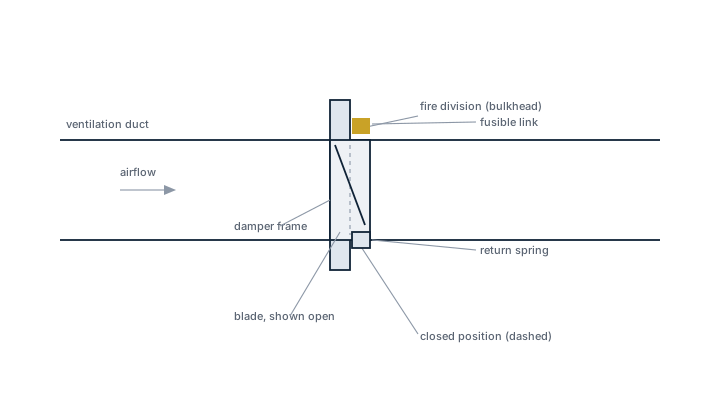
Main components
Blade or shutter assembly
A single blade, multi-leaf, or curtain-type shutter sized to seal the full duct cross-section. Steel construction is standard; the blade is rated to hold its shape and seal under fire exposure for a defined period, typically matched to the A-class or B-class division it protects.
Actuator and release
Most dampers close on a fusible link that melts at a set temperature, or on a spring-return actuator triggered electrically from the fire detection and alarm system, allowing remote closure from the bridge or fire control station before the fusible link would ever reach its melting point.
Frame and duct interface
A steel frame welded or bolted into the duct at the point it crosses a fire division, sealed to the bulkhead or deck penetration so the fire rating of the structure is not compromised at the joint.
Position indicator
On damper types serving accommodation or machinery space ventilation, a local or remote indicator shows open/closed status, often repeated at the fire control station so the crew knows which trunks are already isolated during a fire.
Selection / Sizing
| Parameter | What it drives |
|---|---|
| Duct cross-section | Sets blade size and frame dimensions |
| Fire division class (A-60, A-30, A-0, B-15) | Sets required fire rating and insulation of the damper itself |
| Actuation method | Fusible link for simple isolation duties; remote electric or pneumatic release where the space needs central control from the fire station |
| Space served | Galleys and machinery spaces often need combined fire and smoke rating; accommodation corridors may only need smoke |
Regulations / Class
SOLAS Chapter II-2 requires ventilation ducts passing through fire divisions to be fitted with fire dampers capable of being closed manually from both sides of the division, and requires remote closing capability for ducts serving machinery spaces and galleys from a position outside those spaces. Damper location and grouping must appear on the approved fire control plan, and class surveys check that fusible links are the correct rated temperature and that remote closing mechanisms operate freely at each annual survey.
Typical faults
- Damper painted over during maintenance — the blade no longer seats fully and the fire rating is lost without anyone noticing.
- Fusible link replaced with the wrong temperature rating — closes too early in a hot engine room, or too late to matter.
- Remote cable or Bowden control seized from corrosion — the local fusible link still works but bridge closure fails.
- Damper left wedged open for extra ventilation in the tropics — defeats its entire purpose and is a common PSC deficiency.
What to look for in a supplier
- Damper fire rating certified to match the actual division class it will be fitted into, not a generic rating.
- Actuator compatible with the ship's existing fire detection and alarm system protocol.
- Frame dimensions matched to the duct as installed, avoiding field modification that can compromise the seal.
- Documented type approval from a recognised class society, since dampers are SOLAS safety equipment subject to survey.
A damper that has been painted shut is worse than no damper at all, because the crew believes the fire boundary is intact when it is not — check blade movement by hand at every fire round, not just the position indicator.