Flame Detector
A flame detector senses the ultraviolet or infrared radiation an open flame gives off, reacting within seconds rather than waiting for smoke or heat to build up, which is why it covers engine rooms and cargo areas where a fire can flash before smoke detectors would trigger.
Read more — Flame Detector explained ▾
What Makes a Flame Detector Different
A flame detector reacts to the radiation an open flame emits, ultraviolet, infrared, or both, rather than to smoke particles or a rise in ambient temperature. That gives it a response time measured in seconds instead of the minutes a smoke or heat detector can take to accumulate enough signal, and it works in spaces where smoke detectors are unreliable: engine rooms with constant airflow, exhaust and diesel fumes that would swamp a smoke chamber with false alarms, and open cargo areas too large or too ventilated for smoke to build a detectable concentration near any one sensor. The trade-off is that a flame detector only sees flame directly in its line of sight; it cannot detect a smouldering fire that has not yet broken into open flame, so it is normally installed alongside, not instead of, smoke or heat detection.
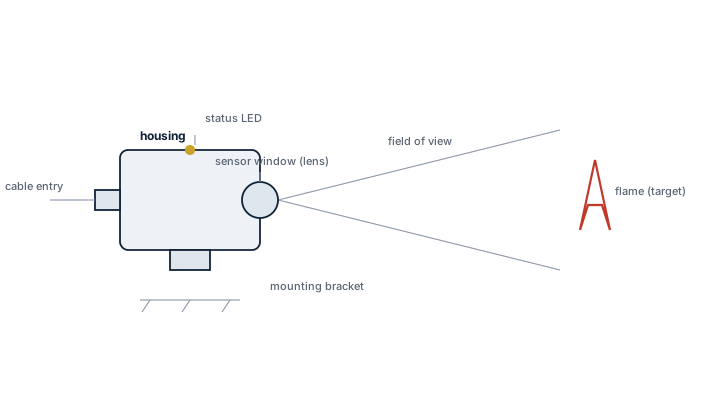
Main Components
Sensing element
UV detectors use a sensor tuned to the deep ultraviolet band flames produce; IR detectors watch one or more infrared wavelength bands, often comparing the flicker frequency, roughly 1-15 Hz, typical of real flame against steady infrared sources to reject false triggers. Combined UV/IR units cross-check both signals before alarming.
Optical window
A sealed, wide-angle lens that must stay clean; oil film, salt deposits or paint overspray on the window is the single most common cause of a detector going blind without anyone noticing.
Signal processing electronics
Filters out non-flame sources such as welding arcs, sunlight, hot machinery surfaces and lightning, using flicker-frequency analysis and, on dual-band units, the ratio between UV and IR signal strength.
Mounting and field of view
Fixed at a height and angle giving unobstructed sightlines over the protected area; detection range depends on flame size and typically extends tens of metres for a UV/IR unit rated for open deck or engine room use.
Selection and Sizing
- Detection technology matched to the fire risk; hydrocarbon fires suit UV/IR combination units, which reject more false alarm sources than UV alone
- Field of view and mounting height needed to cover the protected area without blind spots behind machinery or structure
- Response time and sensitivity setting appropriate to the space, since too sensitive in an engine room invites nuisance trips from hot work
- Housing rating suited to the environment, including explosion-proof certification where flammable vapours may be present, as in cargo pump rooms on tankers
Regulations and Class
SOLAS Chapter II-2 requires fixed fire detection in machinery spaces and other specified areas, with the detection system type-approved to the applicable performance standard for the technology and space it protects. Class rules require the detection system to report to a continuously manned or monitored central fire alarm panel, with detector function verified at scheduled fire drills and surveys. Detectors on cargo tank decks of tankers or in spaces handling flammable cargo also need to meet the relevant hazardous area (Ex) certification for the zone they are mounted in.
Typical Faults
| Fault | Cause | Consequence |
|---|---|---|
| Detector fails to alarm on real fire | Optical window fouled with oil film or dust | Undetected fire growth, delayed crew response |
| Frequent false alarms | Welding, hot work or strong sunlight in the field of view without temporary isolation | Crew begins ignoring alarms, real events risk being dismissed |
| No signal reaching the panel | Cable damage or corroded terminations in a hot, vibrating engine room environment | Detector shows as faulted or simply drops off line unnoticed |
| Detector triggers on hot machinery, not flame | Sensitivity or flicker-frequency filtering wrongly configured for the space | Nuisance trips, possible unnecessary fire suppression release |
What to Look for in a Supplier
- Marine type approval certificate valid for the specific area class, open deck, machinery space or hazardous area, the detector will serve
- Documented false-alarm rejection performance, not just raw sensitivity figures
- Ex-certified housing where the detector will sit in a zoned hazardous area
- Self-test or window-fouling indication that flags a blind detector before it is needed rather than after
A flame detector with a dirty window looks identical to a healthy one until the day it matters; window cleaning on the fire round schedule is worth more than any spec sheet number.
9 manufacturers · 44 models
Consilium Marine
8
- Sensor ageing, poisoning, contamination or dirt causes drift, slow response, false alarms or failed tests
- Power, battery, wiring or communication faults cause device-failure alarms or loss of indication
- Water ingress, corrosion or impact damage causes intermittent operation or failed controls
- Blocked sampling paths or obstructed detector exposure delays response or prevents correct detection
- Incorrect calibration, configuration or detector type causes misleading readings or nuisance alarms
- Dual‑spectrum (UV + IR) detection greatly reduces false alarms compared with single‑sensor units
- Meets SOLAS requirements for machinery space fire detection
- Compact design suitable for confined engine/pump room installations
- Low maintenance – only an annual sensitivity test is required
- UV sensor performance degrades over time and must be inspected regularly
- IR optical window can become contaminated by oil or soot, affecting sensitivity
- Potential false alarms when welding or strong sunlight reaches the sensor
- Requires yearly calibration to maintain certification compliance
Autronica / Honeywell
6- Detector or sensing-element contamination, poisoning or ageing can cause false alarms, slow response or failed functional tests
- Battery, power-supply or control-circuit faults caused by ageing, loose wiring or blown protection can lead to trouble alarms or unavailable safety functions
- Cylinder pressure loss, leakage or damaged valves where stored media is used can leave the equipment outside ready condition and may be found during inspection or weighing checks
- Blocked, corroded or mechanically damaged nozzles, piping, hoses or masks can restrict discharge or breathing flow and show as poor functional test results
- Incorrect isolation, expired service status or disturbed release interlocks after maintenance can prevent normal arming and create panel faults or failed readiness checks
- Detector or sensing-element contamination, poisoning or ageing can cause false alarms, slow response or failed functional tests
- Battery, power-supply or control-circuit faults caused by ageing, loose wiring or blown protection can lead to trouble alarms or unavailable safety functions
- Cylinder pressure loss, leakage or damaged valves where stored media is used can leave the equipment outside ready condition and may be found during inspection or weighing checks
- Blocked, corroded or mechanically damaged nozzles, piping, hoses or masks can restrict discharge or breathing flow and show as poor functional test results
- Incorrect isolation, expired service status or disturbed release interlocks after maintenance can prevent normal arming and create panel faults or failed readiness checks
Det-Tronics
5- Sensor ageing, poisoning, contamination or dirt causes drift, slow response, false alarms or failed tests
- Power, battery, wiring or communication faults cause device-failure alarms or loss of indication
- Water ingress, corrosion or impact damage causes intermittent operation or failed controls
- Blocked sampling paths or obstructed detector exposure delays response or prevents correct detection
- Incorrect calibration, configuration or detector type causes misleading readings or nuisance alarms
- SOLAS compliance meets mandatory safety regulations for vessels
- Three‑band (IR+IR+UV) sensing provides high sensitivity and lower false‑alarm rates
- Designed for harsh offshore environments with robust housing
- Compact form factor eases installation in confined spaces such as engine rooms
- Proven use on a variety of marine platforms
- Optical window can become contaminated, requiring regular cleaning or replacement
- Heater element may fail in very cold conditions, affecting detection performance
- Electronics age and may need periodic recalibration or module replacement
- Higher maintenance requirements compared with single‑spectrum detectors
- Limited publicly available integration data with newer digital alarm networks
- Loss of electrical, hydraulic, pneumatic, or other service supply caused by a tripped protection device, leakage, blockage, or upstream fault results in failed starting or loss of function
- Mechanical wear, corrosion, fouling, or contamination of moving and wetted parts causes increased noise, leakage, sticking, vibration, or reduced performance
- Seal, gasket, hose, cable, or connection deterioration from age, heat, vibration, or environmental exposure produces visible leakage, intermittent signals, or loss of pressure
- Sensor, switch, actuator, relay, or control-system faults can cause incorrect indication, nuisance alarms, failed automatic sequences, or loss of remote control
- Incorrect adjustment, assembly, or maintenance can lead to unstable operation, recurrent alarms, or performance that differs from the vessel's normal baseline
- Loss of electrical, hydraulic, pneumatic, or other service supply caused by a tripped protection device, leakage, blockage, or upstream fault results in failed starting or loss of function
- Mechanical wear, corrosion, fouling, or contamination of moving and wetted parts causes increased noise, leakage, sticking, vibration, or reduced performance
- Seal, gasket, hose, cable, or connection deterioration from age, heat, vibration, or environmental exposure produces visible leakage, intermittent signals, or loss of pressure
- Sensor, switch, actuator, relay, or control-system faults can cause incorrect indication, nuisance alarms, failed automatic sequences, or loss of remote control
- Incorrect adjustment, assembly, or maintenance can lead to unstable operation, recurrent alarms, or performance that differs from the vessel's normal baseline
- Loss of electrical, hydraulic, pneumatic, or other service supply caused by a tripped protection device, leakage, blockage, or upstream fault results in failed starting or loss of function
- Mechanical wear, corrosion, fouling, or contamination of moving and wetted parts causes increased noise, leakage, sticking, vibration, or reduced performance
- Seal, gasket, hose, cable, or connection deterioration from age, heat, vibration, or environmental exposure produces visible leakage, intermittent signals, or loss of pressure
- Sensor, switch, actuator, relay, or control-system faults can cause incorrect indication, nuisance alarms, failed automatic sequences, or loss of remote control
- Incorrect adjustment, assembly, or maintenance can lead to unstable operation, recurrent alarms, or performance that differs from the vessel's normal baseline
Hochiki Marine
5- Loss of electrical, hydraulic, pneumatic, or other service supply caused by a tripped protection device, leakage, blockage, or upstream fault results in failed starting or loss of function
- Mechanical wear, corrosion, fouling, or contamination of moving and wetted parts causes increased noise, leakage, sticking, vibration, or reduced performance
- Seal, gasket, hose, cable, or connection deterioration from age, heat, vibration, or environmental exposure produces visible leakage, intermittent signals, or loss of pressure
- Sensor, switch, actuator, relay, or control-system faults can cause incorrect indication, nuisance alarms, failed automatic sequences, or loss of remote control
- Incorrect adjustment, assembly, or maintenance can lead to unstable operation, recurrent alarms, or performance that differs from the vessel's normal baseline
Apollo Fire Detectors
4Autronica
4- Sensor ageing, poisoning, contamination or dirt causes drift, slow response, false alarms or failed tests
- Power, battery, wiring or communication faults cause device-failure alarms or loss of indication
- Water ingress, corrosion or impact damage causes intermittent operation or failed controls
- Blocked sampling paths or obstructed detector exposure delays response or prevents correct detection
- Incorrect calibration, configuration or detector type causes misleading readings or nuisance alarms
- Fast response to flames across UV and dual IR bands, reducing detection time.
- Low false‑alarm rate thanks to triple‑spectrum verification.
- Certified for use in explosive atmospheres (ATEX) and complies with SOLAS fire safety standards.
- Robust marine‑grade housing suitable for engine rooms and cargo spaces.
- Easy integration with common shipboard fire alarm control panels.
- Optical windows can become fouled by soot or oil, requiring regular cleaning.
- UV sensor performance degrades over time, necessitating periodic recalibration or replacement.
- Higher initial cost compared with basic single‑spectrum detectors.
- ATEX certification may need re‑validation after mechanical modifications or repairs.
- Detector or sensing-element contamination, poisoning or ageing can cause false alarms, slow response or failed functional tests
- Battery, power-supply or control-circuit faults caused by ageing, loose wiring or blown protection can lead to trouble alarms or unavailable safety functions
- Cylinder pressure loss, leakage or damaged valves where stored media is used can leave the equipment outside ready condition and may be found during inspection or weighing checks
- Blocked, corroded or mechanically damaged nozzles, piping, hoses or masks can restrict discharge or breathing flow and show as poor functional test results
- Incorrect isolation, expired service status or disturbed release interlocks after maintenance can prevent normal arming and create panel faults or failed readiness checks
- Detector or sensing-element contamination, poisoning or ageing can cause false alarms, slow response or failed functional tests
- Battery, power-supply or control-circuit faults caused by ageing, loose wiring or blown protection can lead to trouble alarms or unavailable safety functions
- Cylinder pressure loss, leakage or damaged valves where stored media is used can leave the equipment outside ready condition and may be found during inspection or weighing checks
- Blocked, corroded or mechanically damaged nozzles, piping, hoses or masks can restrict discharge or breathing flow and show as poor functional test results
- Incorrect isolation, expired service status or disturbed release interlocks after maintenance can prevent normal arming and create panel faults or failed readiness checks
Esser / Honeywell
4Notifier / Honeywell
4Siemens Fire Safety
4