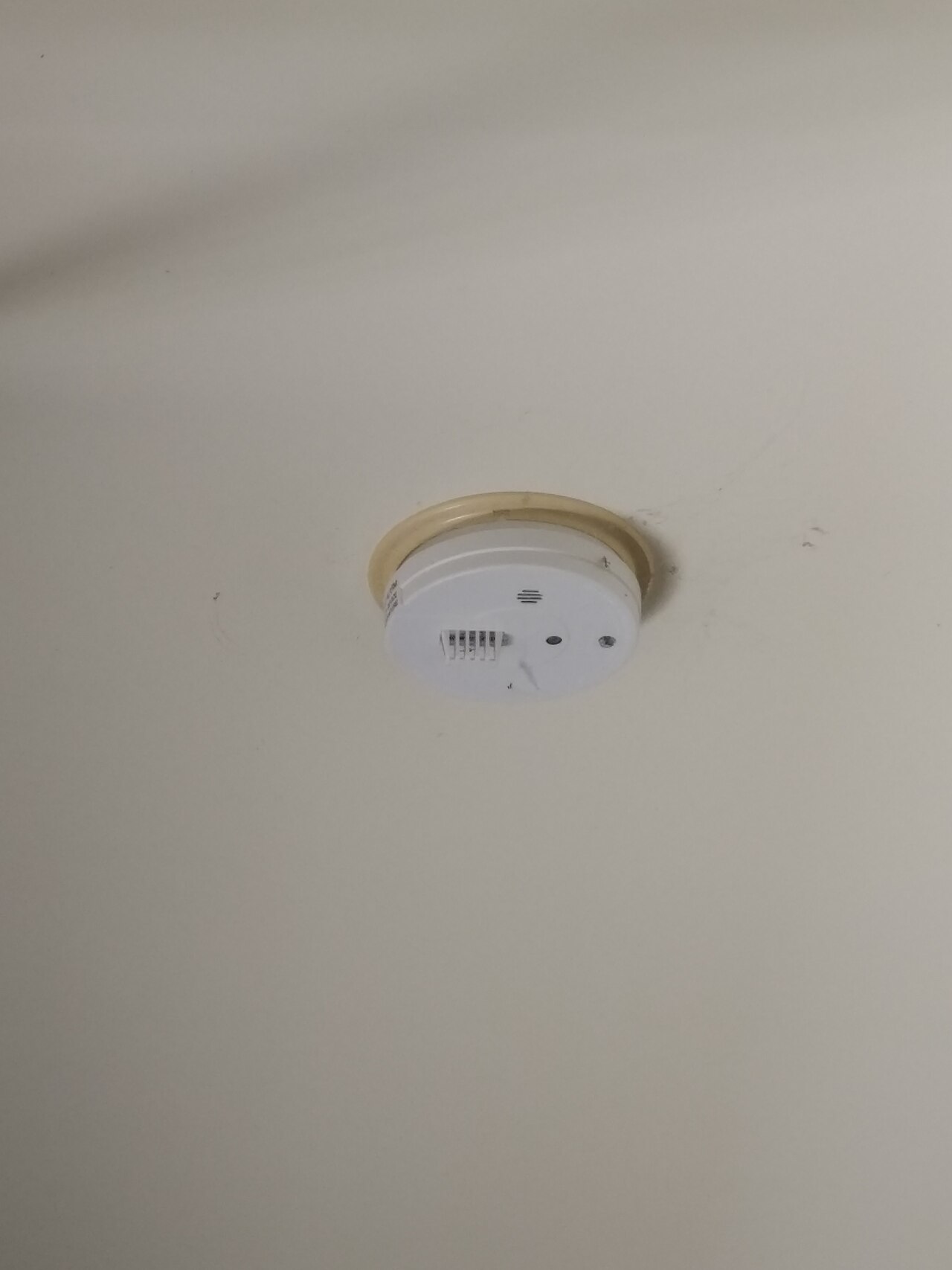
What to check on a Heat Detector.
4 models from Esser / Honeywell in Heat Detector. Below: the full model list.
What sets a heat detector apart from a smoke detector
Smoke detectors respond to the earliest visible sign of fire, but they respond just as readily to cooking smoke, welding fumes, diesel exhaust and dust, which makes them impractical in spaces that generate those conditions during normal operation. A heat detector ignores smoke entirely and responds only to a rise in ambient temperature, either a fixed threshold or a rate of temperature increase, giving reliable coverage in galleys, engine rooms, incinerator spaces and similar areas at the cost of somewhat slower response than smoke detection would give in a clean space.

Legend
- junction box (zone wiring)
- ceiling
- mounting base
- to next detector on the loop
- air vents (heat reaches element)
- heat-sensing element (thermistor)
Read the full guide
Main components and detection principle
Fixed temperature element
A heat-sensitive element, commonly a eutectic alloy or a bimetallic strip, changes state and triggers the alarm once ambient temperature at the detector reaches a set threshold, typically in the region of 57-90°C depending on the model chosen for the space.
Rate-of-rise element
An air chamber and diaphragm, or an electronic equivalent, responds to how fast temperature is climbing rather than to an absolute value, so it can catch a fast-developing fire well before ambient temperature reaches a fixed-threshold trip point.
Combination units
Many marine detectors combine both principles in one housing, alarming on whichever condition is met first, which covers both a slow smouldering heat build-up and a sudden flash fire.
Selection by space
Detector class and threshold have to match the normal temperature swing of the space, or nuisance alarms will train crew to ignore them.
- Galleys and laundries — fixed temperature units with a threshold well above normal cooking or drying heat.
- Engine rooms — combination units rated for the ambient temperature range around running machinery, positioned clear of direct exhaust or turbocharger heat.
- Cold, unheated spaces — a lower fixed threshold or rate-of-rise element, since a fixed high-threshold unit sized for the engine room would respond far too late in a cold store or paint locker.
- Accommodation and public spaces — usually smoke detection instead, with heat detectors reserved for spaces where smoke detection is impractical.
Regulations and class
SOLAS Chapter II-2 sets out which spaces require fixed fire detection and permits heat detection as the appropriate technology for machinery spaces and similar areas where smoke or fumes are a normal condition, rather than mandating smoke detection everywhere. Detector spacing and maximum coverage area per unit follow the fire detection system's overall design approval, and surveys check that detector type and threshold on the approved drawings match what is actually installed.
Typical faults
- Wrong threshold for the space — a detector rated too low for normal engine room heat gives repeated false alarms until crew starts isolating the zone.
- Detector sited too close to a heat source — such as a turbocharger or steam line, causing chronic nuisance trips unrelated to any fire.
- Paint or grease coating the element — insulates the sensing element and slows or prevents response to an actual temperature rise.
- Corroded terminals in a damp compartment — produces an intermittent zone fault that can mask a genuine alarm signal.
What to look for in a supplier
- Type approval and a threshold rating matched to the specific space's normal operating temperature.
- Housing rated for the ambient conditions, including vibration resistance for engine room mounting.
- Compatibility confirmed with the existing zone wiring and panel if this is a like-for-like replacement.
- Documented maximum coverage area per detector so spacing on the fire plan stays within approval.
Never fit a smoke detector in a space that trips it on cooking or exhaust fumes just because it was the spare on the shelf — a heat detector sited correctly beats a smoke detector the crew has learned to ignore.