Reverse Osmosis
A reverse osmosis plant forces seawater through semi-permeable membranes at 55-70 bar to reject dissolved salts, trading the low-grade waste heat an evaporator needs for a heavier electrical load and a stricter feed-water pre-treatment regime.
Read more — Reverse Osmosis explained ▾
What sets reverse osmosis apart from thermal evaporators
A freshwater generator on most merchant ships uses jacket-cooling water heat to flash-evaporate seawater under vacuum. Reverse osmosis (RO) does the opposite: it stays cold and uses a high-pressure pump to push raw seawater across a semi-permeable membrane, forcing water molecules through while rejecting salt, bacteria and most dissolved solids. Where an evaporator is limited by available waste heat and shuts down when the main engine is stopped or running light, an RO plant only needs electrical power, so it keeps producing water alongside the engine, in port, or on a diesel-electric vessel with no spare heat at all. The trade-off is a much higher specific energy consumption per cubic metre unless an energy recovery device is fitted, and a feed water that must be pre-filtered to protect membranes that an evaporator does not need.
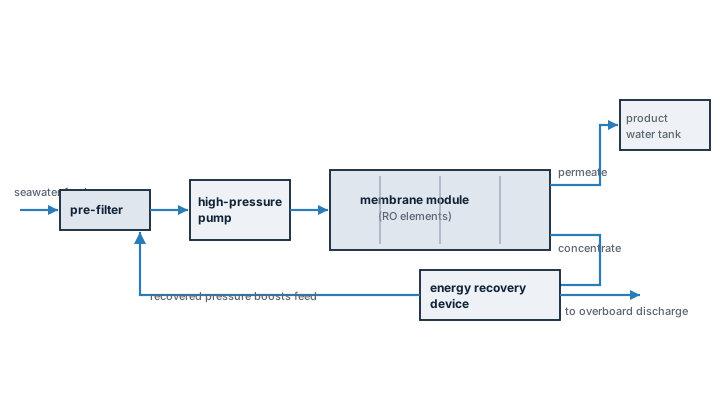
Main components
High-pressure feed pump
A multistage centrifugal or positive-displacement pump raises seawater to 55-70 bar for typical single-pass seawater RO. It is the largest single power consumer in the plant and the component most exposed to wear from any grit that pre-filtration misses.
Membrane vessels
Spiral-wound thin-film composite membrane elements sit inside pressure vessels, usually six or seven elements per vessel. Rejection rate is typically 98-99.5% of dissolved salts on a well-maintained set.
Pre-treatment
Coarse strainers, cartridge filters down to 5 microns, and often a dosing system for anti-scalant protect the membranes from suspended solids, algae blooms and scale-forming minerals.
Energy recovery device
A pressure exchanger or turbocharger recovers hydraulic energy from the concentrate (brine) stream leaving the membranes and feeds it back into the high-pressure side, cutting specific power consumption roughly in half on modern units.
Post-treatment
Product water passes through a remineralisation or pH-correction stage and UV or chlorination before it is fit to enter the potable water tanks, since RO permeate on its own is aggressive and near-mineral-free.
Selection and sizing
- Daily production capacity in cubic metres per day, matched to crew size and any cargo or process water demand.
- Feed seawater temperature and salinity range for the trading area, since colder or more saline water needs higher pump pressure for the same output.
- Available electrical power and whether an energy recovery device is fitted, which changes specific consumption from roughly 4-6 kWh/m3 down to 2-3 kWh/m3.
- Membrane material and housing pressure rating, since brackish-water elements will not survive full seawater pressure.
- Deck space and weight, particularly on smaller vessels retrofitting a plant into an existing engine room.
Regulations and class
Potable water quality is generally checked against WHO drinking water guidelines rather than a single maritime convention, and flag or port health authorities may sample it. Classification societies require periodic survey of the pressure vessel and piping under their machinery survey regime, and the high-pressure pump and its relief valve are treated as a pressure system needing routine inspection. Ballast Water Management Convention issues do not apply to freshwater generators, but any RO plant drawing from a ballast tank rather than a sea chest needs separate scrutiny.
Typical faults
| Fault | Cause | Consequence |
|---|---|---|
| Falling permeate flow | Membrane fouling by biofilm or scale | Reduced daily production, higher differential pressure across vessels |
| Rising salt passage | Membrane degradation or a torn O-ring | Product water fails salinity limit, must be dumped to bilge |
| High-pressure pump trip | Blocked cartridge filters starving the pump | Loss of production until filters are changed |
| Rapid membrane fouling | Anti-scalant dosing pump failure | Premature membrane replacement, often within months |
What to look for in a supplier
- Availability of spare membrane elements and cartridge filters in the ports the vessel actually calls at, not just at the yard.
- Documented specific energy consumption figures at stated feed conditions, not a single best-case number.
- Compatibility of the energy recovery device with the pump manufacturer, since retrofitting one later is expensive.
- Remote monitoring or trending of conductivity and differential pressure, which gives early warning of fouling before it becomes a rejection failure.
Track membrane differential pressure and permeate conductivity from day one; a slow upward trend over weeks is normal fouling and cleanable with a CIP flush, but a sudden step change usually means a torn membrane or a failed O-ring seal that needs the element pulled.
7 manufacturers · 133 models
Danfoss
58 ✓ 58 verified- Area: Feed Water Silt Density Index (SDI) Exceeds 3.0Check: Measure SDI before RO membrane inlet every 4 weeks using standard SDI test kit (0.45 µm filter, 15 minutes). SDI must remain below 3.0. If exceeding 3.0, pretreatment (multimedia filter, carbon filter, cartridge filter) requires backwashing and cartridge replacement
- Area: Membrane Fouling Detection - Differential Pressure Rise or Permeate Flow DeclineCheck: Monthly baseline pressure differential monitoring across membrane stages. A sudden spike in differential pressure (> 10% increase from baseline) indicates fouling. Visual inspection for yellow slime (biofouling) or white crystals (scaling). Inspect feed spacer geometry and membrane autopsy if fouling suspected
- Area: Pump Pressure and Performance DegradationCheck: Verify APP/PAH pump discharge pressure at standard flow rates weekly. Compare with baseline. Monitor power consumption (kW input). Check for cavitation noise or abnormal vibration. Verify pump inlet pressure 0.5-5 bar (7-72 psi). Inspect for seal leaks and corrosion on stainless steel surfaces
- Area: Energy Recovery Device (iSave/MPE) Efficiency Loss or Biofilm FoulingCheck: Monitor ERD inlet/outlet pressures and flows monthly. Compare energy recovery efficiency to baseline (typically 92%). Inspect for scaling/fouling by measuring pressure drop across ERD. Visual inspection of high-pressure spacer for biofilm buildup. For MPE 70, verify motor rotation speed (650-875 rpm) and electrical current
- Area: Cartridge Filter Clogging and BreakthroughCheck: Monitor prefilter differential pressure weekly (must stay below 1.5 bar; replace when reaching limit). Inspect cartridge visual condition (melt blown polypropylene for 3 µm stage, 10 µ absolute for main stage). Replace cartridges immediately if pressure differential exceeds maximum or after 12 months operation. Verify Beta 5000 rating for main filters (10 µ absolute minimum)
Typ-universelle Inspektionspunkte fuer Freshwater Generators (verifiziert, 2026-06).
- Area: Feed Water Silt Density Index (SDI) Exceeds 3.0Check: Measure SDI before RO membrane inlet every 4 weeks using standard SDI test kit (0.45 µm filter, 15 minutes). SDI must remain below 3.0. If exceeding 3.0, pretreatment (multimedia filter, carbon filter, cartridge filter) requires backwashing and cartridge replacement
- Area: Membrane Fouling Detection - Differential Pressure Rise or Permeate Flow DeclineCheck: Monthly baseline pressure differential monitoring across membrane stages. A sudden spike in differential pressure (> 10% increase from baseline) indicates fouling. Visual inspection for yellow slime (biofouling) or white crystals (scaling). Inspect feed spacer geometry and membrane autopsy if fouling suspected
- Area: Pump Pressure and Performance DegradationCheck: Verify APP/PAH pump discharge pressure at standard flow rates weekly. Compare with baseline. Monitor power consumption (kW input). Check for cavitation noise or abnormal vibration. Verify pump inlet pressure 0.5-5 bar (7-72 psi). Inspect for seal leaks and corrosion on stainless steel surfaces
- Area: Energy Recovery Device (iSave/MPE) Efficiency Loss or Biofilm FoulingCheck: Monitor ERD inlet/outlet pressures and flows monthly. Compare energy recovery efficiency to baseline (typically 92%). Inspect for scaling/fouling by measuring pressure drop across ERD. Visual inspection of high-pressure spacer for biofilm buildup. For MPE 70, verify motor rotation speed (650-875 rpm) and electrical current
- Area: Cartridge Filter Clogging and BreakthroughCheck: Monitor prefilter differential pressure weekly (must stay below 1.5 bar; replace when reaching limit). Inspect cartridge visual condition (melt blown polypropylene for 3 µm stage, 10 µ absolute for main stage). Replace cartridges immediately if pressure differential exceeds maximum or after 12 months operation. Verify Beta 5000 rating for main filters (10 µ absolute minimum)
Typ-universelle Inspektionspunkte fuer Freshwater Generators (verifiziert, 2026-06).
- Area: Feed Water Silt Density Index (SDI) Exceeds 3.0Check: Measure SDI before RO membrane inlet every 4 weeks using standard SDI test kit (0.45 µm filter, 15 minutes). SDI must remain below 3.0. If exceeding 3.0, pretreatment (multimedia filter, carbon filter, cartridge filter) requires backwashing and cartridge replacement
- Area: Membrane Fouling Detection - Differential Pressure Rise or Permeate Flow DeclineCheck: Monthly baseline pressure differential monitoring across membrane stages. A sudden spike in differential pressure (> 10% increase from baseline) indicates fouling. Visual inspection for yellow slime (biofouling) or white crystals (scaling). Inspect feed spacer geometry and membrane autopsy if fouling suspected
- Area: Pump Pressure and Performance DegradationCheck: Verify APP/PAH pump discharge pressure at standard flow rates weekly. Compare with baseline. Monitor power consumption (kW input). Check for cavitation noise or abnormal vibration. Verify pump inlet pressure 0.5-5 bar (7-72 psi). Inspect for seal leaks and corrosion on stainless steel surfaces
- Area: Energy Recovery Device (iSave/MPE) Efficiency Loss or Biofilm FoulingCheck: Monitor ERD inlet/outlet pressures and flows monthly. Compare energy recovery efficiency to baseline (typically 92%). Inspect for scaling/fouling by measuring pressure drop across ERD. Visual inspection of high-pressure spacer for biofilm buildup. For MPE 70, verify motor rotation speed (650-875 rpm) and electrical current
- Area: Cartridge Filter Clogging and BreakthroughCheck: Monitor prefilter differential pressure weekly (must stay below 1.5 bar; replace when reaching limit). Inspect cartridge visual condition (melt blown polypropylene for 3 µm stage, 10 µ absolute for main stage). Replace cartridges immediately if pressure differential exceeds maximum or after 12 months operation. Verify Beta 5000 rating for main filters (10 µ absolute minimum)
Typ-universelle Inspektionspunkte fuer Freshwater Generators (verifiziert, 2026-06).
- Area: Feed Water Silt Density Index (SDI) Exceeds 3.0Check: Measure SDI before RO membrane inlet every 4 weeks using standard SDI test kit (0.45 µm filter, 15 minutes). SDI must remain below 3.0. If exceeding 3.0, pretreatment (multimedia filter, carbon filter, cartridge filter) requires backwashing and cartridge replacement
- Area: Membrane Fouling Detection - Differential Pressure Rise or Permeate Flow DeclineCheck: Monthly baseline pressure differential monitoring across membrane stages. A sudden spike in differential pressure (> 10% increase from baseline) indicates fouling. Visual inspection for yellow slime (biofouling) or white crystals (scaling). Inspect feed spacer geometry and membrane autopsy if fouling suspected
- Area: Pump Pressure and Performance DegradationCheck: Verify APP/PAH pump discharge pressure at standard flow rates weekly. Compare with baseline. Monitor power consumption (kW input). Check for cavitation noise or abnormal vibration. Verify pump inlet pressure 0.5-5 bar (7-72 psi). Inspect for seal leaks and corrosion on stainless steel surfaces
- Area: Energy Recovery Device (iSave/MPE) Efficiency Loss or Biofilm FoulingCheck: Monitor ERD inlet/outlet pressures and flows monthly. Compare energy recovery efficiency to baseline (typically 92%). Inspect for scaling/fouling by measuring pressure drop across ERD. Visual inspection of high-pressure spacer for biofilm buildup. For MPE 70, verify motor rotation speed (650-875 rpm) and electrical current
- Area: Cartridge Filter Clogging and BreakthroughCheck: Monitor prefilter differential pressure weekly (must stay below 1.5 bar; replace when reaching limit). Inspect cartridge visual condition (melt blown polypropylene for 3 µm stage, 10 µ absolute for main stage). Replace cartridges immediately if pressure differential exceeds maximum or after 12 months operation. Verify Beta 5000 rating for main filters (10 µ absolute minimum)
Typ-universelle Inspektionspunkte fuer Freshwater Generators (verifiziert, 2026-06).
- Area: Feed Water Silt Density Index (SDI) Exceeds 3.0Check: Measure SDI before RO membrane inlet every 4 weeks using standard SDI test kit (0.45 µm filter, 15 minutes). SDI must remain below 3.0. If exceeding 3.0, pretreatment (multimedia filter, carbon filter, cartridge filter) requires backwashing and cartridge replacement
- Area: Membrane Fouling Detection - Differential Pressure Rise or Permeate Flow DeclineCheck: Monthly baseline pressure differential monitoring across membrane stages. A sudden spike in differential pressure (> 10% increase from baseline) indicates fouling. Visual inspection for yellow slime (biofouling) or white crystals (scaling). Inspect feed spacer geometry and membrane autopsy if fouling suspected
- Area: Pump Pressure and Performance DegradationCheck: Verify APP/PAH pump discharge pressure at standard flow rates weekly. Compare with baseline. Monitor power consumption (kW input). Check for cavitation noise or abnormal vibration. Verify pump inlet pressure 0.5-5 bar (7-72 psi). Inspect for seal leaks and corrosion on stainless steel surfaces
- Area: Energy Recovery Device (iSave/MPE) Efficiency Loss or Biofilm FoulingCheck: Monitor ERD inlet/outlet pressures and flows monthly. Compare energy recovery efficiency to baseline (typically 92%). Inspect for scaling/fouling by measuring pressure drop across ERD. Visual inspection of high-pressure spacer for biofilm buildup. For MPE 70, verify motor rotation speed (650-875 rpm) and electrical current
- Area: Cartridge Filter Clogging and BreakthroughCheck: Monitor prefilter differential pressure weekly (must stay below 1.5 bar; replace when reaching limit). Inspect cartridge visual condition (melt blown polypropylene for 3 µm stage, 10 µ absolute for main stage). Replace cartridges immediately if pressure differential exceeds maximum or after 12 months operation. Verify Beta 5000 rating for main filters (10 µ absolute minimum)
Typ-universelle Inspektionspunkte fuer Freshwater Generators (verifiziert, 2026-06).
- Area: Feed Water Silt Density Index (SDI) Exceeds 3.0Check: Measure SDI before RO membrane inlet every 4 weeks using standard SDI test kit (0.45 µm filter, 15 minutes). SDI must remain below 3.0. If exceeding 3.0, pretreatment (multimedia filter, carbon filter, cartridge filter) requires backwashing and cartridge replacement
- Area: Membrane Fouling Detection - Differential Pressure Rise or Permeate Flow DeclineCheck: Monthly baseline pressure differential monitoring across membrane stages. A sudden spike in differential pressure (> 10% increase from baseline) indicates fouling. Visual inspection for yellow slime (biofouling) or white crystals (scaling). Inspect feed spacer geometry and membrane autopsy if fouling suspected
- Area: Pump Pressure and Performance DegradationCheck: Verify APP/PAH pump discharge pressure at standard flow rates weekly. Compare with baseline. Monitor power consumption (kW input). Check for cavitation noise or abnormal vibration. Verify pump inlet pressure 0.5-5 bar (7-72 psi). Inspect for seal leaks and corrosion on stainless steel surfaces
- Area: Energy Recovery Device (iSave/MPE) Efficiency Loss or Biofilm FoulingCheck: Monitor ERD inlet/outlet pressures and flows monthly. Compare energy recovery efficiency to baseline (typically 92%). Inspect for scaling/fouling by measuring pressure drop across ERD. Visual inspection of high-pressure spacer for biofilm buildup. For MPE 70, verify motor rotation speed (650-875 rpm) and electrical current
- Area: Cartridge Filter Clogging and BreakthroughCheck: Monitor prefilter differential pressure weekly (must stay below 1.5 bar; replace when reaching limit). Inspect cartridge visual condition (melt blown polypropylene for 3 µm stage, 10 µ absolute for main stage). Replace cartridges immediately if pressure differential exceeds maximum or after 12 months operation. Verify Beta 5000 rating for main filters (10 µ absolute minimum)
Typ-universelle Inspektionspunkte fuer Freshwater Generators (verifiziert, 2026-06).
- Area: Feed Water Silt Density Index (SDI) Exceeds 3.0Check: Measure SDI before RO membrane inlet every 4 weeks using standard SDI test kit (0.45 µm filter, 15 minutes). SDI must remain below 3.0. If exceeding 3.0, pretreatment (multimedia filter, carbon filter, cartridge filter) requires backwashing and cartridge replacement
- Area: Membrane Fouling Detection - Differential Pressure Rise or Permeate Flow DeclineCheck: Monthly baseline pressure differential monitoring across membrane stages. A sudden spike in differential pressure (> 10% increase from baseline) indicates fouling. Visual inspection for yellow slime (biofouling) or white crystals (scaling). Inspect feed spacer geometry and membrane autopsy if fouling suspected
- Area: Pump Pressure and Performance DegradationCheck: Verify APP/PAH pump discharge pressure at standard flow rates weekly. Compare with baseline. Monitor power consumption (kW input). Check for cavitation noise or abnormal vibration. Verify pump inlet pressure 0.5-5 bar (7-72 psi). Inspect for seal leaks and corrosion on stainless steel surfaces
- Area: Energy Recovery Device (iSave/MPE) Efficiency Loss or Biofilm FoulingCheck: Monitor ERD inlet/outlet pressures and flows monthly. Compare energy recovery efficiency to baseline (typically 92%). Inspect for scaling/fouling by measuring pressure drop across ERD. Visual inspection of high-pressure spacer for biofilm buildup. For MPE 70, verify motor rotation speed (650-875 rpm) and electrical current
- Area: Cartridge Filter Clogging and BreakthroughCheck: Monitor prefilter differential pressure weekly (must stay below 1.5 bar; replace when reaching limit). Inspect cartridge visual condition (melt blown polypropylene for 3 µm stage, 10 µ absolute for main stage). Replace cartridges immediately if pressure differential exceeds maximum or after 12 months operation. Verify Beta 5000 rating for main filters (10 µ absolute minimum)
Typ-universelle Inspektionspunkte fuer Freshwater Generators (verifiziert, 2026-06).
- Area: Feed Water Silt Density Index (SDI) Exceeds 3.0Check: Measure SDI before RO membrane inlet every 4 weeks using standard SDI test kit (0.45 µm filter, 15 minutes). SDI must remain below 3.0. If exceeding 3.0, pretreatment (multimedia filter, carbon filter, cartridge filter) requires backwashing and cartridge replacement
- Area: Membrane Fouling Detection - Differential Pressure Rise or Permeate Flow DeclineCheck: Monthly baseline pressure differential monitoring across membrane stages. A sudden spike in differential pressure (> 10% increase from baseline) indicates fouling. Visual inspection for yellow slime (biofouling) or white crystals (scaling). Inspect feed spacer geometry and membrane autopsy if fouling suspected
- Area: Pump Pressure and Performance DegradationCheck: Verify APP/PAH pump discharge pressure at standard flow rates weekly. Compare with baseline. Monitor power consumption (kW input). Check for cavitation noise or abnormal vibration. Verify pump inlet pressure 0.5-5 bar (7-72 psi). Inspect for seal leaks and corrosion on stainless steel surfaces
- Area: Energy Recovery Device (iSave/MPE) Efficiency Loss or Biofilm FoulingCheck: Monitor ERD inlet/outlet pressures and flows monthly. Compare energy recovery efficiency to baseline (typically 92%). Inspect for scaling/fouling by measuring pressure drop across ERD. Visual inspection of high-pressure spacer for biofilm buildup. For MPE 70, verify motor rotation speed (650-875 rpm) and electrical current
- Area: Cartridge Filter Clogging and BreakthroughCheck: Monitor prefilter differential pressure weekly (must stay below 1.5 bar; replace when reaching limit). Inspect cartridge visual condition (melt blown polypropylene for 3 µm stage, 10 µ absolute for main stage). Replace cartridges immediately if pressure differential exceeds maximum or after 12 months operation. Verify Beta 5000 rating for main filters (10 µ absolute minimum)
Typ-universelle Inspektionspunkte fuer Freshwater Generators (verifiziert, 2026-06).
- Area: Feed Water Silt Density Index (SDI) Exceeds 3.0Check: Measure SDI before RO membrane inlet every 4 weeks using standard SDI test kit (0.45 µm filter, 15 minutes). SDI must remain below 3.0. If exceeding 3.0, pretreatment (multimedia filter, carbon filter, cartridge filter) requires backwashing and cartridge replacement
- Area: Membrane Fouling Detection - Differential Pressure Rise or Permeate Flow DeclineCheck: Monthly baseline pressure differential monitoring across membrane stages. A sudden spike in differential pressure (> 10% increase from baseline) indicates fouling. Visual inspection for yellow slime (biofouling) or white crystals (scaling). Inspect feed spacer geometry and membrane autopsy if fouling suspected
- Area: Pump Pressure and Performance DegradationCheck: Verify APP/PAH pump discharge pressure at standard flow rates weekly. Compare with baseline. Monitor power consumption (kW input). Check for cavitation noise or abnormal vibration. Verify pump inlet pressure 0.5-5 bar (7-72 psi). Inspect for seal leaks and corrosion on stainless steel surfaces
- Area: Energy Recovery Device (iSave/MPE) Efficiency Loss or Biofilm FoulingCheck: Monitor ERD inlet/outlet pressures and flows monthly. Compare energy recovery efficiency to baseline (typically 92%). Inspect for scaling/fouling by measuring pressure drop across ERD. Visual inspection of high-pressure spacer for biofilm buildup. For MPE 70, verify motor rotation speed (650-875 rpm) and electrical current
- Area: Cartridge Filter Clogging and BreakthroughCheck: Monitor prefilter differential pressure weekly (must stay below 1.5 bar; replace when reaching limit). Inspect cartridge visual condition (melt blown polypropylene for 3 µm stage, 10 µ absolute for main stage). Replace cartridges immediately if pressure differential exceeds maximum or after 12 months operation. Verify Beta 5000 rating for main filters (10 µ absolute minimum)
Typ-universelle Inspektionspunkte fuer Freshwater Generators (verifiziert, 2026-06).
- Area: Feed Water Silt Density Index (SDI) Exceeds 3.0Check: Measure SDI before RO membrane inlet every 4 weeks using standard SDI test kit (0.45 µm filter, 15 minutes). SDI must remain below 3.0. If exceeding 3.0, pretreatment (multimedia filter, carbon filter, cartridge filter) requires backwashing and cartridge replacement
- Area: Membrane Fouling Detection - Differential Pressure Rise or Permeate Flow DeclineCheck: Monthly baseline pressure differential monitoring across membrane stages. A sudden spike in differential pressure (> 10% increase from baseline) indicates fouling. Visual inspection for yellow slime (biofouling) or white crystals (scaling). Inspect feed spacer geometry and membrane autopsy if fouling suspected
- Area: Pump Pressure and Performance DegradationCheck: Verify APP/PAH pump discharge pressure at standard flow rates weekly. Compare with baseline. Monitor power consumption (kW input). Check for cavitation noise or abnormal vibration. Verify pump inlet pressure 0.5-5 bar (7-72 psi). Inspect for seal leaks and corrosion on stainless steel surfaces
- Area: Energy Recovery Device (iSave/MPE) Efficiency Loss or Biofilm FoulingCheck: Monitor ERD inlet/outlet pressures and flows monthly. Compare energy recovery efficiency to baseline (typically 92%). Inspect for scaling/fouling by measuring pressure drop across ERD. Visual inspection of high-pressure spacer for biofilm buildup. For MPE 70, verify motor rotation speed (650-875 rpm) and electrical current
- Area: Cartridge Filter Clogging and BreakthroughCheck: Monitor prefilter differential pressure weekly (must stay below 1.5 bar; replace when reaching limit). Inspect cartridge visual condition (melt blown polypropylene for 3 µm stage, 10 µ absolute for main stage). Replace cartridges immediately if pressure differential exceeds maximum or after 12 months operation. Verify Beta 5000 rating for main filters (10 µ absolute minimum)
Typ-universelle Inspektionspunkte fuer Freshwater Generators (verifiziert, 2026-06).
- Area: Feed Water Silt Density Index (SDI) Exceeds 3.0Check: Measure SDI before RO membrane inlet every 4 weeks using standard SDI test kit (0.45 µm filter, 15 minutes). SDI must remain below 3.0. If exceeding 3.0, pretreatment (multimedia filter, carbon filter, cartridge filter) requires backwashing and cartridge replacement
- Area: Membrane Fouling Detection - Differential Pressure Rise or Permeate Flow DeclineCheck: Monthly baseline pressure differential monitoring across membrane stages. A sudden spike in differential pressure (> 10% increase from baseline) indicates fouling. Visual inspection for yellow slime (biofouling) or white crystals (scaling). Inspect feed spacer geometry and membrane autopsy if fouling suspected
- Area: Pump Pressure and Performance DegradationCheck: Verify APP/PAH pump discharge pressure at standard flow rates weekly. Compare with baseline. Monitor power consumption (kW input). Check for cavitation noise or abnormal vibration. Verify pump inlet pressure 0.5-5 bar (7-72 psi). Inspect for seal leaks and corrosion on stainless steel surfaces
- Area: Energy Recovery Device (iSave/MPE) Efficiency Loss or Biofilm FoulingCheck: Monitor ERD inlet/outlet pressures and flows monthly. Compare energy recovery efficiency to baseline (typically 92%). Inspect for scaling/fouling by measuring pressure drop across ERD. Visual inspection of high-pressure spacer for biofilm buildup. For MPE 70, verify motor rotation speed (650-875 rpm) and electrical current
- Area: Cartridge Filter Clogging and BreakthroughCheck: Monitor prefilter differential pressure weekly (must stay below 1.5 bar; replace when reaching limit). Inspect cartridge visual condition (melt blown polypropylene for 3 µm stage, 10 µ absolute for main stage). Replace cartridges immediately if pressure differential exceeds maximum or after 12 months operation. Verify Beta 5000 rating for main filters (10 µ absolute minimum)
Typ-universelle Inspektionspunkte fuer Freshwater Generators (verifiziert, 2026-06).
- Area: Feed Water Silt Density Index (SDI) Exceeds 3.0Check: Measure SDI before RO membrane inlet every 4 weeks using standard SDI test kit (0.45 µm filter, 15 minutes). SDI must remain below 3.0. If exceeding 3.0, pretreatment (multimedia filter, carbon filter, cartridge filter) requires backwashing and cartridge replacement
- Area: Membrane Fouling Detection - Differential Pressure Rise or Permeate Flow DeclineCheck: Monthly baseline pressure differential monitoring across membrane stages. A sudden spike in differential pressure (> 10% increase from baseline) indicates fouling. Visual inspection for yellow slime (biofouling) or white crystals (scaling). Inspect feed spacer geometry and membrane autopsy if fouling suspected
- Area: Pump Pressure and Performance DegradationCheck: Verify APP/PAH pump discharge pressure at standard flow rates weekly. Compare with baseline. Monitor power consumption (kW input). Check for cavitation noise or abnormal vibration. Verify pump inlet pressure 0.5-5 bar (7-72 psi). Inspect for seal leaks and corrosion on stainless steel surfaces
- Area: Energy Recovery Device (iSave/MPE) Efficiency Loss or Biofilm FoulingCheck: Monitor ERD inlet/outlet pressures and flows monthly. Compare energy recovery efficiency to baseline (typically 92%). Inspect for scaling/fouling by measuring pressure drop across ERD. Visual inspection of high-pressure spacer for biofilm buildup. For MPE 70, verify motor rotation speed (650-875 rpm) and electrical current
- Area: Cartridge Filter Clogging and BreakthroughCheck: Monitor prefilter differential pressure weekly (must stay below 1.5 bar; replace when reaching limit). Inspect cartridge visual condition (melt blown polypropylene for 3 µm stage, 10 µ absolute for main stage). Replace cartridges immediately if pressure differential exceeds maximum or after 12 months operation. Verify Beta 5000 rating for main filters (10 µ absolute minimum)
Typ-universelle Inspektionspunkte fuer Freshwater Generators (verifiziert, 2026-06).
- Area: Feed Water Silt Density Index (SDI) Exceeds 3.0Check: Measure SDI before RO membrane inlet every 4 weeks using standard SDI test kit (0.45 µm filter, 15 minutes). SDI must remain below 3.0. If exceeding 3.0, pretreatment (multimedia filter, carbon filter, cartridge filter) requires backwashing and cartridge replacement
- Area: Membrane Fouling Detection - Differential Pressure Rise or Permeate Flow DeclineCheck: Monthly baseline pressure differential monitoring across membrane stages. A sudden spike in differential pressure (> 10% increase from baseline) indicates fouling. Visual inspection for yellow slime (biofouling) or white crystals (scaling). Inspect feed spacer geometry and membrane autopsy if fouling suspected
- Area: Pump Pressure and Performance DegradationCheck: Verify APP/PAH pump discharge pressure at standard flow rates weekly. Compare with baseline. Monitor power consumption (kW input). Check for cavitation noise or abnormal vibration. Verify pump inlet pressure 0.5-5 bar (7-72 psi). Inspect for seal leaks and corrosion on stainless steel surfaces
- Area: Energy Recovery Device (iSave/MPE) Efficiency Loss or Biofilm FoulingCheck: Monitor ERD inlet/outlet pressures and flows monthly. Compare energy recovery efficiency to baseline (typically 92%). Inspect for scaling/fouling by measuring pressure drop across ERD. Visual inspection of high-pressure spacer for biofilm buildup. For MPE 70, verify motor rotation speed (650-875 rpm) and electrical current
- Area: Cartridge Filter Clogging and BreakthroughCheck: Monitor prefilter differential pressure weekly (must stay below 1.5 bar; replace when reaching limit). Inspect cartridge visual condition (melt blown polypropylene for 3 µm stage, 10 µ absolute for main stage). Replace cartridges immediately if pressure differential exceeds maximum or after 12 months operation. Verify Beta 5000 rating for main filters (10 µ absolute minimum)
Typ-universelle Inspektionspunkte fuer Freshwater Generators (verifiziert, 2026-06).
- Area: Feed Water Silt Density Index (SDI) Exceeds 3.0Check: Measure SDI before RO membrane inlet every 4 weeks using standard SDI test kit (0.45 µm filter, 15 minutes). SDI must remain below 3.0. If exceeding 3.0, pretreatment (multimedia filter, carbon filter, cartridge filter) requires backwashing and cartridge replacement
- Area: Membrane Fouling Detection - Differential Pressure Rise or Permeate Flow DeclineCheck: Monthly baseline pressure differential monitoring across membrane stages. A sudden spike in differential pressure (> 10% increase from baseline) indicates fouling. Visual inspection for yellow slime (biofouling) or white crystals (scaling). Inspect feed spacer geometry and membrane autopsy if fouling suspected
- Area: Pump Pressure and Performance DegradationCheck: Verify APP/PAH pump discharge pressure at standard flow rates weekly. Compare with baseline. Monitor power consumption (kW input). Check for cavitation noise or abnormal vibration. Verify pump inlet pressure 0.5-5 bar (7-72 psi). Inspect for seal leaks and corrosion on stainless steel surfaces
- Area: Energy Recovery Device (iSave/MPE) Efficiency Loss or Biofilm FoulingCheck: Monitor ERD inlet/outlet pressures and flows monthly. Compare energy recovery efficiency to baseline (typically 92%). Inspect for scaling/fouling by measuring pressure drop across ERD. Visual inspection of high-pressure spacer for biofilm buildup. For MPE 70, verify motor rotation speed (650-875 rpm) and electrical current
- Area: Cartridge Filter Clogging and BreakthroughCheck: Monitor prefilter differential pressure weekly (must stay below 1.5 bar; replace when reaching limit). Inspect cartridge visual condition (melt blown polypropylene for 3 µm stage, 10 µ absolute for main stage). Replace cartridges immediately if pressure differential exceeds maximum or after 12 months operation. Verify Beta 5000 rating for main filters (10 µ absolute minimum)
Typ-universelle Inspektionspunkte fuer Freshwater Generators (verifiziert, 2026-06).
- Area: Feed Water Silt Density Index (SDI) Exceeds 3.0Check: Measure SDI before RO membrane inlet every 4 weeks using standard SDI test kit (0.45 µm filter, 15 minutes). SDI must remain below 3.0. If exceeding 3.0, pretreatment (multimedia filter, carbon filter, cartridge filter) requires backwashing and cartridge replacement
- Area: Membrane Fouling Detection - Differential Pressure Rise or Permeate Flow DeclineCheck: Monthly baseline pressure differential monitoring across membrane stages. A sudden spike in differential pressure (> 10% increase from baseline) indicates fouling. Visual inspection for yellow slime (biofouling) or white crystals (scaling). Inspect feed spacer geometry and membrane autopsy if fouling suspected
- Area: Pump Pressure and Performance DegradationCheck: Verify APP/PAH pump discharge pressure at standard flow rates weekly. Compare with baseline. Monitor power consumption (kW input). Check for cavitation noise or abnormal vibration. Verify pump inlet pressure 0.5-5 bar (7-72 psi). Inspect for seal leaks and corrosion on stainless steel surfaces
- Area: Energy Recovery Device (iSave/MPE) Efficiency Loss or Biofilm FoulingCheck: Monitor ERD inlet/outlet pressures and flows monthly. Compare energy recovery efficiency to baseline (typically 92%). Inspect for scaling/fouling by measuring pressure drop across ERD. Visual inspection of high-pressure spacer for biofilm buildup. For MPE 70, verify motor rotation speed (650-875 rpm) and electrical current
- Area: Cartridge Filter Clogging and BreakthroughCheck: Monitor prefilter differential pressure weekly (must stay below 1.5 bar; replace when reaching limit). Inspect cartridge visual condition (melt blown polypropylene for 3 µm stage, 10 µ absolute for main stage). Replace cartridges immediately if pressure differential exceeds maximum or after 12 months operation. Verify Beta 5000 rating for main filters (10 µ absolute minimum)
Typ-universelle Inspektionspunkte fuer Freshwater Generators (verifiziert, 2026-06).
- Area: Feed Water Silt Density Index (SDI) Exceeds 3.0Check: Measure SDI before RO membrane inlet every 4 weeks using standard SDI test kit (0.45 µm filter, 15 minutes). SDI must remain below 3.0. If exceeding 3.0, pretreatment (multimedia filter, carbon filter, cartridge filter) requires backwashing and cartridge replacement
- Area: Membrane Fouling Detection - Differential Pressure Rise or Permeate Flow DeclineCheck: Monthly baseline pressure differential monitoring across membrane stages. A sudden spike in differential pressure (> 10% increase from baseline) indicates fouling. Visual inspection for yellow slime (biofouling) or white crystals (scaling). Inspect feed spacer geometry and membrane autopsy if fouling suspected
- Area: Pump Pressure and Performance DegradationCheck: Verify APP/PAH pump discharge pressure at standard flow rates weekly. Compare with baseline. Monitor power consumption (kW input). Check for cavitation noise or abnormal vibration. Verify pump inlet pressure 0.5-5 bar (7-72 psi). Inspect for seal leaks and corrosion on stainless steel surfaces
- Area: Energy Recovery Device (iSave/MPE) Efficiency Loss or Biofilm FoulingCheck: Monitor ERD inlet/outlet pressures and flows monthly. Compare energy recovery efficiency to baseline (typically 92%). Inspect for scaling/fouling by measuring pressure drop across ERD. Visual inspection of high-pressure spacer for biofilm buildup. For MPE 70, verify motor rotation speed (650-875 rpm) and electrical current
- Area: Cartridge Filter Clogging and BreakthroughCheck: Monitor prefilter differential pressure weekly (must stay below 1.5 bar; replace when reaching limit). Inspect cartridge visual condition (melt blown polypropylene for 3 µm stage, 10 µ absolute for main stage). Replace cartridges immediately if pressure differential exceeds maximum or after 12 months operation. Verify Beta 5000 rating for main filters (10 µ absolute minimum)
Typ-universelle Inspektionspunkte fuer Freshwater Generators (verifiziert, 2026-06).
- Area: Feed Water Silt Density Index (SDI) Exceeds 3.0Check: Measure SDI before RO membrane inlet every 4 weeks using standard SDI test kit (0.45 µm filter, 15 minutes). SDI must remain below 3.0. If exceeding 3.0, pretreatment (multimedia filter, carbon filter, cartridge filter) requires backwashing and cartridge replacement
- Area: Membrane Fouling Detection - Differential Pressure Rise or Permeate Flow DeclineCheck: Monthly baseline pressure differential monitoring across membrane stages. A sudden spike in differential pressure (> 10% increase from baseline) indicates fouling. Visual inspection for yellow slime (biofouling) or white crystals (scaling). Inspect feed spacer geometry and membrane autopsy if fouling suspected
- Area: Pump Pressure and Performance DegradationCheck: Verify APP/PAH pump discharge pressure at standard flow rates weekly. Compare with baseline. Monitor power consumption (kW input). Check for cavitation noise or abnormal vibration. Verify pump inlet pressure 0.5-5 bar (7-72 psi). Inspect for seal leaks and corrosion on stainless steel surfaces
- Area: Energy Recovery Device (iSave/MPE) Efficiency Loss or Biofilm FoulingCheck: Monitor ERD inlet/outlet pressures and flows monthly. Compare energy recovery efficiency to baseline (typically 92%). Inspect for scaling/fouling by measuring pressure drop across ERD. Visual inspection of high-pressure spacer for biofilm buildup. For MPE 70, verify motor rotation speed (650-875 rpm) and electrical current
- Area: Cartridge Filter Clogging and BreakthroughCheck: Monitor prefilter differential pressure weekly (must stay below 1.5 bar; replace when reaching limit). Inspect cartridge visual condition (melt blown polypropylene for 3 µm stage, 10 µ absolute for main stage). Replace cartridges immediately if pressure differential exceeds maximum or after 12 months operation. Verify Beta 5000 rating for main filters (10 µ absolute minimum)
Typ-universelle Inspektionspunkte fuer Freshwater Generators (verifiziert, 2026-06).
- Area: Feed Water Silt Density Index (SDI) Exceeds 3.0Check: Measure SDI before RO membrane inlet every 4 weeks using standard SDI test kit (0.45 µm filter, 15 minutes). SDI must remain below 3.0. If exceeding 3.0, pretreatment (multimedia filter, carbon filter, cartridge filter) requires backwashing and cartridge replacement
- Area: Membrane Fouling Detection - Differential Pressure Rise or Permeate Flow DeclineCheck: Monthly baseline pressure differential monitoring across membrane stages. A sudden spike in differential pressure (> 10% increase from baseline) indicates fouling. Visual inspection for yellow slime (biofouling) or white crystals (scaling). Inspect feed spacer geometry and membrane autopsy if fouling suspected
- Area: Pump Pressure and Performance DegradationCheck: Verify APP/PAH pump discharge pressure at standard flow rates weekly. Compare with baseline. Monitor power consumption (kW input). Check for cavitation noise or abnormal vibration. Verify pump inlet pressure 0.5-5 bar (7-72 psi). Inspect for seal leaks and corrosion on stainless steel surfaces
- Area: Energy Recovery Device (iSave/MPE) Efficiency Loss or Biofilm FoulingCheck: Monitor ERD inlet/outlet pressures and flows monthly. Compare energy recovery efficiency to baseline (typically 92%). Inspect for scaling/fouling by measuring pressure drop across ERD. Visual inspection of high-pressure spacer for biofilm buildup. For MPE 70, verify motor rotation speed (650-875 rpm) and electrical current
- Area: Cartridge Filter Clogging and BreakthroughCheck: Monitor prefilter differential pressure weekly (must stay below 1.5 bar; replace when reaching limit). Inspect cartridge visual condition (melt blown polypropylene for 3 µm stage, 10 µ absolute for main stage). Replace cartridges immediately if pressure differential exceeds maximum or after 12 months operation. Verify Beta 5000 rating for main filters (10 µ absolute minimum)
Typ-universelle Inspektionspunkte fuer Freshwater Generators (verifiziert, 2026-06).
- Area: Feed Water Silt Density Index (SDI) Exceeds 3.0Check: Measure SDI before RO membrane inlet every 4 weeks using standard SDI test kit (0.45 µm filter, 15 minutes). SDI must remain below 3.0. If exceeding 3.0, pretreatment (multimedia filter, carbon filter, cartridge filter) requires backwashing and cartridge replacement
- Area: Membrane Fouling Detection - Differential Pressure Rise or Permeate Flow DeclineCheck: Monthly baseline pressure differential monitoring across membrane stages. A sudden spike in differential pressure (> 10% increase from baseline) indicates fouling. Visual inspection for yellow slime (biofouling) or white crystals (scaling). Inspect feed spacer geometry and membrane autopsy if fouling suspected
- Area: Pump Pressure and Performance DegradationCheck: Verify APP/PAH pump discharge pressure at standard flow rates weekly. Compare with baseline. Monitor power consumption (kW input). Check for cavitation noise or abnormal vibration. Verify pump inlet pressure 0.5-5 bar (7-72 psi). Inspect for seal leaks and corrosion on stainless steel surfaces
- Area: Energy Recovery Device (iSave/MPE) Efficiency Loss or Biofilm FoulingCheck: Monitor ERD inlet/outlet pressures and flows monthly. Compare energy recovery efficiency to baseline (typically 92%). Inspect for scaling/fouling by measuring pressure drop across ERD. Visual inspection of high-pressure spacer for biofilm buildup. For MPE 70, verify motor rotation speed (650-875 rpm) and electrical current
- Area: Cartridge Filter Clogging and BreakthroughCheck: Monitor prefilter differential pressure weekly (must stay below 1.5 bar; replace when reaching limit). Inspect cartridge visual condition (melt blown polypropylene for 3 µm stage, 10 µ absolute for main stage). Replace cartridges immediately if pressure differential exceeds maximum or after 12 months operation. Verify Beta 5000 rating for main filters (10 µ absolute minimum)
Typ-universelle Inspektionspunkte fuer Freshwater Generators (verifiziert, 2026-06).
- Area: Feed Water Silt Density Index (SDI) Exceeds 3.0Check: Measure SDI before RO membrane inlet every 4 weeks using standard SDI test kit (0.45 µm filter, 15 minutes). SDI must remain below 3.0. If exceeding 3.0, pretreatment (multimedia filter, carbon filter, cartridge filter) requires backwashing and cartridge replacement
- Area: Membrane Fouling Detection - Differential Pressure Rise or Permeate Flow DeclineCheck: Monthly baseline pressure differential monitoring across membrane stages. A sudden spike in differential pressure (> 10% increase from baseline) indicates fouling. Visual inspection for yellow slime (biofouling) or white crystals (scaling). Inspect feed spacer geometry and membrane autopsy if fouling suspected
- Area: Pump Pressure and Performance DegradationCheck: Verify APP/PAH pump discharge pressure at standard flow rates weekly. Compare with baseline. Monitor power consumption (kW input). Check for cavitation noise or abnormal vibration. Verify pump inlet pressure 0.5-5 bar (7-72 psi). Inspect for seal leaks and corrosion on stainless steel surfaces
- Area: Energy Recovery Device (iSave/MPE) Efficiency Loss or Biofilm FoulingCheck: Monitor ERD inlet/outlet pressures and flows monthly. Compare energy recovery efficiency to baseline (typically 92%). Inspect for scaling/fouling by measuring pressure drop across ERD. Visual inspection of high-pressure spacer for biofilm buildup. For MPE 70, verify motor rotation speed (650-875 rpm) and electrical current
- Area: Cartridge Filter Clogging and BreakthroughCheck: Monitor prefilter differential pressure weekly (must stay below 1.5 bar; replace when reaching limit). Inspect cartridge visual condition (melt blown polypropylene for 3 µm stage, 10 µ absolute for main stage). Replace cartridges immediately if pressure differential exceeds maximum or after 12 months operation. Verify Beta 5000 rating for main filters (10 µ absolute minimum)
Typ-universelle Inspektionspunkte fuer Freshwater Generators (verifiziert, 2026-06).
- Area: Feed Water Silt Density Index (SDI) Exceeds 3.0Check: Measure SDI before RO membrane inlet every 4 weeks using standard SDI test kit (0.45 µm filter, 15 minutes). SDI must remain below 3.0. If exceeding 3.0, pretreatment (multimedia filter, carbon filter, cartridge filter) requires backwashing and cartridge replacement
- Area: Membrane Fouling Detection - Differential Pressure Rise or Permeate Flow DeclineCheck: Monthly baseline pressure differential monitoring across membrane stages. A sudden spike in differential pressure (> 10% increase from baseline) indicates fouling. Visual inspection for yellow slime (biofouling) or white crystals (scaling). Inspect feed spacer geometry and membrane autopsy if fouling suspected
- Area: Pump Pressure and Performance DegradationCheck: Verify APP/PAH pump discharge pressure at standard flow rates weekly. Compare with baseline. Monitor power consumption (kW input). Check for cavitation noise or abnormal vibration. Verify pump inlet pressure 0.5-5 bar (7-72 psi). Inspect for seal leaks and corrosion on stainless steel surfaces
- Area: Energy Recovery Device (iSave/MPE) Efficiency Loss or Biofilm FoulingCheck: Monitor ERD inlet/outlet pressures and flows monthly. Compare energy recovery efficiency to baseline (typically 92%). Inspect for scaling/fouling by measuring pressure drop across ERD. Visual inspection of high-pressure spacer for biofilm buildup. For MPE 70, verify motor rotation speed (650-875 rpm) and electrical current
- Area: Cartridge Filter Clogging and BreakthroughCheck: Monitor prefilter differential pressure weekly (must stay below 1.5 bar; replace when reaching limit). Inspect cartridge visual condition (melt blown polypropylene for 3 µm stage, 10 µ absolute for main stage). Replace cartridges immediately if pressure differential exceeds maximum or after 12 months operation. Verify Beta 5000 rating for main filters (10 µ absolute minimum)
Typ-universelle Inspektionspunkte fuer Freshwater Generators (verifiziert, 2026-06).
- Area: Feed Water Silt Density Index (SDI) Exceeds 3.0Check: Measure SDI before RO membrane inlet every 4 weeks using standard SDI test kit (0.45 µm filter, 15 minutes). SDI must remain below 3.0. If exceeding 3.0, pretreatment (multimedia filter, carbon filter, cartridge filter) requires backwashing and cartridge replacement
- Area: Membrane Fouling Detection - Differential Pressure Rise or Permeate Flow DeclineCheck: Monthly baseline pressure differential monitoring across membrane stages. A sudden spike in differential pressure (> 10% increase from baseline) indicates fouling. Visual inspection for yellow slime (biofouling) or white crystals (scaling). Inspect feed spacer geometry and membrane autopsy if fouling suspected
- Area: Pump Pressure and Performance DegradationCheck: Verify APP/PAH pump discharge pressure at standard flow rates weekly. Compare with baseline. Monitor power consumption (kW input). Check for cavitation noise or abnormal vibration. Verify pump inlet pressure 0.5-5 bar (7-72 psi). Inspect for seal leaks and corrosion on stainless steel surfaces
- Area: Energy Recovery Device (iSave/MPE) Efficiency Loss or Biofilm FoulingCheck: Monitor ERD inlet/outlet pressures and flows monthly. Compare energy recovery efficiency to baseline (typically 92%). Inspect for scaling/fouling by measuring pressure drop across ERD. Visual inspection of high-pressure spacer for biofilm buildup. For MPE 70, verify motor rotation speed (650-875 rpm) and electrical current
- Area: Cartridge Filter Clogging and BreakthroughCheck: Monitor prefilter differential pressure weekly (must stay below 1.5 bar; replace when reaching limit). Inspect cartridge visual condition (melt blown polypropylene for 3 µm stage, 10 µ absolute for main stage). Replace cartridges immediately if pressure differential exceeds maximum or after 12 months operation. Verify Beta 5000 rating for main filters (10 µ absolute minimum)
Typ-universelle Inspektionspunkte fuer Freshwater Generators (verifiziert, 2026-06).
- Area: Feed Water Silt Density Index (SDI) Exceeds 3.0Check: Measure SDI before RO membrane inlet every 4 weeks using standard SDI test kit (0.45 µm filter, 15 minutes). SDI must remain below 3.0. If exceeding 3.0, pretreatment (multimedia filter, carbon filter, cartridge filter) requires backwashing and cartridge replacement
- Area: Membrane Fouling Detection - Differential Pressure Rise or Permeate Flow DeclineCheck: Monthly baseline pressure differential monitoring across membrane stages. A sudden spike in differential pressure (> 10% increase from baseline) indicates fouling. Visual inspection for yellow slime (biofouling) or white crystals (scaling). Inspect feed spacer geometry and membrane autopsy if fouling suspected
- Area: Pump Pressure and Performance DegradationCheck: Verify APP/PAH pump discharge pressure at standard flow rates weekly. Compare with baseline. Monitor power consumption (kW input). Check for cavitation noise or abnormal vibration. Verify pump inlet pressure 0.5-5 bar (7-72 psi). Inspect for seal leaks and corrosion on stainless steel surfaces
- Area: Energy Recovery Device (iSave/MPE) Efficiency Loss or Biofilm FoulingCheck: Monitor ERD inlet/outlet pressures and flows monthly. Compare energy recovery efficiency to baseline (typically 92%). Inspect for scaling/fouling by measuring pressure drop across ERD. Visual inspection of high-pressure spacer for biofilm buildup. For MPE 70, verify motor rotation speed (650-875 rpm) and electrical current
- Area: Cartridge Filter Clogging and BreakthroughCheck: Monitor prefilter differential pressure weekly (must stay below 1.5 bar; replace when reaching limit). Inspect cartridge visual condition (melt blown polypropylene for 3 µm stage, 10 µ absolute for main stage). Replace cartridges immediately if pressure differential exceeds maximum or after 12 months operation. Verify Beta 5000 rating for main filters (10 µ absolute minimum)
Typ-universelle Inspektionspunkte fuer Freshwater Generators (verifiziert, 2026-06).
- Area: Feed Water Silt Density Index (SDI) Exceeds 3.0Check: Measure SDI before RO membrane inlet every 4 weeks using standard SDI test kit (0.45 µm filter, 15 minutes). SDI must remain below 3.0. If exceeding 3.0, pretreatment (multimedia filter, carbon filter, cartridge filter) requires backwashing and cartridge replacement
- Area: Membrane Fouling Detection - Differential Pressure Rise or Permeate Flow DeclineCheck: Monthly baseline pressure differential monitoring across membrane stages. A sudden spike in differential pressure (> 10% increase from baseline) indicates fouling. Visual inspection for yellow slime (biofouling) or white crystals (scaling). Inspect feed spacer geometry and membrane autopsy if fouling suspected
- Area: Pump Pressure and Performance DegradationCheck: Verify APP/PAH pump discharge pressure at standard flow rates weekly. Compare with baseline. Monitor power consumption (kW input). Check for cavitation noise or abnormal vibration. Verify pump inlet pressure 0.5-5 bar (7-72 psi). Inspect for seal leaks and corrosion on stainless steel surfaces
- Area: Energy Recovery Device (iSave/MPE) Efficiency Loss or Biofilm FoulingCheck: Monitor ERD inlet/outlet pressures and flows monthly. Compare energy recovery efficiency to baseline (typically 92%). Inspect for scaling/fouling by measuring pressure drop across ERD. Visual inspection of high-pressure spacer for biofilm buildup. For MPE 70, verify motor rotation speed (650-875 rpm) and electrical current
- Area: Cartridge Filter Clogging and BreakthroughCheck: Monitor prefilter differential pressure weekly (must stay below 1.5 bar; replace when reaching limit). Inspect cartridge visual condition (melt blown polypropylene for 3 µm stage, 10 µ absolute for main stage). Replace cartridges immediately if pressure differential exceeds maximum or after 12 months operation. Verify Beta 5000 rating for main filters (10 µ absolute minimum)
Typ-universelle Inspektionspunkte fuer Freshwater Generators (verifiziert, 2026-06).
- Area: Feed Water Silt Density Index (SDI) Exceeds 3.0Check: Measure SDI before RO membrane inlet every 4 weeks using standard SDI test kit (0.45 µm filter, 15 minutes). SDI must remain below 3.0. If exceeding 3.0, pretreatment (multimedia filter, carbon filter, cartridge filter) requires backwashing and cartridge replacement
- Area: Membrane Fouling Detection - Differential Pressure Rise or Permeate Flow DeclineCheck: Monthly baseline pressure differential monitoring across membrane stages. A sudden spike in differential pressure (> 10% increase from baseline) indicates fouling. Visual inspection for yellow slime (biofouling) or white crystals (scaling). Inspect feed spacer geometry and membrane autopsy if fouling suspected
- Area: Pump Pressure and Performance DegradationCheck: Verify APP/PAH pump discharge pressure at standard flow rates weekly. Compare with baseline. Monitor power consumption (kW input). Check for cavitation noise or abnormal vibration. Verify pump inlet pressure 0.5-5 bar (7-72 psi). Inspect for seal leaks and corrosion on stainless steel surfaces
- Area: Energy Recovery Device (iSave/MPE) Efficiency Loss or Biofilm FoulingCheck: Monitor ERD inlet/outlet pressures and flows monthly. Compare energy recovery efficiency to baseline (typically 92%). Inspect for scaling/fouling by measuring pressure drop across ERD. Visual inspection of high-pressure spacer for biofilm buildup. For MPE 70, verify motor rotation speed (650-875 rpm) and electrical current
- Area: Cartridge Filter Clogging and BreakthroughCheck: Monitor prefilter differential pressure weekly (must stay below 1.5 bar; replace when reaching limit). Inspect cartridge visual condition (melt blown polypropylene for 3 µm stage, 10 µ absolute for main stage). Replace cartridges immediately if pressure differential exceeds maximum or after 12 months operation. Verify Beta 5000 rating for main filters (10 µ absolute minimum)
Typ-universelle Inspektionspunkte fuer Freshwater Generators (verifiziert, 2026-06).
- Area: Feed Water Silt Density Index (SDI) Exceeds 3.0Check: Measure SDI before RO membrane inlet every 4 weeks using standard SDI test kit (0.45 µm filter, 15 minutes). SDI must remain below 3.0. If exceeding 3.0, pretreatment (multimedia filter, carbon filter, cartridge filter) requires backwashing and cartridge replacement
- Area: Membrane Fouling Detection - Differential Pressure Rise or Permeate Flow DeclineCheck: Monthly baseline pressure differential monitoring across membrane stages. A sudden spike in differential pressure (> 10% increase from baseline) indicates fouling. Visual inspection for yellow slime (biofouling) or white crystals (scaling). Inspect feed spacer geometry and membrane autopsy if fouling suspected
- Area: Pump Pressure and Performance DegradationCheck: Verify APP/PAH pump discharge pressure at standard flow rates weekly. Compare with baseline. Monitor power consumption (kW input). Check for cavitation noise or abnormal vibration. Verify pump inlet pressure 0.5-5 bar (7-72 psi). Inspect for seal leaks and corrosion on stainless steel surfaces
- Area: Energy Recovery Device (iSave/MPE) Efficiency Loss or Biofilm FoulingCheck: Monitor ERD inlet/outlet pressures and flows monthly. Compare energy recovery efficiency to baseline (typically 92%). Inspect for scaling/fouling by measuring pressure drop across ERD. Visual inspection of high-pressure spacer for biofilm buildup. For MPE 70, verify motor rotation speed (650-875 rpm) and electrical current
- Area: Cartridge Filter Clogging and BreakthroughCheck: Monitor prefilter differential pressure weekly (must stay below 1.5 bar; replace when reaching limit). Inspect cartridge visual condition (melt blown polypropylene for 3 µm stage, 10 µ absolute for main stage). Replace cartridges immediately if pressure differential exceeds maximum or after 12 months operation. Verify Beta 5000 rating for main filters (10 µ absolute minimum)
Typ-universelle Inspektionspunkte fuer Freshwater Generators (verifiziert, 2026-06).
- Area: Feed Water Silt Density Index (SDI) Exceeds 3.0Check: Measure SDI before RO membrane inlet every 4 weeks using standard SDI test kit (0.45 µm filter, 15 minutes). SDI must remain below 3.0. If exceeding 3.0, pretreatment (multimedia filter, carbon filter, cartridge filter) requires backwashing and cartridge replacement
- Area: Membrane Fouling Detection - Differential Pressure Rise or Permeate Flow DeclineCheck: Monthly baseline pressure differential monitoring across membrane stages. A sudden spike in differential pressure (> 10% increase from baseline) indicates fouling. Visual inspection for yellow slime (biofouling) or white crystals (scaling). Inspect feed spacer geometry and membrane autopsy if fouling suspected
- Area: Pump Pressure and Performance DegradationCheck: Verify APP/PAH pump discharge pressure at standard flow rates weekly. Compare with baseline. Monitor power consumption (kW input). Check for cavitation noise or abnormal vibration. Verify pump inlet pressure 0.5-5 bar (7-72 psi). Inspect for seal leaks and corrosion on stainless steel surfaces
- Area: Energy Recovery Device (iSave/MPE) Efficiency Loss or Biofilm FoulingCheck: Monitor ERD inlet/outlet pressures and flows monthly. Compare energy recovery efficiency to baseline (typically 92%). Inspect for scaling/fouling by measuring pressure drop across ERD. Visual inspection of high-pressure spacer for biofilm buildup. For MPE 70, verify motor rotation speed (650-875 rpm) and electrical current
- Area: Cartridge Filter Clogging and BreakthroughCheck: Monitor prefilter differential pressure weekly (must stay below 1.5 bar; replace when reaching limit). Inspect cartridge visual condition (melt blown polypropylene for 3 µm stage, 10 µ absolute for main stage). Replace cartridges immediately if pressure differential exceeds maximum or after 12 months operation. Verify Beta 5000 rating for main filters (10 µ absolute minimum)
Typ-universelle Inspektionspunkte fuer Freshwater Generators (verifiziert, 2026-06).
- Area: Feed Water Silt Density Index (SDI) Exceeds 3.0Check: Measure SDI before RO membrane inlet every 4 weeks using standard SDI test kit (0.45 µm filter, 15 minutes). SDI must remain below 3.0. If exceeding 3.0, pretreatment (multimedia filter, carbon filter, cartridge filter) requires backwashing and cartridge replacement
- Area: Membrane Fouling Detection - Differential Pressure Rise or Permeate Flow DeclineCheck: Monthly baseline pressure differential monitoring across membrane stages. A sudden spike in differential pressure (> 10% increase from baseline) indicates fouling. Visual inspection for yellow slime (biofouling) or white crystals (scaling). Inspect feed spacer geometry and membrane autopsy if fouling suspected
- Area: Pump Pressure and Performance DegradationCheck: Verify APP/PAH pump discharge pressure at standard flow rates weekly. Compare with baseline. Monitor power consumption (kW input). Check for cavitation noise or abnormal vibration. Verify pump inlet pressure 0.5-5 bar (7-72 psi). Inspect for seal leaks and corrosion on stainless steel surfaces
- Area: Energy Recovery Device (iSave/MPE) Efficiency Loss or Biofilm FoulingCheck: Monitor ERD inlet/outlet pressures and flows monthly. Compare energy recovery efficiency to baseline (typically 92%). Inspect for scaling/fouling by measuring pressure drop across ERD. Visual inspection of high-pressure spacer for biofilm buildup. For MPE 70, verify motor rotation speed (650-875 rpm) and electrical current
- Area: Cartridge Filter Clogging and BreakthroughCheck: Monitor prefilter differential pressure weekly (must stay below 1.5 bar; replace when reaching limit). Inspect cartridge visual condition (melt blown polypropylene for 3 µm stage, 10 µ absolute for main stage). Replace cartridges immediately if pressure differential exceeds maximum or after 12 months operation. Verify Beta 5000 rating for main filters (10 µ absolute minimum)
Typ-universelle Inspektionspunkte fuer Freshwater Generators (verifiziert, 2026-06).
- Area: Feed Water Silt Density Index (SDI) Exceeds 3.0Check: Measure SDI before RO membrane inlet every 4 weeks using standard SDI test kit (0.45 µm filter, 15 minutes). SDI must remain below 3.0. If exceeding 3.0, pretreatment (multimedia filter, carbon filter, cartridge filter) requires backwashing and cartridge replacement
- Area: Membrane Fouling Detection - Differential Pressure Rise or Permeate Flow DeclineCheck: Monthly baseline pressure differential monitoring across membrane stages. A sudden spike in differential pressure (> 10% increase from baseline) indicates fouling. Visual inspection for yellow slime (biofouling) or white crystals (scaling). Inspect feed spacer geometry and membrane autopsy if fouling suspected
- Area: Pump Pressure and Performance DegradationCheck: Verify APP/PAH pump discharge pressure at standard flow rates weekly. Compare with baseline. Monitor power consumption (kW input). Check for cavitation noise or abnormal vibration. Verify pump inlet pressure 0.5-5 bar (7-72 psi). Inspect for seal leaks and corrosion on stainless steel surfaces
- Area: Energy Recovery Device (iSave/MPE) Efficiency Loss or Biofilm FoulingCheck: Monitor ERD inlet/outlet pressures and flows monthly. Compare energy recovery efficiency to baseline (typically 92%). Inspect for scaling/fouling by measuring pressure drop across ERD. Visual inspection of high-pressure spacer for biofilm buildup. For MPE 70, verify motor rotation speed (650-875 rpm) and electrical current
- Area: Cartridge Filter Clogging and BreakthroughCheck: Monitor prefilter differential pressure weekly (must stay below 1.5 bar; replace when reaching limit). Inspect cartridge visual condition (melt blown polypropylene for 3 µm stage, 10 µ absolute for main stage). Replace cartridges immediately if pressure differential exceeds maximum or after 12 months operation. Verify Beta 5000 rating for main filters (10 µ absolute minimum)
Typ-universelle Inspektionspunkte fuer Freshwater Generators (verifiziert, 2026-06).
- Area: Feed Water Silt Density Index (SDI) Exceeds 3.0Check: Measure SDI before RO membrane inlet every 4 weeks using standard SDI test kit (0.45 µm filter, 15 minutes). SDI must remain below 3.0. If exceeding 3.0, pretreatment (multimedia filter, carbon filter, cartridge filter) requires backwashing and cartridge replacement
- Area: Membrane Fouling Detection - Differential Pressure Rise or Permeate Flow DeclineCheck: Monthly baseline pressure differential monitoring across membrane stages. A sudden spike in differential pressure (> 10% increase from baseline) indicates fouling. Visual inspection for yellow slime (biofouling) or white crystals (scaling). Inspect feed spacer geometry and membrane autopsy if fouling suspected
- Area: Pump Pressure and Performance DegradationCheck: Verify APP/PAH pump discharge pressure at standard flow rates weekly. Compare with baseline. Monitor power consumption (kW input). Check for cavitation noise or abnormal vibration. Verify pump inlet pressure 0.5-5 bar (7-72 psi). Inspect for seal leaks and corrosion on stainless steel surfaces
- Area: Energy Recovery Device (iSave/MPE) Efficiency Loss or Biofilm FoulingCheck: Monitor ERD inlet/outlet pressures and flows monthly. Compare energy recovery efficiency to baseline (typically 92%). Inspect for scaling/fouling by measuring pressure drop across ERD. Visual inspection of high-pressure spacer for biofilm buildup. For MPE 70, verify motor rotation speed (650-875 rpm) and electrical current
- Area: Cartridge Filter Clogging and BreakthroughCheck: Monitor prefilter differential pressure weekly (must stay below 1.5 bar; replace when reaching limit). Inspect cartridge visual condition (melt blown polypropylene for 3 µm stage, 10 µ absolute for main stage). Replace cartridges immediately if pressure differential exceeds maximum or after 12 months operation. Verify Beta 5000 rating for main filters (10 µ absolute minimum)
Typ-universelle Inspektionspunkte fuer Freshwater Generators (verifiziert, 2026-06).
- Area: Feed Water Silt Density Index (SDI) Exceeds 3.0Check: Measure SDI before RO membrane inlet every 4 weeks using standard SDI test kit (0.45 µm filter, 15 minutes). SDI must remain below 3.0. If exceeding 3.0, pretreatment (multimedia filter, carbon filter, cartridge filter) requires backwashing and cartridge replacement
- Area: Membrane Fouling Detection - Differential Pressure Rise or Permeate Flow DeclineCheck: Monthly baseline pressure differential monitoring across membrane stages. A sudden spike in differential pressure (> 10% increase from baseline) indicates fouling. Visual inspection for yellow slime (biofouling) or white crystals (scaling). Inspect feed spacer geometry and membrane autopsy if fouling suspected
- Area: Pump Pressure and Performance DegradationCheck: Verify APP/PAH pump discharge pressure at standard flow rates weekly. Compare with baseline. Monitor power consumption (kW input). Check for cavitation noise or abnormal vibration. Verify pump inlet pressure 0.5-5 bar (7-72 psi). Inspect for seal leaks and corrosion on stainless steel surfaces
- Area: Energy Recovery Device (iSave/MPE) Efficiency Loss or Biofilm FoulingCheck: Monitor ERD inlet/outlet pressures and flows monthly. Compare energy recovery efficiency to baseline (typically 92%). Inspect for scaling/fouling by measuring pressure drop across ERD. Visual inspection of high-pressure spacer for biofilm buildup. For MPE 70, verify motor rotation speed (650-875 rpm) and electrical current
- Area: Cartridge Filter Clogging and BreakthroughCheck: Monitor prefilter differential pressure weekly (must stay below 1.5 bar; replace when reaching limit). Inspect cartridge visual condition (melt blown polypropylene for 3 µm stage, 10 µ absolute for main stage). Replace cartridges immediately if pressure differential exceeds maximum or after 12 months operation. Verify Beta 5000 rating for main filters (10 µ absolute minimum)
Typ-universelle Inspektionspunkte fuer Freshwater Generators (verifiziert, 2026-06).
- Area: Feed Water Silt Density Index (SDI) Exceeds 3.0Check: Measure SDI before RO membrane inlet every 4 weeks using standard SDI test kit (0.45 µm filter, 15 minutes). SDI must remain below 3.0. If exceeding 3.0, pretreatment (multimedia filter, carbon filter, cartridge filter) requires backwashing and cartridge replacement
- Area: Membrane Fouling Detection - Differential Pressure Rise or Permeate Flow DeclineCheck: Monthly baseline pressure differential monitoring across membrane stages. A sudden spike in differential pressure (> 10% increase from baseline) indicates fouling. Visual inspection for yellow slime (biofouling) or white crystals (scaling). Inspect feed spacer geometry and membrane autopsy if fouling suspected
- Area: Pump Pressure and Performance DegradationCheck: Verify APP/PAH pump discharge pressure at standard flow rates weekly. Compare with baseline. Monitor power consumption (kW input). Check for cavitation noise or abnormal vibration. Verify pump inlet pressure 0.5-5 bar (7-72 psi). Inspect for seal leaks and corrosion on stainless steel surfaces
- Area: Energy Recovery Device (iSave/MPE) Efficiency Loss or Biofilm FoulingCheck: Monitor ERD inlet/outlet pressures and flows monthly. Compare energy recovery efficiency to baseline (typically 92%). Inspect for scaling/fouling by measuring pressure drop across ERD. Visual inspection of high-pressure spacer for biofilm buildup. For MPE 70, verify motor rotation speed (650-875 rpm) and electrical current
- Area: Cartridge Filter Clogging and BreakthroughCheck: Monitor prefilter differential pressure weekly (must stay below 1.5 bar; replace when reaching limit). Inspect cartridge visual condition (melt blown polypropylene for 3 µm stage, 10 µ absolute for main stage). Replace cartridges immediately if pressure differential exceeds maximum or after 12 months operation. Verify Beta 5000 rating for main filters (10 µ absolute minimum)
Typ-universelle Inspektionspunkte fuer Freshwater Generators (verifiziert, 2026-06).
- Area: Feed Water Silt Density Index (SDI) Exceeds 3.0Check: Measure SDI before RO membrane inlet every 4 weeks using standard SDI test kit (0.45 µm filter, 15 minutes). SDI must remain below 3.0. If exceeding 3.0, pretreatment (multimedia filter, carbon filter, cartridge filter) requires backwashing and cartridge replacement
- Area: Membrane Fouling Detection - Differential Pressure Rise or Permeate Flow DeclineCheck: Monthly baseline pressure differential monitoring across membrane stages. A sudden spike in differential pressure (> 10% increase from baseline) indicates fouling. Visual inspection for yellow slime (biofouling) or white crystals (scaling). Inspect feed spacer geometry and membrane autopsy if fouling suspected
- Area: Pump Pressure and Performance DegradationCheck: Verify APP/PAH pump discharge pressure at standard flow rates weekly. Compare with baseline. Monitor power consumption (kW input). Check for cavitation noise or abnormal vibration. Verify pump inlet pressure 0.5-5 bar (7-72 psi). Inspect for seal leaks and corrosion on stainless steel surfaces
- Area: Energy Recovery Device (iSave/MPE) Efficiency Loss or Biofilm FoulingCheck: Monitor ERD inlet/outlet pressures and flows monthly. Compare energy recovery efficiency to baseline (typically 92%). Inspect for scaling/fouling by measuring pressure drop across ERD. Visual inspection of high-pressure spacer for biofilm buildup. For MPE 70, verify motor rotation speed (650-875 rpm) and electrical current
- Area: Cartridge Filter Clogging and BreakthroughCheck: Monitor prefilter differential pressure weekly (must stay below 1.5 bar; replace when reaching limit). Inspect cartridge visual condition (melt blown polypropylene for 3 µm stage, 10 µ absolute for main stage). Replace cartridges immediately if pressure differential exceeds maximum or after 12 months operation. Verify Beta 5000 rating for main filters (10 µ absolute minimum)
Typ-universelle Inspektionspunkte fuer Freshwater Generators (verifiziert, 2026-06).
- Area: Feed Water Silt Density Index (SDI) Exceeds 3.0Check: Measure SDI before RO membrane inlet every 4 weeks using standard SDI test kit (0.45 µm filter, 15 minutes). SDI must remain below 3.0. If exceeding 3.0, pretreatment (multimedia filter, carbon filter, cartridge filter) requires backwashing and cartridge replacement
- Area: Membrane Fouling Detection - Differential Pressure Rise or Permeate Flow DeclineCheck: Monthly baseline pressure differential monitoring across membrane stages. A sudden spike in differential pressure (> 10% increase from baseline) indicates fouling. Visual inspection for yellow slime (biofouling) or white crystals (scaling). Inspect feed spacer geometry and membrane autopsy if fouling suspected
- Area: Pump Pressure and Performance DegradationCheck: Verify APP/PAH pump discharge pressure at standard flow rates weekly. Compare with baseline. Monitor power consumption (kW input). Check for cavitation noise or abnormal vibration. Verify pump inlet pressure 0.5-5 bar (7-72 psi). Inspect for seal leaks and corrosion on stainless steel surfaces
- Area: Energy Recovery Device (iSave/MPE) Efficiency Loss or Biofilm FoulingCheck: Monitor ERD inlet/outlet pressures and flows monthly. Compare energy recovery efficiency to baseline (typically 92%). Inspect for scaling/fouling by measuring pressure drop across ERD. Visual inspection of high-pressure spacer for biofilm buildup. For MPE 70, verify motor rotation speed (650-875 rpm) and electrical current
- Area: Cartridge Filter Clogging and BreakthroughCheck: Monitor prefilter differential pressure weekly (must stay below 1.5 bar; replace when reaching limit). Inspect cartridge visual condition (melt blown polypropylene for 3 µm stage, 10 µ absolute for main stage). Replace cartridges immediately if pressure differential exceeds maximum or after 12 months operation. Verify Beta 5000 rating for main filters (10 µ absolute minimum)
Typ-universelle Inspektionspunkte fuer Freshwater Generators (verifiziert, 2026-06).
- Area: Feed Water Silt Density Index (SDI) Exceeds 3.0Check: Measure SDI before RO membrane inlet every 4 weeks using standard SDI test kit (0.45 µm filter, 15 minutes). SDI must remain below 3.0. If exceeding 3.0, pretreatment (multimedia filter, carbon filter, cartridge filter) requires backwashing and cartridge replacement
- Area: Membrane Fouling Detection - Differential Pressure Rise or Permeate Flow DeclineCheck: Monthly baseline pressure differential monitoring across membrane stages. A sudden spike in differential pressure (> 10% increase from baseline) indicates fouling. Visual inspection for yellow slime (biofouling) or white crystals (scaling). Inspect feed spacer geometry and membrane autopsy if fouling suspected
- Area: Pump Pressure and Performance DegradationCheck: Verify APP/PAH pump discharge pressure at standard flow rates weekly. Compare with baseline. Monitor power consumption (kW input). Check for cavitation noise or abnormal vibration. Verify pump inlet pressure 0.5-5 bar (7-72 psi). Inspect for seal leaks and corrosion on stainless steel surfaces
- Area: Energy Recovery Device (iSave/MPE) Efficiency Loss or Biofilm FoulingCheck: Monitor ERD inlet/outlet pressures and flows monthly. Compare energy recovery efficiency to baseline (typically 92%). Inspect for scaling/fouling by measuring pressure drop across ERD. Visual inspection of high-pressure spacer for biofilm buildup. For MPE 70, verify motor rotation speed (650-875 rpm) and electrical current
- Area: Cartridge Filter Clogging and BreakthroughCheck: Monitor prefilter differential pressure weekly (must stay below 1.5 bar; replace when reaching limit). Inspect cartridge visual condition (melt blown polypropylene for 3 µm stage, 10 µ absolute for main stage). Replace cartridges immediately if pressure differential exceeds maximum or after 12 months operation. Verify Beta 5000 rating for main filters (10 µ absolute minimum)
Typ-universelle Inspektionspunkte fuer Freshwater Generators (verifiziert, 2026-06).
- Area: Feed Water Silt Density Index (SDI) Exceeds 3.0Check: Measure SDI before RO membrane inlet every 4 weeks using standard SDI test kit (0.45 µm filter, 15 minutes). SDI must remain below 3.0. If exceeding 3.0, pretreatment (multimedia filter, carbon filter, cartridge filter) requires backwashing and cartridge replacement
- Area: Membrane Fouling Detection - Differential Pressure Rise or Permeate Flow DeclineCheck: Monthly baseline pressure differential monitoring across membrane stages. A sudden spike in differential pressure (> 10% increase from baseline) indicates fouling. Visual inspection for yellow slime (biofouling) or white crystals (scaling). Inspect feed spacer geometry and membrane autopsy if fouling suspected
- Area: Pump Pressure and Performance DegradationCheck: Verify APP/PAH pump discharge pressure at standard flow rates weekly. Compare with baseline. Monitor power consumption (kW input). Check for cavitation noise or abnormal vibration. Verify pump inlet pressure 0.5-5 bar (7-72 psi). Inspect for seal leaks and corrosion on stainless steel surfaces
- Area: Energy Recovery Device (iSave/MPE) Efficiency Loss or Biofilm FoulingCheck: Monitor ERD inlet/outlet pressures and flows monthly. Compare energy recovery efficiency to baseline (typically 92%). Inspect for scaling/fouling by measuring pressure drop across ERD. Visual inspection of high-pressure spacer for biofilm buildup. For MPE 70, verify motor rotation speed (650-875 rpm) and electrical current
- Area: Cartridge Filter Clogging and BreakthroughCheck: Monitor prefilter differential pressure weekly (must stay below 1.5 bar; replace when reaching limit). Inspect cartridge visual condition (melt blown polypropylene for 3 µm stage, 10 µ absolute for main stage). Replace cartridges immediately if pressure differential exceeds maximum or after 12 months operation. Verify Beta 5000 rating for main filters (10 µ absolute minimum)
Typ-universelle Inspektionspunkte fuer Freshwater Generators (verifiziert, 2026-06).
- Area: Feed Water Silt Density Index (SDI) Exceeds 3.0Check: Measure SDI before RO membrane inlet every 4 weeks using standard SDI test kit (0.45 µm filter, 15 minutes). SDI must remain below 3.0. If exceeding 3.0, pretreatment (multimedia filter, carbon filter, cartridge filter) requires backwashing and cartridge replacement
- Area: Membrane Fouling Detection - Differential Pressure Rise or Permeate Flow DeclineCheck: Monthly baseline pressure differential monitoring across membrane stages. A sudden spike in differential pressure (> 10% increase from baseline) indicates fouling. Visual inspection for yellow slime (biofouling) or white crystals (scaling). Inspect feed spacer geometry and membrane autopsy if fouling suspected
- Area: Pump Pressure and Performance DegradationCheck: Verify APP/PAH pump discharge pressure at standard flow rates weekly. Compare with baseline. Monitor power consumption (kW input). Check for cavitation noise or abnormal vibration. Verify pump inlet pressure 0.5-5 bar (7-72 psi). Inspect for seal leaks and corrosion on stainless steel surfaces
- Area: Energy Recovery Device (iSave/MPE) Efficiency Loss or Biofilm FoulingCheck: Monitor ERD inlet/outlet pressures and flows monthly. Compare energy recovery efficiency to baseline (typically 92%). Inspect for scaling/fouling by measuring pressure drop across ERD. Visual inspection of high-pressure spacer for biofilm buildup. For MPE 70, verify motor rotation speed (650-875 rpm) and electrical current
- Area: Cartridge Filter Clogging and BreakthroughCheck: Monitor prefilter differential pressure weekly (must stay below 1.5 bar; replace when reaching limit). Inspect cartridge visual condition (melt blown polypropylene for 3 µm stage, 10 µ absolute for main stage). Replace cartridges immediately if pressure differential exceeds maximum or after 12 months operation. Verify Beta 5000 rating for main filters (10 µ absolute minimum)
Typ-universelle Inspektionspunkte fuer Freshwater Generators (verifiziert, 2026-06).
- Area: Feed Water Silt Density Index (SDI) Exceeds 3.0Check: Measure SDI before RO membrane inlet every 4 weeks using standard SDI test kit (0.45 µm filter, 15 minutes). SDI must remain below 3.0. If exceeding 3.0, pretreatment (multimedia filter, carbon filter, cartridge filter) requires backwashing and cartridge replacement
- Area: Membrane Fouling Detection - Differential Pressure Rise or Permeate Flow DeclineCheck: Monthly baseline pressure differential monitoring across membrane stages. A sudden spike in differential pressure (> 10% increase from baseline) indicates fouling. Visual inspection for yellow slime (biofouling) or white crystals (scaling). Inspect feed spacer geometry and membrane autopsy if fouling suspected
- Area: Pump Pressure and Performance DegradationCheck: Verify APP/PAH pump discharge pressure at standard flow rates weekly. Compare with baseline. Monitor power consumption (kW input). Check for cavitation noise or abnormal vibration. Verify pump inlet pressure 0.5-5 bar (7-72 psi). Inspect for seal leaks and corrosion on stainless steel surfaces
- Area: Energy Recovery Device (iSave/MPE) Efficiency Loss or Biofilm FoulingCheck: Monitor ERD inlet/outlet pressures and flows monthly. Compare energy recovery efficiency to baseline (typically 92%). Inspect for scaling/fouling by measuring pressure drop across ERD. Visual inspection of high-pressure spacer for biofilm buildup. For MPE 70, verify motor rotation speed (650-875 rpm) and electrical current
- Area: Cartridge Filter Clogging and BreakthroughCheck: Monitor prefilter differential pressure weekly (must stay below 1.5 bar; replace when reaching limit). Inspect cartridge visual condition (melt blown polypropylene for 3 µm stage, 10 µ absolute for main stage). Replace cartridges immediately if pressure differential exceeds maximum or after 12 months operation. Verify Beta 5000 rating for main filters (10 µ absolute minimum)
Typ-universelle Inspektionspunkte fuer Freshwater Generators (verifiziert, 2026-06).
- Area: Feed Water Silt Density Index (SDI) Exceeds 3.0Check: Measure SDI before RO membrane inlet every 4 weeks using standard SDI test kit (0.45 µm filter, 15 minutes). SDI must remain below 3.0. If exceeding 3.0, pretreatment (multimedia filter, carbon filter, cartridge filter) requires backwashing and cartridge replacement
- Area: Membrane Fouling Detection - Differential Pressure Rise or Permeate Flow DeclineCheck: Monthly baseline pressure differential monitoring across membrane stages. A sudden spike in differential pressure (> 10% increase from baseline) indicates fouling. Visual inspection for yellow slime (biofouling) or white crystals (scaling). Inspect feed spacer geometry and membrane autopsy if fouling suspected
- Area: Pump Pressure and Performance DegradationCheck: Verify APP/PAH pump discharge pressure at standard flow rates weekly. Compare with baseline. Monitor power consumption (kW input). Check for cavitation noise or abnormal vibration. Verify pump inlet pressure 0.5-5 bar (7-72 psi). Inspect for seal leaks and corrosion on stainless steel surfaces
- Area: Energy Recovery Device (iSave/MPE) Efficiency Loss or Biofilm FoulingCheck: Monitor ERD inlet/outlet pressures and flows monthly. Compare energy recovery efficiency to baseline (typically 92%). Inspect for scaling/fouling by measuring pressure drop across ERD. Visual inspection of high-pressure spacer for biofilm buildup. For MPE 70, verify motor rotation speed (650-875 rpm) and electrical current
- Area: Cartridge Filter Clogging and BreakthroughCheck: Monitor prefilter differential pressure weekly (must stay below 1.5 bar; replace when reaching limit). Inspect cartridge visual condition (melt blown polypropylene for 3 µm stage, 10 µ absolute for main stage). Replace cartridges immediately if pressure differential exceeds maximum or after 12 months operation. Verify Beta 5000 rating for main filters (10 µ absolute minimum)
Typ-universelle Inspektionspunkte fuer Freshwater Generators (verifiziert, 2026-06).
- Area: Feed Water Silt Density Index (SDI) Exceeds 3.0Check: Measure SDI before RO membrane inlet every 4 weeks using standard SDI test kit (0.45 µm filter, 15 minutes). SDI must remain below 3.0. If exceeding 3.0, pretreatment (multimedia filter, carbon filter, cartridge filter) requires backwashing and cartridge replacement
- Area: Membrane Fouling Detection - Differential Pressure Rise or Permeate Flow DeclineCheck: Monthly baseline pressure differential monitoring across membrane stages. A sudden spike in differential pressure (> 10% increase from baseline) indicates fouling. Visual inspection for yellow slime (biofouling) or white crystals (scaling). Inspect feed spacer geometry and membrane autopsy if fouling suspected
- Area: Pump Pressure and Performance DegradationCheck: Verify APP/PAH pump discharge pressure at standard flow rates weekly. Compare with baseline. Monitor power consumption (kW input). Check for cavitation noise or abnormal vibration. Verify pump inlet pressure 0.5-5 bar (7-72 psi). Inspect for seal leaks and corrosion on stainless steel surfaces
- Area: Energy Recovery Device (iSave/MPE) Efficiency Loss or Biofilm FoulingCheck: Monitor ERD inlet/outlet pressures and flows monthly. Compare energy recovery efficiency to baseline (typically 92%). Inspect for scaling/fouling by measuring pressure drop across ERD. Visual inspection of high-pressure spacer for biofilm buildup. For MPE 70, verify motor rotation speed (650-875 rpm) and electrical current
- Area: Cartridge Filter Clogging and BreakthroughCheck: Monitor prefilter differential pressure weekly (must stay below 1.5 bar; replace when reaching limit). Inspect cartridge visual condition (melt blown polypropylene for 3 µm stage, 10 µ absolute for main stage). Replace cartridges immediately if pressure differential exceeds maximum or after 12 months operation. Verify Beta 5000 rating for main filters (10 µ absolute minimum)
Typ-universelle Inspektionspunkte fuer Freshwater Generators (verifiziert, 2026-06).
- Area: Feed Water Silt Density Index (SDI) Exceeds 3.0Check: Measure SDI before RO membrane inlet every 4 weeks using standard SDI test kit (0.45 µm filter, 15 minutes). SDI must remain below 3.0. If exceeding 3.0, pretreatment (multimedia filter, carbon filter, cartridge filter) requires backwashing and cartridge replacement
- Area: Membrane Fouling Detection - Differential Pressure Rise or Permeate Flow DeclineCheck: Monthly baseline pressure differential monitoring across membrane stages. A sudden spike in differential pressure (> 10% increase from baseline) indicates fouling. Visual inspection for yellow slime (biofouling) or white crystals (scaling). Inspect feed spacer geometry and membrane autopsy if fouling suspected
- Area: Pump Pressure and Performance DegradationCheck: Verify APP/PAH pump discharge pressure at standard flow rates weekly. Compare with baseline. Monitor power consumption (kW input). Check for cavitation noise or abnormal vibration. Verify pump inlet pressure 0.5-5 bar (7-72 psi). Inspect for seal leaks and corrosion on stainless steel surfaces
- Area: Energy Recovery Device (iSave/MPE) Efficiency Loss or Biofilm FoulingCheck: Monitor ERD inlet/outlet pressures and flows monthly. Compare energy recovery efficiency to baseline (typically 92%). Inspect for scaling/fouling by measuring pressure drop across ERD. Visual inspection of high-pressure spacer for biofilm buildup. For MPE 70, verify motor rotation speed (650-875 rpm) and electrical current
- Area: Cartridge Filter Clogging and BreakthroughCheck: Monitor prefilter differential pressure weekly (must stay below 1.5 bar; replace when reaching limit). Inspect cartridge visual condition (melt blown polypropylene for 3 µm stage, 10 µ absolute for main stage). Replace cartridges immediately if pressure differential exceeds maximum or after 12 months operation. Verify Beta 5000 rating for main filters (10 µ absolute minimum)
Typ-universelle Inspektionspunkte fuer Freshwater Generators (verifiziert, 2026-06).
- Area: Feed Water Silt Density Index (SDI) Exceeds 3.0Check: Measure SDI before RO membrane inlet every 4 weeks using standard SDI test kit (0.45 µm filter, 15 minutes). SDI must remain below 3.0. If exceeding 3.0, pretreatment (multimedia filter, carbon filter, cartridge filter) requires backwashing and cartridge replacement
- Area: Membrane Fouling Detection - Differential Pressure Rise or Permeate Flow DeclineCheck: Monthly baseline pressure differential monitoring across membrane stages. A sudden spike in differential pressure (> 10% increase from baseline) indicates fouling. Visual inspection for yellow slime (biofouling) or white crystals (scaling). Inspect feed spacer geometry and membrane autopsy if fouling suspected
- Area: Pump Pressure and Performance DegradationCheck: Verify APP/PAH pump discharge pressure at standard flow rates weekly. Compare with baseline. Monitor power consumption (kW input). Check for cavitation noise or abnormal vibration. Verify pump inlet pressure 0.5-5 bar (7-72 psi). Inspect for seal leaks and corrosion on stainless steel surfaces
- Area: Energy Recovery Device (iSave/MPE) Efficiency Loss or Biofilm FoulingCheck: Monitor ERD inlet/outlet pressures and flows monthly. Compare energy recovery efficiency to baseline (typically 92%). Inspect for scaling/fouling by measuring pressure drop across ERD. Visual inspection of high-pressure spacer for biofilm buildup. For MPE 70, verify motor rotation speed (650-875 rpm) and electrical current
- Area: Cartridge Filter Clogging and BreakthroughCheck: Monitor prefilter differential pressure weekly (must stay below 1.5 bar; replace when reaching limit). Inspect cartridge visual condition (melt blown polypropylene for 3 µm stage, 10 µ absolute for main stage). Replace cartridges immediately if pressure differential exceeds maximum or after 12 months operation. Verify Beta 5000 rating for main filters (10 µ absolute minimum)
Typ-universelle Inspektionspunkte fuer Freshwater Generators (verifiziert, 2026-06).
- Area: Feed Water Silt Density Index (SDI) Exceeds 3.0Check: Measure SDI before RO membrane inlet every 4 weeks using standard SDI test kit (0.45 µm filter, 15 minutes). SDI must remain below 3.0. If exceeding 3.0, pretreatment (multimedia filter, carbon filter, cartridge filter) requires backwashing and cartridge replacement
- Area: Membrane Fouling Detection - Differential Pressure Rise or Permeate Flow DeclineCheck: Monthly baseline pressure differential monitoring across membrane stages. A sudden spike in differential pressure (> 10% increase from baseline) indicates fouling. Visual inspection for yellow slime (biofouling) or white crystals (scaling). Inspect feed spacer geometry and membrane autopsy if fouling suspected
- Area: Pump Pressure and Performance DegradationCheck: Verify APP/PAH pump discharge pressure at standard flow rates weekly. Compare with baseline. Monitor power consumption (kW input). Check for cavitation noise or abnormal vibration. Verify pump inlet pressure 0.5-5 bar (7-72 psi). Inspect for seal leaks and corrosion on stainless steel surfaces
- Area: Energy Recovery Device (iSave/MPE) Efficiency Loss or Biofilm FoulingCheck: Monitor ERD inlet/outlet pressures and flows monthly. Compare energy recovery efficiency to baseline (typically 92%). Inspect for scaling/fouling by measuring pressure drop across ERD. Visual inspection of high-pressure spacer for biofilm buildup. For MPE 70, verify motor rotation speed (650-875 rpm) and electrical current
- Area: Cartridge Filter Clogging and BreakthroughCheck: Monitor prefilter differential pressure weekly (must stay below 1.5 bar; replace when reaching limit). Inspect cartridge visual condition (melt blown polypropylene for 3 µm stage, 10 µ absolute for main stage). Replace cartridges immediately if pressure differential exceeds maximum or after 12 months operation. Verify Beta 5000 rating for main filters (10 µ absolute minimum)
Typ-universelle Inspektionspunkte fuer Freshwater Generators (verifiziert, 2026-06).
- Area: Feed Water Silt Density Index (SDI) Exceeds 3.0Check: Measure SDI before RO membrane inlet every 4 weeks using standard SDI test kit (0.45 µm filter, 15 minutes). SDI must remain below 3.0. If exceeding 3.0, pretreatment (multimedia filter, carbon filter, cartridge filter) requires backwashing and cartridge replacement
- Area: Membrane Fouling Detection - Differential Pressure Rise or Permeate Flow DeclineCheck: Monthly baseline pressure differential monitoring across membrane stages. A sudden spike in differential pressure (> 10% increase from baseline) indicates fouling. Visual inspection for yellow slime (biofouling) or white crystals (scaling). Inspect feed spacer geometry and membrane autopsy if fouling suspected
- Area: Pump Pressure and Performance DegradationCheck: Verify APP/PAH pump discharge pressure at standard flow rates weekly. Compare with baseline. Monitor power consumption (kW input). Check for cavitation noise or abnormal vibration. Verify pump inlet pressure 0.5-5 bar (7-72 psi). Inspect for seal leaks and corrosion on stainless steel surfaces
- Area: Energy Recovery Device (iSave/MPE) Efficiency Loss or Biofilm FoulingCheck: Monitor ERD inlet/outlet pressures and flows monthly. Compare energy recovery efficiency to baseline (typically 92%). Inspect for scaling/fouling by measuring pressure drop across ERD. Visual inspection of high-pressure spacer for biofilm buildup. For MPE 70, verify motor rotation speed (650-875 rpm) and electrical current
- Area: Cartridge Filter Clogging and BreakthroughCheck: Monitor prefilter differential pressure weekly (must stay below 1.5 bar; replace when reaching limit). Inspect cartridge visual condition (melt blown polypropylene for 3 µm stage, 10 µ absolute for main stage). Replace cartridges immediately if pressure differential exceeds maximum or after 12 months operation. Verify Beta 5000 rating for main filters (10 µ absolute minimum)
Typ-universelle Inspektionspunkte fuer Freshwater Generators (verifiziert, 2026-06).
- Area: Feed Water Silt Density Index (SDI) Exceeds 3.0Check: Measure SDI before RO membrane inlet every 4 weeks using standard SDI test kit (0.45 µm filter, 15 minutes). SDI must remain below 3.0. If exceeding 3.0, pretreatment (multimedia filter, carbon filter, cartridge filter) requires backwashing and cartridge replacement
- Area: Membrane Fouling Detection - Differential Pressure Rise or Permeate Flow DeclineCheck: Monthly baseline pressure differential monitoring across membrane stages. A sudden spike in differential pressure (> 10% increase from baseline) indicates fouling. Visual inspection for yellow slime (biofouling) or white crystals (scaling). Inspect feed spacer geometry and membrane autopsy if fouling suspected
- Area: Pump Pressure and Performance DegradationCheck: Verify APP/PAH pump discharge pressure at standard flow rates weekly. Compare with baseline. Monitor power consumption (kW input). Check for cavitation noise or abnormal vibration. Verify pump inlet pressure 0.5-5 bar (7-72 psi). Inspect for seal leaks and corrosion on stainless steel surfaces
- Area: Energy Recovery Device (iSave/MPE) Efficiency Loss or Biofilm FoulingCheck: Monitor ERD inlet/outlet pressures and flows monthly. Compare energy recovery efficiency to baseline (typically 92%). Inspect for scaling/fouling by measuring pressure drop across ERD. Visual inspection of high-pressure spacer for biofilm buildup. For MPE 70, verify motor rotation speed (650-875 rpm) and electrical current
- Area: Cartridge Filter Clogging and BreakthroughCheck: Monitor prefilter differential pressure weekly (must stay below 1.5 bar; replace when reaching limit). Inspect cartridge visual condition (melt blown polypropylene for 3 µm stage, 10 µ absolute for main stage). Replace cartridges immediately if pressure differential exceeds maximum or after 12 months operation. Verify Beta 5000 rating for main filters (10 µ absolute minimum)
Typ-universelle Inspektionspunkte fuer Freshwater Generators (verifiziert, 2026-06).
- Area: Feed Water Silt Density Index (SDI) Exceeds 3.0Check: Measure SDI before RO membrane inlet every 4 weeks using standard SDI test kit (0.45 µm filter, 15 minutes). SDI must remain below 3.0. If exceeding 3.0, pretreatment (multimedia filter, carbon filter, cartridge filter) requires backwashing and cartridge replacement
- Area: Membrane Fouling Detection - Differential Pressure Rise or Permeate Flow DeclineCheck: Monthly baseline pressure differential monitoring across membrane stages. A sudden spike in differential pressure (> 10% increase from baseline) indicates fouling. Visual inspection for yellow slime (biofouling) or white crystals (scaling). Inspect feed spacer geometry and membrane autopsy if fouling suspected
- Area: Pump Pressure and Performance DegradationCheck: Verify APP/PAH pump discharge pressure at standard flow rates weekly. Compare with baseline. Monitor power consumption (kW input). Check for cavitation noise or abnormal vibration. Verify pump inlet pressure 0.5-5 bar (7-72 psi). Inspect for seal leaks and corrosion on stainless steel surfaces
- Area: Energy Recovery Device (iSave/MPE) Efficiency Loss or Biofilm FoulingCheck: Monitor ERD inlet/outlet pressures and flows monthly. Compare energy recovery efficiency to baseline (typically 92%). Inspect for scaling/fouling by measuring pressure drop across ERD. Visual inspection of high-pressure spacer for biofilm buildup. For MPE 70, verify motor rotation speed (650-875 rpm) and electrical current
- Area: Cartridge Filter Clogging and BreakthroughCheck: Monitor prefilter differential pressure weekly (must stay below 1.5 bar; replace when reaching limit). Inspect cartridge visual condition (melt blown polypropylene for 3 µm stage, 10 µ absolute for main stage). Replace cartridges immediately if pressure differential exceeds maximum or after 12 months operation. Verify Beta 5000 rating for main filters (10 µ absolute minimum)
Typ-universelle Inspektionspunkte fuer Freshwater Generators (verifiziert, 2026-06).
- Area: Feed Water Silt Density Index (SDI) Exceeds 3.0Check: Measure SDI before RO membrane inlet every 4 weeks using standard SDI test kit (0.45 µm filter, 15 minutes). SDI must remain below 3.0. If exceeding 3.0, pretreatment (multimedia filter, carbon filter, cartridge filter) requires backwashing and cartridge replacement
- Area: Membrane Fouling Detection - Differential Pressure Rise or Permeate Flow DeclineCheck: Monthly baseline pressure differential monitoring across membrane stages. A sudden spike in differential pressure (> 10% increase from baseline) indicates fouling. Visual inspection for yellow slime (biofouling) or white crystals (scaling). Inspect feed spacer geometry and membrane autopsy if fouling suspected
- Area: Pump Pressure and Performance DegradationCheck: Verify APP/PAH pump discharge pressure at standard flow rates weekly. Compare with baseline. Monitor power consumption (kW input). Check for cavitation noise or abnormal vibration. Verify pump inlet pressure 0.5-5 bar (7-72 psi). Inspect for seal leaks and corrosion on stainless steel surfaces
- Area: Energy Recovery Device (iSave/MPE) Efficiency Loss or Biofilm FoulingCheck: Monitor ERD inlet/outlet pressures and flows monthly. Compare energy recovery efficiency to baseline (typically 92%). Inspect for scaling/fouling by measuring pressure drop across ERD. Visual inspection of high-pressure spacer for biofilm buildup. For MPE 70, verify motor rotation speed (650-875 rpm) and electrical current
- Area: Cartridge Filter Clogging and BreakthroughCheck: Monitor prefilter differential pressure weekly (must stay below 1.5 bar; replace when reaching limit). Inspect cartridge visual condition (melt blown polypropylene for 3 µm stage, 10 µ absolute for main stage). Replace cartridges immediately if pressure differential exceeds maximum or after 12 months operation. Verify Beta 5000 rating for main filters (10 µ absolute minimum)
Typ-universelle Inspektionspunkte fuer Freshwater Generators (verifiziert, 2026-06).
- Area: Feed Water Silt Density Index (SDI) Exceeds 3.0Check: Measure SDI before RO membrane inlet every 4 weeks using standard SDI test kit (0.45 µm filter, 15 minutes). SDI must remain below 3.0. If exceeding 3.0, pretreatment (multimedia filter, carbon filter, cartridge filter) requires backwashing and cartridge replacement
- Area: Membrane Fouling Detection - Differential Pressure Rise or Permeate Flow DeclineCheck: Monthly baseline pressure differential monitoring across membrane stages. A sudden spike in differential pressure (> 10% increase from baseline) indicates fouling. Visual inspection for yellow slime (biofouling) or white crystals (scaling). Inspect feed spacer geometry and membrane autopsy if fouling suspected
- Area: Pump Pressure and Performance DegradationCheck: Verify APP/PAH pump discharge pressure at standard flow rates weekly. Compare with baseline. Monitor power consumption (kW input). Check for cavitation noise or abnormal vibration. Verify pump inlet pressure 0.5-5 bar (7-72 psi). Inspect for seal leaks and corrosion on stainless steel surfaces
- Area: Energy Recovery Device (iSave/MPE) Efficiency Loss or Biofilm FoulingCheck: Monitor ERD inlet/outlet pressures and flows monthly. Compare energy recovery efficiency to baseline (typically 92%). Inspect for scaling/fouling by measuring pressure drop across ERD. Visual inspection of high-pressure spacer for biofilm buildup. For MPE 70, verify motor rotation speed (650-875 rpm) and electrical current
- Area: Cartridge Filter Clogging and BreakthroughCheck: Monitor prefilter differential pressure weekly (must stay below 1.5 bar; replace when reaching limit). Inspect cartridge visual condition (melt blown polypropylene for 3 µm stage, 10 µ absolute for main stage). Replace cartridges immediately if pressure differential exceeds maximum or after 12 months operation. Verify Beta 5000 rating for main filters (10 µ absolute minimum)
Typ-universelle Inspektionspunkte fuer Freshwater Generators (verifiziert, 2026-06).
- Area: Feed Water Silt Density Index (SDI) Exceeds 3.0Check: Measure SDI before RO membrane inlet every 4 weeks using standard SDI test kit (0.45 µm filter, 15 minutes). SDI must remain below 3.0. If exceeding 3.0, pretreatment (multimedia filter, carbon filter, cartridge filter) requires backwashing and cartridge replacement
- Area: Membrane Fouling Detection - Differential Pressure Rise or Permeate Flow DeclineCheck: Monthly baseline pressure differential monitoring across membrane stages. A sudden spike in differential pressure (> 10% increase from baseline) indicates fouling. Visual inspection for yellow slime (biofouling) or white crystals (scaling). Inspect feed spacer geometry and membrane autopsy if fouling suspected
- Area: Pump Pressure and Performance DegradationCheck: Verify APP/PAH pump discharge pressure at standard flow rates weekly. Compare with baseline. Monitor power consumption (kW input). Check for cavitation noise or abnormal vibration. Verify pump inlet pressure 0.5-5 bar (7-72 psi). Inspect for seal leaks and corrosion on stainless steel surfaces
- Area: Energy Recovery Device (iSave/MPE) Efficiency Loss or Biofilm FoulingCheck: Monitor ERD inlet/outlet pressures and flows monthly. Compare energy recovery efficiency to baseline (typically 92%). Inspect for scaling/fouling by measuring pressure drop across ERD. Visual inspection of high-pressure spacer for biofilm buildup. For MPE 70, verify motor rotation speed (650-875 rpm) and electrical current
- Area: Cartridge Filter Clogging and BreakthroughCheck: Monitor prefilter differential pressure weekly (must stay below 1.5 bar; replace when reaching limit). Inspect cartridge visual condition (melt blown polypropylene for 3 µm stage, 10 µ absolute for main stage). Replace cartridges immediately if pressure differential exceeds maximum or after 12 months operation. Verify Beta 5000 rating for main filters (10 µ absolute minimum)
Typ-universelle Inspektionspunkte fuer Freshwater Generators (verifiziert, 2026-06).
- Area: Feed Water Silt Density Index (SDI) Exceeds 3.0Check: Measure SDI before RO membrane inlet every 4 weeks using standard SDI test kit (0.45 µm filter, 15 minutes). SDI must remain below 3.0. If exceeding 3.0, pretreatment (multimedia filter, carbon filter, cartridge filter) requires backwashing and cartridge replacement
- Area: Membrane Fouling Detection - Differential Pressure Rise or Permeate Flow DeclineCheck: Monthly baseline pressure differential monitoring across membrane stages. A sudden spike in differential pressure (> 10% increase from baseline) indicates fouling. Visual inspection for yellow slime (biofouling) or white crystals (scaling). Inspect feed spacer geometry and membrane autopsy if fouling suspected
- Area: Pump Pressure and Performance DegradationCheck: Verify APP/PAH pump discharge pressure at standard flow rates weekly. Compare with baseline. Monitor power consumption (kW input). Check for cavitation noise or abnormal vibration. Verify pump inlet pressure 0.5-5 bar (7-72 psi). Inspect for seal leaks and corrosion on stainless steel surfaces
- Area: Energy Recovery Device (iSave/MPE) Efficiency Loss or Biofilm FoulingCheck: Monitor ERD inlet/outlet pressures and flows monthly. Compare energy recovery efficiency to baseline (typically 92%). Inspect for scaling/fouling by measuring pressure drop across ERD. Visual inspection of high-pressure spacer for biofilm buildup. For MPE 70, verify motor rotation speed (650-875 rpm) and electrical current
- Area: Cartridge Filter Clogging and BreakthroughCheck: Monitor prefilter differential pressure weekly (must stay below 1.5 bar; replace when reaching limit). Inspect cartridge visual condition (melt blown polypropylene for 3 µm stage, 10 µ absolute for main stage). Replace cartridges immediately if pressure differential exceeds maximum or after 12 months operation. Verify Beta 5000 rating for main filters (10 µ absolute minimum)
Typ-universelle Inspektionspunkte fuer Freshwater Generators (verifiziert, 2026-06).
- Area: Feed Water Silt Density Index (SDI) Exceeds 3.0Check: Measure SDI before RO membrane inlet every 4 weeks using standard SDI test kit (0.45 µm filter, 15 minutes). SDI must remain below 3.0. If exceeding 3.0, pretreatment (multimedia filter, carbon filter, cartridge filter) requires backwashing and cartridge replacement
- Area: Membrane Fouling Detection - Differential Pressure Rise or Permeate Flow DeclineCheck: Monthly baseline pressure differential monitoring across membrane stages. A sudden spike in differential pressure (> 10% increase from baseline) indicates fouling. Visual inspection for yellow slime (biofouling) or white crystals (scaling). Inspect feed spacer geometry and membrane autopsy if fouling suspected
- Area: Pump Pressure and Performance DegradationCheck: Verify APP/PAH pump discharge pressure at standard flow rates weekly. Compare with baseline. Monitor power consumption (kW input). Check for cavitation noise or abnormal vibration. Verify pump inlet pressure 0.5-5 bar (7-72 psi). Inspect for seal leaks and corrosion on stainless steel surfaces
- Area: Energy Recovery Device (iSave/MPE) Efficiency Loss or Biofilm FoulingCheck: Monitor ERD inlet/outlet pressures and flows monthly. Compare energy recovery efficiency to baseline (typically 92%). Inspect for scaling/fouling by measuring pressure drop across ERD. Visual inspection of high-pressure spacer for biofilm buildup. For MPE 70, verify motor rotation speed (650-875 rpm) and electrical current
- Area: Cartridge Filter Clogging and BreakthroughCheck: Monitor prefilter differential pressure weekly (must stay below 1.5 bar; replace when reaching limit). Inspect cartridge visual condition (melt blown polypropylene for 3 µm stage, 10 µ absolute for main stage). Replace cartridges immediately if pressure differential exceeds maximum or after 12 months operation. Verify Beta 5000 rating for main filters (10 µ absolute minimum)
Typ-universelle Inspektionspunkte fuer Freshwater Generators (verifiziert, 2026-06).
- Area: Feed Water Silt Density Index (SDI) Exceeds 3.0Check: Measure SDI before RO membrane inlet every 4 weeks using standard SDI test kit (0.45 µm filter, 15 minutes). SDI must remain below 3.0. If exceeding 3.0, pretreatment (multimedia filter, carbon filter, cartridge filter) requires backwashing and cartridge replacement
- Area: Membrane Fouling Detection - Differential Pressure Rise or Permeate Flow DeclineCheck: Monthly baseline pressure differential monitoring across membrane stages. A sudden spike in differential pressure (> 10% increase from baseline) indicates fouling. Visual inspection for yellow slime (biofouling) or white crystals (scaling). Inspect feed spacer geometry and membrane autopsy if fouling suspected
- Area: Pump Pressure and Performance DegradationCheck: Verify APP/PAH pump discharge pressure at standard flow rates weekly. Compare with baseline. Monitor power consumption (kW input). Check for cavitation noise or abnormal vibration. Verify pump inlet pressure 0.5-5 bar (7-72 psi). Inspect for seal leaks and corrosion on stainless steel surfaces
- Area: Energy Recovery Device (iSave/MPE) Efficiency Loss or Biofilm FoulingCheck: Monitor ERD inlet/outlet pressures and flows monthly. Compare energy recovery efficiency to baseline (typically 92%). Inspect for scaling/fouling by measuring pressure drop across ERD. Visual inspection of high-pressure spacer for biofilm buildup. For MPE 70, verify motor rotation speed (650-875 rpm) and electrical current
- Area: Cartridge Filter Clogging and BreakthroughCheck: Monitor prefilter differential pressure weekly (must stay below 1.5 bar; replace when reaching limit). Inspect cartridge visual condition (melt blown polypropylene for 3 µm stage, 10 µ absolute for main stage). Replace cartridges immediately if pressure differential exceeds maximum or after 12 months operation. Verify Beta 5000 rating for main filters (10 µ absolute minimum)
Typ-universelle Inspektionspunkte fuer Freshwater Generators (verifiziert, 2026-06).
- Area: Feed Water Silt Density Index (SDI) Exceeds 3.0Check: Measure SDI before RO membrane inlet every 4 weeks using standard SDI test kit (0.45 µm filter, 15 minutes). SDI must remain below 3.0. If exceeding 3.0, pretreatment (multimedia filter, carbon filter, cartridge filter) requires backwashing and cartridge replacement
- Area: Membrane Fouling Detection - Differential Pressure Rise or Permeate Flow DeclineCheck: Monthly baseline pressure differential monitoring across membrane stages. A sudden spike in differential pressure (> 10% increase from baseline) indicates fouling. Visual inspection for yellow slime (biofouling) or white crystals (scaling). Inspect feed spacer geometry and membrane autopsy if fouling suspected
- Area: Pump Pressure and Performance DegradationCheck: Verify APP/PAH pump discharge pressure at standard flow rates weekly. Compare with baseline. Monitor power consumption (kW input). Check for cavitation noise or abnormal vibration. Verify pump inlet pressure 0.5-5 bar (7-72 psi). Inspect for seal leaks and corrosion on stainless steel surfaces
- Area: Energy Recovery Device (iSave/MPE) Efficiency Loss or Biofilm FoulingCheck: Monitor ERD inlet/outlet pressures and flows monthly. Compare energy recovery efficiency to baseline (typically 92%). Inspect for scaling/fouling by measuring pressure drop across ERD. Visual inspection of high-pressure spacer for biofilm buildup. For MPE 70, verify motor rotation speed (650-875 rpm) and electrical current
- Area: Cartridge Filter Clogging and BreakthroughCheck: Monitor prefilter differential pressure weekly (must stay below 1.5 bar; replace when reaching limit). Inspect cartridge visual condition (melt blown polypropylene for 3 µm stage, 10 µ absolute for main stage). Replace cartridges immediately if pressure differential exceeds maximum or after 12 months operation. Verify Beta 5000 rating for main filters (10 µ absolute minimum)
Typ-universelle Inspektionspunkte fuer Freshwater Generators (verifiziert, 2026-06).
- Area: Feed Water Silt Density Index (SDI) Exceeds 3.0Check: Measure SDI before RO membrane inlet every 4 weeks using standard SDI test kit (0.45 µm filter, 15 minutes). SDI must remain below 3.0. If exceeding 3.0, pretreatment (multimedia filter, carbon filter, cartridge filter) requires backwashing and cartridge replacement
- Area: Membrane Fouling Detection - Differential Pressure Rise or Permeate Flow DeclineCheck: Monthly baseline pressure differential monitoring across membrane stages. A sudden spike in differential pressure (> 10% increase from baseline) indicates fouling. Visual inspection for yellow slime (biofouling) or white crystals (scaling). Inspect feed spacer geometry and membrane autopsy if fouling suspected
- Area: Pump Pressure and Performance DegradationCheck: Verify APP/PAH pump discharge pressure at standard flow rates weekly. Compare with baseline. Monitor power consumption (kW input). Check for cavitation noise or abnormal vibration. Verify pump inlet pressure 0.5-5 bar (7-72 psi). Inspect for seal leaks and corrosion on stainless steel surfaces
- Area: Energy Recovery Device (iSave/MPE) Efficiency Loss or Biofilm FoulingCheck: Monitor ERD inlet/outlet pressures and flows monthly. Compare energy recovery efficiency to baseline (typically 92%). Inspect for scaling/fouling by measuring pressure drop across ERD. Visual inspection of high-pressure spacer for biofilm buildup. For MPE 70, verify motor rotation speed (650-875 rpm) and electrical current
- Area: Cartridge Filter Clogging and BreakthroughCheck: Monitor prefilter differential pressure weekly (must stay below 1.5 bar; replace when reaching limit). Inspect cartridge visual condition (melt blown polypropylene for 3 µm stage, 10 µ absolute for main stage). Replace cartridges immediately if pressure differential exceeds maximum or after 12 months operation. Verify Beta 5000 rating for main filters (10 µ absolute minimum)
Typ-universelle Inspektionspunkte fuer Freshwater Generators (verifiziert, 2026-06).
- Area: Feed Water Silt Density Index (SDI) Exceeds 3.0Check: Measure SDI before RO membrane inlet every 4 weeks using standard SDI test kit (0.45 µm filter, 15 minutes). SDI must remain below 3.0. If exceeding 3.0, pretreatment (multimedia filter, carbon filter, cartridge filter) requires backwashing and cartridge replacement
- Area: Membrane Fouling Detection - Differential Pressure Rise or Permeate Flow DeclineCheck: Monthly baseline pressure differential monitoring across membrane stages. A sudden spike in differential pressure (> 10% increase from baseline) indicates fouling. Visual inspection for yellow slime (biofouling) or white crystals (scaling). Inspect feed spacer geometry and membrane autopsy if fouling suspected
- Area: Pump Pressure and Performance DegradationCheck: Verify APP/PAH pump discharge pressure at standard flow rates weekly. Compare with baseline. Monitor power consumption (kW input). Check for cavitation noise or abnormal vibration. Verify pump inlet pressure 0.5-5 bar (7-72 psi). Inspect for seal leaks and corrosion on stainless steel surfaces
- Area: Energy Recovery Device (iSave/MPE) Efficiency Loss or Biofilm FoulingCheck: Monitor ERD inlet/outlet pressures and flows monthly. Compare energy recovery efficiency to baseline (typically 92%). Inspect for scaling/fouling by measuring pressure drop across ERD. Visual inspection of high-pressure spacer for biofilm buildup. For MPE 70, verify motor rotation speed (650-875 rpm) and electrical current
- Area: Cartridge Filter Clogging and BreakthroughCheck: Monitor prefilter differential pressure weekly (must stay below 1.5 bar; replace when reaching limit). Inspect cartridge visual condition (melt blown polypropylene for 3 µm stage, 10 µ absolute for main stage). Replace cartridges immediately if pressure differential exceeds maximum or after 12 months operation. Verify Beta 5000 rating for main filters (10 µ absolute minimum)
Typ-universelle Inspektionspunkte fuer Freshwater Generators (verifiziert, 2026-06).
- Area: Feed Water Silt Density Index (SDI) Exceeds 3.0Check: Measure SDI before RO membrane inlet every 4 weeks using standard SDI test kit (0.45 µm filter, 15 minutes). SDI must remain below 3.0. If exceeding 3.0, pretreatment (multimedia filter, carbon filter, cartridge filter) requires backwashing and cartridge replacement
- Area: Membrane Fouling Detection - Differential Pressure Rise or Permeate Flow DeclineCheck: Monthly baseline pressure differential monitoring across membrane stages. A sudden spike in differential pressure (> 10% increase from baseline) indicates fouling. Visual inspection for yellow slime (biofouling) or white crystals (scaling). Inspect feed spacer geometry and membrane autopsy if fouling suspected
- Area: Pump Pressure and Performance DegradationCheck: Verify APP/PAH pump discharge pressure at standard flow rates weekly. Compare with baseline. Monitor power consumption (kW input). Check for cavitation noise or abnormal vibration. Verify pump inlet pressure 0.5-5 bar (7-72 psi). Inspect for seal leaks and corrosion on stainless steel surfaces
- Area: Energy Recovery Device (iSave/MPE) Efficiency Loss or Biofilm FoulingCheck: Monitor ERD inlet/outlet pressures and flows monthly. Compare energy recovery efficiency to baseline (typically 92%). Inspect for scaling/fouling by measuring pressure drop across ERD. Visual inspection of high-pressure spacer for biofilm buildup. For MPE 70, verify motor rotation speed (650-875 rpm) and electrical current
- Area: Cartridge Filter Clogging and BreakthroughCheck: Monitor prefilter differential pressure weekly (must stay below 1.5 bar; replace when reaching limit). Inspect cartridge visual condition (melt blown polypropylene for 3 µm stage, 10 µ absolute for main stage). Replace cartridges immediately if pressure differential exceeds maximum or after 12 months operation. Verify Beta 5000 rating for main filters (10 µ absolute minimum)
Typ-universelle Inspektionspunkte fuer Freshwater Generators (verifiziert, 2026-06).
- Area: Feed Water Silt Density Index (SDI) Exceeds 3.0Check: Measure SDI before RO membrane inlet every 4 weeks using standard SDI test kit (0.45 µm filter, 15 minutes). SDI must remain below 3.0. If exceeding 3.0, pretreatment (multimedia filter, carbon filter, cartridge filter) requires backwashing and cartridge replacement
- Area: Membrane Fouling Detection - Differential Pressure Rise or Permeate Flow DeclineCheck: Monthly baseline pressure differential monitoring across membrane stages. A sudden spike in differential pressure (> 10% increase from baseline) indicates fouling. Visual inspection for yellow slime (biofouling) or white crystals (scaling). Inspect feed spacer geometry and membrane autopsy if fouling suspected
- Area: Pump Pressure and Performance DegradationCheck: Verify APP/PAH pump discharge pressure at standard flow rates weekly. Compare with baseline. Monitor power consumption (kW input). Check for cavitation noise or abnormal vibration. Verify pump inlet pressure 0.5-5 bar (7-72 psi). Inspect for seal leaks and corrosion on stainless steel surfaces
- Area: Energy Recovery Device (iSave/MPE) Efficiency Loss or Biofilm FoulingCheck: Monitor ERD inlet/outlet pressures and flows monthly. Compare energy recovery efficiency to baseline (typically 92%). Inspect for scaling/fouling by measuring pressure drop across ERD. Visual inspection of high-pressure spacer for biofilm buildup. For MPE 70, verify motor rotation speed (650-875 rpm) and electrical current
- Area: Cartridge Filter Clogging and BreakthroughCheck: Monitor prefilter differential pressure weekly (must stay below 1.5 bar; replace when reaching limit). Inspect cartridge visual condition (melt blown polypropylene for 3 µm stage, 10 µ absolute for main stage). Replace cartridges immediately if pressure differential exceeds maximum or after 12 months operation. Verify Beta 5000 rating for main filters (10 µ absolute minimum)
Typ-universelle Inspektionspunkte fuer Freshwater Generators (verifiziert, 2026-06).
- Area: Feed Water Silt Density Index (SDI) Exceeds 3.0Check: Measure SDI before RO membrane inlet every 4 weeks using standard SDI test kit (0.45 µm filter, 15 minutes). SDI must remain below 3.0. If exceeding 3.0, pretreatment (multimedia filter, carbon filter, cartridge filter) requires backwashing and cartridge replacement
- Area: Membrane Fouling Detection - Differential Pressure Rise or Permeate Flow DeclineCheck: Monthly baseline pressure differential monitoring across membrane stages. A sudden spike in differential pressure (> 10% increase from baseline) indicates fouling. Visual inspection for yellow slime (biofouling) or white crystals (scaling). Inspect feed spacer geometry and membrane autopsy if fouling suspected
- Area: Pump Pressure and Performance DegradationCheck: Verify APP/PAH pump discharge pressure at standard flow rates weekly. Compare with baseline. Monitor power consumption (kW input). Check for cavitation noise or abnormal vibration. Verify pump inlet pressure 0.5-5 bar (7-72 psi). Inspect for seal leaks and corrosion on stainless steel surfaces
- Area: Energy Recovery Device (iSave/MPE) Efficiency Loss or Biofilm FoulingCheck: Monitor ERD inlet/outlet pressures and flows monthly. Compare energy recovery efficiency to baseline (typically 92%). Inspect for scaling/fouling by measuring pressure drop across ERD. Visual inspection of high-pressure spacer for biofilm buildup. For MPE 70, verify motor rotation speed (650-875 rpm) and electrical current
- Area: Cartridge Filter Clogging and BreakthroughCheck: Monitor prefilter differential pressure weekly (must stay below 1.5 bar; replace when reaching limit). Inspect cartridge visual condition (melt blown polypropylene for 3 µm stage, 10 µ absolute for main stage). Replace cartridges immediately if pressure differential exceeds maximum or after 12 months operation. Verify Beta 5000 rating for main filters (10 µ absolute minimum)
Typ-universelle Inspektionspunkte fuer Freshwater Generators (verifiziert, 2026-06).
Parker Village Marine
40 ✓ 40 verified- Area: Inadequate feedwater flow rate or reject flow rate outside design limitsCheck: Daily/Weekly: Check system pressure gauges (feed, concentrate, permeate). Verify that feedwater flow rate and reject flow rate are within manufacturer design limits using installed flowmeters.
- Area: High pressure pump oil depletion or contamination leading to premature pump wearCheck: Before startup: Check HP pump oil level by observing sight gauge located on the pump. Perform oil change after first 50 hours and every 500-hour intervals OR annually, whichever comes first.
- Area: Excessive salt concentration (TDS) in permeate water indicating membrane degradation or improper operationCheck: Daily operation: Check the salinity reading on the water quality monitor. Record TDS/conductivity readings. Normal saltwater startup produces salty water first 2-3 minutes; product water should be <500 ppm for seawater operation.
- Area: Reduced water production capacity due to fouled or scaling prefilters causing increased pressure dropCheck: Monthly/Quarterly: Inspect prefilter pressure drop gauges. Replace or clean 5-micron sediment prefilters when pressure drop increases or flow is restricted. Monitor differential pressure (ΔP) trends and replace cartridges every 3-6 months or when ΔP exceeds manufacturer threshold.
- Area: Leaks in piping, fittings, or filter housings causing loss of feedwater or product waterCheck: Weekly: Inspect entire system for visible leaks in high-pressure piping, fittings, filter housings, pressure vessel O-rings, and end caps. Verify all 316 stainless steel connections are tight. Check for corrosion around titanium and bronze components.
Typ-universelle Inspektionspunkte fuer Freshwater Generators (verifiziert, 2026-06).
- Area: Inadequate feedwater flow rate or reject flow rate outside design limitsCheck: Daily/Weekly: Check system pressure gauges (feed, concentrate, permeate). Verify that feedwater flow rate and reject flow rate are within manufacturer design limits using installed flowmeters.
- Area: High pressure pump oil depletion or contamination leading to premature pump wearCheck: Before startup: Check HP pump oil level by observing sight gauge located on the pump. Perform oil change after first 50 hours and every 500-hour intervals OR annually, whichever comes first.
- Area: Excessive salt concentration (TDS) in permeate water indicating membrane degradation or improper operationCheck: Daily operation: Check the salinity reading on the water quality monitor. Record TDS/conductivity readings. Normal saltwater startup produces salty water first 2-3 minutes; product water should be <500 ppm for seawater operation.
- Area: Reduced water production capacity due to fouled or scaling prefilters causing increased pressure dropCheck: Monthly/Quarterly: Inspect prefilter pressure drop gauges. Replace or clean 5-micron sediment prefilters when pressure drop increases or flow is restricted. Monitor differential pressure (ΔP) trends and replace cartridges every 3-6 months or when ΔP exceeds manufacturer threshold.
- Area: Leaks in piping, fittings, or filter housings causing loss of feedwater or product waterCheck: Weekly: Inspect entire system for visible leaks in high-pressure piping, fittings, filter housings, pressure vessel O-rings, and end caps. Verify all 316 stainless steel connections are tight. Check for corrosion around titanium and bronze components.
Typ-universelle Inspektionspunkte fuer Freshwater Generators (verifiziert, 2026-06).
- Area: Inadequate feedwater flow rate or reject flow rate outside design limitsCheck: Daily/Weekly: Check system pressure gauges (feed, concentrate, permeate). Verify that feedwater flow rate and reject flow rate are within manufacturer design limits using installed flowmeters.
- Area: High pressure pump oil depletion or contamination leading to premature pump wearCheck: Before startup: Check HP pump oil level by observing sight gauge located on the pump. Perform oil change after first 50 hours and every 500-hour intervals OR annually, whichever comes first.
- Area: Excessive salt concentration (TDS) in permeate water indicating membrane degradation or improper operationCheck: Daily operation: Check the salinity reading on the water quality monitor. Record TDS/conductivity readings. Normal saltwater startup produces salty water first 2-3 minutes; product water should be <500 ppm for seawater operation.
- Area: Reduced water production capacity due to fouled or scaling prefilters causing increased pressure dropCheck: Monthly/Quarterly: Inspect prefilter pressure drop gauges. Replace or clean 5-micron sediment prefilters when pressure drop increases or flow is restricted. Monitor differential pressure (ΔP) trends and replace cartridges every 3-6 months or when ΔP exceeds manufacturer threshold.
- Area: Leaks in piping, fittings, or filter housings causing loss of feedwater or product waterCheck: Weekly: Inspect entire system for visible leaks in high-pressure piping, fittings, filter housings, pressure vessel O-rings, and end caps. Verify all 316 stainless steel connections are tight. Check for corrosion around titanium and bronze components.
Typ-universelle Inspektionspunkte fuer Freshwater Generators (verifiziert, 2026-06).
- Area: Inadequate feedwater flow rate or reject flow rate outside design limitsCheck: Daily/Weekly: Check system pressure gauges (feed, concentrate, permeate). Verify that feedwater flow rate and reject flow rate are within manufacturer design limits using installed flowmeters.
- Area: High pressure pump oil depletion or contamination leading to premature pump wearCheck: Before startup: Check HP pump oil level by observing sight gauge located on the pump. Perform oil change after first 50 hours and every 500-hour intervals OR annually, whichever comes first.
- Area: Excessive salt concentration (TDS) in permeate water indicating membrane degradation or improper operationCheck: Daily operation: Check the salinity reading on the water quality monitor. Record TDS/conductivity readings. Normal saltwater startup produces salty water first 2-3 minutes; product water should be <500 ppm for seawater operation.
- Area: Reduced water production capacity due to fouled or scaling prefilters causing increased pressure dropCheck: Monthly/Quarterly: Inspect prefilter pressure drop gauges. Replace or clean 5-micron sediment prefilters when pressure drop increases or flow is restricted. Monitor differential pressure (ΔP) trends and replace cartridges every 3-6 months or when ΔP exceeds manufacturer threshold.
- Area: Leaks in piping, fittings, or filter housings causing loss of feedwater or product waterCheck: Weekly: Inspect entire system for visible leaks in high-pressure piping, fittings, filter housings, pressure vessel O-rings, and end caps. Verify all 316 stainless steel connections are tight. Check for corrosion around titanium and bronze components.
Typ-universelle Inspektionspunkte fuer Freshwater Generators (verifiziert, 2026-06).
- Area: Inadequate feedwater flow rate or reject flow rate outside design limitsCheck: Daily/Weekly: Check system pressure gauges (feed, concentrate, permeate). Verify that feedwater flow rate and reject flow rate are within manufacturer design limits using installed flowmeters.
- Area: High pressure pump oil depletion or contamination leading to premature pump wearCheck: Before startup: Check HP pump oil level by observing sight gauge located on the pump. Perform oil change after first 50 hours and every 500-hour intervals OR annually, whichever comes first.
- Area: Excessive salt concentration (TDS) in permeate water indicating membrane degradation or improper operationCheck: Daily operation: Check the salinity reading on the water quality monitor. Record TDS/conductivity readings. Normal saltwater startup produces salty water first 2-3 minutes; product water should be <500 ppm for seawater operation.
- Area: Reduced water production capacity due to fouled or scaling prefilters causing increased pressure dropCheck: Monthly/Quarterly: Inspect prefilter pressure drop gauges. Replace or clean 5-micron sediment prefilters when pressure drop increases or flow is restricted. Monitor differential pressure (ΔP) trends and replace cartridges every 3-6 months or when ΔP exceeds manufacturer threshold.
- Area: Leaks in piping, fittings, or filter housings causing loss of feedwater or product waterCheck: Weekly: Inspect entire system for visible leaks in high-pressure piping, fittings, filter housings, pressure vessel O-rings, and end caps. Verify all 316 stainless steel connections are tight. Check for corrosion around titanium and bronze components.
Typ-universelle Inspektionspunkte fuer Freshwater Generators (verifiziert, 2026-06).
- Area: Inadequate feedwater flow rate or reject flow rate outside design limitsCheck: Daily/Weekly: Check system pressure gauges (feed, concentrate, permeate). Verify that feedwater flow rate and reject flow rate are within manufacturer design limits using installed flowmeters.
- Area: High pressure pump oil depletion or contamination leading to premature pump wearCheck: Before startup: Check HP pump oil level by observing sight gauge located on the pump. Perform oil change after first 50 hours and every 500-hour intervals OR annually, whichever comes first.
- Area: Excessive salt concentration (TDS) in permeate water indicating membrane degradation or improper operationCheck: Daily operation: Check the salinity reading on the water quality monitor. Record TDS/conductivity readings. Normal saltwater startup produces salty water first 2-3 minutes; product water should be <500 ppm for seawater operation.
- Area: Reduced water production capacity due to fouled or scaling prefilters causing increased pressure dropCheck: Monthly/Quarterly: Inspect prefilter pressure drop gauges. Replace or clean 5-micron sediment prefilters when pressure drop increases or flow is restricted. Monitor differential pressure (ΔP) trends and replace cartridges every 3-6 months or when ΔP exceeds manufacturer threshold.
- Area: Leaks in piping, fittings, or filter housings causing loss of feedwater or product waterCheck: Weekly: Inspect entire system for visible leaks in high-pressure piping, fittings, filter housings, pressure vessel O-rings, and end caps. Verify all 316 stainless steel connections are tight. Check for corrosion around titanium and bronze components.
Typ-universelle Inspektionspunkte fuer Freshwater Generators (verifiziert, 2026-06).
- Area: Inadequate feedwater flow rate or reject flow rate outside design limitsCheck: Daily/Weekly: Check system pressure gauges (feed, concentrate, permeate). Verify that feedwater flow rate and reject flow rate are within manufacturer design limits using installed flowmeters.
- Area: High pressure pump oil depletion or contamination leading to premature pump wearCheck: Before startup: Check HP pump oil level by observing sight gauge located on the pump. Perform oil change after first 50 hours and every 500-hour intervals OR annually, whichever comes first.
- Area: Excessive salt concentration (TDS) in permeate water indicating membrane degradation or improper operationCheck: Daily operation: Check the salinity reading on the water quality monitor. Record TDS/conductivity readings. Normal saltwater startup produces salty water first 2-3 minutes; product water should be <500 ppm for seawater operation.
- Area: Reduced water production capacity due to fouled or scaling prefilters causing increased pressure dropCheck: Monthly/Quarterly: Inspect prefilter pressure drop gauges. Replace or clean 5-micron sediment prefilters when pressure drop increases or flow is restricted. Monitor differential pressure (ΔP) trends and replace cartridges every 3-6 months or when ΔP exceeds manufacturer threshold.
- Area: Leaks in piping, fittings, or filter housings causing loss of feedwater or product waterCheck: Weekly: Inspect entire system for visible leaks in high-pressure piping, fittings, filter housings, pressure vessel O-rings, and end caps. Verify all 316 stainless steel connections are tight. Check for corrosion around titanium and bronze components.
Typ-universelle Inspektionspunkte fuer Freshwater Generators (verifiziert, 2026-06).
- Area: Inadequate feedwater flow rate or reject flow rate outside design limitsCheck: Daily/Weekly: Check system pressure gauges (feed, concentrate, permeate). Verify that feedwater flow rate and reject flow rate are within manufacturer design limits using installed flowmeters.
- Area: High pressure pump oil depletion or contamination leading to premature pump wearCheck: Before startup: Check HP pump oil level by observing sight gauge located on the pump. Perform oil change after first 50 hours and every 500-hour intervals OR annually, whichever comes first.
- Area: Excessive salt concentration (TDS) in permeate water indicating membrane degradation or improper operationCheck: Daily operation: Check the salinity reading on the water quality monitor. Record TDS/conductivity readings. Normal saltwater startup produces salty water first 2-3 minutes; product water should be <500 ppm for seawater operation.
- Area: Reduced water production capacity due to fouled or scaling prefilters causing increased pressure dropCheck: Monthly/Quarterly: Inspect prefilter pressure drop gauges. Replace or clean 5-micron sediment prefilters when pressure drop increases or flow is restricted. Monitor differential pressure (ΔP) trends and replace cartridges every 3-6 months or when ΔP exceeds manufacturer threshold.
- Area: Leaks in piping, fittings, or filter housings causing loss of feedwater or product waterCheck: Weekly: Inspect entire system for visible leaks in high-pressure piping, fittings, filter housings, pressure vessel O-rings, and end caps. Verify all 316 stainless steel connections are tight. Check for corrosion around titanium and bronze components.
Typ-universelle Inspektionspunkte fuer Freshwater Generators (verifiziert, 2026-06).
- Area: Inadequate feedwater flow rate or reject flow rate outside design limitsCheck: Daily/Weekly: Check system pressure gauges (feed, concentrate, permeate). Verify that feedwater flow rate and reject flow rate are within manufacturer design limits using installed flowmeters.
- Area: High pressure pump oil depletion or contamination leading to premature pump wearCheck: Before startup: Check HP pump oil level by observing sight gauge located on the pump. Perform oil change after first 50 hours and every 500-hour intervals OR annually, whichever comes first.
- Area: Excessive salt concentration (TDS) in permeate water indicating membrane degradation or improper operationCheck: Daily operation: Check the salinity reading on the water quality monitor. Record TDS/conductivity readings. Normal saltwater startup produces salty water first 2-3 minutes; product water should be <500 ppm for seawater operation.
- Area: Reduced water production capacity due to fouled or scaling prefilters causing increased pressure dropCheck: Monthly/Quarterly: Inspect prefilter pressure drop gauges. Replace or clean 5-micron sediment prefilters when pressure drop increases or flow is restricted. Monitor differential pressure (ΔP) trends and replace cartridges every 3-6 months or when ΔP exceeds manufacturer threshold.
- Area: Leaks in piping, fittings, or filter housings causing loss of feedwater or product waterCheck: Weekly: Inspect entire system for visible leaks in high-pressure piping, fittings, filter housings, pressure vessel O-rings, and end caps. Verify all 316 stainless steel connections are tight. Check for corrosion around titanium and bronze components.
Typ-universelle Inspektionspunkte fuer Freshwater Generators (verifiziert, 2026-06).
- Area: Inadequate feedwater flow rate or reject flow rate outside design limitsCheck: Daily/Weekly: Check system pressure gauges (feed, concentrate, permeate). Verify that feedwater flow rate and reject flow rate are within manufacturer design limits using installed flowmeters.
- Area: High pressure pump oil depletion or contamination leading to premature pump wearCheck: Before startup: Check HP pump oil level by observing sight gauge located on the pump. Perform oil change after first 50 hours and every 500-hour intervals OR annually, whichever comes first.
- Area: Excessive salt concentration (TDS) in permeate water indicating membrane degradation or improper operationCheck: Daily operation: Check the salinity reading on the water quality monitor. Record TDS/conductivity readings. Normal saltwater startup produces salty water first 2-3 minutes; product water should be <500 ppm for seawater operation.
- Area: Reduced water production capacity due to fouled or scaling prefilters causing increased pressure dropCheck: Monthly/Quarterly: Inspect prefilter pressure drop gauges. Replace or clean 5-micron sediment prefilters when pressure drop increases or flow is restricted. Monitor differential pressure (ΔP) trends and replace cartridges every 3-6 months or when ΔP exceeds manufacturer threshold.
- Area: Leaks in piping, fittings, or filter housings causing loss of feedwater or product waterCheck: Weekly: Inspect entire system for visible leaks in high-pressure piping, fittings, filter housings, pressure vessel O-rings, and end caps. Verify all 316 stainless steel connections are tight. Check for corrosion around titanium and bronze components.
Typ-universelle Inspektionspunkte fuer Freshwater Generators (verifiziert, 2026-06).
- Area: Inadequate feedwater flow rate or reject flow rate outside design limitsCheck: Daily/Weekly: Check system pressure gauges (feed, concentrate, permeate). Verify that feedwater flow rate and reject flow rate are within manufacturer design limits using installed flowmeters.
- Area: High pressure pump oil depletion or contamination leading to premature pump wearCheck: Before startup: Check HP pump oil level by observing sight gauge located on the pump. Perform oil change after first 50 hours and every 500-hour intervals OR annually, whichever comes first.
- Area: Excessive salt concentration (TDS) in permeate water indicating membrane degradation or improper operationCheck: Daily operation: Check the salinity reading on the water quality monitor. Record TDS/conductivity readings. Normal saltwater startup produces salty water first 2-3 minutes; product water should be <500 ppm for seawater operation.
- Area: Reduced water production capacity due to fouled or scaling prefilters causing increased pressure dropCheck: Monthly/Quarterly: Inspect prefilter pressure drop gauges. Replace or clean 5-micron sediment prefilters when pressure drop increases or flow is restricted. Monitor differential pressure (ΔP) trends and replace cartridges every 3-6 months or when ΔP exceeds manufacturer threshold.
- Area: Leaks in piping, fittings, or filter housings causing loss of feedwater or product waterCheck: Weekly: Inspect entire system for visible leaks in high-pressure piping, fittings, filter housings, pressure vessel O-rings, and end caps. Verify all 316 stainless steel connections are tight. Check for corrosion around titanium and bronze components.
Typ-universelle Inspektionspunkte fuer Freshwater Generators (verifiziert, 2026-06).
- Area: Inadequate feedwater flow rate or reject flow rate outside design limitsCheck: Daily/Weekly: Check system pressure gauges (feed, concentrate, permeate). Verify that feedwater flow rate and reject flow rate are within manufacturer design limits using installed flowmeters.
- Area: High pressure pump oil depletion or contamination leading to premature pump wearCheck: Before startup: Check HP pump oil level by observing sight gauge located on the pump. Perform oil change after first 50 hours and every 500-hour intervals OR annually, whichever comes first.
- Area: Excessive salt concentration (TDS) in permeate water indicating membrane degradation or improper operationCheck: Daily operation: Check the salinity reading on the water quality monitor. Record TDS/conductivity readings. Normal saltwater startup produces salty water first 2-3 minutes; product water should be <500 ppm for seawater operation.
- Area: Reduced water production capacity due to fouled or scaling prefilters causing increased pressure dropCheck: Monthly/Quarterly: Inspect prefilter pressure drop gauges. Replace or clean 5-micron sediment prefilters when pressure drop increases or flow is restricted. Monitor differential pressure (ΔP) trends and replace cartridges every 3-6 months or when ΔP exceeds manufacturer threshold.
- Area: Leaks in piping, fittings, or filter housings causing loss of feedwater or product waterCheck: Weekly: Inspect entire system for visible leaks in high-pressure piping, fittings, filter housings, pressure vessel O-rings, and end caps. Verify all 316 stainless steel connections are tight. Check for corrosion around titanium and bronze components.
Typ-universelle Inspektionspunkte fuer Freshwater Generators (verifiziert, 2026-06).
- Area: Inadequate feedwater flow rate or reject flow rate outside design limitsCheck: Daily/Weekly: Check system pressure gauges (feed, concentrate, permeate). Verify that feedwater flow rate and reject flow rate are within manufacturer design limits using installed flowmeters.
- Area: High pressure pump oil depletion or contamination leading to premature pump wearCheck: Before startup: Check HP pump oil level by observing sight gauge located on the pump. Perform oil change after first 50 hours and every 500-hour intervals OR annually, whichever comes first.
- Area: Excessive salt concentration (TDS) in permeate water indicating membrane degradation or improper operationCheck: Daily operation: Check the salinity reading on the water quality monitor. Record TDS/conductivity readings. Normal saltwater startup produces salty water first 2-3 minutes; product water should be <500 ppm for seawater operation.
- Area: Reduced water production capacity due to fouled or scaling prefilters causing increased pressure dropCheck: Monthly/Quarterly: Inspect prefilter pressure drop gauges. Replace or clean 5-micron sediment prefilters when pressure drop increases or flow is restricted. Monitor differential pressure (ΔP) trends and replace cartridges every 3-6 months or when ΔP exceeds manufacturer threshold.
- Area: Leaks in piping, fittings, or filter housings causing loss of feedwater or product waterCheck: Weekly: Inspect entire system for visible leaks in high-pressure piping, fittings, filter housings, pressure vessel O-rings, and end caps. Verify all 316 stainless steel connections are tight. Check for corrosion around titanium and bronze components.
Typ-universelle Inspektionspunkte fuer Freshwater Generators (verifiziert, 2026-06).
- Area: Inadequate feedwater flow rate or reject flow rate outside design limitsCheck: Daily/Weekly: Check system pressure gauges (feed, concentrate, permeate). Verify that feedwater flow rate and reject flow rate are within manufacturer design limits using installed flowmeters.
- Area: High pressure pump oil depletion or contamination leading to premature pump wearCheck: Before startup: Check HP pump oil level by observing sight gauge located on the pump. Perform oil change after first 50 hours and every 500-hour intervals OR annually, whichever comes first.
- Area: Excessive salt concentration (TDS) in permeate water indicating membrane degradation or improper operationCheck: Daily operation: Check the salinity reading on the water quality monitor. Record TDS/conductivity readings. Normal saltwater startup produces salty water first 2-3 minutes; product water should be <500 ppm for seawater operation.
- Area: Reduced water production capacity due to fouled or scaling prefilters causing increased pressure dropCheck: Monthly/Quarterly: Inspect prefilter pressure drop gauges. Replace or clean 5-micron sediment prefilters when pressure drop increases or flow is restricted. Monitor differential pressure (ΔP) trends and replace cartridges every 3-6 months or when ΔP exceeds manufacturer threshold.
- Area: Leaks in piping, fittings, or filter housings causing loss of feedwater or product waterCheck: Weekly: Inspect entire system for visible leaks in high-pressure piping, fittings, filter housings, pressure vessel O-rings, and end caps. Verify all 316 stainless steel connections are tight. Check for corrosion around titanium and bronze components.
Typ-universelle Inspektionspunkte fuer Freshwater Generators (verifiziert, 2026-06).
- Area: Inadequate feedwater flow rate or reject flow rate outside design limitsCheck: Daily/Weekly: Check system pressure gauges (feed, concentrate, permeate). Verify that feedwater flow rate and reject flow rate are within manufacturer design limits using installed flowmeters.
- Area: High pressure pump oil depletion or contamination leading to premature pump wearCheck: Before startup: Check HP pump oil level by observing sight gauge located on the pump. Perform oil change after first 50 hours and every 500-hour intervals OR annually, whichever comes first.
- Area: Excessive salt concentration (TDS) in permeate water indicating membrane degradation or improper operationCheck: Daily operation: Check the salinity reading on the water quality monitor. Record TDS/conductivity readings. Normal saltwater startup produces salty water first 2-3 minutes; product water should be <500 ppm for seawater operation.
- Area: Reduced water production capacity due to fouled or scaling prefilters causing increased pressure dropCheck: Monthly/Quarterly: Inspect prefilter pressure drop gauges. Replace or clean 5-micron sediment prefilters when pressure drop increases or flow is restricted. Monitor differential pressure (ΔP) trends and replace cartridges every 3-6 months or when ΔP exceeds manufacturer threshold.
- Area: Leaks in piping, fittings, or filter housings causing loss of feedwater or product waterCheck: Weekly: Inspect entire system for visible leaks in high-pressure piping, fittings, filter housings, pressure vessel O-rings, and end caps. Verify all 316 stainless steel connections are tight. Check for corrosion around titanium and bronze components.
Typ-universelle Inspektionspunkte fuer Freshwater Generators (verifiziert, 2026-06).
- Area: Inadequate feedwater flow rate or reject flow rate outside design limitsCheck: Daily/Weekly: Check system pressure gauges (feed, concentrate, permeate). Verify that feedwater flow rate and reject flow rate are within manufacturer design limits using installed flowmeters.
- Area: High pressure pump oil depletion or contamination leading to premature pump wearCheck: Before startup: Check HP pump oil level by observing sight gauge located on the pump. Perform oil change after first 50 hours and every 500-hour intervals OR annually, whichever comes first.
- Area: Excessive salt concentration (TDS) in permeate water indicating membrane degradation or improper operationCheck: Daily operation: Check the salinity reading on the water quality monitor. Record TDS/conductivity readings. Normal saltwater startup produces salty water first 2-3 minutes; product water should be <500 ppm for seawater operation.
- Area: Reduced water production capacity due to fouled or scaling prefilters causing increased pressure dropCheck: Monthly/Quarterly: Inspect prefilter pressure drop gauges. Replace or clean 5-micron sediment prefilters when pressure drop increases or flow is restricted. Monitor differential pressure (ΔP) trends and replace cartridges every 3-6 months or when ΔP exceeds manufacturer threshold.
- Area: Leaks in piping, fittings, or filter housings causing loss of feedwater or product waterCheck: Weekly: Inspect entire system for visible leaks in high-pressure piping, fittings, filter housings, pressure vessel O-rings, and end caps. Verify all 316 stainless steel connections are tight. Check for corrosion around titanium and bronze components.
Typ-universelle Inspektionspunkte fuer Freshwater Generators (verifiziert, 2026-06).
- Area: Inadequate feedwater flow rate or reject flow rate outside design limitsCheck: Daily/Weekly: Check system pressure gauges (feed, concentrate, permeate). Verify that feedwater flow rate and reject flow rate are within manufacturer design limits using installed flowmeters.
- Area: High pressure pump oil depletion or contamination leading to premature pump wearCheck: Before startup: Check HP pump oil level by observing sight gauge located on the pump. Perform oil change after first 50 hours and every 500-hour intervals OR annually, whichever comes first.
- Area: Excessive salt concentration (TDS) in permeate water indicating membrane degradation or improper operationCheck: Daily operation: Check the salinity reading on the water quality monitor. Record TDS/conductivity readings. Normal saltwater startup produces salty water first 2-3 minutes; product water should be <500 ppm for seawater operation.
- Area: Reduced water production capacity due to fouled or scaling prefilters causing increased pressure dropCheck: Monthly/Quarterly: Inspect prefilter pressure drop gauges. Replace or clean 5-micron sediment prefilters when pressure drop increases or flow is restricted. Monitor differential pressure (ΔP) trends and replace cartridges every 3-6 months or when ΔP exceeds manufacturer threshold.
- Area: Leaks in piping, fittings, or filter housings causing loss of feedwater or product waterCheck: Weekly: Inspect entire system for visible leaks in high-pressure piping, fittings, filter housings, pressure vessel O-rings, and end caps. Verify all 316 stainless steel connections are tight. Check for corrosion around titanium and bronze components.
Typ-universelle Inspektionspunkte fuer Freshwater Generators (verifiziert, 2026-06).
- Area: Inadequate feedwater flow rate or reject flow rate outside design limitsCheck: Daily/Weekly: Check system pressure gauges (feed, concentrate, permeate). Verify that feedwater flow rate and reject flow rate are within manufacturer design limits using installed flowmeters.
- Area: High pressure pump oil depletion or contamination leading to premature pump wearCheck: Before startup: Check HP pump oil level by observing sight gauge located on the pump. Perform oil change after first 50 hours and every 500-hour intervals OR annually, whichever comes first.
- Area: Excessive salt concentration (TDS) in permeate water indicating membrane degradation or improper operationCheck: Daily operation: Check the salinity reading on the water quality monitor. Record TDS/conductivity readings. Normal saltwater startup produces salty water first 2-3 minutes; product water should be <500 ppm for seawater operation.
- Area: Reduced water production capacity due to fouled or scaling prefilters causing increased pressure dropCheck: Monthly/Quarterly: Inspect prefilter pressure drop gauges. Replace or clean 5-micron sediment prefilters when pressure drop increases or flow is restricted. Monitor differential pressure (ΔP) trends and replace cartridges every 3-6 months or when ΔP exceeds manufacturer threshold.
- Area: Leaks in piping, fittings, or filter housings causing loss of feedwater or product waterCheck: Weekly: Inspect entire system for visible leaks in high-pressure piping, fittings, filter housings, pressure vessel O-rings, and end caps. Verify all 316 stainless steel connections are tight. Check for corrosion around titanium and bronze components.
Typ-universelle Inspektionspunkte fuer Freshwater Generators (verifiziert, 2026-06).
- Area: Inadequate feedwater flow rate or reject flow rate outside design limitsCheck: Daily/Weekly: Check system pressure gauges (feed, concentrate, permeate). Verify that feedwater flow rate and reject flow rate are within manufacturer design limits using installed flowmeters.
- Area: High pressure pump oil depletion or contamination leading to premature pump wearCheck: Before startup: Check HP pump oil level by observing sight gauge located on the pump. Perform oil change after first 50 hours and every 500-hour intervals OR annually, whichever comes first.
- Area: Excessive salt concentration (TDS) in permeate water indicating membrane degradation or improper operationCheck: Daily operation: Check the salinity reading on the water quality monitor. Record TDS/conductivity readings. Normal saltwater startup produces salty water first 2-3 minutes; product water should be <500 ppm for seawater operation.
- Area: Reduced water production capacity due to fouled or scaling prefilters causing increased pressure dropCheck: Monthly/Quarterly: Inspect prefilter pressure drop gauges. Replace or clean 5-micron sediment prefilters when pressure drop increases or flow is restricted. Monitor differential pressure (ΔP) trends and replace cartridges every 3-6 months or when ΔP exceeds manufacturer threshold.
- Area: Leaks in piping, fittings, or filter housings causing loss of feedwater or product waterCheck: Weekly: Inspect entire system for visible leaks in high-pressure piping, fittings, filter housings, pressure vessel O-rings, and end caps. Verify all 316 stainless steel connections are tight. Check for corrosion around titanium and bronze components.
Typ-universelle Inspektionspunkte fuer Freshwater Generators (verifiziert, 2026-06).
- Area: Inadequate feedwater flow rate or reject flow rate outside design limitsCheck: Daily/Weekly: Check system pressure gauges (feed, concentrate, permeate). Verify that feedwater flow rate and reject flow rate are within manufacturer design limits using installed flowmeters.
- Area: High pressure pump oil depletion or contamination leading to premature pump wearCheck: Before startup: Check HP pump oil level by observing sight gauge located on the pump. Perform oil change after first 50 hours and every 500-hour intervals OR annually, whichever comes first.
- Area: Excessive salt concentration (TDS) in permeate water indicating membrane degradation or improper operationCheck: Daily operation: Check the salinity reading on the water quality monitor. Record TDS/conductivity readings. Normal saltwater startup produces salty water first 2-3 minutes; product water should be <500 ppm for seawater operation.
- Area: Reduced water production capacity due to fouled or scaling prefilters causing increased pressure dropCheck: Monthly/Quarterly: Inspect prefilter pressure drop gauges. Replace or clean 5-micron sediment prefilters when pressure drop increases or flow is restricted. Monitor differential pressure (ΔP) trends and replace cartridges every 3-6 months or when ΔP exceeds manufacturer threshold.
- Area: Leaks in piping, fittings, or filter housings causing loss of feedwater or product waterCheck: Weekly: Inspect entire system for visible leaks in high-pressure piping, fittings, filter housings, pressure vessel O-rings, and end caps. Verify all 316 stainless steel connections are tight. Check for corrosion around titanium and bronze components.
Typ-universelle Inspektionspunkte fuer Freshwater Generators (verifiziert, 2026-06).
- Area: Inadequate feedwater flow rate or reject flow rate outside design limitsCheck: Daily/Weekly: Check system pressure gauges (feed, concentrate, permeate). Verify that feedwater flow rate and reject flow rate are within manufacturer design limits using installed flowmeters.
- Area: High pressure pump oil depletion or contamination leading to premature pump wearCheck: Before startup: Check HP pump oil level by observing sight gauge located on the pump. Perform oil change after first 50 hours and every 500-hour intervals OR annually, whichever comes first.
- Area: Excessive salt concentration (TDS) in permeate water indicating membrane degradation or improper operationCheck: Daily operation: Check the salinity reading on the water quality monitor. Record TDS/conductivity readings. Normal saltwater startup produces salty water first 2-3 minutes; product water should be <500 ppm for seawater operation.
- Area: Reduced water production capacity due to fouled or scaling prefilters causing increased pressure dropCheck: Monthly/Quarterly: Inspect prefilter pressure drop gauges. Replace or clean 5-micron sediment prefilters when pressure drop increases or flow is restricted. Monitor differential pressure (ΔP) trends and replace cartridges every 3-6 months or when ΔP exceeds manufacturer threshold.
- Area: Leaks in piping, fittings, or filter housings causing loss of feedwater or product waterCheck: Weekly: Inspect entire system for visible leaks in high-pressure piping, fittings, filter housings, pressure vessel O-rings, and end caps. Verify all 316 stainless steel connections are tight. Check for corrosion around titanium and bronze components.
Typ-universelle Inspektionspunkte fuer Freshwater Generators (verifiziert, 2026-06).
- Area: Inadequate feedwater flow rate or reject flow rate outside design limitsCheck: Daily/Weekly: Check system pressure gauges (feed, concentrate, permeate). Verify that feedwater flow rate and reject flow rate are within manufacturer design limits using installed flowmeters.
- Area: High pressure pump oil depletion or contamination leading to premature pump wearCheck: Before startup: Check HP pump oil level by observing sight gauge located on the pump. Perform oil change after first 50 hours and every 500-hour intervals OR annually, whichever comes first.
- Area: Excessive salt concentration (TDS) in permeate water indicating membrane degradation or improper operationCheck: Daily operation: Check the salinity reading on the water quality monitor. Record TDS/conductivity readings. Normal saltwater startup produces salty water first 2-3 minutes; product water should be <500 ppm for seawater operation.
- Area: Reduced water production capacity due to fouled or scaling prefilters causing increased pressure dropCheck: Monthly/Quarterly: Inspect prefilter pressure drop gauges. Replace or clean 5-micron sediment prefilters when pressure drop increases or flow is restricted. Monitor differential pressure (ΔP) trends and replace cartridges every 3-6 months or when ΔP exceeds manufacturer threshold.
- Area: Leaks in piping, fittings, or filter housings causing loss of feedwater or product waterCheck: Weekly: Inspect entire system for visible leaks in high-pressure piping, fittings, filter housings, pressure vessel O-rings, and end caps. Verify all 316 stainless steel connections are tight. Check for corrosion around titanium and bronze components.
Typ-universelle Inspektionspunkte fuer Freshwater Generators (verifiziert, 2026-06).
- Area: Inadequate feedwater flow rate or reject flow rate outside design limitsCheck: Daily/Weekly: Check system pressure gauges (feed, concentrate, permeate). Verify that feedwater flow rate and reject flow rate are within manufacturer design limits using installed flowmeters.
- Area: High pressure pump oil depletion or contamination leading to premature pump wearCheck: Before startup: Check HP pump oil level by observing sight gauge located on the pump. Perform oil change after first 50 hours and every 500-hour intervals OR annually, whichever comes first.
- Area: Excessive salt concentration (TDS) in permeate water indicating membrane degradation or improper operationCheck: Daily operation: Check the salinity reading on the water quality monitor. Record TDS/conductivity readings. Normal saltwater startup produces salty water first 2-3 minutes; product water should be <500 ppm for seawater operation.
- Area: Reduced water production capacity due to fouled or scaling prefilters causing increased pressure dropCheck: Monthly/Quarterly: Inspect prefilter pressure drop gauges. Replace or clean 5-micron sediment prefilters when pressure drop increases or flow is restricted. Monitor differential pressure (ΔP) trends and replace cartridges every 3-6 months or when ΔP exceeds manufacturer threshold.
- Area: Leaks in piping, fittings, or filter housings causing loss of feedwater or product waterCheck: Weekly: Inspect entire system for visible leaks in high-pressure piping, fittings, filter housings, pressure vessel O-rings, and end caps. Verify all 316 stainless steel connections are tight. Check for corrosion around titanium and bronze components.
Typ-universelle Inspektionspunkte fuer Freshwater Generators (verifiziert, 2026-06).
- Area: Inadequate feedwater flow rate or reject flow rate outside design limitsCheck: Daily/Weekly: Check system pressure gauges (feed, concentrate, permeate). Verify that feedwater flow rate and reject flow rate are within manufacturer design limits using installed flowmeters.
- Area: High pressure pump oil depletion or contamination leading to premature pump wearCheck: Before startup: Check HP pump oil level by observing sight gauge located on the pump. Perform oil change after first 50 hours and every 500-hour intervals OR annually, whichever comes first.
- Area: Excessive salt concentration (TDS) in permeate water indicating membrane degradation or improper operationCheck: Daily operation: Check the salinity reading on the water quality monitor. Record TDS/conductivity readings. Normal saltwater startup produces salty water first 2-3 minutes; product water should be <500 ppm for seawater operation.
- Area: Reduced water production capacity due to fouled or scaling prefilters causing increased pressure dropCheck: Monthly/Quarterly: Inspect prefilter pressure drop gauges. Replace or clean 5-micron sediment prefilters when pressure drop increases or flow is restricted. Monitor differential pressure (ΔP) trends and replace cartridges every 3-6 months or when ΔP exceeds manufacturer threshold.
- Area: Leaks in piping, fittings, or filter housings causing loss of feedwater or product waterCheck: Weekly: Inspect entire system for visible leaks in high-pressure piping, fittings, filter housings, pressure vessel O-rings, and end caps. Verify all 316 stainless steel connections are tight. Check for corrosion around titanium and bronze components.
Typ-universelle Inspektionspunkte fuer Freshwater Generators (verifiziert, 2026-06).
- Area: Inadequate feedwater flow rate or reject flow rate outside design limitsCheck: Daily/Weekly: Check system pressure gauges (feed, concentrate, permeate). Verify that feedwater flow rate and reject flow rate are within manufacturer design limits using installed flowmeters.
- Area: High pressure pump oil depletion or contamination leading to premature pump wearCheck: Before startup: Check HP pump oil level by observing sight gauge located on the pump. Perform oil change after first 50 hours and every 500-hour intervals OR annually, whichever comes first.
- Area: Excessive salt concentration (TDS) in permeate water indicating membrane degradation or improper operationCheck: Daily operation: Check the salinity reading on the water quality monitor. Record TDS/conductivity readings. Normal saltwater startup produces salty water first 2-3 minutes; product water should be <500 ppm for seawater operation.
- Area: Reduced water production capacity due to fouled or scaling prefilters causing increased pressure dropCheck: Monthly/Quarterly: Inspect prefilter pressure drop gauges. Replace or clean 5-micron sediment prefilters when pressure drop increases or flow is restricted. Monitor differential pressure (ΔP) trends and replace cartridges every 3-6 months or when ΔP exceeds manufacturer threshold.
- Area: Leaks in piping, fittings, or filter housings causing loss of feedwater or product waterCheck: Weekly: Inspect entire system for visible leaks in high-pressure piping, fittings, filter housings, pressure vessel O-rings, and end caps. Verify all 316 stainless steel connections are tight. Check for corrosion around titanium and bronze components.
Typ-universelle Inspektionspunkte fuer Freshwater Generators (verifiziert, 2026-06).
- Area: Inadequate feedwater flow rate or reject flow rate outside design limitsCheck: Daily/Weekly: Check system pressure gauges (feed, concentrate, permeate). Verify that feedwater flow rate and reject flow rate are within manufacturer design limits using installed flowmeters.
- Area: High pressure pump oil depletion or contamination leading to premature pump wearCheck: Before startup: Check HP pump oil level by observing sight gauge located on the pump. Perform oil change after first 50 hours and every 500-hour intervals OR annually, whichever comes first.
- Area: Excessive salt concentration (TDS) in permeate water indicating membrane degradation or improper operationCheck: Daily operation: Check the salinity reading on the water quality monitor. Record TDS/conductivity readings. Normal saltwater startup produces salty water first 2-3 minutes; product water should be <500 ppm for seawater operation.
- Area: Reduced water production capacity due to fouled or scaling prefilters causing increased pressure dropCheck: Monthly/Quarterly: Inspect prefilter pressure drop gauges. Replace or clean 5-micron sediment prefilters when pressure drop increases or flow is restricted. Monitor differential pressure (ΔP) trends and replace cartridges every 3-6 months or when ΔP exceeds manufacturer threshold.
- Area: Leaks in piping, fittings, or filter housings causing loss of feedwater or product waterCheck: Weekly: Inspect entire system for visible leaks in high-pressure piping, fittings, filter housings, pressure vessel O-rings, and end caps. Verify all 316 stainless steel connections are tight. Check for corrosion around titanium and bronze components.
Typ-universelle Inspektionspunkte fuer Freshwater Generators (verifiziert, 2026-06).
- Area: Inadequate feedwater flow rate or reject flow rate outside design limitsCheck: Daily/Weekly: Check system pressure gauges (feed, concentrate, permeate). Verify that feedwater flow rate and reject flow rate are within manufacturer design limits using installed flowmeters.
- Area: High pressure pump oil depletion or contamination leading to premature pump wearCheck: Before startup: Check HP pump oil level by observing sight gauge located on the pump. Perform oil change after first 50 hours and every 500-hour intervals OR annually, whichever comes first.
- Area: Excessive salt concentration (TDS) in permeate water indicating membrane degradation or improper operationCheck: Daily operation: Check the salinity reading on the water quality monitor. Record TDS/conductivity readings. Normal saltwater startup produces salty water first 2-3 minutes; product water should be <500 ppm for seawater operation.
- Area: Reduced water production capacity due to fouled or scaling prefilters causing increased pressure dropCheck: Monthly/Quarterly: Inspect prefilter pressure drop gauges. Replace or clean 5-micron sediment prefilters when pressure drop increases or flow is restricted. Monitor differential pressure (ΔP) trends and replace cartridges every 3-6 months or when ΔP exceeds manufacturer threshold.
- Area: Leaks in piping, fittings, or filter housings causing loss of feedwater or product waterCheck: Weekly: Inspect entire system for visible leaks in high-pressure piping, fittings, filter housings, pressure vessel O-rings, and end caps. Verify all 316 stainless steel connections are tight. Check for corrosion around titanium and bronze components.
Typ-universelle Inspektionspunkte fuer Freshwater Generators (verifiziert, 2026-06).
- Area: Inadequate feedwater flow rate or reject flow rate outside design limitsCheck: Daily/Weekly: Check system pressure gauges (feed, concentrate, permeate). Verify that feedwater flow rate and reject flow rate are within manufacturer design limits using installed flowmeters.
- Area: High pressure pump oil depletion or contamination leading to premature pump wearCheck: Before startup: Check HP pump oil level by observing sight gauge located on the pump. Perform oil change after first 50 hours and every 500-hour intervals OR annually, whichever comes first.
- Area: Excessive salt concentration (TDS) in permeate water indicating membrane degradation or improper operationCheck: Daily operation: Check the salinity reading on the water quality monitor. Record TDS/conductivity readings. Normal saltwater startup produces salty water first 2-3 minutes; product water should be <500 ppm for seawater operation.
- Area: Reduced water production capacity due to fouled or scaling prefilters causing increased pressure dropCheck: Monthly/Quarterly: Inspect prefilter pressure drop gauges. Replace or clean 5-micron sediment prefilters when pressure drop increases or flow is restricted. Monitor differential pressure (ΔP) trends and replace cartridges every 3-6 months or when ΔP exceeds manufacturer threshold.
- Area: Leaks in piping, fittings, or filter housings causing loss of feedwater or product waterCheck: Weekly: Inspect entire system for visible leaks in high-pressure piping, fittings, filter housings, pressure vessel O-rings, and end caps. Verify all 316 stainless steel connections are tight. Check for corrosion around titanium and bronze components.
Typ-universelle Inspektionspunkte fuer Freshwater Generators (verifiziert, 2026-06).
- Area: Inadequate feedwater flow rate or reject flow rate outside design limitsCheck: Daily/Weekly: Check system pressure gauges (feed, concentrate, permeate). Verify that feedwater flow rate and reject flow rate are within manufacturer design limits using installed flowmeters.
- Area: High pressure pump oil depletion or contamination leading to premature pump wearCheck: Before startup: Check HP pump oil level by observing sight gauge located on the pump. Perform oil change after first 50 hours and every 500-hour intervals OR annually, whichever comes first.
- Area: Excessive salt concentration (TDS) in permeate water indicating membrane degradation or improper operationCheck: Daily operation: Check the salinity reading on the water quality monitor. Record TDS/conductivity readings. Normal saltwater startup produces salty water first 2-3 minutes; product water should be <500 ppm for seawater operation.
- Area: Reduced water production capacity due to fouled or scaling prefilters causing increased pressure dropCheck: Monthly/Quarterly: Inspect prefilter pressure drop gauges. Replace or clean 5-micron sediment prefilters when pressure drop increases or flow is restricted. Monitor differential pressure (ΔP) trends and replace cartridges every 3-6 months or when ΔP exceeds manufacturer threshold.
- Area: Leaks in piping, fittings, or filter housings causing loss of feedwater or product waterCheck: Weekly: Inspect entire system for visible leaks in high-pressure piping, fittings, filter housings, pressure vessel O-rings, and end caps. Verify all 316 stainless steel connections are tight. Check for corrosion around titanium and bronze components.
Typ-universelle Inspektionspunkte fuer Freshwater Generators (verifiziert, 2026-06).
- Area: Inadequate feedwater flow rate or reject flow rate outside design limitsCheck: Daily/Weekly: Check system pressure gauges (feed, concentrate, permeate). Verify that feedwater flow rate and reject flow rate are within manufacturer design limits using installed flowmeters.
- Area: High pressure pump oil depletion or contamination leading to premature pump wearCheck: Before startup: Check HP pump oil level by observing sight gauge located on the pump. Perform oil change after first 50 hours and every 500-hour intervals OR annually, whichever comes first.
- Area: Excessive salt concentration (TDS) in permeate water indicating membrane degradation or improper operationCheck: Daily operation: Check the salinity reading on the water quality monitor. Record TDS/conductivity readings. Normal saltwater startup produces salty water first 2-3 minutes; product water should be <500 ppm for seawater operation.
- Area: Reduced water production capacity due to fouled or scaling prefilters causing increased pressure dropCheck: Monthly/Quarterly: Inspect prefilter pressure drop gauges. Replace or clean 5-micron sediment prefilters when pressure drop increases or flow is restricted. Monitor differential pressure (ΔP) trends and replace cartridges every 3-6 months or when ΔP exceeds manufacturer threshold.
- Area: Leaks in piping, fittings, or filter housings causing loss of feedwater or product waterCheck: Weekly: Inspect entire system for visible leaks in high-pressure piping, fittings, filter housings, pressure vessel O-rings, and end caps. Verify all 316 stainless steel connections are tight. Check for corrosion around titanium and bronze components.
Typ-universelle Inspektionspunkte fuer Freshwater Generators (verifiziert, 2026-06).
- Area: Inadequate feedwater flow rate or reject flow rate outside design limitsCheck: Daily/Weekly: Check system pressure gauges (feed, concentrate, permeate). Verify that feedwater flow rate and reject flow rate are within manufacturer design limits using installed flowmeters.
- Area: High pressure pump oil depletion or contamination leading to premature pump wearCheck: Before startup: Check HP pump oil level by observing sight gauge located on the pump. Perform oil change after first 50 hours and every 500-hour intervals OR annually, whichever comes first.
- Area: Excessive salt concentration (TDS) in permeate water indicating membrane degradation or improper operationCheck: Daily operation: Check the salinity reading on the water quality monitor. Record TDS/conductivity readings. Normal saltwater startup produces salty water first 2-3 minutes; product water should be <500 ppm for seawater operation.
- Area: Reduced water production capacity due to fouled or scaling prefilters causing increased pressure dropCheck: Monthly/Quarterly: Inspect prefilter pressure drop gauges. Replace or clean 5-micron sediment prefilters when pressure drop increases or flow is restricted. Monitor differential pressure (ΔP) trends and replace cartridges every 3-6 months or when ΔP exceeds manufacturer threshold.
- Area: Leaks in piping, fittings, or filter housings causing loss of feedwater or product waterCheck: Weekly: Inspect entire system for visible leaks in high-pressure piping, fittings, filter housings, pressure vessel O-rings, and end caps. Verify all 316 stainless steel connections are tight. Check for corrosion around titanium and bronze components.
Typ-universelle Inspektionspunkte fuer Freshwater Generators (verifiziert, 2026-06).
- Area: Inadequate feedwater flow rate or reject flow rate outside design limitsCheck: Daily/Weekly: Check system pressure gauges (feed, concentrate, permeate). Verify that feedwater flow rate and reject flow rate are within manufacturer design limits using installed flowmeters.
- Area: High pressure pump oil depletion or contamination leading to premature pump wearCheck: Before startup: Check HP pump oil level by observing sight gauge located on the pump. Perform oil change after first 50 hours and every 500-hour intervals OR annually, whichever comes first.
- Area: Excessive salt concentration (TDS) in permeate water indicating membrane degradation or improper operationCheck: Daily operation: Check the salinity reading on the water quality monitor. Record TDS/conductivity readings. Normal saltwater startup produces salty water first 2-3 minutes; product water should be <500 ppm for seawater operation.
- Area: Reduced water production capacity due to fouled or scaling prefilters causing increased pressure dropCheck: Monthly/Quarterly: Inspect prefilter pressure drop gauges. Replace or clean 5-micron sediment prefilters when pressure drop increases or flow is restricted. Monitor differential pressure (ΔP) trends and replace cartridges every 3-6 months or when ΔP exceeds manufacturer threshold.
- Area: Leaks in piping, fittings, or filter housings causing loss of feedwater or product waterCheck: Weekly: Inspect entire system for visible leaks in high-pressure piping, fittings, filter housings, pressure vessel O-rings, and end caps. Verify all 316 stainless steel connections are tight. Check for corrosion around titanium and bronze components.
Typ-universelle Inspektionspunkte fuer Freshwater Generators (verifiziert, 2026-06).
- Area: Inadequate feedwater flow rate or reject flow rate outside design limitsCheck: Daily/Weekly: Check system pressure gauges (feed, concentrate, permeate). Verify that feedwater flow rate and reject flow rate are within manufacturer design limits using installed flowmeters.
- Area: High pressure pump oil depletion or contamination leading to premature pump wearCheck: Before startup: Check HP pump oil level by observing sight gauge located on the pump. Perform oil change after first 50 hours and every 500-hour intervals OR annually, whichever comes first.
- Area: Excessive salt concentration (TDS) in permeate water indicating membrane degradation or improper operationCheck: Daily operation: Check the salinity reading on the water quality monitor. Record TDS/conductivity readings. Normal saltwater startup produces salty water first 2-3 minutes; product water should be <500 ppm for seawater operation.
- Area: Reduced water production capacity due to fouled or scaling prefilters causing increased pressure dropCheck: Monthly/Quarterly: Inspect prefilter pressure drop gauges. Replace or clean 5-micron sediment prefilters when pressure drop increases or flow is restricted. Monitor differential pressure (ΔP) trends and replace cartridges every 3-6 months or when ΔP exceeds manufacturer threshold.
- Area: Leaks in piping, fittings, or filter housings causing loss of feedwater or product waterCheck: Weekly: Inspect entire system for visible leaks in high-pressure piping, fittings, filter housings, pressure vessel O-rings, and end caps. Verify all 316 stainless steel connections are tight. Check for corrosion around titanium and bronze components.
Typ-universelle Inspektionspunkte fuer Freshwater Generators (verifiziert, 2026-06).
- Area: Inadequate feedwater flow rate or reject flow rate outside design limitsCheck: Daily/Weekly: Check system pressure gauges (feed, concentrate, permeate). Verify that feedwater flow rate and reject flow rate are within manufacturer design limits using installed flowmeters.
- Area: High pressure pump oil depletion or contamination leading to premature pump wearCheck: Before startup: Check HP pump oil level by observing sight gauge located on the pump. Perform oil change after first 50 hours and every 500-hour intervals OR annually, whichever comes first.
- Area: Excessive salt concentration (TDS) in permeate water indicating membrane degradation or improper operationCheck: Daily operation: Check the salinity reading on the water quality monitor. Record TDS/conductivity readings. Normal saltwater startup produces salty water first 2-3 minutes; product water should be <500 ppm for seawater operation.
- Area: Reduced water production capacity due to fouled or scaling prefilters causing increased pressure dropCheck: Monthly/Quarterly: Inspect prefilter pressure drop gauges. Replace or clean 5-micron sediment prefilters when pressure drop increases or flow is restricted. Monitor differential pressure (ΔP) trends and replace cartridges every 3-6 months or when ΔP exceeds manufacturer threshold.
- Area: Leaks in piping, fittings, or filter housings causing loss of feedwater or product waterCheck: Weekly: Inspect entire system for visible leaks in high-pressure piping, fittings, filter housings, pressure vessel O-rings, and end caps. Verify all 316 stainless steel connections are tight. Check for corrosion around titanium and bronze components.
Typ-universelle Inspektionspunkte fuer Freshwater Generators (verifiziert, 2026-06).
- Area: Inadequate feedwater flow rate or reject flow rate outside design limitsCheck: Daily/Weekly: Check system pressure gauges (feed, concentrate, permeate). Verify that feedwater flow rate and reject flow rate are within manufacturer design limits using installed flowmeters.
- Area: High pressure pump oil depletion or contamination leading to premature pump wearCheck: Before startup: Check HP pump oil level by observing sight gauge located on the pump. Perform oil change after first 50 hours and every 500-hour intervals OR annually, whichever comes first.
- Area: Excessive salt concentration (TDS) in permeate water indicating membrane degradation or improper operationCheck: Daily operation: Check the salinity reading on the water quality monitor. Record TDS/conductivity readings. Normal saltwater startup produces salty water first 2-3 minutes; product water should be <500 ppm for seawater operation.
- Area: Reduced water production capacity due to fouled or scaling prefilters causing increased pressure dropCheck: Monthly/Quarterly: Inspect prefilter pressure drop gauges. Replace or clean 5-micron sediment prefilters when pressure drop increases or flow is restricted. Monitor differential pressure (ΔP) trends and replace cartridges every 3-6 months or when ΔP exceeds manufacturer threshold.
- Area: Leaks in piping, fittings, or filter housings causing loss of feedwater or product waterCheck: Weekly: Inspect entire system for visible leaks in high-pressure piping, fittings, filter housings, pressure vessel O-rings, and end caps. Verify all 316 stainless steel connections are tight. Check for corrosion around titanium and bronze components.
Typ-universelle Inspektionspunkte fuer Freshwater Generators (verifiziert, 2026-06).
- Area: Inadequate feedwater flow rate or reject flow rate outside design limitsCheck: Daily/Weekly: Check system pressure gauges (feed, concentrate, permeate). Verify that feedwater flow rate and reject flow rate are within manufacturer design limits using installed flowmeters.
- Area: High pressure pump oil depletion or contamination leading to premature pump wearCheck: Before startup: Check HP pump oil level by observing sight gauge located on the pump. Perform oil change after first 50 hours and every 500-hour intervals OR annually, whichever comes first.
- Area: Excessive salt concentration (TDS) in permeate water indicating membrane degradation or improper operationCheck: Daily operation: Check the salinity reading on the water quality monitor. Record TDS/conductivity readings. Normal saltwater startup produces salty water first 2-3 minutes; product water should be <500 ppm for seawater operation.
- Area: Reduced water production capacity due to fouled or scaling prefilters causing increased pressure dropCheck: Monthly/Quarterly: Inspect prefilter pressure drop gauges. Replace or clean 5-micron sediment prefilters when pressure drop increases or flow is restricted. Monitor differential pressure (ΔP) trends and replace cartridges every 3-6 months or when ΔP exceeds manufacturer threshold.
- Area: Leaks in piping, fittings, or filter housings causing loss of feedwater or product waterCheck: Weekly: Inspect entire system for visible leaks in high-pressure piping, fittings, filter housings, pressure vessel O-rings, and end caps. Verify all 316 stainless steel connections are tight. Check for corrosion around titanium and bronze components.
Typ-universelle Inspektionspunkte fuer Freshwater Generators (verifiziert, 2026-06).
- Area: Inadequate feedwater flow rate or reject flow rate outside design limitsCheck: Daily/Weekly: Check system pressure gauges (feed, concentrate, permeate). Verify that feedwater flow rate and reject flow rate are within manufacturer design limits using installed flowmeters.
- Area: High pressure pump oil depletion or contamination leading to premature pump wearCheck: Before startup: Check HP pump oil level by observing sight gauge located on the pump. Perform oil change after first 50 hours and every 500-hour intervals OR annually, whichever comes first.
- Area: Excessive salt concentration (TDS) in permeate water indicating membrane degradation or improper operationCheck: Daily operation: Check the salinity reading on the water quality monitor. Record TDS/conductivity readings. Normal saltwater startup produces salty water first 2-3 minutes; product water should be <500 ppm for seawater operation.
- Area: Reduced water production capacity due to fouled or scaling prefilters causing increased pressure dropCheck: Monthly/Quarterly: Inspect prefilter pressure drop gauges. Replace or clean 5-micron sediment prefilters when pressure drop increases or flow is restricted. Monitor differential pressure (ΔP) trends and replace cartridges every 3-6 months or when ΔP exceeds manufacturer threshold.
- Area: Leaks in piping, fittings, or filter housings causing loss of feedwater or product waterCheck: Weekly: Inspect entire system for visible leaks in high-pressure piping, fittings, filter housings, pressure vessel O-rings, and end caps. Verify all 316 stainless steel connections are tight. Check for corrosion around titanium and bronze components.
Typ-universelle Inspektionspunkte fuer Freshwater Generators (verifiziert, 2026-06).
- Area: Inadequate feedwater flow rate or reject flow rate outside design limitsCheck: Daily/Weekly: Check system pressure gauges (feed, concentrate, permeate). Verify that feedwater flow rate and reject flow rate are within manufacturer design limits using installed flowmeters.
- Area: High pressure pump oil depletion or contamination leading to premature pump wearCheck: Before startup: Check HP pump oil level by observing sight gauge located on the pump. Perform oil change after first 50 hours and every 500-hour intervals OR annually, whichever comes first.
- Area: Excessive salt concentration (TDS) in permeate water indicating membrane degradation or improper operationCheck: Daily operation: Check the salinity reading on the water quality monitor. Record TDS/conductivity readings. Normal saltwater startup produces salty water first 2-3 minutes; product water should be <500 ppm for seawater operation.
- Area: Reduced water production capacity due to fouled or scaling prefilters causing increased pressure dropCheck: Monthly/Quarterly: Inspect prefilter pressure drop gauges. Replace or clean 5-micron sediment prefilters when pressure drop increases or flow is restricted. Monitor differential pressure (ΔP) trends and replace cartridges every 3-6 months or when ΔP exceeds manufacturer threshold.
- Area: Leaks in piping, fittings, or filter housings causing loss of feedwater or product waterCheck: Weekly: Inspect entire system for visible leaks in high-pressure piping, fittings, filter housings, pressure vessel O-rings, and end caps. Verify all 316 stainless steel connections are tight. Check for corrosion around titanium and bronze components.
Typ-universelle Inspektionspunkte fuer Freshwater Generators (verifiziert, 2026-06).
- Area: Inadequate feedwater flow rate or reject flow rate outside design limitsCheck: Daily/Weekly: Check system pressure gauges (feed, concentrate, permeate). Verify that feedwater flow rate and reject flow rate are within manufacturer design limits using installed flowmeters.
- Area: High pressure pump oil depletion or contamination leading to premature pump wearCheck: Before startup: Check HP pump oil level by observing sight gauge located on the pump. Perform oil change after first 50 hours and every 500-hour intervals OR annually, whichever comes first.
- Area: Excessive salt concentration (TDS) in permeate water indicating membrane degradation or improper operationCheck: Daily operation: Check the salinity reading on the water quality monitor. Record TDS/conductivity readings. Normal saltwater startup produces salty water first 2-3 minutes; product water should be <500 ppm for seawater operation.
- Area: Reduced water production capacity due to fouled or scaling prefilters causing increased pressure dropCheck: Monthly/Quarterly: Inspect prefilter pressure drop gauges. Replace or clean 5-micron sediment prefilters when pressure drop increases or flow is restricted. Monitor differential pressure (ΔP) trends and replace cartridges every 3-6 months or when ΔP exceeds manufacturer threshold.
- Area: Leaks in piping, fittings, or filter housings causing loss of feedwater or product waterCheck: Weekly: Inspect entire system for visible leaks in high-pressure piping, fittings, filter housings, pressure vessel O-rings, and end caps. Verify all 316 stainless steel connections are tight. Check for corrosion around titanium and bronze components.
Typ-universelle Inspektionspunkte fuer Freshwater Generators (verifiziert, 2026-06).
- Area: Inadequate feedwater flow rate or reject flow rate outside design limitsCheck: Daily/Weekly: Check system pressure gauges (feed, concentrate, permeate). Verify that feedwater flow rate and reject flow rate are within manufacturer design limits using installed flowmeters.
- Area: High pressure pump oil depletion or contamination leading to premature pump wearCheck: Before startup: Check HP pump oil level by observing sight gauge located on the pump. Perform oil change after first 50 hours and every 500-hour intervals OR annually, whichever comes first.
- Area: Excessive salt concentration (TDS) in permeate water indicating membrane degradation or improper operationCheck: Daily operation: Check the salinity reading on the water quality monitor. Record TDS/conductivity readings. Normal saltwater startup produces salty water first 2-3 minutes; product water should be <500 ppm for seawater operation.
- Area: Reduced water production capacity due to fouled or scaling prefilters causing increased pressure dropCheck: Monthly/Quarterly: Inspect prefilter pressure drop gauges. Replace or clean 5-micron sediment prefilters when pressure drop increases or flow is restricted. Monitor differential pressure (ΔP) trends and replace cartridges every 3-6 months or when ΔP exceeds manufacturer threshold.
- Area: Leaks in piping, fittings, or filter housings causing loss of feedwater or product waterCheck: Weekly: Inspect entire system for visible leaks in high-pressure piping, fittings, filter housings, pressure vessel O-rings, and end caps. Verify all 316 stainless steel connections are tight. Check for corrosion around titanium and bronze components.
Typ-universelle Inspektionspunkte fuer Freshwater Generators (verifiziert, 2026-06).
HEM
22 ✓ 22 verified- Area: Membranfeuchtigkeit und LagerhaltungCheck: Membranen müssen in feuchtem Zustand bleiben - Wöchentliche Betriebsdauer mindestens 1 Stunde; Nach jedem Betrieb Süßwasser-Spülung; Alle 7-10 Tage Spülung bei Nichtbetrieb zur Fouling-Vermeidung
- Area: Druckabbau und MembranleistungCheck: Dokumentation von Zuleitungsdruck, Permeatsfluss und Konzentratfluss; Druckabfall über Membranen überwachen; Sollwerte: Zuleitungsdruck 20-40 PSI; Plötzliche Änderungen deuten auf Fouling oder Scaling hin
- Area: Vorfilterverschmutzung und DruckerhöhungCheck: Regelmäßige Überprüfung der Druckmessgeräte an Vorfilterelementen; Bei Druckabfallzunahme Filter wechseln; Genügend Wasserdurchfluss für RO-Membran erforderlich; Manometer zur Überwachung nutzen
- Area: Undichtigkeiten und KorrosionCheck: Visuelle Kontrolle mit feuchtem Tuch auf Wasser- und Ölverluste; Überprüfung aller Verschraubungen, Bolzen, Muttern und Fittings auf Festigkeit; Druckbehälter, O-Ringe und Endkappen inspizieren; Salz-Rückstände zeigen Lecks an
- Area: Produktwasserqualität und SalzgehaltCheck: Regelmäßige TDS/Leitfähigkeitsmessung des Permeats durchführen; Überprüfung der automatischen Salzgehaltskontrolle; Typisch: Salzausscheidung >99,7%, Produktwasser <450 ppm TDS; Salzgehalt der Zuleitungsquelle überprüfen
Typ-universelle Inspektionspunkte fuer Freshwater Generators (verifiziert, 2026-06).
- Area: Membranfeuchtigkeit und LagerhaltungCheck: Membranen müssen in feuchtem Zustand bleiben - Wöchentliche Betriebsdauer mindestens 1 Stunde; Nach jedem Betrieb Süßwasser-Spülung; Alle 7-10 Tage Spülung bei Nichtbetrieb zur Fouling-Vermeidung
- Area: Druckabbau und MembranleistungCheck: Dokumentation von Zuleitungsdruck, Permeatsfluss und Konzentratfluss; Druckabfall über Membranen überwachen; Sollwerte: Zuleitungsdruck 20-40 PSI; Plötzliche Änderungen deuten auf Fouling oder Scaling hin
- Area: Vorfilterverschmutzung und DruckerhöhungCheck: Regelmäßige Überprüfung der Druckmessgeräte an Vorfilterelementen; Bei Druckabfallzunahme Filter wechseln; Genügend Wasserdurchfluss für RO-Membran erforderlich; Manometer zur Überwachung nutzen
- Area: Undichtigkeiten und KorrosionCheck: Visuelle Kontrolle mit feuchtem Tuch auf Wasser- und Ölverluste; Überprüfung aller Verschraubungen, Bolzen, Muttern und Fittings auf Festigkeit; Druckbehälter, O-Ringe und Endkappen inspizieren; Salz-Rückstände zeigen Lecks an
- Area: Produktwasserqualität und SalzgehaltCheck: Regelmäßige TDS/Leitfähigkeitsmessung des Permeats durchführen; Überprüfung der automatischen Salzgehaltskontrolle; Typisch: Salzausscheidung >99,7%, Produktwasser <450 ppm TDS; Salzgehalt der Zuleitungsquelle überprüfen
Typ-universelle Inspektionspunkte fuer Freshwater Generators (verifiziert, 2026-06).
- Area: Membranfeuchtigkeit und LagerhaltungCheck: Membranen müssen in feuchtem Zustand bleiben - Wöchentliche Betriebsdauer mindestens 1 Stunde; Nach jedem Betrieb Süßwasser-Spülung; Alle 7-10 Tage Spülung bei Nichtbetrieb zur Fouling-Vermeidung
- Area: Druckabbau und MembranleistungCheck: Dokumentation von Zuleitungsdruck, Permeatsfluss und Konzentratfluss; Druckabfall über Membranen überwachen; Sollwerte: Zuleitungsdruck 20-40 PSI; Plötzliche Änderungen deuten auf Fouling oder Scaling hin
- Area: Vorfilterverschmutzung und DruckerhöhungCheck: Regelmäßige Überprüfung der Druckmessgeräte an Vorfilterelementen; Bei Druckabfallzunahme Filter wechseln; Genügend Wasserdurchfluss für RO-Membran erforderlich; Manometer zur Überwachung nutzen
- Area: Undichtigkeiten und KorrosionCheck: Visuelle Kontrolle mit feuchtem Tuch auf Wasser- und Ölverluste; Überprüfung aller Verschraubungen, Bolzen, Muttern und Fittings auf Festigkeit; Druckbehälter, O-Ringe und Endkappen inspizieren; Salz-Rückstände zeigen Lecks an
- Area: Produktwasserqualität und SalzgehaltCheck: Regelmäßige TDS/Leitfähigkeitsmessung des Permeats durchführen; Überprüfung der automatischen Salzgehaltskontrolle; Typisch: Salzausscheidung >99,7%, Produktwasser <450 ppm TDS; Salzgehalt der Zuleitungsquelle überprüfen
Typ-universelle Inspektionspunkte fuer Freshwater Generators (verifiziert, 2026-06).
- Area: Membranfeuchtigkeit und LagerhaltungCheck: Membranen müssen in feuchtem Zustand bleiben - Wöchentliche Betriebsdauer mindestens 1 Stunde; Nach jedem Betrieb Süßwasser-Spülung; Alle 7-10 Tage Spülung bei Nichtbetrieb zur Fouling-Vermeidung
- Area: Druckabbau und MembranleistungCheck: Dokumentation von Zuleitungsdruck, Permeatsfluss und Konzentratfluss; Druckabfall über Membranen überwachen; Sollwerte: Zuleitungsdruck 20-40 PSI; Plötzliche Änderungen deuten auf Fouling oder Scaling hin
- Area: Vorfilterverschmutzung und DruckerhöhungCheck: Regelmäßige Überprüfung der Druckmessgeräte an Vorfilterelementen; Bei Druckabfallzunahme Filter wechseln; Genügend Wasserdurchfluss für RO-Membran erforderlich; Manometer zur Überwachung nutzen
- Area: Undichtigkeiten und KorrosionCheck: Visuelle Kontrolle mit feuchtem Tuch auf Wasser- und Ölverluste; Überprüfung aller Verschraubungen, Bolzen, Muttern und Fittings auf Festigkeit; Druckbehälter, O-Ringe und Endkappen inspizieren; Salz-Rückstände zeigen Lecks an
- Area: Produktwasserqualität und SalzgehaltCheck: Regelmäßige TDS/Leitfähigkeitsmessung des Permeats durchführen; Überprüfung der automatischen Salzgehaltskontrolle; Typisch: Salzausscheidung >99,7%, Produktwasser <450 ppm TDS; Salzgehalt der Zuleitungsquelle überprüfen
Typ-universelle Inspektionspunkte fuer Freshwater Generators (verifiziert, 2026-06).
- Area: Membranfeuchtigkeit und LagerhaltungCheck: Membranen müssen in feuchtem Zustand bleiben - Wöchentliche Betriebsdauer mindestens 1 Stunde; Nach jedem Betrieb Süßwasser-Spülung; Alle 7-10 Tage Spülung bei Nichtbetrieb zur Fouling-Vermeidung
- Area: Druckabbau und MembranleistungCheck: Dokumentation von Zuleitungsdruck, Permeatsfluss und Konzentratfluss; Druckabfall über Membranen überwachen; Sollwerte: Zuleitungsdruck 20-40 PSI; Plötzliche Änderungen deuten auf Fouling oder Scaling hin
- Area: Vorfilterverschmutzung und DruckerhöhungCheck: Regelmäßige Überprüfung der Druckmessgeräte an Vorfilterelementen; Bei Druckabfallzunahme Filter wechseln; Genügend Wasserdurchfluss für RO-Membran erforderlich; Manometer zur Überwachung nutzen
- Area: Undichtigkeiten und KorrosionCheck: Visuelle Kontrolle mit feuchtem Tuch auf Wasser- und Ölverluste; Überprüfung aller Verschraubungen, Bolzen, Muttern und Fittings auf Festigkeit; Druckbehälter, O-Ringe und Endkappen inspizieren; Salz-Rückstände zeigen Lecks an
- Area: Produktwasserqualität und SalzgehaltCheck: Regelmäßige TDS/Leitfähigkeitsmessung des Permeats durchführen; Überprüfung der automatischen Salzgehaltskontrolle; Typisch: Salzausscheidung >99,7%, Produktwasser <450 ppm TDS; Salzgehalt der Zuleitungsquelle überprüfen
Typ-universelle Inspektionspunkte fuer Freshwater Generators (verifiziert, 2026-06).
- Area: Membranfeuchtigkeit und LagerhaltungCheck: Membranen müssen in feuchtem Zustand bleiben - Wöchentliche Betriebsdauer mindestens 1 Stunde; Nach jedem Betrieb Süßwasser-Spülung; Alle 7-10 Tage Spülung bei Nichtbetrieb zur Fouling-Vermeidung
- Area: Druckabbau und MembranleistungCheck: Dokumentation von Zuleitungsdruck, Permeatsfluss und Konzentratfluss; Druckabfall über Membranen überwachen; Sollwerte: Zuleitungsdruck 20-40 PSI; Plötzliche Änderungen deuten auf Fouling oder Scaling hin
- Area: Vorfilterverschmutzung und DruckerhöhungCheck: Regelmäßige Überprüfung der Druckmessgeräte an Vorfilterelementen; Bei Druckabfallzunahme Filter wechseln; Genügend Wasserdurchfluss für RO-Membran erforderlich; Manometer zur Überwachung nutzen
- Area: Undichtigkeiten und KorrosionCheck: Visuelle Kontrolle mit feuchtem Tuch auf Wasser- und Ölverluste; Überprüfung aller Verschraubungen, Bolzen, Muttern und Fittings auf Festigkeit; Druckbehälter, O-Ringe und Endkappen inspizieren; Salz-Rückstände zeigen Lecks an
- Area: Produktwasserqualität und SalzgehaltCheck: Regelmäßige TDS/Leitfähigkeitsmessung des Permeats durchführen; Überprüfung der automatischen Salzgehaltskontrolle; Typisch: Salzausscheidung >99,7%, Produktwasser <450 ppm TDS; Salzgehalt der Zuleitungsquelle überprüfen
Typ-universelle Inspektionspunkte fuer Freshwater Generators (verifiziert, 2026-06).
- Area: Membranfeuchtigkeit und LagerhaltungCheck: Membranen müssen in feuchtem Zustand bleiben - Wöchentliche Betriebsdauer mindestens 1 Stunde; Nach jedem Betrieb Süßwasser-Spülung; Alle 7-10 Tage Spülung bei Nichtbetrieb zur Fouling-Vermeidung
- Area: Druckabbau und MembranleistungCheck: Dokumentation von Zuleitungsdruck, Permeatsfluss und Konzentratfluss; Druckabfall über Membranen überwachen; Sollwerte: Zuleitungsdruck 20-40 PSI; Plötzliche Änderungen deuten auf Fouling oder Scaling hin
- Area: Vorfilterverschmutzung und DruckerhöhungCheck: Regelmäßige Überprüfung der Druckmessgeräte an Vorfilterelementen; Bei Druckabfallzunahme Filter wechseln; Genügend Wasserdurchfluss für RO-Membran erforderlich; Manometer zur Überwachung nutzen
- Area: Undichtigkeiten und KorrosionCheck: Visuelle Kontrolle mit feuchtem Tuch auf Wasser- und Ölverluste; Überprüfung aller Verschraubungen, Bolzen, Muttern und Fittings auf Festigkeit; Druckbehälter, O-Ringe und Endkappen inspizieren; Salz-Rückstände zeigen Lecks an
- Area: Produktwasserqualität und SalzgehaltCheck: Regelmäßige TDS/Leitfähigkeitsmessung des Permeats durchführen; Überprüfung der automatischen Salzgehaltskontrolle; Typisch: Salzausscheidung >99,7%, Produktwasser <450 ppm TDS; Salzgehalt der Zuleitungsquelle überprüfen
Typ-universelle Inspektionspunkte fuer Freshwater Generators (verifiziert, 2026-06).
- Area: Membranfeuchtigkeit und LagerhaltungCheck: Membranen müssen in feuchtem Zustand bleiben - Wöchentliche Betriebsdauer mindestens 1 Stunde; Nach jedem Betrieb Süßwasser-Spülung; Alle 7-10 Tage Spülung bei Nichtbetrieb zur Fouling-Vermeidung
- Area: Druckabbau und MembranleistungCheck: Dokumentation von Zuleitungsdruck, Permeatsfluss und Konzentratfluss; Druckabfall über Membranen überwachen; Sollwerte: Zuleitungsdruck 20-40 PSI; Plötzliche Änderungen deuten auf Fouling oder Scaling hin
- Area: Vorfilterverschmutzung und DruckerhöhungCheck: Regelmäßige Überprüfung der Druckmessgeräte an Vorfilterelementen; Bei Druckabfallzunahme Filter wechseln; Genügend Wasserdurchfluss für RO-Membran erforderlich; Manometer zur Überwachung nutzen
- Area: Undichtigkeiten und KorrosionCheck: Visuelle Kontrolle mit feuchtem Tuch auf Wasser- und Ölverluste; Überprüfung aller Verschraubungen, Bolzen, Muttern und Fittings auf Festigkeit; Druckbehälter, O-Ringe und Endkappen inspizieren; Salz-Rückstände zeigen Lecks an
- Area: Produktwasserqualität und SalzgehaltCheck: Regelmäßige TDS/Leitfähigkeitsmessung des Permeats durchführen; Überprüfung der automatischen Salzgehaltskontrolle; Typisch: Salzausscheidung >99,7%, Produktwasser <450 ppm TDS; Salzgehalt der Zuleitungsquelle überprüfen
Typ-universelle Inspektionspunkte fuer Freshwater Generators (verifiziert, 2026-06).
- Area: Membranfeuchtigkeit und LagerhaltungCheck: Membranen müssen in feuchtem Zustand bleiben - Wöchentliche Betriebsdauer mindestens 1 Stunde; Nach jedem Betrieb Süßwasser-Spülung; Alle 7-10 Tage Spülung bei Nichtbetrieb zur Fouling-Vermeidung
- Area: Druckabbau und MembranleistungCheck: Dokumentation von Zuleitungsdruck, Permeatsfluss und Konzentratfluss; Druckabfall über Membranen überwachen; Sollwerte: Zuleitungsdruck 20-40 PSI; Plötzliche Änderungen deuten auf Fouling oder Scaling hin
- Area: Vorfilterverschmutzung und DruckerhöhungCheck: Regelmäßige Überprüfung der Druckmessgeräte an Vorfilterelementen; Bei Druckabfallzunahme Filter wechseln; Genügend Wasserdurchfluss für RO-Membran erforderlich; Manometer zur Überwachung nutzen
- Area: Undichtigkeiten und KorrosionCheck: Visuelle Kontrolle mit feuchtem Tuch auf Wasser- und Ölverluste; Überprüfung aller Verschraubungen, Bolzen, Muttern und Fittings auf Festigkeit; Druckbehälter, O-Ringe und Endkappen inspizieren; Salz-Rückstände zeigen Lecks an
- Area: Produktwasserqualität und SalzgehaltCheck: Regelmäßige TDS/Leitfähigkeitsmessung des Permeats durchführen; Überprüfung der automatischen Salzgehaltskontrolle; Typisch: Salzausscheidung >99,7%, Produktwasser <450 ppm TDS; Salzgehalt der Zuleitungsquelle überprüfen
Typ-universelle Inspektionspunkte fuer Freshwater Generators (verifiziert, 2026-06).
- Area: Membranfeuchtigkeit und LagerhaltungCheck: Membranen müssen in feuchtem Zustand bleiben - Wöchentliche Betriebsdauer mindestens 1 Stunde; Nach jedem Betrieb Süßwasser-Spülung; Alle 7-10 Tage Spülung bei Nichtbetrieb zur Fouling-Vermeidung
- Area: Druckabbau und MembranleistungCheck: Dokumentation von Zuleitungsdruck, Permeatsfluss und Konzentratfluss; Druckabfall über Membranen überwachen; Sollwerte: Zuleitungsdruck 20-40 PSI; Plötzliche Änderungen deuten auf Fouling oder Scaling hin
- Area: Vorfilterverschmutzung und DruckerhöhungCheck: Regelmäßige Überprüfung der Druckmessgeräte an Vorfilterelementen; Bei Druckabfallzunahme Filter wechseln; Genügend Wasserdurchfluss für RO-Membran erforderlich; Manometer zur Überwachung nutzen
- Area: Undichtigkeiten und KorrosionCheck: Visuelle Kontrolle mit feuchtem Tuch auf Wasser- und Ölverluste; Überprüfung aller Verschraubungen, Bolzen, Muttern und Fittings auf Festigkeit; Druckbehälter, O-Ringe und Endkappen inspizieren; Salz-Rückstände zeigen Lecks an
- Area: Produktwasserqualität und SalzgehaltCheck: Regelmäßige TDS/Leitfähigkeitsmessung des Permeats durchführen; Überprüfung der automatischen Salzgehaltskontrolle; Typisch: Salzausscheidung >99,7%, Produktwasser <450 ppm TDS; Salzgehalt der Zuleitungsquelle überprüfen
Typ-universelle Inspektionspunkte fuer Freshwater Generators (verifiziert, 2026-06).
- Area: Membranfeuchtigkeit und LagerhaltungCheck: Membranen müssen in feuchtem Zustand bleiben - Wöchentliche Betriebsdauer mindestens 1 Stunde; Nach jedem Betrieb Süßwasser-Spülung; Alle 7-10 Tage Spülung bei Nichtbetrieb zur Fouling-Vermeidung
- Area: Druckabbau und MembranleistungCheck: Dokumentation von Zuleitungsdruck, Permeatsfluss und Konzentratfluss; Druckabfall über Membranen überwachen; Sollwerte: Zuleitungsdruck 20-40 PSI; Plötzliche Änderungen deuten auf Fouling oder Scaling hin
- Area: Vorfilterverschmutzung und DruckerhöhungCheck: Regelmäßige Überprüfung der Druckmessgeräte an Vorfilterelementen; Bei Druckabfallzunahme Filter wechseln; Genügend Wasserdurchfluss für RO-Membran erforderlich; Manometer zur Überwachung nutzen
- Area: Undichtigkeiten und KorrosionCheck: Visuelle Kontrolle mit feuchtem Tuch auf Wasser- und Ölverluste; Überprüfung aller Verschraubungen, Bolzen, Muttern und Fittings auf Festigkeit; Druckbehälter, O-Ringe und Endkappen inspizieren; Salz-Rückstände zeigen Lecks an
- Area: Produktwasserqualität und SalzgehaltCheck: Regelmäßige TDS/Leitfähigkeitsmessung des Permeats durchführen; Überprüfung der automatischen Salzgehaltskontrolle; Typisch: Salzausscheidung >99,7%, Produktwasser <450 ppm TDS; Salzgehalt der Zuleitungsquelle überprüfen
Typ-universelle Inspektionspunkte fuer Freshwater Generators (verifiziert, 2026-06).
- Area: Membranfeuchtigkeit und LagerhaltungCheck: Membranen müssen in feuchtem Zustand bleiben - Wöchentliche Betriebsdauer mindestens 1 Stunde; Nach jedem Betrieb Süßwasser-Spülung; Alle 7-10 Tage Spülung bei Nichtbetrieb zur Fouling-Vermeidung
- Area: Druckabbau und MembranleistungCheck: Dokumentation von Zuleitungsdruck, Permeatsfluss und Konzentratfluss; Druckabfall über Membranen überwachen; Sollwerte: Zuleitungsdruck 20-40 PSI; Plötzliche Änderungen deuten auf Fouling oder Scaling hin
- Area: Vorfilterverschmutzung und DruckerhöhungCheck: Regelmäßige Überprüfung der Druckmessgeräte an Vorfilterelementen; Bei Druckabfallzunahme Filter wechseln; Genügend Wasserdurchfluss für RO-Membran erforderlich; Manometer zur Überwachung nutzen
- Area: Undichtigkeiten und KorrosionCheck: Visuelle Kontrolle mit feuchtem Tuch auf Wasser- und Ölverluste; Überprüfung aller Verschraubungen, Bolzen, Muttern und Fittings auf Festigkeit; Druckbehälter, O-Ringe und Endkappen inspizieren; Salz-Rückstände zeigen Lecks an
- Area: Produktwasserqualität und SalzgehaltCheck: Regelmäßige TDS/Leitfähigkeitsmessung des Permeats durchführen; Überprüfung der automatischen Salzgehaltskontrolle; Typisch: Salzausscheidung >99,7%, Produktwasser <450 ppm TDS; Salzgehalt der Zuleitungsquelle überprüfen
Typ-universelle Inspektionspunkte fuer Freshwater Generators (verifiziert, 2026-06).
- Area: Membranfeuchtigkeit und LagerhaltungCheck: Membranen müssen in feuchtem Zustand bleiben - Wöchentliche Betriebsdauer mindestens 1 Stunde; Nach jedem Betrieb Süßwasser-Spülung; Alle 7-10 Tage Spülung bei Nichtbetrieb zur Fouling-Vermeidung
- Area: Druckabbau und MembranleistungCheck: Dokumentation von Zuleitungsdruck, Permeatsfluss und Konzentratfluss; Druckabfall über Membranen überwachen; Sollwerte: Zuleitungsdruck 20-40 PSI; Plötzliche Änderungen deuten auf Fouling oder Scaling hin
- Area: Vorfilterverschmutzung und DruckerhöhungCheck: Regelmäßige Überprüfung der Druckmessgeräte an Vorfilterelementen; Bei Druckabfallzunahme Filter wechseln; Genügend Wasserdurchfluss für RO-Membran erforderlich; Manometer zur Überwachung nutzen
- Area: Undichtigkeiten und KorrosionCheck: Visuelle Kontrolle mit feuchtem Tuch auf Wasser- und Ölverluste; Überprüfung aller Verschraubungen, Bolzen, Muttern und Fittings auf Festigkeit; Druckbehälter, O-Ringe und Endkappen inspizieren; Salz-Rückstände zeigen Lecks an
- Area: Produktwasserqualität und SalzgehaltCheck: Regelmäßige TDS/Leitfähigkeitsmessung des Permeats durchführen; Überprüfung der automatischen Salzgehaltskontrolle; Typisch: Salzausscheidung >99,7%, Produktwasser <450 ppm TDS; Salzgehalt der Zuleitungsquelle überprüfen
Typ-universelle Inspektionspunkte fuer Freshwater Generators (verifiziert, 2026-06).
- Area: Membranfeuchtigkeit und LagerhaltungCheck: Membranen müssen in feuchtem Zustand bleiben - Wöchentliche Betriebsdauer mindestens 1 Stunde; Nach jedem Betrieb Süßwasser-Spülung; Alle 7-10 Tage Spülung bei Nichtbetrieb zur Fouling-Vermeidung
- Area: Druckabbau und MembranleistungCheck: Dokumentation von Zuleitungsdruck, Permeatsfluss und Konzentratfluss; Druckabfall über Membranen überwachen; Sollwerte: Zuleitungsdruck 20-40 PSI; Plötzliche Änderungen deuten auf Fouling oder Scaling hin
- Area: Vorfilterverschmutzung und DruckerhöhungCheck: Regelmäßige Überprüfung der Druckmessgeräte an Vorfilterelementen; Bei Druckabfallzunahme Filter wechseln; Genügend Wasserdurchfluss für RO-Membran erforderlich; Manometer zur Überwachung nutzen
- Area: Undichtigkeiten und KorrosionCheck: Visuelle Kontrolle mit feuchtem Tuch auf Wasser- und Ölverluste; Überprüfung aller Verschraubungen, Bolzen, Muttern und Fittings auf Festigkeit; Druckbehälter, O-Ringe und Endkappen inspizieren; Salz-Rückstände zeigen Lecks an
- Area: Produktwasserqualität und SalzgehaltCheck: Regelmäßige TDS/Leitfähigkeitsmessung des Permeats durchführen; Überprüfung der automatischen Salzgehaltskontrolle; Typisch: Salzausscheidung >99,7%, Produktwasser <450 ppm TDS; Salzgehalt der Zuleitungsquelle überprüfen
Typ-universelle Inspektionspunkte fuer Freshwater Generators (verifiziert, 2026-06).
- Area: Membranfeuchtigkeit und LagerhaltungCheck: Membranen müssen in feuchtem Zustand bleiben - Wöchentliche Betriebsdauer mindestens 1 Stunde; Nach jedem Betrieb Süßwasser-Spülung; Alle 7-10 Tage Spülung bei Nichtbetrieb zur Fouling-Vermeidung
- Area: Druckabbau und MembranleistungCheck: Dokumentation von Zuleitungsdruck, Permeatsfluss und Konzentratfluss; Druckabfall über Membranen überwachen; Sollwerte: Zuleitungsdruck 20-40 PSI; Plötzliche Änderungen deuten auf Fouling oder Scaling hin
- Area: Vorfilterverschmutzung und DruckerhöhungCheck: Regelmäßige Überprüfung der Druckmessgeräte an Vorfilterelementen; Bei Druckabfallzunahme Filter wechseln; Genügend Wasserdurchfluss für RO-Membran erforderlich; Manometer zur Überwachung nutzen
- Area: Undichtigkeiten und KorrosionCheck: Visuelle Kontrolle mit feuchtem Tuch auf Wasser- und Ölverluste; Überprüfung aller Verschraubungen, Bolzen, Muttern und Fittings auf Festigkeit; Druckbehälter, O-Ringe und Endkappen inspizieren; Salz-Rückstände zeigen Lecks an
- Area: Produktwasserqualität und SalzgehaltCheck: Regelmäßige TDS/Leitfähigkeitsmessung des Permeats durchführen; Überprüfung der automatischen Salzgehaltskontrolle; Typisch: Salzausscheidung >99,7%, Produktwasser <450 ppm TDS; Salzgehalt der Zuleitungsquelle überprüfen
Typ-universelle Inspektionspunkte fuer Freshwater Generators (verifiziert, 2026-06).
- Area: Membranfeuchtigkeit und LagerhaltungCheck: Membranen müssen in feuchtem Zustand bleiben - Wöchentliche Betriebsdauer mindestens 1 Stunde; Nach jedem Betrieb Süßwasser-Spülung; Alle 7-10 Tage Spülung bei Nichtbetrieb zur Fouling-Vermeidung
- Area: Druckabbau und MembranleistungCheck: Dokumentation von Zuleitungsdruck, Permeatsfluss und Konzentratfluss; Druckabfall über Membranen überwachen; Sollwerte: Zuleitungsdruck 20-40 PSI; Plötzliche Änderungen deuten auf Fouling oder Scaling hin
- Area: Vorfilterverschmutzung und DruckerhöhungCheck: Regelmäßige Überprüfung der Druckmessgeräte an Vorfilterelementen; Bei Druckabfallzunahme Filter wechseln; Genügend Wasserdurchfluss für RO-Membran erforderlich; Manometer zur Überwachung nutzen
- Area: Undichtigkeiten und KorrosionCheck: Visuelle Kontrolle mit feuchtem Tuch auf Wasser- und Ölverluste; Überprüfung aller Verschraubungen, Bolzen, Muttern und Fittings auf Festigkeit; Druckbehälter, O-Ringe und Endkappen inspizieren; Salz-Rückstände zeigen Lecks an
- Area: Produktwasserqualität und SalzgehaltCheck: Regelmäßige TDS/Leitfähigkeitsmessung des Permeats durchführen; Überprüfung der automatischen Salzgehaltskontrolle; Typisch: Salzausscheidung >99,7%, Produktwasser <450 ppm TDS; Salzgehalt der Zuleitungsquelle überprüfen
Typ-universelle Inspektionspunkte fuer Freshwater Generators (verifiziert, 2026-06).
- Area: Membranfeuchtigkeit und LagerhaltungCheck: Membranen müssen in feuchtem Zustand bleiben - Wöchentliche Betriebsdauer mindestens 1 Stunde; Nach jedem Betrieb Süßwasser-Spülung; Alle 7-10 Tage Spülung bei Nichtbetrieb zur Fouling-Vermeidung
- Area: Druckabbau und MembranleistungCheck: Dokumentation von Zuleitungsdruck, Permeatsfluss und Konzentratfluss; Druckabfall über Membranen überwachen; Sollwerte: Zuleitungsdruck 20-40 PSI; Plötzliche Änderungen deuten auf Fouling oder Scaling hin
- Area: Vorfilterverschmutzung und DruckerhöhungCheck: Regelmäßige Überprüfung der Druckmessgeräte an Vorfilterelementen; Bei Druckabfallzunahme Filter wechseln; Genügend Wasserdurchfluss für RO-Membran erforderlich; Manometer zur Überwachung nutzen
- Area: Undichtigkeiten und KorrosionCheck: Visuelle Kontrolle mit feuchtem Tuch auf Wasser- und Ölverluste; Überprüfung aller Verschraubungen, Bolzen, Muttern und Fittings auf Festigkeit; Druckbehälter, O-Ringe und Endkappen inspizieren; Salz-Rückstände zeigen Lecks an
- Area: Produktwasserqualität und SalzgehaltCheck: Regelmäßige TDS/Leitfähigkeitsmessung des Permeats durchführen; Überprüfung der automatischen Salzgehaltskontrolle; Typisch: Salzausscheidung >99,7%, Produktwasser <450 ppm TDS; Salzgehalt der Zuleitungsquelle überprüfen
Typ-universelle Inspektionspunkte fuer Freshwater Generators (verifiziert, 2026-06).
- Area: Membranfeuchtigkeit und LagerhaltungCheck: Membranen müssen in feuchtem Zustand bleiben - Wöchentliche Betriebsdauer mindestens 1 Stunde; Nach jedem Betrieb Süßwasser-Spülung; Alle 7-10 Tage Spülung bei Nichtbetrieb zur Fouling-Vermeidung
- Area: Druckabbau und MembranleistungCheck: Dokumentation von Zuleitungsdruck, Permeatsfluss und Konzentratfluss; Druckabfall über Membranen überwachen; Sollwerte: Zuleitungsdruck 20-40 PSI; Plötzliche Änderungen deuten auf Fouling oder Scaling hin
- Area: Vorfilterverschmutzung und DruckerhöhungCheck: Regelmäßige Überprüfung der Druckmessgeräte an Vorfilterelementen; Bei Druckabfallzunahme Filter wechseln; Genügend Wasserdurchfluss für RO-Membran erforderlich; Manometer zur Überwachung nutzen
- Area: Undichtigkeiten und KorrosionCheck: Visuelle Kontrolle mit feuchtem Tuch auf Wasser- und Ölverluste; Überprüfung aller Verschraubungen, Bolzen, Muttern und Fittings auf Festigkeit; Druckbehälter, O-Ringe und Endkappen inspizieren; Salz-Rückstände zeigen Lecks an
- Area: Produktwasserqualität und SalzgehaltCheck: Regelmäßige TDS/Leitfähigkeitsmessung des Permeats durchführen; Überprüfung der automatischen Salzgehaltskontrolle; Typisch: Salzausscheidung >99,7%, Produktwasser <450 ppm TDS; Salzgehalt der Zuleitungsquelle überprüfen
Typ-universelle Inspektionspunkte fuer Freshwater Generators (verifiziert, 2026-06).
- Area: Membranfeuchtigkeit und LagerhaltungCheck: Membranen müssen in feuchtem Zustand bleiben - Wöchentliche Betriebsdauer mindestens 1 Stunde; Nach jedem Betrieb Süßwasser-Spülung; Alle 7-10 Tage Spülung bei Nichtbetrieb zur Fouling-Vermeidung
- Area: Druckabbau und MembranleistungCheck: Dokumentation von Zuleitungsdruck, Permeatsfluss und Konzentratfluss; Druckabfall über Membranen überwachen; Sollwerte: Zuleitungsdruck 20-40 PSI; Plötzliche Änderungen deuten auf Fouling oder Scaling hin
- Area: Vorfilterverschmutzung und DruckerhöhungCheck: Regelmäßige Überprüfung der Druckmessgeräte an Vorfilterelementen; Bei Druckabfallzunahme Filter wechseln; Genügend Wasserdurchfluss für RO-Membran erforderlich; Manometer zur Überwachung nutzen
- Area: Undichtigkeiten und KorrosionCheck: Visuelle Kontrolle mit feuchtem Tuch auf Wasser- und Ölverluste; Überprüfung aller Verschraubungen, Bolzen, Muttern und Fittings auf Festigkeit; Druckbehälter, O-Ringe und Endkappen inspizieren; Salz-Rückstände zeigen Lecks an
- Area: Produktwasserqualität und SalzgehaltCheck: Regelmäßige TDS/Leitfähigkeitsmessung des Permeats durchführen; Überprüfung der automatischen Salzgehaltskontrolle; Typisch: Salzausscheidung >99,7%, Produktwasser <450 ppm TDS; Salzgehalt der Zuleitungsquelle überprüfen
Typ-universelle Inspektionspunkte fuer Freshwater Generators (verifiziert, 2026-06).
- Area: Membranfeuchtigkeit und LagerhaltungCheck: Membranen müssen in feuchtem Zustand bleiben - Wöchentliche Betriebsdauer mindestens 1 Stunde; Nach jedem Betrieb Süßwasser-Spülung; Alle 7-10 Tage Spülung bei Nichtbetrieb zur Fouling-Vermeidung
- Area: Druckabbau und MembranleistungCheck: Dokumentation von Zuleitungsdruck, Permeatsfluss und Konzentratfluss; Druckabfall über Membranen überwachen; Sollwerte: Zuleitungsdruck 20-40 PSI; Plötzliche Änderungen deuten auf Fouling oder Scaling hin
- Area: Vorfilterverschmutzung und DruckerhöhungCheck: Regelmäßige Überprüfung der Druckmessgeräte an Vorfilterelementen; Bei Druckabfallzunahme Filter wechseln; Genügend Wasserdurchfluss für RO-Membran erforderlich; Manometer zur Überwachung nutzen
- Area: Undichtigkeiten und KorrosionCheck: Visuelle Kontrolle mit feuchtem Tuch auf Wasser- und Ölverluste; Überprüfung aller Verschraubungen, Bolzen, Muttern und Fittings auf Festigkeit; Druckbehälter, O-Ringe und Endkappen inspizieren; Salz-Rückstände zeigen Lecks an
- Area: Produktwasserqualität und SalzgehaltCheck: Regelmäßige TDS/Leitfähigkeitsmessung des Permeats durchführen; Überprüfung der automatischen Salzgehaltskontrolle; Typisch: Salzausscheidung >99,7%, Produktwasser <450 ppm TDS; Salzgehalt der Zuleitungsquelle überprüfen
Typ-universelle Inspektionspunkte fuer Freshwater Generators (verifiziert, 2026-06).
- Area: Membranfeuchtigkeit und LagerhaltungCheck: Membranen müssen in feuchtem Zustand bleiben - Wöchentliche Betriebsdauer mindestens 1 Stunde; Nach jedem Betrieb Süßwasser-Spülung; Alle 7-10 Tage Spülung bei Nichtbetrieb zur Fouling-Vermeidung
- Area: Druckabbau und MembranleistungCheck: Dokumentation von Zuleitungsdruck, Permeatsfluss und Konzentratfluss; Druckabfall über Membranen überwachen; Sollwerte: Zuleitungsdruck 20-40 PSI; Plötzliche Änderungen deuten auf Fouling oder Scaling hin
- Area: Vorfilterverschmutzung und DruckerhöhungCheck: Regelmäßige Überprüfung der Druckmessgeräte an Vorfilterelementen; Bei Druckabfallzunahme Filter wechseln; Genügend Wasserdurchfluss für RO-Membran erforderlich; Manometer zur Überwachung nutzen
- Area: Undichtigkeiten und KorrosionCheck: Visuelle Kontrolle mit feuchtem Tuch auf Wasser- und Ölverluste; Überprüfung aller Verschraubungen, Bolzen, Muttern und Fittings auf Festigkeit; Druckbehälter, O-Ringe und Endkappen inspizieren; Salz-Rückstände zeigen Lecks an
- Area: Produktwasserqualität und SalzgehaltCheck: Regelmäßige TDS/Leitfähigkeitsmessung des Permeats durchführen; Überprüfung der automatischen Salzgehaltskontrolle; Typisch: Salzausscheidung >99,7%, Produktwasser <450 ppm TDS; Salzgehalt der Zuleitungsquelle überprüfen
Typ-universelle Inspektionspunkte fuer Freshwater Generators (verifiziert, 2026-06).
- Area: Membranfeuchtigkeit und LagerhaltungCheck: Membranen müssen in feuchtem Zustand bleiben - Wöchentliche Betriebsdauer mindestens 1 Stunde; Nach jedem Betrieb Süßwasser-Spülung; Alle 7-10 Tage Spülung bei Nichtbetrieb zur Fouling-Vermeidung
- Area: Druckabbau und MembranleistungCheck: Dokumentation von Zuleitungsdruck, Permeatsfluss und Konzentratfluss; Druckabfall über Membranen überwachen; Sollwerte: Zuleitungsdruck 20-40 PSI; Plötzliche Änderungen deuten auf Fouling oder Scaling hin
- Area: Vorfilterverschmutzung und DruckerhöhungCheck: Regelmäßige Überprüfung der Druckmessgeräte an Vorfilterelementen; Bei Druckabfallzunahme Filter wechseln; Genügend Wasserdurchfluss für RO-Membran erforderlich; Manometer zur Überwachung nutzen
- Area: Undichtigkeiten und KorrosionCheck: Visuelle Kontrolle mit feuchtem Tuch auf Wasser- und Ölverluste; Überprüfung aller Verschraubungen, Bolzen, Muttern und Fittings auf Festigkeit; Druckbehälter, O-Ringe und Endkappen inspizieren; Salz-Rückstände zeigen Lecks an
- Area: Produktwasserqualität und SalzgehaltCheck: Regelmäßige TDS/Leitfähigkeitsmessung des Permeats durchführen; Überprüfung der automatischen Salzgehaltskontrolle; Typisch: Salzausscheidung >99,7%, Produktwasser <450 ppm TDS; Salzgehalt der Zuleitungsquelle überprüfen
Typ-universelle Inspektionspunkte fuer Freshwater Generators (verifiziert, 2026-06).
DESALT Tech
2 ✓ 2 verified- Area: Membrane Surface IntegrityCheck: Visual inspection for tears, cracks, or damage to the membrane surface; check for discoloration or degradation indicating chemical attack
- Area: Feed Water Quality ComplianceCheck: Verify SDI (Silt Density Index) is below 5.0; confirm chlorine levels <0.1 ppm; test pH is within 2-11 operating range before system startup
- Area: Operating Pressure VerificationCheck: Confirm system pressure does not exceed 41 bar (dSW) or 83 bar (dBW); monitor for sudden pressure drops indicating membrane damage or fouling
- Area: Temperature MonitoringCheck: Ensure feed water temperature does not exceed 45°C (113°F); monitor for temperature fluctuations that could degrade membrane performance
- Area: Salt Rejection PerformanceCheck: Conduct baseline testing to confirm >99% salt rejection for dSW and 98-99.5% for dBW; perform periodic testing to detect membrane degradation or fouling
Typ-universelle Inspektionspunkte fuer Freshwater Generators (verifiziert, 2026-06).
- Area: Membrane Surface IntegrityCheck: Visual inspection for tears, cracks, or damage to the membrane surface; check for discoloration or degradation indicating chemical attack
- Area: Feed Water Quality ComplianceCheck: Verify SDI (Silt Density Index) is below 5.0; confirm chlorine levels <0.1 ppm; test pH is within 2-11 operating range before system startup
- Area: Operating Pressure VerificationCheck: Confirm system pressure does not exceed 41 bar (dSW) or 83 bar (dBW); monitor for sudden pressure drops indicating membrane damage or fouling
- Area: Temperature MonitoringCheck: Ensure feed water temperature does not exceed 45°C (113°F); monitor for temperature fluctuations that could degrade membrane performance
- Area: Salt Rejection PerformanceCheck: Conduct baseline testing to confirm >99% salt rejection for dSW and 98-99.5% for dBW; perform periodic testing to detect membrane degradation or fouling
Typ-universelle Inspektionspunkte fuer Freshwater Generators (verifiziert, 2026-06).
Sasakura Engineering Co., Ltd.
2 ✓ 2 verified- Area: Membrane performance degradation and salt passage increase over operational timeCheck: Verify actual permeate TDS (total dissolved solids) versus design specification; monitor salt passage rate periodically
- Area: Scaling and fouling of reverse osmosis membranes from high-salinity or mineral-rich feedwaterCheck: Inspect pre-treatment effectiveness (sand filters, cartridge filters); check pressure differential across membrane stages; verify chemical treatment program
- Area: Energy consumption efficiency variation and high-pressure pump wearCheck: Monitor operating pressure (typically 55-65 bar for seawater RO); measure specific energy consumption (kWh/m³); check pump vibration and cavitation signs
- Area: Brine disposal and concentrate management, potential environmental impactCheck: Verify concentrate discharge flow rate and saline composition; ensure compliance with local environmental regulations; check reject water handling system
- Area: Critical equipment reliability: high-pressure pump failures, membrane cartridge clogging, valve corrosionCheck: Inspect corrosion-resistant materials (titanium tubes, stainless steel); check spare parts availability; review maintenance history and replacement intervals
Typ-universelle Inspektionspunkte fuer Freshwater Generators (verifiziert, 2026-06).
- Area: Membrane performance degradation and salt passage increase over operational timeCheck: Verify actual permeate TDS (total dissolved solids) versus design specification; monitor salt passage rate periodically
- Area: Scaling and fouling of reverse osmosis membranes from high-salinity or mineral-rich feedwaterCheck: Inspect pre-treatment effectiveness (sand filters, cartridge filters); check pressure differential across membrane stages; verify chemical treatment program
- Area: Energy consumption efficiency variation and high-pressure pump wearCheck: Monitor operating pressure (typically 55-65 bar for seawater RO); measure specific energy consumption (kWh/m³); check pump vibration and cavitation signs
- Area: Brine disposal and concentrate management, potential environmental impactCheck: Verify concentrate discharge flow rate and saline composition; ensure compliance with local environmental regulations; check reject water handling system
- Area: Critical equipment reliability: high-pressure pump failures, membrane cartridge clogging, valve corrosionCheck: Inspect corrosion-resistant materials (titanium tubes, stainless steel); check spare parts availability; review maintenance history and replacement intervals
Typ-universelle Inspektionspunkte fuer Freshwater Generators (verifiziert, 2026-06).
Sea Recovery
6Nirex
3- Membrane fouling/biofouling
- HP pump seal leakage
- Pressure vessel O-ring failure
- Pre-filter clogging
- Integrated control panel with automatic pressure monitoring and alarm functions
- Designed for CIP (clean‑in‑place) cleaning cycles every 3–6 months to extend membrane life
- Robust pre‑filtration package reduces feed‑water fouling and protects the membranes
- Compact marine‑grade housing suitable for installation in limited engine‑room space
- Nirex brand reputation for long‑term service support and spare‑part availability
- Relatively high power consumption (30 kW) may limit use on low‑power vessels
- Membrane fouling/biofouling is a common failure mode, requiring diligent maintenance
- High‑pressure pump seal leakage and pressure‑vessel O‑ring wear can cause downtime if not inspected regularly
- Pre‑filter clogging demands frequent checks and replacement of filter elements
- No built‑in redundancy; a single unit failure stops freshwater production
- Membrane degradation from chlorine
- HP pump failure
- Energy recovery device fault
- Pre-filter blockage
- High recovery rate thanks to the onboard energy‑recovery unit, reducing power consumption per cubic metre of freshwater
- Integrated feed‑water dechlorination protects membranes from chlorine damage
- CIP (clean‑in‑place) capability every three months simplifies routine maintenance
- Robust design suited for larger vessels with higher daily water demand
- Larger footprint and higher capital cost compared with compact RO units
- Requires regular pre‑filter cleaning; blockage can halt production
- Membrane performance degrades if chlorine ingress occurs despite dechlorination
- High‑pressure pump is a critical component; failure leads to complete shutdown
- Multiple membrane element failure
- HP pump cavitation
- Control system fault
- Post-treatment malfunction
- Redundant HP pump configuration enhances reliability on long voyages.
- Integrated post‑treatment (UV + remineralisation) delivers water that meets potable standards without separate equipment.
- Modular multi‑bank design allows easy maintenance and membrane replacement while operating.
- Relatively low power demand for its output capacity compared with older thermal units.
- Membrane fouling can be accelerated if pretreatment is inadequate, requiring diligent monitoring.
- High‑pressure pump cavitation has been reported; proper suction design and NPSH are critical.
- System footprint may be larger than compact membrane modules used on small vessels.
- Initial capital cost is higher than basic single‑bank RO units.