Plate Evaporator
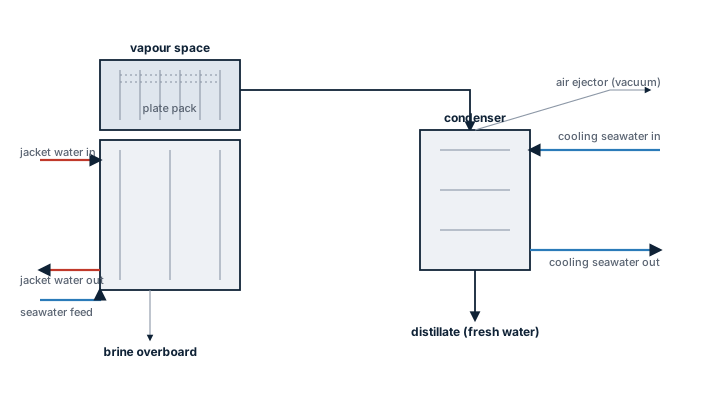
A plate evaporator uses stacked titanium plates to flash seawater into freshwater vapour under vacuum, run on jacket cooling water from the main engine, trading the shell-and-tube evaporator's robustness for a smaller footprint and faster response to load changes.
Read more — Plate Evaporator explained ▾
What defines a plate evaporator
A plate-type freshwater generator produces distilled water from seawater by flash evaporation under vacuum, using low-grade heat -- typically 70 to 85°C jacket cooling water drawn from the main engine -- rather than dedicated steam. The vacuum, held by an ejector or a vacuum pump, lowers the boiling point of seawater so evaporation happens at engine cooling water temperature instead of 100°C. What sets the plate type apart from the shell-and-tube evaporator is the heat exchange surface: gasketed or brazed plates instead of a tube bundle. Plates give more heat transfer area per unit volume, respond faster when engine load and cooling water temperature change, and are easier to open up and inspect for scale, but the gasketed versions carry more seals that can leak and the plate pack is less tolerant of thermal shock than a tube bundle.
Main components
Plate heat exchanger sections
Usually two plate packs in one shell: an evaporator section heated by jacket water, and a condenser section cooled by seawater, arranged so vapour rising off the evaporator plates condenses on the condenser plates without further pumping.
Vacuum system
A steam or seawater-driven ejector, or an electric vacuum pump on newer units, holds the shell at the vacuum needed for the jacket water temperature available -- the lower the heat source temperature, the deeper the vacuum required.
Salinometer and dump valve
A conductivity sensor on the distillate outlet continuously checks salinity; if it rises above the set point an automatic three-way valve dumps the batch to bilge instead of the potable water tank.
Brine and distillate pumps
The brine pump removes concentrated, unevaporated seawater from the shell; the distillate pump draws off the condensed freshwater. Both run under vacuum conditions, which makes their seals and NPSH margin more demanding than a normal centrifugal pump duty.
Selection and sizing
- Daily freshwater output required against crew and technical water demand, plus a margin for reduced engine load in port.
- Available jacket water temperature and flow at the lowest engine load the vessel regularly operates at, since output falls sharply below a minimum temperature.
- Seawater temperature range for the trading area -- warm seawater reduces the achievable vacuum and therefore output.
- Materials of construction: titanium plates for seawater and vapour-side corrosion resistance, versus lower-cost alloys accepted only in benign trades.
- Space and headroom for opening the plate pack for cleaning without lifting it out of the engine room.
Regulations and class
Potable water produced aboard falls under flag state and port health requirements for drinking water quality, and class rules require the freshwater generator's salinity alarm and automatic dump to potable tank be demonstrated at survey. Where the evaporator draws from the same jacket water circuit as the main engine, class also checks that a fault in the evaporator cannot compromise main engine cooling -- an isolating arrangement or a dedicated heat exchanger loop is required on many designs for exactly this reason.
Typical faults
| Fault | Cause | Consequence |
|---|---|---|
| Falling freshwater output | Scale build-up on the evaporator plates, worse in warm or hard seawater | Reduced heat transfer, eventually output too low to meet demand, requiring plate pack acid cleaning |
| Repeated automatic dump to bilge | Salinometer drift, or brine level too high carrying droplets into the distillate | Loss of produced water, and if the alarm is disabled or ignored, a real high-salinity batch reaching the potable tank |
| Loss of vacuum | Worn ejector nozzle, air leak at a plate gasket, or vacuum pump seal wear | Evaporation stops or output collapses even with normal jacket water temperature |
| Gasket leak between plates | Gasket age-hardening or incorrect tightening torque after cleaning | Cross-contamination between brine and distillate sides, or external leak into the bilge |
What to look for in a supplier
- Plate material certificate (titanium grade) matching the seawater corrosivity expected on the trading route.
- Guaranteed output curve against jacket water temperature and seawater temperature, not just a single nominal figure.
- Gasket spares in the exact plate profile, since gaskets are not universally interchangeable between makers.
- Documented cleaning procedure and access arrangement for opening the plate pack in place.
Output drops noticeably in port whenever the main engine idles at low load -- that is the jacket water temperature falling, not a fault, and running the auxiliary boiler or an electric heater to supplement heat is the normal workaround rather than something to trace as a defect.
11 manufacturers · 102 models
Alfa Laval
26 ✓ 7 verified- Kapazität JWP-16
- 0.5–10 m³/24 h depending on heating and cooling water temperatures
- Kapazität JWP-26
- 4-35 m³/24h, optional bis 100 m³/24h
- Plattentyp
- Titanium Grade 1, 0.5 mm Plattendicke, korrosionsbeständig
- Betriebsvakuum
- 85-95% (ca. 4-10 mmHgA absolute)
- Ejektor-eingangsdruck
- Minimum 3 bar Meerwasserdruck erforderlich
- Ejektor-ausgangsdruck
- Maximum 0.8 bar
- Gewichtsbereich
- 600-955 kg (JWP-26 Varianten)
- Jacket-wassertemperatur
- 55-95°C flexibel einstellbar
- JWP-16 (0.5-10 m³/24h)
- JWP-26 (4-35 m³/24h)
- DOLPHIN (single/double effect)
- DPU-36 (10-55 m³/24h)
- Area: Plate scaling and corrosion (calcium carbonate, magnesium hydroxide, calcium sulfate deposits)Check: Every 6 months: visually inspect plate packages, soak with mild acid solution (e.g. Descalex), use soft brush for gentle cleaning, check for pinholes/cracks, monitor ring surface damage (pitting, scratches, erosion)
- Area: Gasket wear and sealing leaks (neoprene coating flaking, gasket damage)Check: Every 12 months: visually inspect gasket surface damage (wear, deformation, traces of salt crystallization), mark leak points during pressure test, replace worn gaskets, clean and dry seal surfaces before re-fastening
- Area: Ejector vacuum loss and air leaks (ejector nozzle wear, poor vacuum retention, seal wear)Check: Weekly check vacuum gauge (shall maintain 85–95%); if difficult: air pressure loss test (if vacuum drops >2% in 8 h = leak present). Remove inspection plug, inspect ejector throat with flashlight, remove deposits with scraper, ejector pump inlet pressure must be ≥3 bar
- Area: Demister contamination and salt carryover (demister blocked by salt deposit → high salinity)Check: Every 6 months: visually inspect demister element (blockages, salt build-up), test condenser for tube leaks (pressure test), at high salt content: chemically clean or replace condenser and demister. Monitor brine level via sight tube
- Area: Salinometer sensor contamination and incorrect quality measurement (salt content sensor contaminated, calibrated incorrectly, electrode deposits)Check: Daily: check salinometer reading (shall be <10 ppm); if measurement fault: clean sensor with dry brush, NEVER touch with bare hands, check electrodes for contamination, if necessary descale with solvent. Target: salt content of distillate <10 ppm
- Area: Hygiene and biofilm formation in pipelines/tank (legionella risk, microbial contamination during storage)Check: Every 3 months check tank water quality (microbial count); perform monthly CIP cleaning (cleaning-in-place), flush pipelines with biocide/chlorine, check tank cover for light ingress/contamination, maintain freshwater temperature ≥55°C to prevent legionella proliferation
Generic inspection/maintenance points for freshwater generators (Alfa Laval, Mega-Schwarm 2026-06). Per-model specs not auto-filled
- Titanium Grade 1 plates give excellent corrosion resistance and long service life
- Wide capacity range (0.5–100 m³/24 h) via modular JWP‑16, JWP‑26 and optional series
- Low vacuum operation (85‑95 % of ambient) reduces steam consumption
- Flexible jacket‑water temperature control (55‑95 °C) allows optimisation with ship waste heat
- Compact weight for its output (600‑955 kg for the larger JWP‑26) compared with multi‑effect units
- Requires a minimum seawater inlet pressure of 3 bar, limiting installation on low‑pressure pump systems
- Titanium plates and ejector hardware raise capital cost relative to aluminium or stainless‑steel exchangers
- Scaling (calcium carbonate, magnesium hydroxide) must be managed with regular chemical cleaning every 3–6 months
- Maximum ejector outlet pressure of only 0.8 bar restricts integration with high‑pressure condensate systems
- Weight may still be significant for small vessels where space and displacement are at a premium
- Kapazität JWP-16
- 0.5–10 m³/24 h depending on heating and cooling water temperatures
- Kapazität JWP-26
- 4-35 m³/24h, optional bis 100 m³/24h
- Plattentyp
- Titanium Grade 1, 0.5 mm Plattendicke, korrosionsbeständig
- Betriebsvakuum
- 85-95% (ca. 4-10 mmHgA absolute)
- Ejektor-eingangsdruck
- Minimum 3 bar Meerwasserdruck erforderlich
- Ejektor-ausgangsdruck
- Maximum 0.8 bar
- Gewichtsbereich
- 600-955 kg (JWP-26 Varianten)
- Jacket-wassertemperatur
- 55-95°C flexibel einstellbar
- JWP-16 (0.5-10 m³/24h)
- JWP-26 (4-35 m³/24h)
- DOLPHIN (single/double effect)
- DPU-36 (10-55 m³/24h)
- Area: Plate scaling and corrosion (calcium carbonate, magnesium hydroxide, calcium sulfate deposits)Check: Every 6 months: visually inspect plate packages, soak with mild acid solution (e.g. Descalex), use soft brush for gentle cleaning, check for pinholes/cracks, monitor ring surface damage (pitting, scratches, erosion)
- Area: Gasket wear and sealing leaks (neoprene coating flaking, gasket damage)Check: Every 12 months: visually inspect gasket surface damage (wear, deformation, traces of salt crystallization), mark leak points during pressure test, replace worn gaskets, clean and dry seal surfaces before re-fastening
- Area: Ejector vacuum loss and air leaks (ejector nozzle wear, poor vacuum retention, seal wear)Check: Weekly check vacuum gauge (shall maintain 85–95%); if difficult: air pressure loss test (if vacuum drops >2% in 8 h = leak present). Remove inspection plug, inspect ejector throat with flashlight, remove deposits with scraper, ejector pump inlet pressure must be ≥3 bar
- Area: Demister contamination and salt carryover (demister blocked by salt deposit → high salinity)Check: Every 6 months: visually inspect demister element (blockages, salt build-up), test condenser for tube leaks (pressure test), at high salt content: chemically clean or replace condenser and demister. Monitor brine level via sight tube
- Area: Salinometer sensor contamination and incorrect quality measurement (salt content sensor contaminated, calibrated incorrectly, electrode deposits)Check: Daily: check salinometer reading (shall be <10 ppm); if measurement fault: clean sensor with dry brush, NEVER touch with bare hands, check electrodes for contamination, if necessary descale with solvent. Target: salt content of distillate <10 ppm
- Area: Hygiene and biofilm formation in pipelines/tank (legionella risk, microbial contamination during storage)Check: Every 3 months check tank water quality (microbial count); perform monthly CIP cleaning (cleaning-in-place), flush pipelines with biocide/chlorine, check tank cover for light ingress/contamination, maintain freshwater temperature ≥55°C to prevent legionella proliferation
Generic inspection/maintenance points for freshwater generators (Alfa Laval, Mega-Schwarm 2026-06). Per-model specs not auto-filled
- Titanium Grade 1 plates provide excellent corrosion resistance and long service life
- Compact, low‑weight design suitable for vessels with limited space
- Operates at high vacuum (85‑95 % of ambient) giving good energy efficiency
- Flexible jacket‑water temperature range (55–95 °C) allows optimisation in varying sea conditions
- Modular capacity – can be upgraded to larger JWP series if future demand grows
- Requires a minimum seawater inlet pressure of ~3 bar for the ejector, limiting use on low‑pressure systems
- Single‑stage design limits maximum output; not suitable for high‑capacity vessels (>20 m³/24 h)
- Titanium plates and specialised gaskets increase initial capital cost
- Fouling (scale, salt deposits) can reduce performance quickly – needs cleaning when output falls below ~70 %
- No built‑in redundancy; a failure shuts down fresh water production until repaired
- Kapazität JWP-16
- 0.5–10 m³/24 h depending on heating and cooling water temperatures
- Kapazität JWP-26
- 4-35 m³/24h, optional bis 100 m³/24h
- Plattentyp
- Titanium Grade 1, 0.5 mm Plattendicke, korrosionsbeständig
- Betriebsvakuum
- 85-95% (ca. 4-10 mmHgA absolute)
- Ejektor-eingangsdruck
- Minimum 3 bar Meerwasserdruck erforderlich
- Ejektor-ausgangsdruck
- Maximum 0.8 bar
- Gewichtsbereich
- 600-955 kg (JWP-26 Varianten)
- Jacket-wassertemperatur
- 55-95°C flexibel einstellbar
- JWP-16 (0.5-10 m³/24h)
- JWP-26 (4-35 m³/24h)
- DOLPHIN (single/double effect)
- DPU-36 (10-55 m³/24h)
- Area: Plate scaling and corrosion (calcium carbonate, magnesium hydroxide, calcium sulfate deposits)Check: Every 6 months: visually inspect plate packages, soak with mild acid solution (e.g. Descalex), use soft brush for gentle cleaning, check for pinholes/cracks, monitor ring surface damage (pitting, scratches, erosion)
- Area: Gasket wear and sealing leaks (neoprene coating flaking, gasket damage)Check: Every 12 months: visually inspect gasket surface damage (wear, deformation, traces of salt crystallization), mark leak points during pressure test, replace worn gaskets, clean and dry seal surfaces before re-fastening
- Area: Ejector vacuum loss and air leaks (ejector nozzle wear, poor vacuum retention, seal wear)Check: Weekly check vacuum gauge (shall maintain 85–95%); if difficult: air pressure loss test (if vacuum drops >2% in 8 h = leak present). Remove inspection plug, inspect ejector throat with flashlight, remove deposits with scraper, ejector pump inlet pressure must be ≥3 bar
- Area: Demister contamination and salt carryover (demister blocked by salt deposit → high salinity)Check: Every 6 months: visually inspect demister element (blockages, salt build-up), test condenser for tube leaks (pressure test), at high salt content: chemically clean or replace condenser and demister. Monitor brine level via sight tube
- Area: Salinometer sensor contamination and incorrect quality measurement (salt content sensor contaminated, calibrated incorrectly, electrode deposits)Check: Daily: check salinometer reading (shall be <10 ppm); if measurement fault: clean sensor with dry brush, NEVER touch with bare hands, check electrodes for contamination, if necessary descale with solvent. Target: salt content of distillate <10 ppm
- Area: Hygiene and biofilm formation in pipelines/tank (legionella risk, microbial contamination during storage)Check: Every 3 months check tank water quality (microbial count); perform monthly CIP cleaning (cleaning-in-place), flush pipelines with biocide/chlorine, check tank cover for light ingress/contamination, maintain freshwater temperature ≥55°C to prevent legionella proliferation
Generic inspection/maintenance points for freshwater generators (Alfa Laval, Mega-Schwarm 2026-06). Per-model specs not auto-filled
- Kapazität JWP-16
- 0.5–10 m³/24 h depending on heating and cooling water temperatures
- Kapazität JWP-26
- 4-35 m³/24h, optional bis 100 m³/24h
- Plattentyp
- Titanium Grade 1, 0.5 mm Plattendicke, korrosionsbeständig
- Betriebsvakuum
- 85-95% (ca. 4-10 mmHgA absolute)
- Ejektor-eingangsdruck
- Minimum 3 bar Meerwasserdruck erforderlich
- Ejektor-ausgangsdruck
- Maximum 0.8 bar
- Gewichtsbereich
- 600-955 kg (JWP-26 Varianten)
- Jacket-wassertemperatur
- 55-95°C flexibel einstellbar
- JWP-16 (0.5-10 m³/24h)
- JWP-26 (4-35 m³/24h)
- DOLPHIN (single/double effect)
- DPU-36 (10-55 m³/24h)
- Area: Plate scaling and corrosion (calcium carbonate, magnesium hydroxide, calcium sulfate deposits)Check: Every 6 months: visually inspect plate packages, soak with mild acid solution (e.g. Descalex), use soft brush for gentle cleaning, check for pinholes/cracks, monitor ring surface damage (pitting, scratches, erosion)
- Area: Gasket wear and sealing leaks (neoprene coating flaking, gasket damage)Check: Every 12 months: visually inspect gasket surface damage (wear, deformation, traces of salt crystallization), mark leak points during pressure test, replace worn gaskets, clean and dry seal surfaces before re-fastening
- Area: Ejector vacuum loss and air leaks (ejector nozzle wear, poor vacuum retention, seal wear)Check: Weekly check vacuum gauge (shall maintain 85–95%); if difficult: air pressure loss test (if vacuum drops >2% in 8 h = leak present). Remove inspection plug, inspect ejector throat with flashlight, remove deposits with scraper, ejector pump inlet pressure must be ≥3 bar
- Area: Demister contamination and salt carryover (demister blocked by salt deposit → high salinity)Check: Every 6 months: visually inspect demister element (blockages, salt build-up), test condenser for tube leaks (pressure test), at high salt content: chemically clean or replace condenser and demister. Monitor brine level via sight tube
- Area: Salinometer sensor contamination and incorrect quality measurement (salt content sensor contaminated, calibrated incorrectly, electrode deposits)Check: Daily: check salinometer reading (shall be <10 ppm); if measurement fault: clean sensor with dry brush, NEVER touch with bare hands, check electrodes for contamination, if necessary descale with solvent. Target: salt content of distillate <10 ppm
- Area: Hygiene and biofilm formation in pipelines/tank (legionella risk, microbial contamination during storage)Check: Every 3 months check tank water quality (microbial count); perform monthly CIP cleaning (cleaning-in-place), flush pipelines with biocide/chlorine, check tank cover for light ingress/contamination, maintain freshwater temperature ≥55°C to prevent legionella proliferation
Generic inspection/maintenance points for freshwater generators (Alfa Laval, Mega-Schwarm 2026-06). Per-model specs not auto-filled
- Kapazität JWP-16
- 0.5–10 m³/24 h depending on heating and cooling water temperatures
- Kapazität JWP-26
- 4-35 m³/24h, optional bis 100 m³/24h
- Plattentyp
- Titanium Grade 1, 0.5 mm Plattendicke, korrosionsbeständig
- Betriebsvakuum
- 85-95% (ca. 4-10 mmHgA absolute)
- Ejektor-eingangsdruck
- Minimum 3 bar Meerwasserdruck erforderlich
- Ejektor-ausgangsdruck
- Maximum 0.8 bar
- Gewichtsbereich
- 600-955 kg (JWP-26 Varianten)
- Jacket-wassertemperatur
- 55-95°C flexibel einstellbar
- JWP-16 (0.5-10 m³/24h)
- JWP-26 (4-35 m³/24h)
- DOLPHIN (single/double effect)
- DPU-36 (10-55 m³/24h)
- Area: Plate scaling and corrosion (calcium carbonate, magnesium hydroxide, calcium sulfate deposits)Check: Every 6 months: visually inspect plate packages, soak with mild acid solution (e.g. Descalex), use soft brush for gentle cleaning, check for pinholes/cracks, monitor ring surface damage (pitting, scratches, erosion)
- Area: Gasket wear and sealing leaks (neoprene coating flaking, gasket damage)Check: Every 12 months: visually inspect gasket surface damage (wear, deformation, traces of salt crystallization), mark leak points during pressure test, replace worn gaskets, clean and dry seal surfaces before re-fastening
- Area: Ejector vacuum loss and air leaks (ejector nozzle wear, poor vacuum retention, seal wear)Check: Weekly check vacuum gauge (shall maintain 85–95%); if difficult: air pressure loss test (if vacuum drops >2% in 8 h = leak present). Remove inspection plug, inspect ejector throat with flashlight, remove deposits with scraper, ejector pump inlet pressure must be ≥3 bar
- Area: Demister contamination and salt carryover (demister blocked by salt deposit → high salinity)Check: Every 6 months: visually inspect demister element (blockages, salt build-up), test condenser for tube leaks (pressure test), at high salt content: chemically clean or replace condenser and demister. Monitor brine level via sight tube
- Area: Salinometer sensor contamination and incorrect quality measurement (salt content sensor contaminated, calibrated incorrectly, electrode deposits)Check: Daily: check salinometer reading (shall be <10 ppm); if measurement fault: clean sensor with dry brush, NEVER touch with bare hands, check electrodes for contamination, if necessary descale with solvent. Target: salt content of distillate <10 ppm
- Area: Hygiene and biofilm formation in pipelines/tank (legionella risk, microbial contamination during storage)Check: Every 3 months check tank water quality (microbial count); perform monthly CIP cleaning (cleaning-in-place), flush pipelines with biocide/chlorine, check tank cover for light ingress/contamination, maintain freshwater temperature ≥55°C to prevent legionella proliferation
Generic inspection/maintenance points for freshwater generators (Alfa Laval, Mega-Schwarm 2026-06). Per-model specs not auto-filled
- Kapazität JWP-16
- 0.5–10 m³/24 h depending on heating and cooling water temperatures
- Kapazität JWP-26
- 4-35 m³/24h, optional bis 100 m³/24h
- Plattentyp
- Titanium Grade 1, 0.5 mm Plattendicke, korrosionsbeständig
- Betriebsvakuum
- 85-95% (ca. 4-10 mmHgA absolute)
- Ejektor-eingangsdruck
- Minimum 3 bar Meerwasserdruck erforderlich
- Ejektor-ausgangsdruck
- Maximum 0.8 bar
- Gewichtsbereich
- 600-955 kg (JWP-26 Varianten)
- Jacket-wassertemperatur
- 55-95°C flexibel einstellbar
- JWP-16 (0.5-10 m³/24h)
- JWP-26 (4-35 m³/24h)
- DOLPHIN (single/double effect)
- DPU-36 (10-55 m³/24h)
- Area: Plate scaling and corrosion (calcium carbonate, magnesium hydroxide, calcium sulfate deposits)Check: Every 6 months: visually inspect plate packages, soak with mild acid solution (e.g. Descalex), use soft brush for gentle cleaning, check for pinholes/cracks, monitor ring surface damage (pitting, scratches, erosion)
- Area: Gasket wear and sealing leaks (neoprene coating flaking, gasket damage)Check: Every 12 months: visually inspect gasket surface damage (wear, deformation, traces of salt crystallization), mark leak points during pressure test, replace worn gaskets, clean and dry seal surfaces before re-fastening
- Area: Ejector vacuum loss and air leaks (ejector nozzle wear, poor vacuum retention, seal wear)Check: Weekly check vacuum gauge (shall maintain 85–95%); if difficult: air pressure loss test (if vacuum drops >2% in 8 h = leak present). Remove inspection plug, inspect ejector throat with flashlight, remove deposits with scraper, ejector pump inlet pressure must be ≥3 bar
- Area: Demister contamination and salt carryover (demister blocked by salt deposit → high salinity)Check: Every 6 months: visually inspect demister element (blockages, salt build-up), test condenser for tube leaks (pressure test), at high salt content: chemically clean or replace condenser and demister. Monitor brine level via sight tube
- Area: Salinometer sensor contamination and incorrect quality measurement (salt content sensor contaminated, calibrated incorrectly, electrode deposits)Check: Daily: check salinometer reading (shall be <10 ppm); if measurement fault: clean sensor with dry brush, NEVER touch with bare hands, check electrodes for contamination, if necessary descale with solvent. Target: salt content of distillate <10 ppm
- Area: Hygiene and biofilm formation in pipelines/tank (legionella risk, microbial contamination during storage)Check: Every 3 months check tank water quality (microbial count); perform monthly CIP cleaning (cleaning-in-place), flush pipelines with biocide/chlorine, check tank cover for light ingress/contamination, maintain freshwater temperature ≥55°C to prevent legionella proliferation
Generic inspection/maintenance points for freshwater generators (Alfa Laval, Mega-Schwarm 2026-06). Per-model specs not auto-filled
- Kapazität JWP-16
- 0.5–10 m³/24 h depending on heating and cooling water temperatures
- Kapazität JWP-26
- 4-35 m³/24h, optional bis 100 m³/24h
- Plattentyp
- Titanium Grade 1, 0.5 mm Plattendicke, korrosionsbeständig
- Betriebsvakuum
- 85-95% (ca. 4-10 mmHgA absolute)
- Ejektor-eingangsdruck
- Minimum 3 bar Meerwasserdruck erforderlich
- Ejektor-ausgangsdruck
- Maximum 0.8 bar
- Gewichtsbereich
- 600-955 kg (JWP-26 Varianten)
- Jacket-wassertemperatur
- 55-95°C flexibel einstellbar
- JWP-16 (0.5-10 m³/24h)
- JWP-26 (4-35 m³/24h)
- DOLPHIN (single/double effect)
- DPU-36 (10-55 m³/24h)
- Area: Plate scaling and corrosion (calcium carbonate, magnesium hydroxide, calcium sulfate deposits)Check: Every 6 months: visually inspect plate packages, soak with mild acid solution (e.g. Descalex), use soft brush for gentle cleaning, check for pinholes/cracks, monitor ring surface damage (pitting, scratches, erosion)
- Area: Gasket wear and sealing leaks (neoprene coating flaking, gasket damage)Check: Every 12 months: visually inspect gasket surface damage (wear, deformation, traces of salt crystallization), mark leak points during pressure test, replace worn gaskets, clean and dry seal surfaces before re-fastening
- Area: Ejector vacuum loss and air leaks (ejector nozzle wear, poor vacuum retention, seal wear)Check: Weekly check vacuum gauge (shall maintain 85–95%); if difficult: air pressure loss test (if vacuum drops >2% in 8 h = leak present). Remove inspection plug, inspect ejector throat with flashlight, remove deposits with scraper, ejector pump inlet pressure must be ≥3 bar
- Area: Demister contamination and salt carryover (demister blocked by salt deposit → high salinity)Check: Every 6 months: visually inspect demister element (blockages, salt build-up), test condenser for tube leaks (pressure test), at high salt content: chemically clean or replace condenser and demister. Monitor brine level via sight tube
- Area: Salinometer sensor contamination and incorrect quality measurement (salt content sensor contaminated, calibrated incorrectly, electrode deposits)Check: Daily: check salinometer reading (shall be <10 ppm); if measurement fault: clean sensor with dry brush, NEVER touch with bare hands, check electrodes for contamination, if necessary descale with solvent. Target: salt content of distillate <10 ppm
- Area: Hygiene and biofilm formation in pipelines/tank (legionella risk, microbial contamination during storage)Check: Every 3 months check tank water quality (microbial count); perform monthly CIP cleaning (cleaning-in-place), flush pipelines with biocide/chlorine, check tank cover for light ingress/contamination, maintain freshwater temperature ≥55°C to prevent legionella proliferation
Generic inspection/maintenance points for freshwater generators (Alfa Laval, Mega-Schwarm 2026-06). Per-model specs not auto-filled
- Kapazität JWP-16
- 0.5–10 m³/24 h depending on heating and cooling water temperatures
- Kapazität JWP-26
- 4-35 m³/24h, optional bis 100 m³/24h
- Plattentyp
- Titanium Grade 1, 0.5 mm Plattendicke, korrosionsbeständig
- Betriebsvakuum
- 85-95% (ca. 4-10 mmHgA absolute)
- Ejektor-eingangsdruck
- Minimum 3 bar Meerwasserdruck erforderlich
- Ejektor-ausgangsdruck
- Maximum 0.8 bar
- Gewichtsbereich
- 600-955 kg (JWP-26 Varianten)
- Jacket-wassertemperatur
- 55-95°C flexibel einstellbar
- JWP-16 (0.5-10 m³/24h)
- JWP-26 (4-35 m³/24h)
- DOLPHIN (single/double effect)
- DPU-36 (10-55 m³/24h)
- Area: Plate scaling and corrosion (calcium carbonate, magnesium hydroxide, calcium sulfate deposits)Check: Every 6 months: visually inspect plate packages, soak with mild acid solution (e.g. Descalex), use soft brush for gentle cleaning, check for pinholes/cracks, monitor ring surface damage (pitting, scratches, erosion)
- Area: Gasket wear and sealing leaks (neoprene coating flaking, gasket damage)Check: Every 12 months: visually inspect gasket surface damage (wear, deformation, traces of salt crystallization), mark leak points during pressure test, replace worn gaskets, clean and dry seal surfaces before re-fastening
- Area: Ejector vacuum loss and air leaks (ejector nozzle wear, poor vacuum retention, seal wear)Check: Weekly check vacuum gauge (shall maintain 85–95%); if difficult: air pressure loss test (if vacuum drops >2% in 8 h = leak present). Remove inspection plug, inspect ejector throat with flashlight, remove deposits with scraper, ejector pump inlet pressure must be ≥3 bar
- Area: Demister contamination and salt carryover (demister blocked by salt deposit → high salinity)Check: Every 6 months: visually inspect demister element (blockages, salt build-up), test condenser for tube leaks (pressure test), at high salt content: chemically clean or replace condenser and demister. Monitor brine level via sight tube
- Area: Salinometer sensor contamination and incorrect quality measurement (salt content sensor contaminated, calibrated incorrectly, electrode deposits)Check: Daily: check salinometer reading (shall be <10 ppm); if measurement fault: clean sensor with dry brush, NEVER touch with bare hands, check electrodes for contamination, if necessary descale with solvent. Target: salt content of distillate <10 ppm
- Area: Hygiene and biofilm formation in pipelines/tank (legionella risk, microbial contamination during storage)Check: Every 3 months check tank water quality (microbial count); perform monthly CIP cleaning (cleaning-in-place), flush pipelines with biocide/chlorine, check tank cover for light ingress/contamination, maintain freshwater temperature ≥55°C to prevent legionella proliferation
Generic inspection/maintenance points for freshwater generators (Alfa Laval, Mega-Schwarm 2026-06). Per-model specs not auto-filled
- Kapazität JWP-16
- 0.5–10 m³/24 h depending on heating and cooling water temperatures
- Kapazität JWP-26
- 4-35 m³/24h, optional bis 100 m³/24h
- Plattentyp
- Titanium Grade 1, 0.5 mm Plattendicke, korrosionsbeständig
- Betriebsvakuum
- 85-95% (ca. 4-10 mmHgA absolute)
- Ejektor-eingangsdruck
- Minimum 3 bar Meerwasserdruck erforderlich
- Ejektor-ausgangsdruck
- Maximum 0.8 bar
- Gewichtsbereich
- 600-955 kg (JWP-26 Varianten)
- Jacket-wassertemperatur
- 55-95°C flexibel einstellbar
- JWP-16 (0.5-10 m³/24h)
- JWP-26 (4-35 m³/24h)
- DOLPHIN (single/double effect)
- DPU-36 (10-55 m³/24h)
- Area: Plate scaling and corrosion (calcium carbonate, magnesium hydroxide, calcium sulfate deposits)Check: Every 6 months: visually inspect plate packages, soak with mild acid solution (e.g. Descalex), use soft brush for gentle cleaning, check for pinholes/cracks, monitor ring surface damage (pitting, scratches, erosion)
- Area: Gasket wear and sealing leaks (neoprene coating flaking, gasket damage)Check: Every 12 months: visually inspect gasket surface damage (wear, deformation, traces of salt crystallization), mark leak points during pressure test, replace worn gaskets, clean and dry seal surfaces before re-fastening
- Area: Ejector vacuum loss and air leaks (ejector nozzle wear, poor vacuum retention, seal wear)Check: Weekly check vacuum gauge (shall maintain 85–95%); if difficult: air pressure loss test (if vacuum drops >2% in 8 h = leak present). Remove inspection plug, inspect ejector throat with flashlight, remove deposits with scraper, ejector pump inlet pressure must be ≥3 bar
- Area: Demister contamination and salt carryover (demister blocked by salt deposit → high salinity)Check: Every 6 months: visually inspect demister element (blockages, salt build-up), test condenser for tube leaks (pressure test), at high salt content: chemically clean or replace condenser and demister. Monitor brine level via sight tube
- Area: Salinometer sensor contamination and incorrect quality measurement (salt content sensor contaminated, calibrated incorrectly, electrode deposits)Check: Daily: check salinometer reading (shall be <10 ppm); if measurement fault: clean sensor with dry brush, NEVER touch with bare hands, check electrodes for contamination, if necessary descale with solvent. Target: salt content of distillate <10 ppm
- Area: Hygiene and biofilm formation in pipelines/tank (legionella risk, microbial contamination during storage)Check: Every 3 months check tank water quality (microbial count); perform monthly CIP cleaning (cleaning-in-place), flush pipelines with biocide/chlorine, check tank cover for light ingress/contamination, maintain freshwater temperature ≥55°C to prevent legionella proliferation
Generic inspection/maintenance points for freshwater generators (Alfa Laval, Mega-Schwarm 2026-06). Per-model specs not auto-filled
- Kapazität JWP-16
- 0.5–10 m³/24 h depending on heating and cooling water temperatures
- Kapazität JWP-26
- 4-35 m³/24h, optional bis 100 m³/24h
- Plattentyp
- Titanium Grade 1, 0.5 mm Plattendicke, korrosionsbeständig
- Betriebsvakuum
- 85-95% (ca. 4-10 mmHgA absolute)
- Ejektor-eingangsdruck
- Minimum 3 bar Meerwasserdruck erforderlich
- Ejektor-ausgangsdruck
- Maximum 0.8 bar
- Gewichtsbereich
- 600-955 kg (JWP-26 Varianten)
- Jacket-wassertemperatur
- 55-95°C flexibel einstellbar
- JWP-16 (0.5-10 m³/24h)
- JWP-26 (4-35 m³/24h)
- DOLPHIN (single/double effect)
- DPU-36 (10-55 m³/24h)
- Area: Plate scaling and corrosion (calcium carbonate, magnesium hydroxide, calcium sulfate deposits)Check: Every 6 months: visually inspect plate packages, soak with mild acid solution (e.g. Descalex), use soft brush for gentle cleaning, check for pinholes/cracks, monitor ring surface damage (pitting, scratches, erosion)
- Area: Gasket wear and sealing leaks (neoprene coating flaking, gasket damage)Check: Every 12 months: visually inspect gasket surface damage (wear, deformation, traces of salt crystallization), mark leak points during pressure test, replace worn gaskets, clean and dry seal surfaces before re-fastening
- Area: Ejector vacuum loss and air leaks (ejector nozzle wear, poor vacuum retention, seal wear)Check: Weekly check vacuum gauge (shall maintain 85–95%); if difficult: air pressure loss test (if vacuum drops >2% in 8 h = leak present). Remove inspection plug, inspect ejector throat with flashlight, remove deposits with scraper, ejector pump inlet pressure must be ≥3 bar
- Area: Demister contamination and salt carryover (demister blocked by salt deposit → high salinity)Check: Every 6 months: visually inspect demister element (blockages, salt build-up), test condenser for tube leaks (pressure test), at high salt content: chemically clean or replace condenser and demister. Monitor brine level via sight tube
- Area: Salinometer sensor contamination and incorrect quality measurement (salt content sensor contaminated, calibrated incorrectly, electrode deposits)Check: Daily: check salinometer reading (shall be <10 ppm); if measurement fault: clean sensor with dry brush, NEVER touch with bare hands, check electrodes for contamination, if necessary descale with solvent. Target: salt content of distillate <10 ppm
- Area: Hygiene and biofilm formation in pipelines/tank (legionella risk, microbial contamination during storage)Check: Every 3 months check tank water quality (microbial count); perform monthly CIP cleaning (cleaning-in-place), flush pipelines with biocide/chlorine, check tank cover for light ingress/contamination, maintain freshwater temperature ≥55°C to prevent legionella proliferation
Generic inspection/maintenance points for freshwater generators (Alfa Laval, Mega-Schwarm 2026-06). Per-model specs not auto-filled

- Kapazität JWP-16
- 0.5–10 m³/24 h depending on heating and cooling water temperatures
- Kapazität JWP-26
- 4-35 m³/24h, optional bis 100 m³/24h
- Plattentyp
- Titanium Grade 1, 0.5 mm Plattendicke, korrosionsbeständig
- Betriebsvakuum
- 85-95% (ca. 4-10 mmHgA absolute)
- Ejektor-eingangsdruck
- Minimum 3 bar Meerwasserdruck erforderlich
- Ejektor-ausgangsdruck
- Maximum 0.8 bar
- Gewichtsbereich
- 600-955 kg (JWP-26 Varianten)
- Jacket-wassertemperatur
- 55-95°C flexibel einstellbar
- JWP-16 (0.5-10 m³/24h)
- JWP-26 (4-35 m³/24h)
- DOLPHIN (single/double effect)
- DPU-36 (10-55 m³/24h)
- Area: Plate scaling and corrosion (calcium carbonate, magnesium hydroxide, calcium sulfate deposits)Check: Every 6 months: visually inspect plate packages, soak with mild acid solution (e.g. Descalex), use soft brush for gentle cleaning, check for pinholes/cracks, monitor ring surface damage (pitting, scratches, erosion)
- Area: Gasket wear and sealing leaks (neoprene coating flaking, gasket damage)Check: Every 12 months: visually inspect gasket surface damage (wear, deformation, traces of salt crystallization), mark leak points during pressure test, replace worn gaskets, clean and dry seal surfaces before re-fastening
- Area: Ejector vacuum loss and air leaks (ejector nozzle wear, poor vacuum retention, seal wear)Check: Weekly check vacuum gauge (shall maintain 85–95%); if difficult: air pressure loss test (if vacuum drops >2% in 8 h = leak present). Remove inspection plug, inspect ejector throat with flashlight, remove deposits with scraper, ejector pump inlet pressure must be ≥3 bar
- Area: Demister contamination and salt carryover (demister blocked by salt deposit → high salinity)Check: Every 6 months: visually inspect demister element (blockages, salt build-up), test condenser for tube leaks (pressure test), at high salt content: chemically clean or replace condenser and demister. Monitor brine level via sight tube
- Area: Salinometer sensor contamination and incorrect quality measurement (salt content sensor contaminated, calibrated incorrectly, electrode deposits)Check: Daily: check salinometer reading (shall be <10 ppm); if measurement fault: clean sensor with dry brush, NEVER touch with bare hands, check electrodes for contamination, if necessary descale with solvent. Target: salt content of distillate <10 ppm
- Area: Hygiene and biofilm formation in pipelines/tank (legionella risk, microbial contamination during storage)Check: Every 3 months check tank water quality (microbial count); perform monthly CIP cleaning (cleaning-in-place), flush pipelines with biocide/chlorine, check tank cover for light ingress/contamination, maintain freshwater temperature ≥55°C to prevent legionella proliferation
Generic inspection/maintenance points for freshwater generators (Alfa Laval, Mega-Schwarm 2026-06). Per-model specs not auto-filled
- Kapazität JWP-16
- 0.5–10 m³/24 h depending on heating and cooling water temperatures
- Kapazität JWP-26
- 4-35 m³/24h, optional bis 100 m³/24h
- Plattentyp
- Titanium Grade 1, 0.5 mm Plattendicke, korrosionsbeständig
- Betriebsvakuum
- 85-95% (ca. 4-10 mmHgA absolute)
- Ejektor-eingangsdruck
- Minimum 3 bar Meerwasserdruck erforderlich
- Ejektor-ausgangsdruck
- Maximum 0.8 bar
- Gewichtsbereich
- 600-955 kg (JWP-26 Varianten)
- Jacket-wassertemperatur
- 55-95°C flexibel einstellbar
- JWP-16 (0.5-10 m³/24h)
- JWP-26 (4-35 m³/24h)
- DOLPHIN (single/double effect)
- DPU-36 (10-55 m³/24h)
- Area: Plate scaling and corrosion (calcium carbonate, magnesium hydroxide, calcium sulfate deposits)Check: Every 6 months: visually inspect plate packages, soak with mild acid solution (e.g. Descalex), use soft brush for gentle cleaning, check for pinholes/cracks, monitor ring surface damage (pitting, scratches, erosion)
- Area: Gasket wear and sealing leaks (neoprene coating flaking, gasket damage)Check: Every 12 months: visually inspect gasket surface damage (wear, deformation, traces of salt crystallization), mark leak points during pressure test, replace worn gaskets, clean and dry seal surfaces before re-fastening
- Area: Ejector vacuum loss and air leaks (ejector nozzle wear, poor vacuum retention, seal wear)Check: Weekly check vacuum gauge (shall maintain 85–95%); if difficult: air pressure loss test (if vacuum drops >2% in 8 h = leak present). Remove inspection plug, inspect ejector throat with flashlight, remove deposits with scraper, ejector pump inlet pressure must be ≥3 bar
- Area: Demister contamination and salt carryover (demister blocked by salt deposit → high salinity)Check: Every 6 months: visually inspect demister element (blockages, salt build-up), test condenser for tube leaks (pressure test), at high salt content: chemically clean or replace condenser and demister. Monitor brine level via sight tube
- Area: Salinometer sensor contamination and incorrect quality measurement (salt content sensor contaminated, calibrated incorrectly, electrode deposits)Check: Daily: check salinometer reading (shall be <10 ppm); if measurement fault: clean sensor with dry brush, NEVER touch with bare hands, check electrodes for contamination, if necessary descale with solvent. Target: salt content of distillate <10 ppm
- Area: Hygiene and biofilm formation in pipelines/tank (legionella risk, microbial contamination during storage)Check: Every 3 months check tank water quality (microbial count); perform monthly CIP cleaning (cleaning-in-place), flush pipelines with biocide/chlorine, check tank cover for light ingress/contamination, maintain freshwater temperature ≥55°C to prevent legionella proliferation
Generic inspection/maintenance points for freshwater generators (Alfa Laval, Mega-Schwarm 2026-06). Per-model specs not auto-filled
- Area: Salt deposits (scaling) on heat exchanger surfaces from seawater evaporation with solubility limit exceeded for saltsCheck: Visual inspection of titanium plate surfaces for salt crusting; measure heat transfer efficiency (temperature profiles before/after); perform pressure drop measurements
- Area: Corrosion of titanium plates by aggressive ions (chlorides, sulfates) and seawater; pitting and stress corrosion crackingCheck: Non-destructive testing (ultrasonic measurements, infrared thermography); check surface roughness and discoloration; perform tightness test of plate sets
- Area: Seal and gasket wear from cyclic thermal loading (temperature change 40-95°C) and pressure change in vacuum operation (85-95% vacuum)Check: Inspect gasket for wear, embrittlement and loss of elasticity; perform leakage tests with compressed air or helium; check replacement if wear evident
- Area: Vacuum loss and evaporation efficiency drop from leakage, wear of two-stage air/saltwater discharge ejectors or condenser failureCheck: Vacuum gauge measurement (should maintain 85-95%); condensate discharge check; ejector function test (pressure and flow); evaporation temperature check (should be 40-60°C)
- Area: Seawater contamination of fresh water due to faulty condensation, demister fouling or leaks in the condenser circuit; salinometer malfunctionCheck: Check and calibrate salinometer function; perform fresh water salinity measurement (should be <3 mg/l); visually inspect demister condition; test condenser discharge
Typ-universelle Inspektionspunkte fuer Freshwater Generators (verifiziert, 2026-06).
- Area: Salt deposits (scaling) on heat exchanger surfaces from seawater evaporation with solubility limit exceeded for saltsCheck: Visual inspection of titanium plate surfaces for salt crusting; measure heat transfer efficiency (temperature profiles before/after); perform pressure drop measurements
- Area: Corrosion of titanium plates by aggressive ions (chlorides, sulfates) and seawater; pitting and stress corrosion crackingCheck: Non-destructive testing (ultrasonic measurements, infrared thermography); check surface roughness and discoloration; perform tightness test of plate sets
- Area: Seal and gasket wear from cyclic thermal loading (temperature change 40-95°C) and pressure change in vacuum operation (85-95% vacuum)Check: Inspect gasket for wear, embrittlement and loss of elasticity; perform leakage tests with compressed air or helium; check replacement if wear evident
- Area: Vacuum loss and evaporation efficiency drop from leakage, wear of two-stage air/saltwater discharge ejectors or condenser failureCheck: Vacuum gauge measurement (should maintain 85-95%); condensate discharge check; ejector function test (pressure and flow); evaporation temperature check (should be 40-60°C)
- Area: Seawater contamination of fresh water due to faulty condensation, demister fouling or leaks in the condenser circuit; salinometer malfunctionCheck: Check and calibrate salinometer function; perform fresh water salinity measurement (should be <3 mg/l); visually inspect demister condition; test condenser discharge
Typ-universelle Inspektionspunkte fuer Freshwater Generators (verifiziert, 2026-06).
- Area: Salt deposits (scaling) on heat exchanger surfaces from seawater evaporation with solubility limit exceeded for saltsCheck: Visual inspection of titanium plate surfaces for salt crusting; measure heat transfer efficiency (temperature profiles before/after); perform pressure drop measurements
- Area: Corrosion of titanium plates by aggressive ions (chlorides, sulfates) and seawater; pitting and stress corrosion crackingCheck: Non-destructive testing (ultrasonic measurements, infrared thermography); check surface roughness and discoloration; perform tightness test of plate sets
- Area: Seal and gasket wear from cyclic thermal loading (temperature change 40-95°C) and pressure change in vacuum operation (85-95% vacuum)Check: Inspect gasket for wear, embrittlement and loss of elasticity; perform leakage tests with compressed air or helium; check replacement if wear evident
- Area: Vacuum loss and evaporation efficiency drop from leakage, wear of two-stage air/saltwater discharge ejectors or condenser failureCheck: Vacuum gauge measurement (should maintain 85-95%); condensate discharge check; ejector function test (pressure and flow); evaporation temperature check (should be 40-60°C)
- Area: Seawater contamination of fresh water due to faulty condensation, demister fouling or leaks in the condenser circuit; salinometer malfunctionCheck: Check and calibrate salinometer function; perform fresh water salinity measurement (should be <3 mg/l); visually inspect demister condition; test condenser discharge
Typ-universelle Inspektionspunkte fuer Freshwater Generators (verifiziert, 2026-06).
- Area: Salt deposits (scaling) on heat exchanger surfaces from seawater evaporation with solubility limit exceeded for saltsCheck: Visual inspection of titanium plate surfaces for salt crusting; measure heat transfer efficiency (temperature profiles before/after); perform pressure drop measurements
- Area: Corrosion of titanium plates by aggressive ions (chlorides, sulfates) and seawater; pitting and stress corrosion crackingCheck: Non-destructive testing (ultrasonic measurements, infrared thermography); check surface roughness and discoloration; perform tightness test of plate sets
- Area: Seal and gasket wear from cyclic thermal loading (temperature change 40-95°C) and pressure change in vacuum operation (85-95% vacuum)Check: Inspect gasket for wear, embrittlement and loss of elasticity; perform leakage tests with compressed air or helium; check replacement if wear evident
- Area: Vacuum loss and evaporation efficiency drop from leakage, wear of two-stage air/saltwater discharge ejectors or condenser failureCheck: Vacuum gauge measurement (should maintain 85-95%); condensate discharge check; ejector function test (pressure and flow); evaporation temperature check (should be 40-60°C)
- Area: Seawater contamination of fresh water due to faulty condensation, demister fouling or leaks in the condenser circuit; salinometer malfunctionCheck: Check and calibrate salinometer function; perform fresh water salinity measurement (should be <3 mg/l); visually inspect demister condition; test condenser discharge
Typ-universelle Inspektionspunkte fuer Freshwater Generators (verifiziert, 2026-06).
- Area: Salt deposits (scaling) on heat exchanger surfaces from seawater evaporation with solubility limit exceeded for saltsCheck: Visual inspection of titanium plate surfaces for salt crusting; measure heat transfer efficiency (temperature profiles before/after); perform pressure drop measurements
- Area: Corrosion of titanium plates by aggressive ions (chlorides, sulfates) and seawater; pitting and stress corrosion crackingCheck: Non-destructive testing (ultrasonic measurements, infrared thermography); check surface roughness and discoloration; perform tightness test of plate sets
- Area: Seal and gasket wear from cyclic thermal loading (temperature change 40-95°C) and pressure change in vacuum operation (85-95% vacuum)Check: Inspect gasket for wear, embrittlement and loss of elasticity; perform leakage tests with compressed air or helium; check replacement if wear evident
- Area: Vacuum loss and evaporation efficiency drop from leakage, wear of two-stage air/saltwater discharge ejectors or condenser failureCheck: Vacuum gauge measurement (should maintain 85-95%); condensate discharge check; ejector function test (pressure and flow); evaporation temperature check (should be 40-60°C)
- Area: Seawater contamination of fresh water due to faulty condensation, demister fouling or leaks in the condenser circuit; salinometer malfunctionCheck: Check and calibrate salinometer function; perform fresh water salinity measurement (should be <3 mg/l); visually inspect demister condition; test condenser discharge
Typ-universelle Inspektionspunkte fuer Freshwater Generators (verifiziert, 2026-06).
- Area: Salt deposits (scaling) on heat exchanger surfaces from seawater evaporation with solubility limit exceeded for saltsCheck: Visual inspection of titanium plate surfaces for salt crusting; measure heat transfer efficiency (temperature profiles before/after); perform pressure drop measurements
- Area: Corrosion of titanium plates by aggressive ions (chlorides, sulfates) and seawater; pitting and stress corrosion crackingCheck: Non-destructive testing (ultrasonic measurements, infrared thermography); check surface roughness and discoloration; perform tightness test of plate sets
- Area: Seal and gasket wear from cyclic thermal loading (temperature change 40-95°C) and pressure change in vacuum operation (85-95% vacuum)Check: Inspect gasket for wear, embrittlement and loss of elasticity; perform leakage tests with compressed air or helium; check replacement if wear evident
- Area: Vacuum loss and evaporation efficiency drop from leakage, wear of two-stage air/saltwater discharge ejectors or condenser failureCheck: Vacuum gauge measurement (should maintain 85-95%); condensate discharge check; ejector function test (pressure and flow); evaporation temperature check (should be 40-60°C)
- Area: Seawater contamination of fresh water due to faulty condensation, demister fouling or leaks in the condenser circuit; salinometer malfunctionCheck: Check and calibrate salinometer function; perform fresh water salinity measurement (should be <3 mg/l); visually inspect demister condition; test condenser discharge
Typ-universelle Inspektionspunkte fuer Freshwater Generators (verifiziert, 2026-06).
- Area: Salt deposits (scaling) on heat exchanger surfaces from seawater evaporation with solubility limit exceeded for saltsCheck: Visual inspection of titanium plate surfaces for salt crusting; measure heat transfer efficiency (temperature profiles before/after); perform pressure drop measurements
- Area: Corrosion of titanium plates by aggressive ions (chlorides, sulfates) and seawater; pitting and stress corrosion crackingCheck: Non-destructive testing (ultrasonic measurements, infrared thermography); check surface roughness and discoloration; perform tightness test of plate sets
- Area: Seal and gasket wear from cyclic thermal loading (temperature change 40-95°C) and pressure change in vacuum operation (85-95% vacuum)Check: Inspect gasket for wear, embrittlement and loss of elasticity; perform leakage tests with compressed air or helium; check replacement if wear evident
- Area: Vacuum loss and evaporation efficiency drop from leakage, wear of two-stage air/saltwater discharge ejectors or condenser failureCheck: Vacuum gauge measurement (should maintain 85-95%); condensate discharge check; ejector function test (pressure and flow); evaporation temperature check (should be 40-60°C)
- Area: Seawater contamination of fresh water due to faulty condensation, demister fouling or leaks in the condenser circuit; salinometer malfunctionCheck: Check and calibrate salinometer function; perform fresh water salinity measurement (should be <3 mg/l); visually inspect demister condition; test condenser discharge
Typ-universelle Inspektionspunkte fuer Freshwater Generators (verifiziert, 2026-06).
- Kapazität JWP-16
- 0.5–10 m³/24 h depending on heating and cooling water temperatures
- Kapazität JWP-26
- 4-35 m³/24h, optional bis 100 m³/24h
- Plattentyp
- Titanium Grade 1, 0.5 mm Plattendicke, korrosionsbeständig
- Betriebsvakuum
- 85-95% (ca. 4-10 mmHgA absolute)
- Ejektor-eingangsdruck
- Minimum 3 bar Meerwasserdruck erforderlich
- Ejektor-ausgangsdruck
- Maximum 0.8 bar
- Gewichtsbereich
- 600-955 kg (JWP-26 Varianten)
- Jacket-wassertemperatur
- 55-95°C flexibel einstellbar
- JWP-16 (0.5-10 m³/24h)
- JWP-26 (4-35 m³/24h)
- DOLPHIN (single/double effect)
- DPU-36 (10-55 m³/24h)
- Area: Plate scaling and corrosion (calcium carbonate, magnesium hydroxide, calcium sulfate deposits)Check: Every 6 months: visually inspect plate packages, soak with mild acid solution (e.g. Descalex), use soft brush for gentle cleaning, check for pinholes/cracks, monitor ring surface damage (pitting, scratches, erosion)
- Area: Gasket wear and sealing leaks (neoprene coating flaking, gasket damage)Check: Every 12 months: visually inspect gasket surface damage (wear, deformation, traces of salt crystallization), mark leak points during pressure test, replace worn gaskets, clean and dry seal surfaces before re-fastening
- Area: Ejector vacuum loss and air leaks (ejector nozzle wear, poor vacuum retention, seal wear)Check: Weekly check vacuum gauge (shall maintain 85–95%); if difficult: air pressure loss test (if vacuum drops >2% in 8 h = leak present). Remove inspection plug, inspect ejector throat with flashlight, remove deposits with scraper, ejector pump inlet pressure must be ≥3 bar
- Area: Demister contamination and salt carryover (demister blocked by salt deposit → high salinity)Check: Every 6 months: visually inspect demister element (blockages, salt build-up), test condenser for tube leaks (pressure test), at high salt content: chemically clean or replace condenser and demister. Monitor brine level via sight tube
- Area: Salinometer sensor contamination and incorrect quality measurement (salt content sensor contaminated, calibrated incorrectly, electrode deposits)Check: Daily: check salinometer reading (shall be <10 ppm); if measurement fault: clean sensor with dry brush, NEVER touch with bare hands, check electrodes for contamination, if necessary descale with solvent. Target: salt content of distillate <10 ppm
- Area: Hygiene and biofilm formation in pipelines/tank (legionella risk, microbial contamination during storage)Check: Every 3 months check tank water quality (microbial count); perform monthly CIP cleaning (cleaning-in-place), flush pipelines with biocide/chlorine, check tank cover for light ingress/contamination, maintain freshwater temperature ≥55°C to prevent legionella proliferation
Generic inspection/maintenance points for freshwater generators (Alfa Laval, Mega-Schwarm 2026-06). Per-model specs not auto-filled
- Kapazität JWP-16
- 0.5–10 m³/24 h depending on heating and cooling water temperatures
- Kapazität JWP-26
- 4-35 m³/24h, optional bis 100 m³/24h
- Plattentyp
- Titanium Grade 1, 0.5 mm Plattendicke, korrosionsbeständig
- Betriebsvakuum
- 85-95% (ca. 4-10 mmHgA absolute)
- Ejektor-eingangsdruck
- Minimum 3 bar Meerwasserdruck erforderlich
- Ejektor-ausgangsdruck
- Maximum 0.8 bar
- Gewichtsbereich
- 600-955 kg (JWP-26 Varianten)
- Jacket-wassertemperatur
- 55-95°C flexibel einstellbar
- JWP-16 (0.5-10 m³/24h)
- JWP-26 (4-35 m³/24h)
- DOLPHIN (single/double effect)
- DPU-36 (10-55 m³/24h)
- Area: Plate scaling and corrosion (calcium carbonate, magnesium hydroxide, calcium sulfate deposits)Check: Every 6 months: visually inspect plate packages, soak with mild acid solution (e.g. Descalex), use soft brush for gentle cleaning, check for pinholes/cracks, monitor ring surface damage (pitting, scratches, erosion)
- Area: Gasket wear and sealing leaks (neoprene coating flaking, gasket damage)Check: Every 12 months: visually inspect gasket surface damage (wear, deformation, traces of salt crystallization), mark leak points during pressure test, replace worn gaskets, clean and dry seal surfaces before re-fastening
- Area: Ejector vacuum loss and air leaks (ejector nozzle wear, poor vacuum retention, seal wear)Check: Weekly check vacuum gauge (shall maintain 85–95%); if difficult: air pressure loss test (if vacuum drops >2% in 8 h = leak present). Remove inspection plug, inspect ejector throat with flashlight, remove deposits with scraper, ejector pump inlet pressure must be ≥3 bar
- Area: Demister contamination and salt carryover (demister blocked by salt deposit → high salinity)Check: Every 6 months: visually inspect demister element (blockages, salt build-up), test condenser for tube leaks (pressure test), at high salt content: chemically clean or replace condenser and demister. Monitor brine level via sight tube
- Area: Salinometer sensor contamination and incorrect quality measurement (salt content sensor contaminated, calibrated incorrectly, electrode deposits)Check: Daily: check salinometer reading (shall be <10 ppm); if measurement fault: clean sensor with dry brush, NEVER touch with bare hands, check electrodes for contamination, if necessary descale with solvent. Target: salt content of distillate <10 ppm
- Area: Hygiene and biofilm formation in pipelines/tank (legionella risk, microbial contamination during storage)Check: Every 3 months check tank water quality (microbial count); perform monthly CIP cleaning (cleaning-in-place), flush pipelines with biocide/chlorine, check tank cover for light ingress/contamination, maintain freshwater temperature ≥55°C to prevent legionella proliferation
Generic inspection/maintenance points for freshwater generators (Alfa Laval, Mega-Schwarm 2026-06). Per-model specs not auto-filled
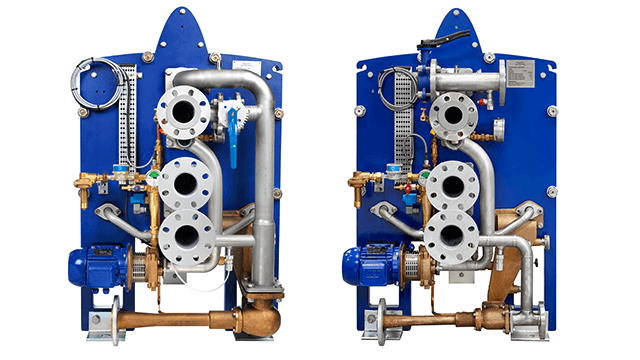
- Kapazität JWP-16
- 0.5–10 m³/24 h depending on heating and cooling water temperatures
- Kapazität JWP-26
- 4-35 m³/24h, optional bis 100 m³/24h
- Plattentyp
- Titanium Grade 1, 0.5 mm Plattendicke, korrosionsbeständig
- Betriebsvakuum
- 85-95% (ca. 4-10 mmHgA absolute)
- Ejektor-eingangsdruck
- Minimum 3 bar Meerwasserdruck erforderlich
- Ejektor-ausgangsdruck
- Maximum 0.8 bar
- Gewichtsbereich
- 600-955 kg (JWP-26 Varianten)
- Jacket-wassertemperatur
- 55-95°C flexibel einstellbar
- JWP-16 (0.5-10 m³/24h)
- JWP-26 (4-35 m³/24h)
- DOLPHIN (single/double effect)
- DPU-36 (10-55 m³/24h)
- Area: Plate scaling and corrosion (calcium carbonate, magnesium hydroxide, calcium sulfate deposits)Check: Every 6 months: visually inspect plate packages, soak with mild acid solution (e.g. Descalex), use soft brush for gentle cleaning, check for pinholes/cracks, monitor ring surface damage (pitting, scratches, erosion)
- Area: Gasket wear and sealing leaks (neoprene coating flaking, gasket damage)Check: Every 12 months: visually inspect gasket surface damage (wear, deformation, traces of salt crystallization), mark leak points during pressure test, replace worn gaskets, clean and dry seal surfaces before re-fastening
- Area: Ejector vacuum loss and air leaks (ejector nozzle wear, poor vacuum retention, seal wear)Check: Weekly check vacuum gauge (shall maintain 85–95%); if difficult: air pressure loss test (if vacuum drops >2% in 8 h = leak present). Remove inspection plug, inspect ejector throat with flashlight, remove deposits with scraper, ejector pump inlet pressure must be ≥3 bar
- Area: Demister contamination and salt carryover (demister blocked by salt deposit → high salinity)Check: Every 6 months: visually inspect demister element (blockages, salt build-up), test condenser for tube leaks (pressure test), at high salt content: chemically clean or replace condenser and demister. Monitor brine level via sight tube
- Area: Salinometer sensor contamination and incorrect quality measurement (salt content sensor contaminated, calibrated incorrectly, electrode deposits)Check: Daily: check salinometer reading (shall be <10 ppm); if measurement fault: clean sensor with dry brush, NEVER touch with bare hands, check electrodes for contamination, if necessary descale with solvent. Target: salt content of distillate <10 ppm
- Area: Hygiene and biofilm formation in pipelines/tank (legionella risk, microbial contamination during storage)Check: Every 3 months check tank water quality (microbial count); perform monthly CIP cleaning (cleaning-in-place), flush pipelines with biocide/chlorine, check tank cover for light ingress/contamination, maintain freshwater temperature ≥55°C to prevent legionella proliferation
Generic inspection/maintenance points for freshwater generators (Alfa Laval, Mega-Schwarm 2026-06). Per-model specs not auto-filled
- Kapazität JWP-16
- 0.5–10 m³/24 h depending on heating and cooling water temperatures
- Kapazität JWP-26
- 4-35 m³/24h, optional bis 100 m³/24h
- Plattentyp
- Titanium Grade 1, 0.5 mm Plattendicke, korrosionsbeständig
- Betriebsvakuum
- 85-95% (ca. 4-10 mmHgA absolute)
- Ejektor-eingangsdruck
- Minimum 3 bar Meerwasserdruck erforderlich
- Ejektor-ausgangsdruck
- Maximum 0.8 bar
- Gewichtsbereich
- 600-955 kg (JWP-26 Varianten)
- Jacket-wassertemperatur
- 55-95°C flexibel einstellbar
- JWP-16 (0.5-10 m³/24h)
- JWP-26 (4-35 m³/24h)
- DOLPHIN (single/double effect)
- DPU-36 (10-55 m³/24h)
- Area: Plate scaling and corrosion (calcium carbonate, magnesium hydroxide, calcium sulfate deposits)Check: Every 6 months: visually inspect plate packages, soak with mild acid solution (e.g. Descalex), use soft brush for gentle cleaning, check for pinholes/cracks, monitor ring surface damage (pitting, scratches, erosion)
- Area: Gasket wear and sealing leaks (neoprene coating flaking, gasket damage)Check: Every 12 months: visually inspect gasket surface damage (wear, deformation, traces of salt crystallization), mark leak points during pressure test, replace worn gaskets, clean and dry seal surfaces before re-fastening
- Area: Ejector vacuum loss and air leaks (ejector nozzle wear, poor vacuum retention, seal wear)Check: Weekly check vacuum gauge (shall maintain 85–95%); if difficult: air pressure loss test (if vacuum drops >2% in 8 h = leak present). Remove inspection plug, inspect ejector throat with flashlight, remove deposits with scraper, ejector pump inlet pressure must be ≥3 bar
- Area: Demister contamination and salt carryover (demister blocked by salt deposit → high salinity)Check: Every 6 months: visually inspect demister element (blockages, salt build-up), test condenser for tube leaks (pressure test), at high salt content: chemically clean or replace condenser and demister. Monitor brine level via sight tube
- Area: Salinometer sensor contamination and incorrect quality measurement (salt content sensor contaminated, calibrated incorrectly, electrode deposits)Check: Daily: check salinometer reading (shall be <10 ppm); if measurement fault: clean sensor with dry brush, NEVER touch with bare hands, check electrodes for contamination, if necessary descale with solvent. Target: salt content of distillate <10 ppm
- Area: Hygiene and biofilm formation in pipelines/tank (legionella risk, microbial contamination during storage)Check: Every 3 months check tank water quality (microbial count); perform monthly CIP cleaning (cleaning-in-place), flush pipelines with biocide/chlorine, check tank cover for light ingress/contamination, maintain freshwater temperature ≥55°C to prevent legionella proliferation
Generic inspection/maintenance points for freshwater generators (Alfa Laval, Mega-Schwarm 2026-06). Per-model specs not auto-filled
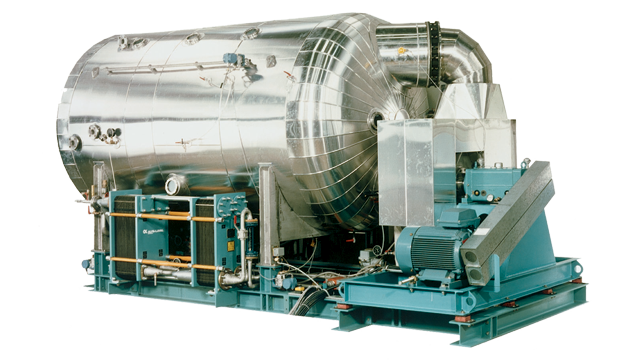
- Kapazität JWP-16
- 0.5–10 m³/24 h depending on heating and cooling water temperatures
- Kapazität JWP-26
- 4-35 m³/24h, optional bis 100 m³/24h
- Plattentyp
- Titanium Grade 1, 0.5 mm Plattendicke, korrosionsbeständig
- Betriebsvakuum
- 85-95% (ca. 4-10 mmHgA absolute)
- Ejektor-eingangsdruck
- Minimum 3 bar Meerwasserdruck erforderlich
- Ejektor-ausgangsdruck
- Maximum 0.8 bar
- Gewichtsbereich
- 600-955 kg (JWP-26 Varianten)
- Jacket-wassertemperatur
- 55-95°C flexibel einstellbar
- JWP-16 (0.5-10 m³/24h)
- JWP-26 (4-35 m³/24h)
- DOLPHIN (single/double effect)
- DPU-36 (10-55 m³/24h)
- Area: Plate scaling and corrosion (calcium carbonate, magnesium hydroxide, calcium sulfate deposits)Check: Every 6 months: visually inspect plate packages, soak with mild acid solution (e.g. Descalex), use soft brush for gentle cleaning, check for pinholes/cracks, monitor ring surface damage (pitting, scratches, erosion)
- Area: Gasket wear and sealing leaks (neoprene coating flaking, gasket damage)Check: Every 12 months: visually inspect gasket surface damage (wear, deformation, traces of salt crystallization), mark leak points during pressure test, replace worn gaskets, clean and dry seal surfaces before re-fastening
- Area: Ejector vacuum loss and air leaks (ejector nozzle wear, poor vacuum retention, seal wear)Check: Weekly check vacuum gauge (shall maintain 85–95%); if difficult: air pressure loss test (if vacuum drops >2% in 8 h = leak present). Remove inspection plug, inspect ejector throat with flashlight, remove deposits with scraper, ejector pump inlet pressure must be ≥3 bar
- Area: Demister contamination and salt carryover (demister blocked by salt deposit → high salinity)Check: Every 6 months: visually inspect demister element (blockages, salt build-up), test condenser for tube leaks (pressure test), at high salt content: chemically clean or replace condenser and demister. Monitor brine level via sight tube
- Area: Salinometer sensor contamination and incorrect quality measurement (salt content sensor contaminated, calibrated incorrectly, electrode deposits)Check: Daily: check salinometer reading (shall be <10 ppm); if measurement fault: clean sensor with dry brush, NEVER touch with bare hands, check electrodes for contamination, if necessary descale with solvent. Target: salt content of distillate <10 ppm
- Area: Hygiene and biofilm formation in pipelines/tank (legionella risk, microbial contamination during storage)Check: Every 3 months check tank water quality (microbial count); perform monthly CIP cleaning (cleaning-in-place), flush pipelines with biocide/chlorine, check tank cover for light ingress/contamination, maintain freshwater temperature ≥55°C to prevent legionella proliferation
Generic inspection/maintenance points for freshwater generators (Alfa Laval, Mega-Schwarm 2026-06). Per-model specs not auto-filled
- Kapazität JWP-16
- 0.5–10 m³/24 h depending on heating and cooling water temperatures
- Kapazität JWP-26
- 4-35 m³/24h, optional bis 100 m³/24h
- Plattentyp
- Titanium Grade 1, 0.5 mm Plattendicke, korrosionsbeständig
- Betriebsvakuum
- 85-95% (ca. 4-10 mmHgA absolute)
- Ejektor-eingangsdruck
- Minimum 3 bar Meerwasserdruck erforderlich
- Ejektor-ausgangsdruck
- Maximum 0.8 bar
- Gewichtsbereich
- 600-955 kg (JWP-26 Varianten)
- Jacket-wassertemperatur
- 55-95°C flexibel einstellbar
- JWP-16 (0.5-10 m³/24h)
- JWP-26 (4-35 m³/24h)
- DOLPHIN (single/double effect)
- DPU-36 (10-55 m³/24h)
- Area: Plate scaling and corrosion (calcium carbonate, magnesium hydroxide, calcium sulfate deposits)Check: Every 6 months: visually inspect plate packages, soak with mild acid solution (e.g. Descalex), use soft brush for gentle cleaning, check for pinholes/cracks, monitor ring surface damage (pitting, scratches, erosion)
- Area: Gasket wear and sealing leaks (neoprene coating flaking, gasket damage)Check: Every 12 months: visually inspect gasket surface damage (wear, deformation, traces of salt crystallization), mark leak points during pressure test, replace worn gaskets, clean and dry seal surfaces before re-fastening
- Area: Ejector vacuum loss and air leaks (ejector nozzle wear, poor vacuum retention, seal wear)Check: Weekly check vacuum gauge (shall maintain 85–95%); if difficult: air pressure loss test (if vacuum drops >2% in 8 h = leak present). Remove inspection plug, inspect ejector throat with flashlight, remove deposits with scraper, ejector pump inlet pressure must be ≥3 bar
- Area: Demister contamination and salt carryover (demister blocked by salt deposit → high salinity)Check: Every 6 months: visually inspect demister element (blockages, salt build-up), test condenser for tube leaks (pressure test), at high salt content: chemically clean or replace condenser and demister. Monitor brine level via sight tube
- Area: Salinometer sensor contamination and incorrect quality measurement (salt content sensor contaminated, calibrated incorrectly, electrode deposits)Check: Daily: check salinometer reading (shall be <10 ppm); if measurement fault: clean sensor with dry brush, NEVER touch with bare hands, check electrodes for contamination, if necessary descale with solvent. Target: salt content of distillate <10 ppm
- Area: Hygiene and biofilm formation in pipelines/tank (legionella risk, microbial contamination during storage)Check: Every 3 months check tank water quality (microbial count); perform monthly CIP cleaning (cleaning-in-place), flush pipelines with biocide/chlorine, check tank cover for light ingress/contamination, maintain freshwater temperature ≥55°C to prevent legionella proliferation
Generic inspection/maintenance points for freshwater generators (Alfa Laval, Mega-Schwarm 2026-06). Per-model specs not auto-filled
- Kapazität JWP-16
- 0.5–10 m³/24 h depending on heating and cooling water temperatures
- Kapazität JWP-26
- 4-35 m³/24h, optional bis 100 m³/24h
- Plattentyp
- Titanium Grade 1, 0.5 mm Plattendicke, korrosionsbeständig
- Betriebsvakuum
- 85-95% (ca. 4-10 mmHgA absolute)
- Ejektor-eingangsdruck
- Minimum 3 bar Meerwasserdruck erforderlich
- Ejektor-ausgangsdruck
- Maximum 0.8 bar
- Gewichtsbereich
- 600-955 kg (JWP-26 Varianten)
- Jacket-wassertemperatur
- 55-95°C flexibel einstellbar
- JWP-16 (0.5-10 m³/24h)
- JWP-26 (4-35 m³/24h)
- DOLPHIN (single/double effect)
- DPU-36 (10-55 m³/24h)
- Area: Plate scaling and corrosion (calcium carbonate, magnesium hydroxide, calcium sulfate deposits)Check: Every 6 months: visually inspect plate packages, soak with mild acid solution (e.g. Descalex), use soft brush for gentle cleaning, check for pinholes/cracks, monitor ring surface damage (pitting, scratches, erosion)
- Area: Gasket wear and sealing leaks (neoprene coating flaking, gasket damage)Check: Every 12 months: visually inspect gasket surface damage (wear, deformation, traces of salt crystallization), mark leak points during pressure test, replace worn gaskets, clean and dry seal surfaces before re-fastening
- Area: Ejector vacuum loss and air leaks (ejector nozzle wear, poor vacuum retention, seal wear)Check: Weekly check vacuum gauge (shall maintain 85–95%); if difficult: air pressure loss test (if vacuum drops >2% in 8 h = leak present). Remove inspection plug, inspect ejector throat with flashlight, remove deposits with scraper, ejector pump inlet pressure must be ≥3 bar
- Area: Demister contamination and salt carryover (demister blocked by salt deposit → high salinity)Check: Every 6 months: visually inspect demister element (blockages, salt build-up), test condenser for tube leaks (pressure test), at high salt content: chemically clean or replace condenser and demister. Monitor brine level via sight tube
- Area: Salinometer sensor contamination and incorrect quality measurement (salt content sensor contaminated, calibrated incorrectly, electrode deposits)Check: Daily: check salinometer reading (shall be <10 ppm); if measurement fault: clean sensor with dry brush, NEVER touch with bare hands, check electrodes for contamination, if necessary descale with solvent. Target: salt content of distillate <10 ppm
- Area: Hygiene and biofilm formation in pipelines/tank (legionella risk, microbial contamination during storage)Check: Every 3 months check tank water quality (microbial count); perform monthly CIP cleaning (cleaning-in-place), flush pipelines with biocide/chlorine, check tank cover for light ingress/contamination, maintain freshwater temperature ≥55°C to prevent legionella proliferation
Generic inspection/maintenance points for freshwater generators (Alfa Laval, Mega-Schwarm 2026-06). Per-model specs not auto-filled
Sasakura
23 ✓ 23 verified- Area: Vacuum system failure or degradationCheck: Verify vacuum gauge reading minimum 90% vacuum; standard vacuum generation time approximately 10 minutes from cold start
- Area: Scale formation on evaporator plates reducing heat transfer efficiencyCheck: Inspect heat exchanger plates for mineral deposits (calcium carbonate, magnesium hydroxide, calcium sulphate) via demister removal; perform chemical descaling per manufacturer schedule based on fouling rate
- Area: Elevated salinity in produced fresh water (brine carryover)Check: Monitor salinometer reading; check ejector nozzle condition and brine extraction pump operation; ensure brine level is maintained correctly
- Area: Evaporator coating damage or internal tube corrosionCheck: Remove separator shell man-hole cover and heat exchanger bottom cover for visual inspection; verify Neoprene coating integrity; check for exfoliation; inspect condenser cooling tubes for sludge fouling
- Area: Evaporation temperature excursion (risk of scale acceleration)Check: Check thermometer on separator shell after 15-30 minutes of steady operation; maintain lowest safe evaporation temperature to minimize scale formation risk without compromising salinity
Typ-universelle Inspektionspunkte fuer Freshwater Generators (verifiziert, 2026-06).
- Area: Vacuum system failure or degradationCheck: Verify vacuum gauge reading minimum 90% vacuum; standard vacuum generation time approximately 10 minutes from cold start
- Area: Scale formation on evaporator plates reducing heat transfer efficiencyCheck: Inspect heat exchanger plates for mineral deposits (calcium carbonate, magnesium hydroxide, calcium sulphate) via demister removal; perform chemical descaling per manufacturer schedule based on fouling rate
- Area: Elevated salinity in produced fresh water (brine carryover)Check: Monitor salinometer reading; check ejector nozzle condition and brine extraction pump operation; ensure brine level is maintained correctly
- Area: Evaporator coating damage or internal tube corrosionCheck: Remove separator shell man-hole cover and heat exchanger bottom cover for visual inspection; verify Neoprene coating integrity; check for exfoliation; inspect condenser cooling tubes for sludge fouling
- Area: Evaporation temperature excursion (risk of scale acceleration)Check: Check thermometer on separator shell after 15-30 minutes of steady operation; maintain lowest safe evaporation temperature to minimize scale formation risk without compromising salinity
Typ-universelle Inspektionspunkte fuer Freshwater Generators (verifiziert, 2026-06).
- Area: Vacuum system failure or degradationCheck: Verify vacuum gauge reading minimum 90% vacuum; standard vacuum generation time approximately 10 minutes from cold start
- Area: Scale formation on evaporator plates reducing heat transfer efficiencyCheck: Inspect heat exchanger plates for mineral deposits (calcium carbonate, magnesium hydroxide, calcium sulphate) via demister removal; perform chemical descaling per manufacturer schedule based on fouling rate
- Area: Elevated salinity in produced fresh water (brine carryover)Check: Monitor salinometer reading; check ejector nozzle condition and brine extraction pump operation; ensure brine level is maintained correctly
- Area: Evaporator coating damage or internal tube corrosionCheck: Remove separator shell man-hole cover and heat exchanger bottom cover for visual inspection; verify Neoprene coating integrity; check for exfoliation; inspect condenser cooling tubes for sludge fouling
- Area: Evaporation temperature excursion (risk of scale acceleration)Check: Check thermometer on separator shell after 15-30 minutes of steady operation; maintain lowest safe evaporation temperature to minimize scale formation risk without compromising salinity
Typ-universelle Inspektionspunkte fuer Freshwater Generators (verifiziert, 2026-06).
- Area: Vacuum system failure or degradationCheck: Verify vacuum gauge reading minimum 90% vacuum; standard vacuum generation time approximately 10 minutes from cold start
- Area: Scale formation on evaporator plates reducing heat transfer efficiencyCheck: Inspect heat exchanger plates for mineral deposits (calcium carbonate, magnesium hydroxide, calcium sulphate) via demister removal; perform chemical descaling per manufacturer schedule based on fouling rate
- Area: Elevated salinity in produced fresh water (brine carryover)Check: Monitor salinometer reading; check ejector nozzle condition and brine extraction pump operation; ensure brine level is maintained correctly
- Area: Evaporator coating damage or internal tube corrosionCheck: Remove separator shell man-hole cover and heat exchanger bottom cover for visual inspection; verify Neoprene coating integrity; check for exfoliation; inspect condenser cooling tubes for sludge fouling
- Area: Evaporation temperature excursion (risk of scale acceleration)Check: Check thermometer on separator shell after 15-30 minutes of steady operation; maintain lowest safe evaporation temperature to minimize scale formation risk without compromising salinity
Typ-universelle Inspektionspunkte fuer Freshwater Generators (verifiziert, 2026-06).
- Area: Vacuum system failure or degradationCheck: Verify vacuum gauge reading minimum 90% vacuum; standard vacuum generation time approximately 10 minutes from cold start
- Area: Scale formation on evaporator plates reducing heat transfer efficiencyCheck: Inspect heat exchanger plates for mineral deposits (calcium carbonate, magnesium hydroxide, calcium sulphate) via demister removal; perform chemical descaling per manufacturer schedule based on fouling rate
- Area: Elevated salinity in produced fresh water (brine carryover)Check: Monitor salinometer reading; check ejector nozzle condition and brine extraction pump operation; ensure brine level is maintained correctly
- Area: Evaporator coating damage or internal tube corrosionCheck: Remove separator shell man-hole cover and heat exchanger bottom cover for visual inspection; verify Neoprene coating integrity; check for exfoliation; inspect condenser cooling tubes for sludge fouling
- Area: Evaporation temperature excursion (risk of scale acceleration)Check: Check thermometer on separator shell after 15-30 minutes of steady operation; maintain lowest safe evaporation temperature to minimize scale formation risk without compromising salinity
Typ-universelle Inspektionspunkte fuer Freshwater Generators (verifiziert, 2026-06).
- Area: Vacuum system failure or degradationCheck: Verify vacuum gauge reading minimum 90% vacuum; standard vacuum generation time approximately 10 minutes from cold start
- Area: Scale formation on evaporator plates reducing heat transfer efficiencyCheck: Inspect heat exchanger plates for mineral deposits (calcium carbonate, magnesium hydroxide, calcium sulphate) via demister removal; perform chemical descaling per manufacturer schedule based on fouling rate
- Area: Elevated salinity in produced fresh water (brine carryover)Check: Monitor salinometer reading; check ejector nozzle condition and brine extraction pump operation; ensure brine level is maintained correctly
- Area: Evaporator coating damage or internal tube corrosionCheck: Remove separator shell man-hole cover and heat exchanger bottom cover for visual inspection; verify Neoprene coating integrity; check for exfoliation; inspect condenser cooling tubes for sludge fouling
- Area: Evaporation temperature excursion (risk of scale acceleration)Check: Check thermometer on separator shell after 15-30 minutes of steady operation; maintain lowest safe evaporation temperature to minimize scale formation risk without compromising salinity
Typ-universelle Inspektionspunkte fuer Freshwater Generators (verifiziert, 2026-06).
- Area: Vacuum system failure or degradationCheck: Verify vacuum gauge reading minimum 90% vacuum; standard vacuum generation time approximately 10 minutes from cold start
- Area: Scale formation on evaporator plates reducing heat transfer efficiencyCheck: Inspect heat exchanger plates for mineral deposits (calcium carbonate, magnesium hydroxide, calcium sulphate) via demister removal; perform chemical descaling per manufacturer schedule based on fouling rate
- Area: Elevated salinity in produced fresh water (brine carryover)Check: Monitor salinometer reading; check ejector nozzle condition and brine extraction pump operation; ensure brine level is maintained correctly
- Area: Evaporator coating damage or internal tube corrosionCheck: Remove separator shell man-hole cover and heat exchanger bottom cover for visual inspection; verify Neoprene coating integrity; check for exfoliation; inspect condenser cooling tubes for sludge fouling
- Area: Evaporation temperature excursion (risk of scale acceleration)Check: Check thermometer on separator shell after 15-30 minutes of steady operation; maintain lowest safe evaporation temperature to minimize scale formation risk without compromising salinity
Typ-universelle Inspektionspunkte fuer Freshwater Generators (verifiziert, 2026-06).
- Area: Vacuum system failure or degradationCheck: Verify vacuum gauge reading minimum 90% vacuum; standard vacuum generation time approximately 10 minutes from cold start
- Area: Scale formation on evaporator plates reducing heat transfer efficiencyCheck: Inspect heat exchanger plates for mineral deposits (calcium carbonate, magnesium hydroxide, calcium sulphate) via demister removal; perform chemical descaling per manufacturer schedule based on fouling rate
- Area: Elevated salinity in produced fresh water (brine carryover)Check: Monitor salinometer reading; check ejector nozzle condition and brine extraction pump operation; ensure brine level is maintained correctly
- Area: Evaporator coating damage or internal tube corrosionCheck: Remove separator shell man-hole cover and heat exchanger bottom cover for visual inspection; verify Neoprene coating integrity; check for exfoliation; inspect condenser cooling tubes for sludge fouling
- Area: Evaporation temperature excursion (risk of scale acceleration)Check: Check thermometer on separator shell after 15-30 minutes of steady operation; maintain lowest safe evaporation temperature to minimize scale formation risk without compromising salinity
Typ-universelle Inspektionspunkte fuer Freshwater Generators (verifiziert, 2026-06).
- Area: Vacuum system failure or degradationCheck: Verify vacuum gauge reading minimum 90% vacuum; standard vacuum generation time approximately 10 minutes from cold start
- Area: Scale formation on evaporator plates reducing heat transfer efficiencyCheck: Inspect heat exchanger plates for mineral deposits (calcium carbonate, magnesium hydroxide, calcium sulphate) via demister removal; perform chemical descaling per manufacturer schedule based on fouling rate
- Area: Elevated salinity in produced fresh water (brine carryover)Check: Monitor salinometer reading; check ejector nozzle condition and brine extraction pump operation; ensure brine level is maintained correctly
- Area: Evaporator coating damage or internal tube corrosionCheck: Remove separator shell man-hole cover and heat exchanger bottom cover for visual inspection; verify Neoprene coating integrity; check for exfoliation; inspect condenser cooling tubes for sludge fouling
- Area: Evaporation temperature excursion (risk of scale acceleration)Check: Check thermometer on separator shell after 15-30 minutes of steady operation; maintain lowest safe evaporation temperature to minimize scale formation risk without compromising salinity
Typ-universelle Inspektionspunkte fuer Freshwater Generators (verifiziert, 2026-06).
- Area: Vacuum system failure or degradationCheck: Verify vacuum gauge reading minimum 90% vacuum; standard vacuum generation time approximately 10 minutes from cold start
- Area: Scale formation on evaporator plates reducing heat transfer efficiencyCheck: Inspect heat exchanger plates for mineral deposits (calcium carbonate, magnesium hydroxide, calcium sulphate) via demister removal; perform chemical descaling per manufacturer schedule based on fouling rate
- Area: Elevated salinity in produced fresh water (brine carryover)Check: Monitor salinometer reading; check ejector nozzle condition and brine extraction pump operation; ensure brine level is maintained correctly
- Area: Evaporator coating damage or internal tube corrosionCheck: Remove separator shell man-hole cover and heat exchanger bottom cover for visual inspection; verify Neoprene coating integrity; check for exfoliation; inspect condenser cooling tubes for sludge fouling
- Area: Evaporation temperature excursion (risk of scale acceleration)Check: Check thermometer on separator shell after 15-30 minutes of steady operation; maintain lowest safe evaporation temperature to minimize scale formation risk without compromising salinity
Typ-universelle Inspektionspunkte fuer Freshwater Generators (verifiziert, 2026-06).
- Area: Vacuum system failure or degradationCheck: Verify vacuum gauge reading minimum 90% vacuum; standard vacuum generation time approximately 10 minutes from cold start
- Area: Scale formation on evaporator plates reducing heat transfer efficiencyCheck: Inspect heat exchanger plates for mineral deposits (calcium carbonate, magnesium hydroxide, calcium sulphate) via demister removal; perform chemical descaling per manufacturer schedule based on fouling rate
- Area: Elevated salinity in produced fresh water (brine carryover)Check: Monitor salinometer reading; check ejector nozzle condition and brine extraction pump operation; ensure brine level is maintained correctly
- Area: Evaporator coating damage or internal tube corrosionCheck: Remove separator shell man-hole cover and heat exchanger bottom cover for visual inspection; verify Neoprene coating integrity; check for exfoliation; inspect condenser cooling tubes for sludge fouling
- Area: Evaporation temperature excursion (risk of scale acceleration)Check: Check thermometer on separator shell after 15-30 minutes of steady operation; maintain lowest safe evaporation temperature to minimize scale formation risk without compromising salinity
Typ-universelle Inspektionspunkte fuer Freshwater Generators (verifiziert, 2026-06).
- Area: Vacuum system failure or degradationCheck: Verify vacuum gauge reading minimum 90% vacuum; standard vacuum generation time approximately 10 minutes from cold start
- Area: Scale formation on evaporator plates reducing heat transfer efficiencyCheck: Inspect heat exchanger plates for mineral deposits (calcium carbonate, magnesium hydroxide, calcium sulphate) via demister removal; perform chemical descaling per manufacturer schedule based on fouling rate
- Area: Elevated salinity in produced fresh water (brine carryover)Check: Monitor salinometer reading; check ejector nozzle condition and brine extraction pump operation; ensure brine level is maintained correctly
- Area: Evaporator coating damage or internal tube corrosionCheck: Remove separator shell man-hole cover and heat exchanger bottom cover for visual inspection; verify Neoprene coating integrity; check for exfoliation; inspect condenser cooling tubes for sludge fouling
- Area: Evaporation temperature excursion (risk of scale acceleration)Check: Check thermometer on separator shell after 15-30 minutes of steady operation; maintain lowest safe evaporation temperature to minimize scale formation risk without compromising salinity
Typ-universelle Inspektionspunkte fuer Freshwater Generators (verifiziert, 2026-06).
- Area: Vacuum system failure or degradationCheck: Verify vacuum gauge reading minimum 90% vacuum; standard vacuum generation time approximately 10 minutes from cold start
- Area: Scale formation on evaporator plates reducing heat transfer efficiencyCheck: Inspect heat exchanger plates for mineral deposits (calcium carbonate, magnesium hydroxide, calcium sulphate) via demister removal; perform chemical descaling per manufacturer schedule based on fouling rate
- Area: Elevated salinity in produced fresh water (brine carryover)Check: Monitor salinometer reading; check ejector nozzle condition and brine extraction pump operation; ensure brine level is maintained correctly
- Area: Evaporator coating damage or internal tube corrosionCheck: Remove separator shell man-hole cover and heat exchanger bottom cover for visual inspection; verify Neoprene coating integrity; check for exfoliation; inspect condenser cooling tubes for sludge fouling
- Area: Evaporation temperature excursion (risk of scale acceleration)Check: Check thermometer on separator shell after 15-30 minutes of steady operation; maintain lowest safe evaporation temperature to minimize scale formation risk without compromising salinity
Typ-universelle Inspektionspunkte fuer Freshwater Generators (verifiziert, 2026-06).
- Area: Vacuum system failure or degradationCheck: Verify vacuum gauge reading minimum 90% vacuum; standard vacuum generation time approximately 10 minutes from cold start
- Area: Scale formation on evaporator plates reducing heat transfer efficiencyCheck: Inspect heat exchanger plates for mineral deposits (calcium carbonate, magnesium hydroxide, calcium sulphate) via demister removal; perform chemical descaling per manufacturer schedule based on fouling rate
- Area: Elevated salinity in produced fresh water (brine carryover)Check: Monitor salinometer reading; check ejector nozzle condition and brine extraction pump operation; ensure brine level is maintained correctly
- Area: Evaporator coating damage or internal tube corrosionCheck: Remove separator shell man-hole cover and heat exchanger bottom cover for visual inspection; verify Neoprene coating integrity; check for exfoliation; inspect condenser cooling tubes for sludge fouling
- Area: Evaporation temperature excursion (risk of scale acceleration)Check: Check thermometer on separator shell after 15-30 minutes of steady operation; maintain lowest safe evaporation temperature to minimize scale formation risk without compromising salinity
Typ-universelle Inspektionspunkte fuer Freshwater Generators (verifiziert, 2026-06).
- Area: Vacuum system failure or degradationCheck: Verify vacuum gauge reading minimum 90% vacuum; standard vacuum generation time approximately 10 minutes from cold start
- Area: Scale formation on evaporator plates reducing heat transfer efficiencyCheck: Inspect heat exchanger plates for mineral deposits (calcium carbonate, magnesium hydroxide, calcium sulphate) via demister removal; perform chemical descaling per manufacturer schedule based on fouling rate
- Area: Elevated salinity in produced fresh water (brine carryover)Check: Monitor salinometer reading; check ejector nozzle condition and brine extraction pump operation; ensure brine level is maintained correctly
- Area: Evaporator coating damage or internal tube corrosionCheck: Remove separator shell man-hole cover and heat exchanger bottom cover for visual inspection; verify Neoprene coating integrity; check for exfoliation; inspect condenser cooling tubes for sludge fouling
- Area: Evaporation temperature excursion (risk of scale acceleration)Check: Check thermometer on separator shell after 15-30 minutes of steady operation; maintain lowest safe evaporation temperature to minimize scale formation risk without compromising salinity
Typ-universelle Inspektionspunkte fuer Freshwater Generators (verifiziert, 2026-06).
- Area: Vacuum system failure or degradationCheck: Verify vacuum gauge reading minimum 90% vacuum; standard vacuum generation time approximately 10 minutes from cold start
- Area: Scale formation on evaporator plates reducing heat transfer efficiencyCheck: Inspect heat exchanger plates for mineral deposits (calcium carbonate, magnesium hydroxide, calcium sulphate) via demister removal; perform chemical descaling per manufacturer schedule based on fouling rate
- Area: Elevated salinity in produced fresh water (brine carryover)Check: Monitor salinometer reading; check ejector nozzle condition and brine extraction pump operation; ensure brine level is maintained correctly
- Area: Evaporator coating damage or internal tube corrosionCheck: Remove separator shell man-hole cover and heat exchanger bottom cover for visual inspection; verify Neoprene coating integrity; check for exfoliation; inspect condenser cooling tubes for sludge fouling
- Area: Evaporation temperature excursion (risk of scale acceleration)Check: Check thermometer on separator shell after 15-30 minutes of steady operation; maintain lowest safe evaporation temperature to minimize scale formation risk without compromising salinity
Typ-universelle Inspektionspunkte fuer Freshwater Generators (verifiziert, 2026-06).
- Area: Vacuum system failure or degradationCheck: Verify vacuum gauge reading minimum 90% vacuum; standard vacuum generation time approximately 10 minutes from cold start
- Area: Scale formation on evaporator plates reducing heat transfer efficiencyCheck: Inspect heat exchanger plates for mineral deposits (calcium carbonate, magnesium hydroxide, calcium sulphate) via demister removal; perform chemical descaling per manufacturer schedule based on fouling rate
- Area: Elevated salinity in produced fresh water (brine carryover)Check: Monitor salinometer reading; check ejector nozzle condition and brine extraction pump operation; ensure brine level is maintained correctly
- Area: Evaporator coating damage or internal tube corrosionCheck: Remove separator shell man-hole cover and heat exchanger bottom cover for visual inspection; verify Neoprene coating integrity; check for exfoliation; inspect condenser cooling tubes for sludge fouling
- Area: Evaporation temperature excursion (risk of scale acceleration)Check: Check thermometer on separator shell after 15-30 minutes of steady operation; maintain lowest safe evaporation temperature to minimize scale formation risk without compromising salinity
Typ-universelle Inspektionspunkte fuer Freshwater Generators (verifiziert, 2026-06).
- Area: Vacuum system failure or degradationCheck: Verify vacuum gauge reading minimum 90% vacuum; standard vacuum generation time approximately 10 minutes from cold start
- Area: Scale formation on evaporator plates reducing heat transfer efficiencyCheck: Inspect heat exchanger plates for mineral deposits (calcium carbonate, magnesium hydroxide, calcium sulphate) via demister removal; perform chemical descaling per manufacturer schedule based on fouling rate
- Area: Elevated salinity in produced fresh water (brine carryover)Check: Monitor salinometer reading; check ejector nozzle condition and brine extraction pump operation; ensure brine level is maintained correctly
- Area: Evaporator coating damage or internal tube corrosionCheck: Remove separator shell man-hole cover and heat exchanger bottom cover for visual inspection; verify Neoprene coating integrity; check for exfoliation; inspect condenser cooling tubes for sludge fouling
- Area: Evaporation temperature excursion (risk of scale acceleration)Check: Check thermometer on separator shell after 15-30 minutes of steady operation; maintain lowest safe evaporation temperature to minimize scale formation risk without compromising salinity
Typ-universelle Inspektionspunkte fuer Freshwater Generators (verifiziert, 2026-06).
- Area: Vacuum system failure or degradationCheck: Verify vacuum gauge reading minimum 90% vacuum; standard vacuum generation time approximately 10 minutes from cold start
- Area: Scale formation on evaporator plates reducing heat transfer efficiencyCheck: Inspect heat exchanger plates for mineral deposits (calcium carbonate, magnesium hydroxide, calcium sulphate) via demister removal; perform chemical descaling per manufacturer schedule based on fouling rate
- Area: Elevated salinity in produced fresh water (brine carryover)Check: Monitor salinometer reading; check ejector nozzle condition and brine extraction pump operation; ensure brine level is maintained correctly
- Area: Evaporator coating damage or internal tube corrosionCheck: Remove separator shell man-hole cover and heat exchanger bottom cover for visual inspection; verify Neoprene coating integrity; check for exfoliation; inspect condenser cooling tubes for sludge fouling
- Area: Evaporation temperature excursion (risk of scale acceleration)Check: Check thermometer on separator shell after 15-30 minutes of steady operation; maintain lowest safe evaporation temperature to minimize scale formation risk without compromising salinity
Typ-universelle Inspektionspunkte fuer Freshwater Generators (verifiziert, 2026-06).
- Area: Vacuum system failure or degradationCheck: Verify vacuum gauge reading minimum 90% vacuum; standard vacuum generation time approximately 10 minutes from cold start
- Area: Scale formation on evaporator plates reducing heat transfer efficiencyCheck: Inspect heat exchanger plates for mineral deposits (calcium carbonate, magnesium hydroxide, calcium sulphate) via demister removal; perform chemical descaling per manufacturer schedule based on fouling rate
- Area: Elevated salinity in produced fresh water (brine carryover)Check: Monitor salinometer reading; check ejector nozzle condition and brine extraction pump operation; ensure brine level is maintained correctly
- Area: Evaporator coating damage or internal tube corrosionCheck: Remove separator shell man-hole cover and heat exchanger bottom cover for visual inspection; verify Neoprene coating integrity; check for exfoliation; inspect condenser cooling tubes for sludge fouling
- Area: Evaporation temperature excursion (risk of scale acceleration)Check: Check thermometer on separator shell after 15-30 minutes of steady operation; maintain lowest safe evaporation temperature to minimize scale formation risk without compromising salinity
Typ-universelle Inspektionspunkte fuer Freshwater Generators (verifiziert, 2026-06).
- Area: Vacuum system failure or degradationCheck: Verify vacuum gauge reading minimum 90% vacuum; standard vacuum generation time approximately 10 minutes from cold start
- Area: Scale formation on evaporator plates reducing heat transfer efficiencyCheck: Inspect heat exchanger plates for mineral deposits (calcium carbonate, magnesium hydroxide, calcium sulphate) via demister removal; perform chemical descaling per manufacturer schedule based on fouling rate
- Area: Elevated salinity in produced fresh water (brine carryover)Check: Monitor salinometer reading; check ejector nozzle condition and brine extraction pump operation; ensure brine level is maintained correctly
- Area: Evaporator coating damage or internal tube corrosionCheck: Remove separator shell man-hole cover and heat exchanger bottom cover for visual inspection; verify Neoprene coating integrity; check for exfoliation; inspect condenser cooling tubes for sludge fouling
- Area: Evaporation temperature excursion (risk of scale acceleration)Check: Check thermometer on separator shell after 15-30 minutes of steady operation; maintain lowest safe evaporation temperature to minimize scale formation risk without compromising salinity
Typ-universelle Inspektionspunkte fuer Freshwater Generators (verifiziert, 2026-06).
- Area: Vacuum system failure or degradationCheck: Verify vacuum gauge reading minimum 90% vacuum; standard vacuum generation time approximately 10 minutes from cold start
- Area: Scale formation on evaporator plates reducing heat transfer efficiencyCheck: Inspect heat exchanger plates for mineral deposits (calcium carbonate, magnesium hydroxide, calcium sulphate) via demister removal; perform chemical descaling per manufacturer schedule based on fouling rate
- Area: Elevated salinity in produced fresh water (brine carryover)Check: Monitor salinometer reading; check ejector nozzle condition and brine extraction pump operation; ensure brine level is maintained correctly
- Area: Evaporator coating damage or internal tube corrosionCheck: Remove separator shell man-hole cover and heat exchanger bottom cover for visual inspection; verify Neoprene coating integrity; check for exfoliation; inspect condenser cooling tubes for sludge fouling
- Area: Evaporation temperature excursion (risk of scale acceleration)Check: Check thermometer on separator shell after 15-30 minutes of steady operation; maintain lowest safe evaporation temperature to minimize scale formation risk without compromising salinity
Typ-universelle Inspektionspunkte fuer Freshwater Generators (verifiziert, 2026-06).
- Area: Vacuum system failure or degradationCheck: Verify vacuum gauge reading minimum 90% vacuum; standard vacuum generation time approximately 10 minutes from cold start
- Area: Scale formation on evaporator plates reducing heat transfer efficiencyCheck: Inspect heat exchanger plates for mineral deposits (calcium carbonate, magnesium hydroxide, calcium sulphate) via demister removal; perform chemical descaling per manufacturer schedule based on fouling rate
- Area: Elevated salinity in produced fresh water (brine carryover)Check: Monitor salinometer reading; check ejector nozzle condition and brine extraction pump operation; ensure brine level is maintained correctly
- Area: Evaporator coating damage or internal tube corrosionCheck: Remove separator shell man-hole cover and heat exchanger bottom cover for visual inspection; verify Neoprene coating integrity; check for exfoliation; inspect condenser cooling tubes for sludge fouling
- Area: Evaporation temperature excursion (risk of scale acceleration)Check: Check thermometer on separator shell after 15-30 minutes of steady operation; maintain lowest safe evaporation temperature to minimize scale formation risk without compromising salinity
Typ-universelle Inspektionspunkte fuer Freshwater Generators (verifiziert, 2026-06).
Atlas Danmark
10 ✓ 10 verified- Area: Vacuum insufficient (<90% shell vacuum)Check: Check vacuum gauge - must display >90%; pressure value >0.9 bar (negative); perform leak test if below setpoint
- Area: Scale formation and pipe fouling in evaporator and condenserCheck: Half-yearly remove covers and inspect tube bundle for scale; check neoprene coating for flaking; inspect condenser tube side for sludging/sludge
- Area: Salinometer malfunction or sensor foulingCheck: Clean sensor electrode; calibrate salinometer against reference solution; perform regular function test; check sensor electrodes for wear
- Area: Demister fouling or leakage with seawater contaminationCheck: Check demister for fouling, corrosion and leakage; if leak suspected: inspect entire freshwater tank; chemically clean or replace demister if required
- Area: Ejector pressure and seawater throughflow insufficientCheck: Check ejector inlet pressure ≥3 bar; check seawater inlet temperature to condenser (optimal 15-30°C); check ejector pump for wear; check filter for fouling
Typ-universelle Inspektionspunkte fuer Freshwater Generators (verifiziert, 2026-06).
- Area: Vacuum insufficient (<90% shell vacuum)Check: Check vacuum gauge - must display >90%; pressure value >0.9 bar (negative); perform leak test if below setpoint
- Area: Scale formation and pipe fouling in evaporator and condenserCheck: Half-yearly remove covers and inspect tube bundle for scale; check neoprene coating for flaking; inspect condenser tube side for sludging/sludge
- Area: Salinometer malfunction or sensor foulingCheck: Clean sensor electrode; calibrate salinometer against reference solution; perform regular function test; check sensor electrodes for wear
- Area: Demister fouling or leakage with seawater contaminationCheck: Check demister for fouling, corrosion and leakage; if leak suspected: inspect entire freshwater tank; chemically clean or replace demister if required
- Area: Ejector pressure and seawater throughflow insufficientCheck: Check ejector inlet pressure ≥3 bar; check seawater inlet temperature to condenser (optimal 15-30°C); check ejector pump for wear; check filter for fouling
Typ-universelle Inspektionspunkte fuer Freshwater Generators (verifiziert, 2026-06).
- Area: Vacuum insufficient (<90% shell vacuum)Check: Check vacuum gauge - must display >90%; pressure value >0.9 bar (negative); perform leak test if below setpoint
- Area: Scale formation and pipe fouling in evaporator and condenserCheck: Half-yearly remove covers and inspect tube bundle for scale; check neoprene coating for flaking; inspect condenser tube side for sludging/sludge
- Area: Salinometer malfunction or sensor foulingCheck: Clean sensor electrode; calibrate salinometer against reference solution; perform regular function test; check sensor electrodes for wear
- Area: Demister fouling or leakage with seawater contaminationCheck: Check demister for fouling, corrosion and leakage; if leak suspected: inspect entire freshwater tank; chemically clean or replace demister if required
- Area: Ejector pressure and seawater throughflow insufficientCheck: Check ejector inlet pressure ≥3 bar; check seawater inlet temperature to condenser (optimal 15-30°C); check ejector pump for wear; check filter for fouling
Typ-universelle Inspektionspunkte fuer Freshwater Generators (verifiziert, 2026-06).
- Area: Vacuum insufficient (<90% shell vacuum)Check: Check vacuum gauge - must display >90%; pressure value >0.9 bar (negative); perform leak test if below setpoint
- Area: Scale formation and pipe fouling in evaporator and condenserCheck: Half-yearly remove covers and inspect tube bundle for scale; check neoprene coating for flaking; inspect condenser tube side for sludging/sludge
- Area: Salinometer malfunction or sensor foulingCheck: Clean sensor electrode; calibrate salinometer against reference solution; perform regular function test; check sensor electrodes for wear
- Area: Demister fouling or leakage with seawater contaminationCheck: Check demister for fouling, corrosion and leakage; if leak suspected: inspect entire freshwater tank; chemically clean or replace demister if required
- Area: Ejector pressure and seawater throughflow insufficientCheck: Check ejector inlet pressure ≥3 bar; check seawater inlet temperature to condenser (optimal 15-30°C); check ejector pump for wear; check filter for fouling
Typ-universelle Inspektionspunkte fuer Freshwater Generators (verifiziert, 2026-06).
- Area: Vacuum insufficient (<90% shell vacuum)Check: Check vacuum gauge - must display >90%; pressure value >0.9 bar (negative); perform leak test if below setpoint
- Area: Scale formation and pipe fouling in evaporator and condenserCheck: Half-yearly remove covers and inspect tube bundle for scale; check neoprene coating for flaking; inspect condenser tube side for sludging/sludge
- Area: Salinometer malfunction or sensor foulingCheck: Clean sensor electrode; calibrate salinometer against reference solution; perform regular function test; check sensor electrodes for wear
- Area: Demister fouling or leakage with seawater contaminationCheck: Check demister for fouling, corrosion and leakage; if leak suspected: inspect entire freshwater tank; chemically clean or replace demister if required
- Area: Ejector pressure and seawater throughflow insufficientCheck: Check ejector inlet pressure ≥3 bar; check seawater inlet temperature to condenser (optimal 15-30°C); check ejector pump for wear; check filter for fouling
Typ-universelle Inspektionspunkte fuer Freshwater Generators (verifiziert, 2026-06).
- Area: Vacuum insufficient (<90% shell vacuum)Check: Check vacuum gauge - must display >90%; pressure value >0.9 bar (negative); perform leak test if below setpoint
- Area: Scale formation and pipe fouling in evaporator and condenserCheck: Half-yearly remove covers and inspect tube bundle for scale; check neoprene coating for flaking; inspect condenser tube side for sludging/sludge
- Area: Salinometer malfunction or sensor foulingCheck: Clean sensor electrode; calibrate salinometer against reference solution; perform regular function test; check sensor electrodes for wear
- Area: Demister fouling or leakage with seawater contaminationCheck: Check demister for fouling, corrosion and leakage; if leak suspected: inspect entire freshwater tank; chemically clean or replace demister if required
- Area: Ejector pressure and seawater throughflow insufficientCheck: Check ejector inlet pressure ≥3 bar; check seawater inlet temperature to condenser (optimal 15-30°C); check ejector pump for wear; check filter for fouling
Typ-universelle Inspektionspunkte fuer Freshwater Generators (verifiziert, 2026-06).
- Area: Vacuum insufficient (<90% shell vacuum)Check: Check vacuum gauge - must display >90%; pressure value >0.9 bar (negative); perform leak test if below setpoint
- Area: Scale formation and pipe fouling in evaporator and condenserCheck: Half-yearly remove covers and inspect tube bundle for scale; check neoprene coating for flaking; inspect condenser tube side for sludging/sludge
- Area: Salinometer malfunction or sensor foulingCheck: Clean sensor electrode; calibrate salinometer against reference solution; perform regular function test; check sensor electrodes for wear
- Area: Demister fouling or leakage with seawater contaminationCheck: Check demister for fouling, corrosion and leakage; if leak suspected: inspect entire freshwater tank; chemically clean or replace demister if required
- Area: Ejector pressure and seawater throughflow insufficientCheck: Check ejector inlet pressure ≥3 bar; check seawater inlet temperature to condenser (optimal 15-30°C); check ejector pump for wear; check filter for fouling
Typ-universelle Inspektionspunkte fuer Freshwater Generators (verifiziert, 2026-06).
- Area: Vacuum insufficient (<90% shell vacuum)Check: Check vacuum gauge - must display >90%; pressure value >0.9 bar (negative); perform leak test if below setpoint
- Area: Scale formation and pipe fouling in evaporator and condenserCheck: Half-yearly remove covers and inspect tube bundle for scale; check neoprene coating for flaking; inspect condenser tube side for sludging/sludge
- Area: Salinometer malfunction or sensor foulingCheck: Clean sensor electrode; calibrate salinometer against reference solution; perform regular function test; check sensor electrodes for wear
- Area: Demister fouling or leakage with seawater contaminationCheck: Check demister for fouling, corrosion and leakage; if leak suspected: inspect entire freshwater tank; chemically clean or replace demister if required
- Area: Ejector pressure and seawater throughflow insufficientCheck: Check ejector inlet pressure ≥3 bar; check seawater inlet temperature to condenser (optimal 15-30°C); check ejector pump for wear; check filter for fouling
Typ-universelle Inspektionspunkte fuer Freshwater Generators (verifiziert, 2026-06).
- Area: Vacuum insufficient (<90% shell vacuum)Check: Check vacuum gauge - must display >90%; pressure value >0.9 bar (negative); perform leak test if below setpoint
- Area: Scale formation and pipe fouling in evaporator and condenserCheck: Half-yearly remove covers and inspect tube bundle for scale; check neoprene coating for flaking; inspect condenser tube side for sludging/sludge
- Area: Salinometer malfunction or sensor foulingCheck: Clean sensor electrode; calibrate salinometer against reference solution; perform regular function test; check sensor electrodes for wear
- Area: Demister fouling or leakage with seawater contaminationCheck: Check demister for fouling, corrosion and leakage; if leak suspected: inspect entire freshwater tank; chemically clean or replace demister if required
- Area: Ejector pressure and seawater throughflow insufficientCheck: Check ejector inlet pressure ≥3 bar; check seawater inlet temperature to condenser (optimal 15-30°C); check ejector pump for wear; check filter for fouling
Typ-universelle Inspektionspunkte fuer Freshwater Generators (verifiziert, 2026-06).
- Area: Vacuum insufficient (<90% shell vacuum)Check: Check vacuum gauge - must display >90%; pressure value >0.9 bar (negative); perform leak test if below setpoint
- Area: Scale formation and pipe fouling in evaporator and condenserCheck: Half-yearly remove covers and inspect tube bundle for scale; check neoprene coating for flaking; inspect condenser tube side for sludging/sludge
- Area: Salinometer malfunction or sensor foulingCheck: Clean sensor electrode; calibrate salinometer against reference solution; perform regular function test; check sensor electrodes for wear
- Area: Demister fouling or leakage with seawater contaminationCheck: Check demister for fouling, corrosion and leakage; if leak suspected: inspect entire freshwater tank; chemically clean or replace demister if required
- Area: Ejector pressure and seawater throughflow insufficientCheck: Check ejector inlet pressure ≥3 bar; check seawater inlet temperature to condenser (optimal 15-30°C); check ejector pump for wear; check filter for fouling
Typ-universelle Inspektionspunkte fuer Freshwater Generators (verifiziert, 2026-06).
GEA (Condorchem Enviro Solutions)
10 ✓ 10 verified- Area: Scale and mineral deposit formation on evaporator and condenser plate surfaces reduces heat transfer efficiency and system performanceCheck: Visually inspect evaporator and condenser plate bundles for scale buildup at semi-annual intervals (twice yearly). Remove man-hole and bottom covers of heat exchanger to examine tube condition and check for Neoprene coating exfoliation. Remove condenser covers to verify no fouling of cooling tubes with sludge. Perform chemical analysis of evaporator liquid for silica, calcium, and mineral content to confirm descaling need. Use chemical descaling agents (e.g., sodium polysulphate with anti-foam compounds) every 6-12 months or as needed based on salt content.
- Area: Vacuum system leakage and loss of pressure reduces evaporation efficiency and prevents system operationCheck: Perform leak test after maintenance or if vacuum maintenance difficulty occurs. Standard: vacuum must not fall more than 2% in 8 hours under normal operation. If vacuum drop exceeds 2% in 8 hours, inspect and seal deteriorated packings and joints immediately. Use pressure/vacuum gauges to monitor system continuously during operation. Check all joint connections, flange seals, and packing glands for visible leaks or weeping. Document baseline vacuum readings and monitor trending to detect progressive leaks.
- Area: Demister malfunction causes seawater droplet carry-over resulting in high salinity output unsuitable for human consumptionCheck: Inspect wire mesh demister for salt encrustation, clogging, or physical damage quarterly. Clean demister using fresh water spray and verify mesh integrity (holes should be visible under backlight, no collapsed sections). Check output salinity continuously: should be 2-10 ppm adjustable set point (alarm if exceeds 4 ppm per IMO standards). If salinity exceeds threshold, demister must be cleaned immediately or replaced. Monitor vapor quality visually for excessive liquid carryover (droplet mist instead of clean vapor).
- Area: Condenser tube/plate leakage contaminates distillate with seawater, raising salinity above acceptable limits (4 ppm maximum)Check: Perform hydrostatic pressure test on condenser quarterly using 1.5x normal operating pressure with fresh water to verify tube/plate integrity. Visual inspection: check condenser cooling jacket for visible salt deposits or staining indicating past leakage. Monitor distillate salinity continuously using calibrated salinometer (2-10 ppm range); if salinity rises above set point despite normal demister operation, investigate condenser for internal leaks. Replace any corroded or perforated condenser tubes/plates immediately. Test sea water cooling circuit for blockage that may cause condenser overpressure.
- Area: Titanium and stainless steel plate surface corrosion and micro-pitting under seawater exposure degrades material integrity and may cause perforationCheck: Perform visual external inspection annually for visible corrosion, discoloration, or surface attack on all seawater-exposed titanium and 316L stainless steel components (evaporator bundle, condenser bundle, connecting lines). Internal inspection every 3-5 years: remove plates and examine for scaling, biofouling, or micro-pitting using magnification if needed. Use non-abrasive cleaning (avoid sand blasting or steel wool) to protect titanium passivation layer. For seawater-contact areas, specify titanium or superduplex (2507) material at maintenance: avoid lower-grade stainless in salt-spray zones.
Typ-universelle Inspektionspunkte fuer Freshwater Generators (verifiziert, 2026-06).
- Area: Scale and mineral deposit formation on evaporator and condenser plate surfaces reduces heat transfer efficiency and system performanceCheck: Visually inspect evaporator and condenser plate bundles for scale buildup at semi-annual intervals (twice yearly). Remove man-hole and bottom covers of heat exchanger to examine tube condition and check for Neoprene coating exfoliation. Remove condenser covers to verify no fouling of cooling tubes with sludge. Perform chemical analysis of evaporator liquid for silica, calcium, and mineral content to confirm descaling need. Use chemical descaling agents (e.g., sodium polysulphate with anti-foam compounds) every 6-12 months or as needed based on salt content.
- Area: Vacuum system leakage and loss of pressure reduces evaporation efficiency and prevents system operationCheck: Perform leak test after maintenance or if vacuum maintenance difficulty occurs. Standard: vacuum must not fall more than 2% in 8 hours under normal operation. If vacuum drop exceeds 2% in 8 hours, inspect and seal deteriorated packings and joints immediately. Use pressure/vacuum gauges to monitor system continuously during operation. Check all joint connections, flange seals, and packing glands for visible leaks or weeping. Document baseline vacuum readings and monitor trending to detect progressive leaks.
- Area: Demister malfunction causes seawater droplet carry-over resulting in high salinity output unsuitable for human consumptionCheck: Inspect wire mesh demister for salt encrustation, clogging, or physical damage quarterly. Clean demister using fresh water spray and verify mesh integrity (holes should be visible under backlight, no collapsed sections). Check output salinity continuously: should be 2-10 ppm adjustable set point (alarm if exceeds 4 ppm per IMO standards). If salinity exceeds threshold, demister must be cleaned immediately or replaced. Monitor vapor quality visually for excessive liquid carryover (droplet mist instead of clean vapor).
- Area: Condenser tube/plate leakage contaminates distillate with seawater, raising salinity above acceptable limits (4 ppm maximum)Check: Perform hydrostatic pressure test on condenser quarterly using 1.5x normal operating pressure with fresh water to verify tube/plate integrity. Visual inspection: check condenser cooling jacket for visible salt deposits or staining indicating past leakage. Monitor distillate salinity continuously using calibrated salinometer (2-10 ppm range); if salinity rises above set point despite normal demister operation, investigate condenser for internal leaks. Replace any corroded or perforated condenser tubes/plates immediately. Test sea water cooling circuit for blockage that may cause condenser overpressure.
- Area: Titanium and stainless steel plate surface corrosion and micro-pitting under seawater exposure degrades material integrity and may cause perforationCheck: Perform visual external inspection annually for visible corrosion, discoloration, or surface attack on all seawater-exposed titanium and 316L stainless steel components (evaporator bundle, condenser bundle, connecting lines). Internal inspection every 3-5 years: remove plates and examine for scaling, biofouling, or micro-pitting using magnification if needed. Use non-abrasive cleaning (avoid sand blasting or steel wool) to protect titanium passivation layer. For seawater-contact areas, specify titanium or superduplex (2507) material at maintenance: avoid lower-grade stainless in salt-spray zones.
Typ-universelle Inspektionspunkte fuer Freshwater Generators (verifiziert, 2026-06).
- Area: Scale and mineral deposit formation on evaporator and condenser plate surfaces reduces heat transfer efficiency and system performanceCheck: Visually inspect evaporator and condenser plate bundles for scale buildup at semi-annual intervals (twice yearly). Remove man-hole and bottom covers of heat exchanger to examine tube condition and check for Neoprene coating exfoliation. Remove condenser covers to verify no fouling of cooling tubes with sludge. Perform chemical analysis of evaporator liquid for silica, calcium, and mineral content to confirm descaling need. Use chemical descaling agents (e.g., sodium polysulphate with anti-foam compounds) every 6-12 months or as needed based on salt content.
- Area: Vacuum system leakage and loss of pressure reduces evaporation efficiency and prevents system operationCheck: Perform leak test after maintenance or if vacuum maintenance difficulty occurs. Standard: vacuum must not fall more than 2% in 8 hours under normal operation. If vacuum drop exceeds 2% in 8 hours, inspect and seal deteriorated packings and joints immediately. Use pressure/vacuum gauges to monitor system continuously during operation. Check all joint connections, flange seals, and packing glands for visible leaks or weeping. Document baseline vacuum readings and monitor trending to detect progressive leaks.
- Area: Demister malfunction causes seawater droplet carry-over resulting in high salinity output unsuitable for human consumptionCheck: Inspect wire mesh demister for salt encrustation, clogging, or physical damage quarterly. Clean demister using fresh water spray and verify mesh integrity (holes should be visible under backlight, no collapsed sections). Check output salinity continuously: should be 2-10 ppm adjustable set point (alarm if exceeds 4 ppm per IMO standards). If salinity exceeds threshold, demister must be cleaned immediately or replaced. Monitor vapor quality visually for excessive liquid carryover (droplet mist instead of clean vapor).
- Area: Condenser tube/plate leakage contaminates distillate with seawater, raising salinity above acceptable limits (4 ppm maximum)Check: Perform hydrostatic pressure test on condenser quarterly using 1.5x normal operating pressure with fresh water to verify tube/plate integrity. Visual inspection: check condenser cooling jacket for visible salt deposits or staining indicating past leakage. Monitor distillate salinity continuously using calibrated salinometer (2-10 ppm range); if salinity rises above set point despite normal demister operation, investigate condenser for internal leaks. Replace any corroded or perforated condenser tubes/plates immediately. Test sea water cooling circuit for blockage that may cause condenser overpressure.
- Area: Titanium and stainless steel plate surface corrosion and micro-pitting under seawater exposure degrades material integrity and may cause perforationCheck: Perform visual external inspection annually for visible corrosion, discoloration, or surface attack on all seawater-exposed titanium and 316L stainless steel components (evaporator bundle, condenser bundle, connecting lines). Internal inspection every 3-5 years: remove plates and examine for scaling, biofouling, or micro-pitting using magnification if needed. Use non-abrasive cleaning (avoid sand blasting or steel wool) to protect titanium passivation layer. For seawater-contact areas, specify titanium or superduplex (2507) material at maintenance: avoid lower-grade stainless in salt-spray zones.
Typ-universelle Inspektionspunkte fuer Freshwater Generators (verifiziert, 2026-06).
- Area: Scale and mineral deposit formation on evaporator and condenser plate surfaces reduces heat transfer efficiency and system performanceCheck: Visually inspect evaporator and condenser plate bundles for scale buildup at semi-annual intervals (twice yearly). Remove man-hole and bottom covers of heat exchanger to examine tube condition and check for Neoprene coating exfoliation. Remove condenser covers to verify no fouling of cooling tubes with sludge. Perform chemical analysis of evaporator liquid for silica, calcium, and mineral content to confirm descaling need. Use chemical descaling agents (e.g., sodium polysulphate with anti-foam compounds) every 6-12 months or as needed based on salt content.
- Area: Vacuum system leakage and loss of pressure reduces evaporation efficiency and prevents system operationCheck: Perform leak test after maintenance or if vacuum maintenance difficulty occurs. Standard: vacuum must not fall more than 2% in 8 hours under normal operation. If vacuum drop exceeds 2% in 8 hours, inspect and seal deteriorated packings and joints immediately. Use pressure/vacuum gauges to monitor system continuously during operation. Check all joint connections, flange seals, and packing glands for visible leaks or weeping. Document baseline vacuum readings and monitor trending to detect progressive leaks.
- Area: Demister malfunction causes seawater droplet carry-over resulting in high salinity output unsuitable for human consumptionCheck: Inspect wire mesh demister for salt encrustation, clogging, or physical damage quarterly. Clean demister using fresh water spray and verify mesh integrity (holes should be visible under backlight, no collapsed sections). Check output salinity continuously: should be 2-10 ppm adjustable set point (alarm if exceeds 4 ppm per IMO standards). If salinity exceeds threshold, demister must be cleaned immediately or replaced. Monitor vapor quality visually for excessive liquid carryover (droplet mist instead of clean vapor).
- Area: Condenser tube/plate leakage contaminates distillate with seawater, raising salinity above acceptable limits (4 ppm maximum)Check: Perform hydrostatic pressure test on condenser quarterly using 1.5x normal operating pressure with fresh water to verify tube/plate integrity. Visual inspection: check condenser cooling jacket for visible salt deposits or staining indicating past leakage. Monitor distillate salinity continuously using calibrated salinometer (2-10 ppm range); if salinity rises above set point despite normal demister operation, investigate condenser for internal leaks. Replace any corroded or perforated condenser tubes/plates immediately. Test sea water cooling circuit for blockage that may cause condenser overpressure.
- Area: Titanium and stainless steel plate surface corrosion and micro-pitting under seawater exposure degrades material integrity and may cause perforationCheck: Perform visual external inspection annually for visible corrosion, discoloration, or surface attack on all seawater-exposed titanium and 316L stainless steel components (evaporator bundle, condenser bundle, connecting lines). Internal inspection every 3-5 years: remove plates and examine for scaling, biofouling, or micro-pitting using magnification if needed. Use non-abrasive cleaning (avoid sand blasting or steel wool) to protect titanium passivation layer. For seawater-contact areas, specify titanium or superduplex (2507) material at maintenance: avoid lower-grade stainless in salt-spray zones.
Typ-universelle Inspektionspunkte fuer Freshwater Generators (verifiziert, 2026-06).
- Area: Scale and mineral deposit formation on evaporator and condenser plate surfaces reduces heat transfer efficiency and system performanceCheck: Visually inspect evaporator and condenser plate bundles for scale buildup at semi-annual intervals (twice yearly). Remove man-hole and bottom covers of heat exchanger to examine tube condition and check for Neoprene coating exfoliation. Remove condenser covers to verify no fouling of cooling tubes with sludge. Perform chemical analysis of evaporator liquid for silica, calcium, and mineral content to confirm descaling need. Use chemical descaling agents (e.g., sodium polysulphate with anti-foam compounds) every 6-12 months or as needed based on salt content.
- Area: Vacuum system leakage and loss of pressure reduces evaporation efficiency and prevents system operationCheck: Perform leak test after maintenance or if vacuum maintenance difficulty occurs. Standard: vacuum must not fall more than 2% in 8 hours under normal operation. If vacuum drop exceeds 2% in 8 hours, inspect and seal deteriorated packings and joints immediately. Use pressure/vacuum gauges to monitor system continuously during operation. Check all joint connections, flange seals, and packing glands for visible leaks or weeping. Document baseline vacuum readings and monitor trending to detect progressive leaks.
- Area: Demister malfunction causes seawater droplet carry-over resulting in high salinity output unsuitable for human consumptionCheck: Inspect wire mesh demister for salt encrustation, clogging, or physical damage quarterly. Clean demister using fresh water spray and verify mesh integrity (holes should be visible under backlight, no collapsed sections). Check output salinity continuously: should be 2-10 ppm adjustable set point (alarm if exceeds 4 ppm per IMO standards). If salinity exceeds threshold, demister must be cleaned immediately or replaced. Monitor vapor quality visually for excessive liquid carryover (droplet mist instead of clean vapor).
- Area: Condenser tube/plate leakage contaminates distillate with seawater, raising salinity above acceptable limits (4 ppm maximum)Check: Perform hydrostatic pressure test on condenser quarterly using 1.5x normal operating pressure with fresh water to verify tube/plate integrity. Visual inspection: check condenser cooling jacket for visible salt deposits or staining indicating past leakage. Monitor distillate salinity continuously using calibrated salinometer (2-10 ppm range); if salinity rises above set point despite normal demister operation, investigate condenser for internal leaks. Replace any corroded or perforated condenser tubes/plates immediately. Test sea water cooling circuit for blockage that may cause condenser overpressure.
- Area: Titanium and stainless steel plate surface corrosion and micro-pitting under seawater exposure degrades material integrity and may cause perforationCheck: Perform visual external inspection annually for visible corrosion, discoloration, or surface attack on all seawater-exposed titanium and 316L stainless steel components (evaporator bundle, condenser bundle, connecting lines). Internal inspection every 3-5 years: remove plates and examine for scaling, biofouling, or micro-pitting using magnification if needed. Use non-abrasive cleaning (avoid sand blasting or steel wool) to protect titanium passivation layer. For seawater-contact areas, specify titanium or superduplex (2507) material at maintenance: avoid lower-grade stainless in salt-spray zones.
Typ-universelle Inspektionspunkte fuer Freshwater Generators (verifiziert, 2026-06).
- Area: Scale and mineral deposit formation on evaporator and condenser plate surfaces reduces heat transfer efficiency and system performanceCheck: Visually inspect evaporator and condenser plate bundles for scale buildup at semi-annual intervals (twice yearly). Remove man-hole and bottom covers of heat exchanger to examine tube condition and check for Neoprene coating exfoliation. Remove condenser covers to verify no fouling of cooling tubes with sludge. Perform chemical analysis of evaporator liquid for silica, calcium, and mineral content to confirm descaling need. Use chemical descaling agents (e.g., sodium polysulphate with anti-foam compounds) every 6-12 months or as needed based on salt content.
- Area: Vacuum system leakage and loss of pressure reduces evaporation efficiency and prevents system operationCheck: Perform leak test after maintenance or if vacuum maintenance difficulty occurs. Standard: vacuum must not fall more than 2% in 8 hours under normal operation. If vacuum drop exceeds 2% in 8 hours, inspect and seal deteriorated packings and joints immediately. Use pressure/vacuum gauges to monitor system continuously during operation. Check all joint connections, flange seals, and packing glands for visible leaks or weeping. Document baseline vacuum readings and monitor trending to detect progressive leaks.
- Area: Demister malfunction causes seawater droplet carry-over resulting in high salinity output unsuitable for human consumptionCheck: Inspect wire mesh demister for salt encrustation, clogging, or physical damage quarterly. Clean demister using fresh water spray and verify mesh integrity (holes should be visible under backlight, no collapsed sections). Check output salinity continuously: should be 2-10 ppm adjustable set point (alarm if exceeds 4 ppm per IMO standards). If salinity exceeds threshold, demister must be cleaned immediately or replaced. Monitor vapor quality visually for excessive liquid carryover (droplet mist instead of clean vapor).
- Area: Condenser tube/plate leakage contaminates distillate with seawater, raising salinity above acceptable limits (4 ppm maximum)Check: Perform hydrostatic pressure test on condenser quarterly using 1.5x normal operating pressure with fresh water to verify tube/plate integrity. Visual inspection: check condenser cooling jacket for visible salt deposits or staining indicating past leakage. Monitor distillate salinity continuously using calibrated salinometer (2-10 ppm range); if salinity rises above set point despite normal demister operation, investigate condenser for internal leaks. Replace any corroded or perforated condenser tubes/plates immediately. Test sea water cooling circuit for blockage that may cause condenser overpressure.
- Area: Titanium and stainless steel plate surface corrosion and micro-pitting under seawater exposure degrades material integrity and may cause perforationCheck: Perform visual external inspection annually for visible corrosion, discoloration, or surface attack on all seawater-exposed titanium and 316L stainless steel components (evaporator bundle, condenser bundle, connecting lines). Internal inspection every 3-5 years: remove plates and examine for scaling, biofouling, or micro-pitting using magnification if needed. Use non-abrasive cleaning (avoid sand blasting or steel wool) to protect titanium passivation layer. For seawater-contact areas, specify titanium or superduplex (2507) material at maintenance: avoid lower-grade stainless in salt-spray zones.
Typ-universelle Inspektionspunkte fuer Freshwater Generators (verifiziert, 2026-06).
- Area: Scale and mineral deposit formation on evaporator and condenser plate surfaces reduces heat transfer efficiency and system performanceCheck: Visually inspect evaporator and condenser plate bundles for scale buildup at semi-annual intervals (twice yearly). Remove man-hole and bottom covers of heat exchanger to examine tube condition and check for Neoprene coating exfoliation. Remove condenser covers to verify no fouling of cooling tubes with sludge. Perform chemical analysis of evaporator liquid for silica, calcium, and mineral content to confirm descaling need. Use chemical descaling agents (e.g., sodium polysulphate with anti-foam compounds) every 6-12 months or as needed based on salt content.
- Area: Vacuum system leakage and loss of pressure reduces evaporation efficiency and prevents system operationCheck: Perform leak test after maintenance or if vacuum maintenance difficulty occurs. Standard: vacuum must not fall more than 2% in 8 hours under normal operation. If vacuum drop exceeds 2% in 8 hours, inspect and seal deteriorated packings and joints immediately. Use pressure/vacuum gauges to monitor system continuously during operation. Check all joint connections, flange seals, and packing glands for visible leaks or weeping. Document baseline vacuum readings and monitor trending to detect progressive leaks.
- Area: Demister malfunction causes seawater droplet carry-over resulting in high salinity output unsuitable for human consumptionCheck: Inspect wire mesh demister for salt encrustation, clogging, or physical damage quarterly. Clean demister using fresh water spray and verify mesh integrity (holes should be visible under backlight, no collapsed sections). Check output salinity continuously: should be 2-10 ppm adjustable set point (alarm if exceeds 4 ppm per IMO standards). If salinity exceeds threshold, demister must be cleaned immediately or replaced. Monitor vapor quality visually for excessive liquid carryover (droplet mist instead of clean vapor).
- Area: Condenser tube/plate leakage contaminates distillate with seawater, raising salinity above acceptable limits (4 ppm maximum)Check: Perform hydrostatic pressure test on condenser quarterly using 1.5x normal operating pressure with fresh water to verify tube/plate integrity. Visual inspection: check condenser cooling jacket for visible salt deposits or staining indicating past leakage. Monitor distillate salinity continuously using calibrated salinometer (2-10 ppm range); if salinity rises above set point despite normal demister operation, investigate condenser for internal leaks. Replace any corroded or perforated condenser tubes/plates immediately. Test sea water cooling circuit for blockage that may cause condenser overpressure.
- Area: Titanium and stainless steel plate surface corrosion and micro-pitting under seawater exposure degrades material integrity and may cause perforationCheck: Perform visual external inspection annually for visible corrosion, discoloration, or surface attack on all seawater-exposed titanium and 316L stainless steel components (evaporator bundle, condenser bundle, connecting lines). Internal inspection every 3-5 years: remove plates and examine for scaling, biofouling, or micro-pitting using magnification if needed. Use non-abrasive cleaning (avoid sand blasting or steel wool) to protect titanium passivation layer. For seawater-contact areas, specify titanium or superduplex (2507) material at maintenance: avoid lower-grade stainless in salt-spray zones.
Typ-universelle Inspektionspunkte fuer Freshwater Generators (verifiziert, 2026-06).
- Area: Scale and mineral deposit formation on evaporator and condenser plate surfaces reduces heat transfer efficiency and system performanceCheck: Visually inspect evaporator and condenser plate bundles for scale buildup at semi-annual intervals (twice yearly). Remove man-hole and bottom covers of heat exchanger to examine tube condition and check for Neoprene coating exfoliation. Remove condenser covers to verify no fouling of cooling tubes with sludge. Perform chemical analysis of evaporator liquid for silica, calcium, and mineral content to confirm descaling need. Use chemical descaling agents (e.g., sodium polysulphate with anti-foam compounds) every 6-12 months or as needed based on salt content.
- Area: Vacuum system leakage and loss of pressure reduces evaporation efficiency and prevents system operationCheck: Perform leak test after maintenance or if vacuum maintenance difficulty occurs. Standard: vacuum must not fall more than 2% in 8 hours under normal operation. If vacuum drop exceeds 2% in 8 hours, inspect and seal deteriorated packings and joints immediately. Use pressure/vacuum gauges to monitor system continuously during operation. Check all joint connections, flange seals, and packing glands for visible leaks or weeping. Document baseline vacuum readings and monitor trending to detect progressive leaks.
- Area: Demister malfunction causes seawater droplet carry-over resulting in high salinity output unsuitable for human consumptionCheck: Inspect wire mesh demister for salt encrustation, clogging, or physical damage quarterly. Clean demister using fresh water spray and verify mesh integrity (holes should be visible under backlight, no collapsed sections). Check output salinity continuously: should be 2-10 ppm adjustable set point (alarm if exceeds 4 ppm per IMO standards). If salinity exceeds threshold, demister must be cleaned immediately or replaced. Monitor vapor quality visually for excessive liquid carryover (droplet mist instead of clean vapor).
- Area: Condenser tube/plate leakage contaminates distillate with seawater, raising salinity above acceptable limits (4 ppm maximum)Check: Perform hydrostatic pressure test on condenser quarterly using 1.5x normal operating pressure with fresh water to verify tube/plate integrity. Visual inspection: check condenser cooling jacket for visible salt deposits or staining indicating past leakage. Monitor distillate salinity continuously using calibrated salinometer (2-10 ppm range); if salinity rises above set point despite normal demister operation, investigate condenser for internal leaks. Replace any corroded or perforated condenser tubes/plates immediately. Test sea water cooling circuit for blockage that may cause condenser overpressure.
- Area: Titanium and stainless steel plate surface corrosion and micro-pitting under seawater exposure degrades material integrity and may cause perforationCheck: Perform visual external inspection annually for visible corrosion, discoloration, or surface attack on all seawater-exposed titanium and 316L stainless steel components (evaporator bundle, condenser bundle, connecting lines). Internal inspection every 3-5 years: remove plates and examine for scaling, biofouling, or micro-pitting using magnification if needed. Use non-abrasive cleaning (avoid sand blasting or steel wool) to protect titanium passivation layer. For seawater-contact areas, specify titanium or superduplex (2507) material at maintenance: avoid lower-grade stainless in salt-spray zones.
Typ-universelle Inspektionspunkte fuer Freshwater Generators (verifiziert, 2026-06).
- Area: Scale and mineral deposit formation on evaporator and condenser plate surfaces reduces heat transfer efficiency and system performanceCheck: Visually inspect evaporator and condenser plate bundles for scale buildup at semi-annual intervals (twice yearly). Remove man-hole and bottom covers of heat exchanger to examine tube condition and check for Neoprene coating exfoliation. Remove condenser covers to verify no fouling of cooling tubes with sludge. Perform chemical analysis of evaporator liquid for silica, calcium, and mineral content to confirm descaling need. Use chemical descaling agents (e.g., sodium polysulphate with anti-foam compounds) every 6-12 months or as needed based on salt content.
- Area: Vacuum system leakage and loss of pressure reduces evaporation efficiency and prevents system operationCheck: Perform leak test after maintenance or if vacuum maintenance difficulty occurs. Standard: vacuum must not fall more than 2% in 8 hours under normal operation. If vacuum drop exceeds 2% in 8 hours, inspect and seal deteriorated packings and joints immediately. Use pressure/vacuum gauges to monitor system continuously during operation. Check all joint connections, flange seals, and packing glands for visible leaks or weeping. Document baseline vacuum readings and monitor trending to detect progressive leaks.
- Area: Demister malfunction causes seawater droplet carry-over resulting in high salinity output unsuitable for human consumptionCheck: Inspect wire mesh demister for salt encrustation, clogging, or physical damage quarterly. Clean demister using fresh water spray and verify mesh integrity (holes should be visible under backlight, no collapsed sections). Check output salinity continuously: should be 2-10 ppm adjustable set point (alarm if exceeds 4 ppm per IMO standards). If salinity exceeds threshold, demister must be cleaned immediately or replaced. Monitor vapor quality visually for excessive liquid carryover (droplet mist instead of clean vapor).
- Area: Condenser tube/plate leakage contaminates distillate with seawater, raising salinity above acceptable limits (4 ppm maximum)Check: Perform hydrostatic pressure test on condenser quarterly using 1.5x normal operating pressure with fresh water to verify tube/plate integrity. Visual inspection: check condenser cooling jacket for visible salt deposits or staining indicating past leakage. Monitor distillate salinity continuously using calibrated salinometer (2-10 ppm range); if salinity rises above set point despite normal demister operation, investigate condenser for internal leaks. Replace any corroded or perforated condenser tubes/plates immediately. Test sea water cooling circuit for blockage that may cause condenser overpressure.
- Area: Titanium and stainless steel plate surface corrosion and micro-pitting under seawater exposure degrades material integrity and may cause perforationCheck: Perform visual external inspection annually for visible corrosion, discoloration, or surface attack on all seawater-exposed titanium and 316L stainless steel components (evaporator bundle, condenser bundle, connecting lines). Internal inspection every 3-5 years: remove plates and examine for scaling, biofouling, or micro-pitting using magnification if needed. Use non-abrasive cleaning (avoid sand blasting or steel wool) to protect titanium passivation layer. For seawater-contact areas, specify titanium or superduplex (2507) material at maintenance: avoid lower-grade stainless in salt-spray zones.
Typ-universelle Inspektionspunkte fuer Freshwater Generators (verifiziert, 2026-06).
- Area: Scale and mineral deposit formation on evaporator and condenser plate surfaces reduces heat transfer efficiency and system performanceCheck: Visually inspect evaporator and condenser plate bundles for scale buildup at semi-annual intervals (twice yearly). Remove man-hole and bottom covers of heat exchanger to examine tube condition and check for Neoprene coating exfoliation. Remove condenser covers to verify no fouling of cooling tubes with sludge. Perform chemical analysis of evaporator liquid for silica, calcium, and mineral content to confirm descaling need. Use chemical descaling agents (e.g., sodium polysulphate with anti-foam compounds) every 6-12 months or as needed based on salt content.
- Area: Vacuum system leakage and loss of pressure reduces evaporation efficiency and prevents system operationCheck: Perform leak test after maintenance or if vacuum maintenance difficulty occurs. Standard: vacuum must not fall more than 2% in 8 hours under normal operation. If vacuum drop exceeds 2% in 8 hours, inspect and seal deteriorated packings and joints immediately. Use pressure/vacuum gauges to monitor system continuously during operation. Check all joint connections, flange seals, and packing glands for visible leaks or weeping. Document baseline vacuum readings and monitor trending to detect progressive leaks.
- Area: Demister malfunction causes seawater droplet carry-over resulting in high salinity output unsuitable for human consumptionCheck: Inspect wire mesh demister for salt encrustation, clogging, or physical damage quarterly. Clean demister using fresh water spray and verify mesh integrity (holes should be visible under backlight, no collapsed sections). Check output salinity continuously: should be 2-10 ppm adjustable set point (alarm if exceeds 4 ppm per IMO standards). If salinity exceeds threshold, demister must be cleaned immediately or replaced. Monitor vapor quality visually for excessive liquid carryover (droplet mist instead of clean vapor).
- Area: Condenser tube/plate leakage contaminates distillate with seawater, raising salinity above acceptable limits (4 ppm maximum)Check: Perform hydrostatic pressure test on condenser quarterly using 1.5x normal operating pressure with fresh water to verify tube/plate integrity. Visual inspection: check condenser cooling jacket for visible salt deposits or staining indicating past leakage. Monitor distillate salinity continuously using calibrated salinometer (2-10 ppm range); if salinity rises above set point despite normal demister operation, investigate condenser for internal leaks. Replace any corroded or perforated condenser tubes/plates immediately. Test sea water cooling circuit for blockage that may cause condenser overpressure.
- Area: Titanium and stainless steel plate surface corrosion and micro-pitting under seawater exposure degrades material integrity and may cause perforationCheck: Perform visual external inspection annually for visible corrosion, discoloration, or surface attack on all seawater-exposed titanium and 316L stainless steel components (evaporator bundle, condenser bundle, connecting lines). Internal inspection every 3-5 years: remove plates and examine for scaling, biofouling, or micro-pitting using magnification if needed. Use non-abrasive cleaning (avoid sand blasting or steel wool) to protect titanium passivation layer. For seawater-contact areas, specify titanium or superduplex (2507) material at maintenance: avoid lower-grade stainless in salt-spray zones.
Typ-universelle Inspektionspunkte fuer Freshwater Generators (verifiziert, 2026-06).
Serck Como (Wärtsilä Water & Waste)
7 ✓ 7 verified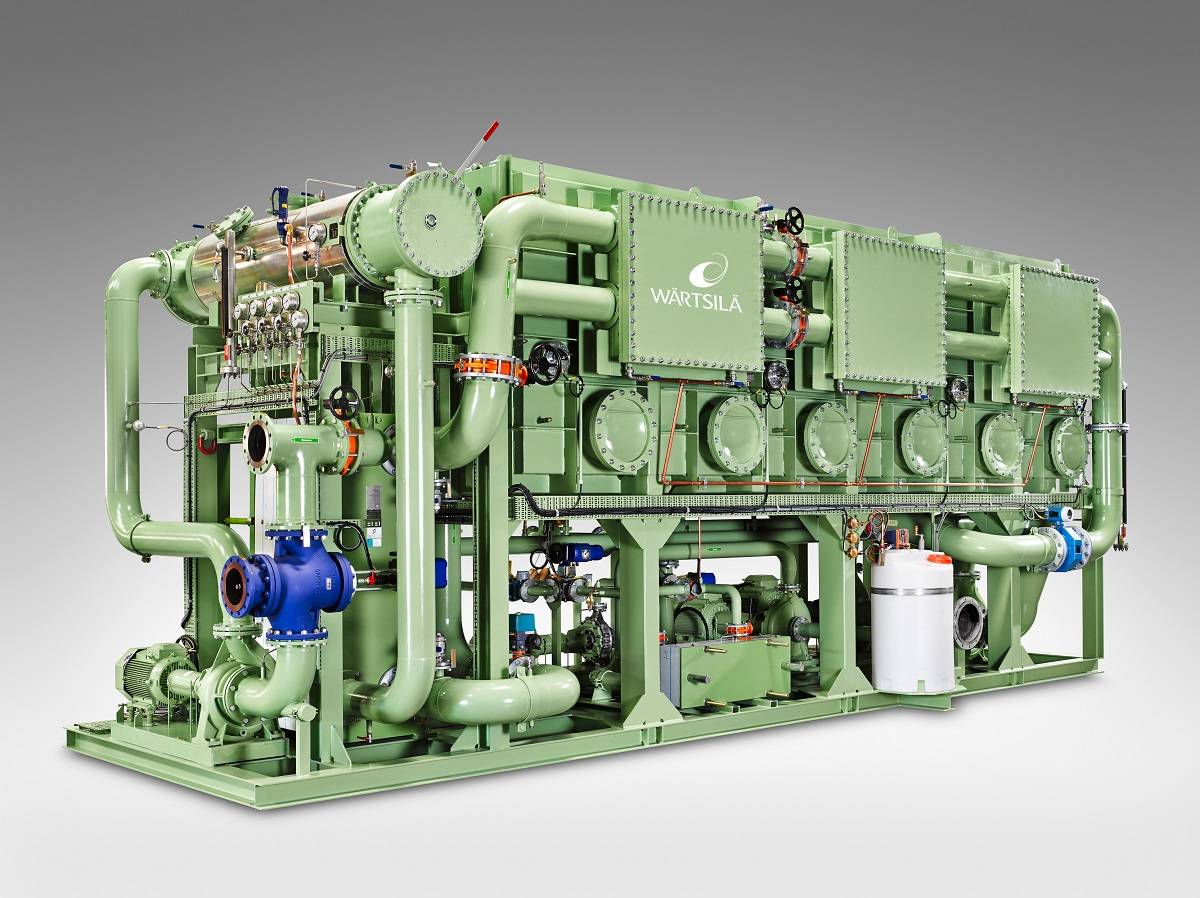
- Area: Scale formation in evaporator and condenser tubesCheck: Inspect tubes every 6-12 months by removing manhole covers and bottom covers of heat exchangers; check for scale deposits and coating exfoliation
- Area: Fouling or sludge accumulation in condenser cooling tubesCheck: Remove condenser covers and inspect cooling tubes for sludge, organic fouling, or biofilm buildup; test condenser pressure regularly
- Area: Vacuum system degradation and efficiency lossCheck: Verify vacuum gauge reading (minimum 90% vacuum required); check ejector pump operation and non-condensable gas removal performance
- Area: Demister performance and salt carryover contaminationCheck: Inspect demister element for moisture droplet separation effectiveness; test distillate conductivity for saltwater carryover (should be <4 µS/cm)
- Area: Plate material corrosion and structural integrity (titanium plates)Check: Visual inspection of titanium plate pack for pitting corrosion, cracks, or pinhole leaks; verify gasket seals and frame integrity
Typ-universelle Inspektionspunkte fuer Freshwater Generators (verifiziert, 2026-06).
- Area: Scale formation in evaporator and condenser tubesCheck: Inspect tubes every 6-12 months by removing manhole covers and bottom covers of heat exchangers; check for scale deposits and coating exfoliation
- Area: Fouling or sludge accumulation in condenser cooling tubesCheck: Remove condenser covers and inspect cooling tubes for sludge, organic fouling, or biofilm buildup; test condenser pressure regularly
- Area: Vacuum system degradation and efficiency lossCheck: Verify vacuum gauge reading (minimum 90% vacuum required); check ejector pump operation and non-condensable gas removal performance
- Area: Demister performance and salt carryover contaminationCheck: Inspect demister element for moisture droplet separation effectiveness; test distillate conductivity for saltwater carryover (should be <4 µS/cm)
- Area: Plate material corrosion and structural integrity (titanium plates)Check: Visual inspection of titanium plate pack for pitting corrosion, cracks, or pinhole leaks; verify gasket seals and frame integrity
Typ-universelle Inspektionspunkte fuer Freshwater Generators (verifiziert, 2026-06).
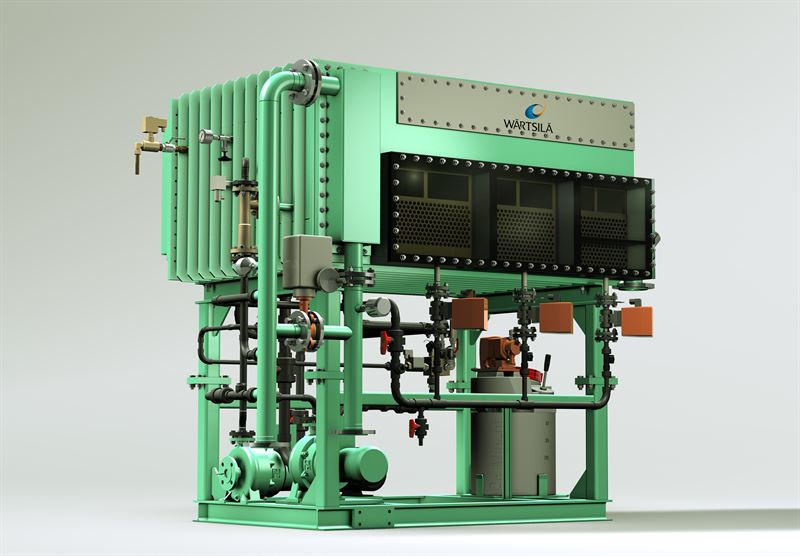
- Area: Scale formation in evaporator and condenser tubesCheck: Inspect tubes every 6-12 months by removing manhole covers and bottom covers of heat exchangers; check for scale deposits and coating exfoliation
- Area: Fouling or sludge accumulation in condenser cooling tubesCheck: Remove condenser covers and inspect cooling tubes for sludge, organic fouling, or biofilm buildup; test condenser pressure regularly
- Area: Vacuum system degradation and efficiency lossCheck: Verify vacuum gauge reading (minimum 90% vacuum required); check ejector pump operation and non-condensable gas removal performance
- Area: Demister performance and salt carryover contaminationCheck: Inspect demister element for moisture droplet separation effectiveness; test distillate conductivity for saltwater carryover (should be <4 µS/cm)
- Area: Plate material corrosion and structural integrity (titanium plates)Check: Visual inspection of titanium plate pack for pitting corrosion, cracks, or pinhole leaks; verify gasket seals and frame integrity
Typ-universelle Inspektionspunkte fuer Freshwater Generators (verifiziert, 2026-06).
- Area: Scale formation in evaporator and condenser tubesCheck: Inspect tubes every 6-12 months by removing manhole covers and bottom covers of heat exchangers; check for scale deposits and coating exfoliation
- Area: Fouling or sludge accumulation in condenser cooling tubesCheck: Remove condenser covers and inspect cooling tubes for sludge, organic fouling, or biofilm buildup; test condenser pressure regularly
- Area: Vacuum system degradation and efficiency lossCheck: Verify vacuum gauge reading (minimum 90% vacuum required); check ejector pump operation and non-condensable gas removal performance
- Area: Demister performance and salt carryover contaminationCheck: Inspect demister element for moisture droplet separation effectiveness; test distillate conductivity for saltwater carryover (should be <4 µS/cm)
- Area: Plate material corrosion and structural integrity (titanium plates)Check: Visual inspection of titanium plate pack for pitting corrosion, cracks, or pinhole leaks; verify gasket seals and frame integrity
Typ-universelle Inspektionspunkte fuer Freshwater Generators (verifiziert, 2026-06).
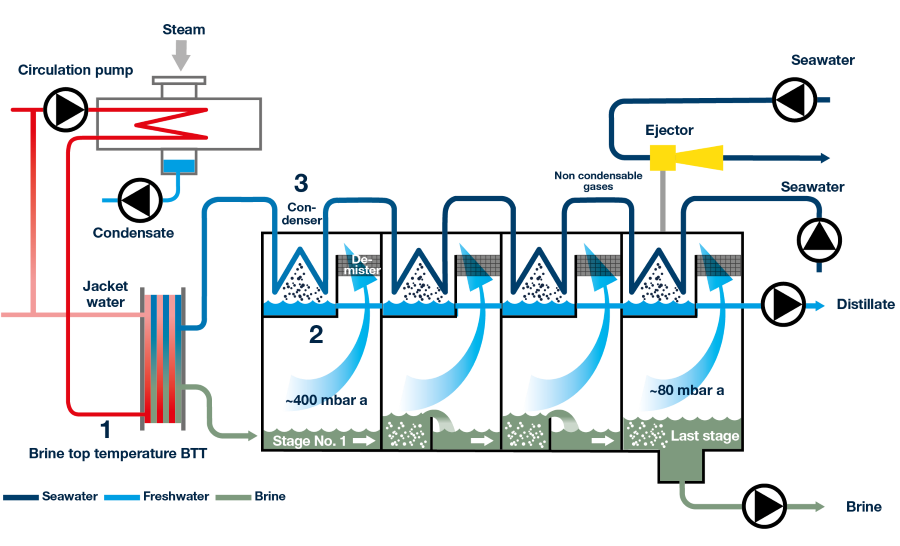
- Area: Scale formation in evaporator and condenser tubesCheck: Inspect tubes every 6-12 months by removing manhole covers and bottom covers of heat exchangers; check for scale deposits and coating exfoliation
- Area: Fouling or sludge accumulation in condenser cooling tubesCheck: Remove condenser covers and inspect cooling tubes for sludge, organic fouling, or biofilm buildup; test condenser pressure regularly
- Area: Vacuum system degradation and efficiency lossCheck: Verify vacuum gauge reading (minimum 90% vacuum required); check ejector pump operation and non-condensable gas removal performance
- Area: Demister performance and salt carryover contaminationCheck: Inspect demister element for moisture droplet separation effectiveness; test distillate conductivity for saltwater carryover (should be <4 µS/cm)
- Area: Plate material corrosion and structural integrity (titanium plates)Check: Visual inspection of titanium plate pack for pitting corrosion, cracks, or pinhole leaks; verify gasket seals and frame integrity
Typ-universelle Inspektionspunkte fuer Freshwater Generators (verifiziert, 2026-06).
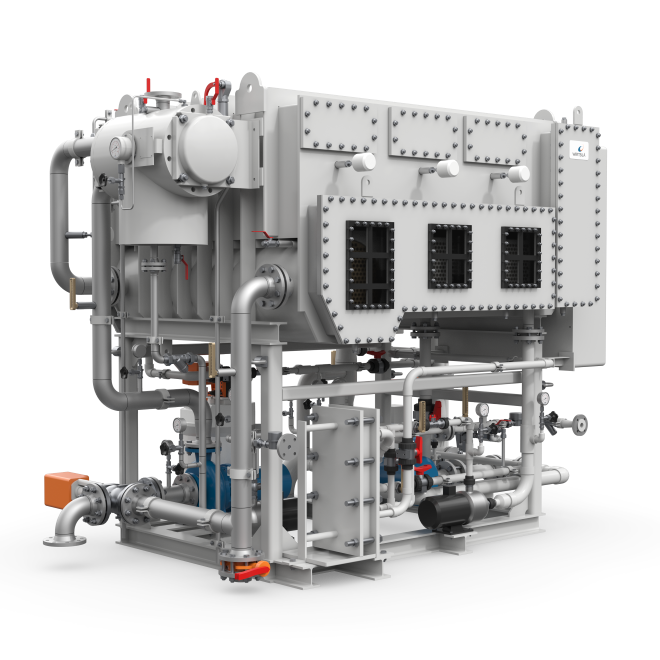
- Area: Scale formation in evaporator and condenser tubesCheck: Inspect tubes every 6-12 months by removing manhole covers and bottom covers of heat exchangers; check for scale deposits and coating exfoliation
- Area: Fouling or sludge accumulation in condenser cooling tubesCheck: Remove condenser covers and inspect cooling tubes for sludge, organic fouling, or biofilm buildup; test condenser pressure regularly
- Area: Vacuum system degradation and efficiency lossCheck: Verify vacuum gauge reading (minimum 90% vacuum required); check ejector pump operation and non-condensable gas removal performance
- Area: Demister performance and salt carryover contaminationCheck: Inspect demister element for moisture droplet separation effectiveness; test distillate conductivity for saltwater carryover (should be <4 µS/cm)
- Area: Plate material corrosion and structural integrity (titanium plates)Check: Visual inspection of titanium plate pack for pitting corrosion, cracks, or pinhole leaks; verify gasket seals and frame integrity
Typ-universelle Inspektionspunkte fuer Freshwater Generators (verifiziert, 2026-06).
- Area: Scale formation in evaporator and condenser tubesCheck: Inspect tubes every 6-12 months by removing manhole covers and bottom covers of heat exchangers; check for scale deposits and coating exfoliation
- Area: Fouling or sludge accumulation in condenser cooling tubesCheck: Remove condenser covers and inspect cooling tubes for sludge, organic fouling, or biofilm buildup; test condenser pressure regularly
- Area: Vacuum system degradation and efficiency lossCheck: Verify vacuum gauge reading (minimum 90% vacuum required); check ejector pump operation and non-condensable gas removal performance
- Area: Demister performance and salt carryover contaminationCheck: Inspect demister element for moisture droplet separation effectiveness; test distillate conductivity for saltwater carryover (should be <4 µS/cm)
- Area: Plate material corrosion and structural integrity (titanium plates)Check: Visual inspection of titanium plate pack for pitting corrosion, cracks, or pinhole leaks; verify gasket seals and frame integrity
Typ-universelle Inspektionspunkte fuer Freshwater Generators (verifiziert, 2026-06).
GEA (GEA Westfalia Separator)
5 ✓ 5 verified
- Area: Scale and mineral deposit formation on evaporator and condenser plate surfaces reduces heat transfer efficiency and system performanceCheck: Visually inspect evaporator and condenser plate bundles for scale buildup at semi-annual intervals (twice yearly). Remove man-hole and bottom covers of heat exchanger to examine tube condition and check for Neoprene coating exfoliation. Remove condenser covers to verify no fouling of cooling tubes with sludge. Perform chemical analysis of evaporator liquid for silica, calcium, and mineral content to confirm descaling need. Use chemical descaling agents (e.g., sodium polysulphate with anti-foam compounds) every 6-12 months or as needed based on salt content.
- Area: Vacuum system leakage and loss of pressure reduces evaporation efficiency and prevents system operationCheck: Perform leak test after maintenance or if vacuum maintenance difficulty occurs. Standard: vacuum must not fall more than 2% in 8 hours under normal operation. If vacuum drop exceeds 2% in 8 hours, inspect and seal deteriorated packings and joints immediately. Use pressure/vacuum gauges to monitor system continuously during operation. Check all joint connections, flange seals, and packing glands for visible leaks or weeping. Document baseline vacuum readings and monitor trending to detect progressive leaks.
- Area: Demister malfunction causes seawater droplet carry-over resulting in high salinity output unsuitable for human consumptionCheck: Inspect wire mesh demister for salt encrustation, clogging, or physical damage quarterly. Clean demister using fresh water spray and verify mesh integrity (holes should be visible under backlight, no collapsed sections). Check output salinity continuously: should be 2-10 ppm adjustable set point (alarm if exceeds 4 ppm per IMO standards). If salinity exceeds threshold, demister must be cleaned immediately or replaced. Monitor vapor quality visually for excessive liquid carryover (droplet mist instead of clean vapor).
- Area: Condenser tube/plate leakage contaminates distillate with seawater, raising salinity above acceptable limits (4 ppm maximum)Check: Perform hydrostatic pressure test on condenser quarterly using 1.5x normal operating pressure with fresh water to verify tube/plate integrity. Visual inspection: check condenser cooling jacket for visible salt deposits or staining indicating past leakage. Monitor distillate salinity continuously using calibrated salinometer (2-10 ppm range); if salinity rises above set point despite normal demister operation, investigate condenser for internal leaks. Replace any corroded or perforated condenser tubes/plates immediately. Test sea water cooling circuit for blockage that may cause condenser overpressure.
- Area: Titanium and stainless steel plate surface corrosion and micro-pitting under seawater exposure degrades material integrity and may cause perforationCheck: Perform visual external inspection annually for visible corrosion, discoloration, or surface attack on all seawater-exposed titanium and 316L stainless steel components (evaporator bundle, condenser bundle, connecting lines). Internal inspection every 3-5 years: remove plates and examine for scaling, biofouling, or micro-pitting using magnification if needed. Use non-abrasive cleaning (avoid sand blasting or steel wool) to protect titanium passivation layer. For seawater-contact areas, specify titanium or superduplex (2507) material at maintenance: avoid lower-grade stainless in salt-spray zones.
Typ-universelle Inspektionspunkte fuer Freshwater Generators (verifiziert, 2026-06).

- Area: Scale and mineral deposit formation on evaporator and condenser plate surfaces reduces heat transfer efficiency and system performanceCheck: Visually inspect evaporator and condenser plate bundles for scale buildup at semi-annual intervals (twice yearly). Remove man-hole and bottom covers of heat exchanger to examine tube condition and check for Neoprene coating exfoliation. Remove condenser covers to verify no fouling of cooling tubes with sludge. Perform chemical analysis of evaporator liquid for silica, calcium, and mineral content to confirm descaling need. Use chemical descaling agents (e.g., sodium polysulphate with anti-foam compounds) every 6-12 months or as needed based on salt content.
- Area: Vacuum system leakage and loss of pressure reduces evaporation efficiency and prevents system operationCheck: Perform leak test after maintenance or if vacuum maintenance difficulty occurs. Standard: vacuum must not fall more than 2% in 8 hours under normal operation. If vacuum drop exceeds 2% in 8 hours, inspect and seal deteriorated packings and joints immediately. Use pressure/vacuum gauges to monitor system continuously during operation. Check all joint connections, flange seals, and packing glands for visible leaks or weeping. Document baseline vacuum readings and monitor trending to detect progressive leaks.
- Area: Demister malfunction causes seawater droplet carry-over resulting in high salinity output unsuitable for human consumptionCheck: Inspect wire mesh demister for salt encrustation, clogging, or physical damage quarterly. Clean demister using fresh water spray and verify mesh integrity (holes should be visible under backlight, no collapsed sections). Check output salinity continuously: should be 2-10 ppm adjustable set point (alarm if exceeds 4 ppm per IMO standards). If salinity exceeds threshold, demister must be cleaned immediately or replaced. Monitor vapor quality visually for excessive liquid carryover (droplet mist instead of clean vapor).
- Area: Condenser tube/plate leakage contaminates distillate with seawater, raising salinity above acceptable limits (4 ppm maximum)Check: Perform hydrostatic pressure test on condenser quarterly using 1.5x normal operating pressure with fresh water to verify tube/plate integrity. Visual inspection: check condenser cooling jacket for visible salt deposits or staining indicating past leakage. Monitor distillate salinity continuously using calibrated salinometer (2-10 ppm range); if salinity rises above set point despite normal demister operation, investigate condenser for internal leaks. Replace any corroded or perforated condenser tubes/plates immediately. Test sea water cooling circuit for blockage that may cause condenser overpressure.
- Area: Titanium and stainless steel plate surface corrosion and micro-pitting under seawater exposure degrades material integrity and may cause perforationCheck: Perform visual external inspection annually for visible corrosion, discoloration, or surface attack on all seawater-exposed titanium and 316L stainless steel components (evaporator bundle, condenser bundle, connecting lines). Internal inspection every 3-5 years: remove plates and examine for scaling, biofouling, or micro-pitting using magnification if needed. Use non-abrasive cleaning (avoid sand blasting or steel wool) to protect titanium passivation layer. For seawater-contact areas, specify titanium or superduplex (2507) material at maintenance: avoid lower-grade stainless in salt-spray zones.
Typ-universelle Inspektionspunkte fuer Freshwater Generators (verifiziert, 2026-06).
- Area: Scale and mineral deposit formation on evaporator and condenser plate surfaces reduces heat transfer efficiency and system performanceCheck: Visually inspect evaporator and condenser plate bundles for scale buildup at semi-annual intervals (twice yearly). Remove man-hole and bottom covers of heat exchanger to examine tube condition and check for Neoprene coating exfoliation. Remove condenser covers to verify no fouling of cooling tubes with sludge. Perform chemical analysis of evaporator liquid for silica, calcium, and mineral content to confirm descaling need. Use chemical descaling agents (e.g., sodium polysulphate with anti-foam compounds) every 6-12 months or as needed based on salt content.
- Area: Vacuum system leakage and loss of pressure reduces evaporation efficiency and prevents system operationCheck: Perform leak test after maintenance or if vacuum maintenance difficulty occurs. Standard: vacuum must not fall more than 2% in 8 hours under normal operation. If vacuum drop exceeds 2% in 8 hours, inspect and seal deteriorated packings and joints immediately. Use pressure/vacuum gauges to monitor system continuously during operation. Check all joint connections, flange seals, and packing glands for visible leaks or weeping. Document baseline vacuum readings and monitor trending to detect progressive leaks.
- Area: Demister malfunction causes seawater droplet carry-over resulting in high salinity output unsuitable for human consumptionCheck: Inspect wire mesh demister for salt encrustation, clogging, or physical damage quarterly. Clean demister using fresh water spray and verify mesh integrity (holes should be visible under backlight, no collapsed sections). Check output salinity continuously: should be 2-10 ppm adjustable set point (alarm if exceeds 4 ppm per IMO standards). If salinity exceeds threshold, demister must be cleaned immediately or replaced. Monitor vapor quality visually for excessive liquid carryover (droplet mist instead of clean vapor).
- Area: Condenser tube/plate leakage contaminates distillate with seawater, raising salinity above acceptable limits (4 ppm maximum)Check: Perform hydrostatic pressure test on condenser quarterly using 1.5x normal operating pressure with fresh water to verify tube/plate integrity. Visual inspection: check condenser cooling jacket for visible salt deposits or staining indicating past leakage. Monitor distillate salinity continuously using calibrated salinometer (2-10 ppm range); if salinity rises above set point despite normal demister operation, investigate condenser for internal leaks. Replace any corroded or perforated condenser tubes/plates immediately. Test sea water cooling circuit for blockage that may cause condenser overpressure.
- Area: Titanium and stainless steel plate surface corrosion and micro-pitting under seawater exposure degrades material integrity and may cause perforationCheck: Perform visual external inspection annually for visible corrosion, discoloration, or surface attack on all seawater-exposed titanium and 316L stainless steel components (evaporator bundle, condenser bundle, connecting lines). Internal inspection every 3-5 years: remove plates and examine for scaling, biofouling, or micro-pitting using magnification if needed. Use non-abrasive cleaning (avoid sand blasting or steel wool) to protect titanium passivation layer. For seawater-contact areas, specify titanium or superduplex (2507) material at maintenance: avoid lower-grade stainless in salt-spray zones.
Typ-universelle Inspektionspunkte fuer Freshwater Generators (verifiziert, 2026-06).
- Area: Scale and mineral deposit formation on evaporator and condenser plate surfaces reduces heat transfer efficiency and system performanceCheck: Visually inspect evaporator and condenser plate bundles for scale buildup at semi-annual intervals (twice yearly). Remove man-hole and bottom covers of heat exchanger to examine tube condition and check for Neoprene coating exfoliation. Remove condenser covers to verify no fouling of cooling tubes with sludge. Perform chemical analysis of evaporator liquid for silica, calcium, and mineral content to confirm descaling need. Use chemical descaling agents (e.g., sodium polysulphate with anti-foam compounds) every 6-12 months or as needed based on salt content.
- Area: Vacuum system leakage and loss of pressure reduces evaporation efficiency and prevents system operationCheck: Perform leak test after maintenance or if vacuum maintenance difficulty occurs. Standard: vacuum must not fall more than 2% in 8 hours under normal operation. If vacuum drop exceeds 2% in 8 hours, inspect and seal deteriorated packings and joints immediately. Use pressure/vacuum gauges to monitor system continuously during operation. Check all joint connections, flange seals, and packing glands for visible leaks or weeping. Document baseline vacuum readings and monitor trending to detect progressive leaks.
- Area: Demister malfunction causes seawater droplet carry-over resulting in high salinity output unsuitable for human consumptionCheck: Inspect wire mesh demister for salt encrustation, clogging, or physical damage quarterly. Clean demister using fresh water spray and verify mesh integrity (holes should be visible under backlight, no collapsed sections). Check output salinity continuously: should be 2-10 ppm adjustable set point (alarm if exceeds 4 ppm per IMO standards). If salinity exceeds threshold, demister must be cleaned immediately or replaced. Monitor vapor quality visually for excessive liquid carryover (droplet mist instead of clean vapor).
- Area: Condenser tube/plate leakage contaminates distillate with seawater, raising salinity above acceptable limits (4 ppm maximum)Check: Perform hydrostatic pressure test on condenser quarterly using 1.5x normal operating pressure with fresh water to verify tube/plate integrity. Visual inspection: check condenser cooling jacket for visible salt deposits or staining indicating past leakage. Monitor distillate salinity continuously using calibrated salinometer (2-10 ppm range); if salinity rises above set point despite normal demister operation, investigate condenser for internal leaks. Replace any corroded or perforated condenser tubes/plates immediately. Test sea water cooling circuit for blockage that may cause condenser overpressure.
- Area: Titanium and stainless steel plate surface corrosion and micro-pitting under seawater exposure degrades material integrity and may cause perforationCheck: Perform visual external inspection annually for visible corrosion, discoloration, or surface attack on all seawater-exposed titanium and 316L stainless steel components (evaporator bundle, condenser bundle, connecting lines). Internal inspection every 3-5 years: remove plates and examine for scaling, biofouling, or micro-pitting using magnification if needed. Use non-abrasive cleaning (avoid sand blasting or steel wool) to protect titanium passivation layer. For seawater-contact areas, specify titanium or superduplex (2507) material at maintenance: avoid lower-grade stainless in salt-spray zones.
Typ-universelle Inspektionspunkte fuer Freshwater Generators (verifiziert, 2026-06).
- Area: Scale and mineral deposit formation on evaporator and condenser plate surfaces reduces heat transfer efficiency and system performanceCheck: Visually inspect evaporator and condenser plate bundles for scale buildup at semi-annual intervals (twice yearly). Remove man-hole and bottom covers of heat exchanger to examine tube condition and check for Neoprene coating exfoliation. Remove condenser covers to verify no fouling of cooling tubes with sludge. Perform chemical analysis of evaporator liquid for silica, calcium, and mineral content to confirm descaling need. Use chemical descaling agents (e.g., sodium polysulphate with anti-foam compounds) every 6-12 months or as needed based on salt content.
- Area: Vacuum system leakage and loss of pressure reduces evaporation efficiency and prevents system operationCheck: Perform leak test after maintenance or if vacuum maintenance difficulty occurs. Standard: vacuum must not fall more than 2% in 8 hours under normal operation. If vacuum drop exceeds 2% in 8 hours, inspect and seal deteriorated packings and joints immediately. Use pressure/vacuum gauges to monitor system continuously during operation. Check all joint connections, flange seals, and packing glands for visible leaks or weeping. Document baseline vacuum readings and monitor trending to detect progressive leaks.
- Area: Demister malfunction causes seawater droplet carry-over resulting in high salinity output unsuitable for human consumptionCheck: Inspect wire mesh demister for salt encrustation, clogging, or physical damage quarterly. Clean demister using fresh water spray and verify mesh integrity (holes should be visible under backlight, no collapsed sections). Check output salinity continuously: should be 2-10 ppm adjustable set point (alarm if exceeds 4 ppm per IMO standards). If salinity exceeds threshold, demister must be cleaned immediately or replaced. Monitor vapor quality visually for excessive liquid carryover (droplet mist instead of clean vapor).
- Area: Condenser tube/plate leakage contaminates distillate with seawater, raising salinity above acceptable limits (4 ppm maximum)Check: Perform hydrostatic pressure test on condenser quarterly using 1.5x normal operating pressure with fresh water to verify tube/plate integrity. Visual inspection: check condenser cooling jacket for visible salt deposits or staining indicating past leakage. Monitor distillate salinity continuously using calibrated salinometer (2-10 ppm range); if salinity rises above set point despite normal demister operation, investigate condenser for internal leaks. Replace any corroded or perforated condenser tubes/plates immediately. Test sea water cooling circuit for blockage that may cause condenser overpressure.
- Area: Titanium and stainless steel plate surface corrosion and micro-pitting under seawater exposure degrades material integrity and may cause perforationCheck: Perform visual external inspection annually for visible corrosion, discoloration, or surface attack on all seawater-exposed titanium and 316L stainless steel components (evaporator bundle, condenser bundle, connecting lines). Internal inspection every 3-5 years: remove plates and examine for scaling, biofouling, or micro-pitting using magnification if needed. Use non-abrasive cleaning (avoid sand blasting or steel wool) to protect titanium passivation layer. For seawater-contact areas, specify titanium or superduplex (2507) material at maintenance: avoid lower-grade stainless in salt-spray zones.
Typ-universelle Inspektionspunkte fuer Freshwater Generators (verifiziert, 2026-06).
RWO Water Technologies (RWO GmbH)
4 ✓ 4 verified- Area: Drucktest (RO-Membranen)Check: Betriebsdruck überprüfen - RO-Systeme arbeiten mit 40-70 bar, NICHT mit Vakuum wie Plattenverdampfer
- Area: Membrane integrity and wearCheck: Inspect membrane rupture or microcracks; measure permeate quality daily (salinity <500 ppm)
- Area: Concentrate discharge and salt loadingCheck: Check concentrate displacement device, monitor salt outlet (up to 79% recovery loss)
- Area: Temperaturbereich-EinhaltungCheck: Betriebstemperatur im Bereich 1-35°C halten; außerhalb dieser Grenzen keine stabilen Durchsätze
- Area: Prefiltration and suspended solids (SAF-COM)Check: Inspect RWO SAF-COM prefiltration - protection against membrane clogging by solids
Typ-universelle Inspektionspunkte fuer Freshwater Generators (verifiziert, 2026-06).
- Area: Drucktest (RO-Membranen)Check: Betriebsdruck überprüfen - RO-Systeme arbeiten mit 40-70 bar, NICHT mit Vakuum wie Plattenverdampfer
- Area: Membrane integrity and wearCheck: Inspect membrane rupture or microcracks; measure permeate quality daily (salinity <500 ppm)
- Area: Concentrate discharge and salt loadingCheck: Check concentrate displacement device, monitor salt outlet (up to 79% recovery loss)
- Area: Temperaturbereich-EinhaltungCheck: Betriebstemperatur im Bereich 1-35°C halten; außerhalb dieser Grenzen keine stabilen Durchsätze
- Area: Prefiltration and suspended solids (SAF-COM)Check: Inspect RWO SAF-COM prefiltration - protection against membrane clogging by solids
Typ-universelle Inspektionspunkte fuer Freshwater Generators (verifiziert, 2026-06).
- Area: Drucktest (RO-Membranen)Check: Betriebsdruck überprüfen - RO-Systeme arbeiten mit 40-70 bar, NICHT mit Vakuum wie Plattenverdampfer
- Area: Membrane integrity and wearCheck: Inspect membrane rupture or microcracks; measure permeate quality daily (salinity <500 ppm)
- Area: Concentrate discharge and salt loadingCheck: Check concentrate displacement device, monitor salt outlet (up to 79% recovery loss)
- Area: Temperaturbereich-EinhaltungCheck: Betriebstemperatur im Bereich 1-35°C halten; außerhalb dieser Grenzen keine stabilen Durchsätze
- Area: Prefiltration and suspended solids (SAF-COM)Check: Inspect RWO SAF-COM prefiltration - protection against membrane clogging by solids
Typ-universelle Inspektionspunkte fuer Freshwater Generators (verifiziert, 2026-06).
- Area: Drucktest (RO-Membranen)Check: Betriebsdruck überprüfen - RO-Systeme arbeiten mit 40-70 bar, NICHT mit Vakuum wie Plattenverdampfer
- Area: Membrane integrity and wearCheck: Inspect membrane rupture or microcracks; measure permeate quality daily (salinity <500 ppm)
- Area: Concentrate discharge and salt loadingCheck: Check concentrate displacement device, monitor salt outlet (up to 79% recovery loss)
- Area: Temperaturbereich-EinhaltungCheck: Betriebstemperatur im Bereich 1-35°C halten; außerhalb dieser Grenzen keine stabilen Durchsätze
- Area: Prefiltration and suspended solids (SAF-COM)Check: Inspect RWO SAF-COM prefiltration - protection against membrane clogging by solids
Typ-universelle Inspektionspunkte fuer Freshwater Generators (verifiziert, 2026-06).
Donghwa Entec
2 ✓ 2 verified- Area: Salinity electrode degradation and scale buildupCheck: Clean salinity alarm electrodes to remove dust and scale deposits (monthly basis minimum)
- Area: Heat exchanger tube scale and salt deposit formationCheck: Descale/clean interior heating tubes 2-3 times per year using physical or chemical methods
- Area: Reduced heat transfer efficiency due to scale formationCheck: Monitor inlet and outlet temperature differential; inspect for scale if temperature loss exceeds specification
- Area: Ejector pump impeller wear and surface damageCheck: Periodically inspect impeller condition for wear damage from high-speed revolution; replace if necessary
- Area: Vacuum system integrity lossCheck: Monitor vacuum pressure readings and check water ejector seals and connections for leaks
Typ-universelle Inspektionspunkte fuer Freshwater Generators (verifiziert, 2026-06).
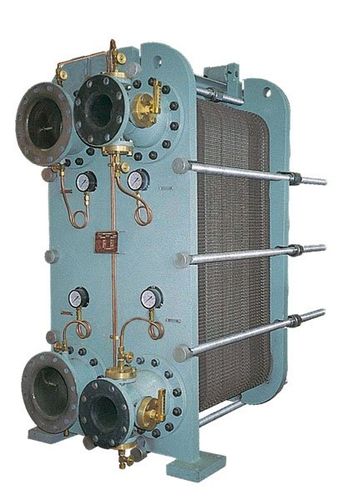
- Area: Salinity electrode degradation and scale buildupCheck: Clean salinity alarm electrodes to remove dust and scale deposits (monthly basis minimum)
- Area: Heat exchanger tube scale and salt deposit formationCheck: Descale/clean interior heating tubes 2-3 times per year using physical or chemical methods
- Area: Reduced heat transfer efficiency due to scale formationCheck: Monitor inlet and outlet temperature differential; inspect for scale if temperature loss exceeds specification
- Area: Ejector pump impeller wear and surface damageCheck: Periodically inspect impeller condition for wear damage from high-speed revolution; replace if necessary
- Area: Vacuum system integrity lossCheck: Monitor vacuum pressure readings and check water ejector seals and connections for leaks
Typ-universelle Inspektionspunkte fuer Freshwater Generators (verifiziert, 2026-06).
Wärtsilä
12- Scale or fouling on evaporator surfaces caused by seawater concentration or poor treatment, resulting in reduced freshwater production
- Loss of vacuum caused by air leakage, ejector wear or poor seawater flow, resulting in higher boiling temperature and low capacity
- High distillate salinity caused by carry-over, damaged seals or salinity-sensor faults, resulting in product-water rejection
- Condenser fouling caused by scale or debris, resulting in poor condensation and reduced vacuum performance
- Pump, valve or seal leakage caused by wear or corrosion, resulting in unstable feed, visible leakage or inability to maintain normal operation
- Scale or fouling on evaporator surfaces caused by seawater concentration or poor treatment, resulting in reduced freshwater production
- Loss of vacuum caused by air leakage, ejector wear or poor seawater flow, resulting in higher boiling temperature and low capacity
- High distillate salinity caused by carry-over, damaged seals or salinity-sensor faults, resulting in product-water rejection
- Condenser fouling caused by scale or debris, resulting in poor condensation and reduced vacuum performance
- Pump, valve or seal leakage caused by wear or corrosion, resulting in unstable feed, visible leakage or inability to maintain normal operation
- Scale or fouling on evaporator surfaces caused by seawater concentration or poor treatment, resulting in reduced freshwater production
- Loss of vacuum caused by air leakage, ejector wear or poor seawater flow, resulting in higher boiling temperature and low capacity
- High distillate salinity caused by carry-over, damaged seals or salinity-sensor faults, resulting in product-water rejection
- Condenser fouling caused by scale or debris, resulting in poor condensation and reduced vacuum performance
- Pump, valve or seal leakage caused by wear or corrosion, resulting in unstable feed, visible leakage or inability to maintain normal operation
- Scale or fouling on evaporator surfaces caused by seawater concentration or poor treatment, resulting in reduced freshwater production
- Loss of vacuum caused by air leakage, ejector wear or poor seawater flow, resulting in higher boiling temperature and low capacity
- High distillate salinity caused by carry-over, damaged seals or salinity-sensor faults, resulting in product-water rejection
- Condenser fouling caused by scale or debris, resulting in poor condensation and reduced vacuum performance
- Pump, valve or seal leakage caused by wear or corrosion, resulting in unstable feed, visible leakage or inability to maintain normal operation
- Scale or fouling on evaporator surfaces caused by seawater concentration or poor treatment, resulting in reduced freshwater production
- Loss of vacuum caused by air leakage, ejector wear or poor seawater flow, resulting in higher boiling temperature and low capacity
- High distillate salinity caused by carry-over, damaged seals or salinity-sensor faults, resulting in product-water rejection
- Condenser fouling caused by scale or debris, resulting in poor condensation and reduced vacuum performance
- Pump, valve or seal leakage caused by wear or corrosion, resulting in unstable feed, visible leakage or inability to maintain normal operation
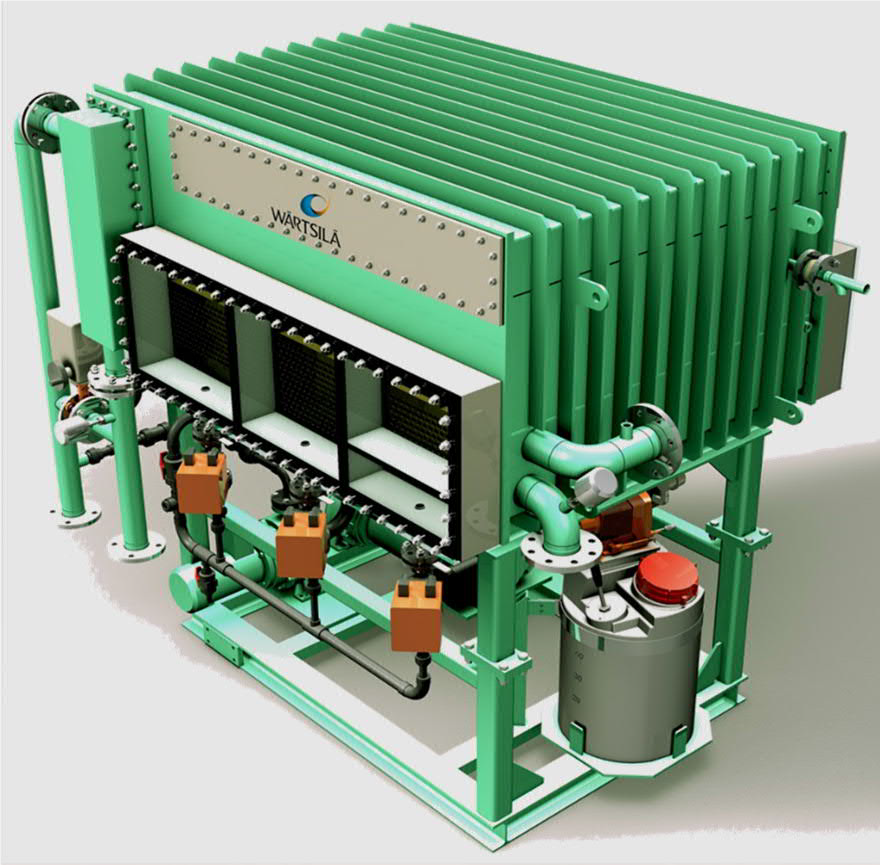
- Scale, membrane fouling, biological growth or dirty optical surfaces reduce treatment capacity or water quality
- Pump, vacuum, lamp, blower or power-supply faults cause low production, low treatment intensity or shutdown
- Conductivity, salinity, level or treatment sensors drift and cause false acceptance, rejection or alarms
- Seal, gasket or piping leakage causes loss of pressure, vacuum or visible water leakage
- Pretreatment, strainer or discharge blockage causes unstable flow and poor process performance
- Compact size – fits in tight engine‑room spaces
- Low power consumption compared with multi‑effect units
- Modular plate design allows quick on‑board replacement of fouled plates
- Integrated ejector condenser reduces moving parts and maintenance
- Proven track record on a wide range of commercial vessels
- Plate scaling can limit performance if feed water pretreatment is inadequate
- Ejector wear may require periodic overhaul
- Gasket deterioration leads to occasional leaks and replacement intervals
- Limited maximum daily output (typically 5‑15 m³/day) versus larger multi‑effect plants
- Performance sensitive to inlet seawater temperature fluctuations