What to check on a Motor Starter / Contactor.
A contactor is an electrically operated switch: a coil pulls in a set of main contacts to make or break a three-phase circuit, nothing more. A motor starter combines that contactor with protection, most commonly a thermal overload relay wired in series with the motor's current path, plus the control wiring for start/stop pushbuttons, interlocks, and status feedback to the switchboard or automation system. Direct-on-line, star-delta and soft starters are all built around this same contactor-plus-protection core; what changes between them is how much inrush current and torque the motor…
What makes a starter different from a bare contactor
A contactor is an electrically operated switch: a coil pulls in a set of main contacts to make or break a three-phase circuit, nothing more. A motor starter combines that contactor with protection, most commonly a thermal overload relay wired in series with the motor's current path, plus the control wiring for start/stop pushbuttons, interlocks, and status feedback to the switchboard or automation system. Direct-on-line, star-delta and soft starters are all built around this same contactor-plus-protection core; what changes between them is how much inrush current and torque the motor sees at the moment of starting.
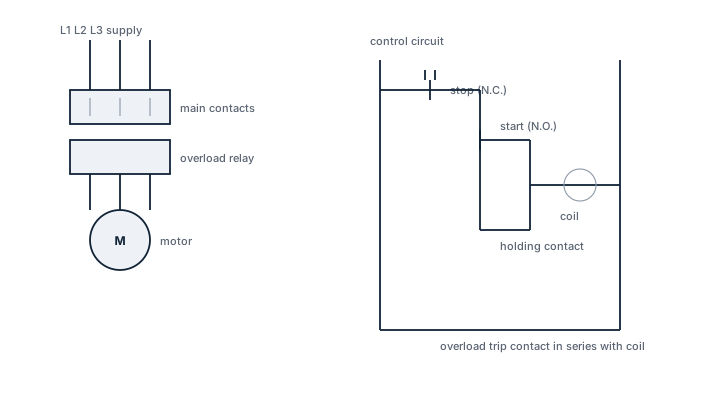
Main components
Contactor
Sized by rated operational current (AC-3 duty for motor loads) and by pole count, with an auxiliary contact block usually added for interlocking and remote indication.
Overload relay
Thermal or electronic, set to the motor's full load current and service factor; it trips on a sustained overcurrent that a fuse or breaker would be too slow, or not sensitive enough, to catch.
Short-circuit protection
A motor circuit breaker or fuses upstream of the contactor clear a true short circuit far faster than the thermal overload can react, and the two are sized to coordinate rather than duplicate each other.
Star-delta or soft-start components
Where fitted, a second and third contactor (star-delta) or a solid-state voltage ramp module (soft starter) reduce starting current, at the cost of reduced starting torque, for larger motors where a direct-on-line start would sag the switchboard bus.
Selection and sizing
The starter must be matched to the motor's full load current, starting current multiple, duty class (continuous, intermittent, or frequent reversing), and the switchboard's fault level for the short-circuit device. AC-3 utilisation category current rating is the figure to check against the motor nameplate, not the contactor's resistive AC-1 rating, which is always higher and misleading if used for sizing.
Regulations and class
- Class rules require motor circuits to carry both overload and short-circuit protection, and essential service motors to have specific alarm and, where required, automatic restart arrangements after a blackout.
- SOLAS Ch. II-1 requirements for essential auxiliaries (steering gear, fire pumps, emergency equipment) drive which starters need duplicated supplies or automatic changeover rather than manual restart only.
- Periodic testing of overload relay trip settings and protection relay function is checked at survey, typically confirmed by primary or secondary injection testing during major surveys.
Typical faults
| Fault | Consequence |
|---|---|
| Contactor main contacts pitted or welded from repeated interruption of starting current | Motor fails to stop on command, or one phase fails to make, causing single-phasing |
| Overload relay set above actual motor full load current | Protection no longer trips before winding damage on a developing fault, defeating the purpose of the relay |
| Coil burnt from undervoltage chatter during a switchboard disturbance | Starter drops out and will not re-energise until the coil is replaced, taking an essential auxiliary offline |
| Star-delta timer misadjusted | Transition happens too early (high current transient) or too late (unnecessary time at reduced torque), stressing both motor and starter |
What to look for in a supplier
- Contactor and overload relay rated for the actual AC-3 duty current, with a documented coordination table against the upstream breaker or fuses.
- Spares availability for the exact overload relay type fitted, since electronic overload modules are rarely interchangeable across manufacturers.
- Type-tested motor control centre assemblies where required by class, rather than field-built panels with no assembly-level test certificate.
- Clear marking of AC-3 versus AC-1 ratings on the datasheet, since this figure is the most common source of undersized replacement starters.
When replacing a starter after a trip, check the overload relay setting against the motor nameplate before re-energising; a starter swapped in a hurry with the previous relay setting left unchanged is a common cause of a repeat winding failure weeks later.