"> Exhaust Silencer / Muffler - Equipment Database

Exhaust Silencer / Muffler

medium 696 models total

An exhaust silencer only reduces noise; it is not a scrubber or spark arrestor, though many units combine a spark arrestor screen and some now share a casing with a catalytic or SCR element for a separate emissions function.

Read more — Exhaust Silencer / Muffler explained

What Defines an Exhaust Silencer

An exhaust silencer is a passive acoustic device fitted in the exhaust gas path of a diesel engine, gas turbine or boiler uptake, built to attenuate pressure-pulse noise without adding meaningful backpressure. It is purely a noise-control component: it does not reduce emissions, and where a vessel also needs particulate or NOx reduction, a separate scrubber or SCR unit is fitted, sometimes packaged into the same casing but functionally distinct. Silencers are classified by attenuation principle - reactive (chambers and baffles tuned to cancel specific frequencies), absorptive (packed with mineral wool or ceramic fibre that dissipates sound energy as heat), or combined - and the choice depends on the noise spectrum of the engine it serves.
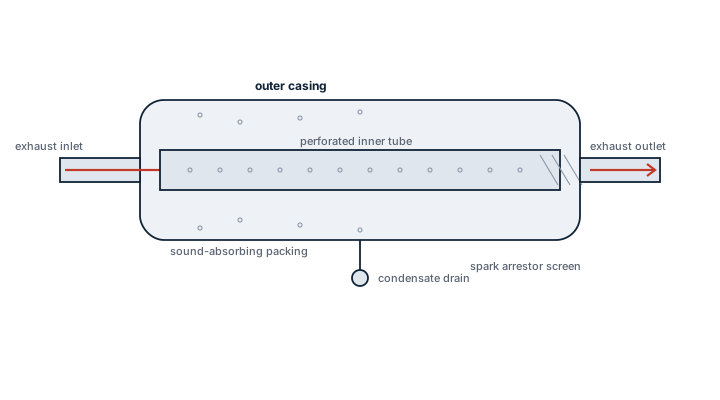
Exhaust silencer cross-section
Cutaway of an exhaust silencer showing the outer casing, the perforated inner tube, the sound-absorbing packing in the annular space, the spark arrestor screen near the outlet, and the condensate drain.

Main components

Shell and internal baffles

A welded steel or stainless shell containing perforated internal tubes and chambers arranged to reflect and cancel pressure waves at the engine's firing frequency and its harmonics.

Absorptive packing

Mineral wool, basalt fibre or ceramic fibre packed around the perforated core in absorptive and combination types, protected by a perforated liner so exhaust velocity does not erode the packing over time.

Spark arrestor screen

A fine mesh or maze-path screen fitted where the exhaust discharges near flammable cargo, helicopter decks or enclosed spaces, required on many vessel types independent of the silencer's acoustic function.

Drain and condensate connection

A low-point drain removes condensate and unburnt fuel residue that collects during low-load or idling operation, preventing corrosion pooling inside the shell.

Selection and sizing

Silencer selection balances acoustic performance against the backpressure the engine can tolerate:

  • Required noise attenuation in dB, driven by classification society comfort notations or crew accommodation noise limits
  • Maximum permissible backpressure at rated engine load, since excess backpressure raises fuel consumption and exhaust temperature
  • Gas flow and temperature at the engine's rated output, which sets shell diameter and material grade
  • Available space and orientation in the funnel casing, vertical or horizontal mounting

Class and regulatory requirements

SOLAS Chapter II-2 requirements for machinery space fire protection influence exhaust routing and insulation around the silencer, since exhaust surface temperatures can exceed the ignition point of oil residues if lagging is missing or damaged. Where a vessel carries a noise notation, class rules set maximum sound pressure levels in accommodation and work spaces, and the silencer's attenuation curve must be demonstrated to meet it. MARPOL Annex VI governs the engine's emissions, not the silencer, but where an SCR or scrubber element shares the silencer casing, its performance is verified separately under that engine's emission compliance scheme.

Typical faults

FaultCauseConsequence
Increased backpressureSoot and carbon buildup clogging internal passagesHigher fuel consumption, elevated exhaust temperature, turbocharger stress
Packing degradationAbsorptive material eroded by high gas velocity or soaked by condensateLoss of attenuation, rising noise complaints
Shell corrosionSulphuric acid condensation during prolonged low-load runningWall thinning, eventual gas or fire leak into the funnel casing
Missing or damaged insulationLagging removed for maintenance and not refittedFire risk from oil-soaked material contacting hot shell surfaces

What to look for in a supplier

  • Attenuation curve tested across the actual engine's firing frequency range, not a generic figure
  • Backpressure figures at the engine's full load point, confirmed against the engine maker's maximum allowable value
  • Material grade suited to sulphur content of the fuel burned, since low-load operation increases acid condensation risk
  • Accessible drain and inspection points built into the design

Check the condensate drain every watch during extended low-load or manoeuvring periods; a blocked drain lets acidic condensate pool inside the shell, and that is where silencers actually fail - from the inside out, long before the outer casing looks worn.

19 manufacturers · 696 models

Belmar Industries

21 ✓ 21 verified
Standard Silencer SI1 Series — Industrial Grade, Body Style 1 ✓ verified
Application
Industrial engine exhaust silencing in areas where surrounding noise levels are relatively high; mountable in any position; sizes 4"–14" inlet
Common Failures & Inspection Points
  • Area: Sichtprüfung der Außenhülle auf Korrosion, Risse, Durchbrennen oder mechanische Beschädigungen (insbesondere an Schweißnähten und Flanschübergängen)
    Check: Sichtprüfung der Außenhülle auf Korrosion, Risse, Durchbrennen oder mechanische Beschädigungen (insbesondere an Schweißnähten und Flanschübergängen)
  • Area: Prüfung der Flanschverbindungen und Befestigungsschrauben auf Festsitz, Leckagen und Beschädigungen der Dichtungen (Gaskets)
    Check: Prüfung der Flanschverbindungen und Befestigungsschrauben auf Festsitz, Leckagen und Beschädigungen der Dichtungen (Gaskets)
  • Area: Kontrolle der Flexverbinder / Dehnungsbögen auf Risse, Ermüdungserscheinungen und Dichtheit
    Check: Kontrolle der Flexverbinder / Dehnungsbögen auf Risse, Ermüdungserscheinungen und Dichtheit
  • Area: Entleerung und Überprüfung des Kondensatablaufs (Drain) auf freien Durchfluss und Korrosionszustand
    Check: Entleerung und Überprüfung des Kondensatablaufs (Drain) auf freien Durchfluss und Korrosionszustand
  • Area: Bei Spark-Arrestor-Ausführungen: Reinigung und Inspektion der Spark-Trap-Kammer auf Rußablagerungen und Fremdkörper
    Check: Bei Spark-Arrestor-Ausführungen: Reinigung und Inspektion der Spark-Trap-Kammer auf Rußablagerungen und Fremdkörper
  • Area: Prüfung der Halterungen und Konsolen (Brackets) auf Risse, Verformung und korrekten Anzug der Befestigungsmittel
    Check: Prüfung der Halterungen und Konsolen (Brackets) auf Risse, Verformung und korrekten Anzug der Befestigungsmittel
  • Area: Messung der Oberflächentemperatur und Kontrolle der Lackierung / Beschichtung auf Abblätterungen, die auf lokale Überhitzung hinweisen
    Check: Messung der Oberflächentemperatur und Kontrolle der Lackierung / Beschichtung auf Abblätterungen, die auf lokale Überhitzung hinweisen
  • Area: Überprüfung der inneren Absorptionsfüllung (Glasfaser-Packung bei Disk-Silencern) auf Auswaschung oder Verdichtung durch Sichtinspektion über Revisionsöffnungen
    Check: Überprüfung der inneren Absorptionsfüllung (Glasfaser-Packung bei Disk-Silencern) auf Auswaschung oder Verdichtung durch Sichtinspektion über Revisionsöffnungen bzw. bei Druckabfall-/Pegelveränderungsmessungen

Typ-universelle Inspektionspunkte fuer Exhaust Silencer (verifiziert, 2026-06).

Standard Silencer SI2 Series — Industrial Grade, Body Style 2 ✓ verified
Application
Industrial engine exhaust silencing in areas where surrounding noise levels are relatively high; base-mounted body style; sizes 4"–14" inlet
Common Failures & Inspection Points
  • Area: Sichtprüfung der Außenhülle auf Korrosion, Risse, Durchbrennen oder mechanische Beschädigungen (insbesondere an Schweißnähten und Flanschübergängen)
    Check: Sichtprüfung der Außenhülle auf Korrosion, Risse, Durchbrennen oder mechanische Beschädigungen (insbesondere an Schweißnähten und Flanschübergängen)
  • Area: Prüfung der Flanschverbindungen und Befestigungsschrauben auf Festsitz, Leckagen und Beschädigungen der Dichtungen (Gaskets)
    Check: Prüfung der Flanschverbindungen und Befestigungsschrauben auf Festsitz, Leckagen und Beschädigungen der Dichtungen (Gaskets)
  • Area: Kontrolle der Flexverbinder / Dehnungsbögen auf Risse, Ermüdungserscheinungen und Dichtheit
    Check: Kontrolle der Flexverbinder / Dehnungsbögen auf Risse, Ermüdungserscheinungen und Dichtheit
  • Area: Entleerung und Überprüfung des Kondensatablaufs (Drain) auf freien Durchfluss und Korrosionszustand
    Check: Entleerung und Überprüfung des Kondensatablaufs (Drain) auf freien Durchfluss und Korrosionszustand
  • Area: Bei Spark-Arrestor-Ausführungen: Reinigung und Inspektion der Spark-Trap-Kammer auf Rußablagerungen und Fremdkörper
    Check: Bei Spark-Arrestor-Ausführungen: Reinigung und Inspektion der Spark-Trap-Kammer auf Rußablagerungen und Fremdkörper
  • Area: Prüfung der Halterungen und Konsolen (Brackets) auf Risse, Verformung und korrekten Anzug der Befestigungsmittel
    Check: Prüfung der Halterungen und Konsolen (Brackets) auf Risse, Verformung und korrekten Anzug der Befestigungsmittel
  • Area: Messung der Oberflächentemperatur und Kontrolle der Lackierung / Beschichtung auf Abblätterungen, die auf lokale Überhitzung hinweisen
    Check: Messung der Oberflächentemperatur und Kontrolle der Lackierung / Beschichtung auf Abblätterungen, die auf lokale Überhitzung hinweisen
  • Area: Überprüfung der inneren Absorptionsfüllung (Glasfaser-Packung bei Disk-Silencern) auf Auswaschung oder Verdichtung durch Sichtinspektion über Revisionsöffnungen
    Check: Überprüfung der inneren Absorptionsfüllung (Glasfaser-Packung bei Disk-Silencern) auf Auswaschung oder Verdichtung durch Sichtinspektion über Revisionsöffnungen bzw. bei Druckabfall-/Pegelveränderungsmessungen

Typ-universelle Inspektionspunkte fuer Exhaust Silencer (verifiziert, 2026-06).

Standard Silencer SR1 Series — Residential Grade, Body Style 1 ✓ verified
Application
Engine exhaust where moderate silencing is required; residential and commercial areas; sizes 4"–20" inlet
Common Failures & Inspection Points
  • Area: Sichtprüfung der Außenhülle auf Korrosion, Risse, Durchbrennen oder mechanische Beschädigungen (insbesondere an Schweißnähten und Flanschübergängen)
    Check: Sichtprüfung der Außenhülle auf Korrosion, Risse, Durchbrennen oder mechanische Beschädigungen (insbesondere an Schweißnähten und Flanschübergängen)
  • Area: Prüfung der Flanschverbindungen und Befestigungsschrauben auf Festsitz, Leckagen und Beschädigungen der Dichtungen (Gaskets)
    Check: Prüfung der Flanschverbindungen und Befestigungsschrauben auf Festsitz, Leckagen und Beschädigungen der Dichtungen (Gaskets)
  • Area: Kontrolle der Flexverbinder / Dehnungsbögen auf Risse, Ermüdungserscheinungen und Dichtheit
    Check: Kontrolle der Flexverbinder / Dehnungsbögen auf Risse, Ermüdungserscheinungen und Dichtheit
  • Area: Entleerung und Überprüfung des Kondensatablaufs (Drain) auf freien Durchfluss und Korrosionszustand
    Check: Entleerung und Überprüfung des Kondensatablaufs (Drain) auf freien Durchfluss und Korrosionszustand
  • Area: Bei Spark-Arrestor-Ausführungen: Reinigung und Inspektion der Spark-Trap-Kammer auf Rußablagerungen und Fremdkörper
    Check: Bei Spark-Arrestor-Ausführungen: Reinigung und Inspektion der Spark-Trap-Kammer auf Rußablagerungen und Fremdkörper
  • Area: Prüfung der Halterungen und Konsolen (Brackets) auf Risse, Verformung und korrekten Anzug der Befestigungsmittel
    Check: Prüfung der Halterungen und Konsolen (Brackets) auf Risse, Verformung und korrekten Anzug der Befestigungsmittel
  • Area: Messung der Oberflächentemperatur und Kontrolle der Lackierung / Beschichtung auf Abblätterungen, die auf lokale Überhitzung hinweisen
    Check: Messung der Oberflächentemperatur und Kontrolle der Lackierung / Beschichtung auf Abblätterungen, die auf lokale Überhitzung hinweisen
  • Area: Überprüfung der inneren Absorptionsfüllung (Glasfaser-Packung bei Disk-Silencern) auf Auswaschung oder Verdichtung durch Sichtinspektion über Revisionsöffnungen
    Check: Überprüfung der inneren Absorptionsfüllung (Glasfaser-Packung bei Disk-Silencern) auf Auswaschung oder Verdichtung durch Sichtinspektion über Revisionsöffnungen bzw. bei Druckabfall-/Pegelveränderungsmessungen

Typ-universelle Inspektionspunkte fuer Exhaust Silencer (verifiziert, 2026-06).

Belmar Industries Standard Silencer SR2 Series — Residential Grade, Body Style 2
Standard Silencer SR2 Series — Residential Grade, Body Style 2 ✓ verified
Application
Engine exhaust where moderate silencing is required; base-mounted body style; sizes 4"–20" inlet
Common Failures & Inspection Points
  • Area: Sichtprüfung der Außenhülle auf Korrosion, Risse, Durchbrennen oder mechanische Beschädigungen (insbesondere an Schweißnähten und Flanschübergängen)
    Check: Sichtprüfung der Außenhülle auf Korrosion, Risse, Durchbrennen oder mechanische Beschädigungen (insbesondere an Schweißnähten und Flanschübergängen)
  • Area: Prüfung der Flanschverbindungen und Befestigungsschrauben auf Festsitz, Leckagen und Beschädigungen der Dichtungen (Gaskets)
    Check: Prüfung der Flanschverbindungen und Befestigungsschrauben auf Festsitz, Leckagen und Beschädigungen der Dichtungen (Gaskets)
  • Area: Kontrolle der Flexverbinder / Dehnungsbögen auf Risse, Ermüdungserscheinungen und Dichtheit
    Check: Kontrolle der Flexverbinder / Dehnungsbögen auf Risse, Ermüdungserscheinungen und Dichtheit
  • Area: Entleerung und Überprüfung des Kondensatablaufs (Drain) auf freien Durchfluss und Korrosionszustand
    Check: Entleerung und Überprüfung des Kondensatablaufs (Drain) auf freien Durchfluss und Korrosionszustand
  • Area: Bei Spark-Arrestor-Ausführungen: Reinigung und Inspektion der Spark-Trap-Kammer auf Rußablagerungen und Fremdkörper
    Check: Bei Spark-Arrestor-Ausführungen: Reinigung und Inspektion der Spark-Trap-Kammer auf Rußablagerungen und Fremdkörper
  • Area: Prüfung der Halterungen und Konsolen (Brackets) auf Risse, Verformung und korrekten Anzug der Befestigungsmittel
    Check: Prüfung der Halterungen und Konsolen (Brackets) auf Risse, Verformung und korrekten Anzug der Befestigungsmittel
  • Area: Messung der Oberflächentemperatur und Kontrolle der Lackierung / Beschichtung auf Abblätterungen, die auf lokale Überhitzung hinweisen
    Check: Messung der Oberflächentemperatur und Kontrolle der Lackierung / Beschichtung auf Abblätterungen, die auf lokale Überhitzung hinweisen
  • Area: Überprüfung der inneren Absorptionsfüllung (Glasfaser-Packung bei Disk-Silencern) auf Auswaschung oder Verdichtung durch Sichtinspektion über Revisionsöffnungen
    Check: Überprüfung der inneren Absorptionsfüllung (Glasfaser-Packung bei Disk-Silencern) auf Auswaschung oder Verdichtung durch Sichtinspektion über Revisionsöffnungen bzw. bei Druckabfall-/Pegelveränderungsmessungen

Typ-universelle Inspektionspunkte fuer Exhaust Silencer (verifiziert, 2026-06).

Standard Silencer SC1 Series — Critical Grade, Body Style 1 ✓ verified
Application
Engine exhaust where ambient noise levels are low and a high degree of silencing is required; sizes 4"–20" inlet
Common Failures & Inspection Points
  • Area: Sichtprüfung der Außenhülle auf Korrosion, Risse, Durchbrennen oder mechanische Beschädigungen (insbesondere an Schweißnähten und Flanschübergängen)
    Check: Sichtprüfung der Außenhülle auf Korrosion, Risse, Durchbrennen oder mechanische Beschädigungen (insbesondere an Schweißnähten und Flanschübergängen)
  • Area: Prüfung der Flanschverbindungen und Befestigungsschrauben auf Festsitz, Leckagen und Beschädigungen der Dichtungen (Gaskets)
    Check: Prüfung der Flanschverbindungen und Befestigungsschrauben auf Festsitz, Leckagen und Beschädigungen der Dichtungen (Gaskets)
  • Area: Kontrolle der Flexverbinder / Dehnungsbögen auf Risse, Ermüdungserscheinungen und Dichtheit
    Check: Kontrolle der Flexverbinder / Dehnungsbögen auf Risse, Ermüdungserscheinungen und Dichtheit
  • Area: Entleerung und Überprüfung des Kondensatablaufs (Drain) auf freien Durchfluss und Korrosionszustand
    Check: Entleerung und Überprüfung des Kondensatablaufs (Drain) auf freien Durchfluss und Korrosionszustand
  • Area: Bei Spark-Arrestor-Ausführungen: Reinigung und Inspektion der Spark-Trap-Kammer auf Rußablagerungen und Fremdkörper
    Check: Bei Spark-Arrestor-Ausführungen: Reinigung und Inspektion der Spark-Trap-Kammer auf Rußablagerungen und Fremdkörper
  • Area: Prüfung der Halterungen und Konsolen (Brackets) auf Risse, Verformung und korrekten Anzug der Befestigungsmittel
    Check: Prüfung der Halterungen und Konsolen (Brackets) auf Risse, Verformung und korrekten Anzug der Befestigungsmittel
  • Area: Messung der Oberflächentemperatur und Kontrolle der Lackierung / Beschichtung auf Abblätterungen, die auf lokale Überhitzung hinweisen
    Check: Messung der Oberflächentemperatur und Kontrolle der Lackierung / Beschichtung auf Abblätterungen, die auf lokale Überhitzung hinweisen
  • Area: Überprüfung der inneren Absorptionsfüllung (Glasfaser-Packung bei Disk-Silencern) auf Auswaschung oder Verdichtung durch Sichtinspektion über Revisionsöffnungen
    Check: Überprüfung der inneren Absorptionsfüllung (Glasfaser-Packung bei Disk-Silencern) auf Auswaschung oder Verdichtung durch Sichtinspektion über Revisionsöffnungen bzw. bei Druckabfall-/Pegelveränderungsmessungen

Typ-universelle Inspektionspunkte fuer Exhaust Silencer (verifiziert, 2026-06).

Standard Silencer SC2 Series — Critical Grade, Body Style 2 ✓ verified
Application
Engine exhaust where ambient noise levels are low and a high degree of silencing is required; base-mounted body style; sizes 4"–20" inlet
Common Failures & Inspection Points
  • Area: Sichtprüfung der Außenhülle auf Korrosion, Risse, Durchbrennen oder mechanische Beschädigungen (insbesondere an Schweißnähten und Flanschübergängen)
    Check: Sichtprüfung der Außenhülle auf Korrosion, Risse, Durchbrennen oder mechanische Beschädigungen (insbesondere an Schweißnähten und Flanschübergängen)
  • Area: Prüfung der Flanschverbindungen und Befestigungsschrauben auf Festsitz, Leckagen und Beschädigungen der Dichtungen (Gaskets)
    Check: Prüfung der Flanschverbindungen und Befestigungsschrauben auf Festsitz, Leckagen und Beschädigungen der Dichtungen (Gaskets)
  • Area: Kontrolle der Flexverbinder / Dehnungsbögen auf Risse, Ermüdungserscheinungen und Dichtheit
    Check: Kontrolle der Flexverbinder / Dehnungsbögen auf Risse, Ermüdungserscheinungen und Dichtheit
  • Area: Entleerung und Überprüfung des Kondensatablaufs (Drain) auf freien Durchfluss und Korrosionszustand
    Check: Entleerung und Überprüfung des Kondensatablaufs (Drain) auf freien Durchfluss und Korrosionszustand
  • Area: Bei Spark-Arrestor-Ausführungen: Reinigung und Inspektion der Spark-Trap-Kammer auf Rußablagerungen und Fremdkörper
    Check: Bei Spark-Arrestor-Ausführungen: Reinigung und Inspektion der Spark-Trap-Kammer auf Rußablagerungen und Fremdkörper
  • Area: Prüfung der Halterungen und Konsolen (Brackets) auf Risse, Verformung und korrekten Anzug der Befestigungsmittel
    Check: Prüfung der Halterungen und Konsolen (Brackets) auf Risse, Verformung und korrekten Anzug der Befestigungsmittel
  • Area: Messung der Oberflächentemperatur und Kontrolle der Lackierung / Beschichtung auf Abblätterungen, die auf lokale Überhitzung hinweisen
    Check: Messung der Oberflächentemperatur und Kontrolle der Lackierung / Beschichtung auf Abblätterungen, die auf lokale Überhitzung hinweisen
  • Area: Überprüfung der inneren Absorptionsfüllung (Glasfaser-Packung bei Disk-Silencern) auf Auswaschung oder Verdichtung durch Sichtinspektion über Revisionsöffnungen
    Check: Überprüfung der inneren Absorptionsfüllung (Glasfaser-Packung bei Disk-Silencern) auf Auswaschung oder Verdichtung durch Sichtinspektion über Revisionsöffnungen bzw. bei Druckabfall-/Pegelveränderungsmessungen

Typ-universelle Inspektionspunkte fuer Exhaust Silencer (verifiziert, 2026-06).

Standard Silencer SH1 Series — Hospital Grade, Body Style 1 ✓ verified
Application
Engine exhaust in critical noise-sensitive areas such as hospitals; areas where noise levels are critical; sizes 4"–20" inlet
Common Failures & Inspection Points
  • Area: Sichtprüfung der Außenhülle auf Korrosion, Risse, Durchbrennen oder mechanische Beschädigungen (insbesondere an Schweißnähten und Flanschübergängen)
    Check: Sichtprüfung der Außenhülle auf Korrosion, Risse, Durchbrennen oder mechanische Beschädigungen (insbesondere an Schweißnähten und Flanschübergängen)
  • Area: Prüfung der Flanschverbindungen und Befestigungsschrauben auf Festsitz, Leckagen und Beschädigungen der Dichtungen (Gaskets)
    Check: Prüfung der Flanschverbindungen und Befestigungsschrauben auf Festsitz, Leckagen und Beschädigungen der Dichtungen (Gaskets)
  • Area: Kontrolle der Flexverbinder / Dehnungsbögen auf Risse, Ermüdungserscheinungen und Dichtheit
    Check: Kontrolle der Flexverbinder / Dehnungsbögen auf Risse, Ermüdungserscheinungen und Dichtheit
  • Area: Entleerung und Überprüfung des Kondensatablaufs (Drain) auf freien Durchfluss und Korrosionszustand
    Check: Entleerung und Überprüfung des Kondensatablaufs (Drain) auf freien Durchfluss und Korrosionszustand
  • Area: Bei Spark-Arrestor-Ausführungen: Reinigung und Inspektion der Spark-Trap-Kammer auf Rußablagerungen und Fremdkörper
    Check: Bei Spark-Arrestor-Ausführungen: Reinigung und Inspektion der Spark-Trap-Kammer auf Rußablagerungen und Fremdkörper
  • Area: Prüfung der Halterungen und Konsolen (Brackets) auf Risse, Verformung und korrekten Anzug der Befestigungsmittel
    Check: Prüfung der Halterungen und Konsolen (Brackets) auf Risse, Verformung und korrekten Anzug der Befestigungsmittel
  • Area: Messung der Oberflächentemperatur und Kontrolle der Lackierung / Beschichtung auf Abblätterungen, die auf lokale Überhitzung hinweisen
    Check: Messung der Oberflächentemperatur und Kontrolle der Lackierung / Beschichtung auf Abblätterungen, die auf lokale Überhitzung hinweisen
  • Area: Überprüfung der inneren Absorptionsfüllung (Glasfaser-Packung bei Disk-Silencern) auf Auswaschung oder Verdichtung durch Sichtinspektion über Revisionsöffnungen
    Check: Überprüfung der inneren Absorptionsfüllung (Glasfaser-Packung bei Disk-Silencern) auf Auswaschung oder Verdichtung durch Sichtinspektion über Revisionsöffnungen bzw. bei Druckabfall-/Pegelveränderungsmessungen

Typ-universelle Inspektionspunkte fuer Exhaust Silencer (verifiziert, 2026-06).

Standard Silencer SH2 Series — Hospital Grade, Body Style 2 ✓ verified
Application
Engine exhaust in critical noise-sensitive areas such as hospitals; base-mounted body style; sizes 4"–20" inlet
Common Failures & Inspection Points
  • Area: Sichtprüfung der Außenhülle auf Korrosion, Risse, Durchbrennen oder mechanische Beschädigungen (insbesondere an Schweißnähten und Flanschübergängen)
    Check: Sichtprüfung der Außenhülle auf Korrosion, Risse, Durchbrennen oder mechanische Beschädigungen (insbesondere an Schweißnähten und Flanschübergängen)
  • Area: Prüfung der Flanschverbindungen und Befestigungsschrauben auf Festsitz, Leckagen und Beschädigungen der Dichtungen (Gaskets)
    Check: Prüfung der Flanschverbindungen und Befestigungsschrauben auf Festsitz, Leckagen und Beschädigungen der Dichtungen (Gaskets)
  • Area: Kontrolle der Flexverbinder / Dehnungsbögen auf Risse, Ermüdungserscheinungen und Dichtheit
    Check: Kontrolle der Flexverbinder / Dehnungsbögen auf Risse, Ermüdungserscheinungen und Dichtheit
  • Area: Entleerung und Überprüfung des Kondensatablaufs (Drain) auf freien Durchfluss und Korrosionszustand
    Check: Entleerung und Überprüfung des Kondensatablaufs (Drain) auf freien Durchfluss und Korrosionszustand
  • Area: Bei Spark-Arrestor-Ausführungen: Reinigung und Inspektion der Spark-Trap-Kammer auf Rußablagerungen und Fremdkörper
    Check: Bei Spark-Arrestor-Ausführungen: Reinigung und Inspektion der Spark-Trap-Kammer auf Rußablagerungen und Fremdkörper
  • Area: Prüfung der Halterungen und Konsolen (Brackets) auf Risse, Verformung und korrekten Anzug der Befestigungsmittel
    Check: Prüfung der Halterungen und Konsolen (Brackets) auf Risse, Verformung und korrekten Anzug der Befestigungsmittel
  • Area: Messung der Oberflächentemperatur und Kontrolle der Lackierung / Beschichtung auf Abblätterungen, die auf lokale Überhitzung hinweisen
    Check: Messung der Oberflächentemperatur und Kontrolle der Lackierung / Beschichtung auf Abblätterungen, die auf lokale Überhitzung hinweisen
  • Area: Überprüfung der inneren Absorptionsfüllung (Glasfaser-Packung bei Disk-Silencern) auf Auswaschung oder Verdichtung durch Sichtinspektion über Revisionsöffnungen
    Check: Überprüfung der inneren Absorptionsfüllung (Glasfaser-Packung bei Disk-Silencern) auf Auswaschung oder Verdichtung durch Sichtinspektion über Revisionsöffnungen bzw. bei Druckabfall-/Pegelveränderungsmessungen

Typ-universelle Inspektionspunkte fuer Exhaust Silencer (verifiziert, 2026-06).

Spark Arrestor Silencer AI1 Series — Industrial Grade, Body Style 1 ✓ verified
Application
Engine exhaust in areas where risk of fire exists; industrial areas with relatively high ambient noise; includes spark trap; sizes 4"–14" inlet
Common Failures & Inspection Points
  • Area: Sichtprüfung der Außenhülle auf Korrosion, Risse, Durchbrennen oder mechanische Beschädigungen (insbesondere an Schweißnähten und Flanschübergängen)
    Check: Sichtprüfung der Außenhülle auf Korrosion, Risse, Durchbrennen oder mechanische Beschädigungen (insbesondere an Schweißnähten und Flanschübergängen)
  • Area: Prüfung der Flanschverbindungen und Befestigungsschrauben auf Festsitz, Leckagen und Beschädigungen der Dichtungen (Gaskets)
    Check: Prüfung der Flanschverbindungen und Befestigungsschrauben auf Festsitz, Leckagen und Beschädigungen der Dichtungen (Gaskets)
  • Area: Kontrolle der Flexverbinder / Dehnungsbögen auf Risse, Ermüdungserscheinungen und Dichtheit
    Check: Kontrolle der Flexverbinder / Dehnungsbögen auf Risse, Ermüdungserscheinungen und Dichtheit
  • Area: Entleerung und Überprüfung des Kondensatablaufs (Drain) auf freien Durchfluss und Korrosionszustand
    Check: Entleerung und Überprüfung des Kondensatablaufs (Drain) auf freien Durchfluss und Korrosionszustand
  • Area: Bei Spark-Arrestor-Ausführungen: Reinigung und Inspektion der Spark-Trap-Kammer auf Rußablagerungen und Fremdkörper
    Check: Bei Spark-Arrestor-Ausführungen: Reinigung und Inspektion der Spark-Trap-Kammer auf Rußablagerungen und Fremdkörper
  • Area: Prüfung der Halterungen und Konsolen (Brackets) auf Risse, Verformung und korrekten Anzug der Befestigungsmittel
    Check: Prüfung der Halterungen und Konsolen (Brackets) auf Risse, Verformung und korrekten Anzug der Befestigungsmittel
  • Area: Messung der Oberflächentemperatur und Kontrolle der Lackierung / Beschichtung auf Abblätterungen, die auf lokale Überhitzung hinweisen
    Check: Messung der Oberflächentemperatur und Kontrolle der Lackierung / Beschichtung auf Abblätterungen, die auf lokale Überhitzung hinweisen
  • Area: Überprüfung der inneren Absorptionsfüllung (Glasfaser-Packung bei Disk-Silencern) auf Auswaschung oder Verdichtung durch Sichtinspektion über Revisionsöffnungen
    Check: Überprüfung der inneren Absorptionsfüllung (Glasfaser-Packung bei Disk-Silencern) auf Auswaschung oder Verdichtung durch Sichtinspektion über Revisionsöffnungen bzw. bei Druckabfall-/Pegelveränderungsmessungen

Typ-universelle Inspektionspunkte fuer Exhaust Silencer (verifiziert, 2026-06).

Spark Arrestor Silencer AI2 Series — Industrial Grade, Body Style 2 ✓ verified
Application
Engine exhaust in fire-hazard areas; industrial ambient noise levels; base-mounted body style with spark trap; sizes 4"–14" inlet
Common Failures & Inspection Points
  • Area: Sichtprüfung der Außenhülle auf Korrosion, Risse, Durchbrennen oder mechanische Beschädigungen (insbesondere an Schweißnähten und Flanschübergängen)
    Check: Sichtprüfung der Außenhülle auf Korrosion, Risse, Durchbrennen oder mechanische Beschädigungen (insbesondere an Schweißnähten und Flanschübergängen)
  • Area: Prüfung der Flanschverbindungen und Befestigungsschrauben auf Festsitz, Leckagen und Beschädigungen der Dichtungen (Gaskets)
    Check: Prüfung der Flanschverbindungen und Befestigungsschrauben auf Festsitz, Leckagen und Beschädigungen der Dichtungen (Gaskets)
  • Area: Kontrolle der Flexverbinder / Dehnungsbögen auf Risse, Ermüdungserscheinungen und Dichtheit
    Check: Kontrolle der Flexverbinder / Dehnungsbögen auf Risse, Ermüdungserscheinungen und Dichtheit
  • Area: Entleerung und Überprüfung des Kondensatablaufs (Drain) auf freien Durchfluss und Korrosionszustand
    Check: Entleerung und Überprüfung des Kondensatablaufs (Drain) auf freien Durchfluss und Korrosionszustand
  • Area: Bei Spark-Arrestor-Ausführungen: Reinigung und Inspektion der Spark-Trap-Kammer auf Rußablagerungen und Fremdkörper
    Check: Bei Spark-Arrestor-Ausführungen: Reinigung und Inspektion der Spark-Trap-Kammer auf Rußablagerungen und Fremdkörper
  • Area: Prüfung der Halterungen und Konsolen (Brackets) auf Risse, Verformung und korrekten Anzug der Befestigungsmittel
    Check: Prüfung der Halterungen und Konsolen (Brackets) auf Risse, Verformung und korrekten Anzug der Befestigungsmittel
  • Area: Messung der Oberflächentemperatur und Kontrolle der Lackierung / Beschichtung auf Abblätterungen, die auf lokale Überhitzung hinweisen
    Check: Messung der Oberflächentemperatur und Kontrolle der Lackierung / Beschichtung auf Abblätterungen, die auf lokale Überhitzung hinweisen
  • Area: Überprüfung der inneren Absorptionsfüllung (Glasfaser-Packung bei Disk-Silencern) auf Auswaschung oder Verdichtung durch Sichtinspektion über Revisionsöffnungen
    Check: Überprüfung der inneren Absorptionsfüllung (Glasfaser-Packung bei Disk-Silencern) auf Auswaschung oder Verdichtung durch Sichtinspektion über Revisionsöffnungen bzw. bei Druckabfall-/Pegelveränderungsmessungen

Typ-universelle Inspektionspunkte fuer Exhaust Silencer (verifiziert, 2026-06).

Spark Arrestor Silencer AR1 Series — Residential Grade, Body Style 1 ✓ verified
Application
Engine exhaust in fire-hazard areas where moderate silencing is required; sizes 4"–20" inlet
Common Failures & Inspection Points
  • Area: Sichtprüfung der Außenhülle auf Korrosion, Risse, Durchbrennen oder mechanische Beschädigungen (insbesondere an Schweißnähten und Flanschübergängen)
    Check: Sichtprüfung der Außenhülle auf Korrosion, Risse, Durchbrennen oder mechanische Beschädigungen (insbesondere an Schweißnähten und Flanschübergängen)
  • Area: Prüfung der Flanschverbindungen und Befestigungsschrauben auf Festsitz, Leckagen und Beschädigungen der Dichtungen (Gaskets)
    Check: Prüfung der Flanschverbindungen und Befestigungsschrauben auf Festsitz, Leckagen und Beschädigungen der Dichtungen (Gaskets)
  • Area: Kontrolle der Flexverbinder / Dehnungsbögen auf Risse, Ermüdungserscheinungen und Dichtheit
    Check: Kontrolle der Flexverbinder / Dehnungsbögen auf Risse, Ermüdungserscheinungen und Dichtheit
  • Area: Entleerung und Überprüfung des Kondensatablaufs (Drain) auf freien Durchfluss und Korrosionszustand
    Check: Entleerung und Überprüfung des Kondensatablaufs (Drain) auf freien Durchfluss und Korrosionszustand
  • Area: Bei Spark-Arrestor-Ausführungen: Reinigung und Inspektion der Spark-Trap-Kammer auf Rußablagerungen und Fremdkörper
    Check: Bei Spark-Arrestor-Ausführungen: Reinigung und Inspektion der Spark-Trap-Kammer auf Rußablagerungen und Fremdkörper
  • Area: Prüfung der Halterungen und Konsolen (Brackets) auf Risse, Verformung und korrekten Anzug der Befestigungsmittel
    Check: Prüfung der Halterungen und Konsolen (Brackets) auf Risse, Verformung und korrekten Anzug der Befestigungsmittel
  • Area: Messung der Oberflächentemperatur und Kontrolle der Lackierung / Beschichtung auf Abblätterungen, die auf lokale Überhitzung hinweisen
    Check: Messung der Oberflächentemperatur und Kontrolle der Lackierung / Beschichtung auf Abblätterungen, die auf lokale Überhitzung hinweisen
  • Area: Überprüfung der inneren Absorptionsfüllung (Glasfaser-Packung bei Disk-Silencern) auf Auswaschung oder Verdichtung durch Sichtinspektion über Revisionsöffnungen
    Check: Überprüfung der inneren Absorptionsfüllung (Glasfaser-Packung bei Disk-Silencern) auf Auswaschung oder Verdichtung durch Sichtinspektion über Revisionsöffnungen bzw. bei Druckabfall-/Pegelveränderungsmessungen

Typ-universelle Inspektionspunkte fuer Exhaust Silencer (verifiziert, 2026-06).

Spark Arrestor Silencer AR2 Series — Residential Grade, Body Style 2 ✓ verified
Application
Engine exhaust in fire-hazard areas requiring moderate silencing; base-mounted body style; sizes 4"–20" inlet
Common Failures & Inspection Points
  • Area: Sichtprüfung der Außenhülle auf Korrosion, Risse, Durchbrennen oder mechanische Beschädigungen (insbesondere an Schweißnähten und Flanschübergängen)
    Check: Sichtprüfung der Außenhülle auf Korrosion, Risse, Durchbrennen oder mechanische Beschädigungen (insbesondere an Schweißnähten und Flanschübergängen)
  • Area: Prüfung der Flanschverbindungen und Befestigungsschrauben auf Festsitz, Leckagen und Beschädigungen der Dichtungen (Gaskets)
    Check: Prüfung der Flanschverbindungen und Befestigungsschrauben auf Festsitz, Leckagen und Beschädigungen der Dichtungen (Gaskets)
  • Area: Kontrolle der Flexverbinder / Dehnungsbögen auf Risse, Ermüdungserscheinungen und Dichtheit
    Check: Kontrolle der Flexverbinder / Dehnungsbögen auf Risse, Ermüdungserscheinungen und Dichtheit
  • Area: Entleerung und Überprüfung des Kondensatablaufs (Drain) auf freien Durchfluss und Korrosionszustand
    Check: Entleerung und Überprüfung des Kondensatablaufs (Drain) auf freien Durchfluss und Korrosionszustand
  • Area: Bei Spark-Arrestor-Ausführungen: Reinigung und Inspektion der Spark-Trap-Kammer auf Rußablagerungen und Fremdkörper
    Check: Bei Spark-Arrestor-Ausführungen: Reinigung und Inspektion der Spark-Trap-Kammer auf Rußablagerungen und Fremdkörper
  • Area: Prüfung der Halterungen und Konsolen (Brackets) auf Risse, Verformung und korrekten Anzug der Befestigungsmittel
    Check: Prüfung der Halterungen und Konsolen (Brackets) auf Risse, Verformung und korrekten Anzug der Befestigungsmittel
  • Area: Messung der Oberflächentemperatur und Kontrolle der Lackierung / Beschichtung auf Abblätterungen, die auf lokale Überhitzung hinweisen
    Check: Messung der Oberflächentemperatur und Kontrolle der Lackierung / Beschichtung auf Abblätterungen, die auf lokale Überhitzung hinweisen
  • Area: Überprüfung der inneren Absorptionsfüllung (Glasfaser-Packung bei Disk-Silencern) auf Auswaschung oder Verdichtung durch Sichtinspektion über Revisionsöffnungen
    Check: Überprüfung der inneren Absorptionsfüllung (Glasfaser-Packung bei Disk-Silencern) auf Auswaschung oder Verdichtung durch Sichtinspektion über Revisionsöffnungen bzw. bei Druckabfall-/Pegelveränderungsmessungen

Typ-universelle Inspektionspunkte fuer Exhaust Silencer (verifiziert, 2026-06).

Spark Arrestor Silencer AC1 Series — Critical Grade, Body Style 1 ✓ verified
Application
Engine exhaust in fire-hazard areas where ambient noise is low and high degree of silencing is required; sizes 4"–20" inlet
Common Failures & Inspection Points
  • Area: Sichtprüfung der Außenhülle auf Korrosion, Risse, Durchbrennen oder mechanische Beschädigungen (insbesondere an Schweißnähten und Flanschübergängen)
    Check: Sichtprüfung der Außenhülle auf Korrosion, Risse, Durchbrennen oder mechanische Beschädigungen (insbesondere an Schweißnähten und Flanschübergängen)
  • Area: Prüfung der Flanschverbindungen und Befestigungsschrauben auf Festsitz, Leckagen und Beschädigungen der Dichtungen (Gaskets)
    Check: Prüfung der Flanschverbindungen und Befestigungsschrauben auf Festsitz, Leckagen und Beschädigungen der Dichtungen (Gaskets)
  • Area: Kontrolle der Flexverbinder / Dehnungsbögen auf Risse, Ermüdungserscheinungen und Dichtheit
    Check: Kontrolle der Flexverbinder / Dehnungsbögen auf Risse, Ermüdungserscheinungen und Dichtheit
  • Area: Entleerung und Überprüfung des Kondensatablaufs (Drain) auf freien Durchfluss und Korrosionszustand
    Check: Entleerung und Überprüfung des Kondensatablaufs (Drain) auf freien Durchfluss und Korrosionszustand
  • Area: Bei Spark-Arrestor-Ausführungen: Reinigung und Inspektion der Spark-Trap-Kammer auf Rußablagerungen und Fremdkörper
    Check: Bei Spark-Arrestor-Ausführungen: Reinigung und Inspektion der Spark-Trap-Kammer auf Rußablagerungen und Fremdkörper
  • Area: Prüfung der Halterungen und Konsolen (Brackets) auf Risse, Verformung und korrekten Anzug der Befestigungsmittel
    Check: Prüfung der Halterungen und Konsolen (Brackets) auf Risse, Verformung und korrekten Anzug der Befestigungsmittel
  • Area: Messung der Oberflächentemperatur und Kontrolle der Lackierung / Beschichtung auf Abblätterungen, die auf lokale Überhitzung hinweisen
    Check: Messung der Oberflächentemperatur und Kontrolle der Lackierung / Beschichtung auf Abblätterungen, die auf lokale Überhitzung hinweisen
  • Area: Überprüfung der inneren Absorptionsfüllung (Glasfaser-Packung bei Disk-Silencern) auf Auswaschung oder Verdichtung durch Sichtinspektion über Revisionsöffnungen
    Check: Überprüfung der inneren Absorptionsfüllung (Glasfaser-Packung bei Disk-Silencern) auf Auswaschung oder Verdichtung durch Sichtinspektion über Revisionsöffnungen bzw. bei Druckabfall-/Pegelveränderungsmessungen

Typ-universelle Inspektionspunkte fuer Exhaust Silencer (verifiziert, 2026-06).

Spark Arrestor Silencer AC2 Series — Critical Grade, Body Style 2 ✓ verified
Application
Engine exhaust in fire-hazard areas requiring high silencing; base-mounted body style; sizes 4"–20" inlet
Common Failures & Inspection Points
  • Area: Sichtprüfung der Außenhülle auf Korrosion, Risse, Durchbrennen oder mechanische Beschädigungen (insbesondere an Schweißnähten und Flanschübergängen)
    Check: Sichtprüfung der Außenhülle auf Korrosion, Risse, Durchbrennen oder mechanische Beschädigungen (insbesondere an Schweißnähten und Flanschübergängen)
  • Area: Prüfung der Flanschverbindungen und Befestigungsschrauben auf Festsitz, Leckagen und Beschädigungen der Dichtungen (Gaskets)
    Check: Prüfung der Flanschverbindungen und Befestigungsschrauben auf Festsitz, Leckagen und Beschädigungen der Dichtungen (Gaskets)
  • Area: Kontrolle der Flexverbinder / Dehnungsbögen auf Risse, Ermüdungserscheinungen und Dichtheit
    Check: Kontrolle der Flexverbinder / Dehnungsbögen auf Risse, Ermüdungserscheinungen und Dichtheit
  • Area: Entleerung und Überprüfung des Kondensatablaufs (Drain) auf freien Durchfluss und Korrosionszustand
    Check: Entleerung und Überprüfung des Kondensatablaufs (Drain) auf freien Durchfluss und Korrosionszustand
  • Area: Bei Spark-Arrestor-Ausführungen: Reinigung und Inspektion der Spark-Trap-Kammer auf Rußablagerungen und Fremdkörper
    Check: Bei Spark-Arrestor-Ausführungen: Reinigung und Inspektion der Spark-Trap-Kammer auf Rußablagerungen und Fremdkörper
  • Area: Prüfung der Halterungen und Konsolen (Brackets) auf Risse, Verformung und korrekten Anzug der Befestigungsmittel
    Check: Prüfung der Halterungen und Konsolen (Brackets) auf Risse, Verformung und korrekten Anzug der Befestigungsmittel
  • Area: Messung der Oberflächentemperatur und Kontrolle der Lackierung / Beschichtung auf Abblätterungen, die auf lokale Überhitzung hinweisen
    Check: Messung der Oberflächentemperatur und Kontrolle der Lackierung / Beschichtung auf Abblätterungen, die auf lokale Überhitzung hinweisen
  • Area: Überprüfung der inneren Absorptionsfüllung (Glasfaser-Packung bei Disk-Silencern) auf Auswaschung oder Verdichtung durch Sichtinspektion über Revisionsöffnungen
    Check: Überprüfung der inneren Absorptionsfüllung (Glasfaser-Packung bei Disk-Silencern) auf Auswaschung oder Verdichtung durch Sichtinspektion über Revisionsöffnungen bzw. bei Druckabfall-/Pegelveränderungsmessungen

Typ-universelle Inspektionspunkte fuer Exhaust Silencer (verifiziert, 2026-06).

Spark Arrestor Silencer AH1 Series — Hospital Grade, Body Style 1 ✓ verified
Application
Engine exhaust in fire-hazard areas where people will be in close proximity; hospital-grade attenuation with spark arrest; sizes 4"–20" inlet
Common Failures & Inspection Points
  • Area: Sichtprüfung der Außenhülle auf Korrosion, Risse, Durchbrennen oder mechanische Beschädigungen (insbesondere an Schweißnähten und Flanschübergängen)
    Check: Sichtprüfung der Außenhülle auf Korrosion, Risse, Durchbrennen oder mechanische Beschädigungen (insbesondere an Schweißnähten und Flanschübergängen)
  • Area: Prüfung der Flanschverbindungen und Befestigungsschrauben auf Festsitz, Leckagen und Beschädigungen der Dichtungen (Gaskets)
    Check: Prüfung der Flanschverbindungen und Befestigungsschrauben auf Festsitz, Leckagen und Beschädigungen der Dichtungen (Gaskets)
  • Area: Kontrolle der Flexverbinder / Dehnungsbögen auf Risse, Ermüdungserscheinungen und Dichtheit
    Check: Kontrolle der Flexverbinder / Dehnungsbögen auf Risse, Ermüdungserscheinungen und Dichtheit
  • Area: Entleerung und Überprüfung des Kondensatablaufs (Drain) auf freien Durchfluss und Korrosionszustand
    Check: Entleerung und Überprüfung des Kondensatablaufs (Drain) auf freien Durchfluss und Korrosionszustand
  • Area: Bei Spark-Arrestor-Ausführungen: Reinigung und Inspektion der Spark-Trap-Kammer auf Rußablagerungen und Fremdkörper
    Check: Bei Spark-Arrestor-Ausführungen: Reinigung und Inspektion der Spark-Trap-Kammer auf Rußablagerungen und Fremdkörper
  • Area: Prüfung der Halterungen und Konsolen (Brackets) auf Risse, Verformung und korrekten Anzug der Befestigungsmittel
    Check: Prüfung der Halterungen und Konsolen (Brackets) auf Risse, Verformung und korrekten Anzug der Befestigungsmittel
  • Area: Messung der Oberflächentemperatur und Kontrolle der Lackierung / Beschichtung auf Abblätterungen, die auf lokale Überhitzung hinweisen
    Check: Messung der Oberflächentemperatur und Kontrolle der Lackierung / Beschichtung auf Abblätterungen, die auf lokale Überhitzung hinweisen
  • Area: Überprüfung der inneren Absorptionsfüllung (Glasfaser-Packung bei Disk-Silencern) auf Auswaschung oder Verdichtung durch Sichtinspektion über Revisionsöffnungen
    Check: Überprüfung der inneren Absorptionsfüllung (Glasfaser-Packung bei Disk-Silencern) auf Auswaschung oder Verdichtung durch Sichtinspektion über Revisionsöffnungen bzw. bei Druckabfall-/Pegelveränderungsmessungen

Typ-universelle Inspektionspunkte fuer Exhaust Silencer (verifiziert, 2026-06).

Spark Arrestor Silencer AH2 Series — Hospital Grade, Body Style 2 ✓ verified
Application
Engine exhaust in fire-hazard areas where people will be in close proximity; base-mounted body style; sizes 4"–20" inlet
Common Failures & Inspection Points
  • Area: Sichtprüfung der Außenhülle auf Korrosion, Risse, Durchbrennen oder mechanische Beschädigungen (insbesondere an Schweißnähten und Flanschübergängen)
    Check: Sichtprüfung der Außenhülle auf Korrosion, Risse, Durchbrennen oder mechanische Beschädigungen (insbesondere an Schweißnähten und Flanschübergängen)
  • Area: Prüfung der Flanschverbindungen und Befestigungsschrauben auf Festsitz, Leckagen und Beschädigungen der Dichtungen (Gaskets)
    Check: Prüfung der Flanschverbindungen und Befestigungsschrauben auf Festsitz, Leckagen und Beschädigungen der Dichtungen (Gaskets)
  • Area: Kontrolle der Flexverbinder / Dehnungsbögen auf Risse, Ermüdungserscheinungen und Dichtheit
    Check: Kontrolle der Flexverbinder / Dehnungsbögen auf Risse, Ermüdungserscheinungen und Dichtheit
  • Area: Entleerung und Überprüfung des Kondensatablaufs (Drain) auf freien Durchfluss und Korrosionszustand
    Check: Entleerung und Überprüfung des Kondensatablaufs (Drain) auf freien Durchfluss und Korrosionszustand
  • Area: Bei Spark-Arrestor-Ausführungen: Reinigung und Inspektion der Spark-Trap-Kammer auf Rußablagerungen und Fremdkörper
    Check: Bei Spark-Arrestor-Ausführungen: Reinigung und Inspektion der Spark-Trap-Kammer auf Rußablagerungen und Fremdkörper
  • Area: Prüfung der Halterungen und Konsolen (Brackets) auf Risse, Verformung und korrekten Anzug der Befestigungsmittel
    Check: Prüfung der Halterungen und Konsolen (Brackets) auf Risse, Verformung und korrekten Anzug der Befestigungsmittel
  • Area: Messung der Oberflächentemperatur und Kontrolle der Lackierung / Beschichtung auf Abblätterungen, die auf lokale Überhitzung hinweisen
    Check: Messung der Oberflächentemperatur und Kontrolle der Lackierung / Beschichtung auf Abblätterungen, die auf lokale Überhitzung hinweisen
  • Area: Überprüfung der inneren Absorptionsfüllung (Glasfaser-Packung bei Disk-Silencern) auf Auswaschung oder Verdichtung durch Sichtinspektion über Revisionsöffnungen
    Check: Überprüfung der inneren Absorptionsfüllung (Glasfaser-Packung bei Disk-Silencern) auf Auswaschung oder Verdichtung durch Sichtinspektion über Revisionsöffnungen bzw. bei Druckabfall-/Pegelveränderungsmessungen

Typ-universelle Inspektionspunkte fuer Exhaust Silencer (verifiziert, 2026-06).

Disk Silencer DR2 Series — Residential Grade ✓ verified
Application
Low profile engine exhaust silencer for areas requiring moderate silencing; fiberglass-packed shell reduces airborne and radiated noise; sizes 4"–18" inlet
Common Failures & Inspection Points
  • Area: Sichtprüfung der Außenhülle auf Korrosion, Risse, Durchbrennen oder mechanische Beschädigungen (insbesondere an Schweißnähten und Flanschübergängen)
    Check: Sichtprüfung der Außenhülle auf Korrosion, Risse, Durchbrennen oder mechanische Beschädigungen (insbesondere an Schweißnähten und Flanschübergängen)
  • Area: Prüfung der Flanschverbindungen und Befestigungsschrauben auf Festsitz, Leckagen und Beschädigungen der Dichtungen (Gaskets)
    Check: Prüfung der Flanschverbindungen und Befestigungsschrauben auf Festsitz, Leckagen und Beschädigungen der Dichtungen (Gaskets)
  • Area: Kontrolle der Flexverbinder / Dehnungsbögen auf Risse, Ermüdungserscheinungen und Dichtheit
    Check: Kontrolle der Flexverbinder / Dehnungsbögen auf Risse, Ermüdungserscheinungen und Dichtheit
  • Area: Entleerung und Überprüfung des Kondensatablaufs (Drain) auf freien Durchfluss und Korrosionszustand
    Check: Entleerung und Überprüfung des Kondensatablaufs (Drain) auf freien Durchfluss und Korrosionszustand
  • Area: Bei Spark-Arrestor-Ausführungen: Reinigung und Inspektion der Spark-Trap-Kammer auf Rußablagerungen und Fremdkörper
    Check: Bei Spark-Arrestor-Ausführungen: Reinigung und Inspektion der Spark-Trap-Kammer auf Rußablagerungen und Fremdkörper
  • Area: Prüfung der Halterungen und Konsolen (Brackets) auf Risse, Verformung und korrekten Anzug der Befestigungsmittel
    Check: Prüfung der Halterungen und Konsolen (Brackets) auf Risse, Verformung und korrekten Anzug der Befestigungsmittel
  • Area: Messung der Oberflächentemperatur und Kontrolle der Lackierung / Beschichtung auf Abblätterungen, die auf lokale Überhitzung hinweisen
    Check: Messung der Oberflächentemperatur und Kontrolle der Lackierung / Beschichtung auf Abblätterungen, die auf lokale Überhitzung hinweisen
  • Area: Überprüfung der inneren Absorptionsfüllung (Glasfaser-Packung bei Disk-Silencern) auf Auswaschung oder Verdichtung durch Sichtinspektion über Revisionsöffnungen
    Check: Überprüfung der inneren Absorptionsfüllung (Glasfaser-Packung bei Disk-Silencern) auf Auswaschung oder Verdichtung durch Sichtinspektion über Revisionsöffnungen bzw. bei Druckabfall-/Pegelveränderungsmessungen

Typ-universelle Inspektionspunkte fuer Exhaust Silencer (verifiziert, 2026-06).

Disk Silencer DC2 Series — Critical Grade ✓ verified
Application
Low profile engine exhaust silencer for areas where ambient noise is low and high degree of silencing is required; fiberglass-packed shell; sizes 4"–18" inlet
Common Failures & Inspection Points
  • Area: Sichtprüfung der Außenhülle auf Korrosion, Risse, Durchbrennen oder mechanische Beschädigungen (insbesondere an Schweißnähten und Flanschübergängen)
    Check: Sichtprüfung der Außenhülle auf Korrosion, Risse, Durchbrennen oder mechanische Beschädigungen (insbesondere an Schweißnähten und Flanschübergängen)
  • Area: Prüfung der Flanschverbindungen und Befestigungsschrauben auf Festsitz, Leckagen und Beschädigungen der Dichtungen (Gaskets)
    Check: Prüfung der Flanschverbindungen und Befestigungsschrauben auf Festsitz, Leckagen und Beschädigungen der Dichtungen (Gaskets)
  • Area: Kontrolle der Flexverbinder / Dehnungsbögen auf Risse, Ermüdungserscheinungen und Dichtheit
    Check: Kontrolle der Flexverbinder / Dehnungsbögen auf Risse, Ermüdungserscheinungen und Dichtheit
  • Area: Entleerung und Überprüfung des Kondensatablaufs (Drain) auf freien Durchfluss und Korrosionszustand
    Check: Entleerung und Überprüfung des Kondensatablaufs (Drain) auf freien Durchfluss und Korrosionszustand
  • Area: Bei Spark-Arrestor-Ausführungen: Reinigung und Inspektion der Spark-Trap-Kammer auf Rußablagerungen und Fremdkörper
    Check: Bei Spark-Arrestor-Ausführungen: Reinigung und Inspektion der Spark-Trap-Kammer auf Rußablagerungen und Fremdkörper
  • Area: Prüfung der Halterungen und Konsolen (Brackets) auf Risse, Verformung und korrekten Anzug der Befestigungsmittel
    Check: Prüfung der Halterungen und Konsolen (Brackets) auf Risse, Verformung und korrekten Anzug der Befestigungsmittel
  • Area: Messung der Oberflächentemperatur und Kontrolle der Lackierung / Beschichtung auf Abblätterungen, die auf lokale Überhitzung hinweisen
    Check: Messung der Oberflächentemperatur und Kontrolle der Lackierung / Beschichtung auf Abblätterungen, die auf lokale Überhitzung hinweisen
  • Area: Überprüfung der inneren Absorptionsfüllung (Glasfaser-Packung bei Disk-Silencern) auf Auswaschung oder Verdichtung durch Sichtinspektion über Revisionsöffnungen
    Check: Überprüfung der inneren Absorptionsfüllung (Glasfaser-Packung bei Disk-Silencern) auf Auswaschung oder Verdichtung durch Sichtinspektion über Revisionsöffnungen bzw. bei Druckabfall-/Pegelveränderungsmessungen

Typ-universelle Inspektionspunkte fuer Exhaust Silencer (verifiziert, 2026-06).

Disk Silencer DH2 Series — Hospital Grade ✓ verified
Application
Low profile engine exhaust silencer for critical areas such as hospital environments; fiberglass-packed shell; sizes 4"–18" inlet
Common Failures & Inspection Points
  • Area: Sichtprüfung der Außenhülle auf Korrosion, Risse, Durchbrennen oder mechanische Beschädigungen (insbesondere an Schweißnähten und Flanschübergängen)
    Check: Sichtprüfung der Außenhülle auf Korrosion, Risse, Durchbrennen oder mechanische Beschädigungen (insbesondere an Schweißnähten und Flanschübergängen)
  • Area: Prüfung der Flanschverbindungen und Befestigungsschrauben auf Festsitz, Leckagen und Beschädigungen der Dichtungen (Gaskets)
    Check: Prüfung der Flanschverbindungen und Befestigungsschrauben auf Festsitz, Leckagen und Beschädigungen der Dichtungen (Gaskets)
  • Area: Kontrolle der Flexverbinder / Dehnungsbögen auf Risse, Ermüdungserscheinungen und Dichtheit
    Check: Kontrolle der Flexverbinder / Dehnungsbögen auf Risse, Ermüdungserscheinungen und Dichtheit
  • Area: Entleerung und Überprüfung des Kondensatablaufs (Drain) auf freien Durchfluss und Korrosionszustand
    Check: Entleerung und Überprüfung des Kondensatablaufs (Drain) auf freien Durchfluss und Korrosionszustand
  • Area: Bei Spark-Arrestor-Ausführungen: Reinigung und Inspektion der Spark-Trap-Kammer auf Rußablagerungen und Fremdkörper
    Check: Bei Spark-Arrestor-Ausführungen: Reinigung und Inspektion der Spark-Trap-Kammer auf Rußablagerungen und Fremdkörper
  • Area: Prüfung der Halterungen und Konsolen (Brackets) auf Risse, Verformung und korrekten Anzug der Befestigungsmittel
    Check: Prüfung der Halterungen und Konsolen (Brackets) auf Risse, Verformung und korrekten Anzug der Befestigungsmittel
  • Area: Messung der Oberflächentemperatur und Kontrolle der Lackierung / Beschichtung auf Abblätterungen, die auf lokale Überhitzung hinweisen
    Check: Messung der Oberflächentemperatur und Kontrolle der Lackierung / Beschichtung auf Abblätterungen, die auf lokale Überhitzung hinweisen
  • Area: Überprüfung der inneren Absorptionsfüllung (Glasfaser-Packung bei Disk-Silencern) auf Auswaschung oder Verdichtung durch Sichtinspektion über Revisionsöffnungen
    Check: Überprüfung der inneren Absorptionsfüllung (Glasfaser-Packung bei Disk-Silencern) auf Auswaschung oder Verdichtung durch Sichtinspektion über Revisionsöffnungen bzw. bei Druckabfall-/Pegelveränderungsmessungen

Typ-universelle Inspektionspunkte fuer Exhaust Silencer (verifiziert, 2026-06).

Compact Silencer CC1 Series — Critical Grade, Body Style 1 ✓ verified
Application
Engine exhaust silencing in space-limited installations; internally reinforced inlet for direct mounting; inlet sizes 1.5"–6"
Common Failures & Inspection Points
  • Area: Sichtprüfung der Außenhülle auf Korrosion, Risse, Durchbrennen oder mechanische Beschädigungen (insbesondere an Schweißnähten und Flanschübergängen)
    Check: Sichtprüfung der Außenhülle auf Korrosion, Risse, Durchbrennen oder mechanische Beschädigungen (insbesondere an Schweißnähten und Flanschübergängen)
  • Area: Prüfung der Flanschverbindungen und Befestigungsschrauben auf Festsitz, Leckagen und Beschädigungen der Dichtungen (Gaskets)
    Check: Prüfung der Flanschverbindungen und Befestigungsschrauben auf Festsitz, Leckagen und Beschädigungen der Dichtungen (Gaskets)
  • Area: Kontrolle der Flexverbinder / Dehnungsbögen auf Risse, Ermüdungserscheinungen und Dichtheit
    Check: Kontrolle der Flexverbinder / Dehnungsbögen auf Risse, Ermüdungserscheinungen und Dichtheit
  • Area: Entleerung und Überprüfung des Kondensatablaufs (Drain) auf freien Durchfluss und Korrosionszustand
    Check: Entleerung und Überprüfung des Kondensatablaufs (Drain) auf freien Durchfluss und Korrosionszustand
  • Area: Bei Spark-Arrestor-Ausführungen: Reinigung und Inspektion der Spark-Trap-Kammer auf Rußablagerungen und Fremdkörper
    Check: Bei Spark-Arrestor-Ausführungen: Reinigung und Inspektion der Spark-Trap-Kammer auf Rußablagerungen und Fremdkörper
  • Area: Prüfung der Halterungen und Konsolen (Brackets) auf Risse, Verformung und korrekten Anzug der Befestigungsmittel
    Check: Prüfung der Halterungen und Konsolen (Brackets) auf Risse, Verformung und korrekten Anzug der Befestigungsmittel
  • Area: Messung der Oberflächentemperatur und Kontrolle der Lackierung / Beschichtung auf Abblätterungen, die auf lokale Überhitzung hinweisen
    Check: Messung der Oberflächentemperatur und Kontrolle der Lackierung / Beschichtung auf Abblätterungen, die auf lokale Überhitzung hinweisen
  • Area: Überprüfung der inneren Absorptionsfüllung (Glasfaser-Packung bei Disk-Silencern) auf Auswaschung oder Verdichtung durch Sichtinspektion über Revisionsöffnungen
    Check: Überprüfung der inneren Absorptionsfüllung (Glasfaser-Packung bei Disk-Silencern) auf Auswaschung oder Verdichtung durch Sichtinspektion über Revisionsöffnungen bzw. bei Druckabfall-/Pegelveränderungsmessungen

Typ-universelle Inspektionspunkte fuer Exhaust Silencer (verifiziert, 2026-06).

Compact Silencer CR1 Series — Residential Grade, Body Style 1 ✓ verified
Application
Engine exhaust silencing in space-limited installations where moderate attenuation is sufficient; internally reinforced inlet for direct mounting; inlet sizes 1.5"–6"
Common Failures & Inspection Points
  • Area: Sichtprüfung der Außenhülle auf Korrosion, Risse, Durchbrennen oder mechanische Beschädigungen (insbesondere an Schweißnähten und Flanschübergängen)
    Check: Sichtprüfung der Außenhülle auf Korrosion, Risse, Durchbrennen oder mechanische Beschädigungen (insbesondere an Schweißnähten und Flanschübergängen)
  • Area: Prüfung der Flanschverbindungen und Befestigungsschrauben auf Festsitz, Leckagen und Beschädigungen der Dichtungen (Gaskets)
    Check: Prüfung der Flanschverbindungen und Befestigungsschrauben auf Festsitz, Leckagen und Beschädigungen der Dichtungen (Gaskets)
  • Area: Kontrolle der Flexverbinder / Dehnungsbögen auf Risse, Ermüdungserscheinungen und Dichtheit
    Check: Kontrolle der Flexverbinder / Dehnungsbögen auf Risse, Ermüdungserscheinungen und Dichtheit
  • Area: Entleerung und Überprüfung des Kondensatablaufs (Drain) auf freien Durchfluss und Korrosionszustand
    Check: Entleerung und Überprüfung des Kondensatablaufs (Drain) auf freien Durchfluss und Korrosionszustand
  • Area: Bei Spark-Arrestor-Ausführungen: Reinigung und Inspektion der Spark-Trap-Kammer auf Rußablagerungen und Fremdkörper
    Check: Bei Spark-Arrestor-Ausführungen: Reinigung und Inspektion der Spark-Trap-Kammer auf Rußablagerungen und Fremdkörper
  • Area: Prüfung der Halterungen und Konsolen (Brackets) auf Risse, Verformung und korrekten Anzug der Befestigungsmittel
    Check: Prüfung der Halterungen und Konsolen (Brackets) auf Risse, Verformung und korrekten Anzug der Befestigungsmittel
  • Area: Messung der Oberflächentemperatur und Kontrolle der Lackierung / Beschichtung auf Abblätterungen, die auf lokale Überhitzung hinweisen
    Check: Messung der Oberflächentemperatur und Kontrolle der Lackierung / Beschichtung auf Abblätterungen, die auf lokale Überhitzung hinweisen
  • Area: Überprüfung der inneren Absorptionsfüllung (Glasfaser-Packung bei Disk-Silencern) auf Auswaschung oder Verdichtung durch Sichtinspektion über Revisionsöffnungen
    Check: Überprüfung der inneren Absorptionsfüllung (Glasfaser-Packung bei Disk-Silencern) auf Auswaschung oder Verdichtung durch Sichtinspektion über Revisionsöffnungen bzw. bei Druckabfall-/Pegelveränderungsmessungen

Typ-universelle Inspektionspunkte fuer Exhaust Silencer (verifiziert, 2026-06).

Centek Marine

18 ✓ 18 verified
Vernatone® Round ✓ verified
Application
Wet exhaust inline muffler for all inboard gas or diesel engines; above waterline installation only. Representative size range: 2.5" x 2.5" (Part #1000103, dims 5.58"×21.62") through 8"×8" (Part #1000120, 16"×39.62", max 420 HP diesel). Sound attenuation 15–18 dB.
Common Failures & Inspection Points
  • Area: Check for cracks, crazing, or delamination of the FRP (fiberglass reinforced plastic) muffler body and end caps, especially at inlet/outlet connection points
    Check: Check for cracks, crazing, or delamination of the FRP (fiberglass reinforced plastic) muffler body and end caps, especially at inlet/outlet connection points
  • Area: Inspect all hose connections and clamps for tightness, corrosion, and signs of exhaust or water leaks (white mineral deposits, soot staining)
    Check: Inspect all hose connections and clamps for tightness, corrosion, and signs of exhaust or water leaks (white mineral deposits, soot staining)
  • Area: Verify that water flow through the wet exhaust system is unobstructed and that the water injection port is clear — insufficient water flow causes overheating an
    Check: Verify that water flow through the wet exhaust system is unobstructed and that the water injection port is clear — insufficient water flow causes overheating and premature muffler failure
  • Area: Confirm correct installation angle and orientation: mufflers must remain above the waterline as specified; check that anti-siphon (siphon break) valves are func
    Check: Confirm correct installation angle and orientation: mufflers must remain above the waterline as specified; check that anti-siphon (siphon break) valves are functional and positioned correctly
  • Area: For lift mufflers (Vernalift): verify that the muffler can drain freely when the engine is off and that no standing water accumulates, which could back-flood th
    Check: For lift mufflers (Vernalift): verify that the muffler can drain freely when the engine is off and that no standing water accumulates, which could back-flood the engine
  • Area: For Gen-Sep and Combo-Sep units: confirm proper separation of exhaust gas and cooling water outlets, check that mounting height above waterline (bottom min. 12"
    Check: For Gen-Sep and Combo-Sep units: confirm proper separation of exhaust gas and cooling water outlets, check that mounting height above waterline (bottom min. 12"–18") is maintained
  • Area: Inspect the bypass vent and idle-speed drain valve on underwater exhaust models for correct operation and freedom from marine growth or debris blockage
    Check: Inspect the bypass vent and idle-speed drain valve on underwater exhaust models for correct operation and freedom from marine growth or debris blockage
  • Area: Assess overall sound attenuation performance — any significant increase in exhaust noise compared to baseline may indicate internal baffle deterioration, a crac
    Check: Assess overall sound attenuation performance — any significant increase in exhaust noise compared to baseline may indicate internal baffle deterioration, a cracked body, or an exhaust leak at fittings

Typ-universelle Inspektionspunkte fuer Exhaust Silencer (verifiziert, 2026-06).

Vernatone® MK II Round ✓ verified
Application
Wet exhaust inline muffler for all inboard gas or diesel engines; above waterline only. Range from 2"×2" (Part #1400003, 6.38"×11") to 14"×14" (Part #1400011, 22"×87"). Sound attenuation 22–28 dB. Lloyd's Register Type Approval. Representative mid-range model: 3.5"×3.5", Part #1400016, dims 8.38"×15".
Common Failures & Inspection Points
  • Area: Check for cracks, crazing, or delamination of the FRP (fiberglass reinforced plastic) muffler body and end caps, especially at inlet/outlet connection points
    Check: Check for cracks, crazing, or delamination of the FRP (fiberglass reinforced plastic) muffler body and end caps, especially at inlet/outlet connection points
  • Area: Inspect all hose connections and clamps for tightness, corrosion, and signs of exhaust or water leaks (white mineral deposits, soot staining)
    Check: Inspect all hose connections and clamps for tightness, corrosion, and signs of exhaust or water leaks (white mineral deposits, soot staining)
  • Area: Verify that water flow through the wet exhaust system is unobstructed and that the water injection port is clear — insufficient water flow causes overheating an
    Check: Verify that water flow through the wet exhaust system is unobstructed and that the water injection port is clear — insufficient water flow causes overheating and premature muffler failure
  • Area: Confirm correct installation angle and orientation: mufflers must remain above the waterline as specified; check that anti-siphon (siphon break) valves are func
    Check: Confirm correct installation angle and orientation: mufflers must remain above the waterline as specified; check that anti-siphon (siphon break) valves are functional and positioned correctly
  • Area: For lift mufflers (Vernalift): verify that the muffler can drain freely when the engine is off and that no standing water accumulates, which could back-flood th
    Check: For lift mufflers (Vernalift): verify that the muffler can drain freely when the engine is off and that no standing water accumulates, which could back-flood the engine
  • Area: For Gen-Sep and Combo-Sep units: confirm proper separation of exhaust gas and cooling water outlets, check that mounting height above waterline (bottom min. 12"
    Check: For Gen-Sep and Combo-Sep units: confirm proper separation of exhaust gas and cooling water outlets, check that mounting height above waterline (bottom min. 12"–18") is maintained
  • Area: Inspect the bypass vent and idle-speed drain valve on underwater exhaust models for correct operation and freedom from marine growth or debris blockage
    Check: Inspect the bypass vent and idle-speed drain valve on underwater exhaust models for correct operation and freedom from marine growth or debris blockage
  • Area: Assess overall sound attenuation performance — any significant increase in exhaust noise compared to baseline may indicate internal baffle deterioration, a crac
    Check: Assess overall sound attenuation performance — any significant increase in exhaust noise compared to baseline may indicate internal baffle deterioration, a cracked body, or an exhaust leak at fittings

Typ-universelle Inspektionspunkte fuer Exhaust Silencer (verifiziert, 2026-06).

Vernatone® MK II Oval ✓ verified
Application
Wet exhaust inline muffler for all inboard gas or diesel engines; above waterline only. Sound attenuation 22–28 dB. Lloyd's Register Type Approval.
Common Failures & Inspection Points
  • Area: Check for cracks, crazing, or delamination of the FRP (fiberglass reinforced plastic) muffler body and end caps, especially at inlet/outlet connection points
    Check: Check for cracks, crazing, or delamination of the FRP (fiberglass reinforced plastic) muffler body and end caps, especially at inlet/outlet connection points
  • Area: Inspect all hose connections and clamps for tightness, corrosion, and signs of exhaust or water leaks (white mineral deposits, soot staining)
    Check: Inspect all hose connections and clamps for tightness, corrosion, and signs of exhaust or water leaks (white mineral deposits, soot staining)
  • Area: Verify that water flow through the wet exhaust system is unobstructed and that the water injection port is clear — insufficient water flow causes overheating an
    Check: Verify that water flow through the wet exhaust system is unobstructed and that the water injection port is clear — insufficient water flow causes overheating and premature muffler failure
  • Area: Confirm correct installation angle and orientation: mufflers must remain above the waterline as specified; check that anti-siphon (siphon break) valves are func
    Check: Confirm correct installation angle and orientation: mufflers must remain above the waterline as specified; check that anti-siphon (siphon break) valves are functional and positioned correctly
  • Area: For lift mufflers (Vernalift): verify that the muffler can drain freely when the engine is off and that no standing water accumulates, which could back-flood th
    Check: For lift mufflers (Vernalift): verify that the muffler can drain freely when the engine is off and that no standing water accumulates, which could back-flood the engine
  • Area: For Gen-Sep and Combo-Sep units: confirm proper separation of exhaust gas and cooling water outlets, check that mounting height above waterline (bottom min. 12"
    Check: For Gen-Sep and Combo-Sep units: confirm proper separation of exhaust gas and cooling water outlets, check that mounting height above waterline (bottom min. 12"–18") is maintained
  • Area: Inspect the bypass vent and idle-speed drain valve on underwater exhaust models for correct operation and freedom from marine growth or debris blockage
    Check: Inspect the bypass vent and idle-speed drain valve on underwater exhaust models for correct operation and freedom from marine growth or debris blockage
  • Area: Assess overall sound attenuation performance — any significant increase in exhaust noise compared to baseline may indicate internal baffle deterioration, a crac
    Check: Assess overall sound attenuation performance — any significant increase in exhaust noise compared to baseline may indicate internal baffle deterioration, a cracked body, or an exhaust leak at fittings

Typ-universelle Inspektionspunkte fuer Exhaust Silencer (verifiziert, 2026-06).

Vernatone® MK II Dual Stage ✓ verified
Application
Wet exhaust inline muffler for all inboard gas or diesel engines; above waterline only. Best sound attenuation in the Vernatone line: 25–30 dB. Lloyd's Register Type Approval.
Common Failures & Inspection Points
  • Area: Check for cracks, crazing, or delamination of the FRP (fiberglass reinforced plastic) muffler body and end caps, especially at inlet/outlet connection points
    Check: Check for cracks, crazing, or delamination of the FRP (fiberglass reinforced plastic) muffler body and end caps, especially at inlet/outlet connection points
  • Area: Inspect all hose connections and clamps for tightness, corrosion, and signs of exhaust or water leaks (white mineral deposits, soot staining)
    Check: Inspect all hose connections and clamps for tightness, corrosion, and signs of exhaust or water leaks (white mineral deposits, soot staining)
  • Area: Verify that water flow through the wet exhaust system is unobstructed and that the water injection port is clear — insufficient water flow causes overheating an
    Check: Verify that water flow through the wet exhaust system is unobstructed and that the water injection port is clear — insufficient water flow causes overheating and premature muffler failure
  • Area: Confirm correct installation angle and orientation: mufflers must remain above the waterline as specified; check that anti-siphon (siphon break) valves are func
    Check: Confirm correct installation angle and orientation: mufflers must remain above the waterline as specified; check that anti-siphon (siphon break) valves are functional and positioned correctly
  • Area: For lift mufflers (Vernalift): verify that the muffler can drain freely when the engine is off and that no standing water accumulates, which could back-flood th
    Check: For lift mufflers (Vernalift): verify that the muffler can drain freely when the engine is off and that no standing water accumulates, which could back-flood the engine
  • Area: For Gen-Sep and Combo-Sep units: confirm proper separation of exhaust gas and cooling water outlets, check that mounting height above waterline (bottom min. 12"
    Check: For Gen-Sep and Combo-Sep units: confirm proper separation of exhaust gas and cooling water outlets, check that mounting height above waterline (bottom min. 12"–18") is maintained
  • Area: Inspect the bypass vent and idle-speed drain valve on underwater exhaust models for correct operation and freedom from marine growth or debris blockage
    Check: Inspect the bypass vent and idle-speed drain valve on underwater exhaust models for correct operation and freedom from marine growth or debris blockage
  • Area: Assess overall sound attenuation performance — any significant increase in exhaust noise compared to baseline may indicate internal baffle deterioration, a crac
    Check: Assess overall sound attenuation performance — any significant increase in exhaust noise compared to baseline may indicate internal baffle deterioration, a cracked body, or an exhaust leak at fittings

Typ-universelle Inspektionspunkte fuer Exhaust Silencer (verifiziert, 2026-06).

Vernatone® Oval ✓ verified
Application
Wet exhaust inline muffler for all inboard gas or diesel engines; above waterline only. Sound attenuation 15–18 dB.
Common Failures & Inspection Points
  • Area: Check for cracks, crazing, or delamination of the FRP (fiberglass reinforced plastic) muffler body and end caps, especially at inlet/outlet connection points
    Check: Check for cracks, crazing, or delamination of the FRP (fiberglass reinforced plastic) muffler body and end caps, especially at inlet/outlet connection points
  • Area: Inspect all hose connections and clamps for tightness, corrosion, and signs of exhaust or water leaks (white mineral deposits, soot staining)
    Check: Inspect all hose connections and clamps for tightness, corrosion, and signs of exhaust or water leaks (white mineral deposits, soot staining)
  • Area: Verify that water flow through the wet exhaust system is unobstructed and that the water injection port is clear — insufficient water flow causes overheating an
    Check: Verify that water flow through the wet exhaust system is unobstructed and that the water injection port is clear — insufficient water flow causes overheating and premature muffler failure
  • Area: Confirm correct installation angle and orientation: mufflers must remain above the waterline as specified; check that anti-siphon (siphon break) valves are func
    Check: Confirm correct installation angle and orientation: mufflers must remain above the waterline as specified; check that anti-siphon (siphon break) valves are functional and positioned correctly
  • Area: For lift mufflers (Vernalift): verify that the muffler can drain freely when the engine is off and that no standing water accumulates, which could back-flood th
    Check: For lift mufflers (Vernalift): verify that the muffler can drain freely when the engine is off and that no standing water accumulates, which could back-flood the engine
  • Area: For Gen-Sep and Combo-Sep units: confirm proper separation of exhaust gas and cooling water outlets, check that mounting height above waterline (bottom min. 12"
    Check: For Gen-Sep and Combo-Sep units: confirm proper separation of exhaust gas and cooling water outlets, check that mounting height above waterline (bottom min. 12"–18") is maintained
  • Area: Inspect the bypass vent and idle-speed drain valve on underwater exhaust models for correct operation and freedom from marine growth or debris blockage
    Check: Inspect the bypass vent and idle-speed drain valve on underwater exhaust models for correct operation and freedom from marine growth or debris blockage
  • Area: Assess overall sound attenuation performance — any significant increase in exhaust noise compared to baseline may indicate internal baffle deterioration, a crac
    Check: Assess overall sound attenuation performance — any significant increase in exhaust noise compared to baseline may indicate internal baffle deterioration, a cracked body, or an exhaust leak at fittings

Typ-universelle Inspektionspunkte fuer Exhaust Silencer (verifiziert, 2026-06).

Vernatone® Verna-Ski (Vernaski) ✓ verified
Application
Low-profile wet exhaust inline muffler for ski boats and small inboard applications; gas engines only; above waterline installation only. Sound attenuation 15–18 dB. Example models: 3"×3" (Part #1000216, dims 4.34"×43.04"), 3"×3" 45° angle (Part #1000217, 4.34"×39.50"), 3.5"×3.5" (Part #1000277, 4.34"×48"), 4"×4" (Part #1000267, 280 HP).
Common Failures & Inspection Points
  • Area: Check for cracks, crazing, or delamination of the FRP (fiberglass reinforced plastic) muffler body and end caps, especially at inlet/outlet connection points
    Check: Check for cracks, crazing, or delamination of the FRP (fiberglass reinforced plastic) muffler body and end caps, especially at inlet/outlet connection points
  • Area: Inspect all hose connections and clamps for tightness, corrosion, and signs of exhaust or water leaks (white mineral deposits, soot staining)
    Check: Inspect all hose connections and clamps for tightness, corrosion, and signs of exhaust or water leaks (white mineral deposits, soot staining)
  • Area: Verify that water flow through the wet exhaust system is unobstructed and that the water injection port is clear — insufficient water flow causes overheating an
    Check: Verify that water flow through the wet exhaust system is unobstructed and that the water injection port is clear — insufficient water flow causes overheating and premature muffler failure
  • Area: Confirm correct installation angle and orientation: mufflers must remain above the waterline as specified; check that anti-siphon (siphon break) valves are func
    Check: Confirm correct installation angle and orientation: mufflers must remain above the waterline as specified; check that anti-siphon (siphon break) valves are functional and positioned correctly
  • Area: For lift mufflers (Vernalift): verify that the muffler can drain freely when the engine is off and that no standing water accumulates, which could back-flood th
    Check: For lift mufflers (Vernalift): verify that the muffler can drain freely when the engine is off and that no standing water accumulates, which could back-flood the engine
  • Area: For Gen-Sep and Combo-Sep units: confirm proper separation of exhaust gas and cooling water outlets, check that mounting height above waterline (bottom min. 12"
    Check: For Gen-Sep and Combo-Sep units: confirm proper separation of exhaust gas and cooling water outlets, check that mounting height above waterline (bottom min. 12"–18") is maintained
  • Area: Inspect the bypass vent and idle-speed drain valve on underwater exhaust models for correct operation and freedom from marine growth or debris blockage
    Check: Inspect the bypass vent and idle-speed drain valve on underwater exhaust models for correct operation and freedom from marine growth or debris blockage
  • Area: Assess overall sound attenuation performance — any significant increase in exhaust noise compared to baseline may indicate internal baffle deterioration, a crac
    Check: Assess overall sound attenuation performance — any significant increase in exhaust noise compared to baseline may indicate internal baffle deterioration, a cracked body, or an exhaust leak at fittings

Typ-universelle Inspektionspunkte fuer Exhaust Silencer (verifiziert, 2026-06).

Vernatone® Minimax ✓ verified
Application
Compact wet exhaust muffler for small applications such as V-drives and tight engine room spaces; gas or diesel; above waterline only. Sound attenuation 10–12 dB (fair).
Common Failures & Inspection Points
  • Area: Check for cracks, crazing, or delamination of the FRP (fiberglass reinforced plastic) muffler body and end caps, especially at inlet/outlet connection points
    Check: Check for cracks, crazing, or delamination of the FRP (fiberglass reinforced plastic) muffler body and end caps, especially at inlet/outlet connection points
  • Area: Inspect all hose connections and clamps for tightness, corrosion, and signs of exhaust or water leaks (white mineral deposits, soot staining)
    Check: Inspect all hose connections and clamps for tightness, corrosion, and signs of exhaust or water leaks (white mineral deposits, soot staining)
  • Area: Verify that water flow through the wet exhaust system is unobstructed and that the water injection port is clear — insufficient water flow causes overheating an
    Check: Verify that water flow through the wet exhaust system is unobstructed and that the water injection port is clear — insufficient water flow causes overheating and premature muffler failure
  • Area: Confirm correct installation angle and orientation: mufflers must remain above the waterline as specified; check that anti-siphon (siphon break) valves are func
    Check: Confirm correct installation angle and orientation: mufflers must remain above the waterline as specified; check that anti-siphon (siphon break) valves are functional and positioned correctly
  • Area: For lift mufflers (Vernalift): verify that the muffler can drain freely when the engine is off and that no standing water accumulates, which could back-flood th
    Check: For lift mufflers (Vernalift): verify that the muffler can drain freely when the engine is off and that no standing water accumulates, which could back-flood the engine
  • Area: For Gen-Sep and Combo-Sep units: confirm proper separation of exhaust gas and cooling water outlets, check that mounting height above waterline (bottom min. 12"
    Check: For Gen-Sep and Combo-Sep units: confirm proper separation of exhaust gas and cooling water outlets, check that mounting height above waterline (bottom min. 12"–18") is maintained
  • Area: Inspect the bypass vent and idle-speed drain valve on underwater exhaust models for correct operation and freedom from marine growth or debris blockage
    Check: Inspect the bypass vent and idle-speed drain valve on underwater exhaust models for correct operation and freedom from marine growth or debris blockage
  • Area: Assess overall sound attenuation performance — any significant increase in exhaust noise compared to baseline may indicate internal baffle deterioration, a crac
    Check: Assess overall sound attenuation performance — any significant increase in exhaust noise compared to baseline may indicate internal baffle deterioration, a cracked body, or an exhaust leak at fittings

Typ-universelle Inspektionspunkte fuer Exhaust Silencer (verifiziert, 2026-06).

Vernatone® Marlin Muffler ✓ verified
Application
Large-format wet exhaust muffler; gas or diesel engines; above waterline only. ABS certified and Lloyd's Register Type Approval (5" and above). Part #1090008: 8"×8" I/O, dims 10"×65.5"; Part #1090016: 16"×16" I/O, dims 18"×126"; Part #1090006: 6"×6" I/O, dims 8"×49.5".
Common Failures & Inspection Points
  • Area: Check for cracks, crazing, or delamination of the FRP (fiberglass reinforced plastic) muffler body and end caps, especially at inlet/outlet connection points
    Check: Check for cracks, crazing, or delamination of the FRP (fiberglass reinforced plastic) muffler body and end caps, especially at inlet/outlet connection points
  • Area: Inspect all hose connections and clamps for tightness, corrosion, and signs of exhaust or water leaks (white mineral deposits, soot staining)
    Check: Inspect all hose connections and clamps for tightness, corrosion, and signs of exhaust or water leaks (white mineral deposits, soot staining)
  • Area: Verify that water flow through the wet exhaust system is unobstructed and that the water injection port is clear — insufficient water flow causes overheating an
    Check: Verify that water flow through the wet exhaust system is unobstructed and that the water injection port is clear — insufficient water flow causes overheating and premature muffler failure
  • Area: Confirm correct installation angle and orientation: mufflers must remain above the waterline as specified; check that anti-siphon (siphon break) valves are func
    Check: Confirm correct installation angle and orientation: mufflers must remain above the waterline as specified; check that anti-siphon (siphon break) valves are functional and positioned correctly
  • Area: For lift mufflers (Vernalift): verify that the muffler can drain freely when the engine is off and that no standing water accumulates, which could back-flood th
    Check: For lift mufflers (Vernalift): verify that the muffler can drain freely when the engine is off and that no standing water accumulates, which could back-flood the engine
  • Area: For Gen-Sep and Combo-Sep units: confirm proper separation of exhaust gas and cooling water outlets, check that mounting height above waterline (bottom min. 12"
    Check: For Gen-Sep and Combo-Sep units: confirm proper separation of exhaust gas and cooling water outlets, check that mounting height above waterline (bottom min. 12"–18") is maintained
  • Area: Inspect the bypass vent and idle-speed drain valve on underwater exhaust models for correct operation and freedom from marine growth or debris blockage
    Check: Inspect the bypass vent and idle-speed drain valve on underwater exhaust models for correct operation and freedom from marine growth or debris blockage
  • Area: Assess overall sound attenuation performance — any significant increase in exhaust noise compared to baseline may indicate internal baffle deterioration, a crac
    Check: Assess overall sound attenuation performance — any significant increase in exhaust noise compared to baseline may indicate internal baffle deterioration, a cracked body, or an exhaust leak at fittings

Typ-universelle Inspektionspunkte fuer Exhaust Silencer (verifiziert, 2026-06).

Vernalift® Inline ✓ verified
Application
Lift muffler for propulsion engines and generators; installable above or below waterline; gas or diesel. Sound attenuation 22–28 dB. Meets/exceeds ABYC P-1 Standards. Lloyd's Register Type Approval. Example: Part #1500020, 1.63"×1.63" (Side In), 8"×8" outer dims; Part #1500026, 2"×2" (Side In), 8"×8" dims.
Common Failures & Inspection Points
  • Area: Check for cracks, crazing, or delamination of the FRP (fiberglass reinforced plastic) muffler body and end caps, especially at inlet/outlet connection points
    Check: Check for cracks, crazing, or delamination of the FRP (fiberglass reinforced plastic) muffler body and end caps, especially at inlet/outlet connection points
  • Area: Inspect all hose connections and clamps for tightness, corrosion, and signs of exhaust or water leaks (white mineral deposits, soot staining)
    Check: Inspect all hose connections and clamps for tightness, corrosion, and signs of exhaust or water leaks (white mineral deposits, soot staining)
  • Area: Verify that water flow through the wet exhaust system is unobstructed and that the water injection port is clear — insufficient water flow causes overheating an
    Check: Verify that water flow through the wet exhaust system is unobstructed and that the water injection port is clear — insufficient water flow causes overheating and premature muffler failure
  • Area: Confirm correct installation angle and orientation: mufflers must remain above the waterline as specified; check that anti-siphon (siphon break) valves are func
    Check: Confirm correct installation angle and orientation: mufflers must remain above the waterline as specified; check that anti-siphon (siphon break) valves are functional and positioned correctly
  • Area: For lift mufflers (Vernalift): verify that the muffler can drain freely when the engine is off and that no standing water accumulates, which could back-flood th
    Check: For lift mufflers (Vernalift): verify that the muffler can drain freely when the engine is off and that no standing water accumulates, which could back-flood the engine
  • Area: For Gen-Sep and Combo-Sep units: confirm proper separation of exhaust gas and cooling water outlets, check that mounting height above waterline (bottom min. 12"
    Check: For Gen-Sep and Combo-Sep units: confirm proper separation of exhaust gas and cooling water outlets, check that mounting height above waterline (bottom min. 12"–18") is maintained
  • Area: Inspect the bypass vent and idle-speed drain valve on underwater exhaust models for correct operation and freedom from marine growth or debris blockage
    Check: Inspect the bypass vent and idle-speed drain valve on underwater exhaust models for correct operation and freedom from marine growth or debris blockage
  • Area: Assess overall sound attenuation performance — any significant increase in exhaust noise compared to baseline may indicate internal baffle deterioration, a crac
    Check: Assess overall sound attenuation performance — any significant increase in exhaust noise compared to baseline may indicate internal baffle deterioration, a cracked body, or an exhaust leak at fittings

Typ-universelle Inspektionspunkte fuer Exhaust Silencer (verifiziert, 2026-06).

Vernalift® Side In / Top Out ✓ verified
Application
Lift muffler for inboard propulsion engines, sailboats, and generators; installable above or below waterline; gas or diesel. Sound attenuation 22–28 dB. Meets/exceeds ABYC P-1 Standards. Lloyd's Register Type Approval.
Common Failures & Inspection Points
  • Area: Check for cracks, crazing, or delamination of the FRP (fiberglass reinforced plastic) muffler body and end caps, especially at inlet/outlet connection points
    Check: Check for cracks, crazing, or delamination of the FRP (fiberglass reinforced plastic) muffler body and end caps, especially at inlet/outlet connection points
  • Area: Inspect all hose connections and clamps for tightness, corrosion, and signs of exhaust or water leaks (white mineral deposits, soot staining)
    Check: Inspect all hose connections and clamps for tightness, corrosion, and signs of exhaust or water leaks (white mineral deposits, soot staining)
  • Area: Verify that water flow through the wet exhaust system is unobstructed and that the water injection port is clear — insufficient water flow causes overheating an
    Check: Verify that water flow through the wet exhaust system is unobstructed and that the water injection port is clear — insufficient water flow causes overheating and premature muffler failure
  • Area: Confirm correct installation angle and orientation: mufflers must remain above the waterline as specified; check that anti-siphon (siphon break) valves are func
    Check: Confirm correct installation angle and orientation: mufflers must remain above the waterline as specified; check that anti-siphon (siphon break) valves are functional and positioned correctly
  • Area: For lift mufflers (Vernalift): verify that the muffler can drain freely when the engine is off and that no standing water accumulates, which could back-flood th
    Check: For lift mufflers (Vernalift): verify that the muffler can drain freely when the engine is off and that no standing water accumulates, which could back-flood the engine
  • Area: For Gen-Sep and Combo-Sep units: confirm proper separation of exhaust gas and cooling water outlets, check that mounting height above waterline (bottom min. 12"
    Check: For Gen-Sep and Combo-Sep units: confirm proper separation of exhaust gas and cooling water outlets, check that mounting height above waterline (bottom min. 12"–18") is maintained
  • Area: Inspect the bypass vent and idle-speed drain valve on underwater exhaust models for correct operation and freedom from marine growth or debris blockage
    Check: Inspect the bypass vent and idle-speed drain valve on underwater exhaust models for correct operation and freedom from marine growth or debris blockage
  • Area: Assess overall sound attenuation performance — any significant increase in exhaust noise compared to baseline may indicate internal baffle deterioration, a crac
    Check: Assess overall sound attenuation performance — any significant increase in exhaust noise compared to baseline may indicate internal baffle deterioration, a cracked body, or an exhaust leak at fittings

Typ-universelle Inspektionspunkte fuer Exhaust Silencer (verifiziert, 2026-06).

Vernalift® Side Angle In / Top Out ✓ verified
Application
Lift muffler for inboard propulsion engines; above waterline installations only; gas or diesel. Sound attenuation 22–28 dB. Meets/exceeds ABYC P-1 Standards. Lloyd's Register Type Approval. Published example: 6" I/O, 14.50" H × 16.17" dia, 280 HP Diesel / 440 HP Gas.
Common Failures & Inspection Points
  • Area: Check for cracks, crazing, or delamination of the FRP (fiberglass reinforced plastic) muffler body and end caps, especially at inlet/outlet connection points
    Check: Check for cracks, crazing, or delamination of the FRP (fiberglass reinforced plastic) muffler body and end caps, especially at inlet/outlet connection points
  • Area: Inspect all hose connections and clamps for tightness, corrosion, and signs of exhaust or water leaks (white mineral deposits, soot staining)
    Check: Inspect all hose connections and clamps for tightness, corrosion, and signs of exhaust or water leaks (white mineral deposits, soot staining)
  • Area: Verify that water flow through the wet exhaust system is unobstructed and that the water injection port is clear — insufficient water flow causes overheating an
    Check: Verify that water flow through the wet exhaust system is unobstructed and that the water injection port is clear — insufficient water flow causes overheating and premature muffler failure
  • Area: Confirm correct installation angle and orientation: mufflers must remain above the waterline as specified; check that anti-siphon (siphon break) valves are func
    Check: Confirm correct installation angle and orientation: mufflers must remain above the waterline as specified; check that anti-siphon (siphon break) valves are functional and positioned correctly
  • Area: For lift mufflers (Vernalift): verify that the muffler can drain freely when the engine is off and that no standing water accumulates, which could back-flood th
    Check: For lift mufflers (Vernalift): verify that the muffler can drain freely when the engine is off and that no standing water accumulates, which could back-flood the engine
  • Area: For Gen-Sep and Combo-Sep units: confirm proper separation of exhaust gas and cooling water outlets, check that mounting height above waterline (bottom min. 12"
    Check: For Gen-Sep and Combo-Sep units: confirm proper separation of exhaust gas and cooling water outlets, check that mounting height above waterline (bottom min. 12"–18") is maintained
  • Area: Inspect the bypass vent and idle-speed drain valve on underwater exhaust models for correct operation and freedom from marine growth or debris blockage
    Check: Inspect the bypass vent and idle-speed drain valve on underwater exhaust models for correct operation and freedom from marine growth or debris blockage
  • Area: Assess overall sound attenuation performance — any significant increase in exhaust noise compared to baseline may indicate internal baffle deterioration, a crac
    Check: Assess overall sound attenuation performance — any significant increase in exhaust noise compared to baseline may indicate internal baffle deterioration, a cracked body, or an exhaust leak at fittings

Typ-universelle Inspektionspunkte fuer Exhaust Silencer (verifiziert, 2026-06).

Vernalift® Top In / Top Out ✓ verified
Application
Lift muffler for inboard propulsion engines, sailboats, and generators; installable above or below waterline; gas or diesel. Sound attenuation 22–28 dB. Meets/exceeds ABYC P-1 Standards. Lloyd's Register Type Approval.
Common Failures & Inspection Points
  • Area: Check for cracks, crazing, or delamination of the FRP (fiberglass reinforced plastic) muffler body and end caps, especially at inlet/outlet connection points
    Check: Check for cracks, crazing, or delamination of the FRP (fiberglass reinforced plastic) muffler body and end caps, especially at inlet/outlet connection points
  • Area: Inspect all hose connections and clamps for tightness, corrosion, and signs of exhaust or water leaks (white mineral deposits, soot staining)
    Check: Inspect all hose connections and clamps for tightness, corrosion, and signs of exhaust or water leaks (white mineral deposits, soot staining)
  • Area: Verify that water flow through the wet exhaust system is unobstructed and that the water injection port is clear — insufficient water flow causes overheating an
    Check: Verify that water flow through the wet exhaust system is unobstructed and that the water injection port is clear — insufficient water flow causes overheating and premature muffler failure
  • Area: Confirm correct installation angle and orientation: mufflers must remain above the waterline as specified; check that anti-siphon (siphon break) valves are func
    Check: Confirm correct installation angle and orientation: mufflers must remain above the waterline as specified; check that anti-siphon (siphon break) valves are functional and positioned correctly
  • Area: For lift mufflers (Vernalift): verify that the muffler can drain freely when the engine is off and that no standing water accumulates, which could back-flood th
    Check: For lift mufflers (Vernalift): verify that the muffler can drain freely when the engine is off and that no standing water accumulates, which could back-flood the engine
  • Area: For Gen-Sep and Combo-Sep units: confirm proper separation of exhaust gas and cooling water outlets, check that mounting height above waterline (bottom min. 12"
    Check: For Gen-Sep and Combo-Sep units: confirm proper separation of exhaust gas and cooling water outlets, check that mounting height above waterline (bottom min. 12"–18") is maintained
  • Area: Inspect the bypass vent and idle-speed drain valve on underwater exhaust models for correct operation and freedom from marine growth or debris blockage
    Check: Inspect the bypass vent and idle-speed drain valve on underwater exhaust models for correct operation and freedom from marine growth or debris blockage
  • Area: Assess overall sound attenuation performance — any significant increase in exhaust noise compared to baseline may indicate internal baffle deterioration, a crac
    Check: Assess overall sound attenuation performance — any significant increase in exhaust noise compared to baseline may indicate internal baffle deterioration, a cracked body, or an exhaust leak at fittings

Typ-universelle Inspektionspunkte fuer Exhaust Silencer (verifiziert, 2026-06).

Vernalift® Dual Stage ✓ verified
Application
Best-performance lift muffler for propulsion engines and generators; installable above or below waterline; gas or diesel. Sound attenuation 25–30 dB. Meets/exceeds ABYC P-1 Standards. Lloyd's Register Type Approval. Part #1520500: 5"×5" I/O, dims 12"×19". Part #1520800: 8"×8" I/O, dims 18"×29.25".
Common Failures & Inspection Points
  • Area: Check for cracks, crazing, or delamination of the FRP (fiberglass reinforced plastic) muffler body and end caps, especially at inlet/outlet connection points
    Check: Check for cracks, crazing, or delamination of the FRP (fiberglass reinforced plastic) muffler body and end caps, especially at inlet/outlet connection points
  • Area: Inspect all hose connections and clamps for tightness, corrosion, and signs of exhaust or water leaks (white mineral deposits, soot staining)
    Check: Inspect all hose connections and clamps for tightness, corrosion, and signs of exhaust or water leaks (white mineral deposits, soot staining)
  • Area: Verify that water flow through the wet exhaust system is unobstructed and that the water injection port is clear — insufficient water flow causes overheating an
    Check: Verify that water flow through the wet exhaust system is unobstructed and that the water injection port is clear — insufficient water flow causes overheating and premature muffler failure
  • Area: Confirm correct installation angle and orientation: mufflers must remain above the waterline as specified; check that anti-siphon (siphon break) valves are func
    Check: Confirm correct installation angle and orientation: mufflers must remain above the waterline as specified; check that anti-siphon (siphon break) valves are functional and positioned correctly
  • Area: For lift mufflers (Vernalift): verify that the muffler can drain freely when the engine is off and that no standing water accumulates, which could back-flood th
    Check: For lift mufflers (Vernalift): verify that the muffler can drain freely when the engine is off and that no standing water accumulates, which could back-flood the engine
  • Area: For Gen-Sep and Combo-Sep units: confirm proper separation of exhaust gas and cooling water outlets, check that mounting height above waterline (bottom min. 12"
    Check: For Gen-Sep and Combo-Sep units: confirm proper separation of exhaust gas and cooling water outlets, check that mounting height above waterline (bottom min. 12"–18") is maintained
  • Area: Inspect the bypass vent and idle-speed drain valve on underwater exhaust models for correct operation and freedom from marine growth or debris blockage
    Check: Inspect the bypass vent and idle-speed drain valve on underwater exhaust models for correct operation and freedom from marine growth or debris blockage
  • Area: Assess overall sound attenuation performance — any significant increase in exhaust noise compared to baseline may indicate internal baffle deterioration, a crac
    Check: Assess overall sound attenuation performance — any significant increase in exhaust noise compared to baseline may indicate internal baffle deterioration, a cracked body, or an exhaust leak at fittings

Typ-universelle Inspektionspunkte fuer Exhaust Silencer (verifiziert, 2026-06).

Vernalift® Compact ✓ verified
Application
Space-optimized lift muffler for smaller inboard applications; available in Side In/Top Out and Top In/Top Out configurations; gas or diesel; above or below waterline. Sound attenuation 22–28 dB. Meets/exceeds ABYC P-1 Standards. Example: Part #15C1200, 2"×2" Compact (Top In).
Common Failures & Inspection Points
  • Area: Check for cracks, crazing, or delamination of the FRP (fiberglass reinforced plastic) muffler body and end caps, especially at inlet/outlet connection points
    Check: Check for cracks, crazing, or delamination of the FRP (fiberglass reinforced plastic) muffler body and end caps, especially at inlet/outlet connection points
  • Area: Inspect all hose connections and clamps for tightness, corrosion, and signs of exhaust or water leaks (white mineral deposits, soot staining)
    Check: Inspect all hose connections and clamps for tightness, corrosion, and signs of exhaust or water leaks (white mineral deposits, soot staining)
  • Area: Verify that water flow through the wet exhaust system is unobstructed and that the water injection port is clear — insufficient water flow causes overheating an
    Check: Verify that water flow through the wet exhaust system is unobstructed and that the water injection port is clear — insufficient water flow causes overheating and premature muffler failure
  • Area: Confirm correct installation angle and orientation: mufflers must remain above the waterline as specified; check that anti-siphon (siphon break) valves are func
    Check: Confirm correct installation angle and orientation: mufflers must remain above the waterline as specified; check that anti-siphon (siphon break) valves are functional and positioned correctly
  • Area: For lift mufflers (Vernalift): verify that the muffler can drain freely when the engine is off and that no standing water accumulates, which could back-flood th
    Check: For lift mufflers (Vernalift): verify that the muffler can drain freely when the engine is off and that no standing water accumulates, which could back-flood the engine
  • Area: For Gen-Sep and Combo-Sep units: confirm proper separation of exhaust gas and cooling water outlets, check that mounting height above waterline (bottom min. 12"
    Check: For Gen-Sep and Combo-Sep units: confirm proper separation of exhaust gas and cooling water outlets, check that mounting height above waterline (bottom min. 12"–18") is maintained
  • Area: Inspect the bypass vent and idle-speed drain valve on underwater exhaust models for correct operation and freedom from marine growth or debris blockage
    Check: Inspect the bypass vent and idle-speed drain valve on underwater exhaust models for correct operation and freedom from marine growth or debris blockage
  • Area: Assess overall sound attenuation performance — any significant increase in exhaust noise compared to baseline may indicate internal baffle deterioration, a crac
    Check: Assess overall sound attenuation performance — any significant increase in exhaust noise compared to baseline may indicate internal baffle deterioration, a cracked body, or an exhaust leak at fittings

Typ-universelle Inspektionspunkte fuer Exhaust Silencer (verifiziert, 2026-06).

Gen-Sep® (Gas/Separation Muffler) ✓ verified
Application
Gas/water separation muffler that diverts exhaust gases and cooling water to separate outboard ports; must be used in conjunction with a Vernalift® muffler; generators; above waterline only; gas or diesel. Sound attenuation 25–30 dB (combined with Vernalift). Lloyd's Register Type Approval. Bottom must be 12"–18" above waterline, top no higher than 48" above top of Vernalift. Models: Part #1020200 (2"×2"×1.5", dims 15.63"H×12.38"W×5.03"D), Part #1020250 (2.5", dims 20.50"H×17.50"W×7"D), Part #1020300 (3"×3"×1.5", dims 20.50"H×17.50"W×7"D), Part #1029028 (1.63"×1.63"×1.25" Right Hand).
Common Failures & Inspection Points
  • Area: Check for cracks, crazing, or delamination of the FRP (fiberglass reinforced plastic) muffler body and end caps, especially at inlet/outlet connection points
    Check: Check for cracks, crazing, or delamination of the FRP (fiberglass reinforced plastic) muffler body and end caps, especially at inlet/outlet connection points
  • Area: Inspect all hose connections and clamps for tightness, corrosion, and signs of exhaust or water leaks (white mineral deposits, soot staining)
    Check: Inspect all hose connections and clamps for tightness, corrosion, and signs of exhaust or water leaks (white mineral deposits, soot staining)
  • Area: Verify that water flow through the wet exhaust system is unobstructed and that the water injection port is clear — insufficient water flow causes overheating an
    Check: Verify that water flow through the wet exhaust system is unobstructed and that the water injection port is clear — insufficient water flow causes overheating and premature muffler failure
  • Area: Confirm correct installation angle and orientation: mufflers must remain above the waterline as specified; check that anti-siphon (siphon break) valves are func
    Check: Confirm correct installation angle and orientation: mufflers must remain above the waterline as specified; check that anti-siphon (siphon break) valves are functional and positioned correctly
  • Area: For lift mufflers (Vernalift): verify that the muffler can drain freely when the engine is off and that no standing water accumulates, which could back-flood th
    Check: For lift mufflers (Vernalift): verify that the muffler can drain freely when the engine is off and that no standing water accumulates, which could back-flood the engine
  • Area: For Gen-Sep and Combo-Sep units: confirm proper separation of exhaust gas and cooling water outlets, check that mounting height above waterline (bottom min. 12"
    Check: For Gen-Sep and Combo-Sep units: confirm proper separation of exhaust gas and cooling water outlets, check that mounting height above waterline (bottom min. 12"–18") is maintained
  • Area: Inspect the bypass vent and idle-speed drain valve on underwater exhaust models for correct operation and freedom from marine growth or debris blockage
    Check: Inspect the bypass vent and idle-speed drain valve on underwater exhaust models for correct operation and freedom from marine growth or debris blockage
  • Area: Assess overall sound attenuation performance — any significant increase in exhaust noise compared to baseline may indicate internal baffle deterioration, a crac
    Check: Assess overall sound attenuation performance — any significant increase in exhaust noise compared to baseline may indicate internal baffle deterioration, a cracked body, or an exhaust leak at fittings

Typ-universelle Inspektionspunkte fuer Exhaust Silencer (verifiziert, 2026-06).

Combo-Sep® ✓ verified
Application
Patented combination unit integrating a Vernalift® lift muffler and a gas/water separator in one space-saving housing; for inboard propulsion engines and generators with amidships or forward engine placement; above waterline only; gas or diesel. Sound attenuation 25–30 dB. Lloyd's Register Type Approval. Part #1040200: 2" In / 1.5" Gas Out / 1.25" Water Drain, 20"H × 10.5" base (25 HP diesel / 60 HP gas). Part #1040300: 3"×2.5"×1.5", dims 10"×20". Part #1040350: 3.5"×3"×2". Standard horizontal range: 104H200–104H500.
Common Failures & Inspection Points
  • Area: Check for cracks, crazing, or delamination of the FRP (fiberglass reinforced plastic) muffler body and end caps, especially at inlet/outlet connection points
    Check: Check for cracks, crazing, or delamination of the FRP (fiberglass reinforced plastic) muffler body and end caps, especially at inlet/outlet connection points
  • Area: Inspect all hose connections and clamps for tightness, corrosion, and signs of exhaust or water leaks (white mineral deposits, soot staining)
    Check: Inspect all hose connections and clamps for tightness, corrosion, and signs of exhaust or water leaks (white mineral deposits, soot staining)
  • Area: Verify that water flow through the wet exhaust system is unobstructed and that the water injection port is clear — insufficient water flow causes overheating an
    Check: Verify that water flow through the wet exhaust system is unobstructed and that the water injection port is clear — insufficient water flow causes overheating and premature muffler failure
  • Area: Confirm correct installation angle and orientation: mufflers must remain above the waterline as specified; check that anti-siphon (siphon break) valves are func
    Check: Confirm correct installation angle and orientation: mufflers must remain above the waterline as specified; check that anti-siphon (siphon break) valves are functional and positioned correctly
  • Area: For lift mufflers (Vernalift): verify that the muffler can drain freely when the engine is off and that no standing water accumulates, which could back-flood th
    Check: For lift mufflers (Vernalift): verify that the muffler can drain freely when the engine is off and that no standing water accumulates, which could back-flood the engine
  • Area: For Gen-Sep and Combo-Sep units: confirm proper separation of exhaust gas and cooling water outlets, check that mounting height above waterline (bottom min. 12"
    Check: For Gen-Sep and Combo-Sep units: confirm proper separation of exhaust gas and cooling water outlets, check that mounting height above waterline (bottom min. 12"–18") is maintained
  • Area: Inspect the bypass vent and idle-speed drain valve on underwater exhaust models for correct operation and freedom from marine growth or debris blockage
    Check: Inspect the bypass vent and idle-speed drain valve on underwater exhaust models for correct operation and freedom from marine growth or debris blockage
  • Area: Assess overall sound attenuation performance — any significant increase in exhaust noise compared to baseline may indicate internal baffle deterioration, a crac
    Check: Assess overall sound attenuation performance — any significant increase in exhaust noise compared to baseline may indicate internal baffle deterioration, a cracked body, or an exhaust leak at fittings

Typ-universelle Inspektionspunkte fuer Exhaust Silencer (verifiziert, 2026-06).

Underwater Exhaust Muffler – Vertical ✓ verified
Application
Underwater exhaust silencer that discharges exhaust below the hull for best noise and odor suppression; vertical design for engine room mounting; all inboard applications; gas or diesel; engine must be above waterline. Sound attenuation 25–30 dB. Lloyd's Register Type Approval. Equipped with stainless crush sleeves, white gel coat, bypass vent at idle to reduce backpressure. Part #107V600: 6"×6"×3" I/O. Part #107V800: 8"×8" In/Out, 4" bypass, 18.5" dia, 31"H.
Common Failures & Inspection Points
  • Area: Check for cracks, crazing, or delamination of the FRP (fiberglass reinforced plastic) muffler body and end caps, especially at inlet/outlet connection points
    Check: Check for cracks, crazing, or delamination of the FRP (fiberglass reinforced plastic) muffler body and end caps, especially at inlet/outlet connection points
  • Area: Inspect all hose connections and clamps for tightness, corrosion, and signs of exhaust or water leaks (white mineral deposits, soot staining)
    Check: Inspect all hose connections and clamps for tightness, corrosion, and signs of exhaust or water leaks (white mineral deposits, soot staining)
  • Area: Verify that water flow through the wet exhaust system is unobstructed and that the water injection port is clear — insufficient water flow causes overheating an
    Check: Verify that water flow through the wet exhaust system is unobstructed and that the water injection port is clear — insufficient water flow causes overheating and premature muffler failure
  • Area: Confirm correct installation angle and orientation: mufflers must remain above the waterline as specified; check that anti-siphon (siphon break) valves are func
    Check: Confirm correct installation angle and orientation: mufflers must remain above the waterline as specified; check that anti-siphon (siphon break) valves are functional and positioned correctly
  • Area: For lift mufflers (Vernalift): verify that the muffler can drain freely when the engine is off and that no standing water accumulates, which could back-flood th
    Check: For lift mufflers (Vernalift): verify that the muffler can drain freely when the engine is off and that no standing water accumulates, which could back-flood the engine
  • Area: For Gen-Sep and Combo-Sep units: confirm proper separation of exhaust gas and cooling water outlets, check that mounting height above waterline (bottom min. 12"
    Check: For Gen-Sep and Combo-Sep units: confirm proper separation of exhaust gas and cooling water outlets, check that mounting height above waterline (bottom min. 12"–18") is maintained
  • Area: Inspect the bypass vent and idle-speed drain valve on underwater exhaust models for correct operation and freedom from marine growth or debris blockage
    Check: Inspect the bypass vent and idle-speed drain valve on underwater exhaust models for correct operation and freedom from marine growth or debris blockage
  • Area: Assess overall sound attenuation performance — any significant increase in exhaust noise compared to baseline may indicate internal baffle deterioration, a crac
    Check: Assess overall sound attenuation performance — any significant increase in exhaust noise compared to baseline may indicate internal baffle deterioration, a cracked body, or an exhaust leak at fittings

Typ-universelle Inspektionspunkte fuer Exhaust Silencer (verifiziert, 2026-06).

Underwater Exhaust Muffler – Horizontal ✓ verified
Application
Underwater exhaust silencer for cockpit-area (horizontal) mounting; discharges exhaust below hull; all inboard applications; gas or diesel; engine must be above waterline. Sound attenuation 25–30 dB. Lloyd's Register Type Approval. Available in a wide range of sizes and custom configurations.
Common Failures & Inspection Points
  • Area: Check for cracks, crazing, or delamination of the FRP (fiberglass reinforced plastic) muffler body and end caps, especially at inlet/outlet connection points
    Check: Check for cracks, crazing, or delamination of the FRP (fiberglass reinforced plastic) muffler body and end caps, especially at inlet/outlet connection points
  • Area: Inspect all hose connections and clamps for tightness, corrosion, and signs of exhaust or water leaks (white mineral deposits, soot staining)
    Check: Inspect all hose connections and clamps for tightness, corrosion, and signs of exhaust or water leaks (white mineral deposits, soot staining)
  • Area: Verify that water flow through the wet exhaust system is unobstructed and that the water injection port is clear — insufficient water flow causes overheating an
    Check: Verify that water flow through the wet exhaust system is unobstructed and that the water injection port is clear — insufficient water flow causes overheating and premature muffler failure
  • Area: Confirm correct installation angle and orientation: mufflers must remain above the waterline as specified; check that anti-siphon (siphon break) valves are func
    Check: Confirm correct installation angle and orientation: mufflers must remain above the waterline as specified; check that anti-siphon (siphon break) valves are functional and positioned correctly
  • Area: For lift mufflers (Vernalift): verify that the muffler can drain freely when the engine is off and that no standing water accumulates, which could back-flood th
    Check: For lift mufflers (Vernalift): verify that the muffler can drain freely when the engine is off and that no standing water accumulates, which could back-flood the engine
  • Area: For Gen-Sep and Combo-Sep units: confirm proper separation of exhaust gas and cooling water outlets, check that mounting height above waterline (bottom min. 12"
    Check: For Gen-Sep and Combo-Sep units: confirm proper separation of exhaust gas and cooling water outlets, check that mounting height above waterline (bottom min. 12"–18") is maintained
  • Area: Inspect the bypass vent and idle-speed drain valve on underwater exhaust models for correct operation and freedom from marine growth or debris blockage
    Check: Inspect the bypass vent and idle-speed drain valve on underwater exhaust models for correct operation and freedom from marine growth or debris blockage
  • Area: Assess overall sound attenuation performance — any significant increase in exhaust noise compared to baseline may indicate internal baffle deterioration, a crac
    Check: Assess overall sound attenuation performance — any significant increase in exhaust noise compared to baseline may indicate internal baffle deterioration, a cracked body, or an exhaust leak at fittings

Typ-universelle Inspektionspunkte fuer Exhaust Silencer (verifiziert, 2026-06).

Teague Custom Marine

17 ✓ 17 verified
TCM ST-450 SWITCHABLE EXHAUST MUFFLER SYSTEM - 4.5" OD Hose Straight Connection (SKU: TCM ST450HEADER) ✓ verified
Application
High-performance inboard/stern-drive marine engines, thru-transom wet exhaust; stock to supercharged motors; compatible with CMI elbow top exhaust with standard Mercury Marine transom dimensions
Common Failures & Inspection Points
  • Area: Inspect muffler body and outer jacket for corrosion, cracks, or perforation — especially weld seams and end caps on stainless steel units exposed to salt water
    Check: Inspect muffler body and outer jacket for corrosion, cracks, or perforation — especially weld seams and end caps on stainless steel units exposed to salt water and exhaust heat.
  • Area: Check butterfly valve / diverter plate for free movement, seat integrity, and absence of corrosion or carbon build-up (critical on switchable ST-450 and Sound C
    Check: Check butterfly valve / diverter plate for free movement, seat integrity, and absence of corrosion or carbon build-up (critical on switchable ST-450 and Sound Choice models).
  • Area: Verify solenoid or pneumatic actuator operation (electrically actuated: test solenoid resistance and wiring connections; pneumatically actuated: check air lines
    Check: Verify solenoid or pneumatic actuator operation (electrically actuated: test solenoid resistance and wiring connections; pneumatically actuated: check air lines, fittings, and compressor output pressure).
  • Area: Inspect clamp-on connections and hose clamps for tightness, corrosion, and exhaust-gas leakage — retorque to manufacturer specification after initial heat cycli
    Check: Inspect clamp-on connections and hose clamps for tightness, corrosion, and exhaust-gas leakage — retorque to manufacturer specification after initial heat cycling.
  • Area: Check slip-in baffle inserts for secure retention (mounting pin/hole) and ensure baffle material has not collapsed, cracked, or migrated inside the tailpipe.
    Check: Check slip-in baffle inserts for secure retention (mounting pin/hole) and ensure baffle material has not collapsed, cracked, or migrated inside the tailpipe.
  • Area: Inspect screen rings (Gatlin-type mufflers) for blockage by carbon deposits, water scale, or debris that could create back-pressure; clean or replace as require
    Check: Inspect screen rings (Gatlin-type mufflers) for blockage by carbon deposits, water scale, or debris that could create back-pressure; clean or replace as required.
  • Area: Verify exhaust back-pressure is within acceptable limits for the engine rated power — excessive restriction reduces performance and can damage engines; re-test
    Check: Verify exhaust back-pressure is within acceptable limits for the engine rated power — excessive restriction reduces performance and can damage engines; re-test after any muffler replacement.
  • Area: Confirm mounting hardware, thru-transom flanges, and backing plates (swim-step / thru-bolt types) show no fatigue cracks, elongated holes, or loose fasteners; i
    Check: Confirm mounting hardware, thru-transom flanges, and backing plates (swim-step / thru-bolt types) show no fatigue cracks, elongated holes, or loose fasteners; inspect transom sealant for water ingress.

Typ-universelle Inspektionspunkte fuer Exhaust Silencer (verifiziert, 2026-06).

TCM ST-450 SWITCHABLE EXHAUST MUFFLER SYSTEM - 4.5" OD Hose Angled Connection (SKU: TCM ST450SSHPCMI) ✓ verified
Application
High-performance inboard/stern-drive marine engines, thru-transom wet exhaust; angled hose routing variant
Common Failures & Inspection Points
  • Area: Inspect muffler body and outer jacket for corrosion, cracks, or perforation — especially weld seams and end caps on stainless steel units exposed to salt water
    Check: Inspect muffler body and outer jacket for corrosion, cracks, or perforation — especially weld seams and end caps on stainless steel units exposed to salt water and exhaust heat.
  • Area: Check butterfly valve / diverter plate for free movement, seat integrity, and absence of corrosion or carbon build-up (critical on switchable ST-450 and Sound C
    Check: Check butterfly valve / diverter plate for free movement, seat integrity, and absence of corrosion or carbon build-up (critical on switchable ST-450 and Sound Choice models).
  • Area: Verify solenoid or pneumatic actuator operation (electrically actuated: test solenoid resistance and wiring connections; pneumatically actuated: check air lines
    Check: Verify solenoid or pneumatic actuator operation (electrically actuated: test solenoid resistance and wiring connections; pneumatically actuated: check air lines, fittings, and compressor output pressure).
  • Area: Inspect clamp-on connections and hose clamps for tightness, corrosion, and exhaust-gas leakage — retorque to manufacturer specification after initial heat cycli
    Check: Inspect clamp-on connections and hose clamps for tightness, corrosion, and exhaust-gas leakage — retorque to manufacturer specification after initial heat cycling.
  • Area: Check slip-in baffle inserts for secure retention (mounting pin/hole) and ensure baffle material has not collapsed, cracked, or migrated inside the tailpipe.
    Check: Check slip-in baffle inserts for secure retention (mounting pin/hole) and ensure baffle material has not collapsed, cracked, or migrated inside the tailpipe.
  • Area: Inspect screen rings (Gatlin-type mufflers) for blockage by carbon deposits, water scale, or debris that could create back-pressure; clean or replace as require
    Check: Inspect screen rings (Gatlin-type mufflers) for blockage by carbon deposits, water scale, or debris that could create back-pressure; clean or replace as required.
  • Area: Verify exhaust back-pressure is within acceptable limits for the engine rated power — excessive restriction reduces performance and can damage engines; re-test
    Check: Verify exhaust back-pressure is within acceptable limits for the engine rated power — excessive restriction reduces performance and can damage engines; re-test after any muffler replacement.
  • Area: Confirm mounting hardware, thru-transom flanges, and backing plates (swim-step / thru-bolt types) show no fatigue cracks, elongated holes, or loose fasteners; i
    Check: Confirm mounting hardware, thru-transom flanges, and backing plates (swim-step / thru-bolt types) show no fatigue cracks, elongated holes, or loose fasteners; inspect transom sealant for water ingress.

Typ-universelle Inspektionspunkte fuer Exhaust Silencer (verifiziert, 2026-06).

TCM ST-450 SWITCHABLE EXHAUST MUFFLER SYSTEM - 4.0" OD Hose Straight Connection (SKU: TCM ST450SSFP) ✓ verified
Application
High-performance inboard/stern-drive marine engines, thru-transom wet exhaust; 4.0 inch hose variant
Common Failures & Inspection Points
  • Area: Inspect muffler body and outer jacket for corrosion, cracks, or perforation — especially weld seams and end caps on stainless steel units exposed to salt water
    Check: Inspect muffler body and outer jacket for corrosion, cracks, or perforation — especially weld seams and end caps on stainless steel units exposed to salt water and exhaust heat.
  • Area: Check butterfly valve / diverter plate for free movement, seat integrity, and absence of corrosion or carbon build-up (critical on switchable ST-450 and Sound C
    Check: Check butterfly valve / diverter plate for free movement, seat integrity, and absence of corrosion or carbon build-up (critical on switchable ST-450 and Sound Choice models).
  • Area: Verify solenoid or pneumatic actuator operation (electrically actuated: test solenoid resistance and wiring connections; pneumatically actuated: check air lines
    Check: Verify solenoid or pneumatic actuator operation (electrically actuated: test solenoid resistance and wiring connections; pneumatically actuated: check air lines, fittings, and compressor output pressure).
  • Area: Inspect clamp-on connections and hose clamps for tightness, corrosion, and exhaust-gas leakage — retorque to manufacturer specification after initial heat cycli
    Check: Inspect clamp-on connections and hose clamps for tightness, corrosion, and exhaust-gas leakage — retorque to manufacturer specification after initial heat cycling.
  • Area: Check slip-in baffle inserts for secure retention (mounting pin/hole) and ensure baffle material has not collapsed, cracked, or migrated inside the tailpipe.
    Check: Check slip-in baffle inserts for secure retention (mounting pin/hole) and ensure baffle material has not collapsed, cracked, or migrated inside the tailpipe.
  • Area: Inspect screen rings (Gatlin-type mufflers) for blockage by carbon deposits, water scale, or debris that could create back-pressure; clean or replace as require
    Check: Inspect screen rings (Gatlin-type mufflers) for blockage by carbon deposits, water scale, or debris that could create back-pressure; clean or replace as required.
  • Area: Verify exhaust back-pressure is within acceptable limits for the engine rated power — excessive restriction reduces performance and can damage engines; re-test
    Check: Verify exhaust back-pressure is within acceptable limits for the engine rated power — excessive restriction reduces performance and can damage engines; re-test after any muffler replacement.
  • Area: Confirm mounting hardware, thru-transom flanges, and backing plates (swim-step / thru-bolt types) show no fatigue cracks, elongated holes, or loose fasteners; i
    Check: Confirm mounting hardware, thru-transom flanges, and backing plates (swim-step / thru-bolt types) show no fatigue cracks, elongated holes, or loose fasteners; inspect transom sealant for water ingress.

Typ-universelle Inspektionspunkte fuer Exhaust Silencer (verifiziert, 2026-06).

Sound Elimination Mufflers 4.5" x 6" Clamp On (CMI, sold in pairs) ✓ verified
Application
Inboard or stern-drive recreational and performance boats up to 1200 HP; clamp-on over 4–6 inch tailpipes
Common Failures & Inspection Points
  • Area: Inspect muffler body and outer jacket for corrosion, cracks, or perforation — especially weld seams and end caps on stainless steel units exposed to salt water
    Check: Inspect muffler body and outer jacket for corrosion, cracks, or perforation — especially weld seams and end caps on stainless steel units exposed to salt water and exhaust heat.
  • Area: Check butterfly valve / diverter plate for free movement, seat integrity, and absence of corrosion or carbon build-up (critical on switchable ST-450 and Sound C
    Check: Check butterfly valve / diverter plate for free movement, seat integrity, and absence of corrosion or carbon build-up (critical on switchable ST-450 and Sound Choice models).
  • Area: Verify solenoid or pneumatic actuator operation (electrically actuated: test solenoid resistance and wiring connections; pneumatically actuated: check air lines
    Check: Verify solenoid or pneumatic actuator operation (electrically actuated: test solenoid resistance and wiring connections; pneumatically actuated: check air lines, fittings, and compressor output pressure).
  • Area: Inspect clamp-on connections and hose clamps for tightness, corrosion, and exhaust-gas leakage — retorque to manufacturer specification after initial heat cycli
    Check: Inspect clamp-on connections and hose clamps for tightness, corrosion, and exhaust-gas leakage — retorque to manufacturer specification after initial heat cycling.
  • Area: Check slip-in baffle inserts for secure retention (mounting pin/hole) and ensure baffle material has not collapsed, cracked, or migrated inside the tailpipe.
    Check: Check slip-in baffle inserts for secure retention (mounting pin/hole) and ensure baffle material has not collapsed, cracked, or migrated inside the tailpipe.
  • Area: Inspect screen rings (Gatlin-type mufflers) for blockage by carbon deposits, water scale, or debris that could create back-pressure; clean or replace as require
    Check: Inspect screen rings (Gatlin-type mufflers) for blockage by carbon deposits, water scale, or debris that could create back-pressure; clean or replace as required.
  • Area: Verify exhaust back-pressure is within acceptable limits for the engine rated power — excessive restriction reduces performance and can damage engines; re-test
    Check: Verify exhaust back-pressure is within acceptable limits for the engine rated power — excessive restriction reduces performance and can damage engines; re-test after any muffler replacement.
  • Area: Confirm mounting hardware, thru-transom flanges, and backing plates (swim-step / thru-bolt types) show no fatigue cracks, elongated holes, or loose fasteners; i
    Check: Confirm mounting hardware, thru-transom flanges, and backing plates (swim-step / thru-bolt types) show no fatigue cracks, elongated holes, or loose fasteners; inspect transom sealant for water ingress.

Typ-universelle Inspektionspunkte fuer Exhaust Silencer (verifiziert, 2026-06).

Sound Elimination Mufflers 4.5" x 5" Clamp On (CMI, sold in pairs) ✓ verified
Application
Inboard or stern-drive recreational and performance boats up to 1200 HP; clamp-on over 4–6 inch tailpipes
Common Failures & Inspection Points
  • Area: Inspect muffler body and outer jacket for corrosion, cracks, or perforation — especially weld seams and end caps on stainless steel units exposed to salt water
    Check: Inspect muffler body and outer jacket for corrosion, cracks, or perforation — especially weld seams and end caps on stainless steel units exposed to salt water and exhaust heat.
  • Area: Check butterfly valve / diverter plate for free movement, seat integrity, and absence of corrosion or carbon build-up (critical on switchable ST-450 and Sound C
    Check: Check butterfly valve / diverter plate for free movement, seat integrity, and absence of corrosion or carbon build-up (critical on switchable ST-450 and Sound Choice models).
  • Area: Verify solenoid or pneumatic actuator operation (electrically actuated: test solenoid resistance and wiring connections; pneumatically actuated: check air lines
    Check: Verify solenoid or pneumatic actuator operation (electrically actuated: test solenoid resistance and wiring connections; pneumatically actuated: check air lines, fittings, and compressor output pressure).
  • Area: Inspect clamp-on connections and hose clamps for tightness, corrosion, and exhaust-gas leakage — retorque to manufacturer specification after initial heat cycli
    Check: Inspect clamp-on connections and hose clamps for tightness, corrosion, and exhaust-gas leakage — retorque to manufacturer specification after initial heat cycling.
  • Area: Check slip-in baffle inserts for secure retention (mounting pin/hole) and ensure baffle material has not collapsed, cracked, or migrated inside the tailpipe.
    Check: Check slip-in baffle inserts for secure retention (mounting pin/hole) and ensure baffle material has not collapsed, cracked, or migrated inside the tailpipe.
  • Area: Inspect screen rings (Gatlin-type mufflers) for blockage by carbon deposits, water scale, or debris that could create back-pressure; clean or replace as require
    Check: Inspect screen rings (Gatlin-type mufflers) for blockage by carbon deposits, water scale, or debris that could create back-pressure; clean or replace as required.
  • Area: Verify exhaust back-pressure is within acceptable limits for the engine rated power — excessive restriction reduces performance and can damage engines; re-test
    Check: Verify exhaust back-pressure is within acceptable limits for the engine rated power — excessive restriction reduces performance and can damage engines; re-test after any muffler replacement.
  • Area: Confirm mounting hardware, thru-transom flanges, and backing plates (swim-step / thru-bolt types) show no fatigue cracks, elongated holes, or loose fasteners; i
    Check: Confirm mounting hardware, thru-transom flanges, and backing plates (swim-step / thru-bolt types) show no fatigue cracks, elongated holes, or loose fasteners; inspect transom sealant for water ingress.

Typ-universelle Inspektionspunkte fuer Exhaust Silencer (verifiziert, 2026-06).

Sound Elimination Mufflers 4" x 5" Clamp On (CMI, sold in pairs) ✓ verified
Application
Inboard or stern-drive recreational and performance boats up to 1200 HP; clamp-on over 4–6 inch tailpipes
Common Failures & Inspection Points
  • Area: Inspect muffler body and outer jacket for corrosion, cracks, or perforation — especially weld seams and end caps on stainless steel units exposed to salt water
    Check: Inspect muffler body and outer jacket for corrosion, cracks, or perforation — especially weld seams and end caps on stainless steel units exposed to salt water and exhaust heat.
  • Area: Check butterfly valve / diverter plate for free movement, seat integrity, and absence of corrosion or carbon build-up (critical on switchable ST-450 and Sound C
    Check: Check butterfly valve / diverter plate for free movement, seat integrity, and absence of corrosion or carbon build-up (critical on switchable ST-450 and Sound Choice models).
  • Area: Verify solenoid or pneumatic actuator operation (electrically actuated: test solenoid resistance and wiring connections; pneumatically actuated: check air lines
    Check: Verify solenoid or pneumatic actuator operation (electrically actuated: test solenoid resistance and wiring connections; pneumatically actuated: check air lines, fittings, and compressor output pressure).
  • Area: Inspect clamp-on connections and hose clamps for tightness, corrosion, and exhaust-gas leakage — retorque to manufacturer specification after initial heat cycli
    Check: Inspect clamp-on connections and hose clamps for tightness, corrosion, and exhaust-gas leakage — retorque to manufacturer specification after initial heat cycling.
  • Area: Check slip-in baffle inserts for secure retention (mounting pin/hole) and ensure baffle material has not collapsed, cracked, or migrated inside the tailpipe.
    Check: Check slip-in baffle inserts for secure retention (mounting pin/hole) and ensure baffle material has not collapsed, cracked, or migrated inside the tailpipe.
  • Area: Inspect screen rings (Gatlin-type mufflers) for blockage by carbon deposits, water scale, or debris that could create back-pressure; clean or replace as require
    Check: Inspect screen rings (Gatlin-type mufflers) for blockage by carbon deposits, water scale, or debris that could create back-pressure; clean or replace as required.
  • Area: Verify exhaust back-pressure is within acceptable limits for the engine rated power — excessive restriction reduces performance and can damage engines; re-test
    Check: Verify exhaust back-pressure is within acceptable limits for the engine rated power — excessive restriction reduces performance and can damage engines; re-test after any muffler replacement.
  • Area: Confirm mounting hardware, thru-transom flanges, and backing plates (swim-step / thru-bolt types) show no fatigue cracks, elongated holes, or loose fasteners; i
    Check: Confirm mounting hardware, thru-transom flanges, and backing plates (swim-step / thru-bolt types) show no fatigue cracks, elongated holes, or loose fasteners; inspect transom sealant for water ingress.

Typ-universelle Inspektionspunkte fuer Exhaust Silencer (verifiziert, 2026-06).

STAINLESS SLIP-IN 4" ID MUFFLER INSERTS (TCM, sold in pairs) — SKU: TCM 400MI / TCM 400MISM / TCM 400MILG ✓ verified
Application
Slip-in to 4-inch I.D. exhaust tips; recommended for stock motors under 500 HP
Common Failures & Inspection Points
  • Area: Inspect muffler body and outer jacket for corrosion, cracks, or perforation — especially weld seams and end caps on stainless steel units exposed to salt water
    Check: Inspect muffler body and outer jacket for corrosion, cracks, or perforation — especially weld seams and end caps on stainless steel units exposed to salt water and exhaust heat.
  • Area: Check butterfly valve / diverter plate for free movement, seat integrity, and absence of corrosion or carbon build-up (critical on switchable ST-450 and Sound C
    Check: Check butterfly valve / diverter plate for free movement, seat integrity, and absence of corrosion or carbon build-up (critical on switchable ST-450 and Sound Choice models).
  • Area: Verify solenoid or pneumatic actuator operation (electrically actuated: test solenoid resistance and wiring connections; pneumatically actuated: check air lines
    Check: Verify solenoid or pneumatic actuator operation (electrically actuated: test solenoid resistance and wiring connections; pneumatically actuated: check air lines, fittings, and compressor output pressure).
  • Area: Inspect clamp-on connections and hose clamps for tightness, corrosion, and exhaust-gas leakage — retorque to manufacturer specification after initial heat cycli
    Check: Inspect clamp-on connections and hose clamps for tightness, corrosion, and exhaust-gas leakage — retorque to manufacturer specification after initial heat cycling.
  • Area: Check slip-in baffle inserts for secure retention (mounting pin/hole) and ensure baffle material has not collapsed, cracked, or migrated inside the tailpipe.
    Check: Check slip-in baffle inserts for secure retention (mounting pin/hole) and ensure baffle material has not collapsed, cracked, or migrated inside the tailpipe.
  • Area: Inspect screen rings (Gatlin-type mufflers) for blockage by carbon deposits, water scale, or debris that could create back-pressure; clean or replace as require
    Check: Inspect screen rings (Gatlin-type mufflers) for blockage by carbon deposits, water scale, or debris that could create back-pressure; clean or replace as required.
  • Area: Verify exhaust back-pressure is within acceptable limits for the engine rated power — excessive restriction reduces performance and can damage engines; re-test
    Check: Verify exhaust back-pressure is within acceptable limits for the engine rated power — excessive restriction reduces performance and can damage engines; re-test after any muffler replacement.
  • Area: Confirm mounting hardware, thru-transom flanges, and backing plates (swim-step / thru-bolt types) show no fatigue cracks, elongated holes, or loose fasteners; i
    Check: Confirm mounting hardware, thru-transom flanges, and backing plates (swim-step / thru-bolt types) show no fatigue cracks, elongated holes, or loose fasteners; inspect transom sealant for water ingress.

Typ-universelle Inspektionspunkte fuer Exhaust Silencer (verifiziert, 2026-06).

IMCO GATLIN MUFFLER 4.5" x 8.5" Slip-In (sold in pairs) ✓ verified
Application
Performance boats; slip-in to existing 4.5-inch exhaust tip or tailpipe; thru-mount installation
Common Failures & Inspection Points
  • Area: Inspect muffler body and outer jacket for corrosion, cracks, or perforation — especially weld seams and end caps on stainless steel units exposed to salt water
    Check: Inspect muffler body and outer jacket for corrosion, cracks, or perforation — especially weld seams and end caps on stainless steel units exposed to salt water and exhaust heat.
  • Area: Check butterfly valve / diverter plate for free movement, seat integrity, and absence of corrosion or carbon build-up (critical on switchable ST-450 and Sound C
    Check: Check butterfly valve / diverter plate for free movement, seat integrity, and absence of corrosion or carbon build-up (critical on switchable ST-450 and Sound Choice models).
  • Area: Verify solenoid or pneumatic actuator operation (electrically actuated: test solenoid resistance and wiring connections; pneumatically actuated: check air lines
    Check: Verify solenoid or pneumatic actuator operation (electrically actuated: test solenoid resistance and wiring connections; pneumatically actuated: check air lines, fittings, and compressor output pressure).
  • Area: Inspect clamp-on connections and hose clamps for tightness, corrosion, and exhaust-gas leakage — retorque to manufacturer specification after initial heat cycli
    Check: Inspect clamp-on connections and hose clamps for tightness, corrosion, and exhaust-gas leakage — retorque to manufacturer specification after initial heat cycling.
  • Area: Check slip-in baffle inserts for secure retention (mounting pin/hole) and ensure baffle material has not collapsed, cracked, or migrated inside the tailpipe.
    Check: Check slip-in baffle inserts for secure retention (mounting pin/hole) and ensure baffle material has not collapsed, cracked, or migrated inside the tailpipe.
  • Area: Inspect screen rings (Gatlin-type mufflers) for blockage by carbon deposits, water scale, or debris that could create back-pressure; clean or replace as require
    Check: Inspect screen rings (Gatlin-type mufflers) for blockage by carbon deposits, water scale, or debris that could create back-pressure; clean or replace as required.
  • Area: Verify exhaust back-pressure is within acceptable limits for the engine rated power — excessive restriction reduces performance and can damage engines; re-test
    Check: Verify exhaust back-pressure is within acceptable limits for the engine rated power — excessive restriction reduces performance and can damage engines; re-test after any muffler replacement.
  • Area: Confirm mounting hardware, thru-transom flanges, and backing plates (swim-step / thru-bolt types) show no fatigue cracks, elongated holes, or loose fasteners; i
    Check: Confirm mounting hardware, thru-transom flanges, and backing plates (swim-step / thru-bolt types) show no fatigue cracks, elongated holes, or loose fasteners; inspect transom sealant for water ingress.

Typ-universelle Inspektionspunkte fuer Exhaust Silencer (verifiziert, 2026-06).

Gatlin 5" Slip-In Mufflers (IMCO, 5" x 12", sold in pairs) ✓ verified
Application
High-performance boats including dual 1200 EFI applications; slip-in to existing 5-inch exhaust tip or tailpipe; zero measured top-speed loss in TCM testing
Common Failures & Inspection Points
  • Area: Inspect muffler body and outer jacket for corrosion, cracks, or perforation — especially weld seams and end caps on stainless steel units exposed to salt water
    Check: Inspect muffler body and outer jacket for corrosion, cracks, or perforation — especially weld seams and end caps on stainless steel units exposed to salt water and exhaust heat.
  • Area: Check butterfly valve / diverter plate for free movement, seat integrity, and absence of corrosion or carbon build-up (critical on switchable ST-450 and Sound C
    Check: Check butterfly valve / diverter plate for free movement, seat integrity, and absence of corrosion or carbon build-up (critical on switchable ST-450 and Sound Choice models).
  • Area: Verify solenoid or pneumatic actuator operation (electrically actuated: test solenoid resistance and wiring connections; pneumatically actuated: check air lines
    Check: Verify solenoid or pneumatic actuator operation (electrically actuated: test solenoid resistance and wiring connections; pneumatically actuated: check air lines, fittings, and compressor output pressure).
  • Area: Inspect clamp-on connections and hose clamps for tightness, corrosion, and exhaust-gas leakage — retorque to manufacturer specification after initial heat cycli
    Check: Inspect clamp-on connections and hose clamps for tightness, corrosion, and exhaust-gas leakage — retorque to manufacturer specification after initial heat cycling.
  • Area: Check slip-in baffle inserts for secure retention (mounting pin/hole) and ensure baffle material has not collapsed, cracked, or migrated inside the tailpipe.
    Check: Check slip-in baffle inserts for secure retention (mounting pin/hole) and ensure baffle material has not collapsed, cracked, or migrated inside the tailpipe.
  • Area: Inspect screen rings (Gatlin-type mufflers) for blockage by carbon deposits, water scale, or debris that could create back-pressure; clean or replace as require
    Check: Inspect screen rings (Gatlin-type mufflers) for blockage by carbon deposits, water scale, or debris that could create back-pressure; clean or replace as required.
  • Area: Verify exhaust back-pressure is within acceptable limits for the engine rated power — excessive restriction reduces performance and can damage engines; re-test
    Check: Verify exhaust back-pressure is within acceptable limits for the engine rated power — excessive restriction reduces performance and can damage engines; re-test after any muffler replacement.
  • Area: Confirm mounting hardware, thru-transom flanges, and backing plates (swim-step / thru-bolt types) show no fatigue cracks, elongated holes, or loose fasteners; i
    Check: Confirm mounting hardware, thru-transom flanges, and backing plates (swim-step / thru-bolt types) show no fatigue cracks, elongated holes, or loose fasteners; inspect transom sealant for water ingress.

Typ-universelle Inspektionspunkte fuer Exhaust Silencer (verifiziert, 2026-06).

IMCO GATLIN MUFFLER, 4" Clamp On (sold in pairs) ✓ verified
Application
Performance boats; clamp-on over 4-inch exhaust pipe outlet
Common Failures & Inspection Points
  • Area: Inspect muffler body and outer jacket for corrosion, cracks, or perforation — especially weld seams and end caps on stainless steel units exposed to salt water
    Check: Inspect muffler body and outer jacket for corrosion, cracks, or perforation — especially weld seams and end caps on stainless steel units exposed to salt water and exhaust heat.
  • Area: Check butterfly valve / diverter plate for free movement, seat integrity, and absence of corrosion or carbon build-up (critical on switchable ST-450 and Sound C
    Check: Check butterfly valve / diverter plate for free movement, seat integrity, and absence of corrosion or carbon build-up (critical on switchable ST-450 and Sound Choice models).
  • Area: Verify solenoid or pneumatic actuator operation (electrically actuated: test solenoid resistance and wiring connections; pneumatically actuated: check air lines
    Check: Verify solenoid or pneumatic actuator operation (electrically actuated: test solenoid resistance and wiring connections; pneumatically actuated: check air lines, fittings, and compressor output pressure).
  • Area: Inspect clamp-on connections and hose clamps for tightness, corrosion, and exhaust-gas leakage — retorque to manufacturer specification after initial heat cycli
    Check: Inspect clamp-on connections and hose clamps for tightness, corrosion, and exhaust-gas leakage — retorque to manufacturer specification after initial heat cycling.
  • Area: Check slip-in baffle inserts for secure retention (mounting pin/hole) and ensure baffle material has not collapsed, cracked, or migrated inside the tailpipe.
    Check: Check slip-in baffle inserts for secure retention (mounting pin/hole) and ensure baffle material has not collapsed, cracked, or migrated inside the tailpipe.
  • Area: Inspect screen rings (Gatlin-type mufflers) for blockage by carbon deposits, water scale, or debris that could create back-pressure; clean or replace as require
    Check: Inspect screen rings (Gatlin-type mufflers) for blockage by carbon deposits, water scale, or debris that could create back-pressure; clean or replace as required.
  • Area: Verify exhaust back-pressure is within acceptable limits for the engine rated power — excessive restriction reduces performance and can damage engines; re-test
    Check: Verify exhaust back-pressure is within acceptable limits for the engine rated power — excessive restriction reduces performance and can damage engines; re-test after any muffler replacement.
  • Area: Confirm mounting hardware, thru-transom flanges, and backing plates (swim-step / thru-bolt types) show no fatigue cracks, elongated holes, or loose fasteners; i
    Check: Confirm mounting hardware, thru-transom flanges, and backing plates (swim-step / thru-bolt types) show no fatigue cracks, elongated holes, or loose fasteners; inspect transom sealant for water ingress.

Typ-universelle Inspektionspunkte fuer Exhaust Silencer (verifiziert, 2026-06).

IMCO GATLIN MUFFLER, 5" Clamp On (sold in pairs) ✓ verified
Application
Performance boats; clamp-on over 5-inch exhaust pipe outlet
Common Failures & Inspection Points
  • Area: Inspect muffler body and outer jacket for corrosion, cracks, or perforation — especially weld seams and end caps on stainless steel units exposed to salt water
    Check: Inspect muffler body and outer jacket for corrosion, cracks, or perforation — especially weld seams and end caps on stainless steel units exposed to salt water and exhaust heat.
  • Area: Check butterfly valve / diverter plate for free movement, seat integrity, and absence of corrosion or carbon build-up (critical on switchable ST-450 and Sound C
    Check: Check butterfly valve / diverter plate for free movement, seat integrity, and absence of corrosion or carbon build-up (critical on switchable ST-450 and Sound Choice models).
  • Area: Verify solenoid or pneumatic actuator operation (electrically actuated: test solenoid resistance and wiring connections; pneumatically actuated: check air lines
    Check: Verify solenoid or pneumatic actuator operation (electrically actuated: test solenoid resistance and wiring connections; pneumatically actuated: check air lines, fittings, and compressor output pressure).
  • Area: Inspect clamp-on connections and hose clamps for tightness, corrosion, and exhaust-gas leakage — retorque to manufacturer specification after initial heat cycli
    Check: Inspect clamp-on connections and hose clamps for tightness, corrosion, and exhaust-gas leakage — retorque to manufacturer specification after initial heat cycling.
  • Area: Check slip-in baffle inserts for secure retention (mounting pin/hole) and ensure baffle material has not collapsed, cracked, or migrated inside the tailpipe.
    Check: Check slip-in baffle inserts for secure retention (mounting pin/hole) and ensure baffle material has not collapsed, cracked, or migrated inside the tailpipe.
  • Area: Inspect screen rings (Gatlin-type mufflers) for blockage by carbon deposits, water scale, or debris that could create back-pressure; clean or replace as require
    Check: Inspect screen rings (Gatlin-type mufflers) for blockage by carbon deposits, water scale, or debris that could create back-pressure; clean or replace as required.
  • Area: Verify exhaust back-pressure is within acceptable limits for the engine rated power — excessive restriction reduces performance and can damage engines; re-test
    Check: Verify exhaust back-pressure is within acceptable limits for the engine rated power — excessive restriction reduces performance and can damage engines; re-test after any muffler replacement.
  • Area: Confirm mounting hardware, thru-transom flanges, and backing plates (swim-step / thru-bolt types) show no fatigue cracks, elongated holes, or loose fasteners; i
    Check: Confirm mounting hardware, thru-transom flanges, and backing plates (swim-step / thru-bolt types) show no fatigue cracks, elongated holes, or loose fasteners; inspect transom sealant for water ingress.

Typ-universelle Inspektionspunkte fuer Exhaust Silencer (verifiziert, 2026-06).

IMCO GATLIN MUFFLER, SWIM STEP (4" Thru-Bolt, sold in pairs) ✓ verified
Application
Performance boats; replaces stock 4-inch exhaust tips with thru-transom (swim step) mount using 3-bolt flange
Common Failures & Inspection Points
  • Area: Inspect muffler body and outer jacket for corrosion, cracks, or perforation — especially weld seams and end caps on stainless steel units exposed to salt water
    Check: Inspect muffler body and outer jacket for corrosion, cracks, or perforation — especially weld seams and end caps on stainless steel units exposed to salt water and exhaust heat.
  • Area: Check butterfly valve / diverter plate for free movement, seat integrity, and absence of corrosion or carbon build-up (critical on switchable ST-450 and Sound C
    Check: Check butterfly valve / diverter plate for free movement, seat integrity, and absence of corrosion or carbon build-up (critical on switchable ST-450 and Sound Choice models).
  • Area: Verify solenoid or pneumatic actuator operation (electrically actuated: test solenoid resistance and wiring connections; pneumatically actuated: check air lines
    Check: Verify solenoid or pneumatic actuator operation (electrically actuated: test solenoid resistance and wiring connections; pneumatically actuated: check air lines, fittings, and compressor output pressure).
  • Area: Inspect clamp-on connections and hose clamps for tightness, corrosion, and exhaust-gas leakage — retorque to manufacturer specification after initial heat cycli
    Check: Inspect clamp-on connections and hose clamps for tightness, corrosion, and exhaust-gas leakage — retorque to manufacturer specification after initial heat cycling.
  • Area: Check slip-in baffle inserts for secure retention (mounting pin/hole) and ensure baffle material has not collapsed, cracked, or migrated inside the tailpipe.
    Check: Check slip-in baffle inserts for secure retention (mounting pin/hole) and ensure baffle material has not collapsed, cracked, or migrated inside the tailpipe.
  • Area: Inspect screen rings (Gatlin-type mufflers) for blockage by carbon deposits, water scale, or debris that could create back-pressure; clean or replace as require
    Check: Inspect screen rings (Gatlin-type mufflers) for blockage by carbon deposits, water scale, or debris that could create back-pressure; clean or replace as required.
  • Area: Verify exhaust back-pressure is within acceptable limits for the engine rated power — excessive restriction reduces performance and can damage engines; re-test
    Check: Verify exhaust back-pressure is within acceptable limits for the engine rated power — excessive restriction reduces performance and can damage engines; re-test after any muffler replacement.
  • Area: Confirm mounting hardware, thru-transom flanges, and backing plates (swim-step / thru-bolt types) show no fatigue cracks, elongated holes, or loose fasteners; i
    Check: Confirm mounting hardware, thru-transom flanges, and backing plates (swim-step / thru-bolt types) show no fatigue cracks, elongated holes, or loose fasteners; inspect transom sealant for water ingress.

Typ-universelle Inspektionspunkte fuer Exhaust Silencer (verifiziert, 2026-06).

Aft Firing Sound Choice Silencer 4" Clamp On (CMI) ✓ verified
Application
Gas or diesel marine engines; clamp-on over 4-inch O.D. tailpipes and transom exhaust tips; switchable (pneumatic)
Common Failures & Inspection Points
  • Area: Inspect muffler body and outer jacket for corrosion, cracks, or perforation — especially weld seams and end caps on stainless steel units exposed to salt water
    Check: Inspect muffler body and outer jacket for corrosion, cracks, or perforation — especially weld seams and end caps on stainless steel units exposed to salt water and exhaust heat.
  • Area: Check butterfly valve / diverter plate for free movement, seat integrity, and absence of corrosion or carbon build-up (critical on switchable ST-450 and Sound C
    Check: Check butterfly valve / diverter plate for free movement, seat integrity, and absence of corrosion or carbon build-up (critical on switchable ST-450 and Sound Choice models).
  • Area: Verify solenoid or pneumatic actuator operation (electrically actuated: test solenoid resistance and wiring connections; pneumatically actuated: check air lines
    Check: Verify solenoid or pneumatic actuator operation (electrically actuated: test solenoid resistance and wiring connections; pneumatically actuated: check air lines, fittings, and compressor output pressure).
  • Area: Inspect clamp-on connections and hose clamps for tightness, corrosion, and exhaust-gas leakage — retorque to manufacturer specification after initial heat cycli
    Check: Inspect clamp-on connections and hose clamps for tightness, corrosion, and exhaust-gas leakage — retorque to manufacturer specification after initial heat cycling.
  • Area: Check slip-in baffle inserts for secure retention (mounting pin/hole) and ensure baffle material has not collapsed, cracked, or migrated inside the tailpipe.
    Check: Check slip-in baffle inserts for secure retention (mounting pin/hole) and ensure baffle material has not collapsed, cracked, or migrated inside the tailpipe.
  • Area: Inspect screen rings (Gatlin-type mufflers) for blockage by carbon deposits, water scale, or debris that could create back-pressure; clean or replace as require
    Check: Inspect screen rings (Gatlin-type mufflers) for blockage by carbon deposits, water scale, or debris that could create back-pressure; clean or replace as required.
  • Area: Verify exhaust back-pressure is within acceptable limits for the engine rated power — excessive restriction reduces performance and can damage engines; re-test
    Check: Verify exhaust back-pressure is within acceptable limits for the engine rated power — excessive restriction reduces performance and can damage engines; re-test after any muffler replacement.
  • Area: Confirm mounting hardware, thru-transom flanges, and backing plates (swim-step / thru-bolt types) show no fatigue cracks, elongated holes, or loose fasteners; i
    Check: Confirm mounting hardware, thru-transom flanges, and backing plates (swim-step / thru-bolt types) show no fatigue cracks, elongated holes, or loose fasteners; inspect transom sealant for water ingress.

Typ-universelle Inspektionspunkte fuer Exhaust Silencer (verifiziert, 2026-06).

Aft Firing Sound Choice Silencer 4 1/2" Clamp On (CMI) ✓ verified
Application
Gas or diesel marine engines; clamp-on over 4.5-inch O.D. tailpipes and transom exhaust tips; switchable (pneumatic)
Common Failures & Inspection Points
  • Area: Inspect muffler body and outer jacket for corrosion, cracks, or perforation — especially weld seams and end caps on stainless steel units exposed to salt water
    Check: Inspect muffler body and outer jacket for corrosion, cracks, or perforation — especially weld seams and end caps on stainless steel units exposed to salt water and exhaust heat.
  • Area: Check butterfly valve / diverter plate for free movement, seat integrity, and absence of corrosion or carbon build-up (critical on switchable ST-450 and Sound C
    Check: Check butterfly valve / diverter plate for free movement, seat integrity, and absence of corrosion or carbon build-up (critical on switchable ST-450 and Sound Choice models).
  • Area: Verify solenoid or pneumatic actuator operation (electrically actuated: test solenoid resistance and wiring connections; pneumatically actuated: check air lines
    Check: Verify solenoid or pneumatic actuator operation (electrically actuated: test solenoid resistance and wiring connections; pneumatically actuated: check air lines, fittings, and compressor output pressure).
  • Area: Inspect clamp-on connections and hose clamps for tightness, corrosion, and exhaust-gas leakage — retorque to manufacturer specification after initial heat cycli
    Check: Inspect clamp-on connections and hose clamps for tightness, corrosion, and exhaust-gas leakage — retorque to manufacturer specification after initial heat cycling.
  • Area: Check slip-in baffle inserts for secure retention (mounting pin/hole) and ensure baffle material has not collapsed, cracked, or migrated inside the tailpipe.
    Check: Check slip-in baffle inserts for secure retention (mounting pin/hole) and ensure baffle material has not collapsed, cracked, or migrated inside the tailpipe.
  • Area: Inspect screen rings (Gatlin-type mufflers) for blockage by carbon deposits, water scale, or debris that could create back-pressure; clean or replace as require
    Check: Inspect screen rings (Gatlin-type mufflers) for blockage by carbon deposits, water scale, or debris that could create back-pressure; clean or replace as required.
  • Area: Verify exhaust back-pressure is within acceptable limits for the engine rated power — excessive restriction reduces performance and can damage engines; re-test
    Check: Verify exhaust back-pressure is within acceptable limits for the engine rated power — excessive restriction reduces performance and can damage engines; re-test after any muffler replacement.
  • Area: Confirm mounting hardware, thru-transom flanges, and backing plates (swim-step / thru-bolt types) show no fatigue cracks, elongated holes, or loose fasteners; i
    Check: Confirm mounting hardware, thru-transom flanges, and backing plates (swim-step / thru-bolt types) show no fatigue cracks, elongated holes, or loose fasteners; inspect transom sealant for water ingress.

Typ-universelle Inspektionspunkte fuer Exhaust Silencer (verifiziert, 2026-06).

Aft Firing Sound Choice Silencer 5" Clamp On (CMI) ✓ verified
Application
Gas or diesel marine engines; clamp-on over 5-inch O.D. tailpipes and transom exhaust tips; switchable (pneumatic)
Common Failures & Inspection Points
  • Area: Inspect muffler body and outer jacket for corrosion, cracks, or perforation — especially weld seams and end caps on stainless steel units exposed to salt water
    Check: Inspect muffler body and outer jacket for corrosion, cracks, or perforation — especially weld seams and end caps on stainless steel units exposed to salt water and exhaust heat.
  • Area: Check butterfly valve / diverter plate for free movement, seat integrity, and absence of corrosion or carbon build-up (critical on switchable ST-450 and Sound C
    Check: Check butterfly valve / diverter plate for free movement, seat integrity, and absence of corrosion or carbon build-up (critical on switchable ST-450 and Sound Choice models).
  • Area: Verify solenoid or pneumatic actuator operation (electrically actuated: test solenoid resistance and wiring connections; pneumatically actuated: check air lines
    Check: Verify solenoid or pneumatic actuator operation (electrically actuated: test solenoid resistance and wiring connections; pneumatically actuated: check air lines, fittings, and compressor output pressure).
  • Area: Inspect clamp-on connections and hose clamps for tightness, corrosion, and exhaust-gas leakage — retorque to manufacturer specification after initial heat cycli
    Check: Inspect clamp-on connections and hose clamps for tightness, corrosion, and exhaust-gas leakage — retorque to manufacturer specification after initial heat cycling.
  • Area: Check slip-in baffle inserts for secure retention (mounting pin/hole) and ensure baffle material has not collapsed, cracked, or migrated inside the tailpipe.
    Check: Check slip-in baffle inserts for secure retention (mounting pin/hole) and ensure baffle material has not collapsed, cracked, or migrated inside the tailpipe.
  • Area: Inspect screen rings (Gatlin-type mufflers) for blockage by carbon deposits, water scale, or debris that could create back-pressure; clean or replace as require
    Check: Inspect screen rings (Gatlin-type mufflers) for blockage by carbon deposits, water scale, or debris that could create back-pressure; clean or replace as required.
  • Area: Verify exhaust back-pressure is within acceptable limits for the engine rated power — excessive restriction reduces performance and can damage engines; re-test
    Check: Verify exhaust back-pressure is within acceptable limits for the engine rated power — excessive restriction reduces performance and can damage engines; re-test after any muffler replacement.
  • Area: Confirm mounting hardware, thru-transom flanges, and backing plates (swim-step / thru-bolt types) show no fatigue cracks, elongated holes, or loose fasteners; i
    Check: Confirm mounting hardware, thru-transom flanges, and backing plates (swim-step / thru-bolt types) show no fatigue cracks, elongated holes, or loose fasteners; inspect transom sealant for water ingress.

Typ-universelle Inspektionspunkte fuer Exhaust Silencer (verifiziert, 2026-06).

Gibson Bullet 4" Clamp On Performance Mufflers ✓ verified
Application
High-performance inboard marine engines (tested on 502 HP through 1200 HP); clamp-on over 4-inch exhaust
Common Failures & Inspection Points
  • Area: Inspect muffler body and outer jacket for corrosion, cracks, or perforation — especially weld seams and end caps on stainless steel units exposed to salt water
    Check: Inspect muffler body and outer jacket for corrosion, cracks, or perforation — especially weld seams and end caps on stainless steel units exposed to salt water and exhaust heat.
  • Area: Check butterfly valve / diverter plate for free movement, seat integrity, and absence of corrosion or carbon build-up (critical on switchable ST-450 and Sound C
    Check: Check butterfly valve / diverter plate for free movement, seat integrity, and absence of corrosion or carbon build-up (critical on switchable ST-450 and Sound Choice models).
  • Area: Verify solenoid or pneumatic actuator operation (electrically actuated: test solenoid resistance and wiring connections; pneumatically actuated: check air lines
    Check: Verify solenoid or pneumatic actuator operation (electrically actuated: test solenoid resistance and wiring connections; pneumatically actuated: check air lines, fittings, and compressor output pressure).
  • Area: Inspect clamp-on connections and hose clamps for tightness, corrosion, and exhaust-gas leakage — retorque to manufacturer specification after initial heat cycli
    Check: Inspect clamp-on connections and hose clamps for tightness, corrosion, and exhaust-gas leakage — retorque to manufacturer specification after initial heat cycling.
  • Area: Check slip-in baffle inserts for secure retention (mounting pin/hole) and ensure baffle material has not collapsed, cracked, or migrated inside the tailpipe.
    Check: Check slip-in baffle inserts for secure retention (mounting pin/hole) and ensure baffle material has not collapsed, cracked, or migrated inside the tailpipe.
  • Area: Inspect screen rings (Gatlin-type mufflers) for blockage by carbon deposits, water scale, or debris that could create back-pressure; clean or replace as require
    Check: Inspect screen rings (Gatlin-type mufflers) for blockage by carbon deposits, water scale, or debris that could create back-pressure; clean or replace as required.
  • Area: Verify exhaust back-pressure is within acceptable limits for the engine rated power — excessive restriction reduces performance and can damage engines; re-test
    Check: Verify exhaust back-pressure is within acceptable limits for the engine rated power — excessive restriction reduces performance and can damage engines; re-test after any muffler replacement.
  • Area: Confirm mounting hardware, thru-transom flanges, and backing plates (swim-step / thru-bolt types) show no fatigue cracks, elongated holes, or loose fasteners; i
    Check: Confirm mounting hardware, thru-transom flanges, and backing plates (swim-step / thru-bolt types) show no fatigue cracks, elongated holes, or loose fasteners; inspect transom sealant for water ingress.

Typ-universelle Inspektionspunkte fuer Exhaust Silencer (verifiziert, 2026-06).

Gibson Bullet 4.5" Clamp On Performance Mufflers ✓ verified
Application
High-performance inboard marine engines (tested on 502 HP through 1200 HP); clamp-on over 4.5-inch exhaust
Common Failures & Inspection Points
  • Area: Inspect muffler body and outer jacket for corrosion, cracks, or perforation — especially weld seams and end caps on stainless steel units exposed to salt water
    Check: Inspect muffler body and outer jacket for corrosion, cracks, or perforation — especially weld seams and end caps on stainless steel units exposed to salt water and exhaust heat.
  • Area: Check butterfly valve / diverter plate for free movement, seat integrity, and absence of corrosion or carbon build-up (critical on switchable ST-450 and Sound C
    Check: Check butterfly valve / diverter plate for free movement, seat integrity, and absence of corrosion or carbon build-up (critical on switchable ST-450 and Sound Choice models).
  • Area: Verify solenoid or pneumatic actuator operation (electrically actuated: test solenoid resistance and wiring connections; pneumatically actuated: check air lines
    Check: Verify solenoid or pneumatic actuator operation (electrically actuated: test solenoid resistance and wiring connections; pneumatically actuated: check air lines, fittings, and compressor output pressure).
  • Area: Inspect clamp-on connections and hose clamps for tightness, corrosion, and exhaust-gas leakage — retorque to manufacturer specification after initial heat cycli
    Check: Inspect clamp-on connections and hose clamps for tightness, corrosion, and exhaust-gas leakage — retorque to manufacturer specification after initial heat cycling.
  • Area: Check slip-in baffle inserts for secure retention (mounting pin/hole) and ensure baffle material has not collapsed, cracked, or migrated inside the tailpipe.
    Check: Check slip-in baffle inserts for secure retention (mounting pin/hole) and ensure baffle material has not collapsed, cracked, or migrated inside the tailpipe.
  • Area: Inspect screen rings (Gatlin-type mufflers) for blockage by carbon deposits, water scale, or debris that could create back-pressure; clean or replace as require
    Check: Inspect screen rings (Gatlin-type mufflers) for blockage by carbon deposits, water scale, or debris that could create back-pressure; clean or replace as required.
  • Area: Verify exhaust back-pressure is within acceptable limits for the engine rated power — excessive restriction reduces performance and can damage engines; re-test
    Check: Verify exhaust back-pressure is within acceptable limits for the engine rated power — excessive restriction reduces performance and can damage engines; re-test after any muffler replacement.
  • Area: Confirm mounting hardware, thru-transom flanges, and backing plates (swim-step / thru-bolt types) show no fatigue cracks, elongated holes, or loose fasteners; i
    Check: Confirm mounting hardware, thru-transom flanges, and backing plates (swim-step / thru-bolt types) show no fatigue cracks, elongated holes, or loose fasteners; inspect transom sealant for water ingress.

Typ-universelle Inspektionspunkte fuer Exhaust Silencer (verifiziert, 2026-06).

Corsa Performance Marine

13 ✓ 13 verified
4" Inline Baffle Silencer- 12007 ✓ verified
Application
Marine thru-hull exhaust, ideal for 350-454 stock applications up to 300 HP; can be inserted in exhaust hose in most applications
Common Failures & Inspection Points
  • Area: Visuelle Kontrolle der Edelstahl-Aussenhuelle auf Korrosion, Risse, Verformungen oder Lochfrass (besonders an Schweissnaehten und Einlassbereichen)
    Check: Visuelle Kontrolle der Edelstahl-Aussenhuelle auf Korrosion, Risse, Verformungen oder Lochfrass (besonders an Schweissnaehten und Einlassbereichen)
  • Area: Pruefung der Einlass- und Auslassflansche sowie Klemm-/Schlauchverbindungen auf Dichtigkeit und festen Sitz (Abgasleckagen koennen CO-Gefahr im Schiffsinnern er
    Check: Pruefung der Einlass- und Auslassflansche sowie Klemm-/Schlauchverbindungen auf Dichtigkeit und festen Sitz (Abgasleckagen koennen CO-Gefahr im Schiffsinnern erzeugen)
  • Area: Inspektion des internen Daempfungseinsatzes (Baffle/ASR-Spiralkern) auf Ablagerungen, Verkokung, Korrosion oder mechanische Beschaedigung durch Thermoschocks
    Check: Inspektion des internen Daempfungseinsatzes (Baffle/ASR-Spiralkern) auf Ablagerungen, Verkokung, Korrosion oder mechanische Beschaedigung durch Thermoschocks
  • Area: Kontrolle des Salisbury-Rueckschlagventils (Flapper) auf freie Beweglichkeit, Dichtigkeit und Verschleiss; bei Tunable-Varianten: Funktionskontrolle des Anti-Su
    Check: Kontrolle des Salisbury-Rueckschlagventils (Flapper) auf freie Beweglichkeit, Dichtigkeit und Verschleiss; bei Tunable-Varianten: Funktionskontrolle des Anti-Surge-Ventils (PN#10900)
  • Area: Messung des Gegendrucks im Abgassystem zum Vergleich mit den Herstellergrenzwerten als Indikator fuer innere Verstopfung oder Ablagerungsbildung
    Check: Messung des Gegendrucks im Abgassystem zum Vergleich mit den Herstellergrenzwerten als Indikator fuer innere Verstopfung oder Ablagerungsbildung
  • Area: Sichtpruefung des Transom-Einbaubereichs auf Wasser- oder Abgasrueckschlag-Spuren sowie Kontrolle der Montagehardware (Schrauben, Halterungen) auf Festigkeit un
    Check: Sichtpruefung des Transom-Einbaubereichs auf Wasser- oder Abgasrueckschlag-Spuren sowie Kontrolle der Montagehardware (Schrauben, Halterungen) auf Festigkeit und Korrosion
  • Area: Pruefung der Hochglanzpolitur auf Anlauffarben oder Verfaerbungen als Indikator fuer ungewoehnlich hohe Abgastemperaturen oder fehlerhafte Kuehlung
    Check: Pruefung der Hochglanzpolitur auf Anlauffarben oder Verfaerbungen als Indikator fuer ungewoehnlich hohe Abgastemperaturen oder fehlerhafte Kuehlung
  • Area: Schallpegelmessung im Betrieb (dB) zum Vergleich mit den Herstellerangaben (z.B. 8-10 dB Reduktion), um signifikante Abweichungen als Hinweis auf interne Daempf
    Check: Schallpegelmessung im Betrieb (dB) zum Vergleich mit den Herstellerangaben (z.B. 8-10 dB Reduktion), um signifikante Abweichungen als Hinweis auf interne Daempfer-Degradation zu erkennen

Typ-universelle Inspektionspunkte fuer Exhaust Silencer (verifiziert, 2026-06).

5" Hi-Flo Inline Muffler- 12000 ✓ verified
Application
Marine thru-hull inline exhaust, maintains distinctive low rumble of 5.7L or 7.4L stock engine; 300-425 HP range
Common Failures & Inspection Points
  • Area: Visuelle Kontrolle der Edelstahl-Aussenhuelle auf Korrosion, Risse, Verformungen oder Lochfrass (besonders an Schweissnaehten und Einlassbereichen)
    Check: Visuelle Kontrolle der Edelstahl-Aussenhuelle auf Korrosion, Risse, Verformungen oder Lochfrass (besonders an Schweissnaehten und Einlassbereichen)
  • Area: Pruefung der Einlass- und Auslassflansche sowie Klemm-/Schlauchverbindungen auf Dichtigkeit und festen Sitz (Abgasleckagen koennen CO-Gefahr im Schiffsinnern er
    Check: Pruefung der Einlass- und Auslassflansche sowie Klemm-/Schlauchverbindungen auf Dichtigkeit und festen Sitz (Abgasleckagen koennen CO-Gefahr im Schiffsinnern erzeugen)
  • Area: Inspektion des internen Daempfungseinsatzes (Baffle/ASR-Spiralkern) auf Ablagerungen, Verkokung, Korrosion oder mechanische Beschaedigung durch Thermoschocks
    Check: Inspektion des internen Daempfungseinsatzes (Baffle/ASR-Spiralkern) auf Ablagerungen, Verkokung, Korrosion oder mechanische Beschaedigung durch Thermoschocks
  • Area: Kontrolle des Salisbury-Rueckschlagventils (Flapper) auf freie Beweglichkeit, Dichtigkeit und Verschleiss; bei Tunable-Varianten: Funktionskontrolle des Anti-Su
    Check: Kontrolle des Salisbury-Rueckschlagventils (Flapper) auf freie Beweglichkeit, Dichtigkeit und Verschleiss; bei Tunable-Varianten: Funktionskontrolle des Anti-Surge-Ventils (PN#10900)
  • Area: Messung des Gegendrucks im Abgassystem zum Vergleich mit den Herstellergrenzwerten als Indikator fuer innere Verstopfung oder Ablagerungsbildung
    Check: Messung des Gegendrucks im Abgassystem zum Vergleich mit den Herstellergrenzwerten als Indikator fuer innere Verstopfung oder Ablagerungsbildung
  • Area: Sichtpruefung des Transom-Einbaubereichs auf Wasser- oder Abgasrueckschlag-Spuren sowie Kontrolle der Montagehardware (Schrauben, Halterungen) auf Festigkeit un
    Check: Sichtpruefung des Transom-Einbaubereichs auf Wasser- oder Abgasrueckschlag-Spuren sowie Kontrolle der Montagehardware (Schrauben, Halterungen) auf Festigkeit und Korrosion
  • Area: Pruefung der Hochglanzpolitur auf Anlauffarben oder Verfaerbungen als Indikator fuer ungewoehnlich hohe Abgastemperaturen oder fehlerhafte Kuehlung
    Check: Pruefung der Hochglanzpolitur auf Anlauffarben oder Verfaerbungen als Indikator fuer ungewoehnlich hohe Abgastemperaturen oder fehlerhafte Kuehlung
  • Area: Schallpegelmessung im Betrieb (dB) zum Vergleich mit den Herstellerangaben (z.B. 8-10 dB Reduktion), um signifikante Abweichungen als Hinweis auf interne Daempf
    Check: Schallpegelmessung im Betrieb (dB) zum Vergleich mit den Herstellerangaben (z.B. 8-10 dB Reduktion), um signifikante Abweichungen als Hinweis auf interne Daempfer-Degradation zu erkennen

Typ-universelle Inspektionspunkte fuer Exhaust Silencer (verifiziert, 2026-06).

5.5" ASR Muffler- 12550-1 ✓ verified
Application
Marine thru-hull / Captain's Call / Q+QII exhaust; 502EFI stock applications with diverters; 400-415 HP
Common Failures & Inspection Points
  • Area: Visuelle Kontrolle der Edelstahl-Aussenhuelle auf Korrosion, Risse, Verformungen oder Lochfrass (besonders an Schweissnaehten und Einlassbereichen)
    Check: Visuelle Kontrolle der Edelstahl-Aussenhuelle auf Korrosion, Risse, Verformungen oder Lochfrass (besonders an Schweissnaehten und Einlassbereichen)
  • Area: Pruefung der Einlass- und Auslassflansche sowie Klemm-/Schlauchverbindungen auf Dichtigkeit und festen Sitz (Abgasleckagen koennen CO-Gefahr im Schiffsinnern er
    Check: Pruefung der Einlass- und Auslassflansche sowie Klemm-/Schlauchverbindungen auf Dichtigkeit und festen Sitz (Abgasleckagen koennen CO-Gefahr im Schiffsinnern erzeugen)
  • Area: Inspektion des internen Daempfungseinsatzes (Baffle/ASR-Spiralkern) auf Ablagerungen, Verkokung, Korrosion oder mechanische Beschaedigung durch Thermoschocks
    Check: Inspektion des internen Daempfungseinsatzes (Baffle/ASR-Spiralkern) auf Ablagerungen, Verkokung, Korrosion oder mechanische Beschaedigung durch Thermoschocks
  • Area: Kontrolle des Salisbury-Rueckschlagventils (Flapper) auf freie Beweglichkeit, Dichtigkeit und Verschleiss; bei Tunable-Varianten: Funktionskontrolle des Anti-Su
    Check: Kontrolle des Salisbury-Rueckschlagventils (Flapper) auf freie Beweglichkeit, Dichtigkeit und Verschleiss; bei Tunable-Varianten: Funktionskontrolle des Anti-Surge-Ventils (PN#10900)
  • Area: Messung des Gegendrucks im Abgassystem zum Vergleich mit den Herstellergrenzwerten als Indikator fuer innere Verstopfung oder Ablagerungsbildung
    Check: Messung des Gegendrucks im Abgassystem zum Vergleich mit den Herstellergrenzwerten als Indikator fuer innere Verstopfung oder Ablagerungsbildung
  • Area: Sichtpruefung des Transom-Einbaubereichs auf Wasser- oder Abgasrueckschlag-Spuren sowie Kontrolle der Montagehardware (Schrauben, Halterungen) auf Festigkeit un
    Check: Sichtpruefung des Transom-Einbaubereichs auf Wasser- oder Abgasrueckschlag-Spuren sowie Kontrolle der Montagehardware (Schrauben, Halterungen) auf Festigkeit und Korrosion
  • Area: Pruefung der Hochglanzpolitur auf Anlauffarben oder Verfaerbungen als Indikator fuer ungewoehnlich hohe Abgastemperaturen oder fehlerhafte Kuehlung
    Check: Pruefung der Hochglanzpolitur auf Anlauffarben oder Verfaerbungen als Indikator fuer ungewoehnlich hohe Abgastemperaturen oder fehlerhafte Kuehlung
  • Area: Schallpegelmessung im Betrieb (dB) zum Vergleich mit den Herstellerangaben (z.B. 8-10 dB Reduktion), um signifikante Abweichungen als Hinweis auf interne Daempf
    Check: Schallpegelmessung im Betrieb (dB) zum Vergleich mit den Herstellerangaben (z.B. 8-10 dB Reduktion), um signifikante Abweichungen als Hinweis auf interne Daempfer-Degradation zu erkennen

Typ-universelle Inspektionspunkte fuer Exhaust Silencer (verifiziert, 2026-06).

5.5" Tunable ASR Muffler- 12550-8T ✓ verified
Application
Marine thru-hull / Captain's Call exhaust with anti-surge valve; 502EFI stock applications with diverters; 400-415 HP; tunable sound profile
Common Failures & Inspection Points
  • Area: Visuelle Kontrolle der Edelstahl-Aussenhuelle auf Korrosion, Risse, Verformungen oder Lochfrass (besonders an Schweissnaehten und Einlassbereichen)
    Check: Visuelle Kontrolle der Edelstahl-Aussenhuelle auf Korrosion, Risse, Verformungen oder Lochfrass (besonders an Schweissnaehten und Einlassbereichen)
  • Area: Pruefung der Einlass- und Auslassflansche sowie Klemm-/Schlauchverbindungen auf Dichtigkeit und festen Sitz (Abgasleckagen koennen CO-Gefahr im Schiffsinnern er
    Check: Pruefung der Einlass- und Auslassflansche sowie Klemm-/Schlauchverbindungen auf Dichtigkeit und festen Sitz (Abgasleckagen koennen CO-Gefahr im Schiffsinnern erzeugen)
  • Area: Inspektion des internen Daempfungseinsatzes (Baffle/ASR-Spiralkern) auf Ablagerungen, Verkokung, Korrosion oder mechanische Beschaedigung durch Thermoschocks
    Check: Inspektion des internen Daempfungseinsatzes (Baffle/ASR-Spiralkern) auf Ablagerungen, Verkokung, Korrosion oder mechanische Beschaedigung durch Thermoschocks
  • Area: Kontrolle des Salisbury-Rueckschlagventils (Flapper) auf freie Beweglichkeit, Dichtigkeit und Verschleiss; bei Tunable-Varianten: Funktionskontrolle des Anti-Su
    Check: Kontrolle des Salisbury-Rueckschlagventils (Flapper) auf freie Beweglichkeit, Dichtigkeit und Verschleiss; bei Tunable-Varianten: Funktionskontrolle des Anti-Surge-Ventils (PN#10900)
  • Area: Messung des Gegendrucks im Abgassystem zum Vergleich mit den Herstellergrenzwerten als Indikator fuer innere Verstopfung oder Ablagerungsbildung
    Check: Messung des Gegendrucks im Abgassystem zum Vergleich mit den Herstellergrenzwerten als Indikator fuer innere Verstopfung oder Ablagerungsbildung
  • Area: Sichtpruefung des Transom-Einbaubereichs auf Wasser- oder Abgasrueckschlag-Spuren sowie Kontrolle der Montagehardware (Schrauben, Halterungen) auf Festigkeit un
    Check: Sichtpruefung des Transom-Einbaubereichs auf Wasser- oder Abgasrueckschlag-Spuren sowie Kontrolle der Montagehardware (Schrauben, Halterungen) auf Festigkeit und Korrosion
  • Area: Pruefung der Hochglanzpolitur auf Anlauffarben oder Verfaerbungen als Indikator fuer ungewoehnlich hohe Abgastemperaturen oder fehlerhafte Kuehlung
    Check: Pruefung der Hochglanzpolitur auf Anlauffarben oder Verfaerbungen als Indikator fuer ungewoehnlich hohe Abgastemperaturen oder fehlerhafte Kuehlung
  • Area: Schallpegelmessung im Betrieb (dB) zum Vergleich mit den Herstellerangaben (z.B. 8-10 dB Reduktion), um signifikante Abweichungen als Hinweis auf interne Daempf
    Check: Schallpegelmessung im Betrieb (dB) zum Vergleich mit den Herstellerangaben (z.B. 8-10 dB Reduktion), um signifikante Abweichungen als Hinweis auf interne Daempfer-Degradation zu erkennen

Typ-universelle Inspektionspunkte fuer Exhaust Silencer (verifiziert, 2026-06).

6" ASR Muffler- 12600-1 ✓ verified
Application
Marine thru-hull / Captain's Call / Q+QII exhaust; engines up to 525 HP
Common Failures & Inspection Points
  • Area: Visuelle Kontrolle der Edelstahl-Aussenhuelle auf Korrosion, Risse, Verformungen oder Lochfrass (besonders an Schweissnaehten und Einlassbereichen)
    Check: Visuelle Kontrolle der Edelstahl-Aussenhuelle auf Korrosion, Risse, Verformungen oder Lochfrass (besonders an Schweissnaehten und Einlassbereichen)
  • Area: Pruefung der Einlass- und Auslassflansche sowie Klemm-/Schlauchverbindungen auf Dichtigkeit und festen Sitz (Abgasleckagen koennen CO-Gefahr im Schiffsinnern er
    Check: Pruefung der Einlass- und Auslassflansche sowie Klemm-/Schlauchverbindungen auf Dichtigkeit und festen Sitz (Abgasleckagen koennen CO-Gefahr im Schiffsinnern erzeugen)
  • Area: Inspektion des internen Daempfungseinsatzes (Baffle/ASR-Spiralkern) auf Ablagerungen, Verkokung, Korrosion oder mechanische Beschaedigung durch Thermoschocks
    Check: Inspektion des internen Daempfungseinsatzes (Baffle/ASR-Spiralkern) auf Ablagerungen, Verkokung, Korrosion oder mechanische Beschaedigung durch Thermoschocks
  • Area: Kontrolle des Salisbury-Rueckschlagventils (Flapper) auf freie Beweglichkeit, Dichtigkeit und Verschleiss; bei Tunable-Varianten: Funktionskontrolle des Anti-Su
    Check: Kontrolle des Salisbury-Rueckschlagventils (Flapper) auf freie Beweglichkeit, Dichtigkeit und Verschleiss; bei Tunable-Varianten: Funktionskontrolle des Anti-Surge-Ventils (PN#10900)
  • Area: Messung des Gegendrucks im Abgassystem zum Vergleich mit den Herstellergrenzwerten als Indikator fuer innere Verstopfung oder Ablagerungsbildung
    Check: Messung des Gegendrucks im Abgassystem zum Vergleich mit den Herstellergrenzwerten als Indikator fuer innere Verstopfung oder Ablagerungsbildung
  • Area: Sichtpruefung des Transom-Einbaubereichs auf Wasser- oder Abgasrueckschlag-Spuren sowie Kontrolle der Montagehardware (Schrauben, Halterungen) auf Festigkeit un
    Check: Sichtpruefung des Transom-Einbaubereichs auf Wasser- oder Abgasrueckschlag-Spuren sowie Kontrolle der Montagehardware (Schrauben, Halterungen) auf Festigkeit und Korrosion
  • Area: Pruefung der Hochglanzpolitur auf Anlauffarben oder Verfaerbungen als Indikator fuer ungewoehnlich hohe Abgastemperaturen oder fehlerhafte Kuehlung
    Check: Pruefung der Hochglanzpolitur auf Anlauffarben oder Verfaerbungen als Indikator fuer ungewoehnlich hohe Abgastemperaturen oder fehlerhafte Kuehlung
  • Area: Schallpegelmessung im Betrieb (dB) zum Vergleich mit den Herstellerangaben (z.B. 8-10 dB Reduktion), um signifikante Abweichungen als Hinweis auf interne Daempf
    Check: Schallpegelmessung im Betrieb (dB) zum Vergleich mit den Herstellerangaben (z.B. 8-10 dB Reduktion), um signifikante Abweichungen als Hinweis auf interne Daempfer-Degradation zu erkennen

Typ-universelle Inspektionspunkte fuer Exhaust Silencer (verifiziert, 2026-06).

6" Clamp-On ASR Muffler- 12600-3 ✓ verified
Application
Marine transom-mount or inline exhaust (clamp-on configuration); engines up to 525 HP
Common Failures & Inspection Points
  • Area: Visuelle Kontrolle der Edelstahl-Aussenhuelle auf Korrosion, Risse, Verformungen oder Lochfrass (besonders an Schweissnaehten und Einlassbereichen)
    Check: Visuelle Kontrolle der Edelstahl-Aussenhuelle auf Korrosion, Risse, Verformungen oder Lochfrass (besonders an Schweissnaehten und Einlassbereichen)
  • Area: Pruefung der Einlass- und Auslassflansche sowie Klemm-/Schlauchverbindungen auf Dichtigkeit und festen Sitz (Abgasleckagen koennen CO-Gefahr im Schiffsinnern er
    Check: Pruefung der Einlass- und Auslassflansche sowie Klemm-/Schlauchverbindungen auf Dichtigkeit und festen Sitz (Abgasleckagen koennen CO-Gefahr im Schiffsinnern erzeugen)
  • Area: Inspektion des internen Daempfungseinsatzes (Baffle/ASR-Spiralkern) auf Ablagerungen, Verkokung, Korrosion oder mechanische Beschaedigung durch Thermoschocks
    Check: Inspektion des internen Daempfungseinsatzes (Baffle/ASR-Spiralkern) auf Ablagerungen, Verkokung, Korrosion oder mechanische Beschaedigung durch Thermoschocks
  • Area: Kontrolle des Salisbury-Rueckschlagventils (Flapper) auf freie Beweglichkeit, Dichtigkeit und Verschleiss; bei Tunable-Varianten: Funktionskontrolle des Anti-Su
    Check: Kontrolle des Salisbury-Rueckschlagventils (Flapper) auf freie Beweglichkeit, Dichtigkeit und Verschleiss; bei Tunable-Varianten: Funktionskontrolle des Anti-Surge-Ventils (PN#10900)
  • Area: Messung des Gegendrucks im Abgassystem zum Vergleich mit den Herstellergrenzwerten als Indikator fuer innere Verstopfung oder Ablagerungsbildung
    Check: Messung des Gegendrucks im Abgassystem zum Vergleich mit den Herstellergrenzwerten als Indikator fuer innere Verstopfung oder Ablagerungsbildung
  • Area: Sichtpruefung des Transom-Einbaubereichs auf Wasser- oder Abgasrueckschlag-Spuren sowie Kontrolle der Montagehardware (Schrauben, Halterungen) auf Festigkeit un
    Check: Sichtpruefung des Transom-Einbaubereichs auf Wasser- oder Abgasrueckschlag-Spuren sowie Kontrolle der Montagehardware (Schrauben, Halterungen) auf Festigkeit und Korrosion
  • Area: Pruefung der Hochglanzpolitur auf Anlauffarben oder Verfaerbungen als Indikator fuer ungewoehnlich hohe Abgastemperaturen oder fehlerhafte Kuehlung
    Check: Pruefung der Hochglanzpolitur auf Anlauffarben oder Verfaerbungen als Indikator fuer ungewoehnlich hohe Abgastemperaturen oder fehlerhafte Kuehlung
  • Area: Schallpegelmessung im Betrieb (dB) zum Vergleich mit den Herstellerangaben (z.B. 8-10 dB Reduktion), um signifikante Abweichungen als Hinweis auf interne Daempf
    Check: Schallpegelmessung im Betrieb (dB) zum Vergleich mit den Herstellerangaben (z.B. 8-10 dB Reduktion), um signifikante Abweichungen als Hinweis auf interne Daempfer-Degradation zu erkennen

Typ-universelle Inspektionspunkte fuer Exhaust Silencer (verifiziert, 2026-06).

6" Tunable ASR Muffler- 12600-1TPC1-T ✓ verified
Application
Marine thru-hull / Captain's Call exhaust with tunable sound; engines up to 525 HP; enhanced sound reduction versus standard ASR
Common Failures & Inspection Points
  • Area: Visuelle Kontrolle der Edelstahl-Aussenhuelle auf Korrosion, Risse, Verformungen oder Lochfrass (besonders an Schweissnaehten und Einlassbereichen)
    Check: Visuelle Kontrolle der Edelstahl-Aussenhuelle auf Korrosion, Risse, Verformungen oder Lochfrass (besonders an Schweissnaehten und Einlassbereichen)
  • Area: Pruefung der Einlass- und Auslassflansche sowie Klemm-/Schlauchverbindungen auf Dichtigkeit und festen Sitz (Abgasleckagen koennen CO-Gefahr im Schiffsinnern er
    Check: Pruefung der Einlass- und Auslassflansche sowie Klemm-/Schlauchverbindungen auf Dichtigkeit und festen Sitz (Abgasleckagen koennen CO-Gefahr im Schiffsinnern erzeugen)
  • Area: Inspektion des internen Daempfungseinsatzes (Baffle/ASR-Spiralkern) auf Ablagerungen, Verkokung, Korrosion oder mechanische Beschaedigung durch Thermoschocks
    Check: Inspektion des internen Daempfungseinsatzes (Baffle/ASR-Spiralkern) auf Ablagerungen, Verkokung, Korrosion oder mechanische Beschaedigung durch Thermoschocks
  • Area: Kontrolle des Salisbury-Rueckschlagventils (Flapper) auf freie Beweglichkeit, Dichtigkeit und Verschleiss; bei Tunable-Varianten: Funktionskontrolle des Anti-Su
    Check: Kontrolle des Salisbury-Rueckschlagventils (Flapper) auf freie Beweglichkeit, Dichtigkeit und Verschleiss; bei Tunable-Varianten: Funktionskontrolle des Anti-Surge-Ventils (PN#10900)
  • Area: Messung des Gegendrucks im Abgassystem zum Vergleich mit den Herstellergrenzwerten als Indikator fuer innere Verstopfung oder Ablagerungsbildung
    Check: Messung des Gegendrucks im Abgassystem zum Vergleich mit den Herstellergrenzwerten als Indikator fuer innere Verstopfung oder Ablagerungsbildung
  • Area: Sichtpruefung des Transom-Einbaubereichs auf Wasser- oder Abgasrueckschlag-Spuren sowie Kontrolle der Montagehardware (Schrauben, Halterungen) auf Festigkeit un
    Check: Sichtpruefung des Transom-Einbaubereichs auf Wasser- oder Abgasrueckschlag-Spuren sowie Kontrolle der Montagehardware (Schrauben, Halterungen) auf Festigkeit und Korrosion
  • Area: Pruefung der Hochglanzpolitur auf Anlauffarben oder Verfaerbungen als Indikator fuer ungewoehnlich hohe Abgastemperaturen oder fehlerhafte Kuehlung
    Check: Pruefung der Hochglanzpolitur auf Anlauffarben oder Verfaerbungen als Indikator fuer ungewoehnlich hohe Abgastemperaturen oder fehlerhafte Kuehlung
  • Area: Schallpegelmessung im Betrieb (dB) zum Vergleich mit den Herstellerangaben (z.B. 8-10 dB Reduktion), um signifikante Abweichungen als Hinweis auf interne Daempf
    Check: Schallpegelmessung im Betrieb (dB) zum Vergleich mit den Herstellerangaben (z.B. 8-10 dB Reduktion), um signifikante Abweichungen als Hinweis auf interne Daempfer-Degradation zu erkennen

Typ-universelle Inspektionspunkte fuer Exhaust Silencer (verifiziert, 2026-06).

6.5" ASR Muffler- 12650-1 ✓ verified
Application
Marine transom-mount or inline exhaust; engines up to 600 HP
Common Failures & Inspection Points
  • Area: Visuelle Kontrolle der Edelstahl-Aussenhuelle auf Korrosion, Risse, Verformungen oder Lochfrass (besonders an Schweissnaehten und Einlassbereichen)
    Check: Visuelle Kontrolle der Edelstahl-Aussenhuelle auf Korrosion, Risse, Verformungen oder Lochfrass (besonders an Schweissnaehten und Einlassbereichen)
  • Area: Pruefung der Einlass- und Auslassflansche sowie Klemm-/Schlauchverbindungen auf Dichtigkeit und festen Sitz (Abgasleckagen koennen CO-Gefahr im Schiffsinnern er
    Check: Pruefung der Einlass- und Auslassflansche sowie Klemm-/Schlauchverbindungen auf Dichtigkeit und festen Sitz (Abgasleckagen koennen CO-Gefahr im Schiffsinnern erzeugen)
  • Area: Inspektion des internen Daempfungseinsatzes (Baffle/ASR-Spiralkern) auf Ablagerungen, Verkokung, Korrosion oder mechanische Beschaedigung durch Thermoschocks
    Check: Inspektion des internen Daempfungseinsatzes (Baffle/ASR-Spiralkern) auf Ablagerungen, Verkokung, Korrosion oder mechanische Beschaedigung durch Thermoschocks
  • Area: Kontrolle des Salisbury-Rueckschlagventils (Flapper) auf freie Beweglichkeit, Dichtigkeit und Verschleiss; bei Tunable-Varianten: Funktionskontrolle des Anti-Su
    Check: Kontrolle des Salisbury-Rueckschlagventils (Flapper) auf freie Beweglichkeit, Dichtigkeit und Verschleiss; bei Tunable-Varianten: Funktionskontrolle des Anti-Surge-Ventils (PN#10900)
  • Area: Messung des Gegendrucks im Abgassystem zum Vergleich mit den Herstellergrenzwerten als Indikator fuer innere Verstopfung oder Ablagerungsbildung
    Check: Messung des Gegendrucks im Abgassystem zum Vergleich mit den Herstellergrenzwerten als Indikator fuer innere Verstopfung oder Ablagerungsbildung
  • Area: Sichtpruefung des Transom-Einbaubereichs auf Wasser- oder Abgasrueckschlag-Spuren sowie Kontrolle der Montagehardware (Schrauben, Halterungen) auf Festigkeit un
    Check: Sichtpruefung des Transom-Einbaubereichs auf Wasser- oder Abgasrueckschlag-Spuren sowie Kontrolle der Montagehardware (Schrauben, Halterungen) auf Festigkeit und Korrosion
  • Area: Pruefung der Hochglanzpolitur auf Anlauffarben oder Verfaerbungen als Indikator fuer ungewoehnlich hohe Abgastemperaturen oder fehlerhafte Kuehlung
    Check: Pruefung der Hochglanzpolitur auf Anlauffarben oder Verfaerbungen als Indikator fuer ungewoehnlich hohe Abgastemperaturen oder fehlerhafte Kuehlung
  • Area: Schallpegelmessung im Betrieb (dB) zum Vergleich mit den Herstellerangaben (z.B. 8-10 dB Reduktion), um signifikante Abweichungen als Hinweis auf interne Daempf
    Check: Schallpegelmessung im Betrieb (dB) zum Vergleich mit den Herstellerangaben (z.B. 8-10 dB Reduktion), um signifikante Abweichungen als Hinweis auf interne Daempfer-Degradation zu erkennen

Typ-universelle Inspektionspunkte fuer Exhaust Silencer (verifiziert, 2026-06).

6.5" Tunable ASR Muffler- 12650-2 ✓ verified
Application
Marine transom-mount or inline exhaust with tunable sound profile; engines up to 600 HP; higher sound reduction than standard ASR
Common Failures & Inspection Points
  • Area: Visuelle Kontrolle der Edelstahl-Aussenhuelle auf Korrosion, Risse, Verformungen oder Lochfrass (besonders an Schweissnaehten und Einlassbereichen)
    Check: Visuelle Kontrolle der Edelstahl-Aussenhuelle auf Korrosion, Risse, Verformungen oder Lochfrass (besonders an Schweissnaehten und Einlassbereichen)
  • Area: Pruefung der Einlass- und Auslassflansche sowie Klemm-/Schlauchverbindungen auf Dichtigkeit und festen Sitz (Abgasleckagen koennen CO-Gefahr im Schiffsinnern er
    Check: Pruefung der Einlass- und Auslassflansche sowie Klemm-/Schlauchverbindungen auf Dichtigkeit und festen Sitz (Abgasleckagen koennen CO-Gefahr im Schiffsinnern erzeugen)
  • Area: Inspektion des internen Daempfungseinsatzes (Baffle/ASR-Spiralkern) auf Ablagerungen, Verkokung, Korrosion oder mechanische Beschaedigung durch Thermoschocks
    Check: Inspektion des internen Daempfungseinsatzes (Baffle/ASR-Spiralkern) auf Ablagerungen, Verkokung, Korrosion oder mechanische Beschaedigung durch Thermoschocks
  • Area: Kontrolle des Salisbury-Rueckschlagventils (Flapper) auf freie Beweglichkeit, Dichtigkeit und Verschleiss; bei Tunable-Varianten: Funktionskontrolle des Anti-Su
    Check: Kontrolle des Salisbury-Rueckschlagventils (Flapper) auf freie Beweglichkeit, Dichtigkeit und Verschleiss; bei Tunable-Varianten: Funktionskontrolle des Anti-Surge-Ventils (PN#10900)
  • Area: Messung des Gegendrucks im Abgassystem zum Vergleich mit den Herstellergrenzwerten als Indikator fuer innere Verstopfung oder Ablagerungsbildung
    Check: Messung des Gegendrucks im Abgassystem zum Vergleich mit den Herstellergrenzwerten als Indikator fuer innere Verstopfung oder Ablagerungsbildung
  • Area: Sichtpruefung des Transom-Einbaubereichs auf Wasser- oder Abgasrueckschlag-Spuren sowie Kontrolle der Montagehardware (Schrauben, Halterungen) auf Festigkeit un
    Check: Sichtpruefung des Transom-Einbaubereichs auf Wasser- oder Abgasrueckschlag-Spuren sowie Kontrolle der Montagehardware (Schrauben, Halterungen) auf Festigkeit und Korrosion
  • Area: Pruefung der Hochglanzpolitur auf Anlauffarben oder Verfaerbungen als Indikator fuer ungewoehnlich hohe Abgastemperaturen oder fehlerhafte Kuehlung
    Check: Pruefung der Hochglanzpolitur auf Anlauffarben oder Verfaerbungen als Indikator fuer ungewoehnlich hohe Abgastemperaturen oder fehlerhafte Kuehlung
  • Area: Schallpegelmessung im Betrieb (dB) zum Vergleich mit den Herstellerangaben (z.B. 8-10 dB Reduktion), um signifikante Abweichungen als Hinweis auf interne Daempf
    Check: Schallpegelmessung im Betrieb (dB) zum Vergleich mit den Herstellerangaben (z.B. 8-10 dB Reduktion), um signifikante Abweichungen als Hinweis auf interne Daempfer-Degradation zu erkennen

Typ-universelle Inspektionspunkte fuer Exhaust Silencer (verifiziert, 2026-06).

6.5" Tunable ASR Muffler- 12650-2T ✓ verified
Application
Marine thru-hull / Captain's Call exhaust with tunable ASR technology; engines up to 600 HP
Common Failures & Inspection Points
  • Area: Visuelle Kontrolle der Edelstahl-Aussenhuelle auf Korrosion, Risse, Verformungen oder Lochfrass (besonders an Schweissnaehten und Einlassbereichen)
    Check: Visuelle Kontrolle der Edelstahl-Aussenhuelle auf Korrosion, Risse, Verformungen oder Lochfrass (besonders an Schweissnaehten und Einlassbereichen)
  • Area: Pruefung der Einlass- und Auslassflansche sowie Klemm-/Schlauchverbindungen auf Dichtigkeit und festen Sitz (Abgasleckagen koennen CO-Gefahr im Schiffsinnern er
    Check: Pruefung der Einlass- und Auslassflansche sowie Klemm-/Schlauchverbindungen auf Dichtigkeit und festen Sitz (Abgasleckagen koennen CO-Gefahr im Schiffsinnern erzeugen)
  • Area: Inspektion des internen Daempfungseinsatzes (Baffle/ASR-Spiralkern) auf Ablagerungen, Verkokung, Korrosion oder mechanische Beschaedigung durch Thermoschocks
    Check: Inspektion des internen Daempfungseinsatzes (Baffle/ASR-Spiralkern) auf Ablagerungen, Verkokung, Korrosion oder mechanische Beschaedigung durch Thermoschocks
  • Area: Kontrolle des Salisbury-Rueckschlagventils (Flapper) auf freie Beweglichkeit, Dichtigkeit und Verschleiss; bei Tunable-Varianten: Funktionskontrolle des Anti-Su
    Check: Kontrolle des Salisbury-Rueckschlagventils (Flapper) auf freie Beweglichkeit, Dichtigkeit und Verschleiss; bei Tunable-Varianten: Funktionskontrolle des Anti-Surge-Ventils (PN#10900)
  • Area: Messung des Gegendrucks im Abgassystem zum Vergleich mit den Herstellergrenzwerten als Indikator fuer innere Verstopfung oder Ablagerungsbildung
    Check: Messung des Gegendrucks im Abgassystem zum Vergleich mit den Herstellergrenzwerten als Indikator fuer innere Verstopfung oder Ablagerungsbildung
  • Area: Sichtpruefung des Transom-Einbaubereichs auf Wasser- oder Abgasrueckschlag-Spuren sowie Kontrolle der Montagehardware (Schrauben, Halterungen) auf Festigkeit un
    Check: Sichtpruefung des Transom-Einbaubereichs auf Wasser- oder Abgasrueckschlag-Spuren sowie Kontrolle der Montagehardware (Schrauben, Halterungen) auf Festigkeit und Korrosion
  • Area: Pruefung der Hochglanzpolitur auf Anlauffarben oder Verfaerbungen als Indikator fuer ungewoehnlich hohe Abgastemperaturen oder fehlerhafte Kuehlung
    Check: Pruefung der Hochglanzpolitur auf Anlauffarben oder Verfaerbungen als Indikator fuer ungewoehnlich hohe Abgastemperaturen oder fehlerhafte Kuehlung
  • Area: Schallpegelmessung im Betrieb (dB) zum Vergleich mit den Herstellerangaben (z.B. 8-10 dB Reduktion), um signifikante Abweichungen als Hinweis auf interne Daempf
    Check: Schallpegelmessung im Betrieb (dB) zum Vergleich mit den Herstellerangaben (z.B. 8-10 dB Reduktion), um signifikante Abweichungen als Hinweis auf interne Daempfer-Degradation zu erkennen

Typ-universelle Inspektionspunkte fuer Exhaust Silencer (verifiziert, 2026-06).

6.5" HP Hi-Flo Muffler- 12750 ✓ verified
Application
Marine transom-mount or inline high-horsepower exhaust; engines up to 1000 HP
Common Failures & Inspection Points
  • Area: Visuelle Kontrolle der Edelstahl-Aussenhuelle auf Korrosion, Risse, Verformungen oder Lochfrass (besonders an Schweissnaehten und Einlassbereichen)
    Check: Visuelle Kontrolle der Edelstahl-Aussenhuelle auf Korrosion, Risse, Verformungen oder Lochfrass (besonders an Schweissnaehten und Einlassbereichen)
  • Area: Pruefung der Einlass- und Auslassflansche sowie Klemm-/Schlauchverbindungen auf Dichtigkeit und festen Sitz (Abgasleckagen koennen CO-Gefahr im Schiffsinnern er
    Check: Pruefung der Einlass- und Auslassflansche sowie Klemm-/Schlauchverbindungen auf Dichtigkeit und festen Sitz (Abgasleckagen koennen CO-Gefahr im Schiffsinnern erzeugen)
  • Area: Inspektion des internen Daempfungseinsatzes (Baffle/ASR-Spiralkern) auf Ablagerungen, Verkokung, Korrosion oder mechanische Beschaedigung durch Thermoschocks
    Check: Inspektion des internen Daempfungseinsatzes (Baffle/ASR-Spiralkern) auf Ablagerungen, Verkokung, Korrosion oder mechanische Beschaedigung durch Thermoschocks
  • Area: Kontrolle des Salisbury-Rueckschlagventils (Flapper) auf freie Beweglichkeit, Dichtigkeit und Verschleiss; bei Tunable-Varianten: Funktionskontrolle des Anti-Su
    Check: Kontrolle des Salisbury-Rueckschlagventils (Flapper) auf freie Beweglichkeit, Dichtigkeit und Verschleiss; bei Tunable-Varianten: Funktionskontrolle des Anti-Surge-Ventils (PN#10900)
  • Area: Messung des Gegendrucks im Abgassystem zum Vergleich mit den Herstellergrenzwerten als Indikator fuer innere Verstopfung oder Ablagerungsbildung
    Check: Messung des Gegendrucks im Abgassystem zum Vergleich mit den Herstellergrenzwerten als Indikator fuer innere Verstopfung oder Ablagerungsbildung
  • Area: Sichtpruefung des Transom-Einbaubereichs auf Wasser- oder Abgasrueckschlag-Spuren sowie Kontrolle der Montagehardware (Schrauben, Halterungen) auf Festigkeit un
    Check: Sichtpruefung des Transom-Einbaubereichs auf Wasser- oder Abgasrueckschlag-Spuren sowie Kontrolle der Montagehardware (Schrauben, Halterungen) auf Festigkeit und Korrosion
  • Area: Pruefung der Hochglanzpolitur auf Anlauffarben oder Verfaerbungen als Indikator fuer ungewoehnlich hohe Abgastemperaturen oder fehlerhafte Kuehlung
    Check: Pruefung der Hochglanzpolitur auf Anlauffarben oder Verfaerbungen als Indikator fuer ungewoehnlich hohe Abgastemperaturen oder fehlerhafte Kuehlung
  • Area: Schallpegelmessung im Betrieb (dB) zum Vergleich mit den Herstellerangaben (z.B. 8-10 dB Reduktion), um signifikante Abweichungen als Hinweis auf interne Daempf
    Check: Schallpegelmessung im Betrieb (dB) zum Vergleich mit den Herstellerangaben (z.B. 8-10 dB Reduktion), um signifikante Abweichungen als Hinweis auf interne Daempfer-Degradation zu erkennen

Typ-universelle Inspektionspunkte fuer Exhaust Silencer (verifiziert, 2026-06).

6.5" HP Clamp-On Hi-Flo Muffler- 12752 ✓ verified
Application
Marine transom-mount or inline high-horsepower exhaust (clamp-on); engines up to 1000 HP; longer body for enhanced attenuation
Common Failures & Inspection Points
  • Area: Visuelle Kontrolle der Edelstahl-Aussenhuelle auf Korrosion, Risse, Verformungen oder Lochfrass (besonders an Schweissnaehten und Einlassbereichen)
    Check: Visuelle Kontrolle der Edelstahl-Aussenhuelle auf Korrosion, Risse, Verformungen oder Lochfrass (besonders an Schweissnaehten und Einlassbereichen)
  • Area: Pruefung der Einlass- und Auslassflansche sowie Klemm-/Schlauchverbindungen auf Dichtigkeit und festen Sitz (Abgasleckagen koennen CO-Gefahr im Schiffsinnern er
    Check: Pruefung der Einlass- und Auslassflansche sowie Klemm-/Schlauchverbindungen auf Dichtigkeit und festen Sitz (Abgasleckagen koennen CO-Gefahr im Schiffsinnern erzeugen)
  • Area: Inspektion des internen Daempfungseinsatzes (Baffle/ASR-Spiralkern) auf Ablagerungen, Verkokung, Korrosion oder mechanische Beschaedigung durch Thermoschocks
    Check: Inspektion des internen Daempfungseinsatzes (Baffle/ASR-Spiralkern) auf Ablagerungen, Verkokung, Korrosion oder mechanische Beschaedigung durch Thermoschocks
  • Area: Kontrolle des Salisbury-Rueckschlagventils (Flapper) auf freie Beweglichkeit, Dichtigkeit und Verschleiss; bei Tunable-Varianten: Funktionskontrolle des Anti-Su
    Check: Kontrolle des Salisbury-Rueckschlagventils (Flapper) auf freie Beweglichkeit, Dichtigkeit und Verschleiss; bei Tunable-Varianten: Funktionskontrolle des Anti-Surge-Ventils (PN#10900)
  • Area: Messung des Gegendrucks im Abgassystem zum Vergleich mit den Herstellergrenzwerten als Indikator fuer innere Verstopfung oder Ablagerungsbildung
    Check: Messung des Gegendrucks im Abgassystem zum Vergleich mit den Herstellergrenzwerten als Indikator fuer innere Verstopfung oder Ablagerungsbildung
  • Area: Sichtpruefung des Transom-Einbaubereichs auf Wasser- oder Abgasrueckschlag-Spuren sowie Kontrolle der Montagehardware (Schrauben, Halterungen) auf Festigkeit un
    Check: Sichtpruefung des Transom-Einbaubereichs auf Wasser- oder Abgasrueckschlag-Spuren sowie Kontrolle der Montagehardware (Schrauben, Halterungen) auf Festigkeit und Korrosion
  • Area: Pruefung der Hochglanzpolitur auf Anlauffarben oder Verfaerbungen als Indikator fuer ungewoehnlich hohe Abgastemperaturen oder fehlerhafte Kuehlung
    Check: Pruefung der Hochglanzpolitur auf Anlauffarben oder Verfaerbungen als Indikator fuer ungewoehnlich hohe Abgastemperaturen oder fehlerhafte Kuehlung
  • Area: Schallpegelmessung im Betrieb (dB) zum Vergleich mit den Herstellerangaben (z.B. 8-10 dB Reduktion), um signifikante Abweichungen als Hinweis auf interne Daempf
    Check: Schallpegelmessung im Betrieb (dB) zum Vergleich mit den Herstellerangaben (z.B. 8-10 dB Reduktion), um signifikante Abweichungen als Hinweis auf interne Daempfer-Degradation zu erkennen

Typ-universelle Inspektionspunkte fuer Exhaust Silencer (verifiziert, 2026-06).

6.5" HP Turn Down Hi-Flo Muffler- 11613 ✓ verified
Application
Marine turn-down transom-mount high-horsepower silencer; engines up to 1000 HP; downward-facing exhaust exit
Common Failures & Inspection Points
  • Area: Visuelle Kontrolle der Edelstahl-Aussenhuelle auf Korrosion, Risse, Verformungen oder Lochfrass (besonders an Schweissnaehten und Einlassbereichen)
    Check: Visuelle Kontrolle der Edelstahl-Aussenhuelle auf Korrosion, Risse, Verformungen oder Lochfrass (besonders an Schweissnaehten und Einlassbereichen)
  • Area: Pruefung der Einlass- und Auslassflansche sowie Klemm-/Schlauchverbindungen auf Dichtigkeit und festen Sitz (Abgasleckagen koennen CO-Gefahr im Schiffsinnern er
    Check: Pruefung der Einlass- und Auslassflansche sowie Klemm-/Schlauchverbindungen auf Dichtigkeit und festen Sitz (Abgasleckagen koennen CO-Gefahr im Schiffsinnern erzeugen)
  • Area: Inspektion des internen Daempfungseinsatzes (Baffle/ASR-Spiralkern) auf Ablagerungen, Verkokung, Korrosion oder mechanische Beschaedigung durch Thermoschocks
    Check: Inspektion des internen Daempfungseinsatzes (Baffle/ASR-Spiralkern) auf Ablagerungen, Verkokung, Korrosion oder mechanische Beschaedigung durch Thermoschocks
  • Area: Kontrolle des Salisbury-Rueckschlagventils (Flapper) auf freie Beweglichkeit, Dichtigkeit und Verschleiss; bei Tunable-Varianten: Funktionskontrolle des Anti-Su
    Check: Kontrolle des Salisbury-Rueckschlagventils (Flapper) auf freie Beweglichkeit, Dichtigkeit und Verschleiss; bei Tunable-Varianten: Funktionskontrolle des Anti-Surge-Ventils (PN#10900)
  • Area: Messung des Gegendrucks im Abgassystem zum Vergleich mit den Herstellergrenzwerten als Indikator fuer innere Verstopfung oder Ablagerungsbildung
    Check: Messung des Gegendrucks im Abgassystem zum Vergleich mit den Herstellergrenzwerten als Indikator fuer innere Verstopfung oder Ablagerungsbildung
  • Area: Sichtpruefung des Transom-Einbaubereichs auf Wasser- oder Abgasrueckschlag-Spuren sowie Kontrolle der Montagehardware (Schrauben, Halterungen) auf Festigkeit un
    Check: Sichtpruefung des Transom-Einbaubereichs auf Wasser- oder Abgasrueckschlag-Spuren sowie Kontrolle der Montagehardware (Schrauben, Halterungen) auf Festigkeit und Korrosion
  • Area: Pruefung der Hochglanzpolitur auf Anlauffarben oder Verfaerbungen als Indikator fuer ungewoehnlich hohe Abgastemperaturen oder fehlerhafte Kuehlung
    Check: Pruefung der Hochglanzpolitur auf Anlauffarben oder Verfaerbungen als Indikator fuer ungewoehnlich hohe Abgastemperaturen oder fehlerhafte Kuehlung
  • Area: Schallpegelmessung im Betrieb (dB) zum Vergleich mit den Herstellerangaben (z.B. 8-10 dB Reduktion), um signifikante Abweichungen als Hinweis auf interne Daempf
    Check: Schallpegelmessung im Betrieb (dB) zum Vergleich mit den Herstellerangaben (z.B. 8-10 dB Reduktion), um signifikante Abweichungen als Hinweis auf interne Daempfer-Degradation zu erkennen

Typ-universelle Inspektionspunkte fuer Exhaust Silencer (verifiziert, 2026-06).

Industrial Exhaust Components

12 ✓ 12 verified
IECI Industrial Grade Cylindrical Silencer ✓ verified
Application
Exhaust systems for internal combustion engines in light industrial settings with consistent ambient noise levels
Common Failures & Inspection Points
  • Area: Visual inspection of external shell and welds for corrosion, cracks, or physical damage caused by thermal cycling or mechanical vibration
    Check: Visual inspection of external shell and welds for corrosion, cracks, or physical damage caused by thermal cycling or mechanical vibration
  • Area: Check internal baffles, packing material (mineral wool / stainless mesh), and chamber walls for deterioration, erosion, or blockage by carbon deposits
    Check: Check internal baffles, packing material (mineral wool / stainless mesh), and chamber walls for deterioration, erosion, or blockage by carbon deposits
  • Area: Measure exhaust backpressure at inlet and compare against manufacturer specification; elevated backpressure indicates internal fouling or structural collapse
    Check: Measure exhaust backpressure at inlet and compare against manufacturer specification; elevated backpressure indicates internal fouling or structural collapse
  • Area: Inspect all flanged or ID/OD inlet and outlet connections for leaks, corrosion, and gasket condition; re-torque or replace fasteners as required
    Check: Inspect all flanged or ID/OD inlet and outlet connections for leaks, corrosion, and gasket condition; re-torque or replace fasteners as required
  • Area: Check flexible exhaust connections and bellows expansion joints for cracks, leaks, or fatigue failure — these protect the silencer from engine vibration
    Check: Check flexible exhaust connections and bellows expansion joints for cracks, leaks, or fatigue failure — these protect the silencer from engine vibration
  • Area: Inspect mounting brackets, hangers, and supports for wear, corrosion, and secure attachment; verify clearance to combustibles when insulation is removed
    Check: Inspect mounting brackets, hangers, and supports for wear, corrosion, and secure attachment; verify clearance to combustibles when insulation is removed
  • Area: For spark arrestor models: verify spark-arresting element (centrifugal chamber or wire mesh) is intact and free of debris accumulation that could impair spark r
    Check: For spark arrestor models: verify spark-arresting element (centrifugal chamber or wire mesh) is intact and free of debris accumulation that could impair spark retention
  • Area: For catalytic combo units: check catalytic substrate condition for poisoning, fracture, or thermal degradation; verify emissions compliance against local regula
    Check: For catalytic combo units: check catalytic substrate condition for poisoning, fracture, or thermal degradation; verify emissions compliance against local regulatory limits (NOx, CO, NMHC)

Typ-universelle Inspektionspunkte fuer Exhaust Silencer (verifiziert, 2026-06).

IECR Residential Grade Cylindrical Silencer ✓ verified
Application
Internal combustion engine exhausts near homes, schools, parks, or mixed-use neighborhoods where low background noise must be preserved
Common Failures & Inspection Points
  • Area: Visual inspection of external shell and welds for corrosion, cracks, or physical damage caused by thermal cycling or mechanical vibration
    Check: Visual inspection of external shell and welds for corrosion, cracks, or physical damage caused by thermal cycling or mechanical vibration
  • Area: Check internal baffles, packing material (mineral wool / stainless mesh), and chamber walls for deterioration, erosion, or blockage by carbon deposits
    Check: Check internal baffles, packing material (mineral wool / stainless mesh), and chamber walls for deterioration, erosion, or blockage by carbon deposits
  • Area: Measure exhaust backpressure at inlet and compare against manufacturer specification; elevated backpressure indicates internal fouling or structural collapse
    Check: Measure exhaust backpressure at inlet and compare against manufacturer specification; elevated backpressure indicates internal fouling or structural collapse
  • Area: Inspect all flanged or ID/OD inlet and outlet connections for leaks, corrosion, and gasket condition; re-torque or replace fasteners as required
    Check: Inspect all flanged or ID/OD inlet and outlet connections for leaks, corrosion, and gasket condition; re-torque or replace fasteners as required
  • Area: Check flexible exhaust connections and bellows expansion joints for cracks, leaks, or fatigue failure — these protect the silencer from engine vibration
    Check: Check flexible exhaust connections and bellows expansion joints for cracks, leaks, or fatigue failure — these protect the silencer from engine vibration
  • Area: Inspect mounting brackets, hangers, and supports for wear, corrosion, and secure attachment; verify clearance to combustibles when insulation is removed
    Check: Inspect mounting brackets, hangers, and supports for wear, corrosion, and secure attachment; verify clearance to combustibles when insulation is removed
  • Area: For spark arrestor models: verify spark-arresting element (centrifugal chamber or wire mesh) is intact and free of debris accumulation that could impair spark r
    Check: For spark arrestor models: verify spark-arresting element (centrifugal chamber or wire mesh) is intact and free of debris accumulation that could impair spark retention
  • Area: For catalytic combo units: check catalytic substrate condition for poisoning, fracture, or thermal degradation; verify emissions compliance against local regula
    Check: For catalytic combo units: check catalytic substrate condition for poisoning, fracture, or thermal degradation; verify emissions compliance against local regulatory limits (NOx, CO, NMHC)

Typ-universelle Inspektionspunkte fuer Exhaust Silencer (verifiziert, 2026-06).

IECC Critical Grade Cylindrical Silencer ✓ verified
Application
Internal combustion engine exhausts in quiet residential neighborhoods, schools, healthcare facilities, and parks
Common Failures & Inspection Points
  • Area: Visual inspection of external shell and welds for corrosion, cracks, or physical damage caused by thermal cycling or mechanical vibration
    Check: Visual inspection of external shell and welds for corrosion, cracks, or physical damage caused by thermal cycling or mechanical vibration
  • Area: Check internal baffles, packing material (mineral wool / stainless mesh), and chamber walls for deterioration, erosion, or blockage by carbon deposits
    Check: Check internal baffles, packing material (mineral wool / stainless mesh), and chamber walls for deterioration, erosion, or blockage by carbon deposits
  • Area: Measure exhaust backpressure at inlet and compare against manufacturer specification; elevated backpressure indicates internal fouling or structural collapse
    Check: Measure exhaust backpressure at inlet and compare against manufacturer specification; elevated backpressure indicates internal fouling or structural collapse
  • Area: Inspect all flanged or ID/OD inlet and outlet connections for leaks, corrosion, and gasket condition; re-torque or replace fasteners as required
    Check: Inspect all flanged or ID/OD inlet and outlet connections for leaks, corrosion, and gasket condition; re-torque or replace fasteners as required
  • Area: Check flexible exhaust connections and bellows expansion joints for cracks, leaks, or fatigue failure — these protect the silencer from engine vibration
    Check: Check flexible exhaust connections and bellows expansion joints for cracks, leaks, or fatigue failure — these protect the silencer from engine vibration
  • Area: Inspect mounting brackets, hangers, and supports for wear, corrosion, and secure attachment; verify clearance to combustibles when insulation is removed
    Check: Inspect mounting brackets, hangers, and supports for wear, corrosion, and secure attachment; verify clearance to combustibles when insulation is removed
  • Area: For spark arrestor models: verify spark-arresting element (centrifugal chamber or wire mesh) is intact and free of debris accumulation that could impair spark r
    Check: For spark arrestor models: verify spark-arresting element (centrifugal chamber or wire mesh) is intact and free of debris accumulation that could impair spark retention
  • Area: For catalytic combo units: check catalytic substrate condition for poisoning, fracture, or thermal degradation; verify emissions compliance against local regula
    Check: For catalytic combo units: check catalytic substrate condition for poisoning, fracture, or thermal degradation; verify emissions compliance against local regulatory limits (NOx, CO, NMHC)

Typ-universelle Inspektionspunkte fuer Exhaust Silencer (verifiziert, 2026-06).

IECH Hospital Grade Cylindrical Silencer ✓ verified
Application
Internal combustion engine exhausts in very low background noise environments such as hospitals and schools
Common Failures & Inspection Points
  • Area: Visual inspection of external shell and welds for corrosion, cracks, or physical damage caused by thermal cycling or mechanical vibration
    Check: Visual inspection of external shell and welds for corrosion, cracks, or physical damage caused by thermal cycling or mechanical vibration
  • Area: Check internal baffles, packing material (mineral wool / stainless mesh), and chamber walls for deterioration, erosion, or blockage by carbon deposits
    Check: Check internal baffles, packing material (mineral wool / stainless mesh), and chamber walls for deterioration, erosion, or blockage by carbon deposits
  • Area: Measure exhaust backpressure at inlet and compare against manufacturer specification; elevated backpressure indicates internal fouling or structural collapse
    Check: Measure exhaust backpressure at inlet and compare against manufacturer specification; elevated backpressure indicates internal fouling or structural collapse
  • Area: Inspect all flanged or ID/OD inlet and outlet connections for leaks, corrosion, and gasket condition; re-torque or replace fasteners as required
    Check: Inspect all flanged or ID/OD inlet and outlet connections for leaks, corrosion, and gasket condition; re-torque or replace fasteners as required
  • Area: Check flexible exhaust connections and bellows expansion joints for cracks, leaks, or fatigue failure — these protect the silencer from engine vibration
    Check: Check flexible exhaust connections and bellows expansion joints for cracks, leaks, or fatigue failure — these protect the silencer from engine vibration
  • Area: Inspect mounting brackets, hangers, and supports for wear, corrosion, and secure attachment; verify clearance to combustibles when insulation is removed
    Check: Inspect mounting brackets, hangers, and supports for wear, corrosion, and secure attachment; verify clearance to combustibles when insulation is removed
  • Area: For spark arrestor models: verify spark-arresting element (centrifugal chamber or wire mesh) is intact and free of debris accumulation that could impair spark r
    Check: For spark arrestor models: verify spark-arresting element (centrifugal chamber or wire mesh) is intact and free of debris accumulation that could impair spark retention
  • Area: For catalytic combo units: check catalytic substrate condition for poisoning, fracture, or thermal degradation; verify emissions compliance against local regula
    Check: For catalytic combo units: check catalytic substrate condition for poisoning, fracture, or thermal degradation; verify emissions compliance against local regulatory limits (NOx, CO, NMHC)

Typ-universelle Inspektionspunkte fuer Exhaust Silencer (verifiziert, 2026-06).

IECHP Hospital Plus Cylindrical Silencer ✓ verified
Application
Internal combustion engine exhausts in extremely low background noise areas such as hospitals, schools, laboratories, or residential locations away from busy streets
Common Failures & Inspection Points
  • Area: Visual inspection of external shell and welds for corrosion, cracks, or physical damage caused by thermal cycling or mechanical vibration
    Check: Visual inspection of external shell and welds for corrosion, cracks, or physical damage caused by thermal cycling or mechanical vibration
  • Area: Check internal baffles, packing material (mineral wool / stainless mesh), and chamber walls for deterioration, erosion, or blockage by carbon deposits
    Check: Check internal baffles, packing material (mineral wool / stainless mesh), and chamber walls for deterioration, erosion, or blockage by carbon deposits
  • Area: Measure exhaust backpressure at inlet and compare against manufacturer specification; elevated backpressure indicates internal fouling or structural collapse
    Check: Measure exhaust backpressure at inlet and compare against manufacturer specification; elevated backpressure indicates internal fouling or structural collapse
  • Area: Inspect all flanged or ID/OD inlet and outlet connections for leaks, corrosion, and gasket condition; re-torque or replace fasteners as required
    Check: Inspect all flanged or ID/OD inlet and outlet connections for leaks, corrosion, and gasket condition; re-torque or replace fasteners as required
  • Area: Check flexible exhaust connections and bellows expansion joints for cracks, leaks, or fatigue failure — these protect the silencer from engine vibration
    Check: Check flexible exhaust connections and bellows expansion joints for cracks, leaks, or fatigue failure — these protect the silencer from engine vibration
  • Area: Inspect mounting brackets, hangers, and supports for wear, corrosion, and secure attachment; verify clearance to combustibles when insulation is removed
    Check: Inspect mounting brackets, hangers, and supports for wear, corrosion, and secure attachment; verify clearance to combustibles when insulation is removed
  • Area: For spark arrestor models: verify spark-arresting element (centrifugal chamber or wire mesh) is intact and free of debris accumulation that could impair spark r
    Check: For spark arrestor models: verify spark-arresting element (centrifugal chamber or wire mesh) is intact and free of debris accumulation that could impair spark retention
  • Area: For catalytic combo units: check catalytic substrate condition for poisoning, fracture, or thermal degradation; verify emissions compliance against local regula
    Check: For catalytic combo units: check catalytic substrate condition for poisoning, fracture, or thermal degradation; verify emissions compliance against local regulatory limits (NOx, CO, NMHC)

Typ-universelle Inspektionspunkte fuer Exhaust Silencer (verifiziert, 2026-06).

IECSC Super Critical Cylindrical Silencer ✓ verified
Application
Internal combustion engine exhausts in quiet residential areas, hospitals, or locations where background noise is very low and maximum silencing is essential; suited for reciprocating and positive displacement engines under strict noise regulations
Common Failures & Inspection Points
  • Area: Visual inspection of external shell and welds for corrosion, cracks, or physical damage caused by thermal cycling or mechanical vibration
    Check: Visual inspection of external shell and welds for corrosion, cracks, or physical damage caused by thermal cycling or mechanical vibration
  • Area: Check internal baffles, packing material (mineral wool / stainless mesh), and chamber walls for deterioration, erosion, or blockage by carbon deposits
    Check: Check internal baffles, packing material (mineral wool / stainless mesh), and chamber walls for deterioration, erosion, or blockage by carbon deposits
  • Area: Measure exhaust backpressure at inlet and compare against manufacturer specification; elevated backpressure indicates internal fouling or structural collapse
    Check: Measure exhaust backpressure at inlet and compare against manufacturer specification; elevated backpressure indicates internal fouling or structural collapse
  • Area: Inspect all flanged or ID/OD inlet and outlet connections for leaks, corrosion, and gasket condition; re-torque or replace fasteners as required
    Check: Inspect all flanged or ID/OD inlet and outlet connections for leaks, corrosion, and gasket condition; re-torque or replace fasteners as required
  • Area: Check flexible exhaust connections and bellows expansion joints for cracks, leaks, or fatigue failure — these protect the silencer from engine vibration
    Check: Check flexible exhaust connections and bellows expansion joints for cracks, leaks, or fatigue failure — these protect the silencer from engine vibration
  • Area: Inspect mounting brackets, hangers, and supports for wear, corrosion, and secure attachment; verify clearance to combustibles when insulation is removed
    Check: Inspect mounting brackets, hangers, and supports for wear, corrosion, and secure attachment; verify clearance to combustibles when insulation is removed
  • Area: For spark arrestor models: verify spark-arresting element (centrifugal chamber or wire mesh) is intact and free of debris accumulation that could impair spark r
    Check: For spark arrestor models: verify spark-arresting element (centrifugal chamber or wire mesh) is intact and free of debris accumulation that could impair spark retention
  • Area: For catalytic combo units: check catalytic substrate condition for poisoning, fracture, or thermal degradation; verify emissions compliance against local regula
    Check: For catalytic combo units: check catalytic substrate condition for poisoning, fracture, or thermal degradation; verify emissions compliance against local regulatory limits (NOx, CO, NMHC)

Typ-universelle Inspektionspunkte fuer Exhaust Silencer (verifiziert, 2026-06).

IECSHP Super Hospital Plus Cylindrical Silencer ✓ verified
Application
Internal combustion engine exhausts in ultra-low background noise environments such as hospitals, research facilities, and residential areas; combines advanced reactive and absorptive technologies
Common Failures & Inspection Points
  • Area: Visual inspection of external shell and welds for corrosion, cracks, or physical damage caused by thermal cycling or mechanical vibration
    Check: Visual inspection of external shell and welds for corrosion, cracks, or physical damage caused by thermal cycling or mechanical vibration
  • Area: Check internal baffles, packing material (mineral wool / stainless mesh), and chamber walls for deterioration, erosion, or blockage by carbon deposits
    Check: Check internal baffles, packing material (mineral wool / stainless mesh), and chamber walls for deterioration, erosion, or blockage by carbon deposits
  • Area: Measure exhaust backpressure at inlet and compare against manufacturer specification; elevated backpressure indicates internal fouling or structural collapse
    Check: Measure exhaust backpressure at inlet and compare against manufacturer specification; elevated backpressure indicates internal fouling or structural collapse
  • Area: Inspect all flanged or ID/OD inlet and outlet connections for leaks, corrosion, and gasket condition; re-torque or replace fasteners as required
    Check: Inspect all flanged or ID/OD inlet and outlet connections for leaks, corrosion, and gasket condition; re-torque or replace fasteners as required
  • Area: Check flexible exhaust connections and bellows expansion joints for cracks, leaks, or fatigue failure — these protect the silencer from engine vibration
    Check: Check flexible exhaust connections and bellows expansion joints for cracks, leaks, or fatigue failure — these protect the silencer from engine vibration
  • Area: Inspect mounting brackets, hangers, and supports for wear, corrosion, and secure attachment; verify clearance to combustibles when insulation is removed
    Check: Inspect mounting brackets, hangers, and supports for wear, corrosion, and secure attachment; verify clearance to combustibles when insulation is removed
  • Area: For spark arrestor models: verify spark-arresting element (centrifugal chamber or wire mesh) is intact and free of debris accumulation that could impair spark r
    Check: For spark arrestor models: verify spark-arresting element (centrifugal chamber or wire mesh) is intact and free of debris accumulation that could impair spark retention
  • Area: For catalytic combo units: check catalytic substrate condition for poisoning, fracture, or thermal degradation; verify emissions compliance against local regula
    Check: For catalytic combo units: check catalytic substrate condition for poisoning, fracture, or thermal degradation; verify emissions compliance against local regulatory limits (NOx, CO, NMHC)

Typ-universelle Inspektionspunkte fuer Exhaust Silencer (verifiziert, 2026-06).

IECR-1000PUCK Puck Style Silencer ✓ verified
Application
Height-restricted areas, engine rooms, enclosures, and tight spaces; suitable for stationary engines, marine vessels, packaged power systems, process skids, and military platforms
Common Failures & Inspection Points
  • Area: Visual inspection of external shell and welds for corrosion, cracks, or physical damage caused by thermal cycling or mechanical vibration
    Check: Visual inspection of external shell and welds for corrosion, cracks, or physical damage caused by thermal cycling or mechanical vibration
  • Area: Check internal baffles, packing material (mineral wool / stainless mesh), and chamber walls for deterioration, erosion, or blockage by carbon deposits
    Check: Check internal baffles, packing material (mineral wool / stainless mesh), and chamber walls for deterioration, erosion, or blockage by carbon deposits
  • Area: Measure exhaust backpressure at inlet and compare against manufacturer specification; elevated backpressure indicates internal fouling or structural collapse
    Check: Measure exhaust backpressure at inlet and compare against manufacturer specification; elevated backpressure indicates internal fouling or structural collapse
  • Area: Inspect all flanged or ID/OD inlet and outlet connections for leaks, corrosion, and gasket condition; re-torque or replace fasteners as required
    Check: Inspect all flanged or ID/OD inlet and outlet connections for leaks, corrosion, and gasket condition; re-torque or replace fasteners as required
  • Area: Check flexible exhaust connections and bellows expansion joints for cracks, leaks, or fatigue failure — these protect the silencer from engine vibration
    Check: Check flexible exhaust connections and bellows expansion joints for cracks, leaks, or fatigue failure — these protect the silencer from engine vibration
  • Area: Inspect mounting brackets, hangers, and supports for wear, corrosion, and secure attachment; verify clearance to combustibles when insulation is removed
    Check: Inspect mounting brackets, hangers, and supports for wear, corrosion, and secure attachment; verify clearance to combustibles when insulation is removed
  • Area: For spark arrestor models: verify spark-arresting element (centrifugal chamber or wire mesh) is intact and free of debris accumulation that could impair spark r
    Check: For spark arrestor models: verify spark-arresting element (centrifugal chamber or wire mesh) is intact and free of debris accumulation that could impair spark retention
  • Area: For catalytic combo units: check catalytic substrate condition for poisoning, fracture, or thermal degradation; verify emissions compliance against local regula
    Check: For catalytic combo units: check catalytic substrate condition for poisoning, fracture, or thermal degradation; verify emissions compliance against local regulatory limits (NOx, CO, NMHC)

Typ-universelle Inspektionspunkte fuer Exhaust Silencer (verifiziert, 2026-06).

IECR-1000REC Rectangular Silencer ✓ verified
Application
Engine rooms, packaged power systems, process skids, marine vessels, and military platforms; low-clearance and compact enclosure installations
Common Failures & Inspection Points
  • Area: Visual inspection of external shell and welds for corrosion, cracks, or physical damage caused by thermal cycling or mechanical vibration
    Check: Visual inspection of external shell and welds for corrosion, cracks, or physical damage caused by thermal cycling or mechanical vibration
  • Area: Check internal baffles, packing material (mineral wool / stainless mesh), and chamber walls for deterioration, erosion, or blockage by carbon deposits
    Check: Check internal baffles, packing material (mineral wool / stainless mesh), and chamber walls for deterioration, erosion, or blockage by carbon deposits
  • Area: Measure exhaust backpressure at inlet and compare against manufacturer specification; elevated backpressure indicates internal fouling or structural collapse
    Check: Measure exhaust backpressure at inlet and compare against manufacturer specification; elevated backpressure indicates internal fouling or structural collapse
  • Area: Inspect all flanged or ID/OD inlet and outlet connections for leaks, corrosion, and gasket condition; re-torque or replace fasteners as required
    Check: Inspect all flanged or ID/OD inlet and outlet connections for leaks, corrosion, and gasket condition; re-torque or replace fasteners as required
  • Area: Check flexible exhaust connections and bellows expansion joints for cracks, leaks, or fatigue failure — these protect the silencer from engine vibration
    Check: Check flexible exhaust connections and bellows expansion joints for cracks, leaks, or fatigue failure — these protect the silencer from engine vibration
  • Area: Inspect mounting brackets, hangers, and supports for wear, corrosion, and secure attachment; verify clearance to combustibles when insulation is removed
    Check: Inspect mounting brackets, hangers, and supports for wear, corrosion, and secure attachment; verify clearance to combustibles when insulation is removed
  • Area: For spark arrestor models: verify spark-arresting element (centrifugal chamber or wire mesh) is intact and free of debris accumulation that could impair spark r
    Check: For spark arrestor models: verify spark-arresting element (centrifugal chamber or wire mesh) is intact and free of debris accumulation that could impair spark retention
  • Area: For catalytic combo units: check catalytic substrate condition for poisoning, fracture, or thermal degradation; verify emissions compliance against local regula
    Check: For catalytic combo units: check catalytic substrate condition for poisoning, fracture, or thermal degradation; verify emissions compliance against local regulatory limits (NOx, CO, NMHC)

Typ-universelle Inspektionspunkte fuer Exhaust Silencer (verifiziert, 2026-06).

IECLPD-1000 Low Pressure Drop Silencer ✓ verified
Application
High output engines, turbocharged systems, and installations sensitive to flow restrictions; situations where flow performance and pressure efficiency are more critical than maximum sound reduction
Common Failures & Inspection Points
  • Area: Visual inspection of external shell and welds for corrosion, cracks, or physical damage caused by thermal cycling or mechanical vibration
    Check: Visual inspection of external shell and welds for corrosion, cracks, or physical damage caused by thermal cycling or mechanical vibration
  • Area: Check internal baffles, packing material (mineral wool / stainless mesh), and chamber walls for deterioration, erosion, or blockage by carbon deposits
    Check: Check internal baffles, packing material (mineral wool / stainless mesh), and chamber walls for deterioration, erosion, or blockage by carbon deposits
  • Area: Measure exhaust backpressure at inlet and compare against manufacturer specification; elevated backpressure indicates internal fouling or structural collapse
    Check: Measure exhaust backpressure at inlet and compare against manufacturer specification; elevated backpressure indicates internal fouling or structural collapse
  • Area: Inspect all flanged or ID/OD inlet and outlet connections for leaks, corrosion, and gasket condition; re-torque or replace fasteners as required
    Check: Inspect all flanged or ID/OD inlet and outlet connections for leaks, corrosion, and gasket condition; re-torque or replace fasteners as required
  • Area: Check flexible exhaust connections and bellows expansion joints for cracks, leaks, or fatigue failure — these protect the silencer from engine vibration
    Check: Check flexible exhaust connections and bellows expansion joints for cracks, leaks, or fatigue failure — these protect the silencer from engine vibration
  • Area: Inspect mounting brackets, hangers, and supports for wear, corrosion, and secure attachment; verify clearance to combustibles when insulation is removed
    Check: Inspect mounting brackets, hangers, and supports for wear, corrosion, and secure attachment; verify clearance to combustibles when insulation is removed
  • Area: For spark arrestor models: verify spark-arresting element (centrifugal chamber or wire mesh) is intact and free of debris accumulation that could impair spark r
    Check: For spark arrestor models: verify spark-arresting element (centrifugal chamber or wire mesh) is intact and free of debris accumulation that could impair spark retention
  • Area: For catalytic combo units: check catalytic substrate condition for poisoning, fracture, or thermal degradation; verify emissions compliance against local regula
    Check: For catalytic combo units: check catalytic substrate condition for poisoning, fracture, or thermal degradation; verify emissions compliance against local regulatory limits (NOx, CO, NMHC)

Typ-universelle Inspektionspunkte fuer Exhaust Silencer (verifiziert, 2026-06).

IEC-SA Spark Arresting Silencer ✓ verified
Application
Mining, marine, and refinery environments; logging and construction equipment, agricultural machinery, over-the-road trucks, airport equipment, forestry and military vehicles — hazardous environments requiring spark arrest
Common Failures & Inspection Points
  • Area: Visual inspection of external shell and welds for corrosion, cracks, or physical damage caused by thermal cycling or mechanical vibration
    Check: Visual inspection of external shell and welds for corrosion, cracks, or physical damage caused by thermal cycling or mechanical vibration
  • Area: Check internal baffles, packing material (mineral wool / stainless mesh), and chamber walls for deterioration, erosion, or blockage by carbon deposits
    Check: Check internal baffles, packing material (mineral wool / stainless mesh), and chamber walls for deterioration, erosion, or blockage by carbon deposits
  • Area: Measure exhaust backpressure at inlet and compare against manufacturer specification; elevated backpressure indicates internal fouling or structural collapse
    Check: Measure exhaust backpressure at inlet and compare against manufacturer specification; elevated backpressure indicates internal fouling or structural collapse
  • Area: Inspect all flanged or ID/OD inlet and outlet connections for leaks, corrosion, and gasket condition; re-torque or replace fasteners as required
    Check: Inspect all flanged or ID/OD inlet and outlet connections for leaks, corrosion, and gasket condition; re-torque or replace fasteners as required
  • Area: Check flexible exhaust connections and bellows expansion joints for cracks, leaks, or fatigue failure — these protect the silencer from engine vibration
    Check: Check flexible exhaust connections and bellows expansion joints for cracks, leaks, or fatigue failure — these protect the silencer from engine vibration
  • Area: Inspect mounting brackets, hangers, and supports for wear, corrosion, and secure attachment; verify clearance to combustibles when insulation is removed
    Check: Inspect mounting brackets, hangers, and supports for wear, corrosion, and secure attachment; verify clearance to combustibles when insulation is removed
  • Area: For spark arrestor models: verify spark-arresting element (centrifugal chamber or wire mesh) is intact and free of debris accumulation that could impair spark r
    Check: For spark arrestor models: verify spark-arresting element (centrifugal chamber or wire mesh) is intact and free of debris accumulation that could impair spark retention
  • Area: For catalytic combo units: check catalytic substrate condition for poisoning, fracture, or thermal degradation; verify emissions compliance against local regula
    Check: For catalytic combo units: check catalytic substrate condition for poisoning, fracture, or thermal degradation; verify emissions compliance against local regulatory limits (NOx, CO, NMHC)

Typ-universelle Inspektionspunkte fuer Exhaust Silencer (verifiziert, 2026-06).

IEC-COMBO Catalytic Silencer ✓ verified
Application
Gas reciprocating internal combustion engines, natural gas compression packages, electrical power generation systems, engine-driven pumps, and heavy-duty industrial equipment requiring combined emissions control and noise attenuation
Common Failures & Inspection Points
  • Area: Visual inspection of external shell and welds for corrosion, cracks, or physical damage caused by thermal cycling or mechanical vibration
    Check: Visual inspection of external shell and welds for corrosion, cracks, or physical damage caused by thermal cycling or mechanical vibration
  • Area: Check internal baffles, packing material (mineral wool / stainless mesh), and chamber walls for deterioration, erosion, or blockage by carbon deposits
    Check: Check internal baffles, packing material (mineral wool / stainless mesh), and chamber walls for deterioration, erosion, or blockage by carbon deposits
  • Area: Measure exhaust backpressure at inlet and compare against manufacturer specification; elevated backpressure indicates internal fouling or structural collapse
    Check: Measure exhaust backpressure at inlet and compare against manufacturer specification; elevated backpressure indicates internal fouling or structural collapse
  • Area: Inspect all flanged or ID/OD inlet and outlet connections for leaks, corrosion, and gasket condition; re-torque or replace fasteners as required
    Check: Inspect all flanged or ID/OD inlet and outlet connections for leaks, corrosion, and gasket condition; re-torque or replace fasteners as required
  • Area: Check flexible exhaust connections and bellows expansion joints for cracks, leaks, or fatigue failure — these protect the silencer from engine vibration
    Check: Check flexible exhaust connections and bellows expansion joints for cracks, leaks, or fatigue failure — these protect the silencer from engine vibration
  • Area: Inspect mounting brackets, hangers, and supports for wear, corrosion, and secure attachment; verify clearance to combustibles when insulation is removed
    Check: Inspect mounting brackets, hangers, and supports for wear, corrosion, and secure attachment; verify clearance to combustibles when insulation is removed
  • Area: For spark arrestor models: verify spark-arresting element (centrifugal chamber or wire mesh) is intact and free of debris accumulation that could impair spark r
    Check: For spark arrestor models: verify spark-arresting element (centrifugal chamber or wire mesh) is intact and free of debris accumulation that could impair spark retention
  • Area: For catalytic combo units: check catalytic substrate condition for poisoning, fracture, or thermal degradation; verify emissions compliance against local regula
    Check: For catalytic combo units: check catalytic substrate condition for poisoning, fracture, or thermal degradation; verify emissions compliance against local regulatory limits (NOx, CO, NMHC)

Typ-universelle Inspektionspunkte fuer Exhaust Silencer (verifiziert, 2026-06).

Gibson Performance

10 ✓ 10 verified
CFT Superflow Oval Muffler #55109S (3.00" Dual / 3.00" Dual, 13" Oval Body) ✓ verified
Application
Universal automotive / truck & SUV performance exhaust — moderate, deep sound profile
Common Failures & Inspection Points
  • Area: Inspect inlet and outlet connection integrity — check for cracks, corrosion, and proper sealing at all flange/clamp joints
    Check: Inspect inlet and outlet connection integrity — check for cracks, corrosion, and proper sealing at all flange/clamp joints
  • Area: Check for exhaust leaks along the muffler body, end caps, and welds — inspect under load and at idle
    Check: Check for exhaust leaks along the muffler body, end caps, and welds — inspect under load and at idle
  • Area: Inspect internal baffles and chambers (where applicable) for collapse, perforation, or packing deterioration that increases back-pressure or changes sound profi
    Check: Inspect internal baffles and chambers (where applicable) for collapse, perforation, or packing deterioration that increases back-pressure or changes sound profile
  • Area: Examine stainless steel shell for surface corrosion, heat discoloration, pitting, or physical damage from road debris or hull contact
    Check: Examine stainless steel shell for surface corrosion, heat discoloration, pitting, or physical damage from road debris or hull contact
  • Area: Verify clamp-on and bolt-on fasteners (Gibson patented clampless system) for proper torque, corrosion, and seating — replace seized or stripped hardware
    Check: Verify clamp-on and bolt-on fasteners (Gibson patented clampless system) for proper torque, corrosion, and seating — replace seized or stripped hardware
  • Area: For marine units: inspect water-jacket / wet-exhaust passages for blockage, sediment build-up, or salt deposits that restrict cooling water flow
    Check: For marine units: inspect water-jacket / wet-exhaust passages for blockage, sediment build-up, or salt deposits that restrict cooling water flow
  • Area: Measure exhaust back-pressure at the muffler inlet under load — compare against manufacturer baseline to detect internal restriction or collapse
    Check: Measure exhaust back-pressure at the muffler inlet under load — compare against manufacturer baseline to detect internal restriction or collapse
  • Area: Check mounting brackets, hangers, and transom mounts for fatigue cracks, rubber isolator deterioration, and secure chassis/hull attachment
    Check: Check mounting brackets, hangers, and transom mounts for fatigue cracks, rubber isolator deterioration, and secure chassis/hull attachment

Typ-universelle Inspektionspunkte fuer Exhaust Silencer (verifiziert, 2026-06).

SFT Superflow Round Muffler #788040S (4.00" Center / 4.00" Center, 24" Round Body, 8" Dia.) ✓ verified
Application
Universal automotive / truck & SUV performance exhaust — powerful big-block sound
Common Failures & Inspection Points
  • Area: Inspect inlet and outlet connection integrity — check for cracks, corrosion, and proper sealing at all flange/clamp joints
    Check: Inspect inlet and outlet connection integrity — check for cracks, corrosion, and proper sealing at all flange/clamp joints
  • Area: Check for exhaust leaks along the muffler body, end caps, and welds — inspect under load and at idle
    Check: Check for exhaust leaks along the muffler body, end caps, and welds — inspect under load and at idle
  • Area: Inspect internal baffles and chambers (where applicable) for collapse, perforation, or packing deterioration that increases back-pressure or changes sound profi
    Check: Inspect internal baffles and chambers (where applicable) for collapse, perforation, or packing deterioration that increases back-pressure or changes sound profile
  • Area: Examine stainless steel shell for surface corrosion, heat discoloration, pitting, or physical damage from road debris or hull contact
    Check: Examine stainless steel shell for surface corrosion, heat discoloration, pitting, or physical damage from road debris or hull contact
  • Area: Verify clamp-on and bolt-on fasteners (Gibson patented clampless system) for proper torque, corrosion, and seating — replace seized or stripped hardware
    Check: Verify clamp-on and bolt-on fasteners (Gibson patented clampless system) for proper torque, corrosion, and seating — replace seized or stripped hardware
  • Area: For marine units: inspect water-jacket / wet-exhaust passages for blockage, sediment build-up, or salt deposits that restrict cooling water flow
    Check: For marine units: inspect water-jacket / wet-exhaust passages for blockage, sediment build-up, or salt deposits that restrict cooling water flow
  • Area: Measure exhaust back-pressure at the muffler inlet under load — compare against manufacturer baseline to detect internal restriction or collapse
    Check: Measure exhaust back-pressure at the muffler inlet under load — compare against manufacturer baseline to detect internal restriction or collapse
  • Area: Check mounting brackets, hangers, and transom mounts for fatigue cracks, rubber isolator deterioration, and secure chassis/hull attachment
    Check: Check mounting brackets, hangers, and transom mounts for fatigue cracks, rubber isolator deterioration, and secure chassis/hull attachment

Typ-universelle Inspektionspunkte fuer Exhaust Silencer (verifiziert, 2026-06).

SFT Superflow Round Muffler #788702S (2.50" Center / 3.00" Center, 24" Round Body, 8" Dia.) ✓ verified
Application
Universal automotive / truck & SUV performance exhaust
Common Failures & Inspection Points
  • Area: Inspect inlet and outlet connection integrity — check for cracks, corrosion, and proper sealing at all flange/clamp joints
    Check: Inspect inlet and outlet connection integrity — check for cracks, corrosion, and proper sealing at all flange/clamp joints
  • Area: Check for exhaust leaks along the muffler body, end caps, and welds — inspect under load and at idle
    Check: Check for exhaust leaks along the muffler body, end caps, and welds — inspect under load and at idle
  • Area: Inspect internal baffles and chambers (where applicable) for collapse, perforation, or packing deterioration that increases back-pressure or changes sound profi
    Check: Inspect internal baffles and chambers (where applicable) for collapse, perforation, or packing deterioration that increases back-pressure or changes sound profile
  • Area: Examine stainless steel shell for surface corrosion, heat discoloration, pitting, or physical damage from road debris or hull contact
    Check: Examine stainless steel shell for surface corrosion, heat discoloration, pitting, or physical damage from road debris or hull contact
  • Area: Verify clamp-on and bolt-on fasteners (Gibson patented clampless system) for proper torque, corrosion, and seating — replace seized or stripped hardware
    Check: Verify clamp-on and bolt-on fasteners (Gibson patented clampless system) for proper torque, corrosion, and seating — replace seized or stripped hardware
  • Area: For marine units: inspect water-jacket / wet-exhaust passages for blockage, sediment build-up, or salt deposits that restrict cooling water flow
    Check: For marine units: inspect water-jacket / wet-exhaust passages for blockage, sediment build-up, or salt deposits that restrict cooling water flow
  • Area: Measure exhaust back-pressure at the muffler inlet under load — compare against manufacturer baseline to detect internal restriction or collapse
    Check: Measure exhaust back-pressure at the muffler inlet under load — compare against manufacturer baseline to detect internal restriction or collapse
  • Area: Check mounting brackets, hangers, and transom mounts for fatigue cracks, rubber isolator deterioration, and secure chassis/hull attachment
    Check: Check mounting brackets, hangers, and transom mounts for fatigue cracks, rubber isolator deterioration, and secure chassis/hull attachment

Typ-universelle Inspektionspunkte fuer Exhaust Silencer (verifiziert, 2026-06).

MWA Superflow Oval Muffler #BM0111 (2.50" Dual / 2.50" Dual, 14" Oval Body) ✓ verified
Application
Universal automotive / truck & SUV — aggressive sound, straight-thru competition design
Common Failures & Inspection Points
  • Area: Inspect inlet and outlet connection integrity — check for cracks, corrosion, and proper sealing at all flange/clamp joints
    Check: Inspect inlet and outlet connection integrity — check for cracks, corrosion, and proper sealing at all flange/clamp joints
  • Area: Check for exhaust leaks along the muffler body, end caps, and welds — inspect under load and at idle
    Check: Check for exhaust leaks along the muffler body, end caps, and welds — inspect under load and at idle
  • Area: Inspect internal baffles and chambers (where applicable) for collapse, perforation, or packing deterioration that increases back-pressure or changes sound profi
    Check: Inspect internal baffles and chambers (where applicable) for collapse, perforation, or packing deterioration that increases back-pressure or changes sound profile
  • Area: Examine stainless steel shell for surface corrosion, heat discoloration, pitting, or physical damage from road debris or hull contact
    Check: Examine stainless steel shell for surface corrosion, heat discoloration, pitting, or physical damage from road debris or hull contact
  • Area: Verify clamp-on and bolt-on fasteners (Gibson patented clampless system) for proper torque, corrosion, and seating — replace seized or stripped hardware
    Check: Verify clamp-on and bolt-on fasteners (Gibson patented clampless system) for proper torque, corrosion, and seating — replace seized or stripped hardware
  • Area: For marine units: inspect water-jacket / wet-exhaust passages for blockage, sediment build-up, or salt deposits that restrict cooling water flow
    Check: For marine units: inspect water-jacket / wet-exhaust passages for blockage, sediment build-up, or salt deposits that restrict cooling water flow
  • Area: Measure exhaust back-pressure at the muffler inlet under load — compare against manufacturer baseline to detect internal restriction or collapse
    Check: Measure exhaust back-pressure at the muffler inlet under load — compare against manufacturer baseline to detect internal restriction or collapse
  • Area: Check mounting brackets, hangers, and transom mounts for fatigue cracks, rubber isolator deterioration, and secure chassis/hull attachment
    Check: Check mounting brackets, hangers, and transom mounts for fatigue cracks, rubber isolator deterioration, and secure chassis/hull attachment

Typ-universelle Inspektionspunkte fuer Exhaust Silencer (verifiziert, 2026-06).

MWA Race Series Muffler #BM0114 (3.00" Center / 3.00" Center, 10" Round Body) ✓ verified
Application
Universal automotive / competition / race — maximum sound and flow, compact 5" dia. package
Common Failures & Inspection Points
  • Area: Inspect inlet and outlet connection integrity — check for cracks, corrosion, and proper sealing at all flange/clamp joints
    Check: Inspect inlet and outlet connection integrity — check for cracks, corrosion, and proper sealing at all flange/clamp joints
  • Area: Check for exhaust leaks along the muffler body, end caps, and welds — inspect under load and at idle
    Check: Check for exhaust leaks along the muffler body, end caps, and welds — inspect under load and at idle
  • Area: Inspect internal baffles and chambers (where applicable) for collapse, perforation, or packing deterioration that increases back-pressure or changes sound profi
    Check: Inspect internal baffles and chambers (where applicable) for collapse, perforation, or packing deterioration that increases back-pressure or changes sound profile
  • Area: Examine stainless steel shell for surface corrosion, heat discoloration, pitting, or physical damage from road debris or hull contact
    Check: Examine stainless steel shell for surface corrosion, heat discoloration, pitting, or physical damage from road debris or hull contact
  • Area: Verify clamp-on and bolt-on fasteners (Gibson patented clampless system) for proper torque, corrosion, and seating — replace seized or stripped hardware
    Check: Verify clamp-on and bolt-on fasteners (Gibson patented clampless system) for proper torque, corrosion, and seating — replace seized or stripped hardware
  • Area: For marine units: inspect water-jacket / wet-exhaust passages for blockage, sediment build-up, or salt deposits that restrict cooling water flow
    Check: For marine units: inspect water-jacket / wet-exhaust passages for blockage, sediment build-up, or salt deposits that restrict cooling water flow
  • Area: Measure exhaust back-pressure at the muffler inlet under load — compare against manufacturer baseline to detect internal restriction or collapse
    Check: Measure exhaust back-pressure at the muffler inlet under load — compare against manufacturer baseline to detect internal restriction or collapse
  • Area: Check mounting brackets, hangers, and transom mounts for fatigue cracks, rubber isolator deterioration, and secure chassis/hull attachment
    Check: Check mounting brackets, hangers, and transom mounts for fatigue cracks, rubber isolator deterioration, and secure chassis/hull attachment

Typ-universelle Inspektionspunkte fuer Exhaust Silencer (verifiziert, 2026-06).

Marine Bullet Muffler Clamp-On #110003 ✓ verified
Application
Marine / performance powerboat exhaust silencer — clamp-on transom, universal large-displacement engines
Common Failures & Inspection Points
  • Area: Inspect inlet and outlet connection integrity — check for cracks, corrosion, and proper sealing at all flange/clamp joints
    Check: Inspect inlet and outlet connection integrity — check for cracks, corrosion, and proper sealing at all flange/clamp joints
  • Area: Check for exhaust leaks along the muffler body, end caps, and welds — inspect under load and at idle
    Check: Check for exhaust leaks along the muffler body, end caps, and welds — inspect under load and at idle
  • Area: Inspect internal baffles and chambers (where applicable) for collapse, perforation, or packing deterioration that increases back-pressure or changes sound profi
    Check: Inspect internal baffles and chambers (where applicable) for collapse, perforation, or packing deterioration that increases back-pressure or changes sound profile
  • Area: Examine stainless steel shell for surface corrosion, heat discoloration, pitting, or physical damage from road debris or hull contact
    Check: Examine stainless steel shell for surface corrosion, heat discoloration, pitting, or physical damage from road debris or hull contact
  • Area: Verify clamp-on and bolt-on fasteners (Gibson patented clampless system) for proper torque, corrosion, and seating — replace seized or stripped hardware
    Check: Verify clamp-on and bolt-on fasteners (Gibson patented clampless system) for proper torque, corrosion, and seating — replace seized or stripped hardware
  • Area: For marine units: inspect water-jacket / wet-exhaust passages for blockage, sediment build-up, or salt deposits that restrict cooling water flow
    Check: For marine units: inspect water-jacket / wet-exhaust passages for blockage, sediment build-up, or salt deposits that restrict cooling water flow
  • Area: Measure exhaust back-pressure at the muffler inlet under load — compare against manufacturer baseline to detect internal restriction or collapse
    Check: Measure exhaust back-pressure at the muffler inlet under load — compare against manufacturer baseline to detect internal restriction or collapse
  • Area: Check mounting brackets, hangers, and transom mounts for fatigue cracks, rubber isolator deterioration, and secure chassis/hull attachment
    Check: Check mounting brackets, hangers, and transom mounts for fatigue cracks, rubber isolator deterioration, and secure chassis/hull attachment

Typ-universelle Inspektionspunkte fuer Exhaust Silencer (verifiziert, 2026-06).

Marine Power Tip Muffler Clamp-On #310001 ✓ verified
Application
Marine / performance powerboat exhaust silencer — clamp-on, 350 Magnum / 454 / 496 / 496HO / 6.2L motors
Common Failures & Inspection Points
  • Area: Inspect inlet and outlet connection integrity — check for cracks, corrosion, and proper sealing at all flange/clamp joints
    Check: Inspect inlet and outlet connection integrity — check for cracks, corrosion, and proper sealing at all flange/clamp joints
  • Area: Check for exhaust leaks along the muffler body, end caps, and welds — inspect under load and at idle
    Check: Check for exhaust leaks along the muffler body, end caps, and welds — inspect under load and at idle
  • Area: Inspect internal baffles and chambers (where applicable) for collapse, perforation, or packing deterioration that increases back-pressure or changes sound profi
    Check: Inspect internal baffles and chambers (where applicable) for collapse, perforation, or packing deterioration that increases back-pressure or changes sound profile
  • Area: Examine stainless steel shell for surface corrosion, heat discoloration, pitting, or physical damage from road debris or hull contact
    Check: Examine stainless steel shell for surface corrosion, heat discoloration, pitting, or physical damage from road debris or hull contact
  • Area: Verify clamp-on and bolt-on fasteners (Gibson patented clampless system) for proper torque, corrosion, and seating — replace seized or stripped hardware
    Check: Verify clamp-on and bolt-on fasteners (Gibson patented clampless system) for proper torque, corrosion, and seating — replace seized or stripped hardware
  • Area: For marine units: inspect water-jacket / wet-exhaust passages for blockage, sediment build-up, or salt deposits that restrict cooling water flow
    Check: For marine units: inspect water-jacket / wet-exhaust passages for blockage, sediment build-up, or salt deposits that restrict cooling water flow
  • Area: Measure exhaust back-pressure at the muffler inlet under load — compare against manufacturer baseline to detect internal restriction or collapse
    Check: Measure exhaust back-pressure at the muffler inlet under load — compare against manufacturer baseline to detect internal restriction or collapse
  • Area: Check mounting brackets, hangers, and transom mounts for fatigue cracks, rubber isolator deterioration, and secure chassis/hull attachment
    Check: Check mounting brackets, hangers, and transom mounts for fatigue cracks, rubber isolator deterioration, and secure chassis/hull attachment

Typ-universelle Inspektionspunkte fuer Exhaust Silencer (verifiziert, 2026-06).

Marine Power Tip Muffler Transom Mount #310002 ✓ verified
Application
Marine / performance powerboat exhaust silencer — transom-mount clamp-on, universal
Common Failures & Inspection Points
  • Area: Inspect inlet and outlet connection integrity — check for cracks, corrosion, and proper sealing at all flange/clamp joints
    Check: Inspect inlet and outlet connection integrity — check for cracks, corrosion, and proper sealing at all flange/clamp joints
  • Area: Check for exhaust leaks along the muffler body, end caps, and welds — inspect under load and at idle
    Check: Check for exhaust leaks along the muffler body, end caps, and welds — inspect under load and at idle
  • Area: Inspect internal baffles and chambers (where applicable) for collapse, perforation, or packing deterioration that increases back-pressure or changes sound profi
    Check: Inspect internal baffles and chambers (where applicable) for collapse, perforation, or packing deterioration that increases back-pressure or changes sound profile
  • Area: Examine stainless steel shell for surface corrosion, heat discoloration, pitting, or physical damage from road debris or hull contact
    Check: Examine stainless steel shell for surface corrosion, heat discoloration, pitting, or physical damage from road debris or hull contact
  • Area: Verify clamp-on and bolt-on fasteners (Gibson patented clampless system) for proper torque, corrosion, and seating — replace seized or stripped hardware
    Check: Verify clamp-on and bolt-on fasteners (Gibson patented clampless system) for proper torque, corrosion, and seating — replace seized or stripped hardware
  • Area: For marine units: inspect water-jacket / wet-exhaust passages for blockage, sediment build-up, or salt deposits that restrict cooling water flow
    Check: For marine units: inspect water-jacket / wet-exhaust passages for blockage, sediment build-up, or salt deposits that restrict cooling water flow
  • Area: Measure exhaust back-pressure at the muffler inlet under load — compare against manufacturer baseline to detect internal restriction or collapse
    Check: Measure exhaust back-pressure at the muffler inlet under load — compare against manufacturer baseline to detect internal restriction or collapse
  • Area: Check mounting brackets, hangers, and transom mounts for fatigue cracks, rubber isolator deterioration, and secure chassis/hull attachment
    Check: Check mounting brackets, hangers, and transom mounts for fatigue cracks, rubber isolator deterioration, and secure chassis/hull attachment

Typ-universelle Inspektionspunkte fuer Exhaust Silencer (verifiziert, 2026-06).

Marine Power Tip Muffler Transom Mount #310003 (swim-step flange trim) ✓ verified
Application
Marine exhaust silencer — transom-mount repair/replacement unit with swim-step flange, universal
Common Failures & Inspection Points
  • Area: Inspect inlet and outlet connection integrity — check for cracks, corrosion, and proper sealing at all flange/clamp joints
    Check: Inspect inlet and outlet connection integrity — check for cracks, corrosion, and proper sealing at all flange/clamp joints
  • Area: Check for exhaust leaks along the muffler body, end caps, and welds — inspect under load and at idle
    Check: Check for exhaust leaks along the muffler body, end caps, and welds — inspect under load and at idle
  • Area: Inspect internal baffles and chambers (where applicable) for collapse, perforation, or packing deterioration that increases back-pressure or changes sound profi
    Check: Inspect internal baffles and chambers (where applicable) for collapse, perforation, or packing deterioration that increases back-pressure or changes sound profile
  • Area: Examine stainless steel shell for surface corrosion, heat discoloration, pitting, or physical damage from road debris or hull contact
    Check: Examine stainless steel shell for surface corrosion, heat discoloration, pitting, or physical damage from road debris or hull contact
  • Area: Verify clamp-on and bolt-on fasteners (Gibson patented clampless system) for proper torque, corrosion, and seating — replace seized or stripped hardware
    Check: Verify clamp-on and bolt-on fasteners (Gibson patented clampless system) for proper torque, corrosion, and seating — replace seized or stripped hardware
  • Area: For marine units: inspect water-jacket / wet-exhaust passages for blockage, sediment build-up, or salt deposits that restrict cooling water flow
    Check: For marine units: inspect water-jacket / wet-exhaust passages for blockage, sediment build-up, or salt deposits that restrict cooling water flow
  • Area: Measure exhaust back-pressure at the muffler inlet under load — compare against manufacturer baseline to detect internal restriction or collapse
    Check: Measure exhaust back-pressure at the muffler inlet under load — compare against manufacturer baseline to detect internal restriction or collapse
  • Area: Check mounting brackets, hangers, and transom mounts for fatigue cracks, rubber isolator deterioration, and secure chassis/hull attachment
    Check: Check mounting brackets, hangers, and transom mounts for fatigue cracks, rubber isolator deterioration, and secure chassis/hull attachment

Typ-universelle Inspektionspunkte fuer Exhaust Silencer (verifiziert, 2026-06).

Marine Turn Down Tip Clamp-On #210001 ✓ verified
Application
Marine exhaust silencer / underwater exhaust routing — large displacement engines (500HP / 502 / 525 / 525SC / 575+), universal
Common Failures & Inspection Points
  • Area: Inspect inlet and outlet connection integrity — check for cracks, corrosion, and proper sealing at all flange/clamp joints
    Check: Inspect inlet and outlet connection integrity — check for cracks, corrosion, and proper sealing at all flange/clamp joints
  • Area: Check for exhaust leaks along the muffler body, end caps, and welds — inspect under load and at idle
    Check: Check for exhaust leaks along the muffler body, end caps, and welds — inspect under load and at idle
  • Area: Inspect internal baffles and chambers (where applicable) for collapse, perforation, or packing deterioration that increases back-pressure or changes sound profi
    Check: Inspect internal baffles and chambers (where applicable) for collapse, perforation, or packing deterioration that increases back-pressure or changes sound profile
  • Area: Examine stainless steel shell for surface corrosion, heat discoloration, pitting, or physical damage from road debris or hull contact
    Check: Examine stainless steel shell for surface corrosion, heat discoloration, pitting, or physical damage from road debris or hull contact
  • Area: Verify clamp-on and bolt-on fasteners (Gibson patented clampless system) for proper torque, corrosion, and seating — replace seized or stripped hardware
    Check: Verify clamp-on and bolt-on fasteners (Gibson patented clampless system) for proper torque, corrosion, and seating — replace seized or stripped hardware
  • Area: For marine units: inspect water-jacket / wet-exhaust passages for blockage, sediment build-up, or salt deposits that restrict cooling water flow
    Check: For marine units: inspect water-jacket / wet-exhaust passages for blockage, sediment build-up, or salt deposits that restrict cooling water flow
  • Area: Measure exhaust back-pressure at the muffler inlet under load — compare against manufacturer baseline to detect internal restriction or collapse
    Check: Measure exhaust back-pressure at the muffler inlet under load — compare against manufacturer baseline to detect internal restriction or collapse
  • Area: Check mounting brackets, hangers, and transom mounts for fatigue cracks, rubber isolator deterioration, and secure chassis/hull attachment
    Check: Check mounting brackets, hangers, and transom mounts for fatigue cracks, rubber isolator deterioration, and secure chassis/hull attachment

Typ-universelle Inspektionspunkte fuer Exhaust Silencer (verifiziert, 2026-06).

Maxim Silencers

9 ✓ 9 verified
M Series Chamber Silencers (M1–M8) ✓ verified
Application
Industrial exhaust noise control for power generation, energy infrastructure, industrial/OEM, marine, and gas turbine applications. Non-resonant side tube chamber design with flow reversal for broad-spectrum attenuation across the full audible range.
Common Failures & Inspection Points
  • Area: Visuelle Inspektion auf Korrosion, Risse, Lochfrassschaeden und Verformungen an Gehaeuse, Einlassflansch und Auslassflansch
    Check: Visuelle Inspektion auf Korrosion, Risse, Lochfrassschaeden und Verformungen an Gehaeuse, Einlassflansch und Auslassflansch
  • Area: Pruefung aller Flansch- und Rohrverbindungen auf Undichtigkeiten (Druckgas-/Sichtpruefung) sowie Dichtheitskontrolle der Schweissnaehte
    Check: Pruefung aller Flansch- und Rohrverbindungen auf Undichtigkeiten (Druckgas-/Sichtpruefung) sowie Dichtheitskontrolle der Schweissnaehte
  • Area: Kontrolle der internen Absorptionsmaterialien (Glasfaser-/Mineralwollpackungen) auf Ausbrand, Verdichtung oder Ausspuelung durch Kondensatniederschlag
    Check: Kontrolle der internen Absorptionsmaterialien (Glasfaser-/Mineralwollpackungen) auf Ausbrand, Verdichtung oder Ausspuelung durch Kondensatniederschlag
  • Area: Ueberpruefen der Druckverlustcharakteristik (Differenzdruckmessung) auf Abweichung vom Ausgangswert als Indikator fuer Verstopfung oder strukturelle Schaeden
    Check: Ueberpruefen der Druckverlustcharakteristik (Differenzdruckmessung) auf Abweichung vom Ausgangswert als Indikator fuer Verstopfung oder strukturelle Schaeden
  • Area: Kontrolle der Funkenabweisereinsaetze (bei MSA/Spark-Arresting-Ausfuehrungen) auf Verschleiß, Verstopfung und Sauberkeit des Funkensammelbehaelters
    Check: Kontrolle der Funkenabweisereinsaetze (bei MSA/Spark-Arresting-Ausfuehrungen) auf Verschleiß, Verstopfung und Sauberkeit des Funkensammelbehaelters
  • Area: Inspektion der Befestigungskonstruktion (Halterungen, Schrauben, Schwingelementen) auf Lockerungen, Ermüdungsrisse und korrektes Anzugsdrehmoment
    Check: Inspektion der Befestigungskonstruktion (Halterungen, Schrauben, Schwingelementen) auf Lockerungen, Ermüdungsrisse und korrektes Anzugsdrehmoment
  • Area: Kontrolle des Kondensatablasssystems (Ablassoeffnungen, Ventile) auf Durchgaengigkeit und sachgemaesse Funktion zur Vermeidung von Wasseransammlungen
    Check: Kontrolle des Kondensatablasssystems (Ablassoeffnungen, Ventile) auf Durchgaengigkeit und sachgemaesse Funktion zur Vermeidung von Wasseransammlungen
  • Area: Messung der Schalldaemmwirkung (Ausgangsschallpegel vs. Sollattenuation gemaess Typenblatt) zum Nachweis des akustischen Leistungserhalts
    Check: Messung der Schalldaemmwirkung (Ausgangsschallpegel vs. Sollattenuation gemaess Typenblatt) zum Nachweis des akustischen Leistungserhalts

Typ-universelle Inspektionspunkte fuer Exhaust Silencer (verifiziert, 2026-06).

MD Series Compact Disk Chamber Silencers (MD2–MD5) ✓ verified
Application
Low-profile compact disk chamber silencers providing Residential to Hospital grade attenuation while minimizing space usage. Suited for packaged power and process skids with spatial constraints.
Common Failures & Inspection Points
  • Area: Visuelle Inspektion auf Korrosion, Risse, Lochfrassschaeden und Verformungen an Gehaeuse, Einlassflansch und Auslassflansch
    Check: Visuelle Inspektion auf Korrosion, Risse, Lochfrassschaeden und Verformungen an Gehaeuse, Einlassflansch und Auslassflansch
  • Area: Pruefung aller Flansch- und Rohrverbindungen auf Undichtigkeiten (Druckgas-/Sichtpruefung) sowie Dichtheitskontrolle der Schweissnaehte
    Check: Pruefung aller Flansch- und Rohrverbindungen auf Undichtigkeiten (Druckgas-/Sichtpruefung) sowie Dichtheitskontrolle der Schweissnaehte
  • Area: Kontrolle der internen Absorptionsmaterialien (Glasfaser-/Mineralwollpackungen) auf Ausbrand, Verdichtung oder Ausspuelung durch Kondensatniederschlag
    Check: Kontrolle der internen Absorptionsmaterialien (Glasfaser-/Mineralwollpackungen) auf Ausbrand, Verdichtung oder Ausspuelung durch Kondensatniederschlag
  • Area: Ueberpruefen der Druckverlustcharakteristik (Differenzdruckmessung) auf Abweichung vom Ausgangswert als Indikator fuer Verstopfung oder strukturelle Schaeden
    Check: Ueberpruefen der Druckverlustcharakteristik (Differenzdruckmessung) auf Abweichung vom Ausgangswert als Indikator fuer Verstopfung oder strukturelle Schaeden
  • Area: Kontrolle der Funkenabweisereinsaetze (bei MSA/Spark-Arresting-Ausfuehrungen) auf Verschleiß, Verstopfung und Sauberkeit des Funkensammelbehaelters
    Check: Kontrolle der Funkenabweisereinsaetze (bei MSA/Spark-Arresting-Ausfuehrungen) auf Verschleiß, Verstopfung und Sauberkeit des Funkensammelbehaelters
  • Area: Inspektion der Befestigungskonstruktion (Halterungen, Schrauben, Schwingelementen) auf Lockerungen, Ermüdungsrisse und korrektes Anzugsdrehmoment
    Check: Inspektion der Befestigungskonstruktion (Halterungen, Schrauben, Schwingelementen) auf Lockerungen, Ermüdungsrisse und korrektes Anzugsdrehmoment
  • Area: Kontrolle des Kondensatablasssystems (Ablassoeffnungen, Ventile) auf Durchgaengigkeit und sachgemaesse Funktion zur Vermeidung von Wasseransammlungen
    Check: Kontrolle des Kondensatablasssystems (Ablassoeffnungen, Ventile) auf Durchgaengigkeit und sachgemaesse Funktion zur Vermeidung von Wasseransammlungen
  • Area: Messung der Schalldaemmwirkung (Ausgangsschallpegel vs. Sollattenuation gemaess Typenblatt) zum Nachweis des akustischen Leistungserhalts
    Check: Messung der Schalldaemmwirkung (Ausgangsschallpegel vs. Sollattenuation gemaess Typenblatt) zum Nachweis des akustischen Leistungserhalts

Typ-universelle Inspektionspunkte fuer Exhaust Silencer (verifiziert, 2026-06).

MR Series Thin Line Oval Chamber Silencers (MR2–MR7) ✓ verified
Application
Thin-line oval chamber silencers for enclosures and marine applications where height and space are at a premium.
Common Failures & Inspection Points
  • Area: Visuelle Inspektion auf Korrosion, Risse, Lochfrassschaeden und Verformungen an Gehaeuse, Einlassflansch und Auslassflansch
    Check: Visuelle Inspektion auf Korrosion, Risse, Lochfrassschaeden und Verformungen an Gehaeuse, Einlassflansch und Auslassflansch
  • Area: Pruefung aller Flansch- und Rohrverbindungen auf Undichtigkeiten (Druckgas-/Sichtpruefung) sowie Dichtheitskontrolle der Schweissnaehte
    Check: Pruefung aller Flansch- und Rohrverbindungen auf Undichtigkeiten (Druckgas-/Sichtpruefung) sowie Dichtheitskontrolle der Schweissnaehte
  • Area: Kontrolle der internen Absorptionsmaterialien (Glasfaser-/Mineralwollpackungen) auf Ausbrand, Verdichtung oder Ausspuelung durch Kondensatniederschlag
    Check: Kontrolle der internen Absorptionsmaterialien (Glasfaser-/Mineralwollpackungen) auf Ausbrand, Verdichtung oder Ausspuelung durch Kondensatniederschlag
  • Area: Ueberpruefen der Druckverlustcharakteristik (Differenzdruckmessung) auf Abweichung vom Ausgangswert als Indikator fuer Verstopfung oder strukturelle Schaeden
    Check: Ueberpruefen der Druckverlustcharakteristik (Differenzdruckmessung) auf Abweichung vom Ausgangswert als Indikator fuer Verstopfung oder strukturelle Schaeden
  • Area: Kontrolle der Funkenabweisereinsaetze (bei MSA/Spark-Arresting-Ausfuehrungen) auf Verschleiß, Verstopfung und Sauberkeit des Funkensammelbehaelters
    Check: Kontrolle der Funkenabweisereinsaetze (bei MSA/Spark-Arresting-Ausfuehrungen) auf Verschleiß, Verstopfung und Sauberkeit des Funkensammelbehaelters
  • Area: Inspektion der Befestigungskonstruktion (Halterungen, Schrauben, Schwingelementen) auf Lockerungen, Ermüdungsrisse und korrektes Anzugsdrehmoment
    Check: Inspektion der Befestigungskonstruktion (Halterungen, Schrauben, Schwingelementen) auf Lockerungen, Ermüdungsrisse und korrektes Anzugsdrehmoment
  • Area: Kontrolle des Kondensatablasssystems (Ablassoeffnungen, Ventile) auf Durchgaengigkeit und sachgemaesse Funktion zur Vermeidung von Wasseransammlungen
    Check: Kontrolle des Kondensatablasssystems (Ablassoeffnungen, Ventile) auf Durchgaengigkeit und sachgemaesse Funktion zur Vermeidung von Wasseransammlungen
  • Area: Messung der Schalldaemmwirkung (Ausgangsschallpegel vs. Sollattenuation gemaess Typenblatt) zum Nachweis des akustischen Leistungserhalts
    Check: Messung der Schalldaemmwirkung (Ausgangsschallpegel vs. Sollattenuation gemaess Typenblatt) zum Nachweis des akustischen Leistungserhalts

Typ-universelle Inspektionspunkte fuer Exhaust Silencer (verifiziert, 2026-06).

MT Series Low Pressure / Straight-Through Silencers (MT, MT1, MT2, MT3) ✓ verified
Application
Straight-through silencers with unobstructed passage and no flow reversal, optimized for applications where low pressure drop is the primary consideration.
Common Failures & Inspection Points
  • Area: Visuelle Inspektion auf Korrosion, Risse, Lochfrassschaeden und Verformungen an Gehaeuse, Einlassflansch und Auslassflansch
    Check: Visuelle Inspektion auf Korrosion, Risse, Lochfrassschaeden und Verformungen an Gehaeuse, Einlassflansch und Auslassflansch
  • Area: Pruefung aller Flansch- und Rohrverbindungen auf Undichtigkeiten (Druckgas-/Sichtpruefung) sowie Dichtheitskontrolle der Schweissnaehte
    Check: Pruefung aller Flansch- und Rohrverbindungen auf Undichtigkeiten (Druckgas-/Sichtpruefung) sowie Dichtheitskontrolle der Schweissnaehte
  • Area: Kontrolle der internen Absorptionsmaterialien (Glasfaser-/Mineralwollpackungen) auf Ausbrand, Verdichtung oder Ausspuelung durch Kondensatniederschlag
    Check: Kontrolle der internen Absorptionsmaterialien (Glasfaser-/Mineralwollpackungen) auf Ausbrand, Verdichtung oder Ausspuelung durch Kondensatniederschlag
  • Area: Ueberpruefen der Druckverlustcharakteristik (Differenzdruckmessung) auf Abweichung vom Ausgangswert als Indikator fuer Verstopfung oder strukturelle Schaeden
    Check: Ueberpruefen der Druckverlustcharakteristik (Differenzdruckmessung) auf Abweichung vom Ausgangswert als Indikator fuer Verstopfung oder strukturelle Schaeden
  • Area: Kontrolle der Funkenabweisereinsaetze (bei MSA/Spark-Arresting-Ausfuehrungen) auf Verschleiß, Verstopfung und Sauberkeit des Funkensammelbehaelters
    Check: Kontrolle der Funkenabweisereinsaetze (bei MSA/Spark-Arresting-Ausfuehrungen) auf Verschleiß, Verstopfung und Sauberkeit des Funkensammelbehaelters
  • Area: Inspektion der Befestigungskonstruktion (Halterungen, Schrauben, Schwingelementen) auf Lockerungen, Ermüdungsrisse und korrektes Anzugsdrehmoment
    Check: Inspektion der Befestigungskonstruktion (Halterungen, Schrauben, Schwingelementen) auf Lockerungen, Ermüdungsrisse und korrektes Anzugsdrehmoment
  • Area: Kontrolle des Kondensatablasssystems (Ablassoeffnungen, Ventile) auf Durchgaengigkeit und sachgemaesse Funktion zur Vermeidung von Wasseransammlungen
    Check: Kontrolle des Kondensatablasssystems (Ablassoeffnungen, Ventile) auf Durchgaengigkeit und sachgemaesse Funktion zur Vermeidung von Wasseransammlungen
  • Area: Messung der Schalldaemmwirkung (Ausgangsschallpegel vs. Sollattenuation gemaess Typenblatt) zum Nachweis des akustischen Leistungserhalts
    Check: Messung der Schalldaemmwirkung (Ausgangsschallpegel vs. Sollattenuation gemaess Typenblatt) zum Nachweis des akustischen Leistungserhalts

Typ-universelle Inspektionspunkte fuer Exhaust Silencer (verifiziert, 2026-06).

MSA Series Spark Arresting Chamber Silencers (MSA1–MSA6) ✓ verified
Application
Spark arresting chamber silencers for marine service, refineries, and other hazardous environments where hot carbon/soot particle retention is required to minimize fire risk.
Common Failures & Inspection Points
  • Area: Visuelle Inspektion auf Korrosion, Risse, Lochfrassschaeden und Verformungen an Gehaeuse, Einlassflansch und Auslassflansch
    Check: Visuelle Inspektion auf Korrosion, Risse, Lochfrassschaeden und Verformungen an Gehaeuse, Einlassflansch und Auslassflansch
  • Area: Pruefung aller Flansch- und Rohrverbindungen auf Undichtigkeiten (Druckgas-/Sichtpruefung) sowie Dichtheitskontrolle der Schweissnaehte
    Check: Pruefung aller Flansch- und Rohrverbindungen auf Undichtigkeiten (Druckgas-/Sichtpruefung) sowie Dichtheitskontrolle der Schweissnaehte
  • Area: Kontrolle der internen Absorptionsmaterialien (Glasfaser-/Mineralwollpackungen) auf Ausbrand, Verdichtung oder Ausspuelung durch Kondensatniederschlag
    Check: Kontrolle der internen Absorptionsmaterialien (Glasfaser-/Mineralwollpackungen) auf Ausbrand, Verdichtung oder Ausspuelung durch Kondensatniederschlag
  • Area: Ueberpruefen der Druckverlustcharakteristik (Differenzdruckmessung) auf Abweichung vom Ausgangswert als Indikator fuer Verstopfung oder strukturelle Schaeden
    Check: Ueberpruefen der Druckverlustcharakteristik (Differenzdruckmessung) auf Abweichung vom Ausgangswert als Indikator fuer Verstopfung oder strukturelle Schaeden
  • Area: Kontrolle der Funkenabweisereinsaetze (bei MSA/Spark-Arresting-Ausfuehrungen) auf Verschleiß, Verstopfung und Sauberkeit des Funkensammelbehaelters
    Check: Kontrolle der Funkenabweisereinsaetze (bei MSA/Spark-Arresting-Ausfuehrungen) auf Verschleiß, Verstopfung und Sauberkeit des Funkensammelbehaelters
  • Area: Inspektion der Befestigungskonstruktion (Halterungen, Schrauben, Schwingelementen) auf Lockerungen, Ermüdungsrisse und korrektes Anzugsdrehmoment
    Check: Inspektion der Befestigungskonstruktion (Halterungen, Schrauben, Schwingelementen) auf Lockerungen, Ermüdungsrisse und korrektes Anzugsdrehmoment
  • Area: Kontrolle des Kondensatablasssystems (Ablassoeffnungen, Ventile) auf Durchgaengigkeit und sachgemaesse Funktion zur Vermeidung von Wasseransammlungen
    Check: Kontrolle des Kondensatablasssystems (Ablassoeffnungen, Ventile) auf Durchgaengigkeit und sachgemaesse Funktion zur Vermeidung von Wasseransammlungen
  • Area: Messung der Schalldaemmwirkung (Ausgangsschallpegel vs. Sollattenuation gemaess Typenblatt) zum Nachweis des akustischen Leistungserhalts
    Check: Messung der Schalldaemmwirkung (Ausgangsschallpegel vs. Sollattenuation gemaess Typenblatt) zum Nachweis des akustischen Leistungserhalts

Typ-universelle Inspektionspunkte fuer Exhaust Silencer (verifiziert, 2026-06).

MP Series Marine Engine / Wet Exhaust Silencers (MP11, MP31, MP41) ✓ verified
Application
Marine engine wet exhaust silencers for industrial marine applications. Water injection upstream reduces exhaust temperature to max. 200°F before entering the silencer.
Common Failures & Inspection Points
  • Area: Visuelle Inspektion auf Korrosion, Risse, Lochfrassschaeden und Verformungen an Gehaeuse, Einlassflansch und Auslassflansch
    Check: Visuelle Inspektion auf Korrosion, Risse, Lochfrassschaeden und Verformungen an Gehaeuse, Einlassflansch und Auslassflansch
  • Area: Pruefung aller Flansch- und Rohrverbindungen auf Undichtigkeiten (Druckgas-/Sichtpruefung) sowie Dichtheitskontrolle der Schweissnaehte
    Check: Pruefung aller Flansch- und Rohrverbindungen auf Undichtigkeiten (Druckgas-/Sichtpruefung) sowie Dichtheitskontrolle der Schweissnaehte
  • Area: Kontrolle der internen Absorptionsmaterialien (Glasfaser-/Mineralwollpackungen) auf Ausbrand, Verdichtung oder Ausspuelung durch Kondensatniederschlag
    Check: Kontrolle der internen Absorptionsmaterialien (Glasfaser-/Mineralwollpackungen) auf Ausbrand, Verdichtung oder Ausspuelung durch Kondensatniederschlag
  • Area: Ueberpruefen der Druckverlustcharakteristik (Differenzdruckmessung) auf Abweichung vom Ausgangswert als Indikator fuer Verstopfung oder strukturelle Schaeden
    Check: Ueberpruefen der Druckverlustcharakteristik (Differenzdruckmessung) auf Abweichung vom Ausgangswert als Indikator fuer Verstopfung oder strukturelle Schaeden
  • Area: Kontrolle der Funkenabweisereinsaetze (bei MSA/Spark-Arresting-Ausfuehrungen) auf Verschleiß, Verstopfung und Sauberkeit des Funkensammelbehaelters
    Check: Kontrolle der Funkenabweisereinsaetze (bei MSA/Spark-Arresting-Ausfuehrungen) auf Verschleiß, Verstopfung und Sauberkeit des Funkensammelbehaelters
  • Area: Inspektion der Befestigungskonstruktion (Halterungen, Schrauben, Schwingelementen) auf Lockerungen, Ermüdungsrisse und korrektes Anzugsdrehmoment
    Check: Inspektion der Befestigungskonstruktion (Halterungen, Schrauben, Schwingelementen) auf Lockerungen, Ermüdungsrisse und korrektes Anzugsdrehmoment
  • Area: Kontrolle des Kondensatablasssystems (Ablassoeffnungen, Ventile) auf Durchgaengigkeit und sachgemaesse Funktion zur Vermeidung von Wasseransammlungen
    Check: Kontrolle des Kondensatablasssystems (Ablassoeffnungen, Ventile) auf Durchgaengigkeit und sachgemaesse Funktion zur Vermeidung von Wasseransammlungen
  • Area: Messung der Schalldaemmwirkung (Ausgangsschallpegel vs. Sollattenuation gemaess Typenblatt) zum Nachweis des akustischen Leistungserhalts
    Check: Messung der Schalldaemmwirkung (Ausgangsschallpegel vs. Sollattenuation gemaess Typenblatt) zum Nachweis des akustischen Leistungserhalts

Typ-universelle Inspektionspunkte fuer Exhaust Silencer (verifiziert, 2026-06).

MB Series Blower Silencers (MB11, MB21, MB31) ✓ verified
Application
Blower intake/discharge and vacuum pump intake/discharge noise control. Typical applications: rotary positive blower intake and discharge, vacuum pump intake and discharge, centrifugal blower intake and discharge.
Common Failures & Inspection Points
  • Area: Visuelle Inspektion auf Korrosion, Risse, Lochfrassschaeden und Verformungen an Gehaeuse, Einlassflansch und Auslassflansch
    Check: Visuelle Inspektion auf Korrosion, Risse, Lochfrassschaeden und Verformungen an Gehaeuse, Einlassflansch und Auslassflansch
  • Area: Pruefung aller Flansch- und Rohrverbindungen auf Undichtigkeiten (Druckgas-/Sichtpruefung) sowie Dichtheitskontrolle der Schweissnaehte
    Check: Pruefung aller Flansch- und Rohrverbindungen auf Undichtigkeiten (Druckgas-/Sichtpruefung) sowie Dichtheitskontrolle der Schweissnaehte
  • Area: Kontrolle der internen Absorptionsmaterialien (Glasfaser-/Mineralwollpackungen) auf Ausbrand, Verdichtung oder Ausspuelung durch Kondensatniederschlag
    Check: Kontrolle der internen Absorptionsmaterialien (Glasfaser-/Mineralwollpackungen) auf Ausbrand, Verdichtung oder Ausspuelung durch Kondensatniederschlag
  • Area: Ueberpruefen der Druckverlustcharakteristik (Differenzdruckmessung) auf Abweichung vom Ausgangswert als Indikator fuer Verstopfung oder strukturelle Schaeden
    Check: Ueberpruefen der Druckverlustcharakteristik (Differenzdruckmessung) auf Abweichung vom Ausgangswert als Indikator fuer Verstopfung oder strukturelle Schaeden
  • Area: Kontrolle der Funkenabweisereinsaetze (bei MSA/Spark-Arresting-Ausfuehrungen) auf Verschleiß, Verstopfung und Sauberkeit des Funkensammelbehaelters
    Check: Kontrolle der Funkenabweisereinsaetze (bei MSA/Spark-Arresting-Ausfuehrungen) auf Verschleiß, Verstopfung und Sauberkeit des Funkensammelbehaelters
  • Area: Inspektion der Befestigungskonstruktion (Halterungen, Schrauben, Schwingelementen) auf Lockerungen, Ermüdungsrisse und korrektes Anzugsdrehmoment
    Check: Inspektion der Befestigungskonstruktion (Halterungen, Schrauben, Schwingelementen) auf Lockerungen, Ermüdungsrisse und korrektes Anzugsdrehmoment
  • Area: Kontrolle des Kondensatablasssystems (Ablassoeffnungen, Ventile) auf Durchgaengigkeit und sachgemaesse Funktion zur Vermeidung von Wasseransammlungen
    Check: Kontrolle des Kondensatablasssystems (Ablassoeffnungen, Ventile) auf Durchgaengigkeit und sachgemaesse Funktion zur Vermeidung von Wasseransammlungen
  • Area: Messung der Schalldaemmwirkung (Ausgangsschallpegel vs. Sollattenuation gemaess Typenblatt) zum Nachweis des akustischen Leistungserhalts
    Check: Messung der Schalldaemmwirkung (Ausgangsschallpegel vs. Sollattenuation gemaess Typenblatt) zum Nachweis des akustischen Leistungserhalts

Typ-universelle Inspektionspunkte fuer Exhaust Silencer (verifiziert, 2026-06).

CPJ Series Compact Silencers ✓ verified
Application
Compact silencer for equipment operating in environments with moderate noise levels. Combines both absorptive and reactive acoustic designs in a compressed form factor. Easily installed in any position.
Common Failures & Inspection Points
  • Area: Visuelle Inspektion auf Korrosion, Risse, Lochfrassschaeden und Verformungen an Gehaeuse, Einlassflansch und Auslassflansch
    Check: Visuelle Inspektion auf Korrosion, Risse, Lochfrassschaeden und Verformungen an Gehaeuse, Einlassflansch und Auslassflansch
  • Area: Pruefung aller Flansch- und Rohrverbindungen auf Undichtigkeiten (Druckgas-/Sichtpruefung) sowie Dichtheitskontrolle der Schweissnaehte
    Check: Pruefung aller Flansch- und Rohrverbindungen auf Undichtigkeiten (Druckgas-/Sichtpruefung) sowie Dichtheitskontrolle der Schweissnaehte
  • Area: Kontrolle der internen Absorptionsmaterialien (Glasfaser-/Mineralwollpackungen) auf Ausbrand, Verdichtung oder Ausspuelung durch Kondensatniederschlag
    Check: Kontrolle der internen Absorptionsmaterialien (Glasfaser-/Mineralwollpackungen) auf Ausbrand, Verdichtung oder Ausspuelung durch Kondensatniederschlag
  • Area: Ueberpruefen der Druckverlustcharakteristik (Differenzdruckmessung) auf Abweichung vom Ausgangswert als Indikator fuer Verstopfung oder strukturelle Schaeden
    Check: Ueberpruefen der Druckverlustcharakteristik (Differenzdruckmessung) auf Abweichung vom Ausgangswert als Indikator fuer Verstopfung oder strukturelle Schaeden
  • Area: Kontrolle der Funkenabweisereinsaetze (bei MSA/Spark-Arresting-Ausfuehrungen) auf Verschleiß, Verstopfung und Sauberkeit des Funkensammelbehaelters
    Check: Kontrolle der Funkenabweisereinsaetze (bei MSA/Spark-Arresting-Ausfuehrungen) auf Verschleiß, Verstopfung und Sauberkeit des Funkensammelbehaelters
  • Area: Inspektion der Befestigungskonstruktion (Halterungen, Schrauben, Schwingelementen) auf Lockerungen, Ermüdungsrisse und korrektes Anzugsdrehmoment
    Check: Inspektion der Befestigungskonstruktion (Halterungen, Schrauben, Schwingelementen) auf Lockerungen, Ermüdungsrisse und korrektes Anzugsdrehmoment
  • Area: Kontrolle des Kondensatablasssystems (Ablassoeffnungen, Ventile) auf Durchgaengigkeit und sachgemaesse Funktion zur Vermeidung von Wasseransammlungen
    Check: Kontrolle des Kondensatablasssystems (Ablassoeffnungen, Ventile) auf Durchgaengigkeit und sachgemaesse Funktion zur Vermeidung von Wasseransammlungen
  • Area: Messung der Schalldaemmwirkung (Ausgangsschallpegel vs. Sollattenuation gemaess Typenblatt) zum Nachweis des akustischen Leistungserhalts
    Check: Messung der Schalldaemmwirkung (Ausgangsschallpegel vs. Sollattenuation gemaess Typenblatt) zum Nachweis des akustischen Leistungserhalts

Typ-universelle Inspektionspunkte fuer Exhaust Silencer (verifiziert, 2026-06).

MUL Legacy Chamber Silencers ✓ verified
Application
Chamber-type silencers for smaller engines with exhaust pipe sizes 1" to 3.5". Performance comparable to M31 (Residential grade, 20–24 dBA). Designed for applications in residential or moderate-noise environments.
Common Failures & Inspection Points
  • Area: Visuelle Inspektion auf Korrosion, Risse, Lochfrassschaeden und Verformungen an Gehaeuse, Einlassflansch und Auslassflansch
    Check: Visuelle Inspektion auf Korrosion, Risse, Lochfrassschaeden und Verformungen an Gehaeuse, Einlassflansch und Auslassflansch
  • Area: Pruefung aller Flansch- und Rohrverbindungen auf Undichtigkeiten (Druckgas-/Sichtpruefung) sowie Dichtheitskontrolle der Schweissnaehte
    Check: Pruefung aller Flansch- und Rohrverbindungen auf Undichtigkeiten (Druckgas-/Sichtpruefung) sowie Dichtheitskontrolle der Schweissnaehte
  • Area: Kontrolle der internen Absorptionsmaterialien (Glasfaser-/Mineralwollpackungen) auf Ausbrand, Verdichtung oder Ausspuelung durch Kondensatniederschlag
    Check: Kontrolle der internen Absorptionsmaterialien (Glasfaser-/Mineralwollpackungen) auf Ausbrand, Verdichtung oder Ausspuelung durch Kondensatniederschlag
  • Area: Ueberpruefen der Druckverlustcharakteristik (Differenzdruckmessung) auf Abweichung vom Ausgangswert als Indikator fuer Verstopfung oder strukturelle Schaeden
    Check: Ueberpruefen der Druckverlustcharakteristik (Differenzdruckmessung) auf Abweichung vom Ausgangswert als Indikator fuer Verstopfung oder strukturelle Schaeden
  • Area: Kontrolle der Funkenabweisereinsaetze (bei MSA/Spark-Arresting-Ausfuehrungen) auf Verschleiß, Verstopfung und Sauberkeit des Funkensammelbehaelters
    Check: Kontrolle der Funkenabweisereinsaetze (bei MSA/Spark-Arresting-Ausfuehrungen) auf Verschleiß, Verstopfung und Sauberkeit des Funkensammelbehaelters
  • Area: Inspektion der Befestigungskonstruktion (Halterungen, Schrauben, Schwingelementen) auf Lockerungen, Ermüdungsrisse und korrektes Anzugsdrehmoment
    Check: Inspektion der Befestigungskonstruktion (Halterungen, Schrauben, Schwingelementen) auf Lockerungen, Ermüdungsrisse und korrektes Anzugsdrehmoment
  • Area: Kontrolle des Kondensatablasssystems (Ablassoeffnungen, Ventile) auf Durchgaengigkeit und sachgemaesse Funktion zur Vermeidung von Wasseransammlungen
    Check: Kontrolle des Kondensatablasssystems (Ablassoeffnungen, Ventile) auf Durchgaengigkeit und sachgemaesse Funktion zur Vermeidung von Wasseransammlungen
  • Area: Messung der Schalldaemmwirkung (Ausgangsschallpegel vs. Sollattenuation gemaess Typenblatt) zum Nachweis des akustischen Leistungserhalts
    Check: Messung der Schalldaemmwirkung (Ausgangsschallpegel vs. Sollattenuation gemaess Typenblatt) zum Nachweis des akustischen Leistungserhalts

Typ-universelle Inspektionspunkte fuer Exhaust Silencer (verifiziert, 2026-06).

Soundown Corporation

8 ✓ 8 verified
Classic WaterDrop Silencer ✓ verified
Application
Industry-standard wet exhaust muffler for water-cooled marine propulsion engines and generators, above-water or below-water discharge, vertical orientation. Ideal where waterline is low and footprint area is limited. Application range: 7 kW generators up to 3500 hp (approx. 2610 kW) main engines.
Common Failures & Inspection Points
  • Area: Inspect inner bore and chambers for corrosion, scale build-up, or soot accumulation that could restrict exhaust gas flow and increase back pressure.
    Check: Inspect inner bore and chambers for corrosion, scale build-up, or soot accumulation that could restrict exhaust gas flow and increase back pressure.
  • Area: Check all inlet and outlet connections (flanges, hose clamps, couplings) for tightness, leaks, and signs of exhaust gas or cooling water blow-by.
    Check: Check all inlet and outlet connections (flanges, hose clamps, couplings) for tightness, leaks, and signs of exhaust gas or cooling water blow-by.
  • Area: Inspect FRP/GRP body for cracks, delamination, blistering, or impact damage, particularly around mounting brackets and connection points.
    Check: Inspect FRP/GRP body for cracks, delamination, blistering, or impact damage, particularly around mounting brackets and connection points.
  • Area: Verify cooling water injection (water injection elbow/riser) is unobstructed and that water flow is adequate to prevent thermal damage to the silencer.
    Check: Verify cooling water injection (water injection elbow/riser) is unobstructed and that water flow is adequate to prevent thermal damage to the silencer.
  • Area: Check drain plugs and water-lift chambers for blockages or sediment that could prevent proper water drainage and cause flooding of the exhaust system.
    Check: Check drain plugs and water-lift chambers for blockages or sediment that could prevent proper water drainage and cause flooding of the exhaust system.
  • Area: Inspect flexible exhaust hose sections and bellows for cracks, hardening, softening, or chafing, and replace at manufacturer-recommended intervals.
    Check: Inspect flexible exhaust hose sections and bellows for cracks, hardening, softening, or chafing, and replace at manufacturer-recommended intervals.
  • Area: Verify anti-vibration mounts and mounting brackets are secure, undamaged, and not corroded, ensuring the silencer is properly isolated from hull structure.
    Check: Verify anti-vibration mounts and mounting brackets are secure, undamaged, and not corroded, ensuring the silencer is properly isolated from hull structure.
  • Area: Check soot sinker (if fitted) for accumulation of soot and condensate; clean or drain as required to prevent restriction and corrosion.
    Check: Check soot sinker (if fitted) for accumulation of soot and condensate; clean or drain as required to prevent restriction and corrosion.

Typ-universelle Inspektionspunkte fuer Exhaust Silencer (verifiziert, 2026-06).

Axial WaterDrop Silencer ✓ verified
Application
Horizontal-configuration wet exhaust muffler incorporating the same patented WaterDrop technology as the Classic, designed for installations where overhead space is limited (e.g., generator-top mounting or tight engine rooms). For propulsion engines and generators.
Common Failures & Inspection Points
  • Area: Inspect inner bore and chambers for corrosion, scale build-up, or soot accumulation that could restrict exhaust gas flow and increase back pressure.
    Check: Inspect inner bore and chambers for corrosion, scale build-up, or soot accumulation that could restrict exhaust gas flow and increase back pressure.
  • Area: Check all inlet and outlet connections (flanges, hose clamps, couplings) for tightness, leaks, and signs of exhaust gas or cooling water blow-by.
    Check: Check all inlet and outlet connections (flanges, hose clamps, couplings) for tightness, leaks, and signs of exhaust gas or cooling water blow-by.
  • Area: Inspect FRP/GRP body for cracks, delamination, blistering, or impact damage, particularly around mounting brackets and connection points.
    Check: Inspect FRP/GRP body for cracks, delamination, blistering, or impact damage, particularly around mounting brackets and connection points.
  • Area: Verify cooling water injection (water injection elbow/riser) is unobstructed and that water flow is adequate to prevent thermal damage to the silencer.
    Check: Verify cooling water injection (water injection elbow/riser) is unobstructed and that water flow is adequate to prevent thermal damage to the silencer.
  • Area: Check drain plugs and water-lift chambers for blockages or sediment that could prevent proper water drainage and cause flooding of the exhaust system.
    Check: Check drain plugs and water-lift chambers for blockages or sediment that could prevent proper water drainage and cause flooding of the exhaust system.
  • Area: Inspect flexible exhaust hose sections and bellows for cracks, hardening, softening, or chafing, and replace at manufacturer-recommended intervals.
    Check: Inspect flexible exhaust hose sections and bellows for cracks, hardening, softening, or chafing, and replace at manufacturer-recommended intervals.
  • Area: Verify anti-vibration mounts and mounting brackets are secure, undamaged, and not corroded, ensuring the silencer is properly isolated from hull structure.
    Check: Verify anti-vibration mounts and mounting brackets are secure, undamaged, and not corroded, ensuring the silencer is properly isolated from hull structure.
  • Area: Check soot sinker (if fitted) for accumulation of soot and condensate; clean or drain as required to prevent restriction and corrosion.
    Check: Check soot sinker (if fitted) for accumulation of soot and condensate; clean or drain as required to prevent restriction and corrosion.

Typ-universelle Inspektionspunkte fuer Exhaust Silencer (verifiziert, 2026-06).

Combi WaterDrop Silencer ✓ verified
Application
Compact wet exhaust muffler for generators, combining Waterlift and WaterDrop technologies into one unit for areas with particularly limited space. Packages good acoustic performance in minimal footprint.
Common Failures & Inspection Points
  • Area: Inspect inner bore and chambers for corrosion, scale build-up, or soot accumulation that could restrict exhaust gas flow and increase back pressure.
    Check: Inspect inner bore and chambers for corrosion, scale build-up, or soot accumulation that could restrict exhaust gas flow and increase back pressure.
  • Area: Check all inlet and outlet connections (flanges, hose clamps, couplings) for tightness, leaks, and signs of exhaust gas or cooling water blow-by.
    Check: Check all inlet and outlet connections (flanges, hose clamps, couplings) for tightness, leaks, and signs of exhaust gas or cooling water blow-by.
  • Area: Inspect FRP/GRP body for cracks, delamination, blistering, or impact damage, particularly around mounting brackets and connection points.
    Check: Inspect FRP/GRP body for cracks, delamination, blistering, or impact damage, particularly around mounting brackets and connection points.
  • Area: Verify cooling water injection (water injection elbow/riser) is unobstructed and that water flow is adequate to prevent thermal damage to the silencer.
    Check: Verify cooling water injection (water injection elbow/riser) is unobstructed and that water flow is adequate to prevent thermal damage to the silencer.
  • Area: Check drain plugs and water-lift chambers for blockages or sediment that could prevent proper water drainage and cause flooding of the exhaust system.
    Check: Check drain plugs and water-lift chambers for blockages or sediment that could prevent proper water drainage and cause flooding of the exhaust system.
  • Area: Inspect flexible exhaust hose sections and bellows for cracks, hardening, softening, or chafing, and replace at manufacturer-recommended intervals.
    Check: Inspect flexible exhaust hose sections and bellows for cracks, hardening, softening, or chafing, and replace at manufacturer-recommended intervals.
  • Area: Verify anti-vibration mounts and mounting brackets are secure, undamaged, and not corroded, ensuring the silencer is properly isolated from hull structure.
    Check: Verify anti-vibration mounts and mounting brackets are secure, undamaged, and not corroded, ensuring the silencer is properly isolated from hull structure.
  • Area: Check soot sinker (if fitted) for accumulation of soot and condensate; clean or drain as required to prevent restriction and corrosion.
    Check: Check soot sinker (if fitted) for accumulation of soot and condensate; clean or drain as required to prevent restriction and corrosion.

Typ-universelle Inspektionspunkte fuer Exhaust Silencer (verifiziert, 2026-06).

Tower Silencer ✓ verified
Application
Marine muffler for water-cooled exhaust systems with underwater (below-waterline) discharge on propulsion engines. Typically used in combination with a Classic or WaterDrop Silencer for the above-water bypass. Provides high acoustic performance perceptible on deck and in accommodation spaces.
Common Failures & Inspection Points
  • Area: Inspect inner bore and chambers for corrosion, scale build-up, or soot accumulation that could restrict exhaust gas flow and increase back pressure.
    Check: Inspect inner bore and chambers for corrosion, scale build-up, or soot accumulation that could restrict exhaust gas flow and increase back pressure.
  • Area: Check all inlet and outlet connections (flanges, hose clamps, couplings) for tightness, leaks, and signs of exhaust gas or cooling water blow-by.
    Check: Check all inlet and outlet connections (flanges, hose clamps, couplings) for tightness, leaks, and signs of exhaust gas or cooling water blow-by.
  • Area: Inspect FRP/GRP body for cracks, delamination, blistering, or impact damage, particularly around mounting brackets and connection points.
    Check: Inspect FRP/GRP body for cracks, delamination, blistering, or impact damage, particularly around mounting brackets and connection points.
  • Area: Verify cooling water injection (water injection elbow/riser) is unobstructed and that water flow is adequate to prevent thermal damage to the silencer.
    Check: Verify cooling water injection (water injection elbow/riser) is unobstructed and that water flow is adequate to prevent thermal damage to the silencer.
  • Area: Check drain plugs and water-lift chambers for blockages or sediment that could prevent proper water drainage and cause flooding of the exhaust system.
    Check: Check drain plugs and water-lift chambers for blockages or sediment that could prevent proper water drainage and cause flooding of the exhaust system.
  • Area: Inspect flexible exhaust hose sections and bellows for cracks, hardening, softening, or chafing, and replace at manufacturer-recommended intervals.
    Check: Inspect flexible exhaust hose sections and bellows for cracks, hardening, softening, or chafing, and replace at manufacturer-recommended intervals.
  • Area: Verify anti-vibration mounts and mounting brackets are secure, undamaged, and not corroded, ensuring the silencer is properly isolated from hull structure.
    Check: Verify anti-vibration mounts and mounting brackets are secure, undamaged, and not corroded, ensuring the silencer is properly isolated from hull structure.
  • Area: Check soot sinker (if fitted) for accumulation of soot and condensate; clean or drain as required to prevent restriction and corrosion.
    Check: Check soot sinker (if fitted) for accumulation of soot and condensate; clean or drain as required to prevent restriction and corrosion.

Typ-universelle Inspektionspunkte fuer Exhaust Silencer (verifiziert, 2026-06).

Flying Tower Silencer ✓ verified
Application
Horizontal variant of the classic Tower Silencer for below-waterline discharge on propulsion engines, designed for vessels where vertical overhead space is at a premium.
Common Failures & Inspection Points
  • Area: Inspect inner bore and chambers for corrosion, scale build-up, or soot accumulation that could restrict exhaust gas flow and increase back pressure.
    Check: Inspect inner bore and chambers for corrosion, scale build-up, or soot accumulation that could restrict exhaust gas flow and increase back pressure.
  • Area: Check all inlet and outlet connections (flanges, hose clamps, couplings) for tightness, leaks, and signs of exhaust gas or cooling water blow-by.
    Check: Check all inlet and outlet connections (flanges, hose clamps, couplings) for tightness, leaks, and signs of exhaust gas or cooling water blow-by.
  • Area: Inspect FRP/GRP body for cracks, delamination, blistering, or impact damage, particularly around mounting brackets and connection points.
    Check: Inspect FRP/GRP body for cracks, delamination, blistering, or impact damage, particularly around mounting brackets and connection points.
  • Area: Verify cooling water injection (water injection elbow/riser) is unobstructed and that water flow is adequate to prevent thermal damage to the silencer.
    Check: Verify cooling water injection (water injection elbow/riser) is unobstructed and that water flow is adequate to prevent thermal damage to the silencer.
  • Area: Check drain plugs and water-lift chambers for blockages or sediment that could prevent proper water drainage and cause flooding of the exhaust system.
    Check: Check drain plugs and water-lift chambers for blockages or sediment that could prevent proper water drainage and cause flooding of the exhaust system.
  • Area: Inspect flexible exhaust hose sections and bellows for cracks, hardening, softening, or chafing, and replace at manufacturer-recommended intervals.
    Check: Inspect flexible exhaust hose sections and bellows for cracks, hardening, softening, or chafing, and replace at manufacturer-recommended intervals.
  • Area: Verify anti-vibration mounts and mounting brackets are secure, undamaged, and not corroded, ensuring the silencer is properly isolated from hull structure.
    Check: Verify anti-vibration mounts and mounting brackets are secure, undamaged, and not corroded, ensuring the silencer is properly isolated from hull structure.
  • Area: Check soot sinker (if fitted) for accumulation of soot and condensate; clean or drain as required to prevent restriction and corrosion.
    Check: Check soot sinker (if fitted) for accumulation of soot and condensate; clean or drain as required to prevent restriction and corrosion.

Typ-universelle Inspektionspunkte fuer Exhaust Silencer (verifiziert, 2026-06).

Waterlift Muffler ✓ verified
Application
Wet exhaust waterlift silencer that lifts water out of the exhaust system and expels it from the vessel. Can be used independently or combined with WaterDrop or other silencers in a system. Suitable for generators and propulsion engines.
Common Failures & Inspection Points
  • Area: Inspect inner bore and chambers for corrosion, scale build-up, or soot accumulation that could restrict exhaust gas flow and increase back pressure.
    Check: Inspect inner bore and chambers for corrosion, scale build-up, or soot accumulation that could restrict exhaust gas flow and increase back pressure.
  • Area: Check all inlet and outlet connections (flanges, hose clamps, couplings) for tightness, leaks, and signs of exhaust gas or cooling water blow-by.
    Check: Check all inlet and outlet connections (flanges, hose clamps, couplings) for tightness, leaks, and signs of exhaust gas or cooling water blow-by.
  • Area: Inspect FRP/GRP body for cracks, delamination, blistering, or impact damage, particularly around mounting brackets and connection points.
    Check: Inspect FRP/GRP body for cracks, delamination, blistering, or impact damage, particularly around mounting brackets and connection points.
  • Area: Verify cooling water injection (water injection elbow/riser) is unobstructed and that water flow is adequate to prevent thermal damage to the silencer.
    Check: Verify cooling water injection (water injection elbow/riser) is unobstructed and that water flow is adequate to prevent thermal damage to the silencer.
  • Area: Check drain plugs and water-lift chambers for blockages or sediment that could prevent proper water drainage and cause flooding of the exhaust system.
    Check: Check drain plugs and water-lift chambers for blockages or sediment that could prevent proper water drainage and cause flooding of the exhaust system.
  • Area: Inspect flexible exhaust hose sections and bellows for cracks, hardening, softening, or chafing, and replace at manufacturer-recommended intervals.
    Check: Inspect flexible exhaust hose sections and bellows for cracks, hardening, softening, or chafing, and replace at manufacturer-recommended intervals.
  • Area: Verify anti-vibration mounts and mounting brackets are secure, undamaged, and not corroded, ensuring the silencer is properly isolated from hull structure.
    Check: Verify anti-vibration mounts and mounting brackets are secure, undamaged, and not corroded, ensuring the silencer is properly isolated from hull structure.
  • Area: Check soot sinker (if fitted) for accumulation of soot and condensate; clean or drain as required to prevent restriction and corrosion.
    Check: Check soot sinker (if fitted) for accumulation of soot and condensate; clean or drain as required to prevent restriction and corrosion.

Typ-universelle Inspektionspunkte fuer Exhaust Silencer (verifiziert, 2026-06).

Tuned Resonator ✓ verified
Application
Secondary or after-treatment exhaust silencer designed to trap and cancel the specific firing frequency of a diesel engine, reducing or eliminating low-frequency exhaust rumble. Used in combination with primary WaterDrop silencers on generators.
Common Failures & Inspection Points
  • Area: Inspect inner bore and chambers for corrosion, scale build-up, or soot accumulation that could restrict exhaust gas flow and increase back pressure.
    Check: Inspect inner bore and chambers for corrosion, scale build-up, or soot accumulation that could restrict exhaust gas flow and increase back pressure.
  • Area: Check all inlet and outlet connections (flanges, hose clamps, couplings) for tightness, leaks, and signs of exhaust gas or cooling water blow-by.
    Check: Check all inlet and outlet connections (flanges, hose clamps, couplings) for tightness, leaks, and signs of exhaust gas or cooling water blow-by.
  • Area: Inspect FRP/GRP body for cracks, delamination, blistering, or impact damage, particularly around mounting brackets and connection points.
    Check: Inspect FRP/GRP body for cracks, delamination, blistering, or impact damage, particularly around mounting brackets and connection points.
  • Area: Verify cooling water injection (water injection elbow/riser) is unobstructed and that water flow is adequate to prevent thermal damage to the silencer.
    Check: Verify cooling water injection (water injection elbow/riser) is unobstructed and that water flow is adequate to prevent thermal damage to the silencer.
  • Area: Check drain plugs and water-lift chambers for blockages or sediment that could prevent proper water drainage and cause flooding of the exhaust system.
    Check: Check drain plugs and water-lift chambers for blockages or sediment that could prevent proper water drainage and cause flooding of the exhaust system.
  • Area: Inspect flexible exhaust hose sections and bellows for cracks, hardening, softening, or chafing, and replace at manufacturer-recommended intervals.
    Check: Inspect flexible exhaust hose sections and bellows for cracks, hardening, softening, or chafing, and replace at manufacturer-recommended intervals.
  • Area: Verify anti-vibration mounts and mounting brackets are secure, undamaged, and not corroded, ensuring the silencer is properly isolated from hull structure.
    Check: Verify anti-vibration mounts and mounting brackets are secure, undamaged, and not corroded, ensuring the silencer is properly isolated from hull structure.
  • Area: Check soot sinker (if fitted) for accumulation of soot and condensate; clean or drain as required to prevent restriction and corrosion.
    Check: Check soot sinker (if fitted) for accumulation of soot and condensate; clean or drain as required to prevent restriction and corrosion.

Typ-universelle Inspektionspunkte fuer Exhaust Silencer (verifiziert, 2026-06).

Fiberglass Exhaust Tubing (FRP) ✓ verified
Application
Heavy-wall glass fiber reinforced polyester resin (FRP) exhaust tubing for wet exhaust systems on marine vessels. Paired with WaterDrop and Tower silencers as part of complete exhaust systems.
Common Failures & Inspection Points
  • Area: Inspect inner bore and chambers for corrosion, scale build-up, or soot accumulation that could restrict exhaust gas flow and increase back pressure.
    Check: Inspect inner bore and chambers for corrosion, scale build-up, or soot accumulation that could restrict exhaust gas flow and increase back pressure.
  • Area: Check all inlet and outlet connections (flanges, hose clamps, couplings) for tightness, leaks, and signs of exhaust gas or cooling water blow-by.
    Check: Check all inlet and outlet connections (flanges, hose clamps, couplings) for tightness, leaks, and signs of exhaust gas or cooling water blow-by.
  • Area: Inspect FRP/GRP body for cracks, delamination, blistering, or impact damage, particularly around mounting brackets and connection points.
    Check: Inspect FRP/GRP body for cracks, delamination, blistering, or impact damage, particularly around mounting brackets and connection points.
  • Area: Verify cooling water injection (water injection elbow/riser) is unobstructed and that water flow is adequate to prevent thermal damage to the silencer.
    Check: Verify cooling water injection (water injection elbow/riser) is unobstructed and that water flow is adequate to prevent thermal damage to the silencer.
  • Area: Check drain plugs and water-lift chambers for blockages or sediment that could prevent proper water drainage and cause flooding of the exhaust system.
    Check: Check drain plugs and water-lift chambers for blockages or sediment that could prevent proper water drainage and cause flooding of the exhaust system.
  • Area: Inspect flexible exhaust hose sections and bellows for cracks, hardening, softening, or chafing, and replace at manufacturer-recommended intervals.
    Check: Inspect flexible exhaust hose sections and bellows for cracks, hardening, softening, or chafing, and replace at manufacturer-recommended intervals.
  • Area: Verify anti-vibration mounts and mounting brackets are secure, undamaged, and not corroded, ensuring the silencer is properly isolated from hull structure.
    Check: Verify anti-vibration mounts and mounting brackets are secure, undamaged, and not corroded, ensuring the silencer is properly isolated from hull structure.
  • Area: Check soot sinker (if fitted) for accumulation of soot and condensate; clean or drain as required to prevent restriction and corrosion.
    Check: Check soot sinker (if fitted) for accumulation of soot and condensate; clean or drain as required to prevent restriction and corrosion.

Typ-universelle Inspektionspunkte fuer Exhaust Silencer (verifiziert, 2026-06).

Marine Exhaust Systems

112
MES-R-150-25dB unverified
Noise reduction (dB)
25
Max. Exhaust Temperature (°C)
600
Diameter (mm)
150
Back Pressure (mbar)
15
MES-R-150-30dB unverified
Noise reduction (dB)
30
Max. Exhaust Temperature (°C)
600
Diameter (mm)
150
Back Pressure (mbar)
25
MES-R-150-35dB unverified
Noise reduction (dB)
35
Max. Exhaust Temperature (°C)
600
Diameter (mm)
150
Back Pressure (mbar)
35
MES-R-150-40dB unverified
Noise reduction (dB)
40
Max. Exhaust Temperature (°C)
600
Diameter (mm)
150
Back Pressure (mbar)
45
MES-R-200-25dB unverified
Noise reduction (dB)
25
Max. Exhaust Temperature (°C)
600
Diameter (mm)
200
Back Pressure (mbar)
15
MES-R-200-30dB unverified
Noise reduction (dB)
30
Max. Exhaust Temperature (°C)
600
Diameter (mm)
200
Back Pressure (mbar)
25
MES-R-200-35dB unverified
Noise reduction (dB)
35
Max. Exhaust Temperature (°C)
600
Diameter (mm)
200
Back Pressure (mbar)
35
MES-R-200-40dB unverified
Noise reduction (dB)
40
Max. Exhaust Temperature (°C)
600
Diameter (mm)
200
Back Pressure (mbar)
45
MES-R-250-25dB unverified
Noise reduction (dB)
25
Max. Exhaust Temperature (°C)
600
Diameter (mm)
250
Back Pressure (mbar)
15
MES-R-250-30dB unverified
Noise reduction (dB)
30
Max. Exhaust Temperature (°C)
600
Diameter (mm)
250
Back Pressure (mbar)
25
MES-R-250-35dB unverified
Noise reduction (dB)
35
Max. Exhaust Temperature (°C)
600
Diameter (mm)
250
Back Pressure (mbar)
35
MES-R-250-40dB unverified
Noise reduction (dB)
40
Max. Exhaust Temperature (°C)
600
Diameter (mm)
250
Back Pressure (mbar)
45
MES-R-300-25dB unverified
Noise reduction (dB)
25
Max. Exhaust Temperature (°C)
600
Diameter (mm)
300
Back Pressure (mbar)
15
MES-R-300-30dB unverified
Noise reduction (dB)
30
Max. Exhaust Temperature (°C)
600
Diameter (mm)
300
Back Pressure (mbar)
25
MES-R-300-35dB unverified
Noise reduction (dB)
35
Max. Exhaust Temperature (°C)
600
Diameter (mm)
300
Back Pressure (mbar)
35
MES-R-300-40dB unverified
Noise reduction (dB)
40
Max. Exhaust Temperature (°C)
600
Diameter (mm)
300
Back Pressure (mbar)
45
MES-R-350-25dB unverified
Noise reduction (dB)
25
Max. Exhaust Temperature (°C)
600
Diameter (mm)
350
Back Pressure (mbar)
15
MES-R-350-30dB unverified
Noise reduction (dB)
30
Max. Exhaust Temperature (°C)
600
Diameter (mm)
350
Back Pressure (mbar)
25
MES-R-350-35dB unverified
Noise reduction (dB)
35
Max. Exhaust Temperature (°C)
600
Diameter (mm)
350
Back Pressure (mbar)
35
MES-R-350-40dB unverified
Noise reduction (dB)
40
Max. Exhaust Temperature (°C)
600
Diameter (mm)
350
Back Pressure (mbar)
45
MES-R-400-25dB unverified
Noise reduction (dB)
25
Max. Exhaust Temperature (°C)
600
Diameter (mm)
400
Back Pressure (mbar)
15
MES-R-400-30dB unverified
Noise reduction (dB)
30
Max. Exhaust Temperature (°C)
600
Diameter (mm)
400
Back Pressure (mbar)
25
MES-R-400-35dB unverified
Noise reduction (dB)
35
Max. Exhaust Temperature (°C)
600
Diameter (mm)
400
Back Pressure (mbar)
35
MES-R-400-40dB unverified
Noise reduction (dB)
40
Max. Exhaust Temperature (°C)
600
Diameter (mm)
400
Back Pressure (mbar)
45
MES-R-450-25dB unverified
Noise reduction (dB)
25
Max. Exhaust Temperature (°C)
600
Diameter (mm)
450
Back Pressure (mbar)
15
MES-R-450-30dB unverified
Noise reduction (dB)
30
Max. Exhaust Temperature (°C)
600
Diameter (mm)
450
Back Pressure (mbar)
25
MES-R-450-35dB unverified
Noise reduction (dB)
35
Max. Exhaust Temperature (°C)
600
Diameter (mm)
450
Back Pressure (mbar)
35
MES-R-450-40dB unverified
Noise reduction (dB)
40
Max. Exhaust Temperature (°C)
600
Diameter (mm)
450
Back Pressure (mbar)
45
MES-R-500-25dB unverified
Noise reduction (dB)
25
Max. Exhaust Temperature (°C)
600
Diameter (mm)
500
Back Pressure (mbar)
15
MES-R-500-30dB unverified
Noise reduction (dB)
30
Max. Exhaust Temperature (°C)
600
Diameter (mm)
500
Back Pressure (mbar)
25
MES-R-500-35dB unverified
Noise reduction (dB)
35
Max. Exhaust Temperature (°C)
600
Diameter (mm)
500
Back Pressure (mbar)
35
MES-R-500-40dB unverified
Noise reduction (dB)
40
Max. Exhaust Temperature (°C)
600
Diameter (mm)
500
Back Pressure (mbar)
45
MES-R-600-25dB unverified
Noise reduction (dB)
25
Max. Exhaust Temperature (°C)
600
Diameter (mm)
600
Back Pressure (mbar)
15
MES-R-600-30dB unverified
Noise reduction (dB)
30
Max. Exhaust Temperature (°C)
600
Diameter (mm)
600
Back Pressure (mbar)
25
MES-R-600-35dB unverified
Noise reduction (dB)
35
Max. Exhaust Temperature (°C)
600
Diameter (mm)
600
Back Pressure (mbar)
35
MES-R-600-40dB unverified
Noise reduction (dB)
40
Max. Exhaust Temperature (°C)
600
Diameter (mm)
600
Back Pressure (mbar)
45
MES-R-700-25dB unverified
Noise reduction (dB)
25
Max. Exhaust Temperature (°C)
600
Diameter (mm)
700
Back Pressure (mbar)
15
MES-R-700-30dB unverified
Noise reduction (dB)
30
Max. Exhaust Temperature (°C)
600
Diameter (mm)
700
Back Pressure (mbar)
25
MES-R-700-35dB unverified
Noise reduction (dB)
35
Max. Exhaust Temperature (°C)
600
Diameter (mm)
700
Back Pressure (mbar)
35
MES-R-700-40dB unverified
Noise reduction (dB)
40
Max. Exhaust Temperature (°C)
600
Diameter (mm)
700
Back Pressure (mbar)
45
MES-R-800-25dB unverified
Noise reduction (dB)
25
Max. Exhaust Temperature (°C)
600
Diameter (mm)
800
Back Pressure (mbar)
15
MES-R-800-30dB unverified
Noise reduction (dB)
30
Max. Exhaust Temperature (°C)
600
Diameter (mm)
800
Back Pressure (mbar)
25
MES-R-800-35dB unverified
Noise reduction (dB)
35
Max. Exhaust Temperature (°C)
600
Diameter (mm)
800
Back Pressure (mbar)
35
MES-R-800-40dB unverified
Noise reduction (dB)
40
Max. Exhaust Temperature (°C)
600
Diameter (mm)
800
Back Pressure (mbar)
45
MES-R-900-25dB unverified
Noise reduction (dB)
25
Max. Exhaust Temperature (°C)
600
Diameter (mm)
900
Back Pressure (mbar)
15
MES-R-900-30dB unverified
Noise reduction (dB)
30
Max. Exhaust Temperature (°C)
600
Diameter (mm)
900
Back Pressure (mbar)
25
MES-R-900-35dB unverified
Noise reduction (dB)
35
Max. Exhaust Temperature (°C)
600
Diameter (mm)
900
Back Pressure (mbar)
35
MES-R-900-40dB unverified
Noise reduction (dB)
40
Max. Exhaust Temperature (°C)
600
Diameter (mm)
900
Back Pressure (mbar)
45
MES-R-1000-25dB unverified
Noise reduction (dB)
25
Max. Exhaust Temperature (°C)
600
Diameter (mm)
1000
Back Pressure (mbar)
15
MES-R-1000-30dB unverified
Noise reduction (dB)
30
Max. Exhaust Temperature (°C)
600
Diameter (mm)
1000
Back Pressure (mbar)
25
MES-R-1000-35dB unverified
Noise reduction (dB)
35
Max. Exhaust Temperature (°C)
600
Diameter (mm)
1000
Back Pressure (mbar)
35
MES-R-1000-40dB unverified
Noise reduction (dB)
40
Max. Exhaust Temperature (°C)
600
Diameter (mm)
1000
Back Pressure (mbar)
45
MES-R-1200-25dB unverified
Noise reduction (dB)
25
Max. Exhaust Temperature (°C)
600
Diameter (mm)
1200
Back Pressure (mbar)
15
MES-R-1200-30dB unverified
Noise reduction (dB)
30
Max. Exhaust Temperature (°C)
600
Diameter (mm)
1200
Back Pressure (mbar)
25
MES-R-1200-35dB unverified
Noise reduction (dB)
35
Max. Exhaust Temperature (°C)
600
Diameter (mm)
1200
Back Pressure (mbar)
35
MES-R-1200-40dB unverified
Noise reduction (dB)
40
Max. Exhaust Temperature (°C)
600
Diameter (mm)
1200
Back Pressure (mbar)
45
MES-A-150-25dB unverified
Noise reduction (dB)
25
Max. Exhaust Temperature (°C)
600
Diameter (mm)
150
Back Pressure (mbar)
15
MES-A-150-30dB unverified
Noise reduction (dB)
30
Max. Exhaust Temperature (°C)
600
Diameter (mm)
150
Back Pressure (mbar)
25
MES-A-150-35dB unverified
Noise reduction (dB)
35
Max. Exhaust Temperature (°C)
600
Diameter (mm)
150
Back Pressure (mbar)
35
MES-A-150-40dB unverified
Noise reduction (dB)
40
Max. Exhaust Temperature (°C)
600
Diameter (mm)
150
Back Pressure (mbar)
45
MES-A-200-25dB unverified
Noise reduction (dB)
25
Max. Exhaust Temperature (°C)
600
Diameter (mm)
200
Back Pressure (mbar)
15
MES-A-200-30dB unverified
Noise reduction (dB)
30
Max. Exhaust Temperature (°C)
600
Diameter (mm)
200
Back Pressure (mbar)
25
MES-A-200-35dB unverified
Noise reduction (dB)
35
Max. Exhaust Temperature (°C)
600
Diameter (mm)
200
Back Pressure (mbar)
35
MES-A-200-40dB unverified
Noise reduction (dB)
40
Max. Exhaust Temperature (°C)
600
Diameter (mm)
200
Back Pressure (mbar)
45
MES-A-250-25dB unverified
Noise reduction (dB)
25
Max. Exhaust Temperature (°C)
600
Diameter (mm)
250
Back Pressure (mbar)
15
MES-A-250-30dB unverified
Noise reduction (dB)
30
Max. Exhaust Temperature (°C)
600
Diameter (mm)
250
Back Pressure (mbar)
25
MES-A-250-35dB unverified
Noise reduction (dB)
35
Max. Exhaust Temperature (°C)
600
Diameter (mm)
250
Back Pressure (mbar)
35
MES-A-250-40dB unverified
Noise reduction (dB)
40
Max. Exhaust Temperature (°C)
600
Diameter (mm)
250
Back Pressure (mbar)
45
MES-A-300-25dB unverified
Noise reduction (dB)
25
Max. Exhaust Temperature (°C)
600
Diameter (mm)
300
Back Pressure (mbar)
15
MES-A-300-30dB unverified
Noise reduction (dB)
30
Max. Exhaust Temperature (°C)
600
Diameter (mm)
300
Back Pressure (mbar)
25
MES-A-300-35dB unverified
Noise reduction (dB)
35
Max. Exhaust Temperature (°C)
600
Diameter (mm)
300
Back Pressure (mbar)
35
MES-A-300-40dB unverified
Noise reduction (dB)
40
Max. Exhaust Temperature (°C)
600
Diameter (mm)
300
Back Pressure (mbar)
45
MES-A-350-25dB unverified
Noise reduction (dB)
25
Max. Exhaust Temperature (°C)
600
Diameter (mm)
350
Back Pressure (mbar)
15
MES-A-350-30dB unverified
Noise reduction (dB)
30
Max. Exhaust Temperature (°C)
600
Diameter (mm)
350
Back Pressure (mbar)
25
MES-A-350-35dB unverified
Noise reduction (dB)
35
Max. Exhaust Temperature (°C)
600
Diameter (mm)
350
Back Pressure (mbar)
35
MES-A-350-40dB unverified
Noise reduction (dB)
40
Max. Exhaust Temperature (°C)
600
Diameter (mm)
350
Back Pressure (mbar)
45
MES-A-400-25dB unverified
Noise reduction (dB)
25
Max. Exhaust Temperature (°C)
600
Diameter (mm)
400
Back Pressure (mbar)
15
MES-A-400-30dB unverified
Noise reduction (dB)
30
Max. Exhaust Temperature (°C)
600
Diameter (mm)
400
Back Pressure (mbar)
25
MES-A-400-35dB unverified
Noise reduction (dB)
35
Max. Exhaust Temperature (°C)
600
Diameter (mm)
400
Back Pressure (mbar)
35
MES-A-400-40dB unverified
Noise reduction (dB)
40
Max. Exhaust Temperature (°C)
600
Diameter (mm)
400
Back Pressure (mbar)
45
MES-A-450-25dB unverified
Noise reduction (dB)
25
Max. Exhaust Temperature (°C)
600
Diameter (mm)
450
Back Pressure (mbar)
15
MES-A-450-30dB unverified
Noise reduction (dB)
30
Max. Exhaust Temperature (°C)
600
Diameter (mm)
450
Back Pressure (mbar)
25
MES-A-450-35dB unverified
Noise reduction (dB)
35
Max. Exhaust Temperature (°C)
600
Diameter (mm)
450
Back Pressure (mbar)
35
MES-A-450-40dB unverified
Noise reduction (dB)
40
Max. Exhaust Temperature (°C)
600
Diameter (mm)
450
Back Pressure (mbar)
45
MES-A-500-25dB unverified
Noise reduction (dB)
25
Max. Exhaust Temperature (°C)
600
Diameter (mm)
500
Back Pressure (mbar)
15
MES-A-500-30dB unverified
Noise reduction (dB)
30
Max. Exhaust Temperature (°C)
600
Diameter (mm)
500
Back Pressure (mbar)
25
MES-A-500-35dB unverified
Noise reduction (dB)
35
Max. Exhaust Temperature (°C)
600
Diameter (mm)
500
Back Pressure (mbar)
35
MES-A-500-40dB unverified
Noise reduction (dB)
40
Max. Exhaust Temperature (°C)
600
Diameter (mm)
500
Back Pressure (mbar)
45
MES-A-600-25dB unverified
Noise reduction (dB)
25
Max. Exhaust Temperature (°C)
600
Diameter (mm)
600
Back Pressure (mbar)
15
MES-A-600-30dB unverified
Noise reduction (dB)
30
Max. Exhaust Temperature (°C)
600
Diameter (mm)
600
Back Pressure (mbar)
25
MES-A-600-35dB unverified
Noise reduction (dB)
35
Max. Exhaust Temperature (°C)
600
Diameter (mm)
600
Back Pressure (mbar)
35
MES-A-600-40dB unverified
Noise reduction (dB)
40
Max. Exhaust Temperature (°C)
600
Diameter (mm)
600
Back Pressure (mbar)
45
MES-A-700-25dB unverified
Noise reduction (dB)
25
Max. Exhaust Temperature (°C)
600
Diameter (mm)
700
Back Pressure (mbar)
15
MES-A-700-30dB unverified
Noise reduction (dB)
30
Max. Exhaust Temperature (°C)
600
Diameter (mm)
700
Back Pressure (mbar)
25
MES-A-700-35dB unverified
Noise reduction (dB)
35
Max. Exhaust Temperature (°C)
600
Diameter (mm)
700
Back Pressure (mbar)
35
MES-A-700-40dB unverified
Noise reduction (dB)
40
Max. Exhaust Temperature (°C)
600
Diameter (mm)
700
Back Pressure (mbar)
45
MES-A-800-25dB unverified
Noise reduction (dB)
25
Max. Exhaust Temperature (°C)
600
Diameter (mm)
800
Back Pressure (mbar)
15
MES-A-800-30dB unverified
Noise reduction (dB)
30
Max. Exhaust Temperature (°C)
600
Diameter (mm)
800
Back Pressure (mbar)
25
MES-A-800-35dB unverified
Noise reduction (dB)
35
Max. Exhaust Temperature (°C)
600
Diameter (mm)
800
Back Pressure (mbar)
35
MES-A-800-40dB unverified
Noise reduction (dB)
40
Max. Exhaust Temperature (°C)
600
Diameter (mm)
800
Back Pressure (mbar)
45
MES-A-900-25dB unverified
Noise reduction (dB)
25
Max. Exhaust Temperature (°C)
600
Diameter (mm)
900
Back Pressure (mbar)
15
MES-A-900-30dB unverified
Noise reduction (dB)
30
Max. Exhaust Temperature (°C)
600
Diameter (mm)
900
Back Pressure (mbar)
25
MES-A-900-35dB unverified
Noise reduction (dB)
35
Max. Exhaust Temperature (°C)
600
Diameter (mm)
900
Back Pressure (mbar)
35
MES-A-900-40dB unverified
Noise reduction (dB)
40
Max. Exhaust Temperature (°C)
600
Diameter (mm)
900
Back Pressure (mbar)
45
MES-A-1000-25dB unverified
Noise reduction (dB)
25
Max. Exhaust Temperature (°C)
600
Diameter (mm)
1000
Back Pressure (mbar)
15
MES-A-1000-30dB unverified
Noise reduction (dB)
30
Max. Exhaust Temperature (°C)
600
Diameter (mm)
1000
Back Pressure (mbar)
25
MES-A-1000-35dB unverified
Noise reduction (dB)
35
Max. Exhaust Temperature (°C)
600
Diameter (mm)
1000
Back Pressure (mbar)
35
MES-A-1000-40dB unverified
Noise reduction (dB)
40
Max. Exhaust Temperature (°C)
600
Diameter (mm)
1000
Back Pressure (mbar)
45
MES-A-1200-25dB unverified
Noise reduction (dB)
25
Max. Exhaust Temperature (°C)
600
Diameter (mm)
1200
Back Pressure (mbar)
15
MES-A-1200-30dB unverified
Noise reduction (dB)
30
Max. Exhaust Temperature (°C)
600
Diameter (mm)
1200
Back Pressure (mbar)
25
MES-A-1200-35dB unverified
Noise reduction (dB)
35
Max. Exhaust Temperature (°C)
600
Diameter (mm)
1200
Back Pressure (mbar)
35
MES-A-1200-40dB unverified
Noise reduction (dB)
40
Max. Exhaust Temperature (°C)
600
Diameter (mm)
1200
Back Pressure (mbar)
45

Aalborg Industries Silencer

56
AAL-SIL-150-25dB unverified
Noise reduction (dB)
25
Max. Exhaust Temperature (°C)
600
Diameter (mm)
150
Back Pressure (mbar)
15
AAL-SIL-150-30dB unverified
Noise reduction (dB)
30
Max. Exhaust Temperature (°C)
600
Diameter (mm)
150
Back Pressure (mbar)
25
AAL-SIL-150-35dB unverified
Noise reduction (dB)
35
Max. Exhaust Temperature (°C)
600
Diameter (mm)
150
Back Pressure (mbar)
35
AAL-SIL-150-40dB unverified
Noise reduction (dB)
40
Max. Exhaust Temperature (°C)
600
Diameter (mm)
150
Back Pressure (mbar)
45
AAL-SIL-200-25dB unverified
Noise reduction (dB)
25
Max. Exhaust Temperature (°C)
600
Diameter (mm)
200
Back Pressure (mbar)
15
AAL-SIL-200-30dB unverified
Noise reduction (dB)
30
Max. Exhaust Temperature (°C)
600
Diameter (mm)
200
Back Pressure (mbar)
25
AAL-SIL-200-35dB unverified
Noise reduction (dB)
35
Max. Exhaust Temperature (°C)
600
Diameter (mm)
200
Back Pressure (mbar)
35
AAL-SIL-200-40dB unverified
Noise reduction (dB)
40
Max. Exhaust Temperature (°C)
600
Diameter (mm)
200
Back Pressure (mbar)
45
AAL-SIL-250-25dB unverified
Noise reduction (dB)
25
Max. Exhaust Temperature (°C)
600
Diameter (mm)
250
Back Pressure (mbar)
15
AAL-SIL-250-30dB unverified
Noise reduction (dB)
30
Max. Exhaust Temperature (°C)
600
Diameter (mm)
250
Back Pressure (mbar)
25
AAL-SIL-250-35dB unverified
Noise reduction (dB)
35
Max. Exhaust Temperature (°C)
600
Diameter (mm)
250
Back Pressure (mbar)
35
AAL-SIL-250-40dB unverified
Noise reduction (dB)
40
Max. Exhaust Temperature (°C)
600
Diameter (mm)
250
Back Pressure (mbar)
45
AAL-SIL-300-25dB unverified
Noise reduction (dB)
25
Max. Exhaust Temperature (°C)
600
Diameter (mm)
300
Back Pressure (mbar)
15
AAL-SIL-300-30dB unverified
Noise reduction (dB)
30
Max. Exhaust Temperature (°C)
600
Diameter (mm)
300
Back Pressure (mbar)
25
AAL-SIL-300-35dB unverified
Noise reduction (dB)
35
Max. Exhaust Temperature (°C)
600
Diameter (mm)
300
Back Pressure (mbar)
35
AAL-SIL-300-40dB unverified
Noise reduction (dB)
40
Max. Exhaust Temperature (°C)
600
Diameter (mm)
300
Back Pressure (mbar)
45
AAL-SIL-350-25dB unverified
Noise reduction (dB)
25
Max. Exhaust Temperature (°C)
600
Diameter (mm)
350
Back Pressure (mbar)
15
AAL-SIL-350-30dB unverified
Noise reduction (dB)
30
Max. Exhaust Temperature (°C)
600
Diameter (mm)
350
Back Pressure (mbar)
25
AAL-SIL-350-35dB unverified
Noise reduction (dB)
35
Max. Exhaust Temperature (°C)
600
Diameter (mm)
350
Back Pressure (mbar)
35
AAL-SIL-350-40dB unverified
Noise reduction (dB)
40
Max. Exhaust Temperature (°C)
600
Diameter (mm)
350
Back Pressure (mbar)
45
AAL-SIL-400-25dB unverified
Noise reduction (dB)
25
Max. Exhaust Temperature (°C)
600
Diameter (mm)
400
Back Pressure (mbar)
15
AAL-SIL-400-30dB unverified
Noise reduction (dB)
30
Max. Exhaust Temperature (°C)
600
Diameter (mm)
400
Back Pressure (mbar)
25
AAL-SIL-400-35dB unverified
Noise reduction (dB)
35
Max. Exhaust Temperature (°C)
600
Diameter (mm)
400
Back Pressure (mbar)
35
AAL-SIL-400-40dB unverified
Noise reduction (dB)
40
Max. Exhaust Temperature (°C)
600
Diameter (mm)
400
Back Pressure (mbar)
45
AAL-SIL-450-25dB unverified
Noise reduction (dB)
25
Max. Exhaust Temperature (°C)
600
Diameter (mm)
450
Back Pressure (mbar)
15
AAL-SIL-450-30dB unverified
Noise reduction (dB)
30
Max. Exhaust Temperature (°C)
600
Diameter (mm)
450
Back Pressure (mbar)
25
AAL-SIL-450-35dB unverified
Noise reduction (dB)
35
Max. Exhaust Temperature (°C)
600
Diameter (mm)
450
Back Pressure (mbar)
35
AAL-SIL-450-40dB unverified
Noise reduction (dB)
40
Max. Exhaust Temperature (°C)
600
Diameter (mm)
450
Back Pressure (mbar)
45
AAL-SIL-500-25dB unverified
Noise reduction (dB)
25
Max. Exhaust Temperature (°C)
600
Diameter (mm)
500
Back Pressure (mbar)
15
AAL-SIL-500-30dB unverified
Noise reduction (dB)
30
Max. Exhaust Temperature (°C)
600
Diameter (mm)
500
Back Pressure (mbar)
25
AAL-SIL-500-35dB unverified
Noise reduction (dB)
35
Max. Exhaust Temperature (°C)
600
Diameter (mm)
500
Back Pressure (mbar)
35
AAL-SIL-500-40dB unverified
Noise reduction (dB)
40
Max. Exhaust Temperature (°C)
600
Diameter (mm)
500
Back Pressure (mbar)
45
AAL-SIL-600-25dB unverified
Noise reduction (dB)
25
Max. Exhaust Temperature (°C)
600
Diameter (mm)
600
Back Pressure (mbar)
15
AAL-SIL-600-30dB unverified
Noise reduction (dB)
30
Max. Exhaust Temperature (°C)
600
Diameter (mm)
600
Back Pressure (mbar)
25
AAL-SIL-600-35dB unverified
Noise reduction (dB)
35
Max. Exhaust Temperature (°C)
600
Diameter (mm)
600
Back Pressure (mbar)
35
AAL-SIL-600-40dB unverified
Noise reduction (dB)
40
Max. Exhaust Temperature (°C)
600
Diameter (mm)
600
Back Pressure (mbar)
45
AAL-SIL-700-25dB unverified
Noise reduction (dB)
25
Max. Exhaust Temperature (°C)
600
Diameter (mm)
700
Back Pressure (mbar)
15
AAL-SIL-700-30dB unverified
Noise reduction (dB)
30
Max. Exhaust Temperature (°C)
600
Diameter (mm)
700
Back Pressure (mbar)
25
AAL-SIL-700-35dB unverified
Noise reduction (dB)
35
Max. Exhaust Temperature (°C)
600
Diameter (mm)
700
Back Pressure (mbar)
35
AAL-SIL-700-40dB unverified
Noise reduction (dB)
40
Max. Exhaust Temperature (°C)
600
Diameter (mm)
700
Back Pressure (mbar)
45
AAL-SIL-800-25dB unverified
Noise reduction (dB)
25
Max. Exhaust Temperature (°C)
600
Diameter (mm)
800
Back Pressure (mbar)
15
AAL-SIL-800-30dB unverified
Noise reduction (dB)
30
Max. Exhaust Temperature (°C)
600
Diameter (mm)
800
Back Pressure (mbar)
25
AAL-SIL-800-35dB unverified
Noise reduction (dB)
35
Max. Exhaust Temperature (°C)
600
Diameter (mm)
800
Back Pressure (mbar)
35
AAL-SIL-800-40dB unverified
Noise reduction (dB)
40
Max. Exhaust Temperature (°C)
600
Diameter (mm)
800
Back Pressure (mbar)
45
AAL-SIL-900-25dB unverified
Noise reduction (dB)
25
Max. Exhaust Temperature (°C)
600
Diameter (mm)
900
Back Pressure (mbar)
15
AAL-SIL-900-30dB unverified
Noise reduction (dB)
30
Max. Exhaust Temperature (°C)
600
Diameter (mm)
900
Back Pressure (mbar)
25
AAL-SIL-900-35dB unverified
Noise reduction (dB)
35
Max. Exhaust Temperature (°C)
600
Diameter (mm)
900
Back Pressure (mbar)
35
AAL-SIL-900-40dB unverified
Noise reduction (dB)
40
Max. Exhaust Temperature (°C)
600
Diameter (mm)
900
Back Pressure (mbar)
45
AAL-SIL-1000-25dB unverified
Noise reduction (dB)
25
Max. Exhaust Temperature (°C)
600
Diameter (mm)
1000
Back Pressure (mbar)
15
AAL-SIL-1000-30dB unverified
Noise reduction (dB)
30
Max. Exhaust Temperature (°C)
600
Diameter (mm)
1000
Back Pressure (mbar)
25
AAL-SIL-1000-35dB unverified
Noise reduction (dB)
35
Max. Exhaust Temperature (°C)
600
Diameter (mm)
1000
Back Pressure (mbar)
35
AAL-SIL-1000-40dB unverified
Noise reduction (dB)
40
Max. Exhaust Temperature (°C)
600
Diameter (mm)
1000
Back Pressure (mbar)
45
AAL-SIL-1200-25dB unverified
Noise reduction (dB)
25
Max. Exhaust Temperature (°C)
600
Diameter (mm)
1200
Back Pressure (mbar)
15
AAL-SIL-1200-30dB unverified
Noise reduction (dB)
30
Max. Exhaust Temperature (°C)
600
Diameter (mm)
1200
Back Pressure (mbar)
25
AAL-SIL-1200-35dB unverified
Noise reduction (dB)
35
Max. Exhaust Temperature (°C)
600
Diameter (mm)
1200
Back Pressure (mbar)
35
AAL-SIL-1200-40dB unverified
Noise reduction (dB)
40
Max. Exhaust Temperature (°C)
600
Diameter (mm)
1200
Back Pressure (mbar)
45

Bloxwich Marine

56
BX-SIL-150-25dB unverified
Noise reduction (dB)
25
Max. Exhaust Temperature (°C)
600
Diameter (mm)
150
Back Pressure (mbar)
15
BX-SIL-150-30dB unverified
Noise reduction (dB)
30
Max. Exhaust Temperature (°C)
600
Diameter (mm)
150
Back Pressure (mbar)
25
BX-SIL-150-35dB unverified
Noise reduction (dB)
35
Max. Exhaust Temperature (°C)
600
Diameter (mm)
150
Back Pressure (mbar)
35
BX-SIL-150-40dB unverified
Noise reduction (dB)
40
Max. Exhaust Temperature (°C)
600
Diameter (mm)
150
Back Pressure (mbar)
45
BX-SIL-200-25dB unverified
Noise reduction (dB)
25
Max. Exhaust Temperature (°C)
600
Diameter (mm)
200
Back Pressure (mbar)
15
BX-SIL-200-30dB unverified
Noise reduction (dB)
30
Max. Exhaust Temperature (°C)
600
Diameter (mm)
200
Back Pressure (mbar)
25
BX-SIL-200-35dB unverified
Noise reduction (dB)
35
Max. Exhaust Temperature (°C)
600
Diameter (mm)
200
Back Pressure (mbar)
35
BX-SIL-200-40dB unverified
Noise reduction (dB)
40
Max. Exhaust Temperature (°C)
600
Diameter (mm)
200
Back Pressure (mbar)
45
BX-SIL-250-25dB unverified
Noise reduction (dB)
25
Max. Exhaust Temperature (°C)
600
Diameter (mm)
250
Back Pressure (mbar)
15
BX-SIL-250-30dB unverified
Noise reduction (dB)
30
Max. Exhaust Temperature (°C)
600
Diameter (mm)
250
Back Pressure (mbar)
25
BX-SIL-250-35dB unverified
Noise reduction (dB)
35
Max. Exhaust Temperature (°C)
600
Diameter (mm)
250
Back Pressure (mbar)
35
BX-SIL-250-40dB unverified
Noise reduction (dB)
40
Max. Exhaust Temperature (°C)
600
Diameter (mm)
250
Back Pressure (mbar)
45
BX-SIL-300-25dB unverified
Noise reduction (dB)
25
Max. Exhaust Temperature (°C)
600
Diameter (mm)
300
Back Pressure (mbar)
15
BX-SIL-300-30dB unverified
Noise reduction (dB)
30
Max. Exhaust Temperature (°C)
600
Diameter (mm)
300
Back Pressure (mbar)
25
BX-SIL-300-35dB unverified
Noise reduction (dB)
35
Max. Exhaust Temperature (°C)
600
Diameter (mm)
300
Back Pressure (mbar)
35
BX-SIL-300-40dB unverified
Noise reduction (dB)
40
Max. Exhaust Temperature (°C)
600
Diameter (mm)
300
Back Pressure (mbar)
45
BX-SIL-350-25dB unverified
Noise reduction (dB)
25
Max. Exhaust Temperature (°C)
600
Diameter (mm)
350
Back Pressure (mbar)
15
BX-SIL-350-30dB unverified
Noise reduction (dB)
30
Max. Exhaust Temperature (°C)
600
Diameter (mm)
350
Back Pressure (mbar)
25
BX-SIL-350-35dB unverified
Noise reduction (dB)
35
Max. Exhaust Temperature (°C)
600
Diameter (mm)
350
Back Pressure (mbar)
35
BX-SIL-350-40dB unverified
Noise reduction (dB)
40
Max. Exhaust Temperature (°C)
600
Diameter (mm)
350
Back Pressure (mbar)
45
BX-SIL-400-25dB unverified
Noise reduction (dB)
25
Max. Exhaust Temperature (°C)
600
Diameter (mm)
400
Back Pressure (mbar)
15
BX-SIL-400-30dB unverified
Noise reduction (dB)
30
Max. Exhaust Temperature (°C)
600
Diameter (mm)
400
Back Pressure (mbar)
25
BX-SIL-400-35dB unverified
Noise reduction (dB)
35
Max. Exhaust Temperature (°C)
600
Diameter (mm)
400
Back Pressure (mbar)
35
BX-SIL-400-40dB unverified
Noise reduction (dB)
40
Max. Exhaust Temperature (°C)
600
Diameter (mm)
400
Back Pressure (mbar)
45
BX-SIL-450-25dB unverified
Noise reduction (dB)
25
Max. Exhaust Temperature (°C)
600
Diameter (mm)
450
Back Pressure (mbar)
15
BX-SIL-450-30dB unverified
Noise reduction (dB)
30
Max. Exhaust Temperature (°C)
600
Diameter (mm)
450
Back Pressure (mbar)
25
BX-SIL-450-35dB unverified
Noise reduction (dB)
35
Max. Exhaust Temperature (°C)
600
Diameter (mm)
450
Back Pressure (mbar)
35
BX-SIL-450-40dB unverified
Noise reduction (dB)
40
Max. Exhaust Temperature (°C)
600
Diameter (mm)
450
Back Pressure (mbar)
45
BX-SIL-500-25dB unverified
Noise reduction (dB)
25
Max. Exhaust Temperature (°C)
600
Diameter (mm)
500
Back Pressure (mbar)
15
BX-SIL-500-30dB unverified
Noise reduction (dB)
30
Max. Exhaust Temperature (°C)
600
Diameter (mm)
500
Back Pressure (mbar)
25
BX-SIL-500-35dB unverified
Noise reduction (dB)
35
Max. Exhaust Temperature (°C)
600
Diameter (mm)
500
Back Pressure (mbar)
35
BX-SIL-500-40dB unverified
Noise reduction (dB)
40
Max. Exhaust Temperature (°C)
600
Diameter (mm)
500
Back Pressure (mbar)
45
BX-SIL-600-25dB unverified
Noise reduction (dB)
25
Max. Exhaust Temperature (°C)
600
Diameter (mm)
600
Back Pressure (mbar)
15
BX-SIL-600-30dB unverified
Noise reduction (dB)
30
Max. Exhaust Temperature (°C)
600
Diameter (mm)
600
Back Pressure (mbar)
25
BX-SIL-600-35dB unverified
Noise reduction (dB)
35
Max. Exhaust Temperature (°C)
600
Diameter (mm)
600
Back Pressure (mbar)
35
BX-SIL-600-40dB unverified
Noise reduction (dB)
40
Max. Exhaust Temperature (°C)
600
Diameter (mm)
600
Back Pressure (mbar)
45
BX-SIL-700-25dB unverified
Noise reduction (dB)
25
Max. Exhaust Temperature (°C)
600
Diameter (mm)
700
Back Pressure (mbar)
15
BX-SIL-700-30dB unverified
Noise reduction (dB)
30
Max. Exhaust Temperature (°C)
600
Diameter (mm)
700
Back Pressure (mbar)
25
BX-SIL-700-35dB unverified
Noise reduction (dB)
35
Max. Exhaust Temperature (°C)
600
Diameter (mm)
700
Back Pressure (mbar)
35
BX-SIL-700-40dB unverified
Noise reduction (dB)
40
Max. Exhaust Temperature (°C)
600
Diameter (mm)
700
Back Pressure (mbar)
45
BX-SIL-800-25dB unverified
Noise reduction (dB)
25
Max. Exhaust Temperature (°C)
600
Diameter (mm)
800
Back Pressure (mbar)
15
BX-SIL-800-30dB unverified
Noise reduction (dB)
30
Max. Exhaust Temperature (°C)
600
Diameter (mm)
800
Back Pressure (mbar)
25
BX-SIL-800-35dB unverified
Noise reduction (dB)
35
Max. Exhaust Temperature (°C)
600
Diameter (mm)
800
Back Pressure (mbar)
35
BX-SIL-800-40dB unverified
Noise reduction (dB)
40
Max. Exhaust Temperature (°C)
600
Diameter (mm)
800
Back Pressure (mbar)
45
BX-SIL-900-25dB unverified
Noise reduction (dB)
25
Max. Exhaust Temperature (°C)
600
Diameter (mm)
900
Back Pressure (mbar)
15
BX-SIL-900-30dB unverified
Noise reduction (dB)
30
Max. Exhaust Temperature (°C)
600
Diameter (mm)
900
Back Pressure (mbar)
25
BX-SIL-900-35dB unverified
Noise reduction (dB)
35
Max. Exhaust Temperature (°C)
600
Diameter (mm)
900
Back Pressure (mbar)
35
BX-SIL-900-40dB unverified
Noise reduction (dB)
40
Max. Exhaust Temperature (°C)
600
Diameter (mm)
900
Back Pressure (mbar)
45
BX-SIL-1000-25dB unverified
Noise reduction (dB)
25
Max. Exhaust Temperature (°C)
600
Diameter (mm)
1000
Back Pressure (mbar)
15
BX-SIL-1000-30dB unverified
Noise reduction (dB)
30
Max. Exhaust Temperature (°C)
600
Diameter (mm)
1000
Back Pressure (mbar)
25
BX-SIL-1000-35dB unverified
Noise reduction (dB)
35
Max. Exhaust Temperature (°C)
600
Diameter (mm)
1000
Back Pressure (mbar)
35
BX-SIL-1000-40dB unverified
Noise reduction (dB)
40
Max. Exhaust Temperature (°C)
600
Diameter (mm)
1000
Back Pressure (mbar)
45
BX-SIL-1200-25dB unverified
Noise reduction (dB)
25
Max. Exhaust Temperature (°C)
600
Diameter (mm)
1200
Back Pressure (mbar)
15
BX-SIL-1200-30dB unverified
Noise reduction (dB)
30
Max. Exhaust Temperature (°C)
600
Diameter (mm)
1200
Back Pressure (mbar)
25
BX-SIL-1200-35dB unverified
Noise reduction (dB)
35
Max. Exhaust Temperature (°C)
600
Diameter (mm)
1200
Back Pressure (mbar)
35
BX-SIL-1200-40dB unverified
Noise reduction (dB)
40
Max. Exhaust Temperature (°C)
600
Diameter (mm)
1200
Back Pressure (mbar)
45

H. Dettmer Marine

56
HD-SIL-150-25dB unverified
Noise reduction (dB)
25
Max. Exhaust Temperature (°C)
600
Diameter (mm)
150
Back Pressure (mbar)
15
HD-SIL-150-30dB unverified
Noise reduction (dB)
30
Max. Exhaust Temperature (°C)
600
Diameter (mm)
150
Back Pressure (mbar)
25
HD-SIL-150-35dB unverified
Noise reduction (dB)
35
Max. Exhaust Temperature (°C)
600
Diameter (mm)
150
Back Pressure (mbar)
35
HD-SIL-150-40dB unverified
Noise reduction (dB)
40
Max. Exhaust Temperature (°C)
600
Diameter (mm)
150
Back Pressure (mbar)
45
HD-SIL-200-25dB unverified
Noise reduction (dB)
25
Max. Exhaust Temperature (°C)
600
Diameter (mm)
200
Back Pressure (mbar)
15
HD-SIL-200-30dB unverified
Noise reduction (dB)
30
Max. Exhaust Temperature (°C)
600
Diameter (mm)
200
Back Pressure (mbar)
25
HD-SIL-200-35dB unverified
Noise reduction (dB)
35
Max. Exhaust Temperature (°C)
600
Diameter (mm)
200
Back Pressure (mbar)
35
HD-SIL-200-40dB unverified
Noise reduction (dB)
40
Max. Exhaust Temperature (°C)
600
Diameter (mm)
200
Back Pressure (mbar)
45
HD-SIL-250-25dB unverified
Noise reduction (dB)
25
Max. Exhaust Temperature (°C)
600
Diameter (mm)
250
Back Pressure (mbar)
15
HD-SIL-250-30dB unverified
Noise reduction (dB)
30
Max. Exhaust Temperature (°C)
600
Diameter (mm)
250
Back Pressure (mbar)
25
HD-SIL-250-35dB unverified
Noise reduction (dB)
35
Max. Exhaust Temperature (°C)
600
Diameter (mm)
250
Back Pressure (mbar)
35
HD-SIL-250-40dB unverified
Noise reduction (dB)
40
Max. Exhaust Temperature (°C)
600
Diameter (mm)
250
Back Pressure (mbar)
45
HD-SIL-300-25dB unverified
Noise reduction (dB)
25
Max. Exhaust Temperature (°C)
600
Diameter (mm)
300
Back Pressure (mbar)
15
HD-SIL-300-30dB unverified
Noise reduction (dB)
30
Max. Exhaust Temperature (°C)
600
Diameter (mm)
300
Back Pressure (mbar)
25
HD-SIL-300-35dB unverified
Noise reduction (dB)
35
Max. Exhaust Temperature (°C)
600
Diameter (mm)
300
Back Pressure (mbar)
35
HD-SIL-300-40dB unverified
Noise reduction (dB)
40
Max. Exhaust Temperature (°C)
600
Diameter (mm)
300
Back Pressure (mbar)
45
HD-SIL-350-25dB unverified
Noise reduction (dB)
25
Max. Exhaust Temperature (°C)
600
Diameter (mm)
350
Back Pressure (mbar)
15
HD-SIL-350-30dB unverified
Noise reduction (dB)
30
Max. Exhaust Temperature (°C)
600
Diameter (mm)
350
Back Pressure (mbar)
25
HD-SIL-350-35dB unverified
Noise reduction (dB)
35
Max. Exhaust Temperature (°C)
600
Diameter (mm)
350
Back Pressure (mbar)
35
HD-SIL-350-40dB unverified
Noise reduction (dB)
40
Max. Exhaust Temperature (°C)
600
Diameter (mm)
350
Back Pressure (mbar)
45
HD-SIL-400-25dB unverified
Noise reduction (dB)
25
Max. Exhaust Temperature (°C)
600
Diameter (mm)
400
Back Pressure (mbar)
15
HD-SIL-400-30dB unverified
Noise reduction (dB)
30
Max. Exhaust Temperature (°C)
600
Diameter (mm)
400
Back Pressure (mbar)
25
HD-SIL-400-35dB unverified
Noise reduction (dB)
35
Max. Exhaust Temperature (°C)
600
Diameter (mm)
400
Back Pressure (mbar)
35
HD-SIL-400-40dB unverified
Noise reduction (dB)
40
Max. Exhaust Temperature (°C)
600
Diameter (mm)
400
Back Pressure (mbar)
45
HD-SIL-450-25dB unverified
Noise reduction (dB)
25
Max. Exhaust Temperature (°C)
600
Diameter (mm)
450
Back Pressure (mbar)
15
HD-SIL-450-30dB unverified
Noise reduction (dB)
30
Max. Exhaust Temperature (°C)
600
Diameter (mm)
450
Back Pressure (mbar)
25
HD-SIL-450-35dB unverified
Noise reduction (dB)
35
Max. Exhaust Temperature (°C)
600
Diameter (mm)
450
Back Pressure (mbar)
35
HD-SIL-450-40dB unverified
Noise reduction (dB)
40
Max. Exhaust Temperature (°C)
600
Diameter (mm)
450
Back Pressure (mbar)
45
HD-SIL-500-25dB unverified
Noise reduction (dB)
25
Max. Exhaust Temperature (°C)
600
Diameter (mm)
500
Back Pressure (mbar)
15
HD-SIL-500-30dB unverified
Noise reduction (dB)
30
Max. Exhaust Temperature (°C)
600
Diameter (mm)
500
Back Pressure (mbar)
25
HD-SIL-500-35dB unverified
Noise reduction (dB)
35
Max. Exhaust Temperature (°C)
600
Diameter (mm)
500
Back Pressure (mbar)
35
HD-SIL-500-40dB unverified
Noise reduction (dB)
40
Max. Exhaust Temperature (°C)
600
Diameter (mm)
500
Back Pressure (mbar)
45
HD-SIL-600-25dB unverified
Noise reduction (dB)
25
Max. Exhaust Temperature (°C)
600
Diameter (mm)
600
Back Pressure (mbar)
15
HD-SIL-600-30dB unverified
Noise reduction (dB)
30
Max. Exhaust Temperature (°C)
600
Diameter (mm)
600
Back Pressure (mbar)
25
HD-SIL-600-35dB unverified
Noise reduction (dB)
35
Max. Exhaust Temperature (°C)
600
Diameter (mm)
600
Back Pressure (mbar)
35
HD-SIL-600-40dB unverified
Noise reduction (dB)
40
Max. Exhaust Temperature (°C)
600
Diameter (mm)
600
Back Pressure (mbar)
45
HD-SIL-700-25dB unverified
Noise reduction (dB)
25
Max. Exhaust Temperature (°C)
600
Diameter (mm)
700
Back Pressure (mbar)
15
HD-SIL-700-30dB unverified
Noise reduction (dB)
30
Max. Exhaust Temperature (°C)
600
Diameter (mm)
700
Back Pressure (mbar)
25
HD-SIL-700-35dB unverified
Noise reduction (dB)
35
Max. Exhaust Temperature (°C)
600
Diameter (mm)
700
Back Pressure (mbar)
35
HD-SIL-700-40dB unverified
Noise reduction (dB)
40
Max. Exhaust Temperature (°C)
600
Diameter (mm)
700
Back Pressure (mbar)
45
HD-SIL-800-25dB unverified
Noise reduction (dB)
25
Max. Exhaust Temperature (°C)
600
Diameter (mm)
800
Back Pressure (mbar)
15
HD-SIL-800-30dB unverified
Noise reduction (dB)
30
Max. Exhaust Temperature (°C)
600
Diameter (mm)
800
Back Pressure (mbar)
25
HD-SIL-800-35dB unverified
Noise reduction (dB)
35
Max. Exhaust Temperature (°C)
600
Diameter (mm)
800
Back Pressure (mbar)
35
HD-SIL-800-40dB unverified
Noise reduction (dB)
40
Max. Exhaust Temperature (°C)
600
Diameter (mm)
800
Back Pressure (mbar)
45
HD-SIL-900-25dB unverified
Noise reduction (dB)
25
Max. Exhaust Temperature (°C)
600
Diameter (mm)
900
Back Pressure (mbar)
15
HD-SIL-900-30dB unverified
Noise reduction (dB)
30
Max. Exhaust Temperature (°C)
600
Diameter (mm)
900
Back Pressure (mbar)
25
HD-SIL-900-35dB unverified
Noise reduction (dB)
35
Max. Exhaust Temperature (°C)
600
Diameter (mm)
900
Back Pressure (mbar)
35
HD-SIL-900-40dB unverified
Noise reduction (dB)
40
Max. Exhaust Temperature (°C)
600
Diameter (mm)
900
Back Pressure (mbar)
45
HD-SIL-1000-25dB unverified
Noise reduction (dB)
25
Max. Exhaust Temperature (°C)
600
Diameter (mm)
1000
Back Pressure (mbar)
15
HD-SIL-1000-30dB unverified
Noise reduction (dB)
30
Max. Exhaust Temperature (°C)
600
Diameter (mm)
1000
Back Pressure (mbar)
25
HD-SIL-1000-35dB unverified
Noise reduction (dB)
35
Max. Exhaust Temperature (°C)
600
Diameter (mm)
1000
Back Pressure (mbar)
35
HD-SIL-1000-40dB unverified
Noise reduction (dB)
40
Max. Exhaust Temperature (°C)
600
Diameter (mm)
1000
Back Pressure (mbar)
45
HD-SIL-1200-25dB unverified
Noise reduction (dB)
25
Max. Exhaust Temperature (°C)
600
Diameter (mm)
1200
Back Pressure (mbar)
15
HD-SIL-1200-30dB unverified
Noise reduction (dB)
30
Max. Exhaust Temperature (°C)
600
Diameter (mm)
1200
Back Pressure (mbar)
25
HD-SIL-1200-35dB unverified
Noise reduction (dB)
35
Max. Exhaust Temperature (°C)
600
Diameter (mm)
1200
Back Pressure (mbar)
35
HD-SIL-1200-40dB unverified
Noise reduction (dB)
40
Max. Exhaust Temperature (°C)
600
Diameter (mm)
1200
Back Pressure (mbar)
45

MaxxSilence

56
MSP-150-25dB unverified
Noise reduction (dB)
25
Max. Exhaust Temperature (°C)
600
Diameter (mm)
150
Back Pressure (mbar)
15
MSP-150-30dB unverified
Noise reduction (dB)
30
Max. Exhaust Temperature (°C)
600
Diameter (mm)
150
Back Pressure (mbar)
25
MSP-150-35dB unverified
Noise reduction (dB)
35
Max. Exhaust Temperature (°C)
600
Diameter (mm)
150
Back Pressure (mbar)
35
MSP-150-40dB unverified
Noise reduction (dB)
40
Max. Exhaust Temperature (°C)
600
Diameter (mm)
150
Back Pressure (mbar)
45
MSP-200-25dB unverified
Noise reduction (dB)
25
Max. Exhaust Temperature (°C)
600
Diameter (mm)
200
Back Pressure (mbar)
15
MSP-200-30dB unverified
Noise reduction (dB)
30
Max. Exhaust Temperature (°C)
600
Diameter (mm)
200
Back Pressure (mbar)
25
MSP-200-35dB unverified
Noise reduction (dB)
35
Max. Exhaust Temperature (°C)
600
Diameter (mm)
200
Back Pressure (mbar)
35
MSP-200-40dB unverified
Noise reduction (dB)
40
Max. Exhaust Temperature (°C)
600
Diameter (mm)
200
Back Pressure (mbar)
45
MSP-250-25dB unverified
Noise reduction (dB)
25
Max. Exhaust Temperature (°C)
600
Diameter (mm)
250
Back Pressure (mbar)
15
MSP-250-30dB unverified
Noise reduction (dB)
30
Max. Exhaust Temperature (°C)
600
Diameter (mm)
250
Back Pressure (mbar)
25
MSP-250-35dB unverified
Noise reduction (dB)
35
Max. Exhaust Temperature (°C)
600
Diameter (mm)
250
Back Pressure (mbar)
35
MSP-250-40dB unverified
Noise reduction (dB)
40
Max. Exhaust Temperature (°C)
600
Diameter (mm)
250
Back Pressure (mbar)
45
MSP-300-25dB unverified
Noise reduction (dB)
25
Max. Exhaust Temperature (°C)
600
Diameter (mm)
300
Back Pressure (mbar)
15
MSP-300-30dB unverified
Noise reduction (dB)
30
Max. Exhaust Temperature (°C)
600
Diameter (mm)
300
Back Pressure (mbar)
25
MSP-300-35dB unverified
Noise reduction (dB)
35
Max. Exhaust Temperature (°C)
600
Diameter (mm)
300
Back Pressure (mbar)
35
MSP-300-40dB unverified
Noise reduction (dB)
40
Max. Exhaust Temperature (°C)
600
Diameter (mm)
300
Back Pressure (mbar)
45
MSP-350-25dB unverified
Noise reduction (dB)
25
Max. Exhaust Temperature (°C)
600
Diameter (mm)
350
Back Pressure (mbar)
15
MSP-350-30dB unverified
Noise reduction (dB)
30
Max. Exhaust Temperature (°C)
600
Diameter (mm)
350
Back Pressure (mbar)
25
MSP-350-35dB unverified
Noise reduction (dB)
35
Max. Exhaust Temperature (°C)
600
Diameter (mm)
350
Back Pressure (mbar)
35
MSP-350-40dB unverified
Noise reduction (dB)
40
Max. Exhaust Temperature (°C)
600
Diameter (mm)
350
Back Pressure (mbar)
45
MSP-400-25dB unverified
Noise reduction (dB)
25
Max. Exhaust Temperature (°C)
600
Diameter (mm)
400
Back Pressure (mbar)
15
MSP-400-30dB unverified
Noise reduction (dB)
30
Max. Exhaust Temperature (°C)
600
Diameter (mm)
400
Back Pressure (mbar)
25
MSP-400-35dB unverified
Noise reduction (dB)
35
Max. Exhaust Temperature (°C)
600
Diameter (mm)
400
Back Pressure (mbar)
35
MSP-400-40dB unverified
Noise reduction (dB)
40
Max. Exhaust Temperature (°C)
600
Diameter (mm)
400
Back Pressure (mbar)
45
MSP-450-25dB unverified
Noise reduction (dB)
25
Max. Exhaust Temperature (°C)
600
Diameter (mm)
450
Back Pressure (mbar)
15
MSP-450-30dB unverified
Noise reduction (dB)
30
Max. Exhaust Temperature (°C)
600
Diameter (mm)
450
Back Pressure (mbar)
25
MSP-450-35dB unverified
Noise reduction (dB)
35
Max. Exhaust Temperature (°C)
600
Diameter (mm)
450
Back Pressure (mbar)
35
MSP-450-40dB unverified
Noise reduction (dB)
40
Max. Exhaust Temperature (°C)
600
Diameter (mm)
450
Back Pressure (mbar)
45
MSP-500-25dB unverified
Noise reduction (dB)
25
Max. Exhaust Temperature (°C)
600
Diameter (mm)
500
Back Pressure (mbar)
15
MSP-500-30dB unverified
Noise reduction (dB)
30
Max. Exhaust Temperature (°C)
600
Diameter (mm)
500
Back Pressure (mbar)
25
MSP-500-35dB unverified
Noise reduction (dB)
35
Max. Exhaust Temperature (°C)
600
Diameter (mm)
500
Back Pressure (mbar)
35
MSP-500-40dB unverified
Noise reduction (dB)
40
Max. Exhaust Temperature (°C)
600
Diameter (mm)
500
Back Pressure (mbar)
45
MSP-600-25dB unverified
Noise reduction (dB)
25
Max. Exhaust Temperature (°C)
600
Diameter (mm)
600
Back Pressure (mbar)
15
MSP-600-30dB unverified
Noise reduction (dB)
30
Max. Exhaust Temperature (°C)
600
Diameter (mm)
600
Back Pressure (mbar)
25
MSP-600-35dB unverified
Noise reduction (dB)
35
Max. Exhaust Temperature (°C)
600
Diameter (mm)
600
Back Pressure (mbar)
35
MSP-600-40dB unverified
Noise reduction (dB)
40
Max. Exhaust Temperature (°C)
600
Diameter (mm)
600
Back Pressure (mbar)
45
MSP-700-25dB unverified
Noise reduction (dB)
25
Max. Exhaust Temperature (°C)
600
Diameter (mm)
700
Back Pressure (mbar)
15
MSP-700-30dB unverified
Noise reduction (dB)
30
Max. Exhaust Temperature (°C)
600
Diameter (mm)
700
Back Pressure (mbar)
25
MSP-700-35dB unverified
Noise reduction (dB)
35
Max. Exhaust Temperature (°C)
600
Diameter (mm)
700
Back Pressure (mbar)
35
MSP-700-40dB unverified
Noise reduction (dB)
40
Max. Exhaust Temperature (°C)
600
Diameter (mm)
700
Back Pressure (mbar)
45
MSP-800-25dB unverified
Noise reduction (dB)
25
Max. Exhaust Temperature (°C)
600
Diameter (mm)
800
Back Pressure (mbar)
15
MSP-800-30dB unverified
Noise reduction (dB)
30
Max. Exhaust Temperature (°C)
600
Diameter (mm)
800
Back Pressure (mbar)
25
MSP-800-35dB unverified
Noise reduction (dB)
35
Max. Exhaust Temperature (°C)
600
Diameter (mm)
800
Back Pressure (mbar)
35
MSP-800-40dB unverified
Noise reduction (dB)
40
Max. Exhaust Temperature (°C)
600
Diameter (mm)
800
Back Pressure (mbar)
45
MSP-900-25dB unverified
Noise reduction (dB)
25
Max. Exhaust Temperature (°C)
600
Diameter (mm)
900
Back Pressure (mbar)
15
MSP-900-30dB unverified
Noise reduction (dB)
30
Max. Exhaust Temperature (°C)
600
Diameter (mm)
900
Back Pressure (mbar)
25
MSP-900-35dB unverified
Noise reduction (dB)
35
Max. Exhaust Temperature (°C)
600
Diameter (mm)
900
Back Pressure (mbar)
35
MSP-900-40dB unverified
Noise reduction (dB)
40
Max. Exhaust Temperature (°C)
600
Diameter (mm)
900
Back Pressure (mbar)
45
MSP-1000-25dB unverified
Noise reduction (dB)
25
Max. Exhaust Temperature (°C)
600
Diameter (mm)
1000
Back Pressure (mbar)
15
MSP-1000-30dB unverified
Noise reduction (dB)
30
Max. Exhaust Temperature (°C)
600
Diameter (mm)
1000
Back Pressure (mbar)
25
MSP-1000-35dB unverified
Noise reduction (dB)
35
Max. Exhaust Temperature (°C)
600
Diameter (mm)
1000
Back Pressure (mbar)
35
MSP-1000-40dB unverified
Noise reduction (dB)
40
Max. Exhaust Temperature (°C)
600
Diameter (mm)
1000
Back Pressure (mbar)
45
MSP-1200-25dB unverified
Noise reduction (dB)
25
Max. Exhaust Temperature (°C)
600
Diameter (mm)
1200
Back Pressure (mbar)
15
MSP-1200-30dB unverified
Noise reduction (dB)
30
Max. Exhaust Temperature (°C)
600
Diameter (mm)
1200
Back Pressure (mbar)
25
MSP-1200-35dB unverified
Noise reduction (dB)
35
Max. Exhaust Temperature (°C)
600
Diameter (mm)
1200
Back Pressure (mbar)
35
MSP-1200-40dB unverified
Noise reduction (dB)
40
Max. Exhaust Temperature (°C)
600
Diameter (mm)
1200
Back Pressure (mbar)
45

METIS Marine

56
MT-SIL-150-25dB unverified
Noise reduction (dB)
25
Max. Exhaust Temperature (°C)
600
Diameter (mm)
150
Back Pressure (mbar)
15
MT-SIL-150-30dB unverified
Noise reduction (dB)
30
Max. Exhaust Temperature (°C)
600
Diameter (mm)
150
Back Pressure (mbar)
25
MT-SIL-150-35dB unverified
Noise reduction (dB)
35
Max. Exhaust Temperature (°C)
600
Diameter (mm)
150
Back Pressure (mbar)
35
MT-SIL-150-40dB unverified
Noise reduction (dB)
40
Max. Exhaust Temperature (°C)
600
Diameter (mm)
150
Back Pressure (mbar)
45
MT-SIL-200-25dB unverified
Noise reduction (dB)
25
Max. Exhaust Temperature (°C)
600
Diameter (mm)
200
Back Pressure (mbar)
15
MT-SIL-200-30dB unverified
Noise reduction (dB)
30
Max. Exhaust Temperature (°C)
600
Diameter (mm)
200
Back Pressure (mbar)
25
MT-SIL-200-35dB unverified
Noise reduction (dB)
35
Max. Exhaust Temperature (°C)
600
Diameter (mm)
200
Back Pressure (mbar)
35
MT-SIL-200-40dB unverified
Noise reduction (dB)
40
Max. Exhaust Temperature (°C)
600
Diameter (mm)
200
Back Pressure (mbar)
45
MT-SIL-250-25dB unverified
Noise reduction (dB)
25
Max. Exhaust Temperature (°C)
600
Diameter (mm)
250
Back Pressure (mbar)
15
MT-SIL-250-30dB unverified
Noise reduction (dB)
30
Max. Exhaust Temperature (°C)
600
Diameter (mm)
250
Back Pressure (mbar)
25
MT-SIL-250-35dB unverified
Noise reduction (dB)
35
Max. Exhaust Temperature (°C)
600
Diameter (mm)
250
Back Pressure (mbar)
35
MT-SIL-250-40dB unverified
Noise reduction (dB)
40
Max. Exhaust Temperature (°C)
600
Diameter (mm)
250
Back Pressure (mbar)
45
MT-SIL-300-25dB unverified
Noise reduction (dB)
25
Max. Exhaust Temperature (°C)
600
Diameter (mm)
300
Back Pressure (mbar)
15
MT-SIL-300-30dB unverified
Noise reduction (dB)
30
Max. Exhaust Temperature (°C)
600
Diameter (mm)
300
Back Pressure (mbar)
25
MT-SIL-300-35dB unverified
Noise reduction (dB)
35
Max. Exhaust Temperature (°C)
600
Diameter (mm)
300
Back Pressure (mbar)
35
MT-SIL-300-40dB unverified
Noise reduction (dB)
40
Max. Exhaust Temperature (°C)
600
Diameter (mm)
300
Back Pressure (mbar)
45
MT-SIL-350-25dB unverified
Noise reduction (dB)
25
Max. Exhaust Temperature (°C)
600
Diameter (mm)
350
Back Pressure (mbar)
15
MT-SIL-350-30dB unverified
Noise reduction (dB)
30
Max. Exhaust Temperature (°C)
600
Diameter (mm)
350
Back Pressure (mbar)
25
MT-SIL-350-35dB unverified
Noise reduction (dB)
35
Max. Exhaust Temperature (°C)
600
Diameter (mm)
350
Back Pressure (mbar)
35
MT-SIL-350-40dB unverified
Noise reduction (dB)
40
Max. Exhaust Temperature (°C)
600
Diameter (mm)
350
Back Pressure (mbar)
45
MT-SIL-400-25dB unverified
Noise reduction (dB)
25
Max. Exhaust Temperature (°C)
600
Diameter (mm)
400
Back Pressure (mbar)
15
MT-SIL-400-30dB unverified
Noise reduction (dB)
30
Max. Exhaust Temperature (°C)
600
Diameter (mm)
400
Back Pressure (mbar)
25
MT-SIL-400-35dB unverified
Noise reduction (dB)
35
Max. Exhaust Temperature (°C)
600
Diameter (mm)
400
Back Pressure (mbar)
35
MT-SIL-400-40dB unverified
Noise reduction (dB)
40
Max. Exhaust Temperature (°C)
600
Diameter (mm)
400
Back Pressure (mbar)
45
MT-SIL-450-25dB unverified
Noise reduction (dB)
25
Max. Exhaust Temperature (°C)
600
Diameter (mm)
450
Back Pressure (mbar)
15
MT-SIL-450-30dB unverified
Noise reduction (dB)
30
Max. Exhaust Temperature (°C)
600
Diameter (mm)
450
Back Pressure (mbar)
25
MT-SIL-450-35dB unverified
Noise reduction (dB)
35
Max. Exhaust Temperature (°C)
600
Diameter (mm)
450
Back Pressure (mbar)
35
MT-SIL-450-40dB unverified
Noise reduction (dB)
40
Max. Exhaust Temperature (°C)
600
Diameter (mm)
450
Back Pressure (mbar)
45
MT-SIL-500-25dB unverified
Noise reduction (dB)
25
Max. Exhaust Temperature (°C)
600
Diameter (mm)
500
Back Pressure (mbar)
15
MT-SIL-500-30dB unverified
Noise reduction (dB)
30
Max. Exhaust Temperature (°C)
600
Diameter (mm)
500
Back Pressure (mbar)
25
MT-SIL-500-35dB unverified
Noise reduction (dB)
35
Max. Exhaust Temperature (°C)
600
Diameter (mm)
500
Back Pressure (mbar)
35
MT-SIL-500-40dB unverified
Noise reduction (dB)
40
Max. Exhaust Temperature (°C)
600
Diameter (mm)
500
Back Pressure (mbar)
45
MT-SIL-600-25dB unverified
Noise reduction (dB)
25
Max. Exhaust Temperature (°C)
600
Diameter (mm)
600
Back Pressure (mbar)
15
MT-SIL-600-30dB unverified
Noise reduction (dB)
30
Max. Exhaust Temperature (°C)
600
Diameter (mm)
600
Back Pressure (mbar)
25
MT-SIL-600-35dB unverified
Noise reduction (dB)
35
Max. Exhaust Temperature (°C)
600
Diameter (mm)
600
Back Pressure (mbar)
35
MT-SIL-600-40dB unverified
Noise reduction (dB)
40
Max. Exhaust Temperature (°C)
600
Diameter (mm)
600
Back Pressure (mbar)
45
MT-SIL-700-25dB unverified
Noise reduction (dB)
25
Max. Exhaust Temperature (°C)
600
Diameter (mm)
700
Back Pressure (mbar)
15
MT-SIL-700-30dB unverified
Noise reduction (dB)
30
Max. Exhaust Temperature (°C)
600
Diameter (mm)
700
Back Pressure (mbar)
25
MT-SIL-700-35dB unverified
Noise reduction (dB)
35
Max. Exhaust Temperature (°C)
600
Diameter (mm)
700
Back Pressure (mbar)
35
MT-SIL-700-40dB unverified
Noise reduction (dB)
40
Max. Exhaust Temperature (°C)
600
Diameter (mm)
700
Back Pressure (mbar)
45
MT-SIL-800-25dB unverified
Noise reduction (dB)
25
Max. Exhaust Temperature (°C)
600
Diameter (mm)
800
Back Pressure (mbar)
15
MT-SIL-800-30dB unverified
Noise reduction (dB)
30
Max. Exhaust Temperature (°C)
600
Diameter (mm)
800
Back Pressure (mbar)
25
MT-SIL-800-35dB unverified
Noise reduction (dB)
35
Max. Exhaust Temperature (°C)
600
Diameter (mm)
800
Back Pressure (mbar)
35
MT-SIL-800-40dB unverified
Noise reduction (dB)
40
Max. Exhaust Temperature (°C)
600
Diameter (mm)
800
Back Pressure (mbar)
45
MT-SIL-900-25dB unverified
Noise reduction (dB)
25
Max. Exhaust Temperature (°C)
600
Diameter (mm)
900
Back Pressure (mbar)
15
MT-SIL-900-30dB unverified
Noise reduction (dB)
30
Max. Exhaust Temperature (°C)
600
Diameter (mm)
900
Back Pressure (mbar)
25
MT-SIL-900-35dB unverified
Noise reduction (dB)
35
Max. Exhaust Temperature (°C)
600
Diameter (mm)
900
Back Pressure (mbar)
35
MT-SIL-900-40dB unverified
Noise reduction (dB)
40
Max. Exhaust Temperature (°C)
600
Diameter (mm)
900
Back Pressure (mbar)
45
MT-SIL-1000-25dB unverified
Noise reduction (dB)
25
Max. Exhaust Temperature (°C)
600
Diameter (mm)
1000
Back Pressure (mbar)
15
MT-SIL-1000-30dB unverified
Noise reduction (dB)
30
Max. Exhaust Temperature (°C)
600
Diameter (mm)
1000
Back Pressure (mbar)
25
MT-SIL-1000-35dB unverified
Noise reduction (dB)
35
Max. Exhaust Temperature (°C)
600
Diameter (mm)
1000
Back Pressure (mbar)
35
MT-SIL-1000-40dB unverified
Noise reduction (dB)
40
Max. Exhaust Temperature (°C)
600
Diameter (mm)
1000
Back Pressure (mbar)
45
MT-SIL-1200-25dB unverified
Noise reduction (dB)
25
Max. Exhaust Temperature (°C)
600
Diameter (mm)
1200
Back Pressure (mbar)
15
MT-SIL-1200-30dB unverified
Noise reduction (dB)
30
Max. Exhaust Temperature (°C)
600
Diameter (mm)
1200
Back Pressure (mbar)
25
MT-SIL-1200-35dB unverified
Noise reduction (dB)
35
Max. Exhaust Temperature (°C)
600
Diameter (mm)
1200
Back Pressure (mbar)
35
MT-SIL-1200-40dB unverified
Noise reduction (dB)
40
Max. Exhaust Temperature (°C)
600
Diameter (mm)
1200
Back Pressure (mbar)
45

SOUND Marine

56
SM-SIL-150-25dB unverified
Noise reduction (dB)
25
Max. Exhaust Temperature (°C)
600
Diameter (mm)
150
Back Pressure (mbar)
15
SM-SIL-150-30dB unverified
Noise reduction (dB)
30
Max. Exhaust Temperature (°C)
600
Diameter (mm)
150
Back Pressure (mbar)
25
SM-SIL-150-35dB unverified
Noise reduction (dB)
35
Max. Exhaust Temperature (°C)
600
Diameter (mm)
150
Back Pressure (mbar)
35
SM-SIL-150-40dB unverified
Noise reduction (dB)
40
Max. Exhaust Temperature (°C)
600
Diameter (mm)
150
Back Pressure (mbar)
45
SM-SIL-200-25dB unverified
Noise reduction (dB)
25
Max. Exhaust Temperature (°C)
600
Diameter (mm)
200
Back Pressure (mbar)
15
SM-SIL-200-30dB unverified
Noise reduction (dB)
30
Max. Exhaust Temperature (°C)
600
Diameter (mm)
200
Back Pressure (mbar)
25
SM-SIL-200-35dB unverified
Noise reduction (dB)
35
Max. Exhaust Temperature (°C)
600
Diameter (mm)
200
Back Pressure (mbar)
35
SM-SIL-200-40dB unverified
Noise reduction (dB)
40
Max. Exhaust Temperature (°C)
600
Diameter (mm)
200
Back Pressure (mbar)
45
SM-SIL-250-25dB unverified
Noise reduction (dB)
25
Max. Exhaust Temperature (°C)
600
Diameter (mm)
250
Back Pressure (mbar)
15
SM-SIL-250-30dB unverified
Noise reduction (dB)
30
Max. Exhaust Temperature (°C)
600
Diameter (mm)
250
Back Pressure (mbar)
25
SM-SIL-250-35dB unverified
Noise reduction (dB)
35
Max. Exhaust Temperature (°C)
600
Diameter (mm)
250
Back Pressure (mbar)
35
SM-SIL-250-40dB unverified
Noise reduction (dB)
40
Max. Exhaust Temperature (°C)
600
Diameter (mm)
250
Back Pressure (mbar)
45
SM-SIL-300-25dB unverified
Noise reduction (dB)
25
Max. Exhaust Temperature (°C)
600
Diameter (mm)
300
Back Pressure (mbar)
15
SM-SIL-300-30dB unverified
Noise reduction (dB)
30
Max. Exhaust Temperature (°C)
600
Diameter (mm)
300
Back Pressure (mbar)
25
SM-SIL-300-35dB unverified
Noise reduction (dB)
35
Max. Exhaust Temperature (°C)
600
Diameter (mm)
300
Back Pressure (mbar)
35
SM-SIL-300-40dB unverified
Noise reduction (dB)
40
Max. Exhaust Temperature (°C)
600
Diameter (mm)
300
Back Pressure (mbar)
45
SM-SIL-350-25dB unverified
Noise reduction (dB)
25
Max. Exhaust Temperature (°C)
600
Diameter (mm)
350
Back Pressure (mbar)
15
SM-SIL-350-30dB unverified
Noise reduction (dB)
30
Max. Exhaust Temperature (°C)
600
Diameter (mm)
350
Back Pressure (mbar)
25
SM-SIL-350-35dB unverified
Noise reduction (dB)
35
Max. Exhaust Temperature (°C)
600
Diameter (mm)
350
Back Pressure (mbar)
35
SM-SIL-350-40dB unverified
Noise reduction (dB)
40
Max. Exhaust Temperature (°C)
600
Diameter (mm)
350
Back Pressure (mbar)
45
SM-SIL-400-25dB unverified
Noise reduction (dB)
25
Max. Exhaust Temperature (°C)
600
Diameter (mm)
400
Back Pressure (mbar)
15
SM-SIL-400-30dB unverified
Noise reduction (dB)
30
Max. Exhaust Temperature (°C)
600
Diameter (mm)
400
Back Pressure (mbar)
25
SM-SIL-400-35dB unverified
Noise reduction (dB)
35
Max. Exhaust Temperature (°C)
600
Diameter (mm)
400
Back Pressure (mbar)
35
SM-SIL-400-40dB unverified
Noise reduction (dB)
40
Max. Exhaust Temperature (°C)
600
Diameter (mm)
400
Back Pressure (mbar)
45
SM-SIL-450-25dB unverified
Noise reduction (dB)
25
Max. Exhaust Temperature (°C)
600
Diameter (mm)
450
Back Pressure (mbar)
15
SM-SIL-450-30dB unverified
Noise reduction (dB)
30
Max. Exhaust Temperature (°C)
600
Diameter (mm)
450
Back Pressure (mbar)
25
SM-SIL-450-35dB unverified
Noise reduction (dB)
35
Max. Exhaust Temperature (°C)
600
Diameter (mm)
450
Back Pressure (mbar)
35
SM-SIL-450-40dB unverified
Noise reduction (dB)
40
Max. Exhaust Temperature (°C)
600
Diameter (mm)
450
Back Pressure (mbar)
45
SM-SIL-500-25dB unverified
Noise reduction (dB)
25
Max. Exhaust Temperature (°C)
600
Diameter (mm)
500
Back Pressure (mbar)
15
SM-SIL-500-30dB unverified
Noise reduction (dB)
30
Max. Exhaust Temperature (°C)
600
Diameter (mm)
500
Back Pressure (mbar)
25
SM-SIL-500-35dB unverified
Noise reduction (dB)
35
Max. Exhaust Temperature (°C)
600
Diameter (mm)
500
Back Pressure (mbar)
35
SM-SIL-500-40dB unverified
Noise reduction (dB)
40
Max. Exhaust Temperature (°C)
600
Diameter (mm)
500
Back Pressure (mbar)
45
SM-SIL-600-25dB unverified
Noise reduction (dB)
25
Max. Exhaust Temperature (°C)
600
Diameter (mm)
600
Back Pressure (mbar)
15
SM-SIL-600-30dB unverified
Noise reduction (dB)
30
Max. Exhaust Temperature (°C)
600
Diameter (mm)
600
Back Pressure (mbar)
25
SM-SIL-600-35dB unverified
Noise reduction (dB)
35
Max. Exhaust Temperature (°C)
600
Diameter (mm)
600
Back Pressure (mbar)
35
SM-SIL-600-40dB unverified
Noise reduction (dB)
40
Max. Exhaust Temperature (°C)
600
Diameter (mm)
600
Back Pressure (mbar)
45
SM-SIL-700-25dB unverified
Noise reduction (dB)
25
Max. Exhaust Temperature (°C)
600
Diameter (mm)
700
Back Pressure (mbar)
15
SM-SIL-700-30dB unverified
Noise reduction (dB)
30
Max. Exhaust Temperature (°C)
600
Diameter (mm)
700
Back Pressure (mbar)
25
SM-SIL-700-35dB unverified
Noise reduction (dB)
35
Max. Exhaust Temperature (°C)
600
Diameter (mm)
700
Back Pressure (mbar)
35
SM-SIL-700-40dB unverified
Noise reduction (dB)
40
Max. Exhaust Temperature (°C)
600
Diameter (mm)
700
Back Pressure (mbar)
45
SM-SIL-800-25dB unverified
Noise reduction (dB)
25
Max. Exhaust Temperature (°C)
600
Diameter (mm)
800
Back Pressure (mbar)
15
SM-SIL-800-30dB unverified
Noise reduction (dB)
30
Max. Exhaust Temperature (°C)
600
Diameter (mm)
800
Back Pressure (mbar)
25
SM-SIL-800-35dB unverified
Noise reduction (dB)
35
Max. Exhaust Temperature (°C)
600
Diameter (mm)
800
Back Pressure (mbar)
35
SM-SIL-800-40dB unverified
Noise reduction (dB)
40
Max. Exhaust Temperature (°C)
600
Diameter (mm)
800
Back Pressure (mbar)
45
SM-SIL-900-25dB unverified
Noise reduction (dB)
25
Max. Exhaust Temperature (°C)
600
Diameter (mm)
900
Back Pressure (mbar)
15
SM-SIL-900-30dB unverified
Noise reduction (dB)
30
Max. Exhaust Temperature (°C)
600
Diameter (mm)
900
Back Pressure (mbar)
25
SM-SIL-900-35dB unverified
Noise reduction (dB)
35
Max. Exhaust Temperature (°C)
600
Diameter (mm)
900
Back Pressure (mbar)
35
SM-SIL-900-40dB unverified
Noise reduction (dB)
40
Max. Exhaust Temperature (°C)
600
Diameter (mm)
900
Back Pressure (mbar)
45
SM-SIL-1000-25dB unverified
Noise reduction (dB)
25
Max. Exhaust Temperature (°C)
600
Diameter (mm)
1000
Back Pressure (mbar)
15
SM-SIL-1000-30dB unverified
Noise reduction (dB)
30
Max. Exhaust Temperature (°C)
600
Diameter (mm)
1000
Back Pressure (mbar)
25
SM-SIL-1000-35dB unverified
Noise reduction (dB)
35
Max. Exhaust Temperature (°C)
600
Diameter (mm)
1000
Back Pressure (mbar)
35
SM-SIL-1000-40dB unverified
Noise reduction (dB)
40
Max. Exhaust Temperature (°C)
600
Diameter (mm)
1000
Back Pressure (mbar)
45
SM-SIL-1200-25dB unverified
Noise reduction (dB)
25
Max. Exhaust Temperature (°C)
600
Diameter (mm)
1200
Back Pressure (mbar)
15
SM-SIL-1200-30dB unverified
Noise reduction (dB)
30
Max. Exhaust Temperature (°C)
600
Diameter (mm)
1200
Back Pressure (mbar)
25
SM-SIL-1200-35dB unverified
Noise reduction (dB)
35
Max. Exhaust Temperature (°C)
600
Diameter (mm)
1200
Back Pressure (mbar)
35
SM-SIL-1200-40dB unverified
Noise reduction (dB)
40
Max. Exhaust Temperature (°C)
600
Diameter (mm)
1200
Back Pressure (mbar)
45

Thordon Marine

56
TM-SIL-150-25dB unverified
Noise reduction (dB)
25
Max. Exhaust Temperature (°C)
600
Diameter (mm)
150
Back Pressure (mbar)
15
TM-SIL-150-30dB unverified
Noise reduction (dB)
30
Max. Exhaust Temperature (°C)
600
Diameter (mm)
150
Back Pressure (mbar)
25
TM-SIL-150-35dB unverified
Noise reduction (dB)
35
Max. Exhaust Temperature (°C)
600
Diameter (mm)
150
Back Pressure (mbar)
35
TM-SIL-150-40dB unverified
Noise reduction (dB)
40
Max. Exhaust Temperature (°C)
600
Diameter (mm)
150
Back Pressure (mbar)
45
TM-SIL-200-25dB unverified
Noise reduction (dB)
25
Max. Exhaust Temperature (°C)
600
Diameter (mm)
200
Back Pressure (mbar)
15
TM-SIL-200-30dB unverified
Noise reduction (dB)
30
Max. Exhaust Temperature (°C)
600
Diameter (mm)
200
Back Pressure (mbar)
25
TM-SIL-200-35dB unverified
Noise reduction (dB)
35
Max. Exhaust Temperature (°C)
600
Diameter (mm)
200
Back Pressure (mbar)
35
TM-SIL-200-40dB unverified
Noise reduction (dB)
40
Max. Exhaust Temperature (°C)
600
Diameter (mm)
200
Back Pressure (mbar)
45
TM-SIL-250-25dB unverified
Noise reduction (dB)
25
Max. Exhaust Temperature (°C)
600
Diameter (mm)
250
Back Pressure (mbar)
15
TM-SIL-250-30dB unverified
Noise reduction (dB)
30
Max. Exhaust Temperature (°C)
600
Diameter (mm)
250
Back Pressure (mbar)
25
TM-SIL-250-35dB unverified
Noise reduction (dB)
35
Max. Exhaust Temperature (°C)
600
Diameter (mm)
250
Back Pressure (mbar)
35
TM-SIL-250-40dB unverified
Noise reduction (dB)
40
Max. Exhaust Temperature (°C)
600
Diameter (mm)
250
Back Pressure (mbar)
45
TM-SIL-300-25dB unverified
Noise reduction (dB)
25
Max. Exhaust Temperature (°C)
600
Diameter (mm)
300
Back Pressure (mbar)
15
TM-SIL-300-30dB unverified
Noise reduction (dB)
30
Max. Exhaust Temperature (°C)
600
Diameter (mm)
300
Back Pressure (mbar)
25
TM-SIL-300-35dB unverified
Noise reduction (dB)
35
Max. Exhaust Temperature (°C)
600
Diameter (mm)
300
Back Pressure (mbar)
35
TM-SIL-300-40dB unverified
Noise reduction (dB)
40
Max. Exhaust Temperature (°C)
600
Diameter (mm)
300
Back Pressure (mbar)
45
TM-SIL-350-25dB unverified
Noise reduction (dB)
25
Max. Exhaust Temperature (°C)
600
Diameter (mm)
350
Back Pressure (mbar)
15
TM-SIL-350-30dB unverified
Noise reduction (dB)
30
Max. Exhaust Temperature (°C)
600
Diameter (mm)
350
Back Pressure (mbar)
25
TM-SIL-350-35dB unverified
Noise reduction (dB)
35
Max. Exhaust Temperature (°C)
600
Diameter (mm)
350
Back Pressure (mbar)
35
TM-SIL-350-40dB unverified
Noise reduction (dB)
40
Max. Exhaust Temperature (°C)
600
Diameter (mm)
350
Back Pressure (mbar)
45
TM-SIL-400-25dB unverified
Noise reduction (dB)
25
Max. Exhaust Temperature (°C)
600
Diameter (mm)
400
Back Pressure (mbar)
15
TM-SIL-400-30dB unverified
Noise reduction (dB)
30
Max. Exhaust Temperature (°C)
600
Diameter (mm)
400
Back Pressure (mbar)
25
TM-SIL-400-35dB unverified
Noise reduction (dB)
35
Max. Exhaust Temperature (°C)
600
Diameter (mm)
400
Back Pressure (mbar)
35
TM-SIL-400-40dB unverified
Noise reduction (dB)
40
Max. Exhaust Temperature (°C)
600
Diameter (mm)
400
Back Pressure (mbar)
45
TM-SIL-450-25dB unverified
Noise reduction (dB)
25
Max. Exhaust Temperature (°C)
600
Diameter (mm)
450
Back Pressure (mbar)
15
TM-SIL-450-30dB unverified
Noise reduction (dB)
30
Max. Exhaust Temperature (°C)
600
Diameter (mm)
450
Back Pressure (mbar)
25
TM-SIL-450-35dB unverified
Noise reduction (dB)
35
Max. Exhaust Temperature (°C)
600
Diameter (mm)
450
Back Pressure (mbar)
35
TM-SIL-450-40dB unverified
Noise reduction (dB)
40
Max. Exhaust Temperature (°C)
600
Diameter (mm)
450
Back Pressure (mbar)
45
TM-SIL-500-25dB unverified
Noise reduction (dB)
25
Max. Exhaust Temperature (°C)
600
Diameter (mm)
500
Back Pressure (mbar)
15
TM-SIL-500-30dB unverified
Noise reduction (dB)
30
Max. Exhaust Temperature (°C)
600
Diameter (mm)
500
Back Pressure (mbar)
25
TM-SIL-500-35dB unverified
Noise reduction (dB)
35
Max. Exhaust Temperature (°C)
600
Diameter (mm)
500
Back Pressure (mbar)
35
TM-SIL-500-40dB unverified
Noise reduction (dB)
40
Max. Exhaust Temperature (°C)
600
Diameter (mm)
500
Back Pressure (mbar)
45
TM-SIL-600-25dB unverified
Noise reduction (dB)
25
Max. Exhaust Temperature (°C)
600
Diameter (mm)
600
Back Pressure (mbar)
15
TM-SIL-600-30dB unverified
Noise reduction (dB)
30
Max. Exhaust Temperature (°C)
600
Diameter (mm)
600
Back Pressure (mbar)
25
TM-SIL-600-35dB unverified
Noise reduction (dB)
35
Max. Exhaust Temperature (°C)
600
Diameter (mm)
600
Back Pressure (mbar)
35
TM-SIL-600-40dB unverified
Noise reduction (dB)
40
Max. Exhaust Temperature (°C)
600
Diameter (mm)
600
Back Pressure (mbar)
45
TM-SIL-700-25dB unverified
Noise reduction (dB)
25
Max. Exhaust Temperature (°C)
600
Diameter (mm)
700
Back Pressure (mbar)
15
TM-SIL-700-30dB unverified
Noise reduction (dB)
30
Max. Exhaust Temperature (°C)
600
Diameter (mm)
700
Back Pressure (mbar)
25
TM-SIL-700-35dB unverified
Noise reduction (dB)
35
Max. Exhaust Temperature (°C)
600
Diameter (mm)
700
Back Pressure (mbar)
35
TM-SIL-700-40dB unverified
Noise reduction (dB)
40
Max. Exhaust Temperature (°C)
600
Diameter (mm)
700
Back Pressure (mbar)
45
TM-SIL-800-25dB unverified
Noise reduction (dB)
25
Max. Exhaust Temperature (°C)
600
Diameter (mm)
800
Back Pressure (mbar)
15
TM-SIL-800-30dB unverified
Noise reduction (dB)
30
Max. Exhaust Temperature (°C)
600
Diameter (mm)
800
Back Pressure (mbar)
25
TM-SIL-800-35dB unverified
Noise reduction (dB)
35
Max. Exhaust Temperature (°C)
600
Diameter (mm)
800
Back Pressure (mbar)
35
TM-SIL-800-40dB unverified
Noise reduction (dB)
40
Max. Exhaust Temperature (°C)
600
Diameter (mm)
800
Back Pressure (mbar)
45
TM-SIL-900-25dB unverified
Noise reduction (dB)
25
Max. Exhaust Temperature (°C)
600
Diameter (mm)
900
Back Pressure (mbar)
15
TM-SIL-900-30dB unverified
Noise reduction (dB)
30
Max. Exhaust Temperature (°C)
600
Diameter (mm)
900
Back Pressure (mbar)
25
TM-SIL-900-35dB unverified
Noise reduction (dB)
35
Max. Exhaust Temperature (°C)
600
Diameter (mm)
900
Back Pressure (mbar)
35
TM-SIL-900-40dB unverified
Noise reduction (dB)
40
Max. Exhaust Temperature (°C)
600
Diameter (mm)
900
Back Pressure (mbar)
45
TM-SIL-1000-25dB unverified
Noise reduction (dB)
25
Max. Exhaust Temperature (°C)
600
Diameter (mm)
1000
Back Pressure (mbar)
15
TM-SIL-1000-30dB unverified
Noise reduction (dB)
30
Max. Exhaust Temperature (°C)
600
Diameter (mm)
1000
Back Pressure (mbar)
25
TM-SIL-1000-35dB unverified
Noise reduction (dB)
35
Max. Exhaust Temperature (°C)
600
Diameter (mm)
1000
Back Pressure (mbar)
35
TM-SIL-1000-40dB unverified
Noise reduction (dB)
40
Max. Exhaust Temperature (°C)
600
Diameter (mm)
1000
Back Pressure (mbar)
45
TM-SIL-1200-25dB unverified
Noise reduction (dB)
25
Max. Exhaust Temperature (°C)
600
Diameter (mm)
1200
Back Pressure (mbar)
15
TM-SIL-1200-30dB unverified
Noise reduction (dB)
30
Max. Exhaust Temperature (°C)
600
Diameter (mm)
1200
Back Pressure (mbar)
25
TM-SIL-1200-35dB unverified
Noise reduction (dB)
35
Max. Exhaust Temperature (°C)
600
Diameter (mm)
1200
Back Pressure (mbar)
35
TM-SIL-1200-40dB unverified
Noise reduction (dB)
40
Max. Exhaust Temperature (°C)
600
Diameter (mm)
1200
Back Pressure (mbar)
45

Burgess Marine Silencer

28
BMS-200-25dB unverified
Noise reduction (dB)
25
Max. Exhaust Temperature (°C)
550
Diameter (mm)
200
Back Pressure (mbar)
15
BMS-200-30dB unverified
Noise reduction (dB)
30
Max. Exhaust Temperature (°C)
550
Diameter (mm)
200
Back Pressure (mbar)
25
BMS-200-35dB unverified
Noise reduction (dB)
35
Max. Exhaust Temperature (°C)
550
Diameter (mm)
200
Back Pressure (mbar)
35
BMS-200-40dB unverified
Noise reduction (dB)
40
Max. Exhaust Temperature (°C)
550
Diameter (mm)
200
Back Pressure (mbar)
45
BMS-300-25dB unverified
Noise reduction (dB)
25
Max. Exhaust Temperature (°C)
550
Diameter (mm)
300
Back Pressure (mbar)
15
BMS-300-30dB unverified
Noise reduction (dB)
30
Max. Exhaust Temperature (°C)
550
Diameter (mm)
300
Back Pressure (mbar)
25
BMS-300-35dB unverified
Noise reduction (dB)
35
Max. Exhaust Temperature (°C)
550
Diameter (mm)
300
Back Pressure (mbar)
35
BMS-300-40dB unverified
Noise reduction (dB)
40
Max. Exhaust Temperature (°C)
550
Diameter (mm)
300
Back Pressure (mbar)
45
BMS-400-25dB unverified
Noise reduction (dB)
25
Max. Exhaust Temperature (°C)
550
Diameter (mm)
400
Back Pressure (mbar)
15
BMS-400-30dB unverified
Noise reduction (dB)
30
Max. Exhaust Temperature (°C)
550
Diameter (mm)
400
Back Pressure (mbar)
25
BMS-400-35dB unverified
Noise reduction (dB)
35
Max. Exhaust Temperature (°C)
550
Diameter (mm)
400
Back Pressure (mbar)
35
BMS-400-40dB unverified
Noise reduction (dB)
40
Max. Exhaust Temperature (°C)
550
Diameter (mm)
400
Back Pressure (mbar)
45
BMS-500-25dB unverified
Noise reduction (dB)
25
Max. Exhaust Temperature (°C)
550
Diameter (mm)
500
Back Pressure (mbar)
15
BMS-500-30dB unverified
Noise reduction (dB)
30
Max. Exhaust Temperature (°C)
550
Diameter (mm)
500
Back Pressure (mbar)
25
BMS-500-35dB unverified
Noise reduction (dB)
35
Max. Exhaust Temperature (°C)
550
Diameter (mm)
500
Back Pressure (mbar)
35
BMS-500-40dB unverified
Noise reduction (dB)
40
Max. Exhaust Temperature (°C)
550
Diameter (mm)
500
Back Pressure (mbar)
45
BMS-600-25dB unverified
Noise reduction (dB)
25
Max. Exhaust Temperature (°C)
550
Diameter (mm)
600
Back Pressure (mbar)
15
BMS-600-30dB unverified
Noise reduction (dB)
30
Max. Exhaust Temperature (°C)
550
Diameter (mm)
600
Back Pressure (mbar)
25
BMS-600-35dB unverified
Noise reduction (dB)
35
Max. Exhaust Temperature (°C)
550
Diameter (mm)
600
Back Pressure (mbar)
35
BMS-600-40dB unverified
Noise reduction (dB)
40
Max. Exhaust Temperature (°C)
550
Diameter (mm)
600
Back Pressure (mbar)
45
BMS-800-25dB unverified
Noise reduction (dB)
25
Max. Exhaust Temperature (°C)
550
Diameter (mm)
800
Back Pressure (mbar)
15
BMS-800-30dB unverified
Noise reduction (dB)
30
Max. Exhaust Temperature (°C)
550
Diameter (mm)
800
Back Pressure (mbar)
25
BMS-800-35dB unverified
Noise reduction (dB)
35
Max. Exhaust Temperature (°C)
550
Diameter (mm)
800
Back Pressure (mbar)
35
BMS-800-40dB unverified
Noise reduction (dB)
40
Max. Exhaust Temperature (°C)
550
Diameter (mm)
800
Back Pressure (mbar)
45
BMS-1000-25dB unverified
Noise reduction (dB)
25
Max. Exhaust Temperature (°C)
550
Diameter (mm)
1000
Back Pressure (mbar)
15
BMS-1000-30dB unverified
Noise reduction (dB)
30
Max. Exhaust Temperature (°C)
550
Diameter (mm)
1000
Back Pressure (mbar)
25
BMS-1000-35dB unverified
Noise reduction (dB)
35
Max. Exhaust Temperature (°C)
550
Diameter (mm)
1000
Back Pressure (mbar)
35
BMS-1000-40dB unverified
Noise reduction (dB)
40
Max. Exhaust Temperature (°C)
550
Diameter (mm)
1000
Back Pressure (mbar)
45

Halyard Marine

28
HM-EX-200-25dB unverified
Noise reduction (dB)
25
Max. Exhaust Temperature (°C)
550
Diameter (mm)
200
Back Pressure (mbar)
15
HM-EX-200-30dB unverified
Noise reduction (dB)
30
Max. Exhaust Temperature (°C)
550
Diameter (mm)
200
Back Pressure (mbar)
25
HM-EX-200-35dB unverified
Noise reduction (dB)
35
Max. Exhaust Temperature (°C)
550
Diameter (mm)
200
Back Pressure (mbar)
35
HM-EX-200-40dB unverified
Noise reduction (dB)
40
Max. Exhaust Temperature (°C)
550
Diameter (mm)
200
Back Pressure (mbar)
45
HM-EX-300-25dB unverified
Noise reduction (dB)
25
Max. Exhaust Temperature (°C)
550
Diameter (mm)
300
Back Pressure (mbar)
15
HM-EX-300-30dB unverified
Noise reduction (dB)
30
Max. Exhaust Temperature (°C)
550
Diameter (mm)
300
Back Pressure (mbar)
25
HM-EX-300-35dB unverified
Noise reduction (dB)
35
Max. Exhaust Temperature (°C)
550
Diameter (mm)
300
Back Pressure (mbar)
35
HM-EX-300-40dB unverified
Noise reduction (dB)
40
Max. Exhaust Temperature (°C)
550
Diameter (mm)
300
Back Pressure (mbar)
45
HM-EX-400-25dB unverified
Noise reduction (dB)
25
Max. Exhaust Temperature (°C)
550
Diameter (mm)
400
Back Pressure (mbar)
15
HM-EX-400-30dB unverified
Noise reduction (dB)
30
Max. Exhaust Temperature (°C)
550
Diameter (mm)
400
Back Pressure (mbar)
25
HM-EX-400-35dB unverified
Noise reduction (dB)
35
Max. Exhaust Temperature (°C)
550
Diameter (mm)
400
Back Pressure (mbar)
35
HM-EX-400-40dB unverified
Noise reduction (dB)
40
Max. Exhaust Temperature (°C)
550
Diameter (mm)
400
Back Pressure (mbar)
45
HM-EX-500-25dB unverified
Noise reduction (dB)
25
Max. Exhaust Temperature (°C)
550
Diameter (mm)
500
Back Pressure (mbar)
15
HM-EX-500-30dB unverified
Noise reduction (dB)
30
Max. Exhaust Temperature (°C)
550
Diameter (mm)
500
Back Pressure (mbar)
25
HM-EX-500-35dB unverified
Noise reduction (dB)
35
Max. Exhaust Temperature (°C)
550
Diameter (mm)
500
Back Pressure (mbar)
35
HM-EX-500-40dB unverified
Noise reduction (dB)
40
Max. Exhaust Temperature (°C)
550
Diameter (mm)
500
Back Pressure (mbar)
45
HM-EX-600-25dB unverified
Noise reduction (dB)
25
Max. Exhaust Temperature (°C)
550
Diameter (mm)
600
Back Pressure (mbar)
15
HM-EX-600-30dB unverified
Noise reduction (dB)
30
Max. Exhaust Temperature (°C)
550
Diameter (mm)
600
Back Pressure (mbar)
25
HM-EX-600-35dB unverified
Noise reduction (dB)
35
Max. Exhaust Temperature (°C)
550
Diameter (mm)
600
Back Pressure (mbar)
35
HM-EX-600-40dB unverified
Noise reduction (dB)
40
Max. Exhaust Temperature (°C)
550
Diameter (mm)
600
Back Pressure (mbar)
45
HM-EX-800-25dB unverified
Noise reduction (dB)
25
Max. Exhaust Temperature (°C)
550
Diameter (mm)
800
Back Pressure (mbar)
15
HM-EX-800-30dB unverified
Noise reduction (dB)
30
Max. Exhaust Temperature (°C)
550
Diameter (mm)
800
Back Pressure (mbar)
25
HM-EX-800-35dB unverified
Noise reduction (dB)
35
Max. Exhaust Temperature (°C)
550
Diameter (mm)
800
Back Pressure (mbar)
35
HM-EX-800-40dB unverified
Noise reduction (dB)
40
Max. Exhaust Temperature (°C)
550
Diameter (mm)
800
Back Pressure (mbar)
45
HM-EX-1000-25dB unverified
Noise reduction (dB)
25
Max. Exhaust Temperature (°C)
550
Diameter (mm)
1000
Back Pressure (mbar)
15
HM-EX-1000-30dB unverified
Noise reduction (dB)
30
Max. Exhaust Temperature (°C)
550
Diameter (mm)
1000
Back Pressure (mbar)
25
HM-EX-1000-35dB unverified
Noise reduction (dB)
35
Max. Exhaust Temperature (°C)
550
Diameter (mm)
1000
Back Pressure (mbar)
35
HM-EX-1000-40dB unverified
Noise reduction (dB)
40
Max. Exhaust Temperature (°C)
550
Diameter (mm)
1000
Back Pressure (mbar)
45

Mann+Hummel Marine

28
MHM-SIL-200-25dB unverified
Noise reduction (dB)
25
Max. Exhaust Temperature (°C)
550
Diameter (mm)
200
Back Pressure (mbar)
15
MHM-SIL-200-30dB unverified
Noise reduction (dB)
30
Max. Exhaust Temperature (°C)
550
Diameter (mm)
200
Back Pressure (mbar)
25
MHM-SIL-200-35dB unverified
Noise reduction (dB)
35
Max. Exhaust Temperature (°C)
550
Diameter (mm)
200
Back Pressure (mbar)
35
MHM-SIL-200-40dB unverified
Noise reduction (dB)
40
Max. Exhaust Temperature (°C)
550
Diameter (mm)
200
Back Pressure (mbar)
45
MHM-SIL-300-25dB unverified
Noise reduction (dB)
25
Max. Exhaust Temperature (°C)
550
Diameter (mm)
300
Back Pressure (mbar)
15
MHM-SIL-300-30dB unverified
Noise reduction (dB)
30
Max. Exhaust Temperature (°C)
550
Diameter (mm)
300
Back Pressure (mbar)
25
MHM-SIL-300-35dB unverified
Noise reduction (dB)
35
Max. Exhaust Temperature (°C)
550
Diameter (mm)
300
Back Pressure (mbar)
35
MHM-SIL-300-40dB unverified
Noise reduction (dB)
40
Max. Exhaust Temperature (°C)
550
Diameter (mm)
300
Back Pressure (mbar)
45
MHM-SIL-400-25dB unverified
Noise reduction (dB)
25
Max. Exhaust Temperature (°C)
550
Diameter (mm)
400
Back Pressure (mbar)
15
MHM-SIL-400-30dB unverified
Noise reduction (dB)
30
Max. Exhaust Temperature (°C)
550
Diameter (mm)
400
Back Pressure (mbar)
25
MHM-SIL-400-35dB unverified
Noise reduction (dB)
35
Max. Exhaust Temperature (°C)
550
Diameter (mm)
400
Back Pressure (mbar)
35
MHM-SIL-400-40dB unverified
Noise reduction (dB)
40
Max. Exhaust Temperature (°C)
550
Diameter (mm)
400
Back Pressure (mbar)
45
MHM-SIL-500-25dB unverified
Noise reduction (dB)
25
Max. Exhaust Temperature (°C)
550
Diameter (mm)
500
Back Pressure (mbar)
15
MHM-SIL-500-30dB unverified
Noise reduction (dB)
30
Max. Exhaust Temperature (°C)
550
Diameter (mm)
500
Back Pressure (mbar)
25
MHM-SIL-500-35dB unverified
Noise reduction (dB)
35
Max. Exhaust Temperature (°C)
550
Diameter (mm)
500
Back Pressure (mbar)
35
MHM-SIL-500-40dB unverified
Noise reduction (dB)
40
Max. Exhaust Temperature (°C)
550
Diameter (mm)
500
Back Pressure (mbar)
45
MHM-SIL-600-25dB unverified
Noise reduction (dB)
25
Max. Exhaust Temperature (°C)
550
Diameter (mm)
600
Back Pressure (mbar)
15
MHM-SIL-600-30dB unverified
Noise reduction (dB)
30
Max. Exhaust Temperature (°C)
550
Diameter (mm)
600
Back Pressure (mbar)
25
MHM-SIL-600-35dB unverified
Noise reduction (dB)
35
Max. Exhaust Temperature (°C)
550
Diameter (mm)
600
Back Pressure (mbar)
35
MHM-SIL-600-40dB unverified
Noise reduction (dB)
40
Max. Exhaust Temperature (°C)
550
Diameter (mm)
600
Back Pressure (mbar)
45
MHM-SIL-800-25dB unverified
Noise reduction (dB)
25
Max. Exhaust Temperature (°C)
550
Diameter (mm)
800
Back Pressure (mbar)
15
MHM-SIL-800-30dB unverified
Noise reduction (dB)
30
Max. Exhaust Temperature (°C)
550
Diameter (mm)
800
Back Pressure (mbar)
25
MHM-SIL-800-35dB unverified
Noise reduction (dB)
35
Max. Exhaust Temperature (°C)
550
Diameter (mm)
800
Back Pressure (mbar)
35
MHM-SIL-800-40dB unverified
Noise reduction (dB)
40
Max. Exhaust Temperature (°C)
550
Diameter (mm)
800
Back Pressure (mbar)
45
MHM-SIL-1000-25dB unverified
Noise reduction (dB)
25
Max. Exhaust Temperature (°C)
550
Diameter (mm)
1000
Back Pressure (mbar)
15
MHM-SIL-1000-30dB unverified
Noise reduction (dB)
30
Max. Exhaust Temperature (°C)
550
Diameter (mm)
1000
Back Pressure (mbar)
25
MHM-SIL-1000-35dB unverified
Noise reduction (dB)
35
Max. Exhaust Temperature (°C)
550
Diameter (mm)
1000
Back Pressure (mbar)
35
MHM-SIL-1000-40dB unverified
Noise reduction (dB)
40
Max. Exhaust Temperature (°C)
550
Diameter (mm)
1000
Back Pressure (mbar)
45