What to check on a Exhaust Silencer.
An exhaust silencer's only job is to cut noise without adding backpressure the engine cannot tolerate. That single constraint decides everything about its internal design. A reactive silencer uses chambers and baffles tuned to specific frequencies to cancel pressure pulses, giving good low-frequency attenuation with relatively low backpressure. An absorptive silencer packs the gas path with sound-absorbing material, usually mineral wool behind perforated steel, which is effective across a broader frequency range but degrades as the packing breaks down from heat and vibration. Many marine units combine both principles in…
What makes an exhaust silencer different from other exhaust fittings
An exhaust silencer's only job is to cut noise without adding backpressure the engine cannot tolerate. That single constraint decides everything about its internal design. A reactive silencer uses chambers and baffles tuned to specific frequencies to cancel pressure pulses, giving good low-frequency attenuation with relatively low backpressure. An absorptive silencer packs the gas path with sound-absorbing material, usually mineral wool behind perforated steel, which is effective across a broader frequency range but degrades as the packing breaks down from heat and vibration. Many marine units combine both principles in one shell, since main engine exhaust carries strong low-frequency pulses that reactive chambers handle well, alongside higher-frequency turbocharger and combustion noise that absorptive material handles better.
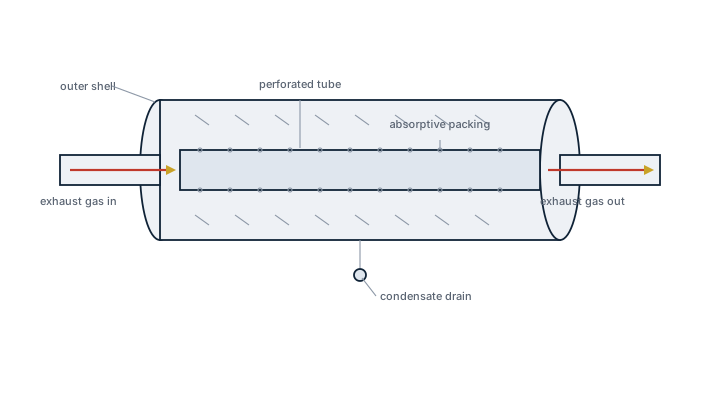
Main components
Shell and internals
An outer pressure shell, typically welded steel, containing baffle plates or a perforated inner tube surrounded by absorptive packing, sized so the internal gas velocity stays low enough to keep backpressure within the engine maker's allowable limit.
Spark arrestor element
Where fitted, a mesh or multi-cyclone element that traps carbon particles and sparks before they reach the funnel top, required on many vessel types operating near cargo with fire risk or in enclosed anchorages.
Condensate drain
A drain point at the lowest part of the shell, since exhaust gas carries water vapour and unburned fuel residue that condenses when the engine idles or during warm-up, and a blocked drain lets that liquid pool inside the silencer and accelerate corrosion from the inside.
Insulation and cladding
External lagging, usually mineral wool under a stainless or aluminium jacket, to keep surface temperature below the limit set for machinery space fire safety and personnel protection.
Selection and sizing
The decisive figures are allowable backpressure at the turbocharger outlet, in millibar, set by the engine builder, and the required noise reduction in decibels for the space the exhaust passes through or discharges into. A silencer chosen purely on noise reduction and fitted without checking backpressure against the engine's data sheet can measurably reduce power and increase fuel consumption, and in extreme cases push turbocharger surge margins in the wrong direction. Shell diameter and length are set by gas flow at full load, not by the space available in the funnel casing, so silencer selection has to happen before funnel arrangement is finalised, not after.
Regulations and class
Class rules and flag administration noise codes set maximum permissible sound levels in machinery spaces, accommodation and on deck, and the exhaust silencer is usually the single largest contributor to meeting or missing that limit for diesel-powered vessels. Where a spark arrestor is required by the vessel's certificate of class or by the trade the ship is in, its presence and condition is a survey item, checked separately from the noise performance of the silencer itself.
Typical faults
| Fault | Consequence |
|---|---|
| Absorptive packing degraded or blown out by exhaust velocity | Noise reduction falls off gradually, often unnoticed until a survey sound measurement fails |
| Condensate drain blocked or never opened | Internal corrosion from acidic condensate, eventually perforating the shell |
| Spark arrestor mesh clogged with carbon | Rising backpressure that shows up as reduced turbocharger boost or increased exhaust temperature |
| External lagging damaged or missing | Elevated surface temperature in the machinery space, a fire and burn hazard flagged at survey |
What to look for in a supplier
- A backpressure figure calculated for the specific engine model and rated flow, not a generic table value
- Noise attenuation curves across the frequency range relevant to the engine, not a single averaged decibel figure
- Materials and internal packing rated for the actual exhaust gas temperature, since sustained overtemperature is what shortens absorptive silencer life
- Drain and inspection access built into the design, since a silencer nobody can open for inspection will not be maintained
Check the condensate drain during the first warm-up after any port stay, not just at survey; a silencer that has been sitting cold collects the most liquid, and that is exactly when internal corrosion starts.