What to check on a General Lashing Equipment.
General lashing equipment is the group of securing items used to lash cargo that is not a standardised container stack: breakbulk, project cargo, vehicles, and non-standard container arrangements that fall outside the twistlock-and-lashing-rod system built into a cellular container ship's fittings. It includes turnbuckles, chain lashings, wire rope lashings, D-rings and pad eyes welded or bolted to deck, and general securing hardware such as shackles and chain binders. The common thread is that each item has a rated safe working load that must be matched to the actual securing calculation…
What this category covers
General lashing equipment is the group of securing items used to lash cargo that is not a standardised container stack: breakbulk, project cargo, vehicles, and non-standard container arrangements that fall outside the twistlock-and-lashing-rod system built into a cellular container ship's fittings. It includes turnbuckles, chain lashings, wire rope lashings, D-rings and pad eyes welded or bolted to deck, and general securing hardware such as shackles and chain binders. The common thread is that each item has a rated safe working load that must be matched to the actual securing calculation for the cargo, not selected by eye or by what happens to be in the lashing locker.
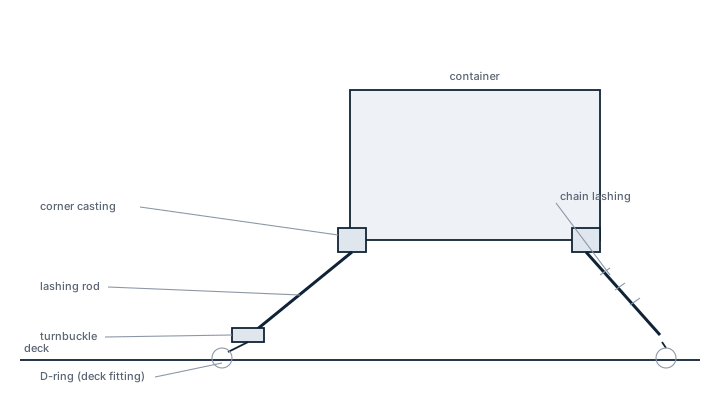
Main components of the group
- Turnbuckles (rigging screws) — tensioning devices between a lashing point and the cargo, rated by safe working load and thread size, used to take up slack and apply pre-tension to a lashing
- Chain lashings and binders — used for heavy or irregular cargo where a wire or rod lashing cannot follow the shape of the load; load binders tension the chain
- Wire rope lashings — flexible lashing for cargo shapes that chain or rod cannot easily secure, with their own discard criteria as they age
- D-rings and pad eyes — fixed deck or structure attachment points that the lashing gear connects to; their rating and the weld or bolting into structure both matter
- Shackles and connecting hardware — joins lashing components together, always the weakest link if undersized relative to the rest of the lashing chain
Selection criteria
Selection is driven by the cargo securing manual for the specific voyage or cargo, not by a general rule of thumb. Relevant points are:
- Safe working load of every component in the lashing chain, since the whole arrangement is only as strong as its weakest single item
- Corrosion resistance appropriate to exposure — deck cargo lashings live outdoors in salt spray for the length of the voyage
- Compatibility with the fixed deck fittings actually installed on the ship, since pad eye spacing and rating vary by vessel
- Ease of tensioning and release, particularly for cargo requiring frequent lashing changes at multiple ports
Regulations and class
The IMO Cargo Securing Manual, required on board under SOLAS Chapter VI/VII, sets out the approved lashing arrangements, equipment and safe working loads for the ship's actual cargo and lashing points, and lashing equipment used must match what the manual specifies rather than be substituted informally. Class and flag surveys check the condition of fixed lashing points and confirm that portable lashing gear on board is what the approved manual calls for, in adequate quantity and condition.
Typical faults
| Fault | Cause | Consequence |
|---|---|---|
| Turnbuckle thread seizure | Corrosion from prolonged salt water exposure without lubrication | Cannot be tensioned or released, forcing damage or cutting to free the cargo |
| Mismatched safe working loads within one lashing chain | Substituting available gear rather than the manual-specified components | The lashing arrangement is only as strong as its weakest component, defeating the securing calculation |
| Pad eye or D-ring fatigue cracking | Repeated dynamic loading at sea over years without inspection | Sudden failure of the attachment point under load, cargo shift |
| Wire rope lashing degradation | Corrosion or fatigue from repeated tensioning cycles | Reduced breaking strength below the rating relied on in the securing calculation |
What to look for in a supplier
- Safe working load certification traceable to a recognised testing standard for each item
- Material and coating suited to the trading area and exposure, particularly for long-term deck cargo lashings
- Stock consistency so that a full lashing set can be replaced with matching-rated components, not a mix of load ratings
- Familiarity with the vessel type's cargo securing manual requirements, for correct fitting recommendations
A lashing arrangement is only as strong as its weakest single component — a high-rated chain finished off with an undersized shackle because it was the one within reach in the locker gives a false sense of security, not a stronger lashing.