What to check on a Container Lashing Systems.
A lashing system is the assembly that fixes stacked containers to the ship's cell guides, hatch covers and to each other so the stack survives roll, pitch and green water without shifting. It is not interchangeable hardware picked off a shelf: every component in the set — twist-locks, lashing rods, turnbuckles, stacking cones — is selected against the vessel's approved Cargo Securing Manual (CSM) and the lashing plan for the specific stowage position, stack weight and GM range. A lashing rod rated for one bay is not automatically correct for…
What defines a container lashing system
A lashing system is the assembly that fixes stacked containers to the ship's cell guides, hatch covers and to each other so the stack survives roll, pitch and green water without shifting. It is not interchangeable hardware picked off a shelf: every component in the set — twist-locks, lashing rods, turnbuckles, stacking cones — is selected against the vessel's approved Cargo Securing Manual (CSM) and the lashing plan for the specific stowage position, stack weight and GM range. A lashing rod rated for one bay is not automatically correct for the bay next to it if stack heights or corner loads differ.
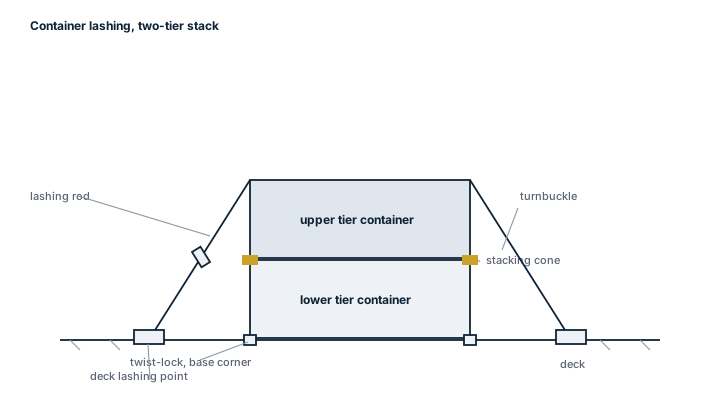
Main components
Twist-locks
Twist-locks sit in the corner castings between two stacked containers, or between a container and the cell guide or hatch cover, and lock with a quarter turn. Manual twist-locks need a crew member on deck for every bay; semi-automatic types release from the crane spreader without a lasher climbing the stack, cutting deck time and exposure on outer rows. Fully automatic twist-locks lock and unlock purely through spreader movement and are mainly seen on automated terminals rather than shipboard use.
Lashing rods and turnbuckles
Rods run diagonally from the twist-lock or D-ring at hatch-cover or ship level up to the corner casting of a container two or more tiers up. A turnbuckle at the lower end lets the crew tension the rod to the load specified in the lashing plan. Rods come in fixed lengths for defined tier combinations; using the wrong length defeats the geometry the lashing plan was calculated for.
Stacking cones
Cones sit between the base of one container and the top of the one below, taking up the corner-casting clearance so the stack cannot walk sideways under transverse acceleration. Semi-automatic cones can be released without a lasher entering the stack; drop-lock cones are pre-set at the terminal and dropped into place by the crane.
Selection and sizing
The lashing plan, not the purchasing department, decides which hardware goes where. Key figures behind that plan:
- Maximum securing load (MSL) of rods and turnbuckles against the calculated lashing force for the stack position
- Stack weight, height and the vessel's GM range across the voyage, which drive the transverse and longitudinal accelerations used in the calculation
- Corner casting type and condition — worn or non-standard castings change how a twist-lock seats
- Bay and row position — outboard, high-tier positions carry the largest lashing forces and get the most restrictive plan
Regulations and class
Lashing arrangements are approved against the CSS Code (Code of Safe Practice for Cargo Stowage and Securing) and the vessel-specific CSM, which class societies review and stamp as part of newbuilding approval or after a stability or lashing recalculation. IMO/ILO Guidelines for packing of cargo transport units cover securing the cargo inside the box; the CSM covers securing the box to the ship. Annual and intermediate surveys check the physical condition of the lashing gear against the CSM inventory, not just its presence.
Typical faults
| Fault | Consequence |
|---|---|
| Worn or bent twist-lock cam | Lock does not fully engage, container can lift off the corner casting in a seaway |
| Corroded or thread-damaged turnbuckle | Rod cannot be tensioned to plan value, stack effectively unlashed on that side |
| Wrong rod length used for the tier combination | Rod sits at the wrong angle, lashing force calculation no longer applies |
| Missing or substituted stacking cones | Lateral play between tiers, increased racking and casting damage |
| Lashing gear left loose after cargo work | Rods swing free and can strike crew or damage paintwork before securing is completed |
What to look for in a supplier
- Certification of MSL for every item, not just a stated grade
- Compatibility confirmed against the ship's actual corner casting type and the CSM, not a generic catalogue match
- Traceable batch marking so damaged rods can be pulled from service by lot
- Stock depth in the tier and rod-length combinations the vessel actually carries, since a lashing plan gap from one missing length stops cargo operations
Never mix lashing rods from different manufacturers or grades on the same stack without checking the MSL — a mismatched set can look complete on deck while quietly failing the lashing plan's load assumption.