What to check on a Emergency Lighting.
Normal shipboard lighting is powered from the main and emergency switchboards like any other load; emergency lighting exists specifically for the moment those supplies fail. It covers escape routes, muster stations, embarkation stations, machinery spaces and the steering gear compartment, and its entire value depends on independence from whatever caused the blackout in the first place. That independence - battery packs, a separate emergency generator circuit, or both - is the actual subject of this equipment category, not the light fittings, which are otherwise ordinary.
What sets emergency lighting apart from normal lighting
Normal shipboard lighting is powered from the main and emergency switchboards like any other load; emergency lighting exists specifically for the moment those supplies fail. It covers escape routes, muster stations, embarkation stations, machinery spaces and the steering gear compartment, and its entire value depends on independence from whatever caused the blackout in the first place. That independence - battery packs, a separate emergency generator circuit, or both - is the actual subject of this equipment category, not the light fittings, which are otherwise ordinary.
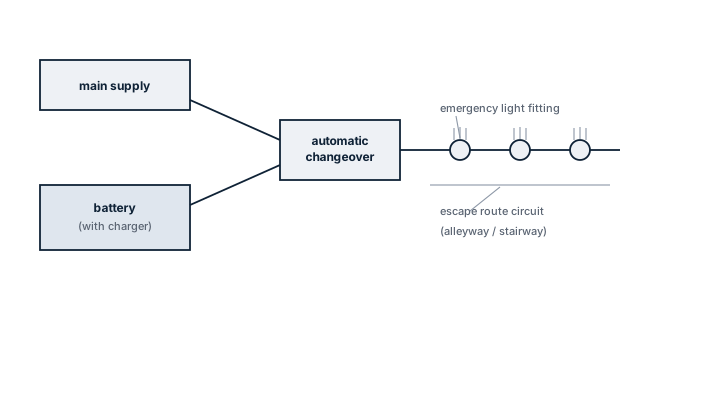
Main components
Self-contained battery units
Individual light fittings with their own battery and charging circuit, switching on automatically when they lose mains supply. These need no separate emergency cabling but depend entirely on the health of each unit's own battery, which ages and needs periodic testing and replacement independent of anything else on the ship.
Centrally supplied emergency lighting
Fittings powered from the ship's emergency switchboard, itself backed by the emergency generator and a transitional battery source that covers the gap before the generator starts and takes load. This arrangement is checked and tested as part of the wider emergency power system rather than fitting by fitting.
Transitional source of emergency power
A battery bank sized to supply essential emergency lighting and services for a defined period (commonly half an hour) immediately after blackout, bridging the time until the emergency generator is running and supplying load, required in addition to the generator itself.
Selection and sizing
| Variable | What it decides |
|---|---|
| Duration | Set by the applicable regulation for the space served - escape routes and muster stations typically need longer coverage than a general working space |
| Illumination level | Escape route lighting has a minimum lux requirement measured at floor level, not just "some light" |
| Battery type | Sealed lead-acid or NiCd for self-contained units, chosen for service life in the ambient temperature of the space (engine room heat shortens battery life) |
| Fixture location | Positioned to actually illuminate the escape path and direction changes, not just meet a fitting count |
Regulations and class
SOLAS Ch. II-1 sets requirements for the emergency source of electrical power, including the transitional source and its minimum duration, and SOLAS Ch. II-2 sets low-location lighting requirements for escape routes on passenger ships specifically. IMO performance standards and class rules set the minimum illumination levels for escape routes, stairways, muster and embarkation stations, and machinery spaces where personnel need to operate emergency equipment. Battery-backed self-contained units used to meet these requirements need documented duration testing, not just a working light on inspection day.
Typical faults
- Self-contained unit battery degraded with age but the fitting still lights briefly on test - a short flash on a quick check looks fine but the unit fails long before the required duration under an actual sustained outage.
- Emergency lighting circuit left permanently on mains power with the battery changeover never actually exercised - the first real test of the automatic transfer is the blackout itself.
- Fittings obstructed or repainted over during accommodation refurbishment, reducing effective illumination at floor level along the escape route.
- Emergency generator starts and takes load, but individual lighting circuit breakers were left open after maintenance - the generator test log shows success while specific spaces stay dark.
What to look for in a supplier
- Type-approved units with documented duration and lux output matching the ship's regulatory requirement for that space
- Battery type suited to the ambient temperature where the fitting is installed, particularly for engine room and steering gear compartment units
- Clear battery replacement intervals and a way to verify duration during routine testing, not just an on/off check
- Low-location lighting compliance data if fittings are intended for passenger ship escape routes
Test emergency lighting for its full rated duration on a real schedule, not a five-second flash check - a battery that lights the fitting for a moment can still be too weak to last the half hour a real blackout demands.