"> Foam Extinguisher - Equipment Database

Foam Extinguisher

medium 92 models total

A portable foam extinguisher works by starving a Class B fire of oxygen and cooling the fuel surface, which is why it is standard beside fuel manifolds and in engine rooms while CO2 units cover enclosed electrical spaces instead.

Read more — Foam Extinguisher explained

What Makes This Type Different

A portable foam extinguisher discharges an aqueous film-forming foam (AFFF) concentrate mixed with water and expelled by a propellant gas. The foam blanket spreads across the surface of a burning liquid, cutting off oxygen and cooling the fuel below its flash point, which makes it effective on Class B fires — fuel, oil, paint — that a water jet would simply spread. It differs from CO2 units, which smother by displacing oxygen and suit enclosed electrical or engine spaces, and from dry powder units, which knock down the flame quickly but leave no lasting vapour seal and allow re-ignition.
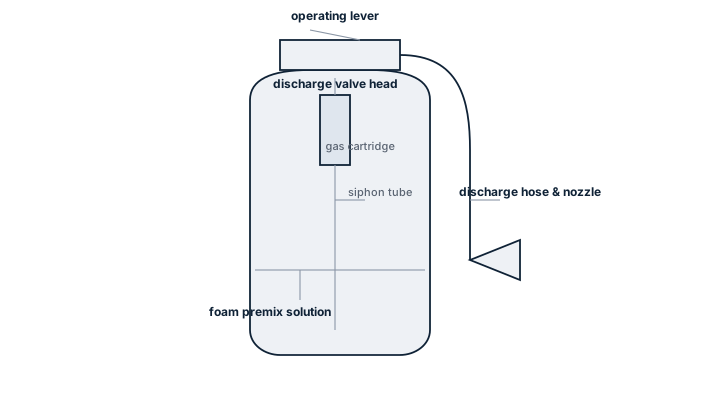
Portable foam extinguisher section
Section through a cartridge-operated portable foam extinguisher showing the body filled with foam premix solution, the internal gas cartridge that pressurises it when the lever punctures it, the siphon tube, and the discharge hose leading to the nozzle.

Main Components

Cylinder and Charge

Steel cylinder holding the premixed foam concentrate and water solution, pressurised either by a stored-pressure gauge or by a separate CO2 cartridge that the operator pierces to charge the unit at the point of use.

Discharge Valve and Hose

Squeeze-grip or lever valve, short hose and a foam-making nozzle that aerates the solution as it leaves the nozzle — a plain jet nozzle without aeration wastes most of the extinguishing effect.

Pressure Gauge

Fitted to stored-pressure types only; a needle in the red band means the unit will not deliver a full, sustained discharge even though it looks intact.

Mounting Bracket

Quick-release bracket at a fixed, marked location per the fire control plan — an extinguisher stowed anywhere else is a finding on both internal rounds and port state inspections.

Selection and Sizing

  • Capacity: typically 9 litres for portable foam units on merchant ships, chosen to match the fire control plan's coverage for a given space, not swapped in ad hoc.
  • Discharge type: stored-pressure for immediate readiness versus gas-cartridge for long-term storage in less accessible locations.
  • Location: near fuel oil manifolds, purifier rooms and paint lockers, where Class B risk is highest and CO2 would be the wrong choice for a manned space.
  • Foam type: AFFF versus fluorine-free formulations — several flag states and port authorities now restrict PFAS-containing AFFF, which affects what can be legally recharged.

Regulations and Class

SOLAS Ch. II-2 and the Fire Safety Systems (FSS) Code set the minimum number, type and placement of portable extinguishers per space. Each unit carries a maker's test certificate and a service due date; class and flag surveys check the annual visual inspection tag and the hydrostatic test interval, generally every five years for the cylinder, alongside the vessel's own fire control plan. A missing service tag is treated the same as a missing extinguisher during survey.

Typical Faults

FaultConsequence
Pressure gauge in red zone, unit not rechargedExtinguisher discharges weakly or not at all when needed
Foam concentrate past its shelf lifeReduced foam quality, poor blanket formation on the fuel surface
Safety pin missing or seal broken without recordUnit may have been partially discharged and not reported
Corroded cylinder baseRisk of cylinder failure under internal pressure during use
Nozzle blocked or aerating screen missingSolution leaves as a jet instead of foam, poor fire knockdown

What to Look for in a Supplier

  • Servicing station approved by the extinguisher's original manufacturer and by the vessel's flag or class, with traceable service records.
  • Fluorine-free foam concentrate available where AFFF is being phased out under port or flag restrictions.
  • Cylinders that meet the hydrostatic test interval documented on the body stamp, not just a fresh paint job.
  • Same foam type across the fleet where practical, to avoid mixing concentrates that behave differently in cold weather.

Check the pressure gauge and the tamper seal on every fire round — a foam extinguisher that looks untouched can still have a spent charge if the gauge was never read.

12 manufacturers · 92 models

Amerex

11
Amerex Foam 1kg unverified
Capacity (kg)
1
Fire class
A,B
Marine Approval
ja
Amerex Foam 2kg unverified
Capacity (kg)
2
Fire class
A,B
Marine Approval
ja
Amerex Foam 3kg unverified
Capacity (kg)
3
Fire class
A,B
Marine Approval
ja
Amerex Foam 5kg unverified
Capacity (kg)
5
Fire class
A,B
Marine Approval
ja
Amerex Foam 6kg unverified
Capacity (kg)
6
Fire class
A,B
Marine Approval
ja
Amerex Foam 9kg unverified
Capacity (kg)
9
Fire class
A,B
Marine Approval
ja
Amerex Foam 12kg unverified
Capacity (kg)
12
Fire class
A,B
Marine Approval
ja
Amerex Foam Trolley 25kg-C unverified
Capacity (kg)
25
Type
Wheeled/Trolley
Marine Approval
ja
Amerex Foam Trolley 30kg-C unverified
Capacity (kg)
30
Type
Wheeled/Trolley
Marine Approval
ja
Amerex Foam Trolley 45kg-C unverified
Capacity (kg)
45
Type
Wheeled/Trolley
Marine Approval
ja
Amerex Foam Trolley 50kg-C unverified
Capacity (kg)
50
Type
Wheeled/Trolley
Marine Approval
ja

Buckeye Fire

11
Buckeye Fire Foam 1kg unverified
Capacity (kg)
1
Fire class
A,B
Marine Approval
ja
Buckeye Fire Foam 2kg unverified
Capacity (kg)
2
Fire class
A,B
Marine Approval
ja
Buckeye Fire Foam 3kg unverified
Capacity (kg)
3
Fire class
A,B
Marine Approval
ja
Buckeye Fire Foam 5kg unverified
Capacity (kg)
5
Fire class
A,B
Marine Approval
ja
Buckeye Fire Foam 6kg unverified
Capacity (kg)
6
Fire class
A,B
Marine Approval
ja
Buckeye Fire Foam 9kg unverified
Capacity (kg)
9
Fire class
A,B
Marine Approval
ja
Buckeye Fire Foam 12kg unverified
Capacity (kg)
12
Fire class
A,B
Marine Approval
ja
Buckeye Fire Foam Trolley 25kg-C unverified
Capacity (kg)
25
Type
Wheeled/Trolley
Marine Approval
ja
Buckeye Fire Foam Trolley 30kg-C unverified
Capacity (kg)
30
Type
Wheeled/Trolley
Marine Approval
ja
Buckeye Fire Foam Trolley 45kg-C unverified
Capacity (kg)
45
Type
Wheeled/Trolley
Marine Approval
ja
Buckeye Fire Foam Trolley 50kg-C unverified
Capacity (kg)
50
Type
Wheeled/Trolley
Marine Approval
ja

Kidde / Badger

11
Kidde Foam 1kg unverified
Capacity (kg)
1
Fire class
A,B
Marine Approval
ja
Kidde Foam 2kg unverified
Capacity (kg)
2
Fire class
A,B
Marine Approval
ja
Kidde Foam 3kg unverified
Capacity (kg)
3
Fire class
A,B
Marine Approval
ja
Kidde Foam 5kg unverified
Capacity (kg)
5
Fire class
A,B
Marine Approval
ja
Kidde Foam 6kg unverified
Capacity (kg)
6
Fire class
A,B
Marine Approval
ja
Kidde Foam 9kg unverified
Capacity (kg)
9
Fire class
A,B
Marine Approval
ja
Kidde Foam 12kg unverified
Capacity (kg)
12
Fire class
A,B
Marine Approval
ja
Kidde Foam Trolley 25kg-C unverified
Capacity (kg)
25
Type
Wheeled/Trolley
Marine Approval
ja
Kidde Foam Trolley 30kg-C unverified
Capacity (kg)
30
Type
Wheeled/Trolley
Marine Approval
ja
Kidde Foam Trolley 45kg-C unverified
Capacity (kg)
45
Type
Wheeled/Trolley
Marine Approval
ja
Kidde Foam Trolley 50kg-C unverified
Capacity (kg)
50
Type
Wheeled/Trolley
Marine Approval
ja

NAFFCO

11
NAFFCO Foam 1kg unverified
Capacity (kg)
1
Fire class
A,B
Marine Approval
ja
NAFFCO Foam 2kg unverified
Capacity (kg)
2
Fire class
A,B
Marine Approval
ja
NAFFCO Foam 3kg unverified
Capacity (kg)
3
Fire class
A,B
Marine Approval
ja
NAFFCO Foam 5kg unverified
Capacity (kg)
5
Fire class
A,B
Marine Approval
ja
NAFFCO Foam 6kg unverified
Capacity (kg)
6
Fire class
A,B
Marine Approval
ja
NAFFCO Foam 9kg unverified
Capacity (kg)
9
Fire class
A,B
Marine Approval
ja
NAFFCO Foam 12kg unverified
Capacity (kg)
12
Fire class
A,B
Marine Approval
ja
NAFFCO Foam Trolley 25kg-C unverified
Capacity (kg)
25
Type
Wheeled/Trolley
Marine Approval
ja
NAFFCO Foam Trolley 30kg-C unverified
Capacity (kg)
30
Type
Wheeled/Trolley
Marine Approval
ja
NAFFCO Foam Trolley 45kg-C unverified
Capacity (kg)
45
Type
Wheeled/Trolley
Marine Approval
ja
NAFFCO Foam Trolley 50kg-C unverified
Capacity (kg)
50
Type
Wheeled/Trolley
Marine Approval
ja

Survitec

11
Survitec Foam 1kg unverified
Capacity (kg)
1
Fire class
A,B
Marine Approval
ja
Survitec Foam 2kg unverified
Capacity (kg)
2
Fire class
A,B
Marine Approval
ja
Survitec Foam 3kg unverified
Capacity (kg)
3
Fire class
A,B
Marine Approval
ja
Survitec Foam 5kg unverified
Capacity (kg)
5
Fire class
A,B
Marine Approval
ja
Survitec Foam 6kg unverified
Capacity (kg)
6
Fire class
A,B
Marine Approval
ja
Survitec Foam 9kg unverified
Capacity (kg)
9
Fire class
A,B
Marine Approval
ja
Survitec Foam 12kg unverified
Capacity (kg)
12
Fire class
A,B
Marine Approval
ja
Survitec Foam Trolley 25kg-C unverified
Capacity (kg)
25
Type
Wheeled/Trolley
Marine Approval
ja
Survitec Foam Trolley 30kg-C unverified
Capacity (kg)
30
Type
Wheeled/Trolley
Marine Approval
ja
Survitec Foam Trolley 45kg-C unverified
Capacity (kg)
45
Type
Wheeled/Trolley
Marine Approval
ja
Survitec Foam Trolley 50kg-C unverified
Capacity (kg)
50
Type
Wheeled/Trolley
Marine Approval
ja

Wilhelmsen

11
Wilhelmsen Foam 1kg unverified
Capacity (kg)
1
Fire class
A,B
Marine Approval
ja
Wilhelmsen Foam 2kg unverified
Capacity (kg)
2
Fire class
A,B
Marine Approval
ja
Wilhelmsen Foam 3kg unverified
Capacity (kg)
3
Fire class
A,B
Marine Approval
ja
Wilhelmsen Foam 5kg unverified
Capacity (kg)
5
Fire class
A,B
Marine Approval
ja
Wilhelmsen Foam 6kg unverified
Capacity (kg)
6
Fire class
A,B
Marine Approval
ja
Wilhelmsen Foam 9kg unverified
Capacity (kg)
9
Fire class
A,B
Marine Approval
ja
Wilhelmsen Foam 12kg unverified
Capacity (kg)
12
Fire class
A,B
Marine Approval
ja
Wilhelmsen Foam Trolley 25kg-C unverified
Capacity (kg)
25
Type
Wheeled/Trolley
Marine Approval
ja
Wilhelmsen Foam Trolley 30kg-C unverified
Capacity (kg)
30
Type
Wheeled/Trolley
Marine Approval
ja
Wilhelmsen Foam Trolley 45kg-C unverified
Capacity (kg)
45
Type
Wheeled/Trolley
Marine Approval
ja
Wilhelmsen Foam Trolley 50kg-C unverified
Capacity (kg)
50
Type
Wheeled/Trolley
Marine Approval
ja

Dräger Marine

7
Drager Marine Foam 1kg unverified
Capacity (kg)
1
Fire class
A,B
Marine Approval
ja
Drager Marine Foam 2kg unverified
Capacity (kg)
2
Fire class
A,B
Marine Approval
ja
Drager Marine Foam 3kg unverified
Capacity (kg)
3
Fire class
A,B
Marine Approval
ja
Drager Marine Foam 5kg unverified
Capacity (kg)
5
Fire class
A,B
Marine Approval
ja
Drager Marine Foam 6kg unverified
Capacity (kg)
6
Fire class
A,B
Marine Approval
ja
Drager Marine Foam 9kg unverified
Capacity (kg)
9
Fire class
A,B
Marine Approval
ja
Drager Marine Foam 12kg unverified
Capacity (kg)
12
Fire class
A,B
Marine Approval
ja

Pri-Safety Marine

7
Pri-Safety Marine Foam 1kg unverified
Capacity (kg)
1
Fire class
A,B
Marine Approval
ja
Pri-Safety Marine Foam 2kg unverified
Capacity (kg)
2
Fire class
A,B
Marine Approval
ja
Pri-Safety Marine Foam 3kg unverified
Capacity (kg)
3
Fire class
A,B
Marine Approval
ja
Pri-Safety Marine Foam 5kg unverified
Capacity (kg)
5
Fire class
A,B
Marine Approval
ja
Pri-Safety Marine Foam 6kg unverified
Capacity (kg)
6
Fire class
A,B
Marine Approval
ja
Pri-Safety Marine Foam 9kg unverified
Capacity (kg)
9
Fire class
A,B
Marine Approval
ja
Pri-Safety Marine Foam 12kg unverified
Capacity (kg)
12
Fire class
A,B
Marine Approval
ja

Sapfire

7
Sapfire Foam 1kg unverified
Capacity (kg)
1
Fire class
A,B
Marine Approval
ja
Sapfire Foam 2kg unverified
Capacity (kg)
2
Fire class
A,B
Marine Approval
ja
Sapfire Foam 3kg unverified
Capacity (kg)
3
Fire class
A,B
Marine Approval
ja
Sapfire Foam 5kg unverified
Capacity (kg)
5
Fire class
A,B
Marine Approval
ja
Sapfire Foam 6kg unverified
Capacity (kg)
6
Fire class
A,B
Marine Approval
ja
Sapfire Foam 9kg unverified
Capacity (kg)
9
Fire class
A,B
Marine Approval
ja
Sapfire Foam 12kg unverified
Capacity (kg)
12
Fire class
A,B
Marine Approval
ja

Gloria

2
Gloria Gloria Foam 6L SK6
Gloria Foam 6L SK6
6 L foam · Fire Suppression / Detection · Aqueous Film Forming Foam (AFFF) portable extinguisher
Agent
foam_afff
Volume (l)
6
Solas
ja
Common Failures & Inspection Points
  • Foam quality degradation
  • Nozzle clogging
  • Cylinder corrosion
Service: German-made. Foam replacement every 5 years.
Spare Parts: Gloria: Extinguishing agent and detector replacement per manufacturer. Lead time: 2-4 weeks.
Strengths
  • SOLAS approved for maritime use
  • Compact 6 L capacity suitable for confined spaces
  • German engineering reputation for reliability
  • Straight‑forward maintenance with foam replacement every 5 years
  • Effective on Class A and B fires
Weaknesses
  • Foam quality can degrade if not replaced on schedule
  • Nozzle may clog without regular inspection
  • Cylinder corrosion risk in salty or humid environments
  • Limited extinguishing volume compared with larger units
  • Periodic foam replacement adds operational cost
Typical Vessels: Bulk CarrierContainer ShipTankerPassenger FerryOffshore Supply Vessel
Certifications: SOLAS
Decision Guide: Choose if: you need a compact, SOLAS‑approved foam extinguisher for early fire suppression on Class A/B fires and can adhere to a 5‑year foam replacement schedule. Avoid if: higher extinguishing capacity is required, the vessel operates in highly corrosive conditions without adequate cylinder protection, or maintenance intervals cannot be guaranteed.
Use Cases: Deployed in engine rooms, cargo holds, deck areas, lifeboat stations and accommodation spaces of merchant vessels for rapid suppression of flammable liquid and solid fires where space is limited.
Gloria Foam 9L SK9
9 L foam · Fire Suppression / Detection · foam fire extinguisher
Agent
foam_afff
Volume (l)
9
Solas
ja
Common Failures & Inspection Points
  • Foam concentrate degradation
  • Pressure loss
  • Handle stiffness
Service: German-made. 5-year foam replacement.
Spare Parts: Gloria: Extinguishing agent and detector replacement per manufacturer. Lead time: 2-4 weeks.
Strengths
  • Compact 9 L size fits limited storage spaces on board
  • Meets SOLAS requirements for portable extinguishers
  • AFFF foam effective on Class A and B fires
  • German engineering with a defined 5‑year foam replacement interval simplifies maintenance
Weaknesses
  • Foam concentrate can degrade if not replaced within the service interval
  • Reported pressure loss over time may affect discharge performance
  • Handle may become stiff, impacting rapid operation
  • Limited extinguishing capacity compared with larger‑volume units
Typical Vessels: Passenger ShipRo‑Ro FerryCoastal VesselWorkboatOffshore Supply Vessel
Decision Guide: Choose if you need a compact, SOLAS‑approved foam extinguisher for Class A/B fires on vessels with limited storage space and prefer a German‑made unit with a clear 5‑year service interval. Avoid if you require higher discharge volume, have concerns about pressure stability, or operate where handle stiffness could impede rapid deployment.
Use Cases: Typically mounted in engine rooms, accommodation areas, galley spaces, and cargo holds of passenger and short‑sea vessels to combat flammable liquid spills and solid material fires.

Kidde

2
Kidde Foam 9L Marine
9 L foam · Fire Suppression / Detection · AFFF foam
Agent
foam_afff
Volume (l)
9
Solas
ja
Common Failures & Inspection Points
  • Foam concentrate degradation
  • Nozzle blockage
  • Pressure loss
Service: Replace foam concentrate every 5 years. Annual visual inspection.
Spare Parts: Kidde: Extinguishing agent and detector replacement per manufacturer. Lead time: 2-4 weeks.
Strengths
  • SOLAS‑approved for maritime installations
  • Effective on both solid (Class A) and flammable liquid (Class B) fires
  • Compact 9 L size suitable for limited deck space
  • Simple operation – pull‑pin, aim, squeeze
  • Concentrate replacement interval clearly defined (5 years)
Weaknesses
  • Foam concentrate can degrade if not replaced on schedule
  • Nozzle may become blocked by residue or debris
  • Pressure loss possible after long idle periods without inspection
  • Leaves a foam residue that requires cleanup
  • Not suitable for electrical (Class C) fires unless a non‑conductive agent is used
Typical Vessels: Passenger ferriesOffshore supply vesselsWorkboats and tugsCoastal cargo shipsYachts and pleasure craft
Certifications: SOLAS (IMO)USCG Type Approval
Decision Guide: Choose if you need a compact, SOLAS‑compliant extinguisher for Class A/B fires on decks, galley or cargo areas where water‑based suppression is acceptable. Avoid if the primary fire risk is electrical equipment, space is extremely limited, or you prefer a clean‑agent (CO₂) solution for engine rooms.
Use Cases: Deployed in deck machinery spaces, galley areas, fuel storage compartments, and any location where flammable liquids or solid combustibles are present on board. Frequently mounted near fire‑hazard zones to provide immediate response before fire spreads.
Kidde Kidde Foam 6L Marine
Kidde Foam 6L Marine
6 L foam · Fire Suppression / Detection · AFFF handheld
Agent
foam_afff
Volume (l)
6
Solas
ja
Common Failures & Inspection Points
  • Foam concentrate aging
  • Nozzle blockage
  • Pressure loss
Service: Annual inspection. Foam replacement every 5 years.
Spare Parts: Kidde: Extinguishing agent and detector replacement per manufacturer. Lead time: 2-4 weeks.
Strengths
  • SOLAS‑approved portable extinguisher for Class A & B fires
  • Compact 6 L size fits tight spaces on board
  • Fast foam discharge provides rapid knock‑down of flammable liquid spills
  • Simple annual inspection procedure
  • Foam agent effective on both solid and liquid fuel fires
Weaknesses
  • Limited extinguishing capacity (6 L) may be insufficient for large incidents
  • Foam concentrate can age, reducing effectiveness after several years
  • Nozzle blockage is a known failure mode requiring regular checks
  • Pressure loss over time if not serviced
  • Foam agent must be replaced every 5 years per service notes
Typical Vessels: Passenger ferriesYachts and pleasure craftOffshore supply vesselsCoastal cargo shipsSmall tankers
Certifications: SOLAS
Decision Guide: Choose if: you need a compact, SOLAS‑compliant foam extinguisher for Class A/B fires on small to medium vessels and have regular maintenance capability. Avoid if: the vessel requires higher capacity extinguishers, operates in environments where dry‑chemical or CO₂ systems are preferred, or cannot guarantee the 5‑year foam replacement schedule.
Use Cases: Typically mounted in engine rooms, galley areas, deck machinery spaces, and cargo compartments where flammable liquids may be present; used for rapid response to incipient fires on board.

Minimax

1
Minimax Minimax Foam 9L Marine
Minimax Foam 9L Marine
9 L foam · Fire Suppression / Detection · Foam fire extinguisher
Agent
foam_afff
Volume (l)
9
Solas
ja
Origin
Germany
Common Failures & Inspection Points
  • Foam quality degradation
  • Valve corrosion
  • Nozzle blockage
Service: German manufacture. Annual inspection.
Spare Parts: Minimax: Extinguishing agent and detector replacement per manufacturer. Lead time: 2-4 weeks.
Strengths
  • SOLAS‑approved, meeting international maritime safety requirements
  • Compact 9 L size suitable for limited deck or cabin spaces
  • Effective on both solid (Class A) and flammable liquid (Class B) fires with low residue
  • German engineering ensures reliable discharge pressure and valve operation when maintained
  • Easy annual inspection routine as recommended by the manufacturer
Weaknesses
  • Foam agent can degrade over time, requiring careful monitoring of service life
  • Valve may corrode if not inspected and serviced regularly
  • Nozzle blockage is a known issue if the extinguisher is stored in dusty or salty environments
  • Limited extinguishing duration compared with larger fixed systems
  • Requires periodic re‑charging after discharge, adding maintenance overhead
Typical Vessels: YachtFishing vesselOffshore supply boatPassenger ferryCoastal cargo ship
Certifications: SOLASEN 3‑7CE
Decision Guide: Choose if you need a compact, SOLAS‑compliant foam extinguisher for Class A/B fire protection on small to medium vessels and you can commit to regular annual inspections. Avoid if you require longer discharge time, higher capacity, or a low‑maintenance agent such as CO₂ in highly corrosive environments.
Use Cases: Deployed in deck areas, engine rooms, galley spaces, and crew quarters of small to mid‑size vessels for initial fire suppression before the activation of fixed fire‑main systems. Frequently installed on yachts and offshore workboats where space is at a premium.