Dry Powder Extinguisher
A dry powder extinguisher discharges a fine mono-ammonium phosphate or sodium bicarbonate charge that breaks the chemical chain reaction of a flame; it is the only portable unit rated for electrical and multi-class fires without the freeze risk of foam or the asphyxiation risk of CO2 in a confined space.
Read more — Dry Powder Extinguisher explained ▾
What sets a dry powder extinguisher apart
A dry powder extinguisher works by chemical inhibition: the powder cloud interrupts the free-radical chain reaction that sustains combustion, rather than cooling the fuel like water or excluding oxygen like CO2 and foam. This makes it the fastest knock-down agent on a burning liquid or gas jet, but it leaves no cooling residue behind, so a hot surface can reignite spilled fuel seconds after the cloud settles. Unlike foam it will not seal a liquid surface, and unlike CO2 it is safe to use in an open or ventilated space because it does not displace breathable air.
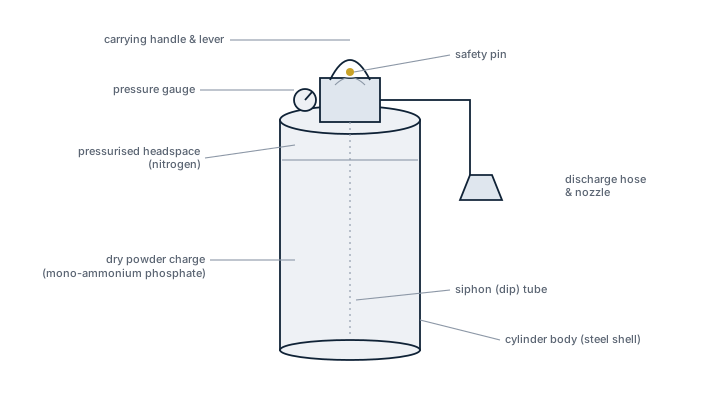
Main components
Cylinder and propellant
Marine units are almost always stored-pressure types: the powder and a nitrogen or dry-air propellant share the same steel cylinder, held at roughly 12-16 bar and shown on an integral pressure gauge. Cartridge-operated types, with a separate CO2 cartridge pierced on activation, still turn up on older tonnage but are harder to keep serviceable at sea.
Powder charge
Most marine charges are mono-ammonium phosphate (ABC-rated, effective on solids, liquids and gas) or sodium bicarbonate (BC-rated, for liquid and gas fires only). Both are hygroscopic and will cake into a solid block if moisture gets past the cylinder seal, which is why the annual shake test matters as much as the pressure check.
Valve, hose and nozzle
A lever-operated valve punctures or opens the propellant path; a short rubber hose carries powder to a fan-pattern nozzle. The valve seat is the component most often damaged by overpainting during routine maintenance rounds.
Selecting the right rating for a space
Marine dry powder units are sized in kg of charge, typically 5, 6, 9 or 12 kg, with discharge lasting 10-20 seconds and an effective throw of 3-6 metres. The fire class letters on the label (A, B, C) must match the risk in the space: a paint locker or workshop needs A/B/C coverage, while a space with exposed switchboards needs a charge with a stated dielectric test voltage. Powder is a poor choice next to sensitive electronics or navigation equipment, where a clean-agent or CO2 unit avoids residue damage.
Regulations and class requirements
Portable extinguisher numbers, types and distribution by space are set out under the SOLAS Chapter II-2 fire safety provisions and detailed in the IMO Fire Safety Systems (FSS) Code. Each unit needs an annual visual inspection, and the powder charge and propellant seal are opened, weighed and refilled at intervals set by the flag state or the manufacturer's approved service schedule, commonly every five years, with a hydrostatic cylinder test at longer intervals. A servicing tag showing the last inspection date is a standard port state control check item.
Typical faults
| Fault | Consequence |
|---|---|
| Powder caked by moisture ingress | Valve blocks on discharge; little or no powder reaches the fire |
| Slow pressure loss past the valve seal | Reduced throw and discharge time, unit reads full but underperforms |
| Corroded or dented cylinder wall | Fails hydrostatic test, unit condemned and removed from service |
| Overpainted lever or safety pin | Cannot be operated quickly in an emergency |
| Expired service tag | Non-conformity at survey or port state control inspection |
What to look for in a supplier
- Type approval and wheelmark or equivalent flag-state certification for the exact model
- An approved service station network reachable from the vessel's trading pattern
- Correct fire class and charge weight for the bracket and space it replaces
- Documented powder batch traceability and hygroscopic packaging during transit
- Availability of spare gauges, hoses and cartridges for the specific model
Shake or invert a stored-pressure unit briefly during the monthly rounds, not just look at the gauge; a caked charge can hold full pressure and still refuse to leave the hose.
12 manufacturers · 239 models
Jactone
39 ✓ 39 verified- Area: Pressure gauge reading outside safe range (green zone for stored pressure models)Check: Verify pressure gauge needle positioned in green zone (typically 185-195 PSI); For CO2 units, check weight certification labels
- Area: Discharge nozzle/hose blocked, cracked, bent or cloggedCheck: Visually inspect nozzle for blockages, cracks, bends; Test for free movement; Ensure spray pattern unobstructed
- Area: Physical damage to cylinder body (dents, rust, corrosion, leakage)Check: Conduct visual and tactile inspection of entire cylinder surface; Check for visible rust, corrosion, dents, or evidence of leaks; Verify no liquid seepage around joints
- Area: Tamper seal broken or safety pin missingCheck: Confirm tamper seal is intact and unbroken; Verify safety pin is present and secured; Check for any signs of unauthorized discharge or manipulation
- Area: Illegible or damaged instruction labels and fire class markingsCheck: Verify all labels (operating instructions, fire class ratings, manufacturer data) are clearly visible and readable; Confirm color-coded bands intact; Check header label undamaged
Typ-universelle Inspektionspunkte fuer Portable Fire Extinguishers (verifiziert, 2026-06).
- Area: Pressure gauge reading outside safe range (green zone for stored pressure models)Check: Verify pressure gauge needle positioned in green zone (typically 185-195 PSI); For CO2 units, check weight certification labels
- Area: Discharge nozzle/hose blocked, cracked, bent or cloggedCheck: Visually inspect nozzle for blockages, cracks, bends; Test for free movement; Ensure spray pattern unobstructed
- Area: Physical damage to cylinder body (dents, rust, corrosion, leakage)Check: Conduct visual and tactile inspection of entire cylinder surface; Check for visible rust, corrosion, dents, or evidence of leaks; Verify no liquid seepage around joints
- Area: Tamper seal broken or safety pin missingCheck: Confirm tamper seal is intact and unbroken; Verify safety pin is present and secured; Check for any signs of unauthorized discharge or manipulation
- Area: Illegible or damaged instruction labels and fire class markingsCheck: Verify all labels (operating instructions, fire class ratings, manufacturer data) are clearly visible and readable; Confirm color-coded bands intact; Check header label undamaged
Typ-universelle Inspektionspunkte fuer Portable Fire Extinguishers (verifiziert, 2026-06).
- Area: Pressure gauge reading outside safe range (green zone for stored pressure models)Check: Verify pressure gauge needle positioned in green zone (typically 185-195 PSI); For CO2 units, check weight certification labels
- Area: Discharge nozzle/hose blocked, cracked, bent or cloggedCheck: Visually inspect nozzle for blockages, cracks, bends; Test for free movement; Ensure spray pattern unobstructed
- Area: Physical damage to cylinder body (dents, rust, corrosion, leakage)Check: Conduct visual and tactile inspection of entire cylinder surface; Check for visible rust, corrosion, dents, or evidence of leaks; Verify no liquid seepage around joints
- Area: Tamper seal broken or safety pin missingCheck: Confirm tamper seal is intact and unbroken; Verify safety pin is present and secured; Check for any signs of unauthorized discharge or manipulation
- Area: Illegible or damaged instruction labels and fire class markingsCheck: Verify all labels (operating instructions, fire class ratings, manufacturer data) are clearly visible and readable; Confirm color-coded bands intact; Check header label undamaged
Typ-universelle Inspektionspunkte fuer Portable Fire Extinguishers (verifiziert, 2026-06).
- Area: Pressure gauge reading outside safe range (green zone for stored pressure models)Check: Verify pressure gauge needle positioned in green zone (typically 185-195 PSI); For CO2 units, check weight certification labels
- Area: Discharge nozzle/hose blocked, cracked, bent or cloggedCheck: Visually inspect nozzle for blockages, cracks, bends; Test for free movement; Ensure spray pattern unobstructed
- Area: Physical damage to cylinder body (dents, rust, corrosion, leakage)Check: Conduct visual and tactile inspection of entire cylinder surface; Check for visible rust, corrosion, dents, or evidence of leaks; Verify no liquid seepage around joints
- Area: Tamper seal broken or safety pin missingCheck: Confirm tamper seal is intact and unbroken; Verify safety pin is present and secured; Check for any signs of unauthorized discharge or manipulation
- Area: Illegible or damaged instruction labels and fire class markingsCheck: Verify all labels (operating instructions, fire class ratings, manufacturer data) are clearly visible and readable; Confirm color-coded bands intact; Check header label undamaged
Typ-universelle Inspektionspunkte fuer Portable Fire Extinguishers (verifiziert, 2026-06).
- Area: Pressure gauge reading outside safe range (green zone for stored pressure models)Check: Verify pressure gauge needle positioned in green zone (typically 185-195 PSI); For CO2 units, check weight certification labels
- Area: Discharge nozzle/hose blocked, cracked, bent or cloggedCheck: Visually inspect nozzle for blockages, cracks, bends; Test for free movement; Ensure spray pattern unobstructed
- Area: Physical damage to cylinder body (dents, rust, corrosion, leakage)Check: Conduct visual and tactile inspection of entire cylinder surface; Check for visible rust, corrosion, dents, or evidence of leaks; Verify no liquid seepage around joints
- Area: Tamper seal broken or safety pin missingCheck: Confirm tamper seal is intact and unbroken; Verify safety pin is present and secured; Check for any signs of unauthorized discharge or manipulation
- Area: Illegible or damaged instruction labels and fire class markingsCheck: Verify all labels (operating instructions, fire class ratings, manufacturer data) are clearly visible and readable; Confirm color-coded bands intact; Check header label undamaged
Typ-universelle Inspektionspunkte fuer Portable Fire Extinguishers (verifiziert, 2026-06).
- Area: Pressure gauge reading outside safe range (green zone for stored pressure models)Check: Verify pressure gauge needle positioned in green zone (typically 185-195 PSI); For CO2 units, check weight certification labels
- Area: Discharge nozzle/hose blocked, cracked, bent or cloggedCheck: Visually inspect nozzle for blockages, cracks, bends; Test for free movement; Ensure spray pattern unobstructed
- Area: Physical damage to cylinder body (dents, rust, corrosion, leakage)Check: Conduct visual and tactile inspection of entire cylinder surface; Check for visible rust, corrosion, dents, or evidence of leaks; Verify no liquid seepage around joints
- Area: Tamper seal broken or safety pin missingCheck: Confirm tamper seal is intact and unbroken; Verify safety pin is present and secured; Check for any signs of unauthorized discharge or manipulation
- Area: Illegible or damaged instruction labels and fire class markingsCheck: Verify all labels (operating instructions, fire class ratings, manufacturer data) are clearly visible and readable; Confirm color-coded bands intact; Check header label undamaged
Typ-universelle Inspektionspunkte fuer Portable Fire Extinguishers (verifiziert, 2026-06).
- Area: Pressure gauge reading outside safe range (green zone for stored pressure models)Check: Verify pressure gauge needle positioned in green zone (typically 185-195 PSI); For CO2 units, check weight certification labels
- Area: Discharge nozzle/hose blocked, cracked, bent or cloggedCheck: Visually inspect nozzle for blockages, cracks, bends; Test for free movement; Ensure spray pattern unobstructed
- Area: Physical damage to cylinder body (dents, rust, corrosion, leakage)Check: Conduct visual and tactile inspection of entire cylinder surface; Check for visible rust, corrosion, dents, or evidence of leaks; Verify no liquid seepage around joints
- Area: Tamper seal broken or safety pin missingCheck: Confirm tamper seal is intact and unbroken; Verify safety pin is present and secured; Check for any signs of unauthorized discharge or manipulation
- Area: Illegible or damaged instruction labels and fire class markingsCheck: Verify all labels (operating instructions, fire class ratings, manufacturer data) are clearly visible and readable; Confirm color-coded bands intact; Check header label undamaged
Typ-universelle Inspektionspunkte fuer Portable Fire Extinguishers (verifiziert, 2026-06).
- Area: Pressure gauge reading outside safe range (green zone for stored pressure models)Check: Verify pressure gauge needle positioned in green zone (typically 185-195 PSI); For CO2 units, check weight certification labels
- Area: Discharge nozzle/hose blocked, cracked, bent or cloggedCheck: Visually inspect nozzle for blockages, cracks, bends; Test for free movement; Ensure spray pattern unobstructed
- Area: Physical damage to cylinder body (dents, rust, corrosion, leakage)Check: Conduct visual and tactile inspection of entire cylinder surface; Check for visible rust, corrosion, dents, or evidence of leaks; Verify no liquid seepage around joints
- Area: Tamper seal broken or safety pin missingCheck: Confirm tamper seal is intact and unbroken; Verify safety pin is present and secured; Check for any signs of unauthorized discharge or manipulation
- Area: Illegible or damaged instruction labels and fire class markingsCheck: Verify all labels (operating instructions, fire class ratings, manufacturer data) are clearly visible and readable; Confirm color-coded bands intact; Check header label undamaged
Typ-universelle Inspektionspunkte fuer Portable Fire Extinguishers (verifiziert, 2026-06).
- Area: Pressure gauge reading outside safe range (green zone for stored pressure models)Check: Verify pressure gauge needle positioned in green zone (typically 185-195 PSI); For CO2 units, check weight certification labels
- Area: Discharge nozzle/hose blocked, cracked, bent or cloggedCheck: Visually inspect nozzle for blockages, cracks, bends; Test for free movement; Ensure spray pattern unobstructed
- Area: Physical damage to cylinder body (dents, rust, corrosion, leakage)Check: Conduct visual and tactile inspection of entire cylinder surface; Check for visible rust, corrosion, dents, or evidence of leaks; Verify no liquid seepage around joints
- Area: Tamper seal broken or safety pin missingCheck: Confirm tamper seal is intact and unbroken; Verify safety pin is present and secured; Check for any signs of unauthorized discharge or manipulation
- Area: Illegible or damaged instruction labels and fire class markingsCheck: Verify all labels (operating instructions, fire class ratings, manufacturer data) are clearly visible and readable; Confirm color-coded bands intact; Check header label undamaged
Typ-universelle Inspektionspunkte fuer Portable Fire Extinguishers (verifiziert, 2026-06).
- Area: Pressure gauge reading outside safe range (green zone for stored pressure models)Check: Verify pressure gauge needle positioned in green zone (typically 185-195 PSI); For CO2 units, check weight certification labels
- Area: Discharge nozzle/hose blocked, cracked, bent or cloggedCheck: Visually inspect nozzle for blockages, cracks, bends; Test for free movement; Ensure spray pattern unobstructed
- Area: Physical damage to cylinder body (dents, rust, corrosion, leakage)Check: Conduct visual and tactile inspection of entire cylinder surface; Check for visible rust, corrosion, dents, or evidence of leaks; Verify no liquid seepage around joints
- Area: Tamper seal broken or safety pin missingCheck: Confirm tamper seal is intact and unbroken; Verify safety pin is present and secured; Check for any signs of unauthorized discharge or manipulation
- Area: Illegible or damaged instruction labels and fire class markingsCheck: Verify all labels (operating instructions, fire class ratings, manufacturer data) are clearly visible and readable; Confirm color-coded bands intact; Check header label undamaged
Typ-universelle Inspektionspunkte fuer Portable Fire Extinguishers (verifiziert, 2026-06).
- Area: Pressure gauge reading outside safe range (green zone for stored pressure models)Check: Verify pressure gauge needle positioned in green zone (typically 185-195 PSI); For CO2 units, check weight certification labels
- Area: Discharge nozzle/hose blocked, cracked, bent or cloggedCheck: Visually inspect nozzle for blockages, cracks, bends; Test for free movement; Ensure spray pattern unobstructed
- Area: Physical damage to cylinder body (dents, rust, corrosion, leakage)Check: Conduct visual and tactile inspection of entire cylinder surface; Check for visible rust, corrosion, dents, or evidence of leaks; Verify no liquid seepage around joints
- Area: Tamper seal broken or safety pin missingCheck: Confirm tamper seal is intact and unbroken; Verify safety pin is present and secured; Check for any signs of unauthorized discharge or manipulation
- Area: Illegible or damaged instruction labels and fire class markingsCheck: Verify all labels (operating instructions, fire class ratings, manufacturer data) are clearly visible and readable; Confirm color-coded bands intact; Check header label undamaged
Typ-universelle Inspektionspunkte fuer Portable Fire Extinguishers (verifiziert, 2026-06).
- Area: Pressure gauge reading outside safe range (green zone for stored pressure models)Check: Verify pressure gauge needle positioned in green zone (typically 185-195 PSI); For CO2 units, check weight certification labels
- Area: Discharge nozzle/hose blocked, cracked, bent or cloggedCheck: Visually inspect nozzle for blockages, cracks, bends; Test for free movement; Ensure spray pattern unobstructed
- Area: Physical damage to cylinder body (dents, rust, corrosion, leakage)Check: Conduct visual and tactile inspection of entire cylinder surface; Check for visible rust, corrosion, dents, or evidence of leaks; Verify no liquid seepage around joints
- Area: Tamper seal broken or safety pin missingCheck: Confirm tamper seal is intact and unbroken; Verify safety pin is present and secured; Check for any signs of unauthorized discharge or manipulation
- Area: Illegible or damaged instruction labels and fire class markingsCheck: Verify all labels (operating instructions, fire class ratings, manufacturer data) are clearly visible and readable; Confirm color-coded bands intact; Check header label undamaged
Typ-universelle Inspektionspunkte fuer Portable Fire Extinguishers (verifiziert, 2026-06).
- Area: Pressure gauge reading outside safe range (green zone for stored pressure models)Check: Verify pressure gauge needle positioned in green zone (typically 185-195 PSI); For CO2 units, check weight certification labels
- Area: Discharge nozzle/hose blocked, cracked, bent or cloggedCheck: Visually inspect nozzle for blockages, cracks, bends; Test for free movement; Ensure spray pattern unobstructed
- Area: Physical damage to cylinder body (dents, rust, corrosion, leakage)Check: Conduct visual and tactile inspection of entire cylinder surface; Check for visible rust, corrosion, dents, or evidence of leaks; Verify no liquid seepage around joints
- Area: Tamper seal broken or safety pin missingCheck: Confirm tamper seal is intact and unbroken; Verify safety pin is present and secured; Check for any signs of unauthorized discharge or manipulation
- Area: Illegible or damaged instruction labels and fire class markingsCheck: Verify all labels (operating instructions, fire class ratings, manufacturer data) are clearly visible and readable; Confirm color-coded bands intact; Check header label undamaged
Typ-universelle Inspektionspunkte fuer Portable Fire Extinguishers (verifiziert, 2026-06).
- Area: Pressure gauge reading outside safe range (green zone for stored pressure models)Check: Verify pressure gauge needle positioned in green zone (typically 185-195 PSI); For CO2 units, check weight certification labels
- Area: Discharge nozzle/hose blocked, cracked, bent or cloggedCheck: Visually inspect nozzle for blockages, cracks, bends; Test for free movement; Ensure spray pattern unobstructed
- Area: Physical damage to cylinder body (dents, rust, corrosion, leakage)Check: Conduct visual and tactile inspection of entire cylinder surface; Check for visible rust, corrosion, dents, or evidence of leaks; Verify no liquid seepage around joints
- Area: Tamper seal broken or safety pin missingCheck: Confirm tamper seal is intact and unbroken; Verify safety pin is present and secured; Check for any signs of unauthorized discharge or manipulation
- Area: Illegible or damaged instruction labels and fire class markingsCheck: Verify all labels (operating instructions, fire class ratings, manufacturer data) are clearly visible and readable; Confirm color-coded bands intact; Check header label undamaged
Typ-universelle Inspektionspunkte fuer Portable Fire Extinguishers (verifiziert, 2026-06).
- Area: Pressure gauge reading outside safe range (green zone for stored pressure models)Check: Verify pressure gauge needle positioned in green zone (typically 185-195 PSI); For CO2 units, check weight certification labels
- Area: Discharge nozzle/hose blocked, cracked, bent or cloggedCheck: Visually inspect nozzle for blockages, cracks, bends; Test for free movement; Ensure spray pattern unobstructed
- Area: Physical damage to cylinder body (dents, rust, corrosion, leakage)Check: Conduct visual and tactile inspection of entire cylinder surface; Check for visible rust, corrosion, dents, or evidence of leaks; Verify no liquid seepage around joints
- Area: Tamper seal broken or safety pin missingCheck: Confirm tamper seal is intact and unbroken; Verify safety pin is present and secured; Check for any signs of unauthorized discharge or manipulation
- Area: Illegible or damaged instruction labels and fire class markingsCheck: Verify all labels (operating instructions, fire class ratings, manufacturer data) are clearly visible and readable; Confirm color-coded bands intact; Check header label undamaged
Typ-universelle Inspektionspunkte fuer Portable Fire Extinguishers (verifiziert, 2026-06).
- Area: Pressure gauge reading outside safe range (green zone for stored pressure models)Check: Verify pressure gauge needle positioned in green zone (typically 185-195 PSI); For CO2 units, check weight certification labels
- Area: Discharge nozzle/hose blocked, cracked, bent or cloggedCheck: Visually inspect nozzle for blockages, cracks, bends; Test for free movement; Ensure spray pattern unobstructed
- Area: Physical damage to cylinder body (dents, rust, corrosion, leakage)Check: Conduct visual and tactile inspection of entire cylinder surface; Check for visible rust, corrosion, dents, or evidence of leaks; Verify no liquid seepage around joints
- Area: Tamper seal broken or safety pin missingCheck: Confirm tamper seal is intact and unbroken; Verify safety pin is present and secured; Check for any signs of unauthorized discharge or manipulation
- Area: Illegible or damaged instruction labels and fire class markingsCheck: Verify all labels (operating instructions, fire class ratings, manufacturer data) are clearly visible and readable; Confirm color-coded bands intact; Check header label undamaged
Typ-universelle Inspektionspunkte fuer Portable Fire Extinguishers (verifiziert, 2026-06).
- Area: Pressure gauge reading outside safe range (green zone for stored pressure models)Check: Verify pressure gauge needle positioned in green zone (typically 185-195 PSI); For CO2 units, check weight certification labels
- Area: Discharge nozzle/hose blocked, cracked, bent or cloggedCheck: Visually inspect nozzle for blockages, cracks, bends; Test for free movement; Ensure spray pattern unobstructed
- Area: Physical damage to cylinder body (dents, rust, corrosion, leakage)Check: Conduct visual and tactile inspection of entire cylinder surface; Check for visible rust, corrosion, dents, or evidence of leaks; Verify no liquid seepage around joints
- Area: Tamper seal broken or safety pin missingCheck: Confirm tamper seal is intact and unbroken; Verify safety pin is present and secured; Check for any signs of unauthorized discharge or manipulation
- Area: Illegible or damaged instruction labels and fire class markingsCheck: Verify all labels (operating instructions, fire class ratings, manufacturer data) are clearly visible and readable; Confirm color-coded bands intact; Check header label undamaged
Typ-universelle Inspektionspunkte fuer Portable Fire Extinguishers (verifiziert, 2026-06).
- Area: Pressure gauge reading outside safe range (green zone for stored pressure models)Check: Verify pressure gauge needle positioned in green zone (typically 185-195 PSI); For CO2 units, check weight certification labels
- Area: Discharge nozzle/hose blocked, cracked, bent or cloggedCheck: Visually inspect nozzle for blockages, cracks, bends; Test for free movement; Ensure spray pattern unobstructed
- Area: Physical damage to cylinder body (dents, rust, corrosion, leakage)Check: Conduct visual and tactile inspection of entire cylinder surface; Check for visible rust, corrosion, dents, or evidence of leaks; Verify no liquid seepage around joints
- Area: Tamper seal broken or safety pin missingCheck: Confirm tamper seal is intact and unbroken; Verify safety pin is present and secured; Check for any signs of unauthorized discharge or manipulation
- Area: Illegible or damaged instruction labels and fire class markingsCheck: Verify all labels (operating instructions, fire class ratings, manufacturer data) are clearly visible and readable; Confirm color-coded bands intact; Check header label undamaged
Typ-universelle Inspektionspunkte fuer Portable Fire Extinguishers (verifiziert, 2026-06).
- Area: Pressure gauge reading outside safe range (green zone for stored pressure models)Check: Verify pressure gauge needle positioned in green zone (typically 185-195 PSI); For CO2 units, check weight certification labels
- Area: Discharge nozzle/hose blocked, cracked, bent or cloggedCheck: Visually inspect nozzle for blockages, cracks, bends; Test for free movement; Ensure spray pattern unobstructed
- Area: Physical damage to cylinder body (dents, rust, corrosion, leakage)Check: Conduct visual and tactile inspection of entire cylinder surface; Check for visible rust, corrosion, dents, or evidence of leaks; Verify no liquid seepage around joints
- Area: Tamper seal broken or safety pin missingCheck: Confirm tamper seal is intact and unbroken; Verify safety pin is present and secured; Check for any signs of unauthorized discharge or manipulation
- Area: Illegible or damaged instruction labels and fire class markingsCheck: Verify all labels (operating instructions, fire class ratings, manufacturer data) are clearly visible and readable; Confirm color-coded bands intact; Check header label undamaged
Typ-universelle Inspektionspunkte fuer Portable Fire Extinguishers (verifiziert, 2026-06).
- Area: Pressure gauge reading outside safe range (green zone for stored pressure models)Check: Verify pressure gauge needle positioned in green zone (typically 185-195 PSI); For CO2 units, check weight certification labels
- Area: Discharge nozzle/hose blocked, cracked, bent or cloggedCheck: Visually inspect nozzle for blockages, cracks, bends; Test for free movement; Ensure spray pattern unobstructed
- Area: Physical damage to cylinder body (dents, rust, corrosion, leakage)Check: Conduct visual and tactile inspection of entire cylinder surface; Check for visible rust, corrosion, dents, or evidence of leaks; Verify no liquid seepage around joints
- Area: Tamper seal broken or safety pin missingCheck: Confirm tamper seal is intact and unbroken; Verify safety pin is present and secured; Check for any signs of unauthorized discharge or manipulation
- Area: Illegible or damaged instruction labels and fire class markingsCheck: Verify all labels (operating instructions, fire class ratings, manufacturer data) are clearly visible and readable; Confirm color-coded bands intact; Check header label undamaged
Typ-universelle Inspektionspunkte fuer Portable Fire Extinguishers (verifiziert, 2026-06).
- Area: Pressure gauge reading outside safe range (green zone for stored pressure models)Check: Verify pressure gauge needle positioned in green zone (typically 185-195 PSI); For CO2 units, check weight certification labels
- Area: Discharge nozzle/hose blocked, cracked, bent or cloggedCheck: Visually inspect nozzle for blockages, cracks, bends; Test for free movement; Ensure spray pattern unobstructed
- Area: Physical damage to cylinder body (dents, rust, corrosion, leakage)Check: Conduct visual and tactile inspection of entire cylinder surface; Check for visible rust, corrosion, dents, or evidence of leaks; Verify no liquid seepage around joints
- Area: Tamper seal broken or safety pin missingCheck: Confirm tamper seal is intact and unbroken; Verify safety pin is present and secured; Check for any signs of unauthorized discharge or manipulation
- Area: Illegible or damaged instruction labels and fire class markingsCheck: Verify all labels (operating instructions, fire class ratings, manufacturer data) are clearly visible and readable; Confirm color-coded bands intact; Check header label undamaged
Typ-universelle Inspektionspunkte fuer Portable Fire Extinguishers (verifiziert, 2026-06).
- Area: Pressure gauge reading outside safe range (green zone for stored pressure models)Check: Verify pressure gauge needle positioned in green zone (typically 185-195 PSI); For CO2 units, check weight certification labels
- Area: Discharge nozzle/hose blocked, cracked, bent or cloggedCheck: Visually inspect nozzle for blockages, cracks, bends; Test for free movement; Ensure spray pattern unobstructed
- Area: Physical damage to cylinder body (dents, rust, corrosion, leakage)Check: Conduct visual and tactile inspection of entire cylinder surface; Check for visible rust, corrosion, dents, or evidence of leaks; Verify no liquid seepage around joints
- Area: Tamper seal broken or safety pin missingCheck: Confirm tamper seal is intact and unbroken; Verify safety pin is present and secured; Check for any signs of unauthorized discharge or manipulation
- Area: Illegible or damaged instruction labels and fire class markingsCheck: Verify all labels (operating instructions, fire class ratings, manufacturer data) are clearly visible and readable; Confirm color-coded bands intact; Check header label undamaged
Typ-universelle Inspektionspunkte fuer Portable Fire Extinguishers (verifiziert, 2026-06).
- Area: Pressure gauge reading outside safe range (green zone for stored pressure models)Check: Verify pressure gauge needle positioned in green zone (typically 185-195 PSI); For CO2 units, check weight certification labels
- Area: Discharge nozzle/hose blocked, cracked, bent or cloggedCheck: Visually inspect nozzle for blockages, cracks, bends; Test for free movement; Ensure spray pattern unobstructed
- Area: Physical damage to cylinder body (dents, rust, corrosion, leakage)Check: Conduct visual and tactile inspection of entire cylinder surface; Check for visible rust, corrosion, dents, or evidence of leaks; Verify no liquid seepage around joints
- Area: Tamper seal broken or safety pin missingCheck: Confirm tamper seal is intact and unbroken; Verify safety pin is present and secured; Check for any signs of unauthorized discharge or manipulation
- Area: Illegible or damaged instruction labels and fire class markingsCheck: Verify all labels (operating instructions, fire class ratings, manufacturer data) are clearly visible and readable; Confirm color-coded bands intact; Check header label undamaged
Typ-universelle Inspektionspunkte fuer Portable Fire Extinguishers (verifiziert, 2026-06).
- Area: Pressure gauge reading outside safe range (green zone for stored pressure models)Check: Verify pressure gauge needle positioned in green zone (typically 185-195 PSI); For CO2 units, check weight certification labels
- Area: Discharge nozzle/hose blocked, cracked, bent or cloggedCheck: Visually inspect nozzle for blockages, cracks, bends; Test for free movement; Ensure spray pattern unobstructed
- Area: Physical damage to cylinder body (dents, rust, corrosion, leakage)Check: Conduct visual and tactile inspection of entire cylinder surface; Check for visible rust, corrosion, dents, or evidence of leaks; Verify no liquid seepage around joints
- Area: Tamper seal broken or safety pin missingCheck: Confirm tamper seal is intact and unbroken; Verify safety pin is present and secured; Check for any signs of unauthorized discharge or manipulation
- Area: Illegible or damaged instruction labels and fire class markingsCheck: Verify all labels (operating instructions, fire class ratings, manufacturer data) are clearly visible and readable; Confirm color-coded bands intact; Check header label undamaged
Typ-universelle Inspektionspunkte fuer Portable Fire Extinguishers (verifiziert, 2026-06).
- Area: Pressure gauge reading outside safe range (green zone for stored pressure models)Check: Verify pressure gauge needle positioned in green zone (typically 185-195 PSI); For CO2 units, check weight certification labels
- Area: Discharge nozzle/hose blocked, cracked, bent or cloggedCheck: Visually inspect nozzle for blockages, cracks, bends; Test for free movement; Ensure spray pattern unobstructed
- Area: Physical damage to cylinder body (dents, rust, corrosion, leakage)Check: Conduct visual and tactile inspection of entire cylinder surface; Check for visible rust, corrosion, dents, or evidence of leaks; Verify no liquid seepage around joints
- Area: Tamper seal broken or safety pin missingCheck: Confirm tamper seal is intact and unbroken; Verify safety pin is present and secured; Check for any signs of unauthorized discharge or manipulation
- Area: Illegible or damaged instruction labels and fire class markingsCheck: Verify all labels (operating instructions, fire class ratings, manufacturer data) are clearly visible and readable; Confirm color-coded bands intact; Check header label undamaged
Typ-universelle Inspektionspunkte fuer Portable Fire Extinguishers (verifiziert, 2026-06).
- Area: Pressure gauge reading outside safe range (green zone for stored pressure models)Check: Verify pressure gauge needle positioned in green zone (typically 185-195 PSI); For CO2 units, check weight certification labels
- Area: Discharge nozzle/hose blocked, cracked, bent or cloggedCheck: Visually inspect nozzle for blockages, cracks, bends; Test for free movement; Ensure spray pattern unobstructed
- Area: Physical damage to cylinder body (dents, rust, corrosion, leakage)Check: Conduct visual and tactile inspection of entire cylinder surface; Check for visible rust, corrosion, dents, or evidence of leaks; Verify no liquid seepage around joints
- Area: Tamper seal broken or safety pin missingCheck: Confirm tamper seal is intact and unbroken; Verify safety pin is present and secured; Check for any signs of unauthorized discharge or manipulation
- Area: Illegible or damaged instruction labels and fire class markingsCheck: Verify all labels (operating instructions, fire class ratings, manufacturer data) are clearly visible and readable; Confirm color-coded bands intact; Check header label undamaged
Typ-universelle Inspektionspunkte fuer Portable Fire Extinguishers (verifiziert, 2026-06).
- Area: Pressure gauge reading outside safe range (green zone for stored pressure models)Check: Verify pressure gauge needle positioned in green zone (typically 185-195 PSI); For CO2 units, check weight certification labels
- Area: Discharge nozzle/hose blocked, cracked, bent or cloggedCheck: Visually inspect nozzle for blockages, cracks, bends; Test for free movement; Ensure spray pattern unobstructed
- Area: Physical damage to cylinder body (dents, rust, corrosion, leakage)Check: Conduct visual and tactile inspection of entire cylinder surface; Check for visible rust, corrosion, dents, or evidence of leaks; Verify no liquid seepage around joints
- Area: Tamper seal broken or safety pin missingCheck: Confirm tamper seal is intact and unbroken; Verify safety pin is present and secured; Check for any signs of unauthorized discharge or manipulation
- Area: Illegible or damaged instruction labels and fire class markingsCheck: Verify all labels (operating instructions, fire class ratings, manufacturer data) are clearly visible and readable; Confirm color-coded bands intact; Check header label undamaged
Typ-universelle Inspektionspunkte fuer Portable Fire Extinguishers (verifiziert, 2026-06).
- Area: Pressure gauge reading outside safe range (green zone for stored pressure models)Check: Verify pressure gauge needle positioned in green zone (typically 185-195 PSI); For CO2 units, check weight certification labels
- Area: Discharge nozzle/hose blocked, cracked, bent or cloggedCheck: Visually inspect nozzle for blockages, cracks, bends; Test for free movement; Ensure spray pattern unobstructed
- Area: Physical damage to cylinder body (dents, rust, corrosion, leakage)Check: Conduct visual and tactile inspection of entire cylinder surface; Check for visible rust, corrosion, dents, or evidence of leaks; Verify no liquid seepage around joints
- Area: Tamper seal broken or safety pin missingCheck: Confirm tamper seal is intact and unbroken; Verify safety pin is present and secured; Check for any signs of unauthorized discharge or manipulation
- Area: Illegible or damaged instruction labels and fire class markingsCheck: Verify all labels (operating instructions, fire class ratings, manufacturer data) are clearly visible and readable; Confirm color-coded bands intact; Check header label undamaged
Typ-universelle Inspektionspunkte fuer Portable Fire Extinguishers (verifiziert, 2026-06).
- Area: Pressure gauge reading outside safe range (green zone for stored pressure models)Check: Verify pressure gauge needle positioned in green zone (typically 185-195 PSI); For CO2 units, check weight certification labels
- Area: Discharge nozzle/hose blocked, cracked, bent or cloggedCheck: Visually inspect nozzle for blockages, cracks, bends; Test for free movement; Ensure spray pattern unobstructed
- Area: Physical damage to cylinder body (dents, rust, corrosion, leakage)Check: Conduct visual and tactile inspection of entire cylinder surface; Check for visible rust, corrosion, dents, or evidence of leaks; Verify no liquid seepage around joints
- Area: Tamper seal broken or safety pin missingCheck: Confirm tamper seal is intact and unbroken; Verify safety pin is present and secured; Check for any signs of unauthorized discharge or manipulation
- Area: Illegible or damaged instruction labels and fire class markingsCheck: Verify all labels (operating instructions, fire class ratings, manufacturer data) are clearly visible and readable; Confirm color-coded bands intact; Check header label undamaged
Typ-universelle Inspektionspunkte fuer Portable Fire Extinguishers (verifiziert, 2026-06).
- Area: Pressure gauge reading outside safe range (green zone for stored pressure models)Check: Verify pressure gauge needle positioned in green zone (typically 185-195 PSI); For CO2 units, check weight certification labels
- Area: Discharge nozzle/hose blocked, cracked, bent or cloggedCheck: Visually inspect nozzle for blockages, cracks, bends; Test for free movement; Ensure spray pattern unobstructed
- Area: Physical damage to cylinder body (dents, rust, corrosion, leakage)Check: Conduct visual and tactile inspection of entire cylinder surface; Check for visible rust, corrosion, dents, or evidence of leaks; Verify no liquid seepage around joints
- Area: Tamper seal broken or safety pin missingCheck: Confirm tamper seal is intact and unbroken; Verify safety pin is present and secured; Check for any signs of unauthorized discharge or manipulation
- Area: Illegible or damaged instruction labels and fire class markingsCheck: Verify all labels (operating instructions, fire class ratings, manufacturer data) are clearly visible and readable; Confirm color-coded bands intact; Check header label undamaged
Typ-universelle Inspektionspunkte fuer Portable Fire Extinguishers (verifiziert, 2026-06).
- Area: Pressure gauge reading outside safe range (green zone for stored pressure models)Check: Verify pressure gauge needle positioned in green zone (typically 185-195 PSI); For CO2 units, check weight certification labels
- Area: Discharge nozzle/hose blocked, cracked, bent or cloggedCheck: Visually inspect nozzle for blockages, cracks, bends; Test for free movement; Ensure spray pattern unobstructed
- Area: Physical damage to cylinder body (dents, rust, corrosion, leakage)Check: Conduct visual and tactile inspection of entire cylinder surface; Check for visible rust, corrosion, dents, or evidence of leaks; Verify no liquid seepage around joints
- Area: Tamper seal broken or safety pin missingCheck: Confirm tamper seal is intact and unbroken; Verify safety pin is present and secured; Check for any signs of unauthorized discharge or manipulation
- Area: Illegible or damaged instruction labels and fire class markingsCheck: Verify all labels (operating instructions, fire class ratings, manufacturer data) are clearly visible and readable; Confirm color-coded bands intact; Check header label undamaged
Typ-universelle Inspektionspunkte fuer Portable Fire Extinguishers (verifiziert, 2026-06).
- Area: Pressure gauge reading outside safe range (green zone for stored pressure models)Check: Verify pressure gauge needle positioned in green zone (typically 185-195 PSI); For CO2 units, check weight certification labels
- Area: Discharge nozzle/hose blocked, cracked, bent or cloggedCheck: Visually inspect nozzle for blockages, cracks, bends; Test for free movement; Ensure spray pattern unobstructed
- Area: Physical damage to cylinder body (dents, rust, corrosion, leakage)Check: Conduct visual and tactile inspection of entire cylinder surface; Check for visible rust, corrosion, dents, or evidence of leaks; Verify no liquid seepage around joints
- Area: Tamper seal broken or safety pin missingCheck: Confirm tamper seal is intact and unbroken; Verify safety pin is present and secured; Check for any signs of unauthorized discharge or manipulation
- Area: Illegible or damaged instruction labels and fire class markingsCheck: Verify all labels (operating instructions, fire class ratings, manufacturer data) are clearly visible and readable; Confirm color-coded bands intact; Check header label undamaged
Typ-universelle Inspektionspunkte fuer Portable Fire Extinguishers (verifiziert, 2026-06).
- Area: Pressure gauge reading outside safe range (green zone for stored pressure models)Check: Verify pressure gauge needle positioned in green zone (typically 185-195 PSI); For CO2 units, check weight certification labels
- Area: Discharge nozzle/hose blocked, cracked, bent or cloggedCheck: Visually inspect nozzle for blockages, cracks, bends; Test for free movement; Ensure spray pattern unobstructed
- Area: Physical damage to cylinder body (dents, rust, corrosion, leakage)Check: Conduct visual and tactile inspection of entire cylinder surface; Check for visible rust, corrosion, dents, or evidence of leaks; Verify no liquid seepage around joints
- Area: Tamper seal broken or safety pin missingCheck: Confirm tamper seal is intact and unbroken; Verify safety pin is present and secured; Check for any signs of unauthorized discharge or manipulation
- Area: Illegible or damaged instruction labels and fire class markingsCheck: Verify all labels (operating instructions, fire class ratings, manufacturer data) are clearly visible and readable; Confirm color-coded bands intact; Check header label undamaged
Typ-universelle Inspektionspunkte fuer Portable Fire Extinguishers (verifiziert, 2026-06).
- Area: Pressure gauge reading outside safe range (green zone for stored pressure models)Check: Verify pressure gauge needle positioned in green zone (typically 185-195 PSI); For CO2 units, check weight certification labels
- Area: Discharge nozzle/hose blocked, cracked, bent or cloggedCheck: Visually inspect nozzle for blockages, cracks, bends; Test for free movement; Ensure spray pattern unobstructed
- Area: Physical damage to cylinder body (dents, rust, corrosion, leakage)Check: Conduct visual and tactile inspection of entire cylinder surface; Check for visible rust, corrosion, dents, or evidence of leaks; Verify no liquid seepage around joints
- Area: Tamper seal broken or safety pin missingCheck: Confirm tamper seal is intact and unbroken; Verify safety pin is present and secured; Check for any signs of unauthorized discharge or manipulation
- Area: Illegible or damaged instruction labels and fire class markingsCheck: Verify all labels (operating instructions, fire class ratings, manufacturer data) are clearly visible and readable; Confirm color-coded bands intact; Check header label undamaged
Typ-universelle Inspektionspunkte fuer Portable Fire Extinguishers (verifiziert, 2026-06).
- Area: Pressure gauge reading outside safe range (green zone for stored pressure models)Check: Verify pressure gauge needle positioned in green zone (typically 185-195 PSI); For CO2 units, check weight certification labels
- Area: Discharge nozzle/hose blocked, cracked, bent or cloggedCheck: Visually inspect nozzle for blockages, cracks, bends; Test for free movement; Ensure spray pattern unobstructed
- Area: Physical damage to cylinder body (dents, rust, corrosion, leakage)Check: Conduct visual and tactile inspection of entire cylinder surface; Check for visible rust, corrosion, dents, or evidence of leaks; Verify no liquid seepage around joints
- Area: Tamper seal broken or safety pin missingCheck: Confirm tamper seal is intact and unbroken; Verify safety pin is present and secured; Check for any signs of unauthorized discharge or manipulation
- Area: Illegible or damaged instruction labels and fire class markingsCheck: Verify all labels (operating instructions, fire class ratings, manufacturer data) are clearly visible and readable; Confirm color-coded bands intact; Check header label undamaged
Typ-universelle Inspektionspunkte fuer Portable Fire Extinguishers (verifiziert, 2026-06).
- Area: Pressure gauge reading outside safe range (green zone for stored pressure models)Check: Verify pressure gauge needle positioned in green zone (typically 185-195 PSI); For CO2 units, check weight certification labels
- Area: Discharge nozzle/hose blocked, cracked, bent or cloggedCheck: Visually inspect nozzle for blockages, cracks, bends; Test for free movement; Ensure spray pattern unobstructed
- Area: Physical damage to cylinder body (dents, rust, corrosion, leakage)Check: Conduct visual and tactile inspection of entire cylinder surface; Check for visible rust, corrosion, dents, or evidence of leaks; Verify no liquid seepage around joints
- Area: Tamper seal broken or safety pin missingCheck: Confirm tamper seal is intact and unbroken; Verify safety pin is present and secured; Check for any signs of unauthorized discharge or manipulation
- Area: Illegible or damaged instruction labels and fire class markingsCheck: Verify all labels (operating instructions, fire class ratings, manufacturer data) are clearly visible and readable; Confirm color-coded bands intact; Check header label undamaged
Typ-universelle Inspektionspunkte fuer Portable Fire Extinguishers (verifiziert, 2026-06).
- Area: Pressure gauge reading outside safe range (green zone for stored pressure models)Check: Verify pressure gauge needle positioned in green zone (typically 185-195 PSI); For CO2 units, check weight certification labels
- Area: Discharge nozzle/hose blocked, cracked, bent or cloggedCheck: Visually inspect nozzle for blockages, cracks, bends; Test for free movement; Ensure spray pattern unobstructed
- Area: Physical damage to cylinder body (dents, rust, corrosion, leakage)Check: Conduct visual and tactile inspection of entire cylinder surface; Check for visible rust, corrosion, dents, or evidence of leaks; Verify no liquid seepage around joints
- Area: Tamper seal broken or safety pin missingCheck: Confirm tamper seal is intact and unbroken; Verify safety pin is present and secured; Check for any signs of unauthorized discharge or manipulation
- Area: Illegible or damaged instruction labels and fire class markingsCheck: Verify all labels (operating instructions, fire class ratings, manufacturer data) are clearly visible and readable; Confirm color-coded bands intact; Check header label undamaged
Typ-universelle Inspektionspunkte fuer Portable Fire Extinguishers (verifiziert, 2026-06).
- Area: Pressure gauge reading outside safe range (green zone for stored pressure models)Check: Verify pressure gauge needle positioned in green zone (typically 185-195 PSI); For CO2 units, check weight certification labels
- Area: Discharge nozzle/hose blocked, cracked, bent or cloggedCheck: Visually inspect nozzle for blockages, cracks, bends; Test for free movement; Ensure spray pattern unobstructed
- Area: Physical damage to cylinder body (dents, rust, corrosion, leakage)Check: Conduct visual and tactile inspection of entire cylinder surface; Check for visible rust, corrosion, dents, or evidence of leaks; Verify no liquid seepage around joints
- Area: Tamper seal broken or safety pin missingCheck: Confirm tamper seal is intact and unbroken; Verify safety pin is present and secured; Check for any signs of unauthorized discharge or manipulation
- Area: Illegible or damaged instruction labels and fire class markingsCheck: Verify all labels (operating instructions, fire class ratings, manufacturer data) are clearly visible and readable; Confirm color-coded bands intact; Check header label undamaged
Typ-universelle Inspektionspunkte fuer Portable Fire Extinguishers (verifiziert, 2026-06).
- Area: Pressure gauge reading outside safe range (green zone for stored pressure models)Check: Verify pressure gauge needle positioned in green zone (typically 185-195 PSI); For CO2 units, check weight certification labels
- Area: Discharge nozzle/hose blocked, cracked, bent or cloggedCheck: Visually inspect nozzle for blockages, cracks, bends; Test for free movement; Ensure spray pattern unobstructed
- Area: Physical damage to cylinder body (dents, rust, corrosion, leakage)Check: Conduct visual and tactile inspection of entire cylinder surface; Check for visible rust, corrosion, dents, or evidence of leaks; Verify no liquid seepage around joints
- Area: Tamper seal broken or safety pin missingCheck: Confirm tamper seal is intact and unbroken; Verify safety pin is present and secured; Check for any signs of unauthorized discharge or manipulation
- Area: Illegible or damaged instruction labels and fire class markingsCheck: Verify all labels (operating instructions, fire class ratings, manufacturer data) are clearly visible and readable; Confirm color-coded bands intact; Check header label undamaged
Typ-universelle Inspektionspunkte fuer Portable Fire Extinguishers (verifiziert, 2026-06).
Survitec Group
33 ✓ 16 verified- Loss of agent or propellant through valve, hose, seal, or cylinder leakage causes low weight or pressure indication and reduced discharge capability
- Blocked nozzle, hose, or discharge tube from contamination or damage prevents effective agent flow
- Corrosion, dents, heat damage, or mechanical impact weakens the cylinder and can make it unsafe for service
- Tampered pin, damaged seal, seized valve, or missing operating instructions delay or prevent activation
- Expired service status or degraded extinguishing agent is identified during inspection and can reduce reliability
- Loss of agent or propellant through valve, hose, seal, or cylinder leakage causes low weight or pressure indication and reduced discharge capability
- Blocked nozzle, hose, or discharge tube from contamination or damage prevents effective agent flow
- Corrosion, dents, heat damage, or mechanical impact weakens the cylinder and can make it unsafe for service
- Tampered pin, damaged seal, seized valve, or missing operating instructions delay or prevent activation
- Expired service status or degraded extinguishing agent is identified during inspection and can reduce reliability
- Loss of agent or propellant through valve, hose, seal, or cylinder leakage causes low weight or pressure indication and reduced discharge capability
- Blocked nozzle, hose, or discharge tube from contamination or damage prevents effective agent flow
- Corrosion, dents, heat damage, or mechanical impact weakens the cylinder and can make it unsafe for service
- Tampered pin, damaged seal, seized valve, or missing operating instructions delay or prevent activation
- Expired service status or degraded extinguishing agent is identified during inspection and can reduce reliability
- Loss of agent or propellant through valve, hose, seal, or cylinder leakage causes low weight or pressure indication and reduced discharge capability
- Blocked nozzle, hose, or discharge tube from contamination or damage prevents effective agent flow
- Corrosion, dents, heat damage, or mechanical impact weakens the cylinder and can make it unsafe for service
- Tampered pin, damaged seal, seized valve, or missing operating instructions delay or prevent activation
- Expired service status or degraded extinguishing agent is identified during inspection and can reduce reliability
- Loss of agent or propellant through valve, hose, seal, or cylinder leakage causes low weight or pressure indication and reduced discharge capability
- Blocked nozzle, hose, or discharge tube from contamination or damage prevents effective agent flow
- Corrosion, dents, heat damage, or mechanical impact weakens the cylinder and can make it unsafe for service
- Tampered pin, damaged seal, seized valve, or missing operating instructions delay or prevent activation
- Expired service status or degraded extinguishing agent is identified during inspection and can reduce reliability
- Loss of agent or propellant through valve, hose, seal, or cylinder leakage causes low weight or pressure indication and reduced discharge capability
- Blocked nozzle, hose, or discharge tube from contamination or damage prevents effective agent flow
- Corrosion, dents, heat damage, or mechanical impact weakens the cylinder and can make it unsafe for service
- Tampered pin, damaged seal, seized valve, or missing operating instructions delay or prevent activation
- Expired service status or degraded extinguishing agent is identified during inspection and can reduce reliability
- Loss of agent or propellant through valve, hose, seal, or cylinder leakage causes low weight or pressure indication and reduced discharge capability
- Blocked nozzle, hose, or discharge tube from contamination or damage prevents effective agent flow
- Corrosion, dents, heat damage, or mechanical impact weakens the cylinder and can make it unsafe for service
- Tampered pin, damaged seal, seized valve, or missing operating instructions delay or prevent activation
- Expired service status or degraded extinguishing agent is identified during inspection and can reduce reliability
- Loss of agent or propellant through valve, hose, seal, or cylinder leakage causes low weight or pressure indication and reduced discharge capability
- Blocked nozzle, hose, or discharge tube from contamination or damage prevents effective agent flow
- Corrosion, dents, heat damage, or mechanical impact weakens the cylinder and can make it unsafe for service
- Tampered pin, damaged seal, seized valve, or missing operating instructions delay or prevent activation
- Expired service status or degraded extinguishing agent is identified during inspection and can reduce reliability
- Loss of agent or propellant through valve, hose, seal, or cylinder leakage causes low weight or pressure indication and reduced discharge capability
- Blocked nozzle, hose, or discharge tube from contamination or damage prevents effective agent flow
- Corrosion, dents, heat damage, or mechanical impact weakens the cylinder and can make it unsafe for service
- Tampered pin, damaged seal, seized valve, or missing operating instructions delay or prevent activation
- Expired service status or degraded extinguishing agent is identified during inspection and can reduce reliability
- Loss of charge or pressure caused by valve leakage, seal deterioration or damage, resulting in low gauge indication where fitted or insufficient discharge
- Discharge hose, horn or nozzle blockage caused by dirt, corrosion or physical damage, resulting in restricted agent flow
- Cylinder corrosion or mechanical damage caused by marine exposure or impact, resulting in visible deterioration or removal from service
- Operating-pin, handle or valve seizure caused by corrosion or contamination, resulting in inability to activate the extinguisher
- Agent deterioration or compaction caused by age, moisture or poor storage, resulting in reduced discharge performance or failed service inspection
- Loss of charge or pressure caused by valve leakage, seal deterioration or damage, resulting in low gauge indication where fitted or insufficient discharge
- Discharge hose, horn or nozzle blockage caused by dirt, corrosion or physical damage, resulting in restricted agent flow
- Cylinder corrosion or mechanical damage caused by marine exposure or impact, resulting in visible deterioration or removal from service
- Operating-pin, handle or valve seizure caused by corrosion or contamination, resulting in inability to activate the extinguisher
- Agent deterioration or compaction caused by age, moisture or poor storage, resulting in reduced discharge performance or failed service inspection
- Loss of charge or pressure caused by valve leakage, seal deterioration or damage, resulting in low gauge indication where fitted or insufficient discharge
- Discharge hose, horn or nozzle blockage caused by dirt, corrosion or physical damage, resulting in restricted agent flow
- Cylinder corrosion or mechanical damage caused by marine exposure or impact, resulting in visible deterioration or removal from service
- Operating-pin, handle or valve seizure caused by corrosion or contamination, resulting in inability to activate the extinguisher
- Agent deterioration or compaction caused by age, moisture or poor storage, resulting in reduced discharge performance or failed service inspection
- Loss of charge or pressure caused by valve leakage, seal deterioration or damage, resulting in low gauge indication where fitted or insufficient discharge
- Discharge hose, horn or nozzle blockage caused by dirt, corrosion or physical damage, resulting in restricted agent flow
- Cylinder corrosion or mechanical damage caused by marine exposure or impact, resulting in visible deterioration or removal from service
- Operating-pin, handle or valve seizure caused by corrosion or contamination, resulting in inability to activate the extinguisher
- Agent deterioration or compaction caused by age, moisture or poor storage, resulting in reduced discharge performance or failed service inspection
- Loss of charge or pressure caused by valve leakage, seal deterioration or damage, resulting in low gauge indication where fitted or insufficient discharge
- Discharge hose, horn or nozzle blockage caused by dirt, corrosion or physical damage, resulting in restricted agent flow
- Cylinder corrosion or mechanical damage caused by marine exposure or impact, resulting in visible deterioration or removal from service
- Operating-pin, handle or valve seizure caused by corrosion or contamination, resulting in inability to activate the extinguisher
- Agent deterioration or compaction caused by age, moisture or poor storage, resulting in reduced discharge performance or failed service inspection
- Loss of charge or pressure caused by valve leakage, seal deterioration or damage, resulting in low gauge indication where fitted or insufficient discharge
- Discharge hose, horn or nozzle blockage caused by dirt, corrosion or physical damage, resulting in restricted agent flow
- Cylinder corrosion or mechanical damage caused by marine exposure or impact, resulting in visible deterioration or removal from service
- Operating-pin, handle or valve seizure caused by corrosion or contamination, resulting in inability to activate the extinguisher
- Agent deterioration or compaction caused by age, moisture or poor storage, resulting in reduced discharge performance or failed service inspection
- Loss of charge or pressure caused by valve leakage, seal deterioration or damage, resulting in low gauge indication where fitted or insufficient discharge
- Discharge hose, horn or nozzle blockage caused by dirt, corrosion or physical damage, resulting in restricted agent flow
- Cylinder corrosion or mechanical damage caused by marine exposure or impact, resulting in visible deterioration or removal from service
- Operating-pin, handle or valve seizure caused by corrosion or contamination, resulting in inability to activate the extinguisher
- Agent deterioration or compaction caused by age, moisture or poor storage, resulting in reduced discharge performance or failed service inspection
- Loss of charge or pressure caused by valve leakage, seal deterioration or damage, resulting in low gauge indication where fitted or insufficient discharge
- Discharge hose, horn or nozzle blockage caused by dirt, corrosion or physical damage, resulting in restricted agent flow
- Cylinder corrosion or mechanical damage caused by marine exposure or impact, resulting in visible deterioration or removal from service
- Operating-pin, handle or valve seizure caused by corrosion or contamination, resulting in inability to activate the extinguisher
- Agent deterioration or compaction caused by age, moisture or poor storage, resulting in reduced discharge performance or failed service inspection
- Area: Cylinder integrity and structural damageCheck: Visual inspection for dents, cracks, corrosion, or rust on the 2mm steel cylinder; check polyester coating condition for damage or peeling that could expose metal to corrosion
- Area: Pressure gauge/indicator accuracy and functionCheck: For stored pressure models (PP2P, PP6P, PP9P, CO2): verify pressure indicator needle position is in correct operating range; test gauge responsiveness; for cartridge models, verify cartridge is properly installed and not corroded
- Area: Safety pin and tamper-evident device integrityCheck: Verify anti-rust safety pin is present, intact, and can be removed/reinserted; check lead seal or tamper seal for signs of tampering or removal; ensure safety pin is not corroded or stuck
- Area: Nozzle/spray mechanism functionality and obstructionCheck: For models with discharge nozzles (water, foam, powder cartridge, fat fire): test spray discharge ability without releasing agent; verify nozzle is not clogged or obstructed; check hose for kinks, cracks, or brittleness; inspect rotating coupling for corrosion
- Area: Mounting bracket and attachment securityCheck: Where applicable (models with brackets): verify bracket is securely attached to extinguisher; check all fasteners are tight and not corroded; ensure strap mechanisms function correctly; confirm bracket mounting surface on wall/vessel is secure
Typ-universelle Inspektionspunkte fuer Portable Fire Extinguishers (verifiziert, 2026-06).
- Area: Cylinder integrity and structural damageCheck: Visual inspection for dents, cracks, corrosion, or rust on the 2mm steel cylinder; check polyester coating condition for damage or peeling that could expose metal to corrosion
- Area: Pressure gauge/indicator accuracy and functionCheck: For stored pressure models (PP2P, PP6P, PP9P, CO2): verify pressure indicator needle position is in correct operating range; test gauge responsiveness; for cartridge models, verify cartridge is properly installed and not corroded
- Area: Safety pin and tamper-evident device integrityCheck: Verify anti-rust safety pin is present, intact, and can be removed/reinserted; check lead seal or tamper seal for signs of tampering or removal; ensure safety pin is not corroded or stuck
- Area: Nozzle/spray mechanism functionality and obstructionCheck: For models with discharge nozzles (water, foam, powder cartridge, fat fire): test spray discharge ability without releasing agent; verify nozzle is not clogged or obstructed; check hose for kinks, cracks, or brittleness; inspect rotating coupling for corrosion
- Area: Mounting bracket and attachment securityCheck: Where applicable (models with brackets): verify bracket is securely attached to extinguisher; check all fasteners are tight and not corroded; ensure strap mechanisms function correctly; confirm bracket mounting surface on wall/vessel is secure
Typ-universelle Inspektionspunkte fuer Portable Fire Extinguishers (verifiziert, 2026-06).
- Area: Cylinder integrity and structural damageCheck: Visual inspection for dents, cracks, corrosion, or rust on the 2mm steel cylinder; check polyester coating condition for damage or peeling that could expose metal to corrosion
- Area: Pressure gauge/indicator accuracy and functionCheck: For stored pressure models (PP2P, PP6P, PP9P, CO2): verify pressure indicator needle position is in correct operating range; test gauge responsiveness; for cartridge models, verify cartridge is properly installed and not corroded
- Area: Safety pin and tamper-evident device integrityCheck: Verify anti-rust safety pin is present, intact, and can be removed/reinserted; check lead seal or tamper seal for signs of tampering or removal; ensure safety pin is not corroded or stuck
- Area: Nozzle/spray mechanism functionality and obstructionCheck: For models with discharge nozzles (water, foam, powder cartridge, fat fire): test spray discharge ability without releasing agent; verify nozzle is not clogged or obstructed; check hose for kinks, cracks, or brittleness; inspect rotating coupling for corrosion
- Area: Mounting bracket and attachment securityCheck: Where applicable (models with brackets): verify bracket is securely attached to extinguisher; check all fasteners are tight and not corroded; ensure strap mechanisms function correctly; confirm bracket mounting surface on wall/vessel is secure
Typ-universelle Inspektionspunkte fuer Portable Fire Extinguishers (verifiziert, 2026-06).
- Area: Cylinder integrity and structural damageCheck: Visual inspection for dents, cracks, corrosion, or rust on the 2mm steel cylinder; check polyester coating condition for damage or peeling that could expose metal to corrosion
- Area: Pressure gauge/indicator accuracy and functionCheck: For stored pressure models (PP2P, PP6P, PP9P, CO2): verify pressure indicator needle position is in correct operating range; test gauge responsiveness; for cartridge models, verify cartridge is properly installed and not corroded
- Area: Safety pin and tamper-evident device integrityCheck: Verify anti-rust safety pin is present, intact, and can be removed/reinserted; check lead seal or tamper seal for signs of tampering or removal; ensure safety pin is not corroded or stuck
- Area: Nozzle/spray mechanism functionality and obstructionCheck: For models with discharge nozzles (water, foam, powder cartridge, fat fire): test spray discharge ability without releasing agent; verify nozzle is not clogged or obstructed; check hose for kinks, cracks, or brittleness; inspect rotating coupling for corrosion
- Area: Mounting bracket and attachment securityCheck: Where applicable (models with brackets): verify bracket is securely attached to extinguisher; check all fasteners are tight and not corroded; ensure strap mechanisms function correctly; confirm bracket mounting surface on wall/vessel is secure
Typ-universelle Inspektionspunkte fuer Portable Fire Extinguishers (verifiziert, 2026-06).
- Area: Cylinder integrity and structural damageCheck: Visual inspection for dents, cracks, corrosion, or rust on the 2mm steel cylinder; check polyester coating condition for damage or peeling that could expose metal to corrosion
- Area: Pressure gauge/indicator accuracy and functionCheck: For stored pressure models (PP2P, PP6P, PP9P, CO2): verify pressure indicator needle position is in correct operating range; test gauge responsiveness; for cartridge models, verify cartridge is properly installed and not corroded
- Area: Safety pin and tamper-evident device integrityCheck: Verify anti-rust safety pin is present, intact, and can be removed/reinserted; check lead seal or tamper seal for signs of tampering or removal; ensure safety pin is not corroded or stuck
- Area: Nozzle/spray mechanism functionality and obstructionCheck: For models with discharge nozzles (water, foam, powder cartridge, fat fire): test spray discharge ability without releasing agent; verify nozzle is not clogged or obstructed; check hose for kinks, cracks, or brittleness; inspect rotating coupling for corrosion
- Area: Mounting bracket and attachment securityCheck: Where applicable (models with brackets): verify bracket is securely attached to extinguisher; check all fasteners are tight and not corroded; ensure strap mechanisms function correctly; confirm bracket mounting surface on wall/vessel is secure
Typ-universelle Inspektionspunkte fuer Portable Fire Extinguishers (verifiziert, 2026-06).
- Area: Cylinder integrity and structural damageCheck: Visual inspection for dents, cracks, corrosion, or rust on the 2mm steel cylinder; check polyester coating condition for damage or peeling that could expose metal to corrosion
- Area: Pressure gauge/indicator accuracy and functionCheck: For stored pressure models (PP2P, PP6P, PP9P, CO2): verify pressure indicator needle position is in correct operating range; test gauge responsiveness; for cartridge models, verify cartridge is properly installed and not corroded
- Area: Safety pin and tamper-evident device integrityCheck: Verify anti-rust safety pin is present, intact, and can be removed/reinserted; check lead seal or tamper seal for signs of tampering or removal; ensure safety pin is not corroded or stuck
- Area: Nozzle/spray mechanism functionality and obstructionCheck: For models with discharge nozzles (water, foam, powder cartridge, fat fire): test spray discharge ability without releasing agent; verify nozzle is not clogged or obstructed; check hose for kinks, cracks, or brittleness; inspect rotating coupling for corrosion
- Area: Mounting bracket and attachment securityCheck: Where applicable (models with brackets): verify bracket is securely attached to extinguisher; check all fasteners are tight and not corroded; ensure strap mechanisms function correctly; confirm bracket mounting surface on wall/vessel is secure
Typ-universelle Inspektionspunkte fuer Portable Fire Extinguishers (verifiziert, 2026-06).
- Area: Cylinder integrity and structural damageCheck: Visual inspection for dents, cracks, corrosion, or rust on the 2mm steel cylinder; check polyester coating condition for damage or peeling that could expose metal to corrosion
- Area: Pressure gauge/indicator accuracy and functionCheck: For stored pressure models (PP2P, PP6P, PP9P, CO2): verify pressure indicator needle position is in correct operating range; test gauge responsiveness; for cartridge models, verify cartridge is properly installed and not corroded
- Area: Safety pin and tamper-evident device integrityCheck: Verify anti-rust safety pin is present, intact, and can be removed/reinserted; check lead seal or tamper seal for signs of tampering or removal; ensure safety pin is not corroded or stuck
- Area: Nozzle/spray mechanism functionality and obstructionCheck: For models with discharge nozzles (water, foam, powder cartridge, fat fire): test spray discharge ability without releasing agent; verify nozzle is not clogged or obstructed; check hose for kinks, cracks, or brittleness; inspect rotating coupling for corrosion
- Area: Mounting bracket and attachment securityCheck: Where applicable (models with brackets): verify bracket is securely attached to extinguisher; check all fasteners are tight and not corroded; ensure strap mechanisms function correctly; confirm bracket mounting surface on wall/vessel is secure
Typ-universelle Inspektionspunkte fuer Portable Fire Extinguishers (verifiziert, 2026-06).
- Area: Cylinder integrity and structural damageCheck: Visual inspection for dents, cracks, corrosion, or rust on the 2mm steel cylinder; check polyester coating condition for damage or peeling that could expose metal to corrosion
- Area: Pressure gauge/indicator accuracy and functionCheck: For stored pressure models (PP2P, PP6P, PP9P, CO2): verify pressure indicator needle position is in correct operating range; test gauge responsiveness; for cartridge models, verify cartridge is properly installed and not corroded
- Area: Safety pin and tamper-evident device integrityCheck: Verify anti-rust safety pin is present, intact, and can be removed/reinserted; check lead seal or tamper seal for signs of tampering or removal; ensure safety pin is not corroded or stuck
- Area: Nozzle/spray mechanism functionality and obstructionCheck: For models with discharge nozzles (water, foam, powder cartridge, fat fire): test spray discharge ability without releasing agent; verify nozzle is not clogged or obstructed; check hose for kinks, cracks, or brittleness; inspect rotating coupling for corrosion
- Area: Mounting bracket and attachment securityCheck: Where applicable (models with brackets): verify bracket is securely attached to extinguisher; check all fasteners are tight and not corroded; ensure strap mechanisms function correctly; confirm bracket mounting surface on wall/vessel is secure
Typ-universelle Inspektionspunkte fuer Portable Fire Extinguishers (verifiziert, 2026-06).
- Area: Cylinder integrity and structural damageCheck: Visual inspection for dents, cracks, corrosion, or rust on the 2mm steel cylinder; check polyester coating condition for damage or peeling that could expose metal to corrosion
- Area: Pressure gauge/indicator accuracy and functionCheck: For stored pressure models (PP2P, PP6P, PP9P, CO2): verify pressure indicator needle position is in correct operating range; test gauge responsiveness; for cartridge models, verify cartridge is properly installed and not corroded
- Area: Safety pin and tamper-evident device integrityCheck: Verify anti-rust safety pin is present, intact, and can be removed/reinserted; check lead seal or tamper seal for signs of tampering or removal; ensure safety pin is not corroded or stuck
- Area: Nozzle/spray mechanism functionality and obstructionCheck: For models with discharge nozzles (water, foam, powder cartridge, fat fire): test spray discharge ability without releasing agent; verify nozzle is not clogged or obstructed; check hose for kinks, cracks, or brittleness; inspect rotating coupling for corrosion
- Area: Mounting bracket and attachment securityCheck: Where applicable (models with brackets): verify bracket is securely attached to extinguisher; check all fasteners are tight and not corroded; ensure strap mechanisms function correctly; confirm bracket mounting surface on wall/vessel is secure
Typ-universelle Inspektionspunkte fuer Portable Fire Extinguishers (verifiziert, 2026-06).
- Area: Cylinder integrity and structural damageCheck: Visual inspection for dents, cracks, corrosion, or rust on the 2mm steel cylinder; check polyester coating condition for damage or peeling that could expose metal to corrosion
- Area: Pressure gauge/indicator accuracy and functionCheck: For stored pressure models (PP2P, PP6P, PP9P, CO2): verify pressure indicator needle position is in correct operating range; test gauge responsiveness; for cartridge models, verify cartridge is properly installed and not corroded
- Area: Safety pin and tamper-evident device integrityCheck: Verify anti-rust safety pin is present, intact, and can be removed/reinserted; check lead seal or tamper seal for signs of tampering or removal; ensure safety pin is not corroded or stuck
- Area: Nozzle/spray mechanism functionality and obstructionCheck: For models with discharge nozzles (water, foam, powder cartridge, fat fire): test spray discharge ability without releasing agent; verify nozzle is not clogged or obstructed; check hose for kinks, cracks, or brittleness; inspect rotating coupling for corrosion
- Area: Mounting bracket and attachment securityCheck: Where applicable (models with brackets): verify bracket is securely attached to extinguisher; check all fasteners are tight and not corroded; ensure strap mechanisms function correctly; confirm bracket mounting surface on wall/vessel is secure
Typ-universelle Inspektionspunkte fuer Portable Fire Extinguishers (verifiziert, 2026-06).
- Area: Cylinder integrity and structural damageCheck: Visual inspection for dents, cracks, corrosion, or rust on the 2mm steel cylinder; check polyester coating condition for damage or peeling that could expose metal to corrosion
- Area: Pressure gauge/indicator accuracy and functionCheck: For stored pressure models (PP2P, PP6P, PP9P, CO2): verify pressure indicator needle position is in correct operating range; test gauge responsiveness; for cartridge models, verify cartridge is properly installed and not corroded
- Area: Safety pin and tamper-evident device integrityCheck: Verify anti-rust safety pin is present, intact, and can be removed/reinserted; check lead seal or tamper seal for signs of tampering or removal; ensure safety pin is not corroded or stuck
- Area: Nozzle/spray mechanism functionality and obstructionCheck: For models with discharge nozzles (water, foam, powder cartridge, fat fire): test spray discharge ability without releasing agent; verify nozzle is not clogged or obstructed; check hose for kinks, cracks, or brittleness; inspect rotating coupling for corrosion
- Area: Mounting bracket and attachment securityCheck: Where applicable (models with brackets): verify bracket is securely attached to extinguisher; check all fasteners are tight and not corroded; ensure strap mechanisms function correctly; confirm bracket mounting surface on wall/vessel is secure
Typ-universelle Inspektionspunkte fuer Portable Fire Extinguishers (verifiziert, 2026-06).
- Area: Cylinder integrity and structural damageCheck: Visual inspection for dents, cracks, corrosion, or rust on the 2mm steel cylinder; check polyester coating condition for damage or peeling that could expose metal to corrosion
- Area: Pressure gauge/indicator accuracy and functionCheck: For stored pressure models (PP2P, PP6P, PP9P, CO2): verify pressure indicator needle position is in correct operating range; test gauge responsiveness; for cartridge models, verify cartridge is properly installed and not corroded
- Area: Safety pin and tamper-evident device integrityCheck: Verify anti-rust safety pin is present, intact, and can be removed/reinserted; check lead seal or tamper seal for signs of tampering or removal; ensure safety pin is not corroded or stuck
- Area: Nozzle/spray mechanism functionality and obstructionCheck: For models with discharge nozzles (water, foam, powder cartridge, fat fire): test spray discharge ability without releasing agent; verify nozzle is not clogged or obstructed; check hose for kinks, cracks, or brittleness; inspect rotating coupling for corrosion
- Area: Mounting bracket and attachment securityCheck: Where applicable (models with brackets): verify bracket is securely attached to extinguisher; check all fasteners are tight and not corroded; ensure strap mechanisms function correctly; confirm bracket mounting surface on wall/vessel is secure
Typ-universelle Inspektionspunkte fuer Portable Fire Extinguishers (verifiziert, 2026-06).
- Area: Cylinder integrity and structural damageCheck: Visual inspection for dents, cracks, corrosion, or rust on the 2mm steel cylinder; check polyester coating condition for damage or peeling that could expose metal to corrosion
- Area: Pressure gauge/indicator accuracy and functionCheck: For stored pressure models (PP2P, PP6P, PP9P, CO2): verify pressure indicator needle position is in correct operating range; test gauge responsiveness; for cartridge models, verify cartridge is properly installed and not corroded
- Area: Safety pin and tamper-evident device integrityCheck: Verify anti-rust safety pin is present, intact, and can be removed/reinserted; check lead seal or tamper seal for signs of tampering or removal; ensure safety pin is not corroded or stuck
- Area: Nozzle/spray mechanism functionality and obstructionCheck: For models with discharge nozzles (water, foam, powder cartridge, fat fire): test spray discharge ability without releasing agent; verify nozzle is not clogged or obstructed; check hose for kinks, cracks, or brittleness; inspect rotating coupling for corrosion
- Area: Mounting bracket and attachment securityCheck: Where applicable (models with brackets): verify bracket is securely attached to extinguisher; check all fasteners are tight and not corroded; ensure strap mechanisms function correctly; confirm bracket mounting surface on wall/vessel is secure
Typ-universelle Inspektionspunkte fuer Portable Fire Extinguishers (verifiziert, 2026-06).
- Area: Cylinder integrity and structural damageCheck: Visual inspection for dents, cracks, corrosion, or rust on the 2mm steel cylinder; check polyester coating condition for damage or peeling that could expose metal to corrosion
- Area: Pressure gauge/indicator accuracy and functionCheck: For stored pressure models (PP2P, PP6P, PP9P, CO2): verify pressure indicator needle position is in correct operating range; test gauge responsiveness; for cartridge models, verify cartridge is properly installed and not corroded
- Area: Safety pin and tamper-evident device integrityCheck: Verify anti-rust safety pin is present, intact, and can be removed/reinserted; check lead seal or tamper seal for signs of tampering or removal; ensure safety pin is not corroded or stuck
- Area: Nozzle/spray mechanism functionality and obstructionCheck: For models with discharge nozzles (water, foam, powder cartridge, fat fire): test spray discharge ability without releasing agent; verify nozzle is not clogged or obstructed; check hose for kinks, cracks, or brittleness; inspect rotating coupling for corrosion
- Area: Mounting bracket and attachment securityCheck: Where applicable (models with brackets): verify bracket is securely attached to extinguisher; check all fasteners are tight and not corroded; ensure strap mechanisms function correctly; confirm bracket mounting surface on wall/vessel is secure
Typ-universelle Inspektionspunkte fuer Portable Fire Extinguishers (verifiziert, 2026-06).
- Area: Cylinder integrity and structural damageCheck: Visual inspection for dents, cracks, corrosion, or rust on the 2mm steel cylinder; check polyester coating condition for damage or peeling that could expose metal to corrosion
- Area: Pressure gauge/indicator accuracy and functionCheck: For stored pressure models (PP2P, PP6P, PP9P, CO2): verify pressure indicator needle position is in correct operating range; test gauge responsiveness; for cartridge models, verify cartridge is properly installed and not corroded
- Area: Safety pin and tamper-evident device integrityCheck: Verify anti-rust safety pin is present, intact, and can be removed/reinserted; check lead seal or tamper seal for signs of tampering or removal; ensure safety pin is not corroded or stuck
- Area: Nozzle/spray mechanism functionality and obstructionCheck: For models with discharge nozzles (water, foam, powder cartridge, fat fire): test spray discharge ability without releasing agent; verify nozzle is not clogged or obstructed; check hose for kinks, cracks, or brittleness; inspect rotating coupling for corrosion
- Area: Mounting bracket and attachment securityCheck: Where applicable (models with brackets): verify bracket is securely attached to extinguisher; check all fasteners are tight and not corroded; ensure strap mechanisms function correctly; confirm bracket mounting surface on wall/vessel is secure
Typ-universelle Inspektionspunkte fuer Portable Fire Extinguishers (verifiziert, 2026-06).
- Area: Cylinder integrity and structural damageCheck: Visual inspection for dents, cracks, corrosion, or rust on the 2mm steel cylinder; check polyester coating condition for damage or peeling that could expose metal to corrosion
- Area: Pressure gauge/indicator accuracy and functionCheck: For stored pressure models (PP2P, PP6P, PP9P, CO2): verify pressure indicator needle position is in correct operating range; test gauge responsiveness; for cartridge models, verify cartridge is properly installed and not corroded
- Area: Safety pin and tamper-evident device integrityCheck: Verify anti-rust safety pin is present, intact, and can be removed/reinserted; check lead seal or tamper seal for signs of tampering or removal; ensure safety pin is not corroded or stuck
- Area: Nozzle/spray mechanism functionality and obstructionCheck: For models with discharge nozzles (water, foam, powder cartridge, fat fire): test spray discharge ability without releasing agent; verify nozzle is not clogged or obstructed; check hose for kinks, cracks, or brittleness; inspect rotating coupling for corrosion
- Area: Mounting bracket and attachment securityCheck: Where applicable (models with brackets): verify bracket is securely attached to extinguisher; check all fasteners are tight and not corroded; ensure strap mechanisms function correctly; confirm bracket mounting surface on wall/vessel is secure
Typ-universelle Inspektionspunkte fuer Portable Fire Extinguishers (verifiziert, 2026-06).
Gloria
29 ✓ 29 verified- Area: Pressure gauge reading below green zone (undercharged) or above red zone (overcharged)Check: Visual monthly inspection of manometer/pressure gauge; needle must be in green operating range. Left red zone indicates undercharge requiring service; right red zone indicates danger of overcharge.
- Area: Safety pin missing or tamper seal brokenCheck: Verify pull-pin is present and intact; check that tamper seal/manipulation indicator is unbroken. Any broken seal suggests prior use or tampering and requires investigation/service.
- Area: Physical damage, corrosion, dents, leakage, or paint damageCheck: Visual inspection for external damage including dents, beulen, rust/corrosion on body and base threads. Check for liquid leakage and ensure paint coating is intact and undamaged.
- Area: Discharge nozzle clogged or hose disconnected/deterioratedCheck: Verify nozzle opening is clear and unobstructed. Check that hose is properly connected to valve; inspect for cracks, hardening, kinks, or other deterioration. Hose must be flexible and undamaged.
- Area: Operating instructions illegible or current annual inspection tag missingCheck: Verify extinguisher label/instruction placard is visible, legible and intact. Confirm current annual maintenance inspection tag/plakette is present with current date (required yearly per DIN EN 3 / NFPA 10).
Typ-universelle Inspektionspunkte fuer Portable Fire Extinguishers (verifiziert, 2026-06).
- Area: Pressure gauge reading below green zone (undercharged) or above red zone (overcharged)Check: Visual monthly inspection of manometer/pressure gauge; needle must be in green operating range. Left red zone indicates undercharge requiring service; right red zone indicates danger of overcharge.
- Area: Safety pin missing or tamper seal brokenCheck: Verify pull-pin is present and intact; check that tamper seal/manipulation indicator is unbroken. Any broken seal suggests prior use or tampering and requires investigation/service.
- Area: Physical damage, corrosion, dents, leakage, or paint damageCheck: Visual inspection for external damage including dents, beulen, rust/corrosion on body and base threads. Check for liquid leakage and ensure paint coating is intact and undamaged.
- Area: Discharge nozzle clogged or hose disconnected/deterioratedCheck: Verify nozzle opening is clear and unobstructed. Check that hose is properly connected to valve; inspect for cracks, hardening, kinks, or other deterioration. Hose must be flexible and undamaged.
- Area: Operating instructions illegible or current annual inspection tag missingCheck: Verify extinguisher label/instruction placard is visible, legible and intact. Confirm current annual maintenance inspection tag/plakette is present with current date (required yearly per DIN EN 3 / NFPA 10).
Typ-universelle Inspektionspunkte fuer Portable Fire Extinguishers (verifiziert, 2026-06).
- Area: Pressure gauge reading below green zone (undercharged) or above red zone (overcharged)Check: Visual monthly inspection of manometer/pressure gauge; needle must be in green operating range. Left red zone indicates undercharge requiring service; right red zone indicates danger of overcharge.
- Area: Safety pin missing or tamper seal brokenCheck: Verify pull-pin is present and intact; check that tamper seal/manipulation indicator is unbroken. Any broken seal suggests prior use or tampering and requires investigation/service.
- Area: Physical damage, corrosion, dents, leakage, or paint damageCheck: Visual inspection for external damage including dents, beulen, rust/corrosion on body and base threads. Check for liquid leakage and ensure paint coating is intact and undamaged.
- Area: Discharge nozzle clogged or hose disconnected/deterioratedCheck: Verify nozzle opening is clear and unobstructed. Check that hose is properly connected to valve; inspect for cracks, hardening, kinks, or other deterioration. Hose must be flexible and undamaged.
- Area: Operating instructions illegible or current annual inspection tag missingCheck: Verify extinguisher label/instruction placard is visible, legible and intact. Confirm current annual maintenance inspection tag/plakette is present with current date (required yearly per DIN EN 3 / NFPA 10).
Typ-universelle Inspektionspunkte fuer Portable Fire Extinguishers (verifiziert, 2026-06).
- Area: Pressure gauge reading below green zone (undercharged) or above red zone (overcharged)Check: Visual monthly inspection of manometer/pressure gauge; needle must be in green operating range. Left red zone indicates undercharge requiring service; right red zone indicates danger of overcharge.
- Area: Safety pin missing or tamper seal brokenCheck: Verify pull-pin is present and intact; check that tamper seal/manipulation indicator is unbroken. Any broken seal suggests prior use or tampering and requires investigation/service.
- Area: Physical damage, corrosion, dents, leakage, or paint damageCheck: Visual inspection for external damage including dents, beulen, rust/corrosion on body and base threads. Check for liquid leakage and ensure paint coating is intact and undamaged.
- Area: Discharge nozzle clogged or hose disconnected/deterioratedCheck: Verify nozzle opening is clear and unobstructed. Check that hose is properly connected to valve; inspect for cracks, hardening, kinks, or other deterioration. Hose must be flexible and undamaged.
- Area: Operating instructions illegible or current annual inspection tag missingCheck: Verify extinguisher label/instruction placard is visible, legible and intact. Confirm current annual maintenance inspection tag/plakette is present with current date (required yearly per DIN EN 3 / NFPA 10).
Typ-universelle Inspektionspunkte fuer Portable Fire Extinguishers (verifiziert, 2026-06).
- Area: Pressure gauge reading below green zone (undercharged) or above red zone (overcharged)Check: Visual monthly inspection of manometer/pressure gauge; needle must be in green operating range. Left red zone indicates undercharge requiring service; right red zone indicates danger of overcharge.
- Area: Safety pin missing or tamper seal brokenCheck: Verify pull-pin is present and intact; check that tamper seal/manipulation indicator is unbroken. Any broken seal suggests prior use or tampering and requires investigation/service.
- Area: Physical damage, corrosion, dents, leakage, or paint damageCheck: Visual inspection for external damage including dents, beulen, rust/corrosion on body and base threads. Check for liquid leakage and ensure paint coating is intact and undamaged.
- Area: Discharge nozzle clogged or hose disconnected/deterioratedCheck: Verify nozzle opening is clear and unobstructed. Check that hose is properly connected to valve; inspect for cracks, hardening, kinks, or other deterioration. Hose must be flexible and undamaged.
- Area: Operating instructions illegible or current annual inspection tag missingCheck: Verify extinguisher label/instruction placard is visible, legible and intact. Confirm current annual maintenance inspection tag/plakette is present with current date (required yearly per DIN EN 3 / NFPA 10).
Typ-universelle Inspektionspunkte fuer Portable Fire Extinguishers (verifiziert, 2026-06).
- Area: Pressure gauge reading below green zone (undercharged) or above red zone (overcharged)Check: Visual monthly inspection of manometer/pressure gauge; needle must be in green operating range. Left red zone indicates undercharge requiring service; right red zone indicates danger of overcharge.
- Area: Safety pin missing or tamper seal brokenCheck: Verify pull-pin is present and intact; check that tamper seal/manipulation indicator is unbroken. Any broken seal suggests prior use or tampering and requires investigation/service.
- Area: Physical damage, corrosion, dents, leakage, or paint damageCheck: Visual inspection for external damage including dents, beulen, rust/corrosion on body and base threads. Check for liquid leakage and ensure paint coating is intact and undamaged.
- Area: Discharge nozzle clogged or hose disconnected/deterioratedCheck: Verify nozzle opening is clear and unobstructed. Check that hose is properly connected to valve; inspect for cracks, hardening, kinks, or other deterioration. Hose must be flexible and undamaged.
- Area: Operating instructions illegible or current annual inspection tag missingCheck: Verify extinguisher label/instruction placard is visible, legible and intact. Confirm current annual maintenance inspection tag/plakette is present with current date (required yearly per DIN EN 3 / NFPA 10).
Typ-universelle Inspektionspunkte fuer Portable Fire Extinguishers (verifiziert, 2026-06).
- Area: Pressure gauge reading below green zone (undercharged) or above red zone (overcharged)Check: Visual monthly inspection of manometer/pressure gauge; needle must be in green operating range. Left red zone indicates undercharge requiring service; right red zone indicates danger of overcharge.
- Area: Safety pin missing or tamper seal brokenCheck: Verify pull-pin is present and intact; check that tamper seal/manipulation indicator is unbroken. Any broken seal suggests prior use or tampering and requires investigation/service.
- Area: Physical damage, corrosion, dents, leakage, or paint damageCheck: Visual inspection for external damage including dents, beulen, rust/corrosion on body and base threads. Check for liquid leakage and ensure paint coating is intact and undamaged.
- Area: Discharge nozzle clogged or hose disconnected/deterioratedCheck: Verify nozzle opening is clear and unobstructed. Check that hose is properly connected to valve; inspect for cracks, hardening, kinks, or other deterioration. Hose must be flexible and undamaged.
- Area: Operating instructions illegible or current annual inspection tag missingCheck: Verify extinguisher label/instruction placard is visible, legible and intact. Confirm current annual maintenance inspection tag/plakette is present with current date (required yearly per DIN EN 3 / NFPA 10).
Typ-universelle Inspektionspunkte fuer Portable Fire Extinguishers (verifiziert, 2026-06).
- Area: Pressure gauge reading below green zone (undercharged) or above red zone (overcharged)Check: Visual monthly inspection of manometer/pressure gauge; needle must be in green operating range. Left red zone indicates undercharge requiring service; right red zone indicates danger of overcharge.
- Area: Safety pin missing or tamper seal brokenCheck: Verify pull-pin is present and intact; check that tamper seal/manipulation indicator is unbroken. Any broken seal suggests prior use or tampering and requires investigation/service.
- Area: Physical damage, corrosion, dents, leakage, or paint damageCheck: Visual inspection for external damage including dents, beulen, rust/corrosion on body and base threads. Check for liquid leakage and ensure paint coating is intact and undamaged.
- Area: Discharge nozzle clogged or hose disconnected/deterioratedCheck: Verify nozzle opening is clear and unobstructed. Check that hose is properly connected to valve; inspect for cracks, hardening, kinks, or other deterioration. Hose must be flexible and undamaged.
- Area: Operating instructions illegible or current annual inspection tag missingCheck: Verify extinguisher label/instruction placard is visible, legible and intact. Confirm current annual maintenance inspection tag/plakette is present with current date (required yearly per DIN EN 3 / NFPA 10).
Typ-universelle Inspektionspunkte fuer Portable Fire Extinguishers (verifiziert, 2026-06).
- Area: Pressure gauge reading below green zone (undercharged) or above red zone (overcharged)Check: Visual monthly inspection of manometer/pressure gauge; needle must be in green operating range. Left red zone indicates undercharge requiring service; right red zone indicates danger of overcharge.
- Area: Safety pin missing or tamper seal brokenCheck: Verify pull-pin is present and intact; check that tamper seal/manipulation indicator is unbroken. Any broken seal suggests prior use or tampering and requires investigation/service.
- Area: Physical damage, corrosion, dents, leakage, or paint damageCheck: Visual inspection for external damage including dents, beulen, rust/corrosion on body and base threads. Check for liquid leakage and ensure paint coating is intact and undamaged.
- Area: Discharge nozzle clogged or hose disconnected/deterioratedCheck: Verify nozzle opening is clear and unobstructed. Check that hose is properly connected to valve; inspect for cracks, hardening, kinks, or other deterioration. Hose must be flexible and undamaged.
- Area: Operating instructions illegible or current annual inspection tag missingCheck: Verify extinguisher label/instruction placard is visible, legible and intact. Confirm current annual maintenance inspection tag/plakette is present with current date (required yearly per DIN EN 3 / NFPA 10).
Typ-universelle Inspektionspunkte fuer Portable Fire Extinguishers (verifiziert, 2026-06).
- Area: Pressure gauge reading below green zone (undercharged) or above red zone (overcharged)Check: Visual monthly inspection of manometer/pressure gauge; needle must be in green operating range. Left red zone indicates undercharge requiring service; right red zone indicates danger of overcharge.
- Area: Safety pin missing or tamper seal brokenCheck: Verify pull-pin is present and intact; check that tamper seal/manipulation indicator is unbroken. Any broken seal suggests prior use or tampering and requires investigation/service.
- Area: Physical damage, corrosion, dents, leakage, or paint damageCheck: Visual inspection for external damage including dents, beulen, rust/corrosion on body and base threads. Check for liquid leakage and ensure paint coating is intact and undamaged.
- Area: Discharge nozzle clogged or hose disconnected/deterioratedCheck: Verify nozzle opening is clear and unobstructed. Check that hose is properly connected to valve; inspect for cracks, hardening, kinks, or other deterioration. Hose must be flexible and undamaged.
- Area: Operating instructions illegible or current annual inspection tag missingCheck: Verify extinguisher label/instruction placard is visible, legible and intact. Confirm current annual maintenance inspection tag/plakette is present with current date (required yearly per DIN EN 3 / NFPA 10).
Typ-universelle Inspektionspunkte fuer Portable Fire Extinguishers (verifiziert, 2026-06).
- Area: Pressure gauge reading below green zone (undercharged) or above red zone (overcharged)Check: Visual monthly inspection of manometer/pressure gauge; needle must be in green operating range. Left red zone indicates undercharge requiring service; right red zone indicates danger of overcharge.
- Area: Safety pin missing or tamper seal brokenCheck: Verify pull-pin is present and intact; check that tamper seal/manipulation indicator is unbroken. Any broken seal suggests prior use or tampering and requires investigation/service.
- Area: Physical damage, corrosion, dents, leakage, or paint damageCheck: Visual inspection for external damage including dents, beulen, rust/corrosion on body and base threads. Check for liquid leakage and ensure paint coating is intact and undamaged.
- Area: Discharge nozzle clogged or hose disconnected/deterioratedCheck: Verify nozzle opening is clear and unobstructed. Check that hose is properly connected to valve; inspect for cracks, hardening, kinks, or other deterioration. Hose must be flexible and undamaged.
- Area: Operating instructions illegible or current annual inspection tag missingCheck: Verify extinguisher label/instruction placard is visible, legible and intact. Confirm current annual maintenance inspection tag/plakette is present with current date (required yearly per DIN EN 3 / NFPA 10).
Typ-universelle Inspektionspunkte fuer Portable Fire Extinguishers (verifiziert, 2026-06).
- Area: Pressure gauge reading below green zone (undercharged) or above red zone (overcharged)Check: Visual monthly inspection of manometer/pressure gauge; needle must be in green operating range. Left red zone indicates undercharge requiring service; right red zone indicates danger of overcharge.
- Area: Safety pin missing or tamper seal brokenCheck: Verify pull-pin is present and intact; check that tamper seal/manipulation indicator is unbroken. Any broken seal suggests prior use or tampering and requires investigation/service.
- Area: Physical damage, corrosion, dents, leakage, or paint damageCheck: Visual inspection for external damage including dents, beulen, rust/corrosion on body and base threads. Check for liquid leakage and ensure paint coating is intact and undamaged.
- Area: Discharge nozzle clogged or hose disconnected/deterioratedCheck: Verify nozzle opening is clear and unobstructed. Check that hose is properly connected to valve; inspect for cracks, hardening, kinks, or other deterioration. Hose must be flexible and undamaged.
- Area: Operating instructions illegible or current annual inspection tag missingCheck: Verify extinguisher label/instruction placard is visible, legible and intact. Confirm current annual maintenance inspection tag/plakette is present with current date (required yearly per DIN EN 3 / NFPA 10).
Typ-universelle Inspektionspunkte fuer Portable Fire Extinguishers (verifiziert, 2026-06).
- Area: Pressure gauge reading below green zone (undercharged) or above red zone (overcharged)Check: Visual monthly inspection of manometer/pressure gauge; needle must be in green operating range. Left red zone indicates undercharge requiring service; right red zone indicates danger of overcharge.
- Area: Safety pin missing or tamper seal brokenCheck: Verify pull-pin is present and intact; check that tamper seal/manipulation indicator is unbroken. Any broken seal suggests prior use or tampering and requires investigation/service.
- Area: Physical damage, corrosion, dents, leakage, or paint damageCheck: Visual inspection for external damage including dents, beulen, rust/corrosion on body and base threads. Check for liquid leakage and ensure paint coating is intact and undamaged.
- Area: Discharge nozzle clogged or hose disconnected/deterioratedCheck: Verify nozzle opening is clear and unobstructed. Check that hose is properly connected to valve; inspect for cracks, hardening, kinks, or other deterioration. Hose must be flexible and undamaged.
- Area: Operating instructions illegible or current annual inspection tag missingCheck: Verify extinguisher label/instruction placard is visible, legible and intact. Confirm current annual maintenance inspection tag/plakette is present with current date (required yearly per DIN EN 3 / NFPA 10).
Typ-universelle Inspektionspunkte fuer Portable Fire Extinguishers (verifiziert, 2026-06).
- Area: Pressure gauge reading below green zone (undercharged) or above red zone (overcharged)Check: Visual monthly inspection of manometer/pressure gauge; needle must be in green operating range. Left red zone indicates undercharge requiring service; right red zone indicates danger of overcharge.
- Area: Safety pin missing or tamper seal brokenCheck: Verify pull-pin is present and intact; check that tamper seal/manipulation indicator is unbroken. Any broken seal suggests prior use or tampering and requires investigation/service.
- Area: Physical damage, corrosion, dents, leakage, or paint damageCheck: Visual inspection for external damage including dents, beulen, rust/corrosion on body and base threads. Check for liquid leakage and ensure paint coating is intact and undamaged.
- Area: Discharge nozzle clogged or hose disconnected/deterioratedCheck: Verify nozzle opening is clear and unobstructed. Check that hose is properly connected to valve; inspect for cracks, hardening, kinks, or other deterioration. Hose must be flexible and undamaged.
- Area: Operating instructions illegible or current annual inspection tag missingCheck: Verify extinguisher label/instruction placard is visible, legible and intact. Confirm current annual maintenance inspection tag/plakette is present with current date (required yearly per DIN EN 3 / NFPA 10).
Typ-universelle Inspektionspunkte fuer Portable Fire Extinguishers (verifiziert, 2026-06).
- Area: Pressure gauge reading below green zone (undercharged) or above red zone (overcharged)Check: Visual monthly inspection of manometer/pressure gauge; needle must be in green operating range. Left red zone indicates undercharge requiring service; right red zone indicates danger of overcharge.
- Area: Safety pin missing or tamper seal brokenCheck: Verify pull-pin is present and intact; check that tamper seal/manipulation indicator is unbroken. Any broken seal suggests prior use or tampering and requires investigation/service.
- Area: Physical damage, corrosion, dents, leakage, or paint damageCheck: Visual inspection for external damage including dents, beulen, rust/corrosion on body and base threads. Check for liquid leakage and ensure paint coating is intact and undamaged.
- Area: Discharge nozzle clogged or hose disconnected/deterioratedCheck: Verify nozzle opening is clear and unobstructed. Check that hose is properly connected to valve; inspect for cracks, hardening, kinks, or other deterioration. Hose must be flexible and undamaged.
- Area: Operating instructions illegible or current annual inspection tag missingCheck: Verify extinguisher label/instruction placard is visible, legible and intact. Confirm current annual maintenance inspection tag/plakette is present with current date (required yearly per DIN EN 3 / NFPA 10).
Typ-universelle Inspektionspunkte fuer Portable Fire Extinguishers (verifiziert, 2026-06).
- Area: Pressure gauge reading below green zone (undercharged) or above red zone (overcharged)Check: Visual monthly inspection of manometer/pressure gauge; needle must be in green operating range. Left red zone indicates undercharge requiring service; right red zone indicates danger of overcharge.
- Area: Safety pin missing or tamper seal brokenCheck: Verify pull-pin is present and intact; check that tamper seal/manipulation indicator is unbroken. Any broken seal suggests prior use or tampering and requires investigation/service.
- Area: Physical damage, corrosion, dents, leakage, or paint damageCheck: Visual inspection for external damage including dents, beulen, rust/corrosion on body and base threads. Check for liquid leakage and ensure paint coating is intact and undamaged.
- Area: Discharge nozzle clogged or hose disconnected/deterioratedCheck: Verify nozzle opening is clear and unobstructed. Check that hose is properly connected to valve; inspect for cracks, hardening, kinks, or other deterioration. Hose must be flexible and undamaged.
- Area: Operating instructions illegible or current annual inspection tag missingCheck: Verify extinguisher label/instruction placard is visible, legible and intact. Confirm current annual maintenance inspection tag/plakette is present with current date (required yearly per DIN EN 3 / NFPA 10).
Typ-universelle Inspektionspunkte fuer Portable Fire Extinguishers (verifiziert, 2026-06).
- Area: Pressure gauge reading below green zone (undercharged) or above red zone (overcharged)Check: Visual monthly inspection of manometer/pressure gauge; needle must be in green operating range. Left red zone indicates undercharge requiring service; right red zone indicates danger of overcharge.
- Area: Safety pin missing or tamper seal brokenCheck: Verify pull-pin is present and intact; check that tamper seal/manipulation indicator is unbroken. Any broken seal suggests prior use or tampering and requires investigation/service.
- Area: Physical damage, corrosion, dents, leakage, or paint damageCheck: Visual inspection for external damage including dents, beulen, rust/corrosion on body and base threads. Check for liquid leakage and ensure paint coating is intact and undamaged.
- Area: Discharge nozzle clogged or hose disconnected/deterioratedCheck: Verify nozzle opening is clear and unobstructed. Check that hose is properly connected to valve; inspect for cracks, hardening, kinks, or other deterioration. Hose must be flexible and undamaged.
- Area: Operating instructions illegible or current annual inspection tag missingCheck: Verify extinguisher label/instruction placard is visible, legible and intact. Confirm current annual maintenance inspection tag/plakette is present with current date (required yearly per DIN EN 3 / NFPA 10).
Typ-universelle Inspektionspunkte fuer Portable Fire Extinguishers (verifiziert, 2026-06).
- Area: Pressure gauge reading below green zone (undercharged) or above red zone (overcharged)Check: Visual monthly inspection of manometer/pressure gauge; needle must be in green operating range. Left red zone indicates undercharge requiring service; right red zone indicates danger of overcharge.
- Area: Safety pin missing or tamper seal brokenCheck: Verify pull-pin is present and intact; check that tamper seal/manipulation indicator is unbroken. Any broken seal suggests prior use or tampering and requires investigation/service.
- Area: Physical damage, corrosion, dents, leakage, or paint damageCheck: Visual inspection for external damage including dents, beulen, rust/corrosion on body and base threads. Check for liquid leakage and ensure paint coating is intact and undamaged.
- Area: Discharge nozzle clogged or hose disconnected/deterioratedCheck: Verify nozzle opening is clear and unobstructed. Check that hose is properly connected to valve; inspect for cracks, hardening, kinks, or other deterioration. Hose must be flexible and undamaged.
- Area: Operating instructions illegible or current annual inspection tag missingCheck: Verify extinguisher label/instruction placard is visible, legible and intact. Confirm current annual maintenance inspection tag/plakette is present with current date (required yearly per DIN EN 3 / NFPA 10).
Typ-universelle Inspektionspunkte fuer Portable Fire Extinguishers (verifiziert, 2026-06).
- Area: Pressure gauge reading below green zone (undercharged) or above red zone (overcharged)Check: Visual monthly inspection of manometer/pressure gauge; needle must be in green operating range. Left red zone indicates undercharge requiring service; right red zone indicates danger of overcharge.
- Area: Safety pin missing or tamper seal brokenCheck: Verify pull-pin is present and intact; check that tamper seal/manipulation indicator is unbroken. Any broken seal suggests prior use or tampering and requires investigation/service.
- Area: Physical damage, corrosion, dents, leakage, or paint damageCheck: Visual inspection for external damage including dents, beulen, rust/corrosion on body and base threads. Check for liquid leakage and ensure paint coating is intact and undamaged.
- Area: Discharge nozzle clogged or hose disconnected/deterioratedCheck: Verify nozzle opening is clear and unobstructed. Check that hose is properly connected to valve; inspect for cracks, hardening, kinks, or other deterioration. Hose must be flexible and undamaged.
- Area: Operating instructions illegible or current annual inspection tag missingCheck: Verify extinguisher label/instruction placard is visible, legible and intact. Confirm current annual maintenance inspection tag/plakette is present with current date (required yearly per DIN EN 3 / NFPA 10).
Typ-universelle Inspektionspunkte fuer Portable Fire Extinguishers (verifiziert, 2026-06).
- Area: Pressure gauge reading below green zone (undercharged) or above red zone (overcharged)Check: Visual monthly inspection of manometer/pressure gauge; needle must be in green operating range. Left red zone indicates undercharge requiring service; right red zone indicates danger of overcharge.
- Area: Safety pin missing or tamper seal brokenCheck: Verify pull-pin is present and intact; check that tamper seal/manipulation indicator is unbroken. Any broken seal suggests prior use or tampering and requires investigation/service.
- Area: Physical damage, corrosion, dents, leakage, or paint damageCheck: Visual inspection for external damage including dents, beulen, rust/corrosion on body and base threads. Check for liquid leakage and ensure paint coating is intact and undamaged.
- Area: Discharge nozzle clogged or hose disconnected/deterioratedCheck: Verify nozzle opening is clear and unobstructed. Check that hose is properly connected to valve; inspect for cracks, hardening, kinks, or other deterioration. Hose must be flexible and undamaged.
- Area: Operating instructions illegible or current annual inspection tag missingCheck: Verify extinguisher label/instruction placard is visible, legible and intact. Confirm current annual maintenance inspection tag/plakette is present with current date (required yearly per DIN EN 3 / NFPA 10).
Typ-universelle Inspektionspunkte fuer Portable Fire Extinguishers (verifiziert, 2026-06).
- Area: Pressure gauge reading below green zone (undercharged) or above red zone (overcharged)Check: Visual monthly inspection of manometer/pressure gauge; needle must be in green operating range. Left red zone indicates undercharge requiring service; right red zone indicates danger of overcharge.
- Area: Safety pin missing or tamper seal brokenCheck: Verify pull-pin is present and intact; check that tamper seal/manipulation indicator is unbroken. Any broken seal suggests prior use or tampering and requires investigation/service.
- Area: Physical damage, corrosion, dents, leakage, or paint damageCheck: Visual inspection for external damage including dents, beulen, rust/corrosion on body and base threads. Check for liquid leakage and ensure paint coating is intact and undamaged.
- Area: Discharge nozzle clogged or hose disconnected/deterioratedCheck: Verify nozzle opening is clear and unobstructed. Check that hose is properly connected to valve; inspect for cracks, hardening, kinks, or other deterioration. Hose must be flexible and undamaged.
- Area: Operating instructions illegible or current annual inspection tag missingCheck: Verify extinguisher label/instruction placard is visible, legible and intact. Confirm current annual maintenance inspection tag/plakette is present with current date (required yearly per DIN EN 3 / NFPA 10).
Typ-universelle Inspektionspunkte fuer Portable Fire Extinguishers (verifiziert, 2026-06).
- Area: Pressure gauge reading below green zone (undercharged) or above red zone (overcharged)Check: Visual monthly inspection of manometer/pressure gauge; needle must be in green operating range. Left red zone indicates undercharge requiring service; right red zone indicates danger of overcharge.
- Area: Safety pin missing or tamper seal brokenCheck: Verify pull-pin is present and intact; check that tamper seal/manipulation indicator is unbroken. Any broken seal suggests prior use or tampering and requires investigation/service.
- Area: Physical damage, corrosion, dents, leakage, or paint damageCheck: Visual inspection for external damage including dents, beulen, rust/corrosion on body and base threads. Check for liquid leakage and ensure paint coating is intact and undamaged.
- Area: Discharge nozzle clogged or hose disconnected/deterioratedCheck: Verify nozzle opening is clear and unobstructed. Check that hose is properly connected to valve; inspect for cracks, hardening, kinks, or other deterioration. Hose must be flexible and undamaged.
- Area: Operating instructions illegible or current annual inspection tag missingCheck: Verify extinguisher label/instruction placard is visible, legible and intact. Confirm current annual maintenance inspection tag/plakette is present with current date (required yearly per DIN EN 3 / NFPA 10).
Typ-universelle Inspektionspunkte fuer Portable Fire Extinguishers (verifiziert, 2026-06).
- Area: Pressure gauge reading below green zone (undercharged) or above red zone (overcharged)Check: Visual monthly inspection of manometer/pressure gauge; needle must be in green operating range. Left red zone indicates undercharge requiring service; right red zone indicates danger of overcharge.
- Area: Safety pin missing or tamper seal brokenCheck: Verify pull-pin is present and intact; check that tamper seal/manipulation indicator is unbroken. Any broken seal suggests prior use or tampering and requires investigation/service.
- Area: Physical damage, corrosion, dents, leakage, or paint damageCheck: Visual inspection for external damage including dents, beulen, rust/corrosion on body and base threads. Check for liquid leakage and ensure paint coating is intact and undamaged.
- Area: Discharge nozzle clogged or hose disconnected/deterioratedCheck: Verify nozzle opening is clear and unobstructed. Check that hose is properly connected to valve; inspect for cracks, hardening, kinks, or other deterioration. Hose must be flexible and undamaged.
- Area: Operating instructions illegible or current annual inspection tag missingCheck: Verify extinguisher label/instruction placard is visible, legible and intact. Confirm current annual maintenance inspection tag/plakette is present with current date (required yearly per DIN EN 3 / NFPA 10).
Typ-universelle Inspektionspunkte fuer Portable Fire Extinguishers (verifiziert, 2026-06).
- Area: Pressure gauge reading below green zone (undercharged) or above red zone (overcharged)Check: Visual monthly inspection of manometer/pressure gauge; needle must be in green operating range. Left red zone indicates undercharge requiring service; right red zone indicates danger of overcharge.
- Area: Safety pin missing or tamper seal brokenCheck: Verify pull-pin is present and intact; check that tamper seal/manipulation indicator is unbroken. Any broken seal suggests prior use or tampering and requires investigation/service.
- Area: Physical damage, corrosion, dents, leakage, or paint damageCheck: Visual inspection for external damage including dents, beulen, rust/corrosion on body and base threads. Check for liquid leakage and ensure paint coating is intact and undamaged.
- Area: Discharge nozzle clogged or hose disconnected/deterioratedCheck: Verify nozzle opening is clear and unobstructed. Check that hose is properly connected to valve; inspect for cracks, hardening, kinks, or other deterioration. Hose must be flexible and undamaged.
- Area: Operating instructions illegible or current annual inspection tag missingCheck: Verify extinguisher label/instruction placard is visible, legible and intact. Confirm current annual maintenance inspection tag/plakette is present with current date (required yearly per DIN EN 3 / NFPA 10).
Typ-universelle Inspektionspunkte fuer Portable Fire Extinguishers (verifiziert, 2026-06).
- Area: Pressure gauge reading below green zone (undercharged) or above red zone (overcharged)Check: Visual monthly inspection of manometer/pressure gauge; needle must be in green operating range. Left red zone indicates undercharge requiring service; right red zone indicates danger of overcharge.
- Area: Safety pin missing or tamper seal brokenCheck: Verify pull-pin is present and intact; check that tamper seal/manipulation indicator is unbroken. Any broken seal suggests prior use or tampering and requires investigation/service.
- Area: Physical damage, corrosion, dents, leakage, or paint damageCheck: Visual inspection for external damage including dents, beulen, rust/corrosion on body and base threads. Check for liquid leakage and ensure paint coating is intact and undamaged.
- Area: Discharge nozzle clogged or hose disconnected/deterioratedCheck: Verify nozzle opening is clear and unobstructed. Check that hose is properly connected to valve; inspect for cracks, hardening, kinks, or other deterioration. Hose must be flexible and undamaged.
- Area: Operating instructions illegible or current annual inspection tag missingCheck: Verify extinguisher label/instruction placard is visible, legible and intact. Confirm current annual maintenance inspection tag/plakette is present with current date (required yearly per DIN EN 3 / NFPA 10).
Typ-universelle Inspektionspunkte fuer Portable Fire Extinguishers (verifiziert, 2026-06).
- Area: Pressure gauge reading below green zone (undercharged) or above red zone (overcharged)Check: Visual monthly inspection of manometer/pressure gauge; needle must be in green operating range. Left red zone indicates undercharge requiring service; right red zone indicates danger of overcharge.
- Area: Safety pin missing or tamper seal brokenCheck: Verify pull-pin is present and intact; check that tamper seal/manipulation indicator is unbroken. Any broken seal suggests prior use or tampering and requires investigation/service.
- Area: Physical damage, corrosion, dents, leakage, or paint damageCheck: Visual inspection for external damage including dents, beulen, rust/corrosion on body and base threads. Check for liquid leakage and ensure paint coating is intact and undamaged.
- Area: Discharge nozzle clogged or hose disconnected/deterioratedCheck: Verify nozzle opening is clear and unobstructed. Check that hose is properly connected to valve; inspect for cracks, hardening, kinks, or other deterioration. Hose must be flexible and undamaged.
- Area: Operating instructions illegible or current annual inspection tag missingCheck: Verify extinguisher label/instruction placard is visible, legible and intact. Confirm current annual maintenance inspection tag/plakette is present with current date (required yearly per DIN EN 3 / NFPA 10).
Typ-universelle Inspektionspunkte fuer Portable Fire Extinguishers (verifiziert, 2026-06).
- Area: Pressure gauge reading below green zone (undercharged) or above red zone (overcharged)Check: Visual monthly inspection of manometer/pressure gauge; needle must be in green operating range. Left red zone indicates undercharge requiring service; right red zone indicates danger of overcharge.
- Area: Safety pin missing or tamper seal brokenCheck: Verify pull-pin is present and intact; check that tamper seal/manipulation indicator is unbroken. Any broken seal suggests prior use or tampering and requires investigation/service.
- Area: Physical damage, corrosion, dents, leakage, or paint damageCheck: Visual inspection for external damage including dents, beulen, rust/corrosion on body and base threads. Check for liquid leakage and ensure paint coating is intact and undamaged.
- Area: Discharge nozzle clogged or hose disconnected/deterioratedCheck: Verify nozzle opening is clear and unobstructed. Check that hose is properly connected to valve; inspect for cracks, hardening, kinks, or other deterioration. Hose must be flexible and undamaged.
- Area: Operating instructions illegible or current annual inspection tag missingCheck: Verify extinguisher label/instruction placard is visible, legible and intact. Confirm current annual maintenance inspection tag/plakette is present with current date (required yearly per DIN EN 3 / NFPA 10).
Typ-universelle Inspektionspunkte fuer Portable Fire Extinguishers (verifiziert, 2026-06).
- Area: Pressure gauge reading below green zone (undercharged) or above red zone (overcharged)Check: Visual monthly inspection of manometer/pressure gauge; needle must be in green operating range. Left red zone indicates undercharge requiring service; right red zone indicates danger of overcharge.
- Area: Safety pin missing or tamper seal brokenCheck: Verify pull-pin is present and intact; check that tamper seal/manipulation indicator is unbroken. Any broken seal suggests prior use or tampering and requires investigation/service.
- Area: Physical damage, corrosion, dents, leakage, or paint damageCheck: Visual inspection for external damage including dents, beulen, rust/corrosion on body and base threads. Check for liquid leakage and ensure paint coating is intact and undamaged.
- Area: Discharge nozzle clogged or hose disconnected/deterioratedCheck: Verify nozzle opening is clear and unobstructed. Check that hose is properly connected to valve; inspect for cracks, hardening, kinks, or other deterioration. Hose must be flexible and undamaged.
- Area: Operating instructions illegible or current annual inspection tag missingCheck: Verify extinguisher label/instruction placard is visible, legible and intact. Confirm current annual maintenance inspection tag/plakette is present with current date (required yearly per DIN EN 3 / NFPA 10).
Typ-universelle Inspektionspunkte fuer Portable Fire Extinguishers (verifiziert, 2026-06).
- Area: Pressure gauge reading below green zone (undercharged) or above red zone (overcharged)Check: Visual monthly inspection of manometer/pressure gauge; needle must be in green operating range. Left red zone indicates undercharge requiring service; right red zone indicates danger of overcharge.
- Area: Safety pin missing or tamper seal brokenCheck: Verify pull-pin is present and intact; check that tamper seal/manipulation indicator is unbroken. Any broken seal suggests prior use or tampering and requires investigation/service.
- Area: Physical damage, corrosion, dents, leakage, or paint damageCheck: Visual inspection for external damage including dents, beulen, rust/corrosion on body and base threads. Check for liquid leakage and ensure paint coating is intact and undamaged.
- Area: Discharge nozzle clogged or hose disconnected/deterioratedCheck: Verify nozzle opening is clear and unobstructed. Check that hose is properly connected to valve; inspect for cracks, hardening, kinks, or other deterioration. Hose must be flexible and undamaged.
- Area: Operating instructions illegible or current annual inspection tag missingCheck: Verify extinguisher label/instruction placard is visible, legible and intact. Confirm current annual maintenance inspection tag/plakette is present with current date (required yearly per DIN EN 3 / NFPA 10).
Typ-universelle Inspektionspunkte fuer Portable Fire Extinguishers (verifiziert, 2026-06).
Wilhelmsen Unitor
19 ✓ 19 verified- Area: Pressure Gauge VerificationCheck: Verify pressure gauge needle is within green zone. Check for corrosion or damage to gauge glass/needle. Confirm pressure reading matches expected range per manufacturer specifications (typically 1-2 bar below minimum discharge pressure indicates need for servicing).
- Area: Physical Damage & Corrosion AssessmentCheck: Inspect body for dents, rust spots, leaks, bent handle, missing or damaged nameplate. Check hose/horn for cracks, kinks, blockage, or deterioration. Verify CO2 cartridge (powder/foam models) is not corroded and remains firmly secured. Examine CO2 horn/nozzle for ice buildup or operational obstructions.
- Area: Safety Pin & Discharge MechanismCheck: Confirm safety pin is intact and properly inserted through handle and discharge lever. Verify lever moves freely without sticking or obstruction. Check discharge nozzle (foam/powder) or horn (CO2) can rotate or aim freely. Test lever spring tension by light pressure - should resist but not be stuck.
- Area: Weight Verification & Content IntegrityCheck: Weigh extinguisher and compare to specification nameplate weight for full/loaded unit. For CO2 models, weight loss >5% from manufacture weight indicates potential leakage. For powder models (P-series), verify no settling/compaction by listening for powder movement when gently shaken. Foam models (E-series) must show full liquid level without separation.
- Area: Certification & Service Tag ValidationCheck: Verify current service tag/certificate dated within 12 months from certified service provider. Confirm MED (Marine Equipment Directive), PED (Pressure Equipment Directive), EN 3 or EN 866 certifications are visible on nameplate. Check hydrostatic test date for wheeled/larger units (P25/P50/E45A) - maximum 5-year intervals required per SOLAS. Verify manufacturer date code on body.
Typ-universelle Inspektionspunkte fuer Portable Fire Extinguishers (verifiziert, 2026-06).
- Area: Pressure Gauge VerificationCheck: Verify pressure gauge needle is within green zone. Check for corrosion or damage to gauge glass/needle. Confirm pressure reading matches expected range per manufacturer specifications (typically 1-2 bar below minimum discharge pressure indicates need for servicing).
- Area: Physical Damage & Corrosion AssessmentCheck: Inspect body for dents, rust spots, leaks, bent handle, missing or damaged nameplate. Check hose/horn for cracks, kinks, blockage, or deterioration. Verify CO2 cartridge (powder/foam models) is not corroded and remains firmly secured. Examine CO2 horn/nozzle for ice buildup or operational obstructions.
- Area: Safety Pin & Discharge MechanismCheck: Confirm safety pin is intact and properly inserted through handle and discharge lever. Verify lever moves freely without sticking or obstruction. Check discharge nozzle (foam/powder) or horn (CO2) can rotate or aim freely. Test lever spring tension by light pressure - should resist but not be stuck.
- Area: Weight Verification & Content IntegrityCheck: Weigh extinguisher and compare to specification nameplate weight for full/loaded unit. For CO2 models, weight loss >5% from manufacture weight indicates potential leakage. For powder models (P-series), verify no settling/compaction by listening for powder movement when gently shaken. Foam models (E-series) must show full liquid level without separation.
- Area: Certification & Service Tag ValidationCheck: Verify current service tag/certificate dated within 12 months from certified service provider. Confirm MED (Marine Equipment Directive), PED (Pressure Equipment Directive), EN 3 or EN 866 certifications are visible on nameplate. Check hydrostatic test date for wheeled/larger units (P25/P50/E45A) - maximum 5-year intervals required per SOLAS. Verify manufacturer date code on body.
Typ-universelle Inspektionspunkte fuer Portable Fire Extinguishers (verifiziert, 2026-06).
- Area: Pressure Gauge VerificationCheck: Verify pressure gauge needle is within green zone. Check for corrosion or damage to gauge glass/needle. Confirm pressure reading matches expected range per manufacturer specifications (typically 1-2 bar below minimum discharge pressure indicates need for servicing).
- Area: Physical Damage & Corrosion AssessmentCheck: Inspect body for dents, rust spots, leaks, bent handle, missing or damaged nameplate. Check hose/horn for cracks, kinks, blockage, or deterioration. Verify CO2 cartridge (powder/foam models) is not corroded and remains firmly secured. Examine CO2 horn/nozzle for ice buildup or operational obstructions.
- Area: Safety Pin & Discharge MechanismCheck: Confirm safety pin is intact and properly inserted through handle and discharge lever. Verify lever moves freely without sticking or obstruction. Check discharge nozzle (foam/powder) or horn (CO2) can rotate or aim freely. Test lever spring tension by light pressure - should resist but not be stuck.
- Area: Weight Verification & Content IntegrityCheck: Weigh extinguisher and compare to specification nameplate weight for full/loaded unit. For CO2 models, weight loss >5% from manufacture weight indicates potential leakage. For powder models (P-series), verify no settling/compaction by listening for powder movement when gently shaken. Foam models (E-series) must show full liquid level without separation.
- Area: Certification & Service Tag ValidationCheck: Verify current service tag/certificate dated within 12 months from certified service provider. Confirm MED (Marine Equipment Directive), PED (Pressure Equipment Directive), EN 3 or EN 866 certifications are visible on nameplate. Check hydrostatic test date for wheeled/larger units (P25/P50/E45A) - maximum 5-year intervals required per SOLAS. Verify manufacturer date code on body.
Typ-universelle Inspektionspunkte fuer Portable Fire Extinguishers (verifiziert, 2026-06).
- Area: Pressure Gauge VerificationCheck: Verify pressure gauge needle is within green zone. Check for corrosion or damage to gauge glass/needle. Confirm pressure reading matches expected range per manufacturer specifications (typically 1-2 bar below minimum discharge pressure indicates need for servicing).
- Area: Physical Damage & Corrosion AssessmentCheck: Inspect body for dents, rust spots, leaks, bent handle, missing or damaged nameplate. Check hose/horn for cracks, kinks, blockage, or deterioration. Verify CO2 cartridge (powder/foam models) is not corroded and remains firmly secured. Examine CO2 horn/nozzle for ice buildup or operational obstructions.
- Area: Safety Pin & Discharge MechanismCheck: Confirm safety pin is intact and properly inserted through handle and discharge lever. Verify lever moves freely without sticking or obstruction. Check discharge nozzle (foam/powder) or horn (CO2) can rotate or aim freely. Test lever spring tension by light pressure - should resist but not be stuck.
- Area: Weight Verification & Content IntegrityCheck: Weigh extinguisher and compare to specification nameplate weight for full/loaded unit. For CO2 models, weight loss >5% from manufacture weight indicates potential leakage. For powder models (P-series), verify no settling/compaction by listening for powder movement when gently shaken. Foam models (E-series) must show full liquid level without separation.
- Area: Certification & Service Tag ValidationCheck: Verify current service tag/certificate dated within 12 months from certified service provider. Confirm MED (Marine Equipment Directive), PED (Pressure Equipment Directive), EN 3 or EN 866 certifications are visible on nameplate. Check hydrostatic test date for wheeled/larger units (P25/P50/E45A) - maximum 5-year intervals required per SOLAS. Verify manufacturer date code on body.
Typ-universelle Inspektionspunkte fuer Portable Fire Extinguishers (verifiziert, 2026-06).
- Area: Pressure Gauge VerificationCheck: Verify pressure gauge needle is within green zone. Check for corrosion or damage to gauge glass/needle. Confirm pressure reading matches expected range per manufacturer specifications (typically 1-2 bar below minimum discharge pressure indicates need for servicing).
- Area: Physical Damage & Corrosion AssessmentCheck: Inspect body for dents, rust spots, leaks, bent handle, missing or damaged nameplate. Check hose/horn for cracks, kinks, blockage, or deterioration. Verify CO2 cartridge (powder/foam models) is not corroded and remains firmly secured. Examine CO2 horn/nozzle for ice buildup or operational obstructions.
- Area: Safety Pin & Discharge MechanismCheck: Confirm safety pin is intact and properly inserted through handle and discharge lever. Verify lever moves freely without sticking or obstruction. Check discharge nozzle (foam/powder) or horn (CO2) can rotate or aim freely. Test lever spring tension by light pressure - should resist but not be stuck.
- Area: Weight Verification & Content IntegrityCheck: Weigh extinguisher and compare to specification nameplate weight for full/loaded unit. For CO2 models, weight loss >5% from manufacture weight indicates potential leakage. For powder models (P-series), verify no settling/compaction by listening for powder movement when gently shaken. Foam models (E-series) must show full liquid level without separation.
- Area: Certification & Service Tag ValidationCheck: Verify current service tag/certificate dated within 12 months from certified service provider. Confirm MED (Marine Equipment Directive), PED (Pressure Equipment Directive), EN 3 or EN 866 certifications are visible on nameplate. Check hydrostatic test date for wheeled/larger units (P25/P50/E45A) - maximum 5-year intervals required per SOLAS. Verify manufacturer date code on body.
Typ-universelle Inspektionspunkte fuer Portable Fire Extinguishers (verifiziert, 2026-06).
- Area: Pressure Gauge VerificationCheck: Verify pressure gauge needle is within green zone. Check for corrosion or damage to gauge glass/needle. Confirm pressure reading matches expected range per manufacturer specifications (typically 1-2 bar below minimum discharge pressure indicates need for servicing).
- Area: Physical Damage & Corrosion AssessmentCheck: Inspect body for dents, rust spots, leaks, bent handle, missing or damaged nameplate. Check hose/horn for cracks, kinks, blockage, or deterioration. Verify CO2 cartridge (powder/foam models) is not corroded and remains firmly secured. Examine CO2 horn/nozzle for ice buildup or operational obstructions.
- Area: Safety Pin & Discharge MechanismCheck: Confirm safety pin is intact and properly inserted through handle and discharge lever. Verify lever moves freely without sticking or obstruction. Check discharge nozzle (foam/powder) or horn (CO2) can rotate or aim freely. Test lever spring tension by light pressure - should resist but not be stuck.
- Area: Weight Verification & Content IntegrityCheck: Weigh extinguisher and compare to specification nameplate weight for full/loaded unit. For CO2 models, weight loss >5% from manufacture weight indicates potential leakage. For powder models (P-series), verify no settling/compaction by listening for powder movement when gently shaken. Foam models (E-series) must show full liquid level without separation.
- Area: Certification & Service Tag ValidationCheck: Verify current service tag/certificate dated within 12 months from certified service provider. Confirm MED (Marine Equipment Directive), PED (Pressure Equipment Directive), EN 3 or EN 866 certifications are visible on nameplate. Check hydrostatic test date for wheeled/larger units (P25/P50/E45A) - maximum 5-year intervals required per SOLAS. Verify manufacturer date code on body.
Typ-universelle Inspektionspunkte fuer Portable Fire Extinguishers (verifiziert, 2026-06).
- Area: Pressure Gauge VerificationCheck: Verify pressure gauge needle is within green zone. Check for corrosion or damage to gauge glass/needle. Confirm pressure reading matches expected range per manufacturer specifications (typically 1-2 bar below minimum discharge pressure indicates need for servicing).
- Area: Physical Damage & Corrosion AssessmentCheck: Inspect body for dents, rust spots, leaks, bent handle, missing or damaged nameplate. Check hose/horn for cracks, kinks, blockage, or deterioration. Verify CO2 cartridge (powder/foam models) is not corroded and remains firmly secured. Examine CO2 horn/nozzle for ice buildup or operational obstructions.
- Area: Safety Pin & Discharge MechanismCheck: Confirm safety pin is intact and properly inserted through handle and discharge lever. Verify lever moves freely without sticking or obstruction. Check discharge nozzle (foam/powder) or horn (CO2) can rotate or aim freely. Test lever spring tension by light pressure - should resist but not be stuck.
- Area: Weight Verification & Content IntegrityCheck: Weigh extinguisher and compare to specification nameplate weight for full/loaded unit. For CO2 models, weight loss >5% from manufacture weight indicates potential leakage. For powder models (P-series), verify no settling/compaction by listening for powder movement when gently shaken. Foam models (E-series) must show full liquid level without separation.
- Area: Certification & Service Tag ValidationCheck: Verify current service tag/certificate dated within 12 months from certified service provider. Confirm MED (Marine Equipment Directive), PED (Pressure Equipment Directive), EN 3 or EN 866 certifications are visible on nameplate. Check hydrostatic test date for wheeled/larger units (P25/P50/E45A) - maximum 5-year intervals required per SOLAS. Verify manufacturer date code on body.
Typ-universelle Inspektionspunkte fuer Portable Fire Extinguishers (verifiziert, 2026-06).
- Area: Pressure Gauge VerificationCheck: Verify pressure gauge needle is within green zone. Check for corrosion or damage to gauge glass/needle. Confirm pressure reading matches expected range per manufacturer specifications (typically 1-2 bar below minimum discharge pressure indicates need for servicing).
- Area: Physical Damage & Corrosion AssessmentCheck: Inspect body for dents, rust spots, leaks, bent handle, missing or damaged nameplate. Check hose/horn for cracks, kinks, blockage, or deterioration. Verify CO2 cartridge (powder/foam models) is not corroded and remains firmly secured. Examine CO2 horn/nozzle for ice buildup or operational obstructions.
- Area: Safety Pin & Discharge MechanismCheck: Confirm safety pin is intact and properly inserted through handle and discharge lever. Verify lever moves freely without sticking or obstruction. Check discharge nozzle (foam/powder) or horn (CO2) can rotate or aim freely. Test lever spring tension by light pressure - should resist but not be stuck.
- Area: Weight Verification & Content IntegrityCheck: Weigh extinguisher and compare to specification nameplate weight for full/loaded unit. For CO2 models, weight loss >5% from manufacture weight indicates potential leakage. For powder models (P-series), verify no settling/compaction by listening for powder movement when gently shaken. Foam models (E-series) must show full liquid level without separation.
- Area: Certification & Service Tag ValidationCheck: Verify current service tag/certificate dated within 12 months from certified service provider. Confirm MED (Marine Equipment Directive), PED (Pressure Equipment Directive), EN 3 or EN 866 certifications are visible on nameplate. Check hydrostatic test date for wheeled/larger units (P25/P50/E45A) - maximum 5-year intervals required per SOLAS. Verify manufacturer date code on body.
Typ-universelle Inspektionspunkte fuer Portable Fire Extinguishers (verifiziert, 2026-06).
- Area: Pressure Gauge VerificationCheck: Verify pressure gauge needle is within green zone. Check for corrosion or damage to gauge glass/needle. Confirm pressure reading matches expected range per manufacturer specifications (typically 1-2 bar below minimum discharge pressure indicates need for servicing).
- Area: Physical Damage & Corrosion AssessmentCheck: Inspect body for dents, rust spots, leaks, bent handle, missing or damaged nameplate. Check hose/horn for cracks, kinks, blockage, or deterioration. Verify CO2 cartridge (powder/foam models) is not corroded and remains firmly secured. Examine CO2 horn/nozzle for ice buildup or operational obstructions.
- Area: Safety Pin & Discharge MechanismCheck: Confirm safety pin is intact and properly inserted through handle and discharge lever. Verify lever moves freely without sticking or obstruction. Check discharge nozzle (foam/powder) or horn (CO2) can rotate or aim freely. Test lever spring tension by light pressure - should resist but not be stuck.
- Area: Weight Verification & Content IntegrityCheck: Weigh extinguisher and compare to specification nameplate weight for full/loaded unit. For CO2 models, weight loss >5% from manufacture weight indicates potential leakage. For powder models (P-series), verify no settling/compaction by listening for powder movement when gently shaken. Foam models (E-series) must show full liquid level without separation.
- Area: Certification & Service Tag ValidationCheck: Verify current service tag/certificate dated within 12 months from certified service provider. Confirm MED (Marine Equipment Directive), PED (Pressure Equipment Directive), EN 3 or EN 866 certifications are visible on nameplate. Check hydrostatic test date for wheeled/larger units (P25/P50/E45A) - maximum 5-year intervals required per SOLAS. Verify manufacturer date code on body.
Typ-universelle Inspektionspunkte fuer Portable Fire Extinguishers (verifiziert, 2026-06).
- Area: Pressure Gauge VerificationCheck: Verify pressure gauge needle is within green zone. Check for corrosion or damage to gauge glass/needle. Confirm pressure reading matches expected range per manufacturer specifications (typically 1-2 bar below minimum discharge pressure indicates need for servicing).
- Area: Physical Damage & Corrosion AssessmentCheck: Inspect body for dents, rust spots, leaks, bent handle, missing or damaged nameplate. Check hose/horn for cracks, kinks, blockage, or deterioration. Verify CO2 cartridge (powder/foam models) is not corroded and remains firmly secured. Examine CO2 horn/nozzle for ice buildup or operational obstructions.
- Area: Safety Pin & Discharge MechanismCheck: Confirm safety pin is intact and properly inserted through handle and discharge lever. Verify lever moves freely without sticking or obstruction. Check discharge nozzle (foam/powder) or horn (CO2) can rotate or aim freely. Test lever spring tension by light pressure - should resist but not be stuck.
- Area: Weight Verification & Content IntegrityCheck: Weigh extinguisher and compare to specification nameplate weight for full/loaded unit. For CO2 models, weight loss >5% from manufacture weight indicates potential leakage. For powder models (P-series), verify no settling/compaction by listening for powder movement when gently shaken. Foam models (E-series) must show full liquid level without separation.
- Area: Certification & Service Tag ValidationCheck: Verify current service tag/certificate dated within 12 months from certified service provider. Confirm MED (Marine Equipment Directive), PED (Pressure Equipment Directive), EN 3 or EN 866 certifications are visible on nameplate. Check hydrostatic test date for wheeled/larger units (P25/P50/E45A) - maximum 5-year intervals required per SOLAS. Verify manufacturer date code on body.
Typ-universelle Inspektionspunkte fuer Portable Fire Extinguishers (verifiziert, 2026-06).
- Area: Pressure Gauge VerificationCheck: Verify pressure gauge needle is within green zone. Check for corrosion or damage to gauge glass/needle. Confirm pressure reading matches expected range per manufacturer specifications (typically 1-2 bar below minimum discharge pressure indicates need for servicing).
- Area: Physical Damage & Corrosion AssessmentCheck: Inspect body for dents, rust spots, leaks, bent handle, missing or damaged nameplate. Check hose/horn for cracks, kinks, blockage, or deterioration. Verify CO2 cartridge (powder/foam models) is not corroded and remains firmly secured. Examine CO2 horn/nozzle for ice buildup or operational obstructions.
- Area: Safety Pin & Discharge MechanismCheck: Confirm safety pin is intact and properly inserted through handle and discharge lever. Verify lever moves freely without sticking or obstruction. Check discharge nozzle (foam/powder) or horn (CO2) can rotate or aim freely. Test lever spring tension by light pressure - should resist but not be stuck.
- Area: Weight Verification & Content IntegrityCheck: Weigh extinguisher and compare to specification nameplate weight for full/loaded unit. For CO2 models, weight loss >5% from manufacture weight indicates potential leakage. For powder models (P-series), verify no settling/compaction by listening for powder movement when gently shaken. Foam models (E-series) must show full liquid level without separation.
- Area: Certification & Service Tag ValidationCheck: Verify current service tag/certificate dated within 12 months from certified service provider. Confirm MED (Marine Equipment Directive), PED (Pressure Equipment Directive), EN 3 or EN 866 certifications are visible on nameplate. Check hydrostatic test date for wheeled/larger units (P25/P50/E45A) - maximum 5-year intervals required per SOLAS. Verify manufacturer date code on body.
Typ-universelle Inspektionspunkte fuer Portable Fire Extinguishers (verifiziert, 2026-06).
- Area: Pressure Gauge VerificationCheck: Verify pressure gauge needle is within green zone. Check for corrosion or damage to gauge glass/needle. Confirm pressure reading matches expected range per manufacturer specifications (typically 1-2 bar below minimum discharge pressure indicates need for servicing).
- Area: Physical Damage & Corrosion AssessmentCheck: Inspect body for dents, rust spots, leaks, bent handle, missing or damaged nameplate. Check hose/horn for cracks, kinks, blockage, or deterioration. Verify CO2 cartridge (powder/foam models) is not corroded and remains firmly secured. Examine CO2 horn/nozzle for ice buildup or operational obstructions.
- Area: Safety Pin & Discharge MechanismCheck: Confirm safety pin is intact and properly inserted through handle and discharge lever. Verify lever moves freely without sticking or obstruction. Check discharge nozzle (foam/powder) or horn (CO2) can rotate or aim freely. Test lever spring tension by light pressure - should resist but not be stuck.
- Area: Weight Verification & Content IntegrityCheck: Weigh extinguisher and compare to specification nameplate weight for full/loaded unit. For CO2 models, weight loss >5% from manufacture weight indicates potential leakage. For powder models (P-series), verify no settling/compaction by listening for powder movement when gently shaken. Foam models (E-series) must show full liquid level without separation.
- Area: Certification & Service Tag ValidationCheck: Verify current service tag/certificate dated within 12 months from certified service provider. Confirm MED (Marine Equipment Directive), PED (Pressure Equipment Directive), EN 3 or EN 866 certifications are visible on nameplate. Check hydrostatic test date for wheeled/larger units (P25/P50/E45A) - maximum 5-year intervals required per SOLAS. Verify manufacturer date code on body.
Typ-universelle Inspektionspunkte fuer Portable Fire Extinguishers (verifiziert, 2026-06).
- Area: Pressure Gauge VerificationCheck: Verify pressure gauge needle is within green zone. Check for corrosion or damage to gauge glass/needle. Confirm pressure reading matches expected range per manufacturer specifications (typically 1-2 bar below minimum discharge pressure indicates need for servicing).
- Area: Physical Damage & Corrosion AssessmentCheck: Inspect body for dents, rust spots, leaks, bent handle, missing or damaged nameplate. Check hose/horn for cracks, kinks, blockage, or deterioration. Verify CO2 cartridge (powder/foam models) is not corroded and remains firmly secured. Examine CO2 horn/nozzle for ice buildup or operational obstructions.
- Area: Safety Pin & Discharge MechanismCheck: Confirm safety pin is intact and properly inserted through handle and discharge lever. Verify lever moves freely without sticking or obstruction. Check discharge nozzle (foam/powder) or horn (CO2) can rotate or aim freely. Test lever spring tension by light pressure - should resist but not be stuck.
- Area: Weight Verification & Content IntegrityCheck: Weigh extinguisher and compare to specification nameplate weight for full/loaded unit. For CO2 models, weight loss >5% from manufacture weight indicates potential leakage. For powder models (P-series), verify no settling/compaction by listening for powder movement when gently shaken. Foam models (E-series) must show full liquid level without separation.
- Area: Certification & Service Tag ValidationCheck: Verify current service tag/certificate dated within 12 months from certified service provider. Confirm MED (Marine Equipment Directive), PED (Pressure Equipment Directive), EN 3 or EN 866 certifications are visible on nameplate. Check hydrostatic test date for wheeled/larger units (P25/P50/E45A) - maximum 5-year intervals required per SOLAS. Verify manufacturer date code on body.
Typ-universelle Inspektionspunkte fuer Portable Fire Extinguishers (verifiziert, 2026-06).
- Area: Pressure Gauge VerificationCheck: Verify pressure gauge needle is within green zone. Check for corrosion or damage to gauge glass/needle. Confirm pressure reading matches expected range per manufacturer specifications (typically 1-2 bar below minimum discharge pressure indicates need for servicing).
- Area: Physical Damage & Corrosion AssessmentCheck: Inspect body for dents, rust spots, leaks, bent handle, missing or damaged nameplate. Check hose/horn for cracks, kinks, blockage, or deterioration. Verify CO2 cartridge (powder/foam models) is not corroded and remains firmly secured. Examine CO2 horn/nozzle for ice buildup or operational obstructions.
- Area: Safety Pin & Discharge MechanismCheck: Confirm safety pin is intact and properly inserted through handle and discharge lever. Verify lever moves freely without sticking or obstruction. Check discharge nozzle (foam/powder) or horn (CO2) can rotate or aim freely. Test lever spring tension by light pressure - should resist but not be stuck.
- Area: Weight Verification & Content IntegrityCheck: Weigh extinguisher and compare to specification nameplate weight for full/loaded unit. For CO2 models, weight loss >5% from manufacture weight indicates potential leakage. For powder models (P-series), verify no settling/compaction by listening for powder movement when gently shaken. Foam models (E-series) must show full liquid level without separation.
- Area: Certification & Service Tag ValidationCheck: Verify current service tag/certificate dated within 12 months from certified service provider. Confirm MED (Marine Equipment Directive), PED (Pressure Equipment Directive), EN 3 or EN 866 certifications are visible on nameplate. Check hydrostatic test date for wheeled/larger units (P25/P50/E45A) - maximum 5-year intervals required per SOLAS. Verify manufacturer date code on body.
Typ-universelle Inspektionspunkte fuer Portable Fire Extinguishers (verifiziert, 2026-06).
- Area: Pressure Gauge VerificationCheck: Verify pressure gauge needle is within green zone. Check for corrosion or damage to gauge glass/needle. Confirm pressure reading matches expected range per manufacturer specifications (typically 1-2 bar below minimum discharge pressure indicates need for servicing).
- Area: Physical Damage & Corrosion AssessmentCheck: Inspect body for dents, rust spots, leaks, bent handle, missing or damaged nameplate. Check hose/horn for cracks, kinks, blockage, or deterioration. Verify CO2 cartridge (powder/foam models) is not corroded and remains firmly secured. Examine CO2 horn/nozzle for ice buildup or operational obstructions.
- Area: Safety Pin & Discharge MechanismCheck: Confirm safety pin is intact and properly inserted through handle and discharge lever. Verify lever moves freely without sticking or obstruction. Check discharge nozzle (foam/powder) or horn (CO2) can rotate or aim freely. Test lever spring tension by light pressure - should resist but not be stuck.
- Area: Weight Verification & Content IntegrityCheck: Weigh extinguisher and compare to specification nameplate weight for full/loaded unit. For CO2 models, weight loss >5% from manufacture weight indicates potential leakage. For powder models (P-series), verify no settling/compaction by listening for powder movement when gently shaken. Foam models (E-series) must show full liquid level without separation.
- Area: Certification & Service Tag ValidationCheck: Verify current service tag/certificate dated within 12 months from certified service provider. Confirm MED (Marine Equipment Directive), PED (Pressure Equipment Directive), EN 3 or EN 866 certifications are visible on nameplate. Check hydrostatic test date for wheeled/larger units (P25/P50/E45A) - maximum 5-year intervals required per SOLAS. Verify manufacturer date code on body.
Typ-universelle Inspektionspunkte fuer Portable Fire Extinguishers (verifiziert, 2026-06).
- Area: Pressure Gauge VerificationCheck: Verify pressure gauge needle is within green zone. Check for corrosion or damage to gauge glass/needle. Confirm pressure reading matches expected range per manufacturer specifications (typically 1-2 bar below minimum discharge pressure indicates need for servicing).
- Area: Physical Damage & Corrosion AssessmentCheck: Inspect body for dents, rust spots, leaks, bent handle, missing or damaged nameplate. Check hose/horn for cracks, kinks, blockage, or deterioration. Verify CO2 cartridge (powder/foam models) is not corroded and remains firmly secured. Examine CO2 horn/nozzle for ice buildup or operational obstructions.
- Area: Safety Pin & Discharge MechanismCheck: Confirm safety pin is intact and properly inserted through handle and discharge lever. Verify lever moves freely without sticking or obstruction. Check discharge nozzle (foam/powder) or horn (CO2) can rotate or aim freely. Test lever spring tension by light pressure - should resist but not be stuck.
- Area: Weight Verification & Content IntegrityCheck: Weigh extinguisher and compare to specification nameplate weight for full/loaded unit. For CO2 models, weight loss >5% from manufacture weight indicates potential leakage. For powder models (P-series), verify no settling/compaction by listening for powder movement when gently shaken. Foam models (E-series) must show full liquid level without separation.
- Area: Certification & Service Tag ValidationCheck: Verify current service tag/certificate dated within 12 months from certified service provider. Confirm MED (Marine Equipment Directive), PED (Pressure Equipment Directive), EN 3 or EN 866 certifications are visible on nameplate. Check hydrostatic test date for wheeled/larger units (P25/P50/E45A) - maximum 5-year intervals required per SOLAS. Verify manufacturer date code on body.
Typ-universelle Inspektionspunkte fuer Portable Fire Extinguishers (verifiziert, 2026-06).
- Area: Pressure Gauge VerificationCheck: Verify pressure gauge needle is within green zone. Check for corrosion or damage to gauge glass/needle. Confirm pressure reading matches expected range per manufacturer specifications (typically 1-2 bar below minimum discharge pressure indicates need for servicing).
- Area: Physical Damage & Corrosion AssessmentCheck: Inspect body for dents, rust spots, leaks, bent handle, missing or damaged nameplate. Check hose/horn for cracks, kinks, blockage, or deterioration. Verify CO2 cartridge (powder/foam models) is not corroded and remains firmly secured. Examine CO2 horn/nozzle for ice buildup or operational obstructions.
- Area: Safety Pin & Discharge MechanismCheck: Confirm safety pin is intact and properly inserted through handle and discharge lever. Verify lever moves freely without sticking or obstruction. Check discharge nozzle (foam/powder) or horn (CO2) can rotate or aim freely. Test lever spring tension by light pressure - should resist but not be stuck.
- Area: Weight Verification & Content IntegrityCheck: Weigh extinguisher and compare to specification nameplate weight for full/loaded unit. For CO2 models, weight loss >5% from manufacture weight indicates potential leakage. For powder models (P-series), verify no settling/compaction by listening for powder movement when gently shaken. Foam models (E-series) must show full liquid level without separation.
- Area: Certification & Service Tag ValidationCheck: Verify current service tag/certificate dated within 12 months from certified service provider. Confirm MED (Marine Equipment Directive), PED (Pressure Equipment Directive), EN 3 or EN 866 certifications are visible on nameplate. Check hydrostatic test date for wheeled/larger units (P25/P50/E45A) - maximum 5-year intervals required per SOLAS. Verify manufacturer date code on body.
Typ-universelle Inspektionspunkte fuer Portable Fire Extinguishers (verifiziert, 2026-06).
- Area: Pressure Gauge VerificationCheck: Verify pressure gauge needle is within green zone. Check for corrosion or damage to gauge glass/needle. Confirm pressure reading matches expected range per manufacturer specifications (typically 1-2 bar below minimum discharge pressure indicates need for servicing).
- Area: Physical Damage & Corrosion AssessmentCheck: Inspect body for dents, rust spots, leaks, bent handle, missing or damaged nameplate. Check hose/horn for cracks, kinks, blockage, or deterioration. Verify CO2 cartridge (powder/foam models) is not corroded and remains firmly secured. Examine CO2 horn/nozzle for ice buildup or operational obstructions.
- Area: Safety Pin & Discharge MechanismCheck: Confirm safety pin is intact and properly inserted through handle and discharge lever. Verify lever moves freely without sticking or obstruction. Check discharge nozzle (foam/powder) or horn (CO2) can rotate or aim freely. Test lever spring tension by light pressure - should resist but not be stuck.
- Area: Weight Verification & Content IntegrityCheck: Weigh extinguisher and compare to specification nameplate weight for full/loaded unit. For CO2 models, weight loss >5% from manufacture weight indicates potential leakage. For powder models (P-series), verify no settling/compaction by listening for powder movement when gently shaken. Foam models (E-series) must show full liquid level without separation.
- Area: Certification & Service Tag ValidationCheck: Verify current service tag/certificate dated within 12 months from certified service provider. Confirm MED (Marine Equipment Directive), PED (Pressure Equipment Directive), EN 3 or EN 866 certifications are visible on nameplate. Check hydrostatic test date for wheeled/larger units (P25/P50/E45A) - maximum 5-year intervals required per SOLAS. Verify manufacturer date code on body.
Typ-universelle Inspektionspunkte fuer Portable Fire Extinguishers (verifiziert, 2026-06).
- Area: Pressure Gauge VerificationCheck: Verify pressure gauge needle is within green zone. Check for corrosion or damage to gauge glass/needle. Confirm pressure reading matches expected range per manufacturer specifications (typically 1-2 bar below minimum discharge pressure indicates need for servicing).
- Area: Physical Damage & Corrosion AssessmentCheck: Inspect body for dents, rust spots, leaks, bent handle, missing or damaged nameplate. Check hose/horn for cracks, kinks, blockage, or deterioration. Verify CO2 cartridge (powder/foam models) is not corroded and remains firmly secured. Examine CO2 horn/nozzle for ice buildup or operational obstructions.
- Area: Safety Pin & Discharge MechanismCheck: Confirm safety pin is intact and properly inserted through handle and discharge lever. Verify lever moves freely without sticking or obstruction. Check discharge nozzle (foam/powder) or horn (CO2) can rotate or aim freely. Test lever spring tension by light pressure - should resist but not be stuck.
- Area: Weight Verification & Content IntegrityCheck: Weigh extinguisher and compare to specification nameplate weight for full/loaded unit. For CO2 models, weight loss >5% from manufacture weight indicates potential leakage. For powder models (P-series), verify no settling/compaction by listening for powder movement when gently shaken. Foam models (E-series) must show full liquid level without separation.
- Area: Certification & Service Tag ValidationCheck: Verify current service tag/certificate dated within 12 months from certified service provider. Confirm MED (Marine Equipment Directive), PED (Pressure Equipment Directive), EN 3 or EN 866 certifications are visible on nameplate. Check hydrostatic test date for wheeled/larger units (P25/P50/E45A) - maximum 5-year intervals required per SOLAS. Verify manufacturer date code on body.
Typ-universelle Inspektionspunkte fuer Portable Fire Extinguishers (verifiziert, 2026-06).
Amerex
18- Detector or sensing-element contamination, poisoning or ageing can cause false alarms, slow response or failed functional tests
- Battery, power-supply or control-circuit faults caused by ageing, loose wiring or blown protection can lead to trouble alarms or unavailable safety functions
- Cylinder pressure loss, leakage or damaged valves where stored media is used can leave the equipment outside ready condition and may be found during inspection or weighing checks
- Blocked, corroded or mechanically damaged nozzles, piping, hoses or masks can restrict discharge or breathing flow and show as poor functional test results
- Incorrect isolation, expired service status or disturbed release interlocks after maintenance can prevent normal arming and create panel faults or failed readiness checks
- Detector or sensing-element contamination, poisoning or ageing can cause false alarms, slow response or failed functional tests
- Battery, power-supply or control-circuit faults caused by ageing, loose wiring or blown protection can lead to trouble alarms or unavailable safety functions
- Cylinder pressure loss, leakage or damaged valves where stored media is used can leave the equipment outside ready condition and may be found during inspection or weighing checks
- Blocked, corroded or mechanically damaged nozzles, piping, hoses or masks can restrict discharge or breathing flow and show as poor functional test results
- Incorrect isolation, expired service status or disturbed release interlocks after maintenance can prevent normal arming and create panel faults or failed readiness checks
- Detector or sensing-element contamination, poisoning or ageing can cause false alarms, slow response or failed functional tests
- Battery, power-supply or control-circuit faults caused by ageing, loose wiring or blown protection can lead to trouble alarms or unavailable safety functions
- Cylinder pressure loss, leakage or damaged valves where stored media is used can leave the equipment outside ready condition and may be found during inspection or weighing checks
- Blocked, corroded or mechanically damaged nozzles, piping, hoses or masks can restrict discharge or breathing flow and show as poor functional test results
- Incorrect isolation, expired service status or disturbed release interlocks after maintenance can prevent normal arming and create panel faults or failed readiness checks
- Detector or sensing-element contamination, poisoning or ageing can cause false alarms, slow response or failed functional tests
- Battery, power-supply or control-circuit faults caused by ageing, loose wiring or blown protection can lead to trouble alarms or unavailable safety functions
- Cylinder pressure loss, leakage or damaged valves where stored media is used can leave the equipment outside ready condition and may be found during inspection or weighing checks
- Blocked, corroded or mechanically damaged nozzles, piping, hoses or masks can restrict discharge or breathing flow and show as poor functional test results
- Incorrect isolation, expired service status or disturbed release interlocks after maintenance can prevent normal arming and create panel faults or failed readiness checks
- Detector or sensing-element contamination, poisoning or ageing can cause false alarms, slow response or failed functional tests
- Battery, power-supply or control-circuit faults caused by ageing, loose wiring or blown protection can lead to trouble alarms or unavailable safety functions
- Cylinder pressure loss, leakage or damaged valves where stored media is used can leave the equipment outside ready condition and may be found during inspection or weighing checks
- Blocked, corroded or mechanically damaged nozzles, piping, hoses or masks can restrict discharge or breathing flow and show as poor functional test results
- Incorrect isolation, expired service status or disturbed release interlocks after maintenance can prevent normal arming and create panel faults or failed readiness checks
- Detector or sensing-element contamination, poisoning or ageing can cause false alarms, slow response or failed functional tests
- Battery, power-supply or control-circuit faults caused by ageing, loose wiring or blown protection can lead to trouble alarms or unavailable safety functions
- Cylinder pressure loss, leakage or damaged valves where stored media is used can leave the equipment outside ready condition and may be found during inspection or weighing checks
- Blocked, corroded or mechanically damaged nozzles, piping, hoses or masks can restrict discharge or breathing flow and show as poor functional test results
- Incorrect isolation, expired service status or disturbed release interlocks after maintenance can prevent normal arming and create panel faults or failed readiness checks
- Detector or sensing-element contamination, poisoning or ageing can cause false alarms, slow response or failed functional tests
- Battery, power-supply or control-circuit faults caused by ageing, loose wiring or blown protection can lead to trouble alarms or unavailable safety functions
- Cylinder pressure loss, leakage or damaged valves where stored media is used can leave the equipment outside ready condition and may be found during inspection or weighing checks
- Blocked, corroded or mechanically damaged nozzles, piping, hoses or masks can restrict discharge or breathing flow and show as poor functional test results
- Incorrect isolation, expired service status or disturbed release interlocks after maintenance can prevent normal arming and create panel faults or failed readiness checks
- Detector or sensing-element contamination, poisoning or ageing can cause false alarms, slow response or failed functional tests
- Battery, power-supply or control-circuit faults caused by ageing, loose wiring or blown protection can lead to trouble alarms or unavailable safety functions
- Cylinder pressure loss, leakage or damaged valves where stored media is used can leave the equipment outside ready condition and may be found during inspection or weighing checks
- Blocked, corroded or mechanically damaged nozzles, piping, hoses or masks can restrict discharge or breathing flow and show as poor functional test results
- Incorrect isolation, expired service status or disturbed release interlocks after maintenance can prevent normal arming and create panel faults or failed readiness checks
- Detector or sensing-element contamination, poisoning or ageing can cause false alarms, slow response or failed functional tests
- Battery, power-supply or control-circuit faults caused by ageing, loose wiring or blown protection can lead to trouble alarms or unavailable safety functions
- Cylinder pressure loss, leakage or damaged valves where stored media is used can leave the equipment outside ready condition and may be found during inspection or weighing checks
- Blocked, corroded or mechanically damaged nozzles, piping, hoses or masks can restrict discharge or breathing flow and show as poor functional test results
- Incorrect isolation, expired service status or disturbed release interlocks after maintenance can prevent normal arming and create panel faults or failed readiness checks
- Detector or sensing-element contamination, poisoning or ageing can cause false alarms, slow response or failed functional tests
- Battery, power-supply or control-circuit faults caused by ageing, loose wiring or blown protection can lead to trouble alarms or unavailable safety functions
- Cylinder pressure loss, leakage or damaged valves where stored media is used can leave the equipment outside ready condition and may be found during inspection or weighing checks
- Blocked, corroded or mechanically damaged nozzles, piping, hoses or masks can restrict discharge or breathing flow and show as poor functional test results
- Incorrect isolation, expired service status or disturbed release interlocks after maintenance can prevent normal arming and create panel faults or failed readiness checks
- Loss of charge, pressure or extinguishing medium makes the extinguisher unavailable or undercharged during inspection
- Valve, hose, horn or nozzle blockage prevents normal discharge when operated
- Corrosion, impact damage or damaged seals compromises the pressure vessel or operating head
- Caked powder, degraded foam solution or other medium deterioration reduces discharge effectiveness
- Missing safety pin, tamper seal, label or bracket leaves the extinguisher unsecured or not ready for use
- Loss of charge, pressure or extinguishing medium makes the extinguisher unavailable or undercharged during inspection
- Valve, hose, horn or nozzle blockage prevents normal discharge when operated
- Corrosion, impact damage or damaged seals compromises the pressure vessel or operating head
- Caked powder, degraded foam solution or other medium deterioration reduces discharge effectiveness
- Missing safety pin, tamper seal, label or bracket leaves the extinguisher unsecured or not ready for use
- Loss of charge, pressure or extinguishing medium makes the extinguisher unavailable or undercharged during inspection
- Valve, hose, horn or nozzle blockage prevents normal discharge when operated
- Corrosion, impact damage or damaged seals compromises the pressure vessel or operating head
- Caked powder, degraded foam solution or other medium deterioration reduces discharge effectiveness
- Missing safety pin, tamper seal, label or bracket leaves the extinguisher unsecured or not ready for use
- Loss of charge, pressure or extinguishing medium makes the extinguisher unavailable or undercharged during inspection
- Valve, hose, horn or nozzle blockage prevents normal discharge when operated
- Corrosion, impact damage or damaged seals compromises the pressure vessel or operating head
- Caked powder, degraded foam solution or other medium deterioration reduces discharge effectiveness
- Missing safety pin, tamper seal, label or bracket leaves the extinguisher unsecured or not ready for use
- Loss of charge, pressure or extinguishing medium makes the extinguisher unavailable or undercharged during inspection
- Valve, hose, horn or nozzle blockage prevents normal discharge when operated
- Corrosion, impact damage or damaged seals compromises the pressure vessel or operating head
- Caked powder, degraded foam solution or other medium deterioration reduces discharge effectiveness
- Missing safety pin, tamper seal, label or bracket leaves the extinguisher unsecured or not ready for use
- Loss of charge or pressure caused by valve leakage, seal deterioration or damage, resulting in low gauge indication where fitted or insufficient discharge
- Discharge hose, horn or nozzle blockage caused by dirt, corrosion or physical damage, resulting in restricted agent flow
- Cylinder corrosion or mechanical damage caused by marine exposure or impact, resulting in visible deterioration or removal from service
- Operating-pin, handle or valve seizure caused by corrosion or contamination, resulting in inability to activate the extinguisher
- Agent deterioration or compaction caused by age, moisture or poor storage, resulting in reduced discharge performance or failed service inspection
- Loss of charge or pressure caused by valve leakage, seal deterioration or damage, resulting in low gauge indication where fitted or insufficient discharge
- Discharge hose, horn or nozzle blockage caused by dirt, corrosion or physical damage, resulting in restricted agent flow
- Cylinder corrosion or mechanical damage caused by marine exposure or impact, resulting in visible deterioration or removal from service
- Operating-pin, handle or valve seizure caused by corrosion or contamination, resulting in inability to activate the extinguisher
- Agent deterioration or compaction caused by age, moisture or poor storage, resulting in reduced discharge performance or failed service inspection
- Loss of charge or pressure caused by valve leakage, seal deterioration or damage, resulting in low gauge indication where fitted or insufficient discharge
- Discharge hose, horn or nozzle blockage caused by dirt, corrosion or physical damage, resulting in restricted agent flow
- Cylinder corrosion or mechanical damage caused by marine exposure or impact, resulting in visible deterioration or removal from service
- Operating-pin, handle or valve seizure caused by corrosion or contamination, resulting in inability to activate the extinguisher
- Agent deterioration or compaction caused by age, moisture or poor storage, resulting in reduced discharge performance or failed service inspection
Buckeye Fire
18- Loss of charge or pressure caused by valve leakage, seal deterioration or damage, resulting in low gauge indication where fitted or insufficient discharge
- Discharge hose, horn or nozzle blockage caused by dirt, corrosion or physical damage, resulting in restricted agent flow
- Cylinder corrosion or mechanical damage caused by marine exposure or impact, resulting in visible deterioration or removal from service
- Operating-pin, handle or valve seizure caused by corrosion or contamination, resulting in inability to activate the extinguisher
- Agent deterioration or compaction caused by age, moisture or poor storage, resulting in reduced discharge performance or failed service inspection
- Loss of charge or pressure caused by valve leakage, seal deterioration or damage, resulting in low gauge indication where fitted or insufficient discharge
- Discharge hose, horn or nozzle blockage caused by dirt, corrosion or physical damage, resulting in restricted agent flow
- Cylinder corrosion or mechanical damage caused by marine exposure or impact, resulting in visible deterioration or removal from service
- Operating-pin, handle or valve seizure caused by corrosion or contamination, resulting in inability to activate the extinguisher
- Agent deterioration or compaction caused by age, moisture or poor storage, resulting in reduced discharge performance or failed service inspection
- Loss of charge or pressure caused by valve leakage, seal deterioration or damage, resulting in low gauge indication where fitted or insufficient discharge
- Discharge hose, horn or nozzle blockage caused by dirt, corrosion or physical damage, resulting in restricted agent flow
- Cylinder corrosion or mechanical damage caused by marine exposure or impact, resulting in visible deterioration or removal from service
- Operating-pin, handle or valve seizure caused by corrosion or contamination, resulting in inability to activate the extinguisher
- Agent deterioration or compaction caused by age, moisture or poor storage, resulting in reduced discharge performance or failed service inspection
- Loss of charge or pressure caused by valve leakage, seal deterioration or damage, resulting in low gauge indication where fitted or insufficient discharge
- Discharge hose, horn or nozzle blockage caused by dirt, corrosion or physical damage, resulting in restricted agent flow
- Cylinder corrosion or mechanical damage caused by marine exposure or impact, resulting in visible deterioration or removal from service
- Operating-pin, handle or valve seizure caused by corrosion or contamination, resulting in inability to activate the extinguisher
- Agent deterioration or compaction caused by age, moisture or poor storage, resulting in reduced discharge performance or failed service inspection
- Loss of charge or pressure caused by valve leakage, seal deterioration or damage, resulting in low gauge indication where fitted or insufficient discharge
- Discharge hose, horn or nozzle blockage caused by dirt, corrosion or physical damage, resulting in restricted agent flow
- Cylinder corrosion or mechanical damage caused by marine exposure or impact, resulting in visible deterioration or removal from service
- Operating-pin, handle or valve seizure caused by corrosion or contamination, resulting in inability to activate the extinguisher
- Agent deterioration or compaction caused by age, moisture or poor storage, resulting in reduced discharge performance or failed service inspection
- Loss of charge or pressure caused by valve leakage, seal deterioration or damage, resulting in low gauge indication where fitted or insufficient discharge
- Discharge hose, horn or nozzle blockage caused by dirt, corrosion or physical damage, resulting in restricted agent flow
- Cylinder corrosion or mechanical damage caused by marine exposure or impact, resulting in visible deterioration or removal from service
- Operating-pin, handle or valve seizure caused by corrosion or contamination, resulting in inability to activate the extinguisher
- Agent deterioration or compaction caused by age, moisture or poor storage, resulting in reduced discharge performance or failed service inspection
- Loss of charge or pressure caused by valve leakage, seal deterioration or damage, resulting in low gauge indication where fitted or insufficient discharge
- Discharge hose, horn or nozzle blockage caused by dirt, corrosion or physical damage, resulting in restricted agent flow
- Cylinder corrosion or mechanical damage caused by marine exposure or impact, resulting in visible deterioration or removal from service
- Operating-pin, handle or valve seizure caused by corrosion or contamination, resulting in inability to activate the extinguisher
- Agent deterioration or compaction caused by age, moisture or poor storage, resulting in reduced discharge performance or failed service inspection
- Loss of charge or pressure caused by valve leakage, seal deterioration or damage, resulting in low gauge indication where fitted or insufficient discharge
- Discharge hose, horn or nozzle blockage caused by dirt, corrosion or physical damage, resulting in restricted agent flow
- Cylinder corrosion or mechanical damage caused by marine exposure or impact, resulting in visible deterioration or removal from service
- Operating-pin, handle or valve seizure caused by corrosion or contamination, resulting in inability to activate the extinguisher
- Agent deterioration or compaction caused by age, moisture or poor storage, resulting in reduced discharge performance or failed service inspection
- Loss of charge or pressure caused by valve leakage, seal deterioration or damage, resulting in low gauge indication where fitted or insufficient discharge
- Discharge hose, horn or nozzle blockage caused by dirt, corrosion or physical damage, resulting in restricted agent flow
- Cylinder corrosion or mechanical damage caused by marine exposure or impact, resulting in visible deterioration or removal from service
- Operating-pin, handle or valve seizure caused by corrosion or contamination, resulting in inability to activate the extinguisher
- Agent deterioration or compaction caused by age, moisture or poor storage, resulting in reduced discharge performance or failed service inspection
- Loss of charge or pressure caused by valve leakage, seal deterioration or damage, resulting in low gauge indication where fitted or insufficient discharge
- Discharge hose, horn or nozzle blockage caused by dirt, corrosion or physical damage, resulting in restricted agent flow
- Cylinder corrosion or mechanical damage caused by marine exposure or impact, resulting in visible deterioration or removal from service
- Operating-pin, handle or valve seizure caused by corrosion or contamination, resulting in inability to activate the extinguisher
- Agent deterioration or compaction caused by age, moisture or poor storage, resulting in reduced discharge performance or failed service inspection
- Loss of charge or pressure caused by valve leakage, seal deterioration or damage, resulting in low gauge indication where fitted or insufficient discharge
- Discharge hose, horn or nozzle blockage caused by dirt, corrosion or physical damage, resulting in restricted agent flow
- Cylinder corrosion or mechanical damage caused by marine exposure or impact, resulting in visible deterioration or removal from service
- Operating-pin, handle or valve seizure caused by corrosion or contamination, resulting in inability to activate the extinguisher
- Agent deterioration or compaction caused by age, moisture or poor storage, resulting in reduced discharge performance or failed service inspection
- Loss of charge or pressure caused by valve leakage, seal deterioration or damage, resulting in low gauge indication where fitted or insufficient discharge
- Discharge hose, horn or nozzle blockage caused by dirt, corrosion or physical damage, resulting in restricted agent flow
- Cylinder corrosion or mechanical damage caused by marine exposure or impact, resulting in visible deterioration or removal from service
- Operating-pin, handle or valve seizure caused by corrosion or contamination, resulting in inability to activate the extinguisher
- Agent deterioration or compaction caused by age, moisture or poor storage, resulting in reduced discharge performance or failed service inspection
- Loss of charge or pressure caused by valve leakage, seal deterioration or damage, resulting in low gauge indication where fitted or insufficient discharge
- Discharge hose, horn or nozzle blockage caused by dirt, corrosion or physical damage, resulting in restricted agent flow
- Cylinder corrosion or mechanical damage caused by marine exposure or impact, resulting in visible deterioration or removal from service
- Operating-pin, handle or valve seizure caused by corrosion or contamination, resulting in inability to activate the extinguisher
- Agent deterioration or compaction caused by age, moisture or poor storage, resulting in reduced discharge performance or failed service inspection
- Loss of charge or pressure caused by valve leakage, seal deterioration or damage, resulting in low gauge indication where fitted or insufficient discharge
- Discharge hose, horn or nozzle blockage caused by dirt, corrosion or physical damage, resulting in restricted agent flow
- Cylinder corrosion or mechanical damage caused by marine exposure or impact, resulting in visible deterioration or removal from service
- Operating-pin, handle or valve seizure caused by corrosion or contamination, resulting in inability to activate the extinguisher
- Agent deterioration or compaction caused by age, moisture or poor storage, resulting in reduced discharge performance or failed service inspection
- Loss of charge or pressure caused by valve leakage, seal deterioration or damage, resulting in low gauge indication where fitted or insufficient discharge
- Discharge hose, horn or nozzle blockage caused by dirt, corrosion or physical damage, resulting in restricted agent flow
- Cylinder corrosion or mechanical damage caused by marine exposure or impact, resulting in visible deterioration or removal from service
- Operating-pin, handle or valve seizure caused by corrosion or contamination, resulting in inability to activate the extinguisher
- Agent deterioration or compaction caused by age, moisture or poor storage, resulting in reduced discharge performance or failed service inspection
- Loss of charge or propellant can leave the extinguisher under-ready, found by inspection of pressure/weight status as applicable
- Corrosion or mechanical damage to the cylinder can compromise integrity, seen as rusting, dents or damaged fittings
- Blocked hose, nozzle or discharge path can prevent effective application, found during inspection or servicing
- Damaged safety pin, seal, valve or trigger mechanism can prevent reliable activation
- Expired inspection or degraded extinguishing medium can render the unit unsuitable for service
- Loss of charge or propellant can leave the extinguisher under-ready, found by inspection of pressure/weight status as applicable
- Corrosion or mechanical damage to the cylinder can compromise integrity, seen as rusting, dents or damaged fittings
- Blocked hose, nozzle or discharge path can prevent effective application, found during inspection or servicing
- Damaged safety pin, seal, valve or trigger mechanism can prevent reliable activation
- Expired inspection or degraded extinguishing medium can render the unit unsuitable for service
- Loss of charge or propellant can leave the extinguisher under-ready, found by inspection of pressure/weight status as applicable
- Corrosion or mechanical damage to the cylinder can compromise integrity, seen as rusting, dents or damaged fittings
- Blocked hose, nozzle or discharge path can prevent effective application, found during inspection or servicing
- Damaged safety pin, seal, valve or trigger mechanism can prevent reliable activation
- Expired inspection or degraded extinguishing medium can render the unit unsuitable for service
Kidde / Badger
18- Loss of pressure or propellant from valve/seal leakage, typically indicated by gauge or weight check outside the acceptable condition
- Corrosion or cylinder damage from marine exposure, typically indicated by pitting, rust or failed inspection
- Blocked hose/nozzle from contamination or deterioration, typically indicated by restricted discharge during service testing
- Tamper seal, pin or valve damage, typically indicated by extinguisher not ready for immediate use
- Extinguishing medium degradation or compaction where applicable, typically indicated by failed service check or poor discharge condition
- Loss of pressure or propellant from valve/seal leakage, typically indicated by gauge or weight check outside the acceptable condition
- Corrosion or cylinder damage from marine exposure, typically indicated by pitting, rust or failed inspection
- Blocked hose/nozzle from contamination or deterioration, typically indicated by restricted discharge during service testing
- Tamper seal, pin or valve damage, typically indicated by extinguisher not ready for immediate use
- Extinguishing medium degradation or compaction where applicable, typically indicated by failed service check or poor discharge condition
- Loss of pressure or propellant from valve/seal leakage, typically indicated by gauge or weight check outside the acceptable condition
- Corrosion or cylinder damage from marine exposure, typically indicated by pitting, rust or failed inspection
- Blocked hose/nozzle from contamination or deterioration, typically indicated by restricted discharge during service testing
- Tamper seal, pin or valve damage, typically indicated by extinguisher not ready for immediate use
- Extinguishing medium degradation or compaction where applicable, typically indicated by failed service check or poor discharge condition
- Loss of pressure or propellant from valve/seal leakage, typically indicated by gauge or weight check outside the acceptable condition
- Corrosion or cylinder damage from marine exposure, typically indicated by pitting, rust or failed inspection
- Blocked hose/nozzle from contamination or deterioration, typically indicated by restricted discharge during service testing
- Tamper seal, pin or valve damage, typically indicated by extinguisher not ready for immediate use
- Extinguishing medium degradation or compaction where applicable, typically indicated by failed service check or poor discharge condition
- Loss of pressure or propellant from valve/seal leakage, typically indicated by gauge or weight check outside the acceptable condition
- Corrosion or cylinder damage from marine exposure, typically indicated by pitting, rust or failed inspection
- Blocked hose/nozzle from contamination or deterioration, typically indicated by restricted discharge during service testing
- Tamper seal, pin or valve damage, typically indicated by extinguisher not ready for immediate use
- Extinguishing medium degradation or compaction where applicable, typically indicated by failed service check or poor discharge condition
- Loss of pressure or propellant from valve/seal leakage, typically indicated by gauge or weight check outside the acceptable condition
- Corrosion or cylinder damage from marine exposure, typically indicated by pitting, rust or failed inspection
- Blocked hose/nozzle from contamination or deterioration, typically indicated by restricted discharge during service testing
- Tamper seal, pin or valve damage, typically indicated by extinguisher not ready for immediate use
- Extinguishing medium degradation or compaction where applicable, typically indicated by failed service check or poor discharge condition
- Loss of pressure or propellant from valve/seal leakage, typically indicated by gauge or weight check outside the acceptable condition
- Corrosion or cylinder damage from marine exposure, typically indicated by pitting, rust or failed inspection
- Blocked hose/nozzle from contamination or deterioration, typically indicated by restricted discharge during service testing
- Tamper seal, pin or valve damage, typically indicated by extinguisher not ready for immediate use
- Extinguishing medium degradation or compaction where applicable, typically indicated by failed service check or poor discharge condition
- Loss of pressure or propellant from valve/seal leakage, typically indicated by gauge or weight check outside the acceptable condition
- Corrosion or cylinder damage from marine exposure, typically indicated by pitting, rust or failed inspection
- Blocked hose/nozzle from contamination or deterioration, typically indicated by restricted discharge during service testing
- Tamper seal, pin or valve damage, typically indicated by extinguisher not ready for immediate use
- Extinguishing medium degradation or compaction where applicable, typically indicated by failed service check or poor discharge condition
- Loss of pressure or propellant from valve/seal leakage, typically indicated by gauge or weight check outside the acceptable condition
- Corrosion or cylinder damage from marine exposure, typically indicated by pitting, rust or failed inspection
- Blocked hose/nozzle from contamination or deterioration, typically indicated by restricted discharge during service testing
- Tamper seal, pin or valve damage, typically indicated by extinguisher not ready for immediate use
- Extinguishing medium degradation or compaction where applicable, typically indicated by failed service check or poor discharge condition
- Loss of pressure or propellant from valve/seal leakage, typically indicated by gauge or weight check outside the acceptable condition
- Corrosion or cylinder damage from marine exposure, typically indicated by pitting, rust or failed inspection
- Blocked hose/nozzle from contamination or deterioration, typically indicated by restricted discharge during service testing
- Tamper seal, pin or valve damage, typically indicated by extinguisher not ready for immediate use
- Extinguishing medium degradation or compaction where applicable, typically indicated by failed service check or poor discharge condition
- Loss of charge or pressure caused by valve leakage, seal deterioration or damage, resulting in low gauge indication where fitted or insufficient discharge
- Discharge hose, horn or nozzle blockage caused by dirt, corrosion or physical damage, resulting in restricted agent flow
- Cylinder corrosion or mechanical damage caused by marine exposure or impact, resulting in visible deterioration or removal from service
- Operating-pin, handle or valve seizure caused by corrosion or contamination, resulting in inability to activate the extinguisher
- Agent deterioration or compaction caused by age, moisture or poor storage, resulting in reduced discharge performance or failed service inspection
- Loss of charge or pressure caused by valve leakage, seal deterioration or damage, resulting in low gauge indication where fitted or insufficient discharge
- Discharge hose, horn or nozzle blockage caused by dirt, corrosion or physical damage, resulting in restricted agent flow
- Cylinder corrosion or mechanical damage caused by marine exposure or impact, resulting in visible deterioration or removal from service
- Operating-pin, handle or valve seizure caused by corrosion or contamination, resulting in inability to activate the extinguisher
- Agent deterioration or compaction caused by age, moisture or poor storage, resulting in reduced discharge performance or failed service inspection
- Loss of charge or pressure caused by valve leakage, seal deterioration or damage, resulting in low gauge indication where fitted or insufficient discharge
- Discharge hose, horn or nozzle blockage caused by dirt, corrosion or physical damage, resulting in restricted agent flow
- Cylinder corrosion or mechanical damage caused by marine exposure or impact, resulting in visible deterioration or removal from service
- Operating-pin, handle or valve seizure caused by corrosion or contamination, resulting in inability to activate the extinguisher
- Agent deterioration or compaction caused by age, moisture or poor storage, resulting in reduced discharge performance or failed service inspection
- Loss of charge or pressure caused by valve leakage, seal deterioration or damage, resulting in low gauge indication where fitted or insufficient discharge
- Discharge hose, horn or nozzle blockage caused by dirt, corrosion or physical damage, resulting in restricted agent flow
- Cylinder corrosion or mechanical damage caused by marine exposure or impact, resulting in visible deterioration or removal from service
- Operating-pin, handle or valve seizure caused by corrosion or contamination, resulting in inability to activate the extinguisher
- Agent deterioration or compaction caused by age, moisture or poor storage, resulting in reduced discharge performance or failed service inspection
- Loss of charge or pressure caused by valve leakage, seal deterioration or damage, resulting in low gauge indication where fitted or insufficient discharge
- Discharge hose, horn or nozzle blockage caused by dirt, corrosion or physical damage, resulting in restricted agent flow
- Cylinder corrosion or mechanical damage caused by marine exposure or impact, resulting in visible deterioration or removal from service
- Operating-pin, handle or valve seizure caused by corrosion or contamination, resulting in inability to activate the extinguisher
- Agent deterioration or compaction caused by age, moisture or poor storage, resulting in reduced discharge performance or failed service inspection
- Loss of charge or pressure caused by valve leakage, seal deterioration or damage, resulting in low gauge indication where fitted or insufficient discharge
- Discharge hose, horn or nozzle blockage caused by dirt, corrosion or physical damage, resulting in restricted agent flow
- Cylinder corrosion or mechanical damage caused by marine exposure or impact, resulting in visible deterioration or removal from service
- Operating-pin, handle or valve seizure caused by corrosion or contamination, resulting in inability to activate the extinguisher
- Agent deterioration or compaction caused by age, moisture or poor storage, resulting in reduced discharge performance or failed service inspection
- Loss of charge or pressure caused by valve leakage, seal deterioration or damage, resulting in low gauge indication where fitted or insufficient discharge
- Discharge hose, horn or nozzle blockage caused by dirt, corrosion or physical damage, resulting in restricted agent flow
- Cylinder corrosion or mechanical damage caused by marine exposure or impact, resulting in visible deterioration or removal from service
- Operating-pin, handle or valve seizure caused by corrosion or contamination, resulting in inability to activate the extinguisher
- Agent deterioration or compaction caused by age, moisture or poor storage, resulting in reduced discharge performance or failed service inspection
- Loss of charge or pressure caused by valve leakage, seal deterioration or damage, resulting in low gauge indication where fitted or insufficient discharge
- Discharge hose, horn or nozzle blockage caused by dirt, corrosion or physical damage, resulting in restricted agent flow
- Cylinder corrosion or mechanical damage caused by marine exposure or impact, resulting in visible deterioration or removal from service
- Operating-pin, handle or valve seizure caused by corrosion or contamination, resulting in inability to activate the extinguisher
- Agent deterioration or compaction caused by age, moisture or poor storage, resulting in reduced discharge performance or failed service inspection
NAFFCO Marine
18- Detector or sensing-element contamination, poisoning or ageing can cause false alarms, slow response or failed functional tests
- Battery, power-supply or control-circuit faults caused by ageing, loose wiring or blown protection can lead to trouble alarms or unavailable safety functions
- Cylinder pressure loss, leakage or damaged valves where stored media is used can leave the equipment outside ready condition and may be found during inspection or weighing checks
- Blocked, corroded or mechanically damaged nozzles, piping, hoses or masks can restrict discharge or breathing flow and show as poor functional test results
- Incorrect isolation, expired service status or disturbed release interlocks after maintenance can prevent normal arming and create panel faults or failed readiness checks
- Detector or sensing-element contamination, poisoning or ageing can cause false alarms, slow response or failed functional tests
- Battery, power-supply or control-circuit faults caused by ageing, loose wiring or blown protection can lead to trouble alarms or unavailable safety functions
- Cylinder pressure loss, leakage or damaged valves where stored media is used can leave the equipment outside ready condition and may be found during inspection or weighing checks
- Blocked, corroded or mechanically damaged nozzles, piping, hoses or masks can restrict discharge or breathing flow and show as poor functional test results
- Incorrect isolation, expired service status or disturbed release interlocks after maintenance can prevent normal arming and create panel faults or failed readiness checks
- Detector or sensing-element contamination, poisoning or ageing can cause false alarms, slow response or failed functional tests
- Battery, power-supply or control-circuit faults caused by ageing, loose wiring or blown protection can lead to trouble alarms or unavailable safety functions
- Cylinder pressure loss, leakage or damaged valves where stored media is used can leave the equipment outside ready condition and may be found during inspection or weighing checks
- Blocked, corroded or mechanically damaged nozzles, piping, hoses or masks can restrict discharge or breathing flow and show as poor functional test results
- Incorrect isolation, expired service status or disturbed release interlocks after maintenance can prevent normal arming and create panel faults or failed readiness checks
- Detector or sensing-element contamination, poisoning or ageing can cause false alarms, slow response or failed functional tests
- Battery, power-supply or control-circuit faults caused by ageing, loose wiring or blown protection can lead to trouble alarms or unavailable safety functions
- Cylinder pressure loss, leakage or damaged valves where stored media is used can leave the equipment outside ready condition and may be found during inspection or weighing checks
- Blocked, corroded or mechanically damaged nozzles, piping, hoses or masks can restrict discharge or breathing flow and show as poor functional test results
- Incorrect isolation, expired service status or disturbed release interlocks after maintenance can prevent normal arming and create panel faults or failed readiness checks
- Detector or sensing-element contamination, poisoning or ageing can cause false alarms, slow response or failed functional tests
- Battery, power-supply or control-circuit faults caused by ageing, loose wiring or blown protection can lead to trouble alarms or unavailable safety functions
- Cylinder pressure loss, leakage or damaged valves where stored media is used can leave the equipment outside ready condition and may be found during inspection or weighing checks
- Blocked, corroded or mechanically damaged nozzles, piping, hoses or masks can restrict discharge or breathing flow and show as poor functional test results
- Incorrect isolation, expired service status or disturbed release interlocks after maintenance can prevent normal arming and create panel faults or failed readiness checks
- Detector or sensing-element contamination, poisoning or ageing can cause false alarms, slow response or failed functional tests
- Battery, power-supply or control-circuit faults caused by ageing, loose wiring or blown protection can lead to trouble alarms or unavailable safety functions
- Cylinder pressure loss, leakage or damaged valves where stored media is used can leave the equipment outside ready condition and may be found during inspection or weighing checks
- Blocked, corroded or mechanically damaged nozzles, piping, hoses or masks can restrict discharge or breathing flow and show as poor functional test results
- Incorrect isolation, expired service status or disturbed release interlocks after maintenance can prevent normal arming and create panel faults or failed readiness checks
- Detector or sensing-element contamination, poisoning or ageing can cause false alarms, slow response or failed functional tests
- Battery, power-supply or control-circuit faults caused by ageing, loose wiring or blown protection can lead to trouble alarms or unavailable safety functions
- Cylinder pressure loss, leakage or damaged valves where stored media is used can leave the equipment outside ready condition and may be found during inspection or weighing checks
- Blocked, corroded or mechanically damaged nozzles, piping, hoses or masks can restrict discharge or breathing flow and show as poor functional test results
- Incorrect isolation, expired service status or disturbed release interlocks after maintenance can prevent normal arming and create panel faults or failed readiness checks
- Detector or sensing-element contamination, poisoning or ageing can cause false alarms, slow response or failed functional tests
- Battery, power-supply or control-circuit faults caused by ageing, loose wiring or blown protection can lead to trouble alarms or unavailable safety functions
- Cylinder pressure loss, leakage or damaged valves where stored media is used can leave the equipment outside ready condition and may be found during inspection or weighing checks
- Blocked, corroded or mechanically damaged nozzles, piping, hoses or masks can restrict discharge or breathing flow and show as poor functional test results
- Incorrect isolation, expired service status or disturbed release interlocks after maintenance can prevent normal arming and create panel faults or failed readiness checks
- Detector or sensing-element contamination, poisoning or ageing can cause false alarms, slow response or failed functional tests
- Battery, power-supply or control-circuit faults caused by ageing, loose wiring or blown protection can lead to trouble alarms or unavailable safety functions
- Cylinder pressure loss, leakage or damaged valves where stored media is used can leave the equipment outside ready condition and may be found during inspection or weighing checks
- Blocked, corroded or mechanically damaged nozzles, piping, hoses or masks can restrict discharge or breathing flow and show as poor functional test results
- Incorrect isolation, expired service status or disturbed release interlocks after maintenance can prevent normal arming and create panel faults or failed readiness checks
- Detector or sensing-element contamination, poisoning or ageing can cause false alarms, slow response or failed functional tests
- Battery, power-supply or control-circuit faults caused by ageing, loose wiring or blown protection can lead to trouble alarms or unavailable safety functions
- Cylinder pressure loss, leakage or damaged valves where stored media is used can leave the equipment outside ready condition and may be found during inspection or weighing checks
- Blocked, corroded or mechanically damaged nozzles, piping, hoses or masks can restrict discharge or breathing flow and show as poor functional test results
- Incorrect isolation, expired service status or disturbed release interlocks after maintenance can prevent normal arming and create panel faults or failed readiness checks
- Loss of charge, pressure or extinguishing medium makes the extinguisher unavailable or undercharged during inspection
- Valve, hose, horn or nozzle blockage prevents normal discharge when operated
- Corrosion, impact damage or damaged seals compromises the pressure vessel or operating head
- Caked powder, degraded foam solution or other medium deterioration reduces discharge effectiveness
- Missing safety pin, tamper seal, label or bracket leaves the extinguisher unsecured or not ready for use
- Loss of charge, pressure or extinguishing medium makes the extinguisher unavailable or undercharged during inspection
- Valve, hose, horn or nozzle blockage prevents normal discharge when operated
- Corrosion, impact damage or damaged seals compromises the pressure vessel or operating head
- Caked powder, degraded foam solution or other medium deterioration reduces discharge effectiveness
- Missing safety pin, tamper seal, label or bracket leaves the extinguisher unsecured or not ready for use
- Loss of charge, pressure or extinguishing medium makes the extinguisher unavailable or undercharged during inspection
- Valve, hose, horn or nozzle blockage prevents normal discharge when operated
- Corrosion, impact damage or damaged seals compromises the pressure vessel or operating head
- Caked powder, degraded foam solution or other medium deterioration reduces discharge effectiveness
- Missing safety pin, tamper seal, label or bracket leaves the extinguisher unsecured or not ready for use
- Loss of charge, pressure or extinguishing medium makes the extinguisher unavailable or undercharged during inspection
- Valve, hose, horn or nozzle blockage prevents normal discharge when operated
- Corrosion, impact damage or damaged seals compromises the pressure vessel or operating head
- Caked powder, degraded foam solution or other medium deterioration reduces discharge effectiveness
- Missing safety pin, tamper seal, label or bracket leaves the extinguisher unsecured or not ready for use
- Loss of charge, pressure or extinguishing medium makes the extinguisher unavailable or undercharged during inspection
- Valve, hose, horn or nozzle blockage prevents normal discharge when operated
- Corrosion, impact damage or damaged seals compromises the pressure vessel or operating head
- Caked powder, degraded foam solution or other medium deterioration reduces discharge effectiveness
- Missing safety pin, tamper seal, label or bracket leaves the extinguisher unsecured or not ready for use
- Loss of charge or pressure caused by valve leakage, seal deterioration or damage, resulting in low gauge indication where fitted or insufficient discharge
- Discharge hose, horn or nozzle blockage caused by dirt, corrosion or physical damage, resulting in restricted agent flow
- Cylinder corrosion or mechanical damage caused by marine exposure or impact, resulting in visible deterioration or removal from service
- Operating-pin, handle or valve seizure caused by corrosion or contamination, resulting in inability to activate the extinguisher
- Agent deterioration or compaction caused by age, moisture or poor storage, resulting in reduced discharge performance or failed service inspection
- Loss of charge or pressure caused by valve leakage, seal deterioration or damage, resulting in low gauge indication where fitted or insufficient discharge
- Discharge hose, horn or nozzle blockage caused by dirt, corrosion or physical damage, resulting in restricted agent flow
- Cylinder corrosion or mechanical damage caused by marine exposure or impact, resulting in visible deterioration or removal from service
- Operating-pin, handle or valve seizure caused by corrosion or contamination, resulting in inability to activate the extinguisher
- Agent deterioration or compaction caused by age, moisture or poor storage, resulting in reduced discharge performance or failed service inspection
- Loss of charge or pressure caused by valve leakage, seal deterioration or damage, resulting in low gauge indication where fitted or insufficient discharge
- Discharge hose, horn or nozzle blockage caused by dirt, corrosion or physical damage, resulting in restricted agent flow
- Cylinder corrosion or mechanical damage caused by marine exposure or impact, resulting in visible deterioration or removal from service
- Operating-pin, handle or valve seizure caused by corrosion or contamination, resulting in inability to activate the extinguisher
- Agent deterioration or compaction caused by age, moisture or poor storage, resulting in reduced discharge performance or failed service inspection
Wilhelmsen
17- Loss of pressure or propellant from valve/seal leakage, typically indicated by gauge or weight check outside the acceptable condition
- Corrosion or cylinder damage from marine exposure, typically indicated by pitting, rust or failed inspection
- Blocked hose/nozzle from contamination or deterioration, typically indicated by restricted discharge during service testing
- Tamper seal, pin or valve damage, typically indicated by extinguisher not ready for immediate use
- Extinguishing medium degradation or compaction where applicable, typically indicated by failed service check or poor discharge condition
- Loss of pressure or propellant from valve/seal leakage, typically indicated by gauge or weight check outside the acceptable condition
- Corrosion or cylinder damage from marine exposure, typically indicated by pitting, rust or failed inspection
- Blocked hose/nozzle from contamination or deterioration, typically indicated by restricted discharge during service testing
- Tamper seal, pin or valve damage, typically indicated by extinguisher not ready for immediate use
- Extinguishing medium degradation or compaction where applicable, typically indicated by failed service check or poor discharge condition
- Loss of pressure or propellant from valve/seal leakage, typically indicated by gauge or weight check outside the acceptable condition
- Corrosion or cylinder damage from marine exposure, typically indicated by pitting, rust or failed inspection
- Blocked hose/nozzle from contamination or deterioration, typically indicated by restricted discharge during service testing
- Tamper seal, pin or valve damage, typically indicated by extinguisher not ready for immediate use
- Extinguishing medium degradation or compaction where applicable, typically indicated by failed service check or poor discharge condition
- Loss of pressure or propellant from valve/seal leakage, typically indicated by gauge or weight check outside the acceptable condition
- Corrosion or cylinder damage from marine exposure, typically indicated by pitting, rust or failed inspection
- Blocked hose/nozzle from contamination or deterioration, typically indicated by restricted discharge during service testing
- Tamper seal, pin or valve damage, typically indicated by extinguisher not ready for immediate use
- Extinguishing medium degradation or compaction where applicable, typically indicated by failed service check or poor discharge condition
- Loss of pressure or propellant from valve/seal leakage, typically indicated by gauge or weight check outside the acceptable condition
- Corrosion or cylinder damage from marine exposure, typically indicated by pitting, rust or failed inspection
- Blocked hose/nozzle from contamination or deterioration, typically indicated by restricted discharge during service testing
- Tamper seal, pin or valve damage, typically indicated by extinguisher not ready for immediate use
- Extinguishing medium degradation or compaction where applicable, typically indicated by failed service check or poor discharge condition
- Loss of pressure or propellant from valve/seal leakage, typically indicated by gauge or weight check outside the acceptable condition
- Corrosion or cylinder damage from marine exposure, typically indicated by pitting, rust or failed inspection
- Blocked hose/nozzle from contamination or deterioration, typically indicated by restricted discharge during service testing
- Tamper seal, pin or valve damage, typically indicated by extinguisher not ready for immediate use
- Extinguishing medium degradation or compaction where applicable, typically indicated by failed service check or poor discharge condition
- Loss of charge, pressure or extinguishing medium makes the extinguisher unavailable or undercharged during inspection
- Valve, hose, horn or nozzle blockage prevents normal discharge when operated
- Corrosion, impact damage or damaged seals compromises the pressure vessel or operating head
- Caked powder, degraded foam solution or other medium deterioration reduces discharge effectiveness
- Missing safety pin, tamper seal, label or bracket leaves the extinguisher unsecured or not ready for use
- Loss of charge, pressure or extinguishing medium makes the extinguisher unavailable or undercharged during inspection
- Valve, hose, horn or nozzle blockage prevents normal discharge when operated
- Corrosion, impact damage or damaged seals compromises the pressure vessel or operating head
- Caked powder, degraded foam solution or other medium deterioration reduces discharge effectiveness
- Missing safety pin, tamper seal, label or bracket leaves the extinguisher unsecured or not ready for use
- Loss of charge, pressure or extinguishing medium makes the extinguisher unavailable or undercharged during inspection
- Valve, hose, horn or nozzle blockage prevents normal discharge when operated
- Corrosion, impact damage or damaged seals compromises the pressure vessel or operating head
- Caked powder, degraded foam solution or other medium deterioration reduces discharge effectiveness
- Missing safety pin, tamper seal, label or bracket leaves the extinguisher unsecured or not ready for use
- Loss of charge, pressure or extinguishing medium makes the extinguisher unavailable or undercharged during inspection
- Valve, hose, horn or nozzle blockage prevents normal discharge when operated
- Corrosion, impact damage or damaged seals compromises the pressure vessel or operating head
- Caked powder, degraded foam solution or other medium deterioration reduces discharge effectiveness
- Missing safety pin, tamper seal, label or bracket leaves the extinguisher unsecured or not ready for use
- Loss of charge or pressure caused by valve leakage, seal deterioration or damage, resulting in low gauge indication where fitted or insufficient discharge
- Discharge hose, horn or nozzle blockage caused by dirt, corrosion or physical damage, resulting in restricted agent flow
- Cylinder corrosion or mechanical damage caused by marine exposure or impact, resulting in visible deterioration or removal from service
- Operating-pin, handle or valve seizure caused by corrosion or contamination, resulting in inability to activate the extinguisher
- Agent deterioration or compaction caused by age, moisture or poor storage, resulting in reduced discharge performance or failed service inspection
- Loss of charge or pressure caused by valve leakage, seal deterioration or damage, resulting in low gauge indication where fitted or insufficient discharge
- Discharge hose, horn or nozzle blockage caused by dirt, corrosion or physical damage, resulting in restricted agent flow
- Cylinder corrosion or mechanical damage caused by marine exposure or impact, resulting in visible deterioration or removal from service
- Operating-pin, handle or valve seizure caused by corrosion or contamination, resulting in inability to activate the extinguisher
- Agent deterioration or compaction caused by age, moisture or poor storage, resulting in reduced discharge performance or failed service inspection
- Loss of charge or pressure caused by valve leakage, seal deterioration or damage, resulting in low gauge indication where fitted or insufficient discharge
- Discharge hose, horn or nozzle blockage caused by dirt, corrosion or physical damage, resulting in restricted agent flow
- Cylinder corrosion or mechanical damage caused by marine exposure or impact, resulting in visible deterioration or removal from service
- Operating-pin, handle or valve seizure caused by corrosion or contamination, resulting in inability to activate the extinguisher
- Agent deterioration or compaction caused by age, moisture or poor storage, resulting in reduced discharge performance or failed service inspection
- Loss of charge or pressure caused by valve leakage, seal deterioration or damage, resulting in low gauge indication where fitted or insufficient discharge
- Discharge hose, horn or nozzle blockage caused by dirt, corrosion or physical damage, resulting in restricted agent flow
- Cylinder corrosion or mechanical damage caused by marine exposure or impact, resulting in visible deterioration or removal from service
- Operating-pin, handle or valve seizure caused by corrosion or contamination, resulting in inability to activate the extinguisher
- Agent deterioration or compaction caused by age, moisture or poor storage, resulting in reduced discharge performance or failed service inspection
- Loss of charge or pressure caused by valve leakage, seal deterioration or damage, resulting in low gauge indication where fitted or insufficient discharge
- Discharge hose, horn or nozzle blockage caused by dirt, corrosion or physical damage, resulting in restricted agent flow
- Cylinder corrosion or mechanical damage caused by marine exposure or impact, resulting in visible deterioration or removal from service
- Operating-pin, handle or valve seizure caused by corrosion or contamination, resulting in inability to activate the extinguisher
- Agent deterioration or compaction caused by age, moisture or poor storage, resulting in reduced discharge performance or failed service inspection
- Loss of charge or pressure caused by valve leakage, seal deterioration or damage, resulting in low gauge indication where fitted or insufficient discharge
- Discharge hose, horn or nozzle blockage caused by dirt, corrosion or physical damage, resulting in restricted agent flow
- Cylinder corrosion or mechanical damage caused by marine exposure or impact, resulting in visible deterioration or removal from service
- Operating-pin, handle or valve seizure caused by corrosion or contamination, resulting in inability to activate the extinguisher
- Agent deterioration or compaction caused by age, moisture or poor storage, resulting in reduced discharge performance or failed service inspection
- Loss of charge or pressure caused by valve leakage, seal deterioration or damage, resulting in low gauge indication where fitted or insufficient discharge
- Discharge hose, horn or nozzle blockage caused by dirt, corrosion or physical damage, resulting in restricted agent flow
- Cylinder corrosion or mechanical damage caused by marine exposure or impact, resulting in visible deterioration or removal from service
- Operating-pin, handle or valve seizure caused by corrosion or contamination, resulting in inability to activate the extinguisher
- Agent deterioration or compaction caused by age, moisture or poor storage, resulting in reduced discharge performance or failed service inspection
Dräger
10- Loss of charge or pressure caused by valve leakage, seal deterioration or damage, resulting in low gauge indication where fitted or insufficient discharge
- Discharge hose, horn or nozzle blockage caused by dirt, corrosion or physical damage, resulting in restricted agent flow
- Cylinder corrosion or mechanical damage caused by marine exposure or impact, resulting in visible deterioration or removal from service
- Operating-pin, handle or valve seizure caused by corrosion or contamination, resulting in inability to activate the extinguisher
- Agent deterioration or compaction caused by age, moisture or poor storage, resulting in reduced discharge performance or failed service inspection
- Loss of charge or pressure caused by valve leakage, seal deterioration or damage, resulting in low gauge indication where fitted or insufficient discharge
- Discharge hose, horn or nozzle blockage caused by dirt, corrosion or physical damage, resulting in restricted agent flow
- Cylinder corrosion or mechanical damage caused by marine exposure or impact, resulting in visible deterioration or removal from service
- Operating-pin, handle or valve seizure caused by corrosion or contamination, resulting in inability to activate the extinguisher
- Agent deterioration or compaction caused by age, moisture or poor storage, resulting in reduced discharge performance or failed service inspection
- Loss of charge or pressure caused by valve leakage, seal deterioration or damage, resulting in low gauge indication where fitted or insufficient discharge
- Discharge hose, horn or nozzle blockage caused by dirt, corrosion or physical damage, resulting in restricted agent flow
- Cylinder corrosion or mechanical damage caused by marine exposure or impact, resulting in visible deterioration or removal from service
- Operating-pin, handle or valve seizure caused by corrosion or contamination, resulting in inability to activate the extinguisher
- Agent deterioration or compaction caused by age, moisture or poor storage, resulting in reduced discharge performance or failed service inspection
- Loss of charge or pressure caused by valve leakage, seal deterioration or damage, resulting in low gauge indication where fitted or insufficient discharge
- Discharge hose, horn or nozzle blockage caused by dirt, corrosion or physical damage, resulting in restricted agent flow
- Cylinder corrosion or mechanical damage caused by marine exposure or impact, resulting in visible deterioration or removal from service
- Operating-pin, handle or valve seizure caused by corrosion or contamination, resulting in inability to activate the extinguisher
- Agent deterioration or compaction caused by age, moisture or poor storage, resulting in reduced discharge performance or failed service inspection
- Loss of charge or pressure caused by valve leakage, seal deterioration or damage, resulting in low gauge indication where fitted or insufficient discharge
- Discharge hose, horn or nozzle blockage caused by dirt, corrosion or physical damage, resulting in restricted agent flow
- Cylinder corrosion or mechanical damage caused by marine exposure or impact, resulting in visible deterioration or removal from service
- Operating-pin, handle or valve seizure caused by corrosion or contamination, resulting in inability to activate the extinguisher
- Agent deterioration or compaction caused by age, moisture or poor storage, resulting in reduced discharge performance or failed service inspection
- Loss of charge or pressure caused by valve leakage, seal deterioration or damage, resulting in low gauge indication where fitted or insufficient discharge
- Discharge hose, horn or nozzle blockage caused by dirt, corrosion or physical damage, resulting in restricted agent flow
- Cylinder corrosion or mechanical damage caused by marine exposure or impact, resulting in visible deterioration or removal from service
- Operating-pin, handle or valve seizure caused by corrosion or contamination, resulting in inability to activate the extinguisher
- Agent deterioration or compaction caused by age, moisture or poor storage, resulting in reduced discharge performance or failed service inspection
- Loss of charge or pressure caused by valve leakage, seal deterioration or damage, resulting in low gauge indication where fitted or insufficient discharge
- Discharge hose, horn or nozzle blockage caused by dirt, corrosion or physical damage, resulting in restricted agent flow
- Cylinder corrosion or mechanical damage caused by marine exposure or impact, resulting in visible deterioration or removal from service
- Operating-pin, handle or valve seizure caused by corrosion or contamination, resulting in inability to activate the extinguisher
- Agent deterioration or compaction caused by age, moisture or poor storage, resulting in reduced discharge performance or failed service inspection
- Loss of charge or pressure caused by valve leakage, seal deterioration or damage, resulting in low gauge indication where fitted or insufficient discharge
- Discharge hose, horn or nozzle blockage caused by dirt, corrosion or physical damage, resulting in restricted agent flow
- Cylinder corrosion or mechanical damage caused by marine exposure or impact, resulting in visible deterioration or removal from service
- Operating-pin, handle or valve seizure caused by corrosion or contamination, resulting in inability to activate the extinguisher
- Agent deterioration or compaction caused by age, moisture or poor storage, resulting in reduced discharge performance or failed service inspection
- Loss of charge or pressure caused by valve leakage, seal deterioration or damage, resulting in low gauge indication where fitted or insufficient discharge
- Discharge hose, horn or nozzle blockage caused by dirt, corrosion or physical damage, resulting in restricted agent flow
- Cylinder corrosion or mechanical damage caused by marine exposure or impact, resulting in visible deterioration or removal from service
- Operating-pin, handle or valve seizure caused by corrosion or contamination, resulting in inability to activate the extinguisher
- Agent deterioration or compaction caused by age, moisture or poor storage, resulting in reduced discharge performance or failed service inspection
- Loss of charge or pressure caused by valve leakage, seal deterioration or damage, resulting in low gauge indication where fitted or insufficient discharge
- Discharge hose, horn or nozzle blockage caused by dirt, corrosion or physical damage, resulting in restricted agent flow
- Cylinder corrosion or mechanical damage caused by marine exposure or impact, resulting in visible deterioration or removal from service
- Operating-pin, handle or valve seizure caused by corrosion or contamination, resulting in inability to activate the extinguisher
- Agent deterioration or compaction caused by age, moisture or poor storage, resulting in reduced discharge performance or failed service inspection
Pri-Safety Marine
10- Loss of charge or pressure caused by valve leakage, seal deterioration or damage, resulting in low gauge indication where fitted or insufficient discharge
- Discharge hose, horn or nozzle blockage caused by dirt, corrosion or physical damage, resulting in restricted agent flow
- Cylinder corrosion or mechanical damage caused by marine exposure or impact, resulting in visible deterioration or removal from service
- Operating-pin, handle or valve seizure caused by corrosion or contamination, resulting in inability to activate the extinguisher
- Agent deterioration or compaction caused by age, moisture or poor storage, resulting in reduced discharge performance or failed service inspection
- Loss of charge or pressure caused by valve leakage, seal deterioration or damage, resulting in low gauge indication where fitted or insufficient discharge
- Discharge hose, horn or nozzle blockage caused by dirt, corrosion or physical damage, resulting in restricted agent flow
- Cylinder corrosion or mechanical damage caused by marine exposure or impact, resulting in visible deterioration or removal from service
- Operating-pin, handle or valve seizure caused by corrosion or contamination, resulting in inability to activate the extinguisher
- Agent deterioration or compaction caused by age, moisture or poor storage, resulting in reduced discharge performance or failed service inspection
- Loss of charge or pressure caused by valve leakage, seal deterioration or damage, resulting in low gauge indication where fitted or insufficient discharge
- Discharge hose, horn or nozzle blockage caused by dirt, corrosion or physical damage, resulting in restricted agent flow
- Cylinder corrosion or mechanical damage caused by marine exposure or impact, resulting in visible deterioration or removal from service
- Operating-pin, handle or valve seizure caused by corrosion or contamination, resulting in inability to activate the extinguisher
- Agent deterioration or compaction caused by age, moisture or poor storage, resulting in reduced discharge performance or failed service inspection
- Loss of charge or pressure caused by valve leakage, seal deterioration or damage, resulting in low gauge indication where fitted or insufficient discharge
- Discharge hose, horn or nozzle blockage caused by dirt, corrosion or physical damage, resulting in restricted agent flow
- Cylinder corrosion or mechanical damage caused by marine exposure or impact, resulting in visible deterioration or removal from service
- Operating-pin, handle or valve seizure caused by corrosion or contamination, resulting in inability to activate the extinguisher
- Agent deterioration or compaction caused by age, moisture or poor storage, resulting in reduced discharge performance or failed service inspection
- Loss of charge or pressure caused by valve leakage, seal deterioration or damage, resulting in low gauge indication where fitted or insufficient discharge
- Discharge hose, horn or nozzle blockage caused by dirt, corrosion or physical damage, resulting in restricted agent flow
- Cylinder corrosion or mechanical damage caused by marine exposure or impact, resulting in visible deterioration or removal from service
- Operating-pin, handle or valve seizure caused by corrosion or contamination, resulting in inability to activate the extinguisher
- Agent deterioration or compaction caused by age, moisture or poor storage, resulting in reduced discharge performance or failed service inspection
- Loss of charge or pressure caused by valve leakage, seal deterioration or damage, resulting in low gauge indication where fitted or insufficient discharge
- Discharge hose, horn or nozzle blockage caused by dirt, corrosion or physical damage, resulting in restricted agent flow
- Cylinder corrosion or mechanical damage caused by marine exposure or impact, resulting in visible deterioration or removal from service
- Operating-pin, handle or valve seizure caused by corrosion or contamination, resulting in inability to activate the extinguisher
- Agent deterioration or compaction caused by age, moisture or poor storage, resulting in reduced discharge performance or failed service inspection
- Loss of charge or pressure caused by valve leakage, seal deterioration or damage, resulting in low gauge indication where fitted or insufficient discharge
- Discharge hose, horn or nozzle blockage caused by dirt, corrosion or physical damage, resulting in restricted agent flow
- Cylinder corrosion or mechanical damage caused by marine exposure or impact, resulting in visible deterioration or removal from service
- Operating-pin, handle or valve seizure caused by corrosion or contamination, resulting in inability to activate the extinguisher
- Agent deterioration or compaction caused by age, moisture or poor storage, resulting in reduced discharge performance or failed service inspection
- Loss of charge or pressure caused by valve leakage, seal deterioration or damage, resulting in low gauge indication where fitted or insufficient discharge
- Discharge hose, horn or nozzle blockage caused by dirt, corrosion or physical damage, resulting in restricted agent flow
- Cylinder corrosion or mechanical damage caused by marine exposure or impact, resulting in visible deterioration or removal from service
- Operating-pin, handle or valve seizure caused by corrosion or contamination, resulting in inability to activate the extinguisher
- Agent deterioration or compaction caused by age, moisture or poor storage, resulting in reduced discharge performance or failed service inspection
- Loss of charge or pressure caused by valve leakage, seal deterioration or damage, resulting in low gauge indication where fitted or insufficient discharge
- Discharge hose, horn or nozzle blockage caused by dirt, corrosion or physical damage, resulting in restricted agent flow
- Cylinder corrosion or mechanical damage caused by marine exposure or impact, resulting in visible deterioration or removal from service
- Operating-pin, handle or valve seizure caused by corrosion or contamination, resulting in inability to activate the extinguisher
- Agent deterioration or compaction caused by age, moisture or poor storage, resulting in reduced discharge performance or failed service inspection
- Loss of charge or pressure caused by valve leakage, seal deterioration or damage, resulting in low gauge indication where fitted or insufficient discharge
- Discharge hose, horn or nozzle blockage caused by dirt, corrosion or physical damage, resulting in restricted agent flow
- Cylinder corrosion or mechanical damage caused by marine exposure or impact, resulting in visible deterioration or removal from service
- Operating-pin, handle or valve seizure caused by corrosion or contamination, resulting in inability to activate the extinguisher
- Agent deterioration or compaction caused by age, moisture or poor storage, resulting in reduced discharge performance or failed service inspection
Sapfire
10- Detector or sensing-element contamination, poisoning or ageing can cause false alarms, slow response or failed functional tests
- Battery, power-supply or control-circuit faults caused by ageing, loose wiring or blown protection can lead to trouble alarms or unavailable safety functions
- Cylinder pressure loss, leakage or damaged valves where stored media is used can leave the equipment outside ready condition and may be found during inspection or weighing checks
- Blocked, corroded or mechanically damaged nozzles, piping, hoses or masks can restrict discharge or breathing flow and show as poor functional test results
- Incorrect isolation, expired service status or disturbed release interlocks after maintenance can prevent normal arming and create panel faults or failed readiness checks
- Detector or sensing-element contamination, poisoning or ageing can cause false alarms, slow response or failed functional tests
- Battery, power-supply or control-circuit faults caused by ageing, loose wiring or blown protection can lead to trouble alarms or unavailable safety functions
- Cylinder pressure loss, leakage or damaged valves where stored media is used can leave the equipment outside ready condition and may be found during inspection or weighing checks
- Blocked, corroded or mechanically damaged nozzles, piping, hoses or masks can restrict discharge or breathing flow and show as poor functional test results
- Incorrect isolation, expired service status or disturbed release interlocks after maintenance can prevent normal arming and create panel faults or failed readiness checks
- Detector or sensing-element contamination, poisoning or ageing can cause false alarms, slow response or failed functional tests
- Battery, power-supply or control-circuit faults caused by ageing, loose wiring or blown protection can lead to trouble alarms or unavailable safety functions
- Cylinder pressure loss, leakage or damaged valves where stored media is used can leave the equipment outside ready condition and may be found during inspection or weighing checks
- Blocked, corroded or mechanically damaged nozzles, piping, hoses or masks can restrict discharge or breathing flow and show as poor functional test results
- Incorrect isolation, expired service status or disturbed release interlocks after maintenance can prevent normal arming and create panel faults or failed readiness checks
- Detector or sensing-element contamination, poisoning or ageing can cause false alarms, slow response or failed functional tests
- Battery, power-supply or control-circuit faults caused by ageing, loose wiring or blown protection can lead to trouble alarms or unavailable safety functions
- Cylinder pressure loss, leakage or damaged valves where stored media is used can leave the equipment outside ready condition and may be found during inspection or weighing checks
- Blocked, corroded or mechanically damaged nozzles, piping, hoses or masks can restrict discharge or breathing flow and show as poor functional test results
- Incorrect isolation, expired service status or disturbed release interlocks after maintenance can prevent normal arming and create panel faults or failed readiness checks
- Detector or sensing-element contamination, poisoning or ageing can cause false alarms, slow response or failed functional tests
- Battery, power-supply or control-circuit faults caused by ageing, loose wiring or blown protection can lead to trouble alarms or unavailable safety functions
- Cylinder pressure loss, leakage or damaged valves where stored media is used can leave the equipment outside ready condition and may be found during inspection or weighing checks
- Blocked, corroded or mechanically damaged nozzles, piping, hoses or masks can restrict discharge or breathing flow and show as poor functional test results
- Incorrect isolation, expired service status or disturbed release interlocks after maintenance can prevent normal arming and create panel faults or failed readiness checks
- Detector or sensing-element contamination, poisoning or ageing can cause false alarms, slow response or failed functional tests
- Battery, power-supply or control-circuit faults caused by ageing, loose wiring or blown protection can lead to trouble alarms or unavailable safety functions
- Cylinder pressure loss, leakage or damaged valves where stored media is used can leave the equipment outside ready condition and may be found during inspection or weighing checks
- Blocked, corroded or mechanically damaged nozzles, piping, hoses or masks can restrict discharge or breathing flow and show as poor functional test results
- Incorrect isolation, expired service status or disturbed release interlocks after maintenance can prevent normal arming and create panel faults or failed readiness checks
- Loss of agent or propellant through valve, hose, seal, or cylinder leakage causes low weight or pressure indication and reduced discharge capability
- Blocked nozzle, hose, or discharge tube from contamination or damage prevents effective agent flow
- Corrosion, dents, heat damage, or mechanical impact weakens the cylinder and can make it unsafe for service
- Tampered pin, damaged seal, seized valve, or missing operating instructions delay or prevent activation
- Expired service status or degraded extinguishing agent is identified during inspection and can reduce reliability
- Loss of agent or propellant through valve, hose, seal, or cylinder leakage causes low weight or pressure indication and reduced discharge capability
- Blocked nozzle, hose, or discharge tube from contamination or damage prevents effective agent flow
- Corrosion, dents, heat damage, or mechanical impact weakens the cylinder and can make it unsafe for service
- Tampered pin, damaged seal, seized valve, or missing operating instructions delay or prevent activation
- Expired service status or degraded extinguishing agent is identified during inspection and can reduce reliability
- Loss of agent or propellant through valve, hose, seal, or cylinder leakage causes low weight or pressure indication and reduced discharge capability
- Blocked nozzle, hose, or discharge tube from contamination or damage prevents effective agent flow
- Corrosion, dents, heat damage, or mechanical impact weakens the cylinder and can make it unsafe for service
- Tampered pin, damaged seal, seized valve, or missing operating instructions delay or prevent activation
- Expired service status or degraded extinguishing agent is identified during inspection and can reduce reliability
- Loss of agent or propellant through valve, hose, seal, or cylinder leakage causes low weight or pressure indication and reduced discharge capability
- Blocked nozzle, hose, or discharge tube from contamination or damage prevents effective agent flow
- Corrosion, dents, heat damage, or mechanical impact weakens the cylinder and can make it unsafe for service
- Tampered pin, damaged seal, seized valve, or missing operating instructions delay or prevent activation
- Expired service status or degraded extinguishing agent is identified during inspection and can reduce reliability