"> CO2 Extinguisher - Equipment Database

CO2 Extinguisher

medium 105 models total

A CO2 extinguisher fights fire by smothering it with inert gas rather than cooling or chemical inhibition, which makes it the standard choice for electrical spaces where water, foam or powder residue would cause its own damage.

Read more — CO2 Extinguisher explained

What defines this type

A CO2 extinguisher fights fire by displacement, not by cooling or chemical inhibition: it floods the fire with carbon dioxide gas, pushing oxygen away from the flame until combustion cannot continue. That makes it the extinguisher of choice for electrical and electronic spaces — switchboards, engine control rooms, radio equipment — because CO2 leaves no residue and does not conduct electricity back through the horn to the operator, unlike water or foam types, and it does not leave the abrasive powder residue of a dry powder unit that can itself damage sensitive contacts.
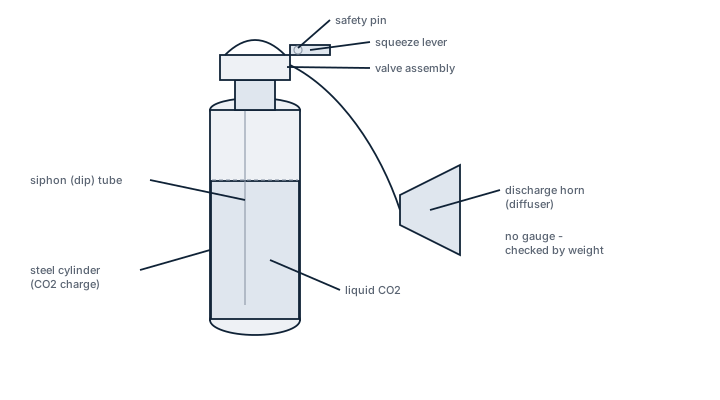
CO2 extinguisher, section
Cross section of a CO2 fire extinguisher: the steel cylinder holds liquid CO2 under its own pressure, a siphon tube draws liquid to the valve, and the squeeze lever with safety pin releases it through a hose to the wide discharge horn.

Main components

Cylinder

A steel pressure vessel holding CO2 as a liquefied gas under its own vapour pressure, typically around 50-60 bar at normal ambient temperature — it is a pressure vessel first and an extinguisher second, which is why it falls under periodic hydrostatic testing rules separate from foam or water units.

Siphon tube

Draws liquid CO2 from the bottom of the cylinder when inverted or held upright with a dip tube, so the discharge delivers liquid that flashes to gas and dry ice snow at the horn, not just residual headspace gas.

Valve and safety pin

A lever-operated valve released by pulling a tamper-evident safety pin; the pin is the first thing checked on a monthly inspection because a missing or broken seal means the unit may already have been discharged or tampered with.

Discharge horn

A wide plastic or composite horn, deliberately non-metallic so it does not become a static discharge or cold-contact burn hazard as the expanding gas drops the horn's surface temperature sharply.

Selection / Sizing

CapacityTypical use
2 kgSmall electrical panels, local first-response units
5 kgStandard engine room and machinery space placement
Larger wheeled unitsFixed high-risk points such as paint lockers or large switchboard rooms

Sizing follows the fire class and space, not a single fixed rule: CO2 units are rated for Class B (flammable liquid) and electrical fires, and are placed by risk assessment against the FSS Code table for number and spacing of portable extinguishers per compartment type, not by an arbitrary count per deck.

Regulations / Class

SOLAS Chapter II-2 and the IMO Fire Safety Systems (FSS) Code, Chapter 4, set the carriage, placement and performance requirements for portable extinguishers, including minimum extinguishing medium quantity and maximum spacing between units in machinery and accommodation spaces. Cylinders require periodic hydrostatic pressure testing at an interval set by the flag administration and the cylinder's design code, commonly every ten years, alongside an annual visual and weight-check servicing by a certified service agent. A unit found below its rated charge weight at inspection is treated as unserviceable, not topped up and returned to service without proper recharge.

Typical faults

  • Low charge weight — CO2 escapes slowly through valve seals over years; the only reliable check is weighing the cylinder against its stamped full weight, since the pressure gauge that a dry powder unit uses does not apply the same way here.
  • External corrosion — engine room humidity and salt air attack the cylinder shell; visible pitting or rust is grounds for hydrostatic retest before further service, not just a repaint.
  • Valve seizure — infrequently used units can seize at the valve, especially after long periods in a cold or damp locker, and fail to discharge when the lever is pulled.
  • Missing or broken tamper seal — indicates possible prior discharge or interference and should trigger an immediate weight check, not be waved past on the monthly round.
  • Frost-cracked horn — repeated discharge testing or a manufacturing defect can crack the horn, which then fails to direct the gas properly at the seat of a fire.

What to look for in a supplier

  • MED wheelmark approval (or equivalent flag-recognised type approval) on the specific model, not just the manufacturer's general catalogue.
  • A stamped hydrostatic test date and cylinder design code visible on the vessel, so the next test due date is unambiguous at survey.
  • A servicing agent recognised by the vessel's flag or class society, since a service tag from an unrecognised agent can be rejected at port state control.
  • Recharge parts and replacement cylinders that match the existing valve thread and horn fitting, avoiding a mixed-fleet spares problem.

Weigh every CO2 extinguisher at the monthly inspection, not just at the annual service — a slow leak past the valve seal shows up on a scale weeks before it shows up on any visual check.

12 manufacturers · 105 models

Amerex

13
Amerex CO2 2kg unverified
Capacity (kg)
2
Fire class
B,C
Marine Approval
ja
Amerex CO2 5kg unverified
Capacity (kg)
5
Fire class
B,C
Marine Approval
ja
Amerex CO2 6kg unverified
Capacity (kg)
6
Fire class
B,C
Marine Approval
ja
Amerex CO2 9kg unverified
Capacity (kg)
9
Fire class
B,C
Marine Approval
ja
Amerex CO2 25kg unverified
Capacity (kg)
25
Fire class
B,C
Marine Approval
ja
Amerex CO2 45kg unverified
Capacity (kg)
45
Fire class
B,C
Marine Approval
ja
Amerex CO2 Trolley 25kg-C unverified
Capacity (kg)
25
Type
Wheeled/Trolley
Marine Approval
ja
Amerex CO2 Trolley 30kg-C unverified
Capacity (kg)
30
Type
Wheeled/Trolley
Marine Approval
ja
Amerex CO2 Trolley 45kg-C unverified
Capacity (kg)
45
Type
Wheeled/Trolley
Marine Approval
ja
Amerex CO2 Trolley 50kg-C unverified
Capacity (kg)
50
Type
Wheeled/Trolley
Marine Approval
ja
Amerex CO2 Trolley 75kg-C unverified
Capacity (kg)
75
Type
Wheeled/Trolley
Marine Approval
ja
Amerex CO2 Trolley 100kg-C unverified
Capacity (kg)
100
Type
Wheeled/Trolley
Marine Approval
ja
Amerex CO2 Trolley 150kg-C unverified
Capacity (kg)
150
Type
Wheeled/Trolley
Marine Approval
ja

Buckeye Fire

13
Buckeye Fire CO2 2kg unverified
Capacity (kg)
2
Fire class
B,C
Marine Approval
ja
Buckeye Fire CO2 5kg unverified
Capacity (kg)
5
Fire class
B,C
Marine Approval
ja
Buckeye Fire CO2 6kg unverified
Capacity (kg)
6
Fire class
B,C
Marine Approval
ja
Buckeye Fire CO2 9kg unverified
Capacity (kg)
9
Fire class
B,C
Marine Approval
ja
Buckeye Fire CO2 25kg unverified
Capacity (kg)
25
Fire class
B,C
Marine Approval
ja
Buckeye Fire CO2 45kg unverified
Capacity (kg)
45
Fire class
B,C
Marine Approval
ja
Buckeye Fire CO2 Trolley 25kg-C unverified
Capacity (kg)
25
Type
Wheeled/Trolley
Marine Approval
ja
Buckeye Fire CO2 Trolley 30kg-C unverified
Capacity (kg)
30
Type
Wheeled/Trolley
Marine Approval
ja
Buckeye Fire CO2 Trolley 45kg-C unverified
Capacity (kg)
45
Type
Wheeled/Trolley
Marine Approval
ja
Buckeye Fire CO2 Trolley 50kg-C unverified
Capacity (kg)
50
Type
Wheeled/Trolley
Marine Approval
ja
Buckeye Fire CO2 Trolley 75kg-C unverified
Capacity (kg)
75
Type
Wheeled/Trolley
Marine Approval
ja
Buckeye Fire CO2 Trolley 100kg-C unverified
Capacity (kg)
100
Type
Wheeled/Trolley
Marine Approval
ja
Buckeye Fire CO2 Trolley 150kg-C unverified
Capacity (kg)
150
Type
Wheeled/Trolley
Marine Approval
ja

Kidde / Badger

13
Kidde CO2 2kg unverified
Capacity (kg)
2
Fire class
B,C
Marine Approval
ja
Kidde CO2 5kg unverified
Capacity (kg)
5
Fire class
B,C
Marine Approval
ja
Kidde CO2 6kg unverified
Capacity (kg)
6
Fire class
B,C
Marine Approval
ja
Kidde CO2 9kg unverified
Capacity (kg)
9
Fire class
B,C
Marine Approval
ja
Kidde CO2 25kg unverified
Capacity (kg)
25
Fire class
B,C
Marine Approval
ja
Kidde CO2 45kg unverified
Capacity (kg)
45
Fire class
B,C
Marine Approval
ja
Kidde CO2 Trolley 25kg-C unverified
Capacity (kg)
25
Type
Wheeled/Trolley
Marine Approval
ja
Kidde CO2 Trolley 30kg-C unverified
Capacity (kg)
30
Type
Wheeled/Trolley
Marine Approval
ja
Kidde CO2 Trolley 45kg-C unverified
Capacity (kg)
45
Type
Wheeled/Trolley
Marine Approval
ja
Kidde CO2 Trolley 50kg-C unverified
Capacity (kg)
50
Type
Wheeled/Trolley
Marine Approval
ja
Kidde CO2 Trolley 75kg-C unverified
Capacity (kg)
75
Type
Wheeled/Trolley
Marine Approval
ja
Kidde CO2 Trolley 100kg-C unverified
Capacity (kg)
100
Type
Wheeled/Trolley
Marine Approval
ja
Kidde CO2 Trolley 150kg-C unverified
Capacity (kg)
150
Type
Wheeled/Trolley
Marine Approval
ja

NAFFCO Marine

13
NAFFCO CO2 2kg unverified
Capacity (kg)
2
Fire class
B,C
Marine Approval
ja
NAFFCO CO2 5kg unverified
Capacity (kg)
5
Fire class
B,C
Marine Approval
ja
NAFFCO CO2 6kg unverified
Capacity (kg)
6
Fire class
B,C
Marine Approval
ja
NAFFCO CO2 9kg unverified
Capacity (kg)
9
Fire class
B,C
Marine Approval
ja
NAFFCO CO2 25kg unverified
Capacity (kg)
25
Fire class
B,C
Marine Approval
ja
NAFFCO CO2 45kg unverified
Capacity (kg)
45
Fire class
B,C
Marine Approval
ja
NAFFCO CO2 Trolley 25kg-C unverified
Capacity (kg)
25
Type
Wheeled/Trolley
Marine Approval
ja
NAFFCO CO2 Trolley 30kg-C unverified
Capacity (kg)
30
Type
Wheeled/Trolley
Marine Approval
ja
NAFFCO CO2 Trolley 45kg-C unverified
Capacity (kg)
45
Type
Wheeled/Trolley
Marine Approval
ja
NAFFCO CO2 Trolley 50kg-C unverified
Capacity (kg)
50
Type
Wheeled/Trolley
Marine Approval
ja
NAFFCO CO2 Trolley 75kg-C unverified
Capacity (kg)
75
Type
Wheeled/Trolley
Marine Approval
ja
NAFFCO CO2 Trolley 100kg-C unverified
Capacity (kg)
100
Type
Wheeled/Trolley
Marine Approval
ja
NAFFCO CO2 Trolley 150kg-C unverified
Capacity (kg)
150
Type
Wheeled/Trolley
Marine Approval
ja

Survitec Group

13
Survitec CO2 2kg unverified
Capacity (kg)
2
Fire class
B,C
Marine Approval
ja
Survitec CO2 5kg unverified
Capacity (kg)
5
Fire class
B,C
Marine Approval
ja
Survitec CO2 6kg unverified
Capacity (kg)
6
Fire class
B,C
Marine Approval
ja
Survitec CO2 9kg unverified
Capacity (kg)
9
Fire class
B,C
Marine Approval
ja
Survitec CO2 25kg unverified
Capacity (kg)
25
Fire class
B,C
Marine Approval
ja
Survitec CO2 45kg unverified
Capacity (kg)
45
Fire class
B,C
Marine Approval
ja
Survitec CO2 Trolley 25kg-C unverified
Capacity (kg)
25
Type
Wheeled/Trolley
Marine Approval
ja
Survitec CO2 Trolley 30kg-C unverified
Capacity (kg)
30
Type
Wheeled/Trolley
Marine Approval
ja
Survitec CO2 Trolley 45kg-C unverified
Capacity (kg)
45
Type
Wheeled/Trolley
Marine Approval
ja
Survitec CO2 Trolley 50kg-C unverified
Capacity (kg)
50
Type
Wheeled/Trolley
Marine Approval
ja
Survitec CO2 Trolley 75kg-C unverified
Capacity (kg)
75
Type
Wheeled/Trolley
Marine Approval
ja
Survitec CO2 Trolley 100kg-C unverified
Capacity (kg)
100
Type
Wheeled/Trolley
Marine Approval
ja
Survitec CO2 Trolley 150kg-C unverified
Capacity (kg)
150
Type
Wheeled/Trolley
Marine Approval
ja

Wilhelmsen

13
Wilhelmsen CO2 2kg unverified
Capacity (kg)
2
Fire class
B,C
Marine Approval
ja
Wilhelmsen CO2 5kg unverified
Capacity (kg)
5
Fire class
B,C
Marine Approval
ja
Wilhelmsen CO2 6kg unverified
Capacity (kg)
6
Fire class
B,C
Marine Approval
ja
Wilhelmsen CO2 9kg unverified
Capacity (kg)
9
Fire class
B,C
Marine Approval
ja
Wilhelmsen CO2 25kg unverified
Capacity (kg)
25
Fire class
B,C
Marine Approval
ja
Wilhelmsen CO2 45kg unverified
Capacity (kg)
45
Fire class
B,C
Marine Approval
ja
Wilhelmsen CO2 Trolley 25kg-C unverified
Capacity (kg)
25
Type
Wheeled/Trolley
Marine Approval
ja
Wilhelmsen CO2 Trolley 30kg-C unverified
Capacity (kg)
30
Type
Wheeled/Trolley
Marine Approval
ja
Wilhelmsen CO2 Trolley 45kg-C unverified
Capacity (kg)
45
Type
Wheeled/Trolley
Marine Approval
ja
Wilhelmsen CO2 Trolley 50kg-C unverified
Capacity (kg)
50
Type
Wheeled/Trolley
Marine Approval
ja
Wilhelmsen CO2 Trolley 75kg-C unverified
Capacity (kg)
75
Type
Wheeled/Trolley
Marine Approval
ja
Wilhelmsen CO2 Trolley 100kg-C unverified
Capacity (kg)
100
Type
Wheeled/Trolley
Marine Approval
ja
Wilhelmsen CO2 Trolley 150kg-C unverified
Capacity (kg)
150
Type
Wheeled/Trolley
Marine Approval
ja

Dräger

6
Drager Marine CO2 2kg unverified
Capacity (kg)
2
Fire class
B,C
Marine Approval
ja
Drager Marine CO2 5kg unverified
Capacity (kg)
5
Fire class
B,C
Marine Approval
ja
Drager Marine CO2 6kg unverified
Capacity (kg)
6
Fire class
B,C
Marine Approval
ja
Drager Marine CO2 9kg unverified
Capacity (kg)
9
Fire class
B,C
Marine Approval
ja
Drager Marine CO2 25kg unverified
Capacity (kg)
25
Fire class
B,C
Marine Approval
ja
Drager Marine CO2 45kg unverified
Capacity (kg)
45
Fire class
B,C
Marine Approval
ja

Pri-Safety Marine

6
Pri-Safety Marine CO2 2kg unverified
Capacity (kg)
2
Fire class
B,C
Marine Approval
ja
Pri-Safety Marine CO2 5kg unverified
Capacity (kg)
5
Fire class
B,C
Marine Approval
ja
Pri-Safety Marine CO2 6kg unverified
Capacity (kg)
6
Fire class
B,C
Marine Approval
ja
Pri-Safety Marine CO2 9kg unverified
Capacity (kg)
9
Fire class
B,C
Marine Approval
ja
Pri-Safety Marine CO2 25kg unverified
Capacity (kg)
25
Fire class
B,C
Marine Approval
ja
Pri-Safety Marine CO2 45kg unverified
Capacity (kg)
45
Fire class
B,C
Marine Approval
ja

Sapfire

6
Sapfire CO2 2kg unverified
Capacity (kg)
2
Fire class
B,C
Marine Approval
ja
Sapfire CO2 5kg unverified
Capacity (kg)
5
Fire class
B,C
Marine Approval
ja
Sapfire CO2 6kg unverified
Capacity (kg)
6
Fire class
B,C
Marine Approval
ja
Sapfire CO2 9kg unverified
Capacity (kg)
9
Fire class
B,C
Marine Approval
ja
Sapfire CO2 25kg unverified
Capacity (kg)
25
Fire class
B,C
Marine Approval
ja
Sapfire CO2 45kg unverified
Capacity (kg)
45
Fire class
B,C
Marine Approval
ja

Gloria

3
Gloria Gloria CO2 5kg KS5
Gloria CO2 5kg KS5
5 kg CO2 · Fire Suppression / Detection · CO2 portable fire extinguisher
Agent
CO2
Weight (kg)
5
Solas
ja
Origin
Germany
Common Failures & Inspection Points
  • Valve corrosion
  • Horn damage
  • Pressure gauge drift
Service: German manufacturer. BSI/MED approved.
Spare Parts: Gloria: Extinguishing agent and detector replacement per manufacturer. Lead time: 2-4 weeks.
Strengths
  • SOLAS‑approved and MED certified for marine use
  • Clean agent – leaves no residue on equipment
  • Compact 5 kg size suitable for confined spaces and easy mounting
  • High discharge pressure provides quick knock‑down of Class B and electrical fires
  • German engineering reputation for reliability
Weaknesses
  • Ineffective on Class A (solid) fires such as wood or paper
  • Risk of crew asphyxiation if used in poorly ventilated compartments
  • Known issues with valve corrosion, horn damage and pressure‑gauge drift over time
  • Limited extinguishing capacity compared with larger CO₂ systems
Typical Vessels: Container shipBulk carrierTanker (for machinery spaces)General cargo vesselPassenger ferryOffshore supply vessel
Certifications: SOLASMED
Decision Guide: Choose if you need a compact, residue‑free extinguisher for electrical or flammable‑liquid fires and require SOLAS/ MED compliance. Avoid if the primary fire risk is Class A material, if prolonged exposure to personnel in enclosed spaces is likely, or when higher extinguishing capacity is required.
Use Cases: Mounted on engine‑room control panels, bridge electronics cabinets, galley equipment areas, cargo‑hold fire‑break doors and other machinery spaces where quick suppression of electrical or fuel‑oil fires is critical.
Gloria CO2 9kg KS9
9 kg CO2 · Fire Suppression / Detection · CO2 portable fire extinguisher
Agent
CO2
Weight (kg)
9
Solas
ja
Common Failures & Inspection Points
  • Heavy weight handling issues
  • Valve deterioration
  • Horn breakage
Service: Large CO2 unit for engine rooms. Annual service.
Spare Parts: Gloria: Extinguishing agent and detector replacement per manufacturer. Lead time: 2-4 weeks.
Strengths
  • 9 kg CO2 charge provides longer discharge time than smaller units
  • SOLAS‑approved, meeting mandatory safety standards for engine rooms
  • Robust steel cylinder with pressure gauge for easy status monitoring
  • Compatible with standard marine mounting brackets and brackets
  • Low residue extinguishing agent suitable for electrical and machinery fires
Weaknesses
  • Heavy weight (9 kg) can be difficult to handle in confined spaces
  • Valve deterioration reported after repeated service cycles
  • Horn/safety pin breakage observed on some units, requiring careful inspection
  • Annual servicing required to maintain certification
  • Limited effectiveness on fires involving deep‑seated fuel spills
Typical Vessels: TankerBulk CarrierContainer ShipCruise VesselOffshore Supply Vessel
Certifications: SOLAS
Decision Guide: Choose if: you need a high‑capacity, SOLAS‑compliant CO2 extinguisher for engine or machinery spaces and crew are trained to handle the 9 kg unit. Avoid if: weight handling is a concern, you prefer lighter extinguishers for small compartments, or you lack reliable annual service support.
Use Cases: Deployed in main engine rooms, auxiliary machinery spaces, pump rooms, and other high‑risk fire zones where rapid CO2 discharge can suppress electrical and flammable liquid fires without leaving residue.
Gloria CO2 2kg KS2
2 kg CO2 · Fire Suppression / Detection · CO₂ stored‑pressure extinguisher
Agent
CO2
Weight (kg)
2
Solas
ja
Common Failures & Inspection Points
  • Valve O-ring deterioration
  • Horn damage
  • Pressure loss
Service: Compact CO2. Annual inspection.
Spare Parts: Gloria: Extinguishing agent and detector replacement per manufacturer. Lead time: 2-4 weeks.
Strengths
  • Small footprint – easy to mount in confined spaces such as engine rooms or bridge consoles
  • Zero residue – safe for sensitive electronic equipment
  • Meets SOLAS certification for marine use
  • Quick discharge pressure suitable for Class B and electrical fires
  • Lightweight (2 kg) simplifies handling and manual operation
Weaknesses
  • Limited extinguishing agent volume (2 kg) – not ideal for large‑scale fires
  • Valve O‑ring deterioration reported, requiring vigilant maintenance
  • Horn damage can impair discharge verification
  • Not effective on Class A solid material fires
  • Potential pressure loss over time if inspected infrequently
Typical Vessels: Passenger ferryCoastal cargo vesselOffshore supply shipWorkboat / tugYacht
Certifications: SOLAS
Decision Guide: Choose if you need a lightweight, space‑saving CO₂ extinguisher for electrical or flammable liquid fire protection on vessels where SOLAS compliance is mandatory. Avoid if the vessel requires high‑capacity extinguishers, Class A fire coverage, or operates in environments where valve O‑ring wear could be problematic without strict inspection regimes.
Use Cases: Mounted near engine control panels, navigation bridge electronics, galley appliances, and other areas with high electrical fire risk on small to medium‑size commercial vessels and offshore support craft.

Kidde

3
Kidde CO2 2kg Marine
2 kg CO2 · Fire Suppression / Detection · CO2 portable fire extinguisher
Agent
CO2
Weight (kg)
2
Rating
34B
Solas
ja
Common Failures & Inspection Points
  • Valve O-ring leak
  • Horn cracking
  • Pressure loss over time
Service: Annual visual inspection. 5-year discharge test. 10-year hydrostatic.
Spare Parts: Kidde: Extinguishing agent and detector replacement per manufacturer. Lead time: 2-4 weeks.
Strengths
  • Lightweight (2 kg) – easy to handle and mount in confined spaces
  • Clean agent – leaves no residue, ideal for electrical and engine‑room equipment
  • Meets SOLAS marine certification out of the box
  • High discharge pressure provides rapid fire knock‑down on Class B & C fires
  • Simple mechanical operation with no need for batteries or electronics
Weaknesses
  • Effective only on Class B (flammable liquids) and Class C (electrical) fires; not suitable for Class A solid fires
  • Risk of asphyxiation if used in tightly sealed compartments without ventilation
  • Reported valve O‑ring leaks can develop over time
  • Pressure loss may occur with long storage periods, requiring regular hydrostatic testing
  • Limited discharge duration compared with larger extinguishers
Typical Vessels: Passenger shipTankerBulk carrierGeneral cargo vesselFishing vessel
Certifications: SOLASUSCG Type Approval
Decision Guide: Choose if you need a lightweight, clean‑agent extinguisher for electrical or flammable‑liquid fire hazards on vessels where space and weight are at a premium. Avoid if the vessel requires Class A fire protection, long discharge times, or operates in enclosed spaces without adequate ventilation.
Use Cases: Commonly installed in engine rooms, navigation bridges, galley areas, and other electrical compartments where rapid suppression of flammable‑liquid or electrical fires is critical and residue must be avoided.
Kidde Kidde CO2 5kg Marine
Kidde CO2 5kg Marine
5 kg CO2 · Fire Suppression / Detection · CO2 portable fire extinguisher
Agent
CO2
Weight (kg)
5
Rating
89B
Solas
ja
Common Failures & Inspection Points
  • Valve seat leak
  • Horn connection loosening
  • Handle mechanism stiffness
Service: Most common marine CO2 size. Annual + 5-year service.
Spare Parts: Kidde: Extinguishing agent and detector replacement per manufacturer. Lead time: 2-4 weeks.
Strengths
  • Standard 5 kg size – widely stocked and easy to replace on board
  • Clean agent (no residue) ideal for electrical and engine‑room equipment
  • Meets SOLAS requirements for marine fire protection
  • Compact, lightweight and ready‑to‑use with a simple pull‑pin operation
  • Defined service interval (annual inspection + 5‑year overhaul) simplifies maintenance
Weaknesses
  • Ineffective on Class A (solid material) fires
  • Short discharge time (~8 seconds) may require multiple units for larger incidents
  • Reported valve seat leaks and horn connection loosening if not inspected regularly
  • Handle mechanism can become stiff in cold climates, affecting rapid deployment
  • CO2 pressure drops with temperature, reducing effective range in very hot environments
Typical Vessels: TankerBulk CarrierContainer ShipOffshore Supply VesselPassenger FerryGeneral Cargo Vessel
Certifications: SOLASUSCG Type Approval
Decision Guide: Choose if you need a compact, residue‑free extinguisher for Class B and electrical fires and must comply with SOLAS on vessels where space is limited. Avoid if primary fire risk involves solid combustible materials (Class A) or if a longer discharge duration is required.
Use Cases: Deployed in engine rooms, machinery spaces, control panels, galley equipment areas, and any confined compartments where electrical or flammable liquid fires are possible. Frequently mounted on walls or brackets for quick access during emergencies.
Kidde CO2 9kg Marine
9 kg CO2 · Fire Suppression / Detection · pressurised CO2 fire extinguisher
Agent
CO2
Weight (kg)
9
Solas
ja
Common Failures & Inspection Points
  • Valve mechanism corrosion
  • Horn connector failure
  • Heavy handling
Service: Largest portable CO2. Annual + 10-year hydrostatic.
Spare Parts: Kidde: Extinguishing agent and detector replacement per manufacturer. Lead time: 2-4 weeks.
Strengths
  • Largest portable CO2 unit (9 kg) available on the market – higher extinguishing capacity per device
  • SOLAS‑approved, ensuring compliance with international safety regulations
  • Clean agent leaves no residue, ideal for electrical and engine‑room equipment
  • 10‑year hydrostatic test interval reduces maintenance downtime
  • Widely recognised brand (Kidde) with global support network
Weaknesses
  • Heavy weight (9 kg) makes manual handling difficult, especially in cramped spaces
  • Valve mechanism prone to corrosion in salty or humid environments if not regularly inspected
  • Horn connector failures reported under repeated high‑pressure cycles
  • Limited effectiveness on Class A (solid material) fires compared with foam or powder agents
  • Requires trained personnel for safe operation and re‑charging
Typical Vessels: TankerContainer shipBulk carrierPassenger ferryOffshore supply vesselCoast guard cutter
Certifications: USCG Type ApprovalDNV
Decision Guide: Choose if you need a high‑capacity, residue‑free CO2 extinguisher that satisfies SOLAS and can protect critical electrical or machinery spaces on larger vessels. Avoid if crew handling strength is limited, the operating environment is highly corrosive without rigorous maintenance, or the primary fire risk is Class A solid fires where foam or powder would be more effective.
Use Cases: Deployed in engine rooms, machinery spaces, control stations and passenger areas where rapid suppression of electrical or flammable liquid fires is required. Frequently mounted on brackets near high‑risk equipment to provide immediate access without the need for large stationary systems.

Minimax Marine

3
Minimax CO2 5kg Marine
5 kg CO2 · Fire Suppression / Detection · Carbon dioxide (CO2) fire suppression
Agent
CO2
Weight (kg)
5
Solas
ja
Origin
Germany
Common Failures & Inspection Points
  • Valve mechanism wear
  • Cylinder corrosion
  • Horn cracking
Service: German quality. Annual inspection.
Spare Parts: Minimax: Extinguishing agent and detector replacement per manufacturer. Lead time: 2-4 weeks.
Strengths
  • German engineering reputation for reliability
  • SOLAS‑approved for maritime installations
  • Compact 5 kg size suitable for confined spaces
  • Clean agent leaves no residue, ideal for electrical fires
  • Quick discharge pressure for immediate knock‑down
Weaknesses
  • Limited extinguishing capacity – unsuitable for large fires
  • Ineffective on Class A (solid material) fires
  • Potential valve wear and cylinder corrosion if not maintained
  • Risk of asphyxiation; requires trained personnel and ventilation
  • Single‑use device – must be replaced after discharge
Typical Vessels: YachtWorkboatOffshore supply vesselCoastal traderSmall passenger ferry
Certifications: SOLAS
Decision Guide: Choose if: you need a compact, SOLAS‑compliant CO₂ extinguisher for electrical or engine‑room fires on small to medium vessels and value German build quality. Avoid if: the fire risk demands larger capacity, Class A fire protection, or you prefer a multi‑purpose agent (e.g., foam or dry chemical).
Use Cases: Deployed in engine rooms, machinery spaces, electrical panels, galley hoods (where CO₂ is permitted), and other confined areas where a clean, non‑conductive extinguishing agent is required.
Minimax CO2 2kg Marine
2 kg CO2 · Fire Suppression / Detection · CO₂ portable fire extinguisher
Agent
CO2
Weight (kg)
2
Solas
ja
Common Failures & Inspection Points
  • Valve O-ring leak
  • Horn cracking
  • Pressure loss
Service: Compact CO2 for bridge/accommodation. Annual service.
Spare Parts: Minimax: Extinguishing agent and detector replacement per manufacturer. Lead time: 2-4 weeks.
Strengths
  • Small footprint – fits easily in confined bridge or crew‑area lockers
  • Clean agent – leaves no residue on electronic equipment
  • Meets SOLAS requirements for marine portable extinguishers
  • Quick discharge pressure suitable for Class B and C fires
  • Simple annual service interval
Weaknesses
  • Limited to 2 kg capacity – may be insufficient for larger fire scenarios
  • Effective only on Class B (flammable liquids) and Class C (electrical) fires, not Class A solid combustibles
  • CO₂ discharge can create an asphyxiation hazard in enclosed spaces if not evacuated promptly
  • Known failure modes include valve O‑ring leaks and pressure loss over time
Typical Vessels: Passenger ferriesOffshore supply vesselsYachts and pleasure craftCoastal cargo shipsSmall to medium sized tankers with dedicated crew accommodation areas
Certifications: SOLAS
Decision Guide: Choose if you need a lightweight, space‑saving extinguisher for electrical or flammable‑liquid fire risk in bridge or crew quarters and the vessel’s fire strategy relies on CO₂ agents. Avoid if the ship requires higher extinguishing capacity, Class A fire protection, or if confined‑space safety concerns outweigh the benefits of a clean‑agent system.
Use Cases: Typically mounted in bridge lockers, engine control rooms, accommodation corridors, and other enclosed crew spaces where electrical equipment is prevalent and rapid, residue‑free suppression is essential.
Minimax CO2 9kg Marine
9 kg CO2 · Fire Suppression / Detection · CO2 portable fire extinguisher
Agent
CO2
Weight (kg)
9
Solas
ja
Common Failures & Inspection Points
  • Valve wear
  • Horn breakage
  • Cylinder corrosion
Service: Large CO2. German manufacture.
Spare Parts: Minimax: Extinguishing agent and detector replacement per manufacturer. Lead time: 2-4 weeks.
Strengths
  • High extinguishing power on flammable liquid (Class B) and electrical fires without leaving residue
  • 9 kg capacity gives longer discharge time than smaller CO₂ units, suitable for larger marine spaces
  • Certified to SOLAS and EN 3 standards; German engineering ensures dimensional accuracy and pressure safety
  • Compact handheld design fits standard marine fire‑extinguisher brackets
  • Immediate full‑flow discharge on activation – no delay
Weaknesses
  • Valve wear can lead to leakage if not inspected regularly
  • Horn (pressure relief) breakage reported in field service
  • Cylinder corrosion risk in humid or salty environments; requires periodic hydrostatic testing
  • Ineffective on Class A (solid material) fires and poses asphyxiation hazard in confined spaces
  • Heavier than dry‑powder equivalents, affecting stowage weight budget
Typical Vessels: TankerOffshore Supply VesselContainer ShipBulk CarrierPassenger FerryGeneral Cargo Vessel
Certifications: SOLASEN 3
Decision Guide: Choose if: you need a clean‑agent extinguisher for flammable liquid or electrical fires, compliance with SOLAS is mandatory, and space allows a 9 kg handheld unit. Avoid if: the vessel primarily faces Class A fire risks, operates in highly corrosive environments without strict maintenance, or crew training on CO₂ safety is insufficient.
Use Cases: Mounted in engine rooms, machinery spaces, fuel oil tanks, galley areas and deck locations where flammable liquids or electrical equipment are present; used for rapid response to sudden liquid spills or electrical fires aboard ships.