What to check on a Reduction Gearbox.
A slow-speed two-stroke main engine can drive the propeller shaft directly, but most medium- and high-speed four-stroke engines run at several hundred to over a thousand RPM, far above what a propeller can use efficiently — a large propeller running too fast cavitates and loses thrust rather than gaining it. A reduction gearbox sits between engine and shaft, using a set of precision-cut gears to bring engine speed down to propeller speed, typically at ratios from around 3:1 up to 7:1 or higher depending on engine type and propeller diameter…
What a reduction gearbox does that direct drive cannot
A slow-speed two-stroke main engine can drive the propeller shaft directly, but most medium- and high-speed four-stroke engines run at several hundred to over a thousand RPM, far above what a propeller can use efficiently — a large propeller running too fast cavitates and loses thrust rather than gaining it. A reduction gearbox sits between engine and shaft, using a set of precision-cut gears to bring engine speed down to propeller speed, typically at ratios from around 3:1 up to 7:1 or higher depending on engine type and propeller diameter. Many gearboxes also carry a reversing or clutch function, letting the engine run in one direction while ahead and astern are selected mechanically or hydraulically rather than by reversing the engine itself.
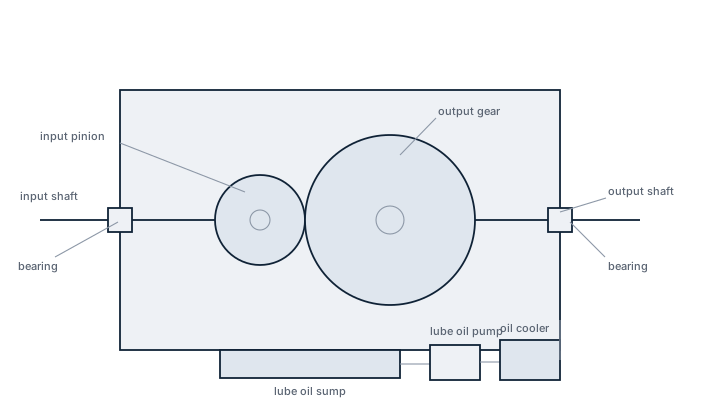
Main components
Gear train
Helical or double-helical gears carry the reduction ratio, chosen for smoother, quieter engagement under continuous load than straight-cut spur gears. Tooth condition, backlash and alignment between input and output shafts are the core things a surveyor and chief engineer both check.
Clutch and reversing mechanism
Multi-plate hydraulic clutches are common on medium-speed installations, engaging ahead or astern gear sets, or in some designs a controllable pitch propeller removes the need for a reversing gearbox entirely and the gearbox becomes a simple fixed-ratio reduction unit.
Thrust bearing
Often integrated into the gearbox casing, the thrust bearing transmits the propeller's axial thrust from the shaft line into the ship's structure. Its condition is as safety-critical as the gears themselves, since thrust bearing failure can allow the shaft to move axially and damage the engine or stern tube.
Lubrication system
A dedicated lube oil system, sometimes shared with the engine and sometimes independent, supplies the gear mesh and bearings under pressure with cooling and filtration. Oil condition monitoring here is one of the earliest warnings of gear or bearing wear, since metal particles show up in oil analysis before they show up as noise or vibration.
Selection / sizing
- Reduction ratio matched to the specific engine RPM and the propeller design speed for best efficiency.
- Torque and power rating with margin over the engine's maximum continuous rating, since gearbox failure under peak torque is far more expensive than an oversized casing.
- Clutch type and reversing arrangement matched to whether the vessel uses a fixed or controllable pitch propeller.
- Thrust bearing capacity matched to the propeller's maximum axial thrust, particularly relevant for higher-powered or ice-class vessels.
Regulations and class
Class rules require the gearbox to be built and tested to the classification society's rules for propulsion machinery, with type testing of the gear design and periodic survey of gear condition, alignment and lubricating oil analysis results at intermediate and special surveys. Shaft alignment between engine, gearbox and shaft line is checked at each dry-docking, and class typically requires vibration and noise measurements as part of sea trials for a new installation or after a major repair.
Typical faults
| Fault | Consequence |
|---|---|
| Misalignment between engine, gearbox and shaft line developing over time | Uneven gear tooth wear and increased vibration, eventually risking tooth failure |
| Lube oil contamination from water ingress via the cooler | Accelerated bearing wear and reduced oil film strength on the gear mesh |
| Clutch plates worn beyond tolerance | Slipping engagement, delayed or incomplete ahead/astern response |
| Thrust bearing pad wear undetected due to infrequent monitoring | Axial shaft movement that can damage the stern tube seal or engine crankshaft |
What to look for in a supplier
- Class type approval for the specific gearbox model and rating, not just the manufacturer's general reputation.
- Documented gear tooth geometry and material specification for future spare parts matching.
- Availability of the specific lube oil filtration and cooling components as spares, since these fail more often than the gears themselves.
- Alignment and installation support, since a correctly built gearbox installed with poor alignment will still wear prematurely.
Trend the lube oil analysis results rather than reading each report in isolation — rising metal content over several samples catches gear or bearing wear long before it becomes audible, and by the time it is audible the repair options have narrowed considerably.