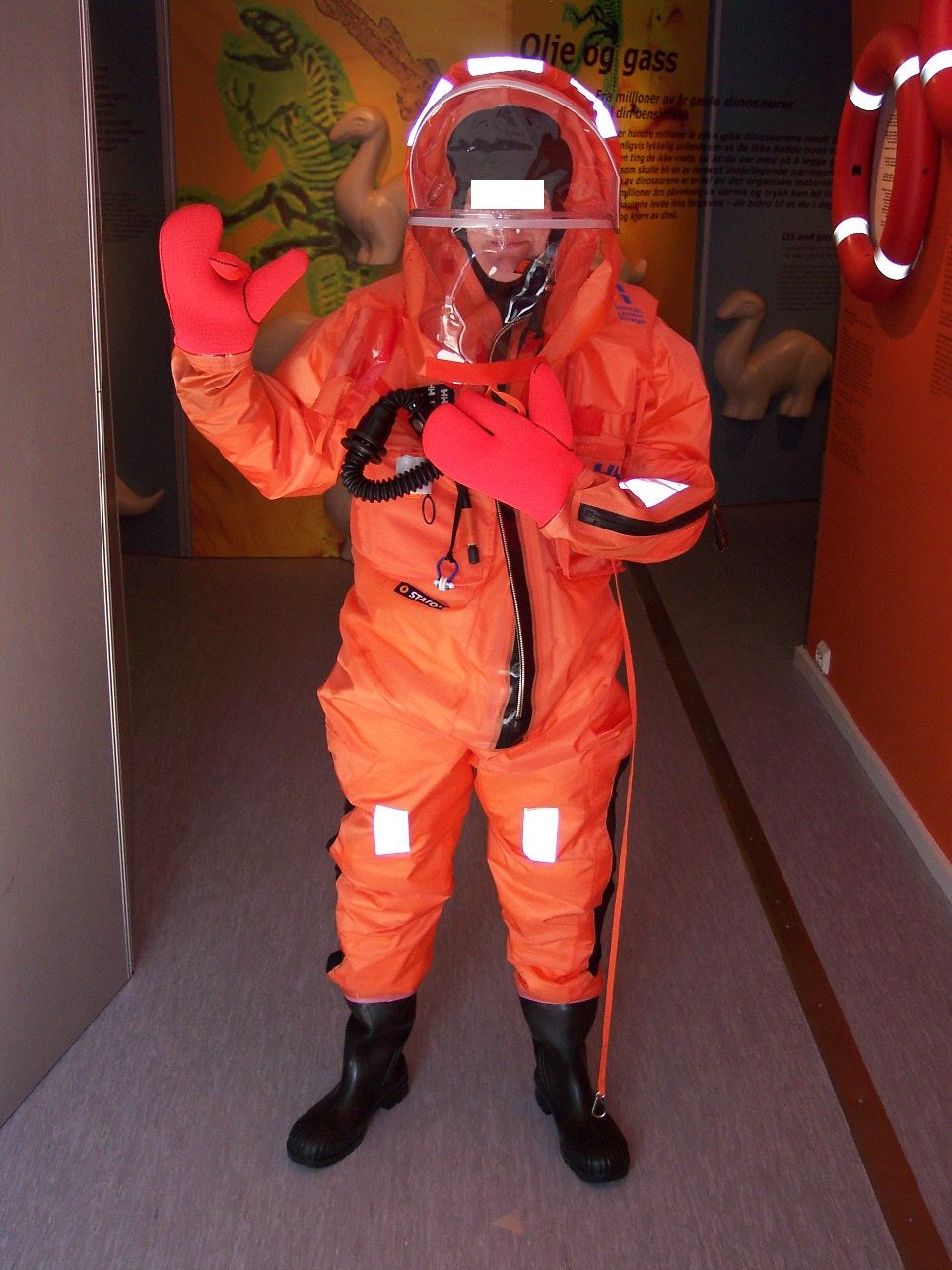
What to check on a Immersion Suit (Thermal).
The LSA Code sets a demanding practical test for a thermal immersion suit: an untrained person must be able to unpack it from its stowage bag and put it on fully, without assistance, in no more than two minutes, over normal working clothes. Once in the water, the suit then has to slow the wearer's heat loss enough to keep core temperature from dropping into a dangerous range for a set survival period, while keeping the face clear of the water and the wearer floating the right way up even…
What a SOLAS immersion suit has to do
The LSA Code sets a demanding practical test for a thermal immersion suit: an untrained person must be able to unpack it from its stowage bag and put it on fully, without assistance, in no more than two minutes, over normal working clothes. Once in the water, the suit then has to slow the wearer's heat loss enough to keep core temperature from dropping into a dangerous range for a set survival period, while keeping the face clear of the water and the wearer floating the right way up even unconscious. Meeting the donning time and the thermal protection standard at the same time is the whole design problem; a suit that is warmer but harder to put on quickly fails the same test as one that is easy to don but too thin.
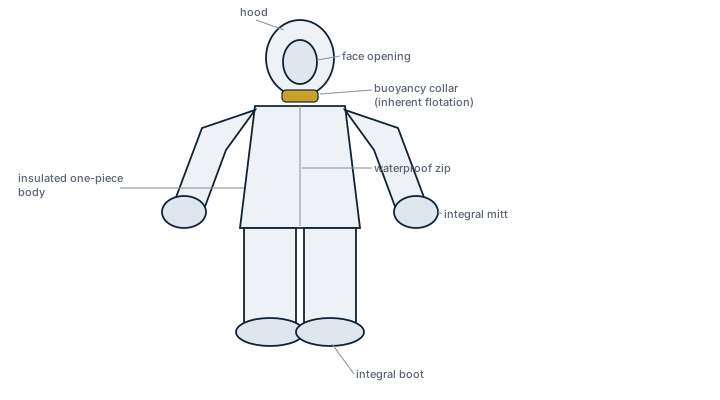
Main components
Material and seams
Waterproof, flexible material, usually neoprene or a coated fabric, with seams that are either welded or taped rather than stitched and left exposed, since a stitched seam that lets water seep through defeats the insulation before it starts.
Gloves and boots
Integral or attached gloves and boots keep the whole body enclosed. Glove design has to balance thermal protection against enough dexterity to grip a ladder rung or a liferaft painter, which is one of the harder compromises in the whole suit.
Buoyancy and self-righting
Built-in buoyant material and a collar shaped to turn an unconscious wearer face-up, in the same way a lifejacket does, since a suit alone without inherent buoyancy and righting capability does not meet the LSA Code requirement on its own.
Zip and donning aids
A single main closure, usually a heavy-duty waterproof zip with a protective flap, plus a whistle and retroreflective tape as on other lifesaving appliances, so the wearer is both audible and visible to a search unit at night.
Selection considerations
| Factor | Note |
|---|---|
| Size range aboard | Must cover the actual crew size range, including the largest crew member, not just a standard spread |
| Insulation class | Some suits require an additional thermal protective aid underneath to meet the full survival time; check what the certificate assumes |
| Donning time margin | Look for suits tested comfortably under the two-minute limit, not right at it |
Regulations and class
SOLAS III/32.3 requires immersion suits for all persons on board on cargo ships, sized appropriately, and the LSA Code sets the detailed performance requirements: donning time, thermal protection, buoyancy, righting, and material flammability. Suits are type-approved as a complete assembly, suit, gloves and boots together, so substituting a different pair of gloves or boots from another manufacturer, even a similar one, breaks the type approval. Periodic inspection intervals and servicing follow the manufacturer's instructions accepted under the LSA Code, typically including zip lubrication and a pressure or leak check at set intervals.
Typical faults
| Fault | Consequence |
|---|---|
| Zip corroded or not regularly lubricated | Suit becomes hard or impossible to fully close within the donning time in an emergency |
| Stowage bag stored somewhere not quickly reachable from crew cabins | Donning time in a real emergency exceeds the two-minute test condition |
| Seam degradation from UV exposure or improper storage | Water ingress reduces the actual thermal protection below the certified rating |
| Wrong size issued to a crew member | Suit cannot be donned correctly or fails to seal properly at wrists and neck |
What to look for in a supplier
- Complete type-approved assembly, suit, gloves and boots from the same certified set, not mixed components
- Documented donning time test results with a comfortable margin under the two-minute limit
- Sizing range that genuinely covers the ship's crew profile, including replacement stock for larger or smaller individuals
- Clear servicing schedule and access to spare zips and repair materials at the ship's usual ports
Run an actual donning drill with the suits on board, not just a paper drill; a suit that passed its type approval in a lab still needs a crew that can find it, unbag it and get it on inside two minutes on a rolling deck.