What to check on a Portable Tank Cleaning Gun.
A portable tank cleaning gun is a hand-carried, hose-fed nozzle used inside a cargo or ballast tank for spot cleaning, in contrast to a fixed rotary tank cleaning machine that is lowered through a deck hatch and left to run unattended on a programmed cycle. It earns its place where a fixed machine cannot reach — stiffeners, corners, pump wells — or where the ship has no fixed system fitted at all, typically smaller tankers, chemical carriers and tank barges.
What sets a portable gun apart
A portable tank cleaning gun is a hand-carried, hose-fed nozzle used inside a cargo or ballast tank for spot cleaning, in contrast to a fixed rotary tank cleaning machine that is lowered through a deck hatch and left to run unattended on a programmed cycle. It earns its place where a fixed machine cannot reach — stiffeners, corners, pump wells — or where the ship has no fixed system fitted at all, typically smaller tankers, chemical carriers and tank barges.
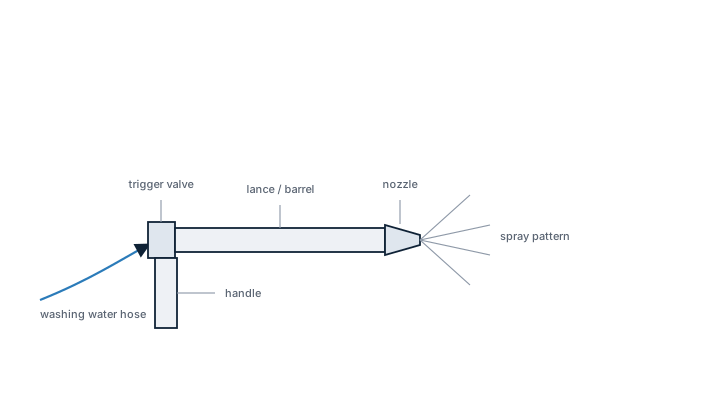
Main components
- Gun body with a hand trigger or lever valve controlling flow to the nozzle.
- Rotating nozzle head, single or multi-jet, driven by the reaction force of the water itself so it needs no separate motor.
- Hose connection, usually a camlock or similar quick-connect fitting to the ship's washing hose.
- Lance or extension pipe to reach into corners and along stiffeners without the operator having to climb into every recess.
- On some models, a small in-line chemical injection point for detergent dosing.
Selection and sizing
Flow rate and working pressure have to match what the ship's tank cleaning pump and heater can actually deliver — a gun rated well above the supply pressure will simply underperform. Material matters more than on most deck equipment: stainless steel construction avoids introducing contamination into a cargo tank, particularly on chemical carriers where cargo compatibility is checked closely. Lance length is chosen against the tank's internal structure, and jet pattern, fan versus concentrated jet, against whether the job is bulk residue removal or spot cleaning of a stubborn deposit.
Typical faults
| Fault | Cause | Consequence |
|---|---|---|
| Nozzle wear | Abrasive residue passing through the jets over repeated use | Reduced jet pressure and uneven wash coverage, longer cleaning times |
| Trigger or valve seal failure | Ageing seals or exposure to aggressive cleaning chemicals | Leakage past the trigger, operator exposure to wash medium |
| Hose connection corrosion | Wrong material for the cargo or cleaning chemical in use | Pressure loss, and in a worst case a blowout under pressure inside the tank |
| Rotating head seizure | Bearing wear or debris ingress | Gun stops rotating, leaving a visible unwashed streak in the pattern |
What to look for in a supplier
- Material and seal compatibility with the range of cargoes the ship actually carries, not a generic freshwater rating.
- A pressure rating that matches, rather than exceeds, the ship's cleaning pump discharge.
- Spare nozzles and seals sized for the specific model, since these are consumable parts.
A gun with a seized head still sprays water, so the fault is easy to miss from outside the tank until the wash pattern shows an unwashed streak — check rotation before sending anyone in to finish the job by hand.