OceanSphere
Engines

Electrochlorination BWMS

medium 287 / 287 models (Inspector)

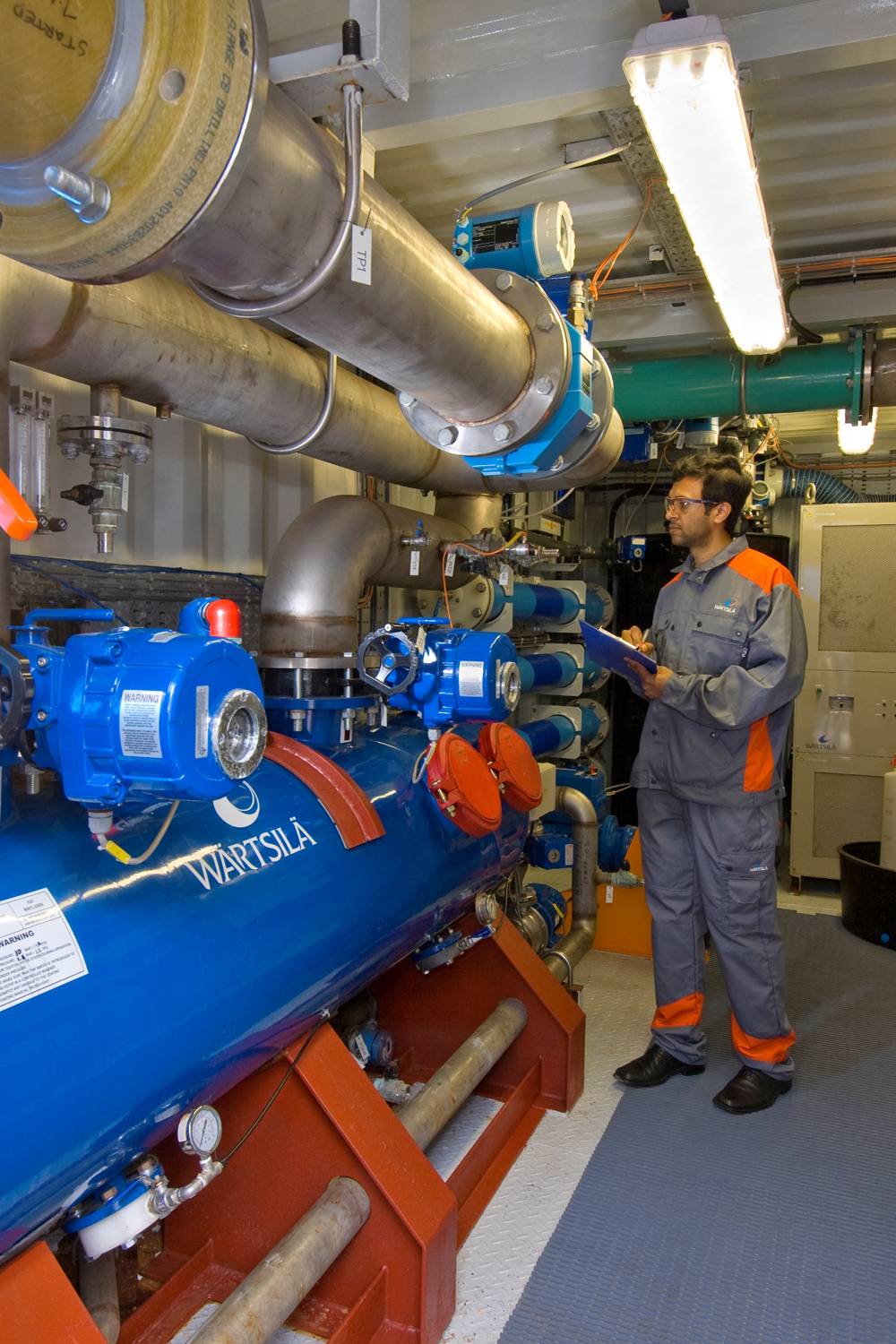
An electrochlorination BWMS makes its own biocide by electrolysing a side stream of seawater into sodium hypochlorite, so unlike UV or chemical-dosing systems it needs no consumable bunkered, but its output depends on the salinity of the water it treats.

Read more — Electrochlorination BWMS explained

What sets an electrochlorination system apart from other BWMS technologies

An electrochlorination ballast water treatment system generates its own biocide on board by passing a side stream of seawater through an electrolytic cell, producing sodium hypochlorite from the chloride already in seawater. That is the key difference from a UV-based system, which disinfects with light and needs no chemical, and from systems that dose a stored chemical from a tank: electrochlorination needs no consumable to be bunkered, but it does need a working electrolytic cell, a power supply for that cell, and a neutralisation dose at discharge to bring residual chlorine down to a safe level before the water leaves the ship.
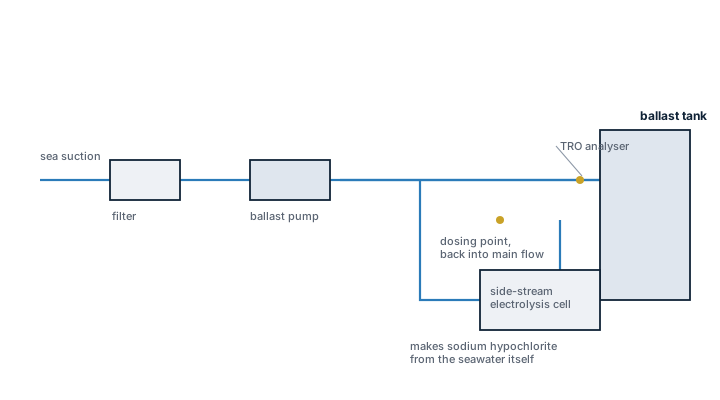
Electrochlorination ballast water treatment, flow
Process flow of an electrochlorination ballast water treatment system, showing a side stream drawn off, electrolysed into sodium hypochlorite and dosed back into the main ballast flow to the tank.

Main components

Filter

Automatic backwashing filter, typically 40-50 micron, removing larger organisms and sediment before the electrolytic stage, exactly as most other BWMS technologies also require during uptake.

Electrolytic cell

Titanium electrodes, often coated, arranged so a side stream of ballast water is electrolysed to produce sodium hypochlorite; scaling on the electrodes from calcium and magnesium salts is the main wear mechanism.

Dosing and mixing system

Injects the generated hypochlorite into the full ballast flow at a controlled concentration, with a static mixer or injection point sized to achieve even distribution.

TRO (total residual oxidant) analyser

Continuously measures chlorine concentration at dosing and again before discharge, the parameter the control system actually manages against.

Neutralisation dosing (discharge side)

Sodium bisulphite or similar reducing agent injected before overboard discharge to bring TRO down below the discharge limit, since untreated residual chlorine is itself an environmental hazard.

Selection and sizing

  • Ballast pump capacity in m³/h, since the BWMS must treat at the same rate as the ballast system pumps, not a reduced rate.
  • Salinity range of the trading area — electrolytic hypochlorite generation depends on chloride content, so systems intended for low-salinity or brackish trades need a supplementary chemical dosing arrangement or a different technology.
  • Power demand of the electrolytic cell and rectifier, which draws meaningfully on ship's electrical generation during ballasting.
  • Footprint and hazardous area classification, since chlorine gas can be generated and the cell room needs mechanical ventilation and gas detection.

Regulations and class

Electrochlorination BWMS are approved under the IMO Ballast Water Management Convention, either under the original G8 Guidelines or the revised BWMS Code, and ships trading to the United States also need a separate USCG type approval, which has historically been harder for some active-substance systems to obtain than for UV systems. Since September 2024 the Convention applies to essentially the entire world fleet, and port state control checks the type approval certificate, the ballast water record book, and increasingly takes water samples for indicative analysis at some ports.

Typical faults

FaultCauseConsequence
Falling TRO output at constant cell currentScale build-up on electrode surfaces reducing active areaSystem cannot reach the target dose, and the control logic should stop ballasting rather than discharge under-treated water
High power draw for the same outputElectrode ageing or coating degradation nearing end of service lifeIncreasing electrical load on generators and, eventually, cell replacement
Failure to reach discharge TRO limitNeutralisation dosing pump fault or empty neutralising agent tankDischarge must be held or the event logged as a deviation, with possible PSC scrutiny at next port
Low chlorine generation in brackish waterInsufficient chloride concentration for the electrolytic process to work at rated outputSystem defaults to a documented exception procedure rather than treating normally, which crews must know in advance

What to look for in a supplier

  • Both IMO BWMS Code and USCG type approval if the trading pattern includes US waters, since one does not substitute for the other.
  • Documented minimum salinity for full-rated operation, and what the system does below that threshold.
  • Electrode and cell service life and replacement cost pattern, since this is the main recurring cost of the technology.
  • Availability of remote diagnostic support, given how often TRO and cell faults need expert interpretation rather than a simple part swap.

Log every low-salinity or low-temperature exception exactly as the manual describes it — a missing or vague ballast water record book entry is one of the fastest ways to turn a routine PSC inspection into a detention.

Inspector Mode Show All 287 / 287 with inspector value

5 manufacturers · 287 models

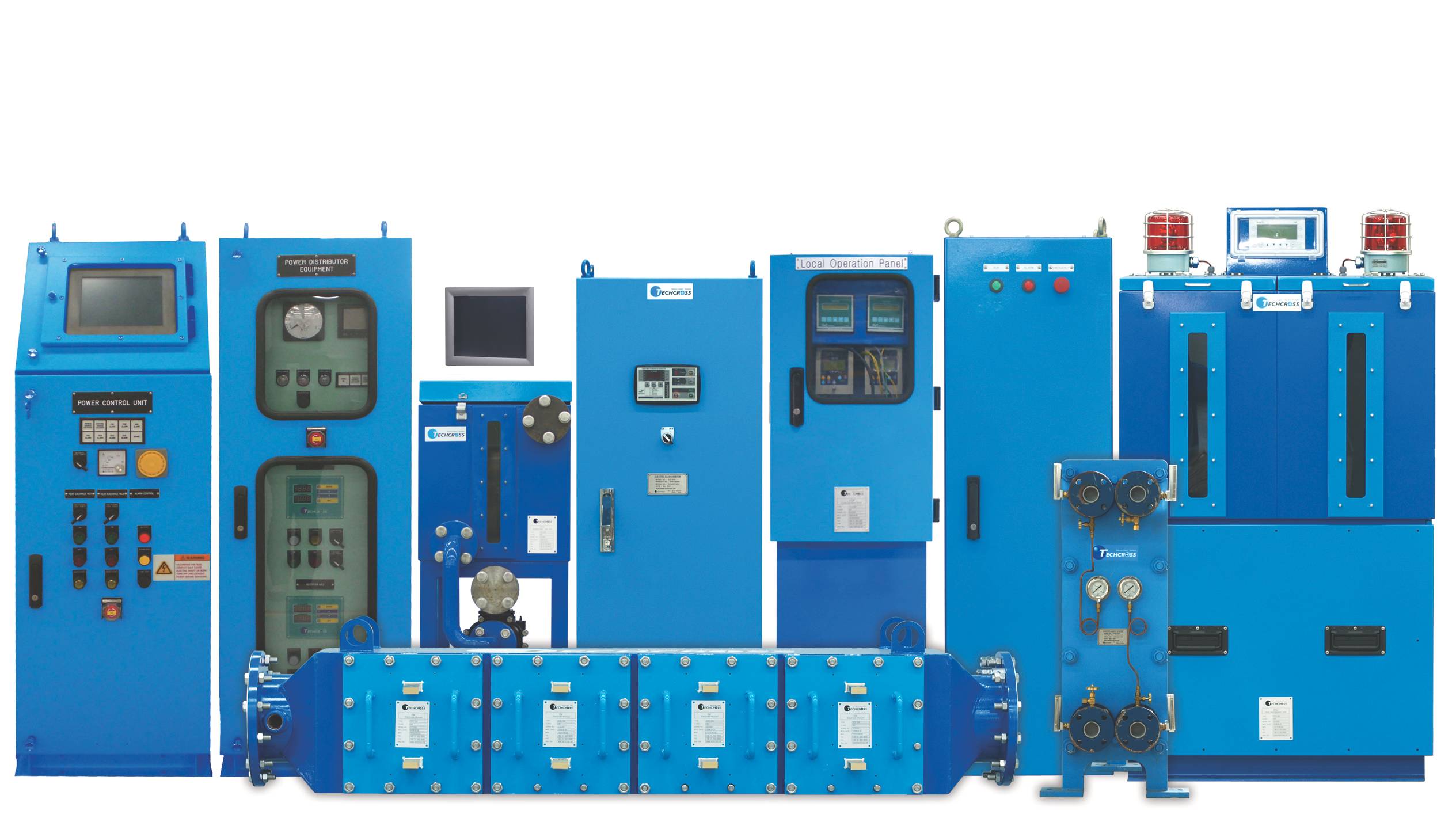
Techcross

71
ECS 150m3h unverified
· 4.5 kW
Capacity (m³/h)
150
Treatment Method
Electrochlorination
IMO Type Approval
ja
USCG Approved
ja
Power (kW)
4.5
Common Failures & Inspection Points
  • Loss of electrical, hydraulic, pneumatic, or other service supply caused by a tripped protection device, leakage, blockage, or upstream fault results in failed starting or loss of function
  • Mechanical wear, corrosion, fouling, or contamination of moving and wetted parts causes increased noise, leakage, sticking, vibration, or reduced performance
  • Seal, gasket, hose, cable, or connection deterioration from age, heat, vibration, or environmental exposure produces visible leakage, intermittent signals, or loss of pressure
  • Sensor, switch, actuator, relay, or control-system faults can cause incorrect indication, nuisance alarms, failed automatic sequences, or loss of remote control
  • Incorrect adjustment, assembly, or maintenance can lead to unstable operation, recurrent alarms, or performance that differs from the vessel's normal baseline
Service: Inspect the unit for leakage, corrosion, contamination, loose connections, abnormal noise or vibration, condition of guards and mountings, service supplies, controls, alarms, and functional performance. Use the vessel maintenance history to identify deterioration trends and refer to the manufacturer documentation for exact settings, tolerances, test values, and overhaul criteria.
Spare Parts: Keep the manufacturer-recommended seals and gaskets, filters where fitted, fuses or protection items, common sensors and switches, and critical actuator, control, or wear components appropriate to the installed configuration. Exact part numbers and quantities must come from the manufacturer spare-parts documentation.
Use Cases: Used on vessel types fitted with ballast water treatment systems equipment, including merchant, offshore, passenger, fishing, or workboat installations where this specific electrochlorination bwms duty is required.
ECS 300m3h unverified
· 9.0 kW
Capacity (m³/h)
300
Treatment Method
Electrochlorination
IMO Type Approval
ja
USCG Approved
ja
Power (kW)
9.0
Common Failures & Inspection Points
  • Loss of electrical, hydraulic, pneumatic, or other service supply caused by a tripped protection device, leakage, blockage, or upstream fault results in failed starting or loss of function
  • Mechanical wear, corrosion, fouling, or contamination of moving and wetted parts causes increased noise, leakage, sticking, vibration, or reduced performance
  • Seal, gasket, hose, cable, or connection deterioration from age, heat, vibration, or environmental exposure produces visible leakage, intermittent signals, or loss of pressure
  • Sensor, switch, actuator, relay, or control-system faults can cause incorrect indication, nuisance alarms, failed automatic sequences, or loss of remote control
  • Incorrect adjustment, assembly, or maintenance can lead to unstable operation, recurrent alarms, or performance that differs from the vessel's normal baseline
Service: Inspect the unit for leakage, corrosion, contamination, loose connections, abnormal noise or vibration, condition of guards and mountings, service supplies, controls, alarms, and functional performance. Use the vessel maintenance history to identify deterioration trends and refer to the manufacturer documentation for exact settings, tolerances, test values, and overhaul criteria.
Spare Parts: Keep the manufacturer-recommended seals and gaskets, filters where fitted, fuses or protection items, common sensors and switches, and critical actuator, control, or wear components appropriate to the installed configuration. Exact part numbers and quantities must come from the manufacturer spare-parts documentation.
Use Cases: Used on vessel types fitted with ballast water treatment systems equipment, including merchant, offshore, passenger, fishing, or workboat installations where this specific electrochlorination bwms duty is required.
ECS 500m3h unverified
· 15.0 kW
Capacity (m³/h)
500
Treatment Method
Electrochlorination
IMO Type Approval
ja
USCG Approved
ja
Power (kW)
15.0
Common Failures & Inspection Points
  • Loss of electrical, hydraulic, pneumatic, or other service supply caused by a tripped protection device, leakage, blockage, or upstream fault results in failed starting or loss of function
  • Mechanical wear, corrosion, fouling, or contamination of moving and wetted parts causes increased noise, leakage, sticking, vibration, or reduced performance
  • Seal, gasket, hose, cable, or connection deterioration from age, heat, vibration, or environmental exposure produces visible leakage, intermittent signals, or loss of pressure
  • Sensor, switch, actuator, relay, or control-system faults can cause incorrect indication, nuisance alarms, failed automatic sequences, or loss of remote control
  • Incorrect adjustment, assembly, or maintenance can lead to unstable operation, recurrent alarms, or performance that differs from the vessel's normal baseline
Service: Inspect the unit for leakage, corrosion, contamination, loose connections, abnormal noise or vibration, condition of guards and mountings, service supplies, controls, alarms, and functional performance. Use the vessel maintenance history to identify deterioration trends and refer to the manufacturer documentation for exact settings, tolerances, test values, and overhaul criteria.
Spare Parts: Keep the manufacturer-recommended seals and gaskets, filters where fitted, fuses or protection items, common sensors and switches, and critical actuator, control, or wear components appropriate to the installed configuration. Exact part numbers and quantities must come from the manufacturer spare-parts documentation.
Use Cases: Used on vessel types fitted with ballast water treatment systems equipment, including merchant, offshore, passenger, fishing, or workboat installations where this specific electrochlorination bwms duty is required.
Techcross ECS 1000m3h
ECS 1000m3h unverified
· 30.0 kW
Capacity (m³/h)
1000
Treatment Method
Electrochlorination
IMO Type Approval
ja
USCG Approved
ja
Power (kW)
30.0
Common Failures & Inspection Points
  • Filter, membrane, separator or treatment-stage fouling caused by solids, oil, scale or biological contamination can reduce throughput and increase differential pressure
  • Pump or valve faults caused by wear, blockage or actuator problems can cause low flow, unstable pressure or failure to complete an operating sequence
  • Sensor or monitor contamination caused by dirty process fluid or poor maintenance can produce implausible readings, alarms or automatic discharge inhibition
  • Seal, gasket or piping leakage caused by corrosion, ageing or vibration can lead to visible leakage, air ingress or loss of process pressure
  • Control or treatment-component failure caused by electrical faults, lamp or cell deterioration where fitted, or software issues can lead to shutdown or inability to meet the required treatment condition
Service: Inspect filters or treatment elements, pumps, valves, piping, sampling points and monitors, and review trend data for loss of throughput or abnormal pressure. Verify alarms, automatic diversion or interlocks where applicable and check cleanliness of sensors and sample lines. Use statutory procedures and manufacturer documentation for exact discharge, treatment and calibration limits.
Spare Parts: Typical spares include filters or treatment elements, seal and gasket kits, pump service parts, lamps or electrodes where applicable, monitor consumables, sensors and valve or actuator repair items.
Use Cases: Bilge-water treatment, fuel or lube purification, freshwater production, potable-water conditioning and ballast-water management on commercial vessels.
ECS 1500m3h unverified
· 45.0 kW
Capacity (m³/h)
1500
Treatment Method
Electrochlorination
IMO Type Approval
ja
USCG Approved
ja
Power (kW)
45.0
Common Failures & Inspection Points
  • Filter, membrane, separator or treatment-stage fouling caused by solids, oil, scale or biological contamination can reduce throughput and increase differential pressure
  • Pump or valve faults caused by wear, blockage or actuator problems can cause low flow, unstable pressure or failure to complete an operating sequence
  • Sensor or monitor contamination caused by dirty process fluid or poor maintenance can produce implausible readings, alarms or automatic discharge inhibition
  • Seal, gasket or piping leakage caused by corrosion, ageing or vibration can lead to visible leakage, air ingress or loss of process pressure
  • Control or treatment-component failure caused by electrical faults, lamp or cell deterioration where fitted, or software issues can lead to shutdown or inability to meet the required treatment condition
Service: Inspect filters or treatment elements, pumps, valves, piping, sampling points and monitors, and review trend data for loss of throughput or abnormal pressure. Verify alarms, automatic diversion or interlocks where applicable and check cleanliness of sensors and sample lines. Use statutory procedures and manufacturer documentation for exact discharge, treatment and calibration limits.
Spare Parts: Typical spares include filters or treatment elements, seal and gasket kits, pump service parts, lamps or electrodes where applicable, monitor consumables, sensors and valve or actuator repair items.
Use Cases: Bilge-water treatment, fuel or lube purification, freshwater production, potable-water conditioning and ballast-water management on commercial vessels.
ECS 2000m3h unverified
· 60.0 kW
Capacity (m³/h)
2000
Treatment Method
Electrochlorination
IMO Type Approval
ja
USCG Approved
ja
Power (kW)
60.0
Common Failures & Inspection Points
  • Filter, membrane, separator or treatment-stage fouling caused by solids, oil, scale or biological contamination can reduce throughput and increase differential pressure
  • Pump or valve faults caused by wear, blockage or actuator problems can cause low flow, unstable pressure or failure to complete an operating sequence
  • Sensor or monitor contamination caused by dirty process fluid or poor maintenance can produce implausible readings, alarms or automatic discharge inhibition
  • Seal, gasket or piping leakage caused by corrosion, ageing or vibration can lead to visible leakage, air ingress or loss of process pressure
  • Control or treatment-component failure caused by electrical faults, lamp or cell deterioration where fitted, or software issues can lead to shutdown or inability to meet the required treatment condition
Service: Inspect filters or treatment elements, pumps, valves, piping, sampling points and monitors, and review trend data for loss of throughput or abnormal pressure. Verify alarms, automatic diversion or interlocks where applicable and check cleanliness of sensors and sample lines. Use statutory procedures and manufacturer documentation for exact discharge, treatment and calibration limits.
Spare Parts: Typical spares include filters or treatment elements, seal and gasket kits, pump service parts, lamps or electrodes where applicable, monitor consumables, sensors and valve or actuator repair items.
Use Cases: Bilge-water treatment, fuel or lube purification, freshwater production, potable-water conditioning and ballast-water management on commercial vessels.
ECS 3000m3h unverified
· 90.0 kW
Capacity (m³/h)
3000
Treatment Method
Electrochlorination
IMO Type Approval
ja
USCG Approved
ja
Power (kW)
90.0
Common Failures & Inspection Points
  • Filter, membrane, separator or treatment-stage fouling caused by solids, oil, scale or biological contamination can reduce throughput and increase differential pressure
  • Pump or valve faults caused by wear, blockage or actuator problems can cause low flow, unstable pressure or failure to complete an operating sequence
  • Sensor or monitor contamination caused by dirty process fluid or poor maintenance can produce implausible readings, alarms or automatic discharge inhibition
  • Seal, gasket or piping leakage caused by corrosion, ageing or vibration can lead to visible leakage, air ingress or loss of process pressure
  • Control or treatment-component failure caused by electrical faults, lamp or cell deterioration where fitted, or software issues can lead to shutdown or inability to meet the required treatment condition
Service: Inspect filters or treatment elements, pumps, valves, piping, sampling points and monitors, and review trend data for loss of throughput or abnormal pressure. Verify alarms, automatic diversion or interlocks where applicable and check cleanliness of sensors and sample lines. Use statutory procedures and manufacturer documentation for exact discharge, treatment and calibration limits.
Spare Parts: Typical spares include filters or treatment elements, seal and gasket kits, pump service parts, lamps or electrodes where applicable, monitor consumables, sensors and valve or actuator repair items.
Use Cases: Bilge-water treatment, fuel or lube purification, freshwater production, potable-water conditioning and ballast-water management on commercial vessels.
ECS 6000m3h unverified
· 180.0 kW
Capacity (m³/h)
6000
Treatment Method
Electrochlorination
IMO Type Approval
ja
USCG Approved
ja
Power (kW)
180.0
Common Failures & Inspection Points
  • Filter, membrane, separator or treatment-stage fouling caused by solids, oil, scale or biological contamination can reduce throughput and increase differential pressure
  • Pump or valve faults caused by wear, blockage or actuator problems can cause low flow, unstable pressure or failure to complete an operating sequence
  • Sensor or monitor contamination caused by dirty process fluid or poor maintenance can produce implausible readings, alarms or automatic discharge inhibition
  • Seal, gasket or piping leakage caused by corrosion, ageing or vibration can lead to visible leakage, air ingress or loss of process pressure
  • Control or treatment-component failure caused by electrical faults, lamp or cell deterioration where fitted, or software issues can lead to shutdown or inability to meet the required treatment condition
Service: Inspect filters or treatment elements, pumps, valves, piping, sampling points and monitors, and review trend data for loss of throughput or abnormal pressure. Verify alarms, automatic diversion or interlocks where applicable and check cleanliness of sensors and sample lines. Use statutory procedures and manufacturer documentation for exact discharge, treatment and calibration limits.
Spare Parts: Typical spares include filters or treatment elements, seal and gasket kits, pump service parts, lamps or electrodes where applicable, monitor consumables, sensors and valve or actuator repair items.
Use Cases: Bilge-water treatment, fuel or lube purification, freshwater production, potable-water conditioning and ballast-water management on commercial vessels.
Techcross EC BWMS 100m3h DNV-approved
EC BWMS 100m3h DNV-approved unverified
· 3.0 kW
Capacity (m³/h)
100
Treatment Method
Electrochlorination
IMO Type Approval
ja
USCG Approved
ja
Power (kW)
3.0
Common Failures & Inspection Points
  • Treatment reactor, ultraviolet lamp or electrolytic-cell deterioration caused by aging, fouling or electrical faults, resulting in low treatment output or an alarm
  • Filter blockage where fitted caused by sediment or biological loading, resulting in rising differential pressure, backflush cycling or reduced ballast flow
  • Sensor or sampling fault caused by fouling, calibration drift or blocked lines, resulting in implausible readings or automatic treatment shutdown
  • Valve, actuator or flow-control failure caused by corrosion, sticking or control faults, resulting in incorrect routing or insufficient treatment contact
  • Control-system or communication failure caused by software, network or power-supply faults, resulting in unavailable automatic operation or persistent alarms
Service: Inspect treatment reactors, filters, sensors, valves, pumps and control panels according to the approved BWMS maintenance plan. Keep ultraviolet sleeves, electrolytic cells or filter elements clean as applicable to the installed process. Verify flow, treatment-status and sampling indications and investigate recurring bypass or low-treatment alarms. Function-test automatic valves and record any bypass or treatment interruption in accordance with vessel procedures. Maintain calibration and service records for compliance-critical sensors. Refer to the manufacturer documentation for the exact figure for treatment limits, cleaning criteria, consumables and calibration values.
Spare Parts: Keep process-specific lamps, sleeves, electrolytic-cell service parts or filter elements as applicable, together with seals, sensors, actuators and manufacturer-recommended control spares. Replacement components must preserve the approved system configuration. Carry consumables appropriate to expected ballast operations and voyage duration.
Use Cases: Ballast-water uptake and discharge treatment on merchant ships and offshore vessels subject to ballast-water management requirements.
Techcross EC BWMS 100m3h LR-approved
EC BWMS 100m3h LR-approved unverified
· 3.0 kW
Capacity (m³/h)
100
Treatment Method
Electrochlorination
IMO Type Approval
ja
USCG Approved
ja
Power (kW)
3.0
Common Failures & Inspection Points
  • Treatment reactor, ultraviolet lamp or electrolytic-cell deterioration caused by aging, fouling or electrical faults, resulting in low treatment output or an alarm
  • Filter blockage where fitted caused by sediment or biological loading, resulting in rising differential pressure, backflush cycling or reduced ballast flow
  • Sensor or sampling fault caused by fouling, calibration drift or blocked lines, resulting in implausible readings or automatic treatment shutdown
  • Valve, actuator or flow-control failure caused by corrosion, sticking or control faults, resulting in incorrect routing or insufficient treatment contact
  • Control-system or communication failure caused by software, network or power-supply faults, resulting in unavailable automatic operation or persistent alarms
Service: Inspect treatment reactors, filters, sensors, valves, pumps and control panels according to the approved BWMS maintenance plan. Keep ultraviolet sleeves, electrolytic cells or filter elements clean as applicable to the installed process. Verify flow, treatment-status and sampling indications and investigate recurring bypass or low-treatment alarms. Function-test automatic valves and record any bypass or treatment interruption in accordance with vessel procedures. Maintain calibration and service records for compliance-critical sensors. Refer to the manufacturer documentation for the exact figure for treatment limits, cleaning criteria, consumables and calibration values.
Spare Parts: Keep process-specific lamps, sleeves, electrolytic-cell service parts or filter elements as applicable, together with seals, sensors, actuators and manufacturer-recommended control spares. Replacement components must preserve the approved system configuration. Carry consumables appropriate to expected ballast operations and voyage duration.
Use Cases: Ballast-water uptake and discharge treatment on merchant ships and offshore vessels subject to ballast-water management requirements.
Techcross EC BWMS 100m3h BV-approved
EC BWMS 100m3h BV-approved unverified
· 3.0 kW
Capacity (m³/h)
100
Treatment Method
Electrochlorination
IMO Type Approval
ja
USCG Approved
ja
Power (kW)
3.0
Common Failures & Inspection Points
  • Treatment reactor, ultraviolet lamp or electrolytic-cell deterioration caused by aging, fouling or electrical faults, resulting in low treatment output or an alarm
  • Filter blockage where fitted caused by sediment or biological loading, resulting in rising differential pressure, backflush cycling or reduced ballast flow
  • Sensor or sampling fault caused by fouling, calibration drift or blocked lines, resulting in implausible readings or automatic treatment shutdown
  • Valve, actuator or flow-control failure caused by corrosion, sticking or control faults, resulting in incorrect routing or insufficient treatment contact
  • Control-system or communication failure caused by software, network or power-supply faults, resulting in unavailable automatic operation or persistent alarms
Service: Inspect treatment reactors, filters, sensors, valves, pumps and control panels according to the approved BWMS maintenance plan. Keep ultraviolet sleeves, electrolytic cells or filter elements clean as applicable to the installed process. Verify flow, treatment-status and sampling indications and investigate recurring bypass or low-treatment alarms. Function-test automatic valves and record any bypass or treatment interruption in accordance with vessel procedures. Maintain calibration and service records for compliance-critical sensors. Refer to the manufacturer documentation for the exact figure for treatment limits, cleaning criteria, consumables and calibration values.
Spare Parts: Keep process-specific lamps, sleeves, electrolytic-cell service parts or filter elements as applicable, together with seals, sensors, actuators and manufacturer-recommended control spares. Replacement components must preserve the approved system configuration. Carry consumables appropriate to expected ballast operations and voyage duration.
Use Cases: Ballast-water uptake and discharge treatment on merchant ships and offshore vessels subject to ballast-water management requirements.
Techcross EC BWMS 150m3h DNV-approved
EC BWMS 150m3h DNV-approved unverified
· 4.5 kW
Capacity (m³/h)
150
Treatment Method
Electrochlorination
IMO Type Approval
ja
USCG Approved
ja
Power (kW)
4.5
Common Failures & Inspection Points
  • Treatment reactor, ultraviolet lamp or electrolytic-cell deterioration caused by aging, fouling or electrical faults, resulting in low treatment output or an alarm
  • Filter blockage where fitted caused by sediment or biological loading, resulting in rising differential pressure, backflush cycling or reduced ballast flow
  • Sensor or sampling fault caused by fouling, calibration drift or blocked lines, resulting in implausible readings or automatic treatment shutdown
  • Valve, actuator or flow-control failure caused by corrosion, sticking or control faults, resulting in incorrect routing or insufficient treatment contact
  • Control-system or communication failure caused by software, network or power-supply faults, resulting in unavailable automatic operation or persistent alarms
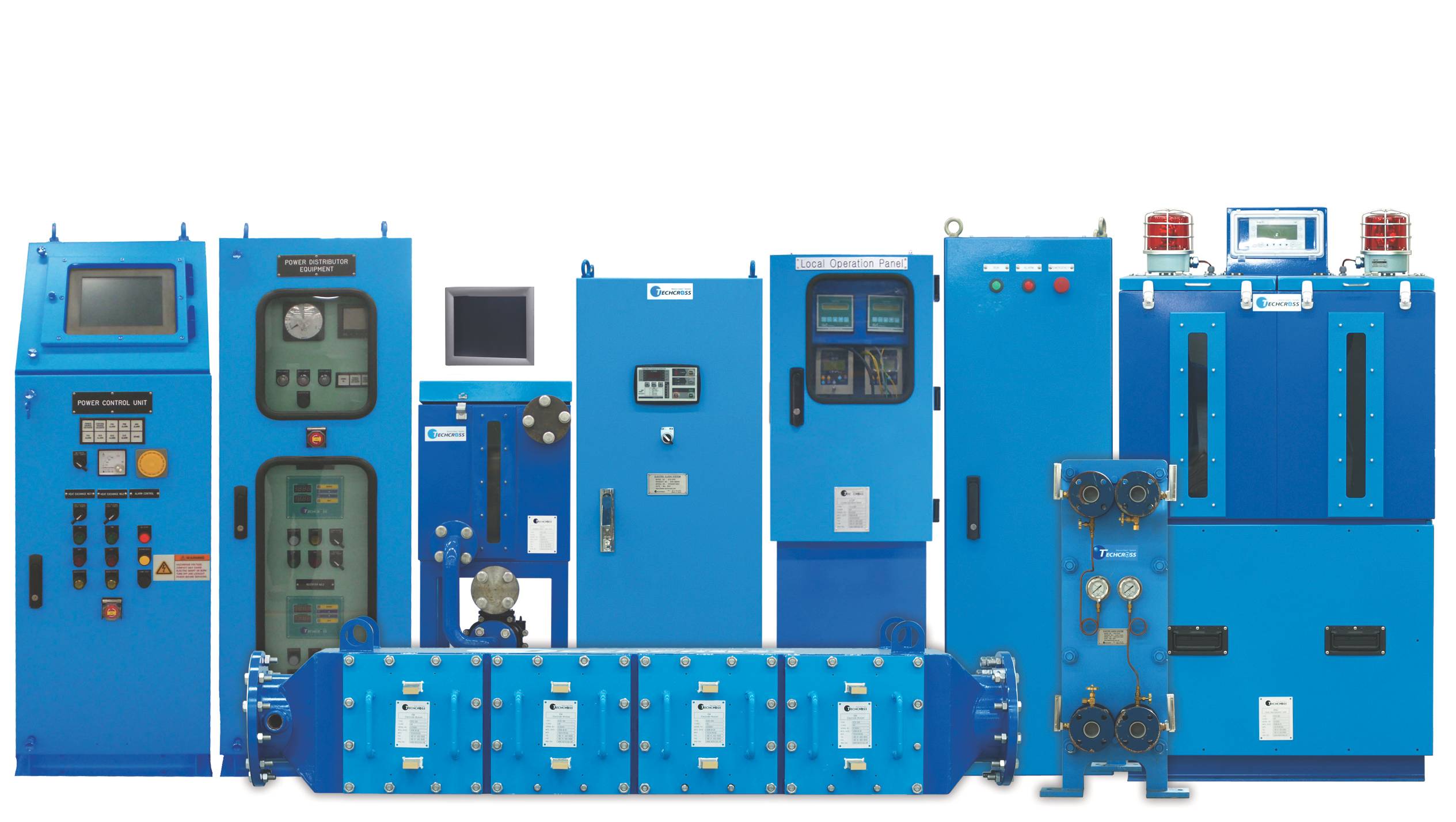
Service: Inspect treatment reactors, filters, sensors, valves, pumps and control panels according to the approved BWMS maintenance plan. Keep ultraviolet sleeves, electrolytic cells or filter elements clean as applicable to the installed process. Verify flow, treatment-status and sampling indications and investigate recurring bypass or low-treatment alarms. Function-test automatic valves and record any bypass or treatment interruption in accordance with vessel procedures. Maintain calibration and service records for compliance-critical sensors. Refer to the manufacturer documentation for the exact figure for treatment limits, cleaning criteria, consumables and calibration values.
Spare Parts: Keep process-specific lamps, sleeves, electrolytic-cell service parts or filter elements as applicable, together with seals, sensors, actuators and manufacturer-recommended control spares. Replacement components must preserve the approved system configuration. Carry consumables appropriate to expected ballast operations and voyage duration.
Use Cases: Ballast-water uptake and discharge treatment on merchant ships and offshore vessels subject to ballast-water management requirements.
Techcross EC BWMS 150m3h LR-approved
EC BWMS 150m3h LR-approved unverified
· 4.5 kW
Capacity (m³/h)
150
Treatment Method
Electrochlorination
IMO Type Approval
ja
USCG Approved
ja
Power (kW)
4.5
Common Failures & Inspection Points
  • Treatment reactor, ultraviolet lamp or electrolytic-cell deterioration caused by aging, fouling or electrical faults, resulting in low treatment output or an alarm
  • Filter blockage where fitted caused by sediment or biological loading, resulting in rising differential pressure, backflush cycling or reduced ballast flow
  • Sensor or sampling fault caused by fouling, calibration drift or blocked lines, resulting in implausible readings or automatic treatment shutdown
  • Valve, actuator or flow-control failure caused by corrosion, sticking or control faults, resulting in incorrect routing or insufficient treatment contact
  • Control-system or communication failure caused by software, network or power-supply faults, resulting in unavailable automatic operation or persistent alarms
Service: Inspect treatment reactors, filters, sensors, valves, pumps and control panels according to the approved BWMS maintenance plan. Keep ultraviolet sleeves, electrolytic cells or filter elements clean as applicable to the installed process. Verify flow, treatment-status and sampling indications and investigate recurring bypass or low-treatment alarms. Function-test automatic valves and record any bypass or treatment interruption in accordance with vessel procedures. Maintain calibration and service records for compliance-critical sensors. Refer to the manufacturer documentation for the exact figure for treatment limits, cleaning criteria, consumables and calibration values.
Spare Parts: Keep process-specific lamps, sleeves, electrolytic-cell service parts or filter elements as applicable, together with seals, sensors, actuators and manufacturer-recommended control spares. Replacement components must preserve the approved system configuration. Carry consumables appropriate to expected ballast operations and voyage duration.
Use Cases: Ballast-water uptake and discharge treatment on merchant ships and offshore vessels subject to ballast-water management requirements.
Techcross EC BWMS 150m3h BV-approved
EC BWMS 150m3h BV-approved unverified
· 4.5 kW
Capacity (m³/h)
150
Treatment Method
Electrochlorination
IMO Type Approval
ja
USCG Approved
ja
Power (kW)
4.5
Common Failures & Inspection Points
  • Treatment reactor, ultraviolet lamp or electrolytic-cell deterioration caused by aging, fouling or electrical faults, resulting in low treatment output or an alarm
  • Filter blockage where fitted caused by sediment or biological loading, resulting in rising differential pressure, backflush cycling or reduced ballast flow
  • Sensor or sampling fault caused by fouling, calibration drift or blocked lines, resulting in implausible readings or automatic treatment shutdown
  • Valve, actuator or flow-control failure caused by corrosion, sticking or control faults, resulting in incorrect routing or insufficient treatment contact
  • Control-system or communication failure caused by software, network or power-supply faults, resulting in unavailable automatic operation or persistent alarms
Service: Inspect treatment reactors, filters, sensors, valves, pumps and control panels according to the approved BWMS maintenance plan. Keep ultraviolet sleeves, electrolytic cells or filter elements clean as applicable to the installed process. Verify flow, treatment-status and sampling indications and investigate recurring bypass or low-treatment alarms. Function-test automatic valves and record any bypass or treatment interruption in accordance with vessel procedures. Maintain calibration and service records for compliance-critical sensors. Refer to the manufacturer documentation for the exact figure for treatment limits, cleaning criteria, consumables and calibration values.
Spare Parts: Keep process-specific lamps, sleeves, electrolytic-cell service parts or filter elements as applicable, together with seals, sensors, actuators and manufacturer-recommended control spares. Replacement components must preserve the approved system configuration. Carry consumables appropriate to expected ballast operations and voyage duration.
Use Cases: Ballast-water uptake and discharge treatment on merchant ships and offshore vessels subject to ballast-water management requirements.
EC BWMS 200m3h DNV-approved unverified
· 6.0 kW
Capacity (m³/h)
200
Treatment Method
Electrochlorination
IMO Type Approval
ja
USCG Approved
ja
Power (kW)
6.0
Common Failures & Inspection Points
  • Treatment reactor, ultraviolet lamp or electrolytic-cell deterioration caused by aging, fouling or electrical faults, resulting in low treatment output or an alarm
  • Filter blockage where fitted caused by sediment or biological loading, resulting in rising differential pressure, backflush cycling or reduced ballast flow
  • Sensor or sampling fault caused by fouling, calibration drift or blocked lines, resulting in implausible readings or automatic treatment shutdown
  • Valve, actuator or flow-control failure caused by corrosion, sticking or control faults, resulting in incorrect routing or insufficient treatment contact
  • Control-system or communication failure caused by software, network or power-supply faults, resulting in unavailable automatic operation or persistent alarms
Service: Inspect treatment reactors, filters, sensors, valves, pumps and control panels according to the approved BWMS maintenance plan. Keep ultraviolet sleeves, electrolytic cells or filter elements clean as applicable to the installed process. Verify flow, treatment-status and sampling indications and investigate recurring bypass or low-treatment alarms. Function-test automatic valves and record any bypass or treatment interruption in accordance with vessel procedures. Maintain calibration and service records for compliance-critical sensors. Refer to the manufacturer documentation for the exact figure for treatment limits, cleaning criteria, consumables and calibration values.
Spare Parts: Keep process-specific lamps, sleeves, electrolytic-cell service parts or filter elements as applicable, together with seals, sensors, actuators and manufacturer-recommended control spares. Replacement components must preserve the approved system configuration. Carry consumables appropriate to expected ballast operations and voyage duration.
Use Cases: Ballast-water uptake and discharge treatment on merchant ships and offshore vessels subject to ballast-water management requirements.
Techcross EC BWMS 200m3h LR-approved
EC BWMS 200m3h LR-approved unverified
· 6.0 kW
Capacity (m³/h)
200
Treatment Method
Electrochlorination
IMO Type Approval
ja
USCG Approved
ja
Power (kW)
6.0
Common Failures & Inspection Points
  • Treatment reactor, ultraviolet lamp or electrolytic-cell deterioration caused by aging, fouling or electrical faults, resulting in low treatment output or an alarm
  • Filter blockage where fitted caused by sediment or biological loading, resulting in rising differential pressure, backflush cycling or reduced ballast flow
  • Sensor or sampling fault caused by fouling, calibration drift or blocked lines, resulting in implausible readings or automatic treatment shutdown
  • Valve, actuator or flow-control failure caused by corrosion, sticking or control faults, resulting in incorrect routing or insufficient treatment contact
  • Control-system or communication failure caused by software, network or power-supply faults, resulting in unavailable automatic operation or persistent alarms
Service: Inspect treatment reactors, filters, sensors, valves, pumps and control panels according to the approved BWMS maintenance plan. Keep ultraviolet sleeves, electrolytic cells or filter elements clean as applicable to the installed process. Verify flow, treatment-status and sampling indications and investigate recurring bypass or low-treatment alarms. Function-test automatic valves and record any bypass or treatment interruption in accordance with vessel procedures. Maintain calibration and service records for compliance-critical sensors. Refer to the manufacturer documentation for the exact figure for treatment limits, cleaning criteria, consumables and calibration values.
Spare Parts: Keep process-specific lamps, sleeves, electrolytic-cell service parts or filter elements as applicable, together with seals, sensors, actuators and manufacturer-recommended control spares. Replacement components must preserve the approved system configuration. Carry consumables appropriate to expected ballast operations and voyage duration.
Use Cases: Ballast-water uptake and discharge treatment on merchant ships and offshore vessels subject to ballast-water management requirements.
Techcross EC BWMS 200m3h BV-approved
EC BWMS 200m3h BV-approved unverified
· 6.0 kW
Capacity (m³/h)
200
Treatment Method
Electrochlorination
IMO Type Approval
ja
USCG Approved
ja
Power (kW)
6.0
Common Failures & Inspection Points
  • Treatment reactor, ultraviolet lamp or electrolytic-cell deterioration caused by aging, fouling or electrical faults, resulting in low treatment output or an alarm
  • Filter blockage where fitted caused by sediment or biological loading, resulting in rising differential pressure, backflush cycling or reduced ballast flow
  • Sensor or sampling fault caused by fouling, calibration drift or blocked lines, resulting in implausible readings or automatic treatment shutdown
  • Valve, actuator or flow-control failure caused by corrosion, sticking or control faults, resulting in incorrect routing or insufficient treatment contact
  • Control-system or communication failure caused by software, network or power-supply faults, resulting in unavailable automatic operation or persistent alarms
Service: Inspect treatment reactors, filters, sensors, valves, pumps and control panels according to the approved BWMS maintenance plan. Keep ultraviolet sleeves, electrolytic cells or filter elements clean as applicable to the installed process. Verify flow, treatment-status and sampling indications and investigate recurring bypass or low-treatment alarms. Function-test automatic valves and record any bypass or treatment interruption in accordance with vessel procedures. Maintain calibration and service records for compliance-critical sensors. Refer to the manufacturer documentation for the exact figure for treatment limits, cleaning criteria, consumables and calibration values.
Spare Parts: Keep process-specific lamps, sleeves, electrolytic-cell service parts or filter elements as applicable, together with seals, sensors, actuators and manufacturer-recommended control spares. Replacement components must preserve the approved system configuration. Carry consumables appropriate to expected ballast operations and voyage duration.
Use Cases: Ballast-water uptake and discharge treatment on merchant ships and offshore vessels subject to ballast-water management requirements.
Techcross EC BWMS 250m3h DNV-approved
EC BWMS 250m3h DNV-approved unverified
· 7.5 kW
Capacity (m³/h)
250
Treatment Method
Electrochlorination
IMO Type Approval
ja
USCG Approved
ja
Power (kW)
7.5
Common Failures & Inspection Points
  • Treatment reactor, ultraviolet lamp or electrolytic-cell deterioration caused by aging, fouling or electrical faults, resulting in low treatment output or an alarm
  • Filter blockage where fitted caused by sediment or biological loading, resulting in rising differential pressure, backflush cycling or reduced ballast flow
  • Sensor or sampling fault caused by fouling, calibration drift or blocked lines, resulting in implausible readings or automatic treatment shutdown
  • Valve, actuator or flow-control failure caused by corrosion, sticking or control faults, resulting in incorrect routing or insufficient treatment contact
  • Control-system or communication failure caused by software, network or power-supply faults, resulting in unavailable automatic operation or persistent alarms
Service: Inspect treatment reactors, filters, sensors, valves, pumps and control panels according to the approved BWMS maintenance plan. Keep ultraviolet sleeves, electrolytic cells or filter elements clean as applicable to the installed process. Verify flow, treatment-status and sampling indications and investigate recurring bypass or low-treatment alarms. Function-test automatic valves and record any bypass or treatment interruption in accordance with vessel procedures. Maintain calibration and service records for compliance-critical sensors. Refer to the manufacturer documentation for the exact figure for treatment limits, cleaning criteria, consumables and calibration values.
Spare Parts: Keep process-specific lamps, sleeves, electrolytic-cell service parts or filter elements as applicable, together with seals, sensors, actuators and manufacturer-recommended control spares. Replacement components must preserve the approved system configuration. Carry consumables appropriate to expected ballast operations and voyage duration.
Use Cases: Ballast-water uptake and discharge treatment on merchant ships and offshore vessels subject to ballast-water management requirements.
Techcross EC BWMS 250m3h LR-approved
EC BWMS 250m3h LR-approved unverified
· 7.5 kW
Capacity (m³/h)
250
Treatment Method
Electrochlorination
IMO Type Approval
ja
USCG Approved
ja
Power (kW)
7.5
Common Failures & Inspection Points
  • Treatment reactor, ultraviolet lamp or electrolytic-cell deterioration caused by aging, fouling or electrical faults, resulting in low treatment output or an alarm
  • Filter blockage where fitted caused by sediment or biological loading, resulting in rising differential pressure, backflush cycling or reduced ballast flow
  • Sensor or sampling fault caused by fouling, calibration drift or blocked lines, resulting in implausible readings or automatic treatment shutdown
  • Valve, actuator or flow-control failure caused by corrosion, sticking or control faults, resulting in incorrect routing or insufficient treatment contact
  • Control-system or communication failure caused by software, network or power-supply faults, resulting in unavailable automatic operation or persistent alarms
Service: Inspect treatment reactors, filters, sensors, valves, pumps and control panels according to the approved BWMS maintenance plan. Keep ultraviolet sleeves, electrolytic cells or filter elements clean as applicable to the installed process. Verify flow, treatment-status and sampling indications and investigate recurring bypass or low-treatment alarms. Function-test automatic valves and record any bypass or treatment interruption in accordance with vessel procedures. Maintain calibration and service records for compliance-critical sensors. Refer to the manufacturer documentation for the exact figure for treatment limits, cleaning criteria, consumables and calibration values.
Spare Parts: Keep process-specific lamps, sleeves, electrolytic-cell service parts or filter elements as applicable, together with seals, sensors, actuators and manufacturer-recommended control spares. Replacement components must preserve the approved system configuration. Carry consumables appropriate to expected ballast operations and voyage duration.
Use Cases: Ballast-water uptake and discharge treatment on merchant ships and offshore vessels subject to ballast-water management requirements.
Techcross EC BWMS 250m3h BV-approved
EC BWMS 250m3h BV-approved unverified
· 7.5 kW
Capacity (m³/h)
250
Treatment Method
Electrochlorination
IMO Type Approval
ja
USCG Approved
ja
Power (kW)
7.5
Common Failures & Inspection Points
  • Treatment reactor, ultraviolet lamp or electrolytic-cell deterioration caused by aging, fouling or electrical faults, resulting in low treatment output or an alarm
  • Filter blockage where fitted caused by sediment or biological loading, resulting in rising differential pressure, backflush cycling or reduced ballast flow
  • Sensor or sampling fault caused by fouling, calibration drift or blocked lines, resulting in implausible readings or automatic treatment shutdown
  • Valve, actuator or flow-control failure caused by corrosion, sticking or control faults, resulting in incorrect routing or insufficient treatment contact
  • Control-system or communication failure caused by software, network or power-supply faults, resulting in unavailable automatic operation or persistent alarms
Service: Inspect treatment reactors, filters, sensors, valves, pumps and control panels according to the approved BWMS maintenance plan. Keep ultraviolet sleeves, electrolytic cells or filter elements clean as applicable to the installed process. Verify flow, treatment-status and sampling indications and investigate recurring bypass or low-treatment alarms. Function-test automatic valves and record any bypass or treatment interruption in accordance with vessel procedures. Maintain calibration and service records for compliance-critical sensors. Refer to the manufacturer documentation for the exact figure for treatment limits, cleaning criteria, consumables and calibration values.
Spare Parts: Keep process-specific lamps, sleeves, electrolytic-cell service parts or filter elements as applicable, together with seals, sensors, actuators and manufacturer-recommended control spares. Replacement components must preserve the approved system configuration. Carry consumables appropriate to expected ballast operations and voyage duration.
Use Cases: Ballast-water uptake and discharge treatment on merchant ships and offshore vessels subject to ballast-water management requirements.
Techcross EC BWMS 300m3h DNV-approved
EC BWMS 300m3h DNV-approved unverified
· 9.0 kW
Capacity (m³/h)
300
Treatment Method
Electrochlorination
IMO Type Approval
ja
USCG Approved
ja
Power (kW)
9.0
Common Failures & Inspection Points
  • Treatment reactor, ultraviolet lamp or electrolytic-cell deterioration caused by aging, fouling or electrical faults, resulting in low treatment output or an alarm
  • Filter blockage where fitted caused by sediment or biological loading, resulting in rising differential pressure, backflush cycling or reduced ballast flow
  • Sensor or sampling fault caused by fouling, calibration drift or blocked lines, resulting in implausible readings or automatic treatment shutdown
  • Valve, actuator or flow-control failure caused by corrosion, sticking or control faults, resulting in incorrect routing or insufficient treatment contact
  • Control-system or communication failure caused by software, network or power-supply faults, resulting in unavailable automatic operation or persistent alarms
Service: Inspect treatment reactors, filters, sensors, valves, pumps and control panels according to the approved BWMS maintenance plan. Keep ultraviolet sleeves, electrolytic cells or filter elements clean as applicable to the installed process. Verify flow, treatment-status and sampling indications and investigate recurring bypass or low-treatment alarms. Function-test automatic valves and record any bypass or treatment interruption in accordance with vessel procedures. Maintain calibration and service records for compliance-critical sensors. Refer to the manufacturer documentation for the exact figure for treatment limits, cleaning criteria, consumables and calibration values.
Spare Parts: Keep process-specific lamps, sleeves, electrolytic-cell service parts or filter elements as applicable, together with seals, sensors, actuators and manufacturer-recommended control spares. Replacement components must preserve the approved system configuration. Carry consumables appropriate to expected ballast operations and voyage duration.
Use Cases: Ballast-water uptake and discharge treatment on merchant ships and offshore vessels subject to ballast-water management requirements.
Techcross EC BWMS 300m3h LR-approved
EC BWMS 300m3h LR-approved unverified
· 9.0 kW
Capacity (m³/h)
300
Treatment Method
Electrochlorination
IMO Type Approval
ja
USCG Approved
ja
Power (kW)
9.0
Common Failures & Inspection Points
  • Treatment reactor, ultraviolet lamp or electrolytic-cell deterioration caused by aging, fouling or electrical faults, resulting in low treatment output or an alarm
  • Filter blockage where fitted caused by sediment or biological loading, resulting in rising differential pressure, backflush cycling or reduced ballast flow
  • Sensor or sampling fault caused by fouling, calibration drift or blocked lines, resulting in implausible readings or automatic treatment shutdown
  • Valve, actuator or flow-control failure caused by corrosion, sticking or control faults, resulting in incorrect routing or insufficient treatment contact
  • Control-system or communication failure caused by software, network or power-supply faults, resulting in unavailable automatic operation or persistent alarms
Service: Inspect treatment reactors, filters, sensors, valves, pumps and control panels according to the approved BWMS maintenance plan. Keep ultraviolet sleeves, electrolytic cells or filter elements clean as applicable to the installed process. Verify flow, treatment-status and sampling indications and investigate recurring bypass or low-treatment alarms. Function-test automatic valves and record any bypass or treatment interruption in accordance with vessel procedures. Maintain calibration and service records for compliance-critical sensors. Refer to the manufacturer documentation for the exact figure for treatment limits, cleaning criteria, consumables and calibration values.
Spare Parts: Keep process-specific lamps, sleeves, electrolytic-cell service parts or filter elements as applicable, together with seals, sensors, actuators and manufacturer-recommended control spares. Replacement components must preserve the approved system configuration. Carry consumables appropriate to expected ballast operations and voyage duration.
Use Cases: Ballast-water uptake and discharge treatment on merchant ships and offshore vessels subject to ballast-water management requirements.
Techcross EC BWMS 300m3h BV-approved
EC BWMS 300m3h BV-approved unverified
· 9.0 kW
Capacity (m³/h)
300
Treatment Method
Electrochlorination
IMO Type Approval
ja
USCG Approved
ja
Power (kW)
9.0
Common Failures & Inspection Points
  • Treatment reactor, ultraviolet lamp or electrolytic-cell deterioration caused by aging, fouling or electrical faults, resulting in low treatment output or an alarm
  • Filter blockage where fitted caused by sediment or biological loading, resulting in rising differential pressure, backflush cycling or reduced ballast flow
  • Sensor or sampling fault caused by fouling, calibration drift or blocked lines, resulting in implausible readings or automatic treatment shutdown
  • Valve, actuator or flow-control failure caused by corrosion, sticking or control faults, resulting in incorrect routing or insufficient treatment contact
  • Control-system or communication failure caused by software, network or power-supply faults, resulting in unavailable automatic operation or persistent alarms
Service: Inspect treatment reactors, filters, sensors, valves, pumps and control panels according to the approved BWMS maintenance plan. Keep ultraviolet sleeves, electrolytic cells or filter elements clean as applicable to the installed process. Verify flow, treatment-status and sampling indications and investigate recurring bypass or low-treatment alarms. Function-test automatic valves and record any bypass or treatment interruption in accordance with vessel procedures. Maintain calibration and service records for compliance-critical sensors. Refer to the manufacturer documentation for the exact figure for treatment limits, cleaning criteria, consumables and calibration values.
Spare Parts: Keep process-specific lamps, sleeves, electrolytic-cell service parts or filter elements as applicable, together with seals, sensors, actuators and manufacturer-recommended control spares. Replacement components must preserve the approved system configuration. Carry consumables appropriate to expected ballast operations and voyage duration.
Use Cases: Ballast-water uptake and discharge treatment on merchant ships and offshore vessels subject to ballast-water management requirements.
Techcross EC BWMS 400m3h DNV-approved
EC BWMS 400m3h DNV-approved unverified
· 12.0 kW
Capacity (m³/h)
400
Treatment Method
Electrochlorination
IMO Type Approval
ja
USCG Approved
ja
Power (kW)
12.0
Common Failures & Inspection Points
  • Treatment reactor, ultraviolet lamp or electrolytic-cell deterioration caused by aging, fouling or electrical faults, resulting in low treatment output or an alarm
  • Filter blockage where fitted caused by sediment or biological loading, resulting in rising differential pressure, backflush cycling or reduced ballast flow
  • Sensor or sampling fault caused by fouling, calibration drift or blocked lines, resulting in implausible readings or automatic treatment shutdown
  • Valve, actuator or flow-control failure caused by corrosion, sticking or control faults, resulting in incorrect routing or insufficient treatment contact
  • Control-system or communication failure caused by software, network or power-supply faults, resulting in unavailable automatic operation or persistent alarms
Service: Inspect treatment reactors, filters, sensors, valves, pumps and control panels according to the approved BWMS maintenance plan. Keep ultraviolet sleeves, electrolytic cells or filter elements clean as applicable to the installed process. Verify flow, treatment-status and sampling indications and investigate recurring bypass or low-treatment alarms. Function-test automatic valves and record any bypass or treatment interruption in accordance with vessel procedures. Maintain calibration and service records for compliance-critical sensors. Refer to the manufacturer documentation for the exact figure for treatment limits, cleaning criteria, consumables and calibration values.
Spare Parts: Keep process-specific lamps, sleeves, electrolytic-cell service parts or filter elements as applicable, together with seals, sensors, actuators and manufacturer-recommended control spares. Replacement components must preserve the approved system configuration. Carry consumables appropriate to expected ballast operations and voyage duration.
Use Cases: Ballast-water uptake and discharge treatment on merchant ships and offshore vessels subject to ballast-water management requirements.
Techcross EC BWMS 400m3h LR-approved
EC BWMS 400m3h LR-approved unverified
· 12.0 kW
Capacity (m³/h)
400
Treatment Method
Electrochlorination
IMO Type Approval
ja
USCG Approved
ja
Power (kW)
12.0
Common Failures & Inspection Points
  • Treatment reactor, ultraviolet lamp or electrolytic-cell deterioration caused by aging, fouling or electrical faults, resulting in low treatment output or an alarm
  • Filter blockage where fitted caused by sediment or biological loading, resulting in rising differential pressure, backflush cycling or reduced ballast flow
  • Sensor or sampling fault caused by fouling, calibration drift or blocked lines, resulting in implausible readings or automatic treatment shutdown
  • Valve, actuator or flow-control failure caused by corrosion, sticking or control faults, resulting in incorrect routing or insufficient treatment contact
  • Control-system or communication failure caused by software, network or power-supply faults, resulting in unavailable automatic operation or persistent alarms
Service: Inspect treatment reactors, filters, sensors, valves, pumps and control panels according to the approved BWMS maintenance plan. Keep ultraviolet sleeves, electrolytic cells or filter elements clean as applicable to the installed process. Verify flow, treatment-status and sampling indications and investigate recurring bypass or low-treatment alarms. Function-test automatic valves and record any bypass or treatment interruption in accordance with vessel procedures. Maintain calibration and service records for compliance-critical sensors. Refer to the manufacturer documentation for the exact figure for treatment limits, cleaning criteria, consumables and calibration values.
Spare Parts: Keep process-specific lamps, sleeves, electrolytic-cell service parts or filter elements as applicable, together with seals, sensors, actuators and manufacturer-recommended control spares. Replacement components must preserve the approved system configuration. Carry consumables appropriate to expected ballast operations and voyage duration.
Use Cases: Ballast-water uptake and discharge treatment on merchant ships and offshore vessels subject to ballast-water management requirements.
Techcross EC BWMS 400m3h BV-approved
EC BWMS 400m3h BV-approved unverified
· 12.0 kW
Capacity (m³/h)
400
Treatment Method
Electrochlorination
IMO Type Approval
ja
USCG Approved
ja
Power (kW)
12.0
Common Failures & Inspection Points
  • Treatment reactor, ultraviolet lamp or electrolytic-cell deterioration caused by aging, fouling or electrical faults, resulting in low treatment output or an alarm
  • Filter blockage where fitted caused by sediment or biological loading, resulting in rising differential pressure, backflush cycling or reduced ballast flow
  • Sensor or sampling fault caused by fouling, calibration drift or blocked lines, resulting in implausible readings or automatic treatment shutdown
  • Valve, actuator or flow-control failure caused by corrosion, sticking or control faults, resulting in incorrect routing or insufficient treatment contact
  • Control-system or communication failure caused by software, network or power-supply faults, resulting in unavailable automatic operation or persistent alarms
Service: Inspect treatment reactors, filters, sensors, valves, pumps and control panels according to the approved BWMS maintenance plan. Keep ultraviolet sleeves, electrolytic cells or filter elements clean as applicable to the installed process. Verify flow, treatment-status and sampling indications and investigate recurring bypass or low-treatment alarms. Function-test automatic valves and record any bypass or treatment interruption in accordance with vessel procedures. Maintain calibration and service records for compliance-critical sensors. Refer to the manufacturer documentation for the exact figure for treatment limits, cleaning criteria, consumables and calibration values.
Spare Parts: Keep process-specific lamps, sleeves, electrolytic-cell service parts or filter elements as applicable, together with seals, sensors, actuators and manufacturer-recommended control spares. Replacement components must preserve the approved system configuration. Carry consumables appropriate to expected ballast operations and voyage duration.
Use Cases: Ballast-water uptake and discharge treatment on merchant ships and offshore vessels subject to ballast-water management requirements.
Techcross EC BWMS 500m3h DNV-approved
EC BWMS 500m3h DNV-approved unverified
· 15.0 kW
Capacity (m³/h)
500
Treatment Method
Electrochlorination
IMO Type Approval
ja
USCG Approved
ja
Power (kW)
15.0
Common Failures & Inspection Points
  • Treatment reactor, ultraviolet lamp or electrolytic-cell deterioration caused by aging, fouling or electrical faults, resulting in low treatment output or an alarm
  • Filter blockage where fitted caused by sediment or biological loading, resulting in rising differential pressure, backflush cycling or reduced ballast flow
  • Sensor or sampling fault caused by fouling, calibration drift or blocked lines, resulting in implausible readings or automatic treatment shutdown
  • Valve, actuator or flow-control failure caused by corrosion, sticking or control faults, resulting in incorrect routing or insufficient treatment contact
  • Control-system or communication failure caused by software, network or power-supply faults, resulting in unavailable automatic operation or persistent alarms
Service: Inspect treatment reactors, filters, sensors, valves, pumps and control panels according to the approved BWMS maintenance plan. Keep ultraviolet sleeves, electrolytic cells or filter elements clean as applicable to the installed process. Verify flow, treatment-status and sampling indications and investigate recurring bypass or low-treatment alarms. Function-test automatic valves and record any bypass or treatment interruption in accordance with vessel procedures. Maintain calibration and service records for compliance-critical sensors. Refer to the manufacturer documentation for the exact figure for treatment limits, cleaning criteria, consumables and calibration values.
Spare Parts: Keep process-specific lamps, sleeves, electrolytic-cell service parts or filter elements as applicable, together with seals, sensors, actuators and manufacturer-recommended control spares. Replacement components must preserve the approved system configuration. Carry consumables appropriate to expected ballast operations and voyage duration.
Use Cases: Ballast-water uptake and discharge treatment on merchant ships and offshore vessels subject to ballast-water management requirements.
Techcross EC BWMS 500m3h LR-approved
EC BWMS 500m3h LR-approved unverified
· 15.0 kW
Capacity (m³/h)
500
Treatment Method
Electrochlorination
IMO Type Approval
ja
USCG Approved
ja
Power (kW)
15.0
Common Failures & Inspection Points
  • Treatment reactor, ultraviolet lamp or electrolytic-cell deterioration caused by aging, fouling or electrical faults, resulting in low treatment output or an alarm
  • Filter blockage where fitted caused by sediment or biological loading, resulting in rising differential pressure, backflush cycling or reduced ballast flow
  • Sensor or sampling fault caused by fouling, calibration drift or blocked lines, resulting in implausible readings or automatic treatment shutdown
  • Valve, actuator or flow-control failure caused by corrosion, sticking or control faults, resulting in incorrect routing or insufficient treatment contact
  • Control-system or communication failure caused by software, network or power-supply faults, resulting in unavailable automatic operation or persistent alarms
Service: Inspect treatment reactors, filters, sensors, valves, pumps and control panels according to the approved BWMS maintenance plan. Keep ultraviolet sleeves, electrolytic cells or filter elements clean as applicable to the installed process. Verify flow, treatment-status and sampling indications and investigate recurring bypass or low-treatment alarms. Function-test automatic valves and record any bypass or treatment interruption in accordance with vessel procedures. Maintain calibration and service records for compliance-critical sensors. Refer to the manufacturer documentation for the exact figure for treatment limits, cleaning criteria, consumables and calibration values.
Spare Parts: Keep process-specific lamps, sleeves, electrolytic-cell service parts or filter elements as applicable, together with seals, sensors, actuators and manufacturer-recommended control spares. Replacement components must preserve the approved system configuration. Carry consumables appropriate to expected ballast operations and voyage duration.
Use Cases: Ballast-water uptake and discharge treatment on merchant ships and offshore vessels subject to ballast-water management requirements.
Techcross EC BWMS 500m3h BV-approved
EC BWMS 500m3h BV-approved unverified
· 15.0 kW
Capacity (m³/h)
500
Treatment Method
Electrochlorination
IMO Type Approval
ja
USCG Approved
ja
Power (kW)
15.0
Common Failures & Inspection Points
  • Treatment reactor, ultraviolet lamp or electrolytic-cell deterioration caused by aging, fouling or electrical faults, resulting in low treatment output or an alarm
  • Filter blockage where fitted caused by sediment or biological loading, resulting in rising differential pressure, backflush cycling or reduced ballast flow
  • Sensor or sampling fault caused by fouling, calibration drift or blocked lines, resulting in implausible readings or automatic treatment shutdown
  • Valve, actuator or flow-control failure caused by corrosion, sticking or control faults, resulting in incorrect routing or insufficient treatment contact
  • Control-system or communication failure caused by software, network or power-supply faults, resulting in unavailable automatic operation or persistent alarms
Service: Inspect treatment reactors, filters, sensors, valves, pumps and control panels according to the approved BWMS maintenance plan. Keep ultraviolet sleeves, electrolytic cells or filter elements clean as applicable to the installed process. Verify flow, treatment-status and sampling indications and investigate recurring bypass or low-treatment alarms. Function-test automatic valves and record any bypass or treatment interruption in accordance with vessel procedures. Maintain calibration and service records for compliance-critical sensors. Refer to the manufacturer documentation for the exact figure for treatment limits, cleaning criteria, consumables and calibration values.
Spare Parts: Keep process-specific lamps, sleeves, electrolytic-cell service parts or filter elements as applicable, together with seals, sensors, actuators and manufacturer-recommended control spares. Replacement components must preserve the approved system configuration. Carry consumables appropriate to expected ballast operations and voyage duration.
Use Cases: Ballast-water uptake and discharge treatment on merchant ships and offshore vessels subject to ballast-water management requirements.
Techcross EC BWMS 600m3h DNV-approved
EC BWMS 600m3h DNV-approved unverified
· 18.0 kW
Capacity (m³/h)
600
Treatment Method
Electrochlorination
IMO Type Approval
ja
USCG Approved
ja
Power (kW)
18.0
Common Failures & Inspection Points
  • Treatment reactor, ultraviolet lamp or electrolytic-cell deterioration caused by aging, fouling or electrical faults, resulting in low treatment output or an alarm
  • Filter blockage where fitted caused by sediment or biological loading, resulting in rising differential pressure, backflush cycling or reduced ballast flow
  • Sensor or sampling fault caused by fouling, calibration drift or blocked lines, resulting in implausible readings or automatic treatment shutdown
  • Valve, actuator or flow-control failure caused by corrosion, sticking or control faults, resulting in incorrect routing or insufficient treatment contact
  • Control-system or communication failure caused by software, network or power-supply faults, resulting in unavailable automatic operation or persistent alarms
Service: Inspect treatment reactors, filters, sensors, valves, pumps and control panels according to the approved BWMS maintenance plan. Keep ultraviolet sleeves, electrolytic cells or filter elements clean as applicable to the installed process. Verify flow, treatment-status and sampling indications and investigate recurring bypass or low-treatment alarms. Function-test automatic valves and record any bypass or treatment interruption in accordance with vessel procedures. Maintain calibration and service records for compliance-critical sensors. Refer to the manufacturer documentation for the exact figure for treatment limits, cleaning criteria, consumables and calibration values.
Spare Parts: Keep process-specific lamps, sleeves, electrolytic-cell service parts or filter elements as applicable, together with seals, sensors, actuators and manufacturer-recommended control spares. Replacement components must preserve the approved system configuration. Carry consumables appropriate to expected ballast operations and voyage duration.
Use Cases: Ballast-water uptake and discharge treatment on merchant ships and offshore vessels subject to ballast-water management requirements.
Techcross EC BWMS 600m3h LR-approved
EC BWMS 600m3h LR-approved unverified
· 18.0 kW
Capacity (m³/h)
600
Treatment Method
Electrochlorination
IMO Type Approval
ja
USCG Approved
ja
Power (kW)
18.0
Common Failures & Inspection Points
  • Treatment reactor, ultraviolet lamp or electrolytic-cell deterioration caused by aging, fouling or electrical faults, resulting in low treatment output or an alarm
  • Filter blockage where fitted caused by sediment or biological loading, resulting in rising differential pressure, backflush cycling or reduced ballast flow
  • Sensor or sampling fault caused by fouling, calibration drift or blocked lines, resulting in implausible readings or automatic treatment shutdown
  • Valve, actuator or flow-control failure caused by corrosion, sticking or control faults, resulting in incorrect routing or insufficient treatment contact
  • Control-system or communication failure caused by software, network or power-supply faults, resulting in unavailable automatic operation or persistent alarms
Service: Inspect treatment reactors, filters, sensors, valves, pumps and control panels according to the approved BWMS maintenance plan. Keep ultraviolet sleeves, electrolytic cells or filter elements clean as applicable to the installed process. Verify flow, treatment-status and sampling indications and investigate recurring bypass or low-treatment alarms. Function-test automatic valves and record any bypass or treatment interruption in accordance with vessel procedures. Maintain calibration and service records for compliance-critical sensors. Refer to the manufacturer documentation for the exact figure for treatment limits, cleaning criteria, consumables and calibration values.
Spare Parts: Keep process-specific lamps, sleeves, electrolytic-cell service parts or filter elements as applicable, together with seals, sensors, actuators and manufacturer-recommended control spares. Replacement components must preserve the approved system configuration. Carry consumables appropriate to expected ballast operations and voyage duration.
Use Cases: Ballast-water uptake and discharge treatment on merchant ships and offshore vessels subject to ballast-water management requirements.
Techcross EC BWMS 600m3h BV-approved
EC BWMS 600m3h BV-approved unverified
· 18.0 kW
Capacity (m³/h)
600
Treatment Method
Electrochlorination
IMO Type Approval
ja
USCG Approved
ja
Power (kW)
18.0
Common Failures & Inspection Points
  • Treatment reactor, ultraviolet lamp or electrolytic-cell deterioration caused by aging, fouling or electrical faults, resulting in low treatment output or an alarm
  • Filter blockage where fitted caused by sediment or biological loading, resulting in rising differential pressure, backflush cycling or reduced ballast flow
  • Sensor or sampling fault caused by fouling, calibration drift or blocked lines, resulting in implausible readings or automatic treatment shutdown
  • Valve, actuator or flow-control failure caused by corrosion, sticking or control faults, resulting in incorrect routing or insufficient treatment contact
  • Control-system or communication failure caused by software, network or power-supply faults, resulting in unavailable automatic operation or persistent alarms
Service: Inspect treatment reactors, filters, sensors, valves, pumps and control panels according to the approved BWMS maintenance plan. Keep ultraviolet sleeves, electrolytic cells or filter elements clean as applicable to the installed process. Verify flow, treatment-status and sampling indications and investigate recurring bypass or low-treatment alarms. Function-test automatic valves and record any bypass or treatment interruption in accordance with vessel procedures. Maintain calibration and service records for compliance-critical sensors. Refer to the manufacturer documentation for the exact figure for treatment limits, cleaning criteria, consumables and calibration values.
Spare Parts: Keep process-specific lamps, sleeves, electrolytic-cell service parts or filter elements as applicable, together with seals, sensors, actuators and manufacturer-recommended control spares. Replacement components must preserve the approved system configuration. Carry consumables appropriate to expected ballast operations and voyage duration.
Use Cases: Ballast-water uptake and discharge treatment on merchant ships and offshore vessels subject to ballast-water management requirements.
Techcross EC BWMS 750m3h DNV-approved
EC BWMS 750m3h DNV-approved unverified
· 22.5 kW
Capacity (m³/h)
750
Treatment Method
Electrochlorination
IMO Type Approval
ja
USCG Approved
ja
Power (kW)
22.5
Common Failures & Inspection Points
  • Treatment reactor, ultraviolet lamp or electrolytic-cell deterioration caused by aging, fouling or electrical faults, resulting in low treatment output or an alarm
  • Filter blockage where fitted caused by sediment or biological loading, resulting in rising differential pressure, backflush cycling or reduced ballast flow
  • Sensor or sampling fault caused by fouling, calibration drift or blocked lines, resulting in implausible readings or automatic treatment shutdown
  • Valve, actuator or flow-control failure caused by corrosion, sticking or control faults, resulting in incorrect routing or insufficient treatment contact
  • Control-system or communication failure caused by software, network or power-supply faults, resulting in unavailable automatic operation or persistent alarms
Service: Inspect treatment reactors, filters, sensors, valves, pumps and control panels according to the approved BWMS maintenance plan. Keep ultraviolet sleeves, electrolytic cells or filter elements clean as applicable to the installed process. Verify flow, treatment-status and sampling indications and investigate recurring bypass or low-treatment alarms. Function-test automatic valves and record any bypass or treatment interruption in accordance with vessel procedures. Maintain calibration and service records for compliance-critical sensors. Refer to the manufacturer documentation for the exact figure for treatment limits, cleaning criteria, consumables and calibration values.
Spare Parts: Keep process-specific lamps, sleeves, electrolytic-cell service parts or filter elements as applicable, together with seals, sensors, actuators and manufacturer-recommended control spares. Replacement components must preserve the approved system configuration. Carry consumables appropriate to expected ballast operations and voyage duration.
Use Cases: Ballast-water uptake and discharge treatment on merchant ships and offshore vessels subject to ballast-water management requirements.
Techcross EC BWMS 750m3h LR-approved
EC BWMS 750m3h LR-approved unverified
· 22.5 kW
Capacity (m³/h)
750
Treatment Method
Electrochlorination
IMO Type Approval
ja
USCG Approved
ja
Power (kW)
22.5
Common Failures & Inspection Points
  • Treatment reactor, ultraviolet lamp or electrolytic-cell deterioration caused by aging, fouling or electrical faults, resulting in low treatment output or an alarm
  • Filter blockage where fitted caused by sediment or biological loading, resulting in rising differential pressure, backflush cycling or reduced ballast flow
  • Sensor or sampling fault caused by fouling, calibration drift or blocked lines, resulting in implausible readings or automatic treatment shutdown
  • Valve, actuator or flow-control failure caused by corrosion, sticking or control faults, resulting in incorrect routing or insufficient treatment contact
  • Control-system or communication failure caused by software, network or power-supply faults, resulting in unavailable automatic operation or persistent alarms
Service: Inspect treatment reactors, filters, sensors, valves, pumps and control panels according to the approved BWMS maintenance plan. Keep ultraviolet sleeves, electrolytic cells or filter elements clean as applicable to the installed process. Verify flow, treatment-status and sampling indications and investigate recurring bypass or low-treatment alarms. Function-test automatic valves and record any bypass or treatment interruption in accordance with vessel procedures. Maintain calibration and service records for compliance-critical sensors. Refer to the manufacturer documentation for the exact figure for treatment limits, cleaning criteria, consumables and calibration values.
Spare Parts: Keep process-specific lamps, sleeves, electrolytic-cell service parts or filter elements as applicable, together with seals, sensors, actuators and manufacturer-recommended control spares. Replacement components must preserve the approved system configuration. Carry consumables appropriate to expected ballast operations and voyage duration.
Use Cases: Ballast-water uptake and discharge treatment on merchant ships and offshore vessels subject to ballast-water management requirements.
Techcross EC BWMS 750m3h BV-approved
EC BWMS 750m3h BV-approved unverified
· 22.5 kW
Capacity (m³/h)
750
Treatment Method
Electrochlorination
IMO Type Approval
ja
USCG Approved
ja
Power (kW)
22.5
Common Failures & Inspection Points
  • Treatment reactor, ultraviolet lamp or electrolytic-cell deterioration caused by aging, fouling or electrical faults, resulting in low treatment output or an alarm
  • Filter blockage where fitted caused by sediment or biological loading, resulting in rising differential pressure, backflush cycling or reduced ballast flow
  • Sensor or sampling fault caused by fouling, calibration drift or blocked lines, resulting in implausible readings or automatic treatment shutdown
  • Valve, actuator or flow-control failure caused by corrosion, sticking or control faults, resulting in incorrect routing or insufficient treatment contact
  • Control-system or communication failure caused by software, network or power-supply faults, resulting in unavailable automatic operation or persistent alarms
Service: Inspect treatment reactors, filters, sensors, valves, pumps and control panels according to the approved BWMS maintenance plan. Keep ultraviolet sleeves, electrolytic cells or filter elements clean as applicable to the installed process. Verify flow, treatment-status and sampling indications and investigate recurring bypass or low-treatment alarms. Function-test automatic valves and record any bypass or treatment interruption in accordance with vessel procedures. Maintain calibration and service records for compliance-critical sensors. Refer to the manufacturer documentation for the exact figure for treatment limits, cleaning criteria, consumables and calibration values.
Spare Parts: Keep process-specific lamps, sleeves, electrolytic-cell service parts or filter elements as applicable, together with seals, sensors, actuators and manufacturer-recommended control spares. Replacement components must preserve the approved system configuration. Carry consumables appropriate to expected ballast operations and voyage duration.
Use Cases: Ballast-water uptake and discharge treatment on merchant ships and offshore vessels subject to ballast-water management requirements.
Techcross EC BWMS 1000m3h DNV-approved
EC BWMS 1000m3h DNV-approved unverified
· 30.0 kW
Capacity (m³/h)
1000
Treatment Method
Electrochlorination
IMO Type Approval
ja
USCG Approved
ja
Power (kW)
30.0
Common Failures & Inspection Points
  • Treatment reactor, ultraviolet lamp or electrolytic-cell deterioration caused by aging, fouling or electrical faults, resulting in low treatment output or an alarm
  • Filter blockage where fitted caused by sediment or biological loading, resulting in rising differential pressure, backflush cycling or reduced ballast flow
  • Sensor or sampling fault caused by fouling, calibration drift or blocked lines, resulting in implausible readings or automatic treatment shutdown
  • Valve, actuator or flow-control failure caused by corrosion, sticking or control faults, resulting in incorrect routing or insufficient treatment contact
  • Control-system or communication failure caused by software, network or power-supply faults, resulting in unavailable automatic operation or persistent alarms
Service: Inspect treatment reactors, filters, sensors, valves, pumps and control panels according to the approved BWMS maintenance plan. Keep ultraviolet sleeves, electrolytic cells or filter elements clean as applicable to the installed process. Verify flow, treatment-status and sampling indications and investigate recurring bypass or low-treatment alarms. Function-test automatic valves and record any bypass or treatment interruption in accordance with vessel procedures. Maintain calibration and service records for compliance-critical sensors. Refer to the manufacturer documentation for the exact figure for treatment limits, cleaning criteria, consumables and calibration values.
Spare Parts: Keep process-specific lamps, sleeves, electrolytic-cell service parts or filter elements as applicable, together with seals, sensors, actuators and manufacturer-recommended control spares. Replacement components must preserve the approved system configuration.
Use Cases: It is used for ballast-water management on merchant ships, passenger vessels, offshore units or other vessel types where this equipment category is fitted.
Techcross EC BWMS 1000m3h LR-approved
EC BWMS 1000m3h LR-approved unverified
· 30.0 kW
Capacity (m³/h)
1000
Treatment Method
Electrochlorination
IMO Type Approval
ja
USCG Approved
ja
Power (kW)
30.0
Common Failures & Inspection Points
  • Treatment reactor, ultraviolet lamp or electrolytic-cell deterioration caused by aging, fouling or electrical faults, resulting in low treatment output or an alarm
  • Filter blockage where fitted caused by sediment or biological loading, resulting in rising differential pressure, backflush cycling or reduced ballast flow
  • Sensor or sampling fault caused by fouling, calibration drift or blocked lines, resulting in implausible readings or automatic treatment shutdown
  • Valve, actuator or flow-control failure caused by corrosion, sticking or control faults, resulting in incorrect routing or insufficient treatment contact
  • Control-system or communication failure caused by software, network or power-supply faults, resulting in unavailable automatic operation or persistent alarms
Service: Inspect treatment reactors, filters, sensors, valves, pumps and control panels according to the approved BWMS maintenance plan. Keep ultraviolet sleeves, electrolytic cells or filter elements clean as applicable to the installed process. Verify flow, treatment-status and sampling indications and investigate recurring bypass or low-treatment alarms. Function-test automatic valves and record any bypass or treatment interruption in accordance with vessel procedures. Maintain calibration and service records for compliance-critical sensors. Refer to the manufacturer documentation for the exact figure for treatment limits, cleaning criteria, consumables and calibration values.
Spare Parts: Keep process-specific lamps, sleeves, electrolytic-cell service parts or filter elements as applicable, together with seals, sensors, actuators and manufacturer-recommended control spares. Replacement components must preserve the approved system configuration. Carry consumables appropriate to expected ballast operations and voyage duration.
Use Cases: Ballast-water uptake and discharge treatment on merchant ships and offshore vessels subject to ballast-water management requirements.
Techcross EC BWMS 1000m3h BV-approved
EC BWMS 1000m3h BV-approved unverified
· 30.0 kW
Capacity (m³/h)
1000
Treatment Method
Electrochlorination
IMO Type Approval
ja
USCG Approved
ja
Power (kW)
30.0
Common Failures & Inspection Points
  • Treatment reactor, ultraviolet lamp or electrolytic-cell deterioration caused by aging, fouling or electrical faults, resulting in low treatment output or an alarm
  • Filter blockage where fitted caused by sediment or biological loading, resulting in rising differential pressure, backflush cycling or reduced ballast flow
  • Sensor or sampling fault caused by fouling, calibration drift or blocked lines, resulting in implausible readings or automatic treatment shutdown
  • Valve, actuator or flow-control failure caused by corrosion, sticking or control faults, resulting in incorrect routing or insufficient treatment contact
  • Control-system or communication failure caused by software, network or power-supply faults, resulting in unavailable automatic operation or persistent alarms
Service: Inspect treatment reactors, filters, sensors, valves, pumps and control panels according to the approved BWMS maintenance plan. Keep ultraviolet sleeves, electrolytic cells or filter elements clean as applicable to the installed process. Verify flow, treatment-status and sampling indications and investigate recurring bypass or low-treatment alarms. Function-test automatic valves and record any bypass or treatment interruption in accordance with vessel procedures. Maintain calibration and service records for compliance-critical sensors. Refer to the manufacturer documentation for the exact figure for treatment limits, cleaning criteria, consumables and calibration values.
Spare Parts: Keep process-specific lamps, sleeves, electrolytic-cell service parts or filter elements as applicable, together with seals, sensors, actuators and manufacturer-recommended control spares. Replacement components must preserve the approved system configuration. Carry consumables appropriate to expected ballast operations and voyage duration.
Use Cases: Ballast-water uptake and discharge treatment on merchant ships and offshore vessels subject to ballast-water management requirements.
Techcross EC BWMS 1250m3h DNV-approved
EC BWMS 1250m3h DNV-approved unverified
· 37.5 kW
Capacity (m³/h)
1250
Treatment Method
Electrochlorination
IMO Type Approval
ja
USCG Approved
ja
Power (kW)
37.5
Common Failures & Inspection Points
  • Treatment reactor, ultraviolet lamp or electrolytic-cell deterioration caused by aging, fouling or electrical faults, resulting in low treatment output or an alarm
  • Filter blockage where fitted caused by sediment or biological loading, resulting in rising differential pressure, backflush cycling or reduced ballast flow
  • Sensor or sampling fault caused by fouling, calibration drift or blocked lines, resulting in implausible readings or automatic treatment shutdown
  • Valve, actuator or flow-control failure caused by corrosion, sticking or control faults, resulting in incorrect routing or insufficient treatment contact
  • Control-system or communication failure caused by software, network or power-supply faults, resulting in unavailable automatic operation or persistent alarms
Service: Inspect treatment reactors, filters, sensors, valves, pumps and control panels according to the approved BWMS maintenance plan. Keep ultraviolet sleeves, electrolytic cells or filter elements clean as applicable to the installed process. Verify flow, treatment-status and sampling indications and investigate recurring bypass or low-treatment alarms. Function-test automatic valves and record any bypass or treatment interruption in accordance with vessel procedures. Maintain calibration and service records for compliance-critical sensors. Refer to the manufacturer documentation for the exact figure for treatment limits, cleaning criteria, consumables and calibration values.
Spare Parts: Keep process-specific lamps, sleeves, electrolytic-cell service parts or filter elements as applicable, together with seals, sensors, actuators and manufacturer-recommended control spares. Replacement components must preserve the approved system configuration.
Use Cases: It is used for ballast-water management on merchant ships, passenger vessels, offshore units or other vessel types where this equipment category is fitted.
Techcross EC BWMS 1250m3h LR-approved
EC BWMS 1250m3h LR-approved unverified
· 37.5 kW
Capacity (m³/h)
1250
Treatment Method
Electrochlorination
IMO Type Approval
ja
USCG Approved
ja
Power (kW)
37.5
Common Failures & Inspection Points
  • Treatment reactor, ultraviolet lamp or electrolytic-cell deterioration caused by aging, fouling or electrical faults, resulting in low treatment output or an alarm
  • Filter blockage where fitted caused by sediment or biological loading, resulting in rising differential pressure, backflush cycling or reduced ballast flow
  • Sensor or sampling fault caused by fouling, calibration drift or blocked lines, resulting in implausible readings or automatic treatment shutdown
  • Valve, actuator or flow-control failure caused by corrosion, sticking or control faults, resulting in incorrect routing or insufficient treatment contact
  • Control-system or communication failure caused by software, network or power-supply faults, resulting in unavailable automatic operation or persistent alarms
Service: Inspect treatment reactors, filters, sensors, valves, pumps and control panels according to the approved BWMS maintenance plan. Keep ultraviolet sleeves, electrolytic cells or filter elements clean as applicable to the installed process. Verify flow, treatment-status and sampling indications and investigate recurring bypass or low-treatment alarms. Function-test automatic valves and record any bypass or treatment interruption in accordance with vessel procedures. Maintain calibration and service records for compliance-critical sensors. Refer to the manufacturer documentation for the exact figure for treatment limits, cleaning criteria, consumables and calibration values.
Spare Parts: Keep process-specific lamps, sleeves, electrolytic-cell service parts or filter elements as applicable, together with seals, sensors, actuators and manufacturer-recommended control spares. Replacement components must preserve the approved system configuration. Carry consumables appropriate to expected ballast operations and voyage duration.
Use Cases: Ballast-water uptake and discharge treatment on merchant ships and offshore vessels subject to ballast-water management requirements.
Techcross EC BWMS 1250m3h BV-approved
EC BWMS 1250m3h BV-approved unverified
· 37.5 kW
Capacity (m³/h)
1250
Treatment Method
Electrochlorination
IMO Type Approval
ja
USCG Approved
ja
Power (kW)
37.5
Common Failures & Inspection Points
  • Treatment reactor, ultraviolet lamp or electrolytic-cell deterioration caused by aging, fouling or electrical faults, resulting in low treatment output or an alarm
  • Filter blockage where fitted caused by sediment or biological loading, resulting in rising differential pressure, backflush cycling or reduced ballast flow
  • Sensor or sampling fault caused by fouling, calibration drift or blocked lines, resulting in implausible readings or automatic treatment shutdown
  • Valve, actuator or flow-control failure caused by corrosion, sticking or control faults, resulting in incorrect routing or insufficient treatment contact
  • Control-system or communication failure caused by software, network or power-supply faults, resulting in unavailable automatic operation or persistent alarms
Service: Inspect treatment reactors, filters, sensors, valves, pumps and control panels according to the approved BWMS maintenance plan. Keep ultraviolet sleeves, electrolytic cells or filter elements clean as applicable to the installed process. Verify flow, treatment-status and sampling indications and investigate recurring bypass or low-treatment alarms. Function-test automatic valves and record any bypass or treatment interruption in accordance with vessel procedures. Maintain calibration and service records for compliance-critical sensors. Refer to the manufacturer documentation for the exact figure for treatment limits, cleaning criteria, consumables and calibration values.
Spare Parts: Keep process-specific lamps, sleeves, electrolytic-cell service parts or filter elements as applicable, together with seals, sensors, actuators and manufacturer-recommended control spares. Replacement components must preserve the approved system configuration. Carry consumables appropriate to expected ballast operations and voyage duration.
Use Cases: Ballast-water uptake and discharge treatment on merchant ships and offshore vessels subject to ballast-water management requirements.
Techcross EC BWMS 1500m3h DNV-approved
EC BWMS 1500m3h DNV-approved unverified
· 45.0 kW
Capacity (m³/h)
1500
Treatment Method
Electrochlorination
IMO Type Approval
ja
USCG Approved
ja
Power (kW)
45.0
Common Failures & Inspection Points
  • Treatment reactor, ultraviolet lamp or electrolytic-cell deterioration caused by aging, fouling or electrical faults, resulting in low treatment output or an alarm
  • Filter blockage where fitted caused by sediment or biological loading, resulting in rising differential pressure, backflush cycling or reduced ballast flow
  • Sensor or sampling fault caused by fouling, calibration drift or blocked lines, resulting in implausible readings or automatic treatment shutdown
  • Valve, actuator or flow-control failure caused by corrosion, sticking or control faults, resulting in incorrect routing or insufficient treatment contact
  • Control-system or communication failure caused by software, network or power-supply faults, resulting in unavailable automatic operation or persistent alarms
Service: Inspect treatment reactors, filters, sensors, valves, pumps and control panels according to the approved BWMS maintenance plan. Keep ultraviolet sleeves, electrolytic cells or filter elements clean as applicable to the installed process. Verify flow, treatment-status and sampling indications and investigate recurring bypass or low-treatment alarms. Function-test automatic valves and record any bypass or treatment interruption in accordance with vessel procedures. Maintain calibration and service records for compliance-critical sensors. Refer to the manufacturer documentation for the exact figure for treatment limits, cleaning criteria, consumables and calibration values.
Spare Parts: Keep process-specific lamps, sleeves, electrolytic-cell service parts or filter elements as applicable, together with seals, sensors, actuators and manufacturer-recommended control spares. Replacement components must preserve the approved system configuration.
Use Cases: It is used for ballast-water management on merchant ships, passenger vessels, offshore units or other vessel types where this equipment category is fitted.
Techcross EC BWMS 1500m3h LR-approved
EC BWMS 1500m3h LR-approved unverified
· 45.0 kW
Capacity (m³/h)
1500
Treatment Method
Electrochlorination
IMO Type Approval
ja
USCG Approved
ja
Power (kW)
45.0
Common Failures & Inspection Points
  • Treatment reactor, ultraviolet lamp or electrolytic-cell deterioration caused by aging, fouling or electrical faults, resulting in low treatment output or an alarm
  • Filter blockage where fitted caused by sediment or biological loading, resulting in rising differential pressure, backflush cycling or reduced ballast flow
  • Sensor or sampling fault caused by fouling, calibration drift or blocked lines, resulting in implausible readings or automatic treatment shutdown
  • Valve, actuator or flow-control failure caused by corrosion, sticking or control faults, resulting in incorrect routing or insufficient treatment contact
  • Control-system or communication failure caused by software, network or power-supply faults, resulting in unavailable automatic operation or persistent alarms
Service: Inspect treatment reactors, filters, sensors, valves, pumps and control panels according to the approved BWMS maintenance plan. Keep ultraviolet sleeves, electrolytic cells or filter elements clean as applicable to the installed process. Verify flow, treatment-status and sampling indications and investigate recurring bypass or low-treatment alarms. Function-test automatic valves and record any bypass or treatment interruption in accordance with vessel procedures. Maintain calibration and service records for compliance-critical sensors. Refer to the manufacturer documentation for the exact figure for treatment limits, cleaning criteria, consumables and calibration values.
Spare Parts: Keep process-specific lamps, sleeves, electrolytic-cell service parts or filter elements as applicable, together with seals, sensors, actuators and manufacturer-recommended control spares. Replacement components must preserve the approved system configuration. Carry consumables appropriate to expected ballast operations and voyage duration.
Use Cases: Ballast-water uptake and discharge treatment on merchant ships and offshore vessels subject to ballast-water management requirements.
Techcross EC BWMS 1500m3h BV-approved
EC BWMS 1500m3h BV-approved unverified
· 45.0 kW
Capacity (m³/h)
1500
Treatment Method
Electrochlorination
IMO Type Approval
ja
USCG Approved
ja
Power (kW)
45.0
Common Failures & Inspection Points
  • Treatment reactor, ultraviolet lamp or electrolytic-cell deterioration caused by aging, fouling or electrical faults, resulting in low treatment output or an alarm
  • Filter blockage where fitted caused by sediment or biological loading, resulting in rising differential pressure, backflush cycling or reduced ballast flow
  • Sensor or sampling fault caused by fouling, calibration drift or blocked lines, resulting in implausible readings or automatic treatment shutdown
  • Valve, actuator or flow-control failure caused by corrosion, sticking or control faults, resulting in incorrect routing or insufficient treatment contact
  • Control-system or communication failure caused by software, network or power-supply faults, resulting in unavailable automatic operation or persistent alarms
Service: Inspect treatment reactors, filters, sensors, valves, pumps and control panels according to the approved BWMS maintenance plan. Keep ultraviolet sleeves, electrolytic cells or filter elements clean as applicable to the installed process. Verify flow, treatment-status and sampling indications and investigate recurring bypass or low-treatment alarms. Function-test automatic valves and record any bypass or treatment interruption in accordance with vessel procedures. Maintain calibration and service records for compliance-critical sensors. Refer to the manufacturer documentation for the exact figure for treatment limits, cleaning criteria, consumables and calibration values.
Spare Parts: Keep process-specific lamps, sleeves, electrolytic-cell service parts or filter elements as applicable, together with seals, sensors, actuators and manufacturer-recommended control spares. Replacement components must preserve the approved system configuration. Carry consumables appropriate to expected ballast operations and voyage duration.
Use Cases: Ballast-water uptake and discharge treatment on merchant ships and offshore vessels subject to ballast-water management requirements.
Techcross EC BWMS 2000m3h DNV-approved
EC BWMS 2000m3h DNV-approved unverified
· 60.0 kW
Capacity (m³/h)
2000
Treatment Method
Electrochlorination
IMO Type Approval
ja
USCG Approved
ja
Power (kW)
60.0
Common Failures & Inspection Points
  • Treatment reactor, ultraviolet lamp or electrolytic-cell deterioration caused by aging, fouling or electrical faults, resulting in low treatment output or an alarm
  • Filter blockage where fitted caused by sediment or biological loading, resulting in rising differential pressure, backflush cycling or reduced ballast flow
  • Sensor or sampling fault caused by fouling, calibration drift or blocked lines, resulting in implausible readings or automatic treatment shutdown
  • Valve, actuator or flow-control failure caused by corrosion, sticking or control faults, resulting in incorrect routing or insufficient treatment contact
  • Control-system or communication failure caused by software, network or power-supply faults, resulting in unavailable automatic operation or persistent alarms
Service: Inspect treatment reactors, filters, sensors, valves, pumps and control panels according to the approved BWMS maintenance plan. Keep ultraviolet sleeves, electrolytic cells or filter elements clean as applicable to the installed process. Verify flow, treatment-status and sampling indications and investigate recurring bypass or low-treatment alarms. Function-test automatic valves and record any bypass or treatment interruption in accordance with vessel procedures. Maintain calibration and service records for compliance-critical sensors. Refer to the manufacturer documentation for the exact figure for treatment limits, cleaning criteria, consumables and calibration values.
Spare Parts: Keep process-specific lamps, sleeves, electrolytic-cell service parts or filter elements as applicable, together with seals, sensors, actuators and manufacturer-recommended control spares. Replacement components must preserve the approved system configuration.
Use Cases: It is used for ballast-water management on merchant ships, passenger vessels, offshore units or other vessel types where this equipment category is fitted.
Techcross EC BWMS 2000m3h LR-approved
EC BWMS 2000m3h LR-approved unverified
· 60.0 kW
Capacity (m³/h)
2000
Treatment Method
Electrochlorination
IMO Type Approval
ja
USCG Approved
ja
Power (kW)
60.0
Common Failures & Inspection Points
  • Treatment reactor, ultraviolet lamp or electrolytic-cell deterioration caused by aging, fouling or electrical faults, resulting in low treatment output or an alarm
  • Filter blockage where fitted caused by sediment or biological loading, resulting in rising differential pressure, backflush cycling or reduced ballast flow
  • Sensor or sampling fault caused by fouling, calibration drift or blocked lines, resulting in implausible readings or automatic treatment shutdown
  • Valve, actuator or flow-control failure caused by corrosion, sticking or control faults, resulting in incorrect routing or insufficient treatment contact
  • Control-system or communication failure caused by software, network or power-supply faults, resulting in unavailable automatic operation or persistent alarms
Service: Inspect treatment reactors, filters, sensors, valves, pumps and control panels according to the approved BWMS maintenance plan. Keep ultraviolet sleeves, electrolytic cells or filter elements clean as applicable to the installed process. Verify flow, treatment-status and sampling indications and investigate recurring bypass or low-treatment alarms. Function-test automatic valves and record any bypass or treatment interruption in accordance with vessel procedures. Maintain calibration and service records for compliance-critical sensors. Refer to the manufacturer documentation for the exact figure for treatment limits, cleaning criteria, consumables and calibration values.
Spare Parts: Keep process-specific lamps, sleeves, electrolytic-cell service parts or filter elements as applicable, together with seals, sensors, actuators and manufacturer-recommended control spares. Replacement components must preserve the approved system configuration. Carry consumables appropriate to expected ballast operations and voyage duration.
Use Cases: Ballast-water uptake and discharge treatment on merchant ships and offshore vessels subject to ballast-water management requirements.
Techcross EC BWMS 2000m3h BV-approved
EC BWMS 2000m3h BV-approved unverified
· 60.0 kW
Capacity (m³/h)
2000
Treatment Method
Electrochlorination
IMO Type Approval
ja
USCG Approved
ja
Power (kW)
60.0
Common Failures & Inspection Points
  • Treatment reactor, ultraviolet lamp or electrolytic-cell deterioration caused by aging, fouling or electrical faults, resulting in low treatment output or an alarm
  • Filter blockage where fitted caused by sediment or biological loading, resulting in rising differential pressure, backflush cycling or reduced ballast flow
  • Sensor or sampling fault caused by fouling, calibration drift or blocked lines, resulting in implausible readings or automatic treatment shutdown
  • Valve, actuator or flow-control failure caused by corrosion, sticking or control faults, resulting in incorrect routing or insufficient treatment contact
  • Control-system or communication failure caused by software, network or power-supply faults, resulting in unavailable automatic operation or persistent alarms
Service: Inspect treatment reactors, filters, sensors, valves, pumps and control panels according to the approved BWMS maintenance plan. Keep ultraviolet sleeves, electrolytic cells or filter elements clean as applicable to the installed process. Verify flow, treatment-status and sampling indications and investigate recurring bypass or low-treatment alarms. Function-test automatic valves and record any bypass or treatment interruption in accordance with vessel procedures. Maintain calibration and service records for compliance-critical sensors. Refer to the manufacturer documentation for the exact figure for treatment limits, cleaning criteria, consumables and calibration values.
Spare Parts: Keep process-specific lamps, sleeves, electrolytic-cell service parts or filter elements as applicable, together with seals, sensors, actuators and manufacturer-recommended control spares. Replacement components must preserve the approved system configuration. Carry consumables appropriate to expected ballast operations and voyage duration.
Use Cases: Ballast-water uptake and discharge treatment on merchant ships and offshore vessels subject to ballast-water management requirements.
Techcross EC BWMS 2500m3h DNV-approved
EC BWMS 2500m3h DNV-approved unverified
· 75.0 kW
Capacity (m³/h)
2500
Treatment Method
Electrochlorination
IMO Type Approval
ja
USCG Approved
ja
Power (kW)
75.0
Common Failures & Inspection Points
  • Treatment reactor, ultraviolet lamp or electrolytic-cell deterioration caused by aging, fouling or electrical faults, resulting in low treatment output or an alarm
  • Filter blockage where fitted caused by sediment or biological loading, resulting in rising differential pressure, backflush cycling or reduced ballast flow
  • Sensor or sampling fault caused by fouling, calibration drift or blocked lines, resulting in implausible readings or automatic treatment shutdown
  • Valve, actuator or flow-control failure caused by corrosion, sticking or control faults, resulting in incorrect routing or insufficient treatment contact
  • Control-system or communication failure caused by software, network or power-supply faults, resulting in unavailable automatic operation or persistent alarms
Service: Inspect treatment reactors, filters, sensors, valves, pumps and control panels according to the approved BWMS maintenance plan. Keep ultraviolet sleeves, electrolytic cells or filter elements clean as applicable to the installed process. Verify flow, treatment-status and sampling indications and investigate recurring bypass or low-treatment alarms. Function-test automatic valves and record any bypass or treatment interruption in accordance with vessel procedures. Maintain calibration and service records for compliance-critical sensors. Refer to the manufacturer documentation for the exact figure for treatment limits, cleaning criteria, consumables and calibration values.
Spare Parts: Keep process-specific lamps, sleeves, electrolytic-cell service parts or filter elements as applicable, together with seals, sensors, actuators and manufacturer-recommended control spares. Replacement components must preserve the approved system configuration.
Use Cases: It is used for ballast-water management on merchant ships, passenger vessels, offshore units or other vessel types where this equipment category is fitted.
Techcross EC BWMS 2500m3h LR-approved
EC BWMS 2500m3h LR-approved unverified
· 75.0 kW
Capacity (m³/h)
2500
Treatment Method
Electrochlorination
IMO Type Approval
ja
USCG Approved
ja
Power (kW)
75.0
Common Failures & Inspection Points
  • Treatment reactor, ultraviolet lamp or electrolytic-cell deterioration caused by aging, fouling or electrical faults, resulting in low treatment output or an alarm
  • Filter blockage where fitted caused by sediment or biological loading, resulting in rising differential pressure, backflush cycling or reduced ballast flow
  • Sensor or sampling fault caused by fouling, calibration drift or blocked lines, resulting in implausible readings or automatic treatment shutdown
  • Valve, actuator or flow-control failure caused by corrosion, sticking or control faults, resulting in incorrect routing or insufficient treatment contact
  • Control-system or communication failure caused by software, network or power-supply faults, resulting in unavailable automatic operation or persistent alarms
Service: Inspect treatment reactors, filters, sensors, valves, pumps and control panels according to the approved BWMS maintenance plan. Keep ultraviolet sleeves, electrolytic cells or filter elements clean as applicable to the installed process. Verify flow, treatment-status and sampling indications and investigate recurring bypass or low-treatment alarms. Function-test automatic valves and record any bypass or treatment interruption in accordance with vessel procedures. Maintain calibration and service records for compliance-critical sensors. Refer to the manufacturer documentation for the exact figure for treatment limits, cleaning criteria, consumables and calibration values.
Spare Parts: Keep process-specific lamps, sleeves, electrolytic-cell service parts or filter elements as applicable, together with seals, sensors, actuators and manufacturer-recommended control spares. Replacement components must preserve the approved system configuration. Carry consumables appropriate to expected ballast operations and voyage duration.
Use Cases: Ballast-water uptake and discharge treatment on merchant ships and offshore vessels subject to ballast-water management requirements.
Techcross EC BWMS 2500m3h BV-approved
EC BWMS 2500m3h BV-approved unverified
· 75.0 kW
Capacity (m³/h)
2500
Treatment Method
Electrochlorination
IMO Type Approval
ja
USCG Approved
ja
Power (kW)
75.0
Common Failures & Inspection Points
  • Treatment reactor, ultraviolet lamp or electrolytic-cell deterioration caused by aging, fouling or electrical faults, resulting in low treatment output or an alarm
  • Filter blockage where fitted caused by sediment or biological loading, resulting in rising differential pressure, backflush cycling or reduced ballast flow
  • Sensor or sampling fault caused by fouling, calibration drift or blocked lines, resulting in implausible readings or automatic treatment shutdown
  • Valve, actuator or flow-control failure caused by corrosion, sticking or control faults, resulting in incorrect routing or insufficient treatment contact
  • Control-system or communication failure caused by software, network or power-supply faults, resulting in unavailable automatic operation or persistent alarms
Service: Inspect treatment reactors, filters, sensors, valves, pumps and control panels according to the approved BWMS maintenance plan. Keep ultraviolet sleeves, electrolytic cells or filter elements clean as applicable to the installed process. Verify flow, treatment-status and sampling indications and investigate recurring bypass or low-treatment alarms. Function-test automatic valves and record any bypass or treatment interruption in accordance with vessel procedures. Maintain calibration and service records for compliance-critical sensors. Refer to the manufacturer documentation for the exact figure for treatment limits, cleaning criteria, consumables and calibration values.
Spare Parts: Keep process-specific lamps, sleeves, electrolytic-cell service parts or filter elements as applicable, together with seals, sensors, actuators and manufacturer-recommended control spares. Replacement components must preserve the approved system configuration. Carry consumables appropriate to expected ballast operations and voyage duration.
Use Cases: Ballast-water uptake and discharge treatment on merchant ships and offshore vessels subject to ballast-water management requirements.
Techcross EC BWMS 3000m3h DNV-approved
EC BWMS 3000m3h DNV-approved unverified
· 90.0 kW
Capacity (m³/h)
3000
Treatment Method
Electrochlorination
IMO Type Approval
ja
USCG Approved
ja
Power (kW)
90.0
Common Failures & Inspection Points
  • Treatment reactor, ultraviolet lamp or electrolytic-cell deterioration caused by aging, fouling or electrical faults, resulting in low treatment output or an alarm
  • Filter blockage where fitted caused by sediment or biological loading, resulting in rising differential pressure, backflush cycling or reduced ballast flow
  • Sensor or sampling fault caused by fouling, calibration drift or blocked lines, resulting in implausible readings or automatic treatment shutdown
  • Valve, actuator or flow-control failure caused by corrosion, sticking or control faults, resulting in incorrect routing or insufficient treatment contact
  • Control-system or communication failure caused by software, network or power-supply faults, resulting in unavailable automatic operation or persistent alarms
Service: Inspect treatment reactors, filters, sensors, valves, pumps and control panels according to the approved BWMS maintenance plan. Keep ultraviolet sleeves, electrolytic cells or filter elements clean as applicable to the installed process. Verify flow, treatment-status and sampling indications and investigate recurring bypass or low-treatment alarms. Function-test automatic valves and record any bypass or treatment interruption in accordance with vessel procedures. Maintain calibration and service records for compliance-critical sensors. Refer to the manufacturer documentation for the exact figure for treatment limits, cleaning criteria, consumables and calibration values.
Spare Parts: Keep process-specific lamps, sleeves, electrolytic-cell service parts or filter elements as applicable, together with seals, sensors, actuators and manufacturer-recommended control spares. Replacement components must preserve the approved system configuration.
Use Cases: It is used for ballast-water management on merchant ships, passenger vessels, offshore units or other vessel types where this equipment category is fitted.
Techcross EC BWMS 3000m3h LR-approved
EC BWMS 3000m3h LR-approved unverified
· 90.0 kW
Capacity (m³/h)
3000
Treatment Method
Electrochlorination
IMO Type Approval
ja
USCG Approved
ja
Power (kW)
90.0
Common Failures & Inspection Points
  • Treatment reactor, ultraviolet lamp or electrolytic-cell deterioration caused by aging, fouling or electrical faults, resulting in low treatment output or an alarm
  • Filter blockage where fitted caused by sediment or biological loading, resulting in rising differential pressure, backflush cycling or reduced ballast flow
  • Sensor or sampling fault caused by fouling, calibration drift or blocked lines, resulting in implausible readings or automatic treatment shutdown
  • Valve, actuator or flow-control failure caused by corrosion, sticking or control faults, resulting in incorrect routing or insufficient treatment contact
  • Control-system or communication failure caused by software, network or power-supply faults, resulting in unavailable automatic operation or persistent alarms
Service: Inspect treatment reactors, filters, sensors, valves, pumps and control panels according to the approved BWMS maintenance plan. Keep ultraviolet sleeves, electrolytic cells or filter elements clean as applicable to the installed process. Verify flow, treatment-status and sampling indications and investigate recurring bypass or low-treatment alarms. Function-test automatic valves and record any bypass or treatment interruption in accordance with vessel procedures. Maintain calibration and service records for compliance-critical sensors. Refer to the manufacturer documentation for the exact figure for treatment limits, cleaning criteria, consumables and calibration values.
Spare Parts: Keep process-specific lamps, sleeves, electrolytic-cell service parts or filter elements as applicable, together with seals, sensors, actuators and manufacturer-recommended control spares. Replacement components must preserve the approved system configuration. Carry consumables appropriate to expected ballast operations and voyage duration.
Use Cases: Ballast-water uptake and discharge treatment on merchant ships and offshore vessels subject to ballast-water management requirements.
EC BWMS 3000m3h BV-approved unverified
· 90.0 kW
Capacity (m³/h)
3000
Treatment Method
Electrochlorination
IMO Type Approval
ja
USCG Approved
ja
Power (kW)
90.0
Common Failures & Inspection Points
  • Treatment reactor, ultraviolet lamp or electrolytic-cell deterioration caused by aging, fouling or electrical faults, resulting in low treatment output or an alarm
  • Filter blockage where fitted caused by sediment or biological loading, resulting in rising differential pressure, backflush cycling or reduced ballast flow
  • Sensor or sampling fault caused by fouling, calibration drift or blocked lines, resulting in implausible readings or automatic treatment shutdown
  • Valve, actuator or flow-control failure caused by corrosion, sticking or control faults, resulting in incorrect routing or insufficient treatment contact
  • Control-system or communication failure caused by software, network or power-supply faults, resulting in unavailable automatic operation or persistent alarms
Service: Inspect treatment reactors, filters, sensors, valves, pumps and control panels according to the approved BWMS maintenance plan. Keep ultraviolet sleeves, electrolytic cells or filter elements clean as applicable to the installed process. Verify flow, treatment-status and sampling indications and investigate recurring bypass or low-treatment alarms. Function-test automatic valves and record any bypass or treatment interruption in accordance with vessel procedures. Maintain calibration and service records for compliance-critical sensors. Refer to the manufacturer documentation for the exact figure for treatment limits, cleaning criteria, consumables and calibration values.
Spare Parts: Keep process-specific lamps, sleeves, electrolytic-cell service parts or filter elements as applicable, together with seals, sensors, actuators and manufacturer-recommended control spares. Replacement components must preserve the approved system configuration. Carry consumables appropriate to expected ballast operations and voyage duration.
Use Cases: Ballast-water uptake and discharge treatment on merchant ships and offshore vessels subject to ballast-water management requirements.
Techcross EC BWMS 3500m3h DNV-approved
EC BWMS 3500m3h DNV-approved unverified
· 105.0 kW
Capacity (m³/h)
3500
Treatment Method
Electrochlorination
IMO Type Approval
ja
USCG Approved
ja
Power (kW)
105.0
Common Failures & Inspection Points
  • Treatment reactor, ultraviolet lamp or electrolytic-cell deterioration caused by aging, fouling or electrical faults, resulting in low treatment output or an alarm
  • Filter blockage where fitted caused by sediment or biological loading, resulting in rising differential pressure, backflush cycling or reduced ballast flow
  • Sensor or sampling fault caused by fouling, calibration drift or blocked lines, resulting in implausible readings or automatic treatment shutdown
  • Valve, actuator or flow-control failure caused by corrosion, sticking or control faults, resulting in incorrect routing or insufficient treatment contact
  • Control-system or communication failure caused by software, network or power-supply faults, resulting in unavailable automatic operation or persistent alarms
Service: Inspect treatment reactors, filters, sensors, valves, pumps and control panels according to the approved BWMS maintenance plan. Keep ultraviolet sleeves, electrolytic cells or filter elements clean as applicable to the installed process. Verify flow, treatment-status and sampling indications and investigate recurring bypass or low-treatment alarms. Function-test automatic valves and record any bypass or treatment interruption in accordance with vessel procedures. Maintain calibration and service records for compliance-critical sensors. Refer to the manufacturer documentation for the exact figure for treatment limits, cleaning criteria, consumables and calibration values.
Spare Parts: Keep process-specific lamps, sleeves, electrolytic-cell service parts or filter elements as applicable, together with seals, sensors, actuators and manufacturer-recommended control spares. Replacement components must preserve the approved system configuration.
Use Cases: It is used for ballast-water management on merchant ships, passenger vessels, offshore units or other vessel types where this equipment category is fitted.
Techcross EC BWMS 3500m3h LR-approved
EC BWMS 3500m3h LR-approved unverified
· 105.0 kW
Capacity (m³/h)
3500
Treatment Method
Electrochlorination
IMO Type Approval
ja
USCG Approved
ja
Power (kW)
105.0
Common Failures & Inspection Points
  • Treatment reactor, ultraviolet lamp or electrolytic-cell deterioration caused by aging, fouling or electrical faults, resulting in low treatment output or an alarm
  • Filter blockage where fitted caused by sediment or biological loading, resulting in rising differential pressure, backflush cycling or reduced ballast flow
  • Sensor or sampling fault caused by fouling, calibration drift or blocked lines, resulting in implausible readings or automatic treatment shutdown
  • Valve, actuator or flow-control failure caused by corrosion, sticking or control faults, resulting in incorrect routing or insufficient treatment contact
  • Control-system or communication failure caused by software, network or power-supply faults, resulting in unavailable automatic operation or persistent alarms
Service: Inspect treatment reactors, filters, sensors, valves, pumps and control panels according to the approved BWMS maintenance plan. Keep ultraviolet sleeves, electrolytic cells or filter elements clean as applicable to the installed process. Verify flow, treatment-status and sampling indications and investigate recurring bypass or low-treatment alarms. Function-test automatic valves and record any bypass or treatment interruption in accordance with vessel procedures. Maintain calibration and service records for compliance-critical sensors. Refer to the manufacturer documentation for the exact figure for treatment limits, cleaning criteria, consumables and calibration values.
Spare Parts: Keep process-specific lamps, sleeves, electrolytic-cell service parts or filter elements as applicable, together with seals, sensors, actuators and manufacturer-recommended control spares. Replacement components must preserve the approved system configuration.
Use Cases: It is used for ballast-water management on merchant ships, passenger vessels, offshore units or other vessel types where this equipment category is fitted.
Techcross EC BWMS 3500m3h BV-approved
EC BWMS 3500m3h BV-approved unverified
· 105.0 kW
Capacity (m³/h)
3500
Treatment Method
Electrochlorination
IMO Type Approval
ja
USCG Approved
ja
Power (kW)
105.0
Common Failures & Inspection Points
  • Treatment reactor, ultraviolet lamp or electrolytic-cell deterioration caused by aging, fouling or electrical faults, resulting in low treatment output or an alarm
  • Filter blockage where fitted caused by sediment or biological loading, resulting in rising differential pressure, backflush cycling or reduced ballast flow
  • Sensor or sampling fault caused by fouling, calibration drift or blocked lines, resulting in implausible readings or automatic treatment shutdown
  • Valve, actuator or flow-control failure caused by corrosion, sticking or control faults, resulting in incorrect routing or insufficient treatment contact
  • Control-system or communication failure caused by software, network or power-supply faults, resulting in unavailable automatic operation or persistent alarms
Service: Inspect treatment reactors, filters, sensors, valves, pumps and control panels according to the approved BWMS maintenance plan. Keep ultraviolet sleeves, electrolytic cells or filter elements clean as applicable to the installed process. Verify flow, treatment-status and sampling indications and investigate recurring bypass or low-treatment alarms. Function-test automatic valves and record any bypass or treatment interruption in accordance with vessel procedures. Maintain calibration and service records for compliance-critical sensors. Refer to the manufacturer documentation for the exact figure for treatment limits, cleaning criteria, consumables and calibration values.
Spare Parts: Keep process-specific lamps, sleeves, electrolytic-cell service parts or filter elements as applicable, together with seals, sensors, actuators and manufacturer-recommended control spares. Replacement components must preserve the approved system configuration.
Use Cases: It is used for ballast-water management on merchant ships, passenger vessels, offshore units or other vessel types where this equipment category is fitted.
Techcross EC BWMS 4000m3h DNV-approved
EC BWMS 4000m3h DNV-approved unverified
· 120.0 kW
Capacity (m³/h)
4000
Treatment Method
Electrochlorination
IMO Type Approval
ja
USCG Approved
ja
Power (kW)
120.0
Common Failures & Inspection Points
  • Treatment reactor, ultraviolet lamp or electrolytic-cell deterioration caused by aging, fouling or electrical faults, resulting in low treatment output or an alarm
  • Filter blockage where fitted caused by sediment or biological loading, resulting in rising differential pressure, backflush cycling or reduced ballast flow
  • Sensor or sampling fault caused by fouling, calibration drift or blocked lines, resulting in implausible readings or automatic treatment shutdown
  • Valve, actuator or flow-control failure caused by corrosion, sticking or control faults, resulting in incorrect routing or insufficient treatment contact
  • Control-system or communication failure caused by software, network or power-supply faults, resulting in unavailable automatic operation or persistent alarms
Service: Inspect treatment reactors, filters, sensors, valves, pumps and control panels according to the approved BWMS maintenance plan. Keep ultraviolet sleeves, electrolytic cells or filter elements clean as applicable to the installed process. Verify flow, treatment-status and sampling indications and investigate recurring bypass or low-treatment alarms. Function-test automatic valves and record any bypass or treatment interruption in accordance with vessel procedures. Maintain calibration and service records for compliance-critical sensors. Refer to the manufacturer documentation for the exact figure for treatment limits, cleaning criteria, consumables and calibration values.
Spare Parts: Keep process-specific lamps, sleeves, electrolytic-cell service parts or filter elements as applicable, together with seals, sensors, actuators and manufacturer-recommended control spares. Replacement components must preserve the approved system configuration.
Use Cases: It is used for ballast-water management on merchant ships, passenger vessels, offshore units or other vessel types where this equipment category is fitted.
Techcross EC BWMS 4000m3h LR-approved
EC BWMS 4000m3h LR-approved unverified
· 120.0 kW
Capacity (m³/h)
4000
Treatment Method
Electrochlorination
IMO Type Approval
ja
USCG Approved
ja
Power (kW)
120.0
Common Failures & Inspection Points
  • Treatment reactor, ultraviolet lamp or electrolytic-cell deterioration caused by aging, fouling or electrical faults, resulting in low treatment output or an alarm
  • Filter blockage where fitted caused by sediment or biological loading, resulting in rising differential pressure, backflush cycling or reduced ballast flow
  • Sensor or sampling fault caused by fouling, calibration drift or blocked lines, resulting in implausible readings or automatic treatment shutdown
  • Valve, actuator or flow-control failure caused by corrosion, sticking or control faults, resulting in incorrect routing or insufficient treatment contact
  • Control-system or communication failure caused by software, network or power-supply faults, resulting in unavailable automatic operation or persistent alarms
Service: Inspect treatment reactors, filters, sensors, valves, pumps and control panels according to the approved BWMS maintenance plan. Keep ultraviolet sleeves, electrolytic cells or filter elements clean as applicable to the installed process. Verify flow, treatment-status and sampling indications and investigate recurring bypass or low-treatment alarms. Function-test automatic valves and record any bypass or treatment interruption in accordance with vessel procedures. Maintain calibration and service records for compliance-critical sensors. Refer to the manufacturer documentation for the exact figure for treatment limits, cleaning criteria, consumables and calibration values.
Spare Parts: Keep process-specific lamps, sleeves, electrolytic-cell service parts or filter elements as applicable, together with seals, sensors, actuators and manufacturer-recommended control spares. Replacement components must preserve the approved system configuration.
Use Cases: It is used for ballast-water management on merchant ships, passenger vessels, offshore units or other vessel types where this equipment category is fitted.
Techcross EC BWMS 4000m3h BV-approved
EC BWMS 4000m3h BV-approved unverified
· 120.0 kW
Capacity (m³/h)
4000
Treatment Method
Electrochlorination
IMO Type Approval
ja
USCG Approved
ja
Power (kW)
120.0
Common Failures & Inspection Points
  • Treatment reactor, ultraviolet lamp or electrolytic-cell deterioration caused by aging, fouling or electrical faults, resulting in low treatment output or an alarm
  • Filter blockage where fitted caused by sediment or biological loading, resulting in rising differential pressure, backflush cycling or reduced ballast flow
  • Sensor or sampling fault caused by fouling, calibration drift or blocked lines, resulting in implausible readings or automatic treatment shutdown
  • Valve, actuator or flow-control failure caused by corrosion, sticking or control faults, resulting in incorrect routing or insufficient treatment contact
  • Control-system or communication failure caused by software, network or power-supply faults, resulting in unavailable automatic operation or persistent alarms
Service: Inspect treatment reactors, filters, sensors, valves, pumps and control panels according to the approved BWMS maintenance plan. Keep ultraviolet sleeves, electrolytic cells or filter elements clean as applicable to the installed process. Verify flow, treatment-status and sampling indications and investigate recurring bypass or low-treatment alarms. Function-test automatic valves and record any bypass or treatment interruption in accordance with vessel procedures. Maintain calibration and service records for compliance-critical sensors. Refer to the manufacturer documentation for the exact figure for treatment limits, cleaning criteria, consumables and calibration values.
Spare Parts: Keep process-specific lamps, sleeves, electrolytic-cell service parts or filter elements as applicable, together with seals, sensors, actuators and manufacturer-recommended control spares. Replacement components must preserve the approved system configuration.
Use Cases: It is used for ballast-water management on merchant ships, passenger vessels, offshore units or other vessel types where this equipment category is fitted.
Techcross EC BWMS 5000m3h DNV-approved
EC BWMS 5000m3h DNV-approved unverified
· 150.0 kW
Capacity (m³/h)
5000
Treatment Method
Electrochlorination
IMO Type Approval
ja
USCG Approved
ja
Power (kW)
150.0
Common Failures & Inspection Points
  • Treatment reactor, ultraviolet lamp or electrolytic-cell deterioration caused by aging, fouling or electrical faults, resulting in low treatment output or an alarm
  • Filter blockage where fitted caused by sediment or biological loading, resulting in rising differential pressure, backflush cycling or reduced ballast flow
  • Sensor or sampling fault caused by fouling, calibration drift or blocked lines, resulting in implausible readings or automatic treatment shutdown
  • Valve, actuator or flow-control failure caused by corrosion, sticking or control faults, resulting in incorrect routing or insufficient treatment contact
  • Control-system or communication failure caused by software, network or power-supply faults, resulting in unavailable automatic operation or persistent alarms
Service: Inspect treatment reactors, filters, sensors, valves, pumps and control panels according to the approved BWMS maintenance plan. Keep ultraviolet sleeves, electrolytic cells or filter elements clean as applicable to the installed process. Verify flow, treatment-status and sampling indications and investigate recurring bypass or low-treatment alarms. Function-test automatic valves and record any bypass or treatment interruption in accordance with vessel procedures. Maintain calibration and service records for compliance-critical sensors. Refer to the manufacturer documentation for the exact figure for treatment limits, cleaning criteria, consumables and calibration values.
Spare Parts: Keep process-specific lamps, sleeves, electrolytic-cell service parts or filter elements as applicable, together with seals, sensors, actuators and manufacturer-recommended control spares. Replacement components must preserve the approved system configuration.
Use Cases: It is used for ballast-water management on merchant ships, passenger vessels, offshore units or other vessel types where this equipment category is fitted.
Techcross EC BWMS 5000m3h LR-approved
EC BWMS 5000m3h LR-approved unverified
· 150.0 kW
Capacity (m³/h)
5000
Treatment Method
Electrochlorination
IMO Type Approval
ja
USCG Approved
ja
Power (kW)
150.0
Common Failures & Inspection Points
  • Treatment reactor, ultraviolet lamp or electrolytic-cell deterioration caused by aging, fouling or electrical faults, resulting in low treatment output or an alarm
  • Filter blockage where fitted caused by sediment or biological loading, resulting in rising differential pressure, backflush cycling or reduced ballast flow
  • Sensor or sampling fault caused by fouling, calibration drift or blocked lines, resulting in implausible readings or automatic treatment shutdown
  • Valve, actuator or flow-control failure caused by corrosion, sticking or control faults, resulting in incorrect routing or insufficient treatment contact
  • Control-system or communication failure caused by software, network or power-supply faults, resulting in unavailable automatic operation or persistent alarms
Service: Inspect treatment reactors, filters, sensors, valves, pumps and control panels according to the approved BWMS maintenance plan. Keep ultraviolet sleeves, electrolytic cells or filter elements clean as applicable to the installed process. Verify flow, treatment-status and sampling indications and investigate recurring bypass or low-treatment alarms. Function-test automatic valves and record any bypass or treatment interruption in accordance with vessel procedures. Maintain calibration and service records for compliance-critical sensors. Refer to the manufacturer documentation for the exact figure for treatment limits, cleaning criteria, consumables and calibration values.
Spare Parts: Keep process-specific lamps, sleeves, electrolytic-cell service parts or filter elements as applicable, together with seals, sensors, actuators and manufacturer-recommended control spares. Replacement components must preserve the approved system configuration.
Use Cases: It is used for ballast-water management on merchant ships, passenger vessels, offshore units or other vessel types where this equipment category is fitted.
Techcross EC BWMS 5000m3h BV-approved
EC BWMS 5000m3h BV-approved unverified
· 150.0 kW
Capacity (m³/h)
5000
Treatment Method
Electrochlorination
IMO Type Approval
ja
USCG Approved
ja
Power (kW)
150.0
Common Failures & Inspection Points
  • Treatment reactor, ultraviolet lamp or electrolytic-cell deterioration caused by aging, fouling or electrical faults, resulting in low treatment output or an alarm
  • Filter blockage where fitted caused by sediment or biological loading, resulting in rising differential pressure, backflush cycling or reduced ballast flow
  • Sensor or sampling fault caused by fouling, calibration drift or blocked lines, resulting in implausible readings or automatic treatment shutdown
  • Valve, actuator or flow-control failure caused by corrosion, sticking or control faults, resulting in incorrect routing or insufficient treatment contact
  • Control-system or communication failure caused by software, network or power-supply faults, resulting in unavailable automatic operation or persistent alarms
Service: Inspect treatment reactors, filters, sensors, valves, pumps and control panels according to the approved BWMS maintenance plan. Keep ultraviolet sleeves, electrolytic cells or filter elements clean as applicable to the installed process. Verify flow, treatment-status and sampling indications and investigate recurring bypass or low-treatment alarms. Function-test automatic valves and record any bypass or treatment interruption in accordance with vessel procedures. Maintain calibration and service records for compliance-critical sensors. Refer to the manufacturer documentation for the exact figure for treatment limits, cleaning criteria, consumables and calibration values.
Spare Parts: Keep process-specific lamps, sleeves, electrolytic-cell service parts or filter elements as applicable, together with seals, sensors, actuators and manufacturer-recommended control spares. Replacement components must preserve the approved system configuration.
Use Cases: It is used for ballast-water management on merchant ships, passenger vessels, offshore units or other vessel types where this equipment category is fitted.
Techcross EC BWMS 6000m3h DNV-approved
EC BWMS 6000m3h DNV-approved unverified
· 180.0 kW
Capacity (m³/h)
6000
Treatment Method
Electrochlorination
IMO Type Approval
ja
USCG Approved
ja
Power (kW)
180.0
Common Failures & Inspection Points
  • Treatment reactor, ultraviolet lamp or electrolytic-cell deterioration caused by aging, fouling or electrical faults, resulting in low treatment output or an alarm
  • Filter blockage where fitted caused by sediment or biological loading, resulting in rising differential pressure, backflush cycling or reduced ballast flow
  • Sensor or sampling fault caused by fouling, calibration drift or blocked lines, resulting in implausible readings or automatic treatment shutdown
  • Valve, actuator or flow-control failure caused by corrosion, sticking or control faults, resulting in incorrect routing or insufficient treatment contact
  • Control-system or communication failure caused by software, network or power-supply faults, resulting in unavailable automatic operation or persistent alarms
Service: Inspect treatment reactors, filters, sensors, valves, pumps and control panels according to the approved BWMS maintenance plan. Keep ultraviolet sleeves, electrolytic cells or filter elements clean as applicable to the installed process. Verify flow, treatment-status and sampling indications and investigate recurring bypass or low-treatment alarms. Function-test automatic valves and record any bypass or treatment interruption in accordance with vessel procedures. Maintain calibration and service records for compliance-critical sensors. Refer to the manufacturer documentation for the exact figure for treatment limits, cleaning criteria, consumables and calibration values.
Spare Parts: Keep process-specific lamps, sleeves, electrolytic-cell service parts or filter elements as applicable, together with seals, sensors, actuators and manufacturer-recommended control spares. Replacement components must preserve the approved system configuration.
Use Cases: It is used for ballast-water management on merchant ships, passenger vessels, offshore units or other vessel types where this equipment category is fitted.
Techcross EC BWMS 6000m3h LR-approved
EC BWMS 6000m3h LR-approved unverified
· 180.0 kW
Capacity (m³/h)
6000
Treatment Method
Electrochlorination
IMO Type Approval
ja
USCG Approved
ja
Power (kW)
180.0
Common Failures & Inspection Points
  • Treatment reactor, ultraviolet lamp or electrolytic-cell deterioration caused by aging, fouling or electrical faults, resulting in low treatment output or an alarm
  • Filter blockage where fitted caused by sediment or biological loading, resulting in rising differential pressure, backflush cycling or reduced ballast flow
  • Sensor or sampling fault caused by fouling, calibration drift or blocked lines, resulting in implausible readings or automatic treatment shutdown
  • Valve, actuator or flow-control failure caused by corrosion, sticking or control faults, resulting in incorrect routing or insufficient treatment contact
  • Control-system or communication failure caused by software, network or power-supply faults, resulting in unavailable automatic operation or persistent alarms
Service: Inspect treatment reactors, filters, sensors, valves, pumps and control panels according to the approved BWMS maintenance plan. Keep ultraviolet sleeves, electrolytic cells or filter elements clean as applicable to the installed process. Verify flow, treatment-status and sampling indications and investigate recurring bypass or low-treatment alarms. Function-test automatic valves and record any bypass or treatment interruption in accordance with vessel procedures. Maintain calibration and service records for compliance-critical sensors. Refer to the manufacturer documentation for the exact figure for treatment limits, cleaning criteria, consumables and calibration values.
Spare Parts: Keep process-specific lamps, sleeves, electrolytic-cell service parts or filter elements as applicable, together with seals, sensors, actuators and manufacturer-recommended control spares. Replacement components must preserve the approved system configuration.
Use Cases: It is used for ballast-water management on merchant ships, passenger vessels, offshore units or other vessel types where this equipment category is fitted.
Techcross EC BWMS 6000m3h BV-approved
EC BWMS 6000m3h BV-approved unverified
· 180.0 kW
Capacity (m³/h)
6000
Treatment Method
Electrochlorination
IMO Type Approval
ja
USCG Approved
ja
Power (kW)
180.0
Common Failures & Inspection Points
  • Treatment reactor, ultraviolet lamp or electrolytic-cell deterioration caused by aging, fouling or electrical faults, resulting in low treatment output or an alarm
  • Filter blockage where fitted caused by sediment or biological loading, resulting in rising differential pressure, backflush cycling or reduced ballast flow
  • Sensor or sampling fault caused by fouling, calibration drift or blocked lines, resulting in implausible readings or automatic treatment shutdown
  • Valve, actuator or flow-control failure caused by corrosion, sticking or control faults, resulting in incorrect routing or insufficient treatment contact
  • Control-system or communication failure caused by software, network or power-supply faults, resulting in unavailable automatic operation or persistent alarms
Service: Inspect treatment reactors, filters, sensors, valves, pumps and control panels according to the approved BWMS maintenance plan. Keep ultraviolet sleeves, electrolytic cells or filter elements clean as applicable to the installed process. Verify flow, treatment-status and sampling indications and investigate recurring bypass or low-treatment alarms. Function-test automatic valves and record any bypass or treatment interruption in accordance with vessel procedures. Maintain calibration and service records for compliance-critical sensors. Refer to the manufacturer documentation for the exact figure for treatment limits, cleaning criteria, consumables and calibration values.
Spare Parts: Keep process-specific lamps, sleeves, electrolytic-cell service parts or filter elements as applicable, together with seals, sensors, actuators and manufacturer-recommended control spares. Replacement components must preserve the approved system configuration.
Use Cases: It is used for ballast-water management on merchant ships, passenger vessels, offshore units or other vessel types where this equipment category is fitted.
EC BWMS 8000m3h DNV-approved unverified
· 240.0 kW
Capacity (m³/h)
8000
Treatment Method
Electrochlorination
IMO Type Approval
ja
USCG Approved
ja
Power (kW)
240.0
Common Failures & Inspection Points
  • Treatment reactor, ultraviolet lamp or electrolytic-cell deterioration caused by aging, fouling or electrical faults, resulting in low treatment output or an alarm
  • Filter blockage where fitted caused by sediment or biological loading, resulting in rising differential pressure, backflush cycling or reduced ballast flow
  • Sensor or sampling fault caused by fouling, calibration drift or blocked lines, resulting in implausible readings or automatic treatment shutdown
  • Valve, actuator or flow-control failure caused by corrosion, sticking or control faults, resulting in incorrect routing or insufficient treatment contact
  • Control-system or communication failure caused by software, network or power-supply faults, resulting in unavailable automatic operation or persistent alarms
Service: Inspect treatment reactors, filters, sensors, valves, pumps and control panels according to the approved BWMS maintenance plan. Keep ultraviolet sleeves, electrolytic cells or filter elements clean as applicable to the installed process. Verify flow, treatment-status and sampling indications and investigate recurring bypass or low-treatment alarms. Function-test automatic valves and record any bypass or treatment interruption in accordance with vessel procedures. Maintain calibration and service records for compliance-critical sensors. Refer to the manufacturer documentation for the exact figure for treatment limits, cleaning criteria, consumables and calibration values.
Spare Parts: Keep process-specific lamps, sleeves, electrolytic-cell service parts or filter elements as applicable, together with seals, sensors, actuators and manufacturer-recommended control spares. Replacement components must preserve the approved system configuration.
Use Cases: It is used for ballast-water management on merchant ships, passenger vessels, offshore units or other vessel types where this equipment category is fitted.
Techcross EC BWMS 8000m3h LR-approved
EC BWMS 8000m3h LR-approved unverified
· 240.0 kW
Capacity (m³/h)
8000
Treatment Method
Electrochlorination
IMO Type Approval
ja
USCG Approved
ja
Power (kW)
240.0
Common Failures & Inspection Points
  • Treatment reactor, ultraviolet lamp or electrolytic-cell deterioration caused by aging, fouling or electrical faults, resulting in low treatment output or an alarm
  • Filter blockage where fitted caused by sediment or biological loading, resulting in rising differential pressure, backflush cycling or reduced ballast flow
  • Sensor or sampling fault caused by fouling, calibration drift or blocked lines, resulting in implausible readings or automatic treatment shutdown
  • Valve, actuator or flow-control failure caused by corrosion, sticking or control faults, resulting in incorrect routing or insufficient treatment contact
  • Control-system or communication failure caused by software, network or power-supply faults, resulting in unavailable automatic operation or persistent alarms
Service: Inspect treatment reactors, filters, sensors, valves, pumps and control panels according to the approved BWMS maintenance plan. Keep ultraviolet sleeves, electrolytic cells or filter elements clean as applicable to the installed process. Verify flow, treatment-status and sampling indications and investigate recurring bypass or low-treatment alarms. Function-test automatic valves and record any bypass or treatment interruption in accordance with vessel procedures. Maintain calibration and service records for compliance-critical sensors. Refer to the manufacturer documentation for the exact figure for treatment limits, cleaning criteria, consumables and calibration values.
Spare Parts: Keep process-specific lamps, sleeves, electrolytic-cell service parts or filter elements as applicable, together with seals, sensors, actuators and manufacturer-recommended control spares. Replacement components must preserve the approved system configuration.
Use Cases: It is used for ballast-water management on merchant ships, passenger vessels, offshore units or other vessel types where this equipment category is fitted.
Techcross EC BWMS 8000m3h BV-approved
EC BWMS 8000m3h BV-approved unverified
· 240.0 kW
Capacity (m³/h)
8000
Treatment Method
Electrochlorination
IMO Type Approval
ja
USCG Approved
ja
Power (kW)
240.0
Common Failures & Inspection Points
  • Treatment reactor, ultraviolet lamp or electrolytic-cell deterioration caused by aging, fouling or electrical faults, resulting in low treatment output or an alarm
  • Filter blockage where fitted caused by sediment or biological loading, resulting in rising differential pressure, backflush cycling or reduced ballast flow
  • Sensor or sampling fault caused by fouling, calibration drift or blocked lines, resulting in implausible readings or automatic treatment shutdown
  • Valve, actuator or flow-control failure caused by corrosion, sticking or control faults, resulting in incorrect routing or insufficient treatment contact
  • Control-system or communication failure caused by software, network or power-supply faults, resulting in unavailable automatic operation or persistent alarms
Service: Inspect treatment reactors, filters, sensors, valves, pumps and control panels according to the approved BWMS maintenance plan. Keep ultraviolet sleeves, electrolytic cells or filter elements clean as applicable to the installed process. Verify flow, treatment-status and sampling indications and investigate recurring bypass or low-treatment alarms. Function-test automatic valves and record any bypass or treatment interruption in accordance with vessel procedures. Maintain calibration and service records for compliance-critical sensors. Refer to the manufacturer documentation for the exact figure for treatment limits, cleaning criteria, consumables and calibration values.
Spare Parts: Keep process-specific lamps, sleeves, electrolytic-cell service parts or filter elements as applicable, together with seals, sensors, actuators and manufacturer-recommended control spares. Replacement components must preserve the approved system configuration.
Use Cases: It is used for ballast-water management on merchant ships, passenger vessels, offshore units or other vessel types where this equipment category is fitted.
Techcross EC BWMS 10000m3h DNV-approved
EC BWMS 10000m3h DNV-approved unverified
· 300.0 kW
Capacity (m³/h)
10000
Treatment Method
Electrochlorination
IMO Type Approval
ja
USCG Approved
ja
Power (kW)
300.0
Common Failures & Inspection Points
  • Treatment reactor, ultraviolet lamp or electrolytic-cell deterioration caused by aging, fouling or electrical faults, resulting in low treatment output or an alarm
  • Filter blockage where fitted caused by sediment or biological loading, resulting in rising differential pressure, backflush cycling or reduced ballast flow
  • Sensor or sampling fault caused by fouling, calibration drift or blocked lines, resulting in implausible readings or automatic treatment shutdown
  • Valve, actuator or flow-control failure caused by corrosion, sticking or control faults, resulting in incorrect routing or insufficient treatment contact
  • Control-system or communication failure caused by software, network or power-supply faults, resulting in unavailable automatic operation or persistent alarms
Service: Inspect treatment reactors, filters, sensors, valves, pumps and control panels according to the approved BWMS maintenance plan. Keep ultraviolet sleeves, electrolytic cells or filter elements clean as applicable to the installed process. Verify flow, treatment-status and sampling indications and investigate recurring bypass or low-treatment alarms. Function-test automatic valves and record any bypass or treatment interruption in accordance with vessel procedures. Maintain calibration and service records for compliance-critical sensors. Refer to the manufacturer documentation for the exact figure for treatment limits, cleaning criteria, consumables and calibration values.
Spare Parts: Keep process-specific lamps, sleeves, electrolytic-cell service parts or filter elements as applicable, together with seals, sensors, actuators and manufacturer-recommended control spares. Replacement components must preserve the approved system configuration.
Use Cases: It is used for ballast-water management on merchant ships, passenger vessels, offshore units or other vessel types where this equipment category is fitted.
Techcross EC BWMS 10000m3h LR-approved
EC BWMS 10000m3h LR-approved unverified
· 300.0 kW
Capacity (m³/h)
10000
Treatment Method
Electrochlorination
IMO Type Approval
ja
USCG Approved
ja
Power (kW)
300.0
Common Failures & Inspection Points
  • Treatment reactor, ultraviolet lamp or electrolytic-cell deterioration caused by aging, fouling or electrical faults, resulting in low treatment output or an alarm
  • Filter blockage where fitted caused by sediment or biological loading, resulting in rising differential pressure, backflush cycling or reduced ballast flow
  • Sensor or sampling fault caused by fouling, calibration drift or blocked lines, resulting in implausible readings or automatic treatment shutdown
  • Valve, actuator or flow-control failure caused by corrosion, sticking or control faults, resulting in incorrect routing or insufficient treatment contact
  • Control-system or communication failure caused by software, network or power-supply faults, resulting in unavailable automatic operation or persistent alarms
Service: Inspect treatment reactors, filters, sensors, valves, pumps and control panels according to the approved BWMS maintenance plan. Keep ultraviolet sleeves, electrolytic cells or filter elements clean as applicable to the installed process. Verify flow, treatment-status and sampling indications and investigate recurring bypass or low-treatment alarms. Function-test automatic valves and record any bypass or treatment interruption in accordance with vessel procedures. Maintain calibration and service records for compliance-critical sensors. Refer to the manufacturer documentation for the exact figure for treatment limits, cleaning criteria, consumables and calibration values.
Spare Parts: Keep process-specific lamps, sleeves, electrolytic-cell service parts or filter elements as applicable, together with seals, sensors, actuators and manufacturer-recommended control spares. Replacement components must preserve the approved system configuration.
Use Cases: It is used for ballast-water management on merchant ships, passenger vessels, offshore units or other vessel types where this equipment category is fitted.
Techcross EC BWMS 10000m3h BV-approved
EC BWMS 10000m3h BV-approved unverified
· 300.0 kW
Capacity (m³/h)
10000
Treatment Method
Electrochlorination
IMO Type Approval
ja
USCG Approved
ja
Power (kW)
300.0
Common Failures & Inspection Points
  • Treatment reactor, ultraviolet lamp or electrolytic-cell deterioration caused by aging, fouling or electrical faults, resulting in low treatment output or an alarm
  • Filter blockage where fitted caused by sediment or biological loading, resulting in rising differential pressure, backflush cycling or reduced ballast flow
  • Sensor or sampling fault caused by fouling, calibration drift or blocked lines, resulting in implausible readings or automatic treatment shutdown
  • Valve, actuator or flow-control failure caused by corrosion, sticking or control faults, resulting in incorrect routing or insufficient treatment contact
  • Control-system or communication failure caused by software, network or power-supply faults, resulting in unavailable automatic operation or persistent alarms
Service: Inspect treatment reactors, filters, sensors, valves, pumps and control panels according to the approved BWMS maintenance plan. Keep ultraviolet sleeves, electrolytic cells or filter elements clean as applicable to the installed process. Verify flow, treatment-status and sampling indications and investigate recurring bypass or low-treatment alarms. Function-test automatic valves and record any bypass or treatment interruption in accordance with vessel procedures. Maintain calibration and service records for compliance-critical sensors. Refer to the manufacturer documentation for the exact figure for treatment limits, cleaning criteria, consumables and calibration values.
Spare Parts: Keep process-specific lamps, sleeves, electrolytic-cell service parts or filter elements as applicable, together with seals, sensors, actuators and manufacturer-recommended control spares. Replacement components must preserve the approved system configuration.
Use Cases: It is used for ballast-water management on merchant ships, passenger vessels, offshore units or other vessel types where this equipment category is fitted.

Cathelco

70
BWMS-EC 150m3h unverified
· 4.5 kW
Capacity (m³/h)
150
Treatment Method
Electrochlorination
IMO Type Approval
ja
USCG Approved
ja
Power (kW)
4.5
Common Failures & Inspection Points
  • Filter, membrane, separator or treatment-stage fouling caused by solids, oil, scale or biological contamination can reduce throughput and increase differential pressure
  • Pump or valve faults caused by wear, blockage or actuator problems can cause low flow, unstable pressure or failure to complete an operating sequence
  • Sensor or monitor contamination caused by dirty process fluid or poor maintenance can produce implausible readings, alarms or automatic discharge inhibition
  • Seal, gasket or piping leakage caused by corrosion, ageing or vibration can lead to visible leakage, air ingress or loss of process pressure
  • Control or treatment-component failure caused by electrical faults, lamp or cell deterioration where fitted, or software issues can lead to shutdown or inability to meet the required treatment condition
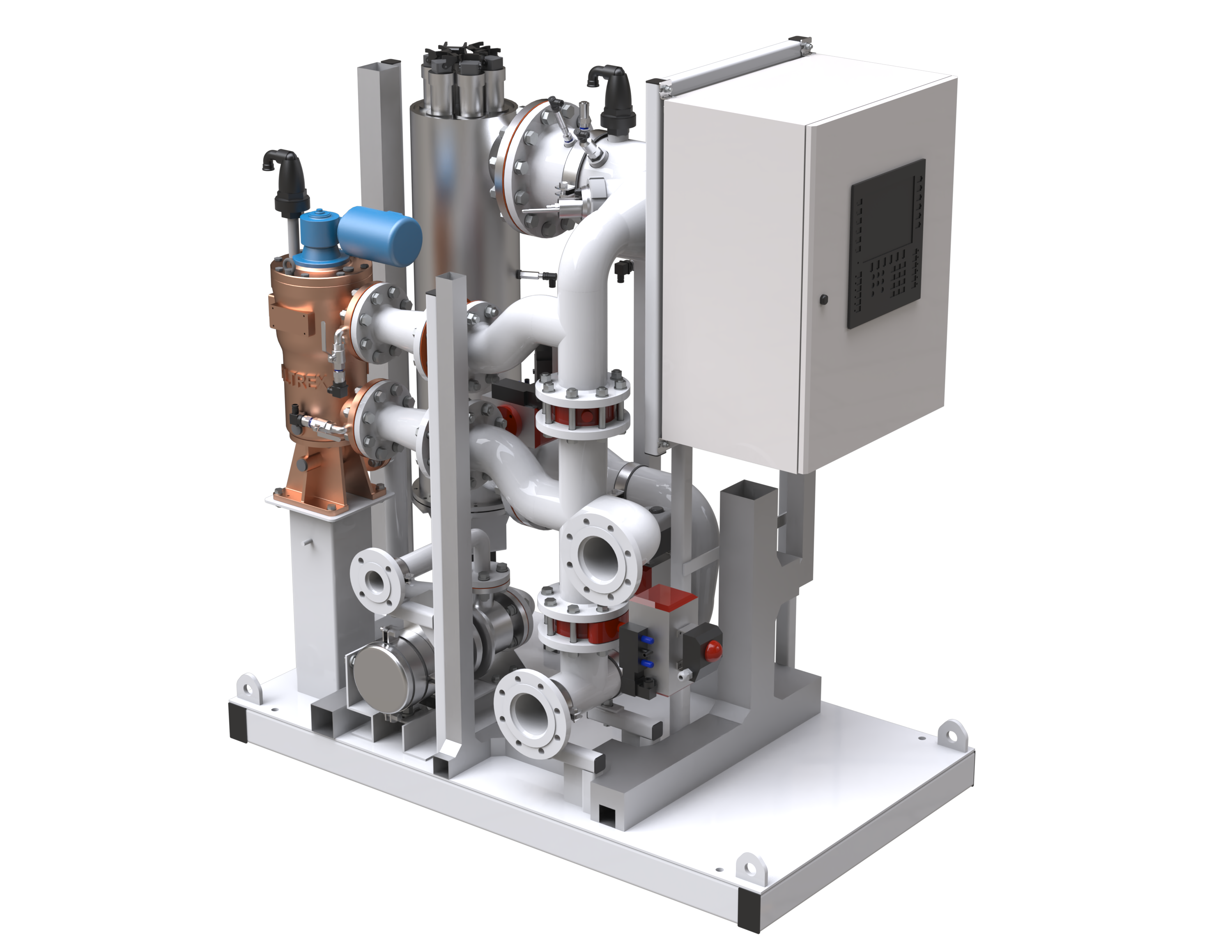
Service: Inspect filters or treatment elements, pumps, valves, piping, sampling points and monitors, and review trend data for loss of throughput or abnormal pressure. Verify alarms, automatic diversion or interlocks where applicable and check cleanliness of sensors and sample lines. Use statutory procedures and manufacturer documentation for exact discharge, treatment and calibration limits.
Spare Parts: Typical spares include filters or treatment elements, seal and gasket kits, pump service parts, lamps or electrodes where applicable, monitor consumables, sensors and valve or actuator repair items.
Use Cases: Bilge-water treatment, fuel or lube purification, freshwater production, potable-water conditioning and ballast-water management on commercial vessels.
Cathelco BWMS-EC 300m3h
BWMS-EC 300m3h unverified
· 9.0 kW
Capacity (m³/h)
300
Treatment Method
Electrochlorination
IMO Type Approval
ja
USCG Approved
ja
Power (kW)
9.0
Common Failures & Inspection Points
  • Filter, membrane, separator or treatment-stage fouling caused by solids, oil, scale or biological contamination can reduce throughput and increase differential pressure
  • Pump or valve faults caused by wear, blockage or actuator problems can cause low flow, unstable pressure or failure to complete an operating sequence
  • Sensor or monitor contamination caused by dirty process fluid or poor maintenance can produce implausible readings, alarms or automatic discharge inhibition
  • Seal, gasket or piping leakage caused by corrosion, ageing or vibration can lead to visible leakage, air ingress or loss of process pressure
  • Control or treatment-component failure caused by electrical faults, lamp or cell deterioration where fitted, or software issues can lead to shutdown or inability to meet the required treatment condition
Service: Inspect filters or treatment elements, pumps, valves, piping, sampling points and monitors, and review trend data for loss of throughput or abnormal pressure. Verify alarms, automatic diversion or interlocks where applicable and check cleanliness of sensors and sample lines. Use statutory procedures and manufacturer documentation for exact discharge, treatment and calibration limits.
Spare Parts: Typical spares include filters or treatment elements, seal and gasket kits, pump service parts, lamps or electrodes where applicable, monitor consumables, sensors and valve or actuator repair items.
Use Cases: Bilge-water treatment, fuel or lube purification, freshwater production, potable-water conditioning and ballast-water management on commercial vessels.
Cathelco BWMS-EC 500m3h
BWMS-EC 500m3h unverified
· 15.0 kW
Capacity (m³/h)
500
Treatment Method
Electrochlorination
IMO Type Approval
ja
USCG Approved
ja
Power (kW)
15.0
Common Failures & Inspection Points
  • Filter, membrane, separator or treatment-stage fouling caused by solids, oil, scale or biological contamination can reduce throughput and increase differential pressure
  • Pump or valve faults caused by wear, blockage or actuator problems can cause low flow, unstable pressure or failure to complete an operating sequence
  • Sensor or monitor contamination caused by dirty process fluid or poor maintenance can produce implausible readings, alarms or automatic discharge inhibition
  • Seal, gasket or piping leakage caused by corrosion, ageing or vibration can lead to visible leakage, air ingress or loss of process pressure
  • Control or treatment-component failure caused by electrical faults, lamp or cell deterioration where fitted, or software issues can lead to shutdown or inability to meet the required treatment condition
Service: Inspect filters or treatment elements, pumps, valves, piping, sampling points and monitors, and review trend data for loss of throughput or abnormal pressure. Verify alarms, automatic diversion or interlocks where applicable and check cleanliness of sensors and sample lines. Use statutory procedures and manufacturer documentation for exact discharge, treatment and calibration limits.
Spare Parts: Typical spares include filters or treatment elements, seal and gasket kits, pump service parts, lamps or electrodes where applicable, monitor consumables, sensors and valve or actuator repair items.
Use Cases: Bilge-water treatment, fuel or lube purification, freshwater production, potable-water conditioning and ballast-water management on commercial vessels.
Cathelco BWMS-EC 1000m3h
BWMS-EC 1000m3h unverified
· 30.0 kW
Capacity (m³/h)
1000
Treatment Method
Electrochlorination
IMO Type Approval
ja
USCG Approved
ja
Power (kW)
30.0
Common Failures & Inspection Points
  • Corrosion, wastage or coating breakdown causes visible section loss and weakens the fitting or surrounding structure
  • Wear in pins, rollers, hinges or bearing surfaces causes excessive play, stiffness or poor line guidance
  • Seal or gasket deterioration on closing appliances causes water ingress or loss of weathertight integrity
  • Loose foundations, fasteners or cracked welds cause movement, vibration or visible structural defects
  • Blocked drains, vents or passages cause water accumulation, pressure problems or restricted operation
Service: Inspect structural attachment, corrosion, welds, fasteners, moving parts, seals and coatings. Verify free movement, drainage, closing and securing functions according to the fitting type. Pay particular attention to load-bearing foundations and watertight or weathertight boundaries. Refer to class, vessel and manufacturer documentation for the exact figure for loads, clearances and acceptance limits.
Spare Parts: Carry seals or gaskets, pins, bushes, rollers, approved fasteners, lubrication items and small operating hardware appropriate to the installed fitting.
Use Cases: Mooring, deck access, cargo access, drainage, ventilation and general deck service.
Cathelco BWMS-EC 2000m3h
BWMS-EC 2000m3h unverified
· 60.0 kW
Capacity (m³/h)
2000
Treatment Method
Electrochlorination
IMO Type Approval
ja
USCG Approved
ja
Power (kW)
60.0
Common Failures & Inspection Points
  • Corrosion, wastage or coating breakdown causes visible section loss and weakens the fitting or surrounding structure
  • Wear in pins, rollers, hinges or bearing surfaces causes excessive play, stiffness or poor line guidance
  • Seal or gasket deterioration on closing appliances causes water ingress or loss of weathertight integrity
  • Loose foundations, fasteners or cracked welds cause movement, vibration or visible structural defects
  • Blocked drains, vents or passages cause water accumulation, pressure problems or restricted operation
Service: Inspect structural attachment, corrosion, welds, fasteners, moving parts, seals and coatings. Verify free movement, drainage, closing and securing functions according to the fitting type. Pay particular attention to load-bearing foundations and watertight or weathertight boundaries. Refer to class, vessel and manufacturer documentation for the exact figure for loads, clearances and acceptance limits.
Spare Parts: Carry seals or gaskets, pins, bushes, rollers, approved fasteners, lubrication items and small operating hardware appropriate to the installed fitting.
Use Cases: Mooring, deck access, cargo access, drainage, ventilation and general deck service.
Cathelco BWMS-EC 3000m3h
BWMS-EC 3000m3h unverified
· 90.0 kW
Capacity (m³/h)
3000
Treatment Method
Electrochlorination
IMO Type Approval
ja
USCG Approved
ja
Power (kW)
90.0
Common Failures & Inspection Points
  • Corrosion, wastage or coating breakdown causes visible section loss and weakens the fitting or surrounding structure
  • Wear in pins, rollers, hinges or bearing surfaces causes excessive play, stiffness or poor line guidance
  • Seal or gasket deterioration on closing appliances causes water ingress or loss of weathertight integrity
  • Loose foundations, fasteners or cracked welds cause movement, vibration or visible structural defects
  • Blocked drains, vents or passages cause water accumulation, pressure problems or restricted operation
Service: Inspect structural attachment, corrosion, welds, fasteners, moving parts, seals and coatings. Verify free movement, drainage, closing and securing functions according to the fitting type. Pay particular attention to load-bearing foundations and watertight or weathertight boundaries. Refer to class, vessel and manufacturer documentation for the exact figure for loads, clearances and acceptance limits.
Spare Parts: Carry seals or gaskets, pins, bushes, rollers, approved fasteners, lubrication items and small operating hardware appropriate to the installed fitting.
Use Cases: Mooring, deck access, cargo access, drainage, ventilation and general deck service.
Cathelco BWMS-EC 5000m3h
BWMS-EC 5000m3h unverified
· 150.0 kW
Capacity (m³/h)
5000
Treatment Method
Electrochlorination
IMO Type Approval
ja
USCG Approved
ja
Power (kW)
150.0
Common Failures & Inspection Points
  • Loss of electrical, hydraulic, pneumatic, fluid, or other service supply from a protection trip, leakage, blockage, or upstream fault results in failed starting or loss of function
  • Mechanical wear, corrosion, fouling, or contamination of moving and wetted parts causes increased noise, leakage, sticking, vibration, or reduced performance
  • Seal, gasket, hose, cable, or connection deterioration from age, heat, vibration, or environmental exposure produces visible leakage, intermittent signals, or loss of pressure
  • Sensor, switch, actuator, relay, or control-system faults cause incorrect indication, nuisance alarms, failed automatic sequences, or loss of remote control
  • Incorrect adjustment, assembly, or maintenance leads to unstable operation, recurrent alarms, or performance that differs from the vessel's normal baseline
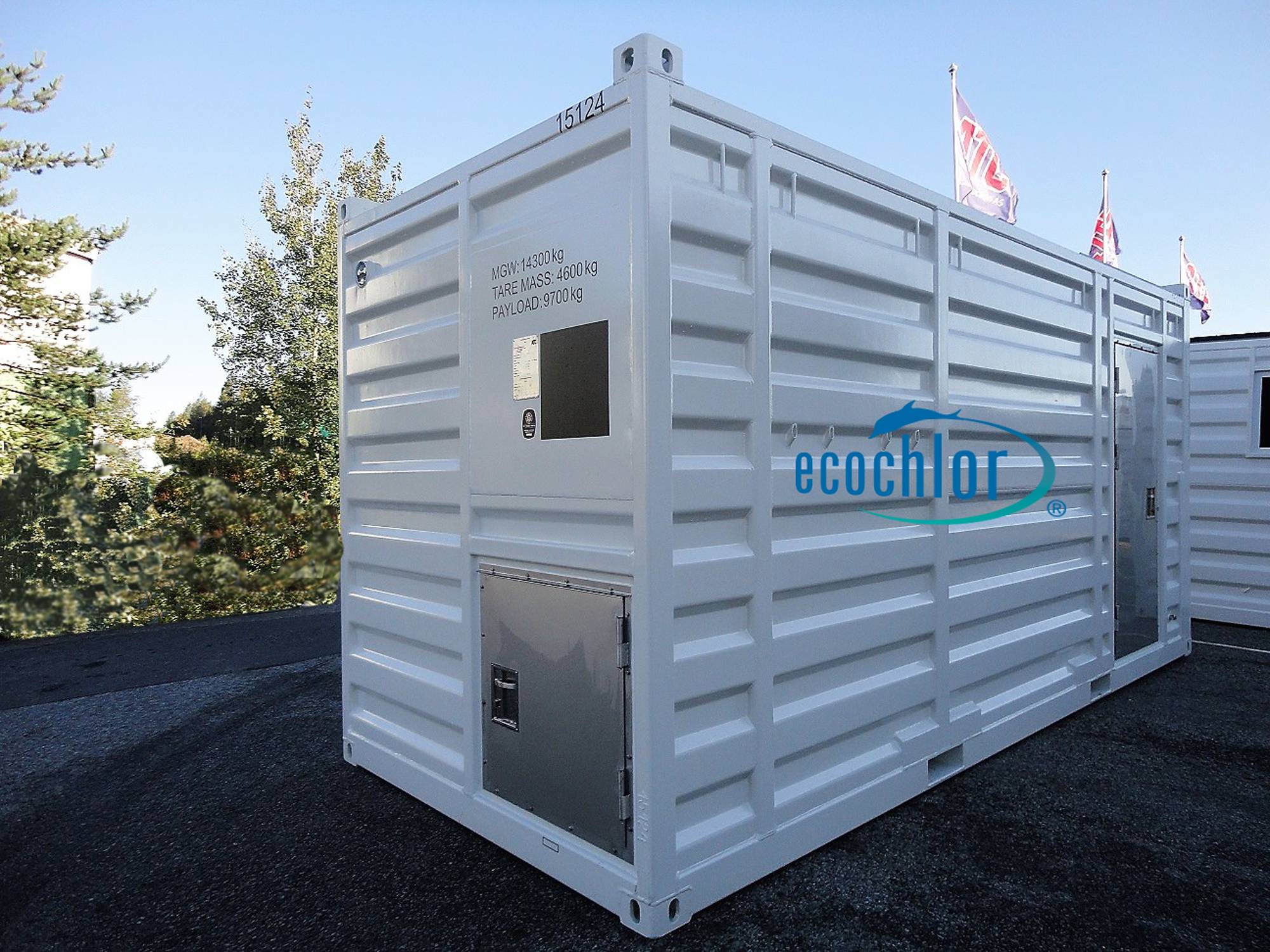
Service: Inspect the unit for leakage, corrosion, contamination, loose connections, abnormal noise or vibration, condition of guards and mountings, service supplies, controls, alarms, and functional performance. Use maintenance history to identify deterioration trends and refer to manufacturer documentation for exact settings, tolerances, test values, and overhaul criteria.
Spare Parts: Keep the manufacturer-recommended seals and gaskets, filters where fitted, fuses or protection items, common sensors and switches, and critical actuator, control, or wear components appropriate to the installed configuration. Exact part numbers and quantities must come from the manufacturer spare-parts documentation.
Use Cases: Used on vessel types fitted with ballast water treatment systems equipment, including merchant, offshore, passenger, fishing, or workboat installations where this specific electrochlorination bwms duty is required.
EC BWMS 100m3h DNV-approved unverified
· 3.0 kW
Capacity (m³/h)
100
Treatment Method
Electrochlorination
IMO Type Approval
ja
USCG Approved
ja
Power (kW)
3.0
Common Failures & Inspection Points
  • Treatment reactor, ultraviolet lamp or electrolytic-cell deterioration caused by aging, fouling or electrical faults, resulting in low treatment output or an alarm
  • Filter blockage where fitted caused by sediment or biological loading, resulting in rising differential pressure, backflush cycling or reduced ballast flow
  • Sensor or sampling fault caused by fouling, calibration drift or blocked lines, resulting in implausible readings or automatic treatment shutdown
  • Valve, actuator or flow-control failure caused by corrosion, sticking or control faults, resulting in incorrect routing or insufficient treatment contact
  • Control-system or communication failure caused by software, network or power-supply faults, resulting in unavailable automatic operation or persistent alarms
Service: Inspect treatment reactors, filters, sensors, valves, pumps and control panels according to the approved BWMS maintenance plan. Keep ultraviolet sleeves, electrolytic cells or filter elements clean as applicable to the installed process. Verify flow, treatment-status and sampling indications and investigate recurring bypass or low-treatment alarms. Function-test automatic valves and record any bypass or treatment interruption in accordance with vessel procedures. Maintain calibration and service records for compliance-critical sensors. Refer to the manufacturer documentation for the exact figure for treatment limits, cleaning criteria, consumables and calibration values.
Spare Parts: Keep process-specific lamps, sleeves, electrolytic-cell service parts or filter elements as applicable, together with seals, sensors, actuators and manufacturer-recommended control spares. Replacement components must preserve the approved system configuration. Carry consumables appropriate to expected ballast operations and voyage duration.
Use Cases: Ballast-water uptake and discharge treatment on merchant ships and offshore vessels subject to ballast-water management requirements.
EC BWMS 100m3h LR-approved unverified
· 3.0 kW
Capacity (m³/h)
100
Treatment Method
Electrochlorination
IMO Type Approval
ja
USCG Approved
ja
Power (kW)
3.0
Common Failures & Inspection Points
  • Filter blockage or automatic-backflush failure raises differential pressure and reduces ballast flow
  • UV lamp, electrode or electrolysis-cell deterioration reduces treatment intensity and causes treatment alarms
  • Low salinity, poor water quality or unsuitable process conditions causes reduced treatment effectiveness and system derating
  • Sensor, flowmeter or analyzer faults cause incorrect dose or intensity control and prevent compliant operation
  • Valve, dosing, neutralization or control faults cause bypass, failed sequence or discharge inhibition
Service: Inspect filters, UV reactors or electrolysis cells, pumps, valves, analyzers, flowmeters, dosing or neutralization equipment and control logs. Review alarms and treatment records and confirm bypass arrangements remain controlled. Clean and calibrate process sensors using approved procedures. Refer to the manufacturer and type-approval documentation for the exact figure for dose, intensity, flow and water-quality limits.
Spare Parts: Carry filter elements or screen service parts, UV lamps or electrode components as applicable, analyzer consumables, sensors, pump seals, solenoid valves and approved treatment chemicals where used.
Use Cases: Ballast-water uptake, treatment and discharge on vessels subject to ballast-water management requirements.
EC BWMS 100m3h BV-approved unverified
· 3.0 kW
Capacity (m³/h)
100
Treatment Method
Electrochlorination
IMO Type Approval
ja
USCG Approved
ja
Power (kW)
3.0
Common Failures & Inspection Points
  • Filter blockage or automatic-backflush failure raises differential pressure and reduces ballast flow
  • UV lamp, electrode or electrolysis-cell deterioration reduces treatment intensity and causes treatment alarms
  • Low salinity, poor water quality or unsuitable process conditions causes reduced treatment effectiveness and system derating
  • Sensor, flowmeter or analyzer faults cause incorrect dose or intensity control and prevent compliant operation
  • Valve, dosing, neutralization or control faults cause bypass, failed sequence or discharge inhibition
Service: Inspect filters, UV reactors or electrolysis cells, pumps, valves, analyzers, flowmeters, dosing or neutralization equipment and control logs. Review alarms and treatment records and confirm bypass arrangements remain controlled. Clean and calibrate process sensors using approved procedures. Refer to the manufacturer and type-approval documentation for the exact figure for dose, intensity, flow and water-quality limits.
Spare Parts: Carry filter elements or screen service parts, UV lamps or electrode components as applicable, analyzer consumables, sensors, pump seals, solenoid valves and approved treatment chemicals where used.
Use Cases: Ballast-water uptake, treatment and discharge on vessels subject to ballast-water management requirements.
EC BWMS 150m3h DNV-approved unverified
· 4.5 kW
Capacity (m³/h)
150
Treatment Method
Electrochlorination
IMO Type Approval
ja
USCG Approved
ja
Power (kW)
4.5
Common Failures & Inspection Points
  • Treatment reactor, ultraviolet lamp or electrolytic-cell deterioration caused by aging, fouling or electrical faults, resulting in low treatment output or an alarm
  • Filter blockage where fitted caused by sediment or biological loading, resulting in rising differential pressure, backflush cycling or reduced ballast flow
  • Sensor or sampling fault caused by fouling, calibration drift or blocked lines, resulting in implausible readings or automatic treatment shutdown
  • Valve, actuator or flow-control failure caused by corrosion, sticking or control faults, resulting in incorrect routing or insufficient treatment contact
  • Control-system or communication failure caused by software, network or power-supply faults, resulting in unavailable automatic operation or persistent alarms
Service: Inspect treatment reactors, filters, sensors, valves, pumps and control panels according to the approved BWMS maintenance plan. Keep ultraviolet sleeves, electrolytic cells or filter elements clean as applicable to the installed process. Verify flow, treatment-status and sampling indications and investigate recurring bypass or low-treatment alarms. Function-test automatic valves and record any bypass or treatment interruption in accordance with vessel procedures. Maintain calibration and service records for compliance-critical sensors. Refer to the manufacturer documentation for the exact figure for treatment limits, cleaning criteria, consumables and calibration values.
Spare Parts: Keep process-specific lamps, sleeves, electrolytic-cell service parts or filter elements as applicable, together with seals, sensors, actuators and manufacturer-recommended control spares. Replacement components must preserve the approved system configuration. Carry consumables appropriate to expected ballast operations and voyage duration.
Use Cases: Ballast-water uptake and discharge treatment on merchant ships and offshore vessels subject to ballast-water management requirements.
EC BWMS 150m3h LR-approved unverified
· 4.5 kW
Capacity (m³/h)
150
Treatment Method
Electrochlorination
IMO Type Approval
ja
USCG Approved
ja
Power (kW)
4.5
Common Failures & Inspection Points
  • Filter blockage or automatic-backflush failure raises differential pressure and reduces ballast flow
  • UV lamp, electrode or electrolysis-cell deterioration reduces treatment intensity and causes treatment alarms
  • Low salinity, poor water quality or unsuitable process conditions causes reduced treatment effectiveness and system derating
  • Sensor, flowmeter or analyzer faults cause incorrect dose or intensity control and prevent compliant operation
  • Valve, dosing, neutralization or control faults cause bypass, failed sequence or discharge inhibition
Service: Inspect filters, UV reactors or electrolysis cells, pumps, valves, analyzers, flowmeters, dosing or neutralization equipment and control logs. Review alarms and treatment records and confirm bypass arrangements remain controlled. Clean and calibrate process sensors using approved procedures. Refer to the manufacturer and type-approval documentation for the exact figure for dose, intensity, flow and water-quality limits.
Spare Parts: Carry filter elements or screen service parts, UV lamps or electrode components as applicable, analyzer consumables, sensors, pump seals, solenoid valves and approved treatment chemicals where used.
Use Cases: Ballast-water uptake, treatment and discharge on vessels subject to ballast-water management requirements.
EC BWMS 150m3h BV-approved unverified
· 4.5 kW
Capacity (m³/h)
150
Treatment Method
Electrochlorination
IMO Type Approval
ja
USCG Approved
ja
Power (kW)
4.5
Common Failures & Inspection Points
  • Filter blockage or automatic-backflush failure raises differential pressure and reduces ballast flow
  • UV lamp, electrode or electrolysis-cell deterioration reduces treatment intensity and causes treatment alarms
  • Low salinity, poor water quality or unsuitable process conditions causes reduced treatment effectiveness and system derating
  • Sensor, flowmeter or analyzer faults cause incorrect dose or intensity control and prevent compliant operation
  • Valve, dosing, neutralization or control faults cause bypass, failed sequence or discharge inhibition
Service: Inspect filters, UV reactors or electrolysis cells, pumps, valves, analyzers, flowmeters, dosing or neutralization equipment and control logs. Review alarms and treatment records and confirm bypass arrangements remain controlled. Clean and calibrate process sensors using approved procedures. Refer to the manufacturer and type-approval documentation for the exact figure for dose, intensity, flow and water-quality limits.
Spare Parts: Carry filter elements or screen service parts, UV lamps or electrode components as applicable, analyzer consumables, sensors, pump seals, solenoid valves and approved treatment chemicals where used.
Use Cases: Ballast-water uptake, treatment and discharge on vessels subject to ballast-water management requirements.
EC BWMS 200m3h DNV-approved unverified
· 6.0 kW
Capacity (m³/h)
200
Treatment Method
Electrochlorination
IMO Type Approval
ja
USCG Approved
ja
Power (kW)
6.0
Common Failures & Inspection Points
  • Treatment reactor, ultraviolet lamp or electrolytic-cell deterioration caused by aging, fouling or electrical faults, resulting in low treatment output or an alarm
  • Filter blockage where fitted caused by sediment or biological loading, resulting in rising differential pressure, backflush cycling or reduced ballast flow
  • Sensor or sampling fault caused by fouling, calibration drift or blocked lines, resulting in implausible readings or automatic treatment shutdown
  • Valve, actuator or flow-control failure caused by corrosion, sticking or control faults, resulting in incorrect routing or insufficient treatment contact
  • Control-system or communication failure caused by software, network or power-supply faults, resulting in unavailable automatic operation or persistent alarms
Service: Inspect treatment reactors, filters, sensors, valves, pumps and control panels according to the approved BWMS maintenance plan. Keep ultraviolet sleeves, electrolytic cells or filter elements clean as applicable to the installed process. Verify flow, treatment-status and sampling indications and investigate recurring bypass or low-treatment alarms. Function-test automatic valves and record any bypass or treatment interruption in accordance with vessel procedures. Maintain calibration and service records for compliance-critical sensors. Refer to the manufacturer documentation for the exact figure for treatment limits, cleaning criteria, consumables and calibration values.
Spare Parts: Keep process-specific lamps, sleeves, electrolytic-cell service parts or filter elements as applicable, together with seals, sensors, actuators and manufacturer-recommended control spares. Replacement components must preserve the approved system configuration. Carry consumables appropriate to expected ballast operations and voyage duration.
Use Cases: Ballast-water uptake and discharge treatment on merchant ships and offshore vessels subject to ballast-water management requirements.
EC BWMS 200m3h LR-approved unverified
· 6.0 kW
Capacity (m³/h)
200
Treatment Method
Electrochlorination
IMO Type Approval
ja
USCG Approved
ja
Power (kW)
6.0
Common Failures & Inspection Points
  • Filter blockage or automatic-backflush failure raises differential pressure and reduces ballast flow
  • UV lamp, electrode or electrolysis-cell deterioration reduces treatment intensity and causes treatment alarms
  • Low salinity, poor water quality or unsuitable process conditions causes reduced treatment effectiveness and system derating
  • Sensor, flowmeter or analyzer faults cause incorrect dose or intensity control and prevent compliant operation
  • Valve, dosing, neutralization or control faults cause bypass, failed sequence or discharge inhibition
Service: Inspect filters, UV reactors or electrolysis cells, pumps, valves, analyzers, flowmeters, dosing or neutralization equipment and control logs. Review alarms and treatment records and confirm bypass arrangements remain controlled. Clean and calibrate process sensors using approved procedures. Refer to the manufacturer and type-approval documentation for the exact figure for dose, intensity, flow and water-quality limits.
Spare Parts: Carry filter elements or screen service parts, UV lamps or electrode components as applicable, analyzer consumables, sensors, pump seals, solenoid valves and approved treatment chemicals where used.
Use Cases: Ballast-water uptake, treatment and discharge on vessels subject to ballast-water management requirements.
EC BWMS 200m3h BV-approved unverified
· 6.0 kW
Capacity (m³/h)
200
Treatment Method
Electrochlorination
IMO Type Approval
ja
USCG Approved
ja
Power (kW)
6.0
Common Failures & Inspection Points
  • Filter blockage or automatic-backflush failure raises differential pressure and reduces ballast flow
  • UV lamp, electrode or electrolysis-cell deterioration reduces treatment intensity and causes treatment alarms
  • Low salinity, poor water quality or unsuitable process conditions causes reduced treatment effectiveness and system derating
  • Sensor, flowmeter or analyzer faults cause incorrect dose or intensity control and prevent compliant operation
  • Valve, dosing, neutralization or control faults cause bypass, failed sequence or discharge inhibition
Service: Inspect filters, UV reactors or electrolysis cells, pumps, valves, analyzers, flowmeters, dosing or neutralization equipment and control logs. Review alarms and treatment records and confirm bypass arrangements remain controlled. Clean and calibrate process sensors using approved procedures. Refer to the manufacturer and type-approval documentation for the exact figure for dose, intensity, flow and water-quality limits.
Spare Parts: Carry filter elements or screen service parts, UV lamps or electrode components as applicable, analyzer consumables, sensors, pump seals, solenoid valves and approved treatment chemicals where used.
Use Cases: Ballast-water uptake, treatment and discharge on vessels subject to ballast-water management requirements.
EC BWMS 250m3h DNV-approved unverified
· 7.5 kW
Capacity (m³/h)
250
Treatment Method
Electrochlorination
IMO Type Approval
ja
USCG Approved
ja
Power (kW)
7.5
Common Failures & Inspection Points
  • Treatment reactor, ultraviolet lamp or electrolytic-cell deterioration caused by aging, fouling or electrical faults, resulting in low treatment output or an alarm
  • Filter blockage where fitted caused by sediment or biological loading, resulting in rising differential pressure, backflush cycling or reduced ballast flow
  • Sensor or sampling fault caused by fouling, calibration drift or blocked lines, resulting in implausible readings or automatic treatment shutdown
  • Valve, actuator or flow-control failure caused by corrosion, sticking or control faults, resulting in incorrect routing or insufficient treatment contact
  • Control-system or communication failure caused by software, network or power-supply faults, resulting in unavailable automatic operation or persistent alarms
Service: Inspect treatment reactors, filters, sensors, valves, pumps and control panels according to the approved BWMS maintenance plan. Keep ultraviolet sleeves, electrolytic cells or filter elements clean as applicable to the installed process. Verify flow, treatment-status and sampling indications and investigate recurring bypass or low-treatment alarms. Function-test automatic valves and record any bypass or treatment interruption in accordance with vessel procedures. Maintain calibration and service records for compliance-critical sensors. Refer to the manufacturer documentation for the exact figure for treatment limits, cleaning criteria, consumables and calibration values.
Spare Parts: Keep process-specific lamps, sleeves, electrolytic-cell service parts or filter elements as applicable, together with seals, sensors, actuators and manufacturer-recommended control spares. Replacement components must preserve the approved system configuration. Carry consumables appropriate to expected ballast operations and voyage duration.
Use Cases: Ballast-water uptake and discharge treatment on merchant ships and offshore vessels subject to ballast-water management requirements.
EC BWMS 250m3h LR-approved unverified
· 7.5 kW
Capacity (m³/h)
250
Treatment Method
Electrochlorination
IMO Type Approval
ja
USCG Approved
ja
Power (kW)
7.5
Common Failures & Inspection Points
  • Filter blockage or automatic-backflush failure raises differential pressure and reduces ballast flow
  • UV lamp, electrode or electrolysis-cell deterioration reduces treatment intensity and causes treatment alarms
  • Low salinity, poor water quality or unsuitable process conditions causes reduced treatment effectiveness and system derating
  • Sensor, flowmeter or analyzer faults cause incorrect dose or intensity control and prevent compliant operation
  • Valve, dosing, neutralization or control faults cause bypass, failed sequence or discharge inhibition
Service: Inspect filters, UV reactors or electrolysis cells, pumps, valves, analyzers, flowmeters, dosing or neutralization equipment and control logs. Review alarms and treatment records and confirm bypass arrangements remain controlled. Clean and calibrate process sensors using approved procedures. Refer to the manufacturer and type-approval documentation for the exact figure for dose, intensity, flow and water-quality limits.
Spare Parts: Carry filter elements or screen service parts, UV lamps or electrode components as applicable, analyzer consumables, sensors, pump seals, solenoid valves and approved treatment chemicals where used.
Use Cases: Ballast-water uptake, treatment and discharge on vessels subject to ballast-water management requirements.
EC BWMS 250m3h BV-approved unverified
· 7.5 kW
Capacity (m³/h)
250
Treatment Method
Electrochlorination
IMO Type Approval
ja
USCG Approved
ja
Power (kW)
7.5
Common Failures & Inspection Points
  • Filter blockage or automatic-backflush failure raises differential pressure and reduces ballast flow
  • UV lamp, electrode or electrolysis-cell deterioration reduces treatment intensity and causes treatment alarms
  • Low salinity, poor water quality or unsuitable process conditions causes reduced treatment effectiveness and system derating
  • Sensor, flowmeter or analyzer faults cause incorrect dose or intensity control and prevent compliant operation
  • Valve, dosing, neutralization or control faults cause bypass, failed sequence or discharge inhibition
Service: Inspect filters, UV reactors or electrolysis cells, pumps, valves, analyzers, flowmeters, dosing or neutralization equipment and control logs. Review alarms and treatment records and confirm bypass arrangements remain controlled. Clean and calibrate process sensors using approved procedures. Refer to the manufacturer and type-approval documentation for the exact figure for dose, intensity, flow and water-quality limits.
Spare Parts: Carry filter elements or screen service parts, UV lamps or electrode components as applicable, analyzer consumables, sensors, pump seals, solenoid valves and approved treatment chemicals where used.
Use Cases: Ballast-water uptake, treatment and discharge on vessels subject to ballast-water management requirements.
Cathelco EC BWMS 300m3h DNV-approved
EC BWMS 300m3h DNV-approved unverified
· 9.0 kW
Capacity (m³/h)
300
Treatment Method
Electrochlorination
IMO Type Approval
ja
USCG Approved
ja
Power (kW)
9.0
Common Failures & Inspection Points
  • Treatment reactor, ultraviolet lamp or electrolytic-cell deterioration caused by aging, fouling or electrical faults, resulting in low treatment output or an alarm
  • Filter blockage where fitted caused by sediment or biological loading, resulting in rising differential pressure, backflush cycling or reduced ballast flow
  • Sensor or sampling fault caused by fouling, calibration drift or blocked lines, resulting in implausible readings or automatic treatment shutdown
  • Valve, actuator or flow-control failure caused by corrosion, sticking or control faults, resulting in incorrect routing or insufficient treatment contact
  • Control-system or communication failure caused by software, network or power-supply faults, resulting in unavailable automatic operation or persistent alarms
Service: Inspect treatment reactors, filters, sensors, valves, pumps and control panels according to the approved BWMS maintenance plan. Keep ultraviolet sleeves, electrolytic cells or filter elements clean as applicable to the installed process. Verify flow, treatment-status and sampling indications and investigate recurring bypass or low-treatment alarms. Function-test automatic valves and record any bypass or treatment interruption in accordance with vessel procedures. Maintain calibration and service records for compliance-critical sensors. Refer to the manufacturer documentation for the exact figure for treatment limits, cleaning criteria, consumables and calibration values.
Spare Parts: Keep process-specific lamps, sleeves, electrolytic-cell service parts or filter elements as applicable, together with seals, sensors, actuators and manufacturer-recommended control spares. Replacement components must preserve the approved system configuration. Carry consumables appropriate to expected ballast operations and voyage duration.
Use Cases: Ballast-water uptake and discharge treatment on merchant ships and offshore vessels subject to ballast-water management requirements.
EC BWMS 300m3h LR-approved unverified
· 9.0 kW
Capacity (m³/h)
300
Treatment Method
Electrochlorination
IMO Type Approval
ja
USCG Approved
ja
Power (kW)
9.0
Common Failures & Inspection Points
  • Filter blockage or automatic-backflush failure raises differential pressure and reduces ballast flow
  • UV lamp, electrode or electrolysis-cell deterioration reduces treatment intensity and causes treatment alarms
  • Low salinity, poor water quality or unsuitable process conditions causes reduced treatment effectiveness and system derating
  • Sensor, flowmeter or analyzer faults cause incorrect dose or intensity control and prevent compliant operation
  • Valve, dosing, neutralization or control faults cause bypass, failed sequence or discharge inhibition
Service: Inspect filters, UV reactors or electrolysis cells, pumps, valves, analyzers, flowmeters, dosing or neutralization equipment and control logs. Review alarms and treatment records and confirm bypass arrangements remain controlled. Clean and calibrate process sensors using approved procedures. Refer to the manufacturer and type-approval documentation for the exact figure for dose, intensity, flow and water-quality limits.
Spare Parts: Carry filter elements or screen service parts, UV lamps or electrode components as applicable, analyzer consumables, sensors, pump seals, solenoid valves and approved treatment chemicals where used.
Use Cases: Ballast-water uptake, treatment and discharge on vessels subject to ballast-water management requirements.
EC BWMS 300m3h BV-approved unverified
· 9.0 kW
Capacity (m³/h)
300
Treatment Method
Electrochlorination
IMO Type Approval
ja
USCG Approved
ja
Power (kW)
9.0
Common Failures & Inspection Points
  • Filter blockage or automatic-backflush failure raises differential pressure and reduces ballast flow
  • UV lamp, electrode or electrolysis-cell deterioration reduces treatment intensity and causes treatment alarms
  • Low salinity, poor water quality or unsuitable process conditions causes reduced treatment effectiveness and system derating
  • Sensor, flowmeter or analyzer faults cause incorrect dose or intensity control and prevent compliant operation
  • Valve, dosing, neutralization or control faults cause bypass, failed sequence or discharge inhibition
Service: Inspect filters, UV reactors or electrolysis cells, pumps, valves, analyzers, flowmeters, dosing or neutralization equipment and control logs. Review alarms and treatment records and confirm bypass arrangements remain controlled. Clean and calibrate process sensors using approved procedures. Refer to the manufacturer and type-approval documentation for the exact figure for dose, intensity, flow and water-quality limits.
Spare Parts: Carry filter elements or screen service parts, UV lamps or electrode components as applicable, analyzer consumables, sensors, pump seals, solenoid valves and approved treatment chemicals where used.
Use Cases: Ballast-water uptake, treatment and discharge on vessels subject to ballast-water management requirements.
Cathelco EC BWMS 400m3h DNV-approved
EC BWMS 400m3h DNV-approved unverified
· 12.0 kW
Capacity (m³/h)
400
Treatment Method
Electrochlorination
IMO Type Approval
ja
USCG Approved
ja
Power (kW)
12.0
Common Failures & Inspection Points
  • Treatment reactor, ultraviolet lamp or electrolytic-cell deterioration caused by aging, fouling or electrical faults, resulting in low treatment output or an alarm
  • Filter blockage where fitted caused by sediment or biological loading, resulting in rising differential pressure, backflush cycling or reduced ballast flow
  • Sensor or sampling fault caused by fouling, calibration drift or blocked lines, resulting in implausible readings or automatic treatment shutdown
  • Valve, actuator or flow-control failure caused by corrosion, sticking or control faults, resulting in incorrect routing or insufficient treatment contact
  • Control-system or communication failure caused by software, network or power-supply faults, resulting in unavailable automatic operation or persistent alarms
Service: Inspect treatment reactors, filters, sensors, valves, pumps and control panels according to the approved BWMS maintenance plan. Keep ultraviolet sleeves, electrolytic cells or filter elements clean as applicable to the installed process. Verify flow, treatment-status and sampling indications and investigate recurring bypass or low-treatment alarms. Function-test automatic valves and record any bypass or treatment interruption in accordance with vessel procedures. Maintain calibration and service records for compliance-critical sensors. Refer to the manufacturer documentation for the exact figure for treatment limits, cleaning criteria, consumables and calibration values.
Spare Parts: Keep process-specific lamps, sleeves, electrolytic-cell service parts or filter elements as applicable, together with seals, sensors, actuators and manufacturer-recommended control spares. Replacement components must preserve the approved system configuration. Carry consumables appropriate to expected ballast operations and voyage duration.
Use Cases: Ballast-water uptake and discharge treatment on merchant ships and offshore vessels subject to ballast-water management requirements.
EC BWMS 400m3h LR-approved unverified
· 12.0 kW
Capacity (m³/h)
400
Treatment Method
Electrochlorination
IMO Type Approval
ja
USCG Approved
ja
Power (kW)
12.0
Common Failures & Inspection Points
  • Treatment reactor, ultraviolet lamp or electrolytic-cell deterioration caused by aging, fouling or electrical faults, resulting in low treatment output or an alarm
  • Filter blockage where fitted caused by sediment or biological loading, resulting in rising differential pressure, backflush cycling or reduced ballast flow
  • Sensor or sampling fault caused by fouling, calibration drift or blocked lines, resulting in implausible readings or automatic treatment shutdown
  • Valve, actuator or flow-control failure caused by corrosion, sticking or control faults, resulting in incorrect routing or insufficient treatment contact
  • Control-system or communication failure caused by software, network or power-supply faults, resulting in unavailable automatic operation or persistent alarms
Service: Inspect treatment reactors, filters, sensors, valves, pumps and control panels according to the approved BWMS maintenance plan. Keep ultraviolet sleeves, electrolytic cells or filter elements clean as applicable to the installed process. Verify flow, treatment-status and sampling indications and investigate recurring bypass or low-treatment alarms. Function-test automatic valves and record any bypass or treatment interruption in accordance with vessel procedures. Maintain calibration and service records for compliance-critical sensors. Refer to the manufacturer documentation for the exact figure for treatment limits, cleaning criteria, consumables and calibration values.
Spare Parts: Keep process-specific lamps, sleeves, electrolytic-cell service parts or filter elements as applicable, together with seals, sensors, actuators and manufacturer-recommended control spares. Replacement components must preserve the approved system configuration. Carry consumables appropriate to expected ballast operations and voyage duration.
Use Cases: Ballast-water uptake and discharge treatment on merchant ships and offshore vessels subject to ballast-water management requirements.
EC BWMS 400m3h BV-approved unverified
· 12.0 kW
Capacity (m³/h)
400
Treatment Method
Electrochlorination
IMO Type Approval
ja
USCG Approved
ja
Power (kW)
12.0
Common Failures & Inspection Points
  • Treatment reactor, ultraviolet lamp or electrolytic-cell deterioration caused by aging, fouling or electrical faults, resulting in low treatment output or an alarm
  • Filter blockage where fitted caused by sediment or biological loading, resulting in rising differential pressure, backflush cycling or reduced ballast flow
  • Sensor or sampling fault caused by fouling, calibration drift or blocked lines, resulting in implausible readings or automatic treatment shutdown
  • Valve, actuator or flow-control failure caused by corrosion, sticking or control faults, resulting in incorrect routing or insufficient treatment contact
  • Control-system or communication failure caused by software, network or power-supply faults, resulting in unavailable automatic operation or persistent alarms
Service: Inspect treatment reactors, filters, sensors, valves, pumps and control panels according to the approved BWMS maintenance plan. Keep ultraviolet sleeves, electrolytic cells or filter elements clean as applicable to the installed process. Verify flow, treatment-status and sampling indications and investigate recurring bypass or low-treatment alarms. Function-test automatic valves and record any bypass or treatment interruption in accordance with vessel procedures. Maintain calibration and service records for compliance-critical sensors. Refer to the manufacturer documentation for the exact figure for treatment limits, cleaning criteria, consumables and calibration values.
Spare Parts: Keep process-specific lamps, sleeves, electrolytic-cell service parts or filter elements as applicable, together with seals, sensors, actuators and manufacturer-recommended control spares. Replacement components must preserve the approved system configuration. Carry consumables appropriate to expected ballast operations and voyage duration.
Use Cases: Ballast-water uptake and discharge treatment on merchant ships and offshore vessels subject to ballast-water management requirements.
EC BWMS 500m3h DNV-approved unverified
· 15.0 kW
Capacity (m³/h)
500
Treatment Method
Electrochlorination
IMO Type Approval
ja
USCG Approved
ja
Power (kW)
15.0
Common Failures & Inspection Points
  • Treatment reactor, ultraviolet lamp or electrolytic-cell deterioration caused by aging, fouling or electrical faults, resulting in low treatment output or an alarm
  • Filter blockage where fitted caused by sediment or biological loading, resulting in rising differential pressure, backflush cycling or reduced ballast flow
  • Sensor or sampling fault caused by fouling, calibration drift or blocked lines, resulting in implausible readings or automatic treatment shutdown
  • Valve, actuator or flow-control failure caused by corrosion, sticking or control faults, resulting in incorrect routing or insufficient treatment contact
  • Control-system or communication failure caused by software, network or power-supply faults, resulting in unavailable automatic operation or persistent alarms
Service: Inspect treatment reactors, filters, sensors, valves, pumps and control panels according to the approved BWMS maintenance plan. Keep ultraviolet sleeves, electrolytic cells or filter elements clean as applicable to the installed process. Verify flow, treatment-status and sampling indications and investigate recurring bypass or low-treatment alarms. Function-test automatic valves and record any bypass or treatment interruption in accordance with vessel procedures. Maintain calibration and service records for compliance-critical sensors. Refer to the manufacturer documentation for the exact figure for treatment limits, cleaning criteria, consumables and calibration values.
Spare Parts: Keep process-specific lamps, sleeves, electrolytic-cell service parts or filter elements as applicable, together with seals, sensors, actuators and manufacturer-recommended control spares. Replacement components must preserve the approved system configuration. Carry consumables appropriate to expected ballast operations and voyage duration.
Use Cases: Ballast-water uptake and discharge treatment on merchant ships and offshore vessels subject to ballast-water management requirements.
EC BWMS 500m3h LR-approved unverified
· 15.0 kW
Capacity (m³/h)
500
Treatment Method
Electrochlorination
IMO Type Approval
ja
USCG Approved
ja
Power (kW)
15.0
Common Failures & Inspection Points
  • Treatment reactor, ultraviolet lamp or electrolytic-cell deterioration caused by aging, fouling or electrical faults, resulting in low treatment output or an alarm
  • Filter blockage where fitted caused by sediment or biological loading, resulting in rising differential pressure, backflush cycling or reduced ballast flow
  • Sensor or sampling fault caused by fouling, calibration drift or blocked lines, resulting in implausible readings or automatic treatment shutdown
  • Valve, actuator or flow-control failure caused by corrosion, sticking or control faults, resulting in incorrect routing or insufficient treatment contact
  • Control-system or communication failure caused by software, network or power-supply faults, resulting in unavailable automatic operation or persistent alarms
Service: Inspect treatment reactors, filters, sensors, valves, pumps and control panels according to the approved BWMS maintenance plan. Keep ultraviolet sleeves, electrolytic cells or filter elements clean as applicable to the installed process. Verify flow, treatment-status and sampling indications and investigate recurring bypass or low-treatment alarms. Function-test automatic valves and record any bypass or treatment interruption in accordance with vessel procedures. Maintain calibration and service records for compliance-critical sensors. Refer to the manufacturer documentation for the exact figure for treatment limits, cleaning criteria, consumables and calibration values.
Spare Parts: Keep process-specific lamps, sleeves, electrolytic-cell service parts or filter elements as applicable, together with seals, sensors, actuators and manufacturer-recommended control spares. Replacement components must preserve the approved system configuration. Carry consumables appropriate to expected ballast operations and voyage duration.
Use Cases: Ballast-water uptake and discharge treatment on merchant ships and offshore vessels subject to ballast-water management requirements.
EC BWMS 500m3h BV-approved unverified
· 15.0 kW
Capacity (m³/h)
500
Treatment Method
Electrochlorination
IMO Type Approval
ja
USCG Approved
ja
Power (kW)
15.0
Common Failures & Inspection Points
  • Treatment reactor, ultraviolet lamp or electrolytic-cell deterioration caused by aging, fouling or electrical faults, resulting in low treatment output or an alarm
  • Filter blockage where fitted caused by sediment or biological loading, resulting in rising differential pressure, backflush cycling or reduced ballast flow
  • Sensor or sampling fault caused by fouling, calibration drift or blocked lines, resulting in implausible readings or automatic treatment shutdown
  • Valve, actuator or flow-control failure caused by corrosion, sticking or control faults, resulting in incorrect routing or insufficient treatment contact
  • Control-system or communication failure caused by software, network or power-supply faults, resulting in unavailable automatic operation or persistent alarms
Service: Inspect treatment reactors, filters, sensors, valves, pumps and control panels according to the approved BWMS maintenance plan. Keep ultraviolet sleeves, electrolytic cells or filter elements clean as applicable to the installed process. Verify flow, treatment-status and sampling indications and investigate recurring bypass or low-treatment alarms. Function-test automatic valves and record any bypass or treatment interruption in accordance with vessel procedures. Maintain calibration and service records for compliance-critical sensors. Refer to the manufacturer documentation for the exact figure for treatment limits, cleaning criteria, consumables and calibration values.
Spare Parts: Keep process-specific lamps, sleeves, electrolytic-cell service parts or filter elements as applicable, together with seals, sensors, actuators and manufacturer-recommended control spares. Replacement components must preserve the approved system configuration. Carry consumables appropriate to expected ballast operations and voyage duration.
Use Cases: Ballast-water uptake and discharge treatment on merchant ships and offshore vessels subject to ballast-water management requirements.
Cathelco EC BWMS 600m3h DNV-approved
EC BWMS 600m3h DNV-approved unverified
· 18.0 kW
Capacity (m³/h)
600
Treatment Method
Electrochlorination
IMO Type Approval
ja
USCG Approved
ja
Power (kW)
18.0
Common Failures & Inspection Points
  • Treatment reactor, ultraviolet lamp or electrolytic-cell deterioration caused by aging, fouling or electrical faults, resulting in low treatment output or an alarm
  • Filter blockage where fitted caused by sediment or biological loading, resulting in rising differential pressure, backflush cycling or reduced ballast flow
  • Sensor or sampling fault caused by fouling, calibration drift or blocked lines, resulting in implausible readings or automatic treatment shutdown
  • Valve, actuator or flow-control failure caused by corrosion, sticking or control faults, resulting in incorrect routing or insufficient treatment contact
  • Control-system or communication failure caused by software, network or power-supply faults, resulting in unavailable automatic operation or persistent alarms
Service: Inspect treatment reactors, filters, sensors, valves, pumps and control panels according to the approved BWMS maintenance plan. Keep ultraviolet sleeves, electrolytic cells or filter elements clean as applicable to the installed process. Verify flow, treatment-status and sampling indications and investigate recurring bypass or low-treatment alarms. Function-test automatic valves and record any bypass or treatment interruption in accordance with vessel procedures. Maintain calibration and service records for compliance-critical sensors. Refer to the manufacturer documentation for the exact figure for treatment limits, cleaning criteria, consumables and calibration values.
Spare Parts: Keep process-specific lamps, sleeves, electrolytic-cell service parts or filter elements as applicable, together with seals, sensors, actuators and manufacturer-recommended control spares. Replacement components must preserve the approved system configuration. Carry consumables appropriate to expected ballast operations and voyage duration.
Use Cases: Ballast-water uptake and discharge treatment on merchant ships and offshore vessels subject to ballast-water management requirements.
EC BWMS 600m3h LR-approved unverified
· 18.0 kW
Capacity (m³/h)
600
Treatment Method
Electrochlorination
IMO Type Approval
ja
USCG Approved
ja
Power (kW)
18.0
Common Failures & Inspection Points
  • Treatment reactor, ultraviolet lamp or electrolytic-cell deterioration caused by aging, fouling or electrical faults, resulting in low treatment output or an alarm
  • Filter blockage where fitted caused by sediment or biological loading, resulting in rising differential pressure, backflush cycling or reduced ballast flow
  • Sensor or sampling fault caused by fouling, calibration drift or blocked lines, resulting in implausible readings or automatic treatment shutdown
  • Valve, actuator or flow-control failure caused by corrosion, sticking or control faults, resulting in incorrect routing or insufficient treatment contact
  • Control-system or communication failure caused by software, network or power-supply faults, resulting in unavailable automatic operation or persistent alarms
Service: Inspect treatment reactors, filters, sensors, valves, pumps and control panels according to the approved BWMS maintenance plan. Keep ultraviolet sleeves, electrolytic cells or filter elements clean as applicable to the installed process. Verify flow, treatment-status and sampling indications and investigate recurring bypass or low-treatment alarms. Function-test automatic valves and record any bypass or treatment interruption in accordance with vessel procedures. Maintain calibration and service records for compliance-critical sensors. Refer to the manufacturer documentation for the exact figure for treatment limits, cleaning criteria, consumables and calibration values.
Spare Parts: Keep process-specific lamps, sleeves, electrolytic-cell service parts or filter elements as applicable, together with seals, sensors, actuators and manufacturer-recommended control spares. Replacement components must preserve the approved system configuration. Carry consumables appropriate to expected ballast operations and voyage duration.
Use Cases: Ballast-water uptake and discharge treatment on merchant ships and offshore vessels subject to ballast-water management requirements.
EC BWMS 600m3h BV-approved unverified
· 18.0 kW
Capacity (m³/h)
600
Treatment Method
Electrochlorination
IMO Type Approval
ja
USCG Approved
ja
Power (kW)
18.0
Common Failures & Inspection Points
  • Treatment reactor, ultraviolet lamp or electrolytic-cell deterioration caused by aging, fouling or electrical faults, resulting in low treatment output or an alarm
  • Filter blockage where fitted caused by sediment or biological loading, resulting in rising differential pressure, backflush cycling or reduced ballast flow
  • Sensor or sampling fault caused by fouling, calibration drift or blocked lines, resulting in implausible readings or automatic treatment shutdown
  • Valve, actuator or flow-control failure caused by corrosion, sticking or control faults, resulting in incorrect routing or insufficient treatment contact
  • Control-system or communication failure caused by software, network or power-supply faults, resulting in unavailable automatic operation or persistent alarms
Service: Inspect treatment reactors, filters, sensors, valves, pumps and control panels according to the approved BWMS maintenance plan. Keep ultraviolet sleeves, electrolytic cells or filter elements clean as applicable to the installed process. Verify flow, treatment-status and sampling indications and investigate recurring bypass or low-treatment alarms. Function-test automatic valves and record any bypass or treatment interruption in accordance with vessel procedures. Maintain calibration and service records for compliance-critical sensors. Refer to the manufacturer documentation for the exact figure for treatment limits, cleaning criteria, consumables and calibration values.
Spare Parts: Keep process-specific lamps, sleeves, electrolytic-cell service parts or filter elements as applicable, together with seals, sensors, actuators and manufacturer-recommended control spares. Replacement components must preserve the approved system configuration. Carry consumables appropriate to expected ballast operations and voyage duration.
Use Cases: Ballast-water uptake and discharge treatment on merchant ships and offshore vessels subject to ballast-water management requirements.
EC BWMS 750m3h DNV-approved unverified
· 22.5 kW
Capacity (m³/h)
750
Treatment Method
Electrochlorination
IMO Type Approval
ja
USCG Approved
ja
Power (kW)
22.5
Common Failures & Inspection Points
  • Treatment reactor, ultraviolet lamp or electrolytic-cell deterioration caused by aging, fouling or electrical faults, resulting in low treatment output or an alarm
  • Filter blockage where fitted caused by sediment or biological loading, resulting in rising differential pressure, backflush cycling or reduced ballast flow
  • Sensor or sampling fault caused by fouling, calibration drift or blocked lines, resulting in implausible readings or automatic treatment shutdown
  • Valve, actuator or flow-control failure caused by corrosion, sticking or control faults, resulting in incorrect routing or insufficient treatment contact
  • Control-system or communication failure caused by software, network or power-supply faults, resulting in unavailable automatic operation or persistent alarms
Service: Inspect treatment reactors, filters, sensors, valves, pumps and control panels according to the approved BWMS maintenance plan. Keep ultraviolet sleeves, electrolytic cells or filter elements clean as applicable to the installed process. Verify flow, treatment-status and sampling indications and investigate recurring bypass or low-treatment alarms. Function-test automatic valves and record any bypass or treatment interruption in accordance with vessel procedures. Maintain calibration and service records for compliance-critical sensors. Refer to the manufacturer documentation for the exact figure for treatment limits, cleaning criteria, consumables and calibration values.
Spare Parts: Keep process-specific lamps, sleeves, electrolytic-cell service parts or filter elements as applicable, together with seals, sensors, actuators and manufacturer-recommended control spares. Replacement components must preserve the approved system configuration. Carry consumables appropriate to expected ballast operations and voyage duration.
Use Cases: Ballast-water uptake and discharge treatment on merchant ships and offshore vessels subject to ballast-water management requirements.
EC BWMS 750m3h LR-approved unverified
· 22.5 kW
Capacity (m³/h)
750
Treatment Method
Electrochlorination
IMO Type Approval
ja
USCG Approved
ja
Power (kW)
22.5
Common Failures & Inspection Points
  • Treatment reactor, ultraviolet lamp or electrolytic-cell deterioration caused by aging, fouling or electrical faults, resulting in low treatment output or an alarm
  • Filter blockage where fitted caused by sediment or biological loading, resulting in rising differential pressure, backflush cycling or reduced ballast flow
  • Sensor or sampling fault caused by fouling, calibration drift or blocked lines, resulting in implausible readings or automatic treatment shutdown
  • Valve, actuator or flow-control failure caused by corrosion, sticking or control faults, resulting in incorrect routing or insufficient treatment contact
  • Control-system or communication failure caused by software, network or power-supply faults, resulting in unavailable automatic operation or persistent alarms
Service: Inspect treatment reactors, filters, sensors, valves, pumps and control panels according to the approved BWMS maintenance plan. Keep ultraviolet sleeves, electrolytic cells or filter elements clean as applicable to the installed process. Verify flow, treatment-status and sampling indications and investigate recurring bypass or low-treatment alarms. Function-test automatic valves and record any bypass or treatment interruption in accordance with vessel procedures. Maintain calibration and service records for compliance-critical sensors. Refer to the manufacturer documentation for the exact figure for treatment limits, cleaning criteria, consumables and calibration values.
Spare Parts: Keep process-specific lamps, sleeves, electrolytic-cell service parts or filter elements as applicable, together with seals, sensors, actuators and manufacturer-recommended control spares. Replacement components must preserve the approved system configuration. Carry consumables appropriate to expected ballast operations and voyage duration.
Use Cases: Ballast-water uptake and discharge treatment on merchant ships and offshore vessels subject to ballast-water management requirements.
EC BWMS 750m3h BV-approved unverified
· 22.5 kW
Capacity (m³/h)
750
Treatment Method
Electrochlorination
IMO Type Approval
ja
USCG Approved
ja
Power (kW)
22.5
Common Failures & Inspection Points
  • Treatment reactor, ultraviolet lamp or electrolytic-cell deterioration caused by aging, fouling or electrical faults, resulting in low treatment output or an alarm
  • Filter blockage where fitted caused by sediment or biological loading, resulting in rising differential pressure, backflush cycling or reduced ballast flow
  • Sensor or sampling fault caused by fouling, calibration drift or blocked lines, resulting in implausible readings or automatic treatment shutdown
  • Valve, actuator or flow-control failure caused by corrosion, sticking or control faults, resulting in incorrect routing or insufficient treatment contact
  • Control-system or communication failure caused by software, network or power-supply faults, resulting in unavailable automatic operation or persistent alarms
Service: Inspect treatment reactors, filters, sensors, valves, pumps and control panels according to the approved BWMS maintenance plan. Keep ultraviolet sleeves, electrolytic cells or filter elements clean as applicable to the installed process. Verify flow, treatment-status and sampling indications and investigate recurring bypass or low-treatment alarms. Function-test automatic valves and record any bypass or treatment interruption in accordance with vessel procedures. Maintain calibration and service records for compliance-critical sensors. Refer to the manufacturer documentation for the exact figure for treatment limits, cleaning criteria, consumables and calibration values.
Spare Parts: Keep process-specific lamps, sleeves, electrolytic-cell service parts or filter elements as applicable, together with seals, sensors, actuators and manufacturer-recommended control spares. Replacement components must preserve the approved system configuration. Carry consumables appropriate to expected ballast operations and voyage duration.
Use Cases: Ballast-water uptake and discharge treatment on merchant ships and offshore vessels subject to ballast-water management requirements.
EC BWMS 1000m3h DNV-approved unverified
· 30.0 kW
Capacity (m³/h)
1000
Treatment Method
Electrochlorination
IMO Type Approval
ja
USCG Approved
ja
Power (kW)
30.0
Common Failures & Inspection Points
  • Treatment reactor, ultraviolet lamp or electrolytic-cell deterioration caused by aging, fouling or electrical faults, resulting in low treatment output or an alarm
  • Filter blockage where fitted caused by sediment or biological loading, resulting in rising differential pressure, backflush cycling or reduced ballast flow
  • Sensor or sampling fault caused by fouling, calibration drift or blocked lines, resulting in implausible readings or automatic treatment shutdown
  • Valve, actuator or flow-control failure caused by corrosion, sticking or control faults, resulting in incorrect routing or insufficient treatment contact
  • Control-system or communication failure caused by software, network or power-supply faults, resulting in unavailable automatic operation or persistent alarms
Service: Inspect treatment reactors, filters, sensors, valves, pumps and control panels according to the approved BWMS maintenance plan. Keep ultraviolet sleeves, electrolytic cells or filter elements clean as applicable to the installed process. Verify flow, treatment-status and sampling indications and investigate recurring bypass or low-treatment alarms. Function-test automatic valves and record any bypass or treatment interruption in accordance with vessel procedures. Maintain calibration and service records for compliance-critical sensors. Refer to the manufacturer documentation for the exact figure for treatment limits, cleaning criteria, consumables and calibration values.
Spare Parts: Keep process-specific lamps, sleeves, electrolytic-cell service parts or filter elements as applicable, together with seals, sensors, actuators and manufacturer-recommended control spares. Replacement components must preserve the approved system configuration. Carry consumables appropriate to expected ballast operations and voyage duration.
Use Cases: Ballast-water uptake and discharge treatment on merchant ships and offshore vessels subject to ballast-water management requirements.
EC BWMS 1000m3h LR-approved unverified
· 30.0 kW
Capacity (m³/h)
1000
Treatment Method
Electrochlorination
IMO Type Approval
ja
USCG Approved
ja
Power (kW)
30.0
Common Failures & Inspection Points
  • Treatment reactor, ultraviolet lamp or electrolytic-cell deterioration caused by aging, fouling or electrical faults, resulting in low treatment output or an alarm
  • Filter blockage where fitted caused by sediment or biological loading, resulting in rising differential pressure, backflush cycling or reduced ballast flow
  • Sensor or sampling fault caused by fouling, calibration drift or blocked lines, resulting in implausible readings or automatic treatment shutdown
  • Valve, actuator or flow-control failure caused by corrosion, sticking or control faults, resulting in incorrect routing or insufficient treatment contact
  • Control-system or communication failure caused by software, network or power-supply faults, resulting in unavailable automatic operation or persistent alarms
Service: Inspect treatment reactors, filters, sensors, valves, pumps and control panels according to the approved BWMS maintenance plan. Keep ultraviolet sleeves, electrolytic cells or filter elements clean as applicable to the installed process. Verify flow, treatment-status and sampling indications and investigate recurring bypass or low-treatment alarms. Function-test automatic valves and record any bypass or treatment interruption in accordance with vessel procedures. Maintain calibration and service records for compliance-critical sensors. Refer to the manufacturer documentation for the exact figure for treatment limits, cleaning criteria, consumables and calibration values.
Spare Parts: Keep process-specific lamps, sleeves, electrolytic-cell service parts or filter elements as applicable, together with seals, sensors, actuators and manufacturer-recommended control spares. Replacement components must preserve the approved system configuration. Carry consumables appropriate to expected ballast operations and voyage duration.
Use Cases: Ballast-water uptake and discharge treatment on merchant ships and offshore vessels subject to ballast-water management requirements.
EC BWMS 1000m3h BV-approved unverified
· 30.0 kW
Capacity (m³/h)
1000
Treatment Method
Electrochlorination
IMO Type Approval
ja
USCG Approved
ja
Power (kW)
30.0
Common Failures & Inspection Points
  • Treatment reactor, ultraviolet lamp or electrolytic-cell deterioration caused by aging, fouling or electrical faults, resulting in low treatment output or an alarm
  • Filter blockage where fitted caused by sediment or biological loading, resulting in rising differential pressure, backflush cycling or reduced ballast flow
  • Sensor or sampling fault caused by fouling, calibration drift or blocked lines, resulting in implausible readings or automatic treatment shutdown
  • Valve, actuator or flow-control failure caused by corrosion, sticking or control faults, resulting in incorrect routing or insufficient treatment contact
  • Control-system or communication failure caused by software, network or power-supply faults, resulting in unavailable automatic operation or persistent alarms
Service: Inspect treatment reactors, filters, sensors, valves, pumps and control panels according to the approved BWMS maintenance plan. Keep ultraviolet sleeves, electrolytic cells or filter elements clean as applicable to the installed process. Verify flow, treatment-status and sampling indications and investigate recurring bypass or low-treatment alarms. Function-test automatic valves and record any bypass or treatment interruption in accordance with vessel procedures. Maintain calibration and service records for compliance-critical sensors. Refer to the manufacturer documentation for the exact figure for treatment limits, cleaning criteria, consumables and calibration values.
Spare Parts: Keep process-specific lamps, sleeves, electrolytic-cell service parts or filter elements as applicable, together with seals, sensors, actuators and manufacturer-recommended control spares. Replacement components must preserve the approved system configuration. Carry consumables appropriate to expected ballast operations and voyage duration.
Use Cases: Ballast-water uptake and discharge treatment on merchant ships and offshore vessels subject to ballast-water management requirements.
Cathelco EC BWMS 1250m3h DNV-approved
EC BWMS 1250m3h DNV-approved unverified
· 37.5 kW
Capacity (m³/h)
1250
Treatment Method
Electrochlorination
IMO Type Approval
ja
USCG Approved
ja
Power (kW)
37.5
Common Failures & Inspection Points
  • Treatment reactor, ultraviolet lamp or electrolytic-cell deterioration caused by aging, fouling or electrical faults, resulting in low treatment output or an alarm
  • Filter blockage where fitted caused by sediment or biological loading, resulting in rising differential pressure, backflush cycling or reduced ballast flow
  • Sensor or sampling fault caused by fouling, calibration drift or blocked lines, resulting in implausible readings or automatic treatment shutdown
  • Valve, actuator or flow-control failure caused by corrosion, sticking or control faults, resulting in incorrect routing or insufficient treatment contact
  • Control-system or communication failure caused by software, network or power-supply faults, resulting in unavailable automatic operation or persistent alarms
Service: Inspect treatment reactors, filters, sensors, valves, pumps and control panels according to the approved BWMS maintenance plan. Keep ultraviolet sleeves, electrolytic cells or filter elements clean as applicable to the installed process. Verify flow, treatment-status and sampling indications and investigate recurring bypass or low-treatment alarms. Function-test automatic valves and record any bypass or treatment interruption in accordance with vessel procedures. Maintain calibration and service records for compliance-critical sensors. Refer to the manufacturer documentation for the exact figure for treatment limits, cleaning criteria, consumables and calibration values.
Spare Parts: Keep process-specific lamps, sleeves, electrolytic-cell service parts or filter elements as applicable, together with seals, sensors, actuators and manufacturer-recommended control spares. Replacement components must preserve the approved system configuration. Carry consumables appropriate to expected ballast operations and voyage duration.
Use Cases: Ballast-water uptake and discharge treatment on merchant ships and offshore vessels subject to ballast-water management requirements.
EC BWMS 1250m3h LR-approved unverified
· 37.5 kW
Capacity (m³/h)
1250
Treatment Method
Electrochlorination
IMO Type Approval
ja
USCG Approved
ja
Power (kW)
37.5
Common Failures & Inspection Points
  • Treatment reactor, ultraviolet lamp or electrolytic-cell deterioration caused by aging, fouling or electrical faults, resulting in low treatment output or an alarm
  • Filter blockage where fitted caused by sediment or biological loading, resulting in rising differential pressure, backflush cycling or reduced ballast flow
  • Sensor or sampling fault caused by fouling, calibration drift or blocked lines, resulting in implausible readings or automatic treatment shutdown
  • Valve, actuator or flow-control failure caused by corrosion, sticking or control faults, resulting in incorrect routing or insufficient treatment contact
  • Control-system or communication failure caused by software, network or power-supply faults, resulting in unavailable automatic operation or persistent alarms
Service: Inspect treatment reactors, filters, sensors, valves, pumps and control panels according to the approved BWMS maintenance plan. Keep ultraviolet sleeves, electrolytic cells or filter elements clean as applicable to the installed process. Verify flow, treatment-status and sampling indications and investigate recurring bypass or low-treatment alarms. Function-test automatic valves and record any bypass or treatment interruption in accordance with vessel procedures. Maintain calibration and service records for compliance-critical sensors. Refer to the manufacturer documentation for the exact figure for treatment limits, cleaning criteria, consumables and calibration values.
Spare Parts: Keep process-specific lamps, sleeves, electrolytic-cell service parts or filter elements as applicable, together with seals, sensors, actuators and manufacturer-recommended control spares. Replacement components must preserve the approved system configuration. Carry consumables appropriate to expected ballast operations and voyage duration.
Use Cases: Ballast-water uptake and discharge treatment on merchant ships and offshore vessels subject to ballast-water management requirements.
Cathelco EC BWMS 1250m3h BV-approved
EC BWMS 1250m3h BV-approved unverified
· 37.5 kW
Capacity (m³/h)
1250
Treatment Method
Electrochlorination
IMO Type Approval
ja
USCG Approved
ja
Power (kW)
37.5
Common Failures & Inspection Points
  • Treatment reactor, ultraviolet lamp or electrolytic-cell deterioration caused by aging, fouling or electrical faults, resulting in low treatment output or an alarm
  • Filter blockage where fitted caused by sediment or biological loading, resulting in rising differential pressure, backflush cycling or reduced ballast flow
  • Sensor or sampling fault caused by fouling, calibration drift or blocked lines, resulting in implausible readings or automatic treatment shutdown
  • Valve, actuator or flow-control failure caused by corrosion, sticking or control faults, resulting in incorrect routing or insufficient treatment contact
  • Control-system or communication failure caused by software, network or power-supply faults, resulting in unavailable automatic operation or persistent alarms
Service: Inspect treatment reactors, filters, sensors, valves, pumps and control panels according to the approved BWMS maintenance plan. Keep ultraviolet sleeves, electrolytic cells or filter elements clean as applicable to the installed process. Verify flow, treatment-status and sampling indications and investigate recurring bypass or low-treatment alarms. Function-test automatic valves and record any bypass or treatment interruption in accordance with vessel procedures. Maintain calibration and service records for compliance-critical sensors. Refer to the manufacturer documentation for the exact figure for treatment limits, cleaning criteria, consumables and calibration values.
Spare Parts: Keep process-specific lamps, sleeves, electrolytic-cell service parts or filter elements as applicable, together with seals, sensors, actuators and manufacturer-recommended control spares. Replacement components must preserve the approved system configuration. Carry consumables appropriate to expected ballast operations and voyage duration.
Use Cases: Ballast-water uptake and discharge treatment on merchant ships and offshore vessels subject to ballast-water management requirements.
EC BWMS 1500m3h DNV-approved unverified
· 45.0 kW
Capacity (m³/h)
1500
Treatment Method
Electrochlorination
IMO Type Approval
ja
USCG Approved
ja
Power (kW)
45.0
Common Failures & Inspection Points
  • Treatment reactor, ultraviolet lamp or electrolytic-cell deterioration caused by aging, fouling or electrical faults, resulting in low treatment output or an alarm
  • Filter blockage where fitted caused by sediment or biological loading, resulting in rising differential pressure, backflush cycling or reduced ballast flow
  • Sensor or sampling fault caused by fouling, calibration drift or blocked lines, resulting in implausible readings or automatic treatment shutdown
  • Valve, actuator or flow-control failure caused by corrosion, sticking or control faults, resulting in incorrect routing or insufficient treatment contact
  • Control-system or communication failure caused by software, network or power-supply faults, resulting in unavailable automatic operation or persistent alarms
Service: Inspect treatment reactors, filters, sensors, valves, pumps and control panels according to the approved BWMS maintenance plan. Keep ultraviolet sleeves, electrolytic cells or filter elements clean as applicable to the installed process. Verify flow, treatment-status and sampling indications and investigate recurring bypass or low-treatment alarms. Function-test automatic valves and record any bypass or treatment interruption in accordance with vessel procedures. Maintain calibration and service records for compliance-critical sensors. Refer to the manufacturer documentation for the exact figure for treatment limits, cleaning criteria, consumables and calibration values.
Spare Parts: Keep process-specific lamps, sleeves, electrolytic-cell service parts or filter elements as applicable, together with seals, sensors, actuators and manufacturer-recommended control spares. Replacement components must preserve the approved system configuration. Carry consumables appropriate to expected ballast operations and voyage duration.
Use Cases: Ballast-water uptake and discharge treatment on merchant ships and offshore vessels subject to ballast-water management requirements.
EC BWMS 1500m3h LR-approved unverified
· 45.0 kW
Capacity (m³/h)
1500
Treatment Method
Electrochlorination
IMO Type Approval
ja
USCG Approved
ja
Power (kW)
45.0
Common Failures & Inspection Points
  • Treatment reactor, ultraviolet lamp or electrolytic-cell deterioration caused by aging, fouling or electrical faults, resulting in low treatment output or an alarm
  • Filter blockage where fitted caused by sediment or biological loading, resulting in rising differential pressure, backflush cycling or reduced ballast flow
  • Sensor or sampling fault caused by fouling, calibration drift or blocked lines, resulting in implausible readings or automatic treatment shutdown
  • Valve, actuator or flow-control failure caused by corrosion, sticking or control faults, resulting in incorrect routing or insufficient treatment contact
  • Control-system or communication failure caused by software, network or power-supply faults, resulting in unavailable automatic operation or persistent alarms
Service: Inspect treatment reactors, filters, sensors, valves, pumps and control panels according to the approved BWMS maintenance plan. Keep ultraviolet sleeves, electrolytic cells or filter elements clean as applicable to the installed process. Verify flow, treatment-status and sampling indications and investigate recurring bypass or low-treatment alarms. Function-test automatic valves and record any bypass or treatment interruption in accordance with vessel procedures. Maintain calibration and service records for compliance-critical sensors. Refer to the manufacturer documentation for the exact figure for treatment limits, cleaning criteria, consumables and calibration values.
Spare Parts: Keep process-specific lamps, sleeves, electrolytic-cell service parts or filter elements as applicable, together with seals, sensors, actuators and manufacturer-recommended control spares. Replacement components must preserve the approved system configuration. Carry consumables appropriate to expected ballast operations and voyage duration.
Use Cases: Ballast-water uptake and discharge treatment on merchant ships and offshore vessels subject to ballast-water management requirements.
EC BWMS 1500m3h BV-approved unverified
· 45.0 kW
Capacity (m³/h)
1500
Treatment Method
Electrochlorination
IMO Type Approval
ja
USCG Approved
ja
Power (kW)
45.0
Common Failures & Inspection Points
  • Treatment reactor, ultraviolet lamp or electrolytic-cell deterioration caused by aging, fouling or electrical faults, resulting in low treatment output or an alarm
  • Filter blockage where fitted caused by sediment or biological loading, resulting in rising differential pressure, backflush cycling or reduced ballast flow
  • Sensor or sampling fault caused by fouling, calibration drift or blocked lines, resulting in implausible readings or automatic treatment shutdown
  • Valve, actuator or flow-control failure caused by corrosion, sticking or control faults, resulting in incorrect routing or insufficient treatment contact
  • Control-system or communication failure caused by software, network or power-supply faults, resulting in unavailable automatic operation or persistent alarms
Service: Inspect treatment reactors, filters, sensors, valves, pumps and control panels according to the approved BWMS maintenance plan. Keep ultraviolet sleeves, electrolytic cells or filter elements clean as applicable to the installed process. Verify flow, treatment-status and sampling indications and investigate recurring bypass or low-treatment alarms. Function-test automatic valves and record any bypass or treatment interruption in accordance with vessel procedures. Maintain calibration and service records for compliance-critical sensors. Refer to the manufacturer documentation for the exact figure for treatment limits, cleaning criteria, consumables and calibration values.
Spare Parts: Keep process-specific lamps, sleeves, electrolytic-cell service parts or filter elements as applicable, together with seals, sensors, actuators and manufacturer-recommended control spares. Replacement components must preserve the approved system configuration. Carry consumables appropriate to expected ballast operations and voyage duration.
Use Cases: Ballast-water uptake and discharge treatment on merchant ships and offshore vessels subject to ballast-water management requirements.
EC BWMS 2000m3h DNV-approved unverified
· 60.0 kW
Capacity (m³/h)
2000
Treatment Method
Electrochlorination
IMO Type Approval
ja
USCG Approved
ja
Power (kW)
60.0
Common Failures & Inspection Points
  • Treatment reactor, ultraviolet lamp or electrolytic-cell deterioration caused by aging, fouling or electrical faults, resulting in low treatment output or an alarm
  • Filter blockage where fitted caused by sediment or biological loading, resulting in rising differential pressure, backflush cycling or reduced ballast flow
  • Sensor or sampling fault caused by fouling, calibration drift or blocked lines, resulting in implausible readings or automatic treatment shutdown
  • Valve, actuator or flow-control failure caused by corrosion, sticking or control faults, resulting in incorrect routing or insufficient treatment contact
  • Control-system or communication failure caused by software, network or power-supply faults, resulting in unavailable automatic operation or persistent alarms
Service: Inspect treatment reactors, filters, sensors, valves, pumps and control panels according to the approved BWMS maintenance plan. Keep ultraviolet sleeves, electrolytic cells or filter elements clean as applicable to the installed process. Verify flow, treatment-status and sampling indications and investigate recurring bypass or low-treatment alarms. Function-test automatic valves and record any bypass or treatment interruption in accordance with vessel procedures. Maintain calibration and service records for compliance-critical sensors. Refer to the manufacturer documentation for the exact figure for treatment limits, cleaning criteria, consumables and calibration values.
Spare Parts: Keep process-specific lamps, sleeves, electrolytic-cell service parts or filter elements as applicable, together with seals, sensors, actuators and manufacturer-recommended control spares. Replacement components must preserve the approved system configuration. Carry consumables appropriate to expected ballast operations and voyage duration.
Use Cases: Ballast-water uptake and discharge treatment on merchant ships and offshore vessels subject to ballast-water management requirements.
EC BWMS 2000m3h LR-approved unverified
· 60.0 kW
Capacity (m³/h)
2000
Treatment Method
Electrochlorination
IMO Type Approval
ja
USCG Approved
ja
Power (kW)
60.0
Common Failures & Inspection Points
  • Treatment reactor, ultraviolet lamp or electrolytic-cell deterioration caused by aging, fouling or electrical faults, resulting in low treatment output or an alarm
  • Filter blockage where fitted caused by sediment or biological loading, resulting in rising differential pressure, backflush cycling or reduced ballast flow
  • Sensor or sampling fault caused by fouling, calibration drift or blocked lines, resulting in implausible readings or automatic treatment shutdown
  • Valve, actuator or flow-control failure caused by corrosion, sticking or control faults, resulting in incorrect routing or insufficient treatment contact
  • Control-system or communication failure caused by software, network or power-supply faults, resulting in unavailable automatic operation or persistent alarms
Service: Inspect treatment reactors, filters, sensors, valves, pumps and control panels according to the approved BWMS maintenance plan. Keep ultraviolet sleeves, electrolytic cells or filter elements clean as applicable to the installed process. Verify flow, treatment-status and sampling indications and investigate recurring bypass or low-treatment alarms. Function-test automatic valves and record any bypass or treatment interruption in accordance with vessel procedures. Maintain calibration and service records for compliance-critical sensors. Refer to the manufacturer documentation for the exact figure for treatment limits, cleaning criteria, consumables and calibration values.
Spare Parts: Keep process-specific lamps, sleeves, electrolytic-cell service parts or filter elements as applicable, together with seals, sensors, actuators and manufacturer-recommended control spares. Replacement components must preserve the approved system configuration. Carry consumables appropriate to expected ballast operations and voyage duration.
Use Cases: Ballast-water uptake and discharge treatment on merchant ships and offshore vessels subject to ballast-water management requirements.
EC BWMS 2000m3h BV-approved unverified
· 60.0 kW
Capacity (m³/h)
2000
Treatment Method
Electrochlorination
IMO Type Approval
ja
USCG Approved
ja
Power (kW)
60.0
Common Failures & Inspection Points
  • Treatment reactor, ultraviolet lamp or electrolytic-cell deterioration caused by aging, fouling or electrical faults, resulting in low treatment output or an alarm
  • Filter blockage where fitted caused by sediment or biological loading, resulting in rising differential pressure, backflush cycling or reduced ballast flow
  • Sensor or sampling fault caused by fouling, calibration drift or blocked lines, resulting in implausible readings or automatic treatment shutdown
  • Valve, actuator or flow-control failure caused by corrosion, sticking or control faults, resulting in incorrect routing or insufficient treatment contact
  • Control-system or communication failure caused by software, network or power-supply faults, resulting in unavailable automatic operation or persistent alarms
Service: Inspect treatment reactors, filters, sensors, valves, pumps and control panels according to the approved BWMS maintenance plan. Keep ultraviolet sleeves, electrolytic cells or filter elements clean as applicable to the installed process. Verify flow, treatment-status and sampling indications and investigate recurring bypass or low-treatment alarms. Function-test automatic valves and record any bypass or treatment interruption in accordance with vessel procedures. Maintain calibration and service records for compliance-critical sensors. Refer to the manufacturer documentation for the exact figure for treatment limits, cleaning criteria, consumables and calibration values.
Spare Parts: Keep process-specific lamps, sleeves, electrolytic-cell service parts or filter elements as applicable, together with seals, sensors, actuators and manufacturer-recommended control spares. Replacement components must preserve the approved system configuration. Carry consumables appropriate to expected ballast operations and voyage duration.
Use Cases: Ballast-water uptake and discharge treatment on merchant ships and offshore vessels subject to ballast-water management requirements.
EC BWMS 2500m3h DNV-approved unverified
· 75.0 kW
Capacity (m³/h)
2500
Treatment Method
Electrochlorination
IMO Type Approval
ja
USCG Approved
ja
Power (kW)
75.0
Common Failures & Inspection Points
  • Treatment reactor, ultraviolet lamp or electrolytic-cell deterioration caused by aging, fouling or electrical faults, resulting in low treatment output or an alarm
  • Filter blockage where fitted caused by sediment or biological loading, resulting in rising differential pressure, backflush cycling or reduced ballast flow
  • Sensor or sampling fault caused by fouling, calibration drift or blocked lines, resulting in implausible readings or automatic treatment shutdown
  • Valve, actuator or flow-control failure caused by corrosion, sticking or control faults, resulting in incorrect routing or insufficient treatment contact
  • Control-system or communication failure caused by software, network or power-supply faults, resulting in unavailable automatic operation or persistent alarms
Service: Inspect treatment reactors, filters, sensors, valves, pumps and control panels according to the approved BWMS maintenance plan. Keep ultraviolet sleeves, electrolytic cells or filter elements clean as applicable to the installed process. Verify flow, treatment-status and sampling indications and investigate recurring bypass or low-treatment alarms. Function-test automatic valves and record any bypass or treatment interruption in accordance with vessel procedures. Maintain calibration and service records for compliance-critical sensors. Refer to the manufacturer documentation for the exact figure for treatment limits, cleaning criteria, consumables and calibration values.
Spare Parts: Keep process-specific lamps, sleeves, electrolytic-cell service parts or filter elements as applicable, together with seals, sensors, actuators and manufacturer-recommended control spares. Replacement components must preserve the approved system configuration. Carry consumables appropriate to expected ballast operations and voyage duration.
Use Cases: Ballast-water uptake and discharge treatment on merchant ships and offshore vessels subject to ballast-water management requirements.
EC BWMS 2500m3h LR-approved unverified
· 75.0 kW
Capacity (m³/h)
2500
Treatment Method
Electrochlorination
IMO Type Approval
ja
USCG Approved
ja
Power (kW)
75.0
Common Failures & Inspection Points
  • Treatment reactor, ultraviolet lamp or electrolytic-cell deterioration caused by aging, fouling or electrical faults, resulting in low treatment output or an alarm
  • Filter blockage where fitted caused by sediment or biological loading, resulting in rising differential pressure, backflush cycling or reduced ballast flow
  • Sensor or sampling fault caused by fouling, calibration drift or blocked lines, resulting in implausible readings or automatic treatment shutdown
  • Valve, actuator or flow-control failure caused by corrosion, sticking or control faults, resulting in incorrect routing or insufficient treatment contact
  • Control-system or communication failure caused by software, network or power-supply faults, resulting in unavailable automatic operation or persistent alarms
Service: Inspect treatment reactors, filters, sensors, valves, pumps and control panels according to the approved BWMS maintenance plan. Keep ultraviolet sleeves, electrolytic cells or filter elements clean as applicable to the installed process. Verify flow, treatment-status and sampling indications and investigate recurring bypass or low-treatment alarms. Function-test automatic valves and record any bypass or treatment interruption in accordance with vessel procedures. Maintain calibration and service records for compliance-critical sensors. Refer to the manufacturer documentation for the exact figure for treatment limits, cleaning criteria, consumables and calibration values.
Spare Parts: Keep process-specific lamps, sleeves, electrolytic-cell service parts or filter elements as applicable, together with seals, sensors, actuators and manufacturer-recommended control spares. Replacement components must preserve the approved system configuration. Carry consumables appropriate to expected ballast operations and voyage duration.
Use Cases: Ballast-water uptake and discharge treatment on merchant ships and offshore vessels subject to ballast-water management requirements.
Cathelco EC BWMS 2500m3h BV-approved
EC BWMS 2500m3h BV-approved unverified
· 75.0 kW
Capacity (m³/h)
2500
Treatment Method
Electrochlorination
IMO Type Approval
ja
USCG Approved
ja
Power (kW)
75.0
Common Failures & Inspection Points
  • Treatment reactor, ultraviolet lamp or electrolytic-cell deterioration caused by aging, fouling or electrical faults, resulting in low treatment output or an alarm
  • Filter blockage where fitted caused by sediment or biological loading, resulting in rising differential pressure, backflush cycling or reduced ballast flow
  • Sensor or sampling fault caused by fouling, calibration drift or blocked lines, resulting in implausible readings or automatic treatment shutdown
  • Valve, actuator or flow-control failure caused by corrosion, sticking or control faults, resulting in incorrect routing or insufficient treatment contact
  • Control-system or communication failure caused by software, network or power-supply faults, resulting in unavailable automatic operation or persistent alarms
Service: Inspect treatment reactors, filters, sensors, valves, pumps and control panels according to the approved BWMS maintenance plan. Keep ultraviolet sleeves, electrolytic cells or filter elements clean as applicable to the installed process. Verify flow, treatment-status and sampling indications and investigate recurring bypass or low-treatment alarms. Function-test automatic valves and record any bypass or treatment interruption in accordance with vessel procedures. Maintain calibration and service records for compliance-critical sensors. Refer to the manufacturer documentation for the exact figure for treatment limits, cleaning criteria, consumables and calibration values.
Spare Parts: Keep process-specific lamps, sleeves, electrolytic-cell service parts or filter elements as applicable, together with seals, sensors, actuators and manufacturer-recommended control spares. Replacement components must preserve the approved system configuration. Carry consumables appropriate to expected ballast operations and voyage duration.
Use Cases: Ballast-water uptake and discharge treatment on merchant ships and offshore vessels subject to ballast-water management requirements.
Cathelco EC BWMS 3000m3h DNV-approved
EC BWMS 3000m3h DNV-approved unverified
· 90.0 kW
Capacity (m³/h)
3000
Treatment Method
Electrochlorination
IMO Type Approval
ja
USCG Approved
ja
Power (kW)
90.0
Common Failures & Inspection Points
  • Treatment reactor, ultraviolet lamp or electrolytic-cell deterioration caused by aging, fouling or electrical faults, resulting in low treatment output or an alarm
  • Filter blockage where fitted caused by sediment or biological loading, resulting in rising differential pressure, backflush cycling or reduced ballast flow
  • Sensor or sampling fault caused by fouling, calibration drift or blocked lines, resulting in implausible readings or automatic treatment shutdown
  • Valve, actuator or flow-control failure caused by corrosion, sticking or control faults, resulting in incorrect routing or insufficient treatment contact
  • Control-system or communication failure caused by software, network or power-supply faults, resulting in unavailable automatic operation or persistent alarms
Service: Inspect treatment reactors, filters, sensors, valves, pumps and control panels according to the approved BWMS maintenance plan. Keep ultraviolet sleeves, electrolytic cells or filter elements clean as applicable to the installed process. Verify flow, treatment-status and sampling indications and investigate recurring bypass or low-treatment alarms. Function-test automatic valves and record any bypass or treatment interruption in accordance with vessel procedures. Maintain calibration and service records for compliance-critical sensors. Refer to the manufacturer documentation for the exact figure for treatment limits, cleaning criteria, consumables and calibration values.
Spare Parts: Keep process-specific lamps, sleeves, electrolytic-cell service parts or filter elements as applicable, together with seals, sensors, actuators and manufacturer-recommended control spares. Replacement components must preserve the approved system configuration. Carry consumables appropriate to expected ballast operations and voyage duration.
Use Cases: Ballast-water uptake and discharge treatment on merchant ships and offshore vessels subject to ballast-water management requirements.
EC BWMS 3000m3h LR-approved unverified
· 90.0 kW
Capacity (m³/h)
3000
Treatment Method
Electrochlorination
IMO Type Approval
ja
USCG Approved
ja
Power (kW)
90.0
Common Failures & Inspection Points
  • Treatment reactor, ultraviolet lamp or electrolytic-cell deterioration caused by aging, fouling or electrical faults, resulting in low treatment output or an alarm
  • Filter blockage where fitted caused by sediment or biological loading, resulting in rising differential pressure, backflush cycling or reduced ballast flow
  • Sensor or sampling fault caused by fouling, calibration drift or blocked lines, resulting in implausible readings or automatic treatment shutdown
  • Valve, actuator or flow-control failure caused by corrosion, sticking or control faults, resulting in incorrect routing or insufficient treatment contact
  • Control-system or communication failure caused by software, network or power-supply faults, resulting in unavailable automatic operation or persistent alarms
Service: Inspect treatment reactors, filters, sensors, valves, pumps and control panels according to the approved BWMS maintenance plan. Keep ultraviolet sleeves, electrolytic cells or filter elements clean as applicable to the installed process. Verify flow, treatment-status and sampling indications and investigate recurring bypass or low-treatment alarms. Function-test automatic valves and record any bypass or treatment interruption in accordance with vessel procedures. Maintain calibration and service records for compliance-critical sensors. Refer to the manufacturer documentation for the exact figure for treatment limits, cleaning criteria, consumables and calibration values.
Spare Parts: Keep process-specific lamps, sleeves, electrolytic-cell service parts or filter elements as applicable, together with seals, sensors, actuators and manufacturer-recommended control spares. Replacement components must preserve the approved system configuration. Carry consumables appropriate to expected ballast operations and voyage duration.
Use Cases: Ballast-water uptake and discharge treatment on merchant ships and offshore vessels subject to ballast-water management requirements.
Cathelco EC BWMS 3000m3h BV-approved
EC BWMS 3000m3h BV-approved unverified
· 90.0 kW
Capacity (m³/h)
3000
Treatment Method
Electrochlorination
IMO Type Approval
ja
USCG Approved
ja
Power (kW)
90.0
Common Failures & Inspection Points
  • Treatment reactor, ultraviolet lamp or electrolytic-cell deterioration caused by aging, fouling or electrical faults, resulting in low treatment output or an alarm
  • Filter blockage where fitted caused by sediment or biological loading, resulting in rising differential pressure, backflush cycling or reduced ballast flow
  • Sensor or sampling fault caused by fouling, calibration drift or blocked lines, resulting in implausible readings or automatic treatment shutdown
  • Valve, actuator or flow-control failure caused by corrosion, sticking or control faults, resulting in incorrect routing or insufficient treatment contact
  • Control-system or communication failure caused by software, network or power-supply faults, resulting in unavailable automatic operation or persistent alarms
Service: Inspect treatment reactors, filters, sensors, valves, pumps and control panels according to the approved BWMS maintenance plan. Keep ultraviolet sleeves, electrolytic cells or filter elements clean as applicable to the installed process. Verify flow, treatment-status and sampling indications and investigate recurring bypass or low-treatment alarms. Function-test automatic valves and record any bypass or treatment interruption in accordance with vessel procedures. Maintain calibration and service records for compliance-critical sensors. Refer to the manufacturer documentation for the exact figure for treatment limits, cleaning criteria, consumables and calibration values.
Spare Parts: Keep process-specific lamps, sleeves, electrolytic-cell service parts or filter elements as applicable, together with seals, sensors, actuators and manufacturer-recommended control spares. Replacement components must preserve the approved system configuration. Carry consumables appropriate to expected ballast operations and voyage duration.
Use Cases: Ballast-water uptake and discharge treatment on merchant ships and offshore vessels subject to ballast-water management requirements.
Cathelco EC BWMS 3500m3h DNV-approved
EC BWMS 3500m3h DNV-approved unverified
· 105.0 kW
Capacity (m³/h)
3500
Treatment Method
Electrochlorination
IMO Type Approval
ja
USCG Approved
ja
Power (kW)
105.0
Common Failures & Inspection Points
  • Treatment reactor, ultraviolet lamp or electrolytic-cell deterioration caused by aging, fouling or electrical faults, resulting in low treatment output or an alarm
  • Filter blockage where fitted caused by sediment or biological loading, resulting in rising differential pressure, backflush cycling or reduced ballast flow
  • Sensor or sampling fault caused by fouling, calibration drift or blocked lines, resulting in implausible readings or automatic treatment shutdown
  • Valve, actuator or flow-control failure caused by corrosion, sticking or control faults, resulting in incorrect routing or insufficient treatment contact
  • Control-system or communication failure caused by software, network or power-supply faults, resulting in unavailable automatic operation or persistent alarms
Service: Inspect treatment reactors, filters, sensors, valves, pumps and control panels according to the approved BWMS maintenance plan. Keep ultraviolet sleeves, electrolytic cells or filter elements clean as applicable to the installed process. Verify flow, treatment-status and sampling indications and investigate recurring bypass or low-treatment alarms. Function-test automatic valves and record any bypass or treatment interruption in accordance with vessel procedures. Maintain calibration and service records for compliance-critical sensors. Refer to the manufacturer documentation for the exact figure for treatment limits, cleaning criteria, consumables and calibration values.
Spare Parts: Keep process-specific lamps, sleeves, electrolytic-cell service parts or filter elements as applicable, together with seals, sensors, actuators and manufacturer-recommended control spares. Replacement components must preserve the approved system configuration.
Use Cases: It is used for ballast-water management on merchant ships, passenger vessels, offshore units or other vessel types where this equipment category is fitted.
Cathelco EC BWMS 3500m3h LR-approved
EC BWMS 3500m3h LR-approved unverified
· 105.0 kW
Capacity (m³/h)
3500
Treatment Method
Electrochlorination
IMO Type Approval
ja
USCG Approved
ja
Power (kW)
105.0
Common Failures & Inspection Points
  • Treatment reactor, ultraviolet lamp or electrolytic-cell deterioration caused by aging, fouling or electrical faults, resulting in low treatment output or an alarm
  • Filter blockage where fitted caused by sediment or biological loading, resulting in rising differential pressure, backflush cycling or reduced ballast flow
  • Sensor or sampling fault caused by fouling, calibration drift or blocked lines, resulting in implausible readings or automatic treatment shutdown
  • Valve, actuator or flow-control failure caused by corrosion, sticking or control faults, resulting in incorrect routing or insufficient treatment contact
  • Control-system or communication failure caused by software, network or power-supply faults, resulting in unavailable automatic operation or persistent alarms
Service: Inspect treatment reactors, filters, sensors, valves, pumps and control panels according to the approved BWMS maintenance plan. Keep ultraviolet sleeves, electrolytic cells or filter elements clean as applicable to the installed process. Verify flow, treatment-status and sampling indications and investigate recurring bypass or low-treatment alarms. Function-test automatic valves and record any bypass or treatment interruption in accordance with vessel procedures. Maintain calibration and service records for compliance-critical sensors. Refer to the manufacturer documentation for the exact figure for treatment limits, cleaning criteria, consumables and calibration values.
Spare Parts: Keep process-specific lamps, sleeves, electrolytic-cell service parts or filter elements as applicable, together with seals, sensors, actuators and manufacturer-recommended control spares. Replacement components must preserve the approved system configuration. Carry consumables appropriate to expected ballast operations and voyage duration.
Use Cases: Ballast-water uptake and discharge treatment on merchant ships and offshore vessels subject to ballast-water management requirements.
Cathelco EC BWMS 3500m3h BV-approved
EC BWMS 3500m3h BV-approved unverified
· 105.0 kW
Capacity (m³/h)
3500
Treatment Method
Electrochlorination
IMO Type Approval
ja
USCG Approved
ja
Power (kW)
105.0
Common Failures & Inspection Points
  • Treatment reactor, ultraviolet lamp or electrolytic-cell deterioration caused by aging, fouling or electrical faults, resulting in low treatment output or an alarm
  • Filter blockage where fitted caused by sediment or biological loading, resulting in rising differential pressure, backflush cycling or reduced ballast flow
  • Sensor or sampling fault caused by fouling, calibration drift or blocked lines, resulting in implausible readings or automatic treatment shutdown
  • Valve, actuator or flow-control failure caused by corrosion, sticking or control faults, resulting in incorrect routing or insufficient treatment contact
  • Control-system or communication failure caused by software, network or power-supply faults, resulting in unavailable automatic operation or persistent alarms
Service: Inspect treatment reactors, filters, sensors, valves, pumps and control panels according to the approved BWMS maintenance plan. Keep ultraviolet sleeves, electrolytic cells or filter elements clean as applicable to the installed process. Verify flow, treatment-status and sampling indications and investigate recurring bypass or low-treatment alarms. Function-test automatic valves and record any bypass or treatment interruption in accordance with vessel procedures. Maintain calibration and service records for compliance-critical sensors. Refer to the manufacturer documentation for the exact figure for treatment limits, cleaning criteria, consumables and calibration values.
Spare Parts: Keep process-specific lamps, sleeves, electrolytic-cell service parts or filter elements as applicable, together with seals, sensors, actuators and manufacturer-recommended control spares. Replacement components must preserve the approved system configuration. Carry consumables appropriate to expected ballast operations and voyage duration.
Use Cases: Ballast-water uptake and discharge treatment on merchant ships and offshore vessels subject to ballast-water management requirements.
EC BWMS 4000m3h DNV-approved unverified
· 120.0 kW
Capacity (m³/h)
4000
Treatment Method
Electrochlorination
IMO Type Approval
ja
USCG Approved
ja
Power (kW)
120.0
Common Failures & Inspection Points
  • Treatment reactor, ultraviolet lamp or electrolytic-cell deterioration caused by aging, fouling or electrical faults, resulting in low treatment output or an alarm
  • Filter blockage where fitted caused by sediment or biological loading, resulting in rising differential pressure, backflush cycling or reduced ballast flow
  • Sensor or sampling fault caused by fouling, calibration drift or blocked lines, resulting in implausible readings or automatic treatment shutdown
  • Valve, actuator or flow-control failure caused by corrosion, sticking or control faults, resulting in incorrect routing or insufficient treatment contact
  • Control-system or communication failure caused by software, network or power-supply faults, resulting in unavailable automatic operation or persistent alarms
Service: Inspect treatment reactors, filters, sensors, valves, pumps and control panels according to the approved BWMS maintenance plan. Keep ultraviolet sleeves, electrolytic cells or filter elements clean as applicable to the installed process. Verify flow, treatment-status and sampling indications and investigate recurring bypass or low-treatment alarms. Function-test automatic valves and record any bypass or treatment interruption in accordance with vessel procedures. Maintain calibration and service records for compliance-critical sensors. Refer to the manufacturer documentation for the exact figure for treatment limits, cleaning criteria, consumables and calibration values.
Spare Parts: Keep process-specific lamps, sleeves, electrolytic-cell service parts or filter elements as applicable, together with seals, sensors, actuators and manufacturer-recommended control spares. Replacement components must preserve the approved system configuration.
Use Cases: It is used for ballast-water management on merchant ships, passenger vessels, offshore units or other vessel types where this equipment category is fitted.
EC BWMS 4000m3h LR-approved unverified
· 120.0 kW
Capacity (m³/h)
4000
Treatment Method
Electrochlorination
IMO Type Approval
ja
USCG Approved
ja
Power (kW)
120.0
Common Failures & Inspection Points
  • Treatment reactor, ultraviolet lamp or electrolytic-cell deterioration caused by aging, fouling or electrical faults, resulting in low treatment output or an alarm
  • Filter blockage where fitted caused by sediment or biological loading, resulting in rising differential pressure, backflush cycling or reduced ballast flow
  • Sensor or sampling fault caused by fouling, calibration drift or blocked lines, resulting in implausible readings or automatic treatment shutdown
  • Valve, actuator or flow-control failure caused by corrosion, sticking or control faults, resulting in incorrect routing or insufficient treatment contact
  • Control-system or communication failure caused by software, network or power-supply faults, resulting in unavailable automatic operation or persistent alarms
Service: Inspect treatment reactors, filters, sensors, valves, pumps and control panels according to the approved BWMS maintenance plan. Keep ultraviolet sleeves, electrolytic cells or filter elements clean as applicable to the installed process. Verify flow, treatment-status and sampling indications and investigate recurring bypass or low-treatment alarms. Function-test automatic valves and record any bypass or treatment interruption in accordance with vessel procedures. Maintain calibration and service records for compliance-critical sensors. Refer to the manufacturer documentation for the exact figure for treatment limits, cleaning criteria, consumables and calibration values.
Spare Parts: Keep process-specific lamps, sleeves, electrolytic-cell service parts or filter elements as applicable, together with seals, sensors, actuators and manufacturer-recommended control spares. Replacement components must preserve the approved system configuration. Carry consumables appropriate to expected ballast operations and voyage duration.
Use Cases: Ballast-water uptake and discharge treatment on merchant ships and offshore vessels subject to ballast-water management requirements.
EC BWMS 4000m3h BV-approved unverified
· 120.0 kW
Capacity (m³/h)
4000
Treatment Method
Electrochlorination
IMO Type Approval
ja
USCG Approved
ja
Power (kW)
120.0
Common Failures & Inspection Points
  • Treatment reactor, ultraviolet lamp or electrolytic-cell deterioration caused by aging, fouling or electrical faults, resulting in low treatment output or an alarm
  • Filter blockage where fitted caused by sediment or biological loading, resulting in rising differential pressure, backflush cycling or reduced ballast flow
  • Sensor or sampling fault caused by fouling, calibration drift or blocked lines, resulting in implausible readings or automatic treatment shutdown
  • Valve, actuator or flow-control failure caused by corrosion, sticking or control faults, resulting in incorrect routing or insufficient treatment contact
  • Control-system or communication failure caused by software, network or power-supply faults, resulting in unavailable automatic operation or persistent alarms
Service: Inspect treatment reactors, filters, sensors, valves, pumps and control panels according to the approved BWMS maintenance plan. Keep ultraviolet sleeves, electrolytic cells or filter elements clean as applicable to the installed process. Verify flow, treatment-status and sampling indications and investigate recurring bypass or low-treatment alarms. Function-test automatic valves and record any bypass or treatment interruption in accordance with vessel procedures. Maintain calibration and service records for compliance-critical sensors. Refer to the manufacturer documentation for the exact figure for treatment limits, cleaning criteria, consumables and calibration values.
Spare Parts: Keep process-specific lamps, sleeves, electrolytic-cell service parts or filter elements as applicable, together with seals, sensors, actuators and manufacturer-recommended control spares. Replacement components must preserve the approved system configuration. Carry consumables appropriate to expected ballast operations and voyage duration.
Use Cases: Ballast-water uptake and discharge treatment on merchant ships and offshore vessels subject to ballast-water management requirements.
EC BWMS 5000m3h DNV-approved unverified
· 150.0 kW
Capacity (m³/h)
5000
Treatment Method
Electrochlorination
IMO Type Approval
ja
USCG Approved
ja
Power (kW)
150.0
Common Failures & Inspection Points
  • Treatment reactor, ultraviolet lamp or electrolytic-cell deterioration caused by aging, fouling or electrical faults, resulting in low treatment output or an alarm
  • Filter blockage where fitted caused by sediment or biological loading, resulting in rising differential pressure, backflush cycling or reduced ballast flow
  • Sensor or sampling fault caused by fouling, calibration drift or blocked lines, resulting in implausible readings or automatic treatment shutdown
  • Valve, actuator or flow-control failure caused by corrosion, sticking or control faults, resulting in incorrect routing or insufficient treatment contact
  • Control-system or communication failure caused by software, network or power-supply faults, resulting in unavailable automatic operation or persistent alarms
Service: Inspect treatment reactors, filters, sensors, valves, pumps and control panels according to the approved BWMS maintenance plan. Keep ultraviolet sleeves, electrolytic cells or filter elements clean as applicable to the installed process. Verify flow, treatment-status and sampling indications and investigate recurring bypass or low-treatment alarms. Function-test automatic valves and record any bypass or treatment interruption in accordance with vessel procedures. Maintain calibration and service records for compliance-critical sensors. Refer to the manufacturer documentation for the exact figure for treatment limits, cleaning criteria, consumables and calibration values.
Spare Parts: Keep process-specific lamps, sleeves, electrolytic-cell service parts or filter elements as applicable, together with seals, sensors, actuators and manufacturer-recommended control spares. Replacement components must preserve the approved system configuration.
Use Cases: It is used for ballast-water management on merchant ships, passenger vessels, offshore units or other vessel types where this equipment category is fitted.
EC BWMS 5000m3h LR-approved unverified
· 150.0 kW
Capacity (m³/h)
5000
Treatment Method
Electrochlorination
IMO Type Approval
ja
USCG Approved
ja
Power (kW)
150.0
Common Failures & Inspection Points
  • Treatment reactor, ultraviolet lamp or electrolytic-cell deterioration caused by aging, fouling or electrical faults, resulting in low treatment output or an alarm
  • Filter blockage where fitted caused by sediment or biological loading, resulting in rising differential pressure, backflush cycling or reduced ballast flow
  • Sensor or sampling fault caused by fouling, calibration drift or blocked lines, resulting in implausible readings or automatic treatment shutdown
  • Valve, actuator or flow-control failure caused by corrosion, sticking or control faults, resulting in incorrect routing or insufficient treatment contact
  • Control-system or communication failure caused by software, network or power-supply faults, resulting in unavailable automatic operation or persistent alarms
Service: Inspect treatment reactors, filters, sensors, valves, pumps and control panels according to the approved BWMS maintenance plan. Keep ultraviolet sleeves, electrolytic cells or filter elements clean as applicable to the installed process. Verify flow, treatment-status and sampling indications and investigate recurring bypass or low-treatment alarms. Function-test automatic valves and record any bypass or treatment interruption in accordance with vessel procedures. Maintain calibration and service records for compliance-critical sensors. Refer to the manufacturer documentation for the exact figure for treatment limits, cleaning criteria, consumables and calibration values.
Spare Parts: Keep process-specific lamps, sleeves, electrolytic-cell service parts or filter elements as applicable, together with seals, sensors, actuators and manufacturer-recommended control spares. Replacement components must preserve the approved system configuration. Carry consumables appropriate to expected ballast operations and voyage duration.
Use Cases: Ballast-water uptake and discharge treatment on merchant ships and offshore vessels subject to ballast-water management requirements.
EC BWMS 5000m3h BV-approved unverified
· 150.0 kW
Capacity (m³/h)
5000
Treatment Method
Electrochlorination
IMO Type Approval
ja
USCG Approved
ja
Power (kW)
150.0
Common Failures & Inspection Points
  • Treatment reactor, ultraviolet lamp or electrolytic-cell deterioration caused by aging, fouling or electrical faults, resulting in low treatment output or an alarm
  • Filter blockage where fitted caused by sediment or biological loading, resulting in rising differential pressure, backflush cycling or reduced ballast flow
  • Sensor or sampling fault caused by fouling, calibration drift or blocked lines, resulting in implausible readings or automatic treatment shutdown
  • Valve, actuator or flow-control failure caused by corrosion, sticking or control faults, resulting in incorrect routing or insufficient treatment contact
  • Control-system or communication failure caused by software, network or power-supply faults, resulting in unavailable automatic operation or persistent alarms
Service: Inspect treatment reactors, filters, sensors, valves, pumps and control panels according to the approved BWMS maintenance plan. Keep ultraviolet sleeves, electrolytic cells or filter elements clean as applicable to the installed process. Verify flow, treatment-status and sampling indications and investigate recurring bypass or low-treatment alarms. Function-test automatic valves and record any bypass or treatment interruption in accordance with vessel procedures. Maintain calibration and service records for compliance-critical sensors. Refer to the manufacturer documentation for the exact figure for treatment limits, cleaning criteria, consumables and calibration values.
Spare Parts: Keep process-specific lamps, sleeves, electrolytic-cell service parts or filter elements as applicable, together with seals, sensors, actuators and manufacturer-recommended control spares. Replacement components must preserve the approved system configuration. Carry consumables appropriate to expected ballast operations and voyage duration.
Use Cases: Ballast-water uptake and discharge treatment on merchant ships and offshore vessels subject to ballast-water management requirements.
EC BWMS 6000m3h DNV-approved unverified
· 180.0 kW
Capacity (m³/h)
6000
Treatment Method
Electrochlorination
IMO Type Approval
ja
USCG Approved
ja
Power (kW)
180.0
Common Failures & Inspection Points
  • Treatment reactor, ultraviolet lamp or electrolytic-cell deterioration caused by aging, fouling or electrical faults, resulting in low treatment output or an alarm
  • Filter blockage where fitted caused by sediment or biological loading, resulting in rising differential pressure, backflush cycling or reduced ballast flow
  • Sensor or sampling fault caused by fouling, calibration drift or blocked lines, resulting in implausible readings or automatic treatment shutdown
  • Valve, actuator or flow-control failure caused by corrosion, sticking or control faults, resulting in incorrect routing or insufficient treatment contact
  • Control-system or communication failure caused by software, network or power-supply faults, resulting in unavailable automatic operation or persistent alarms
Service: Inspect treatment reactors, filters, sensors, valves, pumps and control panels according to the approved BWMS maintenance plan. Keep ultraviolet sleeves, electrolytic cells or filter elements clean as applicable to the installed process. Verify flow, treatment-status and sampling indications and investigate recurring bypass or low-treatment alarms. Function-test automatic valves and record any bypass or treatment interruption in accordance with vessel procedures. Maintain calibration and service records for compliance-critical sensors. Refer to the manufacturer documentation for the exact figure for treatment limits, cleaning criteria, consumables and calibration values.
Spare Parts: Keep process-specific lamps, sleeves, electrolytic-cell service parts or filter elements as applicable, together with seals, sensors, actuators and manufacturer-recommended control spares. Replacement components must preserve the approved system configuration.
Use Cases: It is used for ballast-water management on merchant ships, passenger vessels, offshore units or other vessel types where this equipment category is fitted.
EC BWMS 6000m3h LR-approved unverified
· 180.0 kW
Capacity (m³/h)
6000
Treatment Method
Electrochlorination
IMO Type Approval
ja
USCG Approved
ja
Power (kW)
180.0
Common Failures & Inspection Points
  • Treatment reactor, ultraviolet lamp or electrolytic-cell deterioration caused by aging, fouling or electrical faults, resulting in low treatment output or an alarm
  • Filter blockage where fitted caused by sediment or biological loading, resulting in rising differential pressure, backflush cycling or reduced ballast flow
  • Sensor or sampling fault caused by fouling, calibration drift or blocked lines, resulting in implausible readings or automatic treatment shutdown
  • Valve, actuator or flow-control failure caused by corrosion, sticking or control faults, resulting in incorrect routing or insufficient treatment contact
  • Control-system or communication failure caused by software, network or power-supply faults, resulting in unavailable automatic operation or persistent alarms
Service: Inspect treatment reactors, filters, sensors, valves, pumps and control panels according to the approved BWMS maintenance plan. Keep ultraviolet sleeves, electrolytic cells or filter elements clean as applicable to the installed process. Verify flow, treatment-status and sampling indications and investigate recurring bypass or low-treatment alarms. Function-test automatic valves and record any bypass or treatment interruption in accordance with vessel procedures. Maintain calibration and service records for compliance-critical sensors. Refer to the manufacturer documentation for the exact figure for treatment limits, cleaning criteria, consumables and calibration values.
Spare Parts: Keep process-specific lamps, sleeves, electrolytic-cell service parts or filter elements as applicable, together with seals, sensors, actuators and manufacturer-recommended control spares. Replacement components must preserve the approved system configuration. Carry consumables appropriate to expected ballast operations and voyage duration.
Use Cases: Ballast-water uptake and discharge treatment on merchant ships and offshore vessels subject to ballast-water management requirements.
EC BWMS 6000m3h BV-approved unverified
· 180.0 kW
Capacity (m³/h)
6000
Treatment Method
Electrochlorination
IMO Type Approval
ja
USCG Approved
ja
Power (kW)
180.0
Common Failures & Inspection Points
  • Treatment reactor, ultraviolet lamp or electrolytic-cell deterioration caused by aging, fouling or electrical faults, resulting in low treatment output or an alarm
  • Filter blockage where fitted caused by sediment or biological loading, resulting in rising differential pressure, backflush cycling or reduced ballast flow
  • Sensor or sampling fault caused by fouling, calibration drift or blocked lines, resulting in implausible readings or automatic treatment shutdown
  • Valve, actuator or flow-control failure caused by corrosion, sticking or control faults, resulting in incorrect routing or insufficient treatment contact
  • Control-system or communication failure caused by software, network or power-supply faults, resulting in unavailable automatic operation or persistent alarms
Service: Inspect treatment reactors, filters, sensors, valves, pumps and control panels according to the approved BWMS maintenance plan. Keep ultraviolet sleeves, electrolytic cells or filter elements clean as applicable to the installed process. Verify flow, treatment-status and sampling indications and investigate recurring bypass or low-treatment alarms. Function-test automatic valves and record any bypass or treatment interruption in accordance with vessel procedures. Maintain calibration and service records for compliance-critical sensors. Refer to the manufacturer documentation for the exact figure for treatment limits, cleaning criteria, consumables and calibration values.
Spare Parts: Keep process-specific lamps, sleeves, electrolytic-cell service parts or filter elements as applicable, together with seals, sensors, actuators and manufacturer-recommended control spares. Replacement components must preserve the approved system configuration. Carry consumables appropriate to expected ballast operations and voyage duration.
Use Cases: Ballast-water uptake and discharge treatment on merchant ships and offshore vessels subject to ballast-water management requirements.
EC BWMS 8000m3h DNV-approved unverified
· 240.0 kW
Capacity (m³/h)
8000
Treatment Method
Electrochlorination
IMO Type Approval
ja
USCG Approved
ja
Power (kW)
240.0
Common Failures & Inspection Points
  • Treatment reactor, ultraviolet lamp or electrolytic-cell deterioration caused by aging, fouling or electrical faults, resulting in low treatment output or an alarm
  • Filter blockage where fitted caused by sediment or biological loading, resulting in rising differential pressure, backflush cycling or reduced ballast flow
  • Sensor or sampling fault caused by fouling, calibration drift or blocked lines, resulting in implausible readings or automatic treatment shutdown
  • Valve, actuator or flow-control failure caused by corrosion, sticking or control faults, resulting in incorrect routing or insufficient treatment contact
  • Control-system or communication failure caused by software, network or power-supply faults, resulting in unavailable automatic operation or persistent alarms
Service: Inspect treatment reactors, filters, sensors, valves, pumps and control panels according to the approved BWMS maintenance plan. Keep ultraviolet sleeves, electrolytic cells or filter elements clean as applicable to the installed process. Verify flow, treatment-status and sampling indications and investigate recurring bypass or low-treatment alarms. Function-test automatic valves and record any bypass or treatment interruption in accordance with vessel procedures. Maintain calibration and service records for compliance-critical sensors. Refer to the manufacturer documentation for the exact figure for treatment limits, cleaning criteria, consumables and calibration values.
Spare Parts: Keep process-specific lamps, sleeves, electrolytic-cell service parts or filter elements as applicable, together with seals, sensors, actuators and manufacturer-recommended control spares. Replacement components must preserve the approved system configuration.
Use Cases: It is used for ballast-water management on merchant ships, passenger vessels, offshore units or other vessel types where this equipment category is fitted.
EC BWMS 8000m3h LR-approved unverified
· 240.0 kW
Capacity (m³/h)
8000
Treatment Method
Electrochlorination
IMO Type Approval
ja
USCG Approved
ja
Power (kW)
240.0
Common Failures & Inspection Points
  • Treatment reactor, ultraviolet lamp or electrolytic-cell deterioration caused by aging, fouling or electrical faults, resulting in low treatment output or an alarm
  • Filter blockage where fitted caused by sediment or biological loading, resulting in rising differential pressure, backflush cycling or reduced ballast flow
  • Sensor or sampling fault caused by fouling, calibration drift or blocked lines, resulting in implausible readings or automatic treatment shutdown
  • Valve, actuator or flow-control failure caused by corrosion, sticking or control faults, resulting in incorrect routing or insufficient treatment contact
  • Control-system or communication failure caused by software, network or power-supply faults, resulting in unavailable automatic operation or persistent alarms
Service: Inspect treatment reactors, filters, sensors, valves, pumps and control panels according to the approved BWMS maintenance plan. Keep ultraviolet sleeves, electrolytic cells or filter elements clean as applicable to the installed process. Verify flow, treatment-status and sampling indications and investigate recurring bypass or low-treatment alarms. Function-test automatic valves and record any bypass or treatment interruption in accordance with vessel procedures. Maintain calibration and service records for compliance-critical sensors. Refer to the manufacturer documentation for the exact figure for treatment limits, cleaning criteria, consumables and calibration values.
Spare Parts: Keep process-specific lamps, sleeves, electrolytic-cell service parts or filter elements as applicable, together with seals, sensors, actuators and manufacturer-recommended control spares. Replacement components must preserve the approved system configuration. Carry consumables appropriate to expected ballast operations and voyage duration.
Use Cases: Ballast-water uptake and discharge treatment on merchant ships and offshore vessels subject to ballast-water management requirements.
EC BWMS 8000m3h BV-approved unverified
· 240.0 kW
Capacity (m³/h)
8000
Treatment Method
Electrochlorination
IMO Type Approval
ja
USCG Approved
ja
Power (kW)
240.0
Common Failures & Inspection Points
  • Treatment reactor, ultraviolet lamp or electrolytic-cell deterioration caused by aging, fouling or electrical faults, resulting in low treatment output or an alarm
  • Filter blockage where fitted caused by sediment or biological loading, resulting in rising differential pressure, backflush cycling or reduced ballast flow
  • Sensor or sampling fault caused by fouling, calibration drift or blocked lines, resulting in implausible readings or automatic treatment shutdown
  • Valve, actuator or flow-control failure caused by corrosion, sticking or control faults, resulting in incorrect routing or insufficient treatment contact
  • Control-system or communication failure caused by software, network or power-supply faults, resulting in unavailable automatic operation or persistent alarms
Service: Inspect treatment reactors, filters, sensors, valves, pumps and control panels according to the approved BWMS maintenance plan. Keep ultraviolet sleeves, electrolytic cells or filter elements clean as applicable to the installed process. Verify flow, treatment-status and sampling indications and investigate recurring bypass or low-treatment alarms. Function-test automatic valves and record any bypass or treatment interruption in accordance with vessel procedures. Maintain calibration and service records for compliance-critical sensors. Refer to the manufacturer documentation for the exact figure for treatment limits, cleaning criteria, consumables and calibration values.
Spare Parts: Keep process-specific lamps, sleeves, electrolytic-cell service parts or filter elements as applicable, together with seals, sensors, actuators and manufacturer-recommended control spares. Replacement components must preserve the approved system configuration. Carry consumables appropriate to expected ballast operations and voyage duration.
Use Cases: Ballast-water uptake and discharge treatment on merchant ships and offshore vessels subject to ballast-water management requirements.
EC BWMS 10000m3h DNV-approved unverified
· 300.0 kW
Capacity (m³/h)
10000
Treatment Method
Electrochlorination
IMO Type Approval
ja
USCG Approved
ja
Power (kW)
300.0
Common Failures & Inspection Points
  • Treatment reactor, ultraviolet lamp or electrolytic-cell deterioration caused by aging, fouling or electrical faults, resulting in low treatment output or an alarm
  • Filter blockage where fitted caused by sediment or biological loading, resulting in rising differential pressure, backflush cycling or reduced ballast flow
  • Sensor or sampling fault caused by fouling, calibration drift or blocked lines, resulting in implausible readings or automatic treatment shutdown
  • Valve, actuator or flow-control failure caused by corrosion, sticking or control faults, resulting in incorrect routing or insufficient treatment contact
  • Control-system or communication failure caused by software, network or power-supply faults, resulting in unavailable automatic operation or persistent alarms
Service: Inspect treatment reactors, filters, sensors, valves, pumps and control panels according to the approved BWMS maintenance plan. Keep ultraviolet sleeves, electrolytic cells or filter elements clean as applicable to the installed process. Verify flow, treatment-status and sampling indications and investigate recurring bypass or low-treatment alarms. Function-test automatic valves and record any bypass or treatment interruption in accordance with vessel procedures. Maintain calibration and service records for compliance-critical sensors. Refer to the manufacturer documentation for the exact figure for treatment limits, cleaning criteria, consumables and calibration values.
Spare Parts: Keep process-specific lamps, sleeves, electrolytic-cell service parts or filter elements as applicable, together with seals, sensors, actuators and manufacturer-recommended control spares. Replacement components must preserve the approved system configuration.
Use Cases: It is used for ballast-water management on merchant ships, passenger vessels, offshore units or other vessel types where this equipment category is fitted.
EC BWMS 10000m3h LR-approved unverified
· 300.0 kW
Capacity (m³/h)
10000
Treatment Method
Electrochlorination
IMO Type Approval
ja
USCG Approved
ja
Power (kW)
300.0
Common Failures & Inspection Points
  • Treatment reactor, ultraviolet lamp or electrolytic-cell deterioration caused by aging, fouling or electrical faults, resulting in low treatment output or an alarm
  • Filter blockage where fitted caused by sediment or biological loading, resulting in rising differential pressure, backflush cycling or reduced ballast flow
  • Sensor or sampling fault caused by fouling, calibration drift or blocked lines, resulting in implausible readings or automatic treatment shutdown
  • Valve, actuator or flow-control failure caused by corrosion, sticking or control faults, resulting in incorrect routing or insufficient treatment contact
  • Control-system or communication failure caused by software, network or power-supply faults, resulting in unavailable automatic operation or persistent alarms
Service: Inspect treatment reactors, filters, sensors, valves, pumps and control panels according to the approved BWMS maintenance plan. Keep ultraviolet sleeves, electrolytic cells or filter elements clean as applicable to the installed process. Verify flow, treatment-status and sampling indications and investigate recurring bypass or low-treatment alarms. Function-test automatic valves and record any bypass or treatment interruption in accordance with vessel procedures. Maintain calibration and service records for compliance-critical sensors. Refer to the manufacturer documentation for the exact figure for treatment limits, cleaning criteria, consumables and calibration values.
Spare Parts: Keep process-specific lamps, sleeves, electrolytic-cell service parts or filter elements as applicable, together with seals, sensors, actuators and manufacturer-recommended control spares. Replacement components must preserve the approved system configuration.
Use Cases: It is used for ballast-water management on merchant ships, passenger vessels, offshore units or other vessel types where this equipment category is fitted.
EC BWMS 10000m3h BV-approved unverified
· 300.0 kW
Capacity (m³/h)
10000
Treatment Method
Electrochlorination
IMO Type Approval
ja
USCG Approved
ja
Power (kW)
300.0
Common Failures & Inspection Points
  • Treatment reactor, ultraviolet lamp or electrolytic-cell deterioration caused by aging, fouling or electrical faults, resulting in low treatment output or an alarm
  • Filter blockage where fitted caused by sediment or biological loading, resulting in rising differential pressure, backflush cycling or reduced ballast flow
  • Sensor or sampling fault caused by fouling, calibration drift or blocked lines, resulting in implausible readings or automatic treatment shutdown
  • Valve, actuator or flow-control failure caused by corrosion, sticking or control faults, resulting in incorrect routing or insufficient treatment contact
  • Control-system or communication failure caused by software, network or power-supply faults, resulting in unavailable automatic operation or persistent alarms
Service: Inspect treatment reactors, filters, sensors, valves, pumps and control panels according to the approved BWMS maintenance plan. Keep ultraviolet sleeves, electrolytic cells or filter elements clean as applicable to the installed process. Verify flow, treatment-status and sampling indications and investigate recurring bypass or low-treatment alarms. Function-test automatic valves and record any bypass or treatment interruption in accordance with vessel procedures. Maintain calibration and service records for compliance-critical sensors. Refer to the manufacturer documentation for the exact figure for treatment limits, cleaning criteria, consumables and calibration values.
Spare Parts: Keep process-specific lamps, sleeves, electrolytic-cell service parts or filter elements as applicable, together with seals, sensors, actuators and manufacturer-recommended control spares. Replacement components must preserve the approved system configuration.
Use Cases: It is used for ballast-water management on merchant ships, passenger vessels, offshore units or other vessel types where this equipment category is fitted.

Ecochlor

70
EcoOne 300m3h unverified
· 9.0 kW
Capacity (m³/h)
300
Treatment Method
Electrochlorination
IMO Type Approval
ja
USCG Approved
ja
Power (kW)
9.0
Common Failures & Inspection Points
  • Loss of electrical, hydraulic, pneumatic, or other service supply caused by a tripped protection device, leakage, blockage, or upstream fault results in failed starting or loss of function
  • Mechanical wear, corrosion, fouling, or contamination of moving and wetted parts causes increased noise, leakage, sticking, vibration, or reduced performance
  • Seal, gasket, hose, cable, or connection deterioration from age, heat, vibration, or environmental exposure produces visible leakage, intermittent signals, or loss of pressure
  • Sensor, switch, actuator, relay, or control-system faults can cause incorrect indication, nuisance alarms, failed automatic sequences, or loss of remote control
  • Incorrect adjustment, assembly, or maintenance can lead to unstable operation, recurrent alarms, or performance that differs from the vessel's normal baseline
Service: Inspect the unit for leakage, corrosion, contamination, loose connections, abnormal noise or vibration, condition of guards and mountings, service supplies, controls, alarms, and functional performance. Use the vessel maintenance history to identify deterioration trends and refer to the manufacturer documentation for exact settings, tolerances, test values, and overhaul criteria.
Spare Parts: Keep the manufacturer-recommended seals and gaskets, filters where fitted, fuses or protection items, common sensors and switches, and critical actuator, control, or wear components appropriate to the installed configuration. Exact part numbers and quantities must come from the manufacturer spare-parts documentation.
Use Cases: Used on vessel types fitted with ballast water treatment systems equipment, including merchant, offshore, passenger, fishing, or workboat installations where this specific electrochlorination bwms duty is required.
Ecochlor EcoOne 500m3h
EcoOne 500m3h unverified
· 15.0 kW
Capacity (m³/h)
500
Treatment Method
Electrochlorination
IMO Type Approval
ja
USCG Approved
ja
Power (kW)
15.0
Common Failures & Inspection Points
  • Filter, membrane, separator or treatment-stage fouling caused by solids, oil, scale or biological contamination can reduce throughput and increase differential pressure
  • Pump or valve faults caused by wear, blockage or actuator problems can cause low flow, unstable pressure or failure to complete an operating sequence
  • Sensor or monitor contamination caused by dirty process fluid or poor maintenance can produce implausible readings, alarms or automatic discharge inhibition
  • Seal, gasket or piping leakage caused by corrosion, ageing or vibration can lead to visible leakage, air ingress or loss of process pressure
  • Control or treatment-component failure caused by electrical faults, lamp or cell deterioration where fitted, or software issues can lead to shutdown or inability to meet the required treatment condition
Service: Inspect filters or treatment elements, pumps, valves, piping, sampling points and monitors, and review trend data for loss of throughput or abnormal pressure. Verify alarms, automatic diversion or interlocks where applicable and check cleanliness of sensors and sample lines. Use statutory procedures and manufacturer documentation for exact discharge, treatment and calibration limits.
Spare Parts: Typical spares include filters or treatment elements, seal and gasket kits, pump service parts, lamps or electrodes where applicable, monitor consumables, sensors and valve or actuator repair items.
Use Cases: Bilge-water treatment, fuel or lube purification, freshwater production, potable-water conditioning and ballast-water management on commercial vessels.
EcoOne 1000m3h unverified
· 30.0 kW
Capacity (m³/h)
1000
Treatment Method
Electrochlorination
IMO Type Approval
ja
USCG Approved
ja
Power (kW)
30.0
Common Failures & Inspection Points
  • Filter, membrane, separator or treatment-stage fouling caused by solids, oil, scale or biological contamination can reduce throughput and increase differential pressure
  • Pump or valve faults caused by wear, blockage or actuator problems can cause low flow, unstable pressure or failure to complete an operating sequence
  • Sensor or monitor contamination caused by dirty process fluid or poor maintenance can produce implausible readings, alarms or automatic discharge inhibition
  • Seal, gasket or piping leakage caused by corrosion, ageing or vibration can lead to visible leakage, air ingress or loss of process pressure
  • Control or treatment-component failure caused by electrical faults, lamp or cell deterioration where fitted, or software issues can lead to shutdown or inability to meet the required treatment condition
Service: Inspect filters or treatment elements, pumps, valves, piping, sampling points and monitors, and review trend data for loss of throughput or abnormal pressure. Verify alarms, automatic diversion or interlocks where applicable and check cleanliness of sensors and sample lines. Use statutory procedures and manufacturer documentation for exact discharge, treatment and calibration limits.
Spare Parts: Typical spares include filters or treatment elements, seal and gasket kits, pump service parts, lamps or electrodes where applicable, monitor consumables, sensors and valve or actuator repair items.
Use Cases: Bilge-water treatment, fuel or lube purification, freshwater production, potable-water conditioning and ballast-water management on commercial vessels.
EcoOne 2000m3h unverified
· 60.0 kW
Capacity (m³/h)
2000
Treatment Method
Electrochlorination
IMO Type Approval
ja
USCG Approved
ja
Power (kW)
60.0
Common Failures & Inspection Points
  • Filter, membrane, separator or treatment-stage fouling caused by solids, oil, scale or biological contamination can reduce throughput and increase differential pressure
  • Pump or valve faults caused by wear, blockage or actuator problems can cause low flow, unstable pressure or failure to complete an operating sequence
  • Sensor or monitor contamination caused by dirty process fluid or poor maintenance can produce implausible readings, alarms or automatic discharge inhibition
  • Seal, gasket or piping leakage caused by corrosion, ageing or vibration can lead to visible leakage, air ingress or loss of process pressure
  • Control or treatment-component failure caused by electrical faults, lamp or cell deterioration where fitted, or software issues can lead to shutdown or inability to meet the required treatment condition
Service: Inspect filters or treatment elements, pumps, valves, piping, sampling points and monitors, and review trend data for loss of throughput or abnormal pressure. Verify alarms, automatic diversion or interlocks where applicable and check cleanliness of sensors and sample lines. Use statutory procedures and manufacturer documentation for exact discharge, treatment and calibration limits.
Spare Parts: Typical spares include filters or treatment elements, seal and gasket kits, pump service parts, lamps or electrodes where applicable, monitor consumables, sensors and valve or actuator repair items.
Use Cases: Bilge-water treatment, fuel or lube purification, freshwater production, potable-water conditioning and ballast-water management on commercial vessels.
Ecochlor EcoOne 3000m3h
EcoOne 3000m3h unverified
· 90.0 kW
Capacity (m³/h)
3000
Treatment Method
Electrochlorination
IMO Type Approval
ja
USCG Approved
ja
Power (kW)
90.0
Common Failures & Inspection Points
  • Filter, membrane, separator or treatment-stage fouling caused by solids, oil, scale or biological contamination can reduce throughput and increase differential pressure
  • Pump or valve faults caused by wear, blockage or actuator problems can cause low flow, unstable pressure or failure to complete an operating sequence
  • Sensor or monitor contamination caused by dirty process fluid or poor maintenance can produce implausible readings, alarms or automatic discharge inhibition
  • Seal, gasket or piping leakage caused by corrosion, ageing or vibration can lead to visible leakage, air ingress or loss of process pressure
  • Control or treatment-component failure caused by electrical faults, lamp or cell deterioration where fitted, or software issues can lead to shutdown or inability to meet the required treatment condition
Service: Inspect filters or treatment elements, pumps, valves, piping, sampling points and monitors, and review trend data for loss of throughput or abnormal pressure. Verify alarms, automatic diversion or interlocks where applicable and check cleanliness of sensors and sample lines. Use statutory procedures and manufacturer documentation for exact discharge, treatment and calibration limits.
Spare Parts: Typical spares include filters or treatment elements, seal and gasket kits, pump service parts, lamps or electrodes where applicable, monitor consumables, sensors and valve or actuator repair items.
Use Cases: Bilge-water treatment, fuel or lube purification, freshwater production, potable-water conditioning and ballast-water management on commercial vessels.
EcoOne 5000m3h unverified
· 150.0 kW
Capacity (m³/h)
5000
Treatment Method
Electrochlorination
IMO Type Approval
ja
USCG Approved
ja
Power (kW)
150.0
Common Failures & Inspection Points
  • Corrosion, wastage or coating breakdown causes visible section loss and weakens the fitting or surrounding structure
  • Wear in pins, rollers, hinges or bearing surfaces causes excessive play, stiffness or poor line guidance
  • Seal or gasket deterioration on closing appliances causes water ingress or loss of weathertight integrity
  • Loose foundations, fasteners or cracked welds cause movement, vibration or visible structural defects
  • Blocked drains, vents or passages cause water accumulation, pressure problems or restricted operation
Service: Inspect structural attachment, corrosion, welds, fasteners, moving parts, seals and coatings. Verify free movement, drainage, closing and securing functions according to the fitting type. Pay particular attention to load-bearing foundations and watertight or weathertight boundaries. Refer to class, vessel and manufacturer documentation for the exact figure for loads, clearances and acceptance limits.
Spare Parts: Carry seals or gaskets, pins, bushes, rollers, approved fasteners, lubrication items and small operating hardware appropriate to the installed fitting.
Use Cases: Mooring, deck access, cargo access, drainage, ventilation and general deck service.
Ecochlor EcoOne 10000m3h
EcoOne 10000m3h unverified
· 300.0 kW
Capacity (m³/h)
10000
Treatment Method
Electrochlorination
IMO Type Approval
ja
USCG Approved
ja
Power (kW)
300.0
Common Failures & Inspection Points
  • Loss of electrical, hydraulic, pneumatic, fluid, or other service supply from a protection trip, leakage, blockage, or upstream fault results in failed starting or loss of function
  • Mechanical wear, corrosion, fouling, or contamination of moving and wetted parts causes increased noise, leakage, sticking, vibration, or reduced performance
  • Seal, gasket, hose, cable, or connection deterioration from age, heat, vibration, or environmental exposure produces visible leakage, intermittent signals, or loss of pressure
  • Sensor, switch, actuator, relay, or control-system faults cause incorrect indication, nuisance alarms, failed automatic sequences, or loss of remote control
  • Incorrect adjustment, assembly, or maintenance leads to unstable operation, recurrent alarms, or performance that differs from the vessel's normal baseline
Service: Inspect the unit for leakage, corrosion, contamination, loose connections, abnormal noise or vibration, condition of guards and mountings, service supplies, controls, alarms, and functional performance. Use maintenance history to identify deterioration trends and refer to manufacturer documentation for exact settings, tolerances, test values, and overhaul criteria.
Spare Parts: Keep the manufacturer-recommended seals and gaskets, filters where fitted, fuses or protection items, common sensors and switches, and critical actuator, control, or wear components appropriate to the installed configuration. Exact part numbers and quantities must come from the manufacturer spare-parts documentation.
Use Cases: Used on vessel types fitted with ballast water treatment systems equipment, including merchant, offshore, passenger, fishing, or workboat installations where this specific electrochlorination bwms duty is required.
Ecochlor EC BWMS 100m3h DNV-approved
EC BWMS 100m3h DNV-approved unverified
· 3.0 kW
Capacity (m³/h)
100
Treatment Method
Electrochlorination
IMO Type Approval
ja
USCG Approved
ja
Power (kW)
3.0
Common Failures & Inspection Points
  • Treatment reactor, ultraviolet lamp or electrolytic-cell deterioration caused by aging, fouling or electrical faults, resulting in low treatment output or an alarm
  • Filter blockage where fitted caused by sediment or biological loading, resulting in rising differential pressure, backflush cycling or reduced ballast flow
  • Sensor or sampling fault caused by fouling, calibration drift or blocked lines, resulting in implausible readings or automatic treatment shutdown
  • Valve, actuator or flow-control failure caused by corrosion, sticking or control faults, resulting in incorrect routing or insufficient treatment contact
  • Control-system or communication failure caused by software, network or power-supply faults, resulting in unavailable automatic operation or persistent alarms
Service: Inspect treatment reactors, filters, sensors, valves, pumps and control panels according to the approved BWMS maintenance plan. Keep ultraviolet sleeves, electrolytic cells or filter elements clean as applicable to the installed process. Verify flow, treatment-status and sampling indications and investigate recurring bypass or low-treatment alarms. Function-test automatic valves and record any bypass or treatment interruption in accordance with vessel procedures. Maintain calibration and service records for compliance-critical sensors. Refer to the manufacturer documentation for the exact figure for treatment limits, cleaning criteria, consumables and calibration values.
Spare Parts: Keep process-specific lamps, sleeves, electrolytic-cell service parts or filter elements as applicable, together with seals, sensors, actuators and manufacturer-recommended control spares. Replacement components must preserve the approved system configuration. Carry consumables appropriate to expected ballast operations and voyage duration.
Use Cases: Ballast-water uptake and discharge treatment on merchant ships and offshore vessels subject to ballast-water management requirements.
Ecochlor EC BWMS 100m3h LR-approved
EC BWMS 100m3h LR-approved unverified
· 3.0 kW
Capacity (m³/h)
100
Treatment Method
Electrochlorination
IMO Type Approval
ja
USCG Approved
ja
Power (kW)
3.0
Common Failures & Inspection Points
  • Filter blockage or automatic-backflush failure raises differential pressure and reduces ballast flow
  • UV lamp, electrode or electrolysis-cell deterioration reduces treatment intensity and causes treatment alarms
  • Low salinity, poor water quality or unsuitable process conditions causes reduced treatment effectiveness and system derating
  • Sensor, flowmeter or analyzer faults cause incorrect dose or intensity control and prevent compliant operation
  • Valve, dosing, neutralization or control faults cause bypass, failed sequence or discharge inhibition
Service: Inspect filters, UV reactors or electrolysis cells, pumps, valves, analyzers, flowmeters, dosing or neutralization equipment and control logs. Review alarms and treatment records and confirm bypass arrangements remain controlled. Clean and calibrate process sensors using approved procedures. Refer to the manufacturer and type-approval documentation for the exact figure for dose, intensity, flow and water-quality limits.
Spare Parts: Carry filter elements or screen service parts, UV lamps or electrode components as applicable, analyzer consumables, sensors, pump seals, solenoid valves and approved treatment chemicals where used.
Use Cases: Ballast-water uptake, treatment and discharge on vessels subject to ballast-water management requirements.
Ecochlor EC BWMS 100m3h BV-approved
EC BWMS 100m3h BV-approved unverified
· 3.0 kW
Capacity (m³/h)
100
Treatment Method
Electrochlorination
IMO Type Approval
ja
USCG Approved
ja
Power (kW)
3.0
Common Failures & Inspection Points
  • Filter blockage or automatic-backflush failure raises differential pressure and reduces ballast flow
  • UV lamp, electrode or electrolysis-cell deterioration reduces treatment intensity and causes treatment alarms
  • Low salinity, poor water quality or unsuitable process conditions causes reduced treatment effectiveness and system derating
  • Sensor, flowmeter or analyzer faults cause incorrect dose or intensity control and prevent compliant operation
  • Valve, dosing, neutralization or control faults cause bypass, failed sequence or discharge inhibition
Service: Inspect filters, UV reactors or electrolysis cells, pumps, valves, analyzers, flowmeters, dosing or neutralization equipment and control logs. Review alarms and treatment records and confirm bypass arrangements remain controlled. Clean and calibrate process sensors using approved procedures. Refer to the manufacturer and type-approval documentation for the exact figure for dose, intensity, flow and water-quality limits.
Spare Parts: Carry filter elements or screen service parts, UV lamps or electrode components as applicable, analyzer consumables, sensors, pump seals, solenoid valves and approved treatment chemicals where used.
Use Cases: Ballast-water uptake, treatment and discharge on vessels subject to ballast-water management requirements.
Ecochlor EC BWMS 150m3h DNV-approved
EC BWMS 150m3h DNV-approved unverified
· 4.5 kW
Capacity (m³/h)
150
Treatment Method
Electrochlorination
IMO Type Approval
ja
USCG Approved
ja
Power (kW)
4.5
Common Failures & Inspection Points
  • Treatment reactor, ultraviolet lamp or electrolytic-cell deterioration caused by aging, fouling or electrical faults, resulting in low treatment output or an alarm
  • Filter blockage where fitted caused by sediment or biological loading, resulting in rising differential pressure, backflush cycling or reduced ballast flow
  • Sensor or sampling fault caused by fouling, calibration drift or blocked lines, resulting in implausible readings or automatic treatment shutdown
  • Valve, actuator or flow-control failure caused by corrosion, sticking or control faults, resulting in incorrect routing or insufficient treatment contact
  • Control-system or communication failure caused by software, network or power-supply faults, resulting in unavailable automatic operation or persistent alarms
Service: Inspect treatment reactors, filters, sensors, valves, pumps and control panels according to the approved BWMS maintenance plan. Keep ultraviolet sleeves, electrolytic cells or filter elements clean as applicable to the installed process. Verify flow, treatment-status and sampling indications and investigate recurring bypass or low-treatment alarms. Function-test automatic valves and record any bypass or treatment interruption in accordance with vessel procedures. Maintain calibration and service records for compliance-critical sensors. Refer to the manufacturer documentation for the exact figure for treatment limits, cleaning criteria, consumables and calibration values.
Spare Parts: Keep process-specific lamps, sleeves, electrolytic-cell service parts or filter elements as applicable, together with seals, sensors, actuators and manufacturer-recommended control spares. Replacement components must preserve the approved system configuration. Carry consumables appropriate to expected ballast operations and voyage duration.
Use Cases: Ballast-water uptake and discharge treatment on merchant ships and offshore vessels subject to ballast-water management requirements.
Ecochlor EC BWMS 150m3h LR-approved
EC BWMS 150m3h LR-approved unverified
· 4.5 kW
Capacity (m³/h)
150
Treatment Method
Electrochlorination
IMO Type Approval
ja
USCG Approved
ja
Power (kW)
4.5
Common Failures & Inspection Points
  • Filter blockage or automatic-backflush failure raises differential pressure and reduces ballast flow
  • UV lamp, electrode or electrolysis-cell deterioration reduces treatment intensity and causes treatment alarms
  • Low salinity, poor water quality or unsuitable process conditions causes reduced treatment effectiveness and system derating
  • Sensor, flowmeter or analyzer faults cause incorrect dose or intensity control and prevent compliant operation
  • Valve, dosing, neutralization or control faults cause bypass, failed sequence or discharge inhibition
Service: Inspect filters, UV reactors or electrolysis cells, pumps, valves, analyzers, flowmeters, dosing or neutralization equipment and control logs. Review alarms and treatment records and confirm bypass arrangements remain controlled. Clean and calibrate process sensors using approved procedures. Refer to the manufacturer and type-approval documentation for the exact figure for dose, intensity, flow and water-quality limits.
Spare Parts: Carry filter elements or screen service parts, UV lamps or electrode components as applicable, analyzer consumables, sensors, pump seals, solenoid valves and approved treatment chemicals where used.
Use Cases: Ballast-water uptake, treatment and discharge on vessels subject to ballast-water management requirements.
Ecochlor EC BWMS 150m3h BV-approved
EC BWMS 150m3h BV-approved unverified
· 4.5 kW
Capacity (m³/h)
150
Treatment Method
Electrochlorination
IMO Type Approval
ja
USCG Approved
ja
Power (kW)
4.5
Common Failures & Inspection Points
  • Filter blockage or automatic-backflush failure raises differential pressure and reduces ballast flow
  • UV lamp, electrode or electrolysis-cell deterioration reduces treatment intensity and causes treatment alarms
  • Low salinity, poor water quality or unsuitable process conditions causes reduced treatment effectiveness and system derating
  • Sensor, flowmeter or analyzer faults cause incorrect dose or intensity control and prevent compliant operation
  • Valve, dosing, neutralization or control faults cause bypass, failed sequence or discharge inhibition
Service: Inspect filters, UV reactors or electrolysis cells, pumps, valves, analyzers, flowmeters, dosing or neutralization equipment and control logs. Review alarms and treatment records and confirm bypass arrangements remain controlled. Clean and calibrate process sensors using approved procedures. Refer to the manufacturer and type-approval documentation for the exact figure for dose, intensity, flow and water-quality limits.
Spare Parts: Carry filter elements or screen service parts, UV lamps or electrode components as applicable, analyzer consumables, sensors, pump seals, solenoid valves and approved treatment chemicals where used.
Use Cases: Ballast-water uptake, treatment and discharge on vessels subject to ballast-water management requirements.
EC BWMS 200m3h DNV-approved unverified
· 6.0 kW
Capacity (m³/h)
200
Treatment Method
Electrochlorination
IMO Type Approval
ja
USCG Approved
ja
Power (kW)
6.0
Common Failures & Inspection Points
  • Treatment reactor, ultraviolet lamp or electrolytic-cell deterioration caused by aging, fouling or electrical faults, resulting in low treatment output or an alarm
  • Filter blockage where fitted caused by sediment or biological loading, resulting in rising differential pressure, backflush cycling or reduced ballast flow
  • Sensor or sampling fault caused by fouling, calibration drift or blocked lines, resulting in implausible readings or automatic treatment shutdown
  • Valve, actuator or flow-control failure caused by corrosion, sticking or control faults, resulting in incorrect routing or insufficient treatment contact
  • Control-system or communication failure caused by software, network or power-supply faults, resulting in unavailable automatic operation or persistent alarms
Service: Inspect treatment reactors, filters, sensors, valves, pumps and control panels according to the approved BWMS maintenance plan. Keep ultraviolet sleeves, electrolytic cells or filter elements clean as applicable to the installed process. Verify flow, treatment-status and sampling indications and investigate recurring bypass or low-treatment alarms. Function-test automatic valves and record any bypass or treatment interruption in accordance with vessel procedures. Maintain calibration and service records for compliance-critical sensors. Refer to the manufacturer documentation for the exact figure for treatment limits, cleaning criteria, consumables and calibration values.
Spare Parts: Keep process-specific lamps, sleeves, electrolytic-cell service parts or filter elements as applicable, together with seals, sensors, actuators and manufacturer-recommended control spares. Replacement components must preserve the approved system configuration. Carry consumables appropriate to expected ballast operations and voyage duration.
Use Cases: Ballast-water uptake and discharge treatment on merchant ships and offshore vessels subject to ballast-water management requirements.
EC BWMS 200m3h LR-approved unverified
· 6.0 kW
Capacity (m³/h)
200
Treatment Method
Electrochlorination
IMO Type Approval
ja
USCG Approved
ja
Power (kW)
6.0
Common Failures & Inspection Points
  • Filter blockage or automatic-backflush failure raises differential pressure and reduces ballast flow
  • UV lamp, electrode or electrolysis-cell deterioration reduces treatment intensity and causes treatment alarms
  • Low salinity, poor water quality or unsuitable process conditions causes reduced treatment effectiveness and system derating
  • Sensor, flowmeter or analyzer faults cause incorrect dose or intensity control and prevent compliant operation
  • Valve, dosing, neutralization or control faults cause bypass, failed sequence or discharge inhibition
Service: Inspect filters, UV reactors or electrolysis cells, pumps, valves, analyzers, flowmeters, dosing or neutralization equipment and control logs. Review alarms and treatment records and confirm bypass arrangements remain controlled. Clean and calibrate process sensors using approved procedures. Refer to the manufacturer and type-approval documentation for the exact figure for dose, intensity, flow and water-quality limits.
Spare Parts: Carry filter elements or screen service parts, UV lamps or electrode components as applicable, analyzer consumables, sensors, pump seals, solenoid valves and approved treatment chemicals where used.
Use Cases: Ballast-water uptake, treatment and discharge on vessels subject to ballast-water management requirements.
EC BWMS 200m3h BV-approved unverified
· 6.0 kW
Capacity (m³/h)
200
Treatment Method
Electrochlorination
IMO Type Approval
ja
USCG Approved
ja
Power (kW)
6.0
Common Failures & Inspection Points
  • Filter blockage or automatic-backflush failure raises differential pressure and reduces ballast flow
  • UV lamp, electrode or electrolysis-cell deterioration reduces treatment intensity and causes treatment alarms
  • Low salinity, poor water quality or unsuitable process conditions causes reduced treatment effectiveness and system derating
  • Sensor, flowmeter or analyzer faults cause incorrect dose or intensity control and prevent compliant operation
  • Valve, dosing, neutralization or control faults cause bypass, failed sequence or discharge inhibition
Service: Inspect filters, UV reactors or electrolysis cells, pumps, valves, analyzers, flowmeters, dosing or neutralization equipment and control logs. Review alarms and treatment records and confirm bypass arrangements remain controlled. Clean and calibrate process sensors using approved procedures. Refer to the manufacturer and type-approval documentation for the exact figure for dose, intensity, flow and water-quality limits.
Spare Parts: Carry filter elements or screen service parts, UV lamps or electrode components as applicable, analyzer consumables, sensors, pump seals, solenoid valves and approved treatment chemicals where used.
Use Cases: Ballast-water uptake, treatment and discharge on vessels subject to ballast-water management requirements.
EC BWMS 250m3h DNV-approved unverified
· 7.5 kW
Capacity (m³/h)
250
Treatment Method
Electrochlorination
IMO Type Approval
ja
USCG Approved
ja
Power (kW)
7.5
Common Failures & Inspection Points
  • Treatment reactor, ultraviolet lamp or electrolytic-cell deterioration caused by aging, fouling or electrical faults, resulting in low treatment output or an alarm
  • Filter blockage where fitted caused by sediment or biological loading, resulting in rising differential pressure, backflush cycling or reduced ballast flow
  • Sensor or sampling fault caused by fouling, calibration drift or blocked lines, resulting in implausible readings or automatic treatment shutdown
  • Valve, actuator or flow-control failure caused by corrosion, sticking or control faults, resulting in incorrect routing or insufficient treatment contact
  • Control-system or communication failure caused by software, network or power-supply faults, resulting in unavailable automatic operation or persistent alarms
Service: Inspect treatment reactors, filters, sensors, valves, pumps and control panels according to the approved BWMS maintenance plan. Keep ultraviolet sleeves, electrolytic cells or filter elements clean as applicable to the installed process. Verify flow, treatment-status and sampling indications and investigate recurring bypass or low-treatment alarms. Function-test automatic valves and record any bypass or treatment interruption in accordance with vessel procedures. Maintain calibration and service records for compliance-critical sensors. Refer to the manufacturer documentation for the exact figure for treatment limits, cleaning criteria, consumables and calibration values.
Spare Parts: Keep process-specific lamps, sleeves, electrolytic-cell service parts or filter elements as applicable, together with seals, sensors, actuators and manufacturer-recommended control spares. Replacement components must preserve the approved system configuration. Carry consumables appropriate to expected ballast operations and voyage duration.
Use Cases: Ballast-water uptake and discharge treatment on merchant ships and offshore vessels subject to ballast-water management requirements.
EC BWMS 250m3h LR-approved unverified
· 7.5 kW
Capacity (m³/h)
250
Treatment Method
Electrochlorination
IMO Type Approval
ja
USCG Approved
ja
Power (kW)
7.5
Common Failures & Inspection Points
  • Filter blockage or automatic-backflush failure raises differential pressure and reduces ballast flow
  • UV lamp, electrode or electrolysis-cell deterioration reduces treatment intensity and causes treatment alarms
  • Low salinity, poor water quality or unsuitable process conditions causes reduced treatment effectiveness and system derating
  • Sensor, flowmeter or analyzer faults cause incorrect dose or intensity control and prevent compliant operation
  • Valve, dosing, neutralization or control faults cause bypass, failed sequence or discharge inhibition
Service: Inspect filters, UV reactors or electrolysis cells, pumps, valves, analyzers, flowmeters, dosing or neutralization equipment and control logs. Review alarms and treatment records and confirm bypass arrangements remain controlled. Clean and calibrate process sensors using approved procedures. Refer to the manufacturer and type-approval documentation for the exact figure for dose, intensity, flow and water-quality limits.
Spare Parts: Carry filter elements or screen service parts, UV lamps or electrode components as applicable, analyzer consumables, sensors, pump seals, solenoid valves and approved treatment chemicals where used.
Use Cases: Ballast-water uptake, treatment and discharge on vessels subject to ballast-water management requirements.
Ecochlor EC BWMS 250m3h BV-approved
EC BWMS 250m3h BV-approved unverified
· 7.5 kW
Capacity (m³/h)
250
Treatment Method
Electrochlorination
IMO Type Approval
ja
USCG Approved
ja
Power (kW)
7.5
Common Failures & Inspection Points
  • Filter blockage or automatic-backflush failure raises differential pressure and reduces ballast flow
  • UV lamp, electrode or electrolysis-cell deterioration reduces treatment intensity and causes treatment alarms
  • Low salinity, poor water quality or unsuitable process conditions causes reduced treatment effectiveness and system derating
  • Sensor, flowmeter or analyzer faults cause incorrect dose or intensity control and prevent compliant operation
  • Valve, dosing, neutralization or control faults cause bypass, failed sequence or discharge inhibition
Service: Inspect filters, UV reactors or electrolysis cells, pumps, valves, analyzers, flowmeters, dosing or neutralization equipment and control logs. Review alarms and treatment records and confirm bypass arrangements remain controlled. Clean and calibrate process sensors using approved procedures. Refer to the manufacturer and type-approval documentation for the exact figure for dose, intensity, flow and water-quality limits.
Spare Parts: Carry filter elements or screen service parts, UV lamps or electrode components as applicable, analyzer consumables, sensors, pump seals, solenoid valves and approved treatment chemicals where used.
Use Cases: Ballast-water uptake, treatment and discharge on vessels subject to ballast-water management requirements.
Ecochlor EC BWMS 300m3h DNV-approved
EC BWMS 300m3h DNV-approved unverified
· 9.0 kW
Capacity (m³/h)
300
Treatment Method
Electrochlorination
IMO Type Approval
ja
USCG Approved
ja
Power (kW)
9.0
Common Failures & Inspection Points
  • Treatment reactor, ultraviolet lamp or electrolytic-cell deterioration caused by aging, fouling or electrical faults, resulting in low treatment output or an alarm
  • Filter blockage where fitted caused by sediment or biological loading, resulting in rising differential pressure, backflush cycling or reduced ballast flow
  • Sensor or sampling fault caused by fouling, calibration drift or blocked lines, resulting in implausible readings or automatic treatment shutdown
  • Valve, actuator or flow-control failure caused by corrosion, sticking or control faults, resulting in incorrect routing or insufficient treatment contact
  • Control-system or communication failure caused by software, network or power-supply faults, resulting in unavailable automatic operation or persistent alarms
Service: Inspect treatment reactors, filters, sensors, valves, pumps and control panels according to the approved BWMS maintenance plan. Keep ultraviolet sleeves, electrolytic cells or filter elements clean as applicable to the installed process. Verify flow, treatment-status and sampling indications and investigate recurring bypass or low-treatment alarms. Function-test automatic valves and record any bypass or treatment interruption in accordance with vessel procedures. Maintain calibration and service records for compliance-critical sensors. Refer to the manufacturer documentation for the exact figure for treatment limits, cleaning criteria, consumables and calibration values.
Spare Parts: Keep process-specific lamps, sleeves, electrolytic-cell service parts or filter elements as applicable, together with seals, sensors, actuators and manufacturer-recommended control spares. Replacement components must preserve the approved system configuration. Carry consumables appropriate to expected ballast operations and voyage duration.
Use Cases: Ballast-water uptake and discharge treatment on merchant ships and offshore vessels subject to ballast-water management requirements.
Ecochlor EC BWMS 300m3h LR-approved
EC BWMS 300m3h LR-approved unverified
· 9.0 kW
Capacity (m³/h)
300
Treatment Method
Electrochlorination
IMO Type Approval
ja
USCG Approved
ja
Power (kW)
9.0
Common Failures & Inspection Points
  • Filter blockage or automatic-backflush failure raises differential pressure and reduces ballast flow
  • UV lamp, electrode or electrolysis-cell deterioration reduces treatment intensity and causes treatment alarms
  • Low salinity, poor water quality or unsuitable process conditions causes reduced treatment effectiveness and system derating
  • Sensor, flowmeter or analyzer faults cause incorrect dose or intensity control and prevent compliant operation
  • Valve, dosing, neutralization or control faults cause bypass, failed sequence or discharge inhibition
Service: Inspect filters, UV reactors or electrolysis cells, pumps, valves, analyzers, flowmeters, dosing or neutralization equipment and control logs. Review alarms and treatment records and confirm bypass arrangements remain controlled. Clean and calibrate process sensors using approved procedures. Refer to the manufacturer and type-approval documentation for the exact figure for dose, intensity, flow and water-quality limits.
Spare Parts: Carry filter elements or screen service parts, UV lamps or electrode components as applicable, analyzer consumables, sensors, pump seals, solenoid valves and approved treatment chemicals where used.
Use Cases: Ballast-water uptake, treatment and discharge on vessels subject to ballast-water management requirements.
Ecochlor EC BWMS 300m3h BV-approved
EC BWMS 300m3h BV-approved unverified
· 9.0 kW
Capacity (m³/h)
300
Treatment Method
Electrochlorination
IMO Type Approval
ja
USCG Approved
ja
Power (kW)
9.0
Common Failures & Inspection Points
  • Filter blockage or automatic-backflush failure raises differential pressure and reduces ballast flow
  • UV lamp, electrode or electrolysis-cell deterioration reduces treatment intensity and causes treatment alarms
  • Low salinity, poor water quality or unsuitable process conditions causes reduced treatment effectiveness and system derating
  • Sensor, flowmeter or analyzer faults cause incorrect dose or intensity control and prevent compliant operation
  • Valve, dosing, neutralization or control faults cause bypass, failed sequence or discharge inhibition
Service: Inspect filters, UV reactors or electrolysis cells, pumps, valves, analyzers, flowmeters, dosing or neutralization equipment and control logs. Review alarms and treatment records and confirm bypass arrangements remain controlled. Clean and calibrate process sensors using approved procedures. Refer to the manufacturer and type-approval documentation for the exact figure for dose, intensity, flow and water-quality limits.
Spare Parts: Carry filter elements or screen service parts, UV lamps or electrode components as applicable, analyzer consumables, sensors, pump seals, solenoid valves and approved treatment chemicals where used.
Use Cases: Ballast-water uptake, treatment and discharge on vessels subject to ballast-water management requirements.
EC BWMS 400m3h DNV-approved unverified
· 12.0 kW
Capacity (m³/h)
400
Treatment Method
Electrochlorination
IMO Type Approval
ja
USCG Approved
ja
Power (kW)
12.0
Common Failures & Inspection Points
  • Treatment reactor, ultraviolet lamp or electrolytic-cell deterioration caused by aging, fouling or electrical faults, resulting in low treatment output or an alarm
  • Filter blockage where fitted caused by sediment or biological loading, resulting in rising differential pressure, backflush cycling or reduced ballast flow
  • Sensor or sampling fault caused by fouling, calibration drift or blocked lines, resulting in implausible readings or automatic treatment shutdown
  • Valve, actuator or flow-control failure caused by corrosion, sticking or control faults, resulting in incorrect routing or insufficient treatment contact
  • Control-system or communication failure caused by software, network or power-supply faults, resulting in unavailable automatic operation or persistent alarms
Service: Inspect treatment reactors, filters, sensors, valves, pumps and control panels according to the approved BWMS maintenance plan. Keep ultraviolet sleeves, electrolytic cells or filter elements clean as applicable to the installed process. Verify flow, treatment-status and sampling indications and investigate recurring bypass or low-treatment alarms. Function-test automatic valves and record any bypass or treatment interruption in accordance with vessel procedures. Maintain calibration and service records for compliance-critical sensors. Refer to the manufacturer documentation for the exact figure for treatment limits, cleaning criteria, consumables and calibration values.
Spare Parts: Keep process-specific lamps, sleeves, electrolytic-cell service parts or filter elements as applicable, together with seals, sensors, actuators and manufacturer-recommended control spares. Replacement components must preserve the approved system configuration. Carry consumables appropriate to expected ballast operations and voyage duration.
Use Cases: Ballast-water uptake and discharge treatment on merchant ships and offshore vessels subject to ballast-water management requirements.
Ecochlor EC BWMS 400m3h LR-approved
EC BWMS 400m3h LR-approved unverified
· 12.0 kW
Capacity (m³/h)
400
Treatment Method
Electrochlorination
IMO Type Approval
ja
USCG Approved
ja
Power (kW)
12.0
Common Failures & Inspection Points
  • Treatment reactor, ultraviolet lamp or electrolytic-cell deterioration caused by aging, fouling or electrical faults, resulting in low treatment output or an alarm
  • Filter blockage where fitted caused by sediment or biological loading, resulting in rising differential pressure, backflush cycling or reduced ballast flow
  • Sensor or sampling fault caused by fouling, calibration drift or blocked lines, resulting in implausible readings or automatic treatment shutdown
  • Valve, actuator or flow-control failure caused by corrosion, sticking or control faults, resulting in incorrect routing or insufficient treatment contact
  • Control-system or communication failure caused by software, network or power-supply faults, resulting in unavailable automatic operation or persistent alarms
Service: Inspect treatment reactors, filters, sensors, valves, pumps and control panels according to the approved BWMS maintenance plan. Keep ultraviolet sleeves, electrolytic cells or filter elements clean as applicable to the installed process. Verify flow, treatment-status and sampling indications and investigate recurring bypass or low-treatment alarms. Function-test automatic valves and record any bypass or treatment interruption in accordance with vessel procedures. Maintain calibration and service records for compliance-critical sensors. Refer to the manufacturer documentation for the exact figure for treatment limits, cleaning criteria, consumables and calibration values.
Spare Parts: Keep process-specific lamps, sleeves, electrolytic-cell service parts or filter elements as applicable, together with seals, sensors, actuators and manufacturer-recommended control spares. Replacement components must preserve the approved system configuration. Carry consumables appropriate to expected ballast operations and voyage duration.
Use Cases: Ballast-water uptake and discharge treatment on merchant ships and offshore vessels subject to ballast-water management requirements.
Ecochlor EC BWMS 400m3h BV-approved
EC BWMS 400m3h BV-approved unverified
· 12.0 kW
Capacity (m³/h)
400
Treatment Method
Electrochlorination
IMO Type Approval
ja
USCG Approved
ja
Power (kW)
12.0
Common Failures & Inspection Points
  • Treatment reactor, ultraviolet lamp or electrolytic-cell deterioration caused by aging, fouling or electrical faults, resulting in low treatment output or an alarm
  • Filter blockage where fitted caused by sediment or biological loading, resulting in rising differential pressure, backflush cycling or reduced ballast flow
  • Sensor or sampling fault caused by fouling, calibration drift or blocked lines, resulting in implausible readings or automatic treatment shutdown
  • Valve, actuator or flow-control failure caused by corrosion, sticking or control faults, resulting in incorrect routing or insufficient treatment contact
  • Control-system or communication failure caused by software, network or power-supply faults, resulting in unavailable automatic operation or persistent alarms
Service: Inspect treatment reactors, filters, sensors, valves, pumps and control panels according to the approved BWMS maintenance plan. Keep ultraviolet sleeves, electrolytic cells or filter elements clean as applicable to the installed process. Verify flow, treatment-status and sampling indications and investigate recurring bypass or low-treatment alarms. Function-test automatic valves and record any bypass or treatment interruption in accordance with vessel procedures. Maintain calibration and service records for compliance-critical sensors. Refer to the manufacturer documentation for the exact figure for treatment limits, cleaning criteria, consumables and calibration values.
Spare Parts: Keep process-specific lamps, sleeves, electrolytic-cell service parts or filter elements as applicable, together with seals, sensors, actuators and manufacturer-recommended control spares. Replacement components must preserve the approved system configuration. Carry consumables appropriate to expected ballast operations and voyage duration.
Use Cases: Ballast-water uptake and discharge treatment on merchant ships and offshore vessels subject to ballast-water management requirements.
Ecochlor EC BWMS 500m3h DNV-approved
EC BWMS 500m3h DNV-approved unverified
· 15.0 kW
Capacity (m³/h)
500
Treatment Method
Electrochlorination
IMO Type Approval
ja
USCG Approved
ja
Power (kW)
15.0
Common Failures & Inspection Points
  • Treatment reactor, ultraviolet lamp or electrolytic-cell deterioration caused by aging, fouling or electrical faults, resulting in low treatment output or an alarm
  • Filter blockage where fitted caused by sediment or biological loading, resulting in rising differential pressure, backflush cycling or reduced ballast flow
  • Sensor or sampling fault caused by fouling, calibration drift or blocked lines, resulting in implausible readings or automatic treatment shutdown
  • Valve, actuator or flow-control failure caused by corrosion, sticking or control faults, resulting in incorrect routing or insufficient treatment contact
  • Control-system or communication failure caused by software, network or power-supply faults, resulting in unavailable automatic operation or persistent alarms
Service: Inspect treatment reactors, filters, sensors, valves, pumps and control panels according to the approved BWMS maintenance plan. Keep ultraviolet sleeves, electrolytic cells or filter elements clean as applicable to the installed process. Verify flow, treatment-status and sampling indications and investigate recurring bypass or low-treatment alarms. Function-test automatic valves and record any bypass or treatment interruption in accordance with vessel procedures. Maintain calibration and service records for compliance-critical sensors. Refer to the manufacturer documentation for the exact figure for treatment limits, cleaning criteria, consumables and calibration values.
Spare Parts: Keep process-specific lamps, sleeves, electrolytic-cell service parts or filter elements as applicable, together with seals, sensors, actuators and manufacturer-recommended control spares. Replacement components must preserve the approved system configuration. Carry consumables appropriate to expected ballast operations and voyage duration.
Use Cases: Ballast-water uptake and discharge treatment on merchant ships and offshore vessels subject to ballast-water management requirements.
Ecochlor EC BWMS 500m3h LR-approved
EC BWMS 500m3h LR-approved unverified
· 15.0 kW
Capacity (m³/h)
500
Treatment Method
Electrochlorination
IMO Type Approval
ja
USCG Approved
ja
Power (kW)
15.0
Common Failures & Inspection Points
  • Treatment reactor, ultraviolet lamp or electrolytic-cell deterioration caused by aging, fouling or electrical faults, resulting in low treatment output or an alarm
  • Filter blockage where fitted caused by sediment or biological loading, resulting in rising differential pressure, backflush cycling or reduced ballast flow
  • Sensor or sampling fault caused by fouling, calibration drift or blocked lines, resulting in implausible readings or automatic treatment shutdown
  • Valve, actuator or flow-control failure caused by corrosion, sticking or control faults, resulting in incorrect routing or insufficient treatment contact
  • Control-system or communication failure caused by software, network or power-supply faults, resulting in unavailable automatic operation or persistent alarms
Service: Inspect treatment reactors, filters, sensors, valves, pumps and control panels according to the approved BWMS maintenance plan. Keep ultraviolet sleeves, electrolytic cells or filter elements clean as applicable to the installed process. Verify flow, treatment-status and sampling indications and investigate recurring bypass or low-treatment alarms. Function-test automatic valves and record any bypass or treatment interruption in accordance with vessel procedures. Maintain calibration and service records for compliance-critical sensors. Refer to the manufacturer documentation for the exact figure for treatment limits, cleaning criteria, consumables and calibration values.
Spare Parts: Keep process-specific lamps, sleeves, electrolytic-cell service parts or filter elements as applicable, together with seals, sensors, actuators and manufacturer-recommended control spares. Replacement components must preserve the approved system configuration. Carry consumables appropriate to expected ballast operations and voyage duration.
Use Cases: Ballast-water uptake and discharge treatment on merchant ships and offshore vessels subject to ballast-water management requirements.
Ecochlor EC BWMS 500m3h BV-approved
EC BWMS 500m3h BV-approved unverified
· 15.0 kW
Capacity (m³/h)
500
Treatment Method
Electrochlorination
IMO Type Approval
ja
USCG Approved
ja
Power (kW)
15.0
Common Failures & Inspection Points
  • Treatment reactor, ultraviolet lamp or electrolytic-cell deterioration caused by aging, fouling or electrical faults, resulting in low treatment output or an alarm
  • Filter blockage where fitted caused by sediment or biological loading, resulting in rising differential pressure, backflush cycling or reduced ballast flow
  • Sensor or sampling fault caused by fouling, calibration drift or blocked lines, resulting in implausible readings or automatic treatment shutdown
  • Valve, actuator or flow-control failure caused by corrosion, sticking or control faults, resulting in incorrect routing or insufficient treatment contact
  • Control-system or communication failure caused by software, network or power-supply faults, resulting in unavailable automatic operation or persistent alarms
Service: Inspect treatment reactors, filters, sensors, valves, pumps and control panels according to the approved BWMS maintenance plan. Keep ultraviolet sleeves, electrolytic cells or filter elements clean as applicable to the installed process. Verify flow, treatment-status and sampling indications and investigate recurring bypass or low-treatment alarms. Function-test automatic valves and record any bypass or treatment interruption in accordance with vessel procedures. Maintain calibration and service records for compliance-critical sensors. Refer to the manufacturer documentation for the exact figure for treatment limits, cleaning criteria, consumables and calibration values.
Spare Parts: Keep process-specific lamps, sleeves, electrolytic-cell service parts or filter elements as applicable, together with seals, sensors, actuators and manufacturer-recommended control spares. Replacement components must preserve the approved system configuration. Carry consumables appropriate to expected ballast operations and voyage duration.
Use Cases: Ballast-water uptake and discharge treatment on merchant ships and offshore vessels subject to ballast-water management requirements.
Ecochlor EC BWMS 600m3h DNV-approved
EC BWMS 600m3h DNV-approved unverified
· 18.0 kW
Capacity (m³/h)
600
Treatment Method
Electrochlorination
IMO Type Approval
ja
USCG Approved
ja
Power (kW)
18.0
Common Failures & Inspection Points
  • Treatment reactor, ultraviolet lamp or electrolytic-cell deterioration caused by aging, fouling or electrical faults, resulting in low treatment output or an alarm
  • Filter blockage where fitted caused by sediment or biological loading, resulting in rising differential pressure, backflush cycling or reduced ballast flow
  • Sensor or sampling fault caused by fouling, calibration drift or blocked lines, resulting in implausible readings or automatic treatment shutdown
  • Valve, actuator or flow-control failure caused by corrosion, sticking or control faults, resulting in incorrect routing or insufficient treatment contact
  • Control-system or communication failure caused by software, network or power-supply faults, resulting in unavailable automatic operation or persistent alarms
Service: Inspect treatment reactors, filters, sensors, valves, pumps and control panels according to the approved BWMS maintenance plan. Keep ultraviolet sleeves, electrolytic cells or filter elements clean as applicable to the installed process. Verify flow, treatment-status and sampling indications and investigate recurring bypass or low-treatment alarms. Function-test automatic valves and record any bypass or treatment interruption in accordance with vessel procedures. Maintain calibration and service records for compliance-critical sensors. Refer to the manufacturer documentation for the exact figure for treatment limits, cleaning criteria, consumables and calibration values.
Spare Parts: Keep process-specific lamps, sleeves, electrolytic-cell service parts or filter elements as applicable, together with seals, sensors, actuators and manufacturer-recommended control spares. Replacement components must preserve the approved system configuration. Carry consumables appropriate to expected ballast operations and voyage duration.
Use Cases: Ballast-water uptake and discharge treatment on merchant ships and offshore vessels subject to ballast-water management requirements.
Ecochlor EC BWMS 600m3h LR-approved
EC BWMS 600m3h LR-approved unverified
· 18.0 kW
Capacity (m³/h)
600
Treatment Method
Electrochlorination
IMO Type Approval
ja
USCG Approved
ja
Power (kW)
18.0
Common Failures & Inspection Points
  • Treatment reactor, ultraviolet lamp or electrolytic-cell deterioration caused by aging, fouling or electrical faults, resulting in low treatment output or an alarm
  • Filter blockage where fitted caused by sediment or biological loading, resulting in rising differential pressure, backflush cycling or reduced ballast flow
  • Sensor or sampling fault caused by fouling, calibration drift or blocked lines, resulting in implausible readings or automatic treatment shutdown
  • Valve, actuator or flow-control failure caused by corrosion, sticking or control faults, resulting in incorrect routing or insufficient treatment contact
  • Control-system or communication failure caused by software, network or power-supply faults, resulting in unavailable automatic operation or persistent alarms
Service: Inspect treatment reactors, filters, sensors, valves, pumps and control panels according to the approved BWMS maintenance plan. Keep ultraviolet sleeves, electrolytic cells or filter elements clean as applicable to the installed process. Verify flow, treatment-status and sampling indications and investigate recurring bypass or low-treatment alarms. Function-test automatic valves and record any bypass or treatment interruption in accordance with vessel procedures. Maintain calibration and service records for compliance-critical sensors. Refer to the manufacturer documentation for the exact figure for treatment limits, cleaning criteria, consumables and calibration values.
Spare Parts: Keep process-specific lamps, sleeves, electrolytic-cell service parts or filter elements as applicable, together with seals, sensors, actuators and manufacturer-recommended control spares. Replacement components must preserve the approved system configuration. Carry consumables appropriate to expected ballast operations and voyage duration.
Use Cases: Ballast-water uptake and discharge treatment on merchant ships and offshore vessels subject to ballast-water management requirements.
Ecochlor EC BWMS 600m3h BV-approved
EC BWMS 600m3h BV-approved unverified
· 18.0 kW
Capacity (m³/h)
600
Treatment Method
Electrochlorination
IMO Type Approval
ja
USCG Approved
ja
Power (kW)
18.0
Common Failures & Inspection Points
  • Treatment reactor, ultraviolet lamp or electrolytic-cell deterioration caused by aging, fouling or electrical faults, resulting in low treatment output or an alarm
  • Filter blockage where fitted caused by sediment or biological loading, resulting in rising differential pressure, backflush cycling or reduced ballast flow
  • Sensor or sampling fault caused by fouling, calibration drift or blocked lines, resulting in implausible readings or automatic treatment shutdown
  • Valve, actuator or flow-control failure caused by corrosion, sticking or control faults, resulting in incorrect routing or insufficient treatment contact
  • Control-system or communication failure caused by software, network or power-supply faults, resulting in unavailable automatic operation or persistent alarms
Service: Inspect treatment reactors, filters, sensors, valves, pumps and control panels according to the approved BWMS maintenance plan. Keep ultraviolet sleeves, electrolytic cells or filter elements clean as applicable to the installed process. Verify flow, treatment-status and sampling indications and investigate recurring bypass or low-treatment alarms. Function-test automatic valves and record any bypass or treatment interruption in accordance with vessel procedures. Maintain calibration and service records for compliance-critical sensors. Refer to the manufacturer documentation for the exact figure for treatment limits, cleaning criteria, consumables and calibration values.
Spare Parts: Keep process-specific lamps, sleeves, electrolytic-cell service parts or filter elements as applicable, together with seals, sensors, actuators and manufacturer-recommended control spares. Replacement components must preserve the approved system configuration. Carry consumables appropriate to expected ballast operations and voyage duration.
Use Cases: Ballast-water uptake and discharge treatment on merchant ships and offshore vessels subject to ballast-water management requirements.
Ecochlor EC BWMS 750m3h DNV-approved
EC BWMS 750m3h DNV-approved unverified
· 22.5 kW
Capacity (m³/h)
750
Treatment Method
Electrochlorination
IMO Type Approval
ja
USCG Approved
ja
Power (kW)
22.5
Common Failures & Inspection Points
  • Treatment reactor, ultraviolet lamp or electrolytic-cell deterioration caused by aging, fouling or electrical faults, resulting in low treatment output or an alarm
  • Filter blockage where fitted caused by sediment or biological loading, resulting in rising differential pressure, backflush cycling or reduced ballast flow
  • Sensor or sampling fault caused by fouling, calibration drift or blocked lines, resulting in implausible readings or automatic treatment shutdown
  • Valve, actuator or flow-control failure caused by corrosion, sticking or control faults, resulting in incorrect routing or insufficient treatment contact
  • Control-system or communication failure caused by software, network or power-supply faults, resulting in unavailable automatic operation or persistent alarms
Service: Inspect treatment reactors, filters, sensors, valves, pumps and control panels according to the approved BWMS maintenance plan. Keep ultraviolet sleeves, electrolytic cells or filter elements clean as applicable to the installed process. Verify flow, treatment-status and sampling indications and investigate recurring bypass or low-treatment alarms. Function-test automatic valves and record any bypass or treatment interruption in accordance with vessel procedures. Maintain calibration and service records for compliance-critical sensors. Refer to the manufacturer documentation for the exact figure for treatment limits, cleaning criteria, consumables and calibration values.
Spare Parts: Keep process-specific lamps, sleeves, electrolytic-cell service parts or filter elements as applicable, together with seals, sensors, actuators and manufacturer-recommended control spares. Replacement components must preserve the approved system configuration. Carry consumables appropriate to expected ballast operations and voyage duration.
Use Cases: Ballast-water uptake and discharge treatment on merchant ships and offshore vessels subject to ballast-water management requirements.
Ecochlor EC BWMS 750m3h LR-approved
EC BWMS 750m3h LR-approved unverified
· 22.5 kW
Capacity (m³/h)
750
Treatment Method
Electrochlorination
IMO Type Approval
ja
USCG Approved
ja
Power (kW)
22.5
Common Failures & Inspection Points
  • Treatment reactor, ultraviolet lamp or electrolytic-cell deterioration caused by aging, fouling or electrical faults, resulting in low treatment output or an alarm
  • Filter blockage where fitted caused by sediment or biological loading, resulting in rising differential pressure, backflush cycling or reduced ballast flow
  • Sensor or sampling fault caused by fouling, calibration drift or blocked lines, resulting in implausible readings or automatic treatment shutdown
  • Valve, actuator or flow-control failure caused by corrosion, sticking or control faults, resulting in incorrect routing or insufficient treatment contact
  • Control-system or communication failure caused by software, network or power-supply faults, resulting in unavailable automatic operation or persistent alarms
Service: Inspect treatment reactors, filters, sensors, valves, pumps and control panels according to the approved BWMS maintenance plan. Keep ultraviolet sleeves, electrolytic cells or filter elements clean as applicable to the installed process. Verify flow, treatment-status and sampling indications and investigate recurring bypass or low-treatment alarms. Function-test automatic valves and record any bypass or treatment interruption in accordance with vessel procedures. Maintain calibration and service records for compliance-critical sensors. Refer to the manufacturer documentation for the exact figure for treatment limits, cleaning criteria, consumables and calibration values.
Spare Parts: Keep process-specific lamps, sleeves, electrolytic-cell service parts or filter elements as applicable, together with seals, sensors, actuators and manufacturer-recommended control spares. Replacement components must preserve the approved system configuration. Carry consumables appropriate to expected ballast operations and voyage duration.
Use Cases: Ballast-water uptake and discharge treatment on merchant ships and offshore vessels subject to ballast-water management requirements.
Ecochlor EC BWMS 750m3h BV-approved
EC BWMS 750m3h BV-approved unverified
· 22.5 kW
Capacity (m³/h)
750
Treatment Method
Electrochlorination
IMO Type Approval
ja
USCG Approved
ja
Power (kW)
22.5
Common Failures & Inspection Points
  • Treatment reactor, ultraviolet lamp or electrolytic-cell deterioration caused by aging, fouling or electrical faults, resulting in low treatment output or an alarm
  • Filter blockage where fitted caused by sediment or biological loading, resulting in rising differential pressure, backflush cycling or reduced ballast flow
  • Sensor or sampling fault caused by fouling, calibration drift or blocked lines, resulting in implausible readings or automatic treatment shutdown
  • Valve, actuator or flow-control failure caused by corrosion, sticking or control faults, resulting in incorrect routing or insufficient treatment contact
  • Control-system or communication failure caused by software, network or power-supply faults, resulting in unavailable automatic operation or persistent alarms
Service: Inspect treatment reactors, filters, sensors, valves, pumps and control panels according to the approved BWMS maintenance plan. Keep ultraviolet sleeves, electrolytic cells or filter elements clean as applicable to the installed process. Verify flow, treatment-status and sampling indications and investigate recurring bypass or low-treatment alarms. Function-test automatic valves and record any bypass or treatment interruption in accordance with vessel procedures. Maintain calibration and service records for compliance-critical sensors. Refer to the manufacturer documentation for the exact figure for treatment limits, cleaning criteria, consumables and calibration values.
Spare Parts: Keep process-specific lamps, sleeves, electrolytic-cell service parts or filter elements as applicable, together with seals, sensors, actuators and manufacturer-recommended control spares. Replacement components must preserve the approved system configuration. Carry consumables appropriate to expected ballast operations and voyage duration.
Use Cases: Ballast-water uptake and discharge treatment on merchant ships and offshore vessels subject to ballast-water management requirements.
Ecochlor EC BWMS 1000m3h DNV-approved
EC BWMS 1000m3h DNV-approved unverified
· 30.0 kW
Capacity (m³/h)
1000
Treatment Method
Electrochlorination
IMO Type Approval
ja
USCG Approved
ja
Power (kW)
30.0
Common Failures & Inspection Points
  • Treatment reactor, ultraviolet lamp or electrolytic-cell deterioration caused by aging, fouling or electrical faults, resulting in low treatment output or an alarm
  • Filter blockage where fitted caused by sediment or biological loading, resulting in rising differential pressure, backflush cycling or reduced ballast flow
  • Sensor or sampling fault caused by fouling, calibration drift or blocked lines, resulting in implausible readings or automatic treatment shutdown
  • Valve, actuator or flow-control failure caused by corrosion, sticking or control faults, resulting in incorrect routing or insufficient treatment contact
  • Control-system or communication failure caused by software, network or power-supply faults, resulting in unavailable automatic operation or persistent alarms
Service: Inspect treatment reactors, filters, sensors, valves, pumps and control panels according to the approved BWMS maintenance plan. Keep ultraviolet sleeves, electrolytic cells or filter elements clean as applicable to the installed process. Verify flow, treatment-status and sampling indications and investigate recurring bypass or low-treatment alarms. Function-test automatic valves and record any bypass or treatment interruption in accordance with vessel procedures. Maintain calibration and service records for compliance-critical sensors. Refer to the manufacturer documentation for the exact figure for treatment limits, cleaning criteria, consumables and calibration values.
Spare Parts: Keep process-specific lamps, sleeves, electrolytic-cell service parts or filter elements as applicable, together with seals, sensors, actuators and manufacturer-recommended control spares. Replacement components must preserve the approved system configuration. Carry consumables appropriate to expected ballast operations and voyage duration.
Use Cases: Ballast-water uptake and discharge treatment on merchant ships and offshore vessels subject to ballast-water management requirements.
Ecochlor EC BWMS 1000m3h LR-approved
EC BWMS 1000m3h LR-approved unverified
· 30.0 kW
Capacity (m³/h)
1000
Treatment Method
Electrochlorination
IMO Type Approval
ja
USCG Approved
ja
Power (kW)
30.0
Common Failures & Inspection Points
  • Treatment reactor, ultraviolet lamp or electrolytic-cell deterioration caused by aging, fouling or electrical faults, resulting in low treatment output or an alarm
  • Filter blockage where fitted caused by sediment or biological loading, resulting in rising differential pressure, backflush cycling or reduced ballast flow
  • Sensor or sampling fault caused by fouling, calibration drift or blocked lines, resulting in implausible readings or automatic treatment shutdown
  • Valve, actuator or flow-control failure caused by corrosion, sticking or control faults, resulting in incorrect routing or insufficient treatment contact
  • Control-system or communication failure caused by software, network or power-supply faults, resulting in unavailable automatic operation or persistent alarms
Service: Inspect treatment reactors, filters, sensors, valves, pumps and control panels according to the approved BWMS maintenance plan. Keep ultraviolet sleeves, electrolytic cells or filter elements clean as applicable to the installed process. Verify flow, treatment-status and sampling indications and investigate recurring bypass or low-treatment alarms. Function-test automatic valves and record any bypass or treatment interruption in accordance with vessel procedures. Maintain calibration and service records for compliance-critical sensors. Refer to the manufacturer documentation for the exact figure for treatment limits, cleaning criteria, consumables and calibration values.
Spare Parts: Keep process-specific lamps, sleeves, electrolytic-cell service parts or filter elements as applicable, together with seals, sensors, actuators and manufacturer-recommended control spares. Replacement components must preserve the approved system configuration. Carry consumables appropriate to expected ballast operations and voyage duration.
Use Cases: Ballast-water uptake and discharge treatment on merchant ships and offshore vessels subject to ballast-water management requirements.
Ecochlor EC BWMS 1000m3h BV-approved
EC BWMS 1000m3h BV-approved unverified
· 30.0 kW
Capacity (m³/h)
1000
Treatment Method
Electrochlorination
IMO Type Approval
ja
USCG Approved
ja
Power (kW)
30.0
Common Failures & Inspection Points
  • Treatment reactor, ultraviolet lamp or electrolytic-cell deterioration caused by aging, fouling or electrical faults, resulting in low treatment output or an alarm
  • Filter blockage where fitted caused by sediment or biological loading, resulting in rising differential pressure, backflush cycling or reduced ballast flow
  • Sensor or sampling fault caused by fouling, calibration drift or blocked lines, resulting in implausible readings or automatic treatment shutdown
  • Valve, actuator or flow-control failure caused by corrosion, sticking or control faults, resulting in incorrect routing or insufficient treatment contact
  • Control-system or communication failure caused by software, network or power-supply faults, resulting in unavailable automatic operation or persistent alarms
Service: Inspect treatment reactors, filters, sensors, valves, pumps and control panels according to the approved BWMS maintenance plan. Keep ultraviolet sleeves, electrolytic cells or filter elements clean as applicable to the installed process. Verify flow, treatment-status and sampling indications and investigate recurring bypass or low-treatment alarms. Function-test automatic valves and record any bypass or treatment interruption in accordance with vessel procedures. Maintain calibration and service records for compliance-critical sensors. Refer to the manufacturer documentation for the exact figure for treatment limits, cleaning criteria, consumables and calibration values.
Spare Parts: Keep process-specific lamps, sleeves, electrolytic-cell service parts or filter elements as applicable, together with seals, sensors, actuators and manufacturer-recommended control spares. Replacement components must preserve the approved system configuration. Carry consumables appropriate to expected ballast operations and voyage duration.
Use Cases: Ballast-water uptake and discharge treatment on merchant ships and offshore vessels subject to ballast-water management requirements.
EC BWMS 1250m3h DNV-approved unverified
· 37.5 kW
Capacity (m³/h)
1250
Treatment Method
Electrochlorination
IMO Type Approval
ja
USCG Approved
ja
Power (kW)
37.5
Common Failures & Inspection Points
  • Treatment reactor, ultraviolet lamp or electrolytic-cell deterioration caused by aging, fouling or electrical faults, resulting in low treatment output or an alarm
  • Filter blockage where fitted caused by sediment or biological loading, resulting in rising differential pressure, backflush cycling or reduced ballast flow
  • Sensor or sampling fault caused by fouling, calibration drift or blocked lines, resulting in implausible readings or automatic treatment shutdown
  • Valve, actuator or flow-control failure caused by corrosion, sticking or control faults, resulting in incorrect routing or insufficient treatment contact
  • Control-system or communication failure caused by software, network or power-supply faults, resulting in unavailable automatic operation or persistent alarms
Service: Inspect treatment reactors, filters, sensors, valves, pumps and control panels according to the approved BWMS maintenance plan. Keep ultraviolet sleeves, electrolytic cells or filter elements clean as applicable to the installed process. Verify flow, treatment-status and sampling indications and investigate recurring bypass or low-treatment alarms. Function-test automatic valves and record any bypass or treatment interruption in accordance with vessel procedures. Maintain calibration and service records for compliance-critical sensors. Refer to the manufacturer documentation for the exact figure for treatment limits, cleaning criteria, consumables and calibration values.
Spare Parts: Keep process-specific lamps, sleeves, electrolytic-cell service parts or filter elements as applicable, together with seals, sensors, actuators and manufacturer-recommended control spares. Replacement components must preserve the approved system configuration. Carry consumables appropriate to expected ballast operations and voyage duration.
Use Cases: Ballast-water uptake and discharge treatment on merchant ships and offshore vessels subject to ballast-water management requirements.
Ecochlor EC BWMS 1250m3h LR-approved
EC BWMS 1250m3h LR-approved unverified
· 37.5 kW
Capacity (m³/h)
1250
Treatment Method
Electrochlorination
IMO Type Approval
ja
USCG Approved
ja
Power (kW)
37.5
Common Failures & Inspection Points
  • Treatment reactor, ultraviolet lamp or electrolytic-cell deterioration caused by aging, fouling or electrical faults, resulting in low treatment output or an alarm
  • Filter blockage where fitted caused by sediment or biological loading, resulting in rising differential pressure, backflush cycling or reduced ballast flow
  • Sensor or sampling fault caused by fouling, calibration drift or blocked lines, resulting in implausible readings or automatic treatment shutdown
  • Valve, actuator or flow-control failure caused by corrosion, sticking or control faults, resulting in incorrect routing or insufficient treatment contact
  • Control-system or communication failure caused by software, network or power-supply faults, resulting in unavailable automatic operation or persistent alarms
Service: Inspect treatment reactors, filters, sensors, valves, pumps and control panels according to the approved BWMS maintenance plan. Keep ultraviolet sleeves, electrolytic cells or filter elements clean as applicable to the installed process. Verify flow, treatment-status and sampling indications and investigate recurring bypass or low-treatment alarms. Function-test automatic valves and record any bypass or treatment interruption in accordance with vessel procedures. Maintain calibration and service records for compliance-critical sensors. Refer to the manufacturer documentation for the exact figure for treatment limits, cleaning criteria, consumables and calibration values.
Spare Parts: Keep process-specific lamps, sleeves, electrolytic-cell service parts or filter elements as applicable, together with seals, sensors, actuators and manufacturer-recommended control spares. Replacement components must preserve the approved system configuration. Carry consumables appropriate to expected ballast operations and voyage duration.
Use Cases: Ballast-water uptake and discharge treatment on merchant ships and offshore vessels subject to ballast-water management requirements.
Ecochlor EC BWMS 1250m3h BV-approved
EC BWMS 1250m3h BV-approved unverified
· 37.5 kW
Capacity (m³/h)
1250
Treatment Method
Electrochlorination
IMO Type Approval
ja
USCG Approved
ja
Power (kW)
37.5
Common Failures & Inspection Points
  • Treatment reactor, ultraviolet lamp or electrolytic-cell deterioration caused by aging, fouling or electrical faults, resulting in low treatment output or an alarm
  • Filter blockage where fitted caused by sediment or biological loading, resulting in rising differential pressure, backflush cycling or reduced ballast flow
  • Sensor or sampling fault caused by fouling, calibration drift or blocked lines, resulting in implausible readings or automatic treatment shutdown
  • Valve, actuator or flow-control failure caused by corrosion, sticking or control faults, resulting in incorrect routing or insufficient treatment contact
  • Control-system or communication failure caused by software, network or power-supply faults, resulting in unavailable automatic operation or persistent alarms
Service: Inspect treatment reactors, filters, sensors, valves, pumps and control panels according to the approved BWMS maintenance plan. Keep ultraviolet sleeves, electrolytic cells or filter elements clean as applicable to the installed process. Verify flow, treatment-status and sampling indications and investigate recurring bypass or low-treatment alarms. Function-test automatic valves and record any bypass or treatment interruption in accordance with vessel procedures. Maintain calibration and service records for compliance-critical sensors. Refer to the manufacturer documentation for the exact figure for treatment limits, cleaning criteria, consumables and calibration values.
Spare Parts: Keep process-specific lamps, sleeves, electrolytic-cell service parts or filter elements as applicable, together with seals, sensors, actuators and manufacturer-recommended control spares. Replacement components must preserve the approved system configuration. Carry consumables appropriate to expected ballast operations and voyage duration.
Use Cases: Ballast-water uptake and discharge treatment on merchant ships and offshore vessels subject to ballast-water management requirements.
Ecochlor EC BWMS 1500m3h DNV-approved
EC BWMS 1500m3h DNV-approved unverified
· 45.0 kW
Capacity (m³/h)
1500
Treatment Method
Electrochlorination
IMO Type Approval
ja
USCG Approved
ja
Power (kW)
45.0
Common Failures & Inspection Points
  • Treatment reactor, ultraviolet lamp or electrolytic-cell deterioration caused by aging, fouling or electrical faults, resulting in low treatment output or an alarm
  • Filter blockage where fitted caused by sediment or biological loading, resulting in rising differential pressure, backflush cycling or reduced ballast flow
  • Sensor or sampling fault caused by fouling, calibration drift or blocked lines, resulting in implausible readings or automatic treatment shutdown
  • Valve, actuator or flow-control failure caused by corrosion, sticking or control faults, resulting in incorrect routing or insufficient treatment contact
  • Control-system or communication failure caused by software, network or power-supply faults, resulting in unavailable automatic operation or persistent alarms
Service: Inspect treatment reactors, filters, sensors, valves, pumps and control panels according to the approved BWMS maintenance plan. Keep ultraviolet sleeves, electrolytic cells or filter elements clean as applicable to the installed process. Verify flow, treatment-status and sampling indications and investigate recurring bypass or low-treatment alarms. Function-test automatic valves and record any bypass or treatment interruption in accordance with vessel procedures. Maintain calibration and service records for compliance-critical sensors. Refer to the manufacturer documentation for the exact figure for treatment limits, cleaning criteria, consumables and calibration values.
Spare Parts: Keep process-specific lamps, sleeves, electrolytic-cell service parts or filter elements as applicable, together with seals, sensors, actuators and manufacturer-recommended control spares. Replacement components must preserve the approved system configuration. Carry consumables appropriate to expected ballast operations and voyage duration.
Use Cases: Ballast-water uptake and discharge treatment on merchant ships and offshore vessels subject to ballast-water management requirements.
Ecochlor EC BWMS 1500m3h LR-approved
EC BWMS 1500m3h LR-approved unverified
· 45.0 kW
Capacity (m³/h)
1500
Treatment Method
Electrochlorination
IMO Type Approval
ja
USCG Approved
ja
Power (kW)
45.0
Common Failures & Inspection Points
  • Treatment reactor, ultraviolet lamp or electrolytic-cell deterioration caused by aging, fouling or electrical faults, resulting in low treatment output or an alarm
  • Filter blockage where fitted caused by sediment or biological loading, resulting in rising differential pressure, backflush cycling or reduced ballast flow
  • Sensor or sampling fault caused by fouling, calibration drift or blocked lines, resulting in implausible readings or automatic treatment shutdown
  • Valve, actuator or flow-control failure caused by corrosion, sticking or control faults, resulting in incorrect routing or insufficient treatment contact
  • Control-system or communication failure caused by software, network or power-supply faults, resulting in unavailable automatic operation or persistent alarms
Service: Inspect treatment reactors, filters, sensors, valves, pumps and control panels according to the approved BWMS maintenance plan. Keep ultraviolet sleeves, electrolytic cells or filter elements clean as applicable to the installed process. Verify flow, treatment-status and sampling indications and investigate recurring bypass or low-treatment alarms. Function-test automatic valves and record any bypass or treatment interruption in accordance with vessel procedures. Maintain calibration and service records for compliance-critical sensors. Refer to the manufacturer documentation for the exact figure for treatment limits, cleaning criteria, consumables and calibration values.
Spare Parts: Keep process-specific lamps, sleeves, electrolytic-cell service parts or filter elements as applicable, together with seals, sensors, actuators and manufacturer-recommended control spares. Replacement components must preserve the approved system configuration. Carry consumables appropriate to expected ballast operations and voyage duration.
Use Cases: Ballast-water uptake and discharge treatment on merchant ships and offshore vessels subject to ballast-water management requirements.
Ecochlor EC BWMS 1500m3h BV-approved
EC BWMS 1500m3h BV-approved unverified
· 45.0 kW
Capacity (m³/h)
1500
Treatment Method
Electrochlorination
IMO Type Approval
ja
USCG Approved
ja
Power (kW)
45.0
Common Failures & Inspection Points
  • Treatment reactor, ultraviolet lamp or electrolytic-cell deterioration caused by aging, fouling or electrical faults, resulting in low treatment output or an alarm
  • Filter blockage where fitted caused by sediment or biological loading, resulting in rising differential pressure, backflush cycling or reduced ballast flow
  • Sensor or sampling fault caused by fouling, calibration drift or blocked lines, resulting in implausible readings or automatic treatment shutdown
  • Valve, actuator or flow-control failure caused by corrosion, sticking or control faults, resulting in incorrect routing or insufficient treatment contact
  • Control-system or communication failure caused by software, network or power-supply faults, resulting in unavailable automatic operation or persistent alarms
Service: Inspect treatment reactors, filters, sensors, valves, pumps and control panels according to the approved BWMS maintenance plan. Keep ultraviolet sleeves, electrolytic cells or filter elements clean as applicable to the installed process. Verify flow, treatment-status and sampling indications and investigate recurring bypass or low-treatment alarms. Function-test automatic valves and record any bypass or treatment interruption in accordance with vessel procedures. Maintain calibration and service records for compliance-critical sensors. Refer to the manufacturer documentation for the exact figure for treatment limits, cleaning criteria, consumables and calibration values.
Spare Parts: Keep process-specific lamps, sleeves, electrolytic-cell service parts or filter elements as applicable, together with seals, sensors, actuators and manufacturer-recommended control spares. Replacement components must preserve the approved system configuration. Carry consumables appropriate to expected ballast operations and voyage duration.
Use Cases: Ballast-water uptake and discharge treatment on merchant ships and offshore vessels subject to ballast-water management requirements.
EC BWMS 2000m3h DNV-approved unverified
· 60.0 kW
Capacity (m³/h)
2000
Treatment Method
Electrochlorination
IMO Type Approval
ja
USCG Approved
ja
Power (kW)
60.0
Common Failures & Inspection Points
  • Treatment reactor, ultraviolet lamp or electrolytic-cell deterioration caused by aging, fouling or electrical faults, resulting in low treatment output or an alarm
  • Filter blockage where fitted caused by sediment or biological loading, resulting in rising differential pressure, backflush cycling or reduced ballast flow
  • Sensor or sampling fault caused by fouling, calibration drift or blocked lines, resulting in implausible readings or automatic treatment shutdown
  • Valve, actuator or flow-control failure caused by corrosion, sticking or control faults, resulting in incorrect routing or insufficient treatment contact
  • Control-system or communication failure caused by software, network or power-supply faults, resulting in unavailable automatic operation or persistent alarms
Service: Inspect treatment reactors, filters, sensors, valves, pumps and control panels according to the approved BWMS maintenance plan. Keep ultraviolet sleeves, electrolytic cells or filter elements clean as applicable to the installed process. Verify flow, treatment-status and sampling indications and investigate recurring bypass or low-treatment alarms. Function-test automatic valves and record any bypass or treatment interruption in accordance with vessel procedures. Maintain calibration and service records for compliance-critical sensors. Refer to the manufacturer documentation for the exact figure for treatment limits, cleaning criteria, consumables and calibration values.
Spare Parts: Keep process-specific lamps, sleeves, electrolytic-cell service parts or filter elements as applicable, together with seals, sensors, actuators and manufacturer-recommended control spares. Replacement components must preserve the approved system configuration. Carry consumables appropriate to expected ballast operations and voyage duration.
Use Cases: Ballast-water uptake and discharge treatment on merchant ships and offshore vessels subject to ballast-water management requirements.
Ecochlor EC BWMS 2000m3h LR-approved
EC BWMS 2000m3h LR-approved unverified
· 60.0 kW
Capacity (m³/h)
2000
Treatment Method
Electrochlorination
IMO Type Approval
ja
USCG Approved
ja
Power (kW)
60.0
Common Failures & Inspection Points
  • Treatment reactor, ultraviolet lamp or electrolytic-cell deterioration caused by aging, fouling or electrical faults, resulting in low treatment output or an alarm
  • Filter blockage where fitted caused by sediment or biological loading, resulting in rising differential pressure, backflush cycling or reduced ballast flow
  • Sensor or sampling fault caused by fouling, calibration drift or blocked lines, resulting in implausible readings or automatic treatment shutdown
  • Valve, actuator or flow-control failure caused by corrosion, sticking or control faults, resulting in incorrect routing or insufficient treatment contact
  • Control-system or communication failure caused by software, network or power-supply faults, resulting in unavailable automatic operation or persistent alarms
Service: Inspect treatment reactors, filters, sensors, valves, pumps and control panels according to the approved BWMS maintenance plan. Keep ultraviolet sleeves, electrolytic cells or filter elements clean as applicable to the installed process. Verify flow, treatment-status and sampling indications and investigate recurring bypass or low-treatment alarms. Function-test automatic valves and record any bypass or treatment interruption in accordance with vessel procedures. Maintain calibration and service records for compliance-critical sensors. Refer to the manufacturer documentation for the exact figure for treatment limits, cleaning criteria, consumables and calibration values.
Spare Parts: Keep process-specific lamps, sleeves, electrolytic-cell service parts or filter elements as applicable, together with seals, sensors, actuators and manufacturer-recommended control spares. Replacement components must preserve the approved system configuration. Carry consumables appropriate to expected ballast operations and voyage duration.
Use Cases: Ballast-water uptake and discharge treatment on merchant ships and offshore vessels subject to ballast-water management requirements.
Ecochlor EC BWMS 2000m3h BV-approved
EC BWMS 2000m3h BV-approved unverified
· 60.0 kW
Capacity (m³/h)
2000
Treatment Method
Electrochlorination
IMO Type Approval
ja
USCG Approved
ja
Power (kW)
60.0
Common Failures & Inspection Points
  • Treatment reactor, ultraviolet lamp or electrolytic-cell deterioration caused by aging, fouling or electrical faults, resulting in low treatment output or an alarm
  • Filter blockage where fitted caused by sediment or biological loading, resulting in rising differential pressure, backflush cycling or reduced ballast flow
  • Sensor or sampling fault caused by fouling, calibration drift or blocked lines, resulting in implausible readings or automatic treatment shutdown
  • Valve, actuator or flow-control failure caused by corrosion, sticking or control faults, resulting in incorrect routing or insufficient treatment contact
  • Control-system or communication failure caused by software, network or power-supply faults, resulting in unavailable automatic operation or persistent alarms
Service: Inspect treatment reactors, filters, sensors, valves, pumps and control panels according to the approved BWMS maintenance plan. Keep ultraviolet sleeves, electrolytic cells or filter elements clean as applicable to the installed process. Verify flow, treatment-status and sampling indications and investigate recurring bypass or low-treatment alarms. Function-test automatic valves and record any bypass or treatment interruption in accordance with vessel procedures. Maintain calibration and service records for compliance-critical sensors. Refer to the manufacturer documentation for the exact figure for treatment limits, cleaning criteria, consumables and calibration values.
Spare Parts: Keep process-specific lamps, sleeves, electrolytic-cell service parts or filter elements as applicable, together with seals, sensors, actuators and manufacturer-recommended control spares. Replacement components must preserve the approved system configuration. Carry consumables appropriate to expected ballast operations and voyage duration.
Use Cases: Ballast-water uptake and discharge treatment on merchant ships and offshore vessels subject to ballast-water management requirements.
Ecochlor EC BWMS 2500m3h DNV-approved
EC BWMS 2500m3h DNV-approved unverified
· 75.0 kW
Capacity (m³/h)
2500
Treatment Method
Electrochlorination
IMO Type Approval
ja
USCG Approved
ja
Power (kW)
75.0
Common Failures & Inspection Points
  • Treatment reactor, ultraviolet lamp or electrolytic-cell deterioration caused by aging, fouling or electrical faults, resulting in low treatment output or an alarm
  • Filter blockage where fitted caused by sediment or biological loading, resulting in rising differential pressure, backflush cycling or reduced ballast flow
  • Sensor or sampling fault caused by fouling, calibration drift or blocked lines, resulting in implausible readings or automatic treatment shutdown
  • Valve, actuator or flow-control failure caused by corrosion, sticking or control faults, resulting in incorrect routing or insufficient treatment contact
  • Control-system or communication failure caused by software, network or power-supply faults, resulting in unavailable automatic operation or persistent alarms
Service: Inspect treatment reactors, filters, sensors, valves, pumps and control panels according to the approved BWMS maintenance plan. Keep ultraviolet sleeves, electrolytic cells or filter elements clean as applicable to the installed process. Verify flow, treatment-status and sampling indications and investigate recurring bypass or low-treatment alarms. Function-test automatic valves and record any bypass or treatment interruption in accordance with vessel procedures. Maintain calibration and service records for compliance-critical sensors. Refer to the manufacturer documentation for the exact figure for treatment limits, cleaning criteria, consumables and calibration values.
Spare Parts: Keep process-specific lamps, sleeves, electrolytic-cell service parts or filter elements as applicable, together with seals, sensors, actuators and manufacturer-recommended control spares. Replacement components must preserve the approved system configuration. Carry consumables appropriate to expected ballast operations and voyage duration.
Use Cases: Ballast-water uptake and discharge treatment on merchant ships and offshore vessels subject to ballast-water management requirements.
Ecochlor EC BWMS 2500m3h LR-approved
EC BWMS 2500m3h LR-approved unverified
· 75.0 kW
Capacity (m³/h)
2500
Treatment Method
Electrochlorination
IMO Type Approval
ja
USCG Approved
ja
Power (kW)
75.0
Common Failures & Inspection Points
  • Treatment reactor, ultraviolet lamp or electrolytic-cell deterioration caused by aging, fouling or electrical faults, resulting in low treatment output or an alarm
  • Filter blockage where fitted caused by sediment or biological loading, resulting in rising differential pressure, backflush cycling or reduced ballast flow
  • Sensor or sampling fault caused by fouling, calibration drift or blocked lines, resulting in implausible readings or automatic treatment shutdown
  • Valve, actuator or flow-control failure caused by corrosion, sticking or control faults, resulting in incorrect routing or insufficient treatment contact
  • Control-system or communication failure caused by software, network or power-supply faults, resulting in unavailable automatic operation or persistent alarms
Service: Inspect treatment reactors, filters, sensors, valves, pumps and control panels according to the approved BWMS maintenance plan. Keep ultraviolet sleeves, electrolytic cells or filter elements clean as applicable to the installed process. Verify flow, treatment-status and sampling indications and investigate recurring bypass or low-treatment alarms. Function-test automatic valves and record any bypass or treatment interruption in accordance with vessel procedures. Maintain calibration and service records for compliance-critical sensors. Refer to the manufacturer documentation for the exact figure for treatment limits, cleaning criteria, consumables and calibration values.
Spare Parts: Keep process-specific lamps, sleeves, electrolytic-cell service parts or filter elements as applicable, together with seals, sensors, actuators and manufacturer-recommended control spares. Replacement components must preserve the approved system configuration. Carry consumables appropriate to expected ballast operations and voyage duration.
Use Cases: Ballast-water uptake and discharge treatment on merchant ships and offshore vessels subject to ballast-water management requirements.
Ecochlor EC BWMS 2500m3h BV-approved
EC BWMS 2500m3h BV-approved unverified
· 75.0 kW
Capacity (m³/h)
2500
Treatment Method
Electrochlorination
IMO Type Approval
ja
USCG Approved
ja
Power (kW)
75.0
Common Failures & Inspection Points
  • Treatment reactor, ultraviolet lamp or electrolytic-cell deterioration caused by aging, fouling or electrical faults, resulting in low treatment output or an alarm
  • Filter blockage where fitted caused by sediment or biological loading, resulting in rising differential pressure, backflush cycling or reduced ballast flow
  • Sensor or sampling fault caused by fouling, calibration drift or blocked lines, resulting in implausible readings or automatic treatment shutdown
  • Valve, actuator or flow-control failure caused by corrosion, sticking or control faults, resulting in incorrect routing or insufficient treatment contact
  • Control-system or communication failure caused by software, network or power-supply faults, resulting in unavailable automatic operation or persistent alarms
Service: Inspect treatment reactors, filters, sensors, valves, pumps and control panels according to the approved BWMS maintenance plan. Keep ultraviolet sleeves, electrolytic cells or filter elements clean as applicable to the installed process. Verify flow, treatment-status and sampling indications and investigate recurring bypass or low-treatment alarms. Function-test automatic valves and record any bypass or treatment interruption in accordance with vessel procedures. Maintain calibration and service records for compliance-critical sensors. Refer to the manufacturer documentation for the exact figure for treatment limits, cleaning criteria, consumables and calibration values.
Spare Parts: Keep process-specific lamps, sleeves, electrolytic-cell service parts or filter elements as applicable, together with seals, sensors, actuators and manufacturer-recommended control spares. Replacement components must preserve the approved system configuration. Carry consumables appropriate to expected ballast operations and voyage duration.
Use Cases: Ballast-water uptake and discharge treatment on merchant ships and offshore vessels subject to ballast-water management requirements.
Ecochlor EC BWMS 3000m3h DNV-approved
EC BWMS 3000m3h DNV-approved unverified
· 90.0 kW
Capacity (m³/h)
3000
Treatment Method
Electrochlorination
IMO Type Approval
ja
USCG Approved
ja
Power (kW)
90.0
Common Failures & Inspection Points
  • Treatment reactor, ultraviolet lamp or electrolytic-cell deterioration caused by aging, fouling or electrical faults, resulting in low treatment output or an alarm
  • Filter blockage where fitted caused by sediment or biological loading, resulting in rising differential pressure, backflush cycling or reduced ballast flow
  • Sensor or sampling fault caused by fouling, calibration drift or blocked lines, resulting in implausible readings or automatic treatment shutdown
  • Valve, actuator or flow-control failure caused by corrosion, sticking or control faults, resulting in incorrect routing or insufficient treatment contact
  • Control-system or communication failure caused by software, network or power-supply faults, resulting in unavailable automatic operation or persistent alarms
Service: Inspect treatment reactors, filters, sensors, valves, pumps and control panels according to the approved BWMS maintenance plan. Keep ultraviolet sleeves, electrolytic cells or filter elements clean as applicable to the installed process. Verify flow, treatment-status and sampling indications and investigate recurring bypass or low-treatment alarms. Function-test automatic valves and record any bypass or treatment interruption in accordance with vessel procedures. Maintain calibration and service records for compliance-critical sensors. Refer to the manufacturer documentation for the exact figure for treatment limits, cleaning criteria, consumables and calibration values.
Spare Parts: Keep process-specific lamps, sleeves, electrolytic-cell service parts or filter elements as applicable, together with seals, sensors, actuators and manufacturer-recommended control spares. Replacement components must preserve the approved system configuration. Carry consumables appropriate to expected ballast operations and voyage duration.
Use Cases: Ballast-water uptake and discharge treatment on merchant ships and offshore vessels subject to ballast-water management requirements.
Ecochlor EC BWMS 3000m3h LR-approved
EC BWMS 3000m3h LR-approved unverified
· 90.0 kW
Capacity (m³/h)
3000
Treatment Method
Electrochlorination
IMO Type Approval
ja
USCG Approved
ja
Power (kW)
90.0
Common Failures & Inspection Points
  • Treatment reactor, ultraviolet lamp or electrolytic-cell deterioration caused by aging, fouling or electrical faults, resulting in low treatment output or an alarm
  • Filter blockage where fitted caused by sediment or biological loading, resulting in rising differential pressure, backflush cycling or reduced ballast flow
  • Sensor or sampling fault caused by fouling, calibration drift or blocked lines, resulting in implausible readings or automatic treatment shutdown
  • Valve, actuator or flow-control failure caused by corrosion, sticking or control faults, resulting in incorrect routing or insufficient treatment contact
  • Control-system or communication failure caused by software, network or power-supply faults, resulting in unavailable automatic operation or persistent alarms
Service: Inspect treatment reactors, filters, sensors, valves, pumps and control panels according to the approved BWMS maintenance plan. Keep ultraviolet sleeves, electrolytic cells or filter elements clean as applicable to the installed process. Verify flow, treatment-status and sampling indications and investigate recurring bypass or low-treatment alarms. Function-test automatic valves and record any bypass or treatment interruption in accordance with vessel procedures. Maintain calibration and service records for compliance-critical sensors. Refer to the manufacturer documentation for the exact figure for treatment limits, cleaning criteria, consumables and calibration values.
Spare Parts: Keep process-specific lamps, sleeves, electrolytic-cell service parts or filter elements as applicable, together with seals, sensors, actuators and manufacturer-recommended control spares. Replacement components must preserve the approved system configuration. Carry consumables appropriate to expected ballast operations and voyage duration.
Use Cases: Ballast-water uptake and discharge treatment on merchant ships and offshore vessels subject to ballast-water management requirements.
Ecochlor EC BWMS 3000m3h BV-approved
EC BWMS 3000m3h BV-approved unverified
· 90.0 kW
Capacity (m³/h)
3000
Treatment Method
Electrochlorination
IMO Type Approval
ja
USCG Approved
ja
Power (kW)
90.0
Common Failures & Inspection Points
  • Treatment reactor, ultraviolet lamp or electrolytic-cell deterioration caused by aging, fouling or electrical faults, resulting in low treatment output or an alarm
  • Filter blockage where fitted caused by sediment or biological loading, resulting in rising differential pressure, backflush cycling or reduced ballast flow
  • Sensor or sampling fault caused by fouling, calibration drift or blocked lines, resulting in implausible readings or automatic treatment shutdown
  • Valve, actuator or flow-control failure caused by corrosion, sticking or control faults, resulting in incorrect routing or insufficient treatment contact
  • Control-system or communication failure caused by software, network or power-supply faults, resulting in unavailable automatic operation or persistent alarms
Service: Inspect treatment reactors, filters, sensors, valves, pumps and control panels according to the approved BWMS maintenance plan. Keep ultraviolet sleeves, electrolytic cells or filter elements clean as applicable to the installed process. Verify flow, treatment-status and sampling indications and investigate recurring bypass or low-treatment alarms. Function-test automatic valves and record any bypass or treatment interruption in accordance with vessel procedures. Maintain calibration and service records for compliance-critical sensors. Refer to the manufacturer documentation for the exact figure for treatment limits, cleaning criteria, consumables and calibration values.
Spare Parts: Keep process-specific lamps, sleeves, electrolytic-cell service parts or filter elements as applicable, together with seals, sensors, actuators and manufacturer-recommended control spares. Replacement components must preserve the approved system configuration. Carry consumables appropriate to expected ballast operations and voyage duration.
Use Cases: Ballast-water uptake and discharge treatment on merchant ships and offshore vessels subject to ballast-water management requirements.
Ecochlor EC BWMS 3500m3h DNV-approved
EC BWMS 3500m3h DNV-approved unverified
· 105.0 kW
Capacity (m³/h)
3500
Treatment Method
Electrochlorination
IMO Type Approval
ja
USCG Approved
ja
Power (kW)
105.0
Common Failures & Inspection Points
  • Treatment reactor, ultraviolet lamp or electrolytic-cell deterioration caused by aging, fouling or electrical faults, resulting in low treatment output or an alarm
  • Filter blockage where fitted caused by sediment or biological loading, resulting in rising differential pressure, backflush cycling or reduced ballast flow
  • Sensor or sampling fault caused by fouling, calibration drift or blocked lines, resulting in implausible readings or automatic treatment shutdown
  • Valve, actuator or flow-control failure caused by corrosion, sticking or control faults, resulting in incorrect routing or insufficient treatment contact
  • Control-system or communication failure caused by software, network or power-supply faults, resulting in unavailable automatic operation or persistent alarms
Service: Inspect treatment reactors, filters, sensors, valves, pumps and control panels according to the approved BWMS maintenance plan. Keep ultraviolet sleeves, electrolytic cells or filter elements clean as applicable to the installed process. Verify flow, treatment-status and sampling indications and investigate recurring bypass or low-treatment alarms. Function-test automatic valves and record any bypass or treatment interruption in accordance with vessel procedures. Maintain calibration and service records for compliance-critical sensors. Refer to the manufacturer documentation for the exact figure for treatment limits, cleaning criteria, consumables and calibration values.
Spare Parts: Keep process-specific lamps, sleeves, electrolytic-cell service parts or filter elements as applicable, together with seals, sensors, actuators and manufacturer-recommended control spares. Replacement components must preserve the approved system configuration.
Use Cases: It is used for ballast-water management on merchant ships, passenger vessels, offshore units or other vessel types where this equipment category is fitted.
Ecochlor EC BWMS 3500m3h LR-approved
EC BWMS 3500m3h LR-approved unverified
· 105.0 kW
Capacity (m³/h)
3500
Treatment Method
Electrochlorination
IMO Type Approval
ja
USCG Approved
ja
Power (kW)
105.0
Common Failures & Inspection Points
  • Treatment reactor, ultraviolet lamp or electrolytic-cell deterioration caused by aging, fouling or electrical faults, resulting in low treatment output or an alarm
  • Filter blockage where fitted caused by sediment or biological loading, resulting in rising differential pressure, backflush cycling or reduced ballast flow
  • Sensor or sampling fault caused by fouling, calibration drift or blocked lines, resulting in implausible readings or automatic treatment shutdown
  • Valve, actuator or flow-control failure caused by corrosion, sticking or control faults, resulting in incorrect routing or insufficient treatment contact
  • Control-system or communication failure caused by software, network or power-supply faults, resulting in unavailable automatic operation or persistent alarms
Service: Inspect treatment reactors, filters, sensors, valves, pumps and control panels according to the approved BWMS maintenance plan. Keep ultraviolet sleeves, electrolytic cells or filter elements clean as applicable to the installed process. Verify flow, treatment-status and sampling indications and investigate recurring bypass or low-treatment alarms. Function-test automatic valves and record any bypass or treatment interruption in accordance with vessel procedures. Maintain calibration and service records for compliance-critical sensors. Refer to the manufacturer documentation for the exact figure for treatment limits, cleaning criteria, consumables and calibration values.
Spare Parts: Keep process-specific lamps, sleeves, electrolytic-cell service parts or filter elements as applicable, together with seals, sensors, actuators and manufacturer-recommended control spares. Replacement components must preserve the approved system configuration. Carry consumables appropriate to expected ballast operations and voyage duration.
Use Cases: Ballast-water uptake and discharge treatment on merchant ships and offshore vessels subject to ballast-water management requirements.
Ecochlor EC BWMS 3500m3h BV-approved
EC BWMS 3500m3h BV-approved unverified
· 105.0 kW
Capacity (m³/h)
3500
Treatment Method
Electrochlorination
IMO Type Approval
ja
USCG Approved
ja
Power (kW)
105.0
Common Failures & Inspection Points
  • Treatment reactor, ultraviolet lamp or electrolytic-cell deterioration caused by aging, fouling or electrical faults, resulting in low treatment output or an alarm
  • Filter blockage where fitted caused by sediment or biological loading, resulting in rising differential pressure, backflush cycling or reduced ballast flow
  • Sensor or sampling fault caused by fouling, calibration drift or blocked lines, resulting in implausible readings or automatic treatment shutdown
  • Valve, actuator or flow-control failure caused by corrosion, sticking or control faults, resulting in incorrect routing or insufficient treatment contact
  • Control-system or communication failure caused by software, network or power-supply faults, resulting in unavailable automatic operation or persistent alarms
Service: Inspect treatment reactors, filters, sensors, valves, pumps and control panels according to the approved BWMS maintenance plan. Keep ultraviolet sleeves, electrolytic cells or filter elements clean as applicable to the installed process. Verify flow, treatment-status and sampling indications and investigate recurring bypass or low-treatment alarms. Function-test automatic valves and record any bypass or treatment interruption in accordance with vessel procedures. Maintain calibration and service records for compliance-critical sensors. Refer to the manufacturer documentation for the exact figure for treatment limits, cleaning criteria, consumables and calibration values.
Spare Parts: Keep process-specific lamps, sleeves, electrolytic-cell service parts or filter elements as applicable, together with seals, sensors, actuators and manufacturer-recommended control spares. Replacement components must preserve the approved system configuration. Carry consumables appropriate to expected ballast operations and voyage duration.
Use Cases: Ballast-water uptake and discharge treatment on merchant ships and offshore vessels subject to ballast-water management requirements.
Ecochlor EC BWMS 4000m3h DNV-approved
EC BWMS 4000m3h DNV-approved unverified
· 120.0 kW
Capacity (m³/h)
4000
Treatment Method
Electrochlorination
IMO Type Approval
ja
USCG Approved
ja
Power (kW)
120.0
Common Failures & Inspection Points
  • Treatment reactor, ultraviolet lamp or electrolytic-cell deterioration caused by aging, fouling or electrical faults, resulting in low treatment output or an alarm
  • Filter blockage where fitted caused by sediment or biological loading, resulting in rising differential pressure, backflush cycling or reduced ballast flow
  • Sensor or sampling fault caused by fouling, calibration drift or blocked lines, resulting in implausible readings or automatic treatment shutdown
  • Valve, actuator or flow-control failure caused by corrosion, sticking or control faults, resulting in incorrect routing or insufficient treatment contact
  • Control-system or communication failure caused by software, network or power-supply faults, resulting in unavailable automatic operation or persistent alarms
Service: Inspect treatment reactors, filters, sensors, valves, pumps and control panels according to the approved BWMS maintenance plan. Keep ultraviolet sleeves, electrolytic cells or filter elements clean as applicable to the installed process. Verify flow, treatment-status and sampling indications and investigate recurring bypass or low-treatment alarms. Function-test automatic valves and record any bypass or treatment interruption in accordance with vessel procedures. Maintain calibration and service records for compliance-critical sensors. Refer to the manufacturer documentation for the exact figure for treatment limits, cleaning criteria, consumables and calibration values.
Spare Parts: Keep process-specific lamps, sleeves, electrolytic-cell service parts or filter elements as applicable, together with seals, sensors, actuators and manufacturer-recommended control spares. Replacement components must preserve the approved system configuration.
Use Cases: It is used for ballast-water management on merchant ships, passenger vessels, offshore units or other vessel types where this equipment category is fitted.
Ecochlor EC BWMS 4000m3h LR-approved
EC BWMS 4000m3h LR-approved unverified
· 120.0 kW
Capacity (m³/h)
4000
Treatment Method
Electrochlorination
IMO Type Approval
ja
USCG Approved
ja
Power (kW)
120.0
Common Failures & Inspection Points
  • Treatment reactor, ultraviolet lamp or electrolytic-cell deterioration caused by aging, fouling or electrical faults, resulting in low treatment output or an alarm
  • Filter blockage where fitted caused by sediment or biological loading, resulting in rising differential pressure, backflush cycling or reduced ballast flow
  • Sensor or sampling fault caused by fouling, calibration drift or blocked lines, resulting in implausible readings or automatic treatment shutdown
  • Valve, actuator or flow-control failure caused by corrosion, sticking or control faults, resulting in incorrect routing or insufficient treatment contact
  • Control-system or communication failure caused by software, network or power-supply faults, resulting in unavailable automatic operation or persistent alarms
Service: Inspect treatment reactors, filters, sensors, valves, pumps and control panels according to the approved BWMS maintenance plan. Keep ultraviolet sleeves, electrolytic cells or filter elements clean as applicable to the installed process. Verify flow, treatment-status and sampling indications and investigate recurring bypass or low-treatment alarms. Function-test automatic valves and record any bypass or treatment interruption in accordance with vessel procedures. Maintain calibration and service records for compliance-critical sensors. Refer to the manufacturer documentation for the exact figure for treatment limits, cleaning criteria, consumables and calibration values.
Spare Parts: Keep process-specific lamps, sleeves, electrolytic-cell service parts or filter elements as applicable, together with seals, sensors, actuators and manufacturer-recommended control spares. Replacement components must preserve the approved system configuration. Carry consumables appropriate to expected ballast operations and voyage duration.
Use Cases: Ballast-water uptake and discharge treatment on merchant ships and offshore vessels subject to ballast-water management requirements.
Ecochlor EC BWMS 4000m3h BV-approved
EC BWMS 4000m3h BV-approved unverified
· 120.0 kW
Capacity (m³/h)
4000
Treatment Method
Electrochlorination
IMO Type Approval
ja
USCG Approved
ja
Power (kW)
120.0
Common Failures & Inspection Points
  • Treatment reactor, ultraviolet lamp or electrolytic-cell deterioration caused by aging, fouling or electrical faults, resulting in low treatment output or an alarm
  • Filter blockage where fitted caused by sediment or biological loading, resulting in rising differential pressure, backflush cycling or reduced ballast flow
  • Sensor or sampling fault caused by fouling, calibration drift or blocked lines, resulting in implausible readings or automatic treatment shutdown
  • Valve, actuator or flow-control failure caused by corrosion, sticking or control faults, resulting in incorrect routing or insufficient treatment contact
  • Control-system or communication failure caused by software, network or power-supply faults, resulting in unavailable automatic operation or persistent alarms
Service: Inspect treatment reactors, filters, sensors, valves, pumps and control panels according to the approved BWMS maintenance plan. Keep ultraviolet sleeves, electrolytic cells or filter elements clean as applicable to the installed process. Verify flow, treatment-status and sampling indications and investigate recurring bypass or low-treatment alarms. Function-test automatic valves and record any bypass or treatment interruption in accordance with vessel procedures. Maintain calibration and service records for compliance-critical sensors. Refer to the manufacturer documentation for the exact figure for treatment limits, cleaning criteria, consumables and calibration values.
Spare Parts: Keep process-specific lamps, sleeves, electrolytic-cell service parts or filter elements as applicable, together with seals, sensors, actuators and manufacturer-recommended control spares. Replacement components must preserve the approved system configuration. Carry consumables appropriate to expected ballast operations and voyage duration.
Use Cases: Ballast-water uptake and discharge treatment on merchant ships and offshore vessels subject to ballast-water management requirements.
Ecochlor EC BWMS 5000m3h DNV-approved
EC BWMS 5000m3h DNV-approved unverified
· 150.0 kW
Capacity (m³/h)
5000
Treatment Method
Electrochlorination
IMO Type Approval
ja
USCG Approved
ja
Power (kW)
150.0
Common Failures & Inspection Points
  • Treatment reactor, ultraviolet lamp or electrolytic-cell deterioration caused by aging, fouling or electrical faults, resulting in low treatment output or an alarm
  • Filter blockage where fitted caused by sediment or biological loading, resulting in rising differential pressure, backflush cycling or reduced ballast flow
  • Sensor or sampling fault caused by fouling, calibration drift or blocked lines, resulting in implausible readings or automatic treatment shutdown
  • Valve, actuator or flow-control failure caused by corrosion, sticking or control faults, resulting in incorrect routing or insufficient treatment contact
  • Control-system or communication failure caused by software, network or power-supply faults, resulting in unavailable automatic operation or persistent alarms
Service: Inspect treatment reactors, filters, sensors, valves, pumps and control panels according to the approved BWMS maintenance plan. Keep ultraviolet sleeves, electrolytic cells or filter elements clean as applicable to the installed process. Verify flow, treatment-status and sampling indications and investigate recurring bypass or low-treatment alarms. Function-test automatic valves and record any bypass or treatment interruption in accordance with vessel procedures. Maintain calibration and service records for compliance-critical sensors. Refer to the manufacturer documentation for the exact figure for treatment limits, cleaning criteria, consumables and calibration values.
Spare Parts: Keep process-specific lamps, sleeves, electrolytic-cell service parts or filter elements as applicable, together with seals, sensors, actuators and manufacturer-recommended control spares. Replacement components must preserve the approved system configuration.
Use Cases: It is used for ballast-water management on merchant ships, passenger vessels, offshore units or other vessel types where this equipment category is fitted.
Ecochlor EC BWMS 5000m3h LR-approved
EC BWMS 5000m3h LR-approved unverified
· 150.0 kW
Capacity (m³/h)
5000
Treatment Method
Electrochlorination
IMO Type Approval
ja
USCG Approved
ja
Power (kW)
150.0
Common Failures & Inspection Points
  • Treatment reactor, ultraviolet lamp or electrolytic-cell deterioration caused by aging, fouling or electrical faults, resulting in low treatment output or an alarm
  • Filter blockage where fitted caused by sediment or biological loading, resulting in rising differential pressure, backflush cycling or reduced ballast flow
  • Sensor or sampling fault caused by fouling, calibration drift or blocked lines, resulting in implausible readings or automatic treatment shutdown
  • Valve, actuator or flow-control failure caused by corrosion, sticking or control faults, resulting in incorrect routing or insufficient treatment contact
  • Control-system or communication failure caused by software, network or power-supply faults, resulting in unavailable automatic operation or persistent alarms
Service: Inspect treatment reactors, filters, sensors, valves, pumps and control panels according to the approved BWMS maintenance plan. Keep ultraviolet sleeves, electrolytic cells or filter elements clean as applicable to the installed process. Verify flow, treatment-status and sampling indications and investigate recurring bypass or low-treatment alarms. Function-test automatic valves and record any bypass or treatment interruption in accordance with vessel procedures. Maintain calibration and service records for compliance-critical sensors. Refer to the manufacturer documentation for the exact figure for treatment limits, cleaning criteria, consumables and calibration values.
Spare Parts: Keep process-specific lamps, sleeves, electrolytic-cell service parts or filter elements as applicable, together with seals, sensors, actuators and manufacturer-recommended control spares. Replacement components must preserve the approved system configuration. Carry consumables appropriate to expected ballast operations and voyage duration.
Use Cases: Ballast-water uptake and discharge treatment on merchant ships and offshore vessels subject to ballast-water management requirements.
Ecochlor EC BWMS 5000m3h BV-approved
EC BWMS 5000m3h BV-approved unverified
· 150.0 kW
Capacity (m³/h)
5000
Treatment Method
Electrochlorination
IMO Type Approval
ja
USCG Approved
ja
Power (kW)
150.0
Common Failures & Inspection Points
  • Treatment reactor, ultraviolet lamp or electrolytic-cell deterioration caused by aging, fouling or electrical faults, resulting in low treatment output or an alarm
  • Filter blockage where fitted caused by sediment or biological loading, resulting in rising differential pressure, backflush cycling or reduced ballast flow
  • Sensor or sampling fault caused by fouling, calibration drift or blocked lines, resulting in implausible readings or automatic treatment shutdown
  • Valve, actuator or flow-control failure caused by corrosion, sticking or control faults, resulting in incorrect routing or insufficient treatment contact
  • Control-system or communication failure caused by software, network or power-supply faults, resulting in unavailable automatic operation or persistent alarms
Service: Inspect treatment reactors, filters, sensors, valves, pumps and control panels according to the approved BWMS maintenance plan. Keep ultraviolet sleeves, electrolytic cells or filter elements clean as applicable to the installed process. Verify flow, treatment-status and sampling indications and investigate recurring bypass or low-treatment alarms. Function-test automatic valves and record any bypass or treatment interruption in accordance with vessel procedures. Maintain calibration and service records for compliance-critical sensors. Refer to the manufacturer documentation for the exact figure for treatment limits, cleaning criteria, consumables and calibration values.
Spare Parts: Keep process-specific lamps, sleeves, electrolytic-cell service parts or filter elements as applicable, together with seals, sensors, actuators and manufacturer-recommended control spares. Replacement components must preserve the approved system configuration. Carry consumables appropriate to expected ballast operations and voyage duration.
Use Cases: Ballast-water uptake and discharge treatment on merchant ships and offshore vessels subject to ballast-water management requirements.
Ecochlor EC BWMS 6000m3h DNV-approved
EC BWMS 6000m3h DNV-approved unverified
· 180.0 kW
Capacity (m³/h)
6000
Treatment Method
Electrochlorination
IMO Type Approval
ja
USCG Approved
ja
Power (kW)
180.0
Common Failures & Inspection Points
  • Treatment reactor, ultraviolet lamp or electrolytic-cell deterioration caused by aging, fouling or electrical faults, resulting in low treatment output or an alarm
  • Filter blockage where fitted caused by sediment or biological loading, resulting in rising differential pressure, backflush cycling or reduced ballast flow
  • Sensor or sampling fault caused by fouling, calibration drift or blocked lines, resulting in implausible readings or automatic treatment shutdown
  • Valve, actuator or flow-control failure caused by corrosion, sticking or control faults, resulting in incorrect routing or insufficient treatment contact
  • Control-system or communication failure caused by software, network or power-supply faults, resulting in unavailable automatic operation or persistent alarms
Service: Inspect treatment reactors, filters, sensors, valves, pumps and control panels according to the approved BWMS maintenance plan. Keep ultraviolet sleeves, electrolytic cells or filter elements clean as applicable to the installed process. Verify flow, treatment-status and sampling indications and investigate recurring bypass or low-treatment alarms. Function-test automatic valves and record any bypass or treatment interruption in accordance with vessel procedures. Maintain calibration and service records for compliance-critical sensors. Refer to the manufacturer documentation for the exact figure for treatment limits, cleaning criteria, consumables and calibration values.
Spare Parts: Keep process-specific lamps, sleeves, electrolytic-cell service parts or filter elements as applicable, together with seals, sensors, actuators and manufacturer-recommended control spares. Replacement components must preserve the approved system configuration.
Use Cases: It is used for ballast-water management on merchant ships, passenger vessels, offshore units or other vessel types where this equipment category is fitted.
Ecochlor EC BWMS 6000m3h LR-approved
EC BWMS 6000m3h LR-approved unverified
· 180.0 kW
Capacity (m³/h)
6000
Treatment Method
Electrochlorination
IMO Type Approval
ja
USCG Approved
ja
Power (kW)
180.0
Common Failures & Inspection Points
  • Treatment reactor, ultraviolet lamp or electrolytic-cell deterioration caused by aging, fouling or electrical faults, resulting in low treatment output or an alarm
  • Filter blockage where fitted caused by sediment or biological loading, resulting in rising differential pressure, backflush cycling or reduced ballast flow
  • Sensor or sampling fault caused by fouling, calibration drift or blocked lines, resulting in implausible readings or automatic treatment shutdown
  • Valve, actuator or flow-control failure caused by corrosion, sticking or control faults, resulting in incorrect routing or insufficient treatment contact
  • Control-system or communication failure caused by software, network or power-supply faults, resulting in unavailable automatic operation or persistent alarms
Service: Inspect treatment reactors, filters, sensors, valves, pumps and control panels according to the approved BWMS maintenance plan. Keep ultraviolet sleeves, electrolytic cells or filter elements clean as applicable to the installed process. Verify flow, treatment-status and sampling indications and investigate recurring bypass or low-treatment alarms. Function-test automatic valves and record any bypass or treatment interruption in accordance with vessel procedures. Maintain calibration and service records for compliance-critical sensors. Refer to the manufacturer documentation for the exact figure for treatment limits, cleaning criteria, consumables and calibration values.
Spare Parts: Keep process-specific lamps, sleeves, electrolytic-cell service parts or filter elements as applicable, together with seals, sensors, actuators and manufacturer-recommended control spares. Replacement components must preserve the approved system configuration. Carry consumables appropriate to expected ballast operations and voyage duration.
Use Cases: Ballast-water uptake and discharge treatment on merchant ships and offshore vessels subject to ballast-water management requirements.
Ecochlor EC BWMS 6000m3h BV-approved
EC BWMS 6000m3h BV-approved unverified
· 180.0 kW
Capacity (m³/h)
6000
Treatment Method
Electrochlorination
IMO Type Approval
ja
USCG Approved
ja
Power (kW)
180.0
Common Failures & Inspection Points
  • Treatment reactor, ultraviolet lamp or electrolytic-cell deterioration caused by aging, fouling or electrical faults, resulting in low treatment output or an alarm
  • Filter blockage where fitted caused by sediment or biological loading, resulting in rising differential pressure, backflush cycling or reduced ballast flow
  • Sensor or sampling fault caused by fouling, calibration drift or blocked lines, resulting in implausible readings or automatic treatment shutdown
  • Valve, actuator or flow-control failure caused by corrosion, sticking or control faults, resulting in incorrect routing or insufficient treatment contact
  • Control-system or communication failure caused by software, network or power-supply faults, resulting in unavailable automatic operation or persistent alarms
Service: Inspect treatment reactors, filters, sensors, valves, pumps and control panels according to the approved BWMS maintenance plan. Keep ultraviolet sleeves, electrolytic cells or filter elements clean as applicable to the installed process. Verify flow, treatment-status and sampling indications and investigate recurring bypass or low-treatment alarms. Function-test automatic valves and record any bypass or treatment interruption in accordance with vessel procedures. Maintain calibration and service records for compliance-critical sensors. Refer to the manufacturer documentation for the exact figure for treatment limits, cleaning criteria, consumables and calibration values.
Spare Parts: Keep process-specific lamps, sleeves, electrolytic-cell service parts or filter elements as applicable, together with seals, sensors, actuators and manufacturer-recommended control spares. Replacement components must preserve the approved system configuration. Carry consumables appropriate to expected ballast operations and voyage duration.
Use Cases: Ballast-water uptake and discharge treatment on merchant ships and offshore vessels subject to ballast-water management requirements.
Ecochlor EC BWMS 8000m3h DNV-approved
EC BWMS 8000m3h DNV-approved unverified
· 240.0 kW
Capacity (m³/h)
8000
Treatment Method
Electrochlorination
IMO Type Approval
ja
USCG Approved
ja
Power (kW)
240.0
Common Failures & Inspection Points
  • Treatment reactor, ultraviolet lamp or electrolytic-cell deterioration caused by aging, fouling or electrical faults, resulting in low treatment output or an alarm
  • Filter blockage where fitted caused by sediment or biological loading, resulting in rising differential pressure, backflush cycling or reduced ballast flow
  • Sensor or sampling fault caused by fouling, calibration drift or blocked lines, resulting in implausible readings or automatic treatment shutdown
  • Valve, actuator or flow-control failure caused by corrosion, sticking or control faults, resulting in incorrect routing or insufficient treatment contact
  • Control-system or communication failure caused by software, network or power-supply faults, resulting in unavailable automatic operation or persistent alarms
Service: Inspect treatment reactors, filters, sensors, valves, pumps and control panels according to the approved BWMS maintenance plan. Keep ultraviolet sleeves, electrolytic cells or filter elements clean as applicable to the installed process. Verify flow, treatment-status and sampling indications and investigate recurring bypass or low-treatment alarms. Function-test automatic valves and record any bypass or treatment interruption in accordance with vessel procedures. Maintain calibration and service records for compliance-critical sensors. Refer to the manufacturer documentation for the exact figure for treatment limits, cleaning criteria, consumables and calibration values.
Spare Parts: Keep process-specific lamps, sleeves, electrolytic-cell service parts or filter elements as applicable, together with seals, sensors, actuators and manufacturer-recommended control spares. Replacement components must preserve the approved system configuration.
Use Cases: It is used for ballast-water management on merchant ships, passenger vessels, offshore units or other vessel types where this equipment category is fitted.
Ecochlor EC BWMS 8000m3h LR-approved
EC BWMS 8000m3h LR-approved unverified
· 240.0 kW
Capacity (m³/h)
8000
Treatment Method
Electrochlorination
IMO Type Approval
ja
USCG Approved
ja
Power (kW)
240.0
Common Failures & Inspection Points
  • Treatment reactor, ultraviolet lamp or electrolytic-cell deterioration caused by aging, fouling or electrical faults, resulting in low treatment output or an alarm
  • Filter blockage where fitted caused by sediment or biological loading, resulting in rising differential pressure, backflush cycling or reduced ballast flow
  • Sensor or sampling fault caused by fouling, calibration drift or blocked lines, resulting in implausible readings or automatic treatment shutdown
  • Valve, actuator or flow-control failure caused by corrosion, sticking or control faults, resulting in incorrect routing or insufficient treatment contact
  • Control-system or communication failure caused by software, network or power-supply faults, resulting in unavailable automatic operation or persistent alarms
Service: Inspect treatment reactors, filters, sensors, valves, pumps and control panels according to the approved BWMS maintenance plan. Keep ultraviolet sleeves, electrolytic cells or filter elements clean as applicable to the installed process. Verify flow, treatment-status and sampling indications and investigate recurring bypass or low-treatment alarms. Function-test automatic valves and record any bypass or treatment interruption in accordance with vessel procedures. Maintain calibration and service records for compliance-critical sensors. Refer to the manufacturer documentation for the exact figure for treatment limits, cleaning criteria, consumables and calibration values.
Spare Parts: Keep process-specific lamps, sleeves, electrolytic-cell service parts or filter elements as applicable, together with seals, sensors, actuators and manufacturer-recommended control spares. Replacement components must preserve the approved system configuration. Carry consumables appropriate to expected ballast operations and voyage duration.
Use Cases: Ballast-water uptake and discharge treatment on merchant ships and offshore vessels subject to ballast-water management requirements.
Ecochlor EC BWMS 8000m3h BV-approved
EC BWMS 8000m3h BV-approved unverified
· 240.0 kW
Capacity (m³/h)
8000
Treatment Method
Electrochlorination
IMO Type Approval
ja
USCG Approved
ja
Power (kW)
240.0
Common Failures & Inspection Points
  • Treatment reactor, ultraviolet lamp or electrolytic-cell deterioration caused by aging, fouling or electrical faults, resulting in low treatment output or an alarm
  • Filter blockage where fitted caused by sediment or biological loading, resulting in rising differential pressure, backflush cycling or reduced ballast flow
  • Sensor or sampling fault caused by fouling, calibration drift or blocked lines, resulting in implausible readings or automatic treatment shutdown
  • Valve, actuator or flow-control failure caused by corrosion, sticking or control faults, resulting in incorrect routing or insufficient treatment contact
  • Control-system or communication failure caused by software, network or power-supply faults, resulting in unavailable automatic operation or persistent alarms
Service: Inspect treatment reactors, filters, sensors, valves, pumps and control panels according to the approved BWMS maintenance plan. Keep ultraviolet sleeves, electrolytic cells or filter elements clean as applicable to the installed process. Verify flow, treatment-status and sampling indications and investigate recurring bypass or low-treatment alarms. Function-test automatic valves and record any bypass or treatment interruption in accordance with vessel procedures. Maintain calibration and service records for compliance-critical sensors. Refer to the manufacturer documentation for the exact figure for treatment limits, cleaning criteria, consumables and calibration values.
Spare Parts: Keep process-specific lamps, sleeves, electrolytic-cell service parts or filter elements as applicable, together with seals, sensors, actuators and manufacturer-recommended control spares. Replacement components must preserve the approved system configuration. Carry consumables appropriate to expected ballast operations and voyage duration.
Use Cases: Ballast-water uptake and discharge treatment on merchant ships and offshore vessels subject to ballast-water management requirements.
Ecochlor EC BWMS 10000m3h DNV-approved
EC BWMS 10000m3h DNV-approved unverified
· 300.0 kW
Capacity (m³/h)
10000
Treatment Method
Electrochlorination
IMO Type Approval
ja
USCG Approved
ja
Power (kW)
300.0
Common Failures & Inspection Points
  • Treatment reactor, ultraviolet lamp or electrolytic-cell deterioration caused by aging, fouling or electrical faults, resulting in low treatment output or an alarm
  • Filter blockage where fitted caused by sediment or biological loading, resulting in rising differential pressure, backflush cycling or reduced ballast flow
  • Sensor or sampling fault caused by fouling, calibration drift or blocked lines, resulting in implausible readings or automatic treatment shutdown
  • Valve, actuator or flow-control failure caused by corrosion, sticking or control faults, resulting in incorrect routing or insufficient treatment contact
  • Control-system or communication failure caused by software, network or power-supply faults, resulting in unavailable automatic operation or persistent alarms
Service: Inspect treatment reactors, filters, sensors, valves, pumps and control panels according to the approved BWMS maintenance plan. Keep ultraviolet sleeves, electrolytic cells or filter elements clean as applicable to the installed process. Verify flow, treatment-status and sampling indications and investigate recurring bypass or low-treatment alarms. Function-test automatic valves and record any bypass or treatment interruption in accordance with vessel procedures. Maintain calibration and service records for compliance-critical sensors. Refer to the manufacturer documentation for the exact figure for treatment limits, cleaning criteria, consumables and calibration values.
Spare Parts: Keep process-specific lamps, sleeves, electrolytic-cell service parts or filter elements as applicable, together with seals, sensors, actuators and manufacturer-recommended control spares. Replacement components must preserve the approved system configuration.
Use Cases: It is used for ballast-water management on merchant ships, passenger vessels, offshore units or other vessel types where this equipment category is fitted.
Ecochlor EC BWMS 10000m3h LR-approved
EC BWMS 10000m3h LR-approved unverified
· 300.0 kW
Capacity (m³/h)
10000
Treatment Method
Electrochlorination
IMO Type Approval
ja
USCG Approved
ja
Power (kW)
300.0
Common Failures & Inspection Points
  • Treatment reactor, ultraviolet lamp or electrolytic-cell deterioration caused by aging, fouling or electrical faults, resulting in low treatment output or an alarm
  • Filter blockage where fitted caused by sediment or biological loading, resulting in rising differential pressure, backflush cycling or reduced ballast flow
  • Sensor or sampling fault caused by fouling, calibration drift or blocked lines, resulting in implausible readings or automatic treatment shutdown
  • Valve, actuator or flow-control failure caused by corrosion, sticking or control faults, resulting in incorrect routing or insufficient treatment contact
  • Control-system or communication failure caused by software, network or power-supply faults, resulting in unavailable automatic operation or persistent alarms
Service: Inspect treatment reactors, filters, sensors, valves, pumps and control panels according to the approved BWMS maintenance plan. Keep ultraviolet sleeves, electrolytic cells or filter elements clean as applicable to the installed process. Verify flow, treatment-status and sampling indications and investigate recurring bypass or low-treatment alarms. Function-test automatic valves and record any bypass or treatment interruption in accordance with vessel procedures. Maintain calibration and service records for compliance-critical sensors. Refer to the manufacturer documentation for the exact figure for treatment limits, cleaning criteria, consumables and calibration values.
Spare Parts: Keep process-specific lamps, sleeves, electrolytic-cell service parts or filter elements as applicable, together with seals, sensors, actuators and manufacturer-recommended control spares. Replacement components must preserve the approved system configuration.
Use Cases: It is used for ballast-water management on merchant ships, passenger vessels, offshore units or other vessel types where this equipment category is fitted.
Ecochlor EC BWMS 10000m3h BV-approved
EC BWMS 10000m3h BV-approved unverified
· 300.0 kW
Capacity (m³/h)
10000
Treatment Method
Electrochlorination
IMO Type Approval
ja
USCG Approved
ja
Power (kW)
300.0
Common Failures & Inspection Points
  • Treatment reactor, ultraviolet lamp or electrolytic-cell deterioration caused by aging, fouling or electrical faults, resulting in low treatment output or an alarm
  • Filter blockage where fitted caused by sediment or biological loading, resulting in rising differential pressure, backflush cycling or reduced ballast flow
  • Sensor or sampling fault caused by fouling, calibration drift or blocked lines, resulting in implausible readings or automatic treatment shutdown
  • Valve, actuator or flow-control failure caused by corrosion, sticking or control faults, resulting in incorrect routing or insufficient treatment contact
  • Control-system or communication failure caused by software, network or power-supply faults, resulting in unavailable automatic operation or persistent alarms
Service: Inspect treatment reactors, filters, sensors, valves, pumps and control panels according to the approved BWMS maintenance plan. Keep ultraviolet sleeves, electrolytic cells or filter elements clean as applicable to the installed process. Verify flow, treatment-status and sampling indications and investigate recurring bypass or low-treatment alarms. Function-test automatic valves and record any bypass or treatment interruption in accordance with vessel procedures. Maintain calibration and service records for compliance-critical sensors. Refer to the manufacturer documentation for the exact figure for treatment limits, cleaning criteria, consumables and calibration values.
Spare Parts: Keep process-specific lamps, sleeves, electrolytic-cell service parts or filter elements as applicable, together with seals, sensors, actuators and manufacturer-recommended control spares. Replacement components must preserve the approved system configuration.
Use Cases: It is used for ballast-water management on merchant ships, passenger vessels, offshore units or other vessel types where this equipment category is fitted.

Hyde/Calgon

70
InvaSave 150m3h unverified
· 4.5 kW
Capacity (m³/h)
150
Treatment Method
Electrochlorination
IMO Type Approval
ja
USCG Approved
ja
Power (kW)
4.5
Common Failures & Inspection Points
  • Loss of electrical, hydraulic, pneumatic, fluid, or other service supply from a protection trip, leakage, blockage, or upstream fault results in failed starting or loss of function
  • Mechanical wear, corrosion, fouling, or contamination of moving and wetted parts causes increased noise, leakage, sticking, vibration, or reduced performance
  • Seal, gasket, hose, cable, or connection deterioration from age, heat, vibration, or environmental exposure produces visible leakage, intermittent signals, or loss of pressure
  • Sensor, switch, actuator, relay, or control-system faults cause incorrect indication, nuisance alarms, failed automatic sequences, or loss of remote control
  • Incorrect adjustment, assembly, or maintenance leads to unstable operation, recurrent alarms, or performance that differs from the vessel's normal baseline
Service: Inspect the unit for leakage, corrosion, contamination, loose connections, abnormal noise or vibration, condition of guards and mountings, service supplies, controls, alarms, and functional performance. Use maintenance history to identify deterioration trends and refer to manufacturer documentation for exact settings, tolerances, test values, and overhaul criteria.
Spare Parts: Keep the manufacturer-recommended seals and gaskets, filters where fitted, fuses or protection items, common sensors and switches, and critical actuator, control, or wear components appropriate to the installed configuration. Exact part numbers and quantities must come from the manufacturer spare-parts documentation.
Use Cases: Used on vessel types fitted with ballast water treatment systems equipment, including merchant, offshore, passenger, fishing, or workboat installations where this specific electrochlorination bwms duty is required.
Hyde/Calgon InvaSave 300m3h
InvaSave 300m3h unverified
· 9.0 kW
Capacity (m³/h)
300
Treatment Method
Electrochlorination
IMO Type Approval
ja
USCG Approved
ja
Power (kW)
9.0
Common Failures & Inspection Points
  • Loss of electrical, hydraulic, pneumatic, fluid, or other service supply from a protection trip, leakage, blockage, or upstream fault results in failed starting or loss of function
  • Mechanical wear, corrosion, fouling, or contamination of moving and wetted parts causes increased noise, leakage, sticking, vibration, or reduced performance
  • Seal, gasket, hose, cable, or connection deterioration from age, heat, vibration, or environmental exposure produces visible leakage, intermittent signals, or loss of pressure
  • Sensor, switch, actuator, relay, or control-system faults cause incorrect indication, nuisance alarms, failed automatic sequences, or loss of remote control
  • Incorrect adjustment, assembly, or maintenance leads to unstable operation, recurrent alarms, or performance that differs from the vessel's normal baseline
Service: Inspect the unit for leakage, corrosion, contamination, loose connections, abnormal noise or vibration, condition of guards and mountings, service supplies, controls, alarms, and functional performance. Use maintenance history to identify deterioration trends and refer to manufacturer documentation for exact settings, tolerances, test values, and overhaul criteria.
Spare Parts: Keep the manufacturer-recommended seals and gaskets, filters where fitted, fuses or protection items, common sensors and switches, and critical actuator, control, or wear components appropriate to the installed configuration. Exact part numbers and quantities must come from the manufacturer spare-parts documentation.
Use Cases: Used on vessel types fitted with ballast water treatment systems equipment, including merchant, offshore, passenger, fishing, or workboat installations where this specific electrochlorination bwms duty is required.
Hyde/Calgon InvaSave 600m3h
InvaSave 600m3h unverified
· 18.0 kW
Capacity (m³/h)
600
Treatment Method
Electrochlorination
IMO Type Approval
ja
USCG Approved
ja
Power (kW)
18.0
Common Failures & Inspection Points
  • Loss of electrical, hydraulic, pneumatic, fluid, or other service supply from a protection trip, leakage, blockage, or upstream fault results in failed starting or loss of function
  • Mechanical wear, corrosion, fouling, or contamination of moving and wetted parts causes increased noise, leakage, sticking, vibration, or reduced performance
  • Seal, gasket, hose, cable, or connection deterioration from age, heat, vibration, or environmental exposure produces visible leakage, intermittent signals, or loss of pressure
  • Sensor, switch, actuator, relay, or control-system faults cause incorrect indication, nuisance alarms, failed automatic sequences, or loss of remote control
  • Incorrect adjustment, assembly, or maintenance leads to unstable operation, recurrent alarms, or performance that differs from the vessel's normal baseline
Service: Inspect the unit for leakage, corrosion, contamination, loose connections, abnormal noise or vibration, condition of guards and mountings, service supplies, controls, alarms, and functional performance. Use maintenance history to identify deterioration trends and refer to manufacturer documentation for exact settings, tolerances, test values, and overhaul criteria.
Spare Parts: Keep the manufacturer-recommended seals and gaskets, filters where fitted, fuses or protection items, common sensors and switches, and critical actuator, control, or wear components appropriate to the installed configuration. Exact part numbers and quantities must come from the manufacturer spare-parts documentation.
Use Cases: Used on vessel types fitted with ballast water treatment systems equipment, including merchant, offshore, passenger, fishing, or workboat installations where this specific electrochlorination bwms duty is required.
InvaSave 1200m3h unverified
· 36.0 kW
Capacity (m³/h)
1200
Treatment Method
Electrochlorination
IMO Type Approval
ja
USCG Approved
ja
Power (kW)
36.0
Common Failures & Inspection Points
  • Filter blockage or backflush fault, typically indicated by high differential pressure, reduced ballast flow or alarm
  • UV lamp/sleeve fouling or lamp failure, typically indicated by low UV intensity and treatment alarm
  • Electrolytic cell scaling/fouling where applicable, typically indicated by low oxidant production, high current or treatment failure
  • TRO/quality sensor drift or sample-line blockage, typically indicated by incorrect treatment/neutralization control
  • Control/valve interlock fault, typically indicated by inability to enter treatment mode or automatic shutdown
Service: Inspect filters and backflush, UV or electrolytic treatment components, sensors/sample lines, valves, dosing/neutralization and event records; exact operating limits and calibration criteria come from the approved type-specific documentation.
Spare Parts: Keep filter seals/elements where applicable, UV lamps/sleeves, sensor reagents or cells, dosing-pump kits, valve actuators and critical control modules.
Use Cases: Used on ships subject to ballast-water management requirements during ballasting and deballasting operations. This entry applies specifically to the Electrochlorination BWMS variant identified as Hyde/Calgon InvaSave 1200m3h.
Hyde/Calgon InvaSave 2400m3h
InvaSave 2400m3h unverified
· 72.0 kW
Capacity (m³/h)
2400
Treatment Method
Electrochlorination
IMO Type Approval
ja
USCG Approved
ja
Power (kW)
72.0
Common Failures & Inspection Points
  • Filter blockage or backflush fault, typically indicated by high differential pressure, reduced ballast flow or alarm
  • UV lamp/sleeve fouling or lamp failure, typically indicated by low UV intensity and treatment alarm
  • Electrolytic cell scaling/fouling where applicable, typically indicated by low oxidant production, high current or treatment failure
  • TRO/quality sensor drift or sample-line blockage, typically indicated by incorrect treatment/neutralization control
  • Control/valve interlock fault, typically indicated by inability to enter treatment mode or automatic shutdown
Service: Inspect filters and backflush, UV or electrolytic treatment components, sensors/sample lines, valves, dosing/neutralization and event records; exact operating limits and calibration criteria come from the approved type-specific documentation.
Spare Parts: Keep filter seals/elements where applicable, UV lamps/sleeves, sensor reagents or cells, dosing-pump kits, valve actuators and critical control modules.
Use Cases: Used on ships subject to ballast-water management requirements during ballasting and deballasting operations. This entry applies specifically to the Electrochlorination BWMS variant identified as Hyde/Calgon InvaSave 2400m3h.
InvaSave 4800m3h unverified
· 144.0 kW
Capacity (m³/h)
4800
Treatment Method
Electrochlorination
IMO Type Approval
ja
USCG Approved
ja
Power (kW)
144.0
Common Failures & Inspection Points
  • Filter blockage or backflush fault, typically indicated by high differential pressure, reduced ballast flow or alarm
  • UV lamp/sleeve fouling or lamp failure, typically indicated by low UV intensity and treatment alarm
  • Electrolytic cell scaling/fouling where applicable, typically indicated by low oxidant production, high current or treatment failure
  • TRO/quality sensor drift or sample-line blockage, typically indicated by incorrect treatment/neutralization control
  • Control/valve interlock fault, typically indicated by inability to enter treatment mode or automatic shutdown
Service: Inspect filters and backflush, UV or electrolytic treatment components, sensors/sample lines, valves, dosing/neutralization and event records; exact operating limits and calibration criteria come from the approved type-specific documentation.
Spare Parts: Keep filter seals/elements where applicable, UV lamps/sleeves, sensor reagents or cells, dosing-pump kits, valve actuators and critical control modules.
Use Cases: Used on ships subject to ballast-water management requirements during ballasting and deballasting operations. This entry applies specifically to the Electrochlorination BWMS variant identified as Hyde/Calgon InvaSave 4800m3h.
Hyde/Calgon InvaSave 9600m3h
InvaSave 9600m3h unverified
· 288.0 kW
Capacity (m³/h)
9600
Treatment Method
Electrochlorination
IMO Type Approval
ja
USCG Approved
ja
Power (kW)
288.0
Common Failures & Inspection Points
  • Filter blockage or backflush fault, typically indicated by high differential pressure, reduced ballast flow or alarm
  • UV lamp/sleeve fouling or lamp failure, typically indicated by low UV intensity and treatment alarm
  • Electrolytic cell scaling/fouling where applicable, typically indicated by low oxidant production, high current or treatment failure
  • TRO/quality sensor drift or sample-line blockage, typically indicated by incorrect treatment/neutralization control
  • Control/valve interlock fault, typically indicated by inability to enter treatment mode or automatic shutdown
Service: Inspect filters and backflush, UV or electrolytic treatment components, sensors/sample lines, valves, dosing/neutralization and event records; exact operating limits and calibration criteria come from the approved type-specific documentation.
Spare Parts: Keep filter seals/elements where applicable, UV lamps/sleeves, sensor reagents or cells, dosing-pump kits, valve actuators and critical control modules.
Use Cases: Used on ships subject to ballast-water management requirements during ballasting and deballasting operations. This entry applies specifically to the Electrochlorination BWMS variant identified as Hyde/Calgon InvaSave 9600m3h.
EC BWMS 100m3h DNV-approved unverified
· 3.0 kW
Capacity (m³/h)
100
Treatment Method
Electrochlorination
IMO Type Approval
ja
USCG Approved
ja
Power (kW)
3.0
Common Failures & Inspection Points
  • Treatment reactor, ultraviolet lamp or electrolytic-cell deterioration caused by aging, fouling or electrical faults, resulting in low treatment output or an alarm
  • Filter blockage where fitted caused by sediment or biological loading, resulting in rising differential pressure, backflush cycling or reduced ballast flow
  • Sensor or sampling fault caused by fouling, calibration drift or blocked lines, resulting in implausible readings or automatic treatment shutdown
  • Valve, actuator or flow-control failure caused by corrosion, sticking or control faults, resulting in incorrect routing or insufficient treatment contact
  • Control-system or communication failure caused by software, network or power-supply faults, resulting in unavailable automatic operation or persistent alarms
Service: Inspect treatment reactors, filters, sensors, valves, pumps and control panels according to the approved BWMS maintenance plan. Keep ultraviolet sleeves, electrolytic cells or filter elements clean as applicable to the installed process. Verify flow, treatment-status and sampling indications and investigate recurring bypass or low-treatment alarms. Function-test automatic valves and record any bypass or treatment interruption in accordance with vessel procedures. Maintain calibration and service records for compliance-critical sensors. Refer to the manufacturer documentation for the exact figure for treatment limits, cleaning criteria, consumables and calibration values.
Spare Parts: Keep process-specific lamps, sleeves, electrolytic-cell service parts or filter elements as applicable, together with seals, sensors, actuators and manufacturer-recommended control spares. Replacement components must preserve the approved system configuration. Carry consumables appropriate to expected ballast operations and voyage duration.
Use Cases: Ballast-water uptake and discharge treatment on merchant ships and offshore vessels subject to ballast-water management requirements.
EC BWMS 100m3h LR-approved unverified
· 3.0 kW
Capacity (m³/h)
100
Treatment Method
Electrochlorination
IMO Type Approval
ja
USCG Approved
ja
Power (kW)
3.0
Common Failures & Inspection Points
  • Treatment reactor, ultraviolet lamp or electrolytic-cell deterioration caused by aging, fouling or electrical faults, resulting in low treatment output or an alarm
  • Filter blockage where fitted caused by sediment or biological loading, resulting in rising differential pressure, backflush cycling or reduced ballast flow
  • Sensor or sampling fault caused by fouling, calibration drift or blocked lines, resulting in implausible readings or automatic treatment shutdown
  • Valve, actuator or flow-control failure caused by corrosion, sticking or control faults, resulting in incorrect routing or insufficient treatment contact
  • Control-system or communication failure caused by software, network or power-supply faults, resulting in unavailable automatic operation or persistent alarms
Service: Inspect treatment reactors, filters, sensors, valves, pumps and control panels according to the approved BWMS maintenance plan. Keep ultraviolet sleeves, electrolytic cells or filter elements clean as applicable to the installed process. Verify flow, treatment-status and sampling indications and investigate recurring bypass or low-treatment alarms. Function-test automatic valves and record any bypass or treatment interruption in accordance with vessel procedures. Maintain calibration and service records for compliance-critical sensors. Refer to the manufacturer documentation for the exact figure for treatment limits, cleaning criteria, consumables and calibration values.
Spare Parts: Keep process-specific lamps, sleeves, electrolytic-cell service parts or filter elements as applicable, together with seals, sensors, actuators and manufacturer-recommended control spares. Replacement components must preserve the approved system configuration. Carry consumables appropriate to expected ballast operations and voyage duration.
Use Cases: Ballast-water uptake and discharge treatment on merchant ships and offshore vessels subject to ballast-water management requirements.
EC BWMS 100m3h BV-approved unverified
· 3.0 kW
Capacity (m³/h)
100
Treatment Method
Electrochlorination
IMO Type Approval
ja
USCG Approved
ja
Power (kW)
3.0
Common Failures & Inspection Points
  • Treatment reactor, ultraviolet lamp or electrolytic-cell deterioration caused by aging, fouling or electrical faults, resulting in low treatment output or an alarm
  • Filter blockage where fitted caused by sediment or biological loading, resulting in rising differential pressure, backflush cycling or reduced ballast flow
  • Sensor or sampling fault caused by fouling, calibration drift or blocked lines, resulting in implausible readings or automatic treatment shutdown
  • Valve, actuator or flow-control failure caused by corrosion, sticking or control faults, resulting in incorrect routing or insufficient treatment contact
  • Control-system or communication failure caused by software, network or power-supply faults, resulting in unavailable automatic operation or persistent alarms
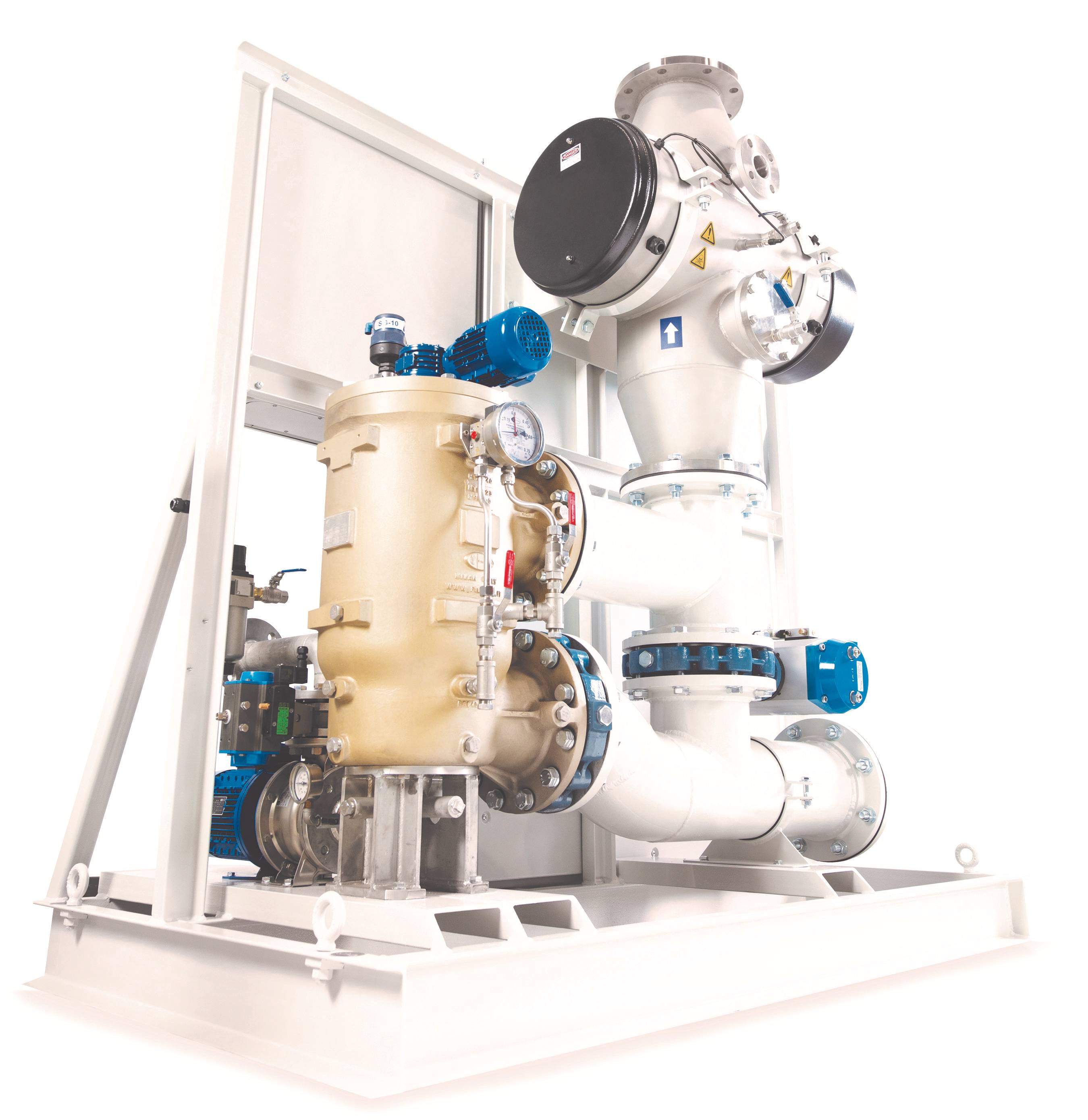
Service: Inspect treatment reactors, filters, sensors, valves, pumps and control panels according to the approved BWMS maintenance plan. Keep ultraviolet sleeves, electrolytic cells or filter elements clean as applicable to the installed process. Verify flow, treatment-status and sampling indications and investigate recurring bypass or low-treatment alarms. Function-test automatic valves and record any bypass or treatment interruption in accordance with vessel procedures. Maintain calibration and service records for compliance-critical sensors. Refer to the manufacturer documentation for the exact figure for treatment limits, cleaning criteria, consumables and calibration values.
Spare Parts: Keep process-specific lamps, sleeves, electrolytic-cell service parts or filter elements as applicable, together with seals, sensors, actuators and manufacturer-recommended control spares. Replacement components must preserve the approved system configuration. Carry consumables appropriate to expected ballast operations and voyage duration.
Use Cases: Ballast-water uptake and discharge treatment on merchant ships and offshore vessels subject to ballast-water management requirements.
Hyde/Calgon EC BWMS 150m3h DNV-approved
EC BWMS 150m3h DNV-approved unverified
· 4.5 kW
Capacity (m³/h)
150
Treatment Method
Electrochlorination
IMO Type Approval
ja
USCG Approved
ja
Power (kW)
4.5
Common Failures & Inspection Points
  • Treatment reactor, ultraviolet lamp or electrolytic-cell deterioration caused by aging, fouling or electrical faults, resulting in low treatment output or an alarm
  • Filter blockage where fitted caused by sediment or biological loading, resulting in rising differential pressure, backflush cycling or reduced ballast flow
  • Sensor or sampling fault caused by fouling, calibration drift or blocked lines, resulting in implausible readings or automatic treatment shutdown
  • Valve, actuator or flow-control failure caused by corrosion, sticking or control faults, resulting in incorrect routing or insufficient treatment contact
  • Control-system or communication failure caused by software, network or power-supply faults, resulting in unavailable automatic operation or persistent alarms
Service: Inspect treatment reactors, filters, sensors, valves, pumps and control panels according to the approved BWMS maintenance plan. Keep ultraviolet sleeves, electrolytic cells or filter elements clean as applicable to the installed process. Verify flow, treatment-status and sampling indications and investigate recurring bypass or low-treatment alarms. Function-test automatic valves and record any bypass or treatment interruption in accordance with vessel procedures. Maintain calibration and service records for compliance-critical sensors. Refer to the manufacturer documentation for the exact figure for treatment limits, cleaning criteria, consumables and calibration values.
Spare Parts: Keep process-specific lamps, sleeves, electrolytic-cell service parts or filter elements as applicable, together with seals, sensors, actuators and manufacturer-recommended control spares. Replacement components must preserve the approved system configuration. Carry consumables appropriate to expected ballast operations and voyage duration.
Use Cases: Ballast-water uptake and discharge treatment on merchant ships and offshore vessels subject to ballast-water management requirements.
EC BWMS 150m3h LR-approved unverified
· 4.5 kW
Capacity (m³/h)
150
Treatment Method
Electrochlorination
IMO Type Approval
ja
USCG Approved
ja
Power (kW)
4.5
Common Failures & Inspection Points
  • Treatment reactor, ultraviolet lamp or electrolytic-cell deterioration caused by aging, fouling or electrical faults, resulting in low treatment output or an alarm
  • Filter blockage where fitted caused by sediment or biological loading, resulting in rising differential pressure, backflush cycling or reduced ballast flow
  • Sensor or sampling fault caused by fouling, calibration drift or blocked lines, resulting in implausible readings or automatic treatment shutdown
  • Valve, actuator or flow-control failure caused by corrosion, sticking or control faults, resulting in incorrect routing or insufficient treatment contact
  • Control-system or communication failure caused by software, network or power-supply faults, resulting in unavailable automatic operation or persistent alarms
Service: Inspect treatment reactors, filters, sensors, valves, pumps and control panels according to the approved BWMS maintenance plan. Keep ultraviolet sleeves, electrolytic cells or filter elements clean as applicable to the installed process. Verify flow, treatment-status and sampling indications and investigate recurring bypass or low-treatment alarms. Function-test automatic valves and record any bypass or treatment interruption in accordance with vessel procedures. Maintain calibration and service records for compliance-critical sensors. Refer to the manufacturer documentation for the exact figure for treatment limits, cleaning criteria, consumables and calibration values.
Spare Parts: Keep process-specific lamps, sleeves, electrolytic-cell service parts or filter elements as applicable, together with seals, sensors, actuators and manufacturer-recommended control spares. Replacement components must preserve the approved system configuration. Carry consumables appropriate to expected ballast operations and voyage duration.
Use Cases: Ballast-water uptake and discharge treatment on merchant ships and offshore vessels subject to ballast-water management requirements.
EC BWMS 150m3h BV-approved unverified
· 4.5 kW
Capacity (m³/h)
150
Treatment Method
Electrochlorination
IMO Type Approval
ja
USCG Approved
ja
Power (kW)
4.5
Common Failures & Inspection Points
  • Treatment reactor, ultraviolet lamp or electrolytic-cell deterioration caused by aging, fouling or electrical faults, resulting in low treatment output or an alarm
  • Filter blockage where fitted caused by sediment or biological loading, resulting in rising differential pressure, backflush cycling or reduced ballast flow
  • Sensor or sampling fault caused by fouling, calibration drift or blocked lines, resulting in implausible readings or automatic treatment shutdown
  • Valve, actuator or flow-control failure caused by corrosion, sticking or control faults, resulting in incorrect routing or insufficient treatment contact
  • Control-system or communication failure caused by software, network or power-supply faults, resulting in unavailable automatic operation or persistent alarms
Service: Inspect treatment reactors, filters, sensors, valves, pumps and control panels according to the approved BWMS maintenance plan. Keep ultraviolet sleeves, electrolytic cells or filter elements clean as applicable to the installed process. Verify flow, treatment-status and sampling indications and investigate recurring bypass or low-treatment alarms. Function-test automatic valves and record any bypass or treatment interruption in accordance with vessel procedures. Maintain calibration and service records for compliance-critical sensors. Refer to the manufacturer documentation for the exact figure for treatment limits, cleaning criteria, consumables and calibration values.
Spare Parts: Keep process-specific lamps, sleeves, electrolytic-cell service parts or filter elements as applicable, together with seals, sensors, actuators and manufacturer-recommended control spares. Replacement components must preserve the approved system configuration. Carry consumables appropriate to expected ballast operations and voyage duration.
Use Cases: Ballast-water uptake and discharge treatment on merchant ships and offshore vessels subject to ballast-water management requirements.
EC BWMS 200m3h DNV-approved unverified
· 6.0 kW
Capacity (m³/h)
200
Treatment Method
Electrochlorination
IMO Type Approval
ja
USCG Approved
ja
Power (kW)
6.0
Common Failures & Inspection Points
  • Treatment reactor, ultraviolet lamp or electrolytic-cell deterioration caused by aging, fouling or electrical faults, resulting in low treatment output or an alarm
  • Filter blockage where fitted caused by sediment or biological loading, resulting in rising differential pressure, backflush cycling or reduced ballast flow
  • Sensor or sampling fault caused by fouling, calibration drift or blocked lines, resulting in implausible readings or automatic treatment shutdown
  • Valve, actuator or flow-control failure caused by corrosion, sticking or control faults, resulting in incorrect routing or insufficient treatment contact
  • Control-system or communication failure caused by software, network or power-supply faults, resulting in unavailable automatic operation or persistent alarms
Service: Inspect treatment reactors, filters, sensors, valves, pumps and control panels according to the approved BWMS maintenance plan. Keep ultraviolet sleeves, electrolytic cells or filter elements clean as applicable to the installed process. Verify flow, treatment-status and sampling indications and investigate recurring bypass or low-treatment alarms. Function-test automatic valves and record any bypass or treatment interruption in accordance with vessel procedures. Maintain calibration and service records for compliance-critical sensors. Refer to the manufacturer documentation for the exact figure for treatment limits, cleaning criteria, consumables and calibration values.
Spare Parts: Keep process-specific lamps, sleeves, electrolytic-cell service parts or filter elements as applicable, together with seals, sensors, actuators and manufacturer-recommended control spares. Replacement components must preserve the approved system configuration. Carry consumables appropriate to expected ballast operations and voyage duration.
Use Cases: Ballast-water uptake and discharge treatment on merchant ships and offshore vessels subject to ballast-water management requirements.
Hyde/Calgon EC BWMS 200m3h LR-approved
EC BWMS 200m3h LR-approved unverified
· 6.0 kW
Capacity (m³/h)
200
Treatment Method
Electrochlorination
IMO Type Approval
ja
USCG Approved
ja
Power (kW)
6.0
Common Failures & Inspection Points
  • Treatment reactor, ultraviolet lamp or electrolytic-cell deterioration caused by aging, fouling or electrical faults, resulting in low treatment output or an alarm
  • Filter blockage where fitted caused by sediment or biological loading, resulting in rising differential pressure, backflush cycling or reduced ballast flow
  • Sensor or sampling fault caused by fouling, calibration drift or blocked lines, resulting in implausible readings or automatic treatment shutdown
  • Valve, actuator or flow-control failure caused by corrosion, sticking or control faults, resulting in incorrect routing or insufficient treatment contact
  • Control-system or communication failure caused by software, network or power-supply faults, resulting in unavailable automatic operation or persistent alarms
Service: Inspect treatment reactors, filters, sensors, valves, pumps and control panels according to the approved BWMS maintenance plan. Keep ultraviolet sleeves, electrolytic cells or filter elements clean as applicable to the installed process. Verify flow, treatment-status and sampling indications and investigate recurring bypass or low-treatment alarms. Function-test automatic valves and record any bypass or treatment interruption in accordance with vessel procedures. Maintain calibration and service records for compliance-critical sensors. Refer to the manufacturer documentation for the exact figure for treatment limits, cleaning criteria, consumables and calibration values.
Spare Parts: Keep process-specific lamps, sleeves, electrolytic-cell service parts or filter elements as applicable, together with seals, sensors, actuators and manufacturer-recommended control spares. Replacement components must preserve the approved system configuration. Carry consumables appropriate to expected ballast operations and voyage duration.
Use Cases: Ballast-water uptake and discharge treatment on merchant ships and offshore vessels subject to ballast-water management requirements.
Hyde/Calgon EC BWMS 200m3h BV-approved
EC BWMS 200m3h BV-approved unverified
· 6.0 kW
Capacity (m³/h)
200
Treatment Method
Electrochlorination
IMO Type Approval
ja
USCG Approved
ja
Power (kW)
6.0
Common Failures & Inspection Points
  • Treatment reactor, ultraviolet lamp or electrolytic-cell deterioration caused by aging, fouling or electrical faults, resulting in low treatment output or an alarm
  • Filter blockage where fitted caused by sediment or biological loading, resulting in rising differential pressure, backflush cycling or reduced ballast flow
  • Sensor or sampling fault caused by fouling, calibration drift or blocked lines, resulting in implausible readings or automatic treatment shutdown
  • Valve, actuator or flow-control failure caused by corrosion, sticking or control faults, resulting in incorrect routing or insufficient treatment contact
  • Control-system or communication failure caused by software, network or power-supply faults, resulting in unavailable automatic operation or persistent alarms
Service: Inspect treatment reactors, filters, sensors, valves, pumps and control panels according to the approved BWMS maintenance plan. Keep ultraviolet sleeves, electrolytic cells or filter elements clean as applicable to the installed process. Verify flow, treatment-status and sampling indications and investigate recurring bypass or low-treatment alarms. Function-test automatic valves and record any bypass or treatment interruption in accordance with vessel procedures. Maintain calibration and service records for compliance-critical sensors. Refer to the manufacturer documentation for the exact figure for treatment limits, cleaning criteria, consumables and calibration values.
Spare Parts: Keep process-specific lamps, sleeves, electrolytic-cell service parts or filter elements as applicable, together with seals, sensors, actuators and manufacturer-recommended control spares. Replacement components must preserve the approved system configuration. Carry consumables appropriate to expected ballast operations and voyage duration.
Use Cases: Ballast-water uptake and discharge treatment on merchant ships and offshore vessels subject to ballast-water management requirements.
EC BWMS 250m3h DNV-approved unverified
· 7.5 kW
Capacity (m³/h)
250
Treatment Method
Electrochlorination
IMO Type Approval
ja
USCG Approved
ja
Power (kW)
7.5
Common Failures & Inspection Points
  • Treatment reactor, ultraviolet lamp or electrolytic-cell deterioration caused by aging, fouling or electrical faults, resulting in low treatment output or an alarm
  • Filter blockage where fitted caused by sediment or biological loading, resulting in rising differential pressure, backflush cycling or reduced ballast flow
  • Sensor or sampling fault caused by fouling, calibration drift or blocked lines, resulting in implausible readings or automatic treatment shutdown
  • Valve, actuator or flow-control failure caused by corrosion, sticking or control faults, resulting in incorrect routing or insufficient treatment contact
  • Control-system or communication failure caused by software, network or power-supply faults, resulting in unavailable automatic operation or persistent alarms
Service: Inspect treatment reactors, filters, sensors, valves, pumps and control panels according to the approved BWMS maintenance plan. Keep ultraviolet sleeves, electrolytic cells or filter elements clean as applicable to the installed process. Verify flow, treatment-status and sampling indications and investigate recurring bypass or low-treatment alarms. Function-test automatic valves and record any bypass or treatment interruption in accordance with vessel procedures. Maintain calibration and service records for compliance-critical sensors. Refer to the manufacturer documentation for the exact figure for treatment limits, cleaning criteria, consumables and calibration values.
Spare Parts: Keep process-specific lamps, sleeves, electrolytic-cell service parts or filter elements as applicable, together with seals, sensors, actuators and manufacturer-recommended control spares. Replacement components must preserve the approved system configuration. Carry consumables appropriate to expected ballast operations and voyage duration.
Use Cases: Ballast-water uptake and discharge treatment on merchant ships and offshore vessels subject to ballast-water management requirements.
EC BWMS 250m3h LR-approved unverified
· 7.5 kW
Capacity (m³/h)
250
Treatment Method
Electrochlorination
IMO Type Approval
ja
USCG Approved
ja
Power (kW)
7.5
Common Failures & Inspection Points
  • Treatment reactor, ultraviolet lamp or electrolytic-cell deterioration caused by aging, fouling or electrical faults, resulting in low treatment output or an alarm
  • Filter blockage where fitted caused by sediment or biological loading, resulting in rising differential pressure, backflush cycling or reduced ballast flow
  • Sensor or sampling fault caused by fouling, calibration drift or blocked lines, resulting in implausible readings or automatic treatment shutdown
  • Valve, actuator or flow-control failure caused by corrosion, sticking or control faults, resulting in incorrect routing or insufficient treatment contact
  • Control-system or communication failure caused by software, network or power-supply faults, resulting in unavailable automatic operation or persistent alarms
Service: Inspect treatment reactors, filters, sensors, valves, pumps and control panels according to the approved BWMS maintenance plan. Keep ultraviolet sleeves, electrolytic cells or filter elements clean as applicable to the installed process. Verify flow, treatment-status and sampling indications and investigate recurring bypass or low-treatment alarms. Function-test automatic valves and record any bypass or treatment interruption in accordance with vessel procedures. Maintain calibration and service records for compliance-critical sensors. Refer to the manufacturer documentation for the exact figure for treatment limits, cleaning criteria, consumables and calibration values.
Spare Parts: Keep process-specific lamps, sleeves, electrolytic-cell service parts or filter elements as applicable, together with seals, sensors, actuators and manufacturer-recommended control spares. Replacement components must preserve the approved system configuration. Carry consumables appropriate to expected ballast operations and voyage duration.
Use Cases: Ballast-water uptake and discharge treatment on merchant ships and offshore vessels subject to ballast-water management requirements.
EC BWMS 250m3h BV-approved unverified
· 7.5 kW
Capacity (m³/h)
250
Treatment Method
Electrochlorination
IMO Type Approval
ja
USCG Approved
ja
Power (kW)
7.5
Common Failures & Inspection Points
  • Treatment reactor, ultraviolet lamp or electrolytic-cell deterioration caused by aging, fouling or electrical faults, resulting in low treatment output or an alarm
  • Filter blockage where fitted caused by sediment or biological loading, resulting in rising differential pressure, backflush cycling or reduced ballast flow
  • Sensor or sampling fault caused by fouling, calibration drift or blocked lines, resulting in implausible readings or automatic treatment shutdown
  • Valve, actuator or flow-control failure caused by corrosion, sticking or control faults, resulting in incorrect routing or insufficient treatment contact
  • Control-system or communication failure caused by software, network or power-supply faults, resulting in unavailable automatic operation or persistent alarms
Service: Inspect treatment reactors, filters, sensors, valves, pumps and control panels according to the approved BWMS maintenance plan. Keep ultraviolet sleeves, electrolytic cells or filter elements clean as applicable to the installed process. Verify flow, treatment-status and sampling indications and investigate recurring bypass or low-treatment alarms. Function-test automatic valves and record any bypass or treatment interruption in accordance with vessel procedures. Maintain calibration and service records for compliance-critical sensors. Refer to the manufacturer documentation for the exact figure for treatment limits, cleaning criteria, consumables and calibration values.
Spare Parts: Keep process-specific lamps, sleeves, electrolytic-cell service parts or filter elements as applicable, together with seals, sensors, actuators and manufacturer-recommended control spares. Replacement components must preserve the approved system configuration. Carry consumables appropriate to expected ballast operations and voyage duration.
Use Cases: Ballast-water uptake and discharge treatment on merchant ships and offshore vessels subject to ballast-water management requirements.
EC BWMS 300m3h DNV-approved unverified
· 9.0 kW
Capacity (m³/h)
300
Treatment Method
Electrochlorination
IMO Type Approval
ja
USCG Approved
ja
Power (kW)
9.0
Common Failures & Inspection Points
  • Treatment reactor, ultraviolet lamp or electrolytic-cell deterioration caused by aging, fouling or electrical faults, resulting in low treatment output or an alarm
  • Filter blockage where fitted caused by sediment or biological loading, resulting in rising differential pressure, backflush cycling or reduced ballast flow
  • Sensor or sampling fault caused by fouling, calibration drift or blocked lines, resulting in implausible readings or automatic treatment shutdown
  • Valve, actuator or flow-control failure caused by corrosion, sticking or control faults, resulting in incorrect routing or insufficient treatment contact
  • Control-system or communication failure caused by software, network or power-supply faults, resulting in unavailable automatic operation or persistent alarms
Service: Inspect treatment reactors, filters, sensors, valves, pumps and control panels according to the approved BWMS maintenance plan. Keep ultraviolet sleeves, electrolytic cells or filter elements clean as applicable to the installed process. Verify flow, treatment-status and sampling indications and investigate recurring bypass or low-treatment alarms. Function-test automatic valves and record any bypass or treatment interruption in accordance with vessel procedures. Maintain calibration and service records for compliance-critical sensors. Refer to the manufacturer documentation for the exact figure for treatment limits, cleaning criteria, consumables and calibration values.
Spare Parts: Keep process-specific lamps, sleeves, electrolytic-cell service parts or filter elements as applicable, together with seals, sensors, actuators and manufacturer-recommended control spares. Replacement components must preserve the approved system configuration. Carry consumables appropriate to expected ballast operations and voyage duration.
Use Cases: Ballast-water uptake and discharge treatment on merchant ships and offshore vessels subject to ballast-water management requirements.
Hyde/Calgon EC BWMS 300m3h LR-approved
EC BWMS 300m3h LR-approved unverified
· 9.0 kW
Capacity (m³/h)
300
Treatment Method
Electrochlorination
IMO Type Approval
ja
USCG Approved
ja
Power (kW)
9.0
Common Failures & Inspection Points
  • Treatment reactor, ultraviolet lamp or electrolytic-cell deterioration caused by aging, fouling or electrical faults, resulting in low treatment output or an alarm
  • Filter blockage where fitted caused by sediment or biological loading, resulting in rising differential pressure, backflush cycling or reduced ballast flow
  • Sensor or sampling fault caused by fouling, calibration drift or blocked lines, resulting in implausible readings or automatic treatment shutdown
  • Valve, actuator or flow-control failure caused by corrosion, sticking or control faults, resulting in incorrect routing or insufficient treatment contact
  • Control-system or communication failure caused by software, network or power-supply faults, resulting in unavailable automatic operation or persistent alarms
Service: Inspect treatment reactors, filters, sensors, valves, pumps and control panels according to the approved BWMS maintenance plan. Keep ultraviolet sleeves, electrolytic cells or filter elements clean as applicable to the installed process. Verify flow, treatment-status and sampling indications and investigate recurring bypass or low-treatment alarms. Function-test automatic valves and record any bypass or treatment interruption in accordance with vessel procedures. Maintain calibration and service records for compliance-critical sensors. Refer to the manufacturer documentation for the exact figure for treatment limits, cleaning criteria, consumables and calibration values.
Spare Parts: Keep process-specific lamps, sleeves, electrolytic-cell service parts or filter elements as applicable, together with seals, sensors, actuators and manufacturer-recommended control spares. Replacement components must preserve the approved system configuration. Carry consumables appropriate to expected ballast operations and voyage duration.
Use Cases: Ballast-water uptake and discharge treatment on merchant ships and offshore vessels subject to ballast-water management requirements.
EC BWMS 300m3h BV-approved unverified
· 9.0 kW
Capacity (m³/h)
300
Treatment Method
Electrochlorination
IMO Type Approval
ja
USCG Approved
ja
Power (kW)
9.0
Common Failures & Inspection Points
  • Treatment reactor, ultraviolet lamp or electrolytic-cell deterioration caused by aging, fouling or electrical faults, resulting in low treatment output or an alarm
  • Filter blockage where fitted caused by sediment or biological loading, resulting in rising differential pressure, backflush cycling or reduced ballast flow
  • Sensor or sampling fault caused by fouling, calibration drift or blocked lines, resulting in implausible readings or automatic treatment shutdown
  • Valve, actuator or flow-control failure caused by corrosion, sticking or control faults, resulting in incorrect routing or insufficient treatment contact
  • Control-system or communication failure caused by software, network or power-supply faults, resulting in unavailable automatic operation or persistent alarms
Service: Inspect treatment reactors, filters, sensors, valves, pumps and control panels according to the approved BWMS maintenance plan. Keep ultraviolet sleeves, electrolytic cells or filter elements clean as applicable to the installed process. Verify flow, treatment-status and sampling indications and investigate recurring bypass or low-treatment alarms. Function-test automatic valves and record any bypass or treatment interruption in accordance with vessel procedures. Maintain calibration and service records for compliance-critical sensors. Refer to the manufacturer documentation for the exact figure for treatment limits, cleaning criteria, consumables and calibration values.
Spare Parts: Keep process-specific lamps, sleeves, electrolytic-cell service parts or filter elements as applicable, together with seals, sensors, actuators and manufacturer-recommended control spares. Replacement components must preserve the approved system configuration. Carry consumables appropriate to expected ballast operations and voyage duration.
Use Cases: Ballast-water uptake and discharge treatment on merchant ships and offshore vessels subject to ballast-water management requirements.
EC BWMS 400m3h DNV-approved unverified
· 12.0 kW
Capacity (m³/h)
400
Treatment Method
Electrochlorination
IMO Type Approval
ja
USCG Approved
ja
Power (kW)
12.0
Common Failures & Inspection Points
  • Treatment reactor, ultraviolet lamp or electrolytic-cell deterioration caused by aging, fouling or electrical faults, resulting in low treatment output or an alarm
  • Filter blockage where fitted caused by sediment or biological loading, resulting in rising differential pressure, backflush cycling or reduced ballast flow
  • Sensor or sampling fault caused by fouling, calibration drift or blocked lines, resulting in implausible readings or automatic treatment shutdown
  • Valve, actuator or flow-control failure caused by corrosion, sticking or control faults, resulting in incorrect routing or insufficient treatment contact
  • Control-system or communication failure caused by software, network or power-supply faults, resulting in unavailable automatic operation or persistent alarms
Service: Inspect treatment reactors, filters, sensors, valves, pumps and control panels according to the approved BWMS maintenance plan. Keep ultraviolet sleeves, electrolytic cells or filter elements clean as applicable to the installed process. Verify flow, treatment-status and sampling indications and investigate recurring bypass or low-treatment alarms. Function-test automatic valves and record any bypass or treatment interruption in accordance with vessel procedures. Maintain calibration and service records for compliance-critical sensors. Refer to the manufacturer documentation for the exact figure for treatment limits, cleaning criteria, consumables and calibration values.
Spare Parts: Keep process-specific lamps, sleeves, electrolytic-cell service parts or filter elements as applicable, together with seals, sensors, actuators and manufacturer-recommended control spares. Replacement components must preserve the approved system configuration.
Use Cases: It is used for ballast-water management on merchant ships, passenger vessels, offshore units or other vessel types where this equipment category is fitted.
EC BWMS 400m3h LR-approved unverified
· 12.0 kW
Capacity (m³/h)
400
Treatment Method
Electrochlorination
IMO Type Approval
ja
USCG Approved
ja
Power (kW)
12.0
Common Failures & Inspection Points
  • Treatment reactor, ultraviolet lamp or electrolytic-cell deterioration caused by aging, fouling or electrical faults, resulting in low treatment output or an alarm
  • Filter blockage where fitted caused by sediment or biological loading, resulting in rising differential pressure, backflush cycling or reduced ballast flow
  • Sensor or sampling fault caused by fouling, calibration drift or blocked lines, resulting in implausible readings or automatic treatment shutdown
  • Valve, actuator or flow-control failure caused by corrosion, sticking or control faults, resulting in incorrect routing or insufficient treatment contact
  • Control-system or communication failure caused by software, network or power-supply faults, resulting in unavailable automatic operation or persistent alarms
Service: Inspect treatment reactors, filters, sensors, valves, pumps and control panels according to the approved BWMS maintenance plan. Keep ultraviolet sleeves, electrolytic cells or filter elements clean as applicable to the installed process. Verify flow, treatment-status and sampling indications and investigate recurring bypass or low-treatment alarms. Function-test automatic valves and record any bypass or treatment interruption in accordance with vessel procedures. Maintain calibration and service records for compliance-critical sensors. Refer to the manufacturer documentation for the exact figure for treatment limits, cleaning criteria, consumables and calibration values.
Spare Parts: Keep process-specific lamps, sleeves, electrolytic-cell service parts or filter elements as applicable, together with seals, sensors, actuators and manufacturer-recommended control spares. Replacement components must preserve the approved system configuration. Carry consumables appropriate to expected ballast operations and voyage duration.
Use Cases: Ballast-water uptake and discharge treatment on merchant ships and offshore vessels subject to ballast-water management requirements.
EC BWMS 400m3h BV-approved unverified
· 12.0 kW
Capacity (m³/h)
400
Treatment Method
Electrochlorination
IMO Type Approval
ja
USCG Approved
ja
Power (kW)
12.0
Common Failures & Inspection Points
  • Treatment reactor, ultraviolet lamp or electrolytic-cell deterioration caused by aging, fouling or electrical faults, resulting in low treatment output or an alarm
  • Filter blockage where fitted caused by sediment or biological loading, resulting in rising differential pressure, backflush cycling or reduced ballast flow
  • Sensor or sampling fault caused by fouling, calibration drift or blocked lines, resulting in implausible readings or automatic treatment shutdown
  • Valve, actuator or flow-control failure caused by corrosion, sticking or control faults, resulting in incorrect routing or insufficient treatment contact
  • Control-system or communication failure caused by software, network or power-supply faults, resulting in unavailable automatic operation or persistent alarms
Service: Inspect treatment reactors, filters, sensors, valves, pumps and control panels according to the approved BWMS maintenance plan. Keep ultraviolet sleeves, electrolytic cells or filter elements clean as applicable to the installed process. Verify flow, treatment-status and sampling indications and investigate recurring bypass or low-treatment alarms. Function-test automatic valves and record any bypass or treatment interruption in accordance with vessel procedures. Maintain calibration and service records for compliance-critical sensors. Refer to the manufacturer documentation for the exact figure for treatment limits, cleaning criteria, consumables and calibration values.
Spare Parts: Keep process-specific lamps, sleeves, electrolytic-cell service parts or filter elements as applicable, together with seals, sensors, actuators and manufacturer-recommended control spares. Replacement components must preserve the approved system configuration. Carry consumables appropriate to expected ballast operations and voyage duration.
Use Cases: Ballast-water uptake and discharge treatment on merchant ships and offshore vessels subject to ballast-water management requirements.
Hyde/Calgon EC BWMS 500m3h DNV-approved
EC BWMS 500m3h DNV-approved unverified
· 15.0 kW
Capacity (m³/h)
500
Treatment Method
Electrochlorination
IMO Type Approval
ja
USCG Approved
ja
Power (kW)
15.0
Common Failures & Inspection Points
  • Treatment reactor, ultraviolet lamp or electrolytic-cell deterioration caused by aging, fouling or electrical faults, resulting in low treatment output or an alarm
  • Filter blockage where fitted caused by sediment or biological loading, resulting in rising differential pressure, backflush cycling or reduced ballast flow
  • Sensor or sampling fault caused by fouling, calibration drift or blocked lines, resulting in implausible readings or automatic treatment shutdown
  • Valve, actuator or flow-control failure caused by corrosion, sticking or control faults, resulting in incorrect routing or insufficient treatment contact
  • Control-system or communication failure caused by software, network or power-supply faults, resulting in unavailable automatic operation or persistent alarms
Service: Inspect treatment reactors, filters, sensors, valves, pumps and control panels according to the approved BWMS maintenance plan. Keep ultraviolet sleeves, electrolytic cells or filter elements clean as applicable to the installed process. Verify flow, treatment-status and sampling indications and investigate recurring bypass or low-treatment alarms. Function-test automatic valves and record any bypass or treatment interruption in accordance with vessel procedures. Maintain calibration and service records for compliance-critical sensors. Refer to the manufacturer documentation for the exact figure for treatment limits, cleaning criteria, consumables and calibration values.
Spare Parts: Keep process-specific lamps, sleeves, electrolytic-cell service parts or filter elements as applicable, together with seals, sensors, actuators and manufacturer-recommended control spares. Replacement components must preserve the approved system configuration.
Use Cases: It is used for ballast-water management on merchant ships, passenger vessels, offshore units or other vessel types where this equipment category is fitted.
Hyde/Calgon EC BWMS 500m3h LR-approved
EC BWMS 500m3h LR-approved unverified
· 15.0 kW
Capacity (m³/h)
500
Treatment Method
Electrochlorination
IMO Type Approval
ja
USCG Approved
ja
Power (kW)
15.0
Common Failures & Inspection Points
  • Treatment reactor, ultraviolet lamp or electrolytic-cell deterioration caused by aging, fouling or electrical faults, resulting in low treatment output or an alarm
  • Filter blockage where fitted caused by sediment or biological loading, resulting in rising differential pressure, backflush cycling or reduced ballast flow
  • Sensor or sampling fault caused by fouling, calibration drift or blocked lines, resulting in implausible readings or automatic treatment shutdown
  • Valve, actuator or flow-control failure caused by corrosion, sticking or control faults, resulting in incorrect routing or insufficient treatment contact
  • Control-system or communication failure caused by software, network or power-supply faults, resulting in unavailable automatic operation or persistent alarms
Service: Inspect treatment reactors, filters, sensors, valves, pumps and control panels according to the approved BWMS maintenance plan. Keep ultraviolet sleeves, electrolytic cells or filter elements clean as applicable to the installed process. Verify flow, treatment-status and sampling indications and investigate recurring bypass or low-treatment alarms. Function-test automatic valves and record any bypass or treatment interruption in accordance with vessel procedures. Maintain calibration and service records for compliance-critical sensors. Refer to the manufacturer documentation for the exact figure for treatment limits, cleaning criteria, consumables and calibration values.
Spare Parts: Keep process-specific lamps, sleeves, electrolytic-cell service parts or filter elements as applicable, together with seals, sensors, actuators and manufacturer-recommended control spares. Replacement components must preserve the approved system configuration. Carry consumables appropriate to expected ballast operations and voyage duration.
Use Cases: Ballast-water uptake and discharge treatment on merchant ships and offshore vessels subject to ballast-water management requirements.
EC BWMS 500m3h BV-approved unverified
· 15.0 kW
Capacity (m³/h)
500
Treatment Method
Electrochlorination
IMO Type Approval
ja
USCG Approved
ja
Power (kW)
15.0
Common Failures & Inspection Points
  • Treatment reactor, ultraviolet lamp or electrolytic-cell deterioration caused by aging, fouling or electrical faults, resulting in low treatment output or an alarm
  • Filter blockage where fitted caused by sediment or biological loading, resulting in rising differential pressure, backflush cycling or reduced ballast flow
  • Sensor or sampling fault caused by fouling, calibration drift or blocked lines, resulting in implausible readings or automatic treatment shutdown
  • Valve, actuator or flow-control failure caused by corrosion, sticking or control faults, resulting in incorrect routing or insufficient treatment contact
  • Control-system or communication failure caused by software, network or power-supply faults, resulting in unavailable automatic operation or persistent alarms
Service: Inspect treatment reactors, filters, sensors, valves, pumps and control panels according to the approved BWMS maintenance plan. Keep ultraviolet sleeves, electrolytic cells or filter elements clean as applicable to the installed process. Verify flow, treatment-status and sampling indications and investigate recurring bypass or low-treatment alarms. Function-test automatic valves and record any bypass or treatment interruption in accordance with vessel procedures. Maintain calibration and service records for compliance-critical sensors. Refer to the manufacturer documentation for the exact figure for treatment limits, cleaning criteria, consumables and calibration values.
Spare Parts: Keep process-specific lamps, sleeves, electrolytic-cell service parts or filter elements as applicable, together with seals, sensors, actuators and manufacturer-recommended control spares. Replacement components must preserve the approved system configuration. Carry consumables appropriate to expected ballast operations and voyage duration.
Use Cases: Ballast-water uptake and discharge treatment on merchant ships and offshore vessels subject to ballast-water management requirements.
EC BWMS 600m3h DNV-approved unverified
· 18.0 kW
Capacity (m³/h)
600
Treatment Method
Electrochlorination
IMO Type Approval
ja
USCG Approved
ja
Power (kW)
18.0
Common Failures & Inspection Points
  • Treatment reactor, ultraviolet lamp or electrolytic-cell deterioration caused by aging, fouling or electrical faults, resulting in low treatment output or an alarm
  • Filter blockage where fitted caused by sediment or biological loading, resulting in rising differential pressure, backflush cycling or reduced ballast flow
  • Sensor or sampling fault caused by fouling, calibration drift or blocked lines, resulting in implausible readings or automatic treatment shutdown
  • Valve, actuator or flow-control failure caused by corrosion, sticking or control faults, resulting in incorrect routing or insufficient treatment contact
  • Control-system or communication failure caused by software, network or power-supply faults, resulting in unavailable automatic operation or persistent alarms
Service: Inspect treatment reactors, filters, sensors, valves, pumps and control panels according to the approved BWMS maintenance plan. Keep ultraviolet sleeves, electrolytic cells or filter elements clean as applicable to the installed process. Verify flow, treatment-status and sampling indications and investigate recurring bypass or low-treatment alarms. Function-test automatic valves and record any bypass or treatment interruption in accordance with vessel procedures. Maintain calibration and service records for compliance-critical sensors. Refer to the manufacturer documentation for the exact figure for treatment limits, cleaning criteria, consumables and calibration values.
Spare Parts: Keep process-specific lamps, sleeves, electrolytic-cell service parts or filter elements as applicable, together with seals, sensors, actuators and manufacturer-recommended control spares. Replacement components must preserve the approved system configuration.
Use Cases: It is used for ballast-water management on merchant ships, passenger vessels, offshore units or other vessel types where this equipment category is fitted.
Hyde/Calgon EC BWMS 600m3h LR-approved
EC BWMS 600m3h LR-approved unverified
· 18.0 kW
Capacity (m³/h)
600
Treatment Method
Electrochlorination
IMO Type Approval
ja
USCG Approved
ja
Power (kW)
18.0
Common Failures & Inspection Points
  • Treatment reactor, ultraviolet lamp or electrolytic-cell deterioration caused by aging, fouling or electrical faults, resulting in low treatment output or an alarm
  • Filter blockage where fitted caused by sediment or biological loading, resulting in rising differential pressure, backflush cycling or reduced ballast flow
  • Sensor or sampling fault caused by fouling, calibration drift or blocked lines, resulting in implausible readings or automatic treatment shutdown
  • Valve, actuator or flow-control failure caused by corrosion, sticking or control faults, resulting in incorrect routing or insufficient treatment contact
  • Control-system or communication failure caused by software, network or power-supply faults, resulting in unavailable automatic operation or persistent alarms
Service: Inspect treatment reactors, filters, sensors, valves, pumps and control panels according to the approved BWMS maintenance plan. Keep ultraviolet sleeves, electrolytic cells or filter elements clean as applicable to the installed process. Verify flow, treatment-status and sampling indications and investigate recurring bypass or low-treatment alarms. Function-test automatic valves and record any bypass or treatment interruption in accordance with vessel procedures. Maintain calibration and service records for compliance-critical sensors. Refer to the manufacturer documentation for the exact figure for treatment limits, cleaning criteria, consumables and calibration values.
Spare Parts: Keep process-specific lamps, sleeves, electrolytic-cell service parts or filter elements as applicable, together with seals, sensors, actuators and manufacturer-recommended control spares. Replacement components must preserve the approved system configuration. Carry consumables appropriate to expected ballast operations and voyage duration.
Use Cases: Ballast-water uptake and discharge treatment on merchant ships and offshore vessels subject to ballast-water management requirements.
EC BWMS 600m3h BV-approved unverified
· 18.0 kW
Capacity (m³/h)
600
Treatment Method
Electrochlorination
IMO Type Approval
ja
USCG Approved
ja
Power (kW)
18.0
Common Failures & Inspection Points
  • Treatment reactor, ultraviolet lamp or electrolytic-cell deterioration caused by aging, fouling or electrical faults, resulting in low treatment output or an alarm
  • Filter blockage where fitted caused by sediment or biological loading, resulting in rising differential pressure, backflush cycling or reduced ballast flow
  • Sensor or sampling fault caused by fouling, calibration drift or blocked lines, resulting in implausible readings or automatic treatment shutdown
  • Valve, actuator or flow-control failure caused by corrosion, sticking or control faults, resulting in incorrect routing or insufficient treatment contact
  • Control-system or communication failure caused by software, network or power-supply faults, resulting in unavailable automatic operation or persistent alarms
Service: Inspect treatment reactors, filters, sensors, valves, pumps and control panels according to the approved BWMS maintenance plan. Keep ultraviolet sleeves, electrolytic cells or filter elements clean as applicable to the installed process. Verify flow, treatment-status and sampling indications and investigate recurring bypass or low-treatment alarms. Function-test automatic valves and record any bypass or treatment interruption in accordance with vessel procedures. Maintain calibration and service records for compliance-critical sensors. Refer to the manufacturer documentation for the exact figure for treatment limits, cleaning criteria, consumables and calibration values.
Spare Parts: Keep process-specific lamps, sleeves, electrolytic-cell service parts or filter elements as applicable, together with seals, sensors, actuators and manufacturer-recommended control spares. Replacement components must preserve the approved system configuration. Carry consumables appropriate to expected ballast operations and voyage duration.
Use Cases: Ballast-water uptake and discharge treatment on merchant ships and offshore vessels subject to ballast-water management requirements.
Hyde/Calgon EC BWMS 750m3h DNV-approved
EC BWMS 750m3h DNV-approved unverified
· 22.5 kW
Capacity (m³/h)
750
Treatment Method
Electrochlorination
IMO Type Approval
ja
USCG Approved
ja
Power (kW)
22.5
Common Failures & Inspection Points
  • Treatment reactor, ultraviolet lamp or electrolytic-cell deterioration caused by aging, fouling or electrical faults, resulting in low treatment output or an alarm
  • Filter blockage where fitted caused by sediment or biological loading, resulting in rising differential pressure, backflush cycling or reduced ballast flow
  • Sensor or sampling fault caused by fouling, calibration drift or blocked lines, resulting in implausible readings or automatic treatment shutdown
  • Valve, actuator or flow-control failure caused by corrosion, sticking or control faults, resulting in incorrect routing or insufficient treatment contact
  • Control-system or communication failure caused by software, network or power-supply faults, resulting in unavailable automatic operation or persistent alarms
Service: Inspect treatment reactors, filters, sensors, valves, pumps and control panels according to the approved BWMS maintenance plan. Keep ultraviolet sleeves, electrolytic cells or filter elements clean as applicable to the installed process. Verify flow, treatment-status and sampling indications and investigate recurring bypass or low-treatment alarms. Function-test automatic valves and record any bypass or treatment interruption in accordance with vessel procedures. Maintain calibration and service records for compliance-critical sensors. Refer to the manufacturer documentation for the exact figure for treatment limits, cleaning criteria, consumables and calibration values.
Spare Parts: Keep process-specific lamps, sleeves, electrolytic-cell service parts or filter elements as applicable, together with seals, sensors, actuators and manufacturer-recommended control spares. Replacement components must preserve the approved system configuration.
Use Cases: It is used for ballast-water management on merchant ships, passenger vessels, offshore units or other vessel types where this equipment category is fitted.
Hyde/Calgon EC BWMS 750m3h LR-approved
EC BWMS 750m3h LR-approved unverified
· 22.5 kW
Capacity (m³/h)
750
Treatment Method
Electrochlorination
IMO Type Approval
ja
USCG Approved
ja
Power (kW)
22.5
Common Failures & Inspection Points
  • Treatment reactor, ultraviolet lamp or electrolytic-cell deterioration caused by aging, fouling or electrical faults, resulting in low treatment output or an alarm
  • Filter blockage where fitted caused by sediment or biological loading, resulting in rising differential pressure, backflush cycling or reduced ballast flow
  • Sensor or sampling fault caused by fouling, calibration drift or blocked lines, resulting in implausible readings or automatic treatment shutdown
  • Valve, actuator or flow-control failure caused by corrosion, sticking or control faults, resulting in incorrect routing or insufficient treatment contact
  • Control-system or communication failure caused by software, network or power-supply faults, resulting in unavailable automatic operation or persistent alarms
Service: Inspect treatment reactors, filters, sensors, valves, pumps and control panels according to the approved BWMS maintenance plan. Keep ultraviolet sleeves, electrolytic cells or filter elements clean as applicable to the installed process. Verify flow, treatment-status and sampling indications and investigate recurring bypass or low-treatment alarms. Function-test automatic valves and record any bypass or treatment interruption in accordance with vessel procedures. Maintain calibration and service records for compliance-critical sensors. Refer to the manufacturer documentation for the exact figure for treatment limits, cleaning criteria, consumables and calibration values.
Spare Parts: Keep process-specific lamps, sleeves, electrolytic-cell service parts or filter elements as applicable, together with seals, sensors, actuators and manufacturer-recommended control spares. Replacement components must preserve the approved system configuration. Carry consumables appropriate to expected ballast operations and voyage duration.
Use Cases: Ballast-water uptake and discharge treatment on merchant ships and offshore vessels subject to ballast-water management requirements.
EC BWMS 750m3h BV-approved unverified
· 22.5 kW
Capacity (m³/h)
750
Treatment Method
Electrochlorination
IMO Type Approval
ja
USCG Approved
ja
Power (kW)
22.5
Common Failures & Inspection Points
  • Treatment reactor, ultraviolet lamp or electrolytic-cell deterioration caused by aging, fouling or electrical faults, resulting in low treatment output or an alarm
  • Filter blockage where fitted caused by sediment or biological loading, resulting in rising differential pressure, backflush cycling or reduced ballast flow
  • Sensor or sampling fault caused by fouling, calibration drift or blocked lines, resulting in implausible readings or automatic treatment shutdown
  • Valve, actuator or flow-control failure caused by corrosion, sticking or control faults, resulting in incorrect routing or insufficient treatment contact
  • Control-system or communication failure caused by software, network or power-supply faults, resulting in unavailable automatic operation or persistent alarms
Service: Inspect treatment reactors, filters, sensors, valves, pumps and control panels according to the approved BWMS maintenance plan. Keep ultraviolet sleeves, electrolytic cells or filter elements clean as applicable to the installed process. Verify flow, treatment-status and sampling indications and investigate recurring bypass or low-treatment alarms. Function-test automatic valves and record any bypass or treatment interruption in accordance with vessel procedures. Maintain calibration and service records for compliance-critical sensors. Refer to the manufacturer documentation for the exact figure for treatment limits, cleaning criteria, consumables and calibration values.
Spare Parts: Keep process-specific lamps, sleeves, electrolytic-cell service parts or filter elements as applicable, together with seals, sensors, actuators and manufacturer-recommended control spares. Replacement components must preserve the approved system configuration. Carry consumables appropriate to expected ballast operations and voyage duration.
Use Cases: Ballast-water uptake and discharge treatment on merchant ships and offshore vessels subject to ballast-water management requirements.
Hyde/Calgon EC BWMS 1000m3h DNV-approved
EC BWMS 1000m3h DNV-approved unverified
· 30.0 kW
Capacity (m³/h)
1000
Treatment Method
Electrochlorination
IMO Type Approval
ja
USCG Approved
ja
Power (kW)
30.0
Common Failures & Inspection Points
  • Treatment reactor, ultraviolet lamp or electrolytic-cell deterioration caused by aging, fouling or electrical faults, resulting in low treatment output or an alarm
  • Filter blockage where fitted caused by sediment or biological loading, resulting in rising differential pressure, backflush cycling or reduced ballast flow
  • Sensor or sampling fault caused by fouling, calibration drift or blocked lines, resulting in implausible readings or automatic treatment shutdown
  • Valve, actuator or flow-control failure caused by corrosion, sticking or control faults, resulting in incorrect routing or insufficient treatment contact
  • Control-system or communication failure caused by software, network or power-supply faults, resulting in unavailable automatic operation or persistent alarms
Service: Inspect treatment reactors, filters, sensors, valves, pumps and control panels according to the approved BWMS maintenance plan. Keep ultraviolet sleeves, electrolytic cells or filter elements clean as applicable to the installed process. Verify flow, treatment-status and sampling indications and investigate recurring bypass or low-treatment alarms. Function-test automatic valves and record any bypass or treatment interruption in accordance with vessel procedures. Maintain calibration and service records for compliance-critical sensors. Refer to the manufacturer documentation for the exact figure for treatment limits, cleaning criteria, consumables and calibration values.
Spare Parts: Keep process-specific lamps, sleeves, electrolytic-cell service parts or filter elements as applicable, together with seals, sensors, actuators and manufacturer-recommended control spares. Replacement components must preserve the approved system configuration.
Use Cases: It is used for ballast-water management on merchant ships, passenger vessels, offshore units or other vessel types where this equipment category is fitted.
EC BWMS 1000m3h LR-approved unverified
· 30.0 kW
Capacity (m³/h)
1000
Treatment Method
Electrochlorination
IMO Type Approval
ja
USCG Approved
ja
Power (kW)
30.0
Common Failures & Inspection Points
  • Treatment reactor, ultraviolet lamp or electrolytic-cell deterioration caused by aging, fouling or electrical faults, resulting in low treatment output or an alarm
  • Filter blockage where fitted caused by sediment or biological loading, resulting in rising differential pressure, backflush cycling or reduced ballast flow
  • Sensor or sampling fault caused by fouling, calibration drift or blocked lines, resulting in implausible readings or automatic treatment shutdown
  • Valve, actuator or flow-control failure caused by corrosion, sticking or control faults, resulting in incorrect routing or insufficient treatment contact
  • Control-system or communication failure caused by software, network or power-supply faults, resulting in unavailable automatic operation or persistent alarms
Service: Inspect treatment reactors, filters, sensors, valves, pumps and control panels according to the approved BWMS maintenance plan. Keep ultraviolet sleeves, electrolytic cells or filter elements clean as applicable to the installed process. Verify flow, treatment-status and sampling indications and investigate recurring bypass or low-treatment alarms. Function-test automatic valves and record any bypass or treatment interruption in accordance with vessel procedures. Maintain calibration and service records for compliance-critical sensors. Refer to the manufacturer documentation for the exact figure for treatment limits, cleaning criteria, consumables and calibration values.
Spare Parts: Keep process-specific lamps, sleeves, electrolytic-cell service parts or filter elements as applicable, together with seals, sensors, actuators and manufacturer-recommended control spares. Replacement components must preserve the approved system configuration.
Use Cases: It is used for ballast-water management on merchant ships, passenger vessels, offshore units or other vessel types where this equipment category is fitted.
EC BWMS 1000m3h BV-approved unverified
· 30.0 kW
Capacity (m³/h)
1000
Treatment Method
Electrochlorination
IMO Type Approval
ja
USCG Approved
ja
Power (kW)
30.0
Common Failures & Inspection Points
  • Treatment reactor, ultraviolet lamp or electrolytic-cell deterioration caused by aging, fouling or electrical faults, resulting in low treatment output or an alarm
  • Filter blockage where fitted caused by sediment or biological loading, resulting in rising differential pressure, backflush cycling or reduced ballast flow
  • Sensor or sampling fault caused by fouling, calibration drift or blocked lines, resulting in implausible readings or automatic treatment shutdown
  • Valve, actuator or flow-control failure caused by corrosion, sticking or control faults, resulting in incorrect routing or insufficient treatment contact
  • Control-system or communication failure caused by software, network or power-supply faults, resulting in unavailable automatic operation or persistent alarms
Service: Inspect treatment reactors, filters, sensors, valves, pumps and control panels according to the approved BWMS maintenance plan. Keep ultraviolet sleeves, electrolytic cells or filter elements clean as applicable to the installed process. Verify flow, treatment-status and sampling indications and investigate recurring bypass or low-treatment alarms. Function-test automatic valves and record any bypass or treatment interruption in accordance with vessel procedures. Maintain calibration and service records for compliance-critical sensors. Refer to the manufacturer documentation for the exact figure for treatment limits, cleaning criteria, consumables and calibration values.
Spare Parts: Keep process-specific lamps, sleeves, electrolytic-cell service parts or filter elements as applicable, together with seals, sensors, actuators and manufacturer-recommended control spares. Replacement components must preserve the approved system configuration.
Use Cases: It is used for ballast-water management on merchant ships, passenger vessels, offshore units or other vessel types where this equipment category is fitted.
EC BWMS 1250m3h DNV-approved unverified
· 37.5 kW
Capacity (m³/h)
1250
Treatment Method
Electrochlorination
IMO Type Approval
ja
USCG Approved
ja
Power (kW)
37.5
Common Failures & Inspection Points
  • Treatment reactor, ultraviolet lamp or electrolytic-cell deterioration caused by aging, fouling or electrical faults, resulting in low treatment output or an alarm
  • Filter blockage where fitted caused by sediment or biological loading, resulting in rising differential pressure, backflush cycling or reduced ballast flow
  • Sensor or sampling fault caused by fouling, calibration drift or blocked lines, resulting in implausible readings or automatic treatment shutdown
  • Valve, actuator or flow-control failure caused by corrosion, sticking or control faults, resulting in incorrect routing or insufficient treatment contact
  • Control-system or communication failure caused by software, network or power-supply faults, resulting in unavailable automatic operation or persistent alarms
Service: Inspect treatment reactors, filters, sensors, valves, pumps and control panels according to the approved BWMS maintenance plan. Keep ultraviolet sleeves, electrolytic cells or filter elements clean as applicable to the installed process. Verify flow, treatment-status and sampling indications and investigate recurring bypass or low-treatment alarms. Function-test automatic valves and record any bypass or treatment interruption in accordance with vessel procedures. Maintain calibration and service records for compliance-critical sensors. Refer to the manufacturer documentation for the exact figure for treatment limits, cleaning criteria, consumables and calibration values.
Spare Parts: Keep process-specific lamps, sleeves, electrolytic-cell service parts or filter elements as applicable, together with seals, sensors, actuators and manufacturer-recommended control spares. Replacement components must preserve the approved system configuration.
Use Cases: It is used for ballast-water management on merchant ships, passenger vessels, offshore units or other vessel types where this equipment category is fitted.
EC BWMS 1250m3h LR-approved unverified
· 37.5 kW
Capacity (m³/h)
1250
Treatment Method
Electrochlorination
IMO Type Approval
ja
USCG Approved
ja
Power (kW)
37.5
Common Failures & Inspection Points
  • Treatment reactor, ultraviolet lamp or electrolytic-cell deterioration caused by aging, fouling or electrical faults, resulting in low treatment output or an alarm
  • Filter blockage where fitted caused by sediment or biological loading, resulting in rising differential pressure, backflush cycling or reduced ballast flow
  • Sensor or sampling fault caused by fouling, calibration drift or blocked lines, resulting in implausible readings or automatic treatment shutdown
  • Valve, actuator or flow-control failure caused by corrosion, sticking or control faults, resulting in incorrect routing or insufficient treatment contact
  • Control-system or communication failure caused by software, network or power-supply faults, resulting in unavailable automatic operation or persistent alarms
Service: Inspect treatment reactors, filters, sensors, valves, pumps and control panels according to the approved BWMS maintenance plan. Keep ultraviolet sleeves, electrolytic cells or filter elements clean as applicable to the installed process. Verify flow, treatment-status and sampling indications and investigate recurring bypass or low-treatment alarms. Function-test automatic valves and record any bypass or treatment interruption in accordance with vessel procedures. Maintain calibration and service records for compliance-critical sensors. Refer to the manufacturer documentation for the exact figure for treatment limits, cleaning criteria, consumables and calibration values.
Spare Parts: Keep process-specific lamps, sleeves, electrolytic-cell service parts or filter elements as applicable, together with seals, sensors, actuators and manufacturer-recommended control spares. Replacement components must preserve the approved system configuration.
Use Cases: It is used for ballast-water management on merchant ships, passenger vessels, offshore units or other vessel types where this equipment category is fitted.
EC BWMS 1250m3h BV-approved unverified
· 37.5 kW
Capacity (m³/h)
1250
Treatment Method
Electrochlorination
IMO Type Approval
ja
USCG Approved
ja
Power (kW)
37.5
Common Failures & Inspection Points
  • Treatment reactor, ultraviolet lamp or electrolytic-cell deterioration caused by aging, fouling or electrical faults, resulting in low treatment output or an alarm
  • Filter blockage where fitted caused by sediment or biological loading, resulting in rising differential pressure, backflush cycling or reduced ballast flow
  • Sensor or sampling fault caused by fouling, calibration drift or blocked lines, resulting in implausible readings or automatic treatment shutdown
  • Valve, actuator or flow-control failure caused by corrosion, sticking or control faults, resulting in incorrect routing or insufficient treatment contact
  • Control-system or communication failure caused by software, network or power-supply faults, resulting in unavailable automatic operation or persistent alarms
Service: Inspect treatment reactors, filters, sensors, valves, pumps and control panels according to the approved BWMS maintenance plan. Keep ultraviolet sleeves, electrolytic cells or filter elements clean as applicable to the installed process. Verify flow, treatment-status and sampling indications and investigate recurring bypass or low-treatment alarms. Function-test automatic valves and record any bypass or treatment interruption in accordance with vessel procedures. Maintain calibration and service records for compliance-critical sensors. Refer to the manufacturer documentation for the exact figure for treatment limits, cleaning criteria, consumables and calibration values.
Spare Parts: Keep process-specific lamps, sleeves, electrolytic-cell service parts or filter elements as applicable, together with seals, sensors, actuators and manufacturer-recommended control spares. Replacement components must preserve the approved system configuration.
Use Cases: It is used for ballast-water management on merchant ships, passenger vessels, offshore units or other vessel types where this equipment category is fitted.
Hyde/Calgon EC BWMS 1500m3h DNV-approved
EC BWMS 1500m3h DNV-approved unverified
· 45.0 kW
Capacity (m³/h)
1500
Treatment Method
Electrochlorination
IMO Type Approval
ja
USCG Approved
ja
Power (kW)
45.0
Common Failures & Inspection Points
  • Treatment reactor, ultraviolet lamp or electrolytic-cell deterioration caused by aging, fouling or electrical faults, resulting in low treatment output or an alarm
  • Filter blockage where fitted caused by sediment or biological loading, resulting in rising differential pressure, backflush cycling or reduced ballast flow
  • Sensor or sampling fault caused by fouling, calibration drift or blocked lines, resulting in implausible readings or automatic treatment shutdown
  • Valve, actuator or flow-control failure caused by corrosion, sticking or control faults, resulting in incorrect routing or insufficient treatment contact
  • Control-system or communication failure caused by software, network or power-supply faults, resulting in unavailable automatic operation or persistent alarms
Service: Inspect treatment reactors, filters, sensors, valves, pumps and control panels according to the approved BWMS maintenance plan. Keep ultraviolet sleeves, electrolytic cells or filter elements clean as applicable to the installed process. Verify flow, treatment-status and sampling indications and investigate recurring bypass or low-treatment alarms. Function-test automatic valves and record any bypass or treatment interruption in accordance with vessel procedures. Maintain calibration and service records for compliance-critical sensors. Refer to the manufacturer documentation for the exact figure for treatment limits, cleaning criteria, consumables and calibration values.
Spare Parts: Keep process-specific lamps, sleeves, electrolytic-cell service parts or filter elements as applicable, together with seals, sensors, actuators and manufacturer-recommended control spares. Replacement components must preserve the approved system configuration.
Use Cases: It is used for ballast-water management on merchant ships, passenger vessels, offshore units or other vessel types where this equipment category is fitted.
Hyde/Calgon EC BWMS 1500m3h LR-approved
EC BWMS 1500m3h LR-approved unverified
· 45.0 kW
Capacity (m³/h)
1500
Treatment Method
Electrochlorination
IMO Type Approval
ja
USCG Approved
ja
Power (kW)
45.0
Common Failures & Inspection Points
  • Treatment reactor, ultraviolet lamp or electrolytic-cell deterioration caused by aging, fouling or electrical faults, resulting in low treatment output or an alarm
  • Filter blockage where fitted caused by sediment or biological loading, resulting in rising differential pressure, backflush cycling or reduced ballast flow
  • Sensor or sampling fault caused by fouling, calibration drift or blocked lines, resulting in implausible readings or automatic treatment shutdown
  • Valve, actuator or flow-control failure caused by corrosion, sticking or control faults, resulting in incorrect routing or insufficient treatment contact
  • Control-system or communication failure caused by software, network or power-supply faults, resulting in unavailable automatic operation or persistent alarms
Service: Inspect treatment reactors, filters, sensors, valves, pumps and control panels according to the approved BWMS maintenance plan. Keep ultraviolet sleeves, electrolytic cells or filter elements clean as applicable to the installed process. Verify flow, treatment-status and sampling indications and investigate recurring bypass or low-treatment alarms. Function-test automatic valves and record any bypass or treatment interruption in accordance with vessel procedures. Maintain calibration and service records for compliance-critical sensors. Refer to the manufacturer documentation for the exact figure for treatment limits, cleaning criteria, consumables and calibration values.
Spare Parts: Keep process-specific lamps, sleeves, electrolytic-cell service parts or filter elements as applicable, together with seals, sensors, actuators and manufacturer-recommended control spares. Replacement components must preserve the approved system configuration.
Use Cases: It is used for ballast-water management on merchant ships, passenger vessels, offshore units or other vessel types where this equipment category is fitted.
EC BWMS 1500m3h BV-approved unverified
· 45.0 kW
Capacity (m³/h)
1500
Treatment Method
Electrochlorination
IMO Type Approval
ja
USCG Approved
ja
Power (kW)
45.0
Common Failures & Inspection Points
  • Treatment reactor, ultraviolet lamp or electrolytic-cell deterioration caused by aging, fouling or electrical faults, resulting in low treatment output or an alarm
  • Filter blockage where fitted caused by sediment or biological loading, resulting in rising differential pressure, backflush cycling or reduced ballast flow
  • Sensor or sampling fault caused by fouling, calibration drift or blocked lines, resulting in implausible readings or automatic treatment shutdown
  • Valve, actuator or flow-control failure caused by corrosion, sticking or control faults, resulting in incorrect routing or insufficient treatment contact
  • Control-system or communication failure caused by software, network or power-supply faults, resulting in unavailable automatic operation or persistent alarms
Service: Inspect treatment reactors, filters, sensors, valves, pumps and control panels according to the approved BWMS maintenance plan. Keep ultraviolet sleeves, electrolytic cells or filter elements clean as applicable to the installed process. Verify flow, treatment-status and sampling indications and investigate recurring bypass or low-treatment alarms. Function-test automatic valves and record any bypass or treatment interruption in accordance with vessel procedures. Maintain calibration and service records for compliance-critical sensors. Refer to the manufacturer documentation for the exact figure for treatment limits, cleaning criteria, consumables and calibration values.
Spare Parts: Keep process-specific lamps, sleeves, electrolytic-cell service parts or filter elements as applicable, together with seals, sensors, actuators and manufacturer-recommended control spares. Replacement components must preserve the approved system configuration.
Use Cases: It is used for ballast-water management on merchant ships, passenger vessels, offshore units or other vessel types where this equipment category is fitted.
EC BWMS 2000m3h DNV-approved unverified
· 60.0 kW
Capacity (m³/h)
2000
Treatment Method
Electrochlorination
IMO Type Approval
ja
USCG Approved
ja
Power (kW)
60.0
Common Failures & Inspection Points
  • Treatment reactor, ultraviolet lamp or electrolytic-cell deterioration caused by aging, fouling or electrical faults, resulting in low treatment output or an alarm
  • Filter blockage where fitted caused by sediment or biological loading, resulting in rising differential pressure, backflush cycling or reduced ballast flow
  • Sensor or sampling fault caused by fouling, calibration drift or blocked lines, resulting in implausible readings or automatic treatment shutdown
  • Valve, actuator or flow-control failure caused by corrosion, sticking or control faults, resulting in incorrect routing or insufficient treatment contact
  • Control-system or communication failure caused by software, network or power-supply faults, resulting in unavailable automatic operation or persistent alarms
Service: Inspect treatment reactors, filters, sensors, valves, pumps and control panels according to the approved BWMS maintenance plan. Keep ultraviolet sleeves, electrolytic cells or filter elements clean as applicable to the installed process. Verify flow, treatment-status and sampling indications and investigate recurring bypass or low-treatment alarms. Function-test automatic valves and record any bypass or treatment interruption in accordance with vessel procedures. Maintain calibration and service records for compliance-critical sensors. Refer to the manufacturer documentation for the exact figure for treatment limits, cleaning criteria, consumables and calibration values.
Spare Parts: Keep process-specific lamps, sleeves, electrolytic-cell service parts or filter elements as applicable, together with seals, sensors, actuators and manufacturer-recommended control spares. Replacement components must preserve the approved system configuration.
Use Cases: It is used for ballast-water management on merchant ships, passenger vessels, offshore units or other vessel types where this equipment category is fitted.
Hyde/Calgon EC BWMS 2000m3h LR-approved
EC BWMS 2000m3h LR-approved unverified
· 60.0 kW
Capacity (m³/h)
2000
Treatment Method
Electrochlorination
IMO Type Approval
ja
USCG Approved
ja
Power (kW)
60.0
Common Failures & Inspection Points
  • Treatment reactor, ultraviolet lamp or electrolytic-cell deterioration caused by aging, fouling or electrical faults, resulting in low treatment output or an alarm
  • Filter blockage where fitted caused by sediment or biological loading, resulting in rising differential pressure, backflush cycling or reduced ballast flow
  • Sensor or sampling fault caused by fouling, calibration drift or blocked lines, resulting in implausible readings or automatic treatment shutdown
  • Valve, actuator or flow-control failure caused by corrosion, sticking or control faults, resulting in incorrect routing or insufficient treatment contact
  • Control-system or communication failure caused by software, network or power-supply faults, resulting in unavailable automatic operation or persistent alarms
Service: Inspect treatment reactors, filters, sensors, valves, pumps and control panels according to the approved BWMS maintenance plan. Keep ultraviolet sleeves, electrolytic cells or filter elements clean as applicable to the installed process. Verify flow, treatment-status and sampling indications and investigate recurring bypass or low-treatment alarms. Function-test automatic valves and record any bypass or treatment interruption in accordance with vessel procedures. Maintain calibration and service records for compliance-critical sensors. Refer to the manufacturer documentation for the exact figure for treatment limits, cleaning criteria, consumables and calibration values.
Spare Parts: Keep process-specific lamps, sleeves, electrolytic-cell service parts or filter elements as applicable, together with seals, sensors, actuators and manufacturer-recommended control spares. Replacement components must preserve the approved system configuration.
Use Cases: It is used for ballast-water management on merchant ships, passenger vessels, offshore units or other vessel types where this equipment category is fitted.
EC BWMS 2000m3h BV-approved unverified
· 60.0 kW
Capacity (m³/h)
2000
Treatment Method
Electrochlorination
IMO Type Approval
ja
USCG Approved
ja
Power (kW)
60.0
Common Failures & Inspection Points
  • Treatment reactor, ultraviolet lamp or electrolytic-cell deterioration caused by aging, fouling or electrical faults, resulting in low treatment output or an alarm
  • Filter blockage where fitted caused by sediment or biological loading, resulting in rising differential pressure, backflush cycling or reduced ballast flow
  • Sensor or sampling fault caused by fouling, calibration drift or blocked lines, resulting in implausible readings or automatic treatment shutdown
  • Valve, actuator or flow-control failure caused by corrosion, sticking or control faults, resulting in incorrect routing or insufficient treatment contact
  • Control-system or communication failure caused by software, network or power-supply faults, resulting in unavailable automatic operation or persistent alarms
Service: Inspect treatment reactors, filters, sensors, valves, pumps and control panels according to the approved BWMS maintenance plan. Keep ultraviolet sleeves, electrolytic cells or filter elements clean as applicable to the installed process. Verify flow, treatment-status and sampling indications and investigate recurring bypass or low-treatment alarms. Function-test automatic valves and record any bypass or treatment interruption in accordance with vessel procedures. Maintain calibration and service records for compliance-critical sensors. Refer to the manufacturer documentation for the exact figure for treatment limits, cleaning criteria, consumables and calibration values.
Spare Parts: Keep process-specific lamps, sleeves, electrolytic-cell service parts or filter elements as applicable, together with seals, sensors, actuators and manufacturer-recommended control spares. Replacement components must preserve the approved system configuration.
Use Cases: It is used for ballast-water management on merchant ships, passenger vessels, offshore units or other vessel types where this equipment category is fitted.
Hyde/Calgon EC BWMS 2500m3h DNV-approved
EC BWMS 2500m3h DNV-approved unverified
· 75.0 kW
Capacity (m³/h)
2500
Treatment Method
Electrochlorination
IMO Type Approval
ja
USCG Approved
ja
Power (kW)
75.0
Common Failures & Inspection Points
  • Treatment reactor, ultraviolet lamp or electrolytic-cell deterioration caused by aging, fouling or electrical faults, resulting in low treatment output or an alarm
  • Filter blockage where fitted caused by sediment or biological loading, resulting in rising differential pressure, backflush cycling or reduced ballast flow
  • Sensor or sampling fault caused by fouling, calibration drift or blocked lines, resulting in implausible readings or automatic treatment shutdown
  • Valve, actuator or flow-control failure caused by corrosion, sticking or control faults, resulting in incorrect routing or insufficient treatment contact
  • Control-system or communication failure caused by software, network or power-supply faults, resulting in unavailable automatic operation or persistent alarms
Service: Inspect treatment reactors, filters, sensors, valves, pumps and control panels according to the approved BWMS maintenance plan. Keep ultraviolet sleeves, electrolytic cells or filter elements clean as applicable to the installed process. Verify flow, treatment-status and sampling indications and investigate recurring bypass or low-treatment alarms. Function-test automatic valves and record any bypass or treatment interruption in accordance with vessel procedures. Maintain calibration and service records for compliance-critical sensors. Refer to the manufacturer documentation for the exact figure for treatment limits, cleaning criteria, consumables and calibration values.
Spare Parts: Keep process-specific lamps, sleeves, electrolytic-cell service parts or filter elements as applicable, together with seals, sensors, actuators and manufacturer-recommended control spares. Replacement components must preserve the approved system configuration.
Use Cases: It is used for ballast-water management on merchant ships, passenger vessels, offshore units or other vessel types where this equipment category is fitted.
EC BWMS 2500m3h LR-approved unverified
· 75.0 kW
Capacity (m³/h)
2500
Treatment Method
Electrochlorination
IMO Type Approval
ja
USCG Approved
ja
Power (kW)
75.0
Common Failures & Inspection Points
  • Treatment reactor, ultraviolet lamp or electrolytic-cell deterioration caused by aging, fouling or electrical faults, resulting in low treatment output or an alarm
  • Filter blockage where fitted caused by sediment or biological loading, resulting in rising differential pressure, backflush cycling or reduced ballast flow
  • Sensor or sampling fault caused by fouling, calibration drift or blocked lines, resulting in implausible readings or automatic treatment shutdown
  • Valve, actuator or flow-control failure caused by corrosion, sticking or control faults, resulting in incorrect routing or insufficient treatment contact
  • Control-system or communication failure caused by software, network or power-supply faults, resulting in unavailable automatic operation or persistent alarms
Service: Inspect treatment reactors, filters, sensors, valves, pumps and control panels according to the approved BWMS maintenance plan. Keep ultraviolet sleeves, electrolytic cells or filter elements clean as applicable to the installed process. Verify flow, treatment-status and sampling indications and investigate recurring bypass or low-treatment alarms. Function-test automatic valves and record any bypass or treatment interruption in accordance with vessel procedures. Maintain calibration and service records for compliance-critical sensors. Refer to the manufacturer documentation for the exact figure for treatment limits, cleaning criteria, consumables and calibration values.
Spare Parts: Keep process-specific lamps, sleeves, electrolytic-cell service parts or filter elements as applicable, together with seals, sensors, actuators and manufacturer-recommended control spares. Replacement components must preserve the approved system configuration.
Use Cases: It is used for ballast-water management on merchant ships, passenger vessels, offshore units or other vessel types where this equipment category is fitted.
EC BWMS 2500m3h BV-approved unverified
· 75.0 kW
Capacity (m³/h)
2500
Treatment Method
Electrochlorination
IMO Type Approval
ja
USCG Approved
ja
Power (kW)
75.0
Common Failures & Inspection Points
  • Treatment reactor, ultraviolet lamp or electrolytic-cell deterioration caused by aging, fouling or electrical faults, resulting in low treatment output or an alarm
  • Filter blockage where fitted caused by sediment or biological loading, resulting in rising differential pressure, backflush cycling or reduced ballast flow
  • Sensor or sampling fault caused by fouling, calibration drift or blocked lines, resulting in implausible readings or automatic treatment shutdown
  • Valve, actuator or flow-control failure caused by corrosion, sticking or control faults, resulting in incorrect routing or insufficient treatment contact
  • Control-system or communication failure caused by software, network or power-supply faults, resulting in unavailable automatic operation or persistent alarms
Service: Inspect treatment reactors, filters, sensors, valves, pumps and control panels according to the approved BWMS maintenance plan. Keep ultraviolet sleeves, electrolytic cells or filter elements clean as applicable to the installed process. Verify flow, treatment-status and sampling indications and investigate recurring bypass or low-treatment alarms. Function-test automatic valves and record any bypass or treatment interruption in accordance with vessel procedures. Maintain calibration and service records for compliance-critical sensors. Refer to the manufacturer documentation for the exact figure for treatment limits, cleaning criteria, consumables and calibration values.
Spare Parts: Keep process-specific lamps, sleeves, electrolytic-cell service parts or filter elements as applicable, together with seals, sensors, actuators and manufacturer-recommended control spares. Replacement components must preserve the approved system configuration.
Use Cases: It is used for ballast-water management on merchant ships, passenger vessels, offshore units or other vessel types where this equipment category is fitted.
EC BWMS 3000m3h DNV-approved unverified
· 90.0 kW
Capacity (m³/h)
3000
Treatment Method
Electrochlorination
IMO Type Approval
ja
USCG Approved
ja
Power (kW)
90.0
Common Failures & Inspection Points
  • Treatment reactor, ultraviolet lamp or electrolytic-cell deterioration caused by aging, fouling or electrical faults, resulting in low treatment output or an alarm
  • Filter blockage where fitted caused by sediment or biological loading, resulting in rising differential pressure, backflush cycling or reduced ballast flow
  • Sensor or sampling fault caused by fouling, calibration drift or blocked lines, resulting in implausible readings or automatic treatment shutdown
  • Valve, actuator or flow-control failure caused by corrosion, sticking or control faults, resulting in incorrect routing or insufficient treatment contact
  • Control-system or communication failure caused by software, network or power-supply faults, resulting in unavailable automatic operation or persistent alarms
Service: Inspect treatment reactors, filters, sensors, valves, pumps and control panels according to the approved BWMS maintenance plan. Keep ultraviolet sleeves, electrolytic cells or filter elements clean as applicable to the installed process. Verify flow, treatment-status and sampling indications and investigate recurring bypass or low-treatment alarms. Function-test automatic valves and record any bypass or treatment interruption in accordance with vessel procedures. Maintain calibration and service records for compliance-critical sensors. Refer to the manufacturer documentation for the exact figure for treatment limits, cleaning criteria, consumables and calibration values.
Spare Parts: Keep process-specific lamps, sleeves, electrolytic-cell service parts or filter elements as applicable, together with seals, sensors, actuators and manufacturer-recommended control spares. Replacement components must preserve the approved system configuration.
Use Cases: It is used for ballast-water management on merchant ships, passenger vessels, offshore units or other vessel types where this equipment category is fitted.
EC BWMS 3000m3h LR-approved unverified
· 90.0 kW
Capacity (m³/h)
3000
Treatment Method
Electrochlorination
IMO Type Approval
ja
USCG Approved
ja
Power (kW)
90.0
Common Failures & Inspection Points
  • Treatment reactor, ultraviolet lamp or electrolytic-cell deterioration caused by aging, fouling or electrical faults, resulting in low treatment output or an alarm
  • Filter blockage where fitted caused by sediment or biological loading, resulting in rising differential pressure, backflush cycling or reduced ballast flow
  • Sensor or sampling fault caused by fouling, calibration drift or blocked lines, resulting in implausible readings or automatic treatment shutdown
  • Valve, actuator or flow-control failure caused by corrosion, sticking or control faults, resulting in incorrect routing or insufficient treatment contact
  • Control-system or communication failure caused by software, network or power-supply faults, resulting in unavailable automatic operation or persistent alarms
Service: Inspect treatment reactors, filters, sensors, valves, pumps and control panels according to the approved BWMS maintenance plan. Keep ultraviolet sleeves, electrolytic cells or filter elements clean as applicable to the installed process. Verify flow, treatment-status and sampling indications and investigate recurring bypass or low-treatment alarms. Function-test automatic valves and record any bypass or treatment interruption in accordance with vessel procedures. Maintain calibration and service records for compliance-critical sensors. Refer to the manufacturer documentation for the exact figure for treatment limits, cleaning criteria, consumables and calibration values.
Spare Parts: Keep process-specific lamps, sleeves, electrolytic-cell service parts or filter elements as applicable, together with seals, sensors, actuators and manufacturer-recommended control spares. Replacement components must preserve the approved system configuration.
Use Cases: It is used for ballast-water management on merchant ships, passenger vessels, offshore units or other vessel types where this equipment category is fitted.
EC BWMS 3000m3h BV-approved unverified
· 90.0 kW
Capacity (m³/h)
3000
Treatment Method
Electrochlorination
IMO Type Approval
ja
USCG Approved
ja
Power (kW)
90.0
Common Failures & Inspection Points
  • Treatment reactor, ultraviolet lamp or electrolytic-cell deterioration caused by aging, fouling or electrical faults, resulting in low treatment output or an alarm
  • Filter blockage where fitted caused by sediment or biological loading, resulting in rising differential pressure, backflush cycling or reduced ballast flow
  • Sensor or sampling fault caused by fouling, calibration drift or blocked lines, resulting in implausible readings or automatic treatment shutdown
  • Valve, actuator or flow-control failure caused by corrosion, sticking or control faults, resulting in incorrect routing or insufficient treatment contact
  • Control-system or communication failure caused by software, network or power-supply faults, resulting in unavailable automatic operation or persistent alarms
Service: Inspect treatment reactors, filters, sensors, valves, pumps and control panels according to the approved BWMS maintenance plan. Keep ultraviolet sleeves, electrolytic cells or filter elements clean as applicable to the installed process. Verify flow, treatment-status and sampling indications and investigate recurring bypass or low-treatment alarms. Function-test automatic valves and record any bypass or treatment interruption in accordance with vessel procedures. Maintain calibration and service records for compliance-critical sensors. Refer to the manufacturer documentation for the exact figure for treatment limits, cleaning criteria, consumables and calibration values.
Spare Parts: Keep process-specific lamps, sleeves, electrolytic-cell service parts or filter elements as applicable, together with seals, sensors, actuators and manufacturer-recommended control spares. Replacement components must preserve the approved system configuration.
Use Cases: It is used for ballast-water management on merchant ships, passenger vessels, offshore units or other vessel types where this equipment category is fitted.
EC BWMS 3500m3h DNV-approved unverified
· 105.0 kW
Capacity (m³/h)
3500
Treatment Method
Electrochlorination
IMO Type Approval
ja
USCG Approved
ja
Power (kW)
105.0
Common Failures & Inspection Points
  • Treatment reactor, ultraviolet lamp or electrolytic-cell deterioration caused by aging, fouling or electrical faults, resulting in low treatment output or an alarm
  • Filter blockage where fitted caused by sediment or biological loading, resulting in rising differential pressure, backflush cycling or reduced ballast flow
  • Sensor or sampling fault caused by fouling, calibration drift or blocked lines, resulting in implausible readings or automatic treatment shutdown
  • Valve, actuator or flow-control failure caused by corrosion, sticking or control faults, resulting in incorrect routing or insufficient treatment contact
  • Control-system or communication failure caused by software, network or power-supply faults, resulting in unavailable automatic operation or persistent alarms
Service: Inspect treatment reactors, filters, sensors, valves, pumps and control panels according to the approved BWMS maintenance plan. Keep ultraviolet sleeves, electrolytic cells or filter elements clean as applicable to the installed process. Verify flow, treatment-status and sampling indications and investigate recurring bypass or low-treatment alarms. Function-test automatic valves and record any bypass or treatment interruption in accordance with vessel procedures. Maintain calibration and service records for compliance-critical sensors. Refer to the manufacturer documentation for the exact figure for treatment limits, cleaning criteria, consumables and calibration values.
Spare Parts: Keep process-specific lamps, sleeves, electrolytic-cell service parts or filter elements as applicable, together with seals, sensors, actuators and manufacturer-recommended control spares. Replacement components must preserve the approved system configuration.
Use Cases: It is used for ballast-water management on merchant ships, passenger vessels, offshore units or other vessel types where this equipment category is fitted.
EC BWMS 3500m3h LR-approved unverified
· 105.0 kW
Capacity (m³/h)
3500
Treatment Method
Electrochlorination
IMO Type Approval
ja
USCG Approved
ja
Power (kW)
105.0
Common Failures & Inspection Points
  • Treatment reactor, ultraviolet lamp or electrolytic-cell deterioration caused by aging, fouling or electrical faults, resulting in low treatment output or an alarm
  • Filter blockage where fitted caused by sediment or biological loading, resulting in rising differential pressure, backflush cycling or reduced ballast flow
  • Sensor or sampling fault caused by fouling, calibration drift or blocked lines, resulting in implausible readings or automatic treatment shutdown
  • Valve, actuator or flow-control failure caused by corrosion, sticking or control faults, resulting in incorrect routing or insufficient treatment contact
  • Control-system or communication failure caused by software, network or power-supply faults, resulting in unavailable automatic operation or persistent alarms
Service: Inspect treatment reactors, filters, sensors, valves, pumps and control panels according to the approved BWMS maintenance plan. Keep ultraviolet sleeves, electrolytic cells or filter elements clean as applicable to the installed process. Verify flow, treatment-status and sampling indications and investigate recurring bypass or low-treatment alarms. Function-test automatic valves and record any bypass or treatment interruption in accordance with vessel procedures. Maintain calibration and service records for compliance-critical sensors. Refer to the manufacturer documentation for the exact figure for treatment limits, cleaning criteria, consumables and calibration values.
Spare Parts: Keep process-specific lamps, sleeves, electrolytic-cell service parts or filter elements as applicable, together with seals, sensors, actuators and manufacturer-recommended control spares. Replacement components must preserve the approved system configuration.
Use Cases: It is used for ballast-water management on merchant ships, passenger vessels, offshore units or other vessel types where this equipment category is fitted.
EC BWMS 3500m3h BV-approved unverified
· 105.0 kW
Capacity (m³/h)
3500
Treatment Method
Electrochlorination
IMO Type Approval
ja
USCG Approved
ja
Power (kW)
105.0
Common Failures & Inspection Points
  • Treatment reactor, ultraviolet lamp or electrolytic-cell deterioration caused by aging, fouling or electrical faults, resulting in low treatment output or an alarm
  • Filter blockage where fitted caused by sediment or biological loading, resulting in rising differential pressure, backflush cycling or reduced ballast flow
  • Sensor or sampling fault caused by fouling, calibration drift or blocked lines, resulting in implausible readings or automatic treatment shutdown
  • Valve, actuator or flow-control failure caused by corrosion, sticking or control faults, resulting in incorrect routing or insufficient treatment contact
  • Control-system or communication failure caused by software, network or power-supply faults, resulting in unavailable automatic operation or persistent alarms
Service: Inspect treatment reactors, filters, sensors, valves, pumps and control panels according to the approved BWMS maintenance plan. Keep ultraviolet sleeves, electrolytic cells or filter elements clean as applicable to the installed process. Verify flow, treatment-status and sampling indications and investigate recurring bypass or low-treatment alarms. Function-test automatic valves and record any bypass or treatment interruption in accordance with vessel procedures. Maintain calibration and service records for compliance-critical sensors. Refer to the manufacturer documentation for the exact figure for treatment limits, cleaning criteria, consumables and calibration values.
Spare Parts: Keep process-specific lamps, sleeves, electrolytic-cell service parts or filter elements as applicable, together with seals, sensors, actuators and manufacturer-recommended control spares. Replacement components must preserve the approved system configuration.
Use Cases: It is used for ballast-water management on merchant ships, passenger vessels, offshore units or other vessel types where this equipment category is fitted.
Hyde/Calgon EC BWMS 4000m3h DNV-approved
EC BWMS 4000m3h DNV-approved unverified
· 120.0 kW
Capacity (m³/h)
4000
Treatment Method
Electrochlorination
IMO Type Approval
ja
USCG Approved
ja
Power (kW)
120.0
Common Failures & Inspection Points
  • Treatment reactor, ultraviolet lamp or electrolytic-cell deterioration caused by aging, fouling or electrical faults, resulting in low treatment output or an alarm
  • Filter blockage where fitted caused by sediment or biological loading, resulting in rising differential pressure, backflush cycling or reduced ballast flow
  • Sensor or sampling fault caused by fouling, calibration drift or blocked lines, resulting in implausible readings or automatic treatment shutdown
  • Valve, actuator or flow-control failure caused by corrosion, sticking or control faults, resulting in incorrect routing or insufficient treatment contact
  • Control-system or communication failure caused by software, network or power-supply faults, resulting in unavailable automatic operation or persistent alarms
Service: Inspect treatment reactors, filters, sensors, valves, pumps and control panels according to the approved BWMS maintenance plan. Keep ultraviolet sleeves, electrolytic cells or filter elements clean as applicable to the installed process. Verify flow, treatment-status and sampling indications and investigate recurring bypass or low-treatment alarms. Function-test automatic valves and record any bypass or treatment interruption in accordance with vessel procedures. Maintain calibration and service records for compliance-critical sensors. Refer to the manufacturer documentation for the exact figure for treatment limits, cleaning criteria, consumables and calibration values.
Spare Parts: Keep process-specific lamps, sleeves, electrolytic-cell service parts or filter elements as applicable, together with seals, sensors, actuators and manufacturer-recommended control spares. Replacement components must preserve the approved system configuration.
Use Cases: It is used for ballast-water management on merchant ships, passenger vessels, offshore units or other vessel types where this equipment category is fitted.
EC BWMS 4000m3h LR-approved unverified
· 120.0 kW
Capacity (m³/h)
4000
Treatment Method
Electrochlorination
IMO Type Approval
ja
USCG Approved
ja
Power (kW)
120.0
Common Failures & Inspection Points
  • Treatment reactor, ultraviolet lamp or electrolytic-cell deterioration caused by aging, fouling or electrical faults, resulting in low treatment output or an alarm
  • Filter blockage where fitted caused by sediment or biological loading, resulting in rising differential pressure, backflush cycling or reduced ballast flow
  • Sensor or sampling fault caused by fouling, calibration drift or blocked lines, resulting in implausible readings or automatic treatment shutdown
  • Valve, actuator or flow-control failure caused by corrosion, sticking or control faults, resulting in incorrect routing or insufficient treatment contact
  • Control-system or communication failure caused by software, network or power-supply faults, resulting in unavailable automatic operation or persistent alarms
Service: Inspect treatment reactors, filters, sensors, valves, pumps and control panels according to the approved BWMS maintenance plan. Keep ultraviolet sleeves, electrolytic cells or filter elements clean as applicable to the installed process. Verify flow, treatment-status and sampling indications and investigate recurring bypass or low-treatment alarms. Function-test automatic valves and record any bypass or treatment interruption in accordance with vessel procedures. Maintain calibration and service records for compliance-critical sensors. Refer to the manufacturer documentation for the exact figure for treatment limits, cleaning criteria, consumables and calibration values.
Spare Parts: Keep process-specific lamps, sleeves, electrolytic-cell service parts or filter elements as applicable, together with seals, sensors, actuators and manufacturer-recommended control spares. Replacement components must preserve the approved system configuration.
Use Cases: It is used for ballast-water management on merchant ships, passenger vessels, offshore units or other vessel types where this equipment category is fitted.
EC BWMS 4000m3h BV-approved unverified
· 120.0 kW
Capacity (m³/h)
4000
Treatment Method
Electrochlorination
IMO Type Approval
ja
USCG Approved
ja
Power (kW)
120.0
Common Failures & Inspection Points
  • Treatment reactor, ultraviolet lamp or electrolytic-cell deterioration caused by aging, fouling or electrical faults, resulting in low treatment output or an alarm
  • Filter blockage where fitted caused by sediment or biological loading, resulting in rising differential pressure, backflush cycling or reduced ballast flow
  • Sensor or sampling fault caused by fouling, calibration drift or blocked lines, resulting in implausible readings or automatic treatment shutdown
  • Valve, actuator or flow-control failure caused by corrosion, sticking or control faults, resulting in incorrect routing or insufficient treatment contact
  • Control-system or communication failure caused by software, network or power-supply faults, resulting in unavailable automatic operation or persistent alarms
Service: Inspect treatment reactors, filters, sensors, valves, pumps and control panels according to the approved BWMS maintenance plan. Keep ultraviolet sleeves, electrolytic cells or filter elements clean as applicable to the installed process. Verify flow, treatment-status and sampling indications and investigate recurring bypass or low-treatment alarms. Function-test automatic valves and record any bypass or treatment interruption in accordance with vessel procedures. Maintain calibration and service records for compliance-critical sensors. Refer to the manufacturer documentation for the exact figure for treatment limits, cleaning criteria, consumables and calibration values.
Spare Parts: Keep process-specific lamps, sleeves, electrolytic-cell service parts or filter elements as applicable, together with seals, sensors, actuators and manufacturer-recommended control spares. Replacement components must preserve the approved system configuration.
Use Cases: It is used for ballast-water management on merchant ships, passenger vessels, offshore units or other vessel types where this equipment category is fitted.
Hyde/Calgon EC BWMS 5000m3h DNV-approved
EC BWMS 5000m3h DNV-approved unverified
· 150.0 kW
Capacity (m³/h)
5000
Treatment Method
Electrochlorination
IMO Type Approval
ja
USCG Approved
ja
Power (kW)
150.0
Common Failures & Inspection Points
  • Treatment reactor, ultraviolet lamp or electrolytic-cell deterioration caused by aging, fouling or electrical faults, resulting in low treatment output or an alarm
  • Filter blockage where fitted caused by sediment or biological loading, resulting in rising differential pressure, backflush cycling or reduced ballast flow
  • Sensor or sampling fault caused by fouling, calibration drift or blocked lines, resulting in implausible readings or automatic treatment shutdown
  • Valve, actuator or flow-control failure caused by corrosion, sticking or control faults, resulting in incorrect routing or insufficient treatment contact
  • Control-system or communication failure caused by software, network or power-supply faults, resulting in unavailable automatic operation or persistent alarms
Service: Inspect treatment reactors, filters, sensors, valves, pumps and control panels according to the approved BWMS maintenance plan. Keep ultraviolet sleeves, electrolytic cells or filter elements clean as applicable to the installed process. Verify flow, treatment-status and sampling indications and investigate recurring bypass or low-treatment alarms. Function-test automatic valves and record any bypass or treatment interruption in accordance with vessel procedures. Maintain calibration and service records for compliance-critical sensors. Refer to the manufacturer documentation for the exact figure for treatment limits, cleaning criteria, consumables and calibration values.
Spare Parts: Keep process-specific lamps, sleeves, electrolytic-cell service parts or filter elements as applicable, together with seals, sensors, actuators and manufacturer-recommended control spares. Replacement components must preserve the approved system configuration.
Use Cases: It is used for ballast-water management on merchant ships, passenger vessels, offshore units or other vessel types where this equipment category is fitted.
EC BWMS 5000m3h LR-approved unverified
· 150.0 kW
Capacity (m³/h)
5000
Treatment Method
Electrochlorination
IMO Type Approval
ja
USCG Approved
ja
Power (kW)
150.0
Common Failures & Inspection Points
  • Treatment reactor, ultraviolet lamp or electrolytic-cell deterioration caused by aging, fouling or electrical faults, resulting in low treatment output or an alarm
  • Filter blockage where fitted caused by sediment or biological loading, resulting in rising differential pressure, backflush cycling or reduced ballast flow
  • Sensor or sampling fault caused by fouling, calibration drift or blocked lines, resulting in implausible readings or automatic treatment shutdown
  • Valve, actuator or flow-control failure caused by corrosion, sticking or control faults, resulting in incorrect routing or insufficient treatment contact
  • Control-system or communication failure caused by software, network or power-supply faults, resulting in unavailable automatic operation or persistent alarms
Service: Inspect treatment reactors, filters, sensors, valves, pumps and control panels according to the approved BWMS maintenance plan. Keep ultraviolet sleeves, electrolytic cells or filter elements clean as applicable to the installed process. Verify flow, treatment-status and sampling indications and investigate recurring bypass or low-treatment alarms. Function-test automatic valves and record any bypass or treatment interruption in accordance with vessel procedures. Maintain calibration and service records for compliance-critical sensors. Refer to the manufacturer documentation for the exact figure for treatment limits, cleaning criteria, consumables and calibration values.
Spare Parts: Keep process-specific lamps, sleeves, electrolytic-cell service parts or filter elements as applicable, together with seals, sensors, actuators and manufacturer-recommended control spares. Replacement components must preserve the approved system configuration.
Use Cases: It is used for ballast-water management on merchant ships, passenger vessels, offshore units or other vessel types where this equipment category is fitted.
Hyde/Calgon EC BWMS 5000m3h BV-approved
EC BWMS 5000m3h BV-approved unverified
· 150.0 kW
Capacity (m³/h)
5000
Treatment Method
Electrochlorination
IMO Type Approval
ja
USCG Approved
ja
Power (kW)
150.0
Common Failures & Inspection Points
  • Treatment reactor, ultraviolet lamp or electrolytic-cell deterioration caused by aging, fouling or electrical faults, resulting in low treatment output or an alarm
  • Filter blockage where fitted caused by sediment or biological loading, resulting in rising differential pressure, backflush cycling or reduced ballast flow
  • Sensor or sampling fault caused by fouling, calibration drift or blocked lines, resulting in implausible readings or automatic treatment shutdown
  • Valve, actuator or flow-control failure caused by corrosion, sticking or control faults, resulting in incorrect routing or insufficient treatment contact
  • Control-system or communication failure caused by software, network or power-supply faults, resulting in unavailable automatic operation or persistent alarms
Service: Inspect treatment reactors, filters, sensors, valves, pumps and control panels according to the approved BWMS maintenance plan. Keep ultraviolet sleeves, electrolytic cells or filter elements clean as applicable to the installed process. Verify flow, treatment-status and sampling indications and investigate recurring bypass or low-treatment alarms. Function-test automatic valves and record any bypass or treatment interruption in accordance with vessel procedures. Maintain calibration and service records for compliance-critical sensors. Refer to the manufacturer documentation for the exact figure for treatment limits, cleaning criteria, consumables and calibration values.
Spare Parts: Keep process-specific lamps, sleeves, electrolytic-cell service parts or filter elements as applicable, together with seals, sensors, actuators and manufacturer-recommended control spares. Replacement components must preserve the approved system configuration.
Use Cases: It is used for ballast-water management on merchant ships, passenger vessels, offshore units or other vessel types where this equipment category is fitted.
Hyde/Calgon EC BWMS 6000m3h DNV-approved
EC BWMS 6000m3h DNV-approved unverified
· 180.0 kW
Capacity (m³/h)
6000
Treatment Method
Electrochlorination
IMO Type Approval
ja
USCG Approved
ja
Power (kW)
180.0
Common Failures & Inspection Points
  • Treatment reactor, ultraviolet lamp or electrolytic-cell deterioration caused by aging, fouling or electrical faults, resulting in low treatment output or an alarm
  • Filter blockage where fitted caused by sediment or biological loading, resulting in rising differential pressure, backflush cycling or reduced ballast flow
  • Sensor or sampling fault caused by fouling, calibration drift or blocked lines, resulting in implausible readings or automatic treatment shutdown
  • Valve, actuator or flow-control failure caused by corrosion, sticking or control faults, resulting in incorrect routing or insufficient treatment contact
  • Control-system or communication failure caused by software, network or power-supply faults, resulting in unavailable automatic operation or persistent alarms
Service: Inspect treatment reactors, filters, sensors, valves, pumps and control panels according to the approved BWMS maintenance plan. Keep ultraviolet sleeves, electrolytic cells or filter elements clean as applicable to the installed process. Verify flow, treatment-status and sampling indications and investigate recurring bypass or low-treatment alarms. Function-test automatic valves and record any bypass or treatment interruption in accordance with vessel procedures. Maintain calibration and service records for compliance-critical sensors. Refer to the manufacturer documentation for the exact figure for treatment limits, cleaning criteria, consumables and calibration values.
Spare Parts: Keep process-specific lamps, sleeves, electrolytic-cell service parts or filter elements as applicable, together with seals, sensors, actuators and manufacturer-recommended control spares. Replacement components must preserve the approved system configuration.
Use Cases: It is used for ballast-water management on merchant ships, passenger vessels, offshore units or other vessel types where this equipment category is fitted.
EC BWMS 6000m3h LR-approved unverified
· 180.0 kW
Capacity (m³/h)
6000
Treatment Method
Electrochlorination
IMO Type Approval
ja
USCG Approved
ja
Power (kW)
180.0
Common Failures & Inspection Points
  • Treatment reactor, ultraviolet lamp or electrolytic-cell deterioration caused by aging, fouling or electrical faults, resulting in low treatment output or an alarm
  • Filter blockage where fitted caused by sediment or biological loading, resulting in rising differential pressure, backflush cycling or reduced ballast flow
  • Sensor or sampling fault caused by fouling, calibration drift or blocked lines, resulting in implausible readings or automatic treatment shutdown
  • Valve, actuator or flow-control failure caused by corrosion, sticking or control faults, resulting in incorrect routing or insufficient treatment contact
  • Control-system or communication failure caused by software, network or power-supply faults, resulting in unavailable automatic operation or persistent alarms
Service: Inspect treatment reactors, filters, sensors, valves, pumps and control panels according to the approved BWMS maintenance plan. Keep ultraviolet sleeves, electrolytic cells or filter elements clean as applicable to the installed process. Verify flow, treatment-status and sampling indications and investigate recurring bypass or low-treatment alarms. Function-test automatic valves and record any bypass or treatment interruption in accordance with vessel procedures. Maintain calibration and service records for compliance-critical sensors. Refer to the manufacturer documentation for the exact figure for treatment limits, cleaning criteria, consumables and calibration values.
Spare Parts: Keep process-specific lamps, sleeves, electrolytic-cell service parts or filter elements as applicable, together with seals, sensors, actuators and manufacturer-recommended control spares. Replacement components must preserve the approved system configuration.
Use Cases: It is used for ballast-water management on merchant ships, passenger vessels, offshore units or other vessel types where this equipment category is fitted.
EC BWMS 6000m3h BV-approved unverified
· 180.0 kW
Capacity (m³/h)
6000
Treatment Method
Electrochlorination
IMO Type Approval
ja
USCG Approved
ja
Power (kW)
180.0
Common Failures & Inspection Points
  • Treatment reactor, ultraviolet lamp or electrolytic-cell deterioration caused by aging, fouling or electrical faults, resulting in low treatment output or an alarm
  • Filter blockage where fitted caused by sediment or biological loading, resulting in rising differential pressure, backflush cycling or reduced ballast flow
  • Sensor or sampling fault caused by fouling, calibration drift or blocked lines, resulting in implausible readings or automatic treatment shutdown
  • Valve, actuator or flow-control failure caused by corrosion, sticking or control faults, resulting in incorrect routing or insufficient treatment contact
  • Control-system or communication failure caused by software, network or power-supply faults, resulting in unavailable automatic operation or persistent alarms
Service: Inspect treatment reactors, filters, sensors, valves, pumps and control panels according to the approved BWMS maintenance plan. Keep ultraviolet sleeves, electrolytic cells or filter elements clean as applicable to the installed process. Verify flow, treatment-status and sampling indications and investigate recurring bypass or low-treatment alarms. Function-test automatic valves and record any bypass or treatment interruption in accordance with vessel procedures. Maintain calibration and service records for compliance-critical sensors. Refer to the manufacturer documentation for the exact figure for treatment limits, cleaning criteria, consumables and calibration values.
Spare Parts: Keep process-specific lamps, sleeves, electrolytic-cell service parts or filter elements as applicable, together with seals, sensors, actuators and manufacturer-recommended control spares. Replacement components must preserve the approved system configuration.
Use Cases: It is used for ballast-water management on merchant ships, passenger vessels, offshore units or other vessel types where this equipment category is fitted.
EC BWMS 8000m3h DNV-approved unverified
· 240.0 kW
Capacity (m³/h)
8000
Treatment Method
Electrochlorination
IMO Type Approval
ja
USCG Approved
ja
Power (kW)
240.0
Common Failures & Inspection Points
  • Treatment reactor, ultraviolet lamp or electrolytic-cell deterioration caused by aging, fouling or electrical faults, resulting in low treatment output or an alarm
  • Filter blockage where fitted caused by sediment or biological loading, resulting in rising differential pressure, backflush cycling or reduced ballast flow
  • Sensor or sampling fault caused by fouling, calibration drift or blocked lines, resulting in implausible readings or automatic treatment shutdown
  • Valve, actuator or flow-control failure caused by corrosion, sticking or control faults, resulting in incorrect routing or insufficient treatment contact
  • Control-system or communication failure caused by software, network or power-supply faults, resulting in unavailable automatic operation or persistent alarms
Service: Inspect treatment reactors, filters, sensors, valves, pumps and control panels according to the approved BWMS maintenance plan. Keep ultraviolet sleeves, electrolytic cells or filter elements clean as applicable to the installed process. Verify flow, treatment-status and sampling indications and investigate recurring bypass or low-treatment alarms. Function-test automatic valves and record any bypass or treatment interruption in accordance with vessel procedures. Maintain calibration and service records for compliance-critical sensors. Refer to the manufacturer documentation for the exact figure for treatment limits, cleaning criteria, consumables and calibration values.
Spare Parts: Keep process-specific lamps, sleeves, electrolytic-cell service parts or filter elements as applicable, together with seals, sensors, actuators and manufacturer-recommended control spares. Replacement components must preserve the approved system configuration.
Use Cases: It is used for ballast-water management on merchant ships, passenger vessels, offshore units or other vessel types where this equipment category is fitted.
Hyde/Calgon EC BWMS 8000m3h LR-approved
EC BWMS 8000m3h LR-approved unverified
· 240.0 kW
Capacity (m³/h)
8000
Treatment Method
Electrochlorination
IMO Type Approval
ja
USCG Approved
ja
Power (kW)
240.0
Common Failures & Inspection Points
  • Treatment reactor, ultraviolet lamp or electrolytic-cell deterioration caused by aging, fouling or electrical faults, resulting in low treatment output or an alarm
  • Filter blockage where fitted caused by sediment or biological loading, resulting in rising differential pressure, backflush cycling or reduced ballast flow
  • Sensor or sampling fault caused by fouling, calibration drift or blocked lines, resulting in implausible readings or automatic treatment shutdown
  • Valve, actuator or flow-control failure caused by corrosion, sticking or control faults, resulting in incorrect routing or insufficient treatment contact
  • Control-system or communication failure caused by software, network or power-supply faults, resulting in unavailable automatic operation or persistent alarms
Service: Inspect treatment reactors, filters, sensors, valves, pumps and control panels according to the approved BWMS maintenance plan. Keep ultraviolet sleeves, electrolytic cells or filter elements clean as applicable to the installed process. Verify flow, treatment-status and sampling indications and investigate recurring bypass or low-treatment alarms. Function-test automatic valves and record any bypass or treatment interruption in accordance with vessel procedures. Maintain calibration and service records for compliance-critical sensors. Refer to the manufacturer documentation for the exact figure for treatment limits, cleaning criteria, consumables and calibration values.
Spare Parts: Keep process-specific lamps, sleeves, electrolytic-cell service parts or filter elements as applicable, together with seals, sensors, actuators and manufacturer-recommended control spares. Replacement components must preserve the approved system configuration.
Use Cases: It is used for ballast-water management on merchant ships, passenger vessels, offshore units or other vessel types where this equipment category is fitted.
EC BWMS 8000m3h BV-approved unverified
· 240.0 kW
Capacity (m³/h)
8000
Treatment Method
Electrochlorination
IMO Type Approval
ja
USCG Approved
ja
Power (kW)
240.0
Common Failures & Inspection Points
  • Treatment reactor, ultraviolet lamp or electrolytic-cell deterioration caused by aging, fouling or electrical faults, resulting in low treatment output or an alarm
  • Filter blockage where fitted caused by sediment or biological loading, resulting in rising differential pressure, backflush cycling or reduced ballast flow
  • Sensor or sampling fault caused by fouling, calibration drift or blocked lines, resulting in implausible readings or automatic treatment shutdown
  • Valve, actuator or flow-control failure caused by corrosion, sticking or control faults, resulting in incorrect routing or insufficient treatment contact
  • Control-system or communication failure caused by software, network or power-supply faults, resulting in unavailable automatic operation or persistent alarms
Service: Inspect treatment reactors, filters, sensors, valves, pumps and control panels according to the approved BWMS maintenance plan. Keep ultraviolet sleeves, electrolytic cells or filter elements clean as applicable to the installed process. Verify flow, treatment-status and sampling indications and investigate recurring bypass or low-treatment alarms. Function-test automatic valves and record any bypass or treatment interruption in accordance with vessel procedures. Maintain calibration and service records for compliance-critical sensors. Refer to the manufacturer documentation for the exact figure for treatment limits, cleaning criteria, consumables and calibration values.
Spare Parts: Keep process-specific lamps, sleeves, electrolytic-cell service parts or filter elements as applicable, together with seals, sensors, actuators and manufacturer-recommended control spares. Replacement components must preserve the approved system configuration.
Use Cases: It is used for ballast-water management on merchant ships, passenger vessels, offshore units or other vessel types where this equipment category is fitted.
Hyde/Calgon EC BWMS 10000m3h DNV-approved
EC BWMS 10000m3h DNV-approved unverified
· 300.0 kW
Capacity (m³/h)
10000
Treatment Method
Electrochlorination
IMO Type Approval
ja
USCG Approved
ja
Power (kW)
300.0
Common Failures & Inspection Points
  • Treatment reactor, ultraviolet lamp or electrolytic-cell deterioration caused by aging, fouling or electrical faults, resulting in low treatment output or an alarm
  • Filter blockage where fitted caused by sediment or biological loading, resulting in rising differential pressure, backflush cycling or reduced ballast flow
  • Sensor or sampling fault caused by fouling, calibration drift or blocked lines, resulting in implausible readings or automatic treatment shutdown
  • Valve, actuator or flow-control failure caused by corrosion, sticking or control faults, resulting in incorrect routing or insufficient treatment contact
  • Control-system or communication failure caused by software, network or power-supply faults, resulting in unavailable automatic operation or persistent alarms
Service: Inspect treatment reactors, filters, sensors, valves, pumps and control panels according to the approved BWMS maintenance plan. Keep ultraviolet sleeves, electrolytic cells or filter elements clean as applicable to the installed process. Verify flow, treatment-status and sampling indications and investigate recurring bypass or low-treatment alarms. Function-test automatic valves and record any bypass or treatment interruption in accordance with vessel procedures. Maintain calibration and service records for compliance-critical sensors. Refer to the manufacturer documentation for the exact figure for treatment limits, cleaning criteria, consumables and calibration values.
Spare Parts: Keep process-specific lamps, sleeves, electrolytic-cell service parts or filter elements as applicable, together with seals, sensors, actuators and manufacturer-recommended control spares. Replacement components must preserve the approved system configuration.
Use Cases: It is used for ballast-water management on merchant ships, passenger vessels, offshore units or other vessel types where this equipment category is fitted.
EC BWMS 10000m3h LR-approved unverified
· 300.0 kW
Capacity (m³/h)
10000
Treatment Method
Electrochlorination
IMO Type Approval
ja
USCG Approved
ja
Power (kW)
300.0
Common Failures & Inspection Points
  • Treatment reactor, ultraviolet lamp or electrolytic-cell deterioration caused by aging, fouling or electrical faults, resulting in low treatment output or an alarm
  • Filter blockage where fitted caused by sediment or biological loading, resulting in rising differential pressure, backflush cycling or reduced ballast flow
  • Sensor or sampling fault caused by fouling, calibration drift or blocked lines, resulting in implausible readings or automatic treatment shutdown
  • Valve, actuator or flow-control failure caused by corrosion, sticking or control faults, resulting in incorrect routing or insufficient treatment contact
  • Control-system or communication failure caused by software, network or power-supply faults, resulting in unavailable automatic operation or persistent alarms
Service: Inspect treatment reactors, filters, sensors, valves, pumps and control panels according to the approved BWMS maintenance plan. Keep ultraviolet sleeves, electrolytic cells or filter elements clean as applicable to the installed process. Verify flow, treatment-status and sampling indications and investigate recurring bypass or low-treatment alarms. Function-test automatic valves and record any bypass or treatment interruption in accordance with vessel procedures. Maintain calibration and service records for compliance-critical sensors. Refer to the manufacturer documentation for the exact figure for treatment limits, cleaning criteria, consumables and calibration values.
Spare Parts: Keep process-specific lamps, sleeves, electrolytic-cell service parts or filter elements as applicable, together with seals, sensors, actuators and manufacturer-recommended control spares. Replacement components must preserve the approved system configuration.
Use Cases: It is used for ballast-water management on merchant ships, passenger vessels, offshore units or other vessel types where this equipment category is fitted.
EC BWMS 10000m3h BV-approved unverified
· 300.0 kW
Capacity (m³/h)
10000
Treatment Method
Electrochlorination
IMO Type Approval
ja
USCG Approved
ja
Power (kW)
300.0
Common Failures & Inspection Points
  • Treatment reactor, ultraviolet lamp or electrolytic-cell deterioration caused by aging, fouling or electrical faults, resulting in low treatment output or an alarm
  • Filter blockage where fitted caused by sediment or biological loading, resulting in rising differential pressure, backflush cycling or reduced ballast flow
  • Sensor or sampling fault caused by fouling, calibration drift or blocked lines, resulting in implausible readings or automatic treatment shutdown
  • Valve, actuator or flow-control failure caused by corrosion, sticking or control faults, resulting in incorrect routing or insufficient treatment contact
  • Control-system or communication failure caused by software, network or power-supply faults, resulting in unavailable automatic operation or persistent alarms
Service: Inspect treatment reactors, filters, sensors, valves, pumps and control panels according to the approved BWMS maintenance plan. Keep ultraviolet sleeves, electrolytic cells or filter elements clean as applicable to the installed process. Verify flow, treatment-status and sampling indications and investigate recurring bypass or low-treatment alarms. Function-test automatic valves and record any bypass or treatment interruption in accordance with vessel procedures. Maintain calibration and service records for compliance-critical sensors. Refer to the manufacturer documentation for the exact figure for treatment limits, cleaning criteria, consumables and calibration values.
Spare Parts: Keep process-specific lamps, sleeves, electrolytic-cell service parts or filter elements as applicable, together with seals, sensors, actuators and manufacturer-recommended control spares. Replacement components must preserve the approved system configuration.
Use Cases: It is used for ballast-water management on merchant ships, passenger vessels, offshore units or other vessel types where this equipment category is fitted.

Wärtsilä

6
Wärtsilä Aquarius Aquarius EC 150m3h
Aquarius EC 150m3h
· 4.5 kW
Capacity (m³/h)
150
Treatment Method
Electrochlorination
IMO Type Approval
ja
USCG Approved
ja
Power (kW)
4.5
Technical Specifications
Filtration
40 Mikron Rückspülfilter mit automatischer Selbstreinigung, Differenzdrucksensor triggert automatischen Reinigungszyklus, modernes Manta-Filtersystem mit OneMotion-Scanner
UV-Technologie (Aquarius UV)
Mitteldruck-UV-Reaktor mit selbstreinigendem Quarzschlauch, mechanischer Wischer zur Leistungsverwaltung, 2-stufiger Prozess (Filtration + UV-Bestrahlung)
EC-Technologie (Aquarius EC)
Seitenstrom-Elektro-Chlorierung, statischer Mischer für Desinfektionsmittel-Injektion, maximale Dosierung 10 ppm Chlor im Ballastwasser
Zulassungen
IMO Typ-Zulassung (MEPC.300(72) ab 2019), USCG Typ-Zulassung, ATEX/IECEx für Aquarius UVX (Zone 1 IIC T4)
Betrieb
Fully automatic, minimal crew interaction (annual maintenance + monitoring only), user-friendly operation
Product Lines
  • Aquarius UV
  • Aquarius EC (Electro-Chlorination)
  • Aquarius UVX (Zone 1 IIC T4 hazardous area)
Common Failures & Inspection Points
  • Area: UV lamp power loss due to ageing and wear
    Check: Quarterly cleaning of quartz tubes, annual visual inspection of UV lamps, verification of UV intensity measurements by calibrated sensors, documentation of operating hours
  • Area: Filter differential pressure rise due to dirt deposits and sensor failure
    Check: Differential pressure sensor functional test (should automatically trigger backflush cycle at approx. 0.3 bar), visual inspection of filter element for damage/blockage, verification of differential pressure after backflushing (should reach < 0.1 bar)
  • Area: UV intensity sensor miscalibration and malfunction
    Check: Annual sensor calibration (preferably by manufacturer), metric verification of measured UV intensity against reference values, isolation test of sensor against environmental influence, verification of alarm thresholds and signal transmission
  • Area: Electrochlorination cell (EC systems) - wear and chemical effectiveness
    Check: Verification of total residual chlorine (TRO) after treatment (must remain ≤ 0.1 mg/L), visual condition of EC cell for corrosion/wear, verification of static mixers for blockage, measurement of voltage ratios at EC electrodes
  • Area: Automatic backflush valves and hydraulic malfunction
    Check: Functional test of automatic backflush valves (should respond reliably to sensor signal), visual inspection of all hydraulic lines and connections for leaks, verification of pump pressure regulator, flow rate verification against manufacturer specification
  • Area: Certification and conformity documentation
    Check: Verification of valid type approval certificates (IMO MEPC.300(72), USCG), control of ballast water record book with current entries, verification of conducted biological commissioning tests (required from 01.06.2022), verification of maintenance protocols and service records

Type-universal inspection/maintenance points for Ballast Water Treatment Systems (Wärtsilä, Mega-Schwarm 2026-06). Per-model-specs not auto-filled.

[08.08.2026] Datenblattlink entfernt (fehler 404): https://www.wartsila.com/docs/default-source/product-files/bwms-files/brochure-o-aquarius-uv.pdf
Wärtsilä Aquarius Aquarius EC 300m3h
Aquarius EC 300m3h
· 9.0 kW
Capacity (m³/h)
300
Treatment Method
Electrochlorination
IMO Type Approval
ja
USCG Approved
ja
Power (kW)
9.0
Technical Specifications
Filtration
40 Mikron Rückspülfilter mit automatischer Selbstreinigung, Differenzdrucksensor triggert automatischen Reinigungszyklus, modernes Manta-Filtersystem mit OneMotion-Scanner
UV-Technologie (Aquarius UV)
Mitteldruck-UV-Reaktor mit selbstreinigendem Quarzschlauch, mechanischer Wischer zur Leistungsverwaltung, 2-stufiger Prozess (Filtration + UV-Bestrahlung)
EC-Technologie (Aquarius EC)
Seitenstrom-Elektro-Chlorierung, statischer Mischer für Desinfektionsmittel-Injektion, maximale Dosierung 10 ppm Chlor im Ballastwasser
Zulassungen
IMO Typ-Zulassung (MEPC.300(72) ab 2019), USCG Typ-Zulassung, ATEX/IECEx für Aquarius UVX (Zone 1 IIC T4)
Betrieb
Fully automatic, minimal crew interaction (annual maintenance + monitoring only), user-friendly operation
Product Lines
  • Aquarius UV
  • Aquarius EC (Electro-Chlorination)
  • Aquarius UVX (Zone 1 IIC T4 hazardous area)
Common Failures & Inspection Points
  • Area: UV lamp power loss due to ageing and wear
    Check: Quarterly cleaning of quartz tubes, annual visual inspection of UV lamps, verification of UV intensity measurements by calibrated sensors, documentation of operating hours
  • Area: Filter differential pressure rise due to dirt deposits and sensor failure
    Check: Differential pressure sensor functional test (should automatically trigger backflush cycle at approx. 0.3 bar), visual inspection of filter element for damage/blockage, verification of differential pressure after backflushing (should reach < 0.1 bar)
  • Area: UV intensity sensor miscalibration and malfunction
    Check: Annual sensor calibration (preferably by manufacturer), metric verification of measured UV intensity against reference values, isolation test of sensor against environmental influence, verification of alarm thresholds and signal transmission
  • Area: Electrochlorination cell (EC systems) - wear and chemical effectiveness
    Check: Verification of total residual chlorine (TRO) after treatment (must remain ≤ 0.1 mg/L), visual condition of EC cell for corrosion/wear, verification of static mixers for blockage, measurement of voltage ratios at EC electrodes
  • Area: Automatic backflush valves and hydraulic malfunction
    Check: Functional test of automatic backflush valves (should respond reliably to sensor signal), visual inspection of all hydraulic lines and connections for leaks, verification of pump pressure regulator, flow rate verification against manufacturer specification
  • Area: Certification and conformity documentation
    Check: Verification of valid type approval certificates (IMO MEPC.300(72), USCG), control of ballast water record book with current entries, verification of conducted biological commissioning tests (required from 01.06.2022), verification of maintenance protocols and service records

Type-universal inspection/maintenance points for Ballast Water Treatment Systems (Wärtsilä, Mega-Schwarm 2026-06). Per-model-specs not auto-filled.

[08.08.2026] Datenblattlink entfernt (fehler 404): https://www.wartsila.com/docs/default-source/product-files/bwms-files/brochure-o-aquarius-uv.pdf
Wärtsilä Aquarius Aquarius EC 500m3h
Aquarius EC 500m3h
· 15.0 kW
Capacity (m³/h)
500
Treatment Method
Electrochlorination
IMO Type Approval
ja
USCG Approved
ja
Power (kW)
15.0
Technical Specifications
Filtration
40 Mikron Rückspülfilter mit automatischer Selbstreinigung, Differenzdrucksensor triggert automatischen Reinigungszyklus, modernes Manta-Filtersystem mit OneMotion-Scanner
UV-Technologie (Aquarius UV)
Mitteldruck-UV-Reaktor mit selbstreinigendem Quarzschlauch, mechanischer Wischer zur Leistungsverwaltung, 2-stufiger Prozess (Filtration + UV-Bestrahlung)
EC-Technologie (Aquarius EC)
Seitenstrom-Elektro-Chlorierung, statischer Mischer für Desinfektionsmittel-Injektion, maximale Dosierung 10 ppm Chlor im Ballastwasser
Zulassungen
IMO Typ-Zulassung (MEPC.300(72) ab 2019), USCG Typ-Zulassung, ATEX/IECEx für Aquarius UVX (Zone 1 IIC T4)
Betrieb
Fully automatic, minimal crew interaction (annual maintenance + monitoring only), user-friendly operation
Product Lines
  • Aquarius UV
  • Aquarius EC (Electro-Chlorination)
  • Aquarius UVX (Zone 1 IIC T4 hazardous area)
Common Failures & Inspection Points
  • Area: UV lamp power loss due to ageing and wear
    Check: Quarterly cleaning of quartz tubes, annual visual inspection of UV lamps, verification of UV intensity measurements by calibrated sensors, documentation of operating hours
  • Area: Filter differential pressure rise due to dirt deposits and sensor failure
    Check: Differential pressure sensor functional test (should automatically trigger backflush cycle at approx. 0.3 bar), visual inspection of filter element for damage/blockage, verification of differential pressure after backflushing (should reach < 0.1 bar)
  • Area: UV intensity sensor miscalibration and malfunction
    Check: Annual sensor calibration (preferably by manufacturer), metric verification of measured UV intensity against reference values, isolation test of sensor against environmental influence, verification of alarm thresholds and signal transmission
  • Area: Electrochlorination cell (EC systems) - wear and chemical effectiveness
    Check: Verification of total residual chlorine (TRO) after treatment (must remain ≤ 0.1 mg/L), visual condition of EC cell for corrosion/wear, verification of static mixers for blockage, measurement of voltage ratios at EC electrodes
  • Area: Automatic backflush valves and hydraulic malfunction
    Check: Functional test of automatic backflush valves (should respond reliably to sensor signal), visual inspection of all hydraulic lines and connections for leaks, verification of pump pressure regulator, flow rate verification against manufacturer specification
  • Area: Certification and conformity documentation
    Check: Verification of valid type approval certificates (IMO MEPC.300(72), USCG), control of ballast water record book with current entries, verification of conducted biological commissioning tests (required from 01.06.2022), verification of maintenance protocols and service records

Type-universal inspection/maintenance points for Ballast Water Treatment Systems (Wärtsilä, Mega-Schwarm 2026-06). Per-model-specs not auto-filled.

[08.08.2026] Datenblattlink entfernt (fehler 404): https://www.wartsila.com/docs/default-source/product-files/bwms-files/brochure-o-aquarius-uv.pdf
Wärtsilä Aquarius Aquarius EC 1000m3h
Aquarius EC 1000m3h
· 30.0 kW
Capacity (m³/h)
1000
Treatment Method
Electrochlorination
IMO Type Approval
ja
USCG Approved
ja
Power (kW)
30.0
Technical Specifications
Filtration
40 Mikron Rückspülfilter mit automatischer Selbstreinigung, Differenzdrucksensor triggert automatischen Reinigungszyklus, modernes Manta-Filtersystem mit OneMotion-Scanner
UV-Technologie (Aquarius UV)
Mitteldruck-UV-Reaktor mit selbstreinigendem Quarzschlauch, mechanischer Wischer zur Leistungsverwaltung, 2-stufiger Prozess (Filtration + UV-Bestrahlung)
EC-Technologie (Aquarius EC)
Seitenstrom-Elektro-Chlorierung, statischer Mischer für Desinfektionsmittel-Injektion, maximale Dosierung 10 ppm Chlor im Ballastwasser
Zulassungen
IMO Typ-Zulassung (MEPC.300(72) ab 2019), USCG Typ-Zulassung, ATEX/IECEx für Aquarius UVX (Zone 1 IIC T4)
Betrieb
Fully automatic, minimal crew interaction (annual maintenance + monitoring only), user-friendly operation
Product Lines
  • Aquarius UV
  • Aquarius EC (Electro-Chlorination)
  • Aquarius UVX (Zone 1 IIC T4 hazardous area)
Common Failures & Inspection Points
  • Area: UV lamp power loss due to ageing and wear
    Check: Quarterly cleaning of quartz tubes, annual visual inspection of UV lamps, verification of UV intensity measurements by calibrated sensors, documentation of operating hours
  • Area: Filter differential pressure rise due to dirt deposits and sensor failure
    Check: Differential pressure sensor functional test (should automatically trigger backflush cycle at approx. 0.3 bar), visual inspection of filter element for damage/blockage, verification of differential pressure after backflushing (should reach < 0.1 bar)
  • Area: UV intensity sensor miscalibration and malfunction
    Check: Annual sensor calibration (preferably by manufacturer), metric verification of measured UV intensity against reference values, isolation test of sensor against environmental influence, verification of alarm thresholds and signal transmission
  • Area: Electrochlorination cell (EC systems) - wear and chemical effectiveness
    Check: Verification of total residual chlorine (TRO) after treatment (must remain ≤ 0.1 mg/L), visual condition of EC cell for corrosion/wear, verification of static mixers for blockage, measurement of voltage ratios at EC electrodes
  • Area: Automatic backflush valves and hydraulic malfunction
    Check: Functional test of automatic backflush valves (should respond reliably to sensor signal), visual inspection of all hydraulic lines and connections for leaks, verification of pump pressure regulator, flow rate verification against manufacturer specification
  • Area: Certification and conformity documentation
    Check: Verification of valid type approval certificates (IMO MEPC.300(72), USCG), control of ballast water record book with current entries, verification of conducted biological commissioning tests (required from 01.06.2022), verification of maintenance protocols and service records

Type-universal inspection/maintenance points for Ballast Water Treatment Systems (Wärtsilä, Mega-Schwarm 2026-06). Per-model-specs not auto-filled.

[08.08.2026] Datenblattlink entfernt (fehler 404): https://www.wartsila.com/docs/default-source/product-files/bwms-files/brochure-o-aquarius-uv.pdf
Wärtsilä Aquarius Aquarius EC 2000m3h
Aquarius EC 2000m3h
· 60.0 kW
Capacity (m³/h)
2000
Treatment Method
Electrochlorination
IMO Type Approval
ja
USCG Approved
ja
Power (kW)
60.0
Technical Specifications
Filtration
40 Mikron Rückspülfilter mit automatischer Selbstreinigung, Differenzdrucksensor triggert automatischen Reinigungszyklus, modernes Manta-Filtersystem mit OneMotion-Scanner
UV-Technologie (Aquarius UV)
Mitteldruck-UV-Reaktor mit selbstreinigendem Quarzschlauch, mechanischer Wischer zur Leistungsverwaltung, 2-stufiger Prozess (Filtration + UV-Bestrahlung)
EC-Technologie (Aquarius EC)
Seitenstrom-Elektro-Chlorierung, statischer Mischer für Desinfektionsmittel-Injektion, maximale Dosierung 10 ppm Chlor im Ballastwasser
Zulassungen
IMO Typ-Zulassung (MEPC.300(72) ab 2019), USCG Typ-Zulassung, ATEX/IECEx für Aquarius UVX (Zone 1 IIC T4)
Betrieb
Fully automatic, minimal crew interaction (annual maintenance + monitoring only), user-friendly operation
Product Lines
  • Aquarius UV
  • Aquarius EC (Electro-Chlorination)
  • Aquarius UVX (Zone 1 IIC T4 hazardous area)
Common Failures & Inspection Points
  • Area: UV lamp power loss due to ageing and wear
    Check: Quarterly cleaning of quartz tubes, annual visual inspection of UV lamps, verification of UV intensity measurements by calibrated sensors, documentation of operating hours
  • Area: Filter differential pressure rise due to dirt deposits and sensor failure
    Check: Differential pressure sensor functional test (should automatically trigger backflush cycle at approx. 0.3 bar), visual inspection of filter element for damage/blockage, verification of differential pressure after backflushing (should reach < 0.1 bar)
  • Area: UV intensity sensor miscalibration and malfunction
    Check: Annual sensor calibration (preferably by manufacturer), metric verification of measured UV intensity against reference values, isolation test of sensor against environmental influence, verification of alarm thresholds and signal transmission
  • Area: Electrochlorination cell (EC systems) - wear and chemical effectiveness
    Check: Verification of total residual chlorine (TRO) after treatment (must remain ≤ 0.1 mg/L), visual condition of EC cell for corrosion/wear, verification of static mixers for blockage, measurement of voltage ratios at EC electrodes
  • Area: Automatic backflush valves and hydraulic malfunction
    Check: Functional test of automatic backflush valves (should respond reliably to sensor signal), visual inspection of all hydraulic lines and connections for leaks, verification of pump pressure regulator, flow rate verification against manufacturer specification
  • Area: Certification and conformity documentation
    Check: Verification of valid type approval certificates (IMO MEPC.300(72), USCG), control of ballast water record book with current entries, verification of conducted biological commissioning tests (required from 01.06.2022), verification of maintenance protocols and service records

Type-universal inspection/maintenance points for Ballast Water Treatment Systems (Wärtsilä, Mega-Schwarm 2026-06). Per-model-specs not auto-filled.

[08.08.2026] Datenblattlink entfernt (fehler 404): https://www.wartsila.com/docs/default-source/product-files/bwms-files/brochure-o-aquarius-uv.pdf
Wärtsilä Aquarius Aquarius EC 3000m3h
Aquarius EC 3000m3h
· 90.0 kW
Capacity (m³/h)
3000
Treatment Method
Electrochlorination
IMO Type Approval
ja
USCG Approved
ja
Power (kW)
90.0
Technical Specifications
Filtration
40 Mikron Rückspülfilter mit automatischer Selbstreinigung, Differenzdrucksensor triggert automatischen Reinigungszyklus, modernes Manta-Filtersystem mit OneMotion-Scanner
UV-Technologie (Aquarius UV)
Mitteldruck-UV-Reaktor mit selbstreinigendem Quarzschlauch, mechanischer Wischer zur Leistungsverwaltung, 2-stufiger Prozess (Filtration + UV-Bestrahlung)
EC-Technologie (Aquarius EC)
Seitenstrom-Elektro-Chlorierung, statischer Mischer für Desinfektionsmittel-Injektion, maximale Dosierung 10 ppm Chlor im Ballastwasser
Zulassungen
IMO Typ-Zulassung (MEPC.300(72) ab 2019), USCG Typ-Zulassung, ATEX/IECEx für Aquarius UVX (Zone 1 IIC T4)
Betrieb
Fully automatic, minimal crew interaction (annual maintenance + monitoring only), user-friendly operation
Product Lines
  • Aquarius UV
  • Aquarius EC (Electro-Chlorination)
  • Aquarius UVX (Zone 1 IIC T4 hazardous area)
Common Failures & Inspection Points
  • Area: UV lamp power loss due to ageing and wear
    Check: Quarterly cleaning of quartz tubes, annual visual inspection of UV lamps, verification of UV intensity measurements by calibrated sensors, documentation of operating hours
  • Area: Filter differential pressure rise due to dirt deposits and sensor failure
    Check: Differential pressure sensor functional test (should automatically trigger backflush cycle at approx. 0.3 bar), visual inspection of filter element for damage/blockage, verification of differential pressure after backflushing (should reach < 0.1 bar)
  • Area: UV intensity sensor miscalibration and malfunction
    Check: Annual sensor calibration (preferably by manufacturer), metric verification of measured UV intensity against reference values, isolation test of sensor against environmental influence, verification of alarm thresholds and signal transmission
  • Area: Electrochlorination cell (EC systems) - wear and chemical effectiveness
    Check: Verification of total residual chlorine (TRO) after treatment (must remain ≤ 0.1 mg/L), visual condition of EC cell for corrosion/wear, verification of static mixers for blockage, measurement of voltage ratios at EC electrodes
  • Area: Automatic backflush valves and hydraulic malfunction
    Check: Functional test of automatic backflush valves (should respond reliably to sensor signal), visual inspection of all hydraulic lines and connections for leaks, verification of pump pressure regulator, flow rate verification against manufacturer specification
  • Area: Certification and conformity documentation
    Check: Verification of valid type approval certificates (IMO MEPC.300(72), USCG), control of ballast water record book with current entries, verification of conducted biological commissioning tests (required from 01.06.2022), verification of maintenance protocols and service records

Type-universal inspection/maintenance points for Ballast Water Treatment Systems (Wärtsilä, Mega-Schwarm 2026-06). Per-model-specs not auto-filled.

[08.08.2026] Datenblattlink entfernt (fehler 404): https://www.wartsila.com/docs/default-source/product-files/bwms-files/brochure-o-aquarius-uv.pdf