What to check on a Nitrogen Generator (Membrane).
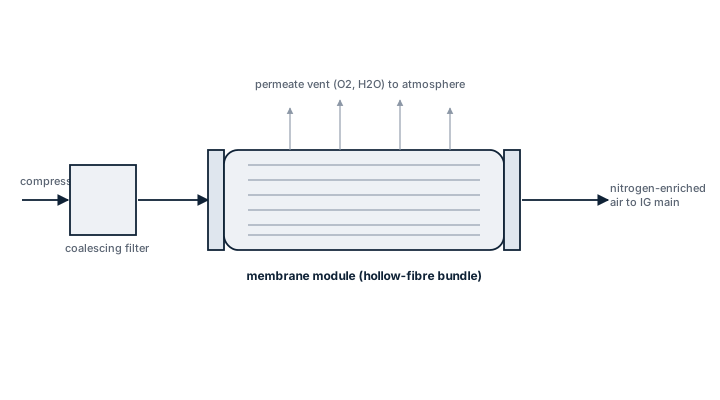
Where a combustion-type inert gas generator or a boiler flue gas system produces inert gas by burning fuel and scrubbing the exhaust, a membrane nitrogen generator produces it by physical separation alone. Compressed air is pushed through bundles of hollow polymer fibres; oxygen, water vapour and carbon dioxide diffuse through the fibre wall faster than nitrogen molecules, so the gas exiting the fibre bore is nitrogen-enriched while the oxygen-rich permeate is vented off. There is no combustion, no soot, and no flue gas chemistry to manage, which makes membrane units…
What sets this type apart
Where a combustion-type inert gas generator or a boiler flue gas system produces inert gas by burning fuel and scrubbing the exhaust, a membrane nitrogen generator produces it by physical separation alone. Compressed air is pushed through bundles of hollow polymer fibres; oxygen, water vapour and carbon dioxide diffuse through the fibre wall faster than nitrogen molecules, so the gas exiting the fibre bore is nitrogen-enriched while the oxygen-rich permeate is vented off. There is no combustion, no soot, and no flue gas chemistry to manage, which makes membrane units attractive where only moderate purity nitrogen is needed and where combustion products would be unwelcome in the cargo, such as on chemical tankers and some gas carriers using nitrogen for blanketing rather than a full inert atmosphere.
Main components
Air compressor and pre-treatment
An oil-free or well-filtered compressed air supply feeds the membrane bank; oil carryover or moisture reaching the fibres degrades separation performance and can damage the membrane material over time, so coalescing filters and, on many designs, a refrigerant or desiccant air dryer sit ahead of the membrane skid.
Membrane module bank
Multiple hollow-fibre bundles are arranged in parallel or series; purity and flow trade off directly against each other on a membrane system, so a higher nitrogen purity setting reduces the flow rate available, and operators adjust feed pressure and permeate venting to balance the two against the tank's actual demand.
Purity analyser and control valve
An oxygen analyser on the product gas line confirms nitrogen purity is within the set target, feeding back to a control valve that adjusts flow or vents off-spec gas rather than sending it to the cargo tank distribution line.
Distribution and pressure control
Product nitrogen is delivered at low pressure to the cargo tank inert gas main, with pressure and vacuum protection on the tanks unchanged from any inert gas distribution arrangement, since the membrane generator only changes how the gas is produced, not how it is delivered and controlled at the tanks.
Selection and sizing
| Parameter | Typical consideration |
|---|---|
| Target purity | set by cargo requirement, e.g. blanketing versus full inerting |
| Flow at target purity | falls as purity requirement rises |
| Feed air quality | oil-free, dry air required for membrane life |
| Duty | topping up losses and displacement during discharge, not necessarily continuous full inerting |
Regulations and class
Where fitted in place of, or alongside, a combustion-type inert gas system, membrane generator capacity and redundancy are assessed against the applicable inert gas requirements for the ship type and cargo, referenced through SOLAS Chapter II-2 and, for gas carriers, the IGC Code. Class approval covers the generator as a pressure system component and reviews the oxygen analyser and control arrangement as a safety function, since low nitrogen purity reaching the tank without detection defeats the purpose of blanketing.
Typical faults
- Membrane fouling from oil carryover - falling purity at a given flow setting, traced back to compressor lubrication or a failed coalescing filter.
- Moisture ingress - reduced fibre life and inconsistent purity, usually from a dryer fault upstream.
- Oxygen analyser drift uncalibrated - product gas believed on-spec when it is not, or false alarms taking the generator offline unnecessarily.
- Undersized feed air compressor for the duty - generator cannot hold purity during peak tank demand such as fast discharge.
- Back-pressure changes in the distribution main - shift the operating point of the membrane bank away from its calibrated purity and flow balance.
What to look for in a supplier
- Membrane module replacement parts and typical service life figures specific to the model fitted, not generic estimates.
- Support for the feed air pre-treatment train as a full package, since membrane performance depends on it as much as on the membrane itself.
- Calibration service and spare sensing cells for the oxygen analyser, the component the safety case actually relies on.
Treat a drop in nitrogen purity at constant flow as a filtration or drying problem first, not a membrane failure - fibres are usually the last thing to fail and the first thing blamed.