What to check on a Flue Gas Inert Gas Generator.
Where a dedicated inert gas generator burns fuel in its own combustion chamber purely to make inert gas, a flue gas system takes a slipstream from the ship's existing auxiliary or exhaust gas boiler uptake and conditions it instead. This only works while a boiler is actually firing, which is normally the case during cargo operations on a tanker running its boiler for heating and steam services anyway. The gas arrives hot, wet and carrying soot and sulphur compounds from combustion, so the scrubbing and cooling stage does more work…
What defines this type
Where a dedicated inert gas generator burns fuel in its own combustion chamber purely to make inert gas, a flue gas system takes a slipstream from the ship's existing auxiliary or exhaust gas boiler uptake and conditions it instead. This only works while a boiler is actually firing, which is normally the case during cargo operations on a tanker running its boiler for heating and steam services anyway. The gas arrives hot, wet and carrying soot and sulphur compounds from combustion, so the scrubbing and cooling stage does more work in this design than in a dedicated generator burning cleaner fuel under controlled conditions.
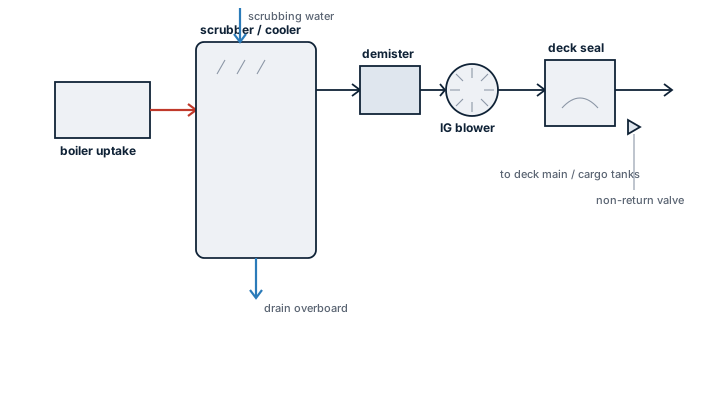
Main components
- Uptake takeoff and isolating valve – draws flue gas from the boiler uptake ahead of the funnel, with a valve to shut off the takeoff when inert gas is not needed.
- Scrubber tower – seawater spray strips soot and sulphur dioxide from the gas and cools it from boiler uptake temperature down to near seawater temperature.
- Demister – removes entrained water droplets before the gas reaches the blower.
- Gas blower – raises the cooled, scrubbed gas to the pressure needed to reach the cargo tanks against the resistance of the deck main and deck seal.
- Deck water seal – a water-filled non-return seal preventing any flammable cargo vapour from finding its way back to the machinery space through the inert gas main.
- Pressure/vacuum breaker – protects tanks from over- or under-pressure if the supply is interrupted.
- Oxygen analyser – continuously monitors and records oxygen content in the delivered gas.
Selection and sizing
Sizing is driven by the tank main's demand during the fastest planned cargo operation, not by the boiler's own steam output:
- Gas delivery rate matched to the vessel's maximum planned cargo discharge rate, since tanks must be replenished with inert gas as fast as cargo leaves them.
- Achievable oxygen content at the design flow rate, which depends on scrubber efficiency, not just blower capacity.
- Blower discharge pressure margin over deck main resistance and the deck seal's own back-pressure.
- Compatibility with the specific boiler's flue gas composition and turndown range, since a boiler running at low fire produces different flue gas conditions than one at full load.
Regulations
Tankers required to carry an inert gas system must maintain the delivered gas at no more than roughly 5% oxygen by volume under SOLAS requirements for tanker inert gas systems, with continuous monitoring and recording of oxygen content and pressure. The deck water seal and non-return arrangements are there specifically to prevent flashback into the machinery space, a requirement class societies check closely at survey given the consequence of failure.
Typical faults
| Fault | Consequence |
|---|---|
| Scrubber spray nozzles scaled or blocked | Reduced cooling and scrubbing, delivering hotter, wetter gas with higher SOx content into the tanks and accelerating internal corrosion |
| Deck water seal run dry | Loss of the flashback barrier between cargo tanks and the machinery space, a serious safety failure |
| Blower bearing wear | Rising vibration and eventual loss of delivery pressure at the worst possible moment during discharge |
| Oxygen analyser calibration drift | False readings that can mask an actual over-oxygen condition in the tanks |
| Soot carryover from boiler soot-blowing | Fouls the scrubber and demister faster than normal running, shortening the interval between cleans |
What to look for in a supplier
- Scrubber tower material resistant to the acidic, corrosive scrubbing environment, such as rubber lining or GRP construction.
- Analyser package with a sensible calibration and redundancy arrangement rather than a single unchecked sensor.
- Blower capacity with margin over the vessel's actual maximum discharge rate, not just the nameplate cargo pump figure.
- Deck seal design, wet or semi-dry, matched to what the vessel's deck arrangement and trading pattern actually need.
- Demonstrated integration experience with the specific boiler uptake the system will tap into.
Check the deck seal water level as a matter of routine before every cargo operation; a dry seal is invisible from the control room readings until something goes wrong on deck.