Flue Gas Inert Gas Generator
A flue gas inert gas generator draws its inert gas from the ship's own boiler uptake rather than burning fuel in a dedicated combustion chamber, scrubbing and cooling boiler flue gas down to a safe oxygen content for cargo tanks, which makes boiler availability and flue gas quality the limiting factors instead of a separate burner's fuel supply.
Read more — Flue Gas Inert Gas Generator explained ▾
What defines this type
Where a dedicated inert gas generator burns fuel in its own combustion chamber purely to make inert gas, a flue gas system takes a slipstream from the ship's existing auxiliary or exhaust gas boiler uptake and conditions it instead. This only works while a boiler is actually firing, which is normally the case during cargo operations on a tanker running its boiler for heating and steam services anyway. The gas arrives hot, wet and carrying soot and sulphur compounds from combustion, so the scrubbing and cooling stage does more work in this design than in a dedicated generator burning cleaner fuel under controlled conditions.
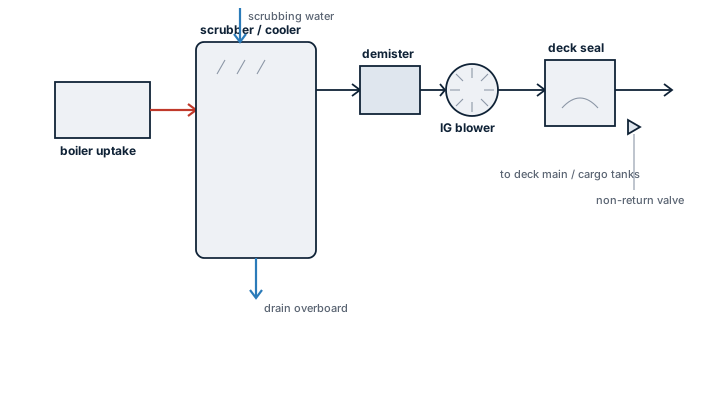
Main components
- Uptake takeoff and isolating valve – draws flue gas from the boiler uptake ahead of the funnel, with a valve to shut off the takeoff when inert gas is not needed.
- Scrubber tower – seawater spray strips soot and sulphur dioxide from the gas and cools it from boiler uptake temperature down to near seawater temperature.
- Demister – removes entrained water droplets before the gas reaches the blower.
- Gas blower – raises the cooled, scrubbed gas to the pressure needed to reach the cargo tanks against the resistance of the deck main and deck seal.
- Deck water seal – a water-filled non-return seal preventing any flammable cargo vapour from finding its way back to the machinery space through the inert gas main.
- Pressure/vacuum breaker – protects tanks from over- or under-pressure if the supply is interrupted.
- Oxygen analyser – continuously monitors and records oxygen content in the delivered gas.
Selection and sizing
Sizing is driven by the tank main's demand during the fastest planned cargo operation, not by the boiler's own steam output:
- Gas delivery rate matched to the vessel's maximum planned cargo discharge rate, since tanks must be replenished with inert gas as fast as cargo leaves them.
- Achievable oxygen content at the design flow rate, which depends on scrubber efficiency, not just blower capacity.
- Blower discharge pressure margin over deck main resistance and the deck seal's own back-pressure.
- Compatibility with the specific boiler's flue gas composition and turndown range, since a boiler running at low fire produces different flue gas conditions than one at full load.
Regulations
Tankers required to carry an inert gas system must maintain the delivered gas at no more than roughly 5% oxygen by volume under SOLAS requirements for tanker inert gas systems, with continuous monitoring and recording of oxygen content and pressure. The deck water seal and non-return arrangements are there specifically to prevent flashback into the machinery space, a requirement class societies check closely at survey given the consequence of failure.
Typical faults
| Fault | Consequence |
|---|---|
| Scrubber spray nozzles scaled or blocked | Reduced cooling and scrubbing, delivering hotter, wetter gas with higher SOx content into the tanks and accelerating internal corrosion |
| Deck water seal run dry | Loss of the flashback barrier between cargo tanks and the machinery space, a serious safety failure |
| Blower bearing wear | Rising vibration and eventual loss of delivery pressure at the worst possible moment during discharge |
| Oxygen analyser calibration drift | False readings that can mask an actual over-oxygen condition in the tanks |
| Soot carryover from boiler soot-blowing | Fouls the scrubber and demister faster than normal running, shortening the interval between cleans |
What to look for in a supplier
- Scrubber tower material resistant to the acidic, corrosive scrubbing environment, such as rubber lining or GRP construction.
- Analyser package with a sensible calibration and redundancy arrangement rather than a single unchecked sensor.
- Blower capacity with margin over the vessel's actual maximum discharge rate, not just the nameplate cargo pump figure.
- Deck seal design, wet or semi-dry, matched to what the vessel's deck arrangement and trading pattern actually need.
- Demonstrated integration experience with the specific boiler uptake the system will tap into.
Check the deck seal water level as a matter of routine before every cargo operation; a dry seal is invisible from the control room readings until something goes wrong on deck.
5 manufacturers · 750 models
Alfa Laval
162
- Oxygen Output Range
- 2-4% O2 (Combustion type)
- Gas Production Capacity
- 1000-20,000 m³/h (Smit Combustion); 3000-22,500 m³/h (Smit LNG/LPG)
- Operating Pressure
- 0.15-0.25 bar(g) Combustion; up to 0.4 bar(g) LNG/LPG
- Scrubber Type
- Wet scrubber with spray cooling and water demisting
- Fuel Consumption
- Minimized via Ultramizing system; AFEM upgrade reduces by up to 40%
- Analyzer Type
- Combustion-process oxygen analyzer (SMIT7000/AAL7000 available as upgrade)
- Smit Combustion (FU-Type)
- Smit LNG/LPG
- Smit Flue Gas
- Smit Combinert
- Area: Scrubber fouling, corrosion, blocked spray nozzles, demister damageCheck: Visual inspection through scrubber manholes; check spray nozzles for blockage (impairs cooling efficiency); inspect cooling pipes, floats, sensors for corrosion or soot deposits; verify cooling water flow and demister function
- Area: Deck seal water level loss, gauge glass fouling, seal integrity compromiseCheck: Verify gauge glass is clean and water level visible; check high/low level alarm float switches operational; inspect for water leakage, corrosion; in cold weather verify heating coil function and trace heating active; confirm low-level alarm functions
- Area: P/V breaker seal loss, incorrect relief pressure setting, glycol/water mixture degradationCheck: Verify P/V breaker opens at preset pressure/vacuum; check sight glass and fluid level (glycol-water mixture); inspect for leakage around valve stem; test differential pressure response; replace fluid if discolored/contaminated
- Area: Oxygen analyzer drift, calibration loss, sensor fouling or failureCheck: Calibrate analyzer ≥24 hrs before cargo operations; log calibration results; verify O2 readout 2-4% during operation; replace probe/sensor if drift >0.5%; ensure analyzer sample line clear and inlet not fouled
- Area: Combustion process inefficiency, incomplete fuel combustion, soot generationCheck: Observe flue gas color (should be colorless/light gray, not black); monitor fuel/air ratio; inspect burner nozzles and air registers for clogging; verify combustion oxygen ≤4%; check fuel pump pressure/flow; inspect ignition electrode condition
- Area: Non-return valve (check valve) function loss, backflow risk to engine roomCheck: Confirm non-return valves at deck seal outlet prevent backflow; verify pressure differential across deck seal maintained; listen for flow disturbance; schedule valve seat/seal inspection per Condition Audit; test with pressure gauge if vessel equipped
Type-universal inspection/service points for Inert Gas Systems (Alfa Laval, Mega-Schwarm 2026-06). Per-model specs not auto-filled.
- Oxygen Output Range
- 2-4% O2 (Combustion type)
- Gas Production Capacity
- 1000-20,000 m³/h (Smit Combustion); 3000-22,500 m³/h (Smit LNG/LPG)
- Operating Pressure
- 0.15-0.25 bar(g) Combustion; up to 0.4 bar(g) LNG/LPG
- Scrubber Type
- Wet scrubber with spray cooling and water demisting
- Fuel Consumption
- Minimized via Ultramizing system; AFEM upgrade reduces by up to 40%
- Analyzer Type
- Combustion-process oxygen analyzer (SMIT7000/AAL7000 available as upgrade)
- Smit Combustion (FU-Type)
- Smit LNG/LPG
- Smit Flue Gas
- Smit Combinert
- Area: Scrubber fouling, corrosion, blocked spray nozzles, demister damageCheck: Visual inspection through scrubber manholes; check spray nozzles for blockage (impairs cooling efficiency); inspect cooling pipes, floats, sensors for corrosion or soot deposits; verify cooling water flow and demister function
- Area: Deck seal water level loss, gauge glass fouling, seal integrity compromiseCheck: Verify gauge glass is clean and water level visible; check high/low level alarm float switches operational; inspect for water leakage, corrosion; in cold weather verify heating coil function and trace heating active; confirm low-level alarm functions
- Area: P/V breaker seal loss, incorrect relief pressure setting, glycol/water mixture degradationCheck: Verify P/V breaker opens at preset pressure/vacuum; check sight glass and fluid level (glycol-water mixture); inspect for leakage around valve stem; test differential pressure response; replace fluid if discolored/contaminated
- Area: Oxygen analyzer drift, calibration loss, sensor fouling or failureCheck: Calibrate analyzer ≥24 hrs before cargo operations; log calibration results; verify O2 readout 2-4% during operation; replace probe/sensor if drift >0.5%; ensure analyzer sample line clear and inlet not fouled
- Area: Combustion process inefficiency, incomplete fuel combustion, soot generationCheck: Observe flue gas color (should be colorless/light gray, not black); monitor fuel/air ratio; inspect burner nozzles and air registers for clogging; verify combustion oxygen ≤4%; check fuel pump pressure/flow; inspect ignition electrode condition
- Area: Non-return valve (check valve) function loss, backflow risk to engine roomCheck: Confirm non-return valves at deck seal outlet prevent backflow; verify pressure differential across deck seal maintained; listen for flow disturbance; schedule valve seat/seal inspection per Condition Audit; test with pressure gauge if vessel equipped
Type-universal inspection/service points for Inert Gas Systems (Alfa Laval, Mega-Schwarm 2026-06). Per-model specs not auto-filled.
- Oxygen Output Range
- 2-4% O2 (Combustion type)
- Gas Production Capacity
- 1000-20,000 m³/h (Smit Combustion); 3000-22,500 m³/h (Smit LNG/LPG)
- Operating Pressure
- 0.15-0.25 bar(g) Combustion; up to 0.4 bar(g) LNG/LPG
- Scrubber Type
- Wet scrubber with spray cooling and water demisting
- Fuel Consumption
- Minimized via Ultramizing system; AFEM upgrade reduces by up to 40%
- Analyzer Type
- Combustion-process oxygen analyzer (SMIT7000/AAL7000 available as upgrade)
- Smit Combustion (FU-Type)
- Smit LNG/LPG
- Smit Flue Gas
- Smit Combinert
- Area: Scrubber fouling, corrosion, blocked spray nozzles, demister damageCheck: Visual inspection through scrubber manholes; check spray nozzles for blockage (impairs cooling efficiency); inspect cooling pipes, floats, sensors for corrosion or soot deposits; verify cooling water flow and demister function
- Area: Deck seal water level loss, gauge glass fouling, seal integrity compromiseCheck: Verify gauge glass is clean and water level visible; check high/low level alarm float switches operational; inspect for water leakage, corrosion; in cold weather verify heating coil function and trace heating active; confirm low-level alarm functions
- Area: P/V breaker seal loss, incorrect relief pressure setting, glycol/water mixture degradationCheck: Verify P/V breaker opens at preset pressure/vacuum; check sight glass and fluid level (glycol-water mixture); inspect for leakage around valve stem; test differential pressure response; replace fluid if discolored/contaminated
- Area: Oxygen analyzer drift, calibration loss, sensor fouling or failureCheck: Calibrate analyzer ≥24 hrs before cargo operations; log calibration results; verify O2 readout 2-4% during operation; replace probe/sensor if drift >0.5%; ensure analyzer sample line clear and inlet not fouled
- Area: Combustion process inefficiency, incomplete fuel combustion, soot generationCheck: Observe flue gas color (should be colorless/light gray, not black); monitor fuel/air ratio; inspect burner nozzles and air registers for clogging; verify combustion oxygen ≤4%; check fuel pump pressure/flow; inspect ignition electrode condition
- Area: Non-return valve (check valve) function loss, backflow risk to engine roomCheck: Confirm non-return valves at deck seal outlet prevent backflow; verify pressure differential across deck seal maintained; listen for flow disturbance; schedule valve seat/seal inspection per Condition Audit; test with pressure gauge if vessel equipped
Type-universal inspection/service points for Inert Gas Systems (Alfa Laval, Mega-Schwarm 2026-06). Per-model specs not auto-filled.
- Oxygen Output Range
- 2-4% O2 (Combustion type)
- Gas Production Capacity
- 1000-20,000 m³/h (Smit Combustion); 3000-22,500 m³/h (Smit LNG/LPG)
- Operating Pressure
- 0.15-0.25 bar(g) Combustion; up to 0.4 bar(g) LNG/LPG
- Scrubber Type
- Wet scrubber with spray cooling and water demisting
- Fuel Consumption
- Minimized via Ultramizing system; AFEM upgrade reduces by up to 40%
- Analyzer Type
- Combustion-process oxygen analyzer (SMIT7000/AAL7000 available as upgrade)
- Smit Combustion (FU-Type)
- Smit LNG/LPG
- Smit Flue Gas
- Smit Combinert
- Area: Scrubber fouling, corrosion, blocked spray nozzles, demister damageCheck: Visual inspection through scrubber manholes; check spray nozzles for blockage (impairs cooling efficiency); inspect cooling pipes, floats, sensors for corrosion or soot deposits; verify cooling water flow and demister function
- Area: Deck seal water level loss, gauge glass fouling, seal integrity compromiseCheck: Verify gauge glass is clean and water level visible; check high/low level alarm float switches operational; inspect for water leakage, corrosion; in cold weather verify heating coil function and trace heating active; confirm low-level alarm functions
- Area: P/V breaker seal loss, incorrect relief pressure setting, glycol/water mixture degradationCheck: Verify P/V breaker opens at preset pressure/vacuum; check sight glass and fluid level (glycol-water mixture); inspect for leakage around valve stem; test differential pressure response; replace fluid if discolored/contaminated
- Area: Oxygen analyzer drift, calibration loss, sensor fouling or failureCheck: Calibrate analyzer ≥24 hrs before cargo operations; log calibration results; verify O2 readout 2-4% during operation; replace probe/sensor if drift >0.5%; ensure analyzer sample line clear and inlet not fouled
- Area: Combustion process inefficiency, incomplete fuel combustion, soot generationCheck: Observe flue gas color (should be colorless/light gray, not black); monitor fuel/air ratio; inspect burner nozzles and air registers for clogging; verify combustion oxygen ≤4%; check fuel pump pressure/flow; inspect ignition electrode condition
- Area: Non-return valve (check valve) function loss, backflow risk to engine roomCheck: Confirm non-return valves at deck seal outlet prevent backflow; verify pressure differential across deck seal maintained; listen for flow disturbance; schedule valve seat/seal inspection per Condition Audit; test with pressure gauge if vessel equipped
Type-universal inspection/service points for Inert Gas Systems (Alfa Laval, Mega-Schwarm 2026-06). Per-model specs not auto-filled.
- Oxygen Output Range
- 2-4% O2 (Combustion type)
- Gas Production Capacity
- 1000-20,000 m³/h (Smit Combustion); 3000-22,500 m³/h (Smit LNG/LPG)
- Operating Pressure
- 0.15-0.25 bar(g) Combustion; up to 0.4 bar(g) LNG/LPG
- Scrubber Type
- Wet scrubber with spray cooling and water demisting
- Fuel Consumption
- Minimized via Ultramizing system; AFEM upgrade reduces by up to 40%
- Analyzer Type
- Combustion-process oxygen analyzer (SMIT7000/AAL7000 available as upgrade)
- Smit Combustion (FU-Type)
- Smit LNG/LPG
- Smit Flue Gas
- Smit Combinert
- Area: Scrubber fouling, corrosion, blocked spray nozzles, demister damageCheck: Visual inspection through scrubber manholes; check spray nozzles for blockage (impairs cooling efficiency); inspect cooling pipes, floats, sensors for corrosion or soot deposits; verify cooling water flow and demister function
- Area: Deck seal water level loss, gauge glass fouling, seal integrity compromiseCheck: Verify gauge glass is clean and water level visible; check high/low level alarm float switches operational; inspect for water leakage, corrosion; in cold weather verify heating coil function and trace heating active; confirm low-level alarm functions
- Area: P/V breaker seal loss, incorrect relief pressure setting, glycol/water mixture degradationCheck: Verify P/V breaker opens at preset pressure/vacuum; check sight glass and fluid level (glycol-water mixture); inspect for leakage around valve stem; test differential pressure response; replace fluid if discolored/contaminated
- Area: Oxygen analyzer drift, calibration loss, sensor fouling or failureCheck: Calibrate analyzer ≥24 hrs before cargo operations; log calibration results; verify O2 readout 2-4% during operation; replace probe/sensor if drift >0.5%; ensure analyzer sample line clear and inlet not fouled
- Area: Combustion process inefficiency, incomplete fuel combustion, soot generationCheck: Observe flue gas color (should be colorless/light gray, not black); monitor fuel/air ratio; inspect burner nozzles and air registers for clogging; verify combustion oxygen ≤4%; check fuel pump pressure/flow; inspect ignition electrode condition
- Area: Non-return valve (check valve) function loss, backflow risk to engine roomCheck: Confirm non-return valves at deck seal outlet prevent backflow; verify pressure differential across deck seal maintained; listen for flow disturbance; schedule valve seat/seal inspection per Condition Audit; test with pressure gauge if vessel equipped
Type-universal inspection/service points for Inert Gas Systems (Alfa Laval, Mega-Schwarm 2026-06). Per-model specs not auto-filled.
- Oxygen Output Range
- 2-4% O2 (Combustion type)
- Gas Production Capacity
- 1000-20,000 m³/h (Smit Combustion); 3000-22,500 m³/h (Smit LNG/LPG)
- Operating Pressure
- 0.15-0.25 bar(g) Combustion; up to 0.4 bar(g) LNG/LPG
- Scrubber Type
- Wet scrubber with spray cooling and water demisting
- Fuel Consumption
- Minimized via Ultramizing system; AFEM upgrade reduces by up to 40%
- Analyzer Type
- Combustion-process oxygen analyzer (SMIT7000/AAL7000 available as upgrade)
- Smit Combustion (FU-Type)
- Smit LNG/LPG
- Smit Flue Gas
- Smit Combinert
- Area: Scrubber fouling, corrosion, blocked spray nozzles, demister damageCheck: Visual inspection through scrubber manholes; check spray nozzles for blockage (impairs cooling efficiency); inspect cooling pipes, floats, sensors for corrosion or soot deposits; verify cooling water flow and demister function
- Area: Deck seal water level loss, gauge glass fouling, seal integrity compromiseCheck: Verify gauge glass is clean and water level visible; check high/low level alarm float switches operational; inspect for water leakage, corrosion; in cold weather verify heating coil function and trace heating active; confirm low-level alarm functions
- Area: P/V breaker seal loss, incorrect relief pressure setting, glycol/water mixture degradationCheck: Verify P/V breaker opens at preset pressure/vacuum; check sight glass and fluid level (glycol-water mixture); inspect for leakage around valve stem; test differential pressure response; replace fluid if discolored/contaminated
- Area: Oxygen analyzer drift, calibration loss, sensor fouling or failureCheck: Calibrate analyzer ≥24 hrs before cargo operations; log calibration results; verify O2 readout 2-4% during operation; replace probe/sensor if drift >0.5%; ensure analyzer sample line clear and inlet not fouled
- Area: Combustion process inefficiency, incomplete fuel combustion, soot generationCheck: Observe flue gas color (should be colorless/light gray, not black); monitor fuel/air ratio; inspect burner nozzles and air registers for clogging; verify combustion oxygen ≤4%; check fuel pump pressure/flow; inspect ignition electrode condition
- Area: Non-return valve (check valve) function loss, backflow risk to engine roomCheck: Confirm non-return valves at deck seal outlet prevent backflow; verify pressure differential across deck seal maintained; listen for flow disturbance; schedule valve seat/seal inspection per Condition Audit; test with pressure gauge if vessel equipped
Type-universal inspection/service points for Inert Gas Systems (Alfa Laval, Mega-Schwarm 2026-06). Per-model specs not auto-filled.
- Oxygen Output Range
- 2-4% O2 (Combustion type)
- Gas Production Capacity
- 1000-20,000 m³/h (Smit Combustion); 3000-22,500 m³/h (Smit LNG/LPG)
- Operating Pressure
- 0.15-0.25 bar(g) Combustion; up to 0.4 bar(g) LNG/LPG
- Scrubber Type
- Wet scrubber with spray cooling and water demisting
- Fuel Consumption
- Minimized via Ultramizing system; AFEM upgrade reduces by up to 40%
- Analyzer Type
- Combustion-process oxygen analyzer (SMIT7000/AAL7000 available as upgrade)
- Smit Combustion (FU-Type)
- Smit LNG/LPG
- Smit Flue Gas
- Smit Combinert
- Area: Scrubber fouling, corrosion, blocked spray nozzles, demister damageCheck: Visual inspection through scrubber manholes; check spray nozzles for blockage (impairs cooling efficiency); inspect cooling pipes, floats, sensors for corrosion or soot deposits; verify cooling water flow and demister function
- Area: Deck seal water level loss, gauge glass fouling, seal integrity compromiseCheck: Verify gauge glass is clean and water level visible; check high/low level alarm float switches operational; inspect for water leakage, corrosion; in cold weather verify heating coil function and trace heating active; confirm low-level alarm functions
- Area: P/V breaker seal loss, incorrect relief pressure setting, glycol/water mixture degradationCheck: Verify P/V breaker opens at preset pressure/vacuum; check sight glass and fluid level (glycol-water mixture); inspect for leakage around valve stem; test differential pressure response; replace fluid if discolored/contaminated
- Area: Oxygen analyzer drift, calibration loss, sensor fouling or failureCheck: Calibrate analyzer ≥24 hrs before cargo operations; log calibration results; verify O2 readout 2-4% during operation; replace probe/sensor if drift >0.5%; ensure analyzer sample line clear and inlet not fouled
- Area: Combustion process inefficiency, incomplete fuel combustion, soot generationCheck: Observe flue gas color (should be colorless/light gray, not black); monitor fuel/air ratio; inspect burner nozzles and air registers for clogging; verify combustion oxygen ≤4%; check fuel pump pressure/flow; inspect ignition electrode condition
- Area: Non-return valve (check valve) function loss, backflow risk to engine roomCheck: Confirm non-return valves at deck seal outlet prevent backflow; verify pressure differential across deck seal maintained; listen for flow disturbance; schedule valve seat/seal inspection per Condition Audit; test with pressure gauge if vessel equipped
Type-universal inspection/service points for Inert Gas Systems (Alfa Laval, Mega-Schwarm 2026-06). Per-model specs not auto-filled.
- Oxygen Output Range
- 2-4% O2 (Combustion type)
- Gas Production Capacity
- 1000-20,000 m³/h (Smit Combustion); 3000-22,500 m³/h (Smit LNG/LPG)
- Operating Pressure
- 0.15-0.25 bar(g) Combustion; up to 0.4 bar(g) LNG/LPG
- Scrubber Type
- Wet scrubber with spray cooling and water demisting
- Fuel Consumption
- Minimized via Ultramizing system; AFEM upgrade reduces by up to 40%
- Analyzer Type
- Combustion-process oxygen analyzer (SMIT7000/AAL7000 available as upgrade)
- Smit Combustion (FU-Type)
- Smit LNG/LPG
- Smit Flue Gas
- Smit Combinert
- Area: Scrubber fouling, corrosion, blocked spray nozzles, demister damageCheck: Visual inspection through scrubber manholes; check spray nozzles for blockage (impairs cooling efficiency); inspect cooling pipes, floats, sensors for corrosion or soot deposits; verify cooling water flow and demister function
- Area: Deck seal water level loss, gauge glass fouling, seal integrity compromiseCheck: Verify gauge glass is clean and water level visible; check high/low level alarm float switches operational; inspect for water leakage, corrosion; in cold weather verify heating coil function and trace heating active; confirm low-level alarm functions
- Area: P/V breaker seal loss, incorrect relief pressure setting, glycol/water mixture degradationCheck: Verify P/V breaker opens at preset pressure/vacuum; check sight glass and fluid level (glycol-water mixture); inspect for leakage around valve stem; test differential pressure response; replace fluid if discolored/contaminated
- Area: Oxygen analyzer drift, calibration loss, sensor fouling or failureCheck: Calibrate analyzer ≥24 hrs before cargo operations; log calibration results; verify O2 readout 2-4% during operation; replace probe/sensor if drift >0.5%; ensure analyzer sample line clear and inlet not fouled
- Area: Combustion process inefficiency, incomplete fuel combustion, soot generationCheck: Observe flue gas color (should be colorless/light gray, not black); monitor fuel/air ratio; inspect burner nozzles and air registers for clogging; verify combustion oxygen ≤4%; check fuel pump pressure/flow; inspect ignition electrode condition
- Area: Non-return valve (check valve) function loss, backflow risk to engine roomCheck: Confirm non-return valves at deck seal outlet prevent backflow; verify pressure differential across deck seal maintained; listen for flow disturbance; schedule valve seat/seal inspection per Condition Audit; test with pressure gauge if vessel equipped
Type-universal inspection/service points for Inert Gas Systems (Alfa Laval, Mega-Schwarm 2026-06). Per-model specs not auto-filled.
- Oxygen Output Range
- 2-4% O2 (Combustion type)
- Gas Production Capacity
- 1000-20,000 m³/h (Smit Combustion); 3000-22,500 m³/h (Smit LNG/LPG)
- Operating Pressure
- 0.15-0.25 bar(g) Combustion; up to 0.4 bar(g) LNG/LPG
- Scrubber Type
- Wet scrubber with spray cooling and water demisting
- Fuel Consumption
- Minimized via Ultramizing system; AFEM upgrade reduces by up to 40%
- Analyzer Type
- Combustion-process oxygen analyzer (SMIT7000/AAL7000 available as upgrade)
- Smit Combustion (FU-Type)
- Smit LNG/LPG
- Smit Flue Gas
- Smit Combinert
- Area: Scrubber fouling, corrosion, blocked spray nozzles, demister damageCheck: Visual inspection through scrubber manholes; check spray nozzles for blockage (impairs cooling efficiency); inspect cooling pipes, floats, sensors for corrosion or soot deposits; verify cooling water flow and demister function
- Area: Deck seal water level loss, gauge glass fouling, seal integrity compromiseCheck: Verify gauge glass is clean and water level visible; check high/low level alarm float switches operational; inspect for water leakage, corrosion; in cold weather verify heating coil function and trace heating active; confirm low-level alarm functions
- Area: P/V breaker seal loss, incorrect relief pressure setting, glycol/water mixture degradationCheck: Verify P/V breaker opens at preset pressure/vacuum; check sight glass and fluid level (glycol-water mixture); inspect for leakage around valve stem; test differential pressure response; replace fluid if discolored/contaminated
- Area: Oxygen analyzer drift, calibration loss, sensor fouling or failureCheck: Calibrate analyzer ≥24 hrs before cargo operations; log calibration results; verify O2 readout 2-4% during operation; replace probe/sensor if drift >0.5%; ensure analyzer sample line clear and inlet not fouled
- Area: Combustion process inefficiency, incomplete fuel combustion, soot generationCheck: Observe flue gas color (should be colorless/light gray, not black); monitor fuel/air ratio; inspect burner nozzles and air registers for clogging; verify combustion oxygen ≤4%; check fuel pump pressure/flow; inspect ignition electrode condition
- Area: Non-return valve (check valve) function loss, backflow risk to engine roomCheck: Confirm non-return valves at deck seal outlet prevent backflow; verify pressure differential across deck seal maintained; listen for flow disturbance; schedule valve seat/seal inspection per Condition Audit; test with pressure gauge if vessel equipped
Type-universal inspection/service points for Inert Gas Systems (Alfa Laval, Mega-Schwarm 2026-06). Per-model specs not auto-filled.
- Oxygen Output Range
- 2-4% O2 (Combustion type)
- Gas Production Capacity
- 1000-20,000 m³/h (Smit Combustion); 3000-22,500 m³/h (Smit LNG/LPG)
- Operating Pressure
- 0.15-0.25 bar(g) Combustion; up to 0.4 bar(g) LNG/LPG
- Scrubber Type
- Wet scrubber with spray cooling and water demisting
- Fuel Consumption
- Minimized via Ultramizing system; AFEM upgrade reduces by up to 40%
- Analyzer Type
- Combustion-process oxygen analyzer (SMIT7000/AAL7000 available as upgrade)
- Smit Combustion (FU-Type)
- Smit LNG/LPG
- Smit Flue Gas
- Smit Combinert
- Area: Scrubber fouling, corrosion, blocked spray nozzles, demister damageCheck: Visual inspection through scrubber manholes; check spray nozzles for blockage (impairs cooling efficiency); inspect cooling pipes, floats, sensors for corrosion or soot deposits; verify cooling water flow and demister function
- Area: Deck seal water level loss, gauge glass fouling, seal integrity compromiseCheck: Verify gauge glass is clean and water level visible; check high/low level alarm float switches operational; inspect for water leakage, corrosion; in cold weather verify heating coil function and trace heating active; confirm low-level alarm functions
- Area: P/V breaker seal loss, incorrect relief pressure setting, glycol/water mixture degradationCheck: Verify P/V breaker opens at preset pressure/vacuum; check sight glass and fluid level (glycol-water mixture); inspect for leakage around valve stem; test differential pressure response; replace fluid if discolored/contaminated
- Area: Oxygen analyzer drift, calibration loss, sensor fouling or failureCheck: Calibrate analyzer ≥24 hrs before cargo operations; log calibration results; verify O2 readout 2-4% during operation; replace probe/sensor if drift >0.5%; ensure analyzer sample line clear and inlet not fouled
- Area: Combustion process inefficiency, incomplete fuel combustion, soot generationCheck: Observe flue gas color (should be colorless/light gray, not black); monitor fuel/air ratio; inspect burner nozzles and air registers for clogging; verify combustion oxygen ≤4%; check fuel pump pressure/flow; inspect ignition electrode condition
- Area: Non-return valve (check valve) function loss, backflow risk to engine roomCheck: Confirm non-return valves at deck seal outlet prevent backflow; verify pressure differential across deck seal maintained; listen for flow disturbance; schedule valve seat/seal inspection per Condition Audit; test with pressure gauge if vessel equipped
Type-universal inspection/service points for Inert Gas Systems (Alfa Laval, Mega-Schwarm 2026-06). Per-model specs not auto-filled.
- Oxygen Output Range
- 2-4% O2 (Combustion type)
- Gas Production Capacity
- 1000-20,000 m³/h (Smit Combustion); 3000-22,500 m³/h (Smit LNG/LPG)
- Operating Pressure
- 0.15-0.25 bar(g) Combustion; up to 0.4 bar(g) LNG/LPG
- Scrubber Type
- Wet scrubber with spray cooling and water demisting
- Fuel Consumption
- Minimized via Ultramizing system; AFEM upgrade reduces by up to 40%
- Analyzer Type
- Combustion-process oxygen analyzer (SMIT7000/AAL7000 available as upgrade)
- Smit Combustion (FU-Type)
- Smit LNG/LPG
- Smit Flue Gas
- Smit Combinert
- Area: Scrubber fouling, corrosion, blocked spray nozzles, demister damageCheck: Visual inspection through scrubber manholes; check spray nozzles for blockage (impairs cooling efficiency); inspect cooling pipes, floats, sensors for corrosion or soot deposits; verify cooling water flow and demister function
- Area: Deck seal water level loss, gauge glass fouling, seal integrity compromiseCheck: Verify gauge glass is clean and water level visible; check high/low level alarm float switches operational; inspect for water leakage, corrosion; in cold weather verify heating coil function and trace heating active; confirm low-level alarm functions
- Area: P/V breaker seal loss, incorrect relief pressure setting, glycol/water mixture degradationCheck: Verify P/V breaker opens at preset pressure/vacuum; check sight glass and fluid level (glycol-water mixture); inspect for leakage around valve stem; test differential pressure response; replace fluid if discolored/contaminated
- Area: Oxygen analyzer drift, calibration loss, sensor fouling or failureCheck: Calibrate analyzer ≥24 hrs before cargo operations; log calibration results; verify O2 readout 2-4% during operation; replace probe/sensor if drift >0.5%; ensure analyzer sample line clear and inlet not fouled
- Area: Combustion process inefficiency, incomplete fuel combustion, soot generationCheck: Observe flue gas color (should be colorless/light gray, not black); monitor fuel/air ratio; inspect burner nozzles and air registers for clogging; verify combustion oxygen ≤4%; check fuel pump pressure/flow; inspect ignition electrode condition
- Area: Non-return valve (check valve) function loss, backflow risk to engine roomCheck: Confirm non-return valves at deck seal outlet prevent backflow; verify pressure differential across deck seal maintained; listen for flow disturbance; schedule valve seat/seal inspection per Condition Audit; test with pressure gauge if vessel equipped
Type-universal inspection/service points for Inert Gas Systems (Alfa Laval, Mega-Schwarm 2026-06). Per-model specs not auto-filled.
- Oxygen Output Range
- 2-4% O2 (Combustion type)
- Gas Production Capacity
- 1000-20,000 m³/h (Smit Combustion); 3000-22,500 m³/h (Smit LNG/LPG)
- Operating Pressure
- 0.15-0.25 bar(g) Combustion; up to 0.4 bar(g) LNG/LPG
- Scrubber Type
- Wet scrubber with spray cooling and water demisting
- Fuel Consumption
- Minimized via Ultramizing system; AFEM upgrade reduces by up to 40%
- Analyzer Type
- Combustion-process oxygen analyzer (SMIT7000/AAL7000 available as upgrade)
- Smit Combustion (FU-Type)
- Smit LNG/LPG
- Smit Flue Gas
- Smit Combinert
- Area: Scrubber fouling, corrosion, blocked spray nozzles, demister damageCheck: Visual inspection through scrubber manholes; check spray nozzles for blockage (impairs cooling efficiency); inspect cooling pipes, floats, sensors for corrosion or soot deposits; verify cooling water flow and demister function
- Area: Deck seal water level loss, gauge glass fouling, seal integrity compromiseCheck: Verify gauge glass is clean and water level visible; check high/low level alarm float switches operational; inspect for water leakage, corrosion; in cold weather verify heating coil function and trace heating active; confirm low-level alarm functions
- Area: P/V breaker seal loss, incorrect relief pressure setting, glycol/water mixture degradationCheck: Verify P/V breaker opens at preset pressure/vacuum; check sight glass and fluid level (glycol-water mixture); inspect for leakage around valve stem; test differential pressure response; replace fluid if discolored/contaminated
- Area: Oxygen analyzer drift, calibration loss, sensor fouling or failureCheck: Calibrate analyzer ≥24 hrs before cargo operations; log calibration results; verify O2 readout 2-4% during operation; replace probe/sensor if drift >0.5%; ensure analyzer sample line clear and inlet not fouled
- Area: Combustion process inefficiency, incomplete fuel combustion, soot generationCheck: Observe flue gas color (should be colorless/light gray, not black); monitor fuel/air ratio; inspect burner nozzles and air registers for clogging; verify combustion oxygen ≤4%; check fuel pump pressure/flow; inspect ignition electrode condition
- Area: Non-return valve (check valve) function loss, backflow risk to engine roomCheck: Confirm non-return valves at deck seal outlet prevent backflow; verify pressure differential across deck seal maintained; listen for flow disturbance; schedule valve seat/seal inspection per Condition Audit; test with pressure gauge if vessel equipped
Type-universal inspection/service points for Inert Gas Systems (Alfa Laval, Mega-Schwarm 2026-06). Per-model specs not auto-filled.
- Oxygen Output Range
- 2-4% O2 (Combustion type)
- Gas Production Capacity
- 1000-20,000 m³/h (Smit Combustion); 3000-22,500 m³/h (Smit LNG/LPG)
- Operating Pressure
- 0.15-0.25 bar(g) Combustion; up to 0.4 bar(g) LNG/LPG
- Scrubber Type
- Wet scrubber with spray cooling and water demisting
- Fuel Consumption
- Minimized via Ultramizing system; AFEM upgrade reduces by up to 40%
- Analyzer Type
- Combustion-process oxygen analyzer (SMIT7000/AAL7000 available as upgrade)
- Smit Combustion (FU-Type)
- Smit LNG/LPG
- Smit Flue Gas
- Smit Combinert
- Area: Scrubber fouling, corrosion, blocked spray nozzles, demister damageCheck: Visual inspection through scrubber manholes; check spray nozzles for blockage (impairs cooling efficiency); inspect cooling pipes, floats, sensors for corrosion or soot deposits; verify cooling water flow and demister function
- Area: Deck seal water level loss, gauge glass fouling, seal integrity compromiseCheck: Verify gauge glass is clean and water level visible; check high/low level alarm float switches operational; inspect for water leakage, corrosion; in cold weather verify heating coil function and trace heating active; confirm low-level alarm functions
- Area: P/V breaker seal loss, incorrect relief pressure setting, glycol/water mixture degradationCheck: Verify P/V breaker opens at preset pressure/vacuum; check sight glass and fluid level (glycol-water mixture); inspect for leakage around valve stem; test differential pressure response; replace fluid if discolored/contaminated
- Area: Oxygen analyzer drift, calibration loss, sensor fouling or failureCheck: Calibrate analyzer ≥24 hrs before cargo operations; log calibration results; verify O2 readout 2-4% during operation; replace probe/sensor if drift >0.5%; ensure analyzer sample line clear and inlet not fouled
- Area: Combustion process inefficiency, incomplete fuel combustion, soot generationCheck: Observe flue gas color (should be colorless/light gray, not black); monitor fuel/air ratio; inspect burner nozzles and air registers for clogging; verify combustion oxygen ≤4%; check fuel pump pressure/flow; inspect ignition electrode condition
- Area: Non-return valve (check valve) function loss, backflow risk to engine roomCheck: Confirm non-return valves at deck seal outlet prevent backflow; verify pressure differential across deck seal maintained; listen for flow disturbance; schedule valve seat/seal inspection per Condition Audit; test with pressure gauge if vessel equipped
Type-universal inspection/service points for Inert Gas Systems (Alfa Laval, Mega-Schwarm 2026-06). Per-model specs not auto-filled.
- Oxygen Output Range
- 2-4% O2 (Combustion type)
- Gas Production Capacity
- 1000-20,000 m³/h (Smit Combustion); 3000-22,500 m³/h (Smit LNG/LPG)
- Operating Pressure
- 0.15-0.25 bar(g) Combustion; up to 0.4 bar(g) LNG/LPG
- Scrubber Type
- Wet scrubber with spray cooling and water demisting
- Fuel Consumption
- Minimized via Ultramizing system; AFEM upgrade reduces by up to 40%
- Analyzer Type
- Combustion-process oxygen analyzer (SMIT7000/AAL7000 available as upgrade)
- Smit Combustion (FU-Type)
- Smit LNG/LPG
- Smit Flue Gas
- Smit Combinert
- Area: Scrubber fouling, corrosion, blocked spray nozzles, demister damageCheck: Visual inspection through scrubber manholes; check spray nozzles for blockage (impairs cooling efficiency); inspect cooling pipes, floats, sensors for corrosion or soot deposits; verify cooling water flow and demister function
- Area: Deck seal water level loss, gauge glass fouling, seal integrity compromiseCheck: Verify gauge glass is clean and water level visible; check high/low level alarm float switches operational; inspect for water leakage, corrosion; in cold weather verify heating coil function and trace heating active; confirm low-level alarm functions
- Area: P/V breaker seal loss, incorrect relief pressure setting, glycol/water mixture degradationCheck: Verify P/V breaker opens at preset pressure/vacuum; check sight glass and fluid level (glycol-water mixture); inspect for leakage around valve stem; test differential pressure response; replace fluid if discolored/contaminated
- Area: Oxygen analyzer drift, calibration loss, sensor fouling or failureCheck: Calibrate analyzer ≥24 hrs before cargo operations; log calibration results; verify O2 readout 2-4% during operation; replace probe/sensor if drift >0.5%; ensure analyzer sample line clear and inlet not fouled
- Area: Combustion process inefficiency, incomplete fuel combustion, soot generationCheck: Observe flue gas color (should be colorless/light gray, not black); monitor fuel/air ratio; inspect burner nozzles and air registers for clogging; verify combustion oxygen ≤4%; check fuel pump pressure/flow; inspect ignition electrode condition
- Area: Non-return valve (check valve) function loss, backflow risk to engine roomCheck: Confirm non-return valves at deck seal outlet prevent backflow; verify pressure differential across deck seal maintained; listen for flow disturbance; schedule valve seat/seal inspection per Condition Audit; test with pressure gauge if vessel equipped
Type-universal inspection/service points for Inert Gas Systems (Alfa Laval, Mega-Schwarm 2026-06). Per-model specs not auto-filled.
- Oxygen Output Range
- 2-4% O2 (Combustion type)
- Gas Production Capacity
- 1000-20,000 m³/h (Smit Combustion); 3000-22,500 m³/h (Smit LNG/LPG)
- Operating Pressure
- 0.15-0.25 bar(g) Combustion; up to 0.4 bar(g) LNG/LPG
- Scrubber Type
- Wet scrubber with spray cooling and water demisting
- Fuel Consumption
- Minimized via Ultramizing system; AFEM upgrade reduces by up to 40%
- Analyzer Type
- Combustion-process oxygen analyzer (SMIT7000/AAL7000 available as upgrade)
- Smit Combustion (FU-Type)
- Smit LNG/LPG
- Smit Flue Gas
- Smit Combinert
- Area: Scrubber fouling, corrosion, blocked spray nozzles, demister damageCheck: Visual inspection through scrubber manholes; check spray nozzles for blockage (impairs cooling efficiency); inspect cooling pipes, floats, sensors for corrosion or soot deposits; verify cooling water flow and demister function
- Area: Deck seal water level loss, gauge glass fouling, seal integrity compromiseCheck: Verify gauge glass is clean and water level visible; check high/low level alarm float switches operational; inspect for water leakage, corrosion; in cold weather verify heating coil function and trace heating active; confirm low-level alarm functions
- Area: P/V breaker seal loss, incorrect relief pressure setting, glycol/water mixture degradationCheck: Verify P/V breaker opens at preset pressure/vacuum; check sight glass and fluid level (glycol-water mixture); inspect for leakage around valve stem; test differential pressure response; replace fluid if discolored/contaminated
- Area: Oxygen analyzer drift, calibration loss, sensor fouling or failureCheck: Calibrate analyzer ≥24 hrs before cargo operations; log calibration results; verify O2 readout 2-4% during operation; replace probe/sensor if drift >0.5%; ensure analyzer sample line clear and inlet not fouled
- Area: Combustion process inefficiency, incomplete fuel combustion, soot generationCheck: Observe flue gas color (should be colorless/light gray, not black); monitor fuel/air ratio; inspect burner nozzles and air registers for clogging; verify combustion oxygen ≤4%; check fuel pump pressure/flow; inspect ignition electrode condition
- Area: Non-return valve (check valve) function loss, backflow risk to engine roomCheck: Confirm non-return valves at deck seal outlet prevent backflow; verify pressure differential across deck seal maintained; listen for flow disturbance; schedule valve seat/seal inspection per Condition Audit; test with pressure gauge if vessel equipped
Type-universal inspection/service points for Inert Gas Systems (Alfa Laval, Mega-Schwarm 2026-06). Per-model specs not auto-filled.
- Oxygen Output Range
- 2-4% O2 (Combustion type)
- Gas Production Capacity
- 1000-20,000 m³/h (Smit Combustion); 3000-22,500 m³/h (Smit LNG/LPG)
- Operating Pressure
- 0.15-0.25 bar(g) Combustion; up to 0.4 bar(g) LNG/LPG
- Scrubber Type
- Wet scrubber with spray cooling and water demisting
- Fuel Consumption
- Minimized via Ultramizing system; AFEM upgrade reduces by up to 40%
- Analyzer Type
- Combustion-process oxygen analyzer (SMIT7000/AAL7000 available as upgrade)
- Smit Combustion (FU-Type)
- Smit LNG/LPG
- Smit Flue Gas
- Smit Combinert
- Area: Scrubber fouling, corrosion, blocked spray nozzles, demister damageCheck: Visual inspection through scrubber manholes; check spray nozzles for blockage (impairs cooling efficiency); inspect cooling pipes, floats, sensors for corrosion or soot deposits; verify cooling water flow and demister function
- Area: Deck seal water level loss, gauge glass fouling, seal integrity compromiseCheck: Verify gauge glass is clean and water level visible; check high/low level alarm float switches operational; inspect for water leakage, corrosion; in cold weather verify heating coil function and trace heating active; confirm low-level alarm functions
- Area: P/V breaker seal loss, incorrect relief pressure setting, glycol/water mixture degradationCheck: Verify P/V breaker opens at preset pressure/vacuum; check sight glass and fluid level (glycol-water mixture); inspect for leakage around valve stem; test differential pressure response; replace fluid if discolored/contaminated
- Area: Oxygen analyzer drift, calibration loss, sensor fouling or failureCheck: Calibrate analyzer ≥24 hrs before cargo operations; log calibration results; verify O2 readout 2-4% during operation; replace probe/sensor if drift >0.5%; ensure analyzer sample line clear and inlet not fouled
- Area: Combustion process inefficiency, incomplete fuel combustion, soot generationCheck: Observe flue gas color (should be colorless/light gray, not black); monitor fuel/air ratio; inspect burner nozzles and air registers for clogging; verify combustion oxygen ≤4%; check fuel pump pressure/flow; inspect ignition electrode condition
- Area: Non-return valve (check valve) function loss, backflow risk to engine roomCheck: Confirm non-return valves at deck seal outlet prevent backflow; verify pressure differential across deck seal maintained; listen for flow disturbance; schedule valve seat/seal inspection per Condition Audit; test with pressure gauge if vessel equipped
Type-universal inspection/service points for Inert Gas Systems (Alfa Laval, Mega-Schwarm 2026-06). Per-model specs not auto-filled.
- Oxygen Output Range
- 2-4% O2 (Combustion type)
- Gas Production Capacity
- 1000-20,000 m³/h (Smit Combustion); 3000-22,500 m³/h (Smit LNG/LPG)
- Operating Pressure
- 0.15-0.25 bar(g) Combustion; up to 0.4 bar(g) LNG/LPG
- Scrubber Type
- Wet scrubber with spray cooling and water demisting
- Fuel Consumption
- Minimized via Ultramizing system; AFEM upgrade reduces by up to 40%
- Analyzer Type
- Combustion-process oxygen analyzer (SMIT7000/AAL7000 available as upgrade)
- Smit Combustion (FU-Type)
- Smit LNG/LPG
- Smit Flue Gas
- Smit Combinert
- Area: Scrubber fouling, corrosion, blocked spray nozzles, demister damageCheck: Visual inspection through scrubber manholes; check spray nozzles for blockage (impairs cooling efficiency); inspect cooling pipes, floats, sensors for corrosion or soot deposits; verify cooling water flow and demister function
- Area: Deck seal water level loss, gauge glass fouling, seal integrity compromiseCheck: Verify gauge glass is clean and water level visible; check high/low level alarm float switches operational; inspect for water leakage, corrosion; in cold weather verify heating coil function and trace heating active; confirm low-level alarm functions
- Area: P/V breaker seal loss, incorrect relief pressure setting, glycol/water mixture degradationCheck: Verify P/V breaker opens at preset pressure/vacuum; check sight glass and fluid level (glycol-water mixture); inspect for leakage around valve stem; test differential pressure response; replace fluid if discolored/contaminated
- Area: Oxygen analyzer drift, calibration loss, sensor fouling or failureCheck: Calibrate analyzer ≥24 hrs before cargo operations; log calibration results; verify O2 readout 2-4% during operation; replace probe/sensor if drift >0.5%; ensure analyzer sample line clear and inlet not fouled
- Area: Combustion process inefficiency, incomplete fuel combustion, soot generationCheck: Observe flue gas color (should be colorless/light gray, not black); monitor fuel/air ratio; inspect burner nozzles and air registers for clogging; verify combustion oxygen ≤4%; check fuel pump pressure/flow; inspect ignition electrode condition
- Area: Non-return valve (check valve) function loss, backflow risk to engine roomCheck: Confirm non-return valves at deck seal outlet prevent backflow; verify pressure differential across deck seal maintained; listen for flow disturbance; schedule valve seat/seal inspection per Condition Audit; test with pressure gauge if vessel equipped
Type-universal inspection/service points for Inert Gas Systems (Alfa Laval, Mega-Schwarm 2026-06). Per-model specs not auto-filled.
- Oxygen Output Range
- 2-4% O2 (Combustion type)
- Gas Production Capacity
- 1000-20,000 m³/h (Smit Combustion); 3000-22,500 m³/h (Smit LNG/LPG)
- Operating Pressure
- 0.15-0.25 bar(g) Combustion; up to 0.4 bar(g) LNG/LPG
- Scrubber Type
- Wet scrubber with spray cooling and water demisting
- Fuel Consumption
- Minimized via Ultramizing system; AFEM upgrade reduces by up to 40%
- Analyzer Type
- Combustion-process oxygen analyzer (SMIT7000/AAL7000 available as upgrade)
- Smit Combustion (FU-Type)
- Smit LNG/LPG
- Smit Flue Gas
- Smit Combinert
- Area: Scrubber fouling, corrosion, blocked spray nozzles, demister damageCheck: Visual inspection through scrubber manholes; check spray nozzles for blockage (impairs cooling efficiency); inspect cooling pipes, floats, sensors for corrosion or soot deposits; verify cooling water flow and demister function
- Area: Deck seal water level loss, gauge glass fouling, seal integrity compromiseCheck: Verify gauge glass is clean and water level visible; check high/low level alarm float switches operational; inspect for water leakage, corrosion; in cold weather verify heating coil function and trace heating active; confirm low-level alarm functions
- Area: P/V breaker seal loss, incorrect relief pressure setting, glycol/water mixture degradationCheck: Verify P/V breaker opens at preset pressure/vacuum; check sight glass and fluid level (glycol-water mixture); inspect for leakage around valve stem; test differential pressure response; replace fluid if discolored/contaminated
- Area: Oxygen analyzer drift, calibration loss, sensor fouling or failureCheck: Calibrate analyzer ≥24 hrs before cargo operations; log calibration results; verify O2 readout 2-4% during operation; replace probe/sensor if drift >0.5%; ensure analyzer sample line clear and inlet not fouled
- Area: Combustion process inefficiency, incomplete fuel combustion, soot generationCheck: Observe flue gas color (should be colorless/light gray, not black); monitor fuel/air ratio; inspect burner nozzles and air registers for clogging; verify combustion oxygen ≤4%; check fuel pump pressure/flow; inspect ignition electrode condition
- Area: Non-return valve (check valve) function loss, backflow risk to engine roomCheck: Confirm non-return valves at deck seal outlet prevent backflow; verify pressure differential across deck seal maintained; listen for flow disturbance; schedule valve seat/seal inspection per Condition Audit; test with pressure gauge if vessel equipped
Type-universal inspection/service points for Inert Gas Systems (Alfa Laval, Mega-Schwarm 2026-06). Per-model specs not auto-filled.
- Oxygen Output Range
- 2-4% O2 (Combustion type)
- Gas Production Capacity
- 1000-20,000 m³/h (Smit Combustion); 3000-22,500 m³/h (Smit LNG/LPG)
- Operating Pressure
- 0.15-0.25 bar(g) Combustion; up to 0.4 bar(g) LNG/LPG
- Scrubber Type
- Wet scrubber with spray cooling and water demisting
- Fuel Consumption
- Minimized via Ultramizing system; AFEM upgrade reduces by up to 40%
- Analyzer Type
- Combustion-process oxygen analyzer (SMIT7000/AAL7000 available as upgrade)
- Smit Combustion (FU-Type)
- Smit LNG/LPG
- Smit Flue Gas
- Smit Combinert
- Area: Scrubber fouling, corrosion, blocked spray nozzles, demister damageCheck: Visual inspection through scrubber manholes; check spray nozzles for blockage (impairs cooling efficiency); inspect cooling pipes, floats, sensors for corrosion or soot deposits; verify cooling water flow and demister function
- Area: Deck seal water level loss, gauge glass fouling, seal integrity compromiseCheck: Verify gauge glass is clean and water level visible; check high/low level alarm float switches operational; inspect for water leakage, corrosion; in cold weather verify heating coil function and trace heating active; confirm low-level alarm functions
- Area: P/V breaker seal loss, incorrect relief pressure setting, glycol/water mixture degradationCheck: Verify P/V breaker opens at preset pressure/vacuum; check sight glass and fluid level (glycol-water mixture); inspect for leakage around valve stem; test differential pressure response; replace fluid if discolored/contaminated
- Area: Oxygen analyzer drift, calibration loss, sensor fouling or failureCheck: Calibrate analyzer ≥24 hrs before cargo operations; log calibration results; verify O2 readout 2-4% during operation; replace probe/sensor if drift >0.5%; ensure analyzer sample line clear and inlet not fouled
- Area: Combustion process inefficiency, incomplete fuel combustion, soot generationCheck: Observe flue gas color (should be colorless/light gray, not black); monitor fuel/air ratio; inspect burner nozzles and air registers for clogging; verify combustion oxygen ≤4%; check fuel pump pressure/flow; inspect ignition electrode condition
- Area: Non-return valve (check valve) function loss, backflow risk to engine roomCheck: Confirm non-return valves at deck seal outlet prevent backflow; verify pressure differential across deck seal maintained; listen for flow disturbance; schedule valve seat/seal inspection per Condition Audit; test with pressure gauge if vessel equipped
Type-universal inspection/service points for Inert Gas Systems (Alfa Laval, Mega-Schwarm 2026-06). Per-model specs not auto-filled.
- Oxygen Output Range
- 2-4% O2 (Combustion type)
- Gas Production Capacity
- 1000-20,000 m³/h (Smit Combustion); 3000-22,500 m³/h (Smit LNG/LPG)
- Operating Pressure
- 0.15-0.25 bar(g) Combustion; up to 0.4 bar(g) LNG/LPG
- Scrubber Type
- Wet scrubber with spray cooling and water demisting
- Fuel Consumption
- Minimized via Ultramizing system; AFEM upgrade reduces by up to 40%
- Analyzer Type
- Combustion-process oxygen analyzer (SMIT7000/AAL7000 available as upgrade)
- Smit Combustion (FU-Type)
- Smit LNG/LPG
- Smit Flue Gas
- Smit Combinert
- Area: Scrubber fouling, corrosion, blocked spray nozzles, demister damageCheck: Visual inspection through scrubber manholes; check spray nozzles for blockage (impairs cooling efficiency); inspect cooling pipes, floats, sensors for corrosion or soot deposits; verify cooling water flow and demister function
- Area: Deck seal water level loss, gauge glass fouling, seal integrity compromiseCheck: Verify gauge glass is clean and water level visible; check high/low level alarm float switches operational; inspect for water leakage, corrosion; in cold weather verify heating coil function and trace heating active; confirm low-level alarm functions
- Area: P/V breaker seal loss, incorrect relief pressure setting, glycol/water mixture degradationCheck: Verify P/V breaker opens at preset pressure/vacuum; check sight glass and fluid level (glycol-water mixture); inspect for leakage around valve stem; test differential pressure response; replace fluid if discolored/contaminated
- Area: Oxygen analyzer drift, calibration loss, sensor fouling or failureCheck: Calibrate analyzer ≥24 hrs before cargo operations; log calibration results; verify O2 readout 2-4% during operation; replace probe/sensor if drift >0.5%; ensure analyzer sample line clear and inlet not fouled
- Area: Combustion process inefficiency, incomplete fuel combustion, soot generationCheck: Observe flue gas color (should be colorless/light gray, not black); monitor fuel/air ratio; inspect burner nozzles and air registers for clogging; verify combustion oxygen ≤4%; check fuel pump pressure/flow; inspect ignition electrode condition
- Area: Non-return valve (check valve) function loss, backflow risk to engine roomCheck: Confirm non-return valves at deck seal outlet prevent backflow; verify pressure differential across deck seal maintained; listen for flow disturbance; schedule valve seat/seal inspection per Condition Audit; test with pressure gauge if vessel equipped
Type-universal inspection/service points for Inert Gas Systems (Alfa Laval, Mega-Schwarm 2026-06). Per-model specs not auto-filled.
- Oxygen Output Range
- 2-4% O2 (Combustion type)
- Gas Production Capacity
- 1000-20,000 m³/h (Smit Combustion); 3000-22,500 m³/h (Smit LNG/LPG)
- Operating Pressure
- 0.15-0.25 bar(g) Combustion; up to 0.4 bar(g) LNG/LPG
- Scrubber Type
- Wet scrubber with spray cooling and water demisting
- Fuel Consumption
- Minimized via Ultramizing system; AFEM upgrade reduces by up to 40%
- Analyzer Type
- Combustion-process oxygen analyzer (SMIT7000/AAL7000 available as upgrade)
- Smit Combustion (FU-Type)
- Smit LNG/LPG
- Smit Flue Gas
- Smit Combinert
- Area: Scrubber fouling, corrosion, blocked spray nozzles, demister damageCheck: Visual inspection through scrubber manholes; check spray nozzles for blockage (impairs cooling efficiency); inspect cooling pipes, floats, sensors for corrosion or soot deposits; verify cooling water flow and demister function
- Area: Deck seal water level loss, gauge glass fouling, seal integrity compromiseCheck: Verify gauge glass is clean and water level visible; check high/low level alarm float switches operational; inspect for water leakage, corrosion; in cold weather verify heating coil function and trace heating active; confirm low-level alarm functions
- Area: P/V breaker seal loss, incorrect relief pressure setting, glycol/water mixture degradationCheck: Verify P/V breaker opens at preset pressure/vacuum; check sight glass and fluid level (glycol-water mixture); inspect for leakage around valve stem; test differential pressure response; replace fluid if discolored/contaminated
- Area: Oxygen analyzer drift, calibration loss, sensor fouling or failureCheck: Calibrate analyzer ≥24 hrs before cargo operations; log calibration results; verify O2 readout 2-4% during operation; replace probe/sensor if drift >0.5%; ensure analyzer sample line clear and inlet not fouled
- Area: Combustion process inefficiency, incomplete fuel combustion, soot generationCheck: Observe flue gas color (should be colorless/light gray, not black); monitor fuel/air ratio; inspect burner nozzles and air registers for clogging; verify combustion oxygen ≤4%; check fuel pump pressure/flow; inspect ignition electrode condition
- Area: Non-return valve (check valve) function loss, backflow risk to engine roomCheck: Confirm non-return valves at deck seal outlet prevent backflow; verify pressure differential across deck seal maintained; listen for flow disturbance; schedule valve seat/seal inspection per Condition Audit; test with pressure gauge if vessel equipped
Type-universal inspection/service points for Inert Gas Systems (Alfa Laval, Mega-Schwarm 2026-06). Per-model specs not auto-filled.
- Oxygen Output Range
- 2-4% O2 (Combustion type)
- Gas Production Capacity
- 1000-20,000 m³/h (Smit Combustion); 3000-22,500 m³/h (Smit LNG/LPG)
- Operating Pressure
- 0.15-0.25 bar(g) Combustion; up to 0.4 bar(g) LNG/LPG
- Scrubber Type
- Wet scrubber with spray cooling and water demisting
- Fuel Consumption
- Minimized via Ultramizing system; AFEM upgrade reduces by up to 40%
- Analyzer Type
- Combustion-process oxygen analyzer (SMIT7000/AAL7000 available as upgrade)
- Smit Combustion (FU-Type)
- Smit LNG/LPG
- Smit Flue Gas
- Smit Combinert
- Area: Scrubber fouling, corrosion, blocked spray nozzles, demister damageCheck: Visual inspection through scrubber manholes; check spray nozzles for blockage (impairs cooling efficiency); inspect cooling pipes, floats, sensors for corrosion or soot deposits; verify cooling water flow and demister function
- Area: Deck seal water level loss, gauge glass fouling, seal integrity compromiseCheck: Verify gauge glass is clean and water level visible; check high/low level alarm float switches operational; inspect for water leakage, corrosion; in cold weather verify heating coil function and trace heating active; confirm low-level alarm functions
- Area: P/V breaker seal loss, incorrect relief pressure setting, glycol/water mixture degradationCheck: Verify P/V breaker opens at preset pressure/vacuum; check sight glass and fluid level (glycol-water mixture); inspect for leakage around valve stem; test differential pressure response; replace fluid if discolored/contaminated
- Area: Oxygen analyzer drift, calibration loss, sensor fouling or failureCheck: Calibrate analyzer ≥24 hrs before cargo operations; log calibration results; verify O2 readout 2-4% during operation; replace probe/sensor if drift >0.5%; ensure analyzer sample line clear and inlet not fouled
- Area: Combustion process inefficiency, incomplete fuel combustion, soot generationCheck: Observe flue gas color (should be colorless/light gray, not black); monitor fuel/air ratio; inspect burner nozzles and air registers for clogging; verify combustion oxygen ≤4%; check fuel pump pressure/flow; inspect ignition electrode condition
- Area: Non-return valve (check valve) function loss, backflow risk to engine roomCheck: Confirm non-return valves at deck seal outlet prevent backflow; verify pressure differential across deck seal maintained; listen for flow disturbance; schedule valve seat/seal inspection per Condition Audit; test with pressure gauge if vessel equipped
Type-universal inspection/service points for Inert Gas Systems (Alfa Laval, Mega-Schwarm 2026-06). Per-model specs not auto-filled.
- Oxygen Output Range
- 2-4% O2 (Combustion type)
- Gas Production Capacity
- 1000-20,000 m³/h (Smit Combustion); 3000-22,500 m³/h (Smit LNG/LPG)
- Operating Pressure
- 0.15-0.25 bar(g) Combustion; up to 0.4 bar(g) LNG/LPG
- Scrubber Type
- Wet scrubber with spray cooling and water demisting
- Fuel Consumption
- Minimized via Ultramizing system; AFEM upgrade reduces by up to 40%
- Analyzer Type
- Combustion-process oxygen analyzer (SMIT7000/AAL7000 available as upgrade)
- Smit Combustion (FU-Type)
- Smit LNG/LPG
- Smit Flue Gas
- Smit Combinert
- Area: Scrubber fouling, corrosion, blocked spray nozzles, demister damageCheck: Visual inspection through scrubber manholes; check spray nozzles for blockage (impairs cooling efficiency); inspect cooling pipes, floats, sensors for corrosion or soot deposits; verify cooling water flow and demister function
- Area: Deck seal water level loss, gauge glass fouling, seal integrity compromiseCheck: Verify gauge glass is clean and water level visible; check high/low level alarm float switches operational; inspect for water leakage, corrosion; in cold weather verify heating coil function and trace heating active; confirm low-level alarm functions
- Area: P/V breaker seal loss, incorrect relief pressure setting, glycol/water mixture degradationCheck: Verify P/V breaker opens at preset pressure/vacuum; check sight glass and fluid level (glycol-water mixture); inspect for leakage around valve stem; test differential pressure response; replace fluid if discolored/contaminated
- Area: Oxygen analyzer drift, calibration loss, sensor fouling or failureCheck: Calibrate analyzer ≥24 hrs before cargo operations; log calibration results; verify O2 readout 2-4% during operation; replace probe/sensor if drift >0.5%; ensure analyzer sample line clear and inlet not fouled
- Area: Combustion process inefficiency, incomplete fuel combustion, soot generationCheck: Observe flue gas color (should be colorless/light gray, not black); monitor fuel/air ratio; inspect burner nozzles and air registers for clogging; verify combustion oxygen ≤4%; check fuel pump pressure/flow; inspect ignition electrode condition
- Area: Non-return valve (check valve) function loss, backflow risk to engine roomCheck: Confirm non-return valves at deck seal outlet prevent backflow; verify pressure differential across deck seal maintained; listen for flow disturbance; schedule valve seat/seal inspection per Condition Audit; test with pressure gauge if vessel equipped
Type-universal inspection/service points for Inert Gas Systems (Alfa Laval, Mega-Schwarm 2026-06). Per-model specs not auto-filled.
- Oxygen Output Range
- 2-4% O2 (Combustion type)
- Gas Production Capacity
- 1000-20,000 m³/h (Smit Combustion); 3000-22,500 m³/h (Smit LNG/LPG)
- Operating Pressure
- 0.15-0.25 bar(g) Combustion; up to 0.4 bar(g) LNG/LPG
- Scrubber Type
- Wet scrubber with spray cooling and water demisting
- Fuel Consumption
- Minimized via Ultramizing system; AFEM upgrade reduces by up to 40%
- Analyzer Type
- Combustion-process oxygen analyzer (SMIT7000/AAL7000 available as upgrade)
- Smit Combustion (FU-Type)
- Smit LNG/LPG
- Smit Flue Gas
- Smit Combinert
- Area: Scrubber fouling, corrosion, blocked spray nozzles, demister damageCheck: Visual inspection through scrubber manholes; check spray nozzles for blockage (impairs cooling efficiency); inspect cooling pipes, floats, sensors for corrosion or soot deposits; verify cooling water flow and demister function
- Area: Deck seal water level loss, gauge glass fouling, seal integrity compromiseCheck: Verify gauge glass is clean and water level visible; check high/low level alarm float switches operational; inspect for water leakage, corrosion; in cold weather verify heating coil function and trace heating active; confirm low-level alarm functions
- Area: P/V breaker seal loss, incorrect relief pressure setting, glycol/water mixture degradationCheck: Verify P/V breaker opens at preset pressure/vacuum; check sight glass and fluid level (glycol-water mixture); inspect for leakage around valve stem; test differential pressure response; replace fluid if discolored/contaminated
- Area: Oxygen analyzer drift, calibration loss, sensor fouling or failureCheck: Calibrate analyzer ≥24 hrs before cargo operations; log calibration results; verify O2 readout 2-4% during operation; replace probe/sensor if drift >0.5%; ensure analyzer sample line clear and inlet not fouled
- Area: Combustion process inefficiency, incomplete fuel combustion, soot generationCheck: Observe flue gas color (should be colorless/light gray, not black); monitor fuel/air ratio; inspect burner nozzles and air registers for clogging; verify combustion oxygen ≤4%; check fuel pump pressure/flow; inspect ignition electrode condition
- Area: Non-return valve (check valve) function loss, backflow risk to engine roomCheck: Confirm non-return valves at deck seal outlet prevent backflow; verify pressure differential across deck seal maintained; listen for flow disturbance; schedule valve seat/seal inspection per Condition Audit; test with pressure gauge if vessel equipped
Type-universal inspection/service points for Inert Gas Systems (Alfa Laval, Mega-Schwarm 2026-06). Per-model specs not auto-filled.
- Oxygen Output Range
- 2-4% O2 (Combustion type)
- Gas Production Capacity
- 1000-20,000 m³/h (Smit Combustion); 3000-22,500 m³/h (Smit LNG/LPG)
- Operating Pressure
- 0.15-0.25 bar(g) Combustion; up to 0.4 bar(g) LNG/LPG
- Scrubber Type
- Wet scrubber with spray cooling and water demisting
- Fuel Consumption
- Minimized via Ultramizing system; AFEM upgrade reduces by up to 40%
- Analyzer Type
- Combustion-process oxygen analyzer (SMIT7000/AAL7000 available as upgrade)
- Smit Combustion (FU-Type)
- Smit LNG/LPG
- Smit Flue Gas
- Smit Combinert
- Area: Scrubber fouling, corrosion, blocked spray nozzles, demister damageCheck: Visual inspection through scrubber manholes; check spray nozzles for blockage (impairs cooling efficiency); inspect cooling pipes, floats, sensors for corrosion or soot deposits; verify cooling water flow and demister function
- Area: Deck seal water level loss, gauge glass fouling, seal integrity compromiseCheck: Verify gauge glass is clean and water level visible; check high/low level alarm float switches operational; inspect for water leakage, corrosion; in cold weather verify heating coil function and trace heating active; confirm low-level alarm functions
- Area: P/V breaker seal loss, incorrect relief pressure setting, glycol/water mixture degradationCheck: Verify P/V breaker opens at preset pressure/vacuum; check sight glass and fluid level (glycol-water mixture); inspect for leakage around valve stem; test differential pressure response; replace fluid if discolored/contaminated
- Area: Oxygen analyzer drift, calibration loss, sensor fouling or failureCheck: Calibrate analyzer ≥24 hrs before cargo operations; log calibration results; verify O2 readout 2-4% during operation; replace probe/sensor if drift >0.5%; ensure analyzer sample line clear and inlet not fouled
- Area: Combustion process inefficiency, incomplete fuel combustion, soot generationCheck: Observe flue gas color (should be colorless/light gray, not black); monitor fuel/air ratio; inspect burner nozzles and air registers for clogging; verify combustion oxygen ≤4%; check fuel pump pressure/flow; inspect ignition electrode condition
- Area: Non-return valve (check valve) function loss, backflow risk to engine roomCheck: Confirm non-return valves at deck seal outlet prevent backflow; verify pressure differential across deck seal maintained; listen for flow disturbance; schedule valve seat/seal inspection per Condition Audit; test with pressure gauge if vessel equipped
Type-universal inspection/service points for Inert Gas Systems (Alfa Laval, Mega-Schwarm 2026-06). Per-model specs not auto-filled.
- Oxygen Output Range
- 2-4% O2 (Combustion type)
- Gas Production Capacity
- 1000-20,000 m³/h (Smit Combustion); 3000-22,500 m³/h (Smit LNG/LPG)
- Operating Pressure
- 0.15-0.25 bar(g) Combustion; up to 0.4 bar(g) LNG/LPG
- Scrubber Type
- Wet scrubber with spray cooling and water demisting
- Fuel Consumption
- Minimized via Ultramizing system; AFEM upgrade reduces by up to 40%
- Analyzer Type
- Combustion-process oxygen analyzer (SMIT7000/AAL7000 available as upgrade)
- Smit Combustion (FU-Type)
- Smit LNG/LPG
- Smit Flue Gas
- Smit Combinert
- Area: Scrubber fouling, corrosion, blocked spray nozzles, demister damageCheck: Visual inspection through scrubber manholes; check spray nozzles for blockage (impairs cooling efficiency); inspect cooling pipes, floats, sensors for corrosion or soot deposits; verify cooling water flow and demister function
- Area: Deck seal water level loss, gauge glass fouling, seal integrity compromiseCheck: Verify gauge glass is clean and water level visible; check high/low level alarm float switches operational; inspect for water leakage, corrosion; in cold weather verify heating coil function and trace heating active; confirm low-level alarm functions
- Area: P/V breaker seal loss, incorrect relief pressure setting, glycol/water mixture degradationCheck: Verify P/V breaker opens at preset pressure/vacuum; check sight glass and fluid level (glycol-water mixture); inspect for leakage around valve stem; test differential pressure response; replace fluid if discolored/contaminated
- Area: Oxygen analyzer drift, calibration loss, sensor fouling or failureCheck: Calibrate analyzer ≥24 hrs before cargo operations; log calibration results; verify O2 readout 2-4% during operation; replace probe/sensor if drift >0.5%; ensure analyzer sample line clear and inlet not fouled
- Area: Combustion process inefficiency, incomplete fuel combustion, soot generationCheck: Observe flue gas color (should be colorless/light gray, not black); monitor fuel/air ratio; inspect burner nozzles and air registers for clogging; verify combustion oxygen ≤4%; check fuel pump pressure/flow; inspect ignition electrode condition
- Area: Non-return valve (check valve) function loss, backflow risk to engine roomCheck: Confirm non-return valves at deck seal outlet prevent backflow; verify pressure differential across deck seal maintained; listen for flow disturbance; schedule valve seat/seal inspection per Condition Audit; test with pressure gauge if vessel equipped
Type-universal inspection/service points for Inert Gas Systems (Alfa Laval, Mega-Schwarm 2026-06). Per-model specs not auto-filled.
- Oxygen Output Range
- 2-4% O2 (Combustion type)
- Gas Production Capacity
- 1000-20,000 m³/h (Smit Combustion); 3000-22,500 m³/h (Smit LNG/LPG)
- Operating Pressure
- 0.15-0.25 bar(g) Combustion; up to 0.4 bar(g) LNG/LPG
- Scrubber Type
- Wet scrubber with spray cooling and water demisting
- Fuel Consumption
- Minimized via Ultramizing system; AFEM upgrade reduces by up to 40%
- Analyzer Type
- Combustion-process oxygen analyzer (SMIT7000/AAL7000 available as upgrade)
- Smit Combustion (FU-Type)
- Smit LNG/LPG
- Smit Flue Gas
- Smit Combinert
- Area: Scrubber fouling, corrosion, blocked spray nozzles, demister damageCheck: Visual inspection through scrubber manholes; check spray nozzles for blockage (impairs cooling efficiency); inspect cooling pipes, floats, sensors for corrosion or soot deposits; verify cooling water flow and demister function
- Area: Deck seal water level loss, gauge glass fouling, seal integrity compromiseCheck: Verify gauge glass is clean and water level visible; check high/low level alarm float switches operational; inspect for water leakage, corrosion; in cold weather verify heating coil function and trace heating active; confirm low-level alarm functions
- Area: P/V breaker seal loss, incorrect relief pressure setting, glycol/water mixture degradationCheck: Verify P/V breaker opens at preset pressure/vacuum; check sight glass and fluid level (glycol-water mixture); inspect for leakage around valve stem; test differential pressure response; replace fluid if discolored/contaminated
- Area: Oxygen analyzer drift, calibration loss, sensor fouling or failureCheck: Calibrate analyzer ≥24 hrs before cargo operations; log calibration results; verify O2 readout 2-4% during operation; replace probe/sensor if drift >0.5%; ensure analyzer sample line clear and inlet not fouled
- Area: Combustion process inefficiency, incomplete fuel combustion, soot generationCheck: Observe flue gas color (should be colorless/light gray, not black); monitor fuel/air ratio; inspect burner nozzles and air registers for clogging; verify combustion oxygen ≤4%; check fuel pump pressure/flow; inspect ignition electrode condition
- Area: Non-return valve (check valve) function loss, backflow risk to engine roomCheck: Confirm non-return valves at deck seal outlet prevent backflow; verify pressure differential across deck seal maintained; listen for flow disturbance; schedule valve seat/seal inspection per Condition Audit; test with pressure gauge if vessel equipped
Type-universal inspection/service points for Inert Gas Systems (Alfa Laval, Mega-Schwarm 2026-06). Per-model specs not auto-filled.
- Oxygen Output Range
- 2-4% O2 (Combustion type)
- Gas Production Capacity
- 1000-20,000 m³/h (Smit Combustion); 3000-22,500 m³/h (Smit LNG/LPG)
- Operating Pressure
- 0.15-0.25 bar(g) Combustion; up to 0.4 bar(g) LNG/LPG
- Scrubber Type
- Wet scrubber with spray cooling and water demisting
- Fuel Consumption
- Minimized via Ultramizing system; AFEM upgrade reduces by up to 40%
- Analyzer Type
- Combustion-process oxygen analyzer (SMIT7000/AAL7000 available as upgrade)
- Smit Combustion (FU-Type)
- Smit LNG/LPG
- Smit Flue Gas
- Smit Combinert
- Area: Scrubber fouling, corrosion, blocked spray nozzles, demister damageCheck: Visual inspection through scrubber manholes; check spray nozzles for blockage (impairs cooling efficiency); inspect cooling pipes, floats, sensors for corrosion or soot deposits; verify cooling water flow and demister function
- Area: Deck seal water level loss, gauge glass fouling, seal integrity compromiseCheck: Verify gauge glass is clean and water level visible; check high/low level alarm float switches operational; inspect for water leakage, corrosion; in cold weather verify heating coil function and trace heating active; confirm low-level alarm functions
- Area: P/V breaker seal loss, incorrect relief pressure setting, glycol/water mixture degradationCheck: Verify P/V breaker opens at preset pressure/vacuum; check sight glass and fluid level (glycol-water mixture); inspect for leakage around valve stem; test differential pressure response; replace fluid if discolored/contaminated
- Area: Oxygen analyzer drift, calibration loss, sensor fouling or failureCheck: Calibrate analyzer ≥24 hrs before cargo operations; log calibration results; verify O2 readout 2-4% during operation; replace probe/sensor if drift >0.5%; ensure analyzer sample line clear and inlet not fouled
- Area: Combustion process inefficiency, incomplete fuel combustion, soot generationCheck: Observe flue gas color (should be colorless/light gray, not black); monitor fuel/air ratio; inspect burner nozzles and air registers for clogging; verify combustion oxygen ≤4%; check fuel pump pressure/flow; inspect ignition electrode condition
- Area: Non-return valve (check valve) function loss, backflow risk to engine roomCheck: Confirm non-return valves at deck seal outlet prevent backflow; verify pressure differential across deck seal maintained; listen for flow disturbance; schedule valve seat/seal inspection per Condition Audit; test with pressure gauge if vessel equipped
Type-universal inspection/service points for Inert Gas Systems (Alfa Laval, Mega-Schwarm 2026-06). Per-model specs not auto-filled.
- Oxygen Output Range
- 2-4% O2 (Combustion type)
- Gas Production Capacity
- 1000-20,000 m³/h (Smit Combustion); 3000-22,500 m³/h (Smit LNG/LPG)
- Operating Pressure
- 0.15-0.25 bar(g) Combustion; up to 0.4 bar(g) LNG/LPG
- Scrubber Type
- Wet scrubber with spray cooling and water demisting
- Fuel Consumption
- Minimized via Ultramizing system; AFEM upgrade reduces by up to 40%
- Analyzer Type
- Combustion-process oxygen analyzer (SMIT7000/AAL7000 available as upgrade)
- Smit Combustion (FU-Type)
- Smit LNG/LPG
- Smit Flue Gas
- Smit Combinert
- Area: Scrubber fouling, corrosion, blocked spray nozzles, demister damageCheck: Visual inspection through scrubber manholes; check spray nozzles for blockage (impairs cooling efficiency); inspect cooling pipes, floats, sensors for corrosion or soot deposits; verify cooling water flow and demister function
- Area: Deck seal water level loss, gauge glass fouling, seal integrity compromiseCheck: Verify gauge glass is clean and water level visible; check high/low level alarm float switches operational; inspect for water leakage, corrosion; in cold weather verify heating coil function and trace heating active; confirm low-level alarm functions
- Area: P/V breaker seal loss, incorrect relief pressure setting, glycol/water mixture degradationCheck: Verify P/V breaker opens at preset pressure/vacuum; check sight glass and fluid level (glycol-water mixture); inspect for leakage around valve stem; test differential pressure response; replace fluid if discolored/contaminated
- Area: Oxygen analyzer drift, calibration loss, sensor fouling or failureCheck: Calibrate analyzer ≥24 hrs before cargo operations; log calibration results; verify O2 readout 2-4% during operation; replace probe/sensor if drift >0.5%; ensure analyzer sample line clear and inlet not fouled
- Area: Combustion process inefficiency, incomplete fuel combustion, soot generationCheck: Observe flue gas color (should be colorless/light gray, not black); monitor fuel/air ratio; inspect burner nozzles and air registers for clogging; verify combustion oxygen ≤4%; check fuel pump pressure/flow; inspect ignition electrode condition
- Area: Non-return valve (check valve) function loss, backflow risk to engine roomCheck: Confirm non-return valves at deck seal outlet prevent backflow; verify pressure differential across deck seal maintained; listen for flow disturbance; schedule valve seat/seal inspection per Condition Audit; test with pressure gauge if vessel equipped
Type-universal inspection/service points for Inert Gas Systems (Alfa Laval, Mega-Schwarm 2026-06). Per-model specs not auto-filled.
- Oxygen Output Range
- 2-4% O2 (Combustion type)
- Gas Production Capacity
- 1000-20,000 m³/h (Smit Combustion); 3000-22,500 m³/h (Smit LNG/LPG)
- Operating Pressure
- 0.15-0.25 bar(g) Combustion; up to 0.4 bar(g) LNG/LPG
- Scrubber Type
- Wet scrubber with spray cooling and water demisting
- Fuel Consumption
- Minimized via Ultramizing system; AFEM upgrade reduces by up to 40%
- Analyzer Type
- Combustion-process oxygen analyzer (SMIT7000/AAL7000 available as upgrade)
- Smit Combustion (FU-Type)
- Smit LNG/LPG
- Smit Flue Gas
- Smit Combinert
- Area: Scrubber fouling, corrosion, blocked spray nozzles, demister damageCheck: Visual inspection through scrubber manholes; check spray nozzles for blockage (impairs cooling efficiency); inspect cooling pipes, floats, sensors for corrosion or soot deposits; verify cooling water flow and demister function
- Area: Deck seal water level loss, gauge glass fouling, seal integrity compromiseCheck: Verify gauge glass is clean and water level visible; check high/low level alarm float switches operational; inspect for water leakage, corrosion; in cold weather verify heating coil function and trace heating active; confirm low-level alarm functions
- Area: P/V breaker seal loss, incorrect relief pressure setting, glycol/water mixture degradationCheck: Verify P/V breaker opens at preset pressure/vacuum; check sight glass and fluid level (glycol-water mixture); inspect for leakage around valve stem; test differential pressure response; replace fluid if discolored/contaminated
- Area: Oxygen analyzer drift, calibration loss, sensor fouling or failureCheck: Calibrate analyzer ≥24 hrs before cargo operations; log calibration results; verify O2 readout 2-4% during operation; replace probe/sensor if drift >0.5%; ensure analyzer sample line clear and inlet not fouled
- Area: Combustion process inefficiency, incomplete fuel combustion, soot generationCheck: Observe flue gas color (should be colorless/light gray, not black); monitor fuel/air ratio; inspect burner nozzles and air registers for clogging; verify combustion oxygen ≤4%; check fuel pump pressure/flow; inspect ignition electrode condition
- Area: Non-return valve (check valve) function loss, backflow risk to engine roomCheck: Confirm non-return valves at deck seal outlet prevent backflow; verify pressure differential across deck seal maintained; listen for flow disturbance; schedule valve seat/seal inspection per Condition Audit; test with pressure gauge if vessel equipped
Type-universal inspection/service points for Inert Gas Systems (Alfa Laval, Mega-Schwarm 2026-06). Per-model specs not auto-filled.
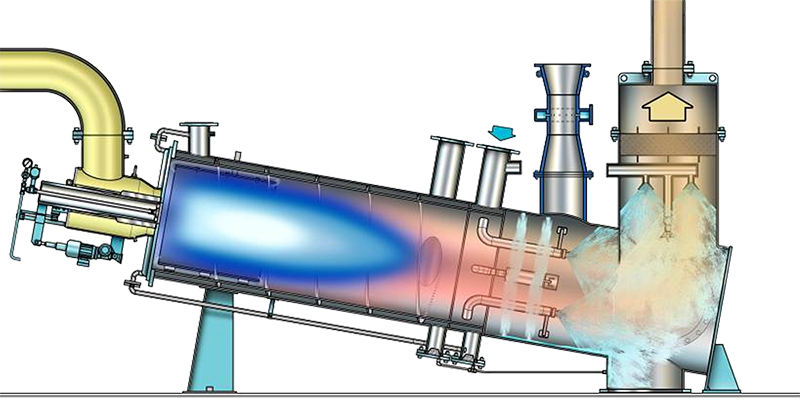
- Oxygen Output Range
- 2-4% O2 (Combustion type)
- Gas Production Capacity
- 1000-20,000 m³/h (Smit Combustion); 3000-22,500 m³/h (Smit LNG/LPG)
- Operating Pressure
- 0.15-0.25 bar(g) Combustion; up to 0.4 bar(g) LNG/LPG
- Scrubber Type
- Wet scrubber with spray cooling and water demisting
- Fuel Consumption
- Minimized via Ultramizing system; AFEM upgrade reduces by up to 40%
- Analyzer Type
- Combustion-process oxygen analyzer (SMIT7000/AAL7000 available as upgrade)
- Smit Combustion (FU-Type)
- Smit LNG/LPG
- Smit Flue Gas
- Smit Combinert
- Area: Scrubber fouling, corrosion, blocked spray nozzles, demister damageCheck: Visual inspection through scrubber manholes; check spray nozzles for blockage (impairs cooling efficiency); inspect cooling pipes, floats, sensors for corrosion or soot deposits; verify cooling water flow and demister function
- Area: Deck seal water level loss, gauge glass fouling, seal integrity compromiseCheck: Verify gauge glass is clean and water level visible; check high/low level alarm float switches operational; inspect for water leakage, corrosion; in cold weather verify heating coil function and trace heating active; confirm low-level alarm functions
- Area: P/V breaker seal loss, incorrect relief pressure setting, glycol/water mixture degradationCheck: Verify P/V breaker opens at preset pressure/vacuum; check sight glass and fluid level (glycol-water mixture); inspect for leakage around valve stem; test differential pressure response; replace fluid if discolored/contaminated
- Area: Oxygen analyzer drift, calibration loss, sensor fouling or failureCheck: Calibrate analyzer ≥24 hrs before cargo operations; log calibration results; verify O2 readout 2-4% during operation; replace probe/sensor if drift >0.5%; ensure analyzer sample line clear and inlet not fouled
- Area: Combustion process inefficiency, incomplete fuel combustion, soot generationCheck: Observe flue gas color (should be colorless/light gray, not black); monitor fuel/air ratio; inspect burner nozzles and air registers for clogging; verify combustion oxygen ≤4%; check fuel pump pressure/flow; inspect ignition electrode condition
- Area: Non-return valve (check valve) function loss, backflow risk to engine roomCheck: Confirm non-return valves at deck seal outlet prevent backflow; verify pressure differential across deck seal maintained; listen for flow disturbance; schedule valve seat/seal inspection per Condition Audit; test with pressure gauge if vessel equipped
Type-universal inspection/service points for Inert Gas Systems (Alfa Laval, Mega-Schwarm 2026-06). Per-model specs not auto-filled.
- Oxygen Output Range
- 2-4% O2 (Combustion type)
- Gas Production Capacity
- 1000-20,000 m³/h (Smit Combustion); 3000-22,500 m³/h (Smit LNG/LPG)
- Operating Pressure
- 0.15-0.25 bar(g) Combustion; up to 0.4 bar(g) LNG/LPG
- Scrubber Type
- Wet scrubber with spray cooling and water demisting
- Fuel Consumption
- Minimized via Ultramizing system; AFEM upgrade reduces by up to 40%
- Analyzer Type
- Combustion-process oxygen analyzer (SMIT7000/AAL7000 available as upgrade)
- Smit Combustion (FU-Type)
- Smit LNG/LPG
- Smit Flue Gas
- Smit Combinert
- Area: Scrubber fouling, corrosion, blocked spray nozzles, demister damageCheck: Visual inspection through scrubber manholes; check spray nozzles for blockage (impairs cooling efficiency); inspect cooling pipes, floats, sensors for corrosion or soot deposits; verify cooling water flow and demister function
- Area: Deck seal water level loss, gauge glass fouling, seal integrity compromiseCheck: Verify gauge glass is clean and water level visible; check high/low level alarm float switches operational; inspect for water leakage, corrosion; in cold weather verify heating coil function and trace heating active; confirm low-level alarm functions
- Area: P/V breaker seal loss, incorrect relief pressure setting, glycol/water mixture degradationCheck: Verify P/V breaker opens at preset pressure/vacuum; check sight glass and fluid level (glycol-water mixture); inspect for leakage around valve stem; test differential pressure response; replace fluid if discolored/contaminated
- Area: Oxygen analyzer drift, calibration loss, sensor fouling or failureCheck: Calibrate analyzer ≥24 hrs before cargo operations; log calibration results; verify O2 readout 2-4% during operation; replace probe/sensor if drift >0.5%; ensure analyzer sample line clear and inlet not fouled
- Area: Combustion process inefficiency, incomplete fuel combustion, soot generationCheck: Observe flue gas color (should be colorless/light gray, not black); monitor fuel/air ratio; inspect burner nozzles and air registers for clogging; verify combustion oxygen ≤4%; check fuel pump pressure/flow; inspect ignition electrode condition
- Area: Non-return valve (check valve) function loss, backflow risk to engine roomCheck: Confirm non-return valves at deck seal outlet prevent backflow; verify pressure differential across deck seal maintained; listen for flow disturbance; schedule valve seat/seal inspection per Condition Audit; test with pressure gauge if vessel equipped
Type-universal inspection/service points for Inert Gas Systems (Alfa Laval, Mega-Schwarm 2026-06). Per-model specs not auto-filled.
- Oxygen Output Range
- 2-4% O2 (Combustion type)
- Gas Production Capacity
- 1000-20,000 m³/h (Smit Combustion); 3000-22,500 m³/h (Smit LNG/LPG)
- Operating Pressure
- 0.15-0.25 bar(g) Combustion; up to 0.4 bar(g) LNG/LPG
- Scrubber Type
- Wet scrubber with spray cooling and water demisting
- Fuel Consumption
- Minimized via Ultramizing system; AFEM upgrade reduces by up to 40%
- Analyzer Type
- Combustion-process oxygen analyzer (SMIT7000/AAL7000 available as upgrade)
- Smit Combustion (FU-Type)
- Smit LNG/LPG
- Smit Flue Gas
- Smit Combinert
- Area: Scrubber fouling, corrosion, blocked spray nozzles, demister damageCheck: Visual inspection through scrubber manholes; check spray nozzles for blockage (impairs cooling efficiency); inspect cooling pipes, floats, sensors for corrosion or soot deposits; verify cooling water flow and demister function
- Area: Deck seal water level loss, gauge glass fouling, seal integrity compromiseCheck: Verify gauge glass is clean and water level visible; check high/low level alarm float switches operational; inspect for water leakage, corrosion; in cold weather verify heating coil function and trace heating active; confirm low-level alarm functions
- Area: P/V breaker seal loss, incorrect relief pressure setting, glycol/water mixture degradationCheck: Verify P/V breaker opens at preset pressure/vacuum; check sight glass and fluid level (glycol-water mixture); inspect for leakage around valve stem; test differential pressure response; replace fluid if discolored/contaminated
- Area: Oxygen analyzer drift, calibration loss, sensor fouling or failureCheck: Calibrate analyzer ≥24 hrs before cargo operations; log calibration results; verify O2 readout 2-4% during operation; replace probe/sensor if drift >0.5%; ensure analyzer sample line clear and inlet not fouled
- Area: Combustion process inefficiency, incomplete fuel combustion, soot generationCheck: Observe flue gas color (should be colorless/light gray, not black); monitor fuel/air ratio; inspect burner nozzles and air registers for clogging; verify combustion oxygen ≤4%; check fuel pump pressure/flow; inspect ignition electrode condition
- Area: Non-return valve (check valve) function loss, backflow risk to engine roomCheck: Confirm non-return valves at deck seal outlet prevent backflow; verify pressure differential across deck seal maintained; listen for flow disturbance; schedule valve seat/seal inspection per Condition Audit; test with pressure gauge if vessel equipped
Type-universal inspection/service points for Inert Gas Systems (Alfa Laval, Mega-Schwarm 2026-06). Per-model specs not auto-filled.
- Oxygen Output Range
- 2-4% O2 (Combustion type)
- Gas Production Capacity
- 1000-20,000 m³/h (Smit Combustion); 3000-22,500 m³/h (Smit LNG/LPG)
- Operating Pressure
- 0.15-0.25 bar(g) Combustion; up to 0.4 bar(g) LNG/LPG
- Scrubber Type
- Wet scrubber with spray cooling and water demisting
- Fuel Consumption
- Minimized via Ultramizing system; AFEM upgrade reduces by up to 40%
- Analyzer Type
- Combustion-process oxygen analyzer (SMIT7000/AAL7000 available as upgrade)
- Smit Combustion (FU-Type)
- Smit LNG/LPG
- Smit Flue Gas
- Smit Combinert
- Area: Scrubber fouling, corrosion, blocked spray nozzles, demister damageCheck: Visual inspection through scrubber manholes; check spray nozzles for blockage (impairs cooling efficiency); inspect cooling pipes, floats, sensors for corrosion or soot deposits; verify cooling water flow and demister function
- Area: Deck seal water level loss, gauge glass fouling, seal integrity compromiseCheck: Verify gauge glass is clean and water level visible; check high/low level alarm float switches operational; inspect for water leakage, corrosion; in cold weather verify heating coil function and trace heating active; confirm low-level alarm functions
- Area: P/V breaker seal loss, incorrect relief pressure setting, glycol/water mixture degradationCheck: Verify P/V breaker opens at preset pressure/vacuum; check sight glass and fluid level (glycol-water mixture); inspect for leakage around valve stem; test differential pressure response; replace fluid if discolored/contaminated
- Area: Oxygen analyzer drift, calibration loss, sensor fouling or failureCheck: Calibrate analyzer ≥24 hrs before cargo operations; log calibration results; verify O2 readout 2-4% during operation; replace probe/sensor if drift >0.5%; ensure analyzer sample line clear and inlet not fouled
- Area: Combustion process inefficiency, incomplete fuel combustion, soot generationCheck: Observe flue gas color (should be colorless/light gray, not black); monitor fuel/air ratio; inspect burner nozzles and air registers for clogging; verify combustion oxygen ≤4%; check fuel pump pressure/flow; inspect ignition electrode condition
- Area: Non-return valve (check valve) function loss, backflow risk to engine roomCheck: Confirm non-return valves at deck seal outlet prevent backflow; verify pressure differential across deck seal maintained; listen for flow disturbance; schedule valve seat/seal inspection per Condition Audit; test with pressure gauge if vessel equipped
Type-universal inspection/service points for Inert Gas Systems (Alfa Laval, Mega-Schwarm 2026-06). Per-model specs not auto-filled.
- Oxygen Output Range
- 2-4% O2 (Combustion type)
- Gas Production Capacity
- 1000-20,000 m³/h (Smit Combustion); 3000-22,500 m³/h (Smit LNG/LPG)
- Operating Pressure
- 0.15-0.25 bar(g) Combustion; up to 0.4 bar(g) LNG/LPG
- Scrubber Type
- Wet scrubber with spray cooling and water demisting
- Fuel Consumption
- Minimized via Ultramizing system; AFEM upgrade reduces by up to 40%
- Analyzer Type
- Combustion-process oxygen analyzer (SMIT7000/AAL7000 available as upgrade)
- Smit Combustion (FU-Type)
- Smit LNG/LPG
- Smit Flue Gas
- Smit Combinert
- Area: Scrubber fouling, corrosion, blocked spray nozzles, demister damageCheck: Visual inspection through scrubber manholes; check spray nozzles for blockage (impairs cooling efficiency); inspect cooling pipes, floats, sensors for corrosion or soot deposits; verify cooling water flow and demister function
- Area: Deck seal water level loss, gauge glass fouling, seal integrity compromiseCheck: Verify gauge glass is clean and water level visible; check high/low level alarm float switches operational; inspect for water leakage, corrosion; in cold weather verify heating coil function and trace heating active; confirm low-level alarm functions
- Area: P/V breaker seal loss, incorrect relief pressure setting, glycol/water mixture degradationCheck: Verify P/V breaker opens at preset pressure/vacuum; check sight glass and fluid level (glycol-water mixture); inspect for leakage around valve stem; test differential pressure response; replace fluid if discolored/contaminated
- Area: Oxygen analyzer drift, calibration loss, sensor fouling or failureCheck: Calibrate analyzer ≥24 hrs before cargo operations; log calibration results; verify O2 readout 2-4% during operation; replace probe/sensor if drift >0.5%; ensure analyzer sample line clear and inlet not fouled
- Area: Combustion process inefficiency, incomplete fuel combustion, soot generationCheck: Observe flue gas color (should be colorless/light gray, not black); monitor fuel/air ratio; inspect burner nozzles and air registers for clogging; verify combustion oxygen ≤4%; check fuel pump pressure/flow; inspect ignition electrode condition
- Area: Non-return valve (check valve) function loss, backflow risk to engine roomCheck: Confirm non-return valves at deck seal outlet prevent backflow; verify pressure differential across deck seal maintained; listen for flow disturbance; schedule valve seat/seal inspection per Condition Audit; test with pressure gauge if vessel equipped
Type-universal inspection/service points for Inert Gas Systems (Alfa Laval, Mega-Schwarm 2026-06). Per-model specs not auto-filled.
- Oxygen Output Range
- 2-4% O2 (Combustion type)
- Gas Production Capacity
- 1000-20,000 m³/h (Smit Combustion); 3000-22,500 m³/h (Smit LNG/LPG)
- Operating Pressure
- 0.15-0.25 bar(g) Combustion; up to 0.4 bar(g) LNG/LPG
- Scrubber Type
- Wet scrubber with spray cooling and water demisting
- Fuel Consumption
- Minimized via Ultramizing system; AFEM upgrade reduces by up to 40%
- Analyzer Type
- Combustion-process oxygen analyzer (SMIT7000/AAL7000 available as upgrade)
- Smit Combustion (FU-Type)
- Smit LNG/LPG
- Smit Flue Gas
- Smit Combinert
- Area: Scrubber fouling, corrosion, blocked spray nozzles, demister damageCheck: Visual inspection through scrubber manholes; check spray nozzles for blockage (impairs cooling efficiency); inspect cooling pipes, floats, sensors for corrosion or soot deposits; verify cooling water flow and demister function
- Area: Deck seal water level loss, gauge glass fouling, seal integrity compromiseCheck: Verify gauge glass is clean and water level visible; check high/low level alarm float switches operational; inspect for water leakage, corrosion; in cold weather verify heating coil function and trace heating active; confirm low-level alarm functions
- Area: P/V breaker seal loss, incorrect relief pressure setting, glycol/water mixture degradationCheck: Verify P/V breaker opens at preset pressure/vacuum; check sight glass and fluid level (glycol-water mixture); inspect for leakage around valve stem; test differential pressure response; replace fluid if discolored/contaminated
- Area: Oxygen analyzer drift, calibration loss, sensor fouling or failureCheck: Calibrate analyzer ≥24 hrs before cargo operations; log calibration results; verify O2 readout 2-4% during operation; replace probe/sensor if drift >0.5%; ensure analyzer sample line clear and inlet not fouled
- Area: Combustion process inefficiency, incomplete fuel combustion, soot generationCheck: Observe flue gas color (should be colorless/light gray, not black); monitor fuel/air ratio; inspect burner nozzles and air registers for clogging; verify combustion oxygen ≤4%; check fuel pump pressure/flow; inspect ignition electrode condition
- Area: Non-return valve (check valve) function loss, backflow risk to engine roomCheck: Confirm non-return valves at deck seal outlet prevent backflow; verify pressure differential across deck seal maintained; listen for flow disturbance; schedule valve seat/seal inspection per Condition Audit; test with pressure gauge if vessel equipped
Type-universal inspection/service points for Inert Gas Systems (Alfa Laval, Mega-Schwarm 2026-06). Per-model specs not auto-filled.
- Oxygen Output Range
- 2-4% O2 (Combustion type)
- Gas Production Capacity
- 1000-20,000 m³/h (Smit Combustion); 3000-22,500 m³/h (Smit LNG/LPG)
- Operating Pressure
- 0.15-0.25 bar(g) Combustion; up to 0.4 bar(g) LNG/LPG
- Scrubber Type
- Wet scrubber with spray cooling and water demisting
- Fuel Consumption
- Minimized via Ultramizing system; AFEM upgrade reduces by up to 40%
- Analyzer Type
- Combustion-process oxygen analyzer (SMIT7000/AAL7000 available as upgrade)
- Smit Combustion (FU-Type)
- Smit LNG/LPG
- Smit Flue Gas
- Smit Combinert
- Area: Scrubber fouling, corrosion, blocked spray nozzles, demister damageCheck: Visual inspection through scrubber manholes; check spray nozzles for blockage (impairs cooling efficiency); inspect cooling pipes, floats, sensors for corrosion or soot deposits; verify cooling water flow and demister function
- Area: Deck seal water level loss, gauge glass fouling, seal integrity compromiseCheck: Verify gauge glass is clean and water level visible; check high/low level alarm float switches operational; inspect for water leakage, corrosion; in cold weather verify heating coil function and trace heating active; confirm low-level alarm functions
- Area: P/V breaker seal loss, incorrect relief pressure setting, glycol/water mixture degradationCheck: Verify P/V breaker opens at preset pressure/vacuum; check sight glass and fluid level (glycol-water mixture); inspect for leakage around valve stem; test differential pressure response; replace fluid if discolored/contaminated
- Area: Oxygen analyzer drift, calibration loss, sensor fouling or failureCheck: Calibrate analyzer ≥24 hrs before cargo operations; log calibration results; verify O2 readout 2-4% during operation; replace probe/sensor if drift >0.5%; ensure analyzer sample line clear and inlet not fouled
- Area: Combustion process inefficiency, incomplete fuel combustion, soot generationCheck: Observe flue gas color (should be colorless/light gray, not black); monitor fuel/air ratio; inspect burner nozzles and air registers for clogging; verify combustion oxygen ≤4%; check fuel pump pressure/flow; inspect ignition electrode condition
- Area: Non-return valve (check valve) function loss, backflow risk to engine roomCheck: Confirm non-return valves at deck seal outlet prevent backflow; verify pressure differential across deck seal maintained; listen for flow disturbance; schedule valve seat/seal inspection per Condition Audit; test with pressure gauge if vessel equipped
Type-universal inspection/service points for Inert Gas Systems (Alfa Laval, Mega-Schwarm 2026-06). Per-model specs not auto-filled.
- Oxygen Output Range
- 2-4% O2 (Combustion type)
- Gas Production Capacity
- 1000-20,000 m³/h (Smit Combustion); 3000-22,500 m³/h (Smit LNG/LPG)
- Operating Pressure
- 0.15-0.25 bar(g) Combustion; up to 0.4 bar(g) LNG/LPG
- Scrubber Type
- Wet scrubber with spray cooling and water demisting
- Fuel Consumption
- Minimized via Ultramizing system; AFEM upgrade reduces by up to 40%
- Analyzer Type
- Combustion-process oxygen analyzer (SMIT7000/AAL7000 available as upgrade)
- Smit Combustion (FU-Type)
- Smit LNG/LPG
- Smit Flue Gas
- Smit Combinert
- Area: Scrubber fouling, corrosion, blocked spray nozzles, demister damageCheck: Visual inspection through scrubber manholes; check spray nozzles for blockage (impairs cooling efficiency); inspect cooling pipes, floats, sensors for corrosion or soot deposits; verify cooling water flow and demister function
- Area: Deck seal water level loss, gauge glass fouling, seal integrity compromiseCheck: Verify gauge glass is clean and water level visible; check high/low level alarm float switches operational; inspect for water leakage, corrosion; in cold weather verify heating coil function and trace heating active; confirm low-level alarm functions
- Area: P/V breaker seal loss, incorrect relief pressure setting, glycol/water mixture degradationCheck: Verify P/V breaker opens at preset pressure/vacuum; check sight glass and fluid level (glycol-water mixture); inspect for leakage around valve stem; test differential pressure response; replace fluid if discolored/contaminated
- Area: Oxygen analyzer drift, calibration loss, sensor fouling or failureCheck: Calibrate analyzer ≥24 hrs before cargo operations; log calibration results; verify O2 readout 2-4% during operation; replace probe/sensor if drift >0.5%; ensure analyzer sample line clear and inlet not fouled
- Area: Combustion process inefficiency, incomplete fuel combustion, soot generationCheck: Observe flue gas color (should be colorless/light gray, not black); monitor fuel/air ratio; inspect burner nozzles and air registers for clogging; verify combustion oxygen ≤4%; check fuel pump pressure/flow; inspect ignition electrode condition
- Area: Non-return valve (check valve) function loss, backflow risk to engine roomCheck: Confirm non-return valves at deck seal outlet prevent backflow; verify pressure differential across deck seal maintained; listen for flow disturbance; schedule valve seat/seal inspection per Condition Audit; test with pressure gauge if vessel equipped
Type-universal inspection/service points for Inert Gas Systems (Alfa Laval, Mega-Schwarm 2026-06). Per-model specs not auto-filled.
- Oxygen Output Range
- 2-4% O2 (Combustion type)
- Gas Production Capacity
- 1000-20,000 m³/h (Smit Combustion); 3000-22,500 m³/h (Smit LNG/LPG)
- Operating Pressure
- 0.15-0.25 bar(g) Combustion; up to 0.4 bar(g) LNG/LPG
- Scrubber Type
- Wet scrubber with spray cooling and water demisting
- Fuel Consumption
- Minimized via Ultramizing system; AFEM upgrade reduces by up to 40%
- Analyzer Type
- Combustion-process oxygen analyzer (SMIT7000/AAL7000 available as upgrade)
- Smit Combustion (FU-Type)
- Smit LNG/LPG
- Smit Flue Gas
- Smit Combinert
- Area: Scrubber fouling, corrosion, blocked spray nozzles, demister damageCheck: Visual inspection through scrubber manholes; check spray nozzles for blockage (impairs cooling efficiency); inspect cooling pipes, floats, sensors for corrosion or soot deposits; verify cooling water flow and demister function
- Area: Deck seal water level loss, gauge glass fouling, seal integrity compromiseCheck: Verify gauge glass is clean and water level visible; check high/low level alarm float switches operational; inspect for water leakage, corrosion; in cold weather verify heating coil function and trace heating active; confirm low-level alarm functions
- Area: P/V breaker seal loss, incorrect relief pressure setting, glycol/water mixture degradationCheck: Verify P/V breaker opens at preset pressure/vacuum; check sight glass and fluid level (glycol-water mixture); inspect for leakage around valve stem; test differential pressure response; replace fluid if discolored/contaminated
- Area: Oxygen analyzer drift, calibration loss, sensor fouling or failureCheck: Calibrate analyzer ≥24 hrs before cargo operations; log calibration results; verify O2 readout 2-4% during operation; replace probe/sensor if drift >0.5%; ensure analyzer sample line clear and inlet not fouled
- Area: Combustion process inefficiency, incomplete fuel combustion, soot generationCheck: Observe flue gas color (should be colorless/light gray, not black); monitor fuel/air ratio; inspect burner nozzles and air registers for clogging; verify combustion oxygen ≤4%; check fuel pump pressure/flow; inspect ignition electrode condition
- Area: Non-return valve (check valve) function loss, backflow risk to engine roomCheck: Confirm non-return valves at deck seal outlet prevent backflow; verify pressure differential across deck seal maintained; listen for flow disturbance; schedule valve seat/seal inspection per Condition Audit; test with pressure gauge if vessel equipped
Type-universal inspection/service points for Inert Gas Systems (Alfa Laval, Mega-Schwarm 2026-06). Per-model specs not auto-filled.
- Oxygen Output Range
- 2-4% O2 (Combustion type)
- Gas Production Capacity
- 1000-20,000 m³/h (Smit Combustion); 3000-22,500 m³/h (Smit LNG/LPG)
- Operating Pressure
- 0.15-0.25 bar(g) Combustion; up to 0.4 bar(g) LNG/LPG
- Scrubber Type
- Wet scrubber with spray cooling and water demisting
- Fuel Consumption
- Minimized via Ultramizing system; AFEM upgrade reduces by up to 40%
- Analyzer Type
- Combustion-process oxygen analyzer (SMIT7000/AAL7000 available as upgrade)
- Smit Combustion (FU-Type)
- Smit LNG/LPG
- Smit Flue Gas
- Smit Combinert
- Area: Scrubber fouling, corrosion, blocked spray nozzles, demister damageCheck: Visual inspection through scrubber manholes; check spray nozzles for blockage (impairs cooling efficiency); inspect cooling pipes, floats, sensors for corrosion or soot deposits; verify cooling water flow and demister function
- Area: Deck seal water level loss, gauge glass fouling, seal integrity compromiseCheck: Verify gauge glass is clean and water level visible; check high/low level alarm float switches operational; inspect for water leakage, corrosion; in cold weather verify heating coil function and trace heating active; confirm low-level alarm functions
- Area: P/V breaker seal loss, incorrect relief pressure setting, glycol/water mixture degradationCheck: Verify P/V breaker opens at preset pressure/vacuum; check sight glass and fluid level (glycol-water mixture); inspect for leakage around valve stem; test differential pressure response; replace fluid if discolored/contaminated
- Area: Oxygen analyzer drift, calibration loss, sensor fouling or failureCheck: Calibrate analyzer ≥24 hrs before cargo operations; log calibration results; verify O2 readout 2-4% during operation; replace probe/sensor if drift >0.5%; ensure analyzer sample line clear and inlet not fouled
- Area: Combustion process inefficiency, incomplete fuel combustion, soot generationCheck: Observe flue gas color (should be colorless/light gray, not black); monitor fuel/air ratio; inspect burner nozzles and air registers for clogging; verify combustion oxygen ≤4%; check fuel pump pressure/flow; inspect ignition electrode condition
- Area: Non-return valve (check valve) function loss, backflow risk to engine roomCheck: Confirm non-return valves at deck seal outlet prevent backflow; verify pressure differential across deck seal maintained; listen for flow disturbance; schedule valve seat/seal inspection per Condition Audit; test with pressure gauge if vessel equipped
Type-universal inspection/service points for Inert Gas Systems (Alfa Laval, Mega-Schwarm 2026-06). Per-model specs not auto-filled.
- Oxygen Output Range
- 2-4% O2 (Combustion type)
- Gas Production Capacity
- 1000-20,000 m³/h (Smit Combustion); 3000-22,500 m³/h (Smit LNG/LPG)
- Operating Pressure
- 0.15-0.25 bar(g) Combustion; up to 0.4 bar(g) LNG/LPG
- Scrubber Type
- Wet scrubber with spray cooling and water demisting
- Fuel Consumption
- Minimized via Ultramizing system; AFEM upgrade reduces by up to 40%
- Analyzer Type
- Combustion-process oxygen analyzer (SMIT7000/AAL7000 available as upgrade)
- Smit Combustion (FU-Type)
- Smit LNG/LPG
- Smit Flue Gas
- Smit Combinert
- Area: Scrubber fouling, corrosion, blocked spray nozzles, demister damageCheck: Visual inspection through scrubber manholes; check spray nozzles for blockage (impairs cooling efficiency); inspect cooling pipes, floats, sensors for corrosion or soot deposits; verify cooling water flow and demister function
- Area: Deck seal water level loss, gauge glass fouling, seal integrity compromiseCheck: Verify gauge glass is clean and water level visible; check high/low level alarm float switches operational; inspect for water leakage, corrosion; in cold weather verify heating coil function and trace heating active; confirm low-level alarm functions
- Area: P/V breaker seal loss, incorrect relief pressure setting, glycol/water mixture degradationCheck: Verify P/V breaker opens at preset pressure/vacuum; check sight glass and fluid level (glycol-water mixture); inspect for leakage around valve stem; test differential pressure response; replace fluid if discolored/contaminated
- Area: Oxygen analyzer drift, calibration loss, sensor fouling or failureCheck: Calibrate analyzer ≥24 hrs before cargo operations; log calibration results; verify O2 readout 2-4% during operation; replace probe/sensor if drift >0.5%; ensure analyzer sample line clear and inlet not fouled
- Area: Combustion process inefficiency, incomplete fuel combustion, soot generationCheck: Observe flue gas color (should be colorless/light gray, not black); monitor fuel/air ratio; inspect burner nozzles and air registers for clogging; verify combustion oxygen ≤4%; check fuel pump pressure/flow; inspect ignition electrode condition
- Area: Non-return valve (check valve) function loss, backflow risk to engine roomCheck: Confirm non-return valves at deck seal outlet prevent backflow; verify pressure differential across deck seal maintained; listen for flow disturbance; schedule valve seat/seal inspection per Condition Audit; test with pressure gauge if vessel equipped
Type-universal inspection/service points for Inert Gas Systems (Alfa Laval, Mega-Schwarm 2026-06). Per-model specs not auto-filled.
- Oxygen Output Range
- 2-4% O2 (Combustion type)
- Gas Production Capacity
- 1000-20,000 m³/h (Smit Combustion); 3000-22,500 m³/h (Smit LNG/LPG)
- Operating Pressure
- 0.15-0.25 bar(g) Combustion; up to 0.4 bar(g) LNG/LPG
- Scrubber Type
- Wet scrubber with spray cooling and water demisting
- Fuel Consumption
- Minimized via Ultramizing system; AFEM upgrade reduces by up to 40%
- Analyzer Type
- Combustion-process oxygen analyzer (SMIT7000/AAL7000 available as upgrade)
- Smit Combustion (FU-Type)
- Smit LNG/LPG
- Smit Flue Gas
- Smit Combinert
- Area: Scrubber fouling, corrosion, blocked spray nozzles, demister damageCheck: Visual inspection through scrubber manholes; check spray nozzles for blockage (impairs cooling efficiency); inspect cooling pipes, floats, sensors for corrosion or soot deposits; verify cooling water flow and demister function
- Area: Deck seal water level loss, gauge glass fouling, seal integrity compromiseCheck: Verify gauge glass is clean and water level visible; check high/low level alarm float switches operational; inspect for water leakage, corrosion; in cold weather verify heating coil function and trace heating active; confirm low-level alarm functions
- Area: P/V breaker seal loss, incorrect relief pressure setting, glycol/water mixture degradationCheck: Verify P/V breaker opens at preset pressure/vacuum; check sight glass and fluid level (glycol-water mixture); inspect for leakage around valve stem; test differential pressure response; replace fluid if discolored/contaminated
- Area: Oxygen analyzer drift, calibration loss, sensor fouling or failureCheck: Calibrate analyzer ≥24 hrs before cargo operations; log calibration results; verify O2 readout 2-4% during operation; replace probe/sensor if drift >0.5%; ensure analyzer sample line clear and inlet not fouled
- Area: Combustion process inefficiency, incomplete fuel combustion, soot generationCheck: Observe flue gas color (should be colorless/light gray, not black); monitor fuel/air ratio; inspect burner nozzles and air registers for clogging; verify combustion oxygen ≤4%; check fuel pump pressure/flow; inspect ignition electrode condition
- Area: Non-return valve (check valve) function loss, backflow risk to engine roomCheck: Confirm non-return valves at deck seal outlet prevent backflow; verify pressure differential across deck seal maintained; listen for flow disturbance; schedule valve seat/seal inspection per Condition Audit; test with pressure gauge if vessel equipped
Type-universal inspection/service points for Inert Gas Systems (Alfa Laval, Mega-Schwarm 2026-06). Per-model specs not auto-filled.
- Oxygen Output Range
- 2-4% O2 (Combustion type)
- Gas Production Capacity
- 1000-20,000 m³/h (Smit Combustion); 3000-22,500 m³/h (Smit LNG/LPG)
- Operating Pressure
- 0.15-0.25 bar(g) Combustion; up to 0.4 bar(g) LNG/LPG
- Scrubber Type
- Wet scrubber with spray cooling and water demisting
- Fuel Consumption
- Minimized via Ultramizing system; AFEM upgrade reduces by up to 40%
- Analyzer Type
- Combustion-process oxygen analyzer (SMIT7000/AAL7000 available as upgrade)
- Smit Combustion (FU-Type)
- Smit LNG/LPG
- Smit Flue Gas
- Smit Combinert
- Area: Scrubber fouling, corrosion, blocked spray nozzles, demister damageCheck: Visual inspection through scrubber manholes; check spray nozzles for blockage (impairs cooling efficiency); inspect cooling pipes, floats, sensors for corrosion or soot deposits; verify cooling water flow and demister function
- Area: Deck seal water level loss, gauge glass fouling, seal integrity compromiseCheck: Verify gauge glass is clean and water level visible; check high/low level alarm float switches operational; inspect for water leakage, corrosion; in cold weather verify heating coil function and trace heating active; confirm low-level alarm functions
- Area: P/V breaker seal loss, incorrect relief pressure setting, glycol/water mixture degradationCheck: Verify P/V breaker opens at preset pressure/vacuum; check sight glass and fluid level (glycol-water mixture); inspect for leakage around valve stem; test differential pressure response; replace fluid if discolored/contaminated
- Area: Oxygen analyzer drift, calibration loss, sensor fouling or failureCheck: Calibrate analyzer ≥24 hrs before cargo operations; log calibration results; verify O2 readout 2-4% during operation; replace probe/sensor if drift >0.5%; ensure analyzer sample line clear and inlet not fouled
- Area: Combustion process inefficiency, incomplete fuel combustion, soot generationCheck: Observe flue gas color (should be colorless/light gray, not black); monitor fuel/air ratio; inspect burner nozzles and air registers for clogging; verify combustion oxygen ≤4%; check fuel pump pressure/flow; inspect ignition electrode condition
- Area: Non-return valve (check valve) function loss, backflow risk to engine roomCheck: Confirm non-return valves at deck seal outlet prevent backflow; verify pressure differential across deck seal maintained; listen for flow disturbance; schedule valve seat/seal inspection per Condition Audit; test with pressure gauge if vessel equipped
Type-universal inspection/service points for Inert Gas Systems (Alfa Laval, Mega-Schwarm 2026-06). Per-model specs not auto-filled.
- Oxygen Output Range
- 2-4% O2 (Combustion type)
- Gas Production Capacity
- 1000-20,000 m³/h (Smit Combustion); 3000-22,500 m³/h (Smit LNG/LPG)
- Operating Pressure
- 0.15-0.25 bar(g) Combustion; up to 0.4 bar(g) LNG/LPG
- Scrubber Type
- Wet scrubber with spray cooling and water demisting
- Fuel Consumption
- Minimized via Ultramizing system; AFEM upgrade reduces by up to 40%
- Analyzer Type
- Combustion-process oxygen analyzer (SMIT7000/AAL7000 available as upgrade)
- Smit Combustion (FU-Type)
- Smit LNG/LPG
- Smit Flue Gas
- Smit Combinert
- Area: Scrubber fouling, corrosion, blocked spray nozzles, demister damageCheck: Visual inspection through scrubber manholes; check spray nozzles for blockage (impairs cooling efficiency); inspect cooling pipes, floats, sensors for corrosion or soot deposits; verify cooling water flow and demister function
- Area: Deck seal water level loss, gauge glass fouling, seal integrity compromiseCheck: Verify gauge glass is clean and water level visible; check high/low level alarm float switches operational; inspect for water leakage, corrosion; in cold weather verify heating coil function and trace heating active; confirm low-level alarm functions
- Area: P/V breaker seal loss, incorrect relief pressure setting, glycol/water mixture degradationCheck: Verify P/V breaker opens at preset pressure/vacuum; check sight glass and fluid level (glycol-water mixture); inspect for leakage around valve stem; test differential pressure response; replace fluid if discolored/contaminated
- Area: Oxygen analyzer drift, calibration loss, sensor fouling or failureCheck: Calibrate analyzer ≥24 hrs before cargo operations; log calibration results; verify O2 readout 2-4% during operation; replace probe/sensor if drift >0.5%; ensure analyzer sample line clear and inlet not fouled
- Area: Combustion process inefficiency, incomplete fuel combustion, soot generationCheck: Observe flue gas color (should be colorless/light gray, not black); monitor fuel/air ratio; inspect burner nozzles and air registers for clogging; verify combustion oxygen ≤4%; check fuel pump pressure/flow; inspect ignition electrode condition
- Area: Non-return valve (check valve) function loss, backflow risk to engine roomCheck: Confirm non-return valves at deck seal outlet prevent backflow; verify pressure differential across deck seal maintained; listen for flow disturbance; schedule valve seat/seal inspection per Condition Audit; test with pressure gauge if vessel equipped
Type-universal inspection/service points for Inert Gas Systems (Alfa Laval, Mega-Schwarm 2026-06). Per-model specs not auto-filled.
- Oxygen Output Range
- 2-4% O2 (Combustion type)
- Gas Production Capacity
- 1000-20,000 m³/h (Smit Combustion); 3000-22,500 m³/h (Smit LNG/LPG)
- Operating Pressure
- 0.15-0.25 bar(g) Combustion; up to 0.4 bar(g) LNG/LPG
- Scrubber Type
- Wet scrubber with spray cooling and water demisting
- Fuel Consumption
- Minimized via Ultramizing system; AFEM upgrade reduces by up to 40%
- Analyzer Type
- Combustion-process oxygen analyzer (SMIT7000/AAL7000 available as upgrade)
- Smit Combustion (FU-Type)
- Smit LNG/LPG
- Smit Flue Gas
- Smit Combinert
- Area: Scrubber fouling, corrosion, blocked spray nozzles, demister damageCheck: Visual inspection through scrubber manholes; check spray nozzles for blockage (impairs cooling efficiency); inspect cooling pipes, floats, sensors for corrosion or soot deposits; verify cooling water flow and demister function
- Area: Deck seal water level loss, gauge glass fouling, seal integrity compromiseCheck: Verify gauge glass is clean and water level visible; check high/low level alarm float switches operational; inspect for water leakage, corrosion; in cold weather verify heating coil function and trace heating active; confirm low-level alarm functions
- Area: P/V breaker seal loss, incorrect relief pressure setting, glycol/water mixture degradationCheck: Verify P/V breaker opens at preset pressure/vacuum; check sight glass and fluid level (glycol-water mixture); inspect for leakage around valve stem; test differential pressure response; replace fluid if discolored/contaminated
- Area: Oxygen analyzer drift, calibration loss, sensor fouling or failureCheck: Calibrate analyzer ≥24 hrs before cargo operations; log calibration results; verify O2 readout 2-4% during operation; replace probe/sensor if drift >0.5%; ensure analyzer sample line clear and inlet not fouled
- Area: Combustion process inefficiency, incomplete fuel combustion, soot generationCheck: Observe flue gas color (should be colorless/light gray, not black); monitor fuel/air ratio; inspect burner nozzles and air registers for clogging; verify combustion oxygen ≤4%; check fuel pump pressure/flow; inspect ignition electrode condition
- Area: Non-return valve (check valve) function loss, backflow risk to engine roomCheck: Confirm non-return valves at deck seal outlet prevent backflow; verify pressure differential across deck seal maintained; listen for flow disturbance; schedule valve seat/seal inspection per Condition Audit; test with pressure gauge if vessel equipped
Type-universal inspection/service points for Inert Gas Systems (Alfa Laval, Mega-Schwarm 2026-06). Per-model specs not auto-filled.
- Oxygen Output Range
- 2-4% O2 (Combustion type)
- Gas Production Capacity
- 1000-20,000 m³/h (Smit Combustion); 3000-22,500 m³/h (Smit LNG/LPG)
- Operating Pressure
- 0.15-0.25 bar(g) Combustion; up to 0.4 bar(g) LNG/LPG
- Scrubber Type
- Wet scrubber with spray cooling and water demisting
- Fuel Consumption
- Minimized via Ultramizing system; AFEM upgrade reduces by up to 40%
- Analyzer Type
- Combustion-process oxygen analyzer (SMIT7000/AAL7000 available as upgrade)
- Smit Combustion (FU-Type)
- Smit LNG/LPG
- Smit Flue Gas
- Smit Combinert
- Area: Scrubber fouling, corrosion, blocked spray nozzles, demister damageCheck: Visual inspection through scrubber manholes; check spray nozzles for blockage (impairs cooling efficiency); inspect cooling pipes, floats, sensors for corrosion or soot deposits; verify cooling water flow and demister function
- Area: Deck seal water level loss, gauge glass fouling, seal integrity compromiseCheck: Verify gauge glass is clean and water level visible; check high/low level alarm float switches operational; inspect for water leakage, corrosion; in cold weather verify heating coil function and trace heating active; confirm low-level alarm functions
- Area: P/V breaker seal loss, incorrect relief pressure setting, glycol/water mixture degradationCheck: Verify P/V breaker opens at preset pressure/vacuum; check sight glass and fluid level (glycol-water mixture); inspect for leakage around valve stem; test differential pressure response; replace fluid if discolored/contaminated
- Area: Oxygen analyzer drift, calibration loss, sensor fouling or failureCheck: Calibrate analyzer ≥24 hrs before cargo operations; log calibration results; verify O2 readout 2-4% during operation; replace probe/sensor if drift >0.5%; ensure analyzer sample line clear and inlet not fouled
- Area: Combustion process inefficiency, incomplete fuel combustion, soot generationCheck: Observe flue gas color (should be colorless/light gray, not black); monitor fuel/air ratio; inspect burner nozzles and air registers for clogging; verify combustion oxygen ≤4%; check fuel pump pressure/flow; inspect ignition electrode condition
- Area: Non-return valve (check valve) function loss, backflow risk to engine roomCheck: Confirm non-return valves at deck seal outlet prevent backflow; verify pressure differential across deck seal maintained; listen for flow disturbance; schedule valve seat/seal inspection per Condition Audit; test with pressure gauge if vessel equipped
Type-universal inspection/service points for Inert Gas Systems (Alfa Laval, Mega-Schwarm 2026-06). Per-model specs not auto-filled.
- Oxygen Output Range
- 2-4% O2 (Combustion type)
- Gas Production Capacity
- 1000-20,000 m³/h (Smit Combustion); 3000-22,500 m³/h (Smit LNG/LPG)
- Operating Pressure
- 0.15-0.25 bar(g) Combustion; up to 0.4 bar(g) LNG/LPG
- Scrubber Type
- Wet scrubber with spray cooling and water demisting
- Fuel Consumption
- Minimized via Ultramizing system; AFEM upgrade reduces by up to 40%
- Analyzer Type
- Combustion-process oxygen analyzer (SMIT7000/AAL7000 available as upgrade)
- Smit Combustion (FU-Type)
- Smit LNG/LPG
- Smit Flue Gas
- Smit Combinert
- Area: Scrubber fouling, corrosion, blocked spray nozzles, demister damageCheck: Visual inspection through scrubber manholes; check spray nozzles for blockage (impairs cooling efficiency); inspect cooling pipes, floats, sensors for corrosion or soot deposits; verify cooling water flow and demister function
- Area: Deck seal water level loss, gauge glass fouling, seal integrity compromiseCheck: Verify gauge glass is clean and water level visible; check high/low level alarm float switches operational; inspect for water leakage, corrosion; in cold weather verify heating coil function and trace heating active; confirm low-level alarm functions
- Area: P/V breaker seal loss, incorrect relief pressure setting, glycol/water mixture degradationCheck: Verify P/V breaker opens at preset pressure/vacuum; check sight glass and fluid level (glycol-water mixture); inspect for leakage around valve stem; test differential pressure response; replace fluid if discolored/contaminated
- Area: Oxygen analyzer drift, calibration loss, sensor fouling or failureCheck: Calibrate analyzer ≥24 hrs before cargo operations; log calibration results; verify O2 readout 2-4% during operation; replace probe/sensor if drift >0.5%; ensure analyzer sample line clear and inlet not fouled
- Area: Combustion process inefficiency, incomplete fuel combustion, soot generationCheck: Observe flue gas color (should be colorless/light gray, not black); monitor fuel/air ratio; inspect burner nozzles and air registers for clogging; verify combustion oxygen ≤4%; check fuel pump pressure/flow; inspect ignition electrode condition
- Area: Non-return valve (check valve) function loss, backflow risk to engine roomCheck: Confirm non-return valves at deck seal outlet prevent backflow; verify pressure differential across deck seal maintained; listen for flow disturbance; schedule valve seat/seal inspection per Condition Audit; test with pressure gauge if vessel equipped
Type-universal inspection/service points for Inert Gas Systems (Alfa Laval, Mega-Schwarm 2026-06). Per-model specs not auto-filled.
- Oxygen Output Range
- 2-4% O2 (Combustion type)
- Gas Production Capacity
- 1000-20,000 m³/h (Smit Combustion); 3000-22,500 m³/h (Smit LNG/LPG)
- Operating Pressure
- 0.15-0.25 bar(g) Combustion; up to 0.4 bar(g) LNG/LPG
- Scrubber Type
- Wet scrubber with spray cooling and water demisting
- Fuel Consumption
- Minimized via Ultramizing system; AFEM upgrade reduces by up to 40%
- Analyzer Type
- Combustion-process oxygen analyzer (SMIT7000/AAL7000 available as upgrade)
- Smit Combustion (FU-Type)
- Smit LNG/LPG
- Smit Flue Gas
- Smit Combinert
- Area: Scrubber fouling, corrosion, blocked spray nozzles, demister damageCheck: Visual inspection through scrubber manholes; check spray nozzles for blockage (impairs cooling efficiency); inspect cooling pipes, floats, sensors for corrosion or soot deposits; verify cooling water flow and demister function
- Area: Deck seal water level loss, gauge glass fouling, seal integrity compromiseCheck: Verify gauge glass is clean and water level visible; check high/low level alarm float switches operational; inspect for water leakage, corrosion; in cold weather verify heating coil function and trace heating active; confirm low-level alarm functions
- Area: P/V breaker seal loss, incorrect relief pressure setting, glycol/water mixture degradationCheck: Verify P/V breaker opens at preset pressure/vacuum; check sight glass and fluid level (glycol-water mixture); inspect for leakage around valve stem; test differential pressure response; replace fluid if discolored/contaminated
- Area: Oxygen analyzer drift, calibration loss, sensor fouling or failureCheck: Calibrate analyzer ≥24 hrs before cargo operations; log calibration results; verify O2 readout 2-4% during operation; replace probe/sensor if drift >0.5%; ensure analyzer sample line clear and inlet not fouled
- Area: Combustion process inefficiency, incomplete fuel combustion, soot generationCheck: Observe flue gas color (should be colorless/light gray, not black); monitor fuel/air ratio; inspect burner nozzles and air registers for clogging; verify combustion oxygen ≤4%; check fuel pump pressure/flow; inspect ignition electrode condition
- Area: Non-return valve (check valve) function loss, backflow risk to engine roomCheck: Confirm non-return valves at deck seal outlet prevent backflow; verify pressure differential across deck seal maintained; listen for flow disturbance; schedule valve seat/seal inspection per Condition Audit; test with pressure gauge if vessel equipped
Type-universal inspection/service points for Inert Gas Systems (Alfa Laval, Mega-Schwarm 2026-06). Per-model specs not auto-filled.
- Oxygen Output Range
- 2-4% O2 (Combustion type)
- Gas Production Capacity
- 1000-20,000 m³/h (Smit Combustion); 3000-22,500 m³/h (Smit LNG/LPG)
- Operating Pressure
- 0.15-0.25 bar(g) Combustion; up to 0.4 bar(g) LNG/LPG
- Scrubber Type
- Wet scrubber with spray cooling and water demisting
- Fuel Consumption
- Minimized via Ultramizing system; AFEM upgrade reduces by up to 40%
- Analyzer Type
- Combustion-process oxygen analyzer (SMIT7000/AAL7000 available as upgrade)
- Smit Combustion (FU-Type)
- Smit LNG/LPG
- Smit Flue Gas
- Smit Combinert
- Area: Scrubber fouling, corrosion, blocked spray nozzles, demister damageCheck: Visual inspection through scrubber manholes; check spray nozzles for blockage (impairs cooling efficiency); inspect cooling pipes, floats, sensors for corrosion or soot deposits; verify cooling water flow and demister function
- Area: Deck seal water level loss, gauge glass fouling, seal integrity compromiseCheck: Verify gauge glass is clean and water level visible; check high/low level alarm float switches operational; inspect for water leakage, corrosion; in cold weather verify heating coil function and trace heating active; confirm low-level alarm functions
- Area: P/V breaker seal loss, incorrect relief pressure setting, glycol/water mixture degradationCheck: Verify P/V breaker opens at preset pressure/vacuum; check sight glass and fluid level (glycol-water mixture); inspect for leakage around valve stem; test differential pressure response; replace fluid if discolored/contaminated
- Area: Oxygen analyzer drift, calibration loss, sensor fouling or failureCheck: Calibrate analyzer ≥24 hrs before cargo operations; log calibration results; verify O2 readout 2-4% during operation; replace probe/sensor if drift >0.5%; ensure analyzer sample line clear and inlet not fouled
- Area: Combustion process inefficiency, incomplete fuel combustion, soot generationCheck: Observe flue gas color (should be colorless/light gray, not black); monitor fuel/air ratio; inspect burner nozzles and air registers for clogging; verify combustion oxygen ≤4%; check fuel pump pressure/flow; inspect ignition electrode condition
- Area: Non-return valve (check valve) function loss, backflow risk to engine roomCheck: Confirm non-return valves at deck seal outlet prevent backflow; verify pressure differential across deck seal maintained; listen for flow disturbance; schedule valve seat/seal inspection per Condition Audit; test with pressure gauge if vessel equipped
Type-universal inspection/service points for Inert Gas Systems (Alfa Laval, Mega-Schwarm 2026-06). Per-model specs not auto-filled.
- Oxygen Output Range
- 2-4% O2 (Combustion type)
- Gas Production Capacity
- 1000-20,000 m³/h (Smit Combustion); 3000-22,500 m³/h (Smit LNG/LPG)
- Operating Pressure
- 0.15-0.25 bar(g) Combustion; up to 0.4 bar(g) LNG/LPG
- Scrubber Type
- Wet scrubber with spray cooling and water demisting
- Fuel Consumption
- Minimized via Ultramizing system; AFEM upgrade reduces by up to 40%
- Analyzer Type
- Combustion-process oxygen analyzer (SMIT7000/AAL7000 available as upgrade)
- Smit Combustion (FU-Type)
- Smit LNG/LPG
- Smit Flue Gas
- Smit Combinert
- Area: Scrubber fouling, corrosion, blocked spray nozzles, demister damageCheck: Visual inspection through scrubber manholes; check spray nozzles for blockage (impairs cooling efficiency); inspect cooling pipes, floats, sensors for corrosion or soot deposits; verify cooling water flow and demister function
- Area: Deck seal water level loss, gauge glass fouling, seal integrity compromiseCheck: Verify gauge glass is clean and water level visible; check high/low level alarm float switches operational; inspect for water leakage, corrosion; in cold weather verify heating coil function and trace heating active; confirm low-level alarm functions
- Area: P/V breaker seal loss, incorrect relief pressure setting, glycol/water mixture degradationCheck: Verify P/V breaker opens at preset pressure/vacuum; check sight glass and fluid level (glycol-water mixture); inspect for leakage around valve stem; test differential pressure response; replace fluid if discolored/contaminated
- Area: Oxygen analyzer drift, calibration loss, sensor fouling or failureCheck: Calibrate analyzer ≥24 hrs before cargo operations; log calibration results; verify O2 readout 2-4% during operation; replace probe/sensor if drift >0.5%; ensure analyzer sample line clear and inlet not fouled
- Area: Combustion process inefficiency, incomplete fuel combustion, soot generationCheck: Observe flue gas color (should be colorless/light gray, not black); monitor fuel/air ratio; inspect burner nozzles and air registers for clogging; verify combustion oxygen ≤4%; check fuel pump pressure/flow; inspect ignition electrode condition
- Area: Non-return valve (check valve) function loss, backflow risk to engine roomCheck: Confirm non-return valves at deck seal outlet prevent backflow; verify pressure differential across deck seal maintained; listen for flow disturbance; schedule valve seat/seal inspection per Condition Audit; test with pressure gauge if vessel equipped
Type-universal inspection/service points for Inert Gas Systems (Alfa Laval, Mega-Schwarm 2026-06). Per-model specs not auto-filled.
- Oxygen Output Range
- 2-4% O2 (Combustion type)
- Gas Production Capacity
- 1000-20,000 m³/h (Smit Combustion); 3000-22,500 m³/h (Smit LNG/LPG)
- Operating Pressure
- 0.15-0.25 bar(g) Combustion; up to 0.4 bar(g) LNG/LPG
- Scrubber Type
- Wet scrubber with spray cooling and water demisting
- Fuel Consumption
- Minimized via Ultramizing system; AFEM upgrade reduces by up to 40%
- Analyzer Type
- Combustion-process oxygen analyzer (SMIT7000/AAL7000 available as upgrade)
- Smit Combustion (FU-Type)
- Smit LNG/LPG
- Smit Flue Gas
- Smit Combinert
- Area: Scrubber fouling, corrosion, blocked spray nozzles, demister damageCheck: Visual inspection through scrubber manholes; check spray nozzles for blockage (impairs cooling efficiency); inspect cooling pipes, floats, sensors for corrosion or soot deposits; verify cooling water flow and demister function
- Area: Deck seal water level loss, gauge glass fouling, seal integrity compromiseCheck: Verify gauge glass is clean and water level visible; check high/low level alarm float switches operational; inspect for water leakage, corrosion; in cold weather verify heating coil function and trace heating active; confirm low-level alarm functions
- Area: P/V breaker seal loss, incorrect relief pressure setting, glycol/water mixture degradationCheck: Verify P/V breaker opens at preset pressure/vacuum; check sight glass and fluid level (glycol-water mixture); inspect for leakage around valve stem; test differential pressure response; replace fluid if discolored/contaminated
- Area: Oxygen analyzer drift, calibration loss, sensor fouling or failureCheck: Calibrate analyzer ≥24 hrs before cargo operations; log calibration results; verify O2 readout 2-4% during operation; replace probe/sensor if drift >0.5%; ensure analyzer sample line clear and inlet not fouled
- Area: Combustion process inefficiency, incomplete fuel combustion, soot generationCheck: Observe flue gas color (should be colorless/light gray, not black); monitor fuel/air ratio; inspect burner nozzles and air registers for clogging; verify combustion oxygen ≤4%; check fuel pump pressure/flow; inspect ignition electrode condition
- Area: Non-return valve (check valve) function loss, backflow risk to engine roomCheck: Confirm non-return valves at deck seal outlet prevent backflow; verify pressure differential across deck seal maintained; listen for flow disturbance; schedule valve seat/seal inspection per Condition Audit; test with pressure gauge if vessel equipped
Type-universal inspection/service points for Inert Gas Systems (Alfa Laval, Mega-Schwarm 2026-06). Per-model specs not auto-filled.
- Oxygen Output Range
- 2-4% O2 (Combustion type)
- Gas Production Capacity
- 1000-20,000 m³/h (Smit Combustion); 3000-22,500 m³/h (Smit LNG/LPG)
- Operating Pressure
- 0.15-0.25 bar(g) Combustion; up to 0.4 bar(g) LNG/LPG
- Scrubber Type
- Wet scrubber with spray cooling and water demisting
- Fuel Consumption
- Minimized via Ultramizing system; AFEM upgrade reduces by up to 40%
- Analyzer Type
- Combustion-process oxygen analyzer (SMIT7000/AAL7000 available as upgrade)
- Smit Combustion (FU-Type)
- Smit LNG/LPG
- Smit Flue Gas
- Smit Combinert
- Area: Scrubber fouling, corrosion, blocked spray nozzles, demister damageCheck: Visual inspection through scrubber manholes; check spray nozzles for blockage (impairs cooling efficiency); inspect cooling pipes, floats, sensors for corrosion or soot deposits; verify cooling water flow and demister function
- Area: Deck seal water level loss, gauge glass fouling, seal integrity compromiseCheck: Verify gauge glass is clean and water level visible; check high/low level alarm float switches operational; inspect for water leakage, corrosion; in cold weather verify heating coil function and trace heating active; confirm low-level alarm functions
- Area: P/V breaker seal loss, incorrect relief pressure setting, glycol/water mixture degradationCheck: Verify P/V breaker opens at preset pressure/vacuum; check sight glass and fluid level (glycol-water mixture); inspect for leakage around valve stem; test differential pressure response; replace fluid if discolored/contaminated
- Area: Oxygen analyzer drift, calibration loss, sensor fouling or failureCheck: Calibrate analyzer ≥24 hrs before cargo operations; log calibration results; verify O2 readout 2-4% during operation; replace probe/sensor if drift >0.5%; ensure analyzer sample line clear and inlet not fouled
- Area: Combustion process inefficiency, incomplete fuel combustion, soot generationCheck: Observe flue gas color (should be colorless/light gray, not black); monitor fuel/air ratio; inspect burner nozzles and air registers for clogging; verify combustion oxygen ≤4%; check fuel pump pressure/flow; inspect ignition electrode condition
- Area: Non-return valve (check valve) function loss, backflow risk to engine roomCheck: Confirm non-return valves at deck seal outlet prevent backflow; verify pressure differential across deck seal maintained; listen for flow disturbance; schedule valve seat/seal inspection per Condition Audit; test with pressure gauge if vessel equipped
Type-universal inspection/service points for Inert Gas Systems (Alfa Laval, Mega-Schwarm 2026-06). Per-model specs not auto-filled.
- Oxygen Output Range
- 2-4% O2 (Combustion type)
- Gas Production Capacity
- 1000-20,000 m³/h (Smit Combustion); 3000-22,500 m³/h (Smit LNG/LPG)
- Operating Pressure
- 0.15-0.25 bar(g) Combustion; up to 0.4 bar(g) LNG/LPG
- Scrubber Type
- Wet scrubber with spray cooling and water demisting
- Fuel Consumption
- Minimized via Ultramizing system; AFEM upgrade reduces by up to 40%
- Analyzer Type
- Combustion-process oxygen analyzer (SMIT7000/AAL7000 available as upgrade)
- Smit Combustion (FU-Type)
- Smit LNG/LPG
- Smit Flue Gas
- Smit Combinert
- Area: Scrubber fouling, corrosion, blocked spray nozzles, demister damageCheck: Visual inspection through scrubber manholes; check spray nozzles for blockage (impairs cooling efficiency); inspect cooling pipes, floats, sensors for corrosion or soot deposits; verify cooling water flow and demister function
- Area: Deck seal water level loss, gauge glass fouling, seal integrity compromiseCheck: Verify gauge glass is clean and water level visible; check high/low level alarm float switches operational; inspect for water leakage, corrosion; in cold weather verify heating coil function and trace heating active; confirm low-level alarm functions
- Area: P/V breaker seal loss, incorrect relief pressure setting, glycol/water mixture degradationCheck: Verify P/V breaker opens at preset pressure/vacuum; check sight glass and fluid level (glycol-water mixture); inspect for leakage around valve stem; test differential pressure response; replace fluid if discolored/contaminated
- Area: Oxygen analyzer drift, calibration loss, sensor fouling or failureCheck: Calibrate analyzer ≥24 hrs before cargo operations; log calibration results; verify O2 readout 2-4% during operation; replace probe/sensor if drift >0.5%; ensure analyzer sample line clear and inlet not fouled
- Area: Combustion process inefficiency, incomplete fuel combustion, soot generationCheck: Observe flue gas color (should be colorless/light gray, not black); monitor fuel/air ratio; inspect burner nozzles and air registers for clogging; verify combustion oxygen ≤4%; check fuel pump pressure/flow; inspect ignition electrode condition
- Area: Non-return valve (check valve) function loss, backflow risk to engine roomCheck: Confirm non-return valves at deck seal outlet prevent backflow; verify pressure differential across deck seal maintained; listen for flow disturbance; schedule valve seat/seal inspection per Condition Audit; test with pressure gauge if vessel equipped
Type-universal inspection/service points for Inert Gas Systems (Alfa Laval, Mega-Schwarm 2026-06). Per-model specs not auto-filled.
- Oxygen Output Range
- 2-4% O2 (Combustion type)
- Gas Production Capacity
- 1000-20,000 m³/h (Smit Combustion); 3000-22,500 m³/h (Smit LNG/LPG)
- Operating Pressure
- 0.15-0.25 bar(g) Combustion; up to 0.4 bar(g) LNG/LPG
- Scrubber Type
- Wet scrubber with spray cooling and water demisting
- Fuel Consumption
- Minimized via Ultramizing system; AFEM upgrade reduces by up to 40%
- Analyzer Type
- Combustion-process oxygen analyzer (SMIT7000/AAL7000 available as upgrade)
- Smit Combustion (FU-Type)
- Smit LNG/LPG
- Smit Flue Gas
- Smit Combinert
- Area: Scrubber fouling, corrosion, blocked spray nozzles, demister damageCheck: Visual inspection through scrubber manholes; check spray nozzles for blockage (impairs cooling efficiency); inspect cooling pipes, floats, sensors for corrosion or soot deposits; verify cooling water flow and demister function
- Area: Deck seal water level loss, gauge glass fouling, seal integrity compromiseCheck: Verify gauge glass is clean and water level visible; check high/low level alarm float switches operational; inspect for water leakage, corrosion; in cold weather verify heating coil function and trace heating active; confirm low-level alarm functions
- Area: P/V breaker seal loss, incorrect relief pressure setting, glycol/water mixture degradationCheck: Verify P/V breaker opens at preset pressure/vacuum; check sight glass and fluid level (glycol-water mixture); inspect for leakage around valve stem; test differential pressure response; replace fluid if discolored/contaminated
- Area: Oxygen analyzer drift, calibration loss, sensor fouling or failureCheck: Calibrate analyzer ≥24 hrs before cargo operations; log calibration results; verify O2 readout 2-4% during operation; replace probe/sensor if drift >0.5%; ensure analyzer sample line clear and inlet not fouled
- Area: Combustion process inefficiency, incomplete fuel combustion, soot generationCheck: Observe flue gas color (should be colorless/light gray, not black); monitor fuel/air ratio; inspect burner nozzles and air registers for clogging; verify combustion oxygen ≤4%; check fuel pump pressure/flow; inspect ignition electrode condition
- Area: Non-return valve (check valve) function loss, backflow risk to engine roomCheck: Confirm non-return valves at deck seal outlet prevent backflow; verify pressure differential across deck seal maintained; listen for flow disturbance; schedule valve seat/seal inspection per Condition Audit; test with pressure gauge if vessel equipped
Type-universal inspection/service points for Inert Gas Systems (Alfa Laval, Mega-Schwarm 2026-06). Per-model specs not auto-filled.
- Oxygen Output Range
- 2-4% O2 (Combustion type)
- Gas Production Capacity
- 1000-20,000 m³/h (Smit Combustion); 3000-22,500 m³/h (Smit LNG/LPG)
- Operating Pressure
- 0.15-0.25 bar(g) Combustion; up to 0.4 bar(g) LNG/LPG
- Scrubber Type
- Wet scrubber with spray cooling and water demisting
- Fuel Consumption
- Minimized via Ultramizing system; AFEM upgrade reduces by up to 40%
- Analyzer Type
- Combustion-process oxygen analyzer (SMIT7000/AAL7000 available as upgrade)
- Smit Combustion (FU-Type)
- Smit LNG/LPG
- Smit Flue Gas
- Smit Combinert
- Area: Scrubber fouling, corrosion, blocked spray nozzles, demister damageCheck: Visual inspection through scrubber manholes; check spray nozzles for blockage (impairs cooling efficiency); inspect cooling pipes, floats, sensors for corrosion or soot deposits; verify cooling water flow and demister function
- Area: Deck seal water level loss, gauge glass fouling, seal integrity compromiseCheck: Verify gauge glass is clean and water level visible; check high/low level alarm float switches operational; inspect for water leakage, corrosion; in cold weather verify heating coil function and trace heating active; confirm low-level alarm functions
- Area: P/V breaker seal loss, incorrect relief pressure setting, glycol/water mixture degradationCheck: Verify P/V breaker opens at preset pressure/vacuum; check sight glass and fluid level (glycol-water mixture); inspect for leakage around valve stem; test differential pressure response; replace fluid if discolored/contaminated
- Area: Oxygen analyzer drift, calibration loss, sensor fouling or failureCheck: Calibrate analyzer ≥24 hrs before cargo operations; log calibration results; verify O2 readout 2-4% during operation; replace probe/sensor if drift >0.5%; ensure analyzer sample line clear and inlet not fouled
- Area: Combustion process inefficiency, incomplete fuel combustion, soot generationCheck: Observe flue gas color (should be colorless/light gray, not black); monitor fuel/air ratio; inspect burner nozzles and air registers for clogging; verify combustion oxygen ≤4%; check fuel pump pressure/flow; inspect ignition electrode condition
- Area: Non-return valve (check valve) function loss, backflow risk to engine roomCheck: Confirm non-return valves at deck seal outlet prevent backflow; verify pressure differential across deck seal maintained; listen for flow disturbance; schedule valve seat/seal inspection per Condition Audit; test with pressure gauge if vessel equipped
Type-universal inspection/service points for Inert Gas Systems (Alfa Laval, Mega-Schwarm 2026-06). Per-model specs not auto-filled.
- Oxygen Output Range
- 2-4% O2 (Combustion type)
- Gas Production Capacity
- 1000-20,000 m³/h (Smit Combustion); 3000-22,500 m³/h (Smit LNG/LPG)
- Operating Pressure
- 0.15-0.25 bar(g) Combustion; up to 0.4 bar(g) LNG/LPG
- Scrubber Type
- Wet scrubber with spray cooling and water demisting
- Fuel Consumption
- Minimized via Ultramizing system; AFEM upgrade reduces by up to 40%
- Analyzer Type
- Combustion-process oxygen analyzer (SMIT7000/AAL7000 available as upgrade)
- Smit Combustion (FU-Type)
- Smit LNG/LPG
- Smit Flue Gas
- Smit Combinert
- Area: Scrubber fouling, corrosion, blocked spray nozzles, demister damageCheck: Visual inspection through scrubber manholes; check spray nozzles for blockage (impairs cooling efficiency); inspect cooling pipes, floats, sensors for corrosion or soot deposits; verify cooling water flow and demister function
- Area: Deck seal water level loss, gauge glass fouling, seal integrity compromiseCheck: Verify gauge glass is clean and water level visible; check high/low level alarm float switches operational; inspect for water leakage, corrosion; in cold weather verify heating coil function and trace heating active; confirm low-level alarm functions
- Area: P/V breaker seal loss, incorrect relief pressure setting, glycol/water mixture degradationCheck: Verify P/V breaker opens at preset pressure/vacuum; check sight glass and fluid level (glycol-water mixture); inspect for leakage around valve stem; test differential pressure response; replace fluid if discolored/contaminated
- Area: Oxygen analyzer drift, calibration loss, sensor fouling or failureCheck: Calibrate analyzer ≥24 hrs before cargo operations; log calibration results; verify O2 readout 2-4% during operation; replace probe/sensor if drift >0.5%; ensure analyzer sample line clear and inlet not fouled
- Area: Combustion process inefficiency, incomplete fuel combustion, soot generationCheck: Observe flue gas color (should be colorless/light gray, not black); monitor fuel/air ratio; inspect burner nozzles and air registers for clogging; verify combustion oxygen ≤4%; check fuel pump pressure/flow; inspect ignition electrode condition
- Area: Non-return valve (check valve) function loss, backflow risk to engine roomCheck: Confirm non-return valves at deck seal outlet prevent backflow; verify pressure differential across deck seal maintained; listen for flow disturbance; schedule valve seat/seal inspection per Condition Audit; test with pressure gauge if vessel equipped
Type-universal inspection/service points for Inert Gas Systems (Alfa Laval, Mega-Schwarm 2026-06). Per-model specs not auto-filled.
- Oxygen Output Range
- 2-4% O2 (Combustion type)
- Gas Production Capacity
- 1000-20,000 m³/h (Smit Combustion); 3000-22,500 m³/h (Smit LNG/LPG)
- Operating Pressure
- 0.15-0.25 bar(g) Combustion; up to 0.4 bar(g) LNG/LPG
- Scrubber Type
- Wet scrubber with spray cooling and water demisting
- Fuel Consumption
- Minimized via Ultramizing system; AFEM upgrade reduces by up to 40%
- Analyzer Type
- Combustion-process oxygen analyzer (SMIT7000/AAL7000 available as upgrade)
- Smit Combustion (FU-Type)
- Smit LNG/LPG
- Smit Flue Gas
- Smit Combinert
- Area: Scrubber fouling, corrosion, blocked spray nozzles, demister damageCheck: Visual inspection through scrubber manholes; check spray nozzles for blockage (impairs cooling efficiency); inspect cooling pipes, floats, sensors for corrosion or soot deposits; verify cooling water flow and demister function
- Area: Deck seal water level loss, gauge glass fouling, seal integrity compromiseCheck: Verify gauge glass is clean and water level visible; check high/low level alarm float switches operational; inspect for water leakage, corrosion; in cold weather verify heating coil function and trace heating active; confirm low-level alarm functions
- Area: P/V breaker seal loss, incorrect relief pressure setting, glycol/water mixture degradationCheck: Verify P/V breaker opens at preset pressure/vacuum; check sight glass and fluid level (glycol-water mixture); inspect for leakage around valve stem; test differential pressure response; replace fluid if discolored/contaminated
- Area: Oxygen analyzer drift, calibration loss, sensor fouling or failureCheck: Calibrate analyzer ≥24 hrs before cargo operations; log calibration results; verify O2 readout 2-4% during operation; replace probe/sensor if drift >0.5%; ensure analyzer sample line clear and inlet not fouled
- Area: Combustion process inefficiency, incomplete fuel combustion, soot generationCheck: Observe flue gas color (should be colorless/light gray, not black); monitor fuel/air ratio; inspect burner nozzles and air registers for clogging; verify combustion oxygen ≤4%; check fuel pump pressure/flow; inspect ignition electrode condition
- Area: Non-return valve (check valve) function loss, backflow risk to engine roomCheck: Confirm non-return valves at deck seal outlet prevent backflow; verify pressure differential across deck seal maintained; listen for flow disturbance; schedule valve seat/seal inspection per Condition Audit; test with pressure gauge if vessel equipped
Type-universal inspection/service points for Inert Gas Systems (Alfa Laval, Mega-Schwarm 2026-06). Per-model specs not auto-filled.
- Oxygen Output Range
- 2-4% O2 (Combustion type)
- Gas Production Capacity
- 1000-20,000 m³/h (Smit Combustion); 3000-22,500 m³/h (Smit LNG/LPG)
- Operating Pressure
- 0.15-0.25 bar(g) Combustion; up to 0.4 bar(g) LNG/LPG
- Scrubber Type
- Wet scrubber with spray cooling and water demisting
- Fuel Consumption
- Minimized via Ultramizing system; AFEM upgrade reduces by up to 40%
- Analyzer Type
- Combustion-process oxygen analyzer (SMIT7000/AAL7000 available as upgrade)
- Smit Combustion (FU-Type)
- Smit LNG/LPG
- Smit Flue Gas
- Smit Combinert
- Area: Scrubber fouling, corrosion, blocked spray nozzles, demister damageCheck: Visual inspection through scrubber manholes; check spray nozzles for blockage (impairs cooling efficiency); inspect cooling pipes, floats, sensors for corrosion or soot deposits; verify cooling water flow and demister function
- Area: Deck seal water level loss, gauge glass fouling, seal integrity compromiseCheck: Verify gauge glass is clean and water level visible; check high/low level alarm float switches operational; inspect for water leakage, corrosion; in cold weather verify heating coil function and trace heating active; confirm low-level alarm functions
- Area: P/V breaker seal loss, incorrect relief pressure setting, glycol/water mixture degradationCheck: Verify P/V breaker opens at preset pressure/vacuum; check sight glass and fluid level (glycol-water mixture); inspect for leakage around valve stem; test differential pressure response; replace fluid if discolored/contaminated
- Area: Oxygen analyzer drift, calibration loss, sensor fouling or failureCheck: Calibrate analyzer ≥24 hrs before cargo operations; log calibration results; verify O2 readout 2-4% during operation; replace probe/sensor if drift >0.5%; ensure analyzer sample line clear and inlet not fouled
- Area: Combustion process inefficiency, incomplete fuel combustion, soot generationCheck: Observe flue gas color (should be colorless/light gray, not black); monitor fuel/air ratio; inspect burner nozzles and air registers for clogging; verify combustion oxygen ≤4%; check fuel pump pressure/flow; inspect ignition electrode condition
- Area: Non-return valve (check valve) function loss, backflow risk to engine roomCheck: Confirm non-return valves at deck seal outlet prevent backflow; verify pressure differential across deck seal maintained; listen for flow disturbance; schedule valve seat/seal inspection per Condition Audit; test with pressure gauge if vessel equipped
Type-universal inspection/service points for Inert Gas Systems (Alfa Laval, Mega-Schwarm 2026-06). Per-model specs not auto-filled.
- Oxygen Output Range
- 2-4% O2 (Combustion type)
- Gas Production Capacity
- 1000-20,000 m³/h (Smit Combustion); 3000-22,500 m³/h (Smit LNG/LPG)
- Operating Pressure
- 0.15-0.25 bar(g) Combustion; up to 0.4 bar(g) LNG/LPG
- Scrubber Type
- Wet scrubber with spray cooling and water demisting
- Fuel Consumption
- Minimized via Ultramizing system; AFEM upgrade reduces by up to 40%
- Analyzer Type
- Combustion-process oxygen analyzer (SMIT7000/AAL7000 available as upgrade)
- Smit Combustion (FU-Type)
- Smit LNG/LPG
- Smit Flue Gas
- Smit Combinert
- Area: Scrubber fouling, corrosion, blocked spray nozzles, demister damageCheck: Visual inspection through scrubber manholes; check spray nozzles for blockage (impairs cooling efficiency); inspect cooling pipes, floats, sensors for corrosion or soot deposits; verify cooling water flow and demister function
- Area: Deck seal water level loss, gauge glass fouling, seal integrity compromiseCheck: Verify gauge glass is clean and water level visible; check high/low level alarm float switches operational; inspect for water leakage, corrosion; in cold weather verify heating coil function and trace heating active; confirm low-level alarm functions
- Area: P/V breaker seal loss, incorrect relief pressure setting, glycol/water mixture degradationCheck: Verify P/V breaker opens at preset pressure/vacuum; check sight glass and fluid level (glycol-water mixture); inspect for leakage around valve stem; test differential pressure response; replace fluid if discolored/contaminated
- Area: Oxygen analyzer drift, calibration loss, sensor fouling or failureCheck: Calibrate analyzer ≥24 hrs before cargo operations; log calibration results; verify O2 readout 2-4% during operation; replace probe/sensor if drift >0.5%; ensure analyzer sample line clear and inlet not fouled
- Area: Combustion process inefficiency, incomplete fuel combustion, soot generationCheck: Observe flue gas color (should be colorless/light gray, not black); monitor fuel/air ratio; inspect burner nozzles and air registers for clogging; verify combustion oxygen ≤4%; check fuel pump pressure/flow; inspect ignition electrode condition
- Area: Non-return valve (check valve) function loss, backflow risk to engine roomCheck: Confirm non-return valves at deck seal outlet prevent backflow; verify pressure differential across deck seal maintained; listen for flow disturbance; schedule valve seat/seal inspection per Condition Audit; test with pressure gauge if vessel equipped
Type-universal inspection/service points for Inert Gas Systems (Alfa Laval, Mega-Schwarm 2026-06). Per-model specs not auto-filled.
- Oxygen Output Range
- 2-4% O2 (Combustion type)
- Gas Production Capacity
- 1000-20,000 m³/h (Smit Combustion); 3000-22,500 m³/h (Smit LNG/LPG)
- Operating Pressure
- 0.15-0.25 bar(g) Combustion; up to 0.4 bar(g) LNG/LPG
- Scrubber Type
- Wet scrubber with spray cooling and water demisting
- Fuel Consumption
- Minimized via Ultramizing system; AFEM upgrade reduces by up to 40%
- Analyzer Type
- Combustion-process oxygen analyzer (SMIT7000/AAL7000 available as upgrade)
- Smit Combustion (FU-Type)
- Smit LNG/LPG
- Smit Flue Gas
- Smit Combinert
- Area: Scrubber fouling, corrosion, blocked spray nozzles, demister damageCheck: Visual inspection through scrubber manholes; check spray nozzles for blockage (impairs cooling efficiency); inspect cooling pipes, floats, sensors for corrosion or soot deposits; verify cooling water flow and demister function
- Area: Deck seal water level loss, gauge glass fouling, seal integrity compromiseCheck: Verify gauge glass is clean and water level visible; check high/low level alarm float switches operational; inspect for water leakage, corrosion; in cold weather verify heating coil function and trace heating active; confirm low-level alarm functions
- Area: P/V breaker seal loss, incorrect relief pressure setting, glycol/water mixture degradationCheck: Verify P/V breaker opens at preset pressure/vacuum; check sight glass and fluid level (glycol-water mixture); inspect for leakage around valve stem; test differential pressure response; replace fluid if discolored/contaminated
- Area: Oxygen analyzer drift, calibration loss, sensor fouling or failureCheck: Calibrate analyzer ≥24 hrs before cargo operations; log calibration results; verify O2 readout 2-4% during operation; replace probe/sensor if drift >0.5%; ensure analyzer sample line clear and inlet not fouled
- Area: Combustion process inefficiency, incomplete fuel combustion, soot generationCheck: Observe flue gas color (should be colorless/light gray, not black); monitor fuel/air ratio; inspect burner nozzles and air registers for clogging; verify combustion oxygen ≤4%; check fuel pump pressure/flow; inspect ignition electrode condition
- Area: Non-return valve (check valve) function loss, backflow risk to engine roomCheck: Confirm non-return valves at deck seal outlet prevent backflow; verify pressure differential across deck seal maintained; listen for flow disturbance; schedule valve seat/seal inspection per Condition Audit; test with pressure gauge if vessel equipped
Type-universal inspection/service points for Inert Gas Systems (Alfa Laval, Mega-Schwarm 2026-06). Per-model specs not auto-filled.
- Oxygen Output Range
- 2-4% O2 (Combustion type)
- Gas Production Capacity
- 1000-20,000 m³/h (Smit Combustion); 3000-22,500 m³/h (Smit LNG/LPG)
- Operating Pressure
- 0.15-0.25 bar(g) Combustion; up to 0.4 bar(g) LNG/LPG
- Scrubber Type
- Wet scrubber with spray cooling and water demisting
- Fuel Consumption
- Minimized via Ultramizing system; AFEM upgrade reduces by up to 40%
- Analyzer Type
- Combustion-process oxygen analyzer (SMIT7000/AAL7000 available as upgrade)
- Smit Combustion (FU-Type)
- Smit LNG/LPG
- Smit Flue Gas
- Smit Combinert
- Area: Scrubber fouling, corrosion, blocked spray nozzles, demister damageCheck: Visual inspection through scrubber manholes; check spray nozzles for blockage (impairs cooling efficiency); inspect cooling pipes, floats, sensors for corrosion or soot deposits; verify cooling water flow and demister function
- Area: Deck seal water level loss, gauge glass fouling, seal integrity compromiseCheck: Verify gauge glass is clean and water level visible; check high/low level alarm float switches operational; inspect for water leakage, corrosion; in cold weather verify heating coil function and trace heating active; confirm low-level alarm functions
- Area: P/V breaker seal loss, incorrect relief pressure setting, glycol/water mixture degradationCheck: Verify P/V breaker opens at preset pressure/vacuum; check sight glass and fluid level (glycol-water mixture); inspect for leakage around valve stem; test differential pressure response; replace fluid if discolored/contaminated
- Area: Oxygen analyzer drift, calibration loss, sensor fouling or failureCheck: Calibrate analyzer ≥24 hrs before cargo operations; log calibration results; verify O2 readout 2-4% during operation; replace probe/sensor if drift >0.5%; ensure analyzer sample line clear and inlet not fouled
- Area: Combustion process inefficiency, incomplete fuel combustion, soot generationCheck: Observe flue gas color (should be colorless/light gray, not black); monitor fuel/air ratio; inspect burner nozzles and air registers for clogging; verify combustion oxygen ≤4%; check fuel pump pressure/flow; inspect ignition electrode condition
- Area: Non-return valve (check valve) function loss, backflow risk to engine roomCheck: Confirm non-return valves at deck seal outlet prevent backflow; verify pressure differential across deck seal maintained; listen for flow disturbance; schedule valve seat/seal inspection per Condition Audit; test with pressure gauge if vessel equipped
Type-universal inspection/service points for Inert Gas Systems (Alfa Laval, Mega-Schwarm 2026-06). Per-model specs not auto-filled.
- Oxygen Output Range
- 2-4% O2 (Combustion type)
- Gas Production Capacity
- 1000-20,000 m³/h (Smit Combustion); 3000-22,500 m³/h (Smit LNG/LPG)
- Operating Pressure
- 0.15-0.25 bar(g) Combustion; up to 0.4 bar(g) LNG/LPG
- Scrubber Type
- Wet scrubber with spray cooling and water demisting
- Fuel Consumption
- Minimized via Ultramizing system; AFEM upgrade reduces by up to 40%
- Analyzer Type
- Combustion-process oxygen analyzer (SMIT7000/AAL7000 available as upgrade)
- Smit Combustion (FU-Type)
- Smit LNG/LPG
- Smit Flue Gas
- Smit Combinert
- Area: Scrubber fouling, corrosion, blocked spray nozzles, demister damageCheck: Visual inspection through scrubber manholes; check spray nozzles for blockage (impairs cooling efficiency); inspect cooling pipes, floats, sensors for corrosion or soot deposits; verify cooling water flow and demister function
- Area: Deck seal water level loss, gauge glass fouling, seal integrity compromiseCheck: Verify gauge glass is clean and water level visible; check high/low level alarm float switches operational; inspect for water leakage, corrosion; in cold weather verify heating coil function and trace heating active; confirm low-level alarm functions
- Area: P/V breaker seal loss, incorrect relief pressure setting, glycol/water mixture degradationCheck: Verify P/V breaker opens at preset pressure/vacuum; check sight glass and fluid level (glycol-water mixture); inspect for leakage around valve stem; test differential pressure response; replace fluid if discolored/contaminated
- Area: Oxygen analyzer drift, calibration loss, sensor fouling or failureCheck: Calibrate analyzer ≥24 hrs before cargo operations; log calibration results; verify O2 readout 2-4% during operation; replace probe/sensor if drift >0.5%; ensure analyzer sample line clear and inlet not fouled
- Area: Combustion process inefficiency, incomplete fuel combustion, soot generationCheck: Observe flue gas color (should be colorless/light gray, not black); monitor fuel/air ratio; inspect burner nozzles and air registers for clogging; verify combustion oxygen ≤4%; check fuel pump pressure/flow; inspect ignition electrode condition
- Area: Non-return valve (check valve) function loss, backflow risk to engine roomCheck: Confirm non-return valves at deck seal outlet prevent backflow; verify pressure differential across deck seal maintained; listen for flow disturbance; schedule valve seat/seal inspection per Condition Audit; test with pressure gauge if vessel equipped
Type-universal inspection/service points for Inert Gas Systems (Alfa Laval, Mega-Schwarm 2026-06). Per-model specs not auto-filled.
- Oxygen Output Range
- 2-4% O2 (Combustion type)
- Gas Production Capacity
- 1000-20,000 m³/h (Smit Combustion); 3000-22,500 m³/h (Smit LNG/LPG)
- Operating Pressure
- 0.15-0.25 bar(g) Combustion; up to 0.4 bar(g) LNG/LPG
- Scrubber Type
- Wet scrubber with spray cooling and water demisting
- Fuel Consumption
- Minimized via Ultramizing system; AFEM upgrade reduces by up to 40%
- Analyzer Type
- Combustion-process oxygen analyzer (SMIT7000/AAL7000 available as upgrade)
- Smit Combustion (FU-Type)
- Smit LNG/LPG
- Smit Flue Gas
- Smit Combinert
- Area: Scrubber fouling, corrosion, blocked spray nozzles, demister damageCheck: Visual inspection through scrubber manholes; check spray nozzles for blockage (impairs cooling efficiency); inspect cooling pipes, floats, sensors for corrosion or soot deposits; verify cooling water flow and demister function
- Area: Deck seal water level loss, gauge glass fouling, seal integrity compromiseCheck: Verify gauge glass is clean and water level visible; check high/low level alarm float switches operational; inspect for water leakage, corrosion; in cold weather verify heating coil function and trace heating active; confirm low-level alarm functions
- Area: P/V breaker seal loss, incorrect relief pressure setting, glycol/water mixture degradationCheck: Verify P/V breaker opens at preset pressure/vacuum; check sight glass and fluid level (glycol-water mixture); inspect for leakage around valve stem; test differential pressure response; replace fluid if discolored/contaminated
- Area: Oxygen analyzer drift, calibration loss, sensor fouling or failureCheck: Calibrate analyzer ≥24 hrs before cargo operations; log calibration results; verify O2 readout 2-4% during operation; replace probe/sensor if drift >0.5%; ensure analyzer sample line clear and inlet not fouled
- Area: Combustion process inefficiency, incomplete fuel combustion, soot generationCheck: Observe flue gas color (should be colorless/light gray, not black); monitor fuel/air ratio; inspect burner nozzles and air registers for clogging; verify combustion oxygen ≤4%; check fuel pump pressure/flow; inspect ignition electrode condition
- Area: Non-return valve (check valve) function loss, backflow risk to engine roomCheck: Confirm non-return valves at deck seal outlet prevent backflow; verify pressure differential across deck seal maintained; listen for flow disturbance; schedule valve seat/seal inspection per Condition Audit; test with pressure gauge if vessel equipped
Type-universal inspection/service points for Inert Gas Systems (Alfa Laval, Mega-Schwarm 2026-06). Per-model specs not auto-filled.
- Oxygen Output Range
- 2-4% O2 (Combustion type)
- Gas Production Capacity
- 1000-20,000 m³/h (Smit Combustion); 3000-22,500 m³/h (Smit LNG/LPG)
- Operating Pressure
- 0.15-0.25 bar(g) Combustion; up to 0.4 bar(g) LNG/LPG
- Scrubber Type
- Wet scrubber with spray cooling and water demisting
- Fuel Consumption
- Minimized via Ultramizing system; AFEM upgrade reduces by up to 40%
- Analyzer Type
- Combustion-process oxygen analyzer (SMIT7000/AAL7000 available as upgrade)
- Smit Combustion (FU-Type)
- Smit LNG/LPG
- Smit Flue Gas
- Smit Combinert
- Area: Scrubber fouling, corrosion, blocked spray nozzles, demister damageCheck: Visual inspection through scrubber manholes; check spray nozzles for blockage (impairs cooling efficiency); inspect cooling pipes, floats, sensors for corrosion or soot deposits; verify cooling water flow and demister function
- Area: Deck seal water level loss, gauge glass fouling, seal integrity compromiseCheck: Verify gauge glass is clean and water level visible; check high/low level alarm float switches operational; inspect for water leakage, corrosion; in cold weather verify heating coil function and trace heating active; confirm low-level alarm functions
- Area: P/V breaker seal loss, incorrect relief pressure setting, glycol/water mixture degradationCheck: Verify P/V breaker opens at preset pressure/vacuum; check sight glass and fluid level (glycol-water mixture); inspect for leakage around valve stem; test differential pressure response; replace fluid if discolored/contaminated
- Area: Oxygen analyzer drift, calibration loss, sensor fouling or failureCheck: Calibrate analyzer ≥24 hrs before cargo operations; log calibration results; verify O2 readout 2-4% during operation; replace probe/sensor if drift >0.5%; ensure analyzer sample line clear and inlet not fouled
- Area: Combustion process inefficiency, incomplete fuel combustion, soot generationCheck: Observe flue gas color (should be colorless/light gray, not black); monitor fuel/air ratio; inspect burner nozzles and air registers for clogging; verify combustion oxygen ≤4%; check fuel pump pressure/flow; inspect ignition electrode condition
- Area: Non-return valve (check valve) function loss, backflow risk to engine roomCheck: Confirm non-return valves at deck seal outlet prevent backflow; verify pressure differential across deck seal maintained; listen for flow disturbance; schedule valve seat/seal inspection per Condition Audit; test with pressure gauge if vessel equipped
Type-universal inspection/service points for Inert Gas Systems (Alfa Laval, Mega-Schwarm 2026-06). Per-model specs not auto-filled.
- Oxygen Output Range
- 2-4% O2 (Combustion type)
- Gas Production Capacity
- 1000-20,000 m³/h (Smit Combustion); 3000-22,500 m³/h (Smit LNG/LPG)
- Operating Pressure
- 0.15-0.25 bar(g) Combustion; up to 0.4 bar(g) LNG/LPG
- Scrubber Type
- Wet scrubber with spray cooling and water demisting
- Fuel Consumption
- Minimized via Ultramizing system; AFEM upgrade reduces by up to 40%
- Analyzer Type
- Combustion-process oxygen analyzer (SMIT7000/AAL7000 available as upgrade)
- Smit Combustion (FU-Type)
- Smit LNG/LPG
- Smit Flue Gas
- Smit Combinert
- Area: Scrubber fouling, corrosion, blocked spray nozzles, demister damageCheck: Visual inspection through scrubber manholes; check spray nozzles for blockage (impairs cooling efficiency); inspect cooling pipes, floats, sensors for corrosion or soot deposits; verify cooling water flow and demister function
- Area: Deck seal water level loss, gauge glass fouling, seal integrity compromiseCheck: Verify gauge glass is clean and water level visible; check high/low level alarm float switches operational; inspect for water leakage, corrosion; in cold weather verify heating coil function and trace heating active; confirm low-level alarm functions
- Area: P/V breaker seal loss, incorrect relief pressure setting, glycol/water mixture degradationCheck: Verify P/V breaker opens at preset pressure/vacuum; check sight glass and fluid level (glycol-water mixture); inspect for leakage around valve stem; test differential pressure response; replace fluid if discolored/contaminated
- Area: Oxygen analyzer drift, calibration loss, sensor fouling or failureCheck: Calibrate analyzer ≥24 hrs before cargo operations; log calibration results; verify O2 readout 2-4% during operation; replace probe/sensor if drift >0.5%; ensure analyzer sample line clear and inlet not fouled
- Area: Combustion process inefficiency, incomplete fuel combustion, soot generationCheck: Observe flue gas color (should be colorless/light gray, not black); monitor fuel/air ratio; inspect burner nozzles and air registers for clogging; verify combustion oxygen ≤4%; check fuel pump pressure/flow; inspect ignition electrode condition
- Area: Non-return valve (check valve) function loss, backflow risk to engine roomCheck: Confirm non-return valves at deck seal outlet prevent backflow; verify pressure differential across deck seal maintained; listen for flow disturbance; schedule valve seat/seal inspection per Condition Audit; test with pressure gauge if vessel equipped
Type-universal inspection/service points for Inert Gas Systems (Alfa Laval, Mega-Schwarm 2026-06). Per-model specs not auto-filled.
- Oxygen Output Range
- 2-4% O2 (Combustion type)
- Gas Production Capacity
- 1000-20,000 m³/h (Smit Combustion); 3000-22,500 m³/h (Smit LNG/LPG)
- Operating Pressure
- 0.15-0.25 bar(g) Combustion; up to 0.4 bar(g) LNG/LPG
- Scrubber Type
- Wet scrubber with spray cooling and water demisting
- Fuel Consumption
- Minimized via Ultramizing system; AFEM upgrade reduces by up to 40%
- Analyzer Type
- Combustion-process oxygen analyzer (SMIT7000/AAL7000 available as upgrade)
- Smit Combustion (FU-Type)
- Smit LNG/LPG
- Smit Flue Gas
- Smit Combinert
- Area: Scrubber fouling, corrosion, blocked spray nozzles, demister damageCheck: Visual inspection through scrubber manholes; check spray nozzles for blockage (impairs cooling efficiency); inspect cooling pipes, floats, sensors for corrosion or soot deposits; verify cooling water flow and demister function
- Area: Deck seal water level loss, gauge glass fouling, seal integrity compromiseCheck: Verify gauge glass is clean and water level visible; check high/low level alarm float switches operational; inspect for water leakage, corrosion; in cold weather verify heating coil function and trace heating active; confirm low-level alarm functions
- Area: P/V breaker seal loss, incorrect relief pressure setting, glycol/water mixture degradationCheck: Verify P/V breaker opens at preset pressure/vacuum; check sight glass and fluid level (glycol-water mixture); inspect for leakage around valve stem; test differential pressure response; replace fluid if discolored/contaminated
- Area: Oxygen analyzer drift, calibration loss, sensor fouling or failureCheck: Calibrate analyzer ≥24 hrs before cargo operations; log calibration results; verify O2 readout 2-4% during operation; replace probe/sensor if drift >0.5%; ensure analyzer sample line clear and inlet not fouled
- Area: Combustion process inefficiency, incomplete fuel combustion, soot generationCheck: Observe flue gas color (should be colorless/light gray, not black); monitor fuel/air ratio; inspect burner nozzles and air registers for clogging; verify combustion oxygen ≤4%; check fuel pump pressure/flow; inspect ignition electrode condition
- Area: Non-return valve (check valve) function loss, backflow risk to engine roomCheck: Confirm non-return valves at deck seal outlet prevent backflow; verify pressure differential across deck seal maintained; listen for flow disturbance; schedule valve seat/seal inspection per Condition Audit; test with pressure gauge if vessel equipped
Type-universal inspection/service points for Inert Gas Systems (Alfa Laval, Mega-Schwarm 2026-06). Per-model specs not auto-filled.
- Oxygen Output Range
- 2-4% O2 (Combustion type)
- Gas Production Capacity
- 1000-20,000 m³/h (Smit Combustion); 3000-22,500 m³/h (Smit LNG/LPG)
- Operating Pressure
- 0.15-0.25 bar(g) Combustion; up to 0.4 bar(g) LNG/LPG
- Scrubber Type
- Wet scrubber with spray cooling and water demisting
- Fuel Consumption
- Minimized via Ultramizing system; AFEM upgrade reduces by up to 40%
- Analyzer Type
- Combustion-process oxygen analyzer (SMIT7000/AAL7000 available as upgrade)
- Smit Combustion (FU-Type)
- Smit LNG/LPG
- Smit Flue Gas
- Smit Combinert
- Area: Scrubber fouling, corrosion, blocked spray nozzles, demister damageCheck: Visual inspection through scrubber manholes; check spray nozzles for blockage (impairs cooling efficiency); inspect cooling pipes, floats, sensors for corrosion or soot deposits; verify cooling water flow and demister function
- Area: Deck seal water level loss, gauge glass fouling, seal integrity compromiseCheck: Verify gauge glass is clean and water level visible; check high/low level alarm float switches operational; inspect for water leakage, corrosion; in cold weather verify heating coil function and trace heating active; confirm low-level alarm functions
- Area: P/V breaker seal loss, incorrect relief pressure setting, glycol/water mixture degradationCheck: Verify P/V breaker opens at preset pressure/vacuum; check sight glass and fluid level (glycol-water mixture); inspect for leakage around valve stem; test differential pressure response; replace fluid if discolored/contaminated
- Area: Oxygen analyzer drift, calibration loss, sensor fouling or failureCheck: Calibrate analyzer ≥24 hrs before cargo operations; log calibration results; verify O2 readout 2-4% during operation; replace probe/sensor if drift >0.5%; ensure analyzer sample line clear and inlet not fouled
- Area: Combustion process inefficiency, incomplete fuel combustion, soot generationCheck: Observe flue gas color (should be colorless/light gray, not black); monitor fuel/air ratio; inspect burner nozzles and air registers for clogging; verify combustion oxygen ≤4%; check fuel pump pressure/flow; inspect ignition electrode condition
- Area: Non-return valve (check valve) function loss, backflow risk to engine roomCheck: Confirm non-return valves at deck seal outlet prevent backflow; verify pressure differential across deck seal maintained; listen for flow disturbance; schedule valve seat/seal inspection per Condition Audit; test with pressure gauge if vessel equipped
Type-universal inspection/service points for Inert Gas Systems (Alfa Laval, Mega-Schwarm 2026-06). Per-model specs not auto-filled.
- Oxygen Output Range
- 2-4% O2 (Combustion type)
- Gas Production Capacity
- 1000-20,000 m³/h (Smit Combustion); 3000-22,500 m³/h (Smit LNG/LPG)
- Operating Pressure
- 0.15-0.25 bar(g) Combustion; up to 0.4 bar(g) LNG/LPG
- Scrubber Type
- Wet scrubber with spray cooling and water demisting
- Fuel Consumption
- Minimized via Ultramizing system; AFEM upgrade reduces by up to 40%
- Analyzer Type
- Combustion-process oxygen analyzer (SMIT7000/AAL7000 available as upgrade)
- Smit Combustion (FU-Type)
- Smit LNG/LPG
- Smit Flue Gas
- Smit Combinert
- Area: Scrubber fouling, corrosion, blocked spray nozzles, demister damageCheck: Visual inspection through scrubber manholes; check spray nozzles for blockage (impairs cooling efficiency); inspect cooling pipes, floats, sensors for corrosion or soot deposits; verify cooling water flow and demister function
- Area: Deck seal water level loss, gauge glass fouling, seal integrity compromiseCheck: Verify gauge glass is clean and water level visible; check high/low level alarm float switches operational; inspect for water leakage, corrosion; in cold weather verify heating coil function and trace heating active; confirm low-level alarm functions
- Area: P/V breaker seal loss, incorrect relief pressure setting, glycol/water mixture degradationCheck: Verify P/V breaker opens at preset pressure/vacuum; check sight glass and fluid level (glycol-water mixture); inspect for leakage around valve stem; test differential pressure response; replace fluid if discolored/contaminated
- Area: Oxygen analyzer drift, calibration loss, sensor fouling or failureCheck: Calibrate analyzer ≥24 hrs before cargo operations; log calibration results; verify O2 readout 2-4% during operation; replace probe/sensor if drift >0.5%; ensure analyzer sample line clear and inlet not fouled
- Area: Combustion process inefficiency, incomplete fuel combustion, soot generationCheck: Observe flue gas color (should be colorless/light gray, not black); monitor fuel/air ratio; inspect burner nozzles and air registers for clogging; verify combustion oxygen ≤4%; check fuel pump pressure/flow; inspect ignition electrode condition
- Area: Non-return valve (check valve) function loss, backflow risk to engine roomCheck: Confirm non-return valves at deck seal outlet prevent backflow; verify pressure differential across deck seal maintained; listen for flow disturbance; schedule valve seat/seal inspection per Condition Audit; test with pressure gauge if vessel equipped
Type-universal inspection/service points for Inert Gas Systems (Alfa Laval, Mega-Schwarm 2026-06). Per-model specs not auto-filled.
- Oxygen Output Range
- 2-4% O2 (Combustion type)
- Gas Production Capacity
- 1000-20,000 m³/h (Smit Combustion); 3000-22,500 m³/h (Smit LNG/LPG)
- Operating Pressure
- 0.15-0.25 bar(g) Combustion; up to 0.4 bar(g) LNG/LPG
- Scrubber Type
- Wet scrubber with spray cooling and water demisting
- Fuel Consumption
- Minimized via Ultramizing system; AFEM upgrade reduces by up to 40%
- Analyzer Type
- Combustion-process oxygen analyzer (SMIT7000/AAL7000 available as upgrade)
- Smit Combustion (FU-Type)
- Smit LNG/LPG
- Smit Flue Gas
- Smit Combinert
- Area: Scrubber fouling, corrosion, blocked spray nozzles, demister damageCheck: Visual inspection through scrubber manholes; check spray nozzles for blockage (impairs cooling efficiency); inspect cooling pipes, floats, sensors for corrosion or soot deposits; verify cooling water flow and demister function
- Area: Deck seal water level loss, gauge glass fouling, seal integrity compromiseCheck: Verify gauge glass is clean and water level visible; check high/low level alarm float switches operational; inspect for water leakage, corrosion; in cold weather verify heating coil function and trace heating active; confirm low-level alarm functions
- Area: P/V breaker seal loss, incorrect relief pressure setting, glycol/water mixture degradationCheck: Verify P/V breaker opens at preset pressure/vacuum; check sight glass and fluid level (glycol-water mixture); inspect for leakage around valve stem; test differential pressure response; replace fluid if discolored/contaminated
- Area: Oxygen analyzer drift, calibration loss, sensor fouling or failureCheck: Calibrate analyzer ≥24 hrs before cargo operations; log calibration results; verify O2 readout 2-4% during operation; replace probe/sensor if drift >0.5%; ensure analyzer sample line clear and inlet not fouled
- Area: Combustion process inefficiency, incomplete fuel combustion, soot generationCheck: Observe flue gas color (should be colorless/light gray, not black); monitor fuel/air ratio; inspect burner nozzles and air registers for clogging; verify combustion oxygen ≤4%; check fuel pump pressure/flow; inspect ignition electrode condition
- Area: Non-return valve (check valve) function loss, backflow risk to engine roomCheck: Confirm non-return valves at deck seal outlet prevent backflow; verify pressure differential across deck seal maintained; listen for flow disturbance; schedule valve seat/seal inspection per Condition Audit; test with pressure gauge if vessel equipped
Type-universal inspection/service points for Inert Gas Systems (Alfa Laval, Mega-Schwarm 2026-06). Per-model specs not auto-filled.
- Oxygen Output Range
- 2-4% O2 (Combustion type)
- Gas Production Capacity
- 1000-20,000 m³/h (Smit Combustion); 3000-22,500 m³/h (Smit LNG/LPG)
- Operating Pressure
- 0.15-0.25 bar(g) Combustion; up to 0.4 bar(g) LNG/LPG
- Scrubber Type
- Wet scrubber with spray cooling and water demisting
- Fuel Consumption
- Minimized via Ultramizing system; AFEM upgrade reduces by up to 40%
- Analyzer Type
- Combustion-process oxygen analyzer (SMIT7000/AAL7000 available as upgrade)
- Smit Combustion (FU-Type)
- Smit LNG/LPG
- Smit Flue Gas
- Smit Combinert
- Area: Scrubber fouling, corrosion, blocked spray nozzles, demister damageCheck: Visual inspection through scrubber manholes; check spray nozzles for blockage (impairs cooling efficiency); inspect cooling pipes, floats, sensors for corrosion or soot deposits; verify cooling water flow and demister function
- Area: Deck seal water level loss, gauge glass fouling, seal integrity compromiseCheck: Verify gauge glass is clean and water level visible; check high/low level alarm float switches operational; inspect for water leakage, corrosion; in cold weather verify heating coil function and trace heating active; confirm low-level alarm functions
- Area: P/V breaker seal loss, incorrect relief pressure setting, glycol/water mixture degradationCheck: Verify P/V breaker opens at preset pressure/vacuum; check sight glass and fluid level (glycol-water mixture); inspect for leakage around valve stem; test differential pressure response; replace fluid if discolored/contaminated
- Area: Oxygen analyzer drift, calibration loss, sensor fouling or failureCheck: Calibrate analyzer ≥24 hrs before cargo operations; log calibration results; verify O2 readout 2-4% during operation; replace probe/sensor if drift >0.5%; ensure analyzer sample line clear and inlet not fouled
- Area: Combustion process inefficiency, incomplete fuel combustion, soot generationCheck: Observe flue gas color (should be colorless/light gray, not black); monitor fuel/air ratio; inspect burner nozzles and air registers for clogging; verify combustion oxygen ≤4%; check fuel pump pressure/flow; inspect ignition electrode condition
- Area: Non-return valve (check valve) function loss, backflow risk to engine roomCheck: Confirm non-return valves at deck seal outlet prevent backflow; verify pressure differential across deck seal maintained; listen for flow disturbance; schedule valve seat/seal inspection per Condition Audit; test with pressure gauge if vessel equipped
Type-universal inspection/service points for Inert Gas Systems (Alfa Laval, Mega-Schwarm 2026-06). Per-model specs not auto-filled.
- Oxygen Output Range
- 2-4% O2 (Combustion type)
- Gas Production Capacity
- 1000-20,000 m³/h (Smit Combustion); 3000-22,500 m³/h (Smit LNG/LPG)
- Operating Pressure
- 0.15-0.25 bar(g) Combustion; up to 0.4 bar(g) LNG/LPG
- Scrubber Type
- Wet scrubber with spray cooling and water demisting
- Fuel Consumption
- Minimized via Ultramizing system; AFEM upgrade reduces by up to 40%
- Analyzer Type
- Combustion-process oxygen analyzer (SMIT7000/AAL7000 available as upgrade)
- Smit Combustion (FU-Type)
- Smit LNG/LPG
- Smit Flue Gas
- Smit Combinert
- Area: Scrubber fouling, corrosion, blocked spray nozzles, demister damageCheck: Visual inspection through scrubber manholes; check spray nozzles for blockage (impairs cooling efficiency); inspect cooling pipes, floats, sensors for corrosion or soot deposits; verify cooling water flow and demister function
- Area: Deck seal water level loss, gauge glass fouling, seal integrity compromiseCheck: Verify gauge glass is clean and water level visible; check high/low level alarm float switches operational; inspect for water leakage, corrosion; in cold weather verify heating coil function and trace heating active; confirm low-level alarm functions
- Area: P/V breaker seal loss, incorrect relief pressure setting, glycol/water mixture degradationCheck: Verify P/V breaker opens at preset pressure/vacuum; check sight glass and fluid level (glycol-water mixture); inspect for leakage around valve stem; test differential pressure response; replace fluid if discolored/contaminated
- Area: Oxygen analyzer drift, calibration loss, sensor fouling or failureCheck: Calibrate analyzer ≥24 hrs before cargo operations; log calibration results; verify O2 readout 2-4% during operation; replace probe/sensor if drift >0.5%; ensure analyzer sample line clear and inlet not fouled
- Area: Combustion process inefficiency, incomplete fuel combustion, soot generationCheck: Observe flue gas color (should be colorless/light gray, not black); monitor fuel/air ratio; inspect burner nozzles and air registers for clogging; verify combustion oxygen ≤4%; check fuel pump pressure/flow; inspect ignition electrode condition
- Area: Non-return valve (check valve) function loss, backflow risk to engine roomCheck: Confirm non-return valves at deck seal outlet prevent backflow; verify pressure differential across deck seal maintained; listen for flow disturbance; schedule valve seat/seal inspection per Condition Audit; test with pressure gauge if vessel equipped
Type-universal inspection/service points for Inert Gas Systems (Alfa Laval, Mega-Schwarm 2026-06). Per-model specs not auto-filled.
- Oxygen Output Range
- 2-4% O2 (Combustion type)
- Gas Production Capacity
- 1000-20,000 m³/h (Smit Combustion); 3000-22,500 m³/h (Smit LNG/LPG)
- Operating Pressure
- 0.15-0.25 bar(g) Combustion; up to 0.4 bar(g) LNG/LPG
- Scrubber Type
- Wet scrubber with spray cooling and water demisting
- Fuel Consumption
- Minimized via Ultramizing system; AFEM upgrade reduces by up to 40%
- Analyzer Type
- Combustion-process oxygen analyzer (SMIT7000/AAL7000 available as upgrade)
- Smit Combustion (FU-Type)
- Smit LNG/LPG
- Smit Flue Gas
- Smit Combinert
- Area: Scrubber fouling, corrosion, blocked spray nozzles, demister damageCheck: Visual inspection through scrubber manholes; check spray nozzles for blockage (impairs cooling efficiency); inspect cooling pipes, floats, sensors for corrosion or soot deposits; verify cooling water flow and demister function
- Area: Deck seal water level loss, gauge glass fouling, seal integrity compromiseCheck: Verify gauge glass is clean and water level visible; check high/low level alarm float switches operational; inspect for water leakage, corrosion; in cold weather verify heating coil function and trace heating active; confirm low-level alarm functions
- Area: P/V breaker seal loss, incorrect relief pressure setting, glycol/water mixture degradationCheck: Verify P/V breaker opens at preset pressure/vacuum; check sight glass and fluid level (glycol-water mixture); inspect for leakage around valve stem; test differential pressure response; replace fluid if discolored/contaminated
- Area: Oxygen analyzer drift, calibration loss, sensor fouling or failureCheck: Calibrate analyzer ≥24 hrs before cargo operations; log calibration results; verify O2 readout 2-4% during operation; replace probe/sensor if drift >0.5%; ensure analyzer sample line clear and inlet not fouled
- Area: Combustion process inefficiency, incomplete fuel combustion, soot generationCheck: Observe flue gas color (should be colorless/light gray, not black); monitor fuel/air ratio; inspect burner nozzles and air registers for clogging; verify combustion oxygen ≤4%; check fuel pump pressure/flow; inspect ignition electrode condition
- Area: Non-return valve (check valve) function loss, backflow risk to engine roomCheck: Confirm non-return valves at deck seal outlet prevent backflow; verify pressure differential across deck seal maintained; listen for flow disturbance; schedule valve seat/seal inspection per Condition Audit; test with pressure gauge if vessel equipped
Type-universal inspection/service points for Inert Gas Systems (Alfa Laval, Mega-Schwarm 2026-06). Per-model specs not auto-filled.
- Oxygen Output Range
- 2-4% O2 (Combustion type)
- Gas Production Capacity
- 1000-20,000 m³/h (Smit Combustion); 3000-22,500 m³/h (Smit LNG/LPG)
- Operating Pressure
- 0.15-0.25 bar(g) Combustion; up to 0.4 bar(g) LNG/LPG
- Scrubber Type
- Wet scrubber with spray cooling and water demisting
- Fuel Consumption
- Minimized via Ultramizing system; AFEM upgrade reduces by up to 40%
- Analyzer Type
- Combustion-process oxygen analyzer (SMIT7000/AAL7000 available as upgrade)
- Smit Combustion (FU-Type)
- Smit LNG/LPG
- Smit Flue Gas
- Smit Combinert
- Area: Scrubber fouling, corrosion, blocked spray nozzles, demister damageCheck: Visual inspection through scrubber manholes; check spray nozzles for blockage (impairs cooling efficiency); inspect cooling pipes, floats, sensors for corrosion or soot deposits; verify cooling water flow and demister function
- Area: Deck seal water level loss, gauge glass fouling, seal integrity compromiseCheck: Verify gauge glass is clean and water level visible; check high/low level alarm float switches operational; inspect for water leakage, corrosion; in cold weather verify heating coil function and trace heating active; confirm low-level alarm functions
- Area: P/V breaker seal loss, incorrect relief pressure setting, glycol/water mixture degradationCheck: Verify P/V breaker opens at preset pressure/vacuum; check sight glass and fluid level (glycol-water mixture); inspect for leakage around valve stem; test differential pressure response; replace fluid if discolored/contaminated
- Area: Oxygen analyzer drift, calibration loss, sensor fouling or failureCheck: Calibrate analyzer ≥24 hrs before cargo operations; log calibration results; verify O2 readout 2-4% during operation; replace probe/sensor if drift >0.5%; ensure analyzer sample line clear and inlet not fouled
- Area: Combustion process inefficiency, incomplete fuel combustion, soot generationCheck: Observe flue gas color (should be colorless/light gray, not black); monitor fuel/air ratio; inspect burner nozzles and air registers for clogging; verify combustion oxygen ≤4%; check fuel pump pressure/flow; inspect ignition electrode condition
- Area: Non-return valve (check valve) function loss, backflow risk to engine roomCheck: Confirm non-return valves at deck seal outlet prevent backflow; verify pressure differential across deck seal maintained; listen for flow disturbance; schedule valve seat/seal inspection per Condition Audit; test with pressure gauge if vessel equipped
Type-universal inspection/service points for Inert Gas Systems (Alfa Laval, Mega-Schwarm 2026-06). Per-model specs not auto-filled.
- Oxygen Output Range
- 2-4% O2 (Combustion type)
- Gas Production Capacity
- 1000-20,000 m³/h (Smit Combustion); 3000-22,500 m³/h (Smit LNG/LPG)
- Operating Pressure
- 0.15-0.25 bar(g) Combustion; up to 0.4 bar(g) LNG/LPG
- Scrubber Type
- Wet scrubber with spray cooling and water demisting
- Fuel Consumption
- Minimized via Ultramizing system; AFEM upgrade reduces by up to 40%
- Analyzer Type
- Combustion-process oxygen analyzer (SMIT7000/AAL7000 available as upgrade)
- Smit Combustion (FU-Type)
- Smit LNG/LPG
- Smit Flue Gas
- Smit Combinert
- Area: Scrubber fouling, corrosion, blocked spray nozzles, demister damageCheck: Visual inspection through scrubber manholes; check spray nozzles for blockage (impairs cooling efficiency); inspect cooling pipes, floats, sensors for corrosion or soot deposits; verify cooling water flow and demister function
- Area: Deck seal water level loss, gauge glass fouling, seal integrity compromiseCheck: Verify gauge glass is clean and water level visible; check high/low level alarm float switches operational; inspect for water leakage, corrosion; in cold weather verify heating coil function and trace heating active; confirm low-level alarm functions
- Area: P/V breaker seal loss, incorrect relief pressure setting, glycol/water mixture degradationCheck: Verify P/V breaker opens at preset pressure/vacuum; check sight glass and fluid level (glycol-water mixture); inspect for leakage around valve stem; test differential pressure response; replace fluid if discolored/contaminated
- Area: Oxygen analyzer drift, calibration loss, sensor fouling or failureCheck: Calibrate analyzer ≥24 hrs before cargo operations; log calibration results; verify O2 readout 2-4% during operation; replace probe/sensor if drift >0.5%; ensure analyzer sample line clear and inlet not fouled
- Area: Combustion process inefficiency, incomplete fuel combustion, soot generationCheck: Observe flue gas color (should be colorless/light gray, not black); monitor fuel/air ratio; inspect burner nozzles and air registers for clogging; verify combustion oxygen ≤4%; check fuel pump pressure/flow; inspect ignition electrode condition
- Area: Non-return valve (check valve) function loss, backflow risk to engine roomCheck: Confirm non-return valves at deck seal outlet prevent backflow; verify pressure differential across deck seal maintained; listen for flow disturbance; schedule valve seat/seal inspection per Condition Audit; test with pressure gauge if vessel equipped
Type-universal inspection/service points for Inert Gas Systems (Alfa Laval, Mega-Schwarm 2026-06). Per-model specs not auto-filled.
- Oxygen Output Range
- 2-4% O2 (Combustion type)
- Gas Production Capacity
- 1000-20,000 m³/h (Smit Combustion); 3000-22,500 m³/h (Smit LNG/LPG)
- Operating Pressure
- 0.15-0.25 bar(g) Combustion; up to 0.4 bar(g) LNG/LPG
- Scrubber Type
- Wet scrubber with spray cooling and water demisting
- Fuel Consumption
- Minimized via Ultramizing system; AFEM upgrade reduces by up to 40%
- Analyzer Type
- Combustion-process oxygen analyzer (SMIT7000/AAL7000 available as upgrade)
- Smit Combustion (FU-Type)
- Smit LNG/LPG
- Smit Flue Gas
- Smit Combinert
- Area: Scrubber fouling, corrosion, blocked spray nozzles, demister damageCheck: Visual inspection through scrubber manholes; check spray nozzles for blockage (impairs cooling efficiency); inspect cooling pipes, floats, sensors for corrosion or soot deposits; verify cooling water flow and demister function
- Area: Deck seal water level loss, gauge glass fouling, seal integrity compromiseCheck: Verify gauge glass is clean and water level visible; check high/low level alarm float switches operational; inspect for water leakage, corrosion; in cold weather verify heating coil function and trace heating active; confirm low-level alarm functions
- Area: P/V breaker seal loss, incorrect relief pressure setting, glycol/water mixture degradationCheck: Verify P/V breaker opens at preset pressure/vacuum; check sight glass and fluid level (glycol-water mixture); inspect for leakage around valve stem; test differential pressure response; replace fluid if discolored/contaminated
- Area: Oxygen analyzer drift, calibration loss, sensor fouling or failureCheck: Calibrate analyzer ≥24 hrs before cargo operations; log calibration results; verify O2 readout 2-4% during operation; replace probe/sensor if drift >0.5%; ensure analyzer sample line clear and inlet not fouled
- Area: Combustion process inefficiency, incomplete fuel combustion, soot generationCheck: Observe flue gas color (should be colorless/light gray, not black); monitor fuel/air ratio; inspect burner nozzles and air registers for clogging; verify combustion oxygen ≤4%; check fuel pump pressure/flow; inspect ignition electrode condition
- Area: Non-return valve (check valve) function loss, backflow risk to engine roomCheck: Confirm non-return valves at deck seal outlet prevent backflow; verify pressure differential across deck seal maintained; listen for flow disturbance; schedule valve seat/seal inspection per Condition Audit; test with pressure gauge if vessel equipped
Type-universal inspection/service points for Inert Gas Systems (Alfa Laval, Mega-Schwarm 2026-06). Per-model specs not auto-filled.
- Oxygen Output Range
- 2-4% O2 (Combustion type)
- Gas Production Capacity
- 1000-20,000 m³/h (Smit Combustion); 3000-22,500 m³/h (Smit LNG/LPG)
- Operating Pressure
- 0.15-0.25 bar(g) Combustion; up to 0.4 bar(g) LNG/LPG
- Scrubber Type
- Wet scrubber with spray cooling and water demisting
- Fuel Consumption
- Minimized via Ultramizing system; AFEM upgrade reduces by up to 40%
- Analyzer Type
- Combustion-process oxygen analyzer (SMIT7000/AAL7000 available as upgrade)
- Smit Combustion (FU-Type)
- Smit LNG/LPG
- Smit Flue Gas
- Smit Combinert
- Area: Scrubber fouling, corrosion, blocked spray nozzles, demister damageCheck: Visual inspection through scrubber manholes; check spray nozzles for blockage (impairs cooling efficiency); inspect cooling pipes, floats, sensors for corrosion or soot deposits; verify cooling water flow and demister function
- Area: Deck seal water level loss, gauge glass fouling, seal integrity compromiseCheck: Verify gauge glass is clean and water level visible; check high/low level alarm float switches operational; inspect for water leakage, corrosion; in cold weather verify heating coil function and trace heating active; confirm low-level alarm functions
- Area: P/V breaker seal loss, incorrect relief pressure setting, glycol/water mixture degradationCheck: Verify P/V breaker opens at preset pressure/vacuum; check sight glass and fluid level (glycol-water mixture); inspect for leakage around valve stem; test differential pressure response; replace fluid if discolored/contaminated
- Area: Oxygen analyzer drift, calibration loss, sensor fouling or failureCheck: Calibrate analyzer ≥24 hrs before cargo operations; log calibration results; verify O2 readout 2-4% during operation; replace probe/sensor if drift >0.5%; ensure analyzer sample line clear and inlet not fouled
- Area: Combustion process inefficiency, incomplete fuel combustion, soot generationCheck: Observe flue gas color (should be colorless/light gray, not black); monitor fuel/air ratio; inspect burner nozzles and air registers for clogging; verify combustion oxygen ≤4%; check fuel pump pressure/flow; inspect ignition electrode condition
- Area: Non-return valve (check valve) function loss, backflow risk to engine roomCheck: Confirm non-return valves at deck seal outlet prevent backflow; verify pressure differential across deck seal maintained; listen for flow disturbance; schedule valve seat/seal inspection per Condition Audit; test with pressure gauge if vessel equipped
Type-universal inspection/service points for Inert Gas Systems (Alfa Laval, Mega-Schwarm 2026-06). Per-model specs not auto-filled.
- Oxygen Output Range
- 2-4% O2 (Combustion type)
- Gas Production Capacity
- 1000-20,000 m³/h (Smit Combustion); 3000-22,500 m³/h (Smit LNG/LPG)
- Operating Pressure
- 0.15-0.25 bar(g) Combustion; up to 0.4 bar(g) LNG/LPG
- Scrubber Type
- Wet scrubber with spray cooling and water demisting
- Fuel Consumption
- Minimized via Ultramizing system; AFEM upgrade reduces by up to 40%
- Analyzer Type
- Combustion-process oxygen analyzer (SMIT7000/AAL7000 available as upgrade)
- Smit Combustion (FU-Type)
- Smit LNG/LPG
- Smit Flue Gas
- Smit Combinert
- Area: Scrubber fouling, corrosion, blocked spray nozzles, demister damageCheck: Visual inspection through scrubber manholes; check spray nozzles for blockage (impairs cooling efficiency); inspect cooling pipes, floats, sensors for corrosion or soot deposits; verify cooling water flow and demister function
- Area: Deck seal water level loss, gauge glass fouling, seal integrity compromiseCheck: Verify gauge glass is clean and water level visible; check high/low level alarm float switches operational; inspect for water leakage, corrosion; in cold weather verify heating coil function and trace heating active; confirm low-level alarm functions
- Area: P/V breaker seal loss, incorrect relief pressure setting, glycol/water mixture degradationCheck: Verify P/V breaker opens at preset pressure/vacuum; check sight glass and fluid level (glycol-water mixture); inspect for leakage around valve stem; test differential pressure response; replace fluid if discolored/contaminated
- Area: Oxygen analyzer drift, calibration loss, sensor fouling or failureCheck: Calibrate analyzer ≥24 hrs before cargo operations; log calibration results; verify O2 readout 2-4% during operation; replace probe/sensor if drift >0.5%; ensure analyzer sample line clear and inlet not fouled
- Area: Combustion process inefficiency, incomplete fuel combustion, soot generationCheck: Observe flue gas color (should be colorless/light gray, not black); monitor fuel/air ratio; inspect burner nozzles and air registers for clogging; verify combustion oxygen ≤4%; check fuel pump pressure/flow; inspect ignition electrode condition
- Area: Non-return valve (check valve) function loss, backflow risk to engine roomCheck: Confirm non-return valves at deck seal outlet prevent backflow; verify pressure differential across deck seal maintained; listen for flow disturbance; schedule valve seat/seal inspection per Condition Audit; test with pressure gauge if vessel equipped
Type-universal inspection/service points for Inert Gas Systems (Alfa Laval, Mega-Schwarm 2026-06). Per-model specs not auto-filled.
- Oxygen Output Range
- 2-4% O2 (Combustion type)
- Gas Production Capacity
- 1000-20,000 m³/h (Smit Combustion); 3000-22,500 m³/h (Smit LNG/LPG)
- Operating Pressure
- 0.15-0.25 bar(g) Combustion; up to 0.4 bar(g) LNG/LPG
- Scrubber Type
- Wet scrubber with spray cooling and water demisting
- Fuel Consumption
- Minimized via Ultramizing system; AFEM upgrade reduces by up to 40%
- Analyzer Type
- Combustion-process oxygen analyzer (SMIT7000/AAL7000 available as upgrade)
- Smit Combustion (FU-Type)
- Smit LNG/LPG
- Smit Flue Gas
- Smit Combinert
- Area: Scrubber fouling, corrosion, blocked spray nozzles, demister damageCheck: Visual inspection through scrubber manholes; check spray nozzles for blockage (impairs cooling efficiency); inspect cooling pipes, floats, sensors for corrosion or soot deposits; verify cooling water flow and demister function
- Area: Deck seal water level loss, gauge glass fouling, seal integrity compromiseCheck: Verify gauge glass is clean and water level visible; check high/low level alarm float switches operational; inspect for water leakage, corrosion; in cold weather verify heating coil function and trace heating active; confirm low-level alarm functions
- Area: P/V breaker seal loss, incorrect relief pressure setting, glycol/water mixture degradationCheck: Verify P/V breaker opens at preset pressure/vacuum; check sight glass and fluid level (glycol-water mixture); inspect for leakage around valve stem; test differential pressure response; replace fluid if discolored/contaminated
- Area: Oxygen analyzer drift, calibration loss, sensor fouling or failureCheck: Calibrate analyzer ≥24 hrs before cargo operations; log calibration results; verify O2 readout 2-4% during operation; replace probe/sensor if drift >0.5%; ensure analyzer sample line clear and inlet not fouled
- Area: Combustion process inefficiency, incomplete fuel combustion, soot generationCheck: Observe flue gas color (should be colorless/light gray, not black); monitor fuel/air ratio; inspect burner nozzles and air registers for clogging; verify combustion oxygen ≤4%; check fuel pump pressure/flow; inspect ignition electrode condition
- Area: Non-return valve (check valve) function loss, backflow risk to engine roomCheck: Confirm non-return valves at deck seal outlet prevent backflow; verify pressure differential across deck seal maintained; listen for flow disturbance; schedule valve seat/seal inspection per Condition Audit; test with pressure gauge if vessel equipped
Type-universal inspection/service points for Inert Gas Systems (Alfa Laval, Mega-Schwarm 2026-06). Per-model specs not auto-filled.
- Oxygen Output Range
- 2-4% O2 (Combustion type)
- Gas Production Capacity
- 1000-20,000 m³/h (Smit Combustion); 3000-22,500 m³/h (Smit LNG/LPG)
- Operating Pressure
- 0.15-0.25 bar(g) Combustion; up to 0.4 bar(g) LNG/LPG
- Scrubber Type
- Wet scrubber with spray cooling and water demisting
- Fuel Consumption
- Minimized via Ultramizing system; AFEM upgrade reduces by up to 40%
- Analyzer Type
- Combustion-process oxygen analyzer (SMIT7000/AAL7000 available as upgrade)
- Smit Combustion (FU-Type)
- Smit LNG/LPG
- Smit Flue Gas
- Smit Combinert
- Area: Scrubber fouling, corrosion, blocked spray nozzles, demister damageCheck: Visual inspection through scrubber manholes; check spray nozzles for blockage (impairs cooling efficiency); inspect cooling pipes, floats, sensors for corrosion or soot deposits; verify cooling water flow and demister function
- Area: Deck seal water level loss, gauge glass fouling, seal integrity compromiseCheck: Verify gauge glass is clean and water level visible; check high/low level alarm float switches operational; inspect for water leakage, corrosion; in cold weather verify heating coil function and trace heating active; confirm low-level alarm functions
- Area: P/V breaker seal loss, incorrect relief pressure setting, glycol/water mixture degradationCheck: Verify P/V breaker opens at preset pressure/vacuum; check sight glass and fluid level (glycol-water mixture); inspect for leakage around valve stem; test differential pressure response; replace fluid if discolored/contaminated
- Area: Oxygen analyzer drift, calibration loss, sensor fouling or failureCheck: Calibrate analyzer ≥24 hrs before cargo operations; log calibration results; verify O2 readout 2-4% during operation; replace probe/sensor if drift >0.5%; ensure analyzer sample line clear and inlet not fouled
- Area: Combustion process inefficiency, incomplete fuel combustion, soot generationCheck: Observe flue gas color (should be colorless/light gray, not black); monitor fuel/air ratio; inspect burner nozzles and air registers for clogging; verify combustion oxygen ≤4%; check fuel pump pressure/flow; inspect ignition electrode condition
- Area: Non-return valve (check valve) function loss, backflow risk to engine roomCheck: Confirm non-return valves at deck seal outlet prevent backflow; verify pressure differential across deck seal maintained; listen for flow disturbance; schedule valve seat/seal inspection per Condition Audit; test with pressure gauge if vessel equipped
Type-universal inspection/service points for Inert Gas Systems (Alfa Laval, Mega-Schwarm 2026-06). Per-model specs not auto-filled.
- Oxygen Output Range
- 2-4% O2 (Combustion type)
- Gas Production Capacity
- 1000-20,000 m³/h (Smit Combustion); 3000-22,500 m³/h (Smit LNG/LPG)
- Operating Pressure
- 0.15-0.25 bar(g) Combustion; up to 0.4 bar(g) LNG/LPG
- Scrubber Type
- Wet scrubber with spray cooling and water demisting
- Fuel Consumption
- Minimized via Ultramizing system; AFEM upgrade reduces by up to 40%
- Analyzer Type
- Combustion-process oxygen analyzer (SMIT7000/AAL7000 available as upgrade)
- Smit Combustion (FU-Type)
- Smit LNG/LPG
- Smit Flue Gas
- Smit Combinert
- Area: Scrubber fouling, corrosion, blocked spray nozzles, demister damageCheck: Visual inspection through scrubber manholes; check spray nozzles for blockage (impairs cooling efficiency); inspect cooling pipes, floats, sensors for corrosion or soot deposits; verify cooling water flow and demister function
- Area: Deck seal water level loss, gauge glass fouling, seal integrity compromiseCheck: Verify gauge glass is clean and water level visible; check high/low level alarm float switches operational; inspect for water leakage, corrosion; in cold weather verify heating coil function and trace heating active; confirm low-level alarm functions
- Area: P/V breaker seal loss, incorrect relief pressure setting, glycol/water mixture degradationCheck: Verify P/V breaker opens at preset pressure/vacuum; check sight glass and fluid level (glycol-water mixture); inspect for leakage around valve stem; test differential pressure response; replace fluid if discolored/contaminated
- Area: Oxygen analyzer drift, calibration loss, sensor fouling or failureCheck: Calibrate analyzer ≥24 hrs before cargo operations; log calibration results; verify O2 readout 2-4% during operation; replace probe/sensor if drift >0.5%; ensure analyzer sample line clear and inlet not fouled
- Area: Combustion process inefficiency, incomplete fuel combustion, soot generationCheck: Observe flue gas color (should be colorless/light gray, not black); monitor fuel/air ratio; inspect burner nozzles and air registers for clogging; verify combustion oxygen ≤4%; check fuel pump pressure/flow; inspect ignition electrode condition
- Area: Non-return valve (check valve) function loss, backflow risk to engine roomCheck: Confirm non-return valves at deck seal outlet prevent backflow; verify pressure differential across deck seal maintained; listen for flow disturbance; schedule valve seat/seal inspection per Condition Audit; test with pressure gauge if vessel equipped
Type-universal inspection/service points for Inert Gas Systems (Alfa Laval, Mega-Schwarm 2026-06). Per-model specs not auto-filled.
- Oxygen Output Range
- 2-4% O2 (Combustion type)
- Gas Production Capacity
- 1000-20,000 m³/h (Smit Combustion); 3000-22,500 m³/h (Smit LNG/LPG)
- Operating Pressure
- 0.15-0.25 bar(g) Combustion; up to 0.4 bar(g) LNG/LPG
- Scrubber Type
- Wet scrubber with spray cooling and water demisting
- Fuel Consumption
- Minimized via Ultramizing system; AFEM upgrade reduces by up to 40%
- Analyzer Type
- Combustion-process oxygen analyzer (SMIT7000/AAL7000 available as upgrade)
- Smit Combustion (FU-Type)
- Smit LNG/LPG
- Smit Flue Gas
- Smit Combinert
- Area: Scrubber fouling, corrosion, blocked spray nozzles, demister damageCheck: Visual inspection through scrubber manholes; check spray nozzles for blockage (impairs cooling efficiency); inspect cooling pipes, floats, sensors for corrosion or soot deposits; verify cooling water flow and demister function
- Area: Deck seal water level loss, gauge glass fouling, seal integrity compromiseCheck: Verify gauge glass is clean and water level visible; check high/low level alarm float switches operational; inspect for water leakage, corrosion; in cold weather verify heating coil function and trace heating active; confirm low-level alarm functions
- Area: P/V breaker seal loss, incorrect relief pressure setting, glycol/water mixture degradationCheck: Verify P/V breaker opens at preset pressure/vacuum; check sight glass and fluid level (glycol-water mixture); inspect for leakage around valve stem; test differential pressure response; replace fluid if discolored/contaminated
- Area: Oxygen analyzer drift, calibration loss, sensor fouling or failureCheck: Calibrate analyzer ≥24 hrs before cargo operations; log calibration results; verify O2 readout 2-4% during operation; replace probe/sensor if drift >0.5%; ensure analyzer sample line clear and inlet not fouled
- Area: Combustion process inefficiency, incomplete fuel combustion, soot generationCheck: Observe flue gas color (should be colorless/light gray, not black); monitor fuel/air ratio; inspect burner nozzles and air registers for clogging; verify combustion oxygen ≤4%; check fuel pump pressure/flow; inspect ignition electrode condition
- Area: Non-return valve (check valve) function loss, backflow risk to engine roomCheck: Confirm non-return valves at deck seal outlet prevent backflow; verify pressure differential across deck seal maintained; listen for flow disturbance; schedule valve seat/seal inspection per Condition Audit; test with pressure gauge if vessel equipped
Type-universal inspection/service points for Inert Gas Systems (Alfa Laval, Mega-Schwarm 2026-06). Per-model specs not auto-filled.
- Oxygen Output Range
- 2-4% O2 (Combustion type)
- Gas Production Capacity
- 1000-20,000 m³/h (Smit Combustion); 3000-22,500 m³/h (Smit LNG/LPG)
- Operating Pressure
- 0.15-0.25 bar(g) Combustion; up to 0.4 bar(g) LNG/LPG
- Scrubber Type
- Wet scrubber with spray cooling and water demisting
- Fuel Consumption
- Minimized via Ultramizing system; AFEM upgrade reduces by up to 40%
- Analyzer Type
- Combustion-process oxygen analyzer (SMIT7000/AAL7000 available as upgrade)
- Smit Combustion (FU-Type)
- Smit LNG/LPG
- Smit Flue Gas
- Smit Combinert
- Area: Scrubber fouling, corrosion, blocked spray nozzles, demister damageCheck: Visual inspection through scrubber manholes; check spray nozzles for blockage (impairs cooling efficiency); inspect cooling pipes, floats, sensors for corrosion or soot deposits; verify cooling water flow and demister function
- Area: Deck seal water level loss, gauge glass fouling, seal integrity compromiseCheck: Verify gauge glass is clean and water level visible; check high/low level alarm float switches operational; inspect for water leakage, corrosion; in cold weather verify heating coil function and trace heating active; confirm low-level alarm functions
- Area: P/V breaker seal loss, incorrect relief pressure setting, glycol/water mixture degradationCheck: Verify P/V breaker opens at preset pressure/vacuum; check sight glass and fluid level (glycol-water mixture); inspect for leakage around valve stem; test differential pressure response; replace fluid if discolored/contaminated
- Area: Oxygen analyzer drift, calibration loss, sensor fouling or failureCheck: Calibrate analyzer ≥24 hrs before cargo operations; log calibration results; verify O2 readout 2-4% during operation; replace probe/sensor if drift >0.5%; ensure analyzer sample line clear and inlet not fouled
- Area: Combustion process inefficiency, incomplete fuel combustion, soot generationCheck: Observe flue gas color (should be colorless/light gray, not black); monitor fuel/air ratio; inspect burner nozzles and air registers for clogging; verify combustion oxygen ≤4%; check fuel pump pressure/flow; inspect ignition electrode condition
- Area: Non-return valve (check valve) function loss, backflow risk to engine roomCheck: Confirm non-return valves at deck seal outlet prevent backflow; verify pressure differential across deck seal maintained; listen for flow disturbance; schedule valve seat/seal inspection per Condition Audit; test with pressure gauge if vessel equipped
Type-universal inspection/service points for Inert Gas Systems (Alfa Laval, Mega-Schwarm 2026-06). Per-model specs not auto-filled.
- Oxygen Output Range
- 2-4% O2 (Combustion type)
- Gas Production Capacity
- 1000-20,000 m³/h (Smit Combustion); 3000-22,500 m³/h (Smit LNG/LPG)
- Operating Pressure
- 0.15-0.25 bar(g) Combustion; up to 0.4 bar(g) LNG/LPG
- Scrubber Type
- Wet scrubber with spray cooling and water demisting
- Fuel Consumption
- Minimized via Ultramizing system; AFEM upgrade reduces by up to 40%
- Analyzer Type
- Combustion-process oxygen analyzer (SMIT7000/AAL7000 available as upgrade)
- Smit Combustion (FU-Type)
- Smit LNG/LPG
- Smit Flue Gas
- Smit Combinert
- Area: Scrubber fouling, corrosion, blocked spray nozzles, demister damageCheck: Visual inspection through scrubber manholes; check spray nozzles for blockage (impairs cooling efficiency); inspect cooling pipes, floats, sensors for corrosion or soot deposits; verify cooling water flow and demister function
- Area: Deck seal water level loss, gauge glass fouling, seal integrity compromiseCheck: Verify gauge glass is clean and water level visible; check high/low level alarm float switches operational; inspect for water leakage, corrosion; in cold weather verify heating coil function and trace heating active; confirm low-level alarm functions
- Area: P/V breaker seal loss, incorrect relief pressure setting, glycol/water mixture degradationCheck: Verify P/V breaker opens at preset pressure/vacuum; check sight glass and fluid level (glycol-water mixture); inspect for leakage around valve stem; test differential pressure response; replace fluid if discolored/contaminated
- Area: Oxygen analyzer drift, calibration loss, sensor fouling or failureCheck: Calibrate analyzer ≥24 hrs before cargo operations; log calibration results; verify O2 readout 2-4% during operation; replace probe/sensor if drift >0.5%; ensure analyzer sample line clear and inlet not fouled
- Area: Combustion process inefficiency, incomplete fuel combustion, soot generationCheck: Observe flue gas color (should be colorless/light gray, not black); monitor fuel/air ratio; inspect burner nozzles and air registers for clogging; verify combustion oxygen ≤4%; check fuel pump pressure/flow; inspect ignition electrode condition
- Area: Non-return valve (check valve) function loss, backflow risk to engine roomCheck: Confirm non-return valves at deck seal outlet prevent backflow; verify pressure differential across deck seal maintained; listen for flow disturbance; schedule valve seat/seal inspection per Condition Audit; test with pressure gauge if vessel equipped
Type-universal inspection/service points for Inert Gas Systems (Alfa Laval, Mega-Schwarm 2026-06). Per-model specs not auto-filled.
- Oxygen Output Range
- 2-4% O2 (Combustion type)
- Gas Production Capacity
- 1000-20,000 m³/h (Smit Combustion); 3000-22,500 m³/h (Smit LNG/LPG)
- Operating Pressure
- 0.15-0.25 bar(g) Combustion; up to 0.4 bar(g) LNG/LPG
- Scrubber Type
- Wet scrubber with spray cooling and water demisting
- Fuel Consumption
- Minimized via Ultramizing system; AFEM upgrade reduces by up to 40%
- Analyzer Type
- Combustion-process oxygen analyzer (SMIT7000/AAL7000 available as upgrade)
- Smit Combustion (FU-Type)
- Smit LNG/LPG
- Smit Flue Gas
- Smit Combinert
- Area: Scrubber fouling, corrosion, blocked spray nozzles, demister damageCheck: Visual inspection through scrubber manholes; check spray nozzles for blockage (impairs cooling efficiency); inspect cooling pipes, floats, sensors for corrosion or soot deposits; verify cooling water flow and demister function
- Area: Deck seal water level loss, gauge glass fouling, seal integrity compromiseCheck: Verify gauge glass is clean and water level visible; check high/low level alarm float switches operational; inspect for water leakage, corrosion; in cold weather verify heating coil function and trace heating active; confirm low-level alarm functions
- Area: P/V breaker seal loss, incorrect relief pressure setting, glycol/water mixture degradationCheck: Verify P/V breaker opens at preset pressure/vacuum; check sight glass and fluid level (glycol-water mixture); inspect for leakage around valve stem; test differential pressure response; replace fluid if discolored/contaminated
- Area: Oxygen analyzer drift, calibration loss, sensor fouling or failureCheck: Calibrate analyzer ≥24 hrs before cargo operations; log calibration results; verify O2 readout 2-4% during operation; replace probe/sensor if drift >0.5%; ensure analyzer sample line clear and inlet not fouled
- Area: Combustion process inefficiency, incomplete fuel combustion, soot generationCheck: Observe flue gas color (should be colorless/light gray, not black); monitor fuel/air ratio; inspect burner nozzles and air registers for clogging; verify combustion oxygen ≤4%; check fuel pump pressure/flow; inspect ignition electrode condition
- Area: Non-return valve (check valve) function loss, backflow risk to engine roomCheck: Confirm non-return valves at deck seal outlet prevent backflow; verify pressure differential across deck seal maintained; listen for flow disturbance; schedule valve seat/seal inspection per Condition Audit; test with pressure gauge if vessel equipped
Type-universal inspection/service points for Inert Gas Systems (Alfa Laval, Mega-Schwarm 2026-06). Per-model specs not auto-filled.
- Oxygen Output Range
- 2-4% O2 (Combustion type)
- Gas Production Capacity
- 1000-20,000 m³/h (Smit Combustion); 3000-22,500 m³/h (Smit LNG/LPG)
- Operating Pressure
- 0.15-0.25 bar(g) Combustion; up to 0.4 bar(g) LNG/LPG
- Scrubber Type
- Wet scrubber with spray cooling and water demisting
- Fuel Consumption
- Minimized via Ultramizing system; AFEM upgrade reduces by up to 40%
- Analyzer Type
- Combustion-process oxygen analyzer (SMIT7000/AAL7000 available as upgrade)
- Smit Combustion (FU-Type)
- Smit LNG/LPG
- Smit Flue Gas
- Smit Combinert
- Area: Scrubber fouling, corrosion, blocked spray nozzles, demister damageCheck: Visual inspection through scrubber manholes; check spray nozzles for blockage (impairs cooling efficiency); inspect cooling pipes, floats, sensors for corrosion or soot deposits; verify cooling water flow and demister function
- Area: Deck seal water level loss, gauge glass fouling, seal integrity compromiseCheck: Verify gauge glass is clean and water level visible; check high/low level alarm float switches operational; inspect for water leakage, corrosion; in cold weather verify heating coil function and trace heating active; confirm low-level alarm functions
- Area: P/V breaker seal loss, incorrect relief pressure setting, glycol/water mixture degradationCheck: Verify P/V breaker opens at preset pressure/vacuum; check sight glass and fluid level (glycol-water mixture); inspect for leakage around valve stem; test differential pressure response; replace fluid if discolored/contaminated
- Area: Oxygen analyzer drift, calibration loss, sensor fouling or failureCheck: Calibrate analyzer ≥24 hrs before cargo operations; log calibration results; verify O2 readout 2-4% during operation; replace probe/sensor if drift >0.5%; ensure analyzer sample line clear and inlet not fouled
- Area: Combustion process inefficiency, incomplete fuel combustion, soot generationCheck: Observe flue gas color (should be colorless/light gray, not black); monitor fuel/air ratio; inspect burner nozzles and air registers for clogging; verify combustion oxygen ≤4%; check fuel pump pressure/flow; inspect ignition electrode condition
- Area: Non-return valve (check valve) function loss, backflow risk to engine roomCheck: Confirm non-return valves at deck seal outlet prevent backflow; verify pressure differential across deck seal maintained; listen for flow disturbance; schedule valve seat/seal inspection per Condition Audit; test with pressure gauge if vessel equipped
Type-universal inspection/service points for Inert Gas Systems (Alfa Laval, Mega-Schwarm 2026-06). Per-model specs not auto-filled.
- Oxygen Output Range
- 2-4% O2 (Combustion type)
- Gas Production Capacity
- 1000-20,000 m³/h (Smit Combustion); 3000-22,500 m³/h (Smit LNG/LPG)
- Operating Pressure
- 0.15-0.25 bar(g) Combustion; up to 0.4 bar(g) LNG/LPG
- Scrubber Type
- Wet scrubber with spray cooling and water demisting
- Fuel Consumption
- Minimized via Ultramizing system; AFEM upgrade reduces by up to 40%
- Analyzer Type
- Combustion-process oxygen analyzer (SMIT7000/AAL7000 available as upgrade)
- Smit Combustion (FU-Type)
- Smit LNG/LPG
- Smit Flue Gas
- Smit Combinert
- Area: Scrubber fouling, corrosion, blocked spray nozzles, demister damageCheck: Visual inspection through scrubber manholes; check spray nozzles for blockage (impairs cooling efficiency); inspect cooling pipes, floats, sensors for corrosion or soot deposits; verify cooling water flow and demister function
- Area: Deck seal water level loss, gauge glass fouling, seal integrity compromiseCheck: Verify gauge glass is clean and water level visible; check high/low level alarm float switches operational; inspect for water leakage, corrosion; in cold weather verify heating coil function and trace heating active; confirm low-level alarm functions
- Area: P/V breaker seal loss, incorrect relief pressure setting, glycol/water mixture degradationCheck: Verify P/V breaker opens at preset pressure/vacuum; check sight glass and fluid level (glycol-water mixture); inspect for leakage around valve stem; test differential pressure response; replace fluid if discolored/contaminated
- Area: Oxygen analyzer drift, calibration loss, sensor fouling or failureCheck: Calibrate analyzer ≥24 hrs before cargo operations; log calibration results; verify O2 readout 2-4% during operation; replace probe/sensor if drift >0.5%; ensure analyzer sample line clear and inlet not fouled
- Area: Combustion process inefficiency, incomplete fuel combustion, soot generationCheck: Observe flue gas color (should be colorless/light gray, not black); monitor fuel/air ratio; inspect burner nozzles and air registers for clogging; verify combustion oxygen ≤4%; check fuel pump pressure/flow; inspect ignition electrode condition
- Area: Non-return valve (check valve) function loss, backflow risk to engine roomCheck: Confirm non-return valves at deck seal outlet prevent backflow; verify pressure differential across deck seal maintained; listen for flow disturbance; schedule valve seat/seal inspection per Condition Audit; test with pressure gauge if vessel equipped
Type-universal inspection/service points for Inert Gas Systems (Alfa Laval, Mega-Schwarm 2026-06). Per-model specs not auto-filled.
- Oxygen Output Range
- 2-4% O2 (Combustion type)
- Gas Production Capacity
- 1000-20,000 m³/h (Smit Combustion); 3000-22,500 m³/h (Smit LNG/LPG)
- Operating Pressure
- 0.15-0.25 bar(g) Combustion; up to 0.4 bar(g) LNG/LPG
- Scrubber Type
- Wet scrubber with spray cooling and water demisting
- Fuel Consumption
- Minimized via Ultramizing system; AFEM upgrade reduces by up to 40%
- Analyzer Type
- Combustion-process oxygen analyzer (SMIT7000/AAL7000 available as upgrade)
- Smit Combustion (FU-Type)
- Smit LNG/LPG
- Smit Flue Gas
- Smit Combinert
- Area: Scrubber fouling, corrosion, blocked spray nozzles, demister damageCheck: Visual inspection through scrubber manholes; check spray nozzles for blockage (impairs cooling efficiency); inspect cooling pipes, floats, sensors for corrosion or soot deposits; verify cooling water flow and demister function
- Area: Deck seal water level loss, gauge glass fouling, seal integrity compromiseCheck: Verify gauge glass is clean and water level visible; check high/low level alarm float switches operational; inspect for water leakage, corrosion; in cold weather verify heating coil function and trace heating active; confirm low-level alarm functions
- Area: P/V breaker seal loss, incorrect relief pressure setting, glycol/water mixture degradationCheck: Verify P/V breaker opens at preset pressure/vacuum; check sight glass and fluid level (glycol-water mixture); inspect for leakage around valve stem; test differential pressure response; replace fluid if discolored/contaminated
- Area: Oxygen analyzer drift, calibration loss, sensor fouling or failureCheck: Calibrate analyzer ≥24 hrs before cargo operations; log calibration results; verify O2 readout 2-4% during operation; replace probe/sensor if drift >0.5%; ensure analyzer sample line clear and inlet not fouled
- Area: Combustion process inefficiency, incomplete fuel combustion, soot generationCheck: Observe flue gas color (should be colorless/light gray, not black); monitor fuel/air ratio; inspect burner nozzles and air registers for clogging; verify combustion oxygen ≤4%; check fuel pump pressure/flow; inspect ignition electrode condition
- Area: Non-return valve (check valve) function loss, backflow risk to engine roomCheck: Confirm non-return valves at deck seal outlet prevent backflow; verify pressure differential across deck seal maintained; listen for flow disturbance; schedule valve seat/seal inspection per Condition Audit; test with pressure gauge if vessel equipped
Type-universal inspection/service points for Inert Gas Systems (Alfa Laval, Mega-Schwarm 2026-06). Per-model specs not auto-filled.
- Oxygen Output Range
- 2-4% O2 (Combustion type)
- Gas Production Capacity
- 1000-20,000 m³/h (Smit Combustion); 3000-22,500 m³/h (Smit LNG/LPG)
- Operating Pressure
- 0.15-0.25 bar(g) Combustion; up to 0.4 bar(g) LNG/LPG
- Scrubber Type
- Wet scrubber with spray cooling and water demisting
- Fuel Consumption
- Minimized via Ultramizing system; AFEM upgrade reduces by up to 40%
- Analyzer Type
- Combustion-process oxygen analyzer (SMIT7000/AAL7000 available as upgrade)
- Smit Combustion (FU-Type)
- Smit LNG/LPG
- Smit Flue Gas
- Smit Combinert
- Area: Scrubber fouling, corrosion, blocked spray nozzles, demister damageCheck: Visual inspection through scrubber manholes; check spray nozzles for blockage (impairs cooling efficiency); inspect cooling pipes, floats, sensors for corrosion or soot deposits; verify cooling water flow and demister function
- Area: Deck seal water level loss, gauge glass fouling, seal integrity compromiseCheck: Verify gauge glass is clean and water level visible; check high/low level alarm float switches operational; inspect for water leakage, corrosion; in cold weather verify heating coil function and trace heating active; confirm low-level alarm functions
- Area: P/V breaker seal loss, incorrect relief pressure setting, glycol/water mixture degradationCheck: Verify P/V breaker opens at preset pressure/vacuum; check sight glass and fluid level (glycol-water mixture); inspect for leakage around valve stem; test differential pressure response; replace fluid if discolored/contaminated
- Area: Oxygen analyzer drift, calibration loss, sensor fouling or failureCheck: Calibrate analyzer ≥24 hrs before cargo operations; log calibration results; verify O2 readout 2-4% during operation; replace probe/sensor if drift >0.5%; ensure analyzer sample line clear and inlet not fouled
- Area: Combustion process inefficiency, incomplete fuel combustion, soot generationCheck: Observe flue gas color (should be colorless/light gray, not black); monitor fuel/air ratio; inspect burner nozzles and air registers for clogging; verify combustion oxygen ≤4%; check fuel pump pressure/flow; inspect ignition electrode condition
- Area: Non-return valve (check valve) function loss, backflow risk to engine roomCheck: Confirm non-return valves at deck seal outlet prevent backflow; verify pressure differential across deck seal maintained; listen for flow disturbance; schedule valve seat/seal inspection per Condition Audit; test with pressure gauge if vessel equipped
Type-universal inspection/service points for Inert Gas Systems (Alfa Laval, Mega-Schwarm 2026-06). Per-model specs not auto-filled.
- Oxygen Output Range
- 2-4% O2 (Combustion type)
- Gas Production Capacity
- 1000-20,000 m³/h (Smit Combustion); 3000-22,500 m³/h (Smit LNG/LPG)
- Operating Pressure
- 0.15-0.25 bar(g) Combustion; up to 0.4 bar(g) LNG/LPG
- Scrubber Type
- Wet scrubber with spray cooling and water demisting
- Fuel Consumption
- Minimized via Ultramizing system; AFEM upgrade reduces by up to 40%
- Analyzer Type
- Combustion-process oxygen analyzer (SMIT7000/AAL7000 available as upgrade)
- Smit Combustion (FU-Type)
- Smit LNG/LPG
- Smit Flue Gas
- Smit Combinert
- Area: Scrubber fouling, corrosion, blocked spray nozzles, demister damageCheck: Visual inspection through scrubber manholes; check spray nozzles for blockage (impairs cooling efficiency); inspect cooling pipes, floats, sensors for corrosion or soot deposits; verify cooling water flow and demister function
- Area: Deck seal water level loss, gauge glass fouling, seal integrity compromiseCheck: Verify gauge glass is clean and water level visible; check high/low level alarm float switches operational; inspect for water leakage, corrosion; in cold weather verify heating coil function and trace heating active; confirm low-level alarm functions
- Area: P/V breaker seal loss, incorrect relief pressure setting, glycol/water mixture degradationCheck: Verify P/V breaker opens at preset pressure/vacuum; check sight glass and fluid level (glycol-water mixture); inspect for leakage around valve stem; test differential pressure response; replace fluid if discolored/contaminated
- Area: Oxygen analyzer drift, calibration loss, sensor fouling or failureCheck: Calibrate analyzer ≥24 hrs before cargo operations; log calibration results; verify O2 readout 2-4% during operation; replace probe/sensor if drift >0.5%; ensure analyzer sample line clear and inlet not fouled
- Area: Combustion process inefficiency, incomplete fuel combustion, soot generationCheck: Observe flue gas color (should be colorless/light gray, not black); monitor fuel/air ratio; inspect burner nozzles and air registers for clogging; verify combustion oxygen ≤4%; check fuel pump pressure/flow; inspect ignition electrode condition
- Area: Non-return valve (check valve) function loss, backflow risk to engine roomCheck: Confirm non-return valves at deck seal outlet prevent backflow; verify pressure differential across deck seal maintained; listen for flow disturbance; schedule valve seat/seal inspection per Condition Audit; test with pressure gauge if vessel equipped
Type-universal inspection/service points for Inert Gas Systems (Alfa Laval, Mega-Schwarm 2026-06). Per-model specs not auto-filled.
- Oxygen Output Range
- 2-4% O2 (Combustion type)
- Gas Production Capacity
- 1000-20,000 m³/h (Smit Combustion); 3000-22,500 m³/h (Smit LNG/LPG)
- Operating Pressure
- 0.15-0.25 bar(g) Combustion; up to 0.4 bar(g) LNG/LPG
- Scrubber Type
- Wet scrubber with spray cooling and water demisting
- Fuel Consumption
- Minimized via Ultramizing system; AFEM upgrade reduces by up to 40%
- Analyzer Type
- Combustion-process oxygen analyzer (SMIT7000/AAL7000 available as upgrade)
- Smit Combustion (FU-Type)
- Smit LNG/LPG
- Smit Flue Gas
- Smit Combinert
- Area: Scrubber fouling, corrosion, blocked spray nozzles, demister damageCheck: Visual inspection through scrubber manholes; check spray nozzles for blockage (impairs cooling efficiency); inspect cooling pipes, floats, sensors for corrosion or soot deposits; verify cooling water flow and demister function
- Area: Deck seal water level loss, gauge glass fouling, seal integrity compromiseCheck: Verify gauge glass is clean and water level visible; check high/low level alarm float switches operational; inspect for water leakage, corrosion; in cold weather verify heating coil function and trace heating active; confirm low-level alarm functions
- Area: P/V breaker seal loss, incorrect relief pressure setting, glycol/water mixture degradationCheck: Verify P/V breaker opens at preset pressure/vacuum; check sight glass and fluid level (glycol-water mixture); inspect for leakage around valve stem; test differential pressure response; replace fluid if discolored/contaminated
- Area: Oxygen analyzer drift, calibration loss, sensor fouling or failureCheck: Calibrate analyzer ≥24 hrs before cargo operations; log calibration results; verify O2 readout 2-4% during operation; replace probe/sensor if drift >0.5%; ensure analyzer sample line clear and inlet not fouled
- Area: Combustion process inefficiency, incomplete fuel combustion, soot generationCheck: Observe flue gas color (should be colorless/light gray, not black); monitor fuel/air ratio; inspect burner nozzles and air registers for clogging; verify combustion oxygen ≤4%; check fuel pump pressure/flow; inspect ignition electrode condition
- Area: Non-return valve (check valve) function loss, backflow risk to engine roomCheck: Confirm non-return valves at deck seal outlet prevent backflow; verify pressure differential across deck seal maintained; listen for flow disturbance; schedule valve seat/seal inspection per Condition Audit; test with pressure gauge if vessel equipped
Type-universal inspection/service points for Inert Gas Systems (Alfa Laval, Mega-Schwarm 2026-06). Per-model specs not auto-filled.
- Oxygen Output Range
- 2-4% O2 (Combustion type)
- Gas Production Capacity
- 1000-20,000 m³/h (Smit Combustion); 3000-22,500 m³/h (Smit LNG/LPG)
- Operating Pressure
- 0.15-0.25 bar(g) Combustion; up to 0.4 bar(g) LNG/LPG
- Scrubber Type
- Wet scrubber with spray cooling and water demisting
- Fuel Consumption
- Minimized via Ultramizing system; AFEM upgrade reduces by up to 40%
- Analyzer Type
- Combustion-process oxygen analyzer (SMIT7000/AAL7000 available as upgrade)
- Smit Combustion (FU-Type)
- Smit LNG/LPG
- Smit Flue Gas
- Smit Combinert
- Area: Scrubber fouling, corrosion, blocked spray nozzles, demister damageCheck: Visual inspection through scrubber manholes; check spray nozzles for blockage (impairs cooling efficiency); inspect cooling pipes, floats, sensors for corrosion or soot deposits; verify cooling water flow and demister function
- Area: Deck seal water level loss, gauge glass fouling, seal integrity compromiseCheck: Verify gauge glass is clean and water level visible; check high/low level alarm float switches operational; inspect for water leakage, corrosion; in cold weather verify heating coil function and trace heating active; confirm low-level alarm functions
- Area: P/V breaker seal loss, incorrect relief pressure setting, glycol/water mixture degradationCheck: Verify P/V breaker opens at preset pressure/vacuum; check sight glass and fluid level (glycol-water mixture); inspect for leakage around valve stem; test differential pressure response; replace fluid if discolored/contaminated
- Area: Oxygen analyzer drift, calibration loss, sensor fouling or failureCheck: Calibrate analyzer ≥24 hrs before cargo operations; log calibration results; verify O2 readout 2-4% during operation; replace probe/sensor if drift >0.5%; ensure analyzer sample line clear and inlet not fouled
- Area: Combustion process inefficiency, incomplete fuel combustion, soot generationCheck: Observe flue gas color (should be colorless/light gray, not black); monitor fuel/air ratio; inspect burner nozzles and air registers for clogging; verify combustion oxygen ≤4%; check fuel pump pressure/flow; inspect ignition electrode condition
- Area: Non-return valve (check valve) function loss, backflow risk to engine roomCheck: Confirm non-return valves at deck seal outlet prevent backflow; verify pressure differential across deck seal maintained; listen for flow disturbance; schedule valve seat/seal inspection per Condition Audit; test with pressure gauge if vessel equipped
Type-universal inspection/service points for Inert Gas Systems (Alfa Laval, Mega-Schwarm 2026-06). Per-model specs not auto-filled.
- Oxygen Output Range
- 2-4% O2 (Combustion type)
- Gas Production Capacity
- 1000-20,000 m³/h (Smit Combustion); 3000-22,500 m³/h (Smit LNG/LPG)
- Operating Pressure
- 0.15-0.25 bar(g) Combustion; up to 0.4 bar(g) LNG/LPG
- Scrubber Type
- Wet scrubber with spray cooling and water demisting
- Fuel Consumption
- Minimized via Ultramizing system; AFEM upgrade reduces by up to 40%
- Analyzer Type
- Combustion-process oxygen analyzer (SMIT7000/AAL7000 available as upgrade)
- Smit Combustion (FU-Type)
- Smit LNG/LPG
- Smit Flue Gas
- Smit Combinert
- Area: Scrubber fouling, corrosion, blocked spray nozzles, demister damageCheck: Visual inspection through scrubber manholes; check spray nozzles for blockage (impairs cooling efficiency); inspect cooling pipes, floats, sensors for corrosion or soot deposits; verify cooling water flow and demister function
- Area: Deck seal water level loss, gauge glass fouling, seal integrity compromiseCheck: Verify gauge glass is clean and water level visible; check high/low level alarm float switches operational; inspect for water leakage, corrosion; in cold weather verify heating coil function and trace heating active; confirm low-level alarm functions
- Area: P/V breaker seal loss, incorrect relief pressure setting, glycol/water mixture degradationCheck: Verify P/V breaker opens at preset pressure/vacuum; check sight glass and fluid level (glycol-water mixture); inspect for leakage around valve stem; test differential pressure response; replace fluid if discolored/contaminated
- Area: Oxygen analyzer drift, calibration loss, sensor fouling or failureCheck: Calibrate analyzer ≥24 hrs before cargo operations; log calibration results; verify O2 readout 2-4% during operation; replace probe/sensor if drift >0.5%; ensure analyzer sample line clear and inlet not fouled
- Area: Combustion process inefficiency, incomplete fuel combustion, soot generationCheck: Observe flue gas color (should be colorless/light gray, not black); monitor fuel/air ratio; inspect burner nozzles and air registers for clogging; verify combustion oxygen ≤4%; check fuel pump pressure/flow; inspect ignition electrode condition
- Area: Non-return valve (check valve) function loss, backflow risk to engine roomCheck: Confirm non-return valves at deck seal outlet prevent backflow; verify pressure differential across deck seal maintained; listen for flow disturbance; schedule valve seat/seal inspection per Condition Audit; test with pressure gauge if vessel equipped
Type-universal inspection/service points for Inert Gas Systems (Alfa Laval, Mega-Schwarm 2026-06). Per-model specs not auto-filled.
- Oxygen Output Range
- 2-4% O2 (Combustion type)
- Gas Production Capacity
- 1000-20,000 m³/h (Smit Combustion); 3000-22,500 m³/h (Smit LNG/LPG)
- Operating Pressure
- 0.15-0.25 bar(g) Combustion; up to 0.4 bar(g) LNG/LPG
- Scrubber Type
- Wet scrubber with spray cooling and water demisting
- Fuel Consumption
- Minimized via Ultramizing system; AFEM upgrade reduces by up to 40%
- Analyzer Type
- Combustion-process oxygen analyzer (SMIT7000/AAL7000 available as upgrade)
- Smit Combustion (FU-Type)
- Smit LNG/LPG
- Smit Flue Gas
- Smit Combinert
- Area: Scrubber fouling, corrosion, blocked spray nozzles, demister damageCheck: Visual inspection through scrubber manholes; check spray nozzles for blockage (impairs cooling efficiency); inspect cooling pipes, floats, sensors for corrosion or soot deposits; verify cooling water flow and demister function
- Area: Deck seal water level loss, gauge glass fouling, seal integrity compromiseCheck: Verify gauge glass is clean and water level visible; check high/low level alarm float switches operational; inspect for water leakage, corrosion; in cold weather verify heating coil function and trace heating active; confirm low-level alarm functions
- Area: P/V breaker seal loss, incorrect relief pressure setting, glycol/water mixture degradationCheck: Verify P/V breaker opens at preset pressure/vacuum; check sight glass and fluid level (glycol-water mixture); inspect for leakage around valve stem; test differential pressure response; replace fluid if discolored/contaminated
- Area: Oxygen analyzer drift, calibration loss, sensor fouling or failureCheck: Calibrate analyzer ≥24 hrs before cargo operations; log calibration results; verify O2 readout 2-4% during operation; replace probe/sensor if drift >0.5%; ensure analyzer sample line clear and inlet not fouled
- Area: Combustion process inefficiency, incomplete fuel combustion, soot generationCheck: Observe flue gas color (should be colorless/light gray, not black); monitor fuel/air ratio; inspect burner nozzles and air registers for clogging; verify combustion oxygen ≤4%; check fuel pump pressure/flow; inspect ignition electrode condition
- Area: Non-return valve (check valve) function loss, backflow risk to engine roomCheck: Confirm non-return valves at deck seal outlet prevent backflow; verify pressure differential across deck seal maintained; listen for flow disturbance; schedule valve seat/seal inspection per Condition Audit; test with pressure gauge if vessel equipped
Type-universal inspection/service points for Inert Gas Systems (Alfa Laval, Mega-Schwarm 2026-06). Per-model specs not auto-filled.
- Oxygen Output Range
- 2-4% O2 (Combustion type)
- Gas Production Capacity
- 1000-20,000 m³/h (Smit Combustion); 3000-22,500 m³/h (Smit LNG/LPG)
- Operating Pressure
- 0.15-0.25 bar(g) Combustion; up to 0.4 bar(g) LNG/LPG
- Scrubber Type
- Wet scrubber with spray cooling and water demisting
- Fuel Consumption
- Minimized via Ultramizing system; AFEM upgrade reduces by up to 40%
- Analyzer Type
- Combustion-process oxygen analyzer (SMIT7000/AAL7000 available as upgrade)
- Smit Combustion (FU-Type)
- Smit LNG/LPG
- Smit Flue Gas
- Smit Combinert
- Area: Scrubber fouling, corrosion, blocked spray nozzles, demister damageCheck: Visual inspection through scrubber manholes; check spray nozzles for blockage (impairs cooling efficiency); inspect cooling pipes, floats, sensors for corrosion or soot deposits; verify cooling water flow and demister function
- Area: Deck seal water level loss, gauge glass fouling, seal integrity compromiseCheck: Verify gauge glass is clean and water level visible; check high/low level alarm float switches operational; inspect for water leakage, corrosion; in cold weather verify heating coil function and trace heating active; confirm low-level alarm functions
- Area: P/V breaker seal loss, incorrect relief pressure setting, glycol/water mixture degradationCheck: Verify P/V breaker opens at preset pressure/vacuum; check sight glass and fluid level (glycol-water mixture); inspect for leakage around valve stem; test differential pressure response; replace fluid if discolored/contaminated
- Area: Oxygen analyzer drift, calibration loss, sensor fouling or failureCheck: Calibrate analyzer ≥24 hrs before cargo operations; log calibration results; verify O2 readout 2-4% during operation; replace probe/sensor if drift >0.5%; ensure analyzer sample line clear and inlet not fouled
- Area: Combustion process inefficiency, incomplete fuel combustion, soot generationCheck: Observe flue gas color (should be colorless/light gray, not black); monitor fuel/air ratio; inspect burner nozzles and air registers for clogging; verify combustion oxygen ≤4%; check fuel pump pressure/flow; inspect ignition electrode condition
- Area: Non-return valve (check valve) function loss, backflow risk to engine roomCheck: Confirm non-return valves at deck seal outlet prevent backflow; verify pressure differential across deck seal maintained; listen for flow disturbance; schedule valve seat/seal inspection per Condition Audit; test with pressure gauge if vessel equipped
Type-universal inspection/service points for Inert Gas Systems (Alfa Laval, Mega-Schwarm 2026-06). Per-model specs not auto-filled.
- Oxygen Output Range
- 2-4% O2 (Combustion type)
- Gas Production Capacity
- 1000-20,000 m³/h (Smit Combustion); 3000-22,500 m³/h (Smit LNG/LPG)
- Operating Pressure
- 0.15-0.25 bar(g) Combustion; up to 0.4 bar(g) LNG/LPG
- Scrubber Type
- Wet scrubber with spray cooling and water demisting
- Fuel Consumption
- Minimized via Ultramizing system; AFEM upgrade reduces by up to 40%
- Analyzer Type
- Combustion-process oxygen analyzer (SMIT7000/AAL7000 available as upgrade)
- Smit Combustion (FU-Type)
- Smit LNG/LPG
- Smit Flue Gas
- Smit Combinert
- Area: Scrubber fouling, corrosion, blocked spray nozzles, demister damageCheck: Visual inspection through scrubber manholes; check spray nozzles for blockage (impairs cooling efficiency); inspect cooling pipes, floats, sensors for corrosion or soot deposits; verify cooling water flow and demister function
- Area: Deck seal water level loss, gauge glass fouling, seal integrity compromiseCheck: Verify gauge glass is clean and water level visible; check high/low level alarm float switches operational; inspect for water leakage, corrosion; in cold weather verify heating coil function and trace heating active; confirm low-level alarm functions
- Area: P/V breaker seal loss, incorrect relief pressure setting, glycol/water mixture degradationCheck: Verify P/V breaker opens at preset pressure/vacuum; check sight glass and fluid level (glycol-water mixture); inspect for leakage around valve stem; test differential pressure response; replace fluid if discolored/contaminated
- Area: Oxygen analyzer drift, calibration loss, sensor fouling or failureCheck: Calibrate analyzer ≥24 hrs before cargo operations; log calibration results; verify O2 readout 2-4% during operation; replace probe/sensor if drift >0.5%; ensure analyzer sample line clear and inlet not fouled
- Area: Combustion process inefficiency, incomplete fuel combustion, soot generationCheck: Observe flue gas color (should be colorless/light gray, not black); monitor fuel/air ratio; inspect burner nozzles and air registers for clogging; verify combustion oxygen ≤4%; check fuel pump pressure/flow; inspect ignition electrode condition
- Area: Non-return valve (check valve) function loss, backflow risk to engine roomCheck: Confirm non-return valves at deck seal outlet prevent backflow; verify pressure differential across deck seal maintained; listen for flow disturbance; schedule valve seat/seal inspection per Condition Audit; test with pressure gauge if vessel equipped
Type-universal inspection/service points for Inert Gas Systems (Alfa Laval, Mega-Schwarm 2026-06). Per-model specs not auto-filled.
- Oxygen Output Range
- 2-4% O2 (Combustion type)
- Gas Production Capacity
- 1000-20,000 m³/h (Smit Combustion); 3000-22,500 m³/h (Smit LNG/LPG)
- Operating Pressure
- 0.15-0.25 bar(g) Combustion; up to 0.4 bar(g) LNG/LPG
- Scrubber Type
- Wet scrubber with spray cooling and water demisting
- Fuel Consumption
- Minimized via Ultramizing system; AFEM upgrade reduces by up to 40%
- Analyzer Type
- Combustion-process oxygen analyzer (SMIT7000/AAL7000 available as upgrade)
- Smit Combustion (FU-Type)
- Smit LNG/LPG
- Smit Flue Gas
- Smit Combinert
- Area: Scrubber fouling, corrosion, blocked spray nozzles, demister damageCheck: Visual inspection through scrubber manholes; check spray nozzles for blockage (impairs cooling efficiency); inspect cooling pipes, floats, sensors for corrosion or soot deposits; verify cooling water flow and demister function
- Area: Deck seal water level loss, gauge glass fouling, seal integrity compromiseCheck: Verify gauge glass is clean and water level visible; check high/low level alarm float switches operational; inspect for water leakage, corrosion; in cold weather verify heating coil function and trace heating active; confirm low-level alarm functions
- Area: P/V breaker seal loss, incorrect relief pressure setting, glycol/water mixture degradationCheck: Verify P/V breaker opens at preset pressure/vacuum; check sight glass and fluid level (glycol-water mixture); inspect for leakage around valve stem; test differential pressure response; replace fluid if discolored/contaminated
- Area: Oxygen analyzer drift, calibration loss, sensor fouling or failureCheck: Calibrate analyzer ≥24 hrs before cargo operations; log calibration results; verify O2 readout 2-4% during operation; replace probe/sensor if drift >0.5%; ensure analyzer sample line clear and inlet not fouled
- Area: Combustion process inefficiency, incomplete fuel combustion, soot generationCheck: Observe flue gas color (should be colorless/light gray, not black); monitor fuel/air ratio; inspect burner nozzles and air registers for clogging; verify combustion oxygen ≤4%; check fuel pump pressure/flow; inspect ignition electrode condition
- Area: Non-return valve (check valve) function loss, backflow risk to engine roomCheck: Confirm non-return valves at deck seal outlet prevent backflow; verify pressure differential across deck seal maintained; listen for flow disturbance; schedule valve seat/seal inspection per Condition Audit; test with pressure gauge if vessel equipped
Type-universal inspection/service points for Inert Gas Systems (Alfa Laval, Mega-Schwarm 2026-06). Per-model specs not auto-filled.
- Oxygen Output Range
- 2-4% O2 (Combustion type)
- Gas Production Capacity
- 1000-20,000 m³/h (Smit Combustion); 3000-22,500 m³/h (Smit LNG/LPG)
- Operating Pressure
- 0.15-0.25 bar(g) Combustion; up to 0.4 bar(g) LNG/LPG
- Scrubber Type
- Wet scrubber with spray cooling and water demisting
- Fuel Consumption
- Minimized via Ultramizing system; AFEM upgrade reduces by up to 40%
- Analyzer Type
- Combustion-process oxygen analyzer (SMIT7000/AAL7000 available as upgrade)
- Smit Combustion (FU-Type)
- Smit LNG/LPG
- Smit Flue Gas
- Smit Combinert
- Area: Scrubber fouling, corrosion, blocked spray nozzles, demister damageCheck: Visual inspection through scrubber manholes; check spray nozzles for blockage (impairs cooling efficiency); inspect cooling pipes, floats, sensors for corrosion or soot deposits; verify cooling water flow and demister function
- Area: Deck seal water level loss, gauge glass fouling, seal integrity compromiseCheck: Verify gauge glass is clean and water level visible; check high/low level alarm float switches operational; inspect for water leakage, corrosion; in cold weather verify heating coil function and trace heating active; confirm low-level alarm functions
- Area: P/V breaker seal loss, incorrect relief pressure setting, glycol/water mixture degradationCheck: Verify P/V breaker opens at preset pressure/vacuum; check sight glass and fluid level (glycol-water mixture); inspect for leakage around valve stem; test differential pressure response; replace fluid if discolored/contaminated
- Area: Oxygen analyzer drift, calibration loss, sensor fouling or failureCheck: Calibrate analyzer ≥24 hrs before cargo operations; log calibration results; verify O2 readout 2-4% during operation; replace probe/sensor if drift >0.5%; ensure analyzer sample line clear and inlet not fouled
- Area: Combustion process inefficiency, incomplete fuel combustion, soot generationCheck: Observe flue gas color (should be colorless/light gray, not black); monitor fuel/air ratio; inspect burner nozzles and air registers for clogging; verify combustion oxygen ≤4%; check fuel pump pressure/flow; inspect ignition electrode condition
- Area: Non-return valve (check valve) function loss, backflow risk to engine roomCheck: Confirm non-return valves at deck seal outlet prevent backflow; verify pressure differential across deck seal maintained; listen for flow disturbance; schedule valve seat/seal inspection per Condition Audit; test with pressure gauge if vessel equipped
Type-universal inspection/service points for Inert Gas Systems (Alfa Laval, Mega-Schwarm 2026-06). Per-model specs not auto-filled.
- Oxygen Output Range
- 2-4% O2 (Combustion type)
- Gas Production Capacity
- 1000-20,000 m³/h (Smit Combustion); 3000-22,500 m³/h (Smit LNG/LPG)
- Operating Pressure
- 0.15-0.25 bar(g) Combustion; up to 0.4 bar(g) LNG/LPG
- Scrubber Type
- Wet scrubber with spray cooling and water demisting
- Fuel Consumption
- Minimized via Ultramizing system; AFEM upgrade reduces by up to 40%
- Analyzer Type
- Combustion-process oxygen analyzer (SMIT7000/AAL7000 available as upgrade)
- Smit Combustion (FU-Type)
- Smit LNG/LPG
- Smit Flue Gas
- Smit Combinert
- Area: Scrubber fouling, corrosion, blocked spray nozzles, demister damageCheck: Visual inspection through scrubber manholes; check spray nozzles for blockage (impairs cooling efficiency); inspect cooling pipes, floats, sensors for corrosion or soot deposits; verify cooling water flow and demister function
- Area: Deck seal water level loss, gauge glass fouling, seal integrity compromiseCheck: Verify gauge glass is clean and water level visible; check high/low level alarm float switches operational; inspect for water leakage, corrosion; in cold weather verify heating coil function and trace heating active; confirm low-level alarm functions
- Area: P/V breaker seal loss, incorrect relief pressure setting, glycol/water mixture degradationCheck: Verify P/V breaker opens at preset pressure/vacuum; check sight glass and fluid level (glycol-water mixture); inspect for leakage around valve stem; test differential pressure response; replace fluid if discolored/contaminated
- Area: Oxygen analyzer drift, calibration loss, sensor fouling or failureCheck: Calibrate analyzer ≥24 hrs before cargo operations; log calibration results; verify O2 readout 2-4% during operation; replace probe/sensor if drift >0.5%; ensure analyzer sample line clear and inlet not fouled
- Area: Combustion process inefficiency, incomplete fuel combustion, soot generationCheck: Observe flue gas color (should be colorless/light gray, not black); monitor fuel/air ratio; inspect burner nozzles and air registers for clogging; verify combustion oxygen ≤4%; check fuel pump pressure/flow; inspect ignition electrode condition
- Area: Non-return valve (check valve) function loss, backflow risk to engine roomCheck: Confirm non-return valves at deck seal outlet prevent backflow; verify pressure differential across deck seal maintained; listen for flow disturbance; schedule valve seat/seal inspection per Condition Audit; test with pressure gauge if vessel equipped
Type-universal inspection/service points for Inert Gas Systems (Alfa Laval, Mega-Schwarm 2026-06). Per-model specs not auto-filled.
- Oxygen Output Range
- 2-4% O2 (Combustion type)
- Gas Production Capacity
- 1000-20,000 m³/h (Smit Combustion); 3000-22,500 m³/h (Smit LNG/LPG)
- Operating Pressure
- 0.15-0.25 bar(g) Combustion; up to 0.4 bar(g) LNG/LPG
- Scrubber Type
- Wet scrubber with spray cooling and water demisting
- Fuel Consumption
- Minimized via Ultramizing system; AFEM upgrade reduces by up to 40%
- Analyzer Type
- Combustion-process oxygen analyzer (SMIT7000/AAL7000 available as upgrade)
- Smit Combustion (FU-Type)
- Smit LNG/LPG
- Smit Flue Gas
- Smit Combinert
- Area: Scrubber fouling, corrosion, blocked spray nozzles, demister damageCheck: Visual inspection through scrubber manholes; check spray nozzles for blockage (impairs cooling efficiency); inspect cooling pipes, floats, sensors for corrosion or soot deposits; verify cooling water flow and demister function
- Area: Deck seal water level loss, gauge glass fouling, seal integrity compromiseCheck: Verify gauge glass is clean and water level visible; check high/low level alarm float switches operational; inspect for water leakage, corrosion; in cold weather verify heating coil function and trace heating active; confirm low-level alarm functions
- Area: P/V breaker seal loss, incorrect relief pressure setting, glycol/water mixture degradationCheck: Verify P/V breaker opens at preset pressure/vacuum; check sight glass and fluid level (glycol-water mixture); inspect for leakage around valve stem; test differential pressure response; replace fluid if discolored/contaminated
- Area: Oxygen analyzer drift, calibration loss, sensor fouling or failureCheck: Calibrate analyzer ≥24 hrs before cargo operations; log calibration results; verify O2 readout 2-4% during operation; replace probe/sensor if drift >0.5%; ensure analyzer sample line clear and inlet not fouled
- Area: Combustion process inefficiency, incomplete fuel combustion, soot generationCheck: Observe flue gas color (should be colorless/light gray, not black); monitor fuel/air ratio; inspect burner nozzles and air registers for clogging; verify combustion oxygen ≤4%; check fuel pump pressure/flow; inspect ignition electrode condition
- Area: Non-return valve (check valve) function loss, backflow risk to engine roomCheck: Confirm non-return valves at deck seal outlet prevent backflow; verify pressure differential across deck seal maintained; listen for flow disturbance; schedule valve seat/seal inspection per Condition Audit; test with pressure gauge if vessel equipped
Type-universal inspection/service points for Inert Gas Systems (Alfa Laval, Mega-Schwarm 2026-06). Per-model specs not auto-filled.
- Oxygen Output Range
- 2-4% O2 (Combustion type)
- Gas Production Capacity
- 1000-20,000 m³/h (Smit Combustion); 3000-22,500 m³/h (Smit LNG/LPG)
- Operating Pressure
- 0.15-0.25 bar(g) Combustion; up to 0.4 bar(g) LNG/LPG
- Scrubber Type
- Wet scrubber with spray cooling and water demisting
- Fuel Consumption
- Minimized via Ultramizing system; AFEM upgrade reduces by up to 40%
- Analyzer Type
- Combustion-process oxygen analyzer (SMIT7000/AAL7000 available as upgrade)
- Smit Combustion (FU-Type)
- Smit LNG/LPG
- Smit Flue Gas
- Smit Combinert
- Area: Scrubber fouling, corrosion, blocked spray nozzles, demister damageCheck: Visual inspection through scrubber manholes; check spray nozzles for blockage (impairs cooling efficiency); inspect cooling pipes, floats, sensors for corrosion or soot deposits; verify cooling water flow and demister function
- Area: Deck seal water level loss, gauge glass fouling, seal integrity compromiseCheck: Verify gauge glass is clean and water level visible; check high/low level alarm float switches operational; inspect for water leakage, corrosion; in cold weather verify heating coil function and trace heating active; confirm low-level alarm functions
- Area: P/V breaker seal loss, incorrect relief pressure setting, glycol/water mixture degradationCheck: Verify P/V breaker opens at preset pressure/vacuum; check sight glass and fluid level (glycol-water mixture); inspect for leakage around valve stem; test differential pressure response; replace fluid if discolored/contaminated
- Area: Oxygen analyzer drift, calibration loss, sensor fouling or failureCheck: Calibrate analyzer ≥24 hrs before cargo operations; log calibration results; verify O2 readout 2-4% during operation; replace probe/sensor if drift >0.5%; ensure analyzer sample line clear and inlet not fouled
- Area: Combustion process inefficiency, incomplete fuel combustion, soot generationCheck: Observe flue gas color (should be colorless/light gray, not black); monitor fuel/air ratio; inspect burner nozzles and air registers for clogging; verify combustion oxygen ≤4%; check fuel pump pressure/flow; inspect ignition electrode condition
- Area: Non-return valve (check valve) function loss, backflow risk to engine roomCheck: Confirm non-return valves at deck seal outlet prevent backflow; verify pressure differential across deck seal maintained; listen for flow disturbance; schedule valve seat/seal inspection per Condition Audit; test with pressure gauge if vessel equipped
Type-universal inspection/service points for Inert Gas Systems (Alfa Laval, Mega-Schwarm 2026-06). Per-model specs not auto-filled.
- Oxygen Output Range
- 2-4% O2 (Combustion type)
- Gas Production Capacity
- 1000-20,000 m³/h (Smit Combustion); 3000-22,500 m³/h (Smit LNG/LPG)
- Operating Pressure
- 0.15-0.25 bar(g) Combustion; up to 0.4 bar(g) LNG/LPG
- Scrubber Type
- Wet scrubber with spray cooling and water demisting
- Fuel Consumption
- Minimized via Ultramizing system; AFEM upgrade reduces by up to 40%
- Analyzer Type
- Combustion-process oxygen analyzer (SMIT7000/AAL7000 available as upgrade)
- Smit Combustion (FU-Type)
- Smit LNG/LPG
- Smit Flue Gas
- Smit Combinert
- Area: Scrubber fouling, corrosion, blocked spray nozzles, demister damageCheck: Visual inspection through scrubber manholes; check spray nozzles for blockage (impairs cooling efficiency); inspect cooling pipes, floats, sensors for corrosion or soot deposits; verify cooling water flow and demister function
- Area: Deck seal water level loss, gauge glass fouling, seal integrity compromiseCheck: Verify gauge glass is clean and water level visible; check high/low level alarm float switches operational; inspect for water leakage, corrosion; in cold weather verify heating coil function and trace heating active; confirm low-level alarm functions
- Area: P/V breaker seal loss, incorrect relief pressure setting, glycol/water mixture degradationCheck: Verify P/V breaker opens at preset pressure/vacuum; check sight glass and fluid level (glycol-water mixture); inspect for leakage around valve stem; test differential pressure response; replace fluid if discolored/contaminated
- Area: Oxygen analyzer drift, calibration loss, sensor fouling or failureCheck: Calibrate analyzer ≥24 hrs before cargo operations; log calibration results; verify O2 readout 2-4% during operation; replace probe/sensor if drift >0.5%; ensure analyzer sample line clear and inlet not fouled
- Area: Combustion process inefficiency, incomplete fuel combustion, soot generationCheck: Observe flue gas color (should be colorless/light gray, not black); monitor fuel/air ratio; inspect burner nozzles and air registers for clogging; verify combustion oxygen ≤4%; check fuel pump pressure/flow; inspect ignition electrode condition
- Area: Non-return valve (check valve) function loss, backflow risk to engine roomCheck: Confirm non-return valves at deck seal outlet prevent backflow; verify pressure differential across deck seal maintained; listen for flow disturbance; schedule valve seat/seal inspection per Condition Audit; test with pressure gauge if vessel equipped
Type-universal inspection/service points for Inert Gas Systems (Alfa Laval, Mega-Schwarm 2026-06). Per-model specs not auto-filled.
- Oxygen Output Range
- 2-4% O2 (Combustion type)
- Gas Production Capacity
- 1000-20,000 m³/h (Smit Combustion); 3000-22,500 m³/h (Smit LNG/LPG)
- Operating Pressure
- 0.15-0.25 bar(g) Combustion; up to 0.4 bar(g) LNG/LPG
- Scrubber Type
- Wet scrubber with spray cooling and water demisting
- Fuel Consumption
- Minimized via Ultramizing system; AFEM upgrade reduces by up to 40%
- Analyzer Type
- Combustion-process oxygen analyzer (SMIT7000/AAL7000 available as upgrade)
- Smit Combustion (FU-Type)
- Smit LNG/LPG
- Smit Flue Gas
- Smit Combinert
- Area: Scrubber fouling, corrosion, blocked spray nozzles, demister damageCheck: Visual inspection through scrubber manholes; check spray nozzles for blockage (impairs cooling efficiency); inspect cooling pipes, floats, sensors for corrosion or soot deposits; verify cooling water flow and demister function
- Area: Deck seal water level loss, gauge glass fouling, seal integrity compromiseCheck: Verify gauge glass is clean and water level visible; check high/low level alarm float switches operational; inspect for water leakage, corrosion; in cold weather verify heating coil function and trace heating active; confirm low-level alarm functions
- Area: P/V breaker seal loss, incorrect relief pressure setting, glycol/water mixture degradationCheck: Verify P/V breaker opens at preset pressure/vacuum; check sight glass and fluid level (glycol-water mixture); inspect for leakage around valve stem; test differential pressure response; replace fluid if discolored/contaminated
- Area: Oxygen analyzer drift, calibration loss, sensor fouling or failureCheck: Calibrate analyzer ≥24 hrs before cargo operations; log calibration results; verify O2 readout 2-4% during operation; replace probe/sensor if drift >0.5%; ensure analyzer sample line clear and inlet not fouled
- Area: Combustion process inefficiency, incomplete fuel combustion, soot generationCheck: Observe flue gas color (should be colorless/light gray, not black); monitor fuel/air ratio; inspect burner nozzles and air registers for clogging; verify combustion oxygen ≤4%; check fuel pump pressure/flow; inspect ignition electrode condition
- Area: Non-return valve (check valve) function loss, backflow risk to engine roomCheck: Confirm non-return valves at deck seal outlet prevent backflow; verify pressure differential across deck seal maintained; listen for flow disturbance; schedule valve seat/seal inspection per Condition Audit; test with pressure gauge if vessel equipped
Type-universal inspection/service points for Inert Gas Systems (Alfa Laval, Mega-Schwarm 2026-06). Per-model specs not auto-filled.
- Oxygen Output Range
- 2-4% O2 (Combustion type)
- Gas Production Capacity
- 1000-20,000 m³/h (Smit Combustion); 3000-22,500 m³/h (Smit LNG/LPG)
- Operating Pressure
- 0.15-0.25 bar(g) Combustion; up to 0.4 bar(g) LNG/LPG
- Scrubber Type
- Wet scrubber with spray cooling and water demisting
- Fuel Consumption
- Minimized via Ultramizing system; AFEM upgrade reduces by up to 40%
- Analyzer Type
- Combustion-process oxygen analyzer (SMIT7000/AAL7000 available as upgrade)
- Smit Combustion (FU-Type)
- Smit LNG/LPG
- Smit Flue Gas
- Smit Combinert
- Area: Scrubber fouling, corrosion, blocked spray nozzles, demister damageCheck: Visual inspection through scrubber manholes; check spray nozzles for blockage (impairs cooling efficiency); inspect cooling pipes, floats, sensors for corrosion or soot deposits; verify cooling water flow and demister function
- Area: Deck seal water level loss, gauge glass fouling, seal integrity compromiseCheck: Verify gauge glass is clean and water level visible; check high/low level alarm float switches operational; inspect for water leakage, corrosion; in cold weather verify heating coil function and trace heating active; confirm low-level alarm functions
- Area: P/V breaker seal loss, incorrect relief pressure setting, glycol/water mixture degradationCheck: Verify P/V breaker opens at preset pressure/vacuum; check sight glass and fluid level (glycol-water mixture); inspect for leakage around valve stem; test differential pressure response; replace fluid if discolored/contaminated
- Area: Oxygen analyzer drift, calibration loss, sensor fouling or failureCheck: Calibrate analyzer ≥24 hrs before cargo operations; log calibration results; verify O2 readout 2-4% during operation; replace probe/sensor if drift >0.5%; ensure analyzer sample line clear and inlet not fouled
- Area: Combustion process inefficiency, incomplete fuel combustion, soot generationCheck: Observe flue gas color (should be colorless/light gray, not black); monitor fuel/air ratio; inspect burner nozzles and air registers for clogging; verify combustion oxygen ≤4%; check fuel pump pressure/flow; inspect ignition electrode condition
- Area: Non-return valve (check valve) function loss, backflow risk to engine roomCheck: Confirm non-return valves at deck seal outlet prevent backflow; verify pressure differential across deck seal maintained; listen for flow disturbance; schedule valve seat/seal inspection per Condition Audit; test with pressure gauge if vessel equipped
Type-universal inspection/service points for Inert Gas Systems (Alfa Laval, Mega-Schwarm 2026-06). Per-model specs not auto-filled.
- Oxygen Output Range
- 2-4% O2 (Combustion type)
- Gas Production Capacity
- 1000-20,000 m³/h (Smit Combustion); 3000-22,500 m³/h (Smit LNG/LPG)
- Operating Pressure
- 0.15-0.25 bar(g) Combustion; up to 0.4 bar(g) LNG/LPG
- Scrubber Type
- Wet scrubber with spray cooling and water demisting
- Fuel Consumption
- Minimized via Ultramizing system; AFEM upgrade reduces by up to 40%
- Analyzer Type
- Combustion-process oxygen analyzer (SMIT7000/AAL7000 available as upgrade)
- Smit Combustion (FU-Type)
- Smit LNG/LPG
- Smit Flue Gas
- Smit Combinert
- Area: Scrubber fouling, corrosion, blocked spray nozzles, demister damageCheck: Visual inspection through scrubber manholes; check spray nozzles for blockage (impairs cooling efficiency); inspect cooling pipes, floats, sensors for corrosion or soot deposits; verify cooling water flow and demister function
- Area: Deck seal water level loss, gauge glass fouling, seal integrity compromiseCheck: Verify gauge glass is clean and water level visible; check high/low level alarm float switches operational; inspect for water leakage, corrosion; in cold weather verify heating coil function and trace heating active; confirm low-level alarm functions
- Area: P/V breaker seal loss, incorrect relief pressure setting, glycol/water mixture degradationCheck: Verify P/V breaker opens at preset pressure/vacuum; check sight glass and fluid level (glycol-water mixture); inspect for leakage around valve stem; test differential pressure response; replace fluid if discolored/contaminated
- Area: Oxygen analyzer drift, calibration loss, sensor fouling or failureCheck: Calibrate analyzer ≥24 hrs before cargo operations; log calibration results; verify O2 readout 2-4% during operation; replace probe/sensor if drift >0.5%; ensure analyzer sample line clear and inlet not fouled
- Area: Combustion process inefficiency, incomplete fuel combustion, soot generationCheck: Observe flue gas color (should be colorless/light gray, not black); monitor fuel/air ratio; inspect burner nozzles and air registers for clogging; verify combustion oxygen ≤4%; check fuel pump pressure/flow; inspect ignition electrode condition
- Area: Non-return valve (check valve) function loss, backflow risk to engine roomCheck: Confirm non-return valves at deck seal outlet prevent backflow; verify pressure differential across deck seal maintained; listen for flow disturbance; schedule valve seat/seal inspection per Condition Audit; test with pressure gauge if vessel equipped
Type-universal inspection/service points for Inert Gas Systems (Alfa Laval, Mega-Schwarm 2026-06). Per-model specs not auto-filled.
- Oxygen Output Range
- 2-4% O2 (Combustion type)
- Gas Production Capacity
- 1000-20,000 m³/h (Smit Combustion); 3000-22,500 m³/h (Smit LNG/LPG)
- Operating Pressure
- 0.15-0.25 bar(g) Combustion; up to 0.4 bar(g) LNG/LPG
- Scrubber Type
- Wet scrubber with spray cooling and water demisting
- Fuel Consumption
- Minimized via Ultramizing system; AFEM upgrade reduces by up to 40%
- Analyzer Type
- Combustion-process oxygen analyzer (SMIT7000/AAL7000 available as upgrade)
- Smit Combustion (FU-Type)
- Smit LNG/LPG
- Smit Flue Gas
- Smit Combinert
- Area: Scrubber fouling, corrosion, blocked spray nozzles, demister damageCheck: Visual inspection through scrubber manholes; check spray nozzles for blockage (impairs cooling efficiency); inspect cooling pipes, floats, sensors for corrosion or soot deposits; verify cooling water flow and demister function
- Area: Deck seal water level loss, gauge glass fouling, seal integrity compromiseCheck: Verify gauge glass is clean and water level visible; check high/low level alarm float switches operational; inspect for water leakage, corrosion; in cold weather verify heating coil function and trace heating active; confirm low-level alarm functions
- Area: P/V breaker seal loss, incorrect relief pressure setting, glycol/water mixture degradationCheck: Verify P/V breaker opens at preset pressure/vacuum; check sight glass and fluid level (glycol-water mixture); inspect for leakage around valve stem; test differential pressure response; replace fluid if discolored/contaminated
- Area: Oxygen analyzer drift, calibration loss, sensor fouling or failureCheck: Calibrate analyzer ≥24 hrs before cargo operations; log calibration results; verify O2 readout 2-4% during operation; replace probe/sensor if drift >0.5%; ensure analyzer sample line clear and inlet not fouled
- Area: Combustion process inefficiency, incomplete fuel combustion, soot generationCheck: Observe flue gas color (should be colorless/light gray, not black); monitor fuel/air ratio; inspect burner nozzles and air registers for clogging; verify combustion oxygen ≤4%; check fuel pump pressure/flow; inspect ignition electrode condition
- Area: Non-return valve (check valve) function loss, backflow risk to engine roomCheck: Confirm non-return valves at deck seal outlet prevent backflow; verify pressure differential across deck seal maintained; listen for flow disturbance; schedule valve seat/seal inspection per Condition Audit; test with pressure gauge if vessel equipped
Type-universal inspection/service points for Inert Gas Systems (Alfa Laval, Mega-Schwarm 2026-06). Per-model specs not auto-filled.
- Oxygen Output Range
- 2-4% O2 (Combustion type)
- Gas Production Capacity
- 1000-20,000 m³/h (Smit Combustion); 3000-22,500 m³/h (Smit LNG/LPG)
- Operating Pressure
- 0.15-0.25 bar(g) Combustion; up to 0.4 bar(g) LNG/LPG
- Scrubber Type
- Wet scrubber with spray cooling and water demisting
- Fuel Consumption
- Minimized via Ultramizing system; AFEM upgrade reduces by up to 40%
- Analyzer Type
- Combustion-process oxygen analyzer (SMIT7000/AAL7000 available as upgrade)
- Smit Combustion (FU-Type)
- Smit LNG/LPG
- Smit Flue Gas
- Smit Combinert
- Area: Scrubber fouling, corrosion, blocked spray nozzles, demister damageCheck: Visual inspection through scrubber manholes; check spray nozzles for blockage (impairs cooling efficiency); inspect cooling pipes, floats, sensors for corrosion or soot deposits; verify cooling water flow and demister function
- Area: Deck seal water level loss, gauge glass fouling, seal integrity compromiseCheck: Verify gauge glass is clean and water level visible; check high/low level alarm float switches operational; inspect for water leakage, corrosion; in cold weather verify heating coil function and trace heating active; confirm low-level alarm functions
- Area: P/V breaker seal loss, incorrect relief pressure setting, glycol/water mixture degradationCheck: Verify P/V breaker opens at preset pressure/vacuum; check sight glass and fluid level (glycol-water mixture); inspect for leakage around valve stem; test differential pressure response; replace fluid if discolored/contaminated
- Area: Oxygen analyzer drift, calibration loss, sensor fouling or failureCheck: Calibrate analyzer ≥24 hrs before cargo operations; log calibration results; verify O2 readout 2-4% during operation; replace probe/sensor if drift >0.5%; ensure analyzer sample line clear and inlet not fouled
- Area: Combustion process inefficiency, incomplete fuel combustion, soot generationCheck: Observe flue gas color (should be colorless/light gray, not black); monitor fuel/air ratio; inspect burner nozzles and air registers for clogging; verify combustion oxygen ≤4%; check fuel pump pressure/flow; inspect ignition electrode condition
- Area: Non-return valve (check valve) function loss, backflow risk to engine roomCheck: Confirm non-return valves at deck seal outlet prevent backflow; verify pressure differential across deck seal maintained; listen for flow disturbance; schedule valve seat/seal inspection per Condition Audit; test with pressure gauge if vessel equipped
Type-universal inspection/service points for Inert Gas Systems (Alfa Laval, Mega-Schwarm 2026-06). Per-model specs not auto-filled.
- Oxygen Output Range
- 2-4% O2 (Combustion type)
- Gas Production Capacity
- 1000-20,000 m³/h (Smit Combustion); 3000-22,500 m³/h (Smit LNG/LPG)
- Operating Pressure
- 0.15-0.25 bar(g) Combustion; up to 0.4 bar(g) LNG/LPG
- Scrubber Type
- Wet scrubber with spray cooling and water demisting
- Fuel Consumption
- Minimized via Ultramizing system; AFEM upgrade reduces by up to 40%
- Analyzer Type
- Combustion-process oxygen analyzer (SMIT7000/AAL7000 available as upgrade)
- Smit Combustion (FU-Type)
- Smit LNG/LPG
- Smit Flue Gas
- Smit Combinert
- Area: Scrubber fouling, corrosion, blocked spray nozzles, demister damageCheck: Visual inspection through scrubber manholes; check spray nozzles for blockage (impairs cooling efficiency); inspect cooling pipes, floats, sensors for corrosion or soot deposits; verify cooling water flow and demister function
- Area: Deck seal water level loss, gauge glass fouling, seal integrity compromiseCheck: Verify gauge glass is clean and water level visible; check high/low level alarm float switches operational; inspect for water leakage, corrosion; in cold weather verify heating coil function and trace heating active; confirm low-level alarm functions
- Area: P/V breaker seal loss, incorrect relief pressure setting, glycol/water mixture degradationCheck: Verify P/V breaker opens at preset pressure/vacuum; check sight glass and fluid level (glycol-water mixture); inspect for leakage around valve stem; test differential pressure response; replace fluid if discolored/contaminated
- Area: Oxygen analyzer drift, calibration loss, sensor fouling or failureCheck: Calibrate analyzer ≥24 hrs before cargo operations; log calibration results; verify O2 readout 2-4% during operation; replace probe/sensor if drift >0.5%; ensure analyzer sample line clear and inlet not fouled
- Area: Combustion process inefficiency, incomplete fuel combustion, soot generationCheck: Observe flue gas color (should be colorless/light gray, not black); monitor fuel/air ratio; inspect burner nozzles and air registers for clogging; verify combustion oxygen ≤4%; check fuel pump pressure/flow; inspect ignition electrode condition
- Area: Non-return valve (check valve) function loss, backflow risk to engine roomCheck: Confirm non-return valves at deck seal outlet prevent backflow; verify pressure differential across deck seal maintained; listen for flow disturbance; schedule valve seat/seal inspection per Condition Audit; test with pressure gauge if vessel equipped
Type-universal inspection/service points for Inert Gas Systems (Alfa Laval, Mega-Schwarm 2026-06). Per-model specs not auto-filled.
- Oxygen Output Range
- 2-4% O2 (Combustion type)
- Gas Production Capacity
- 1000-20,000 m³/h (Smit Combustion); 3000-22,500 m³/h (Smit LNG/LPG)
- Operating Pressure
- 0.15-0.25 bar(g) Combustion; up to 0.4 bar(g) LNG/LPG
- Scrubber Type
- Wet scrubber with spray cooling and water demisting
- Fuel Consumption
- Minimized via Ultramizing system; AFEM upgrade reduces by up to 40%
- Analyzer Type
- Combustion-process oxygen analyzer (SMIT7000/AAL7000 available as upgrade)
- Smit Combustion (FU-Type)
- Smit LNG/LPG
- Smit Flue Gas
- Smit Combinert
- Area: Scrubber fouling, corrosion, blocked spray nozzles, demister damageCheck: Visual inspection through scrubber manholes; check spray nozzles for blockage (impairs cooling efficiency); inspect cooling pipes, floats, sensors for corrosion or soot deposits; verify cooling water flow and demister function
- Area: Deck seal water level loss, gauge glass fouling, seal integrity compromiseCheck: Verify gauge glass is clean and water level visible; check high/low level alarm float switches operational; inspect for water leakage, corrosion; in cold weather verify heating coil function and trace heating active; confirm low-level alarm functions
- Area: P/V breaker seal loss, incorrect relief pressure setting, glycol/water mixture degradationCheck: Verify P/V breaker opens at preset pressure/vacuum; check sight glass and fluid level (glycol-water mixture); inspect for leakage around valve stem; test differential pressure response; replace fluid if discolored/contaminated
- Area: Oxygen analyzer drift, calibration loss, sensor fouling or failureCheck: Calibrate analyzer ≥24 hrs before cargo operations; log calibration results; verify O2 readout 2-4% during operation; replace probe/sensor if drift >0.5%; ensure analyzer sample line clear and inlet not fouled
- Area: Combustion process inefficiency, incomplete fuel combustion, soot generationCheck: Observe flue gas color (should be colorless/light gray, not black); monitor fuel/air ratio; inspect burner nozzles and air registers for clogging; verify combustion oxygen ≤4%; check fuel pump pressure/flow; inspect ignition electrode condition
- Area: Non-return valve (check valve) function loss, backflow risk to engine roomCheck: Confirm non-return valves at deck seal outlet prevent backflow; verify pressure differential across deck seal maintained; listen for flow disturbance; schedule valve seat/seal inspection per Condition Audit; test with pressure gauge if vessel equipped
Type-universal inspection/service points for Inert Gas Systems (Alfa Laval, Mega-Schwarm 2026-06). Per-model specs not auto-filled.
- Oxygen Output Range
- 2-4% O2 (Combustion type)
- Gas Production Capacity
- 1000-20,000 m³/h (Smit Combustion); 3000-22,500 m³/h (Smit LNG/LPG)
- Operating Pressure
- 0.15-0.25 bar(g) Combustion; up to 0.4 bar(g) LNG/LPG
- Scrubber Type
- Wet scrubber with spray cooling and water demisting
- Fuel Consumption
- Minimized via Ultramizing system; AFEM upgrade reduces by up to 40%
- Analyzer Type
- Combustion-process oxygen analyzer (SMIT7000/AAL7000 available as upgrade)
- Smit Combustion (FU-Type)
- Smit LNG/LPG
- Smit Flue Gas
- Smit Combinert
- Area: Scrubber fouling, corrosion, blocked spray nozzles, demister damageCheck: Visual inspection through scrubber manholes; check spray nozzles for blockage (impairs cooling efficiency); inspect cooling pipes, floats, sensors for corrosion or soot deposits; verify cooling water flow and demister function
- Area: Deck seal water level loss, gauge glass fouling, seal integrity compromiseCheck: Verify gauge glass is clean and water level visible; check high/low level alarm float switches operational; inspect for water leakage, corrosion; in cold weather verify heating coil function and trace heating active; confirm low-level alarm functions
- Area: P/V breaker seal loss, incorrect relief pressure setting, glycol/water mixture degradationCheck: Verify P/V breaker opens at preset pressure/vacuum; check sight glass and fluid level (glycol-water mixture); inspect for leakage around valve stem; test differential pressure response; replace fluid if discolored/contaminated
- Area: Oxygen analyzer drift, calibration loss, sensor fouling or failureCheck: Calibrate analyzer ≥24 hrs before cargo operations; log calibration results; verify O2 readout 2-4% during operation; replace probe/sensor if drift >0.5%; ensure analyzer sample line clear and inlet not fouled
- Area: Combustion process inefficiency, incomplete fuel combustion, soot generationCheck: Observe flue gas color (should be colorless/light gray, not black); monitor fuel/air ratio; inspect burner nozzles and air registers for clogging; verify combustion oxygen ≤4%; check fuel pump pressure/flow; inspect ignition electrode condition
- Area: Non-return valve (check valve) function loss, backflow risk to engine roomCheck: Confirm non-return valves at deck seal outlet prevent backflow; verify pressure differential across deck seal maintained; listen for flow disturbance; schedule valve seat/seal inspection per Condition Audit; test with pressure gauge if vessel equipped
Type-universal inspection/service points for Inert Gas Systems (Alfa Laval, Mega-Schwarm 2026-06). Per-model specs not auto-filled.
- Oxygen Output Range
- 2-4% O2 (Combustion type)
- Gas Production Capacity
- 1000-20,000 m³/h (Smit Combustion); 3000-22,500 m³/h (Smit LNG/LPG)
- Operating Pressure
- 0.15-0.25 bar(g) Combustion; up to 0.4 bar(g) LNG/LPG
- Scrubber Type
- Wet scrubber with spray cooling and water demisting
- Fuel Consumption
- Minimized via Ultramizing system; AFEM upgrade reduces by up to 40%
- Analyzer Type
- Combustion-process oxygen analyzer (SMIT7000/AAL7000 available as upgrade)
- Smit Combustion (FU-Type)
- Smit LNG/LPG
- Smit Flue Gas
- Smit Combinert
- Area: Scrubber fouling, corrosion, blocked spray nozzles, demister damageCheck: Visual inspection through scrubber manholes; check spray nozzles for blockage (impairs cooling efficiency); inspect cooling pipes, floats, sensors for corrosion or soot deposits; verify cooling water flow and demister function
- Area: Deck seal water level loss, gauge glass fouling, seal integrity compromiseCheck: Verify gauge glass is clean and water level visible; check high/low level alarm float switches operational; inspect for water leakage, corrosion; in cold weather verify heating coil function and trace heating active; confirm low-level alarm functions
- Area: P/V breaker seal loss, incorrect relief pressure setting, glycol/water mixture degradationCheck: Verify P/V breaker opens at preset pressure/vacuum; check sight glass and fluid level (glycol-water mixture); inspect for leakage around valve stem; test differential pressure response; replace fluid if discolored/contaminated
- Area: Oxygen analyzer drift, calibration loss, sensor fouling or failureCheck: Calibrate analyzer ≥24 hrs before cargo operations; log calibration results; verify O2 readout 2-4% during operation; replace probe/sensor if drift >0.5%; ensure analyzer sample line clear and inlet not fouled
- Area: Combustion process inefficiency, incomplete fuel combustion, soot generationCheck: Observe flue gas color (should be colorless/light gray, not black); monitor fuel/air ratio; inspect burner nozzles and air registers for clogging; verify combustion oxygen ≤4%; check fuel pump pressure/flow; inspect ignition electrode condition
- Area: Non-return valve (check valve) function loss, backflow risk to engine roomCheck: Confirm non-return valves at deck seal outlet prevent backflow; verify pressure differential across deck seal maintained; listen for flow disturbance; schedule valve seat/seal inspection per Condition Audit; test with pressure gauge if vessel equipped
Type-universal inspection/service points for Inert Gas Systems (Alfa Laval, Mega-Schwarm 2026-06). Per-model specs not auto-filled.
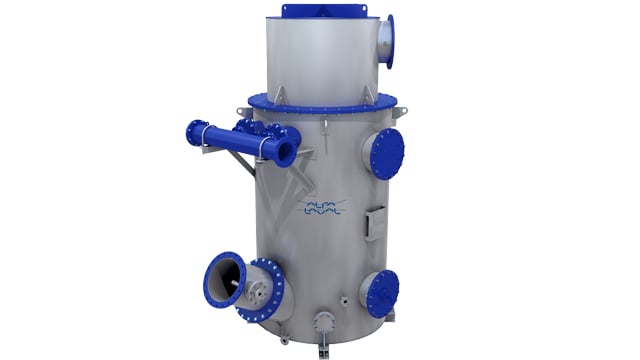
- Oxygen Output Range
- 2-4% O2 (Combustion type)
- Gas Production Capacity
- 1000-20,000 m³/h (Smit Combustion); 3000-22,500 m³/h (Smit LNG/LPG)
- Operating Pressure
- 0.15-0.25 bar(g) Combustion; up to 0.4 bar(g) LNG/LPG
- Scrubber Type
- Wet scrubber with spray cooling and water demisting
- Fuel Consumption
- Minimized via Ultramizing system; AFEM upgrade reduces by up to 40%
- Analyzer Type
- Combustion-process oxygen analyzer (SMIT7000/AAL7000 available as upgrade)
- Smit Combustion (FU-Type)
- Smit LNG/LPG
- Smit Flue Gas
- Smit Combinert
- Area: Scrubber fouling, corrosion, blocked spray nozzles, demister damageCheck: Visual inspection through scrubber manholes; check spray nozzles for blockage (impairs cooling efficiency); inspect cooling pipes, floats, sensors for corrosion or soot deposits; verify cooling water flow and demister function
- Area: Deck seal water level loss, gauge glass fouling, seal integrity compromiseCheck: Verify gauge glass is clean and water level visible; check high/low level alarm float switches operational; inspect for water leakage, corrosion; in cold weather verify heating coil function and trace heating active; confirm low-level alarm functions
- Area: P/V breaker seal loss, incorrect relief pressure setting, glycol/water mixture degradationCheck: Verify P/V breaker opens at preset pressure/vacuum; check sight glass and fluid level (glycol-water mixture); inspect for leakage around valve stem; test differential pressure response; replace fluid if discolored/contaminated
- Area: Oxygen analyzer drift, calibration loss, sensor fouling or failureCheck: Calibrate analyzer ≥24 hrs before cargo operations; log calibration results; verify O2 readout 2-4% during operation; replace probe/sensor if drift >0.5%; ensure analyzer sample line clear and inlet not fouled
- Area: Combustion process inefficiency, incomplete fuel combustion, soot generationCheck: Observe flue gas color (should be colorless/light gray, not black); monitor fuel/air ratio; inspect burner nozzles and air registers for clogging; verify combustion oxygen ≤4%; check fuel pump pressure/flow; inspect ignition electrode condition
- Area: Non-return valve (check valve) function loss, backflow risk to engine roomCheck: Confirm non-return valves at deck seal outlet prevent backflow; verify pressure differential across deck seal maintained; listen for flow disturbance; schedule valve seat/seal inspection per Condition Audit; test with pressure gauge if vessel equipped
Type-universal inspection/service points for Inert Gas Systems (Alfa Laval, Mega-Schwarm 2026-06). Per-model specs not auto-filled.
- Oxygen Output Range
- 2-4% O2 (Combustion type)
- Gas Production Capacity
- 1000-20,000 m³/h (Smit Combustion); 3000-22,500 m³/h (Smit LNG/LPG)
- Operating Pressure
- 0.15-0.25 bar(g) Combustion; up to 0.4 bar(g) LNG/LPG
- Scrubber Type
- Wet scrubber with spray cooling and water demisting
- Fuel Consumption
- Minimized via Ultramizing system; AFEM upgrade reduces by up to 40%
- Analyzer Type
- Combustion-process oxygen analyzer (SMIT7000/AAL7000 available as upgrade)
- Smit Combustion (FU-Type)
- Smit LNG/LPG
- Smit Flue Gas
- Smit Combinert
- Area: Scrubber fouling, corrosion, blocked spray nozzles, demister damageCheck: Visual inspection through scrubber manholes; check spray nozzles for blockage (impairs cooling efficiency); inspect cooling pipes, floats, sensors for corrosion or soot deposits; verify cooling water flow and demister function
- Area: Deck seal water level loss, gauge glass fouling, seal integrity compromiseCheck: Verify gauge glass is clean and water level visible; check high/low level alarm float switches operational; inspect for water leakage, corrosion; in cold weather verify heating coil function and trace heating active; confirm low-level alarm functions
- Area: P/V breaker seal loss, incorrect relief pressure setting, glycol/water mixture degradationCheck: Verify P/V breaker opens at preset pressure/vacuum; check sight glass and fluid level (glycol-water mixture); inspect for leakage around valve stem; test differential pressure response; replace fluid if discolored/contaminated
- Area: Oxygen analyzer drift, calibration loss, sensor fouling or failureCheck: Calibrate analyzer ≥24 hrs before cargo operations; log calibration results; verify O2 readout 2-4% during operation; replace probe/sensor if drift >0.5%; ensure analyzer sample line clear and inlet not fouled
- Area: Combustion process inefficiency, incomplete fuel combustion, soot generationCheck: Observe flue gas color (should be colorless/light gray, not black); monitor fuel/air ratio; inspect burner nozzles and air registers for clogging; verify combustion oxygen ≤4%; check fuel pump pressure/flow; inspect ignition electrode condition
- Area: Non-return valve (check valve) function loss, backflow risk to engine roomCheck: Confirm non-return valves at deck seal outlet prevent backflow; verify pressure differential across deck seal maintained; listen for flow disturbance; schedule valve seat/seal inspection per Condition Audit; test with pressure gauge if vessel equipped
Type-universal inspection/service points for Inert Gas Systems (Alfa Laval, Mega-Schwarm 2026-06). Per-model specs not auto-filled.
- Oxygen Output Range
- 2-4% O2 (Combustion type)
- Gas Production Capacity
- 1000-20,000 m³/h (Smit Combustion); 3000-22,500 m³/h (Smit LNG/LPG)
- Operating Pressure
- 0.15-0.25 bar(g) Combustion; up to 0.4 bar(g) LNG/LPG
- Scrubber Type
- Wet scrubber with spray cooling and water demisting
- Fuel Consumption
- Minimized via Ultramizing system; AFEM upgrade reduces by up to 40%
- Analyzer Type
- Combustion-process oxygen analyzer (SMIT7000/AAL7000 available as upgrade)
- Smit Combustion (FU-Type)
- Smit LNG/LPG
- Smit Flue Gas
- Smit Combinert
- Area: Scrubber fouling, corrosion, blocked spray nozzles, demister damageCheck: Visual inspection through scrubber manholes; check spray nozzles for blockage (impairs cooling efficiency); inspect cooling pipes, floats, sensors for corrosion or soot deposits; verify cooling water flow and demister function
- Area: Deck seal water level loss, gauge glass fouling, seal integrity compromiseCheck: Verify gauge glass is clean and water level visible; check high/low level alarm float switches operational; inspect for water leakage, corrosion; in cold weather verify heating coil function and trace heating active; confirm low-level alarm functions
- Area: P/V breaker seal loss, incorrect relief pressure setting, glycol/water mixture degradationCheck: Verify P/V breaker opens at preset pressure/vacuum; check sight glass and fluid level (glycol-water mixture); inspect for leakage around valve stem; test differential pressure response; replace fluid if discolored/contaminated
- Area: Oxygen analyzer drift, calibration loss, sensor fouling or failureCheck: Calibrate analyzer ≥24 hrs before cargo operations; log calibration results; verify O2 readout 2-4% during operation; replace probe/sensor if drift >0.5%; ensure analyzer sample line clear and inlet not fouled
- Area: Combustion process inefficiency, incomplete fuel combustion, soot generationCheck: Observe flue gas color (should be colorless/light gray, not black); monitor fuel/air ratio; inspect burner nozzles and air registers for clogging; verify combustion oxygen ≤4%; check fuel pump pressure/flow; inspect ignition electrode condition
- Area: Non-return valve (check valve) function loss, backflow risk to engine roomCheck: Confirm non-return valves at deck seal outlet prevent backflow; verify pressure differential across deck seal maintained; listen for flow disturbance; schedule valve seat/seal inspection per Condition Audit; test with pressure gauge if vessel equipped
Type-universal inspection/service points for Inert Gas Systems (Alfa Laval, Mega-Schwarm 2026-06). Per-model specs not auto-filled.
- Oxygen Output Range
- 2-4% O2 (Combustion type)
- Gas Production Capacity
- 1000-20,000 m³/h (Smit Combustion); 3000-22,500 m³/h (Smit LNG/LPG)
- Operating Pressure
- 0.15-0.25 bar(g) Combustion; up to 0.4 bar(g) LNG/LPG
- Scrubber Type
- Wet scrubber with spray cooling and water demisting
- Fuel Consumption
- Minimized via Ultramizing system; AFEM upgrade reduces by up to 40%
- Analyzer Type
- Combustion-process oxygen analyzer (SMIT7000/AAL7000 available as upgrade)
- Smit Combustion (FU-Type)
- Smit LNG/LPG
- Smit Flue Gas
- Smit Combinert
- Area: Scrubber fouling, corrosion, blocked spray nozzles, demister damageCheck: Visual inspection through scrubber manholes; check spray nozzles for blockage (impairs cooling efficiency); inspect cooling pipes, floats, sensors for corrosion or soot deposits; verify cooling water flow and demister function
- Area: Deck seal water level loss, gauge glass fouling, seal integrity compromiseCheck: Verify gauge glass is clean and water level visible; check high/low level alarm float switches operational; inspect for water leakage, corrosion; in cold weather verify heating coil function and trace heating active; confirm low-level alarm functions
- Area: P/V breaker seal loss, incorrect relief pressure setting, glycol/water mixture degradationCheck: Verify P/V breaker opens at preset pressure/vacuum; check sight glass and fluid level (glycol-water mixture); inspect for leakage around valve stem; test differential pressure response; replace fluid if discolored/contaminated
- Area: Oxygen analyzer drift, calibration loss, sensor fouling or failureCheck: Calibrate analyzer ≥24 hrs before cargo operations; log calibration results; verify O2 readout 2-4% during operation; replace probe/sensor if drift >0.5%; ensure analyzer sample line clear and inlet not fouled
- Area: Combustion process inefficiency, incomplete fuel combustion, soot generationCheck: Observe flue gas color (should be colorless/light gray, not black); monitor fuel/air ratio; inspect burner nozzles and air registers for clogging; verify combustion oxygen ≤4%; check fuel pump pressure/flow; inspect ignition electrode condition
- Area: Non-return valve (check valve) function loss, backflow risk to engine roomCheck: Confirm non-return valves at deck seal outlet prevent backflow; verify pressure differential across deck seal maintained; listen for flow disturbance; schedule valve seat/seal inspection per Condition Audit; test with pressure gauge if vessel equipped
Type-universal inspection/service points for Inert Gas Systems (Alfa Laval, Mega-Schwarm 2026-06). Per-model specs not auto-filled.
- Oxygen Output Range
- 2-4% O2 (Combustion type)
- Gas Production Capacity
- 1000-20,000 m³/h (Smit Combustion); 3000-22,500 m³/h (Smit LNG/LPG)
- Operating Pressure
- 0.15-0.25 bar(g) Combustion; up to 0.4 bar(g) LNG/LPG
- Scrubber Type
- Wet scrubber with spray cooling and water demisting
- Fuel Consumption
- Minimized via Ultramizing system; AFEM upgrade reduces by up to 40%
- Analyzer Type
- Combustion-process oxygen analyzer (SMIT7000/AAL7000 available as upgrade)
- Smit Combustion (FU-Type)
- Smit LNG/LPG
- Smit Flue Gas
- Smit Combinert
- Area: Scrubber fouling, corrosion, blocked spray nozzles, demister damageCheck: Visual inspection through scrubber manholes; check spray nozzles for blockage (impairs cooling efficiency); inspect cooling pipes, floats, sensors for corrosion or soot deposits; verify cooling water flow and demister function
- Area: Deck seal water level loss, gauge glass fouling, seal integrity compromiseCheck: Verify gauge glass is clean and water level visible; check high/low level alarm float switches operational; inspect for water leakage, corrosion; in cold weather verify heating coil function and trace heating active; confirm low-level alarm functions
- Area: P/V breaker seal loss, incorrect relief pressure setting, glycol/water mixture degradationCheck: Verify P/V breaker opens at preset pressure/vacuum; check sight glass and fluid level (glycol-water mixture); inspect for leakage around valve stem; test differential pressure response; replace fluid if discolored/contaminated
- Area: Oxygen analyzer drift, calibration loss, sensor fouling or failureCheck: Calibrate analyzer ≥24 hrs before cargo operations; log calibration results; verify O2 readout 2-4% during operation; replace probe/sensor if drift >0.5%; ensure analyzer sample line clear and inlet not fouled
- Area: Combustion process inefficiency, incomplete fuel combustion, soot generationCheck: Observe flue gas color (should be colorless/light gray, not black); monitor fuel/air ratio; inspect burner nozzles and air registers for clogging; verify combustion oxygen ≤4%; check fuel pump pressure/flow; inspect ignition electrode condition
- Area: Non-return valve (check valve) function loss, backflow risk to engine roomCheck: Confirm non-return valves at deck seal outlet prevent backflow; verify pressure differential across deck seal maintained; listen for flow disturbance; schedule valve seat/seal inspection per Condition Audit; test with pressure gauge if vessel equipped
Type-universal inspection/service points for Inert Gas Systems (Alfa Laval, Mega-Schwarm 2026-06). Per-model specs not auto-filled.
- Oxygen Output Range
- 2-4% O2 (Combustion type)
- Gas Production Capacity
- 1000-20,000 m³/h (Smit Combustion); 3000-22,500 m³/h (Smit LNG/LPG)
- Operating Pressure
- 0.15-0.25 bar(g) Combustion; up to 0.4 bar(g) LNG/LPG
- Scrubber Type
- Wet scrubber with spray cooling and water demisting
- Fuel Consumption
- Minimized via Ultramizing system; AFEM upgrade reduces by up to 40%
- Analyzer Type
- Combustion-process oxygen analyzer (SMIT7000/AAL7000 available as upgrade)
- Smit Combustion (FU-Type)
- Smit LNG/LPG
- Smit Flue Gas
- Smit Combinert
- Area: Scrubber fouling, corrosion, blocked spray nozzles, demister damageCheck: Visual inspection through scrubber manholes; check spray nozzles for blockage (impairs cooling efficiency); inspect cooling pipes, floats, sensors for corrosion or soot deposits; verify cooling water flow and demister function
- Area: Deck seal water level loss, gauge glass fouling, seal integrity compromiseCheck: Verify gauge glass is clean and water level visible; check high/low level alarm float switches operational; inspect for water leakage, corrosion; in cold weather verify heating coil function and trace heating active; confirm low-level alarm functions
- Area: P/V breaker seal loss, incorrect relief pressure setting, glycol/water mixture degradationCheck: Verify P/V breaker opens at preset pressure/vacuum; check sight glass and fluid level (glycol-water mixture); inspect for leakage around valve stem; test differential pressure response; replace fluid if discolored/contaminated
- Area: Oxygen analyzer drift, calibration loss, sensor fouling or failureCheck: Calibrate analyzer ≥24 hrs before cargo operations; log calibration results; verify O2 readout 2-4% during operation; replace probe/sensor if drift >0.5%; ensure analyzer sample line clear and inlet not fouled
- Area: Combustion process inefficiency, incomplete fuel combustion, soot generationCheck: Observe flue gas color (should be colorless/light gray, not black); monitor fuel/air ratio; inspect burner nozzles and air registers for clogging; verify combustion oxygen ≤4%; check fuel pump pressure/flow; inspect ignition electrode condition
- Area: Non-return valve (check valve) function loss, backflow risk to engine roomCheck: Confirm non-return valves at deck seal outlet prevent backflow; verify pressure differential across deck seal maintained; listen for flow disturbance; schedule valve seat/seal inspection per Condition Audit; test with pressure gauge if vessel equipped
Type-universal inspection/service points for Inert Gas Systems (Alfa Laval, Mega-Schwarm 2026-06). Per-model specs not auto-filled.
- Oxygen Output Range
- 2-4% O2 (Combustion type)
- Gas Production Capacity
- 1000-20,000 m³/h (Smit Combustion); 3000-22,500 m³/h (Smit LNG/LPG)
- Operating Pressure
- 0.15-0.25 bar(g) Combustion; up to 0.4 bar(g) LNG/LPG
- Scrubber Type
- Wet scrubber with spray cooling and water demisting
- Fuel Consumption
- Minimized via Ultramizing system; AFEM upgrade reduces by up to 40%
- Analyzer Type
- Combustion-process oxygen analyzer (SMIT7000/AAL7000 available as upgrade)
- Smit Combustion (FU-Type)
- Smit LNG/LPG
- Smit Flue Gas
- Smit Combinert
- Area: Scrubber fouling, corrosion, blocked spray nozzles, demister damageCheck: Visual inspection through scrubber manholes; check spray nozzles for blockage (impairs cooling efficiency); inspect cooling pipes, floats, sensors for corrosion or soot deposits; verify cooling water flow and demister function
- Area: Deck seal water level loss, gauge glass fouling, seal integrity compromiseCheck: Verify gauge glass is clean and water level visible; check high/low level alarm float switches operational; inspect for water leakage, corrosion; in cold weather verify heating coil function and trace heating active; confirm low-level alarm functions
- Area: P/V breaker seal loss, incorrect relief pressure setting, glycol/water mixture degradationCheck: Verify P/V breaker opens at preset pressure/vacuum; check sight glass and fluid level (glycol-water mixture); inspect for leakage around valve stem; test differential pressure response; replace fluid if discolored/contaminated
- Area: Oxygen analyzer drift, calibration loss, sensor fouling or failureCheck: Calibrate analyzer ≥24 hrs before cargo operations; log calibration results; verify O2 readout 2-4% during operation; replace probe/sensor if drift >0.5%; ensure analyzer sample line clear and inlet not fouled
- Area: Combustion process inefficiency, incomplete fuel combustion, soot generationCheck: Observe flue gas color (should be colorless/light gray, not black); monitor fuel/air ratio; inspect burner nozzles and air registers for clogging; verify combustion oxygen ≤4%; check fuel pump pressure/flow; inspect ignition electrode condition
- Area: Non-return valve (check valve) function loss, backflow risk to engine roomCheck: Confirm non-return valves at deck seal outlet prevent backflow; verify pressure differential across deck seal maintained; listen for flow disturbance; schedule valve seat/seal inspection per Condition Audit; test with pressure gauge if vessel equipped
Type-universal inspection/service points for Inert Gas Systems (Alfa Laval, Mega-Schwarm 2026-06). Per-model specs not auto-filled.
- Oxygen Output Range
- 2-4% O2 (Combustion type)
- Gas Production Capacity
- 1000-20,000 m³/h (Smit Combustion); 3000-22,500 m³/h (Smit LNG/LPG)
- Operating Pressure
- 0.15-0.25 bar(g) Combustion; up to 0.4 bar(g) LNG/LPG
- Scrubber Type
- Wet scrubber with spray cooling and water demisting
- Fuel Consumption
- Minimized via Ultramizing system; AFEM upgrade reduces by up to 40%
- Analyzer Type
- Combustion-process oxygen analyzer (SMIT7000/AAL7000 available as upgrade)
- Smit Combustion (FU-Type)
- Smit LNG/LPG
- Smit Flue Gas
- Smit Combinert
- Area: Scrubber fouling, corrosion, blocked spray nozzles, demister damageCheck: Visual inspection through scrubber manholes; check spray nozzles for blockage (impairs cooling efficiency); inspect cooling pipes, floats, sensors for corrosion or soot deposits; verify cooling water flow and demister function
- Area: Deck seal water level loss, gauge glass fouling, seal integrity compromiseCheck: Verify gauge glass is clean and water level visible; check high/low level alarm float switches operational; inspect for water leakage, corrosion; in cold weather verify heating coil function and trace heating active; confirm low-level alarm functions
- Area: P/V breaker seal loss, incorrect relief pressure setting, glycol/water mixture degradationCheck: Verify P/V breaker opens at preset pressure/vacuum; check sight glass and fluid level (glycol-water mixture); inspect for leakage around valve stem; test differential pressure response; replace fluid if discolored/contaminated
- Area: Oxygen analyzer drift, calibration loss, sensor fouling or failureCheck: Calibrate analyzer ≥24 hrs before cargo operations; log calibration results; verify O2 readout 2-4% during operation; replace probe/sensor if drift >0.5%; ensure analyzer sample line clear and inlet not fouled
- Area: Combustion process inefficiency, incomplete fuel combustion, soot generationCheck: Observe flue gas color (should be colorless/light gray, not black); monitor fuel/air ratio; inspect burner nozzles and air registers for clogging; verify combustion oxygen ≤4%; check fuel pump pressure/flow; inspect ignition electrode condition
- Area: Non-return valve (check valve) function loss, backflow risk to engine roomCheck: Confirm non-return valves at deck seal outlet prevent backflow; verify pressure differential across deck seal maintained; listen for flow disturbance; schedule valve seat/seal inspection per Condition Audit; test with pressure gauge if vessel equipped
Type-universal inspection/service points for Inert Gas Systems (Alfa Laval, Mega-Schwarm 2026-06). Per-model specs not auto-filled.
- Oxygen Output Range
- 2-4% O2 (Combustion type)
- Gas Production Capacity
- 1000-20,000 m³/h (Smit Combustion); 3000-22,500 m³/h (Smit LNG/LPG)
- Operating Pressure
- 0.15-0.25 bar(g) Combustion; up to 0.4 bar(g) LNG/LPG
- Scrubber Type
- Wet scrubber with spray cooling and water demisting
- Fuel Consumption
- Minimized via Ultramizing system; AFEM upgrade reduces by up to 40%
- Analyzer Type
- Combustion-process oxygen analyzer (SMIT7000/AAL7000 available as upgrade)
- Smit Combustion (FU-Type)
- Smit LNG/LPG
- Smit Flue Gas
- Smit Combinert
- Area: Scrubber fouling, corrosion, blocked spray nozzles, demister damageCheck: Visual inspection through scrubber manholes; check spray nozzles for blockage (impairs cooling efficiency); inspect cooling pipes, floats, sensors for corrosion or soot deposits; verify cooling water flow and demister function
- Area: Deck seal water level loss, gauge glass fouling, seal integrity compromiseCheck: Verify gauge glass is clean and water level visible; check high/low level alarm float switches operational; inspect for water leakage, corrosion; in cold weather verify heating coil function and trace heating active; confirm low-level alarm functions
- Area: P/V breaker seal loss, incorrect relief pressure setting, glycol/water mixture degradationCheck: Verify P/V breaker opens at preset pressure/vacuum; check sight glass and fluid level (glycol-water mixture); inspect for leakage around valve stem; test differential pressure response; replace fluid if discolored/contaminated
- Area: Oxygen analyzer drift, calibration loss, sensor fouling or failureCheck: Calibrate analyzer ≥24 hrs before cargo operations; log calibration results; verify O2 readout 2-4% during operation; replace probe/sensor if drift >0.5%; ensure analyzer sample line clear and inlet not fouled
- Area: Combustion process inefficiency, incomplete fuel combustion, soot generationCheck: Observe flue gas color (should be colorless/light gray, not black); monitor fuel/air ratio; inspect burner nozzles and air registers for clogging; verify combustion oxygen ≤4%; check fuel pump pressure/flow; inspect ignition electrode condition
- Area: Non-return valve (check valve) function loss, backflow risk to engine roomCheck: Confirm non-return valves at deck seal outlet prevent backflow; verify pressure differential across deck seal maintained; listen for flow disturbance; schedule valve seat/seal inspection per Condition Audit; test with pressure gauge if vessel equipped
Type-universal inspection/service points for Inert Gas Systems (Alfa Laval, Mega-Schwarm 2026-06). Per-model specs not auto-filled.
- Oxygen Output Range
- 2-4% O2 (Combustion type)
- Gas Production Capacity
- 1000-20,000 m³/h (Smit Combustion); 3000-22,500 m³/h (Smit LNG/LPG)
- Operating Pressure
- 0.15-0.25 bar(g) Combustion; up to 0.4 bar(g) LNG/LPG
- Scrubber Type
- Wet scrubber with spray cooling and water demisting
- Fuel Consumption
- Minimized via Ultramizing system; AFEM upgrade reduces by up to 40%
- Analyzer Type
- Combustion-process oxygen analyzer (SMIT7000/AAL7000 available as upgrade)
- Smit Combustion (FU-Type)
- Smit LNG/LPG
- Smit Flue Gas
- Smit Combinert
- Area: Scrubber fouling, corrosion, blocked spray nozzles, demister damageCheck: Visual inspection through scrubber manholes; check spray nozzles for blockage (impairs cooling efficiency); inspect cooling pipes, floats, sensors for corrosion or soot deposits; verify cooling water flow and demister function
- Area: Deck seal water level loss, gauge glass fouling, seal integrity compromiseCheck: Verify gauge glass is clean and water level visible; check high/low level alarm float switches operational; inspect for water leakage, corrosion; in cold weather verify heating coil function and trace heating active; confirm low-level alarm functions
- Area: P/V breaker seal loss, incorrect relief pressure setting, glycol/water mixture degradationCheck: Verify P/V breaker opens at preset pressure/vacuum; check sight glass and fluid level (glycol-water mixture); inspect for leakage around valve stem; test differential pressure response; replace fluid if discolored/contaminated
- Area: Oxygen analyzer drift, calibration loss, sensor fouling or failureCheck: Calibrate analyzer ≥24 hrs before cargo operations; log calibration results; verify O2 readout 2-4% during operation; replace probe/sensor if drift >0.5%; ensure analyzer sample line clear and inlet not fouled
- Area: Combustion process inefficiency, incomplete fuel combustion, soot generationCheck: Observe flue gas color (should be colorless/light gray, not black); monitor fuel/air ratio; inspect burner nozzles and air registers for clogging; verify combustion oxygen ≤4%; check fuel pump pressure/flow; inspect ignition electrode condition
- Area: Non-return valve (check valve) function loss, backflow risk to engine roomCheck: Confirm non-return valves at deck seal outlet prevent backflow; verify pressure differential across deck seal maintained; listen for flow disturbance; schedule valve seat/seal inspection per Condition Audit; test with pressure gauge if vessel equipped
Type-universal inspection/service points for Inert Gas Systems (Alfa Laval, Mega-Schwarm 2026-06). Per-model specs not auto-filled.
- Oxygen Output Range
- 2-4% O2 (Combustion type)
- Gas Production Capacity
- 1000-20,000 m³/h (Smit Combustion); 3000-22,500 m³/h (Smit LNG/LPG)
- Operating Pressure
- 0.15-0.25 bar(g) Combustion; up to 0.4 bar(g) LNG/LPG
- Scrubber Type
- Wet scrubber with spray cooling and water demisting
- Fuel Consumption
- Minimized via Ultramizing system; AFEM upgrade reduces by up to 40%
- Analyzer Type
- Combustion-process oxygen analyzer (SMIT7000/AAL7000 available as upgrade)
- Smit Combustion (FU-Type)
- Smit LNG/LPG
- Smit Flue Gas
- Smit Combinert
- Area: Scrubber fouling, corrosion, blocked spray nozzles, demister damageCheck: Visual inspection through scrubber manholes; check spray nozzles for blockage (impairs cooling efficiency); inspect cooling pipes, floats, sensors for corrosion or soot deposits; verify cooling water flow and demister function
- Area: Deck seal water level loss, gauge glass fouling, seal integrity compromiseCheck: Verify gauge glass is clean and water level visible; check high/low level alarm float switches operational; inspect for water leakage, corrosion; in cold weather verify heating coil function and trace heating active; confirm low-level alarm functions
- Area: P/V breaker seal loss, incorrect relief pressure setting, glycol/water mixture degradationCheck: Verify P/V breaker opens at preset pressure/vacuum; check sight glass and fluid level (glycol-water mixture); inspect for leakage around valve stem; test differential pressure response; replace fluid if discolored/contaminated
- Area: Oxygen analyzer drift, calibration loss, sensor fouling or failureCheck: Calibrate analyzer ≥24 hrs before cargo operations; log calibration results; verify O2 readout 2-4% during operation; replace probe/sensor if drift >0.5%; ensure analyzer sample line clear and inlet not fouled
- Area: Combustion process inefficiency, incomplete fuel combustion, soot generationCheck: Observe flue gas color (should be colorless/light gray, not black); monitor fuel/air ratio; inspect burner nozzles and air registers for clogging; verify combustion oxygen ≤4%; check fuel pump pressure/flow; inspect ignition electrode condition
- Area: Non-return valve (check valve) function loss, backflow risk to engine roomCheck: Confirm non-return valves at deck seal outlet prevent backflow; verify pressure differential across deck seal maintained; listen for flow disturbance; schedule valve seat/seal inspection per Condition Audit; test with pressure gauge if vessel equipped
Type-universal inspection/service points for Inert Gas Systems (Alfa Laval, Mega-Schwarm 2026-06). Per-model specs not auto-filled.
- Oxygen Output Range
- 2-4% O2 (Combustion type)
- Gas Production Capacity
- 1000-20,000 m³/h (Smit Combustion); 3000-22,500 m³/h (Smit LNG/LPG)
- Operating Pressure
- 0.15-0.25 bar(g) Combustion; up to 0.4 bar(g) LNG/LPG
- Scrubber Type
- Wet scrubber with spray cooling and water demisting
- Fuel Consumption
- Minimized via Ultramizing system; AFEM upgrade reduces by up to 40%
- Analyzer Type
- Combustion-process oxygen analyzer (SMIT7000/AAL7000 available as upgrade)
- Smit Combustion (FU-Type)
- Smit LNG/LPG
- Smit Flue Gas
- Smit Combinert
- Area: Scrubber fouling, corrosion, blocked spray nozzles, demister damageCheck: Visual inspection through scrubber manholes; check spray nozzles for blockage (impairs cooling efficiency); inspect cooling pipes, floats, sensors for corrosion or soot deposits; verify cooling water flow and demister function
- Area: Deck seal water level loss, gauge glass fouling, seal integrity compromiseCheck: Verify gauge glass is clean and water level visible; check high/low level alarm float switches operational; inspect for water leakage, corrosion; in cold weather verify heating coil function and trace heating active; confirm low-level alarm functions
- Area: P/V breaker seal loss, incorrect relief pressure setting, glycol/water mixture degradationCheck: Verify P/V breaker opens at preset pressure/vacuum; check sight glass and fluid level (glycol-water mixture); inspect for leakage around valve stem; test differential pressure response; replace fluid if discolored/contaminated
- Area: Oxygen analyzer drift, calibration loss, sensor fouling or failureCheck: Calibrate analyzer ≥24 hrs before cargo operations; log calibration results; verify O2 readout 2-4% during operation; replace probe/sensor if drift >0.5%; ensure analyzer sample line clear and inlet not fouled
- Area: Combustion process inefficiency, incomplete fuel combustion, soot generationCheck: Observe flue gas color (should be colorless/light gray, not black); monitor fuel/air ratio; inspect burner nozzles and air registers for clogging; verify combustion oxygen ≤4%; check fuel pump pressure/flow; inspect ignition electrode condition
- Area: Non-return valve (check valve) function loss, backflow risk to engine roomCheck: Confirm non-return valves at deck seal outlet prevent backflow; verify pressure differential across deck seal maintained; listen for flow disturbance; schedule valve seat/seal inspection per Condition Audit; test with pressure gauge if vessel equipped
Type-universal inspection/service points for Inert Gas Systems (Alfa Laval, Mega-Schwarm 2026-06). Per-model specs not auto-filled.
- Oxygen Output Range
- 2-4% O2 (Combustion type)
- Gas Production Capacity
- 1000-20,000 m³/h (Smit Combustion); 3000-22,500 m³/h (Smit LNG/LPG)
- Operating Pressure
- 0.15-0.25 bar(g) Combustion; up to 0.4 bar(g) LNG/LPG
- Scrubber Type
- Wet scrubber with spray cooling and water demisting
- Fuel Consumption
- Minimized via Ultramizing system; AFEM upgrade reduces by up to 40%
- Analyzer Type
- Combustion-process oxygen analyzer (SMIT7000/AAL7000 available as upgrade)
- Smit Combustion (FU-Type)
- Smit LNG/LPG
- Smit Flue Gas
- Smit Combinert
- Area: Scrubber fouling, corrosion, blocked spray nozzles, demister damageCheck: Visual inspection through scrubber manholes; check spray nozzles for blockage (impairs cooling efficiency); inspect cooling pipes, floats, sensors for corrosion or soot deposits; verify cooling water flow and demister function
- Area: Deck seal water level loss, gauge glass fouling, seal integrity compromiseCheck: Verify gauge glass is clean and water level visible; check high/low level alarm float switches operational; inspect for water leakage, corrosion; in cold weather verify heating coil function and trace heating active; confirm low-level alarm functions
- Area: P/V breaker seal loss, incorrect relief pressure setting, glycol/water mixture degradationCheck: Verify P/V breaker opens at preset pressure/vacuum; check sight glass and fluid level (glycol-water mixture); inspect for leakage around valve stem; test differential pressure response; replace fluid if discolored/contaminated
- Area: Oxygen analyzer drift, calibration loss, sensor fouling or failureCheck: Calibrate analyzer ≥24 hrs before cargo operations; log calibration results; verify O2 readout 2-4% during operation; replace probe/sensor if drift >0.5%; ensure analyzer sample line clear and inlet not fouled
- Area: Combustion process inefficiency, incomplete fuel combustion, soot generationCheck: Observe flue gas color (should be colorless/light gray, not black); monitor fuel/air ratio; inspect burner nozzles and air registers for clogging; verify combustion oxygen ≤4%; check fuel pump pressure/flow; inspect ignition electrode condition
- Area: Non-return valve (check valve) function loss, backflow risk to engine roomCheck: Confirm non-return valves at deck seal outlet prevent backflow; verify pressure differential across deck seal maintained; listen for flow disturbance; schedule valve seat/seal inspection per Condition Audit; test with pressure gauge if vessel equipped
Type-universal inspection/service points for Inert Gas Systems (Alfa Laval, Mega-Schwarm 2026-06). Per-model specs not auto-filled.
- Oxygen Output Range
- 2-4% O2 (Combustion type)
- Gas Production Capacity
- 1000-20,000 m³/h (Smit Combustion); 3000-22,500 m³/h (Smit LNG/LPG)
- Operating Pressure
- 0.15-0.25 bar(g) Combustion; up to 0.4 bar(g) LNG/LPG
- Scrubber Type
- Wet scrubber with spray cooling and water demisting
- Fuel Consumption
- Minimized via Ultramizing system; AFEM upgrade reduces by up to 40%
- Analyzer Type
- Combustion-process oxygen analyzer (SMIT7000/AAL7000 available as upgrade)
- Smit Combustion (FU-Type)
- Smit LNG/LPG
- Smit Flue Gas
- Smit Combinert
- Area: Scrubber fouling, corrosion, blocked spray nozzles, demister damageCheck: Visual inspection through scrubber manholes; check spray nozzles for blockage (impairs cooling efficiency); inspect cooling pipes, floats, sensors for corrosion or soot deposits; verify cooling water flow and demister function
- Area: Deck seal water level loss, gauge glass fouling, seal integrity compromiseCheck: Verify gauge glass is clean and water level visible; check high/low level alarm float switches operational; inspect for water leakage, corrosion; in cold weather verify heating coil function and trace heating active; confirm low-level alarm functions
- Area: P/V breaker seal loss, incorrect relief pressure setting, glycol/water mixture degradationCheck: Verify P/V breaker opens at preset pressure/vacuum; check sight glass and fluid level (glycol-water mixture); inspect for leakage around valve stem; test differential pressure response; replace fluid if discolored/contaminated
- Area: Oxygen analyzer drift, calibration loss, sensor fouling or failureCheck: Calibrate analyzer ≥24 hrs before cargo operations; log calibration results; verify O2 readout 2-4% during operation; replace probe/sensor if drift >0.5%; ensure analyzer sample line clear and inlet not fouled
- Area: Combustion process inefficiency, incomplete fuel combustion, soot generationCheck: Observe flue gas color (should be colorless/light gray, not black); monitor fuel/air ratio; inspect burner nozzles and air registers for clogging; verify combustion oxygen ≤4%; check fuel pump pressure/flow; inspect ignition electrode condition
- Area: Non-return valve (check valve) function loss, backflow risk to engine roomCheck: Confirm non-return valves at deck seal outlet prevent backflow; verify pressure differential across deck seal maintained; listen for flow disturbance; schedule valve seat/seal inspection per Condition Audit; test with pressure gauge if vessel equipped
Type-universal inspection/service points for Inert Gas Systems (Alfa Laval, Mega-Schwarm 2026-06). Per-model specs not auto-filled.
- Oxygen Output Range
- 2-4% O2 (Combustion type)
- Gas Production Capacity
- 1000-20,000 m³/h (Smit Combustion); 3000-22,500 m³/h (Smit LNG/LPG)
- Operating Pressure
- 0.15-0.25 bar(g) Combustion; up to 0.4 bar(g) LNG/LPG
- Scrubber Type
- Wet scrubber with spray cooling and water demisting
- Fuel Consumption
- Minimized via Ultramizing system; AFEM upgrade reduces by up to 40%
- Analyzer Type
- Combustion-process oxygen analyzer (SMIT7000/AAL7000 available as upgrade)
- Smit Combustion (FU-Type)
- Smit LNG/LPG
- Smit Flue Gas
- Smit Combinert
- Area: Scrubber fouling, corrosion, blocked spray nozzles, demister damageCheck: Visual inspection through scrubber manholes; check spray nozzles for blockage (impairs cooling efficiency); inspect cooling pipes, floats, sensors for corrosion or soot deposits; verify cooling water flow and demister function
- Area: Deck seal water level loss, gauge glass fouling, seal integrity compromiseCheck: Verify gauge glass is clean and water level visible; check high/low level alarm float switches operational; inspect for water leakage, corrosion; in cold weather verify heating coil function and trace heating active; confirm low-level alarm functions
- Area: P/V breaker seal loss, incorrect relief pressure setting, glycol/water mixture degradationCheck: Verify P/V breaker opens at preset pressure/vacuum; check sight glass and fluid level (glycol-water mixture); inspect for leakage around valve stem; test differential pressure response; replace fluid if discolored/contaminated
- Area: Oxygen analyzer drift, calibration loss, sensor fouling or failureCheck: Calibrate analyzer ≥24 hrs before cargo operations; log calibration results; verify O2 readout 2-4% during operation; replace probe/sensor if drift >0.5%; ensure analyzer sample line clear and inlet not fouled
- Area: Combustion process inefficiency, incomplete fuel combustion, soot generationCheck: Observe flue gas color (should be colorless/light gray, not black); monitor fuel/air ratio; inspect burner nozzles and air registers for clogging; verify combustion oxygen ≤4%; check fuel pump pressure/flow; inspect ignition electrode condition
- Area: Non-return valve (check valve) function loss, backflow risk to engine roomCheck: Confirm non-return valves at deck seal outlet prevent backflow; verify pressure differential across deck seal maintained; listen for flow disturbance; schedule valve seat/seal inspection per Condition Audit; test with pressure gauge if vessel equipped
Type-universal inspection/service points for Inert Gas Systems (Alfa Laval, Mega-Schwarm 2026-06). Per-model specs not auto-filled.
- Oxygen Output Range
- 2-4% O2 (Combustion type)
- Gas Production Capacity
- 1000-20,000 m³/h (Smit Combustion); 3000-22,500 m³/h (Smit LNG/LPG)
- Operating Pressure
- 0.15-0.25 bar(g) Combustion; up to 0.4 bar(g) LNG/LPG
- Scrubber Type
- Wet scrubber with spray cooling and water demisting
- Fuel Consumption
- Minimized via Ultramizing system; AFEM upgrade reduces by up to 40%
- Analyzer Type
- Combustion-process oxygen analyzer (SMIT7000/AAL7000 available as upgrade)
- Smit Combustion (FU-Type)
- Smit LNG/LPG
- Smit Flue Gas
- Smit Combinert
- Area: Scrubber fouling, corrosion, blocked spray nozzles, demister damageCheck: Visual inspection through scrubber manholes; check spray nozzles for blockage (impairs cooling efficiency); inspect cooling pipes, floats, sensors for corrosion or soot deposits; verify cooling water flow and demister function
- Area: Deck seal water level loss, gauge glass fouling, seal integrity compromiseCheck: Verify gauge glass is clean and water level visible; check high/low level alarm float switches operational; inspect for water leakage, corrosion; in cold weather verify heating coil function and trace heating active; confirm low-level alarm functions
- Area: P/V breaker seal loss, incorrect relief pressure setting, glycol/water mixture degradationCheck: Verify P/V breaker opens at preset pressure/vacuum; check sight glass and fluid level (glycol-water mixture); inspect for leakage around valve stem; test differential pressure response; replace fluid if discolored/contaminated
- Area: Oxygen analyzer drift, calibration loss, sensor fouling or failureCheck: Calibrate analyzer ≥24 hrs before cargo operations; log calibration results; verify O2 readout 2-4% during operation; replace probe/sensor if drift >0.5%; ensure analyzer sample line clear and inlet not fouled
- Area: Combustion process inefficiency, incomplete fuel combustion, soot generationCheck: Observe flue gas color (should be colorless/light gray, not black); monitor fuel/air ratio; inspect burner nozzles and air registers for clogging; verify combustion oxygen ≤4%; check fuel pump pressure/flow; inspect ignition electrode condition
- Area: Non-return valve (check valve) function loss, backflow risk to engine roomCheck: Confirm non-return valves at deck seal outlet prevent backflow; verify pressure differential across deck seal maintained; listen for flow disturbance; schedule valve seat/seal inspection per Condition Audit; test with pressure gauge if vessel equipped
Type-universal inspection/service points for Inert Gas Systems (Alfa Laval, Mega-Schwarm 2026-06). Per-model specs not auto-filled.
- Oxygen Output Range
- 2-4% O2 (Combustion type)
- Gas Production Capacity
- 1000-20,000 m³/h (Smit Combustion); 3000-22,500 m³/h (Smit LNG/LPG)
- Operating Pressure
- 0.15-0.25 bar(g) Combustion; up to 0.4 bar(g) LNG/LPG
- Scrubber Type
- Wet scrubber with spray cooling and water demisting
- Fuel Consumption
- Minimized via Ultramizing system; AFEM upgrade reduces by up to 40%
- Analyzer Type
- Combustion-process oxygen analyzer (SMIT7000/AAL7000 available as upgrade)
- Smit Combustion (FU-Type)
- Smit LNG/LPG
- Smit Flue Gas
- Smit Combinert
- Area: Scrubber fouling, corrosion, blocked spray nozzles, demister damageCheck: Visual inspection through scrubber manholes; check spray nozzles for blockage (impairs cooling efficiency); inspect cooling pipes, floats, sensors for corrosion or soot deposits; verify cooling water flow and demister function
- Area: Deck seal water level loss, gauge glass fouling, seal integrity compromiseCheck: Verify gauge glass is clean and water level visible; check high/low level alarm float switches operational; inspect for water leakage, corrosion; in cold weather verify heating coil function and trace heating active; confirm low-level alarm functions
- Area: P/V breaker seal loss, incorrect relief pressure setting, glycol/water mixture degradationCheck: Verify P/V breaker opens at preset pressure/vacuum; check sight glass and fluid level (glycol-water mixture); inspect for leakage around valve stem; test differential pressure response; replace fluid if discolored/contaminated
- Area: Oxygen analyzer drift, calibration loss, sensor fouling or failureCheck: Calibrate analyzer ≥24 hrs before cargo operations; log calibration results; verify O2 readout 2-4% during operation; replace probe/sensor if drift >0.5%; ensure analyzer sample line clear and inlet not fouled
- Area: Combustion process inefficiency, incomplete fuel combustion, soot generationCheck: Observe flue gas color (should be colorless/light gray, not black); monitor fuel/air ratio; inspect burner nozzles and air registers for clogging; verify combustion oxygen ≤4%; check fuel pump pressure/flow; inspect ignition electrode condition
- Area: Non-return valve (check valve) function loss, backflow risk to engine roomCheck: Confirm non-return valves at deck seal outlet prevent backflow; verify pressure differential across deck seal maintained; listen for flow disturbance; schedule valve seat/seal inspection per Condition Audit; test with pressure gauge if vessel equipped
Type-universal inspection/service points for Inert Gas Systems (Alfa Laval, Mega-Schwarm 2026-06). Per-model specs not auto-filled.
- Oxygen Output Range
- 2-4% O2 (Combustion type)
- Gas Production Capacity
- 1000-20,000 m³/h (Smit Combustion); 3000-22,500 m³/h (Smit LNG/LPG)
- Operating Pressure
- 0.15-0.25 bar(g) Combustion; up to 0.4 bar(g) LNG/LPG
- Scrubber Type
- Wet scrubber with spray cooling and water demisting
- Fuel Consumption
- Minimized via Ultramizing system; AFEM upgrade reduces by up to 40%
- Analyzer Type
- Combustion-process oxygen analyzer (SMIT7000/AAL7000 available as upgrade)
- Smit Combustion (FU-Type)
- Smit LNG/LPG
- Smit Flue Gas
- Smit Combinert
- Area: Scrubber fouling, corrosion, blocked spray nozzles, demister damageCheck: Visual inspection through scrubber manholes; check spray nozzles for blockage (impairs cooling efficiency); inspect cooling pipes, floats, sensors for corrosion or soot deposits; verify cooling water flow and demister function
- Area: Deck seal water level loss, gauge glass fouling, seal integrity compromiseCheck: Verify gauge glass is clean and water level visible; check high/low level alarm float switches operational; inspect for water leakage, corrosion; in cold weather verify heating coil function and trace heating active; confirm low-level alarm functions
- Area: P/V breaker seal loss, incorrect relief pressure setting, glycol/water mixture degradationCheck: Verify P/V breaker opens at preset pressure/vacuum; check sight glass and fluid level (glycol-water mixture); inspect for leakage around valve stem; test differential pressure response; replace fluid if discolored/contaminated
- Area: Oxygen analyzer drift, calibration loss, sensor fouling or failureCheck: Calibrate analyzer ≥24 hrs before cargo operations; log calibration results; verify O2 readout 2-4% during operation; replace probe/sensor if drift >0.5%; ensure analyzer sample line clear and inlet not fouled
- Area: Combustion process inefficiency, incomplete fuel combustion, soot generationCheck: Observe flue gas color (should be colorless/light gray, not black); monitor fuel/air ratio; inspect burner nozzles and air registers for clogging; verify combustion oxygen ≤4%; check fuel pump pressure/flow; inspect ignition electrode condition
- Area: Non-return valve (check valve) function loss, backflow risk to engine roomCheck: Confirm non-return valves at deck seal outlet prevent backflow; verify pressure differential across deck seal maintained; listen for flow disturbance; schedule valve seat/seal inspection per Condition Audit; test with pressure gauge if vessel equipped
Type-universal inspection/service points for Inert Gas Systems (Alfa Laval, Mega-Schwarm 2026-06). Per-model specs not auto-filled.
- Oxygen Output Range
- 2-4% O2 (Combustion type)
- Gas Production Capacity
- 1000-20,000 m³/h (Smit Combustion); 3000-22,500 m³/h (Smit LNG/LPG)
- Operating Pressure
- 0.15-0.25 bar(g) Combustion; up to 0.4 bar(g) LNG/LPG
- Scrubber Type
- Wet scrubber with spray cooling and water demisting
- Fuel Consumption
- Minimized via Ultramizing system; AFEM upgrade reduces by up to 40%
- Analyzer Type
- Combustion-process oxygen analyzer (SMIT7000/AAL7000 available as upgrade)
- Smit Combustion (FU-Type)
- Smit LNG/LPG
- Smit Flue Gas
- Smit Combinert
- Area: Scrubber fouling, corrosion, blocked spray nozzles, demister damageCheck: Visual inspection through scrubber manholes; check spray nozzles for blockage (impairs cooling efficiency); inspect cooling pipes, floats, sensors for corrosion or soot deposits; verify cooling water flow and demister function
- Area: Deck seal water level loss, gauge glass fouling, seal integrity compromiseCheck: Verify gauge glass is clean and water level visible; check high/low level alarm float switches operational; inspect for water leakage, corrosion; in cold weather verify heating coil function and trace heating active; confirm low-level alarm functions
- Area: P/V breaker seal loss, incorrect relief pressure setting, glycol/water mixture degradationCheck: Verify P/V breaker opens at preset pressure/vacuum; check sight glass and fluid level (glycol-water mixture); inspect for leakage around valve stem; test differential pressure response; replace fluid if discolored/contaminated
- Area: Oxygen analyzer drift, calibration loss, sensor fouling or failureCheck: Calibrate analyzer ≥24 hrs before cargo operations; log calibration results; verify O2 readout 2-4% during operation; replace probe/sensor if drift >0.5%; ensure analyzer sample line clear and inlet not fouled
- Area: Combustion process inefficiency, incomplete fuel combustion, soot generationCheck: Observe flue gas color (should be colorless/light gray, not black); monitor fuel/air ratio; inspect burner nozzles and air registers for clogging; verify combustion oxygen ≤4%; check fuel pump pressure/flow; inspect ignition electrode condition
- Area: Non-return valve (check valve) function loss, backflow risk to engine roomCheck: Confirm non-return valves at deck seal outlet prevent backflow; verify pressure differential across deck seal maintained; listen for flow disturbance; schedule valve seat/seal inspection per Condition Audit; test with pressure gauge if vessel equipped
Type-universal inspection/service points for Inert Gas Systems (Alfa Laval, Mega-Schwarm 2026-06). Per-model specs not auto-filled.
- Oxygen Output Range
- 2-4% O2 (Combustion type)
- Gas Production Capacity
- 1000-20,000 m³/h (Smit Combustion); 3000-22,500 m³/h (Smit LNG/LPG)
- Operating Pressure
- 0.15-0.25 bar(g) Combustion; up to 0.4 bar(g) LNG/LPG
- Scrubber Type
- Wet scrubber with spray cooling and water demisting
- Fuel Consumption
- Minimized via Ultramizing system; AFEM upgrade reduces by up to 40%
- Analyzer Type
- Combustion-process oxygen analyzer (SMIT7000/AAL7000 available as upgrade)
- Smit Combustion (FU-Type)
- Smit LNG/LPG
- Smit Flue Gas
- Smit Combinert
- Area: Scrubber fouling, corrosion, blocked spray nozzles, demister damageCheck: Visual inspection through scrubber manholes; check spray nozzles for blockage (impairs cooling efficiency); inspect cooling pipes, floats, sensors for corrosion or soot deposits; verify cooling water flow and demister function
- Area: Deck seal water level loss, gauge glass fouling, seal integrity compromiseCheck: Verify gauge glass is clean and water level visible; check high/low level alarm float switches operational; inspect for water leakage, corrosion; in cold weather verify heating coil function and trace heating active; confirm low-level alarm functions
- Area: P/V breaker seal loss, incorrect relief pressure setting, glycol/water mixture degradationCheck: Verify P/V breaker opens at preset pressure/vacuum; check sight glass and fluid level (glycol-water mixture); inspect for leakage around valve stem; test differential pressure response; replace fluid if discolored/contaminated
- Area: Oxygen analyzer drift, calibration loss, sensor fouling or failureCheck: Calibrate analyzer ≥24 hrs before cargo operations; log calibration results; verify O2 readout 2-4% during operation; replace probe/sensor if drift >0.5%; ensure analyzer sample line clear and inlet not fouled
- Area: Combustion process inefficiency, incomplete fuel combustion, soot generationCheck: Observe flue gas color (should be colorless/light gray, not black); monitor fuel/air ratio; inspect burner nozzles and air registers for clogging; verify combustion oxygen ≤4%; check fuel pump pressure/flow; inspect ignition electrode condition
- Area: Non-return valve (check valve) function loss, backflow risk to engine roomCheck: Confirm non-return valves at deck seal outlet prevent backflow; verify pressure differential across deck seal maintained; listen for flow disturbance; schedule valve seat/seal inspection per Condition Audit; test with pressure gauge if vessel equipped
Type-universal inspection/service points for Inert Gas Systems (Alfa Laval, Mega-Schwarm 2026-06). Per-model specs not auto-filled.
- Oxygen Output Range
- 2-4% O2 (Combustion type)
- Gas Production Capacity
- 1000-20,000 m³/h (Smit Combustion); 3000-22,500 m³/h (Smit LNG/LPG)
- Operating Pressure
- 0.15-0.25 bar(g) Combustion; up to 0.4 bar(g) LNG/LPG
- Scrubber Type
- Wet scrubber with spray cooling and water demisting
- Fuel Consumption
- Minimized via Ultramizing system; AFEM upgrade reduces by up to 40%
- Analyzer Type
- Combustion-process oxygen analyzer (SMIT7000/AAL7000 available as upgrade)
- Smit Combustion (FU-Type)
- Smit LNG/LPG
- Smit Flue Gas
- Smit Combinert
- Area: Scrubber fouling, corrosion, blocked spray nozzles, demister damageCheck: Visual inspection through scrubber manholes; check spray nozzles for blockage (impairs cooling efficiency); inspect cooling pipes, floats, sensors for corrosion or soot deposits; verify cooling water flow and demister function
- Area: Deck seal water level loss, gauge glass fouling, seal integrity compromiseCheck: Verify gauge glass is clean and water level visible; check high/low level alarm float switches operational; inspect for water leakage, corrosion; in cold weather verify heating coil function and trace heating active; confirm low-level alarm functions
- Area: P/V breaker seal loss, incorrect relief pressure setting, glycol/water mixture degradationCheck: Verify P/V breaker opens at preset pressure/vacuum; check sight glass and fluid level (glycol-water mixture); inspect for leakage around valve stem; test differential pressure response; replace fluid if discolored/contaminated
- Area: Oxygen analyzer drift, calibration loss, sensor fouling or failureCheck: Calibrate analyzer ≥24 hrs before cargo operations; log calibration results; verify O2 readout 2-4% during operation; replace probe/sensor if drift >0.5%; ensure analyzer sample line clear and inlet not fouled
- Area: Combustion process inefficiency, incomplete fuel combustion, soot generationCheck: Observe flue gas color (should be colorless/light gray, not black); monitor fuel/air ratio; inspect burner nozzles and air registers for clogging; verify combustion oxygen ≤4%; check fuel pump pressure/flow; inspect ignition electrode condition
- Area: Non-return valve (check valve) function loss, backflow risk to engine roomCheck: Confirm non-return valves at deck seal outlet prevent backflow; verify pressure differential across deck seal maintained; listen for flow disturbance; schedule valve seat/seal inspection per Condition Audit; test with pressure gauge if vessel equipped
Type-universal inspection/service points for Inert Gas Systems (Alfa Laval, Mega-Schwarm 2026-06). Per-model specs not auto-filled.
- Oxygen Output Range
- 2-4% O2 (Combustion type)
- Gas Production Capacity
- 1000-20,000 m³/h (Smit Combustion); 3000-22,500 m³/h (Smit LNG/LPG)
- Operating Pressure
- 0.15-0.25 bar(g) Combustion; up to 0.4 bar(g) LNG/LPG
- Scrubber Type
- Wet scrubber with spray cooling and water demisting
- Fuel Consumption
- Minimized via Ultramizing system; AFEM upgrade reduces by up to 40%
- Analyzer Type
- Combustion-process oxygen analyzer (SMIT7000/AAL7000 available as upgrade)
- Smit Combustion (FU-Type)
- Smit LNG/LPG
- Smit Flue Gas
- Smit Combinert
- Area: Scrubber fouling, corrosion, blocked spray nozzles, demister damageCheck: Visual inspection through scrubber manholes; check spray nozzles for blockage (impairs cooling efficiency); inspect cooling pipes, floats, sensors for corrosion or soot deposits; verify cooling water flow and demister function
- Area: Deck seal water level loss, gauge glass fouling, seal integrity compromiseCheck: Verify gauge glass is clean and water level visible; check high/low level alarm float switches operational; inspect for water leakage, corrosion; in cold weather verify heating coil function and trace heating active; confirm low-level alarm functions
- Area: P/V breaker seal loss, incorrect relief pressure setting, glycol/water mixture degradationCheck: Verify P/V breaker opens at preset pressure/vacuum; check sight glass and fluid level (glycol-water mixture); inspect for leakage around valve stem; test differential pressure response; replace fluid if discolored/contaminated
- Area: Oxygen analyzer drift, calibration loss, sensor fouling or failureCheck: Calibrate analyzer ≥24 hrs before cargo operations; log calibration results; verify O2 readout 2-4% during operation; replace probe/sensor if drift >0.5%; ensure analyzer sample line clear and inlet not fouled
- Area: Combustion process inefficiency, incomplete fuel combustion, soot generationCheck: Observe flue gas color (should be colorless/light gray, not black); monitor fuel/air ratio; inspect burner nozzles and air registers for clogging; verify combustion oxygen ≤4%; check fuel pump pressure/flow; inspect ignition electrode condition
- Area: Non-return valve (check valve) function loss, backflow risk to engine roomCheck: Confirm non-return valves at deck seal outlet prevent backflow; verify pressure differential across deck seal maintained; listen for flow disturbance; schedule valve seat/seal inspection per Condition Audit; test with pressure gauge if vessel equipped
Type-universal inspection/service points for Inert Gas Systems (Alfa Laval, Mega-Schwarm 2026-06). Per-model specs not auto-filled.
- Oxygen Output Range
- 2-4% O2 (Combustion type)
- Gas Production Capacity
- 1000-20,000 m³/h (Smit Combustion); 3000-22,500 m³/h (Smit LNG/LPG)
- Operating Pressure
- 0.15-0.25 bar(g) Combustion; up to 0.4 bar(g) LNG/LPG
- Scrubber Type
- Wet scrubber with spray cooling and water demisting
- Fuel Consumption
- Minimized via Ultramizing system; AFEM upgrade reduces by up to 40%
- Analyzer Type
- Combustion-process oxygen analyzer (SMIT7000/AAL7000 available as upgrade)
- Smit Combustion (FU-Type)
- Smit LNG/LPG
- Smit Flue Gas
- Smit Combinert
- Area: Scrubber fouling, corrosion, blocked spray nozzles, demister damageCheck: Visual inspection through scrubber manholes; check spray nozzles for blockage (impairs cooling efficiency); inspect cooling pipes, floats, sensors for corrosion or soot deposits; verify cooling water flow and demister function
- Area: Deck seal water level loss, gauge glass fouling, seal integrity compromiseCheck: Verify gauge glass is clean and water level visible; check high/low level alarm float switches operational; inspect for water leakage, corrosion; in cold weather verify heating coil function and trace heating active; confirm low-level alarm functions
- Area: P/V breaker seal loss, incorrect relief pressure setting, glycol/water mixture degradationCheck: Verify P/V breaker opens at preset pressure/vacuum; check sight glass and fluid level (glycol-water mixture); inspect for leakage around valve stem; test differential pressure response; replace fluid if discolored/contaminated
- Area: Oxygen analyzer drift, calibration loss, sensor fouling or failureCheck: Calibrate analyzer ≥24 hrs before cargo operations; log calibration results; verify O2 readout 2-4% during operation; replace probe/sensor if drift >0.5%; ensure analyzer sample line clear and inlet not fouled
- Area: Combustion process inefficiency, incomplete fuel combustion, soot generationCheck: Observe flue gas color (should be colorless/light gray, not black); monitor fuel/air ratio; inspect burner nozzles and air registers for clogging; verify combustion oxygen ≤4%; check fuel pump pressure/flow; inspect ignition electrode condition
- Area: Non-return valve (check valve) function loss, backflow risk to engine roomCheck: Confirm non-return valves at deck seal outlet prevent backflow; verify pressure differential across deck seal maintained; listen for flow disturbance; schedule valve seat/seal inspection per Condition Audit; test with pressure gauge if vessel equipped
Type-universal inspection/service points for Inert Gas Systems (Alfa Laval, Mega-Schwarm 2026-06). Per-model specs not auto-filled.
- Oxygen Output Range
- 2-4% O2 (Combustion type)
- Gas Production Capacity
- 1000-20,000 m³/h (Smit Combustion); 3000-22,500 m³/h (Smit LNG/LPG)
- Operating Pressure
- 0.15-0.25 bar(g) Combustion; up to 0.4 bar(g) LNG/LPG
- Scrubber Type
- Wet scrubber with spray cooling and water demisting
- Fuel Consumption
- Minimized via Ultramizing system; AFEM upgrade reduces by up to 40%
- Analyzer Type
- Combustion-process oxygen analyzer (SMIT7000/AAL7000 available as upgrade)
- Smit Combustion (FU-Type)
- Smit LNG/LPG
- Smit Flue Gas
- Smit Combinert
- Area: Scrubber fouling, corrosion, blocked spray nozzles, demister damageCheck: Visual inspection through scrubber manholes; check spray nozzles for blockage (impairs cooling efficiency); inspect cooling pipes, floats, sensors for corrosion or soot deposits; verify cooling water flow and demister function
- Area: Deck seal water level loss, gauge glass fouling, seal integrity compromiseCheck: Verify gauge glass is clean and water level visible; check high/low level alarm float switches operational; inspect for water leakage, corrosion; in cold weather verify heating coil function and trace heating active; confirm low-level alarm functions
- Area: P/V breaker seal loss, incorrect relief pressure setting, glycol/water mixture degradationCheck: Verify P/V breaker opens at preset pressure/vacuum; check sight glass and fluid level (glycol-water mixture); inspect for leakage around valve stem; test differential pressure response; replace fluid if discolored/contaminated
- Area: Oxygen analyzer drift, calibration loss, sensor fouling or failureCheck: Calibrate analyzer ≥24 hrs before cargo operations; log calibration results; verify O2 readout 2-4% during operation; replace probe/sensor if drift >0.5%; ensure analyzer sample line clear and inlet not fouled
- Area: Combustion process inefficiency, incomplete fuel combustion, soot generationCheck: Observe flue gas color (should be colorless/light gray, not black); monitor fuel/air ratio; inspect burner nozzles and air registers for clogging; verify combustion oxygen ≤4%; check fuel pump pressure/flow; inspect ignition electrode condition
- Area: Non-return valve (check valve) function loss, backflow risk to engine roomCheck: Confirm non-return valves at deck seal outlet prevent backflow; verify pressure differential across deck seal maintained; listen for flow disturbance; schedule valve seat/seal inspection per Condition Audit; test with pressure gauge if vessel equipped
Type-universal inspection/service points for Inert Gas Systems (Alfa Laval, Mega-Schwarm 2026-06). Per-model specs not auto-filled.
- Oxygen Output Range
- 2-4% O2 (Combustion type)
- Gas Production Capacity
- 1000-20,000 m³/h (Smit Combustion); 3000-22,500 m³/h (Smit LNG/LPG)
- Operating Pressure
- 0.15-0.25 bar(g) Combustion; up to 0.4 bar(g) LNG/LPG
- Scrubber Type
- Wet scrubber with spray cooling and water demisting
- Fuel Consumption
- Minimized via Ultramizing system; AFEM upgrade reduces by up to 40%
- Analyzer Type
- Combustion-process oxygen analyzer (SMIT7000/AAL7000 available as upgrade)
- Smit Combustion (FU-Type)
- Smit LNG/LPG
- Smit Flue Gas
- Smit Combinert
- Area: Scrubber fouling, corrosion, blocked spray nozzles, demister damageCheck: Visual inspection through scrubber manholes; check spray nozzles for blockage (impairs cooling efficiency); inspect cooling pipes, floats, sensors for corrosion or soot deposits; verify cooling water flow and demister function
- Area: Deck seal water level loss, gauge glass fouling, seal integrity compromiseCheck: Verify gauge glass is clean and water level visible; check high/low level alarm float switches operational; inspect for water leakage, corrosion; in cold weather verify heating coil function and trace heating active; confirm low-level alarm functions
- Area: P/V breaker seal loss, incorrect relief pressure setting, glycol/water mixture degradationCheck: Verify P/V breaker opens at preset pressure/vacuum; check sight glass and fluid level (glycol-water mixture); inspect for leakage around valve stem; test differential pressure response; replace fluid if discolored/contaminated
- Area: Oxygen analyzer drift, calibration loss, sensor fouling or failureCheck: Calibrate analyzer ≥24 hrs before cargo operations; log calibration results; verify O2 readout 2-4% during operation; replace probe/sensor if drift >0.5%; ensure analyzer sample line clear and inlet not fouled
- Area: Combustion process inefficiency, incomplete fuel combustion, soot generationCheck: Observe flue gas color (should be colorless/light gray, not black); monitor fuel/air ratio; inspect burner nozzles and air registers for clogging; verify combustion oxygen ≤4%; check fuel pump pressure/flow; inspect ignition electrode condition
- Area: Non-return valve (check valve) function loss, backflow risk to engine roomCheck: Confirm non-return valves at deck seal outlet prevent backflow; verify pressure differential across deck seal maintained; listen for flow disturbance; schedule valve seat/seal inspection per Condition Audit; test with pressure gauge if vessel equipped
Type-universal inspection/service points for Inert Gas Systems (Alfa Laval, Mega-Schwarm 2026-06). Per-model specs not auto-filled.
- Oxygen Output Range
- 2-4% O2 (Combustion type)
- Gas Production Capacity
- 1000-20,000 m³/h (Smit Combustion); 3000-22,500 m³/h (Smit LNG/LPG)
- Operating Pressure
- 0.15-0.25 bar(g) Combustion; up to 0.4 bar(g) LNG/LPG
- Scrubber Type
- Wet scrubber with spray cooling and water demisting
- Fuel Consumption
- Minimized via Ultramizing system; AFEM upgrade reduces by up to 40%
- Analyzer Type
- Combustion-process oxygen analyzer (SMIT7000/AAL7000 available as upgrade)
- Smit Combustion (FU-Type)
- Smit LNG/LPG
- Smit Flue Gas
- Smit Combinert
- Area: Scrubber fouling, corrosion, blocked spray nozzles, demister damageCheck: Visual inspection through scrubber manholes; check spray nozzles for blockage (impairs cooling efficiency); inspect cooling pipes, floats, sensors for corrosion or soot deposits; verify cooling water flow and demister function
- Area: Deck seal water level loss, gauge glass fouling, seal integrity compromiseCheck: Verify gauge glass is clean and water level visible; check high/low level alarm float switches operational; inspect for water leakage, corrosion; in cold weather verify heating coil function and trace heating active; confirm low-level alarm functions
- Area: P/V breaker seal loss, incorrect relief pressure setting, glycol/water mixture degradationCheck: Verify P/V breaker opens at preset pressure/vacuum; check sight glass and fluid level (glycol-water mixture); inspect for leakage around valve stem; test differential pressure response; replace fluid if discolored/contaminated
- Area: Oxygen analyzer drift, calibration loss, sensor fouling or failureCheck: Calibrate analyzer ≥24 hrs before cargo operations; log calibration results; verify O2 readout 2-4% during operation; replace probe/sensor if drift >0.5%; ensure analyzer sample line clear and inlet not fouled
- Area: Combustion process inefficiency, incomplete fuel combustion, soot generationCheck: Observe flue gas color (should be colorless/light gray, not black); monitor fuel/air ratio; inspect burner nozzles and air registers for clogging; verify combustion oxygen ≤4%; check fuel pump pressure/flow; inspect ignition electrode condition
- Area: Non-return valve (check valve) function loss, backflow risk to engine roomCheck: Confirm non-return valves at deck seal outlet prevent backflow; verify pressure differential across deck seal maintained; listen for flow disturbance; schedule valve seat/seal inspection per Condition Audit; test with pressure gauge if vessel equipped
Type-universal inspection/service points for Inert Gas Systems (Alfa Laval, Mega-Schwarm 2026-06). Per-model specs not auto-filled.
- Oxygen Output Range
- 2-4% O2 (Combustion type)
- Gas Production Capacity
- 1000-20,000 m³/h (Smit Combustion); 3000-22,500 m³/h (Smit LNG/LPG)
- Operating Pressure
- 0.15-0.25 bar(g) Combustion; up to 0.4 bar(g) LNG/LPG
- Scrubber Type
- Wet scrubber with spray cooling and water demisting
- Fuel Consumption
- Minimized via Ultramizing system; AFEM upgrade reduces by up to 40%
- Analyzer Type
- Combustion-process oxygen analyzer (SMIT7000/AAL7000 available as upgrade)
- Smit Combustion (FU-Type)
- Smit LNG/LPG
- Smit Flue Gas
- Smit Combinert
- Area: Scrubber fouling, corrosion, blocked spray nozzles, demister damageCheck: Visual inspection through scrubber manholes; check spray nozzles for blockage (impairs cooling efficiency); inspect cooling pipes, floats, sensors for corrosion or soot deposits; verify cooling water flow and demister function
- Area: Deck seal water level loss, gauge glass fouling, seal integrity compromiseCheck: Verify gauge glass is clean and water level visible; check high/low level alarm float switches operational; inspect for water leakage, corrosion; in cold weather verify heating coil function and trace heating active; confirm low-level alarm functions
- Area: P/V breaker seal loss, incorrect relief pressure setting, glycol/water mixture degradationCheck: Verify P/V breaker opens at preset pressure/vacuum; check sight glass and fluid level (glycol-water mixture); inspect for leakage around valve stem; test differential pressure response; replace fluid if discolored/contaminated
- Area: Oxygen analyzer drift, calibration loss, sensor fouling or failureCheck: Calibrate analyzer ≥24 hrs before cargo operations; log calibration results; verify O2 readout 2-4% during operation; replace probe/sensor if drift >0.5%; ensure analyzer sample line clear and inlet not fouled
- Area: Combustion process inefficiency, incomplete fuel combustion, soot generationCheck: Observe flue gas color (should be colorless/light gray, not black); monitor fuel/air ratio; inspect burner nozzles and air registers for clogging; verify combustion oxygen ≤4%; check fuel pump pressure/flow; inspect ignition electrode condition
- Area: Non-return valve (check valve) function loss, backflow risk to engine roomCheck: Confirm non-return valves at deck seal outlet prevent backflow; verify pressure differential across deck seal maintained; listen for flow disturbance; schedule valve seat/seal inspection per Condition Audit; test with pressure gauge if vessel equipped
Type-universal inspection/service points for Inert Gas Systems (Alfa Laval, Mega-Schwarm 2026-06). Per-model specs not auto-filled.
- Oxygen Output Range
- 2-4% O2 (Combustion type)
- Gas Production Capacity
- 1000-20,000 m³/h (Smit Combustion); 3000-22,500 m³/h (Smit LNG/LPG)
- Operating Pressure
- 0.15-0.25 bar(g) Combustion; up to 0.4 bar(g) LNG/LPG
- Scrubber Type
- Wet scrubber with spray cooling and water demisting
- Fuel Consumption
- Minimized via Ultramizing system; AFEM upgrade reduces by up to 40%
- Analyzer Type
- Combustion-process oxygen analyzer (SMIT7000/AAL7000 available as upgrade)
- Smit Combustion (FU-Type)
- Smit LNG/LPG
- Smit Flue Gas
- Smit Combinert
- Area: Scrubber fouling, corrosion, blocked spray nozzles, demister damageCheck: Visual inspection through scrubber manholes; check spray nozzles for blockage (impairs cooling efficiency); inspect cooling pipes, floats, sensors for corrosion or soot deposits; verify cooling water flow and demister function
- Area: Deck seal water level loss, gauge glass fouling, seal integrity compromiseCheck: Verify gauge glass is clean and water level visible; check high/low level alarm float switches operational; inspect for water leakage, corrosion; in cold weather verify heating coil function and trace heating active; confirm low-level alarm functions
- Area: P/V breaker seal loss, incorrect relief pressure setting, glycol/water mixture degradationCheck: Verify P/V breaker opens at preset pressure/vacuum; check sight glass and fluid level (glycol-water mixture); inspect for leakage around valve stem; test differential pressure response; replace fluid if discolored/contaminated
- Area: Oxygen analyzer drift, calibration loss, sensor fouling or failureCheck: Calibrate analyzer ≥24 hrs before cargo operations; log calibration results; verify O2 readout 2-4% during operation; replace probe/sensor if drift >0.5%; ensure analyzer sample line clear and inlet not fouled
- Area: Combustion process inefficiency, incomplete fuel combustion, soot generationCheck: Observe flue gas color (should be colorless/light gray, not black); monitor fuel/air ratio; inspect burner nozzles and air registers for clogging; verify combustion oxygen ≤4%; check fuel pump pressure/flow; inspect ignition electrode condition
- Area: Non-return valve (check valve) function loss, backflow risk to engine roomCheck: Confirm non-return valves at deck seal outlet prevent backflow; verify pressure differential across deck seal maintained; listen for flow disturbance; schedule valve seat/seal inspection per Condition Audit; test with pressure gauge if vessel equipped
Type-universal inspection/service points for Inert Gas Systems (Alfa Laval, Mega-Schwarm 2026-06). Per-model specs not auto-filled.
- Oxygen Output Range
- 2-4% O2 (Combustion type)
- Gas Production Capacity
- 1000-20,000 m³/h (Smit Combustion); 3000-22,500 m³/h (Smit LNG/LPG)
- Operating Pressure
- 0.15-0.25 bar(g) Combustion; up to 0.4 bar(g) LNG/LPG
- Scrubber Type
- Wet scrubber with spray cooling and water demisting
- Fuel Consumption
- Minimized via Ultramizing system; AFEM upgrade reduces by up to 40%
- Analyzer Type
- Combustion-process oxygen analyzer (SMIT7000/AAL7000 available as upgrade)
- Smit Combustion (FU-Type)
- Smit LNG/LPG
- Smit Flue Gas
- Smit Combinert
- Area: Scrubber fouling, corrosion, blocked spray nozzles, demister damageCheck: Visual inspection through scrubber manholes; check spray nozzles for blockage (impairs cooling efficiency); inspect cooling pipes, floats, sensors for corrosion or soot deposits; verify cooling water flow and demister function
- Area: Deck seal water level loss, gauge glass fouling, seal integrity compromiseCheck: Verify gauge glass is clean and water level visible; check high/low level alarm float switches operational; inspect for water leakage, corrosion; in cold weather verify heating coil function and trace heating active; confirm low-level alarm functions
- Area: P/V breaker seal loss, incorrect relief pressure setting, glycol/water mixture degradationCheck: Verify P/V breaker opens at preset pressure/vacuum; check sight glass and fluid level (glycol-water mixture); inspect for leakage around valve stem; test differential pressure response; replace fluid if discolored/contaminated
- Area: Oxygen analyzer drift, calibration loss, sensor fouling or failureCheck: Calibrate analyzer ≥24 hrs before cargo operations; log calibration results; verify O2 readout 2-4% during operation; replace probe/sensor if drift >0.5%; ensure analyzer sample line clear and inlet not fouled
- Area: Combustion process inefficiency, incomplete fuel combustion, soot generationCheck: Observe flue gas color (should be colorless/light gray, not black); monitor fuel/air ratio; inspect burner nozzles and air registers for clogging; verify combustion oxygen ≤4%; check fuel pump pressure/flow; inspect ignition electrode condition
- Area: Non-return valve (check valve) function loss, backflow risk to engine roomCheck: Confirm non-return valves at deck seal outlet prevent backflow; verify pressure differential across deck seal maintained; listen for flow disturbance; schedule valve seat/seal inspection per Condition Audit; test with pressure gauge if vessel equipped
Type-universal inspection/service points for Inert Gas Systems (Alfa Laval, Mega-Schwarm 2026-06). Per-model specs not auto-filled.
- Oxygen Output Range
- 2-4% O2 (Combustion type)
- Gas Production Capacity
- 1000-20,000 m³/h (Smit Combustion); 3000-22,500 m³/h (Smit LNG/LPG)
- Operating Pressure
- 0.15-0.25 bar(g) Combustion; up to 0.4 bar(g) LNG/LPG
- Scrubber Type
- Wet scrubber with spray cooling and water demisting
- Fuel Consumption
- Minimized via Ultramizing system; AFEM upgrade reduces by up to 40%
- Analyzer Type
- Combustion-process oxygen analyzer (SMIT7000/AAL7000 available as upgrade)
- Smit Combustion (FU-Type)
- Smit LNG/LPG
- Smit Flue Gas
- Smit Combinert
- Area: Scrubber fouling, corrosion, blocked spray nozzles, demister damageCheck: Visual inspection through scrubber manholes; check spray nozzles for blockage (impairs cooling efficiency); inspect cooling pipes, floats, sensors for corrosion or soot deposits; verify cooling water flow and demister function
- Area: Deck seal water level loss, gauge glass fouling, seal integrity compromiseCheck: Verify gauge glass is clean and water level visible; check high/low level alarm float switches operational; inspect for water leakage, corrosion; in cold weather verify heating coil function and trace heating active; confirm low-level alarm functions
- Area: P/V breaker seal loss, incorrect relief pressure setting, glycol/water mixture degradationCheck: Verify P/V breaker opens at preset pressure/vacuum; check sight glass and fluid level (glycol-water mixture); inspect for leakage around valve stem; test differential pressure response; replace fluid if discolored/contaminated
- Area: Oxygen analyzer drift, calibration loss, sensor fouling or failureCheck: Calibrate analyzer ≥24 hrs before cargo operations; log calibration results; verify O2 readout 2-4% during operation; replace probe/sensor if drift >0.5%; ensure analyzer sample line clear and inlet not fouled
- Area: Combustion process inefficiency, incomplete fuel combustion, soot generationCheck: Observe flue gas color (should be colorless/light gray, not black); monitor fuel/air ratio; inspect burner nozzles and air registers for clogging; verify combustion oxygen ≤4%; check fuel pump pressure/flow; inspect ignition electrode condition
- Area: Non-return valve (check valve) function loss, backflow risk to engine roomCheck: Confirm non-return valves at deck seal outlet prevent backflow; verify pressure differential across deck seal maintained; listen for flow disturbance; schedule valve seat/seal inspection per Condition Audit; test with pressure gauge if vessel equipped
Type-universal inspection/service points for Inert Gas Systems (Alfa Laval, Mega-Schwarm 2026-06). Per-model specs not auto-filled.
- Oxygen Output Range
- 2-4% O2 (Combustion type)
- Gas Production Capacity
- 1000-20,000 m³/h (Smit Combustion); 3000-22,500 m³/h (Smit LNG/LPG)
- Operating Pressure
- 0.15-0.25 bar(g) Combustion; up to 0.4 bar(g) LNG/LPG
- Scrubber Type
- Wet scrubber with spray cooling and water demisting
- Fuel Consumption
- Minimized via Ultramizing system; AFEM upgrade reduces by up to 40%
- Analyzer Type
- Combustion-process oxygen analyzer (SMIT7000/AAL7000 available as upgrade)
- Smit Combustion (FU-Type)
- Smit LNG/LPG
- Smit Flue Gas
- Smit Combinert
- Area: Scrubber fouling, corrosion, blocked spray nozzles, demister damageCheck: Visual inspection through scrubber manholes; check spray nozzles for blockage (impairs cooling efficiency); inspect cooling pipes, floats, sensors for corrosion or soot deposits; verify cooling water flow and demister function
- Area: Deck seal water level loss, gauge glass fouling, seal integrity compromiseCheck: Verify gauge glass is clean and water level visible; check high/low level alarm float switches operational; inspect for water leakage, corrosion; in cold weather verify heating coil function and trace heating active; confirm low-level alarm functions
- Area: P/V breaker seal loss, incorrect relief pressure setting, glycol/water mixture degradationCheck: Verify P/V breaker opens at preset pressure/vacuum; check sight glass and fluid level (glycol-water mixture); inspect for leakage around valve stem; test differential pressure response; replace fluid if discolored/contaminated
- Area: Oxygen analyzer drift, calibration loss, sensor fouling or failureCheck: Calibrate analyzer ≥24 hrs before cargo operations; log calibration results; verify O2 readout 2-4% during operation; replace probe/sensor if drift >0.5%; ensure analyzer sample line clear and inlet not fouled
- Area: Combustion process inefficiency, incomplete fuel combustion, soot generationCheck: Observe flue gas color (should be colorless/light gray, not black); monitor fuel/air ratio; inspect burner nozzles and air registers for clogging; verify combustion oxygen ≤4%; check fuel pump pressure/flow; inspect ignition electrode condition
- Area: Non-return valve (check valve) function loss, backflow risk to engine roomCheck: Confirm non-return valves at deck seal outlet prevent backflow; verify pressure differential across deck seal maintained; listen for flow disturbance; schedule valve seat/seal inspection per Condition Audit; test with pressure gauge if vessel equipped
Type-universal inspection/service points for Inert Gas Systems (Alfa Laval, Mega-Schwarm 2026-06). Per-model specs not auto-filled.
- Oxygen Output Range
- 2-4% O2 (Combustion type)
- Gas Production Capacity
- 1000-20,000 m³/h (Smit Combustion); 3000-22,500 m³/h (Smit LNG/LPG)
- Operating Pressure
- 0.15-0.25 bar(g) Combustion; up to 0.4 bar(g) LNG/LPG
- Scrubber Type
- Wet scrubber with spray cooling and water demisting
- Fuel Consumption
- Minimized via Ultramizing system; AFEM upgrade reduces by up to 40%
- Analyzer Type
- Combustion-process oxygen analyzer (SMIT7000/AAL7000 available as upgrade)
- Smit Combustion (FU-Type)
- Smit LNG/LPG
- Smit Flue Gas
- Smit Combinert
- Area: Scrubber fouling, corrosion, blocked spray nozzles, demister damageCheck: Visual inspection through scrubber manholes; check spray nozzles for blockage (impairs cooling efficiency); inspect cooling pipes, floats, sensors for corrosion or soot deposits; verify cooling water flow and demister function
- Area: Deck seal water level loss, gauge glass fouling, seal integrity compromiseCheck: Verify gauge glass is clean and water level visible; check high/low level alarm float switches operational; inspect for water leakage, corrosion; in cold weather verify heating coil function and trace heating active; confirm low-level alarm functions
- Area: P/V breaker seal loss, incorrect relief pressure setting, glycol/water mixture degradationCheck: Verify P/V breaker opens at preset pressure/vacuum; check sight glass and fluid level (glycol-water mixture); inspect for leakage around valve stem; test differential pressure response; replace fluid if discolored/contaminated
- Area: Oxygen analyzer drift, calibration loss, sensor fouling or failureCheck: Calibrate analyzer ≥24 hrs before cargo operations; log calibration results; verify O2 readout 2-4% during operation; replace probe/sensor if drift >0.5%; ensure analyzer sample line clear and inlet not fouled
- Area: Combustion process inefficiency, incomplete fuel combustion, soot generationCheck: Observe flue gas color (should be colorless/light gray, not black); monitor fuel/air ratio; inspect burner nozzles and air registers for clogging; verify combustion oxygen ≤4%; check fuel pump pressure/flow; inspect ignition electrode condition
- Area: Non-return valve (check valve) function loss, backflow risk to engine roomCheck: Confirm non-return valves at deck seal outlet prevent backflow; verify pressure differential across deck seal maintained; listen for flow disturbance; schedule valve seat/seal inspection per Condition Audit; test with pressure gauge if vessel equipped
Type-universal inspection/service points for Inert Gas Systems (Alfa Laval, Mega-Schwarm 2026-06). Per-model specs not auto-filled.
- Oxygen Output Range
- 2-4% O2 (Combustion type)
- Gas Production Capacity
- 1000-20,000 m³/h (Smit Combustion); 3000-22,500 m³/h (Smit LNG/LPG)
- Operating Pressure
- 0.15-0.25 bar(g) Combustion; up to 0.4 bar(g) LNG/LPG
- Scrubber Type
- Wet scrubber with spray cooling and water demisting
- Fuel Consumption
- Minimized via Ultramizing system; AFEM upgrade reduces by up to 40%
- Analyzer Type
- Combustion-process oxygen analyzer (SMIT7000/AAL7000 available as upgrade)
- Smit Combustion (FU-Type)
- Smit LNG/LPG
- Smit Flue Gas
- Smit Combinert
- Area: Scrubber fouling, corrosion, blocked spray nozzles, demister damageCheck: Visual inspection through scrubber manholes; check spray nozzles for blockage (impairs cooling efficiency); inspect cooling pipes, floats, sensors for corrosion or soot deposits; verify cooling water flow and demister function
- Area: Deck seal water level loss, gauge glass fouling, seal integrity compromiseCheck: Verify gauge glass is clean and water level visible; check high/low level alarm float switches operational; inspect for water leakage, corrosion; in cold weather verify heating coil function and trace heating active; confirm low-level alarm functions
- Area: P/V breaker seal loss, incorrect relief pressure setting, glycol/water mixture degradationCheck: Verify P/V breaker opens at preset pressure/vacuum; check sight glass and fluid level (glycol-water mixture); inspect for leakage around valve stem; test differential pressure response; replace fluid if discolored/contaminated
- Area: Oxygen analyzer drift, calibration loss, sensor fouling or failureCheck: Calibrate analyzer ≥24 hrs before cargo operations; log calibration results; verify O2 readout 2-4% during operation; replace probe/sensor if drift >0.5%; ensure analyzer sample line clear and inlet not fouled
- Area: Combustion process inefficiency, incomplete fuel combustion, soot generationCheck: Observe flue gas color (should be colorless/light gray, not black); monitor fuel/air ratio; inspect burner nozzles and air registers for clogging; verify combustion oxygen ≤4%; check fuel pump pressure/flow; inspect ignition electrode condition
- Area: Non-return valve (check valve) function loss, backflow risk to engine roomCheck: Confirm non-return valves at deck seal outlet prevent backflow; verify pressure differential across deck seal maintained; listen for flow disturbance; schedule valve seat/seal inspection per Condition Audit; test with pressure gauge if vessel equipped
Type-universal inspection/service points for Inert Gas Systems (Alfa Laval, Mega-Schwarm 2026-06). Per-model specs not auto-filled.
- Oxygen Output Range
- 2-4% O2 (Combustion type)
- Gas Production Capacity
- 1000-20,000 m³/h (Smit Combustion); 3000-22,500 m³/h (Smit LNG/LPG)
- Operating Pressure
- 0.15-0.25 bar(g) Combustion; up to 0.4 bar(g) LNG/LPG
- Scrubber Type
- Wet scrubber with spray cooling and water demisting
- Fuel Consumption
- Minimized via Ultramizing system; AFEM upgrade reduces by up to 40%
- Analyzer Type
- Combustion-process oxygen analyzer (SMIT7000/AAL7000 available as upgrade)
- Smit Combustion (FU-Type)
- Smit LNG/LPG
- Smit Flue Gas
- Smit Combinert
- Area: Scrubber fouling, corrosion, blocked spray nozzles, demister damageCheck: Visual inspection through scrubber manholes; check spray nozzles for blockage (impairs cooling efficiency); inspect cooling pipes, floats, sensors for corrosion or soot deposits; verify cooling water flow and demister function
- Area: Deck seal water level loss, gauge glass fouling, seal integrity compromiseCheck: Verify gauge glass is clean and water level visible; check high/low level alarm float switches operational; inspect for water leakage, corrosion; in cold weather verify heating coil function and trace heating active; confirm low-level alarm functions
- Area: P/V breaker seal loss, incorrect relief pressure setting, glycol/water mixture degradationCheck: Verify P/V breaker opens at preset pressure/vacuum; check sight glass and fluid level (glycol-water mixture); inspect for leakage around valve stem; test differential pressure response; replace fluid if discolored/contaminated
- Area: Oxygen analyzer drift, calibration loss, sensor fouling or failureCheck: Calibrate analyzer ≥24 hrs before cargo operations; log calibration results; verify O2 readout 2-4% during operation; replace probe/sensor if drift >0.5%; ensure analyzer sample line clear and inlet not fouled
- Area: Combustion process inefficiency, incomplete fuel combustion, soot generationCheck: Observe flue gas color (should be colorless/light gray, not black); monitor fuel/air ratio; inspect burner nozzles and air registers for clogging; verify combustion oxygen ≤4%; check fuel pump pressure/flow; inspect ignition electrode condition
- Area: Non-return valve (check valve) function loss, backflow risk to engine roomCheck: Confirm non-return valves at deck seal outlet prevent backflow; verify pressure differential across deck seal maintained; listen for flow disturbance; schedule valve seat/seal inspection per Condition Audit; test with pressure gauge if vessel equipped
Type-universal inspection/service points for Inert Gas Systems (Alfa Laval, Mega-Schwarm 2026-06). Per-model specs not auto-filled.
- Oxygen Output Range
- 2-4% O2 (Combustion type)
- Gas Production Capacity
- 1000-20,000 m³/h (Smit Combustion); 3000-22,500 m³/h (Smit LNG/LPG)
- Operating Pressure
- 0.15-0.25 bar(g) Combustion; up to 0.4 bar(g) LNG/LPG
- Scrubber Type
- Wet scrubber with spray cooling and water demisting
- Fuel Consumption
- Minimized via Ultramizing system; AFEM upgrade reduces by up to 40%
- Analyzer Type
- Combustion-process oxygen analyzer (SMIT7000/AAL7000 available as upgrade)
- Smit Combustion (FU-Type)
- Smit LNG/LPG
- Smit Flue Gas
- Smit Combinert
- Area: Scrubber fouling, corrosion, blocked spray nozzles, demister damageCheck: Visual inspection through scrubber manholes; check spray nozzles for blockage (impairs cooling efficiency); inspect cooling pipes, floats, sensors for corrosion or soot deposits; verify cooling water flow and demister function
- Area: Deck seal water level loss, gauge glass fouling, seal integrity compromiseCheck: Verify gauge glass is clean and water level visible; check high/low level alarm float switches operational; inspect for water leakage, corrosion; in cold weather verify heating coil function and trace heating active; confirm low-level alarm functions
- Area: P/V breaker seal loss, incorrect relief pressure setting, glycol/water mixture degradationCheck: Verify P/V breaker opens at preset pressure/vacuum; check sight glass and fluid level (glycol-water mixture); inspect for leakage around valve stem; test differential pressure response; replace fluid if discolored/contaminated
- Area: Oxygen analyzer drift, calibration loss, sensor fouling or failureCheck: Calibrate analyzer ≥24 hrs before cargo operations; log calibration results; verify O2 readout 2-4% during operation; replace probe/sensor if drift >0.5%; ensure analyzer sample line clear and inlet not fouled
- Area: Combustion process inefficiency, incomplete fuel combustion, soot generationCheck: Observe flue gas color (should be colorless/light gray, not black); monitor fuel/air ratio; inspect burner nozzles and air registers for clogging; verify combustion oxygen ≤4%; check fuel pump pressure/flow; inspect ignition electrode condition
- Area: Non-return valve (check valve) function loss, backflow risk to engine roomCheck: Confirm non-return valves at deck seal outlet prevent backflow; verify pressure differential across deck seal maintained; listen for flow disturbance; schedule valve seat/seal inspection per Condition Audit; test with pressure gauge if vessel equipped
Type-universal inspection/service points for Inert Gas Systems (Alfa Laval, Mega-Schwarm 2026-06). Per-model specs not auto-filled.
- Oxygen Output Range
- 2-4% O2 (Combustion type)
- Gas Production Capacity
- 1000-20,000 m³/h (Smit Combustion); 3000-22,500 m³/h (Smit LNG/LPG)
- Operating Pressure
- 0.15-0.25 bar(g) Combustion; up to 0.4 bar(g) LNG/LPG
- Scrubber Type
- Wet scrubber with spray cooling and water demisting
- Fuel Consumption
- Minimized via Ultramizing system; AFEM upgrade reduces by up to 40%
- Analyzer Type
- Combustion-process oxygen analyzer (SMIT7000/AAL7000 available as upgrade)
- Smit Combustion (FU-Type)
- Smit LNG/LPG
- Smit Flue Gas
- Smit Combinert
- Area: Scrubber fouling, corrosion, blocked spray nozzles, demister damageCheck: Visual inspection through scrubber manholes; check spray nozzles for blockage (impairs cooling efficiency); inspect cooling pipes, floats, sensors for corrosion or soot deposits; verify cooling water flow and demister function
- Area: Deck seal water level loss, gauge glass fouling, seal integrity compromiseCheck: Verify gauge glass is clean and water level visible; check high/low level alarm float switches operational; inspect for water leakage, corrosion; in cold weather verify heating coil function and trace heating active; confirm low-level alarm functions
- Area: P/V breaker seal loss, incorrect relief pressure setting, glycol/water mixture degradationCheck: Verify P/V breaker opens at preset pressure/vacuum; check sight glass and fluid level (glycol-water mixture); inspect for leakage around valve stem; test differential pressure response; replace fluid if discolored/contaminated
- Area: Oxygen analyzer drift, calibration loss, sensor fouling or failureCheck: Calibrate analyzer ≥24 hrs before cargo operations; log calibration results; verify O2 readout 2-4% during operation; replace probe/sensor if drift >0.5%; ensure analyzer sample line clear and inlet not fouled
- Area: Combustion process inefficiency, incomplete fuel combustion, soot generationCheck: Observe flue gas color (should be colorless/light gray, not black); monitor fuel/air ratio; inspect burner nozzles and air registers for clogging; verify combustion oxygen ≤4%; check fuel pump pressure/flow; inspect ignition electrode condition
- Area: Non-return valve (check valve) function loss, backflow risk to engine roomCheck: Confirm non-return valves at deck seal outlet prevent backflow; verify pressure differential across deck seal maintained; listen for flow disturbance; schedule valve seat/seal inspection per Condition Audit; test with pressure gauge if vessel equipped
Type-universal inspection/service points for Inert Gas Systems (Alfa Laval, Mega-Schwarm 2026-06). Per-model specs not auto-filled.
- Oxygen Output Range
- 2-4% O2 (Combustion type)
- Gas Production Capacity
- 1000-20,000 m³/h (Smit Combustion); 3000-22,500 m³/h (Smit LNG/LPG)
- Operating Pressure
- 0.15-0.25 bar(g) Combustion; up to 0.4 bar(g) LNG/LPG
- Scrubber Type
- Wet scrubber with spray cooling and water demisting
- Fuel Consumption
- Minimized via Ultramizing system; AFEM upgrade reduces by up to 40%
- Analyzer Type
- Combustion-process oxygen analyzer (SMIT7000/AAL7000 available as upgrade)
- Smit Combustion (FU-Type)
- Smit LNG/LPG
- Smit Flue Gas
- Smit Combinert
- Area: Scrubber fouling, corrosion, blocked spray nozzles, demister damageCheck: Visual inspection through scrubber manholes; check spray nozzles for blockage (impairs cooling efficiency); inspect cooling pipes, floats, sensors for corrosion or soot deposits; verify cooling water flow and demister function
- Area: Deck seal water level loss, gauge glass fouling, seal integrity compromiseCheck: Verify gauge glass is clean and water level visible; check high/low level alarm float switches operational; inspect for water leakage, corrosion; in cold weather verify heating coil function and trace heating active; confirm low-level alarm functions
- Area: P/V breaker seal loss, incorrect relief pressure setting, glycol/water mixture degradationCheck: Verify P/V breaker opens at preset pressure/vacuum; check sight glass and fluid level (glycol-water mixture); inspect for leakage around valve stem; test differential pressure response; replace fluid if discolored/contaminated
- Area: Oxygen analyzer drift, calibration loss, sensor fouling or failureCheck: Calibrate analyzer ≥24 hrs before cargo operations; log calibration results; verify O2 readout 2-4% during operation; replace probe/sensor if drift >0.5%; ensure analyzer sample line clear and inlet not fouled
- Area: Combustion process inefficiency, incomplete fuel combustion, soot generationCheck: Observe flue gas color (should be colorless/light gray, not black); monitor fuel/air ratio; inspect burner nozzles and air registers for clogging; verify combustion oxygen ≤4%; check fuel pump pressure/flow; inspect ignition electrode condition
- Area: Non-return valve (check valve) function loss, backflow risk to engine roomCheck: Confirm non-return valves at deck seal outlet prevent backflow; verify pressure differential across deck seal maintained; listen for flow disturbance; schedule valve seat/seal inspection per Condition Audit; test with pressure gauge if vessel equipped
Type-universal inspection/service points for Inert Gas Systems (Alfa Laval, Mega-Schwarm 2026-06). Per-model specs not auto-filled.
- Oxygen Output Range
- 2-4% O2 (Combustion type)
- Gas Production Capacity
- 1000-20,000 m³/h (Smit Combustion); 3000-22,500 m³/h (Smit LNG/LPG)
- Operating Pressure
- 0.15-0.25 bar(g) Combustion; up to 0.4 bar(g) LNG/LPG
- Scrubber Type
- Wet scrubber with spray cooling and water demisting
- Fuel Consumption
- Minimized via Ultramizing system; AFEM upgrade reduces by up to 40%
- Analyzer Type
- Combustion-process oxygen analyzer (SMIT7000/AAL7000 available as upgrade)
- Smit Combustion (FU-Type)
- Smit LNG/LPG
- Smit Flue Gas
- Smit Combinert
- Area: Scrubber fouling, corrosion, blocked spray nozzles, demister damageCheck: Visual inspection through scrubber manholes; check spray nozzles for blockage (impairs cooling efficiency); inspect cooling pipes, floats, sensors for corrosion or soot deposits; verify cooling water flow and demister function
- Area: Deck seal water level loss, gauge glass fouling, seal integrity compromiseCheck: Verify gauge glass is clean and water level visible; check high/low level alarm float switches operational; inspect for water leakage, corrosion; in cold weather verify heating coil function and trace heating active; confirm low-level alarm functions
- Area: P/V breaker seal loss, incorrect relief pressure setting, glycol/water mixture degradationCheck: Verify P/V breaker opens at preset pressure/vacuum; check sight glass and fluid level (glycol-water mixture); inspect for leakage around valve stem; test differential pressure response; replace fluid if discolored/contaminated
- Area: Oxygen analyzer drift, calibration loss, sensor fouling or failureCheck: Calibrate analyzer ≥24 hrs before cargo operations; log calibration results; verify O2 readout 2-4% during operation; replace probe/sensor if drift >0.5%; ensure analyzer sample line clear and inlet not fouled
- Area: Combustion process inefficiency, incomplete fuel combustion, soot generationCheck: Observe flue gas color (should be colorless/light gray, not black); monitor fuel/air ratio; inspect burner nozzles and air registers for clogging; verify combustion oxygen ≤4%; check fuel pump pressure/flow; inspect ignition electrode condition
- Area: Non-return valve (check valve) function loss, backflow risk to engine roomCheck: Confirm non-return valves at deck seal outlet prevent backflow; verify pressure differential across deck seal maintained; listen for flow disturbance; schedule valve seat/seal inspection per Condition Audit; test with pressure gauge if vessel equipped
Type-universal inspection/service points for Inert Gas Systems (Alfa Laval, Mega-Schwarm 2026-06). Per-model specs not auto-filled.
- Oxygen Output Range
- 2-4% O2 (Combustion type)
- Gas Production Capacity
- 1000-20,000 m³/h (Smit Combustion); 3000-22,500 m³/h (Smit LNG/LPG)
- Operating Pressure
- 0.15-0.25 bar(g) Combustion; up to 0.4 bar(g) LNG/LPG
- Scrubber Type
- Wet scrubber with spray cooling and water demisting
- Fuel Consumption
- Minimized via Ultramizing system; AFEM upgrade reduces by up to 40%
- Analyzer Type
- Combustion-process oxygen analyzer (SMIT7000/AAL7000 available as upgrade)
- Smit Combustion (FU-Type)
- Smit LNG/LPG
- Smit Flue Gas
- Smit Combinert
- Area: Scrubber fouling, corrosion, blocked spray nozzles, demister damageCheck: Visual inspection through scrubber manholes; check spray nozzles for blockage (impairs cooling efficiency); inspect cooling pipes, floats, sensors for corrosion or soot deposits; verify cooling water flow and demister function
- Area: Deck seal water level loss, gauge glass fouling, seal integrity compromiseCheck: Verify gauge glass is clean and water level visible; check high/low level alarm float switches operational; inspect for water leakage, corrosion; in cold weather verify heating coil function and trace heating active; confirm low-level alarm functions
- Area: P/V breaker seal loss, incorrect relief pressure setting, glycol/water mixture degradationCheck: Verify P/V breaker opens at preset pressure/vacuum; check sight glass and fluid level (glycol-water mixture); inspect for leakage around valve stem; test differential pressure response; replace fluid if discolored/contaminated
- Area: Oxygen analyzer drift, calibration loss, sensor fouling or failureCheck: Calibrate analyzer ≥24 hrs before cargo operations; log calibration results; verify O2 readout 2-4% during operation; replace probe/sensor if drift >0.5%; ensure analyzer sample line clear and inlet not fouled
- Area: Combustion process inefficiency, incomplete fuel combustion, soot generationCheck: Observe flue gas color (should be colorless/light gray, not black); monitor fuel/air ratio; inspect burner nozzles and air registers for clogging; verify combustion oxygen ≤4%; check fuel pump pressure/flow; inspect ignition electrode condition
- Area: Non-return valve (check valve) function loss, backflow risk to engine roomCheck: Confirm non-return valves at deck seal outlet prevent backflow; verify pressure differential across deck seal maintained; listen for flow disturbance; schedule valve seat/seal inspection per Condition Audit; test with pressure gauge if vessel equipped
Type-universal inspection/service points for Inert Gas Systems (Alfa Laval, Mega-Schwarm 2026-06). Per-model specs not auto-filled.
- Oxygen Output Range
- 2-4% O2 (Combustion type)
- Gas Production Capacity
- 1000-20,000 m³/h (Smit Combustion); 3000-22,500 m³/h (Smit LNG/LPG)
- Operating Pressure
- 0.15-0.25 bar(g) Combustion; up to 0.4 bar(g) LNG/LPG
- Scrubber Type
- Wet scrubber with spray cooling and water demisting
- Fuel Consumption
- Minimized via Ultramizing system; AFEM upgrade reduces by up to 40%
- Analyzer Type
- Combustion-process oxygen analyzer (SMIT7000/AAL7000 available as upgrade)
- Smit Combustion (FU-Type)
- Smit LNG/LPG
- Smit Flue Gas
- Smit Combinert
- Area: Scrubber fouling, corrosion, blocked spray nozzles, demister damageCheck: Visual inspection through scrubber manholes; check spray nozzles for blockage (impairs cooling efficiency); inspect cooling pipes, floats, sensors for corrosion or soot deposits; verify cooling water flow and demister function
- Area: Deck seal water level loss, gauge glass fouling, seal integrity compromiseCheck: Verify gauge glass is clean and water level visible; check high/low level alarm float switches operational; inspect for water leakage, corrosion; in cold weather verify heating coil function and trace heating active; confirm low-level alarm functions
- Area: P/V breaker seal loss, incorrect relief pressure setting, glycol/water mixture degradationCheck: Verify P/V breaker opens at preset pressure/vacuum; check sight glass and fluid level (glycol-water mixture); inspect for leakage around valve stem; test differential pressure response; replace fluid if discolored/contaminated
- Area: Oxygen analyzer drift, calibration loss, sensor fouling or failureCheck: Calibrate analyzer ≥24 hrs before cargo operations; log calibration results; verify O2 readout 2-4% during operation; replace probe/sensor if drift >0.5%; ensure analyzer sample line clear and inlet not fouled
- Area: Combustion process inefficiency, incomplete fuel combustion, soot generationCheck: Observe flue gas color (should be colorless/light gray, not black); monitor fuel/air ratio; inspect burner nozzles and air registers for clogging; verify combustion oxygen ≤4%; check fuel pump pressure/flow; inspect ignition electrode condition
- Area: Non-return valve (check valve) function loss, backflow risk to engine roomCheck: Confirm non-return valves at deck seal outlet prevent backflow; verify pressure differential across deck seal maintained; listen for flow disturbance; schedule valve seat/seal inspection per Condition Audit; test with pressure gauge if vessel equipped
Type-universal inspection/service points for Inert Gas Systems (Alfa Laval, Mega-Schwarm 2026-06). Per-model specs not auto-filled.
- Oxygen Output Range
- 2-4% O2 (Combustion type)
- Gas Production Capacity
- 1000-20,000 m³/h (Smit Combustion); 3000-22,500 m³/h (Smit LNG/LPG)
- Operating Pressure
- 0.15-0.25 bar(g) Combustion; up to 0.4 bar(g) LNG/LPG
- Scrubber Type
- Wet scrubber with spray cooling and water demisting
- Fuel Consumption
- Minimized via Ultramizing system; AFEM upgrade reduces by up to 40%
- Analyzer Type
- Combustion-process oxygen analyzer (SMIT7000/AAL7000 available as upgrade)
- Smit Combustion (FU-Type)
- Smit LNG/LPG
- Smit Flue Gas
- Smit Combinert
- Area: Scrubber fouling, corrosion, blocked spray nozzles, demister damageCheck: Visual inspection through scrubber manholes; check spray nozzles for blockage (impairs cooling efficiency); inspect cooling pipes, floats, sensors for corrosion or soot deposits; verify cooling water flow and demister function
- Area: Deck seal water level loss, gauge glass fouling, seal integrity compromiseCheck: Verify gauge glass is clean and water level visible; check high/low level alarm float switches operational; inspect for water leakage, corrosion; in cold weather verify heating coil function and trace heating active; confirm low-level alarm functions
- Area: P/V breaker seal loss, incorrect relief pressure setting, glycol/water mixture degradationCheck: Verify P/V breaker opens at preset pressure/vacuum; check sight glass and fluid level (glycol-water mixture); inspect for leakage around valve stem; test differential pressure response; replace fluid if discolored/contaminated
- Area: Oxygen analyzer drift, calibration loss, sensor fouling or failureCheck: Calibrate analyzer ≥24 hrs before cargo operations; log calibration results; verify O2 readout 2-4% during operation; replace probe/sensor if drift >0.5%; ensure analyzer sample line clear and inlet not fouled
- Area: Combustion process inefficiency, incomplete fuel combustion, soot generationCheck: Observe flue gas color (should be colorless/light gray, not black); monitor fuel/air ratio; inspect burner nozzles and air registers for clogging; verify combustion oxygen ≤4%; check fuel pump pressure/flow; inspect ignition electrode condition
- Area: Non-return valve (check valve) function loss, backflow risk to engine roomCheck: Confirm non-return valves at deck seal outlet prevent backflow; verify pressure differential across deck seal maintained; listen for flow disturbance; schedule valve seat/seal inspection per Condition Audit; test with pressure gauge if vessel equipped
Type-universal inspection/service points for Inert Gas Systems (Alfa Laval, Mega-Schwarm 2026-06). Per-model specs not auto-filled.
- Oxygen Output Range
- 2-4% O2 (Combustion type)
- Gas Production Capacity
- 1000-20,000 m³/h (Smit Combustion); 3000-22,500 m³/h (Smit LNG/LPG)
- Operating Pressure
- 0.15-0.25 bar(g) Combustion; up to 0.4 bar(g) LNG/LPG
- Scrubber Type
- Wet scrubber with spray cooling and water demisting
- Fuel Consumption
- Minimized via Ultramizing system; AFEM upgrade reduces by up to 40%
- Analyzer Type
- Combustion-process oxygen analyzer (SMIT7000/AAL7000 available as upgrade)
- Smit Combustion (FU-Type)
- Smit LNG/LPG
- Smit Flue Gas
- Smit Combinert
- Area: Scrubber fouling, corrosion, blocked spray nozzles, demister damageCheck: Visual inspection through scrubber manholes; check spray nozzles for blockage (impairs cooling efficiency); inspect cooling pipes, floats, sensors for corrosion or soot deposits; verify cooling water flow and demister function
- Area: Deck seal water level loss, gauge glass fouling, seal integrity compromiseCheck: Verify gauge glass is clean and water level visible; check high/low level alarm float switches operational; inspect for water leakage, corrosion; in cold weather verify heating coil function and trace heating active; confirm low-level alarm functions
- Area: P/V breaker seal loss, incorrect relief pressure setting, glycol/water mixture degradationCheck: Verify P/V breaker opens at preset pressure/vacuum; check sight glass and fluid level (glycol-water mixture); inspect for leakage around valve stem; test differential pressure response; replace fluid if discolored/contaminated
- Area: Oxygen analyzer drift, calibration loss, sensor fouling or failureCheck: Calibrate analyzer ≥24 hrs before cargo operations; log calibration results; verify O2 readout 2-4% during operation; replace probe/sensor if drift >0.5%; ensure analyzer sample line clear and inlet not fouled
- Area: Combustion process inefficiency, incomplete fuel combustion, soot generationCheck: Observe flue gas color (should be colorless/light gray, not black); monitor fuel/air ratio; inspect burner nozzles and air registers for clogging; verify combustion oxygen ≤4%; check fuel pump pressure/flow; inspect ignition electrode condition
- Area: Non-return valve (check valve) function loss, backflow risk to engine roomCheck: Confirm non-return valves at deck seal outlet prevent backflow; verify pressure differential across deck seal maintained; listen for flow disturbance; schedule valve seat/seal inspection per Condition Audit; test with pressure gauge if vessel equipped
Type-universal inspection/service points for Inert Gas Systems (Alfa Laval, Mega-Schwarm 2026-06). Per-model specs not auto-filled.
- Oxygen Output Range
- 2-4% O2 (Combustion type)
- Gas Production Capacity
- 1000-20,000 m³/h (Smit Combustion); 3000-22,500 m³/h (Smit LNG/LPG)
- Operating Pressure
- 0.15-0.25 bar(g) Combustion; up to 0.4 bar(g) LNG/LPG
- Scrubber Type
- Wet scrubber with spray cooling and water demisting
- Fuel Consumption
- Minimized via Ultramizing system; AFEM upgrade reduces by up to 40%
- Analyzer Type
- Combustion-process oxygen analyzer (SMIT7000/AAL7000 available as upgrade)
- Smit Combustion (FU-Type)
- Smit LNG/LPG
- Smit Flue Gas
- Smit Combinert
- Area: Scrubber fouling, corrosion, blocked spray nozzles, demister damageCheck: Visual inspection through scrubber manholes; check spray nozzles for blockage (impairs cooling efficiency); inspect cooling pipes, floats, sensors for corrosion or soot deposits; verify cooling water flow and demister function
- Area: Deck seal water level loss, gauge glass fouling, seal integrity compromiseCheck: Verify gauge glass is clean and water level visible; check high/low level alarm float switches operational; inspect for water leakage, corrosion; in cold weather verify heating coil function and trace heating active; confirm low-level alarm functions
- Area: P/V breaker seal loss, incorrect relief pressure setting, glycol/water mixture degradationCheck: Verify P/V breaker opens at preset pressure/vacuum; check sight glass and fluid level (glycol-water mixture); inspect for leakage around valve stem; test differential pressure response; replace fluid if discolored/contaminated
- Area: Oxygen analyzer drift, calibration loss, sensor fouling or failureCheck: Calibrate analyzer ≥24 hrs before cargo operations; log calibration results; verify O2 readout 2-4% during operation; replace probe/sensor if drift >0.5%; ensure analyzer sample line clear and inlet not fouled
- Area: Combustion process inefficiency, incomplete fuel combustion, soot generationCheck: Observe flue gas color (should be colorless/light gray, not black); monitor fuel/air ratio; inspect burner nozzles and air registers for clogging; verify combustion oxygen ≤4%; check fuel pump pressure/flow; inspect ignition electrode condition
- Area: Non-return valve (check valve) function loss, backflow risk to engine roomCheck: Confirm non-return valves at deck seal outlet prevent backflow; verify pressure differential across deck seal maintained; listen for flow disturbance; schedule valve seat/seal inspection per Condition Audit; test with pressure gauge if vessel equipped
Type-universal inspection/service points for Inert Gas Systems (Alfa Laval, Mega-Schwarm 2026-06). Per-model specs not auto-filled.
- Oxygen Output Range
- 2-4% O2 (Combustion type)
- Gas Production Capacity
- 1000-20,000 m³/h (Smit Combustion); 3000-22,500 m³/h (Smit LNG/LPG)
- Operating Pressure
- 0.15-0.25 bar(g) Combustion; up to 0.4 bar(g) LNG/LPG
- Scrubber Type
- Wet scrubber with spray cooling and water demisting
- Fuel Consumption
- Minimized via Ultramizing system; AFEM upgrade reduces by up to 40%
- Analyzer Type
- Combustion-process oxygen analyzer (SMIT7000/AAL7000 available as upgrade)
- Smit Combustion (FU-Type)
- Smit LNG/LPG
- Smit Flue Gas
- Smit Combinert
- Area: Scrubber fouling, corrosion, blocked spray nozzles, demister damageCheck: Visual inspection through scrubber manholes; check spray nozzles for blockage (impairs cooling efficiency); inspect cooling pipes, floats, sensors for corrosion or soot deposits; verify cooling water flow and demister function
- Area: Deck seal water level loss, gauge glass fouling, seal integrity compromiseCheck: Verify gauge glass is clean and water level visible; check high/low level alarm float switches operational; inspect for water leakage, corrosion; in cold weather verify heating coil function and trace heating active; confirm low-level alarm functions
- Area: P/V breaker seal loss, incorrect relief pressure setting, glycol/water mixture degradationCheck: Verify P/V breaker opens at preset pressure/vacuum; check sight glass and fluid level (glycol-water mixture); inspect for leakage around valve stem; test differential pressure response; replace fluid if discolored/contaminated
- Area: Oxygen analyzer drift, calibration loss, sensor fouling or failureCheck: Calibrate analyzer ≥24 hrs before cargo operations; log calibration results; verify O2 readout 2-4% during operation; replace probe/sensor if drift >0.5%; ensure analyzer sample line clear and inlet not fouled
- Area: Combustion process inefficiency, incomplete fuel combustion, soot generationCheck: Observe flue gas color (should be colorless/light gray, not black); monitor fuel/air ratio; inspect burner nozzles and air registers for clogging; verify combustion oxygen ≤4%; check fuel pump pressure/flow; inspect ignition electrode condition
- Area: Non-return valve (check valve) function loss, backflow risk to engine roomCheck: Confirm non-return valves at deck seal outlet prevent backflow; verify pressure differential across deck seal maintained; listen for flow disturbance; schedule valve seat/seal inspection per Condition Audit; test with pressure gauge if vessel equipped
Type-universal inspection/service points for Inert Gas Systems (Alfa Laval, Mega-Schwarm 2026-06). Per-model specs not auto-filled.
- Oxygen Output Range
- 2-4% O2 (Combustion type)
- Gas Production Capacity
- 1000-20,000 m³/h (Smit Combustion); 3000-22,500 m³/h (Smit LNG/LPG)
- Operating Pressure
- 0.15-0.25 bar(g) Combustion; up to 0.4 bar(g) LNG/LPG
- Scrubber Type
- Wet scrubber with spray cooling and water demisting
- Fuel Consumption
- Minimized via Ultramizing system; AFEM upgrade reduces by up to 40%
- Analyzer Type
- Combustion-process oxygen analyzer (SMIT7000/AAL7000 available as upgrade)
- Smit Combustion (FU-Type)
- Smit LNG/LPG
- Smit Flue Gas
- Smit Combinert
- Area: Scrubber fouling, corrosion, blocked spray nozzles, demister damageCheck: Visual inspection through scrubber manholes; check spray nozzles for blockage (impairs cooling efficiency); inspect cooling pipes, floats, sensors for corrosion or soot deposits; verify cooling water flow and demister function
- Area: Deck seal water level loss, gauge glass fouling, seal integrity compromiseCheck: Verify gauge glass is clean and water level visible; check high/low level alarm float switches operational; inspect for water leakage, corrosion; in cold weather verify heating coil function and trace heating active; confirm low-level alarm functions
- Area: P/V breaker seal loss, incorrect relief pressure setting, glycol/water mixture degradationCheck: Verify P/V breaker opens at preset pressure/vacuum; check sight glass and fluid level (glycol-water mixture); inspect for leakage around valve stem; test differential pressure response; replace fluid if discolored/contaminated
- Area: Oxygen analyzer drift, calibration loss, sensor fouling or failureCheck: Calibrate analyzer ≥24 hrs before cargo operations; log calibration results; verify O2 readout 2-4% during operation; replace probe/sensor if drift >0.5%; ensure analyzer sample line clear and inlet not fouled
- Area: Combustion process inefficiency, incomplete fuel combustion, soot generationCheck: Observe flue gas color (should be colorless/light gray, not black); monitor fuel/air ratio; inspect burner nozzles and air registers for clogging; verify combustion oxygen ≤4%; check fuel pump pressure/flow; inspect ignition electrode condition
- Area: Non-return valve (check valve) function loss, backflow risk to engine roomCheck: Confirm non-return valves at deck seal outlet prevent backflow; verify pressure differential across deck seal maintained; listen for flow disturbance; schedule valve seat/seal inspection per Condition Audit; test with pressure gauge if vessel equipped
Type-universal inspection/service points for Inert Gas Systems (Alfa Laval, Mega-Schwarm 2026-06). Per-model specs not auto-filled.
- Oxygen Output Range
- 2-4% O2 (Combustion type)
- Gas Production Capacity
- 1000-20,000 m³/h (Smit Combustion); 3000-22,500 m³/h (Smit LNG/LPG)
- Operating Pressure
- 0.15-0.25 bar(g) Combustion; up to 0.4 bar(g) LNG/LPG
- Scrubber Type
- Wet scrubber with spray cooling and water demisting
- Fuel Consumption
- Minimized via Ultramizing system; AFEM upgrade reduces by up to 40%
- Analyzer Type
- Combustion-process oxygen analyzer (SMIT7000/AAL7000 available as upgrade)
- Smit Combustion (FU-Type)
- Smit LNG/LPG
- Smit Flue Gas
- Smit Combinert
- Area: Scrubber fouling, corrosion, blocked spray nozzles, demister damageCheck: Visual inspection through scrubber manholes; check spray nozzles for blockage (impairs cooling efficiency); inspect cooling pipes, floats, sensors for corrosion or soot deposits; verify cooling water flow and demister function
- Area: Deck seal water level loss, gauge glass fouling, seal integrity compromiseCheck: Verify gauge glass is clean and water level visible; check high/low level alarm float switches operational; inspect for water leakage, corrosion; in cold weather verify heating coil function and trace heating active; confirm low-level alarm functions
- Area: P/V breaker seal loss, incorrect relief pressure setting, glycol/water mixture degradationCheck: Verify P/V breaker opens at preset pressure/vacuum; check sight glass and fluid level (glycol-water mixture); inspect for leakage around valve stem; test differential pressure response; replace fluid if discolored/contaminated
- Area: Oxygen analyzer drift, calibration loss, sensor fouling or failureCheck: Calibrate analyzer ≥24 hrs before cargo operations; log calibration results; verify O2 readout 2-4% during operation; replace probe/sensor if drift >0.5%; ensure analyzer sample line clear and inlet not fouled
- Area: Combustion process inefficiency, incomplete fuel combustion, soot generationCheck: Observe flue gas color (should be colorless/light gray, not black); monitor fuel/air ratio; inspect burner nozzles and air registers for clogging; verify combustion oxygen ≤4%; check fuel pump pressure/flow; inspect ignition electrode condition
- Area: Non-return valve (check valve) function loss, backflow risk to engine roomCheck: Confirm non-return valves at deck seal outlet prevent backflow; verify pressure differential across deck seal maintained; listen for flow disturbance; schedule valve seat/seal inspection per Condition Audit; test with pressure gauge if vessel equipped
Type-universal inspection/service points for Inert Gas Systems (Alfa Laval, Mega-Schwarm 2026-06). Per-model specs not auto-filled.
- Oxygen Output Range
- 2-4% O2 (Combustion type)
- Gas Production Capacity
- 1000-20,000 m³/h (Smit Combustion); 3000-22,500 m³/h (Smit LNG/LPG)
- Operating Pressure
- 0.15-0.25 bar(g) Combustion; up to 0.4 bar(g) LNG/LPG
- Scrubber Type
- Wet scrubber with spray cooling and water demisting
- Fuel Consumption
- Minimized via Ultramizing system; AFEM upgrade reduces by up to 40%
- Analyzer Type
- Combustion-process oxygen analyzer (SMIT7000/AAL7000 available as upgrade)
- Smit Combustion (FU-Type)
- Smit LNG/LPG
- Smit Flue Gas
- Smit Combinert
- Area: Scrubber fouling, corrosion, blocked spray nozzles, demister damageCheck: Visual inspection through scrubber manholes; check spray nozzles for blockage (impairs cooling efficiency); inspect cooling pipes, floats, sensors for corrosion or soot deposits; verify cooling water flow and demister function
- Area: Deck seal water level loss, gauge glass fouling, seal integrity compromiseCheck: Verify gauge glass is clean and water level visible; check high/low level alarm float switches operational; inspect for water leakage, corrosion; in cold weather verify heating coil function and trace heating active; confirm low-level alarm functions
- Area: P/V breaker seal loss, incorrect relief pressure setting, glycol/water mixture degradationCheck: Verify P/V breaker opens at preset pressure/vacuum; check sight glass and fluid level (glycol-water mixture); inspect for leakage around valve stem; test differential pressure response; replace fluid if discolored/contaminated
- Area: Oxygen analyzer drift, calibration loss, sensor fouling or failureCheck: Calibrate analyzer ≥24 hrs before cargo operations; log calibration results; verify O2 readout 2-4% during operation; replace probe/sensor if drift >0.5%; ensure analyzer sample line clear and inlet not fouled
- Area: Combustion process inefficiency, incomplete fuel combustion, soot generationCheck: Observe flue gas color (should be colorless/light gray, not black); monitor fuel/air ratio; inspect burner nozzles and air registers for clogging; verify combustion oxygen ≤4%; check fuel pump pressure/flow; inspect ignition electrode condition
- Area: Non-return valve (check valve) function loss, backflow risk to engine roomCheck: Confirm non-return valves at deck seal outlet prevent backflow; verify pressure differential across deck seal maintained; listen for flow disturbance; schedule valve seat/seal inspection per Condition Audit; test with pressure gauge if vessel equipped
Type-universal inspection/service points for Inert Gas Systems (Alfa Laval, Mega-Schwarm 2026-06). Per-model specs not auto-filled.
- Oxygen Output Range
- 2-4% O2 (Combustion type)
- Gas Production Capacity
- 1000-20,000 m³/h (Smit Combustion); 3000-22,500 m³/h (Smit LNG/LPG)
- Operating Pressure
- 0.15-0.25 bar(g) Combustion; up to 0.4 bar(g) LNG/LPG
- Scrubber Type
- Wet scrubber with spray cooling and water demisting
- Fuel Consumption
- Minimized via Ultramizing system; AFEM upgrade reduces by up to 40%
- Analyzer Type
- Combustion-process oxygen analyzer (SMIT7000/AAL7000 available as upgrade)
- Smit Combustion (FU-Type)
- Smit LNG/LPG
- Smit Flue Gas
- Smit Combinert
- Area: Scrubber fouling, corrosion, blocked spray nozzles, demister damageCheck: Visual inspection through scrubber manholes; check spray nozzles for blockage (impairs cooling efficiency); inspect cooling pipes, floats, sensors for corrosion or soot deposits; verify cooling water flow and demister function
- Area: Deck seal water level loss, gauge glass fouling, seal integrity compromiseCheck: Verify gauge glass is clean and water level visible; check high/low level alarm float switches operational; inspect for water leakage, corrosion; in cold weather verify heating coil function and trace heating active; confirm low-level alarm functions
- Area: P/V breaker seal loss, incorrect relief pressure setting, glycol/water mixture degradationCheck: Verify P/V breaker opens at preset pressure/vacuum; check sight glass and fluid level (glycol-water mixture); inspect for leakage around valve stem; test differential pressure response; replace fluid if discolored/contaminated
- Area: Oxygen analyzer drift, calibration loss, sensor fouling or failureCheck: Calibrate analyzer ≥24 hrs before cargo operations; log calibration results; verify O2 readout 2-4% during operation; replace probe/sensor if drift >0.5%; ensure analyzer sample line clear and inlet not fouled
- Area: Combustion process inefficiency, incomplete fuel combustion, soot generationCheck: Observe flue gas color (should be colorless/light gray, not black); monitor fuel/air ratio; inspect burner nozzles and air registers for clogging; verify combustion oxygen ≤4%; check fuel pump pressure/flow; inspect ignition electrode condition
- Area: Non-return valve (check valve) function loss, backflow risk to engine roomCheck: Confirm non-return valves at deck seal outlet prevent backflow; verify pressure differential across deck seal maintained; listen for flow disturbance; schedule valve seat/seal inspection per Condition Audit; test with pressure gauge if vessel equipped
Type-universal inspection/service points for Inert Gas Systems (Alfa Laval, Mega-Schwarm 2026-06). Per-model specs not auto-filled.
- Oxygen Output Range
- 2-4% O2 (Combustion type)
- Gas Production Capacity
- 1000-20,000 m³/h (Smit Combustion); 3000-22,500 m³/h (Smit LNG/LPG)
- Operating Pressure
- 0.15-0.25 bar(g) Combustion; up to 0.4 bar(g) LNG/LPG
- Scrubber Type
- Wet scrubber with spray cooling and water demisting
- Fuel Consumption
- Minimized via Ultramizing system; AFEM upgrade reduces by up to 40%
- Analyzer Type
- Combustion-process oxygen analyzer (SMIT7000/AAL7000 available as upgrade)
- Smit Combustion (FU-Type)
- Smit LNG/LPG
- Smit Flue Gas
- Smit Combinert
- Area: Scrubber fouling, corrosion, blocked spray nozzles, demister damageCheck: Visual inspection through scrubber manholes; check spray nozzles for blockage (impairs cooling efficiency); inspect cooling pipes, floats, sensors for corrosion or soot deposits; verify cooling water flow and demister function
- Area: Deck seal water level loss, gauge glass fouling, seal integrity compromiseCheck: Verify gauge glass is clean and water level visible; check high/low level alarm float switches operational; inspect for water leakage, corrosion; in cold weather verify heating coil function and trace heating active; confirm low-level alarm functions
- Area: P/V breaker seal loss, incorrect relief pressure setting, glycol/water mixture degradationCheck: Verify P/V breaker opens at preset pressure/vacuum; check sight glass and fluid level (glycol-water mixture); inspect for leakage around valve stem; test differential pressure response; replace fluid if discolored/contaminated
- Area: Oxygen analyzer drift, calibration loss, sensor fouling or failureCheck: Calibrate analyzer ≥24 hrs before cargo operations; log calibration results; verify O2 readout 2-4% during operation; replace probe/sensor if drift >0.5%; ensure analyzer sample line clear and inlet not fouled
- Area: Combustion process inefficiency, incomplete fuel combustion, soot generationCheck: Observe flue gas color (should be colorless/light gray, not black); monitor fuel/air ratio; inspect burner nozzles and air registers for clogging; verify combustion oxygen ≤4%; check fuel pump pressure/flow; inspect ignition electrode condition
- Area: Non-return valve (check valve) function loss, backflow risk to engine roomCheck: Confirm non-return valves at deck seal outlet prevent backflow; verify pressure differential across deck seal maintained; listen for flow disturbance; schedule valve seat/seal inspection per Condition Audit; test with pressure gauge if vessel equipped
Type-universal inspection/service points for Inert Gas Systems (Alfa Laval, Mega-Schwarm 2026-06). Per-model specs not auto-filled.
- Oxygen Output Range
- 2-4% O2 (Combustion type)
- Gas Production Capacity
- 1000-20,000 m³/h (Smit Combustion); 3000-22,500 m³/h (Smit LNG/LPG)
- Operating Pressure
- 0.15-0.25 bar(g) Combustion; up to 0.4 bar(g) LNG/LPG
- Scrubber Type
- Wet scrubber with spray cooling and water demisting
- Fuel Consumption
- Minimized via Ultramizing system; AFEM upgrade reduces by up to 40%
- Analyzer Type
- Combustion-process oxygen analyzer (SMIT7000/AAL7000 available as upgrade)
- Smit Combustion (FU-Type)
- Smit LNG/LPG
- Smit Flue Gas
- Smit Combinert
- Area: Scrubber fouling, corrosion, blocked spray nozzles, demister damageCheck: Visual inspection through scrubber manholes; check spray nozzles for blockage (impairs cooling efficiency); inspect cooling pipes, floats, sensors for corrosion or soot deposits; verify cooling water flow and demister function
- Area: Deck seal water level loss, gauge glass fouling, seal integrity compromiseCheck: Verify gauge glass is clean and water level visible; check high/low level alarm float switches operational; inspect for water leakage, corrosion; in cold weather verify heating coil function and trace heating active; confirm low-level alarm functions
- Area: P/V breaker seal loss, incorrect relief pressure setting, glycol/water mixture degradationCheck: Verify P/V breaker opens at preset pressure/vacuum; check sight glass and fluid level (glycol-water mixture); inspect for leakage around valve stem; test differential pressure response; replace fluid if discolored/contaminated
- Area: Oxygen analyzer drift, calibration loss, sensor fouling or failureCheck: Calibrate analyzer ≥24 hrs before cargo operations; log calibration results; verify O2 readout 2-4% during operation; replace probe/sensor if drift >0.5%; ensure analyzer sample line clear and inlet not fouled
- Area: Combustion process inefficiency, incomplete fuel combustion, soot generationCheck: Observe flue gas color (should be colorless/light gray, not black); monitor fuel/air ratio; inspect burner nozzles and air registers for clogging; verify combustion oxygen ≤4%; check fuel pump pressure/flow; inspect ignition electrode condition
- Area: Non-return valve (check valve) function loss, backflow risk to engine roomCheck: Confirm non-return valves at deck seal outlet prevent backflow; verify pressure differential across deck seal maintained; listen for flow disturbance; schedule valve seat/seal inspection per Condition Audit; test with pressure gauge if vessel equipped
Type-universal inspection/service points for Inert Gas Systems (Alfa Laval, Mega-Schwarm 2026-06). Per-model specs not auto-filled.
- Oxygen Output Range
- 2-4% O2 (Combustion type)
- Gas Production Capacity
- 1000-20,000 m³/h (Smit Combustion); 3000-22,500 m³/h (Smit LNG/LPG)
- Operating Pressure
- 0.15-0.25 bar(g) Combustion; up to 0.4 bar(g) LNG/LPG
- Scrubber Type
- Wet scrubber with spray cooling and water demisting
- Fuel Consumption
- Minimized via Ultramizing system; AFEM upgrade reduces by up to 40%
- Analyzer Type
- Combustion-process oxygen analyzer (SMIT7000/AAL7000 available as upgrade)
- Smit Combustion (FU-Type)
- Smit LNG/LPG
- Smit Flue Gas
- Smit Combinert
- Area: Scrubber fouling, corrosion, blocked spray nozzles, demister damageCheck: Visual inspection through scrubber manholes; check spray nozzles for blockage (impairs cooling efficiency); inspect cooling pipes, floats, sensors for corrosion or soot deposits; verify cooling water flow and demister function
- Area: Deck seal water level loss, gauge glass fouling, seal integrity compromiseCheck: Verify gauge glass is clean and water level visible; check high/low level alarm float switches operational; inspect for water leakage, corrosion; in cold weather verify heating coil function and trace heating active; confirm low-level alarm functions
- Area: P/V breaker seal loss, incorrect relief pressure setting, glycol/water mixture degradationCheck: Verify P/V breaker opens at preset pressure/vacuum; check sight glass and fluid level (glycol-water mixture); inspect for leakage around valve stem; test differential pressure response; replace fluid if discolored/contaminated
- Area: Oxygen analyzer drift, calibration loss, sensor fouling or failureCheck: Calibrate analyzer ≥24 hrs before cargo operations; log calibration results; verify O2 readout 2-4% during operation; replace probe/sensor if drift >0.5%; ensure analyzer sample line clear and inlet not fouled
- Area: Combustion process inefficiency, incomplete fuel combustion, soot generationCheck: Observe flue gas color (should be colorless/light gray, not black); monitor fuel/air ratio; inspect burner nozzles and air registers for clogging; verify combustion oxygen ≤4%; check fuel pump pressure/flow; inspect ignition electrode condition
- Area: Non-return valve (check valve) function loss, backflow risk to engine roomCheck: Confirm non-return valves at deck seal outlet prevent backflow; verify pressure differential across deck seal maintained; listen for flow disturbance; schedule valve seat/seal inspection per Condition Audit; test with pressure gauge if vessel equipped
Type-universal inspection/service points for Inert Gas Systems (Alfa Laval, Mega-Schwarm 2026-06). Per-model specs not auto-filled.
- Oxygen Output Range
- 2-4% O2 (Combustion type)
- Gas Production Capacity
- 1000-20,000 m³/h (Smit Combustion); 3000-22,500 m³/h (Smit LNG/LPG)
- Operating Pressure
- 0.15-0.25 bar(g) Combustion; up to 0.4 bar(g) LNG/LPG
- Scrubber Type
- Wet scrubber with spray cooling and water demisting
- Fuel Consumption
- Minimized via Ultramizing system; AFEM upgrade reduces by up to 40%
- Analyzer Type
- Combustion-process oxygen analyzer (SMIT7000/AAL7000 available as upgrade)
- Smit Combustion (FU-Type)
- Smit LNG/LPG
- Smit Flue Gas
- Smit Combinert
- Area: Scrubber fouling, corrosion, blocked spray nozzles, demister damageCheck: Visual inspection through scrubber manholes; check spray nozzles for blockage (impairs cooling efficiency); inspect cooling pipes, floats, sensors for corrosion or soot deposits; verify cooling water flow and demister function
- Area: Deck seal water level loss, gauge glass fouling, seal integrity compromiseCheck: Verify gauge glass is clean and water level visible; check high/low level alarm float switches operational; inspect for water leakage, corrosion; in cold weather verify heating coil function and trace heating active; confirm low-level alarm functions
- Area: P/V breaker seal loss, incorrect relief pressure setting, glycol/water mixture degradationCheck: Verify P/V breaker opens at preset pressure/vacuum; check sight glass and fluid level (glycol-water mixture); inspect for leakage around valve stem; test differential pressure response; replace fluid if discolored/contaminated
- Area: Oxygen analyzer drift, calibration loss, sensor fouling or failureCheck: Calibrate analyzer ≥24 hrs before cargo operations; log calibration results; verify O2 readout 2-4% during operation; replace probe/sensor if drift >0.5%; ensure analyzer sample line clear and inlet not fouled
- Area: Combustion process inefficiency, incomplete fuel combustion, soot generationCheck: Observe flue gas color (should be colorless/light gray, not black); monitor fuel/air ratio; inspect burner nozzles and air registers for clogging; verify combustion oxygen ≤4%; check fuel pump pressure/flow; inspect ignition electrode condition
- Area: Non-return valve (check valve) function loss, backflow risk to engine roomCheck: Confirm non-return valves at deck seal outlet prevent backflow; verify pressure differential across deck seal maintained; listen for flow disturbance; schedule valve seat/seal inspection per Condition Audit; test with pressure gauge if vessel equipped
Type-universal inspection/service points for Inert Gas Systems (Alfa Laval, Mega-Schwarm 2026-06). Per-model specs not auto-filled.
Wärtsilä
158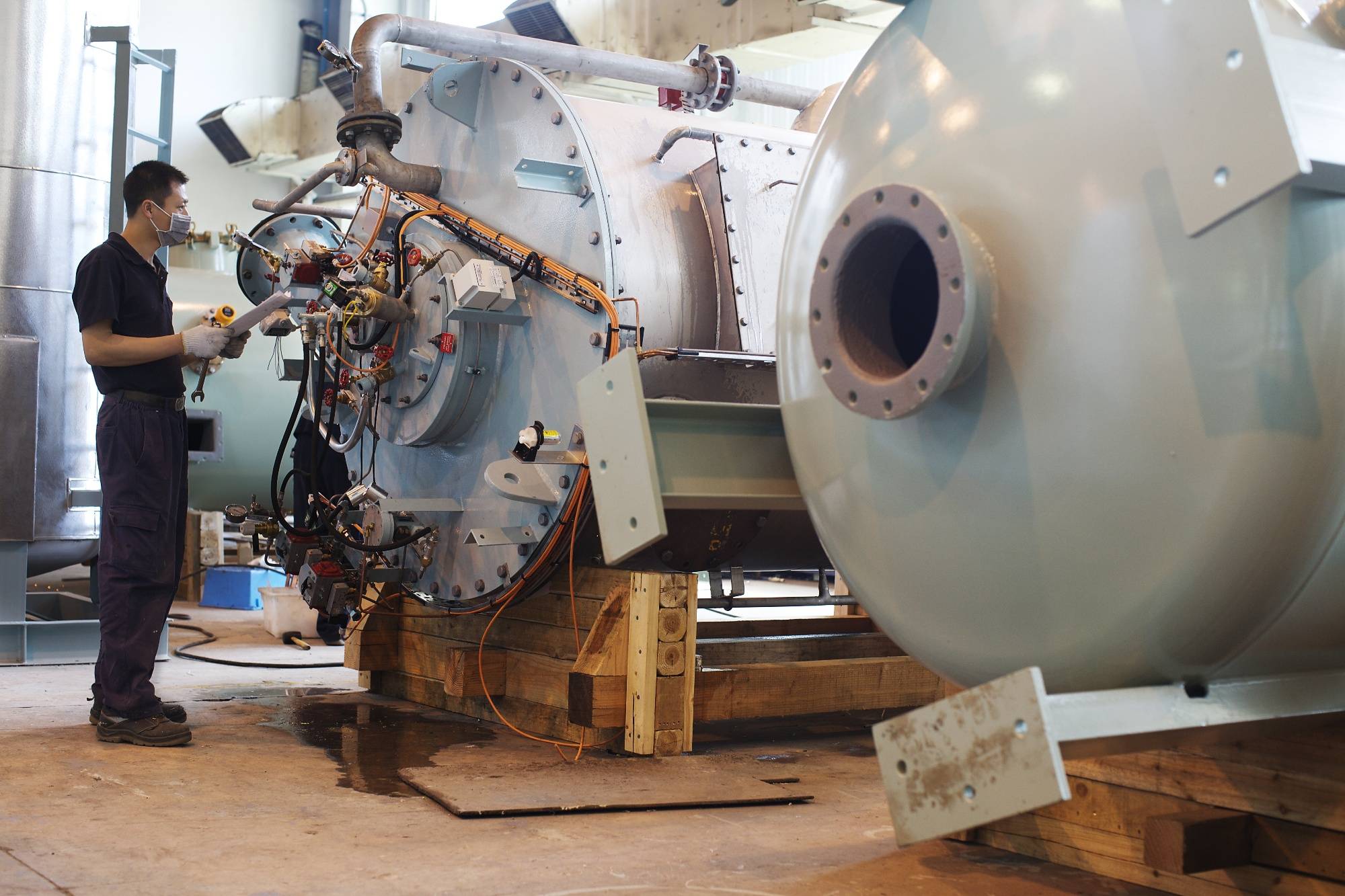
- Gaskapazität
- Bis 20.000 Nm³/h Nennwert
- Sauerstoffgehalt
- 3% by volume (auf Basis Marine Destillat)
- Abgasdruck (normal)
- 0,12 bar gauge
- Gasaustrittstemperatur
- Max. 5°C über Seewassertemperatur
- Inertgasfeuchte
- 100% relative Feuchte, <1 g/kg Trockengas Wassertropfenanteil
- Brennstoffverbrauch
- 0,075 kg/Nm³ Gas (nominal)
- Seewasserbedarf
- 0.06 m³/Nm³ gas (at 32°C seawater temperature)
- Betriebsdauer
- >20 Jahre Lebensdauer
- Moss IGG für Tanker (Produkt & Chemikalienöltanker)
- Moss IGG für Gastransporter (LNG Carrier)
- Moss Mult-Inert System (Dual-Mode: IG & Flue Gas)
- Moss Flue Gas System mit Topping-up Generator
- Offshore Inertgas-Pakete
- Area: Scrubber-Rohrsystem Verschmutzung & KorrosionCheck: Visual inspection through man-holes for sludging, corrosion damage, deposits; check nozzles, cooling tubes, floats, sensors, demister elements. Inspection frequency 6-12 months (doubled under critical conditions). Drydock entrance inspectable (scrubber discharge line).
- Area: Oxygen analyser sample line blockage due to carbon depositsCheck: Periodic test & cleaning of inert gas sample line to O₂ analyser (critical service position). Analyser itself: 2-point calibration (Zero-Gas N₂ 0%, Span-Gas known O₂ concentration) before operation. Calibration accuracy per manufacturer. Alarm setting: >8% O₂ volume.
- Area: Deck Water Seal Wasserniveau & FunktionsprüfungCheck: Check water supply (min. 2 separate pumps required). Visual inspection water level (equipped with low-level alarm). Inspection PMS interval per manufacturer; special attention during IG system shutdown. Check for blockage/corrosion at openings.
- Area: Pressure/Vacuum Breaker (P/V-Breaker) Druckeinstellung & FlammschutzCheck: Check flame screens/meshes (replacement per PMS plan). Calibration for required pressure values + test at operating pressure. Liquid-filled breakers: check fluid type & level; check anti-freeze additive in case of frost risk. Labelling with opening pressures & fluid type/concentration + min. operating temperature.
- Area: Rückschlagventil (Non-Return Valve / Check Valve) Freigang & VentilsitzCheck: Ventil zur Inspection öffnen. Prüfung auf Korrosion, Ventilsitz-Zustand, freie Ventilbewegung über volle Hublänge. Betriebsprobe im Service durchführen. Mindestens zwei Rückschlagvorrichtungen erforderlich (Deck Seal + Isolierventil). Kritisch für Hydrokarbon-Rückfluss-Verhinderung in Maschinenraum.
- Area: Brennkammer-Zustand & Lagerzustand Flue-Gas-Rückzirkulations-VentileCheck: Access to combustion chamber via hinged front (tool-free accessible — check for wear). Flue gas & recirculation valves regularly stroked (stroke test) when system out of service — ensure free operation over full stroke range. Inspection frequency per operating frequency.
Type-universal inspection/service points for Inert Gas Systems (Wärtsilä, Mega-Schwarm 2026-06). Per-model specs not auto-filled.
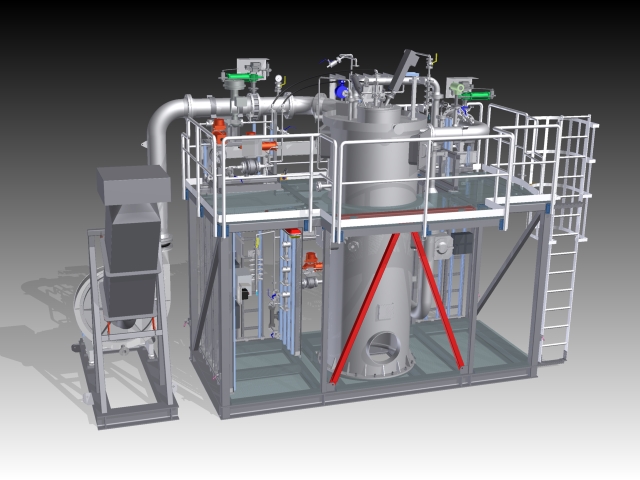
- Gaskapazität
- Bis 20.000 Nm³/h Nennwert
- Sauerstoffgehalt
- 3% by volume (auf Basis Marine Destillat)
- Abgasdruck (normal)
- 0,12 bar gauge
- Gasaustrittstemperatur
- Max. 5°C über Seewassertemperatur
- Inertgasfeuchte
- 100% relative Feuchte, <1 g/kg Trockengas Wassertropfenanteil
- Brennstoffverbrauch
- 0,075 kg/Nm³ Gas (nominal)
- Seewasserbedarf
- 0.06 m³/Nm³ gas (at 32°C seawater temperature)
- Betriebsdauer
- >20 Jahre Lebensdauer
- Moss IGG für Tanker (Produkt & Chemikalienöltanker)
- Moss IGG für Gastransporter (LNG Carrier)
- Moss Mult-Inert System (Dual-Mode: IG & Flue Gas)
- Moss Flue Gas System mit Topping-up Generator
- Offshore Inertgas-Pakete
- Area: Scrubber-Rohrsystem Verschmutzung & KorrosionCheck: Visual inspection through man-holes for sludging, corrosion damage, deposits; check nozzles, cooling tubes, floats, sensors, demister elements. Inspection frequency 6-12 months (doubled under critical conditions). Drydock entrance inspectable (scrubber discharge line).
- Area: Oxygen analyser sample line blockage due to carbon depositsCheck: Periodic test & cleaning of inert gas sample line to O₂ analyser (critical service position). Analyser itself: 2-point calibration (Zero-Gas N₂ 0%, Span-Gas known O₂ concentration) before operation. Calibration accuracy per manufacturer. Alarm setting: >8% O₂ volume.
- Area: Deck Water Seal Wasserniveau & FunktionsprüfungCheck: Check water supply (min. 2 separate pumps required). Visual inspection water level (equipped with low-level alarm). Inspection PMS interval per manufacturer; special attention during IG system shutdown. Check for blockage/corrosion at openings.
- Area: Pressure/Vacuum Breaker (P/V-Breaker) Druckeinstellung & FlammschutzCheck: Check flame screens/meshes (replacement per PMS plan). Calibration for required pressure values + test at operating pressure. Liquid-filled breakers: check fluid type & level; check anti-freeze additive in case of frost risk. Labelling with opening pressures & fluid type/concentration + min. operating temperature.
- Area: Rückschlagventil (Non-Return Valve / Check Valve) Freigang & VentilsitzCheck: Ventil zur Inspection öffnen. Prüfung auf Korrosion, Ventilsitz-Zustand, freie Ventilbewegung über volle Hublänge. Betriebsprobe im Service durchführen. Mindestens zwei Rückschlagvorrichtungen erforderlich (Deck Seal + Isolierventil). Kritisch für Hydrokarbon-Rückfluss-Verhinderung in Maschinenraum.
- Area: Brennkammer-Zustand & Lagerzustand Flue-Gas-Rückzirkulations-VentileCheck: Access to combustion chamber via hinged front (tool-free accessible — check for wear). Flue gas & recirculation valves regularly stroked (stroke test) when system out of service — ensure free operation over full stroke range. Inspection frequency per operating frequency.
Type-universal inspection/service points for Inert Gas Systems (Wärtsilä, Mega-Schwarm 2026-06). Per-model specs not auto-filled.
- Gaskapazität
- Bis 20.000 Nm³/h Nennwert
- Sauerstoffgehalt
- 3% by volume (auf Basis Marine Destillat)
- Abgasdruck (normal)
- 0,12 bar gauge
- Gasaustrittstemperatur
- Max. 5°C über Seewassertemperatur
- Inertgasfeuchte
- 100% relative Feuchte, <1 g/kg Trockengas Wassertropfenanteil
- Brennstoffverbrauch
- 0,075 kg/Nm³ Gas (nominal)
- Seewasserbedarf
- 0.06 m³/Nm³ gas (at 32°C seawater temperature)
- Betriebsdauer
- >20 Jahre Lebensdauer
- Moss IGG für Tanker (Produkt & Chemikalienöltanker)
- Moss IGG für Gastransporter (LNG Carrier)
- Moss Mult-Inert System (Dual-Mode: IG & Flue Gas)
- Moss Flue Gas System mit Topping-up Generator
- Offshore Inertgas-Pakete
- Area: Scrubber-Rohrsystem Verschmutzung & KorrosionCheck: Visual inspection through man-holes for sludging, corrosion damage, deposits; check nozzles, cooling tubes, floats, sensors, demister elements. Inspection frequency 6-12 months (doubled under critical conditions). Drydock entrance inspectable (scrubber discharge line).
- Area: Oxygen analyser sample line blockage due to carbon depositsCheck: Periodic test & cleaning of inert gas sample line to O₂ analyser (critical service position). Analyser itself: 2-point calibration (Zero-Gas N₂ 0%, Span-Gas known O₂ concentration) before operation. Calibration accuracy per manufacturer. Alarm setting: >8% O₂ volume.
- Area: Deck Water Seal Wasserniveau & FunktionsprüfungCheck: Check water supply (min. 2 separate pumps required). Visual inspection water level (equipped with low-level alarm). Inspection PMS interval per manufacturer; special attention during IG system shutdown. Check for blockage/corrosion at openings.
- Area: Pressure/Vacuum Breaker (P/V-Breaker) Druckeinstellung & FlammschutzCheck: Check flame screens/meshes (replacement per PMS plan). Calibration for required pressure values + test at operating pressure. Liquid-filled breakers: check fluid type & level; check anti-freeze additive in case of frost risk. Labelling with opening pressures & fluid type/concentration + min. operating temperature.
- Area: Rückschlagventil (Non-Return Valve / Check Valve) Freigang & VentilsitzCheck: Ventil zur Inspection öffnen. Prüfung auf Korrosion, Ventilsitz-Zustand, freie Ventilbewegung über volle Hublänge. Betriebsprobe im Service durchführen. Mindestens zwei Rückschlagvorrichtungen erforderlich (Deck Seal + Isolierventil). Kritisch für Hydrokarbon-Rückfluss-Verhinderung in Maschinenraum.
- Area: Brennkammer-Zustand & Lagerzustand Flue-Gas-Rückzirkulations-VentileCheck: Access to combustion chamber via hinged front (tool-free accessible — check for wear). Flue gas & recirculation valves regularly stroked (stroke test) when system out of service — ensure free operation over full stroke range. Inspection frequency per operating frequency.
Type-universal inspection/service points for Inert Gas Systems (Wärtsilä, Mega-Schwarm 2026-06). Per-model specs not auto-filled.
- Gaskapazität
- Bis 20.000 Nm³/h Nennwert
- Sauerstoffgehalt
- 3% by volume (auf Basis Marine Destillat)
- Abgasdruck (normal)
- 0,12 bar gauge
- Gasaustrittstemperatur
- Max. 5°C über Seewassertemperatur
- Inertgasfeuchte
- 100% relative Feuchte, <1 g/kg Trockengas Wassertropfenanteil
- Brennstoffverbrauch
- 0,075 kg/Nm³ Gas (nominal)
- Seewasserbedarf
- 0.06 m³/Nm³ gas (at 32°C seawater temperature)
- Betriebsdauer
- >20 Jahre Lebensdauer
- Moss IGG für Tanker (Produkt & Chemikalienöltanker)
- Moss IGG für Gastransporter (LNG Carrier)
- Moss Mult-Inert System (Dual-Mode: IG & Flue Gas)
- Moss Flue Gas System mit Topping-up Generator
- Offshore Inertgas-Pakete
- Area: Scrubber-Rohrsystem Verschmutzung & KorrosionCheck: Visual inspection through man-holes for sludging, corrosion damage, deposits; check nozzles, cooling tubes, floats, sensors, demister elements. Inspection frequency 6-12 months (doubled under critical conditions). Drydock entrance inspectable (scrubber discharge line).
- Area: Oxygen analyser sample line blockage due to carbon depositsCheck: Periodic test & cleaning of inert gas sample line to O₂ analyser (critical service position). Analyser itself: 2-point calibration (Zero-Gas N₂ 0%, Span-Gas known O₂ concentration) before operation. Calibration accuracy per manufacturer. Alarm setting: >8% O₂ volume.
- Area: Deck Water Seal Wasserniveau & FunktionsprüfungCheck: Check water supply (min. 2 separate pumps required). Visual inspection water level (equipped with low-level alarm). Inspection PMS interval per manufacturer; special attention during IG system shutdown. Check for blockage/corrosion at openings.
- Area: Pressure/Vacuum Breaker (P/V-Breaker) Druckeinstellung & FlammschutzCheck: Check flame screens/meshes (replacement per PMS plan). Calibration for required pressure values + test at operating pressure. Liquid-filled breakers: check fluid type & level; check anti-freeze additive in case of frost risk. Labelling with opening pressures & fluid type/concentration + min. operating temperature.
- Area: Rückschlagventil (Non-Return Valve / Check Valve) Freigang & VentilsitzCheck: Ventil zur Inspection öffnen. Prüfung auf Korrosion, Ventilsitz-Zustand, freie Ventilbewegung über volle Hublänge. Betriebsprobe im Service durchführen. Mindestens zwei Rückschlagvorrichtungen erforderlich (Deck Seal + Isolierventil). Kritisch für Hydrokarbon-Rückfluss-Verhinderung in Maschinenraum.
- Area: Brennkammer-Zustand & Lagerzustand Flue-Gas-Rückzirkulations-VentileCheck: Access to combustion chamber via hinged front (tool-free accessible — check for wear). Flue gas & recirculation valves regularly stroked (stroke test) when system out of service — ensure free operation over full stroke range. Inspection frequency per operating frequency.
Type-universal inspection/service points for Inert Gas Systems (Wärtsilä, Mega-Schwarm 2026-06). Per-model specs not auto-filled.
- Gaskapazität
- Bis 20.000 Nm³/h Nennwert
- Sauerstoffgehalt
- 3% by volume (auf Basis Marine Destillat)
- Abgasdruck (normal)
- 0,12 bar gauge
- Gasaustrittstemperatur
- Max. 5°C über Seewassertemperatur
- Inertgasfeuchte
- 100% relative Feuchte, <1 g/kg Trockengas Wassertropfenanteil
- Brennstoffverbrauch
- 0,075 kg/Nm³ Gas (nominal)
- Seewasserbedarf
- 0.06 m³/Nm³ gas (at 32°C seawater temperature)
- Betriebsdauer
- >20 Jahre Lebensdauer
- Moss IGG für Tanker (Produkt & Chemikalienöltanker)
- Moss IGG für Gastransporter (LNG Carrier)
- Moss Mult-Inert System (Dual-Mode: IG & Flue Gas)
- Moss Flue Gas System mit Topping-up Generator
- Offshore Inertgas-Pakete
- Area: Scrubber-Rohrsystem Verschmutzung & KorrosionCheck: Visual inspection through man-holes for sludging, corrosion damage, deposits; check nozzles, cooling tubes, floats, sensors, demister elements. Inspection frequency 6-12 months (doubled under critical conditions). Drydock entrance inspectable (scrubber discharge line).
- Area: Oxygen analyser sample line blockage due to carbon depositsCheck: Periodic test & cleaning of inert gas sample line to O₂ analyser (critical service position). Analyser itself: 2-point calibration (Zero-Gas N₂ 0%, Span-Gas known O₂ concentration) before operation. Calibration accuracy per manufacturer. Alarm setting: >8% O₂ volume.
- Area: Deck Water Seal Wasserniveau & FunktionsprüfungCheck: Check water supply (min. 2 separate pumps required). Visual inspection water level (equipped with low-level alarm). Inspection PMS interval per manufacturer; special attention during IG system shutdown. Check for blockage/corrosion at openings.
- Area: Pressure/Vacuum Breaker (P/V-Breaker) Druckeinstellung & FlammschutzCheck: Check flame screens/meshes (replacement per PMS plan). Calibration for required pressure values + test at operating pressure. Liquid-filled breakers: check fluid type & level; check anti-freeze additive in case of frost risk. Labelling with opening pressures & fluid type/concentration + min. operating temperature.
- Area: Rückschlagventil (Non-Return Valve / Check Valve) Freigang & VentilsitzCheck: Ventil zur Inspection öffnen. Prüfung auf Korrosion, Ventilsitz-Zustand, freie Ventilbewegung über volle Hublänge. Betriebsprobe im Service durchführen. Mindestens zwei Rückschlagvorrichtungen erforderlich (Deck Seal + Isolierventil). Kritisch für Hydrokarbon-Rückfluss-Verhinderung in Maschinenraum.
- Area: Brennkammer-Zustand & Lagerzustand Flue-Gas-Rückzirkulations-VentileCheck: Access to combustion chamber via hinged front (tool-free accessible — check for wear). Flue gas & recirculation valves regularly stroked (stroke test) when system out of service — ensure free operation over full stroke range. Inspection frequency per operating frequency.
Type-universal inspection/service points for Inert Gas Systems (Wärtsilä, Mega-Schwarm 2026-06). Per-model specs not auto-filled.
- Gaskapazität
- Bis 20.000 Nm³/h Nennwert
- Sauerstoffgehalt
- 3% by volume (auf Basis Marine Destillat)
- Abgasdruck (normal)
- 0,12 bar gauge
- Gasaustrittstemperatur
- Max. 5°C über Seewassertemperatur
- Inertgasfeuchte
- 100% relative Feuchte, <1 g/kg Trockengas Wassertropfenanteil
- Brennstoffverbrauch
- 0,075 kg/Nm³ Gas (nominal)
- Seewasserbedarf
- 0.06 m³/Nm³ gas (at 32°C seawater temperature)
- Betriebsdauer
- >20 Jahre Lebensdauer
- Moss IGG für Tanker (Produkt & Chemikalienöltanker)
- Moss IGG für Gastransporter (LNG Carrier)
- Moss Mult-Inert System (Dual-Mode: IG & Flue Gas)
- Moss Flue Gas System mit Topping-up Generator
- Offshore Inertgas-Pakete
- Area: Scrubber-Rohrsystem Verschmutzung & KorrosionCheck: Visual inspection through man-holes for sludging, corrosion damage, deposits; check nozzles, cooling tubes, floats, sensors, demister elements. Inspection frequency 6-12 months (doubled under critical conditions). Drydock entrance inspectable (scrubber discharge line).
- Area: Oxygen analyser sample line blockage due to carbon depositsCheck: Periodic test & cleaning of inert gas sample line to O₂ analyser (critical service position). Analyser itself: 2-point calibration (Zero-Gas N₂ 0%, Span-Gas known O₂ concentration) before operation. Calibration accuracy per manufacturer. Alarm setting: >8% O₂ volume.
- Area: Deck Water Seal Wasserniveau & FunktionsprüfungCheck: Check water supply (min. 2 separate pumps required). Visual inspection water level (equipped with low-level alarm). Inspection PMS interval per manufacturer; special attention during IG system shutdown. Check for blockage/corrosion at openings.
- Area: Pressure/Vacuum Breaker (P/V-Breaker) Druckeinstellung & FlammschutzCheck: Check flame screens/meshes (replacement per PMS plan). Calibration for required pressure values + test at operating pressure. Liquid-filled breakers: check fluid type & level; check anti-freeze additive in case of frost risk. Labelling with opening pressures & fluid type/concentration + min. operating temperature.
- Area: Rückschlagventil (Non-Return Valve / Check Valve) Freigang & VentilsitzCheck: Ventil zur Inspection öffnen. Prüfung auf Korrosion, Ventilsitz-Zustand, freie Ventilbewegung über volle Hublänge. Betriebsprobe im Service durchführen. Mindestens zwei Rückschlagvorrichtungen erforderlich (Deck Seal + Isolierventil). Kritisch für Hydrokarbon-Rückfluss-Verhinderung in Maschinenraum.
- Area: Brennkammer-Zustand & Lagerzustand Flue-Gas-Rückzirkulations-VentileCheck: Access to combustion chamber via hinged front (tool-free accessible — check for wear). Flue gas & recirculation valves regularly stroked (stroke test) when system out of service — ensure free operation over full stroke range. Inspection frequency per operating frequency.
Type-universal inspection/service points for Inert Gas Systems (Wärtsilä, Mega-Schwarm 2026-06). Per-model specs not auto-filled.
- Gaskapazität
- Bis 20.000 Nm³/h Nennwert
- Sauerstoffgehalt
- 3% by volume (auf Basis Marine Destillat)
- Abgasdruck (normal)
- 0,12 bar gauge
- Gasaustrittstemperatur
- Max. 5°C über Seewassertemperatur
- Inertgasfeuchte
- 100% relative Feuchte, <1 g/kg Trockengas Wassertropfenanteil
- Brennstoffverbrauch
- 0,075 kg/Nm³ Gas (nominal)
- Seewasserbedarf
- 0.06 m³/Nm³ gas (at 32°C seawater temperature)
- Betriebsdauer
- >20 Jahre Lebensdauer
- Moss IGG für Tanker (Produkt & Chemikalienöltanker)
- Moss IGG für Gastransporter (LNG Carrier)
- Moss Mult-Inert System (Dual-Mode: IG & Flue Gas)
- Moss Flue Gas System mit Topping-up Generator
- Offshore Inertgas-Pakete
- Area: Scrubber-Rohrsystem Verschmutzung & KorrosionCheck: Visual inspection through man-holes for sludging, corrosion damage, deposits; check nozzles, cooling tubes, floats, sensors, demister elements. Inspection frequency 6-12 months (doubled under critical conditions). Drydock entrance inspectable (scrubber discharge line).
- Area: Oxygen analyser sample line blockage due to carbon depositsCheck: Periodic test & cleaning of inert gas sample line to O₂ analyser (critical service position). Analyser itself: 2-point calibration (Zero-Gas N₂ 0%, Span-Gas known O₂ concentration) before operation. Calibration accuracy per manufacturer. Alarm setting: >8% O₂ volume.
- Area: Deck Water Seal Wasserniveau & FunktionsprüfungCheck: Check water supply (min. 2 separate pumps required). Visual inspection water level (equipped with low-level alarm). Inspection PMS interval per manufacturer; special attention during IG system shutdown. Check for blockage/corrosion at openings.
- Area: Pressure/Vacuum Breaker (P/V-Breaker) Druckeinstellung & FlammschutzCheck: Check flame screens/meshes (replacement per PMS plan). Calibration for required pressure values + test at operating pressure. Liquid-filled breakers: check fluid type & level; check anti-freeze additive in case of frost risk. Labelling with opening pressures & fluid type/concentration + min. operating temperature.
- Area: Rückschlagventil (Non-Return Valve / Check Valve) Freigang & VentilsitzCheck: Ventil zur Inspection öffnen. Prüfung auf Korrosion, Ventilsitz-Zustand, freie Ventilbewegung über volle Hublänge. Betriebsprobe im Service durchführen. Mindestens zwei Rückschlagvorrichtungen erforderlich (Deck Seal + Isolierventil). Kritisch für Hydrokarbon-Rückfluss-Verhinderung in Maschinenraum.
- Area: Brennkammer-Zustand & Lagerzustand Flue-Gas-Rückzirkulations-VentileCheck: Access to combustion chamber via hinged front (tool-free accessible — check for wear). Flue gas & recirculation valves regularly stroked (stroke test) when system out of service — ensure free operation over full stroke range. Inspection frequency per operating frequency.
Type-universal inspection/service points for Inert Gas Systems (Wärtsilä, Mega-Schwarm 2026-06). Per-model specs not auto-filled.
- Gaskapazität
- Bis 20.000 Nm³/h Nennwert
- Sauerstoffgehalt
- 3% by volume (auf Basis Marine Destillat)
- Abgasdruck (normal)
- 0,12 bar gauge
- Gasaustrittstemperatur
- Max. 5°C über Seewassertemperatur
- Inertgasfeuchte
- 100% relative Feuchte, <1 g/kg Trockengas Wassertropfenanteil
- Brennstoffverbrauch
- 0,075 kg/Nm³ Gas (nominal)
- Seewasserbedarf
- 0.06 m³/Nm³ gas (at 32°C seawater temperature)
- Betriebsdauer
- >20 Jahre Lebensdauer
- Moss IGG für Tanker (Produkt & Chemikalienöltanker)
- Moss IGG für Gastransporter (LNG Carrier)
- Moss Mult-Inert System (Dual-Mode: IG & Flue Gas)
- Moss Flue Gas System mit Topping-up Generator
- Offshore Inertgas-Pakete
- Area: Scrubber-Rohrsystem Verschmutzung & KorrosionCheck: Visual inspection through man-holes for sludging, corrosion damage, deposits; check nozzles, cooling tubes, floats, sensors, demister elements. Inspection frequency 6-12 months (doubled under critical conditions). Drydock entrance inspectable (scrubber discharge line).
- Area: Oxygen analyser sample line blockage due to carbon depositsCheck: Periodic test & cleaning of inert gas sample line to O₂ analyser (critical service position). Analyser itself: 2-point calibration (Zero-Gas N₂ 0%, Span-Gas known O₂ concentration) before operation. Calibration accuracy per manufacturer. Alarm setting: >8% O₂ volume.
- Area: Deck Water Seal Wasserniveau & FunktionsprüfungCheck: Check water supply (min. 2 separate pumps required). Visual inspection water level (equipped with low-level alarm). Inspection PMS interval per manufacturer; special attention during IG system shutdown. Check for blockage/corrosion at openings.
- Area: Pressure/Vacuum Breaker (P/V-Breaker) Druckeinstellung & FlammschutzCheck: Check flame screens/meshes (replacement per PMS plan). Calibration for required pressure values + test at operating pressure. Liquid-filled breakers: check fluid type & level; check anti-freeze additive in case of frost risk. Labelling with opening pressures & fluid type/concentration + min. operating temperature.
- Area: Rückschlagventil (Non-Return Valve / Check Valve) Freigang & VentilsitzCheck: Ventil zur Inspection öffnen. Prüfung auf Korrosion, Ventilsitz-Zustand, freie Ventilbewegung über volle Hublänge. Betriebsprobe im Service durchführen. Mindestens zwei Rückschlagvorrichtungen erforderlich (Deck Seal + Isolierventil). Kritisch für Hydrokarbon-Rückfluss-Verhinderung in Maschinenraum.
- Area: Brennkammer-Zustand & Lagerzustand Flue-Gas-Rückzirkulations-VentileCheck: Access to combustion chamber via hinged front (tool-free accessible — check for wear). Flue gas & recirculation valves regularly stroked (stroke test) when system out of service — ensure free operation over full stroke range. Inspection frequency per operating frequency.
Type-universal inspection/service points for Inert Gas Systems (Wärtsilä, Mega-Schwarm 2026-06). Per-model specs not auto-filled.
- Gaskapazität
- Bis 20.000 Nm³/h Nennwert
- Sauerstoffgehalt
- 3% by volume (auf Basis Marine Destillat)
- Abgasdruck (normal)
- 0,12 bar gauge
- Gasaustrittstemperatur
- Max. 5°C über Seewassertemperatur
- Inertgasfeuchte
- 100% relative Feuchte, <1 g/kg Trockengas Wassertropfenanteil
- Brennstoffverbrauch
- 0,075 kg/Nm³ Gas (nominal)
- Seewasserbedarf
- 0.06 m³/Nm³ gas (at 32°C seawater temperature)
- Betriebsdauer
- >20 Jahre Lebensdauer
- Moss IGG für Tanker (Produkt & Chemikalienöltanker)
- Moss IGG für Gastransporter (LNG Carrier)
- Moss Mult-Inert System (Dual-Mode: IG & Flue Gas)
- Moss Flue Gas System mit Topping-up Generator
- Offshore Inertgas-Pakete
- Area: Scrubber-Rohrsystem Verschmutzung & KorrosionCheck: Visual inspection through man-holes for sludging, corrosion damage, deposits; check nozzles, cooling tubes, floats, sensors, demister elements. Inspection frequency 6-12 months (doubled under critical conditions). Drydock entrance inspectable (scrubber discharge line).
- Area: Oxygen analyser sample line blockage due to carbon depositsCheck: Periodic test & cleaning of inert gas sample line to O₂ analyser (critical service position). Analyser itself: 2-point calibration (Zero-Gas N₂ 0%, Span-Gas known O₂ concentration) before operation. Calibration accuracy per manufacturer. Alarm setting: >8% O₂ volume.
- Area: Deck Water Seal Wasserniveau & FunktionsprüfungCheck: Check water supply (min. 2 separate pumps required). Visual inspection water level (equipped with low-level alarm). Inspection PMS interval per manufacturer; special attention during IG system shutdown. Check for blockage/corrosion at openings.
- Area: Pressure/Vacuum Breaker (P/V-Breaker) Druckeinstellung & FlammschutzCheck: Check flame screens/meshes (replacement per PMS plan). Calibration for required pressure values + test at operating pressure. Liquid-filled breakers: check fluid type & level; check anti-freeze additive in case of frost risk. Labelling with opening pressures & fluid type/concentration + min. operating temperature.
- Area: Rückschlagventil (Non-Return Valve / Check Valve) Freigang & VentilsitzCheck: Ventil zur Inspection öffnen. Prüfung auf Korrosion, Ventilsitz-Zustand, freie Ventilbewegung über volle Hublänge. Betriebsprobe im Service durchführen. Mindestens zwei Rückschlagvorrichtungen erforderlich (Deck Seal + Isolierventil). Kritisch für Hydrokarbon-Rückfluss-Verhinderung in Maschinenraum.
- Area: Brennkammer-Zustand & Lagerzustand Flue-Gas-Rückzirkulations-VentileCheck: Access to combustion chamber via hinged front (tool-free accessible — check for wear). Flue gas & recirculation valves regularly stroked (stroke test) when system out of service — ensure free operation over full stroke range. Inspection frequency per operating frequency.
Type-universal inspection/service points for Inert Gas Systems (Wärtsilä, Mega-Schwarm 2026-06). Per-model specs not auto-filled.
- Gaskapazität
- Bis 20.000 Nm³/h Nennwert
- Sauerstoffgehalt
- 3% by volume (auf Basis Marine Destillat)
- Abgasdruck (normal)
- 0,12 bar gauge
- Gasaustrittstemperatur
- Max. 5°C über Seewassertemperatur
- Inertgasfeuchte
- 100% relative Feuchte, <1 g/kg Trockengas Wassertropfenanteil
- Brennstoffverbrauch
- 0,075 kg/Nm³ Gas (nominal)
- Seewasserbedarf
- 0.06 m³/Nm³ gas (at 32°C seawater temperature)
- Betriebsdauer
- >20 Jahre Lebensdauer
- Moss IGG für Tanker (Produkt & Chemikalienöltanker)
- Moss IGG für Gastransporter (LNG Carrier)
- Moss Mult-Inert System (Dual-Mode: IG & Flue Gas)
- Moss Flue Gas System mit Topping-up Generator
- Offshore Inertgas-Pakete
- Area: Scrubber-Rohrsystem Verschmutzung & KorrosionCheck: Visual inspection through man-holes for sludging, corrosion damage, deposits; check nozzles, cooling tubes, floats, sensors, demister elements. Inspection frequency 6-12 months (doubled under critical conditions). Drydock entrance inspectable (scrubber discharge line).
- Area: Oxygen analyser sample line blockage due to carbon depositsCheck: Periodic test & cleaning of inert gas sample line to O₂ analyser (critical service position). Analyser itself: 2-point calibration (Zero-Gas N₂ 0%, Span-Gas known O₂ concentration) before operation. Calibration accuracy per manufacturer. Alarm setting: >8% O₂ volume.
- Area: Deck Water Seal Wasserniveau & FunktionsprüfungCheck: Check water supply (min. 2 separate pumps required). Visual inspection water level (equipped with low-level alarm). Inspection PMS interval per manufacturer; special attention during IG system shutdown. Check for blockage/corrosion at openings.
- Area: Pressure/Vacuum Breaker (P/V-Breaker) Druckeinstellung & FlammschutzCheck: Check flame screens/meshes (replacement per PMS plan). Calibration for required pressure values + test at operating pressure. Liquid-filled breakers: check fluid type & level; check anti-freeze additive in case of frost risk. Labelling with opening pressures & fluid type/concentration + min. operating temperature.
- Area: Rückschlagventil (Non-Return Valve / Check Valve) Freigang & VentilsitzCheck: Ventil zur Inspection öffnen. Prüfung auf Korrosion, Ventilsitz-Zustand, freie Ventilbewegung über volle Hublänge. Betriebsprobe im Service durchführen. Mindestens zwei Rückschlagvorrichtungen erforderlich (Deck Seal + Isolierventil). Kritisch für Hydrokarbon-Rückfluss-Verhinderung in Maschinenraum.
- Area: Brennkammer-Zustand & Lagerzustand Flue-Gas-Rückzirkulations-VentileCheck: Access to combustion chamber via hinged front (tool-free accessible — check for wear). Flue gas & recirculation valves regularly stroked (stroke test) when system out of service — ensure free operation over full stroke range. Inspection frequency per operating frequency.
Type-universal inspection/service points for Inert Gas Systems (Wärtsilä, Mega-Schwarm 2026-06). Per-model specs not auto-filled.
- Gaskapazität
- Bis 20.000 Nm³/h Nennwert
- Sauerstoffgehalt
- 3% by volume (auf Basis Marine Destillat)
- Abgasdruck (normal)
- 0,12 bar gauge
- Gasaustrittstemperatur
- Max. 5°C über Seewassertemperatur
- Inertgasfeuchte
- 100% relative Feuchte, <1 g/kg Trockengas Wassertropfenanteil
- Brennstoffverbrauch
- 0,075 kg/Nm³ Gas (nominal)
- Seewasserbedarf
- 0.06 m³/Nm³ gas (at 32°C seawater temperature)
- Betriebsdauer
- >20 Jahre Lebensdauer
- Moss IGG für Tanker (Produkt & Chemikalienöltanker)
- Moss IGG für Gastransporter (LNG Carrier)
- Moss Mult-Inert System (Dual-Mode: IG & Flue Gas)
- Moss Flue Gas System mit Topping-up Generator
- Offshore Inertgas-Pakete
- Area: Scrubber-Rohrsystem Verschmutzung & KorrosionCheck: Visual inspection through man-holes for sludging, corrosion damage, deposits; check nozzles, cooling tubes, floats, sensors, demister elements. Inspection frequency 6-12 months (doubled under critical conditions). Drydock entrance inspectable (scrubber discharge line).
- Area: Oxygen analyser sample line blockage due to carbon depositsCheck: Periodic test & cleaning of inert gas sample line to O₂ analyser (critical service position). Analyser itself: 2-point calibration (Zero-Gas N₂ 0%, Span-Gas known O₂ concentration) before operation. Calibration accuracy per manufacturer. Alarm setting: >8% O₂ volume.
- Area: Deck Water Seal Wasserniveau & FunktionsprüfungCheck: Check water supply (min. 2 separate pumps required). Visual inspection water level (equipped with low-level alarm). Inspection PMS interval per manufacturer; special attention during IG system shutdown. Check for blockage/corrosion at openings.
- Area: Pressure/Vacuum Breaker (P/V-Breaker) Druckeinstellung & FlammschutzCheck: Check flame screens/meshes (replacement per PMS plan). Calibration for required pressure values + test at operating pressure. Liquid-filled breakers: check fluid type & level; check anti-freeze additive in case of frost risk. Labelling with opening pressures & fluid type/concentration + min. operating temperature.
- Area: Rückschlagventil (Non-Return Valve / Check Valve) Freigang & VentilsitzCheck: Ventil zur Inspection öffnen. Prüfung auf Korrosion, Ventilsitz-Zustand, freie Ventilbewegung über volle Hublänge. Betriebsprobe im Service durchführen. Mindestens zwei Rückschlagvorrichtungen erforderlich (Deck Seal + Isolierventil). Kritisch für Hydrokarbon-Rückfluss-Verhinderung in Maschinenraum.
- Area: Brennkammer-Zustand & Lagerzustand Flue-Gas-Rückzirkulations-VentileCheck: Access to combustion chamber via hinged front (tool-free accessible — check for wear). Flue gas & recirculation valves regularly stroked (stroke test) when system out of service — ensure free operation over full stroke range. Inspection frequency per operating frequency.
Type-universal inspection/service points for Inert Gas Systems (Wärtsilä, Mega-Schwarm 2026-06). Per-model specs not auto-filled.
- Gaskapazität
- Bis 20.000 Nm³/h Nennwert
- Sauerstoffgehalt
- 3% by volume (auf Basis Marine Destillat)
- Abgasdruck (normal)
- 0,12 bar gauge
- Gasaustrittstemperatur
- Max. 5°C über Seewassertemperatur
- Inertgasfeuchte
- 100% relative Feuchte, <1 g/kg Trockengas Wassertropfenanteil
- Brennstoffverbrauch
- 0,075 kg/Nm³ Gas (nominal)
- Seewasserbedarf
- 0.06 m³/Nm³ gas (at 32°C seawater temperature)
- Betriebsdauer
- >20 Jahre Lebensdauer
- Moss IGG für Tanker (Produkt & Chemikalienöltanker)
- Moss IGG für Gastransporter (LNG Carrier)
- Moss Mult-Inert System (Dual-Mode: IG & Flue Gas)
- Moss Flue Gas System mit Topping-up Generator
- Offshore Inertgas-Pakete
- Area: Scrubber-Rohrsystem Verschmutzung & KorrosionCheck: Visual inspection through man-holes for sludging, corrosion damage, deposits; check nozzles, cooling tubes, floats, sensors, demister elements. Inspection frequency 6-12 months (doubled under critical conditions). Drydock entrance inspectable (scrubber discharge line).
- Area: Oxygen analyser sample line blockage due to carbon depositsCheck: Periodic test & cleaning of inert gas sample line to O₂ analyser (critical service position). Analyser itself: 2-point calibration (Zero-Gas N₂ 0%, Span-Gas known O₂ concentration) before operation. Calibration accuracy per manufacturer. Alarm setting: >8% O₂ volume.
- Area: Deck Water Seal Wasserniveau & FunktionsprüfungCheck: Check water supply (min. 2 separate pumps required). Visual inspection water level (equipped with low-level alarm). Inspection PMS interval per manufacturer; special attention during IG system shutdown. Check for blockage/corrosion at openings.
- Area: Pressure/Vacuum Breaker (P/V-Breaker) Druckeinstellung & FlammschutzCheck: Check flame screens/meshes (replacement per PMS plan). Calibration for required pressure values + test at operating pressure. Liquid-filled breakers: check fluid type & level; check anti-freeze additive in case of frost risk. Labelling with opening pressures & fluid type/concentration + min. operating temperature.
- Area: Rückschlagventil (Non-Return Valve / Check Valve) Freigang & VentilsitzCheck: Ventil zur Inspection öffnen. Prüfung auf Korrosion, Ventilsitz-Zustand, freie Ventilbewegung über volle Hublänge. Betriebsprobe im Service durchführen. Mindestens zwei Rückschlagvorrichtungen erforderlich (Deck Seal + Isolierventil). Kritisch für Hydrokarbon-Rückfluss-Verhinderung in Maschinenraum.
- Area: Brennkammer-Zustand & Lagerzustand Flue-Gas-Rückzirkulations-VentileCheck: Access to combustion chamber via hinged front (tool-free accessible — check for wear). Flue gas & recirculation valves regularly stroked (stroke test) when system out of service — ensure free operation over full stroke range. Inspection frequency per operating frequency.
Type-universal inspection/service points for Inert Gas Systems (Wärtsilä, Mega-Schwarm 2026-06). Per-model specs not auto-filled.
- Gaskapazität
- Bis 20.000 Nm³/h Nennwert
- Sauerstoffgehalt
- 3% by volume (auf Basis Marine Destillat)
- Abgasdruck (normal)
- 0,12 bar gauge
- Gasaustrittstemperatur
- Max. 5°C über Seewassertemperatur
- Inertgasfeuchte
- 100% relative Feuchte, <1 g/kg Trockengas Wassertropfenanteil
- Brennstoffverbrauch
- 0,075 kg/Nm³ Gas (nominal)
- Seewasserbedarf
- 0.06 m³/Nm³ gas (at 32°C seawater temperature)
- Betriebsdauer
- >20 Jahre Lebensdauer
- Moss IGG für Tanker (Produkt & Chemikalienöltanker)
- Moss IGG für Gastransporter (LNG Carrier)
- Moss Mult-Inert System (Dual-Mode: IG & Flue Gas)
- Moss Flue Gas System mit Topping-up Generator
- Offshore Inertgas-Pakete
- Area: Scrubber-Rohrsystem Verschmutzung & KorrosionCheck: Visual inspection through man-holes for sludging, corrosion damage, deposits; check nozzles, cooling tubes, floats, sensors, demister elements. Inspection frequency 6-12 months (doubled under critical conditions). Drydock entrance inspectable (scrubber discharge line).
- Area: Oxygen analyser sample line blockage due to carbon depositsCheck: Periodic test & cleaning of inert gas sample line to O₂ analyser (critical service position). Analyser itself: 2-point calibration (Zero-Gas N₂ 0%, Span-Gas known O₂ concentration) before operation. Calibration accuracy per manufacturer. Alarm setting: >8% O₂ volume.
- Area: Deck Water Seal Wasserniveau & FunktionsprüfungCheck: Check water supply (min. 2 separate pumps required). Visual inspection water level (equipped with low-level alarm). Inspection PMS interval per manufacturer; special attention during IG system shutdown. Check for blockage/corrosion at openings.
- Area: Pressure/Vacuum Breaker (P/V-Breaker) Druckeinstellung & FlammschutzCheck: Check flame screens/meshes (replacement per PMS plan). Calibration for required pressure values + test at operating pressure. Liquid-filled breakers: check fluid type & level; check anti-freeze additive in case of frost risk. Labelling with opening pressures & fluid type/concentration + min. operating temperature.
- Area: Rückschlagventil (Non-Return Valve / Check Valve) Freigang & VentilsitzCheck: Ventil zur Inspection öffnen. Prüfung auf Korrosion, Ventilsitz-Zustand, freie Ventilbewegung über volle Hublänge. Betriebsprobe im Service durchführen. Mindestens zwei Rückschlagvorrichtungen erforderlich (Deck Seal + Isolierventil). Kritisch für Hydrokarbon-Rückfluss-Verhinderung in Maschinenraum.
- Area: Brennkammer-Zustand & Lagerzustand Flue-Gas-Rückzirkulations-VentileCheck: Access to combustion chamber via hinged front (tool-free accessible — check for wear). Flue gas & recirculation valves regularly stroked (stroke test) when system out of service — ensure free operation over full stroke range. Inspection frequency per operating frequency.
Type-universal inspection/service points for Inert Gas Systems (Wärtsilä, Mega-Schwarm 2026-06). Per-model specs not auto-filled.
- Gaskapazität
- Bis 20.000 Nm³/h Nennwert
- Sauerstoffgehalt
- 3% by volume (auf Basis Marine Destillat)
- Abgasdruck (normal)
- 0,12 bar gauge
- Gasaustrittstemperatur
- Max. 5°C über Seewassertemperatur
- Inertgasfeuchte
- 100% relative Feuchte, <1 g/kg Trockengas Wassertropfenanteil
- Brennstoffverbrauch
- 0,075 kg/Nm³ Gas (nominal)
- Seewasserbedarf
- 0.06 m³/Nm³ gas (at 32°C seawater temperature)
- Betriebsdauer
- >20 Jahre Lebensdauer
- Moss IGG für Tanker (Produkt & Chemikalienöltanker)
- Moss IGG für Gastransporter (LNG Carrier)
- Moss Mult-Inert System (Dual-Mode: IG & Flue Gas)
- Moss Flue Gas System mit Topping-up Generator
- Offshore Inertgas-Pakete
- Area: Scrubber-Rohrsystem Verschmutzung & KorrosionCheck: Visual inspection through man-holes for sludging, corrosion damage, deposits; check nozzles, cooling tubes, floats, sensors, demister elements. Inspection frequency 6-12 months (doubled under critical conditions). Drydock entrance inspectable (scrubber discharge line).
- Area: Oxygen analyser sample line blockage due to carbon depositsCheck: Periodic test & cleaning of inert gas sample line to O₂ analyser (critical service position). Analyser itself: 2-point calibration (Zero-Gas N₂ 0%, Span-Gas known O₂ concentration) before operation. Calibration accuracy per manufacturer. Alarm setting: >8% O₂ volume.
- Area: Deck Water Seal Wasserniveau & FunktionsprüfungCheck: Check water supply (min. 2 separate pumps required). Visual inspection water level (equipped with low-level alarm). Inspection PMS interval per manufacturer; special attention during IG system shutdown. Check for blockage/corrosion at openings.
- Area: Pressure/Vacuum Breaker (P/V-Breaker) Druckeinstellung & FlammschutzCheck: Check flame screens/meshes (replacement per PMS plan). Calibration for required pressure values + test at operating pressure. Liquid-filled breakers: check fluid type & level; check anti-freeze additive in case of frost risk. Labelling with opening pressures & fluid type/concentration + min. operating temperature.
- Area: Rückschlagventil (Non-Return Valve / Check Valve) Freigang & VentilsitzCheck: Ventil zur Inspection öffnen. Prüfung auf Korrosion, Ventilsitz-Zustand, freie Ventilbewegung über volle Hublänge. Betriebsprobe im Service durchführen. Mindestens zwei Rückschlagvorrichtungen erforderlich (Deck Seal + Isolierventil). Kritisch für Hydrokarbon-Rückfluss-Verhinderung in Maschinenraum.
- Area: Brennkammer-Zustand & Lagerzustand Flue-Gas-Rückzirkulations-VentileCheck: Access to combustion chamber via hinged front (tool-free accessible — check for wear). Flue gas & recirculation valves regularly stroked (stroke test) when system out of service — ensure free operation over full stroke range. Inspection frequency per operating frequency.
Type-universal inspection/service points for Inert Gas Systems (Wärtsilä, Mega-Schwarm 2026-06). Per-model specs not auto-filled.
- Gaskapazität
- Bis 20.000 Nm³/h Nennwert
- Sauerstoffgehalt
- 3% by volume (auf Basis Marine Destillat)
- Abgasdruck (normal)
- 0,12 bar gauge
- Gasaustrittstemperatur
- Max. 5°C über Seewassertemperatur
- Inertgasfeuchte
- 100% relative Feuchte, <1 g/kg Trockengas Wassertropfenanteil
- Brennstoffverbrauch
- 0,075 kg/Nm³ Gas (nominal)
- Seewasserbedarf
- 0.06 m³/Nm³ gas (at 32°C seawater temperature)
- Betriebsdauer
- >20 Jahre Lebensdauer
- Moss IGG für Tanker (Produkt & Chemikalienöltanker)
- Moss IGG für Gastransporter (LNG Carrier)
- Moss Mult-Inert System (Dual-Mode: IG & Flue Gas)
- Moss Flue Gas System mit Topping-up Generator
- Offshore Inertgas-Pakete
- Area: Scrubber-Rohrsystem Verschmutzung & KorrosionCheck: Visual inspection through man-holes for sludging, corrosion damage, deposits; check nozzles, cooling tubes, floats, sensors, demister elements. Inspection frequency 6-12 months (doubled under critical conditions). Drydock entrance inspectable (scrubber discharge line).
- Area: Oxygen analyser sample line blockage due to carbon depositsCheck: Periodic test & cleaning of inert gas sample line to O₂ analyser (critical service position). Analyser itself: 2-point calibration (Zero-Gas N₂ 0%, Span-Gas known O₂ concentration) before operation. Calibration accuracy per manufacturer. Alarm setting: >8% O₂ volume.
- Area: Deck Water Seal Wasserniveau & FunktionsprüfungCheck: Check water supply (min. 2 separate pumps required). Visual inspection water level (equipped with low-level alarm). Inspection PMS interval per manufacturer; special attention during IG system shutdown. Check for blockage/corrosion at openings.
- Area: Pressure/Vacuum Breaker (P/V-Breaker) Druckeinstellung & FlammschutzCheck: Check flame screens/meshes (replacement per PMS plan). Calibration for required pressure values + test at operating pressure. Liquid-filled breakers: check fluid type & level; check anti-freeze additive in case of frost risk. Labelling with opening pressures & fluid type/concentration + min. operating temperature.
- Area: Rückschlagventil (Non-Return Valve / Check Valve) Freigang & VentilsitzCheck: Ventil zur Inspection öffnen. Prüfung auf Korrosion, Ventilsitz-Zustand, freie Ventilbewegung über volle Hublänge. Betriebsprobe im Service durchführen. Mindestens zwei Rückschlagvorrichtungen erforderlich (Deck Seal + Isolierventil). Kritisch für Hydrokarbon-Rückfluss-Verhinderung in Maschinenraum.
- Area: Brennkammer-Zustand & Lagerzustand Flue-Gas-Rückzirkulations-VentileCheck: Access to combustion chamber via hinged front (tool-free accessible — check for wear). Flue gas & recirculation valves regularly stroked (stroke test) when system out of service — ensure free operation over full stroke range. Inspection frequency per operating frequency.
Type-universal inspection/service points for Inert Gas Systems (Wärtsilä, Mega-Schwarm 2026-06). Per-model specs not auto-filled.
- Gaskapazität
- Bis 20.000 Nm³/h Nennwert
- Sauerstoffgehalt
- 3% by volume (auf Basis Marine Destillat)
- Abgasdruck (normal)
- 0,12 bar gauge
- Gasaustrittstemperatur
- Max. 5°C über Seewassertemperatur
- Inertgasfeuchte
- 100% relative Feuchte, <1 g/kg Trockengas Wassertropfenanteil
- Brennstoffverbrauch
- 0,075 kg/Nm³ Gas (nominal)
- Seewasserbedarf
- 0.06 m³/Nm³ gas (at 32°C seawater temperature)
- Betriebsdauer
- >20 Jahre Lebensdauer
- Moss IGG für Tanker (Produkt & Chemikalienöltanker)
- Moss IGG für Gastransporter (LNG Carrier)
- Moss Mult-Inert System (Dual-Mode: IG & Flue Gas)
- Moss Flue Gas System mit Topping-up Generator
- Offshore Inertgas-Pakete
- Area: Scrubber-Rohrsystem Verschmutzung & KorrosionCheck: Visual inspection through man-holes for sludging, corrosion damage, deposits; check nozzles, cooling tubes, floats, sensors, demister elements. Inspection frequency 6-12 months (doubled under critical conditions). Drydock entrance inspectable (scrubber discharge line).
- Area: Oxygen analyser sample line blockage due to carbon depositsCheck: Periodic test & cleaning of inert gas sample line to O₂ analyser (critical service position). Analyser itself: 2-point calibration (Zero-Gas N₂ 0%, Span-Gas known O₂ concentration) before operation. Calibration accuracy per manufacturer. Alarm setting: >8% O₂ volume.
- Area: Deck Water Seal Wasserniveau & FunktionsprüfungCheck: Check water supply (min. 2 separate pumps required). Visual inspection water level (equipped with low-level alarm). Inspection PMS interval per manufacturer; special attention during IG system shutdown. Check for blockage/corrosion at openings.
- Area: Pressure/Vacuum Breaker (P/V-Breaker) Druckeinstellung & FlammschutzCheck: Check flame screens/meshes (replacement per PMS plan). Calibration for required pressure values + test at operating pressure. Liquid-filled breakers: check fluid type & level; check anti-freeze additive in case of frost risk. Labelling with opening pressures & fluid type/concentration + min. operating temperature.
- Area: Rückschlagventil (Non-Return Valve / Check Valve) Freigang & VentilsitzCheck: Ventil zur Inspection öffnen. Prüfung auf Korrosion, Ventilsitz-Zustand, freie Ventilbewegung über volle Hublänge. Betriebsprobe im Service durchführen. Mindestens zwei Rückschlagvorrichtungen erforderlich (Deck Seal + Isolierventil). Kritisch für Hydrokarbon-Rückfluss-Verhinderung in Maschinenraum.
- Area: Brennkammer-Zustand & Lagerzustand Flue-Gas-Rückzirkulations-VentileCheck: Access to combustion chamber via hinged front (tool-free accessible — check for wear). Flue gas & recirculation valves regularly stroked (stroke test) when system out of service — ensure free operation over full stroke range. Inspection frequency per operating frequency.
Type-universal inspection/service points for Inert Gas Systems (Wärtsilä, Mega-Schwarm 2026-06). Per-model specs not auto-filled.
- Gaskapazität
- Bis 20.000 Nm³/h Nennwert
- Sauerstoffgehalt
- 3% by volume (auf Basis Marine Destillat)
- Abgasdruck (normal)
- 0,12 bar gauge
- Gasaustrittstemperatur
- Max. 5°C über Seewassertemperatur
- Inertgasfeuchte
- 100% relative Feuchte, <1 g/kg Trockengas Wassertropfenanteil
- Brennstoffverbrauch
- 0,075 kg/Nm³ Gas (nominal)
- Seewasserbedarf
- 0.06 m³/Nm³ gas (at 32°C seawater temperature)
- Betriebsdauer
- >20 Jahre Lebensdauer
- Moss IGG für Tanker (Produkt & Chemikalienöltanker)
- Moss IGG für Gastransporter (LNG Carrier)
- Moss Mult-Inert System (Dual-Mode: IG & Flue Gas)
- Moss Flue Gas System mit Topping-up Generator
- Offshore Inertgas-Pakete
- Area: Scrubber-Rohrsystem Verschmutzung & KorrosionCheck: Visual inspection through man-holes for sludging, corrosion damage, deposits; check nozzles, cooling tubes, floats, sensors, demister elements. Inspection frequency 6-12 months (doubled under critical conditions). Drydock entrance inspectable (scrubber discharge line).
- Area: Oxygen analyser sample line blockage due to carbon depositsCheck: Periodic test & cleaning of inert gas sample line to O₂ analyser (critical service position). Analyser itself: 2-point calibration (Zero-Gas N₂ 0%, Span-Gas known O₂ concentration) before operation. Calibration accuracy per manufacturer. Alarm setting: >8% O₂ volume.
- Area: Deck Water Seal Wasserniveau & FunktionsprüfungCheck: Check water supply (min. 2 separate pumps required). Visual inspection water level (equipped with low-level alarm). Inspection PMS interval per manufacturer; special attention during IG system shutdown. Check for blockage/corrosion at openings.
- Area: Pressure/Vacuum Breaker (P/V-Breaker) Druckeinstellung & FlammschutzCheck: Check flame screens/meshes (replacement per PMS plan). Calibration for required pressure values + test at operating pressure. Liquid-filled breakers: check fluid type & level; check anti-freeze additive in case of frost risk. Labelling with opening pressures & fluid type/concentration + min. operating temperature.
- Area: Rückschlagventil (Non-Return Valve / Check Valve) Freigang & VentilsitzCheck: Ventil zur Inspection öffnen. Prüfung auf Korrosion, Ventilsitz-Zustand, freie Ventilbewegung über volle Hublänge. Betriebsprobe im Service durchführen. Mindestens zwei Rückschlagvorrichtungen erforderlich (Deck Seal + Isolierventil). Kritisch für Hydrokarbon-Rückfluss-Verhinderung in Maschinenraum.
- Area: Brennkammer-Zustand & Lagerzustand Flue-Gas-Rückzirkulations-VentileCheck: Access to combustion chamber via hinged front (tool-free accessible — check for wear). Flue gas & recirculation valves regularly stroked (stroke test) when system out of service — ensure free operation over full stroke range. Inspection frequency per operating frequency.
Type-universal inspection/service points for Inert Gas Systems (Wärtsilä, Mega-Schwarm 2026-06). Per-model specs not auto-filled.
- Gaskapazität
- Bis 20.000 Nm³/h Nennwert
- Sauerstoffgehalt
- 3% by volume (auf Basis Marine Destillat)
- Abgasdruck (normal)
- 0,12 bar gauge
- Gasaustrittstemperatur
- Max. 5°C über Seewassertemperatur
- Inertgasfeuchte
- 100% relative Feuchte, <1 g/kg Trockengas Wassertropfenanteil
- Brennstoffverbrauch
- 0,075 kg/Nm³ Gas (nominal)
- Seewasserbedarf
- 0.06 m³/Nm³ gas (at 32°C seawater temperature)
- Betriebsdauer
- >20 Jahre Lebensdauer
- Moss IGG für Tanker (Produkt & Chemikalienöltanker)
- Moss IGG für Gastransporter (LNG Carrier)
- Moss Mult-Inert System (Dual-Mode: IG & Flue Gas)
- Moss Flue Gas System mit Topping-up Generator
- Offshore Inertgas-Pakete
- Area: Scrubber-Rohrsystem Verschmutzung & KorrosionCheck: Visual inspection through man-holes for sludging, corrosion damage, deposits; check nozzles, cooling tubes, floats, sensors, demister elements. Inspection frequency 6-12 months (doubled under critical conditions). Drydock entrance inspectable (scrubber discharge line).
- Area: Oxygen analyser sample line blockage due to carbon depositsCheck: Periodic test & cleaning of inert gas sample line to O₂ analyser (critical service position). Analyser itself: 2-point calibration (Zero-Gas N₂ 0%, Span-Gas known O₂ concentration) before operation. Calibration accuracy per manufacturer. Alarm setting: >8% O₂ volume.
- Area: Deck Water Seal Wasserniveau & FunktionsprüfungCheck: Check water supply (min. 2 separate pumps required). Visual inspection water level (equipped with low-level alarm). Inspection PMS interval per manufacturer; special attention during IG system shutdown. Check for blockage/corrosion at openings.
- Area: Pressure/Vacuum Breaker (P/V-Breaker) Druckeinstellung & FlammschutzCheck: Check flame screens/meshes (replacement per PMS plan). Calibration for required pressure values + test at operating pressure. Liquid-filled breakers: check fluid type & level; check anti-freeze additive in case of frost risk. Labelling with opening pressures & fluid type/concentration + min. operating temperature.
- Area: Rückschlagventil (Non-Return Valve / Check Valve) Freigang & VentilsitzCheck: Ventil zur Inspection öffnen. Prüfung auf Korrosion, Ventilsitz-Zustand, freie Ventilbewegung über volle Hublänge. Betriebsprobe im Service durchführen. Mindestens zwei Rückschlagvorrichtungen erforderlich (Deck Seal + Isolierventil). Kritisch für Hydrokarbon-Rückfluss-Verhinderung in Maschinenraum.
- Area: Brennkammer-Zustand & Lagerzustand Flue-Gas-Rückzirkulations-VentileCheck: Access to combustion chamber via hinged front (tool-free accessible — check for wear). Flue gas & recirculation valves regularly stroked (stroke test) when system out of service — ensure free operation over full stroke range. Inspection frequency per operating frequency.
Type-universal inspection/service points for Inert Gas Systems (Wärtsilä, Mega-Schwarm 2026-06). Per-model specs not auto-filled.
- Gaskapazität
- Bis 20.000 Nm³/h Nennwert
- Sauerstoffgehalt
- 3% by volume (auf Basis Marine Destillat)
- Abgasdruck (normal)
- 0,12 bar gauge
- Gasaustrittstemperatur
- Max. 5°C über Seewassertemperatur
- Inertgasfeuchte
- 100% relative Feuchte, <1 g/kg Trockengas Wassertropfenanteil
- Brennstoffverbrauch
- 0,075 kg/Nm³ Gas (nominal)
- Seewasserbedarf
- 0.06 m³/Nm³ gas (at 32°C seawater temperature)
- Betriebsdauer
- >20 Jahre Lebensdauer
- Moss IGG für Tanker (Produkt & Chemikalienöltanker)
- Moss IGG für Gastransporter (LNG Carrier)
- Moss Mult-Inert System (Dual-Mode: IG & Flue Gas)
- Moss Flue Gas System mit Topping-up Generator
- Offshore Inertgas-Pakete
- Area: Scrubber-Rohrsystem Verschmutzung & KorrosionCheck: Visual inspection through man-holes for sludging, corrosion damage, deposits; check nozzles, cooling tubes, floats, sensors, demister elements. Inspection frequency 6-12 months (doubled under critical conditions). Drydock entrance inspectable (scrubber discharge line).
- Area: Oxygen analyser sample line blockage due to carbon depositsCheck: Periodic test & cleaning of inert gas sample line to O₂ analyser (critical service position). Analyser itself: 2-point calibration (Zero-Gas N₂ 0%, Span-Gas known O₂ concentration) before operation. Calibration accuracy per manufacturer. Alarm setting: >8% O₂ volume.
- Area: Deck Water Seal Wasserniveau & FunktionsprüfungCheck: Check water supply (min. 2 separate pumps required). Visual inspection water level (equipped with low-level alarm). Inspection PMS interval per manufacturer; special attention during IG system shutdown. Check for blockage/corrosion at openings.
- Area: Pressure/Vacuum Breaker (P/V-Breaker) Druckeinstellung & FlammschutzCheck: Check flame screens/meshes (replacement per PMS plan). Calibration for required pressure values + test at operating pressure. Liquid-filled breakers: check fluid type & level; check anti-freeze additive in case of frost risk. Labelling with opening pressures & fluid type/concentration + min. operating temperature.
- Area: Rückschlagventil (Non-Return Valve / Check Valve) Freigang & VentilsitzCheck: Ventil zur Inspection öffnen. Prüfung auf Korrosion, Ventilsitz-Zustand, freie Ventilbewegung über volle Hublänge. Betriebsprobe im Service durchführen. Mindestens zwei Rückschlagvorrichtungen erforderlich (Deck Seal + Isolierventil). Kritisch für Hydrokarbon-Rückfluss-Verhinderung in Maschinenraum.
- Area: Brennkammer-Zustand & Lagerzustand Flue-Gas-Rückzirkulations-VentileCheck: Access to combustion chamber via hinged front (tool-free accessible — check for wear). Flue gas & recirculation valves regularly stroked (stroke test) when system out of service — ensure free operation over full stroke range. Inspection frequency per operating frequency.
Type-universal inspection/service points for Inert Gas Systems (Wärtsilä, Mega-Schwarm 2026-06). Per-model specs not auto-filled.
- Gaskapazität
- Bis 20.000 Nm³/h Nennwert
- Sauerstoffgehalt
- 3% by volume (auf Basis Marine Destillat)
- Abgasdruck (normal)
- 0,12 bar gauge
- Gasaustrittstemperatur
- Max. 5°C über Seewassertemperatur
- Inertgasfeuchte
- 100% relative Feuchte, <1 g/kg Trockengas Wassertropfenanteil
- Brennstoffverbrauch
- 0,075 kg/Nm³ Gas (nominal)
- Seewasserbedarf
- 0.06 m³/Nm³ gas (at 32°C seawater temperature)
- Betriebsdauer
- >20 Jahre Lebensdauer
- Moss IGG für Tanker (Produkt & Chemikalienöltanker)
- Moss IGG für Gastransporter (LNG Carrier)
- Moss Mult-Inert System (Dual-Mode: IG & Flue Gas)
- Moss Flue Gas System mit Topping-up Generator
- Offshore Inertgas-Pakete
- Area: Scrubber-Rohrsystem Verschmutzung & KorrosionCheck: Visual inspection through man-holes for sludging, corrosion damage, deposits; check nozzles, cooling tubes, floats, sensors, demister elements. Inspection frequency 6-12 months (doubled under critical conditions). Drydock entrance inspectable (scrubber discharge line).
- Area: Oxygen analyser sample line blockage due to carbon depositsCheck: Periodic test & cleaning of inert gas sample line to O₂ analyser (critical service position). Analyser itself: 2-point calibration (Zero-Gas N₂ 0%, Span-Gas known O₂ concentration) before operation. Calibration accuracy per manufacturer. Alarm setting: >8% O₂ volume.
- Area: Deck Water Seal Wasserniveau & FunktionsprüfungCheck: Check water supply (min. 2 separate pumps required). Visual inspection water level (equipped with low-level alarm). Inspection PMS interval per manufacturer; special attention during IG system shutdown. Check for blockage/corrosion at openings.
- Area: Pressure/Vacuum Breaker (P/V-Breaker) Druckeinstellung & FlammschutzCheck: Check flame screens/meshes (replacement per PMS plan). Calibration for required pressure values + test at operating pressure. Liquid-filled breakers: check fluid type & level; check anti-freeze additive in case of frost risk. Labelling with opening pressures & fluid type/concentration + min. operating temperature.
- Area: Rückschlagventil (Non-Return Valve / Check Valve) Freigang & VentilsitzCheck: Ventil zur Inspection öffnen. Prüfung auf Korrosion, Ventilsitz-Zustand, freie Ventilbewegung über volle Hublänge. Betriebsprobe im Service durchführen. Mindestens zwei Rückschlagvorrichtungen erforderlich (Deck Seal + Isolierventil). Kritisch für Hydrokarbon-Rückfluss-Verhinderung in Maschinenraum.
- Area: Brennkammer-Zustand & Lagerzustand Flue-Gas-Rückzirkulations-VentileCheck: Access to combustion chamber via hinged front (tool-free accessible — check for wear). Flue gas & recirculation valves regularly stroked (stroke test) when system out of service — ensure free operation over full stroke range. Inspection frequency per operating frequency.
Type-universal inspection/service points for Inert Gas Systems (Wärtsilä, Mega-Schwarm 2026-06). Per-model specs not auto-filled.
- Gaskapazität
- Bis 20.000 Nm³/h Nennwert
- Sauerstoffgehalt
- 3% by volume (auf Basis Marine Destillat)
- Abgasdruck (normal)
- 0,12 bar gauge
- Gasaustrittstemperatur
- Max. 5°C über Seewassertemperatur
- Inertgasfeuchte
- 100% relative Feuchte, <1 g/kg Trockengas Wassertropfenanteil
- Brennstoffverbrauch
- 0,075 kg/Nm³ Gas (nominal)
- Seewasserbedarf
- 0.06 m³/Nm³ gas (at 32°C seawater temperature)
- Betriebsdauer
- >20 Jahre Lebensdauer
- Moss IGG für Tanker (Produkt & Chemikalienöltanker)
- Moss IGG für Gastransporter (LNG Carrier)
- Moss Mult-Inert System (Dual-Mode: IG & Flue Gas)
- Moss Flue Gas System mit Topping-up Generator
- Offshore Inertgas-Pakete
- Area: Scrubber-Rohrsystem Verschmutzung & KorrosionCheck: Visual inspection through man-holes for sludging, corrosion damage, deposits; check nozzles, cooling tubes, floats, sensors, demister elements. Inspection frequency 6-12 months (doubled under critical conditions). Drydock entrance inspectable (scrubber discharge line).
- Area: Oxygen analyser sample line blockage due to carbon depositsCheck: Periodic test & cleaning of inert gas sample line to O₂ analyser (critical service position). Analyser itself: 2-point calibration (Zero-Gas N₂ 0%, Span-Gas known O₂ concentration) before operation. Calibration accuracy per manufacturer. Alarm setting: >8% O₂ volume.
- Area: Deck Water Seal Wasserniveau & FunktionsprüfungCheck: Check water supply (min. 2 separate pumps required). Visual inspection water level (equipped with low-level alarm). Inspection PMS interval per manufacturer; special attention during IG system shutdown. Check for blockage/corrosion at openings.
- Area: Pressure/Vacuum Breaker (P/V-Breaker) Druckeinstellung & FlammschutzCheck: Check flame screens/meshes (replacement per PMS plan). Calibration for required pressure values + test at operating pressure. Liquid-filled breakers: check fluid type & level; check anti-freeze additive in case of frost risk. Labelling with opening pressures & fluid type/concentration + min. operating temperature.
- Area: Rückschlagventil (Non-Return Valve / Check Valve) Freigang & VentilsitzCheck: Ventil zur Inspection öffnen. Prüfung auf Korrosion, Ventilsitz-Zustand, freie Ventilbewegung über volle Hublänge. Betriebsprobe im Service durchführen. Mindestens zwei Rückschlagvorrichtungen erforderlich (Deck Seal + Isolierventil). Kritisch für Hydrokarbon-Rückfluss-Verhinderung in Maschinenraum.
- Area: Brennkammer-Zustand & Lagerzustand Flue-Gas-Rückzirkulations-VentileCheck: Access to combustion chamber via hinged front (tool-free accessible — check for wear). Flue gas & recirculation valves regularly stroked (stroke test) when system out of service — ensure free operation over full stroke range. Inspection frequency per operating frequency.
Type-universal inspection/service points for Inert Gas Systems (Wärtsilä, Mega-Schwarm 2026-06). Per-model specs not auto-filled.
- Gaskapazität
- Bis 20.000 Nm³/h Nennwert
- Sauerstoffgehalt
- 3% by volume (auf Basis Marine Destillat)
- Abgasdruck (normal)
- 0,12 bar gauge
- Gasaustrittstemperatur
- Max. 5°C über Seewassertemperatur
- Inertgasfeuchte
- 100% relative Feuchte, <1 g/kg Trockengas Wassertropfenanteil
- Brennstoffverbrauch
- 0,075 kg/Nm³ Gas (nominal)
- Seewasserbedarf
- 0.06 m³/Nm³ gas (at 32°C seawater temperature)
- Betriebsdauer
- >20 Jahre Lebensdauer
- Moss IGG für Tanker (Produkt & Chemikalienöltanker)
- Moss IGG für Gastransporter (LNG Carrier)
- Moss Mult-Inert System (Dual-Mode: IG & Flue Gas)
- Moss Flue Gas System mit Topping-up Generator
- Offshore Inertgas-Pakete
- Area: Scrubber-Rohrsystem Verschmutzung & KorrosionCheck: Visual inspection through man-holes for sludging, corrosion damage, deposits; check nozzles, cooling tubes, floats, sensors, demister elements. Inspection frequency 6-12 months (doubled under critical conditions). Drydock entrance inspectable (scrubber discharge line).
- Area: Oxygen analyser sample line blockage due to carbon depositsCheck: Periodic test & cleaning of inert gas sample line to O₂ analyser (critical service position). Analyser itself: 2-point calibration (Zero-Gas N₂ 0%, Span-Gas known O₂ concentration) before operation. Calibration accuracy per manufacturer. Alarm setting: >8% O₂ volume.
- Area: Deck Water Seal Wasserniveau & FunktionsprüfungCheck: Check water supply (min. 2 separate pumps required). Visual inspection water level (equipped with low-level alarm). Inspection PMS interval per manufacturer; special attention during IG system shutdown. Check for blockage/corrosion at openings.
- Area: Pressure/Vacuum Breaker (P/V-Breaker) Druckeinstellung & FlammschutzCheck: Check flame screens/meshes (replacement per PMS plan). Calibration for required pressure values + test at operating pressure. Liquid-filled breakers: check fluid type & level; check anti-freeze additive in case of frost risk. Labelling with opening pressures & fluid type/concentration + min. operating temperature.
- Area: Rückschlagventil (Non-Return Valve / Check Valve) Freigang & VentilsitzCheck: Ventil zur Inspection öffnen. Prüfung auf Korrosion, Ventilsitz-Zustand, freie Ventilbewegung über volle Hublänge. Betriebsprobe im Service durchführen. Mindestens zwei Rückschlagvorrichtungen erforderlich (Deck Seal + Isolierventil). Kritisch für Hydrokarbon-Rückfluss-Verhinderung in Maschinenraum.
- Area: Brennkammer-Zustand & Lagerzustand Flue-Gas-Rückzirkulations-VentileCheck: Access to combustion chamber via hinged front (tool-free accessible — check for wear). Flue gas & recirculation valves regularly stroked (stroke test) when system out of service — ensure free operation over full stroke range. Inspection frequency per operating frequency.
Type-universal inspection/service points for Inert Gas Systems (Wärtsilä, Mega-Schwarm 2026-06). Per-model specs not auto-filled.
- Gaskapazität
- Bis 20.000 Nm³/h Nennwert
- Sauerstoffgehalt
- 3% by volume (auf Basis Marine Destillat)
- Abgasdruck (normal)
- 0,12 bar gauge
- Gasaustrittstemperatur
- Max. 5°C über Seewassertemperatur
- Inertgasfeuchte
- 100% relative Feuchte, <1 g/kg Trockengas Wassertropfenanteil
- Brennstoffverbrauch
- 0,075 kg/Nm³ Gas (nominal)
- Seewasserbedarf
- 0.06 m³/Nm³ gas (at 32°C seawater temperature)
- Betriebsdauer
- >20 Jahre Lebensdauer
- Moss IGG für Tanker (Produkt & Chemikalienöltanker)
- Moss IGG für Gastransporter (LNG Carrier)
- Moss Mult-Inert System (Dual-Mode: IG & Flue Gas)
- Moss Flue Gas System mit Topping-up Generator
- Offshore Inertgas-Pakete
- Area: Scrubber-Rohrsystem Verschmutzung & KorrosionCheck: Visual inspection through man-holes for sludging, corrosion damage, deposits; check nozzles, cooling tubes, floats, sensors, demister elements. Inspection frequency 6-12 months (doubled under critical conditions). Drydock entrance inspectable (scrubber discharge line).
- Area: Oxygen analyser sample line blockage due to carbon depositsCheck: Periodic test & cleaning of inert gas sample line to O₂ analyser (critical service position). Analyser itself: 2-point calibration (Zero-Gas N₂ 0%, Span-Gas known O₂ concentration) before operation. Calibration accuracy per manufacturer. Alarm setting: >8% O₂ volume.
- Area: Deck Water Seal Wasserniveau & FunktionsprüfungCheck: Check water supply (min. 2 separate pumps required). Visual inspection water level (equipped with low-level alarm). Inspection PMS interval per manufacturer; special attention during IG system shutdown. Check for blockage/corrosion at openings.
- Area: Pressure/Vacuum Breaker (P/V-Breaker) Druckeinstellung & FlammschutzCheck: Check flame screens/meshes (replacement per PMS plan). Calibration for required pressure values + test at operating pressure. Liquid-filled breakers: check fluid type & level; check anti-freeze additive in case of frost risk. Labelling with opening pressures & fluid type/concentration + min. operating temperature.
- Area: Rückschlagventil (Non-Return Valve / Check Valve) Freigang & VentilsitzCheck: Ventil zur Inspection öffnen. Prüfung auf Korrosion, Ventilsitz-Zustand, freie Ventilbewegung über volle Hublänge. Betriebsprobe im Service durchführen. Mindestens zwei Rückschlagvorrichtungen erforderlich (Deck Seal + Isolierventil). Kritisch für Hydrokarbon-Rückfluss-Verhinderung in Maschinenraum.
- Area: Brennkammer-Zustand & Lagerzustand Flue-Gas-Rückzirkulations-VentileCheck: Access to combustion chamber via hinged front (tool-free accessible — check for wear). Flue gas & recirculation valves regularly stroked (stroke test) when system out of service — ensure free operation over full stroke range. Inspection frequency per operating frequency.
Type-universal inspection/service points for Inert Gas Systems (Wärtsilä, Mega-Schwarm 2026-06). Per-model specs not auto-filled.
- Gaskapazität
- Bis 20.000 Nm³/h Nennwert
- Sauerstoffgehalt
- 3% by volume (auf Basis Marine Destillat)
- Abgasdruck (normal)
- 0,12 bar gauge
- Gasaustrittstemperatur
- Max. 5°C über Seewassertemperatur
- Inertgasfeuchte
- 100% relative Feuchte, <1 g/kg Trockengas Wassertropfenanteil
- Brennstoffverbrauch
- 0,075 kg/Nm³ Gas (nominal)
- Seewasserbedarf
- 0.06 m³/Nm³ gas (at 32°C seawater temperature)
- Betriebsdauer
- >20 Jahre Lebensdauer
- Moss IGG für Tanker (Produkt & Chemikalienöltanker)
- Moss IGG für Gastransporter (LNG Carrier)
- Moss Mult-Inert System (Dual-Mode: IG & Flue Gas)
- Moss Flue Gas System mit Topping-up Generator
- Offshore Inertgas-Pakete
- Area: Scrubber-Rohrsystem Verschmutzung & KorrosionCheck: Visual inspection through man-holes for sludging, corrosion damage, deposits; check nozzles, cooling tubes, floats, sensors, demister elements. Inspection frequency 6-12 months (doubled under critical conditions). Drydock entrance inspectable (scrubber discharge line).
- Area: Oxygen analyser sample line blockage due to carbon depositsCheck: Periodic test & cleaning of inert gas sample line to O₂ analyser (critical service position). Analyser itself: 2-point calibration (Zero-Gas N₂ 0%, Span-Gas known O₂ concentration) before operation. Calibration accuracy per manufacturer. Alarm setting: >8% O₂ volume.
- Area: Deck Water Seal Wasserniveau & FunktionsprüfungCheck: Check water supply (min. 2 separate pumps required). Visual inspection water level (equipped with low-level alarm). Inspection PMS interval per manufacturer; special attention during IG system shutdown. Check for blockage/corrosion at openings.
- Area: Pressure/Vacuum Breaker (P/V-Breaker) Druckeinstellung & FlammschutzCheck: Check flame screens/meshes (replacement per PMS plan). Calibration for required pressure values + test at operating pressure. Liquid-filled breakers: check fluid type & level; check anti-freeze additive in case of frost risk. Labelling with opening pressures & fluid type/concentration + min. operating temperature.
- Area: Rückschlagventil (Non-Return Valve / Check Valve) Freigang & VentilsitzCheck: Ventil zur Inspection öffnen. Prüfung auf Korrosion, Ventilsitz-Zustand, freie Ventilbewegung über volle Hublänge. Betriebsprobe im Service durchführen. Mindestens zwei Rückschlagvorrichtungen erforderlich (Deck Seal + Isolierventil). Kritisch für Hydrokarbon-Rückfluss-Verhinderung in Maschinenraum.
- Area: Brennkammer-Zustand & Lagerzustand Flue-Gas-Rückzirkulations-VentileCheck: Access to combustion chamber via hinged front (tool-free accessible — check for wear). Flue gas & recirculation valves regularly stroked (stroke test) when system out of service — ensure free operation over full stroke range. Inspection frequency per operating frequency.
Type-universal inspection/service points for Inert Gas Systems (Wärtsilä, Mega-Schwarm 2026-06). Per-model specs not auto-filled.
- Gaskapazität
- Bis 20.000 Nm³/h Nennwert
- Sauerstoffgehalt
- 3% by volume (auf Basis Marine Destillat)
- Abgasdruck (normal)
- 0,12 bar gauge
- Gasaustrittstemperatur
- Max. 5°C über Seewassertemperatur
- Inertgasfeuchte
- 100% relative Feuchte, <1 g/kg Trockengas Wassertropfenanteil
- Brennstoffverbrauch
- 0,075 kg/Nm³ Gas (nominal)
- Seewasserbedarf
- 0.06 m³/Nm³ gas (at 32°C seawater temperature)
- Betriebsdauer
- >20 Jahre Lebensdauer
- Moss IGG für Tanker (Produkt & Chemikalienöltanker)
- Moss IGG für Gastransporter (LNG Carrier)
- Moss Mult-Inert System (Dual-Mode: IG & Flue Gas)
- Moss Flue Gas System mit Topping-up Generator
- Offshore Inertgas-Pakete
- Area: Scrubber-Rohrsystem Verschmutzung & KorrosionCheck: Visual inspection through man-holes for sludging, corrosion damage, deposits; check nozzles, cooling tubes, floats, sensors, demister elements. Inspection frequency 6-12 months (doubled under critical conditions). Drydock entrance inspectable (scrubber discharge line).
- Area: Oxygen analyser sample line blockage due to carbon depositsCheck: Periodic test & cleaning of inert gas sample line to O₂ analyser (critical service position). Analyser itself: 2-point calibration (Zero-Gas N₂ 0%, Span-Gas known O₂ concentration) before operation. Calibration accuracy per manufacturer. Alarm setting: >8% O₂ volume.
- Area: Deck Water Seal Wasserniveau & FunktionsprüfungCheck: Check water supply (min. 2 separate pumps required). Visual inspection water level (equipped with low-level alarm). Inspection PMS interval per manufacturer; special attention during IG system shutdown. Check for blockage/corrosion at openings.
- Area: Pressure/Vacuum Breaker (P/V-Breaker) Druckeinstellung & FlammschutzCheck: Check flame screens/meshes (replacement per PMS plan). Calibration for required pressure values + test at operating pressure. Liquid-filled breakers: check fluid type & level; check anti-freeze additive in case of frost risk. Labelling with opening pressures & fluid type/concentration + min. operating temperature.
- Area: Rückschlagventil (Non-Return Valve / Check Valve) Freigang & VentilsitzCheck: Ventil zur Inspection öffnen. Prüfung auf Korrosion, Ventilsitz-Zustand, freie Ventilbewegung über volle Hublänge. Betriebsprobe im Service durchführen. Mindestens zwei Rückschlagvorrichtungen erforderlich (Deck Seal + Isolierventil). Kritisch für Hydrokarbon-Rückfluss-Verhinderung in Maschinenraum.
- Area: Brennkammer-Zustand & Lagerzustand Flue-Gas-Rückzirkulations-VentileCheck: Access to combustion chamber via hinged front (tool-free accessible — check for wear). Flue gas & recirculation valves regularly stroked (stroke test) when system out of service — ensure free operation over full stroke range. Inspection frequency per operating frequency.
Type-universal inspection/service points for Inert Gas Systems (Wärtsilä, Mega-Schwarm 2026-06). Per-model specs not auto-filled.
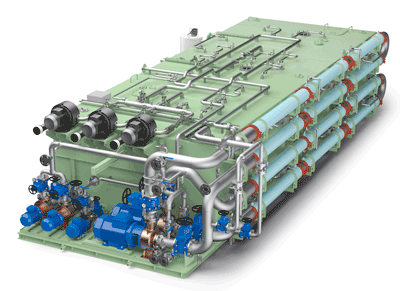
- Gaskapazität
- Bis 20.000 Nm³/h Nennwert
- Sauerstoffgehalt
- 3% by volume (auf Basis Marine Destillat)
- Abgasdruck (normal)
- 0,12 bar gauge
- Gasaustrittstemperatur
- Max. 5°C über Seewassertemperatur
- Inertgasfeuchte
- 100% relative Feuchte, <1 g/kg Trockengas Wassertropfenanteil
- Brennstoffverbrauch
- 0,075 kg/Nm³ Gas (nominal)
- Seewasserbedarf
- 0.06 m³/Nm³ gas (at 32°C seawater temperature)
- Betriebsdauer
- >20 Jahre Lebensdauer
- Moss IGG für Tanker (Produkt & Chemikalienöltanker)
- Moss IGG für Gastransporter (LNG Carrier)
- Moss Mult-Inert System (Dual-Mode: IG & Flue Gas)
- Moss Flue Gas System mit Topping-up Generator
- Offshore Inertgas-Pakete
- Area: Scrubber-Rohrsystem Verschmutzung & KorrosionCheck: Visual inspection through man-holes for sludging, corrosion damage, deposits; check nozzles, cooling tubes, floats, sensors, demister elements. Inspection frequency 6-12 months (doubled under critical conditions). Drydock entrance inspectable (scrubber discharge line).
- Area: Oxygen analyser sample line blockage due to carbon depositsCheck: Periodic test & cleaning of inert gas sample line to O₂ analyser (critical service position). Analyser itself: 2-point calibration (Zero-Gas N₂ 0%, Span-Gas known O₂ concentration) before operation. Calibration accuracy per manufacturer. Alarm setting: >8% O₂ volume.
- Area: Deck Water Seal Wasserniveau & FunktionsprüfungCheck: Check water supply (min. 2 separate pumps required). Visual inspection water level (equipped with low-level alarm). Inspection PMS interval per manufacturer; special attention during IG system shutdown. Check for blockage/corrosion at openings.
- Area: Pressure/Vacuum Breaker (P/V-Breaker) Druckeinstellung & FlammschutzCheck: Check flame screens/meshes (replacement per PMS plan). Calibration for required pressure values + test at operating pressure. Liquid-filled breakers: check fluid type & level; check anti-freeze additive in case of frost risk. Labelling with opening pressures & fluid type/concentration + min. operating temperature.
- Area: Rückschlagventil (Non-Return Valve / Check Valve) Freigang & VentilsitzCheck: Ventil zur Inspection öffnen. Prüfung auf Korrosion, Ventilsitz-Zustand, freie Ventilbewegung über volle Hublänge. Betriebsprobe im Service durchführen. Mindestens zwei Rückschlagvorrichtungen erforderlich (Deck Seal + Isolierventil). Kritisch für Hydrokarbon-Rückfluss-Verhinderung in Maschinenraum.
- Area: Brennkammer-Zustand & Lagerzustand Flue-Gas-Rückzirkulations-VentileCheck: Access to combustion chamber via hinged front (tool-free accessible — check for wear). Flue gas & recirculation valves regularly stroked (stroke test) when system out of service — ensure free operation over full stroke range. Inspection frequency per operating frequency.
Type-universal inspection/service points for Inert Gas Systems (Wärtsilä, Mega-Schwarm 2026-06). Per-model specs not auto-filled.
- Gaskapazität
- Bis 20.000 Nm³/h Nennwert
- Sauerstoffgehalt
- 3% by volume (auf Basis Marine Destillat)
- Abgasdruck (normal)
- 0,12 bar gauge
- Gasaustrittstemperatur
- Max. 5°C über Seewassertemperatur
- Inertgasfeuchte
- 100% relative Feuchte, <1 g/kg Trockengas Wassertropfenanteil
- Brennstoffverbrauch
- 0,075 kg/Nm³ Gas (nominal)
- Seewasserbedarf
- 0.06 m³/Nm³ gas (at 32°C seawater temperature)
- Betriebsdauer
- >20 Jahre Lebensdauer
- Moss IGG für Tanker (Produkt & Chemikalienöltanker)
- Moss IGG für Gastransporter (LNG Carrier)
- Moss Mult-Inert System (Dual-Mode: IG & Flue Gas)
- Moss Flue Gas System mit Topping-up Generator
- Offshore Inertgas-Pakete
- Area: Scrubber-Rohrsystem Verschmutzung & KorrosionCheck: Visual inspection through man-holes for sludging, corrosion damage, deposits; check nozzles, cooling tubes, floats, sensors, demister elements. Inspection frequency 6-12 months (doubled under critical conditions). Drydock entrance inspectable (scrubber discharge line).
- Area: Oxygen analyser sample line blockage due to carbon depositsCheck: Periodic test & cleaning of inert gas sample line to O₂ analyser (critical service position). Analyser itself: 2-point calibration (Zero-Gas N₂ 0%, Span-Gas known O₂ concentration) before operation. Calibration accuracy per manufacturer. Alarm setting: >8% O₂ volume.
- Area: Deck Water Seal Wasserniveau & FunktionsprüfungCheck: Check water supply (min. 2 separate pumps required). Visual inspection water level (equipped with low-level alarm). Inspection PMS interval per manufacturer; special attention during IG system shutdown. Check for blockage/corrosion at openings.
- Area: Pressure/Vacuum Breaker (P/V-Breaker) Druckeinstellung & FlammschutzCheck: Check flame screens/meshes (replacement per PMS plan). Calibration for required pressure values + test at operating pressure. Liquid-filled breakers: check fluid type & level; check anti-freeze additive in case of frost risk. Labelling with opening pressures & fluid type/concentration + min. operating temperature.
- Area: Rückschlagventil (Non-Return Valve / Check Valve) Freigang & VentilsitzCheck: Ventil zur Inspection öffnen. Prüfung auf Korrosion, Ventilsitz-Zustand, freie Ventilbewegung über volle Hublänge. Betriebsprobe im Service durchführen. Mindestens zwei Rückschlagvorrichtungen erforderlich (Deck Seal + Isolierventil). Kritisch für Hydrokarbon-Rückfluss-Verhinderung in Maschinenraum.
- Area: Brennkammer-Zustand & Lagerzustand Flue-Gas-Rückzirkulations-VentileCheck: Access to combustion chamber via hinged front (tool-free accessible — check for wear). Flue gas & recirculation valves regularly stroked (stroke test) when system out of service — ensure free operation over full stroke range. Inspection frequency per operating frequency.
Type-universal inspection/service points for Inert Gas Systems (Wärtsilä, Mega-Schwarm 2026-06). Per-model specs not auto-filled.
- Gaskapazität
- Bis 20.000 Nm³/h Nennwert
- Sauerstoffgehalt
- 3% by volume (auf Basis Marine Destillat)
- Abgasdruck (normal)
- 0,12 bar gauge
- Gasaustrittstemperatur
- Max. 5°C über Seewassertemperatur
- Inertgasfeuchte
- 100% relative Feuchte, <1 g/kg Trockengas Wassertropfenanteil
- Brennstoffverbrauch
- 0,075 kg/Nm³ Gas (nominal)
- Seewasserbedarf
- 0.06 m³/Nm³ gas (at 32°C seawater temperature)
- Betriebsdauer
- >20 Jahre Lebensdauer
- Moss IGG für Tanker (Produkt & Chemikalienöltanker)
- Moss IGG für Gastransporter (LNG Carrier)
- Moss Mult-Inert System (Dual-Mode: IG & Flue Gas)
- Moss Flue Gas System mit Topping-up Generator
- Offshore Inertgas-Pakete
- Area: Scrubber-Rohrsystem Verschmutzung & KorrosionCheck: Visual inspection through man-holes for sludging, corrosion damage, deposits; check nozzles, cooling tubes, floats, sensors, demister elements. Inspection frequency 6-12 months (doubled under critical conditions). Drydock entrance inspectable (scrubber discharge line).
- Area: Oxygen analyser sample line blockage due to carbon depositsCheck: Periodic test & cleaning of inert gas sample line to O₂ analyser (critical service position). Analyser itself: 2-point calibration (Zero-Gas N₂ 0%, Span-Gas known O₂ concentration) before operation. Calibration accuracy per manufacturer. Alarm setting: >8% O₂ volume.
- Area: Deck Water Seal Wasserniveau & FunktionsprüfungCheck: Check water supply (min. 2 separate pumps required). Visual inspection water level (equipped with low-level alarm). Inspection PMS interval per manufacturer; special attention during IG system shutdown. Check for blockage/corrosion at openings.
- Area: Pressure/Vacuum Breaker (P/V-Breaker) Druckeinstellung & FlammschutzCheck: Check flame screens/meshes (replacement per PMS plan). Calibration for required pressure values + test at operating pressure. Liquid-filled breakers: check fluid type & level; check anti-freeze additive in case of frost risk. Labelling with opening pressures & fluid type/concentration + min. operating temperature.
- Area: Rückschlagventil (Non-Return Valve / Check Valve) Freigang & VentilsitzCheck: Ventil zur Inspection öffnen. Prüfung auf Korrosion, Ventilsitz-Zustand, freie Ventilbewegung über volle Hublänge. Betriebsprobe im Service durchführen. Mindestens zwei Rückschlagvorrichtungen erforderlich (Deck Seal + Isolierventil). Kritisch für Hydrokarbon-Rückfluss-Verhinderung in Maschinenraum.
- Area: Brennkammer-Zustand & Lagerzustand Flue-Gas-Rückzirkulations-VentileCheck: Access to combustion chamber via hinged front (tool-free accessible — check for wear). Flue gas & recirculation valves regularly stroked (stroke test) when system out of service — ensure free operation over full stroke range. Inspection frequency per operating frequency.
Type-universal inspection/service points for Inert Gas Systems (Wärtsilä, Mega-Schwarm 2026-06). Per-model specs not auto-filled.
- Gaskapazität
- Bis 20.000 Nm³/h Nennwert
- Sauerstoffgehalt
- 3% by volume (auf Basis Marine Destillat)
- Abgasdruck (normal)
- 0,12 bar gauge
- Gasaustrittstemperatur
- Max. 5°C über Seewassertemperatur
- Inertgasfeuchte
- 100% relative Feuchte, <1 g/kg Trockengas Wassertropfenanteil
- Brennstoffverbrauch
- 0,075 kg/Nm³ Gas (nominal)
- Seewasserbedarf
- 0.06 m³/Nm³ gas (at 32°C seawater temperature)
- Betriebsdauer
- >20 Jahre Lebensdauer
- Moss IGG für Tanker (Produkt & Chemikalienöltanker)
- Moss IGG für Gastransporter (LNG Carrier)
- Moss Mult-Inert System (Dual-Mode: IG & Flue Gas)
- Moss Flue Gas System mit Topping-up Generator
- Offshore Inertgas-Pakete
- Area: Scrubber-Rohrsystem Verschmutzung & KorrosionCheck: Visual inspection through man-holes for sludging, corrosion damage, deposits; check nozzles, cooling tubes, floats, sensors, demister elements. Inspection frequency 6-12 months (doubled under critical conditions). Drydock entrance inspectable (scrubber discharge line).
- Area: Oxygen analyser sample line blockage due to carbon depositsCheck: Periodic test & cleaning of inert gas sample line to O₂ analyser (critical service position). Analyser itself: 2-point calibration (Zero-Gas N₂ 0%, Span-Gas known O₂ concentration) before operation. Calibration accuracy per manufacturer. Alarm setting: >8% O₂ volume.
- Area: Deck Water Seal Wasserniveau & FunktionsprüfungCheck: Check water supply (min. 2 separate pumps required). Visual inspection water level (equipped with low-level alarm). Inspection PMS interval per manufacturer; special attention during IG system shutdown. Check for blockage/corrosion at openings.
- Area: Pressure/Vacuum Breaker (P/V-Breaker) Druckeinstellung & FlammschutzCheck: Check flame screens/meshes (replacement per PMS plan). Calibration for required pressure values + test at operating pressure. Liquid-filled breakers: check fluid type & level; check anti-freeze additive in case of frost risk. Labelling with opening pressures & fluid type/concentration + min. operating temperature.
- Area: Rückschlagventil (Non-Return Valve / Check Valve) Freigang & VentilsitzCheck: Ventil zur Inspection öffnen. Prüfung auf Korrosion, Ventilsitz-Zustand, freie Ventilbewegung über volle Hublänge. Betriebsprobe im Service durchführen. Mindestens zwei Rückschlagvorrichtungen erforderlich (Deck Seal + Isolierventil). Kritisch für Hydrokarbon-Rückfluss-Verhinderung in Maschinenraum.
- Area: Brennkammer-Zustand & Lagerzustand Flue-Gas-Rückzirkulations-VentileCheck: Access to combustion chamber via hinged front (tool-free accessible — check for wear). Flue gas & recirculation valves regularly stroked (stroke test) when system out of service — ensure free operation over full stroke range. Inspection frequency per operating frequency.
Type-universal inspection/service points for Inert Gas Systems (Wärtsilä, Mega-Schwarm 2026-06). Per-model specs not auto-filled.
- Gaskapazität
- Bis 20.000 Nm³/h Nennwert
- Sauerstoffgehalt
- 3% by volume (auf Basis Marine Destillat)
- Abgasdruck (normal)
- 0,12 bar gauge
- Gasaustrittstemperatur
- Max. 5°C über Seewassertemperatur
- Inertgasfeuchte
- 100% relative Feuchte, <1 g/kg Trockengas Wassertropfenanteil
- Brennstoffverbrauch
- 0,075 kg/Nm³ Gas (nominal)
- Seewasserbedarf
- 0.06 m³/Nm³ gas (at 32°C seawater temperature)
- Betriebsdauer
- >20 Jahre Lebensdauer
- Moss IGG für Tanker (Produkt & Chemikalienöltanker)
- Moss IGG für Gastransporter (LNG Carrier)
- Moss Mult-Inert System (Dual-Mode: IG & Flue Gas)
- Moss Flue Gas System mit Topping-up Generator
- Offshore Inertgas-Pakete
- Area: Scrubber-Rohrsystem Verschmutzung & KorrosionCheck: Visual inspection through man-holes for sludging, corrosion damage, deposits; check nozzles, cooling tubes, floats, sensors, demister elements. Inspection frequency 6-12 months (doubled under critical conditions). Drydock entrance inspectable (scrubber discharge line).
- Area: Oxygen analyser sample line blockage due to carbon depositsCheck: Periodic test & cleaning of inert gas sample line to O₂ analyser (critical service position). Analyser itself: 2-point calibration (Zero-Gas N₂ 0%, Span-Gas known O₂ concentration) before operation. Calibration accuracy per manufacturer. Alarm setting: >8% O₂ volume.
- Area: Deck Water Seal Wasserniveau & FunktionsprüfungCheck: Check water supply (min. 2 separate pumps required). Visual inspection water level (equipped with low-level alarm). Inspection PMS interval per manufacturer; special attention during IG system shutdown. Check for blockage/corrosion at openings.
- Area: Pressure/Vacuum Breaker (P/V-Breaker) Druckeinstellung & FlammschutzCheck: Check flame screens/meshes (replacement per PMS plan). Calibration for required pressure values + test at operating pressure. Liquid-filled breakers: check fluid type & level; check anti-freeze additive in case of frost risk. Labelling with opening pressures & fluid type/concentration + min. operating temperature.
- Area: Rückschlagventil (Non-Return Valve / Check Valve) Freigang & VentilsitzCheck: Ventil zur Inspection öffnen. Prüfung auf Korrosion, Ventilsitz-Zustand, freie Ventilbewegung über volle Hublänge. Betriebsprobe im Service durchführen. Mindestens zwei Rückschlagvorrichtungen erforderlich (Deck Seal + Isolierventil). Kritisch für Hydrokarbon-Rückfluss-Verhinderung in Maschinenraum.
- Area: Brennkammer-Zustand & Lagerzustand Flue-Gas-Rückzirkulations-VentileCheck: Access to combustion chamber via hinged front (tool-free accessible — check for wear). Flue gas & recirculation valves regularly stroked (stroke test) when system out of service — ensure free operation over full stroke range. Inspection frequency per operating frequency.
Type-universal inspection/service points for Inert Gas Systems (Wärtsilä, Mega-Schwarm 2026-06). Per-model specs not auto-filled.
- Gaskapazität
- Bis 20.000 Nm³/h Nennwert
- Sauerstoffgehalt
- 3% by volume (auf Basis Marine Destillat)
- Abgasdruck (normal)
- 0,12 bar gauge
- Gasaustrittstemperatur
- Max. 5°C über Seewassertemperatur
- Inertgasfeuchte
- 100% relative Feuchte, <1 g/kg Trockengas Wassertropfenanteil
- Brennstoffverbrauch
- 0,075 kg/Nm³ Gas (nominal)
- Seewasserbedarf
- 0.06 m³/Nm³ gas (at 32°C seawater temperature)
- Betriebsdauer
- >20 Jahre Lebensdauer
- Moss IGG für Tanker (Produkt & Chemikalienöltanker)
- Moss IGG für Gastransporter (LNG Carrier)
- Moss Mult-Inert System (Dual-Mode: IG & Flue Gas)
- Moss Flue Gas System mit Topping-up Generator
- Offshore Inertgas-Pakete
- Area: Scrubber-Rohrsystem Verschmutzung & KorrosionCheck: Visual inspection through man-holes for sludging, corrosion damage, deposits; check nozzles, cooling tubes, floats, sensors, demister elements. Inspection frequency 6-12 months (doubled under critical conditions). Drydock entrance inspectable (scrubber discharge line).
- Area: Oxygen analyser sample line blockage due to carbon depositsCheck: Periodic test & cleaning of inert gas sample line to O₂ analyser (critical service position). Analyser itself: 2-point calibration (Zero-Gas N₂ 0%, Span-Gas known O₂ concentration) before operation. Calibration accuracy per manufacturer. Alarm setting: >8% O₂ volume.
- Area: Deck Water Seal Wasserniveau & FunktionsprüfungCheck: Check water supply (min. 2 separate pumps required). Visual inspection water level (equipped with low-level alarm). Inspection PMS interval per manufacturer; special attention during IG system shutdown. Check for blockage/corrosion at openings.
- Area: Pressure/Vacuum Breaker (P/V-Breaker) Druckeinstellung & FlammschutzCheck: Check flame screens/meshes (replacement per PMS plan). Calibration for required pressure values + test at operating pressure. Liquid-filled breakers: check fluid type & level; check anti-freeze additive in case of frost risk. Labelling with opening pressures & fluid type/concentration + min. operating temperature.
- Area: Rückschlagventil (Non-Return Valve / Check Valve) Freigang & VentilsitzCheck: Ventil zur Inspection öffnen. Prüfung auf Korrosion, Ventilsitz-Zustand, freie Ventilbewegung über volle Hublänge. Betriebsprobe im Service durchführen. Mindestens zwei Rückschlagvorrichtungen erforderlich (Deck Seal + Isolierventil). Kritisch für Hydrokarbon-Rückfluss-Verhinderung in Maschinenraum.
- Area: Brennkammer-Zustand & Lagerzustand Flue-Gas-Rückzirkulations-VentileCheck: Access to combustion chamber via hinged front (tool-free accessible — check for wear). Flue gas & recirculation valves regularly stroked (stroke test) when system out of service — ensure free operation over full stroke range. Inspection frequency per operating frequency.
Type-universal inspection/service points for Inert Gas Systems (Wärtsilä, Mega-Schwarm 2026-06). Per-model specs not auto-filled.
- Gaskapazität
- Bis 20.000 Nm³/h Nennwert
- Sauerstoffgehalt
- 3% by volume (auf Basis Marine Destillat)
- Abgasdruck (normal)
- 0,12 bar gauge
- Gasaustrittstemperatur
- Max. 5°C über Seewassertemperatur
- Inertgasfeuchte
- 100% relative Feuchte, <1 g/kg Trockengas Wassertropfenanteil
- Brennstoffverbrauch
- 0,075 kg/Nm³ Gas (nominal)
- Seewasserbedarf
- 0.06 m³/Nm³ gas (at 32°C seawater temperature)
- Betriebsdauer
- >20 Jahre Lebensdauer
- Moss IGG für Tanker (Produkt & Chemikalienöltanker)
- Moss IGG für Gastransporter (LNG Carrier)
- Moss Mult-Inert System (Dual-Mode: IG & Flue Gas)
- Moss Flue Gas System mit Topping-up Generator
- Offshore Inertgas-Pakete
- Area: Scrubber-Rohrsystem Verschmutzung & KorrosionCheck: Visual inspection through man-holes for sludging, corrosion damage, deposits; check nozzles, cooling tubes, floats, sensors, demister elements. Inspection frequency 6-12 months (doubled under critical conditions). Drydock entrance inspectable (scrubber discharge line).
- Area: Oxygen analyser sample line blockage due to carbon depositsCheck: Periodic test & cleaning of inert gas sample line to O₂ analyser (critical service position). Analyser itself: 2-point calibration (Zero-Gas N₂ 0%, Span-Gas known O₂ concentration) before operation. Calibration accuracy per manufacturer. Alarm setting: >8% O₂ volume.
- Area: Deck Water Seal Wasserniveau & FunktionsprüfungCheck: Check water supply (min. 2 separate pumps required). Visual inspection water level (equipped with low-level alarm). Inspection PMS interval per manufacturer; special attention during IG system shutdown. Check for blockage/corrosion at openings.
- Area: Pressure/Vacuum Breaker (P/V-Breaker) Druckeinstellung & FlammschutzCheck: Check flame screens/meshes (replacement per PMS plan). Calibration for required pressure values + test at operating pressure. Liquid-filled breakers: check fluid type & level; check anti-freeze additive in case of frost risk. Labelling with opening pressures & fluid type/concentration + min. operating temperature.
- Area: Rückschlagventil (Non-Return Valve / Check Valve) Freigang & VentilsitzCheck: Ventil zur Inspection öffnen. Prüfung auf Korrosion, Ventilsitz-Zustand, freie Ventilbewegung über volle Hublänge. Betriebsprobe im Service durchführen. Mindestens zwei Rückschlagvorrichtungen erforderlich (Deck Seal + Isolierventil). Kritisch für Hydrokarbon-Rückfluss-Verhinderung in Maschinenraum.
- Area: Brennkammer-Zustand & Lagerzustand Flue-Gas-Rückzirkulations-VentileCheck: Access to combustion chamber via hinged front (tool-free accessible — check for wear). Flue gas & recirculation valves regularly stroked (stroke test) when system out of service — ensure free operation over full stroke range. Inspection frequency per operating frequency.
Type-universal inspection/service points for Inert Gas Systems (Wärtsilä, Mega-Schwarm 2026-06). Per-model specs not auto-filled.
- Gaskapazität
- Bis 20.000 Nm³/h Nennwert
- Sauerstoffgehalt
- 3% by volume (auf Basis Marine Destillat)
- Abgasdruck (normal)
- 0,12 bar gauge
- Gasaustrittstemperatur
- Max. 5°C über Seewassertemperatur
- Inertgasfeuchte
- 100% relative Feuchte, <1 g/kg Trockengas Wassertropfenanteil
- Brennstoffverbrauch
- 0,075 kg/Nm³ Gas (nominal)
- Seewasserbedarf
- 0.06 m³/Nm³ gas (at 32°C seawater temperature)
- Betriebsdauer
- >20 Jahre Lebensdauer
- Moss IGG für Tanker (Produkt & Chemikalienöltanker)
- Moss IGG für Gastransporter (LNG Carrier)
- Moss Mult-Inert System (Dual-Mode: IG & Flue Gas)
- Moss Flue Gas System mit Topping-up Generator
- Offshore Inertgas-Pakete
- Area: Scrubber-Rohrsystem Verschmutzung & KorrosionCheck: Visual inspection through man-holes for sludging, corrosion damage, deposits; check nozzles, cooling tubes, floats, sensors, demister elements. Inspection frequency 6-12 months (doubled under critical conditions). Drydock entrance inspectable (scrubber discharge line).
- Area: Oxygen analyser sample line blockage due to carbon depositsCheck: Periodic test & cleaning of inert gas sample line to O₂ analyser (critical service position). Analyser itself: 2-point calibration (Zero-Gas N₂ 0%, Span-Gas known O₂ concentration) before operation. Calibration accuracy per manufacturer. Alarm setting: >8% O₂ volume.
- Area: Deck Water Seal Wasserniveau & FunktionsprüfungCheck: Check water supply (min. 2 separate pumps required). Visual inspection water level (equipped with low-level alarm). Inspection PMS interval per manufacturer; special attention during IG system shutdown. Check for blockage/corrosion at openings.
- Area: Pressure/Vacuum Breaker (P/V-Breaker) Druckeinstellung & FlammschutzCheck: Check flame screens/meshes (replacement per PMS plan). Calibration for required pressure values + test at operating pressure. Liquid-filled breakers: check fluid type & level; check anti-freeze additive in case of frost risk. Labelling with opening pressures & fluid type/concentration + min. operating temperature.
- Area: Rückschlagventil (Non-Return Valve / Check Valve) Freigang & VentilsitzCheck: Ventil zur Inspection öffnen. Prüfung auf Korrosion, Ventilsitz-Zustand, freie Ventilbewegung über volle Hublänge. Betriebsprobe im Service durchführen. Mindestens zwei Rückschlagvorrichtungen erforderlich (Deck Seal + Isolierventil). Kritisch für Hydrokarbon-Rückfluss-Verhinderung in Maschinenraum.
- Area: Brennkammer-Zustand & Lagerzustand Flue-Gas-Rückzirkulations-VentileCheck: Access to combustion chamber via hinged front (tool-free accessible — check for wear). Flue gas & recirculation valves regularly stroked (stroke test) when system out of service — ensure free operation over full stroke range. Inspection frequency per operating frequency.
Type-universal inspection/service points for Inert Gas Systems (Wärtsilä, Mega-Schwarm 2026-06). Per-model specs not auto-filled.
- Gaskapazität
- Bis 20.000 Nm³/h Nennwert
- Sauerstoffgehalt
- 3% by volume (auf Basis Marine Destillat)
- Abgasdruck (normal)
- 0,12 bar gauge
- Gasaustrittstemperatur
- Max. 5°C über Seewassertemperatur
- Inertgasfeuchte
- 100% relative Feuchte, <1 g/kg Trockengas Wassertropfenanteil
- Brennstoffverbrauch
- 0,075 kg/Nm³ Gas (nominal)
- Seewasserbedarf
- 0.06 m³/Nm³ gas (at 32°C seawater temperature)
- Betriebsdauer
- >20 Jahre Lebensdauer
- Moss IGG für Tanker (Produkt & Chemikalienöltanker)
- Moss IGG für Gastransporter (LNG Carrier)
- Moss Mult-Inert System (Dual-Mode: IG & Flue Gas)
- Moss Flue Gas System mit Topping-up Generator
- Offshore Inertgas-Pakete
- Area: Scrubber-Rohrsystem Verschmutzung & KorrosionCheck: Visual inspection through man-holes for sludging, corrosion damage, deposits; check nozzles, cooling tubes, floats, sensors, demister elements. Inspection frequency 6-12 months (doubled under critical conditions). Drydock entrance inspectable (scrubber discharge line).
- Area: Oxygen analyser sample line blockage due to carbon depositsCheck: Periodic test & cleaning of inert gas sample line to O₂ analyser (critical service position). Analyser itself: 2-point calibration (Zero-Gas N₂ 0%, Span-Gas known O₂ concentration) before operation. Calibration accuracy per manufacturer. Alarm setting: >8% O₂ volume.
- Area: Deck Water Seal Wasserniveau & FunktionsprüfungCheck: Check water supply (min. 2 separate pumps required). Visual inspection water level (equipped with low-level alarm). Inspection PMS interval per manufacturer; special attention during IG system shutdown. Check for blockage/corrosion at openings.
- Area: Pressure/Vacuum Breaker (P/V-Breaker) Druckeinstellung & FlammschutzCheck: Check flame screens/meshes (replacement per PMS plan). Calibration for required pressure values + test at operating pressure. Liquid-filled breakers: check fluid type & level; check anti-freeze additive in case of frost risk. Labelling with opening pressures & fluid type/concentration + min. operating temperature.
- Area: Rückschlagventil (Non-Return Valve / Check Valve) Freigang & VentilsitzCheck: Ventil zur Inspection öffnen. Prüfung auf Korrosion, Ventilsitz-Zustand, freie Ventilbewegung über volle Hublänge. Betriebsprobe im Service durchführen. Mindestens zwei Rückschlagvorrichtungen erforderlich (Deck Seal + Isolierventil). Kritisch für Hydrokarbon-Rückfluss-Verhinderung in Maschinenraum.
- Area: Brennkammer-Zustand & Lagerzustand Flue-Gas-Rückzirkulations-VentileCheck: Access to combustion chamber via hinged front (tool-free accessible — check for wear). Flue gas & recirculation valves regularly stroked (stroke test) when system out of service — ensure free operation over full stroke range. Inspection frequency per operating frequency.
Type-universal inspection/service points for Inert Gas Systems (Wärtsilä, Mega-Schwarm 2026-06). Per-model specs not auto-filled.
- Gaskapazität
- Bis 20.000 Nm³/h Nennwert
- Sauerstoffgehalt
- 3% by volume (auf Basis Marine Destillat)
- Abgasdruck (normal)
- 0,12 bar gauge
- Gasaustrittstemperatur
- Max. 5°C über Seewassertemperatur
- Inertgasfeuchte
- 100% relative Feuchte, <1 g/kg Trockengas Wassertropfenanteil
- Brennstoffverbrauch
- 0,075 kg/Nm³ Gas (nominal)
- Seewasserbedarf
- 0.06 m³/Nm³ gas (at 32°C seawater temperature)
- Betriebsdauer
- >20 Jahre Lebensdauer
- Moss IGG für Tanker (Produkt & Chemikalienöltanker)
- Moss IGG für Gastransporter (LNG Carrier)
- Moss Mult-Inert System (Dual-Mode: IG & Flue Gas)
- Moss Flue Gas System mit Topping-up Generator
- Offshore Inertgas-Pakete
- Area: Scrubber-Rohrsystem Verschmutzung & KorrosionCheck: Visual inspection through man-holes for sludging, corrosion damage, deposits; check nozzles, cooling tubes, floats, sensors, demister elements. Inspection frequency 6-12 months (doubled under critical conditions). Drydock entrance inspectable (scrubber discharge line).
- Area: Oxygen analyser sample line blockage due to carbon depositsCheck: Periodic test & cleaning of inert gas sample line to O₂ analyser (critical service position). Analyser itself: 2-point calibration (Zero-Gas N₂ 0%, Span-Gas known O₂ concentration) before operation. Calibration accuracy per manufacturer. Alarm setting: >8% O₂ volume.
- Area: Deck Water Seal Wasserniveau & FunktionsprüfungCheck: Check water supply (min. 2 separate pumps required). Visual inspection water level (equipped with low-level alarm). Inspection PMS interval per manufacturer; special attention during IG system shutdown. Check for blockage/corrosion at openings.
- Area: Pressure/Vacuum Breaker (P/V-Breaker) Druckeinstellung & FlammschutzCheck: Check flame screens/meshes (replacement per PMS plan). Calibration for required pressure values + test at operating pressure. Liquid-filled breakers: check fluid type & level; check anti-freeze additive in case of frost risk. Labelling with opening pressures & fluid type/concentration + min. operating temperature.
- Area: Rückschlagventil (Non-Return Valve / Check Valve) Freigang & VentilsitzCheck: Ventil zur Inspection öffnen. Prüfung auf Korrosion, Ventilsitz-Zustand, freie Ventilbewegung über volle Hublänge. Betriebsprobe im Service durchführen. Mindestens zwei Rückschlagvorrichtungen erforderlich (Deck Seal + Isolierventil). Kritisch für Hydrokarbon-Rückfluss-Verhinderung in Maschinenraum.
- Area: Brennkammer-Zustand & Lagerzustand Flue-Gas-Rückzirkulations-VentileCheck: Access to combustion chamber via hinged front (tool-free accessible — check for wear). Flue gas & recirculation valves regularly stroked (stroke test) when system out of service — ensure free operation over full stroke range. Inspection frequency per operating frequency.
Type-universal inspection/service points for Inert Gas Systems (Wärtsilä, Mega-Schwarm 2026-06). Per-model specs not auto-filled.
- Gaskapazität
- Bis 20.000 Nm³/h Nennwert
- Sauerstoffgehalt
- 3% by volume (auf Basis Marine Destillat)
- Abgasdruck (normal)
- 0,12 bar gauge
- Gasaustrittstemperatur
- Max. 5°C über Seewassertemperatur
- Inertgasfeuchte
- 100% relative Feuchte, <1 g/kg Trockengas Wassertropfenanteil
- Brennstoffverbrauch
- 0,075 kg/Nm³ Gas (nominal)
- Seewasserbedarf
- 0.06 m³/Nm³ gas (at 32°C seawater temperature)
- Betriebsdauer
- >20 Jahre Lebensdauer
- Moss IGG für Tanker (Produkt & Chemikalienöltanker)
- Moss IGG für Gastransporter (LNG Carrier)
- Moss Mult-Inert System (Dual-Mode: IG & Flue Gas)
- Moss Flue Gas System mit Topping-up Generator
- Offshore Inertgas-Pakete
- Area: Scrubber-Rohrsystem Verschmutzung & KorrosionCheck: Visual inspection through man-holes for sludging, corrosion damage, deposits; check nozzles, cooling tubes, floats, sensors, demister elements. Inspection frequency 6-12 months (doubled under critical conditions). Drydock entrance inspectable (scrubber discharge line).
- Area: Oxygen analyser sample line blockage due to carbon depositsCheck: Periodic test & cleaning of inert gas sample line to O₂ analyser (critical service position). Analyser itself: 2-point calibration (Zero-Gas N₂ 0%, Span-Gas known O₂ concentration) before operation. Calibration accuracy per manufacturer. Alarm setting: >8% O₂ volume.
- Area: Deck Water Seal Wasserniveau & FunktionsprüfungCheck: Check water supply (min. 2 separate pumps required). Visual inspection water level (equipped with low-level alarm). Inspection PMS interval per manufacturer; special attention during IG system shutdown. Check for blockage/corrosion at openings.
- Area: Pressure/Vacuum Breaker (P/V-Breaker) Druckeinstellung & FlammschutzCheck: Check flame screens/meshes (replacement per PMS plan). Calibration for required pressure values + test at operating pressure. Liquid-filled breakers: check fluid type & level; check anti-freeze additive in case of frost risk. Labelling with opening pressures & fluid type/concentration + min. operating temperature.
- Area: Rückschlagventil (Non-Return Valve / Check Valve) Freigang & VentilsitzCheck: Ventil zur Inspection öffnen. Prüfung auf Korrosion, Ventilsitz-Zustand, freie Ventilbewegung über volle Hublänge. Betriebsprobe im Service durchführen. Mindestens zwei Rückschlagvorrichtungen erforderlich (Deck Seal + Isolierventil). Kritisch für Hydrokarbon-Rückfluss-Verhinderung in Maschinenraum.
- Area: Brennkammer-Zustand & Lagerzustand Flue-Gas-Rückzirkulations-VentileCheck: Access to combustion chamber via hinged front (tool-free accessible — check for wear). Flue gas & recirculation valves regularly stroked (stroke test) when system out of service — ensure free operation over full stroke range. Inspection frequency per operating frequency.
Type-universal inspection/service points for Inert Gas Systems (Wärtsilä, Mega-Schwarm 2026-06). Per-model specs not auto-filled.
- Gaskapazität
- Bis 20.000 Nm³/h Nennwert
- Sauerstoffgehalt
- 3% by volume (auf Basis Marine Destillat)
- Abgasdruck (normal)
- 0,12 bar gauge
- Gasaustrittstemperatur
- Max. 5°C über Seewassertemperatur
- Inertgasfeuchte
- 100% relative Feuchte, <1 g/kg Trockengas Wassertropfenanteil
- Brennstoffverbrauch
- 0,075 kg/Nm³ Gas (nominal)
- Seewasserbedarf
- 0.06 m³/Nm³ gas (at 32°C seawater temperature)
- Betriebsdauer
- >20 Jahre Lebensdauer
- Moss IGG für Tanker (Produkt & Chemikalienöltanker)
- Moss IGG für Gastransporter (LNG Carrier)
- Moss Mult-Inert System (Dual-Mode: IG & Flue Gas)
- Moss Flue Gas System mit Topping-up Generator
- Offshore Inertgas-Pakete
- Area: Scrubber-Rohrsystem Verschmutzung & KorrosionCheck: Visual inspection through man-holes for sludging, corrosion damage, deposits; check nozzles, cooling tubes, floats, sensors, demister elements. Inspection frequency 6-12 months (doubled under critical conditions). Drydock entrance inspectable (scrubber discharge line).
- Area: Oxygen analyser sample line blockage due to carbon depositsCheck: Periodic test & cleaning of inert gas sample line to O₂ analyser (critical service position). Analyser itself: 2-point calibration (Zero-Gas N₂ 0%, Span-Gas known O₂ concentration) before operation. Calibration accuracy per manufacturer. Alarm setting: >8% O₂ volume.
- Area: Deck Water Seal Wasserniveau & FunktionsprüfungCheck: Check water supply (min. 2 separate pumps required). Visual inspection water level (equipped with low-level alarm). Inspection PMS interval per manufacturer; special attention during IG system shutdown. Check for blockage/corrosion at openings.
- Area: Pressure/Vacuum Breaker (P/V-Breaker) Druckeinstellung & FlammschutzCheck: Check flame screens/meshes (replacement per PMS plan). Calibration for required pressure values + test at operating pressure. Liquid-filled breakers: check fluid type & level; check anti-freeze additive in case of frost risk. Labelling with opening pressures & fluid type/concentration + min. operating temperature.
- Area: Rückschlagventil (Non-Return Valve / Check Valve) Freigang & VentilsitzCheck: Ventil zur Inspection öffnen. Prüfung auf Korrosion, Ventilsitz-Zustand, freie Ventilbewegung über volle Hublänge. Betriebsprobe im Service durchführen. Mindestens zwei Rückschlagvorrichtungen erforderlich (Deck Seal + Isolierventil). Kritisch für Hydrokarbon-Rückfluss-Verhinderung in Maschinenraum.
- Area: Brennkammer-Zustand & Lagerzustand Flue-Gas-Rückzirkulations-VentileCheck: Access to combustion chamber via hinged front (tool-free accessible — check for wear). Flue gas & recirculation valves regularly stroked (stroke test) when system out of service — ensure free operation over full stroke range. Inspection frequency per operating frequency.
Type-universal inspection/service points for Inert Gas Systems (Wärtsilä, Mega-Schwarm 2026-06). Per-model specs not auto-filled.
- Gaskapazität
- Bis 20.000 Nm³/h Nennwert
- Sauerstoffgehalt
- 3% by volume (auf Basis Marine Destillat)
- Abgasdruck (normal)
- 0,12 bar gauge
- Gasaustrittstemperatur
- Max. 5°C über Seewassertemperatur
- Inertgasfeuchte
- 100% relative Feuchte, <1 g/kg Trockengas Wassertropfenanteil
- Brennstoffverbrauch
- 0,075 kg/Nm³ Gas (nominal)
- Seewasserbedarf
- 0.06 m³/Nm³ gas (at 32°C seawater temperature)
- Betriebsdauer
- >20 Jahre Lebensdauer
- Moss IGG für Tanker (Produkt & Chemikalienöltanker)
- Moss IGG für Gastransporter (LNG Carrier)
- Moss Mult-Inert System (Dual-Mode: IG & Flue Gas)
- Moss Flue Gas System mit Topping-up Generator
- Offshore Inertgas-Pakete
- Area: Scrubber-Rohrsystem Verschmutzung & KorrosionCheck: Visual inspection through man-holes for sludging, corrosion damage, deposits; check nozzles, cooling tubes, floats, sensors, demister elements. Inspection frequency 6-12 months (doubled under critical conditions). Drydock entrance inspectable (scrubber discharge line).
- Area: Oxygen analyser sample line blockage due to carbon depositsCheck: Periodic test & cleaning of inert gas sample line to O₂ analyser (critical service position). Analyser itself: 2-point calibration (Zero-Gas N₂ 0%, Span-Gas known O₂ concentration) before operation. Calibration accuracy per manufacturer. Alarm setting: >8% O₂ volume.
- Area: Deck Water Seal Wasserniveau & FunktionsprüfungCheck: Check water supply (min. 2 separate pumps required). Visual inspection water level (equipped with low-level alarm). Inspection PMS interval per manufacturer; special attention during IG system shutdown. Check for blockage/corrosion at openings.
- Area: Pressure/Vacuum Breaker (P/V-Breaker) Druckeinstellung & FlammschutzCheck: Check flame screens/meshes (replacement per PMS plan). Calibration for required pressure values + test at operating pressure. Liquid-filled breakers: check fluid type & level; check anti-freeze additive in case of frost risk. Labelling with opening pressures & fluid type/concentration + min. operating temperature.
- Area: Rückschlagventil (Non-Return Valve / Check Valve) Freigang & VentilsitzCheck: Ventil zur Inspection öffnen. Prüfung auf Korrosion, Ventilsitz-Zustand, freie Ventilbewegung über volle Hublänge. Betriebsprobe im Service durchführen. Mindestens zwei Rückschlagvorrichtungen erforderlich (Deck Seal + Isolierventil). Kritisch für Hydrokarbon-Rückfluss-Verhinderung in Maschinenraum.
- Area: Brennkammer-Zustand & Lagerzustand Flue-Gas-Rückzirkulations-VentileCheck: Access to combustion chamber via hinged front (tool-free accessible — check for wear). Flue gas & recirculation valves regularly stroked (stroke test) when system out of service — ensure free operation over full stroke range. Inspection frequency per operating frequency.
Type-universal inspection/service points for Inert Gas Systems (Wärtsilä, Mega-Schwarm 2026-06). Per-model specs not auto-filled.
- Gaskapazität
- Bis 20.000 Nm³/h Nennwert
- Sauerstoffgehalt
- 3% by volume (auf Basis Marine Destillat)
- Abgasdruck (normal)
- 0,12 bar gauge
- Gasaustrittstemperatur
- Max. 5°C über Seewassertemperatur
- Inertgasfeuchte
- 100% relative Feuchte, <1 g/kg Trockengas Wassertropfenanteil
- Brennstoffverbrauch
- 0,075 kg/Nm³ Gas (nominal)
- Seewasserbedarf
- 0.06 m³/Nm³ gas (at 32°C seawater temperature)
- Betriebsdauer
- >20 Jahre Lebensdauer
- Moss IGG für Tanker (Produkt & Chemikalienöltanker)
- Moss IGG für Gastransporter (LNG Carrier)
- Moss Mult-Inert System (Dual-Mode: IG & Flue Gas)
- Moss Flue Gas System mit Topping-up Generator
- Offshore Inertgas-Pakete
- Area: Scrubber-Rohrsystem Verschmutzung & KorrosionCheck: Visual inspection through man-holes for sludging, corrosion damage, deposits; check nozzles, cooling tubes, floats, sensors, demister elements. Inspection frequency 6-12 months (doubled under critical conditions). Drydock entrance inspectable (scrubber discharge line).
- Area: Oxygen analyser sample line blockage due to carbon depositsCheck: Periodic test & cleaning of inert gas sample line to O₂ analyser (critical service position). Analyser itself: 2-point calibration (Zero-Gas N₂ 0%, Span-Gas known O₂ concentration) before operation. Calibration accuracy per manufacturer. Alarm setting: >8% O₂ volume.
- Area: Deck Water Seal Wasserniveau & FunktionsprüfungCheck: Check water supply (min. 2 separate pumps required). Visual inspection water level (equipped with low-level alarm). Inspection PMS interval per manufacturer; special attention during IG system shutdown. Check for blockage/corrosion at openings.
- Area: Pressure/Vacuum Breaker (P/V-Breaker) Druckeinstellung & FlammschutzCheck: Check flame screens/meshes (replacement per PMS plan). Calibration for required pressure values + test at operating pressure. Liquid-filled breakers: check fluid type & level; check anti-freeze additive in case of frost risk. Labelling with opening pressures & fluid type/concentration + min. operating temperature.
- Area: Rückschlagventil (Non-Return Valve / Check Valve) Freigang & VentilsitzCheck: Ventil zur Inspection öffnen. Prüfung auf Korrosion, Ventilsitz-Zustand, freie Ventilbewegung über volle Hublänge. Betriebsprobe im Service durchführen. Mindestens zwei Rückschlagvorrichtungen erforderlich (Deck Seal + Isolierventil). Kritisch für Hydrokarbon-Rückfluss-Verhinderung in Maschinenraum.
- Area: Brennkammer-Zustand & Lagerzustand Flue-Gas-Rückzirkulations-VentileCheck: Access to combustion chamber via hinged front (tool-free accessible — check for wear). Flue gas & recirculation valves regularly stroked (stroke test) when system out of service — ensure free operation over full stroke range. Inspection frequency per operating frequency.
Type-universal inspection/service points for Inert Gas Systems (Wärtsilä, Mega-Schwarm 2026-06). Per-model specs not auto-filled.
- Gaskapazität
- Bis 20.000 Nm³/h Nennwert
- Sauerstoffgehalt
- 3% by volume (auf Basis Marine Destillat)
- Abgasdruck (normal)
- 0,12 bar gauge
- Gasaustrittstemperatur
- Max. 5°C über Seewassertemperatur
- Inertgasfeuchte
- 100% relative Feuchte, <1 g/kg Trockengas Wassertropfenanteil
- Brennstoffverbrauch
- 0,075 kg/Nm³ Gas (nominal)
- Seewasserbedarf
- 0.06 m³/Nm³ gas (at 32°C seawater temperature)
- Betriebsdauer
- >20 Jahre Lebensdauer
- Moss IGG für Tanker (Produkt & Chemikalienöltanker)
- Moss IGG für Gastransporter (LNG Carrier)
- Moss Mult-Inert System (Dual-Mode: IG & Flue Gas)
- Moss Flue Gas System mit Topping-up Generator
- Offshore Inertgas-Pakete
- Area: Scrubber-Rohrsystem Verschmutzung & KorrosionCheck: Visual inspection through man-holes for sludging, corrosion damage, deposits; check nozzles, cooling tubes, floats, sensors, demister elements. Inspection frequency 6-12 months (doubled under critical conditions). Drydock entrance inspectable (scrubber discharge line).
- Area: Oxygen analyser sample line blockage due to carbon depositsCheck: Periodic test & cleaning of inert gas sample line to O₂ analyser (critical service position). Analyser itself: 2-point calibration (Zero-Gas N₂ 0%, Span-Gas known O₂ concentration) before operation. Calibration accuracy per manufacturer. Alarm setting: >8% O₂ volume.
- Area: Deck Water Seal Wasserniveau & FunktionsprüfungCheck: Check water supply (min. 2 separate pumps required). Visual inspection water level (equipped with low-level alarm). Inspection PMS interval per manufacturer; special attention during IG system shutdown. Check for blockage/corrosion at openings.
- Area: Pressure/Vacuum Breaker (P/V-Breaker) Druckeinstellung & FlammschutzCheck: Check flame screens/meshes (replacement per PMS plan). Calibration for required pressure values + test at operating pressure. Liquid-filled breakers: check fluid type & level; check anti-freeze additive in case of frost risk. Labelling with opening pressures & fluid type/concentration + min. operating temperature.
- Area: Rückschlagventil (Non-Return Valve / Check Valve) Freigang & VentilsitzCheck: Ventil zur Inspection öffnen. Prüfung auf Korrosion, Ventilsitz-Zustand, freie Ventilbewegung über volle Hublänge. Betriebsprobe im Service durchführen. Mindestens zwei Rückschlagvorrichtungen erforderlich (Deck Seal + Isolierventil). Kritisch für Hydrokarbon-Rückfluss-Verhinderung in Maschinenraum.
- Area: Brennkammer-Zustand & Lagerzustand Flue-Gas-Rückzirkulations-VentileCheck: Access to combustion chamber via hinged front (tool-free accessible — check for wear). Flue gas & recirculation valves regularly stroked (stroke test) when system out of service — ensure free operation over full stroke range. Inspection frequency per operating frequency.
Type-universal inspection/service points for Inert Gas Systems (Wärtsilä, Mega-Schwarm 2026-06). Per-model specs not auto-filled.
- Gaskapazität
- Bis 20.000 Nm³/h Nennwert
- Sauerstoffgehalt
- 3% by volume (auf Basis Marine Destillat)
- Abgasdruck (normal)
- 0,12 bar gauge
- Gasaustrittstemperatur
- Max. 5°C über Seewassertemperatur
- Inertgasfeuchte
- 100% relative Feuchte, <1 g/kg Trockengas Wassertropfenanteil
- Brennstoffverbrauch
- 0,075 kg/Nm³ Gas (nominal)
- Seewasserbedarf
- 0.06 m³/Nm³ gas (at 32°C seawater temperature)
- Betriebsdauer
- >20 Jahre Lebensdauer
- Moss IGG für Tanker (Produkt & Chemikalienöltanker)
- Moss IGG für Gastransporter (LNG Carrier)
- Moss Mult-Inert System (Dual-Mode: IG & Flue Gas)
- Moss Flue Gas System mit Topping-up Generator
- Offshore Inertgas-Pakete
- Area: Scrubber-Rohrsystem Verschmutzung & KorrosionCheck: Visual inspection through man-holes for sludging, corrosion damage, deposits; check nozzles, cooling tubes, floats, sensors, demister elements. Inspection frequency 6-12 months (doubled under critical conditions). Drydock entrance inspectable (scrubber discharge line).
- Area: Oxygen analyser sample line blockage due to carbon depositsCheck: Periodic test & cleaning of inert gas sample line to O₂ analyser (critical service position). Analyser itself: 2-point calibration (Zero-Gas N₂ 0%, Span-Gas known O₂ concentration) before operation. Calibration accuracy per manufacturer. Alarm setting: >8% O₂ volume.
- Area: Deck Water Seal Wasserniveau & FunktionsprüfungCheck: Check water supply (min. 2 separate pumps required). Visual inspection water level (equipped with low-level alarm). Inspection PMS interval per manufacturer; special attention during IG system shutdown. Check for blockage/corrosion at openings.
- Area: Pressure/Vacuum Breaker (P/V-Breaker) Druckeinstellung & FlammschutzCheck: Check flame screens/meshes (replacement per PMS plan). Calibration for required pressure values + test at operating pressure. Liquid-filled breakers: check fluid type & level; check anti-freeze additive in case of frost risk. Labelling with opening pressures & fluid type/concentration + min. operating temperature.
- Area: Rückschlagventil (Non-Return Valve / Check Valve) Freigang & VentilsitzCheck: Ventil zur Inspection öffnen. Prüfung auf Korrosion, Ventilsitz-Zustand, freie Ventilbewegung über volle Hublänge. Betriebsprobe im Service durchführen. Mindestens zwei Rückschlagvorrichtungen erforderlich (Deck Seal + Isolierventil). Kritisch für Hydrokarbon-Rückfluss-Verhinderung in Maschinenraum.
- Area: Brennkammer-Zustand & Lagerzustand Flue-Gas-Rückzirkulations-VentileCheck: Access to combustion chamber via hinged front (tool-free accessible — check for wear). Flue gas & recirculation valves regularly stroked (stroke test) when system out of service — ensure free operation over full stroke range. Inspection frequency per operating frequency.
Type-universal inspection/service points for Inert Gas Systems (Wärtsilä, Mega-Schwarm 2026-06). Per-model specs not auto-filled.
- Gaskapazität
- Bis 20.000 Nm³/h Nennwert
- Sauerstoffgehalt
- 3% by volume (auf Basis Marine Destillat)
- Abgasdruck (normal)
- 0,12 bar gauge
- Gasaustrittstemperatur
- Max. 5°C über Seewassertemperatur
- Inertgasfeuchte
- 100% relative Feuchte, <1 g/kg Trockengas Wassertropfenanteil
- Brennstoffverbrauch
- 0,075 kg/Nm³ Gas (nominal)
- Seewasserbedarf
- 0.06 m³/Nm³ gas (at 32°C seawater temperature)
- Betriebsdauer
- >20 Jahre Lebensdauer
- Moss IGG für Tanker (Produkt & Chemikalienöltanker)
- Moss IGG für Gastransporter (LNG Carrier)
- Moss Mult-Inert System (Dual-Mode: IG & Flue Gas)
- Moss Flue Gas System mit Topping-up Generator
- Offshore Inertgas-Pakete
- Area: Scrubber-Rohrsystem Verschmutzung & KorrosionCheck: Visual inspection through man-holes for sludging, corrosion damage, deposits; check nozzles, cooling tubes, floats, sensors, demister elements. Inspection frequency 6-12 months (doubled under critical conditions). Drydock entrance inspectable (scrubber discharge line).
- Area: Oxygen analyser sample line blockage due to carbon depositsCheck: Periodic test & cleaning of inert gas sample line to O₂ analyser (critical service position). Analyser itself: 2-point calibration (Zero-Gas N₂ 0%, Span-Gas known O₂ concentration) before operation. Calibration accuracy per manufacturer. Alarm setting: >8% O₂ volume.
- Area: Deck Water Seal Wasserniveau & FunktionsprüfungCheck: Check water supply (min. 2 separate pumps required). Visual inspection water level (equipped with low-level alarm). Inspection PMS interval per manufacturer; special attention during IG system shutdown. Check for blockage/corrosion at openings.
- Area: Pressure/Vacuum Breaker (P/V-Breaker) Druckeinstellung & FlammschutzCheck: Check flame screens/meshes (replacement per PMS plan). Calibration for required pressure values + test at operating pressure. Liquid-filled breakers: check fluid type & level; check anti-freeze additive in case of frost risk. Labelling with opening pressures & fluid type/concentration + min. operating temperature.
- Area: Rückschlagventil (Non-Return Valve / Check Valve) Freigang & VentilsitzCheck: Ventil zur Inspection öffnen. Prüfung auf Korrosion, Ventilsitz-Zustand, freie Ventilbewegung über volle Hublänge. Betriebsprobe im Service durchführen. Mindestens zwei Rückschlagvorrichtungen erforderlich (Deck Seal + Isolierventil). Kritisch für Hydrokarbon-Rückfluss-Verhinderung in Maschinenraum.
- Area: Brennkammer-Zustand & Lagerzustand Flue-Gas-Rückzirkulations-VentileCheck: Access to combustion chamber via hinged front (tool-free accessible — check for wear). Flue gas & recirculation valves regularly stroked (stroke test) when system out of service — ensure free operation over full stroke range. Inspection frequency per operating frequency.
Type-universal inspection/service points for Inert Gas Systems (Wärtsilä, Mega-Schwarm 2026-06). Per-model specs not auto-filled.
- Gaskapazität
- Bis 20.000 Nm³/h Nennwert
- Sauerstoffgehalt
- 3% by volume (auf Basis Marine Destillat)
- Abgasdruck (normal)
- 0,12 bar gauge
- Gasaustrittstemperatur
- Max. 5°C über Seewassertemperatur
- Inertgasfeuchte
- 100% relative Feuchte, <1 g/kg Trockengas Wassertropfenanteil
- Brennstoffverbrauch
- 0,075 kg/Nm³ Gas (nominal)
- Seewasserbedarf
- 0.06 m³/Nm³ gas (at 32°C seawater temperature)
- Betriebsdauer
- >20 Jahre Lebensdauer
- Moss IGG für Tanker (Produkt & Chemikalienöltanker)
- Moss IGG für Gastransporter (LNG Carrier)
- Moss Mult-Inert System (Dual-Mode: IG & Flue Gas)
- Moss Flue Gas System mit Topping-up Generator
- Offshore Inertgas-Pakete
- Area: Scrubber-Rohrsystem Verschmutzung & KorrosionCheck: Visual inspection through man-holes for sludging, corrosion damage, deposits; check nozzles, cooling tubes, floats, sensors, demister elements. Inspection frequency 6-12 months (doubled under critical conditions). Drydock entrance inspectable (scrubber discharge line).
- Area: Oxygen analyser sample line blockage due to carbon depositsCheck: Periodic test & cleaning of inert gas sample line to O₂ analyser (critical service position). Analyser itself: 2-point calibration (Zero-Gas N₂ 0%, Span-Gas known O₂ concentration) before operation. Calibration accuracy per manufacturer. Alarm setting: >8% O₂ volume.
- Area: Deck Water Seal Wasserniveau & FunktionsprüfungCheck: Check water supply (min. 2 separate pumps required). Visual inspection water level (equipped with low-level alarm). Inspection PMS interval per manufacturer; special attention during IG system shutdown. Check for blockage/corrosion at openings.
- Area: Pressure/Vacuum Breaker (P/V-Breaker) Druckeinstellung & FlammschutzCheck: Check flame screens/meshes (replacement per PMS plan). Calibration for required pressure values + test at operating pressure. Liquid-filled breakers: check fluid type & level; check anti-freeze additive in case of frost risk. Labelling with opening pressures & fluid type/concentration + min. operating temperature.
- Area: Rückschlagventil (Non-Return Valve / Check Valve) Freigang & VentilsitzCheck: Ventil zur Inspection öffnen. Prüfung auf Korrosion, Ventilsitz-Zustand, freie Ventilbewegung über volle Hublänge. Betriebsprobe im Service durchführen. Mindestens zwei Rückschlagvorrichtungen erforderlich (Deck Seal + Isolierventil). Kritisch für Hydrokarbon-Rückfluss-Verhinderung in Maschinenraum.
- Area: Brennkammer-Zustand & Lagerzustand Flue-Gas-Rückzirkulations-VentileCheck: Access to combustion chamber via hinged front (tool-free accessible — check for wear). Flue gas & recirculation valves regularly stroked (stroke test) when system out of service — ensure free operation over full stroke range. Inspection frequency per operating frequency.
Type-universal inspection/service points for Inert Gas Systems (Wärtsilä, Mega-Schwarm 2026-06). Per-model specs not auto-filled.
- Gaskapazität
- Bis 20.000 Nm³/h Nennwert
- Sauerstoffgehalt
- 3% by volume (auf Basis Marine Destillat)
- Abgasdruck (normal)
- 0,12 bar gauge
- Gasaustrittstemperatur
- Max. 5°C über Seewassertemperatur
- Inertgasfeuchte
- 100% relative Feuchte, <1 g/kg Trockengas Wassertropfenanteil
- Brennstoffverbrauch
- 0,075 kg/Nm³ Gas (nominal)
- Seewasserbedarf
- 0.06 m³/Nm³ gas (at 32°C seawater temperature)
- Betriebsdauer
- >20 Jahre Lebensdauer
- Moss IGG für Tanker (Produkt & Chemikalienöltanker)
- Moss IGG für Gastransporter (LNG Carrier)
- Moss Mult-Inert System (Dual-Mode: IG & Flue Gas)
- Moss Flue Gas System mit Topping-up Generator
- Offshore Inertgas-Pakete
- Area: Scrubber-Rohrsystem Verschmutzung & KorrosionCheck: Visual inspection through man-holes for sludging, corrosion damage, deposits; check nozzles, cooling tubes, floats, sensors, demister elements. Inspection frequency 6-12 months (doubled under critical conditions). Drydock entrance inspectable (scrubber discharge line).
- Area: Oxygen analyser sample line blockage due to carbon depositsCheck: Periodic test & cleaning of inert gas sample line to O₂ analyser (critical service position). Analyser itself: 2-point calibration (Zero-Gas N₂ 0%, Span-Gas known O₂ concentration) before operation. Calibration accuracy per manufacturer. Alarm setting: >8% O₂ volume.
- Area: Deck Water Seal Wasserniveau & FunktionsprüfungCheck: Check water supply (min. 2 separate pumps required). Visual inspection water level (equipped with low-level alarm). Inspection PMS interval per manufacturer; special attention during IG system shutdown. Check for blockage/corrosion at openings.
- Area: Pressure/Vacuum Breaker (P/V-Breaker) Druckeinstellung & FlammschutzCheck: Check flame screens/meshes (replacement per PMS plan). Calibration for required pressure values + test at operating pressure. Liquid-filled breakers: check fluid type & level; check anti-freeze additive in case of frost risk. Labelling with opening pressures & fluid type/concentration + min. operating temperature.
- Area: Rückschlagventil (Non-Return Valve / Check Valve) Freigang & VentilsitzCheck: Ventil zur Inspection öffnen. Prüfung auf Korrosion, Ventilsitz-Zustand, freie Ventilbewegung über volle Hublänge. Betriebsprobe im Service durchführen. Mindestens zwei Rückschlagvorrichtungen erforderlich (Deck Seal + Isolierventil). Kritisch für Hydrokarbon-Rückfluss-Verhinderung in Maschinenraum.
- Area: Brennkammer-Zustand & Lagerzustand Flue-Gas-Rückzirkulations-VentileCheck: Access to combustion chamber via hinged front (tool-free accessible — check for wear). Flue gas & recirculation valves regularly stroked (stroke test) when system out of service — ensure free operation over full stroke range. Inspection frequency per operating frequency.
Type-universal inspection/service points for Inert Gas Systems (Wärtsilä, Mega-Schwarm 2026-06). Per-model specs not auto-filled.
- Gaskapazität
- Bis 20.000 Nm³/h Nennwert
- Sauerstoffgehalt
- 3% by volume (auf Basis Marine Destillat)
- Abgasdruck (normal)
- 0,12 bar gauge
- Gasaustrittstemperatur
- Max. 5°C über Seewassertemperatur
- Inertgasfeuchte
- 100% relative Feuchte, <1 g/kg Trockengas Wassertropfenanteil
- Brennstoffverbrauch
- 0,075 kg/Nm³ Gas (nominal)
- Seewasserbedarf
- 0.06 m³/Nm³ gas (at 32°C seawater temperature)
- Betriebsdauer
- >20 Jahre Lebensdauer
- Moss IGG für Tanker (Produkt & Chemikalienöltanker)
- Moss IGG für Gastransporter (LNG Carrier)
- Moss Mult-Inert System (Dual-Mode: IG & Flue Gas)
- Moss Flue Gas System mit Topping-up Generator
- Offshore Inertgas-Pakete
- Area: Scrubber-Rohrsystem Verschmutzung & KorrosionCheck: Visual inspection through man-holes for sludging, corrosion damage, deposits; check nozzles, cooling tubes, floats, sensors, demister elements. Inspection frequency 6-12 months (doubled under critical conditions). Drydock entrance inspectable (scrubber discharge line).
- Area: Oxygen analyser sample line blockage due to carbon depositsCheck: Periodic test & cleaning of inert gas sample line to O₂ analyser (critical service position). Analyser itself: 2-point calibration (Zero-Gas N₂ 0%, Span-Gas known O₂ concentration) before operation. Calibration accuracy per manufacturer. Alarm setting: >8% O₂ volume.
- Area: Deck Water Seal Wasserniveau & FunktionsprüfungCheck: Check water supply (min. 2 separate pumps required). Visual inspection water level (equipped with low-level alarm). Inspection PMS interval per manufacturer; special attention during IG system shutdown. Check for blockage/corrosion at openings.
- Area: Pressure/Vacuum Breaker (P/V-Breaker) Druckeinstellung & FlammschutzCheck: Check flame screens/meshes (replacement per PMS plan). Calibration for required pressure values + test at operating pressure. Liquid-filled breakers: check fluid type & level; check anti-freeze additive in case of frost risk. Labelling with opening pressures & fluid type/concentration + min. operating temperature.
- Area: Rückschlagventil (Non-Return Valve / Check Valve) Freigang & VentilsitzCheck: Ventil zur Inspection öffnen. Prüfung auf Korrosion, Ventilsitz-Zustand, freie Ventilbewegung über volle Hublänge. Betriebsprobe im Service durchführen. Mindestens zwei Rückschlagvorrichtungen erforderlich (Deck Seal + Isolierventil). Kritisch für Hydrokarbon-Rückfluss-Verhinderung in Maschinenraum.
- Area: Brennkammer-Zustand & Lagerzustand Flue-Gas-Rückzirkulations-VentileCheck: Access to combustion chamber via hinged front (tool-free accessible — check for wear). Flue gas & recirculation valves regularly stroked (stroke test) when system out of service — ensure free operation over full stroke range. Inspection frequency per operating frequency.
Type-universal inspection/service points for Inert Gas Systems (Wärtsilä, Mega-Schwarm 2026-06). Per-model specs not auto-filled.
- Gaskapazität
- Bis 20.000 Nm³/h Nennwert
- Sauerstoffgehalt
- 3% by volume (auf Basis Marine Destillat)
- Abgasdruck (normal)
- 0,12 bar gauge
- Gasaustrittstemperatur
- Max. 5°C über Seewassertemperatur
- Inertgasfeuchte
- 100% relative Feuchte, <1 g/kg Trockengas Wassertropfenanteil
- Brennstoffverbrauch
- 0,075 kg/Nm³ Gas (nominal)
- Seewasserbedarf
- 0.06 m³/Nm³ gas (at 32°C seawater temperature)
- Betriebsdauer
- >20 Jahre Lebensdauer
- Moss IGG für Tanker (Produkt & Chemikalienöltanker)
- Moss IGG für Gastransporter (LNG Carrier)
- Moss Mult-Inert System (Dual-Mode: IG & Flue Gas)
- Moss Flue Gas System mit Topping-up Generator
- Offshore Inertgas-Pakete
- Area: Scrubber-Rohrsystem Verschmutzung & KorrosionCheck: Visual inspection through man-holes for sludging, corrosion damage, deposits; check nozzles, cooling tubes, floats, sensors, demister elements. Inspection frequency 6-12 months (doubled under critical conditions). Drydock entrance inspectable (scrubber discharge line).
- Area: Oxygen analyser sample line blockage due to carbon depositsCheck: Periodic test & cleaning of inert gas sample line to O₂ analyser (critical service position). Analyser itself: 2-point calibration (Zero-Gas N₂ 0%, Span-Gas known O₂ concentration) before operation. Calibration accuracy per manufacturer. Alarm setting: >8% O₂ volume.
- Area: Deck Water Seal Wasserniveau & FunktionsprüfungCheck: Check water supply (min. 2 separate pumps required). Visual inspection water level (equipped with low-level alarm). Inspection PMS interval per manufacturer; special attention during IG system shutdown. Check for blockage/corrosion at openings.
- Area: Pressure/Vacuum Breaker (P/V-Breaker) Druckeinstellung & FlammschutzCheck: Check flame screens/meshes (replacement per PMS plan). Calibration for required pressure values + test at operating pressure. Liquid-filled breakers: check fluid type & level; check anti-freeze additive in case of frost risk. Labelling with opening pressures & fluid type/concentration + min. operating temperature.
- Area: Rückschlagventil (Non-Return Valve / Check Valve) Freigang & VentilsitzCheck: Ventil zur Inspection öffnen. Prüfung auf Korrosion, Ventilsitz-Zustand, freie Ventilbewegung über volle Hublänge. Betriebsprobe im Service durchführen. Mindestens zwei Rückschlagvorrichtungen erforderlich (Deck Seal + Isolierventil). Kritisch für Hydrokarbon-Rückfluss-Verhinderung in Maschinenraum.
- Area: Brennkammer-Zustand & Lagerzustand Flue-Gas-Rückzirkulations-VentileCheck: Access to combustion chamber via hinged front (tool-free accessible — check for wear). Flue gas & recirculation valves regularly stroked (stroke test) when system out of service — ensure free operation over full stroke range. Inspection frequency per operating frequency.
Type-universal inspection/service points for Inert Gas Systems (Wärtsilä, Mega-Schwarm 2026-06). Per-model specs not auto-filled.
- Gaskapazität
- Bis 20.000 Nm³/h Nennwert
- Sauerstoffgehalt
- 3% by volume (auf Basis Marine Destillat)
- Abgasdruck (normal)
- 0,12 bar gauge
- Gasaustrittstemperatur
- Max. 5°C über Seewassertemperatur
- Inertgasfeuchte
- 100% relative Feuchte, <1 g/kg Trockengas Wassertropfenanteil
- Brennstoffverbrauch
- 0,075 kg/Nm³ Gas (nominal)
- Seewasserbedarf
- 0.06 m³/Nm³ gas (at 32°C seawater temperature)
- Betriebsdauer
- >20 Jahre Lebensdauer
- Moss IGG für Tanker (Produkt & Chemikalienöltanker)
- Moss IGG für Gastransporter (LNG Carrier)
- Moss Mult-Inert System (Dual-Mode: IG & Flue Gas)
- Moss Flue Gas System mit Topping-up Generator
- Offshore Inertgas-Pakete
- Area: Scrubber-Rohrsystem Verschmutzung & KorrosionCheck: Visual inspection through man-holes for sludging, corrosion damage, deposits; check nozzles, cooling tubes, floats, sensors, demister elements. Inspection frequency 6-12 months (doubled under critical conditions). Drydock entrance inspectable (scrubber discharge line).
- Area: Oxygen analyser sample line blockage due to carbon depositsCheck: Periodic test & cleaning of inert gas sample line to O₂ analyser (critical service position). Analyser itself: 2-point calibration (Zero-Gas N₂ 0%, Span-Gas known O₂ concentration) before operation. Calibration accuracy per manufacturer. Alarm setting: >8% O₂ volume.
- Area: Deck Water Seal Wasserniveau & FunktionsprüfungCheck: Check water supply (min. 2 separate pumps required). Visual inspection water level (equipped with low-level alarm). Inspection PMS interval per manufacturer; special attention during IG system shutdown. Check for blockage/corrosion at openings.
- Area: Pressure/Vacuum Breaker (P/V-Breaker) Druckeinstellung & FlammschutzCheck: Check flame screens/meshes (replacement per PMS plan). Calibration for required pressure values + test at operating pressure. Liquid-filled breakers: check fluid type & level; check anti-freeze additive in case of frost risk. Labelling with opening pressures & fluid type/concentration + min. operating temperature.
- Area: Rückschlagventil (Non-Return Valve / Check Valve) Freigang & VentilsitzCheck: Ventil zur Inspection öffnen. Prüfung auf Korrosion, Ventilsitz-Zustand, freie Ventilbewegung über volle Hublänge. Betriebsprobe im Service durchführen. Mindestens zwei Rückschlagvorrichtungen erforderlich (Deck Seal + Isolierventil). Kritisch für Hydrokarbon-Rückfluss-Verhinderung in Maschinenraum.
- Area: Brennkammer-Zustand & Lagerzustand Flue-Gas-Rückzirkulations-VentileCheck: Access to combustion chamber via hinged front (tool-free accessible — check for wear). Flue gas & recirculation valves regularly stroked (stroke test) when system out of service — ensure free operation over full stroke range. Inspection frequency per operating frequency.
Type-universal inspection/service points for Inert Gas Systems (Wärtsilä, Mega-Schwarm 2026-06). Per-model specs not auto-filled.
- Gaskapazität
- Bis 20.000 Nm³/h Nennwert
- Sauerstoffgehalt
- 3% by volume (auf Basis Marine Destillat)
- Abgasdruck (normal)
- 0,12 bar gauge
- Gasaustrittstemperatur
- Max. 5°C über Seewassertemperatur
- Inertgasfeuchte
- 100% relative Feuchte, <1 g/kg Trockengas Wassertropfenanteil
- Brennstoffverbrauch
- 0,075 kg/Nm³ Gas (nominal)
- Seewasserbedarf
- 0.06 m³/Nm³ gas (at 32°C seawater temperature)
- Betriebsdauer
- >20 Jahre Lebensdauer
- Moss IGG für Tanker (Produkt & Chemikalienöltanker)
- Moss IGG für Gastransporter (LNG Carrier)
- Moss Mult-Inert System (Dual-Mode: IG & Flue Gas)
- Moss Flue Gas System mit Topping-up Generator
- Offshore Inertgas-Pakete
- Area: Scrubber-Rohrsystem Verschmutzung & KorrosionCheck: Visual inspection through man-holes for sludging, corrosion damage, deposits; check nozzles, cooling tubes, floats, sensors, demister elements. Inspection frequency 6-12 months (doubled under critical conditions). Drydock entrance inspectable (scrubber discharge line).
- Area: Oxygen analyser sample line blockage due to carbon depositsCheck: Periodic test & cleaning of inert gas sample line to O₂ analyser (critical service position). Analyser itself: 2-point calibration (Zero-Gas N₂ 0%, Span-Gas known O₂ concentration) before operation. Calibration accuracy per manufacturer. Alarm setting: >8% O₂ volume.
- Area: Deck Water Seal Wasserniveau & FunktionsprüfungCheck: Check water supply (min. 2 separate pumps required). Visual inspection water level (equipped with low-level alarm). Inspection PMS interval per manufacturer; special attention during IG system shutdown. Check for blockage/corrosion at openings.
- Area: Pressure/Vacuum Breaker (P/V-Breaker) Druckeinstellung & FlammschutzCheck: Check flame screens/meshes (replacement per PMS plan). Calibration for required pressure values + test at operating pressure. Liquid-filled breakers: check fluid type & level; check anti-freeze additive in case of frost risk. Labelling with opening pressures & fluid type/concentration + min. operating temperature.
- Area: Rückschlagventil (Non-Return Valve / Check Valve) Freigang & VentilsitzCheck: Ventil zur Inspection öffnen. Prüfung auf Korrosion, Ventilsitz-Zustand, freie Ventilbewegung über volle Hublänge. Betriebsprobe im Service durchführen. Mindestens zwei Rückschlagvorrichtungen erforderlich (Deck Seal + Isolierventil). Kritisch für Hydrokarbon-Rückfluss-Verhinderung in Maschinenraum.
- Area: Brennkammer-Zustand & Lagerzustand Flue-Gas-Rückzirkulations-VentileCheck: Access to combustion chamber via hinged front (tool-free accessible — check for wear). Flue gas & recirculation valves regularly stroked (stroke test) when system out of service — ensure free operation over full stroke range. Inspection frequency per operating frequency.
Type-universal inspection/service points for Inert Gas Systems (Wärtsilä, Mega-Schwarm 2026-06). Per-model specs not auto-filled.
- Gaskapazität
- Bis 20.000 Nm³/h Nennwert
- Sauerstoffgehalt
- 3% by volume (auf Basis Marine Destillat)
- Abgasdruck (normal)
- 0,12 bar gauge
- Gasaustrittstemperatur
- Max. 5°C über Seewassertemperatur
- Inertgasfeuchte
- 100% relative Feuchte, <1 g/kg Trockengas Wassertropfenanteil
- Brennstoffverbrauch
- 0,075 kg/Nm³ Gas (nominal)
- Seewasserbedarf
- 0.06 m³/Nm³ gas (at 32°C seawater temperature)
- Betriebsdauer
- >20 Jahre Lebensdauer
- Moss IGG für Tanker (Produkt & Chemikalienöltanker)
- Moss IGG für Gastransporter (LNG Carrier)
- Moss Mult-Inert System (Dual-Mode: IG & Flue Gas)
- Moss Flue Gas System mit Topping-up Generator
- Offshore Inertgas-Pakete
- Area: Scrubber-Rohrsystem Verschmutzung & KorrosionCheck: Visual inspection through man-holes for sludging, corrosion damage, deposits; check nozzles, cooling tubes, floats, sensors, demister elements. Inspection frequency 6-12 months (doubled under critical conditions). Drydock entrance inspectable (scrubber discharge line).
- Area: Oxygen analyser sample line blockage due to carbon depositsCheck: Periodic test & cleaning of inert gas sample line to O₂ analyser (critical service position). Analyser itself: 2-point calibration (Zero-Gas N₂ 0%, Span-Gas known O₂ concentration) before operation. Calibration accuracy per manufacturer. Alarm setting: >8% O₂ volume.
- Area: Deck Water Seal Wasserniveau & FunktionsprüfungCheck: Check water supply (min. 2 separate pumps required). Visual inspection water level (equipped with low-level alarm). Inspection PMS interval per manufacturer; special attention during IG system shutdown. Check for blockage/corrosion at openings.
- Area: Pressure/Vacuum Breaker (P/V-Breaker) Druckeinstellung & FlammschutzCheck: Check flame screens/meshes (replacement per PMS plan). Calibration for required pressure values + test at operating pressure. Liquid-filled breakers: check fluid type & level; check anti-freeze additive in case of frost risk. Labelling with opening pressures & fluid type/concentration + min. operating temperature.
- Area: Rückschlagventil (Non-Return Valve / Check Valve) Freigang & VentilsitzCheck: Ventil zur Inspection öffnen. Prüfung auf Korrosion, Ventilsitz-Zustand, freie Ventilbewegung über volle Hublänge. Betriebsprobe im Service durchführen. Mindestens zwei Rückschlagvorrichtungen erforderlich (Deck Seal + Isolierventil). Kritisch für Hydrokarbon-Rückfluss-Verhinderung in Maschinenraum.
- Area: Brennkammer-Zustand & Lagerzustand Flue-Gas-Rückzirkulations-VentileCheck: Access to combustion chamber via hinged front (tool-free accessible — check for wear). Flue gas & recirculation valves regularly stroked (stroke test) when system out of service — ensure free operation over full stroke range. Inspection frequency per operating frequency.
Type-universal inspection/service points for Inert Gas Systems (Wärtsilä, Mega-Schwarm 2026-06). Per-model specs not auto-filled.
- Gaskapazität
- Bis 20.000 Nm³/h Nennwert
- Sauerstoffgehalt
- 3% by volume (auf Basis Marine Destillat)
- Abgasdruck (normal)
- 0,12 bar gauge
- Gasaustrittstemperatur
- Max. 5°C über Seewassertemperatur
- Inertgasfeuchte
- 100% relative Feuchte, <1 g/kg Trockengas Wassertropfenanteil
- Brennstoffverbrauch
- 0,075 kg/Nm³ Gas (nominal)
- Seewasserbedarf
- 0.06 m³/Nm³ gas (at 32°C seawater temperature)
- Betriebsdauer
- >20 Jahre Lebensdauer
- Moss IGG für Tanker (Produkt & Chemikalienöltanker)
- Moss IGG für Gastransporter (LNG Carrier)
- Moss Mult-Inert System (Dual-Mode: IG & Flue Gas)
- Moss Flue Gas System mit Topping-up Generator
- Offshore Inertgas-Pakete
- Area: Scrubber-Rohrsystem Verschmutzung & KorrosionCheck: Visual inspection through man-holes for sludging, corrosion damage, deposits; check nozzles, cooling tubes, floats, sensors, demister elements. Inspection frequency 6-12 months (doubled under critical conditions). Drydock entrance inspectable (scrubber discharge line).
- Area: Oxygen analyser sample line blockage due to carbon depositsCheck: Periodic test & cleaning of inert gas sample line to O₂ analyser (critical service position). Analyser itself: 2-point calibration (Zero-Gas N₂ 0%, Span-Gas known O₂ concentration) before operation. Calibration accuracy per manufacturer. Alarm setting: >8% O₂ volume.
- Area: Deck Water Seal Wasserniveau & FunktionsprüfungCheck: Check water supply (min. 2 separate pumps required). Visual inspection water level (equipped with low-level alarm). Inspection PMS interval per manufacturer; special attention during IG system shutdown. Check for blockage/corrosion at openings.
- Area: Pressure/Vacuum Breaker (P/V-Breaker) Druckeinstellung & FlammschutzCheck: Check flame screens/meshes (replacement per PMS plan). Calibration for required pressure values + test at operating pressure. Liquid-filled breakers: check fluid type & level; check anti-freeze additive in case of frost risk. Labelling with opening pressures & fluid type/concentration + min. operating temperature.
- Area: Rückschlagventil (Non-Return Valve / Check Valve) Freigang & VentilsitzCheck: Ventil zur Inspection öffnen. Prüfung auf Korrosion, Ventilsitz-Zustand, freie Ventilbewegung über volle Hublänge. Betriebsprobe im Service durchführen. Mindestens zwei Rückschlagvorrichtungen erforderlich (Deck Seal + Isolierventil). Kritisch für Hydrokarbon-Rückfluss-Verhinderung in Maschinenraum.
- Area: Brennkammer-Zustand & Lagerzustand Flue-Gas-Rückzirkulations-VentileCheck: Access to combustion chamber via hinged front (tool-free accessible — check for wear). Flue gas & recirculation valves regularly stroked (stroke test) when system out of service — ensure free operation over full stroke range. Inspection frequency per operating frequency.
Type-universal inspection/service points for Inert Gas Systems (Wärtsilä, Mega-Schwarm 2026-06). Per-model specs not auto-filled.
- Gaskapazität
- Bis 20.000 Nm³/h Nennwert
- Sauerstoffgehalt
- 3% by volume (auf Basis Marine Destillat)
- Abgasdruck (normal)
- 0,12 bar gauge
- Gasaustrittstemperatur
- Max. 5°C über Seewassertemperatur
- Inertgasfeuchte
- 100% relative Feuchte, <1 g/kg Trockengas Wassertropfenanteil
- Brennstoffverbrauch
- 0,075 kg/Nm³ Gas (nominal)
- Seewasserbedarf
- 0.06 m³/Nm³ gas (at 32°C seawater temperature)
- Betriebsdauer
- >20 Jahre Lebensdauer
- Moss IGG für Tanker (Produkt & Chemikalienöltanker)
- Moss IGG für Gastransporter (LNG Carrier)
- Moss Mult-Inert System (Dual-Mode: IG & Flue Gas)
- Moss Flue Gas System mit Topping-up Generator
- Offshore Inertgas-Pakete
- Area: Scrubber-Rohrsystem Verschmutzung & KorrosionCheck: Visual inspection through man-holes for sludging, corrosion damage, deposits; check nozzles, cooling tubes, floats, sensors, demister elements. Inspection frequency 6-12 months (doubled under critical conditions). Drydock entrance inspectable (scrubber discharge line).
- Area: Oxygen analyser sample line blockage due to carbon depositsCheck: Periodic test & cleaning of inert gas sample line to O₂ analyser (critical service position). Analyser itself: 2-point calibration (Zero-Gas N₂ 0%, Span-Gas known O₂ concentration) before operation. Calibration accuracy per manufacturer. Alarm setting: >8% O₂ volume.
- Area: Deck Water Seal Wasserniveau & FunktionsprüfungCheck: Check water supply (min. 2 separate pumps required). Visual inspection water level (equipped with low-level alarm). Inspection PMS interval per manufacturer; special attention during IG system shutdown. Check for blockage/corrosion at openings.
- Area: Pressure/Vacuum Breaker (P/V-Breaker) Druckeinstellung & FlammschutzCheck: Check flame screens/meshes (replacement per PMS plan). Calibration for required pressure values + test at operating pressure. Liquid-filled breakers: check fluid type & level; check anti-freeze additive in case of frost risk. Labelling with opening pressures & fluid type/concentration + min. operating temperature.
- Area: Rückschlagventil (Non-Return Valve / Check Valve) Freigang & VentilsitzCheck: Ventil zur Inspection öffnen. Prüfung auf Korrosion, Ventilsitz-Zustand, freie Ventilbewegung über volle Hublänge. Betriebsprobe im Service durchführen. Mindestens zwei Rückschlagvorrichtungen erforderlich (Deck Seal + Isolierventil). Kritisch für Hydrokarbon-Rückfluss-Verhinderung in Maschinenraum.
- Area: Brennkammer-Zustand & Lagerzustand Flue-Gas-Rückzirkulations-VentileCheck: Access to combustion chamber via hinged front (tool-free accessible — check for wear). Flue gas & recirculation valves regularly stroked (stroke test) when system out of service — ensure free operation over full stroke range. Inspection frequency per operating frequency.
Type-universal inspection/service points for Inert Gas Systems (Wärtsilä, Mega-Schwarm 2026-06). Per-model specs not auto-filled.
- Gaskapazität
- Bis 20.000 Nm³/h Nennwert
- Sauerstoffgehalt
- 3% by volume (auf Basis Marine Destillat)
- Abgasdruck (normal)
- 0,12 bar gauge
- Gasaustrittstemperatur
- Max. 5°C über Seewassertemperatur
- Inertgasfeuchte
- 100% relative Feuchte, <1 g/kg Trockengas Wassertropfenanteil
- Brennstoffverbrauch
- 0,075 kg/Nm³ Gas (nominal)
- Seewasserbedarf
- 0.06 m³/Nm³ gas (at 32°C seawater temperature)
- Betriebsdauer
- >20 Jahre Lebensdauer
- Moss IGG für Tanker (Produkt & Chemikalienöltanker)
- Moss IGG für Gastransporter (LNG Carrier)
- Moss Mult-Inert System (Dual-Mode: IG & Flue Gas)
- Moss Flue Gas System mit Topping-up Generator
- Offshore Inertgas-Pakete
- Area: Scrubber-Rohrsystem Verschmutzung & KorrosionCheck: Visual inspection through man-holes for sludging, corrosion damage, deposits; check nozzles, cooling tubes, floats, sensors, demister elements. Inspection frequency 6-12 months (doubled under critical conditions). Drydock entrance inspectable (scrubber discharge line).
- Area: Oxygen analyser sample line blockage due to carbon depositsCheck: Periodic test & cleaning of inert gas sample line to O₂ analyser (critical service position). Analyser itself: 2-point calibration (Zero-Gas N₂ 0%, Span-Gas known O₂ concentration) before operation. Calibration accuracy per manufacturer. Alarm setting: >8% O₂ volume.
- Area: Deck Water Seal Wasserniveau & FunktionsprüfungCheck: Check water supply (min. 2 separate pumps required). Visual inspection water level (equipped with low-level alarm). Inspection PMS interval per manufacturer; special attention during IG system shutdown. Check for blockage/corrosion at openings.
- Area: Pressure/Vacuum Breaker (P/V-Breaker) Druckeinstellung & FlammschutzCheck: Check flame screens/meshes (replacement per PMS plan). Calibration for required pressure values + test at operating pressure. Liquid-filled breakers: check fluid type & level; check anti-freeze additive in case of frost risk. Labelling with opening pressures & fluid type/concentration + min. operating temperature.
- Area: Rückschlagventil (Non-Return Valve / Check Valve) Freigang & VentilsitzCheck: Ventil zur Inspection öffnen. Prüfung auf Korrosion, Ventilsitz-Zustand, freie Ventilbewegung über volle Hublänge. Betriebsprobe im Service durchführen. Mindestens zwei Rückschlagvorrichtungen erforderlich (Deck Seal + Isolierventil). Kritisch für Hydrokarbon-Rückfluss-Verhinderung in Maschinenraum.
- Area: Brennkammer-Zustand & Lagerzustand Flue-Gas-Rückzirkulations-VentileCheck: Access to combustion chamber via hinged front (tool-free accessible — check for wear). Flue gas & recirculation valves regularly stroked (stroke test) when system out of service — ensure free operation over full stroke range. Inspection frequency per operating frequency.
Type-universal inspection/service points for Inert Gas Systems (Wärtsilä, Mega-Schwarm 2026-06). Per-model specs not auto-filled.
- Gaskapazität
- Bis 20.000 Nm³/h Nennwert
- Sauerstoffgehalt
- 3% by volume (auf Basis Marine Destillat)
- Abgasdruck (normal)
- 0,12 bar gauge
- Gasaustrittstemperatur
- Max. 5°C über Seewassertemperatur
- Inertgasfeuchte
- 100% relative Feuchte, <1 g/kg Trockengas Wassertropfenanteil
- Brennstoffverbrauch
- 0,075 kg/Nm³ Gas (nominal)
- Seewasserbedarf
- 0.06 m³/Nm³ gas (at 32°C seawater temperature)
- Betriebsdauer
- >20 Jahre Lebensdauer
- Moss IGG für Tanker (Produkt & Chemikalienöltanker)
- Moss IGG für Gastransporter (LNG Carrier)
- Moss Mult-Inert System (Dual-Mode: IG & Flue Gas)
- Moss Flue Gas System mit Topping-up Generator
- Offshore Inertgas-Pakete
- Area: Scrubber-Rohrsystem Verschmutzung & KorrosionCheck: Visual inspection through man-holes for sludging, corrosion damage, deposits; check nozzles, cooling tubes, floats, sensors, demister elements. Inspection frequency 6-12 months (doubled under critical conditions). Drydock entrance inspectable (scrubber discharge line).
- Area: Oxygen analyser sample line blockage due to carbon depositsCheck: Periodic test & cleaning of inert gas sample line to O₂ analyser (critical service position). Analyser itself: 2-point calibration (Zero-Gas N₂ 0%, Span-Gas known O₂ concentration) before operation. Calibration accuracy per manufacturer. Alarm setting: >8% O₂ volume.
- Area: Deck Water Seal Wasserniveau & FunktionsprüfungCheck: Check water supply (min. 2 separate pumps required). Visual inspection water level (equipped with low-level alarm). Inspection PMS interval per manufacturer; special attention during IG system shutdown. Check for blockage/corrosion at openings.
- Area: Pressure/Vacuum Breaker (P/V-Breaker) Druckeinstellung & FlammschutzCheck: Check flame screens/meshes (replacement per PMS plan). Calibration for required pressure values + test at operating pressure. Liquid-filled breakers: check fluid type & level; check anti-freeze additive in case of frost risk. Labelling with opening pressures & fluid type/concentration + min. operating temperature.
- Area: Rückschlagventil (Non-Return Valve / Check Valve) Freigang & VentilsitzCheck: Ventil zur Inspection öffnen. Prüfung auf Korrosion, Ventilsitz-Zustand, freie Ventilbewegung über volle Hublänge. Betriebsprobe im Service durchführen. Mindestens zwei Rückschlagvorrichtungen erforderlich (Deck Seal + Isolierventil). Kritisch für Hydrokarbon-Rückfluss-Verhinderung in Maschinenraum.
- Area: Brennkammer-Zustand & Lagerzustand Flue-Gas-Rückzirkulations-VentileCheck: Access to combustion chamber via hinged front (tool-free accessible — check for wear). Flue gas & recirculation valves regularly stroked (stroke test) when system out of service — ensure free operation over full stroke range. Inspection frequency per operating frequency.
Type-universal inspection/service points for Inert Gas Systems (Wärtsilä, Mega-Schwarm 2026-06). Per-model specs not auto-filled.

- Gaskapazität
- Bis 20.000 Nm³/h Nennwert
- Sauerstoffgehalt
- 3% by volume (auf Basis Marine Destillat)
- Abgasdruck (normal)
- 0,12 bar gauge
- Gasaustrittstemperatur
- Max. 5°C über Seewassertemperatur
- Inertgasfeuchte
- 100% relative Feuchte, <1 g/kg Trockengas Wassertropfenanteil
- Brennstoffverbrauch
- 0,075 kg/Nm³ Gas (nominal)
- Seewasserbedarf
- 0.06 m³/Nm³ gas (at 32°C seawater temperature)
- Betriebsdauer
- >20 Jahre Lebensdauer
- Moss IGG für Tanker (Produkt & Chemikalienöltanker)
- Moss IGG für Gastransporter (LNG Carrier)
- Moss Mult-Inert System (Dual-Mode: IG & Flue Gas)
- Moss Flue Gas System mit Topping-up Generator
- Offshore Inertgas-Pakete
- Area: Scrubber-Rohrsystem Verschmutzung & KorrosionCheck: Visual inspection through man-holes for sludging, corrosion damage, deposits; check nozzles, cooling tubes, floats, sensors, demister elements. Inspection frequency 6-12 months (doubled under critical conditions). Drydock entrance inspectable (scrubber discharge line).
- Area: Oxygen analyser sample line blockage due to carbon depositsCheck: Periodic test & cleaning of inert gas sample line to O₂ analyser (critical service position). Analyser itself: 2-point calibration (Zero-Gas N₂ 0%, Span-Gas known O₂ concentration) before operation. Calibration accuracy per manufacturer. Alarm setting: >8% O₂ volume.
- Area: Deck Water Seal Wasserniveau & FunktionsprüfungCheck: Check water supply (min. 2 separate pumps required). Visual inspection water level (equipped with low-level alarm). Inspection PMS interval per manufacturer; special attention during IG system shutdown. Check for blockage/corrosion at openings.
- Area: Pressure/Vacuum Breaker (P/V-Breaker) Druckeinstellung & FlammschutzCheck: Check flame screens/meshes (replacement per PMS plan). Calibration for required pressure values + test at operating pressure. Liquid-filled breakers: check fluid type & level; check anti-freeze additive in case of frost risk. Labelling with opening pressures & fluid type/concentration + min. operating temperature.
- Area: Rückschlagventil (Non-Return Valve / Check Valve) Freigang & VentilsitzCheck: Ventil zur Inspection öffnen. Prüfung auf Korrosion, Ventilsitz-Zustand, freie Ventilbewegung über volle Hublänge. Betriebsprobe im Service durchführen. Mindestens zwei Rückschlagvorrichtungen erforderlich (Deck Seal + Isolierventil). Kritisch für Hydrokarbon-Rückfluss-Verhinderung in Maschinenraum.
- Area: Brennkammer-Zustand & Lagerzustand Flue-Gas-Rückzirkulations-VentileCheck: Access to combustion chamber via hinged front (tool-free accessible — check for wear). Flue gas & recirculation valves regularly stroked (stroke test) when system out of service — ensure free operation over full stroke range. Inspection frequency per operating frequency.
Type-universal inspection/service points for Inert Gas Systems (Wärtsilä, Mega-Schwarm 2026-06). Per-model specs not auto-filled.
- Gaskapazität
- Bis 20.000 Nm³/h Nennwert
- Sauerstoffgehalt
- 3% by volume (auf Basis Marine Destillat)
- Abgasdruck (normal)
- 0,12 bar gauge
- Gasaustrittstemperatur
- Max. 5°C über Seewassertemperatur
- Inertgasfeuchte
- 100% relative Feuchte, <1 g/kg Trockengas Wassertropfenanteil
- Brennstoffverbrauch
- 0,075 kg/Nm³ Gas (nominal)
- Seewasserbedarf
- 0.06 m³/Nm³ gas (at 32°C seawater temperature)
- Betriebsdauer
- >20 Jahre Lebensdauer
- Moss IGG für Tanker (Produkt & Chemikalienöltanker)
- Moss IGG für Gastransporter (LNG Carrier)
- Moss Mult-Inert System (Dual-Mode: IG & Flue Gas)
- Moss Flue Gas System mit Topping-up Generator
- Offshore Inertgas-Pakete
- Area: Scrubber-Rohrsystem Verschmutzung & KorrosionCheck: Visual inspection through man-holes for sludging, corrosion damage, deposits; check nozzles, cooling tubes, floats, sensors, demister elements. Inspection frequency 6-12 months (doubled under critical conditions). Drydock entrance inspectable (scrubber discharge line).
- Area: Oxygen analyser sample line blockage due to carbon depositsCheck: Periodic test & cleaning of inert gas sample line to O₂ analyser (critical service position). Analyser itself: 2-point calibration (Zero-Gas N₂ 0%, Span-Gas known O₂ concentration) before operation. Calibration accuracy per manufacturer. Alarm setting: >8% O₂ volume.
- Area: Deck Water Seal Wasserniveau & FunktionsprüfungCheck: Check water supply (min. 2 separate pumps required). Visual inspection water level (equipped with low-level alarm). Inspection PMS interval per manufacturer; special attention during IG system shutdown. Check for blockage/corrosion at openings.
- Area: Pressure/Vacuum Breaker (P/V-Breaker) Druckeinstellung & FlammschutzCheck: Check flame screens/meshes (replacement per PMS plan). Calibration for required pressure values + test at operating pressure. Liquid-filled breakers: check fluid type & level; check anti-freeze additive in case of frost risk. Labelling with opening pressures & fluid type/concentration + min. operating temperature.
- Area: Rückschlagventil (Non-Return Valve / Check Valve) Freigang & VentilsitzCheck: Ventil zur Inspection öffnen. Prüfung auf Korrosion, Ventilsitz-Zustand, freie Ventilbewegung über volle Hublänge. Betriebsprobe im Service durchführen. Mindestens zwei Rückschlagvorrichtungen erforderlich (Deck Seal + Isolierventil). Kritisch für Hydrokarbon-Rückfluss-Verhinderung in Maschinenraum.
- Area: Brennkammer-Zustand & Lagerzustand Flue-Gas-Rückzirkulations-VentileCheck: Access to combustion chamber via hinged front (tool-free accessible — check for wear). Flue gas & recirculation valves regularly stroked (stroke test) when system out of service — ensure free operation over full stroke range. Inspection frequency per operating frequency.
Type-universal inspection/service points for Inert Gas Systems (Wärtsilä, Mega-Schwarm 2026-06). Per-model specs not auto-filled.
- Gaskapazität
- Bis 20.000 Nm³/h Nennwert
- Sauerstoffgehalt
- 3% by volume (auf Basis Marine Destillat)
- Abgasdruck (normal)
- 0,12 bar gauge
- Gasaustrittstemperatur
- Max. 5°C über Seewassertemperatur
- Inertgasfeuchte
- 100% relative Feuchte, <1 g/kg Trockengas Wassertropfenanteil
- Brennstoffverbrauch
- 0,075 kg/Nm³ Gas (nominal)
- Seewasserbedarf
- 0.06 m³/Nm³ gas (at 32°C seawater temperature)
- Betriebsdauer
- >20 Jahre Lebensdauer
- Moss IGG für Tanker (Produkt & Chemikalienöltanker)
- Moss IGG für Gastransporter (LNG Carrier)
- Moss Mult-Inert System (Dual-Mode: IG & Flue Gas)
- Moss Flue Gas System mit Topping-up Generator
- Offshore Inertgas-Pakete
- Area: Scrubber-Rohrsystem Verschmutzung & KorrosionCheck: Visual inspection through man-holes for sludging, corrosion damage, deposits; check nozzles, cooling tubes, floats, sensors, demister elements. Inspection frequency 6-12 months (doubled under critical conditions). Drydock entrance inspectable (scrubber discharge line).
- Area: Oxygen analyser sample line blockage due to carbon depositsCheck: Periodic test & cleaning of inert gas sample line to O₂ analyser (critical service position). Analyser itself: 2-point calibration (Zero-Gas N₂ 0%, Span-Gas known O₂ concentration) before operation. Calibration accuracy per manufacturer. Alarm setting: >8% O₂ volume.
- Area: Deck Water Seal Wasserniveau & FunktionsprüfungCheck: Check water supply (min. 2 separate pumps required). Visual inspection water level (equipped with low-level alarm). Inspection PMS interval per manufacturer; special attention during IG system shutdown. Check for blockage/corrosion at openings.
- Area: Pressure/Vacuum Breaker (P/V-Breaker) Druckeinstellung & FlammschutzCheck: Check flame screens/meshes (replacement per PMS plan). Calibration for required pressure values + test at operating pressure. Liquid-filled breakers: check fluid type & level; check anti-freeze additive in case of frost risk. Labelling with opening pressures & fluid type/concentration + min. operating temperature.
- Area: Rückschlagventil (Non-Return Valve / Check Valve) Freigang & VentilsitzCheck: Ventil zur Inspection öffnen. Prüfung auf Korrosion, Ventilsitz-Zustand, freie Ventilbewegung über volle Hublänge. Betriebsprobe im Service durchführen. Mindestens zwei Rückschlagvorrichtungen erforderlich (Deck Seal + Isolierventil). Kritisch für Hydrokarbon-Rückfluss-Verhinderung in Maschinenraum.
- Area: Brennkammer-Zustand & Lagerzustand Flue-Gas-Rückzirkulations-VentileCheck: Access to combustion chamber via hinged front (tool-free accessible — check for wear). Flue gas & recirculation valves regularly stroked (stroke test) when system out of service — ensure free operation over full stroke range. Inspection frequency per operating frequency.
Type-universal inspection/service points for Inert Gas Systems (Wärtsilä, Mega-Schwarm 2026-06). Per-model specs not auto-filled.
- Gaskapazität
- Bis 20.000 Nm³/h Nennwert
- Sauerstoffgehalt
- 3% by volume (auf Basis Marine Destillat)
- Abgasdruck (normal)
- 0,12 bar gauge
- Gasaustrittstemperatur
- Max. 5°C über Seewassertemperatur
- Inertgasfeuchte
- 100% relative Feuchte, <1 g/kg Trockengas Wassertropfenanteil
- Brennstoffverbrauch
- 0,075 kg/Nm³ Gas (nominal)
- Seewasserbedarf
- 0.06 m³/Nm³ gas (at 32°C seawater temperature)
- Betriebsdauer
- >20 Jahre Lebensdauer
- Moss IGG für Tanker (Produkt & Chemikalienöltanker)
- Moss IGG für Gastransporter (LNG Carrier)
- Moss Mult-Inert System (Dual-Mode: IG & Flue Gas)
- Moss Flue Gas System mit Topping-up Generator
- Offshore Inertgas-Pakete
- Area: Scrubber-Rohrsystem Verschmutzung & KorrosionCheck: Visual inspection through man-holes for sludging, corrosion damage, deposits; check nozzles, cooling tubes, floats, sensors, demister elements. Inspection frequency 6-12 months (doubled under critical conditions). Drydock entrance inspectable (scrubber discharge line).
- Area: Oxygen analyser sample line blockage due to carbon depositsCheck: Periodic test & cleaning of inert gas sample line to O₂ analyser (critical service position). Analyser itself: 2-point calibration (Zero-Gas N₂ 0%, Span-Gas known O₂ concentration) before operation. Calibration accuracy per manufacturer. Alarm setting: >8% O₂ volume.
- Area: Deck Water Seal Wasserniveau & FunktionsprüfungCheck: Check water supply (min. 2 separate pumps required). Visual inspection water level (equipped with low-level alarm). Inspection PMS interval per manufacturer; special attention during IG system shutdown. Check for blockage/corrosion at openings.
- Area: Pressure/Vacuum Breaker (P/V-Breaker) Druckeinstellung & FlammschutzCheck: Check flame screens/meshes (replacement per PMS plan). Calibration for required pressure values + test at operating pressure. Liquid-filled breakers: check fluid type & level; check anti-freeze additive in case of frost risk. Labelling with opening pressures & fluid type/concentration + min. operating temperature.
- Area: Rückschlagventil (Non-Return Valve / Check Valve) Freigang & VentilsitzCheck: Ventil zur Inspection öffnen. Prüfung auf Korrosion, Ventilsitz-Zustand, freie Ventilbewegung über volle Hublänge. Betriebsprobe im Service durchführen. Mindestens zwei Rückschlagvorrichtungen erforderlich (Deck Seal + Isolierventil). Kritisch für Hydrokarbon-Rückfluss-Verhinderung in Maschinenraum.
- Area: Brennkammer-Zustand & Lagerzustand Flue-Gas-Rückzirkulations-VentileCheck: Access to combustion chamber via hinged front (tool-free accessible — check for wear). Flue gas & recirculation valves regularly stroked (stroke test) when system out of service — ensure free operation over full stroke range. Inspection frequency per operating frequency.
Type-universal inspection/service points for Inert Gas Systems (Wärtsilä, Mega-Schwarm 2026-06). Per-model specs not auto-filled.
- Gaskapazität
- Bis 20.000 Nm³/h Nennwert
- Sauerstoffgehalt
- 3% by volume (auf Basis Marine Destillat)
- Abgasdruck (normal)
- 0,12 bar gauge
- Gasaustrittstemperatur
- Max. 5°C über Seewassertemperatur
- Inertgasfeuchte
- 100% relative Feuchte, <1 g/kg Trockengas Wassertropfenanteil
- Brennstoffverbrauch
- 0,075 kg/Nm³ Gas (nominal)
- Seewasserbedarf
- 0.06 m³/Nm³ gas (at 32°C seawater temperature)
- Betriebsdauer
- >20 Jahre Lebensdauer
- Moss IGG für Tanker (Produkt & Chemikalienöltanker)
- Moss IGG für Gastransporter (LNG Carrier)
- Moss Mult-Inert System (Dual-Mode: IG & Flue Gas)
- Moss Flue Gas System mit Topping-up Generator
- Offshore Inertgas-Pakete
- Area: Scrubber-Rohrsystem Verschmutzung & KorrosionCheck: Visual inspection through man-holes for sludging, corrosion damage, deposits; check nozzles, cooling tubes, floats, sensors, demister elements. Inspection frequency 6-12 months (doubled under critical conditions). Drydock entrance inspectable (scrubber discharge line).
- Area: Oxygen analyser sample line blockage due to carbon depositsCheck: Periodic test & cleaning of inert gas sample line to O₂ analyser (critical service position). Analyser itself: 2-point calibration (Zero-Gas N₂ 0%, Span-Gas known O₂ concentration) before operation. Calibration accuracy per manufacturer. Alarm setting: >8% O₂ volume.
- Area: Deck Water Seal Wasserniveau & FunktionsprüfungCheck: Check water supply (min. 2 separate pumps required). Visual inspection water level (equipped with low-level alarm). Inspection PMS interval per manufacturer; special attention during IG system shutdown. Check for blockage/corrosion at openings.
- Area: Pressure/Vacuum Breaker (P/V-Breaker) Druckeinstellung & FlammschutzCheck: Check flame screens/meshes (replacement per PMS plan). Calibration for required pressure values + test at operating pressure. Liquid-filled breakers: check fluid type & level; check anti-freeze additive in case of frost risk. Labelling with opening pressures & fluid type/concentration + min. operating temperature.
- Area: Rückschlagventil (Non-Return Valve / Check Valve) Freigang & VentilsitzCheck: Ventil zur Inspection öffnen. Prüfung auf Korrosion, Ventilsitz-Zustand, freie Ventilbewegung über volle Hublänge. Betriebsprobe im Service durchführen. Mindestens zwei Rückschlagvorrichtungen erforderlich (Deck Seal + Isolierventil). Kritisch für Hydrokarbon-Rückfluss-Verhinderung in Maschinenraum.
- Area: Brennkammer-Zustand & Lagerzustand Flue-Gas-Rückzirkulations-VentileCheck: Access to combustion chamber via hinged front (tool-free accessible — check for wear). Flue gas & recirculation valves regularly stroked (stroke test) when system out of service — ensure free operation over full stroke range. Inspection frequency per operating frequency.
Type-universal inspection/service points for Inert Gas Systems (Wärtsilä, Mega-Schwarm 2026-06). Per-model specs not auto-filled.
- Gaskapazität
- Bis 20.000 Nm³/h Nennwert
- Sauerstoffgehalt
- 3% by volume (auf Basis Marine Destillat)
- Abgasdruck (normal)
- 0,12 bar gauge
- Gasaustrittstemperatur
- Max. 5°C über Seewassertemperatur
- Inertgasfeuchte
- 100% relative Feuchte, <1 g/kg Trockengas Wassertropfenanteil
- Brennstoffverbrauch
- 0,075 kg/Nm³ Gas (nominal)
- Seewasserbedarf
- 0.06 m³/Nm³ gas (at 32°C seawater temperature)
- Betriebsdauer
- >20 Jahre Lebensdauer
- Moss IGG für Tanker (Produkt & Chemikalienöltanker)
- Moss IGG für Gastransporter (LNG Carrier)
- Moss Mult-Inert System (Dual-Mode: IG & Flue Gas)
- Moss Flue Gas System mit Topping-up Generator
- Offshore Inertgas-Pakete
- Area: Scrubber-Rohrsystem Verschmutzung & KorrosionCheck: Visual inspection through man-holes for sludging, corrosion damage, deposits; check nozzles, cooling tubes, floats, sensors, demister elements. Inspection frequency 6-12 months (doubled under critical conditions). Drydock entrance inspectable (scrubber discharge line).
- Area: Oxygen analyser sample line blockage due to carbon depositsCheck: Periodic test & cleaning of inert gas sample line to O₂ analyser (critical service position). Analyser itself: 2-point calibration (Zero-Gas N₂ 0%, Span-Gas known O₂ concentration) before operation. Calibration accuracy per manufacturer. Alarm setting: >8% O₂ volume.
- Area: Deck Water Seal Wasserniveau & FunktionsprüfungCheck: Check water supply (min. 2 separate pumps required). Visual inspection water level (equipped with low-level alarm). Inspection PMS interval per manufacturer; special attention during IG system shutdown. Check for blockage/corrosion at openings.
- Area: Pressure/Vacuum Breaker (P/V-Breaker) Druckeinstellung & FlammschutzCheck: Check flame screens/meshes (replacement per PMS plan). Calibration for required pressure values + test at operating pressure. Liquid-filled breakers: check fluid type & level; check anti-freeze additive in case of frost risk. Labelling with opening pressures & fluid type/concentration + min. operating temperature.
- Area: Rückschlagventil (Non-Return Valve / Check Valve) Freigang & VentilsitzCheck: Ventil zur Inspection öffnen. Prüfung auf Korrosion, Ventilsitz-Zustand, freie Ventilbewegung über volle Hublänge. Betriebsprobe im Service durchführen. Mindestens zwei Rückschlagvorrichtungen erforderlich (Deck Seal + Isolierventil). Kritisch für Hydrokarbon-Rückfluss-Verhinderung in Maschinenraum.
- Area: Brennkammer-Zustand & Lagerzustand Flue-Gas-Rückzirkulations-VentileCheck: Access to combustion chamber via hinged front (tool-free accessible — check for wear). Flue gas & recirculation valves regularly stroked (stroke test) when system out of service — ensure free operation over full stroke range. Inspection frequency per operating frequency.
Type-universal inspection/service points for Inert Gas Systems (Wärtsilä, Mega-Schwarm 2026-06). Per-model specs not auto-filled.
- Gaskapazität
- Bis 20.000 Nm³/h Nennwert
- Sauerstoffgehalt
- 3% by volume (auf Basis Marine Destillat)
- Abgasdruck (normal)
- 0,12 bar gauge
- Gasaustrittstemperatur
- Max. 5°C über Seewassertemperatur
- Inertgasfeuchte
- 100% relative Feuchte, <1 g/kg Trockengas Wassertropfenanteil
- Brennstoffverbrauch
- 0,075 kg/Nm³ Gas (nominal)
- Seewasserbedarf
- 0.06 m³/Nm³ gas (at 32°C seawater temperature)
- Betriebsdauer
- >20 Jahre Lebensdauer
- Moss IGG für Tanker (Produkt & Chemikalienöltanker)
- Moss IGG für Gastransporter (LNG Carrier)
- Moss Mult-Inert System (Dual-Mode: IG & Flue Gas)
- Moss Flue Gas System mit Topping-up Generator
- Offshore Inertgas-Pakete
- Area: Scrubber-Rohrsystem Verschmutzung & KorrosionCheck: Visual inspection through man-holes for sludging, corrosion damage, deposits; check nozzles, cooling tubes, floats, sensors, demister elements. Inspection frequency 6-12 months (doubled under critical conditions). Drydock entrance inspectable (scrubber discharge line).
- Area: Oxygen analyser sample line blockage due to carbon depositsCheck: Periodic test & cleaning of inert gas sample line to O₂ analyser (critical service position). Analyser itself: 2-point calibration (Zero-Gas N₂ 0%, Span-Gas known O₂ concentration) before operation. Calibration accuracy per manufacturer. Alarm setting: >8% O₂ volume.
- Area: Deck Water Seal Wasserniveau & FunktionsprüfungCheck: Check water supply (min. 2 separate pumps required). Visual inspection water level (equipped with low-level alarm). Inspection PMS interval per manufacturer; special attention during IG system shutdown. Check for blockage/corrosion at openings.
- Area: Pressure/Vacuum Breaker (P/V-Breaker) Druckeinstellung & FlammschutzCheck: Check flame screens/meshes (replacement per PMS plan). Calibration for required pressure values + test at operating pressure. Liquid-filled breakers: check fluid type & level; check anti-freeze additive in case of frost risk. Labelling with opening pressures & fluid type/concentration + min. operating temperature.
- Area: Rückschlagventil (Non-Return Valve / Check Valve) Freigang & VentilsitzCheck: Ventil zur Inspection öffnen. Prüfung auf Korrosion, Ventilsitz-Zustand, freie Ventilbewegung über volle Hublänge. Betriebsprobe im Service durchführen. Mindestens zwei Rückschlagvorrichtungen erforderlich (Deck Seal + Isolierventil). Kritisch für Hydrokarbon-Rückfluss-Verhinderung in Maschinenraum.
- Area: Brennkammer-Zustand & Lagerzustand Flue-Gas-Rückzirkulations-VentileCheck: Access to combustion chamber via hinged front (tool-free accessible — check for wear). Flue gas & recirculation valves regularly stroked (stroke test) when system out of service — ensure free operation over full stroke range. Inspection frequency per operating frequency.
Type-universal inspection/service points for Inert Gas Systems (Wärtsilä, Mega-Schwarm 2026-06). Per-model specs not auto-filled.
- Gaskapazität
- Bis 20.000 Nm³/h Nennwert
- Sauerstoffgehalt
- 3% by volume (auf Basis Marine Destillat)
- Abgasdruck (normal)
- 0,12 bar gauge
- Gasaustrittstemperatur
- Max. 5°C über Seewassertemperatur
- Inertgasfeuchte
- 100% relative Feuchte, <1 g/kg Trockengas Wassertropfenanteil
- Brennstoffverbrauch
- 0,075 kg/Nm³ Gas (nominal)
- Seewasserbedarf
- 0.06 m³/Nm³ gas (at 32°C seawater temperature)
- Betriebsdauer
- >20 Jahre Lebensdauer
- Moss IGG für Tanker (Produkt & Chemikalienöltanker)
- Moss IGG für Gastransporter (LNG Carrier)
- Moss Mult-Inert System (Dual-Mode: IG & Flue Gas)
- Moss Flue Gas System mit Topping-up Generator
- Offshore Inertgas-Pakete
- Area: Scrubber-Rohrsystem Verschmutzung & KorrosionCheck: Visual inspection through man-holes for sludging, corrosion damage, deposits; check nozzles, cooling tubes, floats, sensors, demister elements. Inspection frequency 6-12 months (doubled under critical conditions). Drydock entrance inspectable (scrubber discharge line).
- Area: Oxygen analyser sample line blockage due to carbon depositsCheck: Periodic test & cleaning of inert gas sample line to O₂ analyser (critical service position). Analyser itself: 2-point calibration (Zero-Gas N₂ 0%, Span-Gas known O₂ concentration) before operation. Calibration accuracy per manufacturer. Alarm setting: >8% O₂ volume.
- Area: Deck Water Seal Wasserniveau & FunktionsprüfungCheck: Check water supply (min. 2 separate pumps required). Visual inspection water level (equipped with low-level alarm). Inspection PMS interval per manufacturer; special attention during IG system shutdown. Check for blockage/corrosion at openings.
- Area: Pressure/Vacuum Breaker (P/V-Breaker) Druckeinstellung & FlammschutzCheck: Check flame screens/meshes (replacement per PMS plan). Calibration for required pressure values + test at operating pressure. Liquid-filled breakers: check fluid type & level; check anti-freeze additive in case of frost risk. Labelling with opening pressures & fluid type/concentration + min. operating temperature.
- Area: Rückschlagventil (Non-Return Valve / Check Valve) Freigang & VentilsitzCheck: Ventil zur Inspection öffnen. Prüfung auf Korrosion, Ventilsitz-Zustand, freie Ventilbewegung über volle Hublänge. Betriebsprobe im Service durchführen. Mindestens zwei Rückschlagvorrichtungen erforderlich (Deck Seal + Isolierventil). Kritisch für Hydrokarbon-Rückfluss-Verhinderung in Maschinenraum.
- Area: Brennkammer-Zustand & Lagerzustand Flue-Gas-Rückzirkulations-VentileCheck: Access to combustion chamber via hinged front (tool-free accessible — check for wear). Flue gas & recirculation valves regularly stroked (stroke test) when system out of service — ensure free operation over full stroke range. Inspection frequency per operating frequency.
Type-universal inspection/service points for Inert Gas Systems (Wärtsilä, Mega-Schwarm 2026-06). Per-model specs not auto-filled.

- Gaskapazität
- Bis 20.000 Nm³/h Nennwert
- Sauerstoffgehalt
- 3% by volume (auf Basis Marine Destillat)
- Abgasdruck (normal)
- 0,12 bar gauge
- Gasaustrittstemperatur
- Max. 5°C über Seewassertemperatur
- Inertgasfeuchte
- 100% relative Feuchte, <1 g/kg Trockengas Wassertropfenanteil
- Brennstoffverbrauch
- 0,075 kg/Nm³ Gas (nominal)
- Seewasserbedarf
- 0.06 m³/Nm³ gas (at 32°C seawater temperature)
- Betriebsdauer
- >20 Jahre Lebensdauer
- Moss IGG für Tanker (Produkt & Chemikalienöltanker)
- Moss IGG für Gastransporter (LNG Carrier)
- Moss Mult-Inert System (Dual-Mode: IG & Flue Gas)
- Moss Flue Gas System mit Topping-up Generator
- Offshore Inertgas-Pakete
- Area: Scrubber-Rohrsystem Verschmutzung & KorrosionCheck: Visual inspection through man-holes for sludging, corrosion damage, deposits; check nozzles, cooling tubes, floats, sensors, demister elements. Inspection frequency 6-12 months (doubled under critical conditions). Drydock entrance inspectable (scrubber discharge line).
- Area: Oxygen analyser sample line blockage due to carbon depositsCheck: Periodic test & cleaning of inert gas sample line to O₂ analyser (critical service position). Analyser itself: 2-point calibration (Zero-Gas N₂ 0%, Span-Gas known O₂ concentration) before operation. Calibration accuracy per manufacturer. Alarm setting: >8% O₂ volume.
- Area: Deck Water Seal Wasserniveau & FunktionsprüfungCheck: Check water supply (min. 2 separate pumps required). Visual inspection water level (equipped with low-level alarm). Inspection PMS interval per manufacturer; special attention during IG system shutdown. Check for blockage/corrosion at openings.
- Area: Pressure/Vacuum Breaker (P/V-Breaker) Druckeinstellung & FlammschutzCheck: Check flame screens/meshes (replacement per PMS plan). Calibration for required pressure values + test at operating pressure. Liquid-filled breakers: check fluid type & level; check anti-freeze additive in case of frost risk. Labelling with opening pressures & fluid type/concentration + min. operating temperature.
- Area: Rückschlagventil (Non-Return Valve / Check Valve) Freigang & VentilsitzCheck: Ventil zur Inspection öffnen. Prüfung auf Korrosion, Ventilsitz-Zustand, freie Ventilbewegung über volle Hublänge. Betriebsprobe im Service durchführen. Mindestens zwei Rückschlagvorrichtungen erforderlich (Deck Seal + Isolierventil). Kritisch für Hydrokarbon-Rückfluss-Verhinderung in Maschinenraum.
- Area: Brennkammer-Zustand & Lagerzustand Flue-Gas-Rückzirkulations-VentileCheck: Access to combustion chamber via hinged front (tool-free accessible — check for wear). Flue gas & recirculation valves regularly stroked (stroke test) when system out of service — ensure free operation over full stroke range. Inspection frequency per operating frequency.
Type-universal inspection/service points for Inert Gas Systems (Wärtsilä, Mega-Schwarm 2026-06). Per-model specs not auto-filled.
- Gaskapazität
- Bis 20.000 Nm³/h Nennwert
- Sauerstoffgehalt
- 3% by volume (auf Basis Marine Destillat)
- Abgasdruck (normal)
- 0,12 bar gauge
- Gasaustrittstemperatur
- Max. 5°C über Seewassertemperatur
- Inertgasfeuchte
- 100% relative Feuchte, <1 g/kg Trockengas Wassertropfenanteil
- Brennstoffverbrauch
- 0,075 kg/Nm³ Gas (nominal)
- Seewasserbedarf
- 0.06 m³/Nm³ gas (at 32°C seawater temperature)
- Betriebsdauer
- >20 Jahre Lebensdauer
- Moss IGG für Tanker (Produkt & Chemikalienöltanker)
- Moss IGG für Gastransporter (LNG Carrier)
- Moss Mult-Inert System (Dual-Mode: IG & Flue Gas)
- Moss Flue Gas System mit Topping-up Generator
- Offshore Inertgas-Pakete
- Area: Scrubber-Rohrsystem Verschmutzung & KorrosionCheck: Visual inspection through man-holes for sludging, corrosion damage, deposits; check nozzles, cooling tubes, floats, sensors, demister elements. Inspection frequency 6-12 months (doubled under critical conditions). Drydock entrance inspectable (scrubber discharge line).
- Area: Oxygen analyser sample line blockage due to carbon depositsCheck: Periodic test & cleaning of inert gas sample line to O₂ analyser (critical service position). Analyser itself: 2-point calibration (Zero-Gas N₂ 0%, Span-Gas known O₂ concentration) before operation. Calibration accuracy per manufacturer. Alarm setting: >8% O₂ volume.
- Area: Deck Water Seal Wasserniveau & FunktionsprüfungCheck: Check water supply (min. 2 separate pumps required). Visual inspection water level (equipped with low-level alarm). Inspection PMS interval per manufacturer; special attention during IG system shutdown. Check for blockage/corrosion at openings.
- Area: Pressure/Vacuum Breaker (P/V-Breaker) Druckeinstellung & FlammschutzCheck: Check flame screens/meshes (replacement per PMS plan). Calibration for required pressure values + test at operating pressure. Liquid-filled breakers: check fluid type & level; check anti-freeze additive in case of frost risk. Labelling with opening pressures & fluid type/concentration + min. operating temperature.
- Area: Rückschlagventil (Non-Return Valve / Check Valve) Freigang & VentilsitzCheck: Ventil zur Inspection öffnen. Prüfung auf Korrosion, Ventilsitz-Zustand, freie Ventilbewegung über volle Hublänge. Betriebsprobe im Service durchführen. Mindestens zwei Rückschlagvorrichtungen erforderlich (Deck Seal + Isolierventil). Kritisch für Hydrokarbon-Rückfluss-Verhinderung in Maschinenraum.
- Area: Brennkammer-Zustand & Lagerzustand Flue-Gas-Rückzirkulations-VentileCheck: Access to combustion chamber via hinged front (tool-free accessible — check for wear). Flue gas & recirculation valves regularly stroked (stroke test) when system out of service — ensure free operation over full stroke range. Inspection frequency per operating frequency.
Type-universal inspection/service points for Inert Gas Systems (Wärtsilä, Mega-Schwarm 2026-06). Per-model specs not auto-filled.
- Gaskapazität
- Bis 20.000 Nm³/h Nennwert
- Sauerstoffgehalt
- 3% by volume (auf Basis Marine Destillat)
- Abgasdruck (normal)
- 0,12 bar gauge
- Gasaustrittstemperatur
- Max. 5°C über Seewassertemperatur
- Inertgasfeuchte
- 100% relative Feuchte, <1 g/kg Trockengas Wassertropfenanteil
- Brennstoffverbrauch
- 0,075 kg/Nm³ Gas (nominal)
- Seewasserbedarf
- 0.06 m³/Nm³ gas (at 32°C seawater temperature)
- Betriebsdauer
- >20 Jahre Lebensdauer
- Moss IGG für Tanker (Produkt & Chemikalienöltanker)
- Moss IGG für Gastransporter (LNG Carrier)
- Moss Mult-Inert System (Dual-Mode: IG & Flue Gas)
- Moss Flue Gas System mit Topping-up Generator
- Offshore Inertgas-Pakete
- Area: Scrubber-Rohrsystem Verschmutzung & KorrosionCheck: Visual inspection through man-holes for sludging, corrosion damage, deposits; check nozzles, cooling tubes, floats, sensors, demister elements. Inspection frequency 6-12 months (doubled under critical conditions). Drydock entrance inspectable (scrubber discharge line).
- Area: Oxygen analyser sample line blockage due to carbon depositsCheck: Periodic test & cleaning of inert gas sample line to O₂ analyser (critical service position). Analyser itself: 2-point calibration (Zero-Gas N₂ 0%, Span-Gas known O₂ concentration) before operation. Calibration accuracy per manufacturer. Alarm setting: >8% O₂ volume.
- Area: Deck Water Seal Wasserniveau & FunktionsprüfungCheck: Check water supply (min. 2 separate pumps required). Visual inspection water level (equipped with low-level alarm). Inspection PMS interval per manufacturer; special attention during IG system shutdown. Check for blockage/corrosion at openings.
- Area: Pressure/Vacuum Breaker (P/V-Breaker) Druckeinstellung & FlammschutzCheck: Check flame screens/meshes (replacement per PMS plan). Calibration for required pressure values + test at operating pressure. Liquid-filled breakers: check fluid type & level; check anti-freeze additive in case of frost risk. Labelling with opening pressures & fluid type/concentration + min. operating temperature.
- Area: Rückschlagventil (Non-Return Valve / Check Valve) Freigang & VentilsitzCheck: Ventil zur Inspection öffnen. Prüfung auf Korrosion, Ventilsitz-Zustand, freie Ventilbewegung über volle Hublänge. Betriebsprobe im Service durchführen. Mindestens zwei Rückschlagvorrichtungen erforderlich (Deck Seal + Isolierventil). Kritisch für Hydrokarbon-Rückfluss-Verhinderung in Maschinenraum.
- Area: Brennkammer-Zustand & Lagerzustand Flue-Gas-Rückzirkulations-VentileCheck: Access to combustion chamber via hinged front (tool-free accessible — check for wear). Flue gas & recirculation valves regularly stroked (stroke test) when system out of service — ensure free operation over full stroke range. Inspection frequency per operating frequency.
Type-universal inspection/service points for Inert Gas Systems (Wärtsilä, Mega-Schwarm 2026-06). Per-model specs not auto-filled.
- Gaskapazität
- Bis 20.000 Nm³/h Nennwert
- Sauerstoffgehalt
- 3% by volume (auf Basis Marine Destillat)
- Abgasdruck (normal)
- 0,12 bar gauge
- Gasaustrittstemperatur
- Max. 5°C über Seewassertemperatur
- Inertgasfeuchte
- 100% relative Feuchte, <1 g/kg Trockengas Wassertropfenanteil
- Brennstoffverbrauch
- 0,075 kg/Nm³ Gas (nominal)
- Seewasserbedarf
- 0.06 m³/Nm³ gas (at 32°C seawater temperature)
- Betriebsdauer
- >20 Jahre Lebensdauer
- Moss IGG für Tanker (Produkt & Chemikalienöltanker)
- Moss IGG für Gastransporter (LNG Carrier)
- Moss Mult-Inert System (Dual-Mode: IG & Flue Gas)
- Moss Flue Gas System mit Topping-up Generator
- Offshore Inertgas-Pakete
- Area: Scrubber-Rohrsystem Verschmutzung & KorrosionCheck: Visual inspection through man-holes for sludging, corrosion damage, deposits; check nozzles, cooling tubes, floats, sensors, demister elements. Inspection frequency 6-12 months (doubled under critical conditions). Drydock entrance inspectable (scrubber discharge line).
- Area: Oxygen analyser sample line blockage due to carbon depositsCheck: Periodic test & cleaning of inert gas sample line to O₂ analyser (critical service position). Analyser itself: 2-point calibration (Zero-Gas N₂ 0%, Span-Gas known O₂ concentration) before operation. Calibration accuracy per manufacturer. Alarm setting: >8% O₂ volume.
- Area: Deck Water Seal Wasserniveau & FunktionsprüfungCheck: Check water supply (min. 2 separate pumps required). Visual inspection water level (equipped with low-level alarm). Inspection PMS interval per manufacturer; special attention during IG system shutdown. Check for blockage/corrosion at openings.
- Area: Pressure/Vacuum Breaker (P/V-Breaker) Druckeinstellung & FlammschutzCheck: Check flame screens/meshes (replacement per PMS plan). Calibration for required pressure values + test at operating pressure. Liquid-filled breakers: check fluid type & level; check anti-freeze additive in case of frost risk. Labelling with opening pressures & fluid type/concentration + min. operating temperature.
- Area: Rückschlagventil (Non-Return Valve / Check Valve) Freigang & VentilsitzCheck: Ventil zur Inspection öffnen. Prüfung auf Korrosion, Ventilsitz-Zustand, freie Ventilbewegung über volle Hublänge. Betriebsprobe im Service durchführen. Mindestens zwei Rückschlagvorrichtungen erforderlich (Deck Seal + Isolierventil). Kritisch für Hydrokarbon-Rückfluss-Verhinderung in Maschinenraum.
- Area: Brennkammer-Zustand & Lagerzustand Flue-Gas-Rückzirkulations-VentileCheck: Access to combustion chamber via hinged front (tool-free accessible — check for wear). Flue gas & recirculation valves regularly stroked (stroke test) when system out of service — ensure free operation over full stroke range. Inspection frequency per operating frequency.
Type-universal inspection/service points for Inert Gas Systems (Wärtsilä, Mega-Schwarm 2026-06). Per-model specs not auto-filled.
- Gaskapazität
- Bis 20.000 Nm³/h Nennwert
- Sauerstoffgehalt
- 3% by volume (auf Basis Marine Destillat)
- Abgasdruck (normal)
- 0,12 bar gauge
- Gasaustrittstemperatur
- Max. 5°C über Seewassertemperatur
- Inertgasfeuchte
- 100% relative Feuchte, <1 g/kg Trockengas Wassertropfenanteil
- Brennstoffverbrauch
- 0,075 kg/Nm³ Gas (nominal)
- Seewasserbedarf
- 0.06 m³/Nm³ gas (at 32°C seawater temperature)
- Betriebsdauer
- >20 Jahre Lebensdauer
- Moss IGG für Tanker (Produkt & Chemikalienöltanker)
- Moss IGG für Gastransporter (LNG Carrier)
- Moss Mult-Inert System (Dual-Mode: IG & Flue Gas)
- Moss Flue Gas System mit Topping-up Generator
- Offshore Inertgas-Pakete
- Area: Scrubber-Rohrsystem Verschmutzung & KorrosionCheck: Visual inspection through man-holes for sludging, corrosion damage, deposits; check nozzles, cooling tubes, floats, sensors, demister elements. Inspection frequency 6-12 months (doubled under critical conditions). Drydock entrance inspectable (scrubber discharge line).
- Area: Oxygen analyser sample line blockage due to carbon depositsCheck: Periodic test & cleaning of inert gas sample line to O₂ analyser (critical service position). Analyser itself: 2-point calibration (Zero-Gas N₂ 0%, Span-Gas known O₂ concentration) before operation. Calibration accuracy per manufacturer. Alarm setting: >8% O₂ volume.
- Area: Deck Water Seal Wasserniveau & FunktionsprüfungCheck: Check water supply (min. 2 separate pumps required). Visual inspection water level (equipped with low-level alarm). Inspection PMS interval per manufacturer; special attention during IG system shutdown. Check for blockage/corrosion at openings.
- Area: Pressure/Vacuum Breaker (P/V-Breaker) Druckeinstellung & FlammschutzCheck: Check flame screens/meshes (replacement per PMS plan). Calibration for required pressure values + test at operating pressure. Liquid-filled breakers: check fluid type & level; check anti-freeze additive in case of frost risk. Labelling with opening pressures & fluid type/concentration + min. operating temperature.
- Area: Rückschlagventil (Non-Return Valve / Check Valve) Freigang & VentilsitzCheck: Ventil zur Inspection öffnen. Prüfung auf Korrosion, Ventilsitz-Zustand, freie Ventilbewegung über volle Hublänge. Betriebsprobe im Service durchführen. Mindestens zwei Rückschlagvorrichtungen erforderlich (Deck Seal + Isolierventil). Kritisch für Hydrokarbon-Rückfluss-Verhinderung in Maschinenraum.
- Area: Brennkammer-Zustand & Lagerzustand Flue-Gas-Rückzirkulations-VentileCheck: Access to combustion chamber via hinged front (tool-free accessible — check for wear). Flue gas & recirculation valves regularly stroked (stroke test) when system out of service — ensure free operation over full stroke range. Inspection frequency per operating frequency.
Type-universal inspection/service points for Inert Gas Systems (Wärtsilä, Mega-Schwarm 2026-06). Per-model specs not auto-filled.
- Gaskapazität
- Bis 20.000 Nm³/h Nennwert
- Sauerstoffgehalt
- 3% by volume (auf Basis Marine Destillat)
- Abgasdruck (normal)
- 0,12 bar gauge
- Gasaustrittstemperatur
- Max. 5°C über Seewassertemperatur
- Inertgasfeuchte
- 100% relative Feuchte, <1 g/kg Trockengas Wassertropfenanteil
- Brennstoffverbrauch
- 0,075 kg/Nm³ Gas (nominal)
- Seewasserbedarf
- 0.06 m³/Nm³ gas (at 32°C seawater temperature)
- Betriebsdauer
- >20 Jahre Lebensdauer
- Moss IGG für Tanker (Produkt & Chemikalienöltanker)
- Moss IGG für Gastransporter (LNG Carrier)
- Moss Mult-Inert System (Dual-Mode: IG & Flue Gas)
- Moss Flue Gas System mit Topping-up Generator
- Offshore Inertgas-Pakete
- Area: Scrubber-Rohrsystem Verschmutzung & KorrosionCheck: Visual inspection through man-holes for sludging, corrosion damage, deposits; check nozzles, cooling tubes, floats, sensors, demister elements. Inspection frequency 6-12 months (doubled under critical conditions). Drydock entrance inspectable (scrubber discharge line).
- Area: Oxygen analyser sample line blockage due to carbon depositsCheck: Periodic test & cleaning of inert gas sample line to O₂ analyser (critical service position). Analyser itself: 2-point calibration (Zero-Gas N₂ 0%, Span-Gas known O₂ concentration) before operation. Calibration accuracy per manufacturer. Alarm setting: >8% O₂ volume.
- Area: Deck Water Seal Wasserniveau & FunktionsprüfungCheck: Check water supply (min. 2 separate pumps required). Visual inspection water level (equipped with low-level alarm). Inspection PMS interval per manufacturer; special attention during IG system shutdown. Check for blockage/corrosion at openings.
- Area: Pressure/Vacuum Breaker (P/V-Breaker) Druckeinstellung & FlammschutzCheck: Check flame screens/meshes (replacement per PMS plan). Calibration for required pressure values + test at operating pressure. Liquid-filled breakers: check fluid type & level; check anti-freeze additive in case of frost risk. Labelling with opening pressures & fluid type/concentration + min. operating temperature.
- Area: Rückschlagventil (Non-Return Valve / Check Valve) Freigang & VentilsitzCheck: Ventil zur Inspection öffnen. Prüfung auf Korrosion, Ventilsitz-Zustand, freie Ventilbewegung über volle Hublänge. Betriebsprobe im Service durchführen. Mindestens zwei Rückschlagvorrichtungen erforderlich (Deck Seal + Isolierventil). Kritisch für Hydrokarbon-Rückfluss-Verhinderung in Maschinenraum.
- Area: Brennkammer-Zustand & Lagerzustand Flue-Gas-Rückzirkulations-VentileCheck: Access to combustion chamber via hinged front (tool-free accessible — check for wear). Flue gas & recirculation valves regularly stroked (stroke test) when system out of service — ensure free operation over full stroke range. Inspection frequency per operating frequency.
Type-universal inspection/service points for Inert Gas Systems (Wärtsilä, Mega-Schwarm 2026-06). Per-model specs not auto-filled.
- Gaskapazität
- Bis 20.000 Nm³/h Nennwert
- Sauerstoffgehalt
- 3% by volume (auf Basis Marine Destillat)
- Abgasdruck (normal)
- 0,12 bar gauge
- Gasaustrittstemperatur
- Max. 5°C über Seewassertemperatur
- Inertgasfeuchte
- 100% relative Feuchte, <1 g/kg Trockengas Wassertropfenanteil
- Brennstoffverbrauch
- 0,075 kg/Nm³ Gas (nominal)
- Seewasserbedarf
- 0.06 m³/Nm³ gas (at 32°C seawater temperature)
- Betriebsdauer
- >20 Jahre Lebensdauer
- Moss IGG für Tanker (Produkt & Chemikalienöltanker)
- Moss IGG für Gastransporter (LNG Carrier)
- Moss Mult-Inert System (Dual-Mode: IG & Flue Gas)
- Moss Flue Gas System mit Topping-up Generator
- Offshore Inertgas-Pakete
- Area: Scrubber-Rohrsystem Verschmutzung & KorrosionCheck: Visual inspection through man-holes for sludging, corrosion damage, deposits; check nozzles, cooling tubes, floats, sensors, demister elements. Inspection frequency 6-12 months (doubled under critical conditions). Drydock entrance inspectable (scrubber discharge line).
- Area: Oxygen analyser sample line blockage due to carbon depositsCheck: Periodic test & cleaning of inert gas sample line to O₂ analyser (critical service position). Analyser itself: 2-point calibration (Zero-Gas N₂ 0%, Span-Gas known O₂ concentration) before operation. Calibration accuracy per manufacturer. Alarm setting: >8% O₂ volume.
- Area: Deck Water Seal Wasserniveau & FunktionsprüfungCheck: Check water supply (min. 2 separate pumps required). Visual inspection water level (equipped with low-level alarm). Inspection PMS interval per manufacturer; special attention during IG system shutdown. Check for blockage/corrosion at openings.
- Area: Pressure/Vacuum Breaker (P/V-Breaker) Druckeinstellung & FlammschutzCheck: Check flame screens/meshes (replacement per PMS plan). Calibration for required pressure values + test at operating pressure. Liquid-filled breakers: check fluid type & level; check anti-freeze additive in case of frost risk. Labelling with opening pressures & fluid type/concentration + min. operating temperature.
- Area: Rückschlagventil (Non-Return Valve / Check Valve) Freigang & VentilsitzCheck: Ventil zur Inspection öffnen. Prüfung auf Korrosion, Ventilsitz-Zustand, freie Ventilbewegung über volle Hublänge. Betriebsprobe im Service durchführen. Mindestens zwei Rückschlagvorrichtungen erforderlich (Deck Seal + Isolierventil). Kritisch für Hydrokarbon-Rückfluss-Verhinderung in Maschinenraum.
- Area: Brennkammer-Zustand & Lagerzustand Flue-Gas-Rückzirkulations-VentileCheck: Access to combustion chamber via hinged front (tool-free accessible — check for wear). Flue gas & recirculation valves regularly stroked (stroke test) when system out of service — ensure free operation over full stroke range. Inspection frequency per operating frequency.
Type-universal inspection/service points for Inert Gas Systems (Wärtsilä, Mega-Schwarm 2026-06). Per-model specs not auto-filled.
- Gaskapazität
- Bis 20.000 Nm³/h Nennwert
- Sauerstoffgehalt
- 3% by volume (auf Basis Marine Destillat)
- Abgasdruck (normal)
- 0,12 bar gauge
- Gasaustrittstemperatur
- Max. 5°C über Seewassertemperatur
- Inertgasfeuchte
- 100% relative Feuchte, <1 g/kg Trockengas Wassertropfenanteil
- Brennstoffverbrauch
- 0,075 kg/Nm³ Gas (nominal)
- Seewasserbedarf
- 0.06 m³/Nm³ gas (at 32°C seawater temperature)
- Betriebsdauer
- >20 Jahre Lebensdauer
- Moss IGG für Tanker (Produkt & Chemikalienöltanker)
- Moss IGG für Gastransporter (LNG Carrier)
- Moss Mult-Inert System (Dual-Mode: IG & Flue Gas)
- Moss Flue Gas System mit Topping-up Generator
- Offshore Inertgas-Pakete
- Area: Scrubber-Rohrsystem Verschmutzung & KorrosionCheck: Visual inspection through man-holes for sludging, corrosion damage, deposits; check nozzles, cooling tubes, floats, sensors, demister elements. Inspection frequency 6-12 months (doubled under critical conditions). Drydock entrance inspectable (scrubber discharge line).
- Area: Oxygen analyser sample line blockage due to carbon depositsCheck: Periodic test & cleaning of inert gas sample line to O₂ analyser (critical service position). Analyser itself: 2-point calibration (Zero-Gas N₂ 0%, Span-Gas known O₂ concentration) before operation. Calibration accuracy per manufacturer. Alarm setting: >8% O₂ volume.
- Area: Deck Water Seal Wasserniveau & FunktionsprüfungCheck: Check water supply (min. 2 separate pumps required). Visual inspection water level (equipped with low-level alarm). Inspection PMS interval per manufacturer; special attention during IG system shutdown. Check for blockage/corrosion at openings.
- Area: Pressure/Vacuum Breaker (P/V-Breaker) Druckeinstellung & FlammschutzCheck: Check flame screens/meshes (replacement per PMS plan). Calibration for required pressure values + test at operating pressure. Liquid-filled breakers: check fluid type & level; check anti-freeze additive in case of frost risk. Labelling with opening pressures & fluid type/concentration + min. operating temperature.
- Area: Rückschlagventil (Non-Return Valve / Check Valve) Freigang & VentilsitzCheck: Ventil zur Inspection öffnen. Prüfung auf Korrosion, Ventilsitz-Zustand, freie Ventilbewegung über volle Hublänge. Betriebsprobe im Service durchführen. Mindestens zwei Rückschlagvorrichtungen erforderlich (Deck Seal + Isolierventil). Kritisch für Hydrokarbon-Rückfluss-Verhinderung in Maschinenraum.
- Area: Brennkammer-Zustand & Lagerzustand Flue-Gas-Rückzirkulations-VentileCheck: Access to combustion chamber via hinged front (tool-free accessible — check for wear). Flue gas & recirculation valves regularly stroked (stroke test) when system out of service — ensure free operation over full stroke range. Inspection frequency per operating frequency.
Type-universal inspection/service points for Inert Gas Systems (Wärtsilä, Mega-Schwarm 2026-06). Per-model specs not auto-filled.
- Gaskapazität
- Bis 20.000 Nm³/h Nennwert
- Sauerstoffgehalt
- 3% by volume (auf Basis Marine Destillat)
- Abgasdruck (normal)
- 0,12 bar gauge
- Gasaustrittstemperatur
- Max. 5°C über Seewassertemperatur
- Inertgasfeuchte
- 100% relative Feuchte, <1 g/kg Trockengas Wassertropfenanteil
- Brennstoffverbrauch
- 0,075 kg/Nm³ Gas (nominal)
- Seewasserbedarf
- 0.06 m³/Nm³ gas (at 32°C seawater temperature)
- Betriebsdauer
- >20 Jahre Lebensdauer
- Moss IGG für Tanker (Produkt & Chemikalienöltanker)
- Moss IGG für Gastransporter (LNG Carrier)
- Moss Mult-Inert System (Dual-Mode: IG & Flue Gas)
- Moss Flue Gas System mit Topping-up Generator
- Offshore Inertgas-Pakete
- Area: Scrubber-Rohrsystem Verschmutzung & KorrosionCheck: Visual inspection through man-holes for sludging, corrosion damage, deposits; check nozzles, cooling tubes, floats, sensors, demister elements. Inspection frequency 6-12 months (doubled under critical conditions). Drydock entrance inspectable (scrubber discharge line).
- Area: Oxygen analyser sample line blockage due to carbon depositsCheck: Periodic test & cleaning of inert gas sample line to O₂ analyser (critical service position). Analyser itself: 2-point calibration (Zero-Gas N₂ 0%, Span-Gas known O₂ concentration) before operation. Calibration accuracy per manufacturer. Alarm setting: >8% O₂ volume.
- Area: Deck Water Seal Wasserniveau & FunktionsprüfungCheck: Check water supply (min. 2 separate pumps required). Visual inspection water level (equipped with low-level alarm). Inspection PMS interval per manufacturer; special attention during IG system shutdown. Check for blockage/corrosion at openings.
- Area: Pressure/Vacuum Breaker (P/V-Breaker) Druckeinstellung & FlammschutzCheck: Check flame screens/meshes (replacement per PMS plan). Calibration for required pressure values + test at operating pressure. Liquid-filled breakers: check fluid type & level; check anti-freeze additive in case of frost risk. Labelling with opening pressures & fluid type/concentration + min. operating temperature.
- Area: Rückschlagventil (Non-Return Valve / Check Valve) Freigang & VentilsitzCheck: Ventil zur Inspection öffnen. Prüfung auf Korrosion, Ventilsitz-Zustand, freie Ventilbewegung über volle Hublänge. Betriebsprobe im Service durchführen. Mindestens zwei Rückschlagvorrichtungen erforderlich (Deck Seal + Isolierventil). Kritisch für Hydrokarbon-Rückfluss-Verhinderung in Maschinenraum.
- Area: Brennkammer-Zustand & Lagerzustand Flue-Gas-Rückzirkulations-VentileCheck: Access to combustion chamber via hinged front (tool-free accessible — check for wear). Flue gas & recirculation valves regularly stroked (stroke test) when system out of service — ensure free operation over full stroke range. Inspection frequency per operating frequency.
Type-universal inspection/service points for Inert Gas Systems (Wärtsilä, Mega-Schwarm 2026-06). Per-model specs not auto-filled.
- Gaskapazität
- Bis 20.000 Nm³/h Nennwert
- Sauerstoffgehalt
- 3% by volume (auf Basis Marine Destillat)
- Abgasdruck (normal)
- 0,12 bar gauge
- Gasaustrittstemperatur
- Max. 5°C über Seewassertemperatur
- Inertgasfeuchte
- 100% relative Feuchte, <1 g/kg Trockengas Wassertropfenanteil
- Brennstoffverbrauch
- 0,075 kg/Nm³ Gas (nominal)
- Seewasserbedarf
- 0.06 m³/Nm³ gas (at 32°C seawater temperature)
- Betriebsdauer
- >20 Jahre Lebensdauer
- Moss IGG für Tanker (Produkt & Chemikalienöltanker)
- Moss IGG für Gastransporter (LNG Carrier)
- Moss Mult-Inert System (Dual-Mode: IG & Flue Gas)
- Moss Flue Gas System mit Topping-up Generator
- Offshore Inertgas-Pakete
- Area: Scrubber-Rohrsystem Verschmutzung & KorrosionCheck: Visual inspection through man-holes for sludging, corrosion damage, deposits; check nozzles, cooling tubes, floats, sensors, demister elements. Inspection frequency 6-12 months (doubled under critical conditions). Drydock entrance inspectable (scrubber discharge line).
- Area: Oxygen analyser sample line blockage due to carbon depositsCheck: Periodic test & cleaning of inert gas sample line to O₂ analyser (critical service position). Analyser itself: 2-point calibration (Zero-Gas N₂ 0%, Span-Gas known O₂ concentration) before operation. Calibration accuracy per manufacturer. Alarm setting: >8% O₂ volume.
- Area: Deck Water Seal Wasserniveau & FunktionsprüfungCheck: Check water supply (min. 2 separate pumps required). Visual inspection water level (equipped with low-level alarm). Inspection PMS interval per manufacturer; special attention during IG system shutdown. Check for blockage/corrosion at openings.
- Area: Pressure/Vacuum Breaker (P/V-Breaker) Druckeinstellung & FlammschutzCheck: Check flame screens/meshes (replacement per PMS plan). Calibration for required pressure values + test at operating pressure. Liquid-filled breakers: check fluid type & level; check anti-freeze additive in case of frost risk. Labelling with opening pressures & fluid type/concentration + min. operating temperature.
- Area: Rückschlagventil (Non-Return Valve / Check Valve) Freigang & VentilsitzCheck: Ventil zur Inspection öffnen. Prüfung auf Korrosion, Ventilsitz-Zustand, freie Ventilbewegung über volle Hublänge. Betriebsprobe im Service durchführen. Mindestens zwei Rückschlagvorrichtungen erforderlich (Deck Seal + Isolierventil). Kritisch für Hydrokarbon-Rückfluss-Verhinderung in Maschinenraum.
- Area: Brennkammer-Zustand & Lagerzustand Flue-Gas-Rückzirkulations-VentileCheck: Access to combustion chamber via hinged front (tool-free accessible — check for wear). Flue gas & recirculation valves regularly stroked (stroke test) when system out of service — ensure free operation over full stroke range. Inspection frequency per operating frequency.
Type-universal inspection/service points for Inert Gas Systems (Wärtsilä, Mega-Schwarm 2026-06). Per-model specs not auto-filled.
- Gaskapazität
- Bis 20.000 Nm³/h Nennwert
- Sauerstoffgehalt
- 3% by volume (auf Basis Marine Destillat)
- Abgasdruck (normal)
- 0,12 bar gauge
- Gasaustrittstemperatur
- Max. 5°C über Seewassertemperatur
- Inertgasfeuchte
- 100% relative Feuchte, <1 g/kg Trockengas Wassertropfenanteil
- Brennstoffverbrauch
- 0,075 kg/Nm³ Gas (nominal)
- Seewasserbedarf
- 0.06 m³/Nm³ gas (at 32°C seawater temperature)
- Betriebsdauer
- >20 Jahre Lebensdauer
- Moss IGG für Tanker (Produkt & Chemikalienöltanker)
- Moss IGG für Gastransporter (LNG Carrier)
- Moss Mult-Inert System (Dual-Mode: IG & Flue Gas)
- Moss Flue Gas System mit Topping-up Generator
- Offshore Inertgas-Pakete
- Area: Scrubber-Rohrsystem Verschmutzung & KorrosionCheck: Visual inspection through man-holes for sludging, corrosion damage, deposits; check nozzles, cooling tubes, floats, sensors, demister elements. Inspection frequency 6-12 months (doubled under critical conditions). Drydock entrance inspectable (scrubber discharge line).
- Area: Oxygen analyser sample line blockage due to carbon depositsCheck: Periodic test & cleaning of inert gas sample line to O₂ analyser (critical service position). Analyser itself: 2-point calibration (Zero-Gas N₂ 0%, Span-Gas known O₂ concentration) before operation. Calibration accuracy per manufacturer. Alarm setting: >8% O₂ volume.
- Area: Deck Water Seal Wasserniveau & FunktionsprüfungCheck: Check water supply (min. 2 separate pumps required). Visual inspection water level (equipped with low-level alarm). Inspection PMS interval per manufacturer; special attention during IG system shutdown. Check for blockage/corrosion at openings.
- Area: Pressure/Vacuum Breaker (P/V-Breaker) Druckeinstellung & FlammschutzCheck: Check flame screens/meshes (replacement per PMS plan). Calibration for required pressure values + test at operating pressure. Liquid-filled breakers: check fluid type & level; check anti-freeze additive in case of frost risk. Labelling with opening pressures & fluid type/concentration + min. operating temperature.
- Area: Rückschlagventil (Non-Return Valve / Check Valve) Freigang & VentilsitzCheck: Ventil zur Inspection öffnen. Prüfung auf Korrosion, Ventilsitz-Zustand, freie Ventilbewegung über volle Hublänge. Betriebsprobe im Service durchführen. Mindestens zwei Rückschlagvorrichtungen erforderlich (Deck Seal + Isolierventil). Kritisch für Hydrokarbon-Rückfluss-Verhinderung in Maschinenraum.
- Area: Brennkammer-Zustand & Lagerzustand Flue-Gas-Rückzirkulations-VentileCheck: Access to combustion chamber via hinged front (tool-free accessible — check for wear). Flue gas & recirculation valves regularly stroked (stroke test) when system out of service — ensure free operation over full stroke range. Inspection frequency per operating frequency.
Type-universal inspection/service points for Inert Gas Systems (Wärtsilä, Mega-Schwarm 2026-06). Per-model specs not auto-filled.
- Gaskapazität
- Bis 20.000 Nm³/h Nennwert
- Sauerstoffgehalt
- 3% by volume (auf Basis Marine Destillat)
- Abgasdruck (normal)
- 0,12 bar gauge
- Gasaustrittstemperatur
- Max. 5°C über Seewassertemperatur
- Inertgasfeuchte
- 100% relative Feuchte, <1 g/kg Trockengas Wassertropfenanteil
- Brennstoffverbrauch
- 0,075 kg/Nm³ Gas (nominal)
- Seewasserbedarf
- 0.06 m³/Nm³ gas (at 32°C seawater temperature)
- Betriebsdauer
- >20 Jahre Lebensdauer
- Moss IGG für Tanker (Produkt & Chemikalienöltanker)
- Moss IGG für Gastransporter (LNG Carrier)
- Moss Mult-Inert System (Dual-Mode: IG & Flue Gas)
- Moss Flue Gas System mit Topping-up Generator
- Offshore Inertgas-Pakete
- Area: Scrubber-Rohrsystem Verschmutzung & KorrosionCheck: Visual inspection through man-holes for sludging, corrosion damage, deposits; check nozzles, cooling tubes, floats, sensors, demister elements. Inspection frequency 6-12 months (doubled under critical conditions). Drydock entrance inspectable (scrubber discharge line).
- Area: Oxygen analyser sample line blockage due to carbon depositsCheck: Periodic test & cleaning of inert gas sample line to O₂ analyser (critical service position). Analyser itself: 2-point calibration (Zero-Gas N₂ 0%, Span-Gas known O₂ concentration) before operation. Calibration accuracy per manufacturer. Alarm setting: >8% O₂ volume.
- Area: Deck Water Seal Wasserniveau & FunktionsprüfungCheck: Check water supply (min. 2 separate pumps required). Visual inspection water level (equipped with low-level alarm). Inspection PMS interval per manufacturer; special attention during IG system shutdown. Check for blockage/corrosion at openings.
- Area: Pressure/Vacuum Breaker (P/V-Breaker) Druckeinstellung & FlammschutzCheck: Check flame screens/meshes (replacement per PMS plan). Calibration for required pressure values + test at operating pressure. Liquid-filled breakers: check fluid type & level; check anti-freeze additive in case of frost risk. Labelling with opening pressures & fluid type/concentration + min. operating temperature.
- Area: Rückschlagventil (Non-Return Valve / Check Valve) Freigang & VentilsitzCheck: Ventil zur Inspection öffnen. Prüfung auf Korrosion, Ventilsitz-Zustand, freie Ventilbewegung über volle Hublänge. Betriebsprobe im Service durchführen. Mindestens zwei Rückschlagvorrichtungen erforderlich (Deck Seal + Isolierventil). Kritisch für Hydrokarbon-Rückfluss-Verhinderung in Maschinenraum.
- Area: Brennkammer-Zustand & Lagerzustand Flue-Gas-Rückzirkulations-VentileCheck: Access to combustion chamber via hinged front (tool-free accessible — check for wear). Flue gas & recirculation valves regularly stroked (stroke test) when system out of service — ensure free operation over full stroke range. Inspection frequency per operating frequency.
Type-universal inspection/service points for Inert Gas Systems (Wärtsilä, Mega-Schwarm 2026-06). Per-model specs not auto-filled.
- Gaskapazität
- Bis 20.000 Nm³/h Nennwert
- Sauerstoffgehalt
- 3% by volume (auf Basis Marine Destillat)
- Abgasdruck (normal)
- 0,12 bar gauge
- Gasaustrittstemperatur
- Max. 5°C über Seewassertemperatur
- Inertgasfeuchte
- 100% relative Feuchte, <1 g/kg Trockengas Wassertropfenanteil
- Brennstoffverbrauch
- 0,075 kg/Nm³ Gas (nominal)
- Seewasserbedarf
- 0.06 m³/Nm³ gas (at 32°C seawater temperature)
- Betriebsdauer
- >20 Jahre Lebensdauer
- Moss IGG für Tanker (Produkt & Chemikalienöltanker)
- Moss IGG für Gastransporter (LNG Carrier)
- Moss Mult-Inert System (Dual-Mode: IG & Flue Gas)
- Moss Flue Gas System mit Topping-up Generator
- Offshore Inertgas-Pakete
- Area: Scrubber-Rohrsystem Verschmutzung & KorrosionCheck: Visual inspection through man-holes for sludging, corrosion damage, deposits; check nozzles, cooling tubes, floats, sensors, demister elements. Inspection frequency 6-12 months (doubled under critical conditions). Drydock entrance inspectable (scrubber discharge line).
- Area: Oxygen analyser sample line blockage due to carbon depositsCheck: Periodic test & cleaning of inert gas sample line to O₂ analyser (critical service position). Analyser itself: 2-point calibration (Zero-Gas N₂ 0%, Span-Gas known O₂ concentration) before operation. Calibration accuracy per manufacturer. Alarm setting: >8% O₂ volume.
- Area: Deck Water Seal Wasserniveau & FunktionsprüfungCheck: Check water supply (min. 2 separate pumps required). Visual inspection water level (equipped with low-level alarm). Inspection PMS interval per manufacturer; special attention during IG system shutdown. Check for blockage/corrosion at openings.
- Area: Pressure/Vacuum Breaker (P/V-Breaker) Druckeinstellung & FlammschutzCheck: Check flame screens/meshes (replacement per PMS plan). Calibration for required pressure values + test at operating pressure. Liquid-filled breakers: check fluid type & level; check anti-freeze additive in case of frost risk. Labelling with opening pressures & fluid type/concentration + min. operating temperature.
- Area: Rückschlagventil (Non-Return Valve / Check Valve) Freigang & VentilsitzCheck: Ventil zur Inspection öffnen. Prüfung auf Korrosion, Ventilsitz-Zustand, freie Ventilbewegung über volle Hublänge. Betriebsprobe im Service durchführen. Mindestens zwei Rückschlagvorrichtungen erforderlich (Deck Seal + Isolierventil). Kritisch für Hydrokarbon-Rückfluss-Verhinderung in Maschinenraum.
- Area: Brennkammer-Zustand & Lagerzustand Flue-Gas-Rückzirkulations-VentileCheck: Access to combustion chamber via hinged front (tool-free accessible — check for wear). Flue gas & recirculation valves regularly stroked (stroke test) when system out of service — ensure free operation over full stroke range. Inspection frequency per operating frequency.
Type-universal inspection/service points for Inert Gas Systems (Wärtsilä, Mega-Schwarm 2026-06). Per-model specs not auto-filled.
- Gaskapazität
- Bis 20.000 Nm³/h Nennwert
- Sauerstoffgehalt
- 3% by volume (auf Basis Marine Destillat)
- Abgasdruck (normal)
- 0,12 bar gauge
- Gasaustrittstemperatur
- Max. 5°C über Seewassertemperatur
- Inertgasfeuchte
- 100% relative Feuchte, <1 g/kg Trockengas Wassertropfenanteil
- Brennstoffverbrauch
- 0,075 kg/Nm³ Gas (nominal)
- Seewasserbedarf
- 0.06 m³/Nm³ gas (at 32°C seawater temperature)
- Betriebsdauer
- >20 Jahre Lebensdauer
- Moss IGG für Tanker (Produkt & Chemikalienöltanker)
- Moss IGG für Gastransporter (LNG Carrier)
- Moss Mult-Inert System (Dual-Mode: IG & Flue Gas)
- Moss Flue Gas System mit Topping-up Generator
- Offshore Inertgas-Pakete
- Area: Scrubber-Rohrsystem Verschmutzung & KorrosionCheck: Visual inspection through man-holes for sludging, corrosion damage, deposits; check nozzles, cooling tubes, floats, sensors, demister elements. Inspection frequency 6-12 months (doubled under critical conditions). Drydock entrance inspectable (scrubber discharge line).
- Area: Oxygen analyser sample line blockage due to carbon depositsCheck: Periodic test & cleaning of inert gas sample line to O₂ analyser (critical service position). Analyser itself: 2-point calibration (Zero-Gas N₂ 0%, Span-Gas known O₂ concentration) before operation. Calibration accuracy per manufacturer. Alarm setting: >8% O₂ volume.
- Area: Deck Water Seal Wasserniveau & FunktionsprüfungCheck: Check water supply (min. 2 separate pumps required). Visual inspection water level (equipped with low-level alarm). Inspection PMS interval per manufacturer; special attention during IG system shutdown. Check for blockage/corrosion at openings.
- Area: Pressure/Vacuum Breaker (P/V-Breaker) Druckeinstellung & FlammschutzCheck: Check flame screens/meshes (replacement per PMS plan). Calibration for required pressure values + test at operating pressure. Liquid-filled breakers: check fluid type & level; check anti-freeze additive in case of frost risk. Labelling with opening pressures & fluid type/concentration + min. operating temperature.
- Area: Rückschlagventil (Non-Return Valve / Check Valve) Freigang & VentilsitzCheck: Ventil zur Inspection öffnen. Prüfung auf Korrosion, Ventilsitz-Zustand, freie Ventilbewegung über volle Hublänge. Betriebsprobe im Service durchführen. Mindestens zwei Rückschlagvorrichtungen erforderlich (Deck Seal + Isolierventil). Kritisch für Hydrokarbon-Rückfluss-Verhinderung in Maschinenraum.
- Area: Brennkammer-Zustand & Lagerzustand Flue-Gas-Rückzirkulations-VentileCheck: Access to combustion chamber via hinged front (tool-free accessible — check for wear). Flue gas & recirculation valves regularly stroked (stroke test) when system out of service — ensure free operation over full stroke range. Inspection frequency per operating frequency.
Type-universal inspection/service points for Inert Gas Systems (Wärtsilä, Mega-Schwarm 2026-06). Per-model specs not auto-filled.
- Gaskapazität
- Bis 20.000 Nm³/h Nennwert
- Sauerstoffgehalt
- 3% by volume (auf Basis Marine Destillat)
- Abgasdruck (normal)
- 0,12 bar gauge
- Gasaustrittstemperatur
- Max. 5°C über Seewassertemperatur
- Inertgasfeuchte
- 100% relative Feuchte, <1 g/kg Trockengas Wassertropfenanteil
- Brennstoffverbrauch
- 0,075 kg/Nm³ Gas (nominal)
- Seewasserbedarf
- 0.06 m³/Nm³ gas (at 32°C seawater temperature)
- Betriebsdauer
- >20 Jahre Lebensdauer
- Moss IGG für Tanker (Produkt & Chemikalienöltanker)
- Moss IGG für Gastransporter (LNG Carrier)
- Moss Mult-Inert System (Dual-Mode: IG & Flue Gas)
- Moss Flue Gas System mit Topping-up Generator
- Offshore Inertgas-Pakete
- Area: Scrubber-Rohrsystem Verschmutzung & KorrosionCheck: Visual inspection through man-holes for sludging, corrosion damage, deposits; check nozzles, cooling tubes, floats, sensors, demister elements. Inspection frequency 6-12 months (doubled under critical conditions). Drydock entrance inspectable (scrubber discharge line).
- Area: Oxygen analyser sample line blockage due to carbon depositsCheck: Periodic test & cleaning of inert gas sample line to O₂ analyser (critical service position). Analyser itself: 2-point calibration (Zero-Gas N₂ 0%, Span-Gas known O₂ concentration) before operation. Calibration accuracy per manufacturer. Alarm setting: >8% O₂ volume.
- Area: Deck Water Seal Wasserniveau & FunktionsprüfungCheck: Check water supply (min. 2 separate pumps required). Visual inspection water level (equipped with low-level alarm). Inspection PMS interval per manufacturer; special attention during IG system shutdown. Check for blockage/corrosion at openings.
- Area: Pressure/Vacuum Breaker (P/V-Breaker) Druckeinstellung & FlammschutzCheck: Check flame screens/meshes (replacement per PMS plan). Calibration for required pressure values + test at operating pressure. Liquid-filled breakers: check fluid type & level; check anti-freeze additive in case of frost risk. Labelling with opening pressures & fluid type/concentration + min. operating temperature.
- Area: Rückschlagventil (Non-Return Valve / Check Valve) Freigang & VentilsitzCheck: Ventil zur Inspection öffnen. Prüfung auf Korrosion, Ventilsitz-Zustand, freie Ventilbewegung über volle Hublänge. Betriebsprobe im Service durchführen. Mindestens zwei Rückschlagvorrichtungen erforderlich (Deck Seal + Isolierventil). Kritisch für Hydrokarbon-Rückfluss-Verhinderung in Maschinenraum.
- Area: Brennkammer-Zustand & Lagerzustand Flue-Gas-Rückzirkulations-VentileCheck: Access to combustion chamber via hinged front (tool-free accessible — check for wear). Flue gas & recirculation valves regularly stroked (stroke test) when system out of service — ensure free operation over full stroke range. Inspection frequency per operating frequency.
Type-universal inspection/service points for Inert Gas Systems (Wärtsilä, Mega-Schwarm 2026-06). Per-model specs not auto-filled.
- Gaskapazität
- Bis 20.000 Nm³/h Nennwert
- Sauerstoffgehalt
- 3% by volume (auf Basis Marine Destillat)
- Abgasdruck (normal)
- 0,12 bar gauge
- Gasaustrittstemperatur
- Max. 5°C über Seewassertemperatur
- Inertgasfeuchte
- 100% relative Feuchte, <1 g/kg Trockengas Wassertropfenanteil
- Brennstoffverbrauch
- 0,075 kg/Nm³ Gas (nominal)
- Seewasserbedarf
- 0.06 m³/Nm³ gas (at 32°C seawater temperature)
- Betriebsdauer
- >20 Jahre Lebensdauer
- Moss IGG für Tanker (Produkt & Chemikalienöltanker)
- Moss IGG für Gastransporter (LNG Carrier)
- Moss Mult-Inert System (Dual-Mode: IG & Flue Gas)
- Moss Flue Gas System mit Topping-up Generator
- Offshore Inertgas-Pakete
- Area: Scrubber-Rohrsystem Verschmutzung & KorrosionCheck: Visual inspection through man-holes for sludging, corrosion damage, deposits; check nozzles, cooling tubes, floats, sensors, demister elements. Inspection frequency 6-12 months (doubled under critical conditions). Drydock entrance inspectable (scrubber discharge line).
- Area: Oxygen analyser sample line blockage due to carbon depositsCheck: Periodic test & cleaning of inert gas sample line to O₂ analyser (critical service position). Analyser itself: 2-point calibration (Zero-Gas N₂ 0%, Span-Gas known O₂ concentration) before operation. Calibration accuracy per manufacturer. Alarm setting: >8% O₂ volume.
- Area: Deck Water Seal Wasserniveau & FunktionsprüfungCheck: Check water supply (min. 2 separate pumps required). Visual inspection water level (equipped with low-level alarm). Inspection PMS interval per manufacturer; special attention during IG system shutdown. Check for blockage/corrosion at openings.
- Area: Pressure/Vacuum Breaker (P/V-Breaker) Druckeinstellung & FlammschutzCheck: Check flame screens/meshes (replacement per PMS plan). Calibration for required pressure values + test at operating pressure. Liquid-filled breakers: check fluid type & level; check anti-freeze additive in case of frost risk. Labelling with opening pressures & fluid type/concentration + min. operating temperature.
- Area: Rückschlagventil (Non-Return Valve / Check Valve) Freigang & VentilsitzCheck: Ventil zur Inspection öffnen. Prüfung auf Korrosion, Ventilsitz-Zustand, freie Ventilbewegung über volle Hublänge. Betriebsprobe im Service durchführen. Mindestens zwei Rückschlagvorrichtungen erforderlich (Deck Seal + Isolierventil). Kritisch für Hydrokarbon-Rückfluss-Verhinderung in Maschinenraum.
- Area: Brennkammer-Zustand & Lagerzustand Flue-Gas-Rückzirkulations-VentileCheck: Access to combustion chamber via hinged front (tool-free accessible — check for wear). Flue gas & recirculation valves regularly stroked (stroke test) when system out of service — ensure free operation over full stroke range. Inspection frequency per operating frequency.
Type-universal inspection/service points for Inert Gas Systems (Wärtsilä, Mega-Schwarm 2026-06). Per-model specs not auto-filled.
- Gaskapazität
- Bis 20.000 Nm³/h Nennwert
- Sauerstoffgehalt
- 3% by volume (auf Basis Marine Destillat)
- Abgasdruck (normal)
- 0,12 bar gauge
- Gasaustrittstemperatur
- Max. 5°C über Seewassertemperatur
- Inertgasfeuchte
- 100% relative Feuchte, <1 g/kg Trockengas Wassertropfenanteil
- Brennstoffverbrauch
- 0,075 kg/Nm³ Gas (nominal)
- Seewasserbedarf
- 0.06 m³/Nm³ gas (at 32°C seawater temperature)
- Betriebsdauer
- >20 Jahre Lebensdauer
- Moss IGG für Tanker (Produkt & Chemikalienöltanker)
- Moss IGG für Gastransporter (LNG Carrier)
- Moss Mult-Inert System (Dual-Mode: IG & Flue Gas)
- Moss Flue Gas System mit Topping-up Generator
- Offshore Inertgas-Pakete
- Area: Scrubber-Rohrsystem Verschmutzung & KorrosionCheck: Visual inspection through man-holes for sludging, corrosion damage, deposits; check nozzles, cooling tubes, floats, sensors, demister elements. Inspection frequency 6-12 months (doubled under critical conditions). Drydock entrance inspectable (scrubber discharge line).
- Area: Oxygen analyser sample line blockage due to carbon depositsCheck: Periodic test & cleaning of inert gas sample line to O₂ analyser (critical service position). Analyser itself: 2-point calibration (Zero-Gas N₂ 0%, Span-Gas known O₂ concentration) before operation. Calibration accuracy per manufacturer. Alarm setting: >8% O₂ volume.
- Area: Deck Water Seal Wasserniveau & FunktionsprüfungCheck: Check water supply (min. 2 separate pumps required). Visual inspection water level (equipped with low-level alarm). Inspection PMS interval per manufacturer; special attention during IG system shutdown. Check for blockage/corrosion at openings.
- Area: Pressure/Vacuum Breaker (P/V-Breaker) Druckeinstellung & FlammschutzCheck: Check flame screens/meshes (replacement per PMS plan). Calibration for required pressure values + test at operating pressure. Liquid-filled breakers: check fluid type & level; check anti-freeze additive in case of frost risk. Labelling with opening pressures & fluid type/concentration + min. operating temperature.
- Area: Rückschlagventil (Non-Return Valve / Check Valve) Freigang & VentilsitzCheck: Ventil zur Inspection öffnen. Prüfung auf Korrosion, Ventilsitz-Zustand, freie Ventilbewegung über volle Hublänge. Betriebsprobe im Service durchführen. Mindestens zwei Rückschlagvorrichtungen erforderlich (Deck Seal + Isolierventil). Kritisch für Hydrokarbon-Rückfluss-Verhinderung in Maschinenraum.
- Area: Brennkammer-Zustand & Lagerzustand Flue-Gas-Rückzirkulations-VentileCheck: Access to combustion chamber via hinged front (tool-free accessible — check for wear). Flue gas & recirculation valves regularly stroked (stroke test) when system out of service — ensure free operation over full stroke range. Inspection frequency per operating frequency.
Type-universal inspection/service points for Inert Gas Systems (Wärtsilä, Mega-Schwarm 2026-06). Per-model specs not auto-filled.
- Gaskapazität
- Bis 20.000 Nm³/h Nennwert
- Sauerstoffgehalt
- 3% by volume (auf Basis Marine Destillat)
- Abgasdruck (normal)
- 0,12 bar gauge
- Gasaustrittstemperatur
- Max. 5°C über Seewassertemperatur
- Inertgasfeuchte
- 100% relative Feuchte, <1 g/kg Trockengas Wassertropfenanteil
- Brennstoffverbrauch
- 0,075 kg/Nm³ Gas (nominal)
- Seewasserbedarf
- 0.06 m³/Nm³ gas (at 32°C seawater temperature)
- Betriebsdauer
- >20 Jahre Lebensdauer
- Moss IGG für Tanker (Produkt & Chemikalienöltanker)
- Moss IGG für Gastransporter (LNG Carrier)
- Moss Mult-Inert System (Dual-Mode: IG & Flue Gas)
- Moss Flue Gas System mit Topping-up Generator
- Offshore Inertgas-Pakete
- Area: Scrubber-Rohrsystem Verschmutzung & KorrosionCheck: Visual inspection through man-holes for sludging, corrosion damage, deposits; check nozzles, cooling tubes, floats, sensors, demister elements. Inspection frequency 6-12 months (doubled under critical conditions). Drydock entrance inspectable (scrubber discharge line).
- Area: Oxygen analyser sample line blockage due to carbon depositsCheck: Periodic test & cleaning of inert gas sample line to O₂ analyser (critical service position). Analyser itself: 2-point calibration (Zero-Gas N₂ 0%, Span-Gas known O₂ concentration) before operation. Calibration accuracy per manufacturer. Alarm setting: >8% O₂ volume.
- Area: Deck Water Seal Wasserniveau & FunktionsprüfungCheck: Check water supply (min. 2 separate pumps required). Visual inspection water level (equipped with low-level alarm). Inspection PMS interval per manufacturer; special attention during IG system shutdown. Check for blockage/corrosion at openings.
- Area: Pressure/Vacuum Breaker (P/V-Breaker) Druckeinstellung & FlammschutzCheck: Check flame screens/meshes (replacement per PMS plan). Calibration for required pressure values + test at operating pressure. Liquid-filled breakers: check fluid type & level; check anti-freeze additive in case of frost risk. Labelling with opening pressures & fluid type/concentration + min. operating temperature.
- Area: Rückschlagventil (Non-Return Valve / Check Valve) Freigang & VentilsitzCheck: Ventil zur Inspection öffnen. Prüfung auf Korrosion, Ventilsitz-Zustand, freie Ventilbewegung über volle Hublänge. Betriebsprobe im Service durchführen. Mindestens zwei Rückschlagvorrichtungen erforderlich (Deck Seal + Isolierventil). Kritisch für Hydrokarbon-Rückfluss-Verhinderung in Maschinenraum.
- Area: Brennkammer-Zustand & Lagerzustand Flue-Gas-Rückzirkulations-VentileCheck: Access to combustion chamber via hinged front (tool-free accessible — check for wear). Flue gas & recirculation valves regularly stroked (stroke test) when system out of service — ensure free operation over full stroke range. Inspection frequency per operating frequency.
Type-universal inspection/service points for Inert Gas Systems (Wärtsilä, Mega-Schwarm 2026-06). Per-model specs not auto-filled.

- Gaskapazität
- Bis 20.000 Nm³/h Nennwert
- Sauerstoffgehalt
- 3% by volume (auf Basis Marine Destillat)
- Abgasdruck (normal)
- 0,12 bar gauge
- Gasaustrittstemperatur
- Max. 5°C über Seewassertemperatur
- Inertgasfeuchte
- 100% relative Feuchte, <1 g/kg Trockengas Wassertropfenanteil
- Brennstoffverbrauch
- 0,075 kg/Nm³ Gas (nominal)
- Seewasserbedarf
- 0.06 m³/Nm³ gas (at 32°C seawater temperature)
- Betriebsdauer
- >20 Jahre Lebensdauer
- Moss IGG für Tanker (Produkt & Chemikalienöltanker)
- Moss IGG für Gastransporter (LNG Carrier)
- Moss Mult-Inert System (Dual-Mode: IG & Flue Gas)
- Moss Flue Gas System mit Topping-up Generator
- Offshore Inertgas-Pakete
- Area: Scrubber-Rohrsystem Verschmutzung & KorrosionCheck: Visual inspection through man-holes for sludging, corrosion damage, deposits; check nozzles, cooling tubes, floats, sensors, demister elements. Inspection frequency 6-12 months (doubled under critical conditions). Drydock entrance inspectable (scrubber discharge line).
- Area: Oxygen analyser sample line blockage due to carbon depositsCheck: Periodic test & cleaning of inert gas sample line to O₂ analyser (critical service position). Analyser itself: 2-point calibration (Zero-Gas N₂ 0%, Span-Gas known O₂ concentration) before operation. Calibration accuracy per manufacturer. Alarm setting: >8% O₂ volume.
- Area: Deck Water Seal Wasserniveau & FunktionsprüfungCheck: Check water supply (min. 2 separate pumps required). Visual inspection water level (equipped with low-level alarm). Inspection PMS interval per manufacturer; special attention during IG system shutdown. Check for blockage/corrosion at openings.
- Area: Pressure/Vacuum Breaker (P/V-Breaker) Druckeinstellung & FlammschutzCheck: Check flame screens/meshes (replacement per PMS plan). Calibration for required pressure values + test at operating pressure. Liquid-filled breakers: check fluid type & level; check anti-freeze additive in case of frost risk. Labelling with opening pressures & fluid type/concentration + min. operating temperature.
- Area: Rückschlagventil (Non-Return Valve / Check Valve) Freigang & VentilsitzCheck: Ventil zur Inspection öffnen. Prüfung auf Korrosion, Ventilsitz-Zustand, freie Ventilbewegung über volle Hublänge. Betriebsprobe im Service durchführen. Mindestens zwei Rückschlagvorrichtungen erforderlich (Deck Seal + Isolierventil). Kritisch für Hydrokarbon-Rückfluss-Verhinderung in Maschinenraum.
- Area: Brennkammer-Zustand & Lagerzustand Flue-Gas-Rückzirkulations-VentileCheck: Access to combustion chamber via hinged front (tool-free accessible — check for wear). Flue gas & recirculation valves regularly stroked (stroke test) when system out of service — ensure free operation over full stroke range. Inspection frequency per operating frequency.
Type-universal inspection/service points for Inert Gas Systems (Wärtsilä, Mega-Schwarm 2026-06). Per-model specs not auto-filled.
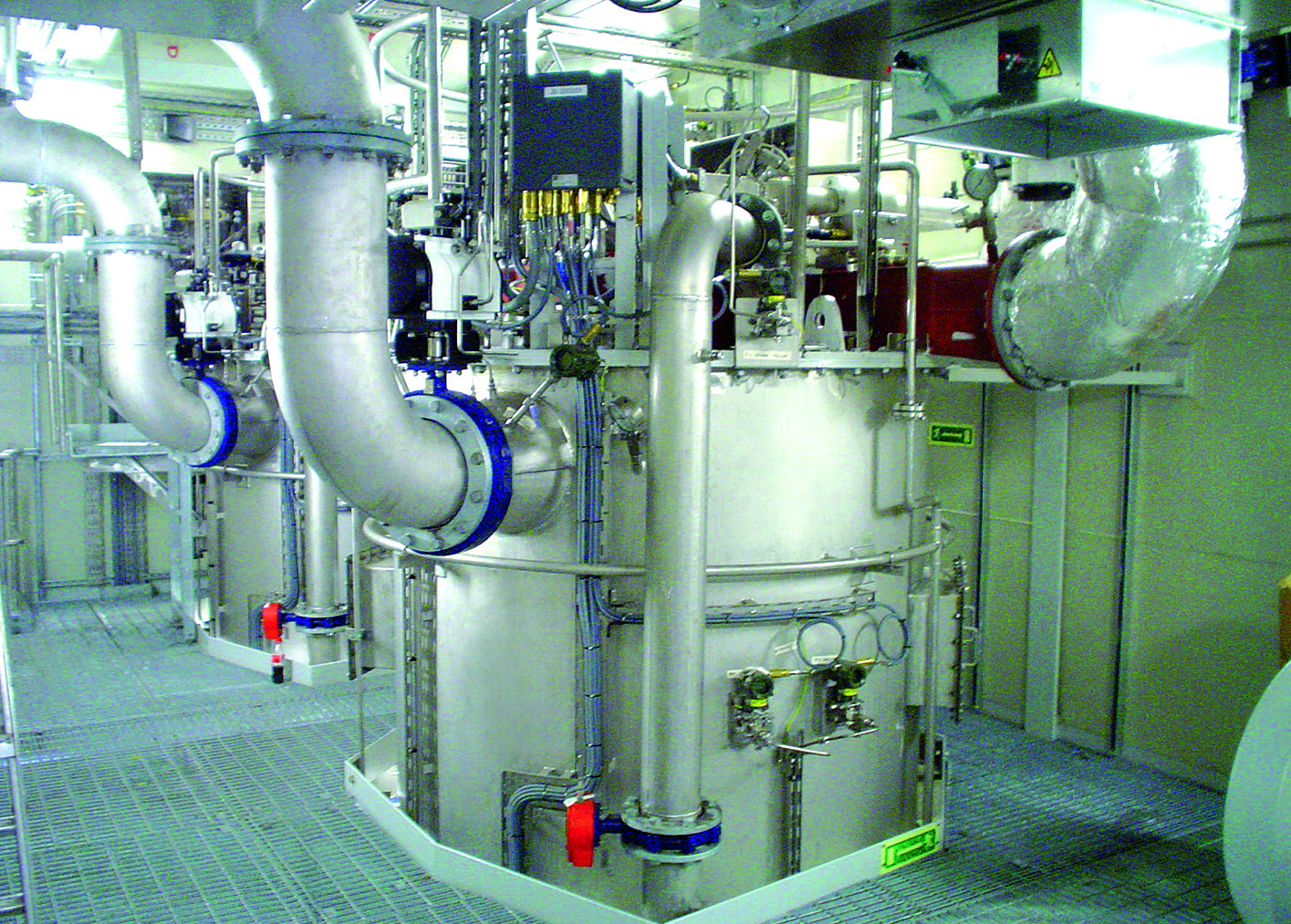
- Gaskapazität
- Bis 20.000 Nm³/h Nennwert
- Sauerstoffgehalt
- 3% by volume (auf Basis Marine Destillat)
- Abgasdruck (normal)
- 0,12 bar gauge
- Gasaustrittstemperatur
- Max. 5°C über Seewassertemperatur
- Inertgasfeuchte
- 100% relative Feuchte, <1 g/kg Trockengas Wassertropfenanteil
- Brennstoffverbrauch
- 0,075 kg/Nm³ Gas (nominal)
- Seewasserbedarf
- 0.06 m³/Nm³ gas (at 32°C seawater temperature)
- Betriebsdauer
- >20 Jahre Lebensdauer
- Moss IGG für Tanker (Produkt & Chemikalienöltanker)
- Moss IGG für Gastransporter (LNG Carrier)
- Moss Mult-Inert System (Dual-Mode: IG & Flue Gas)
- Moss Flue Gas System mit Topping-up Generator
- Offshore Inertgas-Pakete
- Area: Scrubber-Rohrsystem Verschmutzung & KorrosionCheck: Visual inspection through man-holes for sludging, corrosion damage, deposits; check nozzles, cooling tubes, floats, sensors, demister elements. Inspection frequency 6-12 months (doubled under critical conditions). Drydock entrance inspectable (scrubber discharge line).
- Area: Oxygen analyser sample line blockage due to carbon depositsCheck: Periodic test & cleaning of inert gas sample line to O₂ analyser (critical service position). Analyser itself: 2-point calibration (Zero-Gas N₂ 0%, Span-Gas known O₂ concentration) before operation. Calibration accuracy per manufacturer. Alarm setting: >8% O₂ volume.
- Area: Deck Water Seal Wasserniveau & FunktionsprüfungCheck: Check water supply (min. 2 separate pumps required). Visual inspection water level (equipped with low-level alarm). Inspection PMS interval per manufacturer; special attention during IG system shutdown. Check for blockage/corrosion at openings.
- Area: Pressure/Vacuum Breaker (P/V-Breaker) Druckeinstellung & FlammschutzCheck: Check flame screens/meshes (replacement per PMS plan). Calibration for required pressure values + test at operating pressure. Liquid-filled breakers: check fluid type & level; check anti-freeze additive in case of frost risk. Labelling with opening pressures & fluid type/concentration + min. operating temperature.
- Area: Rückschlagventil (Non-Return Valve / Check Valve) Freigang & VentilsitzCheck: Ventil zur Inspection öffnen. Prüfung auf Korrosion, Ventilsitz-Zustand, freie Ventilbewegung über volle Hublänge. Betriebsprobe im Service durchführen. Mindestens zwei Rückschlagvorrichtungen erforderlich (Deck Seal + Isolierventil). Kritisch für Hydrokarbon-Rückfluss-Verhinderung in Maschinenraum.
- Area: Brennkammer-Zustand & Lagerzustand Flue-Gas-Rückzirkulations-VentileCheck: Access to combustion chamber via hinged front (tool-free accessible — check for wear). Flue gas & recirculation valves regularly stroked (stroke test) when system out of service — ensure free operation over full stroke range. Inspection frequency per operating frequency.
Type-universal inspection/service points for Inert Gas Systems (Wärtsilä, Mega-Schwarm 2026-06). Per-model specs not auto-filled.
- Gaskapazität
- Bis 20.000 Nm³/h Nennwert
- Sauerstoffgehalt
- 3% by volume (auf Basis Marine Destillat)
- Abgasdruck (normal)
- 0,12 bar gauge
- Gasaustrittstemperatur
- Max. 5°C über Seewassertemperatur
- Inertgasfeuchte
- 100% relative Feuchte, <1 g/kg Trockengas Wassertropfenanteil
- Brennstoffverbrauch
- 0,075 kg/Nm³ Gas (nominal)
- Seewasserbedarf
- 0.06 m³/Nm³ gas (at 32°C seawater temperature)
- Betriebsdauer
- >20 Jahre Lebensdauer
- Moss IGG für Tanker (Produkt & Chemikalienöltanker)
- Moss IGG für Gastransporter (LNG Carrier)
- Moss Mult-Inert System (Dual-Mode: IG & Flue Gas)
- Moss Flue Gas System mit Topping-up Generator
- Offshore Inertgas-Pakete
- Area: Scrubber-Rohrsystem Verschmutzung & KorrosionCheck: Visual inspection through man-holes for sludging, corrosion damage, deposits; check nozzles, cooling tubes, floats, sensors, demister elements. Inspection frequency 6-12 months (doubled under critical conditions). Drydock entrance inspectable (scrubber discharge line).
- Area: Oxygen analyser sample line blockage due to carbon depositsCheck: Periodic test & cleaning of inert gas sample line to O₂ analyser (critical service position). Analyser itself: 2-point calibration (Zero-Gas N₂ 0%, Span-Gas known O₂ concentration) before operation. Calibration accuracy per manufacturer. Alarm setting: >8% O₂ volume.
- Area: Deck Water Seal Wasserniveau & FunktionsprüfungCheck: Check water supply (min. 2 separate pumps required). Visual inspection water level (equipped with low-level alarm). Inspection PMS interval per manufacturer; special attention during IG system shutdown. Check for blockage/corrosion at openings.
- Area: Pressure/Vacuum Breaker (P/V-Breaker) Druckeinstellung & FlammschutzCheck: Check flame screens/meshes (replacement per PMS plan). Calibration for required pressure values + test at operating pressure. Liquid-filled breakers: check fluid type & level; check anti-freeze additive in case of frost risk. Labelling with opening pressures & fluid type/concentration + min. operating temperature.
- Area: Rückschlagventil (Non-Return Valve / Check Valve) Freigang & VentilsitzCheck: Ventil zur Inspection öffnen. Prüfung auf Korrosion, Ventilsitz-Zustand, freie Ventilbewegung über volle Hublänge. Betriebsprobe im Service durchführen. Mindestens zwei Rückschlagvorrichtungen erforderlich (Deck Seal + Isolierventil). Kritisch für Hydrokarbon-Rückfluss-Verhinderung in Maschinenraum.
- Area: Brennkammer-Zustand & Lagerzustand Flue-Gas-Rückzirkulations-VentileCheck: Access to combustion chamber via hinged front (tool-free accessible — check for wear). Flue gas & recirculation valves regularly stroked (stroke test) when system out of service — ensure free operation over full stroke range. Inspection frequency per operating frequency.
Type-universal inspection/service points for Inert Gas Systems (Wärtsilä, Mega-Schwarm 2026-06). Per-model specs not auto-filled.
- Gaskapazität
- Bis 20.000 Nm³/h Nennwert
- Sauerstoffgehalt
- 3% by volume (auf Basis Marine Destillat)
- Abgasdruck (normal)
- 0,12 bar gauge
- Gasaustrittstemperatur
- Max. 5°C über Seewassertemperatur
- Inertgasfeuchte
- 100% relative Feuchte, <1 g/kg Trockengas Wassertropfenanteil
- Brennstoffverbrauch
- 0,075 kg/Nm³ Gas (nominal)
- Seewasserbedarf
- 0.06 m³/Nm³ gas (at 32°C seawater temperature)
- Betriebsdauer
- >20 Jahre Lebensdauer
- Moss IGG für Tanker (Produkt & Chemikalienöltanker)
- Moss IGG für Gastransporter (LNG Carrier)
- Moss Mult-Inert System (Dual-Mode: IG & Flue Gas)
- Moss Flue Gas System mit Topping-up Generator
- Offshore Inertgas-Pakete
- Area: Scrubber-Rohrsystem Verschmutzung & KorrosionCheck: Visual inspection through man-holes for sludging, corrosion damage, deposits; check nozzles, cooling tubes, floats, sensors, demister elements. Inspection frequency 6-12 months (doubled under critical conditions). Drydock entrance inspectable (scrubber discharge line).
- Area: Oxygen analyser sample line blockage due to carbon depositsCheck: Periodic test & cleaning of inert gas sample line to O₂ analyser (critical service position). Analyser itself: 2-point calibration (Zero-Gas N₂ 0%, Span-Gas known O₂ concentration) before operation. Calibration accuracy per manufacturer. Alarm setting: >8% O₂ volume.
- Area: Deck Water Seal Wasserniveau & FunktionsprüfungCheck: Check water supply (min. 2 separate pumps required). Visual inspection water level (equipped with low-level alarm). Inspection PMS interval per manufacturer; special attention during IG system shutdown. Check for blockage/corrosion at openings.
- Area: Pressure/Vacuum Breaker (P/V-Breaker) Druckeinstellung & FlammschutzCheck: Check flame screens/meshes (replacement per PMS plan). Calibration for required pressure values + test at operating pressure. Liquid-filled breakers: check fluid type & level; check anti-freeze additive in case of frost risk. Labelling with opening pressures & fluid type/concentration + min. operating temperature.
- Area: Rückschlagventil (Non-Return Valve / Check Valve) Freigang & VentilsitzCheck: Ventil zur Inspection öffnen. Prüfung auf Korrosion, Ventilsitz-Zustand, freie Ventilbewegung über volle Hublänge. Betriebsprobe im Service durchführen. Mindestens zwei Rückschlagvorrichtungen erforderlich (Deck Seal + Isolierventil). Kritisch für Hydrokarbon-Rückfluss-Verhinderung in Maschinenraum.
- Area: Brennkammer-Zustand & Lagerzustand Flue-Gas-Rückzirkulations-VentileCheck: Access to combustion chamber via hinged front (tool-free accessible — check for wear). Flue gas & recirculation valves regularly stroked (stroke test) when system out of service — ensure free operation over full stroke range. Inspection frequency per operating frequency.
Type-universal inspection/service points for Inert Gas Systems (Wärtsilä, Mega-Schwarm 2026-06). Per-model specs not auto-filled.
- Gaskapazität
- Bis 20.000 Nm³/h Nennwert
- Sauerstoffgehalt
- 3% by volume (auf Basis Marine Destillat)
- Abgasdruck (normal)
- 0,12 bar gauge
- Gasaustrittstemperatur
- Max. 5°C über Seewassertemperatur
- Inertgasfeuchte
- 100% relative Feuchte, <1 g/kg Trockengas Wassertropfenanteil
- Brennstoffverbrauch
- 0,075 kg/Nm³ Gas (nominal)
- Seewasserbedarf
- 0.06 m³/Nm³ gas (at 32°C seawater temperature)
- Betriebsdauer
- >20 Jahre Lebensdauer
- Moss IGG für Tanker (Produkt & Chemikalienöltanker)
- Moss IGG für Gastransporter (LNG Carrier)
- Moss Mult-Inert System (Dual-Mode: IG & Flue Gas)
- Moss Flue Gas System mit Topping-up Generator
- Offshore Inertgas-Pakete
- Area: Scrubber-Rohrsystem Verschmutzung & KorrosionCheck: Visual inspection through man-holes for sludging, corrosion damage, deposits; check nozzles, cooling tubes, floats, sensors, demister elements. Inspection frequency 6-12 months (doubled under critical conditions). Drydock entrance inspectable (scrubber discharge line).
- Area: Oxygen analyser sample line blockage due to carbon depositsCheck: Periodic test & cleaning of inert gas sample line to O₂ analyser (critical service position). Analyser itself: 2-point calibration (Zero-Gas N₂ 0%, Span-Gas known O₂ concentration) before operation. Calibration accuracy per manufacturer. Alarm setting: >8% O₂ volume.
- Area: Deck Water Seal Wasserniveau & FunktionsprüfungCheck: Check water supply (min. 2 separate pumps required). Visual inspection water level (equipped with low-level alarm). Inspection PMS interval per manufacturer; special attention during IG system shutdown. Check for blockage/corrosion at openings.
- Area: Pressure/Vacuum Breaker (P/V-Breaker) Druckeinstellung & FlammschutzCheck: Check flame screens/meshes (replacement per PMS plan). Calibration for required pressure values + test at operating pressure. Liquid-filled breakers: check fluid type & level; check anti-freeze additive in case of frost risk. Labelling with opening pressures & fluid type/concentration + min. operating temperature.
- Area: Rückschlagventil (Non-Return Valve / Check Valve) Freigang & VentilsitzCheck: Ventil zur Inspection öffnen. Prüfung auf Korrosion, Ventilsitz-Zustand, freie Ventilbewegung über volle Hublänge. Betriebsprobe im Service durchführen. Mindestens zwei Rückschlagvorrichtungen erforderlich (Deck Seal + Isolierventil). Kritisch für Hydrokarbon-Rückfluss-Verhinderung in Maschinenraum.
- Area: Brennkammer-Zustand & Lagerzustand Flue-Gas-Rückzirkulations-VentileCheck: Access to combustion chamber via hinged front (tool-free accessible — check for wear). Flue gas & recirculation valves regularly stroked (stroke test) when system out of service — ensure free operation over full stroke range. Inspection frequency per operating frequency.
Type-universal inspection/service points for Inert Gas Systems (Wärtsilä, Mega-Schwarm 2026-06). Per-model specs not auto-filled.
- Gaskapazität
- Bis 20.000 Nm³/h Nennwert
- Sauerstoffgehalt
- 3% by volume (auf Basis Marine Destillat)
- Abgasdruck (normal)
- 0,12 bar gauge
- Gasaustrittstemperatur
- Max. 5°C über Seewassertemperatur
- Inertgasfeuchte
- 100% relative Feuchte, <1 g/kg Trockengas Wassertropfenanteil
- Brennstoffverbrauch
- 0,075 kg/Nm³ Gas (nominal)
- Seewasserbedarf
- 0.06 m³/Nm³ gas (at 32°C seawater temperature)
- Betriebsdauer
- >20 Jahre Lebensdauer
- Moss IGG für Tanker (Produkt & Chemikalienöltanker)
- Moss IGG für Gastransporter (LNG Carrier)
- Moss Mult-Inert System (Dual-Mode: IG & Flue Gas)
- Moss Flue Gas System mit Topping-up Generator
- Offshore Inertgas-Pakete
- Area: Scrubber-Rohrsystem Verschmutzung & KorrosionCheck: Visual inspection through man-holes for sludging, corrosion damage, deposits; check nozzles, cooling tubes, floats, sensors, demister elements. Inspection frequency 6-12 months (doubled under critical conditions). Drydock entrance inspectable (scrubber discharge line).
- Area: Oxygen analyser sample line blockage due to carbon depositsCheck: Periodic test & cleaning of inert gas sample line to O₂ analyser (critical service position). Analyser itself: 2-point calibration (Zero-Gas N₂ 0%, Span-Gas known O₂ concentration) before operation. Calibration accuracy per manufacturer. Alarm setting: >8% O₂ volume.
- Area: Deck Water Seal Wasserniveau & FunktionsprüfungCheck: Check water supply (min. 2 separate pumps required). Visual inspection water level (equipped with low-level alarm). Inspection PMS interval per manufacturer; special attention during IG system shutdown. Check for blockage/corrosion at openings.
- Area: Pressure/Vacuum Breaker (P/V-Breaker) Druckeinstellung & FlammschutzCheck: Check flame screens/meshes (replacement per PMS plan). Calibration for required pressure values + test at operating pressure. Liquid-filled breakers: check fluid type & level; check anti-freeze additive in case of frost risk. Labelling with opening pressures & fluid type/concentration + min. operating temperature.
- Area: Rückschlagventil (Non-Return Valve / Check Valve) Freigang & VentilsitzCheck: Ventil zur Inspection öffnen. Prüfung auf Korrosion, Ventilsitz-Zustand, freie Ventilbewegung über volle Hublänge. Betriebsprobe im Service durchführen. Mindestens zwei Rückschlagvorrichtungen erforderlich (Deck Seal + Isolierventil). Kritisch für Hydrokarbon-Rückfluss-Verhinderung in Maschinenraum.
- Area: Brennkammer-Zustand & Lagerzustand Flue-Gas-Rückzirkulations-VentileCheck: Access to combustion chamber via hinged front (tool-free accessible — check for wear). Flue gas & recirculation valves regularly stroked (stroke test) when system out of service — ensure free operation over full stroke range. Inspection frequency per operating frequency.
Type-universal inspection/service points for Inert Gas Systems (Wärtsilä, Mega-Schwarm 2026-06). Per-model specs not auto-filled.
- Gaskapazität
- Bis 20.000 Nm³/h Nennwert
- Sauerstoffgehalt
- 3% by volume (auf Basis Marine Destillat)
- Abgasdruck (normal)
- 0,12 bar gauge
- Gasaustrittstemperatur
- Max. 5°C über Seewassertemperatur
- Inertgasfeuchte
- 100% relative Feuchte, <1 g/kg Trockengas Wassertropfenanteil
- Brennstoffverbrauch
- 0,075 kg/Nm³ Gas (nominal)
- Seewasserbedarf
- 0.06 m³/Nm³ gas (at 32°C seawater temperature)
- Betriebsdauer
- >20 Jahre Lebensdauer
- Moss IGG für Tanker (Produkt & Chemikalienöltanker)
- Moss IGG für Gastransporter (LNG Carrier)
- Moss Mult-Inert System (Dual-Mode: IG & Flue Gas)
- Moss Flue Gas System mit Topping-up Generator
- Offshore Inertgas-Pakete
- Area: Scrubber-Rohrsystem Verschmutzung & KorrosionCheck: Visual inspection through man-holes for sludging, corrosion damage, deposits; check nozzles, cooling tubes, floats, sensors, demister elements. Inspection frequency 6-12 months (doubled under critical conditions). Drydock entrance inspectable (scrubber discharge line).
- Area: Oxygen analyser sample line blockage due to carbon depositsCheck: Periodic test & cleaning of inert gas sample line to O₂ analyser (critical service position). Analyser itself: 2-point calibration (Zero-Gas N₂ 0%, Span-Gas known O₂ concentration) before operation. Calibration accuracy per manufacturer. Alarm setting: >8% O₂ volume.
- Area: Deck Water Seal Wasserniveau & FunktionsprüfungCheck: Check water supply (min. 2 separate pumps required). Visual inspection water level (equipped with low-level alarm). Inspection PMS interval per manufacturer; special attention during IG system shutdown. Check for blockage/corrosion at openings.
- Area: Pressure/Vacuum Breaker (P/V-Breaker) Druckeinstellung & FlammschutzCheck: Check flame screens/meshes (replacement per PMS plan). Calibration for required pressure values + test at operating pressure. Liquid-filled breakers: check fluid type & level; check anti-freeze additive in case of frost risk. Labelling with opening pressures & fluid type/concentration + min. operating temperature.
- Area: Rückschlagventil (Non-Return Valve / Check Valve) Freigang & VentilsitzCheck: Ventil zur Inspection öffnen. Prüfung auf Korrosion, Ventilsitz-Zustand, freie Ventilbewegung über volle Hublänge. Betriebsprobe im Service durchführen. Mindestens zwei Rückschlagvorrichtungen erforderlich (Deck Seal + Isolierventil). Kritisch für Hydrokarbon-Rückfluss-Verhinderung in Maschinenraum.
- Area: Brennkammer-Zustand & Lagerzustand Flue-Gas-Rückzirkulations-VentileCheck: Access to combustion chamber via hinged front (tool-free accessible — check for wear). Flue gas & recirculation valves regularly stroked (stroke test) when system out of service — ensure free operation over full stroke range. Inspection frequency per operating frequency.
Type-universal inspection/service points for Inert Gas Systems (Wärtsilä, Mega-Schwarm 2026-06). Per-model specs not auto-filled.
- Gaskapazität
- Bis 20.000 Nm³/h Nennwert
- Sauerstoffgehalt
- 3% by volume (auf Basis Marine Destillat)
- Abgasdruck (normal)
- 0,12 bar gauge
- Gasaustrittstemperatur
- Max. 5°C über Seewassertemperatur
- Inertgasfeuchte
- 100% relative Feuchte, <1 g/kg Trockengas Wassertropfenanteil
- Brennstoffverbrauch
- 0,075 kg/Nm³ Gas (nominal)
- Seewasserbedarf
- 0.06 m³/Nm³ gas (at 32°C seawater temperature)
- Betriebsdauer
- >20 Jahre Lebensdauer
- Moss IGG für Tanker (Produkt & Chemikalienöltanker)
- Moss IGG für Gastransporter (LNG Carrier)
- Moss Mult-Inert System (Dual-Mode: IG & Flue Gas)
- Moss Flue Gas System mit Topping-up Generator
- Offshore Inertgas-Pakete
- Area: Scrubber-Rohrsystem Verschmutzung & KorrosionCheck: Visual inspection through man-holes for sludging, corrosion damage, deposits; check nozzles, cooling tubes, floats, sensors, demister elements. Inspection frequency 6-12 months (doubled under critical conditions). Drydock entrance inspectable (scrubber discharge line).
- Area: Oxygen analyser sample line blockage due to carbon depositsCheck: Periodic test & cleaning of inert gas sample line to O₂ analyser (critical service position). Analyser itself: 2-point calibration (Zero-Gas N₂ 0%, Span-Gas known O₂ concentration) before operation. Calibration accuracy per manufacturer. Alarm setting: >8% O₂ volume.
- Area: Deck Water Seal Wasserniveau & FunktionsprüfungCheck: Check water supply (min. 2 separate pumps required). Visual inspection water level (equipped with low-level alarm). Inspection PMS interval per manufacturer; special attention during IG system shutdown. Check for blockage/corrosion at openings.
- Area: Pressure/Vacuum Breaker (P/V-Breaker) Druckeinstellung & FlammschutzCheck: Check flame screens/meshes (replacement per PMS plan). Calibration for required pressure values + test at operating pressure. Liquid-filled breakers: check fluid type & level; check anti-freeze additive in case of frost risk. Labelling with opening pressures & fluid type/concentration + min. operating temperature.
- Area: Rückschlagventil (Non-Return Valve / Check Valve) Freigang & VentilsitzCheck: Ventil zur Inspection öffnen. Prüfung auf Korrosion, Ventilsitz-Zustand, freie Ventilbewegung über volle Hublänge. Betriebsprobe im Service durchführen. Mindestens zwei Rückschlagvorrichtungen erforderlich (Deck Seal + Isolierventil). Kritisch für Hydrokarbon-Rückfluss-Verhinderung in Maschinenraum.
- Area: Brennkammer-Zustand & Lagerzustand Flue-Gas-Rückzirkulations-VentileCheck: Access to combustion chamber via hinged front (tool-free accessible — check for wear). Flue gas & recirculation valves regularly stroked (stroke test) when system out of service — ensure free operation over full stroke range. Inspection frequency per operating frequency.
Type-universal inspection/service points for Inert Gas Systems (Wärtsilä, Mega-Schwarm 2026-06). Per-model specs not auto-filled.
- Gaskapazität
- Bis 20.000 Nm³/h Nennwert
- Sauerstoffgehalt
- 3% by volume (auf Basis Marine Destillat)
- Abgasdruck (normal)
- 0,12 bar gauge
- Gasaustrittstemperatur
- Max. 5°C über Seewassertemperatur
- Inertgasfeuchte
- 100% relative Feuchte, <1 g/kg Trockengas Wassertropfenanteil
- Brennstoffverbrauch
- 0,075 kg/Nm³ Gas (nominal)
- Seewasserbedarf
- 0.06 m³/Nm³ gas (at 32°C seawater temperature)
- Betriebsdauer
- >20 Jahre Lebensdauer
- Moss IGG für Tanker (Produkt & Chemikalienöltanker)
- Moss IGG für Gastransporter (LNG Carrier)
- Moss Mult-Inert System (Dual-Mode: IG & Flue Gas)
- Moss Flue Gas System mit Topping-up Generator
- Offshore Inertgas-Pakete
- Area: Scrubber-Rohrsystem Verschmutzung & KorrosionCheck: Visual inspection through man-holes for sludging, corrosion damage, deposits; check nozzles, cooling tubes, floats, sensors, demister elements. Inspection frequency 6-12 months (doubled under critical conditions). Drydock entrance inspectable (scrubber discharge line).
- Area: Oxygen analyser sample line blockage due to carbon depositsCheck: Periodic test & cleaning of inert gas sample line to O₂ analyser (critical service position). Analyser itself: 2-point calibration (Zero-Gas N₂ 0%, Span-Gas known O₂ concentration) before operation. Calibration accuracy per manufacturer. Alarm setting: >8% O₂ volume.
- Area: Deck Water Seal Wasserniveau & FunktionsprüfungCheck: Check water supply (min. 2 separate pumps required). Visual inspection water level (equipped with low-level alarm). Inspection PMS interval per manufacturer; special attention during IG system shutdown. Check for blockage/corrosion at openings.
- Area: Pressure/Vacuum Breaker (P/V-Breaker) Druckeinstellung & FlammschutzCheck: Check flame screens/meshes (replacement per PMS plan). Calibration for required pressure values + test at operating pressure. Liquid-filled breakers: check fluid type & level; check anti-freeze additive in case of frost risk. Labelling with opening pressures & fluid type/concentration + min. operating temperature.
- Area: Rückschlagventil (Non-Return Valve / Check Valve) Freigang & VentilsitzCheck: Ventil zur Inspection öffnen. Prüfung auf Korrosion, Ventilsitz-Zustand, freie Ventilbewegung über volle Hublänge. Betriebsprobe im Service durchführen. Mindestens zwei Rückschlagvorrichtungen erforderlich (Deck Seal + Isolierventil). Kritisch für Hydrokarbon-Rückfluss-Verhinderung in Maschinenraum.
- Area: Brennkammer-Zustand & Lagerzustand Flue-Gas-Rückzirkulations-VentileCheck: Access to combustion chamber via hinged front (tool-free accessible — check for wear). Flue gas & recirculation valves regularly stroked (stroke test) when system out of service — ensure free operation over full stroke range. Inspection frequency per operating frequency.
Type-universal inspection/service points for Inert Gas Systems (Wärtsilä, Mega-Schwarm 2026-06). Per-model specs not auto-filled.
- Gaskapazität
- Bis 20.000 Nm³/h Nennwert
- Sauerstoffgehalt
- 3% by volume (auf Basis Marine Destillat)
- Abgasdruck (normal)
- 0,12 bar gauge
- Gasaustrittstemperatur
- Max. 5°C über Seewassertemperatur
- Inertgasfeuchte
- 100% relative Feuchte, <1 g/kg Trockengas Wassertropfenanteil
- Brennstoffverbrauch
- 0,075 kg/Nm³ Gas (nominal)
- Seewasserbedarf
- 0.06 m³/Nm³ gas (at 32°C seawater temperature)
- Betriebsdauer
- >20 Jahre Lebensdauer
- Moss IGG für Tanker (Produkt & Chemikalienöltanker)
- Moss IGG für Gastransporter (LNG Carrier)
- Moss Mult-Inert System (Dual-Mode: IG & Flue Gas)
- Moss Flue Gas System mit Topping-up Generator
- Offshore Inertgas-Pakete
- Area: Scrubber-Rohrsystem Verschmutzung & KorrosionCheck: Visual inspection through man-holes for sludging, corrosion damage, deposits; check nozzles, cooling tubes, floats, sensors, demister elements. Inspection frequency 6-12 months (doubled under critical conditions). Drydock entrance inspectable (scrubber discharge line).
- Area: Oxygen analyser sample line blockage due to carbon depositsCheck: Periodic test & cleaning of inert gas sample line to O₂ analyser (critical service position). Analyser itself: 2-point calibration (Zero-Gas N₂ 0%, Span-Gas known O₂ concentration) before operation. Calibration accuracy per manufacturer. Alarm setting: >8% O₂ volume.
- Area: Deck Water Seal Wasserniveau & FunktionsprüfungCheck: Check water supply (min. 2 separate pumps required). Visual inspection water level (equipped with low-level alarm). Inspection PMS interval per manufacturer; special attention during IG system shutdown. Check for blockage/corrosion at openings.
- Area: Pressure/Vacuum Breaker (P/V-Breaker) Druckeinstellung & FlammschutzCheck: Check flame screens/meshes (replacement per PMS plan). Calibration for required pressure values + test at operating pressure. Liquid-filled breakers: check fluid type & level; check anti-freeze additive in case of frost risk. Labelling with opening pressures & fluid type/concentration + min. operating temperature.
- Area: Rückschlagventil (Non-Return Valve / Check Valve) Freigang & VentilsitzCheck: Ventil zur Inspection öffnen. Prüfung auf Korrosion, Ventilsitz-Zustand, freie Ventilbewegung über volle Hublänge. Betriebsprobe im Service durchführen. Mindestens zwei Rückschlagvorrichtungen erforderlich (Deck Seal + Isolierventil). Kritisch für Hydrokarbon-Rückfluss-Verhinderung in Maschinenraum.
- Area: Brennkammer-Zustand & Lagerzustand Flue-Gas-Rückzirkulations-VentileCheck: Access to combustion chamber via hinged front (tool-free accessible — check for wear). Flue gas & recirculation valves regularly stroked (stroke test) when system out of service — ensure free operation over full stroke range. Inspection frequency per operating frequency.
Type-universal inspection/service points for Inert Gas Systems (Wärtsilä, Mega-Schwarm 2026-06). Per-model specs not auto-filled.
- Gaskapazität
- Bis 20.000 Nm³/h Nennwert
- Sauerstoffgehalt
- 3% by volume (auf Basis Marine Destillat)
- Abgasdruck (normal)
- 0,12 bar gauge
- Gasaustrittstemperatur
- Max. 5°C über Seewassertemperatur
- Inertgasfeuchte
- 100% relative Feuchte, <1 g/kg Trockengas Wassertropfenanteil
- Brennstoffverbrauch
- 0,075 kg/Nm³ Gas (nominal)
- Seewasserbedarf
- 0.06 m³/Nm³ gas (at 32°C seawater temperature)
- Betriebsdauer
- >20 Jahre Lebensdauer
- Moss IGG für Tanker (Produkt & Chemikalienöltanker)
- Moss IGG für Gastransporter (LNG Carrier)
- Moss Mult-Inert System (Dual-Mode: IG & Flue Gas)
- Moss Flue Gas System mit Topping-up Generator
- Offshore Inertgas-Pakete
- Area: Scrubber-Rohrsystem Verschmutzung & KorrosionCheck: Visual inspection through man-holes for sludging, corrosion damage, deposits; check nozzles, cooling tubes, floats, sensors, demister elements. Inspection frequency 6-12 months (doubled under critical conditions). Drydock entrance inspectable (scrubber discharge line).
- Area: Oxygen analyser sample line blockage due to carbon depositsCheck: Periodic test & cleaning of inert gas sample line to O₂ analyser (critical service position). Analyser itself: 2-point calibration (Zero-Gas N₂ 0%, Span-Gas known O₂ concentration) before operation. Calibration accuracy per manufacturer. Alarm setting: >8% O₂ volume.
- Area: Deck Water Seal Wasserniveau & FunktionsprüfungCheck: Check water supply (min. 2 separate pumps required). Visual inspection water level (equipped with low-level alarm). Inspection PMS interval per manufacturer; special attention during IG system shutdown. Check for blockage/corrosion at openings.
- Area: Pressure/Vacuum Breaker (P/V-Breaker) Druckeinstellung & FlammschutzCheck: Check flame screens/meshes (replacement per PMS plan). Calibration for required pressure values + test at operating pressure. Liquid-filled breakers: check fluid type & level; check anti-freeze additive in case of frost risk. Labelling with opening pressures & fluid type/concentration + min. operating temperature.
- Area: Rückschlagventil (Non-Return Valve / Check Valve) Freigang & VentilsitzCheck: Ventil zur Inspection öffnen. Prüfung auf Korrosion, Ventilsitz-Zustand, freie Ventilbewegung über volle Hublänge. Betriebsprobe im Service durchführen. Mindestens zwei Rückschlagvorrichtungen erforderlich (Deck Seal + Isolierventil). Kritisch für Hydrokarbon-Rückfluss-Verhinderung in Maschinenraum.
- Area: Brennkammer-Zustand & Lagerzustand Flue-Gas-Rückzirkulations-VentileCheck: Access to combustion chamber via hinged front (tool-free accessible — check for wear). Flue gas & recirculation valves regularly stroked (stroke test) when system out of service — ensure free operation over full stroke range. Inspection frequency per operating frequency.
Type-universal inspection/service points for Inert Gas Systems (Wärtsilä, Mega-Schwarm 2026-06). Per-model specs not auto-filled.
- Gaskapazität
- Bis 20.000 Nm³/h Nennwert
- Sauerstoffgehalt
- 3% by volume (auf Basis Marine Destillat)
- Abgasdruck (normal)
- 0,12 bar gauge
- Gasaustrittstemperatur
- Max. 5°C über Seewassertemperatur
- Inertgasfeuchte
- 100% relative Feuchte, <1 g/kg Trockengas Wassertropfenanteil
- Brennstoffverbrauch
- 0,075 kg/Nm³ Gas (nominal)
- Seewasserbedarf
- 0.06 m³/Nm³ gas (at 32°C seawater temperature)
- Betriebsdauer
- >20 Jahre Lebensdauer
- Moss IGG für Tanker (Produkt & Chemikalienöltanker)
- Moss IGG für Gastransporter (LNG Carrier)
- Moss Mult-Inert System (Dual-Mode: IG & Flue Gas)
- Moss Flue Gas System mit Topping-up Generator
- Offshore Inertgas-Pakete
- Area: Scrubber-Rohrsystem Verschmutzung & KorrosionCheck: Visual inspection through man-holes for sludging, corrosion damage, deposits; check nozzles, cooling tubes, floats, sensors, demister elements. Inspection frequency 6-12 months (doubled under critical conditions). Drydock entrance inspectable (scrubber discharge line).
- Area: Oxygen analyser sample line blockage due to carbon depositsCheck: Periodic test & cleaning of inert gas sample line to O₂ analyser (critical service position). Analyser itself: 2-point calibration (Zero-Gas N₂ 0%, Span-Gas known O₂ concentration) before operation. Calibration accuracy per manufacturer. Alarm setting: >8% O₂ volume.
- Area: Deck Water Seal Wasserniveau & FunktionsprüfungCheck: Check water supply (min. 2 separate pumps required). Visual inspection water level (equipped with low-level alarm). Inspection PMS interval per manufacturer; special attention during IG system shutdown. Check for blockage/corrosion at openings.
- Area: Pressure/Vacuum Breaker (P/V-Breaker) Druckeinstellung & FlammschutzCheck: Check flame screens/meshes (replacement per PMS plan). Calibration for required pressure values + test at operating pressure. Liquid-filled breakers: check fluid type & level; check anti-freeze additive in case of frost risk. Labelling with opening pressures & fluid type/concentration + min. operating temperature.
- Area: Rückschlagventil (Non-Return Valve / Check Valve) Freigang & VentilsitzCheck: Ventil zur Inspection öffnen. Prüfung auf Korrosion, Ventilsitz-Zustand, freie Ventilbewegung über volle Hublänge. Betriebsprobe im Service durchführen. Mindestens zwei Rückschlagvorrichtungen erforderlich (Deck Seal + Isolierventil). Kritisch für Hydrokarbon-Rückfluss-Verhinderung in Maschinenraum.
- Area: Brennkammer-Zustand & Lagerzustand Flue-Gas-Rückzirkulations-VentileCheck: Access to combustion chamber via hinged front (tool-free accessible — check for wear). Flue gas & recirculation valves regularly stroked (stroke test) when system out of service — ensure free operation over full stroke range. Inspection frequency per operating frequency.
Type-universal inspection/service points for Inert Gas Systems (Wärtsilä, Mega-Schwarm 2026-06). Per-model specs not auto-filled.
- Gaskapazität
- Bis 20.000 Nm³/h Nennwert
- Sauerstoffgehalt
- 3% by volume (auf Basis Marine Destillat)
- Abgasdruck (normal)
- 0,12 bar gauge
- Gasaustrittstemperatur
- Max. 5°C über Seewassertemperatur
- Inertgasfeuchte
- 100% relative Feuchte, <1 g/kg Trockengas Wassertropfenanteil
- Brennstoffverbrauch
- 0,075 kg/Nm³ Gas (nominal)
- Seewasserbedarf
- 0.06 m³/Nm³ gas (at 32°C seawater temperature)
- Betriebsdauer
- >20 Jahre Lebensdauer
- Moss IGG für Tanker (Produkt & Chemikalienöltanker)
- Moss IGG für Gastransporter (LNG Carrier)
- Moss Mult-Inert System (Dual-Mode: IG & Flue Gas)
- Moss Flue Gas System mit Topping-up Generator
- Offshore Inertgas-Pakete
- Area: Scrubber-Rohrsystem Verschmutzung & KorrosionCheck: Visual inspection through man-holes for sludging, corrosion damage, deposits; check nozzles, cooling tubes, floats, sensors, demister elements. Inspection frequency 6-12 months (doubled under critical conditions). Drydock entrance inspectable (scrubber discharge line).
- Area: Oxygen analyser sample line blockage due to carbon depositsCheck: Periodic test & cleaning of inert gas sample line to O₂ analyser (critical service position). Analyser itself: 2-point calibration (Zero-Gas N₂ 0%, Span-Gas known O₂ concentration) before operation. Calibration accuracy per manufacturer. Alarm setting: >8% O₂ volume.
- Area: Deck Water Seal Wasserniveau & FunktionsprüfungCheck: Check water supply (min. 2 separate pumps required). Visual inspection water level (equipped with low-level alarm). Inspection PMS interval per manufacturer; special attention during IG system shutdown. Check for blockage/corrosion at openings.
- Area: Pressure/Vacuum Breaker (P/V-Breaker) Druckeinstellung & FlammschutzCheck: Check flame screens/meshes (replacement per PMS plan). Calibration for required pressure values + test at operating pressure. Liquid-filled breakers: check fluid type & level; check anti-freeze additive in case of frost risk. Labelling with opening pressures & fluid type/concentration + min. operating temperature.
- Area: Rückschlagventil (Non-Return Valve / Check Valve) Freigang & VentilsitzCheck: Ventil zur Inspection öffnen. Prüfung auf Korrosion, Ventilsitz-Zustand, freie Ventilbewegung über volle Hublänge. Betriebsprobe im Service durchführen. Mindestens zwei Rückschlagvorrichtungen erforderlich (Deck Seal + Isolierventil). Kritisch für Hydrokarbon-Rückfluss-Verhinderung in Maschinenraum.
- Area: Brennkammer-Zustand & Lagerzustand Flue-Gas-Rückzirkulations-VentileCheck: Access to combustion chamber via hinged front (tool-free accessible — check for wear). Flue gas & recirculation valves regularly stroked (stroke test) when system out of service — ensure free operation over full stroke range. Inspection frequency per operating frequency.
Type-universal inspection/service points for Inert Gas Systems (Wärtsilä, Mega-Schwarm 2026-06). Per-model specs not auto-filled.
- Gaskapazität
- Bis 20.000 Nm³/h Nennwert
- Sauerstoffgehalt
- 3% by volume (auf Basis Marine Destillat)
- Abgasdruck (normal)
- 0,12 bar gauge
- Gasaustrittstemperatur
- Max. 5°C über Seewassertemperatur
- Inertgasfeuchte
- 100% relative Feuchte, <1 g/kg Trockengas Wassertropfenanteil
- Brennstoffverbrauch
- 0,075 kg/Nm³ Gas (nominal)
- Seewasserbedarf
- 0.06 m³/Nm³ gas (at 32°C seawater temperature)
- Betriebsdauer
- >20 Jahre Lebensdauer
- Moss IGG für Tanker (Produkt & Chemikalienöltanker)
- Moss IGG für Gastransporter (LNG Carrier)
- Moss Mult-Inert System (Dual-Mode: IG & Flue Gas)
- Moss Flue Gas System mit Topping-up Generator
- Offshore Inertgas-Pakete
- Area: Scrubber-Rohrsystem Verschmutzung & KorrosionCheck: Visual inspection through man-holes for sludging, corrosion damage, deposits; check nozzles, cooling tubes, floats, sensors, demister elements. Inspection frequency 6-12 months (doubled under critical conditions). Drydock entrance inspectable (scrubber discharge line).
- Area: Oxygen analyser sample line blockage due to carbon depositsCheck: Periodic test & cleaning of inert gas sample line to O₂ analyser (critical service position). Analyser itself: 2-point calibration (Zero-Gas N₂ 0%, Span-Gas known O₂ concentration) before operation. Calibration accuracy per manufacturer. Alarm setting: >8% O₂ volume.
- Area: Deck Water Seal Wasserniveau & FunktionsprüfungCheck: Check water supply (min. 2 separate pumps required). Visual inspection water level (equipped with low-level alarm). Inspection PMS interval per manufacturer; special attention during IG system shutdown. Check for blockage/corrosion at openings.
- Area: Pressure/Vacuum Breaker (P/V-Breaker) Druckeinstellung & FlammschutzCheck: Check flame screens/meshes (replacement per PMS plan). Calibration for required pressure values + test at operating pressure. Liquid-filled breakers: check fluid type & level; check anti-freeze additive in case of frost risk. Labelling with opening pressures & fluid type/concentration + min. operating temperature.
- Area: Rückschlagventil (Non-Return Valve / Check Valve) Freigang & VentilsitzCheck: Ventil zur Inspection öffnen. Prüfung auf Korrosion, Ventilsitz-Zustand, freie Ventilbewegung über volle Hublänge. Betriebsprobe im Service durchführen. Mindestens zwei Rückschlagvorrichtungen erforderlich (Deck Seal + Isolierventil). Kritisch für Hydrokarbon-Rückfluss-Verhinderung in Maschinenraum.
- Area: Brennkammer-Zustand & Lagerzustand Flue-Gas-Rückzirkulations-VentileCheck: Access to combustion chamber via hinged front (tool-free accessible — check for wear). Flue gas & recirculation valves regularly stroked (stroke test) when system out of service — ensure free operation over full stroke range. Inspection frequency per operating frequency.
Type-universal inspection/service points for Inert Gas Systems (Wärtsilä, Mega-Schwarm 2026-06). Per-model specs not auto-filled.
- Gaskapazität
- Bis 20.000 Nm³/h Nennwert
- Sauerstoffgehalt
- 3% by volume (auf Basis Marine Destillat)
- Abgasdruck (normal)
- 0,12 bar gauge
- Gasaustrittstemperatur
- Max. 5°C über Seewassertemperatur
- Inertgasfeuchte
- 100% relative Feuchte, <1 g/kg Trockengas Wassertropfenanteil
- Brennstoffverbrauch
- 0,075 kg/Nm³ Gas (nominal)
- Seewasserbedarf
- 0.06 m³/Nm³ gas (at 32°C seawater temperature)
- Betriebsdauer
- >20 Jahre Lebensdauer
- Moss IGG für Tanker (Produkt & Chemikalienöltanker)
- Moss IGG für Gastransporter (LNG Carrier)
- Moss Mult-Inert System (Dual-Mode: IG & Flue Gas)
- Moss Flue Gas System mit Topping-up Generator
- Offshore Inertgas-Pakete
- Area: Scrubber-Rohrsystem Verschmutzung & KorrosionCheck: Visual inspection through man-holes for sludging, corrosion damage, deposits; check nozzles, cooling tubes, floats, sensors, demister elements. Inspection frequency 6-12 months (doubled under critical conditions). Drydock entrance inspectable (scrubber discharge line).
- Area: Oxygen analyser sample line blockage due to carbon depositsCheck: Periodic test & cleaning of inert gas sample line to O₂ analyser (critical service position). Analyser itself: 2-point calibration (Zero-Gas N₂ 0%, Span-Gas known O₂ concentration) before operation. Calibration accuracy per manufacturer. Alarm setting: >8% O₂ volume.
- Area: Deck Water Seal Wasserniveau & FunktionsprüfungCheck: Check water supply (min. 2 separate pumps required). Visual inspection water level (equipped with low-level alarm). Inspection PMS interval per manufacturer; special attention during IG system shutdown. Check for blockage/corrosion at openings.
- Area: Pressure/Vacuum Breaker (P/V-Breaker) Druckeinstellung & FlammschutzCheck: Check flame screens/meshes (replacement per PMS plan). Calibration for required pressure values + test at operating pressure. Liquid-filled breakers: check fluid type & level; check anti-freeze additive in case of frost risk. Labelling with opening pressures & fluid type/concentration + min. operating temperature.
- Area: Rückschlagventil (Non-Return Valve / Check Valve) Freigang & VentilsitzCheck: Ventil zur Inspection öffnen. Prüfung auf Korrosion, Ventilsitz-Zustand, freie Ventilbewegung über volle Hublänge. Betriebsprobe im Service durchführen. Mindestens zwei Rückschlagvorrichtungen erforderlich (Deck Seal + Isolierventil). Kritisch für Hydrokarbon-Rückfluss-Verhinderung in Maschinenraum.
- Area: Brennkammer-Zustand & Lagerzustand Flue-Gas-Rückzirkulations-VentileCheck: Access to combustion chamber via hinged front (tool-free accessible — check for wear). Flue gas & recirculation valves regularly stroked (stroke test) when system out of service — ensure free operation over full stroke range. Inspection frequency per operating frequency.
Type-universal inspection/service points for Inert Gas Systems (Wärtsilä, Mega-Schwarm 2026-06). Per-model specs not auto-filled.
- Gaskapazität
- Bis 20.000 Nm³/h Nennwert
- Sauerstoffgehalt
- 3% by volume (auf Basis Marine Destillat)
- Abgasdruck (normal)
- 0,12 bar gauge
- Gasaustrittstemperatur
- Max. 5°C über Seewassertemperatur
- Inertgasfeuchte
- 100% relative Feuchte, <1 g/kg Trockengas Wassertropfenanteil
- Brennstoffverbrauch
- 0,075 kg/Nm³ Gas (nominal)
- Seewasserbedarf
- 0.06 m³/Nm³ gas (at 32°C seawater temperature)
- Betriebsdauer
- >20 Jahre Lebensdauer
- Moss IGG für Tanker (Produkt & Chemikalienöltanker)
- Moss IGG für Gastransporter (LNG Carrier)
- Moss Mult-Inert System (Dual-Mode: IG & Flue Gas)
- Moss Flue Gas System mit Topping-up Generator
- Offshore Inertgas-Pakete
- Area: Scrubber-Rohrsystem Verschmutzung & KorrosionCheck: Visual inspection through man-holes for sludging, corrosion damage, deposits; check nozzles, cooling tubes, floats, sensors, demister elements. Inspection frequency 6-12 months (doubled under critical conditions). Drydock entrance inspectable (scrubber discharge line).
- Area: Oxygen analyser sample line blockage due to carbon depositsCheck: Periodic test & cleaning of inert gas sample line to O₂ analyser (critical service position). Analyser itself: 2-point calibration (Zero-Gas N₂ 0%, Span-Gas known O₂ concentration) before operation. Calibration accuracy per manufacturer. Alarm setting: >8% O₂ volume.
- Area: Deck Water Seal Wasserniveau & FunktionsprüfungCheck: Check water supply (min. 2 separate pumps required). Visual inspection water level (equipped with low-level alarm). Inspection PMS interval per manufacturer; special attention during IG system shutdown. Check for blockage/corrosion at openings.
- Area: Pressure/Vacuum Breaker (P/V-Breaker) Druckeinstellung & FlammschutzCheck: Check flame screens/meshes (replacement per PMS plan). Calibration for required pressure values + test at operating pressure. Liquid-filled breakers: check fluid type & level; check anti-freeze additive in case of frost risk. Labelling with opening pressures & fluid type/concentration + min. operating temperature.
- Area: Rückschlagventil (Non-Return Valve / Check Valve) Freigang & VentilsitzCheck: Ventil zur Inspection öffnen. Prüfung auf Korrosion, Ventilsitz-Zustand, freie Ventilbewegung über volle Hublänge. Betriebsprobe im Service durchführen. Mindestens zwei Rückschlagvorrichtungen erforderlich (Deck Seal + Isolierventil). Kritisch für Hydrokarbon-Rückfluss-Verhinderung in Maschinenraum.
- Area: Brennkammer-Zustand & Lagerzustand Flue-Gas-Rückzirkulations-VentileCheck: Access to combustion chamber via hinged front (tool-free accessible — check for wear). Flue gas & recirculation valves regularly stroked (stroke test) when system out of service — ensure free operation over full stroke range. Inspection frequency per operating frequency.
Type-universal inspection/service points for Inert Gas Systems (Wärtsilä, Mega-Schwarm 2026-06). Per-model specs not auto-filled.
- Gaskapazität
- Bis 20.000 Nm³/h Nennwert
- Sauerstoffgehalt
- 3% by volume (auf Basis Marine Destillat)
- Abgasdruck (normal)
- 0,12 bar gauge
- Gasaustrittstemperatur
- Max. 5°C über Seewassertemperatur
- Inertgasfeuchte
- 100% relative Feuchte, <1 g/kg Trockengas Wassertropfenanteil
- Brennstoffverbrauch
- 0,075 kg/Nm³ Gas (nominal)
- Seewasserbedarf
- 0.06 m³/Nm³ gas (at 32°C seawater temperature)
- Betriebsdauer
- >20 Jahre Lebensdauer
- Moss IGG für Tanker (Produkt & Chemikalienöltanker)
- Moss IGG für Gastransporter (LNG Carrier)
- Moss Mult-Inert System (Dual-Mode: IG & Flue Gas)
- Moss Flue Gas System mit Topping-up Generator
- Offshore Inertgas-Pakete
- Area: Scrubber-Rohrsystem Verschmutzung & KorrosionCheck: Visual inspection through man-holes for sludging, corrosion damage, deposits; check nozzles, cooling tubes, floats, sensors, demister elements. Inspection frequency 6-12 months (doubled under critical conditions). Drydock entrance inspectable (scrubber discharge line).
- Area: Oxygen analyser sample line blockage due to carbon depositsCheck: Periodic test & cleaning of inert gas sample line to O₂ analyser (critical service position). Analyser itself: 2-point calibration (Zero-Gas N₂ 0%, Span-Gas known O₂ concentration) before operation. Calibration accuracy per manufacturer. Alarm setting: >8% O₂ volume.
- Area: Deck Water Seal Wasserniveau & FunktionsprüfungCheck: Check water supply (min. 2 separate pumps required). Visual inspection water level (equipped with low-level alarm). Inspection PMS interval per manufacturer; special attention during IG system shutdown. Check for blockage/corrosion at openings.
- Area: Pressure/Vacuum Breaker (P/V-Breaker) Druckeinstellung & FlammschutzCheck: Check flame screens/meshes (replacement per PMS plan). Calibration for required pressure values + test at operating pressure. Liquid-filled breakers: check fluid type & level; check anti-freeze additive in case of frost risk. Labelling with opening pressures & fluid type/concentration + min. operating temperature.
- Area: Rückschlagventil (Non-Return Valve / Check Valve) Freigang & VentilsitzCheck: Ventil zur Inspection öffnen. Prüfung auf Korrosion, Ventilsitz-Zustand, freie Ventilbewegung über volle Hublänge. Betriebsprobe im Service durchführen. Mindestens zwei Rückschlagvorrichtungen erforderlich (Deck Seal + Isolierventil). Kritisch für Hydrokarbon-Rückfluss-Verhinderung in Maschinenraum.
- Area: Brennkammer-Zustand & Lagerzustand Flue-Gas-Rückzirkulations-VentileCheck: Access to combustion chamber via hinged front (tool-free accessible — check for wear). Flue gas & recirculation valves regularly stroked (stroke test) when system out of service — ensure free operation over full stroke range. Inspection frequency per operating frequency.
Type-universal inspection/service points for Inert Gas Systems (Wärtsilä, Mega-Schwarm 2026-06). Per-model specs not auto-filled.
- Gaskapazität
- Bis 20.000 Nm³/h Nennwert
- Sauerstoffgehalt
- 3% by volume (auf Basis Marine Destillat)
- Abgasdruck (normal)
- 0,12 bar gauge
- Gasaustrittstemperatur
- Max. 5°C über Seewassertemperatur
- Inertgasfeuchte
- 100% relative Feuchte, <1 g/kg Trockengas Wassertropfenanteil
- Brennstoffverbrauch
- 0,075 kg/Nm³ Gas (nominal)
- Seewasserbedarf
- 0.06 m³/Nm³ gas (at 32°C seawater temperature)
- Betriebsdauer
- >20 Jahre Lebensdauer
- Moss IGG für Tanker (Produkt & Chemikalienöltanker)
- Moss IGG für Gastransporter (LNG Carrier)
- Moss Mult-Inert System (Dual-Mode: IG & Flue Gas)
- Moss Flue Gas System mit Topping-up Generator
- Offshore Inertgas-Pakete
- Area: Scrubber-Rohrsystem Verschmutzung & KorrosionCheck: Visual inspection through man-holes for sludging, corrosion damage, deposits; check nozzles, cooling tubes, floats, sensors, demister elements. Inspection frequency 6-12 months (doubled under critical conditions). Drydock entrance inspectable (scrubber discharge line).
- Area: Oxygen analyser sample line blockage due to carbon depositsCheck: Periodic test & cleaning of inert gas sample line to O₂ analyser (critical service position). Analyser itself: 2-point calibration (Zero-Gas N₂ 0%, Span-Gas known O₂ concentration) before operation. Calibration accuracy per manufacturer. Alarm setting: >8% O₂ volume.
- Area: Deck Water Seal Wasserniveau & FunktionsprüfungCheck: Check water supply (min. 2 separate pumps required). Visual inspection water level (equipped with low-level alarm). Inspection PMS interval per manufacturer; special attention during IG system shutdown. Check for blockage/corrosion at openings.
- Area: Pressure/Vacuum Breaker (P/V-Breaker) Druckeinstellung & FlammschutzCheck: Check flame screens/meshes (replacement per PMS plan). Calibration for required pressure values + test at operating pressure. Liquid-filled breakers: check fluid type & level; check anti-freeze additive in case of frost risk. Labelling with opening pressures & fluid type/concentration + min. operating temperature.
- Area: Rückschlagventil (Non-Return Valve / Check Valve) Freigang & VentilsitzCheck: Ventil zur Inspection öffnen. Prüfung auf Korrosion, Ventilsitz-Zustand, freie Ventilbewegung über volle Hublänge. Betriebsprobe im Service durchführen. Mindestens zwei Rückschlagvorrichtungen erforderlich (Deck Seal + Isolierventil). Kritisch für Hydrokarbon-Rückfluss-Verhinderung in Maschinenraum.
- Area: Brennkammer-Zustand & Lagerzustand Flue-Gas-Rückzirkulations-VentileCheck: Access to combustion chamber via hinged front (tool-free accessible — check for wear). Flue gas & recirculation valves regularly stroked (stroke test) when system out of service — ensure free operation over full stroke range. Inspection frequency per operating frequency.
Type-universal inspection/service points for Inert Gas Systems (Wärtsilä, Mega-Schwarm 2026-06). Per-model specs not auto-filled.
- Gaskapazität
- Bis 20.000 Nm³/h Nennwert
- Sauerstoffgehalt
- 3% by volume (auf Basis Marine Destillat)
- Abgasdruck (normal)
- 0,12 bar gauge
- Gasaustrittstemperatur
- Max. 5°C über Seewassertemperatur
- Inertgasfeuchte
- 100% relative Feuchte, <1 g/kg Trockengas Wassertropfenanteil
- Brennstoffverbrauch
- 0,075 kg/Nm³ Gas (nominal)
- Seewasserbedarf
- 0.06 m³/Nm³ gas (at 32°C seawater temperature)
- Betriebsdauer
- >20 Jahre Lebensdauer
- Moss IGG für Tanker (Produkt & Chemikalienöltanker)
- Moss IGG für Gastransporter (LNG Carrier)
- Moss Mult-Inert System (Dual-Mode: IG & Flue Gas)
- Moss Flue Gas System mit Topping-up Generator
- Offshore Inertgas-Pakete
- Area: Scrubber-Rohrsystem Verschmutzung & KorrosionCheck: Visual inspection through man-holes for sludging, corrosion damage, deposits; check nozzles, cooling tubes, floats, sensors, demister elements. Inspection frequency 6-12 months (doubled under critical conditions). Drydock entrance inspectable (scrubber discharge line).
- Area: Oxygen analyser sample line blockage due to carbon depositsCheck: Periodic test & cleaning of inert gas sample line to O₂ analyser (critical service position). Analyser itself: 2-point calibration (Zero-Gas N₂ 0%, Span-Gas known O₂ concentration) before operation. Calibration accuracy per manufacturer. Alarm setting: >8% O₂ volume.
- Area: Deck Water Seal Wasserniveau & FunktionsprüfungCheck: Check water supply (min. 2 separate pumps required). Visual inspection water level (equipped with low-level alarm). Inspection PMS interval per manufacturer; special attention during IG system shutdown. Check for blockage/corrosion at openings.
- Area: Pressure/Vacuum Breaker (P/V-Breaker) Druckeinstellung & FlammschutzCheck: Check flame screens/meshes (replacement per PMS plan). Calibration for required pressure values + test at operating pressure. Liquid-filled breakers: check fluid type & level; check anti-freeze additive in case of frost risk. Labelling with opening pressures & fluid type/concentration + min. operating temperature.
- Area: Rückschlagventil (Non-Return Valve / Check Valve) Freigang & VentilsitzCheck: Ventil zur Inspection öffnen. Prüfung auf Korrosion, Ventilsitz-Zustand, freie Ventilbewegung über volle Hublänge. Betriebsprobe im Service durchführen. Mindestens zwei Rückschlagvorrichtungen erforderlich (Deck Seal + Isolierventil). Kritisch für Hydrokarbon-Rückfluss-Verhinderung in Maschinenraum.
- Area: Brennkammer-Zustand & Lagerzustand Flue-Gas-Rückzirkulations-VentileCheck: Access to combustion chamber via hinged front (tool-free accessible — check for wear). Flue gas & recirculation valves regularly stroked (stroke test) when system out of service — ensure free operation over full stroke range. Inspection frequency per operating frequency.
Type-universal inspection/service points for Inert Gas Systems (Wärtsilä, Mega-Schwarm 2026-06). Per-model specs not auto-filled.
- Gaskapazität
- Bis 20.000 Nm³/h Nennwert
- Sauerstoffgehalt
- 3% by volume (auf Basis Marine Destillat)
- Abgasdruck (normal)
- 0,12 bar gauge
- Gasaustrittstemperatur
- Max. 5°C über Seewassertemperatur
- Inertgasfeuchte
- 100% relative Feuchte, <1 g/kg Trockengas Wassertropfenanteil
- Brennstoffverbrauch
- 0,075 kg/Nm³ Gas (nominal)
- Seewasserbedarf
- 0.06 m³/Nm³ gas (at 32°C seawater temperature)
- Betriebsdauer
- >20 Jahre Lebensdauer
- Moss IGG für Tanker (Produkt & Chemikalienöltanker)
- Moss IGG für Gastransporter (LNG Carrier)
- Moss Mult-Inert System (Dual-Mode: IG & Flue Gas)
- Moss Flue Gas System mit Topping-up Generator
- Offshore Inertgas-Pakete
- Area: Scrubber-Rohrsystem Verschmutzung & KorrosionCheck: Visual inspection through man-holes for sludging, corrosion damage, deposits; check nozzles, cooling tubes, floats, sensors, demister elements. Inspection frequency 6-12 months (doubled under critical conditions). Drydock entrance inspectable (scrubber discharge line).
- Area: Oxygen analyser sample line blockage due to carbon depositsCheck: Periodic test & cleaning of inert gas sample line to O₂ analyser (critical service position). Analyser itself: 2-point calibration (Zero-Gas N₂ 0%, Span-Gas known O₂ concentration) before operation. Calibration accuracy per manufacturer. Alarm setting: >8% O₂ volume.
- Area: Deck Water Seal Wasserniveau & FunktionsprüfungCheck: Check water supply (min. 2 separate pumps required). Visual inspection water level (equipped with low-level alarm). Inspection PMS interval per manufacturer; special attention during IG system shutdown. Check for blockage/corrosion at openings.
- Area: Pressure/Vacuum Breaker (P/V-Breaker) Druckeinstellung & FlammschutzCheck: Check flame screens/meshes (replacement per PMS plan). Calibration for required pressure values + test at operating pressure. Liquid-filled breakers: check fluid type & level; check anti-freeze additive in case of frost risk. Labelling with opening pressures & fluid type/concentration + min. operating temperature.
- Area: Rückschlagventil (Non-Return Valve / Check Valve) Freigang & VentilsitzCheck: Ventil zur Inspection öffnen. Prüfung auf Korrosion, Ventilsitz-Zustand, freie Ventilbewegung über volle Hublänge. Betriebsprobe im Service durchführen. Mindestens zwei Rückschlagvorrichtungen erforderlich (Deck Seal + Isolierventil). Kritisch für Hydrokarbon-Rückfluss-Verhinderung in Maschinenraum.
- Area: Brennkammer-Zustand & Lagerzustand Flue-Gas-Rückzirkulations-VentileCheck: Access to combustion chamber via hinged front (tool-free accessible — check for wear). Flue gas & recirculation valves regularly stroked (stroke test) when system out of service — ensure free operation over full stroke range. Inspection frequency per operating frequency.
Type-universal inspection/service points for Inert Gas Systems (Wärtsilä, Mega-Schwarm 2026-06). Per-model specs not auto-filled.
- Gaskapazität
- Bis 20.000 Nm³/h Nennwert
- Sauerstoffgehalt
- 3% by volume (auf Basis Marine Destillat)
- Abgasdruck (normal)
- 0,12 bar gauge
- Gasaustrittstemperatur
- Max. 5°C über Seewassertemperatur
- Inertgasfeuchte
- 100% relative Feuchte, <1 g/kg Trockengas Wassertropfenanteil
- Brennstoffverbrauch
- 0,075 kg/Nm³ Gas (nominal)
- Seewasserbedarf
- 0.06 m³/Nm³ gas (at 32°C seawater temperature)
- Betriebsdauer
- >20 Jahre Lebensdauer
- Moss IGG für Tanker (Produkt & Chemikalienöltanker)
- Moss IGG für Gastransporter (LNG Carrier)
- Moss Mult-Inert System (Dual-Mode: IG & Flue Gas)
- Moss Flue Gas System mit Topping-up Generator
- Offshore Inertgas-Pakete
- Area: Scrubber-Rohrsystem Verschmutzung & KorrosionCheck: Visual inspection through man-holes for sludging, corrosion damage, deposits; check nozzles, cooling tubes, floats, sensors, demister elements. Inspection frequency 6-12 months (doubled under critical conditions). Drydock entrance inspectable (scrubber discharge line).
- Area: Oxygen analyser sample line blockage due to carbon depositsCheck: Periodic test & cleaning of inert gas sample line to O₂ analyser (critical service position). Analyser itself: 2-point calibration (Zero-Gas N₂ 0%, Span-Gas known O₂ concentration) before operation. Calibration accuracy per manufacturer. Alarm setting: >8% O₂ volume.
- Area: Deck Water Seal Wasserniveau & FunktionsprüfungCheck: Check water supply (min. 2 separate pumps required). Visual inspection water level (equipped with low-level alarm). Inspection PMS interval per manufacturer; special attention during IG system shutdown. Check for blockage/corrosion at openings.
- Area: Pressure/Vacuum Breaker (P/V-Breaker) Druckeinstellung & FlammschutzCheck: Check flame screens/meshes (replacement per PMS plan). Calibration for required pressure values + test at operating pressure. Liquid-filled breakers: check fluid type & level; check anti-freeze additive in case of frost risk. Labelling with opening pressures & fluid type/concentration + min. operating temperature.
- Area: Rückschlagventil (Non-Return Valve / Check Valve) Freigang & VentilsitzCheck: Ventil zur Inspection öffnen. Prüfung auf Korrosion, Ventilsitz-Zustand, freie Ventilbewegung über volle Hublänge. Betriebsprobe im Service durchführen. Mindestens zwei Rückschlagvorrichtungen erforderlich (Deck Seal + Isolierventil). Kritisch für Hydrokarbon-Rückfluss-Verhinderung in Maschinenraum.
- Area: Brennkammer-Zustand & Lagerzustand Flue-Gas-Rückzirkulations-VentileCheck: Access to combustion chamber via hinged front (tool-free accessible — check for wear). Flue gas & recirculation valves regularly stroked (stroke test) when system out of service — ensure free operation over full stroke range. Inspection frequency per operating frequency.
Type-universal inspection/service points for Inert Gas Systems (Wärtsilä, Mega-Schwarm 2026-06). Per-model specs not auto-filled.
- Gaskapazität
- Bis 20.000 Nm³/h Nennwert
- Sauerstoffgehalt
- 3% by volume (auf Basis Marine Destillat)
- Abgasdruck (normal)
- 0,12 bar gauge
- Gasaustrittstemperatur
- Max. 5°C über Seewassertemperatur
- Inertgasfeuchte
- 100% relative Feuchte, <1 g/kg Trockengas Wassertropfenanteil
- Brennstoffverbrauch
- 0,075 kg/Nm³ Gas (nominal)
- Seewasserbedarf
- 0.06 m³/Nm³ gas (at 32°C seawater temperature)
- Betriebsdauer
- >20 Jahre Lebensdauer
- Moss IGG für Tanker (Produkt & Chemikalienöltanker)
- Moss IGG für Gastransporter (LNG Carrier)
- Moss Mult-Inert System (Dual-Mode: IG & Flue Gas)
- Moss Flue Gas System mit Topping-up Generator
- Offshore Inertgas-Pakete
- Area: Scrubber-Rohrsystem Verschmutzung & KorrosionCheck: Visual inspection through man-holes for sludging, corrosion damage, deposits; check nozzles, cooling tubes, floats, sensors, demister elements. Inspection frequency 6-12 months (doubled under critical conditions). Drydock entrance inspectable (scrubber discharge line).
- Area: Oxygen analyser sample line blockage due to carbon depositsCheck: Periodic test & cleaning of inert gas sample line to O₂ analyser (critical service position). Analyser itself: 2-point calibration (Zero-Gas N₂ 0%, Span-Gas known O₂ concentration) before operation. Calibration accuracy per manufacturer. Alarm setting: >8% O₂ volume.
- Area: Deck Water Seal Wasserniveau & FunktionsprüfungCheck: Check water supply (min. 2 separate pumps required). Visual inspection water level (equipped with low-level alarm). Inspection PMS interval per manufacturer; special attention during IG system shutdown. Check for blockage/corrosion at openings.
- Area: Pressure/Vacuum Breaker (P/V-Breaker) Druckeinstellung & FlammschutzCheck: Check flame screens/meshes (replacement per PMS plan). Calibration for required pressure values + test at operating pressure. Liquid-filled breakers: check fluid type & level; check anti-freeze additive in case of frost risk. Labelling with opening pressures & fluid type/concentration + min. operating temperature.
- Area: Rückschlagventil (Non-Return Valve / Check Valve) Freigang & VentilsitzCheck: Ventil zur Inspection öffnen. Prüfung auf Korrosion, Ventilsitz-Zustand, freie Ventilbewegung über volle Hublänge. Betriebsprobe im Service durchführen. Mindestens zwei Rückschlagvorrichtungen erforderlich (Deck Seal + Isolierventil). Kritisch für Hydrokarbon-Rückfluss-Verhinderung in Maschinenraum.
- Area: Brennkammer-Zustand & Lagerzustand Flue-Gas-Rückzirkulations-VentileCheck: Access to combustion chamber via hinged front (tool-free accessible — check for wear). Flue gas & recirculation valves regularly stroked (stroke test) when system out of service — ensure free operation over full stroke range. Inspection frequency per operating frequency.
Type-universal inspection/service points for Inert Gas Systems (Wärtsilä, Mega-Schwarm 2026-06). Per-model specs not auto-filled.
- Gaskapazität
- Bis 20.000 Nm³/h Nennwert
- Sauerstoffgehalt
- 3% by volume (auf Basis Marine Destillat)
- Abgasdruck (normal)
- 0,12 bar gauge
- Gasaustrittstemperatur
- Max. 5°C über Seewassertemperatur
- Inertgasfeuchte
- 100% relative Feuchte, <1 g/kg Trockengas Wassertropfenanteil
- Brennstoffverbrauch
- 0,075 kg/Nm³ Gas (nominal)
- Seewasserbedarf
- 0.06 m³/Nm³ gas (at 32°C seawater temperature)
- Betriebsdauer
- >20 Jahre Lebensdauer
- Moss IGG für Tanker (Produkt & Chemikalienöltanker)
- Moss IGG für Gastransporter (LNG Carrier)
- Moss Mult-Inert System (Dual-Mode: IG & Flue Gas)
- Moss Flue Gas System mit Topping-up Generator
- Offshore Inertgas-Pakete
- Area: Scrubber-Rohrsystem Verschmutzung & KorrosionCheck: Visual inspection through man-holes for sludging, corrosion damage, deposits; check nozzles, cooling tubes, floats, sensors, demister elements. Inspection frequency 6-12 months (doubled under critical conditions). Drydock entrance inspectable (scrubber discharge line).
- Area: Oxygen analyser sample line blockage due to carbon depositsCheck: Periodic test & cleaning of inert gas sample line to O₂ analyser (critical service position). Analyser itself: 2-point calibration (Zero-Gas N₂ 0%, Span-Gas known O₂ concentration) before operation. Calibration accuracy per manufacturer. Alarm setting: >8% O₂ volume.
- Area: Deck Water Seal Wasserniveau & FunktionsprüfungCheck: Check water supply (min. 2 separate pumps required). Visual inspection water level (equipped with low-level alarm). Inspection PMS interval per manufacturer; special attention during IG system shutdown. Check for blockage/corrosion at openings.
- Area: Pressure/Vacuum Breaker (P/V-Breaker) Druckeinstellung & FlammschutzCheck: Check flame screens/meshes (replacement per PMS plan). Calibration for required pressure values + test at operating pressure. Liquid-filled breakers: check fluid type & level; check anti-freeze additive in case of frost risk. Labelling with opening pressures & fluid type/concentration + min. operating temperature.
- Area: Rückschlagventil (Non-Return Valve / Check Valve) Freigang & VentilsitzCheck: Ventil zur Inspection öffnen. Prüfung auf Korrosion, Ventilsitz-Zustand, freie Ventilbewegung über volle Hublänge. Betriebsprobe im Service durchführen. Mindestens zwei Rückschlagvorrichtungen erforderlich (Deck Seal + Isolierventil). Kritisch für Hydrokarbon-Rückfluss-Verhinderung in Maschinenraum.
- Area: Brennkammer-Zustand & Lagerzustand Flue-Gas-Rückzirkulations-VentileCheck: Access to combustion chamber via hinged front (tool-free accessible — check for wear). Flue gas & recirculation valves regularly stroked (stroke test) when system out of service — ensure free operation over full stroke range. Inspection frequency per operating frequency.
Type-universal inspection/service points for Inert Gas Systems (Wärtsilä, Mega-Schwarm 2026-06). Per-model specs not auto-filled.
- Gaskapazität
- Bis 20.000 Nm³/h Nennwert
- Sauerstoffgehalt
- 3% by volume (auf Basis Marine Destillat)
- Abgasdruck (normal)
- 0,12 bar gauge
- Gasaustrittstemperatur
- Max. 5°C über Seewassertemperatur
- Inertgasfeuchte
- 100% relative Feuchte, <1 g/kg Trockengas Wassertropfenanteil
- Brennstoffverbrauch
- 0,075 kg/Nm³ Gas (nominal)
- Seewasserbedarf
- 0.06 m³/Nm³ gas (at 32°C seawater temperature)
- Betriebsdauer
- >20 Jahre Lebensdauer
- Moss IGG für Tanker (Produkt & Chemikalienöltanker)
- Moss IGG für Gastransporter (LNG Carrier)
- Moss Mult-Inert System (Dual-Mode: IG & Flue Gas)
- Moss Flue Gas System mit Topping-up Generator
- Offshore Inertgas-Pakete
- Area: Scrubber-Rohrsystem Verschmutzung & KorrosionCheck: Visual inspection through man-holes for sludging, corrosion damage, deposits; check nozzles, cooling tubes, floats, sensors, demister elements. Inspection frequency 6-12 months (doubled under critical conditions). Drydock entrance inspectable (scrubber discharge line).
- Area: Oxygen analyser sample line blockage due to carbon depositsCheck: Periodic test & cleaning of inert gas sample line to O₂ analyser (critical service position). Analyser itself: 2-point calibration (Zero-Gas N₂ 0%, Span-Gas known O₂ concentration) before operation. Calibration accuracy per manufacturer. Alarm setting: >8% O₂ volume.
- Area: Deck Water Seal Wasserniveau & FunktionsprüfungCheck: Check water supply (min. 2 separate pumps required). Visual inspection water level (equipped with low-level alarm). Inspection PMS interval per manufacturer; special attention during IG system shutdown. Check for blockage/corrosion at openings.
- Area: Pressure/Vacuum Breaker (P/V-Breaker) Druckeinstellung & FlammschutzCheck: Check flame screens/meshes (replacement per PMS plan). Calibration for required pressure values + test at operating pressure. Liquid-filled breakers: check fluid type & level; check anti-freeze additive in case of frost risk. Labelling with opening pressures & fluid type/concentration + min. operating temperature.
- Area: Rückschlagventil (Non-Return Valve / Check Valve) Freigang & VentilsitzCheck: Ventil zur Inspection öffnen. Prüfung auf Korrosion, Ventilsitz-Zustand, freie Ventilbewegung über volle Hublänge. Betriebsprobe im Service durchführen. Mindestens zwei Rückschlagvorrichtungen erforderlich (Deck Seal + Isolierventil). Kritisch für Hydrokarbon-Rückfluss-Verhinderung in Maschinenraum.
- Area: Brennkammer-Zustand & Lagerzustand Flue-Gas-Rückzirkulations-VentileCheck: Access to combustion chamber via hinged front (tool-free accessible — check for wear). Flue gas & recirculation valves regularly stroked (stroke test) when system out of service — ensure free operation over full stroke range. Inspection frequency per operating frequency.
Type-universal inspection/service points for Inert Gas Systems (Wärtsilä, Mega-Schwarm 2026-06). Per-model specs not auto-filled.
- Gaskapazität
- Bis 20.000 Nm³/h Nennwert
- Sauerstoffgehalt
- 3% by volume (auf Basis Marine Destillat)
- Abgasdruck (normal)
- 0,12 bar gauge
- Gasaustrittstemperatur
- Max. 5°C über Seewassertemperatur
- Inertgasfeuchte
- 100% relative Feuchte, <1 g/kg Trockengas Wassertropfenanteil
- Brennstoffverbrauch
- 0,075 kg/Nm³ Gas (nominal)
- Seewasserbedarf
- 0.06 m³/Nm³ gas (at 32°C seawater temperature)
- Betriebsdauer
- >20 Jahre Lebensdauer
- Moss IGG für Tanker (Produkt & Chemikalienöltanker)
- Moss IGG für Gastransporter (LNG Carrier)
- Moss Mult-Inert System (Dual-Mode: IG & Flue Gas)
- Moss Flue Gas System mit Topping-up Generator
- Offshore Inertgas-Pakete
- Area: Scrubber-Rohrsystem Verschmutzung & KorrosionCheck: Visual inspection through man-holes for sludging, corrosion damage, deposits; check nozzles, cooling tubes, floats, sensors, demister elements. Inspection frequency 6-12 months (doubled under critical conditions). Drydock entrance inspectable (scrubber discharge line).
- Area: Oxygen analyser sample line blockage due to carbon depositsCheck: Periodic test & cleaning of inert gas sample line to O₂ analyser (critical service position). Analyser itself: 2-point calibration (Zero-Gas N₂ 0%, Span-Gas known O₂ concentration) before operation. Calibration accuracy per manufacturer. Alarm setting: >8% O₂ volume.
- Area: Deck Water Seal Wasserniveau & FunktionsprüfungCheck: Check water supply (min. 2 separate pumps required). Visual inspection water level (equipped with low-level alarm). Inspection PMS interval per manufacturer; special attention during IG system shutdown. Check for blockage/corrosion at openings.
- Area: Pressure/Vacuum Breaker (P/V-Breaker) Druckeinstellung & FlammschutzCheck: Check flame screens/meshes (replacement per PMS plan). Calibration for required pressure values + test at operating pressure. Liquid-filled breakers: check fluid type & level; check anti-freeze additive in case of frost risk. Labelling with opening pressures & fluid type/concentration + min. operating temperature.
- Area: Rückschlagventil (Non-Return Valve / Check Valve) Freigang & VentilsitzCheck: Ventil zur Inspection öffnen. Prüfung auf Korrosion, Ventilsitz-Zustand, freie Ventilbewegung über volle Hublänge. Betriebsprobe im Service durchführen. Mindestens zwei Rückschlagvorrichtungen erforderlich (Deck Seal + Isolierventil). Kritisch für Hydrokarbon-Rückfluss-Verhinderung in Maschinenraum.
- Area: Brennkammer-Zustand & Lagerzustand Flue-Gas-Rückzirkulations-VentileCheck: Access to combustion chamber via hinged front (tool-free accessible — check for wear). Flue gas & recirculation valves regularly stroked (stroke test) when system out of service — ensure free operation over full stroke range. Inspection frequency per operating frequency.
Type-universal inspection/service points for Inert Gas Systems (Wärtsilä, Mega-Schwarm 2026-06). Per-model specs not auto-filled.
- Gaskapazität
- Bis 20.000 Nm³/h Nennwert
- Sauerstoffgehalt
- 3% by volume (auf Basis Marine Destillat)
- Abgasdruck (normal)
- 0,12 bar gauge
- Gasaustrittstemperatur
- Max. 5°C über Seewassertemperatur
- Inertgasfeuchte
- 100% relative Feuchte, <1 g/kg Trockengas Wassertropfenanteil
- Brennstoffverbrauch
- 0,075 kg/Nm³ Gas (nominal)
- Seewasserbedarf
- 0.06 m³/Nm³ gas (at 32°C seawater temperature)
- Betriebsdauer
- >20 Jahre Lebensdauer
- Moss IGG für Tanker (Produkt & Chemikalienöltanker)
- Moss IGG für Gastransporter (LNG Carrier)
- Moss Mult-Inert System (Dual-Mode: IG & Flue Gas)
- Moss Flue Gas System mit Topping-up Generator
- Offshore Inertgas-Pakete
- Area: Scrubber-Rohrsystem Verschmutzung & KorrosionCheck: Visual inspection through man-holes for sludging, corrosion damage, deposits; check nozzles, cooling tubes, floats, sensors, demister elements. Inspection frequency 6-12 months (doubled under critical conditions). Drydock entrance inspectable (scrubber discharge line).
- Area: Oxygen analyser sample line blockage due to carbon depositsCheck: Periodic test & cleaning of inert gas sample line to O₂ analyser (critical service position). Analyser itself: 2-point calibration (Zero-Gas N₂ 0%, Span-Gas known O₂ concentration) before operation. Calibration accuracy per manufacturer. Alarm setting: >8% O₂ volume.
- Area: Deck Water Seal Wasserniveau & FunktionsprüfungCheck: Check water supply (min. 2 separate pumps required). Visual inspection water level (equipped with low-level alarm). Inspection PMS interval per manufacturer; special attention during IG system shutdown. Check for blockage/corrosion at openings.
- Area: Pressure/Vacuum Breaker (P/V-Breaker) Druckeinstellung & FlammschutzCheck: Check flame screens/meshes (replacement per PMS plan). Calibration for required pressure values + test at operating pressure. Liquid-filled breakers: check fluid type & level; check anti-freeze additive in case of frost risk. Labelling with opening pressures & fluid type/concentration + min. operating temperature.
- Area: Rückschlagventil (Non-Return Valve / Check Valve) Freigang & VentilsitzCheck: Ventil zur Inspection öffnen. Prüfung auf Korrosion, Ventilsitz-Zustand, freie Ventilbewegung über volle Hublänge. Betriebsprobe im Service durchführen. Mindestens zwei Rückschlagvorrichtungen erforderlich (Deck Seal + Isolierventil). Kritisch für Hydrokarbon-Rückfluss-Verhinderung in Maschinenraum.
- Area: Brennkammer-Zustand & Lagerzustand Flue-Gas-Rückzirkulations-VentileCheck: Access to combustion chamber via hinged front (tool-free accessible — check for wear). Flue gas & recirculation valves regularly stroked (stroke test) when system out of service — ensure free operation over full stroke range. Inspection frequency per operating frequency.
Type-universal inspection/service points for Inert Gas Systems (Wärtsilä, Mega-Schwarm 2026-06). Per-model specs not auto-filled.
- Gaskapazität
- Bis 20.000 Nm³/h Nennwert
- Sauerstoffgehalt
- 3% by volume (auf Basis Marine Destillat)
- Abgasdruck (normal)
- 0,12 bar gauge
- Gasaustrittstemperatur
- Max. 5°C über Seewassertemperatur
- Inertgasfeuchte
- 100% relative Feuchte, <1 g/kg Trockengas Wassertropfenanteil
- Brennstoffverbrauch
- 0,075 kg/Nm³ Gas (nominal)
- Seewasserbedarf
- 0.06 m³/Nm³ gas (at 32°C seawater temperature)
- Betriebsdauer
- >20 Jahre Lebensdauer
- Moss IGG für Tanker (Produkt & Chemikalienöltanker)
- Moss IGG für Gastransporter (LNG Carrier)
- Moss Mult-Inert System (Dual-Mode: IG & Flue Gas)
- Moss Flue Gas System mit Topping-up Generator
- Offshore Inertgas-Pakete
- Area: Scrubber-Rohrsystem Verschmutzung & KorrosionCheck: Visual inspection through man-holes for sludging, corrosion damage, deposits; check nozzles, cooling tubes, floats, sensors, demister elements. Inspection frequency 6-12 months (doubled under critical conditions). Drydock entrance inspectable (scrubber discharge line).
- Area: Oxygen analyser sample line blockage due to carbon depositsCheck: Periodic test & cleaning of inert gas sample line to O₂ analyser (critical service position). Analyser itself: 2-point calibration (Zero-Gas N₂ 0%, Span-Gas known O₂ concentration) before operation. Calibration accuracy per manufacturer. Alarm setting: >8% O₂ volume.
- Area: Deck Water Seal Wasserniveau & FunktionsprüfungCheck: Check water supply (min. 2 separate pumps required). Visual inspection water level (equipped with low-level alarm). Inspection PMS interval per manufacturer; special attention during IG system shutdown. Check for blockage/corrosion at openings.
- Area: Pressure/Vacuum Breaker (P/V-Breaker) Druckeinstellung & FlammschutzCheck: Check flame screens/meshes (replacement per PMS plan). Calibration for required pressure values + test at operating pressure. Liquid-filled breakers: check fluid type & level; check anti-freeze additive in case of frost risk. Labelling with opening pressures & fluid type/concentration + min. operating temperature.
- Area: Rückschlagventil (Non-Return Valve / Check Valve) Freigang & VentilsitzCheck: Ventil zur Inspection öffnen. Prüfung auf Korrosion, Ventilsitz-Zustand, freie Ventilbewegung über volle Hublänge. Betriebsprobe im Service durchführen. Mindestens zwei Rückschlagvorrichtungen erforderlich (Deck Seal + Isolierventil). Kritisch für Hydrokarbon-Rückfluss-Verhinderung in Maschinenraum.
- Area: Brennkammer-Zustand & Lagerzustand Flue-Gas-Rückzirkulations-VentileCheck: Access to combustion chamber via hinged front (tool-free accessible — check for wear). Flue gas & recirculation valves regularly stroked (stroke test) when system out of service — ensure free operation over full stroke range. Inspection frequency per operating frequency.
Type-universal inspection/service points for Inert Gas Systems (Wärtsilä, Mega-Schwarm 2026-06). Per-model specs not auto-filled.
- Gaskapazität
- Bis 20.000 Nm³/h Nennwert
- Sauerstoffgehalt
- 3% by volume (auf Basis Marine Destillat)
- Abgasdruck (normal)
- 0,12 bar gauge
- Gasaustrittstemperatur
- Max. 5°C über Seewassertemperatur
- Inertgasfeuchte
- 100% relative Feuchte, <1 g/kg Trockengas Wassertropfenanteil
- Brennstoffverbrauch
- 0,075 kg/Nm³ Gas (nominal)
- Seewasserbedarf
- 0.06 m³/Nm³ gas (at 32°C seawater temperature)
- Betriebsdauer
- >20 Jahre Lebensdauer
- Moss IGG für Tanker (Produkt & Chemikalienöltanker)
- Moss IGG für Gastransporter (LNG Carrier)
- Moss Mult-Inert System (Dual-Mode: IG & Flue Gas)
- Moss Flue Gas System mit Topping-up Generator
- Offshore Inertgas-Pakete
- Area: Scrubber-Rohrsystem Verschmutzung & KorrosionCheck: Visual inspection through man-holes for sludging, corrosion damage, deposits; check nozzles, cooling tubes, floats, sensors, demister elements. Inspection frequency 6-12 months (doubled under critical conditions). Drydock entrance inspectable (scrubber discharge line).
- Area: Oxygen analyser sample line blockage due to carbon depositsCheck: Periodic test & cleaning of inert gas sample line to O₂ analyser (critical service position). Analyser itself: 2-point calibration (Zero-Gas N₂ 0%, Span-Gas known O₂ concentration) before operation. Calibration accuracy per manufacturer. Alarm setting: >8% O₂ volume.
- Area: Deck Water Seal Wasserniveau & FunktionsprüfungCheck: Check water supply (min. 2 separate pumps required). Visual inspection water level (equipped with low-level alarm). Inspection PMS interval per manufacturer; special attention during IG system shutdown. Check for blockage/corrosion at openings.
- Area: Pressure/Vacuum Breaker (P/V-Breaker) Druckeinstellung & FlammschutzCheck: Check flame screens/meshes (replacement per PMS plan). Calibration for required pressure values + test at operating pressure. Liquid-filled breakers: check fluid type & level; check anti-freeze additive in case of frost risk. Labelling with opening pressures & fluid type/concentration + min. operating temperature.
- Area: Rückschlagventil (Non-Return Valve / Check Valve) Freigang & VentilsitzCheck: Ventil zur Inspection öffnen. Prüfung auf Korrosion, Ventilsitz-Zustand, freie Ventilbewegung über volle Hublänge. Betriebsprobe im Service durchführen. Mindestens zwei Rückschlagvorrichtungen erforderlich (Deck Seal + Isolierventil). Kritisch für Hydrokarbon-Rückfluss-Verhinderung in Maschinenraum.
- Area: Brennkammer-Zustand & Lagerzustand Flue-Gas-Rückzirkulations-VentileCheck: Access to combustion chamber via hinged front (tool-free accessible — check for wear). Flue gas & recirculation valves regularly stroked (stroke test) when system out of service — ensure free operation over full stroke range. Inspection frequency per operating frequency.
Type-universal inspection/service points for Inert Gas Systems (Wärtsilä, Mega-Schwarm 2026-06). Per-model specs not auto-filled.
- Gaskapazität
- Bis 20.000 Nm³/h Nennwert
- Sauerstoffgehalt
- 3% by volume (auf Basis Marine Destillat)
- Abgasdruck (normal)
- 0,12 bar gauge
- Gasaustrittstemperatur
- Max. 5°C über Seewassertemperatur
- Inertgasfeuchte
- 100% relative Feuchte, <1 g/kg Trockengas Wassertropfenanteil
- Brennstoffverbrauch
- 0,075 kg/Nm³ Gas (nominal)
- Seewasserbedarf
- 0.06 m³/Nm³ gas (at 32°C seawater temperature)
- Betriebsdauer
- >20 Jahre Lebensdauer
- Moss IGG für Tanker (Produkt & Chemikalienöltanker)
- Moss IGG für Gastransporter (LNG Carrier)
- Moss Mult-Inert System (Dual-Mode: IG & Flue Gas)
- Moss Flue Gas System mit Topping-up Generator
- Offshore Inertgas-Pakete
- Area: Scrubber-Rohrsystem Verschmutzung & KorrosionCheck: Visual inspection through man-holes for sludging, corrosion damage, deposits; check nozzles, cooling tubes, floats, sensors, demister elements. Inspection frequency 6-12 months (doubled under critical conditions). Drydock entrance inspectable (scrubber discharge line).
- Area: Oxygen analyser sample line blockage due to carbon depositsCheck: Periodic test & cleaning of inert gas sample line to O₂ analyser (critical service position). Analyser itself: 2-point calibration (Zero-Gas N₂ 0%, Span-Gas known O₂ concentration) before operation. Calibration accuracy per manufacturer. Alarm setting: >8% O₂ volume.
- Area: Deck Water Seal Wasserniveau & FunktionsprüfungCheck: Check water supply (min. 2 separate pumps required). Visual inspection water level (equipped with low-level alarm). Inspection PMS interval per manufacturer; special attention during IG system shutdown. Check for blockage/corrosion at openings.
- Area: Pressure/Vacuum Breaker (P/V-Breaker) Druckeinstellung & FlammschutzCheck: Check flame screens/meshes (replacement per PMS plan). Calibration for required pressure values + test at operating pressure. Liquid-filled breakers: check fluid type & level; check anti-freeze additive in case of frost risk. Labelling with opening pressures & fluid type/concentration + min. operating temperature.
- Area: Rückschlagventil (Non-Return Valve / Check Valve) Freigang & VentilsitzCheck: Ventil zur Inspection öffnen. Prüfung auf Korrosion, Ventilsitz-Zustand, freie Ventilbewegung über volle Hublänge. Betriebsprobe im Service durchführen. Mindestens zwei Rückschlagvorrichtungen erforderlich (Deck Seal + Isolierventil). Kritisch für Hydrokarbon-Rückfluss-Verhinderung in Maschinenraum.
- Area: Brennkammer-Zustand & Lagerzustand Flue-Gas-Rückzirkulations-VentileCheck: Access to combustion chamber via hinged front (tool-free accessible — check for wear). Flue gas & recirculation valves regularly stroked (stroke test) when system out of service — ensure free operation over full stroke range. Inspection frequency per operating frequency.
Type-universal inspection/service points for Inert Gas Systems (Wärtsilä, Mega-Schwarm 2026-06). Per-model specs not auto-filled.
- Gaskapazität
- Bis 20.000 Nm³/h Nennwert
- Sauerstoffgehalt
- 3% by volume (auf Basis Marine Destillat)
- Abgasdruck (normal)
- 0,12 bar gauge
- Gasaustrittstemperatur
- Max. 5°C über Seewassertemperatur
- Inertgasfeuchte
- 100% relative Feuchte, <1 g/kg Trockengas Wassertropfenanteil
- Brennstoffverbrauch
- 0,075 kg/Nm³ Gas (nominal)
- Seewasserbedarf
- 0.06 m³/Nm³ gas (at 32°C seawater temperature)
- Betriebsdauer
- >20 Jahre Lebensdauer
- Moss IGG für Tanker (Produkt & Chemikalienöltanker)
- Moss IGG für Gastransporter (LNG Carrier)
- Moss Mult-Inert System (Dual-Mode: IG & Flue Gas)
- Moss Flue Gas System mit Topping-up Generator
- Offshore Inertgas-Pakete
- Area: Scrubber-Rohrsystem Verschmutzung & KorrosionCheck: Visual inspection through man-holes for sludging, corrosion damage, deposits; check nozzles, cooling tubes, floats, sensors, demister elements. Inspection frequency 6-12 months (doubled under critical conditions). Drydock entrance inspectable (scrubber discharge line).
- Area: Oxygen analyser sample line blockage due to carbon depositsCheck: Periodic test & cleaning of inert gas sample line to O₂ analyser (critical service position). Analyser itself: 2-point calibration (Zero-Gas N₂ 0%, Span-Gas known O₂ concentration) before operation. Calibration accuracy per manufacturer. Alarm setting: >8% O₂ volume.
- Area: Deck Water Seal Wasserniveau & FunktionsprüfungCheck: Check water supply (min. 2 separate pumps required). Visual inspection water level (equipped with low-level alarm). Inspection PMS interval per manufacturer; special attention during IG system shutdown. Check for blockage/corrosion at openings.
- Area: Pressure/Vacuum Breaker (P/V-Breaker) Druckeinstellung & FlammschutzCheck: Check flame screens/meshes (replacement per PMS plan). Calibration for required pressure values + test at operating pressure. Liquid-filled breakers: check fluid type & level; check anti-freeze additive in case of frost risk. Labelling with opening pressures & fluid type/concentration + min. operating temperature.
- Area: Rückschlagventil (Non-Return Valve / Check Valve) Freigang & VentilsitzCheck: Ventil zur Inspection öffnen. Prüfung auf Korrosion, Ventilsitz-Zustand, freie Ventilbewegung über volle Hublänge. Betriebsprobe im Service durchführen. Mindestens zwei Rückschlagvorrichtungen erforderlich (Deck Seal + Isolierventil). Kritisch für Hydrokarbon-Rückfluss-Verhinderung in Maschinenraum.
- Area: Brennkammer-Zustand & Lagerzustand Flue-Gas-Rückzirkulations-VentileCheck: Access to combustion chamber via hinged front (tool-free accessible — check for wear). Flue gas & recirculation valves regularly stroked (stroke test) when system out of service — ensure free operation over full stroke range. Inspection frequency per operating frequency.
Type-universal inspection/service points for Inert Gas Systems (Wärtsilä, Mega-Schwarm 2026-06). Per-model specs not auto-filled.

- Gaskapazität
- Bis 20.000 Nm³/h Nennwert
- Sauerstoffgehalt
- 3% by volume (auf Basis Marine Destillat)
- Abgasdruck (normal)
- 0,12 bar gauge
- Gasaustrittstemperatur
- Max. 5°C über Seewassertemperatur
- Inertgasfeuchte
- 100% relative Feuchte, <1 g/kg Trockengas Wassertropfenanteil
- Brennstoffverbrauch
- 0,075 kg/Nm³ Gas (nominal)
- Seewasserbedarf
- 0.06 m³/Nm³ gas (at 32°C seawater temperature)
- Betriebsdauer
- >20 Jahre Lebensdauer
- Moss IGG für Tanker (Produkt & Chemikalienöltanker)
- Moss IGG für Gastransporter (LNG Carrier)
- Moss Mult-Inert System (Dual-Mode: IG & Flue Gas)
- Moss Flue Gas System mit Topping-up Generator
- Offshore Inertgas-Pakete
- Area: Scrubber-Rohrsystem Verschmutzung & KorrosionCheck: Visual inspection through man-holes for sludging, corrosion damage, deposits; check nozzles, cooling tubes, floats, sensors, demister elements. Inspection frequency 6-12 months (doubled under critical conditions). Drydock entrance inspectable (scrubber discharge line).
- Area: Oxygen analyser sample line blockage due to carbon depositsCheck: Periodic test & cleaning of inert gas sample line to O₂ analyser (critical service position). Analyser itself: 2-point calibration (Zero-Gas N₂ 0%, Span-Gas known O₂ concentration) before operation. Calibration accuracy per manufacturer. Alarm setting: >8% O₂ volume.
- Area: Deck Water Seal Wasserniveau & FunktionsprüfungCheck: Check water supply (min. 2 separate pumps required). Visual inspection water level (equipped with low-level alarm). Inspection PMS interval per manufacturer; special attention during IG system shutdown. Check for blockage/corrosion at openings.
- Area: Pressure/Vacuum Breaker (P/V-Breaker) Druckeinstellung & FlammschutzCheck: Check flame screens/meshes (replacement per PMS plan). Calibration for required pressure values + test at operating pressure. Liquid-filled breakers: check fluid type & level; check anti-freeze additive in case of frost risk. Labelling with opening pressures & fluid type/concentration + min. operating temperature.
- Area: Rückschlagventil (Non-Return Valve / Check Valve) Freigang & VentilsitzCheck: Ventil zur Inspection öffnen. Prüfung auf Korrosion, Ventilsitz-Zustand, freie Ventilbewegung über volle Hublänge. Betriebsprobe im Service durchführen. Mindestens zwei Rückschlagvorrichtungen erforderlich (Deck Seal + Isolierventil). Kritisch für Hydrokarbon-Rückfluss-Verhinderung in Maschinenraum.
- Area: Brennkammer-Zustand & Lagerzustand Flue-Gas-Rückzirkulations-VentileCheck: Access to combustion chamber via hinged front (tool-free accessible — check for wear). Flue gas & recirculation valves regularly stroked (stroke test) when system out of service — ensure free operation over full stroke range. Inspection frequency per operating frequency.
Type-universal inspection/service points for Inert Gas Systems (Wärtsilä, Mega-Schwarm 2026-06). Per-model specs not auto-filled.
- Gaskapazität
- Bis 20.000 Nm³/h Nennwert
- Sauerstoffgehalt
- 3% by volume (auf Basis Marine Destillat)
- Abgasdruck (normal)
- 0,12 bar gauge
- Gasaustrittstemperatur
- Max. 5°C über Seewassertemperatur
- Inertgasfeuchte
- 100% relative Feuchte, <1 g/kg Trockengas Wassertropfenanteil
- Brennstoffverbrauch
- 0,075 kg/Nm³ Gas (nominal)
- Seewasserbedarf
- 0.06 m³/Nm³ gas (at 32°C seawater temperature)
- Betriebsdauer
- >20 Jahre Lebensdauer
- Moss IGG für Tanker (Produkt & Chemikalienöltanker)
- Moss IGG für Gastransporter (LNG Carrier)
- Moss Mult-Inert System (Dual-Mode: IG & Flue Gas)
- Moss Flue Gas System mit Topping-up Generator
- Offshore Inertgas-Pakete
- Area: Scrubber-Rohrsystem Verschmutzung & KorrosionCheck: Visual inspection through man-holes for sludging, corrosion damage, deposits; check nozzles, cooling tubes, floats, sensors, demister elements. Inspection frequency 6-12 months (doubled under critical conditions). Drydock entrance inspectable (scrubber discharge line).
- Area: Oxygen analyser sample line blockage due to carbon depositsCheck: Periodic test & cleaning of inert gas sample line to O₂ analyser (critical service position). Analyser itself: 2-point calibration (Zero-Gas N₂ 0%, Span-Gas known O₂ concentration) before operation. Calibration accuracy per manufacturer. Alarm setting: >8% O₂ volume.
- Area: Deck Water Seal Wasserniveau & FunktionsprüfungCheck: Check water supply (min. 2 separate pumps required). Visual inspection water level (equipped with low-level alarm). Inspection PMS interval per manufacturer; special attention during IG system shutdown. Check for blockage/corrosion at openings.
- Area: Pressure/Vacuum Breaker (P/V-Breaker) Druckeinstellung & FlammschutzCheck: Check flame screens/meshes (replacement per PMS plan). Calibration for required pressure values + test at operating pressure. Liquid-filled breakers: check fluid type & level; check anti-freeze additive in case of frost risk. Labelling with opening pressures & fluid type/concentration + min. operating temperature.
- Area: Rückschlagventil (Non-Return Valve / Check Valve) Freigang & VentilsitzCheck: Ventil zur Inspection öffnen. Prüfung auf Korrosion, Ventilsitz-Zustand, freie Ventilbewegung über volle Hublänge. Betriebsprobe im Service durchführen. Mindestens zwei Rückschlagvorrichtungen erforderlich (Deck Seal + Isolierventil). Kritisch für Hydrokarbon-Rückfluss-Verhinderung in Maschinenraum.
- Area: Brennkammer-Zustand & Lagerzustand Flue-Gas-Rückzirkulations-VentileCheck: Access to combustion chamber via hinged front (tool-free accessible — check for wear). Flue gas & recirculation valves regularly stroked (stroke test) when system out of service — ensure free operation over full stroke range. Inspection frequency per operating frequency.
Type-universal inspection/service points for Inert Gas Systems (Wärtsilä, Mega-Schwarm 2026-06). Per-model specs not auto-filled.
- Gaskapazität
- Bis 20.000 Nm³/h Nennwert
- Sauerstoffgehalt
- 3% by volume (auf Basis Marine Destillat)
- Abgasdruck (normal)
- 0,12 bar gauge
- Gasaustrittstemperatur
- Max. 5°C über Seewassertemperatur
- Inertgasfeuchte
- 100% relative Feuchte, <1 g/kg Trockengas Wassertropfenanteil
- Brennstoffverbrauch
- 0,075 kg/Nm³ Gas (nominal)
- Seewasserbedarf
- 0.06 m³/Nm³ gas (at 32°C seawater temperature)
- Betriebsdauer
- >20 Jahre Lebensdauer
- Moss IGG für Tanker (Produkt & Chemikalienöltanker)
- Moss IGG für Gastransporter (LNG Carrier)
- Moss Mult-Inert System (Dual-Mode: IG & Flue Gas)
- Moss Flue Gas System mit Topping-up Generator
- Offshore Inertgas-Pakete
- Area: Scrubber-Rohrsystem Verschmutzung & KorrosionCheck: Visual inspection through man-holes for sludging, corrosion damage, deposits; check nozzles, cooling tubes, floats, sensors, demister elements. Inspection frequency 6-12 months (doubled under critical conditions). Drydock entrance inspectable (scrubber discharge line).
- Area: Oxygen analyser sample line blockage due to carbon depositsCheck: Periodic test & cleaning of inert gas sample line to O₂ analyser (critical service position). Analyser itself: 2-point calibration (Zero-Gas N₂ 0%, Span-Gas known O₂ concentration) before operation. Calibration accuracy per manufacturer. Alarm setting: >8% O₂ volume.
- Area: Deck Water Seal Wasserniveau & FunktionsprüfungCheck: Check water supply (min. 2 separate pumps required). Visual inspection water level (equipped with low-level alarm). Inspection PMS interval per manufacturer; special attention during IG system shutdown. Check for blockage/corrosion at openings.
- Area: Pressure/Vacuum Breaker (P/V-Breaker) Druckeinstellung & FlammschutzCheck: Check flame screens/meshes (replacement per PMS plan). Calibration for required pressure values + test at operating pressure. Liquid-filled breakers: check fluid type & level; check anti-freeze additive in case of frost risk. Labelling with opening pressures & fluid type/concentration + min. operating temperature.
- Area: Rückschlagventil (Non-Return Valve / Check Valve) Freigang & VentilsitzCheck: Ventil zur Inspection öffnen. Prüfung auf Korrosion, Ventilsitz-Zustand, freie Ventilbewegung über volle Hublänge. Betriebsprobe im Service durchführen. Mindestens zwei Rückschlagvorrichtungen erforderlich (Deck Seal + Isolierventil). Kritisch für Hydrokarbon-Rückfluss-Verhinderung in Maschinenraum.
- Area: Brennkammer-Zustand & Lagerzustand Flue-Gas-Rückzirkulations-VentileCheck: Access to combustion chamber via hinged front (tool-free accessible — check for wear). Flue gas & recirculation valves regularly stroked (stroke test) when system out of service — ensure free operation over full stroke range. Inspection frequency per operating frequency.
Type-universal inspection/service points for Inert Gas Systems (Wärtsilä, Mega-Schwarm 2026-06). Per-model specs not auto-filled.
- Gaskapazität
- Bis 20.000 Nm³/h Nennwert
- Sauerstoffgehalt
- 3% by volume (auf Basis Marine Destillat)
- Abgasdruck (normal)
- 0,12 bar gauge
- Gasaustrittstemperatur
- Max. 5°C über Seewassertemperatur
- Inertgasfeuchte
- 100% relative Feuchte, <1 g/kg Trockengas Wassertropfenanteil
- Brennstoffverbrauch
- 0,075 kg/Nm³ Gas (nominal)
- Seewasserbedarf
- 0.06 m³/Nm³ gas (at 32°C seawater temperature)
- Betriebsdauer
- >20 Jahre Lebensdauer
- Moss IGG für Tanker (Produkt & Chemikalienöltanker)
- Moss IGG für Gastransporter (LNG Carrier)
- Moss Mult-Inert System (Dual-Mode: IG & Flue Gas)
- Moss Flue Gas System mit Topping-up Generator
- Offshore Inertgas-Pakete
- Area: Scrubber-Rohrsystem Verschmutzung & KorrosionCheck: Visual inspection through man-holes for sludging, corrosion damage, deposits; check nozzles, cooling tubes, floats, sensors, demister elements. Inspection frequency 6-12 months (doubled under critical conditions). Drydock entrance inspectable (scrubber discharge line).
- Area: Oxygen analyser sample line blockage due to carbon depositsCheck: Periodic test & cleaning of inert gas sample line to O₂ analyser (critical service position). Analyser itself: 2-point calibration (Zero-Gas N₂ 0%, Span-Gas known O₂ concentration) before operation. Calibration accuracy per manufacturer. Alarm setting: >8% O₂ volume.
- Area: Deck Water Seal Wasserniveau & FunktionsprüfungCheck: Check water supply (min. 2 separate pumps required). Visual inspection water level (equipped with low-level alarm). Inspection PMS interval per manufacturer; special attention during IG system shutdown. Check for blockage/corrosion at openings.
- Area: Pressure/Vacuum Breaker (P/V-Breaker) Druckeinstellung & FlammschutzCheck: Check flame screens/meshes (replacement per PMS plan). Calibration for required pressure values + test at operating pressure. Liquid-filled breakers: check fluid type & level; check anti-freeze additive in case of frost risk. Labelling with opening pressures & fluid type/concentration + min. operating temperature.
- Area: Rückschlagventil (Non-Return Valve / Check Valve) Freigang & VentilsitzCheck: Ventil zur Inspection öffnen. Prüfung auf Korrosion, Ventilsitz-Zustand, freie Ventilbewegung über volle Hublänge. Betriebsprobe im Service durchführen. Mindestens zwei Rückschlagvorrichtungen erforderlich (Deck Seal + Isolierventil). Kritisch für Hydrokarbon-Rückfluss-Verhinderung in Maschinenraum.
- Area: Brennkammer-Zustand & Lagerzustand Flue-Gas-Rückzirkulations-VentileCheck: Access to combustion chamber via hinged front (tool-free accessible — check for wear). Flue gas & recirculation valves regularly stroked (stroke test) when system out of service — ensure free operation over full stroke range. Inspection frequency per operating frequency.
Type-universal inspection/service points for Inert Gas Systems (Wärtsilä, Mega-Schwarm 2026-06). Per-model specs not auto-filled.
- Gaskapazität
- Bis 20.000 Nm³/h Nennwert
- Sauerstoffgehalt
- 3% by volume (auf Basis Marine Destillat)
- Abgasdruck (normal)
- 0,12 bar gauge
- Gasaustrittstemperatur
- Max. 5°C über Seewassertemperatur
- Inertgasfeuchte
- 100% relative Feuchte, <1 g/kg Trockengas Wassertropfenanteil
- Brennstoffverbrauch
- 0,075 kg/Nm³ Gas (nominal)
- Seewasserbedarf
- 0.06 m³/Nm³ gas (at 32°C seawater temperature)
- Betriebsdauer
- >20 Jahre Lebensdauer
- Moss IGG für Tanker (Produkt & Chemikalienöltanker)
- Moss IGG für Gastransporter (LNG Carrier)
- Moss Mult-Inert System (Dual-Mode: IG & Flue Gas)
- Moss Flue Gas System mit Topping-up Generator
- Offshore Inertgas-Pakete
- Area: Scrubber-Rohrsystem Verschmutzung & KorrosionCheck: Visual inspection through man-holes for sludging, corrosion damage, deposits; check nozzles, cooling tubes, floats, sensors, demister elements. Inspection frequency 6-12 months (doubled under critical conditions). Drydock entrance inspectable (scrubber discharge line).
- Area: Oxygen analyser sample line blockage due to carbon depositsCheck: Periodic test & cleaning of inert gas sample line to O₂ analyser (critical service position). Analyser itself: 2-point calibration (Zero-Gas N₂ 0%, Span-Gas known O₂ concentration) before operation. Calibration accuracy per manufacturer. Alarm setting: >8% O₂ volume.
- Area: Deck Water Seal Wasserniveau & FunktionsprüfungCheck: Check water supply (min. 2 separate pumps required). Visual inspection water level (equipped with low-level alarm). Inspection PMS interval per manufacturer; special attention during IG system shutdown. Check for blockage/corrosion at openings.
- Area: Pressure/Vacuum Breaker (P/V-Breaker) Druckeinstellung & FlammschutzCheck: Check flame screens/meshes (replacement per PMS plan). Calibration for required pressure values + test at operating pressure. Liquid-filled breakers: check fluid type & level; check anti-freeze additive in case of frost risk. Labelling with opening pressures & fluid type/concentration + min. operating temperature.
- Area: Rückschlagventil (Non-Return Valve / Check Valve) Freigang & VentilsitzCheck: Ventil zur Inspection öffnen. Prüfung auf Korrosion, Ventilsitz-Zustand, freie Ventilbewegung über volle Hublänge. Betriebsprobe im Service durchführen. Mindestens zwei Rückschlagvorrichtungen erforderlich (Deck Seal + Isolierventil). Kritisch für Hydrokarbon-Rückfluss-Verhinderung in Maschinenraum.
- Area: Brennkammer-Zustand & Lagerzustand Flue-Gas-Rückzirkulations-VentileCheck: Access to combustion chamber via hinged front (tool-free accessible — check for wear). Flue gas & recirculation valves regularly stroked (stroke test) when system out of service — ensure free operation over full stroke range. Inspection frequency per operating frequency.
Type-universal inspection/service points for Inert Gas Systems (Wärtsilä, Mega-Schwarm 2026-06). Per-model specs not auto-filled.
- Gaskapazität
- Bis 20.000 Nm³/h Nennwert
- Sauerstoffgehalt
- 3% by volume (auf Basis Marine Destillat)
- Abgasdruck (normal)
- 0,12 bar gauge
- Gasaustrittstemperatur
- Max. 5°C über Seewassertemperatur
- Inertgasfeuchte
- 100% relative Feuchte, <1 g/kg Trockengas Wassertropfenanteil
- Brennstoffverbrauch
- 0,075 kg/Nm³ Gas (nominal)
- Seewasserbedarf
- 0.06 m³/Nm³ gas (at 32°C seawater temperature)
- Betriebsdauer
- >20 Jahre Lebensdauer
- Moss IGG für Tanker (Produkt & Chemikalienöltanker)
- Moss IGG für Gastransporter (LNG Carrier)
- Moss Mult-Inert System (Dual-Mode: IG & Flue Gas)
- Moss Flue Gas System mit Topping-up Generator
- Offshore Inertgas-Pakete
- Area: Scrubber-Rohrsystem Verschmutzung & KorrosionCheck: Visual inspection through man-holes for sludging, corrosion damage, deposits; check nozzles, cooling tubes, floats, sensors, demister elements. Inspection frequency 6-12 months (doubled under critical conditions). Drydock entrance inspectable (scrubber discharge line).
- Area: Oxygen analyser sample line blockage due to carbon depositsCheck: Periodic test & cleaning of inert gas sample line to O₂ analyser (critical service position). Analyser itself: 2-point calibration (Zero-Gas N₂ 0%, Span-Gas known O₂ concentration) before operation. Calibration accuracy per manufacturer. Alarm setting: >8% O₂ volume.
- Area: Deck Water Seal Wasserniveau & FunktionsprüfungCheck: Check water supply (min. 2 separate pumps required). Visual inspection water level (equipped with low-level alarm). Inspection PMS interval per manufacturer; special attention during IG system shutdown. Check for blockage/corrosion at openings.
- Area: Pressure/Vacuum Breaker (P/V-Breaker) Druckeinstellung & FlammschutzCheck: Check flame screens/meshes (replacement per PMS plan). Calibration for required pressure values + test at operating pressure. Liquid-filled breakers: check fluid type & level; check anti-freeze additive in case of frost risk. Labelling with opening pressures & fluid type/concentration + min. operating temperature.
- Area: Rückschlagventil (Non-Return Valve / Check Valve) Freigang & VentilsitzCheck: Ventil zur Inspection öffnen. Prüfung auf Korrosion, Ventilsitz-Zustand, freie Ventilbewegung über volle Hublänge. Betriebsprobe im Service durchführen. Mindestens zwei Rückschlagvorrichtungen erforderlich (Deck Seal + Isolierventil). Kritisch für Hydrokarbon-Rückfluss-Verhinderung in Maschinenraum.
- Area: Brennkammer-Zustand & Lagerzustand Flue-Gas-Rückzirkulations-VentileCheck: Access to combustion chamber via hinged front (tool-free accessible — check for wear). Flue gas & recirculation valves regularly stroked (stroke test) when system out of service — ensure free operation over full stroke range. Inspection frequency per operating frequency.
Type-universal inspection/service points for Inert Gas Systems (Wärtsilä, Mega-Schwarm 2026-06). Per-model specs not auto-filled.
- Gaskapazität
- Bis 20.000 Nm³/h Nennwert
- Sauerstoffgehalt
- 3% by volume (auf Basis Marine Destillat)
- Abgasdruck (normal)
- 0,12 bar gauge
- Gasaustrittstemperatur
- Max. 5°C über Seewassertemperatur
- Inertgasfeuchte
- 100% relative Feuchte, <1 g/kg Trockengas Wassertropfenanteil
- Brennstoffverbrauch
- 0,075 kg/Nm³ Gas (nominal)
- Seewasserbedarf
- 0.06 m³/Nm³ gas (at 32°C seawater temperature)
- Betriebsdauer
- >20 Jahre Lebensdauer
- Moss IGG für Tanker (Produkt & Chemikalienöltanker)
- Moss IGG für Gastransporter (LNG Carrier)
- Moss Mult-Inert System (Dual-Mode: IG & Flue Gas)
- Moss Flue Gas System mit Topping-up Generator
- Offshore Inertgas-Pakete
- Area: Scrubber-Rohrsystem Verschmutzung & KorrosionCheck: Visual inspection through man-holes for sludging, corrosion damage, deposits; check nozzles, cooling tubes, floats, sensors, demister elements. Inspection frequency 6-12 months (doubled under critical conditions). Drydock entrance inspectable (scrubber discharge line).
- Area: Oxygen analyser sample line blockage due to carbon depositsCheck: Periodic test & cleaning of inert gas sample line to O₂ analyser (critical service position). Analyser itself: 2-point calibration (Zero-Gas N₂ 0%, Span-Gas known O₂ concentration) before operation. Calibration accuracy per manufacturer. Alarm setting: >8% O₂ volume.
- Area: Deck Water Seal Wasserniveau & FunktionsprüfungCheck: Check water supply (min. 2 separate pumps required). Visual inspection water level (equipped with low-level alarm). Inspection PMS interval per manufacturer; special attention during IG system shutdown. Check for blockage/corrosion at openings.
- Area: Pressure/Vacuum Breaker (P/V-Breaker) Druckeinstellung & FlammschutzCheck: Check flame screens/meshes (replacement per PMS plan). Calibration for required pressure values + test at operating pressure. Liquid-filled breakers: check fluid type & level; check anti-freeze additive in case of frost risk. Labelling with opening pressures & fluid type/concentration + min. operating temperature.
- Area: Rückschlagventil (Non-Return Valve / Check Valve) Freigang & VentilsitzCheck: Ventil zur Inspection öffnen. Prüfung auf Korrosion, Ventilsitz-Zustand, freie Ventilbewegung über volle Hublänge. Betriebsprobe im Service durchführen. Mindestens zwei Rückschlagvorrichtungen erforderlich (Deck Seal + Isolierventil). Kritisch für Hydrokarbon-Rückfluss-Verhinderung in Maschinenraum.
- Area: Brennkammer-Zustand & Lagerzustand Flue-Gas-Rückzirkulations-VentileCheck: Access to combustion chamber via hinged front (tool-free accessible — check for wear). Flue gas & recirculation valves regularly stroked (stroke test) when system out of service — ensure free operation over full stroke range. Inspection frequency per operating frequency.
Type-universal inspection/service points for Inert Gas Systems (Wärtsilä, Mega-Schwarm 2026-06). Per-model specs not auto-filled.
- Gaskapazität
- Bis 20.000 Nm³/h Nennwert
- Sauerstoffgehalt
- 3% by volume (auf Basis Marine Destillat)
- Abgasdruck (normal)
- 0,12 bar gauge
- Gasaustrittstemperatur
- Max. 5°C über Seewassertemperatur
- Inertgasfeuchte
- 100% relative Feuchte, <1 g/kg Trockengas Wassertropfenanteil
- Brennstoffverbrauch
- 0,075 kg/Nm³ Gas (nominal)
- Seewasserbedarf
- 0.06 m³/Nm³ gas (at 32°C seawater temperature)
- Betriebsdauer
- >20 Jahre Lebensdauer
- Moss IGG für Tanker (Produkt & Chemikalienöltanker)
- Moss IGG für Gastransporter (LNG Carrier)
- Moss Mult-Inert System (Dual-Mode: IG & Flue Gas)
- Moss Flue Gas System mit Topping-up Generator
- Offshore Inertgas-Pakete
- Area: Scrubber-Rohrsystem Verschmutzung & KorrosionCheck: Visual inspection through man-holes for sludging, corrosion damage, deposits; check nozzles, cooling tubes, floats, sensors, demister elements. Inspection frequency 6-12 months (doubled under critical conditions). Drydock entrance inspectable (scrubber discharge line).
- Area: Oxygen analyser sample line blockage due to carbon depositsCheck: Periodic test & cleaning of inert gas sample line to O₂ analyser (critical service position). Analyser itself: 2-point calibration (Zero-Gas N₂ 0%, Span-Gas known O₂ concentration) before operation. Calibration accuracy per manufacturer. Alarm setting: >8% O₂ volume.
- Area: Deck Water Seal Wasserniveau & FunktionsprüfungCheck: Check water supply (min. 2 separate pumps required). Visual inspection water level (equipped with low-level alarm). Inspection PMS interval per manufacturer; special attention during IG system shutdown. Check for blockage/corrosion at openings.
- Area: Pressure/Vacuum Breaker (P/V-Breaker) Druckeinstellung & FlammschutzCheck: Check flame screens/meshes (replacement per PMS plan). Calibration for required pressure values + test at operating pressure. Liquid-filled breakers: check fluid type & level; check anti-freeze additive in case of frost risk. Labelling with opening pressures & fluid type/concentration + min. operating temperature.
- Area: Rückschlagventil (Non-Return Valve / Check Valve) Freigang & VentilsitzCheck: Ventil zur Inspection öffnen. Prüfung auf Korrosion, Ventilsitz-Zustand, freie Ventilbewegung über volle Hublänge. Betriebsprobe im Service durchführen. Mindestens zwei Rückschlagvorrichtungen erforderlich (Deck Seal + Isolierventil). Kritisch für Hydrokarbon-Rückfluss-Verhinderung in Maschinenraum.
- Area: Brennkammer-Zustand & Lagerzustand Flue-Gas-Rückzirkulations-VentileCheck: Access to combustion chamber via hinged front (tool-free accessible — check for wear). Flue gas & recirculation valves regularly stroked (stroke test) when system out of service — ensure free operation over full stroke range. Inspection frequency per operating frequency.
Type-universal inspection/service points for Inert Gas Systems (Wärtsilä, Mega-Schwarm 2026-06). Per-model specs not auto-filled.
- Gaskapazität
- Bis 20.000 Nm³/h Nennwert
- Sauerstoffgehalt
- 3% by volume (auf Basis Marine Destillat)
- Abgasdruck (normal)
- 0,12 bar gauge
- Gasaustrittstemperatur
- Max. 5°C über Seewassertemperatur
- Inertgasfeuchte
- 100% relative Feuchte, <1 g/kg Trockengas Wassertropfenanteil
- Brennstoffverbrauch
- 0,075 kg/Nm³ Gas (nominal)
- Seewasserbedarf
- 0.06 m³/Nm³ gas (at 32°C seawater temperature)
- Betriebsdauer
- >20 Jahre Lebensdauer
- Moss IGG für Tanker (Produkt & Chemikalienöltanker)
- Moss IGG für Gastransporter (LNG Carrier)
- Moss Mult-Inert System (Dual-Mode: IG & Flue Gas)
- Moss Flue Gas System mit Topping-up Generator
- Offshore Inertgas-Pakete
- Area: Scrubber-Rohrsystem Verschmutzung & KorrosionCheck: Visual inspection through man-holes for sludging, corrosion damage, deposits; check nozzles, cooling tubes, floats, sensors, demister elements. Inspection frequency 6-12 months (doubled under critical conditions). Drydock entrance inspectable (scrubber discharge line).
- Area: Oxygen analyser sample line blockage due to carbon depositsCheck: Periodic test & cleaning of inert gas sample line to O₂ analyser (critical service position). Analyser itself: 2-point calibration (Zero-Gas N₂ 0%, Span-Gas known O₂ concentration) before operation. Calibration accuracy per manufacturer. Alarm setting: >8% O₂ volume.
- Area: Deck Water Seal Wasserniveau & FunktionsprüfungCheck: Check water supply (min. 2 separate pumps required). Visual inspection water level (equipped with low-level alarm). Inspection PMS interval per manufacturer; special attention during IG system shutdown. Check for blockage/corrosion at openings.
- Area: Pressure/Vacuum Breaker (P/V-Breaker) Druckeinstellung & FlammschutzCheck: Check flame screens/meshes (replacement per PMS plan). Calibration for required pressure values + test at operating pressure. Liquid-filled breakers: check fluid type & level; check anti-freeze additive in case of frost risk. Labelling with opening pressures & fluid type/concentration + min. operating temperature.
- Area: Rückschlagventil (Non-Return Valve / Check Valve) Freigang & VentilsitzCheck: Ventil zur Inspection öffnen. Prüfung auf Korrosion, Ventilsitz-Zustand, freie Ventilbewegung über volle Hublänge. Betriebsprobe im Service durchführen. Mindestens zwei Rückschlagvorrichtungen erforderlich (Deck Seal + Isolierventil). Kritisch für Hydrokarbon-Rückfluss-Verhinderung in Maschinenraum.
- Area: Brennkammer-Zustand & Lagerzustand Flue-Gas-Rückzirkulations-VentileCheck: Access to combustion chamber via hinged front (tool-free accessible — check for wear). Flue gas & recirculation valves regularly stroked (stroke test) when system out of service — ensure free operation over full stroke range. Inspection frequency per operating frequency.
Type-universal inspection/service points for Inert Gas Systems (Wärtsilä, Mega-Schwarm 2026-06). Per-model specs not auto-filled.
- Gaskapazität
- Bis 20.000 Nm³/h Nennwert
- Sauerstoffgehalt
- 3% by volume (auf Basis Marine Destillat)
- Abgasdruck (normal)
- 0,12 bar gauge
- Gasaustrittstemperatur
- Max. 5°C über Seewassertemperatur
- Inertgasfeuchte
- 100% relative Feuchte, <1 g/kg Trockengas Wassertropfenanteil
- Brennstoffverbrauch
- 0,075 kg/Nm³ Gas (nominal)
- Seewasserbedarf
- 0.06 m³/Nm³ gas (at 32°C seawater temperature)
- Betriebsdauer
- >20 Jahre Lebensdauer
- Moss IGG für Tanker (Produkt & Chemikalienöltanker)
- Moss IGG für Gastransporter (LNG Carrier)
- Moss Mult-Inert System (Dual-Mode: IG & Flue Gas)
- Moss Flue Gas System mit Topping-up Generator
- Offshore Inertgas-Pakete
- Area: Scrubber-Rohrsystem Verschmutzung & KorrosionCheck: Visual inspection through man-holes for sludging, corrosion damage, deposits; check nozzles, cooling tubes, floats, sensors, demister elements. Inspection frequency 6-12 months (doubled under critical conditions). Drydock entrance inspectable (scrubber discharge line).
- Area: Oxygen analyser sample line blockage due to carbon depositsCheck: Periodic test & cleaning of inert gas sample line to O₂ analyser (critical service position). Analyser itself: 2-point calibration (Zero-Gas N₂ 0%, Span-Gas known O₂ concentration) before operation. Calibration accuracy per manufacturer. Alarm setting: >8% O₂ volume.
- Area: Deck Water Seal Wasserniveau & FunktionsprüfungCheck: Check water supply (min. 2 separate pumps required). Visual inspection water level (equipped with low-level alarm). Inspection PMS interval per manufacturer; special attention during IG system shutdown. Check for blockage/corrosion at openings.
- Area: Pressure/Vacuum Breaker (P/V-Breaker) Druckeinstellung & FlammschutzCheck: Check flame screens/meshes (replacement per PMS plan). Calibration for required pressure values + test at operating pressure. Liquid-filled breakers: check fluid type & level; check anti-freeze additive in case of frost risk. Labelling with opening pressures & fluid type/concentration + min. operating temperature.
- Area: Rückschlagventil (Non-Return Valve / Check Valve) Freigang & VentilsitzCheck: Ventil zur Inspection öffnen. Prüfung auf Korrosion, Ventilsitz-Zustand, freie Ventilbewegung über volle Hublänge. Betriebsprobe im Service durchführen. Mindestens zwei Rückschlagvorrichtungen erforderlich (Deck Seal + Isolierventil). Kritisch für Hydrokarbon-Rückfluss-Verhinderung in Maschinenraum.
- Area: Brennkammer-Zustand & Lagerzustand Flue-Gas-Rückzirkulations-VentileCheck: Access to combustion chamber via hinged front (tool-free accessible — check for wear). Flue gas & recirculation valves regularly stroked (stroke test) when system out of service — ensure free operation over full stroke range. Inspection frequency per operating frequency.
Type-universal inspection/service points for Inert Gas Systems (Wärtsilä, Mega-Schwarm 2026-06). Per-model specs not auto-filled.
- Gaskapazität
- Bis 20.000 Nm³/h Nennwert
- Sauerstoffgehalt
- 3% by volume (auf Basis Marine Destillat)
- Abgasdruck (normal)
- 0,12 bar gauge
- Gasaustrittstemperatur
- Max. 5°C über Seewassertemperatur
- Inertgasfeuchte
- 100% relative Feuchte, <1 g/kg Trockengas Wassertropfenanteil
- Brennstoffverbrauch
- 0,075 kg/Nm³ Gas (nominal)
- Seewasserbedarf
- 0.06 m³/Nm³ gas (at 32°C seawater temperature)
- Betriebsdauer
- >20 Jahre Lebensdauer
- Moss IGG für Tanker (Produkt & Chemikalienöltanker)
- Moss IGG für Gastransporter (LNG Carrier)
- Moss Mult-Inert System (Dual-Mode: IG & Flue Gas)
- Moss Flue Gas System mit Topping-up Generator
- Offshore Inertgas-Pakete
- Area: Scrubber-Rohrsystem Verschmutzung & KorrosionCheck: Visual inspection through man-holes for sludging, corrosion damage, deposits; check nozzles, cooling tubes, floats, sensors, demister elements. Inspection frequency 6-12 months (doubled under critical conditions). Drydock entrance inspectable (scrubber discharge line).
- Area: Oxygen analyser sample line blockage due to carbon depositsCheck: Periodic test & cleaning of inert gas sample line to O₂ analyser (critical service position). Analyser itself: 2-point calibration (Zero-Gas N₂ 0%, Span-Gas known O₂ concentration) before operation. Calibration accuracy per manufacturer. Alarm setting: >8% O₂ volume.
- Area: Deck Water Seal Wasserniveau & FunktionsprüfungCheck: Check water supply (min. 2 separate pumps required). Visual inspection water level (equipped with low-level alarm). Inspection PMS interval per manufacturer; special attention during IG system shutdown. Check for blockage/corrosion at openings.
- Area: Pressure/Vacuum Breaker (P/V-Breaker) Druckeinstellung & FlammschutzCheck: Check flame screens/meshes (replacement per PMS plan). Calibration for required pressure values + test at operating pressure. Liquid-filled breakers: check fluid type & level; check anti-freeze additive in case of frost risk. Labelling with opening pressures & fluid type/concentration + min. operating temperature.
- Area: Rückschlagventil (Non-Return Valve / Check Valve) Freigang & VentilsitzCheck: Ventil zur Inspection öffnen. Prüfung auf Korrosion, Ventilsitz-Zustand, freie Ventilbewegung über volle Hublänge. Betriebsprobe im Service durchführen. Mindestens zwei Rückschlagvorrichtungen erforderlich (Deck Seal + Isolierventil). Kritisch für Hydrokarbon-Rückfluss-Verhinderung in Maschinenraum.
- Area: Brennkammer-Zustand & Lagerzustand Flue-Gas-Rückzirkulations-VentileCheck: Access to combustion chamber via hinged front (tool-free accessible — check for wear). Flue gas & recirculation valves regularly stroked (stroke test) when system out of service — ensure free operation over full stroke range. Inspection frequency per operating frequency.
Type-universal inspection/service points for Inert Gas Systems (Wärtsilä, Mega-Schwarm 2026-06). Per-model specs not auto-filled.
- Gaskapazität
- Bis 20.000 Nm³/h Nennwert
- Sauerstoffgehalt
- 3% by volume (auf Basis Marine Destillat)
- Abgasdruck (normal)
- 0,12 bar gauge
- Gasaustrittstemperatur
- Max. 5°C über Seewassertemperatur
- Inertgasfeuchte
- 100% relative Feuchte, <1 g/kg Trockengas Wassertropfenanteil
- Brennstoffverbrauch
- 0,075 kg/Nm³ Gas (nominal)
- Seewasserbedarf
- 0.06 m³/Nm³ gas (at 32°C seawater temperature)
- Betriebsdauer
- >20 Jahre Lebensdauer
- Moss IGG für Tanker (Produkt & Chemikalienöltanker)
- Moss IGG für Gastransporter (LNG Carrier)
- Moss Mult-Inert System (Dual-Mode: IG & Flue Gas)
- Moss Flue Gas System mit Topping-up Generator
- Offshore Inertgas-Pakete
- Area: Scrubber-Rohrsystem Verschmutzung & KorrosionCheck: Visual inspection through man-holes for sludging, corrosion damage, deposits; check nozzles, cooling tubes, floats, sensors, demister elements. Inspection frequency 6-12 months (doubled under critical conditions). Drydock entrance inspectable (scrubber discharge line).
- Area: Oxygen analyser sample line blockage due to carbon depositsCheck: Periodic test & cleaning of inert gas sample line to O₂ analyser (critical service position). Analyser itself: 2-point calibration (Zero-Gas N₂ 0%, Span-Gas known O₂ concentration) before operation. Calibration accuracy per manufacturer. Alarm setting: >8% O₂ volume.
- Area: Deck Water Seal Wasserniveau & FunktionsprüfungCheck: Check water supply (min. 2 separate pumps required). Visual inspection water level (equipped with low-level alarm). Inspection PMS interval per manufacturer; special attention during IG system shutdown. Check for blockage/corrosion at openings.
- Area: Pressure/Vacuum Breaker (P/V-Breaker) Druckeinstellung & FlammschutzCheck: Check flame screens/meshes (replacement per PMS plan). Calibration for required pressure values + test at operating pressure. Liquid-filled breakers: check fluid type & level; check anti-freeze additive in case of frost risk. Labelling with opening pressures & fluid type/concentration + min. operating temperature.
- Area: Rückschlagventil (Non-Return Valve / Check Valve) Freigang & VentilsitzCheck: Ventil zur Inspection öffnen. Prüfung auf Korrosion, Ventilsitz-Zustand, freie Ventilbewegung über volle Hublänge. Betriebsprobe im Service durchführen. Mindestens zwei Rückschlagvorrichtungen erforderlich (Deck Seal + Isolierventil). Kritisch für Hydrokarbon-Rückfluss-Verhinderung in Maschinenraum.
- Area: Brennkammer-Zustand & Lagerzustand Flue-Gas-Rückzirkulations-VentileCheck: Access to combustion chamber via hinged front (tool-free accessible — check for wear). Flue gas & recirculation valves regularly stroked (stroke test) when system out of service — ensure free operation over full stroke range. Inspection frequency per operating frequency.
Type-universal inspection/service points for Inert Gas Systems (Wärtsilä, Mega-Schwarm 2026-06). Per-model specs not auto-filled.
- Gaskapazität
- Bis 20.000 Nm³/h Nennwert
- Sauerstoffgehalt
- 3% by volume (auf Basis Marine Destillat)
- Abgasdruck (normal)
- 0,12 bar gauge
- Gasaustrittstemperatur
- Max. 5°C über Seewassertemperatur
- Inertgasfeuchte
- 100% relative Feuchte, <1 g/kg Trockengas Wassertropfenanteil
- Brennstoffverbrauch
- 0,075 kg/Nm³ Gas (nominal)
- Seewasserbedarf
- 0.06 m³/Nm³ gas (at 32°C seawater temperature)
- Betriebsdauer
- >20 Jahre Lebensdauer
- Moss IGG für Tanker (Produkt & Chemikalienöltanker)
- Moss IGG für Gastransporter (LNG Carrier)
- Moss Mult-Inert System (Dual-Mode: IG & Flue Gas)
- Moss Flue Gas System mit Topping-up Generator
- Offshore Inertgas-Pakete
- Area: Scrubber-Rohrsystem Verschmutzung & KorrosionCheck: Visual inspection through man-holes for sludging, corrosion damage, deposits; check nozzles, cooling tubes, floats, sensors, demister elements. Inspection frequency 6-12 months (doubled under critical conditions). Drydock entrance inspectable (scrubber discharge line).
- Area: Oxygen analyser sample line blockage due to carbon depositsCheck: Periodic test & cleaning of inert gas sample line to O₂ analyser (critical service position). Analyser itself: 2-point calibration (Zero-Gas N₂ 0%, Span-Gas known O₂ concentration) before operation. Calibration accuracy per manufacturer. Alarm setting: >8% O₂ volume.
- Area: Deck Water Seal Wasserniveau & FunktionsprüfungCheck: Check water supply (min. 2 separate pumps required). Visual inspection water level (equipped with low-level alarm). Inspection PMS interval per manufacturer; special attention during IG system shutdown. Check for blockage/corrosion at openings.
- Area: Pressure/Vacuum Breaker (P/V-Breaker) Druckeinstellung & FlammschutzCheck: Check flame screens/meshes (replacement per PMS plan). Calibration for required pressure values + test at operating pressure. Liquid-filled breakers: check fluid type & level; check anti-freeze additive in case of frost risk. Labelling with opening pressures & fluid type/concentration + min. operating temperature.
- Area: Rückschlagventil (Non-Return Valve / Check Valve) Freigang & VentilsitzCheck: Ventil zur Inspection öffnen. Prüfung auf Korrosion, Ventilsitz-Zustand, freie Ventilbewegung über volle Hublänge. Betriebsprobe im Service durchführen. Mindestens zwei Rückschlagvorrichtungen erforderlich (Deck Seal + Isolierventil). Kritisch für Hydrokarbon-Rückfluss-Verhinderung in Maschinenraum.
- Area: Brennkammer-Zustand & Lagerzustand Flue-Gas-Rückzirkulations-VentileCheck: Access to combustion chamber via hinged front (tool-free accessible — check for wear). Flue gas & recirculation valves regularly stroked (stroke test) when system out of service — ensure free operation over full stroke range. Inspection frequency per operating frequency.
Type-universal inspection/service points for Inert Gas Systems (Wärtsilä, Mega-Schwarm 2026-06). Per-model specs not auto-filled.
- Gaskapazität
- Bis 20.000 Nm³/h Nennwert
- Sauerstoffgehalt
- 3% by volume (auf Basis Marine Destillat)
- Abgasdruck (normal)
- 0,12 bar gauge
- Gasaustrittstemperatur
- Max. 5°C über Seewassertemperatur
- Inertgasfeuchte
- 100% relative Feuchte, <1 g/kg Trockengas Wassertropfenanteil
- Brennstoffverbrauch
- 0,075 kg/Nm³ Gas (nominal)
- Seewasserbedarf
- 0.06 m³/Nm³ gas (at 32°C seawater temperature)
- Betriebsdauer
- >20 Jahre Lebensdauer
- Moss IGG für Tanker (Produkt & Chemikalienöltanker)
- Moss IGG für Gastransporter (LNG Carrier)
- Moss Mult-Inert System (Dual-Mode: IG & Flue Gas)
- Moss Flue Gas System mit Topping-up Generator
- Offshore Inertgas-Pakete
- Area: Scrubber-Rohrsystem Verschmutzung & KorrosionCheck: Visual inspection through man-holes for sludging, corrosion damage, deposits; check nozzles, cooling tubes, floats, sensors, demister elements. Inspection frequency 6-12 months (doubled under critical conditions). Drydock entrance inspectable (scrubber discharge line).
- Area: Oxygen analyser sample line blockage due to carbon depositsCheck: Periodic test & cleaning of inert gas sample line to O₂ analyser (critical service position). Analyser itself: 2-point calibration (Zero-Gas N₂ 0%, Span-Gas known O₂ concentration) before operation. Calibration accuracy per manufacturer. Alarm setting: >8% O₂ volume.
- Area: Deck Water Seal Wasserniveau & FunktionsprüfungCheck: Check water supply (min. 2 separate pumps required). Visual inspection water level (equipped with low-level alarm). Inspection PMS interval per manufacturer; special attention during IG system shutdown. Check for blockage/corrosion at openings.
- Area: Pressure/Vacuum Breaker (P/V-Breaker) Druckeinstellung & FlammschutzCheck: Check flame screens/meshes (replacement per PMS plan). Calibration for required pressure values + test at operating pressure. Liquid-filled breakers: check fluid type & level; check anti-freeze additive in case of frost risk. Labelling with opening pressures & fluid type/concentration + min. operating temperature.
- Area: Rückschlagventil (Non-Return Valve / Check Valve) Freigang & VentilsitzCheck: Ventil zur Inspection öffnen. Prüfung auf Korrosion, Ventilsitz-Zustand, freie Ventilbewegung über volle Hublänge. Betriebsprobe im Service durchführen. Mindestens zwei Rückschlagvorrichtungen erforderlich (Deck Seal + Isolierventil). Kritisch für Hydrokarbon-Rückfluss-Verhinderung in Maschinenraum.
- Area: Brennkammer-Zustand & Lagerzustand Flue-Gas-Rückzirkulations-VentileCheck: Access to combustion chamber via hinged front (tool-free accessible — check for wear). Flue gas & recirculation valves regularly stroked (stroke test) when system out of service — ensure free operation over full stroke range. Inspection frequency per operating frequency.
Type-universal inspection/service points for Inert Gas Systems (Wärtsilä, Mega-Schwarm 2026-06). Per-model specs not auto-filled.
- Gaskapazität
- Bis 20.000 Nm³/h Nennwert
- Sauerstoffgehalt
- 3% by volume (auf Basis Marine Destillat)
- Abgasdruck (normal)
- 0,12 bar gauge
- Gasaustrittstemperatur
- Max. 5°C über Seewassertemperatur
- Inertgasfeuchte
- 100% relative Feuchte, <1 g/kg Trockengas Wassertropfenanteil
- Brennstoffverbrauch
- 0,075 kg/Nm³ Gas (nominal)
- Seewasserbedarf
- 0.06 m³/Nm³ gas (at 32°C seawater temperature)
- Betriebsdauer
- >20 Jahre Lebensdauer
- Moss IGG für Tanker (Produkt & Chemikalienöltanker)
- Moss IGG für Gastransporter (LNG Carrier)
- Moss Mult-Inert System (Dual-Mode: IG & Flue Gas)
- Moss Flue Gas System mit Topping-up Generator
- Offshore Inertgas-Pakete
- Area: Scrubber-Rohrsystem Verschmutzung & KorrosionCheck: Visual inspection through man-holes for sludging, corrosion damage, deposits; check nozzles, cooling tubes, floats, sensors, demister elements. Inspection frequency 6-12 months (doubled under critical conditions). Drydock entrance inspectable (scrubber discharge line).
- Area: Oxygen analyser sample line blockage due to carbon depositsCheck: Periodic test & cleaning of inert gas sample line to O₂ analyser (critical service position). Analyser itself: 2-point calibration (Zero-Gas N₂ 0%, Span-Gas known O₂ concentration) before operation. Calibration accuracy per manufacturer. Alarm setting: >8% O₂ volume.
- Area: Deck Water Seal Wasserniveau & FunktionsprüfungCheck: Check water supply (min. 2 separate pumps required). Visual inspection water level (equipped with low-level alarm). Inspection PMS interval per manufacturer; special attention during IG system shutdown. Check for blockage/corrosion at openings.
- Area: Pressure/Vacuum Breaker (P/V-Breaker) Druckeinstellung & FlammschutzCheck: Check flame screens/meshes (replacement per PMS plan). Calibration for required pressure values + test at operating pressure. Liquid-filled breakers: check fluid type & level; check anti-freeze additive in case of frost risk. Labelling with opening pressures & fluid type/concentration + min. operating temperature.
- Area: Rückschlagventil (Non-Return Valve / Check Valve) Freigang & VentilsitzCheck: Ventil zur Inspection öffnen. Prüfung auf Korrosion, Ventilsitz-Zustand, freie Ventilbewegung über volle Hublänge. Betriebsprobe im Service durchführen. Mindestens zwei Rückschlagvorrichtungen erforderlich (Deck Seal + Isolierventil). Kritisch für Hydrokarbon-Rückfluss-Verhinderung in Maschinenraum.
- Area: Brennkammer-Zustand & Lagerzustand Flue-Gas-Rückzirkulations-VentileCheck: Access to combustion chamber via hinged front (tool-free accessible — check for wear). Flue gas & recirculation valves regularly stroked (stroke test) when system out of service — ensure free operation over full stroke range. Inspection frequency per operating frequency.
Type-universal inspection/service points for Inert Gas Systems (Wärtsilä, Mega-Schwarm 2026-06). Per-model specs not auto-filled.
- Gaskapazität
- Bis 20.000 Nm³/h Nennwert
- Sauerstoffgehalt
- 3% by volume (auf Basis Marine Destillat)
- Abgasdruck (normal)
- 0,12 bar gauge
- Gasaustrittstemperatur
- Max. 5°C über Seewassertemperatur
- Inertgasfeuchte
- 100% relative Feuchte, <1 g/kg Trockengas Wassertropfenanteil
- Brennstoffverbrauch
- 0,075 kg/Nm³ Gas (nominal)
- Seewasserbedarf
- 0.06 m³/Nm³ gas (at 32°C seawater temperature)
- Betriebsdauer
- >20 Jahre Lebensdauer
- Moss IGG für Tanker (Produkt & Chemikalienöltanker)
- Moss IGG für Gastransporter (LNG Carrier)
- Moss Mult-Inert System (Dual-Mode: IG & Flue Gas)
- Moss Flue Gas System mit Topping-up Generator
- Offshore Inertgas-Pakete
- Area: Scrubber-Rohrsystem Verschmutzung & KorrosionCheck: Visual inspection through man-holes for sludging, corrosion damage, deposits; check nozzles, cooling tubes, floats, sensors, demister elements. Inspection frequency 6-12 months (doubled under critical conditions). Drydock entrance inspectable (scrubber discharge line).
- Area: Oxygen analyser sample line blockage due to carbon depositsCheck: Periodic test & cleaning of inert gas sample line to O₂ analyser (critical service position). Analyser itself: 2-point calibration (Zero-Gas N₂ 0%, Span-Gas known O₂ concentration) before operation. Calibration accuracy per manufacturer. Alarm setting: >8% O₂ volume.
- Area: Deck Water Seal Wasserniveau & FunktionsprüfungCheck: Check water supply (min. 2 separate pumps required). Visual inspection water level (equipped with low-level alarm). Inspection PMS interval per manufacturer; special attention during IG system shutdown. Check for blockage/corrosion at openings.
- Area: Pressure/Vacuum Breaker (P/V-Breaker) Druckeinstellung & FlammschutzCheck: Check flame screens/meshes (replacement per PMS plan). Calibration for required pressure values + test at operating pressure. Liquid-filled breakers: check fluid type & level; check anti-freeze additive in case of frost risk. Labelling with opening pressures & fluid type/concentration + min. operating temperature.
- Area: Rückschlagventil (Non-Return Valve / Check Valve) Freigang & VentilsitzCheck: Ventil zur Inspection öffnen. Prüfung auf Korrosion, Ventilsitz-Zustand, freie Ventilbewegung über volle Hublänge. Betriebsprobe im Service durchführen. Mindestens zwei Rückschlagvorrichtungen erforderlich (Deck Seal + Isolierventil). Kritisch für Hydrokarbon-Rückfluss-Verhinderung in Maschinenraum.
- Area: Brennkammer-Zustand & Lagerzustand Flue-Gas-Rückzirkulations-VentileCheck: Access to combustion chamber via hinged front (tool-free accessible — check for wear). Flue gas & recirculation valves regularly stroked (stroke test) when system out of service — ensure free operation over full stroke range. Inspection frequency per operating frequency.
Type-universal inspection/service points for Inert Gas Systems (Wärtsilä, Mega-Schwarm 2026-06). Per-model specs not auto-filled.
- Gaskapazität
- Bis 20.000 Nm³/h Nennwert
- Sauerstoffgehalt
- 3% by volume (auf Basis Marine Destillat)
- Abgasdruck (normal)
- 0,12 bar gauge
- Gasaustrittstemperatur
- Max. 5°C über Seewassertemperatur
- Inertgasfeuchte
- 100% relative Feuchte, <1 g/kg Trockengas Wassertropfenanteil
- Brennstoffverbrauch
- 0,075 kg/Nm³ Gas (nominal)
- Seewasserbedarf
- 0.06 m³/Nm³ gas (at 32°C seawater temperature)
- Betriebsdauer
- >20 Jahre Lebensdauer
- Moss IGG für Tanker (Produkt & Chemikalienöltanker)
- Moss IGG für Gastransporter (LNG Carrier)
- Moss Mult-Inert System (Dual-Mode: IG & Flue Gas)
- Moss Flue Gas System mit Topping-up Generator
- Offshore Inertgas-Pakete
- Area: Scrubber-Rohrsystem Verschmutzung & KorrosionCheck: Visual inspection through man-holes for sludging, corrosion damage, deposits; check nozzles, cooling tubes, floats, sensors, demister elements. Inspection frequency 6-12 months (doubled under critical conditions). Drydock entrance inspectable (scrubber discharge line).
- Area: Oxygen analyser sample line blockage due to carbon depositsCheck: Periodic test & cleaning of inert gas sample line to O₂ analyser (critical service position). Analyser itself: 2-point calibration (Zero-Gas N₂ 0%, Span-Gas known O₂ concentration) before operation. Calibration accuracy per manufacturer. Alarm setting: >8% O₂ volume.
- Area: Deck Water Seal Wasserniveau & FunktionsprüfungCheck: Check water supply (min. 2 separate pumps required). Visual inspection water level (equipped with low-level alarm). Inspection PMS interval per manufacturer; special attention during IG system shutdown. Check for blockage/corrosion at openings.
- Area: Pressure/Vacuum Breaker (P/V-Breaker) Druckeinstellung & FlammschutzCheck: Check flame screens/meshes (replacement per PMS plan). Calibration for required pressure values + test at operating pressure. Liquid-filled breakers: check fluid type & level; check anti-freeze additive in case of frost risk. Labelling with opening pressures & fluid type/concentration + min. operating temperature.
- Area: Rückschlagventil (Non-Return Valve / Check Valve) Freigang & VentilsitzCheck: Ventil zur Inspection öffnen. Prüfung auf Korrosion, Ventilsitz-Zustand, freie Ventilbewegung über volle Hublänge. Betriebsprobe im Service durchführen. Mindestens zwei Rückschlagvorrichtungen erforderlich (Deck Seal + Isolierventil). Kritisch für Hydrokarbon-Rückfluss-Verhinderung in Maschinenraum.
- Area: Brennkammer-Zustand & Lagerzustand Flue-Gas-Rückzirkulations-VentileCheck: Access to combustion chamber via hinged front (tool-free accessible — check for wear). Flue gas & recirculation valves regularly stroked (stroke test) when system out of service — ensure free operation over full stroke range. Inspection frequency per operating frequency.
Type-universal inspection/service points for Inert Gas Systems (Wärtsilä, Mega-Schwarm 2026-06). Per-model specs not auto-filled.
- Gaskapazität
- Bis 20.000 Nm³/h Nennwert
- Sauerstoffgehalt
- 3% by volume (auf Basis Marine Destillat)
- Abgasdruck (normal)
- 0,12 bar gauge
- Gasaustrittstemperatur
- Max. 5°C über Seewassertemperatur
- Inertgasfeuchte
- 100% relative Feuchte, <1 g/kg Trockengas Wassertropfenanteil
- Brennstoffverbrauch
- 0,075 kg/Nm³ Gas (nominal)
- Seewasserbedarf
- 0.06 m³/Nm³ gas (at 32°C seawater temperature)
- Betriebsdauer
- >20 Jahre Lebensdauer
- Moss IGG für Tanker (Produkt & Chemikalienöltanker)
- Moss IGG für Gastransporter (LNG Carrier)
- Moss Mult-Inert System (Dual-Mode: IG & Flue Gas)
- Moss Flue Gas System mit Topping-up Generator
- Offshore Inertgas-Pakete
- Area: Scrubber-Rohrsystem Verschmutzung & KorrosionCheck: Visual inspection through man-holes for sludging, corrosion damage, deposits; check nozzles, cooling tubes, floats, sensors, demister elements. Inspection frequency 6-12 months (doubled under critical conditions). Drydock entrance inspectable (scrubber discharge line).
- Area: Oxygen analyser sample line blockage due to carbon depositsCheck: Periodic test & cleaning of inert gas sample line to O₂ analyser (critical service position). Analyser itself: 2-point calibration (Zero-Gas N₂ 0%, Span-Gas known O₂ concentration) before operation. Calibration accuracy per manufacturer. Alarm setting: >8% O₂ volume.
- Area: Deck Water Seal Wasserniveau & FunktionsprüfungCheck: Check water supply (min. 2 separate pumps required). Visual inspection water level (equipped with low-level alarm). Inspection PMS interval per manufacturer; special attention during IG system shutdown. Check for blockage/corrosion at openings.
- Area: Pressure/Vacuum Breaker (P/V-Breaker) Druckeinstellung & FlammschutzCheck: Check flame screens/meshes (replacement per PMS plan). Calibration for required pressure values + test at operating pressure. Liquid-filled breakers: check fluid type & level; check anti-freeze additive in case of frost risk. Labelling with opening pressures & fluid type/concentration + min. operating temperature.
- Area: Rückschlagventil (Non-Return Valve / Check Valve) Freigang & VentilsitzCheck: Ventil zur Inspection öffnen. Prüfung auf Korrosion, Ventilsitz-Zustand, freie Ventilbewegung über volle Hublänge. Betriebsprobe im Service durchführen. Mindestens zwei Rückschlagvorrichtungen erforderlich (Deck Seal + Isolierventil). Kritisch für Hydrokarbon-Rückfluss-Verhinderung in Maschinenraum.
- Area: Brennkammer-Zustand & Lagerzustand Flue-Gas-Rückzirkulations-VentileCheck: Access to combustion chamber via hinged front (tool-free accessible — check for wear). Flue gas & recirculation valves regularly stroked (stroke test) when system out of service — ensure free operation over full stroke range. Inspection frequency per operating frequency.
Type-universal inspection/service points for Inert Gas Systems (Wärtsilä, Mega-Schwarm 2026-06). Per-model specs not auto-filled.
- Gaskapazität
- Bis 20.000 Nm³/h Nennwert
- Sauerstoffgehalt
- 3% by volume (auf Basis Marine Destillat)
- Abgasdruck (normal)
- 0,12 bar gauge
- Gasaustrittstemperatur
- Max. 5°C über Seewassertemperatur
- Inertgasfeuchte
- 100% relative Feuchte, <1 g/kg Trockengas Wassertropfenanteil
- Brennstoffverbrauch
- 0,075 kg/Nm³ Gas (nominal)
- Seewasserbedarf
- 0.06 m³/Nm³ gas (at 32°C seawater temperature)
- Betriebsdauer
- >20 Jahre Lebensdauer
- Moss IGG für Tanker (Produkt & Chemikalienöltanker)
- Moss IGG für Gastransporter (LNG Carrier)
- Moss Mult-Inert System (Dual-Mode: IG & Flue Gas)
- Moss Flue Gas System mit Topping-up Generator
- Offshore Inertgas-Pakete
- Area: Scrubber-Rohrsystem Verschmutzung & KorrosionCheck: Visual inspection through man-holes for sludging, corrosion damage, deposits; check nozzles, cooling tubes, floats, sensors, demister elements. Inspection frequency 6-12 months (doubled under critical conditions). Drydock entrance inspectable (scrubber discharge line).
- Area: Oxygen analyser sample line blockage due to carbon depositsCheck: Periodic test & cleaning of inert gas sample line to O₂ analyser (critical service position). Analyser itself: 2-point calibration (Zero-Gas N₂ 0%, Span-Gas known O₂ concentration) before operation. Calibration accuracy per manufacturer. Alarm setting: >8% O₂ volume.
- Area: Deck Water Seal Wasserniveau & FunktionsprüfungCheck: Check water supply (min. 2 separate pumps required). Visual inspection water level (equipped with low-level alarm). Inspection PMS interval per manufacturer; special attention during IG system shutdown. Check for blockage/corrosion at openings.
- Area: Pressure/Vacuum Breaker (P/V-Breaker) Druckeinstellung & FlammschutzCheck: Check flame screens/meshes (replacement per PMS plan). Calibration for required pressure values + test at operating pressure. Liquid-filled breakers: check fluid type & level; check anti-freeze additive in case of frost risk. Labelling with opening pressures & fluid type/concentration + min. operating temperature.
- Area: Rückschlagventil (Non-Return Valve / Check Valve) Freigang & VentilsitzCheck: Ventil zur Inspection öffnen. Prüfung auf Korrosion, Ventilsitz-Zustand, freie Ventilbewegung über volle Hublänge. Betriebsprobe im Service durchführen. Mindestens zwei Rückschlagvorrichtungen erforderlich (Deck Seal + Isolierventil). Kritisch für Hydrokarbon-Rückfluss-Verhinderung in Maschinenraum.
- Area: Brennkammer-Zustand & Lagerzustand Flue-Gas-Rückzirkulations-VentileCheck: Access to combustion chamber via hinged front (tool-free accessible — check for wear). Flue gas & recirculation valves regularly stroked (stroke test) when system out of service — ensure free operation over full stroke range. Inspection frequency per operating frequency.
Type-universal inspection/service points for Inert Gas Systems (Wärtsilä, Mega-Schwarm 2026-06). Per-model specs not auto-filled.
- Gaskapazität
- Bis 20.000 Nm³/h Nennwert
- Sauerstoffgehalt
- 3% by volume (auf Basis Marine Destillat)
- Abgasdruck (normal)
- 0,12 bar gauge
- Gasaustrittstemperatur
- Max. 5°C über Seewassertemperatur
- Inertgasfeuchte
- 100% relative Feuchte, <1 g/kg Trockengas Wassertropfenanteil
- Brennstoffverbrauch
- 0,075 kg/Nm³ Gas (nominal)
- Seewasserbedarf
- 0.06 m³/Nm³ gas (at 32°C seawater temperature)
- Betriebsdauer
- >20 Jahre Lebensdauer
- Moss IGG für Tanker (Produkt & Chemikalienöltanker)
- Moss IGG für Gastransporter (LNG Carrier)
- Moss Mult-Inert System (Dual-Mode: IG & Flue Gas)
- Moss Flue Gas System mit Topping-up Generator
- Offshore Inertgas-Pakete
- Area: Scrubber-Rohrsystem Verschmutzung & KorrosionCheck: Visual inspection through man-holes for sludging, corrosion damage, deposits; check nozzles, cooling tubes, floats, sensors, demister elements. Inspection frequency 6-12 months (doubled under critical conditions). Drydock entrance inspectable (scrubber discharge line).
- Area: Oxygen analyser sample line blockage due to carbon depositsCheck: Periodic test & cleaning of inert gas sample line to O₂ analyser (critical service position). Analyser itself: 2-point calibration (Zero-Gas N₂ 0%, Span-Gas known O₂ concentration) before operation. Calibration accuracy per manufacturer. Alarm setting: >8% O₂ volume.
- Area: Deck Water Seal Wasserniveau & FunktionsprüfungCheck: Check water supply (min. 2 separate pumps required). Visual inspection water level (equipped with low-level alarm). Inspection PMS interval per manufacturer; special attention during IG system shutdown. Check for blockage/corrosion at openings.
- Area: Pressure/Vacuum Breaker (P/V-Breaker) Druckeinstellung & FlammschutzCheck: Check flame screens/meshes (replacement per PMS plan). Calibration for required pressure values + test at operating pressure. Liquid-filled breakers: check fluid type & level; check anti-freeze additive in case of frost risk. Labelling with opening pressures & fluid type/concentration + min. operating temperature.
- Area: Rückschlagventil (Non-Return Valve / Check Valve) Freigang & VentilsitzCheck: Ventil zur Inspection öffnen. Prüfung auf Korrosion, Ventilsitz-Zustand, freie Ventilbewegung über volle Hublänge. Betriebsprobe im Service durchführen. Mindestens zwei Rückschlagvorrichtungen erforderlich (Deck Seal + Isolierventil). Kritisch für Hydrokarbon-Rückfluss-Verhinderung in Maschinenraum.
- Area: Brennkammer-Zustand & Lagerzustand Flue-Gas-Rückzirkulations-VentileCheck: Access to combustion chamber via hinged front (tool-free accessible — check for wear). Flue gas & recirculation valves regularly stroked (stroke test) when system out of service — ensure free operation over full stroke range. Inspection frequency per operating frequency.
Type-universal inspection/service points for Inert Gas Systems (Wärtsilä, Mega-Schwarm 2026-06). Per-model specs not auto-filled.
- Gaskapazität
- Bis 20.000 Nm³/h Nennwert
- Sauerstoffgehalt
- 3% by volume (auf Basis Marine Destillat)
- Abgasdruck (normal)
- 0,12 bar gauge
- Gasaustrittstemperatur
- Max. 5°C über Seewassertemperatur
- Inertgasfeuchte
- 100% relative Feuchte, <1 g/kg Trockengas Wassertropfenanteil
- Brennstoffverbrauch
- 0,075 kg/Nm³ Gas (nominal)
- Seewasserbedarf
- 0.06 m³/Nm³ gas (at 32°C seawater temperature)
- Betriebsdauer
- >20 Jahre Lebensdauer
- Moss IGG für Tanker (Produkt & Chemikalienöltanker)
- Moss IGG für Gastransporter (LNG Carrier)
- Moss Mult-Inert System (Dual-Mode: IG & Flue Gas)
- Moss Flue Gas System mit Topping-up Generator
- Offshore Inertgas-Pakete
- Area: Scrubber-Rohrsystem Verschmutzung & KorrosionCheck: Visual inspection through man-holes for sludging, corrosion damage, deposits; check nozzles, cooling tubes, floats, sensors, demister elements. Inspection frequency 6-12 months (doubled under critical conditions). Drydock entrance inspectable (scrubber discharge line).
- Area: Oxygen analyser sample line blockage due to carbon depositsCheck: Periodic test & cleaning of inert gas sample line to O₂ analyser (critical service position). Analyser itself: 2-point calibration (Zero-Gas N₂ 0%, Span-Gas known O₂ concentration) before operation. Calibration accuracy per manufacturer. Alarm setting: >8% O₂ volume.
- Area: Deck Water Seal Wasserniveau & FunktionsprüfungCheck: Check water supply (min. 2 separate pumps required). Visual inspection water level (equipped with low-level alarm). Inspection PMS interval per manufacturer; special attention during IG system shutdown. Check for blockage/corrosion at openings.
- Area: Pressure/Vacuum Breaker (P/V-Breaker) Druckeinstellung & FlammschutzCheck: Check flame screens/meshes (replacement per PMS plan). Calibration for required pressure values + test at operating pressure. Liquid-filled breakers: check fluid type & level; check anti-freeze additive in case of frost risk. Labelling with opening pressures & fluid type/concentration + min. operating temperature.
- Area: Rückschlagventil (Non-Return Valve / Check Valve) Freigang & VentilsitzCheck: Ventil zur Inspection öffnen. Prüfung auf Korrosion, Ventilsitz-Zustand, freie Ventilbewegung über volle Hublänge. Betriebsprobe im Service durchführen. Mindestens zwei Rückschlagvorrichtungen erforderlich (Deck Seal + Isolierventil). Kritisch für Hydrokarbon-Rückfluss-Verhinderung in Maschinenraum.
- Area: Brennkammer-Zustand & Lagerzustand Flue-Gas-Rückzirkulations-VentileCheck: Access to combustion chamber via hinged front (tool-free accessible — check for wear). Flue gas & recirculation valves regularly stroked (stroke test) when system out of service — ensure free operation over full stroke range. Inspection frequency per operating frequency.
Type-universal inspection/service points for Inert Gas Systems (Wärtsilä, Mega-Schwarm 2026-06). Per-model specs not auto-filled.
- Gaskapazität
- Bis 20.000 Nm³/h Nennwert
- Sauerstoffgehalt
- 3% by volume (auf Basis Marine Destillat)
- Abgasdruck (normal)
- 0,12 bar gauge
- Gasaustrittstemperatur
- Max. 5°C über Seewassertemperatur
- Inertgasfeuchte
- 100% relative Feuchte, <1 g/kg Trockengas Wassertropfenanteil
- Brennstoffverbrauch
- 0,075 kg/Nm³ Gas (nominal)
- Seewasserbedarf
- 0.06 m³/Nm³ gas (at 32°C seawater temperature)
- Betriebsdauer
- >20 Jahre Lebensdauer
- Moss IGG für Tanker (Produkt & Chemikalienöltanker)
- Moss IGG für Gastransporter (LNG Carrier)
- Moss Mult-Inert System (Dual-Mode: IG & Flue Gas)
- Moss Flue Gas System mit Topping-up Generator
- Offshore Inertgas-Pakete
- Area: Scrubber-Rohrsystem Verschmutzung & KorrosionCheck: Visual inspection through man-holes for sludging, corrosion damage, deposits; check nozzles, cooling tubes, floats, sensors, demister elements. Inspection frequency 6-12 months (doubled under critical conditions). Drydock entrance inspectable (scrubber discharge line).
- Area: Oxygen analyser sample line blockage due to carbon depositsCheck: Periodic test & cleaning of inert gas sample line to O₂ analyser (critical service position). Analyser itself: 2-point calibration (Zero-Gas N₂ 0%, Span-Gas known O₂ concentration) before operation. Calibration accuracy per manufacturer. Alarm setting: >8% O₂ volume.
- Area: Deck Water Seal Wasserniveau & FunktionsprüfungCheck: Check water supply (min. 2 separate pumps required). Visual inspection water level (equipped with low-level alarm). Inspection PMS interval per manufacturer; special attention during IG system shutdown. Check for blockage/corrosion at openings.
- Area: Pressure/Vacuum Breaker (P/V-Breaker) Druckeinstellung & FlammschutzCheck: Check flame screens/meshes (replacement per PMS plan). Calibration for required pressure values + test at operating pressure. Liquid-filled breakers: check fluid type & level; check anti-freeze additive in case of frost risk. Labelling with opening pressures & fluid type/concentration + min. operating temperature.
- Area: Rückschlagventil (Non-Return Valve / Check Valve) Freigang & VentilsitzCheck: Ventil zur Inspection öffnen. Prüfung auf Korrosion, Ventilsitz-Zustand, freie Ventilbewegung über volle Hublänge. Betriebsprobe im Service durchführen. Mindestens zwei Rückschlagvorrichtungen erforderlich (Deck Seal + Isolierventil). Kritisch für Hydrokarbon-Rückfluss-Verhinderung in Maschinenraum.
- Area: Brennkammer-Zustand & Lagerzustand Flue-Gas-Rückzirkulations-VentileCheck: Access to combustion chamber via hinged front (tool-free accessible — check for wear). Flue gas & recirculation valves regularly stroked (stroke test) when system out of service — ensure free operation over full stroke range. Inspection frequency per operating frequency.
Type-universal inspection/service points for Inert Gas Systems (Wärtsilä, Mega-Schwarm 2026-06). Per-model specs not auto-filled.
- Gaskapazität
- Bis 20.000 Nm³/h Nennwert
- Sauerstoffgehalt
- 3% by volume (auf Basis Marine Destillat)
- Abgasdruck (normal)
- 0,12 bar gauge
- Gasaustrittstemperatur
- Max. 5°C über Seewassertemperatur
- Inertgasfeuchte
- 100% relative Feuchte, <1 g/kg Trockengas Wassertropfenanteil
- Brennstoffverbrauch
- 0,075 kg/Nm³ Gas (nominal)
- Seewasserbedarf
- 0.06 m³/Nm³ gas (at 32°C seawater temperature)
- Betriebsdauer
- >20 Jahre Lebensdauer
- Moss IGG für Tanker (Produkt & Chemikalienöltanker)
- Moss IGG für Gastransporter (LNG Carrier)
- Moss Mult-Inert System (Dual-Mode: IG & Flue Gas)
- Moss Flue Gas System mit Topping-up Generator
- Offshore Inertgas-Pakete
- Area: Scrubber-Rohrsystem Verschmutzung & KorrosionCheck: Visual inspection through man-holes for sludging, corrosion damage, deposits; check nozzles, cooling tubes, floats, sensors, demister elements. Inspection frequency 6-12 months (doubled under critical conditions). Drydock entrance inspectable (scrubber discharge line).
- Area: Oxygen analyser sample line blockage due to carbon depositsCheck: Periodic test & cleaning of inert gas sample line to O₂ analyser (critical service position). Analyser itself: 2-point calibration (Zero-Gas N₂ 0%, Span-Gas known O₂ concentration) before operation. Calibration accuracy per manufacturer. Alarm setting: >8% O₂ volume.
- Area: Deck Water Seal Wasserniveau & FunktionsprüfungCheck: Check water supply (min. 2 separate pumps required). Visual inspection water level (equipped with low-level alarm). Inspection PMS interval per manufacturer; special attention during IG system shutdown. Check for blockage/corrosion at openings.
- Area: Pressure/Vacuum Breaker (P/V-Breaker) Druckeinstellung & FlammschutzCheck: Check flame screens/meshes (replacement per PMS plan). Calibration for required pressure values + test at operating pressure. Liquid-filled breakers: check fluid type & level; check anti-freeze additive in case of frost risk. Labelling with opening pressures & fluid type/concentration + min. operating temperature.
- Area: Rückschlagventil (Non-Return Valve / Check Valve) Freigang & VentilsitzCheck: Ventil zur Inspection öffnen. Prüfung auf Korrosion, Ventilsitz-Zustand, freie Ventilbewegung über volle Hublänge. Betriebsprobe im Service durchführen. Mindestens zwei Rückschlagvorrichtungen erforderlich (Deck Seal + Isolierventil). Kritisch für Hydrokarbon-Rückfluss-Verhinderung in Maschinenraum.
- Area: Brennkammer-Zustand & Lagerzustand Flue-Gas-Rückzirkulations-VentileCheck: Access to combustion chamber via hinged front (tool-free accessible — check for wear). Flue gas & recirculation valves regularly stroked (stroke test) when system out of service — ensure free operation over full stroke range. Inspection frequency per operating frequency.
Type-universal inspection/service points for Inert Gas Systems (Wärtsilä, Mega-Schwarm 2026-06). Per-model specs not auto-filled.
- Gaskapazität
- Bis 20.000 Nm³/h Nennwert
- Sauerstoffgehalt
- 3% by volume (auf Basis Marine Destillat)
- Abgasdruck (normal)
- 0,12 bar gauge
- Gasaustrittstemperatur
- Max. 5°C über Seewassertemperatur
- Inertgasfeuchte
- 100% relative Feuchte, <1 g/kg Trockengas Wassertropfenanteil
- Brennstoffverbrauch
- 0,075 kg/Nm³ Gas (nominal)
- Seewasserbedarf
- 0.06 m³/Nm³ gas (at 32°C seawater temperature)
- Betriebsdauer
- >20 Jahre Lebensdauer
- Moss IGG für Tanker (Produkt & Chemikalienöltanker)
- Moss IGG für Gastransporter (LNG Carrier)
- Moss Mult-Inert System (Dual-Mode: IG & Flue Gas)
- Moss Flue Gas System mit Topping-up Generator
- Offshore Inertgas-Pakete
- Area: Scrubber-Rohrsystem Verschmutzung & KorrosionCheck: Visual inspection through man-holes for sludging, corrosion damage, deposits; check nozzles, cooling tubes, floats, sensors, demister elements. Inspection frequency 6-12 months (doubled under critical conditions). Drydock entrance inspectable (scrubber discharge line).
- Area: Oxygen analyser sample line blockage due to carbon depositsCheck: Periodic test & cleaning of inert gas sample line to O₂ analyser (critical service position). Analyser itself: 2-point calibration (Zero-Gas N₂ 0%, Span-Gas known O₂ concentration) before operation. Calibration accuracy per manufacturer. Alarm setting: >8% O₂ volume.
- Area: Deck Water Seal Wasserniveau & FunktionsprüfungCheck: Check water supply (min. 2 separate pumps required). Visual inspection water level (equipped with low-level alarm). Inspection PMS interval per manufacturer; special attention during IG system shutdown. Check for blockage/corrosion at openings.
- Area: Pressure/Vacuum Breaker (P/V-Breaker) Druckeinstellung & FlammschutzCheck: Check flame screens/meshes (replacement per PMS plan). Calibration for required pressure values + test at operating pressure. Liquid-filled breakers: check fluid type & level; check anti-freeze additive in case of frost risk. Labelling with opening pressures & fluid type/concentration + min. operating temperature.
- Area: Rückschlagventil (Non-Return Valve / Check Valve) Freigang & VentilsitzCheck: Ventil zur Inspection öffnen. Prüfung auf Korrosion, Ventilsitz-Zustand, freie Ventilbewegung über volle Hublänge. Betriebsprobe im Service durchführen. Mindestens zwei Rückschlagvorrichtungen erforderlich (Deck Seal + Isolierventil). Kritisch für Hydrokarbon-Rückfluss-Verhinderung in Maschinenraum.
- Area: Brennkammer-Zustand & Lagerzustand Flue-Gas-Rückzirkulations-VentileCheck: Access to combustion chamber via hinged front (tool-free accessible — check for wear). Flue gas & recirculation valves regularly stroked (stroke test) when system out of service — ensure free operation over full stroke range. Inspection frequency per operating frequency.
Type-universal inspection/service points for Inert Gas Systems (Wärtsilä, Mega-Schwarm 2026-06). Per-model specs not auto-filled.
- Gaskapazität
- Bis 20.000 Nm³/h Nennwert
- Sauerstoffgehalt
- 3% by volume (auf Basis Marine Destillat)
- Abgasdruck (normal)
- 0,12 bar gauge
- Gasaustrittstemperatur
- Max. 5°C über Seewassertemperatur
- Inertgasfeuchte
- 100% relative Feuchte, <1 g/kg Trockengas Wassertropfenanteil
- Brennstoffverbrauch
- 0,075 kg/Nm³ Gas (nominal)
- Seewasserbedarf
- 0.06 m³/Nm³ gas (at 32°C seawater temperature)
- Betriebsdauer
- >20 Jahre Lebensdauer
- Moss IGG für Tanker (Produkt & Chemikalienöltanker)
- Moss IGG für Gastransporter (LNG Carrier)
- Moss Mult-Inert System (Dual-Mode: IG & Flue Gas)
- Moss Flue Gas System mit Topping-up Generator
- Offshore Inertgas-Pakete
- Area: Scrubber-Rohrsystem Verschmutzung & KorrosionCheck: Visual inspection through man-holes for sludging, corrosion damage, deposits; check nozzles, cooling tubes, floats, sensors, demister elements. Inspection frequency 6-12 months (doubled under critical conditions). Drydock entrance inspectable (scrubber discharge line).
- Area: Oxygen analyser sample line blockage due to carbon depositsCheck: Periodic test & cleaning of inert gas sample line to O₂ analyser (critical service position). Analyser itself: 2-point calibration (Zero-Gas N₂ 0%, Span-Gas known O₂ concentration) before operation. Calibration accuracy per manufacturer. Alarm setting: >8% O₂ volume.
- Area: Deck Water Seal Wasserniveau & FunktionsprüfungCheck: Check water supply (min. 2 separate pumps required). Visual inspection water level (equipped with low-level alarm). Inspection PMS interval per manufacturer; special attention during IG system shutdown. Check for blockage/corrosion at openings.
- Area: Pressure/Vacuum Breaker (P/V-Breaker) Druckeinstellung & FlammschutzCheck: Check flame screens/meshes (replacement per PMS plan). Calibration for required pressure values + test at operating pressure. Liquid-filled breakers: check fluid type & level; check anti-freeze additive in case of frost risk. Labelling with opening pressures & fluid type/concentration + min. operating temperature.
- Area: Rückschlagventil (Non-Return Valve / Check Valve) Freigang & VentilsitzCheck: Ventil zur Inspection öffnen. Prüfung auf Korrosion, Ventilsitz-Zustand, freie Ventilbewegung über volle Hublänge. Betriebsprobe im Service durchführen. Mindestens zwei Rückschlagvorrichtungen erforderlich (Deck Seal + Isolierventil). Kritisch für Hydrokarbon-Rückfluss-Verhinderung in Maschinenraum.
- Area: Brennkammer-Zustand & Lagerzustand Flue-Gas-Rückzirkulations-VentileCheck: Access to combustion chamber via hinged front (tool-free accessible — check for wear). Flue gas & recirculation valves regularly stroked (stroke test) when system out of service — ensure free operation over full stroke range. Inspection frequency per operating frequency.
Type-universal inspection/service points for Inert Gas Systems (Wärtsilä, Mega-Schwarm 2026-06). Per-model specs not auto-filled.
- Gaskapazität
- Bis 20.000 Nm³/h Nennwert
- Sauerstoffgehalt
- 3% by volume (auf Basis Marine Destillat)
- Abgasdruck (normal)
- 0,12 bar gauge
- Gasaustrittstemperatur
- Max. 5°C über Seewassertemperatur
- Inertgasfeuchte
- 100% relative Feuchte, <1 g/kg Trockengas Wassertropfenanteil
- Brennstoffverbrauch
- 0,075 kg/Nm³ Gas (nominal)
- Seewasserbedarf
- 0.06 m³/Nm³ gas (at 32°C seawater temperature)
- Betriebsdauer
- >20 Jahre Lebensdauer
- Moss IGG für Tanker (Produkt & Chemikalienöltanker)
- Moss IGG für Gastransporter (LNG Carrier)
- Moss Mult-Inert System (Dual-Mode: IG & Flue Gas)
- Moss Flue Gas System mit Topping-up Generator
- Offshore Inertgas-Pakete
- Area: Scrubber-Rohrsystem Verschmutzung & KorrosionCheck: Visual inspection through man-holes for sludging, corrosion damage, deposits; check nozzles, cooling tubes, floats, sensors, demister elements. Inspection frequency 6-12 months (doubled under critical conditions). Drydock entrance inspectable (scrubber discharge line).
- Area: Oxygen analyser sample line blockage due to carbon depositsCheck: Periodic test & cleaning of inert gas sample line to O₂ analyser (critical service position). Analyser itself: 2-point calibration (Zero-Gas N₂ 0%, Span-Gas known O₂ concentration) before operation. Calibration accuracy per manufacturer. Alarm setting: >8% O₂ volume.
- Area: Deck Water Seal Wasserniveau & FunktionsprüfungCheck: Check water supply (min. 2 separate pumps required). Visual inspection water level (equipped with low-level alarm). Inspection PMS interval per manufacturer; special attention during IG system shutdown. Check for blockage/corrosion at openings.
- Area: Pressure/Vacuum Breaker (P/V-Breaker) Druckeinstellung & FlammschutzCheck: Check flame screens/meshes (replacement per PMS plan). Calibration for required pressure values + test at operating pressure. Liquid-filled breakers: check fluid type & level; check anti-freeze additive in case of frost risk. Labelling with opening pressures & fluid type/concentration + min. operating temperature.
- Area: Rückschlagventil (Non-Return Valve / Check Valve) Freigang & VentilsitzCheck: Ventil zur Inspection öffnen. Prüfung auf Korrosion, Ventilsitz-Zustand, freie Ventilbewegung über volle Hublänge. Betriebsprobe im Service durchführen. Mindestens zwei Rückschlagvorrichtungen erforderlich (Deck Seal + Isolierventil). Kritisch für Hydrokarbon-Rückfluss-Verhinderung in Maschinenraum.
- Area: Brennkammer-Zustand & Lagerzustand Flue-Gas-Rückzirkulations-VentileCheck: Access to combustion chamber via hinged front (tool-free accessible — check for wear). Flue gas & recirculation valves regularly stroked (stroke test) when system out of service — ensure free operation over full stroke range. Inspection frequency per operating frequency.
Type-universal inspection/service points for Inert Gas Systems (Wärtsilä, Mega-Schwarm 2026-06). Per-model specs not auto-filled.
- Gaskapazität
- Bis 20.000 Nm³/h Nennwert
- Sauerstoffgehalt
- 3% by volume (auf Basis Marine Destillat)
- Abgasdruck (normal)
- 0,12 bar gauge
- Gasaustrittstemperatur
- Max. 5°C über Seewassertemperatur
- Inertgasfeuchte
- 100% relative Feuchte, <1 g/kg Trockengas Wassertropfenanteil
- Brennstoffverbrauch
- 0,075 kg/Nm³ Gas (nominal)
- Seewasserbedarf
- 0.06 m³/Nm³ gas (at 32°C seawater temperature)
- Betriebsdauer
- >20 Jahre Lebensdauer
- Moss IGG für Tanker (Produkt & Chemikalienöltanker)
- Moss IGG für Gastransporter (LNG Carrier)
- Moss Mult-Inert System (Dual-Mode: IG & Flue Gas)
- Moss Flue Gas System mit Topping-up Generator
- Offshore Inertgas-Pakete
- Area: Scrubber-Rohrsystem Verschmutzung & KorrosionCheck: Visual inspection through man-holes for sludging, corrosion damage, deposits; check nozzles, cooling tubes, floats, sensors, demister elements. Inspection frequency 6-12 months (doubled under critical conditions). Drydock entrance inspectable (scrubber discharge line).
- Area: Oxygen analyser sample line blockage due to carbon depositsCheck: Periodic test & cleaning of inert gas sample line to O₂ analyser (critical service position). Analyser itself: 2-point calibration (Zero-Gas N₂ 0%, Span-Gas known O₂ concentration) before operation. Calibration accuracy per manufacturer. Alarm setting: >8% O₂ volume.
- Area: Deck Water Seal Wasserniveau & FunktionsprüfungCheck: Check water supply (min. 2 separate pumps required). Visual inspection water level (equipped with low-level alarm). Inspection PMS interval per manufacturer; special attention during IG system shutdown. Check for blockage/corrosion at openings.
- Area: Pressure/Vacuum Breaker (P/V-Breaker) Druckeinstellung & FlammschutzCheck: Check flame screens/meshes (replacement per PMS plan). Calibration for required pressure values + test at operating pressure. Liquid-filled breakers: check fluid type & level; check anti-freeze additive in case of frost risk. Labelling with opening pressures & fluid type/concentration + min. operating temperature.
- Area: Rückschlagventil (Non-Return Valve / Check Valve) Freigang & VentilsitzCheck: Ventil zur Inspection öffnen. Prüfung auf Korrosion, Ventilsitz-Zustand, freie Ventilbewegung über volle Hublänge. Betriebsprobe im Service durchführen. Mindestens zwei Rückschlagvorrichtungen erforderlich (Deck Seal + Isolierventil). Kritisch für Hydrokarbon-Rückfluss-Verhinderung in Maschinenraum.
- Area: Brennkammer-Zustand & Lagerzustand Flue-Gas-Rückzirkulations-VentileCheck: Access to combustion chamber via hinged front (tool-free accessible — check for wear). Flue gas & recirculation valves regularly stroked (stroke test) when system out of service — ensure free operation over full stroke range. Inspection frequency per operating frequency.
Type-universal inspection/service points for Inert Gas Systems (Wärtsilä, Mega-Schwarm 2026-06). Per-model specs not auto-filled.
- Gaskapazität
- Bis 20.000 Nm³/h Nennwert
- Sauerstoffgehalt
- 3% by volume (auf Basis Marine Destillat)
- Abgasdruck (normal)
- 0,12 bar gauge
- Gasaustrittstemperatur
- Max. 5°C über Seewassertemperatur
- Inertgasfeuchte
- 100% relative Feuchte, <1 g/kg Trockengas Wassertropfenanteil
- Brennstoffverbrauch
- 0,075 kg/Nm³ Gas (nominal)
- Seewasserbedarf
- 0.06 m³/Nm³ gas (at 32°C seawater temperature)
- Betriebsdauer
- >20 Jahre Lebensdauer
- Moss IGG für Tanker (Produkt & Chemikalienöltanker)
- Moss IGG für Gastransporter (LNG Carrier)
- Moss Mult-Inert System (Dual-Mode: IG & Flue Gas)
- Moss Flue Gas System mit Topping-up Generator
- Offshore Inertgas-Pakete
- Area: Scrubber-Rohrsystem Verschmutzung & KorrosionCheck: Visual inspection through man-holes for sludging, corrosion damage, deposits; check nozzles, cooling tubes, floats, sensors, demister elements. Inspection frequency 6-12 months (doubled under critical conditions). Drydock entrance inspectable (scrubber discharge line).
- Area: Oxygen analyser sample line blockage due to carbon depositsCheck: Periodic test & cleaning of inert gas sample line to O₂ analyser (critical service position). Analyser itself: 2-point calibration (Zero-Gas N₂ 0%, Span-Gas known O₂ concentration) before operation. Calibration accuracy per manufacturer. Alarm setting: >8% O₂ volume.
- Area: Deck Water Seal Wasserniveau & FunktionsprüfungCheck: Check water supply (min. 2 separate pumps required). Visual inspection water level (equipped with low-level alarm). Inspection PMS interval per manufacturer; special attention during IG system shutdown. Check for blockage/corrosion at openings.
- Area: Pressure/Vacuum Breaker (P/V-Breaker) Druckeinstellung & FlammschutzCheck: Check flame screens/meshes (replacement per PMS plan). Calibration for required pressure values + test at operating pressure. Liquid-filled breakers: check fluid type & level; check anti-freeze additive in case of frost risk. Labelling with opening pressures & fluid type/concentration + min. operating temperature.
- Area: Rückschlagventil (Non-Return Valve / Check Valve) Freigang & VentilsitzCheck: Ventil zur Inspection öffnen. Prüfung auf Korrosion, Ventilsitz-Zustand, freie Ventilbewegung über volle Hublänge. Betriebsprobe im Service durchführen. Mindestens zwei Rückschlagvorrichtungen erforderlich (Deck Seal + Isolierventil). Kritisch für Hydrokarbon-Rückfluss-Verhinderung in Maschinenraum.
- Area: Brennkammer-Zustand & Lagerzustand Flue-Gas-Rückzirkulations-VentileCheck: Access to combustion chamber via hinged front (tool-free accessible — check for wear). Flue gas & recirculation valves regularly stroked (stroke test) when system out of service — ensure free operation over full stroke range. Inspection frequency per operating frequency.
Type-universal inspection/service points for Inert Gas Systems (Wärtsilä, Mega-Schwarm 2026-06). Per-model specs not auto-filled.
- Gaskapazität
- Bis 20.000 Nm³/h Nennwert
- Sauerstoffgehalt
- 3% by volume (auf Basis Marine Destillat)
- Abgasdruck (normal)
- 0,12 bar gauge
- Gasaustrittstemperatur
- Max. 5°C über Seewassertemperatur
- Inertgasfeuchte
- 100% relative Feuchte, <1 g/kg Trockengas Wassertropfenanteil
- Brennstoffverbrauch
- 0,075 kg/Nm³ Gas (nominal)
- Seewasserbedarf
- 0.06 m³/Nm³ gas (at 32°C seawater temperature)
- Betriebsdauer
- >20 Jahre Lebensdauer
- Moss IGG für Tanker (Produkt & Chemikalienöltanker)
- Moss IGG für Gastransporter (LNG Carrier)
- Moss Mult-Inert System (Dual-Mode: IG & Flue Gas)
- Moss Flue Gas System mit Topping-up Generator
- Offshore Inertgas-Pakete
- Area: Scrubber-Rohrsystem Verschmutzung & KorrosionCheck: Visual inspection through man-holes for sludging, corrosion damage, deposits; check nozzles, cooling tubes, floats, sensors, demister elements. Inspection frequency 6-12 months (doubled under critical conditions). Drydock entrance inspectable (scrubber discharge line).
- Area: Oxygen analyser sample line blockage due to carbon depositsCheck: Periodic test & cleaning of inert gas sample line to O₂ analyser (critical service position). Analyser itself: 2-point calibration (Zero-Gas N₂ 0%, Span-Gas known O₂ concentration) before operation. Calibration accuracy per manufacturer. Alarm setting: >8% O₂ volume.
- Area: Deck Water Seal Wasserniveau & FunktionsprüfungCheck: Check water supply (min. 2 separate pumps required). Visual inspection water level (equipped with low-level alarm). Inspection PMS interval per manufacturer; special attention during IG system shutdown. Check for blockage/corrosion at openings.
- Area: Pressure/Vacuum Breaker (P/V-Breaker) Druckeinstellung & FlammschutzCheck: Check flame screens/meshes (replacement per PMS plan). Calibration for required pressure values + test at operating pressure. Liquid-filled breakers: check fluid type & level; check anti-freeze additive in case of frost risk. Labelling with opening pressures & fluid type/concentration + min. operating temperature.
- Area: Rückschlagventil (Non-Return Valve / Check Valve) Freigang & VentilsitzCheck: Ventil zur Inspection öffnen. Prüfung auf Korrosion, Ventilsitz-Zustand, freie Ventilbewegung über volle Hublänge. Betriebsprobe im Service durchführen. Mindestens zwei Rückschlagvorrichtungen erforderlich (Deck Seal + Isolierventil). Kritisch für Hydrokarbon-Rückfluss-Verhinderung in Maschinenraum.
- Area: Brennkammer-Zustand & Lagerzustand Flue-Gas-Rückzirkulations-VentileCheck: Access to combustion chamber via hinged front (tool-free accessible — check for wear). Flue gas & recirculation valves regularly stroked (stroke test) when system out of service — ensure free operation over full stroke range. Inspection frequency per operating frequency.
Type-universal inspection/service points for Inert Gas Systems (Wärtsilä, Mega-Schwarm 2026-06). Per-model specs not auto-filled.
- Gaskapazität
- Bis 20.000 Nm³/h Nennwert
- Sauerstoffgehalt
- 3% by volume (auf Basis Marine Destillat)
- Abgasdruck (normal)
- 0,12 bar gauge
- Gasaustrittstemperatur
- Max. 5°C über Seewassertemperatur
- Inertgasfeuchte
- 100% relative Feuchte, <1 g/kg Trockengas Wassertropfenanteil
- Brennstoffverbrauch
- 0,075 kg/Nm³ Gas (nominal)
- Seewasserbedarf
- 0.06 m³/Nm³ gas (at 32°C seawater temperature)
- Betriebsdauer
- >20 Jahre Lebensdauer
- Moss IGG für Tanker (Produkt & Chemikalienöltanker)
- Moss IGG für Gastransporter (LNG Carrier)
- Moss Mult-Inert System (Dual-Mode: IG & Flue Gas)
- Moss Flue Gas System mit Topping-up Generator
- Offshore Inertgas-Pakete
- Area: Scrubber-Rohrsystem Verschmutzung & KorrosionCheck: Visual inspection through man-holes for sludging, corrosion damage, deposits; check nozzles, cooling tubes, floats, sensors, demister elements. Inspection frequency 6-12 months (doubled under critical conditions). Drydock entrance inspectable (scrubber discharge line).
- Area: Oxygen analyser sample line blockage due to carbon depositsCheck: Periodic test & cleaning of inert gas sample line to O₂ analyser (critical service position). Analyser itself: 2-point calibration (Zero-Gas N₂ 0%, Span-Gas known O₂ concentration) before operation. Calibration accuracy per manufacturer. Alarm setting: >8% O₂ volume.
- Area: Deck Water Seal Wasserniveau & FunktionsprüfungCheck: Check water supply (min. 2 separate pumps required). Visual inspection water level (equipped with low-level alarm). Inspection PMS interval per manufacturer; special attention during IG system shutdown. Check for blockage/corrosion at openings.
- Area: Pressure/Vacuum Breaker (P/V-Breaker) Druckeinstellung & FlammschutzCheck: Check flame screens/meshes (replacement per PMS plan). Calibration for required pressure values + test at operating pressure. Liquid-filled breakers: check fluid type & level; check anti-freeze additive in case of frost risk. Labelling with opening pressures & fluid type/concentration + min. operating temperature.
- Area: Rückschlagventil (Non-Return Valve / Check Valve) Freigang & VentilsitzCheck: Ventil zur Inspection öffnen. Prüfung auf Korrosion, Ventilsitz-Zustand, freie Ventilbewegung über volle Hublänge. Betriebsprobe im Service durchführen. Mindestens zwei Rückschlagvorrichtungen erforderlich (Deck Seal + Isolierventil). Kritisch für Hydrokarbon-Rückfluss-Verhinderung in Maschinenraum.
- Area: Brennkammer-Zustand & Lagerzustand Flue-Gas-Rückzirkulations-VentileCheck: Access to combustion chamber via hinged front (tool-free accessible — check for wear). Flue gas & recirculation valves regularly stroked (stroke test) when system out of service — ensure free operation over full stroke range. Inspection frequency per operating frequency.
Type-universal inspection/service points for Inert Gas Systems (Wärtsilä, Mega-Schwarm 2026-06). Per-model specs not auto-filled.
- Gaskapazität
- Bis 20.000 Nm³/h Nennwert
- Sauerstoffgehalt
- 3% by volume (auf Basis Marine Destillat)
- Abgasdruck (normal)
- 0,12 bar gauge
- Gasaustrittstemperatur
- Max. 5°C über Seewassertemperatur
- Inertgasfeuchte
- 100% relative Feuchte, <1 g/kg Trockengas Wassertropfenanteil
- Brennstoffverbrauch
- 0,075 kg/Nm³ Gas (nominal)
- Seewasserbedarf
- 0.06 m³/Nm³ gas (at 32°C seawater temperature)
- Betriebsdauer
- >20 Jahre Lebensdauer
- Moss IGG für Tanker (Produkt & Chemikalienöltanker)
- Moss IGG für Gastransporter (LNG Carrier)
- Moss Mult-Inert System (Dual-Mode: IG & Flue Gas)
- Moss Flue Gas System mit Topping-up Generator
- Offshore Inertgas-Pakete
- Area: Scrubber-Rohrsystem Verschmutzung & KorrosionCheck: Visual inspection through man-holes for sludging, corrosion damage, deposits; check nozzles, cooling tubes, floats, sensors, demister elements. Inspection frequency 6-12 months (doubled under critical conditions). Drydock entrance inspectable (scrubber discharge line).
- Area: Oxygen analyser sample line blockage due to carbon depositsCheck: Periodic test & cleaning of inert gas sample line to O₂ analyser (critical service position). Analyser itself: 2-point calibration (Zero-Gas N₂ 0%, Span-Gas known O₂ concentration) before operation. Calibration accuracy per manufacturer. Alarm setting: >8% O₂ volume.
- Area: Deck Water Seal Wasserniveau & FunktionsprüfungCheck: Check water supply (min. 2 separate pumps required). Visual inspection water level (equipped with low-level alarm). Inspection PMS interval per manufacturer; special attention during IG system shutdown. Check for blockage/corrosion at openings.
- Area: Pressure/Vacuum Breaker (P/V-Breaker) Druckeinstellung & FlammschutzCheck: Check flame screens/meshes (replacement per PMS plan). Calibration for required pressure values + test at operating pressure. Liquid-filled breakers: check fluid type & level; check anti-freeze additive in case of frost risk. Labelling with opening pressures & fluid type/concentration + min. operating temperature.
- Area: Rückschlagventil (Non-Return Valve / Check Valve) Freigang & VentilsitzCheck: Ventil zur Inspection öffnen. Prüfung auf Korrosion, Ventilsitz-Zustand, freie Ventilbewegung über volle Hublänge. Betriebsprobe im Service durchführen. Mindestens zwei Rückschlagvorrichtungen erforderlich (Deck Seal + Isolierventil). Kritisch für Hydrokarbon-Rückfluss-Verhinderung in Maschinenraum.
- Area: Brennkammer-Zustand & Lagerzustand Flue-Gas-Rückzirkulations-VentileCheck: Access to combustion chamber via hinged front (tool-free accessible — check for wear). Flue gas & recirculation valves regularly stroked (stroke test) when system out of service — ensure free operation over full stroke range. Inspection frequency per operating frequency.
Type-universal inspection/service points for Inert Gas Systems (Wärtsilä, Mega-Schwarm 2026-06). Per-model specs not auto-filled.
- Gaskapazität
- Bis 20.000 Nm³/h Nennwert
- Sauerstoffgehalt
- 3% by volume (auf Basis Marine Destillat)
- Abgasdruck (normal)
- 0,12 bar gauge
- Gasaustrittstemperatur
- Max. 5°C über Seewassertemperatur
- Inertgasfeuchte
- 100% relative Feuchte, <1 g/kg Trockengas Wassertropfenanteil
- Brennstoffverbrauch
- 0,075 kg/Nm³ Gas (nominal)
- Seewasserbedarf
- 0.06 m³/Nm³ gas (at 32°C seawater temperature)
- Betriebsdauer
- >20 Jahre Lebensdauer
- Moss IGG für Tanker (Produkt & Chemikalienöltanker)
- Moss IGG für Gastransporter (LNG Carrier)
- Moss Mult-Inert System (Dual-Mode: IG & Flue Gas)
- Moss Flue Gas System mit Topping-up Generator
- Offshore Inertgas-Pakete
- Area: Scrubber-Rohrsystem Verschmutzung & KorrosionCheck: Visual inspection through man-holes for sludging, corrosion damage, deposits; check nozzles, cooling tubes, floats, sensors, demister elements. Inspection frequency 6-12 months (doubled under critical conditions). Drydock entrance inspectable (scrubber discharge line).
- Area: Oxygen analyser sample line blockage due to carbon depositsCheck: Periodic test & cleaning of inert gas sample line to O₂ analyser (critical service position). Analyser itself: 2-point calibration (Zero-Gas N₂ 0%, Span-Gas known O₂ concentration) before operation. Calibration accuracy per manufacturer. Alarm setting: >8% O₂ volume.
- Area: Deck Water Seal Wasserniveau & FunktionsprüfungCheck: Check water supply (min. 2 separate pumps required). Visual inspection water level (equipped with low-level alarm). Inspection PMS interval per manufacturer; special attention during IG system shutdown. Check for blockage/corrosion at openings.
- Area: Pressure/Vacuum Breaker (P/V-Breaker) Druckeinstellung & FlammschutzCheck: Check flame screens/meshes (replacement per PMS plan). Calibration for required pressure values + test at operating pressure. Liquid-filled breakers: check fluid type & level; check anti-freeze additive in case of frost risk. Labelling with opening pressures & fluid type/concentration + min. operating temperature.
- Area: Rückschlagventil (Non-Return Valve / Check Valve) Freigang & VentilsitzCheck: Ventil zur Inspection öffnen. Prüfung auf Korrosion, Ventilsitz-Zustand, freie Ventilbewegung über volle Hublänge. Betriebsprobe im Service durchführen. Mindestens zwei Rückschlagvorrichtungen erforderlich (Deck Seal + Isolierventil). Kritisch für Hydrokarbon-Rückfluss-Verhinderung in Maschinenraum.
- Area: Brennkammer-Zustand & Lagerzustand Flue-Gas-Rückzirkulations-VentileCheck: Access to combustion chamber via hinged front (tool-free accessible — check for wear). Flue gas & recirculation valves regularly stroked (stroke test) when system out of service — ensure free operation over full stroke range. Inspection frequency per operating frequency.
Type-universal inspection/service points for Inert Gas Systems (Wärtsilä, Mega-Schwarm 2026-06). Per-model specs not auto-filled.
- Gaskapazität
- Bis 20.000 Nm³/h Nennwert
- Sauerstoffgehalt
- 3% by volume (auf Basis Marine Destillat)
- Abgasdruck (normal)
- 0,12 bar gauge
- Gasaustrittstemperatur
- Max. 5°C über Seewassertemperatur
- Inertgasfeuchte
- 100% relative Feuchte, <1 g/kg Trockengas Wassertropfenanteil
- Brennstoffverbrauch
- 0,075 kg/Nm³ Gas (nominal)
- Seewasserbedarf
- 0.06 m³/Nm³ gas (at 32°C seawater temperature)
- Betriebsdauer
- >20 Jahre Lebensdauer
- Moss IGG für Tanker (Produkt & Chemikalienöltanker)
- Moss IGG für Gastransporter (LNG Carrier)
- Moss Mult-Inert System (Dual-Mode: IG & Flue Gas)
- Moss Flue Gas System mit Topping-up Generator
- Offshore Inertgas-Pakete
- Area: Scrubber-Rohrsystem Verschmutzung & KorrosionCheck: Visual inspection through man-holes for sludging, corrosion damage, deposits; check nozzles, cooling tubes, floats, sensors, demister elements. Inspection frequency 6-12 months (doubled under critical conditions). Drydock entrance inspectable (scrubber discharge line).
- Area: Oxygen analyser sample line blockage due to carbon depositsCheck: Periodic test & cleaning of inert gas sample line to O₂ analyser (critical service position). Analyser itself: 2-point calibration (Zero-Gas N₂ 0%, Span-Gas known O₂ concentration) before operation. Calibration accuracy per manufacturer. Alarm setting: >8% O₂ volume.
- Area: Deck Water Seal Wasserniveau & FunktionsprüfungCheck: Check water supply (min. 2 separate pumps required). Visual inspection water level (equipped with low-level alarm). Inspection PMS interval per manufacturer; special attention during IG system shutdown. Check for blockage/corrosion at openings.
- Area: Pressure/Vacuum Breaker (P/V-Breaker) Druckeinstellung & FlammschutzCheck: Check flame screens/meshes (replacement per PMS plan). Calibration for required pressure values + test at operating pressure. Liquid-filled breakers: check fluid type & level; check anti-freeze additive in case of frost risk. Labelling with opening pressures & fluid type/concentration + min. operating temperature.
- Area: Rückschlagventil (Non-Return Valve / Check Valve) Freigang & VentilsitzCheck: Ventil zur Inspection öffnen. Prüfung auf Korrosion, Ventilsitz-Zustand, freie Ventilbewegung über volle Hublänge. Betriebsprobe im Service durchführen. Mindestens zwei Rückschlagvorrichtungen erforderlich (Deck Seal + Isolierventil). Kritisch für Hydrokarbon-Rückfluss-Verhinderung in Maschinenraum.
- Area: Brennkammer-Zustand & Lagerzustand Flue-Gas-Rückzirkulations-VentileCheck: Access to combustion chamber via hinged front (tool-free accessible — check for wear). Flue gas & recirculation valves regularly stroked (stroke test) when system out of service — ensure free operation over full stroke range. Inspection frequency per operating frequency.
Type-universal inspection/service points for Inert Gas Systems (Wärtsilä, Mega-Schwarm 2026-06). Per-model specs not auto-filled.
- Gaskapazität
- Bis 20.000 Nm³/h Nennwert
- Sauerstoffgehalt
- 3% by volume (auf Basis Marine Destillat)
- Abgasdruck (normal)
- 0,12 bar gauge
- Gasaustrittstemperatur
- Max. 5°C über Seewassertemperatur
- Inertgasfeuchte
- 100% relative Feuchte, <1 g/kg Trockengas Wassertropfenanteil
- Brennstoffverbrauch
- 0,075 kg/Nm³ Gas (nominal)
- Seewasserbedarf
- 0.06 m³/Nm³ gas (at 32°C seawater temperature)
- Betriebsdauer
- >20 Jahre Lebensdauer
- Moss IGG für Tanker (Produkt & Chemikalienöltanker)
- Moss IGG für Gastransporter (LNG Carrier)
- Moss Mult-Inert System (Dual-Mode: IG & Flue Gas)
- Moss Flue Gas System mit Topping-up Generator
- Offshore Inertgas-Pakete
- Area: Scrubber-Rohrsystem Verschmutzung & KorrosionCheck: Visual inspection through man-holes for sludging, corrosion damage, deposits; check nozzles, cooling tubes, floats, sensors, demister elements. Inspection frequency 6-12 months (doubled under critical conditions). Drydock entrance inspectable (scrubber discharge line).
- Area: Oxygen analyser sample line blockage due to carbon depositsCheck: Periodic test & cleaning of inert gas sample line to O₂ analyser (critical service position). Analyser itself: 2-point calibration (Zero-Gas N₂ 0%, Span-Gas known O₂ concentration) before operation. Calibration accuracy per manufacturer. Alarm setting: >8% O₂ volume.
- Area: Deck Water Seal Wasserniveau & FunktionsprüfungCheck: Check water supply (min. 2 separate pumps required). Visual inspection water level (equipped with low-level alarm). Inspection PMS interval per manufacturer; special attention during IG system shutdown. Check for blockage/corrosion at openings.
- Area: Pressure/Vacuum Breaker (P/V-Breaker) Druckeinstellung & FlammschutzCheck: Check flame screens/meshes (replacement per PMS plan). Calibration for required pressure values + test at operating pressure. Liquid-filled breakers: check fluid type & level; check anti-freeze additive in case of frost risk. Labelling with opening pressures & fluid type/concentration + min. operating temperature.
- Area: Rückschlagventil (Non-Return Valve / Check Valve) Freigang & VentilsitzCheck: Ventil zur Inspection öffnen. Prüfung auf Korrosion, Ventilsitz-Zustand, freie Ventilbewegung über volle Hublänge. Betriebsprobe im Service durchführen. Mindestens zwei Rückschlagvorrichtungen erforderlich (Deck Seal + Isolierventil). Kritisch für Hydrokarbon-Rückfluss-Verhinderung in Maschinenraum.
- Area: Brennkammer-Zustand & Lagerzustand Flue-Gas-Rückzirkulations-VentileCheck: Access to combustion chamber via hinged front (tool-free accessible — check for wear). Flue gas & recirculation valves regularly stroked (stroke test) when system out of service — ensure free operation over full stroke range. Inspection frequency per operating frequency.
Type-universal inspection/service points for Inert Gas Systems (Wärtsilä, Mega-Schwarm 2026-06). Per-model specs not auto-filled.
- Gaskapazität
- Bis 20.000 Nm³/h Nennwert
- Sauerstoffgehalt
- 3% by volume (auf Basis Marine Destillat)
- Abgasdruck (normal)
- 0,12 bar gauge
- Gasaustrittstemperatur
- Max. 5°C über Seewassertemperatur
- Inertgasfeuchte
- 100% relative Feuchte, <1 g/kg Trockengas Wassertropfenanteil
- Brennstoffverbrauch
- 0,075 kg/Nm³ Gas (nominal)
- Seewasserbedarf
- 0.06 m³/Nm³ gas (at 32°C seawater temperature)
- Betriebsdauer
- >20 Jahre Lebensdauer
- Moss IGG für Tanker (Produkt & Chemikalienöltanker)
- Moss IGG für Gastransporter (LNG Carrier)
- Moss Mult-Inert System (Dual-Mode: IG & Flue Gas)
- Moss Flue Gas System mit Topping-up Generator
- Offshore Inertgas-Pakete
- Area: Scrubber-Rohrsystem Verschmutzung & KorrosionCheck: Visual inspection through man-holes for sludging, corrosion damage, deposits; check nozzles, cooling tubes, floats, sensors, demister elements. Inspection frequency 6-12 months (doubled under critical conditions). Drydock entrance inspectable (scrubber discharge line).
- Area: Oxygen analyser sample line blockage due to carbon depositsCheck: Periodic test & cleaning of inert gas sample line to O₂ analyser (critical service position). Analyser itself: 2-point calibration (Zero-Gas N₂ 0%, Span-Gas known O₂ concentration) before operation. Calibration accuracy per manufacturer. Alarm setting: >8% O₂ volume.
- Area: Deck Water Seal Wasserniveau & FunktionsprüfungCheck: Check water supply (min. 2 separate pumps required). Visual inspection water level (equipped with low-level alarm). Inspection PMS interval per manufacturer; special attention during IG system shutdown. Check for blockage/corrosion at openings.
- Area: Pressure/Vacuum Breaker (P/V-Breaker) Druckeinstellung & FlammschutzCheck: Check flame screens/meshes (replacement per PMS plan). Calibration for required pressure values + test at operating pressure. Liquid-filled breakers: check fluid type & level; check anti-freeze additive in case of frost risk. Labelling with opening pressures & fluid type/concentration + min. operating temperature.
- Area: Rückschlagventil (Non-Return Valve / Check Valve) Freigang & VentilsitzCheck: Ventil zur Inspection öffnen. Prüfung auf Korrosion, Ventilsitz-Zustand, freie Ventilbewegung über volle Hublänge. Betriebsprobe im Service durchführen. Mindestens zwei Rückschlagvorrichtungen erforderlich (Deck Seal + Isolierventil). Kritisch für Hydrokarbon-Rückfluss-Verhinderung in Maschinenraum.
- Area: Brennkammer-Zustand & Lagerzustand Flue-Gas-Rückzirkulations-VentileCheck: Access to combustion chamber via hinged front (tool-free accessible — check for wear). Flue gas & recirculation valves regularly stroked (stroke test) when system out of service — ensure free operation over full stroke range. Inspection frequency per operating frequency.
Type-universal inspection/service points for Inert Gas Systems (Wärtsilä, Mega-Schwarm 2026-06). Per-model specs not auto-filled.
- Gaskapazität
- Bis 20.000 Nm³/h Nennwert
- Sauerstoffgehalt
- 3% by volume (auf Basis Marine Destillat)
- Abgasdruck (normal)
- 0,12 bar gauge
- Gasaustrittstemperatur
- Max. 5°C über Seewassertemperatur
- Inertgasfeuchte
- 100% relative Feuchte, <1 g/kg Trockengas Wassertropfenanteil
- Brennstoffverbrauch
- 0,075 kg/Nm³ Gas (nominal)
- Seewasserbedarf
- 0.06 m³/Nm³ gas (at 32°C seawater temperature)
- Betriebsdauer
- >20 Jahre Lebensdauer
- Moss IGG für Tanker (Produkt & Chemikalienöltanker)
- Moss IGG für Gastransporter (LNG Carrier)
- Moss Mult-Inert System (Dual-Mode: IG & Flue Gas)
- Moss Flue Gas System mit Topping-up Generator
- Offshore Inertgas-Pakete
- Area: Scrubber-Rohrsystem Verschmutzung & KorrosionCheck: Visual inspection through man-holes for sludging, corrosion damage, deposits; check nozzles, cooling tubes, floats, sensors, demister elements. Inspection frequency 6-12 months (doubled under critical conditions). Drydock entrance inspectable (scrubber discharge line).
- Area: Oxygen analyser sample line blockage due to carbon depositsCheck: Periodic test & cleaning of inert gas sample line to O₂ analyser (critical service position). Analyser itself: 2-point calibration (Zero-Gas N₂ 0%, Span-Gas known O₂ concentration) before operation. Calibration accuracy per manufacturer. Alarm setting: >8% O₂ volume.
- Area: Deck Water Seal Wasserniveau & FunktionsprüfungCheck: Check water supply (min. 2 separate pumps required). Visual inspection water level (equipped with low-level alarm). Inspection PMS interval per manufacturer; special attention during IG system shutdown. Check for blockage/corrosion at openings.
- Area: Pressure/Vacuum Breaker (P/V-Breaker) Druckeinstellung & FlammschutzCheck: Check flame screens/meshes (replacement per PMS plan). Calibration for required pressure values + test at operating pressure. Liquid-filled breakers: check fluid type & level; check anti-freeze additive in case of frost risk. Labelling with opening pressures & fluid type/concentration + min. operating temperature.
- Area: Rückschlagventil (Non-Return Valve / Check Valve) Freigang & VentilsitzCheck: Ventil zur Inspection öffnen. Prüfung auf Korrosion, Ventilsitz-Zustand, freie Ventilbewegung über volle Hublänge. Betriebsprobe im Service durchführen. Mindestens zwei Rückschlagvorrichtungen erforderlich (Deck Seal + Isolierventil). Kritisch für Hydrokarbon-Rückfluss-Verhinderung in Maschinenraum.
- Area: Brennkammer-Zustand & Lagerzustand Flue-Gas-Rückzirkulations-VentileCheck: Access to combustion chamber via hinged front (tool-free accessible — check for wear). Flue gas & recirculation valves regularly stroked (stroke test) when system out of service — ensure free operation over full stroke range. Inspection frequency per operating frequency.
Type-universal inspection/service points for Inert Gas Systems (Wärtsilä, Mega-Schwarm 2026-06). Per-model specs not auto-filled.
- Gaskapazität
- Bis 20.000 Nm³/h Nennwert
- Sauerstoffgehalt
- 3% by volume (auf Basis Marine Destillat)
- Abgasdruck (normal)
- 0,12 bar gauge
- Gasaustrittstemperatur
- Max. 5°C über Seewassertemperatur
- Inertgasfeuchte
- 100% relative Feuchte, <1 g/kg Trockengas Wassertropfenanteil
- Brennstoffverbrauch
- 0,075 kg/Nm³ Gas (nominal)
- Seewasserbedarf
- 0.06 m³/Nm³ gas (at 32°C seawater temperature)
- Betriebsdauer
- >20 Jahre Lebensdauer
- Moss IGG für Tanker (Produkt & Chemikalienöltanker)
- Moss IGG für Gastransporter (LNG Carrier)
- Moss Mult-Inert System (Dual-Mode: IG & Flue Gas)
- Moss Flue Gas System mit Topping-up Generator
- Offshore Inertgas-Pakete
- Area: Scrubber-Rohrsystem Verschmutzung & KorrosionCheck: Visual inspection through man-holes for sludging, corrosion damage, deposits; check nozzles, cooling tubes, floats, sensors, demister elements. Inspection frequency 6-12 months (doubled under critical conditions). Drydock entrance inspectable (scrubber discharge line).
- Area: Oxygen analyser sample line blockage due to carbon depositsCheck: Periodic test & cleaning of inert gas sample line to O₂ analyser (critical service position). Analyser itself: 2-point calibration (Zero-Gas N₂ 0%, Span-Gas known O₂ concentration) before operation. Calibration accuracy per manufacturer. Alarm setting: >8% O₂ volume.
- Area: Deck Water Seal Wasserniveau & FunktionsprüfungCheck: Check water supply (min. 2 separate pumps required). Visual inspection water level (equipped with low-level alarm). Inspection PMS interval per manufacturer; special attention during IG system shutdown. Check for blockage/corrosion at openings.
- Area: Pressure/Vacuum Breaker (P/V-Breaker) Druckeinstellung & FlammschutzCheck: Check flame screens/meshes (replacement per PMS plan). Calibration for required pressure values + test at operating pressure. Liquid-filled breakers: check fluid type & level; check anti-freeze additive in case of frost risk. Labelling with opening pressures & fluid type/concentration + min. operating temperature.
- Area: Rückschlagventil (Non-Return Valve / Check Valve) Freigang & VentilsitzCheck: Ventil zur Inspection öffnen. Prüfung auf Korrosion, Ventilsitz-Zustand, freie Ventilbewegung über volle Hublänge. Betriebsprobe im Service durchführen. Mindestens zwei Rückschlagvorrichtungen erforderlich (Deck Seal + Isolierventil). Kritisch für Hydrokarbon-Rückfluss-Verhinderung in Maschinenraum.
- Area: Brennkammer-Zustand & Lagerzustand Flue-Gas-Rückzirkulations-VentileCheck: Access to combustion chamber via hinged front (tool-free accessible — check for wear). Flue gas & recirculation valves regularly stroked (stroke test) when system out of service — ensure free operation over full stroke range. Inspection frequency per operating frequency.
Type-universal inspection/service points for Inert Gas Systems (Wärtsilä, Mega-Schwarm 2026-06). Per-model specs not auto-filled.
- Gaskapazität
- Bis 20.000 Nm³/h Nennwert
- Sauerstoffgehalt
- 3% by volume (auf Basis Marine Destillat)
- Abgasdruck (normal)
- 0,12 bar gauge
- Gasaustrittstemperatur
- Max. 5°C über Seewassertemperatur
- Inertgasfeuchte
- 100% relative Feuchte, <1 g/kg Trockengas Wassertropfenanteil
- Brennstoffverbrauch
- 0,075 kg/Nm³ Gas (nominal)
- Seewasserbedarf
- 0.06 m³/Nm³ gas (at 32°C seawater temperature)
- Betriebsdauer
- >20 Jahre Lebensdauer
- Moss IGG für Tanker (Produkt & Chemikalienöltanker)
- Moss IGG für Gastransporter (LNG Carrier)
- Moss Mult-Inert System (Dual-Mode: IG & Flue Gas)
- Moss Flue Gas System mit Topping-up Generator
- Offshore Inertgas-Pakete
- Area: Scrubber-Rohrsystem Verschmutzung & KorrosionCheck: Visual inspection through man-holes for sludging, corrosion damage, deposits; check nozzles, cooling tubes, floats, sensors, demister elements. Inspection frequency 6-12 months (doubled under critical conditions). Drydock entrance inspectable (scrubber discharge line).
- Area: Oxygen analyser sample line blockage due to carbon depositsCheck: Periodic test & cleaning of inert gas sample line to O₂ analyser (critical service position). Analyser itself: 2-point calibration (Zero-Gas N₂ 0%, Span-Gas known O₂ concentration) before operation. Calibration accuracy per manufacturer. Alarm setting: >8% O₂ volume.
- Area: Deck Water Seal Wasserniveau & FunktionsprüfungCheck: Check water supply (min. 2 separate pumps required). Visual inspection water level (equipped with low-level alarm). Inspection PMS interval per manufacturer; special attention during IG system shutdown. Check for blockage/corrosion at openings.
- Area: Pressure/Vacuum Breaker (P/V-Breaker) Druckeinstellung & FlammschutzCheck: Check flame screens/meshes (replacement per PMS plan). Calibration for required pressure values + test at operating pressure. Liquid-filled breakers: check fluid type & level; check anti-freeze additive in case of frost risk. Labelling with opening pressures & fluid type/concentration + min. operating temperature.
- Area: Rückschlagventil (Non-Return Valve / Check Valve) Freigang & VentilsitzCheck: Ventil zur Inspection öffnen. Prüfung auf Korrosion, Ventilsitz-Zustand, freie Ventilbewegung über volle Hublänge. Betriebsprobe im Service durchführen. Mindestens zwei Rückschlagvorrichtungen erforderlich (Deck Seal + Isolierventil). Kritisch für Hydrokarbon-Rückfluss-Verhinderung in Maschinenraum.
- Area: Brennkammer-Zustand & Lagerzustand Flue-Gas-Rückzirkulations-VentileCheck: Access to combustion chamber via hinged front (tool-free accessible — check for wear). Flue gas & recirculation valves regularly stroked (stroke test) when system out of service — ensure free operation over full stroke range. Inspection frequency per operating frequency.
Type-universal inspection/service points for Inert Gas Systems (Wärtsilä, Mega-Schwarm 2026-06). Per-model specs not auto-filled.
- Gaskapazität
- Bis 20.000 Nm³/h Nennwert
- Sauerstoffgehalt
- 3% by volume (auf Basis Marine Destillat)
- Abgasdruck (normal)
- 0,12 bar gauge
- Gasaustrittstemperatur
- Max. 5°C über Seewassertemperatur
- Inertgasfeuchte
- 100% relative Feuchte, <1 g/kg Trockengas Wassertropfenanteil
- Brennstoffverbrauch
- 0,075 kg/Nm³ Gas (nominal)
- Seewasserbedarf
- 0.06 m³/Nm³ gas (at 32°C seawater temperature)
- Betriebsdauer
- >20 Jahre Lebensdauer
- Moss IGG für Tanker (Produkt & Chemikalienöltanker)
- Moss IGG für Gastransporter (LNG Carrier)
- Moss Mult-Inert System (Dual-Mode: IG & Flue Gas)
- Moss Flue Gas System mit Topping-up Generator
- Offshore Inertgas-Pakete
- Area: Scrubber-Rohrsystem Verschmutzung & KorrosionCheck: Visual inspection through man-holes for sludging, corrosion damage, deposits; check nozzles, cooling tubes, floats, sensors, demister elements. Inspection frequency 6-12 months (doubled under critical conditions). Drydock entrance inspectable (scrubber discharge line).
- Area: Oxygen analyser sample line blockage due to carbon depositsCheck: Periodic test & cleaning of inert gas sample line to O₂ analyser (critical service position). Analyser itself: 2-point calibration (Zero-Gas N₂ 0%, Span-Gas known O₂ concentration) before operation. Calibration accuracy per manufacturer. Alarm setting: >8% O₂ volume.
- Area: Deck Water Seal Wasserniveau & FunktionsprüfungCheck: Check water supply (min. 2 separate pumps required). Visual inspection water level (equipped with low-level alarm). Inspection PMS interval per manufacturer; special attention during IG system shutdown. Check for blockage/corrosion at openings.
- Area: Pressure/Vacuum Breaker (P/V-Breaker) Druckeinstellung & FlammschutzCheck: Check flame screens/meshes (replacement per PMS plan). Calibration for required pressure values + test at operating pressure. Liquid-filled breakers: check fluid type & level; check anti-freeze additive in case of frost risk. Labelling with opening pressures & fluid type/concentration + min. operating temperature.
- Area: Rückschlagventil (Non-Return Valve / Check Valve) Freigang & VentilsitzCheck: Ventil zur Inspection öffnen. Prüfung auf Korrosion, Ventilsitz-Zustand, freie Ventilbewegung über volle Hublänge. Betriebsprobe im Service durchführen. Mindestens zwei Rückschlagvorrichtungen erforderlich (Deck Seal + Isolierventil). Kritisch für Hydrokarbon-Rückfluss-Verhinderung in Maschinenraum.
- Area: Brennkammer-Zustand & Lagerzustand Flue-Gas-Rückzirkulations-VentileCheck: Access to combustion chamber via hinged front (tool-free accessible — check for wear). Flue gas & recirculation valves regularly stroked (stroke test) when system out of service — ensure free operation over full stroke range. Inspection frequency per operating frequency.
Type-universal inspection/service points for Inert Gas Systems (Wärtsilä, Mega-Schwarm 2026-06). Per-model specs not auto-filled.
- Gaskapazität
- Bis 20.000 Nm³/h Nennwert
- Sauerstoffgehalt
- 3% by volume (auf Basis Marine Destillat)
- Abgasdruck (normal)
- 0,12 bar gauge
- Gasaustrittstemperatur
- Max. 5°C über Seewassertemperatur
- Inertgasfeuchte
- 100% relative Feuchte, <1 g/kg Trockengas Wassertropfenanteil
- Brennstoffverbrauch
- 0,075 kg/Nm³ Gas (nominal)
- Seewasserbedarf
- 0.06 m³/Nm³ gas (at 32°C seawater temperature)
- Betriebsdauer
- >20 Jahre Lebensdauer
- Moss IGG für Tanker (Produkt & Chemikalienöltanker)
- Moss IGG für Gastransporter (LNG Carrier)
- Moss Mult-Inert System (Dual-Mode: IG & Flue Gas)
- Moss Flue Gas System mit Topping-up Generator
- Offshore Inertgas-Pakete
- Area: Scrubber-Rohrsystem Verschmutzung & KorrosionCheck: Visual inspection through man-holes for sludging, corrosion damage, deposits; check nozzles, cooling tubes, floats, sensors, demister elements. Inspection frequency 6-12 months (doubled under critical conditions). Drydock entrance inspectable (scrubber discharge line).
- Area: Oxygen analyser sample line blockage due to carbon depositsCheck: Periodic test & cleaning of inert gas sample line to O₂ analyser (critical service position). Analyser itself: 2-point calibration (Zero-Gas N₂ 0%, Span-Gas known O₂ concentration) before operation. Calibration accuracy per manufacturer. Alarm setting: >8% O₂ volume.
- Area: Deck Water Seal Wasserniveau & FunktionsprüfungCheck: Check water supply (min. 2 separate pumps required). Visual inspection water level (equipped with low-level alarm). Inspection PMS interval per manufacturer; special attention during IG system shutdown. Check for blockage/corrosion at openings.
- Area: Pressure/Vacuum Breaker (P/V-Breaker) Druckeinstellung & FlammschutzCheck: Check flame screens/meshes (replacement per PMS plan). Calibration for required pressure values + test at operating pressure. Liquid-filled breakers: check fluid type & level; check anti-freeze additive in case of frost risk. Labelling with opening pressures & fluid type/concentration + min. operating temperature.
- Area: Rückschlagventil (Non-Return Valve / Check Valve) Freigang & VentilsitzCheck: Ventil zur Inspection öffnen. Prüfung auf Korrosion, Ventilsitz-Zustand, freie Ventilbewegung über volle Hublänge. Betriebsprobe im Service durchführen. Mindestens zwei Rückschlagvorrichtungen erforderlich (Deck Seal + Isolierventil). Kritisch für Hydrokarbon-Rückfluss-Verhinderung in Maschinenraum.
- Area: Brennkammer-Zustand & Lagerzustand Flue-Gas-Rückzirkulations-VentileCheck: Access to combustion chamber via hinged front (tool-free accessible — check for wear). Flue gas & recirculation valves regularly stroked (stroke test) when system out of service — ensure free operation over full stroke range. Inspection frequency per operating frequency.
Type-universal inspection/service points for Inert Gas Systems (Wärtsilä, Mega-Schwarm 2026-06). Per-model specs not auto-filled.
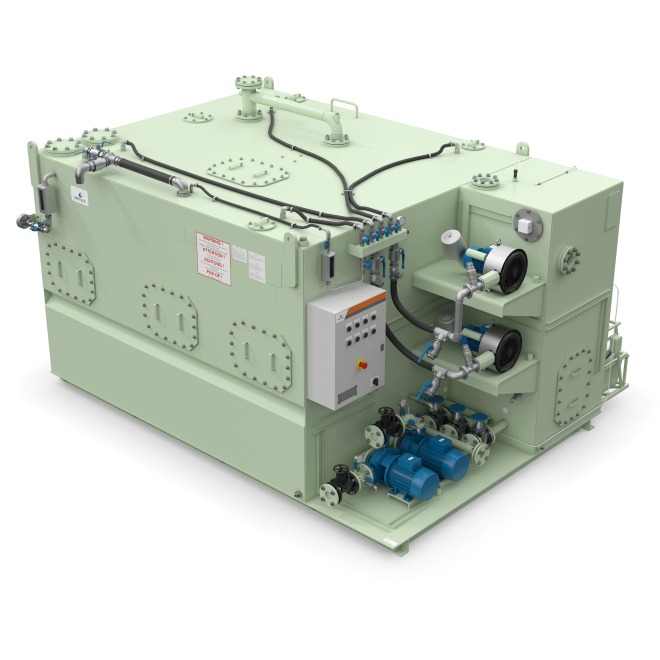
- Gaskapazität
- Bis 20.000 Nm³/h Nennwert
- Sauerstoffgehalt
- 3% by volume (auf Basis Marine Destillat)
- Abgasdruck (normal)
- 0,12 bar gauge
- Gasaustrittstemperatur
- Max. 5°C über Seewassertemperatur
- Inertgasfeuchte
- 100% relative Feuchte, <1 g/kg Trockengas Wassertropfenanteil
- Brennstoffverbrauch
- 0,075 kg/Nm³ Gas (nominal)
- Seewasserbedarf
- 0.06 m³/Nm³ gas (at 32°C seawater temperature)
- Betriebsdauer
- >20 Jahre Lebensdauer
- Moss IGG für Tanker (Produkt & Chemikalienöltanker)
- Moss IGG für Gastransporter (LNG Carrier)
- Moss Mult-Inert System (Dual-Mode: IG & Flue Gas)
- Moss Flue Gas System mit Topping-up Generator
- Offshore Inertgas-Pakete
- Area: Scrubber-Rohrsystem Verschmutzung & KorrosionCheck: Visual inspection through man-holes for sludging, corrosion damage, deposits; check nozzles, cooling tubes, floats, sensors, demister elements. Inspection frequency 6-12 months (doubled under critical conditions). Drydock entrance inspectable (scrubber discharge line).
- Area: Oxygen analyser sample line blockage due to carbon depositsCheck: Periodic test & cleaning of inert gas sample line to O₂ analyser (critical service position). Analyser itself: 2-point calibration (Zero-Gas N₂ 0%, Span-Gas known O₂ concentration) before operation. Calibration accuracy per manufacturer. Alarm setting: >8% O₂ volume.
- Area: Deck Water Seal Wasserniveau & FunktionsprüfungCheck: Check water supply (min. 2 separate pumps required). Visual inspection water level (equipped with low-level alarm). Inspection PMS interval per manufacturer; special attention during IG system shutdown. Check for blockage/corrosion at openings.
- Area: Pressure/Vacuum Breaker (P/V-Breaker) Druckeinstellung & FlammschutzCheck: Check flame screens/meshes (replacement per PMS plan). Calibration for required pressure values + test at operating pressure. Liquid-filled breakers: check fluid type & level; check anti-freeze additive in case of frost risk. Labelling with opening pressures & fluid type/concentration + min. operating temperature.
- Area: Rückschlagventil (Non-Return Valve / Check Valve) Freigang & VentilsitzCheck: Ventil zur Inspection öffnen. Prüfung auf Korrosion, Ventilsitz-Zustand, freie Ventilbewegung über volle Hublänge. Betriebsprobe im Service durchführen. Mindestens zwei Rückschlagvorrichtungen erforderlich (Deck Seal + Isolierventil). Kritisch für Hydrokarbon-Rückfluss-Verhinderung in Maschinenraum.
- Area: Brennkammer-Zustand & Lagerzustand Flue-Gas-Rückzirkulations-VentileCheck: Access to combustion chamber via hinged front (tool-free accessible — check for wear). Flue gas & recirculation valves regularly stroked (stroke test) when system out of service — ensure free operation over full stroke range. Inspection frequency per operating frequency.
Type-universal inspection/service points for Inert Gas Systems (Wärtsilä, Mega-Schwarm 2026-06). Per-model specs not auto-filled.
- Gaskapazität
- Bis 20.000 Nm³/h Nennwert
- Sauerstoffgehalt
- 3% by volume (auf Basis Marine Destillat)
- Abgasdruck (normal)
- 0,12 bar gauge
- Gasaustrittstemperatur
- Max. 5°C über Seewassertemperatur
- Inertgasfeuchte
- 100% relative Feuchte, <1 g/kg Trockengas Wassertropfenanteil
- Brennstoffverbrauch
- 0,075 kg/Nm³ Gas (nominal)
- Seewasserbedarf
- 0.06 m³/Nm³ gas (at 32°C seawater temperature)
- Betriebsdauer
- >20 Jahre Lebensdauer
- Moss IGG für Tanker (Produkt & Chemikalienöltanker)
- Moss IGG für Gastransporter (LNG Carrier)
- Moss Mult-Inert System (Dual-Mode: IG & Flue Gas)
- Moss Flue Gas System mit Topping-up Generator
- Offshore Inertgas-Pakete
- Area: Scrubber-Rohrsystem Verschmutzung & KorrosionCheck: Visual inspection through man-holes for sludging, corrosion damage, deposits; check nozzles, cooling tubes, floats, sensors, demister elements. Inspection frequency 6-12 months (doubled under critical conditions). Drydock entrance inspectable (scrubber discharge line).
- Area: Oxygen analyser sample line blockage due to carbon depositsCheck: Periodic test & cleaning of inert gas sample line to O₂ analyser (critical service position). Analyser itself: 2-point calibration (Zero-Gas N₂ 0%, Span-Gas known O₂ concentration) before operation. Calibration accuracy per manufacturer. Alarm setting: >8% O₂ volume.
- Area: Deck Water Seal Wasserniveau & FunktionsprüfungCheck: Check water supply (min. 2 separate pumps required). Visual inspection water level (equipped with low-level alarm). Inspection PMS interval per manufacturer; special attention during IG system shutdown. Check for blockage/corrosion at openings.
- Area: Pressure/Vacuum Breaker (P/V-Breaker) Druckeinstellung & FlammschutzCheck: Check flame screens/meshes (replacement per PMS plan). Calibration for required pressure values + test at operating pressure. Liquid-filled breakers: check fluid type & level; check anti-freeze additive in case of frost risk. Labelling with opening pressures & fluid type/concentration + min. operating temperature.
- Area: Rückschlagventil (Non-Return Valve / Check Valve) Freigang & VentilsitzCheck: Ventil zur Inspection öffnen. Prüfung auf Korrosion, Ventilsitz-Zustand, freie Ventilbewegung über volle Hublänge. Betriebsprobe im Service durchführen. Mindestens zwei Rückschlagvorrichtungen erforderlich (Deck Seal + Isolierventil). Kritisch für Hydrokarbon-Rückfluss-Verhinderung in Maschinenraum.
- Area: Brennkammer-Zustand & Lagerzustand Flue-Gas-Rückzirkulations-VentileCheck: Access to combustion chamber via hinged front (tool-free accessible — check for wear). Flue gas & recirculation valves regularly stroked (stroke test) when system out of service — ensure free operation over full stroke range. Inspection frequency per operating frequency.
Type-universal inspection/service points for Inert Gas Systems (Wärtsilä, Mega-Schwarm 2026-06). Per-model specs not auto-filled.
- Gaskapazität
- Bis 20.000 Nm³/h Nennwert
- Sauerstoffgehalt
- 3% by volume (auf Basis Marine Destillat)
- Abgasdruck (normal)
- 0,12 bar gauge
- Gasaustrittstemperatur
- Max. 5°C über Seewassertemperatur
- Inertgasfeuchte
- 100% relative Feuchte, <1 g/kg Trockengas Wassertropfenanteil
- Brennstoffverbrauch
- 0,075 kg/Nm³ Gas (nominal)
- Seewasserbedarf
- 0.06 m³/Nm³ gas (at 32°C seawater temperature)
- Betriebsdauer
- >20 Jahre Lebensdauer
- Moss IGG für Tanker (Produkt & Chemikalienöltanker)
- Moss IGG für Gastransporter (LNG Carrier)
- Moss Mult-Inert System (Dual-Mode: IG & Flue Gas)
- Moss Flue Gas System mit Topping-up Generator
- Offshore Inertgas-Pakete
- Area: Scrubber-Rohrsystem Verschmutzung & KorrosionCheck: Visual inspection through man-holes for sludging, corrosion damage, deposits; check nozzles, cooling tubes, floats, sensors, demister elements. Inspection frequency 6-12 months (doubled under critical conditions). Drydock entrance inspectable (scrubber discharge line).
- Area: Oxygen analyser sample line blockage due to carbon depositsCheck: Periodic test & cleaning of inert gas sample line to O₂ analyser (critical service position). Analyser itself: 2-point calibration (Zero-Gas N₂ 0%, Span-Gas known O₂ concentration) before operation. Calibration accuracy per manufacturer. Alarm setting: >8% O₂ volume.
- Area: Deck Water Seal Wasserniveau & FunktionsprüfungCheck: Check water supply (min. 2 separate pumps required). Visual inspection water level (equipped with low-level alarm). Inspection PMS interval per manufacturer; special attention during IG system shutdown. Check for blockage/corrosion at openings.
- Area: Pressure/Vacuum Breaker (P/V-Breaker) Druckeinstellung & FlammschutzCheck: Check flame screens/meshes (replacement per PMS plan). Calibration for required pressure values + test at operating pressure. Liquid-filled breakers: check fluid type & level; check anti-freeze additive in case of frost risk. Labelling with opening pressures & fluid type/concentration + min. operating temperature.
- Area: Rückschlagventil (Non-Return Valve / Check Valve) Freigang & VentilsitzCheck: Ventil zur Inspection öffnen. Prüfung auf Korrosion, Ventilsitz-Zustand, freie Ventilbewegung über volle Hublänge. Betriebsprobe im Service durchführen. Mindestens zwei Rückschlagvorrichtungen erforderlich (Deck Seal + Isolierventil). Kritisch für Hydrokarbon-Rückfluss-Verhinderung in Maschinenraum.
- Area: Brennkammer-Zustand & Lagerzustand Flue-Gas-Rückzirkulations-VentileCheck: Access to combustion chamber via hinged front (tool-free accessible — check for wear). Flue gas & recirculation valves regularly stroked (stroke test) when system out of service — ensure free operation over full stroke range. Inspection frequency per operating frequency.
Type-universal inspection/service points for Inert Gas Systems (Wärtsilä, Mega-Schwarm 2026-06). Per-model specs not auto-filled.
- Gaskapazität
- Bis 20.000 Nm³/h Nennwert
- Sauerstoffgehalt
- 3% by volume (auf Basis Marine Destillat)
- Abgasdruck (normal)
- 0,12 bar gauge
- Gasaustrittstemperatur
- Max. 5°C über Seewassertemperatur
- Inertgasfeuchte
- 100% relative Feuchte, <1 g/kg Trockengas Wassertropfenanteil
- Brennstoffverbrauch
- 0,075 kg/Nm³ Gas (nominal)
- Seewasserbedarf
- 0.06 m³/Nm³ gas (at 32°C seawater temperature)
- Betriebsdauer
- >20 Jahre Lebensdauer
- Moss IGG für Tanker (Produkt & Chemikalienöltanker)
- Moss IGG für Gastransporter (LNG Carrier)
- Moss Mult-Inert System (Dual-Mode: IG & Flue Gas)
- Moss Flue Gas System mit Topping-up Generator
- Offshore Inertgas-Pakete
- Area: Scrubber-Rohrsystem Verschmutzung & KorrosionCheck: Visual inspection through man-holes for sludging, corrosion damage, deposits; check nozzles, cooling tubes, floats, sensors, demister elements. Inspection frequency 6-12 months (doubled under critical conditions). Drydock entrance inspectable (scrubber discharge line).
- Area: Oxygen analyser sample line blockage due to carbon depositsCheck: Periodic test & cleaning of inert gas sample line to O₂ analyser (critical service position). Analyser itself: 2-point calibration (Zero-Gas N₂ 0%, Span-Gas known O₂ concentration) before operation. Calibration accuracy per manufacturer. Alarm setting: >8% O₂ volume.
- Area: Deck Water Seal Wasserniveau & FunktionsprüfungCheck: Check water supply (min. 2 separate pumps required). Visual inspection water level (equipped with low-level alarm). Inspection PMS interval per manufacturer; special attention during IG system shutdown. Check for blockage/corrosion at openings.
- Area: Pressure/Vacuum Breaker (P/V-Breaker) Druckeinstellung & FlammschutzCheck: Check flame screens/meshes (replacement per PMS plan). Calibration for required pressure values + test at operating pressure. Liquid-filled breakers: check fluid type & level; check anti-freeze additive in case of frost risk. Labelling with opening pressures & fluid type/concentration + min. operating temperature.
- Area: Rückschlagventil (Non-Return Valve / Check Valve) Freigang & VentilsitzCheck: Ventil zur Inspection öffnen. Prüfung auf Korrosion, Ventilsitz-Zustand, freie Ventilbewegung über volle Hublänge. Betriebsprobe im Service durchführen. Mindestens zwei Rückschlagvorrichtungen erforderlich (Deck Seal + Isolierventil). Kritisch für Hydrokarbon-Rückfluss-Verhinderung in Maschinenraum.
- Area: Brennkammer-Zustand & Lagerzustand Flue-Gas-Rückzirkulations-VentileCheck: Access to combustion chamber via hinged front (tool-free accessible — check for wear). Flue gas & recirculation valves regularly stroked (stroke test) when system out of service — ensure free operation over full stroke range. Inspection frequency per operating frequency.
Type-universal inspection/service points for Inert Gas Systems (Wärtsilä, Mega-Schwarm 2026-06). Per-model specs not auto-filled.
- Gaskapazität
- Bis 20.000 Nm³/h Nennwert
- Sauerstoffgehalt
- 3% by volume (auf Basis Marine Destillat)
- Abgasdruck (normal)
- 0,12 bar gauge
- Gasaustrittstemperatur
- Max. 5°C über Seewassertemperatur
- Inertgasfeuchte
- 100% relative Feuchte, <1 g/kg Trockengas Wassertropfenanteil
- Brennstoffverbrauch
- 0,075 kg/Nm³ Gas (nominal)
- Seewasserbedarf
- 0.06 m³/Nm³ gas (at 32°C seawater temperature)
- Betriebsdauer
- >20 Jahre Lebensdauer
- Moss IGG für Tanker (Produkt & Chemikalienöltanker)
- Moss IGG für Gastransporter (LNG Carrier)
- Moss Mult-Inert System (Dual-Mode: IG & Flue Gas)
- Moss Flue Gas System mit Topping-up Generator
- Offshore Inertgas-Pakete
- Area: Scrubber-Rohrsystem Verschmutzung & KorrosionCheck: Visual inspection through man-holes for sludging, corrosion damage, deposits; check nozzles, cooling tubes, floats, sensors, demister elements. Inspection frequency 6-12 months (doubled under critical conditions). Drydock entrance inspectable (scrubber discharge line).
- Area: Oxygen analyser sample line blockage due to carbon depositsCheck: Periodic test & cleaning of inert gas sample line to O₂ analyser (critical service position). Analyser itself: 2-point calibration (Zero-Gas N₂ 0%, Span-Gas known O₂ concentration) before operation. Calibration accuracy per manufacturer. Alarm setting: >8% O₂ volume.
- Area: Deck Water Seal Wasserniveau & FunktionsprüfungCheck: Check water supply (min. 2 separate pumps required). Visual inspection water level (equipped with low-level alarm). Inspection PMS interval per manufacturer; special attention during IG system shutdown. Check for blockage/corrosion at openings.
- Area: Pressure/Vacuum Breaker (P/V-Breaker) Druckeinstellung & FlammschutzCheck: Check flame screens/meshes (replacement per PMS plan). Calibration for required pressure values + test at operating pressure. Liquid-filled breakers: check fluid type & level; check anti-freeze additive in case of frost risk. Labelling with opening pressures & fluid type/concentration + min. operating temperature.
- Area: Rückschlagventil (Non-Return Valve / Check Valve) Freigang & VentilsitzCheck: Ventil zur Inspection öffnen. Prüfung auf Korrosion, Ventilsitz-Zustand, freie Ventilbewegung über volle Hublänge. Betriebsprobe im Service durchführen. Mindestens zwei Rückschlagvorrichtungen erforderlich (Deck Seal + Isolierventil). Kritisch für Hydrokarbon-Rückfluss-Verhinderung in Maschinenraum.
- Area: Brennkammer-Zustand & Lagerzustand Flue-Gas-Rückzirkulations-VentileCheck: Access to combustion chamber via hinged front (tool-free accessible — check for wear). Flue gas & recirculation valves regularly stroked (stroke test) when system out of service — ensure free operation over full stroke range. Inspection frequency per operating frequency.
Type-universal inspection/service points for Inert Gas Systems (Wärtsilä, Mega-Schwarm 2026-06). Per-model specs not auto-filled.
- Gaskapazität
- Bis 20.000 Nm³/h Nennwert
- Sauerstoffgehalt
- 3% by volume (auf Basis Marine Destillat)
- Abgasdruck (normal)
- 0,12 bar gauge
- Gasaustrittstemperatur
- Max. 5°C über Seewassertemperatur
- Inertgasfeuchte
- 100% relative Feuchte, <1 g/kg Trockengas Wassertropfenanteil
- Brennstoffverbrauch
- 0,075 kg/Nm³ Gas (nominal)
- Seewasserbedarf
- 0.06 m³/Nm³ gas (at 32°C seawater temperature)
- Betriebsdauer
- >20 Jahre Lebensdauer
- Moss IGG für Tanker (Produkt & Chemikalienöltanker)
- Moss IGG für Gastransporter (LNG Carrier)
- Moss Mult-Inert System (Dual-Mode: IG & Flue Gas)
- Moss Flue Gas System mit Topping-up Generator
- Offshore Inertgas-Pakete
- Area: Scrubber-Rohrsystem Verschmutzung & KorrosionCheck: Visual inspection through man-holes for sludging, corrosion damage, deposits; check nozzles, cooling tubes, floats, sensors, demister elements. Inspection frequency 6-12 months (doubled under critical conditions). Drydock entrance inspectable (scrubber discharge line).
- Area: Oxygen analyser sample line blockage due to carbon depositsCheck: Periodic test & cleaning of inert gas sample line to O₂ analyser (critical service position). Analyser itself: 2-point calibration (Zero-Gas N₂ 0%, Span-Gas known O₂ concentration) before operation. Calibration accuracy per manufacturer. Alarm setting: >8% O₂ volume.
- Area: Deck Water Seal Wasserniveau & FunktionsprüfungCheck: Check water supply (min. 2 separate pumps required). Visual inspection water level (equipped with low-level alarm). Inspection PMS interval per manufacturer; special attention during IG system shutdown. Check for blockage/corrosion at openings.
- Area: Pressure/Vacuum Breaker (P/V-Breaker) Druckeinstellung & FlammschutzCheck: Check flame screens/meshes (replacement per PMS plan). Calibration for required pressure values + test at operating pressure. Liquid-filled breakers: check fluid type & level; check anti-freeze additive in case of frost risk. Labelling with opening pressures & fluid type/concentration + min. operating temperature.
- Area: Rückschlagventil (Non-Return Valve / Check Valve) Freigang & VentilsitzCheck: Ventil zur Inspection öffnen. Prüfung auf Korrosion, Ventilsitz-Zustand, freie Ventilbewegung über volle Hublänge. Betriebsprobe im Service durchführen. Mindestens zwei Rückschlagvorrichtungen erforderlich (Deck Seal + Isolierventil). Kritisch für Hydrokarbon-Rückfluss-Verhinderung in Maschinenraum.
- Area: Brennkammer-Zustand & Lagerzustand Flue-Gas-Rückzirkulations-VentileCheck: Access to combustion chamber via hinged front (tool-free accessible — check for wear). Flue gas & recirculation valves regularly stroked (stroke test) when system out of service — ensure free operation over full stroke range. Inspection frequency per operating frequency.
Type-universal inspection/service points for Inert Gas Systems (Wärtsilä, Mega-Schwarm 2026-06). Per-model specs not auto-filled.
- Gaskapazität
- Bis 20.000 Nm³/h Nennwert
- Sauerstoffgehalt
- 3% by volume (auf Basis Marine Destillat)
- Abgasdruck (normal)
- 0,12 bar gauge
- Gasaustrittstemperatur
- Max. 5°C über Seewassertemperatur
- Inertgasfeuchte
- 100% relative Feuchte, <1 g/kg Trockengas Wassertropfenanteil
- Brennstoffverbrauch
- 0,075 kg/Nm³ Gas (nominal)
- Seewasserbedarf
- 0.06 m³/Nm³ gas (at 32°C seawater temperature)
- Betriebsdauer
- >20 Jahre Lebensdauer
- Moss IGG für Tanker (Produkt & Chemikalienöltanker)
- Moss IGG für Gastransporter (LNG Carrier)
- Moss Mult-Inert System (Dual-Mode: IG & Flue Gas)
- Moss Flue Gas System mit Topping-up Generator
- Offshore Inertgas-Pakete
- Area: Scrubber-Rohrsystem Verschmutzung & KorrosionCheck: Visual inspection through man-holes for sludging, corrosion damage, deposits; check nozzles, cooling tubes, floats, sensors, demister elements. Inspection frequency 6-12 months (doubled under critical conditions). Drydock entrance inspectable (scrubber discharge line).
- Area: Oxygen analyser sample line blockage due to carbon depositsCheck: Periodic test & cleaning of inert gas sample line to O₂ analyser (critical service position). Analyser itself: 2-point calibration (Zero-Gas N₂ 0%, Span-Gas known O₂ concentration) before operation. Calibration accuracy per manufacturer. Alarm setting: >8% O₂ volume.
- Area: Deck Water Seal Wasserniveau & FunktionsprüfungCheck: Check water supply (min. 2 separate pumps required). Visual inspection water level (equipped with low-level alarm). Inspection PMS interval per manufacturer; special attention during IG system shutdown. Check for blockage/corrosion at openings.
- Area: Pressure/Vacuum Breaker (P/V-Breaker) Druckeinstellung & FlammschutzCheck: Check flame screens/meshes (replacement per PMS plan). Calibration for required pressure values + test at operating pressure. Liquid-filled breakers: check fluid type & level; check anti-freeze additive in case of frost risk. Labelling with opening pressures & fluid type/concentration + min. operating temperature.
- Area: Rückschlagventil (Non-Return Valve / Check Valve) Freigang & VentilsitzCheck: Ventil zur Inspection öffnen. Prüfung auf Korrosion, Ventilsitz-Zustand, freie Ventilbewegung über volle Hublänge. Betriebsprobe im Service durchführen. Mindestens zwei Rückschlagvorrichtungen erforderlich (Deck Seal + Isolierventil). Kritisch für Hydrokarbon-Rückfluss-Verhinderung in Maschinenraum.
- Area: Brennkammer-Zustand & Lagerzustand Flue-Gas-Rückzirkulations-VentileCheck: Access to combustion chamber via hinged front (tool-free accessible — check for wear). Flue gas & recirculation valves regularly stroked (stroke test) when system out of service — ensure free operation over full stroke range. Inspection frequency per operating frequency.
Type-universal inspection/service points for Inert Gas Systems (Wärtsilä, Mega-Schwarm 2026-06). Per-model specs not auto-filled.
- Gaskapazität
- Bis 20.000 Nm³/h Nennwert
- Sauerstoffgehalt
- 3% by volume (auf Basis Marine Destillat)
- Abgasdruck (normal)
- 0,12 bar gauge
- Gasaustrittstemperatur
- Max. 5°C über Seewassertemperatur
- Inertgasfeuchte
- 100% relative Feuchte, <1 g/kg Trockengas Wassertropfenanteil
- Brennstoffverbrauch
- 0,075 kg/Nm³ Gas (nominal)
- Seewasserbedarf
- 0.06 m³/Nm³ gas (at 32°C seawater temperature)
- Betriebsdauer
- >20 Jahre Lebensdauer
- Moss IGG für Tanker (Produkt & Chemikalienöltanker)
- Moss IGG für Gastransporter (LNG Carrier)
- Moss Mult-Inert System (Dual-Mode: IG & Flue Gas)
- Moss Flue Gas System mit Topping-up Generator
- Offshore Inertgas-Pakete
- Area: Scrubber-Rohrsystem Verschmutzung & KorrosionCheck: Visual inspection through man-holes for sludging, corrosion damage, deposits; check nozzles, cooling tubes, floats, sensors, demister elements. Inspection frequency 6-12 months (doubled under critical conditions). Drydock entrance inspectable (scrubber discharge line).
- Area: Oxygen analyser sample line blockage due to carbon depositsCheck: Periodic test & cleaning of inert gas sample line to O₂ analyser (critical service position). Analyser itself: 2-point calibration (Zero-Gas N₂ 0%, Span-Gas known O₂ concentration) before operation. Calibration accuracy per manufacturer. Alarm setting: >8% O₂ volume.
- Area: Deck Water Seal Wasserniveau & FunktionsprüfungCheck: Check water supply (min. 2 separate pumps required). Visual inspection water level (equipped with low-level alarm). Inspection PMS interval per manufacturer; special attention during IG system shutdown. Check for blockage/corrosion at openings.
- Area: Pressure/Vacuum Breaker (P/V-Breaker) Druckeinstellung & FlammschutzCheck: Check flame screens/meshes (replacement per PMS plan). Calibration for required pressure values + test at operating pressure. Liquid-filled breakers: check fluid type & level; check anti-freeze additive in case of frost risk. Labelling with opening pressures & fluid type/concentration + min. operating temperature.
- Area: Rückschlagventil (Non-Return Valve / Check Valve) Freigang & VentilsitzCheck: Ventil zur Inspection öffnen. Prüfung auf Korrosion, Ventilsitz-Zustand, freie Ventilbewegung über volle Hublänge. Betriebsprobe im Service durchführen. Mindestens zwei Rückschlagvorrichtungen erforderlich (Deck Seal + Isolierventil). Kritisch für Hydrokarbon-Rückfluss-Verhinderung in Maschinenraum.
- Area: Brennkammer-Zustand & Lagerzustand Flue-Gas-Rückzirkulations-VentileCheck: Access to combustion chamber via hinged front (tool-free accessible — check for wear). Flue gas & recirculation valves regularly stroked (stroke test) when system out of service — ensure free operation over full stroke range. Inspection frequency per operating frequency.
Type-universal inspection/service points for Inert Gas Systems (Wärtsilä, Mega-Schwarm 2026-06). Per-model specs not auto-filled.
- Gaskapazität
- Bis 20.000 Nm³/h Nennwert
- Sauerstoffgehalt
- 3% by volume (auf Basis Marine Destillat)
- Abgasdruck (normal)
- 0,12 bar gauge
- Gasaustrittstemperatur
- Max. 5°C über Seewassertemperatur
- Inertgasfeuchte
- 100% relative Feuchte, <1 g/kg Trockengas Wassertropfenanteil
- Brennstoffverbrauch
- 0,075 kg/Nm³ Gas (nominal)
- Seewasserbedarf
- 0.06 m³/Nm³ gas (at 32°C seawater temperature)
- Betriebsdauer
- >20 Jahre Lebensdauer
- Moss IGG für Tanker (Produkt & Chemikalienöltanker)
- Moss IGG für Gastransporter (LNG Carrier)
- Moss Mult-Inert System (Dual-Mode: IG & Flue Gas)
- Moss Flue Gas System mit Topping-up Generator
- Offshore Inertgas-Pakete
- Area: Scrubber-Rohrsystem Verschmutzung & KorrosionCheck: Visual inspection through man-holes for sludging, corrosion damage, deposits; check nozzles, cooling tubes, floats, sensors, demister elements. Inspection frequency 6-12 months (doubled under critical conditions). Drydock entrance inspectable (scrubber discharge line).
- Area: Oxygen analyser sample line blockage due to carbon depositsCheck: Periodic test & cleaning of inert gas sample line to O₂ analyser (critical service position). Analyser itself: 2-point calibration (Zero-Gas N₂ 0%, Span-Gas known O₂ concentration) before operation. Calibration accuracy per manufacturer. Alarm setting: >8% O₂ volume.
- Area: Deck Water Seal Wasserniveau & FunktionsprüfungCheck: Check water supply (min. 2 separate pumps required). Visual inspection water level (equipped with low-level alarm). Inspection PMS interval per manufacturer; special attention during IG system shutdown. Check for blockage/corrosion at openings.
- Area: Pressure/Vacuum Breaker (P/V-Breaker) Druckeinstellung & FlammschutzCheck: Check flame screens/meshes (replacement per PMS plan). Calibration for required pressure values + test at operating pressure. Liquid-filled breakers: check fluid type & level; check anti-freeze additive in case of frost risk. Labelling with opening pressures & fluid type/concentration + min. operating temperature.
- Area: Rückschlagventil (Non-Return Valve / Check Valve) Freigang & VentilsitzCheck: Ventil zur Inspection öffnen. Prüfung auf Korrosion, Ventilsitz-Zustand, freie Ventilbewegung über volle Hublänge. Betriebsprobe im Service durchführen. Mindestens zwei Rückschlagvorrichtungen erforderlich (Deck Seal + Isolierventil). Kritisch für Hydrokarbon-Rückfluss-Verhinderung in Maschinenraum.
- Area: Brennkammer-Zustand & Lagerzustand Flue-Gas-Rückzirkulations-VentileCheck: Access to combustion chamber via hinged front (tool-free accessible — check for wear). Flue gas & recirculation valves regularly stroked (stroke test) when system out of service — ensure free operation over full stroke range. Inspection frequency per operating frequency.
Type-universal inspection/service points for Inert Gas Systems (Wärtsilä, Mega-Schwarm 2026-06). Per-model specs not auto-filled.
Mahler AGS
150- Nitrogen Purity
- Up to 99.99 vol.-% (purities 95-99.99% typical for marine cargo inerting)
- Capacity Range
- 200 to 4,000 Nm³/h
- Product Pressure
- 6-9 bar(abs) at outlet
- Dew Point
- Minimum -40°C and below
- Residual O2 Content
- Down to 100 ppmv (higher purities on demand)
- Technology
- Pressure Swing Adsorption (PSA) with Carbon Molecular Sieve (CMS)
- NITROSWING PSA Nitrogen Plants
- NITROSWING Modular Design Systems
- Area: Carbon Molecular Sieve (CMS) DegradationCheck: Annual full inspection: Check CMS bed condition, verify no moisture exposure (degrades sieve lifespan 10+ years; oil contamination reduces lifespan significantly); quarterly checks of N2 purity/flow rate and sieve replacement need. Pre-filters for moisture/oil removal must be inspected and replaced timely.
- Area: Oxygen Analyzer Sampling Line BlockageCheck: Periodic inspection and CLEANING of O2 analyzer sampling pipes (at least twice yearly per updated procedures after carbon deposit incidents) to prevent partial clogging. Verify sampling line integrity, check for carbon deposits from IGG scrubber. Analyzer must trigger alarm at O2 > 8%.
- Area: Deck Water Seal Integrity & Heating SystemCheck: Internal inspection of deck seal: check Venturi non-return valves/orifice plates for corrosion/damage (excessive water carryover to tanks); inspect inlet pipe/housing for corrosion/cracks; check heating coil condition. In cold weather zones, verify deck seal heating system operational. Test seal alarms.
- Area: Activated Carbon Pre-Filter ContaminationCheck: Check activated carbon tower for oil/moisture/foreign material accumulation (activated carbon prevents contaminants entering PSA unit). Inspect air dryer & filter units functionality. Replace pre-filters according to maintenance schedule if lubricated air is used. Monitor pressure drop across filters.
- Area: P/V Valve (Pressure/Vacuum) Weight Mechanism FreezeCheck: Pre-operation inspection (especially cold weather): check P/V valve weight mechanism for freeze-in/sticking to seat. Verify non-return valve function to prevent cargo tank backflow. Test automatic shut-down systems. Confirm valve operability before each voyage commencement.
- Area: Pressure Vessel Integrity & Adsorption TowersCheck: Annual inspection of dual adsorption towers (filled with CMS) for structural integrity, corrosion, or damage. Verify tower seals/connections integrity. Check product quality downstream (N2 purity/flow); if degraded, towers may need CMS bed replacement. Pressure test vessels per classification society rules.
Generic type inspection/maintenance points for Inert Gas Systems (Mahler AGS, Mega-Swarm 2026-06). Per-model specs not auto-populated.
- Nitrogen Purity
- Up to 99.99 vol.-% (purities 95-99.99% typical for marine cargo inerting)
- Capacity Range
- 200 to 4,000 Nm³/h
- Product Pressure
- 6-9 bar(abs) at outlet
- Dew Point
- Minimum -40°C and below
- Residual O2 Content
- Down to 100 ppmv (higher purities on demand)
- Technology
- Pressure Swing Adsorption (PSA) with Carbon Molecular Sieve (CMS)
- NITROSWING PSA Nitrogen Plants
- NITROSWING Modular Design Systems
- Area: Carbon Molecular Sieve (CMS) DegradationCheck: Annual full inspection: Check CMS bed condition, verify no moisture exposure (degrades sieve lifespan 10+ years; oil contamination reduces lifespan significantly); quarterly checks of N2 purity/flow rate and sieve replacement need. Pre-filters for moisture/oil removal must be inspected and replaced timely.
- Area: Oxygen Analyzer Sampling Line BlockageCheck: Periodic inspection and CLEANING of O2 analyzer sampling pipes (at least twice yearly per updated procedures after carbon deposit incidents) to prevent partial clogging. Verify sampling line integrity, check for carbon deposits from IGG scrubber. Analyzer must trigger alarm at O2 > 8%.
- Area: Deck Water Seal Integrity & Heating SystemCheck: Internal inspection of deck seal: check Venturi non-return valves/orifice plates for corrosion/damage (excessive water carryover to tanks); inspect inlet pipe/housing for corrosion/cracks; check heating coil condition. In cold weather zones, verify deck seal heating system operational. Test seal alarms.
- Area: Activated Carbon Pre-Filter ContaminationCheck: Check activated carbon tower for oil/moisture/foreign material accumulation (activated carbon prevents contaminants entering PSA unit). Inspect air dryer & filter units functionality. Replace pre-filters according to maintenance schedule if lubricated air is used. Monitor pressure drop across filters.
- Area: P/V Valve (Pressure/Vacuum) Weight Mechanism FreezeCheck: Pre-operation inspection (especially cold weather): check P/V valve weight mechanism for freeze-in/sticking to seat. Verify non-return valve function to prevent cargo tank backflow. Test automatic shut-down systems. Confirm valve operability before each voyage commencement.
- Area: Pressure Vessel Integrity & Adsorption TowersCheck: Annual inspection of dual adsorption towers (filled with CMS) for structural integrity, corrosion, or damage. Verify tower seals/connections integrity. Check product quality downstream (N2 purity/flow); if degraded, towers may need CMS bed replacement. Pressure test vessels per classification society rules.
Generic type inspection/maintenance points for Inert Gas Systems (Mahler AGS, Mega-Swarm 2026-06). Per-model specs not auto-populated.
- Nitrogen Purity
- Up to 99.99 vol.-% (purities 95-99.99% typical for marine cargo inerting)
- Capacity Range
- 200 to 4,000 Nm³/h
- Product Pressure
- 6-9 bar(abs) at outlet
- Dew Point
- Minimum -40°C and below
- Residual O2 Content
- Down to 100 ppmv (higher purities on demand)
- Technology
- Pressure Swing Adsorption (PSA) with Carbon Molecular Sieve (CMS)
- NITROSWING PSA Nitrogen Plants
- NITROSWING Modular Design Systems
- Area: Carbon Molecular Sieve (CMS) DegradationCheck: Annual full inspection: Check CMS bed condition, verify no moisture exposure (degrades sieve lifespan 10+ years; oil contamination reduces lifespan significantly); quarterly checks of N2 purity/flow rate and sieve replacement need. Pre-filters for moisture/oil removal must be inspected and replaced timely.
- Area: Oxygen Analyzer Sampling Line BlockageCheck: Periodic inspection and CLEANING of O2 analyzer sampling pipes (at least twice yearly per updated procedures after carbon deposit incidents) to prevent partial clogging. Verify sampling line integrity, check for carbon deposits from IGG scrubber. Analyzer must trigger alarm at O2 > 8%.
- Area: Deck Water Seal Integrity & Heating SystemCheck: Internal inspection of deck seal: check Venturi non-return valves/orifice plates for corrosion/damage (excessive water carryover to tanks); inspect inlet pipe/housing for corrosion/cracks; check heating coil condition. In cold weather zones, verify deck seal heating system operational. Test seal alarms.
- Area: Activated Carbon Pre-Filter ContaminationCheck: Check activated carbon tower for oil/moisture/foreign material accumulation (activated carbon prevents contaminants entering PSA unit). Inspect air dryer & filter units functionality. Replace pre-filters according to maintenance schedule if lubricated air is used. Monitor pressure drop across filters.
- Area: P/V Valve (Pressure/Vacuum) Weight Mechanism FreezeCheck: Pre-operation inspection (especially cold weather): check P/V valve weight mechanism for freeze-in/sticking to seat. Verify non-return valve function to prevent cargo tank backflow. Test automatic shut-down systems. Confirm valve operability before each voyage commencement.
- Area: Pressure Vessel Integrity & Adsorption TowersCheck: Annual inspection of dual adsorption towers (filled with CMS) for structural integrity, corrosion, or damage. Verify tower seals/connections integrity. Check product quality downstream (N2 purity/flow); if degraded, towers may need CMS bed replacement. Pressure test vessels per classification society rules.
Generic type inspection/maintenance points for Inert Gas Systems (Mahler AGS, Mega-Swarm 2026-06). Per-model specs not auto-populated.
- Nitrogen Purity
- Up to 99.99 vol.-% (purities 95-99.99% typical for marine cargo inerting)
- Capacity Range
- 200 to 4,000 Nm³/h
- Product Pressure
- 6-9 bar(abs) at outlet
- Dew Point
- Minimum -40°C and below
- Residual O2 Content
- Down to 100 ppmv (higher purities on demand)
- Technology
- Pressure Swing Adsorption (PSA) with Carbon Molecular Sieve (CMS)
- NITROSWING PSA Nitrogen Plants
- NITROSWING Modular Design Systems
- Area: Carbon Molecular Sieve (CMS) DegradationCheck: Annual full inspection: Check CMS bed condition, verify no moisture exposure (degrades sieve lifespan 10+ years; oil contamination reduces lifespan significantly); quarterly checks of N2 purity/flow rate and sieve replacement need. Pre-filters for moisture/oil removal must be inspected and replaced timely.
- Area: Oxygen Analyzer Sampling Line BlockageCheck: Periodic inspection and CLEANING of O2 analyzer sampling pipes (at least twice yearly per updated procedures after carbon deposit incidents) to prevent partial clogging. Verify sampling line integrity, check for carbon deposits from IGG scrubber. Analyzer must trigger alarm at O2 > 8%.
- Area: Deck Water Seal Integrity & Heating SystemCheck: Internal inspection of deck seal: check Venturi non-return valves/orifice plates for corrosion/damage (excessive water carryover to tanks); inspect inlet pipe/housing for corrosion/cracks; check heating coil condition. In cold weather zones, verify deck seal heating system operational. Test seal alarms.
- Area: Activated Carbon Pre-Filter ContaminationCheck: Check activated carbon tower for oil/moisture/foreign material accumulation (activated carbon prevents contaminants entering PSA unit). Inspect air dryer & filter units functionality. Replace pre-filters according to maintenance schedule if lubricated air is used. Monitor pressure drop across filters.
- Area: P/V Valve (Pressure/Vacuum) Weight Mechanism FreezeCheck: Pre-operation inspection (especially cold weather): check P/V valve weight mechanism for freeze-in/sticking to seat. Verify non-return valve function to prevent cargo tank backflow. Test automatic shut-down systems. Confirm valve operability before each voyage commencement.
- Area: Pressure Vessel Integrity & Adsorption TowersCheck: Annual inspection of dual adsorption towers (filled with CMS) for structural integrity, corrosion, or damage. Verify tower seals/connections integrity. Check product quality downstream (N2 purity/flow); if degraded, towers may need CMS bed replacement. Pressure test vessels per classification society rules.
Generic type inspection/maintenance points for Inert Gas Systems (Mahler AGS, Mega-Swarm 2026-06). Per-model specs not auto-populated.
- Nitrogen Purity
- Up to 99.99 vol.-% (purities 95-99.99% typical for marine cargo inerting)
- Capacity Range
- 200 to 4,000 Nm³/h
- Product Pressure
- 6-9 bar(abs) at outlet
- Dew Point
- Minimum -40°C and below
- Residual O2 Content
- Down to 100 ppmv (higher purities on demand)
- Technology
- Pressure Swing Adsorption (PSA) with Carbon Molecular Sieve (CMS)
- NITROSWING PSA Nitrogen Plants
- NITROSWING Modular Design Systems
- Area: Carbon Molecular Sieve (CMS) DegradationCheck: Annual full inspection: Check CMS bed condition, verify no moisture exposure (degrades sieve lifespan 10+ years; oil contamination reduces lifespan significantly); quarterly checks of N2 purity/flow rate and sieve replacement need. Pre-filters for moisture/oil removal must be inspected and replaced timely.
- Area: Oxygen Analyzer Sampling Line BlockageCheck: Periodic inspection and CLEANING of O2 analyzer sampling pipes (at least twice yearly per updated procedures after carbon deposit incidents) to prevent partial clogging. Verify sampling line integrity, check for carbon deposits from IGG scrubber. Analyzer must trigger alarm at O2 > 8%.
- Area: Deck Water Seal Integrity & Heating SystemCheck: Internal inspection of deck seal: check Venturi non-return valves/orifice plates for corrosion/damage (excessive water carryover to tanks); inspect inlet pipe/housing for corrosion/cracks; check heating coil condition. In cold weather zones, verify deck seal heating system operational. Test seal alarms.
- Area: Activated Carbon Pre-Filter ContaminationCheck: Check activated carbon tower for oil/moisture/foreign material accumulation (activated carbon prevents contaminants entering PSA unit). Inspect air dryer & filter units functionality. Replace pre-filters according to maintenance schedule if lubricated air is used. Monitor pressure drop across filters.
- Area: P/V Valve (Pressure/Vacuum) Weight Mechanism FreezeCheck: Pre-operation inspection (especially cold weather): check P/V valve weight mechanism for freeze-in/sticking to seat. Verify non-return valve function to prevent cargo tank backflow. Test automatic shut-down systems. Confirm valve operability before each voyage commencement.
- Area: Pressure Vessel Integrity & Adsorption TowersCheck: Annual inspection of dual adsorption towers (filled with CMS) for structural integrity, corrosion, or damage. Verify tower seals/connections integrity. Check product quality downstream (N2 purity/flow); if degraded, towers may need CMS bed replacement. Pressure test vessels per classification society rules.
Generic type inspection/maintenance points for Inert Gas Systems (Mahler AGS, Mega-Swarm 2026-06). Per-model specs not auto-populated.
- Nitrogen Purity
- Up to 99.99 vol.-% (purities 95-99.99% typical for marine cargo inerting)
- Capacity Range
- 200 to 4,000 Nm³/h
- Product Pressure
- 6-9 bar(abs) at outlet
- Dew Point
- Minimum -40°C and below
- Residual O2 Content
- Down to 100 ppmv (higher purities on demand)
- Technology
- Pressure Swing Adsorption (PSA) with Carbon Molecular Sieve (CMS)
- NITROSWING PSA Nitrogen Plants
- NITROSWING Modular Design Systems
- Area: Carbon Molecular Sieve (CMS) DegradationCheck: Annual full inspection: Check CMS bed condition, verify no moisture exposure (degrades sieve lifespan 10+ years; oil contamination reduces lifespan significantly); quarterly checks of N2 purity/flow rate and sieve replacement need. Pre-filters for moisture/oil removal must be inspected and replaced timely.
- Area: Oxygen Analyzer Sampling Line BlockageCheck: Periodic inspection and CLEANING of O2 analyzer sampling pipes (at least twice yearly per updated procedures after carbon deposit incidents) to prevent partial clogging. Verify sampling line integrity, check for carbon deposits from IGG scrubber. Analyzer must trigger alarm at O2 > 8%.
- Area: Deck Water Seal Integrity & Heating SystemCheck: Internal inspection of deck seal: check Venturi non-return valves/orifice plates for corrosion/damage (excessive water carryover to tanks); inspect inlet pipe/housing for corrosion/cracks; check heating coil condition. In cold weather zones, verify deck seal heating system operational. Test seal alarms.
- Area: Activated Carbon Pre-Filter ContaminationCheck: Check activated carbon tower for oil/moisture/foreign material accumulation (activated carbon prevents contaminants entering PSA unit). Inspect air dryer & filter units functionality. Replace pre-filters according to maintenance schedule if lubricated air is used. Monitor pressure drop across filters.
- Area: P/V Valve (Pressure/Vacuum) Weight Mechanism FreezeCheck: Pre-operation inspection (especially cold weather): check P/V valve weight mechanism for freeze-in/sticking to seat. Verify non-return valve function to prevent cargo tank backflow. Test automatic shut-down systems. Confirm valve operability before each voyage commencement.
- Area: Pressure Vessel Integrity & Adsorption TowersCheck: Annual inspection of dual adsorption towers (filled with CMS) for structural integrity, corrosion, or damage. Verify tower seals/connections integrity. Check product quality downstream (N2 purity/flow); if degraded, towers may need CMS bed replacement. Pressure test vessels per classification society rules.
Generic type inspection/maintenance points for Inert Gas Systems (Mahler AGS, Mega-Swarm 2026-06). Per-model specs not auto-populated.
- Nitrogen Purity
- Up to 99.99 vol.-% (purities 95-99.99% typical for marine cargo inerting)
- Capacity Range
- 200 to 4,000 Nm³/h
- Product Pressure
- 6-9 bar(abs) at outlet
- Dew Point
- Minimum -40°C and below
- Residual O2 Content
- Down to 100 ppmv (higher purities on demand)
- Technology
- Pressure Swing Adsorption (PSA) with Carbon Molecular Sieve (CMS)
- NITROSWING PSA Nitrogen Plants
- NITROSWING Modular Design Systems
- Area: Carbon Molecular Sieve (CMS) DegradationCheck: Annual full inspection: Check CMS bed condition, verify no moisture exposure (degrades sieve lifespan 10+ years; oil contamination reduces lifespan significantly); quarterly checks of N2 purity/flow rate and sieve replacement need. Pre-filters for moisture/oil removal must be inspected and replaced timely.
- Area: Oxygen Analyzer Sampling Line BlockageCheck: Periodic inspection and CLEANING of O2 analyzer sampling pipes (at least twice yearly per updated procedures after carbon deposit incidents) to prevent partial clogging. Verify sampling line integrity, check for carbon deposits from IGG scrubber. Analyzer must trigger alarm at O2 > 8%.
- Area: Deck Water Seal Integrity & Heating SystemCheck: Internal inspection of deck seal: check Venturi non-return valves/orifice plates for corrosion/damage (excessive water carryover to tanks); inspect inlet pipe/housing for corrosion/cracks; check heating coil condition. In cold weather zones, verify deck seal heating system operational. Test seal alarms.
- Area: Activated Carbon Pre-Filter ContaminationCheck: Check activated carbon tower for oil/moisture/foreign material accumulation (activated carbon prevents contaminants entering PSA unit). Inspect air dryer & filter units functionality. Replace pre-filters according to maintenance schedule if lubricated air is used. Monitor pressure drop across filters.
- Area: P/V Valve (Pressure/Vacuum) Weight Mechanism FreezeCheck: Pre-operation inspection (especially cold weather): check P/V valve weight mechanism for freeze-in/sticking to seat. Verify non-return valve function to prevent cargo tank backflow. Test automatic shut-down systems. Confirm valve operability before each voyage commencement.
- Area: Pressure Vessel Integrity & Adsorption TowersCheck: Annual inspection of dual adsorption towers (filled with CMS) for structural integrity, corrosion, or damage. Verify tower seals/connections integrity. Check product quality downstream (N2 purity/flow); if degraded, towers may need CMS bed replacement. Pressure test vessels per classification society rules.
Generic type inspection/maintenance points for Inert Gas Systems (Mahler AGS, Mega-Swarm 2026-06). Per-model specs not auto-populated.
- Nitrogen Purity
- Up to 99.99 vol.-% (purities 95-99.99% typical for marine cargo inerting)
- Capacity Range
- 200 to 4,000 Nm³/h
- Product Pressure
- 6-9 bar(abs) at outlet
- Dew Point
- Minimum -40°C and below
- Residual O2 Content
- Down to 100 ppmv (higher purities on demand)
- Technology
- Pressure Swing Adsorption (PSA) with Carbon Molecular Sieve (CMS)
- NITROSWING PSA Nitrogen Plants
- NITROSWING Modular Design Systems
- Area: Carbon Molecular Sieve (CMS) DegradationCheck: Annual full inspection: Check CMS bed condition, verify no moisture exposure (degrades sieve lifespan 10+ years; oil contamination reduces lifespan significantly); quarterly checks of N2 purity/flow rate and sieve replacement need. Pre-filters for moisture/oil removal must be inspected and replaced timely.
- Area: Oxygen Analyzer Sampling Line BlockageCheck: Periodic inspection and CLEANING of O2 analyzer sampling pipes (at least twice yearly per updated procedures after carbon deposit incidents) to prevent partial clogging. Verify sampling line integrity, check for carbon deposits from IGG scrubber. Analyzer must trigger alarm at O2 > 8%.
- Area: Deck Water Seal Integrity & Heating SystemCheck: Internal inspection of deck seal: check Venturi non-return valves/orifice plates for corrosion/damage (excessive water carryover to tanks); inspect inlet pipe/housing for corrosion/cracks; check heating coil condition. In cold weather zones, verify deck seal heating system operational. Test seal alarms.
- Area: Activated Carbon Pre-Filter ContaminationCheck: Check activated carbon tower for oil/moisture/foreign material accumulation (activated carbon prevents contaminants entering PSA unit). Inspect air dryer & filter units functionality. Replace pre-filters according to maintenance schedule if lubricated air is used. Monitor pressure drop across filters.
- Area: P/V Valve (Pressure/Vacuum) Weight Mechanism FreezeCheck: Pre-operation inspection (especially cold weather): check P/V valve weight mechanism for freeze-in/sticking to seat. Verify non-return valve function to prevent cargo tank backflow. Test automatic shut-down systems. Confirm valve operability before each voyage commencement.
- Area: Pressure Vessel Integrity & Adsorption TowersCheck: Annual inspection of dual adsorption towers (filled with CMS) for structural integrity, corrosion, or damage. Verify tower seals/connections integrity. Check product quality downstream (N2 purity/flow); if degraded, towers may need CMS bed replacement. Pressure test vessels per classification society rules.
Generic type inspection/maintenance points for Inert Gas Systems (Mahler AGS, Mega-Swarm 2026-06). Per-model specs not auto-populated.
- Nitrogen Purity
- Up to 99.99 vol.-% (purities 95-99.99% typical for marine cargo inerting)
- Capacity Range
- 200 to 4,000 Nm³/h
- Product Pressure
- 6-9 bar(abs) at outlet
- Dew Point
- Minimum -40°C and below
- Residual O2 Content
- Down to 100 ppmv (higher purities on demand)
- Technology
- Pressure Swing Adsorption (PSA) with Carbon Molecular Sieve (CMS)
- NITROSWING PSA Nitrogen Plants
- NITROSWING Modular Design Systems
- Area: Carbon Molecular Sieve (CMS) DegradationCheck: Annual full inspection: Check CMS bed condition, verify no moisture exposure (degrades sieve lifespan 10+ years; oil contamination reduces lifespan significantly); quarterly checks of N2 purity/flow rate and sieve replacement need. Pre-filters for moisture/oil removal must be inspected and replaced timely.
- Area: Oxygen Analyzer Sampling Line BlockageCheck: Periodic inspection and CLEANING of O2 analyzer sampling pipes (at least twice yearly per updated procedures after carbon deposit incidents) to prevent partial clogging. Verify sampling line integrity, check for carbon deposits from IGG scrubber. Analyzer must trigger alarm at O2 > 8%.
- Area: Deck Water Seal Integrity & Heating SystemCheck: Internal inspection of deck seal: check Venturi non-return valves/orifice plates for corrosion/damage (excessive water carryover to tanks); inspect inlet pipe/housing for corrosion/cracks; check heating coil condition. In cold weather zones, verify deck seal heating system operational. Test seal alarms.
- Area: Activated Carbon Pre-Filter ContaminationCheck: Check activated carbon tower for oil/moisture/foreign material accumulation (activated carbon prevents contaminants entering PSA unit). Inspect air dryer & filter units functionality. Replace pre-filters according to maintenance schedule if lubricated air is used. Monitor pressure drop across filters.
- Area: P/V Valve (Pressure/Vacuum) Weight Mechanism FreezeCheck: Pre-operation inspection (especially cold weather): check P/V valve weight mechanism for freeze-in/sticking to seat. Verify non-return valve function to prevent cargo tank backflow. Test automatic shut-down systems. Confirm valve operability before each voyage commencement.
- Area: Pressure Vessel Integrity & Adsorption TowersCheck: Annual inspection of dual adsorption towers (filled with CMS) for structural integrity, corrosion, or damage. Verify tower seals/connections integrity. Check product quality downstream (N2 purity/flow); if degraded, towers may need CMS bed replacement. Pressure test vessels per classification society rules.
Generic type inspection/maintenance points for Inert Gas Systems (Mahler AGS, Mega-Swarm 2026-06). Per-model specs not auto-populated.
- Nitrogen Purity
- Up to 99.99 vol.-% (purities 95-99.99% typical for marine cargo inerting)
- Capacity Range
- 200 to 4,000 Nm³/h
- Product Pressure
- 6-9 bar(abs) at outlet
- Dew Point
- Minimum -40°C and below
- Residual O2 Content
- Down to 100 ppmv (higher purities on demand)
- Technology
- Pressure Swing Adsorption (PSA) with Carbon Molecular Sieve (CMS)
- NITROSWING PSA Nitrogen Plants
- NITROSWING Modular Design Systems
- Area: Carbon Molecular Sieve (CMS) DegradationCheck: Annual full inspection: Check CMS bed condition, verify no moisture exposure (degrades sieve lifespan 10+ years; oil contamination reduces lifespan significantly); quarterly checks of N2 purity/flow rate and sieve replacement need. Pre-filters for moisture/oil removal must be inspected and replaced timely.
- Area: Oxygen Analyzer Sampling Line BlockageCheck: Periodic inspection and CLEANING of O2 analyzer sampling pipes (at least twice yearly per updated procedures after carbon deposit incidents) to prevent partial clogging. Verify sampling line integrity, check for carbon deposits from IGG scrubber. Analyzer must trigger alarm at O2 > 8%.
- Area: Deck Water Seal Integrity & Heating SystemCheck: Internal inspection of deck seal: check Venturi non-return valves/orifice plates for corrosion/damage (excessive water carryover to tanks); inspect inlet pipe/housing for corrosion/cracks; check heating coil condition. In cold weather zones, verify deck seal heating system operational. Test seal alarms.
- Area: Activated Carbon Pre-Filter ContaminationCheck: Check activated carbon tower for oil/moisture/foreign material accumulation (activated carbon prevents contaminants entering PSA unit). Inspect air dryer & filter units functionality. Replace pre-filters according to maintenance schedule if lubricated air is used. Monitor pressure drop across filters.
- Area: P/V Valve (Pressure/Vacuum) Weight Mechanism FreezeCheck: Pre-operation inspection (especially cold weather): check P/V valve weight mechanism for freeze-in/sticking to seat. Verify non-return valve function to prevent cargo tank backflow. Test automatic shut-down systems. Confirm valve operability before each voyage commencement.
- Area: Pressure Vessel Integrity & Adsorption TowersCheck: Annual inspection of dual adsorption towers (filled with CMS) for structural integrity, corrosion, or damage. Verify tower seals/connections integrity. Check product quality downstream (N2 purity/flow); if degraded, towers may need CMS bed replacement. Pressure test vessels per classification society rules.
Generic type inspection/maintenance points for Inert Gas Systems (Mahler AGS, Mega-Swarm 2026-06). Per-model specs not auto-populated.
- Nitrogen Purity
- Up to 99.99 vol.-% (purities 95-99.99% typical for marine cargo inerting)
- Capacity Range
- 200 to 4,000 Nm³/h
- Product Pressure
- 6-9 bar(abs) at outlet
- Dew Point
- Minimum -40°C and below
- Residual O2 Content
- Down to 100 ppmv (higher purities on demand)
- Technology
- Pressure Swing Adsorption (PSA) with Carbon Molecular Sieve (CMS)
- NITROSWING PSA Nitrogen Plants
- NITROSWING Modular Design Systems
- Area: Carbon Molecular Sieve (CMS) DegradationCheck: Annual full inspection: Check CMS bed condition, verify no moisture exposure (degrades sieve lifespan 10+ years; oil contamination reduces lifespan significantly); quarterly checks of N2 purity/flow rate and sieve replacement need. Pre-filters for moisture/oil removal must be inspected and replaced timely.
- Area: Oxygen Analyzer Sampling Line BlockageCheck: Periodic inspection and CLEANING of O2 analyzer sampling pipes (at least twice yearly per updated procedures after carbon deposit incidents) to prevent partial clogging. Verify sampling line integrity, check for carbon deposits from IGG scrubber. Analyzer must trigger alarm at O2 > 8%.
- Area: Deck Water Seal Integrity & Heating SystemCheck: Internal inspection of deck seal: check Venturi non-return valves/orifice plates for corrosion/damage (excessive water carryover to tanks); inspect inlet pipe/housing for corrosion/cracks; check heating coil condition. In cold weather zones, verify deck seal heating system operational. Test seal alarms.
- Area: Activated Carbon Pre-Filter ContaminationCheck: Check activated carbon tower for oil/moisture/foreign material accumulation (activated carbon prevents contaminants entering PSA unit). Inspect air dryer & filter units functionality. Replace pre-filters according to maintenance schedule if lubricated air is used. Monitor pressure drop across filters.
- Area: P/V Valve (Pressure/Vacuum) Weight Mechanism FreezeCheck: Pre-operation inspection (especially cold weather): check P/V valve weight mechanism for freeze-in/sticking to seat. Verify non-return valve function to prevent cargo tank backflow. Test automatic shut-down systems. Confirm valve operability before each voyage commencement.
- Area: Pressure Vessel Integrity & Adsorption TowersCheck: Annual inspection of dual adsorption towers (filled with CMS) for structural integrity, corrosion, or damage. Verify tower seals/connections integrity. Check product quality downstream (N2 purity/flow); if degraded, towers may need CMS bed replacement. Pressure test vessels per classification society rules.
Generic type inspection/maintenance points for Inert Gas Systems (Mahler AGS, Mega-Swarm 2026-06). Per-model specs not auto-populated.
- Nitrogen Purity
- Up to 99.99 vol.-% (purities 95-99.99% typical for marine cargo inerting)
- Capacity Range
- 200 to 4,000 Nm³/h
- Product Pressure
- 6-9 bar(abs) at outlet
- Dew Point
- Minimum -40°C and below
- Residual O2 Content
- Down to 100 ppmv (higher purities on demand)
- Technology
- Pressure Swing Adsorption (PSA) with Carbon Molecular Sieve (CMS)
- NITROSWING PSA Nitrogen Plants
- NITROSWING Modular Design Systems
- Area: Carbon Molecular Sieve (CMS) DegradationCheck: Annual full inspection: Check CMS bed condition, verify no moisture exposure (degrades sieve lifespan 10+ years; oil contamination reduces lifespan significantly); quarterly checks of N2 purity/flow rate and sieve replacement need. Pre-filters for moisture/oil removal must be inspected and replaced timely.
- Area: Oxygen Analyzer Sampling Line BlockageCheck: Periodic inspection and CLEANING of O2 analyzer sampling pipes (at least twice yearly per updated procedures after carbon deposit incidents) to prevent partial clogging. Verify sampling line integrity, check for carbon deposits from IGG scrubber. Analyzer must trigger alarm at O2 > 8%.
- Area: Deck Water Seal Integrity & Heating SystemCheck: Internal inspection of deck seal: check Venturi non-return valves/orifice plates for corrosion/damage (excessive water carryover to tanks); inspect inlet pipe/housing for corrosion/cracks; check heating coil condition. In cold weather zones, verify deck seal heating system operational. Test seal alarms.
- Area: Activated Carbon Pre-Filter ContaminationCheck: Check activated carbon tower for oil/moisture/foreign material accumulation (activated carbon prevents contaminants entering PSA unit). Inspect air dryer & filter units functionality. Replace pre-filters according to maintenance schedule if lubricated air is used. Monitor pressure drop across filters.
- Area: P/V Valve (Pressure/Vacuum) Weight Mechanism FreezeCheck: Pre-operation inspection (especially cold weather): check P/V valve weight mechanism for freeze-in/sticking to seat. Verify non-return valve function to prevent cargo tank backflow. Test automatic shut-down systems. Confirm valve operability before each voyage commencement.
- Area: Pressure Vessel Integrity & Adsorption TowersCheck: Annual inspection of dual adsorption towers (filled with CMS) for structural integrity, corrosion, or damage. Verify tower seals/connections integrity. Check product quality downstream (N2 purity/flow); if degraded, towers may need CMS bed replacement. Pressure test vessels per classification society rules.
Generic type inspection/maintenance points for Inert Gas Systems (Mahler AGS, Mega-Swarm 2026-06). Per-model specs not auto-populated.
- Nitrogen Purity
- Up to 99.99 vol.-% (purities 95-99.99% typical for marine cargo inerting)
- Capacity Range
- 200 to 4,000 Nm³/h
- Product Pressure
- 6-9 bar(abs) at outlet
- Dew Point
- Minimum -40°C and below
- Residual O2 Content
- Down to 100 ppmv (higher purities on demand)
- Technology
- Pressure Swing Adsorption (PSA) with Carbon Molecular Sieve (CMS)
- NITROSWING PSA Nitrogen Plants
- NITROSWING Modular Design Systems
- Area: Carbon Molecular Sieve (CMS) DegradationCheck: Annual full inspection: Check CMS bed condition, verify no moisture exposure (degrades sieve lifespan 10+ years; oil contamination reduces lifespan significantly); quarterly checks of N2 purity/flow rate and sieve replacement need. Pre-filters for moisture/oil removal must be inspected and replaced timely.
- Area: Oxygen Analyzer Sampling Line BlockageCheck: Periodic inspection and CLEANING of O2 analyzer sampling pipes (at least twice yearly per updated procedures after carbon deposit incidents) to prevent partial clogging. Verify sampling line integrity, check for carbon deposits from IGG scrubber. Analyzer must trigger alarm at O2 > 8%.
- Area: Deck Water Seal Integrity & Heating SystemCheck: Internal inspection of deck seal: check Venturi non-return valves/orifice plates for corrosion/damage (excessive water carryover to tanks); inspect inlet pipe/housing for corrosion/cracks; check heating coil condition. In cold weather zones, verify deck seal heating system operational. Test seal alarms.
- Area: Activated Carbon Pre-Filter ContaminationCheck: Check activated carbon tower for oil/moisture/foreign material accumulation (activated carbon prevents contaminants entering PSA unit). Inspect air dryer & filter units functionality. Replace pre-filters according to maintenance schedule if lubricated air is used. Monitor pressure drop across filters.
- Area: P/V Valve (Pressure/Vacuum) Weight Mechanism FreezeCheck: Pre-operation inspection (especially cold weather): check P/V valve weight mechanism for freeze-in/sticking to seat. Verify non-return valve function to prevent cargo tank backflow. Test automatic shut-down systems. Confirm valve operability before each voyage commencement.
- Area: Pressure Vessel Integrity & Adsorption TowersCheck: Annual inspection of dual adsorption towers (filled with CMS) for structural integrity, corrosion, or damage. Verify tower seals/connections integrity. Check product quality downstream (N2 purity/flow); if degraded, towers may need CMS bed replacement. Pressure test vessels per classification society rules.
Generic type inspection/maintenance points for Inert Gas Systems (Mahler AGS, Mega-Swarm 2026-06). Per-model specs not auto-populated.
- Nitrogen Purity
- Up to 99.99 vol.-% (purities 95-99.99% typical for marine cargo inerting)
- Capacity Range
- 200 to 4,000 Nm³/h
- Product Pressure
- 6-9 bar(abs) at outlet
- Dew Point
- Minimum -40°C and below
- Residual O2 Content
- Down to 100 ppmv (higher purities on demand)
- Technology
- Pressure Swing Adsorption (PSA) with Carbon Molecular Sieve (CMS)
- NITROSWING PSA Nitrogen Plants
- NITROSWING Modular Design Systems
- Area: Carbon Molecular Sieve (CMS) DegradationCheck: Annual full inspection: Check CMS bed condition, verify no moisture exposure (degrades sieve lifespan 10+ years; oil contamination reduces lifespan significantly); quarterly checks of N2 purity/flow rate and sieve replacement need. Pre-filters for moisture/oil removal must be inspected and replaced timely.
- Area: Oxygen Analyzer Sampling Line BlockageCheck: Periodic inspection and CLEANING of O2 analyzer sampling pipes (at least twice yearly per updated procedures after carbon deposit incidents) to prevent partial clogging. Verify sampling line integrity, check for carbon deposits from IGG scrubber. Analyzer must trigger alarm at O2 > 8%.
- Area: Deck Water Seal Integrity & Heating SystemCheck: Internal inspection of deck seal: check Venturi non-return valves/orifice plates for corrosion/damage (excessive water carryover to tanks); inspect inlet pipe/housing for corrosion/cracks; check heating coil condition. In cold weather zones, verify deck seal heating system operational. Test seal alarms.
- Area: Activated Carbon Pre-Filter ContaminationCheck: Check activated carbon tower for oil/moisture/foreign material accumulation (activated carbon prevents contaminants entering PSA unit). Inspect air dryer & filter units functionality. Replace pre-filters according to maintenance schedule if lubricated air is used. Monitor pressure drop across filters.
- Area: P/V Valve (Pressure/Vacuum) Weight Mechanism FreezeCheck: Pre-operation inspection (especially cold weather): check P/V valve weight mechanism for freeze-in/sticking to seat. Verify non-return valve function to prevent cargo tank backflow. Test automatic shut-down systems. Confirm valve operability before each voyage commencement.
- Area: Pressure Vessel Integrity & Adsorption TowersCheck: Annual inspection of dual adsorption towers (filled with CMS) for structural integrity, corrosion, or damage. Verify tower seals/connections integrity. Check product quality downstream (N2 purity/flow); if degraded, towers may need CMS bed replacement. Pressure test vessels per classification society rules.
Generic type inspection/maintenance points for Inert Gas Systems (Mahler AGS, Mega-Swarm 2026-06). Per-model specs not auto-populated.
- Nitrogen Purity
- Up to 99.99 vol.-% (purities 95-99.99% typical for marine cargo inerting)
- Capacity Range
- 200 to 4,000 Nm³/h
- Product Pressure
- 6-9 bar(abs) at outlet
- Dew Point
- Minimum -40°C and below
- Residual O2 Content
- Down to 100 ppmv (higher purities on demand)
- Technology
- Pressure Swing Adsorption (PSA) with Carbon Molecular Sieve (CMS)
- NITROSWING PSA Nitrogen Plants
- NITROSWING Modular Design Systems
- Area: Carbon Molecular Sieve (CMS) DegradationCheck: Annual full inspection: Check CMS bed condition, verify no moisture exposure (degrades sieve lifespan 10+ years; oil contamination reduces lifespan significantly); quarterly checks of N2 purity/flow rate and sieve replacement need. Pre-filters for moisture/oil removal must be inspected and replaced timely.
- Area: Oxygen Analyzer Sampling Line BlockageCheck: Periodic inspection and CLEANING of O2 analyzer sampling pipes (at least twice yearly per updated procedures after carbon deposit incidents) to prevent partial clogging. Verify sampling line integrity, check for carbon deposits from IGG scrubber. Analyzer must trigger alarm at O2 > 8%.
- Area: Deck Water Seal Integrity & Heating SystemCheck: Internal inspection of deck seal: check Venturi non-return valves/orifice plates for corrosion/damage (excessive water carryover to tanks); inspect inlet pipe/housing for corrosion/cracks; check heating coil condition. In cold weather zones, verify deck seal heating system operational. Test seal alarms.
- Area: Activated Carbon Pre-Filter ContaminationCheck: Check activated carbon tower for oil/moisture/foreign material accumulation (activated carbon prevents contaminants entering PSA unit). Inspect air dryer & filter units functionality. Replace pre-filters according to maintenance schedule if lubricated air is used. Monitor pressure drop across filters.
- Area: P/V Valve (Pressure/Vacuum) Weight Mechanism FreezeCheck: Pre-operation inspection (especially cold weather): check P/V valve weight mechanism for freeze-in/sticking to seat. Verify non-return valve function to prevent cargo tank backflow. Test automatic shut-down systems. Confirm valve operability before each voyage commencement.
- Area: Pressure Vessel Integrity & Adsorption TowersCheck: Annual inspection of dual adsorption towers (filled with CMS) for structural integrity, corrosion, or damage. Verify tower seals/connections integrity. Check product quality downstream (N2 purity/flow); if degraded, towers may need CMS bed replacement. Pressure test vessels per classification society rules.
Generic type inspection/maintenance points for Inert Gas Systems (Mahler AGS, Mega-Swarm 2026-06). Per-model specs not auto-populated.
- Nitrogen Purity
- Up to 99.99 vol.-% (purities 95-99.99% typical for marine cargo inerting)
- Capacity Range
- 200 to 4,000 Nm³/h
- Product Pressure
- 6-9 bar(abs) at outlet
- Dew Point
- Minimum -40°C and below
- Residual O2 Content
- Down to 100 ppmv (higher purities on demand)
- Technology
- Pressure Swing Adsorption (PSA) with Carbon Molecular Sieve (CMS)
- NITROSWING PSA Nitrogen Plants
- NITROSWING Modular Design Systems
- Area: Carbon Molecular Sieve (CMS) DegradationCheck: Annual full inspection: Check CMS bed condition, verify no moisture exposure (degrades sieve lifespan 10+ years; oil contamination reduces lifespan significantly); quarterly checks of N2 purity/flow rate and sieve replacement need. Pre-filters for moisture/oil removal must be inspected and replaced timely.
- Area: Oxygen Analyzer Sampling Line BlockageCheck: Periodic inspection and CLEANING of O2 analyzer sampling pipes (at least twice yearly per updated procedures after carbon deposit incidents) to prevent partial clogging. Verify sampling line integrity, check for carbon deposits from IGG scrubber. Analyzer must trigger alarm at O2 > 8%.
- Area: Deck Water Seal Integrity & Heating SystemCheck: Internal inspection of deck seal: check Venturi non-return valves/orifice plates for corrosion/damage (excessive water carryover to tanks); inspect inlet pipe/housing for corrosion/cracks; check heating coil condition. In cold weather zones, verify deck seal heating system operational. Test seal alarms.
- Area: Activated Carbon Pre-Filter ContaminationCheck: Check activated carbon tower for oil/moisture/foreign material accumulation (activated carbon prevents contaminants entering PSA unit). Inspect air dryer & filter units functionality. Replace pre-filters according to maintenance schedule if lubricated air is used. Monitor pressure drop across filters.
- Area: P/V Valve (Pressure/Vacuum) Weight Mechanism FreezeCheck: Pre-operation inspection (especially cold weather): check P/V valve weight mechanism for freeze-in/sticking to seat. Verify non-return valve function to prevent cargo tank backflow. Test automatic shut-down systems. Confirm valve operability before each voyage commencement.
- Area: Pressure Vessel Integrity & Adsorption TowersCheck: Annual inspection of dual adsorption towers (filled with CMS) for structural integrity, corrosion, or damage. Verify tower seals/connections integrity. Check product quality downstream (N2 purity/flow); if degraded, towers may need CMS bed replacement. Pressure test vessels per classification society rules.
Generic type inspection/maintenance points for Inert Gas Systems (Mahler AGS, Mega-Swarm 2026-06). Per-model specs not auto-populated.
- Nitrogen Purity
- Up to 99.99 vol.-% (purities 95-99.99% typical for marine cargo inerting)
- Capacity Range
- 200 to 4,000 Nm³/h
- Product Pressure
- 6-9 bar(abs) at outlet
- Dew Point
- Minimum -40°C and below
- Residual O2 Content
- Down to 100 ppmv (higher purities on demand)
- Technology
- Pressure Swing Adsorption (PSA) with Carbon Molecular Sieve (CMS)
- NITROSWING PSA Nitrogen Plants
- NITROSWING Modular Design Systems
- Area: Carbon Molecular Sieve (CMS) DegradationCheck: Annual full inspection: Check CMS bed condition, verify no moisture exposure (degrades sieve lifespan 10+ years; oil contamination reduces lifespan significantly); quarterly checks of N2 purity/flow rate and sieve replacement need. Pre-filters for moisture/oil removal must be inspected and replaced timely.
- Area: Oxygen Analyzer Sampling Line BlockageCheck: Periodic inspection and CLEANING of O2 analyzer sampling pipes (at least twice yearly per updated procedures after carbon deposit incidents) to prevent partial clogging. Verify sampling line integrity, check for carbon deposits from IGG scrubber. Analyzer must trigger alarm at O2 > 8%.
- Area: Deck Water Seal Integrity & Heating SystemCheck: Internal inspection of deck seal: check Venturi non-return valves/orifice plates for corrosion/damage (excessive water carryover to tanks); inspect inlet pipe/housing for corrosion/cracks; check heating coil condition. In cold weather zones, verify deck seal heating system operational. Test seal alarms.
- Area: Activated Carbon Pre-Filter ContaminationCheck: Check activated carbon tower for oil/moisture/foreign material accumulation (activated carbon prevents contaminants entering PSA unit). Inspect air dryer & filter units functionality. Replace pre-filters according to maintenance schedule if lubricated air is used. Monitor pressure drop across filters.
- Area: P/V Valve (Pressure/Vacuum) Weight Mechanism FreezeCheck: Pre-operation inspection (especially cold weather): check P/V valve weight mechanism for freeze-in/sticking to seat. Verify non-return valve function to prevent cargo tank backflow. Test automatic shut-down systems. Confirm valve operability before each voyage commencement.
- Area: Pressure Vessel Integrity & Adsorption TowersCheck: Annual inspection of dual adsorption towers (filled with CMS) for structural integrity, corrosion, or damage. Verify tower seals/connections integrity. Check product quality downstream (N2 purity/flow); if degraded, towers may need CMS bed replacement. Pressure test vessels per classification society rules.
Generic type inspection/maintenance points for Inert Gas Systems (Mahler AGS, Mega-Swarm 2026-06). Per-model specs not auto-populated.
- Nitrogen Purity
- Up to 99.99 vol.-% (purities 95-99.99% typical for marine cargo inerting)
- Capacity Range
- 200 to 4,000 Nm³/h
- Product Pressure
- 6-9 bar(abs) at outlet
- Dew Point
- Minimum -40°C and below
- Residual O2 Content
- Down to 100 ppmv (higher purities on demand)
- Technology
- Pressure Swing Adsorption (PSA) with Carbon Molecular Sieve (CMS)
- NITROSWING PSA Nitrogen Plants
- NITROSWING Modular Design Systems
- Area: Carbon Molecular Sieve (CMS) DegradationCheck: Annual full inspection: Check CMS bed condition, verify no moisture exposure (degrades sieve lifespan 10+ years; oil contamination reduces lifespan significantly); quarterly checks of N2 purity/flow rate and sieve replacement need. Pre-filters for moisture/oil removal must be inspected and replaced timely.
- Area: Oxygen Analyzer Sampling Line BlockageCheck: Periodic inspection and CLEANING of O2 analyzer sampling pipes (at least twice yearly per updated procedures after carbon deposit incidents) to prevent partial clogging. Verify sampling line integrity, check for carbon deposits from IGG scrubber. Analyzer must trigger alarm at O2 > 8%.
- Area: Deck Water Seal Integrity & Heating SystemCheck: Internal inspection of deck seal: check Venturi non-return valves/orifice plates for corrosion/damage (excessive water carryover to tanks); inspect inlet pipe/housing for corrosion/cracks; check heating coil condition. In cold weather zones, verify deck seal heating system operational. Test seal alarms.
- Area: Activated Carbon Pre-Filter ContaminationCheck: Check activated carbon tower for oil/moisture/foreign material accumulation (activated carbon prevents contaminants entering PSA unit). Inspect air dryer & filter units functionality. Replace pre-filters according to maintenance schedule if lubricated air is used. Monitor pressure drop across filters.
- Area: P/V Valve (Pressure/Vacuum) Weight Mechanism FreezeCheck: Pre-operation inspection (especially cold weather): check P/V valve weight mechanism for freeze-in/sticking to seat. Verify non-return valve function to prevent cargo tank backflow. Test automatic shut-down systems. Confirm valve operability before each voyage commencement.
- Area: Pressure Vessel Integrity & Adsorption TowersCheck: Annual inspection of dual adsorption towers (filled with CMS) for structural integrity, corrosion, or damage. Verify tower seals/connections integrity. Check product quality downstream (N2 purity/flow); if degraded, towers may need CMS bed replacement. Pressure test vessels per classification society rules.
Generic type inspection/maintenance points for Inert Gas Systems (Mahler AGS, Mega-Swarm 2026-06). Per-model specs not auto-populated.
- Nitrogen Purity
- Up to 99.99 vol.-% (purities 95-99.99% typical for marine cargo inerting)
- Capacity Range
- 200 to 4,000 Nm³/h
- Product Pressure
- 6-9 bar(abs) at outlet
- Dew Point
- Minimum -40°C and below
- Residual O2 Content
- Down to 100 ppmv (higher purities on demand)
- Technology
- Pressure Swing Adsorption (PSA) with Carbon Molecular Sieve (CMS)
- NITROSWING PSA Nitrogen Plants
- NITROSWING Modular Design Systems
- Area: Carbon Molecular Sieve (CMS) DegradationCheck: Annual full inspection: Check CMS bed condition, verify no moisture exposure (degrades sieve lifespan 10+ years; oil contamination reduces lifespan significantly); quarterly checks of N2 purity/flow rate and sieve replacement need. Pre-filters for moisture/oil removal must be inspected and replaced timely.
- Area: Oxygen Analyzer Sampling Line BlockageCheck: Periodic inspection and CLEANING of O2 analyzer sampling pipes (at least twice yearly per updated procedures after carbon deposit incidents) to prevent partial clogging. Verify sampling line integrity, check for carbon deposits from IGG scrubber. Analyzer must trigger alarm at O2 > 8%.
- Area: Deck Water Seal Integrity & Heating SystemCheck: Internal inspection of deck seal: check Venturi non-return valves/orifice plates for corrosion/damage (excessive water carryover to tanks); inspect inlet pipe/housing for corrosion/cracks; check heating coil condition. In cold weather zones, verify deck seal heating system operational. Test seal alarms.
- Area: Activated Carbon Pre-Filter ContaminationCheck: Check activated carbon tower for oil/moisture/foreign material accumulation (activated carbon prevents contaminants entering PSA unit). Inspect air dryer & filter units functionality. Replace pre-filters according to maintenance schedule if lubricated air is used. Monitor pressure drop across filters.
- Area: P/V Valve (Pressure/Vacuum) Weight Mechanism FreezeCheck: Pre-operation inspection (especially cold weather): check P/V valve weight mechanism for freeze-in/sticking to seat. Verify non-return valve function to prevent cargo tank backflow. Test automatic shut-down systems. Confirm valve operability before each voyage commencement.
- Area: Pressure Vessel Integrity & Adsorption TowersCheck: Annual inspection of dual adsorption towers (filled with CMS) for structural integrity, corrosion, or damage. Verify tower seals/connections integrity. Check product quality downstream (N2 purity/flow); if degraded, towers may need CMS bed replacement. Pressure test vessels per classification society rules.
Generic type inspection/maintenance points for Inert Gas Systems (Mahler AGS, Mega-Swarm 2026-06). Per-model specs not auto-populated.
- Nitrogen Purity
- Up to 99.99 vol.-% (purities 95-99.99% typical for marine cargo inerting)
- Capacity Range
- 200 to 4,000 Nm³/h
- Product Pressure
- 6-9 bar(abs) at outlet
- Dew Point
- Minimum -40°C and below
- Residual O2 Content
- Down to 100 ppmv (higher purities on demand)
- Technology
- Pressure Swing Adsorption (PSA) with Carbon Molecular Sieve (CMS)
- NITROSWING PSA Nitrogen Plants
- NITROSWING Modular Design Systems
- Area: Carbon Molecular Sieve (CMS) DegradationCheck: Annual full inspection: Check CMS bed condition, verify no moisture exposure (degrades sieve lifespan 10+ years; oil contamination reduces lifespan significantly); quarterly checks of N2 purity/flow rate and sieve replacement need. Pre-filters for moisture/oil removal must be inspected and replaced timely.
- Area: Oxygen Analyzer Sampling Line BlockageCheck: Periodic inspection and CLEANING of O2 analyzer sampling pipes (at least twice yearly per updated procedures after carbon deposit incidents) to prevent partial clogging. Verify sampling line integrity, check for carbon deposits from IGG scrubber. Analyzer must trigger alarm at O2 > 8%.
- Area: Deck Water Seal Integrity & Heating SystemCheck: Internal inspection of deck seal: check Venturi non-return valves/orifice plates for corrosion/damage (excessive water carryover to tanks); inspect inlet pipe/housing for corrosion/cracks; check heating coil condition. In cold weather zones, verify deck seal heating system operational. Test seal alarms.
- Area: Activated Carbon Pre-Filter ContaminationCheck: Check activated carbon tower for oil/moisture/foreign material accumulation (activated carbon prevents contaminants entering PSA unit). Inspect air dryer & filter units functionality. Replace pre-filters according to maintenance schedule if lubricated air is used. Monitor pressure drop across filters.
- Area: P/V Valve (Pressure/Vacuum) Weight Mechanism FreezeCheck: Pre-operation inspection (especially cold weather): check P/V valve weight mechanism for freeze-in/sticking to seat. Verify non-return valve function to prevent cargo tank backflow. Test automatic shut-down systems. Confirm valve operability before each voyage commencement.
- Area: Pressure Vessel Integrity & Adsorption TowersCheck: Annual inspection of dual adsorption towers (filled with CMS) for structural integrity, corrosion, or damage. Verify tower seals/connections integrity. Check product quality downstream (N2 purity/flow); if degraded, towers may need CMS bed replacement. Pressure test vessels per classification society rules.
Generic type inspection/maintenance points for Inert Gas Systems (Mahler AGS, Mega-Swarm 2026-06). Per-model specs not auto-populated.
- Nitrogen Purity
- Up to 99.99 vol.-% (purities 95-99.99% typical for marine cargo inerting)
- Capacity Range
- 200 to 4,000 Nm³/h
- Product Pressure
- 6-9 bar(abs) at outlet
- Dew Point
- Minimum -40°C and below
- Residual O2 Content
- Down to 100 ppmv (higher purities on demand)
- Technology
- Pressure Swing Adsorption (PSA) with Carbon Molecular Sieve (CMS)
- NITROSWING PSA Nitrogen Plants
- NITROSWING Modular Design Systems
- Area: Carbon Molecular Sieve (CMS) DegradationCheck: Annual full inspection: Check CMS bed condition, verify no moisture exposure (degrades sieve lifespan 10+ years; oil contamination reduces lifespan significantly); quarterly checks of N2 purity/flow rate and sieve replacement need. Pre-filters for moisture/oil removal must be inspected and replaced timely.
- Area: Oxygen Analyzer Sampling Line BlockageCheck: Periodic inspection and CLEANING of O2 analyzer sampling pipes (at least twice yearly per updated procedures after carbon deposit incidents) to prevent partial clogging. Verify sampling line integrity, check for carbon deposits from IGG scrubber. Analyzer must trigger alarm at O2 > 8%.
- Area: Deck Water Seal Integrity & Heating SystemCheck: Internal inspection of deck seal: check Venturi non-return valves/orifice plates for corrosion/damage (excessive water carryover to tanks); inspect inlet pipe/housing for corrosion/cracks; check heating coil condition. In cold weather zones, verify deck seal heating system operational. Test seal alarms.
- Area: Activated Carbon Pre-Filter ContaminationCheck: Check activated carbon tower for oil/moisture/foreign material accumulation (activated carbon prevents contaminants entering PSA unit). Inspect air dryer & filter units functionality. Replace pre-filters according to maintenance schedule if lubricated air is used. Monitor pressure drop across filters.
- Area: P/V Valve (Pressure/Vacuum) Weight Mechanism FreezeCheck: Pre-operation inspection (especially cold weather): check P/V valve weight mechanism for freeze-in/sticking to seat. Verify non-return valve function to prevent cargo tank backflow. Test automatic shut-down systems. Confirm valve operability before each voyage commencement.
- Area: Pressure Vessel Integrity & Adsorption TowersCheck: Annual inspection of dual adsorption towers (filled with CMS) for structural integrity, corrosion, or damage. Verify tower seals/connections integrity. Check product quality downstream (N2 purity/flow); if degraded, towers may need CMS bed replacement. Pressure test vessels per classification society rules.
Generic type inspection/maintenance points for Inert Gas Systems (Mahler AGS, Mega-Swarm 2026-06). Per-model specs not auto-populated.
- Nitrogen Purity
- Up to 99.99 vol.-% (purities 95-99.99% typical for marine cargo inerting)
- Capacity Range
- 200 to 4,000 Nm³/h
- Product Pressure
- 6-9 bar(abs) at outlet
- Dew Point
- Minimum -40°C and below
- Residual O2 Content
- Down to 100 ppmv (higher purities on demand)
- Technology
- Pressure Swing Adsorption (PSA) with Carbon Molecular Sieve (CMS)
- NITROSWING PSA Nitrogen Plants
- NITROSWING Modular Design Systems
- Area: Carbon Molecular Sieve (CMS) DegradationCheck: Annual full inspection: Check CMS bed condition, verify no moisture exposure (degrades sieve lifespan 10+ years; oil contamination reduces lifespan significantly); quarterly checks of N2 purity/flow rate and sieve replacement need. Pre-filters for moisture/oil removal must be inspected and replaced timely.
- Area: Oxygen Analyzer Sampling Line BlockageCheck: Periodic inspection and CLEANING of O2 analyzer sampling pipes (at least twice yearly per updated procedures after carbon deposit incidents) to prevent partial clogging. Verify sampling line integrity, check for carbon deposits from IGG scrubber. Analyzer must trigger alarm at O2 > 8%.
- Area: Deck Water Seal Integrity & Heating SystemCheck: Internal inspection of deck seal: check Venturi non-return valves/orifice plates for corrosion/damage (excessive water carryover to tanks); inspect inlet pipe/housing for corrosion/cracks; check heating coil condition. In cold weather zones, verify deck seal heating system operational. Test seal alarms.
- Area: Activated Carbon Pre-Filter ContaminationCheck: Check activated carbon tower for oil/moisture/foreign material accumulation (activated carbon prevents contaminants entering PSA unit). Inspect air dryer & filter units functionality. Replace pre-filters according to maintenance schedule if lubricated air is used. Monitor pressure drop across filters.
- Area: P/V Valve (Pressure/Vacuum) Weight Mechanism FreezeCheck: Pre-operation inspection (especially cold weather): check P/V valve weight mechanism for freeze-in/sticking to seat. Verify non-return valve function to prevent cargo tank backflow. Test automatic shut-down systems. Confirm valve operability before each voyage commencement.
- Area: Pressure Vessel Integrity & Adsorption TowersCheck: Annual inspection of dual adsorption towers (filled with CMS) for structural integrity, corrosion, or damage. Verify tower seals/connections integrity. Check product quality downstream (N2 purity/flow); if degraded, towers may need CMS bed replacement. Pressure test vessels per classification society rules.
Generic type inspection/maintenance points for Inert Gas Systems (Mahler AGS, Mega-Swarm 2026-06). Per-model specs not auto-populated.
- Nitrogen Purity
- Up to 99.99 vol.-% (purities 95-99.99% typical for marine cargo inerting)
- Capacity Range
- 200 to 4,000 Nm³/h
- Product Pressure
- 6-9 bar(abs) at outlet
- Dew Point
- Minimum -40°C and below
- Residual O2 Content
- Down to 100 ppmv (higher purities on demand)
- Technology
- Pressure Swing Adsorption (PSA) with Carbon Molecular Sieve (CMS)
- NITROSWING PSA Nitrogen Plants
- NITROSWING Modular Design Systems
- Area: Carbon Molecular Sieve (CMS) DegradationCheck: Annual full inspection: Check CMS bed condition, verify no moisture exposure (degrades sieve lifespan 10+ years; oil contamination reduces lifespan significantly); quarterly checks of N2 purity/flow rate and sieve replacement need. Pre-filters for moisture/oil removal must be inspected and replaced timely.
- Area: Oxygen Analyzer Sampling Line BlockageCheck: Periodic inspection and CLEANING of O2 analyzer sampling pipes (at least twice yearly per updated procedures after carbon deposit incidents) to prevent partial clogging. Verify sampling line integrity, check for carbon deposits from IGG scrubber. Analyzer must trigger alarm at O2 > 8%.
- Area: Deck Water Seal Integrity & Heating SystemCheck: Internal inspection of deck seal: check Venturi non-return valves/orifice plates for corrosion/damage (excessive water carryover to tanks); inspect inlet pipe/housing for corrosion/cracks; check heating coil condition. In cold weather zones, verify deck seal heating system operational. Test seal alarms.
- Area: Activated Carbon Pre-Filter ContaminationCheck: Check activated carbon tower for oil/moisture/foreign material accumulation (activated carbon prevents contaminants entering PSA unit). Inspect air dryer & filter units functionality. Replace pre-filters according to maintenance schedule if lubricated air is used. Monitor pressure drop across filters.
- Area: P/V Valve (Pressure/Vacuum) Weight Mechanism FreezeCheck: Pre-operation inspection (especially cold weather): check P/V valve weight mechanism for freeze-in/sticking to seat. Verify non-return valve function to prevent cargo tank backflow. Test automatic shut-down systems. Confirm valve operability before each voyage commencement.
- Area: Pressure Vessel Integrity & Adsorption TowersCheck: Annual inspection of dual adsorption towers (filled with CMS) for structural integrity, corrosion, or damage. Verify tower seals/connections integrity. Check product quality downstream (N2 purity/flow); if degraded, towers may need CMS bed replacement. Pressure test vessels per classification society rules.
Generic type inspection/maintenance points for Inert Gas Systems (Mahler AGS, Mega-Swarm 2026-06). Per-model specs not auto-populated.
- Nitrogen Purity
- Up to 99.99 vol.-% (purities 95-99.99% typical for marine cargo inerting)
- Capacity Range
- 200 to 4,000 Nm³/h
- Product Pressure
- 6-9 bar(abs) at outlet
- Dew Point
- Minimum -40°C and below
- Residual O2 Content
- Down to 100 ppmv (higher purities on demand)
- Technology
- Pressure Swing Adsorption (PSA) with Carbon Molecular Sieve (CMS)
- NITROSWING PSA Nitrogen Plants
- NITROSWING Modular Design Systems
- Area: Carbon Molecular Sieve (CMS) DegradationCheck: Annual full inspection: Check CMS bed condition, verify no moisture exposure (degrades sieve lifespan 10+ years; oil contamination reduces lifespan significantly); quarterly checks of N2 purity/flow rate and sieve replacement need. Pre-filters for moisture/oil removal must be inspected and replaced timely.
- Area: Oxygen Analyzer Sampling Line BlockageCheck: Periodic inspection and CLEANING of O2 analyzer sampling pipes (at least twice yearly per updated procedures after carbon deposit incidents) to prevent partial clogging. Verify sampling line integrity, check for carbon deposits from IGG scrubber. Analyzer must trigger alarm at O2 > 8%.
- Area: Deck Water Seal Integrity & Heating SystemCheck: Internal inspection of deck seal: check Venturi non-return valves/orifice plates for corrosion/damage (excessive water carryover to tanks); inspect inlet pipe/housing for corrosion/cracks; check heating coil condition. In cold weather zones, verify deck seal heating system operational. Test seal alarms.
- Area: Activated Carbon Pre-Filter ContaminationCheck: Check activated carbon tower for oil/moisture/foreign material accumulation (activated carbon prevents contaminants entering PSA unit). Inspect air dryer & filter units functionality. Replace pre-filters according to maintenance schedule if lubricated air is used. Monitor pressure drop across filters.
- Area: P/V Valve (Pressure/Vacuum) Weight Mechanism FreezeCheck: Pre-operation inspection (especially cold weather): check P/V valve weight mechanism for freeze-in/sticking to seat. Verify non-return valve function to prevent cargo tank backflow. Test automatic shut-down systems. Confirm valve operability before each voyage commencement.
- Area: Pressure Vessel Integrity & Adsorption TowersCheck: Annual inspection of dual adsorption towers (filled with CMS) for structural integrity, corrosion, or damage. Verify tower seals/connections integrity. Check product quality downstream (N2 purity/flow); if degraded, towers may need CMS bed replacement. Pressure test vessels per classification society rules.
Generic type inspection/maintenance points for Inert Gas Systems (Mahler AGS, Mega-Swarm 2026-06). Per-model specs not auto-populated.
- Nitrogen Purity
- Up to 99.99 vol.-% (purities 95-99.99% typical for marine cargo inerting)
- Capacity Range
- 200 to 4,000 Nm³/h
- Product Pressure
- 6-9 bar(abs) at outlet
- Dew Point
- Minimum -40°C and below
- Residual O2 Content
- Down to 100 ppmv (higher purities on demand)
- Technology
- Pressure Swing Adsorption (PSA) with Carbon Molecular Sieve (CMS)
- NITROSWING PSA Nitrogen Plants
- NITROSWING Modular Design Systems
- Area: Carbon Molecular Sieve (CMS) DegradationCheck: Annual full inspection: Check CMS bed condition, verify no moisture exposure (degrades sieve lifespan 10+ years; oil contamination reduces lifespan significantly); quarterly checks of N2 purity/flow rate and sieve replacement need. Pre-filters for moisture/oil removal must be inspected and replaced timely.
- Area: Oxygen Analyzer Sampling Line BlockageCheck: Periodic inspection and CLEANING of O2 analyzer sampling pipes (at least twice yearly per updated procedures after carbon deposit incidents) to prevent partial clogging. Verify sampling line integrity, check for carbon deposits from IGG scrubber. Analyzer must trigger alarm at O2 > 8%.
- Area: Deck Water Seal Integrity & Heating SystemCheck: Internal inspection of deck seal: check Venturi non-return valves/orifice plates for corrosion/damage (excessive water carryover to tanks); inspect inlet pipe/housing for corrosion/cracks; check heating coil condition. In cold weather zones, verify deck seal heating system operational. Test seal alarms.
- Area: Activated Carbon Pre-Filter ContaminationCheck: Check activated carbon tower for oil/moisture/foreign material accumulation (activated carbon prevents contaminants entering PSA unit). Inspect air dryer & filter units functionality. Replace pre-filters according to maintenance schedule if lubricated air is used. Monitor pressure drop across filters.
- Area: P/V Valve (Pressure/Vacuum) Weight Mechanism FreezeCheck: Pre-operation inspection (especially cold weather): check P/V valve weight mechanism for freeze-in/sticking to seat. Verify non-return valve function to prevent cargo tank backflow. Test automatic shut-down systems. Confirm valve operability before each voyage commencement.
- Area: Pressure Vessel Integrity & Adsorption TowersCheck: Annual inspection of dual adsorption towers (filled with CMS) for structural integrity, corrosion, or damage. Verify tower seals/connections integrity. Check product quality downstream (N2 purity/flow); if degraded, towers may need CMS bed replacement. Pressure test vessels per classification society rules.
Generic type inspection/maintenance points for Inert Gas Systems (Mahler AGS, Mega-Swarm 2026-06). Per-model specs not auto-populated.
- Nitrogen Purity
- Up to 99.99 vol.-% (purities 95-99.99% typical for marine cargo inerting)
- Capacity Range
- 200 to 4,000 Nm³/h
- Product Pressure
- 6-9 bar(abs) at outlet
- Dew Point
- Minimum -40°C and below
- Residual O2 Content
- Down to 100 ppmv (higher purities on demand)
- Technology
- Pressure Swing Adsorption (PSA) with Carbon Molecular Sieve (CMS)
- NITROSWING PSA Nitrogen Plants
- NITROSWING Modular Design Systems
- Area: Carbon Molecular Sieve (CMS) DegradationCheck: Annual full inspection: Check CMS bed condition, verify no moisture exposure (degrades sieve lifespan 10+ years; oil contamination reduces lifespan significantly); quarterly checks of N2 purity/flow rate and sieve replacement need. Pre-filters for moisture/oil removal must be inspected and replaced timely.
- Area: Oxygen Analyzer Sampling Line BlockageCheck: Periodic inspection and CLEANING of O2 analyzer sampling pipes (at least twice yearly per updated procedures after carbon deposit incidents) to prevent partial clogging. Verify sampling line integrity, check for carbon deposits from IGG scrubber. Analyzer must trigger alarm at O2 > 8%.
- Area: Deck Water Seal Integrity & Heating SystemCheck: Internal inspection of deck seal: check Venturi non-return valves/orifice plates for corrosion/damage (excessive water carryover to tanks); inspect inlet pipe/housing for corrosion/cracks; check heating coil condition. In cold weather zones, verify deck seal heating system operational. Test seal alarms.
- Area: Activated Carbon Pre-Filter ContaminationCheck: Check activated carbon tower for oil/moisture/foreign material accumulation (activated carbon prevents contaminants entering PSA unit). Inspect air dryer & filter units functionality. Replace pre-filters according to maintenance schedule if lubricated air is used. Monitor pressure drop across filters.
- Area: P/V Valve (Pressure/Vacuum) Weight Mechanism FreezeCheck: Pre-operation inspection (especially cold weather): check P/V valve weight mechanism for freeze-in/sticking to seat. Verify non-return valve function to prevent cargo tank backflow. Test automatic shut-down systems. Confirm valve operability before each voyage commencement.
- Area: Pressure Vessel Integrity & Adsorption TowersCheck: Annual inspection of dual adsorption towers (filled with CMS) for structural integrity, corrosion, or damage. Verify tower seals/connections integrity. Check product quality downstream (N2 purity/flow); if degraded, towers may need CMS bed replacement. Pressure test vessels per classification society rules.
Generic type inspection/maintenance points for Inert Gas Systems (Mahler AGS, Mega-Swarm 2026-06). Per-model specs not auto-populated.
- Nitrogen Purity
- Up to 99.99 vol.-% (purities 95-99.99% typical for marine cargo inerting)
- Capacity Range
- 200 to 4,000 Nm³/h
- Product Pressure
- 6-9 bar(abs) at outlet
- Dew Point
- Minimum -40°C and below
- Residual O2 Content
- Down to 100 ppmv (higher purities on demand)
- Technology
- Pressure Swing Adsorption (PSA) with Carbon Molecular Sieve (CMS)
- NITROSWING PSA Nitrogen Plants
- NITROSWING Modular Design Systems
- Area: Carbon Molecular Sieve (CMS) DegradationCheck: Annual full inspection: Check CMS bed condition, verify no moisture exposure (degrades sieve lifespan 10+ years; oil contamination reduces lifespan significantly); quarterly checks of N2 purity/flow rate and sieve replacement need. Pre-filters for moisture/oil removal must be inspected and replaced timely.
- Area: Oxygen Analyzer Sampling Line BlockageCheck: Periodic inspection and CLEANING of O2 analyzer sampling pipes (at least twice yearly per updated procedures after carbon deposit incidents) to prevent partial clogging. Verify sampling line integrity, check for carbon deposits from IGG scrubber. Analyzer must trigger alarm at O2 > 8%.
- Area: Deck Water Seal Integrity & Heating SystemCheck: Internal inspection of deck seal: check Venturi non-return valves/orifice plates for corrosion/damage (excessive water carryover to tanks); inspect inlet pipe/housing for corrosion/cracks; check heating coil condition. In cold weather zones, verify deck seal heating system operational. Test seal alarms.
- Area: Activated Carbon Pre-Filter ContaminationCheck: Check activated carbon tower for oil/moisture/foreign material accumulation (activated carbon prevents contaminants entering PSA unit). Inspect air dryer & filter units functionality. Replace pre-filters according to maintenance schedule if lubricated air is used. Monitor pressure drop across filters.
- Area: P/V Valve (Pressure/Vacuum) Weight Mechanism FreezeCheck: Pre-operation inspection (especially cold weather): check P/V valve weight mechanism for freeze-in/sticking to seat. Verify non-return valve function to prevent cargo tank backflow. Test automatic shut-down systems. Confirm valve operability before each voyage commencement.
- Area: Pressure Vessel Integrity & Adsorption TowersCheck: Annual inspection of dual adsorption towers (filled with CMS) for structural integrity, corrosion, or damage. Verify tower seals/connections integrity. Check product quality downstream (N2 purity/flow); if degraded, towers may need CMS bed replacement. Pressure test vessels per classification society rules.
Generic type inspection/maintenance points for Inert Gas Systems (Mahler AGS, Mega-Swarm 2026-06). Per-model specs not auto-populated.
- Nitrogen Purity
- Up to 99.99 vol.-% (purities 95-99.99% typical for marine cargo inerting)
- Capacity Range
- 200 to 4,000 Nm³/h
- Product Pressure
- 6-9 bar(abs) at outlet
- Dew Point
- Minimum -40°C and below
- Residual O2 Content
- Down to 100 ppmv (higher purities on demand)
- Technology
- Pressure Swing Adsorption (PSA) with Carbon Molecular Sieve (CMS)
- NITROSWING PSA Nitrogen Plants
- NITROSWING Modular Design Systems
- Area: Carbon Molecular Sieve (CMS) DegradationCheck: Annual full inspection: Check CMS bed condition, verify no moisture exposure (degrades sieve lifespan 10+ years; oil contamination reduces lifespan significantly); quarterly checks of N2 purity/flow rate and sieve replacement need. Pre-filters for moisture/oil removal must be inspected and replaced timely.
- Area: Oxygen Analyzer Sampling Line BlockageCheck: Periodic inspection and CLEANING of O2 analyzer sampling pipes (at least twice yearly per updated procedures after carbon deposit incidents) to prevent partial clogging. Verify sampling line integrity, check for carbon deposits from IGG scrubber. Analyzer must trigger alarm at O2 > 8%.
- Area: Deck Water Seal Integrity & Heating SystemCheck: Internal inspection of deck seal: check Venturi non-return valves/orifice plates for corrosion/damage (excessive water carryover to tanks); inspect inlet pipe/housing for corrosion/cracks; check heating coil condition. In cold weather zones, verify deck seal heating system operational. Test seal alarms.
- Area: Activated Carbon Pre-Filter ContaminationCheck: Check activated carbon tower for oil/moisture/foreign material accumulation (activated carbon prevents contaminants entering PSA unit). Inspect air dryer & filter units functionality. Replace pre-filters according to maintenance schedule if lubricated air is used. Monitor pressure drop across filters.
- Area: P/V Valve (Pressure/Vacuum) Weight Mechanism FreezeCheck: Pre-operation inspection (especially cold weather): check P/V valve weight mechanism for freeze-in/sticking to seat. Verify non-return valve function to prevent cargo tank backflow. Test automatic shut-down systems. Confirm valve operability before each voyage commencement.
- Area: Pressure Vessel Integrity & Adsorption TowersCheck: Annual inspection of dual adsorption towers (filled with CMS) for structural integrity, corrosion, or damage. Verify tower seals/connections integrity. Check product quality downstream (N2 purity/flow); if degraded, towers may need CMS bed replacement. Pressure test vessels per classification society rules.
Generic type inspection/maintenance points for Inert Gas Systems (Mahler AGS, Mega-Swarm 2026-06). Per-model specs not auto-populated.
- Nitrogen Purity
- Up to 99.99 vol.-% (purities 95-99.99% typical for marine cargo inerting)
- Capacity Range
- 200 to 4,000 Nm³/h
- Product Pressure
- 6-9 bar(abs) at outlet
- Dew Point
- Minimum -40°C and below
- Residual O2 Content
- Down to 100 ppmv (higher purities on demand)
- Technology
- Pressure Swing Adsorption (PSA) with Carbon Molecular Sieve (CMS)
- NITROSWING PSA Nitrogen Plants
- NITROSWING Modular Design Systems
- Area: Carbon Molecular Sieve (CMS) DegradationCheck: Annual full inspection: Check CMS bed condition, verify no moisture exposure (degrades sieve lifespan 10+ years; oil contamination reduces lifespan significantly); quarterly checks of N2 purity/flow rate and sieve replacement need. Pre-filters for moisture/oil removal must be inspected and replaced timely.
- Area: Oxygen Analyzer Sampling Line BlockageCheck: Periodic inspection and CLEANING of O2 analyzer sampling pipes (at least twice yearly per updated procedures after carbon deposit incidents) to prevent partial clogging. Verify sampling line integrity, check for carbon deposits from IGG scrubber. Analyzer must trigger alarm at O2 > 8%.
- Area: Deck Water Seal Integrity & Heating SystemCheck: Internal inspection of deck seal: check Venturi non-return valves/orifice plates for corrosion/damage (excessive water carryover to tanks); inspect inlet pipe/housing for corrosion/cracks; check heating coil condition. In cold weather zones, verify deck seal heating system operational. Test seal alarms.
- Area: Activated Carbon Pre-Filter ContaminationCheck: Check activated carbon tower for oil/moisture/foreign material accumulation (activated carbon prevents contaminants entering PSA unit). Inspect air dryer & filter units functionality. Replace pre-filters according to maintenance schedule if lubricated air is used. Monitor pressure drop across filters.
- Area: P/V Valve (Pressure/Vacuum) Weight Mechanism FreezeCheck: Pre-operation inspection (especially cold weather): check P/V valve weight mechanism for freeze-in/sticking to seat. Verify non-return valve function to prevent cargo tank backflow. Test automatic shut-down systems. Confirm valve operability before each voyage commencement.
- Area: Pressure Vessel Integrity & Adsorption TowersCheck: Annual inspection of dual adsorption towers (filled with CMS) for structural integrity, corrosion, or damage. Verify tower seals/connections integrity. Check product quality downstream (N2 purity/flow); if degraded, towers may need CMS bed replacement. Pressure test vessels per classification society rules.
Generic type inspection/maintenance points for Inert Gas Systems (Mahler AGS, Mega-Swarm 2026-06). Per-model specs not auto-populated.
- Nitrogen Purity
- Up to 99.99 vol.-% (purities 95-99.99% typical for marine cargo inerting)
- Capacity Range
- 200 to 4,000 Nm³/h
- Product Pressure
- 6-9 bar(abs) at outlet
- Dew Point
- Minimum -40°C and below
- Residual O2 Content
- Down to 100 ppmv (higher purities on demand)
- Technology
- Pressure Swing Adsorption (PSA) with Carbon Molecular Sieve (CMS)
- NITROSWING PSA Nitrogen Plants
- NITROSWING Modular Design Systems
- Area: Carbon Molecular Sieve (CMS) DegradationCheck: Annual full inspection: Check CMS bed condition, verify no moisture exposure (degrades sieve lifespan 10+ years; oil contamination reduces lifespan significantly); quarterly checks of N2 purity/flow rate and sieve replacement need. Pre-filters for moisture/oil removal must be inspected and replaced timely.
- Area: Oxygen Analyzer Sampling Line BlockageCheck: Periodic inspection and CLEANING of O2 analyzer sampling pipes (at least twice yearly per updated procedures after carbon deposit incidents) to prevent partial clogging. Verify sampling line integrity, check for carbon deposits from IGG scrubber. Analyzer must trigger alarm at O2 > 8%.
- Area: Deck Water Seal Integrity & Heating SystemCheck: Internal inspection of deck seal: check Venturi non-return valves/orifice plates for corrosion/damage (excessive water carryover to tanks); inspect inlet pipe/housing for corrosion/cracks; check heating coil condition. In cold weather zones, verify deck seal heating system operational. Test seal alarms.
- Area: Activated Carbon Pre-Filter ContaminationCheck: Check activated carbon tower for oil/moisture/foreign material accumulation (activated carbon prevents contaminants entering PSA unit). Inspect air dryer & filter units functionality. Replace pre-filters according to maintenance schedule if lubricated air is used. Monitor pressure drop across filters.
- Area: P/V Valve (Pressure/Vacuum) Weight Mechanism FreezeCheck: Pre-operation inspection (especially cold weather): check P/V valve weight mechanism for freeze-in/sticking to seat. Verify non-return valve function to prevent cargo tank backflow. Test automatic shut-down systems. Confirm valve operability before each voyage commencement.
- Area: Pressure Vessel Integrity & Adsorption TowersCheck: Annual inspection of dual adsorption towers (filled with CMS) for structural integrity, corrosion, or damage. Verify tower seals/connections integrity. Check product quality downstream (N2 purity/flow); if degraded, towers may need CMS bed replacement. Pressure test vessels per classification society rules.
Generic type inspection/maintenance points for Inert Gas Systems (Mahler AGS, Mega-Swarm 2026-06). Per-model specs not auto-populated.
- Nitrogen Purity
- Up to 99.99 vol.-% (purities 95-99.99% typical for marine cargo inerting)
- Capacity Range
- 200 to 4,000 Nm³/h
- Product Pressure
- 6-9 bar(abs) at outlet
- Dew Point
- Minimum -40°C and below
- Residual O2 Content
- Down to 100 ppmv (higher purities on demand)
- Technology
- Pressure Swing Adsorption (PSA) with Carbon Molecular Sieve (CMS)
- NITROSWING PSA Nitrogen Plants
- NITROSWING Modular Design Systems
- Area: Carbon Molecular Sieve (CMS) DegradationCheck: Annual full inspection: Check CMS bed condition, verify no moisture exposure (degrades sieve lifespan 10+ years; oil contamination reduces lifespan significantly); quarterly checks of N2 purity/flow rate and sieve replacement need. Pre-filters for moisture/oil removal must be inspected and replaced timely.
- Area: Oxygen Analyzer Sampling Line BlockageCheck: Periodic inspection and CLEANING of O2 analyzer sampling pipes (at least twice yearly per updated procedures after carbon deposit incidents) to prevent partial clogging. Verify sampling line integrity, check for carbon deposits from IGG scrubber. Analyzer must trigger alarm at O2 > 8%.
- Area: Deck Water Seal Integrity & Heating SystemCheck: Internal inspection of deck seal: check Venturi non-return valves/orifice plates for corrosion/damage (excessive water carryover to tanks); inspect inlet pipe/housing for corrosion/cracks; check heating coil condition. In cold weather zones, verify deck seal heating system operational. Test seal alarms.
- Area: Activated Carbon Pre-Filter ContaminationCheck: Check activated carbon tower for oil/moisture/foreign material accumulation (activated carbon prevents contaminants entering PSA unit). Inspect air dryer & filter units functionality. Replace pre-filters according to maintenance schedule if lubricated air is used. Monitor pressure drop across filters.
- Area: P/V Valve (Pressure/Vacuum) Weight Mechanism FreezeCheck: Pre-operation inspection (especially cold weather): check P/V valve weight mechanism for freeze-in/sticking to seat. Verify non-return valve function to prevent cargo tank backflow. Test automatic shut-down systems. Confirm valve operability before each voyage commencement.
- Area: Pressure Vessel Integrity & Adsorption TowersCheck: Annual inspection of dual adsorption towers (filled with CMS) for structural integrity, corrosion, or damage. Verify tower seals/connections integrity. Check product quality downstream (N2 purity/flow); if degraded, towers may need CMS bed replacement. Pressure test vessels per classification society rules.
Generic type inspection/maintenance points for Inert Gas Systems (Mahler AGS, Mega-Swarm 2026-06). Per-model specs not auto-populated.
- Nitrogen Purity
- Up to 99.99 vol.-% (purities 95-99.99% typical for marine cargo inerting)
- Capacity Range
- 200 to 4,000 Nm³/h
- Product Pressure
- 6-9 bar(abs) at outlet
- Dew Point
- Minimum -40°C and below
- Residual O2 Content
- Down to 100 ppmv (higher purities on demand)
- Technology
- Pressure Swing Adsorption (PSA) with Carbon Molecular Sieve (CMS)
- NITROSWING PSA Nitrogen Plants
- NITROSWING Modular Design Systems
- Area: Carbon Molecular Sieve (CMS) DegradationCheck: Annual full inspection: Check CMS bed condition, verify no moisture exposure (degrades sieve lifespan 10+ years; oil contamination reduces lifespan significantly); quarterly checks of N2 purity/flow rate and sieve replacement need. Pre-filters for moisture/oil removal must be inspected and replaced timely.
- Area: Oxygen Analyzer Sampling Line BlockageCheck: Periodic inspection and CLEANING of O2 analyzer sampling pipes (at least twice yearly per updated procedures after carbon deposit incidents) to prevent partial clogging. Verify sampling line integrity, check for carbon deposits from IGG scrubber. Analyzer must trigger alarm at O2 > 8%.
- Area: Deck Water Seal Integrity & Heating SystemCheck: Internal inspection of deck seal: check Venturi non-return valves/orifice plates for corrosion/damage (excessive water carryover to tanks); inspect inlet pipe/housing for corrosion/cracks; check heating coil condition. In cold weather zones, verify deck seal heating system operational. Test seal alarms.
- Area: Activated Carbon Pre-Filter ContaminationCheck: Check activated carbon tower for oil/moisture/foreign material accumulation (activated carbon prevents contaminants entering PSA unit). Inspect air dryer & filter units functionality. Replace pre-filters according to maintenance schedule if lubricated air is used. Monitor pressure drop across filters.
- Area: P/V Valve (Pressure/Vacuum) Weight Mechanism FreezeCheck: Pre-operation inspection (especially cold weather): check P/V valve weight mechanism for freeze-in/sticking to seat. Verify non-return valve function to prevent cargo tank backflow. Test automatic shut-down systems. Confirm valve operability before each voyage commencement.
- Area: Pressure Vessel Integrity & Adsorption TowersCheck: Annual inspection of dual adsorption towers (filled with CMS) for structural integrity, corrosion, or damage. Verify tower seals/connections integrity. Check product quality downstream (N2 purity/flow); if degraded, towers may need CMS bed replacement. Pressure test vessels per classification society rules.
Generic type inspection/maintenance points for Inert Gas Systems (Mahler AGS, Mega-Swarm 2026-06). Per-model specs not auto-populated.
- Nitrogen Purity
- Up to 99.99 vol.-% (purities 95-99.99% typical for marine cargo inerting)
- Capacity Range
- 200 to 4,000 Nm³/h
- Product Pressure
- 6-9 bar(abs) at outlet
- Dew Point
- Minimum -40°C and below
- Residual O2 Content
- Down to 100 ppmv (higher purities on demand)
- Technology
- Pressure Swing Adsorption (PSA) with Carbon Molecular Sieve (CMS)
- NITROSWING PSA Nitrogen Plants
- NITROSWING Modular Design Systems
- Area: Carbon Molecular Sieve (CMS) DegradationCheck: Annual full inspection: Check CMS bed condition, verify no moisture exposure (degrades sieve lifespan 10+ years; oil contamination reduces lifespan significantly); quarterly checks of N2 purity/flow rate and sieve replacement need. Pre-filters for moisture/oil removal must be inspected and replaced timely.
- Area: Oxygen Analyzer Sampling Line BlockageCheck: Periodic inspection and CLEANING of O2 analyzer sampling pipes (at least twice yearly per updated procedures after carbon deposit incidents) to prevent partial clogging. Verify sampling line integrity, check for carbon deposits from IGG scrubber. Analyzer must trigger alarm at O2 > 8%.
- Area: Deck Water Seal Integrity & Heating SystemCheck: Internal inspection of deck seal: check Venturi non-return valves/orifice plates for corrosion/damage (excessive water carryover to tanks); inspect inlet pipe/housing for corrosion/cracks; check heating coil condition. In cold weather zones, verify deck seal heating system operational. Test seal alarms.
- Area: Activated Carbon Pre-Filter ContaminationCheck: Check activated carbon tower for oil/moisture/foreign material accumulation (activated carbon prevents contaminants entering PSA unit). Inspect air dryer & filter units functionality. Replace pre-filters according to maintenance schedule if lubricated air is used. Monitor pressure drop across filters.
- Area: P/V Valve (Pressure/Vacuum) Weight Mechanism FreezeCheck: Pre-operation inspection (especially cold weather): check P/V valve weight mechanism for freeze-in/sticking to seat. Verify non-return valve function to prevent cargo tank backflow. Test automatic shut-down systems. Confirm valve operability before each voyage commencement.
- Area: Pressure Vessel Integrity & Adsorption TowersCheck: Annual inspection of dual adsorption towers (filled with CMS) for structural integrity, corrosion, or damage. Verify tower seals/connections integrity. Check product quality downstream (N2 purity/flow); if degraded, towers may need CMS bed replacement. Pressure test vessels per classification society rules.
Generic type inspection/maintenance points for Inert Gas Systems (Mahler AGS, Mega-Swarm 2026-06). Per-model specs not auto-populated.
- Nitrogen Purity
- Up to 99.99 vol.-% (purities 95-99.99% typical for marine cargo inerting)
- Capacity Range
- 200 to 4,000 Nm³/h
- Product Pressure
- 6-9 bar(abs) at outlet
- Dew Point
- Minimum -40°C and below
- Residual O2 Content
- Down to 100 ppmv (higher purities on demand)
- Technology
- Pressure Swing Adsorption (PSA) with Carbon Molecular Sieve (CMS)
- NITROSWING PSA Nitrogen Plants
- NITROSWING Modular Design Systems
- Area: Carbon Molecular Sieve (CMS) DegradationCheck: Annual full inspection: Check CMS bed condition, verify no moisture exposure (degrades sieve lifespan 10+ years; oil contamination reduces lifespan significantly); quarterly checks of N2 purity/flow rate and sieve replacement need. Pre-filters for moisture/oil removal must be inspected and replaced timely.
- Area: Oxygen Analyzer Sampling Line BlockageCheck: Periodic inspection and CLEANING of O2 analyzer sampling pipes (at least twice yearly per updated procedures after carbon deposit incidents) to prevent partial clogging. Verify sampling line integrity, check for carbon deposits from IGG scrubber. Analyzer must trigger alarm at O2 > 8%.
- Area: Deck Water Seal Integrity & Heating SystemCheck: Internal inspection of deck seal: check Venturi non-return valves/orifice plates for corrosion/damage (excessive water carryover to tanks); inspect inlet pipe/housing for corrosion/cracks; check heating coil condition. In cold weather zones, verify deck seal heating system operational. Test seal alarms.
- Area: Activated Carbon Pre-Filter ContaminationCheck: Check activated carbon tower for oil/moisture/foreign material accumulation (activated carbon prevents contaminants entering PSA unit). Inspect air dryer & filter units functionality. Replace pre-filters according to maintenance schedule if lubricated air is used. Monitor pressure drop across filters.
- Area: P/V Valve (Pressure/Vacuum) Weight Mechanism FreezeCheck: Pre-operation inspection (especially cold weather): check P/V valve weight mechanism for freeze-in/sticking to seat. Verify non-return valve function to prevent cargo tank backflow. Test automatic shut-down systems. Confirm valve operability before each voyage commencement.
- Area: Pressure Vessel Integrity & Adsorption TowersCheck: Annual inspection of dual adsorption towers (filled with CMS) for structural integrity, corrosion, or damage. Verify tower seals/connections integrity. Check product quality downstream (N2 purity/flow); if degraded, towers may need CMS bed replacement. Pressure test vessels per classification society rules.
Generic type inspection/maintenance points for Inert Gas Systems (Mahler AGS, Mega-Swarm 2026-06). Per-model specs not auto-populated.
- Nitrogen Purity
- Up to 99.99 vol.-% (purities 95-99.99% typical for marine cargo inerting)
- Capacity Range
- 200 to 4,000 Nm³/h
- Product Pressure
- 6-9 bar(abs) at outlet
- Dew Point
- Minimum -40°C and below
- Residual O2 Content
- Down to 100 ppmv (higher purities on demand)
- Technology
- Pressure Swing Adsorption (PSA) with Carbon Molecular Sieve (CMS)
- NITROSWING PSA Nitrogen Plants
- NITROSWING Modular Design Systems
- Area: Carbon Molecular Sieve (CMS) DegradationCheck: Annual full inspection: Check CMS bed condition, verify no moisture exposure (degrades sieve lifespan 10+ years; oil contamination reduces lifespan significantly); quarterly checks of N2 purity/flow rate and sieve replacement need. Pre-filters for moisture/oil removal must be inspected and replaced timely.
- Area: Oxygen Analyzer Sampling Line BlockageCheck: Periodic inspection and CLEANING of O2 analyzer sampling pipes (at least twice yearly per updated procedures after carbon deposit incidents) to prevent partial clogging. Verify sampling line integrity, check for carbon deposits from IGG scrubber. Analyzer must trigger alarm at O2 > 8%.
- Area: Deck Water Seal Integrity & Heating SystemCheck: Internal inspection of deck seal: check Venturi non-return valves/orifice plates for corrosion/damage (excessive water carryover to tanks); inspect inlet pipe/housing for corrosion/cracks; check heating coil condition. In cold weather zones, verify deck seal heating system operational. Test seal alarms.
- Area: Activated Carbon Pre-Filter ContaminationCheck: Check activated carbon tower for oil/moisture/foreign material accumulation (activated carbon prevents contaminants entering PSA unit). Inspect air dryer & filter units functionality. Replace pre-filters according to maintenance schedule if lubricated air is used. Monitor pressure drop across filters.
- Area: P/V Valve (Pressure/Vacuum) Weight Mechanism FreezeCheck: Pre-operation inspection (especially cold weather): check P/V valve weight mechanism for freeze-in/sticking to seat. Verify non-return valve function to prevent cargo tank backflow. Test automatic shut-down systems. Confirm valve operability before each voyage commencement.
- Area: Pressure Vessel Integrity & Adsorption TowersCheck: Annual inspection of dual adsorption towers (filled with CMS) for structural integrity, corrosion, or damage. Verify tower seals/connections integrity. Check product quality downstream (N2 purity/flow); if degraded, towers may need CMS bed replacement. Pressure test vessels per classification society rules.
Generic type inspection/maintenance points for Inert Gas Systems (Mahler AGS, Mega-Swarm 2026-06). Per-model specs not auto-populated.
- Nitrogen Purity
- Up to 99.99 vol.-% (purities 95-99.99% typical for marine cargo inerting)
- Capacity Range
- 200 to 4,000 Nm³/h
- Product Pressure
- 6-9 bar(abs) at outlet
- Dew Point
- Minimum -40°C and below
- Residual O2 Content
- Down to 100 ppmv (higher purities on demand)
- Technology
- Pressure Swing Adsorption (PSA) with Carbon Molecular Sieve (CMS)
- NITROSWING PSA Nitrogen Plants
- NITROSWING Modular Design Systems
- Area: Carbon Molecular Sieve (CMS) DegradationCheck: Annual full inspection: Check CMS bed condition, verify no moisture exposure (degrades sieve lifespan 10+ years; oil contamination reduces lifespan significantly); quarterly checks of N2 purity/flow rate and sieve replacement need. Pre-filters for moisture/oil removal must be inspected and replaced timely.
- Area: Oxygen Analyzer Sampling Line BlockageCheck: Periodic inspection and CLEANING of O2 analyzer sampling pipes (at least twice yearly per updated procedures after carbon deposit incidents) to prevent partial clogging. Verify sampling line integrity, check for carbon deposits from IGG scrubber. Analyzer must trigger alarm at O2 > 8%.
- Area: Deck Water Seal Integrity & Heating SystemCheck: Internal inspection of deck seal: check Venturi non-return valves/orifice plates for corrosion/damage (excessive water carryover to tanks); inspect inlet pipe/housing for corrosion/cracks; check heating coil condition. In cold weather zones, verify deck seal heating system operational. Test seal alarms.
- Area: Activated Carbon Pre-Filter ContaminationCheck: Check activated carbon tower for oil/moisture/foreign material accumulation (activated carbon prevents contaminants entering PSA unit). Inspect air dryer & filter units functionality. Replace pre-filters according to maintenance schedule if lubricated air is used. Monitor pressure drop across filters.
- Area: P/V Valve (Pressure/Vacuum) Weight Mechanism FreezeCheck: Pre-operation inspection (especially cold weather): check P/V valve weight mechanism for freeze-in/sticking to seat. Verify non-return valve function to prevent cargo tank backflow. Test automatic shut-down systems. Confirm valve operability before each voyage commencement.
- Area: Pressure Vessel Integrity & Adsorption TowersCheck: Annual inspection of dual adsorption towers (filled with CMS) for structural integrity, corrosion, or damage. Verify tower seals/connections integrity. Check product quality downstream (N2 purity/flow); if degraded, towers may need CMS bed replacement. Pressure test vessels per classification society rules.
Generic type inspection/maintenance points for Inert Gas Systems (Mahler AGS, Mega-Swarm 2026-06). Per-model specs not auto-populated.
- Nitrogen Purity
- Up to 99.99 vol.-% (purities 95-99.99% typical for marine cargo inerting)
- Capacity Range
- 200 to 4,000 Nm³/h
- Product Pressure
- 6-9 bar(abs) at outlet
- Dew Point
- Minimum -40°C and below
- Residual O2 Content
- Down to 100 ppmv (higher purities on demand)
- Technology
- Pressure Swing Adsorption (PSA) with Carbon Molecular Sieve (CMS)
- NITROSWING PSA Nitrogen Plants
- NITROSWING Modular Design Systems
- Area: Carbon Molecular Sieve (CMS) DegradationCheck: Annual full inspection: Check CMS bed condition, verify no moisture exposure (degrades sieve lifespan 10+ years; oil contamination reduces lifespan significantly); quarterly checks of N2 purity/flow rate and sieve replacement need. Pre-filters for moisture/oil removal must be inspected and replaced timely.
- Area: Oxygen Analyzer Sampling Line BlockageCheck: Periodic inspection and CLEANING of O2 analyzer sampling pipes (at least twice yearly per updated procedures after carbon deposit incidents) to prevent partial clogging. Verify sampling line integrity, check for carbon deposits from IGG scrubber. Analyzer must trigger alarm at O2 > 8%.
- Area: Deck Water Seal Integrity & Heating SystemCheck: Internal inspection of deck seal: check Venturi non-return valves/orifice plates for corrosion/damage (excessive water carryover to tanks); inspect inlet pipe/housing for corrosion/cracks; check heating coil condition. In cold weather zones, verify deck seal heating system operational. Test seal alarms.
- Area: Activated Carbon Pre-Filter ContaminationCheck: Check activated carbon tower for oil/moisture/foreign material accumulation (activated carbon prevents contaminants entering PSA unit). Inspect air dryer & filter units functionality. Replace pre-filters according to maintenance schedule if lubricated air is used. Monitor pressure drop across filters.
- Area: P/V Valve (Pressure/Vacuum) Weight Mechanism FreezeCheck: Pre-operation inspection (especially cold weather): check P/V valve weight mechanism for freeze-in/sticking to seat. Verify non-return valve function to prevent cargo tank backflow. Test automatic shut-down systems. Confirm valve operability before each voyage commencement.
- Area: Pressure Vessel Integrity & Adsorption TowersCheck: Annual inspection of dual adsorption towers (filled with CMS) for structural integrity, corrosion, or damage. Verify tower seals/connections integrity. Check product quality downstream (N2 purity/flow); if degraded, towers may need CMS bed replacement. Pressure test vessels per classification society rules.
Generic type inspection/maintenance points for Inert Gas Systems (Mahler AGS, Mega-Swarm 2026-06). Per-model specs not auto-populated.
- Nitrogen Purity
- Up to 99.99 vol.-% (purities 95-99.99% typical for marine cargo inerting)
- Capacity Range
- 200 to 4,000 Nm³/h
- Product Pressure
- 6-9 bar(abs) at outlet
- Dew Point
- Minimum -40°C and below
- Residual O2 Content
- Down to 100 ppmv (higher purities on demand)
- Technology
- Pressure Swing Adsorption (PSA) with Carbon Molecular Sieve (CMS)
- NITROSWING PSA Nitrogen Plants
- NITROSWING Modular Design Systems
- Area: Carbon Molecular Sieve (CMS) DegradationCheck: Annual full inspection: Check CMS bed condition, verify no moisture exposure (degrades sieve lifespan 10+ years; oil contamination reduces lifespan significantly); quarterly checks of N2 purity/flow rate and sieve replacement need. Pre-filters for moisture/oil removal must be inspected and replaced timely.
- Area: Oxygen Analyzer Sampling Line BlockageCheck: Periodic inspection and CLEANING of O2 analyzer sampling pipes (at least twice yearly per updated procedures after carbon deposit incidents) to prevent partial clogging. Verify sampling line integrity, check for carbon deposits from IGG scrubber. Analyzer must trigger alarm at O2 > 8%.
- Area: Deck Water Seal Integrity & Heating SystemCheck: Internal inspection of deck seal: check Venturi non-return valves/orifice plates for corrosion/damage (excessive water carryover to tanks); inspect inlet pipe/housing for corrosion/cracks; check heating coil condition. In cold weather zones, verify deck seal heating system operational. Test seal alarms.
- Area: Activated Carbon Pre-Filter ContaminationCheck: Check activated carbon tower for oil/moisture/foreign material accumulation (activated carbon prevents contaminants entering PSA unit). Inspect air dryer & filter units functionality. Replace pre-filters according to maintenance schedule if lubricated air is used. Monitor pressure drop across filters.
- Area: P/V Valve (Pressure/Vacuum) Weight Mechanism FreezeCheck: Pre-operation inspection (especially cold weather): check P/V valve weight mechanism for freeze-in/sticking to seat. Verify non-return valve function to prevent cargo tank backflow. Test automatic shut-down systems. Confirm valve operability before each voyage commencement.
- Area: Pressure Vessel Integrity & Adsorption TowersCheck: Annual inspection of dual adsorption towers (filled with CMS) for structural integrity, corrosion, or damage. Verify tower seals/connections integrity. Check product quality downstream (N2 purity/flow); if degraded, towers may need CMS bed replacement. Pressure test vessels per classification society rules.
Generic type inspection/maintenance points for Inert Gas Systems (Mahler AGS, Mega-Swarm 2026-06). Per-model specs not auto-populated.
- Nitrogen Purity
- Up to 99.99 vol.-% (purities 95-99.99% typical for marine cargo inerting)
- Capacity Range
- 200 to 4,000 Nm³/h
- Product Pressure
- 6-9 bar(abs) at outlet
- Dew Point
- Minimum -40°C and below
- Residual O2 Content
- Down to 100 ppmv (higher purities on demand)
- Technology
- Pressure Swing Adsorption (PSA) with Carbon Molecular Sieve (CMS)
- NITROSWING PSA Nitrogen Plants
- NITROSWING Modular Design Systems
- Area: Carbon Molecular Sieve (CMS) DegradationCheck: Annual full inspection: Check CMS bed condition, verify no moisture exposure (degrades sieve lifespan 10+ years; oil contamination reduces lifespan significantly); quarterly checks of N2 purity/flow rate and sieve replacement need. Pre-filters for moisture/oil removal must be inspected and replaced timely.
- Area: Oxygen Analyzer Sampling Line BlockageCheck: Periodic inspection and CLEANING of O2 analyzer sampling pipes (at least twice yearly per updated procedures after carbon deposit incidents) to prevent partial clogging. Verify sampling line integrity, check for carbon deposits from IGG scrubber. Analyzer must trigger alarm at O2 > 8%.
- Area: Deck Water Seal Integrity & Heating SystemCheck: Internal inspection of deck seal: check Venturi non-return valves/orifice plates for corrosion/damage (excessive water carryover to tanks); inspect inlet pipe/housing for corrosion/cracks; check heating coil condition. In cold weather zones, verify deck seal heating system operational. Test seal alarms.
- Area: Activated Carbon Pre-Filter ContaminationCheck: Check activated carbon tower for oil/moisture/foreign material accumulation (activated carbon prevents contaminants entering PSA unit). Inspect air dryer & filter units functionality. Replace pre-filters according to maintenance schedule if lubricated air is used. Monitor pressure drop across filters.
- Area: P/V Valve (Pressure/Vacuum) Weight Mechanism FreezeCheck: Pre-operation inspection (especially cold weather): check P/V valve weight mechanism for freeze-in/sticking to seat. Verify non-return valve function to prevent cargo tank backflow. Test automatic shut-down systems. Confirm valve operability before each voyage commencement.
- Area: Pressure Vessel Integrity & Adsorption TowersCheck: Annual inspection of dual adsorption towers (filled with CMS) for structural integrity, corrosion, or damage. Verify tower seals/connections integrity. Check product quality downstream (N2 purity/flow); if degraded, towers may need CMS bed replacement. Pressure test vessels per classification society rules.
Generic type inspection/maintenance points for Inert Gas Systems (Mahler AGS, Mega-Swarm 2026-06). Per-model specs not auto-populated.
- Nitrogen Purity
- Up to 99.99 vol.-% (purities 95-99.99% typical for marine cargo inerting)
- Capacity Range
- 200 to 4,000 Nm³/h
- Product Pressure
- 6-9 bar(abs) at outlet
- Dew Point
- Minimum -40°C and below
- Residual O2 Content
- Down to 100 ppmv (higher purities on demand)
- Technology
- Pressure Swing Adsorption (PSA) with Carbon Molecular Sieve (CMS)
- NITROSWING PSA Nitrogen Plants
- NITROSWING Modular Design Systems
- Area: Carbon Molecular Sieve (CMS) DegradationCheck: Annual full inspection: Check CMS bed condition, verify no moisture exposure (degrades sieve lifespan 10+ years; oil contamination reduces lifespan significantly); quarterly checks of N2 purity/flow rate and sieve replacement need. Pre-filters for moisture/oil removal must be inspected and replaced timely.
- Area: Oxygen Analyzer Sampling Line BlockageCheck: Periodic inspection and CLEANING of O2 analyzer sampling pipes (at least twice yearly per updated procedures after carbon deposit incidents) to prevent partial clogging. Verify sampling line integrity, check for carbon deposits from IGG scrubber. Analyzer must trigger alarm at O2 > 8%.
- Area: Deck Water Seal Integrity & Heating SystemCheck: Internal inspection of deck seal: check Venturi non-return valves/orifice plates for corrosion/damage (excessive water carryover to tanks); inspect inlet pipe/housing for corrosion/cracks; check heating coil condition. In cold weather zones, verify deck seal heating system operational. Test seal alarms.
- Area: Activated Carbon Pre-Filter ContaminationCheck: Check activated carbon tower for oil/moisture/foreign material accumulation (activated carbon prevents contaminants entering PSA unit). Inspect air dryer & filter units functionality. Replace pre-filters according to maintenance schedule if lubricated air is used. Monitor pressure drop across filters.
- Area: P/V Valve (Pressure/Vacuum) Weight Mechanism FreezeCheck: Pre-operation inspection (especially cold weather): check P/V valve weight mechanism for freeze-in/sticking to seat. Verify non-return valve function to prevent cargo tank backflow. Test automatic shut-down systems. Confirm valve operability before each voyage commencement.
- Area: Pressure Vessel Integrity & Adsorption TowersCheck: Annual inspection of dual adsorption towers (filled with CMS) for structural integrity, corrosion, or damage. Verify tower seals/connections integrity. Check product quality downstream (N2 purity/flow); if degraded, towers may need CMS bed replacement. Pressure test vessels per classification society rules.
Generic type inspection/maintenance points for Inert Gas Systems (Mahler AGS, Mega-Swarm 2026-06). Per-model specs not auto-populated.
- Nitrogen Purity
- Up to 99.99 vol.-% (purities 95-99.99% typical for marine cargo inerting)
- Capacity Range
- 200 to 4,000 Nm³/h
- Product Pressure
- 6-9 bar(abs) at outlet
- Dew Point
- Minimum -40°C and below
- Residual O2 Content
- Down to 100 ppmv (higher purities on demand)
- Technology
- Pressure Swing Adsorption (PSA) with Carbon Molecular Sieve (CMS)
- NITROSWING PSA Nitrogen Plants
- NITROSWING Modular Design Systems
- Area: Carbon Molecular Sieve (CMS) DegradationCheck: Annual full inspection: Check CMS bed condition, verify no moisture exposure (degrades sieve lifespan 10+ years; oil contamination reduces lifespan significantly); quarterly checks of N2 purity/flow rate and sieve replacement need. Pre-filters for moisture/oil removal must be inspected and replaced timely.
- Area: Oxygen Analyzer Sampling Line BlockageCheck: Periodic inspection and CLEANING of O2 analyzer sampling pipes (at least twice yearly per updated procedures after carbon deposit incidents) to prevent partial clogging. Verify sampling line integrity, check for carbon deposits from IGG scrubber. Analyzer must trigger alarm at O2 > 8%.
- Area: Deck Water Seal Integrity & Heating SystemCheck: Internal inspection of deck seal: check Venturi non-return valves/orifice plates for corrosion/damage (excessive water carryover to tanks); inspect inlet pipe/housing for corrosion/cracks; check heating coil condition. In cold weather zones, verify deck seal heating system operational. Test seal alarms.
- Area: Activated Carbon Pre-Filter ContaminationCheck: Check activated carbon tower for oil/moisture/foreign material accumulation (activated carbon prevents contaminants entering PSA unit). Inspect air dryer & filter units functionality. Replace pre-filters according to maintenance schedule if lubricated air is used. Monitor pressure drop across filters.
- Area: P/V Valve (Pressure/Vacuum) Weight Mechanism FreezeCheck: Pre-operation inspection (especially cold weather): check P/V valve weight mechanism for freeze-in/sticking to seat. Verify non-return valve function to prevent cargo tank backflow. Test automatic shut-down systems. Confirm valve operability before each voyage commencement.
- Area: Pressure Vessel Integrity & Adsorption TowersCheck: Annual inspection of dual adsorption towers (filled with CMS) for structural integrity, corrosion, or damage. Verify tower seals/connections integrity. Check product quality downstream (N2 purity/flow); if degraded, towers may need CMS bed replacement. Pressure test vessels per classification society rules.
Generic type inspection/maintenance points for Inert Gas Systems (Mahler AGS, Mega-Swarm 2026-06). Per-model specs not auto-populated.
- Nitrogen Purity
- Up to 99.99 vol.-% (purities 95-99.99% typical for marine cargo inerting)
- Capacity Range
- 200 to 4,000 Nm³/h
- Product Pressure
- 6-9 bar(abs) at outlet
- Dew Point
- Minimum -40°C and below
- Residual O2 Content
- Down to 100 ppmv (higher purities on demand)
- Technology
- Pressure Swing Adsorption (PSA) with Carbon Molecular Sieve (CMS)
- NITROSWING PSA Nitrogen Plants
- NITROSWING Modular Design Systems
- Area: Carbon Molecular Sieve (CMS) DegradationCheck: Annual full inspection: Check CMS bed condition, verify no moisture exposure (degrades sieve lifespan 10+ years; oil contamination reduces lifespan significantly); quarterly checks of N2 purity/flow rate and sieve replacement need. Pre-filters for moisture/oil removal must be inspected and replaced timely.
- Area: Oxygen Analyzer Sampling Line BlockageCheck: Periodic inspection and CLEANING of O2 analyzer sampling pipes (at least twice yearly per updated procedures after carbon deposit incidents) to prevent partial clogging. Verify sampling line integrity, check for carbon deposits from IGG scrubber. Analyzer must trigger alarm at O2 > 8%.
- Area: Deck Water Seal Integrity & Heating SystemCheck: Internal inspection of deck seal: check Venturi non-return valves/orifice plates for corrosion/damage (excessive water carryover to tanks); inspect inlet pipe/housing for corrosion/cracks; check heating coil condition. In cold weather zones, verify deck seal heating system operational. Test seal alarms.
- Area: Activated Carbon Pre-Filter ContaminationCheck: Check activated carbon tower for oil/moisture/foreign material accumulation (activated carbon prevents contaminants entering PSA unit). Inspect air dryer & filter units functionality. Replace pre-filters according to maintenance schedule if lubricated air is used. Monitor pressure drop across filters.
- Area: P/V Valve (Pressure/Vacuum) Weight Mechanism FreezeCheck: Pre-operation inspection (especially cold weather): check P/V valve weight mechanism for freeze-in/sticking to seat. Verify non-return valve function to prevent cargo tank backflow. Test automatic shut-down systems. Confirm valve operability before each voyage commencement.
- Area: Pressure Vessel Integrity & Adsorption TowersCheck: Annual inspection of dual adsorption towers (filled with CMS) for structural integrity, corrosion, or damage. Verify tower seals/connections integrity. Check product quality downstream (N2 purity/flow); if degraded, towers may need CMS bed replacement. Pressure test vessels per classification society rules.
Generic type inspection/maintenance points for Inert Gas Systems (Mahler AGS, Mega-Swarm 2026-06). Per-model specs not auto-populated.
- Nitrogen Purity
- Up to 99.99 vol.-% (purities 95-99.99% typical for marine cargo inerting)
- Capacity Range
- 200 to 4,000 Nm³/h
- Product Pressure
- 6-9 bar(abs) at outlet
- Dew Point
- Minimum -40°C and below
- Residual O2 Content
- Down to 100 ppmv (higher purities on demand)
- Technology
- Pressure Swing Adsorption (PSA) with Carbon Molecular Sieve (CMS)
- NITROSWING PSA Nitrogen Plants
- NITROSWING Modular Design Systems
- Area: Carbon Molecular Sieve (CMS) DegradationCheck: Annual full inspection: Check CMS bed condition, verify no moisture exposure (degrades sieve lifespan 10+ years; oil contamination reduces lifespan significantly); quarterly checks of N2 purity/flow rate and sieve replacement need. Pre-filters for moisture/oil removal must be inspected and replaced timely.
- Area: Oxygen Analyzer Sampling Line BlockageCheck: Periodic inspection and CLEANING of O2 analyzer sampling pipes (at least twice yearly per updated procedures after carbon deposit incidents) to prevent partial clogging. Verify sampling line integrity, check for carbon deposits from IGG scrubber. Analyzer must trigger alarm at O2 > 8%.
- Area: Deck Water Seal Integrity & Heating SystemCheck: Internal inspection of deck seal: check Venturi non-return valves/orifice plates for corrosion/damage (excessive water carryover to tanks); inspect inlet pipe/housing for corrosion/cracks; check heating coil condition. In cold weather zones, verify deck seal heating system operational. Test seal alarms.
- Area: Activated Carbon Pre-Filter ContaminationCheck: Check activated carbon tower for oil/moisture/foreign material accumulation (activated carbon prevents contaminants entering PSA unit). Inspect air dryer & filter units functionality. Replace pre-filters according to maintenance schedule if lubricated air is used. Monitor pressure drop across filters.
- Area: P/V Valve (Pressure/Vacuum) Weight Mechanism FreezeCheck: Pre-operation inspection (especially cold weather): check P/V valve weight mechanism for freeze-in/sticking to seat. Verify non-return valve function to prevent cargo tank backflow. Test automatic shut-down systems. Confirm valve operability before each voyage commencement.
- Area: Pressure Vessel Integrity & Adsorption TowersCheck: Annual inspection of dual adsorption towers (filled with CMS) for structural integrity, corrosion, or damage. Verify tower seals/connections integrity. Check product quality downstream (N2 purity/flow); if degraded, towers may need CMS bed replacement. Pressure test vessels per classification society rules.
Generic type inspection/maintenance points for Inert Gas Systems (Mahler AGS, Mega-Swarm 2026-06). Per-model specs not auto-populated.
- Nitrogen Purity
- Up to 99.99 vol.-% (purities 95-99.99% typical for marine cargo inerting)
- Capacity Range
- 200 to 4,000 Nm³/h
- Product Pressure
- 6-9 bar(abs) at outlet
- Dew Point
- Minimum -40°C and below
- Residual O2 Content
- Down to 100 ppmv (higher purities on demand)
- Technology
- Pressure Swing Adsorption (PSA) with Carbon Molecular Sieve (CMS)
- NITROSWING PSA Nitrogen Plants
- NITROSWING Modular Design Systems
- Area: Carbon Molecular Sieve (CMS) DegradationCheck: Annual full inspection: Check CMS bed condition, verify no moisture exposure (degrades sieve lifespan 10+ years; oil contamination reduces lifespan significantly); quarterly checks of N2 purity/flow rate and sieve replacement need. Pre-filters for moisture/oil removal must be inspected and replaced timely.
- Area: Oxygen Analyzer Sampling Line BlockageCheck: Periodic inspection and CLEANING of O2 analyzer sampling pipes (at least twice yearly per updated procedures after carbon deposit incidents) to prevent partial clogging. Verify sampling line integrity, check for carbon deposits from IGG scrubber. Analyzer must trigger alarm at O2 > 8%.
- Area: Deck Water Seal Integrity & Heating SystemCheck: Internal inspection of deck seal: check Venturi non-return valves/orifice plates for corrosion/damage (excessive water carryover to tanks); inspect inlet pipe/housing for corrosion/cracks; check heating coil condition. In cold weather zones, verify deck seal heating system operational. Test seal alarms.
- Area: Activated Carbon Pre-Filter ContaminationCheck: Check activated carbon tower for oil/moisture/foreign material accumulation (activated carbon prevents contaminants entering PSA unit). Inspect air dryer & filter units functionality. Replace pre-filters according to maintenance schedule if lubricated air is used. Monitor pressure drop across filters.
- Area: P/V Valve (Pressure/Vacuum) Weight Mechanism FreezeCheck: Pre-operation inspection (especially cold weather): check P/V valve weight mechanism for freeze-in/sticking to seat. Verify non-return valve function to prevent cargo tank backflow. Test automatic shut-down systems. Confirm valve operability before each voyage commencement.
- Area: Pressure Vessel Integrity & Adsorption TowersCheck: Annual inspection of dual adsorption towers (filled with CMS) for structural integrity, corrosion, or damage. Verify tower seals/connections integrity. Check product quality downstream (N2 purity/flow); if degraded, towers may need CMS bed replacement. Pressure test vessels per classification society rules.
Generic type inspection/maintenance points for Inert Gas Systems (Mahler AGS, Mega-Swarm 2026-06). Per-model specs not auto-populated.
- Nitrogen Purity
- Up to 99.99 vol.-% (purities 95-99.99% typical for marine cargo inerting)
- Capacity Range
- 200 to 4,000 Nm³/h
- Product Pressure
- 6-9 bar(abs) at outlet
- Dew Point
- Minimum -40°C and below
- Residual O2 Content
- Down to 100 ppmv (higher purities on demand)
- Technology
- Pressure Swing Adsorption (PSA) with Carbon Molecular Sieve (CMS)
- NITROSWING PSA Nitrogen Plants
- NITROSWING Modular Design Systems
- Area: Carbon Molecular Sieve (CMS) DegradationCheck: Annual full inspection: Check CMS bed condition, verify no moisture exposure (degrades sieve lifespan 10+ years; oil contamination reduces lifespan significantly); quarterly checks of N2 purity/flow rate and sieve replacement need. Pre-filters for moisture/oil removal must be inspected and replaced timely.
- Area: Oxygen Analyzer Sampling Line BlockageCheck: Periodic inspection and CLEANING of O2 analyzer sampling pipes (at least twice yearly per updated procedures after carbon deposit incidents) to prevent partial clogging. Verify sampling line integrity, check for carbon deposits from IGG scrubber. Analyzer must trigger alarm at O2 > 8%.
- Area: Deck Water Seal Integrity & Heating SystemCheck: Internal inspection of deck seal: check Venturi non-return valves/orifice plates for corrosion/damage (excessive water carryover to tanks); inspect inlet pipe/housing for corrosion/cracks; check heating coil condition. In cold weather zones, verify deck seal heating system operational. Test seal alarms.
- Area: Activated Carbon Pre-Filter ContaminationCheck: Check activated carbon tower for oil/moisture/foreign material accumulation (activated carbon prevents contaminants entering PSA unit). Inspect air dryer & filter units functionality. Replace pre-filters according to maintenance schedule if lubricated air is used. Monitor pressure drop across filters.
- Area: P/V Valve (Pressure/Vacuum) Weight Mechanism FreezeCheck: Pre-operation inspection (especially cold weather): check P/V valve weight mechanism for freeze-in/sticking to seat. Verify non-return valve function to prevent cargo tank backflow. Test automatic shut-down systems. Confirm valve operability before each voyage commencement.
- Area: Pressure Vessel Integrity & Adsorption TowersCheck: Annual inspection of dual adsorption towers (filled with CMS) for structural integrity, corrosion, or damage. Verify tower seals/connections integrity. Check product quality downstream (N2 purity/flow); if degraded, towers may need CMS bed replacement. Pressure test vessels per classification society rules.
Generic type inspection/maintenance points for Inert Gas Systems (Mahler AGS, Mega-Swarm 2026-06). Per-model specs not auto-populated.
- Nitrogen Purity
- Up to 99.99 vol.-% (purities 95-99.99% typical for marine cargo inerting)
- Capacity Range
- 200 to 4,000 Nm³/h
- Product Pressure
- 6-9 bar(abs) at outlet
- Dew Point
- Minimum -40°C and below
- Residual O2 Content
- Down to 100 ppmv (higher purities on demand)
- Technology
- Pressure Swing Adsorption (PSA) with Carbon Molecular Sieve (CMS)
- NITROSWING PSA Nitrogen Plants
- NITROSWING Modular Design Systems
- Area: Carbon Molecular Sieve (CMS) DegradationCheck: Annual full inspection: Check CMS bed condition, verify no moisture exposure (degrades sieve lifespan 10+ years; oil contamination reduces lifespan significantly); quarterly checks of N2 purity/flow rate and sieve replacement need. Pre-filters for moisture/oil removal must be inspected and replaced timely.
- Area: Oxygen Analyzer Sampling Line BlockageCheck: Periodic inspection and CLEANING of O2 analyzer sampling pipes (at least twice yearly per updated procedures after carbon deposit incidents) to prevent partial clogging. Verify sampling line integrity, check for carbon deposits from IGG scrubber. Analyzer must trigger alarm at O2 > 8%.
- Area: Deck Water Seal Integrity & Heating SystemCheck: Internal inspection of deck seal: check Venturi non-return valves/orifice plates for corrosion/damage (excessive water carryover to tanks); inspect inlet pipe/housing for corrosion/cracks; check heating coil condition. In cold weather zones, verify deck seal heating system operational. Test seal alarms.
- Area: Activated Carbon Pre-Filter ContaminationCheck: Check activated carbon tower for oil/moisture/foreign material accumulation (activated carbon prevents contaminants entering PSA unit). Inspect air dryer & filter units functionality. Replace pre-filters according to maintenance schedule if lubricated air is used. Monitor pressure drop across filters.
- Area: P/V Valve (Pressure/Vacuum) Weight Mechanism FreezeCheck: Pre-operation inspection (especially cold weather): check P/V valve weight mechanism for freeze-in/sticking to seat. Verify non-return valve function to prevent cargo tank backflow. Test automatic shut-down systems. Confirm valve operability before each voyage commencement.
- Area: Pressure Vessel Integrity & Adsorption TowersCheck: Annual inspection of dual adsorption towers (filled with CMS) for structural integrity, corrosion, or damage. Verify tower seals/connections integrity. Check product quality downstream (N2 purity/flow); if degraded, towers may need CMS bed replacement. Pressure test vessels per classification society rules.
Generic type inspection/maintenance points for Inert Gas Systems (Mahler AGS, Mega-Swarm 2026-06). Per-model specs not auto-populated.
- Nitrogen Purity
- Up to 99.99 vol.-% (purities 95-99.99% typical for marine cargo inerting)
- Capacity Range
- 200 to 4,000 Nm³/h
- Product Pressure
- 6-9 bar(abs) at outlet
- Dew Point
- Minimum -40°C and below
- Residual O2 Content
- Down to 100 ppmv (higher purities on demand)
- Technology
- Pressure Swing Adsorption (PSA) with Carbon Molecular Sieve (CMS)
- NITROSWING PSA Nitrogen Plants
- NITROSWING Modular Design Systems
- Area: Carbon Molecular Sieve (CMS) DegradationCheck: Annual full inspection: Check CMS bed condition, verify no moisture exposure (degrades sieve lifespan 10+ years; oil contamination reduces lifespan significantly); quarterly checks of N2 purity/flow rate and sieve replacement need. Pre-filters for moisture/oil removal must be inspected and replaced timely.
- Area: Oxygen Analyzer Sampling Line BlockageCheck: Periodic inspection and CLEANING of O2 analyzer sampling pipes (at least twice yearly per updated procedures after carbon deposit incidents) to prevent partial clogging. Verify sampling line integrity, check for carbon deposits from IGG scrubber. Analyzer must trigger alarm at O2 > 8%.
- Area: Deck Water Seal Integrity & Heating SystemCheck: Internal inspection of deck seal: check Venturi non-return valves/orifice plates for corrosion/damage (excessive water carryover to tanks); inspect inlet pipe/housing for corrosion/cracks; check heating coil condition. In cold weather zones, verify deck seal heating system operational. Test seal alarms.
- Area: Activated Carbon Pre-Filter ContaminationCheck: Check activated carbon tower for oil/moisture/foreign material accumulation (activated carbon prevents contaminants entering PSA unit). Inspect air dryer & filter units functionality. Replace pre-filters according to maintenance schedule if lubricated air is used. Monitor pressure drop across filters.
- Area: P/V Valve (Pressure/Vacuum) Weight Mechanism FreezeCheck: Pre-operation inspection (especially cold weather): check P/V valve weight mechanism for freeze-in/sticking to seat. Verify non-return valve function to prevent cargo tank backflow. Test automatic shut-down systems. Confirm valve operability before each voyage commencement.
- Area: Pressure Vessel Integrity & Adsorption TowersCheck: Annual inspection of dual adsorption towers (filled with CMS) for structural integrity, corrosion, or damage. Verify tower seals/connections integrity. Check product quality downstream (N2 purity/flow); if degraded, towers may need CMS bed replacement. Pressure test vessels per classification society rules.
Generic type inspection/maintenance points for Inert Gas Systems (Mahler AGS, Mega-Swarm 2026-06). Per-model specs not auto-populated.
- Nitrogen Purity
- Up to 99.99 vol.-% (purities 95-99.99% typical for marine cargo inerting)
- Capacity Range
- 200 to 4,000 Nm³/h
- Product Pressure
- 6-9 bar(abs) at outlet
- Dew Point
- Minimum -40°C and below
- Residual O2 Content
- Down to 100 ppmv (higher purities on demand)
- Technology
- Pressure Swing Adsorption (PSA) with Carbon Molecular Sieve (CMS)
- NITROSWING PSA Nitrogen Plants
- NITROSWING Modular Design Systems
- Area: Carbon Molecular Sieve (CMS) DegradationCheck: Annual full inspection: Check CMS bed condition, verify no moisture exposure (degrades sieve lifespan 10+ years; oil contamination reduces lifespan significantly); quarterly checks of N2 purity/flow rate and sieve replacement need. Pre-filters for moisture/oil removal must be inspected and replaced timely.
- Area: Oxygen Analyzer Sampling Line BlockageCheck: Periodic inspection and CLEANING of O2 analyzer sampling pipes (at least twice yearly per updated procedures after carbon deposit incidents) to prevent partial clogging. Verify sampling line integrity, check for carbon deposits from IGG scrubber. Analyzer must trigger alarm at O2 > 8%.
- Area: Deck Water Seal Integrity & Heating SystemCheck: Internal inspection of deck seal: check Venturi non-return valves/orifice plates for corrosion/damage (excessive water carryover to tanks); inspect inlet pipe/housing for corrosion/cracks; check heating coil condition. In cold weather zones, verify deck seal heating system operational. Test seal alarms.
- Area: Activated Carbon Pre-Filter ContaminationCheck: Check activated carbon tower for oil/moisture/foreign material accumulation (activated carbon prevents contaminants entering PSA unit). Inspect air dryer & filter units functionality. Replace pre-filters according to maintenance schedule if lubricated air is used. Monitor pressure drop across filters.
- Area: P/V Valve (Pressure/Vacuum) Weight Mechanism FreezeCheck: Pre-operation inspection (especially cold weather): check P/V valve weight mechanism for freeze-in/sticking to seat. Verify non-return valve function to prevent cargo tank backflow. Test automatic shut-down systems. Confirm valve operability before each voyage commencement.
- Area: Pressure Vessel Integrity & Adsorption TowersCheck: Annual inspection of dual adsorption towers (filled with CMS) for structural integrity, corrosion, or damage. Verify tower seals/connections integrity. Check product quality downstream (N2 purity/flow); if degraded, towers may need CMS bed replacement. Pressure test vessels per classification society rules.
Generic type inspection/maintenance points for Inert Gas Systems (Mahler AGS, Mega-Swarm 2026-06). Per-model specs not auto-populated.
- Nitrogen Purity
- Up to 99.99 vol.-% (purities 95-99.99% typical for marine cargo inerting)
- Capacity Range
- 200 to 4,000 Nm³/h
- Product Pressure
- 6-9 bar(abs) at outlet
- Dew Point
- Minimum -40°C and below
- Residual O2 Content
- Down to 100 ppmv (higher purities on demand)
- Technology
- Pressure Swing Adsorption (PSA) with Carbon Molecular Sieve (CMS)
- NITROSWING PSA Nitrogen Plants
- NITROSWING Modular Design Systems
- Area: Carbon Molecular Sieve (CMS) DegradationCheck: Annual full inspection: Check CMS bed condition, verify no moisture exposure (degrades sieve lifespan 10+ years; oil contamination reduces lifespan significantly); quarterly checks of N2 purity/flow rate and sieve replacement need. Pre-filters for moisture/oil removal must be inspected and replaced timely.
- Area: Oxygen Analyzer Sampling Line BlockageCheck: Periodic inspection and CLEANING of O2 analyzer sampling pipes (at least twice yearly per updated procedures after carbon deposit incidents) to prevent partial clogging. Verify sampling line integrity, check for carbon deposits from IGG scrubber. Analyzer must trigger alarm at O2 > 8%.
- Area: Deck Water Seal Integrity & Heating SystemCheck: Internal inspection of deck seal: check Venturi non-return valves/orifice plates for corrosion/damage (excessive water carryover to tanks); inspect inlet pipe/housing for corrosion/cracks; check heating coil condition. In cold weather zones, verify deck seal heating system operational. Test seal alarms.
- Area: Activated Carbon Pre-Filter ContaminationCheck: Check activated carbon tower for oil/moisture/foreign material accumulation (activated carbon prevents contaminants entering PSA unit). Inspect air dryer & filter units functionality. Replace pre-filters according to maintenance schedule if lubricated air is used. Monitor pressure drop across filters.
- Area: P/V Valve (Pressure/Vacuum) Weight Mechanism FreezeCheck: Pre-operation inspection (especially cold weather): check P/V valve weight mechanism for freeze-in/sticking to seat. Verify non-return valve function to prevent cargo tank backflow. Test automatic shut-down systems. Confirm valve operability before each voyage commencement.
- Area: Pressure Vessel Integrity & Adsorption TowersCheck: Annual inspection of dual adsorption towers (filled with CMS) for structural integrity, corrosion, or damage. Verify tower seals/connections integrity. Check product quality downstream (N2 purity/flow); if degraded, towers may need CMS bed replacement. Pressure test vessels per classification society rules.
Generic type inspection/maintenance points for Inert Gas Systems (Mahler AGS, Mega-Swarm 2026-06). Per-model specs not auto-populated.
- Nitrogen Purity
- Up to 99.99 vol.-% (purities 95-99.99% typical for marine cargo inerting)
- Capacity Range
- 200 to 4,000 Nm³/h
- Product Pressure
- 6-9 bar(abs) at outlet
- Dew Point
- Minimum -40°C and below
- Residual O2 Content
- Down to 100 ppmv (higher purities on demand)
- Technology
- Pressure Swing Adsorption (PSA) with Carbon Molecular Sieve (CMS)
- NITROSWING PSA Nitrogen Plants
- NITROSWING Modular Design Systems
- Area: Carbon Molecular Sieve (CMS) DegradationCheck: Annual full inspection: Check CMS bed condition, verify no moisture exposure (degrades sieve lifespan 10+ years; oil contamination reduces lifespan significantly); quarterly checks of N2 purity/flow rate and sieve replacement need. Pre-filters for moisture/oil removal must be inspected and replaced timely.
- Area: Oxygen Analyzer Sampling Line BlockageCheck: Periodic inspection and CLEANING of O2 analyzer sampling pipes (at least twice yearly per updated procedures after carbon deposit incidents) to prevent partial clogging. Verify sampling line integrity, check for carbon deposits from IGG scrubber. Analyzer must trigger alarm at O2 > 8%.
- Area: Deck Water Seal Integrity & Heating SystemCheck: Internal inspection of deck seal: check Venturi non-return valves/orifice plates for corrosion/damage (excessive water carryover to tanks); inspect inlet pipe/housing for corrosion/cracks; check heating coil condition. In cold weather zones, verify deck seal heating system operational. Test seal alarms.
- Area: Activated Carbon Pre-Filter ContaminationCheck: Check activated carbon tower for oil/moisture/foreign material accumulation (activated carbon prevents contaminants entering PSA unit). Inspect air dryer & filter units functionality. Replace pre-filters according to maintenance schedule if lubricated air is used. Monitor pressure drop across filters.
- Area: P/V Valve (Pressure/Vacuum) Weight Mechanism FreezeCheck: Pre-operation inspection (especially cold weather): check P/V valve weight mechanism for freeze-in/sticking to seat. Verify non-return valve function to prevent cargo tank backflow. Test automatic shut-down systems. Confirm valve operability before each voyage commencement.
- Area: Pressure Vessel Integrity & Adsorption TowersCheck: Annual inspection of dual adsorption towers (filled with CMS) for structural integrity, corrosion, or damage. Verify tower seals/connections integrity. Check product quality downstream (N2 purity/flow); if degraded, towers may need CMS bed replacement. Pressure test vessels per classification society rules.
Generic type inspection/maintenance points for Inert Gas Systems (Mahler AGS, Mega-Swarm 2026-06). Per-model specs not auto-populated.
- Nitrogen Purity
- Up to 99.99 vol.-% (purities 95-99.99% typical for marine cargo inerting)
- Capacity Range
- 200 to 4,000 Nm³/h
- Product Pressure
- 6-9 bar(abs) at outlet
- Dew Point
- Minimum -40°C and below
- Residual O2 Content
- Down to 100 ppmv (higher purities on demand)
- Technology
- Pressure Swing Adsorption (PSA) with Carbon Molecular Sieve (CMS)
- NITROSWING PSA Nitrogen Plants
- NITROSWING Modular Design Systems
- Area: Carbon Molecular Sieve (CMS) DegradationCheck: Annual full inspection: Check CMS bed condition, verify no moisture exposure (degrades sieve lifespan 10+ years; oil contamination reduces lifespan significantly); quarterly checks of N2 purity/flow rate and sieve replacement need. Pre-filters for moisture/oil removal must be inspected and replaced timely.
- Area: Oxygen Analyzer Sampling Line BlockageCheck: Periodic inspection and CLEANING of O2 analyzer sampling pipes (at least twice yearly per updated procedures after carbon deposit incidents) to prevent partial clogging. Verify sampling line integrity, check for carbon deposits from IGG scrubber. Analyzer must trigger alarm at O2 > 8%.
- Area: Deck Water Seal Integrity & Heating SystemCheck: Internal inspection of deck seal: check Venturi non-return valves/orifice plates for corrosion/damage (excessive water carryover to tanks); inspect inlet pipe/housing for corrosion/cracks; check heating coil condition. In cold weather zones, verify deck seal heating system operational. Test seal alarms.
- Area: Activated Carbon Pre-Filter ContaminationCheck: Check activated carbon tower for oil/moisture/foreign material accumulation (activated carbon prevents contaminants entering PSA unit). Inspect air dryer & filter units functionality. Replace pre-filters according to maintenance schedule if lubricated air is used. Monitor pressure drop across filters.
- Area: P/V Valve (Pressure/Vacuum) Weight Mechanism FreezeCheck: Pre-operation inspection (especially cold weather): check P/V valve weight mechanism for freeze-in/sticking to seat. Verify non-return valve function to prevent cargo tank backflow. Test automatic shut-down systems. Confirm valve operability before each voyage commencement.
- Area: Pressure Vessel Integrity & Adsorption TowersCheck: Annual inspection of dual adsorption towers (filled with CMS) for structural integrity, corrosion, or damage. Verify tower seals/connections integrity. Check product quality downstream (N2 purity/flow); if degraded, towers may need CMS bed replacement. Pressure test vessels per classification society rules.
Generic type inspection/maintenance points for Inert Gas Systems (Mahler AGS, Mega-Swarm 2026-06). Per-model specs not auto-populated.
- Nitrogen Purity
- Up to 99.99 vol.-% (purities 95-99.99% typical for marine cargo inerting)
- Capacity Range
- 200 to 4,000 Nm³/h
- Product Pressure
- 6-9 bar(abs) at outlet
- Dew Point
- Minimum -40°C and below
- Residual O2 Content
- Down to 100 ppmv (higher purities on demand)
- Technology
- Pressure Swing Adsorption (PSA) with Carbon Molecular Sieve (CMS)
- NITROSWING PSA Nitrogen Plants
- NITROSWING Modular Design Systems
- Area: Carbon Molecular Sieve (CMS) DegradationCheck: Annual full inspection: Check CMS bed condition, verify no moisture exposure (degrades sieve lifespan 10+ years; oil contamination reduces lifespan significantly); quarterly checks of N2 purity/flow rate and sieve replacement need. Pre-filters for moisture/oil removal must be inspected and replaced timely.
- Area: Oxygen Analyzer Sampling Line BlockageCheck: Periodic inspection and CLEANING of O2 analyzer sampling pipes (at least twice yearly per updated procedures after carbon deposit incidents) to prevent partial clogging. Verify sampling line integrity, check for carbon deposits from IGG scrubber. Analyzer must trigger alarm at O2 > 8%.
- Area: Deck Water Seal Integrity & Heating SystemCheck: Internal inspection of deck seal: check Venturi non-return valves/orifice plates for corrosion/damage (excessive water carryover to tanks); inspect inlet pipe/housing for corrosion/cracks; check heating coil condition. In cold weather zones, verify deck seal heating system operational. Test seal alarms.
- Area: Activated Carbon Pre-Filter ContaminationCheck: Check activated carbon tower for oil/moisture/foreign material accumulation (activated carbon prevents contaminants entering PSA unit). Inspect air dryer & filter units functionality. Replace pre-filters according to maintenance schedule if lubricated air is used. Monitor pressure drop across filters.
- Area: P/V Valve (Pressure/Vacuum) Weight Mechanism FreezeCheck: Pre-operation inspection (especially cold weather): check P/V valve weight mechanism for freeze-in/sticking to seat. Verify non-return valve function to prevent cargo tank backflow. Test automatic shut-down systems. Confirm valve operability before each voyage commencement.
- Area: Pressure Vessel Integrity & Adsorption TowersCheck: Annual inspection of dual adsorption towers (filled with CMS) for structural integrity, corrosion, or damage. Verify tower seals/connections integrity. Check product quality downstream (N2 purity/flow); if degraded, towers may need CMS bed replacement. Pressure test vessels per classification society rules.
Generic type inspection/maintenance points for Inert Gas Systems (Mahler AGS, Mega-Swarm 2026-06). Per-model specs not auto-populated.
- Nitrogen Purity
- Up to 99.99 vol.-% (purities 95-99.99% typical for marine cargo inerting)
- Capacity Range
- 200 to 4,000 Nm³/h
- Product Pressure
- 6-9 bar(abs) at outlet
- Dew Point
- Minimum -40°C and below
- Residual O2 Content
- Down to 100 ppmv (higher purities on demand)
- Technology
- Pressure Swing Adsorption (PSA) with Carbon Molecular Sieve (CMS)
- NITROSWING PSA Nitrogen Plants
- NITROSWING Modular Design Systems
- Area: Carbon Molecular Sieve (CMS) DegradationCheck: Annual full inspection: Check CMS bed condition, verify no moisture exposure (degrades sieve lifespan 10+ years; oil contamination reduces lifespan significantly); quarterly checks of N2 purity/flow rate and sieve replacement need. Pre-filters for moisture/oil removal must be inspected and replaced timely.
- Area: Oxygen Analyzer Sampling Line BlockageCheck: Periodic inspection and CLEANING of O2 analyzer sampling pipes (at least twice yearly per updated procedures after carbon deposit incidents) to prevent partial clogging. Verify sampling line integrity, check for carbon deposits from IGG scrubber. Analyzer must trigger alarm at O2 > 8%.
- Area: Deck Water Seal Integrity & Heating SystemCheck: Internal inspection of deck seal: check Venturi non-return valves/orifice plates for corrosion/damage (excessive water carryover to tanks); inspect inlet pipe/housing for corrosion/cracks; check heating coil condition. In cold weather zones, verify deck seal heating system operational. Test seal alarms.
- Area: Activated Carbon Pre-Filter ContaminationCheck: Check activated carbon tower for oil/moisture/foreign material accumulation (activated carbon prevents contaminants entering PSA unit). Inspect air dryer & filter units functionality. Replace pre-filters according to maintenance schedule if lubricated air is used. Monitor pressure drop across filters.
- Area: P/V Valve (Pressure/Vacuum) Weight Mechanism FreezeCheck: Pre-operation inspection (especially cold weather): check P/V valve weight mechanism for freeze-in/sticking to seat. Verify non-return valve function to prevent cargo tank backflow. Test automatic shut-down systems. Confirm valve operability before each voyage commencement.
- Area: Pressure Vessel Integrity & Adsorption TowersCheck: Annual inspection of dual adsorption towers (filled with CMS) for structural integrity, corrosion, or damage. Verify tower seals/connections integrity. Check product quality downstream (N2 purity/flow); if degraded, towers may need CMS bed replacement. Pressure test vessels per classification society rules.
Generic type inspection/maintenance points for Inert Gas Systems (Mahler AGS, Mega-Swarm 2026-06). Per-model specs not auto-populated.
- Nitrogen Purity
- Up to 99.99 vol.-% (purities 95-99.99% typical for marine cargo inerting)
- Capacity Range
- 200 to 4,000 Nm³/h
- Product Pressure
- 6-9 bar(abs) at outlet
- Dew Point
- Minimum -40°C and below
- Residual O2 Content
- Down to 100 ppmv (higher purities on demand)
- Technology
- Pressure Swing Adsorption (PSA) with Carbon Molecular Sieve (CMS)
- NITROSWING PSA Nitrogen Plants
- NITROSWING Modular Design Systems
- Area: Carbon Molecular Sieve (CMS) DegradationCheck: Annual full inspection: Check CMS bed condition, verify no moisture exposure (degrades sieve lifespan 10+ years; oil contamination reduces lifespan significantly); quarterly checks of N2 purity/flow rate and sieve replacement need. Pre-filters for moisture/oil removal must be inspected and replaced timely.
- Area: Oxygen Analyzer Sampling Line BlockageCheck: Periodic inspection and CLEANING of O2 analyzer sampling pipes (at least twice yearly per updated procedures after carbon deposit incidents) to prevent partial clogging. Verify sampling line integrity, check for carbon deposits from IGG scrubber. Analyzer must trigger alarm at O2 > 8%.
- Area: Deck Water Seal Integrity & Heating SystemCheck: Internal inspection of deck seal: check Venturi non-return valves/orifice plates for corrosion/damage (excessive water carryover to tanks); inspect inlet pipe/housing for corrosion/cracks; check heating coil condition. In cold weather zones, verify deck seal heating system operational. Test seal alarms.
- Area: Activated Carbon Pre-Filter ContaminationCheck: Check activated carbon tower for oil/moisture/foreign material accumulation (activated carbon prevents contaminants entering PSA unit). Inspect air dryer & filter units functionality. Replace pre-filters according to maintenance schedule if lubricated air is used. Monitor pressure drop across filters.
- Area: P/V Valve (Pressure/Vacuum) Weight Mechanism FreezeCheck: Pre-operation inspection (especially cold weather): check P/V valve weight mechanism for freeze-in/sticking to seat. Verify non-return valve function to prevent cargo tank backflow. Test automatic shut-down systems. Confirm valve operability before each voyage commencement.
- Area: Pressure Vessel Integrity & Adsorption TowersCheck: Annual inspection of dual adsorption towers (filled with CMS) for structural integrity, corrosion, or damage. Verify tower seals/connections integrity. Check product quality downstream (N2 purity/flow); if degraded, towers may need CMS bed replacement. Pressure test vessels per classification society rules.
Generic type inspection/maintenance points for Inert Gas Systems (Mahler AGS, Mega-Swarm 2026-06). Per-model specs not auto-populated.
- Nitrogen Purity
- Up to 99.99 vol.-% (purities 95-99.99% typical for marine cargo inerting)
- Capacity Range
- 200 to 4,000 Nm³/h
- Product Pressure
- 6-9 bar(abs) at outlet
- Dew Point
- Minimum -40°C and below
- Residual O2 Content
- Down to 100 ppmv (higher purities on demand)
- Technology
- Pressure Swing Adsorption (PSA) with Carbon Molecular Sieve (CMS)
- NITROSWING PSA Nitrogen Plants
- NITROSWING Modular Design Systems
- Area: Carbon Molecular Sieve (CMS) DegradationCheck: Annual full inspection: Check CMS bed condition, verify no moisture exposure (degrades sieve lifespan 10+ years; oil contamination reduces lifespan significantly); quarterly checks of N2 purity/flow rate and sieve replacement need. Pre-filters for moisture/oil removal must be inspected and replaced timely.
- Area: Oxygen Analyzer Sampling Line BlockageCheck: Periodic inspection and CLEANING of O2 analyzer sampling pipes (at least twice yearly per updated procedures after carbon deposit incidents) to prevent partial clogging. Verify sampling line integrity, check for carbon deposits from IGG scrubber. Analyzer must trigger alarm at O2 > 8%.
- Area: Deck Water Seal Integrity & Heating SystemCheck: Internal inspection of deck seal: check Venturi non-return valves/orifice plates for corrosion/damage (excessive water carryover to tanks); inspect inlet pipe/housing for corrosion/cracks; check heating coil condition. In cold weather zones, verify deck seal heating system operational. Test seal alarms.
- Area: Activated Carbon Pre-Filter ContaminationCheck: Check activated carbon tower for oil/moisture/foreign material accumulation (activated carbon prevents contaminants entering PSA unit). Inspect air dryer & filter units functionality. Replace pre-filters according to maintenance schedule if lubricated air is used. Monitor pressure drop across filters.
- Area: P/V Valve (Pressure/Vacuum) Weight Mechanism FreezeCheck: Pre-operation inspection (especially cold weather): check P/V valve weight mechanism for freeze-in/sticking to seat. Verify non-return valve function to prevent cargo tank backflow. Test automatic shut-down systems. Confirm valve operability before each voyage commencement.
- Area: Pressure Vessel Integrity & Adsorption TowersCheck: Annual inspection of dual adsorption towers (filled with CMS) for structural integrity, corrosion, or damage. Verify tower seals/connections integrity. Check product quality downstream (N2 purity/flow); if degraded, towers may need CMS bed replacement. Pressure test vessels per classification society rules.
Generic type inspection/maintenance points for Inert Gas Systems (Mahler AGS, Mega-Swarm 2026-06). Per-model specs not auto-populated.
- Nitrogen Purity
- Up to 99.99 vol.-% (purities 95-99.99% typical for marine cargo inerting)
- Capacity Range
- 200 to 4,000 Nm³/h
- Product Pressure
- 6-9 bar(abs) at outlet
- Dew Point
- Minimum -40°C and below
- Residual O2 Content
- Down to 100 ppmv (higher purities on demand)
- Technology
- Pressure Swing Adsorption (PSA) with Carbon Molecular Sieve (CMS)
- NITROSWING PSA Nitrogen Plants
- NITROSWING Modular Design Systems
- Area: Carbon Molecular Sieve (CMS) DegradationCheck: Annual full inspection: Check CMS bed condition, verify no moisture exposure (degrades sieve lifespan 10+ years; oil contamination reduces lifespan significantly); quarterly checks of N2 purity/flow rate and sieve replacement need. Pre-filters for moisture/oil removal must be inspected and replaced timely.
- Area: Oxygen Analyzer Sampling Line BlockageCheck: Periodic inspection and CLEANING of O2 analyzer sampling pipes (at least twice yearly per updated procedures after carbon deposit incidents) to prevent partial clogging. Verify sampling line integrity, check for carbon deposits from IGG scrubber. Analyzer must trigger alarm at O2 > 8%.
- Area: Deck Water Seal Integrity & Heating SystemCheck: Internal inspection of deck seal: check Venturi non-return valves/orifice plates for corrosion/damage (excessive water carryover to tanks); inspect inlet pipe/housing for corrosion/cracks; check heating coil condition. In cold weather zones, verify deck seal heating system operational. Test seal alarms.
- Area: Activated Carbon Pre-Filter ContaminationCheck: Check activated carbon tower for oil/moisture/foreign material accumulation (activated carbon prevents contaminants entering PSA unit). Inspect air dryer & filter units functionality. Replace pre-filters according to maintenance schedule if lubricated air is used. Monitor pressure drop across filters.
- Area: P/V Valve (Pressure/Vacuum) Weight Mechanism FreezeCheck: Pre-operation inspection (especially cold weather): check P/V valve weight mechanism for freeze-in/sticking to seat. Verify non-return valve function to prevent cargo tank backflow. Test automatic shut-down systems. Confirm valve operability before each voyage commencement.
- Area: Pressure Vessel Integrity & Adsorption TowersCheck: Annual inspection of dual adsorption towers (filled with CMS) for structural integrity, corrosion, or damage. Verify tower seals/connections integrity. Check product quality downstream (N2 purity/flow); if degraded, towers may need CMS bed replacement. Pressure test vessels per classification society rules.
Generic type inspection/maintenance points for Inert Gas Systems (Mahler AGS, Mega-Swarm 2026-06). Per-model specs not auto-populated.
- Nitrogen Purity
- Up to 99.99 vol.-% (purities 95-99.99% typical for marine cargo inerting)
- Capacity Range
- 200 to 4,000 Nm³/h
- Product Pressure
- 6-9 bar(abs) at outlet
- Dew Point
- Minimum -40°C and below
- Residual O2 Content
- Down to 100 ppmv (higher purities on demand)
- Technology
- Pressure Swing Adsorption (PSA) with Carbon Molecular Sieve (CMS)
- NITROSWING PSA Nitrogen Plants
- NITROSWING Modular Design Systems
- Area: Carbon Molecular Sieve (CMS) DegradationCheck: Annual full inspection: Check CMS bed condition, verify no moisture exposure (degrades sieve lifespan 10+ years; oil contamination reduces lifespan significantly); quarterly checks of N2 purity/flow rate and sieve replacement need. Pre-filters for moisture/oil removal must be inspected and replaced timely.
- Area: Oxygen Analyzer Sampling Line BlockageCheck: Periodic inspection and CLEANING of O2 analyzer sampling pipes (at least twice yearly per updated procedures after carbon deposit incidents) to prevent partial clogging. Verify sampling line integrity, check for carbon deposits from IGG scrubber. Analyzer must trigger alarm at O2 > 8%.
- Area: Deck Water Seal Integrity & Heating SystemCheck: Internal inspection of deck seal: check Venturi non-return valves/orifice plates for corrosion/damage (excessive water carryover to tanks); inspect inlet pipe/housing for corrosion/cracks; check heating coil condition. In cold weather zones, verify deck seal heating system operational. Test seal alarms.
- Area: Activated Carbon Pre-Filter ContaminationCheck: Check activated carbon tower for oil/moisture/foreign material accumulation (activated carbon prevents contaminants entering PSA unit). Inspect air dryer & filter units functionality. Replace pre-filters according to maintenance schedule if lubricated air is used. Monitor pressure drop across filters.
- Area: P/V Valve (Pressure/Vacuum) Weight Mechanism FreezeCheck: Pre-operation inspection (especially cold weather): check P/V valve weight mechanism for freeze-in/sticking to seat. Verify non-return valve function to prevent cargo tank backflow. Test automatic shut-down systems. Confirm valve operability before each voyage commencement.
- Area: Pressure Vessel Integrity & Adsorption TowersCheck: Annual inspection of dual adsorption towers (filled with CMS) for structural integrity, corrosion, or damage. Verify tower seals/connections integrity. Check product quality downstream (N2 purity/flow); if degraded, towers may need CMS bed replacement. Pressure test vessels per classification society rules.
Generic type inspection/maintenance points for Inert Gas Systems (Mahler AGS, Mega-Swarm 2026-06). Per-model specs not auto-populated.
- Nitrogen Purity
- Up to 99.99 vol.-% (purities 95-99.99% typical for marine cargo inerting)
- Capacity Range
- 200 to 4,000 Nm³/h
- Product Pressure
- 6-9 bar(abs) at outlet
- Dew Point
- Minimum -40°C and below
- Residual O2 Content
- Down to 100 ppmv (higher purities on demand)
- Technology
- Pressure Swing Adsorption (PSA) with Carbon Molecular Sieve (CMS)
- NITROSWING PSA Nitrogen Plants
- NITROSWING Modular Design Systems
- Area: Carbon Molecular Sieve (CMS) DegradationCheck: Annual full inspection: Check CMS bed condition, verify no moisture exposure (degrades sieve lifespan 10+ years; oil contamination reduces lifespan significantly); quarterly checks of N2 purity/flow rate and sieve replacement need. Pre-filters for moisture/oil removal must be inspected and replaced timely.
- Area: Oxygen Analyzer Sampling Line BlockageCheck: Periodic inspection and CLEANING of O2 analyzer sampling pipes (at least twice yearly per updated procedures after carbon deposit incidents) to prevent partial clogging. Verify sampling line integrity, check for carbon deposits from IGG scrubber. Analyzer must trigger alarm at O2 > 8%.
- Area: Deck Water Seal Integrity & Heating SystemCheck: Internal inspection of deck seal: check Venturi non-return valves/orifice plates for corrosion/damage (excessive water carryover to tanks); inspect inlet pipe/housing for corrosion/cracks; check heating coil condition. In cold weather zones, verify deck seal heating system operational. Test seal alarms.
- Area: Activated Carbon Pre-Filter ContaminationCheck: Check activated carbon tower for oil/moisture/foreign material accumulation (activated carbon prevents contaminants entering PSA unit). Inspect air dryer & filter units functionality. Replace pre-filters according to maintenance schedule if lubricated air is used. Monitor pressure drop across filters.
- Area: P/V Valve (Pressure/Vacuum) Weight Mechanism FreezeCheck: Pre-operation inspection (especially cold weather): check P/V valve weight mechanism for freeze-in/sticking to seat. Verify non-return valve function to prevent cargo tank backflow. Test automatic shut-down systems. Confirm valve operability before each voyage commencement.
- Area: Pressure Vessel Integrity & Adsorption TowersCheck: Annual inspection of dual adsorption towers (filled with CMS) for structural integrity, corrosion, or damage. Verify tower seals/connections integrity. Check product quality downstream (N2 purity/flow); if degraded, towers may need CMS bed replacement. Pressure test vessels per classification society rules.
Generic type inspection/maintenance points for Inert Gas Systems (Mahler AGS, Mega-Swarm 2026-06). Per-model specs not auto-populated.
- Nitrogen Purity
- Up to 99.99 vol.-% (purities 95-99.99% typical for marine cargo inerting)
- Capacity Range
- 200 to 4,000 Nm³/h
- Product Pressure
- 6-9 bar(abs) at outlet
- Dew Point
- Minimum -40°C and below
- Residual O2 Content
- Down to 100 ppmv (higher purities on demand)
- Technology
- Pressure Swing Adsorption (PSA) with Carbon Molecular Sieve (CMS)
- NITROSWING PSA Nitrogen Plants
- NITROSWING Modular Design Systems
- Area: Carbon Molecular Sieve (CMS) DegradationCheck: Annual full inspection: Check CMS bed condition, verify no moisture exposure (degrades sieve lifespan 10+ years; oil contamination reduces lifespan significantly); quarterly checks of N2 purity/flow rate and sieve replacement need. Pre-filters for moisture/oil removal must be inspected and replaced timely.
- Area: Oxygen Analyzer Sampling Line BlockageCheck: Periodic inspection and CLEANING of O2 analyzer sampling pipes (at least twice yearly per updated procedures after carbon deposit incidents) to prevent partial clogging. Verify sampling line integrity, check for carbon deposits from IGG scrubber. Analyzer must trigger alarm at O2 > 8%.
- Area: Deck Water Seal Integrity & Heating SystemCheck: Internal inspection of deck seal: check Venturi non-return valves/orifice plates for corrosion/damage (excessive water carryover to tanks); inspect inlet pipe/housing for corrosion/cracks; check heating coil condition. In cold weather zones, verify deck seal heating system operational. Test seal alarms.
- Area: Activated Carbon Pre-Filter ContaminationCheck: Check activated carbon tower for oil/moisture/foreign material accumulation (activated carbon prevents contaminants entering PSA unit). Inspect air dryer & filter units functionality. Replace pre-filters according to maintenance schedule if lubricated air is used. Monitor pressure drop across filters.
- Area: P/V Valve (Pressure/Vacuum) Weight Mechanism FreezeCheck: Pre-operation inspection (especially cold weather): check P/V valve weight mechanism for freeze-in/sticking to seat. Verify non-return valve function to prevent cargo tank backflow. Test automatic shut-down systems. Confirm valve operability before each voyage commencement.
- Area: Pressure Vessel Integrity & Adsorption TowersCheck: Annual inspection of dual adsorption towers (filled with CMS) for structural integrity, corrosion, or damage. Verify tower seals/connections integrity. Check product quality downstream (N2 purity/flow); if degraded, towers may need CMS bed replacement. Pressure test vessels per classification society rules.
Generic type inspection/maintenance points for Inert Gas Systems (Mahler AGS, Mega-Swarm 2026-06). Per-model specs not auto-populated.
- Nitrogen Purity
- Up to 99.99 vol.-% (purities 95-99.99% typical for marine cargo inerting)
- Capacity Range
- 200 to 4,000 Nm³/h
- Product Pressure
- 6-9 bar(abs) at outlet
- Dew Point
- Minimum -40°C and below
- Residual O2 Content
- Down to 100 ppmv (higher purities on demand)
- Technology
- Pressure Swing Adsorption (PSA) with Carbon Molecular Sieve (CMS)
- NITROSWING PSA Nitrogen Plants
- NITROSWING Modular Design Systems
- Area: Carbon Molecular Sieve (CMS) DegradationCheck: Annual full inspection: Check CMS bed condition, verify no moisture exposure (degrades sieve lifespan 10+ years; oil contamination reduces lifespan significantly); quarterly checks of N2 purity/flow rate and sieve replacement need. Pre-filters for moisture/oil removal must be inspected and replaced timely.
- Area: Oxygen Analyzer Sampling Line BlockageCheck: Periodic inspection and CLEANING of O2 analyzer sampling pipes (at least twice yearly per updated procedures after carbon deposit incidents) to prevent partial clogging. Verify sampling line integrity, check for carbon deposits from IGG scrubber. Analyzer must trigger alarm at O2 > 8%.
- Area: Deck Water Seal Integrity & Heating SystemCheck: Internal inspection of deck seal: check Venturi non-return valves/orifice plates for corrosion/damage (excessive water carryover to tanks); inspect inlet pipe/housing for corrosion/cracks; check heating coil condition. In cold weather zones, verify deck seal heating system operational. Test seal alarms.
- Area: Activated Carbon Pre-Filter ContaminationCheck: Check activated carbon tower for oil/moisture/foreign material accumulation (activated carbon prevents contaminants entering PSA unit). Inspect air dryer & filter units functionality. Replace pre-filters according to maintenance schedule if lubricated air is used. Monitor pressure drop across filters.
- Area: P/V Valve (Pressure/Vacuum) Weight Mechanism FreezeCheck: Pre-operation inspection (especially cold weather): check P/V valve weight mechanism for freeze-in/sticking to seat. Verify non-return valve function to prevent cargo tank backflow. Test automatic shut-down systems. Confirm valve operability before each voyage commencement.
- Area: Pressure Vessel Integrity & Adsorption TowersCheck: Annual inspection of dual adsorption towers (filled with CMS) for structural integrity, corrosion, or damage. Verify tower seals/connections integrity. Check product quality downstream (N2 purity/flow); if degraded, towers may need CMS bed replacement. Pressure test vessels per classification society rules.
Generic type inspection/maintenance points for Inert Gas Systems (Mahler AGS, Mega-Swarm 2026-06). Per-model specs not auto-populated.
- Nitrogen Purity
- Up to 99.99 vol.-% (purities 95-99.99% typical for marine cargo inerting)
- Capacity Range
- 200 to 4,000 Nm³/h
- Product Pressure
- 6-9 bar(abs) at outlet
- Dew Point
- Minimum -40°C and below
- Residual O2 Content
- Down to 100 ppmv (higher purities on demand)
- Technology
- Pressure Swing Adsorption (PSA) with Carbon Molecular Sieve (CMS)
- NITROSWING PSA Nitrogen Plants
- NITROSWING Modular Design Systems
- Area: Carbon Molecular Sieve (CMS) DegradationCheck: Annual full inspection: Check CMS bed condition, verify no moisture exposure (degrades sieve lifespan 10+ years; oil contamination reduces lifespan significantly); quarterly checks of N2 purity/flow rate and sieve replacement need. Pre-filters for moisture/oil removal must be inspected and replaced timely.
- Area: Oxygen Analyzer Sampling Line BlockageCheck: Periodic inspection and CLEANING of O2 analyzer sampling pipes (at least twice yearly per updated procedures after carbon deposit incidents) to prevent partial clogging. Verify sampling line integrity, check for carbon deposits from IGG scrubber. Analyzer must trigger alarm at O2 > 8%.
- Area: Deck Water Seal Integrity & Heating SystemCheck: Internal inspection of deck seal: check Venturi non-return valves/orifice plates for corrosion/damage (excessive water carryover to tanks); inspect inlet pipe/housing for corrosion/cracks; check heating coil condition. In cold weather zones, verify deck seal heating system operational. Test seal alarms.
- Area: Activated Carbon Pre-Filter ContaminationCheck: Check activated carbon tower for oil/moisture/foreign material accumulation (activated carbon prevents contaminants entering PSA unit). Inspect air dryer & filter units functionality. Replace pre-filters according to maintenance schedule if lubricated air is used. Monitor pressure drop across filters.
- Area: P/V Valve (Pressure/Vacuum) Weight Mechanism FreezeCheck: Pre-operation inspection (especially cold weather): check P/V valve weight mechanism for freeze-in/sticking to seat. Verify non-return valve function to prevent cargo tank backflow. Test automatic shut-down systems. Confirm valve operability before each voyage commencement.
- Area: Pressure Vessel Integrity & Adsorption TowersCheck: Annual inspection of dual adsorption towers (filled with CMS) for structural integrity, corrosion, or damage. Verify tower seals/connections integrity. Check product quality downstream (N2 purity/flow); if degraded, towers may need CMS bed replacement. Pressure test vessels per classification society rules.
Generic type inspection/maintenance points for Inert Gas Systems (Mahler AGS, Mega-Swarm 2026-06). Per-model specs not auto-populated.
- Nitrogen Purity
- Up to 99.99 vol.-% (purities 95-99.99% typical for marine cargo inerting)
- Capacity Range
- 200 to 4,000 Nm³/h
- Product Pressure
- 6-9 bar(abs) at outlet
- Dew Point
- Minimum -40°C and below
- Residual O2 Content
- Down to 100 ppmv (higher purities on demand)
- Technology
- Pressure Swing Adsorption (PSA) with Carbon Molecular Sieve (CMS)
- NITROSWING PSA Nitrogen Plants
- NITROSWING Modular Design Systems
- Area: Carbon Molecular Sieve (CMS) DegradationCheck: Annual full inspection: Check CMS bed condition, verify no moisture exposure (degrades sieve lifespan 10+ years; oil contamination reduces lifespan significantly); quarterly checks of N2 purity/flow rate and sieve replacement need. Pre-filters for moisture/oil removal must be inspected and replaced timely.
- Area: Oxygen Analyzer Sampling Line BlockageCheck: Periodic inspection and CLEANING of O2 analyzer sampling pipes (at least twice yearly per updated procedures after carbon deposit incidents) to prevent partial clogging. Verify sampling line integrity, check for carbon deposits from IGG scrubber. Analyzer must trigger alarm at O2 > 8%.
- Area: Deck Water Seal Integrity & Heating SystemCheck: Internal inspection of deck seal: check Venturi non-return valves/orifice plates for corrosion/damage (excessive water carryover to tanks); inspect inlet pipe/housing for corrosion/cracks; check heating coil condition. In cold weather zones, verify deck seal heating system operational. Test seal alarms.
- Area: Activated Carbon Pre-Filter ContaminationCheck: Check activated carbon tower for oil/moisture/foreign material accumulation (activated carbon prevents contaminants entering PSA unit). Inspect air dryer & filter units functionality. Replace pre-filters according to maintenance schedule if lubricated air is used. Monitor pressure drop across filters.
- Area: P/V Valve (Pressure/Vacuum) Weight Mechanism FreezeCheck: Pre-operation inspection (especially cold weather): check P/V valve weight mechanism for freeze-in/sticking to seat. Verify non-return valve function to prevent cargo tank backflow. Test automatic shut-down systems. Confirm valve operability before each voyage commencement.
- Area: Pressure Vessel Integrity & Adsorption TowersCheck: Annual inspection of dual adsorption towers (filled with CMS) for structural integrity, corrosion, or damage. Verify tower seals/connections integrity. Check product quality downstream (N2 purity/flow); if degraded, towers may need CMS bed replacement. Pressure test vessels per classification society rules.
Generic type inspection/maintenance points for Inert Gas Systems (Mahler AGS, Mega-Swarm 2026-06). Per-model specs not auto-populated.
- Nitrogen Purity
- Up to 99.99 vol.-% (purities 95-99.99% typical for marine cargo inerting)
- Capacity Range
- 200 to 4,000 Nm³/h
- Product Pressure
- 6-9 bar(abs) at outlet
- Dew Point
- Minimum -40°C and below
- Residual O2 Content
- Down to 100 ppmv (higher purities on demand)
- Technology
- Pressure Swing Adsorption (PSA) with Carbon Molecular Sieve (CMS)
- NITROSWING PSA Nitrogen Plants
- NITROSWING Modular Design Systems
- Area: Carbon Molecular Sieve (CMS) DegradationCheck: Annual full inspection: Check CMS bed condition, verify no moisture exposure (degrades sieve lifespan 10+ years; oil contamination reduces lifespan significantly); quarterly checks of N2 purity/flow rate and sieve replacement need. Pre-filters for moisture/oil removal must be inspected and replaced timely.
- Area: Oxygen Analyzer Sampling Line BlockageCheck: Periodic inspection and CLEANING of O2 analyzer sampling pipes (at least twice yearly per updated procedures after carbon deposit incidents) to prevent partial clogging. Verify sampling line integrity, check for carbon deposits from IGG scrubber. Analyzer must trigger alarm at O2 > 8%.
- Area: Deck Water Seal Integrity & Heating SystemCheck: Internal inspection of deck seal: check Venturi non-return valves/orifice plates for corrosion/damage (excessive water carryover to tanks); inspect inlet pipe/housing for corrosion/cracks; check heating coil condition. In cold weather zones, verify deck seal heating system operational. Test seal alarms.
- Area: Activated Carbon Pre-Filter ContaminationCheck: Check activated carbon tower for oil/moisture/foreign material accumulation (activated carbon prevents contaminants entering PSA unit). Inspect air dryer & filter units functionality. Replace pre-filters according to maintenance schedule if lubricated air is used. Monitor pressure drop across filters.
- Area: P/V Valve (Pressure/Vacuum) Weight Mechanism FreezeCheck: Pre-operation inspection (especially cold weather): check P/V valve weight mechanism for freeze-in/sticking to seat. Verify non-return valve function to prevent cargo tank backflow. Test automatic shut-down systems. Confirm valve operability before each voyage commencement.
- Area: Pressure Vessel Integrity & Adsorption TowersCheck: Annual inspection of dual adsorption towers (filled with CMS) for structural integrity, corrosion, or damage. Verify tower seals/connections integrity. Check product quality downstream (N2 purity/flow); if degraded, towers may need CMS bed replacement. Pressure test vessels per classification society rules.
Generic type inspection/maintenance points for Inert Gas Systems (Mahler AGS, Mega-Swarm 2026-06). Per-model specs not auto-populated.
- Nitrogen Purity
- Up to 99.99 vol.-% (purities 95-99.99% typical for marine cargo inerting)
- Capacity Range
- 200 to 4,000 Nm³/h
- Product Pressure
- 6-9 bar(abs) at outlet
- Dew Point
- Minimum -40°C and below
- Residual O2 Content
- Down to 100 ppmv (higher purities on demand)
- Technology
- Pressure Swing Adsorption (PSA) with Carbon Molecular Sieve (CMS)
- NITROSWING PSA Nitrogen Plants
- NITROSWING Modular Design Systems
- Area: Carbon Molecular Sieve (CMS) DegradationCheck: Annual full inspection: Check CMS bed condition, verify no moisture exposure (degrades sieve lifespan 10+ years; oil contamination reduces lifespan significantly); quarterly checks of N2 purity/flow rate and sieve replacement need. Pre-filters for moisture/oil removal must be inspected and replaced timely.
- Area: Oxygen Analyzer Sampling Line BlockageCheck: Periodic inspection and CLEANING of O2 analyzer sampling pipes (at least twice yearly per updated procedures after carbon deposit incidents) to prevent partial clogging. Verify sampling line integrity, check for carbon deposits from IGG scrubber. Analyzer must trigger alarm at O2 > 8%.
- Area: Deck Water Seal Integrity & Heating SystemCheck: Internal inspection of deck seal: check Venturi non-return valves/orifice plates for corrosion/damage (excessive water carryover to tanks); inspect inlet pipe/housing for corrosion/cracks; check heating coil condition. In cold weather zones, verify deck seal heating system operational. Test seal alarms.
- Area: Activated Carbon Pre-Filter ContaminationCheck: Check activated carbon tower for oil/moisture/foreign material accumulation (activated carbon prevents contaminants entering PSA unit). Inspect air dryer & filter units functionality. Replace pre-filters according to maintenance schedule if lubricated air is used. Monitor pressure drop across filters.
- Area: P/V Valve (Pressure/Vacuum) Weight Mechanism FreezeCheck: Pre-operation inspection (especially cold weather): check P/V valve weight mechanism for freeze-in/sticking to seat. Verify non-return valve function to prevent cargo tank backflow. Test automatic shut-down systems. Confirm valve operability before each voyage commencement.
- Area: Pressure Vessel Integrity & Adsorption TowersCheck: Annual inspection of dual adsorption towers (filled with CMS) for structural integrity, corrosion, or damage. Verify tower seals/connections integrity. Check product quality downstream (N2 purity/flow); if degraded, towers may need CMS bed replacement. Pressure test vessels per classification society rules.
Generic type inspection/maintenance points for Inert Gas Systems (Mahler AGS, Mega-Swarm 2026-06). Per-model specs not auto-populated.
- Nitrogen Purity
- Up to 99.99 vol.-% (purities 95-99.99% typical for marine cargo inerting)
- Capacity Range
- 200 to 4,000 Nm³/h
- Product Pressure
- 6-9 bar(abs) at outlet
- Dew Point
- Minimum -40°C and below
- Residual O2 Content
- Down to 100 ppmv (higher purities on demand)
- Technology
- Pressure Swing Adsorption (PSA) with Carbon Molecular Sieve (CMS)
- NITROSWING PSA Nitrogen Plants
- NITROSWING Modular Design Systems
- Area: Carbon Molecular Sieve (CMS) DegradationCheck: Annual full inspection: Check CMS bed condition, verify no moisture exposure (degrades sieve lifespan 10+ years; oil contamination reduces lifespan significantly); quarterly checks of N2 purity/flow rate and sieve replacement need. Pre-filters for moisture/oil removal must be inspected and replaced timely.
- Area: Oxygen Analyzer Sampling Line BlockageCheck: Periodic inspection and CLEANING of O2 analyzer sampling pipes (at least twice yearly per updated procedures after carbon deposit incidents) to prevent partial clogging. Verify sampling line integrity, check for carbon deposits from IGG scrubber. Analyzer must trigger alarm at O2 > 8%.
- Area: Deck Water Seal Integrity & Heating SystemCheck: Internal inspection of deck seal: check Venturi non-return valves/orifice plates for corrosion/damage (excessive water carryover to tanks); inspect inlet pipe/housing for corrosion/cracks; check heating coil condition. In cold weather zones, verify deck seal heating system operational. Test seal alarms.
- Area: Activated Carbon Pre-Filter ContaminationCheck: Check activated carbon tower for oil/moisture/foreign material accumulation (activated carbon prevents contaminants entering PSA unit). Inspect air dryer & filter units functionality. Replace pre-filters according to maintenance schedule if lubricated air is used. Monitor pressure drop across filters.
- Area: P/V Valve (Pressure/Vacuum) Weight Mechanism FreezeCheck: Pre-operation inspection (especially cold weather): check P/V valve weight mechanism for freeze-in/sticking to seat. Verify non-return valve function to prevent cargo tank backflow. Test automatic shut-down systems. Confirm valve operability before each voyage commencement.
- Area: Pressure Vessel Integrity & Adsorption TowersCheck: Annual inspection of dual adsorption towers (filled with CMS) for structural integrity, corrosion, or damage. Verify tower seals/connections integrity. Check product quality downstream (N2 purity/flow); if degraded, towers may need CMS bed replacement. Pressure test vessels per classification society rules.
Generic type inspection/maintenance points for Inert Gas Systems (Mahler AGS, Mega-Swarm 2026-06). Per-model specs not auto-populated.
- Nitrogen Purity
- Up to 99.99 vol.-% (purities 95-99.99% typical for marine cargo inerting)
- Capacity Range
- 200 to 4,000 Nm³/h
- Product Pressure
- 6-9 bar(abs) at outlet
- Dew Point
- Minimum -40°C and below
- Residual O2 Content
- Down to 100 ppmv (higher purities on demand)
- Technology
- Pressure Swing Adsorption (PSA) with Carbon Molecular Sieve (CMS)
- NITROSWING PSA Nitrogen Plants
- NITROSWING Modular Design Systems
- Area: Carbon Molecular Sieve (CMS) DegradationCheck: Annual full inspection: Check CMS bed condition, verify no moisture exposure (degrades sieve lifespan 10+ years; oil contamination reduces lifespan significantly); quarterly checks of N2 purity/flow rate and sieve replacement need. Pre-filters for moisture/oil removal must be inspected and replaced timely.
- Area: Oxygen Analyzer Sampling Line BlockageCheck: Periodic inspection and CLEANING of O2 analyzer sampling pipes (at least twice yearly per updated procedures after carbon deposit incidents) to prevent partial clogging. Verify sampling line integrity, check for carbon deposits from IGG scrubber. Analyzer must trigger alarm at O2 > 8%.
- Area: Deck Water Seal Integrity & Heating SystemCheck: Internal inspection of deck seal: check Venturi non-return valves/orifice plates for corrosion/damage (excessive water carryover to tanks); inspect inlet pipe/housing for corrosion/cracks; check heating coil condition. In cold weather zones, verify deck seal heating system operational. Test seal alarms.
- Area: Activated Carbon Pre-Filter ContaminationCheck: Check activated carbon tower for oil/moisture/foreign material accumulation (activated carbon prevents contaminants entering PSA unit). Inspect air dryer & filter units functionality. Replace pre-filters according to maintenance schedule if lubricated air is used. Monitor pressure drop across filters.
- Area: P/V Valve (Pressure/Vacuum) Weight Mechanism FreezeCheck: Pre-operation inspection (especially cold weather): check P/V valve weight mechanism for freeze-in/sticking to seat. Verify non-return valve function to prevent cargo tank backflow. Test automatic shut-down systems. Confirm valve operability before each voyage commencement.
- Area: Pressure Vessel Integrity & Adsorption TowersCheck: Annual inspection of dual adsorption towers (filled with CMS) for structural integrity, corrosion, or damage. Verify tower seals/connections integrity. Check product quality downstream (N2 purity/flow); if degraded, towers may need CMS bed replacement. Pressure test vessels per classification society rules.
Generic type inspection/maintenance points for Inert Gas Systems (Mahler AGS, Mega-Swarm 2026-06). Per-model specs not auto-populated.
- Nitrogen Purity
- Up to 99.99 vol.-% (purities 95-99.99% typical for marine cargo inerting)
- Capacity Range
- 200 to 4,000 Nm³/h
- Product Pressure
- 6-9 bar(abs) at outlet
- Dew Point
- Minimum -40°C and below
- Residual O2 Content
- Down to 100 ppmv (higher purities on demand)
- Technology
- Pressure Swing Adsorption (PSA) with Carbon Molecular Sieve (CMS)
- NITROSWING PSA Nitrogen Plants
- NITROSWING Modular Design Systems
- Area: Carbon Molecular Sieve (CMS) DegradationCheck: Annual full inspection: Check CMS bed condition, verify no moisture exposure (degrades sieve lifespan 10+ years; oil contamination reduces lifespan significantly); quarterly checks of N2 purity/flow rate and sieve replacement need. Pre-filters for moisture/oil removal must be inspected and replaced timely.
- Area: Oxygen Analyzer Sampling Line BlockageCheck: Periodic inspection and CLEANING of O2 analyzer sampling pipes (at least twice yearly per updated procedures after carbon deposit incidents) to prevent partial clogging. Verify sampling line integrity, check for carbon deposits from IGG scrubber. Analyzer must trigger alarm at O2 > 8%.
- Area: Deck Water Seal Integrity & Heating SystemCheck: Internal inspection of deck seal: check Venturi non-return valves/orifice plates for corrosion/damage (excessive water carryover to tanks); inspect inlet pipe/housing for corrosion/cracks; check heating coil condition. In cold weather zones, verify deck seal heating system operational. Test seal alarms.
- Area: Activated Carbon Pre-Filter ContaminationCheck: Check activated carbon tower for oil/moisture/foreign material accumulation (activated carbon prevents contaminants entering PSA unit). Inspect air dryer & filter units functionality. Replace pre-filters according to maintenance schedule if lubricated air is used. Monitor pressure drop across filters.
- Area: P/V Valve (Pressure/Vacuum) Weight Mechanism FreezeCheck: Pre-operation inspection (especially cold weather): check P/V valve weight mechanism for freeze-in/sticking to seat. Verify non-return valve function to prevent cargo tank backflow. Test automatic shut-down systems. Confirm valve operability before each voyage commencement.
- Area: Pressure Vessel Integrity & Adsorption TowersCheck: Annual inspection of dual adsorption towers (filled with CMS) for structural integrity, corrosion, or damage. Verify tower seals/connections integrity. Check product quality downstream (N2 purity/flow); if degraded, towers may need CMS bed replacement. Pressure test vessels per classification society rules.
Generic type inspection/maintenance points for Inert Gas Systems (Mahler AGS, Mega-Swarm 2026-06). Per-model specs not auto-populated.
- Nitrogen Purity
- Up to 99.99 vol.-% (purities 95-99.99% typical for marine cargo inerting)
- Capacity Range
- 200 to 4,000 Nm³/h
- Product Pressure
- 6-9 bar(abs) at outlet
- Dew Point
- Minimum -40°C and below
- Residual O2 Content
- Down to 100 ppmv (higher purities on demand)
- Technology
- Pressure Swing Adsorption (PSA) with Carbon Molecular Sieve (CMS)
- NITROSWING PSA Nitrogen Plants
- NITROSWING Modular Design Systems
- Area: Carbon Molecular Sieve (CMS) DegradationCheck: Annual full inspection: Check CMS bed condition, verify no moisture exposure (degrades sieve lifespan 10+ years; oil contamination reduces lifespan significantly); quarterly checks of N2 purity/flow rate and sieve replacement need. Pre-filters for moisture/oil removal must be inspected and replaced timely.
- Area: Oxygen Analyzer Sampling Line BlockageCheck: Periodic inspection and CLEANING of O2 analyzer sampling pipes (at least twice yearly per updated procedures after carbon deposit incidents) to prevent partial clogging. Verify sampling line integrity, check for carbon deposits from IGG scrubber. Analyzer must trigger alarm at O2 > 8%.
- Area: Deck Water Seal Integrity & Heating SystemCheck: Internal inspection of deck seal: check Venturi non-return valves/orifice plates for corrosion/damage (excessive water carryover to tanks); inspect inlet pipe/housing for corrosion/cracks; check heating coil condition. In cold weather zones, verify deck seal heating system operational. Test seal alarms.
- Area: Activated Carbon Pre-Filter ContaminationCheck: Check activated carbon tower for oil/moisture/foreign material accumulation (activated carbon prevents contaminants entering PSA unit). Inspect air dryer & filter units functionality. Replace pre-filters according to maintenance schedule if lubricated air is used. Monitor pressure drop across filters.
- Area: P/V Valve (Pressure/Vacuum) Weight Mechanism FreezeCheck: Pre-operation inspection (especially cold weather): check P/V valve weight mechanism for freeze-in/sticking to seat. Verify non-return valve function to prevent cargo tank backflow. Test automatic shut-down systems. Confirm valve operability before each voyage commencement.
- Area: Pressure Vessel Integrity & Adsorption TowersCheck: Annual inspection of dual adsorption towers (filled with CMS) for structural integrity, corrosion, or damage. Verify tower seals/connections integrity. Check product quality downstream (N2 purity/flow); if degraded, towers may need CMS bed replacement. Pressure test vessels per classification society rules.
Generic type inspection/maintenance points for Inert Gas Systems (Mahler AGS, Mega-Swarm 2026-06). Per-model specs not auto-populated.
- Nitrogen Purity
- Up to 99.99 vol.-% (purities 95-99.99% typical for marine cargo inerting)
- Capacity Range
- 200 to 4,000 Nm³/h
- Product Pressure
- 6-9 bar(abs) at outlet
- Dew Point
- Minimum -40°C and below
- Residual O2 Content
- Down to 100 ppmv (higher purities on demand)
- Technology
- Pressure Swing Adsorption (PSA) with Carbon Molecular Sieve (CMS)
- NITROSWING PSA Nitrogen Plants
- NITROSWING Modular Design Systems
- Area: Carbon Molecular Sieve (CMS) DegradationCheck: Annual full inspection: Check CMS bed condition, verify no moisture exposure (degrades sieve lifespan 10+ years; oil contamination reduces lifespan significantly); quarterly checks of N2 purity/flow rate and sieve replacement need. Pre-filters for moisture/oil removal must be inspected and replaced timely.
- Area: Oxygen Analyzer Sampling Line BlockageCheck: Periodic inspection and CLEANING of O2 analyzer sampling pipes (at least twice yearly per updated procedures after carbon deposit incidents) to prevent partial clogging. Verify sampling line integrity, check for carbon deposits from IGG scrubber. Analyzer must trigger alarm at O2 > 8%.
- Area: Deck Water Seal Integrity & Heating SystemCheck: Internal inspection of deck seal: check Venturi non-return valves/orifice plates for corrosion/damage (excessive water carryover to tanks); inspect inlet pipe/housing for corrosion/cracks; check heating coil condition. In cold weather zones, verify deck seal heating system operational. Test seal alarms.
- Area: Activated Carbon Pre-Filter ContaminationCheck: Check activated carbon tower for oil/moisture/foreign material accumulation (activated carbon prevents contaminants entering PSA unit). Inspect air dryer & filter units functionality. Replace pre-filters according to maintenance schedule if lubricated air is used. Monitor pressure drop across filters.
- Area: P/V Valve (Pressure/Vacuum) Weight Mechanism FreezeCheck: Pre-operation inspection (especially cold weather): check P/V valve weight mechanism for freeze-in/sticking to seat. Verify non-return valve function to prevent cargo tank backflow. Test automatic shut-down systems. Confirm valve operability before each voyage commencement.
- Area: Pressure Vessel Integrity & Adsorption TowersCheck: Annual inspection of dual adsorption towers (filled with CMS) for structural integrity, corrosion, or damage. Verify tower seals/connections integrity. Check product quality downstream (N2 purity/flow); if degraded, towers may need CMS bed replacement. Pressure test vessels per classification society rules.
Generic type inspection/maintenance points for Inert Gas Systems (Mahler AGS, Mega-Swarm 2026-06). Per-model specs not auto-populated.
- Nitrogen Purity
- Up to 99.99 vol.-% (purities 95-99.99% typical for marine cargo inerting)
- Capacity Range
- 200 to 4,000 Nm³/h
- Product Pressure
- 6-9 bar(abs) at outlet
- Dew Point
- Minimum -40°C and below
- Residual O2 Content
- Down to 100 ppmv (higher purities on demand)
- Technology
- Pressure Swing Adsorption (PSA) with Carbon Molecular Sieve (CMS)
- NITROSWING PSA Nitrogen Plants
- NITROSWING Modular Design Systems
- Area: Carbon Molecular Sieve (CMS) DegradationCheck: Annual full inspection: Check CMS bed condition, verify no moisture exposure (degrades sieve lifespan 10+ years; oil contamination reduces lifespan significantly); quarterly checks of N2 purity/flow rate and sieve replacement need. Pre-filters for moisture/oil removal must be inspected and replaced timely.
- Area: Oxygen Analyzer Sampling Line BlockageCheck: Periodic inspection and CLEANING of O2 analyzer sampling pipes (at least twice yearly per updated procedures after carbon deposit incidents) to prevent partial clogging. Verify sampling line integrity, check for carbon deposits from IGG scrubber. Analyzer must trigger alarm at O2 > 8%.
- Area: Deck Water Seal Integrity & Heating SystemCheck: Internal inspection of deck seal: check Venturi non-return valves/orifice plates for corrosion/damage (excessive water carryover to tanks); inspect inlet pipe/housing for corrosion/cracks; check heating coil condition. In cold weather zones, verify deck seal heating system operational. Test seal alarms.
- Area: Activated Carbon Pre-Filter ContaminationCheck: Check activated carbon tower for oil/moisture/foreign material accumulation (activated carbon prevents contaminants entering PSA unit). Inspect air dryer & filter units functionality. Replace pre-filters according to maintenance schedule if lubricated air is used. Monitor pressure drop across filters.
- Area: P/V Valve (Pressure/Vacuum) Weight Mechanism FreezeCheck: Pre-operation inspection (especially cold weather): check P/V valve weight mechanism for freeze-in/sticking to seat. Verify non-return valve function to prevent cargo tank backflow. Test automatic shut-down systems. Confirm valve operability before each voyage commencement.
- Area: Pressure Vessel Integrity & Adsorption TowersCheck: Annual inspection of dual adsorption towers (filled with CMS) for structural integrity, corrosion, or damage. Verify tower seals/connections integrity. Check product quality downstream (N2 purity/flow); if degraded, towers may need CMS bed replacement. Pressure test vessels per classification society rules.
Generic type inspection/maintenance points for Inert Gas Systems (Mahler AGS, Mega-Swarm 2026-06). Per-model specs not auto-populated.
- Nitrogen Purity
- Up to 99.99 vol.-% (purities 95-99.99% typical for marine cargo inerting)
- Capacity Range
- 200 to 4,000 Nm³/h
- Product Pressure
- 6-9 bar(abs) at outlet
- Dew Point
- Minimum -40°C and below
- Residual O2 Content
- Down to 100 ppmv (higher purities on demand)
- Technology
- Pressure Swing Adsorption (PSA) with Carbon Molecular Sieve (CMS)
- NITROSWING PSA Nitrogen Plants
- NITROSWING Modular Design Systems
- Area: Carbon Molecular Sieve (CMS) DegradationCheck: Annual full inspection: Check CMS bed condition, verify no moisture exposure (degrades sieve lifespan 10+ years; oil contamination reduces lifespan significantly); quarterly checks of N2 purity/flow rate and sieve replacement need. Pre-filters for moisture/oil removal must be inspected and replaced timely.
- Area: Oxygen Analyzer Sampling Line BlockageCheck: Periodic inspection and CLEANING of O2 analyzer sampling pipes (at least twice yearly per updated procedures after carbon deposit incidents) to prevent partial clogging. Verify sampling line integrity, check for carbon deposits from IGG scrubber. Analyzer must trigger alarm at O2 > 8%.
- Area: Deck Water Seal Integrity & Heating SystemCheck: Internal inspection of deck seal: check Venturi non-return valves/orifice plates for corrosion/damage (excessive water carryover to tanks); inspect inlet pipe/housing for corrosion/cracks; check heating coil condition. In cold weather zones, verify deck seal heating system operational. Test seal alarms.
- Area: Activated Carbon Pre-Filter ContaminationCheck: Check activated carbon tower for oil/moisture/foreign material accumulation (activated carbon prevents contaminants entering PSA unit). Inspect air dryer & filter units functionality. Replace pre-filters according to maintenance schedule if lubricated air is used. Monitor pressure drop across filters.
- Area: P/V Valve (Pressure/Vacuum) Weight Mechanism FreezeCheck: Pre-operation inspection (especially cold weather): check P/V valve weight mechanism for freeze-in/sticking to seat. Verify non-return valve function to prevent cargo tank backflow. Test automatic shut-down systems. Confirm valve operability before each voyage commencement.
- Area: Pressure Vessel Integrity & Adsorption TowersCheck: Annual inspection of dual adsorption towers (filled with CMS) for structural integrity, corrosion, or damage. Verify tower seals/connections integrity. Check product quality downstream (N2 purity/flow); if degraded, towers may need CMS bed replacement. Pressure test vessels per classification society rules.
Generic type inspection/maintenance points for Inert Gas Systems (Mahler AGS, Mega-Swarm 2026-06). Per-model specs not auto-populated.
- Nitrogen Purity
- Up to 99.99 vol.-% (purities 95-99.99% typical for marine cargo inerting)
- Capacity Range
- 200 to 4,000 Nm³/h
- Product Pressure
- 6-9 bar(abs) at outlet
- Dew Point
- Minimum -40°C and below
- Residual O2 Content
- Down to 100 ppmv (higher purities on demand)
- Technology
- Pressure Swing Adsorption (PSA) with Carbon Molecular Sieve (CMS)
- NITROSWING PSA Nitrogen Plants
- NITROSWING Modular Design Systems
- Area: Carbon Molecular Sieve (CMS) DegradationCheck: Annual full inspection: Check CMS bed condition, verify no moisture exposure (degrades sieve lifespan 10+ years; oil contamination reduces lifespan significantly); quarterly checks of N2 purity/flow rate and sieve replacement need. Pre-filters for moisture/oil removal must be inspected and replaced timely.
- Area: Oxygen Analyzer Sampling Line BlockageCheck: Periodic inspection and CLEANING of O2 analyzer sampling pipes (at least twice yearly per updated procedures after carbon deposit incidents) to prevent partial clogging. Verify sampling line integrity, check for carbon deposits from IGG scrubber. Analyzer must trigger alarm at O2 > 8%.
- Area: Deck Water Seal Integrity & Heating SystemCheck: Internal inspection of deck seal: check Venturi non-return valves/orifice plates for corrosion/damage (excessive water carryover to tanks); inspect inlet pipe/housing for corrosion/cracks; check heating coil condition. In cold weather zones, verify deck seal heating system operational. Test seal alarms.
- Area: Activated Carbon Pre-Filter ContaminationCheck: Check activated carbon tower for oil/moisture/foreign material accumulation (activated carbon prevents contaminants entering PSA unit). Inspect air dryer & filter units functionality. Replace pre-filters according to maintenance schedule if lubricated air is used. Monitor pressure drop across filters.
- Area: P/V Valve (Pressure/Vacuum) Weight Mechanism FreezeCheck: Pre-operation inspection (especially cold weather): check P/V valve weight mechanism for freeze-in/sticking to seat. Verify non-return valve function to prevent cargo tank backflow. Test automatic shut-down systems. Confirm valve operability before each voyage commencement.
- Area: Pressure Vessel Integrity & Adsorption TowersCheck: Annual inspection of dual adsorption towers (filled with CMS) for structural integrity, corrosion, or damage. Verify tower seals/connections integrity. Check product quality downstream (N2 purity/flow); if degraded, towers may need CMS bed replacement. Pressure test vessels per classification society rules.
Generic type inspection/maintenance points for Inert Gas Systems (Mahler AGS, Mega-Swarm 2026-06). Per-model specs not auto-populated.
- Nitrogen Purity
- Up to 99.99 vol.-% (purities 95-99.99% typical for marine cargo inerting)
- Capacity Range
- 200 to 4,000 Nm³/h
- Product Pressure
- 6-9 bar(abs) at outlet
- Dew Point
- Minimum -40°C and below
- Residual O2 Content
- Down to 100 ppmv (higher purities on demand)
- Technology
- Pressure Swing Adsorption (PSA) with Carbon Molecular Sieve (CMS)
- NITROSWING PSA Nitrogen Plants
- NITROSWING Modular Design Systems
- Area: Carbon Molecular Sieve (CMS) DegradationCheck: Annual full inspection: Check CMS bed condition, verify no moisture exposure (degrades sieve lifespan 10+ years; oil contamination reduces lifespan significantly); quarterly checks of N2 purity/flow rate and sieve replacement need. Pre-filters for moisture/oil removal must be inspected and replaced timely.
- Area: Oxygen Analyzer Sampling Line BlockageCheck: Periodic inspection and CLEANING of O2 analyzer sampling pipes (at least twice yearly per updated procedures after carbon deposit incidents) to prevent partial clogging. Verify sampling line integrity, check for carbon deposits from IGG scrubber. Analyzer must trigger alarm at O2 > 8%.
- Area: Deck Water Seal Integrity & Heating SystemCheck: Internal inspection of deck seal: check Venturi non-return valves/orifice plates for corrosion/damage (excessive water carryover to tanks); inspect inlet pipe/housing for corrosion/cracks; check heating coil condition. In cold weather zones, verify deck seal heating system operational. Test seal alarms.
- Area: Activated Carbon Pre-Filter ContaminationCheck: Check activated carbon tower for oil/moisture/foreign material accumulation (activated carbon prevents contaminants entering PSA unit). Inspect air dryer & filter units functionality. Replace pre-filters according to maintenance schedule if lubricated air is used. Monitor pressure drop across filters.
- Area: P/V Valve (Pressure/Vacuum) Weight Mechanism FreezeCheck: Pre-operation inspection (especially cold weather): check P/V valve weight mechanism for freeze-in/sticking to seat. Verify non-return valve function to prevent cargo tank backflow. Test automatic shut-down systems. Confirm valve operability before each voyage commencement.
- Area: Pressure Vessel Integrity & Adsorption TowersCheck: Annual inspection of dual adsorption towers (filled with CMS) for structural integrity, corrosion, or damage. Verify tower seals/connections integrity. Check product quality downstream (N2 purity/flow); if degraded, towers may need CMS bed replacement. Pressure test vessels per classification society rules.
Generic type inspection/maintenance points for Inert Gas Systems (Mahler AGS, Mega-Swarm 2026-06). Per-model specs not auto-populated.
- Nitrogen Purity
- Up to 99.99 vol.-% (purities 95-99.99% typical for marine cargo inerting)
- Capacity Range
- 200 to 4,000 Nm³/h
- Product Pressure
- 6-9 bar(abs) at outlet
- Dew Point
- Minimum -40°C and below
- Residual O2 Content
- Down to 100 ppmv (higher purities on demand)
- Technology
- Pressure Swing Adsorption (PSA) with Carbon Molecular Sieve (CMS)
- NITROSWING PSA Nitrogen Plants
- NITROSWING Modular Design Systems
- Area: Carbon Molecular Sieve (CMS) DegradationCheck: Annual full inspection: Check CMS bed condition, verify no moisture exposure (degrades sieve lifespan 10+ years; oil contamination reduces lifespan significantly); quarterly checks of N2 purity/flow rate and sieve replacement need. Pre-filters for moisture/oil removal must be inspected and replaced timely.
- Area: Oxygen Analyzer Sampling Line BlockageCheck: Periodic inspection and CLEANING of O2 analyzer sampling pipes (at least twice yearly per updated procedures after carbon deposit incidents) to prevent partial clogging. Verify sampling line integrity, check for carbon deposits from IGG scrubber. Analyzer must trigger alarm at O2 > 8%.
- Area: Deck Water Seal Integrity & Heating SystemCheck: Internal inspection of deck seal: check Venturi non-return valves/orifice plates for corrosion/damage (excessive water carryover to tanks); inspect inlet pipe/housing for corrosion/cracks; check heating coil condition. In cold weather zones, verify deck seal heating system operational. Test seal alarms.
- Area: Activated Carbon Pre-Filter ContaminationCheck: Check activated carbon tower for oil/moisture/foreign material accumulation (activated carbon prevents contaminants entering PSA unit). Inspect air dryer & filter units functionality. Replace pre-filters according to maintenance schedule if lubricated air is used. Monitor pressure drop across filters.
- Area: P/V Valve (Pressure/Vacuum) Weight Mechanism FreezeCheck: Pre-operation inspection (especially cold weather): check P/V valve weight mechanism for freeze-in/sticking to seat. Verify non-return valve function to prevent cargo tank backflow. Test automatic shut-down systems. Confirm valve operability before each voyage commencement.
- Area: Pressure Vessel Integrity & Adsorption TowersCheck: Annual inspection of dual adsorption towers (filled with CMS) for structural integrity, corrosion, or damage. Verify tower seals/connections integrity. Check product quality downstream (N2 purity/flow); if degraded, towers may need CMS bed replacement. Pressure test vessels per classification society rules.
Generic type inspection/maintenance points for Inert Gas Systems (Mahler AGS, Mega-Swarm 2026-06). Per-model specs not auto-populated.
- Nitrogen Purity
- Up to 99.99 vol.-% (purities 95-99.99% typical for marine cargo inerting)
- Capacity Range
- 200 to 4,000 Nm³/h
- Product Pressure
- 6-9 bar(abs) at outlet
- Dew Point
- Minimum -40°C and below
- Residual O2 Content
- Down to 100 ppmv (higher purities on demand)
- Technology
- Pressure Swing Adsorption (PSA) with Carbon Molecular Sieve (CMS)
- NITROSWING PSA Nitrogen Plants
- NITROSWING Modular Design Systems
- Area: Carbon Molecular Sieve (CMS) DegradationCheck: Annual full inspection: Check CMS bed condition, verify no moisture exposure (degrades sieve lifespan 10+ years; oil contamination reduces lifespan significantly); quarterly checks of N2 purity/flow rate and sieve replacement need. Pre-filters for moisture/oil removal must be inspected and replaced timely.
- Area: Oxygen Analyzer Sampling Line BlockageCheck: Periodic inspection and CLEANING of O2 analyzer sampling pipes (at least twice yearly per updated procedures after carbon deposit incidents) to prevent partial clogging. Verify sampling line integrity, check for carbon deposits from IGG scrubber. Analyzer must trigger alarm at O2 > 8%.
- Area: Deck Water Seal Integrity & Heating SystemCheck: Internal inspection of deck seal: check Venturi non-return valves/orifice plates for corrosion/damage (excessive water carryover to tanks); inspect inlet pipe/housing for corrosion/cracks; check heating coil condition. In cold weather zones, verify deck seal heating system operational. Test seal alarms.
- Area: Activated Carbon Pre-Filter ContaminationCheck: Check activated carbon tower for oil/moisture/foreign material accumulation (activated carbon prevents contaminants entering PSA unit). Inspect air dryer & filter units functionality. Replace pre-filters according to maintenance schedule if lubricated air is used. Monitor pressure drop across filters.
- Area: P/V Valve (Pressure/Vacuum) Weight Mechanism FreezeCheck: Pre-operation inspection (especially cold weather): check P/V valve weight mechanism for freeze-in/sticking to seat. Verify non-return valve function to prevent cargo tank backflow. Test automatic shut-down systems. Confirm valve operability before each voyage commencement.
- Area: Pressure Vessel Integrity & Adsorption TowersCheck: Annual inspection of dual adsorption towers (filled with CMS) for structural integrity, corrosion, or damage. Verify tower seals/connections integrity. Check product quality downstream (N2 purity/flow); if degraded, towers may need CMS bed replacement. Pressure test vessels per classification society rules.
Generic type inspection/maintenance points for Inert Gas Systems (Mahler AGS, Mega-Swarm 2026-06). Per-model specs not auto-populated.
- Nitrogen Purity
- Up to 99.99 vol.-% (purities 95-99.99% typical for marine cargo inerting)
- Capacity Range
- 200 to 4,000 Nm³/h
- Product Pressure
- 6-9 bar(abs) at outlet
- Dew Point
- Minimum -40°C and below
- Residual O2 Content
- Down to 100 ppmv (higher purities on demand)
- Technology
- Pressure Swing Adsorption (PSA) with Carbon Molecular Sieve (CMS)
- NITROSWING PSA Nitrogen Plants
- NITROSWING Modular Design Systems
- Area: Carbon Molecular Sieve (CMS) DegradationCheck: Annual full inspection: Check CMS bed condition, verify no moisture exposure (degrades sieve lifespan 10+ years; oil contamination reduces lifespan significantly); quarterly checks of N2 purity/flow rate and sieve replacement need. Pre-filters for moisture/oil removal must be inspected and replaced timely.
- Area: Oxygen Analyzer Sampling Line BlockageCheck: Periodic inspection and CLEANING of O2 analyzer sampling pipes (at least twice yearly per updated procedures after carbon deposit incidents) to prevent partial clogging. Verify sampling line integrity, check for carbon deposits from IGG scrubber. Analyzer must trigger alarm at O2 > 8%.
- Area: Deck Water Seal Integrity & Heating SystemCheck: Internal inspection of deck seal: check Venturi non-return valves/orifice plates for corrosion/damage (excessive water carryover to tanks); inspect inlet pipe/housing for corrosion/cracks; check heating coil condition. In cold weather zones, verify deck seal heating system operational. Test seal alarms.
- Area: Activated Carbon Pre-Filter ContaminationCheck: Check activated carbon tower for oil/moisture/foreign material accumulation (activated carbon prevents contaminants entering PSA unit). Inspect air dryer & filter units functionality. Replace pre-filters according to maintenance schedule if lubricated air is used. Monitor pressure drop across filters.
- Area: P/V Valve (Pressure/Vacuum) Weight Mechanism FreezeCheck: Pre-operation inspection (especially cold weather): check P/V valve weight mechanism for freeze-in/sticking to seat. Verify non-return valve function to prevent cargo tank backflow. Test automatic shut-down systems. Confirm valve operability before each voyage commencement.
- Area: Pressure Vessel Integrity & Adsorption TowersCheck: Annual inspection of dual adsorption towers (filled with CMS) for structural integrity, corrosion, or damage. Verify tower seals/connections integrity. Check product quality downstream (N2 purity/flow); if degraded, towers may need CMS bed replacement. Pressure test vessels per classification society rules.
Generic type inspection/maintenance points for Inert Gas Systems (Mahler AGS, Mega-Swarm 2026-06). Per-model specs not auto-populated.
- Nitrogen Purity
- Up to 99.99 vol.-% (purities 95-99.99% typical for marine cargo inerting)
- Capacity Range
- 200 to 4,000 Nm³/h
- Product Pressure
- 6-9 bar(abs) at outlet
- Dew Point
- Minimum -40°C and below
- Residual O2 Content
- Down to 100 ppmv (higher purities on demand)
- Technology
- Pressure Swing Adsorption (PSA) with Carbon Molecular Sieve (CMS)
- NITROSWING PSA Nitrogen Plants
- NITROSWING Modular Design Systems
- Area: Carbon Molecular Sieve (CMS) DegradationCheck: Annual full inspection: Check CMS bed condition, verify no moisture exposure (degrades sieve lifespan 10+ years; oil contamination reduces lifespan significantly); quarterly checks of N2 purity/flow rate and sieve replacement need. Pre-filters for moisture/oil removal must be inspected and replaced timely.
- Area: Oxygen Analyzer Sampling Line BlockageCheck: Periodic inspection and CLEANING of O2 analyzer sampling pipes (at least twice yearly per updated procedures after carbon deposit incidents) to prevent partial clogging. Verify sampling line integrity, check for carbon deposits from IGG scrubber. Analyzer must trigger alarm at O2 > 8%.
- Area: Deck Water Seal Integrity & Heating SystemCheck: Internal inspection of deck seal: check Venturi non-return valves/orifice plates for corrosion/damage (excessive water carryover to tanks); inspect inlet pipe/housing for corrosion/cracks; check heating coil condition. In cold weather zones, verify deck seal heating system operational. Test seal alarms.
- Area: Activated Carbon Pre-Filter ContaminationCheck: Check activated carbon tower for oil/moisture/foreign material accumulation (activated carbon prevents contaminants entering PSA unit). Inspect air dryer & filter units functionality. Replace pre-filters according to maintenance schedule if lubricated air is used. Monitor pressure drop across filters.
- Area: P/V Valve (Pressure/Vacuum) Weight Mechanism FreezeCheck: Pre-operation inspection (especially cold weather): check P/V valve weight mechanism for freeze-in/sticking to seat. Verify non-return valve function to prevent cargo tank backflow. Test automatic shut-down systems. Confirm valve operability before each voyage commencement.
- Area: Pressure Vessel Integrity & Adsorption TowersCheck: Annual inspection of dual adsorption towers (filled with CMS) for structural integrity, corrosion, or damage. Verify tower seals/connections integrity. Check product quality downstream (N2 purity/flow); if degraded, towers may need CMS bed replacement. Pressure test vessels per classification society rules.
Generic type inspection/maintenance points for Inert Gas Systems (Mahler AGS, Mega-Swarm 2026-06). Per-model specs not auto-populated.
- Nitrogen Purity
- Up to 99.99 vol.-% (purities 95-99.99% typical for marine cargo inerting)
- Capacity Range
- 200 to 4,000 Nm³/h
- Product Pressure
- 6-9 bar(abs) at outlet
- Dew Point
- Minimum -40°C and below
- Residual O2 Content
- Down to 100 ppmv (higher purities on demand)
- Technology
- Pressure Swing Adsorption (PSA) with Carbon Molecular Sieve (CMS)
- NITROSWING PSA Nitrogen Plants
- NITROSWING Modular Design Systems
- Area: Carbon Molecular Sieve (CMS) DegradationCheck: Annual full inspection: Check CMS bed condition, verify no moisture exposure (degrades sieve lifespan 10+ years; oil contamination reduces lifespan significantly); quarterly checks of N2 purity/flow rate and sieve replacement need. Pre-filters for moisture/oil removal must be inspected and replaced timely.
- Area: Oxygen Analyzer Sampling Line BlockageCheck: Periodic inspection and CLEANING of O2 analyzer sampling pipes (at least twice yearly per updated procedures after carbon deposit incidents) to prevent partial clogging. Verify sampling line integrity, check for carbon deposits from IGG scrubber. Analyzer must trigger alarm at O2 > 8%.
- Area: Deck Water Seal Integrity & Heating SystemCheck: Internal inspection of deck seal: check Venturi non-return valves/orifice plates for corrosion/damage (excessive water carryover to tanks); inspect inlet pipe/housing for corrosion/cracks; check heating coil condition. In cold weather zones, verify deck seal heating system operational. Test seal alarms.
- Area: Activated Carbon Pre-Filter ContaminationCheck: Check activated carbon tower for oil/moisture/foreign material accumulation (activated carbon prevents contaminants entering PSA unit). Inspect air dryer & filter units functionality. Replace pre-filters according to maintenance schedule if lubricated air is used. Monitor pressure drop across filters.
- Area: P/V Valve (Pressure/Vacuum) Weight Mechanism FreezeCheck: Pre-operation inspection (especially cold weather): check P/V valve weight mechanism for freeze-in/sticking to seat. Verify non-return valve function to prevent cargo tank backflow. Test automatic shut-down systems. Confirm valve operability before each voyage commencement.
- Area: Pressure Vessel Integrity & Adsorption TowersCheck: Annual inspection of dual adsorption towers (filled with CMS) for structural integrity, corrosion, or damage. Verify tower seals/connections integrity. Check product quality downstream (N2 purity/flow); if degraded, towers may need CMS bed replacement. Pressure test vessels per classification society rules.
Generic type inspection/maintenance points for Inert Gas Systems (Mahler AGS, Mega-Swarm 2026-06). Per-model specs not auto-populated.
- Nitrogen Purity
- Up to 99.99 vol.-% (purities 95-99.99% typical for marine cargo inerting)
- Capacity Range
- 200 to 4,000 Nm³/h
- Product Pressure
- 6-9 bar(abs) at outlet
- Dew Point
- Minimum -40°C and below
- Residual O2 Content
- Down to 100 ppmv (higher purities on demand)
- Technology
- Pressure Swing Adsorption (PSA) with Carbon Molecular Sieve (CMS)
- NITROSWING PSA Nitrogen Plants
- NITROSWING Modular Design Systems
- Area: Carbon Molecular Sieve (CMS) DegradationCheck: Annual full inspection: Check CMS bed condition, verify no moisture exposure (degrades sieve lifespan 10+ years; oil contamination reduces lifespan significantly); quarterly checks of N2 purity/flow rate and sieve replacement need. Pre-filters for moisture/oil removal must be inspected and replaced timely.
- Area: Oxygen Analyzer Sampling Line BlockageCheck: Periodic inspection and CLEANING of O2 analyzer sampling pipes (at least twice yearly per updated procedures after carbon deposit incidents) to prevent partial clogging. Verify sampling line integrity, check for carbon deposits from IGG scrubber. Analyzer must trigger alarm at O2 > 8%.
- Area: Deck Water Seal Integrity & Heating SystemCheck: Internal inspection of deck seal: check Venturi non-return valves/orifice plates for corrosion/damage (excessive water carryover to tanks); inspect inlet pipe/housing for corrosion/cracks; check heating coil condition. In cold weather zones, verify deck seal heating system operational. Test seal alarms.
- Area: Activated Carbon Pre-Filter ContaminationCheck: Check activated carbon tower for oil/moisture/foreign material accumulation (activated carbon prevents contaminants entering PSA unit). Inspect air dryer & filter units functionality. Replace pre-filters according to maintenance schedule if lubricated air is used. Monitor pressure drop across filters.
- Area: P/V Valve (Pressure/Vacuum) Weight Mechanism FreezeCheck: Pre-operation inspection (especially cold weather): check P/V valve weight mechanism for freeze-in/sticking to seat. Verify non-return valve function to prevent cargo tank backflow. Test automatic shut-down systems. Confirm valve operability before each voyage commencement.
- Area: Pressure Vessel Integrity & Adsorption TowersCheck: Annual inspection of dual adsorption towers (filled with CMS) for structural integrity, corrosion, or damage. Verify tower seals/connections integrity. Check product quality downstream (N2 purity/flow); if degraded, towers may need CMS bed replacement. Pressure test vessels per classification society rules.
Generic type inspection/maintenance points for Inert Gas Systems (Mahler AGS, Mega-Swarm 2026-06). Per-model specs not auto-populated.
- Nitrogen Purity
- Up to 99.99 vol.-% (purities 95-99.99% typical for marine cargo inerting)
- Capacity Range
- 200 to 4,000 Nm³/h
- Product Pressure
- 6-9 bar(abs) at outlet
- Dew Point
- Minimum -40°C and below
- Residual O2 Content
- Down to 100 ppmv (higher purities on demand)
- Technology
- Pressure Swing Adsorption (PSA) with Carbon Molecular Sieve (CMS)
- NITROSWING PSA Nitrogen Plants
- NITROSWING Modular Design Systems
- Area: Carbon Molecular Sieve (CMS) DegradationCheck: Annual full inspection: Check CMS bed condition, verify no moisture exposure (degrades sieve lifespan 10+ years; oil contamination reduces lifespan significantly); quarterly checks of N2 purity/flow rate and sieve replacement need. Pre-filters for moisture/oil removal must be inspected and replaced timely.
- Area: Oxygen Analyzer Sampling Line BlockageCheck: Periodic inspection and CLEANING of O2 analyzer sampling pipes (at least twice yearly per updated procedures after carbon deposit incidents) to prevent partial clogging. Verify sampling line integrity, check for carbon deposits from IGG scrubber. Analyzer must trigger alarm at O2 > 8%.
- Area: Deck Water Seal Integrity & Heating SystemCheck: Internal inspection of deck seal: check Venturi non-return valves/orifice plates for corrosion/damage (excessive water carryover to tanks); inspect inlet pipe/housing for corrosion/cracks; check heating coil condition. In cold weather zones, verify deck seal heating system operational. Test seal alarms.
- Area: Activated Carbon Pre-Filter ContaminationCheck: Check activated carbon tower for oil/moisture/foreign material accumulation (activated carbon prevents contaminants entering PSA unit). Inspect air dryer & filter units functionality. Replace pre-filters according to maintenance schedule if lubricated air is used. Monitor pressure drop across filters.
- Area: P/V Valve (Pressure/Vacuum) Weight Mechanism FreezeCheck: Pre-operation inspection (especially cold weather): check P/V valve weight mechanism for freeze-in/sticking to seat. Verify non-return valve function to prevent cargo tank backflow. Test automatic shut-down systems. Confirm valve operability before each voyage commencement.
- Area: Pressure Vessel Integrity & Adsorption TowersCheck: Annual inspection of dual adsorption towers (filled with CMS) for structural integrity, corrosion, or damage. Verify tower seals/connections integrity. Check product quality downstream (N2 purity/flow); if degraded, towers may need CMS bed replacement. Pressure test vessels per classification society rules.
Generic type inspection/maintenance points for Inert Gas Systems (Mahler AGS, Mega-Swarm 2026-06). Per-model specs not auto-populated.
- Nitrogen Purity
- Up to 99.99 vol.-% (purities 95-99.99% typical for marine cargo inerting)
- Capacity Range
- 200 to 4,000 Nm³/h
- Product Pressure
- 6-9 bar(abs) at outlet
- Dew Point
- Minimum -40°C and below
- Residual O2 Content
- Down to 100 ppmv (higher purities on demand)
- Technology
- Pressure Swing Adsorption (PSA) with Carbon Molecular Sieve (CMS)
- NITROSWING PSA Nitrogen Plants
- NITROSWING Modular Design Systems
- Area: Carbon Molecular Sieve (CMS) DegradationCheck: Annual full inspection: Check CMS bed condition, verify no moisture exposure (degrades sieve lifespan 10+ years; oil contamination reduces lifespan significantly); quarterly checks of N2 purity/flow rate and sieve replacement need. Pre-filters for moisture/oil removal must be inspected and replaced timely.
- Area: Oxygen Analyzer Sampling Line BlockageCheck: Periodic inspection and CLEANING of O2 analyzer sampling pipes (at least twice yearly per updated procedures after carbon deposit incidents) to prevent partial clogging. Verify sampling line integrity, check for carbon deposits from IGG scrubber. Analyzer must trigger alarm at O2 > 8%.
- Area: Deck Water Seal Integrity & Heating SystemCheck: Internal inspection of deck seal: check Venturi non-return valves/orifice plates for corrosion/damage (excessive water carryover to tanks); inspect inlet pipe/housing for corrosion/cracks; check heating coil condition. In cold weather zones, verify deck seal heating system operational. Test seal alarms.
- Area: Activated Carbon Pre-Filter ContaminationCheck: Check activated carbon tower for oil/moisture/foreign material accumulation (activated carbon prevents contaminants entering PSA unit). Inspect air dryer & filter units functionality. Replace pre-filters according to maintenance schedule if lubricated air is used. Monitor pressure drop across filters.
- Area: P/V Valve (Pressure/Vacuum) Weight Mechanism FreezeCheck: Pre-operation inspection (especially cold weather): check P/V valve weight mechanism for freeze-in/sticking to seat. Verify non-return valve function to prevent cargo tank backflow. Test automatic shut-down systems. Confirm valve operability before each voyage commencement.
- Area: Pressure Vessel Integrity & Adsorption TowersCheck: Annual inspection of dual adsorption towers (filled with CMS) for structural integrity, corrosion, or damage. Verify tower seals/connections integrity. Check product quality downstream (N2 purity/flow); if degraded, towers may need CMS bed replacement. Pressure test vessels per classification society rules.
Generic type inspection/maintenance points for Inert Gas Systems (Mahler AGS, Mega-Swarm 2026-06). Per-model specs not auto-populated.
- Nitrogen Purity
- Up to 99.99 vol.-% (purities 95-99.99% typical for marine cargo inerting)
- Capacity Range
- 200 to 4,000 Nm³/h
- Product Pressure
- 6-9 bar(abs) at outlet
- Dew Point
- Minimum -40°C and below
- Residual O2 Content
- Down to 100 ppmv (higher purities on demand)
- Technology
- Pressure Swing Adsorption (PSA) with Carbon Molecular Sieve (CMS)
- NITROSWING PSA Nitrogen Plants
- NITROSWING Modular Design Systems
- Area: Carbon Molecular Sieve (CMS) DegradationCheck: Annual full inspection: Check CMS bed condition, verify no moisture exposure (degrades sieve lifespan 10+ years; oil contamination reduces lifespan significantly); quarterly checks of N2 purity/flow rate and sieve replacement need. Pre-filters for moisture/oil removal must be inspected and replaced timely.
- Area: Oxygen Analyzer Sampling Line BlockageCheck: Periodic inspection and CLEANING of O2 analyzer sampling pipes (at least twice yearly per updated procedures after carbon deposit incidents) to prevent partial clogging. Verify sampling line integrity, check for carbon deposits from IGG scrubber. Analyzer must trigger alarm at O2 > 8%.
- Area: Deck Water Seal Integrity & Heating SystemCheck: Internal inspection of deck seal: check Venturi non-return valves/orifice plates for corrosion/damage (excessive water carryover to tanks); inspect inlet pipe/housing for corrosion/cracks; check heating coil condition. In cold weather zones, verify deck seal heating system operational. Test seal alarms.
- Area: Activated Carbon Pre-Filter ContaminationCheck: Check activated carbon tower for oil/moisture/foreign material accumulation (activated carbon prevents contaminants entering PSA unit). Inspect air dryer & filter units functionality. Replace pre-filters according to maintenance schedule if lubricated air is used. Monitor pressure drop across filters.
- Area: P/V Valve (Pressure/Vacuum) Weight Mechanism FreezeCheck: Pre-operation inspection (especially cold weather): check P/V valve weight mechanism for freeze-in/sticking to seat. Verify non-return valve function to prevent cargo tank backflow. Test automatic shut-down systems. Confirm valve operability before each voyage commencement.
- Area: Pressure Vessel Integrity & Adsorption TowersCheck: Annual inspection of dual adsorption towers (filled with CMS) for structural integrity, corrosion, or damage. Verify tower seals/connections integrity. Check product quality downstream (N2 purity/flow); if degraded, towers may need CMS bed replacement. Pressure test vessels per classification society rules.
Generic type inspection/maintenance points for Inert Gas Systems (Mahler AGS, Mega-Swarm 2026-06). Per-model specs not auto-populated.
- Nitrogen Purity
- Up to 99.99 vol.-% (purities 95-99.99% typical for marine cargo inerting)
- Capacity Range
- 200 to 4,000 Nm³/h
- Product Pressure
- 6-9 bar(abs) at outlet
- Dew Point
- Minimum -40°C and below
- Residual O2 Content
- Down to 100 ppmv (higher purities on demand)
- Technology
- Pressure Swing Adsorption (PSA) with Carbon Molecular Sieve (CMS)
- NITROSWING PSA Nitrogen Plants
- NITROSWING Modular Design Systems
- Area: Carbon Molecular Sieve (CMS) DegradationCheck: Annual full inspection: Check CMS bed condition, verify no moisture exposure (degrades sieve lifespan 10+ years; oil contamination reduces lifespan significantly); quarterly checks of N2 purity/flow rate and sieve replacement need. Pre-filters for moisture/oil removal must be inspected and replaced timely.
- Area: Oxygen Analyzer Sampling Line BlockageCheck: Periodic inspection and CLEANING of O2 analyzer sampling pipes (at least twice yearly per updated procedures after carbon deposit incidents) to prevent partial clogging. Verify sampling line integrity, check for carbon deposits from IGG scrubber. Analyzer must trigger alarm at O2 > 8%.
- Area: Deck Water Seal Integrity & Heating SystemCheck: Internal inspection of deck seal: check Venturi non-return valves/orifice plates for corrosion/damage (excessive water carryover to tanks); inspect inlet pipe/housing for corrosion/cracks; check heating coil condition. In cold weather zones, verify deck seal heating system operational. Test seal alarms.
- Area: Activated Carbon Pre-Filter ContaminationCheck: Check activated carbon tower for oil/moisture/foreign material accumulation (activated carbon prevents contaminants entering PSA unit). Inspect air dryer & filter units functionality. Replace pre-filters according to maintenance schedule if lubricated air is used. Monitor pressure drop across filters.
- Area: P/V Valve (Pressure/Vacuum) Weight Mechanism FreezeCheck: Pre-operation inspection (especially cold weather): check P/V valve weight mechanism for freeze-in/sticking to seat. Verify non-return valve function to prevent cargo tank backflow. Test automatic shut-down systems. Confirm valve operability before each voyage commencement.
- Area: Pressure Vessel Integrity & Adsorption TowersCheck: Annual inspection of dual adsorption towers (filled with CMS) for structural integrity, corrosion, or damage. Verify tower seals/connections integrity. Check product quality downstream (N2 purity/flow); if degraded, towers may need CMS bed replacement. Pressure test vessels per classification society rules.
Generic type inspection/maintenance points for Inert Gas Systems (Mahler AGS, Mega-Swarm 2026-06). Per-model specs not auto-populated.
- Nitrogen Purity
- Up to 99.99 vol.-% (purities 95-99.99% typical for marine cargo inerting)
- Capacity Range
- 200 to 4,000 Nm³/h
- Product Pressure
- 6-9 bar(abs) at outlet
- Dew Point
- Minimum -40°C and below
- Residual O2 Content
- Down to 100 ppmv (higher purities on demand)
- Technology
- Pressure Swing Adsorption (PSA) with Carbon Molecular Sieve (CMS)
- NITROSWING PSA Nitrogen Plants
- NITROSWING Modular Design Systems
- Area: Carbon Molecular Sieve (CMS) DegradationCheck: Annual full inspection: Check CMS bed condition, verify no moisture exposure (degrades sieve lifespan 10+ years; oil contamination reduces lifespan significantly); quarterly checks of N2 purity/flow rate and sieve replacement need. Pre-filters for moisture/oil removal must be inspected and replaced timely.
- Area: Oxygen Analyzer Sampling Line BlockageCheck: Periodic inspection and CLEANING of O2 analyzer sampling pipes (at least twice yearly per updated procedures after carbon deposit incidents) to prevent partial clogging. Verify sampling line integrity, check for carbon deposits from IGG scrubber. Analyzer must trigger alarm at O2 > 8%.
- Area: Deck Water Seal Integrity & Heating SystemCheck: Internal inspection of deck seal: check Venturi non-return valves/orifice plates for corrosion/damage (excessive water carryover to tanks); inspect inlet pipe/housing for corrosion/cracks; check heating coil condition. In cold weather zones, verify deck seal heating system operational. Test seal alarms.
- Area: Activated Carbon Pre-Filter ContaminationCheck: Check activated carbon tower for oil/moisture/foreign material accumulation (activated carbon prevents contaminants entering PSA unit). Inspect air dryer & filter units functionality. Replace pre-filters according to maintenance schedule if lubricated air is used. Monitor pressure drop across filters.
- Area: P/V Valve (Pressure/Vacuum) Weight Mechanism FreezeCheck: Pre-operation inspection (especially cold weather): check P/V valve weight mechanism for freeze-in/sticking to seat. Verify non-return valve function to prevent cargo tank backflow. Test automatic shut-down systems. Confirm valve operability before each voyage commencement.
- Area: Pressure Vessel Integrity & Adsorption TowersCheck: Annual inspection of dual adsorption towers (filled with CMS) for structural integrity, corrosion, or damage. Verify tower seals/connections integrity. Check product quality downstream (N2 purity/flow); if degraded, towers may need CMS bed replacement. Pressure test vessels per classification society rules.
Generic type inspection/maintenance points for Inert Gas Systems (Mahler AGS, Mega-Swarm 2026-06). Per-model specs not auto-populated.
- Nitrogen Purity
- Up to 99.99 vol.-% (purities 95-99.99% typical for marine cargo inerting)
- Capacity Range
- 200 to 4,000 Nm³/h
- Product Pressure
- 6-9 bar(abs) at outlet
- Dew Point
- Minimum -40°C and below
- Residual O2 Content
- Down to 100 ppmv (higher purities on demand)
- Technology
- Pressure Swing Adsorption (PSA) with Carbon Molecular Sieve (CMS)
- NITROSWING PSA Nitrogen Plants
- NITROSWING Modular Design Systems
- Area: Carbon Molecular Sieve (CMS) DegradationCheck: Annual full inspection: Check CMS bed condition, verify no moisture exposure (degrades sieve lifespan 10+ years; oil contamination reduces lifespan significantly); quarterly checks of N2 purity/flow rate and sieve replacement need. Pre-filters for moisture/oil removal must be inspected and replaced timely.
- Area: Oxygen Analyzer Sampling Line BlockageCheck: Periodic inspection and CLEANING of O2 analyzer sampling pipes (at least twice yearly per updated procedures after carbon deposit incidents) to prevent partial clogging. Verify sampling line integrity, check for carbon deposits from IGG scrubber. Analyzer must trigger alarm at O2 > 8%.
- Area: Deck Water Seal Integrity & Heating SystemCheck: Internal inspection of deck seal: check Venturi non-return valves/orifice plates for corrosion/damage (excessive water carryover to tanks); inspect inlet pipe/housing for corrosion/cracks; check heating coil condition. In cold weather zones, verify deck seal heating system operational. Test seal alarms.
- Area: Activated Carbon Pre-Filter ContaminationCheck: Check activated carbon tower for oil/moisture/foreign material accumulation (activated carbon prevents contaminants entering PSA unit). Inspect air dryer & filter units functionality. Replace pre-filters according to maintenance schedule if lubricated air is used. Monitor pressure drop across filters.
- Area: P/V Valve (Pressure/Vacuum) Weight Mechanism FreezeCheck: Pre-operation inspection (especially cold weather): check P/V valve weight mechanism for freeze-in/sticking to seat. Verify non-return valve function to prevent cargo tank backflow. Test automatic shut-down systems. Confirm valve operability before each voyage commencement.
- Area: Pressure Vessel Integrity & Adsorption TowersCheck: Annual inspection of dual adsorption towers (filled with CMS) for structural integrity, corrosion, or damage. Verify tower seals/connections integrity. Check product quality downstream (N2 purity/flow); if degraded, towers may need CMS bed replacement. Pressure test vessels per classification society rules.
Generic type inspection/maintenance points for Inert Gas Systems (Mahler AGS, Mega-Swarm 2026-06). Per-model specs not auto-populated.
- Nitrogen Purity
- Up to 99.99 vol.-% (purities 95-99.99% typical for marine cargo inerting)
- Capacity Range
- 200 to 4,000 Nm³/h
- Product Pressure
- 6-9 bar(abs) at outlet
- Dew Point
- Minimum -40°C and below
- Residual O2 Content
- Down to 100 ppmv (higher purities on demand)
- Technology
- Pressure Swing Adsorption (PSA) with Carbon Molecular Sieve (CMS)
- NITROSWING PSA Nitrogen Plants
- NITROSWING Modular Design Systems
- Area: Carbon Molecular Sieve (CMS) DegradationCheck: Annual full inspection: Check CMS bed condition, verify no moisture exposure (degrades sieve lifespan 10+ years; oil contamination reduces lifespan significantly); quarterly checks of N2 purity/flow rate and sieve replacement need. Pre-filters for moisture/oil removal must be inspected and replaced timely.
- Area: Oxygen Analyzer Sampling Line BlockageCheck: Periodic inspection and CLEANING of O2 analyzer sampling pipes (at least twice yearly per updated procedures after carbon deposit incidents) to prevent partial clogging. Verify sampling line integrity, check for carbon deposits from IGG scrubber. Analyzer must trigger alarm at O2 > 8%.
- Area: Deck Water Seal Integrity & Heating SystemCheck: Internal inspection of deck seal: check Venturi non-return valves/orifice plates for corrosion/damage (excessive water carryover to tanks); inspect inlet pipe/housing for corrosion/cracks; check heating coil condition. In cold weather zones, verify deck seal heating system operational. Test seal alarms.
- Area: Activated Carbon Pre-Filter ContaminationCheck: Check activated carbon tower for oil/moisture/foreign material accumulation (activated carbon prevents contaminants entering PSA unit). Inspect air dryer & filter units functionality. Replace pre-filters according to maintenance schedule if lubricated air is used. Monitor pressure drop across filters.
- Area: P/V Valve (Pressure/Vacuum) Weight Mechanism FreezeCheck: Pre-operation inspection (especially cold weather): check P/V valve weight mechanism for freeze-in/sticking to seat. Verify non-return valve function to prevent cargo tank backflow. Test automatic shut-down systems. Confirm valve operability before each voyage commencement.
- Area: Pressure Vessel Integrity & Adsorption TowersCheck: Annual inspection of dual adsorption towers (filled with CMS) for structural integrity, corrosion, or damage. Verify tower seals/connections integrity. Check product quality downstream (N2 purity/flow); if degraded, towers may need CMS bed replacement. Pressure test vessels per classification society rules.
Generic type inspection/maintenance points for Inert Gas Systems (Mahler AGS, Mega-Swarm 2026-06). Per-model specs not auto-populated.
- Nitrogen Purity
- Up to 99.99 vol.-% (purities 95-99.99% typical for marine cargo inerting)
- Capacity Range
- 200 to 4,000 Nm³/h
- Product Pressure
- 6-9 bar(abs) at outlet
- Dew Point
- Minimum -40°C and below
- Residual O2 Content
- Down to 100 ppmv (higher purities on demand)
- Technology
- Pressure Swing Adsorption (PSA) with Carbon Molecular Sieve (CMS)
- NITROSWING PSA Nitrogen Plants
- NITROSWING Modular Design Systems
- Area: Carbon Molecular Sieve (CMS) DegradationCheck: Annual full inspection: Check CMS bed condition, verify no moisture exposure (degrades sieve lifespan 10+ years; oil contamination reduces lifespan significantly); quarterly checks of N2 purity/flow rate and sieve replacement need. Pre-filters for moisture/oil removal must be inspected and replaced timely.
- Area: Oxygen Analyzer Sampling Line BlockageCheck: Periodic inspection and CLEANING of O2 analyzer sampling pipes (at least twice yearly per updated procedures after carbon deposit incidents) to prevent partial clogging. Verify sampling line integrity, check for carbon deposits from IGG scrubber. Analyzer must trigger alarm at O2 > 8%.
- Area: Deck Water Seal Integrity & Heating SystemCheck: Internal inspection of deck seal: check Venturi non-return valves/orifice plates for corrosion/damage (excessive water carryover to tanks); inspect inlet pipe/housing for corrosion/cracks; check heating coil condition. In cold weather zones, verify deck seal heating system operational. Test seal alarms.
- Area: Activated Carbon Pre-Filter ContaminationCheck: Check activated carbon tower for oil/moisture/foreign material accumulation (activated carbon prevents contaminants entering PSA unit). Inspect air dryer & filter units functionality. Replace pre-filters according to maintenance schedule if lubricated air is used. Monitor pressure drop across filters.
- Area: P/V Valve (Pressure/Vacuum) Weight Mechanism FreezeCheck: Pre-operation inspection (especially cold weather): check P/V valve weight mechanism for freeze-in/sticking to seat. Verify non-return valve function to prevent cargo tank backflow. Test automatic shut-down systems. Confirm valve operability before each voyage commencement.
- Area: Pressure Vessel Integrity & Adsorption TowersCheck: Annual inspection of dual adsorption towers (filled with CMS) for structural integrity, corrosion, or damage. Verify tower seals/connections integrity. Check product quality downstream (N2 purity/flow); if degraded, towers may need CMS bed replacement. Pressure test vessels per classification society rules.
Generic type inspection/maintenance points for Inert Gas Systems (Mahler AGS, Mega-Swarm 2026-06). Per-model specs not auto-populated.
- Nitrogen Purity
- Up to 99.99 vol.-% (purities 95-99.99% typical for marine cargo inerting)
- Capacity Range
- 200 to 4,000 Nm³/h
- Product Pressure
- 6-9 bar(abs) at outlet
- Dew Point
- Minimum -40°C and below
- Residual O2 Content
- Down to 100 ppmv (higher purities on demand)
- Technology
- Pressure Swing Adsorption (PSA) with Carbon Molecular Sieve (CMS)
- NITROSWING PSA Nitrogen Plants
- NITROSWING Modular Design Systems
- Area: Carbon Molecular Sieve (CMS) DegradationCheck: Annual full inspection: Check CMS bed condition, verify no moisture exposure (degrades sieve lifespan 10+ years; oil contamination reduces lifespan significantly); quarterly checks of N2 purity/flow rate and sieve replacement need. Pre-filters for moisture/oil removal must be inspected and replaced timely.
- Area: Oxygen Analyzer Sampling Line BlockageCheck: Periodic inspection and CLEANING of O2 analyzer sampling pipes (at least twice yearly per updated procedures after carbon deposit incidents) to prevent partial clogging. Verify sampling line integrity, check for carbon deposits from IGG scrubber. Analyzer must trigger alarm at O2 > 8%.
- Area: Deck Water Seal Integrity & Heating SystemCheck: Internal inspection of deck seal: check Venturi non-return valves/orifice plates for corrosion/damage (excessive water carryover to tanks); inspect inlet pipe/housing for corrosion/cracks; check heating coil condition. In cold weather zones, verify deck seal heating system operational. Test seal alarms.
- Area: Activated Carbon Pre-Filter ContaminationCheck: Check activated carbon tower for oil/moisture/foreign material accumulation (activated carbon prevents contaminants entering PSA unit). Inspect air dryer & filter units functionality. Replace pre-filters according to maintenance schedule if lubricated air is used. Monitor pressure drop across filters.
- Area: P/V Valve (Pressure/Vacuum) Weight Mechanism FreezeCheck: Pre-operation inspection (especially cold weather): check P/V valve weight mechanism for freeze-in/sticking to seat. Verify non-return valve function to prevent cargo tank backflow. Test automatic shut-down systems. Confirm valve operability before each voyage commencement.
- Area: Pressure Vessel Integrity & Adsorption TowersCheck: Annual inspection of dual adsorption towers (filled with CMS) for structural integrity, corrosion, or damage. Verify tower seals/connections integrity. Check product quality downstream (N2 purity/flow); if degraded, towers may need CMS bed replacement. Pressure test vessels per classification society rules.
Generic type inspection/maintenance points for Inert Gas Systems (Mahler AGS, Mega-Swarm 2026-06). Per-model specs not auto-populated.
- Nitrogen Purity
- Up to 99.99 vol.-% (purities 95-99.99% typical for marine cargo inerting)
- Capacity Range
- 200 to 4,000 Nm³/h
- Product Pressure
- 6-9 bar(abs) at outlet
- Dew Point
- Minimum -40°C and below
- Residual O2 Content
- Down to 100 ppmv (higher purities on demand)
- Technology
- Pressure Swing Adsorption (PSA) with Carbon Molecular Sieve (CMS)
- NITROSWING PSA Nitrogen Plants
- NITROSWING Modular Design Systems
- Area: Carbon Molecular Sieve (CMS) DegradationCheck: Annual full inspection: Check CMS bed condition, verify no moisture exposure (degrades sieve lifespan 10+ years; oil contamination reduces lifespan significantly); quarterly checks of N2 purity/flow rate and sieve replacement need. Pre-filters for moisture/oil removal must be inspected and replaced timely.
- Area: Oxygen Analyzer Sampling Line BlockageCheck: Periodic inspection and CLEANING of O2 analyzer sampling pipes (at least twice yearly per updated procedures after carbon deposit incidents) to prevent partial clogging. Verify sampling line integrity, check for carbon deposits from IGG scrubber. Analyzer must trigger alarm at O2 > 8%.
- Area: Deck Water Seal Integrity & Heating SystemCheck: Internal inspection of deck seal: check Venturi non-return valves/orifice plates for corrosion/damage (excessive water carryover to tanks); inspect inlet pipe/housing for corrosion/cracks; check heating coil condition. In cold weather zones, verify deck seal heating system operational. Test seal alarms.
- Area: Activated Carbon Pre-Filter ContaminationCheck: Check activated carbon tower for oil/moisture/foreign material accumulation (activated carbon prevents contaminants entering PSA unit). Inspect air dryer & filter units functionality. Replace pre-filters according to maintenance schedule if lubricated air is used. Monitor pressure drop across filters.
- Area: P/V Valve (Pressure/Vacuum) Weight Mechanism FreezeCheck: Pre-operation inspection (especially cold weather): check P/V valve weight mechanism for freeze-in/sticking to seat. Verify non-return valve function to prevent cargo tank backflow. Test automatic shut-down systems. Confirm valve operability before each voyage commencement.
- Area: Pressure Vessel Integrity & Adsorption TowersCheck: Annual inspection of dual adsorption towers (filled with CMS) for structural integrity, corrosion, or damage. Verify tower seals/connections integrity. Check product quality downstream (N2 purity/flow); if degraded, towers may need CMS bed replacement. Pressure test vessels per classification society rules.
Generic type inspection/maintenance points for Inert Gas Systems (Mahler AGS, Mega-Swarm 2026-06). Per-model specs not auto-populated.
- Nitrogen Purity
- Up to 99.99 vol.-% (purities 95-99.99% typical for marine cargo inerting)
- Capacity Range
- 200 to 4,000 Nm³/h
- Product Pressure
- 6-9 bar(abs) at outlet
- Dew Point
- Minimum -40°C and below
- Residual O2 Content
- Down to 100 ppmv (higher purities on demand)
- Technology
- Pressure Swing Adsorption (PSA) with Carbon Molecular Sieve (CMS)
- NITROSWING PSA Nitrogen Plants
- NITROSWING Modular Design Systems
- Area: Carbon Molecular Sieve (CMS) DegradationCheck: Annual full inspection: Check CMS bed condition, verify no moisture exposure (degrades sieve lifespan 10+ years; oil contamination reduces lifespan significantly); quarterly checks of N2 purity/flow rate and sieve replacement need. Pre-filters for moisture/oil removal must be inspected and replaced timely.
- Area: Oxygen Analyzer Sampling Line BlockageCheck: Periodic inspection and CLEANING of O2 analyzer sampling pipes (at least twice yearly per updated procedures after carbon deposit incidents) to prevent partial clogging. Verify sampling line integrity, check for carbon deposits from IGG scrubber. Analyzer must trigger alarm at O2 > 8%.
- Area: Deck Water Seal Integrity & Heating SystemCheck: Internal inspection of deck seal: check Venturi non-return valves/orifice plates for corrosion/damage (excessive water carryover to tanks); inspect inlet pipe/housing for corrosion/cracks; check heating coil condition. In cold weather zones, verify deck seal heating system operational. Test seal alarms.
- Area: Activated Carbon Pre-Filter ContaminationCheck: Check activated carbon tower for oil/moisture/foreign material accumulation (activated carbon prevents contaminants entering PSA unit). Inspect air dryer & filter units functionality. Replace pre-filters according to maintenance schedule if lubricated air is used. Monitor pressure drop across filters.
- Area: P/V Valve (Pressure/Vacuum) Weight Mechanism FreezeCheck: Pre-operation inspection (especially cold weather): check P/V valve weight mechanism for freeze-in/sticking to seat. Verify non-return valve function to prevent cargo tank backflow. Test automatic shut-down systems. Confirm valve operability before each voyage commencement.
- Area: Pressure Vessel Integrity & Adsorption TowersCheck: Annual inspection of dual adsorption towers (filled with CMS) for structural integrity, corrosion, or damage. Verify tower seals/connections integrity. Check product quality downstream (N2 purity/flow); if degraded, towers may need CMS bed replacement. Pressure test vessels per classification society rules.
Generic type inspection/maintenance points for Inert Gas Systems (Mahler AGS, Mega-Swarm 2026-06). Per-model specs not auto-populated.
- Nitrogen Purity
- Up to 99.99 vol.-% (purities 95-99.99% typical for marine cargo inerting)
- Capacity Range
- 200 to 4,000 Nm³/h
- Product Pressure
- 6-9 bar(abs) at outlet
- Dew Point
- Minimum -40°C and below
- Residual O2 Content
- Down to 100 ppmv (higher purities on demand)
- Technology
- Pressure Swing Adsorption (PSA) with Carbon Molecular Sieve (CMS)
- NITROSWING PSA Nitrogen Plants
- NITROSWING Modular Design Systems
- Area: Carbon Molecular Sieve (CMS) DegradationCheck: Annual full inspection: Check CMS bed condition, verify no moisture exposure (degrades sieve lifespan 10+ years; oil contamination reduces lifespan significantly); quarterly checks of N2 purity/flow rate and sieve replacement need. Pre-filters for moisture/oil removal must be inspected and replaced timely.
- Area: Oxygen Analyzer Sampling Line BlockageCheck: Periodic inspection and CLEANING of O2 analyzer sampling pipes (at least twice yearly per updated procedures after carbon deposit incidents) to prevent partial clogging. Verify sampling line integrity, check for carbon deposits from IGG scrubber. Analyzer must trigger alarm at O2 > 8%.
- Area: Deck Water Seal Integrity & Heating SystemCheck: Internal inspection of deck seal: check Venturi non-return valves/orifice plates for corrosion/damage (excessive water carryover to tanks); inspect inlet pipe/housing for corrosion/cracks; check heating coil condition. In cold weather zones, verify deck seal heating system operational. Test seal alarms.
- Area: Activated Carbon Pre-Filter ContaminationCheck: Check activated carbon tower for oil/moisture/foreign material accumulation (activated carbon prevents contaminants entering PSA unit). Inspect air dryer & filter units functionality. Replace pre-filters according to maintenance schedule if lubricated air is used. Monitor pressure drop across filters.
- Area: P/V Valve (Pressure/Vacuum) Weight Mechanism FreezeCheck: Pre-operation inspection (especially cold weather): check P/V valve weight mechanism for freeze-in/sticking to seat. Verify non-return valve function to prevent cargo tank backflow. Test automatic shut-down systems. Confirm valve operability before each voyage commencement.
- Area: Pressure Vessel Integrity & Adsorption TowersCheck: Annual inspection of dual adsorption towers (filled with CMS) for structural integrity, corrosion, or damage. Verify tower seals/connections integrity. Check product quality downstream (N2 purity/flow); if degraded, towers may need CMS bed replacement. Pressure test vessels per classification society rules.
Generic type inspection/maintenance points for Inert Gas Systems (Mahler AGS, Mega-Swarm 2026-06). Per-model specs not auto-populated.
- Nitrogen Purity
- Up to 99.99 vol.-% (purities 95-99.99% typical for marine cargo inerting)
- Capacity Range
- 200 to 4,000 Nm³/h
- Product Pressure
- 6-9 bar(abs) at outlet
- Dew Point
- Minimum -40°C and below
- Residual O2 Content
- Down to 100 ppmv (higher purities on demand)
- Technology
- Pressure Swing Adsorption (PSA) with Carbon Molecular Sieve (CMS)
- NITROSWING PSA Nitrogen Plants
- NITROSWING Modular Design Systems
- Area: Carbon Molecular Sieve (CMS) DegradationCheck: Annual full inspection: Check CMS bed condition, verify no moisture exposure (degrades sieve lifespan 10+ years; oil contamination reduces lifespan significantly); quarterly checks of N2 purity/flow rate and sieve replacement need. Pre-filters for moisture/oil removal must be inspected and replaced timely.
- Area: Oxygen Analyzer Sampling Line BlockageCheck: Periodic inspection and CLEANING of O2 analyzer sampling pipes (at least twice yearly per updated procedures after carbon deposit incidents) to prevent partial clogging. Verify sampling line integrity, check for carbon deposits from IGG scrubber. Analyzer must trigger alarm at O2 > 8%.
- Area: Deck Water Seal Integrity & Heating SystemCheck: Internal inspection of deck seal: check Venturi non-return valves/orifice plates for corrosion/damage (excessive water carryover to tanks); inspect inlet pipe/housing for corrosion/cracks; check heating coil condition. In cold weather zones, verify deck seal heating system operational. Test seal alarms.
- Area: Activated Carbon Pre-Filter ContaminationCheck: Check activated carbon tower for oil/moisture/foreign material accumulation (activated carbon prevents contaminants entering PSA unit). Inspect air dryer & filter units functionality. Replace pre-filters according to maintenance schedule if lubricated air is used. Monitor pressure drop across filters.
- Area: P/V Valve (Pressure/Vacuum) Weight Mechanism FreezeCheck: Pre-operation inspection (especially cold weather): check P/V valve weight mechanism for freeze-in/sticking to seat. Verify non-return valve function to prevent cargo tank backflow. Test automatic shut-down systems. Confirm valve operability before each voyage commencement.
- Area: Pressure Vessel Integrity & Adsorption TowersCheck: Annual inspection of dual adsorption towers (filled with CMS) for structural integrity, corrosion, or damage. Verify tower seals/connections integrity. Check product quality downstream (N2 purity/flow); if degraded, towers may need CMS bed replacement. Pressure test vessels per classification society rules.
Generic type inspection/maintenance points for Inert Gas Systems (Mahler AGS, Mega-Swarm 2026-06). Per-model specs not auto-populated.
- Nitrogen Purity
- Up to 99.99 vol.-% (purities 95-99.99% typical for marine cargo inerting)
- Capacity Range
- 200 to 4,000 Nm³/h
- Product Pressure
- 6-9 bar(abs) at outlet
- Dew Point
- Minimum -40°C and below
- Residual O2 Content
- Down to 100 ppmv (higher purities on demand)
- Technology
- Pressure Swing Adsorption (PSA) with Carbon Molecular Sieve (CMS)
- NITROSWING PSA Nitrogen Plants
- NITROSWING Modular Design Systems
- Area: Carbon Molecular Sieve (CMS) DegradationCheck: Annual full inspection: Check CMS bed condition, verify no moisture exposure (degrades sieve lifespan 10+ years; oil contamination reduces lifespan significantly); quarterly checks of N2 purity/flow rate and sieve replacement need. Pre-filters for moisture/oil removal must be inspected and replaced timely.
- Area: Oxygen Analyzer Sampling Line BlockageCheck: Periodic inspection and CLEANING of O2 analyzer sampling pipes (at least twice yearly per updated procedures after carbon deposit incidents) to prevent partial clogging. Verify sampling line integrity, check for carbon deposits from IGG scrubber. Analyzer must trigger alarm at O2 > 8%.
- Area: Deck Water Seal Integrity & Heating SystemCheck: Internal inspection of deck seal: check Venturi non-return valves/orifice plates for corrosion/damage (excessive water carryover to tanks); inspect inlet pipe/housing for corrosion/cracks; check heating coil condition. In cold weather zones, verify deck seal heating system operational. Test seal alarms.
- Area: Activated Carbon Pre-Filter ContaminationCheck: Check activated carbon tower for oil/moisture/foreign material accumulation (activated carbon prevents contaminants entering PSA unit). Inspect air dryer & filter units functionality. Replace pre-filters according to maintenance schedule if lubricated air is used. Monitor pressure drop across filters.
- Area: P/V Valve (Pressure/Vacuum) Weight Mechanism FreezeCheck: Pre-operation inspection (especially cold weather): check P/V valve weight mechanism for freeze-in/sticking to seat. Verify non-return valve function to prevent cargo tank backflow. Test automatic shut-down systems. Confirm valve operability before each voyage commencement.
- Area: Pressure Vessel Integrity & Adsorption TowersCheck: Annual inspection of dual adsorption towers (filled with CMS) for structural integrity, corrosion, or damage. Verify tower seals/connections integrity. Check product quality downstream (N2 purity/flow); if degraded, towers may need CMS bed replacement. Pressure test vessels per classification society rules.
Generic type inspection/maintenance points for Inert Gas Systems (Mahler AGS, Mega-Swarm 2026-06). Per-model specs not auto-populated.
- Nitrogen Purity
- Up to 99.99 vol.-% (purities 95-99.99% typical for marine cargo inerting)
- Capacity Range
- 200 to 4,000 Nm³/h
- Product Pressure
- 6-9 bar(abs) at outlet
- Dew Point
- Minimum -40°C and below
- Residual O2 Content
- Down to 100 ppmv (higher purities on demand)
- Technology
- Pressure Swing Adsorption (PSA) with Carbon Molecular Sieve (CMS)
- NITROSWING PSA Nitrogen Plants
- NITROSWING Modular Design Systems
- Area: Carbon Molecular Sieve (CMS) DegradationCheck: Annual full inspection: Check CMS bed condition, verify no moisture exposure (degrades sieve lifespan 10+ years; oil contamination reduces lifespan significantly); quarterly checks of N2 purity/flow rate and sieve replacement need. Pre-filters for moisture/oil removal must be inspected and replaced timely.
- Area: Oxygen Analyzer Sampling Line BlockageCheck: Periodic inspection and CLEANING of O2 analyzer sampling pipes (at least twice yearly per updated procedures after carbon deposit incidents) to prevent partial clogging. Verify sampling line integrity, check for carbon deposits from IGG scrubber. Analyzer must trigger alarm at O2 > 8%.
- Area: Deck Water Seal Integrity & Heating SystemCheck: Internal inspection of deck seal: check Venturi non-return valves/orifice plates for corrosion/damage (excessive water carryover to tanks); inspect inlet pipe/housing for corrosion/cracks; check heating coil condition. In cold weather zones, verify deck seal heating system operational. Test seal alarms.
- Area: Activated Carbon Pre-Filter ContaminationCheck: Check activated carbon tower for oil/moisture/foreign material accumulation (activated carbon prevents contaminants entering PSA unit). Inspect air dryer & filter units functionality. Replace pre-filters according to maintenance schedule if lubricated air is used. Monitor pressure drop across filters.
- Area: P/V Valve (Pressure/Vacuum) Weight Mechanism FreezeCheck: Pre-operation inspection (especially cold weather): check P/V valve weight mechanism for freeze-in/sticking to seat. Verify non-return valve function to prevent cargo tank backflow. Test automatic shut-down systems. Confirm valve operability before each voyage commencement.
- Area: Pressure Vessel Integrity & Adsorption TowersCheck: Annual inspection of dual adsorption towers (filled with CMS) for structural integrity, corrosion, or damage. Verify tower seals/connections integrity. Check product quality downstream (N2 purity/flow); if degraded, towers may need CMS bed replacement. Pressure test vessels per classification society rules.
Generic type inspection/maintenance points for Inert Gas Systems (Mahler AGS, Mega-Swarm 2026-06). Per-model specs not auto-populated.
- Nitrogen Purity
- Up to 99.99 vol.-% (purities 95-99.99% typical for marine cargo inerting)
- Capacity Range
- 200 to 4,000 Nm³/h
- Product Pressure
- 6-9 bar(abs) at outlet
- Dew Point
- Minimum -40°C and below
- Residual O2 Content
- Down to 100 ppmv (higher purities on demand)
- Technology
- Pressure Swing Adsorption (PSA) with Carbon Molecular Sieve (CMS)
- NITROSWING PSA Nitrogen Plants
- NITROSWING Modular Design Systems
- Area: Carbon Molecular Sieve (CMS) DegradationCheck: Annual full inspection: Check CMS bed condition, verify no moisture exposure (degrades sieve lifespan 10+ years; oil contamination reduces lifespan significantly); quarterly checks of N2 purity/flow rate and sieve replacement need. Pre-filters for moisture/oil removal must be inspected and replaced timely.
- Area: Oxygen Analyzer Sampling Line BlockageCheck: Periodic inspection and CLEANING of O2 analyzer sampling pipes (at least twice yearly per updated procedures after carbon deposit incidents) to prevent partial clogging. Verify sampling line integrity, check for carbon deposits from IGG scrubber. Analyzer must trigger alarm at O2 > 8%.
- Area: Deck Water Seal Integrity & Heating SystemCheck: Internal inspection of deck seal: check Venturi non-return valves/orifice plates for corrosion/damage (excessive water carryover to tanks); inspect inlet pipe/housing for corrosion/cracks; check heating coil condition. In cold weather zones, verify deck seal heating system operational. Test seal alarms.
- Area: Activated Carbon Pre-Filter ContaminationCheck: Check activated carbon tower for oil/moisture/foreign material accumulation (activated carbon prevents contaminants entering PSA unit). Inspect air dryer & filter units functionality. Replace pre-filters according to maintenance schedule if lubricated air is used. Monitor pressure drop across filters.
- Area: P/V Valve (Pressure/Vacuum) Weight Mechanism FreezeCheck: Pre-operation inspection (especially cold weather): check P/V valve weight mechanism for freeze-in/sticking to seat. Verify non-return valve function to prevent cargo tank backflow. Test automatic shut-down systems. Confirm valve operability before each voyage commencement.
- Area: Pressure Vessel Integrity & Adsorption TowersCheck: Annual inspection of dual adsorption towers (filled with CMS) for structural integrity, corrosion, or damage. Verify tower seals/connections integrity. Check product quality downstream (N2 purity/flow); if degraded, towers may need CMS bed replacement. Pressure test vessels per classification society rules.
Generic type inspection/maintenance points for Inert Gas Systems (Mahler AGS, Mega-Swarm 2026-06). Per-model specs not auto-populated.
- Nitrogen Purity
- Up to 99.99 vol.-% (purities 95-99.99% typical for marine cargo inerting)
- Capacity Range
- 200 to 4,000 Nm³/h
- Product Pressure
- 6-9 bar(abs) at outlet
- Dew Point
- Minimum -40°C and below
- Residual O2 Content
- Down to 100 ppmv (higher purities on demand)
- Technology
- Pressure Swing Adsorption (PSA) with Carbon Molecular Sieve (CMS)
- NITROSWING PSA Nitrogen Plants
- NITROSWING Modular Design Systems
- Area: Carbon Molecular Sieve (CMS) DegradationCheck: Annual full inspection: Check CMS bed condition, verify no moisture exposure (degrades sieve lifespan 10+ years; oil contamination reduces lifespan significantly); quarterly checks of N2 purity/flow rate and sieve replacement need. Pre-filters for moisture/oil removal must be inspected and replaced timely.
- Area: Oxygen Analyzer Sampling Line BlockageCheck: Periodic inspection and CLEANING of O2 analyzer sampling pipes (at least twice yearly per updated procedures after carbon deposit incidents) to prevent partial clogging. Verify sampling line integrity, check for carbon deposits from IGG scrubber. Analyzer must trigger alarm at O2 > 8%.
- Area: Deck Water Seal Integrity & Heating SystemCheck: Internal inspection of deck seal: check Venturi non-return valves/orifice plates for corrosion/damage (excessive water carryover to tanks); inspect inlet pipe/housing for corrosion/cracks; check heating coil condition. In cold weather zones, verify deck seal heating system operational. Test seal alarms.
- Area: Activated Carbon Pre-Filter ContaminationCheck: Check activated carbon tower for oil/moisture/foreign material accumulation (activated carbon prevents contaminants entering PSA unit). Inspect air dryer & filter units functionality. Replace pre-filters according to maintenance schedule if lubricated air is used. Monitor pressure drop across filters.
- Area: P/V Valve (Pressure/Vacuum) Weight Mechanism FreezeCheck: Pre-operation inspection (especially cold weather): check P/V valve weight mechanism for freeze-in/sticking to seat. Verify non-return valve function to prevent cargo tank backflow. Test automatic shut-down systems. Confirm valve operability before each voyage commencement.
- Area: Pressure Vessel Integrity & Adsorption TowersCheck: Annual inspection of dual adsorption towers (filled with CMS) for structural integrity, corrosion, or damage. Verify tower seals/connections integrity. Check product quality downstream (N2 purity/flow); if degraded, towers may need CMS bed replacement. Pressure test vessels per classification society rules.
Generic type inspection/maintenance points for Inert Gas Systems (Mahler AGS, Mega-Swarm 2026-06). Per-model specs not auto-populated.
- Nitrogen Purity
- Up to 99.99 vol.-% (purities 95-99.99% typical for marine cargo inerting)
- Capacity Range
- 200 to 4,000 Nm³/h
- Product Pressure
- 6-9 bar(abs) at outlet
- Dew Point
- Minimum -40°C and below
- Residual O2 Content
- Down to 100 ppmv (higher purities on demand)
- Technology
- Pressure Swing Adsorption (PSA) with Carbon Molecular Sieve (CMS)
- NITROSWING PSA Nitrogen Plants
- NITROSWING Modular Design Systems
- Area: Carbon Molecular Sieve (CMS) DegradationCheck: Annual full inspection: Check CMS bed condition, verify no moisture exposure (degrades sieve lifespan 10+ years; oil contamination reduces lifespan significantly); quarterly checks of N2 purity/flow rate and sieve replacement need. Pre-filters for moisture/oil removal must be inspected and replaced timely.
- Area: Oxygen Analyzer Sampling Line BlockageCheck: Periodic inspection and CLEANING of O2 analyzer sampling pipes (at least twice yearly per updated procedures after carbon deposit incidents) to prevent partial clogging. Verify sampling line integrity, check for carbon deposits from IGG scrubber. Analyzer must trigger alarm at O2 > 8%.
- Area: Deck Water Seal Integrity & Heating SystemCheck: Internal inspection of deck seal: check Venturi non-return valves/orifice plates for corrosion/damage (excessive water carryover to tanks); inspect inlet pipe/housing for corrosion/cracks; check heating coil condition. In cold weather zones, verify deck seal heating system operational. Test seal alarms.
- Area: Activated Carbon Pre-Filter ContaminationCheck: Check activated carbon tower for oil/moisture/foreign material accumulation (activated carbon prevents contaminants entering PSA unit). Inspect air dryer & filter units functionality. Replace pre-filters according to maintenance schedule if lubricated air is used. Monitor pressure drop across filters.
- Area: P/V Valve (Pressure/Vacuum) Weight Mechanism FreezeCheck: Pre-operation inspection (especially cold weather): check P/V valve weight mechanism for freeze-in/sticking to seat. Verify non-return valve function to prevent cargo tank backflow. Test automatic shut-down systems. Confirm valve operability before each voyage commencement.
- Area: Pressure Vessel Integrity & Adsorption TowersCheck: Annual inspection of dual adsorption towers (filled with CMS) for structural integrity, corrosion, or damage. Verify tower seals/connections integrity. Check product quality downstream (N2 purity/flow); if degraded, towers may need CMS bed replacement. Pressure test vessels per classification society rules.
Generic type inspection/maintenance points for Inert Gas Systems (Mahler AGS, Mega-Swarm 2026-06). Per-model specs not auto-populated.
- Nitrogen Purity
- Up to 99.99 vol.-% (purities 95-99.99% typical for marine cargo inerting)
- Capacity Range
- 200 to 4,000 Nm³/h
- Product Pressure
- 6-9 bar(abs) at outlet
- Dew Point
- Minimum -40°C and below
- Residual O2 Content
- Down to 100 ppmv (higher purities on demand)
- Technology
- Pressure Swing Adsorption (PSA) with Carbon Molecular Sieve (CMS)
- NITROSWING PSA Nitrogen Plants
- NITROSWING Modular Design Systems
- Area: Carbon Molecular Sieve (CMS) DegradationCheck: Annual full inspection: Check CMS bed condition, verify no moisture exposure (degrades sieve lifespan 10+ years; oil contamination reduces lifespan significantly); quarterly checks of N2 purity/flow rate and sieve replacement need. Pre-filters for moisture/oil removal must be inspected and replaced timely.
- Area: Oxygen Analyzer Sampling Line BlockageCheck: Periodic inspection and CLEANING of O2 analyzer sampling pipes (at least twice yearly per updated procedures after carbon deposit incidents) to prevent partial clogging. Verify sampling line integrity, check for carbon deposits from IGG scrubber. Analyzer must trigger alarm at O2 > 8%.
- Area: Deck Water Seal Integrity & Heating SystemCheck: Internal inspection of deck seal: check Venturi non-return valves/orifice plates for corrosion/damage (excessive water carryover to tanks); inspect inlet pipe/housing for corrosion/cracks; check heating coil condition. In cold weather zones, verify deck seal heating system operational. Test seal alarms.
- Area: Activated Carbon Pre-Filter ContaminationCheck: Check activated carbon tower for oil/moisture/foreign material accumulation (activated carbon prevents contaminants entering PSA unit). Inspect air dryer & filter units functionality. Replace pre-filters according to maintenance schedule if lubricated air is used. Monitor pressure drop across filters.
- Area: P/V Valve (Pressure/Vacuum) Weight Mechanism FreezeCheck: Pre-operation inspection (especially cold weather): check P/V valve weight mechanism for freeze-in/sticking to seat. Verify non-return valve function to prevent cargo tank backflow. Test automatic shut-down systems. Confirm valve operability before each voyage commencement.
- Area: Pressure Vessel Integrity & Adsorption TowersCheck: Annual inspection of dual adsorption towers (filled with CMS) for structural integrity, corrosion, or damage. Verify tower seals/connections integrity. Check product quality downstream (N2 purity/flow); if degraded, towers may need CMS bed replacement. Pressure test vessels per classification society rules.
Generic type inspection/maintenance points for Inert Gas Systems (Mahler AGS, Mega-Swarm 2026-06). Per-model specs not auto-populated.
- Nitrogen Purity
- Up to 99.99 vol.-% (purities 95-99.99% typical for marine cargo inerting)
- Capacity Range
- 200 to 4,000 Nm³/h
- Product Pressure
- 6-9 bar(abs) at outlet
- Dew Point
- Minimum -40°C and below
- Residual O2 Content
- Down to 100 ppmv (higher purities on demand)
- Technology
- Pressure Swing Adsorption (PSA) with Carbon Molecular Sieve (CMS)
- NITROSWING PSA Nitrogen Plants
- NITROSWING Modular Design Systems
- Area: Carbon Molecular Sieve (CMS) DegradationCheck: Annual full inspection: Check CMS bed condition, verify no moisture exposure (degrades sieve lifespan 10+ years; oil contamination reduces lifespan significantly); quarterly checks of N2 purity/flow rate and sieve replacement need. Pre-filters for moisture/oil removal must be inspected and replaced timely.
- Area: Oxygen Analyzer Sampling Line BlockageCheck: Periodic inspection and CLEANING of O2 analyzer sampling pipes (at least twice yearly per updated procedures after carbon deposit incidents) to prevent partial clogging. Verify sampling line integrity, check for carbon deposits from IGG scrubber. Analyzer must trigger alarm at O2 > 8%.
- Area: Deck Water Seal Integrity & Heating SystemCheck: Internal inspection of deck seal: check Venturi non-return valves/orifice plates for corrosion/damage (excessive water carryover to tanks); inspect inlet pipe/housing for corrosion/cracks; check heating coil condition. In cold weather zones, verify deck seal heating system operational. Test seal alarms.
- Area: Activated Carbon Pre-Filter ContaminationCheck: Check activated carbon tower for oil/moisture/foreign material accumulation (activated carbon prevents contaminants entering PSA unit). Inspect air dryer & filter units functionality. Replace pre-filters according to maintenance schedule if lubricated air is used. Monitor pressure drop across filters.
- Area: P/V Valve (Pressure/Vacuum) Weight Mechanism FreezeCheck: Pre-operation inspection (especially cold weather): check P/V valve weight mechanism for freeze-in/sticking to seat. Verify non-return valve function to prevent cargo tank backflow. Test automatic shut-down systems. Confirm valve operability before each voyage commencement.
- Area: Pressure Vessel Integrity & Adsorption TowersCheck: Annual inspection of dual adsorption towers (filled with CMS) for structural integrity, corrosion, or damage. Verify tower seals/connections integrity. Check product quality downstream (N2 purity/flow); if degraded, towers may need CMS bed replacement. Pressure test vessels per classification society rules.
Generic type inspection/maintenance points for Inert Gas Systems (Mahler AGS, Mega-Swarm 2026-06). Per-model specs not auto-populated.
- Nitrogen Purity
- Up to 99.99 vol.-% (purities 95-99.99% typical for marine cargo inerting)
- Capacity Range
- 200 to 4,000 Nm³/h
- Product Pressure
- 6-9 bar(abs) at outlet
- Dew Point
- Minimum -40°C and below
- Residual O2 Content
- Down to 100 ppmv (higher purities on demand)
- Technology
- Pressure Swing Adsorption (PSA) with Carbon Molecular Sieve (CMS)
- NITROSWING PSA Nitrogen Plants
- NITROSWING Modular Design Systems
- Area: Carbon Molecular Sieve (CMS) DegradationCheck: Annual full inspection: Check CMS bed condition, verify no moisture exposure (degrades sieve lifespan 10+ years; oil contamination reduces lifespan significantly); quarterly checks of N2 purity/flow rate and sieve replacement need. Pre-filters for moisture/oil removal must be inspected and replaced timely.
- Area: Oxygen Analyzer Sampling Line BlockageCheck: Periodic inspection and CLEANING of O2 analyzer sampling pipes (at least twice yearly per updated procedures after carbon deposit incidents) to prevent partial clogging. Verify sampling line integrity, check for carbon deposits from IGG scrubber. Analyzer must trigger alarm at O2 > 8%.
- Area: Deck Water Seal Integrity & Heating SystemCheck: Internal inspection of deck seal: check Venturi non-return valves/orifice plates for corrosion/damage (excessive water carryover to tanks); inspect inlet pipe/housing for corrosion/cracks; check heating coil condition. In cold weather zones, verify deck seal heating system operational. Test seal alarms.
- Area: Activated Carbon Pre-Filter ContaminationCheck: Check activated carbon tower for oil/moisture/foreign material accumulation (activated carbon prevents contaminants entering PSA unit). Inspect air dryer & filter units functionality. Replace pre-filters according to maintenance schedule if lubricated air is used. Monitor pressure drop across filters.
- Area: P/V Valve (Pressure/Vacuum) Weight Mechanism FreezeCheck: Pre-operation inspection (especially cold weather): check P/V valve weight mechanism for freeze-in/sticking to seat. Verify non-return valve function to prevent cargo tank backflow. Test automatic shut-down systems. Confirm valve operability before each voyage commencement.
- Area: Pressure Vessel Integrity & Adsorption TowersCheck: Annual inspection of dual adsorption towers (filled with CMS) for structural integrity, corrosion, or damage. Verify tower seals/connections integrity. Check product quality downstream (N2 purity/flow); if degraded, towers may need CMS bed replacement. Pressure test vessels per classification society rules.
Generic type inspection/maintenance points for Inert Gas Systems (Mahler AGS, Mega-Swarm 2026-06). Per-model specs not auto-populated.
- Nitrogen Purity
- Up to 99.99 vol.-% (purities 95-99.99% typical for marine cargo inerting)
- Capacity Range
- 200 to 4,000 Nm³/h
- Product Pressure
- 6-9 bar(abs) at outlet
- Dew Point
- Minimum -40°C and below
- Residual O2 Content
- Down to 100 ppmv (higher purities on demand)
- Technology
- Pressure Swing Adsorption (PSA) with Carbon Molecular Sieve (CMS)
- NITROSWING PSA Nitrogen Plants
- NITROSWING Modular Design Systems
- Area: Carbon Molecular Sieve (CMS) DegradationCheck: Annual full inspection: Check CMS bed condition, verify no moisture exposure (degrades sieve lifespan 10+ years; oil contamination reduces lifespan significantly); quarterly checks of N2 purity/flow rate and sieve replacement need. Pre-filters for moisture/oil removal must be inspected and replaced timely.
- Area: Oxygen Analyzer Sampling Line BlockageCheck: Periodic inspection and CLEANING of O2 analyzer sampling pipes (at least twice yearly per updated procedures after carbon deposit incidents) to prevent partial clogging. Verify sampling line integrity, check for carbon deposits from IGG scrubber. Analyzer must trigger alarm at O2 > 8%.
- Area: Deck Water Seal Integrity & Heating SystemCheck: Internal inspection of deck seal: check Venturi non-return valves/orifice plates for corrosion/damage (excessive water carryover to tanks); inspect inlet pipe/housing for corrosion/cracks; check heating coil condition. In cold weather zones, verify deck seal heating system operational. Test seal alarms.
- Area: Activated Carbon Pre-Filter ContaminationCheck: Check activated carbon tower for oil/moisture/foreign material accumulation (activated carbon prevents contaminants entering PSA unit). Inspect air dryer & filter units functionality. Replace pre-filters according to maintenance schedule if lubricated air is used. Monitor pressure drop across filters.
- Area: P/V Valve (Pressure/Vacuum) Weight Mechanism FreezeCheck: Pre-operation inspection (especially cold weather): check P/V valve weight mechanism for freeze-in/sticking to seat. Verify non-return valve function to prevent cargo tank backflow. Test automatic shut-down systems. Confirm valve operability before each voyage commencement.
- Area: Pressure Vessel Integrity & Adsorption TowersCheck: Annual inspection of dual adsorption towers (filled with CMS) for structural integrity, corrosion, or damage. Verify tower seals/connections integrity. Check product quality downstream (N2 purity/flow); if degraded, towers may need CMS bed replacement. Pressure test vessels per classification society rules.
Generic type inspection/maintenance points for Inert Gas Systems (Mahler AGS, Mega-Swarm 2026-06). Per-model specs not auto-populated.
- Nitrogen Purity
- Up to 99.99 vol.-% (purities 95-99.99% typical for marine cargo inerting)
- Capacity Range
- 200 to 4,000 Nm³/h
- Product Pressure
- 6-9 bar(abs) at outlet
- Dew Point
- Minimum -40°C and below
- Residual O2 Content
- Down to 100 ppmv (higher purities on demand)
- Technology
- Pressure Swing Adsorption (PSA) with Carbon Molecular Sieve (CMS)
- NITROSWING PSA Nitrogen Plants
- NITROSWING Modular Design Systems
- Area: Carbon Molecular Sieve (CMS) DegradationCheck: Annual full inspection: Check CMS bed condition, verify no moisture exposure (degrades sieve lifespan 10+ years; oil contamination reduces lifespan significantly); quarterly checks of N2 purity/flow rate and sieve replacement need. Pre-filters for moisture/oil removal must be inspected and replaced timely.
- Area: Oxygen Analyzer Sampling Line BlockageCheck: Periodic inspection and CLEANING of O2 analyzer sampling pipes (at least twice yearly per updated procedures after carbon deposit incidents) to prevent partial clogging. Verify sampling line integrity, check for carbon deposits from IGG scrubber. Analyzer must trigger alarm at O2 > 8%.
- Area: Deck Water Seal Integrity & Heating SystemCheck: Internal inspection of deck seal: check Venturi non-return valves/orifice plates for corrosion/damage (excessive water carryover to tanks); inspect inlet pipe/housing for corrosion/cracks; check heating coil condition. In cold weather zones, verify deck seal heating system operational. Test seal alarms.
- Area: Activated Carbon Pre-Filter ContaminationCheck: Check activated carbon tower for oil/moisture/foreign material accumulation (activated carbon prevents contaminants entering PSA unit). Inspect air dryer & filter units functionality. Replace pre-filters according to maintenance schedule if lubricated air is used. Monitor pressure drop across filters.
- Area: P/V Valve (Pressure/Vacuum) Weight Mechanism FreezeCheck: Pre-operation inspection (especially cold weather): check P/V valve weight mechanism for freeze-in/sticking to seat. Verify non-return valve function to prevent cargo tank backflow. Test automatic shut-down systems. Confirm valve operability before each voyage commencement.
- Area: Pressure Vessel Integrity & Adsorption TowersCheck: Annual inspection of dual adsorption towers (filled with CMS) for structural integrity, corrosion, or damage. Verify tower seals/connections integrity. Check product quality downstream (N2 purity/flow); if degraded, towers may need CMS bed replacement. Pressure test vessels per classification society rules.
Generic type inspection/maintenance points for Inert Gas Systems (Mahler AGS, Mega-Swarm 2026-06). Per-model specs not auto-populated.
- Nitrogen Purity
- Up to 99.99 vol.-% (purities 95-99.99% typical for marine cargo inerting)
- Capacity Range
- 200 to 4,000 Nm³/h
- Product Pressure
- 6-9 bar(abs) at outlet
- Dew Point
- Minimum -40°C and below
- Residual O2 Content
- Down to 100 ppmv (higher purities on demand)
- Technology
- Pressure Swing Adsorption (PSA) with Carbon Molecular Sieve (CMS)
- NITROSWING PSA Nitrogen Plants
- NITROSWING Modular Design Systems
- Area: Carbon Molecular Sieve (CMS) DegradationCheck: Annual full inspection: Check CMS bed condition, verify no moisture exposure (degrades sieve lifespan 10+ years; oil contamination reduces lifespan significantly); quarterly checks of N2 purity/flow rate and sieve replacement need. Pre-filters for moisture/oil removal must be inspected and replaced timely.
- Area: Oxygen Analyzer Sampling Line BlockageCheck: Periodic inspection and CLEANING of O2 analyzer sampling pipes (at least twice yearly per updated procedures after carbon deposit incidents) to prevent partial clogging. Verify sampling line integrity, check for carbon deposits from IGG scrubber. Analyzer must trigger alarm at O2 > 8%.
- Area: Deck Water Seal Integrity & Heating SystemCheck: Internal inspection of deck seal: check Venturi non-return valves/orifice plates for corrosion/damage (excessive water carryover to tanks); inspect inlet pipe/housing for corrosion/cracks; check heating coil condition. In cold weather zones, verify deck seal heating system operational. Test seal alarms.
- Area: Activated Carbon Pre-Filter ContaminationCheck: Check activated carbon tower for oil/moisture/foreign material accumulation (activated carbon prevents contaminants entering PSA unit). Inspect air dryer & filter units functionality. Replace pre-filters according to maintenance schedule if lubricated air is used. Monitor pressure drop across filters.
- Area: P/V Valve (Pressure/Vacuum) Weight Mechanism FreezeCheck: Pre-operation inspection (especially cold weather): check P/V valve weight mechanism for freeze-in/sticking to seat. Verify non-return valve function to prevent cargo tank backflow. Test automatic shut-down systems. Confirm valve operability before each voyage commencement.
- Area: Pressure Vessel Integrity & Adsorption TowersCheck: Annual inspection of dual adsorption towers (filled with CMS) for structural integrity, corrosion, or damage. Verify tower seals/connections integrity. Check product quality downstream (N2 purity/flow); if degraded, towers may need CMS bed replacement. Pressure test vessels per classification society rules.
Generic type inspection/maintenance points for Inert Gas Systems (Mahler AGS, Mega-Swarm 2026-06). Per-model specs not auto-populated.
- Nitrogen Purity
- Up to 99.99 vol.-% (purities 95-99.99% typical for marine cargo inerting)
- Capacity Range
- 200 to 4,000 Nm³/h
- Product Pressure
- 6-9 bar(abs) at outlet
- Dew Point
- Minimum -40°C and below
- Residual O2 Content
- Down to 100 ppmv (higher purities on demand)
- Technology
- Pressure Swing Adsorption (PSA) with Carbon Molecular Sieve (CMS)
- NITROSWING PSA Nitrogen Plants
- NITROSWING Modular Design Systems
- Area: Carbon Molecular Sieve (CMS) DegradationCheck: Annual full inspection: Check CMS bed condition, verify no moisture exposure (degrades sieve lifespan 10+ years; oil contamination reduces lifespan significantly); quarterly checks of N2 purity/flow rate and sieve replacement need. Pre-filters for moisture/oil removal must be inspected and replaced timely.
- Area: Oxygen Analyzer Sampling Line BlockageCheck: Periodic inspection and CLEANING of O2 analyzer sampling pipes (at least twice yearly per updated procedures after carbon deposit incidents) to prevent partial clogging. Verify sampling line integrity, check for carbon deposits from IGG scrubber. Analyzer must trigger alarm at O2 > 8%.
- Area: Deck Water Seal Integrity & Heating SystemCheck: Internal inspection of deck seal: check Venturi non-return valves/orifice plates for corrosion/damage (excessive water carryover to tanks); inspect inlet pipe/housing for corrosion/cracks; check heating coil condition. In cold weather zones, verify deck seal heating system operational. Test seal alarms.
- Area: Activated Carbon Pre-Filter ContaminationCheck: Check activated carbon tower for oil/moisture/foreign material accumulation (activated carbon prevents contaminants entering PSA unit). Inspect air dryer & filter units functionality. Replace pre-filters according to maintenance schedule if lubricated air is used. Monitor pressure drop across filters.
- Area: P/V Valve (Pressure/Vacuum) Weight Mechanism FreezeCheck: Pre-operation inspection (especially cold weather): check P/V valve weight mechanism for freeze-in/sticking to seat. Verify non-return valve function to prevent cargo tank backflow. Test automatic shut-down systems. Confirm valve operability before each voyage commencement.
- Area: Pressure Vessel Integrity & Adsorption TowersCheck: Annual inspection of dual adsorption towers (filled with CMS) for structural integrity, corrosion, or damage. Verify tower seals/connections integrity. Check product quality downstream (N2 purity/flow); if degraded, towers may need CMS bed replacement. Pressure test vessels per classification society rules.
Generic type inspection/maintenance points for Inert Gas Systems (Mahler AGS, Mega-Swarm 2026-06). Per-model specs not auto-populated.
- Nitrogen Purity
- Up to 99.99 vol.-% (purities 95-99.99% typical for marine cargo inerting)
- Capacity Range
- 200 to 4,000 Nm³/h
- Product Pressure
- 6-9 bar(abs) at outlet
- Dew Point
- Minimum -40°C and below
- Residual O2 Content
- Down to 100 ppmv (higher purities on demand)
- Technology
- Pressure Swing Adsorption (PSA) with Carbon Molecular Sieve (CMS)
- NITROSWING PSA Nitrogen Plants
- NITROSWING Modular Design Systems
- Area: Carbon Molecular Sieve (CMS) DegradationCheck: Annual full inspection: Check CMS bed condition, verify no moisture exposure (degrades sieve lifespan 10+ years; oil contamination reduces lifespan significantly); quarterly checks of N2 purity/flow rate and sieve replacement need. Pre-filters for moisture/oil removal must be inspected and replaced timely.
- Area: Oxygen Analyzer Sampling Line BlockageCheck: Periodic inspection and CLEANING of O2 analyzer sampling pipes (at least twice yearly per updated procedures after carbon deposit incidents) to prevent partial clogging. Verify sampling line integrity, check for carbon deposits from IGG scrubber. Analyzer must trigger alarm at O2 > 8%.
- Area: Deck Water Seal Integrity & Heating SystemCheck: Internal inspection of deck seal: check Venturi non-return valves/orifice plates for corrosion/damage (excessive water carryover to tanks); inspect inlet pipe/housing for corrosion/cracks; check heating coil condition. In cold weather zones, verify deck seal heating system operational. Test seal alarms.
- Area: Activated Carbon Pre-Filter ContaminationCheck: Check activated carbon tower for oil/moisture/foreign material accumulation (activated carbon prevents contaminants entering PSA unit). Inspect air dryer & filter units functionality. Replace pre-filters according to maintenance schedule if lubricated air is used. Monitor pressure drop across filters.
- Area: P/V Valve (Pressure/Vacuum) Weight Mechanism FreezeCheck: Pre-operation inspection (especially cold weather): check P/V valve weight mechanism for freeze-in/sticking to seat. Verify non-return valve function to prevent cargo tank backflow. Test automatic shut-down systems. Confirm valve operability before each voyage commencement.
- Area: Pressure Vessel Integrity & Adsorption TowersCheck: Annual inspection of dual adsorption towers (filled with CMS) for structural integrity, corrosion, or damage. Verify tower seals/connections integrity. Check product quality downstream (N2 purity/flow); if degraded, towers may need CMS bed replacement. Pressure test vessels per classification society rules.
Generic type inspection/maintenance points for Inert Gas Systems (Mahler AGS, Mega-Swarm 2026-06). Per-model specs not auto-populated.
- Nitrogen Purity
- Up to 99.99 vol.-% (purities 95-99.99% typical for marine cargo inerting)
- Capacity Range
- 200 to 4,000 Nm³/h
- Product Pressure
- 6-9 bar(abs) at outlet
- Dew Point
- Minimum -40°C and below
- Residual O2 Content
- Down to 100 ppmv (higher purities on demand)
- Technology
- Pressure Swing Adsorption (PSA) with Carbon Molecular Sieve (CMS)
- NITROSWING PSA Nitrogen Plants
- NITROSWING Modular Design Systems
- Area: Carbon Molecular Sieve (CMS) DegradationCheck: Annual full inspection: Check CMS bed condition, verify no moisture exposure (degrades sieve lifespan 10+ years; oil contamination reduces lifespan significantly); quarterly checks of N2 purity/flow rate and sieve replacement need. Pre-filters for moisture/oil removal must be inspected and replaced timely.
- Area: Oxygen Analyzer Sampling Line BlockageCheck: Periodic inspection and CLEANING of O2 analyzer sampling pipes (at least twice yearly per updated procedures after carbon deposit incidents) to prevent partial clogging. Verify sampling line integrity, check for carbon deposits from IGG scrubber. Analyzer must trigger alarm at O2 > 8%.
- Area: Deck Water Seal Integrity & Heating SystemCheck: Internal inspection of deck seal: check Venturi non-return valves/orifice plates for corrosion/damage (excessive water carryover to tanks); inspect inlet pipe/housing for corrosion/cracks; check heating coil condition. In cold weather zones, verify deck seal heating system operational. Test seal alarms.
- Area: Activated Carbon Pre-Filter ContaminationCheck: Check activated carbon tower for oil/moisture/foreign material accumulation (activated carbon prevents contaminants entering PSA unit). Inspect air dryer & filter units functionality. Replace pre-filters according to maintenance schedule if lubricated air is used. Monitor pressure drop across filters.
- Area: P/V Valve (Pressure/Vacuum) Weight Mechanism FreezeCheck: Pre-operation inspection (especially cold weather): check P/V valve weight mechanism for freeze-in/sticking to seat. Verify non-return valve function to prevent cargo tank backflow. Test automatic shut-down systems. Confirm valve operability before each voyage commencement.
- Area: Pressure Vessel Integrity & Adsorption TowersCheck: Annual inspection of dual adsorption towers (filled with CMS) for structural integrity, corrosion, or damage. Verify tower seals/connections integrity. Check product quality downstream (N2 purity/flow); if degraded, towers may need CMS bed replacement. Pressure test vessels per classification society rules.
Generic type inspection/maintenance points for Inert Gas Systems (Mahler AGS, Mega-Swarm 2026-06). Per-model specs not auto-populated.
- Nitrogen Purity
- Up to 99.99 vol.-% (purities 95-99.99% typical for marine cargo inerting)
- Capacity Range
- 200 to 4,000 Nm³/h
- Product Pressure
- 6-9 bar(abs) at outlet
- Dew Point
- Minimum -40°C and below
- Residual O2 Content
- Down to 100 ppmv (higher purities on demand)
- Technology
- Pressure Swing Adsorption (PSA) with Carbon Molecular Sieve (CMS)
- NITROSWING PSA Nitrogen Plants
- NITROSWING Modular Design Systems
- Area: Carbon Molecular Sieve (CMS) DegradationCheck: Annual full inspection: Check CMS bed condition, verify no moisture exposure (degrades sieve lifespan 10+ years; oil contamination reduces lifespan significantly); quarterly checks of N2 purity/flow rate and sieve replacement need. Pre-filters for moisture/oil removal must be inspected and replaced timely.
- Area: Oxygen Analyzer Sampling Line BlockageCheck: Periodic inspection and CLEANING of O2 analyzer sampling pipes (at least twice yearly per updated procedures after carbon deposit incidents) to prevent partial clogging. Verify sampling line integrity, check for carbon deposits from IGG scrubber. Analyzer must trigger alarm at O2 > 8%.
- Area: Deck Water Seal Integrity & Heating SystemCheck: Internal inspection of deck seal: check Venturi non-return valves/orifice plates for corrosion/damage (excessive water carryover to tanks); inspect inlet pipe/housing for corrosion/cracks; check heating coil condition. In cold weather zones, verify deck seal heating system operational. Test seal alarms.
- Area: Activated Carbon Pre-Filter ContaminationCheck: Check activated carbon tower for oil/moisture/foreign material accumulation (activated carbon prevents contaminants entering PSA unit). Inspect air dryer & filter units functionality. Replace pre-filters according to maintenance schedule if lubricated air is used. Monitor pressure drop across filters.
- Area: P/V Valve (Pressure/Vacuum) Weight Mechanism FreezeCheck: Pre-operation inspection (especially cold weather): check P/V valve weight mechanism for freeze-in/sticking to seat. Verify non-return valve function to prevent cargo tank backflow. Test automatic shut-down systems. Confirm valve operability before each voyage commencement.
- Area: Pressure Vessel Integrity & Adsorption TowersCheck: Annual inspection of dual adsorption towers (filled with CMS) for structural integrity, corrosion, or damage. Verify tower seals/connections integrity. Check product quality downstream (N2 purity/flow); if degraded, towers may need CMS bed replacement. Pressure test vessels per classification society rules.
Generic type inspection/maintenance points for Inert Gas Systems (Mahler AGS, Mega-Swarm 2026-06). Per-model specs not auto-populated.
- Nitrogen Purity
- Up to 99.99 vol.-% (purities 95-99.99% typical for marine cargo inerting)
- Capacity Range
- 200 to 4,000 Nm³/h
- Product Pressure
- 6-9 bar(abs) at outlet
- Dew Point
- Minimum -40°C and below
- Residual O2 Content
- Down to 100 ppmv (higher purities on demand)
- Technology
- Pressure Swing Adsorption (PSA) with Carbon Molecular Sieve (CMS)
- NITROSWING PSA Nitrogen Plants
- NITROSWING Modular Design Systems
- Area: Carbon Molecular Sieve (CMS) DegradationCheck: Annual full inspection: Check CMS bed condition, verify no moisture exposure (degrades sieve lifespan 10+ years; oil contamination reduces lifespan significantly); quarterly checks of N2 purity/flow rate and sieve replacement need. Pre-filters for moisture/oil removal must be inspected and replaced timely.
- Area: Oxygen Analyzer Sampling Line BlockageCheck: Periodic inspection and CLEANING of O2 analyzer sampling pipes (at least twice yearly per updated procedures after carbon deposit incidents) to prevent partial clogging. Verify sampling line integrity, check for carbon deposits from IGG scrubber. Analyzer must trigger alarm at O2 > 8%.
- Area: Deck Water Seal Integrity & Heating SystemCheck: Internal inspection of deck seal: check Venturi non-return valves/orifice plates for corrosion/damage (excessive water carryover to tanks); inspect inlet pipe/housing for corrosion/cracks; check heating coil condition. In cold weather zones, verify deck seal heating system operational. Test seal alarms.
- Area: Activated Carbon Pre-Filter ContaminationCheck: Check activated carbon tower for oil/moisture/foreign material accumulation (activated carbon prevents contaminants entering PSA unit). Inspect air dryer & filter units functionality. Replace pre-filters according to maintenance schedule if lubricated air is used. Monitor pressure drop across filters.
- Area: P/V Valve (Pressure/Vacuum) Weight Mechanism FreezeCheck: Pre-operation inspection (especially cold weather): check P/V valve weight mechanism for freeze-in/sticking to seat. Verify non-return valve function to prevent cargo tank backflow. Test automatic shut-down systems. Confirm valve operability before each voyage commencement.
- Area: Pressure Vessel Integrity & Adsorption TowersCheck: Annual inspection of dual adsorption towers (filled with CMS) for structural integrity, corrosion, or damage. Verify tower seals/connections integrity. Check product quality downstream (N2 purity/flow); if degraded, towers may need CMS bed replacement. Pressure test vessels per classification society rules.
Generic type inspection/maintenance points for Inert Gas Systems (Mahler AGS, Mega-Swarm 2026-06). Per-model specs not auto-populated.
- Nitrogen Purity
- Up to 99.99 vol.-% (purities 95-99.99% typical for marine cargo inerting)
- Capacity Range
- 200 to 4,000 Nm³/h
- Product Pressure
- 6-9 bar(abs) at outlet
- Dew Point
- Minimum -40°C and below
- Residual O2 Content
- Down to 100 ppmv (higher purities on demand)
- Technology
- Pressure Swing Adsorption (PSA) with Carbon Molecular Sieve (CMS)
- NITROSWING PSA Nitrogen Plants
- NITROSWING Modular Design Systems
- Area: Carbon Molecular Sieve (CMS) DegradationCheck: Annual full inspection: Check CMS bed condition, verify no moisture exposure (degrades sieve lifespan 10+ years; oil contamination reduces lifespan significantly); quarterly checks of N2 purity/flow rate and sieve replacement need. Pre-filters for moisture/oil removal must be inspected and replaced timely.
- Area: Oxygen Analyzer Sampling Line BlockageCheck: Periodic inspection and CLEANING of O2 analyzer sampling pipes (at least twice yearly per updated procedures after carbon deposit incidents) to prevent partial clogging. Verify sampling line integrity, check for carbon deposits from IGG scrubber. Analyzer must trigger alarm at O2 > 8%.
- Area: Deck Water Seal Integrity & Heating SystemCheck: Internal inspection of deck seal: check Venturi non-return valves/orifice plates for corrosion/damage (excessive water carryover to tanks); inspect inlet pipe/housing for corrosion/cracks; check heating coil condition. In cold weather zones, verify deck seal heating system operational. Test seal alarms.
- Area: Activated Carbon Pre-Filter ContaminationCheck: Check activated carbon tower for oil/moisture/foreign material accumulation (activated carbon prevents contaminants entering PSA unit). Inspect air dryer & filter units functionality. Replace pre-filters according to maintenance schedule if lubricated air is used. Monitor pressure drop across filters.
- Area: P/V Valve (Pressure/Vacuum) Weight Mechanism FreezeCheck: Pre-operation inspection (especially cold weather): check P/V valve weight mechanism for freeze-in/sticking to seat. Verify non-return valve function to prevent cargo tank backflow. Test automatic shut-down systems. Confirm valve operability before each voyage commencement.
- Area: Pressure Vessel Integrity & Adsorption TowersCheck: Annual inspection of dual adsorption towers (filled with CMS) for structural integrity, corrosion, or damage. Verify tower seals/connections integrity. Check product quality downstream (N2 purity/flow); if degraded, towers may need CMS bed replacement. Pressure test vessels per classification society rules.
Generic type inspection/maintenance points for Inert Gas Systems (Mahler AGS, Mega-Swarm 2026-06). Per-model specs not auto-populated.
- Nitrogen Purity
- Up to 99.99 vol.-% (purities 95-99.99% typical for marine cargo inerting)
- Capacity Range
- 200 to 4,000 Nm³/h
- Product Pressure
- 6-9 bar(abs) at outlet
- Dew Point
- Minimum -40°C and below
- Residual O2 Content
- Down to 100 ppmv (higher purities on demand)
- Technology
- Pressure Swing Adsorption (PSA) with Carbon Molecular Sieve (CMS)
- NITROSWING PSA Nitrogen Plants
- NITROSWING Modular Design Systems
- Area: Carbon Molecular Sieve (CMS) DegradationCheck: Annual full inspection: Check CMS bed condition, verify no moisture exposure (degrades sieve lifespan 10+ years; oil contamination reduces lifespan significantly); quarterly checks of N2 purity/flow rate and sieve replacement need. Pre-filters for moisture/oil removal must be inspected and replaced timely.
- Area: Oxygen Analyzer Sampling Line BlockageCheck: Periodic inspection and CLEANING of O2 analyzer sampling pipes (at least twice yearly per updated procedures after carbon deposit incidents) to prevent partial clogging. Verify sampling line integrity, check for carbon deposits from IGG scrubber. Analyzer must trigger alarm at O2 > 8%.
- Area: Deck Water Seal Integrity & Heating SystemCheck: Internal inspection of deck seal: check Venturi non-return valves/orifice plates for corrosion/damage (excessive water carryover to tanks); inspect inlet pipe/housing for corrosion/cracks; check heating coil condition. In cold weather zones, verify deck seal heating system operational. Test seal alarms.
- Area: Activated Carbon Pre-Filter ContaminationCheck: Check activated carbon tower for oil/moisture/foreign material accumulation (activated carbon prevents contaminants entering PSA unit). Inspect air dryer & filter units functionality. Replace pre-filters according to maintenance schedule if lubricated air is used. Monitor pressure drop across filters.
- Area: P/V Valve (Pressure/Vacuum) Weight Mechanism FreezeCheck: Pre-operation inspection (especially cold weather): check P/V valve weight mechanism for freeze-in/sticking to seat. Verify non-return valve function to prevent cargo tank backflow. Test automatic shut-down systems. Confirm valve operability before each voyage commencement.
- Area: Pressure Vessel Integrity & Adsorption TowersCheck: Annual inspection of dual adsorption towers (filled with CMS) for structural integrity, corrosion, or damage. Verify tower seals/connections integrity. Check product quality downstream (N2 purity/flow); if degraded, towers may need CMS bed replacement. Pressure test vessels per classification society rules.
Generic type inspection/maintenance points for Inert Gas Systems (Mahler AGS, Mega-Swarm 2026-06). Per-model specs not auto-populated.
- Nitrogen Purity
- Up to 99.99 vol.-% (purities 95-99.99% typical for marine cargo inerting)
- Capacity Range
- 200 to 4,000 Nm³/h
- Product Pressure
- 6-9 bar(abs) at outlet
- Dew Point
- Minimum -40°C and below
- Residual O2 Content
- Down to 100 ppmv (higher purities on demand)
- Technology
- Pressure Swing Adsorption (PSA) with Carbon Molecular Sieve (CMS)
- NITROSWING PSA Nitrogen Plants
- NITROSWING Modular Design Systems
- Area: Carbon Molecular Sieve (CMS) DegradationCheck: Annual full inspection: Check CMS bed condition, verify no moisture exposure (degrades sieve lifespan 10+ years; oil contamination reduces lifespan significantly); quarterly checks of N2 purity/flow rate and sieve replacement need. Pre-filters for moisture/oil removal must be inspected and replaced timely.
- Area: Oxygen Analyzer Sampling Line BlockageCheck: Periodic inspection and CLEANING of O2 analyzer sampling pipes (at least twice yearly per updated procedures after carbon deposit incidents) to prevent partial clogging. Verify sampling line integrity, check for carbon deposits from IGG scrubber. Analyzer must trigger alarm at O2 > 8%.
- Area: Deck Water Seal Integrity & Heating SystemCheck: Internal inspection of deck seal: check Venturi non-return valves/orifice plates for corrosion/damage (excessive water carryover to tanks); inspect inlet pipe/housing for corrosion/cracks; check heating coil condition. In cold weather zones, verify deck seal heating system operational. Test seal alarms.
- Area: Activated Carbon Pre-Filter ContaminationCheck: Check activated carbon tower for oil/moisture/foreign material accumulation (activated carbon prevents contaminants entering PSA unit). Inspect air dryer & filter units functionality. Replace pre-filters according to maintenance schedule if lubricated air is used. Monitor pressure drop across filters.
- Area: P/V Valve (Pressure/Vacuum) Weight Mechanism FreezeCheck: Pre-operation inspection (especially cold weather): check P/V valve weight mechanism for freeze-in/sticking to seat. Verify non-return valve function to prevent cargo tank backflow. Test automatic shut-down systems. Confirm valve operability before each voyage commencement.
- Area: Pressure Vessel Integrity & Adsorption TowersCheck: Annual inspection of dual adsorption towers (filled with CMS) for structural integrity, corrosion, or damage. Verify tower seals/connections integrity. Check product quality downstream (N2 purity/flow); if degraded, towers may need CMS bed replacement. Pressure test vessels per classification society rules.
Generic type inspection/maintenance points for Inert Gas Systems (Mahler AGS, Mega-Swarm 2026-06). Per-model specs not auto-populated.
- Nitrogen Purity
- Up to 99.99 vol.-% (purities 95-99.99% typical for marine cargo inerting)
- Capacity Range
- 200 to 4,000 Nm³/h
- Product Pressure
- 6-9 bar(abs) at outlet
- Dew Point
- Minimum -40°C and below
- Residual O2 Content
- Down to 100 ppmv (higher purities on demand)
- Technology
- Pressure Swing Adsorption (PSA) with Carbon Molecular Sieve (CMS)
- NITROSWING PSA Nitrogen Plants
- NITROSWING Modular Design Systems
- Area: Carbon Molecular Sieve (CMS) DegradationCheck: Annual full inspection: Check CMS bed condition, verify no moisture exposure (degrades sieve lifespan 10+ years; oil contamination reduces lifespan significantly); quarterly checks of N2 purity/flow rate and sieve replacement need. Pre-filters for moisture/oil removal must be inspected and replaced timely.
- Area: Oxygen Analyzer Sampling Line BlockageCheck: Periodic inspection and CLEANING of O2 analyzer sampling pipes (at least twice yearly per updated procedures after carbon deposit incidents) to prevent partial clogging. Verify sampling line integrity, check for carbon deposits from IGG scrubber. Analyzer must trigger alarm at O2 > 8%.
- Area: Deck Water Seal Integrity & Heating SystemCheck: Internal inspection of deck seal: check Venturi non-return valves/orifice plates for corrosion/damage (excessive water carryover to tanks); inspect inlet pipe/housing for corrosion/cracks; check heating coil condition. In cold weather zones, verify deck seal heating system operational. Test seal alarms.
- Area: Activated Carbon Pre-Filter ContaminationCheck: Check activated carbon tower for oil/moisture/foreign material accumulation (activated carbon prevents contaminants entering PSA unit). Inspect air dryer & filter units functionality. Replace pre-filters according to maintenance schedule if lubricated air is used. Monitor pressure drop across filters.
- Area: P/V Valve (Pressure/Vacuum) Weight Mechanism FreezeCheck: Pre-operation inspection (especially cold weather): check P/V valve weight mechanism for freeze-in/sticking to seat. Verify non-return valve function to prevent cargo tank backflow. Test automatic shut-down systems. Confirm valve operability before each voyage commencement.
- Area: Pressure Vessel Integrity & Adsorption TowersCheck: Annual inspection of dual adsorption towers (filled with CMS) for structural integrity, corrosion, or damage. Verify tower seals/connections integrity. Check product quality downstream (N2 purity/flow); if degraded, towers may need CMS bed replacement. Pressure test vessels per classification society rules.
Generic type inspection/maintenance points for Inert Gas Systems (Mahler AGS, Mega-Swarm 2026-06). Per-model specs not auto-populated.
- Nitrogen Purity
- Up to 99.99 vol.-% (purities 95-99.99% typical for marine cargo inerting)
- Capacity Range
- 200 to 4,000 Nm³/h
- Product Pressure
- 6-9 bar(abs) at outlet
- Dew Point
- Minimum -40°C and below
- Residual O2 Content
- Down to 100 ppmv (higher purities on demand)
- Technology
- Pressure Swing Adsorption (PSA) with Carbon Molecular Sieve (CMS)
- NITROSWING PSA Nitrogen Plants
- NITROSWING Modular Design Systems
- Area: Carbon Molecular Sieve (CMS) DegradationCheck: Annual full inspection: Check CMS bed condition, verify no moisture exposure (degrades sieve lifespan 10+ years; oil contamination reduces lifespan significantly); quarterly checks of N2 purity/flow rate and sieve replacement need. Pre-filters for moisture/oil removal must be inspected and replaced timely.
- Area: Oxygen Analyzer Sampling Line BlockageCheck: Periodic inspection and CLEANING of O2 analyzer sampling pipes (at least twice yearly per updated procedures after carbon deposit incidents) to prevent partial clogging. Verify sampling line integrity, check for carbon deposits from IGG scrubber. Analyzer must trigger alarm at O2 > 8%.
- Area: Deck Water Seal Integrity & Heating SystemCheck: Internal inspection of deck seal: check Venturi non-return valves/orifice plates for corrosion/damage (excessive water carryover to tanks); inspect inlet pipe/housing for corrosion/cracks; check heating coil condition. In cold weather zones, verify deck seal heating system operational. Test seal alarms.
- Area: Activated Carbon Pre-Filter ContaminationCheck: Check activated carbon tower for oil/moisture/foreign material accumulation (activated carbon prevents contaminants entering PSA unit). Inspect air dryer & filter units functionality. Replace pre-filters according to maintenance schedule if lubricated air is used. Monitor pressure drop across filters.
- Area: P/V Valve (Pressure/Vacuum) Weight Mechanism FreezeCheck: Pre-operation inspection (especially cold weather): check P/V valve weight mechanism for freeze-in/sticking to seat. Verify non-return valve function to prevent cargo tank backflow. Test automatic shut-down systems. Confirm valve operability before each voyage commencement.
- Area: Pressure Vessel Integrity & Adsorption TowersCheck: Annual inspection of dual adsorption towers (filled with CMS) for structural integrity, corrosion, or damage. Verify tower seals/connections integrity. Check product quality downstream (N2 purity/flow); if degraded, towers may need CMS bed replacement. Pressure test vessels per classification society rules.
Generic type inspection/maintenance points for Inert Gas Systems (Mahler AGS, Mega-Swarm 2026-06). Per-model specs not auto-populated.
- Nitrogen Purity
- Up to 99.99 vol.-% (purities 95-99.99% typical for marine cargo inerting)
- Capacity Range
- 200 to 4,000 Nm³/h
- Product Pressure
- 6-9 bar(abs) at outlet
- Dew Point
- Minimum -40°C and below
- Residual O2 Content
- Down to 100 ppmv (higher purities on demand)
- Technology
- Pressure Swing Adsorption (PSA) with Carbon Molecular Sieve (CMS)
- NITROSWING PSA Nitrogen Plants
- NITROSWING Modular Design Systems
- Area: Carbon Molecular Sieve (CMS) DegradationCheck: Annual full inspection: Check CMS bed condition, verify no moisture exposure (degrades sieve lifespan 10+ years; oil contamination reduces lifespan significantly); quarterly checks of N2 purity/flow rate and sieve replacement need. Pre-filters for moisture/oil removal must be inspected and replaced timely.
- Area: Oxygen Analyzer Sampling Line BlockageCheck: Periodic inspection and CLEANING of O2 analyzer sampling pipes (at least twice yearly per updated procedures after carbon deposit incidents) to prevent partial clogging. Verify sampling line integrity, check for carbon deposits from IGG scrubber. Analyzer must trigger alarm at O2 > 8%.
- Area: Deck Water Seal Integrity & Heating SystemCheck: Internal inspection of deck seal: check Venturi non-return valves/orifice plates for corrosion/damage (excessive water carryover to tanks); inspect inlet pipe/housing for corrosion/cracks; check heating coil condition. In cold weather zones, verify deck seal heating system operational. Test seal alarms.
- Area: Activated Carbon Pre-Filter ContaminationCheck: Check activated carbon tower for oil/moisture/foreign material accumulation (activated carbon prevents contaminants entering PSA unit). Inspect air dryer & filter units functionality. Replace pre-filters according to maintenance schedule if lubricated air is used. Monitor pressure drop across filters.
- Area: P/V Valve (Pressure/Vacuum) Weight Mechanism FreezeCheck: Pre-operation inspection (especially cold weather): check P/V valve weight mechanism for freeze-in/sticking to seat. Verify non-return valve function to prevent cargo tank backflow. Test automatic shut-down systems. Confirm valve operability before each voyage commencement.
- Area: Pressure Vessel Integrity & Adsorption TowersCheck: Annual inspection of dual adsorption towers (filled with CMS) for structural integrity, corrosion, or damage. Verify tower seals/connections integrity. Check product quality downstream (N2 purity/flow); if degraded, towers may need CMS bed replacement. Pressure test vessels per classification society rules.
Generic type inspection/maintenance points for Inert Gas Systems (Mahler AGS, Mega-Swarm 2026-06). Per-model specs not auto-populated.
- Nitrogen Purity
- Up to 99.99 vol.-% (purities 95-99.99% typical for marine cargo inerting)
- Capacity Range
- 200 to 4,000 Nm³/h
- Product Pressure
- 6-9 bar(abs) at outlet
- Dew Point
- Minimum -40°C and below
- Residual O2 Content
- Down to 100 ppmv (higher purities on demand)
- Technology
- Pressure Swing Adsorption (PSA) with Carbon Molecular Sieve (CMS)
- NITROSWING PSA Nitrogen Plants
- NITROSWING Modular Design Systems
- Area: Carbon Molecular Sieve (CMS) DegradationCheck: Annual full inspection: Check CMS bed condition, verify no moisture exposure (degrades sieve lifespan 10+ years; oil contamination reduces lifespan significantly); quarterly checks of N2 purity/flow rate and sieve replacement need. Pre-filters for moisture/oil removal must be inspected and replaced timely.
- Area: Oxygen Analyzer Sampling Line BlockageCheck: Periodic inspection and CLEANING of O2 analyzer sampling pipes (at least twice yearly per updated procedures after carbon deposit incidents) to prevent partial clogging. Verify sampling line integrity, check for carbon deposits from IGG scrubber. Analyzer must trigger alarm at O2 > 8%.
- Area: Deck Water Seal Integrity & Heating SystemCheck: Internal inspection of deck seal: check Venturi non-return valves/orifice plates for corrosion/damage (excessive water carryover to tanks); inspect inlet pipe/housing for corrosion/cracks; check heating coil condition. In cold weather zones, verify deck seal heating system operational. Test seal alarms.
- Area: Activated Carbon Pre-Filter ContaminationCheck: Check activated carbon tower for oil/moisture/foreign material accumulation (activated carbon prevents contaminants entering PSA unit). Inspect air dryer & filter units functionality. Replace pre-filters according to maintenance schedule if lubricated air is used. Monitor pressure drop across filters.
- Area: P/V Valve (Pressure/Vacuum) Weight Mechanism FreezeCheck: Pre-operation inspection (especially cold weather): check P/V valve weight mechanism for freeze-in/sticking to seat. Verify non-return valve function to prevent cargo tank backflow. Test automatic shut-down systems. Confirm valve operability before each voyage commencement.
- Area: Pressure Vessel Integrity & Adsorption TowersCheck: Annual inspection of dual adsorption towers (filled with CMS) for structural integrity, corrosion, or damage. Verify tower seals/connections integrity. Check product quality downstream (N2 purity/flow); if degraded, towers may need CMS bed replacement. Pressure test vessels per classification society rules.
Generic type inspection/maintenance points for Inert Gas Systems (Mahler AGS, Mega-Swarm 2026-06). Per-model specs not auto-populated.
- Nitrogen Purity
- Up to 99.99 vol.-% (purities 95-99.99% typical for marine cargo inerting)
- Capacity Range
- 200 to 4,000 Nm³/h
- Product Pressure
- 6-9 bar(abs) at outlet
- Dew Point
- Minimum -40°C and below
- Residual O2 Content
- Down to 100 ppmv (higher purities on demand)
- Technology
- Pressure Swing Adsorption (PSA) with Carbon Molecular Sieve (CMS)
- NITROSWING PSA Nitrogen Plants
- NITROSWING Modular Design Systems
- Area: Carbon Molecular Sieve (CMS) DegradationCheck: Annual full inspection: Check CMS bed condition, verify no moisture exposure (degrades sieve lifespan 10+ years; oil contamination reduces lifespan significantly); quarterly checks of N2 purity/flow rate and sieve replacement need. Pre-filters for moisture/oil removal must be inspected and replaced timely.
- Area: Oxygen Analyzer Sampling Line BlockageCheck: Periodic inspection and CLEANING of O2 analyzer sampling pipes (at least twice yearly per updated procedures after carbon deposit incidents) to prevent partial clogging. Verify sampling line integrity, check for carbon deposits from IGG scrubber. Analyzer must trigger alarm at O2 > 8%.
- Area: Deck Water Seal Integrity & Heating SystemCheck: Internal inspection of deck seal: check Venturi non-return valves/orifice plates for corrosion/damage (excessive water carryover to tanks); inspect inlet pipe/housing for corrosion/cracks; check heating coil condition. In cold weather zones, verify deck seal heating system operational. Test seal alarms.
- Area: Activated Carbon Pre-Filter ContaminationCheck: Check activated carbon tower for oil/moisture/foreign material accumulation (activated carbon prevents contaminants entering PSA unit). Inspect air dryer & filter units functionality. Replace pre-filters according to maintenance schedule if lubricated air is used. Monitor pressure drop across filters.
- Area: P/V Valve (Pressure/Vacuum) Weight Mechanism FreezeCheck: Pre-operation inspection (especially cold weather): check P/V valve weight mechanism for freeze-in/sticking to seat. Verify non-return valve function to prevent cargo tank backflow. Test automatic shut-down systems. Confirm valve operability before each voyage commencement.
- Area: Pressure Vessel Integrity & Adsorption TowersCheck: Annual inspection of dual adsorption towers (filled with CMS) for structural integrity, corrosion, or damage. Verify tower seals/connections integrity. Check product quality downstream (N2 purity/flow); if degraded, towers may need CMS bed replacement. Pressure test vessels per classification society rules.
Generic type inspection/maintenance points for Inert Gas Systems (Mahler AGS, Mega-Swarm 2026-06). Per-model specs not auto-populated.
- Nitrogen Purity
- Up to 99.99 vol.-% (purities 95-99.99% typical for marine cargo inerting)
- Capacity Range
- 200 to 4,000 Nm³/h
- Product Pressure
- 6-9 bar(abs) at outlet
- Dew Point
- Minimum -40°C and below
- Residual O2 Content
- Down to 100 ppmv (higher purities on demand)
- Technology
- Pressure Swing Adsorption (PSA) with Carbon Molecular Sieve (CMS)
- NITROSWING PSA Nitrogen Plants
- NITROSWING Modular Design Systems
- Area: Carbon Molecular Sieve (CMS) DegradationCheck: Annual full inspection: Check CMS bed condition, verify no moisture exposure (degrades sieve lifespan 10+ years; oil contamination reduces lifespan significantly); quarterly checks of N2 purity/flow rate and sieve replacement need. Pre-filters for moisture/oil removal must be inspected and replaced timely.
- Area: Oxygen Analyzer Sampling Line BlockageCheck: Periodic inspection and CLEANING of O2 analyzer sampling pipes (at least twice yearly per updated procedures after carbon deposit incidents) to prevent partial clogging. Verify sampling line integrity, check for carbon deposits from IGG scrubber. Analyzer must trigger alarm at O2 > 8%.
- Area: Deck Water Seal Integrity & Heating SystemCheck: Internal inspection of deck seal: check Venturi non-return valves/orifice plates for corrosion/damage (excessive water carryover to tanks); inspect inlet pipe/housing for corrosion/cracks; check heating coil condition. In cold weather zones, verify deck seal heating system operational. Test seal alarms.
- Area: Activated Carbon Pre-Filter ContaminationCheck: Check activated carbon tower for oil/moisture/foreign material accumulation (activated carbon prevents contaminants entering PSA unit). Inspect air dryer & filter units functionality. Replace pre-filters according to maintenance schedule if lubricated air is used. Monitor pressure drop across filters.
- Area: P/V Valve (Pressure/Vacuum) Weight Mechanism FreezeCheck: Pre-operation inspection (especially cold weather): check P/V valve weight mechanism for freeze-in/sticking to seat. Verify non-return valve function to prevent cargo tank backflow. Test automatic shut-down systems. Confirm valve operability before each voyage commencement.
- Area: Pressure Vessel Integrity & Adsorption TowersCheck: Annual inspection of dual adsorption towers (filled with CMS) for structural integrity, corrosion, or damage. Verify tower seals/connections integrity. Check product quality downstream (N2 purity/flow); if degraded, towers may need CMS bed replacement. Pressure test vessels per classification society rules.
Generic type inspection/maintenance points for Inert Gas Systems (Mahler AGS, Mega-Swarm 2026-06). Per-model specs not auto-populated.
- Nitrogen Purity
- Up to 99.99 vol.-% (purities 95-99.99% typical for marine cargo inerting)
- Capacity Range
- 200 to 4,000 Nm³/h
- Product Pressure
- 6-9 bar(abs) at outlet
- Dew Point
- Minimum -40°C and below
- Residual O2 Content
- Down to 100 ppmv (higher purities on demand)
- Technology
- Pressure Swing Adsorption (PSA) with Carbon Molecular Sieve (CMS)
- NITROSWING PSA Nitrogen Plants
- NITROSWING Modular Design Systems
- Area: Carbon Molecular Sieve (CMS) DegradationCheck: Annual full inspection: Check CMS bed condition, verify no moisture exposure (degrades sieve lifespan 10+ years; oil contamination reduces lifespan significantly); quarterly checks of N2 purity/flow rate and sieve replacement need. Pre-filters for moisture/oil removal must be inspected and replaced timely.
- Area: Oxygen Analyzer Sampling Line BlockageCheck: Periodic inspection and CLEANING of O2 analyzer sampling pipes (at least twice yearly per updated procedures after carbon deposit incidents) to prevent partial clogging. Verify sampling line integrity, check for carbon deposits from IGG scrubber. Analyzer must trigger alarm at O2 > 8%.
- Area: Deck Water Seal Integrity & Heating SystemCheck: Internal inspection of deck seal: check Venturi non-return valves/orifice plates for corrosion/damage (excessive water carryover to tanks); inspect inlet pipe/housing for corrosion/cracks; check heating coil condition. In cold weather zones, verify deck seal heating system operational. Test seal alarms.
- Area: Activated Carbon Pre-Filter ContaminationCheck: Check activated carbon tower for oil/moisture/foreign material accumulation (activated carbon prevents contaminants entering PSA unit). Inspect air dryer & filter units functionality. Replace pre-filters according to maintenance schedule if lubricated air is used. Monitor pressure drop across filters.
- Area: P/V Valve (Pressure/Vacuum) Weight Mechanism FreezeCheck: Pre-operation inspection (especially cold weather): check P/V valve weight mechanism for freeze-in/sticking to seat. Verify non-return valve function to prevent cargo tank backflow. Test automatic shut-down systems. Confirm valve operability before each voyage commencement.
- Area: Pressure Vessel Integrity & Adsorption TowersCheck: Annual inspection of dual adsorption towers (filled with CMS) for structural integrity, corrosion, or damage. Verify tower seals/connections integrity. Check product quality downstream (N2 purity/flow); if degraded, towers may need CMS bed replacement. Pressure test vessels per classification society rules.
Generic type inspection/maintenance points for Inert Gas Systems (Mahler AGS, Mega-Swarm 2026-06). Per-model specs not auto-populated.
- Nitrogen Purity
- Up to 99.99 vol.-% (purities 95-99.99% typical for marine cargo inerting)
- Capacity Range
- 200 to 4,000 Nm³/h
- Product Pressure
- 6-9 bar(abs) at outlet
- Dew Point
- Minimum -40°C and below
- Residual O2 Content
- Down to 100 ppmv (higher purities on demand)
- Technology
- Pressure Swing Adsorption (PSA) with Carbon Molecular Sieve (CMS)
- NITROSWING PSA Nitrogen Plants
- NITROSWING Modular Design Systems
- Area: Carbon Molecular Sieve (CMS) DegradationCheck: Annual full inspection: Check CMS bed condition, verify no moisture exposure (degrades sieve lifespan 10+ years; oil contamination reduces lifespan significantly); quarterly checks of N2 purity/flow rate and sieve replacement need. Pre-filters for moisture/oil removal must be inspected and replaced timely.
- Area: Oxygen Analyzer Sampling Line BlockageCheck: Periodic inspection and CLEANING of O2 analyzer sampling pipes (at least twice yearly per updated procedures after carbon deposit incidents) to prevent partial clogging. Verify sampling line integrity, check for carbon deposits from IGG scrubber. Analyzer must trigger alarm at O2 > 8%.
- Area: Deck Water Seal Integrity & Heating SystemCheck: Internal inspection of deck seal: check Venturi non-return valves/orifice plates for corrosion/damage (excessive water carryover to tanks); inspect inlet pipe/housing for corrosion/cracks; check heating coil condition. In cold weather zones, verify deck seal heating system operational. Test seal alarms.
- Area: Activated Carbon Pre-Filter ContaminationCheck: Check activated carbon tower for oil/moisture/foreign material accumulation (activated carbon prevents contaminants entering PSA unit). Inspect air dryer & filter units functionality. Replace pre-filters according to maintenance schedule if lubricated air is used. Monitor pressure drop across filters.
- Area: P/V Valve (Pressure/Vacuum) Weight Mechanism FreezeCheck: Pre-operation inspection (especially cold weather): check P/V valve weight mechanism for freeze-in/sticking to seat. Verify non-return valve function to prevent cargo tank backflow. Test automatic shut-down systems. Confirm valve operability before each voyage commencement.
- Area: Pressure Vessel Integrity & Adsorption TowersCheck: Annual inspection of dual adsorption towers (filled with CMS) for structural integrity, corrosion, or damage. Verify tower seals/connections integrity. Check product quality downstream (N2 purity/flow); if degraded, towers may need CMS bed replacement. Pressure test vessels per classification society rules.
Generic type inspection/maintenance points for Inert Gas Systems (Mahler AGS, Mega-Swarm 2026-06). Per-model specs not auto-populated.
- Nitrogen Purity
- Up to 99.99 vol.-% (purities 95-99.99% typical for marine cargo inerting)
- Capacity Range
- 200 to 4,000 Nm³/h
- Product Pressure
- 6-9 bar(abs) at outlet
- Dew Point
- Minimum -40°C and below
- Residual O2 Content
- Down to 100 ppmv (higher purities on demand)
- Technology
- Pressure Swing Adsorption (PSA) with Carbon Molecular Sieve (CMS)
- NITROSWING PSA Nitrogen Plants
- NITROSWING Modular Design Systems
- Area: Carbon Molecular Sieve (CMS) DegradationCheck: Annual full inspection: Check CMS bed condition, verify no moisture exposure (degrades sieve lifespan 10+ years; oil contamination reduces lifespan significantly); quarterly checks of N2 purity/flow rate and sieve replacement need. Pre-filters for moisture/oil removal must be inspected and replaced timely.
- Area: Oxygen Analyzer Sampling Line BlockageCheck: Periodic inspection and CLEANING of O2 analyzer sampling pipes (at least twice yearly per updated procedures after carbon deposit incidents) to prevent partial clogging. Verify sampling line integrity, check for carbon deposits from IGG scrubber. Analyzer must trigger alarm at O2 > 8%.
- Area: Deck Water Seal Integrity & Heating SystemCheck: Internal inspection of deck seal: check Venturi non-return valves/orifice plates for corrosion/damage (excessive water carryover to tanks); inspect inlet pipe/housing for corrosion/cracks; check heating coil condition. In cold weather zones, verify deck seal heating system operational. Test seal alarms.
- Area: Activated Carbon Pre-Filter ContaminationCheck: Check activated carbon tower for oil/moisture/foreign material accumulation (activated carbon prevents contaminants entering PSA unit). Inspect air dryer & filter units functionality. Replace pre-filters according to maintenance schedule if lubricated air is used. Monitor pressure drop across filters.
- Area: P/V Valve (Pressure/Vacuum) Weight Mechanism FreezeCheck: Pre-operation inspection (especially cold weather): check P/V valve weight mechanism for freeze-in/sticking to seat. Verify non-return valve function to prevent cargo tank backflow. Test automatic shut-down systems. Confirm valve operability before each voyage commencement.
- Area: Pressure Vessel Integrity & Adsorption TowersCheck: Annual inspection of dual adsorption towers (filled with CMS) for structural integrity, corrosion, or damage. Verify tower seals/connections integrity. Check product quality downstream (N2 purity/flow); if degraded, towers may need CMS bed replacement. Pressure test vessels per classification society rules.
Generic type inspection/maintenance points for Inert Gas Systems (Mahler AGS, Mega-Swarm 2026-06). Per-model specs not auto-populated.
- Nitrogen Purity
- Up to 99.99 vol.-% (purities 95-99.99% typical for marine cargo inerting)
- Capacity Range
- 200 to 4,000 Nm³/h
- Product Pressure
- 6-9 bar(abs) at outlet
- Dew Point
- Minimum -40°C and below
- Residual O2 Content
- Down to 100 ppmv (higher purities on demand)
- Technology
- Pressure Swing Adsorption (PSA) with Carbon Molecular Sieve (CMS)
- NITROSWING PSA Nitrogen Plants
- NITROSWING Modular Design Systems
- Area: Carbon Molecular Sieve (CMS) DegradationCheck: Annual full inspection: Check CMS bed condition, verify no moisture exposure (degrades sieve lifespan 10+ years; oil contamination reduces lifespan significantly); quarterly checks of N2 purity/flow rate and sieve replacement need. Pre-filters for moisture/oil removal must be inspected and replaced timely.
- Area: Oxygen Analyzer Sampling Line BlockageCheck: Periodic inspection and CLEANING of O2 analyzer sampling pipes (at least twice yearly per updated procedures after carbon deposit incidents) to prevent partial clogging. Verify sampling line integrity, check for carbon deposits from IGG scrubber. Analyzer must trigger alarm at O2 > 8%.
- Area: Deck Water Seal Integrity & Heating SystemCheck: Internal inspection of deck seal: check Venturi non-return valves/orifice plates for corrosion/damage (excessive water carryover to tanks); inspect inlet pipe/housing for corrosion/cracks; check heating coil condition. In cold weather zones, verify deck seal heating system operational. Test seal alarms.
- Area: Activated Carbon Pre-Filter ContaminationCheck: Check activated carbon tower for oil/moisture/foreign material accumulation (activated carbon prevents contaminants entering PSA unit). Inspect air dryer & filter units functionality. Replace pre-filters according to maintenance schedule if lubricated air is used. Monitor pressure drop across filters.
- Area: P/V Valve (Pressure/Vacuum) Weight Mechanism FreezeCheck: Pre-operation inspection (especially cold weather): check P/V valve weight mechanism for freeze-in/sticking to seat. Verify non-return valve function to prevent cargo tank backflow. Test automatic shut-down systems. Confirm valve operability before each voyage commencement.
- Area: Pressure Vessel Integrity & Adsorption TowersCheck: Annual inspection of dual adsorption towers (filled with CMS) for structural integrity, corrosion, or damage. Verify tower seals/connections integrity. Check product quality downstream (N2 purity/flow); if degraded, towers may need CMS bed replacement. Pressure test vessels per classification society rules.
Generic type inspection/maintenance points for Inert Gas Systems (Mahler AGS, Mega-Swarm 2026-06). Per-model specs not auto-populated.
- Nitrogen Purity
- Up to 99.99 vol.-% (purities 95-99.99% typical for marine cargo inerting)
- Capacity Range
- 200 to 4,000 Nm³/h
- Product Pressure
- 6-9 bar(abs) at outlet
- Dew Point
- Minimum -40°C and below
- Residual O2 Content
- Down to 100 ppmv (higher purities on demand)
- Technology
- Pressure Swing Adsorption (PSA) with Carbon Molecular Sieve (CMS)
- NITROSWING PSA Nitrogen Plants
- NITROSWING Modular Design Systems
- Area: Carbon Molecular Sieve (CMS) DegradationCheck: Annual full inspection: Check CMS bed condition, verify no moisture exposure (degrades sieve lifespan 10+ years; oil contamination reduces lifespan significantly); quarterly checks of N2 purity/flow rate and sieve replacement need. Pre-filters for moisture/oil removal must be inspected and replaced timely.
- Area: Oxygen Analyzer Sampling Line BlockageCheck: Periodic inspection and CLEANING of O2 analyzer sampling pipes (at least twice yearly per updated procedures after carbon deposit incidents) to prevent partial clogging. Verify sampling line integrity, check for carbon deposits from IGG scrubber. Analyzer must trigger alarm at O2 > 8%.
- Area: Deck Water Seal Integrity & Heating SystemCheck: Internal inspection of deck seal: check Venturi non-return valves/orifice plates for corrosion/damage (excessive water carryover to tanks); inspect inlet pipe/housing for corrosion/cracks; check heating coil condition. In cold weather zones, verify deck seal heating system operational. Test seal alarms.
- Area: Activated Carbon Pre-Filter ContaminationCheck: Check activated carbon tower for oil/moisture/foreign material accumulation (activated carbon prevents contaminants entering PSA unit). Inspect air dryer & filter units functionality. Replace pre-filters according to maintenance schedule if lubricated air is used. Monitor pressure drop across filters.
- Area: P/V Valve (Pressure/Vacuum) Weight Mechanism FreezeCheck: Pre-operation inspection (especially cold weather): check P/V valve weight mechanism for freeze-in/sticking to seat. Verify non-return valve function to prevent cargo tank backflow. Test automatic shut-down systems. Confirm valve operability before each voyage commencement.
- Area: Pressure Vessel Integrity & Adsorption TowersCheck: Annual inspection of dual adsorption towers (filled with CMS) for structural integrity, corrosion, or damage. Verify tower seals/connections integrity. Check product quality downstream (N2 purity/flow); if degraded, towers may need CMS bed replacement. Pressure test vessels per classification society rules.
Generic type inspection/maintenance points for Inert Gas Systems (Mahler AGS, Mega-Swarm 2026-06). Per-model specs not auto-populated.
- Nitrogen Purity
- Up to 99.99 vol.-% (purities 95-99.99% typical for marine cargo inerting)
- Capacity Range
- 200 to 4,000 Nm³/h
- Product Pressure
- 6-9 bar(abs) at outlet
- Dew Point
- Minimum -40°C and below
- Residual O2 Content
- Down to 100 ppmv (higher purities on demand)
- Technology
- Pressure Swing Adsorption (PSA) with Carbon Molecular Sieve (CMS)
- NITROSWING PSA Nitrogen Plants
- NITROSWING Modular Design Systems
- Area: Carbon Molecular Sieve (CMS) DegradationCheck: Annual full inspection: Check CMS bed condition, verify no moisture exposure (degrades sieve lifespan 10+ years; oil contamination reduces lifespan significantly); quarterly checks of N2 purity/flow rate and sieve replacement need. Pre-filters for moisture/oil removal must be inspected and replaced timely.
- Area: Oxygen Analyzer Sampling Line BlockageCheck: Periodic inspection and CLEANING of O2 analyzer sampling pipes (at least twice yearly per updated procedures after carbon deposit incidents) to prevent partial clogging. Verify sampling line integrity, check for carbon deposits from IGG scrubber. Analyzer must trigger alarm at O2 > 8%.
- Area: Deck Water Seal Integrity & Heating SystemCheck: Internal inspection of deck seal: check Venturi non-return valves/orifice plates for corrosion/damage (excessive water carryover to tanks); inspect inlet pipe/housing for corrosion/cracks; check heating coil condition. In cold weather zones, verify deck seal heating system operational. Test seal alarms.
- Area: Activated Carbon Pre-Filter ContaminationCheck: Check activated carbon tower for oil/moisture/foreign material accumulation (activated carbon prevents contaminants entering PSA unit). Inspect air dryer & filter units functionality. Replace pre-filters according to maintenance schedule if lubricated air is used. Monitor pressure drop across filters.
- Area: P/V Valve (Pressure/Vacuum) Weight Mechanism FreezeCheck: Pre-operation inspection (especially cold weather): check P/V valve weight mechanism for freeze-in/sticking to seat. Verify non-return valve function to prevent cargo tank backflow. Test automatic shut-down systems. Confirm valve operability before each voyage commencement.
- Area: Pressure Vessel Integrity & Adsorption TowersCheck: Annual inspection of dual adsorption towers (filled with CMS) for structural integrity, corrosion, or damage. Verify tower seals/connections integrity. Check product quality downstream (N2 purity/flow); if degraded, towers may need CMS bed replacement. Pressure test vessels per classification society rules.
Generic type inspection/maintenance points for Inert Gas Systems (Mahler AGS, Mega-Swarm 2026-06). Per-model specs not auto-populated.
- Nitrogen Purity
- Up to 99.99 vol.-% (purities 95-99.99% typical for marine cargo inerting)
- Capacity Range
- 200 to 4,000 Nm³/h
- Product Pressure
- 6-9 bar(abs) at outlet
- Dew Point
- Minimum -40°C and below
- Residual O2 Content
- Down to 100 ppmv (higher purities on demand)
- Technology
- Pressure Swing Adsorption (PSA) with Carbon Molecular Sieve (CMS)
- NITROSWING PSA Nitrogen Plants
- NITROSWING Modular Design Systems
- Area: Carbon Molecular Sieve (CMS) DegradationCheck: Annual full inspection: Check CMS bed condition, verify no moisture exposure (degrades sieve lifespan 10+ years; oil contamination reduces lifespan significantly); quarterly checks of N2 purity/flow rate and sieve replacement need. Pre-filters for moisture/oil removal must be inspected and replaced timely.
- Area: Oxygen Analyzer Sampling Line BlockageCheck: Periodic inspection and CLEANING of O2 analyzer sampling pipes (at least twice yearly per updated procedures after carbon deposit incidents) to prevent partial clogging. Verify sampling line integrity, check for carbon deposits from IGG scrubber. Analyzer must trigger alarm at O2 > 8%.
- Area: Deck Water Seal Integrity & Heating SystemCheck: Internal inspection of deck seal: check Venturi non-return valves/orifice plates for corrosion/damage (excessive water carryover to tanks); inspect inlet pipe/housing for corrosion/cracks; check heating coil condition. In cold weather zones, verify deck seal heating system operational. Test seal alarms.
- Area: Activated Carbon Pre-Filter ContaminationCheck: Check activated carbon tower for oil/moisture/foreign material accumulation (activated carbon prevents contaminants entering PSA unit). Inspect air dryer & filter units functionality. Replace pre-filters according to maintenance schedule if lubricated air is used. Monitor pressure drop across filters.
- Area: P/V Valve (Pressure/Vacuum) Weight Mechanism FreezeCheck: Pre-operation inspection (especially cold weather): check P/V valve weight mechanism for freeze-in/sticking to seat. Verify non-return valve function to prevent cargo tank backflow. Test automatic shut-down systems. Confirm valve operability before each voyage commencement.
- Area: Pressure Vessel Integrity & Adsorption TowersCheck: Annual inspection of dual adsorption towers (filled with CMS) for structural integrity, corrosion, or damage. Verify tower seals/connections integrity. Check product quality downstream (N2 purity/flow); if degraded, towers may need CMS bed replacement. Pressure test vessels per classification society rules.
Generic type inspection/maintenance points for Inert Gas Systems (Mahler AGS, Mega-Swarm 2026-06). Per-model specs not auto-populated.
- Nitrogen Purity
- Up to 99.99 vol.-% (purities 95-99.99% typical for marine cargo inerting)
- Capacity Range
- 200 to 4,000 Nm³/h
- Product Pressure
- 6-9 bar(abs) at outlet
- Dew Point
- Minimum -40°C and below
- Residual O2 Content
- Down to 100 ppmv (higher purities on demand)
- Technology
- Pressure Swing Adsorption (PSA) with Carbon Molecular Sieve (CMS)
- NITROSWING PSA Nitrogen Plants
- NITROSWING Modular Design Systems
- Area: Carbon Molecular Sieve (CMS) DegradationCheck: Annual full inspection: Check CMS bed condition, verify no moisture exposure (degrades sieve lifespan 10+ years; oil contamination reduces lifespan significantly); quarterly checks of N2 purity/flow rate and sieve replacement need. Pre-filters for moisture/oil removal must be inspected and replaced timely.
- Area: Oxygen Analyzer Sampling Line BlockageCheck: Periodic inspection and CLEANING of O2 analyzer sampling pipes (at least twice yearly per updated procedures after carbon deposit incidents) to prevent partial clogging. Verify sampling line integrity, check for carbon deposits from IGG scrubber. Analyzer must trigger alarm at O2 > 8%.
- Area: Deck Water Seal Integrity & Heating SystemCheck: Internal inspection of deck seal: check Venturi non-return valves/orifice plates for corrosion/damage (excessive water carryover to tanks); inspect inlet pipe/housing for corrosion/cracks; check heating coil condition. In cold weather zones, verify deck seal heating system operational. Test seal alarms.
- Area: Activated Carbon Pre-Filter ContaminationCheck: Check activated carbon tower for oil/moisture/foreign material accumulation (activated carbon prevents contaminants entering PSA unit). Inspect air dryer & filter units functionality. Replace pre-filters according to maintenance schedule if lubricated air is used. Monitor pressure drop across filters.
- Area: P/V Valve (Pressure/Vacuum) Weight Mechanism FreezeCheck: Pre-operation inspection (especially cold weather): check P/V valve weight mechanism for freeze-in/sticking to seat. Verify non-return valve function to prevent cargo tank backflow. Test automatic shut-down systems. Confirm valve operability before each voyage commencement.
- Area: Pressure Vessel Integrity & Adsorption TowersCheck: Annual inspection of dual adsorption towers (filled with CMS) for structural integrity, corrosion, or damage. Verify tower seals/connections integrity. Check product quality downstream (N2 purity/flow); if degraded, towers may need CMS bed replacement. Pressure test vessels per classification society rules.
Generic type inspection/maintenance points for Inert Gas Systems (Mahler AGS, Mega-Swarm 2026-06). Per-model specs not auto-populated.
- Nitrogen Purity
- Up to 99.99 vol.-% (purities 95-99.99% typical for marine cargo inerting)
- Capacity Range
- 200 to 4,000 Nm³/h
- Product Pressure
- 6-9 bar(abs) at outlet
- Dew Point
- Minimum -40°C and below
- Residual O2 Content
- Down to 100 ppmv (higher purities on demand)
- Technology
- Pressure Swing Adsorption (PSA) with Carbon Molecular Sieve (CMS)
- NITROSWING PSA Nitrogen Plants
- NITROSWING Modular Design Systems
- Area: Carbon Molecular Sieve (CMS) DegradationCheck: Annual full inspection: Check CMS bed condition, verify no moisture exposure (degrades sieve lifespan 10+ years; oil contamination reduces lifespan significantly); quarterly checks of N2 purity/flow rate and sieve replacement need. Pre-filters for moisture/oil removal must be inspected and replaced timely.
- Area: Oxygen Analyzer Sampling Line BlockageCheck: Periodic inspection and CLEANING of O2 analyzer sampling pipes (at least twice yearly per updated procedures after carbon deposit incidents) to prevent partial clogging. Verify sampling line integrity, check for carbon deposits from IGG scrubber. Analyzer must trigger alarm at O2 > 8%.
- Area: Deck Water Seal Integrity & Heating SystemCheck: Internal inspection of deck seal: check Venturi non-return valves/orifice plates for corrosion/damage (excessive water carryover to tanks); inspect inlet pipe/housing for corrosion/cracks; check heating coil condition. In cold weather zones, verify deck seal heating system operational. Test seal alarms.
- Area: Activated Carbon Pre-Filter ContaminationCheck: Check activated carbon tower for oil/moisture/foreign material accumulation (activated carbon prevents contaminants entering PSA unit). Inspect air dryer & filter units functionality. Replace pre-filters according to maintenance schedule if lubricated air is used. Monitor pressure drop across filters.
- Area: P/V Valve (Pressure/Vacuum) Weight Mechanism FreezeCheck: Pre-operation inspection (especially cold weather): check P/V valve weight mechanism for freeze-in/sticking to seat. Verify non-return valve function to prevent cargo tank backflow. Test automatic shut-down systems. Confirm valve operability before each voyage commencement.
- Area: Pressure Vessel Integrity & Adsorption TowersCheck: Annual inspection of dual adsorption towers (filled with CMS) for structural integrity, corrosion, or damage. Verify tower seals/connections integrity. Check product quality downstream (N2 purity/flow); if degraded, towers may need CMS bed replacement. Pressure test vessels per classification society rules.
Generic type inspection/maintenance points for Inert Gas Systems (Mahler AGS, Mega-Swarm 2026-06). Per-model specs not auto-populated.
- Nitrogen Purity
- Up to 99.99 vol.-% (purities 95-99.99% typical for marine cargo inerting)
- Capacity Range
- 200 to 4,000 Nm³/h
- Product Pressure
- 6-9 bar(abs) at outlet
- Dew Point
- Minimum -40°C and below
- Residual O2 Content
- Down to 100 ppmv (higher purities on demand)
- Technology
- Pressure Swing Adsorption (PSA) with Carbon Molecular Sieve (CMS)
- NITROSWING PSA Nitrogen Plants
- NITROSWING Modular Design Systems
- Area: Carbon Molecular Sieve (CMS) DegradationCheck: Annual full inspection: Check CMS bed condition, verify no moisture exposure (degrades sieve lifespan 10+ years; oil contamination reduces lifespan significantly); quarterly checks of N2 purity/flow rate and sieve replacement need. Pre-filters for moisture/oil removal must be inspected and replaced timely.
- Area: Oxygen Analyzer Sampling Line BlockageCheck: Periodic inspection and CLEANING of O2 analyzer sampling pipes (at least twice yearly per updated procedures after carbon deposit incidents) to prevent partial clogging. Verify sampling line integrity, check for carbon deposits from IGG scrubber. Analyzer must trigger alarm at O2 > 8%.
- Area: Deck Water Seal Integrity & Heating SystemCheck: Internal inspection of deck seal: check Venturi non-return valves/orifice plates for corrosion/damage (excessive water carryover to tanks); inspect inlet pipe/housing for corrosion/cracks; check heating coil condition. In cold weather zones, verify deck seal heating system operational. Test seal alarms.
- Area: Activated Carbon Pre-Filter ContaminationCheck: Check activated carbon tower for oil/moisture/foreign material accumulation (activated carbon prevents contaminants entering PSA unit). Inspect air dryer & filter units functionality. Replace pre-filters according to maintenance schedule if lubricated air is used. Monitor pressure drop across filters.
- Area: P/V Valve (Pressure/Vacuum) Weight Mechanism FreezeCheck: Pre-operation inspection (especially cold weather): check P/V valve weight mechanism for freeze-in/sticking to seat. Verify non-return valve function to prevent cargo tank backflow. Test automatic shut-down systems. Confirm valve operability before each voyage commencement.
- Area: Pressure Vessel Integrity & Adsorption TowersCheck: Annual inspection of dual adsorption towers (filled with CMS) for structural integrity, corrosion, or damage. Verify tower seals/connections integrity. Check product quality downstream (N2 purity/flow); if degraded, towers may need CMS bed replacement. Pressure test vessels per classification society rules.
Generic type inspection/maintenance points for Inert Gas Systems (Mahler AGS, Mega-Swarm 2026-06). Per-model specs not auto-populated.
- Nitrogen Purity
- Up to 99.99 vol.-% (purities 95-99.99% typical for marine cargo inerting)
- Capacity Range
- 200 to 4,000 Nm³/h
- Product Pressure
- 6-9 bar(abs) at outlet
- Dew Point
- Minimum -40°C and below
- Residual O2 Content
- Down to 100 ppmv (higher purities on demand)
- Technology
- Pressure Swing Adsorption (PSA) with Carbon Molecular Sieve (CMS)
- NITROSWING PSA Nitrogen Plants
- NITROSWING Modular Design Systems
- Area: Carbon Molecular Sieve (CMS) DegradationCheck: Annual full inspection: Check CMS bed condition, verify no moisture exposure (degrades sieve lifespan 10+ years; oil contamination reduces lifespan significantly); quarterly checks of N2 purity/flow rate and sieve replacement need. Pre-filters for moisture/oil removal must be inspected and replaced timely.
- Area: Oxygen Analyzer Sampling Line BlockageCheck: Periodic inspection and CLEANING of O2 analyzer sampling pipes (at least twice yearly per updated procedures after carbon deposit incidents) to prevent partial clogging. Verify sampling line integrity, check for carbon deposits from IGG scrubber. Analyzer must trigger alarm at O2 > 8%.
- Area: Deck Water Seal Integrity & Heating SystemCheck: Internal inspection of deck seal: check Venturi non-return valves/orifice plates for corrosion/damage (excessive water carryover to tanks); inspect inlet pipe/housing for corrosion/cracks; check heating coil condition. In cold weather zones, verify deck seal heating system operational. Test seal alarms.
- Area: Activated Carbon Pre-Filter ContaminationCheck: Check activated carbon tower for oil/moisture/foreign material accumulation (activated carbon prevents contaminants entering PSA unit). Inspect air dryer & filter units functionality. Replace pre-filters according to maintenance schedule if lubricated air is used. Monitor pressure drop across filters.
- Area: P/V Valve (Pressure/Vacuum) Weight Mechanism FreezeCheck: Pre-operation inspection (especially cold weather): check P/V valve weight mechanism for freeze-in/sticking to seat. Verify non-return valve function to prevent cargo tank backflow. Test automatic shut-down systems. Confirm valve operability before each voyage commencement.
- Area: Pressure Vessel Integrity & Adsorption TowersCheck: Annual inspection of dual adsorption towers (filled with CMS) for structural integrity, corrosion, or damage. Verify tower seals/connections integrity. Check product quality downstream (N2 purity/flow); if degraded, towers may need CMS bed replacement. Pressure test vessels per classification society rules.
Generic type inspection/maintenance points for Inert Gas Systems (Mahler AGS, Mega-Swarm 2026-06). Per-model specs not auto-populated.
- Nitrogen Purity
- Up to 99.99 vol.-% (purities 95-99.99% typical for marine cargo inerting)
- Capacity Range
- 200 to 4,000 Nm³/h
- Product Pressure
- 6-9 bar(abs) at outlet
- Dew Point
- Minimum -40°C and below
- Residual O2 Content
- Down to 100 ppmv (higher purities on demand)
- Technology
- Pressure Swing Adsorption (PSA) with Carbon Molecular Sieve (CMS)
- NITROSWING PSA Nitrogen Plants
- NITROSWING Modular Design Systems
- Area: Carbon Molecular Sieve (CMS) DegradationCheck: Annual full inspection: Check CMS bed condition, verify no moisture exposure (degrades sieve lifespan 10+ years; oil contamination reduces lifespan significantly); quarterly checks of N2 purity/flow rate and sieve replacement need. Pre-filters for moisture/oil removal must be inspected and replaced timely.
- Area: Oxygen Analyzer Sampling Line BlockageCheck: Periodic inspection and CLEANING of O2 analyzer sampling pipes (at least twice yearly per updated procedures after carbon deposit incidents) to prevent partial clogging. Verify sampling line integrity, check for carbon deposits from IGG scrubber. Analyzer must trigger alarm at O2 > 8%.
- Area: Deck Water Seal Integrity & Heating SystemCheck: Internal inspection of deck seal: check Venturi non-return valves/orifice plates for corrosion/damage (excessive water carryover to tanks); inspect inlet pipe/housing for corrosion/cracks; check heating coil condition. In cold weather zones, verify deck seal heating system operational. Test seal alarms.
- Area: Activated Carbon Pre-Filter ContaminationCheck: Check activated carbon tower for oil/moisture/foreign material accumulation (activated carbon prevents contaminants entering PSA unit). Inspect air dryer & filter units functionality. Replace pre-filters according to maintenance schedule if lubricated air is used. Monitor pressure drop across filters.
- Area: P/V Valve (Pressure/Vacuum) Weight Mechanism FreezeCheck: Pre-operation inspection (especially cold weather): check P/V valve weight mechanism for freeze-in/sticking to seat. Verify non-return valve function to prevent cargo tank backflow. Test automatic shut-down systems. Confirm valve operability before each voyage commencement.
- Area: Pressure Vessel Integrity & Adsorption TowersCheck: Annual inspection of dual adsorption towers (filled with CMS) for structural integrity, corrosion, or damage. Verify tower seals/connections integrity. Check product quality downstream (N2 purity/flow); if degraded, towers may need CMS bed replacement. Pressure test vessels per classification society rules.
Generic type inspection/maintenance points for Inert Gas Systems (Mahler AGS, Mega-Swarm 2026-06). Per-model specs not auto-populated.
- Nitrogen Purity
- Up to 99.99 vol.-% (purities 95-99.99% typical for marine cargo inerting)
- Capacity Range
- 200 to 4,000 Nm³/h
- Product Pressure
- 6-9 bar(abs) at outlet
- Dew Point
- Minimum -40°C and below
- Residual O2 Content
- Down to 100 ppmv (higher purities on demand)
- Technology
- Pressure Swing Adsorption (PSA) with Carbon Molecular Sieve (CMS)
- NITROSWING PSA Nitrogen Plants
- NITROSWING Modular Design Systems
- Area: Carbon Molecular Sieve (CMS) DegradationCheck: Annual full inspection: Check CMS bed condition, verify no moisture exposure (degrades sieve lifespan 10+ years; oil contamination reduces lifespan significantly); quarterly checks of N2 purity/flow rate and sieve replacement need. Pre-filters for moisture/oil removal must be inspected and replaced timely.
- Area: Oxygen Analyzer Sampling Line BlockageCheck: Periodic inspection and CLEANING of O2 analyzer sampling pipes (at least twice yearly per updated procedures after carbon deposit incidents) to prevent partial clogging. Verify sampling line integrity, check for carbon deposits from IGG scrubber. Analyzer must trigger alarm at O2 > 8%.
- Area: Deck Water Seal Integrity & Heating SystemCheck: Internal inspection of deck seal: check Venturi non-return valves/orifice plates for corrosion/damage (excessive water carryover to tanks); inspect inlet pipe/housing for corrosion/cracks; check heating coil condition. In cold weather zones, verify deck seal heating system operational. Test seal alarms.
- Area: Activated Carbon Pre-Filter ContaminationCheck: Check activated carbon tower for oil/moisture/foreign material accumulation (activated carbon prevents contaminants entering PSA unit). Inspect air dryer & filter units functionality. Replace pre-filters according to maintenance schedule if lubricated air is used. Monitor pressure drop across filters.
- Area: P/V Valve (Pressure/Vacuum) Weight Mechanism FreezeCheck: Pre-operation inspection (especially cold weather): check P/V valve weight mechanism for freeze-in/sticking to seat. Verify non-return valve function to prevent cargo tank backflow. Test automatic shut-down systems. Confirm valve operability before each voyage commencement.
- Area: Pressure Vessel Integrity & Adsorption TowersCheck: Annual inspection of dual adsorption towers (filled with CMS) for structural integrity, corrosion, or damage. Verify tower seals/connections integrity. Check product quality downstream (N2 purity/flow); if degraded, towers may need CMS bed replacement. Pressure test vessels per classification society rules.
Generic type inspection/maintenance points for Inert Gas Systems (Mahler AGS, Mega-Swarm 2026-06). Per-model specs not auto-populated.
- Nitrogen Purity
- Up to 99.99 vol.-% (purities 95-99.99% typical for marine cargo inerting)
- Capacity Range
- 200 to 4,000 Nm³/h
- Product Pressure
- 6-9 bar(abs) at outlet
- Dew Point
- Minimum -40°C and below
- Residual O2 Content
- Down to 100 ppmv (higher purities on demand)
- Technology
- Pressure Swing Adsorption (PSA) with Carbon Molecular Sieve (CMS)
- NITROSWING PSA Nitrogen Plants
- NITROSWING Modular Design Systems
- Area: Carbon Molecular Sieve (CMS) DegradationCheck: Annual full inspection: Check CMS bed condition, verify no moisture exposure (degrades sieve lifespan 10+ years; oil contamination reduces lifespan significantly); quarterly checks of N2 purity/flow rate and sieve replacement need. Pre-filters for moisture/oil removal must be inspected and replaced timely.
- Area: Oxygen Analyzer Sampling Line BlockageCheck: Periodic inspection and CLEANING of O2 analyzer sampling pipes (at least twice yearly per updated procedures after carbon deposit incidents) to prevent partial clogging. Verify sampling line integrity, check for carbon deposits from IGG scrubber. Analyzer must trigger alarm at O2 > 8%.
- Area: Deck Water Seal Integrity & Heating SystemCheck: Internal inspection of deck seal: check Venturi non-return valves/orifice plates for corrosion/damage (excessive water carryover to tanks); inspect inlet pipe/housing for corrosion/cracks; check heating coil condition. In cold weather zones, verify deck seal heating system operational. Test seal alarms.
- Area: Activated Carbon Pre-Filter ContaminationCheck: Check activated carbon tower for oil/moisture/foreign material accumulation (activated carbon prevents contaminants entering PSA unit). Inspect air dryer & filter units functionality. Replace pre-filters according to maintenance schedule if lubricated air is used. Monitor pressure drop across filters.
- Area: P/V Valve (Pressure/Vacuum) Weight Mechanism FreezeCheck: Pre-operation inspection (especially cold weather): check P/V valve weight mechanism for freeze-in/sticking to seat. Verify non-return valve function to prevent cargo tank backflow. Test automatic shut-down systems. Confirm valve operability before each voyage commencement.
- Area: Pressure Vessel Integrity & Adsorption TowersCheck: Annual inspection of dual adsorption towers (filled with CMS) for structural integrity, corrosion, or damage. Verify tower seals/connections integrity. Check product quality downstream (N2 purity/flow); if degraded, towers may need CMS bed replacement. Pressure test vessels per classification society rules.
Generic type inspection/maintenance points for Inert Gas Systems (Mahler AGS, Mega-Swarm 2026-06). Per-model specs not auto-populated.
- Nitrogen Purity
- Up to 99.99 vol.-% (purities 95-99.99% typical for marine cargo inerting)
- Capacity Range
- 200 to 4,000 Nm³/h
- Product Pressure
- 6-9 bar(abs) at outlet
- Dew Point
- Minimum -40°C and below
- Residual O2 Content
- Down to 100 ppmv (higher purities on demand)
- Technology
- Pressure Swing Adsorption (PSA) with Carbon Molecular Sieve (CMS)
- NITROSWING PSA Nitrogen Plants
- NITROSWING Modular Design Systems
- Area: Carbon Molecular Sieve (CMS) DegradationCheck: Annual full inspection: Check CMS bed condition, verify no moisture exposure (degrades sieve lifespan 10+ years; oil contamination reduces lifespan significantly); quarterly checks of N2 purity/flow rate and sieve replacement need. Pre-filters for moisture/oil removal must be inspected and replaced timely.
- Area: Oxygen Analyzer Sampling Line BlockageCheck: Periodic inspection and CLEANING of O2 analyzer sampling pipes (at least twice yearly per updated procedures after carbon deposit incidents) to prevent partial clogging. Verify sampling line integrity, check for carbon deposits from IGG scrubber. Analyzer must trigger alarm at O2 > 8%.
- Area: Deck Water Seal Integrity & Heating SystemCheck: Internal inspection of deck seal: check Venturi non-return valves/orifice plates for corrosion/damage (excessive water carryover to tanks); inspect inlet pipe/housing for corrosion/cracks; check heating coil condition. In cold weather zones, verify deck seal heating system operational. Test seal alarms.
- Area: Activated Carbon Pre-Filter ContaminationCheck: Check activated carbon tower for oil/moisture/foreign material accumulation (activated carbon prevents contaminants entering PSA unit). Inspect air dryer & filter units functionality. Replace pre-filters according to maintenance schedule if lubricated air is used. Monitor pressure drop across filters.
- Area: P/V Valve (Pressure/Vacuum) Weight Mechanism FreezeCheck: Pre-operation inspection (especially cold weather): check P/V valve weight mechanism for freeze-in/sticking to seat. Verify non-return valve function to prevent cargo tank backflow. Test automatic shut-down systems. Confirm valve operability before each voyage commencement.
- Area: Pressure Vessel Integrity & Adsorption TowersCheck: Annual inspection of dual adsorption towers (filled with CMS) for structural integrity, corrosion, or damage. Verify tower seals/connections integrity. Check product quality downstream (N2 purity/flow); if degraded, towers may need CMS bed replacement. Pressure test vessels per classification society rules.
Generic type inspection/maintenance points for Inert Gas Systems (Mahler AGS, Mega-Swarm 2026-06). Per-model specs not auto-populated.
- Nitrogen Purity
- Up to 99.99 vol.-% (purities 95-99.99% typical for marine cargo inerting)
- Capacity Range
- 200 to 4,000 Nm³/h
- Product Pressure
- 6-9 bar(abs) at outlet
- Dew Point
- Minimum -40°C and below
- Residual O2 Content
- Down to 100 ppmv (higher purities on demand)
- Technology
- Pressure Swing Adsorption (PSA) with Carbon Molecular Sieve (CMS)
- NITROSWING PSA Nitrogen Plants
- NITROSWING Modular Design Systems
- Area: Carbon Molecular Sieve (CMS) DegradationCheck: Annual full inspection: Check CMS bed condition, verify no moisture exposure (degrades sieve lifespan 10+ years; oil contamination reduces lifespan significantly); quarterly checks of N2 purity/flow rate and sieve replacement need. Pre-filters for moisture/oil removal must be inspected and replaced timely.
- Area: Oxygen Analyzer Sampling Line BlockageCheck: Periodic inspection and CLEANING of O2 analyzer sampling pipes (at least twice yearly per updated procedures after carbon deposit incidents) to prevent partial clogging. Verify sampling line integrity, check for carbon deposits from IGG scrubber. Analyzer must trigger alarm at O2 > 8%.
- Area: Deck Water Seal Integrity & Heating SystemCheck: Internal inspection of deck seal: check Venturi non-return valves/orifice plates for corrosion/damage (excessive water carryover to tanks); inspect inlet pipe/housing for corrosion/cracks; check heating coil condition. In cold weather zones, verify deck seal heating system operational. Test seal alarms.
- Area: Activated Carbon Pre-Filter ContaminationCheck: Check activated carbon tower for oil/moisture/foreign material accumulation (activated carbon prevents contaminants entering PSA unit). Inspect air dryer & filter units functionality. Replace pre-filters according to maintenance schedule if lubricated air is used. Monitor pressure drop across filters.
- Area: P/V Valve (Pressure/Vacuum) Weight Mechanism FreezeCheck: Pre-operation inspection (especially cold weather): check P/V valve weight mechanism for freeze-in/sticking to seat. Verify non-return valve function to prevent cargo tank backflow. Test automatic shut-down systems. Confirm valve operability before each voyage commencement.
- Area: Pressure Vessel Integrity & Adsorption TowersCheck: Annual inspection of dual adsorption towers (filled with CMS) for structural integrity, corrosion, or damage. Verify tower seals/connections integrity. Check product quality downstream (N2 purity/flow); if degraded, towers may need CMS bed replacement. Pressure test vessels per classification society rules.
Generic type inspection/maintenance points for Inert Gas Systems (Mahler AGS, Mega-Swarm 2026-06). Per-model specs not auto-populated.
- Nitrogen Purity
- Up to 99.99 vol.-% (purities 95-99.99% typical for marine cargo inerting)
- Capacity Range
- 200 to 4,000 Nm³/h
- Product Pressure
- 6-9 bar(abs) at outlet
- Dew Point
- Minimum -40°C and below
- Residual O2 Content
- Down to 100 ppmv (higher purities on demand)
- Technology
- Pressure Swing Adsorption (PSA) with Carbon Molecular Sieve (CMS)
- NITROSWING PSA Nitrogen Plants
- NITROSWING Modular Design Systems
- Area: Carbon Molecular Sieve (CMS) DegradationCheck: Annual full inspection: Check CMS bed condition, verify no moisture exposure (degrades sieve lifespan 10+ years; oil contamination reduces lifespan significantly); quarterly checks of N2 purity/flow rate and sieve replacement need. Pre-filters for moisture/oil removal must be inspected and replaced timely.
- Area: Oxygen Analyzer Sampling Line BlockageCheck: Periodic inspection and CLEANING of O2 analyzer sampling pipes (at least twice yearly per updated procedures after carbon deposit incidents) to prevent partial clogging. Verify sampling line integrity, check for carbon deposits from IGG scrubber. Analyzer must trigger alarm at O2 > 8%.
- Area: Deck Water Seal Integrity & Heating SystemCheck: Internal inspection of deck seal: check Venturi non-return valves/orifice plates for corrosion/damage (excessive water carryover to tanks); inspect inlet pipe/housing for corrosion/cracks; check heating coil condition. In cold weather zones, verify deck seal heating system operational. Test seal alarms.
- Area: Activated Carbon Pre-Filter ContaminationCheck: Check activated carbon tower for oil/moisture/foreign material accumulation (activated carbon prevents contaminants entering PSA unit). Inspect air dryer & filter units functionality. Replace pre-filters according to maintenance schedule if lubricated air is used. Monitor pressure drop across filters.
- Area: P/V Valve (Pressure/Vacuum) Weight Mechanism FreezeCheck: Pre-operation inspection (especially cold weather): check P/V valve weight mechanism for freeze-in/sticking to seat. Verify non-return valve function to prevent cargo tank backflow. Test automatic shut-down systems. Confirm valve operability before each voyage commencement.
- Area: Pressure Vessel Integrity & Adsorption TowersCheck: Annual inspection of dual adsorption towers (filled with CMS) for structural integrity, corrosion, or damage. Verify tower seals/connections integrity. Check product quality downstream (N2 purity/flow); if degraded, towers may need CMS bed replacement. Pressure test vessels per classification society rules.
Generic type inspection/maintenance points for Inert Gas Systems (Mahler AGS, Mega-Swarm 2026-06). Per-model specs not auto-populated.
- Nitrogen Purity
- Up to 99.99 vol.-% (purities 95-99.99% typical for marine cargo inerting)
- Capacity Range
- 200 to 4,000 Nm³/h
- Product Pressure
- 6-9 bar(abs) at outlet
- Dew Point
- Minimum -40°C and below
- Residual O2 Content
- Down to 100 ppmv (higher purities on demand)
- Technology
- Pressure Swing Adsorption (PSA) with Carbon Molecular Sieve (CMS)
- NITROSWING PSA Nitrogen Plants
- NITROSWING Modular Design Systems
- Area: Carbon Molecular Sieve (CMS) DegradationCheck: Annual full inspection: Check CMS bed condition, verify no moisture exposure (degrades sieve lifespan 10+ years; oil contamination reduces lifespan significantly); quarterly checks of N2 purity/flow rate and sieve replacement need. Pre-filters for moisture/oil removal must be inspected and replaced timely.
- Area: Oxygen Analyzer Sampling Line BlockageCheck: Periodic inspection and CLEANING of O2 analyzer sampling pipes (at least twice yearly per updated procedures after carbon deposit incidents) to prevent partial clogging. Verify sampling line integrity, check for carbon deposits from IGG scrubber. Analyzer must trigger alarm at O2 > 8%.
- Area: Deck Water Seal Integrity & Heating SystemCheck: Internal inspection of deck seal: check Venturi non-return valves/orifice plates for corrosion/damage (excessive water carryover to tanks); inspect inlet pipe/housing for corrosion/cracks; check heating coil condition. In cold weather zones, verify deck seal heating system operational. Test seal alarms.
- Area: Activated Carbon Pre-Filter ContaminationCheck: Check activated carbon tower for oil/moisture/foreign material accumulation (activated carbon prevents contaminants entering PSA unit). Inspect air dryer & filter units functionality. Replace pre-filters according to maintenance schedule if lubricated air is used. Monitor pressure drop across filters.
- Area: P/V Valve (Pressure/Vacuum) Weight Mechanism FreezeCheck: Pre-operation inspection (especially cold weather): check P/V valve weight mechanism for freeze-in/sticking to seat. Verify non-return valve function to prevent cargo tank backflow. Test automatic shut-down systems. Confirm valve operability before each voyage commencement.
- Area: Pressure Vessel Integrity & Adsorption TowersCheck: Annual inspection of dual adsorption towers (filled with CMS) for structural integrity, corrosion, or damage. Verify tower seals/connections integrity. Check product quality downstream (N2 purity/flow); if degraded, towers may need CMS bed replacement. Pressure test vessels per classification society rules.
Generic type inspection/maintenance points for Inert Gas Systems (Mahler AGS, Mega-Swarm 2026-06). Per-model specs not auto-populated.
- Nitrogen Purity
- Up to 99.99 vol.-% (purities 95-99.99% typical for marine cargo inerting)
- Capacity Range
- 200 to 4,000 Nm³/h
- Product Pressure
- 6-9 bar(abs) at outlet
- Dew Point
- Minimum -40°C and below
- Residual O2 Content
- Down to 100 ppmv (higher purities on demand)
- Technology
- Pressure Swing Adsorption (PSA) with Carbon Molecular Sieve (CMS)
- NITROSWING PSA Nitrogen Plants
- NITROSWING Modular Design Systems
- Area: Carbon Molecular Sieve (CMS) DegradationCheck: Annual full inspection: Check CMS bed condition, verify no moisture exposure (degrades sieve lifespan 10+ years; oil contamination reduces lifespan significantly); quarterly checks of N2 purity/flow rate and sieve replacement need. Pre-filters for moisture/oil removal must be inspected and replaced timely.
- Area: Oxygen Analyzer Sampling Line BlockageCheck: Periodic inspection and CLEANING of O2 analyzer sampling pipes (at least twice yearly per updated procedures after carbon deposit incidents) to prevent partial clogging. Verify sampling line integrity, check for carbon deposits from IGG scrubber. Analyzer must trigger alarm at O2 > 8%.
- Area: Deck Water Seal Integrity & Heating SystemCheck: Internal inspection of deck seal: check Venturi non-return valves/orifice plates for corrosion/damage (excessive water carryover to tanks); inspect inlet pipe/housing for corrosion/cracks; check heating coil condition. In cold weather zones, verify deck seal heating system operational. Test seal alarms.
- Area: Activated Carbon Pre-Filter ContaminationCheck: Check activated carbon tower for oil/moisture/foreign material accumulation (activated carbon prevents contaminants entering PSA unit). Inspect air dryer & filter units functionality. Replace pre-filters according to maintenance schedule if lubricated air is used. Monitor pressure drop across filters.
- Area: P/V Valve (Pressure/Vacuum) Weight Mechanism FreezeCheck: Pre-operation inspection (especially cold weather): check P/V valve weight mechanism for freeze-in/sticking to seat. Verify non-return valve function to prevent cargo tank backflow. Test automatic shut-down systems. Confirm valve operability before each voyage commencement.
- Area: Pressure Vessel Integrity & Adsorption TowersCheck: Annual inspection of dual adsorption towers (filled with CMS) for structural integrity, corrosion, or damage. Verify tower seals/connections integrity. Check product quality downstream (N2 purity/flow); if degraded, towers may need CMS bed replacement. Pressure test vessels per classification society rules.
Generic type inspection/maintenance points for Inert Gas Systems (Mahler AGS, Mega-Swarm 2026-06). Per-model specs not auto-populated.
- Nitrogen Purity
- Up to 99.99 vol.-% (purities 95-99.99% typical for marine cargo inerting)
- Capacity Range
- 200 to 4,000 Nm³/h
- Product Pressure
- 6-9 bar(abs) at outlet
- Dew Point
- Minimum -40°C and below
- Residual O2 Content
- Down to 100 ppmv (higher purities on demand)
- Technology
- Pressure Swing Adsorption (PSA) with Carbon Molecular Sieve (CMS)
- NITROSWING PSA Nitrogen Plants
- NITROSWING Modular Design Systems
- Area: Carbon Molecular Sieve (CMS) DegradationCheck: Annual full inspection: Check CMS bed condition, verify no moisture exposure (degrades sieve lifespan 10+ years; oil contamination reduces lifespan significantly); quarterly checks of N2 purity/flow rate and sieve replacement need. Pre-filters for moisture/oil removal must be inspected and replaced timely.
- Area: Oxygen Analyzer Sampling Line BlockageCheck: Periodic inspection and CLEANING of O2 analyzer sampling pipes (at least twice yearly per updated procedures after carbon deposit incidents) to prevent partial clogging. Verify sampling line integrity, check for carbon deposits from IGG scrubber. Analyzer must trigger alarm at O2 > 8%.
- Area: Deck Water Seal Integrity & Heating SystemCheck: Internal inspection of deck seal: check Venturi non-return valves/orifice plates for corrosion/damage (excessive water carryover to tanks); inspect inlet pipe/housing for corrosion/cracks; check heating coil condition. In cold weather zones, verify deck seal heating system operational. Test seal alarms.
- Area: Activated Carbon Pre-Filter ContaminationCheck: Check activated carbon tower for oil/moisture/foreign material accumulation (activated carbon prevents contaminants entering PSA unit). Inspect air dryer & filter units functionality. Replace pre-filters according to maintenance schedule if lubricated air is used. Monitor pressure drop across filters.
- Area: P/V Valve (Pressure/Vacuum) Weight Mechanism FreezeCheck: Pre-operation inspection (especially cold weather): check P/V valve weight mechanism for freeze-in/sticking to seat. Verify non-return valve function to prevent cargo tank backflow. Test automatic shut-down systems. Confirm valve operability before each voyage commencement.
- Area: Pressure Vessel Integrity & Adsorption TowersCheck: Annual inspection of dual adsorption towers (filled with CMS) for structural integrity, corrosion, or damage. Verify tower seals/connections integrity. Check product quality downstream (N2 purity/flow); if degraded, towers may need CMS bed replacement. Pressure test vessels per classification society rules.
Generic type inspection/maintenance points for Inert Gas Systems (Mahler AGS, Mega-Swarm 2026-06). Per-model specs not auto-populated.
- Nitrogen Purity
- Up to 99.99 vol.-% (purities 95-99.99% typical for marine cargo inerting)
- Capacity Range
- 200 to 4,000 Nm³/h
- Product Pressure
- 6-9 bar(abs) at outlet
- Dew Point
- Minimum -40°C and below
- Residual O2 Content
- Down to 100 ppmv (higher purities on demand)
- Technology
- Pressure Swing Adsorption (PSA) with Carbon Molecular Sieve (CMS)
- NITROSWING PSA Nitrogen Plants
- NITROSWING Modular Design Systems
- Area: Carbon Molecular Sieve (CMS) DegradationCheck: Annual full inspection: Check CMS bed condition, verify no moisture exposure (degrades sieve lifespan 10+ years; oil contamination reduces lifespan significantly); quarterly checks of N2 purity/flow rate and sieve replacement need. Pre-filters for moisture/oil removal must be inspected and replaced timely.
- Area: Oxygen Analyzer Sampling Line BlockageCheck: Periodic inspection and CLEANING of O2 analyzer sampling pipes (at least twice yearly per updated procedures after carbon deposit incidents) to prevent partial clogging. Verify sampling line integrity, check for carbon deposits from IGG scrubber. Analyzer must trigger alarm at O2 > 8%.
- Area: Deck Water Seal Integrity & Heating SystemCheck: Internal inspection of deck seal: check Venturi non-return valves/orifice plates for corrosion/damage (excessive water carryover to tanks); inspect inlet pipe/housing for corrosion/cracks; check heating coil condition. In cold weather zones, verify deck seal heating system operational. Test seal alarms.
- Area: Activated Carbon Pre-Filter ContaminationCheck: Check activated carbon tower for oil/moisture/foreign material accumulation (activated carbon prevents contaminants entering PSA unit). Inspect air dryer & filter units functionality. Replace pre-filters according to maintenance schedule if lubricated air is used. Monitor pressure drop across filters.
- Area: P/V Valve (Pressure/Vacuum) Weight Mechanism FreezeCheck: Pre-operation inspection (especially cold weather): check P/V valve weight mechanism for freeze-in/sticking to seat. Verify non-return valve function to prevent cargo tank backflow. Test automatic shut-down systems. Confirm valve operability before each voyage commencement.
- Area: Pressure Vessel Integrity & Adsorption TowersCheck: Annual inspection of dual adsorption towers (filled with CMS) for structural integrity, corrosion, or damage. Verify tower seals/connections integrity. Check product quality downstream (N2 purity/flow); if degraded, towers may need CMS bed replacement. Pressure test vessels per classification society rules.
Generic type inspection/maintenance points for Inert Gas Systems (Mahler AGS, Mega-Swarm 2026-06). Per-model specs not auto-populated.
- Nitrogen Purity
- Up to 99.99 vol.-% (purities 95-99.99% typical for marine cargo inerting)
- Capacity Range
- 200 to 4,000 Nm³/h
- Product Pressure
- 6-9 bar(abs) at outlet
- Dew Point
- Minimum -40°C and below
- Residual O2 Content
- Down to 100 ppmv (higher purities on demand)
- Technology
- Pressure Swing Adsorption (PSA) with Carbon Molecular Sieve (CMS)
- NITROSWING PSA Nitrogen Plants
- NITROSWING Modular Design Systems
- Area: Carbon Molecular Sieve (CMS) DegradationCheck: Annual full inspection: Check CMS bed condition, verify no moisture exposure (degrades sieve lifespan 10+ years; oil contamination reduces lifespan significantly); quarterly checks of N2 purity/flow rate and sieve replacement need. Pre-filters for moisture/oil removal must be inspected and replaced timely.
- Area: Oxygen Analyzer Sampling Line BlockageCheck: Periodic inspection and CLEANING of O2 analyzer sampling pipes (at least twice yearly per updated procedures after carbon deposit incidents) to prevent partial clogging. Verify sampling line integrity, check for carbon deposits from IGG scrubber. Analyzer must trigger alarm at O2 > 8%.
- Area: Deck Water Seal Integrity & Heating SystemCheck: Internal inspection of deck seal: check Venturi non-return valves/orifice plates for corrosion/damage (excessive water carryover to tanks); inspect inlet pipe/housing for corrosion/cracks; check heating coil condition. In cold weather zones, verify deck seal heating system operational. Test seal alarms.
- Area: Activated Carbon Pre-Filter ContaminationCheck: Check activated carbon tower for oil/moisture/foreign material accumulation (activated carbon prevents contaminants entering PSA unit). Inspect air dryer & filter units functionality. Replace pre-filters according to maintenance schedule if lubricated air is used. Monitor pressure drop across filters.
- Area: P/V Valve (Pressure/Vacuum) Weight Mechanism FreezeCheck: Pre-operation inspection (especially cold weather): check P/V valve weight mechanism for freeze-in/sticking to seat. Verify non-return valve function to prevent cargo tank backflow. Test automatic shut-down systems. Confirm valve operability before each voyage commencement.
- Area: Pressure Vessel Integrity & Adsorption TowersCheck: Annual inspection of dual adsorption towers (filled with CMS) for structural integrity, corrosion, or damage. Verify tower seals/connections integrity. Check product quality downstream (N2 purity/flow); if degraded, towers may need CMS bed replacement. Pressure test vessels per classification society rules.
Generic type inspection/maintenance points for Inert Gas Systems (Mahler AGS, Mega-Swarm 2026-06). Per-model specs not auto-populated.
- Nitrogen Purity
- Up to 99.99 vol.-% (purities 95-99.99% typical for marine cargo inerting)
- Capacity Range
- 200 to 4,000 Nm³/h
- Product Pressure
- 6-9 bar(abs) at outlet
- Dew Point
- Minimum -40°C and below
- Residual O2 Content
- Down to 100 ppmv (higher purities on demand)
- Technology
- Pressure Swing Adsorption (PSA) with Carbon Molecular Sieve (CMS)
- NITROSWING PSA Nitrogen Plants
- NITROSWING Modular Design Systems
- Area: Carbon Molecular Sieve (CMS) DegradationCheck: Annual full inspection: Check CMS bed condition, verify no moisture exposure (degrades sieve lifespan 10+ years; oil contamination reduces lifespan significantly); quarterly checks of N2 purity/flow rate and sieve replacement need. Pre-filters for moisture/oil removal must be inspected and replaced timely.
- Area: Oxygen Analyzer Sampling Line BlockageCheck: Periodic inspection and CLEANING of O2 analyzer sampling pipes (at least twice yearly per updated procedures after carbon deposit incidents) to prevent partial clogging. Verify sampling line integrity, check for carbon deposits from IGG scrubber. Analyzer must trigger alarm at O2 > 8%.
- Area: Deck Water Seal Integrity & Heating SystemCheck: Internal inspection of deck seal: check Venturi non-return valves/orifice plates for corrosion/damage (excessive water carryover to tanks); inspect inlet pipe/housing for corrosion/cracks; check heating coil condition. In cold weather zones, verify deck seal heating system operational. Test seal alarms.
- Area: Activated Carbon Pre-Filter ContaminationCheck: Check activated carbon tower for oil/moisture/foreign material accumulation (activated carbon prevents contaminants entering PSA unit). Inspect air dryer & filter units functionality. Replace pre-filters according to maintenance schedule if lubricated air is used. Monitor pressure drop across filters.
- Area: P/V Valve (Pressure/Vacuum) Weight Mechanism FreezeCheck: Pre-operation inspection (especially cold weather): check P/V valve weight mechanism for freeze-in/sticking to seat. Verify non-return valve function to prevent cargo tank backflow. Test automatic shut-down systems. Confirm valve operability before each voyage commencement.
- Area: Pressure Vessel Integrity & Adsorption TowersCheck: Annual inspection of dual adsorption towers (filled with CMS) for structural integrity, corrosion, or damage. Verify tower seals/connections integrity. Check product quality downstream (N2 purity/flow); if degraded, towers may need CMS bed replacement. Pressure test vessels per classification society rules.
Generic type inspection/maintenance points for Inert Gas Systems (Mahler AGS, Mega-Swarm 2026-06). Per-model specs not auto-populated.
- Nitrogen Purity
- Up to 99.99 vol.-% (purities 95-99.99% typical for marine cargo inerting)
- Capacity Range
- 200 to 4,000 Nm³/h
- Product Pressure
- 6-9 bar(abs) at outlet
- Dew Point
- Minimum -40°C and below
- Residual O2 Content
- Down to 100 ppmv (higher purities on demand)
- Technology
- Pressure Swing Adsorption (PSA) with Carbon Molecular Sieve (CMS)
- NITROSWING PSA Nitrogen Plants
- NITROSWING Modular Design Systems
- Area: Carbon Molecular Sieve (CMS) DegradationCheck: Annual full inspection: Check CMS bed condition, verify no moisture exposure (degrades sieve lifespan 10+ years; oil contamination reduces lifespan significantly); quarterly checks of N2 purity/flow rate and sieve replacement need. Pre-filters for moisture/oil removal must be inspected and replaced timely.
- Area: Oxygen Analyzer Sampling Line BlockageCheck: Periodic inspection and CLEANING of O2 analyzer sampling pipes (at least twice yearly per updated procedures after carbon deposit incidents) to prevent partial clogging. Verify sampling line integrity, check for carbon deposits from IGG scrubber. Analyzer must trigger alarm at O2 > 8%.
- Area: Deck Water Seal Integrity & Heating SystemCheck: Internal inspection of deck seal: check Venturi non-return valves/orifice plates for corrosion/damage (excessive water carryover to tanks); inspect inlet pipe/housing for corrosion/cracks; check heating coil condition. In cold weather zones, verify deck seal heating system operational. Test seal alarms.
- Area: Activated Carbon Pre-Filter ContaminationCheck: Check activated carbon tower for oil/moisture/foreign material accumulation (activated carbon prevents contaminants entering PSA unit). Inspect air dryer & filter units functionality. Replace pre-filters according to maintenance schedule if lubricated air is used. Monitor pressure drop across filters.
- Area: P/V Valve (Pressure/Vacuum) Weight Mechanism FreezeCheck: Pre-operation inspection (especially cold weather): check P/V valve weight mechanism for freeze-in/sticking to seat. Verify non-return valve function to prevent cargo tank backflow. Test automatic shut-down systems. Confirm valve operability before each voyage commencement.
- Area: Pressure Vessel Integrity & Adsorption TowersCheck: Annual inspection of dual adsorption towers (filled with CMS) for structural integrity, corrosion, or damage. Verify tower seals/connections integrity. Check product quality downstream (N2 purity/flow); if degraded, towers may need CMS bed replacement. Pressure test vessels per classification society rules.
Generic type inspection/maintenance points for Inert Gas Systems (Mahler AGS, Mega-Swarm 2026-06). Per-model specs not auto-populated.
- Nitrogen Purity
- Up to 99.99 vol.-% (purities 95-99.99% typical for marine cargo inerting)
- Capacity Range
- 200 to 4,000 Nm³/h
- Product Pressure
- 6-9 bar(abs) at outlet
- Dew Point
- Minimum -40°C and below
- Residual O2 Content
- Down to 100 ppmv (higher purities on demand)
- Technology
- Pressure Swing Adsorption (PSA) with Carbon Molecular Sieve (CMS)
- NITROSWING PSA Nitrogen Plants
- NITROSWING Modular Design Systems
- Area: Carbon Molecular Sieve (CMS) DegradationCheck: Annual full inspection: Check CMS bed condition, verify no moisture exposure (degrades sieve lifespan 10+ years; oil contamination reduces lifespan significantly); quarterly checks of N2 purity/flow rate and sieve replacement need. Pre-filters for moisture/oil removal must be inspected and replaced timely.
- Area: Oxygen Analyzer Sampling Line BlockageCheck: Periodic inspection and CLEANING of O2 analyzer sampling pipes (at least twice yearly per updated procedures after carbon deposit incidents) to prevent partial clogging. Verify sampling line integrity, check for carbon deposits from IGG scrubber. Analyzer must trigger alarm at O2 > 8%.
- Area: Deck Water Seal Integrity & Heating SystemCheck: Internal inspection of deck seal: check Venturi non-return valves/orifice plates for corrosion/damage (excessive water carryover to tanks); inspect inlet pipe/housing for corrosion/cracks; check heating coil condition. In cold weather zones, verify deck seal heating system operational. Test seal alarms.
- Area: Activated Carbon Pre-Filter ContaminationCheck: Check activated carbon tower for oil/moisture/foreign material accumulation (activated carbon prevents contaminants entering PSA unit). Inspect air dryer & filter units functionality. Replace pre-filters according to maintenance schedule if lubricated air is used. Monitor pressure drop across filters.
- Area: P/V Valve (Pressure/Vacuum) Weight Mechanism FreezeCheck: Pre-operation inspection (especially cold weather): check P/V valve weight mechanism for freeze-in/sticking to seat. Verify non-return valve function to prevent cargo tank backflow. Test automatic shut-down systems. Confirm valve operability before each voyage commencement.
- Area: Pressure Vessel Integrity & Adsorption TowersCheck: Annual inspection of dual adsorption towers (filled with CMS) for structural integrity, corrosion, or damage. Verify tower seals/connections integrity. Check product quality downstream (N2 purity/flow); if degraded, towers may need CMS bed replacement. Pressure test vessels per classification society rules.
Generic type inspection/maintenance points for Inert Gas Systems (Mahler AGS, Mega-Swarm 2026-06). Per-model specs not auto-populated.
- Nitrogen Purity
- Up to 99.99 vol.-% (purities 95-99.99% typical for marine cargo inerting)
- Capacity Range
- 200 to 4,000 Nm³/h
- Product Pressure
- 6-9 bar(abs) at outlet
- Dew Point
- Minimum -40°C and below
- Residual O2 Content
- Down to 100 ppmv (higher purities on demand)
- Technology
- Pressure Swing Adsorption (PSA) with Carbon Molecular Sieve (CMS)
- NITROSWING PSA Nitrogen Plants
- NITROSWING Modular Design Systems
- Area: Carbon Molecular Sieve (CMS) DegradationCheck: Annual full inspection: Check CMS bed condition, verify no moisture exposure (degrades sieve lifespan 10+ years; oil contamination reduces lifespan significantly); quarterly checks of N2 purity/flow rate and sieve replacement need. Pre-filters for moisture/oil removal must be inspected and replaced timely.
- Area: Oxygen Analyzer Sampling Line BlockageCheck: Periodic inspection and CLEANING of O2 analyzer sampling pipes (at least twice yearly per updated procedures after carbon deposit incidents) to prevent partial clogging. Verify sampling line integrity, check for carbon deposits from IGG scrubber. Analyzer must trigger alarm at O2 > 8%.
- Area: Deck Water Seal Integrity & Heating SystemCheck: Internal inspection of deck seal: check Venturi non-return valves/orifice plates for corrosion/damage (excessive water carryover to tanks); inspect inlet pipe/housing for corrosion/cracks; check heating coil condition. In cold weather zones, verify deck seal heating system operational. Test seal alarms.
- Area: Activated Carbon Pre-Filter ContaminationCheck: Check activated carbon tower for oil/moisture/foreign material accumulation (activated carbon prevents contaminants entering PSA unit). Inspect air dryer & filter units functionality. Replace pre-filters according to maintenance schedule if lubricated air is used. Monitor pressure drop across filters.
- Area: P/V Valve (Pressure/Vacuum) Weight Mechanism FreezeCheck: Pre-operation inspection (especially cold weather): check P/V valve weight mechanism for freeze-in/sticking to seat. Verify non-return valve function to prevent cargo tank backflow. Test automatic shut-down systems. Confirm valve operability before each voyage commencement.
- Area: Pressure Vessel Integrity & Adsorption TowersCheck: Annual inspection of dual adsorption towers (filled with CMS) for structural integrity, corrosion, or damage. Verify tower seals/connections integrity. Check product quality downstream (N2 purity/flow); if degraded, towers may need CMS bed replacement. Pressure test vessels per classification society rules.
Generic type inspection/maintenance points for Inert Gas Systems (Mahler AGS, Mega-Swarm 2026-06). Per-model specs not auto-populated.
- Nitrogen Purity
- Up to 99.99 vol.-% (purities 95-99.99% typical for marine cargo inerting)
- Capacity Range
- 200 to 4,000 Nm³/h
- Product Pressure
- 6-9 bar(abs) at outlet
- Dew Point
- Minimum -40°C and below
- Residual O2 Content
- Down to 100 ppmv (higher purities on demand)
- Technology
- Pressure Swing Adsorption (PSA) with Carbon Molecular Sieve (CMS)
- NITROSWING PSA Nitrogen Plants
- NITROSWING Modular Design Systems
- Area: Carbon Molecular Sieve (CMS) DegradationCheck: Annual full inspection: Check CMS bed condition, verify no moisture exposure (degrades sieve lifespan 10+ years; oil contamination reduces lifespan significantly); quarterly checks of N2 purity/flow rate and sieve replacement need. Pre-filters for moisture/oil removal must be inspected and replaced timely.
- Area: Oxygen Analyzer Sampling Line BlockageCheck: Periodic inspection and CLEANING of O2 analyzer sampling pipes (at least twice yearly per updated procedures after carbon deposit incidents) to prevent partial clogging. Verify sampling line integrity, check for carbon deposits from IGG scrubber. Analyzer must trigger alarm at O2 > 8%.
- Area: Deck Water Seal Integrity & Heating SystemCheck: Internal inspection of deck seal: check Venturi non-return valves/orifice plates for corrosion/damage (excessive water carryover to tanks); inspect inlet pipe/housing for corrosion/cracks; check heating coil condition. In cold weather zones, verify deck seal heating system operational. Test seal alarms.
- Area: Activated Carbon Pre-Filter ContaminationCheck: Check activated carbon tower for oil/moisture/foreign material accumulation (activated carbon prevents contaminants entering PSA unit). Inspect air dryer & filter units functionality. Replace pre-filters according to maintenance schedule if lubricated air is used. Monitor pressure drop across filters.
- Area: P/V Valve (Pressure/Vacuum) Weight Mechanism FreezeCheck: Pre-operation inspection (especially cold weather): check P/V valve weight mechanism for freeze-in/sticking to seat. Verify non-return valve function to prevent cargo tank backflow. Test automatic shut-down systems. Confirm valve operability before each voyage commencement.
- Area: Pressure Vessel Integrity & Adsorption TowersCheck: Annual inspection of dual adsorption towers (filled with CMS) for structural integrity, corrosion, or damage. Verify tower seals/connections integrity. Check product quality downstream (N2 purity/flow); if degraded, towers may need CMS bed replacement. Pressure test vessels per classification society rules.
Generic type inspection/maintenance points for Inert Gas Systems (Mahler AGS, Mega-Swarm 2026-06). Per-model specs not auto-populated.
- Nitrogen Purity
- Up to 99.99 vol.-% (purities 95-99.99% typical for marine cargo inerting)
- Capacity Range
- 200 to 4,000 Nm³/h
- Product Pressure
- 6-9 bar(abs) at outlet
- Dew Point
- Minimum -40°C and below
- Residual O2 Content
- Down to 100 ppmv (higher purities on demand)
- Technology
- Pressure Swing Adsorption (PSA) with Carbon Molecular Sieve (CMS)
- NITROSWING PSA Nitrogen Plants
- NITROSWING Modular Design Systems
- Area: Carbon Molecular Sieve (CMS) DegradationCheck: Annual full inspection: Check CMS bed condition, verify no moisture exposure (degrades sieve lifespan 10+ years; oil contamination reduces lifespan significantly); quarterly checks of N2 purity/flow rate and sieve replacement need. Pre-filters for moisture/oil removal must be inspected and replaced timely.
- Area: Oxygen Analyzer Sampling Line BlockageCheck: Periodic inspection and CLEANING of O2 analyzer sampling pipes (at least twice yearly per updated procedures after carbon deposit incidents) to prevent partial clogging. Verify sampling line integrity, check for carbon deposits from IGG scrubber. Analyzer must trigger alarm at O2 > 8%.
- Area: Deck Water Seal Integrity & Heating SystemCheck: Internal inspection of deck seal: check Venturi non-return valves/orifice plates for corrosion/damage (excessive water carryover to tanks); inspect inlet pipe/housing for corrosion/cracks; check heating coil condition. In cold weather zones, verify deck seal heating system operational. Test seal alarms.
- Area: Activated Carbon Pre-Filter ContaminationCheck: Check activated carbon tower for oil/moisture/foreign material accumulation (activated carbon prevents contaminants entering PSA unit). Inspect air dryer & filter units functionality. Replace pre-filters according to maintenance schedule if lubricated air is used. Monitor pressure drop across filters.
- Area: P/V Valve (Pressure/Vacuum) Weight Mechanism FreezeCheck: Pre-operation inspection (especially cold weather): check P/V valve weight mechanism for freeze-in/sticking to seat. Verify non-return valve function to prevent cargo tank backflow. Test automatic shut-down systems. Confirm valve operability before each voyage commencement.
- Area: Pressure Vessel Integrity & Adsorption TowersCheck: Annual inspection of dual adsorption towers (filled with CMS) for structural integrity, corrosion, or damage. Verify tower seals/connections integrity. Check product quality downstream (N2 purity/flow); if degraded, towers may need CMS bed replacement. Pressure test vessels per classification society rules.
Generic type inspection/maintenance points for Inert Gas Systems (Mahler AGS, Mega-Swarm 2026-06). Per-model specs not auto-populated.
- Nitrogen Purity
- Up to 99.99 vol.-% (purities 95-99.99% typical for marine cargo inerting)
- Capacity Range
- 200 to 4,000 Nm³/h
- Product Pressure
- 6-9 bar(abs) at outlet
- Dew Point
- Minimum -40°C and below
- Residual O2 Content
- Down to 100 ppmv (higher purities on demand)
- Technology
- Pressure Swing Adsorption (PSA) with Carbon Molecular Sieve (CMS)
- NITROSWING PSA Nitrogen Plants
- NITROSWING Modular Design Systems
- Area: Carbon Molecular Sieve (CMS) DegradationCheck: Annual full inspection: Check CMS bed condition, verify no moisture exposure (degrades sieve lifespan 10+ years; oil contamination reduces lifespan significantly); quarterly checks of N2 purity/flow rate and sieve replacement need. Pre-filters for moisture/oil removal must be inspected and replaced timely.
- Area: Oxygen Analyzer Sampling Line BlockageCheck: Periodic inspection and CLEANING of O2 analyzer sampling pipes (at least twice yearly per updated procedures after carbon deposit incidents) to prevent partial clogging. Verify sampling line integrity, check for carbon deposits from IGG scrubber. Analyzer must trigger alarm at O2 > 8%.
- Area: Deck Water Seal Integrity & Heating SystemCheck: Internal inspection of deck seal: check Venturi non-return valves/orifice plates for corrosion/damage (excessive water carryover to tanks); inspect inlet pipe/housing for corrosion/cracks; check heating coil condition. In cold weather zones, verify deck seal heating system operational. Test seal alarms.
- Area: Activated Carbon Pre-Filter ContaminationCheck: Check activated carbon tower for oil/moisture/foreign material accumulation (activated carbon prevents contaminants entering PSA unit). Inspect air dryer & filter units functionality. Replace pre-filters according to maintenance schedule if lubricated air is used. Monitor pressure drop across filters.
- Area: P/V Valve (Pressure/Vacuum) Weight Mechanism FreezeCheck: Pre-operation inspection (especially cold weather): check P/V valve weight mechanism for freeze-in/sticking to seat. Verify non-return valve function to prevent cargo tank backflow. Test automatic shut-down systems. Confirm valve operability before each voyage commencement.
- Area: Pressure Vessel Integrity & Adsorption TowersCheck: Annual inspection of dual adsorption towers (filled with CMS) for structural integrity, corrosion, or damage. Verify tower seals/connections integrity. Check product quality downstream (N2 purity/flow); if degraded, towers may need CMS bed replacement. Pressure test vessels per classification society rules.
Generic type inspection/maintenance points for Inert Gas Systems (Mahler AGS, Mega-Swarm 2026-06). Per-model specs not auto-populated.
- Nitrogen Purity
- Up to 99.99 vol.-% (purities 95-99.99% typical for marine cargo inerting)
- Capacity Range
- 200 to 4,000 Nm³/h
- Product Pressure
- 6-9 bar(abs) at outlet
- Dew Point
- Minimum -40°C and below
- Residual O2 Content
- Down to 100 ppmv (higher purities on demand)
- Technology
- Pressure Swing Adsorption (PSA) with Carbon Molecular Sieve (CMS)
- NITROSWING PSA Nitrogen Plants
- NITROSWING Modular Design Systems
- Area: Carbon Molecular Sieve (CMS) DegradationCheck: Annual full inspection: Check CMS bed condition, verify no moisture exposure (degrades sieve lifespan 10+ years; oil contamination reduces lifespan significantly); quarterly checks of N2 purity/flow rate and sieve replacement need. Pre-filters for moisture/oil removal must be inspected and replaced timely.
- Area: Oxygen Analyzer Sampling Line BlockageCheck: Periodic inspection and CLEANING of O2 analyzer sampling pipes (at least twice yearly per updated procedures after carbon deposit incidents) to prevent partial clogging. Verify sampling line integrity, check for carbon deposits from IGG scrubber. Analyzer must trigger alarm at O2 > 8%.
- Area: Deck Water Seal Integrity & Heating SystemCheck: Internal inspection of deck seal: check Venturi non-return valves/orifice plates for corrosion/damage (excessive water carryover to tanks); inspect inlet pipe/housing for corrosion/cracks; check heating coil condition. In cold weather zones, verify deck seal heating system operational. Test seal alarms.
- Area: Activated Carbon Pre-Filter ContaminationCheck: Check activated carbon tower for oil/moisture/foreign material accumulation (activated carbon prevents contaminants entering PSA unit). Inspect air dryer & filter units functionality. Replace pre-filters according to maintenance schedule if lubricated air is used. Monitor pressure drop across filters.
- Area: P/V Valve (Pressure/Vacuum) Weight Mechanism FreezeCheck: Pre-operation inspection (especially cold weather): check P/V valve weight mechanism for freeze-in/sticking to seat. Verify non-return valve function to prevent cargo tank backflow. Test automatic shut-down systems. Confirm valve operability before each voyage commencement.
- Area: Pressure Vessel Integrity & Adsorption TowersCheck: Annual inspection of dual adsorption towers (filled with CMS) for structural integrity, corrosion, or damage. Verify tower seals/connections integrity. Check product quality downstream (N2 purity/flow); if degraded, towers may need CMS bed replacement. Pressure test vessels per classification society rules.
Generic type inspection/maintenance points for Inert Gas Systems (Mahler AGS, Mega-Swarm 2026-06). Per-model specs not auto-populated.
- Nitrogen Purity
- Up to 99.99 vol.-% (purities 95-99.99% typical for marine cargo inerting)
- Capacity Range
- 200 to 4,000 Nm³/h
- Product Pressure
- 6-9 bar(abs) at outlet
- Dew Point
- Minimum -40°C and below
- Residual O2 Content
- Down to 100 ppmv (higher purities on demand)
- Technology
- Pressure Swing Adsorption (PSA) with Carbon Molecular Sieve (CMS)
- NITROSWING PSA Nitrogen Plants
- NITROSWING Modular Design Systems
- Area: Carbon Molecular Sieve (CMS) DegradationCheck: Annual full inspection: Check CMS bed condition, verify no moisture exposure (degrades sieve lifespan 10+ years; oil contamination reduces lifespan significantly); quarterly checks of N2 purity/flow rate and sieve replacement need. Pre-filters for moisture/oil removal must be inspected and replaced timely.
- Area: Oxygen Analyzer Sampling Line BlockageCheck: Periodic inspection and CLEANING of O2 analyzer sampling pipes (at least twice yearly per updated procedures after carbon deposit incidents) to prevent partial clogging. Verify sampling line integrity, check for carbon deposits from IGG scrubber. Analyzer must trigger alarm at O2 > 8%.
- Area: Deck Water Seal Integrity & Heating SystemCheck: Internal inspection of deck seal: check Venturi non-return valves/orifice plates for corrosion/damage (excessive water carryover to tanks); inspect inlet pipe/housing for corrosion/cracks; check heating coil condition. In cold weather zones, verify deck seal heating system operational. Test seal alarms.
- Area: Activated Carbon Pre-Filter ContaminationCheck: Check activated carbon tower for oil/moisture/foreign material accumulation (activated carbon prevents contaminants entering PSA unit). Inspect air dryer & filter units functionality. Replace pre-filters according to maintenance schedule if lubricated air is used. Monitor pressure drop across filters.
- Area: P/V Valve (Pressure/Vacuum) Weight Mechanism FreezeCheck: Pre-operation inspection (especially cold weather): check P/V valve weight mechanism for freeze-in/sticking to seat. Verify non-return valve function to prevent cargo tank backflow. Test automatic shut-down systems. Confirm valve operability before each voyage commencement.
- Area: Pressure Vessel Integrity & Adsorption TowersCheck: Annual inspection of dual adsorption towers (filled with CMS) for structural integrity, corrosion, or damage. Verify tower seals/connections integrity. Check product quality downstream (N2 purity/flow); if degraded, towers may need CMS bed replacement. Pressure test vessels per classification society rules.
Generic type inspection/maintenance points for Inert Gas Systems (Mahler AGS, Mega-Swarm 2026-06). Per-model specs not auto-populated.
- Nitrogen Purity
- Up to 99.99 vol.-% (purities 95-99.99% typical for marine cargo inerting)
- Capacity Range
- 200 to 4,000 Nm³/h
- Product Pressure
- 6-9 bar(abs) at outlet
- Dew Point
- Minimum -40°C and below
- Residual O2 Content
- Down to 100 ppmv (higher purities on demand)
- Technology
- Pressure Swing Adsorption (PSA) with Carbon Molecular Sieve (CMS)
- NITROSWING PSA Nitrogen Plants
- NITROSWING Modular Design Systems
- Area: Carbon Molecular Sieve (CMS) DegradationCheck: Annual full inspection: Check CMS bed condition, verify no moisture exposure (degrades sieve lifespan 10+ years; oil contamination reduces lifespan significantly); quarterly checks of N2 purity/flow rate and sieve replacement need. Pre-filters for moisture/oil removal must be inspected and replaced timely.
- Area: Oxygen Analyzer Sampling Line BlockageCheck: Periodic inspection and CLEANING of O2 analyzer sampling pipes (at least twice yearly per updated procedures after carbon deposit incidents) to prevent partial clogging. Verify sampling line integrity, check for carbon deposits from IGG scrubber. Analyzer must trigger alarm at O2 > 8%.
- Area: Deck Water Seal Integrity & Heating SystemCheck: Internal inspection of deck seal: check Venturi non-return valves/orifice plates for corrosion/damage (excessive water carryover to tanks); inspect inlet pipe/housing for corrosion/cracks; check heating coil condition. In cold weather zones, verify deck seal heating system operational. Test seal alarms.
- Area: Activated Carbon Pre-Filter ContaminationCheck: Check activated carbon tower for oil/moisture/foreign material accumulation (activated carbon prevents contaminants entering PSA unit). Inspect air dryer & filter units functionality. Replace pre-filters according to maintenance schedule if lubricated air is used. Monitor pressure drop across filters.
- Area: P/V Valve (Pressure/Vacuum) Weight Mechanism FreezeCheck: Pre-operation inspection (especially cold weather): check P/V valve weight mechanism for freeze-in/sticking to seat. Verify non-return valve function to prevent cargo tank backflow. Test automatic shut-down systems. Confirm valve operability before each voyage commencement.
- Area: Pressure Vessel Integrity & Adsorption TowersCheck: Annual inspection of dual adsorption towers (filled with CMS) for structural integrity, corrosion, or damage. Verify tower seals/connections integrity. Check product quality downstream (N2 purity/flow); if degraded, towers may need CMS bed replacement. Pressure test vessels per classification society rules.
Generic type inspection/maintenance points for Inert Gas Systems (Mahler AGS, Mega-Swarm 2026-06). Per-model specs not auto-populated.
- Nitrogen Purity
- Up to 99.99 vol.-% (purities 95-99.99% typical for marine cargo inerting)
- Capacity Range
- 200 to 4,000 Nm³/h
- Product Pressure
- 6-9 bar(abs) at outlet
- Dew Point
- Minimum -40°C and below
- Residual O2 Content
- Down to 100 ppmv (higher purities on demand)
- Technology
- Pressure Swing Adsorption (PSA) with Carbon Molecular Sieve (CMS)
- NITROSWING PSA Nitrogen Plants
- NITROSWING Modular Design Systems
- Area: Carbon Molecular Sieve (CMS) DegradationCheck: Annual full inspection: Check CMS bed condition, verify no moisture exposure (degrades sieve lifespan 10+ years; oil contamination reduces lifespan significantly); quarterly checks of N2 purity/flow rate and sieve replacement need. Pre-filters for moisture/oil removal must be inspected and replaced timely.
- Area: Oxygen Analyzer Sampling Line BlockageCheck: Periodic inspection and CLEANING of O2 analyzer sampling pipes (at least twice yearly per updated procedures after carbon deposit incidents) to prevent partial clogging. Verify sampling line integrity, check for carbon deposits from IGG scrubber. Analyzer must trigger alarm at O2 > 8%.
- Area: Deck Water Seal Integrity & Heating SystemCheck: Internal inspection of deck seal: check Venturi non-return valves/orifice plates for corrosion/damage (excessive water carryover to tanks); inspect inlet pipe/housing for corrosion/cracks; check heating coil condition. In cold weather zones, verify deck seal heating system operational. Test seal alarms.
- Area: Activated Carbon Pre-Filter ContaminationCheck: Check activated carbon tower for oil/moisture/foreign material accumulation (activated carbon prevents contaminants entering PSA unit). Inspect air dryer & filter units functionality. Replace pre-filters according to maintenance schedule if lubricated air is used. Monitor pressure drop across filters.
- Area: P/V Valve (Pressure/Vacuum) Weight Mechanism FreezeCheck: Pre-operation inspection (especially cold weather): check P/V valve weight mechanism for freeze-in/sticking to seat. Verify non-return valve function to prevent cargo tank backflow. Test automatic shut-down systems. Confirm valve operability before each voyage commencement.
- Area: Pressure Vessel Integrity & Adsorption TowersCheck: Annual inspection of dual adsorption towers (filled with CMS) for structural integrity, corrosion, or damage. Verify tower seals/connections integrity. Check product quality downstream (N2 purity/flow); if degraded, towers may need CMS bed replacement. Pressure test vessels per classification society rules.
Generic type inspection/maintenance points for Inert Gas Systems (Mahler AGS, Mega-Swarm 2026-06). Per-model specs not auto-populated.
SAACKE
150- Poor gas quality from membrane degradation, combustion problems, scrubber faults, or air ingress is indicated by high oxygen readings or inability to meet the required condition
- Filter, scrubber, dryer, or wash-water restriction from deposits or blocked elements reduces gas quality or flow
- Blower, compressor, or fan degradation causes low delivery pressure or reduced gas production
- Valve, seal, non-return device, or deck-water-seal faults can cause leakage, unstable pressure, or compromised backflow protection
- Analyzer, transmitter, or control-system faults from contamination or calibration drift give implausible readings, nuisance alarms, or failed automatic sequences
- Poor gas quality from membrane degradation, combustion problems, scrubber faults, or air ingress is indicated by high oxygen readings or inability to meet the required condition
- Filter, scrubber, dryer, or wash-water restriction from deposits or blocked elements reduces gas quality or flow
- Blower, compressor, or fan degradation causes low delivery pressure or reduced gas production
- Valve, seal, non-return device, or deck-water-seal faults can cause leakage, unstable pressure, or compromised backflow protection
- Analyzer, transmitter, or control-system faults from contamination or calibration drift give implausible readings, nuisance alarms, or failed automatic sequences
- Poor gas quality from membrane degradation, combustion problems, scrubber faults, or air ingress is indicated by high oxygen readings or inability to meet the required condition
- Filter, scrubber, dryer, or wash-water restriction from deposits or blocked elements reduces gas quality or flow
- Blower, compressor, or fan degradation causes low delivery pressure or reduced gas production
- Valve, seal, non-return device, or deck-water-seal faults can cause leakage, unstable pressure, or compromised backflow protection
- Analyzer, transmitter, or control-system faults from contamination or calibration drift give implausible readings, nuisance alarms, or failed automatic sequences
- Poor gas quality from membrane degradation, combustion problems, scrubber faults, or air ingress is indicated by high oxygen readings or inability to meet the required condition
- Filter, scrubber, dryer, or wash-water restriction from deposits or blocked elements reduces gas quality or flow
- Blower, compressor, or fan degradation causes low delivery pressure or reduced gas production
- Valve, seal, non-return device, or deck-water-seal faults can cause leakage, unstable pressure, or compromised backflow protection
- Analyzer, transmitter, or control-system faults from contamination or calibration drift give implausible readings, nuisance alarms, or failed automatic sequences
- Poor gas quality from membrane degradation, combustion problems, scrubber faults, or air ingress is indicated by high oxygen readings or inability to meet the required condition
- Filter, scrubber, dryer, or wash-water restriction from deposits or blocked elements reduces gas quality or flow
- Blower, compressor, or fan degradation causes low delivery pressure or reduced gas production
- Valve, seal, non-return device, or deck-water-seal faults can cause leakage, unstable pressure, or compromised backflow protection
- Analyzer, transmitter, or control-system faults from contamination or calibration drift give implausible readings, nuisance alarms, or failed automatic sequences
- Poor gas quality from membrane degradation, combustion problems, scrubber faults, or air ingress is indicated by high oxygen readings or inability to meet the required condition
- Filter, scrubber, dryer, or wash-water restriction from deposits or blocked elements reduces gas quality or flow
- Blower, compressor, or fan degradation causes low delivery pressure or reduced gas production
- Valve, seal, non-return device, or deck-water-seal faults can cause leakage, unstable pressure, or compromised backflow protection
- Analyzer, transmitter, or control-system faults from contamination or calibration drift give implausible readings, nuisance alarms, or failed automatic sequences
- Poor gas quality from membrane degradation, combustion problems, scrubber faults, or air ingress is indicated by high oxygen readings or inability to meet the required condition
- Filter, scrubber, dryer, or wash-water restriction from deposits or blocked elements reduces gas quality or flow
- Blower, compressor, or fan degradation causes low delivery pressure or reduced gas production
- Valve, seal, non-return device, or deck-water-seal faults can cause leakage, unstable pressure, or compromised backflow protection
- Analyzer, transmitter, or control-system faults from contamination or calibration drift give implausible readings, nuisance alarms, or failed automatic sequences
- Poor gas quality from membrane degradation, combustion problems, scrubber faults, or air ingress is indicated by high oxygen readings or inability to meet the required condition
- Filter, scrubber, dryer, or wash-water restriction from deposits or blocked elements reduces gas quality or flow
- Blower, compressor, or fan degradation causes low delivery pressure or reduced gas production
- Valve, seal, non-return device, or deck-water-seal faults can cause leakage, unstable pressure, or compromised backflow protection
- Analyzer, transmitter, or control-system faults from contamination or calibration drift give implausible readings, nuisance alarms, or failed automatic sequences
- Poor gas quality from membrane degradation, combustion problems, scrubber faults, or air ingress is indicated by high oxygen readings or inability to meet the required condition
- Filter, scrubber, dryer, or wash-water restriction from deposits or blocked elements reduces gas quality or flow
- Blower, compressor, or fan degradation causes low delivery pressure or reduced gas production
- Valve, seal, non-return device, or deck-water-seal faults can cause leakage, unstable pressure, or compromised backflow protection
- Analyzer, transmitter, or control-system faults from contamination or calibration drift give implausible readings, nuisance alarms, or failed automatic sequences
- Poor gas quality from membrane degradation, combustion problems, scrubber faults, or air ingress is indicated by high oxygen readings or inability to meet the required condition
- Filter, scrubber, dryer, or wash-water restriction from deposits or blocked elements reduces gas quality or flow
- Blower, compressor, or fan degradation causes low delivery pressure or reduced gas production
- Valve, seal, non-return device, or deck-water-seal faults can cause leakage, unstable pressure, or compromised backflow protection
- Analyzer, transmitter, or control-system faults from contamination or calibration drift give implausible readings, nuisance alarms, or failed automatic sequences
- Poor gas quality from membrane degradation, combustion problems, scrubber faults, or air ingress is indicated by high oxygen readings or inability to meet the required condition
- Filter, scrubber, dryer, or wash-water restriction from deposits or blocked elements reduces gas quality or flow
- Blower, compressor, or fan degradation causes low delivery pressure or reduced gas production
- Valve, seal, non-return device, or deck-water-seal faults can cause leakage, unstable pressure, or compromised backflow protection
- Analyzer, transmitter, or control-system faults from contamination or calibration drift give implausible readings, nuisance alarms, or failed automatic sequences
- Poor gas quality from membrane degradation, combustion problems, scrubber faults, or air ingress is indicated by high oxygen readings or inability to meet the required condition
- Filter, scrubber, dryer, or wash-water restriction from deposits or blocked elements reduces gas quality or flow
- Blower, compressor, or fan degradation causes low delivery pressure or reduced gas production
- Valve, seal, non-return device, or deck-water-seal faults can cause leakage, unstable pressure, or compromised backflow protection
- Analyzer, transmitter, or control-system faults from contamination or calibration drift give implausible readings, nuisance alarms, or failed automatic sequences
- Poor gas quality from membrane degradation, combustion problems, scrubber faults, or air ingress is indicated by high oxygen readings or inability to meet the required condition
- Filter, scrubber, dryer, or wash-water restriction from deposits or blocked elements reduces gas quality or flow
- Blower, compressor, or fan degradation causes low delivery pressure or reduced gas production
- Valve, seal, non-return device, or deck-water-seal faults can cause leakage, unstable pressure, or compromised backflow protection
- Analyzer, transmitter, or control-system faults from contamination or calibration drift give implausible readings, nuisance alarms, or failed automatic sequences
- Poor gas quality from membrane degradation, combustion problems, scrubber faults, or air ingress is indicated by high oxygen readings or inability to meet the required condition
- Filter, scrubber, dryer, or wash-water restriction from deposits or blocked elements reduces gas quality or flow
- Blower, compressor, or fan degradation causes low delivery pressure or reduced gas production
- Valve, seal, non-return device, or deck-water-seal faults can cause leakage, unstable pressure, or compromised backflow protection
- Analyzer, transmitter, or control-system faults from contamination or calibration drift give implausible readings, nuisance alarms, or failed automatic sequences
- Poor gas quality from membrane degradation, combustion problems, scrubber faults, or air ingress is indicated by high oxygen readings or inability to meet the required condition
- Filter, scrubber, dryer, or wash-water restriction from deposits or blocked elements reduces gas quality or flow
- Blower, compressor, or fan degradation causes low delivery pressure or reduced gas production
- Valve, seal, non-return device, or deck-water-seal faults can cause leakage, unstable pressure, or compromised backflow protection
- Analyzer, transmitter, or control-system faults from contamination or calibration drift give implausible readings, nuisance alarms, or failed automatic sequences
- Oxygen analyzer drift or sensor failure, typically indicated by incorrect O2 indication or quality alarm
- Membrane/adsorbent degradation or contamination where applicable, typically indicated by reduced nitrogen purity or output
- Blower/compressor wear or filter blockage, typically indicated by low flow/pressure or shutdown
- Scrubber fouling or cooling-water failure on flue-gas systems, typically indicated by high gas temperature or poor gas quality
- Non-return/deck seal or control-valve malfunction, typically indicated by unsafe backflow condition or inability to maintain tank pressure
- Oxygen analyzer drift or sensor failure, typically indicated by incorrect O2 indication or quality alarm
- Membrane/adsorbent degradation or contamination where applicable, typically indicated by reduced nitrogen purity or output
- Blower/compressor wear or filter blockage, typically indicated by low flow/pressure or shutdown
- Scrubber fouling or cooling-water failure on flue-gas systems, typically indicated by high gas temperature or poor gas quality
- Non-return/deck seal or control-valve malfunction, typically indicated by unsafe backflow condition or inability to maintain tank pressure
- Oxygen analyzer drift or sensor failure, typically indicated by incorrect O2 indication or quality alarm
- Membrane/adsorbent degradation or contamination where applicable, typically indicated by reduced nitrogen purity or output
- Blower/compressor wear or filter blockage, typically indicated by low flow/pressure or shutdown
- Scrubber fouling or cooling-water failure on flue-gas systems, typically indicated by high gas temperature or poor gas quality
- Non-return/deck seal or control-valve malfunction, typically indicated by unsafe backflow condition or inability to maintain tank pressure
- Oxygen analyzer drift or sensor failure, typically indicated by incorrect O2 indication or quality alarm
- Membrane/adsorbent degradation or contamination where applicable, typically indicated by reduced nitrogen purity or output
- Blower/compressor wear or filter blockage, typically indicated by low flow/pressure or shutdown
- Scrubber fouling or cooling-water failure on flue-gas systems, typically indicated by high gas temperature or poor gas quality
- Non-return/deck seal or control-valve malfunction, typically indicated by unsafe backflow condition or inability to maintain tank pressure
- Analyzer contamination or calibration drift causes incorrect oxygen indication and may block cargo operations
- Blower, compressor or fan faults cause low gas flow and system shutdown
- Filter, membrane, adsorber or scrubber fouling reduces gas quality or increases pressure drop
- Seal, valve or piping leakage causes gas loss, air ingress or unstable deck-main pressure
- Control, purge or interlock faults cause off-specification gas, alarm conditions or automatic shutdown
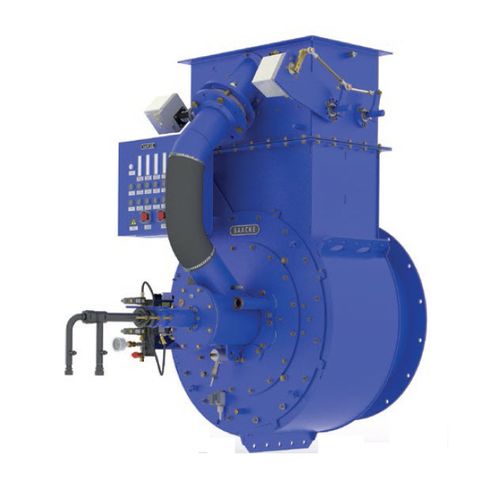
- Scrubber, membrane or adsorber performance loss caused by fouling, contamination or media deterioration, resulting in poor gas quality or reduced output
- Fan, compressor or blower failure caused by bearing, motor or impeller problems, resulting in low inert-gas pressure or loss of supply
- Analyzer or sensor drift caused by contamination or calibration faults, resulting in unreliable oxygen or process readings
- Valve or seal leakage caused by corrosion and wear, resulting in loss of gas containment or incorrect system routing
- Control, regeneration or drying failure caused by electrical, heating or sequencing faults, resulting in high moisture, poor purity or protective shutdown
- Analyzer contamination or calibration drift causes incorrect oxygen indication and may block cargo operations
- Blower, compressor or fan faults cause low gas flow and system shutdown
- Filter, membrane, adsorber or scrubber fouling reduces gas quality or increases pressure drop
- Seal, valve or piping leakage causes gas loss, air ingress or unstable deck-main pressure
- Control, purge or interlock faults cause off-specification gas, alarm conditions or automatic shutdown
- Analyzer contamination or calibration drift causes incorrect oxygen indication and may block cargo operations
- Blower, compressor or fan faults cause low gas flow and system shutdown
- Filter, membrane, adsorber or scrubber fouling reduces gas quality or increases pressure drop
- Seal, valve or piping leakage causes gas loss, air ingress or unstable deck-main pressure
- Control, purge or interlock faults cause off-specification gas, alarm conditions or automatic shutdown
- Analyzer contamination or calibration drift causes incorrect oxygen indication and may block cargo operations
- Blower, compressor or fan faults cause low gas flow and system shutdown
- Filter, membrane, adsorber or scrubber fouling reduces gas quality or increases pressure drop
- Seal, valve or piping leakage causes gas loss, air ingress or unstable deck-main pressure
- Control, purge or interlock faults cause off-specification gas, alarm conditions or automatic shutdown
- Analyzer contamination or calibration drift causes incorrect oxygen indication and may block cargo operations
- Blower, compressor or fan faults cause low gas flow and system shutdown
- Filter, membrane, adsorber or scrubber fouling reduces gas quality or increases pressure drop
- Seal, valve or piping leakage causes gas loss, air ingress or unstable deck-main pressure
- Control, purge or interlock faults cause off-specification gas, alarm conditions or automatic shutdown
- Analyzer contamination or calibration drift causes incorrect oxygen indication and may block cargo operations
- Blower, compressor or fan faults cause low gas flow and system shutdown
- Filter, membrane, adsorber or scrubber fouling reduces gas quality or increases pressure drop
- Seal, valve or piping leakage causes gas loss, air ingress or unstable deck-main pressure
- Control, purge or interlock faults cause off-specification gas, alarm conditions or automatic shutdown
- Analyzer contamination or calibration drift causes incorrect oxygen indication and may block cargo operations
- Blower, compressor or fan faults cause low gas flow and system shutdown
- Filter, membrane, adsorber or scrubber fouling reduces gas quality or increases pressure drop
- Seal, valve or piping leakage causes gas loss, air ingress or unstable deck-main pressure
- Control, purge or interlock faults cause off-specification gas, alarm conditions or automatic shutdown
- Analyzer contamination or calibration drift causes incorrect oxygen indication and may block cargo operations
- Blower, compressor or fan faults cause low gas flow and system shutdown
- Filter, membrane, adsorber or scrubber fouling reduces gas quality or increases pressure drop
- Seal, valve or piping leakage causes gas loss, air ingress or unstable deck-main pressure
- Control, purge or interlock faults cause off-specification gas, alarm conditions or automatic shutdown
- Analyzer contamination or calibration drift causes incorrect oxygen indication and may block cargo operations
- Blower, compressor or fan faults cause low gas flow and system shutdown
- Filter, membrane, adsorber or scrubber fouling reduces gas quality or increases pressure drop
- Seal, valve or piping leakage causes gas loss, air ingress or unstable deck-main pressure
- Control, purge or interlock faults cause off-specification gas, alarm conditions or automatic shutdown
- Scrubber, membrane or adsorber performance loss caused by fouling, contamination or media deterioration, resulting in poor gas quality or reduced output
- Fan, compressor or blower failure caused by bearing, motor or impeller problems, resulting in low inert-gas pressure or loss of supply
- Analyzer or sensor drift caused by contamination or calibration faults, resulting in unreliable oxygen or process readings
- Valve or seal leakage caused by corrosion and wear, resulting in loss of gas containment or incorrect system routing
- Control, regeneration or drying failure caused by electrical, heating or sequencing faults, resulting in high moisture, poor purity or protective shutdown
- Scrubber, membrane or adsorber performance loss caused by fouling, contamination or media deterioration, resulting in poor gas quality or reduced output
- Fan, compressor or blower failure caused by bearing, motor or impeller problems, resulting in low inert-gas pressure or loss of supply
- Analyzer or sensor drift caused by contamination or calibration faults, resulting in unreliable oxygen or process readings
- Valve or seal leakage caused by corrosion and wear, resulting in loss of gas containment or incorrect system routing
- Control, regeneration or drying failure caused by electrical, heating or sequencing faults, resulting in high moisture, poor purity or protective shutdown
- Analyzer contamination or calibration drift causes incorrect oxygen indication and may block cargo operations
- Blower, compressor or fan faults cause low gas flow and system shutdown
- Filter, membrane, adsorber or scrubber fouling reduces gas quality or increases pressure drop
- Seal, valve or piping leakage causes gas loss, air ingress or unstable deck-main pressure
- Control, purge or interlock faults cause off-specification gas, alarm conditions or automatic shutdown
- Scrubber, membrane or adsorber performance loss caused by fouling, contamination or media deterioration, resulting in poor gas quality or reduced output
- Fan, compressor or blower failure caused by bearing, motor or impeller problems, resulting in low inert-gas pressure or loss of supply
- Analyzer or sensor drift caused by contamination or calibration faults, resulting in unreliable oxygen or process readings
- Valve or seal leakage caused by corrosion and wear, resulting in loss of gas containment or incorrect system routing
- Control, regeneration or drying failure caused by electrical, heating or sequencing faults, resulting in high moisture, poor purity or protective shutdown
- Analyzer contamination or calibration drift causes incorrect oxygen indication and may block cargo operations
- Blower, compressor or fan faults cause low gas flow and system shutdown
- Filter, membrane, adsorber or scrubber fouling reduces gas quality or increases pressure drop
- Seal, valve or piping leakage causes gas loss, air ingress or unstable deck-main pressure
- Control, purge or interlock faults cause off-specification gas, alarm conditions or automatic shutdown
- Scrubber, membrane or adsorber performance loss caused by fouling, contamination or media deterioration, resulting in poor gas quality or reduced output
- Fan, compressor or blower failure caused by bearing, motor or impeller problems, resulting in low inert-gas pressure or loss of supply
- Analyzer or sensor drift caused by contamination or calibration faults, resulting in unreliable oxygen or process readings
- Valve or seal leakage caused by corrosion and wear, resulting in loss of gas containment or incorrect system routing
- Control, regeneration or drying failure caused by electrical, heating or sequencing faults, resulting in high moisture, poor purity or protective shutdown
- Analyzer contamination or calibration drift causes incorrect oxygen indication and may block cargo operations
- Blower, compressor or fan faults cause low gas flow and system shutdown
- Filter, membrane, adsorber or scrubber fouling reduces gas quality or increases pressure drop
- Seal, valve or piping leakage causes gas loss, air ingress or unstable deck-main pressure
- Control, purge or interlock faults cause off-specification gas, alarm conditions or automatic shutdown
- Scrubber, membrane or adsorber performance loss caused by fouling, contamination or media deterioration, resulting in poor gas quality or reduced output
- Fan, compressor or blower failure caused by bearing, motor or impeller problems, resulting in low inert-gas pressure or loss of supply
- Analyzer or sensor drift caused by contamination or calibration faults, resulting in unreliable oxygen or process readings
- Valve or seal leakage caused by corrosion and wear, resulting in loss of gas containment or incorrect system routing
- Control, regeneration or drying failure caused by electrical, heating or sequencing faults, resulting in high moisture, poor purity or protective shutdown
- Analyzer contamination or calibration drift causes incorrect oxygen indication and may block cargo operations
- Blower, compressor or fan faults cause low gas flow and system shutdown
- Filter, membrane, adsorber or scrubber fouling reduces gas quality or increases pressure drop
- Seal, valve or piping leakage causes gas loss, air ingress or unstable deck-main pressure
- Control, purge or interlock faults cause off-specification gas, alarm conditions or automatic shutdown
- Scrubber, membrane or adsorber performance loss caused by fouling, contamination or media deterioration, resulting in poor gas quality or reduced output
- Fan, compressor or blower failure caused by bearing, motor or impeller problems, resulting in low inert-gas pressure or loss of supply
- Analyzer or sensor drift caused by contamination or calibration faults, resulting in unreliable oxygen or process readings
- Valve or seal leakage caused by corrosion and wear, resulting in loss of gas containment or incorrect system routing
- Control, regeneration or drying failure caused by electrical, heating or sequencing faults, resulting in high moisture, poor purity or protective shutdown
- Scrubber, membrane or adsorber performance loss caused by fouling, contamination or media deterioration, resulting in poor gas quality or reduced output
- Fan, compressor or blower failure caused by bearing, motor or impeller problems, resulting in low inert-gas pressure or loss of supply
- Analyzer or sensor drift caused by contamination or calibration faults, resulting in unreliable oxygen or process readings
- Valve or seal leakage caused by corrosion and wear, resulting in loss of gas containment or incorrect system routing
- Control, regeneration or drying failure caused by electrical, heating or sequencing faults, resulting in high moisture, poor purity or protective shutdown
- Scrubber, membrane or adsorber performance loss caused by fouling, contamination or media deterioration, resulting in poor gas quality or reduced output
- Fan, compressor or blower failure caused by bearing, motor or impeller problems, resulting in low inert-gas pressure or loss of supply
- Analyzer or sensor drift caused by contamination or calibration faults, resulting in unreliable oxygen or process readings
- Valve or seal leakage caused by corrosion and wear, resulting in loss of gas containment or incorrect system routing
- Control, regeneration or drying failure caused by electrical, heating or sequencing faults, resulting in high moisture, poor purity or protective shutdown
- Analyzer contamination or calibration drift causes incorrect oxygen indication and may block cargo operations
- Blower, compressor or fan faults cause low gas flow and system shutdown
- Filter, membrane, adsorber or scrubber fouling reduces gas quality or increases pressure drop
- Seal, valve or piping leakage causes gas loss, air ingress or unstable deck-main pressure
- Control, purge or interlock faults cause off-specification gas, alarm conditions or automatic shutdown
- Scrubber, membrane or adsorber performance loss caused by fouling, contamination or media deterioration, resulting in poor gas quality or reduced output
- Fan, compressor or blower failure caused by bearing, motor or impeller problems, resulting in low inert-gas pressure or loss of supply
- Analyzer or sensor drift caused by contamination or calibration faults, resulting in unreliable oxygen or process readings
- Valve or seal leakage caused by corrosion and wear, resulting in loss of gas containment or incorrect system routing
- Control, regeneration or drying failure caused by electrical, heating or sequencing faults, resulting in high moisture, poor purity or protective shutdown
- Analyzer contamination or calibration drift causes incorrect oxygen indication and may block cargo operations
- Blower, compressor or fan faults cause low gas flow and system shutdown
- Filter, membrane, adsorber or scrubber fouling reduces gas quality or increases pressure drop
- Seal, valve or piping leakage causes gas loss, air ingress or unstable deck-main pressure
- Control, purge or interlock faults cause off-specification gas, alarm conditions or automatic shutdown
- Scrubber, membrane or adsorber performance loss caused by fouling, contamination or media deterioration, resulting in poor gas quality or reduced output
- Fan, compressor or blower failure caused by bearing, motor or impeller problems, resulting in low inert-gas pressure or loss of supply
- Analyzer or sensor drift caused by contamination or calibration faults, resulting in unreliable oxygen or process readings
- Valve or seal leakage caused by corrosion and wear, resulting in loss of gas containment or incorrect system routing
- Control, regeneration or drying failure caused by electrical, heating or sequencing faults, resulting in high moisture, poor purity or protective shutdown
- Analyzer contamination or calibration drift causes incorrect oxygen indication and may block cargo operations
- Blower, compressor or fan faults cause low gas flow and system shutdown
- Filter, membrane, adsorber or scrubber fouling reduces gas quality or increases pressure drop
- Seal, valve or piping leakage causes gas loss, air ingress or unstable deck-main pressure
- Control, purge or interlock faults cause off-specification gas, alarm conditions or automatic shutdown
- Scrubber, membrane or adsorber performance loss caused by fouling, contamination or media deterioration, resulting in poor gas quality or reduced output
- Fan, compressor or blower failure caused by bearing, motor or impeller problems, resulting in low inert-gas pressure or loss of supply
- Analyzer or sensor drift caused by contamination or calibration faults, resulting in unreliable oxygen or process readings
- Valve or seal leakage caused by corrosion and wear, resulting in loss of gas containment or incorrect system routing
- Control, regeneration or drying failure caused by electrical, heating or sequencing faults, resulting in high moisture, poor purity or protective shutdown
- Analyzer contamination or calibration drift causes incorrect oxygen indication and may block cargo operations
- Blower, compressor or fan faults cause low gas flow and system shutdown
- Filter, membrane, adsorber or scrubber fouling reduces gas quality or increases pressure drop
- Seal, valve or piping leakage causes gas loss, air ingress or unstable deck-main pressure
- Control, purge or interlock faults cause off-specification gas, alarm conditions or automatic shutdown
- Scrubber, membrane or adsorber performance loss caused by fouling, contamination or media deterioration, resulting in poor gas quality or reduced output
- Fan, compressor or blower failure caused by bearing, motor or impeller problems, resulting in low inert-gas pressure or loss of supply
- Analyzer or sensor drift caused by contamination or calibration faults, resulting in unreliable oxygen or process readings
- Valve or seal leakage caused by corrosion and wear, resulting in loss of gas containment or incorrect system routing
- Control, regeneration or drying failure caused by electrical, heating or sequencing faults, resulting in high moisture, poor purity or protective shutdown
- Scrubber, membrane or adsorber performance loss caused by fouling, contamination or media deterioration, resulting in poor gas quality or reduced output
- Fan, compressor or blower failure caused by bearing, motor or impeller problems, resulting in low inert-gas pressure or loss of supply
- Analyzer or sensor drift caused by contamination or calibration faults, resulting in unreliable oxygen or process readings
- Valve or seal leakage caused by corrosion and wear, resulting in loss of gas containment or incorrect system routing
- Control, regeneration or drying failure caused by electrical, heating or sequencing faults, resulting in high moisture, poor purity or protective shutdown
- Scrubber, membrane or adsorber performance loss caused by fouling, contamination or media deterioration, resulting in poor gas quality or reduced output
- Fan, compressor or blower failure caused by bearing, motor or impeller problems, resulting in low inert-gas pressure or loss of supply
- Analyzer or sensor drift caused by contamination or calibration faults, resulting in unreliable oxygen or process readings
- Valve or seal leakage caused by corrosion and wear, resulting in loss of gas containment or incorrect system routing
- Control, regeneration or drying failure caused by electrical, heating or sequencing faults, resulting in high moisture, poor purity or protective shutdown
- Analyzer contamination or calibration drift causes incorrect oxygen indication and may block cargo operations
- Blower, compressor or fan faults cause low gas flow and system shutdown
- Filter, membrane, adsorber or scrubber fouling reduces gas quality or increases pressure drop
- Seal, valve or piping leakage causes gas loss, air ingress or unstable deck-main pressure
- Control, purge or interlock faults cause off-specification gas, alarm conditions or automatic shutdown
- Scrubber, membrane or adsorber performance loss caused by fouling, contamination or media deterioration, resulting in poor gas quality or reduced output
- Fan, compressor or blower failure caused by bearing, motor or impeller problems, resulting in low inert-gas pressure or loss of supply
- Analyzer or sensor drift caused by contamination or calibration faults, resulting in unreliable oxygen or process readings
- Valve or seal leakage caused by corrosion and wear, resulting in loss of gas containment or incorrect system routing
- Control, regeneration or drying failure caused by electrical, heating or sequencing faults, resulting in high moisture, poor purity or protective shutdown
- Analyzer contamination or calibration drift causes incorrect oxygen indication and may block cargo operations
- Blower, compressor or fan faults cause low gas flow and system shutdown
- Filter, membrane, adsorber or scrubber fouling reduces gas quality or increases pressure drop
- Seal, valve or piping leakage causes gas loss, air ingress or unstable deck-main pressure
- Control, purge or interlock faults cause off-specification gas, alarm conditions or automatic shutdown
- Scrubber, membrane or adsorber performance loss caused by fouling, contamination or media deterioration, resulting in poor gas quality or reduced output
- Fan, compressor or blower failure caused by bearing, motor or impeller problems, resulting in low inert-gas pressure or loss of supply
- Analyzer or sensor drift caused by contamination or calibration faults, resulting in unreliable oxygen or process readings
- Valve or seal leakage caused by corrosion and wear, resulting in loss of gas containment or incorrect system routing
- Control, regeneration or drying failure caused by electrical, heating or sequencing faults, resulting in high moisture, poor purity or protective shutdown
- Analyzer contamination or calibration drift causes incorrect oxygen indication and may block cargo operations
- Blower, compressor or fan faults cause low gas flow and system shutdown
- Filter, membrane, adsorber or scrubber fouling reduces gas quality or increases pressure drop
- Seal, valve or piping leakage causes gas loss, air ingress or unstable deck-main pressure
- Control, purge or interlock faults cause off-specification gas, alarm conditions or automatic shutdown
- Scrubber, membrane or adsorber performance loss caused by fouling, contamination or media deterioration, resulting in poor gas quality or reduced output
- Fan, compressor or blower failure caused by bearing, motor or impeller problems, resulting in low inert-gas pressure or loss of supply
- Analyzer or sensor drift caused by contamination or calibration faults, resulting in unreliable oxygen or process readings
- Valve or seal leakage caused by corrosion and wear, resulting in loss of gas containment or incorrect system routing
- Control, regeneration or drying failure caused by electrical, heating or sequencing faults, resulting in high moisture, poor purity or protective shutdown
- Analyzer contamination or calibration drift causes incorrect oxygen indication and may block cargo operations
- Blower, compressor or fan faults cause low gas flow and system shutdown
- Filter, membrane, adsorber or scrubber fouling reduces gas quality or increases pressure drop
- Seal, valve or piping leakage causes gas loss, air ingress or unstable deck-main pressure
- Control, purge or interlock faults cause off-specification gas, alarm conditions or automatic shutdown
- Scrubber, membrane or adsorber performance loss caused by fouling, contamination or media deterioration, resulting in poor gas quality or reduced output
- Fan, compressor or blower failure caused by bearing, motor or impeller problems, resulting in low inert-gas pressure or loss of supply
- Analyzer or sensor drift caused by contamination or calibration faults, resulting in unreliable oxygen or process readings
- Valve or seal leakage caused by corrosion and wear, resulting in loss of gas containment or incorrect system routing
- Control, regeneration or drying failure caused by electrical, heating or sequencing faults, resulting in high moisture, poor purity or protective shutdown
- Scrubber, membrane or adsorber performance loss caused by fouling, contamination or media deterioration, resulting in poor gas quality or reduced output
- Fan, compressor or blower failure caused by bearing, motor or impeller problems, resulting in low inert-gas pressure or loss of supply
- Analyzer or sensor drift caused by contamination or calibration faults, resulting in unreliable oxygen or process readings
- Valve or seal leakage caused by corrosion and wear, resulting in loss of gas containment or incorrect system routing
- Control, regeneration or drying failure caused by electrical, heating or sequencing faults, resulting in high moisture, poor purity or protective shutdown
- Scrubber, membrane or adsorber performance loss caused by fouling, contamination or media deterioration, resulting in poor gas quality or reduced output
- Fan, compressor or blower failure caused by bearing, motor or impeller problems, resulting in low inert-gas pressure or loss of supply
- Analyzer or sensor drift caused by contamination or calibration faults, resulting in unreliable oxygen or process readings
- Valve or seal leakage caused by corrosion and wear, resulting in loss of gas containment or incorrect system routing
- Control, regeneration or drying failure caused by electrical, heating or sequencing faults, resulting in high moisture, poor purity or protective shutdown
- Analyzer contamination or calibration drift causes incorrect oxygen indication and may block cargo operations
- Blower, compressor or fan faults cause low gas flow and system shutdown
- Filter, membrane, adsorber or scrubber fouling reduces gas quality or increases pressure drop
- Seal, valve or piping leakage causes gas loss, air ingress or unstable deck-main pressure
- Control, purge or interlock faults cause off-specification gas, alarm conditions or automatic shutdown
- Scrubber, membrane or adsorber performance loss caused by fouling, contamination or media deterioration, resulting in poor gas quality or reduced output
- Fan, compressor or blower failure caused by bearing, motor or impeller problems, resulting in low inert-gas pressure or loss of supply
- Analyzer or sensor drift caused by contamination or calibration faults, resulting in unreliable oxygen or process readings
- Valve or seal leakage caused by corrosion and wear, resulting in loss of gas containment or incorrect system routing
- Control, regeneration or drying failure caused by electrical, heating or sequencing faults, resulting in high moisture, poor purity or protective shutdown
- Analyzer contamination or calibration drift causes incorrect oxygen indication and may block cargo operations
- Blower, compressor or fan faults cause low gas flow and system shutdown
- Filter, membrane, adsorber or scrubber fouling reduces gas quality or increases pressure drop
- Seal, valve or piping leakage causes gas loss, air ingress or unstable deck-main pressure
- Control, purge or interlock faults cause off-specification gas, alarm conditions or automatic shutdown
- Scrubber, membrane or adsorber performance loss caused by fouling, contamination or media deterioration, resulting in poor gas quality or reduced output
- Fan, compressor or blower failure caused by bearing, motor or impeller problems, resulting in low inert-gas pressure or loss of supply
- Analyzer or sensor drift caused by contamination or calibration faults, resulting in unreliable oxygen or process readings
- Valve or seal leakage caused by corrosion and wear, resulting in loss of gas containment or incorrect system routing
- Control, regeneration or drying failure caused by electrical, heating or sequencing faults, resulting in high moisture, poor purity or protective shutdown
- Analyzer contamination or calibration drift causes incorrect oxygen indication and may block cargo operations
- Blower, compressor or fan faults cause low gas flow and system shutdown
- Filter, membrane, adsorber or scrubber fouling reduces gas quality or increases pressure drop
- Seal, valve or piping leakage causes gas loss, air ingress or unstable deck-main pressure
- Control, purge or interlock faults cause off-specification gas, alarm conditions or automatic shutdown
- Scrubber, membrane or adsorber performance loss caused by fouling, contamination or media deterioration, resulting in poor gas quality or reduced output
- Fan, compressor or blower failure caused by bearing, motor or impeller problems, resulting in low inert-gas pressure or loss of supply
- Analyzer or sensor drift caused by contamination or calibration faults, resulting in unreliable oxygen or process readings
- Valve or seal leakage caused by corrosion and wear, resulting in loss of gas containment or incorrect system routing
- Control, regeneration or drying failure caused by electrical, heating or sequencing faults, resulting in high moisture, poor purity or protective shutdown
- Analyzer contamination or calibration drift causes incorrect oxygen indication and may block cargo operations
- Blower, compressor or fan faults cause low gas flow and system shutdown
- Filter, membrane, adsorber or scrubber fouling reduces gas quality or increases pressure drop
- Seal, valve or piping leakage causes gas loss, air ingress or unstable deck-main pressure
- Control, purge or interlock faults cause off-specification gas, alarm conditions or automatic shutdown
- Scrubber, membrane or adsorber performance loss caused by fouling, contamination or media deterioration, resulting in poor gas quality or reduced output
- Fan, compressor or blower failure caused by bearing, motor or impeller problems, resulting in low inert-gas pressure or loss of supply
- Analyzer or sensor drift caused by contamination or calibration faults, resulting in unreliable oxygen or process readings
- Valve or seal leakage caused by corrosion and wear, resulting in loss of gas containment or incorrect system routing
- Control, regeneration or drying failure caused by electrical, heating or sequencing faults, resulting in high moisture, poor purity or protective shutdown
- Scrubber, membrane or adsorber performance loss caused by fouling, contamination or media deterioration, resulting in poor gas quality or reduced output
- Fan, compressor or blower failure caused by bearing, motor or impeller problems, resulting in low inert-gas pressure or loss of supply
- Analyzer or sensor drift caused by contamination or calibration faults, resulting in unreliable oxygen or process readings
- Valve or seal leakage caused by corrosion and wear, resulting in loss of gas containment or incorrect system routing
- Control, regeneration or drying failure caused by electrical, heating or sequencing faults, resulting in high moisture, poor purity or protective shutdown
- Scrubber, membrane or adsorber performance loss caused by fouling, contamination or media deterioration, resulting in poor gas quality or reduced output
- Fan, compressor or blower failure caused by bearing, motor or impeller problems, resulting in low inert-gas pressure or loss of supply
- Analyzer or sensor drift caused by contamination or calibration faults, resulting in unreliable oxygen or process readings
- Valve or seal leakage caused by corrosion and wear, resulting in loss of gas containment or incorrect system routing
- Control, regeneration or drying failure caused by electrical, heating or sequencing faults, resulting in high moisture, poor purity or protective shutdown
- Analyzer contamination or calibration drift causes incorrect oxygen indication and may block cargo operations
- Blower, compressor or fan faults cause low gas flow and system shutdown
- Filter, membrane, adsorber or scrubber fouling reduces gas quality or increases pressure drop
- Seal, valve or piping leakage causes gas loss, air ingress or unstable deck-main pressure
- Control, purge or interlock faults cause off-specification gas, alarm conditions or automatic shutdown
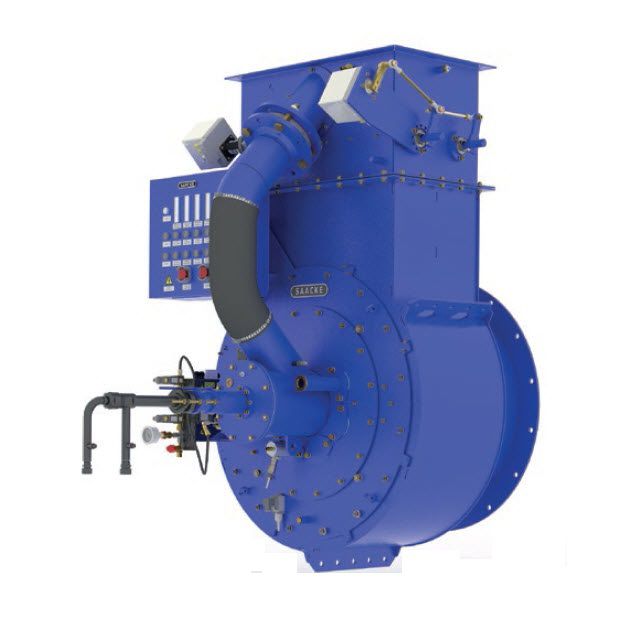
- Scrubber, membrane or adsorber performance loss caused by fouling, contamination or media deterioration, resulting in poor gas quality or reduced output
- Fan, compressor or blower failure caused by bearing, motor or impeller problems, resulting in low inert-gas pressure or loss of supply
- Analyzer or sensor drift caused by contamination or calibration faults, resulting in unreliable oxygen or process readings
- Valve or seal leakage caused by corrosion and wear, resulting in loss of gas containment or incorrect system routing
- Control, regeneration or drying failure caused by electrical, heating or sequencing faults, resulting in high moisture, poor purity or protective shutdown
- Analyzer contamination or calibration drift causes incorrect oxygen indication and may block cargo operations
- Blower, compressor or fan faults cause low gas flow and system shutdown
- Filter, membrane, adsorber or scrubber fouling reduces gas quality or increases pressure drop
- Seal, valve or piping leakage causes gas loss, air ingress or unstable deck-main pressure
- Control, purge or interlock faults cause off-specification gas, alarm conditions or automatic shutdown
- Scrubber, membrane or adsorber performance loss caused by fouling, contamination or media deterioration, resulting in poor gas quality or reduced output
- Fan, compressor or blower failure caused by bearing, motor or impeller problems, resulting in low inert-gas pressure or loss of supply
- Analyzer or sensor drift caused by contamination or calibration faults, resulting in unreliable oxygen or process readings
- Valve or seal leakage caused by corrosion and wear, resulting in loss of gas containment or incorrect system routing
- Control, regeneration or drying failure caused by electrical, heating or sequencing faults, resulting in high moisture, poor purity or protective shutdown
- Analyzer contamination or calibration drift causes incorrect oxygen indication and may block cargo operations
- Blower, compressor or fan faults cause low gas flow and system shutdown
- Filter, membrane, adsorber or scrubber fouling reduces gas quality or increases pressure drop
- Seal, valve or piping leakage causes gas loss, air ingress or unstable deck-main pressure
- Control, purge or interlock faults cause off-specification gas, alarm conditions or automatic shutdown
- Scrubber, membrane or adsorber performance loss caused by fouling, contamination or media deterioration, resulting in poor gas quality or reduced output
- Fan, compressor or blower failure caused by bearing, motor or impeller problems, resulting in low inert-gas pressure or loss of supply
- Analyzer or sensor drift caused by contamination or calibration faults, resulting in unreliable oxygen or process readings
- Valve or seal leakage caused by corrosion and wear, resulting in loss of gas containment or incorrect system routing
- Control, regeneration or drying failure caused by electrical, heating or sequencing faults, resulting in high moisture, poor purity or protective shutdown
- Analyzer contamination or calibration drift causes incorrect oxygen indication and may block cargo operations
- Blower, compressor or fan faults cause low gas flow and system shutdown
- Filter, membrane, adsorber or scrubber fouling reduces gas quality or increases pressure drop
- Seal, valve or piping leakage causes gas loss, air ingress or unstable deck-main pressure
- Control, purge or interlock faults cause off-specification gas, alarm conditions or automatic shutdown
- Scrubber, membrane or adsorber performance loss caused by fouling, contamination or media deterioration, resulting in poor gas quality or reduced output
- Fan, compressor or blower failure caused by bearing, motor or impeller problems, resulting in low inert-gas pressure or loss of supply
- Analyzer or sensor drift caused by contamination or calibration faults, resulting in unreliable oxygen or process readings
- Valve or seal leakage caused by corrosion and wear, resulting in loss of gas containment or incorrect system routing
- Control, regeneration or drying failure caused by electrical, heating or sequencing faults, resulting in high moisture, poor purity or protective shutdown
- Scrubber, membrane or adsorber performance loss caused by fouling, contamination or media deterioration, resulting in poor gas quality or reduced output
- Fan, compressor or blower failure caused by bearing, motor or impeller problems, resulting in low inert-gas pressure or loss of supply
- Analyzer or sensor drift caused by contamination or calibration faults, resulting in unreliable oxygen or process readings
- Valve or seal leakage caused by corrosion and wear, resulting in loss of gas containment or incorrect system routing
- Control, regeneration or drying failure caused by electrical, heating or sequencing faults, resulting in high moisture, poor purity or protective shutdown
- Scrubber, membrane or adsorber performance loss caused by fouling, contamination or media deterioration, resulting in poor gas quality or reduced output
- Fan, compressor or blower failure caused by bearing, motor or impeller problems, resulting in low inert-gas pressure or loss of supply
- Analyzer or sensor drift caused by contamination or calibration faults, resulting in unreliable oxygen or process readings
- Valve or seal leakage caused by corrosion and wear, resulting in loss of gas containment or incorrect system routing
- Control, regeneration or drying failure caused by electrical, heating or sequencing faults, resulting in high moisture, poor purity or protective shutdown
- Analyzer contamination or calibration drift causes incorrect oxygen indication and may block cargo operations
- Blower, compressor or fan faults cause low gas flow and system shutdown
- Filter, membrane, adsorber or scrubber fouling reduces gas quality or increases pressure drop
- Seal, valve or piping leakage causes gas loss, air ingress or unstable deck-main pressure
- Control, purge or interlock faults cause off-specification gas, alarm conditions or automatic shutdown
- Scrubber, membrane or adsorber performance loss caused by fouling, contamination or media deterioration, resulting in poor gas quality or reduced output
- Fan, compressor or blower failure caused by bearing, motor or impeller problems, resulting in low inert-gas pressure or loss of supply
- Analyzer or sensor drift caused by contamination or calibration faults, resulting in unreliable oxygen or process readings
- Valve or seal leakage caused by corrosion and wear, resulting in loss of gas containment or incorrect system routing
- Control, regeneration or drying failure caused by electrical, heating or sequencing faults, resulting in high moisture, poor purity or protective shutdown
- Analyzer contamination or calibration drift causes incorrect oxygen indication and may block cargo operations
- Blower, compressor or fan faults cause low gas flow and system shutdown
- Filter, membrane, adsorber or scrubber fouling reduces gas quality or increases pressure drop
- Seal, valve or piping leakage causes gas loss, air ingress or unstable deck-main pressure
- Control, purge or interlock faults cause off-specification gas, alarm conditions or automatic shutdown
- Scrubber, membrane or adsorber performance loss caused by fouling, contamination or media deterioration, resulting in poor gas quality or reduced output
- Fan, compressor or blower failure caused by bearing, motor or impeller problems, resulting in low inert-gas pressure or loss of supply
- Analyzer or sensor drift caused by contamination or calibration faults, resulting in unreliable oxygen or process readings
- Valve or seal leakage caused by corrosion and wear, resulting in loss of gas containment or incorrect system routing
- Control, regeneration or drying failure caused by electrical, heating or sequencing faults, resulting in high moisture, poor purity or protective shutdown
- Analyzer contamination or calibration drift causes incorrect oxygen indication and may block cargo operations
- Blower, compressor or fan faults cause low gas flow and system shutdown
- Filter, membrane, adsorber or scrubber fouling reduces gas quality or increases pressure drop
- Seal, valve or piping leakage causes gas loss, air ingress or unstable deck-main pressure
- Control, purge or interlock faults cause off-specification gas, alarm conditions or automatic shutdown
- Scrubber, membrane or adsorber performance loss caused by fouling, contamination or media deterioration, resulting in poor gas quality or reduced output
- Fan, compressor or blower failure caused by bearing, motor or impeller problems, resulting in low inert-gas pressure or loss of supply
- Analyzer or sensor drift caused by contamination or calibration faults, resulting in unreliable oxygen or process readings
- Valve or seal leakage caused by corrosion and wear, resulting in loss of gas containment or incorrect system routing
- Control, regeneration or drying failure caused by electrical, heating or sequencing faults, resulting in high moisture, poor purity or protective shutdown
- Analyzer contamination or calibration drift causes incorrect oxygen indication and may block cargo operations
- Blower, compressor or fan faults cause low gas flow and system shutdown
- Filter, membrane, adsorber or scrubber fouling reduces gas quality or increases pressure drop
- Seal, valve or piping leakage causes gas loss, air ingress or unstable deck-main pressure
- Control, purge or interlock faults cause off-specification gas, alarm conditions or automatic shutdown
- Scrubber, membrane or adsorber performance loss caused by fouling, contamination or media deterioration, resulting in poor gas quality or reduced output
- Fan, compressor or blower failure caused by bearing, motor or impeller problems, resulting in low inert-gas pressure or loss of supply
- Analyzer or sensor drift caused by contamination or calibration faults, resulting in unreliable oxygen or process readings
- Valve or seal leakage caused by corrosion and wear, resulting in loss of gas containment or incorrect system routing
- Control, regeneration or drying failure caused by electrical, heating or sequencing faults, resulting in high moisture, poor purity or protective shutdown
- Scrubber, membrane or adsorber performance loss caused by fouling, contamination or media deterioration, resulting in poor gas quality or reduced output
- Fan, compressor or blower failure caused by bearing, motor or impeller problems, resulting in low inert-gas pressure or loss of supply
- Analyzer or sensor drift caused by contamination or calibration faults, resulting in unreliable oxygen or process readings
- Valve or seal leakage caused by corrosion and wear, resulting in loss of gas containment or incorrect system routing
- Control, regeneration or drying failure caused by electrical, heating or sequencing faults, resulting in high moisture, poor purity or protective shutdown
- Scrubber, membrane or adsorber performance loss caused by fouling, contamination or media deterioration, resulting in poor gas quality or reduced output
- Fan, compressor or blower failure caused by bearing, motor or impeller problems, resulting in low inert-gas pressure or loss of supply
- Analyzer or sensor drift caused by contamination or calibration faults, resulting in unreliable oxygen or process readings
- Valve or seal leakage caused by corrosion and wear, resulting in loss of gas containment or incorrect system routing
- Control, regeneration or drying failure caused by electrical, heating or sequencing faults, resulting in high moisture, poor purity or protective shutdown
- Analyzer contamination or calibration drift causes incorrect oxygen indication and may block cargo operations
- Blower, compressor or fan faults cause low gas flow and system shutdown
- Filter, membrane, adsorber or scrubber fouling reduces gas quality or increases pressure drop
- Seal, valve or piping leakage causes gas loss, air ingress or unstable deck-main pressure
- Control, purge or interlock faults cause off-specification gas, alarm conditions or automatic shutdown
- Scrubber, membrane or adsorber performance loss caused by fouling, contamination or media deterioration, resulting in poor gas quality or reduced output
- Fan, compressor or blower failure caused by bearing, motor or impeller problems, resulting in low inert-gas pressure or loss of supply
- Analyzer or sensor drift caused by contamination or calibration faults, resulting in unreliable oxygen or process readings
- Valve or seal leakage caused by corrosion and wear, resulting in loss of gas containment or incorrect system routing
- Control, regeneration or drying failure caused by electrical, heating or sequencing faults, resulting in high moisture, poor purity or protective shutdown
- Analyzer contamination or calibration drift causes incorrect oxygen indication and may block cargo operations
- Blower, compressor or fan faults cause low gas flow and system shutdown
- Filter, membrane, adsorber or scrubber fouling reduces gas quality or increases pressure drop
- Seal, valve or piping leakage causes gas loss, air ingress or unstable deck-main pressure
- Control, purge or interlock faults cause off-specification gas, alarm conditions or automatic shutdown
- Scrubber, membrane or adsorber performance loss caused by fouling, contamination or media deterioration, resulting in poor gas quality or reduced output
- Fan, compressor or blower failure caused by bearing, motor or impeller problems, resulting in low inert-gas pressure or loss of supply
- Analyzer or sensor drift caused by contamination or calibration faults, resulting in unreliable oxygen or process readings
- Valve or seal leakage caused by corrosion and wear, resulting in loss of gas containment or incorrect system routing
- Control, regeneration or drying failure caused by electrical, heating or sequencing faults, resulting in high moisture, poor purity or protective shutdown
- Analyzer contamination or calibration drift causes incorrect oxygen indication and may block cargo operations
- Blower, compressor or fan faults cause low gas flow and system shutdown
- Filter, membrane, adsorber or scrubber fouling reduces gas quality or increases pressure drop
- Seal, valve or piping leakage causes gas loss, air ingress or unstable deck-main pressure
- Control, purge or interlock faults cause off-specification gas, alarm conditions or automatic shutdown
- Scrubber, membrane or adsorber performance loss caused by fouling, contamination or media deterioration, resulting in poor gas quality or reduced output
- Fan, compressor or blower failure caused by bearing, motor or impeller problems, resulting in low inert-gas pressure or loss of supply
- Analyzer or sensor drift caused by contamination or calibration faults, resulting in unreliable oxygen or process readings
- Valve or seal leakage caused by corrosion and wear, resulting in loss of gas containment or incorrect system routing
- Control, regeneration or drying failure caused by electrical, heating or sequencing faults, resulting in high moisture, poor purity or protective shutdown
- Analyzer contamination or calibration drift causes incorrect oxygen indication and may block cargo operations
- Blower, compressor or fan faults cause low gas flow and system shutdown
- Filter, membrane, adsorber or scrubber fouling reduces gas quality or increases pressure drop
- Seal, valve or piping leakage causes gas loss, air ingress or unstable deck-main pressure
- Control, purge or interlock faults cause off-specification gas, alarm conditions or automatic shutdown
- Scrubber, membrane or adsorber performance loss caused by fouling, contamination or media deterioration, resulting in poor gas quality or reduced output
- Fan, compressor or blower failure caused by bearing, motor or impeller problems, resulting in low inert-gas pressure or loss of supply
- Analyzer or sensor drift caused by contamination or calibration faults, resulting in unreliable oxygen or process readings
- Valve or seal leakage caused by corrosion and wear, resulting in loss of gas containment or incorrect system routing
- Control, regeneration or drying failure caused by electrical, heating or sequencing faults, resulting in high moisture, poor purity or protective shutdown
- Scrubber, membrane or adsorber performance loss caused by fouling, contamination or media deterioration, resulting in poor gas quality or reduced output
- Fan, compressor or blower failure caused by bearing, motor or impeller problems, resulting in low inert-gas pressure or loss of supply
- Analyzer or sensor drift caused by contamination or calibration faults, resulting in unreliable oxygen or process readings
- Valve or seal leakage caused by corrosion and wear, resulting in loss of gas containment or incorrect system routing
- Control, regeneration or drying failure caused by electrical, heating or sequencing faults, resulting in high moisture, poor purity or protective shutdown
- Scrubber, membrane or adsorber performance loss caused by fouling, contamination or media deterioration, resulting in poor gas quality or reduced output
- Fan, compressor or blower failure caused by bearing, motor or impeller problems, resulting in low inert-gas pressure or loss of supply
- Analyzer or sensor drift caused by contamination or calibration faults, resulting in unreliable oxygen or process readings
- Valve or seal leakage caused by corrosion and wear, resulting in loss of gas containment or incorrect system routing
- Control, regeneration or drying failure caused by electrical, heating or sequencing faults, resulting in high moisture, poor purity or protective shutdown
- Analyzer contamination or calibration drift causes incorrect oxygen indication and may block cargo operations
- Blower, compressor or fan faults cause low gas flow and system shutdown
- Filter, membrane, adsorber or scrubber fouling reduces gas quality or increases pressure drop
- Seal, valve or piping leakage causes gas loss, air ingress or unstable deck-main pressure
- Control, purge or interlock faults cause off-specification gas, alarm conditions or automatic shutdown
- Scrubber, membrane or adsorber performance loss caused by fouling, contamination or media deterioration, resulting in poor gas quality or reduced output
- Fan, compressor or blower failure caused by bearing, motor or impeller problems, resulting in low inert-gas pressure or loss of supply
- Analyzer or sensor drift caused by contamination or calibration faults, resulting in unreliable oxygen or process readings
- Valve or seal leakage caused by corrosion and wear, resulting in loss of gas containment or incorrect system routing
- Control, regeneration or drying failure caused by electrical, heating or sequencing faults, resulting in high moisture, poor purity or protective shutdown
- Analyzer contamination or calibration drift causes incorrect oxygen indication and may block cargo operations
- Blower, compressor or fan faults cause low gas flow and system shutdown
- Filter, membrane, adsorber or scrubber fouling reduces gas quality or increases pressure drop
- Seal, valve or piping leakage causes gas loss, air ingress or unstable deck-main pressure
- Control, purge or interlock faults cause off-specification gas, alarm conditions or automatic shutdown
- Scrubber, membrane or adsorber performance loss caused by fouling, contamination or media deterioration, resulting in poor gas quality or reduced output
- Fan, compressor or blower failure caused by bearing, motor or impeller problems, resulting in low inert-gas pressure or loss of supply
- Analyzer or sensor drift caused by contamination or calibration faults, resulting in unreliable oxygen or process readings
- Valve or seal leakage caused by corrosion and wear, resulting in loss of gas containment or incorrect system routing
- Control, regeneration or drying failure caused by electrical, heating or sequencing faults, resulting in high moisture, poor purity or protective shutdown
- Analyzer contamination or calibration drift causes incorrect oxygen indication and may block cargo operations
- Blower, compressor or fan faults cause low gas flow and system shutdown
- Filter, membrane, adsorber or scrubber fouling reduces gas quality or increases pressure drop
- Seal, valve or piping leakage causes gas loss, air ingress or unstable deck-main pressure
- Control, purge or interlock faults cause off-specification gas, alarm conditions or automatic shutdown
- Scrubber, membrane or adsorber performance loss caused by fouling, contamination or media deterioration, resulting in poor gas quality or reduced output
- Fan, compressor or blower failure caused by bearing, motor or impeller problems, resulting in low inert-gas pressure or loss of supply
- Analyzer or sensor drift caused by contamination or calibration faults, resulting in unreliable oxygen or process readings
- Valve or seal leakage caused by corrosion and wear, resulting in loss of gas containment or incorrect system routing
- Control, regeneration or drying failure caused by electrical, heating or sequencing faults, resulting in high moisture, poor purity or protective shutdown
- Analyzer contamination or calibration drift causes incorrect oxygen indication and may block cargo operations
- Blower, compressor or fan faults cause low gas flow and system shutdown
- Filter, membrane, adsorber or scrubber fouling reduces gas quality or increases pressure drop
- Seal, valve or piping leakage causes gas loss, air ingress or unstable deck-main pressure
- Control, purge or interlock faults cause off-specification gas, alarm conditions or automatic shutdown
- Scrubber, membrane or adsorber performance loss caused by fouling, contamination or media deterioration, resulting in poor gas quality or reduced output
- Fan, compressor or blower failure caused by bearing, motor or impeller problems, resulting in low inert-gas pressure or loss of supply
- Analyzer or sensor drift caused by contamination or calibration faults, resulting in unreliable oxygen or process readings
- Valve or seal leakage caused by corrosion and wear, resulting in loss of gas containment or incorrect system routing
- Control, regeneration or drying failure caused by electrical, heating or sequencing faults, resulting in high moisture, poor purity or protective shutdown
- Scrubber, membrane or adsorber performance loss caused by fouling, contamination or media deterioration, resulting in poor gas quality or reduced output
- Fan, compressor or blower failure caused by bearing, motor or impeller problems, resulting in low inert-gas pressure or loss of supply
- Analyzer or sensor drift caused by contamination or calibration faults, resulting in unreliable oxygen or process readings
- Valve or seal leakage caused by corrosion and wear, resulting in loss of gas containment or incorrect system routing
- Control, regeneration or drying failure caused by electrical, heating or sequencing faults, resulting in high moisture, poor purity or protective shutdown
- Seal, gasket or process-connection leakage caused by wear, thermal cycling, corrosion or cargo incompatibility, resulting in cargo or vapor leakage
- Valve, actuator, pump or drive failure caused by sticking, wear, electrical or hydraulic faults, resulting in incorrect routing or reduced cargo-handling capacity
- Sensor or measuring-element fouling or drift caused by cargo deposits, contamination or calibration error, resulting in implausible readings or alarms
- Process fouling, icing or blockage caused by cargo residue, temperature conditions or debris, resulting in restricted flow or unstable operation
- Control, shutdown or hazardous-area electrical fault caused by wiring, electronics or configuration problems, resulting in unavailable remote operation or protective trips
- Scrubber, membrane or adsorber performance loss caused by fouling, contamination or media deterioration, resulting in poor gas quality or reduced output
- Fan, compressor or blower failure caused by bearing, motor or impeller problems, resulting in low inert-gas pressure or loss of supply
- Analyzer or sensor drift caused by contamination or calibration faults, resulting in unreliable oxygen or process readings
- Valve or seal leakage caused by corrosion and wear, resulting in loss of gas containment or incorrect system routing
- Control, regeneration or drying failure caused by electrical, heating or sequencing faults, resulting in high moisture, poor purity or protective shutdown
- Scrubber, membrane or adsorber performance loss caused by fouling, contamination or media deterioration, resulting in poor gas quality or reduced output
- Fan, compressor or blower failure caused by bearing, motor or impeller problems, resulting in low inert-gas pressure or loss of supply
- Analyzer or sensor drift caused by contamination or calibration faults, resulting in unreliable oxygen or process readings
- Valve or seal leakage caused by corrosion and wear, resulting in loss of gas containment or incorrect system routing
- Control, regeneration or drying failure caused by electrical, heating or sequencing faults, resulting in high moisture, poor purity or protective shutdown
- Scrubber, membrane or adsorber performance loss caused by fouling, contamination or media deterioration, resulting in poor gas quality or reduced output
- Fan, compressor or blower failure caused by bearing, motor or impeller problems, resulting in low inert-gas pressure or loss of supply
- Analyzer or sensor drift caused by contamination or calibration faults, resulting in unreliable oxygen or process readings
- Valve or seal leakage caused by corrosion and wear, resulting in loss of gas containment or incorrect system routing
- Control, regeneration or drying failure caused by electrical, heating or sequencing faults, resulting in high moisture, poor purity or protective shutdown
- Scrubber, membrane or adsorber performance loss caused by fouling, contamination or media deterioration, resulting in poor gas quality or reduced output
- Fan, compressor or blower failure caused by bearing, motor or impeller problems, resulting in low inert-gas pressure or loss of supply
- Analyzer or sensor drift caused by contamination or calibration faults, resulting in unreliable oxygen or process readings
- Valve or seal leakage caused by corrosion and wear, resulting in loss of gas containment or incorrect system routing
- Control, regeneration or drying failure caused by electrical, heating or sequencing faults, resulting in high moisture, poor purity or protective shutdown
- Scrubber, membrane or adsorber performance loss caused by fouling, contamination or media deterioration, resulting in poor gas quality or reduced output
- Fan, compressor or blower failure caused by bearing, motor or impeller problems, resulting in low inert-gas pressure or loss of supply
- Analyzer or sensor drift caused by contamination or calibration faults, resulting in unreliable oxygen or process readings
- Valve or seal leakage caused by corrosion and wear, resulting in loss of gas containment or incorrect system routing
- Control, regeneration or drying failure caused by electrical, heating or sequencing faults, resulting in high moisture, poor purity or protective shutdown
- Scrubber, membrane or adsorber performance loss caused by fouling, contamination or media deterioration, resulting in poor gas quality or reduced output
- Fan, compressor or blower failure caused by bearing, motor or impeller problems, resulting in low inert-gas pressure or loss of supply
- Analyzer or sensor drift caused by contamination or calibration faults, resulting in unreliable oxygen or process readings
- Valve or seal leakage caused by corrosion and wear, resulting in loss of gas containment or incorrect system routing
- Control, regeneration or drying failure caused by electrical, heating or sequencing faults, resulting in high moisture, poor purity or protective shutdown
- Scrubber, membrane or adsorber performance loss caused by fouling, contamination or media deterioration, resulting in poor gas quality or reduced output
- Fan, compressor or blower failure caused by bearing, motor or impeller problems, resulting in low inert-gas pressure or loss of supply
- Analyzer or sensor drift caused by contamination or calibration faults, resulting in unreliable oxygen or process readings
- Valve or seal leakage caused by corrosion and wear, resulting in loss of gas containment or incorrect system routing
- Control, regeneration or drying failure caused by electrical, heating or sequencing faults, resulting in high moisture, poor purity or protective shutdown
- Scrubber, membrane or adsorber performance loss caused by fouling, contamination or media deterioration, resulting in poor gas quality or reduced output
- Fan, compressor or blower failure caused by bearing, motor or impeller problems, resulting in low inert-gas pressure or loss of supply
- Analyzer or sensor drift caused by contamination or calibration faults, resulting in unreliable oxygen or process readings
- Valve or seal leakage caused by corrosion and wear, resulting in loss of gas containment or incorrect system routing
- Control, regeneration or drying failure caused by electrical, heating or sequencing faults, resulting in high moisture, poor purity or protective shutdown
- Scrubber, membrane or adsorber performance loss caused by fouling, contamination or media deterioration, resulting in poor gas quality or reduced output
- Fan, compressor or blower failure caused by bearing, motor or impeller problems, resulting in low inert-gas pressure or loss of supply
- Analyzer or sensor drift caused by contamination or calibration faults, resulting in unreliable oxygen or process readings
- Valve or seal leakage caused by corrosion and wear, resulting in loss of gas containment or incorrect system routing
- Control, regeneration or drying failure caused by electrical, heating or sequencing faults, resulting in high moisture, poor purity or protective shutdown
- Seal, gasket or process-connection leakage caused by wear, thermal cycling, corrosion or cargo incompatibility, resulting in cargo or vapor leakage
- Valve, actuator, pump or drive failure caused by sticking, wear, electrical or hydraulic faults, resulting in incorrect routing or reduced cargo-handling capacity
- Sensor or measuring-element fouling or drift caused by cargo deposits, contamination or calibration error, resulting in implausible readings or alarms
- Process fouling, icing or blockage caused by cargo residue, temperature conditions or debris, resulting in restricted flow or unstable operation
- Control, shutdown or hazardous-area electrical fault caused by wiring, electronics or configuration problems, resulting in unavailable remote operation or protective trips
- Scrubber, membrane or adsorber performance loss caused by fouling, contamination or media deterioration, resulting in poor gas quality or reduced output
- Fan, compressor or blower failure caused by bearing, motor or impeller problems, resulting in low inert-gas pressure or loss of supply
- Analyzer or sensor drift caused by contamination or calibration faults, resulting in unreliable oxygen or process readings
- Valve or seal leakage caused by corrosion and wear, resulting in loss of gas containment or incorrect system routing
- Control, regeneration or drying failure caused by electrical, heating or sequencing faults, resulting in high moisture, poor purity or protective shutdown
- Scrubber, membrane or adsorber performance loss caused by fouling, contamination or media deterioration, resulting in poor gas quality or reduced output
- Fan, compressor or blower failure caused by bearing, motor or impeller problems, resulting in low inert-gas pressure or loss of supply
- Analyzer or sensor drift caused by contamination or calibration faults, resulting in unreliable oxygen or process readings
- Valve or seal leakage caused by corrosion and wear, resulting in loss of gas containment or incorrect system routing
- Control, regeneration or drying failure caused by electrical, heating or sequencing faults, resulting in high moisture, poor purity or protective shutdown
- Scrubber, membrane or adsorber performance loss caused by fouling, contamination or media deterioration, resulting in poor gas quality or reduced output
- Fan, compressor or blower failure caused by bearing, motor or impeller problems, resulting in low inert-gas pressure or loss of supply
- Analyzer or sensor drift caused by contamination or calibration faults, resulting in unreliable oxygen or process readings
- Valve or seal leakage caused by corrosion and wear, resulting in loss of gas containment or incorrect system routing
- Control, regeneration or drying failure caused by electrical, heating or sequencing faults, resulting in high moisture, poor purity or protective shutdown
- Scrubber, membrane or adsorber performance loss caused by fouling, contamination or media deterioration, resulting in poor gas quality or reduced output
- Fan, compressor or blower failure caused by bearing, motor or impeller problems, resulting in low inert-gas pressure or loss of supply
- Analyzer or sensor drift caused by contamination or calibration faults, resulting in unreliable oxygen or process readings
- Valve or seal leakage caused by corrosion and wear, resulting in loss of gas containment or incorrect system routing
- Control, regeneration or drying failure caused by electrical, heating or sequencing faults, resulting in high moisture, poor purity or protective shutdown
- Scrubber, membrane or adsorber performance loss caused by fouling, contamination or media deterioration, resulting in poor gas quality or reduced output
- Fan, compressor or blower failure caused by bearing, motor or impeller problems, resulting in low inert-gas pressure or loss of supply
- Analyzer or sensor drift caused by contamination or calibration faults, resulting in unreliable oxygen or process readings
- Valve or seal leakage caused by corrosion and wear, resulting in loss of gas containment or incorrect system routing
- Control, regeneration or drying failure caused by electrical, heating or sequencing faults, resulting in high moisture, poor purity or protective shutdown
- Scrubber, membrane or adsorber performance loss caused by fouling, contamination or media deterioration, resulting in poor gas quality or reduced output
- Fan, compressor or blower failure caused by bearing, motor or impeller problems, resulting in low inert-gas pressure or loss of supply
- Analyzer or sensor drift caused by contamination or calibration faults, resulting in unreliable oxygen or process readings
- Valve or seal leakage caused by corrosion and wear, resulting in loss of gas containment or incorrect system routing
- Control, regeneration or drying failure caused by electrical, heating or sequencing faults, resulting in high moisture, poor purity or protective shutdown
- Scrubber, membrane or adsorber performance loss caused by fouling, contamination or media deterioration, resulting in poor gas quality or reduced output
- Fan, compressor or blower failure caused by bearing, motor or impeller problems, resulting in low inert-gas pressure or loss of supply
- Analyzer or sensor drift caused by contamination or calibration faults, resulting in unreliable oxygen or process readings
- Valve or seal leakage caused by corrosion and wear, resulting in loss of gas containment or incorrect system routing
- Control, regeneration or drying failure caused by electrical, heating or sequencing faults, resulting in high moisture, poor purity or protective shutdown
- Scrubber, membrane or adsorber performance loss caused by fouling, contamination or media deterioration, resulting in poor gas quality or reduced output
- Fan, compressor or blower failure caused by bearing, motor or impeller problems, resulting in low inert-gas pressure or loss of supply
- Analyzer or sensor drift caused by contamination or calibration faults, resulting in unreliable oxygen or process readings
- Valve or seal leakage caused by corrosion and wear, resulting in loss of gas containment or incorrect system routing
- Control, regeneration or drying failure caused by electrical, heating or sequencing faults, resulting in high moisture, poor purity or protective shutdown
- Scrubber, membrane or adsorber performance loss caused by fouling, contamination or media deterioration, resulting in poor gas quality or reduced output
- Fan, compressor or blower failure caused by bearing, motor or impeller problems, resulting in low inert-gas pressure or loss of supply
- Analyzer or sensor drift caused by contamination or calibration faults, resulting in unreliable oxygen or process readings
- Valve or seal leakage caused by corrosion and wear, resulting in loss of gas containment or incorrect system routing
- Control, regeneration or drying failure caused by electrical, heating or sequencing faults, resulting in high moisture, poor purity or protective shutdown
- Seal, gasket or process-connection leakage caused by wear, thermal cycling, corrosion or cargo incompatibility, resulting in cargo or vapor leakage
- Valve, actuator, pump or drive failure caused by sticking, wear, electrical or hydraulic faults, resulting in incorrect routing or reduced cargo-handling capacity
- Sensor or measuring-element fouling or drift caused by cargo deposits, contamination or calibration error, resulting in implausible readings or alarms
- Process fouling, icing or blockage caused by cargo residue, temperature conditions or debris, resulting in restricted flow or unstable operation
- Control, shutdown or hazardous-area electrical fault caused by wiring, electronics or configuration problems, resulting in unavailable remote operation or protective trips
- Scrubber, membrane or adsorber performance loss caused by fouling, contamination or media deterioration, resulting in poor gas quality or reduced output
- Fan, compressor or blower failure caused by bearing, motor or impeller problems, resulting in low inert-gas pressure or loss of supply
- Analyzer or sensor drift caused by contamination or calibration faults, resulting in unreliable oxygen or process readings
- Valve or seal leakage caused by corrosion and wear, resulting in loss of gas containment or incorrect system routing
- Control, regeneration or drying failure caused by electrical, heating or sequencing faults, resulting in high moisture, poor purity or protective shutdown
- Scrubber, membrane or adsorber performance loss caused by fouling, contamination or media deterioration, resulting in poor gas quality or reduced output
- Fan, compressor or blower failure caused by bearing, motor or impeller problems, resulting in low inert-gas pressure or loss of supply
- Analyzer or sensor drift caused by contamination or calibration faults, resulting in unreliable oxygen or process readings
- Valve or seal leakage caused by corrosion and wear, resulting in loss of gas containment or incorrect system routing
- Control, regeneration or drying failure caused by electrical, heating or sequencing faults, resulting in high moisture, poor purity or protective shutdown
- Scrubber, membrane or adsorber performance loss caused by fouling, contamination or media deterioration, resulting in poor gas quality or reduced output
- Fan, compressor or blower failure caused by bearing, motor or impeller problems, resulting in low inert-gas pressure or loss of supply
- Analyzer or sensor drift caused by contamination or calibration faults, resulting in unreliable oxygen or process readings
- Valve or seal leakage caused by corrosion and wear, resulting in loss of gas containment or incorrect system routing
- Control, regeneration or drying failure caused by electrical, heating or sequencing faults, resulting in high moisture, poor purity or protective shutdown
- Scrubber, membrane or adsorber performance loss caused by fouling, contamination or media deterioration, resulting in poor gas quality or reduced output
- Fan, compressor or blower failure caused by bearing, motor or impeller problems, resulting in low inert-gas pressure or loss of supply
- Analyzer or sensor drift caused by contamination or calibration faults, resulting in unreliable oxygen or process readings
- Valve or seal leakage caused by corrosion and wear, resulting in loss of gas containment or incorrect system routing
- Control, regeneration or drying failure caused by electrical, heating or sequencing faults, resulting in high moisture, poor purity or protective shutdown
- Scrubber, membrane or adsorber performance loss caused by fouling, contamination or media deterioration, resulting in poor gas quality or reduced output
- Fan, compressor or blower failure caused by bearing, motor or impeller problems, resulting in low inert-gas pressure or loss of supply
- Analyzer or sensor drift caused by contamination or calibration faults, resulting in unreliable oxygen or process readings
- Valve or seal leakage caused by corrosion and wear, resulting in loss of gas containment or incorrect system routing
- Control, regeneration or drying failure caused by electrical, heating or sequencing faults, resulting in high moisture, poor purity or protective shutdown
- Scrubber, membrane or adsorber performance loss caused by fouling, contamination or media deterioration, resulting in poor gas quality or reduced output
- Fan, compressor or blower failure caused by bearing, motor or impeller problems, resulting in low inert-gas pressure or loss of supply
- Analyzer or sensor drift caused by contamination or calibration faults, resulting in unreliable oxygen or process readings
- Valve or seal leakage caused by corrosion and wear, resulting in loss of gas containment or incorrect system routing
- Control, regeneration or drying failure caused by electrical, heating or sequencing faults, resulting in high moisture, poor purity or protective shutdown
- Scrubber, membrane or adsorber performance loss caused by fouling, contamination or media deterioration, resulting in poor gas quality or reduced output
- Fan, compressor or blower failure caused by bearing, motor or impeller problems, resulting in low inert-gas pressure or loss of supply
- Analyzer or sensor drift caused by contamination or calibration faults, resulting in unreliable oxygen or process readings
- Valve or seal leakage caused by corrosion and wear, resulting in loss of gas containment or incorrect system routing
- Control, regeneration or drying failure caused by electrical, heating or sequencing faults, resulting in high moisture, poor purity or protective shutdown
- Scrubber, membrane or adsorber performance loss caused by fouling, contamination or media deterioration, resulting in poor gas quality or reduced output
- Fan, compressor or blower failure caused by bearing, motor or impeller problems, resulting in low inert-gas pressure or loss of supply
- Analyzer or sensor drift caused by contamination or calibration faults, resulting in unreliable oxygen or process readings
- Valve or seal leakage caused by corrosion and wear, resulting in loss of gas containment or incorrect system routing
- Control, regeneration or drying failure caused by electrical, heating or sequencing faults, resulting in high moisture, poor purity or protective shutdown
- Scrubber, membrane or adsorber performance loss caused by fouling, contamination or media deterioration, resulting in poor gas quality or reduced output
- Fan, compressor or blower failure caused by bearing, motor or impeller problems, resulting in low inert-gas pressure or loss of supply
- Analyzer or sensor drift caused by contamination or calibration faults, resulting in unreliable oxygen or process readings
- Valve or seal leakage caused by corrosion and wear, resulting in loss of gas containment or incorrect system routing
- Control, regeneration or drying failure caused by electrical, heating or sequencing faults, resulting in high moisture, poor purity or protective shutdown
- Seal, gasket or process-connection leakage caused by wear, thermal cycling, corrosion or cargo incompatibility, resulting in cargo or vapor leakage
- Valve, actuator, pump or drive failure caused by sticking, wear, electrical or hydraulic faults, resulting in incorrect routing or reduced cargo-handling capacity
- Sensor or measuring-element fouling or drift caused by cargo deposits, contamination or calibration error, resulting in implausible readings or alarms
- Process fouling, icing or blockage caused by cargo residue, temperature conditions or debris, resulting in restricted flow or unstable operation
- Control, shutdown or hazardous-area electrical fault caused by wiring, electronics or configuration problems, resulting in unavailable remote operation or protective trips
- Scrubber, membrane or adsorber performance loss caused by fouling, contamination or media deterioration, resulting in poor gas quality or reduced output
- Fan, compressor or blower failure caused by bearing, motor or impeller problems, resulting in low inert-gas pressure or loss of supply
- Analyzer or sensor drift caused by contamination or calibration faults, resulting in unreliable oxygen or process readings
- Valve or seal leakage caused by corrosion and wear, resulting in loss of gas containment or incorrect system routing
- Control, regeneration or drying failure caused by electrical, heating or sequencing faults, resulting in high moisture, poor purity or protective shutdown
- Scrubber, membrane or adsorber performance loss caused by fouling, contamination or media deterioration, resulting in poor gas quality or reduced output
- Fan, compressor or blower failure caused by bearing, motor or impeller problems, resulting in low inert-gas pressure or loss of supply
- Analyzer or sensor drift caused by contamination or calibration faults, resulting in unreliable oxygen or process readings
- Valve or seal leakage caused by corrosion and wear, resulting in loss of gas containment or incorrect system routing
- Control, regeneration or drying failure caused by electrical, heating or sequencing faults, resulting in high moisture, poor purity or protective shutdown
- Scrubber, membrane or adsorber performance loss caused by fouling, contamination or media deterioration, resulting in poor gas quality or reduced output
- Fan, compressor or blower failure caused by bearing, motor or impeller problems, resulting in low inert-gas pressure or loss of supply
- Analyzer or sensor drift caused by contamination or calibration faults, resulting in unreliable oxygen or process readings
- Valve or seal leakage caused by corrosion and wear, resulting in loss of gas containment or incorrect system routing
- Control, regeneration or drying failure caused by electrical, heating or sequencing faults, resulting in high moisture, poor purity or protective shutdown
- Scrubber, membrane or adsorber performance loss caused by fouling, contamination or media deterioration, resulting in poor gas quality or reduced output
- Fan, compressor or blower failure caused by bearing, motor or impeller problems, resulting in low inert-gas pressure or loss of supply
- Analyzer or sensor drift caused by contamination or calibration faults, resulting in unreliable oxygen or process readings
- Valve or seal leakage caused by corrosion and wear, resulting in loss of gas containment or incorrect system routing
- Control, regeneration or drying failure caused by electrical, heating or sequencing faults, resulting in high moisture, poor purity or protective shutdown
- Scrubber, membrane or adsorber performance loss caused by fouling, contamination or media deterioration, resulting in poor gas quality or reduced output
- Fan, compressor or blower failure caused by bearing, motor or impeller problems, resulting in low inert-gas pressure or loss of supply
- Analyzer or sensor drift caused by contamination or calibration faults, resulting in unreliable oxygen or process readings
- Valve or seal leakage caused by corrosion and wear, resulting in loss of gas containment or incorrect system routing
- Control, regeneration or drying failure caused by electrical, heating or sequencing faults, resulting in high moisture, poor purity or protective shutdown
- Scrubber, membrane or adsorber performance loss caused by fouling, contamination or media deterioration, resulting in poor gas quality or reduced output
- Fan, compressor or blower failure caused by bearing, motor or impeller problems, resulting in low inert-gas pressure or loss of supply
- Analyzer or sensor drift caused by contamination or calibration faults, resulting in unreliable oxygen or process readings
- Valve or seal leakage caused by corrosion and wear, resulting in loss of gas containment or incorrect system routing
- Control, regeneration or drying failure caused by electrical, heating or sequencing faults, resulting in high moisture, poor purity or protective shutdown
- Scrubber, membrane or adsorber performance loss caused by fouling, contamination or media deterioration, resulting in poor gas quality or reduced output
- Fan, compressor or blower failure caused by bearing, motor or impeller problems, resulting in low inert-gas pressure or loss of supply
- Analyzer or sensor drift caused by contamination or calibration faults, resulting in unreliable oxygen or process readings
- Valve or seal leakage caused by corrosion and wear, resulting in loss of gas containment or incorrect system routing
- Control, regeneration or drying failure caused by electrical, heating or sequencing faults, resulting in high moisture, poor purity or protective shutdown
- Scrubber, membrane or adsorber performance loss caused by fouling, contamination or media deterioration, resulting in poor gas quality or reduced output
- Fan, compressor or blower failure caused by bearing, motor or impeller problems, resulting in low inert-gas pressure or loss of supply
- Analyzer or sensor drift caused by contamination or calibration faults, resulting in unreliable oxygen or process readings
- Valve or seal leakage caused by corrosion and wear, resulting in loss of gas containment or incorrect system routing
- Control, regeneration or drying failure caused by electrical, heating or sequencing faults, resulting in high moisture, poor purity or protective shutdown
Air Products Marine
130- Typische Stickstoff-Reinheit
- 95% (Cargo-Operationen), bis 99.99% (Purging, reduzierte Durchsatzraten)
- PSA Molecular Sieve Material
- Carbon Molecular Sieve (CMS) with bi-annual filter change + annual valve seat/seal replacement
- Membran-System Vorteile
- Fewer moving parts (4 valves vs. 64 in PSA), only bi-annual filter change, no component overhauls required
- PSA System Komplexität
- 64 operative Ventile, mehr Wartungspunkte, höherer Platzbedarf
- Energieeffizienz
- GENERON HP 6800CP: 15-25% weniger Energieverbrauch vs. Konkurrenz (Meerwasser-gekuhlter Kompressor)
- Klassifikation
- Genehmigung aller Major Classification Societies (ABS, DNV, Lloyds), optional ATEX/NEC für bestimmte Regionen
- NC1 N2 System (kleine bis mittlere Schiffe)
- NC2 Large Capacity N2 System (mittlere bis grosse Schiffe)
- PRISM InertPro Nitrogen Membrane System
- GENERON Sequential PSA Nitrogen Generator
- GENERON HP 6800 CP Membrane Skid Series
- GENERON Marine Cabinet Series
- Area: Membrane/PSA bed condition (damage, wear, blockage)Check: Visual inspections for cracks/breakthrough; perform pressure drop test; check CMS powder degradation (replacement required if degraded). Membrane systems: check airflow distribution
- Area: Sauerstoff-Reinheit außer Spezifikation (O2 > Sollwert)Check: Calibrate online O2 analyzer (annual cycle recommended); test N2 purity and compare against baseline; if < 95%, diagnose molecular sieve/valves/control system. Check alarm thresholds
- Area: Compressor wear (oil, filter, seals, piston rings)Check: Every 3 months: perform inspections. Replace compressor oil, air filter (5µm pre-filter), oil filter, lubricating oil according to manufacturer's schedule. Check piston rings/cylinders for wear. Check cooling system
- Area: Piping and tank contamination (dirt, corrosion before commissioning)Check: Inspect pipes/components for contamination; if contaminants found, clean before installation/restart. Check pressure tank internally for cleanliness. Perform leak test before start-up. Check seawater cooler for corrosion/salt deposits
- Area: Valve seats/seals wear (PSA-specific)Check: PSA systems annually: inspect valve seats and seals wear; if leaking (leakage between adsorption beds reduces separation efficiency), perform replacement. Check regulation valves for smooth response
- Area: O2-Analyzer Kalibrierung/Sensoralterung (Sicherheitskritisch)Check: Analyzer replace every 2 years or per manufacturer recommendation. Perform annual calibration cycles (verify automated calibration). Perform alarm function tests. Verify calibration gases (span/zero)
Generic type inspection/maintenance points for Inert Gas Systems (Air Products Marine, Mega-Swarm 2026-06). Per-model specs not auto-populated.
- Typische Stickstoff-Reinheit
- 95% (Cargo-Operationen), bis 99.99% (Purging, reduzierte Durchsatzraten)
- PSA Molecular Sieve Material
- Carbon Molecular Sieve (CMS) with bi-annual filter change + annual valve seat/seal replacement
- Membran-System Vorteile
- Fewer moving parts (4 valves vs. 64 in PSA), only bi-annual filter change, no component overhauls required
- PSA System Komplexität
- 64 operative Ventile, mehr Wartungspunkte, höherer Platzbedarf
- Energieeffizienz
- GENERON HP 6800CP: 15-25% weniger Energieverbrauch vs. Konkurrenz (Meerwasser-gekuhlter Kompressor)
- Klassifikation
- Genehmigung aller Major Classification Societies (ABS, DNV, Lloyds), optional ATEX/NEC für bestimmte Regionen
- NC1 N2 System (kleine bis mittlere Schiffe)
- NC2 Large Capacity N2 System (mittlere bis grosse Schiffe)
- PRISM InertPro Nitrogen Membrane System
- GENERON Sequential PSA Nitrogen Generator
- GENERON HP 6800 CP Membrane Skid Series
- GENERON Marine Cabinet Series
- Area: Membrane/PSA bed condition (damage, wear, blockage)Check: Visual inspections for cracks/breakthrough; perform pressure drop test; check CMS powder degradation (replacement required if degraded). Membrane systems: check airflow distribution
- Area: Sauerstoff-Reinheit außer Spezifikation (O2 > Sollwert)Check: Calibrate online O2 analyzer (annual cycle recommended); test N2 purity and compare against baseline; if < 95%, diagnose molecular sieve/valves/control system. Check alarm thresholds
- Area: Compressor wear (oil, filter, seals, piston rings)Check: Every 3 months: perform inspections. Replace compressor oil, air filter (5µm pre-filter), oil filter, lubricating oil according to manufacturer's schedule. Check piston rings/cylinders for wear. Check cooling system
- Area: Piping and tank contamination (dirt, corrosion before commissioning)Check: Inspect pipes/components for contamination; if contaminants found, clean before installation/restart. Check pressure tank internally for cleanliness. Perform leak test before start-up. Check seawater cooler for corrosion/salt deposits
- Area: Valve seats/seals wear (PSA-specific)Check: PSA systems annually: inspect valve seats and seals wear; if leaking (leakage between adsorption beds reduces separation efficiency), perform replacement. Check regulation valves for smooth response
- Area: O2-Analyzer Kalibrierung/Sensoralterung (Sicherheitskritisch)Check: Analyzer replace every 2 years or per manufacturer recommendation. Perform annual calibration cycles (verify automated calibration). Perform alarm function tests. Verify calibration gases (span/zero)
Generic type inspection/maintenance points for Inert Gas Systems (Air Products Marine, Mega-Swarm 2026-06). Per-model specs not auto-populated.
- Typische Stickstoff-Reinheit
- 95% (Cargo-Operationen), bis 99.99% (Purging, reduzierte Durchsatzraten)
- PSA Molecular Sieve Material
- Carbon Molecular Sieve (CMS) with bi-annual filter change + annual valve seat/seal replacement
- Membran-System Vorteile
- Fewer moving parts (4 valves vs. 64 in PSA), only bi-annual filter change, no component overhauls required
- PSA System Komplexität
- 64 operative Ventile, mehr Wartungspunkte, höherer Platzbedarf
- Energieeffizienz
- GENERON HP 6800CP: 15-25% weniger Energieverbrauch vs. Konkurrenz (Meerwasser-gekuhlter Kompressor)
- Klassifikation
- Genehmigung aller Major Classification Societies (ABS, DNV, Lloyds), optional ATEX/NEC für bestimmte Regionen
- NC1 N2 System (kleine bis mittlere Schiffe)
- NC2 Large Capacity N2 System (mittlere bis grosse Schiffe)
- PRISM InertPro Nitrogen Membrane System
- GENERON Sequential PSA Nitrogen Generator
- GENERON HP 6800 CP Membrane Skid Series
- GENERON Marine Cabinet Series
- Area: Membrane/PSA bed condition (damage, wear, blockage)Check: Visual inspections for cracks/breakthrough; perform pressure drop test; check CMS powder degradation (replacement required if degraded). Membrane systems: check airflow distribution
- Area: Sauerstoff-Reinheit außer Spezifikation (O2 > Sollwert)Check: Calibrate online O2 analyzer (annual cycle recommended); test N2 purity and compare against baseline; if < 95%, diagnose molecular sieve/valves/control system. Check alarm thresholds
- Area: Compressor wear (oil, filter, seals, piston rings)Check: Every 3 months: perform inspections. Replace compressor oil, air filter (5µm pre-filter), oil filter, lubricating oil according to manufacturer's schedule. Check piston rings/cylinders for wear. Check cooling system
- Area: Piping and tank contamination (dirt, corrosion before commissioning)Check: Inspect pipes/components for contamination; if contaminants found, clean before installation/restart. Check pressure tank internally for cleanliness. Perform leak test before start-up. Check seawater cooler for corrosion/salt deposits
- Area: Valve seats/seals wear (PSA-specific)Check: PSA systems annually: inspect valve seats and seals wear; if leaking (leakage between adsorption beds reduces separation efficiency), perform replacement. Check regulation valves for smooth response
- Area: O2-Analyzer Kalibrierung/Sensoralterung (Sicherheitskritisch)Check: Analyzer replace every 2 years or per manufacturer recommendation. Perform annual calibration cycles (verify automated calibration). Perform alarm function tests. Verify calibration gases (span/zero)
Generic type inspection/maintenance points for Inert Gas Systems (Air Products Marine, Mega-Swarm 2026-06). Per-model specs not auto-populated.
- Typische Stickstoff-Reinheit
- 95% (Cargo-Operationen), bis 99.99% (Purging, reduzierte Durchsatzraten)
- PSA Molecular Sieve Material
- Carbon Molecular Sieve (CMS) with bi-annual filter change + annual valve seat/seal replacement
- Membran-System Vorteile
- Fewer moving parts (4 valves vs. 64 in PSA), only bi-annual filter change, no component overhauls required
- PSA System Komplexität
- 64 operative Ventile, mehr Wartungspunkte, höherer Platzbedarf
- Energieeffizienz
- GENERON HP 6800CP: 15-25% weniger Energieverbrauch vs. Konkurrenz (Meerwasser-gekuhlter Kompressor)
- Klassifikation
- Genehmigung aller Major Classification Societies (ABS, DNV, Lloyds), optional ATEX/NEC für bestimmte Regionen
- NC1 N2 System (kleine bis mittlere Schiffe)
- NC2 Large Capacity N2 System (mittlere bis grosse Schiffe)
- PRISM InertPro Nitrogen Membrane System
- GENERON Sequential PSA Nitrogen Generator
- GENERON HP 6800 CP Membrane Skid Series
- GENERON Marine Cabinet Series
- Area: Membrane/PSA bed condition (damage, wear, blockage)Check: Visual inspections for cracks/breakthrough; perform pressure drop test; check CMS powder degradation (replacement required if degraded). Membrane systems: check airflow distribution
- Area: Sauerstoff-Reinheit außer Spezifikation (O2 > Sollwert)Check: Calibrate online O2 analyzer (annual cycle recommended); test N2 purity and compare against baseline; if < 95%, diagnose molecular sieve/valves/control system. Check alarm thresholds
- Area: Compressor wear (oil, filter, seals, piston rings)Check: Every 3 months: perform inspections. Replace compressor oil, air filter (5µm pre-filter), oil filter, lubricating oil according to manufacturer's schedule. Check piston rings/cylinders for wear. Check cooling system
- Area: Piping and tank contamination (dirt, corrosion before commissioning)Check: Inspect pipes/components for contamination; if contaminants found, clean before installation/restart. Check pressure tank internally for cleanliness. Perform leak test before start-up. Check seawater cooler for corrosion/salt deposits
- Area: Valve seats/seals wear (PSA-specific)Check: PSA systems annually: inspect valve seats and seals wear; if leaking (leakage between adsorption beds reduces separation efficiency), perform replacement. Check regulation valves for smooth response
- Area: O2-Analyzer Kalibrierung/Sensoralterung (Sicherheitskritisch)Check: Analyzer replace every 2 years or per manufacturer recommendation. Perform annual calibration cycles (verify automated calibration). Perform alarm function tests. Verify calibration gases (span/zero)
Generic type inspection/maintenance points for Inert Gas Systems (Air Products Marine, Mega-Swarm 2026-06). Per-model specs not auto-populated.
- Typische Stickstoff-Reinheit
- 95% (Cargo-Operationen), bis 99.99% (Purging, reduzierte Durchsatzraten)
- PSA Molecular Sieve Material
- Carbon Molecular Sieve (CMS) with bi-annual filter change + annual valve seat/seal replacement
- Membran-System Vorteile
- Fewer moving parts (4 valves vs. 64 in PSA), only bi-annual filter change, no component overhauls required
- PSA System Komplexität
- 64 operative Ventile, mehr Wartungspunkte, höherer Platzbedarf
- Energieeffizienz
- GENERON HP 6800CP: 15-25% weniger Energieverbrauch vs. Konkurrenz (Meerwasser-gekuhlter Kompressor)
- Klassifikation
- Genehmigung aller Major Classification Societies (ABS, DNV, Lloyds), optional ATEX/NEC für bestimmte Regionen
- NC1 N2 System (kleine bis mittlere Schiffe)
- NC2 Large Capacity N2 System (mittlere bis grosse Schiffe)
- PRISM InertPro Nitrogen Membrane System
- GENERON Sequential PSA Nitrogen Generator
- GENERON HP 6800 CP Membrane Skid Series
- GENERON Marine Cabinet Series
- Area: Membrane/PSA bed condition (damage, wear, blockage)Check: Visual inspections for cracks/breakthrough; perform pressure drop test; check CMS powder degradation (replacement required if degraded). Membrane systems: check airflow distribution
- Area: Sauerstoff-Reinheit außer Spezifikation (O2 > Sollwert)Check: Calibrate online O2 analyzer (annual cycle recommended); test N2 purity and compare against baseline; if < 95%, diagnose molecular sieve/valves/control system. Check alarm thresholds
- Area: Compressor wear (oil, filter, seals, piston rings)Check: Every 3 months: perform inspections. Replace compressor oil, air filter (5µm pre-filter), oil filter, lubricating oil according to manufacturer's schedule. Check piston rings/cylinders for wear. Check cooling system
- Area: Piping and tank contamination (dirt, corrosion before commissioning)Check: Inspect pipes/components for contamination; if contaminants found, clean before installation/restart. Check pressure tank internally for cleanliness. Perform leak test before start-up. Check seawater cooler for corrosion/salt deposits
- Area: Valve seats/seals wear (PSA-specific)Check: PSA systems annually: inspect valve seats and seals wear; if leaking (leakage between adsorption beds reduces separation efficiency), perform replacement. Check regulation valves for smooth response
- Area: O2-Analyzer Kalibrierung/Sensoralterung (Sicherheitskritisch)Check: Analyzer replace every 2 years or per manufacturer recommendation. Perform annual calibration cycles (verify automated calibration). Perform alarm function tests. Verify calibration gases (span/zero)
Generic type inspection/maintenance points for Inert Gas Systems (Air Products Marine, Mega-Swarm 2026-06). Per-model specs not auto-populated.
- Typische Stickstoff-Reinheit
- 95% (Cargo-Operationen), bis 99.99% (Purging, reduzierte Durchsatzraten)
- PSA Molecular Sieve Material
- Carbon Molecular Sieve (CMS) with bi-annual filter change + annual valve seat/seal replacement
- Membran-System Vorteile
- Fewer moving parts (4 valves vs. 64 in PSA), only bi-annual filter change, no component overhauls required
- PSA System Komplexität
- 64 operative Ventile, mehr Wartungspunkte, höherer Platzbedarf
- Energieeffizienz
- GENERON HP 6800CP: 15-25% weniger Energieverbrauch vs. Konkurrenz (Meerwasser-gekuhlter Kompressor)
- Klassifikation
- Genehmigung aller Major Classification Societies (ABS, DNV, Lloyds), optional ATEX/NEC für bestimmte Regionen
- NC1 N2 System (kleine bis mittlere Schiffe)
- NC2 Large Capacity N2 System (mittlere bis grosse Schiffe)
- PRISM InertPro Nitrogen Membrane System
- GENERON Sequential PSA Nitrogen Generator
- GENERON HP 6800 CP Membrane Skid Series
- GENERON Marine Cabinet Series
- Area: Membrane/PSA bed condition (damage, wear, blockage)Check: Visual inspections for cracks/breakthrough; perform pressure drop test; check CMS powder degradation (replacement required if degraded). Membrane systems: check airflow distribution
- Area: Sauerstoff-Reinheit außer Spezifikation (O2 > Sollwert)Check: Calibrate online O2 analyzer (annual cycle recommended); test N2 purity and compare against baseline; if < 95%, diagnose molecular sieve/valves/control system. Check alarm thresholds
- Area: Compressor wear (oil, filter, seals, piston rings)Check: Every 3 months: perform inspections. Replace compressor oil, air filter (5µm pre-filter), oil filter, lubricating oil according to manufacturer's schedule. Check piston rings/cylinders for wear. Check cooling system
- Area: Piping and tank contamination (dirt, corrosion before commissioning)Check: Inspect pipes/components for contamination; if contaminants found, clean before installation/restart. Check pressure tank internally for cleanliness. Perform leak test before start-up. Check seawater cooler for corrosion/salt deposits
- Area: Valve seats/seals wear (PSA-specific)Check: PSA systems annually: inspect valve seats and seals wear; if leaking (leakage between adsorption beds reduces separation efficiency), perform replacement. Check regulation valves for smooth response
- Area: O2-Analyzer Kalibrierung/Sensoralterung (Sicherheitskritisch)Check: Analyzer replace every 2 years or per manufacturer recommendation. Perform annual calibration cycles (verify automated calibration). Perform alarm function tests. Verify calibration gases (span/zero)
Generic type inspection/maintenance points for Inert Gas Systems (Air Products Marine, Mega-Swarm 2026-06). Per-model specs not auto-populated.
- Typische Stickstoff-Reinheit
- 95% (Cargo-Operationen), bis 99.99% (Purging, reduzierte Durchsatzraten)
- PSA Molecular Sieve Material
- Carbon Molecular Sieve (CMS) with bi-annual filter change + annual valve seat/seal replacement
- Membran-System Vorteile
- Fewer moving parts (4 valves vs. 64 in PSA), only bi-annual filter change, no component overhauls required
- PSA System Komplexität
- 64 operative Ventile, mehr Wartungspunkte, höherer Platzbedarf
- Energieeffizienz
- GENERON HP 6800CP: 15-25% weniger Energieverbrauch vs. Konkurrenz (Meerwasser-gekuhlter Kompressor)
- Klassifikation
- Genehmigung aller Major Classification Societies (ABS, DNV, Lloyds), optional ATEX/NEC für bestimmte Regionen
- NC1 N2 System (kleine bis mittlere Schiffe)
- NC2 Large Capacity N2 System (mittlere bis grosse Schiffe)
- PRISM InertPro Nitrogen Membrane System
- GENERON Sequential PSA Nitrogen Generator
- GENERON HP 6800 CP Membrane Skid Series
- GENERON Marine Cabinet Series
- Area: Membrane/PSA bed condition (damage, wear, blockage)Check: Visual inspections for cracks/breakthrough; perform pressure drop test; check CMS powder degradation (replacement required if degraded). Membrane systems: check airflow distribution
- Area: Sauerstoff-Reinheit außer Spezifikation (O2 > Sollwert)Check: Calibrate online O2 analyzer (annual cycle recommended); test N2 purity and compare against baseline; if < 95%, diagnose molecular sieve/valves/control system. Check alarm thresholds
- Area: Compressor wear (oil, filter, seals, piston rings)Check: Every 3 months: perform inspections. Replace compressor oil, air filter (5µm pre-filter), oil filter, lubricating oil according to manufacturer's schedule. Check piston rings/cylinders for wear. Check cooling system
- Area: Piping and tank contamination (dirt, corrosion before commissioning)Check: Inspect pipes/components for contamination; if contaminants found, clean before installation/restart. Check pressure tank internally for cleanliness. Perform leak test before start-up. Check seawater cooler for corrosion/salt deposits
- Area: Valve seats/seals wear (PSA-specific)Check: PSA systems annually: inspect valve seats and seals wear; if leaking (leakage between adsorption beds reduces separation efficiency), perform replacement. Check regulation valves for smooth response
- Area: O2-Analyzer Kalibrierung/Sensoralterung (Sicherheitskritisch)Check: Analyzer replace every 2 years or per manufacturer recommendation. Perform annual calibration cycles (verify automated calibration). Perform alarm function tests. Verify calibration gases (span/zero)
Generic type inspection/maintenance points for Inert Gas Systems (Air Products Marine, Mega-Swarm 2026-06). Per-model specs not auto-populated.
- Typische Stickstoff-Reinheit
- 95% (Cargo-Operationen), bis 99.99% (Purging, reduzierte Durchsatzraten)
- PSA Molecular Sieve Material
- Carbon Molecular Sieve (CMS) with bi-annual filter change + annual valve seat/seal replacement
- Membran-System Vorteile
- Fewer moving parts (4 valves vs. 64 in PSA), only bi-annual filter change, no component overhauls required
- PSA System Komplexität
- 64 operative Ventile, mehr Wartungspunkte, höherer Platzbedarf
- Energieeffizienz
- GENERON HP 6800CP: 15-25% weniger Energieverbrauch vs. Konkurrenz (Meerwasser-gekuhlter Kompressor)
- Klassifikation
- Genehmigung aller Major Classification Societies (ABS, DNV, Lloyds), optional ATEX/NEC für bestimmte Regionen
- NC1 N2 System (kleine bis mittlere Schiffe)
- NC2 Large Capacity N2 System (mittlere bis grosse Schiffe)
- PRISM InertPro Nitrogen Membrane System
- GENERON Sequential PSA Nitrogen Generator
- GENERON HP 6800 CP Membrane Skid Series
- GENERON Marine Cabinet Series
- Area: Membrane/PSA bed condition (damage, wear, blockage)Check: Visual inspections for cracks/breakthrough; perform pressure drop test; check CMS powder degradation (replacement required if degraded). Membrane systems: check airflow distribution
- Area: Sauerstoff-Reinheit außer Spezifikation (O2 > Sollwert)Check: Calibrate online O2 analyzer (annual cycle recommended); test N2 purity and compare against baseline; if < 95%, diagnose molecular sieve/valves/control system. Check alarm thresholds
- Area: Compressor wear (oil, filter, seals, piston rings)Check: Every 3 months: perform inspections. Replace compressor oil, air filter (5µm pre-filter), oil filter, lubricating oil according to manufacturer's schedule. Check piston rings/cylinders for wear. Check cooling system
- Area: Piping and tank contamination (dirt, corrosion before commissioning)Check: Inspect pipes/components for contamination; if contaminants found, clean before installation/restart. Check pressure tank internally for cleanliness. Perform leak test before start-up. Check seawater cooler for corrosion/salt deposits
- Area: Valve seats/seals wear (PSA-specific)Check: PSA systems annually: inspect valve seats and seals wear; if leaking (leakage between adsorption beds reduces separation efficiency), perform replacement. Check regulation valves for smooth response
- Area: O2-Analyzer Kalibrierung/Sensoralterung (Sicherheitskritisch)Check: Analyzer replace every 2 years or per manufacturer recommendation. Perform annual calibration cycles (verify automated calibration). Perform alarm function tests. Verify calibration gases (span/zero)
Generic type inspection/maintenance points for Inert Gas Systems (Air Products Marine, Mega-Swarm 2026-06). Per-model specs not auto-populated.
- Typische Stickstoff-Reinheit
- 95% (Cargo-Operationen), bis 99.99% (Purging, reduzierte Durchsatzraten)
- PSA Molecular Sieve Material
- Carbon Molecular Sieve (CMS) with bi-annual filter change + annual valve seat/seal replacement
- Membran-System Vorteile
- Fewer moving parts (4 valves vs. 64 in PSA), only bi-annual filter change, no component overhauls required
- PSA System Komplexität
- 64 operative Ventile, mehr Wartungspunkte, höherer Platzbedarf
- Energieeffizienz
- GENERON HP 6800CP: 15-25% weniger Energieverbrauch vs. Konkurrenz (Meerwasser-gekuhlter Kompressor)
- Klassifikation
- Genehmigung aller Major Classification Societies (ABS, DNV, Lloyds), optional ATEX/NEC für bestimmte Regionen
- NC1 N2 System (kleine bis mittlere Schiffe)
- NC2 Large Capacity N2 System (mittlere bis grosse Schiffe)
- PRISM InertPro Nitrogen Membrane System
- GENERON Sequential PSA Nitrogen Generator
- GENERON HP 6800 CP Membrane Skid Series
- GENERON Marine Cabinet Series
- Area: Membrane/PSA bed condition (damage, wear, blockage)Check: Visual inspections for cracks/breakthrough; perform pressure drop test; check CMS powder degradation (replacement required if degraded). Membrane systems: check airflow distribution
- Area: Sauerstoff-Reinheit außer Spezifikation (O2 > Sollwert)Check: Calibrate online O2 analyzer (annual cycle recommended); test N2 purity and compare against baseline; if < 95%, diagnose molecular sieve/valves/control system. Check alarm thresholds
- Area: Compressor wear (oil, filter, seals, piston rings)Check: Every 3 months: perform inspections. Replace compressor oil, air filter (5µm pre-filter), oil filter, lubricating oil according to manufacturer's schedule. Check piston rings/cylinders for wear. Check cooling system
- Area: Piping and tank contamination (dirt, corrosion before commissioning)Check: Inspect pipes/components for contamination; if contaminants found, clean before installation/restart. Check pressure tank internally for cleanliness. Perform leak test before start-up. Check seawater cooler for corrosion/salt deposits
- Area: Valve seats/seals wear (PSA-specific)Check: PSA systems annually: inspect valve seats and seals wear; if leaking (leakage between adsorption beds reduces separation efficiency), perform replacement. Check regulation valves for smooth response
- Area: O2-Analyzer Kalibrierung/Sensoralterung (Sicherheitskritisch)Check: Analyzer replace every 2 years or per manufacturer recommendation. Perform annual calibration cycles (verify automated calibration). Perform alarm function tests. Verify calibration gases (span/zero)
Generic type inspection/maintenance points for Inert Gas Systems (Air Products Marine, Mega-Swarm 2026-06). Per-model specs not auto-populated.
- Typische Stickstoff-Reinheit
- 95% (Cargo-Operationen), bis 99.99% (Purging, reduzierte Durchsatzraten)
- PSA Molecular Sieve Material
- Carbon Molecular Sieve (CMS) with bi-annual filter change + annual valve seat/seal replacement
- Membran-System Vorteile
- Fewer moving parts (4 valves vs. 64 in PSA), only bi-annual filter change, no component overhauls required
- PSA System Komplexität
- 64 operative Ventile, mehr Wartungspunkte, höherer Platzbedarf
- Energieeffizienz
- GENERON HP 6800CP: 15-25% weniger Energieverbrauch vs. Konkurrenz (Meerwasser-gekuhlter Kompressor)
- Klassifikation
- Genehmigung aller Major Classification Societies (ABS, DNV, Lloyds), optional ATEX/NEC für bestimmte Regionen
- NC1 N2 System (kleine bis mittlere Schiffe)
- NC2 Large Capacity N2 System (mittlere bis grosse Schiffe)
- PRISM InertPro Nitrogen Membrane System
- GENERON Sequential PSA Nitrogen Generator
- GENERON HP 6800 CP Membrane Skid Series
- GENERON Marine Cabinet Series
- Area: Membrane/PSA bed condition (damage, wear, blockage)Check: Visual inspections for cracks/breakthrough; perform pressure drop test; check CMS powder degradation (replacement required if degraded). Membrane systems: check airflow distribution
- Area: Sauerstoff-Reinheit außer Spezifikation (O2 > Sollwert)Check: Calibrate online O2 analyzer (annual cycle recommended); test N2 purity and compare against baseline; if < 95%, diagnose molecular sieve/valves/control system. Check alarm thresholds
- Area: Compressor wear (oil, filter, seals, piston rings)Check: Every 3 months: perform inspections. Replace compressor oil, air filter (5µm pre-filter), oil filter, lubricating oil according to manufacturer's schedule. Check piston rings/cylinders for wear. Check cooling system
- Area: Piping and tank contamination (dirt, corrosion before commissioning)Check: Inspect pipes/components for contamination; if contaminants found, clean before installation/restart. Check pressure tank internally for cleanliness. Perform leak test before start-up. Check seawater cooler for corrosion/salt deposits
- Area: Valve seats/seals wear (PSA-specific)Check: PSA systems annually: inspect valve seats and seals wear; if leaking (leakage between adsorption beds reduces separation efficiency), perform replacement. Check regulation valves for smooth response
- Area: O2-Analyzer Kalibrierung/Sensoralterung (Sicherheitskritisch)Check: Analyzer replace every 2 years or per manufacturer recommendation. Perform annual calibration cycles (verify automated calibration). Perform alarm function tests. Verify calibration gases (span/zero)
Generic type inspection/maintenance points for Inert Gas Systems (Air Products Marine, Mega-Swarm 2026-06). Per-model specs not auto-populated.
- Typische Stickstoff-Reinheit
- 95% (Cargo-Operationen), bis 99.99% (Purging, reduzierte Durchsatzraten)
- PSA Molecular Sieve Material
- Carbon Molecular Sieve (CMS) with bi-annual filter change + annual valve seat/seal replacement
- Membran-System Vorteile
- Fewer moving parts (4 valves vs. 64 in PSA), only bi-annual filter change, no component overhauls required
- PSA System Komplexität
- 64 operative Ventile, mehr Wartungspunkte, höherer Platzbedarf
- Energieeffizienz
- GENERON HP 6800CP: 15-25% weniger Energieverbrauch vs. Konkurrenz (Meerwasser-gekuhlter Kompressor)
- Klassifikation
- Genehmigung aller Major Classification Societies (ABS, DNV, Lloyds), optional ATEX/NEC für bestimmte Regionen
- NC1 N2 System (kleine bis mittlere Schiffe)
- NC2 Large Capacity N2 System (mittlere bis grosse Schiffe)
- PRISM InertPro Nitrogen Membrane System
- GENERON Sequential PSA Nitrogen Generator
- GENERON HP 6800 CP Membrane Skid Series
- GENERON Marine Cabinet Series
- Area: Membrane/PSA bed condition (damage, wear, blockage)Check: Visual inspections for cracks/breakthrough; perform pressure drop test; check CMS powder degradation (replacement required if degraded). Membrane systems: check airflow distribution
- Area: Sauerstoff-Reinheit außer Spezifikation (O2 > Sollwert)Check: Calibrate online O2 analyzer (annual cycle recommended); test N2 purity and compare against baseline; if < 95%, diagnose molecular sieve/valves/control system. Check alarm thresholds
- Area: Compressor wear (oil, filter, seals, piston rings)Check: Every 3 months: perform inspections. Replace compressor oil, air filter (5µm pre-filter), oil filter, lubricating oil according to manufacturer's schedule. Check piston rings/cylinders for wear. Check cooling system
- Area: Piping and tank contamination (dirt, corrosion before commissioning)Check: Inspect pipes/components for contamination; if contaminants found, clean before installation/restart. Check pressure tank internally for cleanliness. Perform leak test before start-up. Check seawater cooler for corrosion/salt deposits
- Area: Valve seats/seals wear (PSA-specific)Check: PSA systems annually: inspect valve seats and seals wear; if leaking (leakage between adsorption beds reduces separation efficiency), perform replacement. Check regulation valves for smooth response
- Area: O2-Analyzer Kalibrierung/Sensoralterung (Sicherheitskritisch)Check: Analyzer replace every 2 years or per manufacturer recommendation. Perform annual calibration cycles (verify automated calibration). Perform alarm function tests. Verify calibration gases (span/zero)
Generic type inspection/maintenance points for Inert Gas Systems (Air Products Marine, Mega-Swarm 2026-06). Per-model specs not auto-populated.
- Typische Stickstoff-Reinheit
- 95% (Cargo-Operationen), bis 99.99% (Purging, reduzierte Durchsatzraten)
- PSA Molecular Sieve Material
- Carbon Molecular Sieve (CMS) with bi-annual filter change + annual valve seat/seal replacement
- Membran-System Vorteile
- Fewer moving parts (4 valves vs. 64 in PSA), only bi-annual filter change, no component overhauls required
- PSA System Komplexität
- 64 operative Ventile, mehr Wartungspunkte, höherer Platzbedarf
- Energieeffizienz
- GENERON HP 6800CP: 15-25% weniger Energieverbrauch vs. Konkurrenz (Meerwasser-gekuhlter Kompressor)
- Klassifikation
- Genehmigung aller Major Classification Societies (ABS, DNV, Lloyds), optional ATEX/NEC für bestimmte Regionen
- NC1 N2 System (kleine bis mittlere Schiffe)
- NC2 Large Capacity N2 System (mittlere bis grosse Schiffe)
- PRISM InertPro Nitrogen Membrane System
- GENERON Sequential PSA Nitrogen Generator
- GENERON HP 6800 CP Membrane Skid Series
- GENERON Marine Cabinet Series
- Area: Membrane/PSA bed condition (damage, wear, blockage)Check: Visual inspections for cracks/breakthrough; perform pressure drop test; check CMS powder degradation (replacement required if degraded). Membrane systems: check airflow distribution
- Area: Sauerstoff-Reinheit außer Spezifikation (O2 > Sollwert)Check: Calibrate online O2 analyzer (annual cycle recommended); test N2 purity and compare against baseline; if < 95%, diagnose molecular sieve/valves/control system. Check alarm thresholds
- Area: Compressor wear (oil, filter, seals, piston rings)Check: Every 3 months: perform inspections. Replace compressor oil, air filter (5µm pre-filter), oil filter, lubricating oil according to manufacturer's schedule. Check piston rings/cylinders for wear. Check cooling system
- Area: Piping and tank contamination (dirt, corrosion before commissioning)Check: Inspect pipes/components for contamination; if contaminants found, clean before installation/restart. Check pressure tank internally for cleanliness. Perform leak test before start-up. Check seawater cooler for corrosion/salt deposits
- Area: Valve seats/seals wear (PSA-specific)Check: PSA systems annually: inspect valve seats and seals wear; if leaking (leakage between adsorption beds reduces separation efficiency), perform replacement. Check regulation valves for smooth response
- Area: O2-Analyzer Kalibrierung/Sensoralterung (Sicherheitskritisch)Check: Analyzer replace every 2 years or per manufacturer recommendation. Perform annual calibration cycles (verify automated calibration). Perform alarm function tests. Verify calibration gases (span/zero)
Generic type inspection/maintenance points for Inert Gas Systems (Air Products Marine, Mega-Swarm 2026-06). Per-model specs not auto-populated.
- Typische Stickstoff-Reinheit
- 95% (Cargo-Operationen), bis 99.99% (Purging, reduzierte Durchsatzraten)
- PSA Molecular Sieve Material
- Carbon Molecular Sieve (CMS) with bi-annual filter change + annual valve seat/seal replacement
- Membran-System Vorteile
- Fewer moving parts (4 valves vs. 64 in PSA), only bi-annual filter change, no component overhauls required
- PSA System Komplexität
- 64 operative Ventile, mehr Wartungspunkte, höherer Platzbedarf
- Energieeffizienz
- GENERON HP 6800CP: 15-25% weniger Energieverbrauch vs. Konkurrenz (Meerwasser-gekuhlter Kompressor)
- Klassifikation
- Genehmigung aller Major Classification Societies (ABS, DNV, Lloyds), optional ATEX/NEC für bestimmte Regionen
- NC1 N2 System (kleine bis mittlere Schiffe)
- NC2 Large Capacity N2 System (mittlere bis grosse Schiffe)
- PRISM InertPro Nitrogen Membrane System
- GENERON Sequential PSA Nitrogen Generator
- GENERON HP 6800 CP Membrane Skid Series
- GENERON Marine Cabinet Series
- Area: Membrane/PSA bed condition (damage, wear, blockage)Check: Visual inspections for cracks/breakthrough; perform pressure drop test; check CMS powder degradation (replacement required if degraded). Membrane systems: check airflow distribution
- Area: Sauerstoff-Reinheit außer Spezifikation (O2 > Sollwert)Check: Calibrate online O2 analyzer (annual cycle recommended); test N2 purity and compare against baseline; if < 95%, diagnose molecular sieve/valves/control system. Check alarm thresholds
- Area: Compressor wear (oil, filter, seals, piston rings)Check: Every 3 months: perform inspections. Replace compressor oil, air filter (5µm pre-filter), oil filter, lubricating oil according to manufacturer's schedule. Check piston rings/cylinders for wear. Check cooling system
- Area: Piping and tank contamination (dirt, corrosion before commissioning)Check: Inspect pipes/components for contamination; if contaminants found, clean before installation/restart. Check pressure tank internally for cleanliness. Perform leak test before start-up. Check seawater cooler for corrosion/salt deposits
- Area: Valve seats/seals wear (PSA-specific)Check: PSA systems annually: inspect valve seats and seals wear; if leaking (leakage between adsorption beds reduces separation efficiency), perform replacement. Check regulation valves for smooth response
- Area: O2-Analyzer Kalibrierung/Sensoralterung (Sicherheitskritisch)Check: Analyzer replace every 2 years or per manufacturer recommendation. Perform annual calibration cycles (verify automated calibration). Perform alarm function tests. Verify calibration gases (span/zero)
Generic type inspection/maintenance points for Inert Gas Systems (Air Products Marine, Mega-Swarm 2026-06). Per-model specs not auto-populated.
- Typische Stickstoff-Reinheit
- 95% (Cargo-Operationen), bis 99.99% (Purging, reduzierte Durchsatzraten)
- PSA Molecular Sieve Material
- Carbon Molecular Sieve (CMS) with bi-annual filter change + annual valve seat/seal replacement
- Membran-System Vorteile
- Fewer moving parts (4 valves vs. 64 in PSA), only bi-annual filter change, no component overhauls required
- PSA System Komplexität
- 64 operative Ventile, mehr Wartungspunkte, höherer Platzbedarf
- Energieeffizienz
- GENERON HP 6800CP: 15-25% weniger Energieverbrauch vs. Konkurrenz (Meerwasser-gekuhlter Kompressor)
- Klassifikation
- Genehmigung aller Major Classification Societies (ABS, DNV, Lloyds), optional ATEX/NEC für bestimmte Regionen
- NC1 N2 System (kleine bis mittlere Schiffe)
- NC2 Large Capacity N2 System (mittlere bis grosse Schiffe)
- PRISM InertPro Nitrogen Membrane System
- GENERON Sequential PSA Nitrogen Generator
- GENERON HP 6800 CP Membrane Skid Series
- GENERON Marine Cabinet Series
- Area: Membrane/PSA bed condition (damage, wear, blockage)Check: Visual inspections for cracks/breakthrough; perform pressure drop test; check CMS powder degradation (replacement required if degraded). Membrane systems: check airflow distribution
- Area: Sauerstoff-Reinheit außer Spezifikation (O2 > Sollwert)Check: Calibrate online O2 analyzer (annual cycle recommended); test N2 purity and compare against baseline; if < 95%, diagnose molecular sieve/valves/control system. Check alarm thresholds
- Area: Compressor wear (oil, filter, seals, piston rings)Check: Every 3 months: perform inspections. Replace compressor oil, air filter (5µm pre-filter), oil filter, lubricating oil according to manufacturer's schedule. Check piston rings/cylinders for wear. Check cooling system
- Area: Piping and tank contamination (dirt, corrosion before commissioning)Check: Inspect pipes/components for contamination; if contaminants found, clean before installation/restart. Check pressure tank internally for cleanliness. Perform leak test before start-up. Check seawater cooler for corrosion/salt deposits
- Area: Valve seats/seals wear (PSA-specific)Check: PSA systems annually: inspect valve seats and seals wear; if leaking (leakage between adsorption beds reduces separation efficiency), perform replacement. Check regulation valves for smooth response
- Area: O2-Analyzer Kalibrierung/Sensoralterung (Sicherheitskritisch)Check: Analyzer replace every 2 years or per manufacturer recommendation. Perform annual calibration cycles (verify automated calibration). Perform alarm function tests. Verify calibration gases (span/zero)
Generic type inspection/maintenance points for Inert Gas Systems (Air Products Marine, Mega-Swarm 2026-06). Per-model specs not auto-populated.
- Typische Stickstoff-Reinheit
- 95% (Cargo-Operationen), bis 99.99% (Purging, reduzierte Durchsatzraten)
- PSA Molecular Sieve Material
- Carbon Molecular Sieve (CMS) with bi-annual filter change + annual valve seat/seal replacement
- Membran-System Vorteile
- Fewer moving parts (4 valves vs. 64 in PSA), only bi-annual filter change, no component overhauls required
- PSA System Komplexität
- 64 operative Ventile, mehr Wartungspunkte, höherer Platzbedarf
- Energieeffizienz
- GENERON HP 6800CP: 15-25% weniger Energieverbrauch vs. Konkurrenz (Meerwasser-gekuhlter Kompressor)
- Klassifikation
- Genehmigung aller Major Classification Societies (ABS, DNV, Lloyds), optional ATEX/NEC für bestimmte Regionen
- NC1 N2 System (kleine bis mittlere Schiffe)
- NC2 Large Capacity N2 System (mittlere bis grosse Schiffe)
- PRISM InertPro Nitrogen Membrane System
- GENERON Sequential PSA Nitrogen Generator
- GENERON HP 6800 CP Membrane Skid Series
- GENERON Marine Cabinet Series
- Area: Membrane/PSA bed condition (damage, wear, blockage)Check: Visual inspections for cracks/breakthrough; perform pressure drop test; check CMS powder degradation (replacement required if degraded). Membrane systems: check airflow distribution
- Area: Sauerstoff-Reinheit außer Spezifikation (O2 > Sollwert)Check: Calibrate online O2 analyzer (annual cycle recommended); test N2 purity and compare against baseline; if < 95%, diagnose molecular sieve/valves/control system. Check alarm thresholds
- Area: Compressor wear (oil, filter, seals, piston rings)Check: Every 3 months: perform inspections. Replace compressor oil, air filter (5µm pre-filter), oil filter, lubricating oil according to manufacturer's schedule. Check piston rings/cylinders for wear. Check cooling system
- Area: Piping and tank contamination (dirt, corrosion before commissioning)Check: Inspect pipes/components for contamination; if contaminants found, clean before installation/restart. Check pressure tank internally for cleanliness. Perform leak test before start-up. Check seawater cooler for corrosion/salt deposits
- Area: Valve seats/seals wear (PSA-specific)Check: PSA systems annually: inspect valve seats and seals wear; if leaking (leakage between adsorption beds reduces separation efficiency), perform replacement. Check regulation valves for smooth response
- Area: O2-Analyzer Kalibrierung/Sensoralterung (Sicherheitskritisch)Check: Analyzer replace every 2 years or per manufacturer recommendation. Perform annual calibration cycles (verify automated calibration). Perform alarm function tests. Verify calibration gases (span/zero)
Generic type inspection/maintenance points for Inert Gas Systems (Air Products Marine, Mega-Swarm 2026-06). Per-model specs not auto-populated.
- Typische Stickstoff-Reinheit
- 95% (Cargo-Operationen), bis 99.99% (Purging, reduzierte Durchsatzraten)
- PSA Molecular Sieve Material
- Carbon Molecular Sieve (CMS) with bi-annual filter change + annual valve seat/seal replacement
- Membran-System Vorteile
- Fewer moving parts (4 valves vs. 64 in PSA), only bi-annual filter change, no component overhauls required
- PSA System Komplexität
- 64 operative Ventile, mehr Wartungspunkte, höherer Platzbedarf
- Energieeffizienz
- GENERON HP 6800CP: 15-25% weniger Energieverbrauch vs. Konkurrenz (Meerwasser-gekuhlter Kompressor)
- Klassifikation
- Genehmigung aller Major Classification Societies (ABS, DNV, Lloyds), optional ATEX/NEC für bestimmte Regionen
- NC1 N2 System (kleine bis mittlere Schiffe)
- NC2 Large Capacity N2 System (mittlere bis grosse Schiffe)
- PRISM InertPro Nitrogen Membrane System
- GENERON Sequential PSA Nitrogen Generator
- GENERON HP 6800 CP Membrane Skid Series
- GENERON Marine Cabinet Series
- Area: Membrane/PSA bed condition (damage, wear, blockage)Check: Visual inspections for cracks/breakthrough; perform pressure drop test; check CMS powder degradation (replacement required if degraded). Membrane systems: check airflow distribution
- Area: Sauerstoff-Reinheit außer Spezifikation (O2 > Sollwert)Check: Calibrate online O2 analyzer (annual cycle recommended); test N2 purity and compare against baseline; if < 95%, diagnose molecular sieve/valves/control system. Check alarm thresholds
- Area: Compressor wear (oil, filter, seals, piston rings)Check: Every 3 months: perform inspections. Replace compressor oil, air filter (5µm pre-filter), oil filter, lubricating oil according to manufacturer's schedule. Check piston rings/cylinders for wear. Check cooling system
- Area: Piping and tank contamination (dirt, corrosion before commissioning)Check: Inspect pipes/components for contamination; if contaminants found, clean before installation/restart. Check pressure tank internally for cleanliness. Perform leak test before start-up. Check seawater cooler for corrosion/salt deposits
- Area: Valve seats/seals wear (PSA-specific)Check: PSA systems annually: inspect valve seats and seals wear; if leaking (leakage between adsorption beds reduces separation efficiency), perform replacement. Check regulation valves for smooth response
- Area: O2-Analyzer Kalibrierung/Sensoralterung (Sicherheitskritisch)Check: Analyzer replace every 2 years or per manufacturer recommendation. Perform annual calibration cycles (verify automated calibration). Perform alarm function tests. Verify calibration gases (span/zero)
Generic type inspection/maintenance points for Inert Gas Systems (Air Products Marine, Mega-Swarm 2026-06). Per-model specs not auto-populated.
- Typische Stickstoff-Reinheit
- 95% (Cargo-Operationen), bis 99.99% (Purging, reduzierte Durchsatzraten)
- PSA Molecular Sieve Material
- Carbon Molecular Sieve (CMS) with bi-annual filter change + annual valve seat/seal replacement
- Membran-System Vorteile
- Fewer moving parts (4 valves vs. 64 in PSA), only bi-annual filter change, no component overhauls required
- PSA System Komplexität
- 64 operative Ventile, mehr Wartungspunkte, höherer Platzbedarf
- Energieeffizienz
- GENERON HP 6800CP: 15-25% weniger Energieverbrauch vs. Konkurrenz (Meerwasser-gekuhlter Kompressor)
- Klassifikation
- Genehmigung aller Major Classification Societies (ABS, DNV, Lloyds), optional ATEX/NEC für bestimmte Regionen
- NC1 N2 System (kleine bis mittlere Schiffe)
- NC2 Large Capacity N2 System (mittlere bis grosse Schiffe)
- PRISM InertPro Nitrogen Membrane System
- GENERON Sequential PSA Nitrogen Generator
- GENERON HP 6800 CP Membrane Skid Series
- GENERON Marine Cabinet Series
- Area: Membrane/PSA bed condition (damage, wear, blockage)Check: Visual inspections for cracks/breakthrough; perform pressure drop test; check CMS powder degradation (replacement required if degraded). Membrane systems: check airflow distribution
- Area: Sauerstoff-Reinheit außer Spezifikation (O2 > Sollwert)Check: Calibrate online O2 analyzer (annual cycle recommended); test N2 purity and compare against baseline; if < 95%, diagnose molecular sieve/valves/control system. Check alarm thresholds
- Area: Compressor wear (oil, filter, seals, piston rings)Check: Every 3 months: perform inspections. Replace compressor oil, air filter (5µm pre-filter), oil filter, lubricating oil according to manufacturer's schedule. Check piston rings/cylinders for wear. Check cooling system
- Area: Piping and tank contamination (dirt, corrosion before commissioning)Check: Inspect pipes/components for contamination; if contaminants found, clean before installation/restart. Check pressure tank internally for cleanliness. Perform leak test before start-up. Check seawater cooler for corrosion/salt deposits
- Area: Valve seats/seals wear (PSA-specific)Check: PSA systems annually: inspect valve seats and seals wear; if leaking (leakage between adsorption beds reduces separation efficiency), perform replacement. Check regulation valves for smooth response
- Area: O2-Analyzer Kalibrierung/Sensoralterung (Sicherheitskritisch)Check: Analyzer replace every 2 years or per manufacturer recommendation. Perform annual calibration cycles (verify automated calibration). Perform alarm function tests. Verify calibration gases (span/zero)
Generic type inspection/maintenance points for Inert Gas Systems (Air Products Marine, Mega-Swarm 2026-06). Per-model specs not auto-populated.
- Typische Stickstoff-Reinheit
- 95% (Cargo-Operationen), bis 99.99% (Purging, reduzierte Durchsatzraten)
- PSA Molecular Sieve Material
- Carbon Molecular Sieve (CMS) with bi-annual filter change + annual valve seat/seal replacement
- Membran-System Vorteile
- Fewer moving parts (4 valves vs. 64 in PSA), only bi-annual filter change, no component overhauls required
- PSA System Komplexität
- 64 operative Ventile, mehr Wartungspunkte, höherer Platzbedarf
- Energieeffizienz
- GENERON HP 6800CP: 15-25% weniger Energieverbrauch vs. Konkurrenz (Meerwasser-gekuhlter Kompressor)
- Klassifikation
- Genehmigung aller Major Classification Societies (ABS, DNV, Lloyds), optional ATEX/NEC für bestimmte Regionen
- NC1 N2 System (kleine bis mittlere Schiffe)
- NC2 Large Capacity N2 System (mittlere bis grosse Schiffe)
- PRISM InertPro Nitrogen Membrane System
- GENERON Sequential PSA Nitrogen Generator
- GENERON HP 6800 CP Membrane Skid Series
- GENERON Marine Cabinet Series
- Area: Membrane/PSA bed condition (damage, wear, blockage)Check: Visual inspections for cracks/breakthrough; perform pressure drop test; check CMS powder degradation (replacement required if degraded). Membrane systems: check airflow distribution
- Area: Sauerstoff-Reinheit außer Spezifikation (O2 > Sollwert)Check: Calibrate online O2 analyzer (annual cycle recommended); test N2 purity and compare against baseline; if < 95%, diagnose molecular sieve/valves/control system. Check alarm thresholds
- Area: Compressor wear (oil, filter, seals, piston rings)Check: Every 3 months: perform inspections. Replace compressor oil, air filter (5µm pre-filter), oil filter, lubricating oil according to manufacturer's schedule. Check piston rings/cylinders for wear. Check cooling system
- Area: Piping and tank contamination (dirt, corrosion before commissioning)Check: Inspect pipes/components for contamination; if contaminants found, clean before installation/restart. Check pressure tank internally for cleanliness. Perform leak test before start-up. Check seawater cooler for corrosion/salt deposits
- Area: Valve seats/seals wear (PSA-specific)Check: PSA systems annually: inspect valve seats and seals wear; if leaking (leakage between adsorption beds reduces separation efficiency), perform replacement. Check regulation valves for smooth response
- Area: O2-Analyzer Kalibrierung/Sensoralterung (Sicherheitskritisch)Check: Analyzer replace every 2 years or per manufacturer recommendation. Perform annual calibration cycles (verify automated calibration). Perform alarm function tests. Verify calibration gases (span/zero)
Generic type inspection/maintenance points for Inert Gas Systems (Air Products Marine, Mega-Swarm 2026-06). Per-model specs not auto-populated.
- Typische Stickstoff-Reinheit
- 95% (Cargo-Operationen), bis 99.99% (Purging, reduzierte Durchsatzraten)
- PSA Molecular Sieve Material
- Carbon Molecular Sieve (CMS) with bi-annual filter change + annual valve seat/seal replacement
- Membran-System Vorteile
- Fewer moving parts (4 valves vs. 64 in PSA), only bi-annual filter change, no component overhauls required
- PSA System Komplexität
- 64 operative Ventile, mehr Wartungspunkte, höherer Platzbedarf
- Energieeffizienz
- GENERON HP 6800CP: 15-25% weniger Energieverbrauch vs. Konkurrenz (Meerwasser-gekuhlter Kompressor)
- Klassifikation
- Genehmigung aller Major Classification Societies (ABS, DNV, Lloyds), optional ATEX/NEC für bestimmte Regionen
- NC1 N2 System (kleine bis mittlere Schiffe)
- NC2 Large Capacity N2 System (mittlere bis grosse Schiffe)
- PRISM InertPro Nitrogen Membrane System
- GENERON Sequential PSA Nitrogen Generator
- GENERON HP 6800 CP Membrane Skid Series
- GENERON Marine Cabinet Series
- Area: Membrane/PSA bed condition (damage, wear, blockage)Check: Visual inspections for cracks/breakthrough; perform pressure drop test; check CMS powder degradation (replacement required if degraded). Membrane systems: check airflow distribution
- Area: Sauerstoff-Reinheit außer Spezifikation (O2 > Sollwert)Check: Calibrate online O2 analyzer (annual cycle recommended); test N2 purity and compare against baseline; if < 95%, diagnose molecular sieve/valves/control system. Check alarm thresholds
- Area: Compressor wear (oil, filter, seals, piston rings)Check: Every 3 months: perform inspections. Replace compressor oil, air filter (5µm pre-filter), oil filter, lubricating oil according to manufacturer's schedule. Check piston rings/cylinders for wear. Check cooling system
- Area: Piping and tank contamination (dirt, corrosion before commissioning)Check: Inspect pipes/components for contamination; if contaminants found, clean before installation/restart. Check pressure tank internally for cleanliness. Perform leak test before start-up. Check seawater cooler for corrosion/salt deposits
- Area: Valve seats/seals wear (PSA-specific)Check: PSA systems annually: inspect valve seats and seals wear; if leaking (leakage between adsorption beds reduces separation efficiency), perform replacement. Check regulation valves for smooth response
- Area: O2-Analyzer Kalibrierung/Sensoralterung (Sicherheitskritisch)Check: Analyzer replace every 2 years or per manufacturer recommendation. Perform annual calibration cycles (verify automated calibration). Perform alarm function tests. Verify calibration gases (span/zero)
Generic type inspection/maintenance points for Inert Gas Systems (Air Products Marine, Mega-Swarm 2026-06). Per-model specs not auto-populated.
- Typische Stickstoff-Reinheit
- 95% (Cargo-Operationen), bis 99.99% (Purging, reduzierte Durchsatzraten)
- PSA Molecular Sieve Material
- Carbon Molecular Sieve (CMS) with bi-annual filter change + annual valve seat/seal replacement
- Membran-System Vorteile
- Fewer moving parts (4 valves vs. 64 in PSA), only bi-annual filter change, no component overhauls required
- PSA System Komplexität
- 64 operative Ventile, mehr Wartungspunkte, höherer Platzbedarf
- Energieeffizienz
- GENERON HP 6800CP: 15-25% weniger Energieverbrauch vs. Konkurrenz (Meerwasser-gekuhlter Kompressor)
- Klassifikation
- Genehmigung aller Major Classification Societies (ABS, DNV, Lloyds), optional ATEX/NEC für bestimmte Regionen
- NC1 N2 System (kleine bis mittlere Schiffe)
- NC2 Large Capacity N2 System (mittlere bis grosse Schiffe)
- PRISM InertPro Nitrogen Membrane System
- GENERON Sequential PSA Nitrogen Generator
- GENERON HP 6800 CP Membrane Skid Series
- GENERON Marine Cabinet Series
- Area: Membrane/PSA bed condition (damage, wear, blockage)Check: Visual inspections for cracks/breakthrough; perform pressure drop test; check CMS powder degradation (replacement required if degraded). Membrane systems: check airflow distribution
- Area: Sauerstoff-Reinheit außer Spezifikation (O2 > Sollwert)Check: Calibrate online O2 analyzer (annual cycle recommended); test N2 purity and compare against baseline; if < 95%, diagnose molecular sieve/valves/control system. Check alarm thresholds
- Area: Compressor wear (oil, filter, seals, piston rings)Check: Every 3 months: perform inspections. Replace compressor oil, air filter (5µm pre-filter), oil filter, lubricating oil according to manufacturer's schedule. Check piston rings/cylinders for wear. Check cooling system
- Area: Piping and tank contamination (dirt, corrosion before commissioning)Check: Inspect pipes/components for contamination; if contaminants found, clean before installation/restart. Check pressure tank internally for cleanliness. Perform leak test before start-up. Check seawater cooler for corrosion/salt deposits
- Area: Valve seats/seals wear (PSA-specific)Check: PSA systems annually: inspect valve seats and seals wear; if leaking (leakage between adsorption beds reduces separation efficiency), perform replacement. Check regulation valves for smooth response
- Area: O2-Analyzer Kalibrierung/Sensoralterung (Sicherheitskritisch)Check: Analyzer replace every 2 years or per manufacturer recommendation. Perform annual calibration cycles (verify automated calibration). Perform alarm function tests. Verify calibration gases (span/zero)
Generic type inspection/maintenance points for Inert Gas Systems (Air Products Marine, Mega-Swarm 2026-06). Per-model specs not auto-populated.
- Typische Stickstoff-Reinheit
- 95% (Cargo-Operationen), bis 99.99% (Purging, reduzierte Durchsatzraten)
- PSA Molecular Sieve Material
- Carbon Molecular Sieve (CMS) with bi-annual filter change + annual valve seat/seal replacement
- Membran-System Vorteile
- Fewer moving parts (4 valves vs. 64 in PSA), only bi-annual filter change, no component overhauls required
- PSA System Komplexität
- 64 operative Ventile, mehr Wartungspunkte, höherer Platzbedarf
- Energieeffizienz
- GENERON HP 6800CP: 15-25% weniger Energieverbrauch vs. Konkurrenz (Meerwasser-gekuhlter Kompressor)
- Klassifikation
- Genehmigung aller Major Classification Societies (ABS, DNV, Lloyds), optional ATEX/NEC für bestimmte Regionen
- NC1 N2 System (kleine bis mittlere Schiffe)
- NC2 Large Capacity N2 System (mittlere bis grosse Schiffe)
- PRISM InertPro Nitrogen Membrane System
- GENERON Sequential PSA Nitrogen Generator
- GENERON HP 6800 CP Membrane Skid Series
- GENERON Marine Cabinet Series
- Area: Membrane/PSA bed condition (damage, wear, blockage)Check: Visual inspections for cracks/breakthrough; perform pressure drop test; check CMS powder degradation (replacement required if degraded). Membrane systems: check airflow distribution
- Area: Sauerstoff-Reinheit außer Spezifikation (O2 > Sollwert)Check: Calibrate online O2 analyzer (annual cycle recommended); test N2 purity and compare against baseline; if < 95%, diagnose molecular sieve/valves/control system. Check alarm thresholds
- Area: Compressor wear (oil, filter, seals, piston rings)Check: Every 3 months: perform inspections. Replace compressor oil, air filter (5µm pre-filter), oil filter, lubricating oil according to manufacturer's schedule. Check piston rings/cylinders for wear. Check cooling system
- Area: Piping and tank contamination (dirt, corrosion before commissioning)Check: Inspect pipes/components for contamination; if contaminants found, clean before installation/restart. Check pressure tank internally for cleanliness. Perform leak test before start-up. Check seawater cooler for corrosion/salt deposits
- Area: Valve seats/seals wear (PSA-specific)Check: PSA systems annually: inspect valve seats and seals wear; if leaking (leakage between adsorption beds reduces separation efficiency), perform replacement. Check regulation valves for smooth response
- Area: O2-Analyzer Kalibrierung/Sensoralterung (Sicherheitskritisch)Check: Analyzer replace every 2 years or per manufacturer recommendation. Perform annual calibration cycles (verify automated calibration). Perform alarm function tests. Verify calibration gases (span/zero)
Generic type inspection/maintenance points for Inert Gas Systems (Air Products Marine, Mega-Swarm 2026-06). Per-model specs not auto-populated.
- Typische Stickstoff-Reinheit
- 95% (Cargo-Operationen), bis 99.99% (Purging, reduzierte Durchsatzraten)
- PSA Molecular Sieve Material
- Carbon Molecular Sieve (CMS) with bi-annual filter change + annual valve seat/seal replacement
- Membran-System Vorteile
- Fewer moving parts (4 valves vs. 64 in PSA), only bi-annual filter change, no component overhauls required
- PSA System Komplexität
- 64 operative Ventile, mehr Wartungspunkte, höherer Platzbedarf
- Energieeffizienz
- GENERON HP 6800CP: 15-25% weniger Energieverbrauch vs. Konkurrenz (Meerwasser-gekuhlter Kompressor)
- Klassifikation
- Genehmigung aller Major Classification Societies (ABS, DNV, Lloyds), optional ATEX/NEC für bestimmte Regionen
- NC1 N2 System (kleine bis mittlere Schiffe)
- NC2 Large Capacity N2 System (mittlere bis grosse Schiffe)
- PRISM InertPro Nitrogen Membrane System
- GENERON Sequential PSA Nitrogen Generator
- GENERON HP 6800 CP Membrane Skid Series
- GENERON Marine Cabinet Series
- Area: Membrane/PSA bed condition (damage, wear, blockage)Check: Visual inspections for cracks/breakthrough; perform pressure drop test; check CMS powder degradation (replacement required if degraded). Membrane systems: check airflow distribution
- Area: Sauerstoff-Reinheit außer Spezifikation (O2 > Sollwert)Check: Calibrate online O2 analyzer (annual cycle recommended); test N2 purity and compare against baseline; if < 95%, diagnose molecular sieve/valves/control system. Check alarm thresholds
- Area: Compressor wear (oil, filter, seals, piston rings)Check: Every 3 months: perform inspections. Replace compressor oil, air filter (5µm pre-filter), oil filter, lubricating oil according to manufacturer's schedule. Check piston rings/cylinders for wear. Check cooling system
- Area: Piping and tank contamination (dirt, corrosion before commissioning)Check: Inspect pipes/components for contamination; if contaminants found, clean before installation/restart. Check pressure tank internally for cleanliness. Perform leak test before start-up. Check seawater cooler for corrosion/salt deposits
- Area: Valve seats/seals wear (PSA-specific)Check: PSA systems annually: inspect valve seats and seals wear; if leaking (leakage between adsorption beds reduces separation efficiency), perform replacement. Check regulation valves for smooth response
- Area: O2-Analyzer Kalibrierung/Sensoralterung (Sicherheitskritisch)Check: Analyzer replace every 2 years or per manufacturer recommendation. Perform annual calibration cycles (verify automated calibration). Perform alarm function tests. Verify calibration gases (span/zero)
Generic type inspection/maintenance points for Inert Gas Systems (Air Products Marine, Mega-Swarm 2026-06). Per-model specs not auto-populated.
- Typische Stickstoff-Reinheit
- 95% (Cargo-Operationen), bis 99.99% (Purging, reduzierte Durchsatzraten)
- PSA Molecular Sieve Material
- Carbon Molecular Sieve (CMS) with bi-annual filter change + annual valve seat/seal replacement
- Membran-System Vorteile
- Fewer moving parts (4 valves vs. 64 in PSA), only bi-annual filter change, no component overhauls required
- PSA System Komplexität
- 64 operative Ventile, mehr Wartungspunkte, höherer Platzbedarf
- Energieeffizienz
- GENERON HP 6800CP: 15-25% weniger Energieverbrauch vs. Konkurrenz (Meerwasser-gekuhlter Kompressor)
- Klassifikation
- Genehmigung aller Major Classification Societies (ABS, DNV, Lloyds), optional ATEX/NEC für bestimmte Regionen
- NC1 N2 System (kleine bis mittlere Schiffe)
- NC2 Large Capacity N2 System (mittlere bis grosse Schiffe)
- PRISM InertPro Nitrogen Membrane System
- GENERON Sequential PSA Nitrogen Generator
- GENERON HP 6800 CP Membrane Skid Series
- GENERON Marine Cabinet Series
- Area: Membrane/PSA bed condition (damage, wear, blockage)Check: Visual inspections for cracks/breakthrough; perform pressure drop test; check CMS powder degradation (replacement required if degraded). Membrane systems: check airflow distribution
- Area: Sauerstoff-Reinheit außer Spezifikation (O2 > Sollwert)Check: Calibrate online O2 analyzer (annual cycle recommended); test N2 purity and compare against baseline; if < 95%, diagnose molecular sieve/valves/control system. Check alarm thresholds
- Area: Compressor wear (oil, filter, seals, piston rings)Check: Every 3 months: perform inspections. Replace compressor oil, air filter (5µm pre-filter), oil filter, lubricating oil according to manufacturer's schedule. Check piston rings/cylinders for wear. Check cooling system
- Area: Piping and tank contamination (dirt, corrosion before commissioning)Check: Inspect pipes/components for contamination; if contaminants found, clean before installation/restart. Check pressure tank internally for cleanliness. Perform leak test before start-up. Check seawater cooler for corrosion/salt deposits
- Area: Valve seats/seals wear (PSA-specific)Check: PSA systems annually: inspect valve seats and seals wear; if leaking (leakage between adsorption beds reduces separation efficiency), perform replacement. Check regulation valves for smooth response
- Area: O2-Analyzer Kalibrierung/Sensoralterung (Sicherheitskritisch)Check: Analyzer replace every 2 years or per manufacturer recommendation. Perform annual calibration cycles (verify automated calibration). Perform alarm function tests. Verify calibration gases (span/zero)
Generic type inspection/maintenance points for Inert Gas Systems (Air Products Marine, Mega-Swarm 2026-06). Per-model specs not auto-populated.
- Typische Stickstoff-Reinheit
- 95% (Cargo-Operationen), bis 99.99% (Purging, reduzierte Durchsatzraten)
- PSA Molecular Sieve Material
- Carbon Molecular Sieve (CMS) with bi-annual filter change + annual valve seat/seal replacement
- Membran-System Vorteile
- Fewer moving parts (4 valves vs. 64 in PSA), only bi-annual filter change, no component overhauls required
- PSA System Komplexität
- 64 operative Ventile, mehr Wartungspunkte, höherer Platzbedarf
- Energieeffizienz
- GENERON HP 6800CP: 15-25% weniger Energieverbrauch vs. Konkurrenz (Meerwasser-gekuhlter Kompressor)
- Klassifikation
- Genehmigung aller Major Classification Societies (ABS, DNV, Lloyds), optional ATEX/NEC für bestimmte Regionen
- NC1 N2 System (kleine bis mittlere Schiffe)
- NC2 Large Capacity N2 System (mittlere bis grosse Schiffe)
- PRISM InertPro Nitrogen Membrane System
- GENERON Sequential PSA Nitrogen Generator
- GENERON HP 6800 CP Membrane Skid Series
- GENERON Marine Cabinet Series
- Area: Membrane/PSA bed condition (damage, wear, blockage)Check: Visual inspections for cracks/breakthrough; perform pressure drop test; check CMS powder degradation (replacement required if degraded). Membrane systems: check airflow distribution
- Area: Sauerstoff-Reinheit außer Spezifikation (O2 > Sollwert)Check: Calibrate online O2 analyzer (annual cycle recommended); test N2 purity and compare against baseline; if < 95%, diagnose molecular sieve/valves/control system. Check alarm thresholds
- Area: Compressor wear (oil, filter, seals, piston rings)Check: Every 3 months: perform inspections. Replace compressor oil, air filter (5µm pre-filter), oil filter, lubricating oil according to manufacturer's schedule. Check piston rings/cylinders for wear. Check cooling system
- Area: Piping and tank contamination (dirt, corrosion before commissioning)Check: Inspect pipes/components for contamination; if contaminants found, clean before installation/restart. Check pressure tank internally for cleanliness. Perform leak test before start-up. Check seawater cooler for corrosion/salt deposits
- Area: Valve seats/seals wear (PSA-specific)Check: PSA systems annually: inspect valve seats and seals wear; if leaking (leakage between adsorption beds reduces separation efficiency), perform replacement. Check regulation valves for smooth response
- Area: O2-Analyzer Kalibrierung/Sensoralterung (Sicherheitskritisch)Check: Analyzer replace every 2 years or per manufacturer recommendation. Perform annual calibration cycles (verify automated calibration). Perform alarm function tests. Verify calibration gases (span/zero)
Generic type inspection/maintenance points for Inert Gas Systems (Air Products Marine, Mega-Swarm 2026-06). Per-model specs not auto-populated.
- Typische Stickstoff-Reinheit
- 95% (Cargo-Operationen), bis 99.99% (Purging, reduzierte Durchsatzraten)
- PSA Molecular Sieve Material
- Carbon Molecular Sieve (CMS) with bi-annual filter change + annual valve seat/seal replacement
- Membran-System Vorteile
- Fewer moving parts (4 valves vs. 64 in PSA), only bi-annual filter change, no component overhauls required
- PSA System Komplexität
- 64 operative Ventile, mehr Wartungspunkte, höherer Platzbedarf
- Energieeffizienz
- GENERON HP 6800CP: 15-25% weniger Energieverbrauch vs. Konkurrenz (Meerwasser-gekuhlter Kompressor)
- Klassifikation
- Genehmigung aller Major Classification Societies (ABS, DNV, Lloyds), optional ATEX/NEC für bestimmte Regionen
- NC1 N2 System (kleine bis mittlere Schiffe)
- NC2 Large Capacity N2 System (mittlere bis grosse Schiffe)
- PRISM InertPro Nitrogen Membrane System
- GENERON Sequential PSA Nitrogen Generator
- GENERON HP 6800 CP Membrane Skid Series
- GENERON Marine Cabinet Series
- Area: Membrane/PSA bed condition (damage, wear, blockage)Check: Visual inspections for cracks/breakthrough; perform pressure drop test; check CMS powder degradation (replacement required if degraded). Membrane systems: check airflow distribution
- Area: Sauerstoff-Reinheit außer Spezifikation (O2 > Sollwert)Check: Calibrate online O2 analyzer (annual cycle recommended); test N2 purity and compare against baseline; if < 95%, diagnose molecular sieve/valves/control system. Check alarm thresholds
- Area: Compressor wear (oil, filter, seals, piston rings)Check: Every 3 months: perform inspections. Replace compressor oil, air filter (5µm pre-filter), oil filter, lubricating oil according to manufacturer's schedule. Check piston rings/cylinders for wear. Check cooling system
- Area: Piping and tank contamination (dirt, corrosion before commissioning)Check: Inspect pipes/components for contamination; if contaminants found, clean before installation/restart. Check pressure tank internally for cleanliness. Perform leak test before start-up. Check seawater cooler for corrosion/salt deposits
- Area: Valve seats/seals wear (PSA-specific)Check: PSA systems annually: inspect valve seats and seals wear; if leaking (leakage between adsorption beds reduces separation efficiency), perform replacement. Check regulation valves for smooth response
- Area: O2-Analyzer Kalibrierung/Sensoralterung (Sicherheitskritisch)Check: Analyzer replace every 2 years or per manufacturer recommendation. Perform annual calibration cycles (verify automated calibration). Perform alarm function tests. Verify calibration gases (span/zero)
Generic type inspection/maintenance points for Inert Gas Systems (Air Products Marine, Mega-Swarm 2026-06). Per-model specs not auto-populated.
- Typische Stickstoff-Reinheit
- 95% (Cargo-Operationen), bis 99.99% (Purging, reduzierte Durchsatzraten)
- PSA Molecular Sieve Material
- Carbon Molecular Sieve (CMS) with bi-annual filter change + annual valve seat/seal replacement
- Membran-System Vorteile
- Fewer moving parts (4 valves vs. 64 in PSA), only bi-annual filter change, no component overhauls required
- PSA System Komplexität
- 64 operative Ventile, mehr Wartungspunkte, höherer Platzbedarf
- Energieeffizienz
- GENERON HP 6800CP: 15-25% weniger Energieverbrauch vs. Konkurrenz (Meerwasser-gekuhlter Kompressor)
- Klassifikation
- Genehmigung aller Major Classification Societies (ABS, DNV, Lloyds), optional ATEX/NEC für bestimmte Regionen
- NC1 N2 System (kleine bis mittlere Schiffe)
- NC2 Large Capacity N2 System (mittlere bis grosse Schiffe)
- PRISM InertPro Nitrogen Membrane System
- GENERON Sequential PSA Nitrogen Generator
- GENERON HP 6800 CP Membrane Skid Series
- GENERON Marine Cabinet Series
- Area: Membrane/PSA bed condition (damage, wear, blockage)Check: Visual inspections for cracks/breakthrough; perform pressure drop test; check CMS powder degradation (replacement required if degraded). Membrane systems: check airflow distribution
- Area: Sauerstoff-Reinheit außer Spezifikation (O2 > Sollwert)Check: Calibrate online O2 analyzer (annual cycle recommended); test N2 purity and compare against baseline; if < 95%, diagnose molecular sieve/valves/control system. Check alarm thresholds
- Area: Compressor wear (oil, filter, seals, piston rings)Check: Every 3 months: perform inspections. Replace compressor oil, air filter (5µm pre-filter), oil filter, lubricating oil according to manufacturer's schedule. Check piston rings/cylinders for wear. Check cooling system
- Area: Piping and tank contamination (dirt, corrosion before commissioning)Check: Inspect pipes/components for contamination; if contaminants found, clean before installation/restart. Check pressure tank internally for cleanliness. Perform leak test before start-up. Check seawater cooler for corrosion/salt deposits
- Area: Valve seats/seals wear (PSA-specific)Check: PSA systems annually: inspect valve seats and seals wear; if leaking (leakage between adsorption beds reduces separation efficiency), perform replacement. Check regulation valves for smooth response
- Area: O2-Analyzer Kalibrierung/Sensoralterung (Sicherheitskritisch)Check: Analyzer replace every 2 years or per manufacturer recommendation. Perform annual calibration cycles (verify automated calibration). Perform alarm function tests. Verify calibration gases (span/zero)
Generic type inspection/maintenance points for Inert Gas Systems (Air Products Marine, Mega-Swarm 2026-06). Per-model specs not auto-populated.
- Typische Stickstoff-Reinheit
- 95% (Cargo-Operationen), bis 99.99% (Purging, reduzierte Durchsatzraten)
- PSA Molecular Sieve Material
- Carbon Molecular Sieve (CMS) with bi-annual filter change + annual valve seat/seal replacement
- Membran-System Vorteile
- Fewer moving parts (4 valves vs. 64 in PSA), only bi-annual filter change, no component overhauls required
- PSA System Komplexität
- 64 operative Ventile, mehr Wartungspunkte, höherer Platzbedarf
- Energieeffizienz
- GENERON HP 6800CP: 15-25% weniger Energieverbrauch vs. Konkurrenz (Meerwasser-gekuhlter Kompressor)
- Klassifikation
- Genehmigung aller Major Classification Societies (ABS, DNV, Lloyds), optional ATEX/NEC für bestimmte Regionen
- NC1 N2 System (kleine bis mittlere Schiffe)
- NC2 Large Capacity N2 System (mittlere bis grosse Schiffe)
- PRISM InertPro Nitrogen Membrane System
- GENERON Sequential PSA Nitrogen Generator
- GENERON HP 6800 CP Membrane Skid Series
- GENERON Marine Cabinet Series
- Area: Membrane/PSA bed condition (damage, wear, blockage)Check: Visual inspections for cracks/breakthrough; perform pressure drop test; check CMS powder degradation (replacement required if degraded). Membrane systems: check airflow distribution
- Area: Sauerstoff-Reinheit außer Spezifikation (O2 > Sollwert)Check: Calibrate online O2 analyzer (annual cycle recommended); test N2 purity and compare against baseline; if < 95%, diagnose molecular sieve/valves/control system. Check alarm thresholds
- Area: Compressor wear (oil, filter, seals, piston rings)Check: Every 3 months: perform inspections. Replace compressor oil, air filter (5µm pre-filter), oil filter, lubricating oil according to manufacturer's schedule. Check piston rings/cylinders for wear. Check cooling system
- Area: Piping and tank contamination (dirt, corrosion before commissioning)Check: Inspect pipes/components for contamination; if contaminants found, clean before installation/restart. Check pressure tank internally for cleanliness. Perform leak test before start-up. Check seawater cooler for corrosion/salt deposits
- Area: Valve seats/seals wear (PSA-specific)Check: PSA systems annually: inspect valve seats and seals wear; if leaking (leakage between adsorption beds reduces separation efficiency), perform replacement. Check regulation valves for smooth response
- Area: O2-Analyzer Kalibrierung/Sensoralterung (Sicherheitskritisch)Check: Analyzer replace every 2 years or per manufacturer recommendation. Perform annual calibration cycles (verify automated calibration). Perform alarm function tests. Verify calibration gases (span/zero)
Generic type inspection/maintenance points for Inert Gas Systems (Air Products Marine, Mega-Swarm 2026-06). Per-model specs not auto-populated.
- Typische Stickstoff-Reinheit
- 95% (Cargo-Operationen), bis 99.99% (Purging, reduzierte Durchsatzraten)
- PSA Molecular Sieve Material
- Carbon Molecular Sieve (CMS) with bi-annual filter change + annual valve seat/seal replacement
- Membran-System Vorteile
- Fewer moving parts (4 valves vs. 64 in PSA), only bi-annual filter change, no component overhauls required
- PSA System Komplexität
- 64 operative Ventile, mehr Wartungspunkte, höherer Platzbedarf
- Energieeffizienz
- GENERON HP 6800CP: 15-25% weniger Energieverbrauch vs. Konkurrenz (Meerwasser-gekuhlter Kompressor)
- Klassifikation
- Genehmigung aller Major Classification Societies (ABS, DNV, Lloyds), optional ATEX/NEC für bestimmte Regionen
- NC1 N2 System (kleine bis mittlere Schiffe)
- NC2 Large Capacity N2 System (mittlere bis grosse Schiffe)
- PRISM InertPro Nitrogen Membrane System
- GENERON Sequential PSA Nitrogen Generator
- GENERON HP 6800 CP Membrane Skid Series
- GENERON Marine Cabinet Series
- Area: Membrane/PSA bed condition (damage, wear, blockage)Check: Visual inspections for cracks/breakthrough; perform pressure drop test; check CMS powder degradation (replacement required if degraded). Membrane systems: check airflow distribution
- Area: Sauerstoff-Reinheit außer Spezifikation (O2 > Sollwert)Check: Calibrate online O2 analyzer (annual cycle recommended); test N2 purity and compare against baseline; if < 95%, diagnose molecular sieve/valves/control system. Check alarm thresholds
- Area: Compressor wear (oil, filter, seals, piston rings)Check: Every 3 months: perform inspections. Replace compressor oil, air filter (5µm pre-filter), oil filter, lubricating oil according to manufacturer's schedule. Check piston rings/cylinders for wear. Check cooling system
- Area: Piping and tank contamination (dirt, corrosion before commissioning)Check: Inspect pipes/components for contamination; if contaminants found, clean before installation/restart. Check pressure tank internally for cleanliness. Perform leak test before start-up. Check seawater cooler for corrosion/salt deposits
- Area: Valve seats/seals wear (PSA-specific)Check: PSA systems annually: inspect valve seats and seals wear; if leaking (leakage between adsorption beds reduces separation efficiency), perform replacement. Check regulation valves for smooth response
- Area: O2-Analyzer Kalibrierung/Sensoralterung (Sicherheitskritisch)Check: Analyzer replace every 2 years or per manufacturer recommendation. Perform annual calibration cycles (verify automated calibration). Perform alarm function tests. Verify calibration gases (span/zero)
Generic type inspection/maintenance points for Inert Gas Systems (Air Products Marine, Mega-Swarm 2026-06). Per-model specs not auto-populated.
- Typische Stickstoff-Reinheit
- 95% (Cargo-Operationen), bis 99.99% (Purging, reduzierte Durchsatzraten)
- PSA Molecular Sieve Material
- Carbon Molecular Sieve (CMS) with bi-annual filter change + annual valve seat/seal replacement
- Membran-System Vorteile
- Fewer moving parts (4 valves vs. 64 in PSA), only bi-annual filter change, no component overhauls required
- PSA System Komplexität
- 64 operative Ventile, mehr Wartungspunkte, höherer Platzbedarf
- Energieeffizienz
- GENERON HP 6800CP: 15-25% weniger Energieverbrauch vs. Konkurrenz (Meerwasser-gekuhlter Kompressor)
- Klassifikation
- Genehmigung aller Major Classification Societies (ABS, DNV, Lloyds), optional ATEX/NEC für bestimmte Regionen
- NC1 N2 System (kleine bis mittlere Schiffe)
- NC2 Large Capacity N2 System (mittlere bis grosse Schiffe)
- PRISM InertPro Nitrogen Membrane System
- GENERON Sequential PSA Nitrogen Generator
- GENERON HP 6800 CP Membrane Skid Series
- GENERON Marine Cabinet Series
- Area: Membrane/PSA bed condition (damage, wear, blockage)Check: Visual inspections for cracks/breakthrough; perform pressure drop test; check CMS powder degradation (replacement required if degraded). Membrane systems: check airflow distribution
- Area: Sauerstoff-Reinheit außer Spezifikation (O2 > Sollwert)Check: Calibrate online O2 analyzer (annual cycle recommended); test N2 purity and compare against baseline; if < 95%, diagnose molecular sieve/valves/control system. Check alarm thresholds
- Area: Compressor wear (oil, filter, seals, piston rings)Check: Every 3 months: perform inspections. Replace compressor oil, air filter (5µm pre-filter), oil filter, lubricating oil according to manufacturer's schedule. Check piston rings/cylinders for wear. Check cooling system
- Area: Piping and tank contamination (dirt, corrosion before commissioning)Check: Inspect pipes/components for contamination; if contaminants found, clean before installation/restart. Check pressure tank internally for cleanliness. Perform leak test before start-up. Check seawater cooler for corrosion/salt deposits
- Area: Valve seats/seals wear (PSA-specific)Check: PSA systems annually: inspect valve seats and seals wear; if leaking (leakage between adsorption beds reduces separation efficiency), perform replacement. Check regulation valves for smooth response
- Area: O2-Analyzer Kalibrierung/Sensoralterung (Sicherheitskritisch)Check: Analyzer replace every 2 years or per manufacturer recommendation. Perform annual calibration cycles (verify automated calibration). Perform alarm function tests. Verify calibration gases (span/zero)
Generic type inspection/maintenance points for Inert Gas Systems (Air Products Marine, Mega-Swarm 2026-06). Per-model specs not auto-populated.
- Typische Stickstoff-Reinheit
- 95% (Cargo-Operationen), bis 99.99% (Purging, reduzierte Durchsatzraten)
- PSA Molecular Sieve Material
- Carbon Molecular Sieve (CMS) with bi-annual filter change + annual valve seat/seal replacement
- Membran-System Vorteile
- Fewer moving parts (4 valves vs. 64 in PSA), only bi-annual filter change, no component overhauls required
- PSA System Komplexität
- 64 operative Ventile, mehr Wartungspunkte, höherer Platzbedarf
- Energieeffizienz
- GENERON HP 6800CP: 15-25% weniger Energieverbrauch vs. Konkurrenz (Meerwasser-gekuhlter Kompressor)
- Klassifikation
- Genehmigung aller Major Classification Societies (ABS, DNV, Lloyds), optional ATEX/NEC für bestimmte Regionen
- NC1 N2 System (kleine bis mittlere Schiffe)
- NC2 Large Capacity N2 System (mittlere bis grosse Schiffe)
- PRISM InertPro Nitrogen Membrane System
- GENERON Sequential PSA Nitrogen Generator
- GENERON HP 6800 CP Membrane Skid Series
- GENERON Marine Cabinet Series
- Area: Membrane/PSA bed condition (damage, wear, blockage)Check: Visual inspections for cracks/breakthrough; perform pressure drop test; check CMS powder degradation (replacement required if degraded). Membrane systems: check airflow distribution
- Area: Sauerstoff-Reinheit außer Spezifikation (O2 > Sollwert)Check: Calibrate online O2 analyzer (annual cycle recommended); test N2 purity and compare against baseline; if < 95%, diagnose molecular sieve/valves/control system. Check alarm thresholds
- Area: Compressor wear (oil, filter, seals, piston rings)Check: Every 3 months: perform inspections. Replace compressor oil, air filter (5µm pre-filter), oil filter, lubricating oil according to manufacturer's schedule. Check piston rings/cylinders for wear. Check cooling system
- Area: Piping and tank contamination (dirt, corrosion before commissioning)Check: Inspect pipes/components for contamination; if contaminants found, clean before installation/restart. Check pressure tank internally for cleanliness. Perform leak test before start-up. Check seawater cooler for corrosion/salt deposits
- Area: Valve seats/seals wear (PSA-specific)Check: PSA systems annually: inspect valve seats and seals wear; if leaking (leakage between adsorption beds reduces separation efficiency), perform replacement. Check regulation valves for smooth response
- Area: O2-Analyzer Kalibrierung/Sensoralterung (Sicherheitskritisch)Check: Analyzer replace every 2 years or per manufacturer recommendation. Perform annual calibration cycles (verify automated calibration). Perform alarm function tests. Verify calibration gases (span/zero)
Generic type inspection/maintenance points for Inert Gas Systems (Air Products Marine, Mega-Swarm 2026-06). Per-model specs not auto-populated.
- Typische Stickstoff-Reinheit
- 95% (Cargo-Operationen), bis 99.99% (Purging, reduzierte Durchsatzraten)
- PSA Molecular Sieve Material
- Carbon Molecular Sieve (CMS) with bi-annual filter change + annual valve seat/seal replacement
- Membran-System Vorteile
- Fewer moving parts (4 valves vs. 64 in PSA), only bi-annual filter change, no component overhauls required
- PSA System Komplexität
- 64 operative Ventile, mehr Wartungspunkte, höherer Platzbedarf
- Energieeffizienz
- GENERON HP 6800CP: 15-25% weniger Energieverbrauch vs. Konkurrenz (Meerwasser-gekuhlter Kompressor)
- Klassifikation
- Genehmigung aller Major Classification Societies (ABS, DNV, Lloyds), optional ATEX/NEC für bestimmte Regionen
- NC1 N2 System (kleine bis mittlere Schiffe)
- NC2 Large Capacity N2 System (mittlere bis grosse Schiffe)
- PRISM InertPro Nitrogen Membrane System
- GENERON Sequential PSA Nitrogen Generator
- GENERON HP 6800 CP Membrane Skid Series
- GENERON Marine Cabinet Series
- Area: Membrane/PSA bed condition (damage, wear, blockage)Check: Visual inspections for cracks/breakthrough; perform pressure drop test; check CMS powder degradation (replacement required if degraded). Membrane systems: check airflow distribution
- Area: Sauerstoff-Reinheit außer Spezifikation (O2 > Sollwert)Check: Calibrate online O2 analyzer (annual cycle recommended); test N2 purity and compare against baseline; if < 95%, diagnose molecular sieve/valves/control system. Check alarm thresholds
- Area: Compressor wear (oil, filter, seals, piston rings)Check: Every 3 months: perform inspections. Replace compressor oil, air filter (5µm pre-filter), oil filter, lubricating oil according to manufacturer's schedule. Check piston rings/cylinders for wear. Check cooling system
- Area: Piping and tank contamination (dirt, corrosion before commissioning)Check: Inspect pipes/components for contamination; if contaminants found, clean before installation/restart. Check pressure tank internally for cleanliness. Perform leak test before start-up. Check seawater cooler for corrosion/salt deposits
- Area: Valve seats/seals wear (PSA-specific)Check: PSA systems annually: inspect valve seats and seals wear; if leaking (leakage between adsorption beds reduces separation efficiency), perform replacement. Check regulation valves for smooth response
- Area: O2-Analyzer Kalibrierung/Sensoralterung (Sicherheitskritisch)Check: Analyzer replace every 2 years or per manufacturer recommendation. Perform annual calibration cycles (verify automated calibration). Perform alarm function tests. Verify calibration gases (span/zero)
Generic type inspection/maintenance points for Inert Gas Systems (Air Products Marine, Mega-Swarm 2026-06). Per-model specs not auto-populated.
- Typische Stickstoff-Reinheit
- 95% (Cargo-Operationen), bis 99.99% (Purging, reduzierte Durchsatzraten)
- PSA Molecular Sieve Material
- Carbon Molecular Sieve (CMS) with bi-annual filter change + annual valve seat/seal replacement
- Membran-System Vorteile
- Fewer moving parts (4 valves vs. 64 in PSA), only bi-annual filter change, no component overhauls required
- PSA System Komplexität
- 64 operative Ventile, mehr Wartungspunkte, höherer Platzbedarf
- Energieeffizienz
- GENERON HP 6800CP: 15-25% weniger Energieverbrauch vs. Konkurrenz (Meerwasser-gekuhlter Kompressor)
- Klassifikation
- Genehmigung aller Major Classification Societies (ABS, DNV, Lloyds), optional ATEX/NEC für bestimmte Regionen
- NC1 N2 System (kleine bis mittlere Schiffe)
- NC2 Large Capacity N2 System (mittlere bis grosse Schiffe)
- PRISM InertPro Nitrogen Membrane System
- GENERON Sequential PSA Nitrogen Generator
- GENERON HP 6800 CP Membrane Skid Series
- GENERON Marine Cabinet Series
- Area: Membrane/PSA bed condition (damage, wear, blockage)Check: Visual inspections for cracks/breakthrough; perform pressure drop test; check CMS powder degradation (replacement required if degraded). Membrane systems: check airflow distribution
- Area: Sauerstoff-Reinheit außer Spezifikation (O2 > Sollwert)Check: Calibrate online O2 analyzer (annual cycle recommended); test N2 purity and compare against baseline; if < 95%, diagnose molecular sieve/valves/control system. Check alarm thresholds
- Area: Compressor wear (oil, filter, seals, piston rings)Check: Every 3 months: perform inspections. Replace compressor oil, air filter (5µm pre-filter), oil filter, lubricating oil according to manufacturer's schedule. Check piston rings/cylinders for wear. Check cooling system
- Area: Piping and tank contamination (dirt, corrosion before commissioning)Check: Inspect pipes/components for contamination; if contaminants found, clean before installation/restart. Check pressure tank internally for cleanliness. Perform leak test before start-up. Check seawater cooler for corrosion/salt deposits
- Area: Valve seats/seals wear (PSA-specific)Check: PSA systems annually: inspect valve seats and seals wear; if leaking (leakage between adsorption beds reduces separation efficiency), perform replacement. Check regulation valves for smooth response
- Area: O2-Analyzer Kalibrierung/Sensoralterung (Sicherheitskritisch)Check: Analyzer replace every 2 years or per manufacturer recommendation. Perform annual calibration cycles (verify automated calibration). Perform alarm function tests. Verify calibration gases (span/zero)
Generic type inspection/maintenance points for Inert Gas Systems (Air Products Marine, Mega-Swarm 2026-06). Per-model specs not auto-populated.
- Typische Stickstoff-Reinheit
- 95% (Cargo-Operationen), bis 99.99% (Purging, reduzierte Durchsatzraten)
- PSA Molecular Sieve Material
- Carbon Molecular Sieve (CMS) with bi-annual filter change + annual valve seat/seal replacement
- Membran-System Vorteile
- Fewer moving parts (4 valves vs. 64 in PSA), only bi-annual filter change, no component overhauls required
- PSA System Komplexität
- 64 operative Ventile, mehr Wartungspunkte, höherer Platzbedarf
- Energieeffizienz
- GENERON HP 6800CP: 15-25% weniger Energieverbrauch vs. Konkurrenz (Meerwasser-gekuhlter Kompressor)
- Klassifikation
- Genehmigung aller Major Classification Societies (ABS, DNV, Lloyds), optional ATEX/NEC für bestimmte Regionen
- NC1 N2 System (kleine bis mittlere Schiffe)
- NC2 Large Capacity N2 System (mittlere bis grosse Schiffe)
- PRISM InertPro Nitrogen Membrane System
- GENERON Sequential PSA Nitrogen Generator
- GENERON HP 6800 CP Membrane Skid Series
- GENERON Marine Cabinet Series
- Area: Membrane/PSA bed condition (damage, wear, blockage)Check: Visual inspections for cracks/breakthrough; perform pressure drop test; check CMS powder degradation (replacement required if degraded). Membrane systems: check airflow distribution
- Area: Sauerstoff-Reinheit außer Spezifikation (O2 > Sollwert)Check: Calibrate online O2 analyzer (annual cycle recommended); test N2 purity and compare against baseline; if < 95%, diagnose molecular sieve/valves/control system. Check alarm thresholds
- Area: Compressor wear (oil, filter, seals, piston rings)Check: Every 3 months: perform inspections. Replace compressor oil, air filter (5µm pre-filter), oil filter, lubricating oil according to manufacturer's schedule. Check piston rings/cylinders for wear. Check cooling system
- Area: Piping and tank contamination (dirt, corrosion before commissioning)Check: Inspect pipes/components for contamination; if contaminants found, clean before installation/restart. Check pressure tank internally for cleanliness. Perform leak test before start-up. Check seawater cooler for corrosion/salt deposits
- Area: Valve seats/seals wear (PSA-specific)Check: PSA systems annually: inspect valve seats and seals wear; if leaking (leakage between adsorption beds reduces separation efficiency), perform replacement. Check regulation valves for smooth response
- Area: O2-Analyzer Kalibrierung/Sensoralterung (Sicherheitskritisch)Check: Analyzer replace every 2 years or per manufacturer recommendation. Perform annual calibration cycles (verify automated calibration). Perform alarm function tests. Verify calibration gases (span/zero)
Generic type inspection/maintenance points for Inert Gas Systems (Air Products Marine, Mega-Swarm 2026-06). Per-model specs not auto-populated.
- Typische Stickstoff-Reinheit
- 95% (Cargo-Operationen), bis 99.99% (Purging, reduzierte Durchsatzraten)
- PSA Molecular Sieve Material
- Carbon Molecular Sieve (CMS) with bi-annual filter change + annual valve seat/seal replacement
- Membran-System Vorteile
- Fewer moving parts (4 valves vs. 64 in PSA), only bi-annual filter change, no component overhauls required
- PSA System Komplexität
- 64 operative Ventile, mehr Wartungspunkte, höherer Platzbedarf
- Energieeffizienz
- GENERON HP 6800CP: 15-25% weniger Energieverbrauch vs. Konkurrenz (Meerwasser-gekuhlter Kompressor)
- Klassifikation
- Genehmigung aller Major Classification Societies (ABS, DNV, Lloyds), optional ATEX/NEC für bestimmte Regionen
- NC1 N2 System (kleine bis mittlere Schiffe)
- NC2 Large Capacity N2 System (mittlere bis grosse Schiffe)
- PRISM InertPro Nitrogen Membrane System
- GENERON Sequential PSA Nitrogen Generator
- GENERON HP 6800 CP Membrane Skid Series
- GENERON Marine Cabinet Series
- Area: Membrane/PSA bed condition (damage, wear, blockage)Check: Visual inspections for cracks/breakthrough; perform pressure drop test; check CMS powder degradation (replacement required if degraded). Membrane systems: check airflow distribution
- Area: Sauerstoff-Reinheit außer Spezifikation (O2 > Sollwert)Check: Calibrate online O2 analyzer (annual cycle recommended); test N2 purity and compare against baseline; if < 95%, diagnose molecular sieve/valves/control system. Check alarm thresholds
- Area: Compressor wear (oil, filter, seals, piston rings)Check: Every 3 months: perform inspections. Replace compressor oil, air filter (5µm pre-filter), oil filter, lubricating oil according to manufacturer's schedule. Check piston rings/cylinders for wear. Check cooling system
- Area: Piping and tank contamination (dirt, corrosion before commissioning)Check: Inspect pipes/components for contamination; if contaminants found, clean before installation/restart. Check pressure tank internally for cleanliness. Perform leak test before start-up. Check seawater cooler for corrosion/salt deposits
- Area: Valve seats/seals wear (PSA-specific)Check: PSA systems annually: inspect valve seats and seals wear; if leaking (leakage between adsorption beds reduces separation efficiency), perform replacement. Check regulation valves for smooth response
- Area: O2-Analyzer Kalibrierung/Sensoralterung (Sicherheitskritisch)Check: Analyzer replace every 2 years or per manufacturer recommendation. Perform annual calibration cycles (verify automated calibration). Perform alarm function tests. Verify calibration gases (span/zero)
Generic type inspection/maintenance points for Inert Gas Systems (Air Products Marine, Mega-Swarm 2026-06). Per-model specs not auto-populated.
- Typische Stickstoff-Reinheit
- 95% (Cargo-Operationen), bis 99.99% (Purging, reduzierte Durchsatzraten)
- PSA Molecular Sieve Material
- Carbon Molecular Sieve (CMS) with bi-annual filter change + annual valve seat/seal replacement
- Membran-System Vorteile
- Fewer moving parts (4 valves vs. 64 in PSA), only bi-annual filter change, no component overhauls required
- PSA System Komplexität
- 64 operative Ventile, mehr Wartungspunkte, höherer Platzbedarf
- Energieeffizienz
- GENERON HP 6800CP: 15-25% weniger Energieverbrauch vs. Konkurrenz (Meerwasser-gekuhlter Kompressor)
- Klassifikation
- Genehmigung aller Major Classification Societies (ABS, DNV, Lloyds), optional ATEX/NEC für bestimmte Regionen
- NC1 N2 System (kleine bis mittlere Schiffe)
- NC2 Large Capacity N2 System (mittlere bis grosse Schiffe)
- PRISM InertPro Nitrogen Membrane System
- GENERON Sequential PSA Nitrogen Generator
- GENERON HP 6800 CP Membrane Skid Series
- GENERON Marine Cabinet Series
- Area: Membrane/PSA bed condition (damage, wear, blockage)Check: Visual inspections for cracks/breakthrough; perform pressure drop test; check CMS powder degradation (replacement required if degraded). Membrane systems: check airflow distribution
- Area: Sauerstoff-Reinheit außer Spezifikation (O2 > Sollwert)Check: Calibrate online O2 analyzer (annual cycle recommended); test N2 purity and compare against baseline; if < 95%, diagnose molecular sieve/valves/control system. Check alarm thresholds
- Area: Compressor wear (oil, filter, seals, piston rings)Check: Every 3 months: perform inspections. Replace compressor oil, air filter (5µm pre-filter), oil filter, lubricating oil according to manufacturer's schedule. Check piston rings/cylinders for wear. Check cooling system
- Area: Piping and tank contamination (dirt, corrosion before commissioning)Check: Inspect pipes/components for contamination; if contaminants found, clean before installation/restart. Check pressure tank internally for cleanliness. Perform leak test before start-up. Check seawater cooler for corrosion/salt deposits
- Area: Valve seats/seals wear (PSA-specific)Check: PSA systems annually: inspect valve seats and seals wear; if leaking (leakage between adsorption beds reduces separation efficiency), perform replacement. Check regulation valves for smooth response
- Area: O2-Analyzer Kalibrierung/Sensoralterung (Sicherheitskritisch)Check: Analyzer replace every 2 years or per manufacturer recommendation. Perform annual calibration cycles (verify automated calibration). Perform alarm function tests. Verify calibration gases (span/zero)
Generic type inspection/maintenance points for Inert Gas Systems (Air Products Marine, Mega-Swarm 2026-06). Per-model specs not auto-populated.
- Typische Stickstoff-Reinheit
- 95% (Cargo-Operationen), bis 99.99% (Purging, reduzierte Durchsatzraten)
- PSA Molecular Sieve Material
- Carbon Molecular Sieve (CMS) with bi-annual filter change + annual valve seat/seal replacement
- Membran-System Vorteile
- Fewer moving parts (4 valves vs. 64 in PSA), only bi-annual filter change, no component overhauls required
- PSA System Komplexität
- 64 operative Ventile, mehr Wartungspunkte, höherer Platzbedarf
- Energieeffizienz
- GENERON HP 6800CP: 15-25% weniger Energieverbrauch vs. Konkurrenz (Meerwasser-gekuhlter Kompressor)
- Klassifikation
- Genehmigung aller Major Classification Societies (ABS, DNV, Lloyds), optional ATEX/NEC für bestimmte Regionen
- NC1 N2 System (kleine bis mittlere Schiffe)
- NC2 Large Capacity N2 System (mittlere bis grosse Schiffe)
- PRISM InertPro Nitrogen Membrane System
- GENERON Sequential PSA Nitrogen Generator
- GENERON HP 6800 CP Membrane Skid Series
- GENERON Marine Cabinet Series
- Area: Membrane/PSA bed condition (damage, wear, blockage)Check: Visual inspections for cracks/breakthrough; perform pressure drop test; check CMS powder degradation (replacement required if degraded). Membrane systems: check airflow distribution
- Area: Sauerstoff-Reinheit außer Spezifikation (O2 > Sollwert)Check: Calibrate online O2 analyzer (annual cycle recommended); test N2 purity and compare against baseline; if < 95%, diagnose molecular sieve/valves/control system. Check alarm thresholds
- Area: Compressor wear (oil, filter, seals, piston rings)Check: Every 3 months: perform inspections. Replace compressor oil, air filter (5µm pre-filter), oil filter, lubricating oil according to manufacturer's schedule. Check piston rings/cylinders for wear. Check cooling system
- Area: Piping and tank contamination (dirt, corrosion before commissioning)Check: Inspect pipes/components for contamination; if contaminants found, clean before installation/restart. Check pressure tank internally for cleanliness. Perform leak test before start-up. Check seawater cooler for corrosion/salt deposits
- Area: Valve seats/seals wear (PSA-specific)Check: PSA systems annually: inspect valve seats and seals wear; if leaking (leakage between adsorption beds reduces separation efficiency), perform replacement. Check regulation valves for smooth response
- Area: O2-Analyzer Kalibrierung/Sensoralterung (Sicherheitskritisch)Check: Analyzer replace every 2 years or per manufacturer recommendation. Perform annual calibration cycles (verify automated calibration). Perform alarm function tests. Verify calibration gases (span/zero)
Generic type inspection/maintenance points for Inert Gas Systems (Air Products Marine, Mega-Swarm 2026-06). Per-model specs not auto-populated.
- Typische Stickstoff-Reinheit
- 95% (Cargo-Operationen), bis 99.99% (Purging, reduzierte Durchsatzraten)
- PSA Molecular Sieve Material
- Carbon Molecular Sieve (CMS) with bi-annual filter change + annual valve seat/seal replacement
- Membran-System Vorteile
- Fewer moving parts (4 valves vs. 64 in PSA), only bi-annual filter change, no component overhauls required
- PSA System Komplexität
- 64 operative Ventile, mehr Wartungspunkte, höherer Platzbedarf
- Energieeffizienz
- GENERON HP 6800CP: 15-25% weniger Energieverbrauch vs. Konkurrenz (Meerwasser-gekuhlter Kompressor)
- Klassifikation
- Genehmigung aller Major Classification Societies (ABS, DNV, Lloyds), optional ATEX/NEC für bestimmte Regionen
- NC1 N2 System (kleine bis mittlere Schiffe)
- NC2 Large Capacity N2 System (mittlere bis grosse Schiffe)
- PRISM InertPro Nitrogen Membrane System
- GENERON Sequential PSA Nitrogen Generator
- GENERON HP 6800 CP Membrane Skid Series
- GENERON Marine Cabinet Series
- Area: Membrane/PSA bed condition (damage, wear, blockage)Check: Visual inspections for cracks/breakthrough; perform pressure drop test; check CMS powder degradation (replacement required if degraded). Membrane systems: check airflow distribution
- Area: Sauerstoff-Reinheit außer Spezifikation (O2 > Sollwert)Check: Calibrate online O2 analyzer (annual cycle recommended); test N2 purity and compare against baseline; if < 95%, diagnose molecular sieve/valves/control system. Check alarm thresholds
- Area: Compressor wear (oil, filter, seals, piston rings)Check: Every 3 months: perform inspections. Replace compressor oil, air filter (5µm pre-filter), oil filter, lubricating oil according to manufacturer's schedule. Check piston rings/cylinders for wear. Check cooling system
- Area: Piping and tank contamination (dirt, corrosion before commissioning)Check: Inspect pipes/components for contamination; if contaminants found, clean before installation/restart. Check pressure tank internally for cleanliness. Perform leak test before start-up. Check seawater cooler for corrosion/salt deposits
- Area: Valve seats/seals wear (PSA-specific)Check: PSA systems annually: inspect valve seats and seals wear; if leaking (leakage between adsorption beds reduces separation efficiency), perform replacement. Check regulation valves for smooth response
- Area: O2-Analyzer Kalibrierung/Sensoralterung (Sicherheitskritisch)Check: Analyzer replace every 2 years or per manufacturer recommendation. Perform annual calibration cycles (verify automated calibration). Perform alarm function tests. Verify calibration gases (span/zero)
Generic type inspection/maintenance points for Inert Gas Systems (Air Products Marine, Mega-Swarm 2026-06). Per-model specs not auto-populated.
- Typische Stickstoff-Reinheit
- 95% (Cargo-Operationen), bis 99.99% (Purging, reduzierte Durchsatzraten)
- PSA Molecular Sieve Material
- Carbon Molecular Sieve (CMS) with bi-annual filter change + annual valve seat/seal replacement
- Membran-System Vorteile
- Fewer moving parts (4 valves vs. 64 in PSA), only bi-annual filter change, no component overhauls required
- PSA System Komplexität
- 64 operative Ventile, mehr Wartungspunkte, höherer Platzbedarf
- Energieeffizienz
- GENERON HP 6800CP: 15-25% weniger Energieverbrauch vs. Konkurrenz (Meerwasser-gekuhlter Kompressor)
- Klassifikation
- Genehmigung aller Major Classification Societies (ABS, DNV, Lloyds), optional ATEX/NEC für bestimmte Regionen
- NC1 N2 System (kleine bis mittlere Schiffe)
- NC2 Large Capacity N2 System (mittlere bis grosse Schiffe)
- PRISM InertPro Nitrogen Membrane System
- GENERON Sequential PSA Nitrogen Generator
- GENERON HP 6800 CP Membrane Skid Series
- GENERON Marine Cabinet Series
- Area: Membrane/PSA bed condition (damage, wear, blockage)Check: Visual inspections for cracks/breakthrough; perform pressure drop test; check CMS powder degradation (replacement required if degraded). Membrane systems: check airflow distribution
- Area: Sauerstoff-Reinheit außer Spezifikation (O2 > Sollwert)Check: Calibrate online O2 analyzer (annual cycle recommended); test N2 purity and compare against baseline; if < 95%, diagnose molecular sieve/valves/control system. Check alarm thresholds
- Area: Compressor wear (oil, filter, seals, piston rings)Check: Every 3 months: perform inspections. Replace compressor oil, air filter (5µm pre-filter), oil filter, lubricating oil according to manufacturer's schedule. Check piston rings/cylinders for wear. Check cooling system
- Area: Piping and tank contamination (dirt, corrosion before commissioning)Check: Inspect pipes/components for contamination; if contaminants found, clean before installation/restart. Check pressure tank internally for cleanliness. Perform leak test before start-up. Check seawater cooler for corrosion/salt deposits
- Area: Valve seats/seals wear (PSA-specific)Check: PSA systems annually: inspect valve seats and seals wear; if leaking (leakage between adsorption beds reduces separation efficiency), perform replacement. Check regulation valves for smooth response
- Area: O2-Analyzer Kalibrierung/Sensoralterung (Sicherheitskritisch)Check: Analyzer replace every 2 years or per manufacturer recommendation. Perform annual calibration cycles (verify automated calibration). Perform alarm function tests. Verify calibration gases (span/zero)
Generic type inspection/maintenance points for Inert Gas Systems (Air Products Marine, Mega-Swarm 2026-06). Per-model specs not auto-populated.
- Typische Stickstoff-Reinheit
- 95% (Cargo-Operationen), bis 99.99% (Purging, reduzierte Durchsatzraten)
- PSA Molecular Sieve Material
- Carbon Molecular Sieve (CMS) with bi-annual filter change + annual valve seat/seal replacement
- Membran-System Vorteile
- Fewer moving parts (4 valves vs. 64 in PSA), only bi-annual filter change, no component overhauls required
- PSA System Komplexität
- 64 operative Ventile, mehr Wartungspunkte, höherer Platzbedarf
- Energieeffizienz
- GENERON HP 6800CP: 15-25% weniger Energieverbrauch vs. Konkurrenz (Meerwasser-gekuhlter Kompressor)
- Klassifikation
- Genehmigung aller Major Classification Societies (ABS, DNV, Lloyds), optional ATEX/NEC für bestimmte Regionen
- NC1 N2 System (kleine bis mittlere Schiffe)
- NC2 Large Capacity N2 System (mittlere bis grosse Schiffe)
- PRISM InertPro Nitrogen Membrane System
- GENERON Sequential PSA Nitrogen Generator
- GENERON HP 6800 CP Membrane Skid Series
- GENERON Marine Cabinet Series
- Area: Membrane/PSA bed condition (damage, wear, blockage)Check: Visual inspections for cracks/breakthrough; perform pressure drop test; check CMS powder degradation (replacement required if degraded). Membrane systems: check airflow distribution
- Area: Sauerstoff-Reinheit außer Spezifikation (O2 > Sollwert)Check: Calibrate online O2 analyzer (annual cycle recommended); test N2 purity and compare against baseline; if < 95%, diagnose molecular sieve/valves/control system. Check alarm thresholds
- Area: Compressor wear (oil, filter, seals, piston rings)Check: Every 3 months: perform inspections. Replace compressor oil, air filter (5µm pre-filter), oil filter, lubricating oil according to manufacturer's schedule. Check piston rings/cylinders for wear. Check cooling system
- Area: Piping and tank contamination (dirt, corrosion before commissioning)Check: Inspect pipes/components for contamination; if contaminants found, clean before installation/restart. Check pressure tank internally for cleanliness. Perform leak test before start-up. Check seawater cooler for corrosion/salt deposits
- Area: Valve seats/seals wear (PSA-specific)Check: PSA systems annually: inspect valve seats and seals wear; if leaking (leakage between adsorption beds reduces separation efficiency), perform replacement. Check regulation valves for smooth response
- Area: O2-Analyzer Kalibrierung/Sensoralterung (Sicherheitskritisch)Check: Analyzer replace every 2 years or per manufacturer recommendation. Perform annual calibration cycles (verify automated calibration). Perform alarm function tests. Verify calibration gases (span/zero)
Generic type inspection/maintenance points for Inert Gas Systems (Air Products Marine, Mega-Swarm 2026-06). Per-model specs not auto-populated.
- Typische Stickstoff-Reinheit
- 95% (Cargo-Operationen), bis 99.99% (Purging, reduzierte Durchsatzraten)
- PSA Molecular Sieve Material
- Carbon Molecular Sieve (CMS) with bi-annual filter change + annual valve seat/seal replacement
- Membran-System Vorteile
- Fewer moving parts (4 valves vs. 64 in PSA), only bi-annual filter change, no component overhauls required
- PSA System Komplexität
- 64 operative Ventile, mehr Wartungspunkte, höherer Platzbedarf
- Energieeffizienz
- GENERON HP 6800CP: 15-25% weniger Energieverbrauch vs. Konkurrenz (Meerwasser-gekuhlter Kompressor)
- Klassifikation
- Genehmigung aller Major Classification Societies (ABS, DNV, Lloyds), optional ATEX/NEC für bestimmte Regionen
- NC1 N2 System (kleine bis mittlere Schiffe)
- NC2 Large Capacity N2 System (mittlere bis grosse Schiffe)
- PRISM InertPro Nitrogen Membrane System
- GENERON Sequential PSA Nitrogen Generator
- GENERON HP 6800 CP Membrane Skid Series
- GENERON Marine Cabinet Series
- Area: Membrane/PSA bed condition (damage, wear, blockage)Check: Visual inspections for cracks/breakthrough; perform pressure drop test; check CMS powder degradation (replacement required if degraded). Membrane systems: check airflow distribution
- Area: Sauerstoff-Reinheit außer Spezifikation (O2 > Sollwert)Check: Calibrate online O2 analyzer (annual cycle recommended); test N2 purity and compare against baseline; if < 95%, diagnose molecular sieve/valves/control system. Check alarm thresholds
- Area: Compressor wear (oil, filter, seals, piston rings)Check: Every 3 months: perform inspections. Replace compressor oil, air filter (5µm pre-filter), oil filter, lubricating oil according to manufacturer's schedule. Check piston rings/cylinders for wear. Check cooling system
- Area: Piping and tank contamination (dirt, corrosion before commissioning)Check: Inspect pipes/components for contamination; if contaminants found, clean before installation/restart. Check pressure tank internally for cleanliness. Perform leak test before start-up. Check seawater cooler for corrosion/salt deposits
- Area: Valve seats/seals wear (PSA-specific)Check: PSA systems annually: inspect valve seats and seals wear; if leaking (leakage between adsorption beds reduces separation efficiency), perform replacement. Check regulation valves for smooth response
- Area: O2-Analyzer Kalibrierung/Sensoralterung (Sicherheitskritisch)Check: Analyzer replace every 2 years or per manufacturer recommendation. Perform annual calibration cycles (verify automated calibration). Perform alarm function tests. Verify calibration gases (span/zero)
Generic type inspection/maintenance points for Inert Gas Systems (Air Products Marine, Mega-Swarm 2026-06). Per-model specs not auto-populated.
- Typische Stickstoff-Reinheit
- 95% (Cargo-Operationen), bis 99.99% (Purging, reduzierte Durchsatzraten)
- PSA Molecular Sieve Material
- Carbon Molecular Sieve (CMS) with bi-annual filter change + annual valve seat/seal replacement
- Membran-System Vorteile
- Fewer moving parts (4 valves vs. 64 in PSA), only bi-annual filter change, no component overhauls required
- PSA System Komplexität
- 64 operative Ventile, mehr Wartungspunkte, höherer Platzbedarf
- Energieeffizienz
- GENERON HP 6800CP: 15-25% weniger Energieverbrauch vs. Konkurrenz (Meerwasser-gekuhlter Kompressor)
- Klassifikation
- Genehmigung aller Major Classification Societies (ABS, DNV, Lloyds), optional ATEX/NEC für bestimmte Regionen
- NC1 N2 System (kleine bis mittlere Schiffe)
- NC2 Large Capacity N2 System (mittlere bis grosse Schiffe)
- PRISM InertPro Nitrogen Membrane System
- GENERON Sequential PSA Nitrogen Generator
- GENERON HP 6800 CP Membrane Skid Series
- GENERON Marine Cabinet Series
- Area: Membrane/PSA bed condition (damage, wear, blockage)Check: Visual inspections for cracks/breakthrough; perform pressure drop test; check CMS powder degradation (replacement required if degraded). Membrane systems: check airflow distribution
- Area: Sauerstoff-Reinheit außer Spezifikation (O2 > Sollwert)Check: Calibrate online O2 analyzer (annual cycle recommended); test N2 purity and compare against baseline; if < 95%, diagnose molecular sieve/valves/control system. Check alarm thresholds
- Area: Compressor wear (oil, filter, seals, piston rings)Check: Every 3 months: perform inspections. Replace compressor oil, air filter (5µm pre-filter), oil filter, lubricating oil according to manufacturer's schedule. Check piston rings/cylinders for wear. Check cooling system
- Area: Piping and tank contamination (dirt, corrosion before commissioning)Check: Inspect pipes/components for contamination; if contaminants found, clean before installation/restart. Check pressure tank internally for cleanliness. Perform leak test before start-up. Check seawater cooler for corrosion/salt deposits
- Area: Valve seats/seals wear (PSA-specific)Check: PSA systems annually: inspect valve seats and seals wear; if leaking (leakage between adsorption beds reduces separation efficiency), perform replacement. Check regulation valves for smooth response
- Area: O2-Analyzer Kalibrierung/Sensoralterung (Sicherheitskritisch)Check: Analyzer replace every 2 years or per manufacturer recommendation. Perform annual calibration cycles (verify automated calibration). Perform alarm function tests. Verify calibration gases (span/zero)
Generic type inspection/maintenance points for Inert Gas Systems (Air Products Marine, Mega-Swarm 2026-06). Per-model specs not auto-populated.
- Typische Stickstoff-Reinheit
- 95% (Cargo-Operationen), bis 99.99% (Purging, reduzierte Durchsatzraten)
- PSA Molecular Sieve Material
- Carbon Molecular Sieve (CMS) with bi-annual filter change + annual valve seat/seal replacement
- Membran-System Vorteile
- Fewer moving parts (4 valves vs. 64 in PSA), only bi-annual filter change, no component overhauls required
- PSA System Komplexität
- 64 operative Ventile, mehr Wartungspunkte, höherer Platzbedarf
- Energieeffizienz
- GENERON HP 6800CP: 15-25% weniger Energieverbrauch vs. Konkurrenz (Meerwasser-gekuhlter Kompressor)
- Klassifikation
- Genehmigung aller Major Classification Societies (ABS, DNV, Lloyds), optional ATEX/NEC für bestimmte Regionen
- NC1 N2 System (kleine bis mittlere Schiffe)
- NC2 Large Capacity N2 System (mittlere bis grosse Schiffe)
- PRISM InertPro Nitrogen Membrane System
- GENERON Sequential PSA Nitrogen Generator
- GENERON HP 6800 CP Membrane Skid Series
- GENERON Marine Cabinet Series
- Area: Membrane/PSA bed condition (damage, wear, blockage)Check: Visual inspections for cracks/breakthrough; perform pressure drop test; check CMS powder degradation (replacement required if degraded). Membrane systems: check airflow distribution
- Area: Sauerstoff-Reinheit außer Spezifikation (O2 > Sollwert)Check: Calibrate online O2 analyzer (annual cycle recommended); test N2 purity and compare against baseline; if < 95%, diagnose molecular sieve/valves/control system. Check alarm thresholds
- Area: Compressor wear (oil, filter, seals, piston rings)Check: Every 3 months: perform inspections. Replace compressor oil, air filter (5µm pre-filter), oil filter, lubricating oil according to manufacturer's schedule. Check piston rings/cylinders for wear. Check cooling system
- Area: Piping and tank contamination (dirt, corrosion before commissioning)Check: Inspect pipes/components for contamination; if contaminants found, clean before installation/restart. Check pressure tank internally for cleanliness. Perform leak test before start-up. Check seawater cooler for corrosion/salt deposits
- Area: Valve seats/seals wear (PSA-specific)Check: PSA systems annually: inspect valve seats and seals wear; if leaking (leakage between adsorption beds reduces separation efficiency), perform replacement. Check regulation valves for smooth response
- Area: O2-Analyzer Kalibrierung/Sensoralterung (Sicherheitskritisch)Check: Analyzer replace every 2 years or per manufacturer recommendation. Perform annual calibration cycles (verify automated calibration). Perform alarm function tests. Verify calibration gases (span/zero)
Generic type inspection/maintenance points for Inert Gas Systems (Air Products Marine, Mega-Swarm 2026-06). Per-model specs not auto-populated.
- Typische Stickstoff-Reinheit
- 95% (Cargo-Operationen), bis 99.99% (Purging, reduzierte Durchsatzraten)
- PSA Molecular Sieve Material
- Carbon Molecular Sieve (CMS) with bi-annual filter change + annual valve seat/seal replacement
- Membran-System Vorteile
- Fewer moving parts (4 valves vs. 64 in PSA), only bi-annual filter change, no component overhauls required
- PSA System Komplexität
- 64 operative Ventile, mehr Wartungspunkte, höherer Platzbedarf
- Energieeffizienz
- GENERON HP 6800CP: 15-25% weniger Energieverbrauch vs. Konkurrenz (Meerwasser-gekuhlter Kompressor)
- Klassifikation
- Genehmigung aller Major Classification Societies (ABS, DNV, Lloyds), optional ATEX/NEC für bestimmte Regionen
- NC1 N2 System (kleine bis mittlere Schiffe)
- NC2 Large Capacity N2 System (mittlere bis grosse Schiffe)
- PRISM InertPro Nitrogen Membrane System
- GENERON Sequential PSA Nitrogen Generator
- GENERON HP 6800 CP Membrane Skid Series
- GENERON Marine Cabinet Series
- Area: Membrane/PSA bed condition (damage, wear, blockage)Check: Visual inspections for cracks/breakthrough; perform pressure drop test; check CMS powder degradation (replacement required if degraded). Membrane systems: check airflow distribution
- Area: Sauerstoff-Reinheit außer Spezifikation (O2 > Sollwert)Check: Calibrate online O2 analyzer (annual cycle recommended); test N2 purity and compare against baseline; if < 95%, diagnose molecular sieve/valves/control system. Check alarm thresholds
- Area: Compressor wear (oil, filter, seals, piston rings)Check: Every 3 months: perform inspections. Replace compressor oil, air filter (5µm pre-filter), oil filter, lubricating oil according to manufacturer's schedule. Check piston rings/cylinders for wear. Check cooling system
- Area: Piping and tank contamination (dirt, corrosion before commissioning)Check: Inspect pipes/components for contamination; if contaminants found, clean before installation/restart. Check pressure tank internally for cleanliness. Perform leak test before start-up. Check seawater cooler for corrosion/salt deposits
- Area: Valve seats/seals wear (PSA-specific)Check: PSA systems annually: inspect valve seats and seals wear; if leaking (leakage between adsorption beds reduces separation efficiency), perform replacement. Check regulation valves for smooth response
- Area: O2-Analyzer Kalibrierung/Sensoralterung (Sicherheitskritisch)Check: Analyzer replace every 2 years or per manufacturer recommendation. Perform annual calibration cycles (verify automated calibration). Perform alarm function tests. Verify calibration gases (span/zero)
Generic type inspection/maintenance points for Inert Gas Systems (Air Products Marine, Mega-Swarm 2026-06). Per-model specs not auto-populated.
- Typische Stickstoff-Reinheit
- 95% (Cargo-Operationen), bis 99.99% (Purging, reduzierte Durchsatzraten)
- PSA Molecular Sieve Material
- Carbon Molecular Sieve (CMS) with bi-annual filter change + annual valve seat/seal replacement
- Membran-System Vorteile
- Fewer moving parts (4 valves vs. 64 in PSA), only bi-annual filter change, no component overhauls required
- PSA System Komplexität
- 64 operative Ventile, mehr Wartungspunkte, höherer Platzbedarf
- Energieeffizienz
- GENERON HP 6800CP: 15-25% weniger Energieverbrauch vs. Konkurrenz (Meerwasser-gekuhlter Kompressor)
- Klassifikation
- Genehmigung aller Major Classification Societies (ABS, DNV, Lloyds), optional ATEX/NEC für bestimmte Regionen
- NC1 N2 System (kleine bis mittlere Schiffe)
- NC2 Large Capacity N2 System (mittlere bis grosse Schiffe)
- PRISM InertPro Nitrogen Membrane System
- GENERON Sequential PSA Nitrogen Generator
- GENERON HP 6800 CP Membrane Skid Series
- GENERON Marine Cabinet Series
- Area: Membrane/PSA bed condition (damage, wear, blockage)Check: Visual inspections for cracks/breakthrough; perform pressure drop test; check CMS powder degradation (replacement required if degraded). Membrane systems: check airflow distribution
- Area: Sauerstoff-Reinheit außer Spezifikation (O2 > Sollwert)Check: Calibrate online O2 analyzer (annual cycle recommended); test N2 purity and compare against baseline; if < 95%, diagnose molecular sieve/valves/control system. Check alarm thresholds
- Area: Compressor wear (oil, filter, seals, piston rings)Check: Every 3 months: perform inspections. Replace compressor oil, air filter (5µm pre-filter), oil filter, lubricating oil according to manufacturer's schedule. Check piston rings/cylinders for wear. Check cooling system
- Area: Piping and tank contamination (dirt, corrosion before commissioning)Check: Inspect pipes/components for contamination; if contaminants found, clean before installation/restart. Check pressure tank internally for cleanliness. Perform leak test before start-up. Check seawater cooler for corrosion/salt deposits
- Area: Valve seats/seals wear (PSA-specific)Check: PSA systems annually: inspect valve seats and seals wear; if leaking (leakage between adsorption beds reduces separation efficiency), perform replacement. Check regulation valves for smooth response
- Area: O2-Analyzer Kalibrierung/Sensoralterung (Sicherheitskritisch)Check: Analyzer replace every 2 years or per manufacturer recommendation. Perform annual calibration cycles (verify automated calibration). Perform alarm function tests. Verify calibration gases (span/zero)
Generic type inspection/maintenance points for Inert Gas Systems (Air Products Marine, Mega-Swarm 2026-06). Per-model specs not auto-populated.
- Typische Stickstoff-Reinheit
- 95% (Cargo-Operationen), bis 99.99% (Purging, reduzierte Durchsatzraten)
- PSA Molecular Sieve Material
- Carbon Molecular Sieve (CMS) with bi-annual filter change + annual valve seat/seal replacement
- Membran-System Vorteile
- Fewer moving parts (4 valves vs. 64 in PSA), only bi-annual filter change, no component overhauls required
- PSA System Komplexität
- 64 operative Ventile, mehr Wartungspunkte, höherer Platzbedarf
- Energieeffizienz
- GENERON HP 6800CP: 15-25% weniger Energieverbrauch vs. Konkurrenz (Meerwasser-gekuhlter Kompressor)
- Klassifikation
- Genehmigung aller Major Classification Societies (ABS, DNV, Lloyds), optional ATEX/NEC für bestimmte Regionen
- NC1 N2 System (kleine bis mittlere Schiffe)
- NC2 Large Capacity N2 System (mittlere bis grosse Schiffe)
- PRISM InertPro Nitrogen Membrane System
- GENERON Sequential PSA Nitrogen Generator
- GENERON HP 6800 CP Membrane Skid Series
- GENERON Marine Cabinet Series
- Area: Membrane/PSA bed condition (damage, wear, blockage)Check: Visual inspections for cracks/breakthrough; perform pressure drop test; check CMS powder degradation (replacement required if degraded). Membrane systems: check airflow distribution
- Area: Sauerstoff-Reinheit außer Spezifikation (O2 > Sollwert)Check: Calibrate online O2 analyzer (annual cycle recommended); test N2 purity and compare against baseline; if < 95%, diagnose molecular sieve/valves/control system. Check alarm thresholds
- Area: Compressor wear (oil, filter, seals, piston rings)Check: Every 3 months: perform inspections. Replace compressor oil, air filter (5µm pre-filter), oil filter, lubricating oil according to manufacturer's schedule. Check piston rings/cylinders for wear. Check cooling system
- Area: Piping and tank contamination (dirt, corrosion before commissioning)Check: Inspect pipes/components for contamination; if contaminants found, clean before installation/restart. Check pressure tank internally for cleanliness. Perform leak test before start-up. Check seawater cooler for corrosion/salt deposits
- Area: Valve seats/seals wear (PSA-specific)Check: PSA systems annually: inspect valve seats and seals wear; if leaking (leakage between adsorption beds reduces separation efficiency), perform replacement. Check regulation valves for smooth response
- Area: O2-Analyzer Kalibrierung/Sensoralterung (Sicherheitskritisch)Check: Analyzer replace every 2 years or per manufacturer recommendation. Perform annual calibration cycles (verify automated calibration). Perform alarm function tests. Verify calibration gases (span/zero)
Generic type inspection/maintenance points for Inert Gas Systems (Air Products Marine, Mega-Swarm 2026-06). Per-model specs not auto-populated.
- Typische Stickstoff-Reinheit
- 95% (Cargo-Operationen), bis 99.99% (Purging, reduzierte Durchsatzraten)
- PSA Molecular Sieve Material
- Carbon Molecular Sieve (CMS) with bi-annual filter change + annual valve seat/seal replacement
- Membran-System Vorteile
- Fewer moving parts (4 valves vs. 64 in PSA), only bi-annual filter change, no component overhauls required
- PSA System Komplexität
- 64 operative Ventile, mehr Wartungspunkte, höherer Platzbedarf
- Energieeffizienz
- GENERON HP 6800CP: 15-25% weniger Energieverbrauch vs. Konkurrenz (Meerwasser-gekuhlter Kompressor)
- Klassifikation
- Genehmigung aller Major Classification Societies (ABS, DNV, Lloyds), optional ATEX/NEC für bestimmte Regionen
- NC1 N2 System (kleine bis mittlere Schiffe)
- NC2 Large Capacity N2 System (mittlere bis grosse Schiffe)
- PRISM InertPro Nitrogen Membrane System
- GENERON Sequential PSA Nitrogen Generator
- GENERON HP 6800 CP Membrane Skid Series
- GENERON Marine Cabinet Series
- Area: Membrane/PSA bed condition (damage, wear, blockage)Check: Visual inspections for cracks/breakthrough; perform pressure drop test; check CMS powder degradation (replacement required if degraded). Membrane systems: check airflow distribution
- Area: Sauerstoff-Reinheit außer Spezifikation (O2 > Sollwert)Check: Calibrate online O2 analyzer (annual cycle recommended); test N2 purity and compare against baseline; if < 95%, diagnose molecular sieve/valves/control system. Check alarm thresholds
- Area: Compressor wear (oil, filter, seals, piston rings)Check: Every 3 months: perform inspections. Replace compressor oil, air filter (5µm pre-filter), oil filter, lubricating oil according to manufacturer's schedule. Check piston rings/cylinders for wear. Check cooling system
- Area: Piping and tank contamination (dirt, corrosion before commissioning)Check: Inspect pipes/components for contamination; if contaminants found, clean before installation/restart. Check pressure tank internally for cleanliness. Perform leak test before start-up. Check seawater cooler for corrosion/salt deposits
- Area: Valve seats/seals wear (PSA-specific)Check: PSA systems annually: inspect valve seats and seals wear; if leaking (leakage between adsorption beds reduces separation efficiency), perform replacement. Check regulation valves for smooth response
- Area: O2-Analyzer Kalibrierung/Sensoralterung (Sicherheitskritisch)Check: Analyzer replace every 2 years or per manufacturer recommendation. Perform annual calibration cycles (verify automated calibration). Perform alarm function tests. Verify calibration gases (span/zero)
Generic type inspection/maintenance points for Inert Gas Systems (Air Products Marine, Mega-Swarm 2026-06). Per-model specs not auto-populated.
- Typische Stickstoff-Reinheit
- 95% (Cargo-Operationen), bis 99.99% (Purging, reduzierte Durchsatzraten)
- PSA Molecular Sieve Material
- Carbon Molecular Sieve (CMS) with bi-annual filter change + annual valve seat/seal replacement
- Membran-System Vorteile
- Fewer moving parts (4 valves vs. 64 in PSA), only bi-annual filter change, no component overhauls required
- PSA System Komplexität
- 64 operative Ventile, mehr Wartungspunkte, höherer Platzbedarf
- Energieeffizienz
- GENERON HP 6800CP: 15-25% weniger Energieverbrauch vs. Konkurrenz (Meerwasser-gekuhlter Kompressor)
- Klassifikation
- Genehmigung aller Major Classification Societies (ABS, DNV, Lloyds), optional ATEX/NEC für bestimmte Regionen
- NC1 N2 System (kleine bis mittlere Schiffe)
- NC2 Large Capacity N2 System (mittlere bis grosse Schiffe)
- PRISM InertPro Nitrogen Membrane System
- GENERON Sequential PSA Nitrogen Generator
- GENERON HP 6800 CP Membrane Skid Series
- GENERON Marine Cabinet Series
- Area: Membrane/PSA bed condition (damage, wear, blockage)Check: Visual inspections for cracks/breakthrough; perform pressure drop test; check CMS powder degradation (replacement required if degraded). Membrane systems: check airflow distribution
- Area: Sauerstoff-Reinheit außer Spezifikation (O2 > Sollwert)Check: Calibrate online O2 analyzer (annual cycle recommended); test N2 purity and compare against baseline; if < 95%, diagnose molecular sieve/valves/control system. Check alarm thresholds
- Area: Compressor wear (oil, filter, seals, piston rings)Check: Every 3 months: perform inspections. Replace compressor oil, air filter (5µm pre-filter), oil filter, lubricating oil according to manufacturer's schedule. Check piston rings/cylinders for wear. Check cooling system
- Area: Piping and tank contamination (dirt, corrosion before commissioning)Check: Inspect pipes/components for contamination; if contaminants found, clean before installation/restart. Check pressure tank internally for cleanliness. Perform leak test before start-up. Check seawater cooler for corrosion/salt deposits
- Area: Valve seats/seals wear (PSA-specific)Check: PSA systems annually: inspect valve seats and seals wear; if leaking (leakage between adsorption beds reduces separation efficiency), perform replacement. Check regulation valves for smooth response
- Area: O2-Analyzer Kalibrierung/Sensoralterung (Sicherheitskritisch)Check: Analyzer replace every 2 years or per manufacturer recommendation. Perform annual calibration cycles (verify automated calibration). Perform alarm function tests. Verify calibration gases (span/zero)
Generic type inspection/maintenance points for Inert Gas Systems (Air Products Marine, Mega-Swarm 2026-06). Per-model specs not auto-populated.
- Typische Stickstoff-Reinheit
- 95% (Cargo-Operationen), bis 99.99% (Purging, reduzierte Durchsatzraten)
- PSA Molecular Sieve Material
- Carbon Molecular Sieve (CMS) with bi-annual filter change + annual valve seat/seal replacement
- Membran-System Vorteile
- Fewer moving parts (4 valves vs. 64 in PSA), only bi-annual filter change, no component overhauls required
- PSA System Komplexität
- 64 operative Ventile, mehr Wartungspunkte, höherer Platzbedarf
- Energieeffizienz
- GENERON HP 6800CP: 15-25% weniger Energieverbrauch vs. Konkurrenz (Meerwasser-gekuhlter Kompressor)
- Klassifikation
- Genehmigung aller Major Classification Societies (ABS, DNV, Lloyds), optional ATEX/NEC für bestimmte Regionen
- NC1 N2 System (kleine bis mittlere Schiffe)
- NC2 Large Capacity N2 System (mittlere bis grosse Schiffe)
- PRISM InertPro Nitrogen Membrane System
- GENERON Sequential PSA Nitrogen Generator
- GENERON HP 6800 CP Membrane Skid Series
- GENERON Marine Cabinet Series
- Area: Membrane/PSA bed condition (damage, wear, blockage)Check: Visual inspections for cracks/breakthrough; perform pressure drop test; check CMS powder degradation (replacement required if degraded). Membrane systems: check airflow distribution
- Area: Sauerstoff-Reinheit außer Spezifikation (O2 > Sollwert)Check: Calibrate online O2 analyzer (annual cycle recommended); test N2 purity and compare against baseline; if < 95%, diagnose molecular sieve/valves/control system. Check alarm thresholds
- Area: Compressor wear (oil, filter, seals, piston rings)Check: Every 3 months: perform inspections. Replace compressor oil, air filter (5µm pre-filter), oil filter, lubricating oil according to manufacturer's schedule. Check piston rings/cylinders for wear. Check cooling system
- Area: Piping and tank contamination (dirt, corrosion before commissioning)Check: Inspect pipes/components for contamination; if contaminants found, clean before installation/restart. Check pressure tank internally for cleanliness. Perform leak test before start-up. Check seawater cooler for corrosion/salt deposits
- Area: Valve seats/seals wear (PSA-specific)Check: PSA systems annually: inspect valve seats and seals wear; if leaking (leakage between adsorption beds reduces separation efficiency), perform replacement. Check regulation valves for smooth response
- Area: O2-Analyzer Kalibrierung/Sensoralterung (Sicherheitskritisch)Check: Analyzer replace every 2 years or per manufacturer recommendation. Perform annual calibration cycles (verify automated calibration). Perform alarm function tests. Verify calibration gases (span/zero)
Generic type inspection/maintenance points for Inert Gas Systems (Air Products Marine, Mega-Swarm 2026-06). Per-model specs not auto-populated.
- Typische Stickstoff-Reinheit
- 95% (Cargo-Operationen), bis 99.99% (Purging, reduzierte Durchsatzraten)
- PSA Molecular Sieve Material
- Carbon Molecular Sieve (CMS) with bi-annual filter change + annual valve seat/seal replacement
- Membran-System Vorteile
- Fewer moving parts (4 valves vs. 64 in PSA), only bi-annual filter change, no component overhauls required
- PSA System Komplexität
- 64 operative Ventile, mehr Wartungspunkte, höherer Platzbedarf
- Energieeffizienz
- GENERON HP 6800CP: 15-25% weniger Energieverbrauch vs. Konkurrenz (Meerwasser-gekuhlter Kompressor)
- Klassifikation
- Genehmigung aller Major Classification Societies (ABS, DNV, Lloyds), optional ATEX/NEC für bestimmte Regionen
- NC1 N2 System (kleine bis mittlere Schiffe)
- NC2 Large Capacity N2 System (mittlere bis grosse Schiffe)
- PRISM InertPro Nitrogen Membrane System
- GENERON Sequential PSA Nitrogen Generator
- GENERON HP 6800 CP Membrane Skid Series
- GENERON Marine Cabinet Series
- Area: Membrane/PSA bed condition (damage, wear, blockage)Check: Visual inspections for cracks/breakthrough; perform pressure drop test; check CMS powder degradation (replacement required if degraded). Membrane systems: check airflow distribution
- Area: Sauerstoff-Reinheit außer Spezifikation (O2 > Sollwert)Check: Calibrate online O2 analyzer (annual cycle recommended); test N2 purity and compare against baseline; if < 95%, diagnose molecular sieve/valves/control system. Check alarm thresholds
- Area: Compressor wear (oil, filter, seals, piston rings)Check: Every 3 months: perform inspections. Replace compressor oil, air filter (5µm pre-filter), oil filter, lubricating oil according to manufacturer's schedule. Check piston rings/cylinders for wear. Check cooling system
- Area: Piping and tank contamination (dirt, corrosion before commissioning)Check: Inspect pipes/components for contamination; if contaminants found, clean before installation/restart. Check pressure tank internally for cleanliness. Perform leak test before start-up. Check seawater cooler for corrosion/salt deposits
- Area: Valve seats/seals wear (PSA-specific)Check: PSA systems annually: inspect valve seats and seals wear; if leaking (leakage between adsorption beds reduces separation efficiency), perform replacement. Check regulation valves for smooth response
- Area: O2-Analyzer Kalibrierung/Sensoralterung (Sicherheitskritisch)Check: Analyzer replace every 2 years or per manufacturer recommendation. Perform annual calibration cycles (verify automated calibration). Perform alarm function tests. Verify calibration gases (span/zero)
Generic type inspection/maintenance points for Inert Gas Systems (Air Products Marine, Mega-Swarm 2026-06). Per-model specs not auto-populated.
- Typische Stickstoff-Reinheit
- 95% (Cargo-Operationen), bis 99.99% (Purging, reduzierte Durchsatzraten)
- PSA Molecular Sieve Material
- Carbon Molecular Sieve (CMS) with bi-annual filter change + annual valve seat/seal replacement
- Membran-System Vorteile
- Fewer moving parts (4 valves vs. 64 in PSA), only bi-annual filter change, no component overhauls required
- PSA System Komplexität
- 64 operative Ventile, mehr Wartungspunkte, höherer Platzbedarf
- Energieeffizienz
- GENERON HP 6800CP: 15-25% weniger Energieverbrauch vs. Konkurrenz (Meerwasser-gekuhlter Kompressor)
- Klassifikation
- Genehmigung aller Major Classification Societies (ABS, DNV, Lloyds), optional ATEX/NEC für bestimmte Regionen
- NC1 N2 System (kleine bis mittlere Schiffe)
- NC2 Large Capacity N2 System (mittlere bis grosse Schiffe)
- PRISM InertPro Nitrogen Membrane System
- GENERON Sequential PSA Nitrogen Generator
- GENERON HP 6800 CP Membrane Skid Series
- GENERON Marine Cabinet Series
- Area: Membrane/PSA bed condition (damage, wear, blockage)Check: Visual inspections for cracks/breakthrough; perform pressure drop test; check CMS powder degradation (replacement required if degraded). Membrane systems: check airflow distribution
- Area: Sauerstoff-Reinheit außer Spezifikation (O2 > Sollwert)Check: Calibrate online O2 analyzer (annual cycle recommended); test N2 purity and compare against baseline; if < 95%, diagnose molecular sieve/valves/control system. Check alarm thresholds
- Area: Compressor wear (oil, filter, seals, piston rings)Check: Every 3 months: perform inspections. Replace compressor oil, air filter (5µm pre-filter), oil filter, lubricating oil according to manufacturer's schedule. Check piston rings/cylinders for wear. Check cooling system
- Area: Piping and tank contamination (dirt, corrosion before commissioning)Check: Inspect pipes/components for contamination; if contaminants found, clean before installation/restart. Check pressure tank internally for cleanliness. Perform leak test before start-up. Check seawater cooler for corrosion/salt deposits
- Area: Valve seats/seals wear (PSA-specific)Check: PSA systems annually: inspect valve seats and seals wear; if leaking (leakage between adsorption beds reduces separation efficiency), perform replacement. Check regulation valves for smooth response
- Area: O2-Analyzer Kalibrierung/Sensoralterung (Sicherheitskritisch)Check: Analyzer replace every 2 years or per manufacturer recommendation. Perform annual calibration cycles (verify automated calibration). Perform alarm function tests. Verify calibration gases (span/zero)
Generic type inspection/maintenance points for Inert Gas Systems (Air Products Marine, Mega-Swarm 2026-06). Per-model specs not auto-populated.
- Typische Stickstoff-Reinheit
- 95% (Cargo-Operationen), bis 99.99% (Purging, reduzierte Durchsatzraten)
- PSA Molecular Sieve Material
- Carbon Molecular Sieve (CMS) with bi-annual filter change + annual valve seat/seal replacement
- Membran-System Vorteile
- Fewer moving parts (4 valves vs. 64 in PSA), only bi-annual filter change, no component overhauls required
- PSA System Komplexität
- 64 operative Ventile, mehr Wartungspunkte, höherer Platzbedarf
- Energieeffizienz
- GENERON HP 6800CP: 15-25% weniger Energieverbrauch vs. Konkurrenz (Meerwasser-gekuhlter Kompressor)
- Klassifikation
- Genehmigung aller Major Classification Societies (ABS, DNV, Lloyds), optional ATEX/NEC für bestimmte Regionen
- NC1 N2 System (kleine bis mittlere Schiffe)
- NC2 Large Capacity N2 System (mittlere bis grosse Schiffe)
- PRISM InertPro Nitrogen Membrane System
- GENERON Sequential PSA Nitrogen Generator
- GENERON HP 6800 CP Membrane Skid Series
- GENERON Marine Cabinet Series
- Area: Membrane/PSA bed condition (damage, wear, blockage)Check: Visual inspections for cracks/breakthrough; perform pressure drop test; check CMS powder degradation (replacement required if degraded). Membrane systems: check airflow distribution
- Area: Sauerstoff-Reinheit außer Spezifikation (O2 > Sollwert)Check: Calibrate online O2 analyzer (annual cycle recommended); test N2 purity and compare against baseline; if < 95%, diagnose molecular sieve/valves/control system. Check alarm thresholds
- Area: Compressor wear (oil, filter, seals, piston rings)Check: Every 3 months: perform inspections. Replace compressor oil, air filter (5µm pre-filter), oil filter, lubricating oil according to manufacturer's schedule. Check piston rings/cylinders for wear. Check cooling system
- Area: Piping and tank contamination (dirt, corrosion before commissioning)Check: Inspect pipes/components for contamination; if contaminants found, clean before installation/restart. Check pressure tank internally for cleanliness. Perform leak test before start-up. Check seawater cooler for corrosion/salt deposits
- Area: Valve seats/seals wear (PSA-specific)Check: PSA systems annually: inspect valve seats and seals wear; if leaking (leakage between adsorption beds reduces separation efficiency), perform replacement. Check regulation valves for smooth response
- Area: O2-Analyzer Kalibrierung/Sensoralterung (Sicherheitskritisch)Check: Analyzer replace every 2 years or per manufacturer recommendation. Perform annual calibration cycles (verify automated calibration). Perform alarm function tests. Verify calibration gases (span/zero)
Generic type inspection/maintenance points for Inert Gas Systems (Air Products Marine, Mega-Swarm 2026-06). Per-model specs not auto-populated.
- Typische Stickstoff-Reinheit
- 95% (Cargo-Operationen), bis 99.99% (Purging, reduzierte Durchsatzraten)
- PSA Molecular Sieve Material
- Carbon Molecular Sieve (CMS) with bi-annual filter change + annual valve seat/seal replacement
- Membran-System Vorteile
- Fewer moving parts (4 valves vs. 64 in PSA), only bi-annual filter change, no component overhauls required
- PSA System Komplexität
- 64 operative Ventile, mehr Wartungspunkte, höherer Platzbedarf
- Energieeffizienz
- GENERON HP 6800CP: 15-25% weniger Energieverbrauch vs. Konkurrenz (Meerwasser-gekuhlter Kompressor)
- Klassifikation
- Genehmigung aller Major Classification Societies (ABS, DNV, Lloyds), optional ATEX/NEC für bestimmte Regionen
- NC1 N2 System (kleine bis mittlere Schiffe)
- NC2 Large Capacity N2 System (mittlere bis grosse Schiffe)
- PRISM InertPro Nitrogen Membrane System
- GENERON Sequential PSA Nitrogen Generator
- GENERON HP 6800 CP Membrane Skid Series
- GENERON Marine Cabinet Series
- Area: Membrane/PSA bed condition (damage, wear, blockage)Check: Visual inspections for cracks/breakthrough; perform pressure drop test; check CMS powder degradation (replacement required if degraded). Membrane systems: check airflow distribution
- Area: Sauerstoff-Reinheit außer Spezifikation (O2 > Sollwert)Check: Calibrate online O2 analyzer (annual cycle recommended); test N2 purity and compare against baseline; if < 95%, diagnose molecular sieve/valves/control system. Check alarm thresholds
- Area: Compressor wear (oil, filter, seals, piston rings)Check: Every 3 months: perform inspections. Replace compressor oil, air filter (5µm pre-filter), oil filter, lubricating oil according to manufacturer's schedule. Check piston rings/cylinders for wear. Check cooling system
- Area: Piping and tank contamination (dirt, corrosion before commissioning)Check: Inspect pipes/components for contamination; if contaminants found, clean before installation/restart. Check pressure tank internally for cleanliness. Perform leak test before start-up. Check seawater cooler for corrosion/salt deposits
- Area: Valve seats/seals wear (PSA-specific)Check: PSA systems annually: inspect valve seats and seals wear; if leaking (leakage between adsorption beds reduces separation efficiency), perform replacement. Check regulation valves for smooth response
- Area: O2-Analyzer Kalibrierung/Sensoralterung (Sicherheitskritisch)Check: Analyzer replace every 2 years or per manufacturer recommendation. Perform annual calibration cycles (verify automated calibration). Perform alarm function tests. Verify calibration gases (span/zero)
Generic type inspection/maintenance points for Inert Gas Systems (Air Products Marine, Mega-Swarm 2026-06). Per-model specs not auto-populated.
- Typische Stickstoff-Reinheit
- 95% (Cargo-Operationen), bis 99.99% (Purging, reduzierte Durchsatzraten)
- PSA Molecular Sieve Material
- Carbon Molecular Sieve (CMS) with bi-annual filter change + annual valve seat/seal replacement
- Membran-System Vorteile
- Fewer moving parts (4 valves vs. 64 in PSA), only bi-annual filter change, no component overhauls required
- PSA System Komplexität
- 64 operative Ventile, mehr Wartungspunkte, höherer Platzbedarf
- Energieeffizienz
- GENERON HP 6800CP: 15-25% weniger Energieverbrauch vs. Konkurrenz (Meerwasser-gekuhlter Kompressor)
- Klassifikation
- Genehmigung aller Major Classification Societies (ABS, DNV, Lloyds), optional ATEX/NEC für bestimmte Regionen
- NC1 N2 System (kleine bis mittlere Schiffe)
- NC2 Large Capacity N2 System (mittlere bis grosse Schiffe)
- PRISM InertPro Nitrogen Membrane System
- GENERON Sequential PSA Nitrogen Generator
- GENERON HP 6800 CP Membrane Skid Series
- GENERON Marine Cabinet Series
- Area: Membrane/PSA bed condition (damage, wear, blockage)Check: Visual inspections for cracks/breakthrough; perform pressure drop test; check CMS powder degradation (replacement required if degraded). Membrane systems: check airflow distribution
- Area: Sauerstoff-Reinheit außer Spezifikation (O2 > Sollwert)Check: Calibrate online O2 analyzer (annual cycle recommended); test N2 purity and compare against baseline; if < 95%, diagnose molecular sieve/valves/control system. Check alarm thresholds
- Area: Compressor wear (oil, filter, seals, piston rings)Check: Every 3 months: perform inspections. Replace compressor oil, air filter (5µm pre-filter), oil filter, lubricating oil according to manufacturer's schedule. Check piston rings/cylinders for wear. Check cooling system
- Area: Piping and tank contamination (dirt, corrosion before commissioning)Check: Inspect pipes/components for contamination; if contaminants found, clean before installation/restart. Check pressure tank internally for cleanliness. Perform leak test before start-up. Check seawater cooler for corrosion/salt deposits
- Area: Valve seats/seals wear (PSA-specific)Check: PSA systems annually: inspect valve seats and seals wear; if leaking (leakage between adsorption beds reduces separation efficiency), perform replacement. Check regulation valves for smooth response
- Area: O2-Analyzer Kalibrierung/Sensoralterung (Sicherheitskritisch)Check: Analyzer replace every 2 years or per manufacturer recommendation. Perform annual calibration cycles (verify automated calibration). Perform alarm function tests. Verify calibration gases (span/zero)
Generic type inspection/maintenance points for Inert Gas Systems (Air Products Marine, Mega-Swarm 2026-06). Per-model specs not auto-populated.
- Typische Stickstoff-Reinheit
- 95% (Cargo-Operationen), bis 99.99% (Purging, reduzierte Durchsatzraten)
- PSA Molecular Sieve Material
- Carbon Molecular Sieve (CMS) with bi-annual filter change + annual valve seat/seal replacement
- Membran-System Vorteile
- Fewer moving parts (4 valves vs. 64 in PSA), only bi-annual filter change, no component overhauls required
- PSA System Komplexität
- 64 operative Ventile, mehr Wartungspunkte, höherer Platzbedarf
- Energieeffizienz
- GENERON HP 6800CP: 15-25% weniger Energieverbrauch vs. Konkurrenz (Meerwasser-gekuhlter Kompressor)
- Klassifikation
- Genehmigung aller Major Classification Societies (ABS, DNV, Lloyds), optional ATEX/NEC für bestimmte Regionen
- NC1 N2 System (kleine bis mittlere Schiffe)
- NC2 Large Capacity N2 System (mittlere bis grosse Schiffe)
- PRISM InertPro Nitrogen Membrane System
- GENERON Sequential PSA Nitrogen Generator
- GENERON HP 6800 CP Membrane Skid Series
- GENERON Marine Cabinet Series
- Area: Membrane/PSA bed condition (damage, wear, blockage)Check: Visual inspections for cracks/breakthrough; perform pressure drop test; check CMS powder degradation (replacement required if degraded). Membrane systems: check airflow distribution
- Area: Sauerstoff-Reinheit außer Spezifikation (O2 > Sollwert)Check: Calibrate online O2 analyzer (annual cycle recommended); test N2 purity and compare against baseline; if < 95%, diagnose molecular sieve/valves/control system. Check alarm thresholds
- Area: Compressor wear (oil, filter, seals, piston rings)Check: Every 3 months: perform inspections. Replace compressor oil, air filter (5µm pre-filter), oil filter, lubricating oil according to manufacturer's schedule. Check piston rings/cylinders for wear. Check cooling system
- Area: Piping and tank contamination (dirt, corrosion before commissioning)Check: Inspect pipes/components for contamination; if contaminants found, clean before installation/restart. Check pressure tank internally for cleanliness. Perform leak test before start-up. Check seawater cooler for corrosion/salt deposits
- Area: Valve seats/seals wear (PSA-specific)Check: PSA systems annually: inspect valve seats and seals wear; if leaking (leakage between adsorption beds reduces separation efficiency), perform replacement. Check regulation valves for smooth response
- Area: O2-Analyzer Kalibrierung/Sensoralterung (Sicherheitskritisch)Check: Analyzer replace every 2 years or per manufacturer recommendation. Perform annual calibration cycles (verify automated calibration). Perform alarm function tests. Verify calibration gases (span/zero)
Generic type inspection/maintenance points for Inert Gas Systems (Air Products Marine, Mega-Swarm 2026-06). Per-model specs not auto-populated.
- Typische Stickstoff-Reinheit
- 95% (Cargo-Operationen), bis 99.99% (Purging, reduzierte Durchsatzraten)
- PSA Molecular Sieve Material
- Carbon Molecular Sieve (CMS) with bi-annual filter change + annual valve seat/seal replacement
- Membran-System Vorteile
- Fewer moving parts (4 valves vs. 64 in PSA), only bi-annual filter change, no component overhauls required
- PSA System Komplexität
- 64 operative Ventile, mehr Wartungspunkte, höherer Platzbedarf
- Energieeffizienz
- GENERON HP 6800CP: 15-25% weniger Energieverbrauch vs. Konkurrenz (Meerwasser-gekuhlter Kompressor)
- Klassifikation
- Genehmigung aller Major Classification Societies (ABS, DNV, Lloyds), optional ATEX/NEC für bestimmte Regionen
- NC1 N2 System (kleine bis mittlere Schiffe)
- NC2 Large Capacity N2 System (mittlere bis grosse Schiffe)
- PRISM InertPro Nitrogen Membrane System
- GENERON Sequential PSA Nitrogen Generator
- GENERON HP 6800 CP Membrane Skid Series
- GENERON Marine Cabinet Series
- Area: Membrane/PSA bed condition (damage, wear, blockage)Check: Visual inspections for cracks/breakthrough; perform pressure drop test; check CMS powder degradation (replacement required if degraded). Membrane systems: check airflow distribution
- Area: Sauerstoff-Reinheit außer Spezifikation (O2 > Sollwert)Check: Calibrate online O2 analyzer (annual cycle recommended); test N2 purity and compare against baseline; if < 95%, diagnose molecular sieve/valves/control system. Check alarm thresholds
- Area: Compressor wear (oil, filter, seals, piston rings)Check: Every 3 months: perform inspections. Replace compressor oil, air filter (5µm pre-filter), oil filter, lubricating oil according to manufacturer's schedule. Check piston rings/cylinders for wear. Check cooling system
- Area: Piping and tank contamination (dirt, corrosion before commissioning)Check: Inspect pipes/components for contamination; if contaminants found, clean before installation/restart. Check pressure tank internally for cleanliness. Perform leak test before start-up. Check seawater cooler for corrosion/salt deposits
- Area: Valve seats/seals wear (PSA-specific)Check: PSA systems annually: inspect valve seats and seals wear; if leaking (leakage between adsorption beds reduces separation efficiency), perform replacement. Check regulation valves for smooth response
- Area: O2-Analyzer Kalibrierung/Sensoralterung (Sicherheitskritisch)Check: Analyzer replace every 2 years or per manufacturer recommendation. Perform annual calibration cycles (verify automated calibration). Perform alarm function tests. Verify calibration gases (span/zero)
Generic type inspection/maintenance points for Inert Gas Systems (Air Products Marine, Mega-Swarm 2026-06). Per-model specs not auto-populated.
- Typische Stickstoff-Reinheit
- 95% (Cargo-Operationen), bis 99.99% (Purging, reduzierte Durchsatzraten)
- PSA Molecular Sieve Material
- Carbon Molecular Sieve (CMS) with bi-annual filter change + annual valve seat/seal replacement
- Membran-System Vorteile
- Fewer moving parts (4 valves vs. 64 in PSA), only bi-annual filter change, no component overhauls required
- PSA System Komplexität
- 64 operative Ventile, mehr Wartungspunkte, höherer Platzbedarf
- Energieeffizienz
- GENERON HP 6800CP: 15-25% weniger Energieverbrauch vs. Konkurrenz (Meerwasser-gekuhlter Kompressor)
- Klassifikation
- Genehmigung aller Major Classification Societies (ABS, DNV, Lloyds), optional ATEX/NEC für bestimmte Regionen
- NC1 N2 System (kleine bis mittlere Schiffe)
- NC2 Large Capacity N2 System (mittlere bis grosse Schiffe)
- PRISM InertPro Nitrogen Membrane System
- GENERON Sequential PSA Nitrogen Generator
- GENERON HP 6800 CP Membrane Skid Series
- GENERON Marine Cabinet Series
- Area: Membrane/PSA bed condition (damage, wear, blockage)Check: Visual inspections for cracks/breakthrough; perform pressure drop test; check CMS powder degradation (replacement required if degraded). Membrane systems: check airflow distribution
- Area: Sauerstoff-Reinheit außer Spezifikation (O2 > Sollwert)Check: Calibrate online O2 analyzer (annual cycle recommended); test N2 purity and compare against baseline; if < 95%, diagnose molecular sieve/valves/control system. Check alarm thresholds
- Area: Compressor wear (oil, filter, seals, piston rings)Check: Every 3 months: perform inspections. Replace compressor oil, air filter (5µm pre-filter), oil filter, lubricating oil according to manufacturer's schedule. Check piston rings/cylinders for wear. Check cooling system
- Area: Piping and tank contamination (dirt, corrosion before commissioning)Check: Inspect pipes/components for contamination; if contaminants found, clean before installation/restart. Check pressure tank internally for cleanliness. Perform leak test before start-up. Check seawater cooler for corrosion/salt deposits
- Area: Valve seats/seals wear (PSA-specific)Check: PSA systems annually: inspect valve seats and seals wear; if leaking (leakage between adsorption beds reduces separation efficiency), perform replacement. Check regulation valves for smooth response
- Area: O2-Analyzer Kalibrierung/Sensoralterung (Sicherheitskritisch)Check: Analyzer replace every 2 years or per manufacturer recommendation. Perform annual calibration cycles (verify automated calibration). Perform alarm function tests. Verify calibration gases (span/zero)
Generic type inspection/maintenance points for Inert Gas Systems (Air Products Marine, Mega-Swarm 2026-06). Per-model specs not auto-populated.
- Typische Stickstoff-Reinheit
- 95% (Cargo-Operationen), bis 99.99% (Purging, reduzierte Durchsatzraten)
- PSA Molecular Sieve Material
- Carbon Molecular Sieve (CMS) with bi-annual filter change + annual valve seat/seal replacement
- Membran-System Vorteile
- Fewer moving parts (4 valves vs. 64 in PSA), only bi-annual filter change, no component overhauls required
- PSA System Komplexität
- 64 operative Ventile, mehr Wartungspunkte, höherer Platzbedarf
- Energieeffizienz
- GENERON HP 6800CP: 15-25% weniger Energieverbrauch vs. Konkurrenz (Meerwasser-gekuhlter Kompressor)
- Klassifikation
- Genehmigung aller Major Classification Societies (ABS, DNV, Lloyds), optional ATEX/NEC für bestimmte Regionen
- NC1 N2 System (kleine bis mittlere Schiffe)
- NC2 Large Capacity N2 System (mittlere bis grosse Schiffe)
- PRISM InertPro Nitrogen Membrane System
- GENERON Sequential PSA Nitrogen Generator
- GENERON HP 6800 CP Membrane Skid Series
- GENERON Marine Cabinet Series
- Area: Membrane/PSA bed condition (damage, wear, blockage)Check: Visual inspections for cracks/breakthrough; perform pressure drop test; check CMS powder degradation (replacement required if degraded). Membrane systems: check airflow distribution
- Area: Sauerstoff-Reinheit außer Spezifikation (O2 > Sollwert)Check: Calibrate online O2 analyzer (annual cycle recommended); test N2 purity and compare against baseline; if < 95%, diagnose molecular sieve/valves/control system. Check alarm thresholds
- Area: Compressor wear (oil, filter, seals, piston rings)Check: Every 3 months: perform inspections. Replace compressor oil, air filter (5µm pre-filter), oil filter, lubricating oil according to manufacturer's schedule. Check piston rings/cylinders for wear. Check cooling system
- Area: Piping and tank contamination (dirt, corrosion before commissioning)Check: Inspect pipes/components for contamination; if contaminants found, clean before installation/restart. Check pressure tank internally for cleanliness. Perform leak test before start-up. Check seawater cooler for corrosion/salt deposits
- Area: Valve seats/seals wear (PSA-specific)Check: PSA systems annually: inspect valve seats and seals wear; if leaking (leakage between adsorption beds reduces separation efficiency), perform replacement. Check regulation valves for smooth response
- Area: O2-Analyzer Kalibrierung/Sensoralterung (Sicherheitskritisch)Check: Analyzer replace every 2 years or per manufacturer recommendation. Perform annual calibration cycles (verify automated calibration). Perform alarm function tests. Verify calibration gases (span/zero)
Generic type inspection/maintenance points for Inert Gas Systems (Air Products Marine, Mega-Swarm 2026-06). Per-model specs not auto-populated.
- Typische Stickstoff-Reinheit
- 95% (Cargo-Operationen), bis 99.99% (Purging, reduzierte Durchsatzraten)
- PSA Molecular Sieve Material
- Carbon Molecular Sieve (CMS) with bi-annual filter change + annual valve seat/seal replacement
- Membran-System Vorteile
- Fewer moving parts (4 valves vs. 64 in PSA), only bi-annual filter change, no component overhauls required
- PSA System Komplexität
- 64 operative Ventile, mehr Wartungspunkte, höherer Platzbedarf
- Energieeffizienz
- GENERON HP 6800CP: 15-25% weniger Energieverbrauch vs. Konkurrenz (Meerwasser-gekuhlter Kompressor)
- Klassifikation
- Genehmigung aller Major Classification Societies (ABS, DNV, Lloyds), optional ATEX/NEC für bestimmte Regionen
- NC1 N2 System (kleine bis mittlere Schiffe)
- NC2 Large Capacity N2 System (mittlere bis grosse Schiffe)
- PRISM InertPro Nitrogen Membrane System
- GENERON Sequential PSA Nitrogen Generator
- GENERON HP 6800 CP Membrane Skid Series
- GENERON Marine Cabinet Series
- Area: Membrane/PSA bed condition (damage, wear, blockage)Check: Visual inspections for cracks/breakthrough; perform pressure drop test; check CMS powder degradation (replacement required if degraded). Membrane systems: check airflow distribution
- Area: Sauerstoff-Reinheit außer Spezifikation (O2 > Sollwert)Check: Calibrate online O2 analyzer (annual cycle recommended); test N2 purity and compare against baseline; if < 95%, diagnose molecular sieve/valves/control system. Check alarm thresholds
- Area: Compressor wear (oil, filter, seals, piston rings)Check: Every 3 months: perform inspections. Replace compressor oil, air filter (5µm pre-filter), oil filter, lubricating oil according to manufacturer's schedule. Check piston rings/cylinders for wear. Check cooling system
- Area: Piping and tank contamination (dirt, corrosion before commissioning)Check: Inspect pipes/components for contamination; if contaminants found, clean before installation/restart. Check pressure tank internally for cleanliness. Perform leak test before start-up. Check seawater cooler for corrosion/salt deposits
- Area: Valve seats/seals wear (PSA-specific)Check: PSA systems annually: inspect valve seats and seals wear; if leaking (leakage between adsorption beds reduces separation efficiency), perform replacement. Check regulation valves for smooth response
- Area: O2-Analyzer Kalibrierung/Sensoralterung (Sicherheitskritisch)Check: Analyzer replace every 2 years or per manufacturer recommendation. Perform annual calibration cycles (verify automated calibration). Perform alarm function tests. Verify calibration gases (span/zero)
Generic type inspection/maintenance points for Inert Gas Systems (Air Products Marine, Mega-Swarm 2026-06). Per-model specs not auto-populated.
- Typische Stickstoff-Reinheit
- 95% (Cargo-Operationen), bis 99.99% (Purging, reduzierte Durchsatzraten)
- PSA Molecular Sieve Material
- Carbon Molecular Sieve (CMS) with bi-annual filter change + annual valve seat/seal replacement
- Membran-System Vorteile
- Fewer moving parts (4 valves vs. 64 in PSA), only bi-annual filter change, no component overhauls required
- PSA System Komplexität
- 64 operative Ventile, mehr Wartungspunkte, höherer Platzbedarf
- Energieeffizienz
- GENERON HP 6800CP: 15-25% weniger Energieverbrauch vs. Konkurrenz (Meerwasser-gekuhlter Kompressor)
- Klassifikation
- Genehmigung aller Major Classification Societies (ABS, DNV, Lloyds), optional ATEX/NEC für bestimmte Regionen
- NC1 N2 System (kleine bis mittlere Schiffe)
- NC2 Large Capacity N2 System (mittlere bis grosse Schiffe)
- PRISM InertPro Nitrogen Membrane System
- GENERON Sequential PSA Nitrogen Generator
- GENERON HP 6800 CP Membrane Skid Series
- GENERON Marine Cabinet Series
- Area: Membrane/PSA bed condition (damage, wear, blockage)Check: Visual inspections for cracks/breakthrough; perform pressure drop test; check CMS powder degradation (replacement required if degraded). Membrane systems: check airflow distribution
- Area: Sauerstoff-Reinheit außer Spezifikation (O2 > Sollwert)Check: Calibrate online O2 analyzer (annual cycle recommended); test N2 purity and compare against baseline; if < 95%, diagnose molecular sieve/valves/control system. Check alarm thresholds
- Area: Compressor wear (oil, filter, seals, piston rings)Check: Every 3 months: perform inspections. Replace compressor oil, air filter (5µm pre-filter), oil filter, lubricating oil according to manufacturer's schedule. Check piston rings/cylinders for wear. Check cooling system
- Area: Piping and tank contamination (dirt, corrosion before commissioning)Check: Inspect pipes/components for contamination; if contaminants found, clean before installation/restart. Check pressure tank internally for cleanliness. Perform leak test before start-up. Check seawater cooler for corrosion/salt deposits
- Area: Valve seats/seals wear (PSA-specific)Check: PSA systems annually: inspect valve seats and seals wear; if leaking (leakage between adsorption beds reduces separation efficiency), perform replacement. Check regulation valves for smooth response
- Area: O2-Analyzer Kalibrierung/Sensoralterung (Sicherheitskritisch)Check: Analyzer replace every 2 years or per manufacturer recommendation. Perform annual calibration cycles (verify automated calibration). Perform alarm function tests. Verify calibration gases (span/zero)
Generic type inspection/maintenance points for Inert Gas Systems (Air Products Marine, Mega-Swarm 2026-06). Per-model specs not auto-populated.
- Typische Stickstoff-Reinheit
- 95% (Cargo-Operationen), bis 99.99% (Purging, reduzierte Durchsatzraten)
- PSA Molecular Sieve Material
- Carbon Molecular Sieve (CMS) with bi-annual filter change + annual valve seat/seal replacement
- Membran-System Vorteile
- Fewer moving parts (4 valves vs. 64 in PSA), only bi-annual filter change, no component overhauls required
- PSA System Komplexität
- 64 operative Ventile, mehr Wartungspunkte, höherer Platzbedarf
- Energieeffizienz
- GENERON HP 6800CP: 15-25% weniger Energieverbrauch vs. Konkurrenz (Meerwasser-gekuhlter Kompressor)
- Klassifikation
- Genehmigung aller Major Classification Societies (ABS, DNV, Lloyds), optional ATEX/NEC für bestimmte Regionen
- NC1 N2 System (kleine bis mittlere Schiffe)
- NC2 Large Capacity N2 System (mittlere bis grosse Schiffe)
- PRISM InertPro Nitrogen Membrane System
- GENERON Sequential PSA Nitrogen Generator
- GENERON HP 6800 CP Membrane Skid Series
- GENERON Marine Cabinet Series
- Area: Membrane/PSA bed condition (damage, wear, blockage)Check: Visual inspections for cracks/breakthrough; perform pressure drop test; check CMS powder degradation (replacement required if degraded). Membrane systems: check airflow distribution
- Area: Sauerstoff-Reinheit außer Spezifikation (O2 > Sollwert)Check: Calibrate online O2 analyzer (annual cycle recommended); test N2 purity and compare against baseline; if < 95%, diagnose molecular sieve/valves/control system. Check alarm thresholds
- Area: Compressor wear (oil, filter, seals, piston rings)Check: Every 3 months: perform inspections. Replace compressor oil, air filter (5µm pre-filter), oil filter, lubricating oil according to manufacturer's schedule. Check piston rings/cylinders for wear. Check cooling system
- Area: Piping and tank contamination (dirt, corrosion before commissioning)Check: Inspect pipes/components for contamination; if contaminants found, clean before installation/restart. Check pressure tank internally for cleanliness. Perform leak test before start-up. Check seawater cooler for corrosion/salt deposits
- Area: Valve seats/seals wear (PSA-specific)Check: PSA systems annually: inspect valve seats and seals wear; if leaking (leakage between adsorption beds reduces separation efficiency), perform replacement. Check regulation valves for smooth response
- Area: O2-Analyzer Kalibrierung/Sensoralterung (Sicherheitskritisch)Check: Analyzer replace every 2 years or per manufacturer recommendation. Perform annual calibration cycles (verify automated calibration). Perform alarm function tests. Verify calibration gases (span/zero)
Generic type inspection/maintenance points for Inert Gas Systems (Air Products Marine, Mega-Swarm 2026-06). Per-model specs not auto-populated.
- Typische Stickstoff-Reinheit
- 95% (Cargo-Operationen), bis 99.99% (Purging, reduzierte Durchsatzraten)
- PSA Molecular Sieve Material
- Carbon Molecular Sieve (CMS) with bi-annual filter change + annual valve seat/seal replacement
- Membran-System Vorteile
- Fewer moving parts (4 valves vs. 64 in PSA), only bi-annual filter change, no component overhauls required
- PSA System Komplexität
- 64 operative Ventile, mehr Wartungspunkte, höherer Platzbedarf
- Energieeffizienz
- GENERON HP 6800CP: 15-25% weniger Energieverbrauch vs. Konkurrenz (Meerwasser-gekuhlter Kompressor)
- Klassifikation
- Genehmigung aller Major Classification Societies (ABS, DNV, Lloyds), optional ATEX/NEC für bestimmte Regionen
- NC1 N2 System (kleine bis mittlere Schiffe)
- NC2 Large Capacity N2 System (mittlere bis grosse Schiffe)
- PRISM InertPro Nitrogen Membrane System
- GENERON Sequential PSA Nitrogen Generator
- GENERON HP 6800 CP Membrane Skid Series
- GENERON Marine Cabinet Series
- Area: Membrane/PSA bed condition (damage, wear, blockage)Check: Visual inspections for cracks/breakthrough; perform pressure drop test; check CMS powder degradation (replacement required if degraded). Membrane systems: check airflow distribution
- Area: Sauerstoff-Reinheit außer Spezifikation (O2 > Sollwert)Check: Calibrate online O2 analyzer (annual cycle recommended); test N2 purity and compare against baseline; if < 95%, diagnose molecular sieve/valves/control system. Check alarm thresholds
- Area: Compressor wear (oil, filter, seals, piston rings)Check: Every 3 months: perform inspections. Replace compressor oil, air filter (5µm pre-filter), oil filter, lubricating oil according to manufacturer's schedule. Check piston rings/cylinders for wear. Check cooling system
- Area: Piping and tank contamination (dirt, corrosion before commissioning)Check: Inspect pipes/components for contamination; if contaminants found, clean before installation/restart. Check pressure tank internally for cleanliness. Perform leak test before start-up. Check seawater cooler for corrosion/salt deposits
- Area: Valve seats/seals wear (PSA-specific)Check: PSA systems annually: inspect valve seats and seals wear; if leaking (leakage between adsorption beds reduces separation efficiency), perform replacement. Check regulation valves for smooth response
- Area: O2-Analyzer Kalibrierung/Sensoralterung (Sicherheitskritisch)Check: Analyzer replace every 2 years or per manufacturer recommendation. Perform annual calibration cycles (verify automated calibration). Perform alarm function tests. Verify calibration gases (span/zero)
Generic type inspection/maintenance points for Inert Gas Systems (Air Products Marine, Mega-Swarm 2026-06). Per-model specs not auto-populated.
- Typische Stickstoff-Reinheit
- 95% (Cargo-Operationen), bis 99.99% (Purging, reduzierte Durchsatzraten)
- PSA Molecular Sieve Material
- Carbon Molecular Sieve (CMS) with bi-annual filter change + annual valve seat/seal replacement
- Membran-System Vorteile
- Fewer moving parts (4 valves vs. 64 in PSA), only bi-annual filter change, no component overhauls required
- PSA System Komplexität
- 64 operative Ventile, mehr Wartungspunkte, höherer Platzbedarf
- Energieeffizienz
- GENERON HP 6800CP: 15-25% weniger Energieverbrauch vs. Konkurrenz (Meerwasser-gekuhlter Kompressor)
- Klassifikation
- Genehmigung aller Major Classification Societies (ABS, DNV, Lloyds), optional ATEX/NEC für bestimmte Regionen
- NC1 N2 System (kleine bis mittlere Schiffe)
- NC2 Large Capacity N2 System (mittlere bis grosse Schiffe)
- PRISM InertPro Nitrogen Membrane System
- GENERON Sequential PSA Nitrogen Generator
- GENERON HP 6800 CP Membrane Skid Series
- GENERON Marine Cabinet Series
- Area: Membrane/PSA bed condition (damage, wear, blockage)Check: Visual inspections for cracks/breakthrough; perform pressure drop test; check CMS powder degradation (replacement required if degraded). Membrane systems: check airflow distribution
- Area: Sauerstoff-Reinheit außer Spezifikation (O2 > Sollwert)Check: Calibrate online O2 analyzer (annual cycle recommended); test N2 purity and compare against baseline; if < 95%, diagnose molecular sieve/valves/control system. Check alarm thresholds
- Area: Compressor wear (oil, filter, seals, piston rings)Check: Every 3 months: perform inspections. Replace compressor oil, air filter (5µm pre-filter), oil filter, lubricating oil according to manufacturer's schedule. Check piston rings/cylinders for wear. Check cooling system
- Area: Piping and tank contamination (dirt, corrosion before commissioning)Check: Inspect pipes/components for contamination; if contaminants found, clean before installation/restart. Check pressure tank internally for cleanliness. Perform leak test before start-up. Check seawater cooler for corrosion/salt deposits
- Area: Valve seats/seals wear (PSA-specific)Check: PSA systems annually: inspect valve seats and seals wear; if leaking (leakage between adsorption beds reduces separation efficiency), perform replacement. Check regulation valves for smooth response
- Area: O2-Analyzer Kalibrierung/Sensoralterung (Sicherheitskritisch)Check: Analyzer replace every 2 years or per manufacturer recommendation. Perform annual calibration cycles (verify automated calibration). Perform alarm function tests. Verify calibration gases (span/zero)
Generic type inspection/maintenance points for Inert Gas Systems (Air Products Marine, Mega-Swarm 2026-06). Per-model specs not auto-populated.
- Typische Stickstoff-Reinheit
- 95% (Cargo-Operationen), bis 99.99% (Purging, reduzierte Durchsatzraten)
- PSA Molecular Sieve Material
- Carbon Molecular Sieve (CMS) with bi-annual filter change + annual valve seat/seal replacement
- Membran-System Vorteile
- Fewer moving parts (4 valves vs. 64 in PSA), only bi-annual filter change, no component overhauls required
- PSA System Komplexität
- 64 operative Ventile, mehr Wartungspunkte, höherer Platzbedarf
- Energieeffizienz
- GENERON HP 6800CP: 15-25% weniger Energieverbrauch vs. Konkurrenz (Meerwasser-gekuhlter Kompressor)
- Klassifikation
- Genehmigung aller Major Classification Societies (ABS, DNV, Lloyds), optional ATEX/NEC für bestimmte Regionen
- NC1 N2 System (kleine bis mittlere Schiffe)
- NC2 Large Capacity N2 System (mittlere bis grosse Schiffe)
- PRISM InertPro Nitrogen Membrane System
- GENERON Sequential PSA Nitrogen Generator
- GENERON HP 6800 CP Membrane Skid Series
- GENERON Marine Cabinet Series
- Area: Membrane/PSA bed condition (damage, wear, blockage)Check: Visual inspections for cracks/breakthrough; perform pressure drop test; check CMS powder degradation (replacement required if degraded). Membrane systems: check airflow distribution
- Area: Sauerstoff-Reinheit außer Spezifikation (O2 > Sollwert)Check: Calibrate online O2 analyzer (annual cycle recommended); test N2 purity and compare against baseline; if < 95%, diagnose molecular sieve/valves/control system. Check alarm thresholds
- Area: Compressor wear (oil, filter, seals, piston rings)Check: Every 3 months: perform inspections. Replace compressor oil, air filter (5µm pre-filter), oil filter, lubricating oil according to manufacturer's schedule. Check piston rings/cylinders for wear. Check cooling system
- Area: Piping and tank contamination (dirt, corrosion before commissioning)Check: Inspect pipes/components for contamination; if contaminants found, clean before installation/restart. Check pressure tank internally for cleanliness. Perform leak test before start-up. Check seawater cooler for corrosion/salt deposits
- Area: Valve seats/seals wear (PSA-specific)Check: PSA systems annually: inspect valve seats and seals wear; if leaking (leakage between adsorption beds reduces separation efficiency), perform replacement. Check regulation valves for smooth response
- Area: O2-Analyzer Kalibrierung/Sensoralterung (Sicherheitskritisch)Check: Analyzer replace every 2 years or per manufacturer recommendation. Perform annual calibration cycles (verify automated calibration). Perform alarm function tests. Verify calibration gases (span/zero)
Generic type inspection/maintenance points for Inert Gas Systems (Air Products Marine, Mega-Swarm 2026-06). Per-model specs not auto-populated.
- Typische Stickstoff-Reinheit
- 95% (Cargo-Operationen), bis 99.99% (Purging, reduzierte Durchsatzraten)
- PSA Molecular Sieve Material
- Carbon Molecular Sieve (CMS) with bi-annual filter change + annual valve seat/seal replacement
- Membran-System Vorteile
- Fewer moving parts (4 valves vs. 64 in PSA), only bi-annual filter change, no component overhauls required
- PSA System Komplexität
- 64 operative Ventile, mehr Wartungspunkte, höherer Platzbedarf
- Energieeffizienz
- GENERON HP 6800CP: 15-25% weniger Energieverbrauch vs. Konkurrenz (Meerwasser-gekuhlter Kompressor)
- Klassifikation
- Genehmigung aller Major Classification Societies (ABS, DNV, Lloyds), optional ATEX/NEC für bestimmte Regionen
- NC1 N2 System (kleine bis mittlere Schiffe)
- NC2 Large Capacity N2 System (mittlere bis grosse Schiffe)
- PRISM InertPro Nitrogen Membrane System
- GENERON Sequential PSA Nitrogen Generator
- GENERON HP 6800 CP Membrane Skid Series
- GENERON Marine Cabinet Series
- Area: Membrane/PSA bed condition (damage, wear, blockage)Check: Visual inspections for cracks/breakthrough; perform pressure drop test; check CMS powder degradation (replacement required if degraded). Membrane systems: check airflow distribution
- Area: Sauerstoff-Reinheit außer Spezifikation (O2 > Sollwert)Check: Calibrate online O2 analyzer (annual cycle recommended); test N2 purity and compare against baseline; if < 95%, diagnose molecular sieve/valves/control system. Check alarm thresholds
- Area: Compressor wear (oil, filter, seals, piston rings)Check: Every 3 months: perform inspections. Replace compressor oil, air filter (5µm pre-filter), oil filter, lubricating oil according to manufacturer's schedule. Check piston rings/cylinders for wear. Check cooling system
- Area: Piping and tank contamination (dirt, corrosion before commissioning)Check: Inspect pipes/components for contamination; if contaminants found, clean before installation/restart. Check pressure tank internally for cleanliness. Perform leak test before start-up. Check seawater cooler for corrosion/salt deposits
- Area: Valve seats/seals wear (PSA-specific)Check: PSA systems annually: inspect valve seats and seals wear; if leaking (leakage between adsorption beds reduces separation efficiency), perform replacement. Check regulation valves for smooth response
- Area: O2-Analyzer Kalibrierung/Sensoralterung (Sicherheitskritisch)Check: Analyzer replace every 2 years or per manufacturer recommendation. Perform annual calibration cycles (verify automated calibration). Perform alarm function tests. Verify calibration gases (span/zero)
Generic type inspection/maintenance points for Inert Gas Systems (Air Products Marine, Mega-Swarm 2026-06). Per-model specs not auto-populated.
- Typische Stickstoff-Reinheit
- 95% (Cargo-Operationen), bis 99.99% (Purging, reduzierte Durchsatzraten)
- PSA Molecular Sieve Material
- Carbon Molecular Sieve (CMS) with bi-annual filter change + annual valve seat/seal replacement
- Membran-System Vorteile
- Fewer moving parts (4 valves vs. 64 in PSA), only bi-annual filter change, no component overhauls required
- PSA System Komplexität
- 64 operative Ventile, mehr Wartungspunkte, höherer Platzbedarf
- Energieeffizienz
- GENERON HP 6800CP: 15-25% weniger Energieverbrauch vs. Konkurrenz (Meerwasser-gekuhlter Kompressor)
- Klassifikation
- Genehmigung aller Major Classification Societies (ABS, DNV, Lloyds), optional ATEX/NEC für bestimmte Regionen
- NC1 N2 System (kleine bis mittlere Schiffe)
- NC2 Large Capacity N2 System (mittlere bis grosse Schiffe)
- PRISM InertPro Nitrogen Membrane System
- GENERON Sequential PSA Nitrogen Generator
- GENERON HP 6800 CP Membrane Skid Series
- GENERON Marine Cabinet Series
- Area: Membrane/PSA bed condition (damage, wear, blockage)Check: Visual inspections for cracks/breakthrough; perform pressure drop test; check CMS powder degradation (replacement required if degraded). Membrane systems: check airflow distribution
- Area: Sauerstoff-Reinheit außer Spezifikation (O2 > Sollwert)Check: Calibrate online O2 analyzer (annual cycle recommended); test N2 purity and compare against baseline; if < 95%, diagnose molecular sieve/valves/control system. Check alarm thresholds
- Area: Compressor wear (oil, filter, seals, piston rings)Check: Every 3 months: perform inspections. Replace compressor oil, air filter (5µm pre-filter), oil filter, lubricating oil according to manufacturer's schedule. Check piston rings/cylinders for wear. Check cooling system
- Area: Piping and tank contamination (dirt, corrosion before commissioning)Check: Inspect pipes/components for contamination; if contaminants found, clean before installation/restart. Check pressure tank internally for cleanliness. Perform leak test before start-up. Check seawater cooler for corrosion/salt deposits
- Area: Valve seats/seals wear (PSA-specific)Check: PSA systems annually: inspect valve seats and seals wear; if leaking (leakage between adsorption beds reduces separation efficiency), perform replacement. Check regulation valves for smooth response
- Area: O2-Analyzer Kalibrierung/Sensoralterung (Sicherheitskritisch)Check: Analyzer replace every 2 years or per manufacturer recommendation. Perform annual calibration cycles (verify automated calibration). Perform alarm function tests. Verify calibration gases (span/zero)
Generic type inspection/maintenance points for Inert Gas Systems (Air Products Marine, Mega-Swarm 2026-06). Per-model specs not auto-populated.
- Typische Stickstoff-Reinheit
- 95% (Cargo-Operationen), bis 99.99% (Purging, reduzierte Durchsatzraten)
- PSA Molecular Sieve Material
- Carbon Molecular Sieve (CMS) with bi-annual filter change + annual valve seat/seal replacement
- Membran-System Vorteile
- Fewer moving parts (4 valves vs. 64 in PSA), only bi-annual filter change, no component overhauls required
- PSA System Komplexität
- 64 operative Ventile, mehr Wartungspunkte, höherer Platzbedarf
- Energieeffizienz
- GENERON HP 6800CP: 15-25% weniger Energieverbrauch vs. Konkurrenz (Meerwasser-gekuhlter Kompressor)
- Klassifikation
- Genehmigung aller Major Classification Societies (ABS, DNV, Lloyds), optional ATEX/NEC für bestimmte Regionen
- NC1 N2 System (kleine bis mittlere Schiffe)
- NC2 Large Capacity N2 System (mittlere bis grosse Schiffe)
- PRISM InertPro Nitrogen Membrane System
- GENERON Sequential PSA Nitrogen Generator
- GENERON HP 6800 CP Membrane Skid Series
- GENERON Marine Cabinet Series
- Area: Membrane/PSA bed condition (damage, wear, blockage)Check: Visual inspections for cracks/breakthrough; perform pressure drop test; check CMS powder degradation (replacement required if degraded). Membrane systems: check airflow distribution
- Area: Sauerstoff-Reinheit außer Spezifikation (O2 > Sollwert)Check: Calibrate online O2 analyzer (annual cycle recommended); test N2 purity and compare against baseline; if < 95%, diagnose molecular sieve/valves/control system. Check alarm thresholds
- Area: Compressor wear (oil, filter, seals, piston rings)Check: Every 3 months: perform inspections. Replace compressor oil, air filter (5µm pre-filter), oil filter, lubricating oil according to manufacturer's schedule. Check piston rings/cylinders for wear. Check cooling system
- Area: Piping and tank contamination (dirt, corrosion before commissioning)Check: Inspect pipes/components for contamination; if contaminants found, clean before installation/restart. Check pressure tank internally for cleanliness. Perform leak test before start-up. Check seawater cooler for corrosion/salt deposits
- Area: Valve seats/seals wear (PSA-specific)Check: PSA systems annually: inspect valve seats and seals wear; if leaking (leakage between adsorption beds reduces separation efficiency), perform replacement. Check regulation valves for smooth response
- Area: O2-Analyzer Kalibrierung/Sensoralterung (Sicherheitskritisch)Check: Analyzer replace every 2 years or per manufacturer recommendation. Perform annual calibration cycles (verify automated calibration). Perform alarm function tests. Verify calibration gases (span/zero)
Generic type inspection/maintenance points for Inert Gas Systems (Air Products Marine, Mega-Swarm 2026-06). Per-model specs not auto-populated.
- Typische Stickstoff-Reinheit
- 95% (Cargo-Operationen), bis 99.99% (Purging, reduzierte Durchsatzraten)
- PSA Molecular Sieve Material
- Carbon Molecular Sieve (CMS) with bi-annual filter change + annual valve seat/seal replacement
- Membran-System Vorteile
- Fewer moving parts (4 valves vs. 64 in PSA), only bi-annual filter change, no component overhauls required
- PSA System Komplexität
- 64 operative Ventile, mehr Wartungspunkte, höherer Platzbedarf
- Energieeffizienz
- GENERON HP 6800CP: 15-25% weniger Energieverbrauch vs. Konkurrenz (Meerwasser-gekuhlter Kompressor)
- Klassifikation
- Genehmigung aller Major Classification Societies (ABS, DNV, Lloyds), optional ATEX/NEC für bestimmte Regionen
- NC1 N2 System (kleine bis mittlere Schiffe)
- NC2 Large Capacity N2 System (mittlere bis grosse Schiffe)
- PRISM InertPro Nitrogen Membrane System
- GENERON Sequential PSA Nitrogen Generator
- GENERON HP 6800 CP Membrane Skid Series
- GENERON Marine Cabinet Series
- Area: Membrane/PSA bed condition (damage, wear, blockage)Check: Visual inspections for cracks/breakthrough; perform pressure drop test; check CMS powder degradation (replacement required if degraded). Membrane systems: check airflow distribution
- Area: Sauerstoff-Reinheit außer Spezifikation (O2 > Sollwert)Check: Calibrate online O2 analyzer (annual cycle recommended); test N2 purity and compare against baseline; if < 95%, diagnose molecular sieve/valves/control system. Check alarm thresholds
- Area: Compressor wear (oil, filter, seals, piston rings)Check: Every 3 months: perform inspections. Replace compressor oil, air filter (5µm pre-filter), oil filter, lubricating oil according to manufacturer's schedule. Check piston rings/cylinders for wear. Check cooling system
- Area: Piping and tank contamination (dirt, corrosion before commissioning)Check: Inspect pipes/components for contamination; if contaminants found, clean before installation/restart. Check pressure tank internally for cleanliness. Perform leak test before start-up. Check seawater cooler for corrosion/salt deposits
- Area: Valve seats/seals wear (PSA-specific)Check: PSA systems annually: inspect valve seats and seals wear; if leaking (leakage between adsorption beds reduces separation efficiency), perform replacement. Check regulation valves for smooth response
- Area: O2-Analyzer Kalibrierung/Sensoralterung (Sicherheitskritisch)Check: Analyzer replace every 2 years or per manufacturer recommendation. Perform annual calibration cycles (verify automated calibration). Perform alarm function tests. Verify calibration gases (span/zero)
Generic type inspection/maintenance points for Inert Gas Systems (Air Products Marine, Mega-Swarm 2026-06). Per-model specs not auto-populated.
- Typische Stickstoff-Reinheit
- 95% (Cargo-Operationen), bis 99.99% (Purging, reduzierte Durchsatzraten)
- PSA Molecular Sieve Material
- Carbon Molecular Sieve (CMS) with bi-annual filter change + annual valve seat/seal replacement
- Membran-System Vorteile
- Fewer moving parts (4 valves vs. 64 in PSA), only bi-annual filter change, no component overhauls required
- PSA System Komplexität
- 64 operative Ventile, mehr Wartungspunkte, höherer Platzbedarf
- Energieeffizienz
- GENERON HP 6800CP: 15-25% weniger Energieverbrauch vs. Konkurrenz (Meerwasser-gekuhlter Kompressor)
- Klassifikation
- Genehmigung aller Major Classification Societies (ABS, DNV, Lloyds), optional ATEX/NEC für bestimmte Regionen
- NC1 N2 System (kleine bis mittlere Schiffe)
- NC2 Large Capacity N2 System (mittlere bis grosse Schiffe)
- PRISM InertPro Nitrogen Membrane System
- GENERON Sequential PSA Nitrogen Generator
- GENERON HP 6800 CP Membrane Skid Series
- GENERON Marine Cabinet Series
- Area: Membrane/PSA bed condition (damage, wear, blockage)Check: Visual inspections for cracks/breakthrough; perform pressure drop test; check CMS powder degradation (replacement required if degraded). Membrane systems: check airflow distribution
- Area: Sauerstoff-Reinheit außer Spezifikation (O2 > Sollwert)Check: Calibrate online O2 analyzer (annual cycle recommended); test N2 purity and compare against baseline; if < 95%, diagnose molecular sieve/valves/control system. Check alarm thresholds
- Area: Compressor wear (oil, filter, seals, piston rings)Check: Every 3 months: perform inspections. Replace compressor oil, air filter (5µm pre-filter), oil filter, lubricating oil according to manufacturer's schedule. Check piston rings/cylinders for wear. Check cooling system
- Area: Piping and tank contamination (dirt, corrosion before commissioning)Check: Inspect pipes/components for contamination; if contaminants found, clean before installation/restart. Check pressure tank internally for cleanliness. Perform leak test before start-up. Check seawater cooler for corrosion/salt deposits
- Area: Valve seats/seals wear (PSA-specific)Check: PSA systems annually: inspect valve seats and seals wear; if leaking (leakage between adsorption beds reduces separation efficiency), perform replacement. Check regulation valves for smooth response
- Area: O2-Analyzer Kalibrierung/Sensoralterung (Sicherheitskritisch)Check: Analyzer replace every 2 years or per manufacturer recommendation. Perform annual calibration cycles (verify automated calibration). Perform alarm function tests. Verify calibration gases (span/zero)
Generic type inspection/maintenance points for Inert Gas Systems (Air Products Marine, Mega-Swarm 2026-06). Per-model specs not auto-populated.
- Typische Stickstoff-Reinheit
- 95% (Cargo-Operationen), bis 99.99% (Purging, reduzierte Durchsatzraten)
- PSA Molecular Sieve Material
- Carbon Molecular Sieve (CMS) with bi-annual filter change + annual valve seat/seal replacement
- Membran-System Vorteile
- Fewer moving parts (4 valves vs. 64 in PSA), only bi-annual filter change, no component overhauls required
- PSA System Komplexität
- 64 operative Ventile, mehr Wartungspunkte, höherer Platzbedarf
- Energieeffizienz
- GENERON HP 6800CP: 15-25% weniger Energieverbrauch vs. Konkurrenz (Meerwasser-gekuhlter Kompressor)
- Klassifikation
- Genehmigung aller Major Classification Societies (ABS, DNV, Lloyds), optional ATEX/NEC für bestimmte Regionen
- NC1 N2 System (kleine bis mittlere Schiffe)
- NC2 Large Capacity N2 System (mittlere bis grosse Schiffe)
- PRISM InertPro Nitrogen Membrane System
- GENERON Sequential PSA Nitrogen Generator
- GENERON HP 6800 CP Membrane Skid Series
- GENERON Marine Cabinet Series
- Area: Membrane/PSA bed condition (damage, wear, blockage)Check: Visual inspections for cracks/breakthrough; perform pressure drop test; check CMS powder degradation (replacement required if degraded). Membrane systems: check airflow distribution
- Area: Sauerstoff-Reinheit außer Spezifikation (O2 > Sollwert)Check: Calibrate online O2 analyzer (annual cycle recommended); test N2 purity and compare against baseline; if < 95%, diagnose molecular sieve/valves/control system. Check alarm thresholds
- Area: Compressor wear (oil, filter, seals, piston rings)Check: Every 3 months: perform inspections. Replace compressor oil, air filter (5µm pre-filter), oil filter, lubricating oil according to manufacturer's schedule. Check piston rings/cylinders for wear. Check cooling system
- Area: Piping and tank contamination (dirt, corrosion before commissioning)Check: Inspect pipes/components for contamination; if contaminants found, clean before installation/restart. Check pressure tank internally for cleanliness. Perform leak test before start-up. Check seawater cooler for corrosion/salt deposits
- Area: Valve seats/seals wear (PSA-specific)Check: PSA systems annually: inspect valve seats and seals wear; if leaking (leakage between adsorption beds reduces separation efficiency), perform replacement. Check regulation valves for smooth response
- Area: O2-Analyzer Kalibrierung/Sensoralterung (Sicherheitskritisch)Check: Analyzer replace every 2 years or per manufacturer recommendation. Perform annual calibration cycles (verify automated calibration). Perform alarm function tests. Verify calibration gases (span/zero)
Generic type inspection/maintenance points for Inert Gas Systems (Air Products Marine, Mega-Swarm 2026-06). Per-model specs not auto-populated.
- Typische Stickstoff-Reinheit
- 95% (Cargo-Operationen), bis 99.99% (Purging, reduzierte Durchsatzraten)
- PSA Molecular Sieve Material
- Carbon Molecular Sieve (CMS) with bi-annual filter change + annual valve seat/seal replacement
- Membran-System Vorteile
- Fewer moving parts (4 valves vs. 64 in PSA), only bi-annual filter change, no component overhauls required
- PSA System Komplexität
- 64 operative Ventile, mehr Wartungspunkte, höherer Platzbedarf
- Energieeffizienz
- GENERON HP 6800CP: 15-25% weniger Energieverbrauch vs. Konkurrenz (Meerwasser-gekuhlter Kompressor)
- Klassifikation
- Genehmigung aller Major Classification Societies (ABS, DNV, Lloyds), optional ATEX/NEC für bestimmte Regionen
- NC1 N2 System (kleine bis mittlere Schiffe)
- NC2 Large Capacity N2 System (mittlere bis grosse Schiffe)
- PRISM InertPro Nitrogen Membrane System
- GENERON Sequential PSA Nitrogen Generator
- GENERON HP 6800 CP Membrane Skid Series
- GENERON Marine Cabinet Series
- Area: Membrane/PSA bed condition (damage, wear, blockage)Check: Visual inspections for cracks/breakthrough; perform pressure drop test; check CMS powder degradation (replacement required if degraded). Membrane systems: check airflow distribution
- Area: Sauerstoff-Reinheit außer Spezifikation (O2 > Sollwert)Check: Calibrate online O2 analyzer (annual cycle recommended); test N2 purity and compare against baseline; if < 95%, diagnose molecular sieve/valves/control system. Check alarm thresholds
- Area: Compressor wear (oil, filter, seals, piston rings)Check: Every 3 months: perform inspections. Replace compressor oil, air filter (5µm pre-filter), oil filter, lubricating oil according to manufacturer's schedule. Check piston rings/cylinders for wear. Check cooling system
- Area: Piping and tank contamination (dirt, corrosion before commissioning)Check: Inspect pipes/components for contamination; if contaminants found, clean before installation/restart. Check pressure tank internally for cleanliness. Perform leak test before start-up. Check seawater cooler for corrosion/salt deposits
- Area: Valve seats/seals wear (PSA-specific)Check: PSA systems annually: inspect valve seats and seals wear; if leaking (leakage between adsorption beds reduces separation efficiency), perform replacement. Check regulation valves for smooth response
- Area: O2-Analyzer Kalibrierung/Sensoralterung (Sicherheitskritisch)Check: Analyzer replace every 2 years or per manufacturer recommendation. Perform annual calibration cycles (verify automated calibration). Perform alarm function tests. Verify calibration gases (span/zero)
Generic type inspection/maintenance points for Inert Gas Systems (Air Products Marine, Mega-Swarm 2026-06). Per-model specs not auto-populated.
- Typische Stickstoff-Reinheit
- 95% (Cargo-Operationen), bis 99.99% (Purging, reduzierte Durchsatzraten)
- PSA Molecular Sieve Material
- Carbon Molecular Sieve (CMS) with bi-annual filter change + annual valve seat/seal replacement
- Membran-System Vorteile
- Fewer moving parts (4 valves vs. 64 in PSA), only bi-annual filter change, no component overhauls required
- PSA System Komplexität
- 64 operative Ventile, mehr Wartungspunkte, höherer Platzbedarf
- Energieeffizienz
- GENERON HP 6800CP: 15-25% weniger Energieverbrauch vs. Konkurrenz (Meerwasser-gekuhlter Kompressor)
- Klassifikation
- Genehmigung aller Major Classification Societies (ABS, DNV, Lloyds), optional ATEX/NEC für bestimmte Regionen
- NC1 N2 System (kleine bis mittlere Schiffe)
- NC2 Large Capacity N2 System (mittlere bis grosse Schiffe)
- PRISM InertPro Nitrogen Membrane System
- GENERON Sequential PSA Nitrogen Generator
- GENERON HP 6800 CP Membrane Skid Series
- GENERON Marine Cabinet Series
- Area: Membrane/PSA bed condition (damage, wear, blockage)Check: Visual inspections for cracks/breakthrough; perform pressure drop test; check CMS powder degradation (replacement required if degraded). Membrane systems: check airflow distribution
- Area: Sauerstoff-Reinheit außer Spezifikation (O2 > Sollwert)Check: Calibrate online O2 analyzer (annual cycle recommended); test N2 purity and compare against baseline; if < 95%, diagnose molecular sieve/valves/control system. Check alarm thresholds
- Area: Compressor wear (oil, filter, seals, piston rings)Check: Every 3 months: perform inspections. Replace compressor oil, air filter (5µm pre-filter), oil filter, lubricating oil according to manufacturer's schedule. Check piston rings/cylinders for wear. Check cooling system
- Area: Piping and tank contamination (dirt, corrosion before commissioning)Check: Inspect pipes/components for contamination; if contaminants found, clean before installation/restart. Check pressure tank internally for cleanliness. Perform leak test before start-up. Check seawater cooler for corrosion/salt deposits
- Area: Valve seats/seals wear (PSA-specific)Check: PSA systems annually: inspect valve seats and seals wear; if leaking (leakage between adsorption beds reduces separation efficiency), perform replacement. Check regulation valves for smooth response
- Area: O2-Analyzer Kalibrierung/Sensoralterung (Sicherheitskritisch)Check: Analyzer replace every 2 years or per manufacturer recommendation. Perform annual calibration cycles (verify automated calibration). Perform alarm function tests. Verify calibration gases (span/zero)
Generic type inspection/maintenance points for Inert Gas Systems (Air Products Marine, Mega-Swarm 2026-06). Per-model specs not auto-populated.
- Typische Stickstoff-Reinheit
- 95% (Cargo-Operationen), bis 99.99% (Purging, reduzierte Durchsatzraten)
- PSA Molecular Sieve Material
- Carbon Molecular Sieve (CMS) with bi-annual filter change + annual valve seat/seal replacement
- Membran-System Vorteile
- Fewer moving parts (4 valves vs. 64 in PSA), only bi-annual filter change, no component overhauls required
- PSA System Komplexität
- 64 operative Ventile, mehr Wartungspunkte, höherer Platzbedarf
- Energieeffizienz
- GENERON HP 6800CP: 15-25% weniger Energieverbrauch vs. Konkurrenz (Meerwasser-gekuhlter Kompressor)
- Klassifikation
- Genehmigung aller Major Classification Societies (ABS, DNV, Lloyds), optional ATEX/NEC für bestimmte Regionen
- NC1 N2 System (kleine bis mittlere Schiffe)
- NC2 Large Capacity N2 System (mittlere bis grosse Schiffe)
- PRISM InertPro Nitrogen Membrane System
- GENERON Sequential PSA Nitrogen Generator
- GENERON HP 6800 CP Membrane Skid Series
- GENERON Marine Cabinet Series
- Area: Membrane/PSA bed condition (damage, wear, blockage)Check: Visual inspections for cracks/breakthrough; perform pressure drop test; check CMS powder degradation (replacement required if degraded). Membrane systems: check airflow distribution
- Area: Sauerstoff-Reinheit außer Spezifikation (O2 > Sollwert)Check: Calibrate online O2 analyzer (annual cycle recommended); test N2 purity and compare against baseline; if < 95%, diagnose molecular sieve/valves/control system. Check alarm thresholds
- Area: Compressor wear (oil, filter, seals, piston rings)Check: Every 3 months: perform inspections. Replace compressor oil, air filter (5µm pre-filter), oil filter, lubricating oil according to manufacturer's schedule. Check piston rings/cylinders for wear. Check cooling system
- Area: Piping and tank contamination (dirt, corrosion before commissioning)Check: Inspect pipes/components for contamination; if contaminants found, clean before installation/restart. Check pressure tank internally for cleanliness. Perform leak test before start-up. Check seawater cooler for corrosion/salt deposits
- Area: Valve seats/seals wear (PSA-specific)Check: PSA systems annually: inspect valve seats and seals wear; if leaking (leakage between adsorption beds reduces separation efficiency), perform replacement. Check regulation valves for smooth response
- Area: O2-Analyzer Kalibrierung/Sensoralterung (Sicherheitskritisch)Check: Analyzer replace every 2 years or per manufacturer recommendation. Perform annual calibration cycles (verify automated calibration). Perform alarm function tests. Verify calibration gases (span/zero)
Generic type inspection/maintenance points for Inert Gas Systems (Air Products Marine, Mega-Swarm 2026-06). Per-model specs not auto-populated.
- Typische Stickstoff-Reinheit
- 95% (Cargo-Operationen), bis 99.99% (Purging, reduzierte Durchsatzraten)
- PSA Molecular Sieve Material
- Carbon Molecular Sieve (CMS) with bi-annual filter change + annual valve seat/seal replacement
- Membran-System Vorteile
- Fewer moving parts (4 valves vs. 64 in PSA), only bi-annual filter change, no component overhauls required
- PSA System Komplexität
- 64 operative Ventile, mehr Wartungspunkte, höherer Platzbedarf
- Energieeffizienz
- GENERON HP 6800CP: 15-25% weniger Energieverbrauch vs. Konkurrenz (Meerwasser-gekuhlter Kompressor)
- Klassifikation
- Genehmigung aller Major Classification Societies (ABS, DNV, Lloyds), optional ATEX/NEC für bestimmte Regionen
- NC1 N2 System (kleine bis mittlere Schiffe)
- NC2 Large Capacity N2 System (mittlere bis grosse Schiffe)
- PRISM InertPro Nitrogen Membrane System
- GENERON Sequential PSA Nitrogen Generator
- GENERON HP 6800 CP Membrane Skid Series
- GENERON Marine Cabinet Series
- Area: Membrane/PSA bed condition (damage, wear, blockage)Check: Visual inspections for cracks/breakthrough; perform pressure drop test; check CMS powder degradation (replacement required if degraded). Membrane systems: check airflow distribution
- Area: Sauerstoff-Reinheit außer Spezifikation (O2 > Sollwert)Check: Calibrate online O2 analyzer (annual cycle recommended); test N2 purity and compare against baseline; if < 95%, diagnose molecular sieve/valves/control system. Check alarm thresholds
- Area: Compressor wear (oil, filter, seals, piston rings)Check: Every 3 months: perform inspections. Replace compressor oil, air filter (5µm pre-filter), oil filter, lubricating oil according to manufacturer's schedule. Check piston rings/cylinders for wear. Check cooling system
- Area: Piping and tank contamination (dirt, corrosion before commissioning)Check: Inspect pipes/components for contamination; if contaminants found, clean before installation/restart. Check pressure tank internally for cleanliness. Perform leak test before start-up. Check seawater cooler for corrosion/salt deposits
- Area: Valve seats/seals wear (PSA-specific)Check: PSA systems annually: inspect valve seats and seals wear; if leaking (leakage between adsorption beds reduces separation efficiency), perform replacement. Check regulation valves for smooth response
- Area: O2-Analyzer Kalibrierung/Sensoralterung (Sicherheitskritisch)Check: Analyzer replace every 2 years or per manufacturer recommendation. Perform annual calibration cycles (verify automated calibration). Perform alarm function tests. Verify calibration gases (span/zero)
Generic type inspection/maintenance points for Inert Gas Systems (Air Products Marine, Mega-Swarm 2026-06). Per-model specs not auto-populated.
- Typische Stickstoff-Reinheit
- 95% (Cargo-Operationen), bis 99.99% (Purging, reduzierte Durchsatzraten)
- PSA Molecular Sieve Material
- Carbon Molecular Sieve (CMS) with bi-annual filter change + annual valve seat/seal replacement
- Membran-System Vorteile
- Fewer moving parts (4 valves vs. 64 in PSA), only bi-annual filter change, no component overhauls required
- PSA System Komplexität
- 64 operative Ventile, mehr Wartungspunkte, höherer Platzbedarf
- Energieeffizienz
- GENERON HP 6800CP: 15-25% weniger Energieverbrauch vs. Konkurrenz (Meerwasser-gekuhlter Kompressor)
- Klassifikation
- Genehmigung aller Major Classification Societies (ABS, DNV, Lloyds), optional ATEX/NEC für bestimmte Regionen
- NC1 N2 System (kleine bis mittlere Schiffe)
- NC2 Large Capacity N2 System (mittlere bis grosse Schiffe)
- PRISM InertPro Nitrogen Membrane System
- GENERON Sequential PSA Nitrogen Generator
- GENERON HP 6800 CP Membrane Skid Series
- GENERON Marine Cabinet Series
- Area: Membrane/PSA bed condition (damage, wear, blockage)Check: Visual inspections for cracks/breakthrough; perform pressure drop test; check CMS powder degradation (replacement required if degraded). Membrane systems: check airflow distribution
- Area: Sauerstoff-Reinheit außer Spezifikation (O2 > Sollwert)Check: Calibrate online O2 analyzer (annual cycle recommended); test N2 purity and compare against baseline; if < 95%, diagnose molecular sieve/valves/control system. Check alarm thresholds
- Area: Compressor wear (oil, filter, seals, piston rings)Check: Every 3 months: perform inspections. Replace compressor oil, air filter (5µm pre-filter), oil filter, lubricating oil according to manufacturer's schedule. Check piston rings/cylinders for wear. Check cooling system
- Area: Piping and tank contamination (dirt, corrosion before commissioning)Check: Inspect pipes/components for contamination; if contaminants found, clean before installation/restart. Check pressure tank internally for cleanliness. Perform leak test before start-up. Check seawater cooler for corrosion/salt deposits
- Area: Valve seats/seals wear (PSA-specific)Check: PSA systems annually: inspect valve seats and seals wear; if leaking (leakage between adsorption beds reduces separation efficiency), perform replacement. Check regulation valves for smooth response
- Area: O2-Analyzer Kalibrierung/Sensoralterung (Sicherheitskritisch)Check: Analyzer replace every 2 years or per manufacturer recommendation. Perform annual calibration cycles (verify automated calibration). Perform alarm function tests. Verify calibration gases (span/zero)
Generic type inspection/maintenance points for Inert Gas Systems (Air Products Marine, Mega-Swarm 2026-06). Per-model specs not auto-populated.
- Typische Stickstoff-Reinheit
- 95% (Cargo-Operationen), bis 99.99% (Purging, reduzierte Durchsatzraten)
- PSA Molecular Sieve Material
- Carbon Molecular Sieve (CMS) with bi-annual filter change + annual valve seat/seal replacement
- Membran-System Vorteile
- Fewer moving parts (4 valves vs. 64 in PSA), only bi-annual filter change, no component overhauls required
- PSA System Komplexität
- 64 operative Ventile, mehr Wartungspunkte, höherer Platzbedarf
- Energieeffizienz
- GENERON HP 6800CP: 15-25% weniger Energieverbrauch vs. Konkurrenz (Meerwasser-gekuhlter Kompressor)
- Klassifikation
- Genehmigung aller Major Classification Societies (ABS, DNV, Lloyds), optional ATEX/NEC für bestimmte Regionen
- NC1 N2 System (kleine bis mittlere Schiffe)
- NC2 Large Capacity N2 System (mittlere bis grosse Schiffe)
- PRISM InertPro Nitrogen Membrane System
- GENERON Sequential PSA Nitrogen Generator
- GENERON HP 6800 CP Membrane Skid Series
- GENERON Marine Cabinet Series
- Area: Membrane/PSA bed condition (damage, wear, blockage)Check: Visual inspections for cracks/breakthrough; perform pressure drop test; check CMS powder degradation (replacement required if degraded). Membrane systems: check airflow distribution
- Area: Sauerstoff-Reinheit außer Spezifikation (O2 > Sollwert)Check: Calibrate online O2 analyzer (annual cycle recommended); test N2 purity and compare against baseline; if < 95%, diagnose molecular sieve/valves/control system. Check alarm thresholds
- Area: Compressor wear (oil, filter, seals, piston rings)Check: Every 3 months: perform inspections. Replace compressor oil, air filter (5µm pre-filter), oil filter, lubricating oil according to manufacturer's schedule. Check piston rings/cylinders for wear. Check cooling system
- Area: Piping and tank contamination (dirt, corrosion before commissioning)Check: Inspect pipes/components for contamination; if contaminants found, clean before installation/restart. Check pressure tank internally for cleanliness. Perform leak test before start-up. Check seawater cooler for corrosion/salt deposits
- Area: Valve seats/seals wear (PSA-specific)Check: PSA systems annually: inspect valve seats and seals wear; if leaking (leakage between adsorption beds reduces separation efficiency), perform replacement. Check regulation valves for smooth response
- Area: O2-Analyzer Kalibrierung/Sensoralterung (Sicherheitskritisch)Check: Analyzer replace every 2 years or per manufacturer recommendation. Perform annual calibration cycles (verify automated calibration). Perform alarm function tests. Verify calibration gases (span/zero)
Generic type inspection/maintenance points for Inert Gas Systems (Air Products Marine, Mega-Swarm 2026-06). Per-model specs not auto-populated.
- Typische Stickstoff-Reinheit
- 95% (Cargo-Operationen), bis 99.99% (Purging, reduzierte Durchsatzraten)
- PSA Molecular Sieve Material
- Carbon Molecular Sieve (CMS) with bi-annual filter change + annual valve seat/seal replacement
- Membran-System Vorteile
- Fewer moving parts (4 valves vs. 64 in PSA), only bi-annual filter change, no component overhauls required
- PSA System Komplexität
- 64 operative Ventile, mehr Wartungspunkte, höherer Platzbedarf
- Energieeffizienz
- GENERON HP 6800CP: 15-25% weniger Energieverbrauch vs. Konkurrenz (Meerwasser-gekuhlter Kompressor)
- Klassifikation
- Genehmigung aller Major Classification Societies (ABS, DNV, Lloyds), optional ATEX/NEC für bestimmte Regionen
- NC1 N2 System (kleine bis mittlere Schiffe)
- NC2 Large Capacity N2 System (mittlere bis grosse Schiffe)
- PRISM InertPro Nitrogen Membrane System
- GENERON Sequential PSA Nitrogen Generator
- GENERON HP 6800 CP Membrane Skid Series
- GENERON Marine Cabinet Series
- Area: Membrane/PSA bed condition (damage, wear, blockage)Check: Visual inspections for cracks/breakthrough; perform pressure drop test; check CMS powder degradation (replacement required if degraded). Membrane systems: check airflow distribution
- Area: Sauerstoff-Reinheit außer Spezifikation (O2 > Sollwert)Check: Calibrate online O2 analyzer (annual cycle recommended); test N2 purity and compare against baseline; if < 95%, diagnose molecular sieve/valves/control system. Check alarm thresholds
- Area: Compressor wear (oil, filter, seals, piston rings)Check: Every 3 months: perform inspections. Replace compressor oil, air filter (5µm pre-filter), oil filter, lubricating oil according to manufacturer's schedule. Check piston rings/cylinders for wear. Check cooling system
- Area: Piping and tank contamination (dirt, corrosion before commissioning)Check: Inspect pipes/components for contamination; if contaminants found, clean before installation/restart. Check pressure tank internally for cleanliness. Perform leak test before start-up. Check seawater cooler for corrosion/salt deposits
- Area: Valve seats/seals wear (PSA-specific)Check: PSA systems annually: inspect valve seats and seals wear; if leaking (leakage between adsorption beds reduces separation efficiency), perform replacement. Check regulation valves for smooth response
- Area: O2-Analyzer Kalibrierung/Sensoralterung (Sicherheitskritisch)Check: Analyzer replace every 2 years or per manufacturer recommendation. Perform annual calibration cycles (verify automated calibration). Perform alarm function tests. Verify calibration gases (span/zero)
Generic type inspection/maintenance points for Inert Gas Systems (Air Products Marine, Mega-Swarm 2026-06). Per-model specs not auto-populated.
- Typische Stickstoff-Reinheit
- 95% (Cargo-Operationen), bis 99.99% (Purging, reduzierte Durchsatzraten)
- PSA Molecular Sieve Material
- Carbon Molecular Sieve (CMS) with bi-annual filter change + annual valve seat/seal replacement
- Membran-System Vorteile
- Fewer moving parts (4 valves vs. 64 in PSA), only bi-annual filter change, no component overhauls required
- PSA System Komplexität
- 64 operative Ventile, mehr Wartungspunkte, höherer Platzbedarf
- Energieeffizienz
- GENERON HP 6800CP: 15-25% weniger Energieverbrauch vs. Konkurrenz (Meerwasser-gekuhlter Kompressor)
- Klassifikation
- Genehmigung aller Major Classification Societies (ABS, DNV, Lloyds), optional ATEX/NEC für bestimmte Regionen
- NC1 N2 System (kleine bis mittlere Schiffe)
- NC2 Large Capacity N2 System (mittlere bis grosse Schiffe)
- PRISM InertPro Nitrogen Membrane System
- GENERON Sequential PSA Nitrogen Generator
- GENERON HP 6800 CP Membrane Skid Series
- GENERON Marine Cabinet Series
- Area: Membrane/PSA bed condition (damage, wear, blockage)Check: Visual inspections for cracks/breakthrough; perform pressure drop test; check CMS powder degradation (replacement required if degraded). Membrane systems: check airflow distribution
- Area: Sauerstoff-Reinheit außer Spezifikation (O2 > Sollwert)Check: Calibrate online O2 analyzer (annual cycle recommended); test N2 purity and compare against baseline; if < 95%, diagnose molecular sieve/valves/control system. Check alarm thresholds
- Area: Compressor wear (oil, filter, seals, piston rings)Check: Every 3 months: perform inspections. Replace compressor oil, air filter (5µm pre-filter), oil filter, lubricating oil according to manufacturer's schedule. Check piston rings/cylinders for wear. Check cooling system
- Area: Piping and tank contamination (dirt, corrosion before commissioning)Check: Inspect pipes/components for contamination; if contaminants found, clean before installation/restart. Check pressure tank internally for cleanliness. Perform leak test before start-up. Check seawater cooler for corrosion/salt deposits
- Area: Valve seats/seals wear (PSA-specific)Check: PSA systems annually: inspect valve seats and seals wear; if leaking (leakage between adsorption beds reduces separation efficiency), perform replacement. Check regulation valves for smooth response
- Area: O2-Analyzer Kalibrierung/Sensoralterung (Sicherheitskritisch)Check: Analyzer replace every 2 years or per manufacturer recommendation. Perform annual calibration cycles (verify automated calibration). Perform alarm function tests. Verify calibration gases (span/zero)
Generic type inspection/maintenance points for Inert Gas Systems (Air Products Marine, Mega-Swarm 2026-06). Per-model specs not auto-populated.
- Typische Stickstoff-Reinheit
- 95% (Cargo-Operationen), bis 99.99% (Purging, reduzierte Durchsatzraten)
- PSA Molecular Sieve Material
- Carbon Molecular Sieve (CMS) with bi-annual filter change + annual valve seat/seal replacement
- Membran-System Vorteile
- Fewer moving parts (4 valves vs. 64 in PSA), only bi-annual filter change, no component overhauls required
- PSA System Komplexität
- 64 operative Ventile, mehr Wartungspunkte, höherer Platzbedarf
- Energieeffizienz
- GENERON HP 6800CP: 15-25% weniger Energieverbrauch vs. Konkurrenz (Meerwasser-gekuhlter Kompressor)
- Klassifikation
- Genehmigung aller Major Classification Societies (ABS, DNV, Lloyds), optional ATEX/NEC für bestimmte Regionen
- NC1 N2 System (kleine bis mittlere Schiffe)
- NC2 Large Capacity N2 System (mittlere bis grosse Schiffe)
- PRISM InertPro Nitrogen Membrane System
- GENERON Sequential PSA Nitrogen Generator
- GENERON HP 6800 CP Membrane Skid Series
- GENERON Marine Cabinet Series
- Area: Membrane/PSA bed condition (damage, wear, blockage)Check: Visual inspections for cracks/breakthrough; perform pressure drop test; check CMS powder degradation (replacement required if degraded). Membrane systems: check airflow distribution
- Area: Sauerstoff-Reinheit außer Spezifikation (O2 > Sollwert)Check: Calibrate online O2 analyzer (annual cycle recommended); test N2 purity and compare against baseline; if < 95%, diagnose molecular sieve/valves/control system. Check alarm thresholds
- Area: Compressor wear (oil, filter, seals, piston rings)Check: Every 3 months: perform inspections. Replace compressor oil, air filter (5µm pre-filter), oil filter, lubricating oil according to manufacturer's schedule. Check piston rings/cylinders for wear. Check cooling system
- Area: Piping and tank contamination (dirt, corrosion before commissioning)Check: Inspect pipes/components for contamination; if contaminants found, clean before installation/restart. Check pressure tank internally for cleanliness. Perform leak test before start-up. Check seawater cooler for corrosion/salt deposits
- Area: Valve seats/seals wear (PSA-specific)Check: PSA systems annually: inspect valve seats and seals wear; if leaking (leakage between adsorption beds reduces separation efficiency), perform replacement. Check regulation valves for smooth response
- Area: O2-Analyzer Kalibrierung/Sensoralterung (Sicherheitskritisch)Check: Analyzer replace every 2 years or per manufacturer recommendation. Perform annual calibration cycles (verify automated calibration). Perform alarm function tests. Verify calibration gases (span/zero)
Generic type inspection/maintenance points for Inert Gas Systems (Air Products Marine, Mega-Swarm 2026-06). Per-model specs not auto-populated.
- Typische Stickstoff-Reinheit
- 95% (Cargo-Operationen), bis 99.99% (Purging, reduzierte Durchsatzraten)
- PSA Molecular Sieve Material
- Carbon Molecular Sieve (CMS) with bi-annual filter change + annual valve seat/seal replacement
- Membran-System Vorteile
- Fewer moving parts (4 valves vs. 64 in PSA), only bi-annual filter change, no component overhauls required
- PSA System Komplexität
- 64 operative Ventile, mehr Wartungspunkte, höherer Platzbedarf
- Energieeffizienz
- GENERON HP 6800CP: 15-25% weniger Energieverbrauch vs. Konkurrenz (Meerwasser-gekuhlter Kompressor)
- Klassifikation
- Genehmigung aller Major Classification Societies (ABS, DNV, Lloyds), optional ATEX/NEC für bestimmte Regionen
- NC1 N2 System (kleine bis mittlere Schiffe)
- NC2 Large Capacity N2 System (mittlere bis grosse Schiffe)
- PRISM InertPro Nitrogen Membrane System
- GENERON Sequential PSA Nitrogen Generator
- GENERON HP 6800 CP Membrane Skid Series
- GENERON Marine Cabinet Series
- Area: Membrane/PSA bed condition (damage, wear, blockage)Check: Visual inspections for cracks/breakthrough; perform pressure drop test; check CMS powder degradation (replacement required if degraded). Membrane systems: check airflow distribution
- Area: Sauerstoff-Reinheit außer Spezifikation (O2 > Sollwert)Check: Calibrate online O2 analyzer (annual cycle recommended); test N2 purity and compare against baseline; if < 95%, diagnose molecular sieve/valves/control system. Check alarm thresholds
- Area: Compressor wear (oil, filter, seals, piston rings)Check: Every 3 months: perform inspections. Replace compressor oil, air filter (5µm pre-filter), oil filter, lubricating oil according to manufacturer's schedule. Check piston rings/cylinders for wear. Check cooling system
- Area: Piping and tank contamination (dirt, corrosion before commissioning)Check: Inspect pipes/components for contamination; if contaminants found, clean before installation/restart. Check pressure tank internally for cleanliness. Perform leak test before start-up. Check seawater cooler for corrosion/salt deposits
- Area: Valve seats/seals wear (PSA-specific)Check: PSA systems annually: inspect valve seats and seals wear; if leaking (leakage between adsorption beds reduces separation efficiency), perform replacement. Check regulation valves for smooth response
- Area: O2-Analyzer Kalibrierung/Sensoralterung (Sicherheitskritisch)Check: Analyzer replace every 2 years or per manufacturer recommendation. Perform annual calibration cycles (verify automated calibration). Perform alarm function tests. Verify calibration gases (span/zero)
Generic type inspection/maintenance points for Inert Gas Systems (Air Products Marine, Mega-Swarm 2026-06). Per-model specs not auto-populated.
- Typische Stickstoff-Reinheit
- 95% (Cargo-Operationen), bis 99.99% (Purging, reduzierte Durchsatzraten)
- PSA Molecular Sieve Material
- Carbon Molecular Sieve (CMS) with bi-annual filter change + annual valve seat/seal replacement
- Membran-System Vorteile
- Fewer moving parts (4 valves vs. 64 in PSA), only bi-annual filter change, no component overhauls required
- PSA System Komplexität
- 64 operative Ventile, mehr Wartungspunkte, höherer Platzbedarf
- Energieeffizienz
- GENERON HP 6800CP: 15-25% weniger Energieverbrauch vs. Konkurrenz (Meerwasser-gekuhlter Kompressor)
- Klassifikation
- Genehmigung aller Major Classification Societies (ABS, DNV, Lloyds), optional ATEX/NEC für bestimmte Regionen
- NC1 N2 System (kleine bis mittlere Schiffe)
- NC2 Large Capacity N2 System (mittlere bis grosse Schiffe)
- PRISM InertPro Nitrogen Membrane System
- GENERON Sequential PSA Nitrogen Generator
- GENERON HP 6800 CP Membrane Skid Series
- GENERON Marine Cabinet Series
- Area: Membrane/PSA bed condition (damage, wear, blockage)Check: Visual inspections for cracks/breakthrough; perform pressure drop test; check CMS powder degradation (replacement required if degraded). Membrane systems: check airflow distribution
- Area: Sauerstoff-Reinheit außer Spezifikation (O2 > Sollwert)Check: Calibrate online O2 analyzer (annual cycle recommended); test N2 purity and compare against baseline; if < 95%, diagnose molecular sieve/valves/control system. Check alarm thresholds
- Area: Compressor wear (oil, filter, seals, piston rings)Check: Every 3 months: perform inspections. Replace compressor oil, air filter (5µm pre-filter), oil filter, lubricating oil according to manufacturer's schedule. Check piston rings/cylinders for wear. Check cooling system
- Area: Piping and tank contamination (dirt, corrosion before commissioning)Check: Inspect pipes/components for contamination; if contaminants found, clean before installation/restart. Check pressure tank internally for cleanliness. Perform leak test before start-up. Check seawater cooler for corrosion/salt deposits
- Area: Valve seats/seals wear (PSA-specific)Check: PSA systems annually: inspect valve seats and seals wear; if leaking (leakage between adsorption beds reduces separation efficiency), perform replacement. Check regulation valves for smooth response
- Area: O2-Analyzer Kalibrierung/Sensoralterung (Sicherheitskritisch)Check: Analyzer replace every 2 years or per manufacturer recommendation. Perform annual calibration cycles (verify automated calibration). Perform alarm function tests. Verify calibration gases (span/zero)
Generic type inspection/maintenance points for Inert Gas Systems (Air Products Marine, Mega-Swarm 2026-06). Per-model specs not auto-populated.
- Typische Stickstoff-Reinheit
- 95% (Cargo-Operationen), bis 99.99% (Purging, reduzierte Durchsatzraten)
- PSA Molecular Sieve Material
- Carbon Molecular Sieve (CMS) with bi-annual filter change + annual valve seat/seal replacement
- Membran-System Vorteile
- Fewer moving parts (4 valves vs. 64 in PSA), only bi-annual filter change, no component overhauls required
- PSA System Komplexität
- 64 operative Ventile, mehr Wartungspunkte, höherer Platzbedarf
- Energieeffizienz
- GENERON HP 6800CP: 15-25% weniger Energieverbrauch vs. Konkurrenz (Meerwasser-gekuhlter Kompressor)
- Klassifikation
- Genehmigung aller Major Classification Societies (ABS, DNV, Lloyds), optional ATEX/NEC für bestimmte Regionen
- NC1 N2 System (kleine bis mittlere Schiffe)
- NC2 Large Capacity N2 System (mittlere bis grosse Schiffe)
- PRISM InertPro Nitrogen Membrane System
- GENERON Sequential PSA Nitrogen Generator
- GENERON HP 6800 CP Membrane Skid Series
- GENERON Marine Cabinet Series
- Area: Membrane/PSA bed condition (damage, wear, blockage)Check: Visual inspections for cracks/breakthrough; perform pressure drop test; check CMS powder degradation (replacement required if degraded). Membrane systems: check airflow distribution
- Area: Sauerstoff-Reinheit außer Spezifikation (O2 > Sollwert)Check: Calibrate online O2 analyzer (annual cycle recommended); test N2 purity and compare against baseline; if < 95%, diagnose molecular sieve/valves/control system. Check alarm thresholds
- Area: Compressor wear (oil, filter, seals, piston rings)Check: Every 3 months: perform inspections. Replace compressor oil, air filter (5µm pre-filter), oil filter, lubricating oil according to manufacturer's schedule. Check piston rings/cylinders for wear. Check cooling system
- Area: Piping and tank contamination (dirt, corrosion before commissioning)Check: Inspect pipes/components for contamination; if contaminants found, clean before installation/restart. Check pressure tank internally for cleanliness. Perform leak test before start-up. Check seawater cooler for corrosion/salt deposits
- Area: Valve seats/seals wear (PSA-specific)Check: PSA systems annually: inspect valve seats and seals wear; if leaking (leakage between adsorption beds reduces separation efficiency), perform replacement. Check regulation valves for smooth response
- Area: O2-Analyzer Kalibrierung/Sensoralterung (Sicherheitskritisch)Check: Analyzer replace every 2 years or per manufacturer recommendation. Perform annual calibration cycles (verify automated calibration). Perform alarm function tests. Verify calibration gases (span/zero)
Generic type inspection/maintenance points for Inert Gas Systems (Air Products Marine, Mega-Swarm 2026-06). Per-model specs not auto-populated.

- Typische Stickstoff-Reinheit
- 95% (Cargo-Operationen), bis 99.99% (Purging, reduzierte Durchsatzraten)
- PSA Molecular Sieve Material
- Carbon Molecular Sieve (CMS) with bi-annual filter change + annual valve seat/seal replacement
- Membran-System Vorteile
- Fewer moving parts (4 valves vs. 64 in PSA), only bi-annual filter change, no component overhauls required
- PSA System Komplexität
- 64 operative Ventile, mehr Wartungspunkte, höherer Platzbedarf
- Energieeffizienz
- GENERON HP 6800CP: 15-25% weniger Energieverbrauch vs. Konkurrenz (Meerwasser-gekuhlter Kompressor)
- Klassifikation
- Genehmigung aller Major Classification Societies (ABS, DNV, Lloyds), optional ATEX/NEC für bestimmte Regionen
- NC1 N2 System (kleine bis mittlere Schiffe)
- NC2 Large Capacity N2 System (mittlere bis grosse Schiffe)
- PRISM InertPro Nitrogen Membrane System
- GENERON Sequential PSA Nitrogen Generator
- GENERON HP 6800 CP Membrane Skid Series
- GENERON Marine Cabinet Series
- Area: Membrane/PSA bed condition (damage, wear, blockage)Check: Visual inspections for cracks/breakthrough; perform pressure drop test; check CMS powder degradation (replacement required if degraded). Membrane systems: check airflow distribution
- Area: Sauerstoff-Reinheit außer Spezifikation (O2 > Sollwert)Check: Calibrate online O2 analyzer (annual cycle recommended); test N2 purity and compare against baseline; if < 95%, diagnose molecular sieve/valves/control system. Check alarm thresholds
- Area: Compressor wear (oil, filter, seals, piston rings)Check: Every 3 months: perform inspections. Replace compressor oil, air filter (5µm pre-filter), oil filter, lubricating oil according to manufacturer's schedule. Check piston rings/cylinders for wear. Check cooling system
- Area: Piping and tank contamination (dirt, corrosion before commissioning)Check: Inspect pipes/components for contamination; if contaminants found, clean before installation/restart. Check pressure tank internally for cleanliness. Perform leak test before start-up. Check seawater cooler for corrosion/salt deposits
- Area: Valve seats/seals wear (PSA-specific)Check: PSA systems annually: inspect valve seats and seals wear; if leaking (leakage between adsorption beds reduces separation efficiency), perform replacement. Check regulation valves for smooth response
- Area: O2-Analyzer Kalibrierung/Sensoralterung (Sicherheitskritisch)Check: Analyzer replace every 2 years or per manufacturer recommendation. Perform annual calibration cycles (verify automated calibration). Perform alarm function tests. Verify calibration gases (span/zero)
Generic type inspection/maintenance points for Inert Gas Systems (Air Products Marine, Mega-Swarm 2026-06). Per-model specs not auto-populated.
- Typische Stickstoff-Reinheit
- 95% (Cargo-Operationen), bis 99.99% (Purging, reduzierte Durchsatzraten)
- PSA Molecular Sieve Material
- Carbon Molecular Sieve (CMS) with bi-annual filter change + annual valve seat/seal replacement
- Membran-System Vorteile
- Fewer moving parts (4 valves vs. 64 in PSA), only bi-annual filter change, no component overhauls required
- PSA System Komplexität
- 64 operative Ventile, mehr Wartungspunkte, höherer Platzbedarf
- Energieeffizienz
- GENERON HP 6800CP: 15-25% weniger Energieverbrauch vs. Konkurrenz (Meerwasser-gekuhlter Kompressor)
- Klassifikation
- Genehmigung aller Major Classification Societies (ABS, DNV, Lloyds), optional ATEX/NEC für bestimmte Regionen
- NC1 N2 System (kleine bis mittlere Schiffe)
- NC2 Large Capacity N2 System (mittlere bis grosse Schiffe)
- PRISM InertPro Nitrogen Membrane System
- GENERON Sequential PSA Nitrogen Generator
- GENERON HP 6800 CP Membrane Skid Series
- GENERON Marine Cabinet Series
- Area: Membrane/PSA bed condition (damage, wear, blockage)Check: Visual inspections for cracks/breakthrough; perform pressure drop test; check CMS powder degradation (replacement required if degraded). Membrane systems: check airflow distribution
- Area: Sauerstoff-Reinheit außer Spezifikation (O2 > Sollwert)Check: Calibrate online O2 analyzer (annual cycle recommended); test N2 purity and compare against baseline; if < 95%, diagnose molecular sieve/valves/control system. Check alarm thresholds
- Area: Compressor wear (oil, filter, seals, piston rings)Check: Every 3 months: perform inspections. Replace compressor oil, air filter (5µm pre-filter), oil filter, lubricating oil according to manufacturer's schedule. Check piston rings/cylinders for wear. Check cooling system
- Area: Piping and tank contamination (dirt, corrosion before commissioning)Check: Inspect pipes/components for contamination; if contaminants found, clean before installation/restart. Check pressure tank internally for cleanliness. Perform leak test before start-up. Check seawater cooler for corrosion/salt deposits
- Area: Valve seats/seals wear (PSA-specific)Check: PSA systems annually: inspect valve seats and seals wear; if leaking (leakage between adsorption beds reduces separation efficiency), perform replacement. Check regulation valves for smooth response
- Area: O2-Analyzer Kalibrierung/Sensoralterung (Sicherheitskritisch)Check: Analyzer replace every 2 years or per manufacturer recommendation. Perform annual calibration cycles (verify automated calibration). Perform alarm function tests. Verify calibration gases (span/zero)
Generic type inspection/maintenance points for Inert Gas Systems (Air Products Marine, Mega-Swarm 2026-06). Per-model specs not auto-populated.
- Typische Stickstoff-Reinheit
- 95% (Cargo-Operationen), bis 99.99% (Purging, reduzierte Durchsatzraten)
- PSA Molecular Sieve Material
- Carbon Molecular Sieve (CMS) with bi-annual filter change + annual valve seat/seal replacement
- Membran-System Vorteile
- Fewer moving parts (4 valves vs. 64 in PSA), only bi-annual filter change, no component overhauls required
- PSA System Komplexität
- 64 operative Ventile, mehr Wartungspunkte, höherer Platzbedarf
- Energieeffizienz
- GENERON HP 6800CP: 15-25% weniger Energieverbrauch vs. Konkurrenz (Meerwasser-gekuhlter Kompressor)
- Klassifikation
- Genehmigung aller Major Classification Societies (ABS, DNV, Lloyds), optional ATEX/NEC für bestimmte Regionen
- NC1 N2 System (kleine bis mittlere Schiffe)
- NC2 Large Capacity N2 System (mittlere bis grosse Schiffe)
- PRISM InertPro Nitrogen Membrane System
- GENERON Sequential PSA Nitrogen Generator
- GENERON HP 6800 CP Membrane Skid Series
- GENERON Marine Cabinet Series
- Area: Membrane/PSA bed condition (damage, wear, blockage)Check: Visual inspections for cracks/breakthrough; perform pressure drop test; check CMS powder degradation (replacement required if degraded). Membrane systems: check airflow distribution
- Area: Sauerstoff-Reinheit außer Spezifikation (O2 > Sollwert)Check: Calibrate online O2 analyzer (annual cycle recommended); test N2 purity and compare against baseline; if < 95%, diagnose molecular sieve/valves/control system. Check alarm thresholds
- Area: Compressor wear (oil, filter, seals, piston rings)Check: Every 3 months: perform inspections. Replace compressor oil, air filter (5µm pre-filter), oil filter, lubricating oil according to manufacturer's schedule. Check piston rings/cylinders for wear. Check cooling system
- Area: Piping and tank contamination (dirt, corrosion before commissioning)Check: Inspect pipes/components for contamination; if contaminants found, clean before installation/restart. Check pressure tank internally for cleanliness. Perform leak test before start-up. Check seawater cooler for corrosion/salt deposits
- Area: Valve seats/seals wear (PSA-specific)Check: PSA systems annually: inspect valve seats and seals wear; if leaking (leakage between adsorption beds reduces separation efficiency), perform replacement. Check regulation valves for smooth response
- Area: O2-Analyzer Kalibrierung/Sensoralterung (Sicherheitskritisch)Check: Analyzer replace every 2 years or per manufacturer recommendation. Perform annual calibration cycles (verify automated calibration). Perform alarm function tests. Verify calibration gases (span/zero)
Generic type inspection/maintenance points for Inert Gas Systems (Air Products Marine, Mega-Swarm 2026-06). Per-model specs not auto-populated.
- Typische Stickstoff-Reinheit
- 95% (Cargo-Operationen), bis 99.99% (Purging, reduzierte Durchsatzraten)
- PSA Molecular Sieve Material
- Carbon Molecular Sieve (CMS) with bi-annual filter change + annual valve seat/seal replacement
- Membran-System Vorteile
- Fewer moving parts (4 valves vs. 64 in PSA), only bi-annual filter change, no component overhauls required
- PSA System Komplexität
- 64 operative Ventile, mehr Wartungspunkte, höherer Platzbedarf
- Energieeffizienz
- GENERON HP 6800CP: 15-25% weniger Energieverbrauch vs. Konkurrenz (Meerwasser-gekuhlter Kompressor)
- Klassifikation
- Genehmigung aller Major Classification Societies (ABS, DNV, Lloyds), optional ATEX/NEC für bestimmte Regionen
- NC1 N2 System (kleine bis mittlere Schiffe)
- NC2 Large Capacity N2 System (mittlere bis grosse Schiffe)
- PRISM InertPro Nitrogen Membrane System
- GENERON Sequential PSA Nitrogen Generator
- GENERON HP 6800 CP Membrane Skid Series
- GENERON Marine Cabinet Series
- Area: Membrane/PSA bed condition (damage, wear, blockage)Check: Visual inspections for cracks/breakthrough; perform pressure drop test; check CMS powder degradation (replacement required if degraded). Membrane systems: check airflow distribution
- Area: Sauerstoff-Reinheit außer Spezifikation (O2 > Sollwert)Check: Calibrate online O2 analyzer (annual cycle recommended); test N2 purity and compare against baseline; if < 95%, diagnose molecular sieve/valves/control system. Check alarm thresholds
- Area: Compressor wear (oil, filter, seals, piston rings)Check: Every 3 months: perform inspections. Replace compressor oil, air filter (5µm pre-filter), oil filter, lubricating oil according to manufacturer's schedule. Check piston rings/cylinders for wear. Check cooling system
- Area: Piping and tank contamination (dirt, corrosion before commissioning)Check: Inspect pipes/components for contamination; if contaminants found, clean before installation/restart. Check pressure tank internally for cleanliness. Perform leak test before start-up. Check seawater cooler for corrosion/salt deposits
- Area: Valve seats/seals wear (PSA-specific)Check: PSA systems annually: inspect valve seats and seals wear; if leaking (leakage between adsorption beds reduces separation efficiency), perform replacement. Check regulation valves for smooth response
- Area: O2-Analyzer Kalibrierung/Sensoralterung (Sicherheitskritisch)Check: Analyzer replace every 2 years or per manufacturer recommendation. Perform annual calibration cycles (verify automated calibration). Perform alarm function tests. Verify calibration gases (span/zero)
Generic type inspection/maintenance points for Inert Gas Systems (Air Products Marine, Mega-Swarm 2026-06). Per-model specs not auto-populated.
- Typische Stickstoff-Reinheit
- 95% (Cargo-Operationen), bis 99.99% (Purging, reduzierte Durchsatzraten)
- PSA Molecular Sieve Material
- Carbon Molecular Sieve (CMS) with bi-annual filter change + annual valve seat/seal replacement
- Membran-System Vorteile
- Fewer moving parts (4 valves vs. 64 in PSA), only bi-annual filter change, no component overhauls required
- PSA System Komplexität
- 64 operative Ventile, mehr Wartungspunkte, höherer Platzbedarf
- Energieeffizienz
- GENERON HP 6800CP: 15-25% weniger Energieverbrauch vs. Konkurrenz (Meerwasser-gekuhlter Kompressor)
- Klassifikation
- Genehmigung aller Major Classification Societies (ABS, DNV, Lloyds), optional ATEX/NEC für bestimmte Regionen
- NC1 N2 System (kleine bis mittlere Schiffe)
- NC2 Large Capacity N2 System (mittlere bis grosse Schiffe)
- PRISM InertPro Nitrogen Membrane System
- GENERON Sequential PSA Nitrogen Generator
- GENERON HP 6800 CP Membrane Skid Series
- GENERON Marine Cabinet Series
- Area: Membrane/PSA bed condition (damage, wear, blockage)Check: Visual inspections for cracks/breakthrough; perform pressure drop test; check CMS powder degradation (replacement required if degraded). Membrane systems: check airflow distribution
- Area: Sauerstoff-Reinheit außer Spezifikation (O2 > Sollwert)Check: Calibrate online O2 analyzer (annual cycle recommended); test N2 purity and compare against baseline; if < 95%, diagnose molecular sieve/valves/control system. Check alarm thresholds
- Area: Compressor wear (oil, filter, seals, piston rings)Check: Every 3 months: perform inspections. Replace compressor oil, air filter (5µm pre-filter), oil filter, lubricating oil according to manufacturer's schedule. Check piston rings/cylinders for wear. Check cooling system
- Area: Piping and tank contamination (dirt, corrosion before commissioning)Check: Inspect pipes/components for contamination; if contaminants found, clean before installation/restart. Check pressure tank internally for cleanliness. Perform leak test before start-up. Check seawater cooler for corrosion/salt deposits
- Area: Valve seats/seals wear (PSA-specific)Check: PSA systems annually: inspect valve seats and seals wear; if leaking (leakage between adsorption beds reduces separation efficiency), perform replacement. Check regulation valves for smooth response
- Area: O2-Analyzer Kalibrierung/Sensoralterung (Sicherheitskritisch)Check: Analyzer replace every 2 years or per manufacturer recommendation. Perform annual calibration cycles (verify automated calibration). Perform alarm function tests. Verify calibration gases (span/zero)
Generic type inspection/maintenance points for Inert Gas Systems (Air Products Marine, Mega-Swarm 2026-06). Per-model specs not auto-populated.
- Typische Stickstoff-Reinheit
- 95% (Cargo-Operationen), bis 99.99% (Purging, reduzierte Durchsatzraten)
- PSA Molecular Sieve Material
- Carbon Molecular Sieve (CMS) with bi-annual filter change + annual valve seat/seal replacement
- Membran-System Vorteile
- Fewer moving parts (4 valves vs. 64 in PSA), only bi-annual filter change, no component overhauls required
- PSA System Komplexität
- 64 operative Ventile, mehr Wartungspunkte, höherer Platzbedarf
- Energieeffizienz
- GENERON HP 6800CP: 15-25% weniger Energieverbrauch vs. Konkurrenz (Meerwasser-gekuhlter Kompressor)
- Klassifikation
- Genehmigung aller Major Classification Societies (ABS, DNV, Lloyds), optional ATEX/NEC für bestimmte Regionen
- NC1 N2 System (kleine bis mittlere Schiffe)
- NC2 Large Capacity N2 System (mittlere bis grosse Schiffe)
- PRISM InertPro Nitrogen Membrane System
- GENERON Sequential PSA Nitrogen Generator
- GENERON HP 6800 CP Membrane Skid Series
- GENERON Marine Cabinet Series
- Area: Membrane/PSA bed condition (damage, wear, blockage)Check: Visual inspections for cracks/breakthrough; perform pressure drop test; check CMS powder degradation (replacement required if degraded). Membrane systems: check airflow distribution
- Area: Sauerstoff-Reinheit außer Spezifikation (O2 > Sollwert)Check: Calibrate online O2 analyzer (annual cycle recommended); test N2 purity and compare against baseline; if < 95%, diagnose molecular sieve/valves/control system. Check alarm thresholds
- Area: Compressor wear (oil, filter, seals, piston rings)Check: Every 3 months: perform inspections. Replace compressor oil, air filter (5µm pre-filter), oil filter, lubricating oil according to manufacturer's schedule. Check piston rings/cylinders for wear. Check cooling system
- Area: Piping and tank contamination (dirt, corrosion before commissioning)Check: Inspect pipes/components for contamination; if contaminants found, clean before installation/restart. Check pressure tank internally for cleanliness. Perform leak test before start-up. Check seawater cooler for corrosion/salt deposits
- Area: Valve seats/seals wear (PSA-specific)Check: PSA systems annually: inspect valve seats and seals wear; if leaking (leakage between adsorption beds reduces separation efficiency), perform replacement. Check regulation valves for smooth response
- Area: O2-Analyzer Kalibrierung/Sensoralterung (Sicherheitskritisch)Check: Analyzer replace every 2 years or per manufacturer recommendation. Perform annual calibration cycles (verify automated calibration). Perform alarm function tests. Verify calibration gases (span/zero)
Generic type inspection/maintenance points for Inert Gas Systems (Air Products Marine, Mega-Swarm 2026-06). Per-model specs not auto-populated.
- Typische Stickstoff-Reinheit
- 95% (Cargo-Operationen), bis 99.99% (Purging, reduzierte Durchsatzraten)
- PSA Molecular Sieve Material
- Carbon Molecular Sieve (CMS) with bi-annual filter change + annual valve seat/seal replacement
- Membran-System Vorteile
- Fewer moving parts (4 valves vs. 64 in PSA), only bi-annual filter change, no component overhauls required
- PSA System Komplexität
- 64 operative Ventile, mehr Wartungspunkte, höherer Platzbedarf
- Energieeffizienz
- GENERON HP 6800CP: 15-25% weniger Energieverbrauch vs. Konkurrenz (Meerwasser-gekuhlter Kompressor)
- Klassifikation
- Genehmigung aller Major Classification Societies (ABS, DNV, Lloyds), optional ATEX/NEC für bestimmte Regionen
- NC1 N2 System (kleine bis mittlere Schiffe)
- NC2 Large Capacity N2 System (mittlere bis grosse Schiffe)
- PRISM InertPro Nitrogen Membrane System
- GENERON Sequential PSA Nitrogen Generator
- GENERON HP 6800 CP Membrane Skid Series
- GENERON Marine Cabinet Series
- Area: Membrane/PSA bed condition (damage, wear, blockage)Check: Visual inspections for cracks/breakthrough; perform pressure drop test; check CMS powder degradation (replacement required if degraded). Membrane systems: check airflow distribution
- Area: Sauerstoff-Reinheit außer Spezifikation (O2 > Sollwert)Check: Calibrate online O2 analyzer (annual cycle recommended); test N2 purity and compare against baseline; if < 95%, diagnose molecular sieve/valves/control system. Check alarm thresholds
- Area: Compressor wear (oil, filter, seals, piston rings)Check: Every 3 months: perform inspections. Replace compressor oil, air filter (5µm pre-filter), oil filter, lubricating oil according to manufacturer's schedule. Check piston rings/cylinders for wear. Check cooling system
- Area: Piping and tank contamination (dirt, corrosion before commissioning)Check: Inspect pipes/components for contamination; if contaminants found, clean before installation/restart. Check pressure tank internally for cleanliness. Perform leak test before start-up. Check seawater cooler for corrosion/salt deposits
- Area: Valve seats/seals wear (PSA-specific)Check: PSA systems annually: inspect valve seats and seals wear; if leaking (leakage between adsorption beds reduces separation efficiency), perform replacement. Check regulation valves for smooth response
- Area: O2-Analyzer Kalibrierung/Sensoralterung (Sicherheitskritisch)Check: Analyzer replace every 2 years or per manufacturer recommendation. Perform annual calibration cycles (verify automated calibration). Perform alarm function tests. Verify calibration gases (span/zero)
Generic type inspection/maintenance points for Inert Gas Systems (Air Products Marine, Mega-Swarm 2026-06). Per-model specs not auto-populated.
- Typische Stickstoff-Reinheit
- 95% (Cargo-Operationen), bis 99.99% (Purging, reduzierte Durchsatzraten)
- PSA Molecular Sieve Material
- Carbon Molecular Sieve (CMS) with bi-annual filter change + annual valve seat/seal replacement
- Membran-System Vorteile
- Fewer moving parts (4 valves vs. 64 in PSA), only bi-annual filter change, no component overhauls required
- PSA System Komplexität
- 64 operative Ventile, mehr Wartungspunkte, höherer Platzbedarf
- Energieeffizienz
- GENERON HP 6800CP: 15-25% weniger Energieverbrauch vs. Konkurrenz (Meerwasser-gekuhlter Kompressor)
- Klassifikation
- Genehmigung aller Major Classification Societies (ABS, DNV, Lloyds), optional ATEX/NEC für bestimmte Regionen
- NC1 N2 System (kleine bis mittlere Schiffe)
- NC2 Large Capacity N2 System (mittlere bis grosse Schiffe)
- PRISM InertPro Nitrogen Membrane System
- GENERON Sequential PSA Nitrogen Generator
- GENERON HP 6800 CP Membrane Skid Series
- GENERON Marine Cabinet Series
- Area: Membrane/PSA bed condition (damage, wear, blockage)Check: Visual inspections for cracks/breakthrough; perform pressure drop test; check CMS powder degradation (replacement required if degraded). Membrane systems: check airflow distribution
- Area: Sauerstoff-Reinheit außer Spezifikation (O2 > Sollwert)Check: Calibrate online O2 analyzer (annual cycle recommended); test N2 purity and compare against baseline; if < 95%, diagnose molecular sieve/valves/control system. Check alarm thresholds
- Area: Compressor wear (oil, filter, seals, piston rings)Check: Every 3 months: perform inspections. Replace compressor oil, air filter (5µm pre-filter), oil filter, lubricating oil according to manufacturer's schedule. Check piston rings/cylinders for wear. Check cooling system
- Area: Piping and tank contamination (dirt, corrosion before commissioning)Check: Inspect pipes/components for contamination; if contaminants found, clean before installation/restart. Check pressure tank internally for cleanliness. Perform leak test before start-up. Check seawater cooler for corrosion/salt deposits
- Area: Valve seats/seals wear (PSA-specific)Check: PSA systems annually: inspect valve seats and seals wear; if leaking (leakage between adsorption beds reduces separation efficiency), perform replacement. Check regulation valves for smooth response
- Area: O2-Analyzer Kalibrierung/Sensoralterung (Sicherheitskritisch)Check: Analyzer replace every 2 years or per manufacturer recommendation. Perform annual calibration cycles (verify automated calibration). Perform alarm function tests. Verify calibration gases (span/zero)
Generic type inspection/maintenance points for Inert Gas Systems (Air Products Marine, Mega-Swarm 2026-06). Per-model specs not auto-populated.
- Typische Stickstoff-Reinheit
- 95% (Cargo-Operationen), bis 99.99% (Purging, reduzierte Durchsatzraten)
- PSA Molecular Sieve Material
- Carbon Molecular Sieve (CMS) with bi-annual filter change + annual valve seat/seal replacement
- Membran-System Vorteile
- Fewer moving parts (4 valves vs. 64 in PSA), only bi-annual filter change, no component overhauls required
- PSA System Komplexität
- 64 operative Ventile, mehr Wartungspunkte, höherer Platzbedarf
- Energieeffizienz
- GENERON HP 6800CP: 15-25% weniger Energieverbrauch vs. Konkurrenz (Meerwasser-gekuhlter Kompressor)
- Klassifikation
- Genehmigung aller Major Classification Societies (ABS, DNV, Lloyds), optional ATEX/NEC für bestimmte Regionen
- NC1 N2 System (kleine bis mittlere Schiffe)
- NC2 Large Capacity N2 System (mittlere bis grosse Schiffe)
- PRISM InertPro Nitrogen Membrane System
- GENERON Sequential PSA Nitrogen Generator
- GENERON HP 6800 CP Membrane Skid Series
- GENERON Marine Cabinet Series
- Area: Membrane/PSA bed condition (damage, wear, blockage)Check: Visual inspections for cracks/breakthrough; perform pressure drop test; check CMS powder degradation (replacement required if degraded). Membrane systems: check airflow distribution
- Area: Sauerstoff-Reinheit außer Spezifikation (O2 > Sollwert)Check: Calibrate online O2 analyzer (annual cycle recommended); test N2 purity and compare against baseline; if < 95%, diagnose molecular sieve/valves/control system. Check alarm thresholds
- Area: Compressor wear (oil, filter, seals, piston rings)Check: Every 3 months: perform inspections. Replace compressor oil, air filter (5µm pre-filter), oil filter, lubricating oil according to manufacturer's schedule. Check piston rings/cylinders for wear. Check cooling system
- Area: Piping and tank contamination (dirt, corrosion before commissioning)Check: Inspect pipes/components for contamination; if contaminants found, clean before installation/restart. Check pressure tank internally for cleanliness. Perform leak test before start-up. Check seawater cooler for corrosion/salt deposits
- Area: Valve seats/seals wear (PSA-specific)Check: PSA systems annually: inspect valve seats and seals wear; if leaking (leakage between adsorption beds reduces separation efficiency), perform replacement. Check regulation valves for smooth response
- Area: O2-Analyzer Kalibrierung/Sensoralterung (Sicherheitskritisch)Check: Analyzer replace every 2 years or per manufacturer recommendation. Perform annual calibration cycles (verify automated calibration). Perform alarm function tests. Verify calibration gases (span/zero)
Generic type inspection/maintenance points for Inert Gas Systems (Air Products Marine, Mega-Swarm 2026-06). Per-model specs not auto-populated.
- Typische Stickstoff-Reinheit
- 95% (Cargo-Operationen), bis 99.99% (Purging, reduzierte Durchsatzraten)
- PSA Molecular Sieve Material
- Carbon Molecular Sieve (CMS) with bi-annual filter change + annual valve seat/seal replacement
- Membran-System Vorteile
- Fewer moving parts (4 valves vs. 64 in PSA), only bi-annual filter change, no component overhauls required
- PSA System Komplexität
- 64 operative Ventile, mehr Wartungspunkte, höherer Platzbedarf
- Energieeffizienz
- GENERON HP 6800CP: 15-25% weniger Energieverbrauch vs. Konkurrenz (Meerwasser-gekuhlter Kompressor)
- Klassifikation
- Genehmigung aller Major Classification Societies (ABS, DNV, Lloyds), optional ATEX/NEC für bestimmte Regionen
- NC1 N2 System (kleine bis mittlere Schiffe)
- NC2 Large Capacity N2 System (mittlere bis grosse Schiffe)
- PRISM InertPro Nitrogen Membrane System
- GENERON Sequential PSA Nitrogen Generator
- GENERON HP 6800 CP Membrane Skid Series
- GENERON Marine Cabinet Series
- Area: Membrane/PSA bed condition (damage, wear, blockage)Check: Visual inspections for cracks/breakthrough; perform pressure drop test; check CMS powder degradation (replacement required if degraded). Membrane systems: check airflow distribution
- Area: Sauerstoff-Reinheit außer Spezifikation (O2 > Sollwert)Check: Calibrate online O2 analyzer (annual cycle recommended); test N2 purity and compare against baseline; if < 95%, diagnose molecular sieve/valves/control system. Check alarm thresholds
- Area: Compressor wear (oil, filter, seals, piston rings)Check: Every 3 months: perform inspections. Replace compressor oil, air filter (5µm pre-filter), oil filter, lubricating oil according to manufacturer's schedule. Check piston rings/cylinders for wear. Check cooling system
- Area: Piping and tank contamination (dirt, corrosion before commissioning)Check: Inspect pipes/components for contamination; if contaminants found, clean before installation/restart. Check pressure tank internally for cleanliness. Perform leak test before start-up. Check seawater cooler for corrosion/salt deposits
- Area: Valve seats/seals wear (PSA-specific)Check: PSA systems annually: inspect valve seats and seals wear; if leaking (leakage between adsorption beds reduces separation efficiency), perform replacement. Check regulation valves for smooth response
- Area: O2-Analyzer Kalibrierung/Sensoralterung (Sicherheitskritisch)Check: Analyzer replace every 2 years or per manufacturer recommendation. Perform annual calibration cycles (verify automated calibration). Perform alarm function tests. Verify calibration gases (span/zero)
Generic type inspection/maintenance points for Inert Gas Systems (Air Products Marine, Mega-Swarm 2026-06). Per-model specs not auto-populated.
- Typische Stickstoff-Reinheit
- 95% (Cargo-Operationen), bis 99.99% (Purging, reduzierte Durchsatzraten)
- PSA Molecular Sieve Material
- Carbon Molecular Sieve (CMS) with bi-annual filter change + annual valve seat/seal replacement
- Membran-System Vorteile
- Fewer moving parts (4 valves vs. 64 in PSA), only bi-annual filter change, no component overhauls required
- PSA System Komplexität
- 64 operative Ventile, mehr Wartungspunkte, höherer Platzbedarf
- Energieeffizienz
- GENERON HP 6800CP: 15-25% weniger Energieverbrauch vs. Konkurrenz (Meerwasser-gekuhlter Kompressor)
- Klassifikation
- Genehmigung aller Major Classification Societies (ABS, DNV, Lloyds), optional ATEX/NEC für bestimmte Regionen
- NC1 N2 System (kleine bis mittlere Schiffe)
- NC2 Large Capacity N2 System (mittlere bis grosse Schiffe)
- PRISM InertPro Nitrogen Membrane System
- GENERON Sequential PSA Nitrogen Generator
- GENERON HP 6800 CP Membrane Skid Series
- GENERON Marine Cabinet Series
- Area: Membrane/PSA bed condition (damage, wear, blockage)Check: Visual inspections for cracks/breakthrough; perform pressure drop test; check CMS powder degradation (replacement required if degraded). Membrane systems: check airflow distribution
- Area: Sauerstoff-Reinheit außer Spezifikation (O2 > Sollwert)Check: Calibrate online O2 analyzer (annual cycle recommended); test N2 purity and compare against baseline; if < 95%, diagnose molecular sieve/valves/control system. Check alarm thresholds
- Area: Compressor wear (oil, filter, seals, piston rings)Check: Every 3 months: perform inspections. Replace compressor oil, air filter (5µm pre-filter), oil filter, lubricating oil according to manufacturer's schedule. Check piston rings/cylinders for wear. Check cooling system
- Area: Piping and tank contamination (dirt, corrosion before commissioning)Check: Inspect pipes/components for contamination; if contaminants found, clean before installation/restart. Check pressure tank internally for cleanliness. Perform leak test before start-up. Check seawater cooler for corrosion/salt deposits
- Area: Valve seats/seals wear (PSA-specific)Check: PSA systems annually: inspect valve seats and seals wear; if leaking (leakage between adsorption beds reduces separation efficiency), perform replacement. Check regulation valves for smooth response
- Area: O2-Analyzer Kalibrierung/Sensoralterung (Sicherheitskritisch)Check: Analyzer replace every 2 years or per manufacturer recommendation. Perform annual calibration cycles (verify automated calibration). Perform alarm function tests. Verify calibration gases (span/zero)
Generic type inspection/maintenance points for Inert Gas Systems (Air Products Marine, Mega-Swarm 2026-06). Per-model specs not auto-populated.
- Typische Stickstoff-Reinheit
- 95% (Cargo-Operationen), bis 99.99% (Purging, reduzierte Durchsatzraten)
- PSA Molecular Sieve Material
- Carbon Molecular Sieve (CMS) with bi-annual filter change + annual valve seat/seal replacement
- Membran-System Vorteile
- Fewer moving parts (4 valves vs. 64 in PSA), only bi-annual filter change, no component overhauls required
- PSA System Komplexität
- 64 operative Ventile, mehr Wartungspunkte, höherer Platzbedarf
- Energieeffizienz
- GENERON HP 6800CP: 15-25% weniger Energieverbrauch vs. Konkurrenz (Meerwasser-gekuhlter Kompressor)
- Klassifikation
- Genehmigung aller Major Classification Societies (ABS, DNV, Lloyds), optional ATEX/NEC für bestimmte Regionen
- NC1 N2 System (kleine bis mittlere Schiffe)
- NC2 Large Capacity N2 System (mittlere bis grosse Schiffe)
- PRISM InertPro Nitrogen Membrane System
- GENERON Sequential PSA Nitrogen Generator
- GENERON HP 6800 CP Membrane Skid Series
- GENERON Marine Cabinet Series
- Area: Membrane/PSA bed condition (damage, wear, blockage)Check: Visual inspections for cracks/breakthrough; perform pressure drop test; check CMS powder degradation (replacement required if degraded). Membrane systems: check airflow distribution
- Area: Sauerstoff-Reinheit außer Spezifikation (O2 > Sollwert)Check: Calibrate online O2 analyzer (annual cycle recommended); test N2 purity and compare against baseline; if < 95%, diagnose molecular sieve/valves/control system. Check alarm thresholds
- Area: Compressor wear (oil, filter, seals, piston rings)Check: Every 3 months: perform inspections. Replace compressor oil, air filter (5µm pre-filter), oil filter, lubricating oil according to manufacturer's schedule. Check piston rings/cylinders for wear. Check cooling system
- Area: Piping and tank contamination (dirt, corrosion before commissioning)Check: Inspect pipes/components for contamination; if contaminants found, clean before installation/restart. Check pressure tank internally for cleanliness. Perform leak test before start-up. Check seawater cooler for corrosion/salt deposits
- Area: Valve seats/seals wear (PSA-specific)Check: PSA systems annually: inspect valve seats and seals wear; if leaking (leakage between adsorption beds reduces separation efficiency), perform replacement. Check regulation valves for smooth response
- Area: O2-Analyzer Kalibrierung/Sensoralterung (Sicherheitskritisch)Check: Analyzer replace every 2 years or per manufacturer recommendation. Perform annual calibration cycles (verify automated calibration). Perform alarm function tests. Verify calibration gases (span/zero)
Generic type inspection/maintenance points for Inert Gas Systems (Air Products Marine, Mega-Swarm 2026-06). Per-model specs not auto-populated.
- Typische Stickstoff-Reinheit
- 95% (Cargo-Operationen), bis 99.99% (Purging, reduzierte Durchsatzraten)
- PSA Molecular Sieve Material
- Carbon Molecular Sieve (CMS) with bi-annual filter change + annual valve seat/seal replacement
- Membran-System Vorteile
- Fewer moving parts (4 valves vs. 64 in PSA), only bi-annual filter change, no component overhauls required
- PSA System Komplexität
- 64 operative Ventile, mehr Wartungspunkte, höherer Platzbedarf
- Energieeffizienz
- GENERON HP 6800CP: 15-25% weniger Energieverbrauch vs. Konkurrenz (Meerwasser-gekuhlter Kompressor)
- Klassifikation
- Genehmigung aller Major Classification Societies (ABS, DNV, Lloyds), optional ATEX/NEC für bestimmte Regionen
- NC1 N2 System (kleine bis mittlere Schiffe)
- NC2 Large Capacity N2 System (mittlere bis grosse Schiffe)
- PRISM InertPro Nitrogen Membrane System
- GENERON Sequential PSA Nitrogen Generator
- GENERON HP 6800 CP Membrane Skid Series
- GENERON Marine Cabinet Series
- Area: Membrane/PSA bed condition (damage, wear, blockage)Check: Visual inspections for cracks/breakthrough; perform pressure drop test; check CMS powder degradation (replacement required if degraded). Membrane systems: check airflow distribution
- Area: Sauerstoff-Reinheit außer Spezifikation (O2 > Sollwert)Check: Calibrate online O2 analyzer (annual cycle recommended); test N2 purity and compare against baseline; if < 95%, diagnose molecular sieve/valves/control system. Check alarm thresholds
- Area: Compressor wear (oil, filter, seals, piston rings)Check: Every 3 months: perform inspections. Replace compressor oil, air filter (5µm pre-filter), oil filter, lubricating oil according to manufacturer's schedule. Check piston rings/cylinders for wear. Check cooling system
- Area: Piping and tank contamination (dirt, corrosion before commissioning)Check: Inspect pipes/components for contamination; if contaminants found, clean before installation/restart. Check pressure tank internally for cleanliness. Perform leak test before start-up. Check seawater cooler for corrosion/salt deposits
- Area: Valve seats/seals wear (PSA-specific)Check: PSA systems annually: inspect valve seats and seals wear; if leaking (leakage between adsorption beds reduces separation efficiency), perform replacement. Check regulation valves for smooth response
- Area: O2-Analyzer Kalibrierung/Sensoralterung (Sicherheitskritisch)Check: Analyzer replace every 2 years or per manufacturer recommendation. Perform annual calibration cycles (verify automated calibration). Perform alarm function tests. Verify calibration gases (span/zero)
Generic type inspection/maintenance points for Inert Gas Systems (Air Products Marine, Mega-Swarm 2026-06). Per-model specs not auto-populated.
- Typische Stickstoff-Reinheit
- 95% (Cargo-Operationen), bis 99.99% (Purging, reduzierte Durchsatzraten)
- PSA Molecular Sieve Material
- Carbon Molecular Sieve (CMS) with bi-annual filter change + annual valve seat/seal replacement
- Membran-System Vorteile
- Fewer moving parts (4 valves vs. 64 in PSA), only bi-annual filter change, no component overhauls required
- PSA System Komplexität
- 64 operative Ventile, mehr Wartungspunkte, höherer Platzbedarf
- Energieeffizienz
- GENERON HP 6800CP: 15-25% weniger Energieverbrauch vs. Konkurrenz (Meerwasser-gekuhlter Kompressor)
- Klassifikation
- Genehmigung aller Major Classification Societies (ABS, DNV, Lloyds), optional ATEX/NEC für bestimmte Regionen
- NC1 N2 System (kleine bis mittlere Schiffe)
- NC2 Large Capacity N2 System (mittlere bis grosse Schiffe)
- PRISM InertPro Nitrogen Membrane System
- GENERON Sequential PSA Nitrogen Generator
- GENERON HP 6800 CP Membrane Skid Series
- GENERON Marine Cabinet Series
- Area: Membrane/PSA bed condition (damage, wear, blockage)Check: Visual inspections for cracks/breakthrough; perform pressure drop test; check CMS powder degradation (replacement required if degraded). Membrane systems: check airflow distribution
- Area: Sauerstoff-Reinheit außer Spezifikation (O2 > Sollwert)Check: Calibrate online O2 analyzer (annual cycle recommended); test N2 purity and compare against baseline; if < 95%, diagnose molecular sieve/valves/control system. Check alarm thresholds
- Area: Compressor wear (oil, filter, seals, piston rings)Check: Every 3 months: perform inspections. Replace compressor oil, air filter (5µm pre-filter), oil filter, lubricating oil according to manufacturer's schedule. Check piston rings/cylinders for wear. Check cooling system
- Area: Piping and tank contamination (dirt, corrosion before commissioning)Check: Inspect pipes/components for contamination; if contaminants found, clean before installation/restart. Check pressure tank internally for cleanliness. Perform leak test before start-up. Check seawater cooler for corrosion/salt deposits
- Area: Valve seats/seals wear (PSA-specific)Check: PSA systems annually: inspect valve seats and seals wear; if leaking (leakage between adsorption beds reduces separation efficiency), perform replacement. Check regulation valves for smooth response
- Area: O2-Analyzer Kalibrierung/Sensoralterung (Sicherheitskritisch)Check: Analyzer replace every 2 years or per manufacturer recommendation. Perform annual calibration cycles (verify automated calibration). Perform alarm function tests. Verify calibration gases (span/zero)
Generic type inspection/maintenance points for Inert Gas Systems (Air Products Marine, Mega-Swarm 2026-06). Per-model specs not auto-populated.
- Typische Stickstoff-Reinheit
- 95% (Cargo-Operationen), bis 99.99% (Purging, reduzierte Durchsatzraten)
- PSA Molecular Sieve Material
- Carbon Molecular Sieve (CMS) with bi-annual filter change + annual valve seat/seal replacement
- Membran-System Vorteile
- Fewer moving parts (4 valves vs. 64 in PSA), only bi-annual filter change, no component overhauls required
- PSA System Komplexität
- 64 operative Ventile, mehr Wartungspunkte, höherer Platzbedarf
- Energieeffizienz
- GENERON HP 6800CP: 15-25% weniger Energieverbrauch vs. Konkurrenz (Meerwasser-gekuhlter Kompressor)
- Klassifikation
- Genehmigung aller Major Classification Societies (ABS, DNV, Lloyds), optional ATEX/NEC für bestimmte Regionen
- NC1 N2 System (kleine bis mittlere Schiffe)
- NC2 Large Capacity N2 System (mittlere bis grosse Schiffe)
- PRISM InertPro Nitrogen Membrane System
- GENERON Sequential PSA Nitrogen Generator
- GENERON HP 6800 CP Membrane Skid Series
- GENERON Marine Cabinet Series
- Area: Membrane/PSA bed condition (damage, wear, blockage)Check: Visual inspections for cracks/breakthrough; perform pressure drop test; check CMS powder degradation (replacement required if degraded). Membrane systems: check airflow distribution
- Area: Sauerstoff-Reinheit außer Spezifikation (O2 > Sollwert)Check: Calibrate online O2 analyzer (annual cycle recommended); test N2 purity and compare against baseline; if < 95%, diagnose molecular sieve/valves/control system. Check alarm thresholds
- Area: Compressor wear (oil, filter, seals, piston rings)Check: Every 3 months: perform inspections. Replace compressor oil, air filter (5µm pre-filter), oil filter, lubricating oil according to manufacturer's schedule. Check piston rings/cylinders for wear. Check cooling system
- Area: Piping and tank contamination (dirt, corrosion before commissioning)Check: Inspect pipes/components for contamination; if contaminants found, clean before installation/restart. Check pressure tank internally for cleanliness. Perform leak test before start-up. Check seawater cooler for corrosion/salt deposits
- Area: Valve seats/seals wear (PSA-specific)Check: PSA systems annually: inspect valve seats and seals wear; if leaking (leakage between adsorption beds reduces separation efficiency), perform replacement. Check regulation valves for smooth response
- Area: O2-Analyzer Kalibrierung/Sensoralterung (Sicherheitskritisch)Check: Analyzer replace every 2 years or per manufacturer recommendation. Perform annual calibration cycles (verify automated calibration). Perform alarm function tests. Verify calibration gases (span/zero)
Generic type inspection/maintenance points for Inert Gas Systems (Air Products Marine, Mega-Swarm 2026-06). Per-model specs not auto-populated.
- Typische Stickstoff-Reinheit
- 95% (Cargo-Operationen), bis 99.99% (Purging, reduzierte Durchsatzraten)
- PSA Molecular Sieve Material
- Carbon Molecular Sieve (CMS) with bi-annual filter change + annual valve seat/seal replacement
- Membran-System Vorteile
- Fewer moving parts (4 valves vs. 64 in PSA), only bi-annual filter change, no component overhauls required
- PSA System Komplexität
- 64 operative Ventile, mehr Wartungspunkte, höherer Platzbedarf
- Energieeffizienz
- GENERON HP 6800CP: 15-25% weniger Energieverbrauch vs. Konkurrenz (Meerwasser-gekuhlter Kompressor)
- Klassifikation
- Genehmigung aller Major Classification Societies (ABS, DNV, Lloyds), optional ATEX/NEC für bestimmte Regionen
- NC1 N2 System (kleine bis mittlere Schiffe)
- NC2 Large Capacity N2 System (mittlere bis grosse Schiffe)
- PRISM InertPro Nitrogen Membrane System
- GENERON Sequential PSA Nitrogen Generator
- GENERON HP 6800 CP Membrane Skid Series
- GENERON Marine Cabinet Series
- Area: Membrane/PSA bed condition (damage, wear, blockage)Check: Visual inspections for cracks/breakthrough; perform pressure drop test; check CMS powder degradation (replacement required if degraded). Membrane systems: check airflow distribution
- Area: Sauerstoff-Reinheit außer Spezifikation (O2 > Sollwert)Check: Calibrate online O2 analyzer (annual cycle recommended); test N2 purity and compare against baseline; if < 95%, diagnose molecular sieve/valves/control system. Check alarm thresholds
- Area: Compressor wear (oil, filter, seals, piston rings)Check: Every 3 months: perform inspections. Replace compressor oil, air filter (5µm pre-filter), oil filter, lubricating oil according to manufacturer's schedule. Check piston rings/cylinders for wear. Check cooling system
- Area: Piping and tank contamination (dirt, corrosion before commissioning)Check: Inspect pipes/components for contamination; if contaminants found, clean before installation/restart. Check pressure tank internally for cleanliness. Perform leak test before start-up. Check seawater cooler for corrosion/salt deposits
- Area: Valve seats/seals wear (PSA-specific)Check: PSA systems annually: inspect valve seats and seals wear; if leaking (leakage between adsorption beds reduces separation efficiency), perform replacement. Check regulation valves for smooth response
- Area: O2-Analyzer Kalibrierung/Sensoralterung (Sicherheitskritisch)Check: Analyzer replace every 2 years or per manufacturer recommendation. Perform annual calibration cycles (verify automated calibration). Perform alarm function tests. Verify calibration gases (span/zero)
Generic type inspection/maintenance points for Inert Gas Systems (Air Products Marine, Mega-Swarm 2026-06). Per-model specs not auto-populated.
- Typische Stickstoff-Reinheit
- 95% (Cargo-Operationen), bis 99.99% (Purging, reduzierte Durchsatzraten)
- PSA Molecular Sieve Material
- Carbon Molecular Sieve (CMS) with bi-annual filter change + annual valve seat/seal replacement
- Membran-System Vorteile
- Fewer moving parts (4 valves vs. 64 in PSA), only bi-annual filter change, no component overhauls required
- PSA System Komplexität
- 64 operative Ventile, mehr Wartungspunkte, höherer Platzbedarf
- Energieeffizienz
- GENERON HP 6800CP: 15-25% weniger Energieverbrauch vs. Konkurrenz (Meerwasser-gekuhlter Kompressor)
- Klassifikation
- Genehmigung aller Major Classification Societies (ABS, DNV, Lloyds), optional ATEX/NEC für bestimmte Regionen
- NC1 N2 System (kleine bis mittlere Schiffe)
- NC2 Large Capacity N2 System (mittlere bis grosse Schiffe)
- PRISM InertPro Nitrogen Membrane System
- GENERON Sequential PSA Nitrogen Generator
- GENERON HP 6800 CP Membrane Skid Series
- GENERON Marine Cabinet Series
- Area: Membrane/PSA bed condition (damage, wear, blockage)Check: Visual inspections for cracks/breakthrough; perform pressure drop test; check CMS powder degradation (replacement required if degraded). Membrane systems: check airflow distribution
- Area: Sauerstoff-Reinheit außer Spezifikation (O2 > Sollwert)Check: Calibrate online O2 analyzer (annual cycle recommended); test N2 purity and compare against baseline; if < 95%, diagnose molecular sieve/valves/control system. Check alarm thresholds
- Area: Compressor wear (oil, filter, seals, piston rings)Check: Every 3 months: perform inspections. Replace compressor oil, air filter (5µm pre-filter), oil filter, lubricating oil according to manufacturer's schedule. Check piston rings/cylinders for wear. Check cooling system
- Area: Piping and tank contamination (dirt, corrosion before commissioning)Check: Inspect pipes/components for contamination; if contaminants found, clean before installation/restart. Check pressure tank internally for cleanliness. Perform leak test before start-up. Check seawater cooler for corrosion/salt deposits
- Area: Valve seats/seals wear (PSA-specific)Check: PSA systems annually: inspect valve seats and seals wear; if leaking (leakage between adsorption beds reduces separation efficiency), perform replacement. Check regulation valves for smooth response
- Area: O2-Analyzer Kalibrierung/Sensoralterung (Sicherheitskritisch)Check: Analyzer replace every 2 years or per manufacturer recommendation. Perform annual calibration cycles (verify automated calibration). Perform alarm function tests. Verify calibration gases (span/zero)
Generic type inspection/maintenance points for Inert Gas Systems (Air Products Marine, Mega-Swarm 2026-06). Per-model specs not auto-populated.
- Typische Stickstoff-Reinheit
- 95% (Cargo-Operationen), bis 99.99% (Purging, reduzierte Durchsatzraten)
- PSA Molecular Sieve Material
- Carbon Molecular Sieve (CMS) with bi-annual filter change + annual valve seat/seal replacement
- Membran-System Vorteile
- Fewer moving parts (4 valves vs. 64 in PSA), only bi-annual filter change, no component overhauls required
- PSA System Komplexität
- 64 operative Ventile, mehr Wartungspunkte, höherer Platzbedarf
- Energieeffizienz
- GENERON HP 6800CP: 15-25% weniger Energieverbrauch vs. Konkurrenz (Meerwasser-gekuhlter Kompressor)
- Klassifikation
- Genehmigung aller Major Classification Societies (ABS, DNV, Lloyds), optional ATEX/NEC für bestimmte Regionen
- NC1 N2 System (kleine bis mittlere Schiffe)
- NC2 Large Capacity N2 System (mittlere bis grosse Schiffe)
- PRISM InertPro Nitrogen Membrane System
- GENERON Sequential PSA Nitrogen Generator
- GENERON HP 6800 CP Membrane Skid Series
- GENERON Marine Cabinet Series
- Area: Membrane/PSA bed condition (damage, wear, blockage)Check: Visual inspections for cracks/breakthrough; perform pressure drop test; check CMS powder degradation (replacement required if degraded). Membrane systems: check airflow distribution
- Area: Sauerstoff-Reinheit außer Spezifikation (O2 > Sollwert)Check: Calibrate online O2 analyzer (annual cycle recommended); test N2 purity and compare against baseline; if < 95%, diagnose molecular sieve/valves/control system. Check alarm thresholds
- Area: Compressor wear (oil, filter, seals, piston rings)Check: Every 3 months: perform inspections. Replace compressor oil, air filter (5µm pre-filter), oil filter, lubricating oil according to manufacturer's schedule. Check piston rings/cylinders for wear. Check cooling system
- Area: Piping and tank contamination (dirt, corrosion before commissioning)Check: Inspect pipes/components for contamination; if contaminants found, clean before installation/restart. Check pressure tank internally for cleanliness. Perform leak test before start-up. Check seawater cooler for corrosion/salt deposits
- Area: Valve seats/seals wear (PSA-specific)Check: PSA systems annually: inspect valve seats and seals wear; if leaking (leakage between adsorption beds reduces separation efficiency), perform replacement. Check regulation valves for smooth response
- Area: O2-Analyzer Kalibrierung/Sensoralterung (Sicherheitskritisch)Check: Analyzer replace every 2 years or per manufacturer recommendation. Perform annual calibration cycles (verify automated calibration). Perform alarm function tests. Verify calibration gases (span/zero)
Generic type inspection/maintenance points for Inert Gas Systems (Air Products Marine, Mega-Swarm 2026-06). Per-model specs not auto-populated.
- Typische Stickstoff-Reinheit
- 95% (Cargo-Operationen), bis 99.99% (Purging, reduzierte Durchsatzraten)
- PSA Molecular Sieve Material
- Carbon Molecular Sieve (CMS) with bi-annual filter change + annual valve seat/seal replacement
- Membran-System Vorteile
- Fewer moving parts (4 valves vs. 64 in PSA), only bi-annual filter change, no component overhauls required
- PSA System Komplexität
- 64 operative Ventile, mehr Wartungspunkte, höherer Platzbedarf
- Energieeffizienz
- GENERON HP 6800CP: 15-25% weniger Energieverbrauch vs. Konkurrenz (Meerwasser-gekuhlter Kompressor)
- Klassifikation
- Genehmigung aller Major Classification Societies (ABS, DNV, Lloyds), optional ATEX/NEC für bestimmte Regionen
- NC1 N2 System (kleine bis mittlere Schiffe)
- NC2 Large Capacity N2 System (mittlere bis grosse Schiffe)
- PRISM InertPro Nitrogen Membrane System
- GENERON Sequential PSA Nitrogen Generator
- GENERON HP 6800 CP Membrane Skid Series
- GENERON Marine Cabinet Series
- Area: Membrane/PSA bed condition (damage, wear, blockage)Check: Visual inspections for cracks/breakthrough; perform pressure drop test; check CMS powder degradation (replacement required if degraded). Membrane systems: check airflow distribution
- Area: Sauerstoff-Reinheit außer Spezifikation (O2 > Sollwert)Check: Calibrate online O2 analyzer (annual cycle recommended); test N2 purity and compare against baseline; if < 95%, diagnose molecular sieve/valves/control system. Check alarm thresholds
- Area: Compressor wear (oil, filter, seals, piston rings)Check: Every 3 months: perform inspections. Replace compressor oil, air filter (5µm pre-filter), oil filter, lubricating oil according to manufacturer's schedule. Check piston rings/cylinders for wear. Check cooling system
- Area: Piping and tank contamination (dirt, corrosion before commissioning)Check: Inspect pipes/components for contamination; if contaminants found, clean before installation/restart. Check pressure tank internally for cleanliness. Perform leak test before start-up. Check seawater cooler for corrosion/salt deposits
- Area: Valve seats/seals wear (PSA-specific)Check: PSA systems annually: inspect valve seats and seals wear; if leaking (leakage between adsorption beds reduces separation efficiency), perform replacement. Check regulation valves for smooth response
- Area: O2-Analyzer Kalibrierung/Sensoralterung (Sicherheitskritisch)Check: Analyzer replace every 2 years or per manufacturer recommendation. Perform annual calibration cycles (verify automated calibration). Perform alarm function tests. Verify calibration gases (span/zero)
Generic type inspection/maintenance points for Inert Gas Systems (Air Products Marine, Mega-Swarm 2026-06). Per-model specs not auto-populated.
- Typische Stickstoff-Reinheit
- 95% (Cargo-Operationen), bis 99.99% (Purging, reduzierte Durchsatzraten)
- PSA Molecular Sieve Material
- Carbon Molecular Sieve (CMS) with bi-annual filter change + annual valve seat/seal replacement
- Membran-System Vorteile
- Fewer moving parts (4 valves vs. 64 in PSA), only bi-annual filter change, no component overhauls required
- PSA System Komplexität
- 64 operative Ventile, mehr Wartungspunkte, höherer Platzbedarf
- Energieeffizienz
- GENERON HP 6800CP: 15-25% weniger Energieverbrauch vs. Konkurrenz (Meerwasser-gekuhlter Kompressor)
- Klassifikation
- Genehmigung aller Major Classification Societies (ABS, DNV, Lloyds), optional ATEX/NEC für bestimmte Regionen
- NC1 N2 System (kleine bis mittlere Schiffe)
- NC2 Large Capacity N2 System (mittlere bis grosse Schiffe)
- PRISM InertPro Nitrogen Membrane System
- GENERON Sequential PSA Nitrogen Generator
- GENERON HP 6800 CP Membrane Skid Series
- GENERON Marine Cabinet Series
- Area: Membrane/PSA bed condition (damage, wear, blockage)Check: Visual inspections for cracks/breakthrough; perform pressure drop test; check CMS powder degradation (replacement required if degraded). Membrane systems: check airflow distribution
- Area: Sauerstoff-Reinheit außer Spezifikation (O2 > Sollwert)Check: Calibrate online O2 analyzer (annual cycle recommended); test N2 purity and compare against baseline; if < 95%, diagnose molecular sieve/valves/control system. Check alarm thresholds
- Area: Compressor wear (oil, filter, seals, piston rings)Check: Every 3 months: perform inspections. Replace compressor oil, air filter (5µm pre-filter), oil filter, lubricating oil according to manufacturer's schedule. Check piston rings/cylinders for wear. Check cooling system
- Area: Piping and tank contamination (dirt, corrosion before commissioning)Check: Inspect pipes/components for contamination; if contaminants found, clean before installation/restart. Check pressure tank internally for cleanliness. Perform leak test before start-up. Check seawater cooler for corrosion/salt deposits
- Area: Valve seats/seals wear (PSA-specific)Check: PSA systems annually: inspect valve seats and seals wear; if leaking (leakage between adsorption beds reduces separation efficiency), perform replacement. Check regulation valves for smooth response
- Area: O2-Analyzer Kalibrierung/Sensoralterung (Sicherheitskritisch)Check: Analyzer replace every 2 years or per manufacturer recommendation. Perform annual calibration cycles (verify automated calibration). Perform alarm function tests. Verify calibration gases (span/zero)
Generic type inspection/maintenance points for Inert Gas Systems (Air Products Marine, Mega-Swarm 2026-06). Per-model specs not auto-populated.
- Typische Stickstoff-Reinheit
- 95% (Cargo-Operationen), bis 99.99% (Purging, reduzierte Durchsatzraten)
- PSA Molecular Sieve Material
- Carbon Molecular Sieve (CMS) with bi-annual filter change + annual valve seat/seal replacement
- Membran-System Vorteile
- Fewer moving parts (4 valves vs. 64 in PSA), only bi-annual filter change, no component overhauls required
- PSA System Komplexität
- 64 operative Ventile, mehr Wartungspunkte, höherer Platzbedarf
- Energieeffizienz
- GENERON HP 6800CP: 15-25% weniger Energieverbrauch vs. Konkurrenz (Meerwasser-gekuhlter Kompressor)
- Klassifikation
- Genehmigung aller Major Classification Societies (ABS, DNV, Lloyds), optional ATEX/NEC für bestimmte Regionen
- NC1 N2 System (kleine bis mittlere Schiffe)
- NC2 Large Capacity N2 System (mittlere bis grosse Schiffe)
- PRISM InertPro Nitrogen Membrane System
- GENERON Sequential PSA Nitrogen Generator
- GENERON HP 6800 CP Membrane Skid Series
- GENERON Marine Cabinet Series
- Area: Membrane/PSA bed condition (damage, wear, blockage)Check: Visual inspections for cracks/breakthrough; perform pressure drop test; check CMS powder degradation (replacement required if degraded). Membrane systems: check airflow distribution
- Area: Sauerstoff-Reinheit außer Spezifikation (O2 > Sollwert)Check: Calibrate online O2 analyzer (annual cycle recommended); test N2 purity and compare against baseline; if < 95%, diagnose molecular sieve/valves/control system. Check alarm thresholds
- Area: Compressor wear (oil, filter, seals, piston rings)Check: Every 3 months: perform inspections. Replace compressor oil, air filter (5µm pre-filter), oil filter, lubricating oil according to manufacturer's schedule. Check piston rings/cylinders for wear. Check cooling system
- Area: Piping and tank contamination (dirt, corrosion before commissioning)Check: Inspect pipes/components for contamination; if contaminants found, clean before installation/restart. Check pressure tank internally for cleanliness. Perform leak test before start-up. Check seawater cooler for corrosion/salt deposits
- Area: Valve seats/seals wear (PSA-specific)Check: PSA systems annually: inspect valve seats and seals wear; if leaking (leakage between adsorption beds reduces separation efficiency), perform replacement. Check regulation valves for smooth response
- Area: O2-Analyzer Kalibrierung/Sensoralterung (Sicherheitskritisch)Check: Analyzer replace every 2 years or per manufacturer recommendation. Perform annual calibration cycles (verify automated calibration). Perform alarm function tests. Verify calibration gases (span/zero)
Generic type inspection/maintenance points for Inert Gas Systems (Air Products Marine, Mega-Swarm 2026-06). Per-model specs not auto-populated.
- Typische Stickstoff-Reinheit
- 95% (Cargo-Operationen), bis 99.99% (Purging, reduzierte Durchsatzraten)
- PSA Molecular Sieve Material
- Carbon Molecular Sieve (CMS) with bi-annual filter change + annual valve seat/seal replacement
- Membran-System Vorteile
- Fewer moving parts (4 valves vs. 64 in PSA), only bi-annual filter change, no component overhauls required
- PSA System Komplexität
- 64 operative Ventile, mehr Wartungspunkte, höherer Platzbedarf
- Energieeffizienz
- GENERON HP 6800CP: 15-25% weniger Energieverbrauch vs. Konkurrenz (Meerwasser-gekuhlter Kompressor)
- Klassifikation
- Genehmigung aller Major Classification Societies (ABS, DNV, Lloyds), optional ATEX/NEC für bestimmte Regionen
- NC1 N2 System (kleine bis mittlere Schiffe)
- NC2 Large Capacity N2 System (mittlere bis grosse Schiffe)
- PRISM InertPro Nitrogen Membrane System
- GENERON Sequential PSA Nitrogen Generator
- GENERON HP 6800 CP Membrane Skid Series
- GENERON Marine Cabinet Series
- Area: Membrane/PSA bed condition (damage, wear, blockage)Check: Visual inspections for cracks/breakthrough; perform pressure drop test; check CMS powder degradation (replacement required if degraded). Membrane systems: check airflow distribution
- Area: Sauerstoff-Reinheit außer Spezifikation (O2 > Sollwert)Check: Calibrate online O2 analyzer (annual cycle recommended); test N2 purity and compare against baseline; if < 95%, diagnose molecular sieve/valves/control system. Check alarm thresholds
- Area: Compressor wear (oil, filter, seals, piston rings)Check: Every 3 months: perform inspections. Replace compressor oil, air filter (5µm pre-filter), oil filter, lubricating oil according to manufacturer's schedule. Check piston rings/cylinders for wear. Check cooling system
- Area: Piping and tank contamination (dirt, corrosion before commissioning)Check: Inspect pipes/components for contamination; if contaminants found, clean before installation/restart. Check pressure tank internally for cleanliness. Perform leak test before start-up. Check seawater cooler for corrosion/salt deposits
- Area: Valve seats/seals wear (PSA-specific)Check: PSA systems annually: inspect valve seats and seals wear; if leaking (leakage between adsorption beds reduces separation efficiency), perform replacement. Check regulation valves for smooth response
- Area: O2-Analyzer Kalibrierung/Sensoralterung (Sicherheitskritisch)Check: Analyzer replace every 2 years or per manufacturer recommendation. Perform annual calibration cycles (verify automated calibration). Perform alarm function tests. Verify calibration gases (span/zero)
Generic type inspection/maintenance points for Inert Gas Systems (Air Products Marine, Mega-Swarm 2026-06). Per-model specs not auto-populated.
- Typische Stickstoff-Reinheit
- 95% (Cargo-Operationen), bis 99.99% (Purging, reduzierte Durchsatzraten)
- PSA Molecular Sieve Material
- Carbon Molecular Sieve (CMS) with bi-annual filter change + annual valve seat/seal replacement
- Membran-System Vorteile
- Fewer moving parts (4 valves vs. 64 in PSA), only bi-annual filter change, no component overhauls required
- PSA System Komplexität
- 64 operative Ventile, mehr Wartungspunkte, höherer Platzbedarf
- Energieeffizienz
- GENERON HP 6800CP: 15-25% weniger Energieverbrauch vs. Konkurrenz (Meerwasser-gekuhlter Kompressor)
- Klassifikation
- Genehmigung aller Major Classification Societies (ABS, DNV, Lloyds), optional ATEX/NEC für bestimmte Regionen
- NC1 N2 System (kleine bis mittlere Schiffe)
- NC2 Large Capacity N2 System (mittlere bis grosse Schiffe)
- PRISM InertPro Nitrogen Membrane System
- GENERON Sequential PSA Nitrogen Generator
- GENERON HP 6800 CP Membrane Skid Series
- GENERON Marine Cabinet Series
- Area: Membrane/PSA bed condition (damage, wear, blockage)Check: Visual inspections for cracks/breakthrough; perform pressure drop test; check CMS powder degradation (replacement required if degraded). Membrane systems: check airflow distribution
- Area: Sauerstoff-Reinheit außer Spezifikation (O2 > Sollwert)Check: Calibrate online O2 analyzer (annual cycle recommended); test N2 purity and compare against baseline; if < 95%, diagnose molecular sieve/valves/control system. Check alarm thresholds
- Area: Compressor wear (oil, filter, seals, piston rings)Check: Every 3 months: perform inspections. Replace compressor oil, air filter (5µm pre-filter), oil filter, lubricating oil according to manufacturer's schedule. Check piston rings/cylinders for wear. Check cooling system
- Area: Piping and tank contamination (dirt, corrosion before commissioning)Check: Inspect pipes/components for contamination; if contaminants found, clean before installation/restart. Check pressure tank internally for cleanliness. Perform leak test before start-up. Check seawater cooler for corrosion/salt deposits
- Area: Valve seats/seals wear (PSA-specific)Check: PSA systems annually: inspect valve seats and seals wear; if leaking (leakage between adsorption beds reduces separation efficiency), perform replacement. Check regulation valves for smooth response
- Area: O2-Analyzer Kalibrierung/Sensoralterung (Sicherheitskritisch)Check: Analyzer replace every 2 years or per manufacturer recommendation. Perform annual calibration cycles (verify automated calibration). Perform alarm function tests. Verify calibration gases (span/zero)
Generic type inspection/maintenance points for Inert Gas Systems (Air Products Marine, Mega-Swarm 2026-06). Per-model specs not auto-populated.
- Typische Stickstoff-Reinheit
- 95% (Cargo-Operationen), bis 99.99% (Purging, reduzierte Durchsatzraten)
- PSA Molecular Sieve Material
- Carbon Molecular Sieve (CMS) with bi-annual filter change + annual valve seat/seal replacement
- Membran-System Vorteile
- Fewer moving parts (4 valves vs. 64 in PSA), only bi-annual filter change, no component overhauls required
- PSA System Komplexität
- 64 operative Ventile, mehr Wartungspunkte, höherer Platzbedarf
- Energieeffizienz
- GENERON HP 6800CP: 15-25% weniger Energieverbrauch vs. Konkurrenz (Meerwasser-gekuhlter Kompressor)
- Klassifikation
- Genehmigung aller Major Classification Societies (ABS, DNV, Lloyds), optional ATEX/NEC für bestimmte Regionen
- NC1 N2 System (kleine bis mittlere Schiffe)
- NC2 Large Capacity N2 System (mittlere bis grosse Schiffe)
- PRISM InertPro Nitrogen Membrane System
- GENERON Sequential PSA Nitrogen Generator
- GENERON HP 6800 CP Membrane Skid Series
- GENERON Marine Cabinet Series
- Area: Membrane/PSA bed condition (damage, wear, blockage)Check: Visual inspections for cracks/breakthrough; perform pressure drop test; check CMS powder degradation (replacement required if degraded). Membrane systems: check airflow distribution
- Area: Sauerstoff-Reinheit außer Spezifikation (O2 > Sollwert)Check: Calibrate online O2 analyzer (annual cycle recommended); test N2 purity and compare against baseline; if < 95%, diagnose molecular sieve/valves/control system. Check alarm thresholds
- Area: Compressor wear (oil, filter, seals, piston rings)Check: Every 3 months: perform inspections. Replace compressor oil, air filter (5µm pre-filter), oil filter, lubricating oil according to manufacturer's schedule. Check piston rings/cylinders for wear. Check cooling system
- Area: Piping and tank contamination (dirt, corrosion before commissioning)Check: Inspect pipes/components for contamination; if contaminants found, clean before installation/restart. Check pressure tank internally for cleanliness. Perform leak test before start-up. Check seawater cooler for corrosion/salt deposits
- Area: Valve seats/seals wear (PSA-specific)Check: PSA systems annually: inspect valve seats and seals wear; if leaking (leakage between adsorption beds reduces separation efficiency), perform replacement. Check regulation valves for smooth response
- Area: O2-Analyzer Kalibrierung/Sensoralterung (Sicherheitskritisch)Check: Analyzer replace every 2 years or per manufacturer recommendation. Perform annual calibration cycles (verify automated calibration). Perform alarm function tests. Verify calibration gases (span/zero)
Generic type inspection/maintenance points for Inert Gas Systems (Air Products Marine, Mega-Swarm 2026-06). Per-model specs not auto-populated.
- Typische Stickstoff-Reinheit
- 95% (Cargo-Operationen), bis 99.99% (Purging, reduzierte Durchsatzraten)
- PSA Molecular Sieve Material
- Carbon Molecular Sieve (CMS) with bi-annual filter change + annual valve seat/seal replacement
- Membran-System Vorteile
- Fewer moving parts (4 valves vs. 64 in PSA), only bi-annual filter change, no component overhauls required
- PSA System Komplexität
- 64 operative Ventile, mehr Wartungspunkte, höherer Platzbedarf
- Energieeffizienz
- GENERON HP 6800CP: 15-25% weniger Energieverbrauch vs. Konkurrenz (Meerwasser-gekuhlter Kompressor)
- Klassifikation
- Genehmigung aller Major Classification Societies (ABS, DNV, Lloyds), optional ATEX/NEC für bestimmte Regionen
- NC1 N2 System (kleine bis mittlere Schiffe)
- NC2 Large Capacity N2 System (mittlere bis grosse Schiffe)
- PRISM InertPro Nitrogen Membrane System
- GENERON Sequential PSA Nitrogen Generator
- GENERON HP 6800 CP Membrane Skid Series
- GENERON Marine Cabinet Series
- Area: Membrane/PSA bed condition (damage, wear, blockage)Check: Visual inspections for cracks/breakthrough; perform pressure drop test; check CMS powder degradation (replacement required if degraded). Membrane systems: check airflow distribution
- Area: Sauerstoff-Reinheit außer Spezifikation (O2 > Sollwert)Check: Calibrate online O2 analyzer (annual cycle recommended); test N2 purity and compare against baseline; if < 95%, diagnose molecular sieve/valves/control system. Check alarm thresholds
- Area: Compressor wear (oil, filter, seals, piston rings)Check: Every 3 months: perform inspections. Replace compressor oil, air filter (5µm pre-filter), oil filter, lubricating oil according to manufacturer's schedule. Check piston rings/cylinders for wear. Check cooling system
- Area: Piping and tank contamination (dirt, corrosion before commissioning)Check: Inspect pipes/components for contamination; if contaminants found, clean before installation/restart. Check pressure tank internally for cleanliness. Perform leak test before start-up. Check seawater cooler for corrosion/salt deposits
- Area: Valve seats/seals wear (PSA-specific)Check: PSA systems annually: inspect valve seats and seals wear; if leaking (leakage between adsorption beds reduces separation efficiency), perform replacement. Check regulation valves for smooth response
- Area: O2-Analyzer Kalibrierung/Sensoralterung (Sicherheitskritisch)Check: Analyzer replace every 2 years or per manufacturer recommendation. Perform annual calibration cycles (verify automated calibration). Perform alarm function tests. Verify calibration gases (span/zero)
Generic type inspection/maintenance points for Inert Gas Systems (Air Products Marine, Mega-Swarm 2026-06). Per-model specs not auto-populated.
- Typische Stickstoff-Reinheit
- 95% (Cargo-Operationen), bis 99.99% (Purging, reduzierte Durchsatzraten)
- PSA Molecular Sieve Material
- Carbon Molecular Sieve (CMS) with bi-annual filter change + annual valve seat/seal replacement
- Membran-System Vorteile
- Fewer moving parts (4 valves vs. 64 in PSA), only bi-annual filter change, no component overhauls required
- PSA System Komplexität
- 64 operative Ventile, mehr Wartungspunkte, höherer Platzbedarf
- Energieeffizienz
- GENERON HP 6800CP: 15-25% weniger Energieverbrauch vs. Konkurrenz (Meerwasser-gekuhlter Kompressor)
- Klassifikation
- Genehmigung aller Major Classification Societies (ABS, DNV, Lloyds), optional ATEX/NEC für bestimmte Regionen
- NC1 N2 System (kleine bis mittlere Schiffe)
- NC2 Large Capacity N2 System (mittlere bis grosse Schiffe)
- PRISM InertPro Nitrogen Membrane System
- GENERON Sequential PSA Nitrogen Generator
- GENERON HP 6800 CP Membrane Skid Series
- GENERON Marine Cabinet Series
- Area: Membrane/PSA bed condition (damage, wear, blockage)Check: Visual inspections for cracks/breakthrough; perform pressure drop test; check CMS powder degradation (replacement required if degraded). Membrane systems: check airflow distribution
- Area: Sauerstoff-Reinheit außer Spezifikation (O2 > Sollwert)Check: Calibrate online O2 analyzer (annual cycle recommended); test N2 purity and compare against baseline; if < 95%, diagnose molecular sieve/valves/control system. Check alarm thresholds
- Area: Compressor wear (oil, filter, seals, piston rings)Check: Every 3 months: perform inspections. Replace compressor oil, air filter (5µm pre-filter), oil filter, lubricating oil according to manufacturer's schedule. Check piston rings/cylinders for wear. Check cooling system
- Area: Piping and tank contamination (dirt, corrosion before commissioning)Check: Inspect pipes/components for contamination; if contaminants found, clean before installation/restart. Check pressure tank internally for cleanliness. Perform leak test before start-up. Check seawater cooler for corrosion/salt deposits
- Area: Valve seats/seals wear (PSA-specific)Check: PSA systems annually: inspect valve seats and seals wear; if leaking (leakage between adsorption beds reduces separation efficiency), perform replacement. Check regulation valves for smooth response
- Area: O2-Analyzer Kalibrierung/Sensoralterung (Sicherheitskritisch)Check: Analyzer replace every 2 years or per manufacturer recommendation. Perform annual calibration cycles (verify automated calibration). Perform alarm function tests. Verify calibration gases (span/zero)
Generic type inspection/maintenance points for Inert Gas Systems (Air Products Marine, Mega-Swarm 2026-06). Per-model specs not auto-populated.
- Typische Stickstoff-Reinheit
- 95% (Cargo-Operationen), bis 99.99% (Purging, reduzierte Durchsatzraten)
- PSA Molecular Sieve Material
- Carbon Molecular Sieve (CMS) with bi-annual filter change + annual valve seat/seal replacement
- Membran-System Vorteile
- Fewer moving parts (4 valves vs. 64 in PSA), only bi-annual filter change, no component overhauls required
- PSA System Komplexität
- 64 operative Ventile, mehr Wartungspunkte, höherer Platzbedarf
- Energieeffizienz
- GENERON HP 6800CP: 15-25% weniger Energieverbrauch vs. Konkurrenz (Meerwasser-gekuhlter Kompressor)
- Klassifikation
- Genehmigung aller Major Classification Societies (ABS, DNV, Lloyds), optional ATEX/NEC für bestimmte Regionen
- NC1 N2 System (kleine bis mittlere Schiffe)
- NC2 Large Capacity N2 System (mittlere bis grosse Schiffe)
- PRISM InertPro Nitrogen Membrane System
- GENERON Sequential PSA Nitrogen Generator
- GENERON HP 6800 CP Membrane Skid Series
- GENERON Marine Cabinet Series
- Area: Membrane/PSA bed condition (damage, wear, blockage)Check: Visual inspections for cracks/breakthrough; perform pressure drop test; check CMS powder degradation (replacement required if degraded). Membrane systems: check airflow distribution
- Area: Sauerstoff-Reinheit außer Spezifikation (O2 > Sollwert)Check: Calibrate online O2 analyzer (annual cycle recommended); test N2 purity and compare against baseline; if < 95%, diagnose molecular sieve/valves/control system. Check alarm thresholds
- Area: Compressor wear (oil, filter, seals, piston rings)Check: Every 3 months: perform inspections. Replace compressor oil, air filter (5µm pre-filter), oil filter, lubricating oil according to manufacturer's schedule. Check piston rings/cylinders for wear. Check cooling system
- Area: Piping and tank contamination (dirt, corrosion before commissioning)Check: Inspect pipes/components for contamination; if contaminants found, clean before installation/restart. Check pressure tank internally for cleanliness. Perform leak test before start-up. Check seawater cooler for corrosion/salt deposits
- Area: Valve seats/seals wear (PSA-specific)Check: PSA systems annually: inspect valve seats and seals wear; if leaking (leakage between adsorption beds reduces separation efficiency), perform replacement. Check regulation valves for smooth response
- Area: O2-Analyzer Kalibrierung/Sensoralterung (Sicherheitskritisch)Check: Analyzer replace every 2 years or per manufacturer recommendation. Perform annual calibration cycles (verify automated calibration). Perform alarm function tests. Verify calibration gases (span/zero)
Generic type inspection/maintenance points for Inert Gas Systems (Air Products Marine, Mega-Swarm 2026-06). Per-model specs not auto-populated.
- Typische Stickstoff-Reinheit
- 95% (Cargo-Operationen), bis 99.99% (Purging, reduzierte Durchsatzraten)
- PSA Molecular Sieve Material
- Carbon Molecular Sieve (CMS) with bi-annual filter change + annual valve seat/seal replacement
- Membran-System Vorteile
- Fewer moving parts (4 valves vs. 64 in PSA), only bi-annual filter change, no component overhauls required
- PSA System Komplexität
- 64 operative Ventile, mehr Wartungspunkte, höherer Platzbedarf
- Energieeffizienz
- GENERON HP 6800CP: 15-25% weniger Energieverbrauch vs. Konkurrenz (Meerwasser-gekuhlter Kompressor)
- Klassifikation
- Genehmigung aller Major Classification Societies (ABS, DNV, Lloyds), optional ATEX/NEC für bestimmte Regionen
- NC1 N2 System (kleine bis mittlere Schiffe)
- NC2 Large Capacity N2 System (mittlere bis grosse Schiffe)
- PRISM InertPro Nitrogen Membrane System
- GENERON Sequential PSA Nitrogen Generator
- GENERON HP 6800 CP Membrane Skid Series
- GENERON Marine Cabinet Series
- Area: Membrane/PSA bed condition (damage, wear, blockage)Check: Visual inspections for cracks/breakthrough; perform pressure drop test; check CMS powder degradation (replacement required if degraded). Membrane systems: check airflow distribution
- Area: Sauerstoff-Reinheit außer Spezifikation (O2 > Sollwert)Check: Calibrate online O2 analyzer (annual cycle recommended); test N2 purity and compare against baseline; if < 95%, diagnose molecular sieve/valves/control system. Check alarm thresholds
- Area: Compressor wear (oil, filter, seals, piston rings)Check: Every 3 months: perform inspections. Replace compressor oil, air filter (5µm pre-filter), oil filter, lubricating oil according to manufacturer's schedule. Check piston rings/cylinders for wear. Check cooling system
- Area: Piping and tank contamination (dirt, corrosion before commissioning)Check: Inspect pipes/components for contamination; if contaminants found, clean before installation/restart. Check pressure tank internally for cleanliness. Perform leak test before start-up. Check seawater cooler for corrosion/salt deposits
- Area: Valve seats/seals wear (PSA-specific)Check: PSA systems annually: inspect valve seats and seals wear; if leaking (leakage between adsorption beds reduces separation efficiency), perform replacement. Check regulation valves for smooth response
- Area: O2-Analyzer Kalibrierung/Sensoralterung (Sicherheitskritisch)Check: Analyzer replace every 2 years or per manufacturer recommendation. Perform annual calibration cycles (verify automated calibration). Perform alarm function tests. Verify calibration gases (span/zero)
Generic type inspection/maintenance points for Inert Gas Systems (Air Products Marine, Mega-Swarm 2026-06). Per-model specs not auto-populated.
- Typische Stickstoff-Reinheit
- 95% (Cargo-Operationen), bis 99.99% (Purging, reduzierte Durchsatzraten)
- PSA Molecular Sieve Material
- Carbon Molecular Sieve (CMS) with bi-annual filter change + annual valve seat/seal replacement
- Membran-System Vorteile
- Fewer moving parts (4 valves vs. 64 in PSA), only bi-annual filter change, no component overhauls required
- PSA System Komplexität
- 64 operative Ventile, mehr Wartungspunkte, höherer Platzbedarf
- Energieeffizienz
- GENERON HP 6800CP: 15-25% weniger Energieverbrauch vs. Konkurrenz (Meerwasser-gekuhlter Kompressor)
- Klassifikation
- Genehmigung aller Major Classification Societies (ABS, DNV, Lloyds), optional ATEX/NEC für bestimmte Regionen
- NC1 N2 System (kleine bis mittlere Schiffe)
- NC2 Large Capacity N2 System (mittlere bis grosse Schiffe)
- PRISM InertPro Nitrogen Membrane System
- GENERON Sequential PSA Nitrogen Generator
- GENERON HP 6800 CP Membrane Skid Series
- GENERON Marine Cabinet Series
- Area: Membrane/PSA bed condition (damage, wear, blockage)Check: Visual inspections for cracks/breakthrough; perform pressure drop test; check CMS powder degradation (replacement required if degraded). Membrane systems: check airflow distribution
- Area: Sauerstoff-Reinheit außer Spezifikation (O2 > Sollwert)Check: Calibrate online O2 analyzer (annual cycle recommended); test N2 purity and compare against baseline; if < 95%, diagnose molecular sieve/valves/control system. Check alarm thresholds
- Area: Compressor wear (oil, filter, seals, piston rings)Check: Every 3 months: perform inspections. Replace compressor oil, air filter (5µm pre-filter), oil filter, lubricating oil according to manufacturer's schedule. Check piston rings/cylinders for wear. Check cooling system
- Area: Piping and tank contamination (dirt, corrosion before commissioning)Check: Inspect pipes/components for contamination; if contaminants found, clean before installation/restart. Check pressure tank internally for cleanliness. Perform leak test before start-up. Check seawater cooler for corrosion/salt deposits
- Area: Valve seats/seals wear (PSA-specific)Check: PSA systems annually: inspect valve seats and seals wear; if leaking (leakage between adsorption beds reduces separation efficiency), perform replacement. Check regulation valves for smooth response
- Area: O2-Analyzer Kalibrierung/Sensoralterung (Sicherheitskritisch)Check: Analyzer replace every 2 years or per manufacturer recommendation. Perform annual calibration cycles (verify automated calibration). Perform alarm function tests. Verify calibration gases (span/zero)
Generic type inspection/maintenance points for Inert Gas Systems (Air Products Marine, Mega-Swarm 2026-06). Per-model specs not auto-populated.
- Typische Stickstoff-Reinheit
- 95% (Cargo-Operationen), bis 99.99% (Purging, reduzierte Durchsatzraten)
- PSA Molecular Sieve Material
- Carbon Molecular Sieve (CMS) with bi-annual filter change + annual valve seat/seal replacement
- Membran-System Vorteile
- Fewer moving parts (4 valves vs. 64 in PSA), only bi-annual filter change, no component overhauls required
- PSA System Komplexität
- 64 operative Ventile, mehr Wartungspunkte, höherer Platzbedarf
- Energieeffizienz
- GENERON HP 6800CP: 15-25% weniger Energieverbrauch vs. Konkurrenz (Meerwasser-gekuhlter Kompressor)
- Klassifikation
- Genehmigung aller Major Classification Societies (ABS, DNV, Lloyds), optional ATEX/NEC für bestimmte Regionen
- NC1 N2 System (kleine bis mittlere Schiffe)
- NC2 Large Capacity N2 System (mittlere bis grosse Schiffe)
- PRISM InertPro Nitrogen Membrane System
- GENERON Sequential PSA Nitrogen Generator
- GENERON HP 6800 CP Membrane Skid Series
- GENERON Marine Cabinet Series
- Area: Membrane/PSA bed condition (damage, wear, blockage)Check: Visual inspections for cracks/breakthrough; perform pressure drop test; check CMS powder degradation (replacement required if degraded). Membrane systems: check airflow distribution
- Area: Sauerstoff-Reinheit außer Spezifikation (O2 > Sollwert)Check: Calibrate online O2 analyzer (annual cycle recommended); test N2 purity and compare against baseline; if < 95%, diagnose molecular sieve/valves/control system. Check alarm thresholds
- Area: Compressor wear (oil, filter, seals, piston rings)Check: Every 3 months: perform inspections. Replace compressor oil, air filter (5µm pre-filter), oil filter, lubricating oil according to manufacturer's schedule. Check piston rings/cylinders for wear. Check cooling system
- Area: Piping and tank contamination (dirt, corrosion before commissioning)Check: Inspect pipes/components for contamination; if contaminants found, clean before installation/restart. Check pressure tank internally for cleanliness. Perform leak test before start-up. Check seawater cooler for corrosion/salt deposits
- Area: Valve seats/seals wear (PSA-specific)Check: PSA systems annually: inspect valve seats and seals wear; if leaking (leakage between adsorption beds reduces separation efficiency), perform replacement. Check regulation valves for smooth response
- Area: O2-Analyzer Kalibrierung/Sensoralterung (Sicherheitskritisch)Check: Analyzer replace every 2 years or per manufacturer recommendation. Perform annual calibration cycles (verify automated calibration). Perform alarm function tests. Verify calibration gases (span/zero)
Generic type inspection/maintenance points for Inert Gas Systems (Air Products Marine, Mega-Swarm 2026-06). Per-model specs not auto-populated.
- Typische Stickstoff-Reinheit
- 95% (Cargo-Operationen), bis 99.99% (Purging, reduzierte Durchsatzraten)
- PSA Molecular Sieve Material
- Carbon Molecular Sieve (CMS) with bi-annual filter change + annual valve seat/seal replacement
- Membran-System Vorteile
- Fewer moving parts (4 valves vs. 64 in PSA), only bi-annual filter change, no component overhauls required
- PSA System Komplexität
- 64 operative Ventile, mehr Wartungspunkte, höherer Platzbedarf
- Energieeffizienz
- GENERON HP 6800CP: 15-25% weniger Energieverbrauch vs. Konkurrenz (Meerwasser-gekuhlter Kompressor)
- Klassifikation
- Genehmigung aller Major Classification Societies (ABS, DNV, Lloyds), optional ATEX/NEC für bestimmte Regionen
- NC1 N2 System (kleine bis mittlere Schiffe)
- NC2 Large Capacity N2 System (mittlere bis grosse Schiffe)
- PRISM InertPro Nitrogen Membrane System
- GENERON Sequential PSA Nitrogen Generator
- GENERON HP 6800 CP Membrane Skid Series
- GENERON Marine Cabinet Series
- Area: Membrane/PSA bed condition (damage, wear, blockage)Check: Visual inspections for cracks/breakthrough; perform pressure drop test; check CMS powder degradation (replacement required if degraded). Membrane systems: check airflow distribution
- Area: Sauerstoff-Reinheit außer Spezifikation (O2 > Sollwert)Check: Calibrate online O2 analyzer (annual cycle recommended); test N2 purity and compare against baseline; if < 95%, diagnose molecular sieve/valves/control system. Check alarm thresholds
- Area: Compressor wear (oil, filter, seals, piston rings)Check: Every 3 months: perform inspections. Replace compressor oil, air filter (5µm pre-filter), oil filter, lubricating oil according to manufacturer's schedule. Check piston rings/cylinders for wear. Check cooling system
- Area: Piping and tank contamination (dirt, corrosion before commissioning)Check: Inspect pipes/components for contamination; if contaminants found, clean before installation/restart. Check pressure tank internally for cleanliness. Perform leak test before start-up. Check seawater cooler for corrosion/salt deposits
- Area: Valve seats/seals wear (PSA-specific)Check: PSA systems annually: inspect valve seats and seals wear; if leaking (leakage between adsorption beds reduces separation efficiency), perform replacement. Check regulation valves for smooth response
- Area: O2-Analyzer Kalibrierung/Sensoralterung (Sicherheitskritisch)Check: Analyzer replace every 2 years or per manufacturer recommendation. Perform annual calibration cycles (verify automated calibration). Perform alarm function tests. Verify calibration gases (span/zero)
Generic type inspection/maintenance points for Inert Gas Systems (Air Products Marine, Mega-Swarm 2026-06). Per-model specs not auto-populated.
- Typische Stickstoff-Reinheit
- 95% (Cargo-Operationen), bis 99.99% (Purging, reduzierte Durchsatzraten)
- PSA Molecular Sieve Material
- Carbon Molecular Sieve (CMS) with bi-annual filter change + annual valve seat/seal replacement
- Membran-System Vorteile
- Fewer moving parts (4 valves vs. 64 in PSA), only bi-annual filter change, no component overhauls required
- PSA System Komplexität
- 64 operative Ventile, mehr Wartungspunkte, höherer Platzbedarf
- Energieeffizienz
- GENERON HP 6800CP: 15-25% weniger Energieverbrauch vs. Konkurrenz (Meerwasser-gekuhlter Kompressor)
- Klassifikation
- Genehmigung aller Major Classification Societies (ABS, DNV, Lloyds), optional ATEX/NEC für bestimmte Regionen
- NC1 N2 System (kleine bis mittlere Schiffe)
- NC2 Large Capacity N2 System (mittlere bis grosse Schiffe)
- PRISM InertPro Nitrogen Membrane System
- GENERON Sequential PSA Nitrogen Generator
- GENERON HP 6800 CP Membrane Skid Series
- GENERON Marine Cabinet Series
- Area: Membrane/PSA bed condition (damage, wear, blockage)Check: Visual inspections for cracks/breakthrough; perform pressure drop test; check CMS powder degradation (replacement required if degraded). Membrane systems: check airflow distribution
- Area: Sauerstoff-Reinheit außer Spezifikation (O2 > Sollwert)Check: Calibrate online O2 analyzer (annual cycle recommended); test N2 purity and compare against baseline; if < 95%, diagnose molecular sieve/valves/control system. Check alarm thresholds
- Area: Compressor wear (oil, filter, seals, piston rings)Check: Every 3 months: perform inspections. Replace compressor oil, air filter (5µm pre-filter), oil filter, lubricating oil according to manufacturer's schedule. Check piston rings/cylinders for wear. Check cooling system
- Area: Piping and tank contamination (dirt, corrosion before commissioning)Check: Inspect pipes/components for contamination; if contaminants found, clean before installation/restart. Check pressure tank internally for cleanliness. Perform leak test before start-up. Check seawater cooler for corrosion/salt deposits
- Area: Valve seats/seals wear (PSA-specific)Check: PSA systems annually: inspect valve seats and seals wear; if leaking (leakage between adsorption beds reduces separation efficiency), perform replacement. Check regulation valves for smooth response
- Area: O2-Analyzer Kalibrierung/Sensoralterung (Sicherheitskritisch)Check: Analyzer replace every 2 years or per manufacturer recommendation. Perform annual calibration cycles (verify automated calibration). Perform alarm function tests. Verify calibration gases (span/zero)
Generic type inspection/maintenance points for Inert Gas Systems (Air Products Marine, Mega-Swarm 2026-06). Per-model specs not auto-populated.
- Typische Stickstoff-Reinheit
- 95% (Cargo-Operationen), bis 99.99% (Purging, reduzierte Durchsatzraten)
- PSA Molecular Sieve Material
- Carbon Molecular Sieve (CMS) with bi-annual filter change + annual valve seat/seal replacement
- Membran-System Vorteile
- Fewer moving parts (4 valves vs. 64 in PSA), only bi-annual filter change, no component overhauls required
- PSA System Komplexität
- 64 operative Ventile, mehr Wartungspunkte, höherer Platzbedarf
- Energieeffizienz
- GENERON HP 6800CP: 15-25% weniger Energieverbrauch vs. Konkurrenz (Meerwasser-gekuhlter Kompressor)
- Klassifikation
- Genehmigung aller Major Classification Societies (ABS, DNV, Lloyds), optional ATEX/NEC für bestimmte Regionen
- NC1 N2 System (kleine bis mittlere Schiffe)
- NC2 Large Capacity N2 System (mittlere bis grosse Schiffe)
- PRISM InertPro Nitrogen Membrane System
- GENERON Sequential PSA Nitrogen Generator
- GENERON HP 6800 CP Membrane Skid Series
- GENERON Marine Cabinet Series
- Area: Membrane/PSA bed condition (damage, wear, blockage)Check: Visual inspections for cracks/breakthrough; perform pressure drop test; check CMS powder degradation (replacement required if degraded). Membrane systems: check airflow distribution
- Area: Sauerstoff-Reinheit außer Spezifikation (O2 > Sollwert)Check: Calibrate online O2 analyzer (annual cycle recommended); test N2 purity and compare against baseline; if < 95%, diagnose molecular sieve/valves/control system. Check alarm thresholds
- Area: Compressor wear (oil, filter, seals, piston rings)Check: Every 3 months: perform inspections. Replace compressor oil, air filter (5µm pre-filter), oil filter, lubricating oil according to manufacturer's schedule. Check piston rings/cylinders for wear. Check cooling system
- Area: Piping and tank contamination (dirt, corrosion before commissioning)Check: Inspect pipes/components for contamination; if contaminants found, clean before installation/restart. Check pressure tank internally for cleanliness. Perform leak test before start-up. Check seawater cooler for corrosion/salt deposits
- Area: Valve seats/seals wear (PSA-specific)Check: PSA systems annually: inspect valve seats and seals wear; if leaking (leakage between adsorption beds reduces separation efficiency), perform replacement. Check regulation valves for smooth response
- Area: O2-Analyzer Kalibrierung/Sensoralterung (Sicherheitskritisch)Check: Analyzer replace every 2 years or per manufacturer recommendation. Perform annual calibration cycles (verify automated calibration). Perform alarm function tests. Verify calibration gases (span/zero)
Generic type inspection/maintenance points for Inert Gas Systems (Air Products Marine, Mega-Swarm 2026-06). Per-model specs not auto-populated.
- Typische Stickstoff-Reinheit
- 95% (Cargo-Operationen), bis 99.99% (Purging, reduzierte Durchsatzraten)
- PSA Molecular Sieve Material
- Carbon Molecular Sieve (CMS) with bi-annual filter change + annual valve seat/seal replacement
- Membran-System Vorteile
- Fewer moving parts (4 valves vs. 64 in PSA), only bi-annual filter change, no component overhauls required
- PSA System Komplexität
- 64 operative Ventile, mehr Wartungspunkte, höherer Platzbedarf
- Energieeffizienz
- GENERON HP 6800CP: 15-25% weniger Energieverbrauch vs. Konkurrenz (Meerwasser-gekuhlter Kompressor)
- Klassifikation
- Genehmigung aller Major Classification Societies (ABS, DNV, Lloyds), optional ATEX/NEC für bestimmte Regionen
- NC1 N2 System (kleine bis mittlere Schiffe)
- NC2 Large Capacity N2 System (mittlere bis grosse Schiffe)
- PRISM InertPro Nitrogen Membrane System
- GENERON Sequential PSA Nitrogen Generator
- GENERON HP 6800 CP Membrane Skid Series
- GENERON Marine Cabinet Series
- Area: Membrane/PSA bed condition (damage, wear, blockage)Check: Visual inspections for cracks/breakthrough; perform pressure drop test; check CMS powder degradation (replacement required if degraded). Membrane systems: check airflow distribution
- Area: Sauerstoff-Reinheit außer Spezifikation (O2 > Sollwert)Check: Calibrate online O2 analyzer (annual cycle recommended); test N2 purity and compare against baseline; if < 95%, diagnose molecular sieve/valves/control system. Check alarm thresholds
- Area: Compressor wear (oil, filter, seals, piston rings)Check: Every 3 months: perform inspections. Replace compressor oil, air filter (5µm pre-filter), oil filter, lubricating oil according to manufacturer's schedule. Check piston rings/cylinders for wear. Check cooling system
- Area: Piping and tank contamination (dirt, corrosion before commissioning)Check: Inspect pipes/components for contamination; if contaminants found, clean before installation/restart. Check pressure tank internally for cleanliness. Perform leak test before start-up. Check seawater cooler for corrosion/salt deposits
- Area: Valve seats/seals wear (PSA-specific)Check: PSA systems annually: inspect valve seats and seals wear; if leaking (leakage between adsorption beds reduces separation efficiency), perform replacement. Check regulation valves for smooth response
- Area: O2-Analyzer Kalibrierung/Sensoralterung (Sicherheitskritisch)Check: Analyzer replace every 2 years or per manufacturer recommendation. Perform annual calibration cycles (verify automated calibration). Perform alarm function tests. Verify calibration gases (span/zero)
Generic type inspection/maintenance points for Inert Gas Systems (Air Products Marine, Mega-Swarm 2026-06). Per-model specs not auto-populated.
- Typische Stickstoff-Reinheit
- 95% (Cargo-Operationen), bis 99.99% (Purging, reduzierte Durchsatzraten)
- PSA Molecular Sieve Material
- Carbon Molecular Sieve (CMS) with bi-annual filter change + annual valve seat/seal replacement
- Membran-System Vorteile
- Fewer moving parts (4 valves vs. 64 in PSA), only bi-annual filter change, no component overhauls required
- PSA System Komplexität
- 64 operative Ventile, mehr Wartungspunkte, höherer Platzbedarf
- Energieeffizienz
- GENERON HP 6800CP: 15-25% weniger Energieverbrauch vs. Konkurrenz (Meerwasser-gekuhlter Kompressor)
- Klassifikation
- Genehmigung aller Major Classification Societies (ABS, DNV, Lloyds), optional ATEX/NEC für bestimmte Regionen
- NC1 N2 System (kleine bis mittlere Schiffe)
- NC2 Large Capacity N2 System (mittlere bis grosse Schiffe)
- PRISM InertPro Nitrogen Membrane System
- GENERON Sequential PSA Nitrogen Generator
- GENERON HP 6800 CP Membrane Skid Series
- GENERON Marine Cabinet Series
- Area: Membrane/PSA bed condition (damage, wear, blockage)Check: Visual inspections for cracks/breakthrough; perform pressure drop test; check CMS powder degradation (replacement required if degraded). Membrane systems: check airflow distribution
- Area: Sauerstoff-Reinheit außer Spezifikation (O2 > Sollwert)Check: Calibrate online O2 analyzer (annual cycle recommended); test N2 purity and compare against baseline; if < 95%, diagnose molecular sieve/valves/control system. Check alarm thresholds
- Area: Compressor wear (oil, filter, seals, piston rings)Check: Every 3 months: perform inspections. Replace compressor oil, air filter (5µm pre-filter), oil filter, lubricating oil according to manufacturer's schedule. Check piston rings/cylinders for wear. Check cooling system
- Area: Piping and tank contamination (dirt, corrosion before commissioning)Check: Inspect pipes/components for contamination; if contaminants found, clean before installation/restart. Check pressure tank internally for cleanliness. Perform leak test before start-up. Check seawater cooler for corrosion/salt deposits
- Area: Valve seats/seals wear (PSA-specific)Check: PSA systems annually: inspect valve seats and seals wear; if leaking (leakage between adsorption beds reduces separation efficiency), perform replacement. Check regulation valves for smooth response
- Area: O2-Analyzer Kalibrierung/Sensoralterung (Sicherheitskritisch)Check: Analyzer replace every 2 years or per manufacturer recommendation. Perform annual calibration cycles (verify automated calibration). Perform alarm function tests. Verify calibration gases (span/zero)
Generic type inspection/maintenance points for Inert Gas Systems (Air Products Marine, Mega-Swarm 2026-06). Per-model specs not auto-populated.
- Typische Stickstoff-Reinheit
- 95% (Cargo-Operationen), bis 99.99% (Purging, reduzierte Durchsatzraten)
- PSA Molecular Sieve Material
- Carbon Molecular Sieve (CMS) with bi-annual filter change + annual valve seat/seal replacement
- Membran-System Vorteile
- Fewer moving parts (4 valves vs. 64 in PSA), only bi-annual filter change, no component overhauls required
- PSA System Komplexität
- 64 operative Ventile, mehr Wartungspunkte, höherer Platzbedarf
- Energieeffizienz
- GENERON HP 6800CP: 15-25% weniger Energieverbrauch vs. Konkurrenz (Meerwasser-gekuhlter Kompressor)
- Klassifikation
- Genehmigung aller Major Classification Societies (ABS, DNV, Lloyds), optional ATEX/NEC für bestimmte Regionen
- NC1 N2 System (kleine bis mittlere Schiffe)
- NC2 Large Capacity N2 System (mittlere bis grosse Schiffe)
- PRISM InertPro Nitrogen Membrane System
- GENERON Sequential PSA Nitrogen Generator
- GENERON HP 6800 CP Membrane Skid Series
- GENERON Marine Cabinet Series
- Area: Membrane/PSA bed condition (damage, wear, blockage)Check: Visual inspections for cracks/breakthrough; perform pressure drop test; check CMS powder degradation (replacement required if degraded). Membrane systems: check airflow distribution
- Area: Sauerstoff-Reinheit außer Spezifikation (O2 > Sollwert)Check: Calibrate online O2 analyzer (annual cycle recommended); test N2 purity and compare against baseline; if < 95%, diagnose molecular sieve/valves/control system. Check alarm thresholds
- Area: Compressor wear (oil, filter, seals, piston rings)Check: Every 3 months: perform inspections. Replace compressor oil, air filter (5µm pre-filter), oil filter, lubricating oil according to manufacturer's schedule. Check piston rings/cylinders for wear. Check cooling system
- Area: Piping and tank contamination (dirt, corrosion before commissioning)Check: Inspect pipes/components for contamination; if contaminants found, clean before installation/restart. Check pressure tank internally for cleanliness. Perform leak test before start-up. Check seawater cooler for corrosion/salt deposits
- Area: Valve seats/seals wear (PSA-specific)Check: PSA systems annually: inspect valve seats and seals wear; if leaking (leakage between adsorption beds reduces separation efficiency), perform replacement. Check regulation valves for smooth response
- Area: O2-Analyzer Kalibrierung/Sensoralterung (Sicherheitskritisch)Check: Analyzer replace every 2 years or per manufacturer recommendation. Perform annual calibration cycles (verify automated calibration). Perform alarm function tests. Verify calibration gases (span/zero)
Generic type inspection/maintenance points for Inert Gas Systems (Air Products Marine, Mega-Swarm 2026-06). Per-model specs not auto-populated.
- Typische Stickstoff-Reinheit
- 95% (Cargo-Operationen), bis 99.99% (Purging, reduzierte Durchsatzraten)
- PSA Molecular Sieve Material
- Carbon Molecular Sieve (CMS) with bi-annual filter change + annual valve seat/seal replacement
- Membran-System Vorteile
- Fewer moving parts (4 valves vs. 64 in PSA), only bi-annual filter change, no component overhauls required
- PSA System Komplexität
- 64 operative Ventile, mehr Wartungspunkte, höherer Platzbedarf
- Energieeffizienz
- GENERON HP 6800CP: 15-25% weniger Energieverbrauch vs. Konkurrenz (Meerwasser-gekuhlter Kompressor)
- Klassifikation
- Genehmigung aller Major Classification Societies (ABS, DNV, Lloyds), optional ATEX/NEC für bestimmte Regionen
- NC1 N2 System (kleine bis mittlere Schiffe)
- NC2 Large Capacity N2 System (mittlere bis grosse Schiffe)
- PRISM InertPro Nitrogen Membrane System
- GENERON Sequential PSA Nitrogen Generator
- GENERON HP 6800 CP Membrane Skid Series
- GENERON Marine Cabinet Series
- Area: Membrane/PSA bed condition (damage, wear, blockage)Check: Visual inspections for cracks/breakthrough; perform pressure drop test; check CMS powder degradation (replacement required if degraded). Membrane systems: check airflow distribution
- Area: Sauerstoff-Reinheit außer Spezifikation (O2 > Sollwert)Check: Calibrate online O2 analyzer (annual cycle recommended); test N2 purity and compare against baseline; if < 95%, diagnose molecular sieve/valves/control system. Check alarm thresholds
- Area: Compressor wear (oil, filter, seals, piston rings)Check: Every 3 months: perform inspections. Replace compressor oil, air filter (5µm pre-filter), oil filter, lubricating oil according to manufacturer's schedule. Check piston rings/cylinders for wear. Check cooling system
- Area: Piping and tank contamination (dirt, corrosion before commissioning)Check: Inspect pipes/components for contamination; if contaminants found, clean before installation/restart. Check pressure tank internally for cleanliness. Perform leak test before start-up. Check seawater cooler for corrosion/salt deposits
- Area: Valve seats/seals wear (PSA-specific)Check: PSA systems annually: inspect valve seats and seals wear; if leaking (leakage between adsorption beds reduces separation efficiency), perform replacement. Check regulation valves for smooth response
- Area: O2-Analyzer Kalibrierung/Sensoralterung (Sicherheitskritisch)Check: Analyzer replace every 2 years or per manufacturer recommendation. Perform annual calibration cycles (verify automated calibration). Perform alarm function tests. Verify calibration gases (span/zero)
Generic type inspection/maintenance points for Inert Gas Systems (Air Products Marine, Mega-Swarm 2026-06). Per-model specs not auto-populated.
- Typische Stickstoff-Reinheit
- 95% (Cargo-Operationen), bis 99.99% (Purging, reduzierte Durchsatzraten)
- PSA Molecular Sieve Material
- Carbon Molecular Sieve (CMS) with bi-annual filter change + annual valve seat/seal replacement
- Membran-System Vorteile
- Fewer moving parts (4 valves vs. 64 in PSA), only bi-annual filter change, no component overhauls required
- PSA System Komplexität
- 64 operative Ventile, mehr Wartungspunkte, höherer Platzbedarf
- Energieeffizienz
- GENERON HP 6800CP: 15-25% weniger Energieverbrauch vs. Konkurrenz (Meerwasser-gekuhlter Kompressor)
- Klassifikation
- Genehmigung aller Major Classification Societies (ABS, DNV, Lloyds), optional ATEX/NEC für bestimmte Regionen
- NC1 N2 System (kleine bis mittlere Schiffe)
- NC2 Large Capacity N2 System (mittlere bis grosse Schiffe)
- PRISM InertPro Nitrogen Membrane System
- GENERON Sequential PSA Nitrogen Generator
- GENERON HP 6800 CP Membrane Skid Series
- GENERON Marine Cabinet Series
- Area: Membrane/PSA bed condition (damage, wear, blockage)Check: Visual inspections for cracks/breakthrough; perform pressure drop test; check CMS powder degradation (replacement required if degraded). Membrane systems: check airflow distribution
- Area: Sauerstoff-Reinheit außer Spezifikation (O2 > Sollwert)Check: Calibrate online O2 analyzer (annual cycle recommended); test N2 purity and compare against baseline; if < 95%, diagnose molecular sieve/valves/control system. Check alarm thresholds
- Area: Compressor wear (oil, filter, seals, piston rings)Check: Every 3 months: perform inspections. Replace compressor oil, air filter (5µm pre-filter), oil filter, lubricating oil according to manufacturer's schedule. Check piston rings/cylinders for wear. Check cooling system
- Area: Piping and tank contamination (dirt, corrosion before commissioning)Check: Inspect pipes/components for contamination; if contaminants found, clean before installation/restart. Check pressure tank internally for cleanliness. Perform leak test before start-up. Check seawater cooler for corrosion/salt deposits
- Area: Valve seats/seals wear (PSA-specific)Check: PSA systems annually: inspect valve seats and seals wear; if leaking (leakage between adsorption beds reduces separation efficiency), perform replacement. Check regulation valves for smooth response
- Area: O2-Analyzer Kalibrierung/Sensoralterung (Sicherheitskritisch)Check: Analyzer replace every 2 years or per manufacturer recommendation. Perform annual calibration cycles (verify automated calibration). Perform alarm function tests. Verify calibration gases (span/zero)
Generic type inspection/maintenance points for Inert Gas Systems (Air Products Marine, Mega-Swarm 2026-06). Per-model specs not auto-populated.
- Typische Stickstoff-Reinheit
- 95% (Cargo-Operationen), bis 99.99% (Purging, reduzierte Durchsatzraten)
- PSA Molecular Sieve Material
- Carbon Molecular Sieve (CMS) with bi-annual filter change + annual valve seat/seal replacement
- Membran-System Vorteile
- Fewer moving parts (4 valves vs. 64 in PSA), only bi-annual filter change, no component overhauls required
- PSA System Komplexität
- 64 operative Ventile, mehr Wartungspunkte, höherer Platzbedarf
- Energieeffizienz
- GENERON HP 6800CP: 15-25% weniger Energieverbrauch vs. Konkurrenz (Meerwasser-gekuhlter Kompressor)
- Klassifikation
- Genehmigung aller Major Classification Societies (ABS, DNV, Lloyds), optional ATEX/NEC für bestimmte Regionen
- NC1 N2 System (kleine bis mittlere Schiffe)
- NC2 Large Capacity N2 System (mittlere bis grosse Schiffe)
- PRISM InertPro Nitrogen Membrane System
- GENERON Sequential PSA Nitrogen Generator
- GENERON HP 6800 CP Membrane Skid Series
- GENERON Marine Cabinet Series
- Area: Membrane/PSA bed condition (damage, wear, blockage)Check: Visual inspections for cracks/breakthrough; perform pressure drop test; check CMS powder degradation (replacement required if degraded). Membrane systems: check airflow distribution
- Area: Sauerstoff-Reinheit außer Spezifikation (O2 > Sollwert)Check: Calibrate online O2 analyzer (annual cycle recommended); test N2 purity and compare against baseline; if < 95%, diagnose molecular sieve/valves/control system. Check alarm thresholds
- Area: Compressor wear (oil, filter, seals, piston rings)Check: Every 3 months: perform inspections. Replace compressor oil, air filter (5µm pre-filter), oil filter, lubricating oil according to manufacturer's schedule. Check piston rings/cylinders for wear. Check cooling system
- Area: Piping and tank contamination (dirt, corrosion before commissioning)Check: Inspect pipes/components for contamination; if contaminants found, clean before installation/restart. Check pressure tank internally for cleanliness. Perform leak test before start-up. Check seawater cooler for corrosion/salt deposits
- Area: Valve seats/seals wear (PSA-specific)Check: PSA systems annually: inspect valve seats and seals wear; if leaking (leakage between adsorption beds reduces separation efficiency), perform replacement. Check regulation valves for smooth response
- Area: O2-Analyzer Kalibrierung/Sensoralterung (Sicherheitskritisch)Check: Analyzer replace every 2 years or per manufacturer recommendation. Perform annual calibration cycles (verify automated calibration). Perform alarm function tests. Verify calibration gases (span/zero)
Generic type inspection/maintenance points for Inert Gas Systems (Air Products Marine, Mega-Swarm 2026-06). Per-model specs not auto-populated.
- Typische Stickstoff-Reinheit
- 95% (Cargo-Operationen), bis 99.99% (Purging, reduzierte Durchsatzraten)
- PSA Molecular Sieve Material
- Carbon Molecular Sieve (CMS) with bi-annual filter change + annual valve seat/seal replacement
- Membran-System Vorteile
- Fewer moving parts (4 valves vs. 64 in PSA), only bi-annual filter change, no component overhauls required
- PSA System Komplexität
- 64 operative Ventile, mehr Wartungspunkte, höherer Platzbedarf
- Energieeffizienz
- GENERON HP 6800CP: 15-25% weniger Energieverbrauch vs. Konkurrenz (Meerwasser-gekuhlter Kompressor)
- Klassifikation
- Genehmigung aller Major Classification Societies (ABS, DNV, Lloyds), optional ATEX/NEC für bestimmte Regionen
- NC1 N2 System (kleine bis mittlere Schiffe)
- NC2 Large Capacity N2 System (mittlere bis grosse Schiffe)
- PRISM InertPro Nitrogen Membrane System
- GENERON Sequential PSA Nitrogen Generator
- GENERON HP 6800 CP Membrane Skid Series
- GENERON Marine Cabinet Series
- Area: Membrane/PSA bed condition (damage, wear, blockage)Check: Visual inspections for cracks/breakthrough; perform pressure drop test; check CMS powder degradation (replacement required if degraded). Membrane systems: check airflow distribution
- Area: Sauerstoff-Reinheit außer Spezifikation (O2 > Sollwert)Check: Calibrate online O2 analyzer (annual cycle recommended); test N2 purity and compare against baseline; if < 95%, diagnose molecular sieve/valves/control system. Check alarm thresholds
- Area: Compressor wear (oil, filter, seals, piston rings)Check: Every 3 months: perform inspections. Replace compressor oil, air filter (5µm pre-filter), oil filter, lubricating oil according to manufacturer's schedule. Check piston rings/cylinders for wear. Check cooling system
- Area: Piping and tank contamination (dirt, corrosion before commissioning)Check: Inspect pipes/components for contamination; if contaminants found, clean before installation/restart. Check pressure tank internally for cleanliness. Perform leak test before start-up. Check seawater cooler for corrosion/salt deposits
- Area: Valve seats/seals wear (PSA-specific)Check: PSA systems annually: inspect valve seats and seals wear; if leaking (leakage between adsorption beds reduces separation efficiency), perform replacement. Check regulation valves for smooth response
- Area: O2-Analyzer Kalibrierung/Sensoralterung (Sicherheitskritisch)Check: Analyzer replace every 2 years or per manufacturer recommendation. Perform annual calibration cycles (verify automated calibration). Perform alarm function tests. Verify calibration gases (span/zero)
Generic type inspection/maintenance points for Inert Gas Systems (Air Products Marine, Mega-Swarm 2026-06). Per-model specs not auto-populated.
- Typische Stickstoff-Reinheit
- 95% (Cargo-Operationen), bis 99.99% (Purging, reduzierte Durchsatzraten)
- PSA Molecular Sieve Material
- Carbon Molecular Sieve (CMS) with bi-annual filter change + annual valve seat/seal replacement
- Membran-System Vorteile
- Fewer moving parts (4 valves vs. 64 in PSA), only bi-annual filter change, no component overhauls required
- PSA System Komplexität
- 64 operative Ventile, mehr Wartungspunkte, höherer Platzbedarf
- Energieeffizienz
- GENERON HP 6800CP: 15-25% weniger Energieverbrauch vs. Konkurrenz (Meerwasser-gekuhlter Kompressor)
- Klassifikation
- Genehmigung aller Major Classification Societies (ABS, DNV, Lloyds), optional ATEX/NEC für bestimmte Regionen
- NC1 N2 System (kleine bis mittlere Schiffe)
- NC2 Large Capacity N2 System (mittlere bis grosse Schiffe)
- PRISM InertPro Nitrogen Membrane System
- GENERON Sequential PSA Nitrogen Generator
- GENERON HP 6800 CP Membrane Skid Series
- GENERON Marine Cabinet Series
- Area: Membrane/PSA bed condition (damage, wear, blockage)Check: Visual inspections for cracks/breakthrough; perform pressure drop test; check CMS powder degradation (replacement required if degraded). Membrane systems: check airflow distribution
- Area: Sauerstoff-Reinheit außer Spezifikation (O2 > Sollwert)Check: Calibrate online O2 analyzer (annual cycle recommended); test N2 purity and compare against baseline; if < 95%, diagnose molecular sieve/valves/control system. Check alarm thresholds
- Area: Compressor wear (oil, filter, seals, piston rings)Check: Every 3 months: perform inspections. Replace compressor oil, air filter (5µm pre-filter), oil filter, lubricating oil according to manufacturer's schedule. Check piston rings/cylinders for wear. Check cooling system
- Area: Piping and tank contamination (dirt, corrosion before commissioning)Check: Inspect pipes/components for contamination; if contaminants found, clean before installation/restart. Check pressure tank internally for cleanliness. Perform leak test before start-up. Check seawater cooler for corrosion/salt deposits
- Area: Valve seats/seals wear (PSA-specific)Check: PSA systems annually: inspect valve seats and seals wear; if leaking (leakage between adsorption beds reduces separation efficiency), perform replacement. Check regulation valves for smooth response
- Area: O2-Analyzer Kalibrierung/Sensoralterung (Sicherheitskritisch)Check: Analyzer replace every 2 years or per manufacturer recommendation. Perform annual calibration cycles (verify automated calibration). Perform alarm function tests. Verify calibration gases (span/zero)
Generic type inspection/maintenance points for Inert Gas Systems (Air Products Marine, Mega-Swarm 2026-06). Per-model specs not auto-populated.
- Typische Stickstoff-Reinheit
- 95% (Cargo-Operationen), bis 99.99% (Purging, reduzierte Durchsatzraten)
- PSA Molecular Sieve Material
- Carbon Molecular Sieve (CMS) with bi-annual filter change + annual valve seat/seal replacement
- Membran-System Vorteile
- Fewer moving parts (4 valves vs. 64 in PSA), only bi-annual filter change, no component overhauls required
- PSA System Komplexität
- 64 operative Ventile, mehr Wartungspunkte, höherer Platzbedarf
- Energieeffizienz
- GENERON HP 6800CP: 15-25% weniger Energieverbrauch vs. Konkurrenz (Meerwasser-gekuhlter Kompressor)
- Klassifikation
- Genehmigung aller Major Classification Societies (ABS, DNV, Lloyds), optional ATEX/NEC für bestimmte Regionen
- NC1 N2 System (kleine bis mittlere Schiffe)
- NC2 Large Capacity N2 System (mittlere bis grosse Schiffe)
- PRISM InertPro Nitrogen Membrane System
- GENERON Sequential PSA Nitrogen Generator
- GENERON HP 6800 CP Membrane Skid Series
- GENERON Marine Cabinet Series
- Area: Membrane/PSA bed condition (damage, wear, blockage)Check: Visual inspections for cracks/breakthrough; perform pressure drop test; check CMS powder degradation (replacement required if degraded). Membrane systems: check airflow distribution
- Area: Sauerstoff-Reinheit außer Spezifikation (O2 > Sollwert)Check: Calibrate online O2 analyzer (annual cycle recommended); test N2 purity and compare against baseline; if < 95%, diagnose molecular sieve/valves/control system. Check alarm thresholds
- Area: Compressor wear (oil, filter, seals, piston rings)Check: Every 3 months: perform inspections. Replace compressor oil, air filter (5µm pre-filter), oil filter, lubricating oil according to manufacturer's schedule. Check piston rings/cylinders for wear. Check cooling system
- Area: Piping and tank contamination (dirt, corrosion before commissioning)Check: Inspect pipes/components for contamination; if contaminants found, clean before installation/restart. Check pressure tank internally for cleanliness. Perform leak test before start-up. Check seawater cooler for corrosion/salt deposits
- Area: Valve seats/seals wear (PSA-specific)Check: PSA systems annually: inspect valve seats and seals wear; if leaking (leakage between adsorption beds reduces separation efficiency), perform replacement. Check regulation valves for smooth response
- Area: O2-Analyzer Kalibrierung/Sensoralterung (Sicherheitskritisch)Check: Analyzer replace every 2 years or per manufacturer recommendation. Perform annual calibration cycles (verify automated calibration). Perform alarm function tests. Verify calibration gases (span/zero)
Generic type inspection/maintenance points for Inert Gas Systems (Air Products Marine, Mega-Swarm 2026-06). Per-model specs not auto-populated.
- Typische Stickstoff-Reinheit
- 95% (Cargo-Operationen), bis 99.99% (Purging, reduzierte Durchsatzraten)
- PSA Molecular Sieve Material
- Carbon Molecular Sieve (CMS) with bi-annual filter change + annual valve seat/seal replacement
- Membran-System Vorteile
- Fewer moving parts (4 valves vs. 64 in PSA), only bi-annual filter change, no component overhauls required
- PSA System Komplexität
- 64 operative Ventile, mehr Wartungspunkte, höherer Platzbedarf
- Energieeffizienz
- GENERON HP 6800CP: 15-25% weniger Energieverbrauch vs. Konkurrenz (Meerwasser-gekuhlter Kompressor)
- Klassifikation
- Genehmigung aller Major Classification Societies (ABS, DNV, Lloyds), optional ATEX/NEC für bestimmte Regionen
- NC1 N2 System (kleine bis mittlere Schiffe)
- NC2 Large Capacity N2 System (mittlere bis grosse Schiffe)
- PRISM InertPro Nitrogen Membrane System
- GENERON Sequential PSA Nitrogen Generator
- GENERON HP 6800 CP Membrane Skid Series
- GENERON Marine Cabinet Series
- Area: Membrane/PSA bed condition (damage, wear, blockage)Check: Visual inspections for cracks/breakthrough; perform pressure drop test; check CMS powder degradation (replacement required if degraded). Membrane systems: check airflow distribution
- Area: Sauerstoff-Reinheit außer Spezifikation (O2 > Sollwert)Check: Calibrate online O2 analyzer (annual cycle recommended); test N2 purity and compare against baseline; if < 95%, diagnose molecular sieve/valves/control system. Check alarm thresholds
- Area: Compressor wear (oil, filter, seals, piston rings)Check: Every 3 months: perform inspections. Replace compressor oil, air filter (5µm pre-filter), oil filter, lubricating oil according to manufacturer's schedule. Check piston rings/cylinders for wear. Check cooling system
- Area: Piping and tank contamination (dirt, corrosion before commissioning)Check: Inspect pipes/components for contamination; if contaminants found, clean before installation/restart. Check pressure tank internally for cleanliness. Perform leak test before start-up. Check seawater cooler for corrosion/salt deposits
- Area: Valve seats/seals wear (PSA-specific)Check: PSA systems annually: inspect valve seats and seals wear; if leaking (leakage between adsorption beds reduces separation efficiency), perform replacement. Check regulation valves for smooth response
- Area: O2-Analyzer Kalibrierung/Sensoralterung (Sicherheitskritisch)Check: Analyzer replace every 2 years or per manufacturer recommendation. Perform annual calibration cycles (verify automated calibration). Perform alarm function tests. Verify calibration gases (span/zero)
Generic type inspection/maintenance points for Inert Gas Systems (Air Products Marine, Mega-Swarm 2026-06). Per-model specs not auto-populated.
- Typische Stickstoff-Reinheit
- 95% (Cargo-Operationen), bis 99.99% (Purging, reduzierte Durchsatzraten)
- PSA Molecular Sieve Material
- Carbon Molecular Sieve (CMS) with bi-annual filter change + annual valve seat/seal replacement
- Membran-System Vorteile
- Fewer moving parts (4 valves vs. 64 in PSA), only bi-annual filter change, no component overhauls required
- PSA System Komplexität
- 64 operative Ventile, mehr Wartungspunkte, höherer Platzbedarf
- Energieeffizienz
- GENERON HP 6800CP: 15-25% weniger Energieverbrauch vs. Konkurrenz (Meerwasser-gekuhlter Kompressor)
- Klassifikation
- Genehmigung aller Major Classification Societies (ABS, DNV, Lloyds), optional ATEX/NEC für bestimmte Regionen
- NC1 N2 System (kleine bis mittlere Schiffe)
- NC2 Large Capacity N2 System (mittlere bis grosse Schiffe)
- PRISM InertPro Nitrogen Membrane System
- GENERON Sequential PSA Nitrogen Generator
- GENERON HP 6800 CP Membrane Skid Series
- GENERON Marine Cabinet Series
- Area: Membrane/PSA bed condition (damage, wear, blockage)Check: Visual inspections for cracks/breakthrough; perform pressure drop test; check CMS powder degradation (replacement required if degraded). Membrane systems: check airflow distribution
- Area: Sauerstoff-Reinheit außer Spezifikation (O2 > Sollwert)Check: Calibrate online O2 analyzer (annual cycle recommended); test N2 purity and compare against baseline; if < 95%, diagnose molecular sieve/valves/control system. Check alarm thresholds
- Area: Compressor wear (oil, filter, seals, piston rings)Check: Every 3 months: perform inspections. Replace compressor oil, air filter (5µm pre-filter), oil filter, lubricating oil according to manufacturer's schedule. Check piston rings/cylinders for wear. Check cooling system
- Area: Piping and tank contamination (dirt, corrosion before commissioning)Check: Inspect pipes/components for contamination; if contaminants found, clean before installation/restart. Check pressure tank internally for cleanliness. Perform leak test before start-up. Check seawater cooler for corrosion/salt deposits
- Area: Valve seats/seals wear (PSA-specific)Check: PSA systems annually: inspect valve seats and seals wear; if leaking (leakage between adsorption beds reduces separation efficiency), perform replacement. Check regulation valves for smooth response
- Area: O2-Analyzer Kalibrierung/Sensoralterung (Sicherheitskritisch)Check: Analyzer replace every 2 years or per manufacturer recommendation. Perform annual calibration cycles (verify automated calibration). Perform alarm function tests. Verify calibration gases (span/zero)
Generic type inspection/maintenance points for Inert Gas Systems (Air Products Marine, Mega-Swarm 2026-06). Per-model specs not auto-populated.
- Typische Stickstoff-Reinheit
- 95% (Cargo-Operationen), bis 99.99% (Purging, reduzierte Durchsatzraten)
- PSA Molecular Sieve Material
- Carbon Molecular Sieve (CMS) with bi-annual filter change + annual valve seat/seal replacement
- Membran-System Vorteile
- Fewer moving parts (4 valves vs. 64 in PSA), only bi-annual filter change, no component overhauls required
- PSA System Komplexität
- 64 operative Ventile, mehr Wartungspunkte, höherer Platzbedarf
- Energieeffizienz
- GENERON HP 6800CP: 15-25% weniger Energieverbrauch vs. Konkurrenz (Meerwasser-gekuhlter Kompressor)
- Klassifikation
- Genehmigung aller Major Classification Societies (ABS, DNV, Lloyds), optional ATEX/NEC für bestimmte Regionen
- NC1 N2 System (kleine bis mittlere Schiffe)
- NC2 Large Capacity N2 System (mittlere bis grosse Schiffe)
- PRISM InertPro Nitrogen Membrane System
- GENERON Sequential PSA Nitrogen Generator
- GENERON HP 6800 CP Membrane Skid Series
- GENERON Marine Cabinet Series
- Area: Membrane/PSA bed condition (damage, wear, blockage)Check: Visual inspections for cracks/breakthrough; perform pressure drop test; check CMS powder degradation (replacement required if degraded). Membrane systems: check airflow distribution
- Area: Sauerstoff-Reinheit außer Spezifikation (O2 > Sollwert)Check: Calibrate online O2 analyzer (annual cycle recommended); test N2 purity and compare against baseline; if < 95%, diagnose molecular sieve/valves/control system. Check alarm thresholds
- Area: Compressor wear (oil, filter, seals, piston rings)Check: Every 3 months: perform inspections. Replace compressor oil, air filter (5µm pre-filter), oil filter, lubricating oil according to manufacturer's schedule. Check piston rings/cylinders for wear. Check cooling system
- Area: Piping and tank contamination (dirt, corrosion before commissioning)Check: Inspect pipes/components for contamination; if contaminants found, clean before installation/restart. Check pressure tank internally for cleanliness. Perform leak test before start-up. Check seawater cooler for corrosion/salt deposits
- Area: Valve seats/seals wear (PSA-specific)Check: PSA systems annually: inspect valve seats and seals wear; if leaking (leakage between adsorption beds reduces separation efficiency), perform replacement. Check regulation valves for smooth response
- Area: O2-Analyzer Kalibrierung/Sensoralterung (Sicherheitskritisch)Check: Analyzer replace every 2 years or per manufacturer recommendation. Perform annual calibration cycles (verify automated calibration). Perform alarm function tests. Verify calibration gases (span/zero)
Generic type inspection/maintenance points for Inert Gas Systems (Air Products Marine, Mega-Swarm 2026-06). Per-model specs not auto-populated.
- Typische Stickstoff-Reinheit
- 95% (Cargo-Operationen), bis 99.99% (Purging, reduzierte Durchsatzraten)
- PSA Molecular Sieve Material
- Carbon Molecular Sieve (CMS) with bi-annual filter change + annual valve seat/seal replacement
- Membran-System Vorteile
- Fewer moving parts (4 valves vs. 64 in PSA), only bi-annual filter change, no component overhauls required
- PSA System Komplexität
- 64 operative Ventile, mehr Wartungspunkte, höherer Platzbedarf
- Energieeffizienz
- GENERON HP 6800CP: 15-25% weniger Energieverbrauch vs. Konkurrenz (Meerwasser-gekuhlter Kompressor)
- Klassifikation
- Genehmigung aller Major Classification Societies (ABS, DNV, Lloyds), optional ATEX/NEC für bestimmte Regionen
- NC1 N2 System (kleine bis mittlere Schiffe)
- NC2 Large Capacity N2 System (mittlere bis grosse Schiffe)
- PRISM InertPro Nitrogen Membrane System
- GENERON Sequential PSA Nitrogen Generator
- GENERON HP 6800 CP Membrane Skid Series
- GENERON Marine Cabinet Series
- Area: Membrane/PSA bed condition (damage, wear, blockage)Check: Visual inspections for cracks/breakthrough; perform pressure drop test; check CMS powder degradation (replacement required if degraded). Membrane systems: check airflow distribution
- Area: Sauerstoff-Reinheit außer Spezifikation (O2 > Sollwert)Check: Calibrate online O2 analyzer (annual cycle recommended); test N2 purity and compare against baseline; if < 95%, diagnose molecular sieve/valves/control system. Check alarm thresholds
- Area: Compressor wear (oil, filter, seals, piston rings)Check: Every 3 months: perform inspections. Replace compressor oil, air filter (5µm pre-filter), oil filter, lubricating oil according to manufacturer's schedule. Check piston rings/cylinders for wear. Check cooling system
- Area: Piping and tank contamination (dirt, corrosion before commissioning)Check: Inspect pipes/components for contamination; if contaminants found, clean before installation/restart. Check pressure tank internally for cleanliness. Perform leak test before start-up. Check seawater cooler for corrosion/salt deposits
- Area: Valve seats/seals wear (PSA-specific)Check: PSA systems annually: inspect valve seats and seals wear; if leaking (leakage between adsorption beds reduces separation efficiency), perform replacement. Check regulation valves for smooth response
- Area: O2-Analyzer Kalibrierung/Sensoralterung (Sicherheitskritisch)Check: Analyzer replace every 2 years or per manufacturer recommendation. Perform annual calibration cycles (verify automated calibration). Perform alarm function tests. Verify calibration gases (span/zero)
Generic type inspection/maintenance points for Inert Gas Systems (Air Products Marine, Mega-Swarm 2026-06). Per-model specs not auto-populated.
- Typische Stickstoff-Reinheit
- 95% (Cargo-Operationen), bis 99.99% (Purging, reduzierte Durchsatzraten)
- PSA Molecular Sieve Material
- Carbon Molecular Sieve (CMS) with bi-annual filter change + annual valve seat/seal replacement
- Membran-System Vorteile
- Fewer moving parts (4 valves vs. 64 in PSA), only bi-annual filter change, no component overhauls required
- PSA System Komplexität
- 64 operative Ventile, mehr Wartungspunkte, höherer Platzbedarf
- Energieeffizienz
- GENERON HP 6800CP: 15-25% weniger Energieverbrauch vs. Konkurrenz (Meerwasser-gekuhlter Kompressor)
- Klassifikation
- Genehmigung aller Major Classification Societies (ABS, DNV, Lloyds), optional ATEX/NEC für bestimmte Regionen
- NC1 N2 System (kleine bis mittlere Schiffe)
- NC2 Large Capacity N2 System (mittlere bis grosse Schiffe)
- PRISM InertPro Nitrogen Membrane System
- GENERON Sequential PSA Nitrogen Generator
- GENERON HP 6800 CP Membrane Skid Series
- GENERON Marine Cabinet Series
- Area: Membrane/PSA bed condition (damage, wear, blockage)Check: Visual inspections for cracks/breakthrough; perform pressure drop test; check CMS powder degradation (replacement required if degraded). Membrane systems: check airflow distribution
- Area: Sauerstoff-Reinheit außer Spezifikation (O2 > Sollwert)Check: Calibrate online O2 analyzer (annual cycle recommended); test N2 purity and compare against baseline; if < 95%, diagnose molecular sieve/valves/control system. Check alarm thresholds
- Area: Compressor wear (oil, filter, seals, piston rings)Check: Every 3 months: perform inspections. Replace compressor oil, air filter (5µm pre-filter), oil filter, lubricating oil according to manufacturer's schedule. Check piston rings/cylinders for wear. Check cooling system
- Area: Piping and tank contamination (dirt, corrosion before commissioning)Check: Inspect pipes/components for contamination; if contaminants found, clean before installation/restart. Check pressure tank internally for cleanliness. Perform leak test before start-up. Check seawater cooler for corrosion/salt deposits
- Area: Valve seats/seals wear (PSA-specific)Check: PSA systems annually: inspect valve seats and seals wear; if leaking (leakage between adsorption beds reduces separation efficiency), perform replacement. Check regulation valves for smooth response
- Area: O2-Analyzer Kalibrierung/Sensoralterung (Sicherheitskritisch)Check: Analyzer replace every 2 years or per manufacturer recommendation. Perform annual calibration cycles (verify automated calibration). Perform alarm function tests. Verify calibration gases (span/zero)
Generic type inspection/maintenance points for Inert Gas Systems (Air Products Marine, Mega-Swarm 2026-06). Per-model specs not auto-populated.
- Typische Stickstoff-Reinheit
- 95% (Cargo-Operationen), bis 99.99% (Purging, reduzierte Durchsatzraten)
- PSA Molecular Sieve Material
- Carbon Molecular Sieve (CMS) with bi-annual filter change + annual valve seat/seal replacement
- Membran-System Vorteile
- Fewer moving parts (4 valves vs. 64 in PSA), only bi-annual filter change, no component overhauls required
- PSA System Komplexität
- 64 operative Ventile, mehr Wartungspunkte, höherer Platzbedarf
- Energieeffizienz
- GENERON HP 6800CP: 15-25% weniger Energieverbrauch vs. Konkurrenz (Meerwasser-gekuhlter Kompressor)
- Klassifikation
- Genehmigung aller Major Classification Societies (ABS, DNV, Lloyds), optional ATEX/NEC für bestimmte Regionen
- NC1 N2 System (kleine bis mittlere Schiffe)
- NC2 Large Capacity N2 System (mittlere bis grosse Schiffe)
- PRISM InertPro Nitrogen Membrane System
- GENERON Sequential PSA Nitrogen Generator
- GENERON HP 6800 CP Membrane Skid Series
- GENERON Marine Cabinet Series
- Area: Membrane/PSA bed condition (damage, wear, blockage)Check: Visual inspections for cracks/breakthrough; perform pressure drop test; check CMS powder degradation (replacement required if degraded). Membrane systems: check airflow distribution
- Area: Sauerstoff-Reinheit außer Spezifikation (O2 > Sollwert)Check: Calibrate online O2 analyzer (annual cycle recommended); test N2 purity and compare against baseline; if < 95%, diagnose molecular sieve/valves/control system. Check alarm thresholds
- Area: Compressor wear (oil, filter, seals, piston rings)Check: Every 3 months: perform inspections. Replace compressor oil, air filter (5µm pre-filter), oil filter, lubricating oil according to manufacturer's schedule. Check piston rings/cylinders for wear. Check cooling system
- Area: Piping and tank contamination (dirt, corrosion before commissioning)Check: Inspect pipes/components for contamination; if contaminants found, clean before installation/restart. Check pressure tank internally for cleanliness. Perform leak test before start-up. Check seawater cooler for corrosion/salt deposits
- Area: Valve seats/seals wear (PSA-specific)Check: PSA systems annually: inspect valve seats and seals wear; if leaking (leakage between adsorption beds reduces separation efficiency), perform replacement. Check regulation valves for smooth response
- Area: O2-Analyzer Kalibrierung/Sensoralterung (Sicherheitskritisch)Check: Analyzer replace every 2 years or per manufacturer recommendation. Perform annual calibration cycles (verify automated calibration). Perform alarm function tests. Verify calibration gases (span/zero)
Generic type inspection/maintenance points for Inert Gas Systems (Air Products Marine, Mega-Swarm 2026-06). Per-model specs not auto-populated.
- Typische Stickstoff-Reinheit
- 95% (Cargo-Operationen), bis 99.99% (Purging, reduzierte Durchsatzraten)
- PSA Molecular Sieve Material
- Carbon Molecular Sieve (CMS) with bi-annual filter change + annual valve seat/seal replacement
- Membran-System Vorteile
- Fewer moving parts (4 valves vs. 64 in PSA), only bi-annual filter change, no component overhauls required
- PSA System Komplexität
- 64 operative Ventile, mehr Wartungspunkte, höherer Platzbedarf
- Energieeffizienz
- GENERON HP 6800CP: 15-25% weniger Energieverbrauch vs. Konkurrenz (Meerwasser-gekuhlter Kompressor)
- Klassifikation
- Genehmigung aller Major Classification Societies (ABS, DNV, Lloyds), optional ATEX/NEC für bestimmte Regionen
- NC1 N2 System (kleine bis mittlere Schiffe)
- NC2 Large Capacity N2 System (mittlere bis grosse Schiffe)
- PRISM InertPro Nitrogen Membrane System
- GENERON Sequential PSA Nitrogen Generator
- GENERON HP 6800 CP Membrane Skid Series
- GENERON Marine Cabinet Series
- Area: Membrane/PSA bed condition (damage, wear, blockage)Check: Visual inspections for cracks/breakthrough; perform pressure drop test; check CMS powder degradation (replacement required if degraded). Membrane systems: check airflow distribution
- Area: Sauerstoff-Reinheit außer Spezifikation (O2 > Sollwert)Check: Calibrate online O2 analyzer (annual cycle recommended); test N2 purity and compare against baseline; if < 95%, diagnose molecular sieve/valves/control system. Check alarm thresholds
- Area: Compressor wear (oil, filter, seals, piston rings)Check: Every 3 months: perform inspections. Replace compressor oil, air filter (5µm pre-filter), oil filter, lubricating oil according to manufacturer's schedule. Check piston rings/cylinders for wear. Check cooling system
- Area: Piping and tank contamination (dirt, corrosion before commissioning)Check: Inspect pipes/components for contamination; if contaminants found, clean before installation/restart. Check pressure tank internally for cleanliness. Perform leak test before start-up. Check seawater cooler for corrosion/salt deposits
- Area: Valve seats/seals wear (PSA-specific)Check: PSA systems annually: inspect valve seats and seals wear; if leaking (leakage between adsorption beds reduces separation efficiency), perform replacement. Check regulation valves for smooth response
- Area: O2-Analyzer Kalibrierung/Sensoralterung (Sicherheitskritisch)Check: Analyzer replace every 2 years or per manufacturer recommendation. Perform annual calibration cycles (verify automated calibration). Perform alarm function tests. Verify calibration gases (span/zero)
Generic type inspection/maintenance points for Inert Gas Systems (Air Products Marine, Mega-Swarm 2026-06). Per-model specs not auto-populated.