Generator Set
A generator set pairs a diesel engine with an AC alternator on one common bed to make the ship's electrical power independently of propulsion, unlike a shaft generator that only produces power while the main engine is turning.
Read more — Generator Set explained ▾
What Makes a Generator Set Different
A generator set, or genset, is a diesel engine and a synchronous alternator built on one common bed, driven at a fixed speed and delivering three-phase AC power at the ship's supply voltage and frequency. It is self-contained and can be started, loaded and stopped independently of the propulsion plant. That sets it apart from a shaft generator, coupled to the main engine's reduction gear and only able to hold frequency while the vessel is under way at sufficient speed, and from the emergency generator, a dedicated, separately located unit sized only to cover safety loads after a blackout.
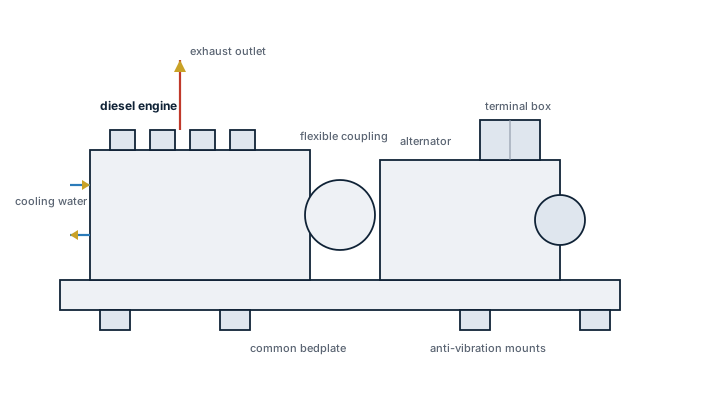
Most ships carry two to four gensets so load can be shared, one unit can be taken out for overhaul without losing redundancy, and sets can be run in parallel when peak load from cargo pumps, bow thruster or mooring winches exceeds what one machine can carry alone.
Main Components
Prime mover
A medium-speed, four-stroke diesel engine, typically running 720-1000 rpm on a 50 Hz ship or 900-1200 rpm on 60 Hz, with rated speed chosen to divide evenly into the required frequency by the alternator's pole count.
Alternator
A brushless synchronous alternator with an automatic voltage regulator (AVR) that holds output voltage constant as load changes and supplies the excitation needed for parallel operation.
Governor
Controls fuel rack position to hold speed, and therefore frequency, within class limits under sudden load changes. Most newer installations use electronic governors integrated with the power management system rather than the older mechanical-hydraulic type.
Control and protection panel
Houses synchronizing equipment, protection relays for reverse power, overcurrent, earth fault and over/under frequency, and the interface to the ship's power management system (PMS).
Cooling, starting and exhaust
Jacket water and charge air cooling circuits, a compressed-air or electric starting system, and an exhaust line with silencer and, on newer tonnage, selective catalytic reduction (SCR) or exhaust gas recirculation (EGR) for NOx control.
Selection and Sizing
- Rated output in kW at a stated power factor, usually 0.8, since alternators are rated in kVA
- Voltage and frequency: 440 V / 60 Hz is common on many trading vessels, 690 V on ships with large electric propulsion or thruster loads
- Number of sets versus redundancy required, balancing capital cost against the ability to lose one set and still cover essential load
- Fuel flexibility: MDO/MGO only, dual-fuel capability, or heavy fuel oil capable with the necessary treatment plant
Regulations and Class
NOx emissions fall under MARPOL Annex VI and are certified per engine through an EIAPP certificate confirming compliance with the applicable Tier limit for the ship's construction date and operating area. Classification societies require that gensets can be paralleled safely, that load-sharing and load-shedding logic is proven, and that the vessel can recover from a full blackout within a defined time. Periodic survey covers governor response, protection relay testing and insulation resistance of the windings.
Typical Faults
| Fault | Cause | Consequence |
|---|---|---|
| Wet stacking | Prolonged running at low load, common when oversized sets cover light harbour load | Unburnt fuel and carbon foul the turbocharger, exhaust and injectors |
| Failed synchronizing or reverse power trip | Governor droop mismatch or AVR fault between paralleled sets | Set trips offline, remaining sets can overload, risk of blackout |
| High jacket water temperature alarm | Cooler fouling or seawater pump failure | Automatic load reduction or shutdown to prevent engine damage |
| Falling insulation resistance | Moisture or oil vapour ingress into alternator windings | Earth fault trip, risk of winding failure if not dried out and corrected |
What to Look for in a Supplier
- Engine and alternator already offered as a matched, type-tested package rather than assembled from unrelated components
- Valid EIAPP certification for the NOx tier the ship needs, with documentation the flag state will accept
- A service and spares network reaching the vessel's actual trading area, not just the country of manufacture
- Published noise and vibration data compatible with the engine room's resilient mounting arrangement
- A control system that integrates cleanly with the vessel's existing power management system
A genset that spends most of its life lightly loaded in port will foul faster than one working near its rated output; rotating duty between sets and avoiding permanent light-load running on one machine saves far more maintenance than any oil additive.
10 manufacturers · 79 models
Yanmar
31ABB
11- Fuel, injection or combustion faults cause unstable speed, smoke, poor load acceptance or high exhaust temperatures
- Cooling or lubrication faults cause high temperature, low pressure alarms or protective shutdown
- Alternator excitation, AVR or winding faults cause unstable voltage or loss of electrical output
- Governor, speed-sensor or control faults cause frequency instability, hunting or failed synchronization
- Breaker, protection or communication faults prevent connection to the bus or cause nuisance trips
- Compact, modular design fits tight engine rooms on mid‑size vessels
- Integrated ABB control system provides remote monitoring and fault diagnostics
- Meets Tier III/IMO Tier II emissions limits without after‑treatment for many operating profiles
- Proven reliability with a long service history in commercial fleets
- Standardised spare parts and global support network
- Weight and footprint are higher than high‑speed or gas turbine alternatives
- Requires regular oil changes and fuel‑oil handling infrastructure
- Single‑unit configuration may limit redundancy on critical ships
- Initial purchase price is premium compared with generic off‑the‑shelf gensets
- Fuel, injection or combustion faults cause unstable speed, smoke, poor load acceptance or high exhaust temperatures
- Cooling or lubrication faults cause high temperature, low pressure alarms or protective shutdown
- Alternator excitation, AVR or winding faults cause unstable voltage or loss of electrical output
- Governor, speed-sensor or control faults cause frequency instability, hunting or failed synchronization
- Breaker, protection or communication faults prevent connection to the bus or cause nuisance trips
- High thermal efficiency (≈44–46%) reduces fuel consumption.
- Compact, modular design saves engine room space.
- Integrated ABB GenSet Control System enables remote monitoring and automatic load sharing.
- Low NOx and particulate emissions – compliant with IMO Tier II standards.
- Proven reliability with a long service history in merchant vessels.
- Higher capital cost compared with conventional low‑speed gensets of similar rating.
- Maximum output limited to ~550 kVA; not suitable for larger power demands.
- Requires high‑quality marine diesel fuel to meet emission targets.
- Noise level moderate – may need additional acoustic insulation in passenger vessels.
- Fuel, injection or combustion faults cause unstable speed, smoke, poor load acceptance or high exhaust temperatures
- Cooling or lubrication faults cause high temperature, low pressure alarms or protective shutdown
- Alternator excitation, AVR or winding faults cause unstable voltage or loss of electrical output
- Governor, speed-sensor or control faults cause frequency instability, hunting or failed synchronization
- Breaker, protection or communication faults prevent connection to the bus or cause nuisance trips
- High thermal efficiency (>95% at rated load) reducing fuel consumption
- Compact, modular layout that simplifies installation and space planning on board
- Integrated ABB PowerControl enables remote monitoring, diagnostics and predictive maintenance
- Meets IMO Tier III emission standards for low NOx output
- Proven reliability in harsh marine environments with a long service history
- Higher upfront capital cost compared with some low‑speed alternatives
- Power rating fixed at 630 kVA – not suitable when larger auxiliary capacity is required
- Requires ABB‑approved service network for warranty support and major overhauls
- Weight may be higher than comparable low‑speed generators, affecting weight‑critical vessels
- Fuel, injection or combustion faults cause unstable speed, smoke, poor load acceptance or high exhaust temperatures
- Cooling or lubrication faults cause high temperature, low pressure alarms or protective shutdown
- Alternator excitation, AVR or winding faults cause unstable voltage or loss of electrical output
- Governor, speed-sensor or control faults cause frequency instability, hunting or failed synchronization
- Breaker, protection or communication faults prevent connection to the bus or cause nuisance trips
- High power density – 710 kVA in a relatively compact footprint
- Proven reliability with over 30 years of ABB marine service history
- Integrated ABB Power Management System for easy monitoring and load sharing
- Meets IMO Tier III emission limits (Euro IV/V) when equipped with after‑treatment
- Broad classification society approvals (DNV GL, ABS, LR)
- Diesel‑only fuel option – no dual‑fuel capability for LNG or methanol
- Fuel consumption higher than newer low‑speed or hybrid gensets of similar output
- Noise and vibration levels moderate; may require additional acoustic insulation on passenger vessels
- Physical size larger than high‑speed gensets of the same rating
- Fuel, injection or combustion faults cause unstable speed, smoke, poor load acceptance or high exhaust temperatures
- Cooling or lubrication faults cause high temperature, low pressure alarms or protective shutdown
- Alternator excitation, AVR or winding faults cause unstable voltage or loss of electrical output
- Governor, speed-sensor or control faults cause frequency instability, hunting or failed synchronization
- Breaker, protection or communication faults prevent connection to the bus or cause nuisance trips
- Modular design allows flexible installation and easier on‑site maintenance.
- Integrated ABB control package provides real‑time monitoring and remote diagnostics.
- High thermal efficiency reduces fuel consumption and operating costs.
- Robust, corrosion‑resistant enclosure suited for harsh marine environments.
- Physical size and weight are larger than high‑speed gensets, limiting retrofit options on space‑constrained vessels.
- Initial capital cost is higher than basic, non‑integrated generator sets.
- Requires diesel fuel handling infrastructure and regular engine maintenance.
- High thermal efficiency (≈38–40%) reduces fuel consumption
- Compact modular design saves engine room space
- ABB Power Generation Control system provides advanced monitoring and remote diagnostics
- Meets IMO Tier III emission limits in most operating profiles
- Global ABB service network ensures rapid spare‑part availability
- Higher upfront capital cost compared with some OEM competitors
- Limited to the 800–1000 kVA power band – not suitable for very high‑power applications
- Requires diesel fuel of at least ISO 22241 (low‑sulphur) to meet emission claims
- Noise level is moderate; additional acoustic insulation may be needed on passenger vessels
- Fuel, injection or combustion faults cause unstable speed, smoke, poor load acceptance or high exhaust temperatures
- Cooling or lubrication faults cause high temperature, low pressure alarms or protective shutdown
- Alternator excitation, AVR or winding faults cause unstable voltage or loss of electrical output
- Governor, speed-sensor or control faults cause frequency instability, hunting or failed synchronization
- Breaker, protection or communication faults prevent connection to the bus or cause nuisance trips
- Modular design allows easy installation and maintenance on various vessel layouts.
- High thermal efficiency (≈95% at rated load) reduces fuel consumption compared with older designs.
- ABB PowerControl system offers advanced monitoring, remote diagnostics and compliance reporting.
- Meets IMO Tier III emission standards when equipped with optional SCR after‑treatment.
- Backed by ABB’s global service network for spare parts and technical support.
- Physical footprint larger than comparable high‑speed gensets of the same rating, limiting installation in tight engine rooms.
- Higher upfront capital cost relative to basic diesel generators without integrated control.
- Standard version runs on diesel only; dual‑fuel capability requires additional optional packages.
- Weight is relatively high due to medium‑speed engine construction, affecting overall vessel weight distribution.
- Maintenance intervals are longer but more complex, requiring skilled technicians for overhauls.
- Fuel, injection or combustion faults cause unstable speed, smoke, poor load acceptance or high exhaust temperatures
- Cooling or lubrication faults cause high temperature, low pressure alarms or protective shutdown
- Alternator excitation, AVR or winding faults cause unstable voltage or loss of electrical output
- Governor, speed-sensor or control faults cause frequency instability, hunting or failed synchronization
- Breaker, protection or communication faults prevent connection to the bus or cause nuisance trips
- High power density suitable for large vessels requiring >1 MW of generation capacity
- Integrated ABB PowerControl system provides advanced monitoring and remote diagnostics
- Optimised fuel consumption delivering lower operating costs compared to older designs
- Meets IMO Tier II emission standards, facilitating compliance in regulated waters
- Proven reliability with a track record on various commercial ship classes
- Physical footprint is sizable for the power rating, requiring dedicated engine room space
- Higher upfront capital cost relative to basic non‑ABB generator sets
- Diesel‑only fuel flexibility; not suited for LNG or hybrid configurations without additional equipment
- Noise and vibration levels are typical of high‑output diesel gensets, may need extra mitigation on passenger vessels
- Requires access to ABB service network for warranty support and spare parts
- Fuel, injection or combustion faults cause unstable speed, smoke, poor load acceptance or high exhaust temperatures
- Cooling or lubrication faults cause high temperature, low pressure alarms or protective shutdown
- Alternator excitation, AVR or winding faults cause unstable voltage or loss of electrical output
- Governor, speed-sensor or control faults cause frequency instability, hunting or failed synchronization
- Breaker, protection or communication faults prevent connection to the bus or cause nuisance trips
- High power density – 1 250 kVA in a relatively small footprint
- Integrated ABB PowerControl system simplifies operation and monitoring
- Meets IMO Tier III NOx limits with optional SCR after‑treatment
- Robust reliability record and extensive global service network
- Modular construction allows quick on‑site installation and maintenance
- Higher capital cost compared with lower‑speed or smaller gensets
- Fuel consumption higher than equivalent gas‑turbine or hybrid solutions at part load
- Noise and vibration levels moderate; may require additional acoustic treatment
- Physical size still significant for vessels with very tight engine‑room space
- Spare‑parts logistics can be longer in remote regions without an ABB depot
- Fuel, injection or combustion faults cause unstable speed, smoke, poor load acceptance or high exhaust temperatures
- Cooling or lubrication faults cause high temperature, low pressure alarms or protective shutdown
- Alternator excitation, AVR or winding faults cause unstable voltage or loss of electrical output
- Governor, speed-sensor or control faults cause frequency instability, hunting or failed synchronization
- Breaker, protection or communication faults prevent connection to the bus or cause nuisance trips
- High power output (≈1.4 MVA) suitable for large vessels' hotel and propulsion auxiliary loads
- ABB‑designed alternator provides robust performance and low harmonic distortion
- Integrated ABB PowerGen control system enables remote monitoring, diagnostics and automated load management
- Proven reliability on a wide range of commercial and offshore ships
- Modular design simplifies installation and maintenance
- Large physical footprint and weight may limit placement in space‑constrained hulls
- Higher capital cost compared with lower‑rated or generic OEM generator sets
- Requires high‑quality marine diesel fuel to meet emissions targets
- Limited flexibility for operation at very low loads without efficiency penalty
- Spare parts inventory tied to ABB-specific components
- Fuel, injection or combustion faults cause unstable speed, smoke, poor load acceptance or high exhaust temperatures
- Cooling or lubrication faults cause high temperature, low pressure alarms or protective shutdown
- Alternator excitation, AVR or winding faults cause unstable voltage or loss of electrical output
- Governor, speed-sensor or control faults cause frequency instability, hunting or failed synchronization
- Breaker, protection or communication faults prevent connection to the bus or cause nuisance trips
- High thermal efficiency (≈38–40%) reduces fuel consumption on long voyages.
- Compact footprint and integrated control panel free up valuable engine room space.
- ABB’s proven control system offers remote monitoring, diagnostics and easy integration with ship automation.
- Robust marine‑grade construction meets harsh sea‑water environments and simplifies maintenance cycles.
- Standardized parts and global ABB service network provide quick spare‑part availability.
- Higher upfront capital cost compared with lower‑speed gensets from some competitors.
- Noise level is higher than low‑speed or hybrid alternatives, requiring additional acoustic insulation on noise‑sensitive vessels.
- Single‑engine configuration may not meet redundancy requirements for vessels that demand fully independent backup power.
- Fuel quality sensitivity – optimal performance requires clean diesel meeting specified cetane and sulfur limits.
Siemens
11- Fuel, injection or combustion faults cause unstable speed, smoke, poor load acceptance or high exhaust temperatures
- Cooling or lubrication faults cause high temperature, low pressure alarms or protective shutdown
- Alternator excitation, AVR or winding faults cause unstable voltage or loss of electrical output
- Governor, speed-sensor or control faults cause frequency instability, hunting or failed synchronization
- Breaker, protection or communication faults prevent connection to the bus or cause nuisance trips
- High fuel efficiency meeting Euro VI emission standards
- Compact design suitable for limited engine‑room space
- Integrated digital control panel simplifies operation and monitoring
- Proven Siemens reliability with long service intervals
- Fast start‑up capability for emergency power
- Maximum output of ~280 kVA limits use on larger vessels requiring higher auxiliary power
- Higher upfront cost compared with generic OEM generators
- Weight and mounting requirements may need reinforced foundations
- Specific fuel quality (low sulphur) required to meet emissions compliance
- Spare‑parts logistics can be more complex in remote regions
- Fuel, injection or combustion faults cause unstable speed, smoke, poor load acceptance or high exhaust temperatures
- Cooling or lubrication faults cause high temperature, low pressure alarms or protective shutdown
- Alternator excitation, AVR or winding faults cause unstable voltage or loss of electrical output
- Governor, speed-sensor or control faults cause frequency instability, hunting or failed synchronization
- Breaker, protection or communication faults prevent connection to the bus or cause nuisance trips
- High thermal efficiency (~95% at rated load) reducing fuel consumption
- Meets IMO Tier III / Euro VI emission standards for low NOx output
- Compact footprint and modular layout eases installation in space‑constrained engine rooms
- Integrated Siemens control system with remote monitoring and diagnostics
- Strong global after‑sales support and parts availability from Siemens
- Higher capital cost compared with generic OEM generators of similar rating
- Maximum output limited to 310 kVA, unsuitable for vessels requiring larger auxiliary power
- Requires Siemens‑specific service contracts and technician training
- Noise level may be higher than low‑speed, large‑bore alternatives
- Spare parts inventory can be less common on ports without a Siemens presence
- Fuel, injection or combustion faults cause unstable speed, smoke, poor load acceptance or high exhaust temperatures
- Cooling or lubrication faults cause high temperature, low pressure alarms or protective shutdown
- Alternator excitation, AVR or winding faults cause unstable voltage or loss of electrical output
- Governor, speed-sensor or control faults cause frequency instability, hunting or failed synchronization
- Breaker, protection or communication faults prevent connection to the bus or cause nuisance trips
- High overall efficiency (up to ~38% at rated load)
- Integrated SIGENTICS control provides real‑time diagnostics and remote monitoring
- Meets IMO Tier III emission standards in most operating regions
- Modular design simplifies installation and maintenance on board
- Robust Siemens engineering ensures long service intervals
- Higher capital cost compared with generic OEM generators of similar rating
- Physical footprint larger than some compact, low‑profile alternatives
- Requires Siemens‑specific spare parts and trained service personnel
- Fuel quality sensitivity – optimal performance with low‑sulphur diesel
- Limited aftermarket support in remote regions without a local Siemens dealer
- Fuel, injection or combustion faults cause unstable speed, smoke, poor load acceptance or high exhaust temperatures
- Cooling or lubrication faults cause high temperature, low pressure alarms or protective shutdown
- Alternator excitation, AVR or winding faults cause unstable voltage or loss of electrical output
- Governor, speed-sensor or control faults cause frequency instability, hunting or failed synchronization
- Breaker, protection or communication faults prevent connection to the bus or cause nuisance trips
- High power density in a compact, modular package simplifies installation on deck or in engine rooms.
- Integrated Siemens SISHIP control system provides real‑time remote monitoring and fault diagnostics.
- Meets current IMO Tier III emission limits for diesel generators of this size.
- Robust marine‑grade construction with proven reliability in harsh sea environments.
- Standardized interfaces allow easy coupling with shipboard electrical distribution and emergency systems.
- Higher capital cost compared with generic off‑the‑shelf gensets of similar rating.
- Requires Siemens‑approved service personnel for warranty work, which may limit support in remote ports.
- Diesel‑only fuel flexibility; not suited for vessels seeking multi‑fuel or LNG options.
- Physical footprint can be large for smaller vessels where space is at a premium.
- Spare‑parts inventory is specific to the SIGENTICS line, potentially increasing lead times.
- Fuel, injection or combustion faults cause unstable speed, smoke, poor load acceptance or high exhaust temperatures
- Cooling or lubrication faults cause high temperature, low pressure alarms or protective shutdown
- Alternator excitation, AVR or winding faults cause unstable voltage or loss of electrical output
- Governor, speed-sensor or control faults cause frequency instability, hunting or failed synchronization
- Breaker, protection or communication faults prevent connection to the bus or cause nuisance trips
- Integrated SIGENTICS control system provides real‑time diagnostics and remote monitoring.
- Compact modular design reduces installation space compared with older Siemens models.
- Siemens reputation for reliability and long service intervals in marine environments.
- Standardized interfaces simplify integration with shipboard power management systems.
- Limited to ~500 kVA; not suitable for vessels requiring higher auxiliary power.
- Higher upfront cost than some generic OEM generators of similar rating.
- Spare‑parts inventory may be less common in regions without Siemens service hubs.
- Digital control system adds complexity for crews unfamiliar with SIGENTICS.
- Fuel, injection or combustion faults cause unstable speed, smoke, poor load acceptance or high exhaust temperatures
- Cooling or lubrication faults cause high temperature, low pressure alarms or protective shutdown
- Alternator excitation, AVR or winding faults cause unstable voltage or loss of electrical output
- Governor, speed-sensor or control faults cause frequency instability, hunting or failed synchronization
- Breaker, protection or communication faults prevent connection to the bus or cause nuisance trips
- Compact, space‑saving footprint thanks to the modular SIGENTICS design
- Integrated Siemens control system enables remote monitoring and easy diagnostics
- High fuel efficiency with low specific fuel consumption
- Meets IMO Tier III emission standards for reduced NOx output
- Designed for quick on‑site maintenance with interchangeable modules
- Higher upfront capital cost compared with conventional non‑modular gensets
- Requires Siemens‑approved service network for warranty support and spare parts
- May need specific fuel quality to achieve advertised emission performance
- Acoustic enclosure can be larger than some competing low‑noise units
- Fuel, injection or combustion faults cause unstable speed, smoke, poor load acceptance or high exhaust temperatures
- Cooling or lubrication faults cause high temperature, low pressure alarms or protective shutdown
- Alternator excitation, AVR or winding faults cause unstable voltage or loss of electrical output
- Governor, speed-sensor or control faults cause frequency instability, hunting or failed synchronization
- Breaker, protection or communication faults prevent connection to the bus or cause nuisance trips
- High fuel efficiency meeting IMO Tier III NOx limits
- Compact, modular design saves engine room space
- Integrated Siemens control panel simplifies operation and monitoring
- Robust construction suited for harsh marine environments
- Standardized spare‑part line reduces maintenance downtime
- Higher upfront capital cost compared with generic OEM units
- Power rating limited to ~350 kVA; not suitable for high‑power ships
- Requires premium diesel fuel quality to meet emission targets
- Spare‑parts logistics may be slower in remote ports without Siemens network
- Limited flexibility for dual‑fuel (gas) conversion on this specific model
- Fuel, injection or combustion faults cause unstable speed, smoke, poor load acceptance or high exhaust temperatures
- Cooling or lubrication faults cause high temperature, low pressure alarms or protective shutdown
- Alternator excitation, AVR or winding faults cause unstable voltage or loss of electrical output
- Governor, speed-sensor or control faults cause frequency instability, hunting or failed synchronization
- Breaker, protection or communication faults prevent connection to the bus or cause nuisance trips
- Integrated Siemens digital control and monitoring interface simplifies operation
- Compact, modular construction fits constrained engine‑room spaces
- High overall efficiency helps reduce fuel consumption
- Strong global after‑sales support and readily available spare parts
- Higher upfront cost compared with some non‑brand alternatives
- Requires Siemens‑trained personnel for optimal maintenance
- Physical footprint may be larger than low‑speed, high‑power alternatives for the same output
- Fuel, injection or combustion faults cause unstable speed, smoke, poor load acceptance or high exhaust temperatures
- Cooling or lubrication faults cause high temperature, low pressure alarms or protective shutdown
- Alternator excitation, AVR or winding faults cause unstable voltage or loss of electrical output
- Governor, speed-sensor or control faults cause frequency instability, hunting or failed synchronization
- Breaker, protection or communication faults prevent connection to the bus or cause nuisance trips
- High power density – delivers 500 kVA in a compact footprint compared with older genset designs.
- Integrated Siemens control system offers advanced monitoring, fault diagnostics and remote operation.
- Proven reliability of the SIGENTICS series with long service intervals and robust construction for harsh marine environments.
- Meets IMO Tier II emission standards (when equipped with appropriate after‑treatment).
- Relatively high weight and installation space requirements versus newer lightweight modular gensets.
- Initial capital cost is higher than many competing brands of similar rating.
- Requires specific fuel quality to maintain emissions compliance; may need additional filtration on ships with variable bunker grades.
- Spare‑parts inventory can be limited in remote ports if not pre‑stocked.
- Fuel, injection or combustion faults cause unstable speed, smoke, poor load acceptance or high exhaust temperatures
- Cooling or lubrication faults cause high temperature, low pressure alarms or protective shutdown
- Alternator excitation, AVR or winding faults cause unstable voltage or loss of electrical output
- Governor, speed-sensor or control faults cause frequency instability, hunting or failed synchronization
- Breaker, protection or communication faults prevent connection to the bus or cause nuisance trips
- High power output (≈600 kVA) suitable for medium‑size vessels
- Integrated Siemens Sigenics controller provides real‑time diagnostics and remote monitoring
- Modular design simplifies installation and routine maintenance
- Proven Siemens engineering reputation for reliability in harsh marine environments
- Initial capital cost is higher than many generic OEM generators
- Diesel fuel consumption can be less efficient than newer LNG‑based gensets on long voyages
- Physical size and weight require dedicated engine room space (exact dimensions not confirmed)
- Noise and vibration levels typical of large diesel sets may need additional mitigation
- Winding insulation deterioration or contamination can cause earth faults or overheating, seen as insulation alarms, trips or abnormal temperature
- Bearing wear or lubrication problems can increase vibration and noise, noticed through condition monitoring or audible roughness
- Automatic voltage regulator or excitation faults can destabilize voltage, seen as poor voltage control or excitation alarms
- Cooling-air restriction can raise internal temperature, seen as overheating alarms or reduced allowable load
- Loose terminals or connection faults can create local heating and intermittent output problems, found by inspection or thermal checks
- High electrical efficiency typical of Siemens medium‑speed diesel gensets
- Compact footprint suitable for space‑constrained engine rooms
- Integrated SIGENTICS control platform simplifies monitoring and automation
- Designed to meet modern emission standards (e.g., IMO Tier III) when equipped with appropriate after‑treatment
- Proven reliability and service support from Siemens global network
- Higher upfront capital cost compared with some OEM alternatives
- Requires skilled personnel for maintenance of medium‑speed diesel engines
- Limited fuel flexibility – primarily designed for marine diesel oil
- Spare parts inventory may be larger due to proprietary control modules
Nishishiba
8- Winding insulation deterioration or contamination can cause earth faults or overheating, seen as insulation alarms, trips or abnormal temperature
- Bearing wear or lubrication problems can increase vibration and noise, noticed through condition monitoring or audible roughness
- Automatic voltage regulator or excitation faults can destabilize voltage, seen as poor voltage control or excitation alarms
- Cooling-air restriction can raise internal temperature, seen as overheating alarms or reduced allowable load
- Loose terminals or connection faults can create local heating and intermittent output problems, found by inspection or thermal checks
- 400 kVA rating matches the auxiliary power demand of many coastal and offshore support vessels.
- Integrated control panel aligns with standard marine automation systems for easy installation.
- Relatively compact footprint compared with other 400 kVA units, aiding space‑constrained engine rooms.
- Higher fuel consumption than newer dual‑fuel or hybrid generator alternatives.
- May lack advanced emissions after‑treatment (e.g., SCR) required for strict Emission Control Areas.
- Spare‑parts distribution could be limited outside of Japan, affecting lead times for repairs.
- Fuel, injection or combustion faults cause unstable speed, smoke, poor load acceptance or high exhaust temperatures
- Cooling or lubrication faults cause high temperature, low pressure alarms or protective shutdown
- Alternator excitation, AVR or winding faults cause unstable voltage or loss of electrical output
- Governor, speed-sensor or control faults cause frequency instability, hunting or failed synchronization
- Breaker, protection or communication faults prevent connection to the bus or cause nuisance trips
- High thermal efficiency (≈38–40%) reduces fuel consumption on long voyages
- Compact footprint and low height suit vessels with limited engine room space
- Sound‑proofed enclosure meets typical maritime noise regulations without extra silencing kits
- Japanese build quality provides strong reliability and long service intervals
- Optional remote monitoring/control system (Nishishiba’s N-Connect) enables predictive maintenance
- Higher upfront cost compared with low‑speed, high‑output gensets of similar rating
- Maximum output limited to 550 kVA – may be undersized for large tankers or cruise ships requiring >1 MW auxiliary power
- Spare parts and technical support are primarily based in Japan/Asia, which can lengthen lead times for remote operators
- Emissions compliance (EPA Tier 2/3) may require premium low‑sulphur fuel on some routes
- Noise level, while reduced by the enclosure, is still higher than low‑speed generators of comparable power
- Fuel, injection or combustion faults cause unstable speed, smoke, poor load acceptance or high exhaust temperatures
- Cooling or lubrication faults cause high temperature, low pressure alarms or protective shutdown
- Alternator excitation, AVR or winding faults cause unstable voltage or loss of electrical output
- Governor, speed-sensor or control faults cause frequency instability, hunting or failed synchronization
- Breaker, protection or communication faults prevent connection to the bus or cause nuisance trips
- Proven Japanese engineering with long service intervals and high reliability
- Compact modular layout that fits well in limited engine room spaces for 750 kVA rating
- Standardized control panel with optional remote monitoring integration
- Robust construction suited to harsh marine environments
- Easy access to major components for routine maintenance
- Higher initial capital cost compared with some lower‑priced competitors
- Emission compliance (e.g., IMO Tier III) not explicitly documented, may require additional after‑treatment
- Spare‑parts lead times can be longer outside the Asian market
- Noise and vibration levels are typical for medium‑speed diesels and may need extra insulation in passenger vessels
- Fuel, injection or combustion faults cause unstable speed, smoke, poor load acceptance or high exhaust temperatures
- Cooling or lubrication faults cause high temperature, low pressure alarms or protective shutdown
- Alternator excitation, AVR or winding faults cause unstable voltage or loss of electrical output
- Governor, speed-sensor or control faults cause frequency instability, hunting or failed synchronization
- Breaker, protection or communication faults prevent connection to the bus or cause nuisance trips
- High reliability backed by Japanese engineering standards
- Compact footprint suitable for limited engine‑room space
- Integrated digital control system with automatic load sharing
- Low specific fuel consumption compared with low‑speed alternatives
- Optional soundproof enclosure reduces operational noise
- Higher initial purchase price than comparable low‑speed gensets
- Diesel‑only fuel flexibility; no multi‑fuel option
- Requires a dedicated cooling water circuit, adding installation complexity
- Noise can be significant without the optional enclosure
- Spare parts may have longer lead times outside Japan
- Fuel, injection or combustion faults cause unstable speed, smoke, poor load acceptance or high exhaust temperatures
- Cooling or lubrication faults cause high temperature, low pressure alarms or protective shutdown
- Alternator excitation, AVR or winding faults cause unstable voltage or loss of electrical output
- Governor, speed-sensor or control faults cause frequency instability, hunting or failed synchronization
- Breaker, protection or communication faults prevent connection to the bus or cause nuisance trips
- High power density – 550 kVA in a relatively compact footprint for its class
- Optimised engine mapping gives low specific fuel consumption under typical hotel loads
- Robust marine‑grade cooling system suitable for continuous operation in harsh sea environments
- Integrated control panel with built‑in diagnostics and remote monitoring capability
- Proven Japanese engineering reputation for durability and long service intervals
- Physical footprint larger than some newer low‑speed or hybrid genset designs
- Noise level can be high without additional acoustic enclosure
- Fuel quality sensitivity – requires clean diesel to avoid injector fouling
- Spare‑parts logistics may involve longer lead times outside of Asia
- Initial capital cost is higher than basic entry‑level units
- Winding insulation deterioration or contamination can cause earth faults or overheating, seen as insulation alarms, trips or abnormal temperature
- Bearing wear or lubrication problems can increase vibration and noise, noticed through condition monitoring or audible roughness
- Automatic voltage regulator or excitation faults can destabilize voltage, seen as poor voltage control or excitation alarms
- Cooling-air restriction can raise internal temperature, seen as overheating alarms or reduced allowable load
- Loose terminals or connection faults can create local heating and intermittent output problems, found by inspection or thermal checks
- High fuel efficiency typical of medium‑speed diesel engines
- Robust Japanese engineering with long service intervals
- Compact footprint relative to the 750 kVA output, easing installation in limited engine rooms
- Integrated control and monitoring system for straightforward operation
- Modular design that simplifies routine maintenance and part replacement
- Larger physical size and weight than high‑speed or gas‑turbine alternatives of similar rating
- Higher upfront capital cost compared with some low‑cost competitors
- Diesel‑only fuel option; not a dual‑fuel unit
- Noise and vibration levels are moderate – may require additional acoustic treatment in passenger vessels
- Spare parts logistics can be slower outside the Asia‑Pacific region
- Fuel, injection or combustion faults cause unstable speed, smoke, poor load acceptance or high exhaust temperatures
- Cooling or lubrication faults cause high temperature, low pressure alarms or protective shutdown
- Alternator excitation, AVR or winding faults cause unstable voltage or loss of electrical output
- Governor, speed-sensor or control faults cause frequency instability, hunting or failed synchronization
- Breaker, protection or communication faults prevent connection to the bus or cause nuisance trips
- High thermal efficiency (~38–40%) resulting in lower fuel consumption
- Compact footprint relative to its output, saving engine‑room space
- Built‑in electronic governor and automatic voltage regulator for stable voltage/frequency under varying loads
- Euro VI / IMO Tier III emission compliance with optional after‑treatment
- Remote monitoring and diagnostics compatible with common ship automation systems
- Larger physical size and weight compared with high‑speed units of similar rating, limiting installation in very tight spaces
- Higher upfront cost than some mass‑produced Asian alternatives
- Requires skilled technicians familiar with Nishishiba designs; spare parts may have longer lead times outside Asia
- Single‑engine configuration offers less redundancy; a failure removes the full 1 MVA capacity
- Fuel, injection or combustion faults cause unstable speed, smoke, poor load acceptance or high exhaust temperatures
- Cooling or lubrication faults cause high temperature, low pressure alarms or protective shutdown
- Alternator excitation, AVR or winding faults cause unstable voltage or loss of electrical output
- Governor, speed-sensor or control faults cause frequency instability, hunting or failed synchronization
- Breaker, protection or communication faults prevent connection to the bus or cause nuisance trips
- Proven reliability from Nishishiba’s long‑standing marine engine heritage
- Compact footprint relative to its 1 400 kVA rating, saving valuable engine room space
- Integrated digital control system enables remote monitoring and fault diagnostics
- Meets IMO Tier II emission standards in most operating regions
- Robust cooling system suited for high ambient sea‑water temperatures
- Limited to medium power output; not suitable for vessels requiring >2 000 kVA auxiliary power
- Higher initial capital cost compared with some generic OEM generators
- Spare‑parts logistics can be slower outside the Asian market
- Standard configuration is diesel only – no dual‑fuel option available
Stamford
7- Fuel, injection or combustion faults cause unstable speed, smoke, poor load acceptance or high exhaust temperatures
- Cooling or lubrication faults cause high temperature, low pressure alarms or protective shutdown
- Alternator excitation, AVR or winding faults cause unstable voltage or loss of electrical output
- Governor, speed-sensor or control faults cause frequency instability, hunting or failed synchronization
- Breaker, protection or communication faults prevent connection to the bus or cause nuisance trips
- High thermal efficiency resulting in lower fuel consumption per kWh
- Compact footprint suitable for vessels with limited engine room space
- Proven reliability from Stamford’s long‑standing marine product line
- Straightforward maintenance access with modular components
- Limited power output (200 kVA) may be insufficient for larger vessel hotel loads
- Initial acquisition cost higher than some generic OEM generators
- Noise level moderate; may require additional acoustic insulation in quiet‑zone vessels
- Requires diesel fuel of specified quality to meet emissions performance
- Fuel, injection or combustion faults cause unstable speed, smoke, poor load acceptance or high exhaust temperatures
- Cooling or lubrication faults cause high temperature, low pressure alarms or protective shutdown
- Alternator excitation, AVR or winding faults cause unstable voltage or loss of electrical output
- Governor, speed-sensor or control faults cause frequency instability, hunting or failed synchronization
- Breaker, protection or communication faults prevent connection to the bus or cause nuisance trips
- 350 kVA output matches the power demand of many mid‑size merchant ships and offshore support vessels.
- Stamford’s long‑standing reputation for robust construction and low maintenance intervals.
- Fully marine‑grade enclosure provides protection against corrosion and harsh sea‑water environments.
- Standardized control panel compatible with common shipboard automation systems.
- Physical footprint larger than newer high‑density or dual‑fuel generator alternatives.
- Diesel fuel consumption higher than comparable dual‑fuel or gas‑turbine solutions, affecting operating cost and emissions.
- May require additional after‑treatment to meet the latest IMO Tier III NOx limits in emission‑controlled areas.
- Fuel, injection or combustion faults cause unstable speed, smoke, poor load acceptance or high exhaust temperatures
- Cooling or lubrication faults cause high temperature, low pressure alarms or protective shutdown
- Alternator excitation, AVR or winding faults cause unstable voltage or loss of electrical output
- Governor, speed-sensor or control faults cause frequency instability, hunting or failed synchronization
- Breaker, protection or communication faults prevent connection to the bus or cause nuisance trips
- Compact footprint suitable for medium‑size vessels
- Integrated control panel with remote monitoring capability
- Sound‑proofed enclosure meets typical marine noise limits
- Modular design simplifies routine maintenance and parts replacement
- Classified by major societies (ABS, DNV) for marine use
- Limited to 250 kVA – not sufficient for high‑power main propulsion or large cargo carriers
- Diesel fuel consumption higher than newer hybrid or LNG alternatives
- Weight and mounting requirements can be demanding on small hulls
- Noise, while reduced, may still require additional vibration isolation in sensitive installations
- Initial capital cost is relatively high compared with lower‑rated units
- Fuel, injection or combustion faults cause unstable speed, smoke, poor load acceptance or high exhaust temperatures
- Cooling or lubrication faults cause high temperature, low pressure alarms or protective shutdown
- Alternator excitation, AVR or winding faults cause unstable voltage or loss of electrical output
- Governor, speed-sensor or control faults cause frequency instability, hunting or failed synchronization
- Breaker, protection or communication faults prevent connection to the bus or cause nuisance trips
- High power output (≈400 kVA) suitable for main propulsion or hotel loads on large vessels
- Robust medium‑speed engine offering proven reliability in offshore environments
- Modular design simplifies installation and maintenance aboard ship
- Integrated digital control panel enables remote monitoring and diagnostics
- Physical size and weight are substantial, requiring significant engine room space
- Fuel consumption higher than low‑speed alternatives for the same power rating
- Initial capital cost can be higher than smaller or lower‑rated gensets
- Spare‑parts inventory may be less readily available in remote ports
- Winding insulation deterioration or contamination can cause earth faults or overheating, seen as insulation alarms, trips or abnormal temperature
- Bearing wear or lubrication problems can increase vibration and noise, noticed through condition monitoring or audible roughness
- Automatic voltage regulator or excitation faults can destabilize voltage, seen as poor voltage control or excitation alarms
- Cooling-air restriction can raise internal temperature, seen as overheating alarms or reduced allowable load
- Loose terminals or connection faults can create local heating and intermittent output problems, found by inspection or thermal checks
- High continuous power output (600 kVA) suitable for main‑ship service
- Robust cast‑iron block and proven Stamford engine design for long‑term reliability
- Integrated control panel with remote monitoring capability
- Wide overload rating (typically 110% for short periods) to handle peak loads
- Designed for compliance with IMO Tier III emission standards when equipped with after‑treatment
- Large physical footprint and high weight require substantial engine room space
- Higher fuel consumption at low load compared with smaller gensets
- Initial capital cost is higher than lower‑rated alternatives
- Requires regular maintenance of diesel engine components (oil, filters, injectors)
- Noise and vibration levels need mitigation in passenger‑focused vessels
- Fuel, injection or combustion faults cause unstable speed, smoke, poor load acceptance or high exhaust temperatures
- Cooling or lubrication faults cause high temperature, low pressure alarms or protective shutdown
- Alternator excitation, AVR or winding faults cause unstable voltage or loss of electrical output
- Governor, speed-sensor or control faults cause frequency instability, hunting or failed synchronization
- Breaker, protection or communication faults prevent connection to the bus or cause nuisance trips
- Proven reliability from the Stamford brand with long sea‑going service history
- Compact footprint relative to its power rating, saving valuable engine‑room space
- Integrated digital control panel simplifies monitoring and remote operation
- Fuel‑efficient design reduces operating costs on long voyages
- Standardised parts and widespread support network facilitate maintenance
- Maximum output around 800 kVA may be insufficient for larger vessels requiring >1 MVA
- Noise and vibration levels higher than low‑speed or hybrid alternatives
- Requires high‑quality diesel fuel; sensitivity to contaminated fuel can affect uptime
- Initial capital cost is higher than some generic OEM generators of similar size
- Limited emissions optimisation compared with newer LNG‑oriented gensets
- Fuel, injection or combustion faults cause unstable speed, smoke, poor load acceptance or high exhaust temperatures
- Cooling or lubrication faults cause high temperature, low pressure alarms or protective shutdown
- Alternator excitation, AVR or winding faults cause unstable voltage or loss of electrical output
- Governor, speed-sensor or control faults cause frequency instability, hunting or failed synchronization
- Breaker, protection or communication faults prevent connection to the bus or cause nuisance trips
- 1200 kVA output suitable for medium‑sized commercial vessels
- Compact, modular design eases installation and space planning
- Stamford’s long‑standing reputation for reliability and service support
- Straightforward maintenance with conventional diesel engine components
- Higher fuel consumption compared with newer hybrid or LNG solutions
- Physical size may be limiting on vessels with tight machinery spaces
- Emissions performance depends on engine version; not guaranteed Tier III compliance
- Requires regular oil and filter changes typical of diesel gensets
Leroy-Somer
6- Fuel, injection or combustion faults cause unstable speed, smoke, poor load acceptance or high exhaust temperatures
- Cooling or lubrication faults cause high temperature, low pressure alarms or protective shutdown
- Alternator excitation, AVR or winding faults cause unstable voltage or loss of electrical output
- Governor, speed-sensor or control faults cause frequency instability, hunting or failed synchronization
- Breaker, protection or communication faults prevent connection to the bus or cause nuisance trips
- Proven reliability of the Leroy‑Sommer brand and robust engine/alternator design
- Compact, modular layout that fits into standard marine engine rooms
- Compliance with modern emission standards (Euro 5/IMO Tier II) for auxiliary power
- Optional sound‑proof enclosure reduces onboard noise levels
- Easy access for routine maintenance and spare‑parts availability through a global dealer network
- Higher upfront cost compared with low‑cost generic generators
- Physical size may be limiting on very small vessels or retrofits with tight space constraints
- Noise can still be significant if the optional enclosure is not fitted
- Limited power rating range – not suitable for high‑capacity main propulsion support
- Winding insulation deterioration or contamination can cause earth faults or overheating, seen as insulation alarms, trips or abnormal temperature
- Bearing wear or lubrication problems can increase vibration and noise, noticed through condition monitoring or audible roughness
- Automatic voltage regulator or excitation faults can destabilize voltage, seen as poor voltage control or excitation alarms
- Cooling-air restriction can raise internal temperature, seen as overheating alarms or reduced allowable load
- Loose terminals or connection faults can create local heating and intermittent output problems, found by inspection or thermal checks
- Robust construction typical of Leroy‑Sommer units, offering high reliability in harsh marine environments
- Modular layout facilitates installation in limited engine‑room spaces
- Standardized components simplify maintenance and spare‑parts logistics
- Designed for continuous operation with good fuel efficiency at rated load
- Power rating (≈350 kVA) may be insufficient for larger vessels requiring >500 kVA auxiliary power
- Emission compliance depends on optional after‑treatment; baseline model may not meet the strictest Euro VI standards without upgrades
- Limited published data on acoustic performance, which could be a concern for noise‑sensitive installations
- Fuel, injection or combustion faults cause unstable speed, smoke, poor load acceptance or high exhaust temperatures
- Cooling or lubrication faults cause high temperature, low pressure alarms or protective shutdown
- Alternator excitation, AVR or winding faults cause unstable voltage or loss of electrical output
- Governor, speed-sensor or control faults cause frequency instability, hunting or failed synchronization
- Breaker, protection or communication faults prevent connection to the bus or cause nuisance trips
- High power density suitable for limited engine room space
- Robust low‑maintenance engine architecture
- Integrated digital control system with remote monitoring capability
- Proven reliability in worldwide marine service fleets
- Broad fuel compatibility (diesel, heavy fuel oil blends)
- Specific fuel consumption higher than low‑speed gensets of similar rating
- Noise and vibration levels may require additional acoustic insulation
- Single‑engine configuration limits redundancy unless paired with another unit
- Standard emission compliance typically limited to IMO Tier II without after‑treatment
- Spare‑parts logistics can be regionally dependent
- Fuel, injection or combustion faults cause unstable speed, smoke, poor load acceptance or high exhaust temperatures
- Cooling or lubrication faults cause high temperature, low pressure alarms or protective shutdown
- Alternator excitation, AVR or winding faults cause unstable voltage or loss of electrical output
- Governor, speed-sensor or control faults cause frequency instability, hunting or failed synchronization
- Breaker, protection or communication faults prevent connection to the bus or cause nuisance trips
- High power output of about 950 kVA suitable for large auxiliary loads
- Integrated control panel simplifies installation and commissioning
- Leroy‑Somer’s reputation for reliability and long service life
- Modular design facilitates routine maintenance and part replacement
- Low harmonic distortion thanks to brushless alternator technology
- Diesel‑only engine; no dual‑fuel or LNG option
- May require additional after‑treatment to meet IMO Tier III emission limits
- Relatively heavy compared with newer lightweight genset designs
- Spare parts and service often tied to OEM channels, potentially increasing lead times
- Higher upfront capital cost than some competing brands
- Fuel, injection or combustion faults cause unstable speed, smoke, poor load acceptance or high exhaust temperatures
- Cooling or lubrication faults cause high temperature, low pressure alarms or protective shutdown
- Alternator excitation, AVR or winding faults cause unstable voltage or loss of electrical output
- Governor, speed-sensor or control faults cause frequency instability, hunting or failed synchronization
- Breaker, protection or communication faults prevent connection to the bus or cause nuisance trips
- High continuous power output (~1400 kVA) suitable for large vessel hotel loads
- Modular design allows easy on‑site installation and maintenance access
- Proven Leroy‑Somer reliability with long service intervals
- Efficient fuel consumption relative to its power class
- Integrated water‑cooled engine and alternator for stable operation in harsh marine environments
- Large physical footprint and weight require substantial engine room space
- Higher upfront capital cost compared with lower‑rated gensets
- May need additional emission after‑treatment to meet strict IMO Tier III zones
- Noise level can be significant without dedicated acoustic insulation
- Complex control system may require specialized training for crew
- Fuel, injection or combustion faults cause unstable speed, smoke, poor load acceptance or high exhaust temperatures
- Cooling or lubrication faults cause high temperature, low pressure alarms or protective shutdown
- Alternator excitation, AVR or winding faults cause unstable voltage or loss of electrical output
- Governor, speed-sensor or control faults cause frequency instability, hunting or failed synchronization
- Breaker, protection or communication faults prevent connection to the bus or cause nuisance trips
- Rated power around 2 000 kVA suitable for large vessel hotel loads
- Modular design allows quick on‑site assembly and easy maintenance access
- Integrated digital control panel provides real‑time monitoring and fault diagnostics
- Proven reliability from extensive marine service history of the LSA series
- Physical size and weight require substantial engine room space
- Diesel fuel only – not suited for vessels seeking LNG or dual‑fuel solutions
- Higher initial capital cost compared with smaller, lower‑power gensets
- Noise and vibration levels may need additional sound‑proofing in passenger ships
Caterpillar
2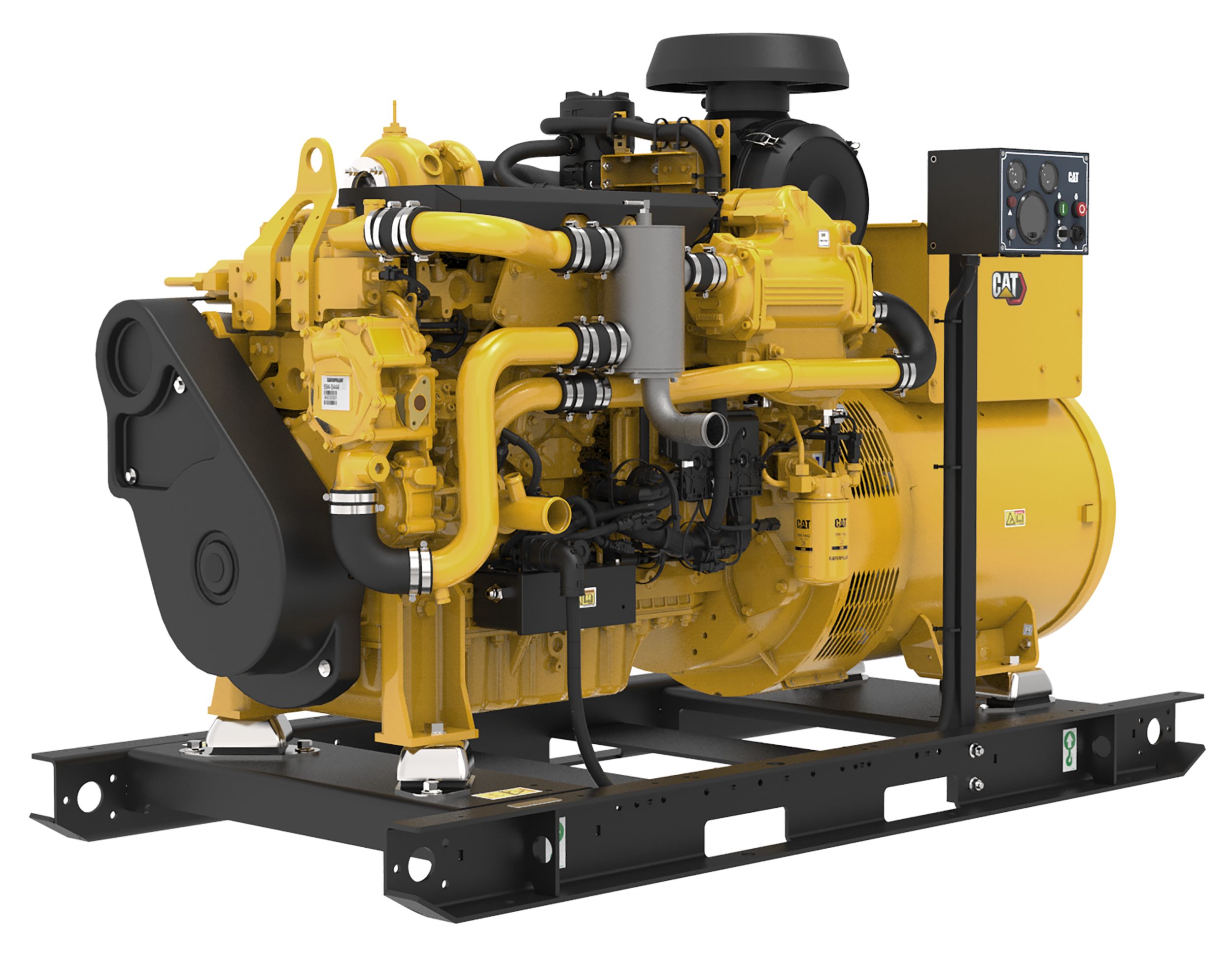
- C18
- C32
- 3512
- 3516
- MaK M20
- MaK M25
- MaK M32
- 200
- 10000
- Fuel injector nozzle wear after 8,000-12,000 hrs
- Turbocharger bearing failure
- Generator bearing insulation breakdown
- AVR (Automatic Voltage Regulator) failure
- Governor hunting/instability
- Proven reliability across >50 years of service and a wide power range (200–10,000 kW).
- Modular design allows quick replacement of engine or alternator modules for minimal downtime.
- Well‑established global support network; spare parts and service manuals are widely available.
- Fuel efficiency at medium loads is competitive for diesel‑fuelled ships.
- Standardized maintenance intervals (oil change 500–1,000 h, injector overhaul 8,000–12,000 h) simplify planning.
- Higher specific weight and footprint than low‑speed or gas‑turbine gensets, limiting installation in space‑constrained vessels.
- Turbocharger bearing wear can become a recurring issue if oil quality is not tightly controlled.
- Injector nozzle wear after 8,000–12,000 h may require costly rebuilds.
- Generator bearing insulation breakdown and AVR failures demand annual testing and calibration.
- Emissions are higher than newer LNG‑fuelled or hybrid alternatives for vessels with strict environmental mandates.
MAN Energy Solutions
1- L16/24
- L21/31
- L27/38
- L32/44CR
- L35/44DF
- 500
- 10000
- Common Rail system issues (CR models)
- Turbocharger failure
- Cylinder head cracking on older models
- Generator AVR failure
- Dual-fuel gas valve issues (DF models)
- Broad power range (0.5–10 MW) covers most auxiliary needs on commercial vessels
- Dual‑fuel capability (diesel & gas) enables lower emissions and fuel cost optimisation
- Compact, modular construction simplifies installation in tight engine rooms
- Proven reliability with extensive service network from MAN Energy Solutions
- Compliance options for IMO Tier III (SCR/Selective Catalytic Reduction) when required
- Higher upfront capital cost compared with legacy low‑speed gensets of similar rating
- Dual‑fuel systems demand more complex fuel handling and gas supply infrastructure
- Reported common‑rail issues on CR variants can increase maintenance intervals if not addressed
- Turbocharger wear is a known failure mode on older units, requiring diligent monitoring
- Spare‑parts logistics may be slower in remote ports without a local MAN dealer
SOLE
1Wärtsilä
1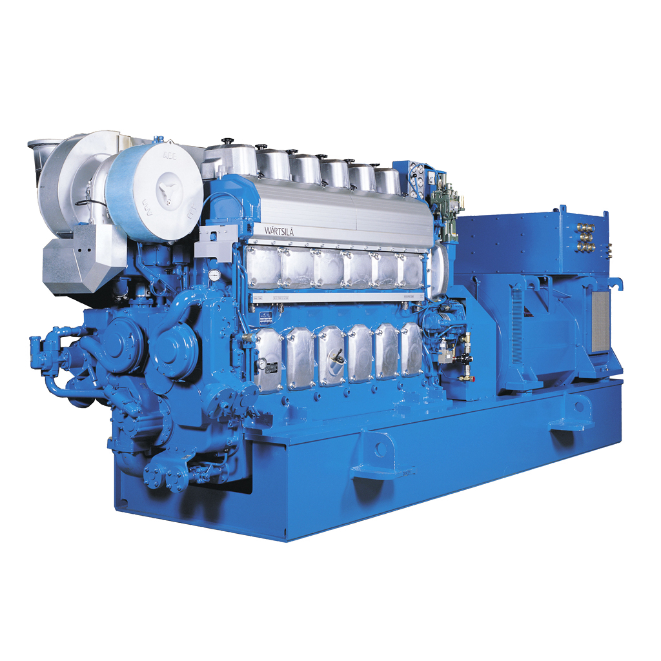
- W20
- W26
- W32
- W34DF
- W46F
- W50DF
- 500
- 20000
- Fuel injection system issues
- Turbocharger bearing wear
- Cylinder liner wear
- Generator winding insulation
- Dual-fuel gas admission valve failure (DF models)
- High thermal efficiency across the full load range, especially in dual‑fuel versions meeting IMO Tier III emissions
- Modular design allows easy scaling from 500 kW to 20 MW and quick replacement of engine or alternator modules
- Proven reliability with over four decades of service on a wide variety of vessels
- Flexibility to run on marine diesel oil (MDO) or low‑sulphur gas (LNG/dual‑fuel), supporting fuel‑switching strategies
- Integrated Wärtsilä control and monitoring system simplifies operation and predictive maintenance
- Physical footprint and weight are larger than low‑speed, high‑power gensets of comparable rating
- Dual‑fuel variants require additional gas handling equipment (pressurisation, filtration) increasing installation complexity
- Maintenance intervals (oil change, injector overhaul) are shorter than some newer ultra‑low‑speed platforms
- Initial capital cost is relatively high for the 500 kW–2 MW range compared with smaller conventional diesel gensets
- Turbocharger bearing wear and fuel‑injection system issues have been reported in older units if not serviced per schedule