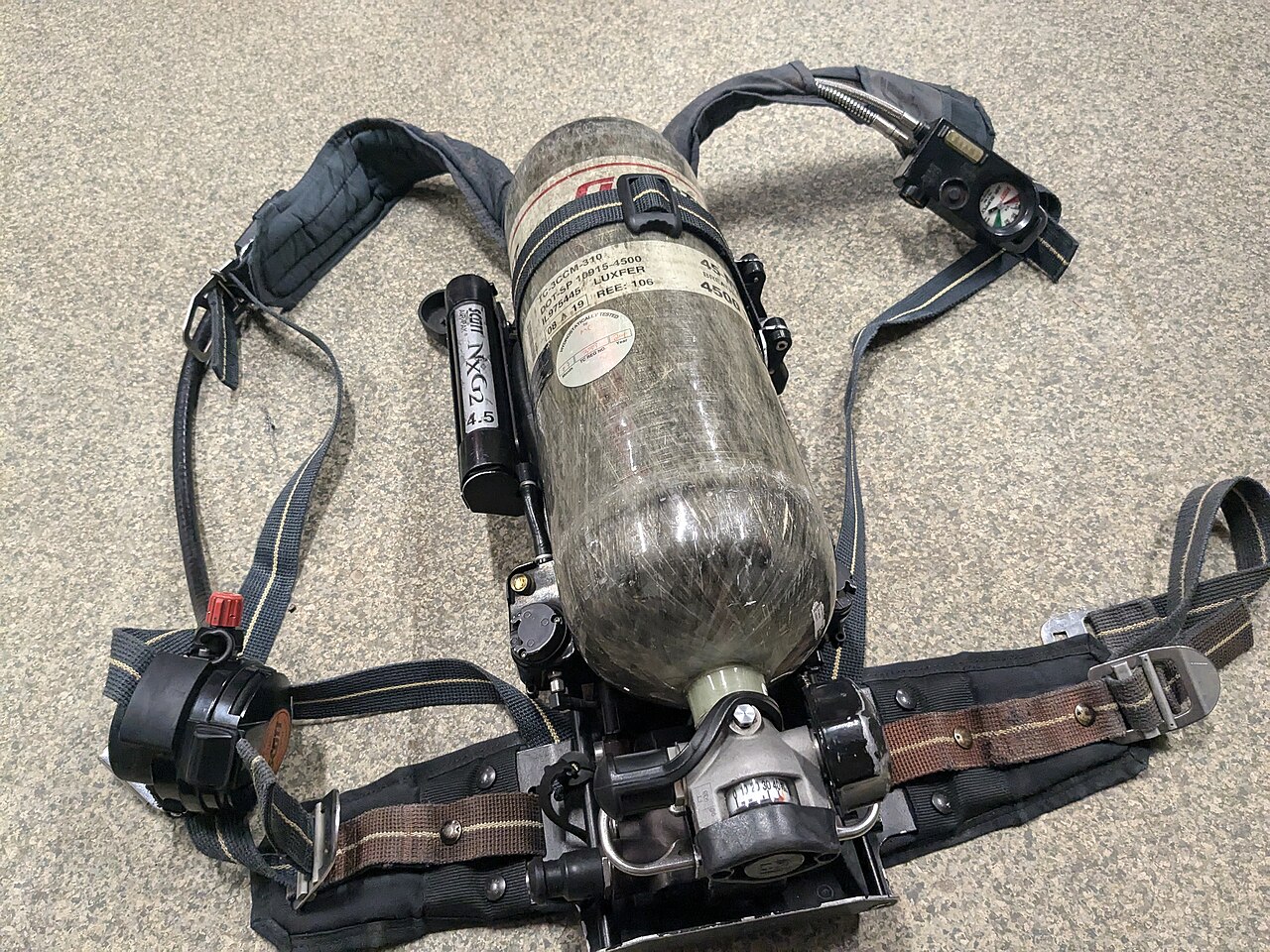
What to check on a SCBA/Breathing Apparatus.
Self-contained breathing apparatus supplies compressed air from a cylinder carried on the wearer's back through a demand regulator to a full face mask, independent of the surrounding atmosphere. This is the key distinction from an emergency escape breathing device, which is smaller, shorter-duration and intended only to get a person out of a compartment, not to let them work inside it, and from filter-type respirators, which remove contaminants from ambient air but do nothing in an oxygen-deficient space such as an emptied tank or a smoke-filled engine room. SCBA is…
What sets SCBA apart
Self-contained breathing apparatus supplies compressed air from a cylinder carried on the wearer's back through a demand regulator to a full face mask, independent of the surrounding atmosphere. This is the key distinction from an emergency escape breathing device, which is smaller, shorter-duration and intended only to get a person out of a compartment, not to let them work inside it, and from filter-type respirators, which remove contaminants from ambient air but do nothing in an oxygen-deficient space such as an emptied tank or a smoke-filled engine room. SCBA is the fire party's primary tool for entry into an unknown or hostile atmosphere, and its duration, not the fire itself, sets how long a team can stay inside.
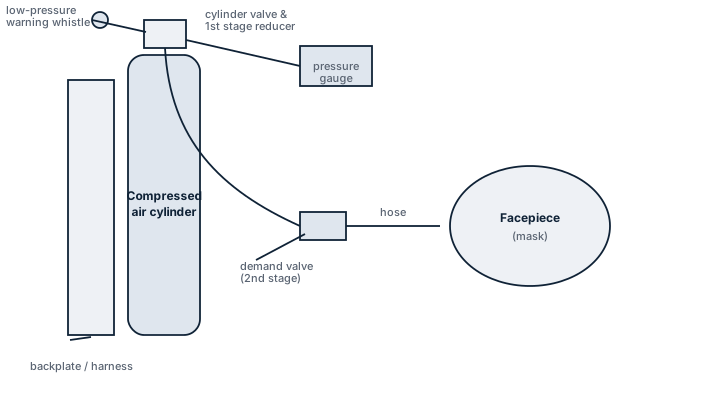
Main components
- Cylinder — compressed air, usually rated around 200 to 300 bar, in a steel or composite bottle sized to give roughly 30 to 60 minutes of duration at working exertion.
- Backplate and harness — carries the cylinder and distributes weight so the wearer can move, climb and crawl.
- Pressure reducer and demand valve — steps cylinder pressure down to breathable line pressure and delivers air on inhalation.
- Full face mask — seals against the face, protects the eyes, and often carries a communication unit or connection point.
- Pressure gauge and low-pressure warning whistle — lets the wearer and the team outside monitor remaining air, with an audible alarm at a set reserve level.
- Charging system — a compressor or cascade cylinder bank on board to refill spent bottles between uses.
Selection and sizing
- Cylinder duration against realistic working time for the compartments on the specific vessel, engine rooms and cargo holds differ significantly in size and access.
- Number of sets carried against the minimum fire party size required to man a hose team plus a backup team ready to enter.
- Compatibility of spare cylinders with the vessel's onboard charging compressor pressure rating.
- Mask fit testing across the actual crew, since a poor seal defeats the whole point of the apparatus.
Regulations and class requirements
SOLAS Chapter II-2 sets the minimum number of breathing apparatus sets to be carried according to vessel type, generally requiring at least two SCBA sets on cargo ships with spare cylinders for each, plus fire party equipment. Sets must meet recognised performance standards for duration and mask fit, are inspected at each fire drill, and cylinders are hydrostatically tested at intervals set by the cylinder's own certification, independent of the vessel's own survey cycle.
Typical faults
| Fault | Consequence |
|---|---|
| Mask seal perished or damaged | Leak path lets smoke or toxic gas past the seal even with a full cylinder. |
| Cylinder valve or O-ring failure | Slow pressure loss in storage, set found partially discharged when needed. |
| Low-pressure warning whistle not functioning | Wearer runs low on air with no audible warning, cutting the safety margin to exit. |
| Charging compressor contaminated air output | Cylinders refilled with air that fails purity requirements, a hazard the wearer cannot detect in use. |
What to look for in a supplier
- Cylinders and demand valves compatible with the vessel's existing charging compressor and spare stock.
- Documented hydrostatic test certification for every cylinder supplied, with the next due date clearly marked.
- Mask range covering different face sizes, since a fixed single size cannot fit an entire crew reliably.
- Service support for regulator overhaul, not just cylinder refill, at the vessel's usual ports.
Log the actual air pressure at donning, not just at the last inspection — a cylinder that read full a month ago can have crept down from a slow valve leak, and that difference is exactly what the low-pressure whistle is meant to catch mid-entry, not before.