"> ODME System - Equipment Database

ODME System

medium 19 models total

An ODME does not clean anything; it measures the oil content of water leaving the cargo tanks and automatically shuts the discharge valve the moment it exceeds the MARPOL limit, turning a paper discharge rule into something the ship can prove, second by second, that it obeyed.

Read more — ODME System explained

What sets an ODME apart

An oil discharge monitoring and control system is a measurement and interlock system, not a treatment plant - it does not remove oil, it decides in real time whether the water reaching the overboard valve is clean enough to discharge and stops the discharge automatically if it is not. It is fitted specifically to oil tankers, sitting between the cargo tank stripping or slop tank system and the overboard discharge, and its record is what a Port State Control officer checks first when reviewing a tanker's compliance with MARPOL Annex I discharge limits.
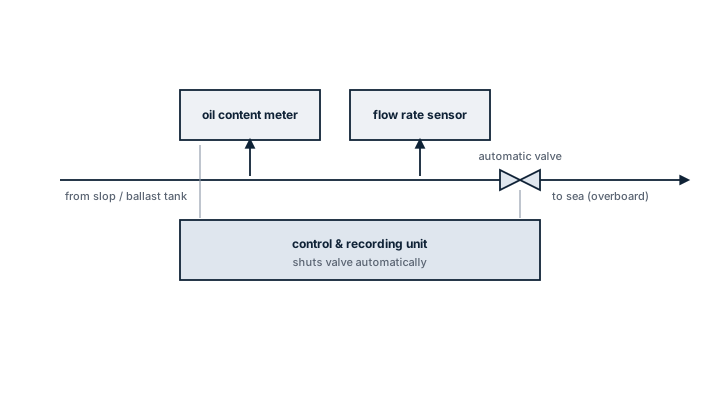
Oil discharge monitoring equipment (ODME)
Schematic of an ODME on the overboard discharge line, with the oil content meter and flow sensor feeding a control unit that shuts the automatic valve the instant the MARPOL oil content limit is exceeded.

Main components

Oil content meter

An optical or fluorescence-based sensor that continuously analyses a sample stream drawn from the discharge line and reports oil content in parts per million.

Sample and flow system

Pumps and piping that draw a representative sample from the main discharge line to the sensor without losing accuracy through settling or dilution in the sample line itself.

Control and interlock unit

Compares the measured oil content and discharge rate against the calculated MARPOL limit for the voyage and automatically closes the overboard valve if either is exceeded.

Data recorder

Logs oil content, flow rate, ship's position and time continuously, producing the record used to demonstrate compliance and, where fitted, feeding the oil record book.

Overboard discharge valve

A fail-safe valve, normally closed, that only opens under the ODME's control and shuts immediately on any alarm or system fault.

Selection and sizing

ParameterRelevance
Sensor technologyOptical/fluorescence types differ in sensitivity to crude versus refined product residues
Discharge rate rangeMust cover the pump capacity fitted for cargo tank stripping and slop discharge
Position inputNeeds a reliable GNSS feed, since discharge is only permitted at the required distance from land
Type approval scopeMust match the tanker size category and trading pattern under MARPOL Annex I

Regulations and class

MARPOL Annex I, Regulation 31 requires oil tankers of 150 gross tonnes and above to carry an approved ODME as a condition of discharging any oily water overboard rather than retaining it for shore disposal. The system must be type-approved to the IMO performance standard in resolution MEPC.108(49), which sets the required accuracy, alarm and automatic stopping functions. Class and flag state surveys check the calibration record, the automatic stopping function under test conditions, and that the recorder has not been tampered with, since falsified ODME records have been a recurring focus of Port State Control detentions.

Typical faults

  • Sensor fouling - wax or sediment coats the optical cell, drifting the reading low and risking a discharge that is actually over the limit.
  • Sample line blockage - a partially blocked sample line starves the sensor of a representative flow, producing unstable or clearly wrong readings.
  • Position feed loss - if the GNSS input drops out, the system should default to the most restrictive discharge condition, but a poorly integrated unit can instead simply stop logging position.
  • Calibration drift - infrequent calibration against a known reference lets the reading drift gradually enough that it is not obvious from day-to-day operation.
  • Bypass tampering - a documented cause of major fines and detentions, where the interlock is defeated to discharge without meeting the limit.

What to look for in a supplier

  • Type approval certificate current for MEPC.108(49) and matching the ship's tanker category
  • Calibration service availability in the ports the ship actually trades to, not just at the builder's yard
  • Tamper-evident recorder design and a clear audit trail, given how closely this record is checked in Port State Control
  • Sensor cleaning and sample line maintenance documented in the manufacturer's schedule, not left to generic guidance

Treat the ODME record with the same discipline as the oil record book - the two are cross-checked by inspectors, and an unexplained gap or mismatch between them draws attention faster than almost anything else on a tanker inspection.

17 manufacturers · 19 models

KSB Seil Co., Ltd.

2
ODME S-3000 Ver.2
Application
Crude and product tanker discharge monitoring with biofuel support
Common Failures & Inspection Points
  • Area: Calibration Certificate Status and Validity
    Check: Verify that current valid ODME calibration certificate is onboard, checked within 12 months (annual verification requirement), and renewed every 5 years. Certificate must be from authorized service agent per MEPC.108(49). Check for broken seals indicating unauthorized intervention.
  • Area: Oil Content Meter Accuracy and Cell Fouling
    Check: Inspect oil content meter for optical cell cleanliness and condition. Test system accuracy with known standard (e.g., clean water baseline and 10 ppm calibration standard). Check for automatic window flushing system functionality. Accuracy must remain within +/- 10 ppm or +/- 10% (whichever greater) per MEPC.108(49) section 6.2.2.
  • Area: Flow Meter and Pitot Tube Integrity
    Check: Verify flow meter operational status and Pitot tube positioning in discharge line. Check pressure differential transmitter readings for reasonableness. Confirm sample flow rate is within design parameters (typically 4-5 L/min or 240-900 L/hour depending on model). Test discharge calculation (oil content x flow rate x time).
  • Area: Data Recording and Log Records (3-year retention)
    Check: Review ODME discharge logs for last 3 years: verify oil content readings, discharge dates/times, vessel position (GPS), total quantities. Check for continuity gaps or unexplained system downtime. Confirm records stored in approved format (paper or electronic per MARPOL Annex I). Inspect for evidence of unauthorized modifications or record tampering.
  • Area: System Failure and Overboard Valve Control Function
    Check: Test automatic control valve solenoid operation: activate system simulation mode (if available) to verify that discharge valve closes when oil concentration exceeds 15 ppm threshold. Confirm mechanical interlocks and electrical failsafe mechanisms. Check pump motor operation and pressure relief settings. Verify failure notification procedures (engine room alarm, bridge alert, maintenance log entry).

Typ-universelle Inspektionspunkte fuer ODME System (verifiziert, 2026-06).

ODME S 663 MK III
Application
Retrofit ODME for vessels built before 2005
Common Failures & Inspection Points
  • Area: Calibration Certificate Status and Validity
    Check: Verify that current valid ODME calibration certificate is onboard, checked within 12 months (annual verification requirement), and renewed every 5 years. Certificate must be from authorized service agent per MEPC.108(49). Check for broken seals indicating unauthorized intervention.
  • Area: Oil Content Meter Accuracy and Cell Fouling
    Check: Inspect oil content meter for optical cell cleanliness and condition. Test system accuracy with known standard (e.g., clean water baseline and 10 ppm calibration standard). Check for automatic window flushing system functionality. Accuracy must remain within +/- 10 ppm or +/- 10% (whichever greater) per MEPC.108(49) section 6.2.2.
  • Area: Flow Meter and Pitot Tube Integrity
    Check: Verify flow meter operational status and Pitot tube positioning in discharge line. Check pressure differential transmitter readings for reasonableness. Confirm sample flow rate is within design parameters (typically 4-5 L/min or 240-900 L/hour depending on model). Test discharge calculation (oil content x flow rate x time).
  • Area: Data Recording and Log Records (3-year retention)
    Check: Review ODME discharge logs for last 3 years: verify oil content readings, discharge dates/times, vessel position (GPS), total quantities. Check for continuity gaps or unexplained system downtime. Confirm records stored in approved format (paper or electronic per MARPOL Annex I). Inspect for evidence of unauthorized modifications or record tampering.
  • Area: System Failure and Overboard Valve Control Function
    Check: Test automatic control valve solenoid operation: activate system simulation mode (if available) to verify that discharge valve closes when oil concentration exceeds 15 ppm threshold. Confirm mechanical interlocks and electrical failsafe mechanisms. Check pump motor operation and pressure relief settings. Verify failure notification procedures (engine room alarm, bridge alert, maintenance log entry).

Typ-universelle Inspektionspunkte fuer ODME System (verifiziert, 2026-06).

Rivertrace Engineering

2
Smart ODME
Application
Oil tanker slop water and ballast discharge monitoring
Common Failures & Inspection Points
  • Area: Calibration Certificate Status and Validity
    Check: Verify that current valid ODME calibration certificate is onboard, checked within 12 months (annual verification requirement), and renewed every 5 years. Certificate must be from authorized service agent per MEPC.108(49). Check for broken seals indicating unauthorized intervention.
  • Area: Oil Content Meter Accuracy and Cell Fouling
    Check: Inspect oil content meter for optical cell cleanliness and condition. Test system accuracy with known standard (e.g., clean water baseline and 10 ppm calibration standard). Check for automatic window flushing system functionality. Accuracy must remain within +/- 10 ppm or +/- 10% (whichever greater) per MEPC.108(49) section 6.2.2.
  • Area: Flow Meter and Pitot Tube Integrity
    Check: Verify flow meter operational status and Pitot tube positioning in discharge line. Check pressure differential transmitter readings for reasonableness. Confirm sample flow rate is within design parameters (typically 4-5 L/min or 240-900 L/hour depending on model). Test discharge calculation (oil content x flow rate x time).
  • Area: Data Recording and Log Records (3-year retention)
    Check: Review ODME discharge logs for last 3 years: verify oil content readings, discharge dates/times, vessel position (GPS), total quantities. Check for continuity gaps or unexplained system downtime. Confirm records stored in approved format (paper or electronic per MARPOL Annex I). Inspect for evidence of unauthorized modifications or record tampering.
  • Area: System Failure and Overboard Valve Control Function
    Check: Test automatic control valve solenoid operation: activate system simulation mode (if available) to verify that discharge valve closes when oil concentration exceeds 15 ppm threshold. Confirm mechanical interlocks and electrical failsafe mechanisms. Check pump motor operation and pressure relief settings. Verify failure notification procedures (engine room alarm, bridge alert, maintenance log entry).

Typ-universelle Inspektionspunkte fuer ODME System (verifiziert, 2026-06).

Smart ODME 50M
Application
Low-range oil in water monitoring for ballast discharge
Common Failures & Inspection Points
  • Area: Calibration Certificate Status and Validity
    Check: Verify that current valid ODME calibration certificate is onboard, checked within 12 months (annual verification requirement), and renewed every 5 years. Certificate must be from authorized service agent per MEPC.108(49). Check for broken seals indicating unauthorized intervention.
  • Area: Oil Content Meter Accuracy and Cell Fouling
    Check: Inspect oil content meter for optical cell cleanliness and condition. Test system accuracy with known standard (e.g., clean water baseline and 10 ppm calibration standard). Check for automatic window flushing system functionality. Accuracy must remain within +/- 10 ppm or +/- 10% (whichever greater) per MEPC.108(49) section 6.2.2.
  • Area: Flow Meter and Pitot Tube Integrity
    Check: Verify flow meter operational status and Pitot tube positioning in discharge line. Check pressure differential transmitter readings for reasonableness. Confirm sample flow rate is within design parameters (typically 4-5 L/min or 240-900 L/hour depending on model). Test discharge calculation (oil content x flow rate x time).
  • Area: Data Recording and Log Records (3-year retention)
    Check: Review ODME discharge logs for last 3 years: verify oil content readings, discharge dates/times, vessel position (GPS), total quantities. Check for continuity gaps or unexplained system downtime. Confirm records stored in approved format (paper or electronic per MARPOL Annex I). Inspect for evidence of unauthorized modifications or record tampering.
  • Area: System Failure and Overboard Valve Control Function
    Check: Test automatic control valve solenoid operation: activate system simulation mode (if available) to verify that discharge valve closes when oil concentration exceeds 15 ppm threshold. Confirm mechanical interlocks and electrical failsafe mechanisms. Check pump motor operation and pressure relief settings. Verify failure notification procedures (engine room alarm, bridge alert, maintenance log entry).

Typ-universelle Inspektionspunkte fuer ODME System (verifiziert, 2026-06).

AJ Marine Solution (Bangladesh - distributor)

1
AJ Marine Solution (Bangladesh - distributor) VAF Oilcon Mark 6 ODME
VAF Oilcon Mark 6 ODME
Application
Distributed oil discharge monitoring systems for South Asian fleets
Common Failures & Inspection Points
  • Area: Calibration Certificate Status and Validity
    Check: Verify that current valid ODME calibration certificate is onboard, checked within 12 months (annual verification requirement), and renewed every 5 years. Certificate must be from authorized service agent per MEPC.108(49). Check for broken seals indicating unauthorized intervention.
  • Area: Oil Content Meter Accuracy and Cell Fouling
    Check: Inspect oil content meter for optical cell cleanliness and condition. Test system accuracy with known standard (e.g., clean water baseline and 10 ppm calibration standard). Check for automatic window flushing system functionality. Accuracy must remain within +/- 10 ppm or +/- 10% (whichever greater) per MEPC.108(49) section 6.2.2.
  • Area: Flow Meter and Pitot Tube Integrity
    Check: Verify flow meter operational status and Pitot tube positioning in discharge line. Check pressure differential transmitter readings for reasonableness. Confirm sample flow rate is within design parameters (typically 4-5 L/min or 240-900 L/hour depending on model). Test discharge calculation (oil content x flow rate x time).
  • Area: Data Recording and Log Records (3-year retention)
    Check: Review ODME discharge logs for last 3 years: verify oil content readings, discharge dates/times, vessel position (GPS), total quantities. Check for continuity gaps or unexplained system downtime. Confirm records stored in approved format (paper or electronic per MARPOL Annex I). Inspect for evidence of unauthorized modifications or record tampering.
  • Area: System Failure and Overboard Valve Control Function
    Check: Test automatic control valve solenoid operation: activate system simulation mode (if available) to verify that discharge valve closes when oil concentration exceeds 15 ppm threshold. Confirm mechanical interlocks and electrical failsafe mechanisms. Check pump motor operation and pressure relief settings. Verify failure notification procedures (engine room alarm, bridge alert, maintenance log entry).

Typ-universelle Inspektionspunkte fuer ODME System (verifiziert, 2026-06).

Brannstrom Sweden AB

1
CleanTrack 1000B
Application
Fourth-generation ODME for modern crude and chemical tankers
Common Failures & Inspection Points
  • Area: Calibration Certificate Status and Validity
    Check: Verify that current valid ODME calibration certificate is onboard, checked within 12 months (annual verification requirement), and renewed every 5 years. Certificate must be from authorized service agent per MEPC.108(49). Check for broken seals indicating unauthorized intervention.
  • Area: Oil Content Meter Accuracy and Cell Fouling
    Check: Inspect oil content meter for optical cell cleanliness and condition. Test system accuracy with known standard (e.g., clean water baseline and 10 ppm calibration standard). Check for automatic window flushing system functionality. Accuracy must remain within +/- 10 ppm or +/- 10% (whichever greater) per MEPC.108(49) section 6.2.2.
  • Area: Flow Meter and Pitot Tube Integrity
    Check: Verify flow meter operational status and Pitot tube positioning in discharge line. Check pressure differential transmitter readings for reasonableness. Confirm sample flow rate is within design parameters (typically 4-5 L/min or 240-900 L/hour depending on model). Test discharge calculation (oil content x flow rate x time).
  • Area: Data Recording and Log Records (3-year retention)
    Check: Review ODME discharge logs for last 3 years: verify oil content readings, discharge dates/times, vessel position (GPS), total quantities. Check for continuity gaps or unexplained system downtime. Confirm records stored in approved format (paper or electronic per MARPOL Annex I). Inspect for evidence of unauthorized modifications or record tampering.
  • Area: System Failure and Overboard Valve Control Function
    Check: Test automatic control valve solenoid operation: activate system simulation mode (if available) to verify that discharge valve closes when oil concentration exceeds 15 ppm threshold. Confirm mechanical interlocks and electrical failsafe mechanisms. Check pump motor operation and pressure relief settings. Verify failure notification procedures (engine room alarm, bridge alert, maintenance log entry).

Typ-universelle Inspektionspunkte fuer ODME System (verifiziert, 2026-06).

Deckma

1
Deckma OMD-24 ODME
OMD-24 ODME
0-15 ppm · Ballast Water Oil Content · Oil Discharge Monitoring Equipment
Type
odme
Range (ppm)
0-15
Marpol
ja
Origin
Germany
Common Failures & Inspection Points
  • Sensor contamination
  • Pump diaphragm failure
  • Recording unit malfunction
Service: German manufacturer. Annual calibration and survey.
Spare Parts: Ersatzteile über Deckma oder zugelassene Vertriebspartner. Lead time: 2-6 Wochen.
Strengths
  • MARPOL Annex I compliant with built‑in alarm thresholds
  • Integrated sensor covering the full 0‑15 ppm range required for most tankers
  • On‑board data logger provides tamper‑proof record of each discharge event
  • German engineering reputation for robust mechanical design
  • Modular layout allows relatively quick replacement of pump or sensor
Weaknesses
  • Sensor can become contaminated, requiring regular cleaning and verification
  • Pump diaphragm is a wear component that may need periodic replacement
  • Recording unit has been reported to malfunction, necessitating spare units on board
  • Detection limit stops at 15 ppm, which may be insufficient for vessels seeking lower thresholds
  • Annual calibration and survey increase operational overhead
Typical Vessels: Crude Oil TankerProduct/Refined Oil TankerChemical TankerBulk Carrier handling oil‑containing cargoesOffshore Supply Vessel with oily water discharge
Decision Guide: Choose if: you operate a vessel subject to MARPOL Annex I and need an integrated, German‑built ODME with automatic alarm and data logging. Avoid if: you require detection below 0 ppm or want a system with minimal moving parts due to high maintenance risk.
Use Cases: Deployed on tankers and bulk carriers to monitor bilge water or cargo wash‑down discharges before overboard release, providing real‑time oil content readout and automatic logging for port state inspections and internal audits.

Deyuan Marine (China)

1
CleanTrack 1000B ODME
Application
Crude oil and petroleum product tanker discharge monitoring
Common Failures & Inspection Points
  • Area: Calibration Certificate Status and Validity
    Check: Verify that current valid ODME calibration certificate is onboard, checked within 12 months (annual verification requirement), and renewed every 5 years. Certificate must be from authorized service agent per MEPC.108(49). Check for broken seals indicating unauthorized intervention.
  • Area: Oil Content Meter Accuracy and Cell Fouling
    Check: Inspect oil content meter for optical cell cleanliness and condition. Test system accuracy with known standard (e.g., clean water baseline and 10 ppm calibration standard). Check for automatic window flushing system functionality. Accuracy must remain within +/- 10 ppm or +/- 10% (whichever greater) per MEPC.108(49) section 6.2.2.
  • Area: Flow Meter and Pitot Tube Integrity
    Check: Verify flow meter operational status and Pitot tube positioning in discharge line. Check pressure differential transmitter readings for reasonableness. Confirm sample flow rate is within design parameters (typically 4-5 L/min or 240-900 L/hour depending on model). Test discharge calculation (oil content x flow rate x time).
  • Area: Data Recording and Log Records (3-year retention)
    Check: Review ODME discharge logs for last 3 years: verify oil content readings, discharge dates/times, vessel position (GPS), total quantities. Check for continuity gaps or unexplained system downtime. Confirm records stored in approved format (paper or electronic per MARPOL Annex I). Inspect for evidence of unauthorized modifications or record tampering.
  • Area: System Failure and Overboard Valve Control Function
    Check: Test automatic control valve solenoid operation: activate system simulation mode (if available) to verify that discharge valve closes when oil concentration exceeds 15 ppm threshold. Confirm mechanical interlocks and electrical failsafe mechanisms. Check pump motor operation and pressure relief settings. Verify failure notification procedures (engine room alarm, bridge alert, maintenance log entry).

Typ-universelle Inspektionspunkte fuer ODME System (verifiziert, 2026-06).

Insatech Marine (distributor/integrator)

1
Smart ODME by Rivertrace
Application
Integrated ODME solution for tanker fleets
Common Failures & Inspection Points
  • Area: Calibration Certificate Status and Validity
    Check: Verify that current valid ODME calibration certificate is onboard, checked within 12 months (annual verification requirement), and renewed every 5 years. Certificate must be from authorized service agent per MEPC.108(49). Check for broken seals indicating unauthorized intervention.
  • Area: Oil Content Meter Accuracy and Cell Fouling
    Check: Inspect oil content meter for optical cell cleanliness and condition. Test system accuracy with known standard (e.g., clean water baseline and 10 ppm calibration standard). Check for automatic window flushing system functionality. Accuracy must remain within +/- 10 ppm or +/- 10% (whichever greater) per MEPC.108(49) section 6.2.2.
  • Area: Flow Meter and Pitot Tube Integrity
    Check: Verify flow meter operational status and Pitot tube positioning in discharge line. Check pressure differential transmitter readings for reasonableness. Confirm sample flow rate is within design parameters (typically 4-5 L/min or 240-900 L/hour depending on model). Test discharge calculation (oil content x flow rate x time).
  • Area: Data Recording and Log Records (3-year retention)
    Check: Review ODME discharge logs for last 3 years: verify oil content readings, discharge dates/times, vessel position (GPS), total quantities. Check for continuity gaps or unexplained system downtime. Confirm records stored in approved format (paper or electronic per MARPOL Annex I). Inspect for evidence of unauthorized modifications or record tampering.
  • Area: System Failure and Overboard Valve Control Function
    Check: Test automatic control valve solenoid operation: activate system simulation mode (if available) to verify that discharge valve closes when oil concentration exceeds 15 ppm threshold. Confirm mechanical interlocks and electrical failsafe mechanisms. Check pump motor operation and pressure relief settings. Verify failure notification procedures (engine room alarm, bridge alert, maintenance log entry).

Typ-universelle Inspektionspunkte fuer ODME System (verifiziert, 2026-06).

JINBO Marine (China)

1
ODME-1000
Application
Oil content control in ship sewage and ballast discharge
Common Failures & Inspection Points
  • Area: Calibration Certificate Status and Validity
    Check: Verify that current valid ODME calibration certificate is onboard, checked within 12 months (annual verification requirement), and renewed every 5 years. Certificate must be from authorized service agent per MEPC.108(49). Check for broken seals indicating unauthorized intervention.
  • Area: Oil Content Meter Accuracy and Cell Fouling
    Check: Inspect oil content meter for optical cell cleanliness and condition. Test system accuracy with known standard (e.g., clean water baseline and 10 ppm calibration standard). Check for automatic window flushing system functionality. Accuracy must remain within +/- 10 ppm or +/- 10% (whichever greater) per MEPC.108(49) section 6.2.2.
  • Area: Flow Meter and Pitot Tube Integrity
    Check: Verify flow meter operational status and Pitot tube positioning in discharge line. Check pressure differential transmitter readings for reasonableness. Confirm sample flow rate is within design parameters (typically 4-5 L/min or 240-900 L/hour depending on model). Test discharge calculation (oil content x flow rate x time).
  • Area: Data Recording and Log Records (3-year retention)
    Check: Review ODME discharge logs for last 3 years: verify oil content readings, discharge dates/times, vessel position (GPS), total quantities. Check for continuity gaps or unexplained system downtime. Confirm records stored in approved format (paper or electronic per MARPOL Annex I). Inspect for evidence of unauthorized modifications or record tampering.
  • Area: System Failure and Overboard Valve Control Function
    Check: Test automatic control valve solenoid operation: activate system simulation mode (if available) to verify that discharge valve closes when oil concentration exceeds 15 ppm threshold. Confirm mechanical interlocks and electrical failsafe mechanisms. Check pump motor operation and pressure relief settings. Verify failure notification procedures (engine room alarm, bridge alert, maintenance log entry).

Typ-universelle Inspektionspunkte fuer ODME System (verifiziert, 2026-06).

JOWA AB (Sweden)

1
JOWA AB (Sweden) ODME 2005
ODME 2005
Application
Third-generation oil discharge monitoring for all tanker types
Common Failures & Inspection Points
  • Area: Calibration Certificate Status and Validity
    Check: Verify that current valid ODME calibration certificate is onboard, checked within 12 months (annual verification requirement), and renewed every 5 years. Certificate must be from authorized service agent per MEPC.108(49). Check for broken seals indicating unauthorized intervention.
  • Area: Oil Content Meter Accuracy and Cell Fouling
    Check: Inspect oil content meter for optical cell cleanliness and condition. Test system accuracy with known standard (e.g., clean water baseline and 10 ppm calibration standard). Check for automatic window flushing system functionality. Accuracy must remain within +/- 10 ppm or +/- 10% (whichever greater) per MEPC.108(49) section 6.2.2.
  • Area: Flow Meter and Pitot Tube Integrity
    Check: Verify flow meter operational status and Pitot tube positioning in discharge line. Check pressure differential transmitter readings for reasonableness. Confirm sample flow rate is within design parameters (typically 4-5 L/min or 240-900 L/hour depending on model). Test discharge calculation (oil content x flow rate x time).
  • Area: Data Recording and Log Records (3-year retention)
    Check: Review ODME discharge logs for last 3 years: verify oil content readings, discharge dates/times, vessel position (GPS), total quantities. Check for continuity gaps or unexplained system downtime. Confirm records stored in approved format (paper or electronic per MARPOL Annex I). Inspect for evidence of unauthorized modifications or record tampering.
  • Area: System Failure and Overboard Valve Control Function
    Check: Test automatic control valve solenoid operation: activate system simulation mode (if available) to verify that discharge valve closes when oil concentration exceeds 15 ppm threshold. Confirm mechanical interlocks and electrical failsafe mechanisms. Check pump motor operation and pressure relief settings. Verify failure notification procedures (engine room alarm, bridge alert, maintenance log entry).

Typ-universelle Inspektionspunkte fuer ODME System (verifiziert, 2026-06).

Lastmar Engineering (Turkey)

1
Oil Discharge Monitoring Equipment System
Application
MARPOL Annex I compliant tanker discharge monitoring
Common Failures & Inspection Points
  • Area: Calibration Certificate Status and Validity
    Check: Verify that current valid ODME calibration certificate is onboard, checked within 12 months (annual verification requirement), and renewed every 5 years. Certificate must be from authorized service agent per MEPC.108(49). Check for broken seals indicating unauthorized intervention.
  • Area: Oil Content Meter Accuracy and Cell Fouling
    Check: Inspect oil content meter for optical cell cleanliness and condition. Test system accuracy with known standard (e.g., clean water baseline and 10 ppm calibration standard). Check for automatic window flushing system functionality. Accuracy must remain within +/- 10 ppm or +/- 10% (whichever greater) per MEPC.108(49) section 6.2.2.
  • Area: Flow Meter and Pitot Tube Integrity
    Check: Verify flow meter operational status and Pitot tube positioning in discharge line. Check pressure differential transmitter readings for reasonableness. Confirm sample flow rate is within design parameters (typically 4-5 L/min or 240-900 L/hour depending on model). Test discharge calculation (oil content x flow rate x time).
  • Area: Data Recording and Log Records (3-year retention)
    Check: Review ODME discharge logs for last 3 years: verify oil content readings, discharge dates/times, vessel position (GPS), total quantities. Check for continuity gaps or unexplained system downtime. Confirm records stored in approved format (paper or electronic per MARPOL Annex I). Inspect for evidence of unauthorized modifications or record tampering.
  • Area: System Failure and Overboard Valve Control Function
    Check: Test automatic control valve solenoid operation: activate system simulation mode (if available) to verify that discharge valve closes when oil concentration exceeds 15 ppm threshold. Confirm mechanical interlocks and electrical failsafe mechanisms. Check pump motor operation and pressure relief settings. Verify failure notification procedures (engine room alarm, bridge alert, maintenance log entry).

Typ-universelle Inspektionspunkte fuer ODME System (verifiziert, 2026-06).

Marel Service

1
CleanTrack 1000B
Application
Fourth-generation ODME for hazardous cargo areas
Common Failures & Inspection Points
  • Area: Calibration Certificate Status and Validity
    Check: Verify that current valid ODME calibration certificate is onboard, checked within 12 months (annual verification requirement), and renewed every 5 years. Certificate must be from authorized service agent per MEPC.108(49). Check for broken seals indicating unauthorized intervention.
  • Area: Oil Content Meter Accuracy and Cell Fouling
    Check: Inspect oil content meter for optical cell cleanliness and condition. Test system accuracy with known standard (e.g., clean water baseline and 10 ppm calibration standard). Check for automatic window flushing system functionality. Accuracy must remain within +/- 10 ppm or +/- 10% (whichever greater) per MEPC.108(49) section 6.2.2.
  • Area: Flow Meter and Pitot Tube Integrity
    Check: Verify flow meter operational status and Pitot tube positioning in discharge line. Check pressure differential transmitter readings for reasonableness. Confirm sample flow rate is within design parameters (typically 4-5 L/min or 240-900 L/hour depending on model). Test discharge calculation (oil content x flow rate x time).
  • Area: Data Recording and Log Records (3-year retention)
    Check: Review ODME discharge logs for last 3 years: verify oil content readings, discharge dates/times, vessel position (GPS), total quantities. Check for continuity gaps or unexplained system downtime. Confirm records stored in approved format (paper or electronic per MARPOL Annex I). Inspect for evidence of unauthorized modifications or record tampering.
  • Area: System Failure and Overboard Valve Control Function
    Check: Test automatic control valve solenoid operation: activate system simulation mode (if available) to verify that discharge valve closes when oil concentration exceeds 15 ppm threshold. Confirm mechanical interlocks and electrical failsafe mechanisms. Check pump motor operation and pressure relief settings. Verify failure notification procedures (engine room alarm, bridge alert, maintenance log entry).

Typ-universelle Inspektionspunkte fuer ODME System (verifiziert, 2026-06).

Metromac (KSB Seil distributor)

1
ODME S-3000
Application
Compliant discharge monitoring for major tanker fleets worldwide
Common Failures & Inspection Points
  • Area: Calibration Certificate Status and Validity
    Check: Verify that current valid ODME calibration certificate is onboard, checked within 12 months (annual verification requirement), and renewed every 5 years. Certificate must be from authorized service agent per MEPC.108(49). Check for broken seals indicating unauthorized intervention.
  • Area: Oil Content Meter Accuracy and Cell Fouling
    Check: Inspect oil content meter for optical cell cleanliness and condition. Test system accuracy with known standard (e.g., clean water baseline and 10 ppm calibration standard). Check for automatic window flushing system functionality. Accuracy must remain within +/- 10 ppm or +/- 10% (whichever greater) per MEPC.108(49) section 6.2.2.
  • Area: Flow Meter and Pitot Tube Integrity
    Check: Verify flow meter operational status and Pitot tube positioning in discharge line. Check pressure differential transmitter readings for reasonableness. Confirm sample flow rate is within design parameters (typically 4-5 L/min or 240-900 L/hour depending on model). Test discharge calculation (oil content x flow rate x time).
  • Area: Data Recording and Log Records (3-year retention)
    Check: Review ODME discharge logs for last 3 years: verify oil content readings, discharge dates/times, vessel position (GPS), total quantities. Check for continuity gaps or unexplained system downtime. Confirm records stored in approved format (paper or electronic per MARPOL Annex I). Inspect for evidence of unauthorized modifications or record tampering.
  • Area: System Failure and Overboard Valve Control Function
    Check: Test automatic control valve solenoid operation: activate system simulation mode (if available) to verify that discharge valve closes when oil concentration exceeds 15 ppm threshold. Confirm mechanical interlocks and electrical failsafe mechanisms. Check pump motor operation and pressure relief settings. Verify failure notification procedures (engine room alarm, bridge alert, maintenance log entry).

Typ-universelle Inspektionspunkte fuer ODME System (verifiziert, 2026-06).

Rivertrace

1
Rivertrace Smart ODME
Smart ODME
0-15 ppm monitoring · Ballast Water Oil Content · odme
Type
odme
Range (ppm)
0-15
Marpol
ja
Common Failures & Inspection Points
  • Optical sensor fouling
  • Sample pump failure
  • Flow meter malfunction
  • Data recording failure
Service: MARPOL mandatory. Annual calibration. Sensor cleaning weekly.
Spare Parts: Ersatzteile über Rivertrace oder zugelassene Vertriebspartner. Lead time: 2-6 Wochen.
Strengths
  • MARPOL‑mandated oil discharge monitoring
  • Automatic sampling of bilge water
  • Digital data logging of concentration readings
Weaknesses
  • Optical sensor fouling requires weekly cleaning
  • Sample pump can fail, interrupting measurements
  • Flow meter malfunction may affect volume accuracy
  • Data recording failures reported in service history
Typical Vessels: Oil TankerChemical TankerBulk Carrier
Decision Guide: Choose if the vessel must meet MARPOL Annex I requirements and can support regular sensor cleaning and maintenance. Avoid if maintenance windows are limited or if a more robust (non‑optical) sensing technology is required.
Use Cases: Deployed on oil and chemical tankers for continuous monitoring of bilge water discharges, providing real‑time alarms when the 15 ppm limit is approached and generating mandatory discharge logs for port state control inspections.

Swift Marine Tech Services (Singapore - Rivertrace partner)

1
Smart ODME - Authorized Service Center
Application
Installation, calibration, and maintenance of Smart ODME systems
Common Failures & Inspection Points
  • Area: Calibration Certificate Status and Validity
    Check: Verify that current valid ODME calibration certificate is onboard, checked within 12 months (annual verification requirement), and renewed every 5 years. Certificate must be from authorized service agent per MEPC.108(49). Check for broken seals indicating unauthorized intervention.
  • Area: Oil Content Meter Accuracy and Cell Fouling
    Check: Inspect oil content meter for optical cell cleanliness and condition. Test system accuracy with known standard (e.g., clean water baseline and 10 ppm calibration standard). Check for automatic window flushing system functionality. Accuracy must remain within +/- 10 ppm or +/- 10% (whichever greater) per MEPC.108(49) section 6.2.2.
  • Area: Flow Meter and Pitot Tube Integrity
    Check: Verify flow meter operational status and Pitot tube positioning in discharge line. Check pressure differential transmitter readings for reasonableness. Confirm sample flow rate is within design parameters (typically 4-5 L/min or 240-900 L/hour depending on model). Test discharge calculation (oil content x flow rate x time).
  • Area: Data Recording and Log Records (3-year retention)
    Check: Review ODME discharge logs for last 3 years: verify oil content readings, discharge dates/times, vessel position (GPS), total quantities. Check for continuity gaps or unexplained system downtime. Confirm records stored in approved format (paper or electronic per MARPOL Annex I). Inspect for evidence of unauthorized modifications or record tampering.
  • Area: System Failure and Overboard Valve Control Function
    Check: Test automatic control valve solenoid operation: activate system simulation mode (if available) to verify that discharge valve closes when oil concentration exceeds 15 ppm threshold. Confirm mechanical interlocks and electrical failsafe mechanisms. Check pump motor operation and pressure relief settings. Verify failure notification procedures (engine room alarm, bridge alert, maintenance log entry).

Typ-universelle Inspektionspunkte fuer ODME System (verifiziert, 2026-06).

VAF Instruments

1
VAF Instruments VAF Marine OCM
VAF Marine OCM
0-15 ppm · Ballast Water Oil Content · infrared oil discharge monitor
Type
odme
Range (ppm)
0-15
Marpol
ja
Origin
Netherlands
Common Failures & Inspection Points
  • Sensor window fouling
  • Flow control malfunction
  • Recording failure
Service: Dutch manufacturer. Annual calibration and class survey.
Spare Parts: Ersatzteile über VAF Instruments oder zugelassene Vertriebspartner. Lead time: 2-6 Wochen.
Strengths
  • MARPOL compliant with a detection range up to 15 ppm, covering the regulatory limit
  • Integrated data logger and alarm system for real‑time monitoring and record keeping
  • Automatic flow control shut‑off function enhances safety and reduces crew workload
  • Robust Dutch engineering with support for annual calibration and class surveys
  • Modular design facilitates installation on a variety of tanker‑type vessels
Weaknesses
  • Sensor window can become fouled in high‑sediment or oily water, requiring regular cleaning
  • Reported flow‑control valve malfunctions may lead to false alarms or delayed shut‑off
  • Recording failures have been noted, necessitating backup data verification procedures
  • Requires annual calibration and class survey, adding to maintenance overhead
  • Higher upfront cost compared with basic mechanical ODME units
Typical Vessels: Crude Oil TankerProduct TankerChemical TankerOffshore Supply Vessel
Decision Guide: Choose if: you need a MARPOL‑compliant ODME with integrated alarm, data logging and automatic shut‑off for oil tankers or offshore vessels operating in strict regulatory regimes. Avoid if: budget constraints dominate, the vessel’s discharge volume is low enough to permit a simpler system, or you prefer a sensor technology less prone to window fouling.
Use Cases: The VAF Marine OCM is typically installed on oil and chemical tankers to monitor bilge water and ballast water discharges, ensuring compliance during port state inspections. It is also fitted on offshore supply vessels that handle oily waste streams, providing continuous verification of discharge limits before release overboard.

VAF Instruments (Netherlands)

1
Oilcon Mark 6M
Application
Ballast and slop water discharge monitoring for all tanker types
Common Failures & Inspection Points
  • Area: Calibration Certificate Status and Validity
    Check: Verify that current valid ODME calibration certificate is onboard, checked within 12 months (annual verification requirement), and renewed every 5 years. Certificate must be from authorized service agent per MEPC.108(49). Check for broken seals indicating unauthorized intervention.
  • Area: Oil Content Meter Accuracy and Cell Fouling
    Check: Inspect oil content meter for optical cell cleanliness and condition. Test system accuracy with known standard (e.g., clean water baseline and 10 ppm calibration standard). Check for automatic window flushing system functionality. Accuracy must remain within +/- 10 ppm or +/- 10% (whichever greater) per MEPC.108(49) section 6.2.2.
  • Area: Flow Meter and Pitot Tube Integrity
    Check: Verify flow meter operational status and Pitot tube positioning in discharge line. Check pressure differential transmitter readings for reasonableness. Confirm sample flow rate is within design parameters (typically 4-5 L/min or 240-900 L/hour depending on model). Test discharge calculation (oil content x flow rate x time).
  • Area: Data Recording and Log Records (3-year retention)
    Check: Review ODME discharge logs for last 3 years: verify oil content readings, discharge dates/times, vessel position (GPS), total quantities. Check for continuity gaps or unexplained system downtime. Confirm records stored in approved format (paper or electronic per MARPOL Annex I). Inspect for evidence of unauthorized modifications or record tampering.
  • Area: System Failure and Overboard Valve Control Function
    Check: Test automatic control valve solenoid operation: activate system simulation mode (if available) to verify that discharge valve closes when oil concentration exceeds 15 ppm threshold. Confirm mechanical interlocks and electrical failsafe mechanisms. Check pump motor operation and pressure relief settings. Verify failure notification procedures (engine room alarm, bridge alert, maintenance log entry).

Typ-universelle Inspektionspunkte fuer ODME System (verifiziert, 2026-06).

Yokogawa (Marex)

1
Yokogawa (Marex) Yokogawa OCM-15 ODME
Yokogawa OCM-15 ODME
0-15 ppm · Ballast Water Oil Content · IR-based oil‑in‑water monitor
Type
odme
Range (ppm)
0-15
Marpol
ja
Common Failures & Inspection Points
  • IR sensor drift
  • Sample line blockage
  • Data logger failure
Service: Japanese/Norwegian product. Annual calibration.
Spare Parts: Ersatzteile über Yokogawa (Marex) oder zugelassene Vertriebspartner. Lead time: 2-6 Wochen.
Strengths
  • Integrated IR sensor provides real‑time ppm readings within the 0–15 ppm range required by MARPOL.
  • Built‑in data logger records discharge events and automatically generates reports for flag state inspections.
  • Japanese/Norwegian engineering offers robust corrosion‑resistant housing suitable for harsh marine environments.
  • Annual calibration service is supported directly by Yokogawa, simplifying compliance maintenance.
Weaknesses
  • IR sensor can drift over time, requiring periodic recalibration to maintain accuracy.
  • Sample line may become blocked by sludge or oil residues if not regularly flushed.
  • Data logger hardware failures have been reported in field service bulletins.
  • Limited measurement range (max 15 ppm) does not detect higher concentrations without auxiliary alarms.
Typical Vessels: Oil product tankerChemical tankerBulk carrier with oily water dischargeOffshore supply vessel
Decision Guide: Choose if you need a proven, MARPOL‑compliant ODME with integrated logging and manufacturer‑supported calibration. Avoid if budget constraints favor lower‑cost alternatives or if you require a wider measurement range beyond 15 ppm.
Use Cases: Commonly installed on oil and chemical tankers to monitor overboard discharge from ballast and bilge water systems, as well as on offshore support vessels that discharge oily wash water under MARPOL regulations.